EP2940637A1 - Assisted approval of denied self-service transactions - Google Patents
Assisted approval of denied self-service transactions Download PDFInfo
- Publication number
- EP2940637A1 EP2940637A1 EP15162233.9A EP15162233A EP2940637A1 EP 2940637 A1 EP2940637 A1 EP 2940637A1 EP 15162233 A EP15162233 A EP 15162233A EP 2940637 A1 EP2940637 A1 EP 2940637A1
- Authority
- EP
- European Patent Office
- Prior art keywords
- transaction
- self
- network
- assistance
- denied
- Prior art date
- Legal status (The legal status is an assumption and is not a legal conclusion. Google has not performed a legal analysis and makes no representation as to the accuracy of the status listed.)
- Withdrawn
Links
Images


Classifications
-
- G—PHYSICS
- G07—CHECKING-DEVICES
- G07F—COIN-FREED OR LIKE APPARATUS
- G07F19/00—Complete banking systems; Coded card-freed arrangements adapted for dispensing or receiving monies or the like and posting such transactions to existing accounts, e.g. automatic teller machines
- G07F19/20—Automatic teller machines [ATMs]
- G07F19/209—Monitoring, auditing or diagnose of functioning of ATMs
-
- G—PHYSICS
- G06—COMPUTING OR CALCULATING; COUNTING
- G06Q—INFORMATION AND COMMUNICATION TECHNOLOGY [ICT] SPECIALLY ADAPTED FOR ADMINISTRATIVE, COMMERCIAL, FINANCIAL, MANAGERIAL OR SUPERVISORY PURPOSES; SYSTEMS OR METHODS SPECIALLY ADAPTED FOR ADMINISTRATIVE, COMMERCIAL, FINANCIAL, MANAGERIAL OR SUPERVISORY PURPOSES, NOT OTHERWISE PROVIDED FOR
- G06Q20/00—Payment architectures, schemes or protocols
- G06Q20/08—Payment architectures
- G06Q20/18—Payment architectures involving self-service terminals [SST], vending machines, kiosks or multimedia terminals
-
- G—PHYSICS
- G07—CHECKING-DEVICES
- G07F—COIN-FREED OR LIKE APPARATUS
- G07F19/00—Complete banking systems; Coded card-freed arrangements adapted for dispensing or receiving monies or the like and posting such transactions to existing accounts, e.g. automatic teller machines
- G07F19/20—Automatic teller machines [ATMs]
Definitions
- SSTs Self-Service Terminals
- the locations can include financial institutions, grocery stores, retail stores, government venues, entertainment venues, gaming venues, transportation venues, and the like.
- ATMs present unique challenges to a servicing enterprise because security is of utmost concern. In fact, network access to the ATM network, which the ATM communicates with for financial transactions, is often unavailable for access to servicing engineers. Moreover, when a customer transacts at an ATM, the ATM network may switch to a different bank network because the ATM where the customer transacts may be associated with a different bank from a customer bank account used for the customer transaction.
- ATM Automated Teller Machine
- Some banks include automated teller or interactive banking services for customers at one of their ATMs. This enables teller assistance for Self-Service (SS) transactions, but these services only work for transactions that are not routed through a standard ATM network. So, when a standard transaction occurs through a standard ATM network, the customer receives little assistance.
- SS Self-Service
- Assistance is an issue when a customer is denied a transaction by the ATM network.
- the customer is given no reason or rationale for the denial. In many cases, all the customer receives is a standard message "unable to complete this transaction at this time.” It may have nothing to do with the customer; the ATM may not have sufficient cash to dispense in the amount the customer requested. But the customer has no idea why the transaction was denied. Some customers may even panic and think that their account was compromised in some manner. Even if a receipt is printed for a denied transaction, this offers no additional details to permit the customer to ascertain what the issue was with the denied transaction. This is frustrating to the customer and can lead to a bank losing the valued customer.
- methods and an SST for assisted approval of denied Self-Service (SS) transactions are presented.
- a method for assisted approval of denied SS transactions are provided. Specifically, a device receives transaction details for a denied transaction occurring at a Self-Service Terminal (SST). The denied transaction occurring over an SST network and the transaction details received over a different network. Next, a determination is made as to whether to override the denied transaction to allow the denied transaction using the different network.
- SST Self-Service Terminal
- a method comprising: receiving, by a device, transaction details for a denied transaction at a Self-Service Terminal (SST), the denied transaction occurring over an SST network and the transaction details being obtained from the SST; and determining whether to override the denied transaction to allow the denied transaction using a different network.
- SST Self-Service Terminal
- the method may further comprise establishing a remote video communication session with the SST to assist a customer associated with the denied transaction based on the transaction details.
- the method may further comprise establishing a remote messaging session with the SST to assist a customer associated with the denied transaction based on the transaction details.
- the step of receiving optionally further includes sending a request to a customer associated with the denied transaction over the different network and accessible from the SST that asks whether the customer needs assistance with the denied transaction.
- the step of determining optionally further includes determining to override and allow the denied transaction based on the transaction details.
- the step of determining optionally further includes identifying the SST as being in proximity to the device.
- the step of identifying optionally further includes providing in-person assistance to a customer associated with the denied transaction using the transaction details.
- the step of determining optionally further includes obtaining customer details for a customer associated with the denied transaction based on the transaction details.
- the step of obtaining optionally further includes using the customer details with the transaction details to decide whether to override and allow the denied transaction.
- the step of determining optionally further includes providing a customer associated with the denied transaction with information as to how the denied transaction can be done to allow the denied transaction.
- a Self-Service Terminal comprising: an SST network interface for an SST network; an assistance network interface for an assistance network; and an assistance interface manager configured and adapted to: i) execute on the SST, ii) submit a transaction over the SST network, iii) present a request for assistance on a screen of a display associated with the SST in response to the transaction being denied, and iv) send an activated request for assistance over the assistance network to obtain assistance for the transaction.
- the assistance interface manager is optionally further configured and adapted to v) establish a live communication session to obtain assistance on the screen or a different screen of the display.
- the live communication session is optionally one of: a live video session and a live messaging session.
- the SST is optionally an Automated Teller Machine (ATM) and the assistance network is a bank network associated with a specific bank.
- ATM Automated Teller Machine
- a method comprising: submitting, from a Self-Service Terminal (SST), a transaction over an SST network; activating a request for assistance presented on a screen of a display of the SST, the request being sent from a different network in response to the transaction being denied from the SST network; and receiving assistance for the transaction.
- SST Self-Service Terminal
- the step of receiving optionally further includes establishing a live video session on the screen or a different screen of the display between a customer that submitted the transaction and an assistant providing the assistance.
- the step of receiving optionally further includes establishing a live message session on the screen or a different screen of the display between a customer that submitted the transaction and an assistant providing the assistance.
- the step of receiving optionally further includes obtaining, by a customer that submitted the transaction, in-person assistance for the transaction at or in proximity to the SST.
- the step of receiving optionally further includes receiving a notice that the transaction was overridden and was successful based on an action of an attendant associated with the different network.
- the step of receiving optionally further includes receiving instructions that explain how the transaction can be reinitiated at the SST for allowing the transaction.
- FIG. 1 is a diagram 100 of components for practicing assisted approval of denied Self-Service (SS) transactions, according to an example embodiment. It is to be noted that the ATM 110 is shown schematically in greatly simplified form, with only those components relevant to understanding of this embodiment being illustrated. The same situation may be true for the teller device 131.
- SS Self-Service
- methods and SST presented herein and below for assisted approval of denied Self-Service (SS) transactions can be implemented in whole or in part in one, all, or some combination of the components shown with the diagram 100.
- the methods are programmed as executable instructions in memory and/or non-transitory computer-readable storage media and executed on one or more processors associated with the components.
- the diagram 100 permits assisted approval of denied Self-Service (SS) transactions utilizing two networks (ATM network 120 and Local Bank Network 130).
- ATM network 120 two networks
- ATM network 130 Local Bank Network 130
- any SST terminal such as those used in retail, hotel, car rental, healthcare, or financial industries, etc.
- SS Self-Service
- the diagram 100 includes an ATM 110, an ATM network 120, a local bank network 130, and a teller device 131.
- the ATM 110 includes an ATM transaction/application interface 111 and an assistance interface 112.
- SS Self-Service
- the customer accesses the ATM transaction/application interface 111 to conduct an ATM transaction that transaction is processed with the ATM 110 through the ATM network 120.
- the transaction can fail based on the transaction details some of which may have been improperly entered by the customer or some of which are not permitted by policy associated with the ATM 110 or the bank of the customer from which the ATM network 120 communicates. For any of these reasons (and others not listed), the ATM transaction is denied.
- the transaction details are obtained from the ATM 110 associated with where the customer is performing the ATM transaction in real time (this can be done via a link between the ATM 110 to the assistance interface 112 or based on notice sent from the bank network communicating with the ATM network 120, where that bank network communicates the denial to the local bank network 130).
- the bank associated with approving and processing the transaction is contacted within the ATM network 120 to complete the transaction. That bank receives the denial, which includes an ATM identifier that identifies the ATM 110 and its location.
- the teller then obtains the transaction details from the ATM 110, which includes customer account information and, perhaps, other information to the local bank network 130 where that ATM 110 is located.
- This can be done in a number of ways, for example a local server of the bank may act as a secure proxy between the ATM network 120, the ATM 110, and the local bank network 130 (not shown in the FIG. 1 ).
- the transaction details are acquired by the proxy before being passed to the ATM network 120 and the denial is acquired by the proxy before being passed to the ATM 110.
- the proxy automatically passes the transaction details of every denied transaction to the teller device 131.
- the proxy may delay forwarding the transaction denial to the ATM 110 until the teller at the teller device 131 has made a decision on whether to override the transaction denial or not (this may be subject to a timeout after which the proxy will forward the transaction denial message to the ATM 110 if the teller has not made a decision on the transaction).
- the teller at the teller device 131 can therefore acquire the transaction details and the denial in a variety of ways.
- a not-on-us transaction is denied, it is less likely that the teller will override the denial because it may relate to a lack of funds.
- the teller at the teller device 131 can check if there is sufficient funds, or if the denial was based on certain "house rules" which can be overridden by a teller but are routinely denied by ATMs. This may affect the teller's decision on whether to override the denied transaction.
- the transaction details can be routed to a queue for teller's to select, sent to a teller for action based on teller load at the time the transaction details are received, or sent to a specific teller.
- a teller is assigned the transaction details or when the teller selects the transaction details, the teller can view and analyze the transaction details.
- the transaction details inform the teller as to which ATM 110 that the customer is performing the current ATM transaction that was denied.
- the teller can also use the transaction details to access backend systems of the bank through the local bank network for purposes of obtaining customer account history, customer name, account status, and the like.
- the teller then uses one or more interfaces on the teller device 131 to make a decision as to whether based on the transaction details and, perhaps, the customer details (account history, status, etc.) to override the denial and permit the transaction.
- the teller uses the teller device 131 to access the local bank network 130 (such as through the proxy or via a direct connection) and override the transaction using the bank's backend systems.
- the override can be communicated through the local bank network 130 to the assistance interface 112 on the ATM 110.
- the local bank network 130 has access to the core banking system (not shown) of the bank.
- the core banking system (not shown) stores information about all of the accounts held by that bank.
- One or more screens within a display of the ATM 110 present the override decision to the customer in real time.
- the teller may then approach the customer with any funds related to the transaction and/or receipts for the customer to conclude the transaction, which was initially denied over the ATM network 120.
- the assistance interface 112 can control of the peripherals of the ATM 110, which may not be the case in a typical scenario but could be in some embodiments,
- the assistance interface 112 could dispense cash and receipts to conclude the transaction (which was originally denied) from the ATM 110 directly to the customer. This may be similar to remote control of an ATM by a remote teller.
- the teller may not be able to override the ATM transaction but the teller has information relevant to the customer and the transaction and may be able to ascertain why the transaction is being denied and a manner in which the customer can successfully reinitiate the transaction. For example, the customer may have inadvertently requested too much cash adding an extra 0 or may have accessed one account of the customer with insufficient funds whereas another account of the customer had plenty of funds to conduct the transaction; other situations may occur as well.
- the teller can use the teller device 131 to send a request for assistance prompt to the customer over the local bank network 130.
- This request prompt is presented in one or more screens on the display of the ATM 110 through the assistance interface 112.
- the teller can engage in direct real-time assistance to the customer regarding the transaction and provide instructions on how the customer might reinitiate the transaction at the ATM 110 for it to be successful or explain to the customer why the transaction cannot be successful.
- the real-time assistance can be, in some cases, done in person by the teller walking over to the ATM 110 to converse with the customer (personal approach).
- the assistance can be remote with a real-time live video session or a real-time live chat session both conducted remotely by the teller through the teller device 131 using the local bank network to interact with the customer through the assistance interface 112 on the ATM 110.
- the override can be done after engaging permission from the customer through an activated request for assistance; for example, the teller may not know if the customer wants the funds from a different account of the customer from what was used with the initial ATM transaction, such that the customer approval and interaction is needed before the teller can actually perform the override on behalf of the customer. In such a case, the customer need not reinitiate the transaction, since the teller is doing that with the override (actually a new transaction in this example performed by the teller on behalf of the customer).
- policy may dictate that the teller acquire an activated request for assistance before the teller can perform any override on behalf of the customer.
- the customer consent is acquired through the request for assistance and directly communicating with the customer (in person or remotely through video or message sessions using the assistance interface 112).
- the teller device 131 is a tablet.
- the teller device 131 is a wearable processing device.
- the teller device 131 is a terminal device.
- the teller device 131 can communicate over the local bank network using a wireless connection.
- the teller device 131 can communicate over the local bank network using a wired connection.
- the teller device 131 can communicate over the local bank network using both a wired and wireless connection.
- FIG. 2 is a diagram of a method 200 for assisted approval of denied SS transactions, according to an example embodiment.
- the software module(s) that implements the method 200 is referred to as an "assistance manager.”
- the assistance manager is implemented as executable instructions programmed and residing within memory and/or a non-transitory computer-readable (processor-readable) storage medium and executed by one or more processors of a device.
- the processor(s) of the device that executes the assistance manager are specifically configured and programmed to process the assistance manager.
- the assistance manager has access a network during its processing.
- the network can be wired, wireless, or a combination of wired and wireless.
- the device that executes the assistance manager is the teller device 131 of the FIG. 1 .
- the processing of the assistance manager assumes that a transaction at a Self-Service Terminal (SST) being conducted by a customer was denied by a SST network, which the assistance manager does not have access to.
- SST Self-Service Terminal
- the SST is the ATM 110 of the FIG. 1 .
- the SST is a kiosk.
- the SST is a Self-Service grocery store checkout station.
- the assistance manager receives (on the device that executes the assistance manager) transaction details for a denied transaction at a SST.
- the denied transaction occurs over an SST network and the transaction details obtained from the SST.
- the assistance manager has access to the different network but not access to SST network where the transaction was initially denied.
- the assistance manager sends a request to a customer associated with the denied transaction over the different network and accessible from the SST.
- the request asks whether the customer wants real-time assistance with the denied transaction.
- the request presented within a screen associated with the SST and managed by a separate interface from that which the customer used to connect to the SST network and perform the initially denied SST transaction.
- the assistance manager determines whether to override the denied transaction to allow the denied transaction using the different network. This is based on analysis of the transaction details for the transaction and/or additional customer details associated with the customer acquired through the transaction details or through separate customer loyalty information associated with the customer and linked to the transaction details.
- the assistance manager determines to override and allow the denied transaction based on the transaction details.
- the assistance manager identifies the SST as being in proximity to the device that executes the assistance manager. This can be done via an identifier for the SST supplied with the transaction details.
- the assistance manager provides in-person assistance to the customer associated with the denied transaction using the transaction details. So, an assistant that interacts via an interface of the device with the assistance manager locates the SST for the customer, inspects the transaction details, and walks over to the customer to assist in real time.
- the assistance manager obtains customer details for a customer associated with the denied transaction based on the transaction details, such as account details, loyalty details (loyalty level, etc .), account status, account history, etc. This information is relevant and provides a personalized approach in assisting the customer with the denied transaction.
- the assistance manager uses the customer details to decide whether to override and allow the denied transaction. Some situations of this were discussed above where the SST was the ATM 110. Other situations for non ATMs that are the SST may include customer loyalty level permitting the override for the denied transaction, and the like.
- the assistance manager provides the customer associated with the denied transaction with information as to how the denied transaction can be done to allow the denied transaction, either through interaction with the assistance manager or through reinitiating a transaction at the SST over the SST network.
- the assistance manager establishes a remote video communication session with the SST to assist the customer associated with the denied transaction based on the transaction details. Again, this can be done through an interface on the SST and occurs over the different network (not the SST network).
- the assistance manager establishes a remote messaging session with the SST to assist the customer associated with the denied transaction based on the transaction details, using an interface on the SST and over a network that is different from the SST network where the transaction was initially denied.
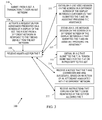
- FIG. 3 is a diagram of another method 300 for assisted approval of denied SS transactions, according to an example embodiment.
- the software module(s) that implements the method 300 is referred to as a "SST assistance interface.”
- the SST assistance interface is implemented as executable instructions programmed and residing within memory and/or a non-transitory computer-readable (processor-readable) storage medium and executed by one or more processors of an SST.
- the processors that execute the SST assistance interface are specifically configured and programmed to process the SST assistance interface.
- the SST assistance interface has access to at least two networks during its processing. Each network can be wired, wireless, or a combination of wired and wireless.
- the SST is the ATM 110 of the FIG. 1 .
- the SST is a kiosk.
- the SST is self-service grocery checkout station.
- the SST assistance interface is the assistance interface 112 of the FIG. 1 .
- the SST assistance interface submits a transaction over an SST network, the transaction initially defined by a customer at the SST transacting with the SST.
- the SST assistance interface activates a request for assistance presented on a screen of a display of the SST.
- the request may be available as an interface selection at the SST within the screen at all times a customer is transaction or may be presented within the screen when conditions make it likely the customer is in need of assistance.
- the request is sent from a network that is different from the SST network as an "offer for assistance" and the offer for assistance (request) sent based on the transaction being denied from the SST network.
- the request (offer for assistance) is sent from the teller device 131 of the FIG. 1 .
- the request (offer for assistance) is sent from the assistance manager of the FIG. 2 .
- the SST assistance interface receives assistance for the transaction. This assistance can be received at the SST by the SST assistance interface in a number of manners.
- the SST assistance interface establishes a live video session on the screen or on a different screen of the display between a customer that submitted the transaction and an assistant providing the assistance and operating an assistant device independent of the SST.
- the SST assistance interface establishes a live message session on the screen or on a different screen of the display between a customer that submitted the transaction and an assistance providing the assistance and operating an assistant device independent of the SST.
- the customer that submitted the transaction obtains in-person assistance for the transaction by an assistant at the SST or in proximity to the SST.
- the SST assistance interface receives a notice (presented on a screen of the display) that the transaction was overridden and was successful or will be successful shortly based on an action of an attendant associated with the different network (a network that is not the SST network where the SST transaction was initially conducted and denied).
- the SST assistance interface receives instructions (presented on a screen of the display), which explain how the transaction can be reinitiated at the SST for allowing the transaction over the SST network (the instructions received over a different network from the SST network).
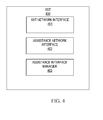
- FIG. 4 is a diagram of an SST 400, according to an example embodiment.
- the components of the SST 400 are programmed and reside within memory and/or a non-transitory computer-readable medium and execute on one or more processors of the SST 400.
- the SST 400 communicates and has access to at least two networks, which can be wired, wireless, or a combination of wired and wireless.
- the SST 400 is the ATM 110 of the FIG. 1 .
- the SST 400 is a kiosk.
- the SST 400 is a self-service grocery checkout station.
- the SST 400 includes an SST network interface 401, an assistance network interface 402, and an assistance interface manager 403.
- the SST network interface 401 permits the SST 400 to communicate over an SST network.
- the SST network is the ATM network 120 of the FIG. 1 .
- the assistance network interface 402 permits the SST 400 to communicate over an assistance network.
- the assistance network is the local bank network 130 of the FIG. 1 .
- the assistance interface manager 403 is configured and adapted to: execute on the SST 400, submit a transaction over the SST network using the SST network interface 401, present a request for assistance on a screen of a display associated with the SST 400 in response to the transaction being denied over the assistance network using the assistance network interface 402, and send an activated request for assistance over the assistance network using the assistance network interface 402 to obtain assistance for the transaction.
- the assistance interface manager 403 is further adapted and configured to establish a live communication session on the screen or a different screen of the display for interaction between a customer that is conducting the transaction (which is currently denied) and an assistant communicating over the assistance network.
- the live communication session is one of: a live video session and a live messaging session.
- modules are illustrated as separate modules, but may be implemented as homogenous code, as individual components, some, but not all of these modules may be combined, or the functions may be implemented in software structured in any other convenient manner.
Landscapes
- Business, Economics & Management (AREA)
- Accounting & Taxation (AREA)
- Finance (AREA)
- General Physics & Mathematics (AREA)
- Physics & Mathematics (AREA)
- Engineering & Computer Science (AREA)
- Strategic Management (AREA)
- General Business, Economics & Management (AREA)
- Theoretical Computer Science (AREA)
- Financial Or Insurance-Related Operations Such As Payment And Settlement (AREA)
- Computer Security & Cryptography (AREA)
- Development Economics (AREA)
- Economics (AREA)
Abstract
Description
- Increasingly, enterprises are deploying Self-Service Terminals (SSTs) at various locations for use by consumers. The locations can include financial institutions, grocery stores, retail stores, government venues, entertainment venues, gaming venues, transportation venues, and the like.
- One type of SST is an Automated Teller Machine (ATM). ATMs present unique challenges to a servicing enterprise because security is of utmost concern. In fact, network access to the ATM network, which the ATM communicates with for financial transactions, is often unavailable for access to servicing engineers. Moreover, when a customer transacts at an ATM, the ATM network may switch to a different bank network because the ATM where the customer transacts may be associated with a different bank from a customer bank account used for the customer transaction.
- Some banks include automated teller or interactive banking services for customers at one of their ATMs. This enables teller assistance for Self-Service (SS) transactions, but these services only work for transactions that are not routed through a standard ATM network. So, when a standard transaction occurs through a standard ATM network, the customer receives little assistance.
- Assistance is an issue when a customer is denied a transaction by the ATM network. The customer is given no reason or rationale for the denial. In many cases, all the customer receives is a standard message "unable to complete this transaction at this time." It may have nothing to do with the customer; the ATM may not have sufficient cash to dispense in the amount the customer requested. But the customer has no idea why the transaction was denied. Some customers may even panic and think that their account was compromised in some manner. Even if a receipt is printed for a denied transaction, this offers no additional details to permit the customer to ascertain what the issue was with the denied transaction. This is frustrating to the customer and can lead to a bank losing the valued customer.
- In various embodiments, methods and an SST for assisted approval of denied Self-Service (SS) transactions are presented.
- According to an embodiment, a method for assisted approval of denied SS transactions are provided. Specifically, a device receives transaction details for a denied transaction occurring at a Self-Service Terminal (SST). The denied transaction occurring over an SST network and the transaction details received over a different network. Next, a determination is made as to whether to override the denied transaction to allow the denied transaction using the different network.
- According to a first aspect of the present invention there is provided a method comprising: receiving, by a device, transaction details for a denied transaction at a Self-Service Terminal (SST), the denied transaction occurring over an SST network and the transaction details being obtained from the SST; and determining whether to override the denied transaction to allow the denied transaction using a different network.
- The method may further comprise establishing a remote video communication session with the SST to assist a customer associated with the denied transaction based on the transaction details.
- The method may further comprise establishing a remote messaging session with the SST to assist a customer associated with the denied transaction based on the transaction details.
- The step of receiving optionally further includes sending a request to a customer associated with the denied transaction over the different network and accessible from the SST that asks whether the customer needs assistance with the denied transaction.
- The step of determining optionally further includes determining to override and allow the denied transaction based on the transaction details.
- The step of determining optionally further includes identifying the SST as being in proximity to the device.
- The step of identifying optionally further includes providing in-person assistance to a customer associated with the denied transaction using the transaction details.
- The step of determining optionally further includes obtaining customer details for a customer associated with the denied transaction based on the transaction details.
- The step of obtaining optionally further includes using the customer details with the transaction details to decide whether to override and allow the denied transaction.
- The step of determining optionally further includes providing a customer associated with the denied transaction with information as to how the denied transaction can be done to allow the denied transaction.
- According to a second aspect of the present invention there is provided a Self-Service Terminal (SST), comprising: an SST network interface for an SST network; an assistance network interface for an assistance network; and an assistance interface manager configured and adapted to: i) execute on the SST, ii) submit a transaction over the SST network, iii) present a request for assistance on a screen of a display associated with the SST in response to the transaction being denied, and iv) send an activated request for assistance over the assistance network to obtain assistance for the transaction.
- The assistance interface manager is optionally further configured and adapted to v) establish a live communication session to obtain assistance on the screen or a different screen of the display.
- The live communication session is optionally one of: a live video session and a live messaging session.
- The SST is optionally an Automated Teller Machine (ATM) and the assistance network is a bank network associated with a specific bank.
- According to a third aspect of the present invention there is provided a method comprising: submitting, from a Self-Service Terminal (SST), a transaction over an SST network; activating a request for assistance presented on a screen of a display of the SST, the request being sent from a different network in response to the transaction being denied from the SST network; and receiving assistance for the transaction.
- The step of receiving optionally further includes establishing a live video session on the screen or a different screen of the display between a customer that submitted the transaction and an assistant providing the assistance.
- The step of receiving optionally further includes establishing a live message session on the screen or a different screen of the display between a customer that submitted the transaction and an assistant providing the assistance.
- The step of receiving optionally further includes obtaining, by a customer that submitted the transaction, in-person assistance for the transaction at or in proximity to the SST.
- The step of receiving optionally further includes receiving a notice that the transaction was overridden and was successful based on an action of an attendant associated with the different network.
- The step of receiving optionally further includes receiving instructions that explain how the transaction can be reinitiated at the SST for allowing the transaction.
- These and other aspects of the present invention will become apparent from the following specification description, given by way of example, in which:
-
FIG. 1 is a diagram of components for practicing assisted approval of denied Self-Service (SS) transactions, according to an example embodiment; -
FIG. 2 is a diagram of a method for assisted approval of denied SS transactions, according to an example embodiment; -
FIG. 3 is a diagram of another method for assisted approval of denied SS transactions, according to an example embodiment; and -
FIG. 4 is a diagram of a Self-Service Terminal (SST), according to an example embodiment. - Reference is first made to
FIG. 1 , which is a diagram 100 of components for practicing assisted approval of denied Self-Service (SS) transactions, according to an example embodiment. It is to be noted that theATM 110 is shown schematically in greatly simplified form, with only those components relevant to understanding of this embodiment being illustrated. The same situation may be true for theteller device 131. - Furthermore, the various components (that are identified in the
FIG. 1 ) are illustrated and the arrangement of the components is presented for purposes of illustration only. It is to be noted that other arrangements with more or less components are possible without departing from the teachings of assisted approval of denied Self-Service (SS) transactions, presented herein and below. - Furthermore, methods and SST presented herein and below for assisted approval of denied Self-Service (SS) transactions can be implemented in whole or in part in one, all, or some combination of the components shown with the diagram 100. The methods are programmed as executable instructions in memory and/or non-transitory computer-readable storage media and executed on one or more processors associated with the components.
- Specifically, the diagram 100 permits assisted approval of denied Self-Service (SS) transactions utilizing two networks (
ATM network 120 and Local Bank Network 130). The details of this approach in view of the components, within the diagram 100, are now presented with reference to an embodiment of theFIG. 1 within the context of anATM 110. - However, before discussion of the diagram 100 is presented, it is to be noted that the methods and SST presented herein are not limited to ATM solutions; that is, any SST terminal (kiosk, vending machine, check-in and/or check-out terminal, such as those used in retail, hotel, car rental, healthcare, or financial industries, etc.) can benefit from the assisted approval of denied Self-Service (SS) transactions discussed herein.
- The diagram 100 includes an
ATM 110, anATM network 120, a local bank network 130, and ateller device 131. TheATM 110 includes an ATM transaction/application interface 111 and anassistance interface 112. - The techniques and features of assisted approval of denied Self-Service (SS) transactions are illustrated with reference to the components of the diagram 100 for an ATM transaction for customer performing an ATM transaction at the
ATM 110 where that transaction is, at least initially, denied by theATM network 120. - When the customer accesses the ATM transaction/
application interface 111 to conduct an ATM transaction that transaction is processed with theATM 110 through theATM network 120. For any number of reasons the transaction can fail based on the transaction details some of which may have been improperly entered by the customer or some of which are not permitted by policy associated with theATM 110 or the bank of the customer from which theATM network 120 communicates. For any of these reasons (and others not listed), the ATM transaction is denied. - Typically, when this occurs the customer is provided little to no useful information about why the ATM transaction failed; rather, a message appears or is printed on the receipt that says transaction failed or could not be completed. This is frustrating and confusing to the customer and in some cases may incite a panic attack with the customer believing the customer's account was compromised in some manner.
- With the techniques herein, the convention situation is changed and the customer is provided real time assistance in the manners described herein.
- When the ATM transaction is denied, the transaction details are obtained from the
ATM 110 associated with where the customer is performing the ATM transaction in real time (this can be done via a link between theATM 110 to theassistance interface 112 or based on notice sent from the bank network communicating with theATM network 120, where that bank network communicates the denial to the local bank network 130). For example, the bank associated with approving and processing the transaction is contacted within theATM network 120 to complete the transaction. That bank receives the denial, which includes an ATM identifier that identifies theATM 110 and its location. - The teller then obtains the transaction details from the
ATM 110, which includes customer account information and, perhaps, other information to the local bank network 130 where thatATM 110 is located. This can be done in a number of ways, for example a local server of the bank may act as a secure proxy between theATM network 120, theATM 110, and the local bank network 130 (not shown in theFIG. 1 ). - In this embodiment, the transaction details are acquired by the proxy before being passed to the
ATM network 120 and the denial is acquired by the proxy before being passed to theATM 110. In this embodiment, the proxy automatically passes the transaction details of every denied transaction to theteller device 131. In some embodiments, the proxy may delay forwarding the transaction denial to theATM 110 until the teller at theteller device 131 has made a decision on whether to override the transaction denial or not (this may be subject to a timeout after which the proxy will forward the transaction denial message to theATM 110 if the teller has not made a decision on the transaction). The teller at theteller device 131 can therefore acquire the transaction details and the denial in a variety of ways. - Where a not-on-us transaction is denied, it is less likely that the teller will override the denial because it may relate to a lack of funds. However, when the transaction is an on-us transaction (i.e. the bank that owns the
ATM 110 also provides the customer with the account being affected by the transaction) the teller at theteller device 131 can check if there is sufficient funds, or if the denial was based on certain "house rules" which can be overridden by a teller but are routinely denied by ATMs. This may affect the teller's decision on whether to override the denied transaction. - Once the transaction details are obtained by the local bank network 130 (such as at a local proxy (not shown in the
FIG. 1 )), the transaction details can be routed to a queue for teller's to select, sent to a teller for action based on teller load at the time the transaction details are received, or sent to a specific teller. When a teller is assigned the transaction details or when the teller selects the transaction details, the teller can view and analyze the transaction details. The transaction details inform the teller as to whichATM 110 that the customer is performing the current ATM transaction that was denied. The teller can also use the transaction details to access backend systems of the bank through the local bank network for purposes of obtaining customer account history, customer name, account status, and the like. - The teller then uses one or more interfaces on the
teller device 131 to make a decision as to whether based on the transaction details and, perhaps, the customer details (account history, status, etc.) to override the denial and permit the transaction. The teller then uses theteller device 131 to access the local bank network 130 (such as through the proxy or via a direct connection) and override the transaction using the bank's backend systems. The override can be communicated through the local bank network 130 to theassistance interface 112 on theATM 110. - In this embodiment, the local bank network 130 has access to the core banking system (not shown) of the bank. The core banking system (not shown) stores information about all of the accounts held by that bank.
- One or more screens within a display of the
ATM 110 present the override decision to the customer in real time. The teller may then approach the customer with any funds related to the transaction and/or receipts for the customer to conclude the transaction, which was initially denied over theATM network 120. - In another case, assuming the
assistance interface 112 has proper security, theassistance interface 112 can control of the peripherals of theATM 110, which may not be the case in a typical scenario but could be in some embodiments, Theassistance interface 112 could dispense cash and receipts to conclude the transaction (which was originally denied) from theATM 110 directly to the customer. This may be similar to remote control of an ATM by a remote teller. - In some situations, the teller may not be able to override the ATM transaction but the teller has information relevant to the customer and the transaction and may be able to ascertain why the transaction is being denied and a manner in which the customer can successfully reinitiate the transaction. For example, the customer may have inadvertently requested too much cash adding an extra 0 or may have accessed one account of the customer with insufficient funds whereas another account of the customer had plenty of funds to conduct the transaction; other situations may occur as well.
- In such a scenario, the teller can use the
teller device 131 to send a request for assistance prompt to the customer over the local bank network 130. This request prompt is presented in one or more screens on the display of theATM 110 through theassistance interface 112. - When the customer activates (selects) the request for assistance prompt, the teller can engage in direct real-time assistance to the customer regarding the transaction and provide instructions on how the customer might reinitiate the transaction at the
ATM 110 for it to be successful or explain to the customer why the transaction cannot be successful. - The real-time assistance can be, in some cases, done in person by the teller walking over to the
ATM 110 to converse with the customer (personal approach). Alternatively, the assistance can be remote with a real-time live video session or a real-time live chat session both conducted remotely by the teller through theteller device 131 using the local bank network to interact with the customer through theassistance interface 112 on theATM 110. - It is noted that in some cases, the override can be done after engaging permission from the customer through an activated request for assistance; for example, the teller may not know if the customer wants the funds from a different account of the customer from what was used with the initial ATM transaction, such that the customer approval and interaction is needed before the teller can actually perform the override on behalf of the customer. In such a case, the customer need not reinitiate the transaction, since the teller is doing that with the override (actually a new transaction in this example performed by the teller on behalf of the customer).
- Moreover, in some cases, policy may dictate that the teller acquire an activated request for assistance before the teller can perform any override on behalf of the customer. In such a situation, before any override is performed the customer consent is acquired through the request for assistance and directly communicating with the customer (in person or remotely through video or message sessions using the assistance interface 112).
- In an embodiment, the
teller device 131 is a tablet. - In an embodiment, the
teller device 131 is a wearable processing device. - In an embodiment, the
teller device 131 is a terminal device. - In an embodiment, the
teller device 131 can communicate over the local bank network using a wireless connection. - In an embodiment, the
teller device 131 can communicate over the local bank network using a wired connection. - In an embodiment, the
teller device 131 can communicate over the local bank network using both a wired and wireless connection. - One now appreciates how real-time automated or semi-automated customer assistance can be provided for a denied ATM transaction of a customer at an
ATM 110. - Some embodiments of the diagram 100 and other embodiments of the assisted approval of denied Self-Service (SS) transactions are now discussed with the descriptions of the
FIGS. 2-4 . -
FIG. 2 is a diagram of amethod 200 for assisted approval of denied SS transactions, according to an example embodiment. The software module(s) that implements themethod 200 is referred to as an "assistance manager." The assistance manager is implemented as executable instructions programmed and residing within memory and/or a non-transitory computer-readable (processor-readable) storage medium and executed by one or more processors of a device. The processor(s) of the device that executes the assistance manager are specifically configured and programmed to process the assistance manager. The assistance manager has access a network during its processing. The network can be wired, wireless, or a combination of wired and wireless. - In an embodiment, the device that executes the assistance manager is the
teller device 131 of theFIG. 1 . - The processing of the assistance manager assumes that a transaction at a Self-Service Terminal (SST) being conducted by a customer was denied by a SST network, which the assistance manager does not have access to.
- In an embodiment, the SST is the
ATM 110 of theFIG. 1 . - In an embodiment, the SST is a kiosk.
- In an embodiment, the SST is a Self-Service grocery store checkout station.
- At 210, the assistance manager receives (on the device that executes the assistance manager) transaction details for a denied transaction at a SST. The denied transaction occurs over an SST network and the transaction details obtained from the SST. The assistance manager has access to the different network but not access to SST network where the transaction was initially denied.
- According to an embodiment, at 211, the assistance manager sends a request to a customer associated with the denied transaction over the different network and accessible from the SST. The request asks whether the customer wants real-time assistance with the denied transaction. The request presented within a screen associated with the SST and managed by a separate interface from that which the customer used to connect to the SST network and perform the initially denied SST transaction.
- At 220, the assistance manager determines whether to override the denied transaction to allow the denied transaction using the different network. This is based on analysis of the transaction details for the transaction and/or additional customer details associated with the customer acquired through the transaction details or through separate customer loyalty information associated with the customer and linked to the transaction details.
- In an embodiment, at 221, the assistance manager determines to override and allow the denied transaction based on the transaction details.
- In an embodiment, at 222, the assistance manager identifies the SST as being in proximity to the device that executes the assistance manager. This can be done via an identifier for the SST supplied with the transaction details.
- In an embodiment of 222 and at 223, the assistance manager provides in-person assistance to the customer associated with the denied transaction using the transaction details. So, an assistant that interacts via an interface of the device with the assistance manager locates the SST for the customer, inspects the transaction details, and walks over to the customer to assist in real time.
- In an embodiment, at 224, the assistance manager obtains customer details for a customer associated with the denied transaction based on the transaction details, such as account details, loyalty details (loyalty level, etc.), account status, account history, etc. This information is relevant and provides a personalized approach in assisting the customer with the denied transaction.
- In an embodiment of 224 and at 225, the assistance manager uses the customer details to decide whether to override and allow the denied transaction. Some situations of this were discussed above where the SST was the
ATM 110. Other situations for non ATMs that are the SST may include customer loyalty level permitting the override for the denied transaction, and the like. - In an embodiment, at 226, the assistance manager provides the customer associated with the denied transaction with information as to how the denied transaction can be done to allow the denied transaction, either through interaction with the assistance manager or through reinitiating a transaction at the SST over the SST network.
- According to an embodiment, at 230, the assistance manager establishes a remote video communication session with the SST to assist the customer associated with the denied transaction based on the transaction details. Again, this can be done through an interface on the SST and occurs over the different network (not the SST network).
- In an embodiment, at 240, the assistance manager establishes a remote messaging session with the SST to assist the customer associated with the denied transaction based on the transaction details, using an interface on the SST and over a network that is different from the SST network where the transaction was initially denied.
-
FIG. 3 is a diagram of anothermethod 300 for assisted approval of denied SS transactions, according to an example embodiment. The software module(s) that implements themethod 300 is referred to as a "SST assistance interface." The SST assistance interface is implemented as executable instructions programmed and residing within memory and/or a non-transitory computer-readable (processor-readable) storage medium and executed by one or more processors of an SST. The processors that execute the SST assistance interface are specifically configured and programmed to process the SST assistance interface. The SST assistance interface has access to at least two networks during its processing. Each network can be wired, wireless, or a combination of wired and wireless. - In an embodiment, the SST is the
ATM 110 of theFIG. 1 . - In an embodiment, the SST is a kiosk.
- In an embodiment, the SST is self-service grocery checkout station.
- In an embodiment, the SST assistance interface is the
assistance interface 112 of theFIG. 1 . - At 310, the SST assistance interface submits a transaction over an SST network, the transaction initially defined by a customer at the SST transacting with the SST.
- At 320, the SST assistance interface activates a request for assistance presented on a screen of a display of the SST. The request may be available as an interface selection at the SST within the screen at all times a customer is transaction or may be presented within the screen when conditions make it likely the customer is in need of assistance. In an embodiment, the request is sent from a network that is different from the SST network as an "offer for assistance" and the offer for assistance (request) sent based on the transaction being denied from the SST network.
- In an embodiment, the request (offer for assistance) is sent from the
teller device 131 of theFIG. 1 . - In an embodiment, the request (offer for assistance) is sent from the assistance manager of the
FIG. 2 . - At 330, the SST assistance interface receives assistance for the transaction. This assistance can be received at the SST by the SST assistance interface in a number of manners.
- For example, at 331, the SST assistance interface establishes a live video session on the screen or on a different screen of the display between a customer that submitted the transaction and an assistant providing the assistance and operating an assistant device independent of the SST.
- In another case, at 332, the SST assistance interface establishes a live message session on the screen or on a different screen of the display between a customer that submitted the transaction and an assistance providing the assistance and operating an assistant device independent of the SST.
- According to an embodiment, at 333, the customer that submitted the transaction obtains in-person assistance for the transaction by an assistant at the SST or in proximity to the SST.
- In an embodiment, at 334, the SST assistance interface receives a notice (presented on a screen of the display) that the transaction was overridden and was successful or will be successful shortly based on an action of an attendant associated with the different network (a network that is not the SST network where the SST transaction was initially conducted and denied).
- In an embodiment, the SST assistance interface receives instructions (presented on a screen of the display), which explain how the transaction can be reinitiated at the SST for allowing the transaction over the SST network (the instructions received over a different network from the SST network).
-
FIG. 4 is a diagram of anSST 400, according to an example embodiment. The components of theSST 400 are programmed and reside within memory and/or a non-transitory computer-readable medium and execute on one or more processors of theSST 400. TheSST 400 communicates and has access to at least two networks, which can be wired, wireless, or a combination of wired and wireless. - In an embodiment, the
SST 400 is theATM 110 of theFIG. 1 . - In an embodiment, the
SST 400 is a kiosk. - In an embodiment, the
SST 400 is a self-service grocery checkout station. - The
SST 400 includes anSST network interface 401, anassistance network interface 402, and anassistance interface manager 403. - The
SST network interface 401 permits theSST 400 to communicate over an SST network. - In an embodiment, the SST network is the
ATM network 120 of theFIG. 1 . - The
assistance network interface 402 permits theSST 400 to communicate over an assistance network. - In an embodiment, the assistance network is the local bank network 130 of the
FIG. 1 . - The
assistance interface manager 403 is configured and adapted to: execute on theSST 400, submit a transaction over the SST network using theSST network interface 401, present a request for assistance on a screen of a display associated with theSST 400 in response to the transaction being denied over the assistance network using theassistance network interface 402, and send an activated request for assistance over the assistance network using theassistance network interface 402 to obtain assistance for the transaction. - According to an embodiment, the
assistance interface manager 403 is further adapted and configured to establish a live communication session on the screen or a different screen of the display for interaction between a customer that is conducting the transaction (which is currently denied) and an assistant communicating over the assistance network. In an embodiment, the live communication session is one of: a live video session and a live messaging session. - One now appreciates how automated or semi-automated real-time assisted approval of denied self-service transactions can be achieved via SSTs and other remote devices in communication with the SSTs.
- It should be appreciated that where software is described in a particular form (such as a component or module) this is merely to aid understanding and is not intended to limit how software that implements those functions may be architected or structured. For example, modules are illustrated as separate modules, but may be implemented as homogenous code, as individual components, some, but not all of these modules may be combined, or the functions may be implemented in software structured in any other convenient manner.
- Furthermore, although the software modules are illustrated as executing on one piece of hardware, the software may be distributed over multiple processors or in any other convenient manner.
- The above description is illustrative, and not restrictive. Many other embodiments will be apparent to those of skill in the art upon reviewing the above description. The scope of embodiments should therefore be determined with reference to the appended claims.
- In the foregoing description of the embodiments, various features are grouped together in a single embodiment for the purpose of streamlining the disclosure. This method of disclosure is not to be interpreted as reflecting that the claimed embodiments have more features than are expressly recited in each claim. Rather, as the following claims reflect, inventive subject matter lies in less than all features of a single disclosed embodiment.
Claims (15)
- A method comprising:receiving, by a device (131), transaction details for a denied transaction at a self-service terminal (110 or 400), the denied transaction occurring over a self-service terminal network (120) and the transaction details being obtained from the self-service terminal (110 or 400) (step 210); andoverriding, by the device (131), the denied transaction to approve the denied transaction using a different network (130).
- The method of claim 1 further comprising, establishing a remote video communication session with the self-service terminal (110 or 400) to assist a customer associated with the denied transaction based on the transaction details (step 230).
- The method of claim 1 or 2 further comprising, establishing a remote messaging session with the self-service terminal (110 or 400) to assist a customer associated with the denied transaction based on the transaction details (step 240).
- The method of any preceding claim, wherein receiving transaction details further includes sending a request to a customer associated with the denied transaction over the different network (130) and accessible from the self-service terminal (110 or 400) that asks whether the customer needs assistance with the denied transaction (step 211).
- The method of any preceding claim, wherein overriding the denied transaction further includes identifying the self-service terminal (110 or 400) as being in proximity to the device (131) (step 222).
- The method of claim 5, wherein identifying the self-service terminal further includes providing in-person assistance to a customer associated with the denied transaction using the transaction details (step 223).
- The method of any preceding claim, wherein the method includes the further step of obtaining customer details for a customer associated with the denied transaction based on the transaction details, prior to the step of overriding the denied transaction (step 224).
- The method of claim 7, wherein obtaining customer details further includes using the customer details with the transaction details to decide whether to override and approve the denied transaction (step 225).
- The method of any preceding claim, wherein the method includes the further step of providing a customer associated with the denied transaction with information as to how the denied transaction can be done to allow the denied transaction (step 226).
- A self-service terminal (110 or 400) comprising:a self-service terminal network interface (111 or 401) for a self-service terminal network (120);an assistance network interface (402) for an assistance network (130), different to the self-service terminal network (120); andan assistance interface manager (112 or 403) configured and arranged to: i) execute on the self-service terminal (110 or 400), ii) submit a transaction over the self-service terminal network (120), iii) present a request for assistance prompt on a screen of a display associated with the self-service terminal (110 or 400) in response to the transaction being denied, and iv) send an activated request for assistance over the assistance network (130) to obtain assistance for the transaction.
- The self-service terminal of claim 10, wherein the assistance interface manager (112 or 403) is further configured and arranged to v) establish a live communication session to obtain assistance on the screen or a different screen of the display.
- The self-service terminal of claim 11, wherein the live communication session is one of: a live video session and a live messaging session.
- The self-service terminal of any of claims 11 and 12, wherein the self-service terminal (110 or 400) is an Automated Teller Machine and the assistance network (130) is a bank network coupled to a core banking system.
- A network including the self-service terminal of any of claims 10 to 13, wherein the network includes a proxy server coupled to the self-service terminal (110), the self-service terminal network (120), the assistance network (130), and a teller device (131), and the proxy server is operable to route transaction denial responses to the teller device (131).
- A network according to claim 14, wherein the teller device (131) is operable to issue a transaction approval command to the assistance interface manager (112 or 403) to instruct the self-service terminal (110 or 400) to perform the transaction that was denied by the self-service terminal network (120).
Applications Claiming Priority (1)
| Application Number | Priority Date | Filing Date | Title |
|---|---|---|---|
| US14/265,784 US9972172B2 (en) | 2014-04-30 | 2014-04-30 | Assisted approval of denied self-service transactions |
Publications (1)
| Publication Number | Publication Date |
|---|---|
| EP2940637A1 true EP2940637A1 (en) | 2015-11-04 |
Family
ID=52824065
Family Applications (1)
| Application Number | Title | Priority Date | Filing Date |
|---|---|---|---|
| EP15162233.9A Withdrawn EP2940637A1 (en) | 2014-04-30 | 2015-04-01 | Assisted approval of denied self-service transactions |
Country Status (3)
| Country | Link |
|---|---|
| US (1) | US9972172B2 (en) |
| EP (1) | EP2940637A1 (en) |
| CN (1) | CN105046839B (en) |
Cited By (1)
| Publication number | Priority date | Publication date | Assignee | Title |
|---|---|---|---|---|
| US12450612B2 (en) * | 2021-01-19 | 2025-10-21 | Ncr Voyix Corporation | Self-service terminal (SST) item return anti-fraud processing |
Families Citing this family (6)
| Publication number | Priority date | Publication date | Assignee | Title |
|---|---|---|---|---|
| US10706426B2 (en) * | 2014-04-30 | 2020-07-07 | Ncr Corporation | Automated remote transaction assistance |
| US20160225071A1 (en) * | 2015-01-30 | 2016-08-04 | Ncr Corporation | Interactive customer assistance devices and methods |
| US10922668B2 (en) * | 2016-09-23 | 2021-02-16 | Ncr Corporation | Point-of-sale (POS) bot |
| US11055972B2 (en) * | 2017-01-16 | 2021-07-06 | Ncr Corporation | Self-service terminal (SST) network real-time cloud management |
| US10692062B2 (en) * | 2017-04-28 | 2020-06-23 | Ncr Corporation | Auto lookup for a self-service terminal (SST) network |
| US11212492B1 (en) * | 2020-06-24 | 2021-12-28 | Ncr Corporation | Linked transaction camera with cached video log |
Citations (4)
| Publication number | Priority date | Publication date | Assignee | Title |
|---|---|---|---|---|
| EP1022699A2 (en) * | 1999-01-21 | 2000-07-26 | Ncr International Inc. | Self-service terminal network |
| US20030046235A1 (en) * | 2001-05-25 | 2003-03-06 | Dennis Lacivita | System and method for interactive secure dialog between card holder and issuer |
| US20050033681A1 (en) * | 1998-01-15 | 2005-02-10 | Usa Processing Inc. | ATM and POS terminal and method of use thereof |
| US20070150566A1 (en) * | 2005-12-27 | 2007-06-28 | Drew Lamparello | Remote system override |
Family Cites Families (9)
| Publication number | Priority date | Publication date | Assignee | Title |
|---|---|---|---|---|
| US20030208439A1 (en) * | 2002-05-03 | 2003-11-06 | Rast Rodger H. | Automated soft limit control of electronic transaction accounts |
| US7357310B2 (en) * | 2005-03-11 | 2008-04-15 | Gerry Calabrese | Mobile phone charge card notification and authorization method |
| US20070084913A1 (en) * | 2005-10-18 | 2007-04-19 | Capital One Financial Corporation | Systems and methods for authorizing a transaction for a financial account |
| CN101025843B (en) | 2006-02-23 | 2010-05-26 | 中国农业银行股份有限公司 | Self-service financial transaction system and method |
| CN101097625A (en) | 2006-06-29 | 2008-01-02 | 中国银联股份有限公司 | A method and system for improving RAS performance of bank card transaction processing system |
| WO2012103128A2 (en) * | 2011-01-24 | 2012-08-02 | Visa International Service Association | Statement portal with receipt tagging and associated enhanced benefit messaging |
| US20130002428A1 (en) | 2011-06-28 | 2013-01-03 | Yu-Kong Chiu | Hidden burglar alarm device for a door or window |
| WO2013009870A1 (en) * | 2011-07-11 | 2013-01-17 | Bank Of America Corporation | Video-assisted self-service transaction device |
| US20150120542A1 (en) * | 2013-10-29 | 2015-04-30 | Ncr Corporation | System and method for overriding rule driven automated decisions |
-
2014
- 2014-04-30 US US14/265,784 patent/US9972172B2/en active Active
-
2015
- 2015-04-01 EP EP15162233.9A patent/EP2940637A1/en not_active Withdrawn
- 2015-04-17 CN CN201510186006.7A patent/CN105046839B/en not_active Expired - Fee Related
Patent Citations (4)
| Publication number | Priority date | Publication date | Assignee | Title |
|---|---|---|---|---|
| US20050033681A1 (en) * | 1998-01-15 | 2005-02-10 | Usa Processing Inc. | ATM and POS terminal and method of use thereof |
| EP1022699A2 (en) * | 1999-01-21 | 2000-07-26 | Ncr International Inc. | Self-service terminal network |
| US20030046235A1 (en) * | 2001-05-25 | 2003-03-06 | Dennis Lacivita | System and method for interactive secure dialog between card holder and issuer |
| US20070150566A1 (en) * | 2005-12-27 | 2007-06-28 | Drew Lamparello | Remote system override |
Non-Patent Citations (1)
| Title |
|---|
| "ITU-T Adaptation of H.320 visual telephone terminals to B-ISDN environments", 4 May 1998 (1998-05-04), XP055193131, Retrieved from the Internet <URL:https://www.itu.int/rec/T-REC-H.321-199802-I/en> [retrieved on 20150602] * |
Cited By (1)
| Publication number | Priority date | Publication date | Assignee | Title |
|---|---|---|---|---|
| US12450612B2 (en) * | 2021-01-19 | 2025-10-21 | Ncr Voyix Corporation | Self-service terminal (SST) item return anti-fraud processing |
Also Published As
| Publication number | Publication date |
|---|---|
| US9972172B2 (en) | 2018-05-15 |
| US20150317628A1 (en) | 2015-11-05 |
| CN105046839B (en) | 2018-04-06 |
| CN105046839A (en) | 2015-11-11 |
Similar Documents
| Publication | Publication Date | Title |
|---|---|---|
| US20250069057A1 (en) | Systems and methods for using a transaction identifier to protect sensitive credentials | |
| US9972172B2 (en) | Assisted approval of denied self-service transactions | |
| US9595065B2 (en) | Transaction assistance | |
| US11989719B2 (en) | Adaptable authentication processing | |
| US20260057374A1 (en) | Secure remote transaction framework using dynamic secure checkout element | |
| US10257185B2 (en) | Automated access data provisioning | |
| US9646466B2 (en) | Proximity-based notification of a previously abandoned and pre-queued ATM transaction | |
| US8768853B2 (en) | Secondary identification for remittance delivery | |
| US20150186890A1 (en) | Method, Device And System For Data Processing | |
| US11049101B2 (en) | Secure remote transaction framework | |
| US9460460B2 (en) | Onsite automated customer assistance | |
| WO2015101014A1 (en) | Method, device and system for data processing | |
| US12354068B2 (en) | Remote device control based on deep linking | |
| US20160321626A1 (en) | Cross-Network Action Approval | |
| US10825006B2 (en) | Device-to-device claim staking | |
| US20140101732A1 (en) | Communication with a Voice-Based Account Management System | |
| US10303335B2 (en) | Multicomputer processing of client device request data with centralized event orchestration | |
| WO2024108122A1 (en) | Systems and methods for processing cryptocurrency transactions |
Legal Events
| Date | Code | Title | Description |
|---|---|---|---|
| PUAI | Public reference made under article 153(3) epc to a published international application that has entered the european phase |
Free format text: ORIGINAL CODE: 0009012 |
|
| AK | Designated contracting states |
Kind code of ref document: A1 Designated state(s): AL AT BE BG CH CY CZ DE DK EE ES FI FR GB GR HR HU IE IS IT LI LT LU LV MC MK MT NL NO PL PT RO RS SE SI SK SM TR |
|
| AX | Request for extension of the european patent |
Extension state: BA ME |
|
| 17P | Request for examination filed |
Effective date: 20160504 |
|
| RBV | Designated contracting states (corrected) |
Designated state(s): AL AT BE BG CH CY CZ DE DK EE ES FI FR GB GR HR HU IE IS IT LI LT LU LV MC MK MT NL NO PL PT RO RS SE SI SK SM TR |
|
| 17Q | First examination report despatched |
Effective date: 20160726 |
|
| STAA | Information on the status of an ep patent application or granted ep patent |
Free format text: STATUS: THE APPLICATION HAS BEEN WITHDRAWN |
|
| 18W | Application withdrawn |
Effective date: 20170420 |