EP2940475A1 - Hashish marker - Google Patents
Hashish marker Download PDFInfo
- Publication number
- EP2940475A1 EP2940475A1 EP14305628.1A EP14305628A EP2940475A1 EP 2940475 A1 EP2940475 A1 EP 2940475A1 EP 14305628 A EP14305628 A EP 14305628A EP 2940475 A1 EP2940475 A1 EP 2940475A1
- Authority
- EP
- European Patent Office
- Prior art keywords
- sample
- hashish
- dimethyl
- hexane
- vinylbicyclo
- Prior art date
- Legal status (The legal status is an assumption and is not a legal conclusion. Google has not performed a legal analysis and makes no representation as to the accuracy of the status listed.)
- Withdrawn
Links
- 244000025254 Cannabis sativa Species 0.000 title claims abstract description 80
- 235000012766 Cannabis sativa ssp. sativa var. sativa Nutrition 0.000 title claims abstract description 66
- 235000012765 Cannabis sativa ssp. sativa var. spontanea Nutrition 0.000 title claims abstract description 66
- 239000004866 Hashish Substances 0.000 title claims abstract description 60
- 239000003550 marker Substances 0.000 title claims description 13
- 238000000034 method Methods 0.000 claims abstract description 42
- FVALSVRBUSTXPB-UHFFFAOYSA-N 4-ethenyl-5,5-dimethylbicyclo[2.1.1]hexane Chemical compound C1C2(C=C)C(C)(C)C1CC2 FVALSVRBUSTXPB-UHFFFAOYSA-N 0.000 claims abstract description 27
- 229940125904 compound 1 Drugs 0.000 claims description 48
- 238000002470 solid-phase micro-extraction Methods 0.000 claims description 32
- 238000004458 analytical method Methods 0.000 claims description 31
- 238000004817 gas chromatography Methods 0.000 claims description 27
- 239000000470 constituent Substances 0.000 claims description 26
- 238000001871 ion mobility spectroscopy Methods 0.000 claims description 15
- 238000004949 mass spectrometry Methods 0.000 claims description 14
- 238000005481 NMR spectroscopy Methods 0.000 claims description 11
- 238000004811 liquid chromatography Methods 0.000 claims description 8
- 238000001069 Raman spectroscopy Methods 0.000 claims description 5
- 238000001172 liquid--solid extraction Methods 0.000 claims description 5
- 238000004611 spectroscopical analysis Methods 0.000 claims description 5
- 238000004587 chromatography analysis Methods 0.000 claims description 4
- 239000003463 adsorbent Substances 0.000 claims description 3
- 239000000523 sample Substances 0.000 description 41
- 240000004308 marijuana Species 0.000 description 34
- 229940079593 drug Drugs 0.000 description 30
- 239000003814 drug Substances 0.000 description 30
- 239000012855 volatile organic compound Substances 0.000 description 20
- 238000005070 sampling Methods 0.000 description 16
- 150000001875 compounds Chemical class 0.000 description 15
- 239000000203 mixture Substances 0.000 description 15
- 235000008697 Cannabis sativa Nutrition 0.000 description 14
- 239000000126 substance Substances 0.000 description 14
- 229930003658 monoterpene Natural products 0.000 description 13
- UAHWPYUMFXYFJY-UHFFFAOYSA-N beta-myrcene Chemical compound CC(C)=CCCC(=C)C=C UAHWPYUMFXYFJY-UHFFFAOYSA-N 0.000 description 12
- 235000002577 monoterpenes Nutrition 0.000 description 12
- 238000001514 detection method Methods 0.000 description 11
- 238000002290 gas chromatography-mass spectrometry Methods 0.000 description 11
- 150000002773 monoterpene derivatives Chemical class 0.000 description 11
- 239000000341 volatile oil Substances 0.000 description 11
- GRWFGVWFFZKLTI-IUCAKERBSA-N (-)-α-pinene Chemical compound CC1=CC[C@@H]2C(C)(C)[C@H]1C2 GRWFGVWFFZKLTI-IUCAKERBSA-N 0.000 description 10
- NPNUFJAVOOONJE-ZIAGYGMSSA-N β-(E)-Caryophyllene Chemical compound C1CC(C)=CCCC(=C)[C@H]2CC(C)(C)[C@@H]21 NPNUFJAVOOONJE-ZIAGYGMSSA-N 0.000 description 9
- FAMPSKZZVDUYOS-UHFFFAOYSA-N 2,6,6,9-tetramethylcycloundeca-1,4,8-triene Chemical compound CC1=CCC(C)(C)C=CCC(C)=CCC1 FAMPSKZZVDUYOS-UHFFFAOYSA-N 0.000 description 8
- XMGQYMWWDOXHJM-UHFFFAOYSA-N limonene Chemical compound CC(=C)C1CCC(C)=CC1 XMGQYMWWDOXHJM-UHFFFAOYSA-N 0.000 description 8
- 239000011347 resin Substances 0.000 description 8
- 229920005989 resin Polymers 0.000 description 8
- 239000004205 dimethyl polysiloxane Substances 0.000 description 7
- 235000013870 dimethyl polysiloxane Nutrition 0.000 description 7
- 239000000047 product Substances 0.000 description 7
- 229930004725 sesquiterpene Natural products 0.000 description 7
- 150000004354 sesquiterpene derivatives Chemical class 0.000 description 7
- 241000282472 Canis lupus familiaris Species 0.000 description 6
- XCPQUQHBVVXMRQ-UHFFFAOYSA-N alpha-Fenchene Natural products C1CC2C(=C)CC1C2(C)C XCPQUQHBVVXMRQ-UHFFFAOYSA-N 0.000 description 6
- 239000000835 fiber Substances 0.000 description 6
- 238000001819 mass spectrum Methods 0.000 description 6
- 229920000435 poly(dimethylsiloxane) Polymers 0.000 description 6
- WTARULDDTDQWMU-RKDXNWHRSA-N (+)-β-pinene Chemical compound C1[C@H]2C(C)(C)[C@@H]1CCC2=C WTARULDDTDQWMU-RKDXNWHRSA-N 0.000 description 5
- WTARULDDTDQWMU-IUCAKERBSA-N (-)-Nopinene Natural products C1[C@@H]2C(C)(C)[C@H]1CCC2=C WTARULDDTDQWMU-IUCAKERBSA-N 0.000 description 5
- WTARULDDTDQWMU-UHFFFAOYSA-N Pseudopinene Natural products C1C2C(C)(C)C1CCC2=C WTARULDDTDQWMU-UHFFFAOYSA-N 0.000 description 5
- MVNCAPSFBDBCGF-UHFFFAOYSA-N alpha-pinene Natural products CC1=CCC23C1CC2C3(C)C MVNCAPSFBDBCGF-UHFFFAOYSA-N 0.000 description 5
- 229930006722 beta-pinene Natural products 0.000 description 5
- -1 compound 1) Chemical compound 0.000 description 5
- 238000001035 drying Methods 0.000 description 5
- LCWMKIHBLJLORW-UHFFFAOYSA-N gamma-carene Natural products C1CC(=C)CC2C(C)(C)C21 LCWMKIHBLJLORW-UHFFFAOYSA-N 0.000 description 5
- GRWFGVWFFZKLTI-UHFFFAOYSA-N rac-alpha-Pinene Natural products CC1=CCC2C(C)(C)C1C2 GRWFGVWFFZKLTI-UHFFFAOYSA-N 0.000 description 5
- 150000003505 terpenes Chemical class 0.000 description 5
- OFBQJSOFQDEBGM-UHFFFAOYSA-N Pentane Chemical compound CCCCC OFBQJSOFQDEBGM-UHFFFAOYSA-N 0.000 description 4
- HEDRZPFGACZZDS-MICDWDOJSA-N Trichloro(2H)methane Chemical compound [2H]C(Cl)(Cl)Cl HEDRZPFGACZZDS-MICDWDOJSA-N 0.000 description 4
- PSVBPLKYDMHILE-UHFFFAOYSA-N alpha-humulene Natural products CC1=C/CC(C)(C)C=CCC=CCC1 PSVBPLKYDMHILE-UHFFFAOYSA-N 0.000 description 4
- NPNUFJAVOOONJE-UHFFFAOYSA-N beta-cariophyllene Natural products C1CC(C)=CCCC(=C)C2CC(C)(C)C21 NPNUFJAVOOONJE-UHFFFAOYSA-N 0.000 description 4
- 230000015572 biosynthetic process Effects 0.000 description 4
- 235000001510 limonene Nutrition 0.000 description 4
- 229940087305 limonene Drugs 0.000 description 4
- 230000014759 maintenance of location Effects 0.000 description 4
- 239000002904 solvent Substances 0.000 description 4
- MYRTYDVEIRVNKP-UHFFFAOYSA-N 1,2-Divinylbenzene Chemical compound C=CC1=CC=CC=C1C=C MYRTYDVEIRVNKP-UHFFFAOYSA-N 0.000 description 3
- WEEGYLXZBRQIMU-UHFFFAOYSA-N 1,8-cineole Natural products C1CC2CCC1(C)OC2(C)C WEEGYLXZBRQIMU-UHFFFAOYSA-N 0.000 description 3
- RTZKZFJDLAIYFH-UHFFFAOYSA-N Diethyl ether Chemical compound CCOCC RTZKZFJDLAIYFH-UHFFFAOYSA-N 0.000 description 3
- NDVASEGYNIMXJL-UHFFFAOYSA-N beta-sabinene Natural products C=C1CCC2(C(C)C)C1C2 NDVASEGYNIMXJL-UHFFFAOYSA-N 0.000 description 3
- 229930003827 cannabinoid Natural products 0.000 description 3
- 239000003557 cannabinoid Substances 0.000 description 3
- NPNUFJAVOOONJE-UONOGXRCSA-N caryophyllene Natural products C1CC(C)=CCCC(=C)[C@@H]2CC(C)(C)[C@@H]21 NPNUFJAVOOONJE-UONOGXRCSA-N 0.000 description 3
- YOCDGWMCBBMMGJ-UHFFFAOYSA-N delta-cadinene Natural products C1C=C(C)CC2C(C(C)C)CCC(=C)C21 YOCDGWMCBBMMGJ-UHFFFAOYSA-N 0.000 description 3
- 239000007789 gas Substances 0.000 description 3
- AICOOMRHRUFYCM-ZRRPKQBOSA-N oxazine, 1 Chemical compound C([C@@H]1[C@H](C(C[C@]2(C)[C@@H]([C@H](C)N(C)C)[C@H](O)C[C@]21C)=O)CC1=CC2)C[C@H]1[C@@]1(C)[C@H]2N=C(C(C)C)OC1 AICOOMRHRUFYCM-ZRRPKQBOSA-N 0.000 description 3
- 238000004094 preconcentration Methods 0.000 description 3
- RMZHSBMIZBMVMN-LSDHHAIUSA-N selina-4(15),7(11)-diene Chemical compound C1CCC(=C)[C@@H]2CC(=C(C)C)CC[C@]21C RMZHSBMIZBMVMN-LSDHHAIUSA-N 0.000 description 3
- 230000035945 sensitivity Effects 0.000 description 3
- 238000000638 solvent extraction Methods 0.000 description 3
- KQAZVFVOEIRWHN-UHFFFAOYSA-N α-thujene Chemical compound CC1=CCC2(C(C)C)C1C2 KQAZVFVOEIRWHN-UHFFFAOYSA-N 0.000 description 3
- RGZSQWQPBWRIAQ-GJZGRUSLSA-N (+)-epi-alpha-bisabolol Chemical compound CC(C)=CCC[C@](C)(O)[C@@H]1CCC(C)=CC1 RGZSQWQPBWRIAQ-GJZGRUSLSA-N 0.000 description 2
- FUCYIEXQVQJBKY-ZFWWWQNUSA-N (+)-δ-Cadinene Chemical compound C1CC(C)=C[C@H]2[C@H](C(C)C)CCC(C)=C21 FUCYIEXQVQJBKY-ZFWWWQNUSA-N 0.000 description 2
- OPFTUNCRGUEPRZ-QLFBSQMISA-N (-)-beta-elemene Chemical compound CC(=C)[C@@H]1CC[C@@](C)(C=C)[C@H](C(C)=C)C1 OPFTUNCRGUEPRZ-QLFBSQMISA-N 0.000 description 2
- YMBFCQPIMVLNIU-SOUVJXGZSA-N (-)-exo-alpha-bergamotene Chemical compound C1[C@@H]2[C@@](CCC=C(C)C)(C)[C@H]1CC=C2C YMBFCQPIMVLNIU-SOUVJXGZSA-N 0.000 description 2
- JSNRRGGBADWTMC-UHFFFAOYSA-N (6E)-7,11-dimethyl-3-methylene-1,6,10-dodecatriene Chemical compound CC(C)=CCCC(C)=CCCC(=C)C=C JSNRRGGBADWTMC-UHFFFAOYSA-N 0.000 description 2
- IHPKGUQCSIINRJ-CSKARUKUSA-N (E)-beta-ocimene Chemical compound CC(C)=CC\C=C(/C)C=C IHPKGUQCSIINRJ-CSKARUKUSA-N 0.000 description 2
- IHPKGUQCSIINRJ-NTMALXAHSA-N (Z)-beta-ocimene Chemical compound CC(C)=CC\C=C(\C)C=C IHPKGUQCSIINRJ-NTMALXAHSA-N 0.000 description 2
- IAIHUHQCLTYTSF-UHFFFAOYSA-N 2,2,4-trimethylbicyclo[2.2.1]heptan-3-ol Chemical compound C1CC2(C)C(O)C(C)(C)C1C2 IAIHUHQCLTYTSF-UHFFFAOYSA-N 0.000 description 2
- WRYLYDPHFGVWKC-UHFFFAOYSA-N 4-terpineol Chemical compound CC(C)C1(O)CCC(C)=CC1 WRYLYDPHFGVWKC-UHFFFAOYSA-N 0.000 description 2
- HBAQYPYDRFILMT-UHFFFAOYSA-N 8-[3-(1-cyclopropylpyrazol-4-yl)-1H-pyrazolo[4,3-d]pyrimidin-5-yl]-3-methyl-3,8-diazabicyclo[3.2.1]octan-2-one Chemical class C1(CC1)N1N=CC(=C1)C1=NNC2=C1N=C(N=C2)N1C2C(N(CC1CC2)C)=O HBAQYPYDRFILMT-UHFFFAOYSA-N 0.000 description 2
- 241000282465 Canis Species 0.000 description 2
- 241000196324 Embryophyta Species 0.000 description 2
- LHXDLQBQYFFVNW-UHFFFAOYSA-N Fenchone Chemical compound C1CC2(C)C(=O)C(C)(C)C1C2 LHXDLQBQYFFVNW-UHFFFAOYSA-N 0.000 description 2
- MOYAFQVGZZPNRA-UHFFFAOYSA-N Terpinolene Chemical compound CC(C)=C1CCC(C)=CC1 MOYAFQVGZZPNRA-UHFFFAOYSA-N 0.000 description 2
- QHMBSVQNZZTUGM-UHFFFAOYSA-N Trans-Cannabidiol Natural products OC1=CC(CCCCC)=CC(O)=C1C1C(C(C)=C)CCC(C)=C1 QHMBSVQNZZTUGM-UHFFFAOYSA-N 0.000 description 2
- QMAYBMKBYCGXDH-UHFFFAOYSA-N alpha-amorphene Natural products C1CC(C)=CC2C(C(C)C)CC=C(C)C21 QMAYBMKBYCGXDH-UHFFFAOYSA-N 0.000 description 2
- XUEHVOLRMXNRKQ-KHMAMNHCSA-N alpha-cubebene Chemical compound CC(C)[C@@H]([C@H]12)CC[C@@H](C)[C@]32[C@@H]1C(C)=CC3 XUEHVOLRMXNRKQ-KHMAMNHCSA-N 0.000 description 2
- IPZIYGAXCZTOMH-UHFFFAOYSA-N alpha-eudesmol Natural products CC1=CCCC2CCC(CC12)C(C)(C)O IPZIYGAXCZTOMH-UHFFFAOYSA-N 0.000 description 2
- OZQAPQSEYFAMCY-UHFFFAOYSA-N alpha-selinene Natural products C1CC=C(C)C2CC(C(=C)C)CCC21C OZQAPQSEYFAMCY-UHFFFAOYSA-N 0.000 description 2
- CRPUJAZIXJMDBK-UHFFFAOYSA-N camphene Chemical compound C1CC2C(=C)C(C)(C)C1C2 CRPUJAZIXJMDBK-UHFFFAOYSA-N 0.000 description 2
- QHMBSVQNZZTUGM-ZWKOTPCHSA-N cannabidiol Chemical compound OC1=CC(CCCCC)=CC(O)=C1[C@H]1[C@H](C(C)=C)CCC(C)=C1 QHMBSVQNZZTUGM-ZWKOTPCHSA-N 0.000 description 2
- ZTGXAWYVTLUPDT-UHFFFAOYSA-N cannabidiol Natural products OC1=CC(CCCCC)=CC(O)=C1C1C(C(C)=C)CC=C(C)C1 ZTGXAWYVTLUPDT-UHFFFAOYSA-N 0.000 description 2
- 229950011318 cannabidiol Drugs 0.000 description 2
- 229940065144 cannabinoids Drugs 0.000 description 2
- NVEQFIOZRFFVFW-RGCMKSIDSA-N caryophyllene oxide Chemical compound C=C1CC[C@H]2O[C@]2(C)CC[C@H]2C(C)(C)C[C@@H]21 NVEQFIOZRFFVFW-RGCMKSIDSA-N 0.000 description 2
- 239000012043 crude product Substances 0.000 description 2
- CYQFCXCEBYINGO-IAGOWNOFSA-N delta1-THC Chemical compound C1=C(C)CC[C@H]2C(C)(C)OC3=CC(CCCCC)=CC(O)=C3[C@@H]21 CYQFCXCEBYINGO-IAGOWNOFSA-N 0.000 description 2
- PCXRACLQFPRCBB-ZWKOTPCHSA-N dihydrocannabidiol Natural products OC1=CC(CCCCC)=CC(O)=C1[C@H]1[C@H](C(C)C)CCC(C)=C1 PCXRACLQFPRCBB-ZWKOTPCHSA-N 0.000 description 2
- 238000004821 distillation Methods 0.000 description 2
- JBHJOURGKXURIW-UHFFFAOYSA-N gamma-cadinene Natural products CC(C)C1CCC(=C2CCC(=C)CC12)C JBHJOURGKXURIW-UHFFFAOYSA-N 0.000 description 2
- WWULHQLTPGKDAM-UHFFFAOYSA-N gamma-eudesmol Natural products CC(C)C1CC(O)C2(C)CCCC(=C2C1)C WWULHQLTPGKDAM-UHFFFAOYSA-N 0.000 description 2
- RMZHSBMIZBMVMN-UHFFFAOYSA-N gamma-selinene Natural products C1CCC(=C)C2CC(=C(C)C)CCC21C RMZHSBMIZBMVMN-UHFFFAOYSA-N 0.000 description 2
- 239000001307 helium Substances 0.000 description 2
- 229910052734 helium Inorganic materials 0.000 description 2
- SWQJXJOGLNCZEY-UHFFFAOYSA-N helium atom Chemical compound [He] SWQJXJOGLNCZEY-UHFFFAOYSA-N 0.000 description 2
- 238000004128 high performance liquid chromatography Methods 0.000 description 2
- 229930195733 hydrocarbon Natural products 0.000 description 2
- CDOSHBSSFJOMGT-UHFFFAOYSA-N linalool Chemical compound CC(C)=CCCC(C)(O)C=C CDOSHBSSFJOMGT-UHFFFAOYSA-N 0.000 description 2
- 239000000463 material Substances 0.000 description 2
- 230000001404 mediated effect Effects 0.000 description 2
- HFPZCAJZSCWRBC-UHFFFAOYSA-N p-cymene Chemical compound CC(C)C1=CC=C(C)C=C1 HFPZCAJZSCWRBC-UHFFFAOYSA-N 0.000 description 2
- 230000008569 process Effects 0.000 description 2
- 238000000926 separation method Methods 0.000 description 2
- 238000007873 sieving Methods 0.000 description 2
- USDOQCCMRDNVAH-UHFFFAOYSA-N sigma-cadinene Natural products C1C=C(C)CC2C(C(C)C)CC=C(C)C21 USDOQCCMRDNVAH-UHFFFAOYSA-N 0.000 description 2
- 238000011895 specific detection Methods 0.000 description 2
- YMBFCQPIMVLNIU-UHFFFAOYSA-N trans-alpha-bergamotene Natural products C1C2C(CCC=C(C)C)(C)C1CC=C2C YMBFCQPIMVLNIU-UHFFFAOYSA-N 0.000 description 2
- VMYXUZSZMNBRCN-UHFFFAOYSA-N α-curcumene Chemical compound CC(C)=CCCC(C)C1=CC=C(C)C=C1 VMYXUZSZMNBRCN-UHFFFAOYSA-N 0.000 description 2
- OGLDWXZKYODSOB-UHFFFAOYSA-N α-phellandrene Chemical compound CC(C)C1CC=C(C)C=C1 OGLDWXZKYODSOB-UHFFFAOYSA-N 0.000 description 2
- OZQAPQSEYFAMCY-QLFBSQMISA-N α-selinene Chemical compound C1CC=C(C)[C@@H]2C[C@H](C(=C)C)CC[C@]21C OZQAPQSEYFAMCY-QLFBSQMISA-N 0.000 description 2
- YHQGMYUVUMAZJR-UHFFFAOYSA-N α-terpinene Chemical compound CC(C)C1=CC=C(C)CC1 YHQGMYUVUMAZJR-UHFFFAOYSA-N 0.000 description 2
- WTVHAMTYZJGJLJ-LSDHHAIUSA-N β-bisabolol Chemical compound CC(C)=CCC[C@H](C)[C@]1(O)CCC(C)=CC1 WTVHAMTYZJGJLJ-LSDHHAIUSA-N 0.000 description 2
- KFYISTOZYAKAPV-UHFFFAOYSA-N β-calacorene Chemical compound C1=C(C)C=C2C(C(C)C)CCC(=C)C2=C1 KFYISTOZYAKAPV-UHFFFAOYSA-N 0.000 description 2
- YOVSPTNQHMDJAG-QLFBSQMISA-N β-eudesmene Chemical compound C1CCC(=C)[C@@H]2C[C@H](C(=C)C)CC[C@]21C YOVSPTNQHMDJAG-QLFBSQMISA-N 0.000 description 2
- YKFLAYDHMOASIY-UHFFFAOYSA-N γ-terpinene Chemical compound CC(C)C1=CCC(C)=CC1 YKFLAYDHMOASIY-UHFFFAOYSA-N 0.000 description 2
- FQTLCLSUCSAZDY-UHFFFAOYSA-N (+) E(S) nerolidol Natural products CC(C)=CCCC(C)=CCCC(C)(O)C=C FQTLCLSUCSAZDY-UHFFFAOYSA-N 0.000 description 1
- WTVHAMTYZJGJLJ-UHFFFAOYSA-N (+)-(4S,8R)-8-epi-beta-bisabolol Natural products CC(C)=CCCC(C)C1(O)CCC(C)=CC1 WTVHAMTYZJGJLJ-UHFFFAOYSA-N 0.000 description 1
- LHXDLQBQYFFVNW-XCBNKYQSSA-N (+)-Fenchone Natural products C1C[C@]2(C)C(=O)C(C)(C)[C@H]1C2 LHXDLQBQYFFVNW-XCBNKYQSSA-N 0.000 description 1
- OPFTUNCRGUEPRZ-UHFFFAOYSA-N (+)-beta-Elemen Natural products CC(=C)C1CCC(C)(C=C)C(C(C)=C)C1 OPFTUNCRGUEPRZ-UHFFFAOYSA-N 0.000 description 1
- DTGKSKDOIYIVQL-WEDXCCLWSA-N (+)-borneol Chemical compound C1C[C@@]2(C)[C@@H](O)C[C@@H]1C2(C)C DTGKSKDOIYIVQL-WEDXCCLWSA-N 0.000 description 1
- WRHGORWNJGOVQY-KKUMJFAQSA-N (+)-gamma-cadinene Chemical compound C1CC(C)=C[C@H]2[C@H](C(C)C)CCC(=C)[C@@H]21 WRHGORWNJGOVQY-KKUMJFAQSA-N 0.000 description 1
- WMOPMQRJLLIEJV-IUODEOHRSA-N (+)-gamma-eudesmol Chemical compound C1[C@H](C(C)(C)O)CC[C@@]2(C)CCCC(C)=C21 WMOPMQRJLLIEJV-IUODEOHRSA-N 0.000 description 1
- NDVASEGYNIMXJL-NXEZZACHSA-N (+)-sabinene Natural products C=C1CC[C@@]2(C(C)C)[C@@H]1C2 NDVASEGYNIMXJL-NXEZZACHSA-N 0.000 description 1
- QEBNYNLSCGVZOH-NFAWXSAZSA-N (+)-valencene Chemical compound C1C[C@@H](C(C)=C)C[C@@]2(C)[C@H](C)CCC=C21 QEBNYNLSCGVZOH-NFAWXSAZSA-N 0.000 description 1
- LFJQCDVYDGGFCH-JTQLQIEISA-N (+)-β-phellandrene Chemical compound CC(C)[C@@H]1CCC(=C)C=C1 LFJQCDVYDGGFCH-JTQLQIEISA-N 0.000 description 1
- LFJQCDVYDGGFCH-SNVBAGLBSA-N (+/-)-beta-Phellandrene Natural products CC(C)[C@H]1CCC(=C)C=C1 LFJQCDVYDGGFCH-SNVBAGLBSA-N 0.000 description 1
- ITYNGVSTWVVPIC-DHGKCCLASA-N (-)-allo-Aromadendrene Chemical compound C([C@@H]1[C@H]2C1(C)C)CC(=C)[C@@H]1[C@H]2[C@H](C)CC1 ITYNGVSTWVVPIC-DHGKCCLASA-N 0.000 description 1
- XZRVRYFILCSYSP-OAHLLOKOSA-N (-)-beta-bisabolene Chemical compound CC(C)=CCCC(=C)[C@H]1CCC(C)=CC1 XZRVRYFILCSYSP-OAHLLOKOSA-N 0.000 description 1
- NPNUFJAVOOONJE-GFUGXAQUSA-N (-)-beta-caryophyllene Chemical compound C1CC(/C)=C/CCC(=C)[C@H]2CC(C)(C)[C@@H]21 NPNUFJAVOOONJE-GFUGXAQUSA-N 0.000 description 1
- LKKDASYGWYYFIK-UHFFFAOYSA-N (-)-cryptomeridiol Natural products C1CCC(C)(O)C2CC(C(C)(O)C)CCC21C LKKDASYGWYYFIK-UHFFFAOYSA-N 0.000 description 1
- YMBFCQPIMVLNIU-KKUMJFAQSA-N (-)-endo-alpha-bergamotene Chemical compound C1[C@@H]2[C@](CCC=C(C)C)(C)[C@H]1CC=C2C YMBFCQPIMVLNIU-KKUMJFAQSA-N 0.000 description 1
- 229930006727 (-)-endo-fenchol Natural products 0.000 description 1
- REPVLJRCJUVQFA-UHFFFAOYSA-N (-)-isopinocampheol Natural products C1C(O)C(C)C2C(C)(C)C1C2 REPVLJRCJUVQFA-UHFFFAOYSA-N 0.000 description 1
- GXEGJTGWYVZSNR-UHFFFAOYSA-N (1E,4Z)-germacrene B Chemical compound CC(C)=C1CCC(C)=CCCC(C)=CC1 GXEGJTGWYVZSNR-UHFFFAOYSA-N 0.000 description 1
- FVALSVRBUSTXPB-WCBMZHEXSA-N (1R,4S)-1-ethenyl-5,5-dimethylbicyclo[2.1.1]hexane Chemical compound CC1([C@H]2CC[C@@]1(C2)C=C)C FVALSVRBUSTXPB-WCBMZHEXSA-N 0.000 description 1
- FVALSVRBUSTXPB-SCZZXKLOSA-N (1S,4R)-1-ethenyl-5,5-dimethylbicyclo[2.1.1]hexane Chemical compound CC1([C@@H]2CC[C@]1(C2)C=C)C FVALSVRBUSTXPB-SCZZXKLOSA-N 0.000 description 1
- KXSDPILWMGFJMM-VXRWAFEHSA-N (1r,4r)-4-methyl-1-propan-2-ylbicyclo[3.1.0]hexan-4-ol Chemical compound C([C@]1(O)C)C[C@@]2(C(C)C)C1C2 KXSDPILWMGFJMM-VXRWAFEHSA-N 0.000 description 1
- 239000001500 (2R)-6-methyl-2-[(1R)-4-methyl-1-cyclohex-3-enyl]hept-5-en-2-ol Substances 0.000 description 1
- 239000001890 (2R)-8,8,8a-trimethyl-2-prop-1-en-2-yl-1,2,3,4,6,7-hexahydronaphthalene Substances 0.000 description 1
- 239000001490 (3R)-3,7-dimethylocta-1,6-dien-3-ol Substances 0.000 description 1
- WNRBYZQFEBIUGD-LSDHHAIUSA-N (4ar,8ar)-5,8a-dimethyl-3-propan-2-ylidene-1,2,4,4a,7,8-hexahydronaphthalene Chemical compound C1CC=C(C)[C@@H]2CC(=C(C)C)CC[C@]21C WNRBYZQFEBIUGD-LSDHHAIUSA-N 0.000 description 1
- NHMKYUHMPXBMFI-SNVBAGLBSA-N (4s)-2-methyl-6-methylideneocta-2,7-dien-4-ol Chemical compound CC(C)=C[C@@H](O)CC(=C)C=C NHMKYUHMPXBMFI-SNVBAGLBSA-N 0.000 description 1
- JSNRRGGBADWTMC-QINSGFPZSA-N (E)-beta-Farnesene Natural products CC(C)=CCC\C(C)=C/CCC(=C)C=C JSNRRGGBADWTMC-QINSGFPZSA-N 0.000 description 1
- CDOSHBSSFJOMGT-JTQLQIEISA-N (R)-linalool Natural products CC(C)=CCC[C@@](C)(O)C=C CDOSHBSSFJOMGT-JTQLQIEISA-N 0.000 description 1
- WUOACPNHFRMFPN-SECBINFHSA-N (S)-(-)-alpha-terpineol Chemical compound CC1=CC[C@@H](C(C)(C)O)CC1 WUOACPNHFRMFPN-SECBINFHSA-N 0.000 description 1
- PMMLIVYPEUJENN-UHFFFAOYSA-N 11,11-dimethyl-4,8-dimethylidenebicyclo[7.2.0]undecane Chemical group C1CC(=C)CCCC(=C)C2C1C(C)(C)C2 PMMLIVYPEUJENN-UHFFFAOYSA-N 0.000 description 1
- WNRBYZQFEBIUGD-UHFFFAOYSA-N 3,7(11)-Eudesmadiene Natural products C1CC=C(C)C2CC(=C(C)C)CCC21C WNRBYZQFEBIUGD-UHFFFAOYSA-N 0.000 description 1
- WRYLYDPHFGVWKC-SNVBAGLBSA-N 4-Terpineol Natural products CC(C)[C@]1(O)CCC(C)=CC1 WRYLYDPHFGVWKC-SNVBAGLBSA-N 0.000 description 1
- MZOQYAAQXRLWQC-UHFFFAOYSA-N 6,10-dimethyl-3-propan-2-ylidenespiro[4.5]dec-9-ene Chemical compound CC1CCC=C(C)C11CC(=C(C)C)CC1 MZOQYAAQXRLWQC-UHFFFAOYSA-N 0.000 description 1
- WMOPMQRJLLIEJV-UHFFFAOYSA-N 7-epi-gamma-eudesmanol Natural products C1C(C(C)(C)O)CCC2(C)CCCC(C)=C21 WMOPMQRJLLIEJV-UHFFFAOYSA-N 0.000 description 1
- NVEQFIOZRFFVFW-UHFFFAOYSA-N 9-epi-beta-caryophyllene oxide Natural products C=C1CCC2OC2(C)CCC2C(C)(C)CC21 NVEQFIOZRFFVFW-UHFFFAOYSA-N 0.000 description 1
- ITYNGVSTWVVPIC-XGFWRYKXSA-N Alloaromadendrene Natural products C([C@@H]1[C@H]2C1(C)C)CC(=C)[C@@H]1[C@@H]2[C@H](C)CC1 ITYNGVSTWVVPIC-XGFWRYKXSA-N 0.000 description 1
- VBGLYOIFKLUMQG-UHFFFAOYSA-N Cannabinol Chemical compound C1=C(C)C=C2C3=C(O)C=C(CCCCC)C=C3OC(C)(C)C2=C1 VBGLYOIFKLUMQG-UHFFFAOYSA-N 0.000 description 1
- 239000004215 Carbon black (E152) Substances 0.000 description 1
- VLXDPFLIRFYIME-GZBLMMOJSA-N Copaene Natural products C1C=C(C)[C@H]2[C@]3(C)CC[C@H](C(C)C)[C@H]2[C@@H]31 VLXDPFLIRFYIME-GZBLMMOJSA-N 0.000 description 1
- VMYXUZSZMNBRCN-AWEZNQCLSA-N Curcumene Natural products CC(C)=CCC[C@H](C)C1=CC=C(C)C=C1 VMYXUZSZMNBRCN-AWEZNQCLSA-N 0.000 description 1
- XURCUMFVQKJMJP-UHFFFAOYSA-N Dihydro-alpha-guaien Natural products C1C(C(C)C)CCC(C)C2=C1C(C)CC2 XURCUMFVQKJMJP-UHFFFAOYSA-N 0.000 description 1
- YJHVMPKSUPGGPZ-UHFFFAOYSA-N Dihydro-beta-eudesmol Natural products C1CC(C(C)(C)O)CC2C(C)CCCC21C YJHVMPKSUPGGPZ-UHFFFAOYSA-N 0.000 description 1
- OTMSDBZUPAUEDD-UHFFFAOYSA-N Ethane Chemical compound CC OTMSDBZUPAUEDD-UHFFFAOYSA-N 0.000 description 1
- WEEGYLXZBRQIMU-WAAGHKOSSA-N Eucalyptol Chemical compound C1C[C@H]2CC[C@]1(C)OC2(C)C WEEGYLXZBRQIMU-WAAGHKOSSA-N 0.000 description 1
- 208000033962 Fontaine progeroid syndrome Diseases 0.000 description 1
- XMRKUJJDDKYUHV-UHFFFAOYSA-N Helminthogermacrene Natural products CC(=C)C1CCC(C)=CCCC(C)=CC1 XMRKUJJDDKYUHV-UHFFFAOYSA-N 0.000 description 1
- RKQDKXOBRXTSFS-FTFIOASISA-N Humulene epoxide Natural products C[C@]12O[C@@H]1CC(C)(C)/C=C/C/C(/C)=C\CC2 RKQDKXOBRXTSFS-FTFIOASISA-N 0.000 description 1
- NHMKYUHMPXBMFI-UHFFFAOYSA-N Ipsdienol-d Natural products CC(C)=CC(O)CC(=C)C=C NHMKYUHMPXBMFI-UHFFFAOYSA-N 0.000 description 1
- NPNUFJAVOOONJE-FLFDDASRSA-N Isocaryophyllene Chemical compound C1CC(/C)=C\CCC(=C)[C@H]2CC(C)(C)[C@@H]21 NPNUFJAVOOONJE-FLFDDASRSA-N 0.000 description 1
- BRHDDEIRQPDPMG-UHFFFAOYSA-N Linalyl oxide Chemical compound CC(C)(O)C1CCC(C)(C=C)O1 BRHDDEIRQPDPMG-UHFFFAOYSA-N 0.000 description 1
- PDSNLYSELAIEBU-UHFFFAOYSA-N Longifolene Chemical compound C1CCC(C)(C)C2C3CCC2C1(C)C3=C PDSNLYSELAIEBU-UHFFFAOYSA-N 0.000 description 1
- ZPUKHRHPJKNORC-UHFFFAOYSA-N Longifolene Natural products CC1(C)CCCC2(C)C3CCC1(C3)C2=C ZPUKHRHPJKNORC-UHFFFAOYSA-N 0.000 description 1
- WSTYNZDAOAEEKG-UHFFFAOYSA-N Mayol Natural products CC1=C(O)C(=O)C=C2C(CCC3(C4CC(C(CC4(CCC33C)C)=O)C)C)(C)C3=CC=C21 WSTYNZDAOAEEKG-UHFFFAOYSA-N 0.000 description 1
- 235000006685 Mentha cardiaca Nutrition 0.000 description 1
- 235000007855 Mentha x cardiaca Nutrition 0.000 description 1
- 241000974872 Mentha x gracilis Species 0.000 description 1
- 238000012565 NMR experiment Methods 0.000 description 1
- FQTLCLSUCSAZDY-ATGUSINASA-N Nerolidol Chemical compound CC(C)=CCC\C(C)=C\CC[C@](C)(O)C=C FQTLCLSUCSAZDY-ATGUSINASA-N 0.000 description 1
- 240000007495 Oswego tea Species 0.000 description 1
- 206010034972 Photosensitivity reaction Diseases 0.000 description 1
- PXRCIOIWVGAZEP-UHFFFAOYSA-N Primaeres Camphenhydrat Natural products C1CC2C(O)(C)C(C)(C)C1C2 PXRCIOIWVGAZEP-UHFFFAOYSA-N 0.000 description 1
- PGALBDQPIPNYGS-CABCVRRESA-N Selina-3,7(11)-diene Natural products C(\C)(/C)=C\1/C[C@@]2(C)C(C)=CCC[C@@H]2CC/1 PGALBDQPIPNYGS-CABCVRRESA-N 0.000 description 1
- VYPSYNLAJGMNEJ-UHFFFAOYSA-N Silicium dioxide Chemical compound O=[Si]=O VYPSYNLAJGMNEJ-UHFFFAOYSA-N 0.000 description 1
- 238000000944 Soxhlet extraction Methods 0.000 description 1
- 150000001298 alcohols Chemical class 0.000 description 1
- 150000001336 alkenes Chemical class 0.000 description 1
- RGZSQWQPBWRIAQ-LSDHHAIUSA-N alpha-Bisabolol Natural products CC(C)=CCC[C@@](C)(O)[C@@H]1CCC(C)=CC1 RGZSQWQPBWRIAQ-LSDHHAIUSA-N 0.000 description 1
- ADIDQIZBYUABQK-UHFFFAOYSA-N alpha-Guaiene Natural products C1C(C(C)=C)CCC(C)C2=C1C(C)CC2 ADIDQIZBYUABQK-UHFFFAOYSA-N 0.000 description 1
- OVKDFILSBMEKLT-UHFFFAOYSA-N alpha-Terpineol Natural products CC(=C)C1(O)CCC(C)=CC1 OVKDFILSBMEKLT-UHFFFAOYSA-N 0.000 description 1
- VLXDPFLIRFYIME-MWHZVNNOSA-N alpha-Ylangene Chemical compound C1C=C(C)C2[C@@]3(C)CCC(C(C)C)C2C31 VLXDPFLIRFYIME-MWHZVNNOSA-N 0.000 description 1
- PFXFABJPDNHACA-UHFFFAOYSA-N alpha-copaene Natural products CC(C)C1C2CC(=CCC2C3(C)CC13)C PFXFABJPDNHACA-UHFFFAOYSA-N 0.000 description 1
- 229930016183 alpha-curcumene Natural products 0.000 description 1
- ADIDQIZBYUABQK-RWMBFGLXSA-N alpha-guaiene Chemical compound C1([C@H](CC[C@H](C2)C(C)=C)C)=C2[C@@H](C)CC1 ADIDQIZBYUABQK-RWMBFGLXSA-N 0.000 description 1
- VYBREYKSZAROCT-UHFFFAOYSA-N alpha-myrcene Natural products CC(=C)CCCC(=C)C=C VYBREYKSZAROCT-UHFFFAOYSA-N 0.000 description 1
- OGLDWXZKYODSOB-SNVBAGLBSA-N alpha-phellandrene Natural products CC(C)[C@H]1CC=C(C)C=C1 OGLDWXZKYODSOB-SNVBAGLBSA-N 0.000 description 1
- 229940088601 alpha-terpineol Drugs 0.000 description 1
- JGINTSAQGRHGMG-SOUVJXGZSA-N alpha-trans-bergamotenol Natural products C1[C@@H]2[C@@](CCC=C(CO)C)(C)[C@H]1CC=C2C JGINTSAQGRHGMG-SOUVJXGZSA-N 0.000 description 1
- VLXDPFLIRFYIME-QRTUWBSPSA-N alpha-ylangene Natural products C1C=C(C)[C@@H]2[C@@]3(C)CC[C@@H](C(C)C)[C@@H]2[C@H]31 VLXDPFLIRFYIME-QRTUWBSPSA-N 0.000 description 1
- 239000012300 argon atmosphere Substances 0.000 description 1
- RWCCWEUUXYIKHB-UHFFFAOYSA-N benzophenone Chemical compound C=1C=CC=CC=1C(=O)C1=CC=CC=C1 RWCCWEUUXYIKHB-UHFFFAOYSA-N 0.000 description 1
- 239000012965 benzophenone Substances 0.000 description 1
- XZRVRYFILCSYSP-UHFFFAOYSA-N beta-Bisabolene Natural products CC(C)=CCCC(=C)C1CCC(C)=CC1 XZRVRYFILCSYSP-UHFFFAOYSA-N 0.000 description 1
- XFSVWZZZIUIYHP-UHFFFAOYSA-N beta-Eudesmol Natural products CC(C)(O)C1CCC2CCCC(=C)C2C1 XFSVWZZZIUIYHP-UHFFFAOYSA-N 0.000 description 1
- 229940074775 beta-bisabolol Drugs 0.000 description 1
- BOPIMTNSYWYZOC-VNHYZAJKSA-N beta-eudesmol Chemical compound C1CCC(=C)[C@@H]2C[C@H](C(C)(O)C)CC[C@]21C BOPIMTNSYWYZOC-VNHYZAJKSA-N 0.000 description 1
- YOVSPTNQHMDJAG-UHFFFAOYSA-N beta-helmiscapene Natural products C1CCC(=C)C2CC(C(=C)C)CCC21C YOVSPTNQHMDJAG-UHFFFAOYSA-N 0.000 description 1
- LFJQCDVYDGGFCH-UHFFFAOYSA-N beta-phellandrene Natural products CC(C)C1CCC(=C)C=C1 LFJQCDVYDGGFCH-UHFFFAOYSA-N 0.000 description 1
- 229930003642 bicyclic monoterpene Natural products 0.000 description 1
- 150000001604 bicyclic monoterpene derivatives Chemical class 0.000 description 1
- 230000033228 biological regulation Effects 0.000 description 1
- CKDOCTFBFTVPSN-UHFFFAOYSA-N borneol Natural products C1CC2(C)C(C)CC1C2(C)C CKDOCTFBFTVPSN-UHFFFAOYSA-N 0.000 description 1
- 229940116229 borneol Drugs 0.000 description 1
- 235000009120 camo Nutrition 0.000 description 1
- 229930006739 camphene Natural products 0.000 description 1
- ZYPYEBYNXWUCEA-UHFFFAOYSA-N camphenilone Natural products C1CC2C(=O)C(C)(C)C1C2 ZYPYEBYNXWUCEA-UHFFFAOYSA-N 0.000 description 1
- 238000001460 carbon-13 nuclear magnetic resonance spectrum Methods 0.000 description 1
- BQOFWKZOCNGFEC-UHFFFAOYSA-N carene Chemical compound C1C(C)=CCC2C(C)(C)C12 BQOFWKZOCNGFEC-UHFFFAOYSA-N 0.000 description 1
- 229940117948 caryophyllene Drugs 0.000 description 1
- RSYBQKUNBFFNDO-UHFFFAOYSA-N caryophyllene oxide Natural products CC1(C)CC2C(=C)CCC3OC3(C)CCC12C RSYBQKUNBFFNDO-UHFFFAOYSA-N 0.000 description 1
- 235000005607 chanvre indien Nutrition 0.000 description 1
- 238000006243 chemical reaction Methods 0.000 description 1
- 239000007795 chemical reaction product Substances 0.000 description 1
- 229960005233 cineole Drugs 0.000 description 1
- 239000011248 coating agent Substances 0.000 description 1
- 238000000576 coating method Methods 0.000 description 1
- 239000012230 colorless oil Substances 0.000 description 1
- 230000000052 comparative effect Effects 0.000 description 1
- 230000000295 complement effect Effects 0.000 description 1
- 230000006835 compression Effects 0.000 description 1
- 238000007906 compression Methods 0.000 description 1
- VLXDPFLIRFYIME-BTFPBAQTSA-N copaene Chemical compound C1C=C(C)[C@H]2[C@]3(C)CC[C@@H](C(C)C)[C@H]2[C@@H]31 VLXDPFLIRFYIME-BTFPBAQTSA-N 0.000 description 1
- 238000005100 correlation spectroscopy Methods 0.000 description 1
- 230000008878 coupling Effects 0.000 description 1
- 238000010168 coupling process Methods 0.000 description 1
- 238000005859 coupling reaction Methods 0.000 description 1
- 238000011840 criminal investigation Methods 0.000 description 1
- 150000001993 dienes Chemical class 0.000 description 1
- 229960004132 diethyl ether Drugs 0.000 description 1
- 229930004069 diterpene Natural products 0.000 description 1
- 125000000567 diterpene group Chemical class 0.000 description 1
- DTGKSKDOIYIVQL-UHFFFAOYSA-N dl-isoborneol Natural products C1CC2(C)C(O)CC1C2(C)C DTGKSKDOIYIVQL-UHFFFAOYSA-N 0.000 description 1
- 239000003480 eluent Substances 0.000 description 1
- 238000010828 elution Methods 0.000 description 1
- IEICDHBPEPUHOB-UHFFFAOYSA-N ent-beta-selinene Natural products C1CCC(=C)C2CC(C(C)C)CCC21C IEICDHBPEPUHOB-UHFFFAOYSA-N 0.000 description 1
- 230000002255 enzymatic effect Effects 0.000 description 1
- 150000002148 esters Chemical class 0.000 description 1
- 238000013401 experimental design Methods 0.000 description 1
- 238000002474 experimental method Methods 0.000 description 1
- 239000002360 explosive Substances 0.000 description 1
- 238000000605 extraction Methods 0.000 description 1
- 229930006735 fenchone Natural products 0.000 description 1
- 239000000796 flavoring agent Substances 0.000 description 1
- 235000019634 flavors Nutrition 0.000 description 1
- WRHGORWNJGOVQY-RRFJBIMHSA-N gamma-Muurolene Natural products C1CC(C)=C[C@@H]2[C@H](C(C)C)CCC(=C)[C@H]21 WRHGORWNJGOVQY-RRFJBIMHSA-N 0.000 description 1
- WRHGORWNJGOVQY-ZNMIVQPWSA-N gamma-muurolene Chemical compound C1CC(C)=C[C@H]2[C@H](C(C)C)CCC(=C)[C@H]21 WRHGORWNJGOVQY-ZNMIVQPWSA-N 0.000 description 1
- GXEGJTGWYVZSNR-OMQMMEOVSA-N germacrene-B Natural products CC(C)=C1CC\C(C)=C/CC\C(C)=C/C1 GXEGJTGWYVZSNR-OMQMMEOVSA-N 0.000 description 1
- 238000010438 heat treatment Methods 0.000 description 1
- 239000011487 hemp Substances 0.000 description 1
- YJLSGORJJHKFEN-ZLXNXGSVSA-N heptakis(2,3-di-o-methyl-6-o-tert-butyldimethylsilyl)cyclomaltoheptaose. Chemical compound O([C@@H]([C@@H](C1OC)OC)O[C@H]2C(OC)[C@H]([C@@H](O[C@@H]3[C@@H](CO[Si](C)(C)C(C)(C)C)O[C@@H]([C@@H](C3OC)OC)O[C@@H]3[C@@H](CO[Si](C)(C)C(C)(C)C)O[C@@H]([C@@H]([C@@H]3OC)OC)O[C@@H]3[C@@H](CO[Si](C)(C)C(C)(C)C)O[C@@H]([C@@H]([C@@H]3OC)OC)O[C@@H]3[C@@H](CO[Si](C)(C)C(C)(C)C)O[C@@H]([C@@H]([C@H]3OC)OC)O3)O[C@@H]2CO[Si](C)(C)C(C)(C)C)OC)[C@H](CO[Si](C)(C)C(C)(C)C)[C@H]1O[C@@H]1[C@H](OC)[C@H](OC)[C@H]3[C@@H](CO[Si](C)(C)C(C)(C)C)O1 YJLSGORJJHKFEN-ZLXNXGSVSA-N 0.000 description 1
- 235000008216 herbs Nutrition 0.000 description 1
- 238000003919 heteronuclear multiple bond coherence Methods 0.000 description 1
- 238000005570 heteronuclear single quantum coherence Methods 0.000 description 1
- 150000002430 hydrocarbons Chemical class 0.000 description 1
- 238000007654 immersion Methods 0.000 description 1
- 238000011534 incubation Methods 0.000 description 1
- 238000011835 investigation Methods 0.000 description 1
- 238000005040 ion trap Methods 0.000 description 1
- 150000002576 ketones Chemical class 0.000 description 1
- 229930007744 linalool Natural products 0.000 description 1
- 238000004519 manufacturing process Methods 0.000 description 1
- 230000007246 mechanism Effects 0.000 description 1
- 230000007483 microbial process Effects 0.000 description 1
- 238000012986 modification Methods 0.000 description 1
- 230000004048 modification Effects 0.000 description 1
- WASNIKZYIWZQIP-AWEZNQCLSA-N nerolidol Natural products CC(=CCCC(=CCC[C@@H](O)C=C)C)C WASNIKZYIWZQIP-AWEZNQCLSA-N 0.000 description 1
- 238000001208 nuclear magnetic resonance pulse sequence Methods 0.000 description 1
- 238000000655 nuclear magnetic resonance spectrum Methods 0.000 description 1
- 238000002436 one-dimensional nuclear magnetic resonance spectrum Methods 0.000 description 1
- 150000002894 organic compounds Chemical class 0.000 description 1
- 238000006552 photochemical reaction Methods 0.000 description 1
- 239000010908 plant waste Substances 0.000 description 1
- 239000002952 polymeric resin Substances 0.000 description 1
- 238000002360 preparation method Methods 0.000 description 1
- 230000000506 psychotropic effect Effects 0.000 description 1
- 238000000746 purification Methods 0.000 description 1
- 239000002994 raw material Substances 0.000 description 1
- 239000011541 reaction mixture Substances 0.000 description 1
- 230000008707 rearrangement Effects 0.000 description 1
- 239000013558 reference substance Substances 0.000 description 1
- 238000011160 research Methods 0.000 description 1
- 238000007363 ring formation reaction Methods 0.000 description 1
- 229930006696 sabinene Natural products 0.000 description 1
- VPQBJIRQUUEAFC-UHFFFAOYSA-N selinene Natural products C1CC=C(C)C2CC(C(C)C)CCC21C VPQBJIRQUUEAFC-UHFFFAOYSA-N 0.000 description 1
- 239000000741 silica gel Substances 0.000 description 1
- 229910002027 silica gel Inorganic materials 0.000 description 1
- 238000001228 spectrum Methods 0.000 description 1
- 230000036561 sun exposure Effects 0.000 description 1
- 238000003786 synthesis reaction Methods 0.000 description 1
- 229920003002 synthetic resin Polymers 0.000 description 1
- 239000013076 target substance Substances 0.000 description 1
- 235000007586 terpenes Nutrition 0.000 description 1
- 238000001551 total correlation spectroscopy Methods 0.000 description 1
- XJPBRODHZKDRCB-UHFFFAOYSA-N trans-alpha-ocimene Natural products CC(=C)CCC=C(C)C=C XJPBRODHZKDRCB-UHFFFAOYSA-N 0.000 description 1
- KXSDPILWMGFJMM-UHFFFAOYSA-N trans-sabinene hydrate Natural products CC1(O)CCC2(C(C)C)C1C2 KXSDPILWMGFJMM-UHFFFAOYSA-N 0.000 description 1
- RRBYUSWBLVXTQN-UHFFFAOYSA-N tricyclene Chemical compound C12CC3CC2C1(C)C3(C)C RRBYUSWBLVXTQN-UHFFFAOYSA-N 0.000 description 1
- RRBYUSWBLVXTQN-VZCHMASFSA-N tricyclene Natural products C([C@@H]12)C3C[C@H]1C2(C)C3(C)C RRBYUSWBLVXTQN-VZCHMASFSA-N 0.000 description 1
- 238000002495 two-dimensional nuclear magnetic resonance spectrum Methods 0.000 description 1
- WCTNXGFHEZQHDR-UHFFFAOYSA-N valencene Natural products C1CC(C)(C)C2(C)CC(C(=C)C)CCC2=C1 WCTNXGFHEZQHDR-UHFFFAOYSA-N 0.000 description 1
- 239000006200 vaporizer Substances 0.000 description 1
- 239000003039 volatile agent Substances 0.000 description 1
- XLYOFNOQVPJJNP-UHFFFAOYSA-N water Substances O XLYOFNOQVPJJNP-UHFFFAOYSA-N 0.000 description 1
- FCSRUSQUAVXUKK-VNHYZAJKSA-N α-Eudesmol Chemical compound C1C[C@@H](C(C)(C)O)C[C@H]2C(C)=CCC[C@@]21C FCSRUSQUAVXUKK-VNHYZAJKSA-N 0.000 description 1
- 229930000038 α-guaiene Natural products 0.000 description 1
- 229930000053 β-bisabolol Natural products 0.000 description 1
- IHPKGUQCSIINRJ-UHFFFAOYSA-N β-ocimene Natural products CC(C)=CCC=C(C)C=C IHPKGUQCSIINRJ-UHFFFAOYSA-N 0.000 description 1
Images




Classifications
-
- G—PHYSICS
- G01—MEASURING; TESTING
- G01N—INVESTIGATING OR ANALYSING MATERIALS BY DETERMINING THEIR CHEMICAL OR PHYSICAL PROPERTIES
- G01N33/00—Investigating or analysing materials by specific methods not covered by groups G01N1/00 - G01N31/00
- G01N33/48—Biological material, e.g. blood, urine; Haemocytometers
- G01N33/50—Chemical analysis of biological material, e.g. blood, urine; Testing involving biospecific ligand binding methods; Immunological testing
- G01N33/94—Chemical analysis of biological material, e.g. blood, urine; Testing involving biospecific ligand binding methods; Immunological testing involving narcotics or drugs or pharmaceuticals, neurotransmitters or associated receptors
- G01N33/948—Sedatives, e.g. cannabinoids, barbiturates
Definitions
- the present disclosure relates to a method and a device for detecting the presence of hashish in a sample.
- the present disclosure also relates to the use of 5,5-dimethyl-1-vinylbicyclo[2.1.1]hexane as marker of hashish in a sample.
- Hashish is a product of interest for drug dealers because of the malleability of such a resin, which allows easy concealment and transportation.
- Hashish is produced in various countries around the world.
- Hashish is produced via a relatively long process that consists in successively drying and sieving the resin-rich buds of cannabis plants that have been harvested at full blooming stage.
- Hashish is generally a medium hard greenish-brownish paste that softens upon heating. The demand for hashish is still very high in Europe making hashish illegal market a major concern for European authorities, requiring more and more means for efficient traffic control.
- Cannabis sativa L. has been mainly studied for the determination of its content in cannabinoids.
- CBD cannabidiol
- CBN cannabinol
- ⁇ 9 -tetrahydrocannabinol ⁇ 9 -THC
- Cannabis sativa L A large variety of volatile organic compounds representing all chemical class (hydrocarbons, alcohols, ketones, esters) has been detected in Cannabis sativa L.
- ⁇ -pinene, ⁇ -pinene, ⁇ -myrcene, limonene, ⁇ -caryophyllene and ⁇ -humulene are constituents of many essential oils.
- the chromatographic profile of any cannabis drug sample generally depends on the nature of the cannabis drug and the method applied for the extraction of volatile organic compounds (VOCs) from the cannabis drug.
- VOCs volatile organic compounds
- An object of the present disclosure is to provide a new marker as well as improved methods and devices adapted to detect cannabis drugs.
- a method for detecting the presence of hashish in a sample comprising: detecting a presence of 5,5-dimethyl-1-vinylbicyclo[2.1.1]hexane in the sample.
- one or more of the above-mentioned objects may be achieved by the use of 5,5-dimethyl-1-vinylbicyclo[2.1.1]hexane as marker of the presence of hashish in a sample.
- one or more of the above-mentioned objects may be achieved by a device for detecting the presence of hashish in a sample, the device comprising: means for detecting a presence of 5,5-dimethyl-1-vinylbicyclo[2.1.1]hexane in the sample.
- volatile organic compound and “volatile component” organic compound having a high vapor pressure, such as greater than 0.01 kPa at 20 °C.
- samples of Cannabis sativa L. resins i . e . hashish
- samples of Cannabis sativa L. resins i . e . hashish
- 5,5-Dimethyl-1-vinylbicyclo[2.1.1]hexane i . e . compound 1
- compound 1 was found to be particularly abundant in hashish samples (e.g. samples A of Figures 1 and 2 ) while being either absent or present in lower amounts (e.g.
- the present disclosure provides a method for detecting the presence of hashish in a sample, the method comprising: detecting a presence of 5,5-dimethyl-1-vinylbicyclo[2.1.1]hexane in the sample.
- the method according to the present disclosure may comprise providing the sample, separating constituents from the sample, subjecting the constituents to an analytical method, and identifying 5,5-dimethyl-1-vinylbicyclo[2.1.1]hexane among the constituents.
- the constituents may comprise volatile organic compounds such as monoterpenes.
- 5,5-dimethyl-1-vinylbicyclo[2.1.1]hexane may be identified among the monoterpenes. For example, the presence of hashish in the sample may be detected if 5,5-dimethyl-1-vinylbicyclo[2.1.1]hexane (1) amounts for at least 0.02 weight percent of the sample.
- compound 1 in a natural environment, such as in plants, is generally very limited.
- compound 1 has only been cited as a minor constituent of the essential oil of Mentha cardiaca ( ⁇ 0.1 %) (see, Hogg JW, Lawrence BM. Essential oils and their constituents. VIII. New bicyclic monoterpene from Mentha x cardiaca. Flavour Ind. 1972;3:321-3 ).
- the literature related to compound 1 is very scarce since only few references could be found as registered in the Chemical Abstract service (SciFinder), dealing generally with the synthetic preparation of compound 1 (see, for example, Liu RSH, Hammond GS. Mechanisms of photochemical reactions in solution.
- XXVII Photosensitized cyclization of myrcene.
- compound 1 has been described as a photolytic product of ⁇ -myrcene (compound 9), through UV light-mediated rearrangement when irradiated in presence of sensitizers such as 2-acetylnaphtalene, benzophenone, or clay-supported materials.
- sensitizers such as 2-acetylnaphtalene, benzophenone, or clay-supported materials.
- hashish is known to be generally manufactured from fresh herb according to a lengthy process involving several steps of sieving and drying of the resin-rich female heads of cannabis plants until the resin naturally aggregates to form hashish after a final compression. Sun exposure during drying steps is thus assumed to produce photolytic formation of compound 1 from compound 9. Indeed, any exposure to sunlight during those drying steps may be considered as responsible for the photolytic formation of compound 1 from compound 9.
- the analytical method may comprise an enantioselective analytical technique.
- the enantioselective analytical technique may be an enantioselective Gas Chromatography (GC) or High Performance Liquid Chromatography (HPLC) optionally coupled to or performed in combination with at least one additional analytical method selected from the group comprising mass spectrometry (MS), infrared (IR), RAMAN, UV/UV-visible spectroscopies, nuclear magnetic resonance (NMR), and ion-mobility spectrometry (IMS).
- MS mass spectrometry
- IR infrared
- RAMAN Random Access tomography
- UV/UV-visible spectroscopies UV/UV-visible spectroscopies
- NMR nuclear magnetic resonance
- IMS ion-mobility spectrometry
- compound 1 may be identified as a racemate.
- compound 1 may be in the form of a racemic mixture of a first enantiomer (1R,4S)-5,5-dimethyl-1-vinylbicyclo[2.1.1]hexane and of a second enantiomer (1S,4R)-5,5-dimethyl-1-vinylbicyclo[2.1.1]hexane, the amounts of both first and second enantiomers being substantially equals (e.g. 50 mol. % ⁇ 5).
- compound 1 may be a racemic photolytic product of compound 9.
- Figure 4 shows an enantioselective GC-MS analysis of monoterpenes from an hashish sample on heptakis(2,3-di-O-methyl-6-O-tert-butyldimethylsilyl)- ⁇ -cyclodextrin (Elution order is deduced from reference substances or literature data).
- separating constituents from the sample may be based on a technique selected from the group comprising gas chromatography, liquid chromatography, sorbent extraction, (VOC) trapping, solvent extraction (e.g. Soxhlet extraction), and any combination thereof.
- a trapping module may comprise molecular captands and/or sensors.
- separating constituents from the sample may comprise headspace (HS) sampling.
- HS sampling appears to be a least invasive analytical way to investigate cannabis drug samples, such as hashish samples.
- HS sampling may provide compound 1 in an amount sufficient for detection.
- HS sampling may provide representative profiles of VOCs present in the samples.
- the HS sampling may be a direct HS sampling.
- direct HS sampling may be use to provide good representative profile of the VOCs emitted by a sample.
- direct HS sampling may comprise the use of a trapping module such as a headspace autosampler, a large volume injector, and/or programmed temperature vaporizer (PTV).
- a trapping module such as a headspace autosampler, a large volume injector, and/or programmed temperature vaporizer (PTV).
- separating (e.g. extracting) constituents from the sample may comprise solid phase microextraction (SPME) such as SPME in headspace mode (HS-SPME) or in immersion mode.
- SPME may provide sampling of smaller volumes, for example with respect to direct HS sampling.
- the SPME may comprise a preconcentration step of the VOCs comprised in the sample. In this way, SPME may provide further sensitivity to the method according to the present disclosure. Also, SPME may be easier to implement to set up. For example, SPME may be run on any GC(-MS) system with no or minimum modifications.
- SPME may be performed from about 10°C to about 70°C.
- SPME may be performed from about 15°C to about 30°C and preferably at about room temperature (22°C ⁇ 5).
- SPME may be performed for about 10 min to about 1 hour.
- SPME may be performed from about 15 min to about 45 min and preferably for about 20 min.
- the sample may comprise at least 0.1 g of hashish.
- the sample may comprise at least 0.25 g of hashish and preferably about 1 g.
- the preconcentration may be performed for about 10 min to about 2 hour.
- the preconcentration may be performed from about 15 min to about 1 hour and preferably for about 30 min.
- HS sampling may be performed with solid phase microextraction (SPME) kits such as SPME fibers.
- SPME may be performed using a polydimethylsiloxane (PDMS) SPME fiber such as a 100 ⁇ m polydimethylsiloxane (PDMS) SPME fiber.
- PDMS polydimethylsiloxane
- HS sampling may be carried using other techniques.
- HS sampling may be performed using an equipment selected from the group comprising gas-tight syringes, a SPME kits, tenax® adsorbents ( e . g . porous polymeric resin comprising 2.6-diphenylene oxide), and a trapping tool.
- the trapping tool may comprise molecular captands and/or sensors.
- compound 1 may amount for at least 0.02 weight %, preferably at least 0.1 weight %, and more preferably at least 0.2 weight % of the sample. So for example, using a method comprising HS sampling, the compound 1 may amount for at least 1 %, preferably at least 5 %, and more preferably at least 10 % of the sample in the headspace.
- the analytical method may be either qualitative or quantitative. In one or more embodiments, the analytical method is quantitative. In one or more embodiments, the analytical method may be selected from the group comprising a chromatography technique (e . g . GC, LC, HPLC), mass spectrometry (MS), infrared (IR), RAMAN, UV/UV-visible spectroscopies, nuclear magnetic resonance (NMR), ion-mobility spectrometry (IMS), and any combination thereof. In one or more embodiments, the chromatographic technique may be based on gas chromatography (GC).
- a chromatography technique e . g . GC, LC, HPLC
- MS mass spectrometry
- IR infrared
- RAMAN RAMAN
- UV/UV-visible spectroscopies e.g spectroscopy
- NMR nuclear magnetic resonance
- IMS ion-mobility spectrometry
- the chromatographic technique may be based on gas chromatography (GC).
- the analytical method may comprise a gas chromatograph (GC) coupled to or used in combination with a mass spectrometer (MS), and/or an infrared (IR) spectrometer, and/or an ion-mobility spectrometer (IMS), and any combination thereof.
- GC gas chromatograph
- MS mass spectrometer
- IR infrared
- IMS ion-mobility spectrometer
- a second aspect of the present disclosure is to provide a use of 5,5-dimethyl-1-vinylbicyclo[2.1.1]hexane as marker of the presence of hashish in a sample.
- compound 1 is very rare among natural constituents of essential oils. For example, merely a scarce number of references relating to compound 1 is found in the prior art. Further, a single reference deals with the identification of compound 1 in a natural extract in trace levels.
- a third aspect of the present disclosure is to provide a device, such as an apparatus, for detecting the presence of hashish in a sample, the device comprising: means, such as a device, for detecting the presence of compound 1 in the sample.
- the device for detecting the presence of hashish in a sample may be configured to detect the presence of compound 1 in the sample.
- the means for separating compound 1 from the sample may comprise one selected from the group comprising a gas chromatography system, a liquid chromatography system, a sorbent extraction tool, a trapping module, a solvent extractor and any combination thereof.
- the sorbent extraction tool may comprise a solid phase microextraction (SPME) kit, a gas-tight syringe, and/or a tenax® adsorbent.
- the trapping module may comprise molecular captands and/or sensors.
- the means for identifying may comprise a system selected from the group comprising gas chromatography (GC), liquid chromatography (LC), mass spectrometry (MS), infrared (IR), RAMAN, and UV/UV-visible spectroscopies, nuclear magnetic resonance (NMR), ion-mobility spectrometry (IMS), and any combination thereof.
- the means for identifying may comprise a gas chromatograph (GC) coupled to a mass spectrometer (MS), and/or an infrared (IR) spectrometer, and/or an ion-mobility spectrometer (IMS), and any combination thereof.
- crossing data from an IR spectrometer and an IMS may allow detection of compound 1.
- devices (and methods) according to the present disclosure comprising (using) both infrared and ion-mobility spectrometers may be used, for example by customs, to detect cannabis drugs such as hashish, for example in containers or trucks.
- devices and methods according to the present disclosure may be based on miniaturized GC (e . g . miniature ion trap mass spectrometer) and/or miniaturized MS techniques and apparatuses.
- the device may be a portable detector ( e . g . the size of a suitcase).
- Portable detectors are ideal for customs or border police, which may thus detect compound 1 and conclude the presence of cannabis drugs such as hashish, for example, in a container or a truck.
- devices according to the present disclosure may be fixed detectors ( i . e . not portable), for example for airports, public places, and the like.
- Applicants show here exemplary analytical methods and results, which allow detection of compound 1, which is identified as a marker, for example as VOC marker, of the presence of hashish in a sample.
- a marker for example as VOC marker
- Different forms of cannabis drugs fresh and dried buds, and hashish
- GC gas chromatography
- MS mass spectrometry
- headspace sampling techniques for example by gas chromatography (GC), mass spectrometry (MS), and/or headspace sampling techniques.
- compound 1 was identified on the basis of the mass spectrum of compound 1, which is available in a commercial MS databank (MassFinder 4.0, Germany), and IR properties of compound 1.
- Exemplary solvent extraction 15 g of hashish (probably originating from Morocco) were extracted in a 200 mL Soxhlet apparatus with 250 mL of pentane for 5 hours.
- the resulting extract ⁇ 10 g mainly contained cannabinoids and was subsequently chromatographed on silica gel with eluents of increasing polarity.
- the first fraction (1.2 g), eluted with pentane, contained mostly monoterpenes and sesquiterpenes, accompanied with a limited series of diterpenes. In this fraction, compound 1 was determined to amount for ⁇ 4.5 % by GC-MS analysis.
- SPME 100 % Polydimethysiloxane (PDMS; 100 ⁇ m) and Divinylbenzene/Carboxen/Polydimethyl-siloxane (DVB/CAR/PDMS; 50/30 ⁇ m) SPME fibers were purchased from Supelco Europe. Improved parameters for SPME analyses (incubation/extraction-time/temperature, nature of the fiber coating) may be selected following a methodology described by Vanot GE, Sergent M. Experimental Design in Microbiology. In: Barredo J-L, editor. Microbial Processes and Products: Humana Press; 2005. p. 25-39 .
- GC-MS analyses were run on two GC-MS systems.
- gas chromatographs were operated in splitless mode with a constant flow (1 mL/min) of Helium.
- GC systems were operated in split mode (1/50).
- UMS united Nice Sophia-Antipolis
- an Agilent 6890N/5973N system equipped with either a J&W HP-1 capillary column (50 m ⁇ 0.2 mm; 0.33 ⁇ m film thick.) was used.
- Oven temperature program initial temperature, 50°C, then increased to 250°C with a constant rate of 2°C/min.
- an Agilent 7890A/5975C system was mounted with a Varian VF-1MS capillary column (50 m ⁇ 0.25 mm; 0.25 ⁇ m film thick.).
- the oven was programmed as follows: initial temperature, 60°C, then increased to 250°C with a constant rate of 3°C/min, transfer-line temperature: 280°C.
- the transfer-line temperature was set at 280°C.
- Electron impact mass spectra were acquired over a 35-350 m/z range.
- Volatile constituents were identified upon cross-correlation of their retention indices (RI) calculated from a series of n -alkanes, and their mass spectra matched against commercial librairies (Wiley275, NIST08, MassFinder 2.1) or in-house MS databases built from literature information and preferably against isolated or synthesized substances whenever available.
- RI retention indices
- Enantioselective gas chromatography Separation of the two enantiomers of 5,5-dimethyl-1-vinylbicyclo[2.1.1]hexane was carried out using a Macherey-Nagel Hydrodex ⁇ -6TBDM capillary column mounted on a Agilent 6890N/5973N GC-MS system. Split ratio 1/100; Oven temperature program: 80°C to 220°C at 2°C/min. Constant flow of helium: 1.0 mL/min. MS parameters were used as described above for SPME experiments.
- Nuclear magnetic resonance compound 1 was also identified by High resolution NMR spectra recorded in CDCl 3 at 298 K on a Bruker Avance DRX 500 spectrometer operating at 500.13 MHz for 1 H and 125.76 MHz for 13 C.
- 13 C-NMR spectra such as broadband- 13 C and JMOD were run with a direct probe head (5 mm PADUL 13 C-1H Z-GRD).
- 1 D- and 2D-NMR spectra such as 1 H, COSY, TOCSY, NOESY, HSQC, HMBC were run with an inverse probe head (5 mm PHTXI 1 H- 13 C/15N ZGRD).
- RI calc. represents the retention indexes calculated against a series of C6-C24 n-alkanes; RI liter.
- exo-Caryophyllene is 10,10-dimethyl-2,6-bis(methylene)bicyclo[7.2.0]undecane (CAS# 136296-38-3); Spirovetiva-1(10),7(11)-diene is often coeluted with other sesquiterpenes such as ⁇ -cadinene; samples of cannabis buds 2a-d were indexed by INPS as coming from the same seizure; * unknown compound often coeluted with ⁇ -pinene (EI-mass spectrum: 43 55 67 79 95 (109) 111 119 123 137 152); ** unknow compound (EI-mass spectrum: 41 55 67 79 91 105 119 133 147 161 175 (189) 204); *** ⁇ -calacorene often coeltued with Selina-4(15),7(11)-diene.
- compound 1 may provide a useful marker for the detection, such as remote-sensing, of hashish (resin) and marijuana (dry buds) in a sample for the following reasons: 1/ compound 1 is very rare among natural constituents of essential oils and other raw materials usually issued from the plant kingdom.
Landscapes
- Health & Medical Sciences (AREA)
- Engineering & Computer Science (AREA)
- Life Sciences & Earth Sciences (AREA)
- Molecular Biology (AREA)
- Hematology (AREA)
- Chemical & Material Sciences (AREA)
- Urology & Nephrology (AREA)
- Biomedical Technology (AREA)
- Immunology (AREA)
- Microbiology (AREA)
- Medicinal Chemistry (AREA)
- Biotechnology (AREA)
- Pharmacology & Pharmacy (AREA)
- Bioinformatics & Cheminformatics (AREA)
- Anesthesiology (AREA)
- Food Science & Technology (AREA)
- Cell Biology (AREA)
- Physics & Mathematics (AREA)
- Analytical Chemistry (AREA)
- Biochemistry (AREA)
- General Health & Medical Sciences (AREA)
- General Physics & Mathematics (AREA)
- Pathology (AREA)
- Other Investigation Or Analysis Of Materials By Electrical Means (AREA)
Abstract
A method for detecting the presence of hashish in a sample, the method comprising: detecting a presence of 5,5-dimethyl-1-vinylbicyclo[2.1.1]hexane (1) in the sample.
Description
- The present disclosure relates to a method and a device for detecting the presence of hashish in a sample. The present disclosure also relates to the use of 5,5-dimethyl-1-vinylbicyclo[2.1.1]hexane as marker of hashish in a sample.
- Among all drugs of abuse, cannabis remains one of the most consumed worldwide under all of its various forms (marijuana, hashish, solvent extract). The resin of Cannabis sativa L., known as hashish, is particularly popular in western countries owing to its low price compared to other common illegal drugs, and it is commonly considered a drug of lower addictive impact while discussions about bringing it to legality are still ongoing in some European countries. Hashish is a product of interest for drug dealers because of the malleability of such a resin, which allows easy concealment and transportation. Hashish is produced in various countries around the world. Hashish is produced via a relatively long process that consists in successively drying and sieving the resin-rich buds of cannabis plants that have been harvested at full blooming stage. Hashish is generally a medium hard greenish-brownish paste that softens upon heating. The demand for hashish is still very high in Europe making hashish illegal market a major concern for European authorities, requiring more and more means for efficient traffic control.
- Research of illegal drugs, made by customs squads at borders or during police controls, has usually been requiring canine assistance for detection of target substances. The use of trained dogs is an efficient mean for rapid drug detection. Also, trained dogs are efficient in terms of detection sensitivity. However, the use of trained dogs has a certain drawback since a dog provides a working time limited to a few hours a day. Moreover, the high cost of a canine team is also a reason why people have long sought to replace, or rather say, complement detection dogs by the use of electronic devices designed for the specific detection of illicit substances such as drugs and explosives. In addition, detection by dogs is not recognized as a formal legal proof.
- In relation with its psychotropic activity, Cannabis sativa L. has been mainly studied for the determination of its content in cannabinoids. A large variety of molecules has been reported, the most representative being cannabidiol (CBD), cannabinol (CBN), and Δ9-tetrahydrocannabinol (Δ9-THC) which is known as the main psychoactive principle of the drug. In comparison with cannabinoid derivatives, the volatile constituents of cannabis drugs have received much less attention. Nevertheless, the chemical composition of the volatile fraction of Cannabis sativa L. derived products is well documented and has been mainly studied via the analysis of their essential oils or by means of headspace sampling techniques (see, for example, Bertoli A, Tozzi S, Pistelli L, Angelini LG. Fibre hemp inflorescences: From crop-residues to essential oil production. Ind Crop Prod. 2010;32:329-37). A large variety of volatile organic compounds representing all chemical class (hydrocarbons, alcohols, ketones, esters) has been detected in Cannabis sativa L. samples, and efforts have been paid to establish a chemical profile of each form of cannabis drug and eventually determine a more or less steady odor that may be used as a chemical basis for detection of cannabis drug in the frame of criminal investigations (see, for example, Ross SA, ElSohly MA. The Volatile Oil Composition of Fresh and Air-Dried Buds of Cannabis sativa L. J Nat Prod. 1996;59:49-51). All previous studies have reported a high content of monoterpenes and sesquiterpenes. In the monoterpene family, the most cited constituent are α- and β-pinene, β-myrcene, and limonene, while β-caryophyllene and α-humulene are predominant among sesquiterpenes. A quick overview of the main terpenoids reported as volatile constituents of Cannabis sativa L. is given in Table 1.
Table 1. Most cited terpenoids previously identified among the volatile fraction of Cannabis sativa L. samples (Retention Indices (RI) from the literature; RI mainly taken from the Terpenoids Library (Mass Finder 4.0) available online at http://massfinder.com/wiki/Terpenoids_Library_List). Compound name RI Compound name RI Monoterpenes α-Copaene 1379 Tricyclene 927 β-Elemene 1389 α-Thujene 932 Isocaryophyllene (syn. cis-caryophyllene) 1409 α-Pinene 936 Camphene 950 Longifolene 1411 Sabinene 973 cis-α-Bergamotene 1412 β-Pinene 978 (E)-β-Caryophyllene 1421 β-Myrcene 987 trans-α-Bergamotene 1434 α-Phellandrene 1002 α-Guaiene 1440 Δ3-Carene 1010 (E)-β-Farnesene 1446 α-Terpinene 1015 α-Humulene 1455 p-Cymene 1015 allo-Aromadendrene 1462 β-Phellandrene 1023 γ-Muurolene 1474 Limonene 1025 β-Selinene 1486 cis-β-Ocimene 1029 α-Selinene 1494 trans-β-Ocimene 1041 α-Curcumene 1473 γ-Terpinene 1051 Valencene 1494 α-Terpinolene 1082 β-Bisabolene 1503 γ-Cadinene 1507 Monoterpenoids δ-Cadinene 1520 trans-Sabinene hydrate 1053 Selina-4(14),7(11)-diene 1534 Fenchone 1069 Selina-3,7(11)-diene 1542 cis-Linalool oxide (furanoid) 1072 Germacrene-B 1552 Linalool Eucalyptol (1,8-cineole) 1086 Sesquiterpenoids Fenchol 1024 Nerolidol (Z: 1522; E: 1553) Ipsdienol 1099 Caryophyllene oxide 1546 Borneol 1123 Humulene oxide 1593 Terpinen-4-ol 1150 α-Guaiol 1593 α-Terpineol 1264 γ-Eudesmol 1618 1276 β-Eudesmol 1641 Sesquiterpenes α-Eudesmol 1653 α-Cubebene β-Bisabolol 1659 α-Ylangene 1355 α-Bisabolol 1673 1376 epi-α-Bisabolol - However, monoterpenes and sesquiterpenes reported in high content are not specific markers of cannabis drugs. For example, α-pinene, β-pinene, β-myrcene, limonene, β-caryophyllene and α-humulene are constituents of many essential oils. Also, the chromatographic profile of any cannabis drug sample generally depends on the nature of the cannabis drug and the method applied for the extraction of volatile organic compounds (VOCs) from the cannabis drug. For example, from the analysis of Cannabis sativa L. essential oil, it has been previously reported that fresh buds of Cannabis sativa L. show a chemical composition that is qualitatively similar to that of air-dried buds, but that the drying process results in a loss of the most volatile compounds, particularly affecting the content in monoterpenes. Moreover, the direct comparison of the chemical composition of an essential oil of cannabis with the chemical composition of a headspace sample is not often straightforward since thermolabile or water-sensitive constituents might be affected by hydrodistillation.
- Accordingly, there exists a continuing need to provide markers, methods and devices for the specific detection of cannabis drugs such as hashish.
- An object of the present disclosure is to provide a new marker as well as improved methods and devices adapted to detect cannabis drugs.
- According to a first aspect, the above-mentioned objects, as well as further advantages, are achieved by a method for detecting the presence of hashish in a sample, the method comprising: detecting a presence of 5,5-dimethyl-1-vinylbicyclo[2.1.1]hexane in the sample.
- According to a second aspect, one or more of the above-mentioned objects may be achieved by the use of 5,5-dimethyl-1-vinylbicyclo[2.1.1]hexane as marker of the presence of hashish in a sample.
- According to a third aspect, one or more of the above-mentioned objects may be achieved by a device for detecting the presence of hashish in a sample, the device comprising: means for detecting a presence of 5,5-dimethyl-1-vinylbicyclo[2.1.1]hexane in the sample.
- Other aspects and advantages of the present disclosure will be apparent from the following Figures, description and appended claims.
- The present invention will be better understood and other advantages and embodiments will become clear on reading the description that follows, given purely by way of indication and in no way limiting, and by referring to the appended Figures in which:
-
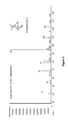
Figure 1 shows VOCs composition analyses of fresh cannabis buds compared to a hashish sample detected according to an embodiment of the method of the present disclosure. -
Figure 2 shows VOCs composition analyses of fresh (B) and dry cannabis buds (C) compared to a hashish sample (A) detected according to an embodiment of the method of the present disclosure. -
Figure 3 shows the structure and EI-mass spectrum of 5,5-dimethyl-1-vinylbicyclo[2.1.1]hexane. -
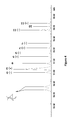
Figure 4 shows a VOCs composition analysis of a hashish sample detected according to an embodiment of the method according of the present disclosure. -
Figure 5 shows VOCs composition analyses of cannabis buds compared to hashish samples detected according to an embodiment of the method according of the present disclosure. -
Figures 6a ,6b ,6c and6d show VOCs compositions of cannabis buds and hashish samples detected according to an embodiment of the method according of the present disclosure. - Embodiments of the present disclosure will now be described in detail with reference to the accompanying Figures. In the following detailed description of embodiments of the present disclosure, numerous specific details are set forth in order to provide a more thorough understanding of the present disclosure. However, it will be apparent to one of ordinary skilled in the art that the present disclosure may be practiced without these specific details. In other instances, well-known features have not been described in detail to avoid unnecessarily complicating the description.
- Herein, the words "comprise/comprising" are synonymous with (means the same thing as) "include/including," "contain/containing", are inclusive or open-ended and do not exclude additional, non-recited elements. Further, herein the term "about" and "substantially" are synonymous with (means the same thing as) a 20 % margin of the respective value.
- In the following, it is meant by "volatile organic compound" and "volatile component" organic compound having a high vapor pressure, such as greater than 0.01 kPa at 20 °C.
- In order to provide a method, as well as a marker and a device, capable of detecting cannabis drugs, such as hashish, for example via VOCs emitted by the cannabis drugs, the Applicants have found that, among the different forms of cannabis drugs investigated, samples of Cannabis sativa L. resins (i.e. hashish) comprise 5,5-Dimethyl-1-vinylbicyclo[2.1.1]hexane (i.e. compound 1), which is a very rare monoterpene hydrocarbon. Indeed,
compound 1 was found to be particularly abundant in hashish samples (e.g. samples A ofFigures 1 and2 ) while being either absent or present in lower amounts (e.g. lower than 1 % in the headspace) in other products such as fresh cannabis buds (e.g. sample B ofFigures 1 and2 ) and dried cannabis buds (e.g. sample C ofFigure 2 ). For example, analytical methods such as GC-MS performed on a series of different samples of cannabis drugs (hashish and herb) allowed the Applicants to detect and identifycompound 1 as being among the most abundant VOCs of hashish samples (seeFigures 1 ,2 and3 ). In contrast, cannabis buds (i.e. herb) were found to containcompound 1 in lower amount.
- In view of the above, according to a first aspect, the present disclosure provides a method for detecting the presence of hashish in a sample, the method comprising: detecting a presence of 5,5-dimethyl-1-vinylbicyclo[2.1.1]hexane in the sample. In one or more embodiments, the method according to the present disclosure may comprise providing the sample, separating constituents from the sample, subjecting the constituents to an analytical method, and identifying 5,5-dimethyl-1-vinylbicyclo[2.1.1]hexane among the constituents. For example, in one or more embodiments, the constituents may comprise volatile organic compounds such as monoterpenes. In one or more embodiments, 5,5-dimethyl-1-vinylbicyclo[2.1.1]hexane may be identified among the monoterpenes. For example, the presence of hashish in the sample may be detected if 5,5-dimethyl-1-vinylbicyclo[2.1.1]hexane (1) amounts for at least 0.02 weight percent of the sample.
- The natural occurrence of
compound 1 in a natural environment, such as in plants, is generally very limited. For example,compound 1 has only been cited as a minor constituent of the essential oil of Mentha cardiaca (<0.1 %) (see, Hogg JW, Lawrence BM. Essential oils and their constituents. VIII. New bicyclic monoterpene from Mentha x cardiaca. Flavour Ind. 1972;3:321-3). In fact, the literature related tocompound 1 is very scarce since only few references could be found as registered in the Chemical Abstract service (SciFinder), dealing generally with the synthetic preparation of compound 1 (see, for example, Liu RSH, Hammond GS. Mechanisms of photochemical reactions in solution. XXVII. Photosensitized cyclization of myrcene. Problem of addition of dienes to alkenes. J Am Chem Soc. 1964;86:1892-3). More specifically,compound 1 has been described as a photolytic product of β-myrcene (compound 9), through UV light-mediated rearrangement when irradiated in presence of sensitizers such as 2-acetylnaphtalene, benzophenone, or clay-supported materials. - Conversely, the literature related to Cannabis sativa L. (e.g. essential oil, VOCs in the Headspace) does not contain any mention of
compound 1 among the identified VOCs. In contrast, other monoterpenes (α-pinene 3, β-pinene 7, limonene 11) and sesquiterpenes (β-caryophyllene 35 and α-humulene 40) are frequently reported as abundant. Among them,compound 9 has often been cited as a major volatile constituent and had thus been proposed as a specific marker of cannabis drugs such as in the form of hashish and marijuana. - Without being bound to any particular theory, the Applicants deem that the presence of
compound 1 in hashish samples may be related to the high abundance of β-myrcene (compound 9) in the fresh herb of Cannabis sativa L.. Indeed, hashish is known to be generally manufactured from fresh herb according to a lengthy process involving several steps of sieving and drying of the resin-rich female heads of cannabis plants until the resin naturally aggregates to form hashish after a final compression. Sun exposure during drying steps is thus assumed to produce photolytic formation ofcompound 1 fromcompound 9. Indeed, any exposure to sunlight during those drying steps may be considered as responsible for the photolytic formation ofcompound 1 fromcompound 9. - In one or more embodiments, the analytical method may comprise an enantioselective analytical technique. For example, the enantioselective analytical technique may be an enantioselective Gas Chromatography (GC) or High Performance Liquid Chromatography (HPLC) optionally coupled to or performed in combination with at least one additional analytical method selected from the group comprising mass spectrometry (MS), infrared (IR), RAMAN, UV/UV-visible spectroscopies, nuclear magnetic resonance (NMR), and ion-mobility spectrometry (IMS). In one or more embodiments,
compound 1 may be identified as a racemate. For example,compound 1 may be in the form of a racemic mixture of a first enantiomer (1R,4S)-5,5-dimethyl-1-vinylbicyclo[2.1.1]hexane and of a second enantiomer (1S,4R)-5,5-dimethyl-1-vinylbicyclo[2.1.1]hexane, the amounts of both first and second enantiomers being substantially equals (e.g. 50 mol. % ± 5). Indeed,compound 1 may be a racemic photolytic product ofcompound 9. More specifically, the Applicants were able to determine thatcompound 1 was present as a racemic mixture in hashish by means of enantioselective analytical techniques such as enantioselective GC-MS (Figure 4 ), which further indicates thatcompound 1 may be of photolytic origin. Conversely, an enzymatic formation would have more reasonably induced some enantiomeric excess incompound 1.Figure 4 shows an enantioselective GC-MS analysis of monoterpenes from an hashish sample on heptakis(2,3-di-O-methyl-6-O-tert-butyldimethylsilyl)-β-cyclodextrin (Elution order is deduced from reference substances or literature data). - In one or more embodiments, separating constituents from the sample may be based on a technique selected from the group comprising gas chromatography, liquid chromatography, sorbent extraction, (VOC) trapping, solvent extraction (e.g. Soxhlet extraction), and any combination thereof. For example, a trapping module may comprise molecular captands and/or sensors. In one or more embodiments, separating constituents from the sample may comprise headspace (HS) sampling. Indeed, HS sampling appears to be a least invasive analytical way to investigate cannabis drug samples, such as hashish samples. For example, HS sampling may provide
compound 1 in an amount sufficient for detection. Also, HS sampling may provide representative profiles of VOCs present in the samples. - In one or more embodiments, the HS sampling may be a direct HS sampling. Indeed, direct HS sampling may be use to provide good representative profile of the VOCs emitted by a sample. For example, direct HS sampling may comprise the use of a trapping module such as a headspace autosampler, a large volume injector, and/or programmed temperature vaporizer (PTV).
- In one or more embodiments, separating (e.g. extracting) constituents from the sample may comprise solid phase microextraction (SPME) such as SPME in headspace mode (HS-SPME) or in immersion mode. Indeed, SPME may provide sampling of smaller volumes, for example with respect to direct HS sampling. In one or more embodiments, the SPME may comprise a preconcentration step of the VOCs comprised in the sample. In this way, SPME may provide further sensitivity to the method according to the present disclosure. Also, SPME may be easier to implement to set up. For example, SPME may be run on any GC(-MS) system with no or minimum modifications.
- In one or more embodiments, SPME may be performed from about 10°C to about 70°C. For example, SPME may be performed from about 15°C to about 30°C and preferably at about room temperature (22°C ± 5). In one or more embodiments, SPME may be performed for about 10 min to about 1 hour. For example, SPME may be performed from about 15 min to about 45 min and preferably for about 20 min. In one or more embodiments, the sample may comprise at least 0.1 g of hashish. For example the sample may comprise at least 0.25 g of hashish and preferably about 1 g. In one or more embodiments, the preconcentration may be performed for about 10 min to about 2 hour. For example, the preconcentration may be performed from about 15 min to about 1 hour and preferably for about 30 min.
- In one or more embodiments, HS sampling may be performed with solid phase microextraction (SPME) kits such as SPME fibers. For example, SPME may be performed using a polydimethylsiloxane (PDMS) SPME fiber such as a 100 µm polydimethylsiloxane (PDMS) SPME fiber. However, HS sampling may be carried using other techniques. For example, in one or more embodiments, HS sampling may performed using an equipment selected from the group comprising gas-tight syringes, a SPME kits, tenax® adsorbents (e.g. porous polymeric resin comprising 2.6-diphenylene oxide), and a trapping tool. For example, the trapping tool may comprise molecular captands and/or sensors.
- In one or more embodiments,
compound 1 may amount for at least 0.02 weight %, preferably at least 0.1 weight %, and more preferably at least 0.2 weight % of the sample. So for example, using a method comprising HS sampling, thecompound 1 may amount for at least 1 %, preferably at least 5 %, and more preferably at least 10 % of the sample in the headspace. - In one or more embodiments, the analytical method may be either qualitative or quantitative. In one or more embodiments, the analytical method is quantitative. In one or more embodiments, the analytical method may be selected from the group comprising a chromatography technique (e.g. GC, LC, HPLC), mass spectrometry (MS), infrared (IR), RAMAN, UV/UV-visible spectroscopies, nuclear magnetic resonance (NMR), ion-mobility spectrometry (IMS), and any combination thereof. In one or more embodiments, the chromatographic technique may be based on gas chromatography (GC). In one or more embodiments, the analytical method may comprise a gas chromatograph (GC) coupled to or used in combination with a mass spectrometer (MS), and/or an infrared (IR) spectrometer, and/or an ion-mobility spectrometer (IMS), and any combination thereof.
- A second aspect of the present disclosure is to provide a use of 5,5-dimethyl-1-vinylbicyclo[2.1.1]hexane as marker of the presence of hashish in a sample. Indeed,
compound 1 is very rare among natural constituents of essential oils. For example, merely a scarce number of references relating tocompound 1 is found in the prior art. Further, a single reference deals with the identification ofcompound 1 in a natural extract in trace levels. - A third aspect of the present disclosure is to provide a device, such as an apparatus, for detecting the presence of hashish in a sample, the device comprising: means, such as a device, for detecting the presence of
compound 1 in the sample. For example, the device for detecting the presence of hashish in a sample may be configured to detect the presence ofcompound 1 in the sample. - In one or more embodiments, the means for separating
compound 1 from the sample may comprise one selected from the group comprising a gas chromatography system, a liquid chromatography system, a sorbent extraction tool, a trapping module, a solvent extractor and any combination thereof. In one or more embodiments, the sorbent extraction tool may comprise a solid phase microextraction (SPME) kit, a gas-tight syringe, and/or a tenax® adsorbent. In one or more embodiments, the trapping module may comprise molecular captands and/or sensors. - In one or more embodiments, the means for identifying may comprise a system selected from the group comprising gas chromatography (GC), liquid chromatography (LC), mass spectrometry (MS), infrared (IR), RAMAN, and UV/UV-visible spectroscopies, nuclear magnetic resonance (NMR), ion-mobility spectrometry (IMS), and any combination thereof. In one or more embodiments, the means for identifying may comprise a gas chromatograph (GC) coupled to a mass spectrometer (MS), and/or an infrared (IR) spectrometer, and/or an ion-mobility spectrometer (IMS), and any combination thereof.
- For example, crossing data from an IR spectrometer and an IMS may allow detection of
compound 1. Thus, devices (and methods) according to the present disclosure comprising (using) both infrared and ion-mobility spectrometers may be used, for example by customs, to detect cannabis drugs such as hashish, for example in containers or trucks. - In the same manner, devices and methods according to the present disclosure may be based on miniaturized GC (e.g. miniature ion trap mass spectrometer) and/or miniaturized MS techniques and apparatuses. For example, the device may be a portable detector (e.g. the size of a suitcase). Portable detectors are ideal for customs or border police, which may thus detect
compound 1 and conclude the presence of cannabis drugs such as hashish, for example, in a container or a truck. Also devices according to the present disclosure may be fixed detectors (i.e. not portable), for example for airports, public places, and the like. - The Applicants show here exemplary analytical methods and results, which allow detection of
compound 1, which is identified as a marker, for example as VOC marker, of the presence of hashish in a sample. Different forms of cannabis drugs (fresh and dried buds, and hashish) have been subjected to analytical method, for example by gas chromatography (GC), mass spectrometry (MS), and/or headspace sampling techniques. As shown inFigure 3 ,compound 1 was identified on the basis of the mass spectrum ofcompound 1, which is available in a commercial MS databank (MassFinder 4.0, Germany), and IR properties ofcompound 1. - Chemicals and products: Samples of resins (hashish) and buds of Cannabis sativa L. were obtained from the Institut National de Police Scientifique (INPS). All chemicals and solvents were purchased from Sigma-Aldrich and used without further purification otherwise stated.
- Exemplary solvent extraction: 15 g of hashish (probably originating from Morocco) were extracted in a 200 mL Soxhlet apparatus with 250 mL of pentane for 5 hours. The resulting extract (∼10 g) mainly contained cannabinoids and was subsequently chromatographed on silica gel with eluents of increasing polarity. The first fraction (1.2 g), eluted with pentane, contained mostly monoterpenes and sesquiterpenes, accompanied with a limited series of diterpenes. In this fraction,
compound 1 was determined to amount for ∼4.5 % by GC-MS analysis. - Exemplary SPME: 100 % Polydimethysiloxane (PDMS; 100 µm) and Divinylbenzene/Carboxen/Polydimethyl-siloxane (DVB/CAR/PDMS; 50/30 µm) SPME fibers were purchased from Supelco Europe. Improved parameters for SPME analyses (incubation/extraction-time/temperature, nature of the fiber coating) may be selected following a methodology described by Vanot GE, Sergent M. Experimental Design in Microbiology. In: Barredo J-L, editor. Microbial Processes and Products: Humana Press; 2005. p. 25-39.
- Gas chromatography-mass spectrometry (GC-MS): GC-MS analyses were run on two GC-MS systems. For SPME analyses, gas chromatographs were operated in splitless mode with a constant flow (1 mL/min) of Helium. For other routine analyses, GC systems were operated in split mode (1/50). At Université Nice Sophia-Antipolis (UNS), an Agilent 6890N/5973N system equipped with either a J&W HP-1 capillary column (50 m × 0.2 mm; 0.33µm film thick.) was used. Oven temperature program: initial temperature, 50°C, then increased to 250°C with a constant rate of 2°C/min. At INPS, an Agilent 7890A/5975C system was mounted with a Varian VF-1MS capillary column (50 m × 0.25 mm; 0.25 µm film thick.). The oven was programmed as follows: initial temperature, 60°C, then increased to 250°C with a constant rate of 3°C/min, transfer-line temperature: 280°C. For both systems, the transfer-line temperature was set at 280°C. Electron impact mass spectra were acquired over a 35-350 m/z range. Volatile constituents were identified upon cross-correlation of their retention indices (RI) calculated from a series of n-alkanes, and their mass spectra matched against commercial librairies (Wiley275, NIST08, MassFinder 2.1) or in-house MS databases built from literature information and preferably against isolated or synthesized substances whenever available.
- Enantioselective gas chromatography: Separation of the two enantiomers of 5,5-dimethyl-1-vinylbicyclo[2.1.1]hexane was carried out using a Macherey-Nagel Hydrodex β-6TBDM capillary column mounted on a Agilent 6890N/5973N GC-MS system.
Split ratio 1/100; Oven temperature program: 80°C to 220°C at 2°C/min. Constant flow of helium: 1.0 mL/min. MS parameters were used as described above for SPME experiments. - UV-mediated synthesis of 5,5-dimethyl-1-vinyl bicyclo[2.1.1]hexane:
Compound 1 was synthesized according to a protocol inspired from Liu and Hammond (reference herein above). A mixture of compound 9 (1.63 g; 12 mmol) and 2-acetylnaphtalene (23 mg) was dissolved in 70 mL of dry diethylether and placed in a UV lamp reactor system (Heraeus, Germany). The mixture was irradiated under argon atmosphere until total consumption ofcompound 9 as monitored by GC analysis of aliquots withdrawn from the reaction mixture. The solvent was carefully removed under vacuum, and the crude product was obtained as nearly colorless oil (crude yield > 90 %; ∼67 % GC purity). The reaction was repeated several times and all crude products combined in order to increase the amount of material for distillation. A mixture of crude reaction products (12.5 g) was submitted to distillation under vacuum. Compound 1 (6.5 g) was isolated with 87 % purity (bp 50°C under 0.3 mbar). - Nuclear magnetic resonance:
compound 1 was also identified by High resolution NMR spectra recorded in CDCl3 at 298 K on a Bruker Avance DRX 500 spectrometer operating at 500.13 MHz for 1H and 125.76 MHz for 13C. In order to increase sensitivity, 13C-NMR spectra such as broadband-13C and JMOD were run with a direct probe head (5 mm PADUL 13C-1H Z-GRD). 1 D- and 2D-NMR spectra such as 1 H, COSY, TOCSY, NOESY, HSQC, HMBC were run with an inverse probe head (5 mm PHTXI 1H-13C/15N ZGRD). Spectrum calibration was performed by using CDCl3 signal as internal reference (7.26 ppm for 1H, 77.16 ppm for 13C). Chemical shifts (δ) were expressed in parts per million (ppm) and coupling constants (J) in hertz. All NMR experiments were carried out using pulse sequences supplied by the spectrometer manufacturer (Bruker Topspin™) and processed via Mestrelab MestreNOVA software (v6.0.2-5475). - A series of analyses was performed on a higher number of samples. More specifically, 10 samples of hashish and 8 samples of cannabis buds (fresh and dried) were analyzed by means of HS-SPME-GC-MS. In hashish samples,
compound 1 was detected among the most abundant compounds in the headspace, ranging from 2.5 to 14.9 %. Conversely,compound 1 was detected either at trace levels or in very low amounts in fresh and dried buds (seeFigures 5 and6a-d ).Figure 5 shows Comparative HS-SPME-GCMS analyses of multiple samples of cannabis buds (1-4) and hashish (26-29) provided by the INPS. While several terpenes are commonly found in all forms of cannabis drugs, as shown inFigure 5 , chromatographic profiles of hashish samples may be characterized by the presence ofcompound 1 eluting before α-pinene. InFigures 6a-d : RI calc. represents the retention indexes calculated against a series of C6-C24 n-alkanes; RI liter. represents the retention index from the terpenoids Library lists (available for example at massfinder.com); exo-Caryophyllene is 10,10-dimethyl-2,6-bis(methylene)bicyclo[7.2.0]undecane (CAS# 136296-38-3); Spirovetiva-1(10),7(11)-diene is often coeluted with other sesquiterpenes such as δ-cadinene; samples ofcannabis buds 2a-d were indexed by INPS as coming from the same seizure; * unknown compound often coeluted with β-pinene (EI-mass spectrum: 43 55 67 79 95 (109) 111 119 123 137 152); ** unknow compound (EI-mass spectrum: 41 55 67 79 91 105 119 133 147 161 175 (189) 204);*** β-calacorene often coeltued with Selina-4(15),7(11)-diene. - In short, chemical investigations performed on different samples of Cannabis sativa L. (hashish, fresh and dried buds) shed light on the occurrence of a rare monoterpene, i.e.
compound 1, among the main volatiles constituents of hashish. Accordingly,compound 1 may provide a useful marker for the detection, such as remote-sensing, of hashish (resin) and marijuana (dry buds) in a sample for the following reasons: 1/compound 1 is very rare among natural constituents of essential oils and other raw materials usually issued from the plant kingdom. A total of 6 bibliographic references related tocompound 1 are found with the help of SciFinder (CAS online), and only one actually deals with the identification of this compound in a natural extract in trace levels (< 0.1 %); 2/ analyses performed on the different samples of hashish demonstratecompound 1 as being among the most abundant constituents in the sample headspace, even at room temperature.Compound 1 may thus be considered as specific marker of hashish. Althoughcompound 1 has been detected in cannabis herbs (i.e. marijuana) in lower amount compared to hashish samples (< 0.5 % in the headspace),Compound 1 may also be considered as marker of marijuana. These findings may have a profound impact on the knowledge of VOCs emitted by drugs, and fulfill the actual needs of new markers, methods and devices for illegal drugs (remote) detection in the frame of drug regulation and law enforcement in Europe and other countries worldwide. - Although the above-mentioned embodiments have been described in detail, it is understood that alternative embodiments of the disclosure may be envisaged. Thus, for example, separation techniques other than solvent extraction or HS-SPME may be used to provide the method according to the present disclosure. In the same manner, analytic methods other than GC and GC-MS may be used to identify
compound 1 according to the method of the present disclosure.
Claims (16)
- A method for detecting the presence of hashish in a sample, the method comprising:detecting a presence of 5,5-dimethyl-1-vinylbicyclo[2.1.1]hexane (1) in the sample.
- The method of claim 1, further comprising:separating constituents from a sample,subjecting the constituents to an analytical method, andidentifying 5,5-dimethyl-1-vinylbicyclo[2.1.1]hexane (1) among the constituents.
- The method of claim 1 or claim 2, wherein the presence of hashish in the sample is detected if 5,5-dimethyl-1-vinylbicyclo[2.1.1]hexane (1) amounts for at least 0.02 weight percent of the sample.
- The method of claim 2 or claim 3, wherein the constituents are separated from the sample by solid phase microextraction (SPME).
- The method of any of claims 2 to 4, wherein the analytical method is selected from the group comprising a chromatography technique, mass spectrometry (MS), infrared (IR), RAMAN, UV/UV-visible spectroscopies, nuclear magnetic resonance (NMR), ion-mobility spectrometry (IMS), and any combination thereof.
- The method of claim 5, wherein the chromatographic technique is based on gas chromatography (GC).
- The method of any of claims 2 to 6, wherein the analytical method comprises a gas chromatograph (GC) coupled to a mass spectrometer (MS), and/or an infrared (IR) spectrometer, and/or an ion-mobility spectrometer (IMS), and any combination thereof.
- The method of any of claims 5 to 7, wherein the analytical method comprises an enantioselective analytical technique.
- The method of claim 8, wherein 5,5-dimethyl-1-vinylbicyclo[2.1.1]hexane (1) is identified as a racemate.
- Use of 5,5-dimethyl-1-vinylbicyclo[2.1.1]hexane (1) as marker of the presence of hashish in a sample.
- A device for detecting the presence of hashish in a sample, the device comprising:means for detecting a presence of 5,5-dimethyl-1-vinylbicyclo[2.1.1]hexane (1) in the sample.
- The device according to claim 11, wherein the means for detecting comprises:means for separating constituents from the sample, andmeans for identifying 5,5-dimethyl-1-vinylbicyclo[2.1.1]hexane (1) among the constituents.
- The device according to claim 11 or claim 12, wherein the means for separating compound 1 from the sample comprises one selected from the group comprising a gas chromatography system, a liquid chromatography system, a sorbent extraction tool, a trapping module, and any combination thereof.
- The device according to claim 13, wherein the sorbent extraction tool comprises a solid phase microextraction (SPME) kit, a gas-tight syringe, and/or a tenax® adsorbent, and/or wherein the trapping module comprises molecular captands and/or sensors.
- The device according to any of claims 11 to 14, wherein the means for identifying comprises a system selected from the group comprising gas chromatography (GC), liquid chromatography (LC), mass spectrometry (MS), infrared (IR), RAMAN, and UV/UV-visible spectroscopies, nuclear magnetic resonance (NMR), ion-mobility spectrometry (IMS), and any combination thereof.
- The device according to any of claims 11 to 15, wherein the means for identifying comprises a gas chromatograph (GC) coupled to a mass spectrometer (MS), and/or an infrared (IR) spectrometer, and/or an ion-mobility spectrometer (IMS), and any combination thereof.
Priority Applications (1)
| Application Number | Priority Date | Filing Date | Title |
|---|---|---|---|
| EP14305628.1A EP2940475A1 (en) | 2014-04-28 | 2014-04-28 | Hashish marker |
Applications Claiming Priority (1)
| Application Number | Priority Date | Filing Date | Title |
|---|---|---|---|
| EP14305628.1A EP2940475A1 (en) | 2014-04-28 | 2014-04-28 | Hashish marker |
Publications (1)
| Publication Number | Publication Date |
|---|---|
| EP2940475A1 true EP2940475A1 (en) | 2015-11-04 |
Family
ID=50679978
Family Applications (1)
| Application Number | Title | Priority Date | Filing Date |
|---|---|---|---|
| EP14305628.1A Withdrawn EP2940475A1 (en) | 2014-04-28 | 2014-04-28 | Hashish marker |
Country Status (1)
| Country | Link |
|---|---|
| EP (1) | EP2940475A1 (en) |
Cited By (4)
| Publication number | Priority date | Publication date | Assignee | Title |
|---|---|---|---|---|
| CN106979942A (en) * | 2017-05-04 | 2017-07-25 | 华中师范大学 | A kind of Raman spectrum analysis method quantitative to synthesis in solid state compound combinatorial libraries individual and application thereof |
| WO2022082300A1 (en) * | 2020-10-19 | 2022-04-28 | Hexo Operations Inc. | Use of spectroscopy in manufacturing hashish-based consumer products |
| US20220187328A1 (en) * | 2019-01-31 | 2022-06-16 | Agriculture Victoria Services Pty Ltd | Methods of Terpene Profiling Cannabis Plant Material |
| US20230226130A1 (en) * | 2020-06-04 | 2023-07-20 | Credo Science, Llc | Extraction techniques to preserve cannabinoid and terpenoid profiles |
-
2014
- 2014-04-28 EP EP14305628.1A patent/EP2940475A1/en not_active Withdrawn
Non-Patent Citations (8)
| Title |
|---|
| ALESSANDRA BERTOLI ET AL: "Fibre hemp inflorescences: From crop-residues to essential oil production", INDUSTRIAL CROPS AND PRODUCTS, vol. 32, no. 3, 1 November 2010 (2010-11-01), pages 329 - 337, XP055142859, ISSN: 0926-6690, DOI: 10.1016/j.indcrop.2010.05.012 * |
| BERTOLI A; TOZZI S; PISTELLI L; ANGELINI LG: "Fibre hemp inflorescences: From cropresidues to essential oil production", IND CROP PROD., vol. 32, 2010, pages 329 - 37, XP055142859, DOI: doi:10.1016/j.indcrop.2010.05.012 |
| CARLTON E TURNER ET AL: "CONSTITUENTS OF CANNABIS SATIVA L. XVII. A REVIEW OF THE NATURAL CONSTITUENTS", J NAT PROD, vol. 43, no. 2, 1 March 1980 (1980-03-01), pages 169 - 234, XP055149474 * |
| HOGG JW; LAWRENCE BM: "Essential oils and their constituents. VIII. New bicyclic monoterpene from Mentha x cardiaca", FLAVOUR IND., vol. 3, 1972, pages 321 - 3 |
| L V S HOOD ET AL: "HEADSPACE VOLATILES OF MARIHUANA AND HASHISH: GAS CHRO- MATOGRAPHIC ANALYSIS OF SAMPLES OF DIFFERENT GEOGRAPHIC ORIGIN", JOURNAL OF CHROMATOGRAPHY, vol. 166, 1 January 1978 (1978-01-01), pages 499 - 506, XP055149466 * |
| LIU RSH; HAMMOND GS: "Mechanisms of photochemical reactions in solution. XXVII. Photosensitized cyclization of myrcene. Problem of addition of dienes to alkenes", J AM CHEM SOC., vol. 86, 1964, pages 1892 - 3 |
| ROSS SA; EISOHLY MA: "The Volatile Oil Composition of Fresh and Air-Dried Buds of Cannabis sativa L", J NAT PROD., vol. 59, 1996, pages 49 - 51 |
| VANOT GE; SERGENT M: "Microbial Processes and Products", 2005, HUMANA PRESS, article "Experimental Design in Microbiology", pages: 25 - 39 |
Cited By (4)
| Publication number | Priority date | Publication date | Assignee | Title |
|---|---|---|---|---|
| CN106979942A (en) * | 2017-05-04 | 2017-07-25 | 华中师范大学 | A kind of Raman spectrum analysis method quantitative to synthesis in solid state compound combinatorial libraries individual and application thereof |
| US20220187328A1 (en) * | 2019-01-31 | 2022-06-16 | Agriculture Victoria Services Pty Ltd | Methods of Terpene Profiling Cannabis Plant Material |
| US20230226130A1 (en) * | 2020-06-04 | 2023-07-20 | Credo Science, Llc | Extraction techniques to preserve cannabinoid and terpenoid profiles |
| WO2022082300A1 (en) * | 2020-10-19 | 2022-04-28 | Hexo Operations Inc. | Use of spectroscopy in manufacturing hashish-based consumer products |
Similar Documents
| Publication | Publication Date | Title |
|---|---|---|
| Leghissa et al. | A review of methods for the chemical characterization of cannabis natural products | |
| Citti et al. | Analysis of impurities of cannabidiol from hemp. Isolation, characterization and synthesis of cannabidibutol, the novel cannabidiol butyl analog | |
| Stashenko et al. | Analysis of volatile secondary metabolites from Colombian Xylopia aromatica (Lamarck) by different extraction and headspace methods and gas chromatography | |
| Adahchour et al. | Recent developments in comprehensive two-dimensional gas chromatography (GC× GC): IV. Further applications, conclusions and perspectives | |
| Cai et al. | Comparative analysis of clary sage (S. sclarea L.) oil volatiles by GC–FTIR and GC–MS | |
| Sciarrone et al. | Rapid collection and identification of a novel component from Clausena lansium Skeels leaves by means of three-dimensional preparative gas chromatography and nuclear magnetic resonance/infrared/mass spectrometric analysis | |
| Wang et al. | Ultrasonication extraction and gel permeation chromatography clean-up for the determination of polycyclic aromatic hydrocarbons in edible oil by an isotope dilution gas chromatography–mass spectrometry | |
| Chen et al. | Strategies for the identification and sensory evaluation of volatile constituents in wine | |
| Jalali et al. | Deeper insight into the monoterpenic composition of Ferula gummosa oleo-gum-resin from Iran | |
| Ramírez et al. | Chemical composition, enantiomeric analysis, AEDA sensorial evaluation and antifungal activity of the essential oil from the Ecuadorian plant Lepechinia mutica Benth (Lamiaceae) | |
| Telascrea et al. | Essential oil from leaves of Cryptocarya mandioccana Meisner (Lauraceae): Composition and intraspecific chemical variability | |
| Vallecillos et al. | Fully automated determination of macrocyclic musk fragrances in wastewater by microextraction by packed sorbents and large volume injection gas chromatography–mass spectrometry | |
| EP2940475A1 (en) | Hashish marker | |
| Isidorov et al. | Gas chromatographic analysis of essential oil from buds of different birch species with preliminary partition of components | |
| Tuzimski et al. | Comparison of SPE/d-SPE and QuEChERS-based extraction procedures in terms of fungicide residue analysis in wine samples by HPLC–DAD and LC-QqQ-MS | |
| Casilli et al. | Multidimensional gas chromatography hyphenated to mass spectrometry and olfactometry for the volatile analysis of citrus hybrid peel extract | |
| Clery et al. | Constituents of cypriol oil (Cyperus scariosus R. Br.): N-containing molecules and key aroma components | |
| Pons et al. | Identification and analysis of piperitone in red wines | |
| Nahar et al. | Application of gas chromatography in the analysis of phytocannabinoids: An update (2020–2023) | |
| Stashenko et al. | Identification of essential oil components | |
| Jirovetz et al. | Comparative investigations of the essential oil and volatiles of spearmint | |
| Rout et al. | Analysis of the oil of large cardamom (Amomum subulatum Roxb.,) growing in Sikkim | |
| Ferrari et al. | Composition and chemical variability of Ferula communis essential oil from Corsica | |
| Culleré et al. | Comparative study of the aromatic profile of different kinds of wine cork stoppers | |
| Barrek et al. | Analysis of pesticide residues in essential oils of citrus fruit by GC–MS and HPLC–MS after solid-phase extraction |
Legal Events
| Date | Code | Title | Description |
|---|---|---|---|
| PUAI | Public reference made under article 153(3) epc to a published international application that has entered the european phase |
Free format text: ORIGINAL CODE: 0009012 |
|
| AK | Designated contracting states |
Kind code of ref document: A1 Designated state(s): AL AT BE BG CH CY CZ DE DK EE ES FI FR GB GR HR HU IE IS IT LI LT LU LV MC MK MT NL NO PL PT RO RS SE SI SK SM TR |
|
| AX | Request for extension of the european patent |
Extension state: BA ME |
|
| STAA | Information on the status of an ep patent application or granted ep patent |
Free format text: STATUS: THE APPLICATION IS DEEMED TO BE WITHDRAWN |
|
| 18D | Application deemed to be withdrawn |
Effective date: 20160505 |