EP2940399A1 - Boiler system using fuel cell - Google Patents
Boiler system using fuel cell Download PDFInfo
- Publication number
- EP2940399A1 EP2940399A1 EP13868433.7A EP13868433A EP2940399A1 EP 2940399 A1 EP2940399 A1 EP 2940399A1 EP 13868433 A EP13868433 A EP 13868433A EP 2940399 A1 EP2940399 A1 EP 2940399A1
- Authority
- EP
- European Patent Office
- Prior art keywords
- fuel cell
- boiler
- line
- suction
- exhaust
- Prior art date
- Legal status (The legal status is an assumption and is not a legal conclusion. Google has not performed a legal analysis and makes no representation as to the accuracy of the status listed.)
- Granted
Links
Images




Classifications
-
- F—MECHANICAL ENGINEERING; LIGHTING; HEATING; WEAPONS; BLASTING
- F24—HEATING; RANGES; VENTILATING
- F24D—DOMESTIC- OR SPACE-HEATING SYSTEMS, e.g. CENTRAL HEATING SYSTEMS; DOMESTIC HOT-WATER SUPPLY SYSTEMS; ELEMENTS OR COMPONENTS THEREFOR
- F24D17/00—Domestic hot-water supply systems
- F24D17/0005—Domestic hot-water supply systems using recuperation of waste heat
-
- F—MECHANICAL ENGINEERING; LIGHTING; HEATING; WEAPONS; BLASTING
- F24—HEATING; RANGES; VENTILATING
- F24D—DOMESTIC- OR SPACE-HEATING SYSTEMS, e.g. CENTRAL HEATING SYSTEMS; DOMESTIC HOT-WATER SUPPLY SYSTEMS; ELEMENTS OR COMPONENTS THEREFOR
- F24D3/00—Hot-water central heating systems
- F24D3/08—Hot-water central heating systems in combination with systems for domestic hot-water supply
-
- F—MECHANICAL ENGINEERING; LIGHTING; HEATING; WEAPONS; BLASTING
- F24—HEATING; RANGES; VENTILATING
- F24D—DOMESTIC- OR SPACE-HEATING SYSTEMS, e.g. CENTRAL HEATING SYSTEMS; DOMESTIC HOT-WATER SUPPLY SYSTEMS; ELEMENTS OR COMPONENTS THEREFOR
- F24D15/00—Other domestic- or space-heating systems
-
- F—MECHANICAL ENGINEERING; LIGHTING; HEATING; WEAPONS; BLASTING
- F22—STEAM GENERATION
- F22B—METHODS OF STEAM GENERATION; STEAM BOILERS
- F22B3/00—Other methods of steam generation; Steam boilers not provided for in other groups of this subclass
-
- F—MECHANICAL ENGINEERING; LIGHTING; HEATING; WEAPONS; BLASTING
- F24—HEATING; RANGES; VENTILATING
- F24D—DOMESTIC- OR SPACE-HEATING SYSTEMS, e.g. CENTRAL HEATING SYSTEMS; DOMESTIC HOT-WATER SUPPLY SYSTEMS; ELEMENTS OR COMPONENTS THEREFOR
- F24D11/00—Central heating systems using heat accumulated in storage masses
- F24D11/002—Central heating systems using heat accumulated in storage masses water heating system
- F24D11/004—Central heating systems using heat accumulated in storage masses water heating system with conventional supplementary heat source
-
- F—MECHANICAL ENGINEERING; LIGHTING; HEATING; WEAPONS; BLASTING
- F24—HEATING; RANGES; VENTILATING
- F24D—DOMESTIC- OR SPACE-HEATING SYSTEMS, e.g. CENTRAL HEATING SYSTEMS; DOMESTIC HOT-WATER SUPPLY SYSTEMS; ELEMENTS OR COMPONENTS THEREFOR
- F24D11/00—Central heating systems using heat accumulated in storage masses
- F24D11/002—Central heating systems using heat accumulated in storage masses water heating system
- F24D11/005—Central heating systems using heat accumulated in storage masses water heating system with recuperation of waste heat
-
- F—MECHANICAL ENGINEERING; LIGHTING; HEATING; WEAPONS; BLASTING
- F24—HEATING; RANGES; VENTILATING
- F24D—DOMESTIC- OR SPACE-HEATING SYSTEMS, e.g. CENTRAL HEATING SYSTEMS; DOMESTIC HOT-WATER SUPPLY SYSTEMS; ELEMENTS OR COMPONENTS THEREFOR
- F24D17/00—Domestic hot-water supply systems
- F24D17/0036—Domestic hot-water supply systems with combination of different kinds of heating means
- F24D17/0052—Domestic hot-water supply systems with combination of different kinds of heating means recuperated waste heat and conventional heating means
-
- F—MECHANICAL ENGINEERING; LIGHTING; HEATING; WEAPONS; BLASTING
- F24—HEATING; RANGES; VENTILATING
- F24D—DOMESTIC- OR SPACE-HEATING SYSTEMS, e.g. CENTRAL HEATING SYSTEMS; DOMESTIC HOT-WATER SUPPLY SYSTEMS; ELEMENTS OR COMPONENTS THEREFOR
- F24D17/00—Domestic hot-water supply systems
- F24D17/0036—Domestic hot-water supply systems with combination of different kinds of heating means
- F24D17/0052—Domestic hot-water supply systems with combination of different kinds of heating means recuperated waste heat and conventional heating means
- F24D17/0057—Domestic hot-water supply systems with combination of different kinds of heating means recuperated waste heat and conventional heating means with accumulation of the heated water
-
- F—MECHANICAL ENGINEERING; LIGHTING; HEATING; WEAPONS; BLASTING
- F24—HEATING; RANGES; VENTILATING
- F24H—FLUID HEATERS, e.g. WATER OR AIR HEATERS, HAVING HEAT-GENERATING MEANS, e.g. HEAT PUMPS, IN GENERAL
- F24H1/00—Water heaters, e.g. boilers, continuous-flow heaters or water-storage heaters
-
- F—MECHANICAL ENGINEERING; LIGHTING; HEATING; WEAPONS; BLASTING
- F24—HEATING; RANGES; VENTILATING
- F24V—COLLECTION, PRODUCTION OR USE OF HEAT NOT OTHERWISE PROVIDED FOR
- F24V30/00—Apparatus or devices using heat produced by exothermal chemical reactions other than combustion
-
- F—MECHANICAL ENGINEERING; LIGHTING; HEATING; WEAPONS; BLASTING
- F28—HEAT EXCHANGE IN GENERAL
- F28D—HEAT-EXCHANGE APPARATUS, NOT PROVIDED FOR IN ANOTHER SUBCLASS, IN WHICH THE HEAT-EXCHANGE MEDIA DO NOT COME INTO DIRECT CONTACT
- F28D20/00—Heat storage plants or apparatus in general; Regenerative heat-exchange apparatus not covered by groups F28D17/00 or F28D19/00
- F28D20/0034—Heat storage plants or apparatus in general; Regenerative heat-exchange apparatus not covered by groups F28D17/00 or F28D19/00 using liquid heat storage material
- F28D20/0039—Heat storage plants or apparatus in general; Regenerative heat-exchange apparatus not covered by groups F28D17/00 or F28D19/00 using liquid heat storage material with stratification of the heat storage material
-
- H—ELECTRICITY
- H01—ELECTRIC ELEMENTS
- H01M—PROCESSES OR MEANS, e.g. BATTERIES, FOR THE DIRECT CONVERSION OF CHEMICAL ENERGY INTO ELECTRICAL ENERGY
- H01M8/00—Fuel cells; Manufacture thereof
- H01M8/04—Auxiliary arrangements, e.g. for control of pressure or for circulation of fluids
-
- H—ELECTRICITY
- H01—ELECTRIC ELEMENTS
- H01M—PROCESSES OR MEANS, e.g. BATTERIES, FOR THE DIRECT CONVERSION OF CHEMICAL ENERGY INTO ELECTRICAL ENERGY
- H01M8/00—Fuel cells; Manufacture thereof
- H01M8/04—Auxiliary arrangements, e.g. for control of pressure or for circulation of fluids
- H01M8/04082—Arrangements for control of reactant parameters, e.g. pressure or concentration
- H01M8/04201—Reactant storage and supply, e.g. means for feeding, pipes
-
- F—MECHANICAL ENGINEERING; LIGHTING; HEATING; WEAPONS; BLASTING
- F24—HEATING; RANGES; VENTILATING
- F24D—DOMESTIC- OR SPACE-HEATING SYSTEMS, e.g. CENTRAL HEATING SYSTEMS; DOMESTIC HOT-WATER SUPPLY SYSTEMS; ELEMENTS OR COMPONENTS THEREFOR
- F24D2200/00—Heat sources or energy sources
- F24D2200/04—Gas or oil fired boiler
-
- F—MECHANICAL ENGINEERING; LIGHTING; HEATING; WEAPONS; BLASTING
- F24—HEATING; RANGES; VENTILATING
- F24D—DOMESTIC- OR SPACE-HEATING SYSTEMS, e.g. CENTRAL HEATING SYSTEMS; DOMESTIC HOT-WATER SUPPLY SYSTEMS; ELEMENTS OR COMPONENTS THEREFOR
- F24D2200/00—Heat sources or energy sources
- F24D2200/16—Waste heat
- F24D2200/19—Fuel cells
-
- F—MECHANICAL ENGINEERING; LIGHTING; HEATING; WEAPONS; BLASTING
- F28—HEAT EXCHANGE IN GENERAL
- F28D—HEAT-EXCHANGE APPARATUS, NOT PROVIDED FOR IN ANOTHER SUBCLASS, IN WHICH THE HEAT-EXCHANGE MEDIA DO NOT COME INTO DIRECT CONTACT
- F28D20/00—Heat storage plants or apparatus in general; Regenerative heat-exchange apparatus not covered by groups F28D17/00 or F28D19/00
- F28D2020/0065—Details, e.g. particular heat storage tanks, auxiliary members within tanks
- F28D2020/0069—Distributing arrangements; Fluid deflecting means
-
- F—MECHANICAL ENGINEERING; LIGHTING; HEATING; WEAPONS; BLASTING
- F28—HEAT EXCHANGE IN GENERAL
- F28D—HEAT-EXCHANGE APPARATUS, NOT PROVIDED FOR IN ANOTHER SUBCLASS, IN WHICH THE HEAT-EXCHANGE MEDIA DO NOT COME INTO DIRECT CONTACT
- F28D20/00—Heat storage plants or apparatus in general; Regenerative heat-exchange apparatus not covered by groups F28D17/00 or F28D19/00
- F28D2020/0065—Details, e.g. particular heat storage tanks, auxiliary members within tanks
- F28D2020/0082—Multiple tanks arrangements, e.g. adjacent tanks, tank in tank
-
- F—MECHANICAL ENGINEERING; LIGHTING; HEATING; WEAPONS; BLASTING
- F28—HEAT EXCHANGE IN GENERAL
- F28D—HEAT-EXCHANGE APPARATUS, NOT PROVIDED FOR IN ANOTHER SUBCLASS, IN WHICH THE HEAT-EXCHANGE MEDIA DO NOT COME INTO DIRECT CONTACT
- F28D20/00—Heat storage plants or apparatus in general; Regenerative heat-exchange apparatus not covered by groups F28D17/00 or F28D19/00
- F28D2020/0065—Details, e.g. particular heat storage tanks, auxiliary members within tanks
- F28D2020/0086—Partitions
-
- H—ELECTRICITY
- H01—ELECTRIC ELEMENTS
- H01M—PROCESSES OR MEANS, e.g. BATTERIES, FOR THE DIRECT CONVERSION OF CHEMICAL ENERGY INTO ELECTRICAL ENERGY
- H01M2250/00—Fuel cells for particular applications; Specific features of fuel cell system
- H01M2250/40—Combination of fuel cells with other energy production systems
- H01M2250/405—Cogeneration of heat or hot water
-
- Y—GENERAL TAGGING OF NEW TECHNOLOGICAL DEVELOPMENTS; GENERAL TAGGING OF CROSS-SECTIONAL TECHNOLOGIES SPANNING OVER SEVERAL SECTIONS OF THE IPC; TECHNICAL SUBJECTS COVERED BY FORMER USPC CROSS-REFERENCE ART COLLECTIONS [XRACs] AND DIGESTS
- Y02—TECHNOLOGIES OR APPLICATIONS FOR MITIGATION OR ADAPTATION AGAINST CLIMATE CHANGE
- Y02A—TECHNOLOGIES FOR ADAPTATION TO CLIMATE CHANGE
- Y02A30/00—Adapting or protecting infrastructure or their operation
- Y02A30/60—Planning or developing urban green infrastructure
-
- Y—GENERAL TAGGING OF NEW TECHNOLOGICAL DEVELOPMENTS; GENERAL TAGGING OF CROSS-SECTIONAL TECHNOLOGIES SPANNING OVER SEVERAL SECTIONS OF THE IPC; TECHNICAL SUBJECTS COVERED BY FORMER USPC CROSS-REFERENCE ART COLLECTIONS [XRACs] AND DIGESTS
- Y02—TECHNOLOGIES OR APPLICATIONS FOR MITIGATION OR ADAPTATION AGAINST CLIMATE CHANGE
- Y02B—CLIMATE CHANGE MITIGATION TECHNOLOGIES RELATED TO BUILDINGS, e.g. HOUSING, HOUSE APPLIANCES OR RELATED END-USER APPLICATIONS
- Y02B10/00—Integration of renewable energy sources in buildings
- Y02B10/70—Hybrid systems, e.g. uninterruptible or back-up power supplies integrating renewable energies
-
- Y—GENERAL TAGGING OF NEW TECHNOLOGICAL DEVELOPMENTS; GENERAL TAGGING OF CROSS-SECTIONAL TECHNOLOGIES SPANNING OVER SEVERAL SECTIONS OF THE IPC; TECHNICAL SUBJECTS COVERED BY FORMER USPC CROSS-REFERENCE ART COLLECTIONS [XRACs] AND DIGESTS
- Y02—TECHNOLOGIES OR APPLICATIONS FOR MITIGATION OR ADAPTATION AGAINST CLIMATE CHANGE
- Y02B—CLIMATE CHANGE MITIGATION TECHNOLOGIES RELATED TO BUILDINGS, e.g. HOUSING, HOUSE APPLIANCES OR RELATED END-USER APPLICATIONS
- Y02B30/00—Energy efficient heating, ventilation or air conditioning [HVAC]
- Y02B30/18—Domestic hot-water supply systems using recuperated or waste heat
-
- Y—GENERAL TAGGING OF NEW TECHNOLOGICAL DEVELOPMENTS; GENERAL TAGGING OF CROSS-SECTIONAL TECHNOLOGIES SPANNING OVER SEVERAL SECTIONS OF THE IPC; TECHNICAL SUBJECTS COVERED BY FORMER USPC CROSS-REFERENCE ART COLLECTIONS [XRACs] AND DIGESTS
- Y02—TECHNOLOGIES OR APPLICATIONS FOR MITIGATION OR ADAPTATION AGAINST CLIMATE CHANGE
- Y02B—CLIMATE CHANGE MITIGATION TECHNOLOGIES RELATED TO BUILDINGS, e.g. HOUSING, HOUSE APPLIANCES OR RELATED END-USER APPLICATIONS
- Y02B90/00—Enabling technologies or technologies with a potential or indirect contribution to GHG emissions mitigation
- Y02B90/10—Applications of fuel cells in buildings
-
- Y—GENERAL TAGGING OF NEW TECHNOLOGICAL DEVELOPMENTS; GENERAL TAGGING OF CROSS-SECTIONAL TECHNOLOGIES SPANNING OVER SEVERAL SECTIONS OF THE IPC; TECHNICAL SUBJECTS COVERED BY FORMER USPC CROSS-REFERENCE ART COLLECTIONS [XRACs] AND DIGESTS
- Y02—TECHNOLOGIES OR APPLICATIONS FOR MITIGATION OR ADAPTATION AGAINST CLIMATE CHANGE
- Y02E—REDUCTION OF GREENHOUSE GAS [GHG] EMISSIONS, RELATED TO ENERGY GENERATION, TRANSMISSION OR DISTRIBUTION
- Y02E60/00—Enabling technologies; Technologies with a potential or indirect contribution to GHG emissions mitigation
- Y02E60/14—Thermal energy storage
-
- Y—GENERAL TAGGING OF NEW TECHNOLOGICAL DEVELOPMENTS; GENERAL TAGGING OF CROSS-SECTIONAL TECHNOLOGIES SPANNING OVER SEVERAL SECTIONS OF THE IPC; TECHNICAL SUBJECTS COVERED BY FORMER USPC CROSS-REFERENCE ART COLLECTIONS [XRACs] AND DIGESTS
- Y02—TECHNOLOGIES OR APPLICATIONS FOR MITIGATION OR ADAPTATION AGAINST CLIMATE CHANGE
- Y02E—REDUCTION OF GREENHOUSE GAS [GHG] EMISSIONS, RELATED TO ENERGY GENERATION, TRANSMISSION OR DISTRIBUTION
- Y02E60/00—Enabling technologies; Technologies with a potential or indirect contribution to GHG emissions mitigation
- Y02E60/30—Hydrogen technology
- Y02E60/50—Fuel cells
Definitions
- the present invention relates to a boiler system using a fuel cell. More particularly, the present invention relates to a fuel cell based boiler system in which, in a structure of the fuel cell, an exhaust opening which discharges exhaust gas generated during operation of a boiler and an air suction opening which supplies oxygen required for operation of the boiler are configured for efficiency.
- a boiler system which uses kerosene, gas, coal or the like as an energy source for heating a room of a home or a building, is used.
- a general boiler system has a boiler installed indoors or outdoors for receiving and burning fuel. Water is heated by heat of combustion in the boiler, and the water heated thus is circulated through a heat dissipation circulating line connected to the boiler buried in a floor of the room. While the water repeats the circulation in which the water is heated at the boiler, circulates through the heat dissipation circulating line, and heated at the boiler again, the heat is transmitted to, and heats, the room floor.
- a warm water line is connected between the boiler and city water line which supplies city water and is connected to a washroom, a laundry room, a kitchen, and so on.
- the boiler system heats the water with the heat of combustion of the gas or kerosene for heating the room and using the warm water, it consumes a large amount of gas or kerosene, which not only causes emission of pollutants that are severely harmful to human bodies, but also increases an economic burden to households and the fossil fuel is gradually being exhausted.
- the boiler is used together with the fuel cell.
- the present invention has been made in an effort to provide a boiler system using a fuel cell having advantages of resolving inconveniences in view of space, structure, and installation occurring for mounting air suction and exhaust openings for a fuel cell and air suction and exhaust openings for a boiler, and reducing risk of exhaust gas leakage caused by an increased number of the air suction and exhaust openings.
- an object of the present invention devised for solving the problems is to provide a boiler system using a fuel cell, which may resolve inconveniences in view of space, structure, and installation occurring for mounting air suction and exhaust openings for a fuel cell and air suction and exhaust openings for a boiler, and may reduce risk of exhaust gas leakage caused by an increased number of the air suction and exhaust openings.
- a boiler system using a fuel cell includes a boiler installed in a home, a building, or the like, a fuel cell for generating electricity and reaction heat by electrochemical reaction between a fuel and oxygen, a storage tank for recovering and storing the reaction heat generated by the fuel cell with a fluid, a room heating line buried beneath a room floor of the home, the building, or the like, a warm water line connected to supply warm water to a washroom or a kitchen of the home or the building through the boiler or the storage tank when water is supplied thereto from the outside, and a suction and exhaust integrated pipe having at least two of at least one first exhaust line, at least one first suction line of the boiler, at least one second exhaust line, and at least one second suction line of the fuel cell connected thereto to be used in common.
- the boiler system using a fuel cell in accordance with the present invention may resolve inconveniences in view of space, structure, and installation of the boiler system, such as a spatial restriction occurring for mounting the first exhaust line, the first suction line of the boiler, the second exhaust line, and the second suction line of the fuel cell, as an example, problems of making a plurality of holes in inner and outer walls of the boiler room.
- suction lines and the exhaust lines of the boiler and the fuel cell may be fabricated as a single suction and exhaust integrated pipe having a multiple pipe member or a partition wall, a complex pipe configuration may be simplified and leakage from the pipes may be reduced.
- the damper means or the electronic valve means provided to a crossing point of suction and exhaust lines of the boiler and the fuel cell may prevent a reverse flow in view of structure.
- a boiler system using a fuel cell in which a fuel cell and a boiler are installed in a home or a building for heating a fluid with reaction heat from the fuel cell and combustion heat from the boiler to heat a room as the fluid heated thus circulates beneath a floor of the room of the home or the building, and heating city water with the heat from the fuel cell and the combustion heat from the boiler to supply warm water to a washroom or kitchen of the home or the building.
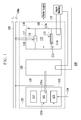
- FIG. 1 illustrates a schematic view of a boiler system using a fuel cell in accordance with a preferred embodiment of the present invention.
- the boiler system 100 using a fuel cell in accordance with a preferred embodiment of the present invention includes a boiler 110 installed in a home, a building, or the like, a fuel cell 130 for generating electricity and reaction heat by electrochemical reaction between fuel and oxygen, a storage tank 150 for recovering and storing the reaction heat generated by the fuel cell 130 with a fluid, a room heating line 170 buried beneath a room floor of the home or the building, a warm water line 180 connected to supply warm water to a washroom or a kitchen of the home or the building through the boiler 110 or the storage tank 150 when water is supplied thereto from the outside, and a suction and exhaust integrated pipe 190 for supplying oxygen to cause combustion or the electrochemical reaction at the boiler 110 or the fuel cell 130 and discharging gas produced from the boiler 110 and a combustion or cathodic air electrode of the fuel cell 130.
- boilers 110 there may be different kinds of boilers 110 depending on heat sources, modes of mounting, mounting places, suction/exhaust systems, water supply systems, heat dissipation systems, structures of heat exchanger, as so on.
- the boiler 110 in the boiler system 100 using a fuel cell in accordance with a preferred embodiment of the present invention includes a fuel injection unit 111 a for injecting the fuel being supplied thereto from a first fuel supply line 111, a burner 113 for mixing the fuel injected by the fuel injection unit 111 a with air, and a combustion chamber 115 for causing combustion of mixed gas of the fuel and the air with an igniter if the mixed gas is injected through a flame hole 113a in the burner 113.
- the boiler 110 may have forced flow generating means 116, such as a blower, appropriately designed as an array for forcibly drawing room air or outdoor air through a first suction line 118, and discharging the exhaust gas outside of the room through a first exhaust line 117 by a negative pressure.
- forced flow generating means 116 such as a blower, appropriately designed as an array for forcibly drawing room air or outdoor air through a first suction line 118, and discharging the exhaust gas outside of the room through a first exhaust line 117 by a negative pressure.
- the room heating line 170 may be connected to the storage tank 150 for introducing the fluid to the storage tank 150 after passing through the room heating line 170.
- the fuel cell 130 has the fuel, such as hydrogen, and the air containing the oxygen continuously supplied thereto for generating electrical energy and heat as a byproduct by an electrochemical reaction between the hydrogen and the oxygen.
- the fuel cell 130 may be an MCFC (Molten Carbonate Fuel Cell) or an SOFC (Solid Oxide Fuel Cell) operative at a high temperature of over 600 °C, or a PAFC (Phosphoric Acid Fuel Cell) and a PEMFC (Proton Exchange Membrane Fuel Cells) operative at a comparatively low temperature of below 200 °C.
- MCFC Molten Carbonate Fuel Cell
- SOFC Solid Oxide Fuel Cell
- PAFC Phosphoric Acid Fuel Cell
- PEMFC Proton Exchange Membrane Fuel Cells
- the fuel cell 130 may include a stack unit 131 having a fuel electrode 131 a and an air electrode 131 b for generating electric energy and heat which is a byproduct of an electrochemical reaction between reformed gas or hydrogen being supplied to the fuel electrode 131 a and oxygen being supplied to the air electrode 131 b, a reforming unit 133 for receiving the fuel, reforming the fuel into the hydrogen, and supplying the hydrogen to a fuel electrode 131 a side of the stack unit 131, a second fuel supply line 134 for supplying the fuel to the reforming unit 133, a second suction line 135 for supplying air to the reforming unit 133 and the air electrode 131 b in the stack unit 131, a power conversion unit 137 for converting the electrical energy generated at the stack unit 131 to commercial power, and a second exhaust line 139 for discharging the gas from the reforming unit 133 and the stack unit 131 to the outside.
- a stack unit 131 having a fuel electrode 131 a and an air electrode 131 b
- the fuel may be LNG, LPG, a hydrocarbon group fuel, or hydrogen.
- the first exhaust line 117 and the first suction line 118 of the boiler 110, and the second exhaust line 139 and the second suction line 135 of the fuel cell 130 may be made to be in communication with the atmosphere through a suction and exhaust integrated opening 190a via the suction and exhaust integrated pipe 190.
- suction and exhaust integrated pipe 190 in the boiler system 100 using a fuel cell in accordance with a preferred embodiment of the present invention will be described with reference to FIGS. 2A to 2C .
- FIGS. 2 to FIG. 4 illustrate a perspective view, another perspective view, and a cross-sectional view of a suction and exhaust integrated pipe 190 in a boiler system 100 using a fuel cell in accordance with a preferred embodiment of the present invention, respectively.
- the suction and exhaust integrated pipe 190 in the boiler system 100 using a fuel cell in accordance with a preferred embodiment of the present invention may be constructed as a quadruple pipe in which a first pipe member 191, a second pipe member 192, a third pipe member 193, and a fourth pipe member 194 are arranged to be overlapped and centered on a concentric axis respectively connected to the first exhaust line 117 and the first suction line 118 of the boiler 110, and the second exhaust line 139 and the second suction line 135 of the fuel cell 130.
- the suction and exhaust integrated pipe 190 in the boiler system 100 using a fuel cell in accordance with a preferred embodiment of the present invention may use the first exhaust line 117 of the boiler 110 and the second exhaust line 139 of the fuel cell 130 as the first pipe member 191 in common, and the first suction line 118 and the second suction line 135 of the fuel cell 130 as the second pipe member 192 in common.
- the first pipe member 191 and the second pipe member 192 may be constructed as a double pipe arranged to be overlapped and centered on a concentric axis.
- the second suction line 135 and the second exhaust line 139 of the fuel cell 130 may be arranged in a mode of branches within the first pipe member 191.
- the second suction line 135 and the second exhaust line 139 of the fuel cell 130 may be respectively connected to the first pipe member 191 and the second pipe member 192 which are respectively connected to the first exhaust line 117 and the first suction line 118 of the boiler 110 in a mode of a plurality of branch pipes.
- the suction and exhaust integrated pipe 190 in the boiler system 100 using a fuel cell in accordance with a preferred embodiment of the present invention not only has at least two multiple pipes or branch pipes, but also has a partition wall 191 a formed within the first pipe member 191 to divide a cross-sectional area of the first pipe member 191 into a suction area A of the boiler 110 and the fuel cell 130 and an exhaust area B of the boiler 110 and the fuel cell 130 according to an exhaust rate and a suction rate.
- suction lines and the exhaust lines of the boiler 110 and the fuel cell 130 may be fabricated as the single suction and exhaust integrated pipe 190, a complex pipe configuration may be simplified and leakage from the pipes may be reduced.
- FIGS. 5 to FIG. 13 illustrate schematic views showing variations of a boiler system using a fuel cell in accordance with a preferred embodiment of the present invention, respectively.
- a suction and exhaust integrated pipe 190 in the boiler system 100 using a fuel cell in accordance with a preferred embodiment of the present invention may have a first pipe member 191 connected to a suction and exhaust integrated opening 190a partitioned with a partition wall 191 a for introducing outdoor air introduced thereto to the first suction line 118 of the boiler 110 and the second suction line 135 of the fuel cell 130, and discharging gas being discharged through the first exhaust line 117 and the second exhaust line 139 of the fuel cell 130 through the integrated pipe opening 190a via the first pipe member 191.
- suction openings and the exhaust openings of the boiler 110 and the fuel cell 130 are integrated into one to use the same in common.
- a suction integrated pipe 191 in the boiler system 100 using a fuel cell in accordance with a preferred embodiment of the present invention may be configured such that the suction integrated pipe 191 introduces outdoor air introduced thereto through a first pipe member 191 connected to one suction integrated opening 190a to the first suction line 118 of the boiler 110 and the second suction line 135 of the fuel cell 130, and may allow exhaust gas being discharged through the first exhaust line 117 and the second exhaust line 139 of the fuel cell 130 through another first pipe member 191 via another suction and exhaust integrated opening 191 a.
- suction openings and exhaust openings of the boiler 110 and the fuel cell 130 may be used in common, respectively.
- a damper means or electronic control means 160 such as a solenoid valve or the like, may be used at a crossing point of the two lines.
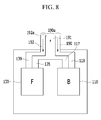
- the suction and exhaust integrated pipe 190 in the boiler system 100 using a fuel cell in accordance with a preferred embodiment of the present invention may be a double pipe connected to a suction and exhaust integrated opening 190a.
- the double pipe has a first pipe member 191 having the first exhaust line 117 of the boiler 110 and the second exhaust line 135 of the fuel cell 130 made to be in communication therewith such that the boiler 110 and the fuel cell 130 use the first pipe member 191 as an exhaust line in common, and a second pipe member 192 around the first pipe member 191 partitioned with a partition wall 192a having the first suction line 118 of the boiler 110 and the second suction line 139 of the fuel cell 130 made to be in communication therewith such that suction gases of the first suction line 118 of the boiler 110 and the second suction line 139 of the fuel cell 130 are prevented from mixing for maintaining respective characteristics of the suction gases.
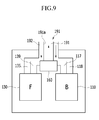
- damper means or electronic control means 160 such as a solenoid valve or the like, may be used at a crossing point of the two lines.
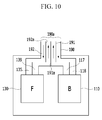
- the suction and exhaust integrated pipe 190 in the boiler system 100 using a fuel cell in accordance with a preferred embodiment of the present invention may be a double pipe connected to a suction and exhaust integrated opening 190a having partition walls formed at inner and outer pipe members.
- the double pipe has the first pipe member 191 partitioned with the partition wall 191 a with the first exhaust line 117 of the boiler 110 and the second exhaust line 139 of the fuel cell 130 made to be in communication therewith such that the boiler 110 and the fuel cell 130 use the first pipe member 191 as an exhaust line in common by dividing an area of the first pipe member 191, preventing exhaust gases of the first exhaust line 117 of the boiler 110 and the second exhaust line 139 of the fuel cell 130 from mixing, characteristics of the exhaust gases may be maintained.
- the suction and exhaust integrated pipe 190 in the boiler system 100 using a fuel cell in accordance with a preferred embodiment of the present invention may be a triple pipe connected to a suction and exhaust integrated opening 190a.
- the triple pipe may have the first pipe member 191 to be in communication with the first exhaust line 118 of the boiler 110 and the second exhaust line 135 of the fuel cell 130 such that the boiler 110 and the fuel cell 130 use the first pipe member 191 as an exhaust line in common, and the second pipe member 192 and the third pipe member 193 which surround the first pipe member 191 in succession to be in communication with the second suction line 139 of the fuel cell 130 and the first suction line 117 of the boiler 110 respectively, preventing suction gases of the first suction line 117 of the boiler 110 and the second suction line 139 of the fuel cell 130 from mixing, thereby enabling to maintain characteristics of the suction gases, respectively.
- FIG. 12 though it has a triple pipe structure, by partitioning the first pipe member 191 with the partition wall 191 a into two areas, and making the first exhaust line 118 of the boiler 110 and the second exhaust line 135 of the fuel cell 130 to be in communication therewith such that the boiler 110 and the fuel cell 130 use the first pipe member 191 as an exhaust line in common by dividing an area of the first pipe member 191, preventing the exhaust gases of the first exhaust line 118 of the boiler 110 and the second exhaust line 135 of the fuel cell 130 from mixing, characteristics of the exhaust gases may be maintained, respectively.
- a damper means or electronic control means 160 such as solenoid valve, may be used at a crossing point of the two lines.
Landscapes
- Engineering & Computer Science (AREA)
- Chemical & Material Sciences (AREA)
- Physics & Mathematics (AREA)
- Thermal Sciences (AREA)
- Mechanical Engineering (AREA)
- General Engineering & Computer Science (AREA)
- Combustion & Propulsion (AREA)
- Chemical Kinetics & Catalysis (AREA)
- Manufacturing & Machinery (AREA)
- Sustainable Development (AREA)
- Sustainable Energy (AREA)
- Life Sciences & Earth Sciences (AREA)
- Electrochemistry (AREA)
- General Chemical & Material Sciences (AREA)
- Water Supply & Treatment (AREA)
- Fuel Cell (AREA)
- Heat-Pump Type And Storage Water Heaters (AREA)
Abstract
Description
- The present invention relates to a boiler system using a fuel cell. More particularly, the present invention relates to a fuel cell based boiler system in which, in a structure of the fuel cell, an exhaust opening which discharges exhaust gas generated during operation of a boiler and an air suction opening which supplies oxygen required for operation of the boiler are configured for efficiency.
- In countries having four distinct seasons or in cold countries, a boiler system, which uses kerosene, gas, coal or the like as an energy source for heating a room of a home or a building, is used.
- A general boiler system has a boiler installed indoors or outdoors for receiving and burning fuel. Water is heated by heat of combustion in the boiler, and the water heated thus is circulated through a heat dissipation circulating line connected to the boiler buried in a floor of the room. While the water repeats the circulation in which the water is heated at the boiler, circulates through the heat dissipation circulating line, and heated at the boiler again, the heat is transmitted to, and heats, the room floor.
- And, a warm water line is connected between the boiler and city water line which supplies city water and is connected to a washroom, a laundry room, a kitchen, and so on.
- However, when the boiler system heats the water with the heat of combustion of the gas or kerosene for heating the room and using the warm water, it consumes a large amount of gas or kerosene, which not only causes emission of pollutants that are severely harmful to human bodies, but also increases an economic burden to households and the fossil fuel is gradually being exhausted.
- Recently, in order to solve such a problem, a scheme has been under research in which a fuel cell is installed in a house or a building for producing and using electricity and heat a user requires personally to reduce emission of the pollutants and rates of electricity and room heating while generating the electricity and the heat at the same time.
- However, since the electricity produced from the fuel cell is supplied to outside and the heat incidentally generated is recovered in a mode of the warm water and is used for the room heating and warm water supply, the boiler is used together with the fuel cell.
- According to this, air suction and exhaust openings for the fuel cell and air suction and exhaust openings for the boiler are respectively required, resulting in inconvenience in view of space and installation.
- Moreover, as a number of the air suction and exhaust openings increases, a risk of leakage of the exhaust gas to outside increases.
- The present invention has been made in an effort to provide a boiler system using a fuel cell having advantages of resolving inconveniences in view of space, structure, and installation occurring for mounting air suction and exhaust openings for a fuel cell and air suction and exhaust openings for a boiler, and reducing risk of exhaust gas leakage caused by an increased number of the air suction and exhaust openings.
- Accordingly, an object of the present invention devised for solving the problems is to provide a boiler system using a fuel cell, which may resolve inconveniences in view of space, structure, and installation occurring for mounting air suction and exhaust openings for a fuel cell and air suction and exhaust openings for a boiler, and may reduce risk of exhaust gas leakage caused by an increased number of the air suction and exhaust openings.
- To achieve the object of the present invention, a boiler system using a fuel cell includes a boiler installed in a home, a building, or the like, a fuel cell for generating electricity and reaction heat by electrochemical reaction between a fuel and oxygen, a storage tank for recovering and storing the reaction heat generated by the fuel cell with a fluid, a room heating line buried beneath a room floor of the home, the building, or the like, a warm water line connected to supply warm water to a washroom or a kitchen of the home or the building through the boiler or the storage tank when water is supplied thereto from the outside, and a suction and exhaust integrated pipe having at least two of at least one first exhaust line, at least one first suction line of the boiler, at least one second exhaust line, and at least one second suction line of the fuel cell connected thereto to be used in common.
- The boiler system using a fuel cell in accordance with the present invention may resolve inconveniences in view of space, structure, and installation of the boiler system, such as a spatial restriction occurring for mounting the first exhaust line, the first suction line of the boiler, the second exhaust line, and the second suction line of the fuel cell, as an example, problems of making a plurality of holes in inner and outer walls of the boiler room.
- Since the suction lines and the exhaust lines of the boiler and the fuel cell may be fabricated as a single suction and exhaust integrated pipe having a multiple pipe member or a partition wall, a complex pipe configuration may be simplified and leakage from the pipes may be reduced.
- The damper means or the electronic valve means provided to a crossing point of suction and exhaust lines of the boiler and the fuel cell may prevent a reverse flow in view of structure.
-
-
FIG. 1 illustrates a schematic view of a boiler system using a fuel cell in accordance with a preferred embodiment of the present invention. -
FIGS. 2 to FIG. 4 illustrate a perspective view, another perspective view, and a cross-sectional view of a suction and exhaust integrated pipe in a boiler system using a fuel cell in accordance with a preferred embodiment of the present invention, respectively. -
FIGS. 5 to FIG. 13 illustrate schematic views showing variations of a boiler system using a fuel cell in accordance with a preferred embodiment of the present invention, respectively. - In order to achieve the objects of the present invention, a boiler system using a fuel cell is provided, in which a fuel cell and a boiler are installed in a home or a building for heating a fluid with reaction heat from the fuel cell and combustion heat from the boiler to heat a room as the fluid heated thus circulates beneath a floor of the room of the home or the building, and heating city water with the heat from the fuel cell and the combustion heat from the boiler to supply warm water to a washroom or kitchen of the home or the building.
- A boiler system using a fuel cell in accordance with a preferred embodiment of the present invention will be described with reference to the attached drawings, in detail.
-
FIG. 1 illustrates a schematic view of a boiler system using a fuel cell in accordance with a preferred embodiment of the present invention. - Referring to
FIG. 1 , theboiler system 100 using a fuel cell in accordance with a preferred embodiment of the present invention includes aboiler 110 installed in a home, a building, or the like, afuel cell 130 for generating electricity and reaction heat by electrochemical reaction between fuel and oxygen, astorage tank 150 for recovering and storing the reaction heat generated by thefuel cell 130 with a fluid, aroom heating line 170 buried beneath a room floor of the home or the building, awarm water line 180 connected to supply warm water to a washroom or a kitchen of the home or the building through theboiler 110 or thestorage tank 150 when water is supplied thereto from the outside, and a suction and exhaust integratedpipe 190 for supplying oxygen to cause combustion or the electrochemical reaction at theboiler 110 or thefuel cell 130 and discharging gas produced from theboiler 110 and a combustion or cathodic air electrode of thefuel cell 130. - In general, there may be different kinds of
boilers 110 depending on heat sources, modes of mounting, mounting places, suction/exhaust systems, water supply systems, heat dissipation systems, structures of heat exchanger, as so on. - The
boiler 110 in theboiler system 100 using a fuel cell in accordance with a preferred embodiment of the present invention includes afuel injection unit 111 a for injecting the fuel being supplied thereto from a firstfuel supply line 111, aburner 113 for mixing the fuel injected by thefuel injection unit 111 a with air, and acombustion chamber 115 for causing combustion of mixed gas of the fuel and the air with an igniter if the mixed gas is injected through aflame hole 113a in theburner 113. - The
boiler 110 may have forced flow generating means 116, such as a blower, appropriately designed as an array for forcibly drawing room air or outdoor air through afirst suction line 118, and discharging the exhaust gas outside of the room through afirst exhaust line 117 by a negative pressure. - It may also be configured such that a heat source of the fluid in the
storage tank 150 is supplied to theroom heating line 170 directly or through theboiler 110. - Further, the
room heating line 170 may be connected to thestorage tank 150 for introducing the fluid to thestorage tank 150 after passing through theroom heating line 170. - The
fuel cell 130 has the fuel, such as hydrogen, and the air containing the oxygen continuously supplied thereto for generating electrical energy and heat as a byproduct by an electrochemical reaction between the hydrogen and the oxygen. - The
fuel cell 130 may be an MCFC (Molten Carbonate Fuel Cell) or an SOFC (Solid Oxide Fuel Cell) operative at a high temperature of over 600 °C, or a PAFC (Phosphoric Acid Fuel Cell) and a PEMFC (Proton Exchange Membrane Fuel Cells) operative at a comparatively low temperature of below 200 °C. - The
fuel cell 130 may include astack unit 131 having afuel electrode 131 a and anair electrode 131 b for generating electric energy and heat which is a byproduct of an electrochemical reaction between reformed gas or hydrogen being supplied to thefuel electrode 131 a and oxygen being supplied to theair electrode 131 b, a reformingunit 133 for receiving the fuel, reforming the fuel into the hydrogen, and supplying the hydrogen to afuel electrode 131 a side of thestack unit 131, a secondfuel supply line 134 for supplying the fuel to the reformingunit 133, asecond suction line 135 for supplying air to the reformingunit 133 and theair electrode 131 b in thestack unit 131, apower conversion unit 137 for converting the electrical energy generated at thestack unit 131 to commercial power, and asecond exhaust line 139 for discharging the gas from the reformingunit 133 and thestack unit 131 to the outside. - The fuel may be LNG, LPG, a hydrocarbon group fuel, or hydrogen.
- In the
boiler system 100 using a fuel cell in accordance with a preferred embodiment of the present invention, thefirst exhaust line 117 and thefirst suction line 118 of theboiler 110, and thesecond exhaust line 139 and thesecond suction line 135 of thefuel cell 130, may be made to be in communication with the atmosphere through a suction and exhaust integrated opening 190a via the suction and exhaust integratedpipe 190. - According to this, inconveniences in view of space, structure, and installation of the
boiler system 100, such as a spatial restriction occurring for mounting thefirst exhaust line 117 and thefirst suction line 118 of theboiler 110, and thesecond exhaust line 139 and thesecond suction line 135 of thefuel cell 130, as an example, problems of making a plurality of holes in inner and outer walls of the boiler room may be resolved. - The suction and exhaust integrated
pipe 190 in theboiler system 100 using a fuel cell in accordance with a preferred embodiment of the present invention will be described with reference toFIGS. 2A to 2C . -
FIGS. 2 to FIG. 4 illustrate a perspective view, another perspective view, and a cross-sectional view of a suction and exhaust integratedpipe 190 in aboiler system 100 using a fuel cell in accordance with a preferred embodiment of the present invention, respectively. - Referring to
FIGS. 2 to FIG. 4 , the suction and exhaust integratedpipe 190 in theboiler system 100 using a fuel cell in accordance with a preferred embodiment of the present invention may be constructed as a quadruple pipe in which afirst pipe member 191, asecond pipe member 192, athird pipe member 193, and afourth pipe member 194 are arranged to be overlapped and centered on a concentric axis respectively connected to thefirst exhaust line 117 and thefirst suction line 118 of theboiler 110, and thesecond exhaust line 139 and thesecond suction line 135 of thefuel cell 130. - The suction and exhaust integrated
pipe 190 in theboiler system 100 using a fuel cell in accordance with a preferred embodiment of the present invention may use thefirst exhaust line 117 of theboiler 110 and thesecond exhaust line 139 of thefuel cell 130 as thefirst pipe member 191 in common, and thefirst suction line 118 and thesecond suction line 135 of thefuel cell 130 as thesecond pipe member 192 in common. In this case, thefirst pipe member 191 and thesecond pipe member 192 may be constructed as a double pipe arranged to be overlapped and centered on a concentric axis. - Further, as shown in
FIG. 3 , thesecond suction line 135 and thesecond exhaust line 139 of thefuel cell 130 may be arranged in a mode of branches within thefirst pipe member 191. - The
second suction line 135 and thesecond exhaust line 139 of thefuel cell 130 may be respectively connected to thefirst pipe member 191 and thesecond pipe member 192 which are respectively connected to thefirst exhaust line 117 and thefirst suction line 118 of theboiler 110 in a mode of a plurality of branch pipes. - As shown in
FIG. 4 , in the suction and exhaust integratedpipe 190 in theboiler system 100 using a fuel cell in accordance with a preferred embodiment of the present invention, it not only has at least two multiple pipes or branch pipes, but also has apartition wall 191 a formed within thefirst pipe member 191 to divide a cross-sectional area of thefirst pipe member 191 into a suction area A of theboiler 110 and thefuel cell 130 and an exhaust area B of theboiler 110 and thefuel cell 130 according to an exhaust rate and a suction rate. - Accordingly, since the suction lines and the exhaust lines of the
boiler 110 and thefuel cell 130 may be fabricated as the single suction and exhaust integratedpipe 190, a complex pipe configuration may be simplified and leakage from the pipes may be reduced. - Referring to
FIGS. 5 to 13 , variations of the boiler system using a fuel cell in accordance with the preferred embodiment of the present invention will be described. -
FIGS. 5 to FIG. 13 illustrate schematic views showing variations of a boiler system using a fuel cell in accordance with a preferred embodiment of the present invention, respectively. - As shown in
FIG. 5 , a suction and exhaust integratedpipe 190 in theboiler system 100 using a fuel cell in accordance with a preferred embodiment of the present invention may have afirst pipe member 191 connected to a suction and exhaust integratedopening 190a partitioned with apartition wall 191 a for introducing outdoor air introduced thereto to thefirst suction line 118 of theboiler 110 and thesecond suction line 135 of thefuel cell 130, and discharging gas being discharged through thefirst exhaust line 117 and thesecond exhaust line 139 of thefuel cell 130 through the integrated pipe opening 190a via thefirst pipe member 191. - That is, the suction openings and the exhaust openings of the
boiler 110 and thefuel cell 130 are integrated into one to use the same in common. - As shown in
FIG. 6 , a suction integratedpipe 191 in theboiler system 100 using a fuel cell in accordance with a preferred embodiment of the present invention may be configured such that the suction integratedpipe 191 introduces outdoor air introduced thereto through afirst pipe member 191 connected to one suction integrated opening 190a to thefirst suction line 118 of theboiler 110 and thesecond suction line 135 of thefuel cell 130, and may allow exhaust gas being discharged through thefirst exhaust line 117 and thesecond exhaust line 139 of thefuel cell 130 through anotherfirst pipe member 191 via another suction and exhaust integratedopening 191 a. - That is, suction openings and exhaust openings of the
boiler 110 and thefuel cell 130 may be used in common, respectively. - In this case, as shown in
FIG. 7 , in order to prevent a reverse flow from taking place by controlling a suction flow between thefirst suction line 118 of theboiler 110 and thesecond suction line 135 of thefuel cell 130 and an exhaust flow between thefirst exhaust line 117 of theboiler 110 and thesecond exhaust line 139 of thefuel cell 130, which use thefirst pipe member 191 in common, a damper means or electronic control means 160, such as a solenoid valve or the like, may be used at a crossing point of the two lines. - As shown in
FIG. 8 , the suction and exhaust integratedpipe 190 in theboiler system 100 using a fuel cell in accordance with a preferred embodiment of the present invention may be a double pipe connected to a suction and exhaust integratedopening 190a. - The double pipe has a
first pipe member 191 having thefirst exhaust line 117 of theboiler 110 and thesecond exhaust line 135 of thefuel cell 130 made to be in communication therewith such that theboiler 110 and thefuel cell 130 use thefirst pipe member 191 as an exhaust line in common, and asecond pipe member 192 around thefirst pipe member 191 partitioned with apartition wall 192a having thefirst suction line 118 of theboiler 110 and thesecond suction line 139 of thefuel cell 130 made to be in communication therewith such that suction gases of thefirst suction line 118 of theboiler 110 and thesecond suction line 139 of thefuel cell 130 are prevented from mixing for maintaining respective characteristics of the suction gases. - In this case, as shown in
FIG. 9 , in order to prevent a reverse flow from taking place by controlling an exhaust flow between thefirst exhaust line 117 of theboiler 110 and thesecond exhaust line 139 of thefuel cell 130, which use thefirst pipe member 191 in common, damper means or electronic control means 160, such as a solenoid valve or the like, may be used at a crossing point of the two lines. - Further, as shown in
FIG. 10 , the suction and exhaust integratedpipe 190 in theboiler system 100 using a fuel cell in accordance with a preferred embodiment of the present invention may be a double pipe connected to a suction and exhaust integratedopening 190a having partition walls formed at inner and outer pipe members. - Since the double pipe has the
first pipe member 191 partitioned with thepartition wall 191 a with thefirst exhaust line 117 of theboiler 110 and thesecond exhaust line 139 of thefuel cell 130 made to be in communication therewith such that theboiler 110 and thefuel cell 130 use thefirst pipe member 191 as an exhaust line in common by dividing an area of thefirst pipe member 191, preventing exhaust gases of thefirst exhaust line 117 of theboiler 110 and thesecond exhaust line 139 of thefuel cell 130 from mixing, characteristics of the exhaust gases may be maintained. - Also, by partitioning the
second pipe member 192 around thefirst pipe member 191 with thepartition wall 192a and making thefirst suction line 118 of theboiler 110 and thesecond suction line 135 of thefuel cell 130 to be in communication therewith, preventing the suction gases of thefirst suction line 118 of theboiler 110 and thesecond suction line 135 of thefuel cell 130 from mixing, characteristics of the suction gases may be maintained. - As shown in
FIG. 11 , the suction and exhaust integratedpipe 190 in theboiler system 100 using a fuel cell in accordance with a preferred embodiment of the present invention may be a triple pipe connected to a suction and exhaust integratedopening 190a. - The triple pipe may have the
first pipe member 191 to be in communication with thefirst exhaust line 118 of theboiler 110 and thesecond exhaust line 135 of thefuel cell 130 such that theboiler 110 and thefuel cell 130 use thefirst pipe member 191 as an exhaust line in common, and thesecond pipe member 192 and thethird pipe member 193 which surround thefirst pipe member 191 in succession to be in communication with thesecond suction line 139 of thefuel cell 130 and thefirst suction line 117 of theboiler 110 respectively, preventing suction gases of thefirst suction line 117 of theboiler 110 and thesecond suction line 139 of thefuel cell 130 from mixing, thereby enabling to maintain characteristics of the suction gases, respectively. - In this case, as shown in
FIG. 12 , though it has a triple pipe structure, by partitioning thefirst pipe member 191 with thepartition wall 191 a into two areas, and making thefirst exhaust line 118 of theboiler 110 and thesecond exhaust line 135 of thefuel cell 130 to be in communication therewith such that theboiler 110 and thefuel cell 130 use thefirst pipe member 191 as an exhaust line in common by dividing an area of thefirst pipe member 191, preventing the exhaust gases of thefirst exhaust line 118 of theboiler 110 and thesecond exhaust line 135 of thefuel cell 130 from mixing, characteristics of the exhaust gases may be maintained, respectively. - In this case, as shown in
FIG. 13 , in order to prevent a reverse flow from taking place by controlling an exhaust flow between thefirst exhaust line 118 of theboiler 110 and thesecond exhaust line 135 of thefuel cell 130 which use thefirst pipe member 191 in common, a damper means or electronic control means 160, such as solenoid valve, may be used at a crossing point of the two lines.
[Industrial Applicability]
Claims (12)
- A boiler system using a fuel cell comprising:a boiler installed in a home, a building, or the like;a fuel cell for generating electricity and reaction heat by electrochemical reaction between a fuel and oxygen;a storage tank for recovering and storing the reaction heat generated by the fuel cell with a fluid;a room heating line buried beneath a room floor of the home, the building, or the like;a warm water line connected to supply warm water to a washroom or a kitchen of the home or the building through the boiler or the storage tank when water is supplied thereto from the outside; anda suction and exhaust integrated pipe having at least two of at least one first exhaust line, at least one first suction line of the boiler, at least one second exhaust line, and at least one second suction line of the fuel cell connected thereto to be used in common.
- The boiler system using a fuel cell of claim 1, wherein the second suction line has a stack unit which generates electrical energy and heat by electrochemical reaction between hydrogen and oxygen and a reforming unit for receiving the fuel and supplying reformed hydrogen to the stack unit connected thereto.
- The boiler system using a fuel cell of claim 1 or claim 2, wherein the suction and exhaust integrated pipe is a multiple pipe including at least two pipe members arranged centered on a concentric axis.
- The boiler system using a fuel cell of claim 3, wherein the at least two pipe members includes a partition wall for dividing a cross-sectional area thereof into at least two areas.
- The boiler system using a fuel cell of claim 1, wherein the suction and exhaust integrated pipe is constructed of a first pipe member used by the first suction line of the boiler and the second suction line of the fuel cell in common, and another first pipe member used by the first exhaust line of the boiler and the second exhaust line of the fuel cell in common.
- The boiler system using a fuel cell of claim 5, further comprising damper means or electronic valve means used at each of crossing points of the first suction line of the boiler and the second suction line of the fuel cell and the first exhaust line of the boiler and the second exhaust line of the fuel cell.
- The boiler system using a fuel cell of claim 1, wherein
the suction and exhaust integrated pipe is a double pipe having a suction and exhaust integrated opening, wherein
the double pipe has a first pipe member made to be in communication with the first exhaust line of the boiler and the second exhaust line of the fuel cell for the first exhaust line of the boiler and the second exhaust line of the fuel cell to use the first pipe member in common, and a second pipe member which surrounds the first pipe member made and divided with a partition wall to be in communication with the first suction line of the boiler and the second suction line of the fuel cell for the first suction line of the boiler and the second suction line of the fuel cell to use the second pipe member, respectively. - The boiler system using a fuel cell of claim 7, further comprising a damper means or an electronic valve means provided at a crossing point of the first exhaust line of the boiler and the second exhaust line of the fuel cell which use the first pipe member in common.
- The boiler system using a fuel cell of claim 1, wherein
the suction and exhaust integrated pipe is a double pipe having a suction and exhaust integrated opening with partition walls formed on inner and outer pipe members, and wherein
the double pipe has the first pipe member divided with a partition wall into a first area and a second area to be in communication with the first exhaust line of the boiler and the second exhaust line of the fuel cell, respectively, and the second pipe member which surrounds the first pipe member is also divided with a partition wall into a third area and a fourth area to be in communication with the first suction line of the boiler and the second suction line of the fuel cell, respectively. - The boiler system using a fuel cell of claim 1, wherein the suction and exhaust integrated pipe is a triple pipe having a suction and exhaust integrated opening, wherein the triple pipe has the first pipe member in communication with the first exhaust line of the boiler and the second exhaust line of the fuel cell for the first exhaust line of the boiler and the second exhaust line of the fuel cell use the first pipe member in common, and the second pipe member and the third pipe member which surround the first pipe member in succession to be in communication with the second suction line of the fuel cell and the first suction line of the boiler, respectively.
- The boiler system using a fuel cell of claim 10, further comprising a partition wall mounted to the first pipe member to divide a cross-sectional area of the first pipe member into two areas for making the first exhaust line of the boiler and the second exhaust line of the fuel cell to be in communication therewith, respectively.
- The boiler system using a fuel cell of claim 10, further comprising a damper means or an electronic valve means provided at a crossing point of the first exhaust line of the boiler and the second exhaust line of the fuel cell which use the first pipe member in common.
Applications Claiming Priority (2)
| Application Number | Priority Date | Filing Date | Title |
|---|---|---|---|
| KR1020120157457A KR101439428B1 (en) | 2012-12-28 | 2012-12-28 | Boiler system using a fuel cell |
| PCT/KR2013/011338 WO2014104610A1 (en) | 2012-12-28 | 2013-12-09 | Boiler system using fuel cell |
Publications (3)
| Publication Number | Publication Date |
|---|---|
| EP2940399A1 true EP2940399A1 (en) | 2015-11-04 |
| EP2940399A4 EP2940399A4 (en) | 2016-09-07 |
| EP2940399B1 EP2940399B1 (en) | 2018-06-13 |
Family
ID=51021605
Family Applications (1)
| Application Number | Title | Priority Date | Filing Date |
|---|---|---|---|
| EP13868433.7A Not-in-force EP2940399B1 (en) | 2012-12-28 | 2013-12-09 | Boiler system using fuel cell |
Country Status (7)
| Country | Link |
|---|---|
| US (1) | US20150323199A1 (en) |
| EP (1) | EP2940399B1 (en) |
| JP (1) | JP6062568B2 (en) |
| KR (1) | KR101439428B1 (en) |
| CN (1) | CN104884873A (en) |
| CA (1) | CA2893733C (en) |
| WO (1) | WO2014104610A1 (en) |
Families Citing this family (3)
| Publication number | Priority date | Publication date | Assignee | Title |
|---|---|---|---|---|
| KR102324535B1 (en) * | 2020-05-11 | 2021-11-09 | 여영찬 | A fuel cell system |
| JP7243693B2 (en) * | 2020-07-28 | 2023-03-22 | トヨタ自動車株式会社 | ventilation system |
| CN117090646B (en) * | 2023-08-18 | 2026-04-24 | 西安交通大学 | A Deep Peak Shaving Coal-fired Power Generation System Coupled with RSOC and Its Operation Method |
Family Cites Families (36)
| Publication number | Priority date | Publication date | Assignee | Title |
|---|---|---|---|---|
| SE413936B (en) * | 1977-02-04 | 1980-06-30 | Unicor Ets | DEVICE FOR REGULATION OF SMOKE GAS |
| US4185769A (en) * | 1977-09-12 | 1980-01-29 | Nezworski James E | Exhaust flue damper and control system therefor |
| US4251024A (en) * | 1978-02-23 | 1981-02-17 | Paragon Resources, Inc. | Automatic vent damper |
| US4731015A (en) * | 1986-08-22 | 1988-03-15 | Johnson Arthur C W | Burner unit |
| US4869229A (en) * | 1986-08-22 | 1989-09-26 | Johnson Arthur C W | Burner unit |
| US5902182A (en) * | 1995-06-30 | 1999-05-11 | Wma Ranger, Inc. | Air exchange and cleaning system for building enclosure, particularly indoor firing range |
| JP2899557B2 (en) * | 1996-03-26 | 1999-06-02 | サンデン株式会社 | Heating water heater |
| JPH09296929A (en) * | 1996-05-01 | 1997-11-18 | Sanden Corp | Suction and exhaust structure of combustor |
| DK0818840T3 (en) * | 1996-07-11 | 2002-06-17 | Sulzer Hexis Ag | Method for simultaneously generating electrical energy and heat for heating purposes |
| US5846128A (en) * | 1997-01-06 | 1998-12-08 | Wma Ranger, Inc. | Air exchange and cleaning system for building enclosures, particularly indoor firing range |
| JP2001132940A (en) * | 1999-11-01 | 2001-05-18 | Samson Co Ltd | Exhaust gas backdraft preventer in multi-boiler system |
| KR100418459B1 (en) * | 2001-11-26 | 2004-02-14 | (주)세티 | Apparatus for Supplying Waste Energy from Fuel Cell to Boiler |
| CN1151575C (en) * | 2002-05-10 | 2004-05-26 | 上海交通大学 | Solid Oxide Fuel Cell Steam Turbine Combined Power Generation System |
| CN1242508C (en) * | 2002-08-19 | 2006-02-15 | 乐金电子(天津)电器有限公司 | Heat application system of fuel cell and control method |
| US7040544B2 (en) * | 2003-11-07 | 2006-05-09 | Climate Energy, Llc | System and method for warm air space heating with electrical power generation |
| US7284709B2 (en) * | 2003-11-07 | 2007-10-23 | Climate Energy, Llc | System and method for hydronic space heating with electrical power generation |
| CN100495791C (en) * | 2004-07-13 | 2009-06-03 | 松下电器产业株式会社 | Control device of fuel cell power generation system and control method |
| EP1850415B1 (en) * | 2005-02-18 | 2012-12-12 | Panasonic Corporation | Fuel cell system |
| KR200402490Y1 (en) * | 2005-09-22 | 2005-11-30 | 주식회사 노벨산업 | The unified dust of inhalation and ventilation |
| KR100820144B1 (en) * | 2005-10-05 | 2008-04-10 | 엘지전자 주식회사 | Heating and hot water supply system using fuel cell |
| US20070196703A1 (en) * | 2006-02-22 | 2007-08-23 | Lg Electronics Inc. | System for supplying energy to a plurality of building units |
| US8715870B2 (en) * | 2006-05-11 | 2014-05-06 | Ford Motor Company | Gas reclaiming system and method |
| US8206857B2 (en) * | 2007-06-26 | 2012-06-26 | Hyteon Inc. | Fuel cell combined heat and power generation |
| JP2009092253A (en) * | 2007-10-04 | 2009-04-30 | Masaji Furukawa | Double chimney combustion appliance |
| JP4997062B2 (en) * | 2007-10-25 | 2012-08-08 | 本田技研工業株式会社 | Cogeneration system |
| US8757143B2 (en) * | 2008-08-27 | 2014-06-24 | Jason W. Edens | Solar powered furnace and furnace array |
| JP4650577B2 (en) * | 2009-03-24 | 2011-03-16 | パナソニック株式会社 | Fuel cell cogeneration system |
| JPWO2011052233A1 (en) * | 2009-11-02 | 2013-03-14 | パナソニック株式会社 | Fuel cell cogeneration system |
| KR101080311B1 (en) * | 2009-12-30 | 2011-11-04 | (주)퓨얼셀 파워 | Fuel cell system having separate type auxiliary burner and driving method threrof |
| WO2012081214A1 (en) * | 2010-12-13 | 2012-06-21 | パナソニック株式会社 | Power generation system and operating method therefor |
| JP5132839B2 (en) * | 2010-12-13 | 2013-01-30 | パナソニック株式会社 | Power generation system and operation method thereof |
| US20130115538A1 (en) * | 2010-12-13 | 2013-05-09 | Panasonic Corporation | Power generation system and method of operating the same |
| US20130137006A1 (en) * | 2010-12-13 | 2013-05-30 | Panasonic Corporation | Power generation system and method of operating the same |
| US9151541B2 (en) * | 2010-12-15 | 2015-10-06 | Grundfos Holding A/S | Heat transfer system |
| JP2012199068A (en) * | 2011-03-22 | 2012-10-18 | Panasonic Corp | Connection structure of exhaust passage and fuel cell system |
| JP6048680B2 (en) * | 2011-03-29 | 2016-12-21 | パナソニックIpマネジメント株式会社 | Power generation system and operation method thereof |
-
2012
- 2012-12-28 KR KR1020120157457A patent/KR101439428B1/en active Active
-
2013
- 2013-12-09 JP JP2015549245A patent/JP6062568B2/en not_active Expired - Fee Related
- 2013-12-09 US US14/652,820 patent/US20150323199A1/en not_active Abandoned
- 2013-12-09 CA CA2893733A patent/CA2893733C/en not_active Expired - Fee Related
- 2013-12-09 WO PCT/KR2013/011338 patent/WO2014104610A1/en not_active Ceased
- 2013-12-09 EP EP13868433.7A patent/EP2940399B1/en not_active Not-in-force
- 2013-12-09 CN CN201380067760.8A patent/CN104884873A/en active Pending
Also Published As
| Publication number | Publication date |
|---|---|
| WO2014104610A1 (en) | 2014-07-03 |
| KR101439428B1 (en) | 2014-09-11 |
| CA2893733C (en) | 2018-05-29 |
| EP2940399B1 (en) | 2018-06-13 |
| JP6062568B2 (en) | 2017-01-25 |
| KR20140092481A (en) | 2014-07-24 |
| CA2893733A1 (en) | 2014-07-03 |
| CN104884873A (en) | 2015-09-02 |
| US20150323199A1 (en) | 2015-11-12 |
| JP2016506490A (en) | 2016-03-03 |
| EP2940399A4 (en) | 2016-09-07 |
Similar Documents
| Publication | Publication Date | Title |
|---|---|---|
| KR101141946B1 (en) | Complex power generation system and method for supplying heated water thereof | |
| RU2334309C1 (en) | Modular fuel-element system | |
| EP3787082A1 (en) | Fuel cell system | |
| JP2017050192A (en) | Fuel cell module | |
| EP2940399B1 (en) | Boiler system using fuel cell | |
| JP2016515190A (en) | Heating equipment and method of operating heating equipment | |
| KR100664076B1 (en) | Heat supply system using fuel cell | |
| RU2331818C2 (en) | Heat and hot water supply system (versions) | |
| CN101026238A (en) | System for supplying energy to a plurality of building units | |
| KR101421355B1 (en) | Fuel humidifier | |
| KR102461284B1 (en) | Building structure for integrating fuel cell system and photovoltaic power generation system | |
| KR102663741B1 (en) | Heating system | |
| KR20130109339A (en) | Solid oxide fuel cell housing system | |
| KR102663740B1 (en) | Heating system | |
| KR102663738B1 (en) | Heating system | |
| KR102663745B1 (en) | Heating system | |
| EP2538479B1 (en) | Power generation system and operating method therefor | |
| JP2016046221A (en) | Fuel cell power generation device | |
| KR102280340B1 (en) | Distributed generation system using cold heat | |
| KR20140081081A (en) | Heating integration type fuel cell module | |
| KR100788193B1 (en) | Energy supply system using fuel cell | |
| JPH0845522A (en) | Combustion system | |
| TW202335341A (en) | Fuel cell system | |
| KR20020056167A (en) | Regenerative rpg | |
| KR20160007750A (en) | Fuel Cell with Improved Thermal Efficiency and Heating Apparatus using the same |
Legal Events
| Date | Code | Title | Description |
|---|---|---|---|
| PUAI | Public reference made under article 153(3) epc to a published international application that has entered the european phase |
Free format text: ORIGINAL CODE: 0009012 |
|
| 17P | Request for examination filed |
Effective date: 20150605 |
|
| AK | Designated contracting states |
Kind code of ref document: A1 Designated state(s): AL AT BE BG CH CY CZ DE DK EE ES FI FR GB GR HR HU IE IS IT LI LT LU LV MC MK MT NL NO PL PT RO RS SE SI SK SM TR |
|
| AX | Request for extension of the european patent |
Extension state: BA ME |
|
| DAX | Request for extension of the european patent (deleted) | ||
| A4 | Supplementary search report drawn up and despatched |
Effective date: 20160805 |
|
| RIC1 | Information provided on ipc code assigned before grant |
Ipc: F24H 1/00 20060101ALI20160801BHEP Ipc: F24J 1/00 20060101AFI20160801BHEP Ipc: F24D 15/00 20060101ALI20160801BHEP Ipc: F24D 17/00 20060101ALI20160801BHEP Ipc: H01M 8/04 20060101ALI20160801BHEP |
|
| RIC1 | Information provided on ipc code assigned before grant |
Ipc: F24D 15/00 20060101ALI20171130BHEP Ipc: F24J 1/00 00000000AFI20171130BHEP Ipc: H01M 8/04 20160101ALI20171130BHEP Ipc: F24H 1/00 20060101ALI20171130BHEP Ipc: F24D 17/00 20060101ALI20171130BHEP |
|
| GRAP | Despatch of communication of intention to grant a patent |
Free format text: ORIGINAL CODE: EPIDOSNIGR1 |
|
| INTG | Intention to grant announced |
Effective date: 20180108 |
|
| GRAS | Grant fee paid |
Free format text: ORIGINAL CODE: EPIDOSNIGR3 |
|
| GRAA | (expected) grant |
Free format text: ORIGINAL CODE: 0009210 |
|
| AK | Designated contracting states |
Kind code of ref document: B1 Designated state(s): AL AT BE BG CH CY CZ DE DK EE ES FI FR GB GR HR HU IE IS IT LI LT LU LV MC MK MT NL NO PL PT RO RS SE SI SK SM TR |
|
| REG | Reference to a national code |
Ref country code: GB Ref legal event code: FG4D |
|
| REG | Reference to a national code |
Ref country code: CH Ref legal event code: EP Ref country code: AT Ref legal event code: REF Ref document number: 1008907 Country of ref document: AT Kind code of ref document: T Effective date: 20180615 |
|
| REG | Reference to a national code |
Ref country code: IE Ref legal event code: FG4D |
|
| REG | Reference to a national code |
Ref country code: DE Ref legal event code: R096 Ref document number: 602013039047 Country of ref document: DE |
|
| REG | Reference to a national code |
Ref country code: NL Ref legal event code: MP Effective date: 20180613 |
|
| REG | Reference to a national code |
Ref country code: LT Ref legal event code: MG4D |
|
| PG25 | Lapsed in a contracting state [announced via postgrant information from national office to epo] |
Ref country code: NO Free format text: LAPSE BECAUSE OF FAILURE TO SUBMIT A TRANSLATION OF THE DESCRIPTION OR TO PAY THE FEE WITHIN THE PRESCRIBED TIME-LIMIT Effective date: 20180913 Ref country code: BG Free format text: LAPSE BECAUSE OF FAILURE TO SUBMIT A TRANSLATION OF THE DESCRIPTION OR TO PAY THE FEE WITHIN THE PRESCRIBED TIME-LIMIT Effective date: 20180913 Ref country code: FI Free format text: LAPSE BECAUSE OF FAILURE TO SUBMIT A TRANSLATION OF THE DESCRIPTION OR TO PAY THE FEE WITHIN THE PRESCRIBED TIME-LIMIT Effective date: 20180613 Ref country code: SE Free format text: LAPSE BECAUSE OF FAILURE TO SUBMIT A TRANSLATION OF THE DESCRIPTION OR TO PAY THE FEE WITHIN THE PRESCRIBED TIME-LIMIT Effective date: 20180613 Ref country code: CY Free format text: LAPSE BECAUSE OF FAILURE TO SUBMIT A TRANSLATION OF THE DESCRIPTION OR TO PAY THE FEE WITHIN THE PRESCRIBED TIME-LIMIT Effective date: 20180613 Ref country code: ES Free format text: LAPSE BECAUSE OF FAILURE TO SUBMIT A TRANSLATION OF THE DESCRIPTION OR TO PAY THE FEE WITHIN THE PRESCRIBED TIME-LIMIT Effective date: 20180613 Ref country code: LT Free format text: LAPSE BECAUSE OF FAILURE TO SUBMIT A TRANSLATION OF THE DESCRIPTION OR TO PAY THE FEE WITHIN THE PRESCRIBED TIME-LIMIT Effective date: 20180613 |
|
| PG25 | Lapsed in a contracting state [announced via postgrant information from national office to epo] |
Ref country code: HR Free format text: LAPSE BECAUSE OF FAILURE TO SUBMIT A TRANSLATION OF THE DESCRIPTION OR TO PAY THE FEE WITHIN THE PRESCRIBED TIME-LIMIT Effective date: 20180613 Ref country code: LV Free format text: LAPSE BECAUSE OF FAILURE TO SUBMIT A TRANSLATION OF THE DESCRIPTION OR TO PAY THE FEE WITHIN THE PRESCRIBED TIME-LIMIT Effective date: 20180613 Ref country code: GR Free format text: LAPSE BECAUSE OF FAILURE TO SUBMIT A TRANSLATION OF THE DESCRIPTION OR TO PAY THE FEE WITHIN THE PRESCRIBED TIME-LIMIT Effective date: 20180914 Ref country code: RS Free format text: LAPSE BECAUSE OF FAILURE TO SUBMIT A TRANSLATION OF THE DESCRIPTION OR TO PAY THE FEE WITHIN THE PRESCRIBED TIME-LIMIT Effective date: 20180613 |
|
| REG | Reference to a national code |
Ref country code: AT Ref legal event code: MK05 Ref document number: 1008907 Country of ref document: AT Kind code of ref document: T Effective date: 20180613 |
|
| PG25 | Lapsed in a contracting state [announced via postgrant information from national office to epo] |
Ref country code: NL Free format text: LAPSE BECAUSE OF FAILURE TO SUBMIT A TRANSLATION OF THE DESCRIPTION OR TO PAY THE FEE WITHIN THE PRESCRIBED TIME-LIMIT Effective date: 20180613 |
|
| PG25 | Lapsed in a contracting state [announced via postgrant information from national office to epo] |
Ref country code: IS Free format text: LAPSE BECAUSE OF FAILURE TO SUBMIT A TRANSLATION OF THE DESCRIPTION OR TO PAY THE FEE WITHIN THE PRESCRIBED TIME-LIMIT Effective date: 20181013 Ref country code: CZ Free format text: LAPSE BECAUSE OF FAILURE TO SUBMIT A TRANSLATION OF THE DESCRIPTION OR TO PAY THE FEE WITHIN THE PRESCRIBED TIME-LIMIT Effective date: 20180613 Ref country code: EE Free format text: LAPSE BECAUSE OF FAILURE TO SUBMIT A TRANSLATION OF THE DESCRIPTION OR TO PAY THE FEE WITHIN THE PRESCRIBED TIME-LIMIT Effective date: 20180613 Ref country code: AT Free format text: LAPSE BECAUSE OF FAILURE TO SUBMIT A TRANSLATION OF THE DESCRIPTION OR TO PAY THE FEE WITHIN THE PRESCRIBED TIME-LIMIT Effective date: 20180613 Ref country code: RO Free format text: LAPSE BECAUSE OF FAILURE TO SUBMIT A TRANSLATION OF THE DESCRIPTION OR TO PAY THE FEE WITHIN THE PRESCRIBED TIME-LIMIT Effective date: 20180613 Ref country code: PL Free format text: LAPSE BECAUSE OF FAILURE TO SUBMIT A TRANSLATION OF THE DESCRIPTION OR TO PAY THE FEE WITHIN THE PRESCRIBED TIME-LIMIT Effective date: 20180613 Ref country code: SK Free format text: LAPSE BECAUSE OF FAILURE TO SUBMIT A TRANSLATION OF THE DESCRIPTION OR TO PAY THE FEE WITHIN THE PRESCRIBED TIME-LIMIT Effective date: 20180613 |
|
| REG | Reference to a national code |
Ref country code: CH Ref legal event code: PK Free format text: BERICHTIGUNGEN |
|
| RIC2 | Information provided on ipc code assigned after grant |
Ipc: F24J 1/00 20060101AFI20171130BHEP Ipc: F24D 17/00 20060101ALI20171130BHEP Ipc: F24D 15/00 20060101ALI20171130BHEP Ipc: F24H 1/00 20060101ALI20171130BHEP Ipc: H01M 8/04 20160101ALI20171130BHEP |
|
| PG25 | Lapsed in a contracting state [announced via postgrant information from national office to epo] |
Ref country code: SM Free format text: LAPSE BECAUSE OF FAILURE TO SUBMIT A TRANSLATION OF THE DESCRIPTION OR TO PAY THE FEE WITHIN THE PRESCRIBED TIME-LIMIT Effective date: 20180613 Ref country code: IT Free format text: LAPSE BECAUSE OF FAILURE TO SUBMIT A TRANSLATION OF THE DESCRIPTION OR TO PAY THE FEE WITHIN THE PRESCRIBED TIME-LIMIT Effective date: 20180613 |
|
| REG | Reference to a national code |
Ref country code: DE Ref legal event code: R097 Ref document number: 602013039047 Country of ref document: DE |
|
| PLBE | No opposition filed within time limit |
Free format text: ORIGINAL CODE: 0009261 |
|
| STAA | Information on the status of an ep patent application or granted ep patent |
Free format text: STATUS: NO OPPOSITION FILED WITHIN TIME LIMIT |
|
| 26N | No opposition filed |
Effective date: 20190314 |
|
| PG25 | Lapsed in a contracting state [announced via postgrant information from national office to epo] |
Ref country code: DK Free format text: LAPSE BECAUSE OF FAILURE TO SUBMIT A TRANSLATION OF THE DESCRIPTION OR TO PAY THE FEE WITHIN THE PRESCRIBED TIME-LIMIT Effective date: 20180613 Ref country code: SI Free format text: LAPSE BECAUSE OF FAILURE TO SUBMIT A TRANSLATION OF THE DESCRIPTION OR TO PAY THE FEE WITHIN THE PRESCRIBED TIME-LIMIT Effective date: 20180613 |
|
| REG | Reference to a national code |
Ref country code: CH Ref legal event code: PL |
|
| PG25 | Lapsed in a contracting state [announced via postgrant information from national office to epo] |
Ref country code: MC Free format text: LAPSE BECAUSE OF FAILURE TO SUBMIT A TRANSLATION OF THE DESCRIPTION OR TO PAY THE FEE WITHIN THE PRESCRIBED TIME-LIMIT Effective date: 20180613 Ref country code: LU Free format text: LAPSE BECAUSE OF NON-PAYMENT OF DUE FEES Effective date: 20181209 |
|
| REG | Reference to a national code |
Ref country code: IE Ref legal event code: MM4A |
|
| REG | Reference to a national code |
Ref country code: BE Ref legal event code: MM Effective date: 20181231 |
|
| PG25 | Lapsed in a contracting state [announced via postgrant information from national office to epo] |
Ref country code: FR Free format text: LAPSE BECAUSE OF NON-PAYMENT OF DUE FEES Effective date: 20181231 Ref country code: IE Free format text: LAPSE BECAUSE OF NON-PAYMENT OF DUE FEES Effective date: 20181209 |
|
| PG25 | Lapsed in a contracting state [announced via postgrant information from national office to epo] |
Ref country code: AL Free format text: LAPSE BECAUSE OF FAILURE TO SUBMIT A TRANSLATION OF THE DESCRIPTION OR TO PAY THE FEE WITHIN THE PRESCRIBED TIME-LIMIT Effective date: 20180613 Ref country code: BE Free format text: LAPSE BECAUSE OF NON-PAYMENT OF DUE FEES Effective date: 20181231 |
|
| PG25 | Lapsed in a contracting state [announced via postgrant information from national office to epo] |
Ref country code: LI Free format text: LAPSE BECAUSE OF NON-PAYMENT OF DUE FEES Effective date: 20181231 Ref country code: CH Free format text: LAPSE BECAUSE OF NON-PAYMENT OF DUE FEES Effective date: 20181231 |
|
| PG25 | Lapsed in a contracting state [announced via postgrant information from national office to epo] |
Ref country code: MT Free format text: LAPSE BECAUSE OF NON-PAYMENT OF DUE FEES Effective date: 20181209 |
|
| PGFP | Annual fee paid to national office [announced via postgrant information from national office to epo] |
Ref country code: DE Payment date: 20191126 Year of fee payment: 7 |
|
| PG25 | Lapsed in a contracting state [announced via postgrant information from national office to epo] |
Ref country code: TR Free format text: LAPSE BECAUSE OF FAILURE TO SUBMIT A TRANSLATION OF THE DESCRIPTION OR TO PAY THE FEE WITHIN THE PRESCRIBED TIME-LIMIT Effective date: 20180613 |
|
| PGFP | Annual fee paid to national office [announced via postgrant information from national office to epo] |
Ref country code: GB Payment date: 20191206 Year of fee payment: 7 |
|
| PG25 | Lapsed in a contracting state [announced via postgrant information from national office to epo] |
Ref country code: PT Free format text: LAPSE BECAUSE OF FAILURE TO SUBMIT A TRANSLATION OF THE DESCRIPTION OR TO PAY THE FEE WITHIN THE PRESCRIBED TIME-LIMIT Effective date: 20180613 |
|
| PG25 | Lapsed in a contracting state [announced via postgrant information from national office to epo] |
Ref country code: MK Free format text: LAPSE BECAUSE OF NON-PAYMENT OF DUE FEES Effective date: 20180613 Ref country code: HU Free format text: LAPSE BECAUSE OF FAILURE TO SUBMIT A TRANSLATION OF THE DESCRIPTION OR TO PAY THE FEE WITHIN THE PRESCRIBED TIME-LIMIT; INVALID AB INITIO Effective date: 20131209 |
|
| REG | Reference to a national code |
Ref country code: DE Ref legal event code: R119 Ref document number: 602013039047 Country of ref document: DE |
|
| GBPC | Gb: european patent ceased through non-payment of renewal fee |
Effective date: 20201209 |
|
| PG25 | Lapsed in a contracting state [announced via postgrant information from national office to epo] |
Ref country code: DE Free format text: LAPSE BECAUSE OF NON-PAYMENT OF DUE FEES Effective date: 20210701 Ref country code: GB Free format text: LAPSE BECAUSE OF NON-PAYMENT OF DUE FEES Effective date: 20201209 |