EP2937782B1 - Data processing method and device - Google Patents
Data processing method and device Download PDFInfo
- Publication number
- EP2937782B1 EP2937782B1 EP14856790.2A EP14856790A EP2937782B1 EP 2937782 B1 EP2937782 B1 EP 2937782B1 EP 14856790 A EP14856790 A EP 14856790A EP 2937782 B1 EP2937782 B1 EP 2937782B1
- Authority
- EP
- European Patent Office
- Prior art keywords
- database
- code
- source code
- external routine
- user equipment
- Prior art date
- Legal status (The legal status is an assumption and is not a legal conclusion. Google has not performed a legal analysis and makes no representation as to the accuracy of the status listed.)
- Active
Links
Images




Classifications
-
- G—PHYSICS
- G06—COMPUTING OR CALCULATING; COUNTING
- G06F—ELECTRIC DIGITAL DATA PROCESSING
- G06F8/00—Arrangements for software engineering
- G06F8/40—Transformation of program code
- G06F8/41—Compilation
-
- G—PHYSICS
- G06—COMPUTING OR CALCULATING; COUNTING
- G06F—ELECTRIC DIGITAL DATA PROCESSING
- G06F16/00—Information retrieval; Database structures therefor; File system structures therefor
- G06F16/20—Information retrieval; Database structures therefor; File system structures therefor of structured data, e.g. relational data
- G06F16/22—Indexing; Data structures therefor; Storage structures
-
- G—PHYSICS
- G06—COMPUTING OR CALCULATING; COUNTING
- G06F—ELECTRIC DIGITAL DATA PROCESSING
- G06F21/00—Security arrangements for protecting computers, components thereof, programs or data against unauthorised activity
- G06F21/60—Protecting data
- G06F21/62—Protecting access to data via a platform, e.g. using keys or access control rules
- G06F21/6218—Protecting access to data via a platform, e.g. using keys or access control rules to a system of files or objects, e.g. local or distributed file system or database
- G06F21/6227—Protecting access to data via a platform, e.g. using keys or access control rules to a system of files or objects, e.g. local or distributed file system or database where protection concerns the structure of data, e.g. records, types, queries
-
- G—PHYSICS
- G06—COMPUTING OR CALCULATING; COUNTING
- G06F—ELECTRIC DIGITAL DATA PROCESSING
- G06F9/00—Arrangements for program control, e.g. control units
- G06F9/06—Arrangements for program control, e.g. control units using stored programs, i.e. using an internal store of processing equipment to receive or retain programs
- G06F9/44—Arrangements for executing specific programs
- G06F9/455—Emulation; Interpretation; Software simulation, e.g. virtualisation or emulation of application or operating system execution engines
- G06F9/45504—Abstract machines for programme code execution, e.g. Java virtual machine [JVM], interpreters, emulators
Definitions
- the present invention relates to the computer field, and in particular, to a data processing method and apparatus.
- An external routine is generally a program that is compiled by using an advanced programming language and may be embedded in a SQL (Structured Query Language, structured query language) statement.
- Source code of the external routine after being compiled, may be invoked by a database management system, so that a database function is extended.
- a database system includes a database and a database management system, where the database is used to store data, and the database management system is used to operate, manage, and maintain the database.
- the database management system may be a structured query language database management system (MySQL) and so on, and the database may be a structured query language database (SQL Server), an Oracle database (Oracle), and so on, and the database provides extensive support for the advanced programming language, where the advanced programming language may be a C language, a C++ language, a JAVA language, a COBOL (Common Business Oriented Language, common business oriented language), and so on.
- MySQL structured query language database management system
- SQL Server structured query language database
- Oracle Oracle
- the database provides extensive support for the advanced programming language
- the advanced programming language may be a C language, a C++ language, a JAVA language, a COBOL (Common Business Oriented Language, common business oriented language), and so on.
- COBOL Common Business Oriented Language
- the database system may compile, by using an embedded database management system and an embedded extended language compiling module, the source code of the external routine compiled by using the advanced programming language, to obtain target code of the external routine,
- the database management system may be a MySQL, Teradata, and so on
- the extended language compiling module may be a DB2, a PostgreSQL, and so on.
- the target code of the external routine is stored to the database according to a target name and target address set by a user, where the target name is used to uniquely identify the target code of the external routine, and the target address is used to identify an address of the target code of the external routine stored in the database, so that the target code of the external routine is invoked according to the target name and the target address.
- the target code of the external routine is copied to the database according to the target name and target address set by the user, and it is necessary to register information such as the target name and target address with the database, so that the database management system identifies and invokes the target code of the external routine.
- the external routine compiled by using the advanced programming language when running on different operating platforms, needs to be compiled by different compilers to obtain target code of the external routine which is suitable for running on a current operating platform, where the operating platform is hardware and/or software required for running the target code of the external routine.
- the instruction set is used to convert the external routine into the target code of the external routine which is suitable for running on the operating platform. For example, when an external routine is compiled into target code of an x86 version, the target code can only run on a central processor that supports an x86 instruction set. Therefore, different compilers need to be embedded into the database system to compile the source code of the external routine, which limits scalability of the database system, and a security problem exists when the external routine is compiled.
- US2010030745 discloses that the compiled code of a computer program is stored in multiple pieces within a database. Each piece is optionally stored within a separate data record. Execution of the computer program includes using database queries to retrieve pieces of the compiled code for execution.
- the database and associated database management logic are used to provide numerous advantages in execution and management of the computer program. For example, in some embodiments, database queries are used to help facilitate program flow logic.
- US2007038662 (A1 ) discloses a method for managing an external routine in a computer implemented database management system including creating a first table for storing external routines in a data store coupled to the database management system. An external routine is stored in the first table so that the database management system is allowed to automatically manage any modification related to the external routine and to control access to the external routine such that administrative support is minimized.
- Masha Gendler-Fishman ET AL "A Compile-time Model for safe Information Flow in Object-Oriented Databases", Information Security in Research and Business, Boston, MA, Springer US, PAGE 41 - 55, doi:10.1007/978-0-387-35259-6_4, ISBN 978-0-387-35259-6 , first reviews existing security models for object-oriented databases with and without information-flow control. Previous models relied on the run-time checks of every message transferred in the system. A simple transaction model and a compile-time approach and presents algorithms is used for flow control which are applied at rule-administration and compile times, thus saving considerable run-time overhead. A proof or correctness is given, and the performance implications are discussed.
- CN102419714 discloses a source code compiling method as well as a compiler and a computer.
- the source code compiling method comprises the following steps of: obtaining a privilege class of each instruction by the compiler; judging whether the privilege class of each instruction accords with the privilege class of a compiling person by the compiler; under the condition that the privilege classes of all the instructions of the source code accord with the privilege class of the compiling person, compiling the source code by the compiler; and under the condition that the privilege classes of all the instructions of the source code do not accord with the privilege class of the compiling worker, rejecting to compile the source code by the compiler.
- Embodiments of the present invention provide a data processing method and apparatus as defined in the claims, which can effectively improve scalability of a database system.
- an embodiment of the present invention provides a data processing method, including the following steps:
- the source code of the external routine When the source code of the external routine is compiled, first, whether a range of an object, in a database, accessed by the source code is in a preset range of an object accessed in the database is checked; and if the range of the object, in the database, accessed by the source code is in the preset range of the object accessed in the database, the source code is compiled to obtain the intermediate code.
- compiling the source code to obtain the intermediate code may further include: checking whether an operation performed by the source code on the object in a database is a preset operation performed on the object in the database, where the operation includes modifying, adding, or deleting the object; and if the operation performed by the source code on the object in the database is the preset operation performed on the object in the database, compiling the source code to obtain the intermediate code, so that the virtual machine on any operating platform can identify the intermediate code.
- the intermediate code is stored to the database, and a target name and a target address of the intermediate code are generated, where the target name is used to uniquely identify the intermediate code, and the target address is used to identify an address of the intermediate code in the database.
- Step 106 Convert, according to an instruction set on the operating platform, the intermediate code into machine code capable of running on the operating platform.
- the instruction set is a hardware program that is stored in a central processor and guides and optimizes an operation of the central processor, and the instruction set may enable the central processor to run more effectively.
- Step 107 Store the machine code to a database.
- a target name and a target address of the machine code are generated, where the target name is used to uniquely identify the machine code, and the target address is used to identify an address of the machine code in the database.
- source code of an external routine is received, and then, the source code is compiled to obtain intermediate code, where the intermediate code is a byte stream identifiable to a virtual machine on any operating platform.
- the intermediate code is independent from the operating platform, and is a type of unified code for the operating platform, that is, the virtual machine on any operating platform can identify the intermediate code. Therefore, it is unnecessary to embed different compilers into a database system to compile the source code of the external routine, and convert, according to an instruction set on the operating platform, the intermediate code into machine code capable of running on the operating platform. Thereby, scalability of the database system is effectively improved.
- an embodiment of the present invention provides a data processing method, including the following steps:
- the source code of the external routine sent by the first user equipment is received, which includes: parsing a data packet of the source code of the external routine to obtain a first identifier of the data packet, where the first identifier is used to identify a source address of the data packet; determining whether the first identifier of the data packet is a preset identifier, where the preset identifier is used to identify an address of the first user equipment; and if the first identifier of the data packet is the preset identifier, receiving a data packet sent by the first user equipment, where the data packet includes the source code of the external routine, where the source code of the external routine is compiled by using an advanced programming language, where the advanced programming language may be a C language, a C++ language, a JAVA language, and so on.
- Step 114 Receive the source code of the external routine, where the source code of the external routine is compiled by using an advanced programming language.
- Step 115 Compile the source code to obtain intermediate code, where the intermediate code is a byte stream identifiable to a virtual machine on any operating platform.
- Step 116 Convert, according to an instruction set on the operating platform, the intermediate code into machine code capable of running on the operating platform.
- Step 117 Store the machine code to the database.
- a database access request sent by a first user equipment that sends the source code of the external routine is received, and then after it is determined that the first user equipment has a permission to access a database, the source code of the external routine sent by the first user equipment is received, so that the source code is converted into a machine code and that the machine code is stored to the database.
- security of the database is effectively enhanced, and the user equipment is prevented from unauthorizedly accessing the database.
- an embodiment of the present invention provides a data processing method. It is assumed that source code of an external routine is compiled by using a C language, where the method includes the following steps: Step 201: Receive a database access request sent by a first user equipment.
- the first user may send the database access request to a database by using the first user equipment, where the database access request sent by the first user equipment includes a user name, a login password, and a permission level.
- the user name is a login name used by the first user to log in to the database
- the login password is a login password used by the first user to log in to the database
- the permission level is a level of an operation that can be performed by the first user on the database when the first user logs in to the database. For example, a permission level such as an administrator, a senior user, an intermediate user, or a junior user has different permissions to operate the database.
- the administrator may add or delete a user to or from the database, and perform any compiling operation such as deleting, adding, or modifying on a source program or an object in the database; the senior user may invoke the source program in the database to perform any compiling operation such as deleting, adding, or modifying on the object in the database; the junior user may only access the object in the database.
- the first user may first send, by using the first user equipment, an access request to a server on which the database is located, where the access request includes an IP (Internet Protocol, Internet Protocol) address and a port number of the server on which the database is located.
- IP Internet Protocol, Internet Protocol
- the first user may send the database access request to the database again by using the first user equipment, and in this case, the database access request includes the user name, the login name, and the permission level.
- the user may access the database in a form of command inputting in a disk operating system DOS environment, and may add, delete, or modify the source program or data in the database in the form of command inputting; the user may further access the database in a visual window interface.
- Step 202 Determine, according to the database access request, whether the first user equipment has a permission to access a database.
- step 2021 is performed to forbid the first user equipment to access the database.
- step 203 is performed.
- the database determines that the first user is an unauthorized user of the database, and forbids the first user to access the database by using the first user equipment.
- the database determines that the first user is an authorized user of the database, and allows the first user to access the database by using the first user equipment.
- the source code of the external routine sent by the first user equipment is received, which includes: parsing a data packet of the source code of the external routine to obtain a first identifier of the data packet, where the first identifier is used to identify a source address of the data packet, namely, an address of a user equipment sending the data packet; determining whether the first identifier of the data packet is a preset identifier, where the preset identifier is used to identify an address of the first user equipment; and if the first identifier of the data packet is the preset identifier, receiving a data packet sent by the first user equipment, where the data packet includes the source code of the external routine.
- Step 2021 Forbid the first user equipment to access the database.
- step 203 is performed.
- Step 203 Receive source code of an external routine sent by the first user equipment.
- Step 204 Check whether a range of an object, in the database, accessed by the source code is in a preset range of an object accessed in the database.
- step 2041 is performed to stop compiling the source code.
- the object, in the database, accessed by the source code includes an object forbidden to be accessed, causing unauthorized access to the object in the database. It is assumed that the object accessed by the source code is critical business data, leak of a major business secret may be caused, resulting in serious economic losses. If the range of the object, in the database, accessed by the source code is in the preset range of the object accessed in the database, the source code is compiled to obtain an intermediate code.
- a permission level of the object in the database is preset.
- Objects of different permission levels are of different importance, that is, permission levels of the objects may be set to confidential, high-level, or low-level, and so on.
- a confidential object cannot be accessed randomly, and can only be accessed by a program or user having a confidential permission.
- the object may be data in the database.
- data stored in the database may be classified into different types of objects, where each type of data is a type of object, for example, a data type and an information type.
- the database checks whether an object, in the database, accessed by the source program is a preset object in the database allowed to be accessed; compiles the source code to obtain the intermediate code if the object, in the database, accessed by the source program is the preset object in the database allowed to be accessed; and stops compiling the source code if the object, in the database, accessed by the source program is a preset object in the database not allowed to be accessed.
- step 205 is performed to check whether an operation performed by the source code on the object in the database is a preset operation performed on the object in the database.
- Step 2041 Stop compiling the source code.
- step 205 is performed.
- Step 205 Check whether an operation performed by the source code on the object in the database is a preset operation performed on the object in the database.
- step 2041 is performed to stop compiling the source code.
- step 206 is performed.
- a permission to operate the object in the database is preset, where the operation includes modifying, adding, or deleting the object. That is, some important objects in the database may be accessed but any operation such as modifying cannot be performed on the objects, where the important objects are objects of a confidential or high permission level; some ordinary objects may be accessed and any operation such as modifying, deleting, or adding may also be performed on the objects, where the ordinary objects are objects of a low permission level.
- the object, in the database, accessed by the source code is the preset object in the database allowed to be accessed, it is checked whether the operation performed by the source code on the object in the database is the preset operation performed on the object in the database; if the operation performed by the source code on the object in the database is the preset operation performed on the object in the database, the source code is compiled to obtain the intermediate code; if the operation performed by the source code on the object in the database is not the preset operation performed on the object in the database, compiling of the source code is stopped.
- the source code of the external routine is used to calculate actually paid after-tax salaries of company employees whose basic salaries are higher than 3500 RMB.
- the source code can access basic salaries of all employees in the database, where the basic salaries of the employees include 1000 to 5000. However, only data of basic salaries of employees which are higher than 3500 among the basis salaries of all the employees is calculated, and the actually paid after-tax salaries are obtained. If the source code calculates the basic salaries of all the employees to obtain actually paid after-tax salaries, a salary actually received by an employee whose basic salary is lower than 3500 is an actually paid after-tax salary, which does not comply with stipulations of the country, and causes an error in issuing the salary of the employee.
- a permission level of an object in the database is set, and an operation on the object is set.
- the source code of the external routine is compiled, by checking the range of the object, in the database, accessed by the source code of the external routine and checking the operation performed by the source code of the external routine on the object in the database, it is determined whether the range and the operation comply with the preset permission to access the object in the database and the preset operation performed on the object in the database, which effectively enhances operation security of the database and security of data in the database.
- step 206 is performed to compile the source code to obtain the intermediate code.
- Step 206 Compile the source code to obtain intermediate code.
- a language front-end module may be used to compile the source code to obtain the intermediate code, where the language front-end module may be a C language front-end module, a Python language front-end module, or a Fortran language front-end module, and so on.
- the source code of the external routine is compiled by using the C language
- a C language front-end module is used to parse the source code to obtain a parse tree
- the parse tree is compiled to obtain the intermediate code, so that a virtual machine on any operating platform can identify the intermediate code.
- the parse tree includes a root node, a root element node, a node, and so on. That is, the source code is analyzed, and the process of generating the parse tree pertains to the prior art, which is not further described herein in the embodiment of the present invention.
- step 209 is performed to store the intermediate code to the database, or the intermediate code may also be converted into machine code and step 207 is performed.
- Step 207 Acquire machine code of the intermediate code.
- the operating platform includes an integrated circuit chipset using a central processor as a core, where a virtual machine on the operating platform shields an instruction set on any operating platform.
- the instruction set is a hardware program that is stored in the central processor and guides and optimizes an operation of the central processor, and the instruction set may enable the central processor to run more effectively.
- the machine code of the intermediate code is acquired by using the operating platform.
- the operating platform may be an x86 operating platform, a PowerPCPowerPC operating platform, an ARM operating platform, and so on.
- the intermediate code of the external routine generated by the language front-end module may be input to the operating platform, and the operating platform may convert the intermediate code of the external routine into machine code that is suitable for running on an operating platform such as the x86 operating platform, the PowerPC operating platform, or the ARM operating platform, that is, machine code run by each operating platform is different.
- an operating platform such as the x86 operating platform, the PowerPC operating platform, or the ARM operating platform, that is, machine code run by each operating platform is different.
- Step 208 Store the machine code to the database.
- the database may generate a target name of the machine code, where the target name is used to uniquely identify the machine code, and generate a target address of the machine code, where the target address is used to identify an address of the machine code in the database.
- the target name and the target address are invisible to the user and are stored in the database.
- Step 209 Store the intermediate code to the database.
- Step 2091 Generate a target name of the intermediate code.
- the target name is used to uniquely identify the intermediate code.
- Step 2092 Generate a target address of the intermediate code.
- the target address is used to identify an address of the intermediate code in the database.
- step 2091 and step 2092 there may be no sequence for differentiation, that is, the target address of the intermediate code may be generated first, and then the target name of the intermediate code is generated.
- a creator who compiles the external routine may further set an invoking password, that is, only a user who has both the invoking password and a permission to invoke the intermediate code of the external routine may invoke the intermediate code of the external routine.
- the target code of the external routine is obtained; when the target code of the external routine is stored to the database, the target name and the target address set by the user need to be received; the target code of the external routine is stored to the database according to the target name and the target address. Therefore, risks such as deleting, replacing, or tampering the target code of the external routine may exist when the target code of the external routine is managed.
- the database when the intermediate code of the external routine is stored to the database, the database generates the target name of the intermediate code, where the target name is used to uniquely identify the intermediate code, and generates the target address of the intermediate code, where the target address is used to identify the address of the intermediate code in the database.
- the target name and the target address are invisible to the user and are stored in the database.
- the intermediate code of the external routine is stored and managed by using a method controlled by the database, which may effectively avoid the risks such as deleting, replacing, or tampering the external routine when the intermediate code of the external routine is managed, and not only improve rigorousness of management but also improve security of data in the database.
- the source code of the external routine in the embodiment of the present invention is only exemplary, and in an actual application, the source code may also be compiled by using another advanced programming language, where a process of compiling source code of an external routine compiled by using the another advanced programming language to obtain intermediate code and then converting the intermediate code into machine code is the same as the method in the embodiment of the present invention, and is not further described herein.
- a database access request sent by a first user equipment is received; it is determined, according to the database access request, whether the first user equipment has a permission to access a database; if the first user equipment has the permission to access the database, source code of an external routine sent by the first user equipment is received; then, when the source code is compiled, it is checked whether a range of an object, in the database, accessed by the source code is in a preset range of an object accessed in the database; if the range of the object in the database accessed by the source code is in the preset range of the object accessed in the database, the source code is compiled to obtain intermediate code, and meanwhile, it may also be checked whether an operation performed by the source code on the object in the database is a preset operation performed on the object in the database; if the operation performed by the source code on the object in the database is the preset operation performed on the object in the database, the source code is compiled to obtain the intermediate code; machine code of
- the intermediate code is independent from an operating platform, and is a type of unified code for the operating platform, that is, a virtual machine on any operating platform can identify the intermediate code. Therefore, it is unnecessary to embed different compilers into a database system to compile the source code of the external routine, and convert, according to an instruction set on the operating platform, the intermediate code into the machine code capable of running on the operating platform. Thereby, scalability of the database system is effectively improved. Meanwhile, when the source code is compiled, checking the range of the object, in the database, accessed by the source code and checking an operation of accessing the object in the database by the source code effectively enhance operation security of the database and security of data in the database.
- the intermediate code and the machine code of the external routine are stored and managed by using a method controlled by the database, which effectively avoids risks such as deleting, replacing, or tampering the external routine when the intermediate code and the machine code of the external routine are managed, and not only improves rigorousness of management but also improves the security of the data in the database.
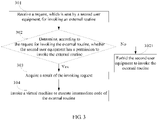
- an embodiment of the present invention provides a data processing method. It is assumed that a database stores intermediate code of an external routine, and the external routine is compiled by using a C language, where the method includes the following steps: Step 301: Receive a request, which is sent by a second user equipment, for invoking an external routine.
- a second user is registered with the database by using the second user equipment.
- the database determines that the second user is an authorized user of the database, and allows the second user to access the database by using the second user equipment. Then, when the second user needs to invoke the external routine, the second user may send, by using the second user equipment, the request for invoking the external routine to the database, and the database receives the request, which is sent by the second user equipment, for invoking the external routine, is received.
- Step 302 Determine, according to the request for invoking the external routine, whether the second user equipment has a permission to invoke the external routine.
- An administrator of the database may set a permission of the second user in the database. If the second user equipment does not have the permission to invoke the external routine, the second user who invokes the source program is an unauthorized user, and step 3021 is performed.
- the external routine is invoked from the database.
- the database stores a function name of the external routine.
- the external routine may be invoked according to the function name of the external routine.
- the intermediate code or the machine code of the external routine is invoked to run the external routine, so as to return an invoking result to a user.
- Step 3021 Forbid the second user equipment to invoke the external routine.
- a database system may prompt the second user equipment with an operation error, and forbid the second user equipment to invoke the external routine.
- the external routine is a program that needs to be used when a financial personnel in a financial department of a company prepares salaries.
- the external routine may be invoked to calculate and modify the salaries of the employees, and then an employee payroll is stored to the database, where the employee payroll includes a salary of every employee in the company in the current month.
- the administrator of the database specifies that: only the financial personnel who prepares the employee payroll and Chairman of the Board of the company may access the employee payroll in the database by using a user equipment, and may perform an operation such as modifying on the employee payroll by invoking the external routine, and a department leader of the company may access, by using the user equipment, the database to view salaries of employees in the department and a salary of this department leader in the employee payroll, but cannot invoke the external routine to perform an operation such as modifying on the salaries of the employees in the department and the salary of this department leader, and ordinary employees in the company can only access, by using the user equipment, the database to view their own salaries in the employee payroll, and cannot invoke the external routine to perform an operation such as modifying on their own salaries, either.
- step 303 is performed.
- Step 303 Acquire a result of the invoking request.
- Step 304 Invoke a virtual machine to execute intermediate code of the external routine.
- the user permission to invoke the external routine needs to be determined, and only a user who has the permission to invoke the external routine can invoke the external routine by using the user equipment.
- a step of determining a user invoking permission is added, which effectively improves security or stability of the object in the database.
- the database is a structured query language database (Sql Server).
- Sql Server structured query language database
- a server on which the Sql Server database is installed checks whether the user equipment A has a permission to connect to the Sql Server database server, and if the user equipment A has the permission to connect to the Sql Server database server, after the user equipment A successfully accesses the Sql Server database server, the Sql Server database checks again whether the user has a permission to log in to the Sql Server database; if the user has the permission to log in to the Sql Server database, the user may operate an object in the Sql Server database; then, the Sql Server database determines whether the user has a permission to operate the object.
- the Sql Server database determines a permission of the user to the table, or the user needs to run a stored procedure, and the Sql Server database determines whether the user has a permission to execute the stored procedure. For example, a permission of the Sql Server database is shown in Table 1.
- Table 1 Permission of the Sql Server database Permission level Permission Database, table, or index CREATE create a database, a table, or an index) Database or table DROP( delete a database or a table) Database, table, or stored program GRANT OPTION (grant a permission option)
- Table ALTER alter a table, such as adding a field and an index
- Table DELETE delete data
- Table Index index
- Table INSERT insert
- Table SELECT query
- Table UPDATE update
- View CREATE VIEW create a view) View SHOW VIEW (show a view)
- Stored procedure ALTER ROUTINE alter a stored procedure
- Stored procedure CREATE ROUTINE create a stored procedure
- Stored procedure EXECUTE execute a stored procedure
- FILE file access
- Server management LOCK TABLES lock a table
- a request which is sent by a second user equipment, for invoking an external routine is received; then, it is determined, according to the request for invoking the external routine, whether the second user equipment has a permission to invoke the external routine; if the second user equipment has the permission to invoke the external routine, the external routine is invoked from a database to acquire a result of the invoking request; and a virtual machine is invoked to execute intermediate code of the external routine.
- a step of determining a user invoking permission is added, which effectively improves security or stability of an object in the database.
- an embodiment of the present invention provides a data processing method. It is assumed that a database stores machine code of an external routine, and the external routine is compiled by using a C language, where the method includes the following steps: Step 401: Receive a request, which is sent by a second user equipment, for invoking an external routine.
- a second user is registered with the database by using the second user equipment, when the second user accesses the database by using the second user equipment, the database determines that the second user is an authorized user of the database, and allows the second user to access the database by using the second user equipment. Then, when the second user needs to invoke the external routine, the second user may send, by using the second user equipment, the request for invoking the external routine to the database, and the database receives the request, which is sent by the second user equipment, for invoking the external routine, is received.
- Step 402 Determine, according to the request for invoking the external routine, whether the second user equipment has a permission to invoke the external routine.
- An administrator of the database may set a permission of the second user in the database. If the second user equipment does not have the permission to invoke the external routine, the second user who invokes the source program is an unauthorized user, and step 4021 is performed.
- the external routine is invoked from the database.
- the database stores a function name of the external routine.
- the external routine may be invoked according to the function name of the external routine.
- the intermediate code or the machine code of the external routine is invoked to run the external routine, so as to return an invoking result to a user.
- Step 4021 Forbid the second user equipment to invoke the external routine.
- a database system may prompt the second user equipment with an operation error, and forbid the second user equipment to invoke the external routine.
- step 403 is performed.
- Step 403 Acquire a result of the invoking request.
- Step 404 Directly execute machine code of the external routine.
- an operating platform corresponding to the machine code is used to run the machine code of the external routine.
- the user permission to invoke the external routine needs to be determined, and only a user who has the permission to invoke the external routine can invoke the external routine by using the user equipment.
- a step of determining a user invoking permission is added, which effectively improves security or stability of an object in the database.
- a request which is sent by a second user equipment, for invoking an external routine is received; then, it is determined, according to the request for invoking the external routine, whether the second user equipment has a permission to invoke the external routine; if the second user equipment has the permission to invoke the external routine, the external routine is invoked from a database; a result of the invoking request is acquired; and machine code of the external routine is directly executed.
- a step of determining a user invoking permission is added, which effectively improves security or stability of an object in the database.
- the source code of the external routine is input to a language front-end module 501; the language front-end module 501 parses and compiles the source code to obtain a parse tree, and compiles the parse tree; meanwhile, an authenticating module 502 determines whether an operation or access and so on performed by the source code on an object in a database is secure; if the operation or the access and so on performed by the source code on the object in the database is secure, the intermediate code of the source code is obtained; then, the intermediate code is input to an intermediate code module 503; the intermediate code module 503 stores, by using a storage management module 504, the intermediate code of the source code to the database; finally, the intermediate code module 503 inputs the intermediate code of the source code to an operating platform 505; the operating platform 505 converts
- the intermediate code of the source code is not converted into the machine code
- the external routine needs to be invoked
- the intermediate code of the source code is input to a virtual machine executing module 506, and the virtual machine executing module 506 executes the machine code when converting the intermediate code of the source code into the machine code.
- the language front-end module 501 may be a language front-end module such as a C language front-end module, a Python language front-end module, or a Fortran language front-end module, and so on.
- the operating platform 505 may be an x86 operating platform, a PowerPC operating platform, or an ARM operating platform, and so on, and machine code run on each operating platform is different.
- an embodiment of the present invention provides a data processing apparatus 600, including:
- source code of an external routine is received, and then, the source code is compiled to obtain intermediate code, where the intermediate code is a byte stream identifiable to a virtual machine on any operating platform.
- the intermediate code is independent from the operating platform, and is a type of unified code for the operating platform, that is, the virtual machine on any operating platform can identify the intermediate code. Therefore, it is unnecessary to embed different compilers into a database system to compile the source code of the external routine, and convert, according to an instruction set on the operating platform, the intermediate code into the machine code capable of running on the operating platform. Thereby, scalability of the database system is effectively improved.
- the data processing apparatus 600 further includes:
- the first receiving unit 603 is specifically configured to receive, when the first determining unit 602 determines that the first user equipment has the permission to access the database, the source code of the external routine sent by the first user equipment, so that the converting unit 607 converts the source code into the machine code and stores the machine code to the database.
- the data processing apparatus 600 further includes: a first checking unit 604, configured to check whether a range of an object, in the database, accessed by the source code is in a preset range of an object accessed in the database.
- the compiling unit 606 is specifically configured to: compile the source code to obtain the intermediate code when the first checking unit 604 determines that the range of the object, in the database, accessed by the source code is in the preset range of the object accessed in the database.
- the data processing apparatus 600 further includes: a second checking unit 605, configured to check whether an operation performed by the source code on an object in the database is a preset operation performed on the object in the database, where the operation includes modifying, adding, or deleting the object.
- a second checking unit 605 configured to check whether an operation performed by the source code on an object in the database is a preset operation performed on the object in the database, where the operation includes modifying, adding, or deleting the object.
- the compiling unit 606 is specifically configured to: compile the source code to obtain the intermediate code when the second checking unit 605 determines that the operation performed by the source code on the object in the database is the preset operation performed on the object in the database.
- the storing unit 608 is further configured to store the intermediate code to the database.
- the data processing apparatus 600 further includes:
- the second generating unit 6010 may generate the target address of the intermediate code, where the target address is used to identify the address of the intermediate code in the database, without differentiating a sequence of generating the target name and generating the target address.
- the data processing apparatus 600 further includes an invoking unit 6011.
- the second receiving unit 601 is further configured to receive a request, which is sent by a second user equipment, for invoking the external routine.
- the first determining unit 602 is further configured to determine, according to the request for invoking the external routine, whether the second user equipment has a permission to invoke the external routine.
- the invoking unit 6011 is configured to run the machine code when the first determining unit 602 determines that the second user equipment has the permission to invoke the external routine, so as to invoke the external routine from the database.
- a database access request sent by a first user equipment is received; it is determined, according to the database access request, that the first user equipment has a permission to access a database, and source code of an external routine is received; then, when the source code is compiled, it is checked that a range of an object, in the database, accessed by the source code is in a preset range of an object accessed in the database, and the source code is compiled to obtain intermediate code; and meanwhile, it may also be checked that an operation performed by the source code on the object in the database is a preset operation performed on the object in the database; the source code is compiled to obtain the intermediate code; machine code of the intermediate code is acquired; and the machine code is stored to the database; and meanwhile, after the machine code or the intermediate code of the external routine is stored, and when it is determined that a second user equipment has a permission to invoke the external routine, the machine code or the intermediate code is run, so as to invoke the external routine from the database.
- the intermediate code is independent from an operating platform, and is a type of unified code for the operating platform, that is, a virtual machine on any operating platform can identify the intermediate code. Therefore, it is unnecessary to embed different compilers into a database system to compile the source code of the external routine, and convert, according to an instruction set on the operating platform, the intermediate code into the machine code capable of running on the operating platform. Thereby, scalability of the database system is effectively improved. Meanwhile, when the source code is compiled, checking the range of the object, in the database, accessed by the source code and checking an operation of accessing the object in the database by the source code effectively enhance operation security of the database and security of data in the database.
- the intermediate code and the machine code of the external routine are stored and managed by using a method controlled by the database, which effectively avoids risks such as deleting, replacing, or tampering the external routine when the intermediate code and the machine code of the external routine are managed, and not only improves rigorousness of management but also improves the security of the data in the database.
- an embodiment of the present invention provides a data processing apparatus 70, including:
- the processor 702 is further configured to convert, according to an instruction set on the operating platform, the intermediate code into machine code capable of running on the operating platform.
- the processor 702 is further configured to store the machine code to a database.
- source code of an external routine is received, and then, the source code is compiled to obtain intermediate code, where the intermediate code is a byte stream identifiable to a virtual machine on any operating platform.
- the intermediate code is independent from the operating platform, and is a type of unified code for the operating platform, that is, a virtual machine on any operating platform can identify the intermediate code. Therefore, it is unnecessary to embed different compilers into a database system to compile the source code of the external routine, and convert, according to an instruction set on the operating platform, the intermediate code into the machine code capable of running on the operating platform. Thereby, scalability of the database system is effectively improved.
- the receiver 701 is further configured to: receive a database access request sent by a first user equipment that sends the source code of the external routine.
- the processor 702 is further configured to: determine, according to the database access request, whether the first user equipment has a permission to access the database.
- the processor 702 is further configured to: receive, when the processor 702 determines that the first user equipment has the permission to access the database, the source code of the external routine sent by the first user equipment, so as to convert the source code into the machine code and store the machine code to the database.
- the processor 702 parses a data packet of the source code of the external routine to obtain a first identifier of the data packet, where the first identifier is used to identify a source address of the data packet; and then determines whether the first identifier of the data packet is a preset identifier, where the preset identifier is used to identify an address of the first user equipment.
- the processor 702 is further configured to: check whether a range of an object, in the database, accessed by the source code is in a preset range of an object accessed in the database.
- the processor 702 is specifically configured to: compile the source code to obtain the intermediate code when the processor 702 determines that the range of the object, in the database, accessed by the source code is in the preset range of the object accessed in the database.
- the processor 702 is further configured to: check whether an operation performed by the source code on the object in the database is a preset operation performed on the object in the database, where the operation includes modifying, adding, or deleting the object.
- the processor 702 is specifically configured to: compile the source code to obtain the intermediate code when the processor 702 determines that the operation performed by the source code on the object in the database is the preset operation performed on the object in the database.
- the processor 702 is further configured to: store the intermediate code to the database.
- the processor 702 is further configured to: generate a target name of the intermediate code, where the target name is used to uniquely identify the intermediate code.
- the processor 702 is further configured to: generate a target address of the intermediate code, where the target address is used to identify an address of the intermediate code in the database.
- the receiver 701 is further configured to: receive a request, which is sent by a second user equipment, for invoking the external routine.
- the processor 702 is further configured to: determine, according to the request for invoking the external routine, whether the second user equipment has a permission to invoke the external routine.
- the processor 702 is further configured to: run the machine code when the processor 702 determines that the second user equipment has the permission to invoke the external routine, so as to invoke the external routine from the database.
- a database access request sent by a first user equipment is received; it is determined, according to the database access request, that the first user equipment has a permission to access a database, and source code of an external routine is received; then, when the source code is compiled, it is checked that a range of an object, in the database, accessed by the source code is in a preset range of an object accessed in the database; the source code is compiled to obtain intermediate code; and meanwhile, it may also be checked that an operation performed by the source code on the object in the database is a preset operation performed on the object in the database; the source code is compiled to obtain the intermediate code; machine code of the intermediate code is acquired; and the machine code is stored to the database; and meanwhile, after the intermediate code or the machine code of the external routine is stored, and when it is determined that a second user equipment has a permission to invoke the external routine, the machine code or the intermediate code is run, so as to invoke the external routine from the database.
- the intermediate code is independent from an operating platform, and is a type of unified code for the operating platform, that is, a virtual machine on any operating platform can identify the intermediate code. Therefore, it is unnecessary to embed different compilers into a database system to compile the source code of the external routine, and convert, according to an instruction set on the operating platform, the intermediate code into the machine code capable of running on the operating platform. Thereby, scalability of the database system is effectively improved. Meanwhile, when the source code is compiled, checking the range of the object, in the database, accessed by the source code and checking an operation of accessing the object in the database by the source code effectively enhance operation security of the database and security of data in the database.
- the intermediate code and the machine code of the external routine are stored and managed by using a method controlled by the database, which effectively avoids risks such as deleting, replacing, or tampering the external routine when the intermediate code and the machine code of the external routine are managed, and not only improves rigorousness of management but also improves the security of the data in the database.
- the disclosed apparatus and method may be implemented in other manners.
- the described apparatus embodiment is merely exemplary.
- the unit division is merely logical function division and may be other division in an actual implementation.
- a plurality of units or components may be combined or integrated into another system, or some features may be ignored or not performed.
- the displayed or discussed mutual couplings or direct couplings or communication connections may be implemented through some interfaces.
- the indirect couplings or communication connections between the apparatuses or units may be implemented in electronic, mechanical, or other forms.
- the units described as separate parts may or may not be physically separate, and parts displayed as units may or may not be physical units, may be located in one position, or may be distributed on a plurality of network units. Apart or all of the units may be selected according to an actual need to achieve the objectives of the solutions of the embodiments.
- functional units in the embodiments of the present invention may be integrated into one processing unit, or each of the units may exist alone physically, or two or more units are integrated into one unit.
- the integrated unit may be implemented by hardware in addition to a software functional unit, or by hardware only.
- the program may be stored in a computer readable storage medium. When the program runs, the steps of the method embodiments are performed.
- the foregoing storage medium includes any medium that can store program code, such as a ROM, a RAM, a magnetic disk, or an optical disc.
Landscapes
- Engineering & Computer Science (AREA)
- Theoretical Computer Science (AREA)
- Software Systems (AREA)
- General Engineering & Computer Science (AREA)
- Physics & Mathematics (AREA)
- General Physics & Mathematics (AREA)
- Databases & Information Systems (AREA)
- Bioethics (AREA)
- Health & Medical Sciences (AREA)
- General Health & Medical Sciences (AREA)
- Computer Hardware Design (AREA)
- Computer Security & Cryptography (AREA)
- Data Mining & Analysis (AREA)
- Stored Programmes (AREA)
- Devices For Executing Special Programs (AREA)
- Information Retrieval, Db Structures And Fs Structures Therefor (AREA)
Description
- The present invention relates to the computer field, and in particular, to a data processing method and apparatus.
- An external routine (External Routine) is generally a program that is compiled by using an advanced programming language and may be embedded in a SQL (Structured Query Language, structured query language) statement. Source code of the external routine, after being compiled, may be invoked by a database management system, so that a database function is extended. A database system includes a database and a database management system, where the database is used to store data, and the database management system is used to operate, manage, and maintain the database. Generally, the database management system may be a structured query language database management system (MySQL) and so on, and the database may be a structured query language database (SQL Server), an Oracle database (Oracle), and so on, and the database provides extensive support for the advanced programming language, where the advanced programming language may be a C language, a C++ language, a JAVA language, a COBOL (Common Business Oriented Language, common business oriented language), and so on.
- In the prior art, the database system may compile, by using an embedded database management system and an embedded extended language compiling module, the source code of the external routine compiled by using the advanced programming language, to obtain target code of the external routine, where the database management system may be a MySQL, Teradata, and so on, and the extended language compiling module may be a DB2, a PostgreSQL, and so on.
- Then, the target code of the external routine is stored to the database according to a target name and target address set by a user, where the target name is used to uniquely identify the target code of the external routine, and the target address is used to identify an address of the target code of the external routine stored in the database, so that the target code of the external routine is invoked according to the target name and the target address. Alternatively, after the source code of the external routine is compiled by using a programming tool of the advanced programming language, the target code of the external routine is copied to the database according to the target name and target address set by the user, and it is necessary to register information such as the target name and target address with the database, so that the database management system identifies and invokes the target code of the external routine.
- However, central processors on different operating platforms are different, and instruction sets of different central processors are also different. Therefore, the external routine compiled by using the advanced programming language, when running on different operating platforms, needs to be compiled by different compilers to obtain target code of the external routine which is suitable for running on a current operating platform, where the operating platform is hardware and/or software required for running the target code of the external routine. The instruction set is used to convert the external routine into the target code of the external routine which is suitable for running on the operating platform. For example, when an external routine is compiled into target code of an x86 version, the target code can only run on a central processor that supports an x86 instruction set. Therefore, different compilers need to be embedded into the database system to compile the source code of the external routine, which limits scalability of the database system, and a security problem exists when the external routine is compiled.
-
US2010030745 (A1 ) discloses that the compiled code of a computer program is stored in multiple pieces within a database. Each piece is optionally stored within a separate data record. Execution of the computer program includes using database queries to retrieve pieces of the compiled code for execution. The database and associated database management logic are used to provide numerous advantages in execution and management of the computer program. For example, in some embodiments, database queries are used to help facilitate program flow logic. -
US2007038662 (A1 ) discloses a method for managing an external routine in a computer implemented database management system including creating a first table for storing external routines in a data store coupled to the database management system. An external routine is stored in the first table so that the database management system is allowed to automatically manage any modification related to the external routine and to control access to the external routine such that administrative support is minimized. - Masha Gendler-Fishman ET AL, "A Compile-time Model for safe Information Flow in Object-Oriented Databases", Information Security in Research and Business, Boston, MA, Springer US, PAGE 41 - 55, doi:10.1007/978-0-387-35259-6_4, ISBN 978-0-387-35259-6, first reviews existing security models for object-oriented databases with and without information-flow control. Previous models relied on the run-time checks of every message transferred in the system. A simple transaction model and a compile-time approach and presents algorithms is used for flow control which are applied at rule-administration and compile times, thus saving considerable run-time overhead. A proof or correctness is given, and the performance implications are discussed.
-
CN102419714 (A ) discloses a source code compiling method as well as a compiler and a computer. The source code compiling method comprises the following steps of: obtaining a privilege class of each instruction by the compiler; judging whether the privilege class of each instruction accords with the privilege class of a compiling person by the compiler; under the condition that the privilege classes of all the instructions of the source code accord with the privilege class of the compiling person, compiling the source code by the compiler; and under the condition that the privilege classes of all the instructions of the source code do not accord with the privilege class of the compiling worker, rejecting to compile the source code by the compiler. - Embodiments of the present invention provide a data processing method and apparatus as defined in the claims, which can effectively improve scalability of a database system.
- To describe the technical solutions in the embodiments of the present invention or in the prior art more clearly, the following briefly introduces the accompanying drawings required for describing the embodiments or the prior art. Apparently, the accompanying drawings in the following description show merely some embodiments of the present invention, and a person of ordinary skill in the art may still derive other drawings from these accompanying drawings without creative efforts.
-
FIG. 1 is a flowchart of a data processing method according to an embodiment of the present invention; -
FIG. 1a is a flowchart of another data processing method according to an embodiment of the present invention; -
FIG. 2 is a flowchart of still another data processing method according to an embodiment of the present invention; -
FIG. 3 is a flowchart of yet another data processing method according to an embodiment of the present invention; -
FIG. 4 is a flowchart of yet another data processing method according to an embodiment of the present invention; -
FIG. 5 is a schematic structural diagram of a data processing apparatus according to an embodiment of the present invention; -
FIG. 6a is a schematic structural diagram of another data processing apparatus according to an embodiment of the present invention; -
FIG. 6b is a schematic structural diagram of still another data processing apparatus according to an embodiment of the present invention; and -
FIG. 7 is a schematic structural diagram of yet another data processing apparatus according to an embodiment of the present invention. - The following clearly and completely describes the technical solutions in the embodiments of the present invention with reference to the accompanying drawings in the embodiments of the present invention. Apparently, the described embodiments are merely a part rather than all of the embodiments of the present invention. All other embodiments obtained by a person of ordinary skill in the art based on the embodiments of the present invention without creative efforts shall fall within the protection scope of the present invention.
- The following embodiment is not encompassed by the wording of the claims but is considered as useful for understanding the invention
- As shown in
FIG. 1 , an embodiment of the present invention provides a data processing method, including the following steps: - Step 104: Receive source code of an external routine, where the source code of the external routine is compiled by using an advanced programming language.
- Step 105: Compile the source code to obtain intermediate code, where the intermediate code is a byte stream identifiable to a virtual machine on any operating platform.
- When the source code of the external routine is compiled, first, whether a range of an object, in a database, accessed by the source code is in a preset range of an object accessed in the database is checked; and if the range of the object, in the database, accessed by the source code is in the preset range of the object accessed in the database, the source code is compiled to obtain the intermediate code. Alternatively, compiling the source code to obtain the intermediate code may further include: checking whether an operation performed by the source code on the object in a database is a preset operation performed on the object in the database, where the operation includes modifying, adding, or deleting the object; and if the operation performed by the source code on the object in the database is the preset operation performed on the object in the database, compiling the source code to obtain the intermediate code, so that the virtual machine on any operating platform can identify the intermediate code. After the source code is successfully compiled to obtain the intermediate code, the intermediate code is stored to the database, and a target name and a target address of the intermediate code are generated, where the target name is used to uniquely identify the intermediate code, and the target address is used to identify an address of the intermediate code in the database.
- Step 106: Convert, according to an instruction set on the operating platform, the intermediate code into machine code capable of running on the operating platform.
- The instruction set is a hardware program that is stored in a central processor and guides and optimizes an operation of the central processor, and the instruction set may enable the central processor to run more effectively.
- Step 107: Store the machine code to a database.
- A target name and a target address of the machine code are generated, where the target name is used to uniquely identify the machine code, and the target address is used to identify an address of the machine code in the database.
- In this way, first, source code of an external routine is received, and then, the source code is compiled to obtain intermediate code, where the intermediate code is a byte stream identifiable to a virtual machine on any operating platform. In comparison with the prior art, the intermediate code is independent from the operating platform, and is a type of unified code for the operating platform, that is, the virtual machine on any operating platform can identify the intermediate code. Therefore, it is unnecessary to embed different compilers into a database system to compile the source code of the external routine, and convert, according to an instruction set on the operating platform, the intermediate code into machine code capable of running on the operating platform. Thereby, scalability of the database system is effectively improved.
- The following embodiment is not encompassed by the wording of the claims but is considered as useful for understanding the invention
- As shown in
FIG. 1a , an embodiment of the present invention provides a data processing method, including the following steps: - Step 111: Receive a database access request sent by a first user equipment that sends source code of an external routine.
- Step 112: Determine, according to the database access request, whether the first user equipment has a permission to access a database.
- Step 113: If the first user equipment has the permission to access the database, receive the source code of the external routine sent by the first user equipment, so as to convert the source code into machine code and store the machine code to the database.
- If the first user equipment has the permission to access the database, the source code of the external routine sent by the first user equipment is received, which includes: parsing a data packet of the source code of the external routine to obtain a first identifier of the data packet, where the first identifier is used to identify a source address of the data packet; determining whether the first identifier of the data packet is a preset identifier, where the preset identifier is used to identify an address of the first user equipment; and if the first identifier of the data packet is the preset identifier, receiving a data packet sent by the first user equipment, where the data packet includes the source code of the external routine, where the source code of the external routine is compiled by using an advanced programming language, where the advanced programming language may be a C language, a C++ language, a JAVA language, and so on.
- Step 114: Receive the source code of the external routine, where the source code of the external routine is compiled by using an advanced programming language.
- Step 115: Compile the source code to obtain intermediate code, where the intermediate code is a byte stream identifiable to a virtual machine on any operating platform.
- Step 116: Convert, according to an instruction set on the operating platform, the intermediate code into machine code capable of running on the operating platform.
- Step 117: Store the machine code to the database.
- In this way, before source code of an external routine is received, first, a database access request sent by a first user equipment that sends the source code of the external routine is received, and then after it is determined that the first user equipment has a permission to access a database, the source code of the external routine sent by the first user equipment is received, so that the source code is converted into a machine code and that the machine code is stored to the database. Thereby, security of the database is effectively enhanced, and the user equipment is prevented from unauthorizedly accessing the database.
- As shown in
FIG. 2 , an embodiment of the present invention provides a data processing method. It is assumed that source code of an external routine is compiled by using a C language, where the method includes the following steps:
Step 201: Receive a database access request sent by a first user equipment. - If a first user is a local user, the first user may send the database access request to a database by using the first user equipment, where the database access request sent by the first user equipment includes a user name, a login password, and a permission level. The user name is a login name used by the first user to log in to the database, the login password is a login password used by the first user to log in to the database, and the permission level is a level of an operation that can be performed by the first user on the database when the first user logs in to the database. For example, a permission level such as an administrator, a senior user, an intermediate user, or a junior user has different permissions to operate the database. Exemplarily, the administrator may add or delete a user to or from the database, and perform any compiling operation such as deleting, adding, or modifying on a source program or an object in the database; the senior user may invoke the source program in the database to perform any compiling operation such as deleting, adding, or modifying on the object in the database; the junior user may only access the object in the database.
- If the first user is not a local user and needs to access the database remotely, the first user may first send, by using the first user equipment, an access request to a server on which the database is located, where the access request includes an IP (Internet Protocol, Internet Protocol) address and a port number of the server on which the database is located. After successfully accessing the server on which the database is located, the first user may send the database access request to the database again by using the first user equipment, and in this case, the database access request includes the user name, the login name, and the permission level.
- It should be noted that the user may access the database in a form of command inputting in a disk operating system DOS environment, and may add, delete, or modify the source program or data in the database in the form of command inputting; the user may further access the database in a visual window interface.
- Step 202: Determine, according to the database access request, whether the first user equipment has a permission to access a database.
- If the first user equipment does not have the permission to access the database,
step 2021 is performed to forbid the first user equipment to access the database. - If the first user equipment has the permission to access the database,
step 203 is performed. - If the first user is not registered with the database, when the first user accesses the database by using the first user equipment, the database determines that the first user is an unauthorized user of the database, and forbids the first user to access the database by using the first user equipment.
- If the first user equipment has the permission to access the database, that is, the first user is registered with the database by using the first user equipment, when the first user accesses the database by using the first user equipment, the database determines that the first user is an authorized user of the database, and allows the first user to access the database by using the first user equipment.
- Specifically, if the first user equipment has the permission to access the database, the source code of the external routine sent by the first user equipment is received, which includes: parsing a data packet of the source code of the external routine to obtain a first identifier of the data packet, where the first identifier is used to identify a source address of the data packet, namely, an address of a user equipment sending the data packet; determining whether the first identifier of the data packet is a preset identifier, where the preset identifier is used to identify an address of the first user equipment; and if the first identifier of the data packet is the preset identifier, receiving a data packet sent by the first user equipment, where the data packet includes the source code of the external routine.
- Step 2021: Forbid the first user equipment to access the database.
- In the embodiment of the present invention, it is assumed that the first user equipment has the permission to access the database, and step 203 is performed.
- Step 203: Receive source code of an external routine sent by the first user equipment.
- Step 204: Check whether a range of an object, in the database, accessed by the source code is in a preset range of an object accessed in the database.
- If the range of the object, in the database, accessed by the source code is in the preset range of the object accessed in the database,
step 2041 is performed to stop compiling the source code. - For example, it is possible that the object, in the database, accessed by the source code includes an object forbidden to be accessed, causing unauthorized access to the object in the database. It is assumed that the object accessed by the source code is critical business data, leak of a major business secret may be caused, resulting in serious economic losses. If the range of the object, in the database, accessed by the source code is in the preset range of the object accessed in the database, the source code is compiled to obtain an intermediate code.
- Specifically, first, a permission level of the object in the database is preset. Objects of different permission levels are of different importance, that is, permission levels of the objects may be set to confidential, high-level, or low-level, and so on. For example, a confidential object cannot be accessed randomly, and can only be accessed by a program or user having a confidential permission. The object may be data in the database. Alternatively, data stored in the database may be classified into different types of objects, where each type of data is a type of object, for example, a data type and an information type. Then, after receiving the source code of the external routine, when compiling the source code, the database checks whether an object, in the database, accessed by the source program is a preset object in the database allowed to be accessed; compiles the source code to obtain the intermediate code if the object, in the database, accessed by the source program is the preset object in the database allowed to be accessed; and stops compiling the source code if the object, in the database, accessed by the source program is a preset object in the database not allowed to be accessed.
- Further, if the range of the object, in the database, accessed by the source code is in the preset range of the object accessed in the database,
step 205 is performed to check whether an operation performed by the source code on the object in the database is a preset operation performed on the object in the database. - Step 2041: Stop compiling the source code.
- In the embodiment of the present invention, it is assumed that the range of the object, in the database, accessed by the source code is in the preset range of the object accessed in the database, and step 205 is performed.
- Step 205: Check whether an operation performed by the source code on the object in the database is a preset operation performed on the object in the database.
- If it is determined that the operation performed by the source code on the object in the database is not the preset operation performed on the object in the database,
step 2041 is performed to stop compiling the source code. - If it is checked that the operation performed by the source code on the object in the database is the preset operation performed on the object in the database,
step 206 is performed. - Specifically, first, a permission to operate the object in the database is preset, where the operation includes modifying, adding, or deleting the object. That is, some important objects in the database may be accessed but any operation such as modifying cannot be performed on the objects, where the important objects are objects of a confidential or high permission level; some ordinary objects may be accessed and any operation such as modifying, deleting, or adding may also be performed on the objects, where the ordinary objects are objects of a low permission level. Then, if the object, in the database, accessed by the source code is the preset object in the database allowed to be accessed, it is checked whether the operation performed by the source code on the object in the database is the preset operation performed on the object in the database; if the operation performed by the source code on the object in the database is the preset operation performed on the object in the database, the source code is compiled to obtain the intermediate code; if the operation performed by the source code on the object in the database is not the preset operation performed on the object in the database, compiling of the source code is stopped.
- Exemplarily, it is assumed that the source code of the external routine is used to calculate actually paid after-tax salaries of company employees whose basic salaries are higher than 3500 RMB. Specifically, it is assumed that the source code can access basic salaries of all employees in the database, where the basic salaries of the employees include 1000 to 5000. However, only data of basic salaries of employees which are higher than 3500 among the basis salaries of all the employees is calculated, and the actually paid after-tax salaries are obtained. If the source code calculates the basic salaries of all the employees to obtain actually paid after-tax salaries, a salary actually received by an employee whose basic salary is lower than 3500 is an actually paid after-tax salary, which does not comply with stipulations of the country, and causes an error in issuing the salary of the employee.
- In the prior art, when the source code of the external routine is compiled, it is unnecessary to check the range of the object, in the database, accessed by the source code of the external routine, and the operation performed by the source code of the external routine on the object in the database is also not checked; therefore, stability of the object in the database may be affected, or data is inconsistent when another source program in the database makes reference to the source program.
- In the data processing method according to the embodiment of the present invention, first, a permission level of an object in the database is set, and an operation on the object is set. When the source code of the external routine is compiled, by checking the range of the object, in the database, accessed by the source code of the external routine and checking the operation performed by the source code of the external routine on the object in the database, it is determined whether the range and the operation comply with the preset permission to access the object in the database and the preset operation performed on the object in the database, which effectively enhances operation security of the database and security of data in the database.
- In the embodiment of the present invention, it is assumed that the operation performed by the source code on the object in the database is the preset operation performed on the object in the database,
step 206 is performed to compile the source code to obtain the intermediate code. - Step 206: Compile the source code to obtain intermediate code.
- Specifically, a language front-end module may be used to compile the source code to obtain the intermediate code, where the language front-end module may be a C language front-end module, a Python language front-end module, or a Fortran language front-end module, and so on.
- In the embodiment of the present invention, it is assumed that the source code of the external routine is compiled by using the C language, a C language front-end module is used to parse the source code to obtain a parse tree, and then the parse tree is compiled to obtain the intermediate code, so that a virtual machine on any operating platform can identify the intermediate code. The parse tree includes a root node, a root element node, a node, and so on. That is, the source code is analyzed, and the process of generating the parse tree pertains to the prior art, which is not further described herein in the embodiment of the present invention.
- Particularly, after the source code is compiled to obtain the intermediate code,
step 209 is performed to store the intermediate code to the database, or the intermediate code may also be converted into machine code and step 207 is performed. - Step 207: Acquire machine code of the intermediate code.
- The operating platform includes an integrated circuit chipset using a central processor as a core, where a virtual machine on the operating platform shields an instruction set on any operating platform. The instruction set is a hardware program that is stored in the central processor and guides and optimizes an operation of the central processor, and the instruction set may enable the central processor to run more effectively. The machine code of the intermediate code is acquired by using the operating platform. The operating platform may be an x86 operating platform, a PowerPCPowerPC operating platform, an ARM operating platform, and so on. Specifically, the intermediate code of the external routine generated by the language front-end module may be input to the operating platform, and the operating platform may convert the intermediate code of the external routine into machine code that is suitable for running on an operating platform such as the x86 operating platform, the PowerPC operating platform, or the ARM operating platform, that is, machine code run by each operating platform is different.
- Step 208: Store the machine code to the database.
- After the machine code of the intermediate code is acquired, similarly, the database may generate a target name of the machine code, where the target name is used to uniquely identify the machine code, and generate a target address of the machine code, where the target address is used to identify an address of the machine code in the database. The target name and the target address are invisible to the user and are stored in the database. When the machine code of the external routine is invoked, the machine code of the external routine is invoked according to the target name and the target address.
- Step 209: Store the intermediate code to the database.
- Step 2091: Generate a target name of the intermediate code.
- The target name is used to uniquely identify the intermediate code.
- Step 2092: Generate a target address of the intermediate code.
- The target address is used to identify an address of the intermediate code in the database.
- It should be noted that when
step 2091 andstep 2092 are performed, there may be no sequence for differentiation, that is, the target address of the intermediate code may be generated first, and then the target name of the intermediate code is generated. - Particularly, when the database generates the target name and the target address of the intermediate code, to better ensure security of the intermediate code of the external routine, a creator who compiles the external routine may further set an invoking password, that is, only a user who has both the invoking password and a permission to invoke the intermediate code of the external routine may invoke the intermediate code of the external routine.
- In the prior art, after the source code of the external routine is compiled, the target code of the external routine is obtained; when the target code of the external routine is stored to the database, the target name and the target address set by the user need to be received; the target code of the external routine is stored to the database according to the target name and the target address. Therefore, risks such as deleting, replacing, or tampering the target code of the external routine may exist when the target code of the external routine is managed.
- In the data processing method according to the embodiment of the present invention, when the intermediate code of the external routine is stored to the database, the database generates the target name of the intermediate code, where the target name is used to uniquely identify the intermediate code, and generates the target address of the intermediate code, where the target address is used to identify the address of the intermediate code in the database. The target name and the target address are invisible to the user and are stored in the database. When the intermediate code of the external routine is invoked, the intermediate code of the external routine is invoked according to the target name and the target address. Therefore, the intermediate code of the external routine is stored and managed by using a method controlled by the database, which may effectively avoid the risks such as deleting, replacing, or tampering the external routine when the intermediate code of the external routine is managed, and not only improve rigorousness of management but also improve security of data in the database.
- The source code of the external routine in the embodiment of the present invention is only exemplary, and in an actual application, the source code may also be compiled by using another advanced programming language, where a process of compiling source code of an external routine compiled by using the another advanced programming language to obtain intermediate code and then converting the intermediate code into machine code is the same as the method in the embodiment of the present invention, and is not further described herein.
- In the data processing method according to the embodiment of the present invention, first, a database access request sent by a first user equipment is received; it is determined, according to the database access request, whether the first user equipment has a permission to access a database; if the first user equipment has the permission to access the database, source code of an external routine sent by the first user equipment is received; then, when the source code is compiled, it is checked whether a range of an object, in the database, accessed by the source code is in a preset range of an object accessed in the database; if the range of the object in the database accessed by the source code is in the preset range of the object accessed in the database, the source code is compiled to obtain intermediate code, and meanwhile, it may also be checked whether an operation performed by the source code on the object in the database is a preset operation performed on the object in the database; if the operation performed by the source code on the object in the database is the preset operation performed on the object in the database, the source code is compiled to obtain the intermediate code; machine code of the intermediate code is acquired; the machine code is stored to the database; and meanwhile, the intermediate code is stored to the database. In comparison with the prior art, the intermediate code is independent from an operating platform, and is a type of unified code for the operating platform, that is, a virtual machine on any operating platform can identify the intermediate code. Therefore, it is unnecessary to embed different compilers into a database system to compile the source code of the external routine, and convert, according to an instruction set on the operating platform, the intermediate code into the machine code capable of running on the operating platform. Thereby, scalability of the database system is effectively improved. Meanwhile, when the source code is compiled, checking the range of the object, in the database, accessed by the source code and checking an operation of accessing the object in the database by the source code effectively enhance operation security of the database and security of data in the database. In addition, the intermediate code and the machine code of the external routine are stored and managed by using a method controlled by the database, which effectively avoids risks such as deleting, replacing, or tampering the external routine when the intermediate code and the machine code of the external routine are managed, and not only improves rigorousness of management but also improves the security of the data in the database.
- As shown in
FIG. 3 , an embodiment of the present invention provides a data processing method. It is assumed that a database stores intermediate code of an external routine, and the external routine is compiled by using a C language, where the method includes the following steps:
Step 301: Receive a request, which is sent by a second user equipment, for invoking an external routine. - It is assumed that a second user is registered with the database by using the second user equipment. When the second user accesses the database by using the second user equipment, the database determines that the second user is an authorized user of the database, and allows the second user to access the database by using the second user equipment. Then, when the second user needs to invoke the external routine, the second user may send, by using the second user equipment, the request for invoking the external routine to the database, and the database receives the request, which is sent by the second user equipment, for invoking the external routine, is received.
- Step 302: Determine, according to the request for invoking the external routine, whether the second user equipment has a permission to invoke the external routine.
- An administrator of the database may set a permission of the second user in the database. If the second user equipment does not have the permission to invoke the external routine, the second user who invokes the source program is an unauthorized user, and
step 3021 is performed. - If the second user equipment has the permission to invoke the external routine, the external routine is invoked from the database. It should be noted that the database stores a function name of the external routine. The external routine may be invoked according to the function name of the external routine. Then, inside the database, according to a target name and a target address of intermediate code or machine code of the stored external routine, the intermediate code or the machine code of the external routine is invoked to run the external routine, so as to return an invoking result to a user.
- Step 3021: Forbid the second user equipment to invoke the external routine.
- A database system may prompt the second user equipment with an operation error, and forbid the second user equipment to invoke the external routine.
- Exemplarily, it is assumed that the external routine is a program that needs to be used when a financial personnel in a financial department of a company prepares salaries. When the financial personnel in the financial department of the company prepares salaries of company employees in a current month every month, the external routine may be invoked to calculate and modify the salaries of the employees, and then an employee payroll is stored to the database, where the employee payroll includes a salary of every employee in the company in the current month. The administrator of the database specifies that: only the financial personnel who prepares the employee payroll and Chairman of the Board of the company may access the employee payroll in the database by using a user equipment, and may perform an operation such as modifying on the employee payroll by invoking the external routine, and a department leader of the company may access, by using the user equipment, the database to view salaries of employees in the department and a salary of this department leader in the employee payroll, but cannot invoke the external routine to perform an operation such as modifying on the salaries of the employees in the department and the salary of this department leader, and ordinary employees in the company can only access, by using the user equipment, the database to view their own salaries in the employee payroll, and cannot invoke the external routine to perform an operation such as modifying on their own salaries, either.
- In the embodiment of the present invention, it is assumed that the second user equipment has the permission to invoke the external routine, and step 303 is performed.
- Step 303: Acquire a result of the invoking request.
- Step 304: Invoke a virtual machine to execute intermediate code of the external routine.
- When the result of the invoking request is the intermediate code of the external routine, a virtual machine on an operating platform is invoked to execute the intermediate code of the external routine.
- In the prior art, when the user invokes the external routine by using the user equipment, a user permission to invoke the external routine does not need to be determined, and the external routine is directly invoked, which may affect security or stability of an object in the database.
- In the data processing method according to the embodiment of the present invention, when the user invokes the external routine by using the user equipment, first, the user permission to invoke the external routine needs to be determined, and only a user who has the permission to invoke the external routine can invoke the external routine by using the user equipment. In comparison with the prior art, before the user equipment invokes the external routine, a step of determining a user invoking permission is added, which effectively improves security or stability of the object in the database.
- Exemplarily, it is assumed that the database is a structured query language database (Sql Server). When a user equipment A needs to access the Sql Server database, first, a server on which the Sql Server database is installed checks whether the user equipment A has a permission to connect to the Sql Server database server, and if the user equipment A has the permission to connect to the Sql Server database server, after the user equipment A successfully accesses the Sql Server database server, the Sql Server database checks again whether the user has a permission to log in to the Sql Server database; if the user has the permission to log in to the Sql Server database, the user may operate an object in the Sql Server database; then, the Sql Server database determines whether the user has a permission to operate the object. For example, if a table needs to be updated or queried, the Sql Server database determines a permission of the user to the table, or the user needs to run a stored procedure, and the Sql Server database determines whether the user has a permission to execute the stored procedure. For example, a permission of the Sql Server database is shown in Table 1.
Table 1 Permission of the Sql Server database Permission level Permission Database, table, or index CREATE (create a database, a table, or an index) Database or table DROP( delete a database or a table) Database, table, or stored program GRANT OPTION (grant a permission option) Table ALTER (alter a table, such as adding a field and an index) Table DELETE (delete data) Table Index (index) Table INSERT (insert) Table SELECT (query) Table UPDATE (update) View CREATE VIEW (create a view) View SHOW VIEW (show a view) Stored procedure ALTER ROUTINE (alter a stored procedure) Stored procedure CREATE ROUTINE (create a stored procedure) Stored procedure EXECUTE (execute a stored procedure) File access on a server host FILE (file access) Server management CREATE TEMPORARY TABLES (create a temporary table) Server management LOCK TABLES (lock a table) Server management CREATE USER (create a user) Server management PROCESS (show a process) Server management RELOAD (execute a reloading command) Server management REPLICATION CLIENT (replicate) Server management REPLICATION SLAVE (replicate) Server management SHOW DATABASES (show a database) Server management SHUTDOWN (shut down a database) Server management SUPER (execute a thread) - In the data processing method according to the embodiment of the present invention, first, a request, which is sent by a second user equipment, for invoking an external routine is received; then, it is determined, according to the request for invoking the external routine, whether the second user equipment has a permission to invoke the external routine; if the second user equipment has the permission to invoke the external routine, the external routine is invoked from a database to acquire a result of the invoking request; and a virtual machine is invoked to execute intermediate code of the external routine. In comparison with the prior art, when a user equipment invokes the external routine, a step of determining a user invoking permission is added, which effectively improves security or stability of an object in the database.
- The following embodiment is not encompassed by the wording of the claims but is considered as useful for understanding the invention
- As shown in
FIG. 4 , an embodiment of the present invention provides a data processing method. It is assumed that a database stores machine code of an external routine, and the external routine is compiled by using a C language, where the method includes the following steps:
Step 401: Receive a request, which is sent by a second user equipment, for invoking an external routine. - It is assumed that a second user is registered with the database by using the second user equipment, when the second user accesses the database by using the second user equipment, the database determines that the second user is an authorized user of the database, and allows the second user to access the database by using the second user equipment. Then, when the second user needs to invoke the external routine, the second user may send, by using the second user equipment, the request for invoking the external routine to the database, and the database receives the request, which is sent by the second user equipment, for invoking the external routine, is received.
- Step 402: Determine, according to the request for invoking the external routine, whether the second user equipment has a permission to invoke the external routine.
- An administrator of the database may set a permission of the second user in the database. If the second user equipment does not have the permission to invoke the external routine, the second user who invokes the source program is an unauthorized user, and
step 4021 is performed. - If the second user equipment has the permission to invoke the external routine, the external routine is invoked from the database. It should be noted that the database stores a function name of the external routine. The external routine may be invoked according to the function name of the external routine. Then, inside the database, according to a target name and a target address of intermediate code or machine code of the stored external routine, the intermediate code or the machine code of the external routine is invoked to run the external routine, so as to return an invoking result to a user.
- Step 4021: Forbid the second user equipment to invoke the external routine.
- A database system may prompt the second user equipment with an operation error, and forbid the second user equipment to invoke the external routine.
- In the embodiment of the present invention, it is assumed that the second user equipment has the permission to invoke the external routine, and step 403 is performed.
- Step 403: Acquire a result of the invoking request.
- Step 404: Directly execute machine code of the external routine.
- When the result of the invoking request is the machine code of the external routine, an operating platform corresponding to the machine code is used to run the machine code of the external routine.
- In the prior art, when the user invokes the external routine by using the user equipment, a user permission to invoke the external routine does not need to be determined, and the external routine is directly invoked, which may affect security or stability of an object in the database.
- In the data processing method according to the embodiment of the present invention, when the user invokes the external routine by using the user equipment, first, the user permission to invoke the external routine needs to be determined, and only a user who has the permission to invoke the external routine can invoke the external routine by using the user equipment. In comparison with the prior art, before the user equipment invokes the external routine, a step of determining a user invoking permission is added, which effectively improves security or stability of an object in the database.
- In the data processing method according to the embodiment of the present invention, first, a request, which is sent by a second user equipment, for invoking an external routine is received; then, it is determined, according to the request for invoking the external routine, whether the second user equipment has a permission to invoke the external routine; if the second user equipment has the permission to invoke the external routine, the external routine is invoked from a database; a result of the invoking request is acquired; and machine code of the external routine is directly executed. In comparison with the prior art, when a user equipment invokes the external routine, a step of determining a user invoking permission is added, which effectively improves security or stability of an object in the database.
- Exemplarily, as shown in
FIG. 5 , a process of compiling source code of an external routine to obtain intermediate code or machine code and running the intermediate code or the machine code is described by using a logical frame diagram of the external routine. First, the source code of the external routine is input to a language front-end module 501; the language front-end module 501 parses and compiles the source code to obtain a parse tree, and compiles the parse tree; meanwhile, anauthenticating module 502 determines whether an operation or access and so on performed by the source code on an object in a database is secure; if the operation or the access and so on performed by the source code on the object in the database is secure, the intermediate code of the source code is obtained; then, the intermediate code is input to anintermediate code module 503; theintermediate code module 503 stores, by using astorage management module 504, the intermediate code of the source code to the database; finally, theintermediate code module 503 inputs the intermediate code of the source code to anoperating platform 505; theoperating platform 505 converts the intermediate code of the source code into the machine code, so as to execute the external routine on the operating platform to obtain an expected result. Alternatively, if the intermediate code of the source code is not converted into the machine code, when the external routine needs to be invoked, the intermediate code of the source code is input to a virtualmachine executing module 506, and the virtualmachine executing module 506 executes the machine code when converting the intermediate code of the source code into the machine code. - It should be noted that the language front-
end module 501 may be a language front-end module such as a C language front-end module, a Python language front-end module, or a Fortran language front-end module, and so on. Theoperating platform 505 may be an x86 operating platform, a PowerPC operating platform, or an ARM operating platform, and so on, and machine code run on each operating platform is different. - As shown in
FIG. 6a , an embodiment of the present invention provides adata processing apparatus 600, including: - a
first receiving unit 603, configured to receive source code of an external routine, where the source code of the external routine is compiled by using an advanced programming language; - a
compiling unit 606, configured to compile the source code to obtain intermediate code, where the intermediate code is a byte stream identifiable to a virtual machine on any operating platform; - a converting
unit 607, configured to convert, according to an instruction set on the operating platform, the intermediate code into machine code capable of running on the operating platform; and - a
storing unit 608, configured to store the machine code to a database. - In this way, first, source code of an external routine is received, and then, the source code is compiled to obtain intermediate code, where the intermediate code is a byte stream identifiable to a virtual machine on any operating platform. In comparison with the prior art, the intermediate code is independent from the operating platform, and is a type of unified code for the operating platform, that is, the virtual machine on any operating platform can identify the intermediate code. Therefore, it is unnecessary to embed different compilers into a database system to compile the source code of the external routine, and convert, according to an instruction set on the operating platform, the intermediate code into the machine code capable of running on the operating platform. Thereby, scalability of the database system is effectively improved.
- As shown in
FIG. 6b , thedata processing apparatus 600 further includes: - a
second receiving unit 601, configured to receive a database access request sent by a first user equipment that sends the source code of the external routine; and - a first determining
unit 602, configured to determine, according to the database access request, whether the first user equipment has a permission to access the database. - The
first receiving unit 603 is specifically configured to receive, when the first determiningunit 602 determines that the first user equipment has the permission to access the database, the source code of the external routine sent by the first user equipment, so that the convertingunit 607 converts the source code into the machine code and stores the machine code to the database. - The
data processing apparatus 600 further includes:
afirst checking unit 604, configured to check whether a range of an object, in the database, accessed by the source code is in a preset range of an object accessed in the database. - The compiling
unit 606 is specifically configured to:
compile the source code to obtain the intermediate code when thefirst checking unit 604 determines that the range of the object, in the database, accessed by the source code is in the preset range of the object accessed in the database. - The
data processing apparatus 600 further includes:
asecond checking unit 605, configured to check whether an operation performed by the source code on an object in the database is a preset operation performed on the object in the database, where the operation includes modifying, adding, or deleting the object. - The compiling
unit 606 is specifically configured to:
compile the source code to obtain the intermediate code when thesecond checking unit 605 determines that the operation performed by the source code on the object in the database is the preset operation performed on the object in the database. - The storing
unit 608 is further configured to store the intermediate code to the database. - The
data processing apparatus 600 further includes: - a
first generating unit 609, configured to generate a target name of the intermediate code, where the target name is used to uniquely identify the intermediate code; and - a
second generating unit 6010, configured to generate a target address of the intermediate code, where the target address is used to identify an address of the intermediate code in the database. - It should be noted that after the
storing unit 608 stores the intermediate code to the database, at the same time when thefirst generating unit 609 generates the target name of the intermediate code, where the target name is used to uniquely identify the intermediate code, thesecond generating unit 6010 may generate the target address of the intermediate code, where the target address is used to identify the address of the intermediate code in the database, without differentiating a sequence of generating the target name and generating the target address. - The
data processing apparatus 600 further includes an invokingunit 6011. - The
second receiving unit 601 is further configured to receive a request, which is sent by a second user equipment, for invoking the external routine. - The first determining
unit 602 is further configured to determine, according to the request for invoking the external routine, whether the second user equipment has a permission to invoke the external routine. - The invoking
unit 6011 is configured to run the machine code when the first determiningunit 602 determines that the second user equipment has the permission to invoke the external routine, so as to invoke the external routine from the database. - In the data processing apparatus according to the embodiment of the present invention, first, a database access request sent by a first user equipment is received; it is determined, according to the database access request, that the first user equipment has a permission to access a database, and source code of an external routine is received; then, when the source code is compiled, it is checked that a range of an object, in the database, accessed by the source code is in a preset range of an object accessed in the database, and the source code is compiled to obtain intermediate code; and meanwhile, it may also be checked that an operation performed by the source code on the object in the database is a preset operation performed on the object in the database; the source code is compiled to obtain the intermediate code; machine code of the intermediate code is acquired; and the machine code is stored to the database; and meanwhile, after the machine code or the intermediate code of the external routine is stored, and when it is determined that a second user equipment has a permission to invoke the external routine, the machine code or the intermediate code is run, so as to invoke the external routine from the database. In comparison with the prior art, the intermediate code is independent from an operating platform, and is a type of unified code for the operating platform, that is, a virtual machine on any operating platform can identify the intermediate code. Therefore, it is unnecessary to embed different compilers into a database system to compile the source code of the external routine, and convert, according to an instruction set on the operating platform, the intermediate code into the machine code capable of running on the operating platform. Thereby, scalability of the database system is effectively improved. Meanwhile, when the source code is compiled, checking the range of the object, in the database, accessed by the source code and checking an operation of accessing the object in the database by the source code effectively enhance operation security of the database and security of data in the database. In addition, the intermediate code and the machine code of the external routine are stored and managed by using a method controlled by the database, which effectively avoids risks such as deleting, replacing, or tampering the external routine when the intermediate code and the machine code of the external routine are managed, and not only improves rigorousness of management but also improves the security of the data in the database.
- The following embodiment is not encompassed by the wording of the claims but is considered as useful for understanding the invention
- As shown in
FIG. 7 , an embodiment of the present invention provides adata processing apparatus 70, including: - a
receiver 701, configured to receive source code of an external routine, where the source code of the external routine is compiled by using an advanced programming language; and - a
processor 702, configured to compile the source code to obtain intermediate code, where the intermediate code is a byte stream identifiable to a virtual machine on any operating platform. - The
processor 702 is further configured to convert, according to an instruction set on the operating platform, the intermediate code into machine code capable of running on the operating platform. - The
processor 702 is further configured to store the machine code to a database. - In this way, first, source code of an external routine is received, and then, the source code is compiled to obtain intermediate code, where the intermediate code is a byte stream identifiable to a virtual machine on any operating platform. In comparison with the prior art, the intermediate code is independent from the operating platform, and is a type of unified code for the operating platform, that is, a virtual machine on any operating platform can identify the intermediate code. Therefore, it is unnecessary to embed different compilers into a database system to compile the source code of the external routine, and convert, according to an instruction set on the operating platform, the intermediate code into the machine code capable of running on the operating platform. Thereby, scalability of the database system is effectively improved.
- The
receiver 701 is further configured to:
receive a database access request sent by a first user equipment that sends the source code of the external routine. - The
processor 702 is further configured to:
determine, according to the database access request, whether the first user equipment has a permission to access the database. - The
processor 702 is further configured to:
receive, when theprocessor 702 determines that the first user equipment has the permission to access the database, the source code of the external routine sent by the first user equipment, so as to convert the source code into the machine code and store the machine code to the database. - Specifically, the
processor 702 parses a data packet of the source code of the external routine to obtain a first identifier of the data packet, where the first identifier is used to identify a source address of the data packet; and then determines whether the first identifier of the data packet is a preset identifier, where the preset identifier is used to identify an address of the first user equipment. - The
processor 702 is further configured to:
check whether a range of an object, in the database, accessed by the source code is in a preset range of an object accessed in the database. - The
processor 702 is specifically configured to:
compile the source code to obtain the intermediate code when theprocessor 702 determines that the range of the object, in the database, accessed by the source code is in the preset range of the object accessed in the database. - The
processor 702 is further configured to:
check whether an operation performed by the source code on the object in the database is a preset operation performed on the object in the database, where the operation includes modifying, adding, or deleting the object. - The
processor 702 is specifically configured to:
compile the source code to obtain the intermediate code when theprocessor 702 determines that the operation performed by the source code on the object in the database is the preset operation performed on the object in the database. - The
processor 702 is further configured to:
store the intermediate code to the database. - The
processor 702 is further configured to:
generate a target name of the intermediate code, where the target name is used to uniquely identify the intermediate code. - The
processor 702 is further configured to:
generate a target address of the intermediate code, where the target address is used to identify an address of the intermediate code in the database. - The
receiver 701 is further configured to:
receive a request, which is sent by a second user equipment, for invoking the external routine. - The
processor 702 is further configured to:
determine, according to the request for invoking the external routine, whether the second user equipment has a permission to invoke the external routine. - The
processor 702 is further configured to:
run the machine code when theprocessor 702 determines that the second user equipment has the permission to invoke the external routine, so as to invoke the external routine from the database. - In the data processing apparatus according to the embodiment of the present invention, first, a database access request sent by a first user equipment is received; it is determined, according to the database access request, that the first user equipment has a permission to access a database, and source code of an external routine is received; then, when the source code is compiled, it is checked that a range of an object, in the database, accessed by the source code is in a preset range of an object accessed in the database; the source code is compiled to obtain intermediate code; and meanwhile, it may also be checked that an operation performed by the source code on the object in the database is a preset operation performed on the object in the database; the source code is compiled to obtain the intermediate code; machine code of the intermediate code is acquired; and the machine code is stored to the database; and meanwhile, after the intermediate code or the machine code of the external routine is stored, and when it is determined that a second user equipment has a permission to invoke the external routine, the machine code or the intermediate code is run, so as to invoke the external routine from the database. In comparison with the prior art, the intermediate code is independent from an operating platform, and is a type of unified code for the operating platform, that is, a virtual machine on any operating platform can identify the intermediate code. Therefore, it is unnecessary to embed different compilers into a database system to compile the source code of the external routine, and convert, according to an instruction set on the operating platform, the intermediate code into the machine code capable of running on the operating platform. Thereby, scalability of the database system is effectively improved. Meanwhile, when the source code is compiled, checking the range of the object, in the database, accessed by the source code and checking an operation of accessing the object in the database by the source code effectively enhance operation security of the database and security of data in the database. In addition, the intermediate code and the machine code of the external routine are stored and managed by using a method controlled by the database, which effectively avoids risks such as deleting, replacing, or tampering the external routine when the intermediate code and the machine code of the external routine are managed, and not only improves rigorousness of management but also improves the security of the data in the database.
- It may be clearly understood by a person skilled in the art that, for the purpose of convenient and brief description, for a detailed working process of the foregoing apparatus and unit, reference may be made to a corresponding process in the foregoing method embodiments, and details are not described herein again.
- In the several embodiments provided in the present application, it should be understood that the disclosed apparatus and method may be implemented in other manners. For example, the described apparatus embodiment is merely exemplary. For example, the unit division is merely logical function division and may be other division in an actual implementation. For example, a plurality of units or components may be combined or integrated into another system, or some features may be ignored or not performed. Furthermore, the displayed or discussed mutual couplings or direct couplings or communication connections may be implemented through some interfaces. The indirect couplings or communication connections between the apparatuses or units may be implemented in electronic, mechanical, or other forms.
- The units described as separate parts may or may not be physically separate, and parts displayed as units may or may not be physical units, may be located in one position, or may be distributed on a plurality of network units. Apart or all of the units may be selected according to an actual need to achieve the objectives of the solutions of the embodiments.
- In addition, functional units in the embodiments of the present invention may be integrated into one processing unit, or each of the units may exist alone physically, or two or more units are integrated into one unit. The integrated unit may be implemented by hardware in addition to a software functional unit, or by hardware only.
- A person of ordinary skill in the art may understand that all or a part of the steps of the method embodiments may be implemented by a program instructing relevant hardware. The program may be stored in a computer readable storage medium. When the program runs, the steps of the method embodiments are performed. The foregoing storage medium includes any medium that can store program code, such as a ROM, a RAM, a magnetic disk, or an optical disc.
- The foregoing descriptions are merely specific implementations of the present invention, but are not intended to limit the protection scope of the present invention. Any variation or replacement readily figured out by a person skilled in the art within the technical scope disclosed in the present invention shall fall within the protection scope of the present invention. Therefore, the protection scope of the present invention shall be subject to the protection scope of the claims.
Claims (4)
- A data processing method performed by a data processing apparatus (600), comprising:receiving (203) source code of an external routine, wherein the source code of the external routine is written in an advanced programming language and is embedded in a SQL, Structured Query Language, statement, wherein the advanced programming language is a C language, a C++ language, a JAVA language or a COBOL;compiling (206) the source code to obtain intermediate code, wherein the intermediate code is a byte stream identifiable to a virtual machine on any operating platform;converting (207), according to an instruction set on the operating platform, the intermediate code into machine code capable of running on the operating platform;storing (208) the machine code to a database,wherein after the compiling (206) the source code to obtain intermediate code, the method further comprises:storing (209) the intermediate code to the database,generating (2091) a target name of the intermediate code, wherein the target name is used to uniquely identify the intermediate code; andgenerating (2092) a target address of the intermediate code, wherein the target address is used to identify an address of the intermediate code in the database, wherein before the receiving (203) source code of an external routine, the method further comprises:receiving (201) a database access request sent by a first user equipment that sends the source code of the external routine;determining (202), according to the database access request, whether the first user equipment has a permission to access the database; andif the first user equipment has the permission to access the database, receiving (203) the source code of the external routine sent by the first user equipment, so as to convert the source code into the machine code and store the machine code to the database, wherein before the compiling (206) the source code to obtain intermediate code, the method further comprises:checking (204) whether a permission level of an object, in the database, accessed by the source code is a permission level allowed to access the object in the database; andif the permission level of the object, in the database, accessed by the source code is the permission level allowed to access the object in the database, compiling the source code to obtain the intermediate code, wherein before the compiling (206) the source code to obtain intermediate code, the method further comprises:checking (205) whether an operation performed by the source code on an object in the database is an allowed operation performed on the object in the database, wherein the operation comprises modifying, adding, or deleting the object; andif the operation performed by the source code on the object in the database is the allowed operation performed on the object in the database, compiling the source code to obtain the intermediate code.
- The data processing method according to any one of claim 1, wherein after the storing the machine code to a database, the method further comprises:receiving (301) a request, which is sent by a second user equipment, for invoking the external routine;determining (302), according to the request for invoking the external routine, whether the second user equipment has a permission to invoke the external routine; andif the second user equipment has the permission to invoke the external routine, running the machine code, so as to invoke the external routine from the database.
- A data processing apparatus (600), comprising:a first receiving unit (603), configured to receive source code of an external routine, wherein the source code of the external routine is written in an advanced programming language and is embedded in a SQL, Structured Query Language, statement, wherein the advanced programming language is a C language, a C++ language, a JAVA language or a COBOL;a compiling unit (606), configured to compile the source code to obtain intermediate code, wherein the intermediate code is a byte stream identifiable to a virtual machine on any operating platform;a converting unit (607), configured to convert, according to an instruction set on the operating platform, the intermediate code into machine code capable of running on the operating platform; anda storing unit (608), configured to store the machine code to a database, wherein the storing unit (608) is further configured to store the intermediate code to the database,wherein the data processing apparatus (600) further includes a first generating unit (609), configured to generate a target name of the intermediate code, wherein the target name is used to uniquely identify the intermediate code; anda second generating unit (6010), configured to generate a target address of the intermediate code, wherein the target address is used to identify an address of the intermediate code in the database, wherein the data processing apparatus (600) further comprises:a second receiving unit (601), configured to receive a database access request sent by a first user equipment that sends the source code of the external routine; anda first determining unit (602), configured to determine, according to the database access request, whether the first user equipment has a permission to access the database; whereinthe first receiving unit (603) is specifically configured to receive, when the first determining unit (602) determines that the first user equipment has the permission to access the database, the source code of the external routine sent by the first user equipment, so as to convert the source code into the machine code and store the machine code to the database., wherein the data processing apparatus (600) further comprises:a first checking unit (604), configured to check whether a permission level of an object, in the database, accessed by the source code is a permission level allowed to access the object in the database; whereinthe compiling unit (606) is specifically configured to compile the source code to obtain the intermediate code when the first checking unit (604) determines that the permission level of the object, in the database, accessed by the source code is the permission level allowed to access the object in the database, wherein the data processing apparatus (600) further comprises:a second checking unit (605), configured to check whether an operation performed by the source code on an object in the database is an allowed operation performed on the object in the database, wherein the operation comprises modifying, adding, or deleting the object; whereinthe compiling unit (606) is specifically configured to compile the source code to obtain the intermediate code when the second checking unit (605) determines that the operation performed by the source code on the object in the database is the allowed operation performed on the object in the database.
- The data processing apparatus (600) according to claim 3, further comprising an invoking unit (6011), wherein:the second receiving unit (601) is further configured to receive a request, which is sent by a second user equipment, for invoking the external routine;the first determining unit (602) is further configured to determine, according to the request for invoking the external routine, whether the second user equipment has a permission to invoke the external routine; andthe invoking unit (6011) is configured to run the machine code when the first determining unit (602) determines that the second user equipment has the permission to invoke the external routine, so as to invoke the external routine from the database.
Applications Claiming Priority (2)
| Application Number | Priority Date | Filing Date | Title |
|---|---|---|---|
| CN201410055711.9A CN103838614B (en) | 2014-02-19 | 2014-02-19 | A kind of data processing method and device |
| PCT/CN2014/081141 WO2015123956A1 (en) | 2014-02-19 | 2014-06-30 | Data processing method and device |
Publications (3)
| Publication Number | Publication Date |
|---|---|
| EP2937782A1 EP2937782A1 (en) | 2015-10-28 |
| EP2937782A4 EP2937782A4 (en) | 2016-04-20 |
| EP2937782B1 true EP2937782B1 (en) | 2022-10-19 |
Family
ID=50802147
Family Applications (1)
| Application Number | Title | Priority Date | Filing Date |
|---|---|---|---|
| EP14856790.2A Active EP2937782B1 (en) | 2014-02-19 | 2014-06-30 | Data processing method and device |
Country Status (4)
| Country | Link |
|---|---|
| US (1) | US9430198B2 (en) |
| EP (1) | EP2937782B1 (en) |
| CN (1) | CN103838614B (en) |
| WO (1) | WO2015123956A1 (en) |
Families Citing this family (16)
| Publication number | Priority date | Publication date | Assignee | Title |
|---|---|---|---|---|
| CN103838614B (en) | 2014-02-19 | 2017-12-22 | 华为技术有限公司 | A kind of data processing method and device |
| CN105700854B (en) * | 2014-11-25 | 2019-05-28 | 杭州海康威视数字技术股份有限公司 | Method and apparatus for running application tasks |
| US9830134B2 (en) * | 2015-06-15 | 2017-11-28 | Qualcomm Incorporated | Generating object code from intermediate code that includes hierarchical sub-routine information |
| CN107508783A (en) * | 2016-06-14 | 2017-12-22 | 阿里巴巴集团控股有限公司 | A data processing method and device |
| CN106648681A (en) * | 2016-12-29 | 2017-05-10 | 南京科远自动化集团股份有限公司 | System and method for compiling and loading programmable language |
| CN108415719B (en) * | 2018-03-29 | 2019-03-19 | 网易(杭州)网络有限公司 | The hot update method of code and device, storage medium, processor and terminal |
| CN108763406B (en) * | 2018-05-23 | 2021-08-17 | 重庆第二师范学院 | A cloud server-based computer electronic information storage method |
| CN110597891B (en) * | 2018-06-12 | 2022-06-21 | 武汉斗鱼网络科技有限公司 | Device, system, method and storage medium for aggregating MySQL into PostgreSQL database |
| US11385940B2 (en) | 2018-10-26 | 2022-07-12 | EMC IP Holding Company LLC | Multi-cloud framework for microservice-based applications |
| CN110287378B (en) * | 2019-05-24 | 2021-10-19 | 中国科学院计算技术研究所 | A graph computing method and system based on dynamic code generation |
| CN112333482B (en) * | 2019-08-05 | 2023-01-06 | 广州虎牙科技有限公司 | List processing method, device, equipment and storage medium |
| US11533317B2 (en) * | 2019-09-30 | 2022-12-20 | EMC IP Holding Company LLC | Serverless application center for multi-cloud deployment of serverless applications |
| CN111625782B (en) * | 2020-05-25 | 2023-09-19 | 杭州安恒信息技术股份有限公司 | Source code access rights control method, device, computer equipment and storage medium |
| CN114168362B (en) * | 2021-11-24 | 2026-03-20 | 阿里巴巴(中国)有限公司 | User program execution methods, systems, devices, equipment, and storage media |
| CN115309404A (en) * | 2022-08-19 | 2022-11-08 | 中国工商银行股份有限公司 | File generation method and device, electronic equipment and storage medium |
| CN116662406A (en) * | 2023-05-31 | 2023-08-29 | 浙江智臾科技有限公司 | Stream data processing method, device, equipment and storage medium |
Citations (1)
| Publication number | Priority date | Publication date | Assignee | Title |
|---|---|---|---|---|
| US6574673B1 (en) * | 1997-10-31 | 2003-06-03 | Oracle Corporation | Data type mapping for external callouts |
Family Cites Families (20)
| Publication number | Priority date | Publication date | Assignee | Title |
|---|---|---|---|---|
| JP3527765B2 (en) * | 1993-11-29 | 2004-05-17 | 富士通株式会社 | Program cache device |
| US6243860B1 (en) * | 1998-10-30 | 2001-06-05 | Westinghouse Electric Company Llc | Mechanism employing a memory area for exchanging information between a parent process and a child process compiled during execution of the parent process or between a run time compiler process and an application process |
| US6711579B2 (en) * | 2001-04-20 | 2004-03-23 | Sree Ayyanar Spinning And Weaving Mills Limited | Data storage schema independent programming for data retrieval using semantic bridge |
| US20040225747A1 (en) * | 2003-05-09 | 2004-11-11 | Zafer Kadi | Providing compiled bytecode applications to a wireless device |
| US7383255B2 (en) | 2003-06-23 | 2008-06-03 | Microsoft Corporation | Common query runtime system and application programming interface |
| US20070038662A1 (en) * | 2005-08-04 | 2007-02-15 | Peter Bendel | Method and system for managing external routines in a database management system |
| US8578339B2 (en) * | 2007-09-26 | 2013-11-05 | Symantec Corporation | Automatically adding bytecode to a software application to determine database access information |
| US8365153B2 (en) * | 2007-10-26 | 2013-01-29 | Qualcomm Incorporated | Server-based code compilation |
| US8856809B2 (en) * | 2008-03-19 | 2014-10-07 | International Business Machines Corporation | Controlling navigation of application logic using annotated application code |
| DE112009001892T5 (en) | 2008-07-31 | 2011-07-21 | Dustin Kurt Calif. Adler | Data record based code structure |
| US8171045B2 (en) * | 2008-07-31 | 2012-05-01 | Xsevo Systems, Inc. | Record based code structure |
| CN101499093A (en) * | 2009-03-05 | 2009-08-05 | 国电南瑞科技股份有限公司 | Universal interaction method for internal memory database of monitoring system |
| CN101504613B (en) * | 2009-03-12 | 2011-09-28 | 上海交通大学 | Distributed dynamic binary translation method used for limited system |
| CN102667717A (en) * | 2009-12-21 | 2012-09-12 | 诺基亚公司 | A method, apparatuses and a system for compilation |
| US9104484B2 (en) * | 2010-04-21 | 2015-08-11 | Salesforce.Com, Inc. | Methods and systems for evaluating bytecode in an on-demand service environment including translation of apex to bytecode |
| US20110296386A1 (en) * | 2010-05-28 | 2011-12-01 | Salesforce.Com, Inc. | Methods and Systems for Validating Changes Submitted to a Source Control System |
| CN102419714B (en) * | 2010-09-28 | 2015-01-07 | 程碧波 | Program compiling method as well as compiler and computer |
| US20130124686A1 (en) * | 2011-11-16 | 2013-05-16 | Université d'Orléans | System and a Method for Sharing Computing Resources Associated to Scientific Publications |
| CN103309779B (en) * | 2013-06-14 | 2016-07-06 | 广东电网公司电力科学研究院 | Secondary equipment of intelligent converting station condition detection method |
| CN103838614B (en) * | 2014-02-19 | 2017-12-22 | 华为技术有限公司 | A kind of data processing method and device |
-
2014
- 2014-02-19 CN CN201410055711.9A patent/CN103838614B/en active Active
- 2014-06-30 WO PCT/CN2014/081141 patent/WO2015123956A1/en not_active Ceased
- 2014-06-30 EP EP14856790.2A patent/EP2937782B1/en active Active
-
2015
- 2015-06-29 US US14/753,232 patent/US9430198B2/en active Active
Patent Citations (1)
| Publication number | Priority date | Publication date | Assignee | Title |
|---|---|---|---|---|
| US6574673B1 (en) * | 1997-10-31 | 2003-06-03 | Oracle Corporation | Data type mapping for external callouts |
Also Published As
| Publication number | Publication date |
|---|---|
| WO2015123956A1 (en) | 2015-08-27 |
| CN103838614A (en) | 2014-06-04 |
| EP2937782A4 (en) | 2016-04-20 |
| CN103838614B (en) | 2017-12-22 |
| EP2937782A1 (en) | 2015-10-28 |
| US20150301810A1 (en) | 2015-10-22 |
| US9430198B2 (en) | 2016-08-30 |
Similar Documents
| Publication | Publication Date | Title |
|---|---|---|
| US9430198B2 (en) | Data processing method and apparatus | |
| US11947677B2 (en) | Dynamic taint tracking in abstract syntax tree interpreters | |
| CN110188573B (en) | Partition authorization method, partition authorization device, partition authorization equipment and computer readable storage medium | |
| US9231974B2 (en) | Dynamic policy-based entitlements from external data repositories | |
| Schultz et al. | IFDB: decentralized information flow control for databases | |
| US20080168527A1 (en) | Method, system and computer program product for enforcing privacy policies | |
| KR20200100695A (en) | Secure data sharing within a multi-tenant database system | |
| US10210327B2 (en) | Secure invocation of stored procedures in database management systems | |
| US11277435B2 (en) | Reducing network attack surface area for a database using deep input validation | |
| US20180173744A1 (en) | Determining integrity of database workload transactions | |
| CN113760947A (en) | A data center, data processing method, device, equipment and storage medium | |
| US10733316B2 (en) | Pluggable database lockdown profile | |
| US9330276B2 (en) | Conditional role activation in a database | |
| EP3841476B1 (en) | Scalable pre-analysis of dynamic applications | |
| CN113010492A (en) | Database access method and device | |
| Kim et al. | Anarchy in the Database: A Survey and Evaluation of Database Management System Extensibility | |
| US12373403B2 (en) | Shared cross-session dictionary using direct data access in a DBMS | |
| US20230306126A1 (en) | Limiting cloud permissions in deployment pipelines | |
| Pereira et al. | BTA: Architecture for Reusable Business Tier Components with Access Control | |
| Yuan et al. | Designing Data Permissions in the Enterprise Application Environment | |
| CN117290876A (en) | User role-based data access control method and system | |
| CN121327868A (en) | A multi-dimensional unified access control method, system, terminal device, and computer-readable storage medium | |
| Borrie | Firebird 2.1 Release Notes | |
| CN121326973A (en) | Method, device, equipment and medium for executing database operation statement | |
| Server | Introducing Assemblies |
Legal Events
| Date | Code | Title | Description |
|---|---|---|---|
| PUAI | Public reference made under article 153(3) epc to a published international application that has entered the european phase |
Free format text: ORIGINAL CODE: 0009012 |
|
| 17P | Request for examination filed |
Effective date: 20150504 |
|
| AK | Designated contracting states |
Kind code of ref document: A1 Designated state(s): AL AT BE BG CH CY CZ DE DK EE ES FI FR GB GR HR HU IE IS IT LI LT LU LV MC MK MT NL NO PL PT RO RS SE SI SK SM TR |
|
| AX | Request for extension of the european patent |
Extension state: BA ME |
|
| A4 | Supplementary search report drawn up and despatched |
Effective date: 20160317 |
|
| RIC1 | Information provided on ipc code assigned before grant |
Ipc: G06F 9/45 20060101AFI20160311BHEP Ipc: G06F 17/30 20060101ALI20160311BHEP Ipc: G06F 21/62 20130101ALI20160311BHEP |
|
| RAP1 | Party data changed (applicant data changed or rights of an application transferred) |
Owner name: HUAWEI TECHNOLOGIES CO., LTD. |
|
| DAX | Request for extension of the european patent (deleted) | ||
| STAA | Information on the status of an ep patent application or granted ep patent |
Free format text: STATUS: EXAMINATION IS IN PROGRESS |
|
| 17Q | First examination report despatched |
Effective date: 20171102 |
|
| REG | Reference to a national code |
Ref country code: DE Ref legal event code: R079 Ref document number: 602014085286 Country of ref document: DE Free format text: PREVIOUS MAIN CLASS: G06F0009450000 Ipc: G06F0008410000 |
|
| RIC1 | Information provided on ipc code assigned before grant |
Ipc: G06F 9/455 20060101ALI20220324BHEP Ipc: G06F 21/62 20130101ALI20220324BHEP Ipc: G06F 8/41 20180101AFI20220324BHEP |
|
| GRAP | Despatch of communication of intention to grant a patent |
Free format text: ORIGINAL CODE: EPIDOSNIGR1 |
|
| STAA | Information on the status of an ep patent application or granted ep patent |
Free format text: STATUS: GRANT OF PATENT IS INTENDED |
|
| INTG | Intention to grant announced |
Effective date: 20220603 |
|
| GRAS | Grant fee paid |
Free format text: ORIGINAL CODE: EPIDOSNIGR3 |
|
| GRAA | (expected) grant |
Free format text: ORIGINAL CODE: 0009210 |
|
| STAA | Information on the status of an ep patent application or granted ep patent |
Free format text: STATUS: THE PATENT HAS BEEN GRANTED |
|
| AK | Designated contracting states |
Kind code of ref document: B1 Designated state(s): AL AT BE BG CH CY CZ DE DK EE ES FI FR GB GR HR HU IE IS IT LI LT LU LV MC MK MT NL NO PL PT RO RS SE SI SK SM TR |
|
| REG | Reference to a national code |
Ref country code: GB Ref legal event code: FG4D |
|
| REG | Reference to a national code |
Ref country code: CH Ref legal event code: EP |
|
| REG | Reference to a national code |
Ref country code: IE Ref legal event code: FG4D |
|
| REG | Reference to a national code |
Ref country code: DE Ref legal event code: R096 Ref document number: 602014085286 Country of ref document: DE |
|
| REG | Reference to a national code |
Ref country code: AT Ref legal event code: REF Ref document number: 1525976 Country of ref document: AT Kind code of ref document: T Effective date: 20221115 |
|
| REG | Reference to a national code |
Ref country code: LT Ref legal event code: MG9D |
|
| REG | Reference to a national code |
Ref country code: NL Ref legal event code: MP Effective date: 20221019 |
|
| REG | Reference to a national code |
Ref country code: AT Ref legal event code: MK05 Ref document number: 1525976 Country of ref document: AT Kind code of ref document: T Effective date: 20221019 |
|
| PG25 | Lapsed in a contracting state [announced via postgrant information from national office to epo] |
Ref country code: NL Free format text: LAPSE BECAUSE OF FAILURE TO SUBMIT A TRANSLATION OF THE DESCRIPTION OR TO PAY THE FEE WITHIN THE PRESCRIBED TIME-LIMIT Effective date: 20221019 |
|
| PG25 | Lapsed in a contracting state [announced via postgrant information from national office to epo] |
Ref country code: SE Free format text: LAPSE BECAUSE OF FAILURE TO SUBMIT A TRANSLATION OF THE DESCRIPTION OR TO PAY THE FEE WITHIN THE PRESCRIBED TIME-LIMIT Effective date: 20221019 Ref country code: PT Free format text: LAPSE BECAUSE OF FAILURE TO SUBMIT A TRANSLATION OF THE DESCRIPTION OR TO PAY THE FEE WITHIN THE PRESCRIBED TIME-LIMIT Effective date: 20230220 Ref country code: NO Free format text: LAPSE BECAUSE OF FAILURE TO SUBMIT A TRANSLATION OF THE DESCRIPTION OR TO PAY THE FEE WITHIN THE PRESCRIBED TIME-LIMIT Effective date: 20230119 Ref country code: LT Free format text: LAPSE BECAUSE OF FAILURE TO SUBMIT A TRANSLATION OF THE DESCRIPTION OR TO PAY THE FEE WITHIN THE PRESCRIBED TIME-LIMIT Effective date: 20221019 Ref country code: FI Free format text: LAPSE BECAUSE OF FAILURE TO SUBMIT A TRANSLATION OF THE DESCRIPTION OR TO PAY THE FEE WITHIN THE PRESCRIBED TIME-LIMIT Effective date: 20221019 Ref country code: ES Free format text: LAPSE BECAUSE OF FAILURE TO SUBMIT A TRANSLATION OF THE DESCRIPTION OR TO PAY THE FEE WITHIN THE PRESCRIBED TIME-LIMIT Effective date: 20221019 Ref country code: AT Free format text: LAPSE BECAUSE OF FAILURE TO SUBMIT A TRANSLATION OF THE DESCRIPTION OR TO PAY THE FEE WITHIN THE PRESCRIBED TIME-LIMIT Effective date: 20221019 |
|
| PG25 | Lapsed in a contracting state [announced via postgrant information from national office to epo] |
Ref country code: RS Free format text: LAPSE BECAUSE OF FAILURE TO SUBMIT A TRANSLATION OF THE DESCRIPTION OR TO PAY THE FEE WITHIN THE PRESCRIBED TIME-LIMIT Effective date: 20221019 Ref country code: PL Free format text: LAPSE BECAUSE OF FAILURE TO SUBMIT A TRANSLATION OF THE DESCRIPTION OR TO PAY THE FEE WITHIN THE PRESCRIBED TIME-LIMIT Effective date: 20221019 Ref country code: LV Free format text: LAPSE BECAUSE OF FAILURE TO SUBMIT A TRANSLATION OF THE DESCRIPTION OR TO PAY THE FEE WITHIN THE PRESCRIBED TIME-LIMIT Effective date: 20221019 Ref country code: IS Free format text: LAPSE BECAUSE OF FAILURE TO SUBMIT A TRANSLATION OF THE DESCRIPTION OR TO PAY THE FEE WITHIN THE PRESCRIBED TIME-LIMIT Effective date: 20230219 Ref country code: HR Free format text: LAPSE BECAUSE OF FAILURE TO SUBMIT A TRANSLATION OF THE DESCRIPTION OR TO PAY THE FEE WITHIN THE PRESCRIBED TIME-LIMIT Effective date: 20221019 Ref country code: GR Free format text: LAPSE BECAUSE OF FAILURE TO SUBMIT A TRANSLATION OF THE DESCRIPTION OR TO PAY THE FEE WITHIN THE PRESCRIBED TIME-LIMIT Effective date: 20230120 |
|
| REG | Reference to a national code |
Ref country code: DE Ref legal event code: R097 Ref document number: 602014085286 Country of ref document: DE |
|
| PG25 | Lapsed in a contracting state [announced via postgrant information from national office to epo] |
Ref country code: SM Free format text: LAPSE BECAUSE OF FAILURE TO SUBMIT A TRANSLATION OF THE DESCRIPTION OR TO PAY THE FEE WITHIN THE PRESCRIBED TIME-LIMIT Effective date: 20221019 Ref country code: RO Free format text: LAPSE BECAUSE OF FAILURE TO SUBMIT A TRANSLATION OF THE DESCRIPTION OR TO PAY THE FEE WITHIN THE PRESCRIBED TIME-LIMIT Effective date: 20221019 Ref country code: EE Free format text: LAPSE BECAUSE OF FAILURE TO SUBMIT A TRANSLATION OF THE DESCRIPTION OR TO PAY THE FEE WITHIN THE PRESCRIBED TIME-LIMIT Effective date: 20221019 Ref country code: DK Free format text: LAPSE BECAUSE OF FAILURE TO SUBMIT A TRANSLATION OF THE DESCRIPTION OR TO PAY THE FEE WITHIN THE PRESCRIBED TIME-LIMIT Effective date: 20221019 Ref country code: CZ Free format text: LAPSE BECAUSE OF FAILURE TO SUBMIT A TRANSLATION OF THE DESCRIPTION OR TO PAY THE FEE WITHIN THE PRESCRIBED TIME-LIMIT Effective date: 20221019 |
|
| PLBE | No opposition filed within time limit |
Free format text: ORIGINAL CODE: 0009261 |
|
| STAA | Information on the status of an ep patent application or granted ep patent |
Free format text: STATUS: NO OPPOSITION FILED WITHIN TIME LIMIT |
|
| PG25 | Lapsed in a contracting state [announced via postgrant information from national office to epo] |
Ref country code: SK Free format text: LAPSE BECAUSE OF FAILURE TO SUBMIT A TRANSLATION OF THE DESCRIPTION OR TO PAY THE FEE WITHIN THE PRESCRIBED TIME-LIMIT Effective date: 20221019 Ref country code: AL Free format text: LAPSE BECAUSE OF FAILURE TO SUBMIT A TRANSLATION OF THE DESCRIPTION OR TO PAY THE FEE WITHIN THE PRESCRIBED TIME-LIMIT Effective date: 20221019 |
|
| 26N | No opposition filed |
Effective date: 20230720 |
|
| PG25 | Lapsed in a contracting state [announced via postgrant information from national office to epo] |
Ref country code: SI Free format text: LAPSE BECAUSE OF FAILURE TO SUBMIT A TRANSLATION OF THE DESCRIPTION OR TO PAY THE FEE WITHIN THE PRESCRIBED TIME-LIMIT Effective date: 20221019 |
|
| PG25 | Lapsed in a contracting state [announced via postgrant information from national office to epo] |
Ref country code: MC Free format text: LAPSE BECAUSE OF FAILURE TO SUBMIT A TRANSLATION OF THE DESCRIPTION OR TO PAY THE FEE WITHIN THE PRESCRIBED TIME-LIMIT Effective date: 20221019 |
|
| PG25 | Lapsed in a contracting state [announced via postgrant information from national office to epo] |
Ref country code: MC Free format text: LAPSE BECAUSE OF FAILURE TO SUBMIT A TRANSLATION OF THE DESCRIPTION OR TO PAY THE FEE WITHIN THE PRESCRIBED TIME-LIMIT Effective date: 20221019 |
|
| REG | Reference to a national code |
Ref country code: CH Ref legal event code: PL |
|
| REG | Reference to a national code |
Ref country code: BE Ref legal event code: MM Effective date: 20230630 |
|
| GBPC | Gb: european patent ceased through non-payment of renewal fee |
Effective date: 20230630 |
|
| PG25 | Lapsed in a contracting state [announced via postgrant information from national office to epo] |
Ref country code: LU Free format text: LAPSE BECAUSE OF NON-PAYMENT OF DUE FEES Effective date: 20230630 |
|
| REG | Reference to a national code |
Ref country code: IE Ref legal event code: MM4A |
|
| PG25 | Lapsed in a contracting state [announced via postgrant information from national office to epo] |
Ref country code: LU Free format text: LAPSE BECAUSE OF NON-PAYMENT OF DUE FEES Effective date: 20230630 |
|
| PG25 | Lapsed in a contracting state [announced via postgrant information from national office to epo] |
Ref country code: IE Free format text: LAPSE BECAUSE OF NON-PAYMENT OF DUE FEES Effective date: 20230630 |
|
| PG25 | Lapsed in a contracting state [announced via postgrant information from national office to epo] |
Ref country code: IE Free format text: LAPSE BECAUSE OF NON-PAYMENT OF DUE FEES Effective date: 20230630 Ref country code: GB Free format text: LAPSE BECAUSE OF NON-PAYMENT OF DUE FEES Effective date: 20230630 Ref country code: CH Free format text: LAPSE BECAUSE OF NON-PAYMENT OF DUE FEES Effective date: 20230630 |
|
| PG25 | Lapsed in a contracting state [announced via postgrant information from national office to epo] |
Ref country code: IT Free format text: LAPSE BECAUSE OF FAILURE TO SUBMIT A TRANSLATION OF THE DESCRIPTION OR TO PAY THE FEE WITHIN THE PRESCRIBED TIME-LIMIT Effective date: 20221019 Ref country code: FR Free format text: LAPSE BECAUSE OF NON-PAYMENT OF DUE FEES Effective date: 20230630 Ref country code: BE Free format text: LAPSE BECAUSE OF NON-PAYMENT OF DUE FEES Effective date: 20230630 |
|
| PG25 | Lapsed in a contracting state [announced via postgrant information from national office to epo] |
Ref country code: BG Free format text: LAPSE BECAUSE OF FAILURE TO SUBMIT A TRANSLATION OF THE DESCRIPTION OR TO PAY THE FEE WITHIN THE PRESCRIBED TIME-LIMIT Effective date: 20221019 |
|
| PG25 | Lapsed in a contracting state [announced via postgrant information from national office to epo] |
Ref country code: BG Free format text: LAPSE BECAUSE OF FAILURE TO SUBMIT A TRANSLATION OF THE DESCRIPTION OR TO PAY THE FEE WITHIN THE PRESCRIBED TIME-LIMIT Effective date: 20221019 |
|
| PGFP | Annual fee paid to national office [announced via postgrant information from national office to epo] |
Ref country code: DE Payment date: 20250507 Year of fee payment: 12 |
|
| PG25 | Lapsed in a contracting state [announced via postgrant information from national office to epo] |
Ref country code: CY Free format text: LAPSE BECAUSE OF FAILURE TO SUBMIT A TRANSLATION OF THE DESCRIPTION OR TO PAY THE FEE WITHIN THE PRESCRIBED TIME-LIMIT; INVALID AB INITIO Effective date: 20140630 |
|
| PG25 | Lapsed in a contracting state [announced via postgrant information from national office to epo] |
Ref country code: HU Free format text: LAPSE BECAUSE OF FAILURE TO SUBMIT A TRANSLATION OF THE DESCRIPTION OR TO PAY THE FEE WITHIN THE PRESCRIBED TIME-LIMIT; INVALID AB INITIO Effective date: 20140630 |
|
| PG25 | Lapsed in a contracting state [announced via postgrant information from national office to epo] |
Ref country code: TR Free format text: LAPSE BECAUSE OF FAILURE TO SUBMIT A TRANSLATION OF THE DESCRIPTION OR TO PAY THE FEE WITHIN THE PRESCRIBED TIME-LIMIT Effective date: 20221019 |