EP2937373A1 - Copolycarbonate resin and product comprising same - Google Patents
Copolycarbonate resin and product comprising same Download PDFInfo
- Publication number
- EP2937373A1 EP2937373A1 EP14845811.0A EP14845811A EP2937373A1 EP 2937373 A1 EP2937373 A1 EP 2937373A1 EP 14845811 A EP14845811 A EP 14845811A EP 2937373 A1 EP2937373 A1 EP 2937373A1
- Authority
- EP
- European Patent Office
- Prior art keywords
- bis
- group
- carbon atoms
- alkyl group
- hydroxyphenyl
- Prior art date
- Legal status (The legal status is an assumption and is not a legal conclusion. Google has not performed a legal analysis and makes no representation as to the accuracy of the status listed.)
- Granted
Links
Images

Classifications
-
- C—CHEMISTRY; METALLURGY
- C08—ORGANIC MACROMOLECULAR COMPOUNDS; THEIR PREPARATION OR CHEMICAL WORKING-UP; COMPOSITIONS BASED THEREON
- C08G—MACROMOLECULAR COMPOUNDS OBTAINED OTHERWISE THAN BY REACTIONS ONLY INVOLVING UNSATURATED CARBON-TO-CARBON BONDS
- C08G64/00—Macromolecular compounds obtained by reactions forming a carbonic ester link in the main chain of the macromolecule
- C08G64/16—Aliphatic-aromatic or araliphatic polycarbonates
- C08G64/1608—Aliphatic-aromatic or araliphatic polycarbonates saturated
- C08G64/1625—Aliphatic-aromatic or araliphatic polycarbonates saturated containing atoms other than carbon, hydrogen or oxygen
- C08G64/1666—Aliphatic-aromatic or araliphatic polycarbonates saturated containing atoms other than carbon, hydrogen or oxygen containing silicon
-
- C—CHEMISTRY; METALLURGY
- C08—ORGANIC MACROMOLECULAR COMPOUNDS; THEIR PREPARATION OR CHEMICAL WORKING-UP; COMPOSITIONS BASED THEREON
- C08G—MACROMOLECULAR COMPOUNDS OBTAINED OTHERWISE THAN BY REACTIONS ONLY INVOLVING UNSATURATED CARBON-TO-CARBON BONDS
- C08G64/00—Macromolecular compounds obtained by reactions forming a carbonic ester link in the main chain of the macromolecule
- C08G64/04—Aromatic polycarbonates
- C08G64/06—Aromatic polycarbonates not containing aliphatic unsaturation
- C08G64/08—Aromatic polycarbonates not containing aliphatic unsaturation containing atoms other than carbon, hydrogen or oxygen
- C08G64/085—Aromatic polycarbonates not containing aliphatic unsaturation containing atoms other than carbon, hydrogen or oxygen containing silicon
-
- C—CHEMISTRY; METALLURGY
- C08—ORGANIC MACROMOLECULAR COMPOUNDS; THEIR PREPARATION OR CHEMICAL WORKING-UP; COMPOSITIONS BASED THEREON
- C08G—MACROMOLECULAR COMPOUNDS OBTAINED OTHERWISE THAN BY REACTIONS ONLY INVOLVING UNSATURATED CARBON-TO-CARBON BONDS
- C08G64/00—Macromolecular compounds obtained by reactions forming a carbonic ester link in the main chain of the macromolecule
- C08G64/18—Block or graft polymers
- C08G64/186—Block or graft polymers containing polysiloxane sequences
-
- C—CHEMISTRY; METALLURGY
- C08—ORGANIC MACROMOLECULAR COMPOUNDS; THEIR PREPARATION OR CHEMICAL WORKING-UP; COMPOSITIONS BASED THEREON
- C08G—MACROMOLECULAR COMPOUNDS OBTAINED OTHERWISE THAN BY REACTIONS ONLY INVOLVING UNSATURATED CARBON-TO-CARBON BONDS
- C08G64/00—Macromolecular compounds obtained by reactions forming a carbonic ester link in the main chain of the macromolecule
- C08G64/20—General preparatory processes
- C08G64/30—General preparatory processes using carbonates
- C08G64/307—General preparatory processes using carbonates and phenols
-
- C—CHEMISTRY; METALLURGY
- C08—ORGANIC MACROMOLECULAR COMPOUNDS; THEIR PREPARATION OR CHEMICAL WORKING-UP; COMPOSITIONS BASED THEREON
- C08G—MACROMOLECULAR COMPOUNDS OBTAINED OTHERWISE THAN BY REACTIONS ONLY INVOLVING UNSATURATED CARBON-TO-CARBON BONDS
- C08G64/00—Macromolecular compounds obtained by reactions forming a carbonic ester link in the main chain of the macromolecule
- C08G64/20—General preparatory processes
- C08G64/38—General preparatory processes using other monomers
-
- C—CHEMISTRY; METALLURGY
- C08—ORGANIC MACROMOLECULAR COMPOUNDS; THEIR PREPARATION OR CHEMICAL WORKING-UP; COMPOSITIONS BASED THEREON
- C08G—MACROMOLECULAR COMPOUNDS OBTAINED OTHERWISE THAN BY REACTIONS ONLY INVOLVING UNSATURATED CARBON-TO-CARBON BONDS
- C08G77/00—Macromolecular compounds obtained by reactions forming a linkage containing silicon with or without sulfur, nitrogen, oxygen or carbon in the main chain of the macromolecule
- C08G77/42—Block-or graft-polymers containing polysiloxane sequences
- C08G77/448—Block-or graft-polymers containing polysiloxane sequences containing polycarbonate sequences
-
- C—CHEMISTRY; METALLURGY
- C08—ORGANIC MACROMOLECULAR COMPOUNDS; THEIR PREPARATION OR CHEMICAL WORKING-UP; COMPOSITIONS BASED THEREON
- C08J—WORKING-UP; GENERAL PROCESSES OF COMPOUNDING; AFTER-TREATMENT NOT COVERED BY SUBCLASSES C08B, C08C, C08F, C08G or C08H
- C08J5/00—Manufacture of articles or shaped materials containing macromolecular substances
-
- C—CHEMISTRY; METALLURGY
- C08—ORGANIC MACROMOLECULAR COMPOUNDS; THEIR PREPARATION OR CHEMICAL WORKING-UP; COMPOSITIONS BASED THEREON
- C08L—COMPOSITIONS OF MACROMOLECULAR COMPOUNDS
- C08L83/00—Compositions of macromolecular compounds obtained by reactions forming in the main chain of the macromolecule a linkage containing silicon with or without sulfur, nitrogen, oxygen or carbon only; Compositions of derivatives of such polymers
- C08L83/04—Polysiloxanes
- C08L83/06—Polysiloxanes containing silicon bound to oxygen-containing groups
-
- C—CHEMISTRY; METALLURGY
- C08—ORGANIC MACROMOLECULAR COMPOUNDS; THEIR PREPARATION OR CHEMICAL WORKING-UP; COMPOSITIONS BASED THEREON
- C08L—COMPOSITIONS OF MACROMOLECULAR COMPOUNDS
- C08L83/00—Compositions of macromolecular compounds obtained by reactions forming in the main chain of the macromolecule a linkage containing silicon with or without sulfur, nitrogen, oxygen or carbon only; Compositions of derivatives of such polymers
- C08L83/10—Block- or graft-copolymers containing polysiloxane sequences
-
- C—CHEMISTRY; METALLURGY
- C08—ORGANIC MACROMOLECULAR COMPOUNDS; THEIR PREPARATION OR CHEMICAL WORKING-UP; COMPOSITIONS BASED THEREON
- C08G—MACROMOLECULAR COMPOUNDS OBTAINED OTHERWISE THAN BY REACTIONS ONLY INVOLVING UNSATURATED CARBON-TO-CARBON BONDS
- C08G77/00—Macromolecular compounds obtained by reactions forming a linkage containing silicon with or without sulfur, nitrogen, oxygen or carbon in the main chain of the macromolecule
- C08G77/04—Polysiloxanes
- C08G77/14—Polysiloxanes containing silicon bound to oxygen-containing groups
-
- C—CHEMISTRY; METALLURGY
- C08—ORGANIC MACROMOLECULAR COMPOUNDS; THEIR PREPARATION OR CHEMICAL WORKING-UP; COMPOSITIONS BASED THEREON
- C08G—MACROMOLECULAR COMPOUNDS OBTAINED OTHERWISE THAN BY REACTIONS ONLY INVOLVING UNSATURATED CARBON-TO-CARBON BONDS
- C08G77/00—Macromolecular compounds obtained by reactions forming a linkage containing silicon with or without sulfur, nitrogen, oxygen or carbon in the main chain of the macromolecule
- C08G77/04—Polysiloxanes
- C08G77/14—Polysiloxanes containing silicon bound to oxygen-containing groups
- C08G77/18—Polysiloxanes containing silicon bound to oxygen-containing groups to alkoxy or aryloxy groups
-
- C—CHEMISTRY; METALLURGY
- C08—ORGANIC MACROMOLECULAR COMPOUNDS; THEIR PREPARATION OR CHEMICAL WORKING-UP; COMPOSITIONS BASED THEREON
- C08L—COMPOSITIONS OF MACROMOLECULAR COMPOUNDS
- C08L2201/00—Properties
- C08L2201/10—Transparent films; Clear coatings; Transparent materials
-
- C—CHEMISTRY; METALLURGY
- C08—ORGANIC MACROMOLECULAR COMPOUNDS; THEIR PREPARATION OR CHEMICAL WORKING-UP; COMPOSITIONS BASED THEREON
- C08L—COMPOSITIONS OF MACROMOLECULAR COMPOUNDS
- C08L69/00—Compositions of polycarbonates; Compositions of derivatives of polycarbonates
Definitions
- the present disclosure relates to a copolycarbonate resin and an article including the same, and more particularly, to a copolycarbonate resin being more economically prepared, and having improved low-temperature impact strength with improved transparency and flowability which are conflicting properties with each other, simultaneously, and an article including the same.
- a polycarbonate resin is prepared by condensation polymerization of an aromatic diol such as bisphenol A and a carbonate precursor such as phosgene, has excellent impact strength, dimensional stability, thermal resistance and transparency, and is applied to a wide range of fields such as exterior materials of electrical and electronic products, automotive parts, construction materials, optical components, and the like.
- an object of the present disclosure is to provide a copolycarbonate resin being economically prepared, and having improved low-temperature impact strength with improved transparency and flowability which are conflicting properties with each other, simultaneously, and an article including the same.
- a copolycarbonate resin comprises an aromatic diol compound, a carbonate precursor and a siloxane compound which are polymerized, wherein the siloxane compound is a mixture of a compound represented by following Chemical Formula 1: wherein R is independently hydrogen or an alkyl group having 1 to 13 carbon atoms; Ra is an alkylene group having 1 to 10 carbon atoms; Y is an alkyl group having 1 to 6 carbon atoms, hydrogen (H), halogen, a hydroxy group, an alkoxy group or an aryl group; -Q is -OH, -OR'" or n is an integer of 1 to 99; and R'" is an alkyl group having 1 to 12 carbon atoms; and a compound represented by following Chemical Formula 2: wherein R' is independently hydrogen or an alkyl group having 1 to 13 carbon atoms; R" is an alkyl group having 1 to 10 carbon atoms; X is an alkyl group having 1 to 6 carbon atoms, hydrogen (
- the present disclosure provides an article including the copolycarbonate resin.
- a copolycarbonate resin being economically prepared, and having improved low-temperature impact strength and transparency which are conflicting properties with each other, simultaneously, and an article including the same, may be provided, according to the present disclosure.
- the copolycarbonate resin of the present disclosure is copolycarbonate comprising an aromatic diol compound, a carbonate precursor and a siloxane compound which are polymerized, wherein the siloxane compound is a mixture of a compound represented by following Chemical Formula 1: wherein R is independently hydrogen or an alkyl group having 1 to 13 carbon atoms; Ra is an alkylene group having 1 to 10 carbon atoms; Y is an alkyl group having 1 to 6 carbon atoms, hydrogen (H), halogen, a hydroxy group, an alkoxy group or an aryl group; -Q is -OH, -OR'" or n is an integer of 1 to 99; and R'" is an alkyl group having 1 to 12 carbon atoms; and a compound represented by following Chemical Formula 2: wherein R' is independently hydrogen or an alkyl group having 1 to 13 carbon atoms; R" is an alkyl group having 1 to 10 carbon atoms; X is an alkyl group having 1 to 6 carbon
- R and R' may be an alkyl group having 1 to 6 carbon atoms, or an alkyl group having 1 to 3 carbon atoms.
- Ra may be an alkylene group having 1 to 5 carbon atoms, and an alkylene group having 2 to 4 carbon atoms.
- R" may be an alkyl group having 1 to 4 carbon atoms, or 5 to 10 carbon atoms.
- n may be an integer of 1 to 40, 1 to 20, or 21 to 40, and within this range, there is an effect of excellent transparency.
- m may be an integer of 1 to 50, or 51 to 99, and within this range, there is an effect of excellent ductility.
- An example of the weight ratio of the compound represented by above Chemical Formula 1 to the compound represented by above Chemical Formula 2 may be 0.1:99.9 to 99.9:0.1, 1:99 to 99:1, 95:5 to 5:95, 95:5 to 90:10, or 90:10 to 50:50, and within this range, there is an effect of excellent low-temperature impact strength.
- the siloxane compound may be included for example, in 0.1 to 20% by weight, 0.5 to 6% by weight, or 1 to 5% by weight, based on total 100% by weight of the aromatic diol compound, the carbonate precursor and the siloxane compound, and within this range, there is an effect of excellent low-temperature impact strength.
- aromatic diol compound may be one or more selected from the group consisting of bis(4-hydroxyphenyl)methane, bis(4-hydroxyphenyl)ether, bis(4-hydroxyphenyl)sulfone, bis(4-hydroxyphenyl)sulfoxide, bis(4-hydroxyphenyl)sulphide, bis(4-hydroxyphenyl)ketone, 1,1-bis(4-hydroxyphenyl)ethane, 2,2-bis(4-hydroxyphenyl)propane (bisphenol A), 2,2-bis(4-hydroxyphenyl)butane, 1,1-bis(4-hydroxyphenyl)cyclohexane (bisphenol Z), 2,2-bis(4-hydroxy-3,5-dibromophenyl)propane, 2,2-bis(4-hydroxy-3,5-dichlororophenyl)propane, 2,2-bis(4-hydroxy-3-bromophenyl)propane, 2,2-bis(4-hydroxy-3-chlorophenyl)
- the aromatic diol compound may be included for example, in 50 to 99.5% by weight, 55 to 90% by weight, or 60 to 85% by weight, based on total 100% by weight of the aromatic diol compound, the carbonate precursor and the siloxane compound, and within this range, there is an effect of excellent intrinsic properties of the polycarbonate resin.
- carbonate precursor may be a compound represented by following Chemical Formula 3: wherein X 1 and X 2 are independently halogen, a haloalkyl group, a halocycloalkyl group, a haloaryl group, an alkoxy group or a haloalkoxy group; and within this range, there is an effect of imparting intrinsic properties of the polycarbonate resin.
- the carbonate precursor may be one or more selected from the group consisting of dimethyl carbonate, diethyl carbonate, dibutyl carbonate, dicyclohexyl carbonate, diphenyl carbonate, ditolyl carbonate, bis(chlorophenyl) carbonate, di-m-cresyl carbonate, dinaphthyl carbonate, bis(diphenyl) carbonate, phosgene, triphosgene, diphosgene, bromophosgene and bishaloformate, preferably triphosgene or phosgene, and in this case, there is an effect of imparting intrinsic properties of the polycarbonate resin.
- the carbonate precursor may be included for example, in 10 to 60% by weight, 15 to 55% by weight, or 20 to 50% by weight, based on total 100% by weight of the aromatic diol compound, the carbonate precursor and the siloxane compound, and within this range, there is an effect of excellent intrinsic properties of the polycarbonate resin.
- An example of the compound represented by above Chemical Formula 1 may be a compound represented by following Chemical Formula 4: wherein R is independently hydrogen or an alkyl group having 1 to 13 carbon atoms; and n is an integer of 1 to 99; and in this case, there is an effect of excellent transparency and ductility.
- An example of the compound represented by above Chemical Formula 2 may be a compound represented by following Chemical Formula 5: wherein R' is independently hydrogen or an alkyl group having 1 to 13 carbon atoms; and m is an integer of 1 to 99; and in this case, there is an effect of excellent ductility.
- m may be an integer of 1 to 50, or 51 to 99, and within this range, there is an effect of excellent ductility.
- the copolycarbonate resin may be for example, polymerized by further including a molecular weight controller.
- An example of the molecular weight controller may be mono-alkylphenol.
- An example of the mono-alkylphenol may be one or more selected from the group consisting of p-tert-butylphenol, p-cumylphenol, decylphenol, dodecylphenol, tetradecylphenol, hexadecylphenol, octadecylphenol, eicosylphenol, docosylphenol and triacontylphenol, preferably para-tert-butylphenol, and in this case, an effect of controlling molecular weight is high.
- the molecular weight controller may be included, for example, in 0.01 to 10 parts by weight, 0.1 to 6 parts by weight, or 1 to 5 parts by weight, based on 100 parts by weight of the aromatic diol compound, and within this range, the target molecular weight may be obtained.
- the copolycarbonate resin may have, for example, a weight average molecular weight of 30000 to 60000 g/mol, 30000 to 40000 g/mol, or 50000 to 60000 g/mol, and within this range, there is an effect of excellent ductility.
- a method of preparing a copolycarbonate resin of the present disclosure may be, for example, an interfacial polymerization method, and in this case, a polymerization reaction at low temperature under normal pressure is possible, and there is an effect of easily controlling molecular weight.
- An example of the interfacial polymerization method may be a method of reacting an aromatic diol compound, a carbonate precursor and a siloxane compound, in the presence of an acid binder and an organic solvent.
- the interfacial polymerization method may include, for example, adding a coupling agent after pre-polymerization, and then carrying out polymerization, and in this case, a high molecular weight copolycarbonate resin may be obtained.
- interfacial polymerization may not be particularly limited, if they are usable in the polymerization of polycarbonate, and the used amount thereof is adjustable as required.
- the acid binder may be, for example, alkali metal hydroxides such as sodium hydroxide and potassium hydroxide, or an amine compound such as pyridine.
- the organic solvent may not be particularly limited, if it is a solvent usable in the polymerization of polycarbonate, and may be, for example, halogenated hydrocarbons such as methylene chloride and chlorobenzene.
- a reaction promoter for example, a tertiary amine compound such as triethylamine, tetra-n-butylammoniumbromide and tetra-n-butylphosphoniumbromide, a quaternary ammonium compound, a quaternary phosphonium compound may be further used, for promoting the reaction.
- a reaction promoter for example, a tertiary amine compound such as triethylamine, tetra-n-butylammoniumbromide and tetra-n-butylphosphoniumbromide, a quaternary ammonium compound, a quaternary phosphonium compound may be further used, for promoting the reaction.
- the reaction temperature of the interfacial polymerization may be, for example, 0 to 40°C, and the reaction time may be, for example, 10 minutes to 5 hours, and it is preferred to maintain pH, for example, to at least 9, or at least 11 during reaction.
- the interfacial polymerization method may be a method of polymerizing by further including the molecular weight controller.
- the molecular weight controller may be added, for example, before, during or after polymerization initiation.
- the siloxane compound that is, terminal-modified polyorganosiloxane may be prepared, for example, by a) reacting organodisiloxane and organocyclosiloxane under an acid catalyst to prepare terminal-unmodified polyorganosiloxane; and b) reacting thus-prepared terminal-unmodified polyorganosiloxane with a modifier under a metal catalyst to prepare terminal-modified polyorganosiloxane.
- the modifier may be 2-allylphenol or a compound represented by following Chemical Formula 6: wherein R b is an alkenyl group having 2 to 10 carbon atoms; and X is an alkyl group having 1 to 6 carbon atoms, hydrogen (H), halogen, a hydroxy group, an alkoxy group or an aryl group.
- R b may be, for example, an alkenyl group having 2 to 5, or 2 to 4 carbon atoms.
- the organodisiloxane may be, for example, one or more selected from the group consisting of tetramethyldisiloxane, tetraphenyldisiloxane, hexamethyldisiloxane and hexaphenyldisiloxane.
- the organodisiloxane may be used, for example, in 0.1 to 10 parts by weight or 2 to 8 parts by weight, based on 100 parts by weight of organocyclosiloxane.
- organocyclosiloxane may be organocyclotetrasiloxane.
- organocyclotetrasiloxane may be octamethylcyclotetrasiloxane, octaphenylcyclotetrasiloxane, and the like.
- the acid catalyst may not be particularly limited, if it is the acid catalyst usable in the synthesis of polyorganosiloxane, and for example, may be one or more selected from the group consisting of H 2 SO 4 , HClO 4 , AlCl 3 , SbCl 5 , SnCl 4 and acid clay.
- the acid catalyst may be used, for example, in 0.1 to 10 parts by weight, 0.5 to 5 parts by weight, or 1 to 3 parts by weight, based on 100 parts by weight of organocyclosiloxane.
- the metal catalyst may not be particularly limited, if it is the metal catalyst usable in the terminal modification reaction of polysiloxane, and for example, may be a Pt catalyst.
- the Pt catalyst may not be particularly limited, if it is the Pt catalyst usable in polyorganosiloxane synthesis, and for example, may be one or more selected from the group consisting of an Ashby catalyst, a Karstedt catalyst, a Lamoreaux catalyst, a Speier catalyst, PtCl 2 (COD), PtCl 2 (benzonitrile) 2 , and H 2 PtBr 6 .
- the metal catalyst may be used, for example, in 0.001 to 1 parts by weight, 0.005 to 0.1 parts by weight, or 0.01 to 0.05 parts by weight, based on 100 parts by weight of polyorganosiloxane.
- the modifier may be used, for example, in 0.1 to 20 parts by weight, 1 to 15 parts by weight, or 5 to 12 parts by weight, based on 100 parts by weight of polyorganosiloxane.
- step a) The reaction of step a) may be carried out at 50 to 70°C for 1 to 6 hours.
- step b) may be carried out at 80 to 100°C for 1 to 5 hours.
- a molded article of the present disclosure is characterized by including the copolycarbonate.
- An example of the molded article may be an injection molded article.
- the molded article may further include, for example, one or more selected from the group consisting of an anti-oxidant, a heat stabilizer, a light stabilizer, a plasticizer, an antistatic agent, a nucleating agent, a flame retardant, a lubricant, an impact modifier, an optical brightener, an ultraviolet absorber, a pigment and a dye.
- an anti-oxidant a heat stabilizer, a light stabilizer, a plasticizer, an antistatic agent, a nucleating agent, a flame retardant, a lubricant, an impact modifier, an optical brightener, an ultraviolet absorber, a pigment and a dye.
- a method of preparing the molded article may include, for example, mixing the copolycarbonate resin of the present disclosure and an additive such as an anti-oxidant well using a mixer, extrusion molding the mixture with an extruder to prepare a pellet, drying the pellet well, and then injecting the pellet with an injection molding machine.
- MBHB 2-methyl-1-butene hydroxybenzoate
- the material was added to a flask including 19.1g (222mmol) of 2-methyl-1-buten-4-ol and 44g (444mmol) of TEA (triethylamine) being dissolved in ethylacetate, and reaction was carried out, and the product was filtered to obtain a solvent which was then evaporated. The remaining material after the evaporation was dissolved in MeOH (methyl alcohol), and then 12.6g (233mmol) of sodium methoxide was added to carry out a reaction for 1 hour or more. After reaction completion, an ion exchange resin was used to filter the product, which was column-purified to obtain a final product, MBHB. The structure of the obtained MBHB was confirmed by 1 H NMR and 13 C NMR.
- a siloxane compound corresponding to Chemical Formula 2 (hereinafter, referred to as MBHB-PDMS) having the number of repeating groups (m) of 45, was prepared in the same manner as above ⁇ Preparation of Siloxane Compound Corresponding to Chemical Formula 1> , except that 6.13g (29.7mmol) of MBHB (2-methyl-1-butene hydroxybenzoate) was used instead of 2-allylphenol.
- the obtained copolycarbonate resin was confirmed to have a weight average molecular weight of 33000 g/mol as measured by GPC using PC standard.
- a cocarbonate resin and an injected specimen thereof were prepared in the same manner as above Example 1, except that 6.24g of 2-allylphenol-substituted-siloxane (AP-PDMS) and 0.33g of MBHB-substituted-siloxane (MBHB-PDMS) (weight ratio of 95:5) were used.
- AP-PDMS 2-allylphenol-substituted-siloxane
- MBHB-PDMS MBHB-substituted-siloxane
- a cocarbonate resin and an injected specimen thereof were prepared in the same manner as above Example 1, except that 5.25g of 2-allylphenol-substituted-siloxane (AP-PDMS) and 1.32g of MBHB-substituted-siloxane (MBHB-PDMS) (weight ratio of 80:20) were used.
- AP-PDMS 2-allylphenol-substituted-siloxane
- MBHB-PDMS MBHB-substituted-siloxane
- a cocarbonate resin and an injected specimen thereof were prepared in the same manner as above Example 1, except that 3.285g of 2-allylphenol-substituted-siloxane (AP-PDMS) and 3.285g of MBHB-substituted-siloxane (MBHB-PDMS) (weight ratio of 50:50) were used.
- AP-PDMS 2-allylphenol-substituted-siloxane
- MBHB-PDMS MBHB-substituted-siloxane
- a copolycarbonate resin and an injected specimen thereof were prepared in the same manner as above Example 1, except that AP-PDMS was not used and only 6.57g of MBHB-PDMS was used in preparation of the copolycarbonate resin.
- the copolycarbonate resin was confirmed to have a weight average molecular weight of 33000 g/mol.
- a copolycarbonate resin and an injected specimen thereof were prepared in the same manner as above Example 1, except that MBHB-PDMS was not used and only 6.57 g of AP-PDMS was used in preparation of the copolycarbonate resin.
- the copolycarbonate resin was confirmed to have a weight average molecular weight of 33000 g/mol.
- Example 1 Classification Room temperature impact strength Low-temperature impact strength Transparency (%) MI Example 1 76.9 75.1 1.1 14 Example 2 80.1 71.3 1.0 15 Example 3 79.1 65.5 1.2 12 Example 4 67.2 62.5 1.3 10 Comparative Example 1 65.1 58.2 1.4 8 Comparative Example 2 56.8 17.5 0.6 30
- the copolycarbonate resin of the present disclosure had excellent low-temperature impact strength, as compared with the copolycarbonate resin without the siloxane compound according to the present disclosure (Comparative Examples 1 and 2), and also excellent transparency and flowability against low-temperature impact strength.
Landscapes
- Chemical & Material Sciences (AREA)
- Health & Medical Sciences (AREA)
- Chemical Kinetics & Catalysis (AREA)
- Medicinal Chemistry (AREA)
- Polymers & Plastics (AREA)
- Organic Chemistry (AREA)
- Engineering & Computer Science (AREA)
- Manufacturing & Machinery (AREA)
- Materials Engineering (AREA)
- Polyesters Or Polycarbonates (AREA)
- Silicon Polymers (AREA)
Abstract
Description
- The present disclosure relates to a copolycarbonate resin and an article including the same, and more particularly, to a copolycarbonate resin being more economically prepared, and having improved low-temperature impact strength with improved transparency and flowability which are conflicting properties with each other, simultaneously, and an article including the same.
- A polycarbonate resin is prepared by condensation polymerization of an aromatic diol such as bisphenol A and a carbonate precursor such as phosgene, has excellent impact strength, dimensional stability, thermal resistance and transparency, and is applied to a wide range of fields such as exterior materials of electrical and electronic products, automotive parts, construction materials, optical components, and the like.
- Recently, many attempts have been made to obtain desired physical properties by copolymerizing two or more aromatic diols different from each other to introduce a monomer having a different structure to a polycarbonate main chain, in order to apply this polycarbonate resin to more various fields.
- In particular, a study to introduce a polysiloxane structure to a polycarbonate main chain has proceeded, but it is problematic that all techniques has high production costs, and as chemical resistance or impact strength, particularly low-temperature impact strength is increased, transparency or the like is decreased, and as transparency is improved, chemical resistance, impact strength or the like is reduced.
- In order to solve the problems of the prior arts as described above, an object of the present disclosure is to provide a copolycarbonate resin being economically prepared, and having improved low-temperature impact strength with improved transparency and flowability which are conflicting properties with each other, simultaneously, and an article including the same.
- The above and other objects of the present disclosure may be all achieved by the following description.
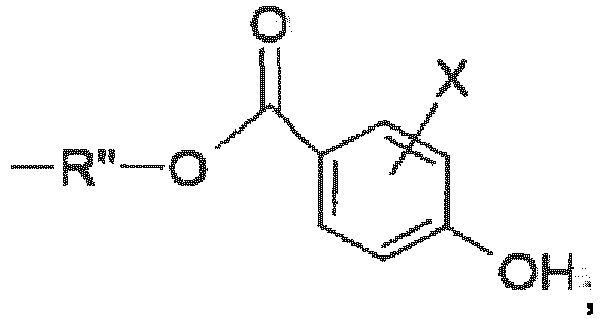
- In one general aspect, a copolycarbonate resin comprises an aromatic diol compound, a carbonate precursor and a siloxane compound which are polymerized, wherein the siloxane compound is a mixture of a compound represented by following Chemical Formula 1:


and a compound represented by following Chemical Formula 2:
- Further, the present disclosure provides an article including the copolycarbonate resin.
- As described above, a copolycarbonate resin being economically prepared, and having improved low-temperature impact strength and transparency which are conflicting properties with each other, simultaneously, and an article including the same, may be provided, according to the present disclosure.
- The above and other objects, features and advantages of the present disclosure will become apparent from the following description of preferred embodiments given in conjunction with the accompanying drawings, in which:
-
FIG. 1 is a 1H NMR spectrum of terminal-modified polydimethylsiloxane with 2-methyl-1-butene hydroxybenzoate (MBHB-PDMS). -
FIG. 2 is a 13C NMR spectrum of 2-methyl-1-butene hydroxybenzoate (MBHB). -
FIG. 3 is a 1H NMR spectrum of 2-methyl-1-butene hydroxybenzoate (MBHB). -
FIG. 4 is 1H NMR spectra of terminal-modified polydimethylsiloxane with 2-allylphenol (AP-PDMS), terminal-modified polydimethylsiloxane with 2-methyl-1-butene hydroxybenzoate (MBHB-PDMS), and polycarbonate (PC) polymerized therefrom, arranged in order from top to bottom, and may confirm monomers derived from AP-PDMS and MBHB-PDMS in PC polymerized from AP-PDMS and MBHB-PDMS. - Hereinafter, the present disclosure will be described in detail.
- The copolycarbonate resin of the present disclosure is copolycarbonate comprising an aromatic diol compound, a carbonate precursor and a siloxane compound which are polymerized, wherein the siloxane compound is a mixture of a compound represented by following Chemical Formula 1:


- An example of R and R' may be an alkyl group having 1 to 6 carbon atoms, or an alkyl group having 1 to 3 carbon atoms.
- An example of Ra may be an alkylene group having 1 to 5 carbon atoms, and an alkylene group having 2 to 4 carbon atoms.
- An example of R" may be an alkyl group having 1 to 4 carbon atoms, or 5 to 10 carbon atoms.
- An example of n may be an integer of 1 to 40, 1 to 20, or 21 to 40, and within this range, there is an effect of excellent transparency.
- An example of m may be an integer of 1 to 50, or 51 to 99, and within this range, there is an effect of excellent ductility.
- An example of the weight ratio of the compound represented by above Chemical Formula 1 to the compound represented by above Chemical Formula 2 may be 0.1:99.9 to 99.9:0.1, 1:99 to 99:1, 95:5 to 5:95, 95:5 to 90:10, or 90:10 to 50:50, and within this range, there is an effect of excellent low-temperature impact strength.
- The siloxane compound may be included for example, in 0.1 to 20% by weight, 0.5 to 6% by weight, or 1 to 5% by weight, based on total 100% by weight of the aromatic diol compound, the carbonate precursor and the siloxane compound, and within this range, there is an effect of excellent low-temperature impact strength.
- An example of the aromatic diol compound may be one or more selected from the group consisting of bis(4-hydroxyphenyl)methane, bis(4-hydroxyphenyl)ether, bis(4-hydroxyphenyl)sulfone, bis(4-hydroxyphenyl)sulfoxide, bis(4-hydroxyphenyl)sulphide, bis(4-hydroxyphenyl)ketone, 1,1-bis(4-hydroxyphenyl)ethane, 2,2-bis(4-hydroxyphenyl)propane (bisphenol A), 2,2-bis(4-hydroxyphenyl)butane, 1,1-bis(4-hydroxyphenyl)cyclohexane (bisphenol Z), 2,2-bis(4-hydroxy-3,5-dibromophenyl)propane, 2,2-bis(4-hydroxy-3,5-dichlororophenyl)propane, 2,2-bis(4-hydroxy-3-bromophenyl)propane, 2,2-bis(4-hydroxy-3-chlorophenyl)propane, 2,2-bis(4-hydroxy-3-methylphenyl)propane, 2,2-bis(4-hydroxy-3,5-dimethylphenyl)propane, 1,1-bis(4-hydroxyphenyl)-1-phenylethane, bis(4-hydroxyphenyl)diphenylmethane and α,ω-bis[3-(o-hydroxyphenyl)propyl]polydimethylsiloxane, preferably bisphenol A, and in this case, there is an effect of increasing the flowability of the resin.
- The aromatic diol compound may be included for example, in 50 to 99.5% by weight, 55 to 90% by weight, or 60 to 85% by weight, based on total 100% by weight of the aromatic diol compound, the carbonate precursor and the siloxane compound, and within this range, there is an effect of excellent intrinsic properties of the polycarbonate resin.
- An example of the carbonate precursor may be a compound represented by following Chemical Formula 3:

- As another example, the carbonate precursor may be one or more selected from the group consisting of dimethyl carbonate, diethyl carbonate, dibutyl carbonate, dicyclohexyl carbonate, diphenyl carbonate, ditolyl carbonate, bis(chlorophenyl) carbonate, di-m-cresyl carbonate, dinaphthyl carbonate, bis(diphenyl) carbonate, phosgene, triphosgene, diphosgene, bromophosgene and bishaloformate, preferably triphosgene or phosgene, and in this case, there is an effect of imparting intrinsic properties of the polycarbonate resin.
- The carbonate precursor may be included for example, in 10 to 60% by weight, 15 to 55% by weight, or 20 to 50% by weight, based on total 100% by weight of the aromatic diol compound, the carbonate precursor and the siloxane compound, and within this range, there is an effect of excellent intrinsic properties of the polycarbonate resin.
- An example of the compound represented by above Chemical Formula 1 may be a compound represented by following Chemical Formula 4:

and in this case, there is an effect of excellent transparency and ductility. - An example of the compound represented by above Chemical Formula 2 may be a compound represented by following Chemical Formula 5:

and in this case, there is an effect of excellent ductility. - An example of m may be an integer of 1 to 50, or 51 to 99, and within this range, there is an effect of excellent ductility.
- The copolycarbonate resin may be for example, polymerized by further including a molecular weight controller.
- An example of the molecular weight controller may be mono-alkylphenol.
- An example of the mono-alkylphenol may be one or more selected from the group consisting of p-tert-butylphenol, p-cumylphenol, decylphenol, dodecylphenol, tetradecylphenol, hexadecylphenol, octadecylphenol, eicosylphenol, docosylphenol and triacontylphenol, preferably para-tert-butylphenol, and in this case, an effect of controlling molecular weight is high.
- The molecular weight controller may be included, for example, in 0.01 to 10 parts by weight, 0.1 to 6 parts by weight, or 1 to 5 parts by weight, based on 100 parts by weight of the aromatic diol compound, and within this range, the target molecular weight may be obtained.
- The copolycarbonate resin may have, for example, a weight average molecular weight of 30000 to 60000 g/mol, 30000 to 40000 g/mol, or 50000 to 60000 g/mol, and within this range, there is an effect of excellent ductility.
- A method of preparing a copolycarbonate resin of the present disclosure may be, for example, an interfacial polymerization method, and in this case, a polymerization reaction at low temperature under normal pressure is possible, and there is an effect of easily controlling molecular weight.
- An example of the interfacial polymerization method may be a method of reacting an aromatic diol compound, a carbonate precursor and a siloxane compound, in the presence of an acid binder and an organic solvent.
- The interfacial polymerization method may include, for example, adding a coupling agent after pre-polymerization, and then carrying out polymerization, and in this case, a high molecular weight copolycarbonate resin may be obtained.
- Other materials used in the interfacial polymerization may not be particularly limited, if they are usable in the polymerization of polycarbonate, and the used amount thereof is adjustable as required.
- The acid binder may be, for example, alkali metal hydroxides such as sodium hydroxide and potassium hydroxide, or an amine compound such as pyridine.
- Usually the organic solvent may not be particularly limited, if it is a solvent usable in the polymerization of polycarbonate, and may be, for example, halogenated hydrocarbons such as methylene chloride and chlorobenzene.
- In the interfacial polymerization, for example, a reaction promoter, for example, a tertiary amine compound such as triethylamine, tetra-n-butylammoniumbromide and tetra-n-butylphosphoniumbromide, a quaternary ammonium compound, a quaternary phosphonium compound may be further used, for promoting the reaction.
- The reaction temperature of the interfacial polymerization may be, for example, 0 to 40°C, and the reaction time may be, for example, 10 minutes to 5 hours, and it is preferred to maintain pH, for example, to at least 9, or at least 11 during reaction.
- The interfacial polymerization method may be a method of polymerizing by further including the molecular weight controller.
- The molecular weight controller may be added, for example, before, during or after polymerization initiation.
- The siloxane compound, that is, terminal-modified polyorganosiloxane may be prepared, for example, by a) reacting organodisiloxane and organocyclosiloxane under an acid catalyst to prepare terminal-unmodified polyorganosiloxane; and b) reacting thus-prepared terminal-unmodified polyorganosiloxane with a modifier under a metal catalyst to prepare terminal-modified polyorganosiloxane.
- The modifier may be 2-allylphenol or a compound represented by following Chemical Formula 6:

- Rb may be, for example, an alkenyl group having 2 to 5, or 2 to 4 carbon atoms.
- The organodisiloxane may be, for example, one or more selected from the group consisting of tetramethyldisiloxane, tetraphenyldisiloxane, hexamethyldisiloxane and hexaphenyldisiloxane.
- The organodisiloxane may be used, for example, in 0.1 to 10 parts by weight or 2 to 8 parts by weight, based on 100 parts by weight of organocyclosiloxane.
- An example of the organocyclosiloxane may be organocyclotetrasiloxane.
- An example of the organocyclotetrasiloxane may be octamethylcyclotetrasiloxane, octaphenylcyclotetrasiloxane, and the like.
- The acid catalyst may not be particularly limited, if it is the acid catalyst usable in the synthesis of polyorganosiloxane, and for example, may be one or more selected from the group consisting of H2SO4, HClO4, AlCl3, SbCl5, SnCl4 and acid clay.
- The acid catalyst may be used, for example, in 0.1 to 10 parts by weight, 0.5 to 5 parts by weight, or 1 to 3 parts by weight, based on 100 parts by weight of organocyclosiloxane.
- The metal catalyst may not be particularly limited, if it is the metal catalyst usable in the terminal modification reaction of polysiloxane, and for example, may be a Pt catalyst.
- The Pt catalyst may not be particularly limited, if it is the Pt catalyst usable in polyorganosiloxane synthesis, and for example, may be one or more selected from the group consisting of an Ashby catalyst, a Karstedt catalyst, a Lamoreaux catalyst, a Speier catalyst, PtCl2(COD), PtCl2(benzonitrile)2, and H2PtBr6.
- The metal catalyst may be used, for example, in 0.001 to 1 parts by weight, 0.005 to 0.1 parts by weight, or 0.01 to 0.05 parts by weight, based on 100 parts by weight of polyorganosiloxane.
- The modifier may be used, for example, in 0.1 to 20 parts by weight, 1 to 15 parts by weight, or 5 to 12 parts by weight, based on 100 parts by weight of polyorganosiloxane.
- The reaction of step a) may be carried out at 50 to 70°C for 1 to 6 hours.
- The reaction of step b) may be carried out at 80 to 100°C for 1 to 5 hours.
- A molded article of the present disclosure is characterized by including the copolycarbonate.
- An example of the molded article may be an injection molded article.
- The molded article may further include, for example, one or more selected from the group consisting of an anti-oxidant, a heat stabilizer, a light stabilizer, a plasticizer, an antistatic agent, a nucleating agent, a flame retardant, a lubricant, an impact modifier, an optical brightener, an ultraviolet absorber, a pigment and a dye.
- A method of preparing the molded article may include, for example, mixing the copolycarbonate resin of the present disclosure and an additive such as an anti-oxidant well using a mixer, extrusion molding the mixture with an extruder to prepare a pellet, drying the pellet well, and then injecting the pellet with an injection molding machine.
- Hereinafter, preferred Examples will be provided in order to assist in the understanding of the present disclosure. However, it will be obvious that the following Examples are only illustrative of the present disclosure, and various modifications and alterations may be made within the scope and technical idea of the present disclosure, and also it will be natural that these modifications and alterations may fall within the scope of the appended claims, to those skilled in the art.
- In a 500ml round flaks, 40g (222mmol) of 4-acetoxybenzoic acid was added, and dissolved in methylene chloride, then 31g (244mmol) of oxalyl chloride and 1 to 5 drops of DMF were added to carry out a reaction for 3 hours or more. Reaction completion was confirmed by TLC (thin layer chromatograph), and when the reaction was completed, evaporation was carried out to obtain a material wherein the hydroxy group of 4-acetoxybenzoic acid is chlorinated. The material was added to a flask including 19.1g (222mmol) of 2-methyl-1-buten-4-ol and 44g (444mmol) of TEA (triethylamine) being dissolved in ethylacetate, and reaction was carried out, and the product was filtered to obtain a solvent which was then evaporated. The remaining material after the evaporation was dissolved in MeOH (methyl alcohol), and then 12.6g (233mmol) of sodium methoxide was added to carry out a reaction for 1 hour or more. After reaction completion, an ion exchange resin was used to filter the product, which was column-purified to obtain a final product, MBHB. The structure of the obtained MBHB was confirmed by 1H NMR and 13C NMR.
- 47.60g (160mmol) of octamethylcyclotetrasiloxane and 2.40g (17.8mmol) of tetramethyldisiloxane were mixed, and the mixture was added to a 3L flask with 1 part by weight of acid clay (DC-A3), based on 100 parts by weight of octamethylcyclotetrasiloxane, and reaction was carried out at 60°C for 4 hours. After reaction completion, the product was diluted with ethylacetate, and rapidly filtered using celite. The number of repeating units (n) of the thus-obtained unmodified polyorganosiloxane was confirmed by 1H NMR to be 35.
- To the obtained terminal-unmodified polyorganosiloxane, 4.81g (35.9mmol) of 2-allylphenol and 0.01g (50ppm) of a Karstedt's platinum catalyst were added to be reacted at 90°C for 3 hours. After reaction completion, unreacted siloxane was removed by evaporation under the condition of 120°C and 1 torr. The thus-obtained terminal modified polyorganosiloxane, that is, the siloxane compound represented by Chemical Formula 1 was light yellow oil, having the number of repeating unit (n) of 35, and did not require further purification. The preparation of the siloxane compound corresponding to Chemical Formula 1 (hereinafter, referred to as AP-PDMS) was confirmed by 1H NMR.
- A siloxane compound corresponding to Chemical Formula 2 (hereinafter, referred to as MBHB-PDMS) having the number of repeating groups (m) of 45, was prepared in the same manner as above <Preparation of Siloxane Compound Corresponding to Chemical Formula 1>, except that 6.13g (29.7mmol) of MBHB (2-methyl-1-butene hydroxybenzoate) was used instead of 2-allylphenol.
- In a polymerization reaction, 1784g of water, 385g of NaOH, and 232g of BPA (bisphenol A) were mixed and dissolved under N2 atmosphere. 4.3g of PTBP (para-tert butylphenol) and a mixed solution of 5.91g of AP-PDMS and 0.66g of MBHB-PDMS (weight ratio of 90:10) were dissolved in MC (methylene chloride) and added. Next, 128g of TPG (triphosgene) was dissolved in MC and added for 1 hour while pH was maintained to be 11 or more, and then 46g of TEA (triethylamine) was added 10 minutes later to generate a coupling reaction. After total reaction time of 1 hour and 20 minutes, pH was lowered to 4 to remove TEA, and the product was washed 3 times with distilled water to produce a polymer of which the pH was then adjusted to 6-7 (neutral). The thus-obtained polymer was subjected to reprecipitation in a mixed solution of methanol and hexane, and then dried at 120°C to obtain a final copolycarbonate resin.
- The obtained copolycarbonate resin was confirmed to have a weight average molecular weight of 33000 g/mol as measured by GPC using PC standard.
- To the prepared copolycarbonate resin, 0.050 parts by weight of tris(2,4-di-tert-butylphenyl)phosphite, 0.010 parts by weight of octadecyl-3-(3,5-di-tert-butyl-4-hydroxyphenyl)propionate, and 0.030 parts by weight of pentaerythritol tetrastearate were added and pelletized using HAAK Mini CTW with a vent attached, and a HAAK Minijet injection molding machine was used in injection molding at a cylinder temperature of 300°C and a mold temperature of 120°C to prepare an Izod specimen, and a disk (1.5 mm height, 40 mm diameter) was used to prepare a Haze specimen.
- A cocarbonate resin and an injected specimen thereof were prepared in the same manner as above Example 1, except that 6.24g of 2-allylphenol-substituted-siloxane (AP-PDMS) and 0.33g of MBHB-substituted-siloxane (MBHB-PDMS) (weight ratio of 95:5) were used. Herein, the copolycarbonate resin was confirmed to have a weight average molecular weight of 33000 g/mol.
- A cocarbonate resin and an injected specimen thereof were prepared in the same manner as above Example 1, except that 5.25g of 2-allylphenol-substituted-siloxane (AP-PDMS) and 1.32g of MBHB-substituted-siloxane (MBHB-PDMS) (weight ratio of 80:20) were used. Herein, the copolycarbonate resin was confirmed to have a weight average molecular weight of 33000 g/mol.
- A cocarbonate resin and an injected specimen thereof were prepared in the same manner as above Example 1, except that 3.285g of 2-allylphenol-substituted-siloxane (AP-PDMS) and 3.285g of MBHB-substituted-siloxane (MBHB-PDMS) (weight ratio of 50:50) were used. Herein, the copolycarbonate resin was confirmed to have a weight average molecular weight of 33000 g/mol.
- A copolycarbonate resin and an injected specimen thereof were prepared in the same manner as above Example 1, except that AP-PDMS was not used and only 6.57g of MBHB-PDMS was used in preparation of the copolycarbonate resin. Herein, the copolycarbonate resin was confirmed to have a weight average molecular weight of 33000 g/mol.
- A copolycarbonate resin and an injected specimen thereof were prepared in the same manner as above Example 1, except that MBHB-PDMS was not used and only 6.57 g of AP-PDMS was used in preparation of the copolycarbonate resin. Herein, the copolycarbonate resin was confirmed to have a weight average molecular weight of 33000 g/mol.
- The characteristics of the injected specimen of the copolycarbonate resin prepared in above Examples 1 to 4 and Comparative Examples 1 and 2 were measured in the following manner, and the results were shown in following Table 1.
* Room temperature impact strength: measured at 23°C according to ASTM D256 (1/8inch, Notched Izod).
* Low-temperature impact strength: measured at -30°C according to ASTM D256 (1/8inch, Notched Izod).
* Haze: measured according to ASTM D1003.
* Weight average molecular weight (g/mol): measured by weighing with PC standard using Agilent 1200 series.
* Flowability (MI): measured according to ASTM D1238 (300°C, 1.2kg condition)
* Repeating unit: measured by 1H-NMR using Varian 500MHz.[Table 1] Classification Room temperature impact strength Low-temperature impact strength Transparency (%) MI Example 1 76.9 75.1 1.1 14 Example 2 80.1 71.3 1.0 15 Example 3 79.1 65.5 1.2 12 Example 4 67.2 62.5 1.3 10 Comparative Example 1 65.1 58.2 1.4 8 Comparative Example 2 56.8 17.5 0.6 30 - As described in above Table 1, it may be confirmed that the copolycarbonate resin of the present disclosure (Examples 1 to 4) had excellent low-temperature impact strength, as compared with the copolycarbonate resin without the siloxane compound according to the present disclosure (Comparative Examples 1 and 2), and also excellent transparency and flowability against low-temperature impact strength.
Claims (15)
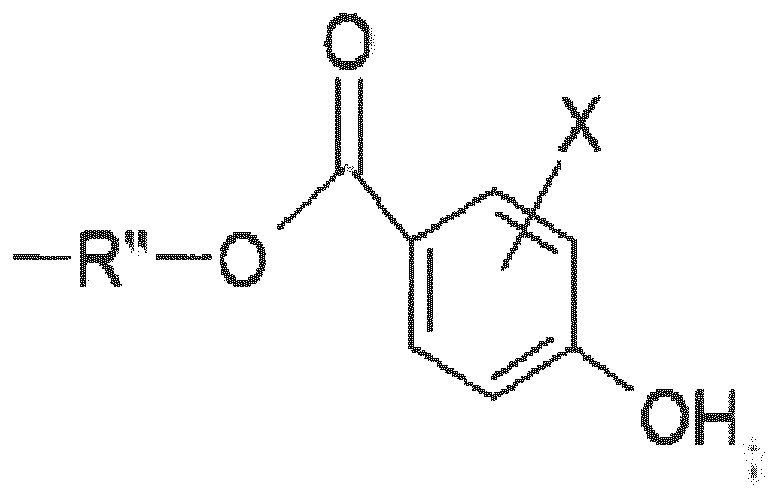
- A copolycarbonate resin polymerized with an aromatic diol compound, a carbonate precursor and a siloxane compound, wherein the siloxane compound is a mixture of a compound represented by following Chemical Formula 1 and a compound represented by following Chemical Formula 2:


- The copolycarbonate resin of claim 1, wherein a weight ratio between the compound represented by Chemical Formula 1 and the compound represented by Chemical Formula 2 is 0.1:99.9 to 99.9:0.1.
- The copolycarbonate resin of claim 1, wherein the siloxane compound is included in 0.1 to 10% by weight.
- The copolycarbonate resin of claim 1, wherein the aromatic diol compound is one or more selected from the group consisting of bis(4-hydroxyphenyl)methane, bis(4-hydroxyphenyl)ether, bis(4-hydroxyphenyl)sulfone, bis(4-hydroxyphenyl)sulfoxide, bis(4-hydroxyphenyl)sulphide, bis(4-hydroxyphenyl)ketone, 1,1-bis(4-hydroxyphenyl)ethane, 2,2-bis(4-hydroxyphenyl)propane (bisphenol A), 2,2-bis(4-hydroxyphenyl)butane, 1,1-bis(4-hydroxyphenyl)cyclohexane (bisphenol Z), 2,2-bis(4-hydroxy-3,5-dibromophenyl)propane, 2,2-bis(4-hydroxy-3,5-dichlororophenyl)propane, 2,2-bis(4-hydroxy-3-bromophenyl)propane, 2,2-bis(4-hydroxy-3-chlorophenyl)propane, 2,2-bis(4-hydroxy-3-methylphenyl)propane, 2,2-bis(4-hydroxy-3,5-dimethylphenyl)propane, 1,1-bis(4-hydroxyphenyl)-1-phenylethane, bis(4-hydroxyphenyl)diphenylmethane and α,ω-bis[3-(o-hydroxyphenyl)propyl]polyd imethylsilioxane.
- The copolycarbonate resin of claim 1, wherein the carbonate precursor is a compound represented by Chemical Formula 3:

- The copolycarbonate resin of claim 1, wherein the compound represented by Chemical Formula 2 is a compound represented by following Chemical Formula 5:


- The copolycarbonate resin of claim 1, wherein the copolycarbonate resin is polymerized by further comprising a molecular weight controller,
- The copolycarbonate resin of claim 7, wherein the molecular weight controller is mono-alkylphenol.
- The copolycarbonate resin of claim 1, wherein the molecular weight controller is included in 0.1 to 10 parts by weight, based on 100 parts by weight of the aromatic diol compound.
- The copolycarbonate resin of claim 1, wherein the copolycarbonate resin has a weight average molecular weight of 30000 to 60000 g/mol.
- A method of preparing a copolycarbonate resin by interfacial polymerization of an aromatic diol compound, a carbonate precursor and a siloxane compound, wherein the siloxane compound is a mixture of a compound represented by following Chemical Formula 1 and a compound represented by following Chemical Formula 2:


- The method of claim 11, wherein a molecular weight controller is added before, during or after polymerization initiation.
- The method of claim 11, wherein the interfacial polymerization is carried out by further including one or more of an acid binder, an organic solvent and a reaction promoter.
- A molded article comprising the copolycarbonate resin of any one of claims 1 to 10.
- The molded article of claim 14, wherein the molded article is an injection molded article.
Priority Applications (1)
| Application Number | Priority Date | Filing Date | Title |
|---|---|---|---|
| PL14845811T PL2937373T3 (en) | 2013-09-17 | 2014-09-16 | Copolycarbonate resin and product comprising same |
Applications Claiming Priority (3)
| Application Number | Priority Date | Filing Date | Title |
|---|---|---|---|
| KR20130111878 | 2013-09-17 | ||
| KR1020140118830A KR101579618B1 (en) | 2013-09-17 | 2014-09-05 | Copolycarbonate resin and article containing the same |
| PCT/KR2014/008605 WO2015041441A1 (en) | 2013-09-17 | 2014-09-16 | Copolycarbonate resin and product comprising same |
Publications (3)
| Publication Number | Publication Date |
|---|---|
| EP2937373A1 true EP2937373A1 (en) | 2015-10-28 |
| EP2937373A4 EP2937373A4 (en) | 2016-06-22 |
| EP2937373B1 EP2937373B1 (en) | 2016-11-23 |
Family
ID=53025490
Family Applications (1)
| Application Number | Title | Priority Date | Filing Date |
|---|---|---|---|
| EP14845811.0A Active EP2937373B1 (en) | 2013-09-17 | 2014-09-16 | Copolycarbonate resin and product comprising same |
Country Status (8)
| Country | Link |
|---|---|
| US (1) | US9255179B2 (en) |
| EP (1) | EP2937373B1 (en) |
| JP (1) | JP6049113B2 (en) |
| KR (1) | KR101579618B1 (en) |
| ES (1) | ES2613230T3 (en) |
| PL (1) | PL2937373T3 (en) |
| PT (1) | PT2937373T (en) |
| WO (1) | WO2015041441A1 (en) |
Cited By (1)
| Publication number | Priority date | Publication date | Assignee | Title |
|---|---|---|---|---|
| EP3141571A4 (en) * | 2014-12-04 | 2018-01-17 | LG Chem, Ltd. | Copolycarbonate and composition containing same |
Families Citing this family (9)
| Publication number | Priority date | Publication date | Assignee | Title |
|---|---|---|---|---|
| KR101779188B1 (en) | 2014-09-05 | 2017-09-15 | 주식회사 엘지화학 | Copolycarbonate and composition comprising the same |
| KR101685665B1 (en) | 2014-12-04 | 2016-12-12 | 주식회사 엘지화학 | Copolycarbonate and composition comprising the same |
| KR101825652B1 (en) | 2015-11-06 | 2018-02-05 | 주식회사 엘지화학 | Copolycarbonate and composition comprising the same |
| KR101924199B1 (en) * | 2016-02-01 | 2018-11-30 | 주식회사 엘지화학 | Novel polyorganosiloxane, and copolycarbonate prepared by using the same |
| JP2018059028A (en) * | 2016-10-07 | 2018-04-12 | 出光興産株式会社 | Polycarbonate resin composition and molded article |
| WO2018074822A1 (en) * | 2016-10-20 | 2018-04-26 | 주식회사 엘지화학 | Polycarbonate resin composition |
| KR102030732B1 (en) * | 2016-10-20 | 2019-10-11 | 주식회사 엘지화학 | Polycarbonate resin composition |
| KR20180043685A (en) * | 2016-10-20 | 2018-04-30 | 주식회사 엘지화학 | Copolycarbonate and resin compositin comprising the same |
| CN111848956B (en) * | 2019-04-30 | 2022-03-11 | 万华化学集团股份有限公司 | A kind of polysiloxane whose end group is phenol group and preparation method thereof |
Family Cites Families (23)
| Publication number | Priority date | Publication date | Assignee | Title |
|---|---|---|---|---|
| JP2631739B2 (en) * | 1989-02-27 | 1997-07-16 | 信越化学工業株式会社 | Phenol group-containing siloxane compound |
| US5243009A (en) * | 1989-03-06 | 1993-09-07 | General Electric Company | Hydroxyarylestersiloxanes |
| JP3195848B2 (en) * | 1993-03-16 | 2001-08-06 | 出光興産株式会社 | Method for producing polycarbonate copolymer |
| DE4331608A1 (en) * | 1993-09-17 | 1995-03-23 | Goldschmidt Ag Th | Organopolysiloxanes modified with acrylate groups |
| US5414054A (en) | 1994-06-01 | 1995-05-09 | Miles Inc. | Copolycarbonate having improved low-temperature impact strength |
| JPH0873882A (en) | 1994-09-07 | 1996-03-19 | Asahi Chem Ind Co Ltd | Homogenous electroviscous fluid |
| DE19539290A1 (en) * | 1995-10-23 | 1997-04-24 | Bayer Ag | Process for the preparation of poly (diorganosiloxane) -polycarbonate block copolymers |
| JP3756576B2 (en) * | 1995-11-29 | 2006-03-15 | 東レ・ダウコーニング株式会社 | Hydroxyphenyl group-containing polyorganosiloxane |
| JPH10204179A (en) | 1997-01-21 | 1998-08-04 | Toray Dow Corning Silicone Co Ltd | Polyorganosiloxane and its production |
| US7790292B2 (en) | 1999-05-18 | 2010-09-07 | Sabic Innovative Plastics Ip B.V. | Polysiloxane copolymers, thermoplastic composition, and articles formed therefrom |
| JP2000327645A (en) * | 1999-05-19 | 2000-11-28 | Ricoh Co Ltd | Diphenol compound and aromatic polycarbonate resin |
| US6630562B2 (en) * | 2001-01-16 | 2003-10-07 | Mitsubishi Gas Chemical Company, Inc. | Polycarbonate resin |
| US7799855B2 (en) | 2001-11-12 | 2010-09-21 | Sabic Innovative Plastics Ip B.V. | Flame retardant thermoplastic polycarbonate compositions, use and method thereof |
| CN102161753B (en) * | 2003-02-21 | 2015-07-15 | 沙特基础全球技术有限公司 | Transparent and high-heat polycarbonate-polysiloxane copolymers and transparent blends with polycarbonate and a process for preparing same |
| WO2008038608A1 (en) * | 2006-09-26 | 2008-04-03 | Teijin Chemicals Ltd. | Polycarbonate and method for producing the same |
| CN102471474B (en) * | 2009-07-29 | 2014-06-04 | 帝人化成株式会社 | polycarbonate-polydiorganosiloxane copolymer |
| JP5547953B2 (en) * | 2009-12-10 | 2014-07-16 | 出光興産株式会社 | Polycarbonate-polyorganosiloxane copolymer, process for producing the same, and polycarbonate resin containing the copolymer |
| JP5679693B2 (en) * | 2010-05-07 | 2015-03-04 | 帝人株式会社 | Flame retardant polycarbonate resin composition |
| US9006324B2 (en) * | 2011-03-31 | 2015-04-14 | Sabic Global Technologies B.V. | Flame retardant polycarbonate compositions, methods of manufacture, and articles formed therefrom |
| JP5966500B2 (en) * | 2011-05-02 | 2016-08-10 | 株式会社リコー | Silicone compound, photocurable liquid ink using the silicone compound, and method for producing the same |
| KR101448058B1 (en) * | 2011-10-31 | 2014-10-10 | 주식회사 삼양사 | Polycarbonate resin composition having improved low-temperature impact resistance and method of manufacturing the same |
| KR101459132B1 (en) * | 2011-12-30 | 2014-11-13 | 제일모직주식회사 | Branched polycarbonate-polysiloxane copolymer and method for preparing the same |
| KR101538207B1 (en) * | 2012-02-03 | 2015-07-22 | 주식회사 엘지화학 | A method for preparing polysiloxane based copolycarbonate |
-
2014
- 2014-09-05 KR KR1020140118830A patent/KR101579618B1/en active Active
- 2014-09-16 ES ES14845811.0T patent/ES2613230T3/en active Active
- 2014-09-16 WO PCT/KR2014/008605 patent/WO2015041441A1/en not_active Ceased
- 2014-09-16 PT PT148458110T patent/PT2937373T/en unknown
- 2014-09-16 JP JP2015555947A patent/JP6049113B2/en active Active
- 2014-09-16 PL PL14845811T patent/PL2937373T3/en unknown
- 2014-09-16 EP EP14845811.0A patent/EP2937373B1/en active Active
- 2014-09-16 US US14/654,336 patent/US9255179B2/en active Active
Cited By (4)
| Publication number | Priority date | Publication date | Assignee | Title |
|---|---|---|---|---|
| EP3141571A4 (en) * | 2014-12-04 | 2018-01-17 | LG Chem, Ltd. | Copolycarbonate and composition containing same |
| EP3162853A4 (en) * | 2014-12-04 | 2018-04-18 | LG Chem, Ltd. | Copolycarbonate resin composition |
| EP3181610A4 (en) * | 2014-12-04 | 2018-05-16 | LG Chem, Ltd. | Polycarbonate-based resin composition and molded article comprising same |
| EP3067380B1 (en) * | 2014-12-04 | 2019-11-20 | LG Chem, Ltd. | Polycarbonate composition and article comprising same |
Also Published As
| Publication number | Publication date |
|---|---|
| US20150344623A1 (en) | 2015-12-03 |
| US9255179B2 (en) | 2016-02-09 |
| JP6049113B2 (en) | 2016-12-21 |
| KR20150032173A (en) | 2015-03-25 |
| EP2937373B1 (en) | 2016-11-23 |
| EP2937373A4 (en) | 2016-06-22 |
| WO2015041441A1 (en) | 2015-03-26 |
| JP2016509106A (en) | 2016-03-24 |
| KR101579618B1 (en) | 2015-12-22 |
| PL2937373T3 (en) | 2017-06-30 |
| ES2613230T3 (en) | 2017-05-23 |
| PT2937373T (en) | 2017-01-23 |
Similar Documents
| Publication | Publication Date | Title |
|---|---|---|
| EP2937373B1 (en) | Copolycarbonate resin and product comprising same | |
| CN105980446B (en) | Copolycarbonate and the composition containing the Copolycarbonate | |
| TWI567105B (en) | Copolycarbonate and composition comprising the same | |
| EP3018165B1 (en) | Polyorganosiloxane compound, method for preparing same, and copolycarbonate resin comprising same | |
| KR101714739B1 (en) | Novel polyorganosiloxane, copolycarbonate composition containing the same and molded articles thereof | |
| EP3067379A1 (en) | Copolycarbonate and composition containing same | |
| KR101637399B1 (en) | Polyorganosiloxane compound and copolycarbonate resin containing the same | |
| EP3050909B1 (en) | Copolycarbonate and composition comprising same | |
| EP3205685B1 (en) | Copolycarbonate and composition comprising same | |
| KR101566837B1 (en) | Method for preparing polyorganosiloxane compound and copolycarbonate resin containing the same |
Legal Events
| Date | Code | Title | Description |
|---|---|---|---|
| PUAI | Public reference made under article 153(3) epc to a published international application that has entered the european phase |
Free format text: ORIGINAL CODE: 0009012 |
|
| 17P | Request for examination filed |
Effective date: 20150723 |
|
| AK | Designated contracting states |
Kind code of ref document: A1 Designated state(s): AL AT BE BG CH CY CZ DE DK EE ES FI FR GB GR HR HU IE IS IT LI LT LU LV MC MK MT NL NO PL PT RO RS SE SI SK SM TR |
|
| AX | Request for extension of the european patent |
Extension state: BA ME |
|
| A4 | Supplementary search report drawn up and despatched |
Effective date: 20160520 |
|
| RIC1 | Information provided on ipc code assigned before grant |
Ipc: C08L 83/06 20060101ALI20160513BHEP Ipc: C08G 64/38 20060101AFI20160513BHEP Ipc: C08G 77/448 20060101ALI20160513BHEP Ipc: C08J 5/00 20060101ALI20160513BHEP Ipc: C08L 69/00 20060101ALI20160513BHEP |
|
| GRAP | Despatch of communication of intention to grant a patent |
Free format text: ORIGINAL CODE: EPIDOSNIGR1 |
|
| DAX | Request for extension of the european patent (deleted) | ||
| INTG | Intention to grant announced |
Effective date: 20160721 |
|
| GRAS | Grant fee paid |
Free format text: ORIGINAL CODE: EPIDOSNIGR3 |
|
| GRAA | (expected) grant |
Free format text: ORIGINAL CODE: 0009210 |
|
| AK | Designated contracting states |
Kind code of ref document: B1 Designated state(s): AL AT BE BG CH CY CZ DE DK EE ES FI FR GB GR HR HU IE IS IT LI LT LU LV MC MK MT NL NO PL PT RO RS SE SI SK SM TR |
|
| REG | Reference to a national code |
Ref country code: GB Ref legal event code: FG4D |
|
| REG | Reference to a national code |
Ref country code: CH Ref legal event code: EP |
|
| REG | Reference to a national code |
Ref country code: IE Ref legal event code: FG4D |
|
| REG | Reference to a national code |
Ref country code: AT Ref legal event code: REF Ref document number: 847850 Country of ref document: AT Kind code of ref document: T Effective date: 20161215 |
|
| REG | Reference to a national code |
Ref country code: DE Ref legal event code: R096 Ref document number: 602014005087 Country of ref document: DE |
|
| REG | Reference to a national code |
Ref country code: PT Ref legal event code: SC4A Ref document number: 2937373 Country of ref document: PT Date of ref document: 20170123 Kind code of ref document: T Free format text: AVAILABILITY OF NATIONAL TRANSLATION Effective date: 20170112 |
|
| PG25 | Lapsed in a contracting state [announced via postgrant information from national office to epo] |
Ref country code: LV Free format text: LAPSE BECAUSE OF FAILURE TO SUBMIT A TRANSLATION OF THE DESCRIPTION OR TO PAY THE FEE WITHIN THE PRESCRIBED TIME-LIMIT Effective date: 20161123 |
|
| REG | Reference to a national code |
Ref country code: LT Ref legal event code: MG4D |
|
| REG | Reference to a national code |
Ref country code: NL Ref legal event code: MP Effective date: 20161123 |
|
| REG | Reference to a national code |
Ref country code: AT Ref legal event code: MK05 Ref document number: 847850 Country of ref document: AT Kind code of ref document: T Effective date: 20161123 |
|
| PG25 | Lapsed in a contracting state [announced via postgrant information from national office to epo] |
Ref country code: NO Free format text: LAPSE BECAUSE OF FAILURE TO SUBMIT A TRANSLATION OF THE DESCRIPTION OR TO PAY THE FEE WITHIN THE PRESCRIBED TIME-LIMIT Effective date: 20170223 Ref country code: NL Free format text: LAPSE BECAUSE OF FAILURE TO SUBMIT A TRANSLATION OF THE DESCRIPTION OR TO PAY THE FEE WITHIN THE PRESCRIBED TIME-LIMIT Effective date: 20161123 Ref country code: LT Free format text: LAPSE BECAUSE OF FAILURE TO SUBMIT A TRANSLATION OF THE DESCRIPTION OR TO PAY THE FEE WITHIN THE PRESCRIBED TIME-LIMIT Effective date: 20161123 Ref country code: GR Free format text: LAPSE BECAUSE OF FAILURE TO SUBMIT A TRANSLATION OF THE DESCRIPTION OR TO PAY THE FEE WITHIN THE PRESCRIBED TIME-LIMIT Effective date: 20170224 Ref country code: SE Free format text: LAPSE BECAUSE OF FAILURE TO SUBMIT A TRANSLATION OF THE DESCRIPTION OR TO PAY THE FEE WITHIN THE PRESCRIBED TIME-LIMIT Effective date: 20161123 |
|
| REG | Reference to a national code |
Ref country code: ES Ref legal event code: FG2A Ref document number: 2613230 Country of ref document: ES Kind code of ref document: T3 Effective date: 20170523 |
|
| PG25 | Lapsed in a contracting state [announced via postgrant information from national office to epo] |
Ref country code: FI Free format text: LAPSE BECAUSE OF FAILURE TO SUBMIT A TRANSLATION OF THE DESCRIPTION OR TO PAY THE FEE WITHIN THE PRESCRIBED TIME-LIMIT Effective date: 20161123 Ref country code: HR Free format text: LAPSE BECAUSE OF FAILURE TO SUBMIT A TRANSLATION OF THE DESCRIPTION OR TO PAY THE FEE WITHIN THE PRESCRIBED TIME-LIMIT Effective date: 20161123 Ref country code: RS Free format text: LAPSE BECAUSE OF FAILURE TO SUBMIT A TRANSLATION OF THE DESCRIPTION OR TO PAY THE FEE WITHIN THE PRESCRIBED TIME-LIMIT Effective date: 20161123 Ref country code: AT Free format text: LAPSE BECAUSE OF FAILURE TO SUBMIT A TRANSLATION OF THE DESCRIPTION OR TO PAY THE FEE WITHIN THE PRESCRIBED TIME-LIMIT Effective date: 20161123 |
|
| PG25 | Lapsed in a contracting state [announced via postgrant information from national office to epo] |
Ref country code: SK Free format text: LAPSE BECAUSE OF FAILURE TO SUBMIT A TRANSLATION OF THE DESCRIPTION OR TO PAY THE FEE WITHIN THE PRESCRIBED TIME-LIMIT Effective date: 20161123 Ref country code: RO Free format text: LAPSE BECAUSE OF FAILURE TO SUBMIT A TRANSLATION OF THE DESCRIPTION OR TO PAY THE FEE WITHIN THE PRESCRIBED TIME-LIMIT Effective date: 20161123 Ref country code: CZ Free format text: LAPSE BECAUSE OF FAILURE TO SUBMIT A TRANSLATION OF THE DESCRIPTION OR TO PAY THE FEE WITHIN THE PRESCRIBED TIME-LIMIT Effective date: 20161123 Ref country code: EE Free format text: LAPSE BECAUSE OF FAILURE TO SUBMIT A TRANSLATION OF THE DESCRIPTION OR TO PAY THE FEE WITHIN THE PRESCRIBED TIME-LIMIT Effective date: 20161123 Ref country code: DK Free format text: LAPSE BECAUSE OF FAILURE TO SUBMIT A TRANSLATION OF THE DESCRIPTION OR TO PAY THE FEE WITHIN THE PRESCRIBED TIME-LIMIT Effective date: 20161123 |
|
| REG | Reference to a national code |
Ref country code: FR Ref legal event code: PLFP Year of fee payment: 4 Ref country code: DE Ref legal event code: R097 Ref document number: 602014005087 Country of ref document: DE |
|
| PG25 | Lapsed in a contracting state [announced via postgrant information from national office to epo] |
Ref country code: BE Free format text: LAPSE BECAUSE OF FAILURE TO SUBMIT A TRANSLATION OF THE DESCRIPTION OR TO PAY THE FEE WITHIN THE PRESCRIBED TIME-LIMIT Effective date: 20161123 Ref country code: SM Free format text: LAPSE BECAUSE OF FAILURE TO SUBMIT A TRANSLATION OF THE DESCRIPTION OR TO PAY THE FEE WITHIN THE PRESCRIBED TIME-LIMIT Effective date: 20161123 Ref country code: BG Free format text: LAPSE BECAUSE OF FAILURE TO SUBMIT A TRANSLATION OF THE DESCRIPTION OR TO PAY THE FEE WITHIN THE PRESCRIBED TIME-LIMIT Effective date: 20170223 |
|
| PLBE | No opposition filed within time limit |
Free format text: ORIGINAL CODE: 0009261 |
|
| STAA | Information on the status of an ep patent application or granted ep patent |
Free format text: STATUS: NO OPPOSITION FILED WITHIN TIME LIMIT |
|
| 26N | No opposition filed |
Effective date: 20170824 |
|
| PG25 | Lapsed in a contracting state [announced via postgrant information from national office to epo] |
Ref country code: SI Free format text: LAPSE BECAUSE OF FAILURE TO SUBMIT A TRANSLATION OF THE DESCRIPTION OR TO PAY THE FEE WITHIN THE PRESCRIBED TIME-LIMIT Effective date: 20161123 |
|
| REG | Reference to a national code |
Ref country code: CH Ref legal event code: PL |
|
| PG25 | Lapsed in a contracting state [announced via postgrant information from national office to epo] |
Ref country code: MC Free format text: LAPSE BECAUSE OF FAILURE TO SUBMIT A TRANSLATION OF THE DESCRIPTION OR TO PAY THE FEE WITHIN THE PRESCRIBED TIME-LIMIT Effective date: 20161123 |
|
| REG | Reference to a national code |
Ref country code: IE Ref legal event code: MM4A |
|
| PG25 | Lapsed in a contracting state [announced via postgrant information from national office to epo] |
Ref country code: LU Free format text: LAPSE BECAUSE OF NON-PAYMENT OF DUE FEES Effective date: 20170916 |
|
| PG25 | Lapsed in a contracting state [announced via postgrant information from national office to epo] |
Ref country code: IE Free format text: LAPSE BECAUSE OF NON-PAYMENT OF DUE FEES Effective date: 20170916 Ref country code: CH Free format text: LAPSE BECAUSE OF NON-PAYMENT OF DUE FEES Effective date: 20170930 Ref country code: LI Free format text: LAPSE BECAUSE OF NON-PAYMENT OF DUE FEES Effective date: 20170930 |
|
| REG | Reference to a national code |
Ref country code: FR Ref legal event code: PLFP Year of fee payment: 5 |
|
| PG25 | Lapsed in a contracting state [announced via postgrant information from national office to epo] |
Ref country code: MT Free format text: LAPSE BECAUSE OF NON-PAYMENT OF DUE FEES Effective date: 20170916 |
|
| PG25 | Lapsed in a contracting state [announced via postgrant information from national office to epo] |
Ref country code: HU Free format text: LAPSE BECAUSE OF FAILURE TO SUBMIT A TRANSLATION OF THE DESCRIPTION OR TO PAY THE FEE WITHIN THE PRESCRIBED TIME-LIMIT; INVALID AB INITIO Effective date: 20140916 |
|
| PG25 | Lapsed in a contracting state [announced via postgrant information from national office to epo] |
Ref country code: CY Free format text: LAPSE BECAUSE OF FAILURE TO SUBMIT A TRANSLATION OF THE DESCRIPTION OR TO PAY THE FEE WITHIN THE PRESCRIBED TIME-LIMIT Effective date: 20161123 |
|
| PG25 | Lapsed in a contracting state [announced via postgrant information from national office to epo] |
Ref country code: MK Free format text: LAPSE BECAUSE OF FAILURE TO SUBMIT A TRANSLATION OF THE DESCRIPTION OR TO PAY THE FEE WITHIN THE PRESCRIBED TIME-LIMIT Effective date: 20161123 |
|
| PG25 | Lapsed in a contracting state [announced via postgrant information from national office to epo] |
Ref country code: TR Free format text: LAPSE BECAUSE OF FAILURE TO SUBMIT A TRANSLATION OF THE DESCRIPTION OR TO PAY THE FEE WITHIN THE PRESCRIBED TIME-LIMIT Effective date: 20161123 |
|
| PG25 | Lapsed in a contracting state [announced via postgrant information from national office to epo] |
Ref country code: AL Free format text: LAPSE BECAUSE OF FAILURE TO SUBMIT A TRANSLATION OF THE DESCRIPTION OR TO PAY THE FEE WITHIN THE PRESCRIBED TIME-LIMIT Effective date: 20161123 Ref country code: IS Free format text: LAPSE BECAUSE OF FAILURE TO SUBMIT A TRANSLATION OF THE DESCRIPTION OR TO PAY THE FEE WITHIN THE PRESCRIBED TIME-LIMIT Effective date: 20170323 |
|
| PGFP | Annual fee paid to national office [announced via postgrant information from national office to epo] |
Ref country code: PT Payment date: 20250821 Year of fee payment: 12 |
|
| PGFP | Annual fee paid to national office [announced via postgrant information from national office to epo] |
Ref country code: DE Payment date: 20250820 Year of fee payment: 12 |
|
| PGFP | Annual fee paid to national office [announced via postgrant information from national office to epo] |
Ref country code: PL Payment date: 20250822 Year of fee payment: 12 Ref country code: IT Payment date: 20250822 Year of fee payment: 12 |
|
| PGFP | Annual fee paid to national office [announced via postgrant information from national office to epo] |
Ref country code: GB Payment date: 20250820 Year of fee payment: 12 |
|
| PGFP | Annual fee paid to national office [announced via postgrant information from national office to epo] |
Ref country code: FR Payment date: 20250821 Year of fee payment: 12 |
|
| PGFP | Annual fee paid to national office [announced via postgrant information from national office to epo] |
Ref country code: ES Payment date: 20251007 Year of fee payment: 12 |