EP2937362B1 - Recombinant protein - Google Patents
Recombinant protein Download PDFInfo
- Publication number
- EP2937362B1 EP2937362B1 EP13863709.5A EP13863709A EP2937362B1 EP 2937362 B1 EP2937362 B1 EP 2937362B1 EP 13863709 A EP13863709 A EP 13863709A EP 2937362 B1 EP2937362 B1 EP 2937362B1
- Authority
- EP
- European Patent Office
- Prior art keywords
- epo
- recombinant protein
- peptide
- nnct
- carboxy
- Prior art date
- Legal status (The legal status is an assumption and is not a legal conclusion. Google has not performed a legal analysis and makes no representation as to the accuracy of the status listed.)
- Active
Links
Images


Classifications
-
- C—CHEMISTRY; METALLURGY
- C07—ORGANIC CHEMISTRY
- C07K—PEPTIDES
- C07K14/00—Peptides having more than 20 amino acids; Gastrins; Somatostatins; Melanotropins; Derivatives thereof
- C07K14/435—Peptides having more than 20 amino acids; Gastrins; Somatostatins; Melanotropins; Derivatives thereof from animals; from humans
- C07K14/475—Growth factors; Growth regulators
- C07K14/505—Erythropoietin [EPO]
-
- A—HUMAN NECESSITIES
- A61—MEDICAL OR VETERINARY SCIENCE; HYGIENE
- A61P—SPECIFIC THERAPEUTIC ACTIVITY OF CHEMICAL COMPOUNDS OR MEDICINAL PREPARATIONS
- A61P13/00—Drugs for disorders of the urinary system
- A61P13/12—Drugs for disorders of the urinary system of the kidneys
-
- A—HUMAN NECESSITIES
- A61—MEDICAL OR VETERINARY SCIENCE; HYGIENE
- A61P—SPECIFIC THERAPEUTIC ACTIVITY OF CHEMICAL COMPOUNDS OR MEDICINAL PREPARATIONS
- A61P7/00—Drugs for disorders of the blood or the extracellular fluid
- A61P7/06—Antianaemics
-
- C—CHEMISTRY; METALLURGY
- C07—ORGANIC CHEMISTRY
- C07K—PEPTIDES
- C07K14/00—Peptides having more than 20 amino acids; Gastrins; Somatostatins; Melanotropins; Derivatives thereof
- C07K14/435—Peptides having more than 20 amino acids; Gastrins; Somatostatins; Melanotropins; Derivatives thereof from animals; from humans
- C07K14/52—Cytokines; Lymphokines; Interferons
- C07K14/524—Thrombopoietin, i.e. C-MPL ligand
-
- C—CHEMISTRY; METALLURGY
- C07—ORGANIC CHEMISTRY
- C07K—PEPTIDES
- C07K14/00—Peptides having more than 20 amino acids; Gastrins; Somatostatins; Melanotropins; Derivatives thereof
- C07K14/435—Peptides having more than 20 amino acids; Gastrins; Somatostatins; Melanotropins; Derivatives thereof from animals; from humans
- C07K14/575—Hormones
-
- C—CHEMISTRY; METALLURGY
- C07—ORGANIC CHEMISTRY
- C07K—PEPTIDES
- C07K14/00—Peptides having more than 20 amino acids; Gastrins; Somatostatins; Melanotropins; Derivatives thereof
- C07K14/435—Peptides having more than 20 amino acids; Gastrins; Somatostatins; Melanotropins; Derivatives thereof from animals; from humans
- C07K14/575—Hormones
- C07K14/59—Follicle-stimulating hormone [FSH]; Chorionic gonadotropins, e.g.hCG [human chorionic gonadotropin]; Luteinising hormone [LH]; Thyroid-stimulating hormone [TSH]
-
- A—HUMAN NECESSITIES
- A61—MEDICAL OR VETERINARY SCIENCE; HYGIENE
- A61K—PREPARATIONS FOR MEDICAL, DENTAL OR TOILETRY PURPOSES
- A61K38/00—Medicinal preparations containing peptides
-
- C—CHEMISTRY; METALLURGY
- C07—ORGANIC CHEMISTRY
- C07K—PEPTIDES
- C07K2319/00—Fusion polypeptide
-
- C—CHEMISTRY; METALLURGY
- C07—ORGANIC CHEMISTRY
- C07K—PEPTIDES
- C07K2319/00—Fusion polypeptide
- C07K2319/31—Fusion polypeptide fusions, other than Fc, for prolonged plasma life, e.g. albumin
Definitions
- the present invention relates to a highly glycosylated erythropoietin (EPO) with a longer half-life.
- EPO erythropoietin
- Erythropoiesis is a glycoprotein hormone, or a cytokine of red blood cell precursors in the bone marrow.
- erythropoiesis is involved in the process of red blood cells, and modulation of hormone.
- erythropoiesis also has other biological functions. For example, erythropoiesis is involved in the process of wound healing when nervy damage is present.
- Erythropoiesis is the production of red blood cells, which occurs to offset cell destruction. Erythropoiesis is a controlled physiological mechanism that enables sufficient red blood cells to be available for proper tissue oxygenation.
- Naturally occurring human erythropoietin (hEPO) is produced in the kidney and is the humoral plasma factor which stimulates red blood cell production ( Carnot, P and Deflandre, C (1906) C. R. Acad. Sci. 143: 432 ; Erslev, A J (1953 Blood 8: 349 ; Reissmann, K R (1950) Blood 5: 372 ; Jacobson, L O, Goldwasser, E, Freid, W and Plzak, L F (1957) Nature 179: 6331-4 ). EPO stimulates the division and differentiation of committed erythroid progenitors in the bone marrow and exerts its biological activity by binding to receptors on erythroid precursors ( Krantz, B S (1991) Blood 77: 419 ).
- Erythropoietin has been manufactured biosynthetically using recombinant DNA technology ( Egrie, J C, Strickland, T W, Lane, J et al. (1986) Immunobiol. 72: 213-224 ) and is the product of a cloned human EPO gene inserted into and expressed in the ovarian tissue cells of the chinese hamster (CHO cells).
- the molecular weight of the polypeptide chain of EPO without the sugar moieties is 18,236 Da.
- EPO is used in the treatment of anemia in chronic renal failure patients (CRF) ( Eschbach, J W, Egri, J C, Downing, M R et al. (1987) NEJM 316: 73-78 ; Eschbach, J W, Abdulhadi, M H, Browne, J K et al. (1989) Ann. Intern. Med. 111: 992 ; Egrie, J C, Eschbach, J W, McGuire, T, Adamson, J W (1988) Kidney Intl.
- CRF chronic renal failure patients
- the invention provides a highly glycosylated erythropoietin (EPO) with a long half-life.
- the invention provides a recombinant protein, comprising an erythropoietin and a highly glycosylated peptide located on either the amino-terminal end or carboxy-terminal end of the erythropoietin and wherein the highly glycosylated peptide is defined by SEQ ID NO: 1 or 2 or a combination thereof.
- the invention further provides a nucleotide encoding the recombinant protein.
- the invention also provides a cell which is transfected with the nucleotide to express the recombinant protein.
- the invention further provides a composition, comprising the recombinant protein and a pharmaceutically acceptable carrier or adjuvant.
- the present invention provides a recombinant erythropoietin with a long half-life as defined in claim 1 and a manufacture method thereof.
- the present invention provides a recombinant protein, comprising an erythropoietin and a highly glycosylated peptide located on either the amino-terminal end or carboxy-terminal end of the erythropoietin and wherein the highly glycosylated peptide is defined by SEQ ID NO: 1 or 2 or a combination thereof.
- EPO erythropoietin
- EPO any protein having the activity of EPO, such as muteins or otherwise modified proteins, is also encompassed.
- Recombinant EPO may be prepared via expression in CHO, BHK, COS, HeLa or PER.C6 cell lines or other appropriate cell lines, by recombinant DNA technology and the related content can be referred to U.S. Pat. Nos. 5,733,761 , 5,641,670 , 5,733,746 , 5,994,122 , 5,733,761 , 5,641,670 , 5,981,214 and 5,272,071 . Its preparation and therapeutic application can be referred to U.S. Pat. Nos. 5,547,933 and 5,621,080 , , Huang, S. L., Proc. Natl.
- EPO species are human EPO species.
- the phrase "highly glycosylated peptide” refers to a polypeptide having about 10 to 30 amino acid residues with at least one glycoside.
- the highly glycosylated peptide of the present invention is defined by SEQ ID NO.1 or 2 or a combination thereof.
- the highly glycosylated peptide is fused with an EPO to form the recombinant protein of the present invention.
- the highly glycosylated peptide can be located on either the N-terminal end (N-ter) or carbosy-terminal end (C-ter) of the EPO, and the number of the highly glycosylated peptide is not limited.
- one or more the same or different highly glycosylated peptide (s) can be attached to N-terminal end and/or C-terminal end of the EPO.
- the recombinant protein containing the highly glycosylated peptide has a longer half-life and higher activity.
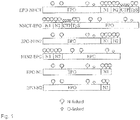
- the highly glycosylated peptide (SEQ ID NO: 1 and/or 2) can be located on the N-ter or C-ter of EPO, as shown in Fig. 1 .
- the highly glycosylated peptide is defined by SEQ ID NO: 1 or 2 or a combination thereof.
- One or more the same or different highly glycosylated peptide(s) can be attached to the C-ter of EPO.
- SEQ ID NO: 1 or 2 is attached to the C-ter of EPO; or two or more SEQ ID NO: 1 or 2 are attached to the C-ter of EPO; or SEQ ID NO: 1 and 2 are attached to the C-ter of EPO, sequentially; or SEQ ID NO: 2 and 1 are attached to the C-ter of EPO, sequentially.
- SEQ ID NO: 1 and 2 are attached to the C-ter of EPO, sequentially.
- the recombinant protein of the present invention further comprises a carboxy terminal peptide of human chorionic gonadotropin (hCG).
- hCG human chorionic gonadotropin
- CTP carboxy terminal peptide of hCG
- CTP sequence peptide is 28, 29, 30, 31, 32, 33 or 34 amino acids long and commences at position 112, 113, 114, 115, 116, 117, or 118 of the hCG amino acid sequence.
- the CTP of the present invention consists of SEQ ID NO: 3, or a sequence having at least 90% sequence identity to SEQ ID NO: 3, preferably at least 95% sequence identity.
- the CTP of the invention is attached to the highly glycosylated peptide (at the C-ter).
- the amount of the CTP is not limited.
- one or more the same or different CTP of hCG can be attached to the C-ter of the highly glycosylated peptide(s) of the invention.
- the CTP of the present invention may acts as a protectant against degradation of proteins or peptides.
- the CTP of hCG can extends circulatory half-life of recombinant proteins, and enhances the potency of recombinant proteins.
- the invention further comprises a carboxy terminal peptide of thrombopoietin (TPO).
- TPO thrombopoietin
- TpS carboxy terminal peptide of thrombopoietin
- the TpS of the invention consists of SEQ ID NO: 4, or a sequence having at least 90% sequence identity to SEQ ID NO: 4, preferably at least 95%, or 99% sequence identity.
- the TpS of the present invention is attached to the CTP (at the C-ter), and the amount of the TpS is not limited. One or more the same or different TpS can be attached to the N-ter of EPO or the C-ter of the CTP.
- the TpS of the present application may acts as a protectant against degradation of proteins or peptides derived therefrom.
- the TpS can extend circulatory half-life of the recombinant proteins, and enhance the potency of the recombinant proteins.
- the amount and arrangement of EPO, the highly glycosylated peptide, CTP, and TpS are not limited.
- the recombinant protein of the present invention comprises SEQ ID NOS: 1, 2, 3, and 4.
- the recombinant protein of the present invention may be selected from SEQ ID NO: 5 (EPO-NNCT), 6 (NNCT-EPO), 7 (EPO-N1N2), 8 (N1N2-EPO), 9 (EPO-N1), or 10 (EPO-N2).
- the CTP, and TpS also can be modified by deletion, substitution, insertion and/or chemical modification.
- the method and process of the amino acid deletion, substitution, insertion and/or chemical modification are well known in the art, and the CTP, and TpS still maintain the original activity after modification.
- Methods for preparing peptidomimetic compounds are well known in the art and can be referred to Quantitative Drug Design, C. A. Ramsden Gd., Chapter 17.2, F. Choplin Pergamon Press (1992 ).
- the present invention further provides a polynucleotide encoding the recombinant protein of the present invention.
- a polynucleotide or nucleotide refers to a single or double stranded nucleic acid sequence which be isolated and provided in the form of an RNA sequence, a complementary polynucleotide sequence (cDNA), a genomic polynucleotide sequence and/or a combination of the above.
- the polynucleotides of the present invention may be prepared using PCR techniques, or any other method or procedure known to one skilled in the art.
- the procedure involves the ligation of two different DNA sequences (See, for example, " Current Protocols in Molecular Biology", eds. Ausubel et al., John Wiley & Sons, 1992 ).
- the polynucleotides of the invention may be inserted into expression vectors to enable expression of the recombinant protein.
- the expression vector includes additional sequences which render this vector suitable for replication and integration in prokaryotes or eukaryotes.
- expression vectors comprise transcription and translation initiation sequences (e.g., promoters or enhances) and transcription and translation terminators (e.g., polyadenylation signals).
- prokaryotic or eukaryotic cells can be used as host-expression systems to express the polypeptides of the present invention.
- these expression systems include, but are not limited to, microorganisms, such as bacteria, yeast, plant cell, eukaryotes (e.g. mammalian cells, CHO cells), etc.
- the present invention of the invention further provides a composition, comprising the recombinant protein of the invention and a physiologically acceptable carrier or excipient.
- phrases "pharmaceutically acceptable carrier or excipient” which be interchangeably used refer to a carrier, excipient or adjuvant that does not cause significant irritation to an organism and does not abrogate the biological activity and properties of the administered compound.
- the carrier comprises, but is not limited to polyethylene glycol (PEG), a biocompatible polymer with solubility in both organic and aqueous media.
- the excipients include, but are not limited to calcium carbonate, calcium phosphate, various sugars and starch, cellulose derivatives, gelatin, vegetable oils and polyethylene glycols.
- composition of the present invention can be used to treat a patient having anemia, an anemic patient having chronic renal insufficiency, an anemic patient having end stage renal disease, an anemic patient undergoing dialysis, an anemic patient having chronic renal failure, an anemic HIV infected patient, an anemic patient having cancer, an anemic patient undergoing chemotherapy, and an anemic patient scheduled to undergo non-cardiac, non-vascular surgery.
- the hematocrit (Ht) of anemia patient can be increased significantly, and the recombinant EPO with high glycosylation of the present invention has a longer half-life in a subject.
- the recombinant EPO with high glycosylation of the present invention has a longer half-life than that of the commercial EPO products (e.g., Eprex® and Aranesp®).
- the high-glycosylated EPO of the present invention has a half-life at least about 1 time longer than the commercial EPO products, preferably, 2 times, more preferably, 3 times.
- the high-glycosylated EPO of the present invention has a longer half-life, a higher AUC (area under curve) and Cmax, and a longer Tmax values than that of the commercial EPO products (e.g., Eprex® and Aranesp®).
- the phrase "therapeutically effective” generally refers to from about 1 to 10000 I.U./kg, preferably from about 50 to 2000 I.U./kg, more preferably from about 50 to 600 I.U./kg, and most preferably from about 50 to 300 I.U./kg body weight.
- the formulations of the present invention may be administered at any desired frequency or time interval between administrations.
- a dosing regimen the subject is administered the sustained release formulations of the present invention thrice per two weeks, once per week, once per two weeks, once per three weeks, once per month, once per five weeks, once per six weeks, or at more frequent or less frequent intervals, or at any combination of frequencies or time intervals as desired.
- a preferred dosing regimen may be once per three weeks, particularly for subjects receiving chemotherapy for the treatment of cancer, since many chemotherapeutic regimens are administered on a once per three-week schedule.
- CHO dfhr- cells were cultured in IMDM medium (Isocoves Modified Dulbecco's Medium, IMDM, Gibco Cat. 12200-36) supplemented with 10% fetal bovine serum (Gibco Cat. 10091148) plus hypoxanthine and thymidine (Gibco, Cat. 11067-030) and 2 mM L-glutamine (Gibco Cat. 25030-081). Dhfr(-) marker was used for amplification and selection.
- IMDM medium Isocoves Modified Dulbecco's Medium, IMDM, Gibco Cat. 12200-36
- 10% fetal bovine serum Gibco Cat. 10091148
- hypoxanthine and thymidine Gibco, Cat. 11067-030
- 2 mM L-glutamine Gibco Cat. 25030-081
- Dhfr(-) marker was used for amplification and selection.
- dhfr expression of the dhfr gene could be amplified by challenging with the dihydrofolate reductase inhibitor, methorexate (MTX, Sigma Cat no. M8407).
- methorexate methorexate
- other neighboring genes often were co-amplified, so that after each round of amplification cells were subcloned to select clones with increased production rates.
- Cells were cultured in a 37 °C humified 95% air /5% CO 2 incubator (Model 3326, Forma scientific).
- EPO-NNCT gene fragment was obtained using assembly PCR method and then inserted into pcDNA3.1/Neo (+)/DHFR vector, yielding pND/EPO-NNCT.
- the expression vector construct contained the neomycin-resistance gene as a selective marker.
- EPO-NNCT gene was shown in Fig.
- EPO is an erythropoietin
- N1 is highly glycosylated peptide 1 (SEQ ID NO: 1)
- N2 is highly glycosylated peptide 2 (SEQ ID NO: 2)
- CTP is the carboxy terminal peptide of hCG (SEQ ID NO: 3)
- TpS is the carboxy terminal peptide of thrombopoietin (SEQ ID NO: 4).
- EPO-N1N2 The DNA fragment of EPO-N1N2 was reproduced by PCR using E-S primer (3'-cctagggccaccatgggggtgcacgaatgtcctgcc-5') and ENNCT2-A primer (3'-gtatacctacagctgcagagtctcgttcacctgggaagag-5') from pND/EPO-NNCT plasmid to obtain EPO-N1N2 fragment as shown in Fig. 1 .
- the EPO-N1N2 fragment then was inserted into an expression vector to obtain pPD/EPO-N1N2 vector.
- the expression vector contained the puromycin-resistance gene as a selective marker.
- the DNA fragment of N1N2-EPO was synthesized by GENEWIZ, Inc (as shown in Fig. 1 ), and it was inserted into an expression vector to obtain pPD/N1N2-EPO vector.
- the expression vector contained the puromycin-resistance gene as a selective marker.
- EPO-N1 The DNA fragment of EPO-N1 was reproduced by PCR using E-S primer (3'-cctagggccaccatgggggtgcacgaatgtcctgcc-5') and ENNCT4-A primer (3'-gtatacctagtctgggacagtgatattctc-5') from pND/EPO-NNCT plasmid as shown in Fig. 1 .
- the EPO-N1 fragment was inserted into an expression vector to obtain pPD/EPO-N1.
- the expression vector contained the puromycin-resistance gene as a selective marker.
- EPO-N2 The DNA fragment of EPO-N2 was obtained by PCR method using E-S primer (3'-cctagggccaccatgggggtgcacgaatgtcctgcc-5') and ENNCT5-A primer (3'-gtatacctaca gctgcagagtctcgttcacctgggaagagttgaccaacagtctgtcccctgtcctgcaggcctcc-5') from pND/EPO-NNCT plasmid to obtain EPO-N2 fragment as shown in Fig. 1 .
- EPO-N2 fragment then was inserted into an expression vector to obtain pPD/N1 plasmid.
- the expression vector contained the puromycin-resistance gene as a selective marker.
- Vector containing EPO-NNCT gene was transfected into CHO dhfr- cells by electroporation (PA4000 PulseAgile® electroporator, Cyto Pulse Sciences). Cells were first typsinized and resuspended at a concentration of 3x10 6 cells/ml in CP-T buffer (Cyto pluse Cat. CP-T). 200 ⁇ l of cell suspension (6x10 5 cells) was mixed with 10 ⁇ g pND/BMP2 and electrophoresed. Electrophoresed cells were cultured in a complete medium (IMDM with 10% fetal bovine serum and HT supplement) without selective substance for recovery growth.
- IMDM fetal bovine serum and HT supplement
- the cells were transferred to the complete medium containing IMDM, 10% fetal bovine serum, L-glutamine and 5 nM MTX, with selective substance.
- cell lines were transferred to 96-well plates, and cell lines which express high level of rhBMP-2 were selected through quantifying protein level by ELISA.
- the selected cells were cultured in a selective medium.
- the cells were diluted to the concentration of 1 cell/100 ⁇ l and then transferred to a 96-well plate to culture to grow to cell clusters. Cells with high expression level were screened according to the results of ELISA and MTX concentrations were gradually increased from 0.005, 0.01, 0.02 to 0.05 ⁇ M.
- mice 25 female 8-week-old BALB/c mice were classified into five groups, and injected subcutaneously with 336 ng/ml of EPO-NNCT and Eprex®, individually. The mice whole blood was collected at 4 to 9, and 13 days after injection. The percentage of reticulocyte was determined by flow cytometry and analyzed by CellQuest Pro software. As shown in Table 3, the amount (mean %) of reticulocytes was highest at Day 7 in the mice injected with the EPO-NNCT of the invention and significantly higher than that of Eprex®. Table 3 Amount of Reticulocytes at different Day after injection Day Reticulocytes (Mean %) S.D.
- mice 14 female 8-week-old BALB/c mice were classified into four groups, and intravenously and subcutaneously injected with 2000 IU/kg of EPO-NNCT of the invention, Eprex®, and Aranesp®, individually.
- the mice blood was collected at 5 min, 10 min, 30 min, 1 hr, 2 hr, 5 hr, 8 hr, 24 hr, 30 hr, 48 hr, 72 hr, 96 hr, 120 hr, 168 hr, 216 hr, 264 hr, and 336 hr after injection, centrifuged to obtain the serum, and then the serum was stored at -70°C.
- EPO-NNCT of the present invention had a longer half-life (about 25-26 hours), and a higher AUC (area under the curve) value (about 8387-4502 ng ⁇ hr/ml).
- EPO-NNCT half-life (hr) AUC (ng ⁇ hr/ml) Cmax (ng/ml) Tmax (hr) intravenous injection
- EPO-N1N2, N1N2-EPO, and NNCT-EPO of the present invention also had a longer half-life (21-30 hours), and a higher AUC (Area Under Curve) value (370-981 ng ⁇ hr/ml), as shown in Table 5.
- EPO-N1 and EPO-N2 had a Tmax of about 24 hours. Accordingly, it is known that EPO-N1 and EPO-N2 had a higher Tmax as compared to commercial Exprex®.
- Table 5 Pharmacokinetic properties of EPO-N1N2, N1N2-EPO, NNCT-EPO and Eprex® (subcutaneous injection) half-life (hr) AUC (ng ⁇ hr/ml) Cmax (ng/ml) Tmax (hr) EPO-N1N2 21.76 370.47 11.77 24 N1N2-EPO 30.14 448.04 13.78 30 NNCT-EPO 25.50 981.63 26.18 24 Eprex® 7.14 169.55 6.88 10
Landscapes
- Health & Medical Sciences (AREA)
- Chemical & Material Sciences (AREA)
- Life Sciences & Earth Sciences (AREA)
- Organic Chemistry (AREA)
- General Health & Medical Sciences (AREA)
- Medicinal Chemistry (AREA)
- Genetics & Genomics (AREA)
- Zoology (AREA)
- Biochemistry (AREA)
- Molecular Biology (AREA)
- Proteomics, Peptides & Aminoacids (AREA)
- Biophysics (AREA)
- Gastroenterology & Hepatology (AREA)
- Toxicology (AREA)
- Endocrinology (AREA)
- Engineering & Computer Science (AREA)
- Bioinformatics & Cheminformatics (AREA)
- Reproductive Health (AREA)
- Pharmacology & Pharmacy (AREA)
- Public Health (AREA)
- Veterinary Medicine (AREA)
- Animal Behavior & Ethology (AREA)
- General Chemical & Material Sciences (AREA)
- Chemical Kinetics & Catalysis (AREA)
- Nuclear Medicine, Radiotherapy & Molecular Imaging (AREA)
- Hematology (AREA)
- Urology & Nephrology (AREA)
- Diabetes (AREA)
- Medicines That Contain Protein Lipid Enzymes And Other Medicines (AREA)
- Peptides Or Proteins (AREA)
- Wood Science & Technology (AREA)
- Biomedical Technology (AREA)
- Micro-Organisms Or Cultivation Processes Thereof (AREA)
- General Engineering & Computer Science (AREA)
- Biotechnology (AREA)
- Immunology (AREA)
- Microbiology (AREA)
- Preparation Of Compounds By Using Micro-Organisms (AREA)
- Virology (AREA)
- Epidemiology (AREA)
Description
- The present invention relates to a highly glycosylated erythropoietin (EPO) with a longer half-life.
- Erythropoiesis (EPO) is a glycoprotein hormone, or a cytokine of red blood cell precursors in the bone marrow. In human, erythropoiesis is involved in the process of red blood cells, and modulation of hormone. Simultaneously, erythropoiesis also has other biological functions. For example, erythropoiesis is involved in the process of wound healing when nervy damage is present.
- Erythropoiesis is the production of red blood cells, which occurs to offset cell destruction. Erythropoiesis is a controlled physiological mechanism that enables sufficient red blood cells to be available for proper tissue oxygenation. Naturally occurring human erythropoietin (hEPO) is produced in the kidney and is the humoral plasma factor which stimulates red blood cell production (Carnot, P and Deflandre, C (1906) C. R. Acad. Sci. 143: 432; Erslev, A J (1953 Blood 8: 349; Reissmann, K R (1950) Blood 5: 372; Jacobson, L O, Goldwasser, E, Freid, W and Plzak, L F (1957) Nature 179: 6331-4). EPO stimulates the division and differentiation of committed erythroid progenitors in the bone marrow and exerts its biological activity by binding to receptors on erythroid precursors (Krantz, B S (1991) Blood 77: 419).
- Erythropoietin has been manufactured biosynthetically using recombinant DNA technology (Egrie, J C, Strickland, T W, Lane, J et al. (1986) Immunobiol. 72: 213-224) and is the product of a cloned human EPO gene inserted into and expressed in the ovarian tissue cells of the chinese hamster (CHO cells). The molecular weight of the polypeptide chain of EPO without the sugar moieties is 18,236 Da. In the intact EPO molecule, approximately 40% of the molecular weight are accounted for by the carbohydrate groups that glycosylate the protein at glycosylation sites on the protein (Sasaki, H, Bothner, B, Dell, A and Fukuda, M (1987) J. Biol. Chem. 262: 12059).
- Because human erythropoietin is essential in red blood cell formation, the hormone is useful in the treatment of blood disorders characterized by low or defective red blood cell production. Clinically, EPO is used in the treatment of anemia in chronic renal failure patients (CRF) (Eschbach, J W, Egri, J C, Downing, M R et al. (1987) NEJM 316: 73-78; Eschbach, J W, Abdulhadi, M H, Browne, J K et al. (1989) Ann. Intern. Med. 111: 992; Egrie, J C, Eschbach, J W, McGuire, T, Adamson, J W (1988) Kidney Intl. 33: 262; Lim, V S, Degowin, R L, Zavala, D et al. (1989) Ann. Intern. Med. 110: 108-114) and in AIDS and cancer patients undergoing chemotherapy (Danna, R P, Rudnick, S A, Abels, R I In: M B, Garnick, ed. Erythropoietin in Clinical Applications-An International Perspective. New York, N.Y.: Marcel Dekker; 1990: p. 301-324). However, the bioavailability of EPO protein therapeutic is limited by its short plasma half-life and protease degradation such that it is hard to attain good clinical potency .
- The invention provides a highly glycosylated erythropoietin (EPO) with a long half-life.
- In order to achieve the goal, the invention provides a recombinant protein, comprising an erythropoietin and a highly glycosylated peptide located on either the amino-terminal end or carboxy-terminal end of the erythropoietin and wherein the highly glycosylated peptide is defined by SEQ ID NO: 1 or 2 or a combination thereof. The invention further provides a nucleotide encoding the recombinant protein.
- The invention also provides a cell which is transfected with the nucleotide to express the recombinant protein.
- The invention further provides a composition, comprising the recombinant protein and a pharmaceutically acceptable carrier or adjuvant.
- In order to achieve the purpose stated above, as well as other purposes, the characteristics and advantages of the present invention can be more apparent and understandable, and preferred embodiments are exemplified in the following with accompanying drawings to aid in detailed interpretation.
-
-
Figure 1 illustrates the plasmid construction of EPO-NNCT, NNCT-EPO, EPO-N1N2, N1N2-EPO, EPO-N1, and EPO-N2 according to the embodiments of the present invention. -
Figure 2 illustrates the comparison of activity levels between EPO-NNCT of the present invention and commercial Eprex®. -
Figure 3 illustrates the comparison of pharmacokinetic properties (PK) between EPO-NNCT of the present invention and commercial Eprex® (intravenous injection). -
Figure 4 illustrates the comparison of pharmacokinetic properties (PK) between EPO-NNCT of the present invention and commercial Eprex® (subcutaneous injection). -
Figure 5 illustrates the comparison of pharmacokinetic properties (PK) between EPO-N1N2, N1N2-EPO, NNCT-EPO of the present invention and commercial Eprex® (subcutaneous injection). - The present invention provides a recombinant erythropoietin with a long half-life as defined in
claim 1 and a manufacture method thereof. - In one embodiment, the present invention provides a recombinant protein, comprising an erythropoietin and a highly glycosylated peptide located on either the amino-terminal end or carboxy-terminal end of the erythropoietin and wherein the highly glycosylated peptide is defined by SEQ ID NO: 1 or 2 or a combination thereof.
- As used herein, the phrase "erythropoietin (EPO)" used herein includes EPO of every origin, especially human or animal EPO. The term used herein encompasses not only the naturally occurring, that is wild-type forms of EPO, but also its derivatives, analogs, modifications, mutants or others, as long as they show the biological effects of wild-type erythropoietin.
- Any protein having the activity of EPO, such as muteins or otherwise modified proteins, is also encompassed. Recombinant EPO may be prepared via expression in CHO, BHK, COS, HeLa or PER.C6 cell lines or other appropriate cell lines, by recombinant DNA technology and the related content can be referred to
U.S. Pat. Nos. 5,733,761 ,5,641,670 ,5,733,746 ,5,994,122 ,5,733,761 ,5,641,670 ,5,981,214 and5,272,071 . Its preparation and therapeutic application can be referred toU.S. Pat. Nos. 5,547,933 and5,621,080 , , Huang, S. L., Proc. Natl. Acad. Sci. USA (1984) 2708-2712, as well as Lai, P. H. et al., J. Biol. Chem. 261 (1986) 3116-3121, an Sasaki, H. et al., J. Biol. Chem. 262 (1987) 12059-12076. The preferred EPO species are human EPO species. - As used herein, the phrase "highly glycosylated peptide" refers to a polypeptide having about 10 to 30 amino acid residues with at least one glycoside. The highly glycosylated peptide of the present invention is defined by SEQ ID NO.1 or 2 or a combination thereof.
- The highly glycosylated peptide is fused with an EPO to form the recombinant protein of the present invention. The highly glycosylated peptide can be located on either the N-terminal end (N-ter) or carbosy-terminal end (C-ter) of the EPO, and the number of the highly glycosylated peptide is not limited. For example, one or more the same or different highly glycosylated peptide (s) can be attached to N-terminal end and/or C-terminal end of the EPO. The recombinant protein containing the highly glycosylated peptide has a longer half-life and higher activity. In one embodiment, the highly glycosylated peptide (SEQ ID NO: 1 and/or 2) can be located on the N-ter or C-ter of EPO, as shown in
Fig. 1 . - The highly glycosylated peptide is defined by SEQ ID NO: 1 or 2 or a combination thereof. One or more the same or different highly glycosylated peptide(s) can be attached to the C-ter of EPO. For example, SEQ ID NO: 1 or 2 is attached to the C-ter of EPO; or two or more SEQ ID NO: 1 or 2 are attached to the C-ter of EPO; or SEQ ID NO: 1 and 2 are attached to the C-ter of EPO, sequentially; or SEQ ID NO: 2 and 1 are attached to the C-ter of EPO, sequentially. In another embodiment, SEQ ID NO: 1 and 2 are attached to the C-ter of EPO, sequentially.
- The recombinant protein of the present invention further comprises a carboxy terminal peptide of human chorionic gonadotropin (hCG).
- As used herein, the phrase "carboxy terminal peptide of hCG (hereinafter referred to as CTP)" refers to an amino acid sequence found at the carboxy terminus of human chorionic gonadotropin .beta. subunit which extends from amino acid 112-118 to residue 145 at the C-terminus or to a portion, or a variant or analog thereof, which has equivalent biological activity. The CTP sequence peptide is 28, 29, 30, 31, 32, 33 or 34 amino acids long and commences at position 112, 113, 114, 115, 116, 117, or 118 of the hCG amino acid sequence.
- The CTP of the present invention consists of SEQ ID NO: 3, or a sequence having at least 90% sequence identity to SEQ ID NO: 3, preferably at least 95% sequence identity.
- The CTP of the invention is attached to the highly glycosylated peptide (at the C-ter). The amount of the CTP is not limited. For example, one or more the same or different CTP of hCG can be attached to the C-ter of the highly glycosylated peptide(s) of the invention.
- The CTP of the present invention may acts as a protectant against degradation of proteins or peptides. In the present application, the CTP of hCG can extends circulatory half-life of recombinant proteins, and enhances the potency of recombinant proteins.
- The invention further comprises a carboxy terminal peptide of thrombopoietin (TPO).
- As used herein, the phrase "carboxy terminal peptide of thrombopoietin (hereinafter referred to as TpS)" refers to amino acids at positions 176 to 353 of thrombopoietin, particularly the amino acids at positions 337 to 353 of thrombopoietin, or a variant or analog thereof, which has equivalent biological activity.
- The TpS of the invention consists of SEQ ID NO: 4, or a sequence having at least 90% sequence identity to SEQ ID NO: 4, preferably at least 95%, or 99% sequence identity.
- The TpS of the present invention is attached to the CTP (at the C-ter), and the amount of the TpS is not limited. One or more the same or different TpS can be attached to the N-ter of EPO or the C-ter of the CTP.
- The TpS of the present application may acts as a protectant against degradation of proteins or peptides derived therefrom. The TpS can extend circulatory half-life of the recombinant proteins, and enhance the potency of the recombinant proteins.
- In the present invention, the amount and arrangement of EPO, the highly glycosylated peptide, CTP, and TpS are not limited.
- In one embodiment, the recombinant protein of the present invention comprises SEQ ID NOS: 1, 2, 3, and 4.
- In another embodiment, the recombinant protein of the present invention may be selected from SEQ ID NO: 5 (EPO-NNCT), 6 (NNCT-EPO), 7 (EPO-N1N2), 8 (N1N2-EPO), 9 (EPO-N1), or 10 (EPO-N2).
- The CTP, and TpS also can be modified by deletion, substitution, insertion and/or chemical modification. The method and process of the amino acid deletion, substitution, insertion and/or chemical modification are well known in the art, and the CTP, and TpS still maintain the original activity after modification.
- In one embodiments, modifications include, but are not limited to N terminus modification, C terminus modification, polypeptide bond modification, such as CH2-NH, CH2-S, CH2-S=O, O=C-NH, CH2-O, CH2-CH2, S=C-NH, CH=CH, or CF=CH, backbone modifications, and residue modification. Methods for preparing peptidomimetic compounds are well known in the art and can be referred to Quantitative Drug Design, C. A. Ramsden Gd., Chapter 17.2, F. Choplin Pergamon Press (1992).
- In one embodiment, the peptide bond (-CO-NH-) of the polypeptide can be substituted by, such as, N-methyl bond (-N(CH3)-CO), ester bond (-C(R)H-COOC(R)-N-), ketomethylen (-CO-CH2), α-aza bond (-NH-N(R)-CO-), where R is any alkyl, hydroxyethylene bond (-CH(OH)-CH2-), thioamide (-CS-NH-), alkene bonds (-CH=CH-), amide bond (-NH-CO-), or polypeptide derivative (-N(R)-CH2-CO-).
- The present invention further provides a polynucleotide encoding the recombinant protein of the present invention.
- The phrase "a polynucleotide or nucleotide" refers to a single or double stranded nucleic acid sequence which be isolated and provided in the form of an RNA sequence, a complementary polynucleotide sequence (cDNA), a genomic polynucleotide sequence and/or a combination of the above.
- The polynucleotides of the present invention may be prepared using PCR techniques, or any other method or procedure known to one skilled in the art. The procedure involves the ligation of two different DNA sequences (See, for example, "Current Protocols in Molecular Biology", eds. Ausubel et al., John Wiley & Sons, 1992).
- The polynucleotides of the invention may be inserted into expression vectors to enable expression of the recombinant protein. In one embodiment, the expression vector includes additional sequences which render this vector suitable for replication and integration in prokaryotes or eukaryotes. In another embodiment, expression vectors comprise transcription and translation initiation sequences (e.g., promoters or enhances) and transcription and translation terminators (e.g., polyadenylation signals).
- A variety of prokaryotic or eukaryotic cells can be used as host-expression systems to express the polypeptides of the present invention. In one embodiment, these expression systems include, but are not limited to, microorganisms, such as bacteria, yeast, plant cell, eukaryotes (e.g. mammalian cells, CHO cells), etc.
- Methods for transformation can be found in Sambrook et al., Molecular Cloning: A Laboratory Manual, Cold Springs Harbor Laboratory, New York (1989, 1992), in Ausubel et al., Current Protocols in Molecular Biology, John Wiley and Sons, Baltimore, Md. (1989), Chang et al., Somatic Gene Therapy, CRC Press, Ann Arbor, Mich. (1995), Vega et al., Gene Targeting, CRC Press, Ann Arbor Mich. (1995), Vectors: A Survey of Molecular Cloning Vectors and Their Uses, Butterworths, Boston Mass. (1988) and Gilboa et at. [Biotechniques 4 (6): 504-512, 1986], and include, for example, stable or transient transfection, lipofection, electroporation and infection with recombinant viral vectors.
- The present invention of the invention further provides a composition, comprising the recombinant protein of the invention and a physiologically acceptable carrier or excipient.
- The phrases "pharmaceutically acceptable carrier or excipient" which be interchangeably used refer to a carrier, excipient or adjuvant that does not cause significant irritation to an organism and does not abrogate the biological activity and properties of the administered compound. The carrier comprises, but is not limited to polyethylene glycol (PEG), a biocompatible polymer with solubility in both organic and aqueous media. The excipients include, but are not limited to calcium carbonate, calcium phosphate, various sugars and starch, cellulose derivatives, gelatin, vegetable oils and polyethylene glycols.
- The composition of the present invention can be used to treat a patient having anemia, an anemic patient having chronic renal insufficiency, an anemic patient having end stage renal disease, an anemic patient undergoing dialysis, an anemic patient having chronic renal failure, an anemic HIV infected patient, an anemic patient having cancer, an anemic patient undergoing chemotherapy, and an anemic patient scheduled to undergo non-cardiac, non-vascular surgery.
- After an effective amount of the composition of the present invention is administrated to an anemia patient, the hematocrit (Ht) of anemia patient can be increased significantly, and the recombinant EPO with high glycosylation of the present invention has a longer half-life in a subject. The recombinant EPO with high glycosylation of the present invention has a longer half-life than that of the commercial EPO products (e.g., Eprex® and Aranesp®). For example, the high-glycosylated EPO of the present invention has a half-life at least about 1 time longer than the commercial EPO products, preferably, 2 times, more preferably, 3 times. In another embodiment, the high-glycosylated EPO of the present invention has a longer half-life, a higher AUC (area under curve) and Cmax, and a longer Tmax values than that of the commercial EPO products (e.g., Eprex® and Aranesp®).
- The phrase "therapeutically effective" generally refers to from about 1 to 10000 I.U./kg, preferably from about 50 to 2000 I.U./kg, more preferably from about 50 to 600 I.U./kg, and most preferably from about 50 to 300 I.U./kg body weight. The formulations of the present invention may be administered at any desired frequency or time interval between administrations. A dosing regimen, the subject is administered the sustained release formulations of the present invention thrice per two weeks, once per week, once per two weeks, once per three weeks, once per month, once per five weeks, once per six weeks, or at more frequent or less frequent intervals, or at any combination of frequencies or time intervals as desired. The dosage required will vary according to a number of factors known to those skilled in the art, including, but not limited to, the compound or compounds used, the species of subject, the size of the subject, and the severity of the associated disease condition that anemia. A preferred dosing regimen may be once per three weeks, particularly for subjects receiving chemotherapy for the treatment of cancer, since many chemotherapeutic regimens are administered on a once per three-week schedule.
- Cells were purchased from the Culture Collection and Research Center (CCRC, 60133) of Food Industry Research and Development Institute, Taiwan. CHO dfhr- cells were cultured in IMDM medium (Isocoves Modified Dulbecco's Medium, IMDM, Gibco Cat. 12200-36) supplemented with 10% fetal bovine serum (Gibco Cat. 10091148) plus hypoxanthine and thymidine (Gibco, Cat. 11067-030) and 2 mM L-glutamine (Gibco Cat. 25030-081). Dhfr(-) marker was used for amplification and selection. Expression of the dhfr gene could be amplified by challenging with the dihydrofolate reductase inhibitor, methorexate (MTX, Sigma Cat no. M8407). When the dfhr genes were amplified, other neighboring genes often were co-amplified, so that after each round of amplification cells were subcloned to select clones with increased production rates. Cells were cultured in a 37 °C humified 95% air /5% CO2 incubator (Model 3326, Forma scientific).
- EPO-NNCT gene fragment was obtained using assembly PCR method and then inserted into pcDNA3.1/Neo (+)/DHFR vector, yielding pND/EPO-NNCT. The expression vector construct contained the neomycin-resistance gene as a selective marker. EPO-NNCT gene was shown in
Fig. 1 , wherein the "EPO" is an erythropoietin, "N1" is highly glycosylated peptide 1 (SEQ ID NO: 1), "N2" is highly glycosylated peptide 2 (SEQ ID NO: 2), "CTP" is the carboxy terminal peptide of hCG (SEQ ID NO: 3), and "TpS" is the carboxy terminal peptide of thrombopoietin (SEQ ID NO: 4). - The DNA fragment of NNCT was reproduced by PCR using LSP-N-S1 primer (3'-cctagggccaccatgggggtgcacgaatgtcctgcctggctgtggcttctcctgtccctgctgtcgctccctctgg-5'), LSP-N-S2 primer (3' -ctgtccctgctgtcgctccctctgggcctcccagtcctgggcgaggccgagaatatcacgacgggcggtaac-5'), and ENNCT1-A primers (3'-ctcggctgtcacagatgaggcgtggtggggccccttcctgagacagattctgggagtgggtgtaggatg-5') from pND/EPO-NNCT plasmid to obtain NNCT-EPO fragment as shown in
Fig. 1 . The NNCT-EPO fragment then was inserted into an expression vector to obtain pPD/NNCT-EPO vector. The expression vector contained the puromycin-resistance gene as a selective marker. - The DNA fragment of EPO-N1N2 was reproduced by PCR using E-S primer (3'-cctagggccaccatgggggtgcacgaatgtcctgcc-5') and ENNCT2-A primer (3'-gtatacctacagctgcagagtctcgttcacctgggaagag-5') from pND/EPO-NNCT plasmid to obtain EPO-N1N2 fragment as shown in
Fig. 1 . The EPO-N1N2 fragment then was inserted into an expression vector to obtain pPD/EPO-N1N2 vector. The expression vector contained the puromycin-resistance gene as a selective marker. - The DNA fragment of N1N2-EPO was synthesized by GENEWIZ, Inc (as shown in
Fig. 1 ), and it was inserted into an expression vector to obtain pPD/N1N2-EPO vector. The expression vector contained the puromycin-resistance gene as a selective marker. - The DNA fragment of EPO-N1 was reproduced by PCR using E-S primer (3'-cctagggccaccatgggggtgcacgaatgtcctgcc-5') and ENNCT4-A primer (3'-gtatacctagtctgggacagtgatattctc-5') from pND/EPO-NNCT plasmid as shown in
Fig. 1 . The EPO-N1 fragment was inserted into an expression vector to obtain pPD/EPO-N1. The expression vector contained the puromycin-resistance gene as a selective marker. - The DNA fragment of EPO-N2 was obtained by PCR method using E-S primer (3'-cctagggccaccatgggggtgcacgaatgtcctgcc-5') and ENNCT5-A primer (3'-gtatacctaca gctgcagagtctcgttcacctgggaagagttgaccaacagtctgtcccctgtcctgcaggcctccc-5') from pND/EPO-NNCT plasmid to obtain EPO-N2 fragment as shown in
Fig. 1 . EPO-N2 fragment then was inserted into an expression vector to obtain pPD/N1 plasmid. The expression vector contained the puromycin-resistance gene as a selective marker. - Vector containing EPO-NNCT gene was transfected into CHO dhfr- cells by electroporation (PA4000 PulseAgile® electroporator, Cyto Pulse Sciences). Cells were first typsinized and resuspended at a concentration of 3x10⁶ cells/ml in CP-T buffer (Cyto pluse Cat. CP-T). 200µl of cell suspension (6x10⁵ cells) was mixed with 10µg pND/BMP2 and electrophoresed. Electrophoresed cells were cultured in a complete medium (IMDM with 10% fetal bovine serum and HT supplement) without selective substance for recovery growth. After 48 hours growth in medium without selective substance, the cells were transferred to the complete medium containing IMDM, 10% fetal bovine serum, L-glutamine and 5 nM MTX, with selective substance. After approximately 2-week culture period, cell lines were transferred to 96-well plates, and cell lines which express high level of rhBMP-2 were selected through quantifying protein level by ELISA. The selected cells were cultured in a selective medium. The cells were diluted to the concentration of 1 cell/100µl and then transferred to a 96-well plate to culture to grow to cell clusters. Cells with high expression level were screened according to the results of ELISA and MTX concentrations were gradually increased from 0.005, 0.01, 0.02 to 0.05µM.
- 4 x 10⁵ cell/ml of recombinant cell line obtained from Example 3 were batch-cultured in 50 ml flask containing serum free medium. Cells were monitored everyday and culture medium was collected to measure the concentration of the EPO and select a high-yield clone under 0.02 µM MTX challenge. In spinner culture, the accumulated productivity of EPO-NNCT was 140.69 µg/ml as shown in Table 1.
Table 1 Results of batch culture Max. Yield (µg/ml) 140.9 Max. cell concentration (106 cell/ml) 2.42 IVC (106 cell-day) 14.60 q (pg/cell/day) 9.63 - The process and procedure of the example were carried out according to the disclosure of European Pharmacopeia 5.2 (Erythropoietini solution concentrata). Female 8-week-old BALB/c mice were classified into two groups, and injected subcutaneously with 21, 42, 84, 168, 336, and 672 ng/ml of EPO-NNCT of the invention and Eprex®, individually. After injection, the 0.25 ml whole blood was collected. After the cells were stained, the cells were analyzed by flow cytometry and CellQuest Pro software, and the results were shown in Table 2. Referring to
Fig. 2 , in the same dosage, the average number of reticulocytes of the mice administered with EPO-NNCT of the present invention was higher than that of the mice administered with Eprex® .Table 2 Amount of Reticulocytes after injection Subcutaneous injection (ng/ml) Reticulocytes (mean %) EPO-NNCT 672 23.15 336 19.45 168 16.14 84 13.17 42 11.47 21 10.52 Eprex® 672 15.50 336 14.05 168 11.57 - 25 female 8-week-old BALB/c mice were classified into five groups, and injected subcutaneously with 336 ng/ml of EPO-NNCT and Eprex®, individually. The mice whole blood was collected at 4 to 9, and 13 days after injection. The percentage of reticulocyte was determined by flow cytometry and analyzed by CellQuest Pro software. As shown in Table 3, the amount (mean %) of reticulocytes was highest at Day 7 in the mice injected with the EPO-NNCT of the invention and significantly higher than that of Eprex®.
Table 3 Amount of Reticulocytes at different Day after injection Day Reticulocytes (Mean %) S.D. CV EPO- NNCT 5 20.33 2.38 11.70 6 27.26 1.99 7.29 7 28.12 2.11 7.51 8 25.42 2.17 8.55 9 16.37 3.09 18.89 13 5.21 0.53 10.19 Eprex® 5 11.28 1.56 13.86 6 7.42 0.81 10.97 7 6.35 1.16 18.22 8 11.11 1.22 10.95 9 10.76 2.40 22.31 13 8.61 0.92 10.67 - 14 female 8-week-old BALB/c mice were classified into four groups, and intravenously and subcutaneously injected with 2000 IU/kg of EPO-NNCT of the invention, Eprex®, and Aranesp®, individually. The mice blood was collected at 5 min, 10 min, 30 min, 1 hr, 2 hr, 5 hr, 8 hr, 24 hr, 30 hr, 48 hr, 72 hr, 96 hr, 120 hr, 168 hr, 216 hr, 264 hr, and 336 hr after injection, centrifuged to obtain the serum, and then the serum was stored at -70°C. The pharmacokinetic assay was carried out using Quantikine® IVD® Epo ELISA kit to measure the optical density at 450 nm and 600 nm and then analyzed by
SoftMax® Pro 5 software. The results are shown in Table 4. Referring toFigs 3-4 , compared to Eprex® and Aranesp®, EPO-NNCT of the present invention had a longer half-life (about 25-26 hours), and a higher AUC (area under the curve) value (about 8387-4502 ng·hr/ml).Table 4 Pharmacokinetic properties of EPO-NNCT half-life (hr) AUC (ng·hr/ml) Cmax (ng/ml) Tmax (hr) intravenous injection EPO-NNCT (n=2) 25.03 8387.44 - - Aranesp® (n=2) 17.89 5694.75 - - Eprex® (n=3) 6.35 269.96 - - subcutaneous injection EPO-NNCT (n=2) 26.53 4502.90 68.19 24 Aranesp® (n=2) 17.78 2547.34 58.16 24 Eprex® (n=3) 7.14 169.55 6.88 10 - Similarly, compared to Exprex®, EPO-N1N2, N1N2-EPO, and NNCT-EPO of the present invention also had a longer half-life (21-30 hours), and a higher AUC (Area Under Curve) value (370-981 ng·hr/ml), as shown in Table 5.
- Further, EPO-N1 and EPO-N2 had a Tmax of about 24 hours. Accordingly, it is known that EPO-N1 and EPO-N2 had a higher Tmax as compared to commercial Exprex®.
Table 5 Pharmacokinetic properties of EPO-N1N2, N1N2-EPO, NNCT-EPO and Eprex® (subcutaneous injection) half-life (hr) AUC (ng·hr/ml) Cmax (ng/ml) Tmax (hr) EPO-N1N2 21.76 370.47 11.77 24 N1N2-EPO 30.14 448.04 13.78 30 NNCT-EPO 25.50 981.63 26.18 24 Eprex® 7.14 169.55 6.88 10 - Although preferred embodiments are disclosed as above, they cannot be used to limit the preset invention, and thus the scope of the present invention will be limited only by the appended claims.
-
- EPO: Erythropoietin
- N1: Highly
glycosylated fragment 1 - N2: Highly glycosylated fragment 2
- CTP: Harboxy terminal peptide of human chorionic gonadotropin
- TpS: Carboxy terminal peptide of thrombopoietin.
-
- <110> UNITED BIOMEDICAL, INC., ASIA
- <120> Recombinant Protein
- <130> IP130319
- <160> 10
- <170> PatentIn version 3.1
- <210> 1
<211> 20
<212> PRT
<213> Artificial sequence - <400> 1

- <210> 2
<211> 17
<212> PRT
<213> Artificial sequence - <400> 2

- <210> 3
<211> 28
<212> PRT
<213> Homo sapiens - <400> 3

- <210> 4
<211> 17
<212> PRT
<213> Homo sapiens - <400> 4

- <210> 5
<211> 275
<212> PRT
<213> Artificial sequence - <400> 5


- <210> 6
<211> 275
<212> PRT
<213> Artificial sequence - <400> 6


- <210> 7
<211> 230
<212> PRT
<213> Artificial sequence - <400> 7


- <210> 8
<211> 230
<212> PRT
<213> Artificial sequence - <400> 8


- <210> 9
<211> 213
<212> PRT
<213> Artificial sequence - <400> 9


- <210> 10
<211> 210
<212> PRT
<213> Artificial sequence - <400> 10


Claims (10)
- A recombinant protein, comprising an erythropoietin and a highly glycosylated peptide located on either the amino-terminal end or carboxy-terminal end of the erythropoietin and wherein the highly glycosylated peptide is defined by SEQ ID NO: 1 or 2 or a combination thereof.
- The recombinant protein according to claim 1, wherein the carboxy-terminal end of the erythropoietin is attached to the highly glycosylated peptide.
- The recombinant protein according to claim 1, wherein the amino-terminal end of the erythropoietin is attached to the highly glycosylated peptide.
- The recombinant protein according to claim 2, further comprising a carboxy terminal peptide from human chorionic gonadotropin, wherein said carboxy terminal peptide from human chorionic gonadotropin consists of a sequence having at least 90% sequence identity to SEQ ID NO: 3, and wherein the carboxy-terminal end of the highly glycosylated peptide is attached to said carboxy terminal peptide from human chorionic gonadotropin.
- The recombinant protein according to claim 4, further comprising a carboxy terminal peptide from thrombopoietin, wherein said carboxy terminal peptide from thrombopoietin consists of a sequence having at least 90% sequence identity to SEQ ID NO: 4, and wherein the carboxy-terminal end of the carboxy terminal peptide from human chorionic gonadotropin is attached to said carboxy terminal peptide from thrombopoietin.
- The recombinant protein according to claim 1, wherein the recombinant protein comprises SEQ ID NO: 5 or a sequence having at least 90% sequence identity to SEQ ID NO: 5.
- A nucleotide sequence encoding the recombinant protein of claim 1.
- A cell transfected with the nucleotide sequence of claim 7 for expressing the recombinant protein of claim 1.
- Use of a cell according to claim 8 for expressing the recombinant protein of claim 1.
- A composition comprising the recombinant protein of claim 1 and a pharmaceutically acceptable carrier or adjuvant.
Priority Applications (1)
| Application Number | Priority Date | Filing Date | Title |
|---|---|---|---|
| PL13863709T PL2937362T3 (en) | 2012-12-18 | 2013-12-16 | Recombinant protein |
Applications Claiming Priority (2)
| Application Number | Priority Date | Filing Date | Title |
|---|---|---|---|
| CN201210551666.7A CN103864913A (en) | 2012-12-18 | 2012-12-18 | Recombinant proteins |
| PCT/CN2013/089544 WO2014094579A1 (en) | 2012-12-18 | 2013-12-16 | Recombinant protein |
Publications (3)
| Publication Number | Publication Date |
|---|---|
| EP2937362A1 EP2937362A1 (en) | 2015-10-28 |
| EP2937362A4 EP2937362A4 (en) | 2016-05-18 |
| EP2937362B1 true EP2937362B1 (en) | 2018-05-16 |
Family
ID=50903970
Family Applications (1)
| Application Number | Title | Priority Date | Filing Date |
|---|---|---|---|
| EP13863709.5A Active EP2937362B1 (en) | 2012-12-18 | 2013-12-16 | Recombinant protein |
Country Status (15)
| Country | Link |
|---|---|
| US (1) | US10428129B2 (en) |
| EP (1) | EP2937362B1 (en) |
| JP (1) | JP6083913B2 (en) |
| KR (1) | KR101796163B1 (en) |
| CN (2) | CN103864913A (en) |
| AU (1) | AU2013362474B2 (en) |
| CA (1) | CA2894913C (en) |
| DK (1) | DK2937362T3 (en) |
| ES (1) | ES2683983T3 (en) |
| MY (1) | MY178192A (en) |
| NZ (1) | NZ708796A (en) |
| PL (1) | PL2937362T3 (en) |
| SG (1) | SG11201504096RA (en) |
| TW (1) | TWI507415B (en) |
| WO (1) | WO2014094579A1 (en) |
Family Cites Families (16)
| Publication number | Priority date | Publication date | Assignee | Title |
|---|---|---|---|---|
| KR850004274A (en) | 1983-12-13 | 1985-07-11 | 원본미기재 | Method for preparing erythropoietin |
| US7217689B1 (en) | 1989-10-13 | 2007-05-15 | Amgen Inc. | Glycosylation analogs of erythropoietin |
| ATE174058T1 (en) | 1989-11-06 | 1998-12-15 | Cell Genesys Inc | PRODUCTION OF PROTEINS USING HOMOLOGOUS RECOMBINATION |
| US5272071A (en) | 1989-12-22 | 1993-12-21 | Applied Research Systems Ars Holding N.V. | Method for the modification of the expression characteristics of an endogenous gene of a given cell line |
| US5968502A (en) | 1991-11-05 | 1999-10-19 | Transkaryotic Therapies, Inc. | Protein production and protein delivery |
| US5641670A (en) | 1991-11-05 | 1997-06-24 | Transkaryotic Therapies, Inc. | Protein production and protein delivery |
| IL192290A0 (en) | 1993-08-17 | 2008-12-29 | Kirin Amgen Inc | Erythropoietin analogs |
| GB2306460B (en) | 1994-08-31 | 1999-03-10 | Prodevco | Improvements in or relating to a composter |
| BR9905867A (en) | 1998-11-06 | 2001-01-23 | Bio Sidus S A | Recombinant human erythropoietin-producing cell line and the recombinant human erythropoietin produced by this cell |
| ATE320449T1 (en) | 2000-12-11 | 2006-04-15 | Cheil Jedang Corp | FUSION PROTEIN WITH IMPROVED IN VIVO ERYTHROPOIETY EFFECT |
| KR101229995B1 (en) | 2000-12-11 | 2013-02-06 | 씨제이 주식회사 | Fusion protein having the enhanced in vivo activity of erythropoietin |
| US6987172B2 (en) * | 2001-03-05 | 2006-01-17 | Washington University In St. Louis | Multifunctional single chain glycoprotein hormones comprising three or more β subunits |
| KR100467750B1 (en) * | 2001-11-29 | 2005-01-24 | 씨제이 주식회사 | Fusion protein having the enhanced in vivo activity of erythropoietin |
| WO2007092252A2 (en) | 2006-02-03 | 2007-08-16 | Modigene Inc | Long-acting polypeptides and methods of producing same |
| CN101337988B (en) * | 2006-10-31 | 2013-01-09 | 沈阳三生制药有限责任公司 | A new analogue of erythropoietin |
| EP2120998B1 (en) | 2006-11-28 | 2013-08-07 | HanAll Biopharma Co., Ltd. | Modified erythropoietin polypeptides and uses thereof for treatment |
-
2012
- 2012-12-18 CN CN201210551666.7A patent/CN103864913A/en active Pending
-
2013
- 2013-12-16 AU AU2013362474A patent/AU2013362474B2/en active Active
- 2013-12-16 KR KR1020157015871A patent/KR101796163B1/en active Active
- 2013-12-16 JP JP2015548170A patent/JP6083913B2/en active Active
- 2013-12-16 ES ES13863709.5T patent/ES2683983T3/en active Active
- 2013-12-16 MY MYPI2015701686A patent/MY178192A/en unknown
- 2013-12-16 PL PL13863709T patent/PL2937362T3/en unknown
- 2013-12-16 EP EP13863709.5A patent/EP2937362B1/en active Active
- 2013-12-16 WO PCT/CN2013/089544 patent/WO2014094579A1/en not_active Ceased
- 2013-12-16 NZ NZ708796A patent/NZ708796A/en unknown
- 2013-12-16 US US14/653,838 patent/US10428129B2/en active Active
- 2013-12-16 SG SG11201504096RA patent/SG11201504096RA/en unknown
- 2013-12-16 DK DK13863709.5T patent/DK2937362T3/en active
- 2013-12-16 CA CA2894913A patent/CA2894913C/en active Active
- 2013-12-16 CN CN201380065331.7A patent/CN105102483B/en active Active
- 2013-12-17 TW TW102146527A patent/TWI507415B/en active
Non-Patent Citations (1)
| Title |
|---|
| None * |
Also Published As
| Publication number | Publication date |
|---|---|
| JP6083913B2 (en) | 2017-02-22 |
| DK2937362T3 (en) | 2018-07-16 |
| KR101796163B1 (en) | 2017-11-10 |
| PL2937362T3 (en) | 2018-09-28 |
| JP2016501897A (en) | 2016-01-21 |
| AU2013362474A1 (en) | 2015-06-11 |
| US10428129B2 (en) | 2019-10-01 |
| CA2894913A1 (en) | 2014-06-26 |
| NZ708796A (en) | 2016-08-26 |
| CN105102483B (en) | 2019-03-01 |
| CN103864913A (en) | 2014-06-18 |
| US20160176940A1 (en) | 2016-06-23 |
| SG11201504096RA (en) | 2015-07-30 |
| WO2014094579A1 (en) | 2014-06-26 |
| KR20150085839A (en) | 2015-07-24 |
| TWI507415B (en) | 2015-11-11 |
| MY178192A (en) | 2020-10-06 |
| CN105102483A (en) | 2015-11-25 |
| CA2894913C (en) | 2019-05-07 |
| ES2683983T3 (en) | 2018-10-01 |
| EP2937362A1 (en) | 2015-10-28 |
| AU2013362474B2 (en) | 2016-09-22 |
| TW201434856A (en) | 2014-09-16 |
| EP2937362A4 (en) | 2016-05-18 |
| HK1211952A1 (en) | 2016-06-03 |
Similar Documents
| Publication | Publication Date | Title |
|---|---|---|
| EP1789442B1 (en) | Muteins of fibroblast growth factor 21 | |
| US7655627B2 (en) | Muteins of fibroblast growth factor 21 | |
| EP1961425B1 (en) | Methods and erythropoeitin analogs for the prevention and treatment of anemia | |
| EP3121198B1 (en) | Recombinant human g-csf dimer and use thereof for the treatment of neurological diseases | |
| JPH0655136B2 (en) | Cells transformed with DNA encoding human erythropoietin | |
| WO2015062349A1 (en) | Long-acting recombinant human follicle-stimulating hormone-fc fusion protein | |
| JP2022088521A (en) | Long-term active polypeptide and method for producing and administering the polypeptide. | |
| US6187564B1 (en) | DNA encoding erythropoietin multimers having modified 5′ and 3′ sequences and its use to prepare EPO therapeutics | |
| RS61163B1 (en) | Method of production of gonadotrophin | |
| EP1897441A1 (en) | TGF-alpha polypeptides, functional fragments and methods of use therefor | |
| CA2894913C (en) | Recombinant protein comprising erythropoietin and glycosylated fragments | |
| HK1211952B (en) | Recombinant protein | |
| JP2006508695A (en) | Monomeric insulin | |
| HK1183889B (en) | Recombinant human g-csf dimer and use thereof for the treatment of neurological diseases |
Legal Events
| Date | Code | Title | Description |
|---|---|---|---|
| PUAI | Public reference made under article 153(3) epc to a published international application that has entered the european phase |
Free format text: ORIGINAL CODE: 0009012 |
|
| 17P | Request for examination filed |
Effective date: 20150602 |
|
| AK | Designated contracting states |
Kind code of ref document: A1 Designated state(s): AL AT BE BG CH CY CZ DE DK EE ES FI FR GB GR HR HU IE IS IT LI LT LU LV MC MK MT NL NO PL PT RO RS SE SI SK SM TR |
|
| AX | Request for extension of the european patent |
Extension state: BA ME |
|
| DAX | Request for extension of the european patent (deleted) | ||
| REG | Reference to a national code |
Ref country code: DE Ref legal event code: R079 Ref document number: 602013037668 Country of ref document: DE Free format text: PREVIOUS MAIN CLASS: C07K0019000000 Ipc: C07K0014505000 |
|
| A4 | Supplementary search report drawn up and despatched |
Effective date: 20160414 |
|
| RIC1 | Information provided on ipc code assigned before grant |
Ipc: A61K 38/18 20060101ALI20160408BHEP Ipc: C12N 5/10 20060101ALI20160408BHEP Ipc: C07K 14/59 20060101ALI20160408BHEP Ipc: C07K 14/505 20060101AFI20160408BHEP Ipc: C07K 14/52 20060101ALI20160408BHEP Ipc: A61P 7/06 20060101ALI20160408BHEP |
|
| 17Q | First examination report despatched |
Effective date: 20170207 |
|
| GRAP | Despatch of communication of intention to grant a patent |
Free format text: ORIGINAL CODE: EPIDOSNIGR1 |
|
| INTG | Intention to grant announced |
Effective date: 20171204 |
|
| GRAS | Grant fee paid |
Free format text: ORIGINAL CODE: EPIDOSNIGR3 |
|
| GRAA | (expected) grant |
Free format text: ORIGINAL CODE: 0009210 |
|
| AK | Designated contracting states |
Kind code of ref document: B1 Designated state(s): AL AT BE BG CH CY CZ DE DK EE ES FI FR GB GR HR HU IE IS IT LI LT LU LV MC MK MT NL NO PL PT RO RS SE SI SK SM TR |
|
| REG | Reference to a national code |
Ref country code: GB Ref legal event code: FG4D |
|
| REG | Reference to a national code |
Ref country code: CH Ref legal event code: EP |
|
| REG | Reference to a national code |
Ref country code: IE Ref legal event code: FG4D |
|
| REG | Reference to a national code |
Ref country code: AT Ref legal event code: REF Ref document number: 999440 Country of ref document: AT Kind code of ref document: T Effective date: 20180615 |
|
| REG | Reference to a national code |
Ref country code: DE Ref legal event code: R096 Ref document number: 602013037668 Country of ref document: DE |
|
| REG | Reference to a national code |
Ref country code: DK Ref legal event code: T3 Effective date: 20180713 |
|
| REG | Reference to a national code |
Ref country code: CH Ref legal event code: NV Representative=s name: PATENTANWAELTE SCHAAD, BALASS, MENZL AND PARTN, CH |
|
| REG | Reference to a national code |
Ref country code: NL Ref legal event code: FP |
|
| REG | Reference to a national code |
Ref country code: SE Ref legal event code: TRGR |
|
| REG | Reference to a national code |
Ref country code: ES Ref legal event code: FG2A Ref document number: 2683983 Country of ref document: ES Kind code of ref document: T3 Effective date: 20181001 |
|
| REG | Reference to a national code |
Ref country code: NO Ref legal event code: T2 Effective date: 20180516 |
|
| REG | Reference to a national code |
Ref country code: LT Ref legal event code: MG4D |
|
| PG25 | Lapsed in a contracting state [announced via postgrant information from national office to epo] |
Ref country code: LT Free format text: LAPSE BECAUSE OF FAILURE TO SUBMIT A TRANSLATION OF THE DESCRIPTION OR TO PAY THE FEE WITHIN THE PRESCRIBED TIME-LIMIT Effective date: 20180516 Ref country code: BG Free format text: LAPSE BECAUSE OF FAILURE TO SUBMIT A TRANSLATION OF THE DESCRIPTION OR TO PAY THE FEE WITHIN THE PRESCRIBED TIME-LIMIT Effective date: 20180816 |
|
| PG25 | Lapsed in a contracting state [announced via postgrant information from national office to epo] |
Ref country code: HR Free format text: LAPSE BECAUSE OF FAILURE TO SUBMIT A TRANSLATION OF THE DESCRIPTION OR TO PAY THE FEE WITHIN THE PRESCRIBED TIME-LIMIT Effective date: 20180516 Ref country code: LV Free format text: LAPSE BECAUSE OF FAILURE TO SUBMIT A TRANSLATION OF THE DESCRIPTION OR TO PAY THE FEE WITHIN THE PRESCRIBED TIME-LIMIT Effective date: 20180516 Ref country code: RS Free format text: LAPSE BECAUSE OF FAILURE TO SUBMIT A TRANSLATION OF THE DESCRIPTION OR TO PAY THE FEE WITHIN THE PRESCRIBED TIME-LIMIT Effective date: 20180516 |
|
| REG | Reference to a national code |
Ref country code: GR Ref legal event code: EP Ref document number: 20180401909 Country of ref document: GR Effective date: 20190109 |
|
| PG25 | Lapsed in a contracting state [announced via postgrant information from national office to epo] |
Ref country code: SK Free format text: LAPSE BECAUSE OF FAILURE TO SUBMIT A TRANSLATION OF THE DESCRIPTION OR TO PAY THE FEE WITHIN THE PRESCRIBED TIME-LIMIT Effective date: 20180516 Ref country code: EE Free format text: LAPSE BECAUSE OF FAILURE TO SUBMIT A TRANSLATION OF THE DESCRIPTION OR TO PAY THE FEE WITHIN THE PRESCRIBED TIME-LIMIT Effective date: 20180516 Ref country code: RO Free format text: LAPSE BECAUSE OF FAILURE TO SUBMIT A TRANSLATION OF THE DESCRIPTION OR TO PAY THE FEE WITHIN THE PRESCRIBED TIME-LIMIT Effective date: 20180516 |
|
| REG | Reference to a national code |
Ref country code: DE Ref legal event code: R097 Ref document number: 602013037668 Country of ref document: DE |
|
| PG25 | Lapsed in a contracting state [announced via postgrant information from national office to epo] |
Ref country code: SM Free format text: LAPSE BECAUSE OF FAILURE TO SUBMIT A TRANSLATION OF THE DESCRIPTION OR TO PAY THE FEE WITHIN THE PRESCRIBED TIME-LIMIT Effective date: 20180516 |
|
| PLBE | No opposition filed within time limit |
Free format text: ORIGINAL CODE: 0009261 |
|
| STAA | Information on the status of an ep patent application or granted ep patent |
Free format text: STATUS: NO OPPOSITION FILED WITHIN TIME LIMIT |
|
| 26N | No opposition filed |
Effective date: 20190219 |
|
| PG25 | Lapsed in a contracting state [announced via postgrant information from national office to epo] |
Ref country code: SI Free format text: LAPSE BECAUSE OF FAILURE TO SUBMIT A TRANSLATION OF THE DESCRIPTION OR TO PAY THE FEE WITHIN THE PRESCRIBED TIME-LIMIT Effective date: 20180516 |
|
| PG25 | Lapsed in a contracting state [announced via postgrant information from national office to epo] |
Ref country code: MC Free format text: LAPSE BECAUSE OF FAILURE TO SUBMIT A TRANSLATION OF THE DESCRIPTION OR TO PAY THE FEE WITHIN THE PRESCRIBED TIME-LIMIT Effective date: 20180516 Ref country code: LU Free format text: LAPSE BECAUSE OF NON-PAYMENT OF DUE FEES Effective date: 20181216 |
|
| PG25 | Lapsed in a contracting state [announced via postgrant information from national office to epo] |
Ref country code: AL Free format text: LAPSE BECAUSE OF FAILURE TO SUBMIT A TRANSLATION OF THE DESCRIPTION OR TO PAY THE FEE WITHIN THE PRESCRIBED TIME-LIMIT Effective date: 20180516 |
|
| PG25 | Lapsed in a contracting state [announced via postgrant information from national office to epo] |
Ref country code: MT Free format text: LAPSE BECAUSE OF NON-PAYMENT OF DUE FEES Effective date: 20181216 |
|
| PG25 | Lapsed in a contracting state [announced via postgrant information from national office to epo] |
Ref country code: TR Free format text: LAPSE BECAUSE OF FAILURE TO SUBMIT A TRANSLATION OF THE DESCRIPTION OR TO PAY THE FEE WITHIN THE PRESCRIBED TIME-LIMIT Effective date: 20180516 |
|
| PG25 | Lapsed in a contracting state [announced via postgrant information from national office to epo] |
Ref country code: PT Free format text: LAPSE BECAUSE OF FAILURE TO SUBMIT A TRANSLATION OF THE DESCRIPTION OR TO PAY THE FEE WITHIN THE PRESCRIBED TIME-LIMIT Effective date: 20180516 |
|
| PG25 | Lapsed in a contracting state [announced via postgrant information from national office to epo] |
Ref country code: MK Free format text: LAPSE BECAUSE OF NON-PAYMENT OF DUE FEES Effective date: 20180516 Ref country code: CY Free format text: LAPSE BECAUSE OF FAILURE TO SUBMIT A TRANSLATION OF THE DESCRIPTION OR TO PAY THE FEE WITHIN THE PRESCRIBED TIME-LIMIT Effective date: 20180516 |
|
| PG25 | Lapsed in a contracting state [announced via postgrant information from national office to epo] |
Ref country code: IS Free format text: LAPSE BECAUSE OF FAILURE TO SUBMIT A TRANSLATION OF THE DESCRIPTION OR TO PAY THE FEE WITHIN THE PRESCRIBED TIME-LIMIT Effective date: 20180916 |
|
| REG | Reference to a national code |
Ref country code: AT Ref legal event code: UEP Ref document number: 999440 Country of ref document: AT Kind code of ref document: T Effective date: 20180516 |
|
| PGFP | Annual fee paid to national office [announced via postgrant information from national office to epo] |
Ref country code: NL Payment date: 20251003 Year of fee payment: 13 |
|
| REG | Reference to a national code |
Ref country code: CH Ref legal event code: U11 Free format text: ST27 STATUS EVENT CODE: U-0-0-U10-U11 (AS PROVIDED BY THE NATIONAL OFFICE) Effective date: 20260101 |
|
| PGFP | Annual fee paid to national office [announced via postgrant information from national office to epo] |
Ref country code: DE Payment date: 20250930 Year of fee payment: 13 |
|
| PGFP | Annual fee paid to national office [announced via postgrant information from national office to epo] |
Ref country code: GB Payment date: 20251001 Year of fee payment: 13 |
|
| PGFP | Annual fee paid to national office [announced via postgrant information from national office to epo] |
Ref country code: NO Payment date: 20251210 Year of fee payment: 13 |
|
| PGFP | Annual fee paid to national office [announced via postgrant information from national office to epo] |
Ref country code: AT Payment date: 20251126 Year of fee payment: 13 |
|
| PGFP | Annual fee paid to national office [announced via postgrant information from national office to epo] |
Ref country code: IT Payment date: 20251121 Year of fee payment: 13 Ref country code: FI Payment date: 20251211 Year of fee payment: 13 Ref country code: DK Payment date: 20251212 Year of fee payment: 13 |
|
| PGFP | Annual fee paid to national office [announced via postgrant information from national office to epo] |
Ref country code: HU Payment date: 20251112 Year of fee payment: 13 Ref country code: FR Payment date: 20251008 Year of fee payment: 13 |
|
| PGFP | Annual fee paid to national office [announced via postgrant information from national office to epo] |
Ref country code: BE Payment date: 20251003 Year of fee payment: 13 Ref country code: GR Payment date: 20251114 Year of fee payment: 13 |
|
| PGFP | Annual fee paid to national office [announced via postgrant information from national office to epo] |
Ref country code: SE Payment date: 20251001 Year of fee payment: 13 |
|
| PGFP | Annual fee paid to national office [announced via postgrant information from national office to epo] |
Ref country code: IE Payment date: 20251001 Year of fee payment: 13 Ref country code: CZ Payment date: 20251203 Year of fee payment: 13 |
|
| PGFP | Annual fee paid to national office [announced via postgrant information from national office to epo] |
Ref country code: PL Payment date: 20251003 Year of fee payment: 13 |
|
| PGFP | Annual fee paid to national office [announced via postgrant information from national office to epo] |
Ref country code: ES Payment date: 20260115 Year of fee payment: 13 |
|
| PGFP | Annual fee paid to national office [announced via postgrant information from national office to epo] |
Ref country code: CH Payment date: 20260101 Year of fee payment: 13 |