EP2935592B1 - Improved split seed soybean transformation for efficient and high-throughput transgenic event production - Google Patents
Improved split seed soybean transformation for efficient and high-throughput transgenic event production Download PDFInfo
- Publication number
- EP2935592B1 EP2935592B1 EP13821307.9A EP13821307A EP2935592B1 EP 2935592 B1 EP2935592 B1 EP 2935592B1 EP 13821307 A EP13821307 A EP 13821307A EP 2935592 B1 EP2935592 B1 EP 2935592B1
- Authority
- EP
- European Patent Office
- Prior art keywords
- seed
- soybean
- plant
- gene
- embryonic axis
- Prior art date
- Legal status (The legal status is an assumption and is not a legal conclusion. Google has not performed a legal analysis and makes no representation as to the accuracy of the status listed.)
- Revoked
Links
- 244000068988 Glycine max Species 0.000 title claims description 223
- 235000010469 Glycine max Nutrition 0.000 title claims description 203
- 230000009261 transgenic effect Effects 0.000 title claims description 75
- 230000009466 transformation Effects 0.000 title description 97
- 238000004519 manufacturing process Methods 0.000 title description 14
- 241000196324 Embryophyta Species 0.000 claims description 196
- 108090000623 proteins and genes Proteins 0.000 claims description 130
- 238000000034 method Methods 0.000 claims description 99
- 238000005520 cutting process Methods 0.000 claims description 76
- 241000589158 Agrobacterium Species 0.000 claims description 58
- 108700019146 Transgenes Proteins 0.000 claims description 33
- 239000004009 herbicide Substances 0.000 claims description 31
- 239000003550 marker Substances 0.000 claims description 24
- 238000012258 culturing Methods 0.000 claims description 20
- 230000002363 herbicidal effect Effects 0.000 claims description 19
- 235000016709 nutrition Nutrition 0.000 claims description 7
- XLYOFNOQVPJJNP-UHFFFAOYSA-N water Substances O XLYOFNOQVPJJNP-UHFFFAOYSA-N 0.000 claims description 5
- IJGRMHOSHXDMSA-UHFFFAOYSA-N Atomic nitrogen Chemical compound N#N IJGRMHOSHXDMSA-UHFFFAOYSA-N 0.000 claims description 4
- 230000000749 insecticidal effect Effects 0.000 claims description 4
- 230000004568 DNA-binding Effects 0.000 claims description 2
- 229910052757 nitrogen Inorganic materials 0.000 claims description 2
- 210000004027 cell Anatomy 0.000 description 59
- 239000005562 Glyphosate Substances 0.000 description 50
- 229940097068 glyphosate Drugs 0.000 description 50
- XDDAORKBJWWYJS-UHFFFAOYSA-N glyphosate Chemical compound OC(=O)CNCP(O)(O)=O XDDAORKBJWWYJS-UHFFFAOYSA-N 0.000 description 49
- 238000011426 transformation method Methods 0.000 description 37
- 230000001404 mediated effect Effects 0.000 description 35
- 210000001519 tissue Anatomy 0.000 description 33
- YQYJSBFKSSDGFO-UHFFFAOYSA-N Epihygromycin Natural products OC1C(O)C(C(=O)C)OC1OC(C(=C1)O)=CC=C1C=C(C)C(=O)NC1C(O)C(O)C2OCOC2C1O YQYJSBFKSSDGFO-UHFFFAOYSA-N 0.000 description 32
- 108020004414 DNA Proteins 0.000 description 29
- 241000589155 Agrobacterium tumefaciens Species 0.000 description 27
- 239000003795 chemical substances by application Substances 0.000 description 26
- 239000013598 vector Substances 0.000 description 23
- 239000002609 medium Substances 0.000 description 20
- 210000001161 mammalian embryo Anatomy 0.000 description 18
- 239000013612 plasmid Substances 0.000 description 17
- 238000013518 transcription Methods 0.000 description 16
- 230000035897 transcription Effects 0.000 description 16
- 230000012010 growth Effects 0.000 description 13
- 102000004190 Enzymes Human genes 0.000 description 12
- 108090000790 Enzymes Proteins 0.000 description 12
- 241000238631 Hexapoda Species 0.000 description 12
- 229940088598 enzyme Drugs 0.000 description 12
- 238000002474 experimental method Methods 0.000 description 12
- 230000006698 induction Effects 0.000 description 11
- 235000018102 proteins Nutrition 0.000 description 11
- 102000004169 proteins and genes Human genes 0.000 description 11
- 240000008042 Zea mays Species 0.000 description 10
- 235000016383 Zea mays subsp huehuetenangensis Nutrition 0.000 description 10
- 235000002017 Zea mays subsp mays Nutrition 0.000 description 10
- 238000004520 electroporation Methods 0.000 description 10
- 230000001965 increasing effect Effects 0.000 description 10
- 235000009973 maize Nutrition 0.000 description 10
- 230000010076 replication Effects 0.000 description 10
- IAJOBQBIJHVGMQ-UHFFFAOYSA-N 2-amino-4-[hydroxy(methyl)phosphoryl]butanoic acid Chemical compound CP(O)(=O)CCC(N)C(O)=O IAJOBQBIJHVGMQ-UHFFFAOYSA-N 0.000 description 9
- 239000002773 nucleotide Substances 0.000 description 9
- 125000003729 nucleotide group Chemical group 0.000 description 9
- 239000000047 product Substances 0.000 description 9
- 238000012546 transfer Methods 0.000 description 9
- 230000001131 transforming effect Effects 0.000 description 9
- 108091028043 Nucleic acid sequence Proteins 0.000 description 8
- 230000014509 gene expression Effects 0.000 description 8
- 150000007523 nucleic acids Chemical group 0.000 description 8
- 108090000765 processed proteins & peptides Proteins 0.000 description 8
- 230000008929 regeneration Effects 0.000 description 8
- 238000011069 regeneration method Methods 0.000 description 8
- 108091005957 yellow fluorescent proteins Proteins 0.000 description 8
- 241001515826 Cassava vein mosaic virus Species 0.000 description 7
- 108091026890 Coding region Proteins 0.000 description 7
- 239000005561 Glufosinate Substances 0.000 description 7
- 108091036066 Three prime untranslated region Proteins 0.000 description 7
- 230000003115 biocidal effect Effects 0.000 description 7
- 238000009395 breeding Methods 0.000 description 7
- 238000011161 development Methods 0.000 description 7
- 230000018109 developmental process Effects 0.000 description 7
- 230000000694 effects Effects 0.000 description 7
- 108091033319 polynucleotide Proteins 0.000 description 7
- 102000040430 polynucleotide Human genes 0.000 description 7
- 239000002157 polynucleotide Substances 0.000 description 7
- 210000001938 protoplast Anatomy 0.000 description 7
- 230000000717 retained effect Effects 0.000 description 7
- -1 such as Proteins 0.000 description 7
- RBSXHDIPCIWOMG-UHFFFAOYSA-N 1-(4,6-dimethoxypyrimidin-2-yl)-3-(2-ethylsulfonylimidazo[1,2-a]pyridin-3-yl)sulfonylurea Chemical compound CCS(=O)(=O)C=1N=C2C=CC=CN2C=1S(=O)(=O)NC(=O)NC1=NC(OC)=CC(OC)=N1 RBSXHDIPCIWOMG-UHFFFAOYSA-N 0.000 description 6
- 239000005631 2,4-Dichlorophenoxyacetic acid Substances 0.000 description 6
- 108020005345 3' Untranslated Regions Proteins 0.000 description 6
- 244000061176 Nicotiana tabacum Species 0.000 description 6
- 235000002637 Nicotiana tabacum Nutrition 0.000 description 6
- 239000002253 acid Substances 0.000 description 6
- 230000001488 breeding effect Effects 0.000 description 6
- 230000010354 integration Effects 0.000 description 6
- 238000000520 microinjection Methods 0.000 description 6
- 108010082527 phosphinothricin N-acetyltransferase Proteins 0.000 description 6
- 239000003104 tissue culture media Substances 0.000 description 6
- 108010000700 Acetolactate synthase Proteins 0.000 description 5
- 241000589156 Agrobacterium rhizogenes Species 0.000 description 5
- 229930192334 Auxin Natural products 0.000 description 5
- 239000003242 anti bacterial agent Substances 0.000 description 5
- 239000002363 auxin Substances 0.000 description 5
- IAJOBQBIJHVGMQ-BYPYZUCNSA-N glufosinate-P Chemical compound CP(O)(=O)CC[C@H](N)C(O)=O IAJOBQBIJHVGMQ-BYPYZUCNSA-N 0.000 description 5
- 208000015181 infectious disease Diseases 0.000 description 5
- 238000007479 molecular analysis Methods 0.000 description 5
- 230000001717 pathogenic effect Effects 0.000 description 5
- 239000002689 soil Substances 0.000 description 5
- 229960000268 spectinomycin Drugs 0.000 description 5
- UNFWWIHTNXNPBV-WXKVUWSESA-N spectinomycin Chemical compound O([C@@H]1[C@@H](NC)[C@@H](O)[C@H]([C@@H]([C@H]1O1)O)NC)[C@]2(O)[C@H]1O[C@H](C)CC2=O UNFWWIHTNXNPBV-WXKVUWSESA-N 0.000 description 5
- MYPYJXKWCTUITO-UHFFFAOYSA-N vancomycin Natural products O1C(C(=C2)Cl)=CC=C2C(O)C(C(NC(C2=CC(O)=CC(O)=C2C=2C(O)=CC=C3C=2)C(O)=O)=O)NC(=O)C3NC(=O)C2NC(=O)C(CC(N)=O)NC(=O)C(NC(=O)C(CC(C)C)NC)C(O)C(C=C3Cl)=CC=C3OC3=CC2=CC1=C3OC1OC(CO)C(O)C(O)C1OC1CC(C)(N)C(O)C(C)O1 MYPYJXKWCTUITO-UHFFFAOYSA-N 0.000 description 5
- 108091032973 (ribonucleotides)n+m Proteins 0.000 description 4
- KZBUYRJDOAKODT-UHFFFAOYSA-N Chlorine Chemical compound ClCl KZBUYRJDOAKODT-UHFFFAOYSA-N 0.000 description 4
- ZGTMUACCHSMWAC-UHFFFAOYSA-L EDTA disodium salt (anhydrous) Chemical compound [Na+].[Na+].OC(=O)CN(CC([O-])=O)CCN(CC(O)=O)CC([O-])=O ZGTMUACCHSMWAC-UHFFFAOYSA-L 0.000 description 4
- CWYNVVGOOAEACU-UHFFFAOYSA-N Fe2+ Chemical compound [Fe+2] CWYNVVGOOAEACU-UHFFFAOYSA-N 0.000 description 4
- DHMQDGOQFOQNFH-UHFFFAOYSA-N Glycine Chemical compound NCC(O)=O DHMQDGOQFOQNFH-UHFFFAOYSA-N 0.000 description 4
- SIKJAQJRHWYJAI-UHFFFAOYSA-N Indole Chemical compound C1=CC=C2NC=CC2=C1 SIKJAQJRHWYJAI-UHFFFAOYSA-N 0.000 description 4
- IMQLKJBTEOYOSI-GPIVLXJGSA-N Inositol-hexakisphosphate Chemical compound OP(O)(=O)O[C@H]1[C@H](OP(O)(O)=O)[C@@H](OP(O)(O)=O)[C@H](OP(O)(O)=O)[C@H](OP(O)(O)=O)[C@@H]1OP(O)(O)=O IMQLKJBTEOYOSI-GPIVLXJGSA-N 0.000 description 4
- 239000002202 Polyethylene glycol Substances 0.000 description 4
- 229930006000 Sucrose Natural products 0.000 description 4
- CZMRCDWAGMRECN-UGDNZRGBSA-N Sucrose Chemical compound O[C@H]1[C@H](O)[C@@H](CO)O[C@@]1(CO)O[C@@H]1[C@H](O)[C@@H](O)[C@H](O)[C@@H](CO)O1 CZMRCDWAGMRECN-UGDNZRGBSA-N 0.000 description 4
- 241000700605 Viruses Species 0.000 description 4
- 230000015572 biosynthetic process Effects 0.000 description 4
- 230000002759 chromosomal effect Effects 0.000 description 4
- 201000010099 disease Diseases 0.000 description 4
- 208000037265 diseases, disorders, signs and symptoms Diseases 0.000 description 4
- 231100000673 dose–response relationship Toxicity 0.000 description 4
- 238000005516 engineering process Methods 0.000 description 4
- 210000004602 germ cell Anatomy 0.000 description 4
- 238000002744 homologous recombination Methods 0.000 description 4
- 102000039446 nucleic acids Human genes 0.000 description 4
- 108020004707 nucleic acids Proteins 0.000 description 4
- 235000002949 phytic acid Nutrition 0.000 description 4
- 229920001223 polyethylene glycol Polymers 0.000 description 4
- 150000003839 salts Chemical class 0.000 description 4
- 239000005720 sucrose Substances 0.000 description 4
- 238000011282 treatment Methods 0.000 description 4
- 238000004383 yellowing Methods 0.000 description 4
- 229920001817 Agar Polymers 0.000 description 3
- 241000219195 Arabidopsis thaliana Species 0.000 description 3
- 101710132601 Capsid protein Proteins 0.000 description 3
- 208000035240 Disease Resistance Diseases 0.000 description 3
- 108091061960 Naked DNA Proteins 0.000 description 3
- 108020001991 Protoporphyrinogen Oxidase Proteins 0.000 description 3
- 102000005135 Protoporphyrinogen oxidase Human genes 0.000 description 3
- 102000018120 Recombinases Human genes 0.000 description 3
- 108010091086 Recombinases Proteins 0.000 description 3
- 108010059993 Vancomycin Proteins 0.000 description 3
- 241000607479 Yersinia pestis Species 0.000 description 3
- 150000007513 acids Chemical class 0.000 description 3
- 239000008272 agar Substances 0.000 description 3
- JFDZBHWFFUWGJE-UHFFFAOYSA-N benzonitrile Chemical compound N#CC1=CC=CC=C1 JFDZBHWFFUWGJE-UHFFFAOYSA-N 0.000 description 3
- 229960004261 cefotaxime Drugs 0.000 description 3
- AZZMGZXNTDTSME-JUZDKLSSSA-M cefotaxime sodium Chemical compound [Na+].N([C@@H]1C(N2C(=C(COC(C)=O)CS[C@@H]21)C([O-])=O)=O)C(=O)\C(=N/OC)C1=CSC(N)=N1 AZZMGZXNTDTSME-JUZDKLSSSA-M 0.000 description 3
- 238000004113 cell culture Methods 0.000 description 3
- 238000010367 cloning Methods 0.000 description 3
- 238000001976 enzyme digestion Methods 0.000 description 3
- 230000002068 genetic effect Effects 0.000 description 3
- 239000001963 growth medium Substances 0.000 description 3
- 230000006801 homologous recombination Effects 0.000 description 3
- 239000005556 hormone Substances 0.000 description 3
- 229940088597 hormone Drugs 0.000 description 3
- 101150047832 hpt gene Proteins 0.000 description 3
- 238000000338 in vitro Methods 0.000 description 3
- 238000011081 inoculation Methods 0.000 description 3
- 229960000318 kanamycin Drugs 0.000 description 3
- 229930027917 kanamycin Natural products 0.000 description 3
- SBUJHOSQTJFQJX-NOAMYHISSA-N kanamycin Chemical compound O[C@@H]1[C@@H](O)[C@H](O)[C@@H](CN)O[C@@H]1O[C@H]1[C@H](O)[C@@H](O[C@@H]2[C@@H]([C@@H](N)[C@H](O)[C@@H](CO)O2)O)[C@H](N)C[C@@H]1N SBUJHOSQTJFQJX-NOAMYHISSA-N 0.000 description 3
- 229930182823 kanamycin A Natural products 0.000 description 3
- 239000000463 material Substances 0.000 description 3
- 101150113864 pat gene Proteins 0.000 description 3
- 244000052769 pathogen Species 0.000 description 3
- 229920001184 polypeptide Polymers 0.000 description 3
- 238000002360 preparation method Methods 0.000 description 3
- 102000004196 processed proteins & peptides Human genes 0.000 description 3
- 101150075980 psbA gene Proteins 0.000 description 3
- 230000001172 regenerating effect Effects 0.000 description 3
- 108091008146 restriction endonucleases Proteins 0.000 description 3
- HBMJWWWQQXIZIP-UHFFFAOYSA-N silicon carbide Chemical compound [Si+]#[C-] HBMJWWWQQXIZIP-UHFFFAOYSA-N 0.000 description 3
- 239000000243 solution Substances 0.000 description 3
- 229960003165 vancomycin Drugs 0.000 description 3
- MYPYJXKWCTUITO-LYRMYLQWSA-O vancomycin(1+) Chemical compound O([C@@H]1[C@@H](O)[C@H](O)[C@@H](CO)O[C@H]1OC1=C2C=C3C=C1OC1=CC=C(C=C1Cl)[C@@H](O)[C@H](C(N[C@@H](CC(N)=O)C(=O)N[C@H]3C(=O)N[C@H]1C(=O)N[C@H](C(N[C@@H](C3=CC(O)=CC(O)=C3C=3C(O)=CC=C1C=3)C([O-])=O)=O)[C@H](O)C1=CC=C(C(=C1)Cl)O2)=O)NC(=O)[C@@H](CC(C)C)[NH2+]C)[C@H]1C[C@](C)([NH3+])[C@H](O)[C@H](C)O1 MYPYJXKWCTUITO-LYRMYLQWSA-O 0.000 description 3
- 239000011782 vitamin Substances 0.000 description 3
- 235000013343 vitamin Nutrition 0.000 description 3
- 229940088594 vitamin Drugs 0.000 description 3
- 229930003231 vitamin Natural products 0.000 description 3
- HXKWSTRRCHTUEC-UHFFFAOYSA-N 2,4-Dichlorophenoxyaceticacid Chemical compound OC(=O)C(Cl)OC1=CC=C(Cl)C=C1 HXKWSTRRCHTUEC-UHFFFAOYSA-N 0.000 description 2
- ODHCTXKNWHHXJC-VKHMYHEASA-N 5-oxo-L-proline Chemical compound OC(=O)[C@@H]1CCC(=O)N1 ODHCTXKNWHHXJC-VKHMYHEASA-N 0.000 description 2
- 108010016119 Alpha-Ketoglutarate-Dependent Dioxygenase FTO Proteins 0.000 description 2
- DCXYFEDJOCDNAF-UHFFFAOYSA-N Asparagine Natural products OC(=O)C(N)CC(N)=O DCXYFEDJOCDNAF-UHFFFAOYSA-N 0.000 description 2
- 108090001008 Avidin Proteins 0.000 description 2
- 241000894006 Bacteria Species 0.000 description 2
- 101500028013 Bos taurus Spleen trypsin inhibitor II Proteins 0.000 description 2
- 102000000584 Calmodulin Human genes 0.000 description 2
- 108010041952 Calmodulin Proteins 0.000 description 2
- 108010022172 Chitinases Proteins 0.000 description 2
- 102000012286 Chitinases Human genes 0.000 description 2
- 101710094648 Coat protein Proteins 0.000 description 2
- 102000053602 DNA Human genes 0.000 description 2
- 102000016680 Dioxygenases Human genes 0.000 description 2
- 108010028143 Dioxygenases Proteins 0.000 description 2
- 108010043121 Green Fluorescent Proteins Proteins 0.000 description 2
- 102000004144 Green Fluorescent Proteins Human genes 0.000 description 2
- 229920000209 Hexadimethrine bromide Polymers 0.000 description 2
- DCXYFEDJOCDNAF-REOHCLBHSA-N L-asparagine Chemical compound OC(=O)[C@@H](N)CC(N)=O DCXYFEDJOCDNAF-REOHCLBHSA-N 0.000 description 2
- 235000007688 Lycopersicon esculentum Nutrition 0.000 description 2
- 101710125418 Major capsid protein Proteins 0.000 description 2
- XUMBMVFBXHLACL-UHFFFAOYSA-N Melanin Chemical compound O=C1C(=O)C(C2=CNC3=C(C(C(=O)C4=C32)=O)C)=C2C4=CNC2=C1C XUMBMVFBXHLACL-UHFFFAOYSA-N 0.000 description 2
- 229930193140 Neomycin Natural products 0.000 description 2
- 108010033272 Nitrilase Proteins 0.000 description 2
- 101710141454 Nucleoprotein Proteins 0.000 description 2
- 108700026244 Open Reading Frames Proteins 0.000 description 2
- 240000007594 Oryza sativa Species 0.000 description 2
- 235000007164 Oryza sativa Nutrition 0.000 description 2
- 238000010222 PCR analysis Methods 0.000 description 2
- 108010059820 Polygalacturonase Proteins 0.000 description 2
- 101710083689 Probable capsid protein Proteins 0.000 description 2
- 102000001253 Protein Kinase Human genes 0.000 description 2
- 108020004511 Recombinant DNA Proteins 0.000 description 2
- 108700008625 Reporter Genes Proteins 0.000 description 2
- CDBYLPFSWZWCQE-UHFFFAOYSA-L Sodium Carbonate Chemical compound [Na+].[Na+].[O-]C([O-])=O CDBYLPFSWZWCQE-UHFFFAOYSA-L 0.000 description 2
- 240000003768 Solanum lycopersicum Species 0.000 description 2
- 229930183415 Suberin Natural products 0.000 description 2
- 229940100389 Sulfonylurea Drugs 0.000 description 2
- ODHCTXKNWHHXJC-UHFFFAOYSA-N acide pyroglutamique Natural products OC(=O)C1CCC(=O)N1 ODHCTXKNWHHXJC-UHFFFAOYSA-N 0.000 description 2
- 230000002411 adverse Effects 0.000 description 2
- 239000000443 aerosol Substances 0.000 description 2
- 230000009418 agronomic effect Effects 0.000 description 2
- 239000003392 amylase inhibitor Substances 0.000 description 2
- 238000004458 analytical method Methods 0.000 description 2
- 229930002877 anthocyanin Natural products 0.000 description 2
- 235000010208 anthocyanin Nutrition 0.000 description 2
- 239000004410 anthocyanin Substances 0.000 description 2
- 150000004636 anthocyanins Chemical class 0.000 description 2
- 230000000845 anti-microbial effect Effects 0.000 description 2
- 229940088710 antibiotic agent Drugs 0.000 description 2
- 101150037081 aroA gene Proteins 0.000 description 2
- 235000009582 asparagine Nutrition 0.000 description 2
- 229960001230 asparagine Drugs 0.000 description 2
- MXWJVTOOROXGIU-UHFFFAOYSA-N atrazine Chemical compound CCNC1=NC(Cl)=NC(NC(C)C)=N1 MXWJVTOOROXGIU-UHFFFAOYSA-N 0.000 description 2
- 230000001580 bacterial effect Effects 0.000 description 2
- 235000013734 beta-carotene Nutrition 0.000 description 2
- 239000011648 beta-carotene Substances 0.000 description 2
- GINJFDRNADDBIN-FXQIFTODSA-N bilanafos Chemical compound OC(=O)[C@H](C)NC(=O)[C@H](C)NC(=O)[C@@H](N)CCP(C)(O)=O GINJFDRNADDBIN-FXQIFTODSA-N 0.000 description 2
- 239000001506 calcium phosphate Substances 0.000 description 2
- 229910000389 calcium phosphate Inorganic materials 0.000 description 2
- 235000011010 calcium phosphates Nutrition 0.000 description 2
- 230000010307 cell transformation Effects 0.000 description 2
- 210000002421 cell wall Anatomy 0.000 description 2
- 238000006243 chemical reaction Methods 0.000 description 2
- 239000003593 chromogenic compound Substances 0.000 description 2
- 239000002299 complementary DNA Substances 0.000 description 2
- 244000038559 crop plants Species 0.000 description 2
- 108010082025 cyan fluorescent protein Proteins 0.000 description 2
- OILAIQUEIWYQPH-UHFFFAOYSA-N cyclohexane-1,2-dione Chemical class O=C1CCCCC1=O OILAIQUEIWYQPH-UHFFFAOYSA-N 0.000 description 2
- 230000003247 decreasing effect Effects 0.000 description 2
- VLCYCQAOQCDTCN-UHFFFAOYSA-N eflornithine Chemical compound NCCCC(N)(C(F)F)C(O)=O VLCYCQAOQCDTCN-UHFFFAOYSA-N 0.000 description 2
- 210000002257 embryonic structure Anatomy 0.000 description 2
- 239000002158 endotoxin Substances 0.000 description 2
- 239000013604 expression vector Substances 0.000 description 2
- 239000012634 fragment Substances 0.000 description 2
- 230000006870 function Effects 0.000 description 2
- 230000002538 fungal effect Effects 0.000 description 2
- 230000004927 fusion Effects 0.000 description 2
- 238000010353 genetic engineering Methods 0.000 description 2
- 239000005090 green fluorescent protein Substances 0.000 description 2
- IGMNYECMUMZDDF-UHFFFAOYSA-N homogentisic acid Chemical compound OC(=O)CC1=CC(O)=CC=C1O IGMNYECMUMZDDF-UHFFFAOYSA-N 0.000 description 2
- 230000002209 hydrophobic effect Effects 0.000 description 2
- 238000007654 immersion Methods 0.000 description 2
- 230000002779 inactivation Effects 0.000 description 2
- PZOUSPYUWWUPPK-UHFFFAOYSA-N indole Natural products CC1=CC=CC2=C1C=CN2 PZOUSPYUWWUPPK-UHFFFAOYSA-N 0.000 description 2
- JTEDVYBZBROSJT-UHFFFAOYSA-N indole-3-butyric acid Chemical compound C1=CC=C2C(CCCC(=O)O)=CNC2=C1 JTEDVYBZBROSJT-UHFFFAOYSA-N 0.000 description 2
- RKJUIXBNRJVNHR-UHFFFAOYSA-N indolenine Natural products C1=CC=C2CC=NC2=C1 RKJUIXBNRJVNHR-UHFFFAOYSA-N 0.000 description 2
- 230000001939 inductive effect Effects 0.000 description 2
- 230000000977 initiatory effect Effects 0.000 description 2
- 230000003993 interaction Effects 0.000 description 2
- 229930014550 juvenile hormone Natural products 0.000 description 2
- 239000002949 juvenile hormone Substances 0.000 description 2
- 150000003633 juvenile hormone derivatives Chemical class 0.000 description 2
- 239000002502 liposome Substances 0.000 description 2
- 239000012528 membrane Substances 0.000 description 2
- 239000011859 microparticle Substances 0.000 description 2
- 239000000203 mixture Substances 0.000 description 2
- 229960004927 neomycin Drugs 0.000 description 2
- 230000035764 nutrition Effects 0.000 description 2
- 230000036961 partial effect Effects 0.000 description 2
- 230000001766 physiological effect Effects 0.000 description 2
- 239000013600 plasmid vector Substances 0.000 description 2
- 108060006633 protein kinase Proteins 0.000 description 2
- 230000002829 reductive effect Effects 0.000 description 2
- 235000009566 rice Nutrition 0.000 description 2
- 229910010271 silicon carbide Inorganic materials 0.000 description 2
- UCSJYZPVAKXKNQ-HZYVHMACSA-N streptomycin Chemical compound CN[C@H]1[C@H](O)[C@@H](O)[C@H](CO)O[C@H]1O[C@@H]1[C@](C=O)(O)[C@H](C)O[C@H]1O[C@@H]1[C@@H](NC(N)=N)[C@H](O)[C@@H](NC(N)=N)[C@H](O)[C@H]1O UCSJYZPVAKXKNQ-HZYVHMACSA-N 0.000 description 2
- YROXIXLRRCOBKF-UHFFFAOYSA-N sulfonylurea Chemical class OC(=N)N=S(=O)=O YROXIXLRRCOBKF-UHFFFAOYSA-N 0.000 description 2
- 230000008685 targeting Effects 0.000 description 2
- 238000012360 testing method Methods 0.000 description 2
- QORWJWZARLRLPR-UHFFFAOYSA-H tricalcium bis(phosphate) Chemical compound [Ca+2].[Ca+2].[Ca+2].[O-]P([O-])([O-])=O.[O-]P([O-])([O-])=O QORWJWZARLRLPR-UHFFFAOYSA-H 0.000 description 2
- 238000009966 trimming Methods 0.000 description 2
- 239000013603 viral vector Substances 0.000 description 2
- OENHQHLEOONYIE-JLTXGRSLSA-N β-Carotene Chemical compound CC=1CCCC(C)(C)C=1\C=C\C(\C)=C\C=C\C(\C)=C\C=C\C=C(/C)\C=C\C=C(/C)\C=C\C1=C(C)CCCC1(C)C OENHQHLEOONYIE-JLTXGRSLSA-N 0.000 description 2
- CXNPLSGKWMLZPZ-GIFSMMMISA-N (2r,3r,6s)-3-[[(3s)-3-amino-5-[carbamimidoyl(methyl)amino]pentanoyl]amino]-6-(4-amino-2-oxopyrimidin-1-yl)-3,6-dihydro-2h-pyran-2-carboxylic acid Chemical compound O1[C@@H](C(O)=O)[C@H](NC(=O)C[C@@H](N)CCN(C)C(N)=N)C=C[C@H]1N1C(=O)N=C(N)C=C1 CXNPLSGKWMLZPZ-GIFSMMMISA-N 0.000 description 1
- FCHBECOAGZMTFE-ZEQKJWHPSA-N (6r,7r)-3-[[2-[[4-(dimethylamino)phenyl]diazenyl]pyridin-1-ium-1-yl]methyl]-8-oxo-7-[(2-thiophen-2-ylacetyl)amino]-5-thia-1-azabicyclo[4.2.0]oct-2-ene-2-carboxylate Chemical compound C1=CC(N(C)C)=CC=C1N=NC1=CC=CC=[N+]1CC1=C(C([O-])=O)N2C(=O)[C@@H](NC(=O)CC=3SC=CC=3)[C@H]2SC1 FCHBECOAGZMTFE-ZEQKJWHPSA-N 0.000 description 1
- 102000040650 (ribonucleotides)n+m Human genes 0.000 description 1
- 0 *C(CCCC1)C1N Chemical compound *C(CCCC1)C1N 0.000 description 1
- JYEUMXHLPRZUAT-UHFFFAOYSA-N 1,2,3-triazine Chemical compound C1=CN=NN=C1 JYEUMXHLPRZUAT-UHFFFAOYSA-N 0.000 description 1
- 150000005206 1,2-dihydroxybenzenes Chemical class 0.000 description 1
- XUHGTGGPZFJRMF-UHFFFAOYSA-N 1,3-dihydropyrazole-2-carboxylic acid Chemical class OC(=O)N1CC=CN1 XUHGTGGPZFJRMF-UHFFFAOYSA-N 0.000 description 1
- GOCUAJYOYBLQRH-UHFFFAOYSA-N 2-(4-{[3-chloro-5-(trifluoromethyl)pyridin-2-yl]oxy}phenoxy)propanoic acid Chemical compound C1=CC(OC(C)C(O)=O)=CC=C1OC1=NC=C(C(F)(F)F)C=C1Cl GOCUAJYOYBLQRH-UHFFFAOYSA-N 0.000 description 1
- NEAQRZUHTPSBBM-UHFFFAOYSA-N 2-hydroxy-3,3-dimethyl-7-nitro-4h-isoquinolin-1-one Chemical compound C1=C([N+]([O-])=O)C=C2C(=O)N(O)C(C)(C)CC2=C1 NEAQRZUHTPSBBM-UHFFFAOYSA-N 0.000 description 1
- UPMXNNIRAGDFEH-UHFFFAOYSA-N 3,5-dibromo-4-hydroxybenzonitrile Chemical compound OC1=C(Br)C=C(C#N)C=C1Br UPMXNNIRAGDFEH-UHFFFAOYSA-N 0.000 description 1
- CAAMSDWKXXPUJR-UHFFFAOYSA-N 3,5-dihydro-4H-imidazol-4-one Chemical compound O=C1CNC=N1 CAAMSDWKXXPUJR-UHFFFAOYSA-N 0.000 description 1
- XMTQQYYKAHVGBJ-UHFFFAOYSA-N 3-(3,4-DICHLOROPHENYL)-1,1-DIMETHYLUREA Chemical compound CN(C)C(=O)NC1=CC=C(Cl)C(Cl)=C1 XMTQQYYKAHVGBJ-UHFFFAOYSA-N 0.000 description 1
- KKADPXVIOXHVKN-UHFFFAOYSA-M 3-(4-hydroxyphenyl)pyruvate Chemical compound OC1=CC=C(CC(=O)C([O-])=O)C=C1 KKADPXVIOXHVKN-UHFFFAOYSA-M 0.000 description 1
- 108010020183 3-phosphoshikimate 1-carboxyvinyltransferase Proteins 0.000 description 1
- QUTYKIXIUDQOLK-PRJMDXOYSA-N 5-O-(1-carboxyvinyl)-3-phosphoshikimic acid Chemical compound O[C@H]1[C@H](OC(=C)C(O)=O)CC(C(O)=O)=C[C@H]1OP(O)(O)=O QUTYKIXIUDQOLK-PRJMDXOYSA-N 0.000 description 1
- 101710179738 6,7-dimethyl-8-ribityllumazine synthase 1 Proteins 0.000 description 1
- 108010011619 6-Phytase Proteins 0.000 description 1
- GOSWTRUMMSCNCW-HNNGNKQASA-N 9-ribosyl-trans-zeatin Chemical compound C1=NC=2C(NC\C=C(CO)/C)=NC=NC=2N1[C@@H]1O[C@H](CO)[C@@H](O)[C@H]1O GOSWTRUMMSCNCW-HNNGNKQASA-N 0.000 description 1
- 241000724328 Alfalfa mosaic virus Species 0.000 description 1
- 108020004774 Alkaline Phosphatase Proteins 0.000 description 1
- 102000002260 Alkaline Phosphatase Human genes 0.000 description 1
- 108700028369 Alleles Proteins 0.000 description 1
- 102000000383 Alpha-Ketoglutarate-Dependent Dioxygenase FTO Human genes 0.000 description 1
- 101710171801 Alpha-amylase inhibitor Proteins 0.000 description 1
- 229940122816 Amylase inhibitor Drugs 0.000 description 1
- 108010065511 Amylases Proteins 0.000 description 1
- 241001465677 Ancylostomatoidea Species 0.000 description 1
- 102000044503 Antimicrobial Peptides Human genes 0.000 description 1
- 108700042778 Antimicrobial Peptides Proteins 0.000 description 1
- 238000006677 Appel reaction Methods 0.000 description 1
- 241000219194 Arabidopsis Species 0.000 description 1
- 241000228245 Aspergillus niger Species 0.000 description 1
- 241001465318 Aspergillus terreus Species 0.000 description 1
- 101150076489 B gene Proteins 0.000 description 1
- 108010029675 Bacillus licheniformis alpha-amylase Proteins 0.000 description 1
- 101900040182 Bacillus subtilis Levansucrase Proteins 0.000 description 1
- 241000193388 Bacillus thuringiensis Species 0.000 description 1
- 108010006654 Bleomycin Proteins 0.000 description 1
- 235000011331 Brassica Nutrition 0.000 description 1
- 241000219198 Brassica Species 0.000 description 1
- 239000005489 Bromoxynil Substances 0.000 description 1
- 229910000906 Bronze Inorganic materials 0.000 description 1
- 101150061009 C1 gene Proteins 0.000 description 1
- 101100442689 Caenorhabditis elegans hdl-1 gene Proteins 0.000 description 1
- UXVMQQNJUSDDNG-UHFFFAOYSA-L Calcium chloride Chemical compound [Cl-].[Cl-].[Ca+2] UXVMQQNJUSDDNG-UHFFFAOYSA-L 0.000 description 1
- 241000189662 Calla Species 0.000 description 1
- 229920000018 Callose Polymers 0.000 description 1
- 108090000565 Capsid Proteins Proteins 0.000 description 1
- 229930186147 Cephalosporin Natural products 0.000 description 1
- 241000195585 Chlamydomonas Species 0.000 description 1
- 108010035563 Chloramphenicol O-acetyltransferase Proteins 0.000 description 1
- 241000755729 Clivia Species 0.000 description 1
- 229920000742 Cotton Polymers 0.000 description 1
- 241000724252 Cucumber mosaic virus Species 0.000 description 1
- 229920000832 Cutin Polymers 0.000 description 1
- 101710095468 Cyclase Proteins 0.000 description 1
- 102100028007 Cystatin-SA Human genes 0.000 description 1
- 101710144510 Cysteine proteinase inhibitor Proteins 0.000 description 1
- WQZGKKKJIJFFOK-QTVWNMPRSA-N D-mannopyranose Chemical compound OC[C@H]1OC(O)[C@@H](O)[C@@H](O)[C@@H]1O WQZGKKKJIJFFOK-QTVWNMPRSA-N 0.000 description 1
- 239000005504 Dicamba Substances 0.000 description 1
- 108090000204 Dipeptidase 1 Proteins 0.000 description 1
- 241000238791 Diploptera punctata Species 0.000 description 1
- 101710173731 Diuretic hormone receptor Proteins 0.000 description 1
- 239000005510 Diuron Substances 0.000 description 1
- AHMIDUVKSGCHAU-UHFFFAOYSA-N Dopaquinone Natural products OC(=O)C(N)CC1=CC(=O)C(=O)C=C1 AHMIDUVKSGCHAU-UHFFFAOYSA-N 0.000 description 1
- 101100491986 Emericella nidulans (strain FGSC A4 / ATCC 38163 / CBS 112.46 / NRRL 194 / M139) aromA gene Proteins 0.000 description 1
- 241000588724 Escherichia coli Species 0.000 description 1
- 241000702189 Escherichia virus Mu Species 0.000 description 1
- 108090000371 Esterases Proteins 0.000 description 1
- 239000005558 Fluroxypyr Substances 0.000 description 1
- 229930182566 Gentamicin Natural products 0.000 description 1
- CEAZRRDELHUEMR-URQXQFDESA-N Gentamicin Chemical compound O1[C@H](C(C)NC)CC[C@@H](N)[C@H]1O[C@H]1[C@H](O)[C@@H](O[C@@H]2[C@@H]([C@@H](NC)[C@@](C)(O)CO2)O)[C@H](N)C[C@@H]1N CEAZRRDELHUEMR-URQXQFDESA-N 0.000 description 1
- 108010060309 Glucuronidase Proteins 0.000 description 1
- 102000053187 Glucuronidase Human genes 0.000 description 1
- 108010070675 Glutathione transferase Proteins 0.000 description 1
- 102000005720 Glutathione transferase Human genes 0.000 description 1
- 102100021181 Golgi phosphoprotein 3 Human genes 0.000 description 1
- 240000005979 Hordeum vulgare Species 0.000 description 1
- 235000007340 Hordeum vulgare Nutrition 0.000 description 1
- 108700025438 Hordeum vulgare ribosome-inactivating Proteins 0.000 description 1
- 102000004157 Hydrolases Human genes 0.000 description 1
- 108090000604 Hydrolases Proteins 0.000 description 1
- 206010020649 Hyperkeratosis Diseases 0.000 description 1
- 102000008394 Immunoglobulin Fragments Human genes 0.000 description 1
- 108010021625 Immunoglobulin Fragments Proteins 0.000 description 1
- 102000012330 Integrases Human genes 0.000 description 1
- 108010061833 Integrases Proteins 0.000 description 1
- 108010042889 Inulosucrase Proteins 0.000 description 1
- 239000005571 Isoxaflutole Substances 0.000 description 1
- 108010025815 Kanamycin Kinase Proteins 0.000 description 1
- WTDRDQBEARUVNC-UHFFFAOYSA-N L-Dopa Natural products OC(=O)C(N)CC1=CC=C(O)C(O)=C1 WTDRDQBEARUVNC-UHFFFAOYSA-N 0.000 description 1
- AHMIDUVKSGCHAU-LURJTMIESA-N L-dopaquinone Chemical compound [O-]C(=O)[C@@H]([NH3+])CC1=CC(=O)C(=O)C=C1 AHMIDUVKSGCHAU-LURJTMIESA-N 0.000 description 1
- FBOZXECLQNJBKD-ZDUSSCGKSA-N L-methotrexate Chemical compound C=1N=C2N=C(N)N=C(N)C2=NC=1CN(C)C1=CC=C(C(=O)N[C@@H](CCC(O)=O)C(O)=O)C=C1 FBOZXECLQNJBKD-ZDUSSCGKSA-N 0.000 description 1
- QIVBCDIJIAJPQS-VIFPVBQESA-N L-tryptophane Chemical compound C1=CC=C2C(C[C@H](N)C(O)=O)=CNC2=C1 QIVBCDIJIAJPQS-VIFPVBQESA-N 0.000 description 1
- OUYCCCASQSFEME-QMMMGPOBSA-N L-tyrosine Chemical compound OC(=O)[C@@H](N)CC1=CC=C(O)C=C1 OUYCCCASQSFEME-QMMMGPOBSA-N 0.000 description 1
- 108090001090 Lectins Proteins 0.000 description 1
- 102000004856 Lectins Human genes 0.000 description 1
- 101710186608 Lipoyl synthase 1 Proteins 0.000 description 1
- 101710137584 Lipoyl synthase 1, chloroplastic Proteins 0.000 description 1
- 101710090391 Lipoyl synthase 1, mitochondrial Proteins 0.000 description 1
- 108060001084 Luciferase Proteins 0.000 description 1
- 239000005089 Luciferase Substances 0.000 description 1
- 108700012133 Lycopersicon Pto Proteins 0.000 description 1
- 108091022912 Mannose-6-Phosphate Isomerase Proteins 0.000 description 1
- 102000048193 Mannose-6-phosphate isomerases Human genes 0.000 description 1
- 108010087870 Mannose-Binding Lectin Proteins 0.000 description 1
- 101100261636 Methanothermobacter marburgensis (strain ATCC BAA-927 / DSM 2133 / JCM 14651 / NBRC 100331 / OCM 82 / Marburg) trpB2 gene Proteins 0.000 description 1
- 208000031888 Mycoses Diseases 0.000 description 1
- 108090000189 Neuropeptides Proteins 0.000 description 1
- 102000003797 Neuropeptides Human genes 0.000 description 1
- 101710163270 Nuclease Proteins 0.000 description 1
- 229940122060 Ornithine decarboxylase inhibitor Drugs 0.000 description 1
- 102000052812 Ornithine decarboxylases Human genes 0.000 description 1
- 108700005126 Ornithine decarboxylases Proteins 0.000 description 1
- 102000004316 Oxidoreductases Human genes 0.000 description 1
- 108090000854 Oxidoreductases Proteins 0.000 description 1
- 238000002944 PCR assay Methods 0.000 description 1
- 229910019142 PO4 Inorganic materials 0.000 description 1
- 101150101654 PSR1 gene Proteins 0.000 description 1
- 102000016387 Pancreatic elastase Human genes 0.000 description 1
- 108010067372 Pancreatic elastase Proteins 0.000 description 1
- UOZODPSAJZTQNH-UHFFFAOYSA-N Paromomycin II Natural products NC1C(O)C(O)C(CN)OC1OC1C(O)C(OC2C(C(N)CC(N)C2O)OC2C(C(O)C(O)C(CO)O2)N)OC1CO UOZODPSAJZTQNH-UHFFFAOYSA-N 0.000 description 1
- 241000222291 Passalora fulva Species 0.000 description 1
- 108091005804 Peptidases Proteins 0.000 description 1
- 102000035195 Peptidases Human genes 0.000 description 1
- 240000009164 Petroselinum crispum Species 0.000 description 1
- 244000046052 Phaseolus vulgaris Species 0.000 description 1
- 235000010627 Phaseolus vulgaris Nutrition 0.000 description 1
- 108700019535 Phosphoprotein Phosphatases Proteins 0.000 description 1
- 102000045595 Phosphoprotein Phosphatases Human genes 0.000 description 1
- 102000009097 Phosphorylases Human genes 0.000 description 1
- 108010073135 Phosphorylases Proteins 0.000 description 1
- 101100124346 Photorhabdus laumondii subsp. laumondii (strain DSM 15139 / CIP 105565 / TT01) hisCD gene Proteins 0.000 description 1
- 108010060806 Photosystem II Protein Complex Proteins 0.000 description 1
- IMQLKJBTEOYOSI-UHFFFAOYSA-N Phytic acid Natural products OP(O)(=O)OC1C(OP(O)(O)=O)C(OP(O)(O)=O)C(OP(O)(O)=O)C(OP(O)(O)=O)C1OP(O)(O)=O IMQLKJBTEOYOSI-UHFFFAOYSA-N 0.000 description 1
- 108010068086 Polyubiquitin Proteins 0.000 description 1
- 241000709992 Potato virus X Species 0.000 description 1
- 241000723762 Potato virus Y Species 0.000 description 1
- 229940124158 Protease/peptidase inhibitor Drugs 0.000 description 1
- 241000589615 Pseudomonas syringae Species 0.000 description 1
- 241000589626 Pseudomonas syringae pv. tomato Species 0.000 description 1
- 238000012228 RNA interference-mediated gene silencing Methods 0.000 description 1
- 241000589771 Ralstonia solanacearum Species 0.000 description 1
- 240000004808 Saccharomyces cerevisiae Species 0.000 description 1
- 241000239226 Scorpiones Species 0.000 description 1
- 241000270295 Serpentes Species 0.000 description 1
- CSPPKDPQLUUTND-NBVRZTHBSA-N Sethoxydim Chemical compound CCO\N=C(/CCC)C1=C(O)CC(CC(C)SCC)CC1=O CSPPKDPQLUUTND-NBVRZTHBSA-N 0.000 description 1
- 108020004459 Small interfering RNA Proteins 0.000 description 1
- 244000061456 Solanum tuberosum Species 0.000 description 1
- 235000002595 Solanum tuberosum Nutrition 0.000 description 1
- 101001044900 Solanum tuberosum Proteinase inhibitor 1 Proteins 0.000 description 1
- 241000592344 Spermatophyta Species 0.000 description 1
- 229920002472 Starch Polymers 0.000 description 1
- 235000021355 Stearic acid Nutrition 0.000 description 1
- 101710154134 Stearoyl-[acyl-carrier-protein] 9-desaturase, chloroplastic Proteins 0.000 description 1
- 241000194017 Streptococcus Species 0.000 description 1
- 239000005618 Sulcotrione Substances 0.000 description 1
- 108010022394 Threonine synthase Proteins 0.000 description 1
- 241000723792 Tobacco etch virus Species 0.000 description 1
- 241000723873 Tobacco mosaic virus Species 0.000 description 1
- 241000723573 Tobacco rattle virus Species 0.000 description 1
- 241000724291 Tobacco streak virus Species 0.000 description 1
- 102000003929 Transaminases Human genes 0.000 description 1
- 108090000340 Transaminases Proteins 0.000 description 1
- 239000005627 Triclopyr Substances 0.000 description 1
- 235000021307 Triticum Nutrition 0.000 description 1
- 244000098338 Triticum aestivum Species 0.000 description 1
- QIVBCDIJIAJPQS-UHFFFAOYSA-N Tryptophan Natural products C1=CC=C2C(CC(N)C(O)=O)=CNC2=C1 QIVBCDIJIAJPQS-UHFFFAOYSA-N 0.000 description 1
- 108060008724 Tyrosinase Proteins 0.000 description 1
- 240000004922 Vigna radiata Species 0.000 description 1
- 235000010721 Vigna radiata var radiata Nutrition 0.000 description 1
- 235000011469 Vigna radiata var sublobata Nutrition 0.000 description 1
- 208000036142 Viral infection Diseases 0.000 description 1
- HCHKCACWOHOZIP-UHFFFAOYSA-N Zinc Chemical compound [Zn] HCHKCACWOHOZIP-UHFFFAOYSA-N 0.000 description 1
- 241000235033 Zygosaccharomyces rouxii Species 0.000 description 1
- 238000009825 accumulation Methods 0.000 description 1
- JUGOREOARAHOCO-UHFFFAOYSA-M acetylcholine chloride Chemical compound [Cl-].CC(=O)OCC[N+](C)(C)C JUGOREOARAHOCO-UHFFFAOYSA-M 0.000 description 1
- 108020002494 acetyltransferase Proteins 0.000 description 1
- 102000005421 acetyltransferase Human genes 0.000 description 1
- 230000009471 action Effects 0.000 description 1
- 108010050516 adenylate isopentenyltransferase Proteins 0.000 description 1
- 239000000556 agonist Substances 0.000 description 1
- OENHQHLEOONYIE-UKMVMLAPSA-N all-trans beta-carotene Natural products CC=1CCCC(C)(C)C=1/C=C/C(/C)=C/C=C/C(/C)=C/C=C/C=C(C)C=CC=C(C)C=CC1=C(C)CCCC1(C)C OENHQHLEOONYIE-UKMVMLAPSA-N 0.000 description 1
- 108090000637 alpha-Amylases Proteins 0.000 description 1
- 229940126575 aminoglycoside Drugs 0.000 description 1
- 239000005557 antagonist Substances 0.000 description 1
- 230000000340 anti-metabolite Effects 0.000 description 1
- 230000000692 anti-sense effect Effects 0.000 description 1
- 239000002256 antimetabolite Substances 0.000 description 1
- 229940100197 antimetabolite Drugs 0.000 description 1
- 239000004599 antimicrobial Substances 0.000 description 1
- 238000013459 approach Methods 0.000 description 1
- 230000000680 avirulence Effects 0.000 description 1
- 229940097012 bacillus thuringiensis Drugs 0.000 description 1
- 101150103518 bar gene Proteins 0.000 description 1
- WQZGKKKJIJFFOK-VFUOTHLCSA-N beta-D-glucose Chemical compound OC[C@H]1O[C@@H](O)[C@H](O)[C@@H](O)[C@@H]1O WQZGKKKJIJFFOK-VFUOTHLCSA-N 0.000 description 1
- 108010051210 beta-Fructofuranosidase Proteins 0.000 description 1
- TUPZEYHYWIEDIH-WAIFQNFQSA-N beta-carotene Natural products CC(=C/C=C/C=C(C)/C=C/C=C(C)/C=C/C1=C(C)CCCC1(C)C)C=CC=C(/C)C=CC2=CCCCC2(C)C TUPZEYHYWIEDIH-WAIFQNFQSA-N 0.000 description 1
- 229960002747 betacarotene Drugs 0.000 description 1
- 230000027455 binding Effects 0.000 description 1
- 239000003139 biocide Substances 0.000 description 1
- CXNPLSGKWMLZPZ-UHFFFAOYSA-N blasticidin-S Natural products O1C(C(O)=O)C(NC(=O)CC(N)CCN(C)C(N)=N)C=CC1N1C(=O)N=C(N)C=C1 CXNPLSGKWMLZPZ-UHFFFAOYSA-N 0.000 description 1
- 229960001561 bleomycin Drugs 0.000 description 1
- OYVAGSVQBOHSSS-UAPAGMARSA-O bleomycin A2 Chemical compound N([C@H](C(=O)N[C@H](C)[C@@H](O)[C@H](C)C(=O)N[C@@H]([C@H](O)C)C(=O)NCCC=1SC=C(N=1)C=1SC=C(N=1)C(=O)NCCC[S+](C)C)[C@@H](O[C@H]1[C@H]([C@@H](O)[C@H](O)[C@H](CO)O1)O[C@@H]1[C@H]([C@@H](OC(N)=O)[C@H](O)[C@@H](CO)O1)O)C=1N=CNC=1)C(=O)C1=NC([C@H](CC(N)=O)NC[C@H](N)C(N)=O)=NC(N)=C1C OYVAGSVQBOHSSS-UAPAGMARSA-O 0.000 description 1
- 239000010974 bronze Substances 0.000 description 1
- 239000001110 calcium chloride Substances 0.000 description 1
- 229910001628 calcium chloride Inorganic materials 0.000 description 1
- 150000001720 carbohydrates Chemical class 0.000 description 1
- 235000014633 carbohydrates Nutrition 0.000 description 1
- 230000015556 catabolic process Effects 0.000 description 1
- 210000000170 cell membrane Anatomy 0.000 description 1
- 229940124587 cephalosporin Drugs 0.000 description 1
- 150000001780 cephalosporins Chemical class 0.000 description 1
- 238000012512 characterization method Methods 0.000 description 1
- 229960005091 chloramphenicol Drugs 0.000 description 1
- WIIZWVCIJKGZOK-RKDXNWHRSA-N chloramphenicol Chemical compound ClC(Cl)C(=O)N[C@H](CO)[C@H](O)C1=CC=C([N+]([O-])=O)C=C1 WIIZWVCIJKGZOK-RKDXNWHRSA-N 0.000 description 1
- 229930002875 chlorophyll Natural products 0.000 description 1
- 235000019804 chlorophyll Nutrition 0.000 description 1
- ATNHDLDRLWWWCB-AENOIHSZSA-M chlorophyll a Chemical compound C1([C@@H](C(=O)OC)C(=O)C2=C3C)=C2N2C3=CC(C(CC)=C3C)=[N+]4C3=CC3=C(C=C)C(C)=C5N3[Mg-2]42[N+]2=C1[C@@H](CCC(=O)OC\C=C(/C)CCC[C@H](C)CCC[C@H](C)CCCC(C)C)[C@H](C)C2=C5 ATNHDLDRLWWWCB-AENOIHSZSA-M 0.000 description 1
- 210000001726 chromosome structure Anatomy 0.000 description 1
- 238000003776 cleavage reaction Methods 0.000 description 1
- 238000004891 communication Methods 0.000 description 1
- 230000000295 complement effect Effects 0.000 description 1
- 150000001875 compounds Chemical class 0.000 description 1
- 238000012790 confirmation Methods 0.000 description 1
- 230000021615 conjugation Effects 0.000 description 1
- 238000010276 construction Methods 0.000 description 1
- KUNSUQLRTQLHQQ-UHFFFAOYSA-N copper tin Chemical compound [Cu].[Sn] KUNSUQLRTQLHQQ-UHFFFAOYSA-N 0.000 description 1
- 238000012786 cultivation procedure Methods 0.000 description 1
- 238000012136 culture method Methods 0.000 description 1
- 239000002852 cysteine proteinase inhibitor Substances 0.000 description 1
- UQHKFADEQIVWID-UHFFFAOYSA-N cytokinin Natural products C1=NC=2C(NCC=C(CO)C)=NC=NC=2N1C1CC(O)C(CO)O1 UQHKFADEQIVWID-UHFFFAOYSA-N 0.000 description 1
- 239000004062 cytokinin Substances 0.000 description 1
- 230000006378 damage Effects 0.000 description 1
- 230000007123 defense Effects 0.000 description 1
- IWEDIXLBFLAXBO-UHFFFAOYSA-N dicamba Chemical compound COC1=C(Cl)C=CC(Cl)=C1C(O)=O IWEDIXLBFLAXBO-UHFFFAOYSA-N 0.000 description 1
- 235000015872 dietary supplement Nutrition 0.000 description 1
- 102000004419 dihydrofolate reductase Human genes 0.000 description 1
- MHUWZNTUIIFHAS-CLFAGFIQSA-N dioleoyl phosphatidic acid Chemical compound CCCCCCCC\C=C/CCCCCCCC(=O)OCC(COP(O)(O)=O)OC(=O)CCCCCCC\C=C/CCCCCCCC MHUWZNTUIIFHAS-CLFAGFIQSA-N 0.000 description 1
- 238000007598 dipping method Methods 0.000 description 1
- 150000002061 ecdysteroids Chemical class 0.000 description 1
- 239000012877 elongation medium Substances 0.000 description 1
- 230000002255 enzymatic effect Effects 0.000 description 1
- 239000002532 enzyme inhibitor Substances 0.000 description 1
- 229940125532 enzyme inhibitor Drugs 0.000 description 1
- 230000001747 exhibiting effect Effects 0.000 description 1
- 230000004129 fatty acid metabolism Effects 0.000 description 1
- 238000000855 fermentation Methods 0.000 description 1
- 230000004151 fermentation Effects 0.000 description 1
- 229930003935 flavonoid Natural products 0.000 description 1
- 229930002879 flavonoid pigment Natural products 0.000 description 1
- 150000004638 flavonoid pigments Chemical class 0.000 description 1
- 150000002215 flavonoids Chemical class 0.000 description 1
- 235000017173 flavonoids Nutrition 0.000 description 1
- 239000012530 fluid Substances 0.000 description 1
- MEFQWPUMEMWTJP-UHFFFAOYSA-N fluroxypyr Chemical compound NC1=C(Cl)C(F)=NC(OCC(O)=O)=C1Cl MEFQWPUMEMWTJP-UHFFFAOYSA-N 0.000 description 1
- 235000013305 food Nutrition 0.000 description 1
- 238000001476 gene delivery Methods 0.000 description 1
- 230000030279 gene silencing Effects 0.000 description 1
- 230000009368 gene silencing by RNA Effects 0.000 description 1
- BRZYSWJRSDMWLG-CAXSIQPQSA-N geneticin Natural products O1C[C@@](O)(C)[C@H](NC)[C@@H](O)[C@H]1O[C@@H]1[C@@H](O)[C@H](O[C@@H]2[C@@H]([C@@H](O)[C@H](O)[C@@H](C(C)O)O2)N)[C@@H](N)C[C@H]1N BRZYSWJRSDMWLG-CAXSIQPQSA-N 0.000 description 1
- 229960002518 gentamicin Drugs 0.000 description 1
- 230000035784 germination Effects 0.000 description 1
- 108020002326 glutamine synthetase Proteins 0.000 description 1
- 230000002414 glycolytic effect Effects 0.000 description 1
- 230000036541 health Effects 0.000 description 1
- 101150113423 hisD gene Proteins 0.000 description 1
- HNDVDQJCIGZPNO-UHFFFAOYSA-N histidine Natural products OC(=O)C(N)CC1=CN=CN1 HNDVDQJCIGZPNO-UHFFFAOYSA-N 0.000 description 1
- 239000010903 husk Substances 0.000 description 1
- 108010002685 hygromycin-B kinase Proteins 0.000 description 1
- 239000000815 hypotonic solution Substances 0.000 description 1
- 239000002596 immunotoxin Substances 0.000 description 1
- 230000002637 immunotoxin Effects 0.000 description 1
- 231100000608 immunotoxin Toxicity 0.000 description 1
- 229940051026 immunotoxin Drugs 0.000 description 1
- 230000006872 improvement Effects 0.000 description 1
- 230000000937 inactivator Effects 0.000 description 1
- 238000010348 incorporation Methods 0.000 description 1
- SEOVTRFCIGRIMH-UHFFFAOYSA-N indole-3-acetic acid Chemical compound C1=CC=C2C(CC(=O)O)=CNC2=C1 SEOVTRFCIGRIMH-UHFFFAOYSA-N 0.000 description 1
- 230000008595 infiltration Effects 0.000 description 1
- 238000001764 infiltration Methods 0.000 description 1
- 239000003112 inhibitor Substances 0.000 description 1
- 230000002401 inhibitory effect Effects 0.000 description 1
- 238000003780 insertion Methods 0.000 description 1
- 230000037431 insertion Effects 0.000 description 1
- 238000002955 isolation Methods 0.000 description 1
- OYIKARCXOQLFHF-UHFFFAOYSA-N isoxaflutole Chemical compound CS(=O)(=O)C1=CC(C(F)(F)F)=CC=C1C(=O)C1=C(C2CC2)ON=C1 OYIKARCXOQLFHF-UHFFFAOYSA-N 0.000 description 1
- 229940088649 isoxaflutole Drugs 0.000 description 1
- 150000002545 isoxazoles Chemical class 0.000 description 1
- 108010080576 juvenile hormone esterase Proteins 0.000 description 1
- 230000002147 killing effect Effects 0.000 description 1
- 239000002523 lectin Substances 0.000 description 1
- 235000021374 legumes Nutrition 0.000 description 1
- 229960004502 levodopa Drugs 0.000 description 1
- 229920005610 lignin Polymers 0.000 description 1
- 230000002366 lipolytic effect Effects 0.000 description 1
- 239000007788 liquid Substances 0.000 description 1
- 230000002101 lytic effect Effects 0.000 description 1
- 230000007246 mechanism Effects 0.000 description 1
- 229960002523 mercuric chloride Drugs 0.000 description 1
- LWJROJCJINYWOX-UHFFFAOYSA-L mercury dichloride Chemical compound Cl[Hg]Cl LWJROJCJINYWOX-UHFFFAOYSA-L 0.000 description 1
- 108020004999 messenger RNA Proteins 0.000 description 1
- 230000002503 metabolic effect Effects 0.000 description 1
- 230000007102 metabolic function Effects 0.000 description 1
- 239000002207 metabolite Substances 0.000 description 1
- 229960000485 methotrexate Drugs 0.000 description 1
- 238000012986 modification Methods 0.000 description 1
- 230000004048 modification Effects 0.000 description 1
- 229930003658 monoterpene Natural products 0.000 description 1
- 150000002773 monoterpene derivatives Chemical class 0.000 description 1
- 235000002577 monoterpenes Nutrition 0.000 description 1
- 210000003097 mucus Anatomy 0.000 description 1
- 239000002105 nanoparticle Substances 0.000 description 1
- 239000002581 neurotoxin Substances 0.000 description 1
- 231100000618 neurotoxin Toxicity 0.000 description 1
- 235000015097 nutrients Nutrition 0.000 description 1
- YCIMNLLNPGFGHC-UHFFFAOYSA-N o-dihydroxy-benzene Natural products OC1=CC=CC=C1O YCIMNLLNPGFGHC-UHFFFAOYSA-N 0.000 description 1
- QIQXTHQIDYTFRH-UHFFFAOYSA-N octadecanoic acid Chemical compound CCCCCCCCCCCCCCCCCC(O)=O QIQXTHQIDYTFRH-UHFFFAOYSA-N 0.000 description 1
- OQCDKBAXFALNLD-UHFFFAOYSA-N octadecanoic acid Natural products CCCCCCCC(C)CCCCCCCCC(O)=O OQCDKBAXFALNLD-UHFFFAOYSA-N 0.000 description 1
- 210000000056 organ Anatomy 0.000 description 1
- 239000002818 ornithine decarboxylase inhibitor Substances 0.000 description 1
- 230000003647 oxidation Effects 0.000 description 1
- 238000007254 oxidation reaction Methods 0.000 description 1
- 230000001590 oxidative effect Effects 0.000 description 1
- 101150041247 p1 gene Proteins 0.000 description 1
- 230000001769 paralizing effect Effects 0.000 description 1
- 244000045947 parasite Species 0.000 description 1
- 229960001914 paromomycin Drugs 0.000 description 1
- UOZODPSAJZTQNH-LSWIJEOBSA-N paromomycin Chemical compound N[C@@H]1[C@@H](O)[C@H](O)[C@H](CN)O[C@@H]1O[C@H]1[C@@H](O)[C@H](O[C@H]2[C@@H]([C@@H](N)C[C@@H](N)[C@@H]2O)O[C@@H]2[C@@H]([C@@H](O)[C@H](O)[C@@H](CO)O2)N)O[C@@H]1CO UOZODPSAJZTQNH-LSWIJEOBSA-N 0.000 description 1
- 239000002245 particle Substances 0.000 description 1
- 239000001814 pectin Substances 0.000 description 1
- 229920001277 pectin Polymers 0.000 description 1
- 235000010987 pectin Nutrition 0.000 description 1
- 239000000137 peptide hydrolase inhibitor Substances 0.000 description 1
- 235000011197 perejil Nutrition 0.000 description 1
- 239000010451 perlite Substances 0.000 description 1
- 235000019362 perlite Nutrition 0.000 description 1
- ISWSIDIOOBJBQZ-UHFFFAOYSA-N phenol group Chemical group C1(=CC=CC=C1)O ISWSIDIOOBJBQZ-UHFFFAOYSA-N 0.000 description 1
- 238000012247 phenotypical assay Methods 0.000 description 1
- 150000002995 phenylpropanoid derivatives Chemical class 0.000 description 1
- 239000003016 pheromone Substances 0.000 description 1
- NBIIXXVUZAFLBC-UHFFFAOYSA-K phosphate Chemical compound [O-]P([O-])([O-])=O NBIIXXVUZAFLBC-UHFFFAOYSA-K 0.000 description 1
- 239000010452 phosphate Substances 0.000 description 1
- 125000001476 phosphono group Chemical group [H]OP(*)(=O)O[H] 0.000 description 1
- 230000029553 photosynthesis Effects 0.000 description 1
- 238000010672 photosynthesis Methods 0.000 description 1
- 230000035479 physiological effects, processes and functions Effects 0.000 description 1
- 239000000467 phytic acid Substances 0.000 description 1
- 229940068041 phytic acid Drugs 0.000 description 1
- 229930195732 phytohormone Natural products 0.000 description 1
- 239000000049 pigment Substances 0.000 description 1
- 238000003976 plant breeding Methods 0.000 description 1
- 235000013824 polyphenols Nutrition 0.000 description 1
- 230000004481 post-translational protein modification Effects 0.000 description 1
- 238000001556 precipitation Methods 0.000 description 1
- 238000012545 processing Methods 0.000 description 1
- 230000001681 protective effect Effects 0.000 description 1
- 238000010188 recombinant method Methods 0.000 description 1
- 230000006798 recombination Effects 0.000 description 1
- 238000005215 recombination Methods 0.000 description 1
- 238000011160 research Methods 0.000 description 1
- 230000004044 response Effects 0.000 description 1
- 230000002786 root growth Effects 0.000 description 1
- 239000012882 rooting medium Substances 0.000 description 1
- 239000004576 sand Substances 0.000 description 1
- 238000003345 scintillation counting Methods 0.000 description 1
- 230000007017 scission Effects 0.000 description 1
- 238000012216 screening Methods 0.000 description 1
- 238000000926 separation method Methods 0.000 description 1
- 229930004725 sesquiterpene Natural products 0.000 description 1
- 150000004354 sesquiterpene derivatives Chemical class 0.000 description 1
- 238000010008 shearing Methods 0.000 description 1
- 230000019491 signal transduction Effects 0.000 description 1
- 229910000029 sodium carbonate Inorganic materials 0.000 description 1
- SUKJFIGYRHOWBL-UHFFFAOYSA-N sodium hypochlorite Chemical compound [Na+].Cl[O-] SUKJFIGYRHOWBL-UHFFFAOYSA-N 0.000 description 1
- 230000003381 solubilizing effect Effects 0.000 description 1
- 238000000527 sonication Methods 0.000 description 1
- 241000894007 species Species 0.000 description 1
- 238000002798 spectrophotometry method Methods 0.000 description 1
- 235000019698 starch Nutrition 0.000 description 1
- 239000008107 starch Substances 0.000 description 1
- 108010031092 starch-branching enzyme II Proteins 0.000 description 1
- 239000008117 stearic acid Substances 0.000 description 1
- 239000008223 sterile water Substances 0.000 description 1
- 230000001954 sterilising effect Effects 0.000 description 1
- 238000004659 sterilization and disinfection Methods 0.000 description 1
- 150000003431 steroids Chemical class 0.000 description 1
- 229960005322 streptomycin Drugs 0.000 description 1
- 239000000126 substance Substances 0.000 description 1
- PQTBTIFWAXVEPB-UHFFFAOYSA-N sulcotrione Chemical compound ClC1=CC(S(=O)(=O)C)=CC=C1C(=O)C1C(=O)CCCC1=O PQTBTIFWAXVEPB-UHFFFAOYSA-N 0.000 description 1
- 229940124530 sulfonamide Drugs 0.000 description 1
- 150000003456 sulfonamides Chemical class 0.000 description 1
- 230000006032 tissue transformation Effects 0.000 description 1
- 239000003053 toxin Substances 0.000 description 1
- 231100000765 toxin Toxicity 0.000 description 1
- GOSWTRUMMSCNCW-UHFFFAOYSA-N trans-zeatin riboside Natural products C1=NC=2C(NCC=C(CO)C)=NC=NC=2N1C1OC(CO)C(O)C1O GOSWTRUMMSCNCW-UHFFFAOYSA-N 0.000 description 1
- 238000001890 transfection Methods 0.000 description 1
- REEQLXCGVXDJSQ-UHFFFAOYSA-N trichlopyr Chemical compound OC(=O)COC1=NC(Cl)=C(Cl)C=C1Cl REEQLXCGVXDJSQ-UHFFFAOYSA-N 0.000 description 1
- 101150081616 trpB gene Proteins 0.000 description 1
- 101150111232 trpB-1 gene Proteins 0.000 description 1
- OUYCCCASQSFEME-UHFFFAOYSA-N tyrosine Natural products OC(=O)C(N)CC1=CC=C(O)C=C1 OUYCCCASQSFEME-UHFFFAOYSA-N 0.000 description 1
- 101150101900 uidA gene Proteins 0.000 description 1
- 241000701447 unidentified baculovirus Species 0.000 description 1
- 241001478887 unidentified soil bacteria Species 0.000 description 1
- 150000003672 ureas Chemical class 0.000 description 1
- 239000002435 venom Substances 0.000 description 1
- 231100000611 venom Toxicity 0.000 description 1
- 210000001048 venom Anatomy 0.000 description 1
- 239000010455 vermiculite Substances 0.000 description 1
- 235000019354 vermiculite Nutrition 0.000 description 1
- 229910052902 vermiculite Inorganic materials 0.000 description 1
- 230000009385 viral infection Effects 0.000 description 1
- 230000001018 virulence Effects 0.000 description 1
- 230000000007 visual effect Effects 0.000 description 1
- 108091009357 vitamin binding proteins Proteins 0.000 description 1
- 102000028728 vitamin binding proteins Human genes 0.000 description 1
- 239000001993 wax Substances 0.000 description 1
- 101150074257 xylE gene Proteins 0.000 description 1
- 239000011701 zinc Substances 0.000 description 1
- 229910052725 zinc Inorganic materials 0.000 description 1
Images



Classifications
-
- C—CHEMISTRY; METALLURGY
- C12—BIOCHEMISTRY; BEER; SPIRITS; WINE; VINEGAR; MICROBIOLOGY; ENZYMOLOGY; MUTATION OR GENETIC ENGINEERING
- C12N—MICROORGANISMS OR ENZYMES; COMPOSITIONS THEREOF; PROPAGATING, PRESERVING, OR MAINTAINING MICROORGANISMS; MUTATION OR GENETIC ENGINEERING; CULTURE MEDIA
- C12N15/00—Mutation or genetic engineering; DNA or RNA concerning genetic engineering, vectors, e.g. plasmids, or their isolation, preparation or purification; Use of hosts therefor
- C12N15/09—Recombinant DNA-technology
- C12N15/63—Introduction of foreign genetic material using vectors; Vectors; Use of hosts therefor; Regulation of expression
- C12N15/79—Vectors or expression systems specially adapted for eukaryotic hosts
- C12N15/82—Vectors or expression systems specially adapted for eukaryotic hosts for plant cells, e.g. plant artificial chromosomes (PACs)
- C12N15/8201—Methods for introducing genetic material into plant cells, e.g. DNA, RNA, stable or transient incorporation, tissue culture methods adapted for transformation
- C12N15/8202—Methods for introducing genetic material into plant cells, e.g. DNA, RNA, stable or transient incorporation, tissue culture methods adapted for transformation by biological means, e.g. cell mediated or natural vector
- C12N15/8205—Agrobacterium mediated transformation
-
- C—CHEMISTRY; METALLURGY
- C12—BIOCHEMISTRY; BEER; SPIRITS; WINE; VINEGAR; MICROBIOLOGY; ENZYMOLOGY; MUTATION OR GENETIC ENGINEERING
- C12N—MICROORGANISMS OR ENZYMES; COMPOSITIONS THEREOF; PROPAGATING, PRESERVING, OR MAINTAINING MICROORGANISMS; MUTATION OR GENETIC ENGINEERING; CULTURE MEDIA
- C12N15/00—Mutation or genetic engineering; DNA or RNA concerning genetic engineering, vectors, e.g. plasmids, or their isolation, preparation or purification; Use of hosts therefor
- C12N15/09—Recombinant DNA-technology
- C12N15/63—Introduction of foreign genetic material using vectors; Vectors; Use of hosts therefor; Regulation of expression
- C12N15/79—Vectors or expression systems specially adapted for eukaryotic hosts
- C12N15/82—Vectors or expression systems specially adapted for eukaryotic hosts for plant cells, e.g. plant artificial chromosomes (PACs)
- C12N15/8241—Phenotypically and genetically modified plants via recombinant DNA technology
- C12N15/8261—Phenotypically and genetically modified plants via recombinant DNA technology with agronomic (input) traits, e.g. crop yield
- C12N15/8271—Phenotypically and genetically modified plants via recombinant DNA technology with agronomic (input) traits, e.g. crop yield for stress resistance, e.g. heavy metal resistance
- C12N15/8279—Phenotypically and genetically modified plants via recombinant DNA technology with agronomic (input) traits, e.g. crop yield for stress resistance, e.g. heavy metal resistance for biotic stress resistance, pathogen resistance, disease resistance
- C12N15/8286—Phenotypically and genetically modified plants via recombinant DNA technology with agronomic (input) traits, e.g. crop yield for stress resistance, e.g. heavy metal resistance for biotic stress resistance, pathogen resistance, disease resistance for insect resistance
-
- C—CHEMISTRY; METALLURGY
- C12—BIOCHEMISTRY; BEER; SPIRITS; WINE; VINEGAR; MICROBIOLOGY; ENZYMOLOGY; MUTATION OR GENETIC ENGINEERING
- C12N—MICROORGANISMS OR ENZYMES; COMPOSITIONS THEREOF; PROPAGATING, PRESERVING, OR MAINTAINING MICROORGANISMS; MUTATION OR GENETIC ENGINEERING; CULTURE MEDIA
- C12N15/00—Mutation or genetic engineering; DNA or RNA concerning genetic engineering, vectors, e.g. plasmids, or their isolation, preparation or purification; Use of hosts therefor
- C12N15/09—Recombinant DNA-technology
- C12N15/63—Introduction of foreign genetic material using vectors; Vectors; Use of hosts therefor; Regulation of expression
- C12N15/79—Vectors or expression systems specially adapted for eukaryotic hosts
- C12N15/82—Vectors or expression systems specially adapted for eukaryotic hosts for plant cells, e.g. plant artificial chromosomes (PACs)
- C12N15/8241—Phenotypically and genetically modified plants via recombinant DNA technology
- C12N15/8242—Phenotypically and genetically modified plants via recombinant DNA technology with non-agronomic quality (output) traits, e.g. for industrial processing; Value added, non-agronomic traits
- C12N15/8243—Phenotypically and genetically modified plants via recombinant DNA technology with non-agronomic quality (output) traits, e.g. for industrial processing; Value added, non-agronomic traits involving biosynthetic or metabolic pathways, i.e. metabolic engineering, e.g. nicotine, caffeine
- C12N15/8245—Phenotypically and genetically modified plants via recombinant DNA technology with non-agronomic quality (output) traits, e.g. for industrial processing; Value added, non-agronomic traits involving biosynthetic or metabolic pathways, i.e. metabolic engineering, e.g. nicotine, caffeine involving modified carbohydrate or sugar alcohol metabolism, e.g. starch biosynthesis
-
- C—CHEMISTRY; METALLURGY
- C12—BIOCHEMISTRY; BEER; SPIRITS; WINE; VINEGAR; MICROBIOLOGY; ENZYMOLOGY; MUTATION OR GENETIC ENGINEERING
- C12N—MICROORGANISMS OR ENZYMES; COMPOSITIONS THEREOF; PROPAGATING, PRESERVING, OR MAINTAINING MICROORGANISMS; MUTATION OR GENETIC ENGINEERING; CULTURE MEDIA
- C12N15/00—Mutation or genetic engineering; DNA or RNA concerning genetic engineering, vectors, e.g. plasmids, or their isolation, preparation or purification; Use of hosts therefor
- C12N15/09—Recombinant DNA-technology
- C12N15/63—Introduction of foreign genetic material using vectors; Vectors; Use of hosts therefor; Regulation of expression
- C12N15/79—Vectors or expression systems specially adapted for eukaryotic hosts
- C12N15/82—Vectors or expression systems specially adapted for eukaryotic hosts for plant cells, e.g. plant artificial chromosomes (PACs)
- C12N15/8241—Phenotypically and genetically modified plants via recombinant DNA technology
- C12N15/8242—Phenotypically and genetically modified plants via recombinant DNA technology with non-agronomic quality (output) traits, e.g. for industrial processing; Value added, non-agronomic traits
- C12N15/8243—Phenotypically and genetically modified plants via recombinant DNA technology with non-agronomic quality (output) traits, e.g. for industrial processing; Value added, non-agronomic traits involving biosynthetic or metabolic pathways, i.e. metabolic engineering, e.g. nicotine, caffeine
- C12N15/8247—Phenotypically and genetically modified plants via recombinant DNA technology with non-agronomic quality (output) traits, e.g. for industrial processing; Value added, non-agronomic traits involving biosynthetic or metabolic pathways, i.e. metabolic engineering, e.g. nicotine, caffeine involving modified lipid metabolism, e.g. seed oil composition
-
- C—CHEMISTRY; METALLURGY
- C12—BIOCHEMISTRY; BEER; SPIRITS; WINE; VINEGAR; MICROBIOLOGY; ENZYMOLOGY; MUTATION OR GENETIC ENGINEERING
- C12N—MICROORGANISMS OR ENZYMES; COMPOSITIONS THEREOF; PROPAGATING, PRESERVING, OR MAINTAINING MICROORGANISMS; MUTATION OR GENETIC ENGINEERING; CULTURE MEDIA
- C12N15/00—Mutation or genetic engineering; DNA or RNA concerning genetic engineering, vectors, e.g. plasmids, or their isolation, preparation or purification; Use of hosts therefor
- C12N15/09—Recombinant DNA-technology
- C12N15/63—Introduction of foreign genetic material using vectors; Vectors; Use of hosts therefor; Regulation of expression
- C12N15/79—Vectors or expression systems specially adapted for eukaryotic hosts
- C12N15/82—Vectors or expression systems specially adapted for eukaryotic hosts for plant cells, e.g. plant artificial chromosomes (PACs)
- C12N15/8241—Phenotypically and genetically modified plants via recombinant DNA technology
- C12N15/8261—Phenotypically and genetically modified plants via recombinant DNA technology with agronomic (input) traits, e.g. crop yield
- C12N15/8271—Phenotypically and genetically modified plants via recombinant DNA technology with agronomic (input) traits, e.g. crop yield for stress resistance, e.g. heavy metal resistance
- C12N15/8274—Phenotypically and genetically modified plants via recombinant DNA technology with agronomic (input) traits, e.g. crop yield for stress resistance, e.g. heavy metal resistance for herbicide resistance
-
- C—CHEMISTRY; METALLURGY
- C12—BIOCHEMISTRY; BEER; SPIRITS; WINE; VINEGAR; MICROBIOLOGY; ENZYMOLOGY; MUTATION OR GENETIC ENGINEERING
- C12N—MICROORGANISMS OR ENZYMES; COMPOSITIONS THEREOF; PROPAGATING, PRESERVING, OR MAINTAINING MICROORGANISMS; MUTATION OR GENETIC ENGINEERING; CULTURE MEDIA
- C12N15/00—Mutation or genetic engineering; DNA or RNA concerning genetic engineering, vectors, e.g. plasmids, or their isolation, preparation or purification; Use of hosts therefor
- C12N15/09—Recombinant DNA-technology
- C12N15/63—Introduction of foreign genetic material using vectors; Vectors; Use of hosts therefor; Regulation of expression
- C12N15/79—Vectors or expression systems specially adapted for eukaryotic hosts
- C12N15/82—Vectors or expression systems specially adapted for eukaryotic hosts for plant cells, e.g. plant artificial chromosomes (PACs)
- C12N15/8241—Phenotypically and genetically modified plants via recombinant DNA technology
- C12N15/8261—Phenotypically and genetically modified plants via recombinant DNA technology with agronomic (input) traits, e.g. crop yield
- C12N15/8271—Phenotypically and genetically modified plants via recombinant DNA technology with agronomic (input) traits, e.g. crop yield for stress resistance, e.g. heavy metal resistance
- C12N15/8279—Phenotypically and genetically modified plants via recombinant DNA technology with agronomic (input) traits, e.g. crop yield for stress resistance, e.g. heavy metal resistance for biotic stress resistance, pathogen resistance, disease resistance
- C12N15/8281—Phenotypically and genetically modified plants via recombinant DNA technology with agronomic (input) traits, e.g. crop yield for stress resistance, e.g. heavy metal resistance for biotic stress resistance, pathogen resistance, disease resistance for bacterial resistance
-
- C—CHEMISTRY; METALLURGY
- C12—BIOCHEMISTRY; BEER; SPIRITS; WINE; VINEGAR; MICROBIOLOGY; ENZYMOLOGY; MUTATION OR GENETIC ENGINEERING
- C12N—MICROORGANISMS OR ENZYMES; COMPOSITIONS THEREOF; PROPAGATING, PRESERVING, OR MAINTAINING MICROORGANISMS; MUTATION OR GENETIC ENGINEERING; CULTURE MEDIA
- C12N15/00—Mutation or genetic engineering; DNA or RNA concerning genetic engineering, vectors, e.g. plasmids, or their isolation, preparation or purification; Use of hosts therefor
- C12N15/09—Recombinant DNA-technology
- C12N15/63—Introduction of foreign genetic material using vectors; Vectors; Use of hosts therefor; Regulation of expression
- C12N15/79—Vectors or expression systems specially adapted for eukaryotic hosts
- C12N15/82—Vectors or expression systems specially adapted for eukaryotic hosts for plant cells, e.g. plant artificial chromosomes (PACs)
- C12N15/8241—Phenotypically and genetically modified plants via recombinant DNA technology
- C12N15/8261—Phenotypically and genetically modified plants via recombinant DNA technology with agronomic (input) traits, e.g. crop yield
- C12N15/8271—Phenotypically and genetically modified plants via recombinant DNA technology with agronomic (input) traits, e.g. crop yield for stress resistance, e.g. heavy metal resistance
- C12N15/8279—Phenotypically and genetically modified plants via recombinant DNA technology with agronomic (input) traits, e.g. crop yield for stress resistance, e.g. heavy metal resistance for biotic stress resistance, pathogen resistance, disease resistance
- C12N15/8283—Phenotypically and genetically modified plants via recombinant DNA technology with agronomic (input) traits, e.g. crop yield for stress resistance, e.g. heavy metal resistance for biotic stress resistance, pathogen resistance, disease resistance for virus resistance
Definitions
- the disclosure relates generally to methods of producing transgenic soybean. Methods are provided for transformation of soybean. Methods of the disclosure are useful for efficient and high throughput transgenic production of soybean and commercial development of transgenic soybean products.
- Soybean ( Glycine max ) is one of the most important agricultural crops, with an annual crop yield of more than 200 million metric tons, and an estimated value exceeding 40 billion U.S. dollars worldwide. Soybean accounts for over 97% of all oilseed production globally. Thus, reliable and efficient methods for improving the quality and yield of this valuable crop are of significant interest.
- soybeans have proven to be a challenging system for transgenic engineering. Efficient transformation and regeneration of soybean explants is difficult to achieve, and frequently hard to repeat.
- Agrobacterium tumefaciens a pathogenic, soil-dwelling bacterium, has the inherent ability to transfer its DNA, called T-DNA, into host plant cells and to induce the host cells to produce metabolites useful for bacterial nutrition. Using recombinant techniques, some or all of the T-DNA may be replaced with a gene or genes of interest, creating a bacterial vector useful for transforming the host plant.
- Agrobacterium-mediated gene transfer is typically directed at undifferentiated cells in tissue culture, but may also be directed at differentiated cells taken from the leaf or stem of the plant. A number of procedures have been developed for Agrobacterium- mediated transformation of soybean, which may loosely be classified based on the explant tissue subjected to transformation.
- U.S. Pat. No. 7,696,408, Olhoft , et a/ . discloses a cotyledonary node method for transforming both monocotyledonous and dicotyledonous plants.
- the "cot node” method involves removing the hypocotyl from 5-7 day old soybean seedlings by cutting just below the cotyledonary node, splitting and separating the remaining hypocotyl segment with the cotyledons, and removing the epicotyl from the cotyledon.
- the cotyledonary explant is wounded in the region of the axillary bud and/or cotyledonary node, and cultivated with Agrobacterium tumefaciens for five days in the dark.
- the method requires in-vitro germination of the seeds, and the wounding step introduces significant variability.
- U.S. Pat. No. 6,384,301 Martinelli et al ., discloses Agrobacterium -mediated gene delivery into living meristem tissue from soybean embryos excised from soybean seeds, followed by culturing of the meristem explant with a selection agent and hormone to induce shoot formation. Like the "cot node" method, the meristem explants are preferably wounded prior to infection.
- U.S. Pat. No. 7,473,822 Paz et a/., discloses a modified cotyledonary node method called the "half-seed explant" method. Mature soybean seeds are imbibed, surface-sterilized and split along the hilum. Prior to infection, the embryonic axis and shoots are completely removed, but no other wounding occurs. Agrobacterium-mediated transformation proceeds, potential transformants are selected, and explants are regenerated on selection medium.
- Transformation efficiencies remain relatively low with these methods, on the order of 0.3% to 2.8% for the "cot node” method, 1.2 to 4.7% for the “meristem explant” method, and between 3.2% and 8.7% (overall 4.9%) for the "half-seed explant” method. Transformation efficiencies of approximately 3% are typical in the art.
- An improved "split-seed" transgenic protocol may accelerate future production and development of transgenic soybean products.
- An efficient and high-throughput method for stable integration of a transgene into soybean tissue would facilitate breeding programs and have the potential to increase crop productivity.
- the present disclosure relates to a method of transforming plant cells. More particularly, the disclosure relates to a method of transforming soybean ( Glycine max ) using Agrobacterium-mediated transformation of a split soybean seed, wherein the split soybean seed retains a portion of the embryonic axis.
- the present disclosure relates to a method of producing a transgenic event, that includes inserting a cutting tool into a seed coat of a soybean seed to form a first cotyledon segment and a second cotyledon segment, inoculating the first cotyledon segment including a 1/4, 1/3, 1/2, 2/3, 3/4 or the full length portion of the embryonic axis with Agrobacterium, the Agrobacterium including at least one transgene, and culturing the inoculated cotyledon segment to produce a transgenic event in a transformed plant cell.
- the present disclosure relates to a method of producing a transgenic event, that includes inserting a cutting tool into a seed coat of a soybean seed to form a cotyledon segment including a 1/4, 1/3, 1/2, 2/3, 3/4 or the full length portion of the embryonic axis, inoculating the cotyledon segment including the portion of the embryonic axis with Agrobacterium, the Agrobacterium including at least one transgene, culturing the inoculated cotyledon segment to produce a transgenic event in a transformed plant cell, and producing a whole, fertile plant from the cultured inoculated cotyledon segment, the whole, fertile plant including the transgenic event.
- nucleic acid sequences listed in the accompanying sequence listing are shown. Only one strand of each nucleic acid sequence is shown, but the complementary strand is understood as being included by any reference to the displayed strand.
- the invention is defined in the claims. Disclosed herein are methods for the efficient and high-throughput transformation of soybean.
- the deployment of the disclosed soybean transformation method results in transformation frequencies that are significantly improved over previous known methods, and results in transformation frequencies of up to 20.3%.
- the novel soybean transformation system is about 3 to 8 fold more efficient than other methods, i.e ., the "cot node” method and "half-seed explant” method, and serves as a foundation to improve the commercial development of transgenic soybean plants.
- embodiments of the disclosure relate to a novel method for transformation of split soybean seeds comprising a portion of an embryo axis.
- the novel method is an improvement of other known transformation methods, and results in the efficient production of transgenic soybean plants.
- a novel method for transforming soybeans with a transgene includes splitting a soybean seed longitudinally to obtain a split soybean seed, wherein a 1/4, 1/3, 1/2, 2/3, 3/4 or the full length portion of an embryonic axis remains attached to the split soybean seed.
- the split soybean seed comprising said portion of the embryonic axis is transformed with at least one transgene using a transformation method. Soybean transformants are selected from the transformed split soybean seed comprising a portion of the embryonic axis.
- the soybean seed is imbibed before splitting the soybean seed.
- the soybean seed may be imbibed from 14 to 16 hours.
- the soybean seed may be imbibed for other alternative periods of time.
- the soybean seed may be imbibed for 6, 7, 8, 9, 10, 11, 12, 13, 14, 15, 16, 17, 18, 19, 20, 21, 22, 23, 24, 25, 26, 27, 28, 29, 30, 31, 32, 33, 34, 35, 36, 37, 38, 39, 40, 41, 42, 43, 44, 45, 46, 47, or 48 hours of time.
- the soybean seed is split longitudinally along the hilum of the soybean seed.
- the soybean seed is split so that the embryonic axis remains attached to the nodal end of the soybean seed.
- the embryonic axis which is retained with the soybean seed can comprise any portion of the embryonic axis seed structure. As such, a 1/4, 1/3, 1/2, 2/3, 3/4 or the full length portion or amount of embryonic axis which is retained while splitting soybean the seed is within the scope of the disclosure. According to the invention 1 ⁇ 4, 1 ⁇ 3, 1 ⁇ 2, 2/3, 3 ⁇ 4, or the entire embryonic axis may be retained when splitting the soybean seed.
- the split soybean seed with the retained portion of embryonic axis are transformed by inoculating the split soybean seed with a strain of Agrobacterium tumefaciens harboring one or more transgenes within a construct.
- Other transformation methods are known in the art. Common methods are e.g. a high velocity microprojection-mediated transformation method, a microinjection-mediated transformation method, an electroporation-mediated transformation method, or a direct DNA uptake-mediated transformation method, or any other plant transformation method.
- the split soybean seed with the retained portion of embryonic axis is transformed, thereby introducing a transgene into a soybean cell.
- the introduction of the transgene within the soybean cell may result in a stably or transiently transformed soybean plant cell.
- one or more transgenes can be transformed into the soybean plant cell.
- the transgene comprises a promoter, an open reading frame, and a 3' untranslated region.
- the open reading frame can encode a gene, wherein the gene is a marker gene, an agronomic gene, or any other type of gene.
- the transformed split soybean seed with the retained portion of an embryonic axis is selected for using an antimicrobial selection agent.
- antimicrobial selection agents include, but are not limited to, glufosinate, phosphinothricin, 2,4-D, kanamycin, and glyphosate.
- Embodiments of the present disclosure relate to regenerating one or more explants from the split soybean seed comprising a portion of the embryonic axis.
- the regeneration of the explant is typically made on selection medium, but can be made on other types of media known in the art.
- the formation of one or more shoots can be induced by tissue culture (e.g. "culturing") on appropriate medium.
- tissue culture e.g. "culturing”
- the one or more shoots can be cultivated into a whole, fertile, soybean plant. Said shoots can comprise transformed germline cells.
- the whole, fertile, mature soybean plant may be sexually crossed with another soybean plant to generate a soybean progeny plant.
- the explants produced from transforming the split soybean seeds comprising the attached portion of embryonic axis are isolated and advanced to cell-tissue medium for shoot induction (two weeks without selection and two weeks with selection), shoot elongation (with selection), and rooting (without selection).
- the advancement of the transgenic soybean explants through these stages of cell culture result in transgenic plants.
- the transgenic plants are confirmed to contain a transgene that is stably integrated within the soybean genome via molecular analysis. Specific transgenic soybean plants are then grown to maturity in the greenhouse.
- the present disclosure relates to a method of producing a transgenic event, that includes inserting a cutting tool into a seed coat of a soybean seed to form a first cotyledon segment and a second cotyledon segment, inoculating the first cotyledon segment including a 1/4, 1/3, 1/2, 2/3, 3/4 or the full length portion of the embryonic axis with Agrobacterium, the Agrobacterium including at least one transgene, and culturing the inoculated cotyledon segment to produce a transgenic event in a transformed plant cell.
- the method includes removing the seed coat from the first cotyledon segment and the second cotyledon segment prior to inoculating the first cotyledon segment.
- the method includes inserting the cutting tool and cutting the embryonic axis longitudinally to retain a 1/4, 1/3, 1/2, 2/3, 3/4 or the full length portion of the embryonic axis with each cotyledon segment.
- the embryonic axis of the soybean seed has an uncut length prior to inserting the cutting tool, and the portion of the embryonic axis of the first cotyledon segment has a length that is about 1/3 to 1/2 of the uncut length of the embryonic axis.
- the portion of the embryonic axis of the first cotyledon segment is cut to retain a portion of the embryonic axis attached to the first cotyledon segment, and the retained portion of the embryonic axis has a length that is about 1/3 to 1/2 of the uncut length of the embryonic axis.
- the embryonic axis of the soybean seed has an uncut length prior to inserting the cutting tool, and the portion of the embryonic axis of the first cotyledon segment has a length equal to the uncut length.
- inserting the cutting tool includes cutting the soybean seed longitudinally along a hilum of the soybean seed.
- the hilum on an outer surface of the soybean seed is located, and the cutting tool is oriented relative to the soybean seed to align the cutting tool with the hilum prior to inserting the cutting tool.
- each cotyledon segment includes a portion of the hilum.
- the soybean seed has a longitudinal axis extending through the hilum, the longitudinal axis dividing the soybean seed into a first side and a second side.
- the first side of the soybean seed is grasped prior to inserting the cutting tool.
- the present disclosure relates to inserting the cutting tool and advancing the cutting tool into the embryonic axis of the soybean seed prior to forming the first and second cotyledon segments.
- the first and second cotyledon segments are formed prior to inserting the cutting tool and advancing the cutting tool into the embryonic axis to produce a first cotyledon segment that retains a portion of the embryonic axis has a length that is a fraction (e.g., about 1/3 to 1/2) of the uncut length of the embryonic axis.
- the method of the present disclosure includes producing a whole, fertile, soybean plant from the cultured inoculated cotyledon segment, the whole, fertile, soybean plant including the transgenic event.
- the transgenic event of the whole, fertile, soybean plant comprises the transgenic event.
- the transgene is selected from the group consisting of an insecticidal resistance gene, herbicide tolerance gene, nitrogen use efficiency gene, water use efficiency gene, nutritional quality gene, DNA binding gene, and selectable marker gene.
- the present disclosure provides a method of producing a transgenic event, that includes inserting a cutting tool into a soybean seed coat of a seed to form a cotyledon segment including a 1/4, 1/3, 1/2, 2/3, 3/4 or the full length portion of the embryonic axis, inoculating the cotyledon segment and the portion of the embryonic axis with Agrobacterium, the Agrobacterium including at least one transgene, culturing the inoculated cotyledon segment to produce a transgenic event in a transformed plant cell, and producing a whole, fertile plant from the cultured inoculated cotyledon segment.
- the whole, fertile plant includes the transgenic event.
- the seed is a dicotyledonous seed.
- inserting the cutting tool into the seed coat of the seed forms a first cotyledon segment and a second cotyledon segment.
- Each cotyledon segment includes a portion of the embryonic axis.
- the transgene comprises a pat, dgt-28, or hpt selectable marker gene.
- the term "explant” refers to a piece of soybean tissue that is removed or isolated from a donor plant ( e.g., from a donor seed), cultured in vitro, and is capable of growth in a suitable media.
- a "cotyledon” may generally refer to an embryonic leaf or “primary leaf” of the embryo of a seed plant.
- a cotyledon is also referred to in the art as a "seed leaf.”
- Dicotyledonous species, such as soybean, have two cotyledons.
- a cotyledon segment refers to any portion of a cotyledon, whether it be an entire or whole cotyledon or a fragment or partial portion of a cotyledon.
- the "cotyledonary node” refers to the point of attachment of the cotyledons to the embyro in the seed or seedling, and may generally refer to the tissue associated with that point of attachment.
- the term “grasping” refers to holding or seizing the soybean seed with a tool or by hand. Any subsequent mechanism or action that allows the soybean seed to be firmly clasped is considered within the scope of the term grasping.
- the term "cutting tool” refers to a tool for cutting, severing or shearing a seed, seed cotyledon, see coat, hilum, embryonic axis, or any other seed structure.
- the cutting tool may include scalpels, razor blades, kitchen knives, knives, kogatanas, gravers, sickles, chisels, planes, and the like.
- the cutting tool may comprise a cutting means attached to a shank or handle.
- the cutting tool may comprise only a single cutting means that is unattached to any other structural feature.
- a cutting tool may also include a laser or highly pressurized fluid suitable for dividing a seed structure into a first and second cotyledon segment.
- seed coat refers to an integument of the ovule that serves as a seed's protective coat. Seed coat may be described by the alternative descriptive terms of "testa” or “husk”, in addition to other similar terms known in the art. Seed coats may contain hydrophobic substances such as suberin, cutin, lignin, callose, pectin, waxes, and insoluble products of phenolic oxidation. In legumes, like soybean, the testa contains a palisade layer of thick-walled macrosclereid cells, whose caps extend into a suberized sub-cuticle, with a waxy cuticle external to the thicker suberin layer.
- hypocotyl is that portion of the plant embryo or seedling below the cotyledons and above the root or radicle (embyronic root). In the seed, the hypocotyl is found just below the cotyledonary node, and may also be referred to as the "hypocotyledonous stem” or the “embryonic stem.” As used herein, the hypocotyl may refer to the location, as well as the tissue found therein.
- the "epicotyl” is that portion of the plant embryo or seedling above the cotyledons and below the first true leaves.
- the epicotyl is found just above the cotyledonary node, and may variously be referred to as the "embryonic shoot” or “future shoot.” As used herein, the epicotyl may refer to the location, as described, or the tissue found therein.
- embryonic axis or “embryo axis” refer to the major portion of the embryo of the plant, and generally includes the epicotyl and hypocotyl
- the term "genetically modified" or “transgenic” plant refers to a plant cell, plant tissue, plant part, plant germplasm, or plant which comprises a preselected DNA sequence which is introduced into the genome of a plant cell, plant tissue, plant part, plant germplasm, or plant by transformation.
- transgenic As used herein, the term “transgenic,” “heterologous,” “introduced,” or “foreign” DNA or gene refer to a recombinant DNA sequence or gene that does not naturally occur in the genome of the plant that is the recipient of the recombinant DNA or gene, or that occurs in the recipient plant at a different location or association in the genome than in the untransformed plant.
- plant refers to either a whole plant, plant tissue, plant part, including pollen, seeds, or an embryo, plant germplasm, plant cell, or group of plants.
- the class of plants that can be used in the method of the invention is not limited to soybeans, but may generally include any plants that are amenable to transformation techniques, including both monocotyledonous and dicotyledonous plants.
- progeny refers to any subsequent generation of plant, plant part, plant tissue, of plant seed that is produced or derived (either directly or remotely) from an initial transformant (TO) that includes a transgenic event.
- Progeny further includes any subsequent generation of plant, plant part, plant tissue, or plant seed (F1, F2, F3, F4, F5, BC1, BC2, BC3, BC4, BC5, etc.) that is produced by a cross between individual or specific lines of plants, via backcrossing, forward breeding, marker assisted breeding, or any other known breeding methodology which results in the introgression of the transgenic event of the initial transformant.
- transformation refers to the transfer and integration of a nucleic acid or fragment into a host organism, resulting in genetically stable inheritance.
- Host organisms containing the transformed nucleic acid fragments are referred to as “transgenic” or “recombinant” or “transformed” organisms.
- Known methods of transformation include Agrobacterium tumefaciens or Agrobacterium rhizogenes mediated transformation, calcium phosphate transformation, polybrene transformation, protoplast fusion, electroporation, ultrasonic methods (e.g., sonoporation), liposome transformation, microinjection, naked DNA, plasmid vectors, viral vectors, biolistics (microparticle bombardment), silicon carbide WHISKERSTM mediated transformation, aerosol beaming, or PEG transformation as well as other possible methods.
- Agrobacterium tumefaciens or Agrobacterium rhizogenes mediated transformation calcium phosphate transformation, polybrene transformation, protoplast fusion, electroporation, ultrasonic methods (e.g., sonoporation), liposome transformation, microinjection, naked DNA, plasmid vectors, viral vectors, biolistics (microparticle bombardment), silicon carbide WHISKERSTM mediated transformation, aerosol beaming, or P
- a large number of techniques are available for transforming DNA into a plant host cell. Those techniques include transformation with disarmed T-DNA using Agrobacterium tumefaciens or Agrobacterium rhizogenes as the transformation agent, calcium phosphate transfection, polybrene transformation, protoplast fusion, electroporation, ultrasonic methods (e.g., sonoporation), liposome transformation, microinjection, naked DNA, plasmid vectors, viral vectors, biolistics (microparticle bombardment), silicon carbide WHISKERS mediated transformation, aerosol beaming, or PEG as well as other possible methods.
- the DNA construct may be introduced directly into the genomic DNA of the plant cell using techniques such as electroporation and microinjection of plant cell protoplasts, or the DNA constructs can be introduced directly to plant tissue using biolistic methods, such as DNA particle bombardment (see, e.g., Klein et al. (1987) Nature 327:70-73 ). Additional methods for plant cell transformation include microinjection via silicon carbide WHISKERSTM mediated DNA uptake ( Kaeppler et al. (1990) Plant Cell Reporter 9:415-418 ). Alternatively, the DNA construct can be introduced into the plant cell via nanoparticle transformation ( see, e.g., US Patent Application No. 12/245,685 ).
- microprojectile-mediated transformation wherein DNA is carried on the surface of microprojectiles.
- the expression vector is introduced into plant tissues with a biolistic device that accelerates the microprojectiles to speeds sufficient to penetrate plant cell walls and membranes.
- gene transfer and transformation methods include, but are not limited to, protoplast transformation through calcium chloride precipitation, polyethylene glycol (PEG)- or electroporation-mediated uptake of naked DNA (see Paszkowski et al. (1984) EMBO J 3:2717-2722 , Potrykus et al. (1985) Molec. Gen. Genet. 199:169-177 ; Fromm et al. (1985) Proc. Nat. Acad. Sci. USA 82:5824-5828 ; and Shimamoto (1989) Nature 338:274-276 ) and electroporation of plant tissues ( D'Halluin et al. (1992) Plant Cell 4:1495-1505 ).
- PEG polyethylene glycol
- a widely utilized method for introducing an expression vector into plants is based on the natural transformation system of Agrobacterium. Horsch et al., Science 227:1229 (1985 ).
- A. tumefaciens and A. rhizogenes are plant pathogenic soil bacteria known to be useful to genetically transform plant cells.
- Agrobacterium vector systems and methods for Agrobacterium -mediated gene transfer are also available, for example, Gruber et al ., supra, Miki et al ., supra, Moloney et al., Plant Cell Reports 8:238 (1989 ), and U.S. Patent Nos. 4,940,838 and 5,464,763 .
- the DNA to be inserted should be cloned into special plasmids, namely either into an intermediate vector or into a binary vector. Intermediate vectors cannot replicate themselves in Agrobacterium.
- the intermediate vector can be transferred into Agrobacterium tumefaciens by means of a helper plasmid (conjugation).
- the Japan Tobacco Superbinary system is an example of such a system (reviewed by Komari et al. (2006) In: Methods in Molecular Biology (K. Wang, ed.) No. 343: Agrobacterium Protocols (2nd Edition, Vol. 1) HUMANA PRESS Inc., Totowa, NJ, pp.15-41 ; and Komori et al.
- Binary vectors can replicate themselves both in E. coli and in Agrobacterium. They comprise a selection marker gene and a linker or polylinker which are framed by the right and left T-DNA border regions. They can be transformed directly into Agrobacterium (Holsters, 1978).
- the Agrobacterium used as host cell is to comprise a plasmid carrying a vir region.
- the Ti or Ri plasmid also comprises the vir region necessary for the transfer of the T-DNA.
- the vir region is necessary for the transfer of the T-DNA into the plant cell. Additional T-DNA may be contained.
- the virulence functions of the Agrobacterium tumefaciens host will direct the insertion of a T-strand containing the construct and adjacent marker into the plant cell DNA when the cell is infected by the bacteria using a binary T DNA vector ( Bevan (1984) Nuc. Acid Res. 12:8711-8721 ) or the co-cultivation procedure ( Horsch et al. (1985) Science 227:1229-1231 ).
- the Agrobacterium transformation system is used to engineer dicotyledonous plants ( Bevan et al. (1982) Ann. Rev. Genet 16:357-384 ; Rogers et al. (1986) Methods Enzymol. 118:627-641 ).
- the Agrobacterium transformation system may also be used to transform, as well as transfer, DNA to monocotyledonous plants and plant cells. See U.S. Patent No. 5, 591,616 ; Hernalsteen et al. (1984) EMBO J 3:3039-3041 ; Hooykass-Van Slogteren et al. (1984) Nature 311:763-764 ; Grimsley et al. (1987) Nature 325:1677-179 ; Boulton et al. (1989) Plant Mol. Biol. 12:31-40 ; and Gould et al. (1991) Plant Physiol. 95:426-434 .
- plant cells can be grown and upon emergence of differentiating tissue such as shoots and roots, mature plants can be generated. In some embodiments, a plurality of plants can be generated. Methodologies for regenerating plants are known to those of ordinary skill in the art and can be found, for example, in: Plant Cell and Tissue Culture, 1994, Vasil and Thorpe Eds. Kluwer Academic Publishers and in: Plant Cell Culture Protocols (Methods in Molecular Biology 111, 1999 Hall Eds Humana Press ).
- the genetically modified plant described herein can be cultured in a fermentation medium or grown in a suitable medium such as soil.
- a suitable growth medium for higher plants can include any growth medium for plants, including, but not limited to, soil, sand, any other particulate media that support root growth (e.g., vermiculite, perlite, etc. ) or hydroponic culture, as well as suitable light, water and nutritional supplements which optimize the growth of the higher plant.
- any growth medium for plants including, but not limited to, soil, sand, any other particulate media that support root growth (e.g., vermiculite, perlite, etc. ) or hydroponic culture, as well as suitable light, water and nutritional supplements which optimize the growth of the higher plant.
- Transformed plant cells which are produced by any of the above transformation techniques can be cultured to regenerate a whole plant which possesses the transformed genotype and thus the desired phenotype.
- Such regeneration techniques rely on manipulation of certain phytohormones in a tissue culture growth medium, typically relying on a biocide and/or herbicide marker which has been introduced together with the desired nucleotide sequences.
- Plant regeneration from cultured protoplasts is described in Evans, et al., "Protoplasts Isolation and Culture” in Handbook of Plant Cell Culture, pp. 124-176, Macmillian Publishing Company, New York, 1983 ; and Binding, Regeneration of Plants, Plant Protoplasts, pp. 21-73, CRC Press, Boca Raton, 1985 .
- Regeneration can also be obtained from plant callus, explants, organs, pollens, embryos or parts thereof.
- Such regeneration techniques are described generally in Klee et al. (1987) Ann. Rev. of Plant Phys. 38:467
- reporter or marker genes for selection of transformed cells or tissues or plant parts or plants can be included in the transformation vectors or construct.
- selectable markers include those that confer resistance to anti-metabolites such as herbicides or antibiotics, for example, dihydrofolate reductase, which confers resistance to methotrexate ( Reiss, Plant Physiol. (Life Sci. Adv.) 13:143-149, 1994 ; see also Herrera Estrella et al., Nature 303:209-213, 1983 ; Meijer et al., Plant Mol. Biol.
- neomycin phosphotransferase which confers resistance to the aminoglycosides neomycin, kanamycin and paromycin
- hygromycin phosphotransferase which confers resistance to hygromycin
- mannose-6-phosphate isomerase which allows cells to utilize mannose
- WO 94/20627 mannose-6-phosphate isomerase which allows cells to utilize mannose
- ornithine decarboxylase which confers resistance to the ornithine decarboxylase inhibitor, 2-(difluoromethyl)-DL-ornithine (DFMO; McConlogue, 1987, In: Current Communications in Molecular Biology, Cold Spring Harbor Laboratory ed .); and deaminase from Aspergillus terreus, which confers resistance to Blasticidin S ( Tamura, Biosci. Biotechnol. Biochem. 59:2336-2338, 1995 ).
- Additional selectable markers include, for example, a mutant acetolactate synthase, which confers imidazolinone or sulfonylurea resistance ( Lee et al., EMBO J. 7:1241-1248, 1988 ), a mutant psbA, which confers resistance to atrazine ( Smeda et al., Plant Physiol. 103:911-917, 1993 ), or a mutant protoporphyrinogen oxidase (see U.S. Pat. No. 5, 767, 373 ), or other markers conferring resistance to an herbicide such as glufosinate.
- selectable marker genes include, but are not limited to: genes encoding resistance to chloramphenicol ( Herrera Estrella et al., EMBO J. 2:987-992, 1983 ); streptomycin ( Jones et al., Mol. Gen. Genet. 210:86-91, 1987 ); spectinomycin ( Bretagne-Sagnard et al., Transgenic Res. 5:131-137, 1996 ); bleomycin ( Hille et al., Plant Mol. Biol. 7:171-176, 1990 ); sulfonamide ( Guerineau et al., Plant Mol. Biol.
- a selective gene is a glufosinate-resistance encoding DNA and in one embodiment can be the phosphinothricin acetyl transferase ( pat ) , maize optimized pat gene or bar gene under the control of the Cassava Vein Mosaic Virus promoter.
- pat phosphinothricin acetyl transferase
- These genes confer resistance to bialaphos. See ,e.g., Wohlleben et al. (1988) Gene 70: 25-37 ); Gordon-Kamm et al., Plant Cell 2:603; 1990 ; Uchimiya et al., BioTechnology 11:835, 1993 ; White et al., Nucl. Acids Res.
- a version of the pat gene is the maize optimized pat gene, described in U.S. Patent No. 6,096,947 .
- Another selectable marker gene that can be used in the disclosed method is dgt-28 which confers resistance glyphosate.
- dgt-28 can be optimized for expression in dicotyledonous plant (see, e.g., US20130205440 ).
- markers that facilitate identification of a plant cell containing the polynucleotide encoding the marker may be employed. Scorable or screenable markers are useful, where presence of the sequence produces a measurable product and can produce the product without destruction of the plant cell. Examples include a ⁇ -glucuronidase, or uidA gene (GUS), which encodes an enzyme for which various chromogenic substrates are known (for example, US Patents 5,268,463 and 5,599,670 ); chloramphenicol acetyl transferase ( Jefferson et al. The EMBO Journal vol. 6 No. 13 pp. 3901-3907 ); and alkaline phosphatase.
- GUS ⁇ -glucuronidase
- GUS uidA gene
- the marker used is beta-carotene or provitamin A ( Ye et al, Science 287:303-305-(2000 )).
- the gene has been used to enhance the nutrition of rice, but in this instance it is employed instead as a screenable marker, and the presence of the gene linked to a gene of interest is detected by the golden color provided. Unlike the situation where the gene is used for its nutritional contribution to the plant, a smaller amount of the protein suffices for marking purposes.
- screenable markers include the anthocyanin/flavonoid genes in general (See discussion at Taylor and Briggs, The Plant Cell (1990)2:115-127 ) including, for example, a R-locus gene, which encodes a product that regulates the production of anthocyanin pigments (red color) in plant tissues ( Dellaporta et al., in Chromosome Structure and Function, Kluwer Academic Publishers, Appels and Gustafson eds., pp. 263-282 (1988 )); the genes which control biosynthesis of flavonoid pigments, such as the maize C1 gene ( Kao et al., Plant Cell (1996) 8: 1171-1179 ; Scheffler et al. Mol. Gen. Genet.
- Suitable markers include the cyan fluorescent protein (CYP) gene ( Bolte et al. (2004) J. Cell Science 117: 943-54 and Kato et al. (2002) Plant Physiol 129: 913-42 ), the yellow fluorescent protein gene (PHIYFPTM from Evrogen; see Bolte et al. (2004) J. Cell Science 117: 943-54 ); a lux gene, which encodes a luciferase, the presence of which may be detected using, for example, X-ray film, scintillation counting, fluorescent spectrophotometry, low-light video cameras, photon counting cameras or multiwell luminometry ( Teeri et al. (1989) EMBO J.
- CYP cyan fluorescent protein
- GFP green fluorescent protein
- DsRed2 where plant cells transformed with the marker gene are red in color, and thus visually selectable
- Additional examples include a ⁇ -lactamase gene ( Sutcliffe, Proc. Nat'l. Acad. Sci. U.S.A. (1978) 75:3737 ), which encodes an enzyme for which various chromogenic substrates are known (e.g., PADAC, a chromogenic cephalosporin); a xylE gene ( Zukowsky et al., Proc.
- nucleotide sequence can be optionally combined with another nucleotide sequence of interest.
- nucleotide sequence of interest refers to a nucleic acid molecule (which may also be referred to as a polynucleotide) which can be a transcribed RNA molecule as well as DNA molecule, that encodes for a desired polypeptide or protein, but also may refer to nucleic acid molecules that do not constitute an entire gene, and which do not necessarily encode a polypeptide or protein (e.g., a promoter).
- the nucleic acid molecule can be combined or "stacked" with another that provides additional resistance or tolerance to glyphosate or another herbicide, and/or provides resistance to select insects or diseases and/or nutritional enhancements, and/or improved agronomic characteristics, and/or proteins or other products useful in feed, food, industrial, pharmaceutical or other uses.
- the "stacking" of two or more nucleic acid sequences of interest within a plant genome can be accomplished, for example, via conventional plant breeding using two or more events, transformation of a plant with a construct which contains the sequences of interest, re-transformation of a transgenic plant, or addition of new traits through targeted integration via homologous recombination.
- nucleotide sequences of interest include, but are not limited to, those examples provided below:
- the sequence of interest can also be a nucleotide sequence introduced into a predetermined area of the plant genome through homologous recombination.
- Methods to stably integrate a polynucleotide sequence within a specific chromosomal site of a plant cell via homologous recombination have been described within the art.
- site specific integration as described in US Patent Application Publication No. 2009/0111188 A1 involves the use of recombinases or integrases to mediate the introduction of a donor polynucleotide sequence into a chromosomal target.
- WO 2008/021207 describes zinc finger mediated-homologous recombination to stably integrate one or more donor polynucleotide sequences within specific locations of the genome.
- recombinases such as FLP/FRT as described in US Patent No. 6,720,475 , or CRE/LOX as described in US Patent No. 5,658,772 , can be utilized to stably integrate a polynucleotide sequence into a specific chromosomal site.
- meganucleases for targeting donor polynucleotides into a specific chromosomal location was described in Puchta et al., PNAS USA 93 (1996) pp. 5055-5060 ).
- site-specific recombination systems that have been identified in several prokaryotic and lower eukaryotic organisms may be applied for use in plants. Examples of such systems include, but are not limited too; the R/RS recombinase system from the pSR1 plasmid of the yeast Zygosaccharomyces rouxii ( Araki et al. (1985) J. Mol. Biol. 182: 191-203 ), and the Gin/gix system of phage Mu ( Maeser and Kahlmann (1991) Mol. Gen. Genet. 230: 170-176 ).
- Agrobacterium tumefaciens strain C58 Agrobacterium tumefaciens strain Chry5, Agrobacterium rhizogenes strains, Agrobacterium tumefaciens strain EHA101, Agrobacterium tumefaciens strain EHA105, Agrobacterium tumefaciens strain MOG101, and Agrobacterium tumefaciens strain T37. Modified versions of such strains are described with more particularity in International Patent Application No. WO 2012/106222 A2 .
- mature soybean seeds are sterilized prior to cutting with the cutting tool and infection with Agrobacterium.
- Seeds may be sterilized using chlorine gas, mercuric chloride, immersion in sodium hypochloride, immersion in sodium carbonate, or other suitable methods known in the art.
- the seeds are imbibed using sterile water or other suitable hypotonic solutions prior to cutting and infection with Agrobacterium. Imbibing the seeds for 6-24 hours softens the seeds, saturates the cotyledons, and improves later shoot induction. Longer periods of imbibing may also be used, for example, up to 48 hours.
- the soybean is prepared by splitting the cotyledons of the seeds along the hilum to separate the cotyledons, then removing the seed coat. Removal of a portion of the embryo axis leaves part of the axis attached to the cotyledons prior to transformation. In some examples, the removal of the embryo axis may be made by trimming of the embryo axis with a cutting tool or by breaking, tearing, and/or pinching the embryo axis during the splitting and separation of the cotyledons. Typically, between 1/3 and 1/2 of the embryo axis is left attached at the nodal end of the cotyledon.
- the soybean seed 10 includes a pair of cotyledons 12, 14, which are encased in a seed coat 16.
- the soybean seed 10 has a longitudinal axis 18, which is defined along its maximum dimension, and extends through opposite longitudinal ends 20, 22 of the soybean seed 10. As shown in FIG. 1 , the axis 18 extends between the cotyledons 12, 14.
- the soybean seed 10 also includes a hilum 24 positioned between the ends 20, 22 of the soybean seed 10.
- the hilum 24 includes an outer section 26 that is positioned outside of the seed coat 16 and an inner section 28 that is positioned under the seed coat 16.
- the hilum 24 is dorsally located above the cotyledons 12, 14.
- the outer section 26 of the hilum 24 is positioned on a dorsal side 30 of the soybean seed 10.
- the hilum 24 may also be viewed from the lateral side 32 (see FIG. 2 ) or the medial side 34 (see FIG. 5 ) of the soybean seed 10.
- the hilum 24 has a longitudinal axis 36 that extends parallel to the overall longitudinal axis 18 of the seed 10.
- the longitudinal axis 36 lies in a common plane 38 with the axis 18 of the seed 10.
- An embryonic axis 40 of the soybean seed 10 connects the cotyledon 12 to the cotyledon 14.
- the embryonic axis 40 is encased with the cotyledons 12, 14 in the seed coat 16.
- the embryonic axis 40 like the hilum 24, is centered on the longitudinal axis 18 of the soybean seed 10.
- the embryonic axis 40 extends from a tip 42 positioned above the inner section 28 of the hilum 24 to a base 44 positioned adjacent to the longitudinal end 20 of the seed 10. It should be appreciated that in other embodiments the embryonic axis 40 may not overlap with the hilum 24 such that the axis tip 42 is spaced apart from the inner section 28 of the hilum.
- the seed coat 16 includes a thin outer layer 50 that surrounds the cotyledons 12, 14 and the embryonic axis 40.
- the inner section 28 of the hilum 24 is attached to the underside of the layer 50, while the outer section 26 of the hilum 24 is connected to an edge 52 of the outer layer 50.
- the embryonic axis 40 extends around a portion of the outer circumference of the seed 10 from its tip 42 to its base 44 positioned adjacent to the seed end 20.
- a preparer grasps the seed 10 on its lateral side 32 and medial side 34 to orient the dorsal side 30 of the seed 10 upward.
- the preparer may grasp only one of the sides 32, 34 and engage the opposite side against a vertical surface to hold the seed 10 in position.
- the preparer may, for example, orient the dorsal side 30 so that it faces horizontally.
- the preparer may grasp only one of the sides 32, 34 and engage the opposite side against a horizontal surface to hold the seed 10 in position.
- a preparer may select a cutting tool 60 including a sharpened cutting edge 62 to cut the seed 10.
- the cutting tool 60 may take the form of a scalpel, razor blade, knife, and the like.
- the preparer may orient the cutting tool 60 to trim the embryonic axis 40. To do so, the cutting tool 60 may be oriented with the cutting edge 62 pointing downward toward the seed 10, with the cutting edge 62 extends transverse to the axis 18 of the seed 10 (and hence the seed itself). As shown in FIG. 4 , the tool 60 may be inserted into the seed 10, through the seed coat 16.
- the cutting edge 62 may be advanced through the embryonic axis 40 to separate the tip 42 of the axis 40 from the rest of the axis 40. As described above, typically, between 1/3 and 1/2 of the embryonic axis 40 may left attached. In other words, between 1/2 and 2/3 of the embryonic axis 40 may be trimmed along with the tip 42 from the rest of the embryonic axis 40.
- the cutting edge 62 of the tool 60 does not penetrate the cotyledons 12, 14 when the embryonic axis 40 is trimmed. In some embodiments, it may be desirable to wound the cotyledons 12, 14 by advancing the cutting edge 62 further into the seed 10. After trimming the embryonic axis 40, the preparer may withdraw the cutting tool 60 from the seed 10.
- the preparer may also use the same cutting tool 60 (or a different cutting tool) to split the seed 10 into two cotyledon segments.
- the cutting tool 60 may be oriented with the cutting edge 62 pointing downward toward the seed 10.
- the cutting edge 62 is aligned with plane 38 defined by the longitudinal axis 36 of the hilum 24 and the longitudinal axis 18 of the seed 10.
- the preparer may orient the dorsal side 30 of the seed 10 upward and center the cutting edge 62 on the longitudinal axis 36 of the hilum 24.
- the preparer may insert the cutting edge 62 into the seed 10, slicing through the seed coat 16 and the hilum 24 along the plane 38 and thereby creating an opening 70 in the seed 10.
- the preparer may continue to advance the cutting tool 60 into the seed 10, slicing the embryonic axis 40 into a medial section 72 attached to the cotyledon 12 and a lateral section 74 attached to the cotyledon 14.
- the preparer may withdraw the tool 60 from the seed 10. In other embodiments, the preparer may continue to advance the tool 60 though the seed 10.
- each cotyledon which may be referred to as a split soybean seed or cotyledon segment, includes a section of the embryonic axis.
- the cotyledon segment 12 includes the section 72 of the embryonic axis 40, while the cotyledon segment 14 includes the section 74 of the embryonic axis 40.
- Each of the cotyledon segments 12, 14 is then ready for further processing, including additional wounding or inoculation with an Agrobacterium culture.
- Wounding of the split soybean seed is not required with the disclosed method, but is reported to increase transformation efficiency using other methods, including the cotyledonary node method and the meristem explant method. Wounding of the plant material may be facilitated by cutting, abrading, piercing, sonication, plasma wounding, or vacuum infiltration. Accordingly, additional wounding of the first cotyledon segment including a portion of the embryonic axis prior to transformation may be utilized as an embodiment of the present disclosure.
- Split soybean seeds comprising a portion of an embryonic axis are typically inoculated with Agrobacterium culture containing a suitable genetic construct for about 0.5 to 3.0 hours, more typically for about 0.5 hours, followed by a period of co-cultivation on suitable medium for up to about 5 days.
- Explants which putatively contain a copy of the transgene arise from the culturing of the transformed split soybean seeds comprising a portion of an embryonic axis. These explants are identified and isolated for further tissue propagation.
- Shoot induction may be facilitated by culturing explants in suitable induction media for a period of approximately two weeks, followed by culturing in media containing a selectable agent, such as glufosinate, for another two weeks. Alternating between media without a selectable agent, and media with a selectable agent, is preferred. Other protocols may be successfully employed wherein the shoot induction medium comprises a selectable agent or where the shoot induction medium and the selection medium are combined into a single medium that includes the selectable marker. Following a period of shoot induction, a tissue isolate containing a portion of the embryonic axis may be excised, and transferred to a suitable shoot elongation medium. In certain embodiments, the cotyledons may be removed, and a flush shoot pad excised containing the embryonic axis may be excised, by cutting at the base of the cotyledon. See Example 2.
- one or more selective agents are applied to the split-seed explants following transformation.
- the selective agent kills or retards the growth of non-transformed soybean cells, and may help to eliminate the residual Agrobacterium cells.
- Suitable agents include glufosinate or Bialaphos.
- Other suitable agents include, but are not limited to, the herbicide glyphosate or the herbicide 2,4-D which act as both a selectable agent and shoot-inducing hormone.
- the selective agents can include various antibiotics, including spectinomycin, kanamycin, neomycin, paromomycin, gentamicin, and G418, depending on the selectable marker used. Depending on the agent used, selection for one to seven days may be appropriate.
- Rooting of elongated shoots may be encouraged using suitable agents, including, but not limited to varying concentrations of auxins and cytokinins.
- suitable agents including, but not limited to varying concentrations of auxins and cytokinins.
- the auxin, indole 3-butryic acid (IBA) may be incorporated into cell tissue culture medium that is used prior to transfer of the plant material to suitable rooting media known to those of skill in the art. Root formation takes approximately 1-4 weeks, more typically 1-2 weeks after exposure to IBA.
- Cultivation of growing shoots may be accomplished by methods generally known in the art, leading to mature transgenic soybean plants. See, e.g., Example 2.
- transgenic events may be confirmed using techniques known in the art, including, but not limited to TaqmanTM, PCR analysis, and Southern analysis of integrated selectable markers and/or reporter gene constructs in the soybean at any stage after infection and co-cultivation with Agrobacterium; phenotypic assay for plants or plant germplasm displaying evidence of a reporter construct; or selection of explants on suitable selection media.
- the disclosed method may be used to facilitate breeding programs for the development of inbred soybean lines expressing genes of interest, and the development of elite soybean cultivars.
- Inbred soybean lines comprising stably-integrated transgenes may be crossed with other inbred soybean lines to produce hybrid plants expressing genes of interest.
- Introgression of a desired trait into elite soybean lines and hybrids may be rapidly achieved using the disclosed method and methods known in the art.
- pDAB9381 contains two Plant Transcription Units (PTUs).
- the first PTU (SEQ ID NO:1) consists of the Arabidopsis thaliana ubiquitin-10 promoter (AtUbi10 promoter; Callis et al., 1990) which drives the yellow fluorescence protein coding sequence (PhiYFP; Shagin et al., 2004) that contains an intron isolated from the Solanum tuberosum, light specific tissue inducible LS-1 gene (ST-LS1 intron; Genbank Acc No.
- the second PTU was cloned within the isopentenyltransferase coding sequence (ipt CDS; Genbank Acc No. X00639.1), consisting of the Cassava Vein Mosaic Virus promoter (CsVMV promoter; Verdaguer et al., 1996) which is used to drive the phosphinothricin acetyl transferase coding sequence (PAT; Wohlleben et al., 1988), terminated by the A.
- CsVMV promoter Cassava Vein Mosaic Virus promoter
- PAT phosphinothricin acetyl transferase coding sequence
- tumefaciens open reading frame-1 3' untranslated region (AtuORF1 3'UTR; Huang et al., 1990).
- the resulting binary vector contained a visual reporter gene and a antibiotic selectable marker gene and was subsequently used for the transformation of soybean.
- the binary vector, pDAB9381 was mobilized into the Agrobacterium tumefaciens strains of EHA101 and EHA105 (Hood et al., 1986) using electroporation. Individual colonies were identified which grew up on YEP media containing the antibiotic spectinomycin. Single colonies were isolated and the presence of the pDAB9381 binary vector was confirmed via restriction enzyme digestion.
- EXAMPLE 2 Agrobacterium -mediated Transformation of Soybean using Split-seeds Comprising a Portion of an Embryonic Axis
- Seed preparation A novel Agrobacterium-mediated soybean transformation protocol was developed. Mature soybean (Glycine max) cv. Maverick seeds were sterilized overnight with chlorine gas for sixteen hours. Following sterilization with chlorine gas, the seeds were placed in an open container in a LaminarTM flow hood to dispel the chlorine gas. Next, the sterilized seeds were imbibed with sterile H2O for sixteen hours in the dark using a black box at 24° C.
- the split soybean seed comprising a portion of an embryonic axis protocol required preparation of soybean seed material which was cut longitudinally, using a cutting tool (e.g., #10 blade affixed to a scalpel).
- the cutting tool was inserted into the seed coat of the soybean seed ( FIG. 5 ) along the hilum of the seed to separate and remove the seed coat, and to split the seed into two cotyledon sections ( FIG. 6 ).
- the method differed from previously-described transformation methods that result in the near-complete removal of the embryo axis when splitting the mature seed into two cotyledon sections.
- the split soybean seeds comprising a partial portion of the embryonic axis were then immersed for 30 minutes in a solution of Agrobacterium tumefaciens strain EHA 101 or EHA 105 containing the pDAB9381 binary plasmid.
- the split soybean seeds were washed in liquid Shoot Induction (SI) media consisting of B5 salts, B5 vitamins, 28 mg/L Ferrous, 38 mg/L Na2EDTA, 30 g/L sucrose, 0.6 g/L MES, 1.11 mg/L BAP, 100 mg/L TimentinTM, 200 mg/L cefotaxime, and 50 mg/L vancomycin (pH 5.7).
- SI liquid Shoot Induction
- the split soybean seeds were then cultured on Shoot Induction I (SI I) medium consisting of B5 salts, B5 vitamins, 7 g/L Noble agar, 28 mg/L Ferrous, 38 mg/L Na2EDTA, 30 g/L sucrose, 0.6 g/L MES, 1.11 mg/L BAP, 50 mg/L TimentinTM, 200 mg/L cefotaxime, 50 mg/L vancomycin (pH 5.7), with the flat side of the cotyledon facing up and the nodal end of the cotyledon imbedded into the medium.
- the explants from the transformed split soybean seed were transferred to the Shoot Induction II (SI II) medium containing SI I medium supplemented with 6 mg/L glufosinate (Liberty®).
- the SE medium consisted of MS salts, 28 mg/L Ferrous, 38 mg/L Na2EDTA, 30 g/L sucrose and 0.6 g/L MES, 50 mg/L asparagine, 100 mg/L L-pyroglutamic acid, 0.1 mg/L IAA, 0.5 mg/L GA3, 1 mg/L zeatin riboside, 50 mg/L TimentinTM, 200 mg/L cefotaxime, 50 mg/L vancomycin, 6 mg/L glufosinate, 7 g/L Noble agar, (pH 5.7).
- the cultures were transferred to fresh SE medium every 2 weeks.
- the cultures were grown in a ConvironTM growth chamber at 24° C with an 18 h photoperiod at a light intensity of 80-90 ⁇ mol/m2sec.
- Rooting Elongated shoots which developed from the cotyledon shoot pad were isolated by cutting the elongated shoot at the base of the cotyledon shoot pad, and dipping the elongated shoot in 1 mg/L IBA (Indole 3-butyric acid) for 1-3 minutes to promote rooting. Next, the elongated shoots were transferred to rooting medium (MS salts, B5 vitamins, 28 mg/L Ferrous, 38 mg/L Na2EDTA, 20 g/L sucrose and 0.59 g/L MES, 50 mg/L asparagine, 100 mg/L L-pyroglutamic acid 7 g/L Noble agar, pH 5.6) in phyta trays.
- rooting medium MS salts, B5 vitamins, 28 mg/L Ferrous, 38 mg/L Na2EDTA, 20 g/L sucrose and 0.59 g/L MES, 50 mg/L asparagine, 100 mg/L L-pyroglutamic acid 7 g/L Noble agar,
- Transgenic soybean events containing a T-strand insert comprised of the YFP and PAT PTUs were produced using the novel Agrobacterium-mediated transformation of split soybean seeds comprising a portion of the embryonic axis transformation method described in Example 2.
- the novel Agrobacterium-mediated transformation of split soybean seeds comprising a portion of the embryonic axis transformation method resulted in a ⁇ 3.7 fold increase in transformation frequency as compared to the soybean cotyledonary node transformation method of Zeng et al. (2004).
- Previous literature reports have indicated that the soybean cotyledonary node transformation method of Zeng et al. (2004) reached transformation efficiency levels as high as 5.9%.
- the novel Agrobacterium-mediated transformation of split soybean seeds comprising a portion of the embryonic axis transformation method results are still unexpectedly more efficient than the soybean cotyledonary node transformation method transformation efficiencies previously reported within the literature.
- the novel Agrobacterium-mediated transformation of split soybean seeds comprising a portion of the embryonic axis transformation method resulted in a ⁇ 14 fold increase in transformation frequency as compared to the half-seed transformation method of Paz et al. (2006).
- Previous literature reports have indicated that the half-seed transformation method of Paz et al. (2006) resulted in an overall transformation efficiency of 3.8%.
- the novel Agrobacterium-mediated transformation of split soybean seeds comprising a portion of the embryonic axis transformation method results are still unexpectedly more efficient than the soybean half-seed transformation method transformation efficiencies previously reported within the literature.
- Table 1 First experiment of transgenic events produced from split soybean seeds comprising a portion of the embryonic axis.
- the average transformation frequency is the result of all the transformation experiments which were completed using the EHA101 and EHA105 Agrobacterium strains. Transformation Protocol Number of Explants Treated Number of Plants Sent to Greenhouse Number of plants Survived in Greenhouse & Analyzed Number of Plants with YFP & PAT Genes Average Transformation frequency (% ⁇ Std Err) Split-seed with embryo axis 1,974 420 278 262 13.3 ⁇ 0.02 Table 2: Second experiment of transgenic events produced from split soybean seeds comprising a portion of the embryonic axis.
- Transformation Protocol Number of Explants Treated Number of Plants Regenerated After Selection Number of Plants with YFP & PAT Genes Average Transformation Frequency based on YFP Expression (% ⁇ Std Err) Split-seed with embryo axis 1,027 238 209 20.3 ⁇ 3.6
- EXAMPLE 4 Determination of Heritability of the Transgenic Events Produced via Agrobacterium-mediated Transformation of Split Soybean Seeds with a Portion of the Embryonic Axis
- the T0 soybean plants which were confirmed to contain copies of the YFP and PAT transgenes were self fertilized, and the resulting T1 seed from a total of 247 transgenic events were further screened for heritability.
- the transgenic T1 soybean seed was planted and grown in a greenhouse. At the V1-V2 stage of development (approximately 10-14 days after planting with 1-2 trifoliates), the plants were sprayed with a 1.0 % v/v solution of glufosinate (Liberty® (410 g ae/haL; Bayer Crop Sciences LLC). In addition, molecular analysis for both the PAT and YFP plant transcription units using the TaqmanTM and PCR assays were completed on the T1 soybean plants.
- transgenes into non-germline soybean tissue is a common technical problem which has been commonly described for other soybean transformation methods known in the art and is not unique to the Agrobacterium - mediated transformation of split soybean seeds comprising a portion of the embryonic axis transformation method.
- Table 3 Heritability of transgenic soybean events produced with split soybean seeds comprising a portion of the embryonic axis. Number of T 1 Events Screened Number of Heritable Events Number of Non-germline Transformed Events Percent Heritability Split-seed with embryo axis 247 116 131 47%
- EXAMPLE 5 Agrobacterium -mediated Transformation of Soybean using Split-seed Explants Comprising a Portion of an Embryonic Axis and Glyphosate as Selection Agent
- the above described soybean transformation protocol (see Example 2) was utilized for transformation and selection of a transgene expressing a glyphosate tolerant trait.
- the DGT-28 gene (International Pat. Pub. No. WO2013116700 ) was incorporated into a gene expression cassette as a selectable and herbicide tolerant trait and used for transformation of soybean split-seed explants comprising a portion of an embryonic axis.
- concentrations of glyphosate were tested for culturing of un-transformed soybean explants.
- concentrations incorporated into the SI-2 media were 0.025 mM, 0.05 mM, 0.075 mM, 0.1 mM and 0.2 mM.
- the un-transformed soybean explants were maintained on the same rate of glyphosate selection for all the successive stages of subculture from SI-2 media to the completion of the tissue culturing protocol.
- the numbers of healthy explants were counted at each subculture stage. Dead explants were discarded and healthy explants were subcultured further onto appropriate media.
- explants showed yellowing of the cotyledons. The extent of yellowness was directly proportional to the dose of glyphosate applied to the media. Growth of the explants was also retarded on glyphosate containing media. Next, the cotyledons were removed and the explants were subcultured from SI-2 to SE media. At the end of another two weeks of selection on SE media, significant differences in the growth of the explants were observed when the explants were exposed to different levels of glyphosate. The retarded growth of the explants was proportionate to the increasing dose of glyphosate.
- the number of dead explants was also proportional to the increasing dose of glyphosate.
- the number of dead explants increased as the dose of glyphosate was increased.
- the highest dose utilized in this study e.g., 0.2 mM
- almost all the explants were alive on the control media that did not contain glyphosate.
- some explants were able to survive at all the levels of glyphosate tested by the end of SE-1, all of the explants were dead at the end of SE-2, which is after six weeks on selection (Table 4).
- pDAB107553 contains two Plant Transcription Units (PTUs).
- the first PTU (SEQ ID NO:3) consists of the Arabidopsis thaliana ubiquitin-10 promoter (AtUbi10 promoter; Callis et al., 1990) which drives the dgt-28 coding sequence (DGT-28; Shagin International Pat. Pub. No. WO2013116700 ) that contains the chlorophyll transit peptide, TraP23 (Trap23; International Pat. Pub. No.
- the second PTU (SEQ ID NO:4) consists of the Cassava Vein Mosaic Virus promoter (CsVMV promoter; Verdaguer et al., 1996) which is used to drive the phosphinothricin acetyl transferase coding sequence (PAT; Wohlleben et al., 1988), terminated by the A. tumefaciens open reading frame-1 3' untranslated region (AtuORF1 3'UTR; Huang et al., 1990).
- the resulting binary vector contained a herbicide tolerant selectable marker/resistance gene and an antibiotic selectable marker gene and was subsequently used for the transformation of soybean.
- the binary vector, pDAB107553, was mobilized into the Agrobacterium tumefaciens strain of EHA105 (Hood et al., 1986) using electroporation. Individual colonies were identified which grew up on YEP media containing the antibiotic spectinomycin. Single colonies were isolated and the presence of the pDAB107553 binary vector was confirmed via restriction enzyme digestion.
- the novel Agrobacterium-mediated soybean split-seed comprising a portion of an embryonic axis transformation method described in Example 2 was used to transform mature soybean (Glycine max) cv. Maverick seeds with an Agrobacterium strain harboring pDAB107553. Three different concentrations of glyphosate (e.g., 0.025 mM, 0.05 mM and 0.1 mM) were incorporated into the selection schemes for the soybean split-seed comprising a portion of an embryonic axis transformation method.
- SI-1 0 mM; SI-2: 0.025 mM/ 0.00 mM : SE-1: 0.025 mM/ 0.00 mM Replication Number of explants surviving at various stages of selection CC SI-1 SI-2 SE-1 SE-2 SE-3 SE-4 SE-5 R1 141 124 123 123/- 65/ 57 121 121 30 R2 141 126 118 118/- 58/ 58 106 104 --- R3 113 96 93 48/ 45 93 85 --- --- Selection scheme 2 SI-1: 0 mM; SI-2: 0.05 mM/ 0.00 mM : SE-1: 0.025 mM/ 0.00 mM Replication Number of explants surviving at various stages of selection CC SI-1 SI-2 SE-1 SE-2 SE-3 SE-4 SE-5 R1 141 124 122 120/- 64/ 55 118 86 20 R2 141 127 119 117/- 59/ 54 93 91 --- R3 114 98
- each particular treatment of glyphosate within the tissue culture media resulted in the production of transgenic shoots.
- transgenic shoots were produced for all of the tested concentrations of glyphosate.
- the shoots were moved to rooting media and many of the shoots rooted successfully.
- the soybean split-seed comprising a portion of an embryonic axis transformation resulted in a transformation efficiency of 5.3% to 3.9%.
- the transformation frequency was reduced when transgenic plants did not survive in the greenhouse.
- transgenic soybean plants were produced using the soybean split-seed comprising a portion of an embryonic axis transformation method that incorporated glyphosate as the selection agent.
- EXAMPLE 6 Agrobacterium -mediated Transformation of Soybean using Split-seed Explants Comprising a Portion of an Embryonic Axis and Hygromycin as Selection Agent
- the above described soybean transformation protocol (see, Example 2) was utilized for transformation and selection of a transgene conferring hygromycin tolerance.
- the hpt gene ( Gritz, L. and Davies, J. (1983) Gene 25 (2-3); 179-188 ) was incorporated into a gene expression cassette as a selectable marker and used for soybean split-seed comprising a portion of an embryonic axis transformation.
- hygromycin was added to media used from the shoot initiation stage and onwards.
- Hygromycin was tested from the range of 5 mg/L to 25 mg/L on Glycine max c.v. Jack and Glycine max c.v. Maverick plants.
- Five concentrations of hygromycin were obtained from two different providers, Sigma Aldrich (St. Louis, MO) and Phytotech (Shawnee Mission, KS), and tested for culturing of un-transformed soybean explants.
- the concentrations incorporated into the SI-2 media were 5 mg/L, 10 mg/L, 15 mg/L, 20 mg/L and 25 mg/L.
- the un-transformed soybean explants were maintained on the same rate of hygromycin selection for all the successive stages of subculture from SI-2 media to the completion of the tissue culturing protocol.
- the numbers of healthy explants were counted at each subculture stage. Dead explants were discarded and healthy explants were subculture further onto appropriate media.
- pDAB105958 contains two Plant Transcription Units (PTUs).
- the first PTU (SEQ ID NO:5) consists of the Cassava Vein Mosaic Virus promoter (CsVMV promoter; Verdaguer et al., 1996) which drives the hpt coding sequence (HPT; Gritz and Davies, 1983), and is terminated by the Agrobacterium tumefaciens open reading frame-23 3' untranslated region (AtuORF23 3'UTR; Gelvin et al., 1987).
- CsVMV promoter Cassava Vein Mosaic Virus promoter
- HPT Gritz and Davies, 1983
- the second PTU (SEQ ID NO:6) consists of the Arabidopsis thaliana ubiquitin-10 promoter (AtUbi10 promoter; Callis et al., 1990) which drives the phosphinothricin acetyl transferase coding sequence (PAT; Wohlleben et al., 1988), terminated by the A. tumefaciens open reading frame-1 3' untranslated region (AtuORF1 3'UTR; Huang et al., 1990).
- the resulting binary vector contained a herbicide tolerant selectable marker/resistance gene and an antibiotic selectable marker gene and was subsequently used for the transformation of soybean.
- the binary vector, pDAB105958, was mobilized into the Agrobacterium tumefaciens strain of EHA105 (Hood et al., 1986) using electroporation. Individual colonies were identified which grew up on YEP media containing the antibiotic spectinomycin. Single colonies were isolated and the presence of the pDAB105958 binary vector was confirmed via restriction enzyme digestion.
- the novel Agrobacterium-mediated soybean split-seed comprising a portion of an embryonic axis transformation method described in Example 2 was used to transform mature soybean (Glycine max) cv. Maverick seeds with an Agrobacterium strain harboring pDAB105958.
- Three different concentrations of hygromycin e.g., 8 mg/L, 5 mg/L, and 3 mg/L were incorporated into the selection schemes for the soybean split-seed comprising a portion of an embryonic axis transformation method.
- transgenic soybean shoots were produced using the soybean split-seed comprising a portion of an embryonic axis transformation method that incorporated hygromycin as the selection agent.
- Table 9 Shows transformation frequency from each treatment evaluated in these experiments based on early analysis (before rooting) and for number of transgenic shoots successfully produced.
- HygDR-5a SI-2 ( 5mg/L ), SE-1 ( 5mg/L ), SE-2 ( 3mg/L ), SE-3 (0mg/L), SE-4 (0mg/L), SE-5 (0mg/L) 200 0 0% HygDR-5 SI-2 (8mg/L), SE-1 (5mg/L), SE-2 (3mg/L), SE-3 (0mg/L), SE-4 (0mg/L), SE-5 (0mg/L) 200 6 3% HygDR-6a SI-2 ( 5mg/L ), SE-1 ( 5mg/L ), SE-2 ( 5mg/L ), SE-3 (0mg/L), SE-4 (0mg/L), SE-5 (0mg/L) 200 0 0% HygDR-6 SI-2 ( 8mg/L ), SE-1 ( 5mg/L ), SE-2 ( 5mg/L ), SE-3 (0mg/L), SE-4 (0mg/L), SE-5 (0mg/L) 200 0 0% HygDR-6 SI-2 (
Landscapes
- Health & Medical Sciences (AREA)
- Life Sciences & Earth Sciences (AREA)
- Genetics & Genomics (AREA)
- Engineering & Computer Science (AREA)
- Biotechnology (AREA)
- Biomedical Technology (AREA)
- Chemical & Material Sciences (AREA)
- Molecular Biology (AREA)
- Wood Science & Technology (AREA)
- Bioinformatics & Cheminformatics (AREA)
- Organic Chemistry (AREA)
- Zoology (AREA)
- General Engineering & Computer Science (AREA)
- Microbiology (AREA)
- Biophysics (AREA)
- Physics & Mathematics (AREA)
- Plant Pathology (AREA)
- Cell Biology (AREA)
- Biochemistry (AREA)
- General Health & Medical Sciences (AREA)
- Nutrition Science (AREA)
- Virology (AREA)
- Oil, Petroleum & Natural Gas (AREA)
- Insects & Arthropods (AREA)
- Pest Control & Pesticides (AREA)
- Breeding Of Plants And Reproduction By Means Of Culturing (AREA)
- Micro-Organisms Or Cultivation Processes Thereof (AREA)
- Beans For Foods Or Fodder (AREA)
- Physiology (AREA)
- Botany (AREA)
- Developmental Biology & Embryology (AREA)
- Environmental Sciences (AREA)
- Medicines Containing Plant Substances (AREA)
- Medicines Containing Material From Animals Or Micro-Organisms (AREA)
Description
- The disclosure relates generally to methods of producing transgenic soybean. Methods are provided for transformation of soybean. Methods of the disclosure are useful for efficient and high throughput transgenic production of soybean and commercial development of transgenic soybean products.
- Soybean (Glycine max) is one of the most important agricultural crops, with an annual crop yield of more than 200 million metric tons, and an estimated value exceeding 40 billion U.S. dollars worldwide. Soybean accounts for over 97% of all oilseed production globally. Thus, reliable and efficient methods for improving the quality and yield of this valuable crop are of significant interest.
- Traditional breeding methods for improving soybean have been constrained because the majority of soybean cultivars are derived from only a few parental lines, leading to a narrow germplasm base for breeding. Christou et al., TIBTECH 8:145-151 (1990). Modem research efforts have focused on plant genetic engineering techniques to improve soybean production. Transgenic methods are designed to introduce desired genes into the heritable germline of crop plants to generate elite plant lines. The approach has successfully increased the resistance of several other crop plants to disease, insects, and herbicides, while improving nutritional value.
- Several methods have been developed for transferring genes into plant tissue, including high velocity microprojection, microinjection, electroporation, and direct DNA uptake. Agrobacterium-mediated gene transformation has more recently been used to introduce genes of interest into soybeans. However, soybeans have proven to be a challenging system for transgenic engineering. Efficient transformation and regeneration of soybean explants is difficult to achieve, and frequently hard to repeat.
- Agrobacterium tumefaciens, a pathogenic, soil-dwelling bacterium, has the inherent ability to transfer its DNA, called T-DNA, into host plant cells and to induce the host cells to produce metabolites useful for bacterial nutrition. Using recombinant techniques, some or all of the T-DNA may be replaced with a gene or genes of interest, creating a bacterial vector useful for transforming the host plant. Agrobacterium-mediated gene transfer is typically directed at undifferentiated cells in tissue culture, but may also be directed at differentiated cells taken from the leaf or stem of the plant. A number of procedures have been developed for Agrobacterium-mediated transformation of soybean, which may loosely be classified based on the explant tissue subjected to transformation.
-
U.S. Pat. No. 7,696,408, Olhoft , et a/., discloses a cotyledonary node method for transforming both monocotyledonous and dicotyledonous plants. The "cot node" method involves removing the hypocotyl from 5-7 day old soybean seedlings by cutting just below the cotyledonary node, splitting and separating the remaining hypocotyl segment with the cotyledons, and removing the epicotyl from the cotyledon. The cotyledonary explant is wounded in the region of the axillary bud and/or cotyledonary node, and cultivated with Agrobacterium tumefaciens for five days in the dark. The method requires in-vitro germination of the seeds, and the wounding step introduces significant variability. -
U.S. Pat. No. 6,384,301, Martinelli et al ., discloses Agrobacterium-mediated gene delivery into living meristem tissue from soybean embryos excised from soybean seeds, followed by culturing of the meristem explant with a selection agent and hormone to induce shoot formation. Like the "cot node" method, the meristem explants are preferably wounded prior to infection. -
U.S. Pat. No. 7,473,822, Paz et a/., discloses a modified cotyledonary node method called the "half-seed explant" method. Mature soybean seeds are imbibed, surface-sterilized and split along the hilum. Prior to infection, the embryonic axis and shoots are completely removed, but no other wounding occurs. Agrobacterium-mediated transformation proceeds, potential transformants are selected, and explants are regenerated on selection medium. - Transformation efficiencies remain relatively low with these methods, on the order of 0.3% to 2.8% for the "cot node" method, 1.2 to 4.7% for the "meristem explant" method, and between 3.2% and 8.7% (overall 4.9%) for the "half-seed explant" method. Transformation efficiencies of approximately 3% are typical in the art.
- An improved "split-seed" transgenic protocol may accelerate future production and development of transgenic soybean products. An efficient and high-throughput method for stable integration of a transgene into soybean tissue would facilitate breeding programs and have the potential to increase crop productivity.
- The invention is defined in the claims. The present disclosure relates to a method of transforming plant cells. More particularly, the disclosure relates to a method of transforming soybean (Glycine max) using Agrobacterium-mediated transformation of a split soybean seed, wherein the split soybean seed retains a portion of the embryonic axis.
- In an embodiment, the present disclosure relates to a method of producing a transgenic event, that includes inserting a cutting tool into a seed coat of a soybean seed to form a first cotyledon segment and a second cotyledon segment, inoculating the first cotyledon segment including a 1/4, 1/3, 1/2, 2/3, 3/4 or the full length portion of the embryonic axis with Agrobacterium, the Agrobacterium including at least one transgene, and culturing the inoculated cotyledon segment to produce a transgenic event in a transformed plant cell.
- In another embodiment, the present disclosure relates to a method of producing a transgenic event, that includes inserting a cutting tool into a seed coat of a soybean seed to form a cotyledon segment including a 1/4, 1/3, 1/2, 2/3, 3/4 or the full length portion of the embryonic axis, inoculating the cotyledon segment including the portion of the embryonic axis with Agrobacterium, the Agrobacterium including at least one transgene, culturing the inoculated cotyledon segment to produce a transgenic event in a transformed plant cell, and producing a whole, fertile plant from the cultured inoculated cotyledon segment, the whole, fertile plant including the transgenic event.
-
-
FIG. 1 is a plan view of a soybean seed. -
FIG. 2 is a side elevation view of the soybean seed ofFIG. 1 . -
FIG. 3 is a cross-sectional elevation view of the soybean seed taken along the line 3-3 inFIG. 1 . -
FIG. 4 is a view similar toFIG. 3 showing a cutting tool engaged with a portion of the embryonic axis of the soybean seed. -
FIG. 5 is a cross-sectional elevation view of the soybean seed taken along the line 5-5 inFIG. 1 showing a cutting tool inserted into the soybean along the soybean's longitudinal axis. -
FIG. 6 is a plan view of a pair of cotyledon segments. -
FIG. 7 shows a plasmid map of pDAB9381, a construct that may be used in the Agrobacterium-mediated transformation of soybean explants, according to a particular embodiment. -
FIG. 8 shows a plasmid map of pDAB107533. -
FIG. 9 shows a graph depicting the percentage of explants exhibiting yellowing on at least half of the cotyledon for the varying rates of glyphosate is provided. -
FIG. 10 shows a plasmid map of pDAB105958. - The nucleic acid sequences listed in the accompanying sequence listing are shown. Only one strand of each nucleic acid sequence is shown, but the complementary strand is understood as being included by any reference to the displayed strand. In the accompanying sequence listing:
- SEQ ID NO:1 shows the YFP Plant Transcription Unit (PTU) in the plasmid construct pDAB9381, for use in the present disclosure.
- SEQ ID NO:2 shows the PAT Plant Transcription Unit (PTU) in the plasmid construct pDAB9381, for use in the present disclosure.
- SEQ ID NO:3 shows the DGT-28 Plant Transcription Unit (PTU) in the plasmid construct pDAB107553, for use in the present disclosure.
- SEQ ID NO:4 shows the PAT Plant Transcription Unit (PTU) in the plasmid construct pDAB107553, for use in the present disclosure.
- SEQ ID NO:5 shows the HPT Plant Transcription Unit (PTU) in the plasmid construct pDAB105958, for use in the present disclosure.
- SEQ ID NO:6 shows the PAT Plant Transcription Unit (PTU) in the plasmid construct pDAB105958, for use in the present disclosure.
- The invention is defined in the claims. Disclosed herein are methods for the efficient and high-throughput transformation of soybean. The deployment of the disclosed soybean transformation method results in transformation frequencies that are significantly improved over previous known methods, and results in transformation frequencies of up to 20.3%. The novel soybean transformation system is about 3 to 8 fold more efficient than other methods, i.e., the "cot node" method and "half-seed explant" method, and serves as a foundation to improve the commercial development of transgenic soybean plants.
- Generally, embodiments of the disclosure relate to a novel method for transformation of split soybean seeds comprising a portion of an embryo axis. The novel method is an improvement of other known transformation methods, and results in the efficient production of transgenic soybean plants.
- In an embodiment, a novel method for transforming soybeans with a transgene is disclosed. Embodiments of this method include splitting a soybean seed longitudinally to obtain a split soybean seed, wherein a 1/4, 1/3, 1/2, 2/3, 3/4 or the full length portion of an embryonic axis remains attached to the split soybean seed. Next, the split soybean seed comprising said portion of the embryonic axis is transformed with at least one transgene using a transformation method. Soybean transformants are selected from the transformed split soybean seed comprising a portion of the embryonic axis.
- In one embodiment of the subject disclosure, the soybean seed is imbibed before splitting the soybean seed. The soybean seed may be imbibed from 14 to 16 hours. In addition, the soybean seed may be imbibed for other alternative periods of time. For example, the soybean seed may be imbibed for 6, 7, 8, 9, 10, 11, 12, 13, 14, 15, 16, 17, 18, 19, 20, 21, 22, 23, 24, 25, 26, 27, 28, 29, 30, 31, 32, 33, 34, 35, 36, 37, 38, 39, 40, 41, 42, 43, 44, 45, 46, 47, or 48 hours of time.
- In a second embodiment of the subject disclosure, the soybean seed is split longitudinally along the hilum of the soybean seed.
- In an embodiment, the soybean seed is split so that the embryonic axis remains attached to the nodal end of the soybean seed. The embryonic axis which is retained with the soybean seed can comprise any portion of the embryonic axis seed structure. As such, a 1/4, 1/3, 1/2, 2/3, 3/4 or the full length portion or amount of embryonic axis which is retained while splitting soybean the seed is within the scope of the disclosure. According to the invention ¼, ⅓, ½, 2/3, ¾, or the entire embryonic axis may be retained when splitting the soybean seed.
- In a further embodiment, the split soybean seed with the retained portion of embryonic axis are transformed by inoculating the split soybean seed with a strain of Agrobacterium tumefaciens harboring one or more transgenes within a construct. Other transformation methods are known in the art. Common methods are e.g. a high velocity microprojection-mediated transformation method, a microinjection-mediated transformation method, an electroporation-mediated transformation method, or a direct DNA uptake-mediated transformation method, or any other plant transformation method.
- In an embodiment of the subject disclosure, the split soybean seed with the retained portion of embryonic axis is transformed, thereby introducing a transgene into a soybean cell. The introduction of the transgene within the soybean cell may result in a stably or transiently transformed soybean plant cell. In an aspect of this embodiment, one or more transgenes can be transformed into the soybean plant cell. In a further embodiment, the transgene comprises a promoter, an open reading frame, and a 3' untranslated region. The open reading frame can encode a gene, wherein the gene is a marker gene, an agronomic gene, or any other type of gene.
- In an embodiment, the transformed split soybean seed with the retained portion of an embryonic axis is selected for using an antimicrobial selection agent. Examples of antimicrobial selection agents include, but are not limited to, glufosinate, phosphinothricin, 2,4-D, kanamycin, and glyphosate.
- Embodiments of the present disclosure relate to regenerating one or more explants from the split soybean seed comprising a portion of the embryonic axis. The regeneration of the explant is typically made on selection medium, but can be made on other types of media known in the art. Upon, successfully regenerating an explant, the formation of one or more shoots can be induced by tissue culture (e.g. "culturing") on appropriate medium. As a further embodiment of the disclosure, the one or more shoots can be cultivated into a whole, fertile, soybean plant. Said shoots can comprise transformed germline cells.
- It is known in the art that the whole, fertile, mature soybean plant may be sexually crossed with another soybean plant to generate a soybean progeny plant. The explants produced from transforming the split soybean seeds comprising the attached portion of embryonic axis are isolated and advanced to cell-tissue medium for shoot induction (two weeks without selection and two weeks with selection), shoot elongation (with selection), and rooting (without selection). The advancement of the transgenic soybean explants through these stages of cell culture result in transgenic plants. The transgenic plants are confirmed to contain a transgene that is stably integrated within the soybean genome via molecular analysis. Specific transgenic soybean plants are then grown to maturity in the greenhouse. In experiments, 45% of T1 progeny, similar to that of the cotyledonary method, were found to possess a stably integrated copy of the transgene which was heritable to progeny soybean plants. The heritability of the transgene to subsequent generations was confirmed by herbicide screening with the herbicide Liberty™ and by molecular analysis.
- In another embodiment, the present disclosure relates to a method of producing a transgenic event, that includes inserting a cutting tool into a seed coat of a soybean seed to form a first cotyledon segment and a second cotyledon segment, inoculating the first cotyledon segment including a 1/4, 1/3, 1/2, 2/3, 3/4 or the full length portion of the embryonic axis with Agrobacterium, the Agrobacterium including at least one transgene, and culturing the inoculated cotyledon segment to produce a transgenic event in a transformed plant cell.
- In an embodiment, the method includes removing the seed coat from the first cotyledon segment and the second cotyledon segment prior to inoculating the first cotyledon segment. In a further embodiment, the method includes inserting the cutting tool and cutting the embryonic axis longitudinally to retain a 1/4, 1/3, 1/2, 2/3, 3/4 or the full length portion of the embryonic axis with each cotyledon segment. In an aspect of the embodiment, the embryonic axis of the soybean seed has an uncut length prior to inserting the cutting tool, and the portion of the embryonic axis of the first cotyledon segment has a length that is about 1/3 to 1/2 of the uncut length of the embryonic axis. In yet another aspect of the embodiment, the portion of the embryonic axis of the first cotyledon segment is cut to retain a portion of the embryonic axis attached to the first cotyledon segment, and the retained portion of the embryonic axis has a length that is about 1/3 to 1/2 of the uncut length of the embryonic axis. In a further aspect of the embodiment, the embryonic axis of the soybean seed has an uncut length prior to inserting the cutting tool, and the portion of the embryonic axis of the first cotyledon segment has a length equal to the uncut length.
- In another embodiment, inserting the cutting tool includes cutting the soybean seed longitudinally along a hilum of the soybean seed. In an aspect of the embodiment, the hilum on an outer surface of the soybean seed is located, and the cutting tool is oriented relative to the soybean seed to align the cutting tool with the hilum prior to inserting the cutting tool. In a further aspect of the embodiment, each cotyledon segment includes a portion of the hilum. In another aspect of the embodiment, the soybean seed has a longitudinal axis extending through the hilum, the longitudinal axis dividing the soybean seed into a first side and a second side. In a further aspect of the embodiment, the first side of the soybean seed is grasped prior to inserting the cutting tool.
- In a subsequent embodiment, the present disclosure relates to inserting the cutting tool and advancing the cutting tool into the embryonic axis of the soybean seed prior to forming the first and second cotyledon segments. In an alternative embodiment, the first and second cotyledon segments are formed prior to inserting the cutting tool and advancing the cutting tool into the embryonic axis to produce a first cotyledon segment that retains a portion of the embryonic axis has a length that is a fraction (e.g., about 1/3 to 1/2) of the uncut length of the embryonic axis.
- In a further embodiment, the method of the present disclosure includes producing a whole, fertile, soybean plant from the cultured inoculated cotyledon segment, the whole, fertile, soybean plant including the transgenic event. In an aspect of the embodiment, the transgenic event of the whole, fertile, soybean plant comprises the transgenic event.
- In another embodiment, the transgene is selected from the group consisting of an insecticidal resistance gene, herbicide tolerance gene, nitrogen use efficiency gene, water use efficiency gene, nutritional quality gene, DNA binding gene, and selectable marker gene.
- In yet another embodiment, the present disclosure provides a method of producing a transgenic event, that includes inserting a cutting tool into a soybean seed coat of a seed to form a cotyledon segment including a 1/4, 1/3, 1/2, 2/3, 3/4 or the full length portion of the embryonic axis, inoculating the cotyledon segment and the portion of the embryonic axis with Agrobacterium, the Agrobacterium including at least one transgene, culturing the inoculated cotyledon segment to produce a transgenic event in a transformed plant cell, and producing a whole, fertile plant from the cultured inoculated cotyledon segment. The whole, fertile plant includes the transgenic event.
- In a further embodiment, the seed is a dicotyledonous seed.
- In another embodiment, inserting the cutting tool into the seed coat of the seed forms a first cotyledon segment and a second cotyledon segment. Each cotyledon segment includes a portion of the embryonic axis.
- In a further embodiment, the transgene comprises a pat, dgt-28, or hpt selectable marker gene.
- Unless otherwise indicated, the terms "a" and "an" as used herein refer to at least one.
- As used herein, the term "explant" refers to a piece of soybean tissue that is removed or isolated from a donor plant (e.g., from a donor seed), cultured in vitro, and is capable of growth in a suitable media.
- As used herein, a "cotyledon" may generally refer to an embryonic leaf or "primary leaf" of the embryo of a seed plant. A cotyledon is also referred to in the art as a "seed leaf." Dicotyledonous species, such as soybean, have two cotyledons. A cotyledon segment refers to any portion of a cotyledon, whether it be an entire or whole cotyledon or a fragment or partial portion of a cotyledon. The "cotyledonary node" refers to the point of attachment of the cotyledons to the embyro in the seed or seedling, and may generally refer to the tissue associated with that point of attachment.
- As used herein, the term "grasping" refers to holding or seizing the soybean seed with a tool or by hand. Any subsequent mechanism or action that allows the soybean seed to be firmly clasped is considered within the scope of the term grasping.
- As used herein, the term "cutting tool" refers to a tool for cutting, severing or shearing a seed, seed cotyledon, see coat, hilum, embryonic axis, or any other seed structure. The cutting tool may include scalpels, razor blades, kitchen knives, knives, kogatanas, gravers, sickles, chisels, planes, and the like. In some aspects the cutting tool may comprise a cutting means attached to a shank or handle. In other aspects the cutting tool may comprise only a single cutting means that is unattached to any other structural feature. A cutting tool may also include a laser or highly pressurized fluid suitable for dividing a seed structure into a first and second cotyledon segment.
- As used herein, the term "seed coat" refers to an integument of the ovule that serves as a seed's protective coat. Seed coat may be described by the alternative descriptive terms of "testa" or "husk", in addition to other similar terms known in the art. Seed coats may contain hydrophobic substances such as suberin, cutin, lignin, callose, pectin, waxes, and insoluble products of phenolic oxidation. In legumes, like soybean, the testa contains a palisade layer of thick-walled macrosclereid cells, whose caps extend into a suberized sub-cuticle, with a waxy cuticle external to the thicker suberin layer.
- As used herein, the "hypocotyl" is that portion of the plant embryo or seedling below the cotyledons and above the root or radicle (embyronic root). In the seed, the hypocotyl is found just below the cotyledonary node, and may also be referred to as the "hypocotyledonous stem" or the "embryonic stem." As used herein, the hypocotyl may refer to the location, as well as the tissue found therein. The "epicotyl" is that portion of the plant embryo or seedling above the cotyledons and below the first true leaves. In the seed, the epicotyl is found just above the cotyledonary node, and may variously be referred to as the "embryonic shoot" or "future shoot." As used herein, the epicotyl may refer to the location, as described, or the tissue found therein.
- As used herein, the terms "embryonic axis" or "embryo axis" refer to the major portion of the embryo of the plant, and generally includes the epicotyl and hypocotyl
- As used herein, the term "genetically modified" or "transgenic" plant refers to a plant cell, plant tissue, plant part, plant germplasm, or plant which comprises a preselected DNA sequence which is introduced into the genome of a plant cell, plant tissue, plant part, plant germplasm, or plant by transformation.
- As used herein, the term "transgenic," "heterologous," "introduced," or "foreign" DNA or gene refer to a recombinant DNA sequence or gene that does not naturally occur in the genome of the plant that is the recipient of the recombinant DNA or gene, or that occurs in the recipient plant at a different location or association in the genome than in the untransformed plant.
- As used herein, the term "plant" refers to either a whole plant, plant tissue, plant part, including pollen, seeds, or an embryo, plant germplasm, plant cell, or group of plants. The class of plants that can be used in the method of the invention is not limited to soybeans, but may generally include any plants that are amenable to transformation techniques, including both monocotyledonous and dicotyledonous plants.
- As used herein the term "progeny" refers to any subsequent generation of plant, plant part, plant tissue, of plant seed that is produced or derived (either directly or remotely) from an initial transformant (TO) that includes a transgenic event. Progeny further includes any subsequent generation of plant, plant part, plant tissue, or plant seed (F1, F2, F3, F4, F5, BC1, BC2, BC3, BC4, BC5, etc.) that is produced by a cross between individual or specific lines of plants, via backcrossing, forward breeding, marker assisted breeding, or any other known breeding methodology which results in the introgression of the transgenic event of the initial transformant.
- As used herein the term "transformation" refers to the transfer and integration of a nucleic acid or fragment into a host organism, resulting in genetically stable inheritance. Host organisms containing the transformed nucleic acid fragments are referred to as "transgenic" or "recombinant" or "transformed" organisms. Known methods of transformation include Agrobacterium tumefaciens or Agrobacterium rhizogenes mediated transformation, calcium phosphate transformation, polybrene transformation, protoplast fusion, electroporation, ultrasonic methods (e.g., sonoporation), liposome transformation, microinjection, naked DNA, plasmid vectors, viral vectors, biolistics (microparticle bombardment), silicon carbide WHISKERS™ mediated transformation, aerosol beaming, or PEG transformation as well as other possible methods.
- With regard to the production of genetically modified plants, methods for the genetic engineering of plants are well known in the art. For instance, numerous methods for plant transformation have been developed, including biological and physical transformation protocols for dicotyledenous plants as well as monocotyledenous plants (e.g., Goto-Fumiyuki et al., Nature Biotech 17:282-286 (1999); Miki et al., Methods in Plant Molecular Biology and Biotechnology, Glick, B. R. and Thompson, J. E. Eds., CRC Press, Inc., Boca Raton, pp. 67-88 (1993)). In addition, vectors and in vitro culture methods for plant cell or tissue transformation and regeneration of plants are available, for example, in Gruber et al., Methods in Plant Molecular Biology and Biotechnology, Glick, B. R. and Thompson, J. E. Eds., CRC Press, Inc., Boca Raton, pp. 89-119 (1993).
- A large number of techniques are available for transforming DNA into a plant host cell. Those techniques include transformation with disarmed T-DNA using Agrobacterium tumefaciens or Agrobacterium rhizogenes as the transformation agent, calcium phosphate transfection, polybrene transformation, protoplast fusion, electroporation, ultrasonic methods (e.g., sonoporation), liposome transformation, microinjection, naked DNA, plasmid vectors, viral vectors, biolistics (microparticle bombardment), silicon carbide WHISKERS mediated transformation, aerosol beaming, or PEG as well as other possible methods.
- For example, the DNA construct may be introduced directly into the genomic DNA of the plant cell using techniques such as electroporation and microinjection of plant cell protoplasts, or the DNA constructs can be introduced directly to plant tissue using biolistic methods, such as DNA particle bombardment (see, e.g., Klein et al. (1987) Nature 327:70-73). Additional methods for plant cell transformation include microinjection via silicon carbide WHISKERS™ mediated DNA uptake (Kaeppler et al. (1990) Plant Cell Reporter 9:415-418). Alternatively, the DNA construct can be introduced into the plant cell via nanoparticle transformation (see, e.g.,
US Patent Application No. 12/245,685 - Another known method of plant transformation is microprojectile-mediated transformation wherein DNA is carried on the surface of microprojectiles. In this method, the expression vector is introduced into plant tissues with a biolistic device that accelerates the microprojectiles to speeds sufficient to penetrate plant cell walls and membranes. Sanford et al., Part. Sci. Technol. 5:27 (1987), Sanford, J. C., Trends Biotech. 6:299 (1988), Sanford, J. C., Physiol. Plant 79:206 (1990), Klein et al., Biotechnology 10:268 (1992).
- Alternatively, gene transfer and transformation methods include, but are not limited to, protoplast transformation through calcium chloride precipitation, polyethylene glycol (PEG)- or electroporation-mediated uptake of naked DNA (see Paszkowski et al. (1984) EMBO J 3:2717-2722, Potrykus et al. (1985) Molec. Gen. Genet. 199:169-177; Fromm et al. (1985) Proc. Nat. Acad. Sci. USA 82:5824-5828; and Shimamoto (1989) Nature 338:274-276) and electroporation of plant tissues (D'Halluin et al. (1992) Plant Cell 4:1495-1505).
- A widely utilized method for introducing an expression vector into plants is based on the natural transformation system of Agrobacterium. Horsch et al., Science 227:1229 (1985). A. tumefaciens and A. rhizogenes are plant pathogenic soil bacteria known to be useful to genetically transform plant cells. The Ti and Ri plasmids of A. tumefaciens and A. rhizogenes, respectively, carry genes responsible for genetic transformation of the plant. Kado, C. I., Crit. Rev. Plant. Sci. 10:1 (1991). Descriptions of Agrobacterium vector systems and methods for Agrobacterium-mediated gene transfer are also available, for example, Gruber et al., supra, Miki et al., supra, Moloney et al., Plant Cell Reports 8:238 (1989), and
U.S. Patent Nos. 4,940,838 and5,464,763 . - If Agrobacterium is used for the transformation, the DNA to be inserted should be cloned into special plasmids, namely either into an intermediate vector or into a binary vector. Intermediate vectors cannot replicate themselves in Agrobacterium. The intermediate vector can be transferred into Agrobacterium tumefaciens by means of a helper plasmid (conjugation). The Japan Tobacco Superbinary system is an example of such a system (reviewed by Komari et al. (2006) In: Methods in Molecular Biology (K. Wang, ed.) No. 343: Agrobacterium Protocols (2nd Edition, Vol. 1) HUMANA PRESS Inc., Totowa, NJ, pp.15-41; and Komori et al. (2007) Plant Physiol. 145:1155-1160). Binary vectors can replicate themselves both in E. coli and in Agrobacterium. They comprise a selection marker gene and a linker or polylinker which are framed by the right and left T-DNA border regions. They can be transformed directly into Agrobacterium (Holsters, 1978). The Agrobacterium used as host cell is to comprise a plasmid carrying a vir region. The Ti or Ri plasmid also comprises the vir region necessary for the transfer of the T-DNA. The vir region is necessary for the transfer of the T-DNA into the plant cell. Additional T-DNA may be contained.
- The virulence functions of the Agrobacterium tumefaciens host will direct the insertion of a T-strand containing the construct and adjacent marker into the plant cell DNA when the cell is infected by the bacteria using a binary T DNA vector (Bevan (1984) Nuc. Acid Res. 12:8711-8721) or the co-cultivation procedure (Horsch et al. (1985) Science 227:1229-1231). Generally, the Agrobacterium transformation system is used to engineer dicotyledonous plants (Bevan et al. (1982) Ann. Rev. Genet 16:357-384; Rogers et al. (1986) Methods Enzymol. 118:627-641). The Agrobacterium transformation system may also be used to transform, as well as transfer, DNA to monocotyledonous plants and plant cells. See
U.S. Patent No. 5, 591,616 ; Hernalsteen et al. (1984) EMBO J 3:3039-3041; Hooykass-Van Slogteren et al. (1984) Nature 311:763-764; Grimsley et al. (1987) Nature 325:1677-179; Boulton et al. (1989) Plant Mol. Biol. 12:31-40; and Gould et al. (1991) Plant Physiol. 95:426-434. - Following the introduction of the genetic construct into plant cells, plant cells can be grown and upon emergence of differentiating tissue such as shoots and roots, mature plants can be generated. In some embodiments, a plurality of plants can be generated. Methodologies for regenerating plants are known to those of ordinary skill in the art and can be found, for example, in: Plant Cell and Tissue Culture, 1994, Vasil and Thorpe Eds. Kluwer Academic Publishers and in: Plant Cell Culture Protocols (Methods in Molecular Biology 111, 1999 Hall Eds Humana Press). The genetically modified plant described herein can be cultured in a fermentation medium or grown in a suitable medium such as soil. In some embodiments, a suitable growth medium for higher plants can include any growth medium for plants, including, but not limited to, soil, sand, any other particulate media that support root growth (e.g., vermiculite, perlite, etc.) or hydroponic culture, as well as suitable light, water and nutritional supplements which optimize the growth of the higher plant.
- Transformed plant cells which are produced by any of the above transformation techniques can be cultured to regenerate a whole plant which possesses the transformed genotype and thus the desired phenotype. Such regeneration techniques rely on manipulation of certain phytohormones in a tissue culture growth medium, typically relying on a biocide and/or herbicide marker which has been introduced together with the desired nucleotide sequences. Plant regeneration from cultured protoplasts is described in Evans, et al., "Protoplasts Isolation and Culture" in Handbook of Plant Cell Culture, pp. 124-176, Macmillian Publishing Company, New York, 1983; and Binding, Regeneration of Plants, Plant Protoplasts, pp. 21-73, CRC Press, Boca Raton, 1985. Regeneration can also be obtained from plant callus, explants, organs, pollens, embryos or parts thereof. Such regeneration techniques are described generally in Klee et al. (1987) Ann. Rev. of Plant Phys. 38:467-486.
- Unless otherwise specifically defined, all technical and scientific terms used herein have the same meaning as commonly understood by those of ordinary skill in the art to which this disclosure belongs. Definitions of common terms in molecular biology can be found in, for example, Lewin B., Genes V, Oxford University Press, 1994 (ISBN 0-19-854287-9); Kendrew et al. (eds.), The Encyclopedia of Molecular Biology, Blackwell Science Ltd., 1994 (ISBN 0-632-02182-9); and Meyers R.A. (ed.), Molecular Biology and Biotechnology: A Comprehensive Desk Reference, VCH Publishers, Inc., 1995 (ISBN 1-56081-569-8).
- It will be appreciated by one skilled in the art that the use of reporter or marker genes for selection of transformed cells or tissues or plant parts or plants can be included in the transformation vectors or construct. Examples of selectable markers include those that confer resistance to anti-metabolites such as herbicides or antibiotics, for example, dihydrofolate reductase, which confers resistance to methotrexate (Reiss, Plant Physiol. (Life Sci. Adv.) 13:143-149, 1994; see also Herrera Estrella et al., Nature 303:209-213, 1983; Meijer et al., Plant Mol. Biol. 16:807-820, 1991); neomycin phosphotransferase, which confers resistance to the aminoglycosides neomycin, kanamycin and paromycin (Herrera-Estrella, EMBO J. 2:987-995, 1983 and Fraley et al. Proc. Natl. Acad. Sci USA 80:4803 (1983)) and hygromycin phosphotransferase, which confers resistance to hygromycin (Marsh, Gene 32:481-485, 1984; see also Waldron et al., Plant Mol. Biol. 5:103-108, 1985; Zhijian et al., Plant Science 108:219-227, 1995); trpB, which allows cells to utilize indole in place of tryptophan; hisD, which allows cells to utilize histinol in place of histidine (Hartman, Proc. Natl. Acad. Sci., USA 85:8047, 1988); mannose-6-phosphate isomerase which allows cells to utilize mannose (
WO 94/20627 - Additional selectable markers include, for example, a mutant acetolactate synthase, which confers imidazolinone or sulfonylurea resistance (Lee et al., EMBO J. 7:1241-1248, 1988), a mutant psbA, which confers resistance to atrazine (Smeda et al., Plant Physiol. 103:911-917, 1993), or a mutant protoporphyrinogen oxidase (see
U.S. Pat. No. 5, 767, 373 ), or other markers conferring resistance to an herbicide such as glufosinate. Examples of suitable selectable marker genes include, but are not limited to: genes encoding resistance to chloramphenicol (Herrera Estrella et al., EMBO J. 2:987-992, 1983); streptomycin (Jones et al., Mol. Gen. Genet. 210:86-91, 1987); spectinomycin (Bretagne-Sagnard et al., Transgenic Res. 5:131-137, 1996); bleomycin (Hille et al., Plant Mol. Biol. 7:171-176, 1990); sulfonamide (Guerineau et al., Plant Mol. Biol. 15:127-136, 1990); bromoxynil (Stalker et al., Science 242:419-423, 1988); glyphosate (Shaw et al., Science 233:478-481, 1986); phosphinothricin (DeBlock et al., EMBO J. 6:2513-2518, 1987), and the like. - One option for use of a selective gene is a glufosinate-resistance encoding DNA and in one embodiment can be the phosphinothricin acetyl transferase (pat), maize optimized pat gene or bar gene under the control of the Cassava Vein Mosaic Virus promoter. These genes confer resistance to bialaphos. See ,e.g., Wohlleben et al. (1988) Gene 70: 25-37); Gordon-Kamm et al., Plant Cell 2:603; 1990; Uchimiya et al., BioTechnology 11:835, 1993; White et al., Nucl. Acids Res. 18:1062, 1990; Spencer et al., Theor. Appl. Genet. 79:625-631, 1990; and Anzai et al., Mol. Gen. Gen. 219:492, 1989. A version of the pat gene is the maize optimized pat gene, described in
U.S. Patent No. 6,096,947 . Another selectable marker gene that can be used in the disclosed method is dgt-28 which confers resistance glyphosate. In particular embodiments, dgt-28 can be optimized for expression in dicotyledonous plant (see, e.g.,US20130205440 ). - In addition, markers that facilitate identification of a plant cell containing the polynucleotide encoding the marker may be employed. Scorable or screenable markers are useful, where presence of the sequence produces a measurable product and can produce the product without destruction of the plant cell. Examples include a β-glucuronidase, or uidA gene (GUS), which encodes an enzyme for which various chromogenic substrates are known (for example,
US Patents 5,268,463 and5,599,670 ); chloramphenicol acetyl transferase (Jefferson et al. The EMBO Journal vol. 6 No. 13 pp. 3901-3907); and alkaline phosphatase. In a preferred embodiment, the marker used is beta-carotene or provitamin A (Ye et al, Science 287:303-305-(2000)). The gene has been used to enhance the nutrition of rice, but in this instance it is employed instead as a screenable marker, and the presence of the gene linked to a gene of interest is detected by the golden color provided. Unlike the situation where the gene is used for its nutritional contribution to the plant, a smaller amount of the protein suffices for marking purposes. Other screenable markers include the anthocyanin/flavonoid genes in general (See discussion at Taylor and Briggs, The Plant Cell (1990)2:115-127) including, for example, a R-locus gene, which encodes a product that regulates the production of anthocyanin pigments (red color) in plant tissues (Dellaporta et al., in Chromosome Structure and Function, Kluwer Academic Publishers, Appels and Gustafson eds., pp. 263-282 (1988)); the genes which control biosynthesis of flavonoid pigments, such as the maize C1 gene (Kao et al., Plant Cell (1996) 8: 1171-1179; Scheffler et al. Mol. Gen. Genet. (1994) 242:40-48) and maize C2 (Wienand et al., Mol. Gen. Genet. (1986) 203:202-207); the B gene (Chandler et al., Plant Cell (1989) 1:1175-1183), the p1 gene (Grotewold et al, Proc. Natl. Acad. Sci USA (1991) 88:4587-4591; Grotewold et al., Cell (1994) 76:543-553; Sidorenko et al., Plant Mol. Biol. (1999)39:11-19); the bronze locus genes (Ralston et al., Genetics (1988) 119:185-197; Nash et al., Plant Cell (1990) 2(11): 1039-1049), among others. - Further examples of suitable markers include the cyan fluorescent protein (CYP) gene (Bolte et al. (2004) J. Cell Science 117: 943-54 and Kato et al. (2002) Plant Physiol 129: 913-42), the yellow fluorescent protein gene (PHIYFP™ from Evrogen; see Bolte et al. (2004) J. Cell Science 117: 943-54); a lux gene, which encodes a luciferase, the presence of which may be detected using, for example, X-ray film, scintillation counting, fluorescent spectrophotometry, low-light video cameras, photon counting cameras or multiwell luminometry (Teeri et al. (1989) EMBO J. 8:343); a green fluorescent protein (GFP) gene (Sheen et al., Plant J. (1995) 8(5):777-84); and DsRed2 where plant cells transformed with the marker gene are red in color, and thus visually selectable (Dietrich et al. (2002) Biotechniques 2(2):286-293). Additional examples include a β-lactamase gene (Sutcliffe, Proc. Nat'l. Acad. Sci. U.S.A. (1978) 75:3737), which encodes an enzyme for which various chromogenic substrates are known (e.g., PADAC, a chromogenic cephalosporin); a xylE gene (Zukowsky et al., Proc. Nat'l. Acad. Sci. U.S.A. (1983) 80:1101), which encodes a catechol dioxygenase that can convert chromogenic catechols; an α-amylase gene (Ikuta et al., Biotech. (1990) 8:241); and a tyrosinase gene (Katz et al., J. Gen. Microbiol. (1983) 129:2703), which encodes an enzyme capable of oxidizing tyrosine to DOPA and dopaquinone, which in turn condenses to form the easily detectable compound melanin. Clearly, many such markers are available and known to one skilled in the art.
- In certain embodiments, the nucleotide sequence can be optionally combined with another nucleotide sequence of interest. The term "nucleotide sequence of interest" refers to a nucleic acid molecule (which may also be referred to as a polynucleotide) which can be a transcribed RNA molecule as well as DNA molecule, that encodes for a desired polypeptide or protein, but also may refer to nucleic acid molecules that do not constitute an entire gene, and which do not necessarily encode a polypeptide or protein (e.g., a promoter). For example, in certain embodiments the nucleic acid molecule can be combined or "stacked" with another that provides additional resistance or tolerance to glyphosate or another herbicide, and/or provides resistance to select insects or diseases and/or nutritional enhancements, and/or improved agronomic characteristics, and/or proteins or other products useful in feed, food, industrial, pharmaceutical or other uses. The "stacking" of two or more nucleic acid sequences of interest within a plant genome can be accomplished, for example, via conventional plant breeding using two or more events, transformation of a plant with a construct which contains the sequences of interest, re-transformation of a transgenic plant, or addition of new traits through targeted integration via homologous recombination.
- Such nucleotide sequences of interest include, but are not limited to, those examples provided below:
-
- (A) Plant Disease Resistance Genes. Plant defenses are often activated by specific interaction between the product of a disease resistance gene (R) in the plant and the product of a corresponding avirulence (Avr) gene in the pathogen. A plant variety can be transformed with cloned resistance gene to engineer plants that are resistant to specific pathogen strains. Examples of such genes include, the tomato Cf-9 gene for resistance to Cladosporium fulvum (Jones et al., 1994 Science 266:789), tomato Pto gene, which encodes a protein kinase, for resistance to Pseudomonas syringae pv. tomato (Martin et al., 1993 Science 262:1432), and Arabidopsis RSSP2 gene for resistance to Pseudomonas syringae (Mindrinos et al., 1994 Cell 78:1089).
- (B) A Bacillus thuringiensis protein, a derivative thereof or a synthetic polypeptide modeled thereon, such as, a nucleotide sequence of a Bt δ-endotoxin gene (Geiser et al., 1986 Gene 48:109), and a vegetative insecticidal (VIP) gene (see, e.g., Estruch et al. (1996) Proc. Natl. Acad. Sci. 93:5389-94). Moreover, DNA molecules encoding δ-endotoxin genes can be purchased from American Type Culture Collection (Rockville, Md.), under ATCC accession numbers 40098, 67136, 31995 and 31998.
- (C) A lectin, such as, nucleotide sequences of several Clivia miniata mannose-binding lectin genes (Van Damme et al., 1994 Plant Molec. Biol. 24:825).
- (D) A vitamin binding protein, such as avidin and avidin homologs which are useful as larvicides against insect pests. See
U.S. Pat. No. 5,659,026 . - (E) An enzyme inhibitor, e.g., a protease inhibitor or an amylase inhibitor. Examples of such genes include a rice cysteine proteinase inhibitor (Abe et al., 1987 J. Biol. Chem. 262:16793), a tobacco proteinase inhibitor I (Huub et al., 1993 Plant Molec. Biol. 21:985), and an α-amylase inhibitor (Sumitani et al., 1993 Biosci. Biotech. Biochem. 57:1243).
- (F) An insect-specific hormone or pheromone such as an ecdysteroid and juvenile hormone a variant thereof, a mimetic based thereon, or an antagonist or agonist thereof, such as baculovirus expression of cloned juvenile hormone esterase, an inactivator of juvenile hormone (Hammock et al., 1990 Nature 344:458).
- (G) An insect-specific peptide or neuropeptide which, upon expression, disrupts the physiology of the affected pest (J. Biol. Chem. 269:9). Examples of such genes include an insect diuretic hormone receptor (Regan, 1994), an allostatin identified in Diploptera punctata (Pratt, 1989), and insect-specific, paralytic neurotoxins (
U.S. Pat. No. 5,266,361 ). - (H) An insect-specific venom produced in nature by a snake, a wasp, etc., such as a scorpion insectotoxic peptide (Pang, 1992 Gene 116:165).
- (I) An enzyme responsible for a hyperaccumulation of monoterpene, a sesquiterpene, a steroid, hydroxamic acid, a phenylpropanoid derivative or another non-protein molecule with insecticidal activity.
- (J) An enzyme involved in the modification, including the post-translational modification, of a biologically active molecule; for example, glycolytic enzyme, a proteolytic enzyme, a lipolytic enzyme, a nuclease, a cyclase, a transaminase, an esterase, a hydrolase, a phosphatase, a kinase, a phosphorylase, a polymerase, an elastase, a chitinase and a glucanase, whether natural or synthetic. Examples of such genes include, a callas gene (
PCT published application WO93/02197 - (K) A molecule that stimulates signal transduction. Examples of such molecules include nucleotide sequences for mung bean calmodulin cDNA clones (Botella et al., 1994 Plant Molec. Biol. 24:757) and a nucleotide sequence of a maize calmodulin cDNA clone (Griess et al., 1994 Plant Physiol. 104:1467).
- (L) A hydrophobic moment peptide. See
U.S. Pat. Nos. 5,659,026 and5,607,914 ; the latter teaches synthetic antimicrobial peptides that confer disease resistance. - (M) A membrane permease, a channel former or a channel blocker, such as a cecropin-β lytic peptide analog (Jaynes et al., 1993 Plant Sci. 89:43) which renders transgenic tobacco plants resistant to Pseudomonas solanacearum.
- (N) A viral-invasive protein or a complex toxin derived therefrom. For example, the accumulation of viral coat proteins in transformed plant cells imparts resistance to viral infection and/or disease development effected by the virus from which the coat protein gene is derived, as well as by related viruses. Coat protein-mediated resistance has been conferred upon transformed plants against alfalfa mosaic virus, cucumber mosaic virus, tobacco streak virus, potato virus X, potato virus Y, tobacco etch virus, tobacco rattle virus and tobacco mosaic virus. See, for example, Beachy et al. (1990) Ann. Rev. Phytopathol. 28:451.
- (O) An insect-specific antibody or an immunotoxin derived therefrom. Thus, an antibody targeted to a critical metabolic function in the insect gut would inactivate an affected enzyme, killing the insect. For example, Taylor et al. (1994) Abstract #497, Seventh Int'l. Symposium on Molecular Plant-Microbe Interactions shows enzymatic inactivation in transgenic tobacco via production of single-chain antibody fragments.
- (P) A virus-specific antibody. See, for example, Tavladoraki et al. (1993) Nature 266:469, which shows that transgenic plants expressing recombinant antibody genes are protected from virus attack.
- (Q) A developmental-arrestive protein produced in nature by a pathogen or a parasite. Thus, fungal endo α-1,4-D polygalacturonases facilitate fungal colonization and plant nutrient release by solubilizing plant cell wall homo-α-1,4-D-galacturonase (Lamb et al., 1992) Bio/Technology 10:1436. The cloning and characterization of a gene which encodes a bean endopolygalacturonase-inhibiting protein is described by Toubart et al. (1992 Plant J. 2:367).
- (R) A developmental-arrestive protein produced in nature by a plant, such as the barley ribosome-inactivating gene that provides an increased resistance to fungal disease (Longemann et al., 1992). Bio/Technology 10:3305.
- (S) RNA interference, in which an RNA molecule is used to inhibit expression of a target gene. An RNA molecule in one example is partially or fully double stranded, which triggers a silencing response, resulting in cleavage of dsRNA into small interfering RNAs, which are then incorporated into a targeting complex that destroys homologous mRNAs. See, e.g.,
Fire et al., US Patent 6,506,559 ;Graham et al.6,573,099 . -
- (A) Genes encoding resistance or tolerance to a herbicide that inhibits the growing point or meristem, such as an imidazalinone, sulfonanilide or sulfonylurea herbicide. Exemplary genes in this category code for mutant acetolactate synthase (ALS) (Lee et al., 1988 EMBOJ. 7:1241) also known as acetohydroxyacid synthase (AHAS) enzyme (Miki et al., 1990 Theor. Appl. Genet. 80:449).
- (B) One or more additional genes encoding resistance or tolerance to glyphosate imparted by mutant EPSP synthase and aroA genes, or through metabolic inactivation by genes such as GAT (glyphosate acetyltransferase) or GOX (glyphosate oxidase) and other phosphono compounds such as glufosinate (pat and bar genes; DSM-2), and aryloxyphenoxypropionic acids and cyclohexanediones (ACCase inhibitor encoding genes). See, for example,
U.S. Pat. No. 4,940,835 , which discloses the nucleotide sequence of a form of EPSP which can confer glyphosate resistance. A DNA molecule encoding a mutant aroA gene can be obtained under ATCC Accession Number 39256, and the nucleotide sequence of the mutant gene is disclosed inU.S. Pat. No. 4,769,061 . European patent application No.0 333 033 andU.S. Pat. No. 4,975,374 disclose nucleotide sequences of glutamine synthetase genes which confer resistance to herbicides such as L-phosphinothricin. The nucleotide sequence of a phosphinothricinacetyl-transferase gene is provided in European application No.0 242 246 . De Greef et al. (1989) Bio/Technology 7:61 describes the production of transgenic plants that express chimeric bar genes coding for phosphinothricin acetyl transferase activity. Exemplary of genes conferring resistance to aryloxyphenoxypropionic acids and cyclohexanediones, such as sethoxydim and haloxyfop, are the Accl-S1, Accl-S2 and Accl-S3 genes described by Marshall et al. (1992) Theor. Appl. Genet. 83:435. - (C) Genes encoding resistance or tolerance to a herbicide that inhibits photosynthesis, such as a triazine (psbA and gs+ genes) and a benzonitrile (nitrilase gene). Przibilla et al. (1991) Plant Cell 3:169 describe the use of plasmids encoding mutant psbA genes to transform Chlamydomonas. Nucleotide sequences for nitrilase genes are disclosed in
U.S. Pat. No. 4,810,648 , and DNA molecules containing these genes are available under ATCC accession numbers 53435, 67441 and 67442. Cloning and expression of DNA coding for a glutathione S-transferase is described by Hayes et al. (1992) Biochem. J. 285:173. - (D) Genes encoding resistance or tolerance to a herbicide that bind to hydroxyphenylpyruvate dioxygenases (HPPD), enzymes which catalyze the reaction in which para-hydroxyphenylpyruvate (HPP) is transformed into homogentisate. This includes herbicides such as isoxazoles (
EP418175 EP470856 EP487352 EP527036 EP560482 EP682659 U.S. Pat. No. 5,424,276 ), in particular isoxaflutole, which is a selective herbicide for maize, diketonitriles (EP496630 EP496631 EP625505 EP625508 U.S. Pat. No. 5,506,195 ), in particular sulcotrione, and pyrazolinates. A gene that produces an overabundance of HPPD in plants can provide tolerance or resistance to such herbicides, including, for example, genes described inU.S. Patent Nos. 6,268,549 and6,245,968 andU.S. Patent Application, Publication No. 20030066102 . - (E) Genes encoding resistance or tolerance to phenoxy auxin herbicides, such as 2,4-dichlorophenoxyacetic acid (2,4-D) and which may also confer resistance or tolerance to aryloxyphenoxypropionate (AOPP) herbicides. Examples of such genes include the α-ketoglutarate-dependent dioxygenase enzyme (aad-1) gene, described in
U.S. Patent No. 7,838,733 . - (F) Genes encoding resistance or tolerance to phenoxy auxin herbicides, such as 2,4-dichlorophenoxyacetic acid (2,4-D) and which may also confer resistance or tolerance to pyridyloxy auxin herbicides, such as fluroxypyr or triclopyr. Examples of such genes include the α-ketoglutarate-dependent dioxygenase enzyme gene (aad-12), described in
WO 2007/053482 A2 . - (G) Genes encoding resistance or tolerance to dicamba (see, e.g.,
U.S. Patent Publication No. 20030135879 ). - (H) Genes providing resistance or tolerance to herbicides that inhibit protoporphyrinogen oxidase (PPO) (see
U.S. Pat. No. 5,767,373 ). - (I) Genes providing resistance or tolerance to triazine herbicides (such as atrazine) and urea derivatives (such as diuron) herbicides which bind to core proteins of photosystem II reaction centers (PS II) (See Brussian et al. (1989) EMBO J. 1989, 8(4): 1237-1245.
-
- (A) Modified fatty acid metabolism, for example, by transforming maize or Brassica with an antisense gene or stearoyl-ACP desaturase to increase stearic acid content of the plant (Knultzon et al., 1992) Proc. Nat. Acad. Sci. USA 89:2624.
- (B) Decreased phytate content
- (1) Introduction of a phytase-encoding gene, such as the Aspergillus niger phytase gene (Van Hartingsveldt et al., 1993 Gene 127:87), enhances breakdown of phytate, adding more free phosphate to the transformed plant.
- (2) A gene could be introduced that reduces phytate content. In maize, this, for example, could be accomplished by cloning and then reintroducing DNA associated with the single allele which is responsible for maize mutants characterized by low levels of phytic acid (Raboy et al., 1990 Maydica 35:383).
- (C) Modified carbohydrate composition effected, for example, by transforming plants with a gene coding for an enzyme that alters the branching pattern of starch. Examples of such enzymes include, Streptococcus mucus fructosyltransferase gene (Shiroza et al., 1988) J. Bacteriol. 170:810, Bacillus subtilis levansucrase gene (Steinmetz et al., 1985 Mol. Gen. Genel. 200:220), Bacillus licheniformis α-amylase (Pen et al., 1992 Bio/Technology 10:292), tomato invertase genes (Elliot et al., 1993), barley amylase gene (Sogaard et al., 1993 J. Biol. Chem. 268:22480), and maize endosperm starch branching enzyme II (Fisher et al., 1993 Plant Physiol. 102:10450).
- The sequence of interest can also be a nucleotide sequence introduced into a predetermined area of the plant genome through homologous recombination. Methods to stably integrate a polynucleotide sequence within a specific chromosomal site of a plant cell via homologous recombination have been described within the art. For instance, site specific integration as described in
US Patent Application Publication No. 2009/0111188 A1 involves the use of recombinases or integrases to mediate the introduction of a donor polynucleotide sequence into a chromosomal target. In addition, International Patent Application No.WO 2008/021207 describes zinc finger mediated-homologous recombination to stably integrate one or more donor polynucleotide sequences within specific locations of the genome. The use of recombinases such as FLP/FRT as described inUS Patent No. 6,720,475 , or CRE/LOX as described inUS Patent No. 5,658,772 , can be utilized to stably integrate a polynucleotide sequence into a specific chromosomal site. Finally, the use of meganucleases for targeting donor polynucleotides into a specific chromosomal location was described in Puchta et al., PNAS USA 93 (1996) pp. 5055-5060). - Other various methods for site specific integration within plant cells are generally known and applicable (Kumar et al., Trends in Plant Sci. 6(4) (2001) pp. 155-159). Furthermore, site-specific recombination systems that have been identified in several prokaryotic and lower eukaryotic organisms may be applied for use in plants. Examples of such systems include, but are not limited too; the R/RS recombinase system from the pSR1 plasmid of the yeast Zygosaccharomyces rouxii (Araki et al. (1985) J. Mol. Biol. 182: 191-203), and the Gin/gix system of phage Mu (Maeser and Kahlmann (1991) Mol. Gen. Genet. 230: 170-176).
- While certain example Agrobacterium strains are described herein, the functionality of the novel transformation methods discussed could be moved to other Agrobacterium strains with the same criteria. Examples of other strains that could be used with the novel transformation method described herein include, but are not limited to, Agrobacterium tumefaciens strain C58, Agrobacterium tumefaciens strain Chry5, Agrobacterium rhizogenes strains, Agrobacterium tumefaciens strain EHA101, Agrobacterium tumefaciens strain EHA105, Agrobacterium tumefaciens strain MOG101, and Agrobacterium tumefaciens strain T37. Modified versions of such strains are described with more particularity in International Patent Application No.
WO 2012/106222 A2 . - In embodiments of the novel transformation method disclosed, mature soybean seeds are sterilized prior to cutting with the cutting tool and infection with Agrobacterium. Seeds may be sterilized using chlorine gas, mercuric chloride, immersion in sodium hypochloride, immersion in sodium carbonate, or other suitable methods known in the art. In embodiments, the seeds are imbibed using sterile water or other suitable hypotonic solutions prior to cutting and infection with Agrobacterium. Imbibing the seeds for 6-24 hours softens the seeds, saturates the cotyledons, and improves later shoot induction. Longer periods of imbibing may also be used, for example, up to 48 hours.
- As described in greater detail below and illustrated in
FIGS. 1-6 , the soybean is prepared by splitting the cotyledons of the seeds along the hilum to separate the cotyledons, then removing the seed coat. Removal of a portion of the embryo axis leaves part of the axis attached to the cotyledons prior to transformation. In some examples, the removal of the embryo axis may be made by trimming of the embryo axis with a cutting tool or by breaking, tearing, and/or pinching the embryo axis during the splitting and separation of the cotyledons. Typically, between 1/3 and 1/2 of the embryo axis is left attached at the nodal end of the cotyledon. - Referring now to
FIG. 1 , adicotyledonous soybean seed 10 is shown. Thesoybean seed 10 includes a pair ofcotyledons seed coat 16. Thesoybean seed 10 has alongitudinal axis 18, which is defined along its maximum dimension, and extends through opposite longitudinal ends 20, 22 of thesoybean seed 10. As shown inFIG. 1 , theaxis 18 extends between thecotyledons - The
soybean seed 10 also includes ahilum 24 positioned between theends soybean seed 10. In the illustrative embodiment, thehilum 24 includes anouter section 26 that is positioned outside of theseed coat 16 and aninner section 28 that is positioned under theseed coat 16. - As shown in
FIGS. 1-2 , thehilum 24 is dorsally located above thecotyledons outer section 26 of thehilum 24 is positioned on adorsal side 30 of thesoybean seed 10. Thehilum 24 may also be viewed from the lateral side 32 (seeFIG. 2 ) or the medial side 34 (seeFIG. 5 ) of thesoybean seed 10. As shown inFIG. 2 , thehilum 24 has alongitudinal axis 36 that extends parallel to the overalllongitudinal axis 18 of theseed 10. As shown inFIG. 1 , thelongitudinal axis 36 lies in acommon plane 38 with theaxis 18 of theseed 10. - An
embryonic axis 40 of thesoybean seed 10 connects thecotyledon 12 to thecotyledon 14. Theembryonic axis 40 is encased with thecotyledons seed coat 16. As shown inFIG. 1 , theembryonic axis 40, like thehilum 24, is centered on thelongitudinal axis 18 of thesoybean seed 10. As shown inFIG. 3 , theembryonic axis 40 extends from atip 42 positioned above theinner section 28 of thehilum 24 to a base 44 positioned adjacent to thelongitudinal end 20 of theseed 10. It should be appreciated that in other embodiments theembryonic axis 40 may not overlap with thehilum 24 such that theaxis tip 42 is spaced apart from theinner section 28 of the hilum. - Referring to
FIG. 3 , the internal structure of thesoybean seed 10 is shown in greater detail. Theseed coat 16 includes a thinouter layer 50 that surrounds thecotyledons embryonic axis 40. Theinner section 28 of thehilum 24 is attached to the underside of thelayer 50, while theouter section 26 of thehilum 24 is connected to anedge 52 of theouter layer 50. Theembryonic axis 40 extends around a portion of the outer circumference of theseed 10 from itstip 42 to itsbase 44 positioned adjacent to theseed end 20. - Referring to
FIGS. 4-5 , an illustrative technique for preparing thesoybean seed 10 for transformation is shown. In the illustrative embodiment, a preparer grasps theseed 10 on itslateral side 32 andmedial side 34 to orient thedorsal side 30 of theseed 10 upward. In other embodiments, the preparer may grasp only one of thesides seed 10 in position. In still other embodiments the preparer may, for example, orient thedorsal side 30 so that it faces horizontally. In such embodiments, the preparer may grasp only one of thesides seed 10 in position. - A preparer may select a
cutting tool 60 including a sharpenedcutting edge 62 to cut theseed 10. As described above, the cuttingtool 60 may take the form of a scalpel, razor blade, knife, and the like. In the illustrative embodiment, the preparer may orient thecutting tool 60 to trim theembryonic axis 40. To do so, the cuttingtool 60 may be oriented with thecutting edge 62 pointing downward toward theseed 10, with thecutting edge 62 extends transverse to theaxis 18 of the seed 10 (and hence the seed itself). As shown inFIG. 4 , thetool 60 may be inserted into theseed 10, through theseed coat 16. Thecutting edge 62 may be advanced through theembryonic axis 40 to separate thetip 42 of theaxis 40 from the rest of theaxis 40. As described above, typically, between 1/3 and 1/2 of theembryonic axis 40 may left attached. In other words, between 1/2 and 2/3 of theembryonic axis 40 may be trimmed along with thetip 42 from the rest of theembryonic axis 40. - In the illustrative embodiment, the
cutting edge 62 of thetool 60 does not penetrate thecotyledons embryonic axis 40 is trimmed. In some embodiments, it may be desirable to wound thecotyledons cutting edge 62 further into theseed 10. After trimming theembryonic axis 40, the preparer may withdraw thecutting tool 60 from theseed 10. - The preparer may also use the same cutting tool 60 (or a different cutting tool) to split the
seed 10 into two cotyledon segments. To do so, the cuttingtool 60 may be oriented with thecutting edge 62 pointing downward toward theseed 10. As shown inFIG. 5 , thecutting edge 62 is aligned withplane 38 defined by thelongitudinal axis 36 of thehilum 24 and thelongitudinal axis 18 of theseed 10. To align thecutting tool 60, the preparer may orient thedorsal side 30 of theseed 10 upward and center thecutting edge 62 on thelongitudinal axis 36 of thehilum 24. When thecutting tool 60 is properly aligned, the preparer may insert thecutting edge 62 into theseed 10, slicing through theseed coat 16 and thehilum 24 along theplane 38 and thereby creating anopening 70 in theseed 10. The preparer may continue to advance thecutting tool 60 into theseed 10, slicing theembryonic axis 40 into amedial section 72 attached to thecotyledon 12 and alateral section 74 attached to thecotyledon 14. When thecutting edge 62 passes through thebase 44 of theembryonic axis 40, the preparer may withdraw thetool 60 from theseed 10. In other embodiments, the preparer may continue to advance thetool 60 though theseed 10. - The preparer may separate the
seed coat 16 from thecotyledons opening 70 to further expose thecotyledons cotyledons seed coat 16, and theseed coat 16 discarded. As shown inFIG. 6 , each cotyledon, which may be referred to as a split soybean seed or cotyledon segment, includes a section of the embryonic axis. In the illustrative embodiment, thecotyledon segment 12 includes thesection 72 of theembryonic axis 40, while thecotyledon segment 14 includes thesection 74 of theembryonic axis 40. Each of thecotyledon segments - Wounding of the split soybean seed is not required with the disclosed method, but is reported to increase transformation efficiency using other methods, including the cotyledonary node method and the meristem explant method. Wounding of the plant material may be facilitated by cutting, abrading, piercing, sonication, plasma wounding, or vacuum infiltration. Accordingly, additional wounding of the first cotyledon segment including a portion of the embryonic axis prior to transformation may be utilized as an embodiment of the present disclosure.
- Split soybean seeds comprising a portion of an embryonic axis are typically inoculated with Agrobacterium culture containing a suitable genetic construct for about 0.5 to 3.0 hours, more typically for about 0.5 hours, followed by a period of co-cultivation on suitable medium for up to about 5 days. Explants which putatively contain a copy of the transgene arise from the culturing of the transformed split soybean seeds comprising a portion of an embryonic axis. These explants are identified and isolated for further tissue propagation.
- Shoot induction may be facilitated by culturing explants in suitable induction media for a period of approximately two weeks, followed by culturing in media containing a selectable agent, such as glufosinate, for another two weeks. Alternating between media without a selectable agent, and media with a selectable agent, is preferred. Other protocols may be successfully employed wherein the shoot induction medium comprises a selectable agent or where the shoot induction medium and the selection medium are combined into a single medium that includes the selectable marker. Following a period of shoot induction, a tissue isolate containing a portion of the embryonic axis may be excised, and transferred to a suitable shoot elongation medium. In certain embodiments, the cotyledons may be removed, and a flush shoot pad excised containing the embryonic axis may be excised, by cutting at the base of the cotyledon. See Example 2.
- Typically, one or more selective agents are applied to the split-seed explants following transformation. The selective agent kills or retards the growth of non-transformed soybean cells, and may help to eliminate the residual Agrobacterium cells. Suitable agents include glufosinate or Bialaphos. Other suitable agents include, but are not limited to, the herbicide glyphosate or the herbicide 2,4-D which act as both a selectable agent and shoot-inducing hormone. In addition, the selective agents can include various antibiotics, including spectinomycin, kanamycin, neomycin, paromomycin, gentamicin, and G418, depending on the selectable marker used. Depending on the agent used, selection for one to seven days may be appropriate.
- Rooting of elongated shoots may be encouraged using suitable agents, including, but not limited to varying concentrations of auxins and cytokinins. For example the auxin, indole 3-butryic acid (IBA), may be incorporated into cell tissue culture medium that is used prior to transfer of the plant material to suitable rooting media known to those of skill in the art. Root formation takes approximately 1-4 weeks, more typically 1-2 weeks after exposure to IBA.
- Cultivation of growing shoots may be accomplished by methods generally known in the art, leading to mature transgenic soybean plants. See, e.g., Example 2.
- The presence of successful transgenic events may be confirmed using techniques known in the art, including, but not limited to Taqman™, PCR analysis, and Southern analysis of integrated selectable markers and/or reporter gene constructs in the soybean at any stage after infection and co-cultivation with Agrobacterium; phenotypic assay for plants or plant germplasm displaying evidence of a reporter construct; or selection of explants on suitable selection media.
- In embodiments, the disclosed method may be used to facilitate breeding programs for the development of inbred soybean lines expressing genes of interest, and the development of elite soybean cultivars. Inbred soybean lines comprising stably-integrated transgenes may be crossed with other inbred soybean lines to produce hybrid plants expressing genes of interest. Introgression of a desired trait into elite soybean lines and hybrids may be rapidly achieved using the disclosed method and methods known in the art.
- The following Examples are provided to illustrate particular features and/or aspects of the disclosure. These Examples should not be construed to limit the disclosure to the particular features or aspects described therein.
- A single binary vector labeled as pDAB9381 (
FIG. 7 ) was constructed using art-recognized procedures. pDAB9381 contains two Plant Transcription Units (PTUs). The first PTU (SEQ ID NO:1) consists of the Arabidopsis thaliana ubiquitin-10 promoter (AtUbi10 promoter; Callis et al., 1990) which drives the yellow fluorescence protein coding sequence (PhiYFP; Shagin et al., 2004) that contains an intron isolated from the Solanum tuberosum, light specific tissue inducible LS-1 gene (ST-LS1 intron; Genbank Acc No. X04753), and is terminated by the Agrobacterium tumefaciens open reading frame-23 3' untranslated region (AtuORF23 3'UTR; Gelvin et al., 1987). The second PTU (SEQ ID NO:2) was cloned within the isopentenyltransferase coding sequence (ipt CDS; Genbank Acc No. X00639.1), consisting of the Cassava Vein Mosaic Virus promoter (CsVMV promoter; Verdaguer et al., 1996) which is used to drive the phosphinothricin acetyl transferase coding sequence (PAT; Wohlleben et al., 1988), terminated by the A. tumefaciens open reading frame-1 3' untranslated region (AtuORF1 3'UTR; Huang et al., 1990). The resulting binary vector contained a visual reporter gene and a antibiotic selectable marker gene and was subsequently used for the transformation of soybean. - The binary vector, pDAB9381, was mobilized into the Agrobacterium tumefaciens strains of EHA101 and EHA105 (Hood et al., 1986) using electroporation. Individual colonies were identified which grew up on YEP media containing the antibiotic spectinomycin. Single colonies were isolated and the presence of the pDAB9381 binary vector was confirmed via restriction enzyme digestion.
- Seed preparation. A novel Agrobacterium-mediated soybean transformation protocol was developed. Mature soybean (Glycine max) cv. Maverick seeds were sterilized overnight with chlorine gas for sixteen hours. Following sterilization with chlorine gas, the seeds were placed in an open container in a Laminar™ flow hood to dispel the chlorine gas. Next, the sterilized seeds were imbibed with sterile H2O for sixteen hours in the dark using a black box at 24° C.
- Preparation of split-seed soybeans. The split soybean seed comprising a portion of an embryonic axis protocol required preparation of soybean seed material which was cut longitudinally, using a cutting tool (e.g., #10 blade affixed to a scalpel). The cutting tool was inserted into the seed coat of the soybean seed (
FIG. 5 ) along the hilum of the seed to separate and remove the seed coat, and to split the seed into two cotyledon sections (FIG. 6 ). Careful attention was made to partially remove the embryonic axis, wherein about 1/2 - 1/3 of the embryo axis remained attached to the nodal end of the cotyledon (FIG. 4 ). The method differed from previously-described transformation methods that result in the near-complete removal of the embryo axis when splitting the mature seed into two cotyledon sections. - Inoculation. The split soybean seeds comprising a partial portion of the embryonic axis were then immersed for 30 minutes in a solution of Agrobacterium tumefaciens strain EHA 101 or EHA 105 containing the pDAB9381 binary plasmid. The Agrobacterium tumefaciens solution was diluted to a final concentration of λ=0.6 OD650 before immersing the cotyledons comprising the embryo axis.
- Co-cultivation. Following inoculation, the split soybean seed were allowed to co-cultivate with the Agrobacterium tumefaciens strain for 5 days on co-cultivation medium (Wang, Kan. Agrobacterium Protocols. 2. 1. New Jersey: Humana Press, 2006. Print.) in a Petri dish covered with a piece of filter paper.
- Shoot induction. After 5 days of co-cultivation, the split soybean seeds were washed in liquid Shoot Induction (SI) media consisting of B5 salts, B5 vitamins, 28 mg/L Ferrous, 38 mg/L Na2EDTA, 30 g/L sucrose, 0.6 g/L MES, 1.11 mg/L BAP, 100 mg/L Timentin™, 200 mg/L cefotaxime, and 50 mg/L vancomycin (pH 5.7). The split soybean seeds were then cultured on Shoot Induction I (SI I) medium consisting of B5 salts, B5 vitamins, 7 g/L Noble agar, 28 mg/L Ferrous, 38 mg/L Na2EDTA, 30 g/L sucrose, 0.6 g/L MES, 1.11 mg/L BAP, 50 mg/L Timentin™, 200 mg/L cefotaxime, 50 mg/L vancomycin (pH 5.7), with the flat side of the cotyledon facing up and the nodal end of the cotyledon imbedded into the medium. After 2 weeks of culture, the explants from the transformed split soybean seed were transferred to the Shoot Induction II (SI II) medium containing SI I medium supplemented with 6 mg/L glufosinate (Liberty®).
- Shoot elongation. After 2 weeks of culture on SI II medium, the cotyledons were removed from the explants and a flush shoot pad containing the embryonic axis was excised by making a cut at the base of the cotyledon. The isolated shoot pad from the cotyledon was transferred to Shoot Elongation (SE) medium. The SE medium consisted of MS salts, 28 mg/L Ferrous, 38 mg/L Na2EDTA, 30 g/L sucrose and 0.6 g/L MES, 50 mg/L asparagine, 100 mg/L L-pyroglutamic acid, 0.1 mg/L IAA, 0.5 mg/L GA3, 1 mg/L zeatin riboside, 50 mg/L Timentin™, 200 mg/L cefotaxime, 50 mg/L vancomycin, 6 mg/L glufosinate, 7 g/L Noble agar, (pH 5.7). The cultures were transferred to fresh SE medium every 2 weeks. The cultures were grown in a Conviron™ growth chamber at 24° C with an 18 h photoperiod at a light intensity of 80-90 µmol/m2sec.
- Rooting. Elongated shoots which developed from the cotyledon shoot pad were isolated by cutting the elongated shoot at the base of the cotyledon shoot pad, and dipping the elongated shoot in 1 mg/L IBA (Indole 3-butyric acid) for 1-3 minutes to promote rooting. Next, the elongated shoots were transferred to rooting medium (MS salts, B5 vitamins, 28 mg/L Ferrous, 38 mg/L Na2EDTA, 20 g/L sucrose and 0.59 g/L MES, 50 mg/L asparagine, 100 mg/L L-pyroglutamic acid 7 g/L Noble agar, pH 5.6) in phyta trays.
- Cultivation. Following culture in a Conviron™ growth chamber at 24° C, 18 h photoperiod, for 1-2 weeks, the shoots which had developed roots were transferred to a soil mix in a covered sundae cup and placed in a Conviron™ growth chamber (models CMP4030 and CMP3244, Controlled Environments Limited, Winnipeg, Manitoba, Canada) under long day conditions (16 hours light/8 hours dark) at a light intensity of 120-150 µmol/m2sec under constant temperature (22° C) and humidity (40-50%) for acclimatization of plantlets. The rooted plantlets were acclimated in sundae cups for several weeks before they were transferred to the greenhouse for further acclimatization and establishment of robust transgenic soybean plants.
- Transgenic soybean events containing a T-strand insert comprised of the YFP and PAT PTUs were produced using the novel Agrobacterium-mediated transformation of split soybean seeds comprising a portion of the embryonic axis transformation method described in Example 2.
- A total of six independent transformation experiments, consisting of three experiments each for the EHA101 and EHA105 strains, were completed using the novel method. The T0 soybean putative transgenic events which were grown in the greenhouse were further confirmed by Taqman™ and PCR analysis of the PAT and YFP PTUs, respectively. The results of the average transformation frequency are presented in Table 1 and Table 2. Overall, the novel Agrobacterium-mediated transformation of split soybean seeds comprising a portion of the embryonic axis transformation method resulted in unprecedented transformation efficiencies of 13.3% (range: 4.6% -20.5%) and 20.3% (range: 14.0-26.5%). These transformation efficiency results are considerably higher than soybean transformation efficiencies which have been reported for soybean transformation methods described in the art using the cotyledonary node transformation method of Zeng et al. (2004) Plant Cell Rep 22: 478-482, and the half-seed transformation method of Paz et al. (2006) Plant Cell Rep 25: 206-213.
- The novel Agrobacterium-mediated transformation of split soybean seeds comprising a portion of the embryonic axis transformation method resulted in a ∼3.7 fold increase in transformation frequency as compared to the soybean cotyledonary node transformation method of Zeng et al. (2004). Previous literature reports have indicated that the soybean cotyledonary node transformation method of Zeng et al. (2004) reached transformation efficiency levels as high as 5.9%. However, the novel Agrobacterium-mediated transformation of split soybean seeds comprising a portion of the embryonic axis transformation method results are still unexpectedly more efficient than the soybean cotyledonary node transformation method transformation efficiencies previously reported within the literature.
- Likewise, the novel Agrobacterium-mediated transformation of split soybean seeds comprising a portion of the embryonic axis transformation method resulted in a ∼14 fold increase in transformation frequency as compared to the half-seed transformation method of Paz et al. (2006). Previous literature reports have indicated that the half-seed transformation method of Paz et al. (2006) resulted in an overall transformation efficiency of 3.8%. However, the novel Agrobacterium-mediated transformation of split soybean seeds comprising a portion of the embryonic axis transformation method results are still unexpectedly more efficient than the soybean half-seed transformation method transformation efficiencies previously reported within the literature.
Table 1: First experiment of transgenic events produced from split soybean seeds comprising a portion of the embryonic axis. The average transformation frequency is the result of all the transformation experiments which were completed using the EHA101 and EHA105 Agrobacterium strains. Transformation Protocol Number of Explants Treated Number of Plants Sent to Greenhouse Number of plants Survived in Greenhouse & Analyzed Number of Plants with YFP & PAT Genes Average Transformation frequency (% ± Std Err) Split-seed with embryo axis 1,974 420 278 262 13.3 ± 0.02 Table 2: Second experiment of transgenic events produced from split soybean seeds comprising a portion of the embryonic axis. Transformation Protocol Number of Explants Treated Number of Plants Regenerated After Selection Number of Plants with YFP & PAT Genes Average Transformation Frequency based on YFP Expression (% ± Std Err) Split-seed with embryo axis 1,027 238 209 20.3 ± 3.6 - The T0 soybean plants which were confirmed to contain copies of the YFP and PAT transgenes were self fertilized, and the resulting T1 seed from a total of 247 transgenic events were further screened for heritability. The transgenic T1 soybean seed was planted and grown in a greenhouse. At the V1-V2 stage of development (approximately 10-14 days after planting with 1-2 trifoliates), the plants were sprayed with a 1.0 % v/v solution of glufosinate (Liberty® (410 g ae/haL; Bayer Crop Sciences LLC). In addition, molecular analysis for both the PAT and YFP plant transcription units using the Taqman™ and PCR assays were completed on the T1 soybean plants. A total of 116 events (47%) were confirmed to be transgenic at the T1 generation as determined from the glufosinate herbicide tolerance, and the presence of the pat and yfp transgenes (Table 3). The remainder of the soybean events did not transmit the pat and yfp transgenes from the T0 to the T1 generation. The failure of these T1 soybean plants to inherent the transgene is a result of the production of T0 soybean events which were comprised of pat and yfp transgenes transformed into non-germline soybean tissues. The integration of transgenes into non-germline soybean tissue is a common technical problem which has been commonly described for other soybean transformation methods known in the art and is not unique to the Agrobacterium - mediated transformation of split soybean seeds comprising a portion of the embryonic axis transformation method.
Table 3: Heritability of transgenic soybean events produced with split soybean seeds comprising a portion of the embryonic axis. Number of T1 Events Screened Number of Heritable Events Number of Non-germline Transformed Events Percent Heritability Split-seed with embryo axis 247 116 131 47% - The above described soybean transformation protocol (see Example 2) was utilized for transformation and selection of a transgene expressing a glyphosate tolerant trait. The DGT-28 gene (International Pat. Pub. No.
WO2013116700 ) was incorporated into a gene expression cassette as a selectable and herbicide tolerant trait and used for transformation of soybean split-seed explants comprising a portion of an embryonic axis. - Initially, a dose response study was completed. To test the effect of glyphosate on the explants, glyphosate was added to media used from the shoot initiation stage and onwards. Glyphosate was tested from the range of 0.025-0.2 mM. Incorporation of glyphosate in tissue culture media within this concentration range has been reported in soybean (Clemente et al, 2000; Hinchee et al, 1996; Martinell et al, 2006; Martinell et al, 1999; Martinell et al, 2002), tobacco (Singer et al, 1985), cotton (Zhao et al, 2006) and wheat (Hu et al, 2003). Five concentrations of glyphosate were tested for culturing of un-transformed soybean explants. The concentrations incorporated into the SI-2 media were 0.025 mM, 0.05 mM, 0.075 mM, 0.1 mM and 0.2 mM. The un-transformed soybean explants were maintained on the same rate of glyphosate selection for all the successive stages of subculture from SI-2 media to the completion of the tissue culturing protocol. The numbers of healthy explants were counted at each subculture stage. Dead explants were discarded and healthy explants were subcultured further onto appropriate media.
- At the end of culturing on SI-2 media containing various glyphosate concentrations (e.g. about 2 weeks of time), explants showed yellowing of the cotyledons. The extent of yellowness was directly proportional to the dose of glyphosate applied to the media. Growth of the explants was also retarded on glyphosate containing media. Next, the cotyledons were removed and the explants were subcultured from SI-2 to SE media. At the end of another two weeks of selection on SE media, significant differences in the growth of the explants were observed when the explants were exposed to different levels of glyphosate. The retarded growth of the explants was proportionate to the increasing dose of glyphosate. Similarly the number of dead explants was also proportional to the increasing dose of glyphosate. The number of dead explants increased as the dose of glyphosate was increased. At the highest dose utilized in this study (e.g., 0.2 mM), only one explants survived at the end of SE-1. Comparatively, almost all the explants were alive on the control media that did not contain glyphosate. Although some explants were able to survive at all the levels of glyphosate tested by the end of SE-1, all of the explants were dead at the end of SE-2, which is after six weeks on selection (Table 4). These results indicate that even at the lowest dose of glyphosate tested in tissue culture media (e.g., 0.025 mM), none of the soybean explants were able to survive after 6 weeks of glyphosate selection. Subsequently, three different concentrations of glyphosate (e.g., 0.025 mM, 0.05 mM and 0.1 mM) were incorporated into the selection schemes for Agrobacterium-mediated transformation of the soybean split-seed explants comprising a portion of an embryonic axis.
Table 4: Results of dose response study. The table provides the number of explants that were advanced through each stage of subculture on different media types containing a range of glyphosate. Treatmen t Number Glyphosate Concentratio n Number of Explants at Various Stages of Selection CC SI-1 SI-2 SE-1 SE-2 End of SE-2 1 0 mM 49 47 46 45 45 45 2 0.025 mM 49 44 43 41 38 0 3 0.05 mM 49 46 45 45 38 0 4 0.075 mM 49 48 47 45 21 0 5 0.1 mM 49 45 44 41 13 0 6 0.2 mM 49 43 42 31 1 0 - A single binary vector labeled as pDAB107553 (
FIG. 8 ) was constructed using art-recognized procedures. pDAB107553 contains two Plant Transcription Units (PTUs). The first PTU (SEQ ID NO:3) consists of the Arabidopsis thaliana ubiquitin-10 promoter (AtUbi10 promoter; Callis et al., 1990) which drives the dgt-28 coding sequence (DGT-28; Shagin International Pat. Pub. No.WO2013116700 ) that contains the chlorophyll transit peptide, TraP23 (Trap23; International Pat. Pub. No.WO2013116764 ), and is terminated by the Agrobacterium tumefaciens open reading frame-23 3' untranslated region (AtuORF23 3'UTR; Gelvin et al., 1987). The second PTU (SEQ ID NO:4) consists of the Cassava Vein Mosaic Virus promoter (CsVMV promoter; Verdaguer et al., 1996) which is used to drive the phosphinothricin acetyl transferase coding sequence (PAT; Wohlleben et al., 1988), terminated by the A. tumefaciens open reading frame-1 3' untranslated region (AtuORF1 3'UTR; Huang et al., 1990). The resulting binary vector contained a herbicide tolerant selectable marker/resistance gene and an antibiotic selectable marker gene and was subsequently used for the transformation of soybean. - The binary vector, pDAB107553, was mobilized into the Agrobacterium tumefaciens strain of EHA105 (Hood et al., 1986) using electroporation. Individual colonies were identified which grew up on YEP media containing the antibiotic spectinomycin. Single colonies were isolated and the presence of the pDAB107553 binary vector was confirmed via restriction enzyme digestion.
- The novel Agrobacterium-mediated soybean split-seed comprising a portion of an embryonic axis transformation method described in Example 2 was used to transform mature soybean (Glycine max) cv. Maverick seeds with an Agrobacterium strain harboring pDAB107553. Three different concentrations of glyphosate (e.g., 0.025 mM, 0.05 mM and 0.1 mM) were incorporated into the selection schemes for the soybean split-seed comprising a portion of an embryonic axis transformation method.
- As the transformation experiment progressed through various subculture stages, the health of the soybean explants deteriorated. The greatest adverse physiological effects were observed at the highest level of glyphosate (e.g., 0.1 mM) and the adverse physiological effects reduced with decreasing concentrations of glyphosate. After the first selection cycle (i.e., two weeks on SI-2 media), yellowing of the cotyledons was noted for soybean explants culturing on glyphosate selection. The intensity of cotyledon yellowing was more prominent in soybean explants cultured on greater rates of glyphosate (
FIG. 9 ). - While the soybean explants were being maintained on media containing glyphosate, it was observed that the explants were showing softening on the surfaces of the plant tissues that were directly in contact with the media. The surface of the explants was turning soft and creamy in consistency. The softening effect was very pronounced at the end of SE-1 stage onwards. Accordingly, the explants were transferred to media that did not contain the glyphosate selective agent. Half of the replication 1 and replication 2 explants were transferred onto media that did not contain any glyphosate selection agent at the end of the SE-1 stage. Subsequently, all of the explants were moved to media that did not contain any glyphosate selection at the end of SE-2 (Table 5). Since the softening was very pronounced in replication 1 and replication 2, half of the
replication 3 explants were transferred onto media that did not contain any glyphosate selection agent at the end of SI-2 stage. By the end of stage SE-1, all of thereplication 3 explants were transferred onto media that did not contain any glyphosate selection agent.Table 5: Shows the number of explants advanced through each stage of subculture. The numbers of explants at each stage of culturing on selection are provided, while the underlined numbers shows the number of explants moved to no selection media. Selection scheme 1 SI-1: 0 mM; SI-2: 0.025 mM/0.00 mM: SE-1: 0.025 mM/0.00 mM Replication Number of explants surviving at various stages of selection CC SI-1 SI-2 SE-1 SE-2 SE-3 SE-4 SE-5 R1 141 124 123 123/- 65/57 121 121 30 R2 141 126 118 118/- 58/58 106 104 --- R3 113 96 93 48/45 93 85 --- --- Selection scheme 2 SI-1: 0 mM; SI-2: 0.05 mM/0.00 mM: SE-1: 0.025 mM/0.00 mM Replication Number of explants surviving at various stages of selection CC SI-1 SI-2 SE-1 SE-2 SE-3 SE-4 SE-5 R1 141 124 122 120/- 64/55 118 86 20 R2 141 127 119 117/- 59/54 93 91 --- R3 114 98 93 48/45 93 78 --- --- Selection scheme 3 SI-1: 0 mM; SI-2: 0.1 mM/0.00 mM: SE-1: 0.025 mM/0.00 mM Replication Number of explants surviving at various stages of selection CC SI-1 SI-2 SE-1 SE-2 SE-3 SE-4 SE-5 R1 141 124 123 119/- 62/48 108 102 16 R2 141 126 118 116/- 55/54 88 85 --- R3 113 96 93 43/47 90 70 --- --- - For all three replications, the softening effect of the explants did not end when the explants were transferred to media that did not contain glyphosate, and the explants softening continued in all the subsequent stages of the subculture. These results indicate that once the explants have been exposed to glyphosate, the exposure initiates the softening of the tissue which persists even when explants are later moved to glyphosate free media.
- Samples from all the surviving shoots were isolated from the explants and were sent for molecular analysis to confirm if they were transgenic. After confirming the presence or absence of the transgene in the shoots, the transgenic soybean events were moved to rooting media and were subsequently sent to the greenhouse for acclimatization and for further growth in the soil.
- As shown in Table 6, each particular treatment of glyphosate within the tissue culture media resulted in the production of transgenic shoots. Despite the presence of a softening effect on the explants exposed to glyphosate, transgenic shoots were produced for all of the tested concentrations of glyphosate. Furthermore, the shoots were moved to rooting media and many of the shoots rooted successfully. Overall, the soybean split-seed comprising a portion of an embryonic axis transformation resulted in a transformation efficiency of 5.3% to 3.9%. However, there was some loss of transgenic plants, which did not produce roots. In addition, the transformation frequency was reduced when transgenic plants did not survive in the greenhouse. As such, a 0.63% transformation frequency (e.g., resulting in 8 transgenic plants) was obtained for rooted transgenic plants which survived in the greenhouse and were able to set seed. From these experiments, transgenic soybean plants were produced using the soybean split-seed comprising a portion of an embryonic axis transformation method that incorporated glyphosate as the selection agent.


- The above described soybean transformation protocol (see, Example 2) was utilized for transformation and selection of a transgene conferring hygromycin tolerance. The hpt gene (Gritz, L. and Davies, J. (1983) Gene 25 (2-3); 179-188) was incorporated into a gene expression cassette as a selectable marker and used for soybean split-seed comprising a portion of an embryonic axis transformation.
- Initially, a dose response study was completed. To test the effect of hygromycin on the explants, hygromycin was added to media used from the shoot initiation stage and onwards. Hygromycin was tested from the range of 5 mg/L to 25 mg/L on Glycine max c.v. Jack and Glycine max c.v. Maverick plants. Five concentrations of hygromycin were obtained from two different providers, Sigma Aldrich (St. Louis, MO) and Phytotech (Shawnee Mission, KS), and tested for culturing of un-transformed soybean explants. The concentrations incorporated into the SI-2 media were 5 mg/L, 10 mg/L, 15 mg/L, 20 mg/L and 25 mg/L. The un-transformed soybean explants were maintained on the same rate of hygromycin selection for all the successive stages of subculture from SI-2 media to the completion of the tissue culturing protocol. The numbers of healthy explants were counted at each subculture stage. Dead explants were discarded and healthy explants were subculture further onto appropriate media.
- At the end of culturing on the media containing hygromycin, significant differences in the growth of the explants were observed when the explants were exposed to different levels of hygromycin (Table 7). The retarded growth of the explants was proportionate to the increasing dose of hygromycin. Similarly, the number of dead explants was also proportional to the increasing dose of hygromycin. The number of dead explants increased as the dose of hygromycin was increased. At the higher doses utilized in this study (10 mg/L to 25 mg/L) only a small number of explants survived. Likewise, a large number of explants were able to survive on media containing 5 mg/L of hygromycin. Comparatively, almost all the explants were alive on the control media that did not contain hygromycin. Although a large number of the explants were able to survive at all the levels of hygromycin tested by the end of SE-1, most of the explants were dead at the end of SE-2 for explants cultured on media containing hygromycin at concentrations of 10 mg/L to 25 mg/L. These results indicate that a dose of 5 mg/L of hygromycin tested is acceptable for use in tissue culture media.
Table 7: Results of dose response study. The table provides the number of explants that were advanced through each stage of subculturing on different media types containing a range of hygromycin. Conditions Rep. No. Hygromycin CC SI-1 SI-2 SE-1 SE-2 End of SE-2 Gly. max c.v.Maverick With Hygromycin from Sigma Aldrich (St. Louis, MO) 1 0 mg/L 45 44 41 41 38 38 2 5 mg/L 45 41 37 36 36 23 3 10 mg/L 45 42 38 38 37 4 4 15 mg/L 45 42 40 40 28 2 5 20 mg/L 45 45 44 43 26 3 6 25 mg/L 45 42 37 37 19 3 Gly. max c.v.Maverick With Hygromycin from Phytotech (Shawnee Mission, KS) 1 0 mg/ L 50 48 48 46 46 46 2 5 mg/ L 50 48 47 47 47 5 3 10 mg/ L 50 48 46 44 40 0 4 15 mg/ L 50 49 47 47 18 0 5 20 mg/ L 50 49 48 46 13 0 6 25 mg/ L 50 49 48 47 2 0 Gly. max c.v.Jack With Hygromycin from Sigma Aldrich (St. Louis, MO) 1 0 mg/ L 50 48 30 29 29 29 2 5 mg/ L 50 48 31 31 28 0 3 10 mg/ L 50 49 31 30 26 0 4 15 mg/ L 50 49 31 29 6 0 5 20 mg/ L 50 49 31 30 4 0 6 25 mg/ L 50 49 31 27 2 0 Gly. max c.v. Jack With Hygromycin from Phytotech (Shawnee Mission, KS) 1 0 mg/ L 50 47 29 28 28 28 2 5 mg/ L 50 44 29 28 17 0 3 10 mg/ L 50 50 29 28 11 0 4 15 mg/ L 50 48 29 28 8 0 5 20 mg/ L 50 48 29 27 3 0 6 25 mg/ L 50 48 30 28 5 0 - A single binary vector labeled as pDAB105958 (
FIG. 10 ) was constructed using art-recognized procedures. pDAB105958 contains two Plant Transcription Units (PTUs). The first PTU (SEQ ID NO:5) consists of the Cassava Vein Mosaic Virus promoter (CsVMV promoter; Verdaguer et al., 1996) which drives the hpt coding sequence (HPT; Gritz and Davies, 1983), and is terminated by the Agrobacterium tumefaciens open reading frame-23 3' untranslated region (AtuORF23 3'UTR; Gelvin et al., 1987). The second PTU (SEQ ID NO:6) consists of the Arabidopsis thaliana ubiquitin-10 promoter (AtUbi10 promoter; Callis et al., 1990) which drives the phosphinothricin acetyl transferase coding sequence (PAT; Wohlleben et al., 1988), terminated by the A. tumefaciens open reading frame-1 3' untranslated region (AtuORF1 3'UTR; Huang et al., 1990). The resulting binary vector contained a herbicide tolerant selectable marker/resistance gene and an antibiotic selectable marker gene and was subsequently used for the transformation of soybean. - The binary vector, pDAB105958, was mobilized into the Agrobacterium tumefaciens strain of EHA105 (Hood et al., 1986) using electroporation. Individual colonies were identified which grew up on YEP media containing the antibiotic spectinomycin. Single colonies were isolated and the presence of the pDAB105958 binary vector was confirmed via restriction enzyme digestion.
- The novel Agrobacterium-mediated soybean split-seed comprising a portion of an embryonic axis transformation method described in Example 2 was used to transform mature soybean (Glycine max) cv. Maverick seeds with an Agrobacterium strain harboring pDAB105958. Three different concentrations of hygromycin (e.g., 8 mg/L, 5 mg/L, and 3 mg/L) were incorporated into the selection schemes for the soybean split-seed comprising a portion of an embryonic axis transformation method.
- While the soybean explants were being maintained on media containing hygromycin, it was observed that the explants were showing softening on the surfaces of the plant tissues that were directly in contact with the media. Accordingly, the explants were transferred to media that did not contain the hygromycin selective agent at the SE-3 stage of culturing (Table 8).
Table 8: Shows the concentration of hygromycin and the number of explants surviving at end of each stage of selection. Experiment Number CC SI-1 SI-2 SE-1 SE-2 SE-3 SE-4 SE-5 HygDR-5 200 192 187 (8mg/L) 179 (5mg/L) 177 (3mg/L) 157 (0mg/L) 34 (0mg/L) 24 (0mg/L) HygDR-5a 200 193 189 (5mg/L) 186 (5mg/L) 186 (3mg/L) 151 (0mg/L) 56 (0mg/L) 23 (0mg/L) HygDR-6 200 185 185 (8mg/L) 184 (5mg/L) 184 (5mg/L) 95 (0mg/L) 11 (0mg/L) 2 (0mg/L) HygDR-6a 200 189 189 (5mg/L) 181 (5mg/L) 181 (5mg/L) 166 (0mg/L) 48 (0mg/L) 2 (0mg/L) HygDR-7 200 187 187 (8mg/L) 187 (5mg/L) 186 (5mg/L) 108 (0mg/L) 22 (0mg/L) 12 (0mg/L) HygDR-7a 200 187 181 (5mg/L) 181 (5mg/L) 180 (5mg/L) 162 (0mg/L) 28 (0mg/L) 28 (0mg/L) - Samples from all the surviving shoots were isolated from the explants and were sent for molecular analysis to confirm if they were transgenic. After confirming the presence or absence of the transgene in the shoots, the transgenic soybean events were moved to rooting media and were subsequently sent to the greenhouse for acclimatization and for further growth in the soil. As shown in Table 9, half of the treatments of hygromycin within the tissue culture media resulted in the production of transgenic shoots. Despite the presence of a softening effect on the explants exposed to hygromycin, transgenic shoots were produced on media containing the hygromycin selective agent. From these experiments, transgenic soybean shoots were produced using the soybean split-seed comprising a portion of an embryonic axis transformation method that incorporated hygromycin as the selection agent.
Table 9: Shows transformation frequency from each treatment evaluated in these experiments based on early analysis (before rooting) and for number of transgenic shoots successfully produced. Experiment Number Treatment Applied at Various Stages Number of Explants Transgenic Shoots Produced % Shoots Produced HygDR-5a SI-2 (5mg/L), SE-1 (5mg/L), SE-2 (3mg/L), SE-3 (0mg/L), SE-4 (0mg/L), SE-5 (0mg/L) 200 0 0% HygDR-5 SI-2 (8mg/L), SE-1 (5mg/L), SE-2 (3mg/L), SE-3 (0mg/L), SE-4 (0mg/L), SE-5 (0mg/L) 200 6 3% HygDR-6a SI-2 (5mg/L), SE-1 (5mg/L), SE-2 (5mg/L), SE-3 (0mg/L), SE-4 (0mg/L), SE-5 (0mg/L) 200 0 0% HygDR-6 SI-2 (8mg/L), SE-1 (5mg/L), SE-2 (5mg/L), SE-3 (0mg/L), SE-4 (0mg/L), SE-5 (0mg/L) 200 0 0% HygDR-7a SI-2 (5mg/L), SE-1 (5mg/L), SE-2 (5mg/L), SE-3 (0mg/L), SE-4 (0mg/L), SE-5 (0mg/L) 200 2 1% HygDR-7 SI-2 (8mg/L), SE-1 (5mg/L), SE-2 (5mg/L), SE-3 (0mg/L), SE-4 (0mg/L), SE-5 (0mg/L) 200 3 1.50% Total 1200 11 0.92% -
- <110> Pareddy, Dayakar
Chennareddy, Siva
Minnicks, Tatyana
Karpova, Olga
Griffin, David
Pon Samuel, Jayakumar
Smith, Kelley
Sarria-Millan, Rodrigo - <120> Improved Soybean Transformation for Efficient and High-Throughput Transgenic Event Production
- <130> 14764-227992 (73502)
- <160> 6
- <170> PatentIn version 3.5
- <210> 1
<211> 2783
<212> DNA
<213> Artificial sequence - <220>
<223> YFP Plant Transcription Unit - <400> 1
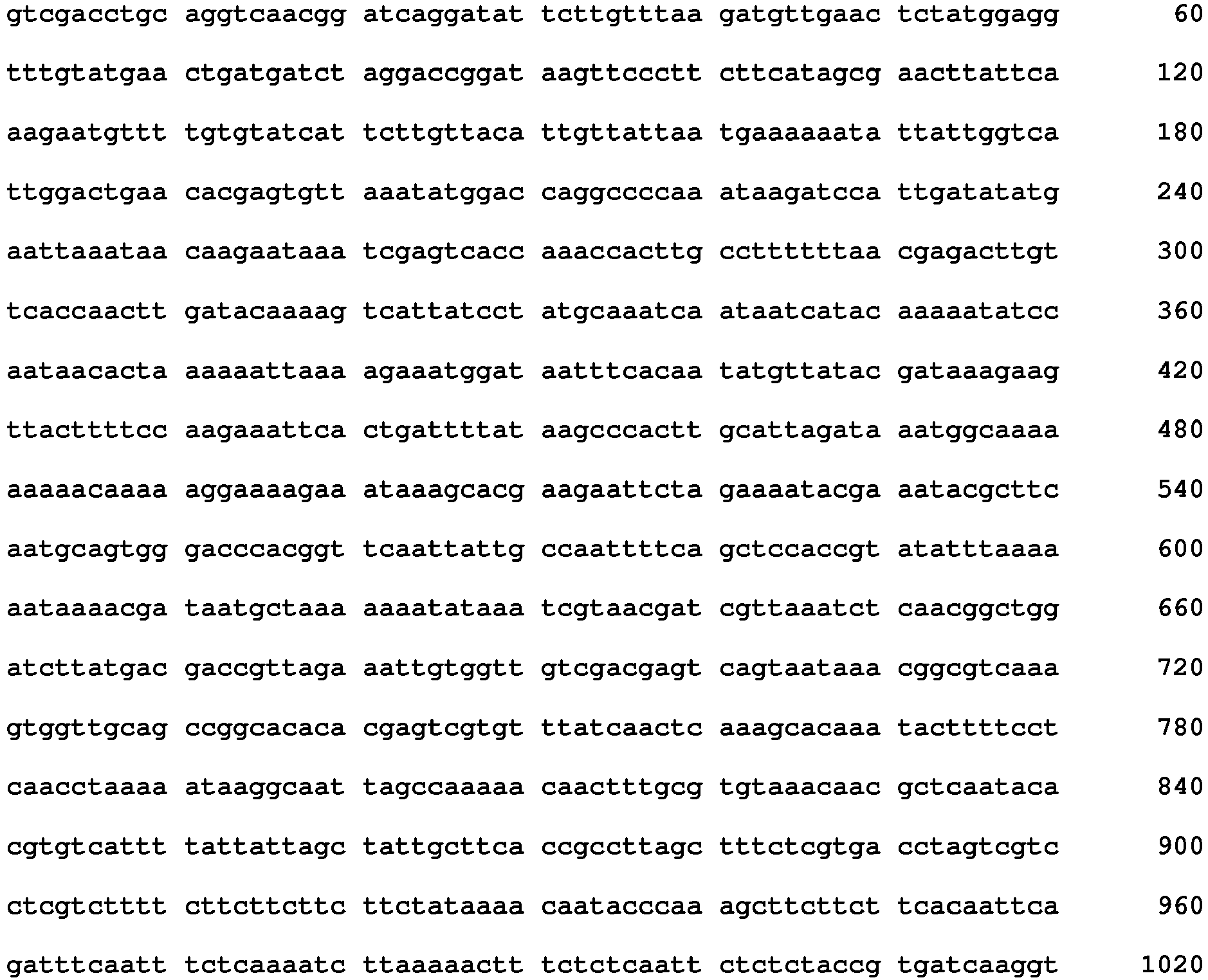

- <210> 2
<211> 1828
<212> DNA
<213> Artificial sequence - <220>
<223> PAT Plant Transcription Unit (PTU) - <400> 2


- <210> 3
<211> 3323
<212> DNA
<213> Artificial Sequence - <220>
<223> DGT-28 Plant Transcription Unit (PTU)t - <400> 3


- <210> 4
<211> 1818
<212> DNA
<213> artificial sequence - <220>
<223> PAT transcription unig - <400> 4

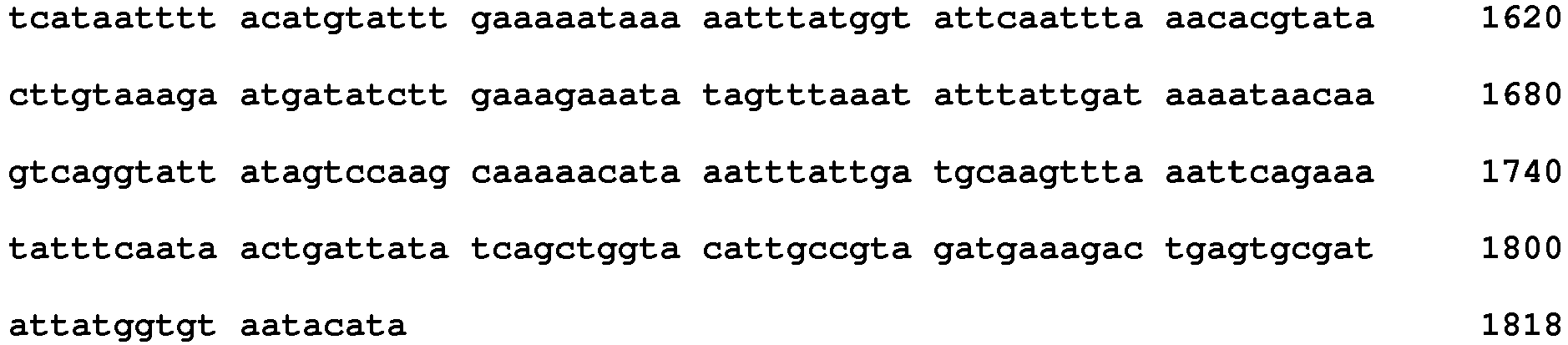
- <210> 5
<211> 2135
<212> DNA
<213> artificial sequence - <220>
<223> HPT Plant Transcription Unit (PTU) - <400> 5


- <210> 6
<211> 1818
<212> DNA
<213> artificial sequence - <220>
<223> PAT Plant Transcription Unit (PTU) - <400> 6


Claims (10)
- A method of producing a transgenic event, the method comprising:inserting a cutting tool into a seed coat of a soybean seed to form a first cotyledon segment and a second cotyledon segment, wherein the seed includes an embryonic axis;inoculating the first cotyledon segment including a 1/4, 1/3, 1/2, 2/3, 3/4 or the full length portion of the embryonic axis with Agrobacterium, the Agrobacterium including at least one transgene; andculturing the inoculated cotyledon segment to produce a transgenic event in a transformed plant cell.
- The method of claim 1, further comprising at least one of the following:(i) removing the seed coat from the first cotyledon segment and the second cotyledon segment prior to inoculating the first cotyledon segment,(ii) inserting the cutting tool comprises cutting the embryonic axis longitudinally to retain a portion of the embryonic axis with each cotyledon segment,(iii) inserting the cutting tool comprises cutting the soybean seed longitudinally along a hilum of the soybean seed,(iv) inserting the cutting tool comprises advancing the cutting tool into the embryonic axis of the soybean seed prior to forming the first and second cotyledon segments, or(v) the transgene is selected from the group consisting of insecticidal resistance gene, herbicide tolerance gene, nitrogen use efficiency gene, water use efficiency gene, nutritional quality gene, DNA binding gene, and selectable marker gene, wherein preferably the transgene comprises a pat, dgt-28, or hpt selectable marker gene.
- The method of claim 2 (ii), wherein the embryonic axis of the soybean seed has an uncut length prior to inserting the cutting tool, and the portion of the embryonic axis of the first cotyledon segment has a length that is(a) about 1/3 to 1/2 of the uncut length of the embryonic axis of the soybean seed, or(b) equal to the uncut length.
- The method of claim 3 (a), further comprising cutting the portion of the embryonic axis of the first cotyledon segment to the length that is about 1/3 to 1/2 of the uncut length of the embryonic axis of the soybean seed.
- The method of claim 2 (iii), further comprising locating the hilum on an outer surface of the soybean seed, and orienting the cutting tool relative to the soybean seed to align the cutting tool with the hilum prior to inserting the cutting tool, preferably wherein each cotyledon segment includes a portion of the hilum.
- The method of claim 2 (iii), wherein the soybean seed has a longitudinal axis extending through the hilum, the longitudinal axis dividing the soybean seed into a first side and a second side, the method further comprising grasping the first side of the soybean seed prior to inserting the cutting tool.
- The method of claim 1, wherein the method further comprises producing a whole, fertile, soybean plant from the cultured inoculated cotyledon segment, wherein the whole, fertile, soybean plant comprises the transgenic event.
- A cultured inoculated cotyledon segment produced by the method of claim 1, wherein the cotyledon segment comprises the transgenic event.
- A method of producing a transgenic event, the method comprising:inserting a cutting tool into a seed coat of a soybean seed to form a cotyledon segment including a 1/4, 1/3, 1/2, 2/3, 3/4 or the full length portion of the embryonic axis,inoculating the cotyledon segment including the portion of the embryonic axis with Agrobacterium, the Agrobacterium including at least one transgene,culturing the inoculated cotyledon segment to produce a transgenic event in a transformed plant cell, andproducing a whole, fertile plant from the cultured inoculated cotyledon segment, the whole, fertile plant including the transgenic event,preferably wherein the seed is a dicotyledonous seed.
- The method of claim 9, wherein inserting the cutting tool into the seed coat of the seed forms a first cotyledon segment and a second cotyledon segment, each cotyledon segment including a portion of the embryonic axis.
Applications Claiming Priority (2)
| Application Number | Priority Date | Filing Date | Title |
|---|---|---|---|
| US201261739349P | 2012-12-19 | 2012-12-19 | |
| PCT/US2013/076540 WO2014100406A1 (en) | 2012-12-19 | 2013-12-19 | Improved split seed soybean transformation for efficient and high-throughput transgenic event production |
Publications (2)
| Publication Number | Publication Date |
|---|---|
| EP2935592A1 EP2935592A1 (en) | 2015-10-28 |
| EP2935592B1 true EP2935592B1 (en) | 2018-03-21 |
Family
ID=49956423
Family Applications (2)
| Application Number | Title | Priority Date | Filing Date |
|---|---|---|---|
| EP13864083.4A Withdrawn EP2934094A4 (en) | 2012-12-19 | 2013-12-18 | Improved soybean transformation for efficient and high-throughput transgenic event production |
| EP13821307.9A Revoked EP2935592B1 (en) | 2012-12-19 | 2013-12-19 | Improved split seed soybean transformation for efficient and high-throughput transgenic event production |
Family Applications Before (1)
| Application Number | Title | Priority Date | Filing Date |
|---|---|---|---|
| EP13864083.4A Withdrawn EP2934094A4 (en) | 2012-12-19 | 2013-12-18 | Improved soybean transformation for efficient and high-throughput transgenic event production |
Country Status (15)
| Country | Link |
|---|---|
| US (2) | US20140173780A1 (en) |
| EP (2) | EP2934094A4 (en) |
| JP (2) | JP2016502853A (en) |
| KR (1) | KR20150096739A (en) |
| CN (2) | CN104869809A (en) |
| AR (2) | AR094098A1 (en) |
| AU (1) | AU2013361491A1 (en) |
| BR (2) | BR102013032677A2 (en) |
| CA (2) | CA2895212A1 (en) |
| CL (1) | CL2015001736A1 (en) |
| IL (2) | IL239383A0 (en) |
| MX (2) | MX2015008107A (en) |
| PH (1) | PH12015501415A1 (en) |
| WO (2) | WO2014100234A1 (en) |
| ZA (1) | ZA201503759B (en) |
Families Citing this family (21)
| Publication number | Priority date | Publication date | Assignee | Title |
|---|---|---|---|---|
| US9597379B1 (en) | 2010-02-09 | 2017-03-21 | David Gordon Bermudes | Protease inhibitor combination with therapeutic proteins including antibodies |
| US8771669B1 (en) | 2010-02-09 | 2014-07-08 | David Gordon Bermudes | Immunization and/or treatment of parasites and infectious agents by live bacteria |
| US8524220B1 (en) | 2010-02-09 | 2013-09-03 | David Gordon Bermudes | Protease inhibitor: protease sensitivity expression system composition and methods improving the therapeutic activity and specificity of proteins delivered by bacteria |
| US20140173780A1 (en) | 2012-12-19 | 2014-06-19 | Dow Agrosciences Llc | Soybean transformation for efficient and high-throughput transgenic event production |
| CN105408483A (en) * | 2013-03-15 | 2016-03-16 | 通用医疗公司 | RNA-guided targeting of genetic and epigenetic regulatory proteins to specific genomic loci |
| US9737592B1 (en) | 2014-02-14 | 2017-08-22 | David Gordon Bermudes | Topical and orally administered protease inhibitors and bacterial vectors for the treatment of disorders and methods of treatment |
| TW201543998A (en) * | 2014-05-06 | 2015-12-01 | Dow Agrosciences Llc | System for cutting and preparing seeds and method of use |
| EP3139721A4 (en) * | 2014-05-06 | 2018-02-14 | Dow Agrosciences LLC | System for seed preparation and method of use |
| US10676723B2 (en) | 2015-05-11 | 2020-06-09 | David Gordon Bermudes | Chimeric protein toxins for expression by therapeutic bacteria |
| EP3313625A4 (en) * | 2015-06-29 | 2019-06-12 | Dow AgroSciences LLC | System for automated explant preparation and method of use |
| US11129906B1 (en) | 2016-12-07 | 2021-09-28 | David Gordon Bermudes | Chimeric protein toxins for expression by therapeutic bacteria |
| US11180535B1 (en) | 2016-12-07 | 2021-11-23 | David Gordon Bermudes | Saccharide binding, tumor penetration, and cytotoxic antitumor chimeric peptides from therapeutic bacteria |
| BR112019018059A2 (en) | 2017-03-07 | 2020-08-04 | BASF Agricultural Solutions Seed US LLC | recombinant nucleic acid molecule, host cell, plants, transgenic seeds, recombinant polypeptide, method for producing a polypeptide, weed control method, use of nucleic acid and utility product |
| BR112019018175A2 (en) | 2017-03-07 | 2020-04-07 | BASF Agricultural Solutions Seed US LLC | molecule, cell, plant, seed, recombinant polypeptides, method for producing a polypeptide, plant, method for controlling herbs, use of nucleic acid and utility product |
| US11453885B1 (en) * | 2019-02-19 | 2022-09-27 | Inari Agriculture Technology, Inc. | Plant transformation |
| WO2021045960A1 (en) * | 2019-09-04 | 2021-03-11 | Syngenta Crop Protection Ag | Methods for transformation of dicot plant cells |
| US12285437B2 (en) | 2019-10-30 | 2025-04-29 | The Research Foundation For The State University Of New York | Reversing the undesirable pH-profile of doxorubicin via activation of a disubstituted maleamic acid prodrug at tumor acidity |
| WO2021108337A1 (en) * | 2019-11-26 | 2021-06-03 | Syngenta Crop Protection Ag | Methods of transformation |
| JP7607903B2 (en) * | 2019-12-06 | 2025-01-06 | 株式会社アクトリー | Method for inducing multiple shoots into which a target gene of quinoa has been introduced and multiple shoots obtained by said induction method |
| WO2025015179A1 (en) * | 2023-07-11 | 2025-01-16 | Inari Agriculture Technology, Inc. | Soybean regeneration and transformation |
| WO2026059952A1 (en) * | 2024-09-10 | 2026-03-19 | Inari Agriculture Technology, Inc. | Improved soybean transformation method |
Citations (4)
| Publication number | Priority date | Publication date | Assignee | Title |
|---|---|---|---|---|
| WO2004000006A2 (en) | 2002-06-22 | 2003-12-31 | Syngenta Participations Ag | Method of transforming soybean |
| WO2008112044A1 (en) | 2007-03-12 | 2008-09-18 | Syngenta Participations Ag | Tranformation of immature soybean seeds through organogenesis |
| WO2011095460A1 (en) | 2010-02-02 | 2011-08-11 | Bayer Cropscience Ag | Soybean transformation using hppd inhibitors as selection agents |
| WO2014100234A1 (en) | 2012-12-19 | 2014-06-26 | Dow Agrosciences Llc | Improved soybean transformation for efficient and high-throughput transgenic event production |
Family Cites Families (10)
| Publication number | Priority date | Publication date | Assignee | Title |
|---|---|---|---|---|
| US4743822A (en) * | 1984-12-22 | 1988-05-10 | Yaskawa Electric Mfg. Co., Ltd. | Servo motor control method and apparatus |
| US5015580A (en) * | 1987-07-29 | 1991-05-14 | Agracetus | Particle-mediated transformation of soybean plants and lines |
| WO2000042207A2 (en) * | 1999-01-14 | 2000-07-20 | Monsanto Technology Llc | Soybean transformation method |
| UA90860C2 (en) * | 2004-06-07 | 2010-06-10 | Басф Плант Саенс Гмбх | Method for obtainment of transgenic soybean |
| US7473822B1 (en) * | 2005-06-27 | 2009-01-06 | Iowa State University Research Foundation, Inc. | Soybean transformation and regeneration using half-seed explant |
| EP2811026B1 (en) * | 2007-03-09 | 2016-11-09 | Monsanto Technology LLC | Methods for plant transformation using spectinomycin selection |
| JP2008259497A (en) * | 2007-03-16 | 2008-10-30 | Takano Foods Kk | Method for creating transformant of domestic variety of soybean through agrobacterium and method for acquiring seed of current generation and progeny of transformant in short period of time |
| CN101974561A (en) * | 2010-11-23 | 2011-02-16 | 南京农业大学 | Genetic transformation method for soybean cotyledonary nodes by agrobacterium |
| CN102174562A (en) * | 2011-01-28 | 2011-09-07 | 河北农业大学 | Application of novel rooting method in soybean transgenic technology |
| CN102321666B (en) * | 2011-10-10 | 2013-12-18 | 浙江大学 | Rapid preparation method of dicotyledonous plant transgenic acceptor |
-
2013
- 2013-12-18 US US14/133,370 patent/US20140173780A1/en not_active Abandoned
- 2013-12-18 AR ARP130104835A patent/AR094098A1/en unknown
- 2013-12-18 MX MX2015008107A patent/MX2015008107A/en unknown
- 2013-12-18 AU AU2013361491A patent/AU2013361491A1/en not_active Abandoned
- 2013-12-18 CA CA2895212A patent/CA2895212A1/en not_active Abandoned
- 2013-12-18 BR BR102013032677-1A patent/BR102013032677A2/en not_active IP Right Cessation
- 2013-12-18 EP EP13864083.4A patent/EP2934094A4/en not_active Withdrawn
- 2013-12-18 CN CN201380066609.2A patent/CN104869809A/en active Pending
- 2013-12-18 JP JP2015549644A patent/JP2016502853A/en active Pending
- 2013-12-18 WO PCT/US2013/076230 patent/WO2014100234A1/en not_active Ceased
- 2013-12-19 WO PCT/US2013/076540 patent/WO2014100406A1/en not_active Ceased
- 2013-12-19 CN CN201380073296.3A patent/CN105264077A/en active Pending
- 2013-12-19 US US14/134,883 patent/US20140173774A1/en not_active Abandoned
- 2013-12-19 JP JP2015549713A patent/JP2016502856A/en active Pending
- 2013-12-19 CA CA2895343A patent/CA2895343A1/en not_active Abandoned
- 2013-12-19 MX MX2015008076A patent/MX2015008076A/en unknown
- 2013-12-19 EP EP13821307.9A patent/EP2935592B1/en not_active Revoked
- 2013-12-19 AR ARP130104923A patent/AR094190A1/en unknown
- 2013-12-19 KR KR1020157019102A patent/KR20150096739A/en not_active Withdrawn
- 2013-12-19 BR BR102013032929A patent/BR102013032929A2/en not_active IP Right Cessation
-
2015
- 2015-05-26 ZA ZA2015/03759A patent/ZA201503759B/en unknown
- 2015-06-11 IL IL239383A patent/IL239383A0/en unknown
- 2015-06-18 IL IL239543A patent/IL239543A0/en unknown
- 2015-06-18 CL CL2015001736A patent/CL2015001736A1/en unknown
- 2015-06-19 PH PH12015501415A patent/PH12015501415A1/en unknown
Patent Citations (4)
| Publication number | Priority date | Publication date | Assignee | Title |
|---|---|---|---|---|
| WO2004000006A2 (en) | 2002-06-22 | 2003-12-31 | Syngenta Participations Ag | Method of transforming soybean |
| WO2008112044A1 (en) | 2007-03-12 | 2008-09-18 | Syngenta Participations Ag | Tranformation of immature soybean seeds through organogenesis |
| WO2011095460A1 (en) | 2010-02-02 | 2011-08-11 | Bayer Cropscience Ag | Soybean transformation using hppd inhibitors as selection agents |
| WO2014100234A1 (en) | 2012-12-19 | 2014-06-26 | Dow Agrosciences Llc | Improved soybean transformation for efficient and high-throughput transgenic event production |
Non-Patent Citations (8)
Also Published As
| Publication number | Publication date |
|---|---|
| AR094190A1 (en) | 2015-07-15 |
| BR102013032677A2 (en) | 2014-09-23 |
| IL239383A0 (en) | 2015-07-30 |
| AU2013361491A1 (en) | 2015-06-04 |
| AR094098A1 (en) | 2015-07-08 |
| WO2014100406A1 (en) | 2014-06-26 |
| MX2015008076A (en) | 2016-03-21 |
| US20140173780A1 (en) | 2014-06-19 |
| CA2895212A1 (en) | 2014-06-26 |
| CN105264077A (en) | 2016-01-20 |
| CA2895343A1 (en) | 2014-06-26 |
| MX2015008107A (en) | 2015-11-06 |
| EP2934094A4 (en) | 2016-06-22 |
| KR20150096739A (en) | 2015-08-25 |
| BR102013032929A2 (en) | 2015-11-24 |
| EP2935592A1 (en) | 2015-10-28 |
| WO2014100234A1 (en) | 2014-06-26 |
| CL2015001736A1 (en) | 2016-04-22 |
| PH12015501415A1 (en) | 2015-09-07 |
| CN104869809A (en) | 2015-08-26 |
| ZA201503759B (en) | 2016-10-26 |
| US20140173774A1 (en) | 2014-06-19 |
| JP2016502853A (en) | 2016-02-01 |
| IL239543A0 (en) | 2015-08-31 |
| EP2934094A1 (en) | 2015-10-28 |
| JP2016502856A (en) | 2016-02-01 |
Similar Documents
| Publication | Publication Date | Title |
|---|---|---|
| US20140173774A1 (en) | Soybean transformation for efficient and high-throughput transgenic event production | |
| KR102036395B1 (en) | Glyphosate resistant plants and associated methods | |
| US20150307889A1 (en) | Haploid maize transformation | |
| MX2008015742A (en) | Method for selection of transformed cells. | |
| KR102061107B1 (en) | Synthetic brassica-derived chloroplast transit peptides | |
| EP3528610A1 (en) | Accelerated production of embryogenic callus, somatic embryos, and related transformation methods | |
| AU2014329508B2 (en) | Soybean transformation method | |
| CN115605082A (en) | conversion method |
Legal Events
| Date | Code | Title | Description |
|---|---|---|---|
| PUAI | Public reference made under article 153(3) epc to a published international application that has entered the european phase |
Free format text: ORIGINAL CODE: 0009012 |
|
| 17P | Request for examination filed |
Effective date: 20150714 |
|
| AK | Designated contracting states |
Kind code of ref document: A1 Designated state(s): AL AT BE BG CH CY CZ DE DK EE ES FI FR GB GR HR HU IE IS IT LI LT LU LV MC MK MT NL NO PL PT RO RS SE SI SK SM TR |
|
| AX | Request for extension of the european patent |
Extension state: BA ME |
|
| DAX | Request for extension of the european patent (deleted) | ||
| 17Q | First examination report despatched |
Effective date: 20160715 |
|
| STAA | Information on the status of an ep patent application or granted ep patent |
Free format text: STATUS: EXAMINATION IS IN PROGRESS |
|
| GRAP | Despatch of communication of intention to grant a patent |
Free format text: ORIGINAL CODE: EPIDOSNIGR1 |
|
| STAA | Information on the status of an ep patent application or granted ep patent |
Free format text: STATUS: GRANT OF PATENT IS INTENDED |
|
| INTG | Intention to grant announced |
Effective date: 20170912 |
|
| GRAJ | Information related to disapproval of communication of intention to grant by the applicant or resumption of examination proceedings by the epo deleted |
Free format text: ORIGINAL CODE: EPIDOSDIGR1 |
|
| STAA | Information on the status of an ep patent application or granted ep patent |
Free format text: STATUS: EXAMINATION IS IN PROGRESS |
|
| GRAR | Information related to intention to grant a patent recorded |
Free format text: ORIGINAL CODE: EPIDOSNIGR71 |
|
| GRAS | Grant fee paid |
Free format text: ORIGINAL CODE: EPIDOSNIGR3 |
|
| STAA | Information on the status of an ep patent application or granted ep patent |
Free format text: STATUS: GRANT OF PATENT IS INTENDED |
|
| GRAA | (expected) grant |
Free format text: ORIGINAL CODE: 0009210 |
|
| STAA | Information on the status of an ep patent application or granted ep patent |
Free format text: STATUS: THE PATENT HAS BEEN GRANTED |
|
| INTC | Intention to grant announced (deleted) | ||
| INTG | Intention to grant announced |
Effective date: 20180207 |
|
| AK | Designated contracting states |
Kind code of ref document: B1 Designated state(s): AL AT BE BG CH CY CZ DE DK EE ES FI FR GB GR HR HU IE IS IT LI LT LU LV MC MK MT NL NO PL PT RO RS SE SI SK SM TR |
|
| REG | Reference to a national code |
Ref country code: GB Ref legal event code: FG4D |
|
| REG | Reference to a national code |
Ref country code: CH Ref legal event code: EP |
|
| REG | Reference to a national code |
Ref country code: CH Ref legal event code: NV Representative=s name: FIAMMENGHI-FIAMMENGHI, CH |
|
| REG | Reference to a national code |
Ref country code: AT Ref legal event code: REF Ref document number: 981138 Country of ref document: AT Kind code of ref document: T Effective date: 20180415 |
|
| REG | Reference to a national code |
Ref country code: IE Ref legal event code: FG4D |
|
| REG | Reference to a national code |
Ref country code: DE Ref legal event code: R096 Ref document number: 602013034816 Country of ref document: DE |
|
| REG | Reference to a national code |
Ref country code: NL Ref legal event code: MP Effective date: 20180321 |
|
| PG25 | Lapsed in a contracting state [announced via postgrant information from national office to epo] |
Ref country code: CY Free format text: LAPSE BECAUSE OF FAILURE TO SUBMIT A TRANSLATION OF THE DESCRIPTION OR TO PAY THE FEE WITHIN THE PRESCRIBED TIME-LIMIT Effective date: 20180321 Ref country code: LT Free format text: LAPSE BECAUSE OF FAILURE TO SUBMIT A TRANSLATION OF THE DESCRIPTION OR TO PAY THE FEE WITHIN THE PRESCRIBED TIME-LIMIT Effective date: 20180321 Ref country code: HR Free format text: LAPSE BECAUSE OF FAILURE TO SUBMIT A TRANSLATION OF THE DESCRIPTION OR TO PAY THE FEE WITHIN THE PRESCRIBED TIME-LIMIT Effective date: 20180321 Ref country code: NO Free format text: LAPSE BECAUSE OF FAILURE TO SUBMIT A TRANSLATION OF THE DESCRIPTION OR TO PAY THE FEE WITHIN THE PRESCRIBED TIME-LIMIT Effective date: 20180621 Ref country code: FI Free format text: LAPSE BECAUSE OF FAILURE TO SUBMIT A TRANSLATION OF THE DESCRIPTION OR TO PAY THE FEE WITHIN THE PRESCRIBED TIME-LIMIT Effective date: 20180321 |
|
| REG | Reference to a national code |
Ref country code: LT Ref legal event code: MG4D |
|
| REG | Reference to a national code |
Ref country code: AT Ref legal event code: MK05 Ref document number: 981138 Country of ref document: AT Kind code of ref document: T Effective date: 20180321 |
|
| PG25 | Lapsed in a contracting state [announced via postgrant information from national office to epo] |
Ref country code: SE Free format text: LAPSE BECAUSE OF FAILURE TO SUBMIT A TRANSLATION OF THE DESCRIPTION OR TO PAY THE FEE WITHIN THE PRESCRIBED TIME-LIMIT Effective date: 20180321 Ref country code: LV Free format text: LAPSE BECAUSE OF FAILURE TO SUBMIT A TRANSLATION OF THE DESCRIPTION OR TO PAY THE FEE WITHIN THE PRESCRIBED TIME-LIMIT Effective date: 20180321 Ref country code: GR Free format text: LAPSE BECAUSE OF FAILURE TO SUBMIT A TRANSLATION OF THE DESCRIPTION OR TO PAY THE FEE WITHIN THE PRESCRIBED TIME-LIMIT Effective date: 20180622 Ref country code: RS Free format text: LAPSE BECAUSE OF FAILURE TO SUBMIT A TRANSLATION OF THE DESCRIPTION OR TO PAY THE FEE WITHIN THE PRESCRIBED TIME-LIMIT Effective date: 20180321 Ref country code: BG Free format text: LAPSE BECAUSE OF FAILURE TO SUBMIT A TRANSLATION OF THE DESCRIPTION OR TO PAY THE FEE WITHIN THE PRESCRIBED TIME-LIMIT Effective date: 20180621 |
|
| PG25 | Lapsed in a contracting state [announced via postgrant information from national office to epo] |
Ref country code: IT Free format text: LAPSE BECAUSE OF FAILURE TO SUBMIT A TRANSLATION OF THE DESCRIPTION OR TO PAY THE FEE WITHIN THE PRESCRIBED TIME-LIMIT Effective date: 20180321 Ref country code: AL Free format text: LAPSE BECAUSE OF FAILURE TO SUBMIT A TRANSLATION OF THE DESCRIPTION OR TO PAY THE FEE WITHIN THE PRESCRIBED TIME-LIMIT Effective date: 20180321 Ref country code: PL Free format text: LAPSE BECAUSE OF FAILURE TO SUBMIT A TRANSLATION OF THE DESCRIPTION OR TO PAY THE FEE WITHIN THE PRESCRIBED TIME-LIMIT Effective date: 20180321 Ref country code: EE Free format text: LAPSE BECAUSE OF FAILURE TO SUBMIT A TRANSLATION OF THE DESCRIPTION OR TO PAY THE FEE WITHIN THE PRESCRIBED TIME-LIMIT Effective date: 20180321 Ref country code: ES Free format text: LAPSE BECAUSE OF FAILURE TO SUBMIT A TRANSLATION OF THE DESCRIPTION OR TO PAY THE FEE WITHIN THE PRESCRIBED TIME-LIMIT Effective date: 20180321 Ref country code: NL Free format text: LAPSE BECAUSE OF FAILURE TO SUBMIT A TRANSLATION OF THE DESCRIPTION OR TO PAY THE FEE WITHIN THE PRESCRIBED TIME-LIMIT Effective date: 20180321 Ref country code: RO Free format text: LAPSE BECAUSE OF FAILURE TO SUBMIT A TRANSLATION OF THE DESCRIPTION OR TO PAY THE FEE WITHIN THE PRESCRIBED TIME-LIMIT Effective date: 20180321 |
|
| PG25 | Lapsed in a contracting state [announced via postgrant information from national office to epo] |
Ref country code: SM Free format text: LAPSE BECAUSE OF FAILURE TO SUBMIT A TRANSLATION OF THE DESCRIPTION OR TO PAY THE FEE WITHIN THE PRESCRIBED TIME-LIMIT Effective date: 20180321 Ref country code: AT Free format text: LAPSE BECAUSE OF FAILURE TO SUBMIT A TRANSLATION OF THE DESCRIPTION OR TO PAY THE FEE WITHIN THE PRESCRIBED TIME-LIMIT Effective date: 20180321 Ref country code: CZ Free format text: LAPSE BECAUSE OF FAILURE TO SUBMIT A TRANSLATION OF THE DESCRIPTION OR TO PAY THE FEE WITHIN THE PRESCRIBED TIME-LIMIT Effective date: 20180321 Ref country code: SK Free format text: LAPSE BECAUSE OF FAILURE TO SUBMIT A TRANSLATION OF THE DESCRIPTION OR TO PAY THE FEE WITHIN THE PRESCRIBED TIME-LIMIT Effective date: 20180321 |
|
| REG | Reference to a national code |
Ref country code: DE Ref legal event code: R026 Ref document number: 602013034816 Country of ref document: DE |
|
| PG25 | Lapsed in a contracting state [announced via postgrant information from national office to epo] |
Ref country code: PT Free format text: LAPSE BECAUSE OF FAILURE TO SUBMIT A TRANSLATION OF THE DESCRIPTION OR TO PAY THE FEE WITHIN THE PRESCRIBED TIME-LIMIT Effective date: 20180723 |
|
| PLBI | Opposition filed |
Free format text: ORIGINAL CODE: 0009260 |
|
| PLAX | Notice of opposition and request to file observation + time limit sent |
Free format text: ORIGINAL CODE: EPIDOSNOBS2 |
|
| PG25 | Lapsed in a contracting state [announced via postgrant information from national office to epo] |
Ref country code: DK Free format text: LAPSE BECAUSE OF FAILURE TO SUBMIT A TRANSLATION OF THE DESCRIPTION OR TO PAY THE FEE WITHIN THE PRESCRIBED TIME-LIMIT Effective date: 20180321 |
|
| PGFP | Annual fee paid to national office [announced via postgrant information from national office to epo] |
Ref country code: DE Payment date: 20181204 Year of fee payment: 6 |
|
| 26 | Opposition filed |
Opponent name: DICKER DR., JOCHEN Effective date: 20181221 |
|
| PGFP | Annual fee paid to national office [announced via postgrant information from national office to epo] |
Ref country code: BE Payment date: 20181015 Year of fee payment: 6 |
|
| PLBB | Reply of patent proprietor to notice(s) of opposition received |
Free format text: ORIGINAL CODE: EPIDOSNOBS3 |
|
| PG25 | Lapsed in a contracting state [announced via postgrant information from national office to epo] |
Ref country code: SI Free format text: LAPSE BECAUSE OF FAILURE TO SUBMIT A TRANSLATION OF THE DESCRIPTION OR TO PAY THE FEE WITHIN THE PRESCRIBED TIME-LIMIT Effective date: 20180321 |
|
| REG | Reference to a national code |
Ref country code: CH Ref legal event code: PL |
|
| RDAF | Communication despatched that patent is revoked |
Free format text: ORIGINAL CODE: EPIDOSNREV1 |
|
| REG | Reference to a national code |
Ref country code: DE Ref legal event code: R064 Ref document number: 602013034816 Country of ref document: DE Ref country code: DE Ref legal event code: R103 Ref document number: 602013034816 Country of ref document: DE |
|
| GBPC | Gb: european patent ceased through non-payment of renewal fee |
Effective date: 20181219 |
|
| PG25 | Lapsed in a contracting state [announced via postgrant information from national office to epo] |
Ref country code: LU Free format text: LAPSE BECAUSE OF NON-PAYMENT OF DUE FEES Effective date: 20181219 Ref country code: MC Free format text: LAPSE BECAUSE OF FAILURE TO SUBMIT A TRANSLATION OF THE DESCRIPTION OR TO PAY THE FEE WITHIN THE PRESCRIBED TIME-LIMIT Effective date: 20180321 |
|
| REG | Reference to a national code |
Ref country code: IE Ref legal event code: MM4A |
|
| PG25 | Lapsed in a contracting state [announced via postgrant information from national office to epo] |
Ref country code: FR Free format text: LAPSE BECAUSE OF NON-PAYMENT OF DUE FEES Effective date: 20181231 Ref country code: IE Free format text: LAPSE BECAUSE OF NON-PAYMENT OF DUE FEES Effective date: 20181219 |
|
| RDAG | Patent revoked |
Free format text: ORIGINAL CODE: 0009271 |
|
| STAA | Information on the status of an ep patent application or granted ep patent |
Free format text: STATUS: PATENT REVOKED |
|
| 27W | Patent revoked |
Effective date: 20190819 |
|
| PG25 | Lapsed in a contracting state [announced via postgrant information from national office to epo] |
Ref country code: CH Free format text: LAPSE BECAUSE OF NON-PAYMENT OF DUE FEES Effective date: 20181231 Ref country code: LI Free format text: LAPSE BECAUSE OF NON-PAYMENT OF DUE FEES Effective date: 20181231 Ref country code: GB Free format text: LAPSE BECAUSE OF NON-PAYMENT OF DUE FEES Effective date: 20181219 |
|
| PG25 | Lapsed in a contracting state [announced via postgrant information from national office to epo] |
Ref country code: MK Free format text: LAPSE BECAUSE OF NON-PAYMENT OF DUE FEES Effective date: 20180321 |
|
| PG25 | Lapsed in a contracting state [announced via postgrant information from national office to epo] |
Ref country code: IS Free format text: LAPSE BECAUSE OF FAILURE TO SUBMIT A TRANSLATION OF THE DESCRIPTION OR TO PAY THE FEE WITHIN THE PRESCRIBED TIME-LIMIT Effective date: 20180721 |
|
| PG25 | Lapsed in a contracting state [announced via postgrant information from national office to epo] |
Ref country code: TR Free format text: LAPSE BECAUSE OF FAILURE TO SUBMIT A TRANSLATION OF THE DESCRIPTION OR TO PAY THE FEE WITHIN THE PRESCRIBED TIME-LIMIT Effective date: 20180321 |