EP2934003A1 - System and method for digital multimedia broadcasting - Google Patents
System and method for digital multimedia broadcasting Download PDFInfo
- Publication number
- EP2934003A1 EP2934003A1 EP15167067.6A EP15167067A EP2934003A1 EP 2934003 A1 EP2934003 A1 EP 2934003A1 EP 15167067 A EP15167067 A EP 15167067A EP 2934003 A1 EP2934003 A1 EP 2934003A1
- Authority
- EP
- European Patent Office
- Prior art keywords
- media stream
- outputted
- recited
- data
- digital
- Prior art date
- Legal status (The legal status is an assumption and is not a legal conclusion. Google has not performed a legal analysis and makes no representation as to the accuracy of the status listed.)
- Withdrawn
Links
- 238000000034 method Methods 0.000 title claims abstract description 52
- 238000012937 correction Methods 0.000 claims abstract description 27
- 230000002452 interceptive effect Effects 0.000 claims abstract description 20
- 230000002123 temporal effect Effects 0.000 claims abstract description 8
- 101000591286 Homo sapiens Myocardin-related transcription factor A Proteins 0.000 claims description 5
- 102100034099 Myocardin-related transcription factor A Human genes 0.000 claims description 5
- 230000015654 memory Effects 0.000 claims description 3
- FGUUSXIOTUKUDN-IBGZPJMESA-N C1(=CC=CC=C1)N1C2=C(NC([C@H](C1)NC=1OC(=NN=1)C1=CC=CC=C1)=O)C=CC=C2 Chemical compound C1(=CC=CC=C1)N1C2=C(NC([C@H](C1)NC=1OC(=NN=1)C1=CC=CC=C1)=O)C=CC=C2 FGUUSXIOTUKUDN-IBGZPJMESA-N 0.000 claims 5
- 230000005236 sound signal Effects 0.000 claims 4
- 238000007781 pre-processing Methods 0.000 claims 2
- 230000005540 biological transmission Effects 0.000 description 27
- 238000010586 diagram Methods 0.000 description 18
- 230000008569 process Effects 0.000 description 13
- 238000007906 compression Methods 0.000 description 6
- 230000006835 compression Effects 0.000 description 6
- 230000001360 synchronised effect Effects 0.000 description 6
- 238000005516 engineering process Methods 0.000 description 5
- 238000005562 fading Methods 0.000 description 4
- 230000006870 function Effects 0.000 description 4
- 238000013144 data compression Methods 0.000 description 3
- 230000000694 effects Effects 0.000 description 2
- 238000003780 insertion Methods 0.000 description 2
- 230000037431 insertion Effects 0.000 description 2
- 238000012545 processing Methods 0.000 description 2
- 238000001228 spectrum Methods 0.000 description 2
- 230000015556 catabolic process Effects 0.000 description 1
- 238000006731 degradation reaction Methods 0.000 description 1
- 230000003993 interaction Effects 0.000 description 1
- 238000004519 manufacturing process Methods 0.000 description 1
- 238000013507 mapping Methods 0.000 description 1
- 230000007246 mechanism Effects 0.000 description 1
- 238000012986 modification Methods 0.000 description 1
- 230000004048 modification Effects 0.000 description 1
- 230000010363 phase shift Effects 0.000 description 1
- 238000002360 preparation method Methods 0.000 description 1
- 238000011160 research Methods 0.000 description 1
Images




Classifications
-
- H—ELECTRICITY
- H04—ELECTRIC COMMUNICATION TECHNIQUE
- H04N—PICTORIAL COMMUNICATION, e.g. TELEVISION
- H04N5/00—Details of television systems
- H04N5/38—Transmitter circuitry for the transmission of television signals according to analogue transmission standards
-
- H—ELECTRICITY
- H04—ELECTRIC COMMUNICATION TECHNIQUE
- H04N—PICTORIAL COMMUNICATION, e.g. TELEVISION
- H04N7/00—Television systems
- H04N7/015—High-definition television systems
-
- H—ELECTRICITY
- H04—ELECTRIC COMMUNICATION TECHNIQUE
- H04H—BROADCAST COMMUNICATION
- H04H20/00—Arrangements for broadcast or for distribution combined with broadcast
- H04H20/65—Arrangements characterised by transmission systems for broadcast
- H04H20/71—Wireless systems
-
- H—ELECTRICITY
- H04—ELECTRIC COMMUNICATION TECHNIQUE
- H04H—BROADCAST COMMUNICATION
- H04H20/00—Arrangements for broadcast or for distribution combined with broadcast
- H04H20/86—Arrangements characterised by the broadcast information itself
- H04H20/95—Arrangements characterised by the broadcast information itself characterised by a specific format, e.g. an encoded audio stream
-
- H—ELECTRICITY
- H04—ELECTRIC COMMUNICATION TECHNIQUE
- H04H—BROADCAST COMMUNICATION
- H04H60/00—Arrangements for broadcast applications with a direct linking to broadcast information or broadcast space-time; Broadcast-related systems
- H04H60/02—Arrangements for generating broadcast information; Arrangements for generating broadcast-related information with a direct linking to broadcast information or to broadcast space-time; Arrangements for simultaneous generation of broadcast information and broadcast-related information
- H04H60/07—Arrangements for generating broadcast information; Arrangements for generating broadcast-related information with a direct linking to broadcast information or to broadcast space-time; Arrangements for simultaneous generation of broadcast information and broadcast-related information characterised by processes or methods for the generation
-
- H—ELECTRICITY
- H04—ELECTRIC COMMUNICATION TECHNIQUE
- H04N—PICTORIAL COMMUNICATION, e.g. TELEVISION
- H04N21/00—Selective content distribution, e.g. interactive television or video on demand [VOD]
- H04N21/20—Servers specifically adapted for the distribution of content, e.g. VOD servers; Operations thereof
- H04N21/23—Processing of content or additional data; Elementary server operations; Server middleware
- H04N21/234—Processing of video elementary streams, e.g. splicing of video streams or manipulating encoded video stream scene graphs
- H04N21/2343—Processing of video elementary streams, e.g. splicing of video streams or manipulating encoded video stream scene graphs involving reformatting operations of video signals for distribution or compliance with end-user requests or end-user device requirements
- H04N21/234318—Processing of video elementary streams, e.g. splicing of video streams or manipulating encoded video stream scene graphs involving reformatting operations of video signals for distribution or compliance with end-user requests or end-user device requirements by decomposing into objects, e.g. MPEG-4 objects
-
- H—ELECTRICITY
- H04—ELECTRIC COMMUNICATION TECHNIQUE
- H04N—PICTORIAL COMMUNICATION, e.g. TELEVISION
- H04N21/00—Selective content distribution, e.g. interactive television or video on demand [VOD]
- H04N21/20—Servers specifically adapted for the distribution of content, e.g. VOD servers; Operations thereof
- H04N21/23—Processing of content or additional data; Elementary server operations; Server middleware
- H04N21/235—Processing of additional data, e.g. scrambling of additional data or processing content descriptors
-
- H—ELECTRICITY
- H04—ELECTRIC COMMUNICATION TECHNIQUE
- H04N—PICTORIAL COMMUNICATION, e.g. TELEVISION
- H04N21/00—Selective content distribution, e.g. interactive television or video on demand [VOD]
- H04N21/20—Servers specifically adapted for the distribution of content, e.g. VOD servers; Operations thereof
- H04N21/23—Processing of content or additional data; Elementary server operations; Server middleware
- H04N21/236—Assembling of a multiplex stream, e.g. transport stream, by combining a video stream with other content or additional data, e.g. inserting a URL [Uniform Resource Locator] into a video stream, multiplexing software data into a video stream; Remultiplexing of multiplex streams; Insertion of stuffing bits into the multiplex stream, e.g. to obtain a constant bit-rate; Assembling of a packetised elementary stream
- H04N21/2368—Multiplexing of audio and video streams
-
- H—ELECTRICITY
- H04—ELECTRIC COMMUNICATION TECHNIQUE
- H04N—PICTORIAL COMMUNICATION, e.g. TELEVISION
- H04N21/00—Selective content distribution, e.g. interactive television or video on demand [VOD]
- H04N21/20—Servers specifically adapted for the distribution of content, e.g. VOD servers; Operations thereof
- H04N21/23—Processing of content or additional data; Elementary server operations; Server middleware
- H04N21/24—Monitoring of processes or resources, e.g. monitoring of server load, available bandwidth, upstream requests
- H04N21/2402—Monitoring of the downstream path of the transmission network, e.g. bandwidth available
-
- H—ELECTRICITY
- H04—ELECTRIC COMMUNICATION TECHNIQUE
- H04N—PICTORIAL COMMUNICATION, e.g. TELEVISION
- H04N21/00—Selective content distribution, e.g. interactive television or video on demand [VOD]
- H04N21/40—Client devices specifically adapted for the reception of or interaction with content, e.g. set-top-box [STB]; Operations thereof
- H04N21/41—Structure of client; Structure of client peripherals
- H04N21/414—Specialised client platforms, e.g. receiver in car or embedded in a mobile appliance
- H04N21/41407—Specialised client platforms, e.g. receiver in car or embedded in a mobile appliance embedded in a portable device, e.g. video client on a mobile phone, PDA, laptop
-
- H—ELECTRICITY
- H04—ELECTRIC COMMUNICATION TECHNIQUE
- H04N—PICTORIAL COMMUNICATION, e.g. TELEVISION
- H04N21/00—Selective content distribution, e.g. interactive television or video on demand [VOD]
- H04N21/40—Client devices specifically adapted for the reception of or interaction with content, e.g. set-top-box [STB]; Operations thereof
- H04N21/43—Processing of content or additional data, e.g. demultiplexing additional data from a digital video stream; Elementary client operations, e.g. monitoring of home network or synchronising decoder's clock; Client middleware
- H04N21/434—Disassembling of a multiplex stream, e.g. demultiplexing audio and video streams, extraction of additional data from a video stream; Remultiplexing of multiplex streams; Extraction or processing of SI; Disassembling of packetised elementary stream
- H04N21/4341—Demultiplexing of audio and video streams
-
- H—ELECTRICITY
- H04—ELECTRIC COMMUNICATION TECHNIQUE
- H04N—PICTORIAL COMMUNICATION, e.g. TELEVISION
- H04N21/00—Selective content distribution, e.g. interactive television or video on demand [VOD]
- H04N21/40—Client devices specifically adapted for the reception of or interaction with content, e.g. set-top-box [STB]; Operations thereof
- H04N21/43—Processing of content or additional data, e.g. demultiplexing additional data from a digital video stream; Elementary client operations, e.g. monitoring of home network or synchronising decoder's clock; Client middleware
- H04N21/435—Processing of additional data, e.g. decrypting of additional data, reconstructing software from modules extracted from the transport stream
-
- H—ELECTRICITY
- H04—ELECTRIC COMMUNICATION TECHNIQUE
- H04N—PICTORIAL COMMUNICATION, e.g. TELEVISION
- H04N21/00—Selective content distribution, e.g. interactive television or video on demand [VOD]
- H04N21/60—Network structure or processes for video distribution between server and client or between remote clients; Control signalling between clients, server and network components; Transmission of management data between server and client, e.g. sending from server to client commands for recording incoming content stream; Communication details between server and client
- H04N21/61—Network physical structure; Signal processing
- H04N21/6106—Network physical structure; Signal processing specially adapted to the downstream path of the transmission network
- H04N21/6131—Network physical structure; Signal processing specially adapted to the downstream path of the transmission network involving transmission via a mobile phone network
-
- H—ELECTRICITY
- H04—ELECTRIC COMMUNICATION TECHNIQUE
- H04N—PICTORIAL COMMUNICATION, e.g. TELEVISION
- H04N21/00—Selective content distribution, e.g. interactive television or video on demand [VOD]
- H04N21/80—Generation or processing of content or additional data by content creator independently of the distribution process; Content per se
- H04N21/83—Generation or processing of protective or descriptive data associated with content; Content structuring
- H04N21/845—Structuring of content, e.g. decomposing content into time segments
- H04N21/8451—Structuring of content, e.g. decomposing content into time segments using Advanced Video Coding [AVC]
-
- H—ELECTRICITY
- H04—ELECTRIC COMMUNICATION TECHNIQUE
- H04H—BROADCAST COMMUNICATION
- H04H60/00—Arrangements for broadcast applications with a direct linking to broadcast information or broadcast space-time; Broadcast-related systems
- H04H60/02—Arrangements for generating broadcast information; Arrangements for generating broadcast-related information with a direct linking to broadcast information or to broadcast space-time; Arrangements for simultaneous generation of broadcast information and broadcast-related information
Definitions
- the present invention relates to a digital multimedia broadcasting (DMB) system for transmitting mobile television (TV) contents, e.g., video and video-related multimedia data, based on a digital audio broadcasting (DAB) system and other diverse digital broadcasting systems, a method thereof, and a computer-readable recording medium for recording a program that implements the method.
- DMB digital multimedia broadcasting
- BER Bit Error Rate
- the DAB will be described more in detail by taking an example of the Eureka 147 DAB system, which is a DAB system of the Europe.
- Fig. 1 is an exemplary diagram showing a conventional Eureka 147 DAB system.
- audio data stream encoded by using the MPEG encoder or ordinary data stream passes through an energy dispersal scrambler to disperse the energy of the radio frequency (RF) transmission signal and then it is encoded by using convolutional encoder at a different encoding rate based on Unequal Error Protection (UEP) or Equal Error Protection (EEP) profile. Then, sub-channel data which are time-interleaved with respect to 16 logical frame sections are multiplexed in the Main Service Multiplexer (MSM) to thereby form Common Interleaved Frame (CIF).
- MMP Main Service Multiplexer
- each logical frame includes information of a 24 ms section in a time domain
- the total depth of interleaving is 384 ms.
- a synchronous channel In order to form a 24ms-based DAB transmission frame, a synchronous channel, a Fast Information Channel (FIC), and a Main Service Channel (MSC) for effective data transmission are created and Quadrature Phase Shift Keying (QPSK) symbol mapping is performed. Then, frequency interleaving is applied in order to minimize the influence on the frequency selective fading.
- FIC Fast Information Channel
- MSC Main Service Channel
- a phase reference signal is generated and placed in the second symbol of the transmission frame and differential modulation is performed on the Orthogonal Frequency Division Multiplexing (OFDM) symbol that forms the FIC and MSC based on the phase reference signal.
- OFDM Orthogonal Frequency Division Multiplexing
- Each OFDM symbol that forms a transmission frame goes through zero-padding for 2N Inverse Fast Fourier Transform (IFFT) and then it is converted into a time domain signal through the IFFT.
- IFFT Inverse Fast Fourier Transform
- ISI Inter-Symbol Interference
- DMB digital multimedia broadcasting
- a DMB system which includes: an encoding unit for encoding an inputted audio/video signal; a synchronizing unit for synchronizing media stream, additional data, interactive service objectifying data that are outputted from the encoding unit; a multiplexing unit for multiplexing the media stream outputted from the synchronizing unit; an error correction encoding unit for performing additional error correction encoding on the media stream outputted from the multiplexing unit; an interleaving unit for removing temporal correlation between adjacent byte units within a data stream outputted from the error correction encoding unit; and a transmitting unit for transmitting a DMB media stream outputted from the interleaving unit.
- a digital DMB method which includes the steps of: a) encoding video/audio data at a high efficiency for data compression; b) synchronizing a media stream encoded in the step a), a media stream for an additional data service, and a objectified media stream for an interactive service; c) multiplexing a media stream synchronized in the step b); d) encoding and interleaving for correcting an error to be occurred in a media stream multiplexed in the step c); and e) transmitting a stream interleaved in the step d).
- a computer-readable recording medium for recording a program that implement a digital DMB method, which includes the steps of: a) encoding video/audio data at a high efficiency for data compression; b) synchronizing a media stream encoded in the step a), a media stream for an additional data service, and an objectified media stream for an interactive service; c) multiplexing a media stream synchronized in the step b); d) encoding and interleaving for correcting an error to be occurred in a media stream multiplexed in the step c); and e) transmitting a stream interleaved in the step d).
- the DMB system of the present invention includes a broadcasting field where multimedia data are transmitted by using conventional DAB and digital broadcasting systems, a field of source encoding technology where multimedia data are compressed, a field of multiplexing technology where multimedia data streams are mixed, and a field of error correction encoding technology where robustness to error generated in a mobile channel is given.
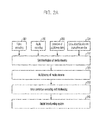
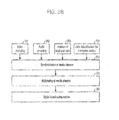
- Figs. 2A and 2B are diagrams describing a transmission method of a digital multimedia broadcasting (DMB) system in accordance with an embodiment of the present invention.
- DMB digital multimedia broadcasting
- the DMB system of the present invention includes a process of high-efficiency video encoding at step 201 for compressing video data, a process of high-efficiency audio encoding for compressing audio data at step 202, a process of insertion of additional data at step 203, a process of objectification for interactive service at step 204, a process of synchronization at step 210 for synchronizing media streams outputted from the processes of video encoding at the step 201, audio encoding at the step 202, additional data insertion at the step 203, and objectification for interactive service at the step 204, a process of multiplexing for mixing the synchronized media streams at step 220, and a process of encoding and interleaving for correcting an error to be occurred in the media stream multiplexed in the process of multiplexing and interleaving at step 230.
- the DMB system transmits DMB data as follows.
- step 201 high-efficiency source encoding for compressing multimedia data is performed and, at the step 204, objectification for interactive service is performed. Then, at the step 210, video/audio/additional data streams are synchronized and, at step 220, the media streams are multiplexed.
- step 230 error correction encoding and interleaving are performed on the multiplexed stream in order to secure excellent reception quality in a high-speed mobile channel environment.
- the stream obtained by using the error correction encoding and the interleaving is transmitted to the DAB system and other digital broadcasting systems.
- the digital broadcasting systems include a digital television (TV) broadcasting system, a digital satellite broadcasting system, and a digital cable broadcasting system.
- a DMB transmission scheme as shown in Fig. 2B which does not include the error correction encoding and interleaving of the step 230 can be applied.
- FIGs. 3A and 3B are block diagrams illustrating a DMB system in accordance with an embodiment of the present invention.
- the drawings show system technologies applied to the DMB of Figs. 2A and 2B .
- the DMB system of the present invention can be divided into a DMB transmitter 310 and a DMB receiver 320.
- the DMB transmitter 310 uses an MPEG-4 audio encoder 311 and an MPEG-4 video encoder 312 for high-efficiency source encoding, and it uses an MPEG-4 systems encoder 313 for objectification and synchronization of media stream. It uses an MPEG-2 transport stream (TS) multiplexer 314 for multiplexing media stream, and it uses a Reed-Solomon (RS) encoder 315 for additional error correction encoding.
- the DMB transmitter 310 uses a convolutional byte interleaver 316 to remove temporal correlation between neighboring byte units in data stream.
- the finally outputted DMB media stream is inputted through a stream mode of a DAB transmission system 317 or data channels of the other digital broadcasting systems.
- the DMB receiver 320 receives multimedia data, which are passed through a receiving channel of the DAB receiving system 321 or those of the other digital broadcasting systems, pass through the convolutional byte deinterleaver 322, the RS decoder 323, the MPEG-2 TS demultiplexer 324, the MPEG-4 systems decoder 325, the MPEG-4 video decoder 326, and the MPEG-4 audio decoder 327.
- a DMB transmission scheme can be embodied without the multiplexing process and the error correction encoding and interleaving process, which is shown in Fig. 3B .
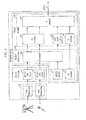
- Fig. 4 is a block diagram showing a media processor of the DMB system in accordance with an embodiment of the present invention. It shows a structure of a DMB media processor that performs functions from compression to multiplexing of multimedia data.
- the media processor includes an MPEG-4 video/audio encoder, an MPEG-4 systems encoder, and an MPEG-2 TS multiplexer.
- the media processor of the DMB system of the present invention includes a preprocessor 410, an MPEG-4 encoder 421 and 422, an object descriptor (OD)/binary format for scene (BIFS) generator 431, an Initial Object Descriptor (IOD) generator 432, a sync layer (SL) packetizer 433, a Program Elementary Stream (PES) packetizer 441, a 14496 section packetizer 442, a PSI generator 443, a TS packetizer 444.
- a preprocessor 410 an MPEG-4 encoder 421 and 422, an object descriptor (OD)/binary format for scene (BIFS) generator 431, an Initial Object Descriptor (IOD) generator 432, a sync layer (SL) packetizer 433, a Program Elementary Stream (PES) packetizer 441, a 14496 section packetizer 442, a PSI generator 443, a TS packetizer 444.
- a preprocessor 410 an MPEG-4 encoder 421 and 422, an object descriptor (
- the preprocessor 410 converts an audio/video signal into a data stream of a desired format.
- the MPEG-4 encoder 421 and 422 compresses the data stream outputted from the preprocessor 410 into a high compressed media stream.
- the OD/BIFS generator 431 generates object descriptor (OD) and binary format for scene (BIFS).
- the IOD generator 432 generates the initial object descriptor (IOD).
- the sync layer packetizer 433 synchronizes media streams outputted from the MPEG-4 encoder 421 and 422 and the OD/BIFS generator 431.
- the PES packetizer 441 packetizes a packet outputted from the sync layer packetizer 433 into a PES packet.
- the 14496 section packetizer 442 packetizes a packet outputted from the sync layer packetizer 433 into a 14496 section.
- the PSI generator 443 generates Program Service Information (PSI) based on the data outputted from the IOD generator 432.
- the TS packetizer 444 packetizes a packet outputted from the PES packetizer 441, 14496 section packetizer 442, PSI generator 443 into transport stream.
- PSI Program Service Information
- the media processor of the DMB system of the present invention includes an MPEG-4 systems encoder 430 and an M4overM2 module 440.
- the MPEG-4 systems encoder 430 includes the MPEG-4 audio/video encoder 421 and 422 for performing media compression efficiently after converting the audio/video multimedia source data into a data steam of a desired format in the preprocessor 410, the OD/BIFS generator 431 for interactive service, the IOD generator 432, the sync layer packetizer 433 for synchronizing the media streams, and the M4overM2 module 440 for generating a program elementary stream (PES) packet based on a sync layer packet and multiplexing the PES packet with a section packet and Program Service Information (PSI) into an MPEG-2 transport stream.
- PES program elementary stream
- PSI Program Service Information
- the TS packetizer 444 can multiplex one or more audio/video/additional data based on a program.
- an 'MPEG-4 Part 2' codec and an 'MPEG-4 Part 10 Advanced Video Coding (AVC)' codec can be used.
- AVC Advanced Video Coding
- diverse codecs such as an 'Advanced Audio Coding (AAC)' codec, an 'AAC+' codec, and a 'Bit Sliced Arithmetic Coding (BSAC)' codec can be used.
- the codec is selected in consideration of compression performance and trade-off in the complexity of embodiment.
- the video codec supports 30 frame per second (fps) maximally and supports diverse display formats such as Quarter Common Intermediate Format (QCIF), Quicktime Video Graphics Array (QVGA), and Common Intermediate Format (CIF), it can be applied to diverse application fields. Also, since the audio codec can compress a stereo channel at a rate of less than 128 kbps, the compression efficiency is superior to the codecs used in the conventional broadcasting systems including DAB. Therefore, spectrum use efficiency can be maximized.
- QCIF Quarter Common Intermediate Format
- QVGA Quicktime Video Graphics Array
- CIF Common Intermediate Format
- RS Bit Error Rate
- a convolutional code is used as an error correcting code.
- the channel encoder of total DMB system has a structure of concatenated code.
- the RS code can be referred to as an outer coder.
- 51-byte '0' is added to 188-byte information data.
- Fig. 6 is a schematic diagram describing an interleaver of the DMB system in accordance with an embodiment of the present invention.
- the interleaver interleaves a 204 byte-based MPEG-2 TS packet, from which a synchronization word begins, by using a convolutional byte interleaver having a structure of Fig. 6 .
- synchronization words are transmitted always through a '0' branch and the synchronization of a deinterleaver is obtained by allocating a first recognized synchronization word to a '0' branch of the deinterleaver.
- An interleaved data stream is allocated to a stream mode of the DAB system and data channels for other digital broadcasting systems and then processed.
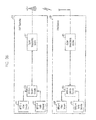
- Fig. 7 is a block diagram describing an apparatus for cooperating the DMB system and the conventional DAB system in accordance with an embodiment of the present invention.
- the reference numeral '710' denotes the conventional DAB system
- the reference numeral '720' denotes the DMB system of the present invention
- the reference numeral '730' denotes an ensemble remultiplexer, individually.
- the ensemble remultiplexer 730 creates a new Ensemble Transport Interface (ETI) frame by remultiplexing the ETI frame inputted from the DAB system 710 with a DMB media stream and transmits the newly formed ETI frame to a Coded Orthogonal Frequency Division Multiplexing (COFDM) modulator of the DAB system 710.
- the ensemble remultiplexer 730 performs only the aforementioned remultiplexing function, or includes the functions of the RS encoder and the interleaver additionally, or includes all the functions of the RS encoder, the interleaver, and the DMB media processor.
- the system with the above-described structure makes it possible to use the conventional DAB transmission system 710, regardless of the structure, which is different according to manufacturing companies.
- Fig. 8 is a block diagram describing an apparatus for connecting the DMB system and the conventional DAB system in accordance with another embodiment of the present invention.
- the reference numeral '810' denotes the conventional DAB system
- the reference numeral '820' denotes the DMB system of the present invention
- the reference numeral '830' denotes an ETI adapter, individually.
- the ETI adaptor 830 receives media stream from one or more DMB system 820, converts it into an ETI frame, and outputs the ETI frame to any one among the ensemble multiplexer, the service multiplexer, and data inserter of the DAB system 810.
- the device in connection receives the ETI output of the ETI adapter 830 and the Service Transport Interface (STI) output of the service multiplexer, forms a new ETI frame and transmits it to the COFDM modulator.
- STI Service Transport Interface
- the ensemble multiplexer analyzes the content of the inputted STI and ETI frames and forms a new ETI frame automatically based on a priority order defined by an administrator. This will be described more in detail with reference to Fig. 9 .
- Fig. 9 is a flowchart describing an ETI frame formatting method in accordance with an embodiment of the present invention.
- the ensemble multiplexer/service multiplexer/data inserter maintains maximum data transmission capacity and forms a new ETI frame and a new STI frame automatically.
- the administrator of the ensemble multiplexer establishes a transmission priority order for a sub-channel to automatically form the new STI and ETI frame. Then, a sub-channel based on the STI and ETI frames is selected according to the above established sub-channel priority order and it is determined whether the transmission of the selected sub-channel is possible.
- a sub-channel having a data size that can be included in the remaining space of the STI or ETI frame is searched and the process of including it into the frame is repeated in order to minimize the remaining space of the STI or ETI frame to be outputted.
- step S905 it is determined whether "(ETI_max - ETI_out) > sub_channel” or "(STI_max - STI_out) > sub_channel” is satisfied.
- a step S907 it is determined whether there is a sub-channel having a data rate lower than "(ETI_max - ETI_out)" or "(STI_max - STI_out)” based on the inputted STI and ETI frames and the priority order. If there is the sub-channel, the logic flow goes to the step S903 where a sub-channel is selected according to the priority order. If there is no such sub-channel, at step S908, a process of forming and outputting ETI or STI frames is performed.
- Fig. 10 is a block diagram illustrating an apparatus for cooperating the DMB system and the conventional DAB system in accordance with another embodiment of the present invention. It presents a method of cooperating the DMB system with the conventional DAB system by using an Ethernet adapter.
- the reference numeral '1010' denotes the conventional DAB system
- the reference numeral '1020' denotes the DMB system of the present invention
- the reference numeral '1030' denotes an Ethernet adapter, individually.
- a DMB media stream is transformed into an Internet Protocol (IP) datagram and transmitted in the form of a stream mode of the DAB system 1010.
- IP Internet Protocol
- the Ethernet adapter 1030 outputs the IP datagram to one of the ensemble multiplexer, service multiplexer and data inserter.
- the one of the ensemble multiplexer, service multiplexer and data inserter that receives the IP diagram forms new ETI and STI frames based on the method of Fig. 9 .
- the present invention transmits and receives multimedia data efficiently and stably based on the DAB system and other diverse digital broadcasting systems.
- the present invention provides diverse interactive broadcasting service having an excellent reception performance without breaks by compressing video and multimedia data efficiently, supporting an interactive service through interaction and synchronization between objects by processing the video and multimedia data on an object basis, multiplexing video/audio/additional data stably, endowing robustness against multipath fading and the Doppler effect that occur in a mobile channel environment by using an additional error correcting method.
- the method of the present invention can be embodied as a program and stored in a computer-readable recording medium such as CD-ROM, RAM, ROM, floppy disks, hard disks, and magneto-optical disks.
- a computer-readable recording medium such as CD-ROM, RAM, ROM, floppy disks, hard disks, and magneto-optical disks.
- the present invention can provide an interactive multimedia data service by using the conventional DAB system and other diverse digital broadcasting systems and it can transmit multimedia data of diverse formats such as mobile TV, Differential Global Positioning System (DGPS), Location Based Service (LBS), Pay Per View (PPV), traffic information, stock information, weather forecast and the like.
- DGPS Differential Global Positioning System
- LBS Location Based Service
- PV Pay Per View
- traffic information stock information
- weather forecast weather forecast and the like.
- the present invention can maximizes the spectrum use efficiency by using highly efficient multimedia data compression technology and it can embody a multimedia data service efficiently by adding a DMB processing module to the conventional DAB and other diverse digital broadcasting systems.
Landscapes
- Engineering & Computer Science (AREA)
- Signal Processing (AREA)
- Multimedia (AREA)
- Computer Networks & Wireless Communication (AREA)
- General Engineering & Computer Science (AREA)
- Two-Way Televisions, Distribution Of Moving Picture Or The Like (AREA)
- Compression Or Coding Systems Of Tv Signals (AREA)
- Television Systems (AREA)
Abstract
Description
- The present invention relates to a digital multimedia broadcasting (DMB) system for transmitting mobile television (TV) contents, e.g., video and video-related multimedia data, based on a digital audio broadcasting (DAB) system and other diverse digital broadcasting systems, a method thereof, and a computer-readable recording medium for recording a program that implements the method.
- A conventional digital audio broadcasting (DAB) and other diverse digital broadcasting systems define only basic mechanism such as stream mode and packet mode based on the presence of a synchronization signal within a stream to transmit a data stream. They simply define only a transmission format of data stream but they do not include any specific method for effective and stable transmission of video and multimedia data. Also, most of them apply only a single error correction code to overcome system performance degradation caused by multi-path fading and the Doppler effect in a mobile radio channel environment. This is because they are designed in consideration of a performance target value of audio or a low quality data service only. For example, in case of DAB, a target Bit Error Rate (BER) is 1x10⁻⁴ (BER = 1x10⁻⁴) . However, in order to satisfy a stable mobile reception quality of video and multimedia data, the target BER should be at least 10-8 and it is very hard to obtain the BER value in the conventional DAB system and other digital broadcasting systems designed only for audio service.
- Therefore, required necessarily is a new DMB transmission scheme for transmitting high quality multimedia data, which is compatible with the transmission standard of the DAB and other diverse digital broadcasting systems.
- Meanwhile, the DAB will be described more in detail by taking an example of the Eureka 147 DAB system, which is a DAB system of the Europe.
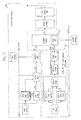
-
Fig. 1 is an exemplary diagram showing a conventional Eureka 147 DAB system. - Since the latter half of 1980's, European countries have actively undertaken research on DAB transmission scheme that can provide a high-quality audio service in mobile reception by organizing the Eureka 147 joint project. Since 1992, a Coded-Orthogonal Frequency Division Multiplexing (COFDM), which is a multi-carrier modulation scheme strong at multi-path fading, and a Moving Picture Experts Group (MPEG)-1/-2 Layer II, which is a signal compression method for transmitting a high-quality audio program, have been embodied and tested for their performance. By the early 1995, a DAB transmission scheme of a European single standard was developed.
- In the DAB system having a transmission scheme as shown in
Fig. 1 , audio data stream encoded by using the MPEG encoder or ordinary data stream passes through an energy dispersal scrambler to disperse the energy of the radio frequency (RF) transmission signal and then it is encoded by using convolutional encoder at a different encoding rate based on Unequal Error Protection (UEP) or Equal Error Protection (EEP) profile. Then, sub-channel data which are time-interleaved with respect to 16 logical frame sections are multiplexed in the Main Service Multiplexer (MSM) to thereby form Common Interleaved Frame (CIF). Herein, since each logical frame includes information of a 24 ms section in a time domain, the total depth of interleaving is 384 ms. In order to form a 24ms-based DAB transmission frame, a synchronous channel, a Fast Information Channel (FIC), and a Main Service Channel (MSC) for effective data transmission are created and Quadrature Phase Shift Keying (QPSK) symbol mapping is performed. Then, frequency interleaving is applied in order to minimize the influence on the frequency selective fading. - Subsequently, a phase reference signal is generated and placed in the second symbol of the transmission frame and differential modulation is performed on the Orthogonal Frequency Division Multiplexing (OFDM) symbol that forms the FIC and MSC based on the phase reference signal. Each OFDM symbol that forms a transmission frame goes through zero-padding for 2N Inverse Fast Fourier Transform (IFFT) and then it is converted into a time domain signal through the IFFT.
- In the meantime, data corresponding to a fourth of the rear of an effective symbol section are inserted to the front of the effective symbol and transmitted in order to remove Inter-Symbol Interference (ISI). This is called guard interval.
- At present, most of the European countries, Canada, Singapore, and China are in service or in preparation of regular DAB broadcasting and Korea, too, selected the Eureka 147 DAB transmission scheme as transmission standard for digital audio broadcasting in the late 2002.
- However, in case of the DAB, since a DAB transmission scheme for providing an effective and stable high-quality multimedia data service in a mobile channel is not developed both in Korea and other countries, it is required to develop a new DMB transmission scheme.
- It is, therefore, an object of the present invention to provide a digital multimedia broadcasting (DMB) system that can provide multimedia data broadcasting service with a high reception quality in a mobile environment by applying highly efficient compression and objectification of multimedia data, synchronization and multiplexing between media streams, additional error correction method and interleaving in order to secure stable reception quality of multimedia data in a mobile channel environment and embody efficient and interactive multimedia data broadcasting by using a conventional digital audio broadcasting (DAB) system and other diverse digital broadcasting systems; a method thereof; and a computer-readable recording medium for recording a program that implements the method.
- It is another object of the present invention to provide a DMB system that can embody DMB without changing the conventional DAB and other digital broadcasting systems by operating in a perfect compatibility with the conventional digital broadcasting system, because it is designed in consideration of the conventional DAB system and other diverse digital broadcasting systems; a method thereof; and a computer-readable recording medium for recording a program that implements the method.
- In accordance with one aspect of the present invention, there is provided a DMB system, which includes: an encoding unit for encoding an inputted audio/video signal; a synchronizing unit for synchronizing media stream, additional data, interactive service objectifying data that are outputted from the encoding unit; a multiplexing unit for multiplexing the media stream outputted from the synchronizing unit; an error correction encoding unit for performing additional error correction encoding on the media stream outputted from the multiplexing unit; an interleaving unit for removing temporal correlation between adjacent byte units within a data stream outputted from the error correction encoding unit; and a transmitting unit for transmitting a DMB media stream outputted from the interleaving unit.
- In accordance with one aspect of the present invention, there is provided a digital DMB method, which includes the steps of: a) encoding video/audio data at a high efficiency for data compression; b) synchronizing a media stream encoded in the step a), a media stream for an additional data service, and a objectified media stream for an interactive service; c) multiplexing a media stream synchronized in the step b); d) encoding and interleaving for correcting an error to be occurred in a media stream multiplexed in the step c); and e) transmitting a stream interleaved in the step d).
- In accordance with one aspect of the present invention, there is provided a computer-readable recording medium for recording a program that implement a digital DMB method, which includes the steps of: a) encoding video/audio data at a high efficiency for data compression; b) synchronizing a media stream encoded in the step a), a media stream for an additional data service, and an objectified media stream for an interactive service; c) multiplexing a media stream synchronized in the step b); d) encoding and interleaving for correcting an error to be occurred in a media stream multiplexed in the step c); and e) transmitting a stream interleaved in the step d).
- Meanwhile, the DMB system of the present invention includes a broadcasting field where multimedia data are transmitted by using conventional DAB and digital broadcasting systems, a field of source encoding technology where multimedia data are compressed, a field of multiplexing technology where multimedia data streams are mixed, and a field of error correction encoding technology where robustness to error generated in a mobile channel is given.
- The above and other objects and features of the present invention will become apparent from the following description of the preferred embodiments given in conjunction with the accompanying drawings, in which:
-
Fig. 1 is an exemplary diagram showing a conventional Eureka 147 digital audio broadcasting (DAB) system; -
Figs. 2A and2B are diagrams describing a transmission method of a digital multimedia broadcasting (DMB) system in accordance with an embodiment of the present invention; -
Figs. 3A and3B are block diagrams illustrating a DMB system in accordance with an embodiment of the present invention; -
Fig. 4 is a block diagram showing a media processor of the DMB system in accordance with an embodiment of the present invention; -
Figs. 5A and5B are diagrams describing a Reed-Solomon (RS) encoder of the DMB system in accordance with an embodiment of the present invention; -
Fig. 6 is a schematic diagram describing an interleaver of the DMB system in accordance with an embodiment of the present invention; -
Fig. 7 is a block diagram describing an apparatus for cooperating the DMB system and the conventional DAB system in accordance with an embodiment of the present invention; -
Fig. 8 is a block diagram describing an apparatus for cooperating the DMB system and the conventional DAB system in accordance with another embodiment of the present invention; -
Fig. 9 is a flowchart describing an Ensemble Transport Interface (ETI) frame forming method in accordance with an embodiment of the present invention; and -
Fig. 10 is a block diagram illustrating an apparatus for cooperating the DMB system and the conventional DAB system in accordance with yet another embodiment of the present invention. - Other objects and aspects of the invention will become apparent from the following description of the embodiments with reference to the accompanying drawings, which is set forth hereinafter.
-
Figs. 2A and2B are diagrams describing a transmission method of a digital multimedia broadcasting (DMB) system in accordance with an embodiment of the present invention. - As shown in
Fig. 2A , the DMB system of the present invention includes a process of high-efficiency video encoding atstep 201 for compressing video data, a process of high-efficiency audio encoding for compressing audio data atstep 202, a process of insertion of additional data atstep 203, a process of objectification for interactive service atstep 204, a process of synchronization atstep 210 for synchronizing media streams outputted from the processes of video encoding at thestep 201, audio encoding at thestep 202, additional data insertion at thestep 203, and objectification for interactive service at thestep 204, a process of multiplexing for mixing the synchronized media streams atstep 220, and a process of encoding and interleaving for correcting an error to be occurred in the media stream multiplexed in the process of multiplexing and interleaving atstep 230. - The DMB system transmits DMB data as follows.
- First, at the
steps step 204, objectification for interactive service is performed. Then, at thestep 210, video/audio/additional data streams are synchronized and, atstep 220, the media streams are multiplexed. - Subsequently, at
step 230, error correction encoding and interleaving are performed on the multiplexed stream in order to secure excellent reception quality in a high-speed mobile channel environment. The stream obtained by using the error correction encoding and the interleaving is transmitted to the DAB system and other digital broadcasting systems. Herein, the digital broadcasting systems include a digital television (TV) broadcasting system, a digital satellite broadcasting system, and a digital cable broadcasting system. - Meanwhile, if the DAB system and the digital broadcasting system show excellent system performance in a high-speed mobile channel environment, a DMB transmission scheme as shown in
Fig. 2B which does not include the error correction encoding and interleaving of thestep 230 can be applied. -
Figs. 3A and3B are block diagrams illustrating a DMB system in accordance with an embodiment of the present invention. The drawings show system technologies applied to the DMB ofFigs. 2A and2B . - As shown in
Fig. 3A , the DMB system of the present invention can be divided into aDMB transmitter 310 and aDMB receiver 320. - First, the
DMB transmitter 310 uses an MPEG-4audio encoder 311 and an MPEG-4video encoder 312 for high-efficiency source encoding, and it uses an MPEG-4 systems encoder 313 for objectification and synchronization of media stream. It uses an MPEG-2 transport stream (TS) multiplexer 314 for multiplexing media stream, and it uses a Reed-Solomon (RS)encoder 315 for additional error correction encoding. TheDMB transmitter 310 uses aconvolutional byte interleaver 316 to remove temporal correlation between neighboring byte units in data stream. The finally outputted DMB media stream is inputted through a stream mode of aDAB transmission system 317 or data channels of the other digital broadcasting systems. - The
DMB receiver 320 receives multimedia data, which are passed through a receiving channel of theDAB receiving system 321 or those of the other digital broadcasting systems, pass through theconvolutional byte deinterleaver 322, theRS decoder 323, the MPEG-2TS demultiplexer 324, the MPEG-4systems decoder 325, the MPEG-4video decoder 326, and the MPEG-4audio decoder 327. - If the conventional
digital broadcasting systems Fig. 3B . -
Fig. 4 is a block diagram showing a media processor of the DMB system in accordance with an embodiment of the present invention. It shows a structure of a DMB media processor that performs functions from compression to multiplexing of multimedia data. Herein, the media processor includes an MPEG-4 video/audio encoder, an MPEG-4 systems encoder, and an MPEG-2 TS multiplexer. - As shown in
Fig. 4 , the media processor of the DMB system of the present invention includes apreprocessor 410, an MPEG-4encoder generator 431, an Initial Object Descriptor (IOD)generator 432, a sync layer (SL) packetizer 433, a Program Elementary Stream (PES) packetizer 441, a 14496section packetizer 442, aPSI generator 443, aTS packetizer 444. - The
preprocessor 410 converts an audio/video signal into a data stream of a desired format. The MPEG-4encoder preprocessor 410 into a high compressed media stream. The OD/BIFS generator 431 generates object descriptor (OD) and binary format for scene (BIFS). TheIOD generator 432 generates the initial object descriptor (IOD). Thesync layer packetizer 433 synchronizes media streams outputted from the MPEG-4encoder BIFS generator 431. The PES packetizer 441 packetizes a packet outputted from thesync layer packetizer 433 into a PES packet. The 14496section packetizer 442 packetizes a packet outputted from thesync layer packetizer 433 into a 14496 section. ThePSI generator 443 generates Program Service Information (PSI) based on the data outputted from theIOD generator 432. The TS packetizer 444 packetizes a packet outputted from thePES packetizer 441, 14496section packetizer 442,PSI generator 443 into transport stream. - That is, the media processor of the DMB system of the present invention includes an MPEG-4
systems encoder 430 and anM4overM2 module 440. The MPEG-4systems encoder 430 includes the MPEG-4 audio/video encoder preprocessor 410, the OD/BIFS generator 431 for interactive service, theIOD generator 432, thesync layer packetizer 433 for synchronizing the media streams, and theM4overM2 module 440 for generating a program elementary stream (PES) packet based on a sync layer packet and multiplexing the PES packet with a section packet and Program Service Information (PSI) into an MPEG-2 transport stream. Herein, the TS packetizer 444 can multiplex one or more audio/video/additional data based on a program. - As for the video encoder, an 'MPEG-4 Part 2' codec and an 'MPEG-4
Part 10 Advanced Video Coding (AVC)' codec can be used. For the audio encoder, diverse codecs such as an 'Advanced Audio Coding (AAC)' codec, an 'AAC+' codec, and a 'Bit Sliced Arithmetic Coding (BSAC)' codec can be used. The codec is selected in consideration of compression performance and trade-off in the complexity of embodiment. - Since the video codec supports 30 frame per second (fps) maximally and supports diverse display formats such as Quarter Common Intermediate Format (QCIF), Quicktime Video Graphics Array (QVGA), and Common Intermediate Format (CIF), it can be applied to diverse application fields. Also, since the audio codec can compress a stereo channel at a rate of less than 128 kbps, the compression efficiency is superior to the codecs used in the conventional broadcasting systems including DAB. Therefore, spectrum use efficiency can be maximized.
-
Fig. 5A shows an RS encoder of the DMB system in accordance with an embodiment of the present invention. They present a structure of the RS (204, 188, t=8) encoder for generating an RS code word which is used to satisfy the target Bit Error Rate (BER) of multimedia data andFig. 5B shows a structure of a packet. - In case of a DAB system, a convolutional code is used as an error correcting code. If an RS code is added to the DAB system for DMB, the channel encoder of total DMB system has a structure of concatenated code. Thus, the RS code can be referred to as an outer coder.
- The RS (204, 188, t=8) code is embodied by using an RS (255, 239, t=8) code, and the code generator polynomial is:

wherein λ = 02HEX. - The following is a field generator polynomial:

- Meanwhile, the RS (204, 188, t=8) code is embodied as follows.
- First, 51-byte '0' is added to 188-byte information data. Then, 239-byte information data are inputted to an RS (255, 239, t=8) encoder.
- Subsequently, the added 51-byte '0' is removed from the encoded 255-byte output data to thereby form an RS-encoded packet as described in
Fig. 5B . -
Fig. 6 is a schematic diagram describing an interleaver of the DMB system in accordance with an embodiment of the present invention. - In order to remove temporal correlation between adjacent byte units, the interleaver interleaves a 204 byte-based MPEG-2 TS packet, from which a synchronization word begins, by using a convolutional byte interleaver having a structure of
Fig. 6 . - The interleaver is formed of 12 branches and each branch is formed of a plurality of memories which are based on a unit of 17 byte × N (N=0, 1, 2, ..., 11). Input/output switches are synchronized with each other.
- For synchronization, synchronization words are transmitted always through a '0' branch and the synchronization of a deinterleaver is obtained by allocating a first recognized synchronization word to a '0' branch of the deinterleaver.
- An interleaved data stream is allocated to a stream mode of the DAB system and data channels for other digital broadcasting systems and then processed.
- Hereafter, a method and apparatus for cooperating the DMB system of the present invention and the conventional DAB system will be described with reference to
Figs. 7 to 10 . -
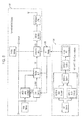
Fig. 7 is a block diagram describing an apparatus for cooperating the DMB system and the conventional DAB system in accordance with an embodiment of the present invention. - In the drawing, the reference numeral '710' denotes the conventional DAB system; the reference numeral '720' denotes the DMB system of the present invention; and the reference numeral '730' denotes an ensemble remultiplexer, individually.
- The
ensemble remultiplexer 730 creates a new Ensemble Transport Interface (ETI) frame by remultiplexing the ETI frame inputted from theDAB system 710 with a DMB media stream and transmits the newly formed ETI frame to a Coded Orthogonal Frequency Division Multiplexing (COFDM) modulator of theDAB system 710. Herein, theensemble remultiplexer 730 performs only the aforementioned remultiplexing function, or includes the functions of the RS encoder and the interleaver additionally, or includes all the functions of the RS encoder, the interleaver, and the DMB media processor. The system with the above-described structure makes it possible to use the conventionalDAB transmission system 710, regardless of the structure, which is different according to manufacturing companies. -
Fig. 8 is a block diagram describing an apparatus for connecting the DMB system and the conventional DAB system in accordance with another embodiment of the present invention. - In the drawing, the reference numeral '810' denotes the conventional DAB system; the reference numeral '820' denotes the DMB system of the present invention; and the reference numeral '830' denotes an ETI adapter, individually.
- The
ETI adaptor 830 receives media stream from one ormore DMB system 820, converts it into an ETI frame, and outputs the ETI frame to any one among the ensemble multiplexer, the service multiplexer, and data inserter of theDAB system 810. - If the device in connection is the ensemble multiplexer, it receives the ETI output of the
ETI adapter 830 and the Service Transport Interface (STI) output of the service multiplexer, forms a new ETI frame and transmits it to the COFDM modulator. - The ensemble multiplexer analyzes the content of the inputted STI and ETI frames and forms a new ETI frame automatically based on a priority order defined by an administrator. This will be described more in detail with reference to
Fig. 9 . -
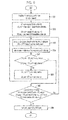
Fig. 9 is a flowchart describing an ETI frame formatting method in accordance with an embodiment of the present invention. In the flowchart, the ensemble multiplexer/service multiplexer/data inserter maintains maximum data transmission capacity and forms a new ETI frame and a new STI frame automatically. - First, the administrator of the ensemble multiplexer establishes a transmission priority order for a sub-channel to automatically form the new STI and ETI frame. Then, a sub-channel based on the STI and ETI frames is selected according to the above established sub-channel priority order and it is determined whether the transmission of the selected sub-channel is possible.
- If it is determined that transmission is impossible, a sub-channel having a data size that can be included in the remaining space of the STI or ETI frame is searched and the process of including it into the frame is repeated in order to minimize the remaining space of the STI or ETI frame to be outputted.
- This can be described more in detail below.
- First, at step S901, transmission priority order for a sub-channel is established to automatically form a new STI frame or a new ETI frame. Then, at step S902, it is established that "ETI_out= output ETI data rate = 0," "ETI_max = maximum ETI transmittable data rate," or "STI_out = output STI data rate = 0," "STI_max = maximum STI transmittable data rate."
- Subsequently, at step S903, a sub-channel is selected based on the inputted IP datagram, the STI and ETI frames and the priority order. Then, at step S904, it is established that "sub_channel = data rate of a corresponding sub-channel."
- Subsequently, at step S905, it is determined whether "(ETI_max - ETI_out) > sub_channel" or "(STI_max - STI_out) > sub_channel" is satisfied.
- If the above condition is satisfied, at step S906, it is established that "ETI_out - ETI_out + sub_channel" or "STI_out = STI_out + sub_channel" and then logic flow goes to the step S903 where a sub-channel is selected according to priority order.
- If the above condition is not satisfied, a step S907, it is determined whether there is a sub-channel having a data rate lower than "(ETI_max - ETI_out)" or "(STI_max - STI_out)" based on the inputted STI and ETI frames and the priority order. If there is the sub-channel, the logic flow goes to the step S903 where a sub-channel is selected according to the priority order. If there is no such sub-channel, at step S908, a process of forming and outputting ETI or STI frames is performed.
-
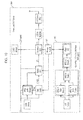
Fig. 10 is a block diagram illustrating an apparatus for cooperating the DMB system and the conventional DAB system in accordance with another embodiment of the present invention. It presents a method of cooperating the DMB system with the conventional DAB system by using an Ethernet adapter. - In the drawing, the reference numeral '1010' denotes the conventional DAB system; the reference numeral '1020' denotes the DMB system of the present invention; and the reference numeral '1030' denotes an Ethernet adapter, individually.
- According to the proposed method, a DMB media stream is transformed into an Internet Protocol (IP) datagram and transmitted in the form of a stream mode of the
DAB system 1010. TheEthernet adapter 1030 outputs the IP datagram to one of the ensemble multiplexer, service multiplexer and data inserter. The one of the ensemble multiplexer, service multiplexer and data inserter that receives the IP diagram forms new ETI and STI frames based on the method ofFig. 9 . - As described above, the present invention transmits and receives multimedia data efficiently and stably based on the DAB system and other diverse digital broadcasting systems. The present invention provides diverse interactive broadcasting service having an excellent reception performance without breaks by compressing video and multimedia data efficiently, supporting an interactive service through interaction and synchronization between objects by processing the video and multimedia data on an object basis, multiplexing video/audio/additional data stably, endowing robustness against multipath fading and the Doppler effect that occur in a mobile channel environment by using an additional error correcting method.
- The method of the present invention can be embodied as a program and stored in a computer-readable recording medium such as CD-ROM, RAM, ROM, floppy disks, hard disks, and magneto-optical disks.
- As described above, the present invention can provide an interactive multimedia data service by using the conventional DAB system and other diverse digital broadcasting systems and it can transmit multimedia data of diverse formats such as mobile TV, Differential Global Positioning System (DGPS), Location Based Service (LBS), Pay Per View (PPV), traffic information, stock information, weather forecast and the like.
- Also, the present invention can maximizes the spectrum use efficiency by using highly efficient multimedia data compression technology and it can embody a multimedia data service efficiently by adding a DMB processing module to the conventional DAB and other diverse digital broadcasting systems.
- The present application contains subject matter related to Korean patent application No.
2003-57531 - While the present invention has been described with respect to certain preferred embodiments, it will be apparent to those skilled in the art that various changes and modifications may be made without departing from the scope of the invention as defined in the following claims.
Claims (30)
- A digital multimedia broadcasting system, comprising:an encoding means for encoding inputted audio/video signals;a system encoding means for objectifying data for an interactive service and synchronizing a media stream which is outputted from the encoding means, a media stream of additional data and a media stream which is generated by objectifying the data for the interactive service;a multiplexing means for multiplexing the media streams outputted from the system encoding means;an error correction encoding means for performing additional error correction encoding onto a media stream outputted from the multiplexing means;an interleaving means for removing temporal correlation between adjacent byte units within a media stream outputted from the error correction encoding means; anda transmitting means for transmitting a digital multimedia broadcasting media stream outputted from the interleaving means,wherein the transmitting means is one of a digital audio broadcasting system, a digital television (TV) broadcasting system, a digital satellite broadcasting system, and a digital cable broadcasting system.
- The system as recited in Claim 1, wherein the audio/video signals are obtained by converting multimedia source data into data stream of a predetermined format through a preprocessing.
- The system as recited in Claim 1, wherein the encoding means converts the inputted video signal into a format of 'Moving Picture Experts Group (MPEG)-4 Part 2' or a format of 'MPEG-4 Part 10', which is Advanced Video Coding (AVC).
- The system as recited in Claim 1, wherein the encoding means converts the inputted audio signal into one of formats of 'Advanced Audio Coding (AAC)', 'Advanced Audio Coding Plus (AAC+)', and 'Bit Sliced Arithmetic Coding (BSAC)'.
- The system as recited in Claim 1, wherein the system encoding means includes:an Object Descriptor (OD)/Binary Format for Scene (BIFS) generating means for generating OD/BIFS for the interactive service;an Initial Object Descriptor (IOD) generating means for generating an IOD; anda sync layer packetizing means for synchronizing media streams outputted from the encoding means and the OD/BIFS generating means.
- The system as recited in Claim 5, wherein the multiplexing means includes:a PES packetizing means for generating a Program Elementary Stream (PES) packet based on a packet which is generated in the sync layer packetizing means based on the media stream outputted from the encoding means;a section packetizing means for generating sections based on a data which is outputted from the IOD generating means and a packet which is generated in the sync layer packetizing means based on a OD/BIFS stream, wherein the OD/BIFS stream is outputted from the OD/BIFS generating means; anda transport stream (TS) packetizing means for packetizing data outputted from the PES packetizing means and the section packetizing means into transport stream.
- The system as recited in Claim 6, wherein the section packetizing means includes:a 14496 section packetizing means for generating 14496 section based on the packet which is generated in the sync layer packetizing means based on the OD/BIFS stream; anda Program Service Information (PSI) generating means for generating PSI based on the data outputted from the IOD generating means.
- The system as recited in Claim 1, wherein the error correction encoding means is a Reed-Solomon (RS) encoder.
- The system as recited in Claim 1, wherein the interleaving means is composed of 12 branches and the branches individually include a plurality of memories having a 17bytes x N unit where N=0, 1, 2,..., 11, and input/output switches operating in synchronization with each other; sync words are transmitted always through a '0' branch for synchronization; and synchronization of a deinterleaver is acquired by allocating the first recognized sync word to the '0' branch of the deinterleaver.
- The system as recited in Claim 1, further comprising
an Ensemble Transport Interface (ETI) converting means for converting the digital multimedia broadcasting media stream outputted from the interleaving means into an ETI frame and delivering the ETI frame to the transmitting means. - The system as recited in Claim 1, further comprising
an Internet Protocol (IP) datagram converting means for converting the digital multimedia broadcasting media stream outputted from the interleaving means into an IP datagram and delivering the IP datagram to the transmitting means. - A digital multimedia broadcasting system, comprising:a receiving means for receiving digital multimedia broadcasting media stream;a deinterleaving means for deinterleaving the received digital multimedia broadcasting media stream which is interleaved to remove temporal correlation in adjacent byte units;an error correction decoding means for performing additional error correction decoding onto the deinterleaved digital multimedia broadcasting media stream which is generated from additional error correction encoding;a demultiplexing means for demultiplexing the additional error correction decoded digital multimedia broadcasting media stream which is multiplexed;a system decoding means for decoding the demultiplexed digital multimedia broadcasting media stream to produce media stream, additional data, and data objectified for an interactive service; anda decoding means for decoding the media stream into audio/video signals,wherein the receiving means is one of a digital audio broadcasting system, a digital television (TV) broadcasting system, a digital satellite broadcasting system, and a digital cable broadcasting system.
- The system as recited in Claim 12, wherein the decoding means decodes a video signal included in the media stream based on 'Moving Picture Experts Group (MPEG)-4 Part 2' or 'MPEG-4 Part 10' which is Advanced Video Coding (AVC).
- The system as recited in Claim 12, wherein the decoding means decodes an audio signal included in the media stream based on one of 'Advanced Audio Coding (AAC)', 'Advanced Audio Coding Plus (AAC+)', and 'Bit Sliced Arithmetic Coding (BSAC)'.
- The system as recited in Claim 12, wherein the error correction decoding means is a Reed-Solomon (RS) decoder.
- A digital multimedia broadcasting method, comprising the steps of:a) encoding inputted audio/video signals;b) objectifying data for an interactive service and synchronizing a media stream which is outputted from the step a), a media stream of additional data and a media stream which is generated by objectifying the data for the interactive service;c) multiplexing the media streams outputted from the step b);d) performing additional error correction encoding onto a media stream outputted from the step c);e) performing interleaving to remove temporal correlation between adjacent byte units within a media stream outputted from the step d); andf)transmitting a digital multimedia broadcasting media stream outputted from the step e),wherein the step f) is performed by using one of a digital audio broadcasting system, a digital television (TV) broadcasting system, a digital satellite broadcasting system, and a digital cable broadcasting system.
- The method as recited in Claim 16, wherein the audio/video signals are obtained by converting multimedia source data into data stream of a predetermined format through a preprocessing.
- The method as recited in Claim 16, wherein the step a) converts the inputted video signal into a format of 'Moving Picture Experts Group (MPEG)-4 Part 2' or a format of 'MPEG-4 Part 10', which is Advanced Video Coding (AVC).
- The method as recited in Claim 16, wherein the step a) converts the inputted audio signal into one of formats of 'Advanced Audio Coding (AAC)', 'Advanced Audio Coding Plus (AAC+)', and 'Bit Sliced Arithmetic Coding (BSAC)'.
- The method as recited in Claim 16, wherein the step b) includes the steps of:b1) generating an Object Descriptor (OD)/ Binary Format for Scene (BIFS) for the interactive service;b2) generating an Initial Object Descriptor (IOD); andb3) performing a sync layer packetization to synchronize media streams outputted from the step a) and the step b1).
- The method as recited in Claim 20, wherein the step c) includes the steps of:c1) generating a Program Elementary Stream (PES) packet based on a packet which is generated in the step b3) based on the media stream outputted from the step a);c2) generating sections based on a data which is outputted from the step b2) and a packet which is generated in the step b3) based on a OD/BIFS stream, wherein the OD/BIFS stream is outputted from the step b1); andc3) packetizing data outputted from the step c1) and the step c2) into transport stream.
- The method as recited in Claim 21, wherein the step c2) includes the steps of:c21) generating 14496 section based on the packet which is generated in the step b3) based on the OD/BIFS stream; andc22) generating PSI based on the data outputted from the step b2).
- The method as recited in Claim 16, wherein the step d) is performed in a Reed-Solomon (RS) encoder.
- The method as recited in Claim 16, wherein the step e) is performed in an interleaving means which is composed of 12 branches and the branches individually include a plurality of memories having a 17bytes x N unit where N=0, 1, 2,..., 11, and input/output switches operating in synchronization with each other; sync words are transmitted always through a '0' branch for synchronization; and synchronization of a deinterleaver is acquired by allocating the first recognized sync word to the '0' branch of the deinterleaver.
- The method as recited in Claim 16, further comprising the step of:g) converting the digital multimedia broadcasting media stream outputted from the step e) into an ETI frame and delivering the ETI frame to the step f).
- The method as recited in Claim 16, further comprising the step of:h) converting the digital multimedia broadcasting media stream outputted from the step e) into an IP datagram and delivering the IP datagram to the step f).
- A digital multimedia broadcasting method, comprising the steps of:a) receiving digital multimedia broadcasting media stream;b) deinterleaving the received digital multimedia broadcasting media stream which is interleaved to remove temporal correlation in adjacent byte units;c) performing additional error correction decoding onto the deinterleaved digital multimedia broadcasting media stream which is generated from additional error correction encoding;d) demultiplexing the additional error correction decoded digital multimedia broadcasting media stream which is multiplexed;e) decoding the demultiplexed digital multimedia broadcasting media stream to produce media stream, additional data, and data objectified for an interactive service; andf) decoding the media stream into audio/video signals, wherein the step a) is performed by using one of a digital audio broadcasting system, a digital television (TV) broadcasting system, a digital satellite broadcasting system, and a digital cable broadcasting system.
- The method as recited in Claim 27, wherein the step f) decodes the video signal included in the media stream based on 'Moving Picture Experts Group (MPEG)-4 Part 2' or 'MPEG-4 Part 10' which is Advanced Video Coding (AVC).
- The method as recited in Claim 27, wherein the step f) decodes the audio signal included in the media stream based on one of 'Advanced Audio Coding (AAC)', 'Advanced Audio Coding Plus (AAC+)', and 'Bit Sliced Arithmetic Coding (BSAC)'.
- The method as recited in Claim 27, wherein the step c) is performed in a Reed-Solomon (RS) decoder.
Applications Claiming Priority (2)
| Application Number | Priority Date | Filing Date | Title |
|---|---|---|---|
| KR1020030057531A KR100585933B1 (en) | 2003-08-20 | 2003-08-20 | Digital Multimedia Broadcasting System and Method |
| EP03781075A EP1661400A4 (en) | 2003-08-20 | 2003-12-30 | SYSTEM AND METHOD FOR DIGITAL MULTIMEDIA BROADCAST |
Related Parent Applications (1)
| Application Number | Title | Priority Date | Filing Date |
|---|---|---|---|
| EP03781075A Division EP1661400A4 (en) | 2003-08-20 | 2003-12-30 | SYSTEM AND METHOD FOR DIGITAL MULTIMEDIA BROADCAST |
Publications (1)
| Publication Number | Publication Date |
|---|---|
| EP2934003A1 true EP2934003A1 (en) | 2015-10-21 |
Family
ID=36121835
Family Applications (2)
| Application Number | Title | Priority Date | Filing Date |
|---|---|---|---|
| EP03781075A Ceased EP1661400A4 (en) | 2003-08-20 | 2003-12-30 | SYSTEM AND METHOD FOR DIGITAL MULTIMEDIA BROADCAST |
| EP15167067.6A Withdrawn EP2934003A1 (en) | 2003-08-20 | 2003-12-30 | System and method for digital multimedia broadcasting |
Family Applications Before (1)
| Application Number | Title | Priority Date | Filing Date |
|---|---|---|---|
| EP03781075A Ceased EP1661400A4 (en) | 2003-08-20 | 2003-12-30 | SYSTEM AND METHOD FOR DIGITAL MULTIMEDIA BROADCAST |
Country Status (8)
| Country | Link |
|---|---|
| US (1) | US20060262227A1 (en) |
| EP (2) | EP1661400A4 (en) |
| KR (1) | KR100585933B1 (en) |
| CN (2) | CN102123297B (en) |
| AU (1) | AU2003289584B2 (en) |
| CA (1) | CA2534435C (en) |
| MX (1) | MXPA06001990A (en) |
| WO (1) | WO2005020576A1 (en) |
Families Citing this family (86)
| Publication number | Priority date | Publication date | Assignee | Title |
|---|---|---|---|---|
| WO2005064936A1 (en) * | 2003-12-26 | 2005-07-14 | Electronics And Telecommunications Research Institute | Apparatus and method for transforming a digital tv broadcasting signal to a digital radio broadcasting signal |
| KR101033582B1 (en) * | 2004-04-09 | 2011-05-11 | 엘지전자 주식회사 | A Memory Control Method for Time Interleaving in a Broadcast Receiver |
| US7738833B2 (en) * | 2004-06-30 | 2010-06-15 | Glenayre Electronics, Inc. | Provision of messaging services from a video messaging system for video compatible and non-video compatible equipment |
| KR100640338B1 (en) * | 2004-09-20 | 2006-10-30 | 삼성전자주식회사 | Method and device for receiving digital multimedia broadcasting without interruption when switching channels |
| JP4828906B2 (en) * | 2004-10-06 | 2011-11-30 | 三星電子株式会社 | Providing and receiving video service in digital audio broadcasting, and apparatus therefor |
| KR100597134B1 (en) * | 2004-11-03 | 2006-07-05 | 주식회사 엘지텔레콤 | Digital multimedia broadcasting service system and method |
| KR100667770B1 (en) * | 2004-11-09 | 2007-01-11 | 삼성전자주식회사 | Digital multimedia broadcasting receiver and user interface method |
| WO2006080664A1 (en) * | 2004-12-06 | 2006-08-03 | Electronics And Telecommunications Research Institute | Apparatus and method for storing link information of dmb interactive contents and dmb receiving terminal system using the same |
| KR100753540B1 (en) * | 2005-01-20 | 2007-08-30 | 주식회사 에스비에스 | Broadcasting method of visual radio, encoder, decoder and receiver using the decoder |
| KR100744356B1 (en) * | 2005-03-21 | 2007-07-30 | 삼성전자주식회사 | Packet-type Retransmission System and Device for DMX Service |
| WO2006101380A1 (en) * | 2005-03-25 | 2006-09-28 | Samsung Electronics Co., Ltd. | Method and apparatus for determining transmitter identification information in terrestrial digital multimedia broadcasting system |
| KR100766156B1 (en) * | 2005-04-07 | 2007-10-10 | (주) 엘지텔레콤 | DMB content receiving and management system using personal data storage on the Internet and DMB content receiving and management method |
| KR20060119746A (en) | 2005-05-18 | 2006-11-24 | 엘지전자 주식회사 | Method and apparatus for providing information on traffic conditions and using it |
| KR100690341B1 (en) * | 2005-05-27 | 2007-03-09 | (주) 엘지텔레콤 | Interactive Digital Multimedia Broadcasting System and Interactive Digital Multimedia Broadcasting Service |
| KR100744210B1 (en) * | 2005-06-30 | 2007-07-30 | 주식회사 팬택앤큐리텔 | Broadcasting transmitter, broadcast signal transmission method thereof, broadcast receiver, reserved recording method thereof |
| KR100713424B1 (en) * | 2005-07-06 | 2007-05-04 | 삼성전자주식회사 | Digital broadcast receiving device and method |
| KR100724886B1 (en) * | 2005-07-18 | 2007-06-04 | 삼성전자주식회사 | Packet-type Retransmission System and Device for DMX Service |
| KR100726545B1 (en) * | 2005-08-09 | 2007-06-11 | 주식회사 대우일렉트로닉스 | Digital multimedia broadcasting system with integrated audio decoder |
| ES2383611T3 (en) | 2005-08-15 | 2012-06-22 | Nds Limited | Video cheat mode system |
| CN100583977C (en) * | 2005-09-27 | 2010-01-20 | 韩国电子通信研究院 | Apparatus for transmitting and receiving digital multimedia broadcasting for high quality video service |
| EP1938596A4 (en) * | 2005-09-27 | 2012-03-28 | Korea Electronics Telecomm | APPARATUS FOR TRANSMITTING AND RECEIVING DIGITAL MULTIMEDIA BROADCAST FOR HIGH QUALITY VIDEO SERVICE |
| US7804860B2 (en) | 2005-10-05 | 2010-09-28 | Lg Electronics Inc. | Method of processing traffic information and digital broadcast system |
| US7840868B2 (en) | 2005-10-05 | 2010-11-23 | Lg Electronics Inc. | Method of processing traffic information and digital broadcast system |
| KR100735235B1 (en) * | 2005-10-12 | 2007-07-03 | 삼성전자주식회사 | Method for Providing Heterogeneous Service Using PI Function in Terrestrial DMB Terminal Device |
| US8194754B2 (en) | 2005-10-13 | 2012-06-05 | Lg Electronics Inc. | Method for processing a signal and apparatus for processing a signal |
| AU2006300103B2 (en) * | 2005-10-13 | 2010-09-09 | Lg Electronics Inc. | Method and apparatus for signal processing |
| KR100733959B1 (en) * | 2005-10-14 | 2007-06-29 | 한국전자통신연구원 | Apparatus and method for data service management for extending frequency band, DMX data server using same, and DMX receiving system for broadband data service |
| KR100736051B1 (en) * | 2005-10-17 | 2007-07-06 | 삼성전자주식회사 | Apparatus and method for providing additional digital multimedia broadcasting function |
| KR101370889B1 (en) | 2005-12-28 | 2014-03-10 | 엘지전자 주식회사 | Digital broadcasting system and processing method |
| KR100733965B1 (en) | 2005-11-01 | 2007-06-29 | 한국전자통신연구원 | Object-based audio transmitting/receiving system and method |
| KR100793481B1 (en) * | 2005-11-07 | 2008-01-14 | 엘지전자 주식회사 | Apparatus and method for multimedia object transmission in digital multimedia broadcasting |
| KR100744785B1 (en) * | 2005-11-21 | 2007-08-02 | 엘지전자 주식회사 | Data service method through WiFi channel, and digital multimedia broadcasting receiving terminal |
| KR100747550B1 (en) * | 2005-12-09 | 2007-08-08 | 한국전자통신연구원 | Method for providing three dimensional image service based on DMB, Apparatus and Method of Decoding for three dimensional image service based on DMB |
| KR100754197B1 (en) * | 2005-12-10 | 2007-09-03 | 삼성전자주식회사 | Method and apparatus for providing and receiving video service in digital audio broadcasting (DAV) |
| KR100834630B1 (en) * | 2005-12-16 | 2008-06-02 | 삼성전자주식회사 | Method and apparatus for transmitting / receiving electronic service guide for bidirectional channel in digital video broadcasting system |
| WO2007075059A1 (en) * | 2005-12-28 | 2007-07-05 | Lg Electronics Inc. | Digital broadcasting system and method of processing data |
| ATE472148T1 (en) * | 2006-01-19 | 2010-07-15 | Lg Electronics Inc | METHOD FOR PROVIDING AND USING INFORMATION FOR VEHICLE MOTION |
| WO2007083941A1 (en) * | 2006-01-19 | 2007-07-26 | Lg Electronics Inc. | Method for transmitting and receiving tranffic information and apparatus thereof |
| CN101375601A (en) * | 2006-01-25 | 2009-02-25 | Lg电子株式会社 | Method and receiving system for transmitting and receiving digital broadcast signals |
| KR100754739B1 (en) * | 2006-01-25 | 2007-09-03 | 삼성전자주식회사 | DMB system and method and DMB terminal for video-linked service object stream download |
| WO2007091779A1 (en) | 2006-02-10 | 2007-08-16 | Lg Electronics Inc. | Digital broadcasting receiver and method of processing data |
| WO2007126196A1 (en) | 2006-04-29 | 2007-11-08 | Lg Electronics Inc. | Digital broadcasting system and method of processing data |
| WO2007136166A1 (en) | 2006-05-23 | 2007-11-29 | Lg Electronics Inc. | Digital broadcasting system and method of processing data |
| KR100763598B1 (en) * | 2006-09-29 | 2007-10-05 | 한국전자통신연구원 | Frame Synchronization Apparatus and Method Using Phase Differential Information in DV Transmission System |
| US7873104B2 (en) | 2006-10-12 | 2011-01-18 | Lg Electronics Inc. | Digital television transmitting system and receiving system and method of processing broadcasting data |
| KR100825755B1 (en) * | 2006-11-29 | 2008-04-29 | 한국전자통신연구원 | Digital multimedia broadcasting transmission / reception method and apparatus for interworking MBP-4 WIFS based data service and middleware based data service |
| CA2571617A1 (en) * | 2006-12-15 | 2008-06-15 | Desktopbox Inc. | Simulcast internet media distribution system and method |
| WO2008091115A1 (en) * | 2007-01-24 | 2008-07-31 | Lg Electronics Inc. | Digital broadcasting system and method of processing data |
| KR101253188B1 (en) * | 2007-01-24 | 2013-04-10 | 엘지전자 주식회사 | Apparatus and Method for transmitting/receiving broadcasting signal |
| KR101253186B1 (en) | 2007-03-26 | 2013-04-10 | 엘지전자 주식회사 | Digital broadcasting system and method of processing data in digital broadcasting system |
| KR101285887B1 (en) | 2007-03-26 | 2013-07-11 | 엘지전자 주식회사 | Digital broadcasting system and method of processing data in digital broadcasting system |
| KR101253185B1 (en) | 2007-03-26 | 2013-04-10 | 엘지전자 주식회사 | Digital broadcasting system and data processing method |
| KR101285888B1 (en) | 2007-03-30 | 2013-07-11 | 엘지전자 주식회사 | Digital broadcasting system and method of processing data in digital broadcasting system |
| KR20080090784A (en) | 2007-04-06 | 2008-10-09 | 엘지전자 주식회사 | Electronic program information control method and receiving device |
| EP2145478A4 (en) * | 2007-05-02 | 2013-05-29 | Korea Electronics Telecomm | APPARATUS FOR CHANNEL ENCODING FOR ENHANCEMENT LAYER OF DIGITAL MULTIMEDIA BROADCASTING TRANSMITTER, DIGITAL MULTIMEDIA BROADCASTING TRANSMITTER SYSTEM, DIGITAL MULTIMEDIA BROADCASTING RECEIVER SYSTEM, AND EXPANSION-DIGITAL SHAPING |
| KR20080098328A (en) * | 2007-05-04 | 2008-11-07 | 한국전자통신연구원 | Apparatus and method for providing high quality multimedia service in digital multimedia broadcasting transmission system |
| CN101682466A (en) | 2007-05-16 | 2010-03-24 | 汤姆森特许公司 | Apparatus and method for encoding and decoding signals |
| KR101456002B1 (en) | 2007-06-26 | 2014-11-03 | 엘지전자 주식회사 | Digital broadcasting system and data processing method |
| KR101405966B1 (en) | 2007-06-26 | 2014-06-20 | 엘지전자 주식회사 | Digital broadcasting system and data processing method |
| WO2009005326A2 (en) | 2007-07-04 | 2009-01-08 | Lg Electronics Inc. | Digital broadcasting system and method of processing data |
| US8433973B2 (en) | 2007-07-04 | 2013-04-30 | Lg Electronics Inc. | Digital broadcasting system and method of processing data |
| WO2009005281A1 (en) * | 2007-07-05 | 2009-01-08 | Samsung Electronics Co., Ltd. | Digital broadcasting transmitter and receiver, and methods for processing streams thereof |
| KR20090012180A (en) | 2007-07-28 | 2009-02-02 | 엘지전자 주식회사 | Digital broadcasting system and data processing method |
| CN101785302B (en) | 2007-08-24 | 2013-07-17 | Lg电子株式会社 | Digital broadcasting system and method of processing data in digital broadcasting system |
| CN101785304B (en) | 2007-08-24 | 2013-04-24 | Lg电子株式会社 | Digital broadcasting system and method of processing data in digital broadcasting system |
| WO2009028854A1 (en) | 2007-08-24 | 2009-03-05 | Lg Electronics Inc. | Digital broadcasting system and method of processing data in digital broadcasting system |
| EP2191644A4 (en) | 2007-08-24 | 2015-01-07 | Lg Electronics Inc | Digital broadcasting system and method of processing data in digital broadcasting system |
| EP2192710A1 (en) * | 2007-09-21 | 2010-06-02 | Sharp Kabushiki Kaisha | Transmitting device, receiving device, communication system and transmitting method |
| CN107070585B (en) | 2007-10-15 | 2021-05-04 | 交互数字Ce专利控股公司 | Apparatus and method for communicating burst mode activity |
| US8908773B2 (en) | 2007-10-15 | 2014-12-09 | Thomson Licensing | Apparatus and method for encoding and decoding signals |
| TWI372564B (en) * | 2007-10-30 | 2012-09-11 | Av Tech Corp | Video system, image emission apparatus, video receiver apparatus and control method |
| EP2180710A1 (en) * | 2008-10-27 | 2010-04-28 | Thomson Licensing | Method for processing a stream of multiplexed packets transporting multimedia data according to an MPEG-2 type format |
| FR2939261B1 (en) * | 2008-12-02 | 2011-01-14 | Tdf | METHOD AND DEVICE FOR TRANSMITTING A DIGITAL DATA FILE ACCORDING TO THE DMB STANDARD |
| KR101201206B1 (en) * | 2008-12-22 | 2012-11-15 | 한국전자통신연구원 | Apparatus and method for multiplexing and demultiplexing based on digital multimedia broadcasting |
| KR101290346B1 (en) * | 2009-10-22 | 2013-07-26 | 한국전자통신연구원 | System and method for contents multiplexing and streaming |
| KR101401746B1 (en) | 2009-10-29 | 2014-05-30 | 한국전자통신연구원 | Apparatus and method for multiplexing of multimedia data |
| KR101493884B1 (en) * | 2010-11-19 | 2015-02-17 | 한국전자통신연구원 | Method for controlling data related 4d broadcast service in network and apparatus for controlling the same |
| CN102404573B (en) * | 2011-11-28 | 2013-12-18 | 深圳万兴信息科技股份有限公司 | Method and device for synchronously processing audio and video |
| KR102114625B1 (en) * | 2012-03-02 | 2020-05-25 | 엘지전자 주식회사 | A method and an apparatus for providing emergency alert service via a mobile broadcasting |
| CN103533404B (en) * | 2012-07-04 | 2016-12-21 | 扬智电子科技(上海)有限公司 | The method of reseptance of digital broadcast television |
| US9647799B2 (en) * | 2012-10-16 | 2017-05-09 | Inphi Corporation | FEC coding identification |
| KR101370572B1 (en) * | 2012-09-18 | 2014-03-06 | 주식회사 마루이엔지 | System for low power dmb |
| CN103974089B (en) * | 2013-02-06 | 2017-07-28 | 北京昆腾微电子有限公司 | Wireless audio and video emitter and wireless audio and video processing method |
| CN106791941B (en) * | 2016-12-28 | 2023-08-11 | 桂林龙隐科技有限公司 | Wireless WiFi multimedia broadcasting system and method |
| CN115472172A (en) * | 2022-09-14 | 2022-12-13 | 陕西科技大学 | A kind of DRM audio encoder and audio encoding method |
| CN120150901A (en) * | 2023-01-10 | 2025-06-13 | 华为技术有限公司 | Data transmission method, device, system and computer readable storage medium |
Family Cites Families (16)
| Publication number | Priority date | Publication date | Assignee | Title |
|---|---|---|---|---|
| US5602595A (en) * | 1993-12-29 | 1997-02-11 | Zenith Electronics Corporation | ATV/MPEG sync system |
| US5548532A (en) * | 1994-04-28 | 1996-08-20 | Thomson Consumer Electronics, Inc. | Apparatus and method for formulating an interactive TV signal |
| JPH0984008A (en) * | 1995-09-19 | 1997-03-28 | Nippon Steel Corp | Image / sound encoder and decoder |
| US5884181A (en) * | 1996-01-19 | 1999-03-16 | Bell Communications Research, Inc. | Interference reduction in shared-frequency wireless communication systems |
| TR199901741T2 (en) * | 1996-11-05 | 1999-11-22 | Worldspace, Inc. | Direct broadcast from digital satellite. |
| JP3438564B2 (en) * | 1998-01-26 | 2003-08-18 | ソニー株式会社 | Digital signal multiplexing apparatus and method, recording medium |
| US6976265B1 (en) * | 1998-10-08 | 2005-12-13 | Ati International Srl | Method and apparatus for controlling display of content signals |
| US20020087973A1 (en) * | 2000-12-28 | 2002-07-04 | Hamilton Jeffrey S. | Inserting local signals during MPEG channel changes |
| US6480537B1 (en) * | 1999-02-25 | 2002-11-12 | Telcordia Technologies, Inc. | Active techniques for video transmission and playback |
| GB0012774D0 (en) * | 2000-05-25 | 2000-07-19 | Radioscape Ltd | Digital streaming media multiplex architecture |
| IL138454A (en) * | 2000-09-13 | 2005-12-18 | Alvarion Israel 2003 Ltd | Bi-directional wireless communication |
| KR100358120B1 (en) * | 2000-10-20 | 2002-10-25 | 한국전자통신연구원 | In-Band Adjascent-Channel Type Digital Audio Broadcasting Transmission System |
| KR100392384B1 (en) * | 2001-01-13 | 2003-07-22 | 한국전자통신연구원 | Apparatus and Method for delivery of MPEG-4 data synchronized to MPEG-2 data |
| US6944238B2 (en) * | 2001-02-16 | 2005-09-13 | Lucent Technologies Inc. | Digital transmitter system and method |
| US20030185301A1 (en) * | 2002-04-02 | 2003-10-02 | Abrams Thomas Algie | Video appliance |
| US7930711B2 (en) * | 2003-03-06 | 2011-04-19 | Wegener Communications, Inc. | Apparatus and method for addressing control in a network for distributed data |
-
2003
- 2003-08-20 KR KR1020030057531A patent/KR100585933B1/en not_active Expired - Lifetime
- 2003-12-30 US US10/568,007 patent/US20060262227A1/en not_active Abandoned
- 2003-12-30 WO PCT/KR2003/002916 patent/WO2005020576A1/en not_active Ceased
- 2003-12-30 EP EP03781075A patent/EP1661400A4/en not_active Ceased
- 2003-12-30 AU AU2003289584A patent/AU2003289584B2/en not_active Expired
- 2003-12-30 CN CN2011100645474A patent/CN102123297B/en not_active Expired - Lifetime
- 2003-12-30 MX MXPA06001990A patent/MXPA06001990A/en active IP Right Grant
- 2003-12-30 CN CN2003801104277A patent/CN1820507B/en not_active Expired - Lifetime
- 2003-12-30 EP EP15167067.6A patent/EP2934003A1/en not_active Withdrawn
- 2003-12-30 CA CA2534435A patent/CA2534435C/en not_active Expired - Lifetime
Non-Patent Citations (9)
| Title |
|---|
| "Digital Video Broadcasting (DVB); Framing structure, channel coding and modulation for digital Terrestrial television (DVB-T); ETS 300 744", ETSI STANDARDS, LIS, SOPHIA ANTIPOLIS CEDEX, FRANCE, vol. BC, 1 March 1997 (1997-03-01), XP014014379 * |
| "Text of ISO/IEC 13818-1/PDAM7", JOINT VIDEO TEAM (JVT) OF ISO/IEC MPEG & ITU-T VCEG(ISO/IEC JTC1/SC29/WG11 AND ITU-T SG16 Q6), XX, XX, no. N2664, 13 April 1999 (1999-04-13), XP030010972 * |
| ALEXANDROS ELEFTHERIADIS: "MPEG-4 systems systems", PROCEEDINGS OF THE SPIE - THE INTERNATIONAL SOCIETY FOR OPTICAL ENGINEERING, SPIE, US, vol. 4209, 1 March 2001 (2001-03-01), pages 1 - 12, XP002389301, ISSN: 0277-786X * |
| AVARO O ET AL: "MPEG-4 SYSTEMS: OVERVIEW", SIGNAL PROCESSING. IMAGE COMMUNICATION, ELSEVIER SCIENCE PUBLISHERS, AMSTERDAM, NL, vol. 15, 1 January 2000 (2000-01-01), pages 281 - 298, XP000934131, ISSN: 0923-5965 * |
| BAUER S ET AL: "MPEG-4 Main Profile und seine Anwendung für die Videoübertragung über DAB/DMB", ITG FACHBERICHTE; MULTIMEDIA: ANWENDUNGEN, TECHNOLOGIE, SYSTEME, VDE VERLAG, BERLIN, DE; DORTMUND, GERMANY, no. 144, 1 January 1997 (1997-01-01), pages 281 - 286, XP008115742, ISSN: 0341-0196 * |
| BAUER S ET AL: "Video transmission over DAB/DMB as an application for the MPEG-4 main profile", NTG FACHBERICHTE; PICTURE CODING SYMPOSIUM. PCS 97, VDE VERLAG, BERLIN, DE; BERLIN, GERMANY, no. 143, 1 January 1997 (1997-01-01), pages 111 - 116, XP008115741, ISSN: 0341-0196 * |
| FAZEL K ET AL: "MOBILE MULTIMEDIA SERVICES VIA DAB: DMB", IEEE GLOBAL TELECOMMUNICATIONS CONFERENCE. PHOENIX, ARIZONA, NOV. 3 - 8, 1997; [GLOBAL TELECOMMUNICATIONS CONFERENCE (GLOBECOM)], NEW YORK, IEEE, US, 3 November 1997 (1997-11-03), pages 1312 - 1317, XP000737741, ISBN: 978-0-7803-4199-9 * |
| GRUBE M ET AL: "Applications of MPEG-4: Digital Multimedia Broadcasting", IEEE TRANSACTIONS ON CONSUMER ELECTRONICS, IEEE SERVICE CENTER, NEW YORK, NY, US, vol. 47, no. 3, 19 June 2001 (2001-06-19), pages 474 - 484, XP002389300 * |
| GRUBE M ET AL: "Applications of MPEG-4: digital multimedia broadcasting", INTERNATIONAL CONFERENCE ON CONSUMER ELECTRONICS. 2001 DIGEST OF TECHNICAL PAPERS. ICCE. LOS ANGELES, CA, JUNE 19 - 21, 2001; [INTERNATIONAL CONFERENCE ON CONSUMER ELECTRONICS], NEW YORK, NY : IEEE, US, 19 June 2001 (2001-06-19), pages 136 - 137, XP010552101, ISBN: 978-0-7803-6622-0 * |
Also Published As
| Publication number | Publication date |
|---|---|
| US20060262227A1 (en) | 2006-11-23 |
| AU2003289584A1 (en) | 2005-03-10 |
| CN1820507B (en) | 2011-11-23 |
| WO2005020576A1 (en) | 2005-03-03 |
| CA2534435A1 (en) | 2005-03-03 |
| CN102123297B (en) | 2013-01-02 |
| KR20050019630A (en) | 2005-03-03 |
| CN1820507A (en) | 2006-08-16 |
| KR100585933B1 (en) | 2006-06-01 |
| CA2534435C (en) | 2013-06-18 |
| CN102123297A (en) | 2011-07-13 |
| EP1661400A4 (en) | 2010-01-13 |
| AU2003289584B2 (en) | 2008-04-24 |
| MXPA06001990A (en) | 2006-05-17 |
| EP1661400A1 (en) | 2006-05-31 |
Similar Documents
| Publication | Publication Date | Title |
|---|---|---|
| CA2534435C (en) | System and method for digital multimedia broadcasting | |
| KR101496346B1 (en) | Response to ATSC Mobile/Handheld RFP A-VSB MCAST, Physical Layer for ATSC-M/HH | |
| US7707607B2 (en) | Method and apparatus of providing and receiving video services in digital audio broadcasting (DAB) system | |
| US20100266052A1 (en) | Method and apparatus for transmitting/receiving enhanced media data in digital multimedia broadcasting system | |
| JP5788402B2 (en) | Apparatus and method for 3D broadcasting service in broadcasting system combined with mobile broadcasting | |
| KR100501909B1 (en) | Apparatus and Its Method of Multiplexing MPEG-4 Data to DAB Data | |
| KR100910996B1 (en) | Method of Providing Three-Dimensional Video Service in Digital Multimedia Broadcasting System | |
| Bae et al. | Design and Implementation of the Ensemble Remultiplexer for DMB Service Based on Eureka‐147 | |
| KR101420188B1 (en) | Method for providing emergency alert broadcasting, apparatus of relaying broadcasting multiplexer and multiplexing method | |
| KR100753540B1 (en) | Broadcasting method of visual radio, encoder, decoder and receiver using the decoder | |
| US7924762B2 (en) | Retransmission apparatus using IP multicasting method for DMB service | |
| KR101320544B1 (en) | Method of providing emergency broadcasting for a emergency service signal and apparatus of relaying broadcasting implememting the same | |
| EP1938596A1 (en) | Apparatus for transmitting and receiving digital multimedia broadcasting for high-quality video service | |
| KR100950771B1 (en) | Broadcast signal transmission and reception method | |
| US20080019402A1 (en) | Apparatus and method for pid conversion in very high frequency digital radio broadcasting receiver | |
| HK1096516A (en) | System and method for digital multimedia broadcasting | |
| Yun et al. | Remultiplexing of ensemble transport interface for terrestrial DMB service | |
| Kim et al. | Efficient Generation of Scalable Transport Stream for High Quality Service in T‐DMB | |
| KR100933054B1 (en) | Broadcast signal transmission and reception method providing high quality video service | |
| Bae et al. | THE REMULTIPLEXING ARCHITECTURE FOR TERRESTRIAL DIGITAL MULTIMEDIA BROADCASTING SERVICE BASED ON EUREKA-147 | |
| Bae et al. | Evaluation and analysis of Terrestrial-DMB system based on Eureka-147 | |
| Cho et al. | Development of a remultiplexer for digital multimedia broadcasting |
Legal Events
| Date | Code | Title | Description |
|---|---|---|---|
| PUAI | Public reference made under article 153(3) epc to a published international application that has entered the european phase |
Free format text: ORIGINAL CODE: 0009012 |
|
| AC | Divisional application: reference to earlier application |
Ref document number: 1661400 Country of ref document: EP Kind code of ref document: P |
|
| AK | Designated contracting states |
Kind code of ref document: A1 Designated state(s): AT BE BG CH CY CZ DE DK EE ES FI FR GB GR HU IE IT LI LU MC NL PT RO SE SI SK TR |
|
| 17P | Request for examination filed |
Effective date: 20160421 |
|
| RBV | Designated contracting states (corrected) |
Designated state(s): AT BE BG CH CY CZ DE DK EE ES FI FR GB GR HU IE IT LI LU MC NL PT RO SE SI SK TR |
|
| STAA | Information on the status of an ep patent application or granted ep patent |
Free format text: STATUS: THE APPLICATION HAS BEEN WITHDRAWN |
|
| 17Q | First examination report despatched |
Effective date: 20190220 |
|
| 18W | Application withdrawn |
Effective date: 20190318 |