EP2933707A1 - Head mounted display presentation adjustment - Google Patents
Head mounted display presentation adjustment Download PDFInfo
- Publication number
- EP2933707A1 EP2933707A1 EP14164536.6A EP14164536A EP2933707A1 EP 2933707 A1 EP2933707 A1 EP 2933707A1 EP 14164536 A EP14164536 A EP 14164536A EP 2933707 A1 EP2933707 A1 EP 2933707A1
- Authority
- EP
- European Patent Office
- Prior art keywords
- hmd
- vehicle
- image
- presentation
- orientation
- Prior art date
- Legal status (The legal status is an assumption and is not a legal conclusion. Google has not performed a legal analysis and makes no representation as to the accuracy of the status listed.)
- Granted
Links
Images




Classifications
-
- G—PHYSICS
- G06—COMPUTING OR CALCULATING; COUNTING
- G06T—IMAGE DATA PROCESSING OR GENERATION, IN GENERAL
- G06T19/00—Manipulating three-dimensional [3D] models or images for computer graphics
- G06T19/006—Mixed reality
-
- G—PHYSICS
- G06—COMPUTING OR CALCULATING; COUNTING
- G06F—ELECTRIC DIGITAL DATA PROCESSING
- G06F3/00—Input arrangements for transferring data to be processed into a form capable of being handled by the computer; Output arrangements for transferring data from processing unit to output unit, e.g. interface arrangements
- G06F3/01—Input arrangements or combined input and output arrangements for interaction between user and computer
- G06F3/011—Arrangements for interaction with the human body, e.g. for user immersion in virtual reality
- G06F3/012—Head tracking input arrangements
-
- G—PHYSICS
- G02—OPTICS
- G02B—OPTICAL ELEMENTS, SYSTEMS OR APPARATUS
- G02B27/00—Optical systems or apparatus not provided for by any of the groups G02B1/00 - G02B26/00, G02B30/00
- G02B27/01—Head-up displays
- G02B27/017—Head mounted
-
- G—PHYSICS
- G02—OPTICS
- G02B—OPTICAL ELEMENTS, SYSTEMS OR APPARATUS
- G02B27/00—Optical systems or apparatus not provided for by any of the groups G02B1/00 - G02B26/00, G02B30/00
- G02B27/01—Head-up displays
- G02B27/017—Head mounted
- G02B27/0172—Head mounted characterised by optical features
-
- G—PHYSICS
- G06—COMPUTING OR CALCULATING; COUNTING
- G06F—ELECTRIC DIGITAL DATA PROCESSING
- G06F3/00—Input arrangements for transferring data to be processed into a form capable of being handled by the computer; Output arrangements for transferring data from processing unit to output unit, e.g. interface arrangements
- G06F3/01—Input arrangements or combined input and output arrangements for interaction between user and computer
- G06F3/048—Interaction techniques based on graphical user interfaces [GUI]
- G06F3/0481—Interaction techniques based on graphical user interfaces [GUI] based on specific properties of the displayed interaction object or a metaphor-based environment, e.g. interaction with desktop elements like windows or icons, or assisted by a cursor's changing behaviour or appearance
- G06F3/04815—Interaction with a metaphor-based environment or interaction object displayed as three-dimensional [3D], e.g. changing the user viewpoint with respect to the environment or object
-
- B—PERFORMING OPERATIONS; TRANSPORTING
- B60—VEHICLES IN GENERAL
- B60R—VEHICLES, VEHICLE FITTINGS, OR VEHICLE PARTS, NOT OTHERWISE PROVIDED FOR
- B60R2300/00—Details of viewing arrangements using cameras and displays, specially adapted for use in a vehicle
- B60R2300/20—Details of viewing arrangements using cameras and displays, specially adapted for use in a vehicle characterised by the type of display used
- B60R2300/205—Details of viewing arrangements using cameras and displays, specially adapted for use in a vehicle characterised by the type of display used using a head-up display
-
- G—PHYSICS
- G02—OPTICS
- G02B—OPTICAL ELEMENTS, SYSTEMS OR APPARATUS
- G02B27/00—Optical systems or apparatus not provided for by any of the groups G02B1/00 - G02B26/00, G02B30/00
- G02B27/01—Head-up displays
- G02B27/0101—Head-up displays characterised by optical features
- G02B2027/014—Head-up displays characterised by optical features comprising information/image processing systems
-
- G—PHYSICS
- G02—OPTICS
- G02B—OPTICAL ELEMENTS, SYSTEMS OR APPARATUS
- G02B27/00—Optical systems or apparatus not provided for by any of the groups G02B1/00 - G02B26/00, G02B30/00
- G02B27/01—Head-up displays
- G02B27/017—Head mounted
- G02B2027/0178—Eyeglass type
-
- G—PHYSICS
- G02—OPTICS
- G02B—OPTICAL ELEMENTS, SYSTEMS OR APPARATUS
- G02B27/00—Optical systems or apparatus not provided for by any of the groups G02B1/00 - G02B26/00, G02B30/00
- G02B27/01—Head-up displays
- G02B27/0179—Display position adjusting means not related to the information to be displayed
- G02B2027/0187—Display position adjusting means not related to the information to be displayed slaved to motion of at least a part of the body of the user, e.g. head, eye
Definitions
- the present invention in some embodiments thereof, relates to a head mounted display orientation and, more specifically, but not exclusively, to a head mounted display orientation and presentation adjustment at a vehicle.
- a head-mounted display or helmet mounted display is a display device, worn on the head or as part of a helmet, that has a small display optic in front of one (monocular HMD) or each eye (binocular HMD).
- OHMD optical head-mounted display
- OHMD wearable display that has the capability of reflecting projected images as well as allowing the user to see through it.
- a typical HMD has either one or two small displays with lenses and semitransparent mirrors embedded in a helmet, eyeglasses (also known as data glasses) or visor.
- the display units are miniaturised and may include CRT, LCDs, Liquid crystal on silicon (LCos), or OLED.
- Some vendors employ multiple micro-displays to increase total resolution and field of view.
- AR augmented reality
- the presented AR objects must correlate with the head movements of the user. This is usually established by using image sensor(s) and/or motion detector(s) located on the HMD to calculate the orientation of the HMD in relation to the surroundings and adjusting the presentation of the AR objects on the HMD based on this orientation.
- HMD while driving has many benefits as the HMD can be used for enhancing the driving experience with data, navigation instructions, statistics, real time messages and notifications.
- Nissan 3E head-mounted display allowing a user to see a variety of detail points on the inner workings of the car while a traditional dashboard collection of meters gives the driver the rest of the layout per usual.
- a method of dynamically orienting a presentation of a head-mounted display comprising: using at least one HMD sensor which is installed on a HMD worn by a driver of a vehicle to gather HMD movement data; using at least one vehicle mounted sensor fixated to the vehicle to gather vehicle movement data; performing an analysis of the HMD movement data and of the vehicle movement data to identify a difference between the HMD movement data and the vehicle movement data; calculating, based on the difference, an orientation of the HMD device in relation to the vehicle; and adjusting a presentation of data on a display of the HMD device based on the orientation.
- HMD head-mounted display
- the at least one vehicle mounted sensor is a component of a mobile device placed on a vehicle mount.
- a computer readable medium comprising computer executable instructions adapted to perform the method.
- a system for dynamically orienting a presentation of a head-mounted display comprising: at least one HMD sensor which is installed on a HMD worn by a driver of a vehicle that gathers HMD movement data; at least one device sensor fixated to the vehicle that gathers vehicle movement data; and an analysis and calculation module for: performing an analysis of the HMD movement data and of the vehicle movement data to identify a difference between the HMD movement data and the vehicle movement data; calculating, based on the difference, an orientation of the HMD device in relation to the vehicle; and adjusting a presentation of data on a display of the HMD device based on the orientation.
- HMD head-mounted display
- the HMD movement data and the vehicle movement data are transferred to the analysis and calculation module by wireless connection.
- the analysis and calculation module is a computer program installed on the HMD.
- the analysis and calculation module is a computer program installed on a mobile device.
- the analysis and calculation module is a computer program installed as part of a computing device of the vehicle.
- a method of dynamically orienting a presentation of a head-mounted display comprising: using at least one HMD image sensor which is installed on a HMD worn by a driver of a vehicle to capture a HMD image of a driver control area and a part of a windshield and a scenery seen through the part of the windshield and in front of the vehicle; using at least one device image sensor of an imaging device mounted on a base fixated to the vehicle to capture a vehicle image of the scenery; performing an analysis of the HMD image and of the vehicle image to identify a difference in apparent position of an object located in the scenery and depicted both in the HMD image and in the vehicle image; calculating, based on the difference, an orientation of the HMD device in relation to the vehicle; and adjusting a presentation of data on a display of the HMD device based on the orientation.
- HMD head-mounted display
- the imaging device is a dashboard camera.
- the imaging device is attached to the windshield.
- a system for dynamically orienting a presentation of a head-mounted display comprising: at least one HMD image sensor which is installed on a HMD worn by a driver of a vehicle that captures a HMD image of a driver control area and a part of a windshield and a scenery seen through the part of the windshield and in front of the vehicle; at least one device image sensor of an imaging device mounted on a base fixated to the vehicle that captures a vehicle image of the scenery; and an analysis and calculation module for: performing an analysis of the HMD image and of the vehicle image to identify a difference in apparent position of an object located in the scenery and depicted both in the HMD image and in the vehicle image; calculating, based on the difference, an orientation of the HMD device in relation to the vehicle; and adjusting a presentation of data on a display of the HMD device based on the orientation.
- HMD head-mounted display
- a method of dynamically orienting a presentation of a head-mounted display comprising: measuring a current HMD device motion using at least one HMD device motion detector installed in a HMD device worn by a driver of a vehicle; measuring a current vehicle motion using at least one vehicle motion detector which is installed in the vehicle; performing an analysis of the current HMD device motion and of the current vehicle motion to identify a difference between the current vehicle motion and the current HMD device motion; calculating, based on the difference, an orientation of the HMD device in relation to the vehicle; and adjusting a presentation of data on a display of the HMD device based on the orientation.
- HMD head-mounted display
- the method further comprises: using at least one HMD image sensor which is installed on a HMD worn by a driver of a vehicle to capture a HMD image of a driver control area and a part of a windshield and a scenery seen through the part of the windshield and in front of the vehicle; using at least one device image sensor of an imaging device mounted on a base fixated to the vehicle to capture a vehicle image of the scenery; wherein the performing includes an analysis of the HMD image and of the vehicle image to identify a difference in apparent position of an object located in the scenery and depicted both in the HMD image and in the vehicle image; and wherein the calculating is also based on the difference in apparent position.
- the method further comprises: using at least one HMD image sensor which is installed on a HMD worn by a driver of a vehicle to capture a HMD image of a driver control area comprising a set of size known markers arranged in a known arrangement; wherein the performing includes an analysis of the HMD image to identify a an apparent position and size of each member of the set of size known markers in the HMD image; and wherein the calculating is also based on the apparent position.
- a system for dynamically orienting a presentation of a head-mounted display comprising: at least one HMD device motion detector installed in a HMD device worn by a driver of a vehicle that measures a current HMD device motion; at least one vehicle motion detector which is installed in the vehicle that measures a current vehicle motion; and an analysis and calculation module for: performing an analysis of the current HMD device motion and of the current vehicle motion to identify a difference between the current vehicle motion and the current HMD device motion; calculating, based on the difference, an orientation of the HMD device in relation to the vehicle; and adjusting a presentation of data on a display of the HMD device based on the orientation.
- HMD head-mounted display
- a method of dynamically orienting a presentation of a head-mounted display comprising: using at least one HMD image sensor which is installed on a HMD worn by a driver of a vehicle to capture a HMD image of a driver control area comprising a set of size known markers arranged in a known arrangement; performing an analysis of the HMD image to identify a an apparent position and size of each member of the set of size known markers in the HMD image; calculating, based on the apparent position and size of each member of the set of size known markers, an orientation of the HMD device in relation to the vehicle; and adjusting a presentation of data on a display of the HMD device based on the orientation.
- HMD head-mounted display
- the apparent position and size of each member of the set of size known markers is detected using a Scale-invariant feature transform (SIFT) process.
- SIFT Scale-invariant feature transform
- a system for dynamically orienting a presentation of a head-mounted display comprising: a driver control area comprising a set of size known markers arranged in a known arrangement; at least one HMD image sensor which is installed on a HMD worn by a driver of a vehicle that captures a HMD image of the a driver control area; and an analysis and calculation module for: performing an analysis of the HMD image to identify a an apparent position and size of each member of the set of size known markers in the HMD image; calculating, based on the apparent position and size of each member of the set of size known markers, an orientation of the HMD device in relation to the vehicle; and adjusting a presentation of data on a display of the HMD device based on the orientation.
- HMD head-mounted display
- a method of dynamically orienting a presentation of a head-mounted display comprising: using at least one HMD image sensor and at least one HMD device motion detector which are installed on a HMD worn by a driver of a vehicle to capture a HMD image of a driver control area and a part of a windshield and a scenery seen through the part of the windshield and in front of the vehicle and to measure a current HMD device motion; using at least one device image sensor of an imaging device and at least one vehicle motion detector which are fixated to the vehicle to capture a vehicle image of the scenery and to measure a current vehicle motion; using the at least one HMD image sensor to capture a marking image of a driver control area comprising a set of size known markers arranged in a known arrangement; performing an analysis to identify: a difference in apparent position of an object located in the scenery and depicted both in the HMD image and in the vehicle image; a difference between the current vehicle motion and the current HMD device motion
- a system for dynamically orienting a presentation of a head-mounted display comprising: a driver control area comprising a set of size known markers arranged in a known arrangement; at least one HMD image sensor which is installed on a HMD worn by a driver of a vehicle that captures a HMD image of a driver control area and a part of a windshield and a scenery seen through the part of the windshield and in front of the vehicle; and captures a marking image of the a driver control area; at least one HMD device motion detector installed in the HMD device that measures a current HMD device motion; at least one device image sensor of an imaging device mounted on a base fixated to the vehicle that captures a vehicle image of the scenery; at least one vehicle motion detector which is installed in the vehicle that measures a current vehicle motion; and an analysis and calculation module for: performing an analysis to identify: a difference in apparent position of an object located in the scenery and depicted both in the HMD image and
- a method of capturing a stereoscopic image comprising: using at least one head-mounted display (HMD) image sensor which is installed on a HMD worn by a driver of a vehicle to capture a HMD image of a driver control area and a part of a windshield and a scenery seen through the part of the windshield and in front of the vehicle; using at least one vehicle image sensor of a imaging device mounted on a base fixated to the vehicle to capture a vehicle image of the scenery; combining between the HMD image and of the vehicle image to create a stereoscopic image.
- HMD head-mounted display
- a system for of capturing a stereoscopic image comprising: at least one HMD image sensor which is installed on a HMD worn by a driver of a vehicle that captures a HMD image of a driver control area and a part of a windshield and a scenery seen through the part of the windshield and in front of the vehicle; at least one device image sensor of an imaging device mounted on a base fixated to the vehicle that captures a vehicle image of the scenery; and an analysis and calculation module for combining between the HMD image and of the vehicle image to create a stereoscopic image.
- Implementation of the method and/or system of embodiments of the invention can involve performing or completing selected tasks manually, automatically, or a combination thereof. Moreover, according to actual instrumentation and equipment of embodiments of the method and/or system of the invention, several selected tasks could be implemented by hardware, by software or by firmware or by a combination thereof using an operating system.
- a data processor such as a computing platform for executing a plurality of instructions.
- the data processor includes a volatile memory for storing instructions and/or data and/or a non-volatile storage, for example, a magnetic hard-disk and/or removable media, for storing instructions and/or data.
- a network connection is provided as well.
- a display and/or a user input device such as a keyboard or mouse are optionally provided as well.
- the present invention in some embodiments thereof, relates to a head mounted display orientation and, more specifically, but not exclusively, to a head mounted display orientation and presentation adjustment at a vehicle.
- AR augmented reality
- HMD helmet mounted display
- OHMD optical head-mounted display
- the presented AR objects has to correlate with the head movements of the user and with the movements of the car.
- Regular orientation methods to calculate the orientation of the HMD in relation to the surroundings may not be accurate because the orientation of the HMD in relation to the vehicle is not considered.
- a presentation of a HMD worn by a driver of a vehicle by analyzing data collected from sensors such as image sensor(s) and/or motion detector(s) to calculate the orientation of the HMD in relation to the vehicle and adjusting the presentation based on this orientation. This is done continuously as the orientation changes throughout the driving.
- the orientation is calculated based on a combination of data from a sensor which is located on the HMD with data from a sensor which is mounted on a vehicle driven by a user which wears the HMD.
- the methods allows aligning the presentation while the user is driving, reducing trembling, presentation misalignment, and artifacts by taking into account data from a plurality of physically disconnected sensors, each gathering movement data of the user or the vehicle.
- the combination allows reducing the effect of the vehicle movement, presenting the user with a more reliable presentation of data such as speed, distance, and direction indicators, overlays of application information and scenery enhancing layers such as line markers, road delimiting graphics, and/or the like.
- an HMD image sensor is used to capture a HMD image of a driver control area, a part of a windshield and a scenery seen through the part of the windshield and in front of the vehicle. Also, an imaging device mounted on the vehicle is used to capture a vehicle image of the same scenery. An analysis of the HMD image and the vehicle image is then performed to identify a difference in the apparent position of an object located in the scenery and depicted both images, and the orientation is calculated based on this difference.
- a current HMD device motion is measured using a motion detector installed in the HMD device and a current vehicle motion is measured using a motion detector installed in the vehicle.
- the orientation is then calculated based on a difference between the current vehicle motion and the current HMD device motion.
- an HMD image sensor is used to capture a HMD image of a driver control area comprising a set of size known markers arranged in a known arrangement.
- An analysis of the HMD image is then performed to identify an apparent position and size of each member of the set of markers in the HMD image, optionally by using a Scale-invariant feature transform (SIFT) process, and the orientation is calculated based on the apparent position and size.
- SIFT Scale-invariant feature transform
- a HMD image of a scenery and a vehicle image of the same scenery combined to create a stereoscopic image that may be used for AR and/or other purposes.
- the present invention may be a system, a method, and/or a computer program product.
- the computer program product may include a computer readable storage medium (or media) having computer readable program instructions thereon for causing a processor to carry out aspects of the present invention.
- the computer readable storage medium can be a tangible device that can retain and store instructions for use by an instruction execution device.
- the computer readable storage medium may be, for example, but is not limited to, an electronic storage device, a magnetic storage device, an optical storage device, an electromagnetic storage device, a semiconductor storage device, or any suitable combination of the foregoing.
- a non-exhaustive list of more specific examples of the computer readable storage medium includes the following: a portable computer diskette, a hard disk, a random access memory (RAM), a read-only memory (ROM), an erasable programmable read-only memory (EPROM or Flash memory), a static random access memory (SRAM), a portable compact disc read-only memory (CD-ROM), a digital versatile disk (DVD), a memory stick, a floppy disk, a mechanically encoded device such as punch-cards or raised structures in a groove having instructions recorded thereon, and any suitable combination of the foregoing.
- RAM random access memory
- ROM read-only memory
- EPROM or Flash memory erasable programmable read-only memory
- SRAM static random access memory
- CD-ROM compact disc read-only memory
- DVD digital versatile disk
- memory stick a floppy disk
- a mechanically encoded device such as punch-cards or raised structures in a groove having instructions recorded thereon
- a computer readable storage medium is not to be construed as being transitory signals per se, such as radio waves or other freely propagating electromagnetic waves, electromagnetic waves propagating through a waveguide or other transmission media (e.g., light pulses passing through a fiber-optic cable), or electrical signals transmitted through a wire.
- Computer readable program instructions described herein can be downloaded to respective computing/processing devices from a computer readable storage medium or to an external computer or external storage device via a network, for example, the Internet, a local area network, a wide area network and/or a wireless network.
- the network may comprise copper transmission cables, optical transmission fibers, wireless transmission, routers, firewalls, switches, gateway computers and/or edge servers.
- a network adapter card or network interface in each computing/processing device receives computer readable program instructions from the network and forwards the computer readable program instructions for storage in a computer readable storage medium within the respective computing/processing device.
- Computer readable program instructions for carrying out operations of the present invention may be assembler instructions, instruction-set-architecture (ISA) instructions, machine instructions, machine dependent instructions, microcode, firmware instructions, state-setting data, or either source code or object code written in any combination of one or more programming languages, including an object oriented programming language such as Smalltalk, C++ or the like, and conventional procedural programming languages, such as the "C" programming language or similar programming languages.
- the computer readable program instructions may execute entirely on the user's computer, partly on the user's computer, as a stand-alone software package, partly on the user's computer and partly on a remote computer or entirely on the remote computer or server.
- the remote computer may be connected to the user's computer through any type of network, including a local area network (LAN) or a wide area network (WAN), or the connection may be made to an external computer (for example, through the Internet using an Internet Service Provider).
- electronic circuitry including, for example, programmable logic circuitry, field-programmable gate arrays (FPGA), or programmable logic arrays (PLA) may execute the computer readable program instructions by utilizing state information of the computer readable program instructions to personalize the electronic circuitry, in order to perform aspects of the present invention.
- These computer readable program instructions may be provided to a processor of a general purpose computer, special purpose computer, or other programmable data processing apparatus to produce a machine, such that the instructions, which execute via the processor of the computer or other programmable data processing apparatus, create means for implementing the functions/acts specified in the flowchart and/or block diagram block or blocks.
- These computer readable program instructions may also be stored in a computer readable storage medium that can direct a computer, a programmable data processing apparatus, and/or other devices to function in a particular manner, such that the computer readable storage medium having instructions stored therein comprises an article of manufacture including instructions which implement aspects of the function/act specified in the flowchart and/or block diagram block or blocks.
- the computer readable program instructions may also be loaded onto a computer, other programmable data processing apparatus, or other device to cause a series of operational steps to be performed on the computer, other programmable apparatus or other device to produce a computer implemented process, such that the instructions which execute on the computer, other programmable apparatus, or other device implement the functions/acts specified in the flowchart and/or block diagram block or blocks.
- each block in the flowchart or block diagrams may represent a module, segment, or portion of instructions, which comprises one or more executable instructions for implementing the specified logical function(s).
- the functions noted in the block may occur out of the order noted in the figures.
- two blocks shown in succession may, in fact, be executed substantially concurrently, or the blocks may sometimes be executed in the reverse order, depending upon the functionality involved.
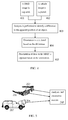
- FIG. 1 is a flowchart schematically representing a method of dynamically orienting a presentation of a HMD in real time based on a combination of data from a sensor which is located on the HMD with data from a sensor which is mounted on a vehicle driven by a user which wears the HMD, according to some embodiments of the present invention.
- FIG. 2 is a schematic illustration of a system for dynamically orienting a presentation of a HMD based on data from a HMD sensor and a vehicle sensor, according to some embodiments of the present invention.
- FIG. 3 is a schematic illustration of an exemplary setting of a vehicle when using a system for dynamically orienting a presentation of a HMD, according to some embodiments of the present invention.
- HMD 201 worn by a driver 214 of a vehicle 207
- sensor(s) that are installed on HMD 201, such as image sensor and/or motion detector.
- information suggesting the position and orientation of vehicle 207, driven by driver 214 which wears HMD device 201 is gathered by sensor(s) that are fixated to vehicle 207 and/or mounted on a base 213 that is fixated to vehicle 207, such as image sensor and/or motion detector.
- the sensors may be, for example, attached to the body of vehicle 207, a part of a mobile device positioned on a car mount such as a smartphone, a part of a system of vehicle 207 and/or a device that receives motion information from a system of vehicle 207.
- the sensors may be attached to driver control area 208 which is the section of vehicle 207 where information of the operation of vehicle 207 is presented to driver 214, for example a dashboard.
- analysis and calculation module 205 on the gathered information to identify a difference between the information gathered by sensor(s) that are installed on HMD 201 and the information gathered by sensor(s) that are fixated to vehicle 207.
- Analysis and calculation module 205 may be a computer program.
- the program may be installed, for example, on HMD device 201, on a mobile device such as a smartphone and/or a tablet computer, as part of the computing devices of vehicle 207, on a remote server and/or on any other device.
- the gathered information may be transferred from the sensors to analysis and calculation module 205, for example, by a wireless connection such as wireless local area network (WLAN) protocol such as Wireless Fidelity (WiFiTM), a wireless personal area network (WPAN) such as BluetoothTM protocol and/or a cellular network, by a wire connection such as local area network (LAN) and/or by any other connection.
- WLAN wireless local area network
- WiFiTM Wireless Fidelity
- WPAN wireless personal area network
- BluetoothTM BluetoothTM protocol
- LAN local area network
- LAN local area network
- the orientation of HMD device 201 in relation to vehicle 207 is calculated by analysis and calculation module 205 based on the difference.
- the calculation may include correlation and/or transformation algorithms.
- a presentation of data on a display of HMD device 201 is adjusted based on the orientation.
- the orientation may be sent to HMD device 201 by any kind of wireless connection.
- the presented data may include AR objects, visual information, written information and/or any other element.
- the resulting adjustment of orientation includes head movements of the driver as well as movements of the car.
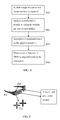
- FIG. 4 is a flowchart schematically representing a method of dynamically orienting a presentation of a HMD using image sensors, according to some embodiments of the present invention.
- FIG. 5 is a schematic illustration of a system for dynamically orienting a presentation of a HMD using image sensors, according to some embodiments of the present invention.
- At 401 at least one HMD image sensor 202, such as a miniature camera, which is installed on HMD 201 is used to capture a HMD image of a driver control area 208, a part of a windshield 209 and a scenery 210 seen through the part of windshield 209 and in front of vehicle 207.
- Scenery 210 may include the road ahead of vehicle 207 and any other object.
- At 402 at least one device image sensor of an imaging device 204 mounted on a base 213 fixated to vehicle 207 is used to capture a vehicle image of scenery 210.
- Imaging device 204 may be, for example, a dashboard camera, a camera attached to windshield 209, a camera of a mobile device positioned on a car mount and/or any other camera or image capturing device.
- Obj ect 212 may be, for example, a curbstone, a signpost, a tree, another vehicle and/or any other Stationary or moving object located in front of vehicle 207.
- the position of object 212 may be detected, for example, by using an algorithm designed to detect and describe local features in images, such as scale-invariant feature transform (SIFT) process and/or Viola-Jones object detection framework optionally combined with support vector machine (SMV) algorithm for classification of features.
- SIFT scale-invariant feature transform
- SMV support vector machine
- the orientation of HMD device 201 in relation to vehicle 207 is calculated based on the difference.
- This may be performed by an algorithm implemented in analysis and calculation module 205, designed to calculate the relative position of a camera based on positions of objects.
- the algorithm may be, for example, an affine transformation and/or perspective transform between the view points of the two images.
- a presentation of data on a display of HMD device 201 is adjusted based on the orientation, as described above.
- FIG. 6 is a flowchart schematically representing a method of dynamically orienting a presentation of a HMD using motion detectors, according to some embodiments of the present invention.
- FIG. 7 is a schematic illustration of a system for dynamically orienting a presentation of a HMD using motion detectors, according to some embodiments of the present invention.
- a current HMD device motion is measured using at least one HMD device motion detector 203 installed in HMD device 201.
- Motion detector 203 may be, for example, an accelerometer, Gyro and/or Compass.
- a current vehicle motion is measured using at least one vehicle motion detector 206 which is installed in vehicle 207.
- Motion detector 206 may be, for example, an accelerometer attached to the body of vehicle 207, a mobile device positioned on a car mount and/or a device that receives motion information from a system of vehicle 207.
- an analysis is performed of the current HMD device motion and of the current vehicle motion to identify a difference between the current motions.
- the difference may be calculated, for example, by using an algorithm designed to calculate the current relative motion between HMD device 201 and vehicle 207.
- the algorithm may, for example, subtract each dimension component (x,y,z) of the current HMD device motion from each dimension component of the current vehicle motion to calculate a relative motion in each dimension.
- the orientation of HMD device 201 in relation to vehicle 207 is calculated based on the difference between the current HMD device motion and the current vehicle motion.
- the calculation may include, for example, a three-dimensional translation function.
- a presentation of data on a display of HMD device 201 is adjusted based on the orientation, as described above.
- the method of dynamically orienting a presentation of a HMD using motion detectors is alternative or cumulative to the method of dynamically orienting a presentation of a HMD using image sensors. Data from image sensors and motion detectors may be combined or compared to increase the accuracy of the calculated orientation.
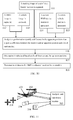
- FIG. 8 is a flowchart schematically representing a method of dynamically orienting a presentation of a HMD using a set of size known markers, according to some embodiments of the present invention.
- FIG. 9 is a schematic illustration of a system for dynamically orienting a presentation of a HMD using a set of size known markers, according to some embodiments of the present invention.
- image sensor 202 is used to capture a HMD image of driver control area 208 comprising a set of size known markers 211 arranged in a known arrangement.
- the markers may be, for example, shapes such as an X or O, numbers and/or any other mark usable by an image processing algorithm.
- the markers may be positioned and arranged at any location on driver control area 208 that is visible to image sensor 204.
- an analysis is performed of the HMD image to identify an apparent position and size of each marker 211 in the HMD image.
- the apparent position and size of each marker 211 may be detected, for example, by using an algorithm designed to detect and describe local features in images, such SIFT process.
- the orientation of HMD device 201 in relation to vehicle 207 is calculated based on the apparent position and size of each marker 211. This may be performed by an algorithm implemented in analysis and calculation module 205, designed to calculate the relative position of a camera based on positions of objects, for example, by triangulation.
- a presentation of data on a display of HMD device 201 is adjusted based on the orientation, as described above.
- the method of dynamically orienting a presentation of a HMD using a set of size known markers may be combined with the method of dynamically orienting a presentation of a HMD using motion detectors and/or with the method of dynamically orienting a presentation of a HMD using image sensors.
- Data of apparent position and size markers 211 may be combined or compared to data to data of difference in the apparent position of an object 212 and/or data of difference between the current motions of HMD device 201 and vehicle 207, to increase the accuracy of the calculated orientation.
- FIG. 10 is a flowchart schematically representing a method of dynamically orienting a presentation of a HMD using image sensors, motion detectors and/or a set of size known markers, according to some embodiments of the present invention.
- FIG. 11 is a schematic illustration of a system for dynamically orienting a presentation of a HMD using image sensors, motion detectors and/or a set of size known markers, according to some embodiments of the present invention.
- image sensors are used to capture a HMD image and a vehicle image of scenery 210 and/or to capture a marking image of markers 211; and the motion detector are used to measure a current HMD device motion and a current vehicle motion, as described above.
- the information captured by the image sensor(s) may include only images of scenery 210, only an image of markers 211 or both.
- an analysis is performed to identify a difference in the apparent position of an object 212, a difference between the motions and/or an apparent position and size of each marker 211, and the orientation of HMD device 201 in relation to vehicle 207 is calculated, as described above.
- the information captured by the image sensors indicates slower movements of HMD device 201 in relation to vehicle 207 then the information measured by the motion detectors (i.e. the difference between the motions).
- the information measured by the motion detectors indicates vibration of high frequency, for example, 1 kilohertz.
- the slower movements identified from the information captured by the image sensors are combined with the faster movements identified from the information measured by the motion detectors.
- near future movements are predicted by using an algorithm to analyze the slower movements and the faster movements.
- a presentation of data on a display of HMD device 201 is adjusted based on the orientation, as described above.
- the slower movements are averaged with the faster movements, for example, by a weighted average over time. This may result in smother changes of the calculated orientation over time.
- FIG. 12 is a flowchart schematically representing a method of capturing a stereoscopic image based on data from a HMD sensor and a vehicle sensor, according to some embodiments of the present invention.
- FIG. 13 is a schematic illustration of a system for capturing a stereoscopic image based on data from a HMD sensor and a vehicle sensor, according to some embodiments of the present invention.
- At 121 at least one HMD image sensor 202 which is installed on HMD 201 is used to capture a HMD image of a driver control area 208, a part of a windshield 209 and a scenery 210 seen through the part of windshield 209 and in front of vehicle 207, as described above.
- At 122 at least one device image sensor of an imaging device 204 mounted on a base 213 fixated to vehicle 207 is used to capture a vehicle image of scenery 210, as described above.
- the HMD image and the vehicle image are combined to create a stereoscopic image 215.
- the HMD image and the vehicle image depict two slightly different views of the same scenery, and therefore are compatible for creating a stereoscopic image.
- the creation of stereoscopic image 215 may be performed by an algorithm implemented in analysis and calculation module 205.
- Stereoscopic image 215 may be used for AR presentation, driving simulation and/or any other purpose.
- each block in the flowchart or block diagrams may represent a module, segment, or portion of code, which comprises one or more executable instructions for implementing the specified logical function(s).
- the functions noted in the block may occur out of the order noted in the figures. For example, two blocks shown in succession may, in fact, be executed substantially concurrently, or the blocks may sometimes be executed in the reverse order, depending upon the functionality involved.
- head mounted display It is expected that during the life of a patent maturing from this application many relevant head mounted display devices will be developed and the scope of the term head mounted display is intended to include all such new technologies a priori.
- composition or method may include additional ingredients and/or steps, but only if the additional ingredients and/or steps do not materially alter the basic and novel characteristics of the claimed composition or method.
- a compound or “at least one compound” may include a plurality of compounds, including mixtures thereof.
- range format is merely for convenience and brevity and should not be construed as an inflexible limitation on the scope of the invention. Accordingly, the description of a range should be considered to have specifically disclosed all the possible subranges as well as individual numerical values within that range. For example, description of a range such as from 1 to 6 should be considered to have specifically disclosed subranges such as from 1 to 3, from 1 to 4, from 1 to 5, from 2 to 4, from 2 to 6, from 3 to 6 etc., as well as individual numbers within that range, for example, 1, 2, 3, 4, 5, and 6. This applies regardless of the breadth of the range.
Landscapes
- Engineering & Computer Science (AREA)
- Physics & Mathematics (AREA)
- General Engineering & Computer Science (AREA)
- Theoretical Computer Science (AREA)
- General Physics & Mathematics (AREA)
- Human Computer Interaction (AREA)
- Optics & Photonics (AREA)
- Computer Graphics (AREA)
- Computer Hardware Design (AREA)
- Software Systems (AREA)
- User Interface Of Digital Computer (AREA)
- Multimedia (AREA)
- Mechanical Engineering (AREA)
- Controls And Circuits For Display Device (AREA)
- Instrument Panels (AREA)
Abstract
Description
- The present invention, in some embodiments thereof, relates to a head mounted display orientation and, more specifically, but not exclusively, to a head mounted display orientation and presentation adjustment at a vehicle.
- A head-mounted display or helmet mounted display, both abbreviated HMD, is a display device, worn on the head or as part of a helmet, that has a small display optic in front of one (monocular HMD) or each eye (binocular HMD). There is also an optical head-mounted display (OHMD), which is a wearable display that has the capability of reflecting projected images as well as allowing the user to see through it.
- A typical HMD has either one or two small displays with lenses and semitransparent mirrors embedded in a helmet, eyeglasses (also known as data glasses) or visor. The display units are miniaturised and may include CRT, LCDs, Liquid crystal on silicon (LCos), or OLED. Some vendors employ multiple micro-displays to increase total resolution and field of view.
- When presenting augmented reality (AR) objects on HMD, the presented AR objects must correlate with the head movements of the user. This is usually established by using image sensor(s) and/or motion detector(s) located on the HMD to calculate the orientation of the HMD in relation to the surroundings and adjusting the presentation of the AR objects on the HMD based on this orientation.
- Using HMD while driving has many benefits as the HMD can be used for enhancing the driving experience with data, navigation instructions, statistics, real time messages and notifications.
- For example, Nissan 3E head-mounted display allowing a user to see a variety of detail points on the inner workings of the car while a traditional dashboard collection of meters gives the driver the rest of the layout per usual.
- According to an aspect of some embodiments of the present invention there is provided a method of dynamically orienting a presentation of a head-mounted display (HMD), comprising: using at least one HMD sensor which is installed on a HMD worn by a driver of a vehicle to gather HMD movement data; using at least one vehicle mounted sensor fixated to the vehicle to gather vehicle movement data; performing an analysis of the HMD movement data and of the vehicle movement data to identify a difference between the HMD movement data and the vehicle movement data; calculating, based on the difference, an orientation of the HMD device in relation to the vehicle; and adjusting a presentation of data on a display of the HMD device based on the orientation.
- Optionally, the at least one vehicle mounted sensor is a component of a mobile device placed on a vehicle mount.
- According to some embodiments of the present invention there is provided a computer readable medium comprising computer executable instructions adapted to perform the method.
- According to an aspect of some embodiments of the present invention there is provided a system for dynamically orienting a presentation of a head-mounted display (HMD), comprising: at least one HMD sensor which is installed on a HMD worn by a driver of a vehicle that gathers HMD movement data; at least one device sensor fixated to the vehicle that gathers vehicle movement data; and an analysis and calculation module for: performing an analysis of the HMD movement data and of the vehicle movement data to identify a difference between the HMD movement data and the vehicle movement data; calculating, based on the difference, an orientation of the HMD device in relation to the vehicle; and adjusting a presentation of data on a display of the HMD device based on the orientation.
- Optionally, the HMD movement data and the vehicle movement data are transferred to the analysis and calculation module by wireless connection.
- Optionally, the analysis and calculation module is a computer program installed on the HMD.
- Optionally, the analysis and calculation module is a computer program installed on a mobile device.
- Optionally, the analysis and calculation module is a computer program installed as part of a computing device of the vehicle.
- According to an aspect of some embodiments of the present invention there is provided a method of dynamically orienting a presentation of a head-mounted display (HMD), comprising: using at least one HMD image sensor which is installed on a HMD worn by a driver of a vehicle to capture a HMD image of a driver control area and a part of a windshield and a scenery seen through the part of the windshield and in front of the vehicle; using at least one device image sensor of an imaging device mounted on a base fixated to the vehicle to capture a vehicle image of the scenery; performing an analysis of the HMD image and of the vehicle image to identify a difference in apparent position of an object located in the scenery and depicted both in the HMD image and in the vehicle image; calculating, based on the difference, an orientation of the HMD device in relation to the vehicle; and adjusting a presentation of data on a display of the HMD device based on the orientation.
- Optionally, the imaging device is a dashboard camera.
- Optionally, the imaging device is attached to the windshield.
- According to an aspect of some embodiments of the present invention there is provided a system for dynamically orienting a presentation of a head-mounted display (HMD), comprising: at least one HMD image sensor which is installed on a HMD worn by a driver of a vehicle that captures a HMD image of a driver control area and a part of a windshield and a scenery seen through the part of the windshield and in front of the vehicle; at least one device image sensor of an imaging device mounted on a base fixated to the vehicle that captures a vehicle image of the scenery; and an analysis and calculation module for: performing an analysis of the HMD image and of the vehicle image to identify a difference in apparent position of an object located in the scenery and depicted both in the HMD image and in the vehicle image; calculating, based on the difference, an orientation of the HMD device in relation to the vehicle; and adjusting a presentation of data on a display of the HMD device based on the orientation.
- According to an aspect of some embodiments of the present invention there is provided a method of dynamically orienting a presentation of a head-mounted display (HMD), comprising: measuring a current HMD device motion using at least one HMD device motion detector installed in a HMD device worn by a driver of a vehicle; measuring a current vehicle motion using at least one vehicle motion detector which is installed in the vehicle; performing an analysis of the current HMD device motion and of the current vehicle motion to identify a difference between the current vehicle motion and the current HMD device motion; calculating, based on the difference, an orientation of the HMD device in relation to the vehicle; and adjusting a presentation of data on a display of the HMD device based on the orientation.
- Optionally, the method further comprises: using at least one HMD image sensor which is installed on a HMD worn by a driver of a vehicle to capture a HMD image of a driver control area and a part of a windshield and a scenery seen through the part of the windshield and in front of the vehicle; using at least one device image sensor of an imaging device mounted on a base fixated to the vehicle to capture a vehicle image of the scenery; wherein the performing includes an analysis of the HMD image and of the vehicle image to identify a difference in apparent position of an object located in the scenery and depicted both in the HMD image and in the vehicle image; and wherein the calculating is also based on the difference in apparent position.
- Optionally, the method further comprises: using at least one HMD image sensor which is installed on a HMD worn by a driver of a vehicle to capture a HMD image of a driver control area comprising a set of size known markers arranged in a known arrangement; wherein the performing includes an analysis of the HMD image to identify a an apparent position and size of each member of the set of size known markers in the HMD image; and wherein the calculating is also based on the apparent position.
- According to an aspect of some embodiments of the present invention there is provided a system for dynamically orienting a presentation of a head-mounted display (HMD), comprising: at least one HMD device motion detector installed in a HMD device worn by a driver of a vehicle that measures a current HMD device motion; at least one vehicle motion detector which is installed in the vehicle that measures a current vehicle motion; and an analysis and calculation module for: performing an analysis of the current HMD device motion and of the current vehicle motion to identify a difference between the current vehicle motion and the current HMD device motion; calculating, based on the difference, an orientation of the HMD device in relation to the vehicle; and adjusting a presentation of data on a display of the HMD device based on the orientation.
- According to an aspect of some embodiments of the present invention there is provided a method of dynamically orienting a presentation of a head-mounted display (HMD), comprising: using at least one HMD image sensor which is installed on a HMD worn by a driver of a vehicle to capture a HMD image of a driver control area comprising a set of size known markers arranged in a known arrangement; performing an analysis of the HMD image to identify a an apparent position and size of each member of the set of size known markers in the HMD image; calculating, based on the apparent position and size of each member of the set of size known markers, an orientation of the HMD device in relation to the vehicle; and adjusting a presentation of data on a display of the HMD device based on the orientation.
- Optionally, the apparent position and size of each member of the set of size known markers is detected using a Scale-invariant feature transform (SIFT) process.
- According to an aspect of some embodiments of the present invention there is provided a system for dynamically orienting a presentation of a head-mounted display (HMD), comprising: a driver control area comprising a set of size known markers arranged in a known arrangement; at least one HMD image sensor which is installed on a HMD worn by a driver of a vehicle that captures a HMD image of the a driver control area; and an analysis and calculation module for: performing an analysis of the HMD image to identify a an apparent position and size of each member of the set of size known markers in the HMD image; calculating, based on the apparent position and size of each member of the set of size known markers, an orientation of the HMD device in relation to the vehicle; and adjusting a presentation of data on a display of the HMD device based on the orientation.
- According to an aspect of some embodiments of the present invention there is provided a method of dynamically orienting a presentation of a head-mounted display (HMD), comprising: using at least one HMD image sensor and at least one HMD device motion detector which are installed on a HMD worn by a driver of a vehicle to capture a HMD image of a driver control area and a part of a windshield and a scenery seen through the part of the windshield and in front of the vehicle and to measure a current HMD device motion; using at least one device image sensor of an imaging device and at least one vehicle motion detector which are fixated to the vehicle to capture a vehicle image of the scenery and to measure a current vehicle motion; using the at least one HMD image sensor to capture a marking image of a driver control area comprising a set of size known markers arranged in a known arrangement; performing an analysis to identify: a difference in apparent position of an object located in the scenery and depicted both in the HMD image and in the vehicle image; a difference between the current vehicle motion and the current HMD device motion; and an apparent position and size of each member of the set of size known markers in the marking image; calculating, based on the differences and the apparent position, an orientation of the HMD device in relation to the vehicle; and adjusting a presentation of data on a display of the HMD device based on the orientation.
- According to an aspect of some embodiments of the present invention there is provided a system for dynamically orienting a presentation of a head-mounted display (HMD), comprising: a driver control area comprising a set of size known markers arranged in a known arrangement; at least one HMD image sensor which is installed on a HMD worn by a driver of a vehicle that captures a HMD image of a driver control area and a part of a windshield and a scenery seen through the part of the windshield and in front of the vehicle; and captures a marking image of the a driver control area; at least one HMD device motion detector installed in the HMD device that measures a current HMD device motion; at least one device image sensor of an imaging device mounted on a base fixated to the vehicle that captures a vehicle image of the scenery; at least one vehicle motion detector which is installed in the vehicle that measures a current vehicle motion; and an analysis and calculation module for: performing an analysis to identify: a difference in apparent position of an object located in the scenery and depicted both in the HMD image and in the vehicle image; a difference between the current vehicle motion and the current HMD device motion; and an apparent position and size of each member of the set of size known markers in the marking image; calculating, based on the differences and the apparent position, an orientation of the HMD device in relation to the vehicle; and adjusting a presentation of data on a display of the HMD device based on the orientation.
- According to an aspect of some embodiments of the present invention there is provided a method of capturing a stereoscopic image, comprising: using at least one head-mounted display (HMD) image sensor which is installed on a HMD worn by a driver of a vehicle to capture a HMD image of a driver control area and a part of a windshield and a scenery seen through the part of the windshield and in front of the vehicle; using at least one vehicle image sensor of a imaging device mounted on a base fixated to the vehicle to capture a vehicle image of the scenery; combining between the HMD image and of the vehicle image to create a stereoscopic image.
- According to an aspect of some embodiments of the present invention there is provided a system for of capturing a stereoscopic image, comprising: at least one HMD image sensor which is installed on a HMD worn by a driver of a vehicle that captures a HMD image of a driver control area and a part of a windshield and a scenery seen through the part of the windshield and in front of the vehicle; at least one device image sensor of an imaging device mounted on a base fixated to the vehicle that captures a vehicle image of the scenery; and an analysis and calculation module for combining between the HMD image and of the vehicle image to create a stereoscopic image.
- Unless otherwise defined, all technical and/or scientific terms used herein have the same meaning as commonly understood by one of ordinary skill in the art to which the invention pertains. Although methods and materials similar or equivalent to those described herein can be used in the practice or testing of embodiments of the invention, exemplary methods and/or materials are described below. In case of conflict, the patent specification, including definitions, will control. In addition, the materials, methods, and examples are illustrative only and are not intended to be necessarily limiting.
- Implementation of the method and/or system of embodiments of the invention can involve performing or completing selected tasks manually, automatically, or a combination thereof. Moreover, according to actual instrumentation and equipment of embodiments of the method and/or system of the invention, several selected tasks could be implemented by hardware, by software or by firmware or by a combination thereof using an operating system.
- For example, hardware for performing selected tasks according to embodiments of the invention could be implemented as a chip or a circuit. As software, selected tasks according to embodiments of the invention could be implemented as a plurality of software instructions being executed by a computer using any suitable operating system. In an exemplary embodiment of the invention, one or more tasks according to exemplary embodiments of method and/or system as described herein are performed by a data processor, such as a computing platform for executing a plurality of instructions. Optionally, the data processor includes a volatile memory for storing instructions and/or data and/or a non-volatile storage, for example, a magnetic hard-disk and/or removable media, for storing instructions and/or data. Optionally, a network connection is provided as well. A display and/or a user input device such as a keyboard or mouse are optionally provided as well.
- Some embodiments of the invention are herein described, by way of example only, with reference to the accompanying drawings. With specific reference now to the drawings in detail, it is stressed that the particulars shown are by way of example and for purposes of illustrative discussion of embodiments of the invention. In this regard, the description taken with the drawings makes apparent to those skilled in the art how embodiments of the invention may be practiced.
- In the drawings:
-
FIG. 1 is a flowchart schematically representing a method of dynamically orienting a presentation of a HMD based on data from a HMD sensor and a vehicle sensor, according to some embodiments of the present invention; -
FIG. 2 is a schematic illustration of a system for dynamically orienting a presentation of a HMD, according to some embodiments of the present invention; -
FIG. 3 is a schematic illustration of an exemplary setting of a vehicle when using a system for dynamically orienting a presentation of a HMD based on data from a HMD sensor and a vehicle sensor, according to some embodiments of the present invention; -
FIG. 4 is a flowchart schematically representing a method of dynamically orienting a presentation of a HMD using image sensors, according to some embodiments of the present invention; -
FIG. 5 is a schematic illustration of a system for dynamically orienting a presentation of a HMD using image sensors, according to some embodiments of the present invention; -
FIG. 6 is a flowchart schematically representing a method of dynamically orienting a presentation of a HMD using motion detectors, according to some embodiments of the present invention; -
FIG. 7 is a schematic illustration of a system for dynamically orienting a presentation of a HMD using motion detectors, according to some embodiments of the present invention; -
FIG. 8 is a flowchart schematically representing a method of dynamically orienting a presentation of a HMD using a set of size known markers, according to some embodiments of the present invention; -
FIG. 9 is a schematic illustration of a system for dynamically orienting a presentation of a HMD using a set of size known markers, according to some embodiments of the present invention; -
FIG. 10 is a flowchart schematically representing a method of dynamically orienting a presentation of a HMD using image sensors, motion detectors and/or a set of size known markers, according to some embodiments of the present invention; -
FIG. 11 is a schematic illustration of a system for dynamically orienting a presentation of a HMD using image sensors, motion detectors and/or a set of size known markers, according to some embodiments of the present invention; -
FIG. 12 is a flowchart schematically representing a method of capturing a stereoscopic image based on data from a HMD sensor and a vehicle sensor, according to some embodiments of the present invention; and -
FIG. 13 is a schematic illustration of a system for capturing a stereoscopic image based on data from a HMD sensor and a vehicle sensor, according to some embodiments of the present invention. - The present invention, in some embodiments thereof, relates to a head mounted display orientation and, more specifically, but not exclusively, to a head mounted display orientation and presentation adjustment at a vehicle.
- When presenting data, such as augmented reality (AR) objects on a head-mounted display, a helmet mounted display (HMD) or an optical head-mounted display (OHMD) when the user is driving a vehicle, the presented AR objects has to correlate with the head movements of the user and with the movements of the car. Regular orientation methods to calculate the orientation of the HMD in relation to the surroundings may not be accurate because the orientation of the HMD in relation to the vehicle is not considered.
- According to some embodiments of the present invention, there are provided methods and systems of dynamically orienting in real time a presentation of a HMD worn by a driver of a vehicle by analyzing data collected from sensors such as image sensor(s) and/or motion detector(s) to calculate the orientation of the HMD in relation to the vehicle and adjusting the presentation based on this orientation. This is done continuously as the orientation changes throughout the driving. According to some embodiments of the present invention, the orientation is calculated based on a combination of data from a sensor which is located on the HMD with data from a sensor which is mounted on a vehicle driven by a user which wears the HMD. The methods allows aligning the presentation while the user is driving, reducing trembling, presentation misalignment, and artifacts by taking into account data from a plurality of physically disconnected sensors, each gathering movement data of the user or the vehicle. The combination allows reducing the effect of the vehicle movement, presenting the user with a more reliable presentation of data such as speed, distance, and direction indicators, overlays of application information and scenery enhancing layers such as line markers, road delimiting graphics, and/or the like.
- According to some embodiments of the present invention, an HMD image sensor is used to capture a HMD image of a driver control area, a part of a windshield and a scenery seen through the part of the windshield and in front of the vehicle. Also, an imaging device mounted on the vehicle is used to capture a vehicle image of the same scenery. An analysis of the HMD image and the vehicle image is then performed to identify a difference in the apparent position of an object located in the scenery and depicted both images, and the orientation is calculated based on this difference.
- According to some embodiments of the present invention, a current HMD device motion is measured using a motion detector installed in the HMD device and a current vehicle motion is measured using a motion detector installed in the vehicle. The orientation is then calculated based on a difference between the current vehicle motion and the current HMD device motion.
- According to some embodiments of the present invention, an HMD image sensor is used to capture a HMD image of a driver control area comprising a set of size known markers arranged in a known arrangement. An analysis of the HMD image is then performed to identify an apparent position and size of each member of the set of markers in the HMD image, optionally by using a Scale-invariant feature transform (SIFT) process, and the orientation is calculated based on the apparent position and size.
- According to some embodiments of the present invention, a HMD image of a scenery and a vehicle image of the same scenery combined to create a stereoscopic image that may be used for AR and/or other purposes.
- Before explaining at least one embodiment of the invention in detail, it is to be understood that the invention is not necessarily limited in its application to the details of construction and the arrangement of the components and/or methods set forth in the following description and/or illustrated in the drawings and/or the Examples. The invention is capable of other embodiments or of being practiced or carried out in various ways.
- The present invention may be a system, a method, and/or a computer program product. The computer program product may include a computer readable storage medium (or media) having computer readable program instructions thereon for causing a processor to carry out aspects of the present invention.
- The computer readable storage medium can be a tangible device that can retain and store instructions for use by an instruction execution device. The computer readable storage medium may be, for example, but is not limited to, an electronic storage device, a magnetic storage device, an optical storage device, an electromagnetic storage device, a semiconductor storage device, or any suitable combination of the foregoing. A non-exhaustive list of more specific examples of the computer readable storage medium includes the following: a portable computer diskette, a hard disk, a random access memory (RAM), a read-only memory (ROM), an erasable programmable read-only memory (EPROM or Flash memory), a static random access memory (SRAM), a portable compact disc read-only memory (CD-ROM), a digital versatile disk (DVD), a memory stick, a floppy disk, a mechanically encoded device such as punch-cards or raised structures in a groove having instructions recorded thereon, and any suitable combination of the foregoing. A computer readable storage medium, as used herein, is not to be construed as being transitory signals per se, such as radio waves or other freely propagating electromagnetic waves, electromagnetic waves propagating through a waveguide or other transmission media (e.g., light pulses passing through a fiber-optic cable), or electrical signals transmitted through a wire.
- Computer readable program instructions described herein can be downloaded to respective computing/processing devices from a computer readable storage medium or to an external computer or external storage device via a network, for example, the Internet, a local area network, a wide area network and/or a wireless network. The network may comprise copper transmission cables, optical transmission fibers, wireless transmission, routers, firewalls, switches, gateway computers and/or edge servers. A network adapter card or network interface in each computing/processing device receives computer readable program instructions from the network and forwards the computer readable program instructions for storage in a computer readable storage medium within the respective computing/processing device.
- Computer readable program instructions for carrying out operations of the present invention may be assembler instructions, instruction-set-architecture (ISA) instructions, machine instructions, machine dependent instructions, microcode, firmware instructions, state-setting data, or either source code or object code written in any combination of one or more programming languages, including an object oriented programming language such as Smalltalk, C++ or the like, and conventional procedural programming languages, such as the "C" programming language or similar programming languages. The computer readable program instructions may execute entirely on the user's computer, partly on the user's computer, as a stand-alone software package, partly on the user's computer and partly on a remote computer or entirely on the remote computer or server. In the latter scenario, the remote computer may be connected to the user's computer through any type of network, including a local area network (LAN) or a wide area network (WAN), or the connection may be made to an external computer (for example, through the Internet using an Internet Service Provider). In some embodiments, electronic circuitry including, for example, programmable logic circuitry, field-programmable gate arrays (FPGA), or programmable logic arrays (PLA) may execute the computer readable program instructions by utilizing state information of the computer readable program instructions to personalize the electronic circuitry, in order to perform aspects of the present invention.
- Aspects of the present invention are described herein with reference to flowchart illustrations and/or block diagrams of methods, apparatus (systems), and computer program products according to embodiments of the invention. It will be understood that each block of the flowchart illustrations and/or block diagrams, and combinations of blocks in the flowchart illustrations and/or block diagrams, can be implemented by computer readable program instructions.
- These computer readable program instructions may be provided to a processor of a general purpose computer, special purpose computer, or other programmable data processing apparatus to produce a machine, such that the instructions, which execute via the processor of the computer or other programmable data processing apparatus, create means for implementing the functions/acts specified in the flowchart and/or block diagram block or blocks. These computer readable program instructions may also be stored in a computer readable storage medium that can direct a computer, a programmable data processing apparatus, and/or other devices to function in a particular manner, such that the computer readable storage medium having instructions stored therein comprises an article of manufacture including instructions which implement aspects of the function/act specified in the flowchart and/or block diagram block or blocks.
- The computer readable program instructions may also be loaded onto a computer, other programmable data processing apparatus, or other device to cause a series of operational steps to be performed on the computer, other programmable apparatus or other device to produce a computer implemented process, such that the instructions which execute on the computer, other programmable apparatus, or other device implement the functions/acts specified in the flowchart and/or block diagram block or blocks.
- The flowchart and block diagrams in the Figures illustrate the architecture, functionality, and operation of possible implementations of systems, methods, and computer program products according to various embodiments of the present invention. In this regard, each block in the flowchart or block diagrams may represent a module, segment, or portion of instructions, which comprises one or more executable instructions for implementing the specified logical function(s). In some alternative implementations, the functions noted in the block may occur out of the order noted in the figures. For example, two blocks shown in succession may, in fact, be executed substantially concurrently, or the blocks may sometimes be executed in the reverse order, depending upon the functionality involved. It will also be noted that each block of the block diagrams and/or flowchart illustration, and combinations of blocks in the block diagrams and/or flowchart illustration, can be implemented by special purpose hardware-based systems that perform the specified functions or acts or carry out combinations of special purpose hardware and computer instructions.
- Referring now to the drawings,
FIG. 1 is a flowchart schematically representing a method of dynamically orienting a presentation of a HMD in real time based on a combination of data from a sensor which is located on the HMD with data from a sensor which is mounted on a vehicle driven by a user which wears the HMD, according to some embodiments of the present invention. Reference is also made toFIG. 2 , which is a schematic illustration of a system for dynamically orienting a presentation of a HMD based on data from a HMD sensor and a vehicle sensor, according to some embodiments of the present invention. Reference is also made toFIG. 3 , which is a schematic illustration of an exemplary setting of a vehicle when using a system for dynamically orienting a presentation of a HMD, according to some embodiments of the present invention. - First, as shown at 101, information suggesting the position and orientation of a
HMD device 201 worn by adriver 214 of avehicle 207 is gathered by sensor(s) that are installed onHMD 201, such as image sensor and/or motion detector. - Also, as shown at 102, information suggesting the position and orientation of
vehicle 207, driven bydriver 214 which wearsHMD device 201, is gathered by sensor(s) that are fixated tovehicle 207 and/or mounted on a base 213 that is fixated tovehicle 207, such as image sensor and/or motion detector. The sensors may be, for example, attached to the body ofvehicle 207, a part of a mobile device positioned on a car mount such as a smartphone, a part of a system ofvehicle 207 and/or a device that receives motion information from a system ofvehicle 207. The sensors may be attached todriver control area 208 which is the section ofvehicle 207 where information of the operation ofvehicle 207 is presented todriver 214, for example a dashboard. - Then, as shown at 103 and 104, analysis is performed by analysis and
calculation module 205 on the gathered information to identify a difference between the information gathered by sensor(s) that are installed onHMD 201 and the information gathered by sensor(s) that are fixated tovehicle 207. - Analysis and
calculation module 205 may be a computer program. The program may be installed, for example, onHMD device 201, on a mobile device such as a smartphone and/or a tablet computer, as part of the computing devices ofvehicle 207, on a remote server and/or on any other device. The gathered information may be transferred from the sensors to analysis andcalculation module 205, for example, by a wireless connection such as wireless local area network (WLAN) protocol such as Wireless Fidelity (WiFi™), a wireless personal area network (WPAN) such as Bluetooth™ protocol and/or a cellular network, by a wire connection such as local area network (LAN) and/or by any other connection. - Then, as shown at 404, the orientation of
HMD device 201 in relation tovehicle 207 is calculated by analysis andcalculation module 205 based on the difference. The calculation may include correlation and/or transformation algorithms. - Finally, as shown at 105, a presentation of data on a display of
HMD device 201 is adjusted based on the orientation. When analysis andcalculation module 205 is not installed onHMD device 201, the orientation may be sent toHMD device 201 by any kind of wireless connection. The presented data may include AR objects, visual information, written information and/or any other element. The resulting adjustment of orientation includes head movements of the driver as well as movements of the car. - Reference is now made to
FIG. 4 which is a flowchart schematically representing a method of dynamically orienting a presentation of a HMD using image sensors, according to some embodiments of the present invention. Reference is also made toFIG. 5 , which is a schematic illustration of a system for dynamically orienting a presentation of a HMD using image sensors, according to some embodiments of the present invention. - First, as shown at 401, at least one
HMD image sensor 202, such as a miniature camera, which is installed onHMD 201 is used to capture a HMD image of adriver control area 208, a part of awindshield 209 and ascenery 210 seen through the part ofwindshield 209 and in front ofvehicle 207.Scenery 210 may include the road ahead ofvehicle 207 and any other object. - Also, as shown at 402, at least one device image sensor of an
imaging device 204 mounted on a base 213 fixated tovehicle 207 is used to capture a vehicle image ofscenery 210.Imaging device 204 may be, for example, a dashboard camera, a camera attached towindshield 209, a camera of a mobile device positioned on a car mount and/or any other camera or image capturing device. - Then, as shown at 403, an analysis is performed of the HMD image and of the vehicle image to identify a difference in the apparent position of an
object 212 located inscenery 210 and depicted both in the HMD image and in the vehicle image.Obj ect 212 may be, for example, a curbstone, a signpost, a tree, another vehicle and/or any other Stationary or moving object located in front ofvehicle 207. The position ofobject 212 may be detected, for example, by using an algorithm designed to detect and describe local features in images, such as scale-invariant feature transform (SIFT) process and/or Viola-Jones object detection framework optionally combined with support vector machine (SMV) algorithm for classification of features. - Then, as shown at 404, the orientation of
HMD device 201 in relation tovehicle 207 is calculated based on the difference. This may be performed by an algorithm implemented in analysis andcalculation module 205, designed to calculate the relative position of a camera based on positions of objects. The algorithm may be, for example, an affine transformation and/or perspective transform between the view points of the two images. - Finally, as shown at 405, a presentation of data on a display of
HMD device 201 is adjusted based on the orientation, as described above. - Reference is now made to
FIG. 6 which is a flowchart schematically representing a method of dynamically orienting a presentation of a HMD using motion detectors, according to some embodiments of the present invention. Reference is also made toFIG. 7 , which is a schematic illustration of a system for dynamically orienting a presentation of a HMD using motion detectors, according to some embodiments of the present invention. - First, as shown at 601, a current HMD device motion is measured using at least one HMD
device motion detector 203 installed inHMD device 201.Motion detector 203 may be, for example, an accelerometer, Gyro and/or Compass. - Also, as shown at 602, a current vehicle motion is measured using at least one
vehicle motion detector 206 which is installed invehicle 207.Motion detector 206 may be, for example, an accelerometer attached to the body ofvehicle 207, a mobile device positioned on a car mount and/or a device that receives motion information from a system ofvehicle 207. - Then, as shown at 603, an analysis is performed of the current HMD device motion and of the current vehicle motion to identify a difference between the current motions. The difference may be calculated, for example, by using an algorithm designed to calculate the current relative motion between
HMD device 201 andvehicle 207. The algorithm may, for example, subtract each dimension component (x,y,z) of the current HMD device motion from each dimension component of the current vehicle motion to calculate a relative motion in each dimension. - Then, as shown at 604, the orientation of
HMD device 201 in relation tovehicle 207 is calculated based on the difference between the current HMD device motion and the current vehicle motion. The calculation may include, for example, a three-dimensional translation function. - Finally, as shown at 605, a presentation of data on a display of
HMD device 201 is adjusted based on the orientation, as described above. - Optionally, the method of dynamically orienting a presentation of a HMD using motion detectors is alternative or cumulative to the method of dynamically orienting a presentation of a HMD using image sensors. Data from image sensors and motion detectors may be combined or compared to increase the accuracy of the calculated orientation.
- Reference is now made to
FIG. 8 which is a flowchart schematically representing a method of dynamically orienting a presentation of a HMD using a set of size known markers, according to some embodiments of the present invention. Reference is also made toFIG. 9 , which is a schematic illustration of a system for dynamically orienting a presentation of a HMD using a set of size known markers, according to some embodiments of the present invention. - First, as shown at 801,
image sensor 202 is used to capture a HMD image ofdriver control area 208 comprising a set of size knownmarkers 211 arranged in a known arrangement. The markers may be, for example, shapes such as an X or O, numbers and/or any other mark usable by an image processing algorithm. The markers may be positioned and arranged at any location ondriver control area 208 that is visible to imagesensor 204. - Then, as shown at 802, an analysis is performed of the HMD image to identify an apparent position and size of each
marker 211 in the HMD image. The apparent position and size of eachmarker 211 may be detected, for example, by using an algorithm designed to detect and describe local features in images, such SIFT process. - Then, as shown at 803, the orientation of
HMD device 201 in relation tovehicle 207 is calculated based on the apparent position and size of eachmarker 211. This may be performed by an algorithm implemented in analysis andcalculation module 205, designed to calculate the relative position of a camera based on positions of objects, for example, by triangulation. - Finally, as shown at 804, a presentation of data on a display of
HMD device 201 is adjusted based on the orientation, as described above. - Optionally, the method of dynamically orienting a presentation of a HMD using a set of size known markers may be combined with the method of dynamically orienting a presentation of a HMD using motion detectors and/or with the method of dynamically orienting a presentation of a HMD using image sensors. Data of apparent position and
size markers 211 may be combined or compared to data to data of difference in the apparent position of anobject 212 and/or data of difference between the current motions ofHMD device 201 andvehicle 207, to increase the accuracy of the calculated orientation. - Reference is now made to
FIG. 10 which is a flowchart schematically representing a method of dynamically orienting a presentation of a HMD using image sensors, motion detectors and/or a set of size known markers, according to some embodiments of the present invention. Reference is also made toFIG. 11 , which is a schematic illustration of a system for dynamically orienting a presentation of a HMD using image sensors, motion detectors and/or a set of size known markers, according to some embodiments of the present invention. - First, as shown at 111-115, image sensors are used to capture a HMD image and a vehicle image of
scenery 210 and/or to capture a marking image ofmarkers 211; and the motion detector are used to measure a current HMD device motion and a current vehicle motion, as described above. The information captured by the image sensor(s) may include only images ofscenery 210, only an image ofmarkers 211 or both. - Then, as shown at 116-117, an analysis is performed to identify a difference in the apparent position of an
object 212, a difference between the motions and/or an apparent position and size of eachmarker 211, and the orientation ofHMD device 201 in relation tovehicle 207 is calculated, as described above. - Optionally, the information captured by the image sensors (i.e. the difference in the apparent position of an
object 212 and the apparent position and/or size of each marker 211) indicates slower movements ofHMD device 201 in relation tovehicle 207 then the information measured by the motion detectors (i.e. the difference between the motions). The information measured by the motion detectors indicates vibration of high frequency, for example, 1 kilohertz. - Optionally, the slower movements identified from the information captured by the image sensors are combined with the faster movements identified from the information measured by the motion detectors.
- Optionally, near future movements are predicted by using an algorithm to analyze the slower movements and the faster movements.
- Finally, as shown at 118, a presentation of data on a display of
HMD device 201 is adjusted based on the orientation, as described above. Optionally, the slower movements are averaged with the faster movements, for example, by a weighted average over time. This may result in smother changes of the calculated orientation over time. - Reference is now made to
FIG. 12 which is a flowchart schematically representing a method of capturing a stereoscopic image based on data from a HMD sensor and a vehicle sensor, according to some embodiments of the present invention. Reference is also made toFIG. 13 , which is a schematic illustration of a system for capturing a stereoscopic image based on data from a HMD sensor and a vehicle sensor, according to some embodiments of the present invention. - First, as shown at 121, at least one
HMD image sensor 202 which is installed onHMD 201 is used to capture a HMD image of adriver control area 208, a part of awindshield 209 and ascenery 210 seen through the part ofwindshield 209 and in front ofvehicle 207, as described above. - Also, as shown at 122, at least one device image sensor of an
imaging device 204 mounted on a base 213 fixated tovehicle 207 is used to capture a vehicle image ofscenery 210, as described above. - Then, as shown at 123, the HMD image and the vehicle image are combined to create a
stereoscopic image 215. The HMD image and the vehicle image depict two slightly different views of the same scenery, and therefore are compatible for creating a stereoscopic image. The creation ofstereoscopic image 215 may be performed by an algorithm implemented in analysis andcalculation module 205.Stereoscopic image 215 may be used for AR presentation, driving simulation and/or any other purpose. - The flowchart and block diagrams in the Figures illustrate the architecture, functionality, and operation of possible implementations of systems, methods and computer program products according to various embodiments of the present invention. In this regard, each block in the flowchart or block diagrams may represent a module, segment, or portion of code, which comprises one or more executable instructions for implementing the specified logical function(s). It should also be noted that, in some alternative implementations, the functions noted in the block may occur out of the order noted in the figures. For example, two blocks shown in succession may, in fact, be executed substantially concurrently, or the blocks may sometimes be executed in the reverse order, depending upon the functionality involved. It will also be noted that each block of the block diagrams and/or flowchart illustration, and combinations of blocks in the block diagrams and/or flowchart illustration, can be implemented by special purpose hardware-based systems that perform the specified functions or acts, or combinations of special purpose hardware and computer instructions.
- The descriptions of the various embodiments of the present invention have been presented for purposes of illustration, but are not intended to be exhaustive or limited to the embodiments disclosed. Many modifications and variations will be apparent to those of ordinary skill in the art without departing from the scope and spirit of the described embodiments. The terminology used herein was chosen to best explain the principles of the embodiments, the practical application or technical improvement over technologies found in the marketplace, or to enable others of ordinary skill in the art to understand the embodiments disclosed herein.
- It is expected that during the life of a patent maturing from this application many relevant head mounted display devices will be developed and the scope of the term head mounted display is intended to include all such new technologies a priori.
- The terms "comprises", "comprising", "includes", "including", "having" and their conjugates mean "including but not limited to". This term encompasses the terms "consisting of" and "consisting essentially of".
- The phrase "consisting essentially of" means that the composition or method may include additional ingredients and/or steps, but only if the additional ingredients and/or steps do not materially alter the basic and novel characteristics of the claimed composition or method.
- As used herein, the singular form "a", "an" and "the" include plural references unless the context clearly dictates otherwise. For example, the term "a compound" or "at least one compound" may include a plurality of compounds, including mixtures thereof.
- The word "exemplary" is used herein to mean "serving as an example, instance or illustration". Any embodiment described as "exemplary" is not necessarily to be construed as preferred or advantageous over other embodiments and/or to exclude the incorporation of features from other embodiments.
- The word "optionally" is used herein to mean "is provided in some embodiments and not provided in other embodiments". Any particular embodiment of the invention may include a plurality of "optional" features unless such features conflict.
- Throughout this application, various embodiments of this invention may be presented in a range format. It should be understood that the description in range format is merely for convenience and brevity and should not be construed as an inflexible limitation on the scope of the invention. Accordingly, the description of a range should be considered to have specifically disclosed all the possible subranges as well as individual numerical values within that range. For example, description of a range such as from 1 to 6 should be considered to have specifically disclosed subranges such as from 1 to 3, from 1 to 4, from 1 to 5, from 2 to 4, from 2 to 6, from 3 to 6 etc., as well as individual numbers within that range, for example, 1, 2, 3, 4, 5, and 6. This applies regardless of the breadth of the range.
- Whenever a numerical range is indicated herein, it is meant to include any cited numeral (fractional or integral) within the indicated range. The phrases "ranging/ranges between" a first indicate number and a second indicate number and "ranging/ranges from" a first indicate number "to" a second indicate number are used herein interchangeably and are meant to include the first and second indicated numbers and all the fractional and integral numerals therebetween.
- It is appreciated that certain features of the invention, which are, for clarity, described in the context of separate embodiments, may also be provided in combination in a single embodiment. Conversely, various features of the invention, which are, for brevity, described in the context of a single embodiment, may also be provided separately or in any suitable subcombination or as suitable in any other described embodiment of the invention. Certain features described in the context of various embodiments are not to be considered essential features of those embodiments, unless the embodiment is inoperative without those elements.
- Although the invention has been described in conjunction with specific embodiments thereof, it is evident that many alternatives, modifications and variations will be apparent to those skilled in the art. Accordingly, it is intended to embrace all such alternatives, modifications and variations that fall within the spirit and broad scope of the appended claims.
- All publications, patents and patent applications mentioned in this specification are herein incorporated in their entirety by reference into the specification, to the same extent as if each individual publication, patent or patent application was specifically and individually indicated to be incorporated herein by reference. In addition, citation or identification of any reference in this application shall not be construed as an admission that such reference is available as prior art to the present invention. To the extent that section headings are used, they should not be construed as necessarily limiting.
Claims (15)
- A method of dynamically orienting a presentation of a head-mounted display (HMD), comprising:using at least one HMD sensor which is installed on a HMD worn by a driver of a vehicle to gather HMD movement data;using at least one vehicle mounted sensor fixated to said vehicle to gather vehicle movement data;performing an analysis of said HMD movement data and of said vehicle movement data to identify a difference between said HMD movement data and said vehicle movement data;calculating, based on said difference, an orientation of said HMD device in relation to said vehicle; andadjusting a presentation of data on a display of said HMD device based on said orientation.
- A system for dynamically orienting a presentation of a head-mounted display (HMD), comprising:at least one HMD sensor which is installed on a HMD worn by a driver of a vehicle that gathers HMD movement data;at least one device sensor fixated to said vehicle that gathers vehicle movement data; andan analysis and calculation module for:performing an analysis of said HMD movement data and of said vehicle movement data to identify a difference between said HMD movement data and said vehicle movement data;calculating, based on said difference, an orientation of said HMD device in relation to said vehicle; andadjusting a presentation of data on a display of said HMD device based on said orientation.
- A method of dynamically orienting a presentation of a head-mounted display (HMD), comprising:using at least one HMD image sensor which is installed on a HMD worn by a driver of a vehicle to capture a HMD image of a driver control area and a part of a windshield and a scenery seen through said part of said windshield and in front of said vehicle;using at least one device image sensor of an imaging device mounted on a base fixated to said vehicle to capture a vehicle image of said scenery;performing an analysis of said HMD image and of said vehicle image to identify a difference in apparent position of an object located in said scenery and depicted both in said HMD image and in said vehicle image;calculating, based on said difference, an orientation of said HMD device in relation to said vehicle; andadjusting a presentation of data on a display of said HMD device based on said orientation.
- A system for dynamically orienting a presentation of a head-mounted display (HMD), comprising:at least one HMD image sensor which is installed on a HMD worn by a driver of a vehicle that captures a HMD image of a driver control area and a part of a windshield and a scenery seen through said part of said windshield and in front of said vehicle;at least one device image sensor of an imaging device mounted on a base fixated to said vehicle that captures a vehicle image of said scenery; andan analysis and calculation module for:performing an analysis of said HMD image and of said vehicle image to identify a difference in apparent position of an object located in said scenery and depicted both in said HMD image and in said vehicle image;calculating, based on said difference, an orientation of said HMD device in relation to said vehicle; andadjusting a presentation of data on a display of said HMD device based on said orientation.
- A method of dynamically orienting a presentation of a head-mounted display (HMD), comprising:measuring a current HMD device motion using at least one HMD device motion detector installed in a HMD device worn by a driver of a vehicle;measuring a current vehicle motion using at least one vehicle motion detector which is installed in said vehicle;performing an analysis of said current HMD device motion and of said current vehicle motion to identify a difference between said current vehicle motion and said current HMD device motion;calculating, based on said difference, an orientation of said HMD device in relation to said vehicle; andadjusting a presentation of data on a display of said HMD device based on said orientation.
- The method of claim 5, further comprising:using at least one HMD image sensor which is installed on a HMD worn by a driver of a vehicle to capture a HMD image of a driver control area and a part of a windshield and a scenery seen through said part of said windshield and in front of said vehicle;using at least one device image sensor of an imaging device mounted on a base fixated to said vehicle to capture a vehicle image of said scenery;wherein said performing includes an analysis of said HMD image and of said vehicle image to identify a difference in apparent position of an object located in said scenery and depicted both in said HMD image and in said vehicle image; andwherein said calculating is also based on said difference in apparent position.
- The method of claim 5, further comprising:using at least one HMD image sensor which is installed on a HMD worn by a driver of a vehicle to capture a HMD image of a driver control area comprising a set of size known markers arranged in a known arrangement;wherein said performing includes an analysis of said HMD image to identify a an apparent position and size of each member of said set of size known markers in said HMD image; andwherein said calculating is also based on said apparent position.
- A system for dynamically orienting a presentation of a head-mounted display (HMD), comprising:at least one HMD device motion detector installed in a HMD device worn by a driver of a vehicle that measures a current HMD device motion;at least one vehicle motion detector which is installed in said vehicle that measures a current vehicle motion; andan analysis and calculation module for:performing an analysis of said current HMD device motion and of said current vehicle motion to identify a difference between said current vehicle motion and said current HMD device motion;calculating, based on said difference, an orientation of said HMD device in relation to said vehicle; andadjusting a presentation of data on a display of said HMD device based on said orientation.
- A method of dynamically orienting a presentation of a head-mounted display (HMD), comprising:using at least one HMD image sensor which is installed on a HMD worn by a driver of a vehicle to capture a HMD image of a driver control area comprising a set of size known markers arranged in a known arrangement;performing an analysis of said HMD image to identify a an apparent position and size of each member of said set of size known markers in said HMD image;calculating, based on said apparent position and size of each member of said set of size known markers, an orientation of said HMD device in relation to said vehicle; andadjusting a presentation of data on a display of said HMD device based on said orientation.
- The method of claim 9, wherein said apparent position and size of each member of said set of size known markers is detected using a Scale-invariant feature transform (SIFT) process.
- A system for dynamically orienting a presentation of a head-mounted display (HMD), comprising:a driver control area comprising a set of size known markers arranged in a known arrangement;at least one HMD image sensor which is installed on a HMD worn by a driver of a vehicle that captures a HMD image of said a driver control area; andan analysis and calculation module for:performing an analysis of said HMD image to identify a an apparent position and size of each member of said set of size known markers in said HMD image;calculating, based on said apparent position and size of each member of said set of size known markers, an orientation of said HMD device in relation to said vehicle; andadjusting a presentation of data on a display of said HMD device based on said orientation.
- A method of dynamically orienting a presentation of a head-mounted display (HMD), comprising:using at least one HMD image sensor and at least one HMD device motion detector which are installed on a HMD worn by a driver of a vehicle to capture a HMD image of a driver control area and a part of a windshield and a scenery seen through said part of said windshield and in front of said vehicle and to measure a current HMD device motion;using at least one device image sensor of an imaging device and at least one vehicle motion detector which are fixated to said vehicle to capture a vehicle image of said scenery and to measure a current vehicle motion;using said at least one HMD image sensor to capture a marking image of a driver control area comprising a set of size known markers arranged in a known arrangement;performing an analysis to identify:a difference in apparent position of an object located in said scenery and depicted both in said HMD image and in said vehicle image;a difference between said current vehicle motion and said current HMD device motion; andan apparent position and size of each member of said set of size known markers in said marking image;calculating, based on said differences and said apparent position, an orientation of said HMD device in relation to said vehicle; andadjusting a presentation of data on a display of said HMD device based on said orientation.
- A system for dynamically orienting a presentation of a head-mounted display (HMD), comprising:a driver control area comprising a set of size known markers arranged in a known arrangement;at least one HMD image sensor which is installed on a HMD worn by a driver of a vehicle that captures a HMD image of a driver control area and a part of a windshield and a scenery seen through said part of said windshield and in front of said vehicle; and captures a marking image of said a driver control area;at least one HMD device motion detector installed in said HMD device that measures a current HMD device motion;at least one device image sensor of an imaging device mounted on a base fixated to said vehicle that captures a vehicle image of said scenery;at least one vehicle motion detector which is installed in said vehicle that measures a current vehicle motion; andan analysis and calculation module for:performing an analysis to identify: a difference in apparent position of an object located in said scenery and depicted both in said HMD image and in said vehicle image; a difference between said current vehicle motion and said current HMD device motion; and an apparent position and size of each member of said set of size known markers in said marking image;calculating, based on said differences and said apparent position, an orientation of said HMD device in relation to said vehicle; andadjusting a presentation of data on a display of said HMD device based on said orientation.
- A method of capturing a stereoscopic image, comprising:using at least one head-mounted display (HMD) image sensor which is installed on a HMD worn by a driver of a vehicle to capture a HMD image of a driver control area and a part of a windshield and a scenery seen through said part of said windshield and in front of said vehicle;using at least one vehicle image sensor of a imaging device mounted on a base fixated to said vehicle to capture a vehicle image of said scenery;combining between said HMD image and of said vehicle image to create a stereoscopic image.
- A system for of capturing a stereoscopic image, comprising:at least one HMD image sensor which is installed on a HMD worn by a driver of a vehicle that captures a HMD image of a driver control area and a part of a windshield and a scenery seen through said part of said windshield and in front of said vehicle;at least one device image sensor of an imaging device mounted on a base fixated to said vehicle that captures a vehicle image of said scenery; andan analysis and calculation module for combining between said HMD image and of said vehicle image to create a stereoscopic image.
Priority Applications (4)
| Application Number | Priority Date | Filing Date | Title |
|---|---|---|---|
| EP14164536.6A EP2933707B1 (en) | 2014-04-14 | 2014-04-14 | Head mounted display presentation adjustment |
| JP2015076818A JP6659924B2 (en) | 2014-04-14 | 2015-04-03 | Adjusting the presentation of the head-mounted display |
| US14/685,482 US9928653B2 (en) | 2014-04-14 | 2015-04-13 | Head mounted display presentation adjustment |
| CN201510175036.8A CN104977717B (en) | 2014-04-14 | 2015-04-14 | Head-mounted display, which is presented, to be adjusted |
Applications Claiming Priority (1)
| Application Number | Priority Date | Filing Date | Title |
|---|---|---|---|
| EP14164536.6A EP2933707B1 (en) | 2014-04-14 | 2014-04-14 | Head mounted display presentation adjustment |
Publications (2)
| Publication Number | Publication Date |
|---|---|
| EP2933707A1 true EP2933707A1 (en) | 2015-10-21 |
| EP2933707B1 EP2933707B1 (en) | 2017-12-06 |
Family
ID=50543434
Family Applications (1)
| Application Number | Title | Priority Date | Filing Date |
|---|---|---|---|
| EP14164536.6A Active EP2933707B1 (en) | 2014-04-14 | 2014-04-14 | Head mounted display presentation adjustment |
Country Status (4)
| Country | Link |
|---|---|
| US (1) | US9928653B2 (en) |
| EP (1) | EP2933707B1 (en) |
| JP (1) | JP6659924B2 (en) |
| CN (1) | CN104977717B (en) |
Cited By (11)
| Publication number | Priority date | Publication date | Assignee | Title |
|---|---|---|---|---|
| WO2017140309A1 (en) * | 2016-02-17 | 2017-08-24 | Krauss-Maffei Wegmann Gmbh & Co. Kg | Method for controlling a viewing device arranged on a vehicle in an orientable manner |
| WO2019063475A1 (en) * | 2017-09-26 | 2019-04-04 | Audi Ag | METHOD FOR OPERATING A HEADLOCKABLE ELECTRONIC DISPLAY DEVICE AND DISPLAY SYSTEM FOR DISPLAYING A VIRTUAL CONTENT |
| WO2019072482A1 (en) * | 2017-10-13 | 2019-04-18 | Audi Ag | PORTABLE DEVICE FOR REDUCING SIMULATORY DAMAGE CAUSED BY USE OF AN ELECTRONIC DATA GLASS IN A VEHICLE |
| EP3691729A1 (en) * | 2017-10-04 | 2020-08-12 | Audi AG | Viewing digital content in a vehicle without suffering from motion sickness |
| IT201900017429A1 (en) | 2019-09-27 | 2021-03-27 | Milano Politecnico | METHOD AND SYSTEM FOR DRIVING A VEHICLE ASSISTANCE |
| US11100718B2 (en) | 2017-10-09 | 2021-08-24 | Audi Ag | Method for operating a display device in a motor vehicle |
| WO2022106520A1 (en) * | 2020-11-18 | 2022-05-27 | Chan & Owsianowski Gbr | Holding device for positionally fixedly holding a head-mounted device, arrangement consisting of a head-mounted device and a gyroscope device, head-mounted device, augmented-reality glasses, set having such a head-mounted device and a holding device therefor, vehicle, and method for operating such a head-mounted device |
| IT202100007862A1 (en) | 2021-03-30 | 2022-09-30 | Milano Politecnico | METHOD AND ASSISTANCE SYSTEM FOR DRIVING A VEHICLE |
| WO2022218698A1 (en) * | 2021-04-12 | 2022-10-20 | Bayerische Motoren Werke Aktiengesellschaft | Method and device for determining a pose in smart glasses |
| WO2024015676A1 (en) * | 2022-07-15 | 2024-01-18 | Google Llc | Content output management in a head mounted wearable device |
| EP3932506B1 (en) | 2014-08-11 | 2024-04-17 | VR Coaster GmbH & Co. KG | Method for operating a device, in particular an amusement ride, a means of transport, a fitness machine or the like |
Families Citing this family (103)
| Publication number | Priority date | Publication date | Assignee | Title |
|---|---|---|---|---|
| US9509979B2 (en) | 2013-11-26 | 2016-11-29 | Mobileye Vision Technologies Ltd. | Stereo auto-calibration from structure-from-motion |
| US9626802B2 (en) * | 2014-05-01 | 2017-04-18 | Microsoft Technology Licensing, Llc | Determining coordinate frames in a dynamic environment |
| US9767373B2 (en) * | 2014-09-05 | 2017-09-19 | Ford Global Technologies, Llc | Head-mounted display head pose and activity estimation |
| NO3136729T3 (en) | 2014-11-17 | 2018-06-16 | ||
| US9659411B2 (en) * | 2015-01-14 | 2017-05-23 | Oculus Vr, Llc | Passive locators for a virtual reality headset |
| GB2535536B (en) * | 2015-02-23 | 2020-01-01 | Jaguar Land Rover Ltd | Apparatus and method for displaying information |
| FR3034681B1 (en) * | 2015-04-10 | 2017-05-12 | Parrot | DRONE DRIVING SYSTEM IN IMMERSION. |
| US9607428B2 (en) | 2015-06-30 | 2017-03-28 | Ariadne's Thread (Usa), Inc. | Variable resolution virtual reality display system |
| DE102015212253B4 (en) * | 2015-06-30 | 2018-11-08 | Icaros Gmbh | Alignment sensor system and alignment sensor method |
| US9990008B2 (en) | 2015-08-07 | 2018-06-05 | Ariadne's Thread (Usa), Inc. | Modular multi-mode virtual reality headset |
| US9454010B1 (en) | 2015-08-07 | 2016-09-27 | Ariadne's Thread (Usa), Inc. | Wide field-of-view head mounted display system |
| US9606362B2 (en) | 2015-08-07 | 2017-03-28 | Ariadne's Thread (Usa), Inc. | Peripheral field-of-view illumination system for a head mounted display |
| US9821920B2 (en) * | 2015-08-18 | 2017-11-21 | Nextvr Inc. | Methods and apparatus for compensating for vehicular motion |
| US10059347B2 (en) | 2015-10-26 | 2018-08-28 | Active Knowledge Ltd. | Warning a vehicle occupant before an intense movement |
| DE102016120430A1 (en) | 2015-10-26 | 2017-04-27 | Active Knowledge Ltd. | Movable, internal shock-absorbing padding for energy dissipation in an autonomous vehicle |
| US11332061B2 (en) | 2015-10-26 | 2022-05-17 | Atnomity Ltd. | Unmanned carrier for carrying urban manned vehicles |
| US10717406B2 (en) | 2015-10-26 | 2020-07-21 | Active Knowledge Ltd. | Autonomous vehicle having an external shock-absorbing energy dissipation padding |
| US10710608B2 (en) | 2015-10-26 | 2020-07-14 | Active Knowledge Ltd. | Provide specific warnings to vehicle occupants before intense movements |
| US10976808B2 (en) * | 2015-11-17 | 2021-04-13 | Samsung Electronics Co., Ltd. | Body position sensitive virtual reality |
| US10589625B1 (en) | 2015-12-11 | 2020-03-17 | Disney Enterprises, Inc. | Systems and methods for augmenting an appearance of an actual vehicle component with a virtual vehicle component |
| US20170169612A1 (en) | 2015-12-15 | 2017-06-15 | N.S. International, LTD | Augmented reality alignment system and method |
| EP3185535A1 (en) | 2015-12-22 | 2017-06-28 | Thomson Licensing | Method and apparatus for controlling a discrepant aiming direction of a camera |
| US10438410B2 (en) * | 2015-12-22 | 2019-10-08 | Intel Corporation | Text enhancements for head-mounted displays |
| US10969748B1 (en) * | 2015-12-28 | 2021-04-06 | Disney Enterprises, Inc. | Systems and methods for using a vehicle as a motion base for a simulated experience |
| JP2017129406A (en) * | 2016-01-19 | 2017-07-27 | 日本電気通信システム株式会社 | Information processing device, smart glass and control method thereof, and computer program |
| US11524242B2 (en) | 2016-01-20 | 2022-12-13 | Disney Enterprises, Inc. | Systems and methods for providing customized instances of a game within a virtual space |
| JP6410987B2 (en) * | 2016-02-25 | 2018-10-24 | 富士フイルム株式会社 | Driving support device, driving support method, and driving support program |
| US10579162B2 (en) * | 2016-03-24 | 2020-03-03 | Samsung Electronics Co., Ltd. | Systems and methods to correct a vehicle induced change of direction |
| US9459692B1 (en) * | 2016-03-29 | 2016-10-04 | Ariadne's Thread (Usa), Inc. | Virtual reality headset with relative motion head tracker |
| US10365481B2 (en) | 2016-07-27 | 2019-07-30 | Brillio LLC | Method and system for automatically calibrating HMD device |
| US20180031849A1 (en) * | 2016-07-29 | 2018-02-01 | Panasonic Automotive Systems Company Of America, Division Of Panasonic Corporation Of North America | Augmented reality head-up display road correction |
| CN106338828A (en) * | 2016-08-31 | 2017-01-18 | 京东方科技集团股份有限公司 | Vehicle-mounted augmented reality system, method and equipment |
| US10503245B2 (en) * | 2016-09-21 | 2019-12-10 | Apple Inc. | Relative intertial measurement system |
| US10186065B2 (en) * | 2016-10-01 | 2019-01-22 | Intel Corporation | Technologies for motion-compensated virtual reality |
| CN108012110A (en) * | 2016-11-01 | 2018-05-08 | 法乐第(北京)网络科技有限公司 | A kind of car outer video acquiring method, device and electronic equipment |
| US10088902B2 (en) * | 2016-11-01 | 2018-10-02 | Oculus Vr, Llc | Fiducial rings in virtual reality |
| US10453261B2 (en) | 2016-12-13 | 2019-10-22 | Brillio LLC | Method and electronic device for managing mood signature of a user |
| DE102016225261A1 (en) * | 2016-12-16 | 2018-06-21 | Bayerische Motoren Werke Aktiengesellschaft | Method and device for operating a display system with data glasses |
| US10332292B1 (en) * | 2017-01-17 | 2019-06-25 | Zoox, Inc. | Vision augmentation for supplementing a person's view |
| FR3063713B1 (en) * | 2017-03-09 | 2019-07-05 | Airbus Operations (S.A.S.) | DISPLAY SYSTEM AND METHOD FOR AN AIRCRAFT |
| US10430671B2 (en) * | 2017-04-22 | 2019-10-01 | Honda Motor Co., Ltd. | System and method for remapping surface areas of a vehicle environment |
| DE102017208881B4 (en) * | 2017-05-05 | 2025-02-06 | Audi Ag | Mobile sensor device for a head-mounted visual output device usable in a vehicle and method for operating a display system |
| US10639557B2 (en) * | 2017-06-22 | 2020-05-05 | Jntvr Llc | Synchronized motion simulation for virtual reality |
| US10527849B2 (en) * | 2017-07-18 | 2020-01-07 | Toyota Jidosha Kabushiki Kaisha | Augmented reality vehicular assistance for color blindness |
| JP2019049831A (en) * | 2017-09-08 | 2019-03-28 | パナソニックIpマネジメント株式会社 | VIDEO DISPLAY CONTROL DEVICE, VIDEO DISPLAY SYSTEM, AND VIDEO DISPLAY CONTROL METHOD |
| US10423844B2 (en) * | 2017-09-27 | 2019-09-24 | Toyota Jidosha Kabushiki Kaisha | Personalized augmented reality vehicular assistance for color blindness condition |
| US10585471B2 (en) | 2017-10-03 | 2020-03-10 | Disney Enterprises, Inc. | Systems and methods to provide an interactive space based on predicted events |
| DE102017218214A1 (en) * | 2017-10-12 | 2019-04-18 | Audi Ag | Method and system for operating at least one virtual reality glasses in a motor vehicle |
| US10417829B2 (en) * | 2017-11-27 | 2019-09-17 | Electronics And Telecommunications Research Institute | Method and apparatus for providing realistic 2D/3D AR experience service based on video image |
| US10970560B2 (en) | 2018-01-12 | 2021-04-06 | Disney Enterprises, Inc. | Systems and methods to trigger presentation of in-vehicle content |
| WO2019143793A1 (en) * | 2018-01-18 | 2019-07-25 | Valve Corporation | Position tracking system for head-mounted displays that includes sensor integrated circuits |
| DE102018201509A1 (en) * | 2018-02-01 | 2019-08-01 | Bayerische Motoren Werke Aktiengesellschaft | Method and device for operating a display system with data glasses |
| DE102018201661A1 (en) * | 2018-02-05 | 2019-08-08 | Audi Ag | A method for superimposing a virtual graphic object on a real environment by means of an augmented reality AR display device and motor vehicle |
| US11436932B2 (en) | 2018-04-27 | 2022-09-06 | Red Six Aerospace Inc. | Methods and systems to allow real pilots in real aircraft using augmented and virtual reality to meet in a virtual piece of airspace |
| US11508255B2 (en) | 2018-04-27 | 2022-11-22 | Red Six Aerospace Inc. | Methods, systems, apparatuses and devices for facilitating provisioning of a virtual experience |
| US11002960B2 (en) | 2019-02-21 | 2021-05-11 | Red Six Aerospace Inc. | Methods, systems, apparatuses, and devices for facilitating provisioning of a virtual experience |
| US11887495B2 (en) * | 2018-04-27 | 2024-01-30 | Red Six Aerospace Inc. | Augmented reality for vehicle operations |
| US11869388B2 (en) | 2018-04-27 | 2024-01-09 | Red Six Aerospace Inc. | Augmented reality for vehicle operations |
| US11422764B1 (en) | 2018-06-03 | 2022-08-23 | Epic Optix, Inc. | Multi-platform integrated display |
| US10884248B2 (en) | 2018-07-20 | 2021-01-05 | Facense Ltd. | Hygienic head-mounted display for vehicles |
| US10551623B1 (en) | 2018-07-20 | 2020-02-04 | Facense Ltd. | Safe head-mounted display for vehicles |
| JP7165532B2 (en) * | 2018-08-07 | 2022-11-04 | 本田技研工業株式会社 | Display device, display control method, and program |
| US10841632B2 (en) | 2018-08-08 | 2020-11-17 | Disney Enterprises, Inc. | Sequential multiplayer storytelling in connected vehicles |
| DE102018216613A1 (en) * | 2018-09-27 | 2020-04-02 | Bayerische Motoren Werke Aktiengesellschaft | Data glasses with automatic hiding of displayed content for vehicles |
| KR102559203B1 (en) * | 2018-10-01 | 2023-07-25 | 삼성전자주식회사 | Method and apparatus of outputting pose information |
| US12406283B2 (en) | 2018-11-13 | 2025-09-02 | Disney Enterprises, Inc. | Systems and methods to present in-vehicle content based on characterization of products |
| US10559135B1 (en) * | 2019-03-15 | 2020-02-11 | Microsoft Technology Licensing, Llc | Fixed holograms in mobile environments |
| US10816813B1 (en) * | 2019-04-05 | 2020-10-27 | Disney Enterprises, Inc. | Systems and methods for enhancing accuracy of spatial location and rotational orientation determination of wearable head-mounted display device |
| DE102019116089A1 (en) * | 2019-06-13 | 2020-12-17 | Bayerische Motoren Werke Aktiengesellschaft | Method and device for operating a display system with data glasses |
| US10785621B1 (en) | 2019-07-30 | 2020-09-22 | Disney Enterprises, Inc. | Systems and methods to provide an interactive space based on vehicle-to-vehicle communications |
| CN110412768A (en) * | 2019-07-31 | 2019-11-05 | 京东方科技集团股份有限公司 | A kind of wearable device, display device and localization method |
| US10885819B1 (en) * | 2019-08-02 | 2021-01-05 | Harman International Industries, Incorporated | In-vehicle augmented reality system |
| DE102019131640A1 (en) * | 2019-11-22 | 2021-05-27 | Bayerische Motoren Werke Aktiengesellschaft | Method and device for operating a display system with data glasses |
| FR3104444A1 (en) * | 2019-12-16 | 2021-06-18 | Orange | System and method for providing visual assistance to an individual suffering from motion sickness |
| EP3848781B1 (en) * | 2019-12-31 | 2023-05-10 | Seiko Epson Corporation | Circuit device, electronic apparatus, and mobile body |
| EP3846009B1 (en) | 2019-12-31 | 2023-05-10 | Seiko Epson Corporation | Display system, electronic apparatus, mobile body, and display method |
| US11635802B2 (en) * | 2020-01-13 | 2023-04-25 | Sony Interactive Entertainment Inc. | Combined light intensity based CMOS and event detection sensor for high speed predictive tracking and latency compensation in virtual and augmented reality HMD systems |
| DE102020105196A1 (en) * | 2020-02-27 | 2021-09-02 | Audi Aktiengesellschaft | Method for operating data glasses in a motor vehicle and a system with a motor vehicle and data glasses |
| US11076276B1 (en) | 2020-03-13 | 2021-07-27 | Disney Enterprises, Inc. | Systems and methods to provide wireless communication between computing platforms and articles |
| DE102020112300B4 (en) * | 2020-05-06 | 2025-08-07 | Audi Aktiengesellschaft | 6 Degree of Freedom (6DOF) Tracking of Mobile Head Mounted Displays (HMD) |
| GB2598749A (en) * | 2020-09-10 | 2022-03-16 | Bae Systems Plc | Method for tracking orientation of an object, tracker system and head or helmet-mounted display |
| GB2600540B (en) * | 2020-09-10 | 2024-09-18 | Bae Systems Plc | Method for tracking orientation of an object, tracker system and head or helmet-mounted display |
| US12600608B2 (en) * | 2021-03-04 | 2026-04-14 | The Raymond Corporation | Assistance systems and methods for a material handling vehicle |
| EP4341781A1 (en) * | 2021-05-18 | 2024-03-27 | Snap Inc. | Dynamic initialization of 3dof ar tracking system |
| CN113465611B (en) | 2021-06-29 | 2024-03-26 | 阿波罗智联(北京)科技有限公司 | Navigation method, navigation device, electronic equipment and readable storage medium |
| US12340371B2 (en) | 2021-07-28 | 2025-06-24 | Disney Enterprises, Inc. | Systems and methods to adjust in-vehicle content based on digital assets |
| US12211031B2 (en) | 2021-08-11 | 2025-01-28 | Disney Enterprises, Inc. | Systems and methods to compilate an experience summary based on real-world experiences |
| JP7556344B2 (en) * | 2021-11-22 | 2024-09-26 | トヨタ自動車株式会社 | Image Display System |
| JP7574785B2 (en) * | 2021-11-22 | 2024-10-29 | トヨタ自動車株式会社 | Image display system and image controller |
| US12367484B2 (en) | 2021-11-30 | 2025-07-22 | Disney Enterprises, Inc. | Systems and methods for effectuating real-world outcomes based on digital assets of users |
| EP4344198A4 (en) | 2021-12-02 | 2024-10-30 | Samsung Electronics Co., Ltd. | METHOD FOR PROVIDING AUGMENTED REALITY CONTENT IN TRANSPORTATION MEANS AND WEARABLE DEVICE AND ELECTRONIC DEVICE FOR CARRYING OUT THE SAME |
| CN115442578A (en) * | 2021-12-29 | 2022-12-06 | 北京罗克维尔斯科技有限公司 | Vehicle-mounted VR glasses image display method, device and system |
| JP2023123197A (en) * | 2022-02-24 | 2023-09-05 | キヤノン株式会社 | Electronics |
| US11586286B1 (en) | 2022-05-18 | 2023-02-21 | Bank Of America Corporation | System and method for navigating on an augmented reality display |
| US11720380B1 (en) | 2022-05-18 | 2023-08-08 | Bank Of America Corporation | System and method for updating augmented reality navigation instructions based on a detected error |
| CN115278204A (en) * | 2022-07-27 | 2022-11-01 | 浙江极氪智能科技有限公司 | Display device using method, device, equipment and storage medium |
| US20240053609A1 (en) * | 2022-08-12 | 2024-02-15 | Red Six Aerospace Inc. | Methods, systems, apparatuses, and devices for facilitating provisioning of a virtual experience |
| US12141791B2 (en) | 2022-11-07 | 2024-11-12 | Disney Enterprises, Inc. | Systems and methods to adjust a unit of experience based on digital assets of users |
| US12422845B2 (en) * | 2022-11-10 | 2025-09-23 | Htc Corporation | Vehicle control system, head-mounted display device, and vehicle control method |
| DE102023100107A1 (en) * | 2023-01-03 | 2024-07-04 | Bayerische Motoren Werke Aktiengesellschaft | Method and device for determining a glasses pose of data glasses in a vehicle with respect to a vehicle environment |
| CN117252919A (en) * | 2023-08-07 | 2023-12-19 | 北京字跳网络技术有限公司 | Fully automatic calibration methods, devices, equipment, media and program products for rooms |
| US20250348133A1 (en) * | 2024-05-13 | 2025-11-13 | Rivet Industries, Inc. | Apparatus and method to determine a pose of a head mounted display |
| US20260093115A1 (en) * | 2024-09-30 | 2026-04-02 | Google Llc | Motion tracking for devices on moving vehicles |
Citations (5)
| Publication number | Priority date | Publication date | Assignee | Title |
|---|---|---|---|---|
| GB2347573A (en) * | 1999-03-01 | 2000-09-06 | Marconi Electronic Syst Ltd | Head tracker system |
| US20010045978A1 (en) * | 2000-04-12 | 2001-11-29 | Mcconnell Daniel L. | Portable personal wireless interactive video device and method of using the same |
| US20010048763A1 (en) * | 2000-05-30 | 2001-12-06 | Takeshi Takatsuka | Integrated vision system |
| US6474159B1 (en) * | 2000-04-21 | 2002-11-05 | Intersense, Inc. | Motion-tracking |
| US20130215235A1 (en) * | 2011-04-29 | 2013-08-22 | Austin Russell | Three-dimensional imager and projection device |
Family Cites Families (26)
| Publication number | Priority date | Publication date | Assignee | Title |
|---|---|---|---|---|
| US5953000A (en) * | 1997-06-02 | 1999-09-14 | Weirich; John P. | Bounded-display-surface system for the input and output of computer data and video graphics |
| US6522312B2 (en) * | 1997-09-01 | 2003-02-18 | Canon Kabushiki Kaisha | Apparatus for presenting mixed reality shared among operators |
| JP3403361B2 (en) * | 1999-09-30 | 2003-05-06 | 川崎重工業株式会社 | Head mounted display device |
| US7312766B1 (en) * | 2000-09-22 | 2007-12-25 | Canadian Space Agency | Method and system for time/motion compensation for head mounted displays |
| JP2004219664A (en) * | 2003-01-14 | 2004-08-05 | Sumitomo Electric Ind Ltd | Information display system and information display method |
| US7337650B1 (en) * | 2004-11-09 | 2008-03-04 | Medius Inc. | System and method for aligning sensors on a vehicle |
| IL172797A (en) * | 2005-12-25 | 2012-09-24 | Elbit Systems Ltd | Real-time image scanning and processing |
| EP1990674A1 (en) * | 2007-05-09 | 2008-11-12 | Harman Becker Automotive Systems GmbH | Head-mounted display system |
| JP2009278234A (en) * | 2008-05-13 | 2009-11-26 | Konica Minolta Holdings Inc | Display system |
| JP2010256878A (en) * | 2009-03-30 | 2010-11-11 | Equos Research Co Ltd | Information display device |
| US8629903B2 (en) * | 2009-04-02 | 2014-01-14 | GM Global Technology Operations LLC | Enhanced vision system full-windshield HUD |
| US8977489B2 (en) * | 2009-05-18 | 2015-03-10 | GM Global Technology Operations LLC | Turn by turn graphical navigation on full windshield head-up display |
| US9728006B2 (en) * | 2009-07-20 | 2017-08-08 | Real Time Companies, LLC | Computer-aided system for 360° heads up display of safety/mission critical data |
| JP2011071746A (en) * | 2009-09-25 | 2011-04-07 | Ntt Docomo Inc | Video output device, and video output method |
| DE102010016113A1 (en) * | 2010-03-24 | 2011-09-29 | Krauss-Maffei Wegmann Gmbh & Co. Kg | Method for training a crew member of a particular military vehicle |
| US8690750B2 (en) * | 2010-05-14 | 2014-04-08 | Wesley W. O. Krueger | System and method for measuring and minimizing the effects of vertigo, motion sickness, motion intolerance, and/or spatial disorientation |
| JP5331146B2 (en) * | 2011-03-22 | 2013-10-30 | 株式会社東芝 | Monocular head mounted display |
| US8692739B2 (en) * | 2011-09-22 | 2014-04-08 | GM Global Technology Operations LLC | Dynamic information presentation on full windshield head-up display |
| US8970452B2 (en) * | 2011-11-02 | 2015-03-03 | Google Inc. | Imaging method |
| US20140247286A1 (en) * | 2012-02-20 | 2014-09-04 | Google Inc. | Active Stabilization for Heads-Up Displays |
| US20130222369A1 (en) * | 2012-02-23 | 2013-08-29 | Charles D. Huston | System and Method for Creating an Environment and for Sharing a Location Based Experience in an Environment |
| US9715764B2 (en) * | 2013-10-03 | 2017-07-25 | Honda Motor Co., Ltd. | System and method for dynamic in-vehicle virtual reality |
| US9547173B2 (en) * | 2013-10-03 | 2017-01-17 | Honda Motor Co., Ltd. | System and method for dynamic in-vehicle virtual reality |
| US9630631B2 (en) * | 2013-10-03 | 2017-04-25 | Honda Motor Co., Ltd. | System and method for dynamic in-vehicle virtual reality |
| US9626802B2 (en) * | 2014-05-01 | 2017-04-18 | Microsoft Technology Licensing, Llc | Determining coordinate frames in a dynamic environment |
| US10111620B2 (en) * | 2015-02-27 | 2018-10-30 | Microsoft Technology Licensing, Llc | Enhanced motion tracking using transportable inertial sensors to determine that a frame of reference is established |
-
2014
- 2014-04-14 EP EP14164536.6A patent/EP2933707B1/en active Active
-
2015
- 2015-04-03 JP JP2015076818A patent/JP6659924B2/en active Active
- 2015-04-13 US US14/685,482 patent/US9928653B2/en active Active
- 2015-04-14 CN CN201510175036.8A patent/CN104977717B/en active Active
Patent Citations (5)
| Publication number | Priority date | Publication date | Assignee | Title |
|---|---|---|---|---|
| GB2347573A (en) * | 1999-03-01 | 2000-09-06 | Marconi Electronic Syst Ltd | Head tracker system |
| US20010045978A1 (en) * | 2000-04-12 | 2001-11-29 | Mcconnell Daniel L. | Portable personal wireless interactive video device and method of using the same |
| US6474159B1 (en) * | 2000-04-21 | 2002-11-05 | Intersense, Inc. | Motion-tracking |
| US20010048763A1 (en) * | 2000-05-30 | 2001-12-06 | Takeshi Takatsuka | Integrated vision system |
| US20130215235A1 (en) * | 2011-04-29 | 2013-08-22 | Austin Russell | Three-dimensional imager and projection device |
Non-Patent Citations (3)
| Title |
|---|
| D.G. LOWE: "Object recognition from local scale-invariant features", PROCEEDINGS OF THE SEVENTH IEEE INTERNATIONAL CONFERENCE ON COMPUTER VISION, 20 September 1999 (1999-09-20), pages 1150, XP055148279, ISBN: 978-0-76-950164-2, DOI: 10.1109/ICCV.1999.790410 * |
| THOMAS BOCK ET AL: "Vehicle in the Loop - Ein innovativer Ansatz zur Kopplung virtueller mit realer Erprobung", ATZ - AUTOMOBILTECHNISCHE ZEITSCHRIFT, vol. 110, no. 1, 1 January 2008 (2008-01-01), pages 10 - 16, XP055144045, ISSN: 0001-2785, DOI: 10.1007/BF03221943 * |
| WELCH G ET AL: "Motion tracking: no silver bullet, but a respectable arsenal", IEEE COMPUTER GRAPHICS AND APPLICATIONS, IEEE SERVICE CENTER, NEW YORK, NY, US, vol. 20, no. 6, 1 November 2002 (2002-11-01), pages 24 - 38, XP011201226, ISSN: 0272-1716 * |
Cited By (18)
| Publication number | Priority date | Publication date | Assignee | Title |
|---|---|---|---|---|
| EP3932506B1 (en) | 2014-08-11 | 2024-04-17 | VR Coaster GmbH & Co. KG | Method for operating a device, in particular an amusement ride, a means of transport, a fitness machine or the like |
| WO2017140309A1 (en) * | 2016-02-17 | 2017-08-24 | Krauss-Maffei Wegmann Gmbh & Co. Kg | Method for controlling a viewing device arranged on a vehicle in an orientable manner |
| US11366326B2 (en) | 2017-09-26 | 2022-06-21 | Audi Ag | Method for operating a head-mounted electronic display device, and display system for displaying a virtual content |
| WO2019063475A1 (en) * | 2017-09-26 | 2019-04-04 | Audi Ag | METHOD FOR OPERATING A HEADLOCKABLE ELECTRONIC DISPLAY DEVICE AND DISPLAY SYSTEM FOR DISPLAYING A VIRTUAL CONTENT |
| EP3691729B1 (en) * | 2017-10-04 | 2025-07-23 | Audi AG | Viewing digital content in a vehicle without suffering from motion sickness |
| EP3691729A1 (en) * | 2017-10-04 | 2020-08-12 | Audi AG | Viewing digital content in a vehicle without suffering from motion sickness |
| US12062232B2 (en) | 2017-10-04 | 2024-08-13 | Audi Ag | Viewing digital content in a vehicle without suffering from motion sickness |
| US11100718B2 (en) | 2017-10-09 | 2021-08-24 | Audi Ag | Method for operating a display device in a motor vehicle |
| US11836864B2 (en) | 2017-10-09 | 2023-12-05 | Audi Ag | Method for operating a display device in a motor vehicle |
| US11687305B2 (en) | 2017-10-13 | 2023-06-27 | Audi Ag | Portable device for reducing simulator sickness-induced impairments during the use of electronic augmented reality glasses in a vehicle |
| US12124754B2 (en) | 2017-10-13 | 2024-10-22 | Audi Ag | Portable device for reducing simulator sickness-induced impairments during the use of electronic augmented reality glasses in a vehicle |
| WO2019072482A1 (en) * | 2017-10-13 | 2019-04-18 | Audi Ag | PORTABLE DEVICE FOR REDUCING SIMULATORY DAMAGE CAUSED BY USE OF AN ELECTRONIC DATA GLASS IN A VEHICLE |
| IT201900017429A1 (en) | 2019-09-27 | 2021-03-27 | Milano Politecnico | METHOD AND SYSTEM FOR DRIVING A VEHICLE ASSISTANCE |
| WO2022106520A1 (en) * | 2020-11-18 | 2022-05-27 | Chan & Owsianowski Gbr | Holding device for positionally fixedly holding a head-mounted device, arrangement consisting of a head-mounted device and a gyroscope device, head-mounted device, augmented-reality glasses, set having such a head-mounted device and a holding device therefor, vehicle, and method for operating such a head-mounted device |
| IT202100007862A1 (en) | 2021-03-30 | 2022-09-30 | Milano Politecnico | METHOD AND ASSISTANCE SYSTEM FOR DRIVING A VEHICLE |
| US12307005B2 (en) | 2021-04-12 | 2025-05-20 | Bayerische Motoren Werke Aktiengesellschaft | Method and device for determining a pose in smart glasses |
| WO2022218698A1 (en) * | 2021-04-12 | 2022-10-20 | Bayerische Motoren Werke Aktiengesellschaft | Method and device for determining a pose in smart glasses |
| WO2024015676A1 (en) * | 2022-07-15 | 2024-01-18 | Google Llc | Content output management in a head mounted wearable device |
Also Published As
| Publication number | Publication date |
|---|---|
| CN104977717B (en) | 2019-11-01 |
| US9928653B2 (en) | 2018-03-27 |
| US20150294505A1 (en) | 2015-10-15 |
| JP2015204616A (en) | 2015-11-16 |
| JP6659924B2 (en) | 2020-03-04 |
| CN104977717A (en) | 2015-10-14 |
| EP2933707B1 (en) | 2017-12-06 |
Similar Documents
| Publication | Publication Date | Title |
|---|---|---|
| EP2933707B1 (en) | Head mounted display presentation adjustment | |
| EP3137975B1 (en) | Determining coordinate frames in a dynamic environment | |
| US9563981B2 (en) | Information processing apparatus, information processing method, and program | |
| US20200341284A1 (en) | Information processing apparatus, information processing method, and recording medium | |
| CN111602082B (en) | Position Tracking System for Head Mounted Displays Including Sensor Integrated Circuits | |
| US10204454B2 (en) | Method and system for image georegistration | |
| ES2926177T3 (en) | Improved registration for augmented reality in vehicles that uses auto-harmonization | |
| US9696798B2 (en) | Eye gaze direction indicator | |
| JP6608137B2 (en) | Detection of binocular transduction on display | |
| US20170132806A1 (en) | System and method for augmented reality and virtual reality applications | |
| US10634918B2 (en) | Internal edge verification | |
| US20160117864A1 (en) | Recalibration of a flexible mixed reality device | |
| US10311304B2 (en) | Mobile device accident avoidance system | |
| DE102014225222B4 (en) | Determining the position of an HMD relative to the wearer's head | |
| US11024040B2 (en) | Dynamic object tracking | |
| JP2013054661A (en) | Information display system, information display method and program for information display | |
| CN104204848B (en) | There is the search equipment of range finding camera | |
| JP2015194473A (en) | Information display device, information display method, and program | |
| TWI736214B (en) | Display control device, display control method, program and non-temporary computer readable information recording medium | |
| KR101554412B1 (en) | Wearable device for extracting user intention against user viewing object using gaze tracking and brain wave measuring | |
| US20180205945A1 (en) | System device and methods for assistance in capturing stereoscopic video or images | |
| US20160078684A1 (en) | Information processing apparatus, information processing method, and recording medium | |
| CN111221414A (en) | Information processing method, information processing apparatus, and electronic device | |
| US10845603B2 (en) | Imaging assisting device and program | |
| KR102954147B1 (en) | Electronic apparatus and operaintg method thereof |
Legal Events
| Date | Code | Title | Description |
|---|---|---|---|
| PUAI | Public reference made under article 153(3) epc to a published international application that has entered the european phase |
Free format text: ORIGINAL CODE: 0009012 |
|
| 17P | Request for examination filed |
Effective date: 20140414 |
|
| AK | Designated contracting states |
Kind code of ref document: A1 Designated state(s): AL AT BE BG CH CY CZ DE DK EE ES FI FR GB GR HR HU IE IS IT LI LT LU LV MC MK MT NL NO PL PT RO RS SE SI SK SM TR |
|
| AX | Request for extension of the european patent |
Extension state: BA ME |
|
| RIC1 | Information provided on ipc code assigned before grant |
Ipc: G06F 3/01 20060101AFI20170428BHEP Ipc: B60R 1/00 20060101ALI20170428BHEP Ipc: G06T 19/00 20110101ALI20170428BHEP Ipc: G02B 27/01 20060101ALI20170428BHEP Ipc: G06F 3/0481 20130101ALI20170428BHEP |
|
| GRAP | Despatch of communication of intention to grant a patent |
Free format text: ORIGINAL CODE: EPIDOSNIGR1 |
|
| INTG | Intention to grant announced |
Effective date: 20170612 |
|
| GRAS | Grant fee paid |
Free format text: ORIGINAL CODE: EPIDOSNIGR3 |
|
| GRAA | (expected) grant |
Free format text: ORIGINAL CODE: 0009210 |
|
| RAP1 | Party data changed (applicant data changed or rights of an application transferred) |
Owner name: IONROAD TECHNOLOGIES LTD. |
|
| RIN1 | Information on inventor provided before grant (corrected) |
Inventor name: ATSMON, DAN |
|
| AK | Designated contracting states |
Kind code of ref document: B1 Designated state(s): AL AT BE BG CH CY CZ DE DK EE ES FI FR GB GR HR HU IE IS IT LI LT LU LV MC MK MT NL NO PL PT RO RS SE SI SK SM TR |
|
| REG | Reference to a national code |
Ref country code: GB Ref legal event code: FG4D |
|
| REG | Reference to a national code |
Ref country code: AT Ref legal event code: REF Ref document number: 952946 Country of ref document: AT Kind code of ref document: T Effective date: 20171215 Ref country code: CH Ref legal event code: EP |
|
| REG | Reference to a national code |
Ref country code: IE Ref legal event code: FG4D |
|
| REG | Reference to a national code |
Ref country code: DE Ref legal event code: R096 Ref document number: 602014018089 Country of ref document: DE |
|
| REG | Reference to a national code |
Ref country code: NL Ref legal event code: MP Effective date: 20171206 |
|
| REG | Reference to a national code |
Ref country code: LT Ref legal event code: MG4D |
|
| PG25 | Lapsed in a contracting state [announced via postgrant information from national office to epo] |
Ref country code: NO Free format text: LAPSE BECAUSE OF FAILURE TO SUBMIT A TRANSLATION OF THE DESCRIPTION OR TO PAY THE FEE WITHIN THE PRESCRIBED TIME-LIMIT Effective date: 20180306 Ref country code: LT Free format text: LAPSE BECAUSE OF FAILURE TO SUBMIT A TRANSLATION OF THE DESCRIPTION OR TO PAY THE FEE WITHIN THE PRESCRIBED TIME-LIMIT Effective date: 20171206 Ref country code: SE Free format text: LAPSE BECAUSE OF FAILURE TO SUBMIT A TRANSLATION OF THE DESCRIPTION OR TO PAY THE FEE WITHIN THE PRESCRIBED TIME-LIMIT Effective date: 20171206 Ref country code: ES Free format text: LAPSE BECAUSE OF FAILURE TO SUBMIT A TRANSLATION OF THE DESCRIPTION OR TO PAY THE FEE WITHIN THE PRESCRIBED TIME-LIMIT Effective date: 20171206 Ref country code: FI Free format text: LAPSE BECAUSE OF FAILURE TO SUBMIT A TRANSLATION OF THE DESCRIPTION OR TO PAY THE FEE WITHIN THE PRESCRIBED TIME-LIMIT Effective date: 20171206 |
|
| REG | Reference to a national code |
Ref country code: AT Ref legal event code: MK05 Ref document number: 952946 Country of ref document: AT Kind code of ref document: T Effective date: 20171206 |
|
| PG25 | Lapsed in a contracting state [announced via postgrant information from national office to epo] |
Ref country code: LV Free format text: LAPSE BECAUSE OF FAILURE TO SUBMIT A TRANSLATION OF THE DESCRIPTION OR TO PAY THE FEE WITHIN THE PRESCRIBED TIME-LIMIT Effective date: 20171206 Ref country code: BG Free format text: LAPSE BECAUSE OF FAILURE TO SUBMIT A TRANSLATION OF THE DESCRIPTION OR TO PAY THE FEE WITHIN THE PRESCRIBED TIME-LIMIT Effective date: 20180306 Ref country code: GR Free format text: LAPSE BECAUSE OF FAILURE TO SUBMIT A TRANSLATION OF THE DESCRIPTION OR TO PAY THE FEE WITHIN THE PRESCRIBED TIME-LIMIT Effective date: 20180307 Ref country code: HR Free format text: LAPSE BECAUSE OF FAILURE TO SUBMIT A TRANSLATION OF THE DESCRIPTION OR TO PAY THE FEE WITHIN THE PRESCRIBED TIME-LIMIT Effective date: 20171206 Ref country code: RS Free format text: LAPSE BECAUSE OF FAILURE TO SUBMIT A TRANSLATION OF THE DESCRIPTION OR TO PAY THE FEE WITHIN THE PRESCRIBED TIME-LIMIT Effective date: 20171206 |
|
| PG25 | Lapsed in a contracting state [announced via postgrant information from national office to epo] |
Ref country code: NL Free format text: LAPSE BECAUSE OF FAILURE TO SUBMIT A TRANSLATION OF THE DESCRIPTION OR TO PAY THE FEE WITHIN THE PRESCRIBED TIME-LIMIT Effective date: 20171206 |
|
| PG25 | Lapsed in a contracting state [announced via postgrant information from national office to epo] |
Ref country code: CZ Free format text: LAPSE BECAUSE OF FAILURE TO SUBMIT A TRANSLATION OF THE DESCRIPTION OR TO PAY THE FEE WITHIN THE PRESCRIBED TIME-LIMIT Effective date: 20171206 Ref country code: SK Free format text: LAPSE BECAUSE OF FAILURE TO SUBMIT A TRANSLATION OF THE DESCRIPTION OR TO PAY THE FEE WITHIN THE PRESCRIBED TIME-LIMIT Effective date: 20171206 Ref country code: EE Free format text: LAPSE BECAUSE OF FAILURE TO SUBMIT A TRANSLATION OF THE DESCRIPTION OR TO PAY THE FEE WITHIN THE PRESCRIBED TIME-LIMIT Effective date: 20171206 |
|
| PG25 | Lapsed in a contracting state [announced via postgrant information from national office to epo] |
Ref country code: PL Free format text: LAPSE BECAUSE OF FAILURE TO SUBMIT A TRANSLATION OF THE DESCRIPTION OR TO PAY THE FEE WITHIN THE PRESCRIBED TIME-LIMIT Effective date: 20171206 Ref country code: SM Free format text: LAPSE BECAUSE OF FAILURE TO SUBMIT A TRANSLATION OF THE DESCRIPTION OR TO PAY THE FEE WITHIN THE PRESCRIBED TIME-LIMIT Effective date: 20171206 Ref country code: RO Free format text: LAPSE BECAUSE OF FAILURE TO SUBMIT A TRANSLATION OF THE DESCRIPTION OR TO PAY THE FEE WITHIN THE PRESCRIBED TIME-LIMIT Effective date: 20171206 Ref country code: AT Free format text: LAPSE BECAUSE OF FAILURE TO SUBMIT A TRANSLATION OF THE DESCRIPTION OR TO PAY THE FEE WITHIN THE PRESCRIBED TIME-LIMIT Effective date: 20171206 Ref country code: IT Free format text: LAPSE BECAUSE OF FAILURE TO SUBMIT A TRANSLATION OF THE DESCRIPTION OR TO PAY THE FEE WITHIN THE PRESCRIBED TIME-LIMIT Effective date: 20171206 |
|
| REG | Reference to a national code |
Ref country code: DE Ref legal event code: R097 Ref document number: 602014018089 Country of ref document: DE |
|
| PLBE | No opposition filed within time limit |
Free format text: ORIGINAL CODE: 0009261 |
|
| STAA | Information on the status of an ep patent application or granted ep patent |
Free format text: STATUS: NO OPPOSITION FILED WITHIN TIME LIMIT |
|
| 26N | No opposition filed |
Effective date: 20180907 |
|
| PG25 | Lapsed in a contracting state [announced via postgrant information from national office to epo] |
Ref country code: DK Free format text: LAPSE BECAUSE OF FAILURE TO SUBMIT A TRANSLATION OF THE DESCRIPTION OR TO PAY THE FEE WITHIN THE PRESCRIBED TIME-LIMIT Effective date: 20171206 Ref country code: SI Free format text: LAPSE BECAUSE OF FAILURE TO SUBMIT A TRANSLATION OF THE DESCRIPTION OR TO PAY THE FEE WITHIN THE PRESCRIBED TIME-LIMIT Effective date: 20171206 Ref country code: MC Free format text: LAPSE BECAUSE OF FAILURE TO SUBMIT A TRANSLATION OF THE DESCRIPTION OR TO PAY THE FEE WITHIN THE PRESCRIBED TIME-LIMIT Effective date: 20171206 |
|
| REG | Reference to a national code |
Ref country code: CH Ref legal event code: PL |
|
| REG | Reference to a national code |
Ref country code: BE Ref legal event code: MM Effective date: 20180430 |
|
| REG | Reference to a national code |
Ref country code: IE Ref legal event code: MM4A |
|
| PG25 | Lapsed in a contracting state [announced via postgrant information from national office to epo] |
Ref country code: LU Free format text: LAPSE BECAUSE OF NON-PAYMENT OF DUE FEES Effective date: 20180414 |
|
| PG25 | Lapsed in a contracting state [announced via postgrant information from national office to epo] |
Ref country code: CH Free format text: LAPSE BECAUSE OF NON-PAYMENT OF DUE FEES Effective date: 20180430 Ref country code: LI Free format text: LAPSE BECAUSE OF NON-PAYMENT OF DUE FEES Effective date: 20180430 Ref country code: BE Free format text: LAPSE BECAUSE OF NON-PAYMENT OF DUE FEES Effective date: 20180430 |
|
| PG25 | Lapsed in a contracting state [announced via postgrant information from national office to epo] |
Ref country code: FR Free format text: LAPSE BECAUSE OF NON-PAYMENT OF DUE FEES Effective date: 20180430 Ref country code: IE Free format text: LAPSE BECAUSE OF NON-PAYMENT OF DUE FEES Effective date: 20180414 |
|
| PG25 | Lapsed in a contracting state [announced via postgrant information from national office to epo] |
Ref country code: MT Free format text: LAPSE BECAUSE OF NON-PAYMENT OF DUE FEES Effective date: 20180414 |
|
| PG25 | Lapsed in a contracting state [announced via postgrant information from national office to epo] |
Ref country code: TR Free format text: LAPSE BECAUSE OF FAILURE TO SUBMIT A TRANSLATION OF THE DESCRIPTION OR TO PAY THE FEE WITHIN THE PRESCRIBED TIME-LIMIT Effective date: 20171206 |
|
| PG25 | Lapsed in a contracting state [announced via postgrant information from national office to epo] |
Ref country code: PT Free format text: LAPSE BECAUSE OF FAILURE TO SUBMIT A TRANSLATION OF THE DESCRIPTION OR TO PAY THE FEE WITHIN THE PRESCRIBED TIME-LIMIT Effective date: 20171206 |
|
| PG25 | Lapsed in a contracting state [announced via postgrant information from national office to epo] |
Ref country code: CY Free format text: LAPSE BECAUSE OF FAILURE TO SUBMIT A TRANSLATION OF THE DESCRIPTION OR TO PAY THE FEE WITHIN THE PRESCRIBED TIME-LIMIT Effective date: 20171206 Ref country code: MK Free format text: LAPSE BECAUSE OF NON-PAYMENT OF DUE FEES Effective date: 20171206 Ref country code: HU Free format text: LAPSE BECAUSE OF FAILURE TO SUBMIT A TRANSLATION OF THE DESCRIPTION OR TO PAY THE FEE WITHIN THE PRESCRIBED TIME-LIMIT; INVALID AB INITIO Effective date: 20140414 |
|
| PG25 | Lapsed in a contracting state [announced via postgrant information from national office to epo] |
Ref country code: AL Free format text: LAPSE BECAUSE OF FAILURE TO SUBMIT A TRANSLATION OF THE DESCRIPTION OR TO PAY THE FEE WITHIN THE PRESCRIBED TIME-LIMIT Effective date: 20171206 Ref country code: IS Free format text: LAPSE BECAUSE OF FAILURE TO SUBMIT A TRANSLATION OF THE DESCRIPTION OR TO PAY THE FEE WITHIN THE PRESCRIBED TIME-LIMIT Effective date: 20180406 |
|
| P01 | Opt-out of the competence of the unified patent court (upc) registered |
Effective date: 20230527 |
|
| PGFP | Annual fee paid to national office [announced via postgrant information from national office to epo] |
Ref country code: DE Payment date: 20250319 Year of fee payment: 12 |
|
| PGFP | Annual fee paid to national office [announced via postgrant information from national office to epo] |
Ref country code: GB Payment date: 20260319 Year of fee payment: 13 |