EP2930963A1 - Method for providing a hotspot service including a captive portal, respective router, application and computer readable storage medium - Google Patents
Method for providing a hotspot service including a captive portal, respective router, application and computer readable storage medium Download PDFInfo
- Publication number
- EP2930963A1 EP2930963A1 EP14305526.7A EP14305526A EP2930963A1 EP 2930963 A1 EP2930963 A1 EP 2930963A1 EP 14305526 A EP14305526 A EP 14305526A EP 2930963 A1 EP2930963 A1 EP 2930963A1
- Authority
- EP
- European Patent Office
- Prior art keywords
- packets
- internet
- destination port
- data packets
- hotspot service
- Prior art date
- Legal status (The legal status is an assumption and is not a legal conclusion. Google has not performed a legal analysis and makes no representation as to the accuracy of the status listed.)
- Withdrawn
Links
- 238000000034 method Methods 0.000 title claims abstract description 24
- 230000000903 blocking effect Effects 0.000 claims abstract description 5
- 238000013475 authorization Methods 0.000 description 4
- 230000001133 acceleration Effects 0.000 description 1
Images

Classifications
-
- H—ELECTRICITY
- H04—ELECTRIC COMMUNICATION TECHNIQUE
- H04L—TRANSMISSION OF DIGITAL INFORMATION, e.g. TELEGRAPHIC COMMUNICATION
- H04L63/00—Network architectures or network communication protocols for network security
- H04L63/10—Network architectures or network communication protocols for network security for controlling access to devices or network resources
-
- H—ELECTRICITY
- H04—ELECTRIC COMMUNICATION TECHNIQUE
- H04W—WIRELESS COMMUNICATION NETWORKS
- H04W12/00—Security arrangements; Authentication; Protecting privacy or anonymity
- H04W12/08—Access security
- H04W12/088—Access security using filters or firewalls
Definitions
- the invention relates to the field of hotspots comprising a captive portal for authorization and routers providing a respective hotspot service.
- a hotspot is a site that offers Internet access over a wireless local area network, typically via Wi-Fi connections, through the use of a router or access gateway connected to a network service provider, e.g. an Internet service provider.
- Hotspots use in many cases a technology called "captive portal" for authentication purposes, which redirects a user to a special webpage for registration, when he connects his portable device with a hotspot. Only after registration of the user, for which in addition a payment may be required, the user is allowed to access the Internet with his portable device.
- Hotspots are also known which allow users free access to some specific content, for example to information related to the hotspot or for advertisement, called “walled garden” of content.
- a “wallet garden” is known for example from US 2013/0111024 A1 .
- the method for providing a hotspot service comprises the steps of receiving data packets from a portable device and allowing access to the Internet in case the device is already authorized for Internet access. In case the device is not authorized for Internet access, a header of the data packets is analyzed. Packets having a destination port 80 or 8080 are redirected to a login page and all packets having a destination port different from port 80 or 8080 are blocked.
- the hotspot service is provided in particular by a router or an access gateway and the login page by a backend server.
- packets having a destination port 80 or 8080 and addressed to a walled garden of the hotspot service are directed to a respective walled garden Web page.
- the portable device is in particular an Internet enabled portable device with a Wi-Fi operation and the backend server is a server provided by a network service provider or is a server located in the Internet.
- the method for providing a hotspot service comprises the steps of receiving data packets from an portable device, allowing access to the Internet in case the portable device is authorized for Internet access, in case the device is not authorized for Internet access, analyzing the header of the data packets, redirecting packets having a destination port 80 or 8080 to a login page, and blocking all packets having a destination port different from port 80 or 8080 with the exception to allow in addition data packets from a proxy server.
- the proxy server is in particular a local proxy server, for example a relay server sending data packets of type UDP according to a Dynamic Host Configuration Protocol and having a destination port 67, or a proxy server sending data packets of type UDP according to a Domain Name System and having a destination port 53.
- the invention defines further a router performing one of the described methods.
- a non-transitory computer readable storage medium storing instructions for performing one of the described methods and an application comprising software instructions for performing one of the described methods.
- Figure 1 depicts in an exemplary embodiment a network for providing a hotspot service, comprising a first and a second network device 10, 11, e.g. a router or an access gateway 10 and a backend server 11.
- a portable device 12 in particular an Internet enabled portable device, for example a laptop, a tablet PC a smartphone or any other mobile device, is connected via a wireless link 13.
- Common wireless links use Wi-Fi connections according to one of the IEEE 802.11 standards, but other wireless connections are also known and may be used to connect to the access gateway 10 of the network.
- the access gateway 10 operates as the access device of the hotspot, and the backend server 11 controls the access of the portable device 12 to the Internet via the captive portal.
- the portable device 12 When the portable device 12 is connected via the link 13 with the access gateway 10, but is not authorized, and a user of the portable device 12 selects any Internet web page, e.g. by selecting a Hypertext Transfer Protocol (HTTP) address, he is redirected by the hotspot to another web page, the captive portal.
- HTTP Hypertext Transfer Protocol
- the captive portal regulates the Internet access of the portable device 12, for example by authorization of the user, which can be made for example by registration of the user and/or by making a payment.
- the gateway 10 may allow access also to a closed platform, called walled garden, where the operator of the access gateway 10 and the backend server 11 allows the user of the portable device 12 to access applications, content or any media without authorization free of charge.
- the operation of the hotspot is performed as illustrated in figure 2 .
- the portable device connects to the access gateway 10, first it is checked that the portable device is authorized, step 20.
- the portable device is authorized, free access to the Internet is granted: For example, the portable device is already known to the access gateway 10 and the user has paid a fee for the Internet access, step 22.
- the access gateway 10 checks whether the Internet request is a TCP request related to destination port 80 or 8080, step 24.
- the data packets of the Internet request do not include port 80 or 8080 in the header, then these packets will be blocked, step 26.
- Data packets not using port 80 or 8080 are for example packets according to a file transfer protocol (FTP) or a Voice over Internet Protocol (VoIP).
- FTP file transfer protocol
- VoIP Voice over Internet Protocol
- step 28 it is checked whether the Internet request is directed to a walled garden service, step 28. If the Internet request is directed to the walled garden service, then the access is allowed, step 30, if not, then the Internet request is redirected to a login page provided by the backend server 11, step 32. On the login page, the user can authorize himself and make a payment, if necessary.
- the access gateway 10 separates therefore all data packets not having port 80 or 8080 in its header by blocking these data packets, forwarding all Internet requests directed to the walled garden of the hotspot to the walled garden and forwarding other Internet requests having port 80 or 8080 in its header but not being directed to the walled garden to the login page of the Internet sever 11.
- the redirection to the captive portal happens therefore at the IP level, Internet Protocol layer 3, in the access gateway 10, and not at the HTTP level at the backend server 11.
- the HTTP request remains unmodified in the access gateway 10, and is handled properly by the backend server 11.
- the processor load of the backend server 11 is therefore essentially reduced.
- a request to http://www.cnn.com/articles/main.php will be redirected to the IP address of the landing page, but still with the same HTTP request.
- the client device has the IP address 10.1.1.1 and is connected to an access gateway with IP address 10.1.0.1.
- the client on the gateway makes a connection to 8.8.8.8 on port 47. He is blocked.
- the client now makes a connection to 8.8.8.8 on port 80.
- This request is modified to 10.0.0.1. That request returns a redirection to 10.0.0.2. Since this address is in the range of the walled garden, the connection goes through.
- the rule to let pass all traffic from 10.1.1.1 is established on the access gateway with IP address 10.1.0.1.
- DHCP Dynamic Host Configuration Protocol
- DNS Domain Name System
- the redirection on the access gateway 10 happens at Layer 3 (IP layer), the redirection at the HTTP Level is handled at the backend server 11.
- a catchall HTTP handler is implemented that will catch all the HTTP requests that have been redirected by the access gateway 10. This HTTP requests handled will result in a 302 or 307 temporary redirect. This will trigger the pop-up window for the captive portal in many operating systems, such as iOS and Windows.
- the redirection will go to a small HTTP page with a Javascript redirect, which will handle redirection from pages consisting of several frames. If a user happens to be on a page with several frames and the redirection will kick in, it should be avoided that the captive page shows up in all subframes.
- the javascript redirection will prevent this.
- the javascript will redirect to a final page inside the walled garden, where the authentication is processed with credentials, credit card payment or any other method.
- the redirection can be hardware accelerated within the existing acceleration engines of network processors.
- the method does not require HTTP redirecting at the access gateway, which would slow down the overall network experience of the user, and it does not require HTTP redirection at the backend server, which will require a heavy investment in backend server infrastructure.
- IP level redirection at the gateway and the HTTP redirection at the backend server a balanced and optimized solution for network performance and capital expenditures is therefore provided.
- the portable device is in particular an Internet-enabled portable device and the data packets are for example IP (Internet Protocol) packets according to Internet protocol Version 4 or Version 6.
- IP Internet Protocol
Landscapes
- Engineering & Computer Science (AREA)
- Computer Security & Cryptography (AREA)
- Computer Networks & Wireless Communication (AREA)
- Signal Processing (AREA)
- Computer Hardware Design (AREA)
- Computing Systems (AREA)
- General Engineering & Computer Science (AREA)
- Data Exchanges In Wide-Area Networks (AREA)
Abstract
The method for providing a hotspot service comprises the steps of receiving data packets from an portable device (22), allowing access to the Internet in case the device is authorized for Internet access (20), in case the device is not authorized for Internet access, analyzing a header of the data packets (24), redirecting packets having a destination port 80 or 8080 to a login page (32) or a walled garden (30), and blocking all packets having a destination port different from port 80 or 8080 (26). The hotspot service is provided in particular by a router and the login page by a backend server.
Description
- The invention relates to the field of hotspots comprising a captive portal for authorization and routers providing a respective hotspot service.
- With the success of wireless networks, in particular with regard to the Wi-Fi IEEE 802.11 standards, a large variety of portable devices are known which can access the Internet via the Wi-Fi-connection, in addition to any mobile phone connection. Many public locations allow in the meanwhile also Wi-Fi access for Wi-Fi enabled devices for free or via registration, called hotspots. A hotspot is a site that offers Internet access over a wireless local area network, typically via Wi-Fi connections, through the use of a router or access gateway connected to a network service provider, e.g. an Internet service provider.
- Hotspots use in many cases a technology called "captive portal" for authentication purposes, which redirects a user to a special webpage for registration, when he connects his portable device with a hotspot. Only after registration of the user, for which in addition a payment may be required, the user is allowed to access the Internet with his portable device.
- Hotspots are also known which allow users free access to some specific content, for example to information related to the hotspot or for advertisement, called "walled garden" of content. A "wallet garden" is known for example from
US 2013/0111024 A1 . - The method for providing a hotspot service comprises the steps of receiving data packets from a portable device and allowing access to the Internet in case the device is already authorized for Internet access. In case the device is not authorized for Internet access, a header of the data packets is analyzed. Packets having a
destination port port - In a preferred embodiment, packets having a
destination port - In another aspect of the invention, the method for providing a hotspot service comprises the steps of receiving data packets from an portable device, allowing access to the Internet in case the portable device is authorized for Internet access, in case the device is not authorized for Internet access, analyzing the header of the data packets, redirecting packets having a
destination port port destination port 67, or a proxy server sending data packets of type UDP according to a Domain Name System and having adestination port 53. - The invention defines further a router performing one of the described methods.
- In another aspect of the invention, a non-transitory computer readable storage medium is defined storing instructions for performing one of the described methods and an application comprising software instructions for performing one of the described methods.
- Preferred embodiments of the invention are explained in more detail below by way of example with reference to schematic drawings, which show:
- Fig. 1
- a portable device being connected to a hotspot, and
- Fig. 2
- a flowchart illustrating a method for an operation of the hotspot of
figure 1 . - In the following description, a method for operating a hotspot comprising a captive portal is described. For purposes of explanation, numerous specific details are set forth in order to provide a thorough understanding of preferred embodiments. It will be evident, however, to one skilled in the art that the present invention may be practiced without these specific details.
-
Figure 1 depicts in an exemplary embodiment a network for providing a hotspot service, comprising a first and asecond network device access gateway 10 and abackend server 11. To the network, aportable device 12, in particular an Internet enabled portable device, for example a laptop, a tablet PC a smartphone or any other mobile device, is connected via awireless link 13. Common wireless links use Wi-Fi connections according to one of the IEEE 802.11 standards, but other wireless connections are also known and may be used to connect to theaccess gateway 10 of the network. Theaccess gateway 10 operates as the access device of the hotspot, and thebackend server 11 controls the access of theportable device 12 to the Internet via the captive portal. - When the
portable device 12 is connected via thelink 13 with theaccess gateway 10, but is not authorized, and a user of theportable device 12 selects any Internet web page, e.g. by selecting a Hypertext Transfer Protocol (HTTP) address, he is redirected by the hotspot to another web page, the captive portal. The captive portal regulates the Internet access of theportable device 12, for example by authorization of the user, which can be made for example by registration of the user and/or by making a payment. Thegateway 10 may allow access also to a closed platform, called walled garden, where the operator of theaccess gateway 10 and thebackend server 11 allows the user of theportable device 12 to access applications, content or any media without authorization free of charge. - The operation of the hotspot is performed as illustrated in
figure 2 . When the portable device connects to theaccess gateway 10, first it is checked that the portable device is authorized,step 20. When the portable device is authorized, free access to the Internet is granted: For example, the portable device is already known to theaccess gateway 10 and the user has paid a fee for the Internet access,step 22. In case the portable device is not authorized, then theaccess gateway 10 checks whether the Internet request is a TCP request related todestination port step 24. In case the data packets of the Internet request do not includeport step 26. Data packets not usingport - If the data packets include
port step 28. If the Internet request is directed to the walled garden service, then the access is allowed,step 30, if not, then the Internet request is redirected to a login page provided by thebackend server 11,step 32. On the login page, the user can authorize himself and make a payment, if necessary. - The method steps as illustrated in
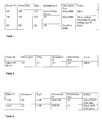
figure 2 are summarized in table 1 below illustrating the hotspot operation of theaccess gateway 10 in case the user is not authorized. All data packets of a device having any source IP address and source port, for example theportable device 12, is accepted by theaccess gateway 10. Any data packets of type TCP andport address access gateway 10. All data packets of type TCP and having adestination port backend server 11, where the user has to authorize his device. If the data packets of the Internet request do not includeport Table 1 Source IP Source port Type Destination IP Destinatio n Port Action All All TCP Inside Walled Garden 80 or 8080 Allow All All TCP All 80 or 8080 Allow, replace Destination IP with landing page IP All All All All Not 80 or 8080 Block - The
access gateway 10 separates therefore all data packets not havingport requests having port Internet sever 11. - The redirection to the captive portal happens therefore at the IP level,
Internet Protocol layer 3, in theaccess gateway 10, and not at the HTTP level at thebackend server 11. Hence, the HTTP request remains unmodified in theaccess gateway 10, and is handled properly by thebackend server 11. The processor load of thebackend server 11 is therefore essentially reduced. - For example: a request to http://www.cnn.com/articles/main.php will be redirected to the IP address of the landing page, but still with the same HTTP request. Another example: Assume the HTTP redirection has the IP address 10.0.0.1 and the walled garden the IP address 10.0.x.x. The client device has the IP address 10.1.1.1 and is connected to an access gateway with IP address 10.1.0.1. The client on the gateway makes a connection to 8.8.8.8 on port 47. He is blocked. The client now makes a connection to 8.8.8.8 on
port 80. This request is modified to 10.0.0.1. That request returns a redirection to 10.0.0.2. Since this address is in the range of the walled garden, the connection goes through. As soon as the user has given his credentials on the captive portal for authorization, the rule to let pass all traffic from 10.1.1.1 is established on the access gateway with IP address 10.1.0.1. - If the
portable device 12 is already authorized, all data packets are allowed to all destination addresses, as shown in table 2. In this case, all traffic coming from theportable device 12 will be routed unmodified by theaccess gateway 10.Table 2 Source IP Source port Tyoe Destination IP Destination Port Action Approved device All All All All Allow - Further, some rules at the top of table 1 may be included to allow DHCP and DNS traffic from local proxy servers. As shown in table 3 below, data packets of type UDP according to a Dynamic Host Configuration Protocol (DHCP) coming from a relay server and having the
destination port 67 are allowed by theaccess gateway 10. Also allowed are data packets of type UDP according to a Domain Name System (DNS) coming from a proxy server and having thedestination port 53.Table 3 Source IP Source port Type Destination IP Destination Port Action Local All UDP DHCP IP 67 Allow DHCP from relay Local All UDP DNS IP 53 Allow DNS from proxy - Since the redirection on the
access gateway 10 happens at Layer 3 (IP layer), the redirection at the HTTP Level is handled at thebackend server 11. A catchall HTTP handler is implemented that will catch all the HTTP requests that have been redirected by theaccess gateway 10. This HTTP requests handled will result in a 302 or 307 temporary redirect. This will trigger the pop-up window for the captive portal in many operating systems, such as iOS and Windows. The redirection will go to a small HTTP page with a Javascript redirect, which will handle redirection from pages consisting of several frames. If a user happens to be on a page with several frames and the redirection will kick in, it should be avoided that the captive page shows up in all subframes. The javascript redirection will prevent this. The javascript will redirect to a final page inside the walled garden, where the authentication is processed with credentials, credit card payment or any other method. - By handling the redirection at the IP level via Network Address Translation (NAT) rules in the
access gateway 10, the redirection can be hardware accelerated within the existing acceleration engines of network processors. The method does not require HTTP redirecting at the access gateway, which would slow down the overall network experience of the user, and it does not require HTTP redirection at the backend server, which will require a heavy investment in backend server infrastructure. By doing the IP level redirection at the gateway and the HTTP redirection at the backend server, a balanced and optimized solution for network performance and capital expenditures is therefore provided. - Also other embodiments of the invention may be utilized by one skilled in the art without departing from the scope of the present invention. The portable device is in particular an Internet-enabled portable device and the data packets are for example IP (Internet Protocol) packets according to Internet protocol Version 4 or Version 6. The invention resides therefore in the claims herein after appended.
Claims (12)
- Method for providing a hotspot service (1), comprising the steps of
receiving data packets from a portable device (12),
allowing access to the Internet in case the device is authorized for Internet access (20, 22),
in case the portable device is not authorized for Internet access, analyzing a header of the data packets (24),
redirecting packets having a destination port 80 or 8080 to a login page (32), and
blocking all packets having a destination port different from port 80 or 8080 (26). - The method of claim 1, wherein the hotspot service is provided by a router (10).
- The method of claim 1 or 2, comprising the steps of redirecting packets having a destination port 80 or 8080 to a
login page of a backend server (11) located in the Internet. - The method of claim 1, 2 or 3, comprising the steps of
directing packets having a destination port 80 or 8080 and addressed to a walled garden of the hotspot service to a respective walled garden Web page. - Method for providing a hotspot service (1), comprising the steps of
receiving data packets from a portable device (12),
allowing access to the Internet in case the device is authorized for Internet access,
in case the portable device is not authorized for Internet access, analyzing a header of the data packets,
redirecting packets having a destination port 80 or 8080 to a login page,
blocking all packets having a destination port different from port 80 or 8080, exception: allow data packets from a proxy server. - The method of claim 5, wherein the hotspot service is provided by a router (10).
- The method of claim 5 or 6, comprising the steps of redirecting packets having a destination port 80 or 8080 to a
login page of a backend server (11) located in the Internet. - The method of claim 5, 6 or 7, comprising the steps of
directing packets having a destination port 80 or 8080 and addressed to a walled garden of the hotspot service to a respective walled garden Web page. - The method of one of the preceding claims 5-8, wherein the proxy server is a local proxy server, for example a relay server sending data packets of type UDP according to a Dynamic Host Configuration Protocol and having a destination port 67, or a proxy server sending data packets of type UDP according to a Domain Name System and having a destination port 53.
- Router performing a method according to one of the preceding claims.
- A non-transitory computer readable storage medium storing instructions for performing a method according to one of the preceding claims 1-9.
- Application comprising software instructions for performing a method according to one of the preceding claims 1-9.
Priority Applications (2)
| Application Number | Priority Date | Filing Date | Title |
|---|---|---|---|
| EP14305526.7A EP2930963A1 (en) | 2014-04-10 | 2014-04-10 | Method for providing a hotspot service including a captive portal, respective router, application and computer readable storage medium |
| PCT/EP2015/056756 WO2015155036A1 (en) | 2014-04-10 | 2015-03-27 | Method for providing a hotspot service, respective router, computer program and computer readable storage medium |
Applications Claiming Priority (1)
| Application Number | Priority Date | Filing Date | Title |
|---|---|---|---|
| EP14305526.7A EP2930963A1 (en) | 2014-04-10 | 2014-04-10 | Method for providing a hotspot service including a captive portal, respective router, application and computer readable storage medium |
Publications (1)
| Publication Number | Publication Date |
|---|---|
| EP2930963A1 true EP2930963A1 (en) | 2015-10-14 |
Family
ID=50678126
Family Applications (1)
| Application Number | Title | Priority Date | Filing Date |
|---|---|---|---|
| EP14305526.7A Withdrawn EP2930963A1 (en) | 2014-04-10 | 2014-04-10 | Method for providing a hotspot service including a captive portal, respective router, application and computer readable storage medium |
Country Status (2)
| Country | Link |
|---|---|
| EP (1) | EP2930963A1 (en) |
| WO (1) | WO2015155036A1 (en) |
Cited By (1)
| Publication number | Priority date | Publication date | Assignee | Title |
|---|---|---|---|---|
| TWI642284B (en) * | 2017-01-12 | 2018-11-21 | 友訊科技股份有限公司 | Ways to prevent verification of vulnerabilities by controlling connection time and connection traffic |
Citations (2)
| Publication number | Priority date | Publication date | Assignee | Title |
|---|---|---|---|---|
| US20120166662A1 (en) * | 2010-12-22 | 2012-06-28 | Pradeep Iyer | HTTP Proxy based Captive Portal |
| US20130111024A1 (en) | 2011-10-26 | 2013-05-02 | Deepinder Singh Setia | Dynamic Walled Garden |
-
2014
- 2014-04-10 EP EP14305526.7A patent/EP2930963A1/en not_active Withdrawn
-
2015
- 2015-03-27 WO PCT/EP2015/056756 patent/WO2015155036A1/en not_active Ceased
Patent Citations (2)
| Publication number | Priority date | Publication date | Assignee | Title |
|---|---|---|---|---|
| US20120166662A1 (en) * | 2010-12-22 | 2012-06-28 | Pradeep Iyer | HTTP Proxy based Captive Portal |
| US20130111024A1 (en) | 2011-10-26 | 2013-05-02 | Deepinder Singh Setia | Dynamic Walled Garden |
Non-Patent Citations (2)
| Title |
|---|
| ANONYMOUS: "Layer 4 Switching", 7 May 2013 (2013-05-07), XP055156439, Retrieved from the Internet <URL:https://web.archive.org/web/20130507145559/http://www.comtest.com/tutorials/layer4.html> [retrieved on 20141203] * |
| ANONYMOUS: "List of TCP and UDP port numbers - Wikipedia, the free encyclopedia", 24 March 2014 (2014-03-24), XP055156456, Retrieved from the Internet <URL:https://web.archive.org/web/20140324001214/http://en.wikipedia.org/wiki/List_of_TCP_and_UDP_port_numbers> [retrieved on 20141203] * |
Cited By (1)
| Publication number | Priority date | Publication date | Assignee | Title |
|---|---|---|---|---|
| TWI642284B (en) * | 2017-01-12 | 2018-11-21 | 友訊科技股份有限公司 | Ways to prevent verification of vulnerabilities by controlling connection time and connection traffic |
Also Published As
| Publication number | Publication date |
|---|---|
| WO2015155036A1 (en) | 2015-10-15 |
Similar Documents
| Publication | Publication Date | Title |
|---|---|---|
| US11032249B2 (en) | DNS-based captive portal with integrated transparent proxy to protect against user device caching incorrect IP address | |
| JP7544401B2 (en) | Ensuring separation of control and user planes in mobile networks | |
| US8533780B2 (en) | Dynamic content-based routing | |
| US8910300B2 (en) | Secure tunneling platform system and method | |
| US10341427B2 (en) | Forwarding policies on a virtual service network | |
| CN101702717B (en) | Method, system and equipment for authenticating Portal | |
| US9401962B2 (en) | Traffic steering system | |
| US9185562B2 (en) | Coordination of multipath traffic | |
| US20140115188A1 (en) | Incompatible network gateway provisioned through dns | |
| US20160036857A1 (en) | Cloud-based user-level policy, reporting, and authentication over dns | |
| US8914510B2 (en) | Methods, systems, and computer program products for enhancing internet security for network subscribers | |
| EP2997711B1 (en) | Providing single sign-on for wireless devices | |
| US10129185B2 (en) | System and method for implementing virtual platform media access control (MAC) address-based layer 3 network switching | |
| US11240202B2 (en) | Message processing method, electronic device, and readable storage medium | |
| CN104994113B (en) | A kind of ADSL wireless routers and the method and system for realizing forced gate under bridge mode using the router | |
| US20130262652A1 (en) | Articles of manufacture, service provider computing methods, and computing service systems | |
| US9207953B1 (en) | Method and apparatus for managing a proxy autoconfiguration in SSL VPN | |
| CN106921970A (en) | A kind of access authentication method, device and system | |
| US10673992B1 (en) | Method and system for implementing IPv4 or IPv6 in a proxy | |
| WO2015155036A1 (en) | Method for providing a hotspot service, respective router, computer program and computer readable storage medium | |
| EP3185510B1 (en) | Method for data packet inspection, related device and computer-program product | |
| US20250220041A1 (en) | Transparent proxy mode authentication in dns ddos mitigation | |
| US20200296584A1 (en) | Multiple authenticated identities for a single wireless association | |
| CN105791375A (en) | Page directing method for Web server | |
| JP2014158077A (en) | Communication service provision system and method therefor |
Legal Events
| Date | Code | Title | Description |
|---|---|---|---|
| PUAI | Public reference made under article 153(3) epc to a published international application that has entered the european phase |
Free format text: ORIGINAL CODE: 0009012 |
|
| AK | Designated contracting states |
Kind code of ref document: A1 Designated state(s): AL AT BE BG CH CY CZ DE DK EE ES FI FR GB GR HR HU IE IS IT LI LT LU LV MC MK MT NL NO PL PT RO RS SE SI SK SM TR |
|
| AX | Request for extension of the european patent |
Extension state: BA ME |
|
| STAA | Information on the status of an ep patent application or granted ep patent |
Free format text: STATUS: THE APPLICATION IS DEEMED TO BE WITHDRAWN |
|
| 18D | Application deemed to be withdrawn |
Effective date: 20160415 |