EP2930643A1 - Vehicle network authentication system, and vehicle network authentication method - Google Patents
Vehicle network authentication system, and vehicle network authentication method Download PDFInfo
- Publication number
- EP2930643A1 EP2930643A1 EP12889412.8A EP12889412A EP2930643A1 EP 2930643 A1 EP2930643 A1 EP 2930643A1 EP 12889412 A EP12889412 A EP 12889412A EP 2930643 A1 EP2930643 A1 EP 2930643A1
- Authority
- EP
- European Patent Office
- Prior art keywords
- data
- authentication
- section
- verification
- pieces
- Prior art date
- Legal status (The legal status is an assumption and is not a legal conclusion. Google has not performed a legal analysis and makes no representation as to the accuracy of the status listed.)
- Granted
Links
Images








Classifications
-
- H—ELECTRICITY
- H04—ELECTRIC COMMUNICATION TECHNIQUE
- H04L—TRANSMISSION OF DIGITAL INFORMATION, e.g. TELEGRAPHIC COMMUNICATION
- H04L63/00—Network architectures or network communication protocols for network security
- H04L63/08—Network architectures or network communication protocols for network security for authentication of entities
-
- G—PHYSICS
- G06—COMPUTING OR CALCULATING; COUNTING
- G06F—ELECTRIC DIGITAL DATA PROCESSING
- G06F21/00—Security arrangements for protecting computers, components thereof, programs or data against unauthorised activity
- G06F21/30—Authentication, i.e. establishing the identity or authorisation of security principals
- G06F21/44—Program or device authentication
-
- H—ELECTRICITY
- H04—ELECTRIC COMMUNICATION TECHNIQUE
- H04L—TRANSMISSION OF DIGITAL INFORMATION, e.g. TELEGRAPHIC COMMUNICATION
- H04L67/00—Network arrangements or protocols for supporting network services or applications
- H04L67/01—Protocols
- H04L67/12—Protocols specially adapted for proprietary or special-purpose networking environments, e.g. medical networks, sensor networks, networks in vehicles or remote metering networks
-
- H—ELECTRICITY
- H04—ELECTRIC COMMUNICATION TECHNIQUE
- H04L—TRANSMISSION OF DIGITAL INFORMATION, e.g. TELEGRAPHIC COMMUNICATION
- H04L9/00—Cryptographic mechanisms or cryptographic arrangements for secret or secure communications; Network security protocols
- H04L9/32—Cryptographic mechanisms or cryptographic arrangements for secret or secure communications; Network security protocols including means for verifying the identity or authority of a user of the system or for message authentication, e.g. authorization, entity authentication, data integrity or data verification, non-repudiation, key authentication or verification of credentials
- H04L9/3271—Cryptographic mechanisms or cryptographic arrangements for secret or secure communications; Network security protocols including means for verifying the identity or authority of a user of the system or for message authentication, e.g. authorization, entity authentication, data integrity or data verification, non-repudiation, key authentication or verification of credentials using challenge-response
-
- G—PHYSICS
- G06—COMPUTING OR CALCULATING; COUNTING
- G06F—ELECTRIC DIGITAL DATA PROCESSING
- G06F2221/00—Indexing scheme relating to security arrangements for protecting computers, components thereof, programs or data against unauthorised activity
- G06F2221/21—Indexing scheme relating to G06F21/00 and subgroups addressing additional information or applications relating to security arrangements for protecting computers, components thereof, programs or data against unauthorised activity
- G06F2221/2107—File encryption
-
- H—ELECTRICITY
- H04—ELECTRIC COMMUNICATION TECHNIQUE
- H04L—TRANSMISSION OF DIGITAL INFORMATION, e.g. TELEGRAPHIC COMMUNICATION
- H04L2209/00—Additional information or applications relating to cryptographic mechanisms or cryptographic arrangements for secret or secure communication H04L9/00
- H04L2209/84—Vehicles
Definitions
- the present invention relates to a vehicle network authentication system and a vehicle network authentication method that use a network mounted in a vehicle.
- vehicle control devices i.e., vehicle control devices that electronically control various pieces of in-vehicle equipment, such as an engine and a brake, and vehicle control devices that control pieces of equipment, such as meters, that display various vehicle states, including a vehicle control device that controls a navigation system.
- vehicle network is formed by electrically connecting those vehicle control devices together by means of communication lines, and various pieces of data are transmitted and received between the vehicle control devices through this vehicle network.
- each vehicle control device connected to the vehicle network serves to control various pieces of in-vehicle equipment, such as an engine and a brake, that are mounted in the vehicle, and hence is required to have significantly-high security.
- a data distribution system described in Patent Document 1 has been known as a technique that increases the security of such a specific network.
- This data distribution system communicates dummy data that is a dummy representation of normal data between a transmitting terminal and a receiving terminal, besides the normal data.
- the receiving terminal determines whether received data is dummy data or normal data. As a result, it is difficult to identify normal data even if data transmitted to the network is illegally obtained.
- Patent Document 1 Japanese Laid-Open Patent Publication No. 2010-050958
- the present invention provides a vehicle network authentication system in which communication data is transmitted and received by use of a unit of communication specified based on a communications protocol of a vehicle network.
- the vehicle network authentication system includes a data dividing section, a dummy data addition section, and an authentication section.
- the data dividing section divides authentication data for authenticating a communication target.
- the dummy data addition section adds dummy data for a dummy representation of the divided authentication data.
- the dummy data is used as data to be transmitted to the vehicle network together with the authentication data.
- the authentication section verifies the divided authentication data and the dummy data by use of a plurality of pieces of verification data for verifying the divided authentication data and gives authority according to an amount of authentication of the verified authentication data.
- the present invention also provides a vehicle network authentication method in which communication data is transmitted and received by use of a unit of communication specified based on a communications protocol of a vehicle network.
- the vehicle network authentication method includes: a dividing step for dividing authentication data for authenticating a communication target; a dummy data addition step of adding dummy data for a dummy representation of the divided authentication data, the dummy data being used as data to be transmitted to the vehicle network together with the authentication data; and an authentication step for discriminating between the divided authentication data and the dummy data and giving authority according to an amount of authentication of the discriminated authentication data.
- authentication data is divided. Additionally, dummy data that makes it difficult to identify this authentication data is generated. Thereafter, when divided authentication data and dummy data are transmitted from an authenticated target, the authentication data and the dummy data transmitted to the vehicle network are verified. Through this verification, the pieces of divided authentication data are verified at any time. As a result of verification, when the correctness of the pieces of authentication data is verified, the pieces of authentication data are authenticated. When the authentication data of which the correctness has been verified increases, the amount of authentication increases in proportion to the increase of the authentication data. Thereupon, authority is given in accordance with this amount of authentication. Therefore, authority is given before all the authentication of the divided authentication data is established. As a result, minimum necessary authority is given when a fixed amount of authentication is established, and a function processable based on the minimum necessary authority is maintained while performing authentication using the pieces of authentication data and the pieces of dummy data.
- the pieces of dummy data are transmitted to the vehicle network together with the pieces of authentication data, and therefore, when the authentication data and the dummy data are obtained by an unauthorized means, it becomes possible to cause the misconception that the pieces of dummy data are normal authentication data. Therefore, it becomes difficult for the pieces of authentication data to be identified from among the communication data, and the pieces of authentication data are restrained from being illicitly used.
- the authentication section performs authentication by use of the authentication data based on a challenge-response method.
- authentication using the authentication data is performed based on a challenge-response method.
- the present invention is effective particularly in the application to authentication based on the challenge-response method.
- authentication based on the challenge-response method authentication based on challenge data and based on response data is performed, and, as a result, the authentication is adequately performed while minimizing the number of times of communication performed between an authenticating target and an authenticated target in performing the authentication.
- the pieces of authentication data are smoothly authenticated.
- the authentication section transmits challenge data based on the challenge-response method to the vehicle network in order to authenticate a communication target.
- the data dividing section generates response data based on the challenge data transmitted to the vehicle network and generates the divided authentication data by dividing the generated response data.
- the authentication section transmits challenge data to the vehicle network. Thereafter, when the challenge data transmitted to the vehicle network is obtained, the data dividing section generates response data based on this challenge data. Additionally, the data dividing section generates a plurality of pieces of authentication data by dividing this response data. Therefore, if the challenge data is obtained from the authentication section, it becomes possible for the data dividing section to generate a plurality of pieces of authentication data verifiable by means of this authentication section. As a result, authentication is performed based on shared data that is comprehensible only by means of the authentication section and the data dividing section.
- the authentication section performs first authentication with respect to a communication target based on the challenge data transmitted to the vehicle network, and performs second and subsequent authentication with respect to the communication target by using, as new challenge data, data in which at least one of communication data transmitted from the communication target and the challenge data has been converted by a common conversion key.
- first authentication with respect to a communication target is performed based on the challenge data transmitted by the authentication section to the vehicle network.
- authentication is performed through the verification of response data returned as a response of this challenge data.
- the vehicle network is provided with a plurality of vehicle control devices.
- the data dividing section and the dummy data addition section are provided in a vehicle control device on an authenticated side whereas the authentication section is provided in a vehicle control device on an authenticating side.
- the authentication section performs authentication to verify correctness of the vehicle control device on the authenticated side while using the vehicle control device on the authenticated side as the communication target.
- the authentication section performs message authentication to verify correctness of the communication data while using communication data transmitted from the vehicle control device on the authenticated side as the communication target.
- the correctness of a vehicle control device on the authenticated side is verified in the first authentication.
- the correctness of a vehicle control device by which communication data is transmitted and received is verified.
- the correctness of communication data transmitted from the vehicle control device temporarily authenticated is verified. Therefore, even if the authentication of the vehicle control device by which communication data is transmitted and received is temporarily established, the authentication of the correctness of communication data transmitted from this vehicle control device is continuously performed. As a result, the correctness of the vehicle control device and the correctness of the communication data transmitted by the vehicle control device are verified, and security is maintained higher.
- the data dividing section determines an order of transmission of the divided authentication data.
- the order of transmission of authentication data is determined based on the round-robin method. If it is based on this round-robin method, the order of transmission of authentication data is determined with predetermined regularity. This makes it possible for the authentication section to easily discriminate between divided authentication data and dummy data. Additionally, this makes it possible for the authentication section to easily identify verification data used when authentication data that is set as a verification target is verified. Therefore, the process employed to verify authentication is performed more smoothly.
- the order of transmission of authentication data is determined based on the random method. According to this, from the fact that the order of transmission of authentication data does not have regularity, it becomes difficult to discriminate between authentication data and verification data and becomes difficult to identify verification data for verifying authentication data. Therefore, even if authentication data and dummy data are obtained by an unauthorized means, the illegal use of this authentication data is further restrained.
- the authentication section verifies correctness of received data in order of reception of data that is a verification target while using the pieces of verification data sequentially in order of transmission determined based on the round-robin method.
- the authentication section verifies the correctness of the authentication data while using pieces of verification data in order of transmission sequence determined based on the round-robin method. Additionally, the authentication section selects authentication data that is a verification target in order of reception, i.e., in order of transmission sequence determined based on the round-robin method. Therefore, even if the pieces of divided authentication data differ from each other and even if the pieces of divided verification data differ from each other, it becomes possible for the authentication section to easily select verification data for verifying the authentication data.
- the authentication section recursively performs a process in which, when one piece of verification data selected from the pieces of verification data and data that is set as a target to be verified coincide with each other, the authentication section authenticates the data that is set as a target to be verified as partial data of the authentication data, and sets, as a target to be verified, data received subsequently to the authentication data that has been authenticated by use of verification data specified as being sequentially subsequent to the verification data used for authentication, and b1; the authentication section recursively performs a process in which, when one piece of verification data selected from the pieces of verification data and data that is set as a target to be verified do not coincide with each other, the authentication section identifies, as the dummy data, the data that is set as a target to be verified, and sets, as a target to be verified, data received subsequently to the data identified as the dummy data by use of the verification data used for authentication.
- the pieces of verification data possessed by the authentication section correspond to the pieces of divided authentication data, and each piece of verification data and each piece of authentication data serve as a pair. Therefore, verification data and authentication data serving as a pair coincide with each other, whereas verification data and authentication data not serving as a pair do not coincide with each other. Therefore, it is possible for the authentication section to verify the correctness of authentication data based on whether verification data for use in verification and authentication data coincide with each other.
- the authentication section it is possible for the authentication section to recognize the order of transmission of pieces of authentication data when the order of transmission of pieces of divided authentication data is determined based on the round-robin method. Therefore, it is possible for the authentication section to select verification data used to verify the pieces of divided authentication data based on this order of transmission. Additionally, when dummy data is not transmitted, pieces of selected verification data are sequentially used, and, as a result, it is possible to verify all the authentication data sequentially received. On the other hand, even if pieces of selected verification data are sequentially used when authentication data and dummy data are mixed together in data received by the authentication section, data not coinciding with this verification data, i.e., dummy data will be included in a verification target. Therefore, it is possible for the authentication section to identify that the data not coinciding with this verification data is dummy data.
- the authentication section authenticates that the data serving as a verification target that has coincided therewith is authentication data. Thereafter, the authentication section calculates the amount of authentication. Furthermore, the authentication section changes verification data used for verification data to verification data specified as being sequentially subsequent to verification data used for established authentication. Thereafter, the authentication section sets authentication data received subsequently to authentication data of which the authentication has been established as a verification target by use of changed verification data. As a result, the pieces of authentication data in which the order of transmission has been determined based on the round-robin method are sequentially authenticated.
- the authentication section when verification data used sequentially and data serving as a verification target do not coincide with each other, the authentication section identify that the data that is a verification target is dummy data. Thereafter, the authentication section sets data received subsequently to the identified dummy data as a verification target, and performs verification by means of verification data used to verify the dummy data.
- This process is recursively performed, and, as a result, even if dummy data is transmitted together with a plurality of pieces of authentication data, it is possible for the authentication section to discriminate whether received data is authentication data or dummy data. Additionally, the amount of authentication is calculated at any time through this process. As a result, discrimination between authentication data and dummy data and the calculation of the amount of authentication are performed smoothly.
- the authentication section verifies correctness of the authentication data divided by the data dividing section by recursively using the pieces of verification data.
- the authentication section verifies the correctness of the authentication data by recursively using a plurality of pieces of verification data. Therefore, it becomes possible for the authentication section to verify the pieces of authentication data by means of the pieces of verification data even when it is not possible to identify verification data corresponding to the pieces of authentication data because it is not possible to identify the order of transmission of received authentication data.
- the authentication section recursively performs a process in which, when one piece of verification data selected from the pieces of verification data and data that is set as a target to be verified coincide with each other, the authentication section authenticates the data that is set as a target to be verified as partial data of the authentication data, and identifies, as an order specified in the verification data used for authentication, an order specified in the authentication data that has been authenticated, and the authentication section sets, as a target to be verified, data received subsequently to the authentication data that has been authenticated by use of verification data specified as being sequentially first among the pieces of verification data except the verification data used for authentication, and b2; the authentication section recursively performs a process in which, when one piece of verification data selected from the pieces of verification data and data that is set as a target to be verified do not coincide with each other, the authentication section verifies the data that is set as a target to be verified by sequentially using other verification data except verification data that has been used for authenticating the authentication
- the pieces of verification data possessed by the authentication section correspond to the pieces of divided authentication data, and each piece of verification data and each piece of authentication data serve as a pair. Therefore, verification data and authentication data serving as a pair coincide with each other, whereas verification data and authentication data not serving as a pair do not coincide with each other. Therefore, it is possible for the authentication section to verify the correctness of authentication data based on whether verification data for use in verification and authentication data coincide with each other.
- the authentication section it is not possible for the authentication section to recognize the order of transmission of pieces of authentication data when the order of transmission of pieces of divided authentication data is determined based on the random method.
- authentication data transmitted in any order coincides with any one of the pieces of verification data.
- data not coinciding with any one of the pieces of verification data becomes data that is not authentication data, i.e., it becomes dummy data.
- Authentication data that has coincided with a certain piece of verification data corresponds to this verification data. Therefore, it becomes possible to identify the order specified in verification data coinciding therewith as the order specified in authentication data in which authentication has been established. According to this, the order specified in authentication data transmitted at random is identified. In other words, it becomes possible for the authentication section to recognize which one of the pieces of authentication data has been authenticated.
- the authentication section excludes verification data used for established authentication from subsequent verification, and performs recursive verification. Therefore, the number of pieces of verification data used recursively is reduced in proportion to the times of authentication establishment, and, accordingly, discrimination about whether the verification target is authentication data or dummy data is made early. Therefore, it becomes possible to perform smooth authentication although the order of transmission of pieces of authentication data is determined based on the random method.
- the authentication section when all the authentications of the divided authentication data are established, the authentication section combines pieces of authentication data in which authentication has been established together in specified order, and combines the pieces of verification data together in the specified order.
- the authentication section performs final authentication with respect to a communication target based on whether the combined authentication data and the combined verification data coincide with each other.
- final authentication with respect to a communication target is performed based on whether the combined authentication data and the combined verification data coincide with each other.
- all the authorities are given, for example, on condition that the communication target is genuine.
- the final authentication is not established, it is also possible to set the authentication rate at 0%, for example, on condition that there is a possibility that the pieces of divided authentication data might have been transmitted from an illegal device or the like, and is possible to cancel temporarily-given authority.
- multiplex authentication is performed by authentication based on the divided authentication data and authentication based on the combined authentication data. Therefore, security is made even higher.
- Whether all the authentications of the divided authentication data have been established is determined based on, for example, whether the division number of authentication data recognized in advance by the authentication section has been reached or whether the total of the data amount of authentication data in which authentication has been established has reached the total data amount of authentication data.
- the authentication unit uses an authentication rate as the amount of authentication, the authentication rate being calculated from at least one of division results of the number of authentication establishment with respect to a division number of the authentication data and division results of a data amount of authentication data in which authentication has been established with respect to a total data amount of the authentication data.
- the authentication rate that is calculated from at least one result of division results of the number of authentication establishment with respect to the division number of the authentication data and division results of the data amount of authentication data in which authentication has been established with respect to the total data amount of the authentication data is used as the amount of authentication. If authority is given based on the authentication rate, it becomes possible to accurately give authority in accordance with the degree of authentication even if a change occurs in the division number of authentication data or in the data amount of pieces of divided authentication data.
- the vehicle network is provided with a plurality of vehicle control devices.
- the data dividing section and the dummy data addition section are provided in a vehicle control device on an authenticated side whereas the authentication section is provided in a vehicle control device on an authenticating side.
- the authentication section changes management authority of an application program installed on at least one of the authenticated side and the authenticating side in accordance with the amount of authentication.
- a vehicle control device In general, in a vehicle control device, various processes are performed based on installed application programs, and various functions are exerted. From the fact that management authority, such as the execution, the deletion, and the like, of an application program, exerts influence on a process performed by a vehicle control device, the management authority of the application program is required to be strictly given. Additionally, a function that is exerted at an early stage and that has high necessity exists as a function exerted through the execution of an application program, and, with respect to such a function, authority is required to be given at an early stage.
- the management authority of the application program is changed in accordance with the aforementioned amount of authentication.
- the minimum management authority based on the application program is given at an early stage.
- the management authority increases in proportion to an increase in the amount of authentication, and an executable function also increases. This makes it possible to execute at an early stage the minimum function, and makes it possible to give authority taking account of authentication results based on a relatively large amount of authentication with respect to an important function.
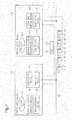
- a communication line 10 forming a vehicle network is provided in a vehicle to which the vehicle network authentication system and the vehicle network authentication method of the present embodiment are applied.
- This vehicle network is a network to which, for example, a communication system based on a controller area network (CAN) in which communication data is transmitted and received by a frame format is applied.
- CAN controller area network
- communication data is transmitted and received while using a frame as a section.
- vehicle control devices such as a vehicle control device 100 and a vehicle control device 200, are connected to the communication line 10.
- the vehicle control device 100 and the vehicle control device 200 are devices each of which controls, for example, pieces of equipment and so forth mounted in the vehicle.
- the vehicle control device 100 and the vehicle control device 200 mutually transmit and receive communication data between these vehicle control devices 100, 200 and so forth when these control devices control various pieces of equipment.
- the vehicle control device 100 has a communication section 101 that communicates with the vehicle control device 200 and so forth.
- the vehicle control device 100 additionally has, for example, a verification data generation section 110 that generates authentication data for verifying the vehicle control device 200 that serves as a communication target and a data combination section 120 that combines pieces of authentication data returned from the communication target together.
- the vehicle control device 100 still additionally has an authentication section 130 that authenticates the communication target based on the authentication data returned from the communication target.
- the authentication section 130 of the present embodiment authenticates the communication target based on a challenge-response method.
- the verification data generation section 110 When communication with the communication target is started, the verification data generation section 110 generates challenge data Dch for use in the authentication of the communication target. The verification data generation section 110 outputs the generated challenge data Dch to the communication section 101.
- the communication section 101 adds a discrimination code D1 showing a transmission node and data contents to the challenge data Dch. Thereafter, the communication section 101 transmits the challenge data Dch to which the discrimination code D1 has been added to the vehicle control device 200.
- the vehicle control device 100 selects, for example, the vehicle control device 200 as a communication target.
- the verification data generation section 110 encrypts the same data as the challenge data Dch transmitted to the communication target by use of an encryption key 102.
- the verification data generation section 110 divides encrypted data into a plurality of pieces of data based on a specified rule.
- the specified rule to divide the challenge data is a rule that is predetermined, for example, between the vehicle control device 100 and its communication target.
- the verification data generation section 110 outputs pieces of divided data that have been encrypted to the authentication section 130 as verification data for use in authentication.
- the data combination section 120 obtains pieces of authentication data transmitted from, for example, the vehicle control device 200 that is a communication target from the authentication section 130, and then combines pieces of authentication data obtained therefrom together.
- the data combination section 120 outputs authentication data combined thereby to the authentication section 130.
- the authentication section 130 of the present embodiment receives a plurality of transmission frames F1 to F5... transmitted by the vehicle control device 200 that is a communication target, and then takes out authentication data 21, 22, 23... stored in specified positions among the transmission frames F1 to F5.... Furthermore, the authentication section 130 takes out dummy data 31, 32... stored in specified positions among the transmission frames F1 to F5
- the authentication section 130 discriminates between the authentication data 21, 22, 23, and the like, and the dummy data 31, 32, and the like, taken out therefrom. Thereafter, the authentication section 130 verifies the data 21, 22, 23, and the like, discriminated as being authentication data by means of a plurality of pieces of verification data input from the verification data generation section 110. As a result, the correctness of the pieces of authentication data 21, 22, 23... that have been divided by the communication target is verified. Thereafter, the authentication section 130 outputs the verified authentication data 21, 22, 23... to the data combination section 120.
- the data combination section 120 combines the authentication data 21, 22, 23... input from the authentication section 130 together. Thereafter, the data combination section 120 outputs the authentication data 21, 22, 23... combined thereby to the authentication section 130.
- the authentication section 130 of the present embodiment calculates the authentication rate of each of the authentication data 21 to 23 and so forth that have been received from the communication target.
- the authentication section 130 calculates, for example, a value obtained by dividing the number of pieces of authentication data that have succeeded in authentication by a number, which is specified as the division number of authentication data, as an authentication rate.
- the authentication section 130 gives authority according to the authentication rate calculated thereby to the communication target.
- the authentication section 130 verifies the combined authentication data based on the verification data input from the verification data generation section 110.
- the authentication section 130 combines the verification data input from the verification data generation section 110 together in specified order. Thereafter, the authentication section 130 finally authenticates the authentication data based on whether the verification data that have combined coincide with the combined authentication data.
- the authentication section 130 determines that authentication has been finally established. Thereafter, the authentication section 130 gives all the specified authorities to the vehicle control device 200 that is a communication target. Furthermore, the authentication section 130 allows the vehicle control device 100 to use, for example, all the communication data received by the vehicle control device 100 from the communication target.
- the vehicle control device 200 which serves as an authenticated target in the present embodiment, has a communication section 201, which transmits and receives communication data to and from the vehicle control device 100 and so forth.
- the vehicle control device 200 additionally has an authentication data generation section 210, which generates authentication data to perform authentication with a communication target, and a data dividing section 220, which divides authentication data generated by the authentication data generation section 210.
- the vehicle control device 200 still additionally has a dummy data addition section 230, which performs a process of adding dummy data of authentication data divided by the data dividing section 220 to communication data.
- the authentication data generation section 210 when the authentication data generation section 210 receives challenge data Dch transmitted by the vehicle control device 100, which is a communication target, the authentication data generation section 210 encrypts challenge data Dch received thereby by means of an encryption key 202.
- the authentication data generation section 210 outputs challenge data Dch encrypted thereby to the data dividing section 220 as response data with respect to the challenge data Dch.
- the encryption key 202 possessed by the vehicle control device 200 is key data common to the encryption key 102 possessed by the vehicle control device 100.
- the data dividing section 220 divides this response data into a plurality of pieces of response data based on a specified rule. Thereafter, the data dividing section 220 outputs the pieces of response data divided thereby to the dummy data addition section 230. In the present embodiment, this response data is used as authentication data.
- the dummy data addition section 230 When the pieces of response data are input, the dummy data addition section 230 generates pieces of dummy data the number of which is the same as, for example, the division number of the response data. At this time, the dummy data addition section 230 generates dummy data so that, for example, the data amount of pieces of response data, i.e., the data amount of response data that has not yet been divided coincides with the data amount of pieces of dummy data.
- the dummy data addition section 230 stores the pieces of response data input therein in the plurality of transmission frames F1, F3, F5, and the like, respectively. Furthermore, the dummy data addition section 230 stores the pieces of generated dummy data in the plurality of transmission frames F2, F4, and the like, respectively. Thereafter, the dummy data addition section 230 permutes the transmission frames F1 to F5 and so forth, for example, so that the response data and the dummy data are alternated with each other. The dummy data addition section 230 transmits each of the transmission frames permuted thereby to the vehicle control device 100. The dummy data addition section 230 stores the response data and the dummy data in specified places of the transmission frames F1 to F5 and so forth.
- the authentication section 130 of the vehicle control device 100 thus receives the plurality of transmission frames transmitted by the dummy data addition section 230, and then discriminates between the response data and the dummy data that are stored in the plurality of transmission frames received therefrom. Thereafter, the authentication section 130 performs authentication based on the response data discriminated thereby.
- the data dividing section 220 of the vehicle control device 200 divides the authentication data 20 into, for example, eight pieces of data 21 to 28 ( Fig. 2B ).
- the order of the authentication data 21 to 28 divided thereby is specified, for example, as the order of data transmission. Furthermore, the order of transmission of eight pieces of dummy data 31, 32, 33, 34, 35, 36, 37, and 38 is specified immediately after the pieces of authentication data 21, 22, 23, 24, 25, 26, 27, and 28 divided thereby, respectively. This order is specified based on a round-robin method.
- the order of the authentication data 21 to 28 divided thereby is specified as the order of data transmission, and that the order of transmission of the eight pieces of dummy data 31, 32, 33, 34, 35, 36, 37, and 38 is specified immediately before the pieces of authentication data 21, 22, 23, 24, 25, 26, 27, and 28 divided thereby, respectively.
- the authentication section 130 of the vehicle control device 100 verifies the authentication data 21 to 28 by use of, for example, the eight pieces of verification data 41 to 48 generated and divided by the verification data generation section 110.
- Each of the pieces of verification data 41 to 48 is 8-bit data.
- each of the pieces of authentication data 21 to 28 verified by the verification data 41 to 48 is 8-bit data.
- the authentication section 130 takes out each of the pieces of authentication data 21 to 28 and each of the pieces of dummy data 31 to 38 from each of the transmission frames received therefrom and then verifies the authentication data 21 to 28 and the dummy data 31 to 38 in order of reception.
- the authentication section 130 verifies first authentication data 21 by use of first verification data 41, i.e., first 8-bit data.
- first verification data 41 i.e., first 8-bit data.
- the authentication section 130 determines that, in the verification data 41 and in the authentication data 21, the same pieces of challenge data Dch have been encrypted by the same encryption keys 102 and 202, respectively.
- the authentication section 130 determines that the authentication data 21 is data returned from a genuine communication target that has the genuine encryption key 202.
- the authentication section 130 changes the data used for verification from the first verification data 41 to second verification data 42.
- the authentication section 130 recognizes the round-robin method by means of the authentication data generation section 210 of the vehicle control device 200 in advance.
- the authentication section 130 verifies whether the second verification data 42 coincides with the dummy data 31 received subsequently to the authentication data 21. Thereafter, from the fact that the second verification data 42 does not coincide with the dummy data 31, the authentication section 130 determines that the dummy data 31 is dummy.
- the authentication section 130 sets the second authentication data 22 received subsequently to the dummy data 31 as a verification target.
- the authentication section 130 changes data used for verification from the second verification data 42 to third verification data 43.
- the authentication section 130 verifies the dummy data 32 received immediately after the second authentication data 22 by use of the third verification data 43. Thereafter, from the fact that the dummy data 32 does not coincide with the third verification data 43, the third authentication data 23 received immediately after the dummy data 32 is set as a verification target
- the verification target is successively changed in this way. Additionally, whenever verification is established, the pieces of verification data 41 to 48 that have been divided are successively changed. As a result, the pieces of authentication data 21 to 28 are verified while discriminating between the pieces of authentication data 21 to 28 and the pieces of dummy data 31 to 38 that have been transmitted in specified order.
- the authentication section 130 of the present embodiment determines that the authentication rate is, for example, 50% when verification using the fourth verification data 44 is established. As a result, the authentication section 130 gives authority according to the authentication rate of 50% to the vehicle control device 200. As a result, a minimum function based on communication between the vehicle control device 100 and the vehicle control device 200 is allowed before completing all the verifications of the pieces of authentication data 21 to 28 that have been divided. Furthermore, for example, the authentication section 130 allows the use of a part of the communication data received by the vehicle control device 100 from the vehicle control device 200. Thereafter, the vehicle control device 100 executes various application programs installed in the vehicle control device 100 by use of the communication data that has been allowed to be used.
- the authentication section 130 of the present embodiment determines that the authentication rate is, for example, 75%. As a result, the authentication section 130 gives authority according to the authentication rate of 75% to the vehicle control device 200. Furthermore, for example, the authentication section 130 increases the available number of communication data received by the vehicle control device 100 from the vehicle control device 200.
- the authentication section 130 of the present embodiment determines that the authentication rate is 100%. For example, the authentication section 130 allows the use of all the communication data received by the vehicle control device 100 from the vehicle control device 200.
- the pieces of verification data 41 to 48 are combined into a piece of verification data 40 that has not yet been divided and that is in a unified state as shown in Fig. 4C .
- the pieces of authentication data 21 to 28 that have been divided are combined into a piece of authentication data 20 that has not yet been divided and that is in a unified state.
- the single piece of authentication data 20 is verified by the single piece of verification data 40. Verification is established in this way, and then the authentication section 130 gives authority according to the final authentication to the vehicle control device 200. Furthermore, the authentication section 130 allows the vehicle control device 100 to execute all the application programs based on the communication data received from the vehicle control device 200.
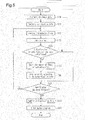
- challenge data Dch generated by the verification data generation section 110 of the vehicle control device 100 is transmitted to the vehicle control device 200, which is a communication target (authenticated target), as shown in Fig. 5 as step S100.
- the verification data generation section 110 encrypts the same data as the challenge data Dch transmitted to the vehicle control device 200 by use of the encryption key 102. As a result, verification data is generated (step S101). Furthermore, the verification data generation section 110 divides the generated verification data into a predetermined number of pieces of data in relation to a regular communication target.
- the authentication section 130 of the vehicle control device 100 receives transmission frames in which response data and the like, are stored from the vehicle control device 200 as a response to the challenge data Dch (step S102), and then takes out the pieces of authentication data 21 to 28 and the pieces of dummy data 31 to 38 stored in specified positions among the transmission frames (step S103).
- the authentication section 130 verifies the pieces of authentication data 21 to 28 and the pieces of dummy data 31 to 38 taken out therefrom while sequentially using the pieces of verification data 41 to 48 (step S104). Whenever it is determined that authentication has been established based on verification results (step S104: YES), the authentication section 130 counts the number of times of authentication (step S105). As a result, the verification data for use in verification is changed from the first verification data 41 to the second verification data 42 specified as a next turn.
- steps S102 to S107 are repeatedly performed until the verification of all the pieces of authentication data is finished.
- steps S104 to S107 correspond to an authentication step.
- step S107 When the verification of all the pieces of authentication data is finished (step S107: YES), the pieces of authentication data 21 to 28 are combined together (step S108). The pieces of verification data 41 to 48 are also combined together.
- the authentication data 20 is verified based on whether the combined and unified authentication data 20 and the combined and unified verification data 40 coincide with each other (step S109).
- the verification of the authentication data 20 is established in this way, all the functions based on communication between the vehicle control device 100 and the vehicle control device 200 are allowed.
- step S200 When the vehicle control device 200 receives challenge data Dch (step S200), the authentication data generation section 210 of the vehicle control device 200 encrypts the challenge data Dch by means of the encryption key 202 as shown in Fig. 6 . As a result, the authentication data 20 is generated (step S2D1).
- step S202 the generated authentication data 20 is divided (step S202).
- the dummy data addition section 230 generates a plurality of pieces of dummy data 31 to 38 (step S203).
- step S202 corresponds to the dividing step mentioned above.
- steps S204 and S205 correspond to the dummy data addition step mentioned above.
- step S206 the transmission frames in which the pieces of authentication data 21 to 28 are stored and the transmission frames in which the pieces of dummy data 31 to 38 are stored are alternately transmitted in specified order.
- step S207 the number of transmission times of the transmission frames thus reaches the total value of the division number of the authentication data 20 and the number of the pieces of dummy data 31 to 38, this process is finished based on the conclusion that the transmission of all the frames has been completed.
- the vehicle control device 100 that serves as an authenticating entity transmits challenge data Dch to the vehicle control device 200, which serves as an authenticated entity.
- the vehicle control device 200 receives the challenge data Dch, and then generates response data, i.e., authentication data by encrypting this challenge data Dch by means of the encryption key 202.
- the vehicle control device 200 divides the generated authentication data. Furthermore, the vehicle control device 200 generates, for example, pieces of dummy data the number of which is the same as the number of pieces of divided authentication data.
- the pieces of authentication data 21 to 28 in which the response data has been divided and the pieces of dummy data 31 to 38 are stored in specified positions among the frames F1 to F16 in specified order.
- the frames F1 to F16 are transmitted from the vehicle control device 200 to the vehicle control device 100.
- the vehicle control device 100 receives the frames F1 to F16, and then takes out the pieces of authentication data 21 to 28 and the pieces of dummy data 31 to 38 stored in the frames F1 to F16. Thereafter, the vehicle control device 100 successively verifies the pieces of authentication data 21 to 28 and the pieces of dummy data 31 to 38 taken out by means of the pieces of verification data 41 to 48.
- the vehicle control device 100 thus gives authority according to the authentication rate.
- functions capable of being used by the vehicle control device 100 and by the vehicle control device 200 become higher in proportion to an increase in the authentication rate to, for example, 30%, 50%, 75%, and 100%.
- the management authority of application programs installed in the vehicle control device 100 gradually increases.
- the vehicle network authentication system and the vehicle network authentication method according to the present embodiment make it possible to obtain the following advantages.
- a vehicle network authentication system and a vehicle network authentication method according to a second present embodiment will now be described with reference to Figs. 10 to 13 , with an emphasis given to differences from the first embodiment.
- the vehicle network authentication system and the vehicle network authentication method according to the present embodiment are the same in the basic configuration as the first embodiment, and, in Figs. 10 to 13 , the same reference sign is given to substantially the same element as in the first embodiment, and an overlapping description is omitted.
- the order of transmission of pieces of authentication data 21 to 28 generated by the authentication data generation section 210 of the vehicle control device 200 is determined based on the random method.
- the order of transmission of pieces of dummy data 31 to 38 is determined based on the random method.
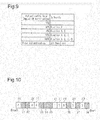
- the order of transmission of the pieces of authentication data 21 to 28 and the pieces of dummy data 31 to 38 is determined as being, for example, second authentication data 22, dummy data 31 and 32, fourth authentication data 24, sixth authentication data 26, and dummy data 33, 34, 35....
- the authentication section 130 of the vehicle control device 100 of the present embodiment first verifies the second authentication data 22 first received. At this time, the authentication section 130 uses the first verification data 41 among the pieces of verification data 41 to 48.
- the authentication section 130 verifies the data 21 that is a verification target by use of the second verification data 42 that is specified as a verification turn subsequent to the first verification data 41.
- the authentication section 130 determines that authentication by means of the second verification data 42 has been established. Thereafter, the authentication section 130 identifies that the order of transmission of the authentication data 22 that is set as a verification target is 1, and calculates the authentication rate. Furthermore, the authentication section 130 excludes the second verification data 42 from data for use in the subsequent verification.
- the authentication section 130 sets the dummy data 31 received subsequently to the first authentication data 22 in which authentication has been established as a verification target. At this time, first, the authentication section 130 performs verification by means of the first verification data 41. Thereafter, from the fact that the first verification data 41 and the data 31 set as a verification target do not coincide with each other, the authentication section 130 successively changes verification data for use in verification in a one-after-another manner, such as the fourth verification data 44 after the third verification data 43.
- the authentication section 130 identifies that the data 31 that is a verification target is dummy data. Thereafter, the authentication section 130 sets dummy data 32 received subsequently to the identified dummy data 31 as a verification target.
- the authentication section 130 identifies that the data 32 that is a verification target is dummy data. Thereafter, the authentication section 130 sets the fourth authentication data 24 received subsequently to the identified dummy data 32 as a verification target.
- the authentication section 130 verifies the fourth authentication data 24 set as a verification target by sequentially using the pieces of verification data 41, 43, and 44 except the second verification data 42 that has been excluded. Thereafter, from the fact that the fourth authentication data 24 and the fourth verification data 44 coincide with each other, the authentication section 130 identifies that the data 24 set as a verification target is the fourth authentication data. Furthermore, the authentication section 130 calculates the authentication rate from the fact that the two pieces of authentication data 22 and 24 have been able to be verified.
- All the pieces of authentication data 21 to 28 and the pieces of dummy data 31 to 38 received by the authentication section 130 are verified in this way. As a result, discrimination is made between the pieces of authentication data 21 to 28 and the pieces of dummy data 31 to 38. Additionally, as a result, the order before transmission prescribed for the pieces of authentication data 21 to 28 randomly transmitted is identified. This identified order is a data-forming order of the pieces of authentication data 21 to 28 forming the unified authentication data 20. This is prescribed in order of the authentication data 21 (first data) ⁇ the authentication data 22 (second data) ⁇ the authentication data 23 (third data)....
- the pieces of verification data 41 to 48 are combined into the unified verification data 40 that has not yet been divided when the verification of all the pieces of authentication data 21 to 28 is thus finished.
- the pieces of divided authentication data 21 to 28 are combined into the unified authentication data 20 that has not yet been divided. In this case, the pieces of authentication data 21 to 28 are combined in the identified order.
- the one authentication data 20 is verified by the one verification data 40.
- the authentication section 130 gives authority according to the final authentication to the vehicle control device 200. Furthermore, the authentication section 130 allows the vehicle control device 100 to execute all the application programs based on communication data received from the vehicle control device 200.
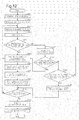
- challenge data Dch generated by the verification data generation section 110 of the vehicle control device 100 is transmitted to the vehicle control device 200, which is a communication target (authenticated target) as shown in Fig. 12 as step S110.
- the verification data generation section 110 encrypts the same data as the challenge data Dch transmitted to the vehicle control device 200 by means of an encryption key 102. As a result, verification data is generated (step S111). Furthermore, the verification data generation section 110 divides the verification data 40 generated above into a predetermined number of pieces of data in relation to a regular communication target.
- the authentication section 130 of the vehicle control device 100 takes out the pieces of authentication data 21 to 28 and the pieces of dummy data 31 to 38 stored in specified positions among the transmission frames (step S113).
- the authentication section 130 sets data early in reception order among the pieces of authentication data 21 to 28 and the pieces of dummy data 31 to 38 taken out therefrom as a verification target (step S114). Thereafter, the data set as a verification target is successively verified by the pieces of verification data 41 to 48.
- the data set as a verification target is identified as the first authentication data 21 (step S115).
- the order prescribed in the authentication data 21 is identified as 1.
- the first verification data 41 used for verification is excluded (step S116).
- step S117 and S118 Thereafter, the number of times of authentication is counted, and authority according to the authentication rate is given to, for example, the vehicle control device 200 (steps S117 and S118).
- step S114 NO
- the verification data is changed from the first verification data 41 to the second verification data 42 (step S122). Thereafter, the verification target is verified by the second changed verification data 42, and it is determined whether authentication has been established or not (step S123).
- step S115 when authentication is established (step S123: YES), the verification target is identified as the second authentication data 22 (step S115). In other words, the order prescribed in the authentication data 22 is identified as 2. Furthermore, the second verification data 42 used for verification is excluded (step S116).
- step S123 it is determined whether verification by means of all the verification data except the verification data excluded in step S116 has been finished or not (step S124).
- step S124: YES the data set as a verification target is identified as dummy data (step S125). Thereafter, in step S119, it is determined whether the verification of all the received data has been finished.
- step S124 NO
- the verification data is further changed (step S122). Until verification by means of all the verification data is finished or until authentication is established, the verification data is successively changed.
- step S119 it is determined whether the number of times of verification established has reached the division number of the verification data and that of the authentication data, i.e., it is determined whether the verification of all the divided authentication data has been finished. Until the verification of all the authentication data is finished, the process of steps S112 to S119 and S122 to S125 is repeatedly performed.
- step S119 When the verification of all the authentication data has been finished in this way (step S119: YES), the pieces of authentication data 21 to 28 are combined together (step S120). The pieces of verification data 41 to 48 are also combined together.
- the authentication data 20 is verified based on whether the combined and unified authentication data 20 and the combined and unified verification data 40 coincide with each other (step S121).
- the verification of the authentication data 20 is established in this way, all the functions based on communication between the vehicle control device 100 and the vehicle control device 200 are allowed.
- step S210 When the vehicle control device 200 receives challenge data Dch (step S210), the authentication data generation section 210 of the vehicle control device 200 encrypts the challenge data Dch by means of the encryption key 202 as shown in Fig. 13 . As a result, authentication data 20 is generated (step S211).
- the dummy data addition section 230 generates a plurality of pieces of dummy data 31 to 38 (step S213).
- step S214 a piece of data is randomly selected from among pieces of divided authentication data 21 to 28 and pieces of divided dummy data 31 to 38. Thereafter, the data selected thereby is stored in a transmission frame, and is transmitted from the vehicle control device 200 to the vehicle control device 100 (steps S215 and S216).
- the pieces of authentication data 21 to 28 and the pieces of dummy data 31 to 38 are randomly selected and transmitted (steps S214 to S217).
- step S217 YES
- the data dividing section 220 determines the order of transmission of the divided authentication data based on the random method. Therefore, it becomes difficult to discriminate between authentication data and verification data, and it becomes difficult to identify verification data for the verification of authentication data because the order of transmission of authentication data does not have regularity. As a result, even if authentication data and dummy data are obtained by an unauthorized means, this authentication data will be further restrained from being illegally used.
- the authentication section 130 verifies the correctness of the pieces of authentication data 21 to 28 by recursively using the pieces of verification data 41 to 48. Therefore, it becomes possible for the authentication section 130 to verify the pieces of authentication data 21 to 28 by means of the pieces of verification data 41 to 48 even when verification data corresponding to the pieces of authentication data 21 to 28 cannot be identified because the order of transmission cannot be identified.
- the authentication section 130 authenticates this data set as a verification target as one of the pieces of authentication data 21 to 28. Additionally, the authentication section 130 identifies that the order prescribed in this authentication data authenticated thereby is the order prescribed in the verification data used for this authentication. Still additionally, the authentication section 130 verifies data received subsequently to the authentication data authenticated thereby by use of verification data identified as being sequentially first among pieces of verification data except the verification data used for specification. Therefore, it is possible for the authentication section 130 to verify the correctness of the pieces of authentication data 21 to 28 based on whether the pieces of verification data 41 to 48 used for verification coincide with the pieces of authentication data 21 to 28.
- the authentication section 130 performs recursive verification excluding the verification data used for established authentication from subsequent verification. Therefore, the number of pieces of verification data used recursively is reduced in proportion to the times of authentication establishment, and, accordingly, discrimination about whether the verification target is authentication data or dummy data is made early. Therefore, it becomes possible to perform smooth authentication although the order of transmission of pieces of authentication data is determined based on the random method.
- the authentication section 130 verifies the verification target while successively using other verification data except the verification data used for established authentication. Additionally, the authentication section 130 identifies the verification target as dummy data on condition that all the pieces of the verification data 41 to 48 and the verification target do not coincide with each other. Therefore, it becomes possible for the authentication section 130 to identify that the order prescribed in the verification data coinciding therewith is the order prescribed in the authentication data of which the authentication has been established. According to this, the order prescribed in authentication data transmitted at random is identified. In other words, it becomes possible for the authentication section to recognize which one of the pieces of authentication data has been authenticated. This process is performed recursively, and, as a result, the discrimination between the pieces of dummy data 31 to 38 and the pieces of authentication data 21 to 28 is smoothly performed, and the authentication of the pieces of authentication data 21 to 28 is smoothly performed.
- a vehicle network authentication system and a vehicle network authentication method according to a third present embodiment will now be described with reference to Figs. 14 to 18 , with an emphasis given to differences from the first embodiment.
- the vehicle network authentication system and the vehicle network authentication method according to the present embodiment are the same in the basic configuration as the first embodiment, and, in Figs. 14 to 18 , the same reference sign is given to substantially the same element as in the first embodiment, and an overlapping description is omitted.
- the vehicle control device 100 of the present embodiment has a conversion key 103 to convert communication data into new challenge data.
- the vehicle control device 200 of the present embodiment also has a conversion key 203 to convert communication data into new challenge data.
- the conversion key 103 and the conversion key 203 are key data shared therebetween.
- the vehicle control device 100 receives transmission frames F11 to F16 from the vehicle control device 200, and, when the authentication of the vehicle control device 200 is finished based on authentication data taken out from the transmission frames F11 to F16, the vehicle control device 100 generates new challenge data by means of the conversion key 103.
- pieces of communication data Dc1 to Dc16 showing the traveling speed of a vehicle are stored in predetermined positions of the transmission frames F11 to F16 transmitted by the vehicle control device 200.
- the authentication section 130 of the vehicle control device 100 of the present embodiment takes out the pieces of communication data Dc1, Dc3, Dc5, Dc7, Dc9, Dc11, Dc13, and Dc15 stored in specified positions of the transmission frames F1, F3, F5, F7, F9, F11, F13, and F15 in which the pieces of authentication data 21 to 28 are stored.
- the position in which communication data is taken out from a transmission frame is predetermined between the vehicle control device 100 and the vehicle control device 200.
- the authentication section 130 combines the pieces of communication data Dc1, Dc3, Dc5, Dc7, Dc9, Dc11, Dc13, and Dc15 taken out therefrom together. As a result, one piece of unified data is generated. Thereafter, the authentication section 130 converts the pieces of communication data Dc1, Dc3, Dc5, Dc7, Dc9, Dc11, Dc13, and Dc15 by use of the conversion key 103. When the data is converted, the authentication section 130 performs, for example, the XOR operation of the combined communication data and the conversion key 103.
- conversion data DN in which the pieces of communication data Dc1, Dc3, Dc5, Dc7, Dc9, Dc11, Dc13, and Dc15 have been combined and converted is generated. Thereafter, the authentication section 130 specifies generated conversion data DNx as new challenge data.
- the authentication section 130 generates conversion data DNx from the conversion data DN by allowing the conversion data DN and the encryption key 102 to undergo, for example, the XOR operation.
- the authentication section 130 divides the one piece of unified conversion data DNx into, for example, eight pieces of conversion data DNx11 to DNx8. Thereafter, the authentication section 130 specifies the pieces of divided conversion data DNx1 to DNx8 as new verification data.
- the authentication data generation section 210 of the vehicle control device 200 when the transmission of the transmission frames F1 to F16 is completed, the authentication data generation section 210 of the vehicle control device 200 also generates conversion data DN through the calculation of the conversion key 203 and the pieces of communication data Dc1, Dc3, Dc5, Dc7, Dc9, Dc11, Dc13, and Dc15.
- the authentication data generation section 210 specifies the generated conversion data DN as new challenge data.
- the authentication data generation section 210 generates conversion data DNx from the conversion data DN by allowing the conversion data DN and the encryption key 202 to undergo, for example, the XOR operation.
- the authentication data generation section 210 generates pieces of conversion data DNx1 to DNx8 by dividing the generated conversion data DNx into, for example, eight pieces of data. Thereafter, the authentication data generation section 210 specifies the pieces of divided data DNx1 to DNx8 as new response data, i.e., as authentication data.
- the authentication section 130 of the vehicle control device 100 and the authentication data generation section 210 of the vehicle control device 200 obtain the pieces of conversion data DNx1 to DNx8 shared therebetween. Thereafter, based on these pieces of conversion data DNx1 to DNx8, the authentication section 130 performs the authentication of the communication data transmitted from the vehicle control device 200, i.e., performs message authentication.
- the vehicle control device 200 stores the pieces of conversion data DNx11 to DNx8, which are new authentication data, in specified positions of the plurality of transmission frames Fx1 to Fx16 based on, for example, the round-robin method.
- the pieces of communication data Dcx1, Dcx3, Dcx5, Dcx7, Dcx9, Dcx11, Dcx13, and Dcx15 are stored in specified positions of the pieces of transmission frames Fx1, Fx3, Fx5, Fx7, Fx9, Fx11, Fx13, and Fx15, respectively, in which the pieces of conversion data DNx1 to DNx8 are stored.
- challenge data and response data are generated based on the pieces of communication data Dcx1, Dcx3, Dcx5, Dcx7, Dcx9, Dcx11, Dcx13, and Dex15.
- the vehicle control device 200 transmits the transmission frames Fx1 to Fx16 as second communication
- the vehicle control device 100 receives these transmission frames Fx1 to Fx16 as shown in Fig. 15 .
- the authentication section 130 of the vehicle control device 100 takes out the pieces of conversion data DNx1 to DNx8 stored in specified positions of the transmission frames Fx1, Fx3, Fx5, Fx7, Fx9, Fx11, Fx13, and Fx15. Thereafter, the authentication section 130 verifies the pieces of conversion data DNx1 to DNx8 taken out thereby by means of new verification data generated based on the encryption key 102 and the conversion key 103. As a result, the authentication section 130 performs message authentication with respect to the communication data transmitted from the vehicle control device 200.
- the authentication section 130 calculates the authentication rate of the message authentication.
- the authentication section 130 changes, for example, the purpose of use of the communication data transmitted from the vehicle control device 200 in accordance with the authentication rate calculated thereby.
- application programs available based on the communication data increase, for example, in proportion to an increase in the authentication rate.
- Challenge data is generated based on part of the communication data transmitted at the first authentication. Thereafter, based on response data (DNx) generated based on this challenge data Dch, message authentication in the second and subsequent communications is performed. Therefore, the authentication section 130 of the vehicle control device 100 is not required to transmit the challenge data (DN) to the vehicle control device 200, which is an authenticated target, in the second and subsequent authentications. Therefore, the amount of communication in the second and subsequent authentications is reduced. Additionally, challenge data (DN) generated based on this communication data is also changed at any time because pieces of communication data (Dc1 to Dc15 and the like) are changed at any time. Therefore, the reliability of message authentication is further raised.
- the authentication section 130 of the vehicle control device 100 received the communication data (Dc1 to Dc16 and the like) transmitted from the vehicle control device 200, and, from the fact that authentication is established, the authentication section 130 updated the challenge data based on this communication data, i.e., the authentication section 130 performed an update from challenge data Dch to conversion data DN. From the fact that pieces of communication data (Dc1 to Dc16) are transmitted to the vehicle control device 100, the authentication data generation section 210 of the vehicle control device 200 performed an update of challenge data based on this communication data. Therefore, timing at which communication data is transmitted and received between the vehicle control device 100 and the vehicle control device 200 is timing shared therebetween, and therefore the challenge data is updated at timing shared between the vehicle control device 100 and the vehicle control device 200. As a result, when the challenge data is updated, there is no need to synchronize timing between the vehicle control device 100 and the vehicle control device 200. Therefore, the challenge data is updated more smoothly.
- communication data is converted through the XOR operation of the communication data and the conversion keys 103 and 203.
- conversion data DNx based on an arbitrary calculating technique, such as arithmetic addition, multiplication, or division of the communication data and the conversion keys 103 and 203.
- conversion data DN converted by the conversion key 103 is encrypted by the encryption key 102 (encryption key 202), and pieces of divided conversion data DNx1 to DNx8 are used as response data and as verification data.
- the process in which the conversion data DN is encrypted by the encryption key 102 (encryption key 202) may be excluded.
- the conversion data DN converted by the conversion key 103 (203) may be divided, and the resulting divided data may be used as response data and as verification data. This makes it possible to reduce the number of times of calculation and makes it possible to speed up authentication using the conversion key 103 (203).
- message authentication is performed as the second and subsequent authentications.
- the authentication of the vehicle control device 200 which serves as an authenticating entity of communication data, may be performed as the second and subsequent authentications.
- message authentication is performed when authentication based on the round-robin method is performed. Without being limited to this, message authentication may be performed when authentication based on the random method is performed. It is possible to perform message authentication based on the same process as the process shown in Figs. 15 to 18 even when authentication based on the random method is performed.
- conversion data DN is generated based on pieces of communication data Dc1 to Dc16 differing from challenge data Dch transmitted by the authentication section 130.
- conversion data may be generated by allowing the conversion key 103 (the conversion key 203) to successively convert challenge data transmitted by the authentication section 130. According to this, the challenge data is encrypted in a multiplex manner, and hence is updated.
- the pieces of authentication data 21 to 28 and the pieces of dummy data 31 to 38 are alternately transmitted.
- the order of transmission of the pieces of dummy data 31 to 38 may be randomly specified as illustrated in Fig. 19A and Fig. 19B corresponding to Fig. 3 shown above. According to this, it becomes difficult to identify whether communication data is authentication data or dummy data, and the reliability of authentication is further raised.
- the order of transmission of the pieces of dummy data 31 to 38 may be randomly specified.
- authentication data, verification data, and dummy data are each divided into eight pieces of data.
- the number of pieces into which each data is divided may be seven or less, or may be nine or more.
- dummy data, verification data, and authentication data are each set to have the same number of pieces of data.
- the number of pieces of dummy data may differ from the number of pieces of verification data or may differ from the number of pieces of authentication data.
- the authentication rate is calculated based on a division result of the number of times of establishment of authentication with respect to the number of pieces of authentication data divided. Besides, the authentication rate may be calculated based on a division result of the data amount of authentication data of which the authentication has been established with respect to the total data amount of authentication data. Additionally, the number of times authentication has been established may be used as the aforementioned amount of authentication data. Still additionally, authority may be given in accordance with the number of times authentication has been established. Besides, the data amount of authentication data used for established authentication may be used as the aforementioned amount of authentication data.
- the vehicle control device 100 is provided with the data combination section 120.
- the authentication section 130 finally authenticated an authenticated target based on combined authentication data. Without being limited to this, a configuration in which the vehicle control device 100 does not include the data combination section 120 may be employed. Additionally, when the authentication rate reaches 100%, the authentication section 130 may determine that all the authentications of the authenticated target have been established.
- the order of transmission of authentication data is specified based on the round-robin method and the random method. Besides, whenever authentication is finished, the order of transmission may be specified by switching between the round-robin method and the random method. In this case, it is only necessary for the authentication section 130 to recognize a rule according to which switching therebetween is performed. Besides, the order of transmission of the authentication data is merely required to conform to a predetermined rule between an authenticating entity and an authenticated entity, and is appropriately changeable.
- authentication using authentication data is performed based on the challenge-response method.
- the present invention is applicable.
- the authentication section 130 of the vehicle control device 100 set the single vehicle control device 200 as an authenticated target.
- the authentication section 130 may set a plurality of vehicle control devices as an authenticated target.
- the authentication section 130 may set these multifunctional telephone apparatuses and outside equipment as authenticated targets.
- the verification data generation section 110, the data combination section 120, and the authentication section 130 are arranged in the vehicle control device 100. Additionally, the authentication data generation section 210, the data dividing section 220, and the dummy data addition section 230 are arranged in the vehicle control device 200. Without being limited to this, the verification data generation section 110, the data combination section 120, the authentication section 130, the data dividing section 220, and the dummy data addition section 230 may be located in both the vehicle control device 100 and the vehicle control device 200. Additionally, mutual authentication may be performed between the vehicle control device 100 and the vehicle control device 200.
- the verification data generation section 110, the data combination section 120, the authentication section 130, the data dividing section 220, and the dummy data addition section 230 are arranged in the vehicle control device.
- the verification data generation section 110, the data combination section 120, the authentication section 130, the data dividing section 220, and the dummy data addition section 230 may be located in a gateway connected to the vehicle network.
- authority to allow the use of communication data transmitted from the vehicle control device 200 is given to the vehicle control device 100 as authority according to the amount of authentication.
- authority to allow the transmission of communication data to the vehicle control device 100, which serves as an authenticating entity may be given to the vehicle control device 200, which serves as an authenticated entity.
- authority to use a function possessed by the vehicle control device 100, which serves as an authenticating entity may be given to the vehicle control device 200, which serves as an authenticated entity.
- it is authority that can be given in accordance with the amount of authentication it is possible to be targeted to be given.
- communication data was transmitted and received with the frame as a unit.
- communication data is transmitted and received with each unit of communication specified based on a communications protocol of the vehicle network, the present invention is applicable.
- the CAN was employed as a vehicle network. Without being limited to this, if it is a vehicle network in which communication data is transmitted and received with each specified unit of communication, the present invention is applicable.
Landscapes
- Engineering & Computer Science (AREA)
- Computer Security & Cryptography (AREA)
- Signal Processing (AREA)
- Computer Networks & Wireless Communication (AREA)
- Computing Systems (AREA)
- Computer Hardware Design (AREA)
- General Engineering & Computer Science (AREA)
- Theoretical Computer Science (AREA)
- Health & Medical Sciences (AREA)
- General Health & Medical Sciences (AREA)
- Medical Informatics (AREA)
- General Physics & Mathematics (AREA)
- Physics & Mathematics (AREA)
- Software Systems (AREA)
- Small-Scale Networks (AREA)
- Management, Administration, Business Operations System, And Electronic Commerce (AREA)
Abstract
Description
- The present invention relates to a vehicle network authentication system and a vehicle network authentication method that use a network mounted in a vehicle.
- In recent years, vehicles such as automobiles have been equipped with many vehicle control devices, i.e., vehicle control devices that electronically control various pieces of in-vehicle equipment, such as an engine and a brake, and vehicle control devices that control pieces of equipment, such as meters, that display various vehicle states, including a vehicle control device that controls a navigation system. Additionally, in the vehicle, a vehicle network is formed by electrically connecting those vehicle control devices together by means of communication lines, and various pieces of data are transmitted and received between the vehicle control devices through this vehicle network. On the other hand, in the thus formed vehicle network, each vehicle control device connected to the vehicle network serves to control various pieces of in-vehicle equipment, such as an engine and a brake, that are mounted in the vehicle, and hence is required to have significantly-high security.
- Therefore, recently, the development of an authentication system to verify the correctness of communication targets or of communication data between the vehicle control devices connected to the vehicle network has been advanced. In this kind of system, communication with a communication target is started on condition that authentication has been established.
- Additionally, for example, a data distribution system described in
Patent Document 1 has been known as a technique that increases the security of such a specific network. This data distribution system communicates dummy data that is a dummy representation of normal data between a transmitting terminal and a receiving terminal, besides the normal data. The receiving terminal determines whether received data is dummy data or normal data. As a result, it is difficult to identify normal data even if data transmitted to the network is illegally obtained. - Patent Document 1: Japanese Laid-Open Patent Publication No.
2010-050958 - In reference to the vehicle network, in general, available frequency bands are limited, and the amount of transmissible/receptive data is also limited. Additionally, the number of vehicle control devices that need authentication is great. Therefore, when data for authentication is transmitted to the vehicle network, load to on the network rises, and therefore transmission speed drops. Additionally, if dummy data is transmitted to the vehicle network in order to increase the security of the vehicle network, the network load will become even higher. If measures, such as limitations on the function and the like of a vehicle control device, are carried out until the correctness of a communication target or of communication data is verified, there is a fear that delay will occur in a process that is to be primarily executed by the vehicle control device for a period from start to finish of the authentication of the vehicle control device.
- Accordingly, it is an objective of the present invention to provide a vehicle network authentication system and a vehicle network authentication method that are capable of facilitating a process executed by vehicle control devices while maintaining the security of communication that uses dummy data.
- To achieve the foregoing objective, the present invention provides a vehicle network authentication system in which communication data is transmitted and received by use of a unit of communication specified based on a communications protocol of a vehicle network. The vehicle network authentication system includes a data dividing section, a dummy data addition section, and an authentication section. The data dividing section divides authentication data for authenticating a communication target. The dummy data addition section adds dummy data for a dummy representation of the divided authentication data. The dummy data is used as data to be transmitted to the vehicle network together with the authentication data. The authentication section verifies the divided authentication data and the dummy data by use of a plurality of pieces of verification data for verifying the divided authentication data and gives authority according to an amount of authentication of the verified authentication data.
- To achieve the foregoing objective, the present invention also provides a vehicle network authentication method in which communication data is transmitted and received by use of a unit of communication specified based on a communications protocol of a vehicle network. The vehicle network authentication method includes: a dividing step for dividing authentication data for authenticating a communication target; a dummy data addition step of adding dummy data for a dummy representation of the divided authentication data, the dummy data being used as data to be transmitted to the vehicle network together with the authentication data; and an authentication step for discriminating between the divided authentication data and the dummy data and giving authority according to an amount of authentication of the discriminated authentication data.
- According to the aforementioned configuration, authentication data is divided. Additionally, dummy data that makes it difficult to identify this authentication data is generated. Thereafter, when divided authentication data and dummy data are transmitted from an authenticated target, the authentication data and the dummy data transmitted to the vehicle network are verified. Through this verification, the pieces of divided authentication data are verified at any time. As a result of verification, when the correctness of the pieces of authentication data is verified, the pieces of authentication data are authenticated. When the authentication data of which the correctness has been verified increases, the amount of authentication increases in proportion to the increase of the authentication data. Thereupon, authority is given in accordance with this amount of authentication. Therefore, authority is given before all the authentication of the divided authentication data is established. As a result, minimum necessary authority is given when a fixed amount of authentication is established, and a function processable based on the minimum necessary authority is maintained while performing authentication using the pieces of authentication data and the pieces of dummy data.
- The pieces of dummy data are transmitted to the vehicle network together with the pieces of authentication data, and therefore, when the authentication data and the dummy data are obtained by an unauthorized means, it becomes possible to cause the misconception that the pieces of dummy data are normal authentication data. Therefore, it becomes difficult for the pieces of authentication data to be identified from among the communication data, and the pieces of authentication data are restrained from being illicitly used.
- In accordance with one aspect of the present invention, the authentication section performs authentication by use of the authentication data based on a challenge-response method.
- In accordance with one aspect of the present invention, in the authentication step, authentication using the authentication data is performed based on a challenge-response method.
- The present invention is effective particularly in the application to authentication based on the challenge-response method. In other words, in authentication based on the challenge-response method, authentication based on challenge data and based on response data is performed, and, as a result, the authentication is adequately performed while minimizing the number of times of communication performed between an authenticating target and an authenticated target in performing the authentication. As a result, even if the number of pieces of authentication data that serve as a verification target is more than one, the pieces of authentication data are smoothly authenticated.
- In accordance with one aspect of the present invention, the authentication section transmits challenge data based on the challenge-response method to the vehicle network in order to authenticate a communication target. The data dividing section generates response data based on the challenge data transmitted to the vehicle network and generates the divided authentication data by dividing the generated response data.
- In the aforementioned configuration, in authenticating a communication target, the authentication section transmits challenge data to the vehicle network. Thereafter, when the challenge data transmitted to the vehicle network is obtained, the data dividing section generates response data based on this challenge data. Additionally, the data dividing section generates a plurality of pieces of authentication data by dividing this response data. Therefore, if the challenge data is obtained from the authentication section, it becomes possible for the data dividing section to generate a plurality of pieces of authentication data verifiable by means of this authentication section. As a result, authentication is performed based on shared data that is comprehensible only by means of the authentication section and the data dividing section.
- In accordance with one aspect of the present invention, the authentication section performs first authentication with respect to a communication target based on the challenge data transmitted to the vehicle network, and performs second and subsequent authentication with respect to the communication target by using, as new challenge data, data in which at least one of communication data transmitted from the communication target and the challenge data has been converted by a common conversion key.
- According to the aforementioned configuration, first authentication with respect to a communication target is performed based on the challenge data transmitted by the authentication section to the vehicle network. In other words, authentication is performed through the verification of response data returned as a response of this challenge data.
- In the second and subsequent authentications with respect to this communication target, data in which the communication data transmitted from the communication target has been converted by a conversion key is used, This communication data dynamically changes depending on the transmission source of the communication data or depending on time. Therefore, data generated based on these communication data and conversion key tends to become different one whenever it is generated. Therefore, in the second and subsequent authentications, data for use in authentication changes whenever the authentication is performed. Therefore, even if data used once for authentication is illicitly obtained, illicit authentication caused by the fact that this data is misused is restrained. Additionally, according to this, it is only necessary for the authentication section to transmit the challenge data in the first authentication, and there is no need to newly generate challenge data in subsequent authentication, and is no need to distribute generated challenge data to an authenticated target. Therefore, it is possible to reduce a communication load between the authentication section and the authenticated target.
- Additionally, in the aforementioned configuration, data in which challenge data has been converted by a conversion key is used in the second and subsequent authentications with respect to a communication target. Therefore, whenever authentication is performed, the challenge data is converted into different data by means of a conversion key. Therefore, even if data used once for authentication is illicitly obtained, illicit authentication caused by the fact that this data is misused is restrained. Likewise, according to this, it is only necessary for the authentication section to transmit the challenge data in the first authentication, and there is no need to newly generate challenge data in subsequent authentication, and is no need to distribute generated challenge data to an authenticated target. Therefore, it is possible to reduce a communication load between the authentication section and the authenticated target.
- In accordance with one aspect of the present invention, the vehicle network is provided with a plurality of vehicle control devices. The data dividing section and the dummy data addition section are provided in a vehicle control device on an authenticated side whereas the authentication section is provided in a vehicle control device on an authenticating side. As the first authentication, the authentication section performs authentication to verify correctness of the vehicle control device on the authenticated side while using the vehicle control device on the authenticated side as the communication target. As the second and subsequent authentication, the authentication section performs message authentication to verify correctness of the communication data while using communication data transmitted from the vehicle control device on the authenticated side as the communication target.
- In order to maintain security, authentication is often required between vehicle control devices connected to a vehicle network. On the other hand, if the function of a vehicle control device is limited until all the authentications are completed, the fear that the process of the vehicle control device will be delayed arises.
- On this point, according to the aforementioned configuration, authority based on the amount of authentication is given, and, as a result, the minimum function of a vehicle control device is secured when a predetermined amount of authentication is reached.
- Additionally, in the aforementioned configuration, the correctness of a vehicle control device on the authenticated side is verified in the first authentication. In other words, the correctness of a vehicle control device by which communication data is transmitted and received is verified. Thereafter, in the second and subsequent authentications with this vehicle control device, the correctness of communication data transmitted from the vehicle control device temporarily authenticated is verified. Therefore, even if the authentication of the vehicle control device by which communication data is transmitted and received is temporarily established, the authentication of the correctness of communication data transmitted from this vehicle control device is continuously performed. As a result, the correctness of the vehicle control device and the correctness of the communication data transmitted by the vehicle control device are verified, and security is maintained higher. Additionally, as a result, even if an illegal vehicle control device is erroneously authenticated, it becomes possible for communication data transmitted by the illegal vehicle control device to be identified as unjustified data in the step of authenticating the communication data. Therefore, it becomes possible to allow or forbid or annul the reception of communication data transmitted from the illegal vehicle control device.
- In accordance with one aspect of the present invention, based on either the round-robin method or the random method, the data dividing section determines an order of transmission of the divided authentication data.
- In the aforementioned configuration, the order of transmission of authentication data is determined based on the round-robin method. If it is based on this round-robin method, the order of transmission of authentication data is determined with predetermined regularity. This makes it possible for the authentication section to easily discriminate between divided authentication data and dummy data. Additionally, this makes it possible for the authentication section to easily identify verification data used when authentication data that is set as a verification target is verified. Therefore, the process employed to verify authentication is performed more smoothly.
- Additionally, in the aforementioned configuration, the order of transmission of authentication data is determined based on the random method. According to this, from the fact that the order of transmission of authentication data does not have regularity, it becomes difficult to discriminate between authentication data and verification data and becomes difficult to identify verification data for verifying authentication data. Therefore, even if authentication data and dummy data are obtained by an unauthorized means, the illegal use of this authentication data is further restrained.
- In accordance with one aspect of the present invention, when the order of transmission of the pieces of divided authentication data is determined based on the round-robin method, the authentication section verifies correctness of received data in order of reception of data that is a verification target while using the pieces of verification data sequentially in order of transmission determined based on the round-robin method.
- In the aforementioned configuration, when the order of transmission of pieces of divided authentication data is determined based on the round-robin method, the authentication section verifies the correctness of the authentication data while using pieces of verification data in order of transmission sequence determined based on the round-robin method. Additionally, the authentication section selects authentication data that is a verification target in order of reception, i.e., in order of transmission sequence determined based on the round-robin method. Therefore, even if the pieces of divided authentication data differ from each other and even if the pieces of divided verification data differ from each other, it becomes possible for the authentication section to easily select verification data for verifying the authentication data.
- In accordance with one aspect of the present invention, a1; the authentication section recursively performs a process in which, when one piece of verification data selected from the pieces of verification data and data that is set as a target to be verified coincide with each other, the authentication section authenticates the data that is set as a target to be verified as partial data of the authentication data, and sets, as a target to be verified, data received subsequently to the authentication data that has been authenticated by use of verification data specified as being sequentially subsequent to the verification data used for authentication, and b1; the authentication section recursively performs a process in which, when one piece of verification data selected from the pieces of verification data and data that is set as a target to be verified do not coincide with each other, the authentication section identifies, as the dummy data, the data that is set as a target to be verified, and sets, as a target to be verified, data received subsequently to the data identified as the dummy data by use of the verification data used for authentication.
- The pieces of verification data possessed by the authentication section correspond to the pieces of divided authentication data, and each piece of verification data and each piece of authentication data serve as a pair. Therefore, verification data and authentication data serving as a pair coincide with each other, whereas verification data and authentication data not serving as a pair do not coincide with each other. Therefore, it is possible for the authentication section to verify the correctness of authentication data based on whether verification data for use in verification and authentication data coincide with each other.
- On the other hand, it is possible for the authentication section to recognize the order of transmission of pieces of authentication data when the order of transmission of pieces of divided authentication data is determined based on the round-robin method. Therefore, it is possible for the authentication section to select verification data used to verify the pieces of divided authentication data based on this order of transmission. Additionally, when dummy data is not transmitted, pieces of selected verification data are sequentially used, and, as a result, it is possible to verify all the authentication data sequentially received. On the other hand, even if pieces of selected verification data are sequentially used when authentication data and dummy data are mixed together in data received by the authentication section, data not coinciding with this verification data, i.e., dummy data will be included in a verification target. Therefore, it is possible for the authentication section to identify that the data not coinciding with this verification data is dummy data.
- Therefore, in the aforementioned configuration, when verification data used sequentially and data serving as a verification target coincide with each other, the authentication section authenticates that the data serving as a verification target that has coincided therewith is authentication data. Thereafter, the authentication section calculates the amount of authentication. Furthermore, the authentication section changes verification data used for verification data to verification data specified as being sequentially subsequent to verification data used for established authentication. Thereafter, the authentication section sets authentication data received subsequently to authentication data of which the authentication has been established as a verification target by use of changed verification data. As a result, the pieces of authentication data in which the order of transmission has been determined based on the round-robin method are sequentially authenticated.
- Additionally, in the aforementioned configuration, when verification data used sequentially and data serving as a verification target do not coincide with each other, the authentication section identify that the data that is a verification target is dummy data. Thereafter, the authentication section sets data received subsequently to the identified dummy data as a verification target, and performs verification by means of verification data used to verify the dummy data.
- This process is recursively performed, and, as a result, even if dummy data is transmitted together with a plurality of pieces of authentication data, it is possible for the authentication section to discriminate whether received data is authentication data or dummy data. Additionally, the amount of authentication is calculated at any time through this process. As a result, discrimination between authentication data and dummy data and the calculation of the amount of authentication are performed smoothly.
- In accordance with one aspect of the present invention, when the order of transmission of the divided authentication data is determined based on the random method, the authentication section verifies correctness of the authentication data divided by the data dividing section by recursively using the pieces of verification data.
- According to the aforementioned configuration, when the order of transmission of divided authentication data is determined based on the random method, the authentication section verifies the correctness of the authentication data by recursively using a plurality of pieces of verification data. Therefore, it becomes possible for the authentication section to verify the pieces of authentication data by means of the pieces of verification data even when it is not possible to identify verification data corresponding to the pieces of authentication data because it is not possible to identify the order of transmission of received authentication data.
- In accordance with one aspect of the present invention, a2; the authentication section recursively performs a process in which, when one piece of verification data selected from the pieces of verification data and data that is set as a target to be verified coincide with each other, the authentication section authenticates the data that is set as a target to be verified as partial data of the authentication data, and identifies, as an order specified in the verification data used for authentication, an order specified in the authentication data that has been authenticated, and the authentication section sets, as a target to be verified, data received subsequently to the authentication data that has been authenticated by use of verification data specified as being sequentially first among the pieces of verification data except the verification data used for authentication, and b2; the authentication section recursively performs a process in which, when one piece of verification data selected from the pieces of verification data and data that is set as a target to be verified do not coincide with each other, the authentication section verifies the data that is set as a target to be verified by sequentially using other verification data except verification data that has been used for authenticating the authentication data, and the authentication section identifies, as the dummy data, the data that is set as a target to be verified on condition that all the verification data and the data that is set as a target to be verified do not coincide with each other.
- The pieces of verification data possessed by the authentication section correspond to the pieces of divided authentication data, and each piece of verification data and each piece of authentication data serve as a pair. Therefore, verification data and authentication data serving as a pair coincide with each other, whereas verification data and authentication data not serving as a pair do not coincide with each other. Therefore, it is possible for the authentication section to verify the correctness of authentication data based on whether verification data for use in verification and authentication data coincide with each other.
- On the other hand, it is not possible for the authentication section to recognize the order of transmission of pieces of authentication data when the order of transmission of pieces of divided authentication data is determined based on the random method. However, authentication data transmitted in any order coincides with any one of the pieces of verification data. In contrast, data not coinciding with any one of the pieces of verification data becomes data that is not authentication data, i.e., it becomes dummy data. Authentication data that has coincided with a certain piece of verification data corresponds to this verification data. Therefore, it becomes possible to identify the order specified in verification data coinciding therewith as the order specified in authentication data in which authentication has been established. According to this, the order specified in authentication data transmitted at random is identified. In other words, it becomes possible for the authentication section to recognize which one of the pieces of authentication data has been authenticated.
- Additionally, in the aforementioned configuration, the authentication section excludes verification data used for established authentication from subsequent verification, and performs recursive verification. Therefore, the number of pieces of verification data used recursively is reduced in proportion to the times of authentication establishment, and, accordingly, discrimination about whether the verification target is authentication data or dummy data is made early. Therefore, it becomes possible to perform smooth authentication although the order of transmission of pieces of authentication data is determined based on the random method.
- In accordance with one aspect of the present invention, when all the authentications of the divided authentication data are established, the authentication section combines pieces of authentication data in which authentication has been established together in specified order, and combines the pieces of verification data together in the specified order. The authentication section performs final authentication with respect to a communication target based on whether the combined authentication data and the combined verification data coincide with each other.
- In the aforementioned configuration, when all the authentications of pieces of divided authentication data have been established, pieces of authentication data are combined together in specified order. As a result, the divided authentication data is restored to a state in which the data has not yet been divided. The pieces of verification data used to verify the authentication data are also combined together in specified order. Verification data that serves as the pair to restored authentication data is configured in this way.
- Additionally, in the aforementioned configuration, final authentication with respect to a communication target is performed based on whether the combined authentication data and the combined verification data coincide with each other. As a result, when the final authentication is established, all the authorities are given, for example, on condition that the communication target is genuine. In contrast, when the final authentication is not established, it is also possible to set the authentication rate at 0%, for example, on condition that there is a possibility that the pieces of divided authentication data might have been transmitted from an illegal device or the like, and is possible to cancel temporarily-given authority. As a result, multiplex authentication is performed by authentication based on the divided authentication data and authentication based on the combined authentication data. Therefore, security is made even higher.
- Whether all the authentications of the divided authentication data have been established is determined based on, for example, whether the division number of authentication data recognized in advance by the authentication section has been reached or whether the total of the data amount of authentication data in which authentication has been established has reached the total data amount of authentication data.
- In accordance with one aspect of the present invention, the authentication unit uses an authentication rate as the amount of authentication, the authentication rate being calculated from at least one of division results of the number of authentication establishment with respect to a division number of the authentication data and division results of a data amount of authentication data in which authentication has been established with respect to a total data amount of the authentication data.
- In the aforementioned configuration, the authentication rate that is calculated from at least one result of division results of the number of authentication establishment with respect to the division number of the authentication data and division results of the data amount of authentication data in which authentication has been established with respect to the total data amount of the authentication data is used as the amount of authentication. If authority is given based on the authentication rate, it becomes possible to accurately give authority in accordance with the degree of authentication even if a change occurs in the division number of authentication data or in the data amount of pieces of divided authentication data.
- In accordance with one aspect of the present invention, the vehicle network is provided with a plurality of vehicle control devices. The data dividing section and the dummy data addition section are provided in a vehicle control device on an authenticated side whereas the authentication section is provided in a vehicle control device on an authenticating side. The authentication section changes management authority of an application program installed on at least one of the authenticated side and the authenticating side in accordance with the amount of authentication.
- In general, in a vehicle control device, various processes are performed based on installed application programs, and various functions are exerted. From the fact that management authority, such as the execution, the deletion, and the like, of an application program, exerts influence on a process performed by a vehicle control device, the management authority of the application program is required to be strictly given. Additionally, a function that is exerted at an early stage and that has high necessity exists as a function exerted through the execution of an application program, and, with respect to such a function, authority is required to be given at an early stage.
- On this point, according to the aforementioned configuration, the management authority of the application program is changed in accordance with the aforementioned amount of authentication. As a result, the minimum management authority based on the application program is given at an early stage. Additionally, the management authority increases in proportion to an increase in the amount of authentication, and an executable function also increases. This makes it possible to execute at an early stage the minimum function, and makes it possible to give authority taking account of authentication results based on a relatively large amount of authentication with respect to an important function.
-
-
Fig. 1 is a block diagram showing a schematic configuration of a vehicle control device that serves as an authenticating entity and a vehicle control device that serves as an authenticated entity to which a vehicle network authentication system and a vehicle network authentication method according to a first embodiment of the present invention are applied. -
Fig. 2A is a diagram showing authentication data that has not yet been divided. -
Fig. 2B is a diagram showing authentication data that has been divided. -
Figs. 3A and 3B are diagrams each of which shows one example of the order of transmission of authentication data and dummy data that is determined based on a round-robin method. -
Fig. 4A is a diagram showing verification data and one example of the order of verification of the verification data. -
Fig. 4B is a diagram showing one example of authentication data to be verified and dummy data. -
Fig. 4C is a diagram showing one example of verification data and authentication data that have been combined together. -
Fig. 5 is a flowchart showing one example of an authenticating process by means of a vehicle control device that serves as an authenticating entity (authentication target). -
Fig. 6 is a flowchart showing one example of an authenticated process by means of a vehicle control device that serves as an authenticated entity (target to be authenticated). -
Fig. 7 is a sequence diagram showing one example of the authenticating process based on a challenge-response method that is performed between a vehicle control device that serves as an authenticating entity and a vehicle control device that serves as an authenticated entity. -
Fig. 8 is a diagram showing one example of authentication data and dummy data that are stored in transmission frames. -
Fig. 9 is a diagram showing one example of authority given in accordance with the amount of authentication. -
Fig. 10 is a diagram showing one example of the order of transmission of authentication data and dummy data that is determined based on a random method in a vehicle network authentication system and a vehicle network authentication method according to a second embodiment of the present invention. -
Fig. 11 is a diagram showing one example of the verifying process of authentication data and dummy data by means of verification data. -
Fig. 12 is a flowchart showing one example of the authenticating process by means of a vehicle control device that serves as an authenticating entity. -
Fig. 13 is a flowchart showing one example of the authenticated process by means of a vehicle control device that serves as an authenticated entity. -
Fig. 14 is a block diagram showing a schematic configuration of a vehicle control device that serves as an authenticating entity and a vehicle control device that serves as an authenticated entity to which a vehicle network authentication system and a vehicle network authentication method according to a third embodiment of the present invention are applied. -
Fig. 15 is a sequence diagram showing one example of the authenticating process based on the challenge-response method that is performed between a vehicle control device that serves as an authenticating entity and a vehicle control device that serves as an authenticated entity. -
Fig. 16 is a diagram showing one example of authentication data and dummy data that are stored in transmission frames. -
Fig. 17A is a diagram showing one example of pieces of communication data that have been combined together. -
Fig. 17B is a diagram showing one example of conversion data that serves as new challenge data converted by a conversion key. -
Fig. 17C is a diagram showing one example of conversion data that serves as authentication data converted by an encryption key. -
Fig. 17D is a diagram showing one example of conversion data that serves as divided authentication data. -
Fig. 18 is a diagram showing one example of authentication data and dummy data that are stored in transmission frames. -
Figs. 19A and 19B are diagrams each of which shows one example of the order of transmission of authentication data and dummy data. - With reference to
Figs. 1 to 9 , a description will be hereinafter given of a vehicle network authentication system and a vehicle network authentication method according to a first embodiment of the present invention. - As shown in
Fig. 1 , acommunication line 10 forming a vehicle network is provided in a vehicle to which the vehicle network authentication system and the vehicle network authentication method of the present embodiment are applied. This vehicle network is a network to which, for example, a communication system based on a controller area network (CAN) in which communication data is transmitted and received by a frame format is applied. In the present embodiment, communication data is transmitted and received while using a frame as a section. - Several vehicle control devices, such as a
vehicle control device 100 and avehicle control device 200, are connected to thecommunication line 10. - The
vehicle control device 100 and thevehicle control device 200 are devices each of which controls, for example, pieces of equipment and so forth mounted in the vehicle. Thevehicle control device 100 and thevehicle control device 200 mutually transmit and receive communication data between thesevehicle control devices - The
vehicle control device 100 has acommunication section 101 that communicates with thevehicle control device 200 and so forth. Thevehicle control device 100 additionally has, for example, a verificationdata generation section 110 that generates authentication data for verifying thevehicle control device 200 that serves as a communication target and adata combination section 120 that combines pieces of authentication data returned from the communication target together. Thevehicle control device 100 still additionally has anauthentication section 130 that authenticates the communication target based on the authentication data returned from the communication target. Theauthentication section 130 of the present embodiment authenticates the communication target based on a challenge-response method. - When communication with the communication target is started, the verification
data generation section 110 generates challenge data Dch for use in the authentication of the communication target. The verificationdata generation section 110 outputs the generated challenge data Dch to thecommunication section 101. When the challenge data Dch is input, thecommunication section 101 adds a discrimination code D1 showing a transmission node and data contents to the challenge data Dch. Thereafter, thecommunication section 101 transmits the challenge data Dch to which the discrimination code D1 has been added to thevehicle control device 200. In this example, thevehicle control device 100 selects, for example, thevehicle control device 200 as a communication target. - The verification
data generation section 110 encrypts the same data as the challenge data Dch transmitted to the communication target by use of anencryption key 102. The verificationdata generation section 110 divides encrypted data into a plurality of pieces of data based on a specified rule. The specified rule to divide the challenge data is a rule that is predetermined, for example, between thevehicle control device 100 and its communication target. The verificationdata generation section 110 outputs pieces of divided data that have been encrypted to theauthentication section 130 as verification data for use in authentication. - The
data combination section 120 obtains pieces of authentication data transmitted from, for example, thevehicle control device 200 that is a communication target from theauthentication section 130, and then combines pieces of authentication data obtained therefrom together. Thedata combination section 120 outputs authentication data combined thereby to theauthentication section 130. - The
authentication section 130 of the present embodiment receives a plurality of transmission frames F1 to F5... transmitted by thevehicle control device 200 that is a communication target, and then takes outauthentication data authentication section 130 takes outdummy data - The
authentication section 130 discriminates between theauthentication data dummy data authentication section 130 verifies thedata data generation section 110. As a result, the correctness of the pieces ofauthentication data authentication section 130 outputs the verifiedauthentication data data combination section 120. Thedata combination section 120 combines theauthentication data authentication section 130 together. Thereafter, thedata combination section 120 outputs theauthentication data authentication section 130. - The
authentication section 130 of the present embodiment calculates the authentication rate of each of theauthentication data 21 to 23 and so forth that have been received from the communication target. Theauthentication section 130 calculates, for example, a value obtained by dividing the number of pieces of authentication data that have succeeded in authentication by a number, which is specified as the division number of authentication data, as an authentication rate. When the authentication rate is calculated, theauthentication section 130 gives authority according to the authentication rate calculated thereby to the communication target. - Furthermore, when the combined authentication data is input from the
data combination section 120, theauthentication section 130 verifies the combined authentication data based on the verification data input from the verificationdata generation section 110. When the combined authentication data is authenticated, theauthentication section 130 combines the verification data input from the verificationdata generation section 110 together in specified order. Thereafter, theauthentication section 130 finally authenticates the authentication data based on whether the verification data that have combined coincide with the combined authentication data. - From the fact that verification has been established, the
authentication section 130 determines that authentication has been finally established. Thereafter, theauthentication section 130 gives all the specified authorities to thevehicle control device 200 that is a communication target. Furthermore, theauthentication section 130 allows thevehicle control device 100 to use, for example, all the communication data received by thevehicle control device 100 from the communication target. - The
vehicle control device 200, which serves as an authenticated target in the present embodiment, has acommunication section 201, which transmits and receives communication data to and from thevehicle control device 100 and so forth. Thevehicle control device 200 additionally has an authenticationdata generation section 210, which generates authentication data to perform authentication with a communication target, and adata dividing section 220, which divides authentication data generated by the authenticationdata generation section 210. Thevehicle control device 200 still additionally has a dummydata addition section 230, which performs a process of adding dummy data of authentication data divided by thedata dividing section 220 to communication data. - For example, when the authentication
data generation section 210 receives challenge data Dch transmitted by thevehicle control device 100, which is a communication target, the authenticationdata generation section 210 encrypts challenge data Dch received thereby by means of anencryption key 202. The authenticationdata generation section 210 outputs challenge data Dch encrypted thereby to thedata dividing section 220 as response data with respect to the challenge data Dch. Theencryption key 202 possessed by thevehicle control device 200 is key data common to theencryption key 102 possessed by thevehicle control device 100. - When response data is input, the
data dividing section 220 divides this response data into a plurality of pieces of response data based on a specified rule. Thereafter, thedata dividing section 220 outputs the pieces of response data divided thereby to the dummydata addition section 230. In the present embodiment, this response data is used as authentication data. - When the pieces of response data are input, the dummy
data addition section 230 generates pieces of dummy data the number of which is the same as, for example, the division number of the response data. At this time, the dummydata addition section 230 generates dummy data so that, for example, the data amount of pieces of response data, i.e., the data amount of response data that has not yet been divided coincides with the data amount of pieces of dummy data. - Thereafter, the dummy
data addition section 230 stores the pieces of response data input therein in the plurality of transmission frames F1, F3, F5, and the like, respectively. Furthermore, the dummydata addition section 230 stores the pieces of generated dummy data in the plurality of transmission frames F2, F4, and the like, respectively. Thereafter, the dummydata addition section 230 permutes the transmission frames F1 to F5 and so forth, for example, so that the response data and the dummy data are alternated with each other. The dummydata addition section 230 transmits each of the transmission frames permuted thereby to thevehicle control device 100. The dummydata addition section 230 stores the response data and the dummy data in specified places of the transmission frames F1 to F5 and so forth. - The
authentication section 130 of thevehicle control device 100 thus receives the plurality of transmission frames transmitted by the dummydata addition section 230, and then discriminates between the response data and the dummy data that are stored in the plurality of transmission frames received therefrom. Thereafter, theauthentication section 130 performs authentication based on the response data discriminated thereby. - Thereafter, with reference to
Figs. 2 and 3 , a description will be given of the authentication mode of a communication target by means of the vehicle network authentication system and the vehicle network authentication method of the present embodiment. - As shown in
Fig. 2A , when a piece ofunified authentication data 20 is generated, thedata dividing section 220 of thevehicle control device 200 divides theauthentication data 20 into, for example, eight pieces ofdata 21 to 28 (Fig. 2B ). - As shown in
Fig. 3A , the order of theauthentication data 21 to 28 divided thereby is specified, for example, as the order of data transmission. Furthermore, the order of transmission of eight pieces ofdummy data authentication data - It is also possible that, as shown in
Fig. 3B , the order of theauthentication data 21 to 28 divided thereby is specified as the order of data transmission, and that the order of transmission of the eight pieces ofdummy data authentication data - Thereafter, as shown in
Fig. 4A , theauthentication section 130 of thevehicle control device 100 verifies theauthentication data 21 to 28 by use of, for example, the eight pieces ofverification data 41 to 48 generated and divided by the verificationdata generation section 110. Each of the pieces ofverification data 41 to 48 is 8-bit data. Likewise, each of the pieces ofauthentication data 21 to 28 verified by theverification data 41 to 48 is 8-bit data. - As shown in
Fig. 4B , theauthentication section 130 takes out each of the pieces ofauthentication data 21 to 28 and each of the pieces ofdummy data 31 to 38 from each of the transmission frames received therefrom and then verifies theauthentication data 21 to 28 and thedummy data 31 to 38 in order of reception. - First, the
authentication section 130 verifiesfirst authentication data 21 by use offirst verification data 41, i.e., first 8-bit data. As a result, when thefirst verification data 41 and thefirst authentication data 21 coincide with each other, theauthentication section 130 determines that, in theverification data 41 and in theauthentication data 21, the same pieces of challenge data Dch have been encrypted by thesame encryption keys authentication section 130 determines that theauthentication data 21 is data returned from a genuine communication target that has thegenuine encryption key 202. - Thereafter, when correctness has been verified, the
authentication section 130 changes the data used for verification from thefirst verification data 41 tosecond verification data 42. Theauthentication section 130 recognizes the round-robin method by means of the authenticationdata generation section 210 of thevehicle control device 200 in advance. Theauthentication section 130 verifies whether thesecond verification data 42 coincides with thedummy data 31 received subsequently to theauthentication data 21. Thereafter, from the fact that thesecond verification data 42 does not coincide with thedummy data 31, theauthentication section 130 determines that thedummy data 31 is dummy. - Accordingly, the
authentication section 130 sets thesecond authentication data 22 received subsequently to thedummy data 31 as a verification target. When thesecond verification data 42 coincides with thesecond authentication data 22, theauthentication section 130 changes data used for verification from thesecond verification data 42 tothird verification data 43. - Thereafter, the
authentication section 130 verifies thedummy data 32 received immediately after thesecond authentication data 22 by use of thethird verification data 43. Thereafter, from the fact that thedummy data 32 does not coincide with thethird verification data 43, thethird authentication data 23 received immediately after thedummy data 32 is set as a verification target - When the
third authentication data 23 has been thus verified by thethird verification data 43, thedummy data 33 received immediately after thethird verification data 43 is verified byfourth verification data 44. - In the present embodiment, the verification target is successively changed in this way. Additionally, whenever verification is established, the pieces of
verification data 41 to 48 that have been divided are successively changed. As a result, the pieces ofauthentication data 21 to 28 are verified while discriminating between the pieces ofauthentication data 21 to 28 and the pieces ofdummy data 31 to 38 that have been transmitted in specified order. - Thereafter, the
authentication section 130 of the present embodiment determines that the authentication rate is, for example, 50% when verification using thefourth verification data 44 is established. As a result, theauthentication section 130 gives authority according to the authentication rate of 50% to thevehicle control device 200. As a result, a minimum function based on communication between thevehicle control device 100 and thevehicle control device 200 is allowed before completing all the verifications of the pieces ofauthentication data 21 to 28 that have been divided. Furthermore, for example, theauthentication section 130 allows the use of a part of the communication data received by thevehicle control device 100 from thevehicle control device 200. Thereafter, thevehicle control device 100 executes various application programs installed in thevehicle control device 100 by use of the communication data that has been allowed to be used. - When verification that uses
sixth verification data 46 is established, theauthentication section 130 of the present embodiment determines that the authentication rate is, for example, 75%. As a result, theauthentication section 130 gives authority according to the authentication rate of 75% to thevehicle control device 200. Furthermore, for example, theauthentication section 130 increases the available number of communication data received by thevehicle control device 100 from thevehicle control device 200. - When verification that uses
eighth verification data 48 is established, theauthentication section 130 of the present embodiment determines that the authentication rate is 100%. For example, theauthentication section 130 allows the use of all the communication data received by thevehicle control device 100 from thevehicle control device 200. - When the verification of all the
authentication data 21 to 28 is finished in this way, the pieces ofverification data 41 to 48 are combined into a piece ofverification data 40 that has not yet been divided and that is in a unified state as shown inFig. 4C . Likewise, the pieces ofauthentication data 21 to 28 that have been divided are combined into a piece ofauthentication data 20 that has not yet been divided and that is in a unified state. - Thereafter, the single piece of
authentication data 20 is verified by the single piece ofverification data 40. Verification is established in this way, and then theauthentication section 130 gives authority according to the final authentication to thevehicle control device 200. Furthermore, theauthentication section 130 allows thevehicle control device 100 to execute all the application programs based on the communication data received from thevehicle control device 200. - Next, the process of the
vehicle control device 100 that is on the authenticating side will be described with reference toFig. 5 . - First, challenge data Dch generated by the verification
data generation section 110 of thevehicle control device 100 is transmitted to thevehicle control device 200, which is a communication target (authenticated target), as shown inFig. 5 as step S100. - Thereafter, the verification
data generation section 110 encrypts the same data as the challenge data Dch transmitted to thevehicle control device 200 by use of theencryption key 102. As a result, verification data is generated (step S101). Furthermore, the verificationdata generation section 110 divides the generated verification data into a predetermined number of pieces of data in relation to a regular communication target. - Thereafter, the
authentication section 130 of thevehicle control device 100 receives transmission frames in which response data and the like, are stored from thevehicle control device 200 as a response to the challenge data Dch (step S102), and then takes out the pieces ofauthentication data 21 to 28 and the pieces ofdummy data 31 to 38 stored in specified positions among the transmission frames (step S103). - Thereafter, the
authentication section 130 verifies the pieces ofauthentication data 21 to 28 and the pieces ofdummy data 31 to 38 taken out therefrom while sequentially using the pieces ofverification data 41 to 48 (step S104). Whenever it is determined that authentication has been established based on verification results (step S104: YES), theauthentication section 130 counts the number of times of authentication (step S105). As a result, the verification data for use in verification is changed from thefirst verification data 41 to thesecond verification data 42 specified as a next turn. - Thereafter, the authentication rate is calculated, and authority according to the authentication rate is given (step S106).
- Thereafter, it is determined whether the number of times of verification established has reached the division number of verification data and the division number of authentication data, i.e., it is determined whether the verification of all the pieces of authentication data that have been divided has been finished (step S107). The process of steps S102 to S107 is repeatedly performed until the verification of all the pieces of authentication data is finished. In the present embodiment, steps S104 to S107 correspond to an authentication step.
- When the verification of all the pieces of authentication data is finished (step S107: YES), the pieces of
authentication data 21 to 28 are combined together (step S108). The pieces ofverification data 41 to 48 are also combined together. - Thereafter, the
authentication data 20 is verified based on whether the combined andunified authentication data 20 and the combined andunified verification data 40 coincide with each other (step S109). When the verification of theauthentication data 20 is established in this way, all the functions based on communication between thevehicle control device 100 and thevehicle control device 200 are allowed. - Next, the process of the
vehicle control device 200 that is on the authenticated side will be described with reference toFig. 6 . - When the
vehicle control device 200 receives challenge data Dch (step S200), the authenticationdata generation section 210 of thevehicle control device 200 encrypts the challenge data Dch by means of theencryption key 202 as shown inFig. 6 . As a result, theauthentication data 20 is generated (step S2D1). - Thereafter, the generated
authentication data 20 is divided (step S202). The dummydata addition section 230 generates a plurality of pieces ofdummy data 31 to 38 (step S203). In the present embodiment, step S202 corresponds to the dividing step mentioned above. - Thereafter, pieces of divided
authentication data 21 to 28 are stored in specified positions of the transmission frames (step S204). The pieces ofdummy data 31 to 38 are stored in specified positions of the transmission frames (step S205). In the present embodiment, steps S203 and S205 correspond to the dummy data addition step mentioned above. - Thereafter, the transmission frames in which the pieces of
authentication data 21 to 28 are stored and the transmission frames in which the pieces ofdummy data 31 to 38 are stored are alternately transmitted in specified order (step S206). When the number of transmission times of the transmission frames thus reaches the total value of the division number of theauthentication data 20 and the number of the pieces ofdummy data 31 to 38, this process is finished based on the conclusion that the transmission of all the frames has been completed (step S207: YES). - The operation of the vehicle network authentication system and that of the vehicle network authentication method of the present embodiment will be hereinafter described with reference to
Figs. 7 to 9 . - As shown in
Fig. 7 , thevehicle control device 100 that serves as an authenticating entity transmits challenge data Dch to thevehicle control device 200, which serves as an authenticated entity. - The
vehicle control device 200 receives the challenge data Dch, and then generates response data, i.e., authentication data by encrypting this challenge data Dch by means of theencryption key 202. Thevehicle control device 200 divides the generated authentication data. Furthermore, thevehicle control device 200 generates, for example, pieces of dummy data the number of which is the same as the number of pieces of divided authentication data. - Thereafter, as shown in
Fig. 8 , the pieces ofauthentication data 21 to 28 in which the response data has been divided and the pieces ofdummy data 31 to 38 are stored in specified positions among the frames F1 to F16 in specified order. - Thereafter, as shown in
Fig. 7 , the frames F1 to F16 are transmitted from thevehicle control device 200 to thevehicle control device 100. - The
vehicle control device 100 receives the frames F1 to F16, and then takes out the pieces ofauthentication data 21 to 28 and the pieces ofdummy data 31 to 38 stored in the frames F1 to F16. Thereafter, thevehicle control device 100 successively verifies the pieces ofauthentication data 21 to 28 and the pieces ofdummy data 31 to 38 taken out by means of the pieces ofverification data 41 to 48. - As illustrated in
Fig. 9 , thevehicle control device 100 thus gives authority according to the authentication rate. As a result, functions capable of being used by thevehicle control device 100 and by thevehicle control device 200 become higher in proportion to an increase in the authentication rate to, for example, 30%, 50%, 75%, and 100%. Additionally, as a result, the management authority of application programs installed in thevehicle control device 100 gradually increases. - As described above, the vehicle network authentication system and the vehicle network authentication method according to the present embodiment make it possible to obtain the following advantages.
- (1) The
vehicle control device 200, which serves as an authenticated target, is provided with thedata dividing section 220, which divides authentication data for authenticating a communication target and outputs the pieces of dividedauthentication data 21 to 28. Thevehicle control device 200 was additionally provided with the dummydata addition section 230, which adds the pieces ofdummy data 31 to 38 that are data to be transmitted to the vehicle network together with the pieces ofauthentication data 21 to 28. On the other hand, thevehicle control device 100, which serves as an authenticating target, is provided with theauthentication section 130, which gives authority according to the amount of authentication of theauthentication data 21 to 28. As a result, minimum necessary authority is given when a fixed amount of authentication is established, and a function processable based on the minimum necessary authority is maintained while performing authentication using the pieces ofauthentication data 21 to 28 and the pieces ofdummy data 31 to 38. The pieces ofdummy data 31 to 38 are transmitted to the vehicle network together with the pieces ofauthentication data 21 to 28, and therefore, when theauthentication data 21 to 28 and thedummy data 31 to 38 are obtained by an unauthorized means, it becomes possible to cause the misconception that the pieces ofdummy data 31 to 38 are normal authentication data after illicit obtainment. Therefore, it becomes difficult for the pieces ofauthentication data 21 to 28 to be identified from among the communication data, and the pieces ofauthentication data 21 to 28 are restrained from being illicitly used. - (2) The
authentication section 130 performs authentication using the authentication data based on the challenge-response method. Therefore, the authentication is adequately performed while minimizing the number of times of communication performed between an authenticating target and an authenticated target in performing the authentication. As a result, the pieces ofauthentication data 21 to 28 that are verification targets are smoothly authenticated. - (3) In authenticating a communication target, the
authentication section 130 of thevehicle control device 100 transmits the challenge data Dch based on the challenge-response method to the vehicle network. The authenticationdata generation section 210 of thevehicle control device 200 generates the response data based on the challenge data Dch. Thereafter, thedata dividing section 220 generates the pieces ofauthentication data 21 to 28 by dividing the response data generated based on the challenge data Dch. Therefore, in thevehicle control device 200, which is an authenticated target, it becomes possible to generate the pieces ofauthentication data 21 to 28 based on the challenge data Dch transmitted from thevehicle control device 100. As a result, authentication is performed based on shared data that is recognizable only by thevehicle control device 100 and thevehicle control device 200 in which authentication is performed. - (4) The
authentication section 130 is arranged in thevehicle control device 100, which is on the authenticating side. Thedata dividing section 220 and the dummydata addition section 230 are arranged in thevehicle control device 200, which is on the authenticated side. Theauthentication section 130 performs authentication, which is first authentication, to verify the correctness of thevehicle control device 200, which is on the authenticated side while setting thevehicle control device 200, which is on the authenticated side as a communication target. As a result, it becomes possible for theauthentication section 130 to verify the correctness of thevehicle control device 200, which is a communication target, when communication is performed between thevehicle control device 100 and thevehicle control device 200. Additionally, as a result, it becomes possible to exert the minimum necessary function in thevehicle control device 100 or in thevehicle control device 200 before the end of all the authentications of thevehicle control device 200 when a predetermined amount of authentication is satisfied. - (5) The
data dividing section 220 determined the order of transmission of the divided authentication data based on the round-robin method. This makes it possible for theauthentication section 130 to easily discriminate between the pieces of dividedauthentication data 21 to 28 and the pieces ofdummy data 31 to 38. Additionally, this makes it possible for theauthentication section 130 to easily identify verification data used to verify the pieces ofauthentication data 21 to 28. Therefore, the process for the data verification of the pieces ofauthentication data 21 to 28 is performed more smoothly. - (6) The
authentication section 130 verifies the correctness of data received in order of reception of data that is a verification target by use of the pieces ofverification data 41 to 48 sequentially in order of transmission determined based on the round-robin method. Therefore, even if the pieces of dividedauthentication data 21 to 28 are different from each other and even if the pieces of dividedauthentication data 21 to 28 are different in data from each other, it becomes possible for theauthentication section 130 to easily select verification data for verifying the pieces ofauthentication data 21 to 28. - (7) When a piece of verification data selected from the
verification data 41 to 48 coincides with data that is a verification target, theauthentication section 130 authenticates this data that is a verification target as partial data of the authentication data. Additionally, theauthentication section 130 makes data received subsequently to the authentication data that has been authenticated as a verification target by use of verification data specified as being sequentially subsequent to the verification data used for authentication. This makes it possible for theauthentication section 130 to verify the correctness of the pieces ofauthentication data 21 to 28 based on whether the pieces ofverification data 41 to 48 coincide with the pieces ofauthentication data 21 to 28 used for verification. Additionally, this makes it possible to make data received subsequently to the authentication data that has been authenticated as a verification target by use of verification data specified as being sequentially subsequent to the verification data used for authentication when authentication is established. As a result, authentication that uses the pieces ofverification data 41 to 48 is performed in order determined based on the round-robin method, and smooth authentication is realized. - (8) When a piece of verification data selected from the pieces of
verification data 41 to 48 does not coincide with data that is a verification target, theauthentication section 130 identifies this data that is a verification target as dummy data. This makes it possible for theauthentication section 130 to identify that data not coinciding with the verification data is dummy data. Additionally, theauthentication section 130 makes data received subsequently to the data identified as dummy data by use of the verification data used for authentication as a verification target. As a result, verification data used to identify dummy data is used to verify a following verification target, and it is identified whether this verification target is dummy data or authentication data. Therefore, this process is recursively performed, and, as a result, discrimination between the pieces ofdummy data 31 to 38 and the pieces ofauthentication data 21 to 28 and the authentication of the pieces ofauthentication data 21 to 28 are smoothly performed. - (9) When all the authentications of the pieces of
authentication data 21 to 28 are established, theauthentication section 130 combines the pieces ofauthentication data 21 to 28 in which the authentication is established together in specified order. Additionally, theauthentication section 130 combines the pieces ofverification data 41 to 48 together in specified order. Still additionally, theauthentication section 130 finally authenticates a communication target based on whether the combinedauthentication data 20 and the combinedverification data 40 coincide with each other. As a result, multiplex authentication is performed by authentication based on the divided authentication data and authentication based on the combined authentication data. Therefore, security is made even higher. - (10) The
authentication section 130 uses the authentication rate obtained from division results of the number of establishment of authentication with respect to the division number of the pieces ofauthentication data 21 to 28 as the amount of authentication. Therefore, it becomes possible to adequately give authority according to the degree of authentication even if the division number of the pieces ofauthentication data 21 to 28 changes. - (11) The
authentication section 130 changes the management authority of an application program of thevehicle control device 100 in accordance with the amount of authentication. As a result, the minimum management authority based on the application program is given at an early stage to at least one of thevehicle control device 100 and thevehicle control device 200. Additionally, as a result, it becomes possible to give authority taking account of an authentication result based on a relatively large amount of authentication with respect to an important function while it is possible to execute a minimum function at an early stage. - (12) A CAN is employed as a vehicle network. This makes it possible to maintain security and makes it possible to give minimum necessary authority through authentication based on the amount of authentication even if it is a vehicle network, such as a CAN, having a great communication band or having great limitations on a transferrable data amount.
- Next, a vehicle network authentication system and a vehicle network authentication method according to a second present embodiment will now be described with reference to
Figs. 10 to 13 , with an emphasis given to differences from the first embodiment. The vehicle network authentication system and the vehicle network authentication method according to the present embodiment are the same in the basic configuration as the first embodiment, and, inFigs. 10 to 13 , the same reference sign is given to substantially the same element as in the first embodiment, and an overlapping description is omitted. - As shown in
Fig. 10 , in the mode of the present embodiment, the order of transmission of pieces ofauthentication data 21 to 28 generated by the authenticationdata generation section 210 of thevehicle control device 200 is determined based on the random method. Likewise, the order of transmission of pieces ofdummy data 31 to 38 is determined based on the random method. - As a result, the order of transmission of the pieces of
authentication data 21 to 28 and the pieces ofdummy data 31 to 38 is determined as being, for example,second authentication data 22,dummy data fourth authentication data 24,sixth authentication data 26, anddummy data - As shown in
Fig. 11 , when the pieces ofauthentication data 21 to 28 are verified, theauthentication section 130 of thevehicle control device 100 of the present embodiment first verifies thesecond authentication data 22 first received. At this time, theauthentication section 130 uses thefirst verification data 41 among the pieces ofverification data 41 to 48. - Thereafter, from the fact that the
first verification data 41 and thesecond authentication data 22 do not coincide with each other, theauthentication section 130 verifies thedata 21 that is a verification target by use of thesecond verification data 42 that is specified as a verification turn subsequent to thefirst verification data 41. - As a result, from the fact that the
second verification data 42 coincides with theauthentication data 22 that is set as a verification target, theauthentication section 130 determines that authentication by means of thesecond verification data 42 has been established. Thereafter, theauthentication section 130 identifies that the order of transmission of theauthentication data 22 that is set as a verification target is 1, and calculates the authentication rate. Furthermore, theauthentication section 130 excludes thesecond verification data 42 from data for use in the subsequent verification. - Thereafter, the
authentication section 130 sets thedummy data 31 received subsequently to thefirst authentication data 22 in which authentication has been established as a verification target. At this time, first, theauthentication section 130 performs verification by means of thefirst verification data 41. Thereafter, from the fact that thefirst verification data 41 and thedata 31 set as a verification target do not coincide with each other, theauthentication section 130 successively changes verification data for use in verification in a one-after-another manner, such as thefourth verification data 44 after thethird verification data 43. - When it is not possible to authenticate the verification target by means of all the pieces of
verification data second verification data 42 that has been excluded, theauthentication section 130 identifies that thedata 31 that is a verification target is dummy data. Thereafter, theauthentication section 130 setsdummy data 32 received subsequently to the identifieddummy data 31 as a verification target. - Likewise, from the fact that it is not possible to authenticate the
data 32 by means of all the pieces ofverification data second verification data 42 that has been excluded, theauthentication section 130 identifies that thedata 32 that is a verification target is dummy data. Thereafter, theauthentication section 130 sets thefourth authentication data 24 received subsequently to the identifieddummy data 32 as a verification target. - The
authentication section 130 verifies thefourth authentication data 24 set as a verification target by sequentially using the pieces ofverification data second verification data 42 that has been excluded. Thereafter, from the fact that thefourth authentication data 24 and thefourth verification data 44 coincide with each other, theauthentication section 130 identifies that thedata 24 set as a verification target is the fourth authentication data. Furthermore, theauthentication section 130 calculates the authentication rate from the fact that the two pieces ofauthentication data - All the pieces of
authentication data 21 to 28 and the pieces ofdummy data 31 to 38 received by theauthentication section 130 are verified in this way. As a result, discrimination is made between the pieces ofauthentication data 21 to 28 and the pieces ofdummy data 31 to 38. Additionally, as a result, the order before transmission prescribed for the pieces ofauthentication data 21 to 28 randomly transmitted is identified. This identified order is a data-forming order of the pieces ofauthentication data 21 to 28 forming theunified authentication data 20. This is prescribed in order of the authentication data 21 (first data) → the authentication data 22 (second data) → the authentication data 23 (third data).... - As in
Fig. 4C shown above, the pieces ofverification data 41 to 48 are combined into theunified verification data 40 that has not yet been divided when the verification of all the pieces ofauthentication data 21 to 28 is thus finished. Likewise, the pieces of dividedauthentication data 21 to 28 are combined into theunified authentication data 20 that has not yet been divided. In this case, the pieces ofauthentication data 21 to 28 are combined in the identified order. - Thereafter, the one
authentication data 20 is verified by the oneverification data 40. When verification is established in this way, theauthentication section 130 gives authority according to the final authentication to thevehicle control device 200. Furthermore, theauthentication section 130 allows thevehicle control device 100 to execute all the application programs based on communication data received from thevehicle control device 200. - Next, the process of the
vehicle control device 100, which is on the authenticating side, will be described with reference toFig. 12 . - First, challenge data Dch generated by the verification
data generation section 110 of thevehicle control device 100 is transmitted to thevehicle control device 200, which is a communication target (authenticated target) as shown inFig. 12 as step S110. - Thereafter, the verification
data generation section 110 encrypts the same data as the challenge data Dch transmitted to thevehicle control device 200 by means of anencryption key 102. As a result, verification data is generated (step S111). Furthermore, the verificationdata generation section 110 divides theverification data 40 generated above into a predetermined number of pieces of data in relation to a regular communication target. - Thereafter, when transmission frames in which response data and the like, are stored as a response to the challenge data Dch are received from the
vehicle control device 200, theauthentication section 130 of thevehicle control device 100 takes out the pieces ofauthentication data 21 to 28 and the pieces ofdummy data 31 to 38 stored in specified positions among the transmission frames (step S113). - Thereafter, the
authentication section 130 sets data early in reception order among the pieces ofauthentication data 21 to 28 and the pieces ofdummy data 31 to 38 taken out therefrom as a verification target (step S114). Thereafter, the data set as a verification target is successively verified by the pieces ofverification data 41 to 48. - As a result, for example, when the
first verification data 41 and the data set as a verification target coincide with each other and when the authentication of the verification target is established (step S114: YES), the data set as a verification target is identified as the first authentication data 21 (step S115). In other words, the order prescribed in theauthentication data 21 is identified as 1. Furthermore, thefirst verification data 41 used for verification is excluded (step S116). - Thereafter, the number of times of authentication is counted, and authority according to the authentication rate is given to, for example, the vehicle control device 200 (steps S117 and S118).
- On the other hand, when the authentication of the verification target has failed in step S114 (step S114: NO), the verification data is changed from the
first verification data 41 to the second verification data 42 (step S122). Thereafter, the verification target is verified by the second changedverification data 42, and it is determined whether authentication has been established or not (step S123). - As a result, when authentication is established (step S123: YES), the verification target is identified as the second authentication data 22 (step S115). In other words, the order prescribed in the
authentication data 22 is identified as 2. Furthermore, thesecond verification data 42 used for verification is excluded (step S116). - On the other hand, when it is determined that authentication is not established in step S123, it is determined whether verification by means of all the verification data except the verification data excluded in step S116 has been finished or not (step S124), When it is determined that verification by means of all the verification data has been finished (step S124: YES), the data set as a verification target is identified as dummy data (step S125). Thereafter, in step S119, it is determined whether the verification of all the received data has been finished.
- On the other hand, when it is determined that verification by means of all the verification data has not yet been finished in step S124 (step S124: NO), the verification data is further changed (step S122). Until verification by means of all the verification data is finished or until authentication is established, the verification data is successively changed.
- Thereafter, in step S119, it is determined whether the number of times of verification established has reached the division number of the verification data and that of the authentication data, i.e., it is determined whether the verification of all the divided authentication data has been finished. Until the verification of all the authentication data is finished, the process of steps S112 to S119 and S122 to S125 is repeatedly performed.
- When the verification of all the authentication data has been finished in this way (step S119: YES), the pieces of
authentication data 21 to 28 are combined together (step S120). The pieces ofverification data 41 to 48 are also combined together. - Thereafter, the
authentication data 20 is verified based on whether the combined andunified authentication data 20 and the combined andunified verification data 40 coincide with each other (step S121). When the verification of theauthentication data 20 is established in this way, all the functions based on communication between thevehicle control device 100 and thevehicle control device 200 are allowed. - Next, the process of the
vehicle control device 200, which is on the authenticated side, will be described with reference toFig. 13 . - When the
vehicle control device 200 receives challenge data Dch (step S210), the authenticationdata generation section 210 of thevehicle control device 200 encrypts the challenge data Dch by means of theencryption key 202 as shown inFig. 13 . As a result,authentication data 20 is generated (step S211). - Thereafter, the generated
authentication data 20 is divided (step S212). The dummydata addition section 230 generates a plurality of pieces ofdummy data 31 to 38 (step S213). - Thereafter, in step S214, a piece of data is randomly selected from among pieces of divided
authentication data 21 to 28 and pieces of divideddummy data 31 to 38. Thereafter, the data selected thereby is stored in a transmission frame, and is transmitted from thevehicle control device 200 to the vehicle control device 100 (steps S215 and S216). - Until the number of times of transmission of the transmission frame thus reaches the total value of the division number of the
authentication data 20 and the number of pieces ofdummy data 31 to 38, the pieces ofauthentication data 21 to 28 and the pieces ofdummy data 31 to 38 are randomly selected and transmitted (steps S214 to S217). - When all the pieces of
authentication data 21 to 28 and the pieces ofdummy data 31 to 38 are transmitted, this process is ended (step S217: YES). - As described above, according to the vehicle network authentication system and the vehicle network authentication method according to the present embodiment, it becomes possible to obtain the advantages (1) to (4) and (9) to (12) mentioned above, and becomes possible to obtain the following advantages instead of the advantages (5) to (8) mentioned above.
- (5A) The
data dividing section 220 determines the order of transmission of the divided authentication data based on the random method. Therefore, it becomes difficult to discriminate between authentication data and verification data, and it becomes difficult to identify verification data for the verification of authentication data because the order of transmission of authentication data does not have regularity. As a result, even if authentication data and dummy data are obtained by an unauthorized means, this authentication data will be further restrained from being illegally used. - (6A) When the order of transmission of the pieces of
authentication data 21 to 28 is determined based on the random method, theauthentication section 130 verifies the correctness of the pieces ofauthentication data 21 to 28 by recursively using the pieces ofverification data 41 to 48. Therefore, it becomes possible for theauthentication section 130 to verify the pieces ofauthentication data 21 to 28 by means of the pieces ofverification data 41 to 48 even when verification data corresponding to the pieces ofauthentication data 21 to 28 cannot be identified because the order of transmission cannot be identified. - (7A) When one piece of verification data selected from among the pieces of
verification data 41 to 48 coincides with data set as a verification target, theauthentication section 130 authenticates this data set as a verification target as one of the pieces ofauthentication data 21 to 28. Additionally, theauthentication section 130 identifies that the order prescribed in this authentication data authenticated thereby is the order prescribed in the verification data used for this authentication. Still additionally, theauthentication section 130 verifies data received subsequently to the authentication data authenticated thereby by use of verification data identified as being sequentially first among pieces of verification data except the verification data used for specification. Therefore, it is possible for theauthentication section 130 to verify the correctness of the pieces ofauthentication data 21 to 28 based on whether the pieces ofverification data 41 to 48 used for verification coincide with the pieces ofauthentication data 21 to 28. Additionally, theauthentication section 130 performs recursive verification excluding the verification data used for established authentication from subsequent verification. Therefore, the number of pieces of verification data used recursively is reduced in proportion to the times of authentication establishment, and, accordingly, discrimination about whether the verification target is authentication data or dummy data is made early. Therefore, it becomes possible to perform smooth authentication although the order of transmission of pieces of authentication data is determined based on the random method. - (8A) When one piece of verification data selected from among the pieces of
verification data 41 to 48 does not coincide with data set as a verification target, theauthentication section 130 verifies the verification target while successively using other verification data except the verification data used for established authentication. Additionally, theauthentication section 130 identifies the verification target as dummy data on condition that all the pieces of theverification data 41 to 48 and the verification target do not coincide with each other. Therefore, it becomes possible for theauthentication section 130 to identify that the order prescribed in the verification data coinciding therewith is the order prescribed in the authentication data of which the authentication has been established. According to this, the order prescribed in authentication data transmitted at random is identified. In other words, it becomes possible for the authentication section to recognize which one of the pieces of authentication data has been authenticated. This process is performed recursively, and, as a result, the discrimination between the pieces ofdummy data 31 to 38 and the pieces ofauthentication data 21 to 28 is smoothly performed, and the authentication of the pieces ofauthentication data 21 to 28 is smoothly performed. - Next, a vehicle network authentication system and a vehicle network authentication method according to a third present embodiment will now be described with reference to
Figs. 14 to 18 , with an emphasis given to differences from the first embodiment. The vehicle network authentication system and the vehicle network authentication method according to the present embodiment are the same in the basic configuration as the first embodiment, and, inFigs. 14 to 18 , the same reference sign is given to substantially the same element as in the first embodiment, and an overlapping description is omitted. - As shown in
Fig. 14 , thevehicle control device 100 of the present embodiment has aconversion key 103 to convert communication data into new challenge data. Thevehicle control device 200 of the present embodiment also has aconversion key 203 to convert communication data into new challenge data. Theconversion key 103 and theconversion key 203 are key data shared therebetween. - The operation of the vehicle network authentication system and the operation of the vehicle network authentication method of the present embodiment will be hereinafter described with reference to
Figs. 15 to 18 . - As shown in
Fig. 15 , thevehicle control device 100 receives transmission frames F11 to F16 from thevehicle control device 200, and, when the authentication of thevehicle control device 200 is finished based on authentication data taken out from the transmission frames F11 to F16, thevehicle control device 100 generates new challenge data by means of theconversion key 103. - Here, as shown in
Fig. 16 , for example, pieces of communication data Dc1 to Dc16 showing the traveling speed of a vehicle are stored in predetermined positions of the transmission frames F11 to F16 transmitted by thevehicle control device 200. - Thereafter, when the authentication of the
vehicle control device 200 is finished, theauthentication section 130 of thevehicle control device 100 of the present embodiment takes out the pieces of communication data Dc1, Dc3, Dc5, Dc7, Dc9, Dc11, Dc13, and Dc15 stored in specified positions of the transmission frames F1, F3, F5, F7, F9, F11, F13, and F15 in which the pieces ofauthentication data 21 to 28 are stored. The position in which communication data is taken out from a transmission frame is predetermined between thevehicle control device 100 and thevehicle control device 200. - As shown in
Fig. 17A , theauthentication section 130 combines the pieces of communication data Dc1, Dc3, Dc5, Dc7, Dc9, Dc11, Dc13, and Dc15 taken out therefrom together. As a result, one piece of unified data is generated. Thereafter, theauthentication section 130 converts the pieces of communication data Dc1, Dc3, Dc5, Dc7, Dc9, Dc11, Dc13, and Dc15 by use of theconversion key 103. When the data is converted, theauthentication section 130 performs, for example, the XOR operation of the combined communication data and theconversion key 103. - As a result, as shown in
Fig. 17B , conversion data DN in which the pieces of communication data Dc1, Dc3, Dc5, Dc7, Dc9, Dc11, Dc13, and Dc15 have been combined and converted is generated. Thereafter, theauthentication section 130 specifies generated conversion data DNx as new challenge data. - Thereafter, as shown in
Fig. 17C , theauthentication section 130 generates conversion data DNx from the conversion data DN by allowing the conversion data DN and theencryption key 102 to undergo, for example, the XOR operation. - Furthermore, as shown in
Fig. 17D , theauthentication section 130 divides the one piece of unified conversion data DNx into, for example, eight pieces of conversion data DNx11 to DNx8. Thereafter, theauthentication section 130 specifies the pieces of divided conversion data DNx1 to DNx8 as new verification data. - As shown in
Fig. 15 , when the transmission of the transmission frames F1 to F16 is completed, the authenticationdata generation section 210 of thevehicle control device 200 also generates conversion data DN through the calculation of theconversion key 203 and the pieces of communication data Dc1, Dc3, Dc5, Dc7, Dc9, Dc11, Dc13, and Dc15. The authenticationdata generation section 210 specifies the generated conversion data DN as new challenge data. - Furthermore, the authentication
data generation section 210 generates conversion data DNx from the conversion data DN by allowing the conversion data DN and theencryption key 202 to undergo, for example, the XOR operation. The authenticationdata generation section 210 generates pieces of conversion data DNx1 to DNx8 by dividing the generated conversion data DNx into, for example, eight pieces of data. Thereafter, the authenticationdata generation section 210 specifies the pieces of divided data DNx1 to DNx8 as new response data, i.e., as authentication data. - As a result, the
authentication section 130 of thevehicle control device 100 and the authenticationdata generation section 210 of thevehicle control device 200 obtain the pieces of conversion data DNx1 to DNx8 shared therebetween. Thereafter, based on these pieces of conversion data DNx1 to DNx8, theauthentication section 130 performs the authentication of the communication data transmitted from thevehicle control device 200, i.e., performs message authentication. - As shown in
Fig. 18 , when second communication with thevehicle control device 100 is performed, thevehicle control device 200 stores the pieces of conversion data DNx11 to DNx8, which are new authentication data, in specified positions of the plurality of transmission frames Fx1 to Fx16 based on, for example, the round-robin method. - The pieces of communication data Dcx1, Dcx3, Dcx5, Dcx7, Dcx9, Dcx11, Dcx13, and Dcx15 are stored in specified positions of the pieces of transmission frames Fx1, Fx3, Fx5, Fx7, Fx9, Fx11, Fx13, and Fx15, respectively, in which the pieces of conversion data DNx1 to DNx8 are stored. In message authentication during third communication between the
vehicle control device 100 and thevehicle control device 200, challenge data and response data are generated based on the pieces of communication data Dcx1, Dcx3, Dcx5, Dcx7, Dcx9, Dcx11, Dcx13, and Dex15. - Accordingly, when the
vehicle control device 200 transmits the transmission frames Fx1 to Fx16 as second communication, thevehicle control device 100 receives these transmission frames Fx1 to Fx16 as shown inFig. 15 . - Thereafter, the
authentication section 130 of thevehicle control device 100 takes out the pieces of conversion data DNx1 to DNx8 stored in specified positions of the transmission frames Fx1, Fx3, Fx5, Fx7, Fx9, Fx11, Fx13, and Fx15. Thereafter, theauthentication section 130 verifies the pieces of conversion data DNx1 to DNx8 taken out thereby by means of new verification data generated based on theencryption key 102 and theconversion key 103. As a result, theauthentication section 130 performs message authentication with respect to the communication data transmitted from thevehicle control device 200. - Thereafter, the
authentication section 130 calculates the authentication rate of the message authentication. Theauthentication section 130 changes, for example, the purpose of use of the communication data transmitted from thevehicle control device 200 in accordance with the authentication rate calculated thereby. As a result, application programs available based on the communication data increase, for example, in proportion to an increase in the authentication rate. - As described above, according to the vehicle network authentication system and the vehicle network authentication method according to the present embodiment, it is possible to obtain the advantages (1) to (12) mentioned above, and it also becomes possible to obtain the following advantages.
- (13) Challenge data (DN) is generated based on part of the communication data transmitted at the first authentication. Thereafter, based on response data (DNx) generated based on this challenge data Dch, message authentication in the second and subsequent communications is performed. Therefore, the
authentication section 130 of thevehicle control device 100 is not required to transmit the challenge data (DN) to thevehicle control device 200, which is an authenticated target, in the second and subsequent authentications. Therefore, the amount of communication in the second and subsequent authentications is reduced. Additionally, challenge data (DN) generated based on this communication data is also changed at any time because pieces of communication data (Dc1 to Dc15 and the like) are changed at any time. Therefore, the reliability of message authentication is further raised. - (14) The
authentication section 130 of thevehicle control device 100 received the communication data (Dc1 to Dc16 and the like) transmitted from thevehicle control device 200, and, from the fact that authentication is established, theauthentication section 130 updated the challenge data based on this communication data, i.e., theauthentication section 130 performed an update from challenge data Dch to conversion data DN. From the fact that pieces of communication data (Dc1 to Dc16) are transmitted to thevehicle control device 100, the authenticationdata generation section 210 of thevehicle control device 200 performed an update of challenge data based on this communication data. Therefore, timing at which communication data is transmitted and received between thevehicle control device 100 and thevehicle control device 200 is timing shared therebetween, and therefore the challenge data is updated at timing shared between thevehicle control device 100 and thevehicle control device 200. As a result, when the challenge data is updated, there is no need to synchronize timing between thevehicle control device 100 and thevehicle control device 200. Therefore, the challenge data is updated more smoothly. - The above described embodiments may be modified as follows.
- In the third embodiment mentioned above, communication data is converted through the XOR operation of the communication data and the
conversion keys conversion keys - In the third embodiment mentioned above, conversion data DN converted by the conversion key 103 (conversion key 203) is encrypted by the encryption key 102 (encryption key 202), and pieces of divided conversion data DNx1 to DNx8 are used as response data and as verification data. Without being limited to this, the process in which the conversion data DN is encrypted by the encryption key 102 (encryption key 202) may be excluded. Additionally, the conversion data DN converted by the conversion key 103 (203) may be divided, and the resulting divided data may be used as response data and as verification data. This makes it possible to reduce the number of times of calculation and makes it possible to speed up authentication using the conversion key 103 (203).
- In the third embodiment mentioned above, message authentication is performed as the second and subsequent authentications. Without being limited to this, the authentication of the
vehicle control device 200, which serves as an authenticating entity of communication data, may be performed as the second and subsequent authentications. - In the third embodiment mentioned above, message authentication is performed when authentication based on the round-robin method is performed. Without being limited to this, message authentication may be performed when authentication based on the random method is performed. It is possible to perform message authentication based on the same process as the process shown in
Figs. 15 to 18 even when authentication based on the random method is performed. - In the third embodiment mentioned above, conversion data DN is generated based on pieces of communication data Dc1 to Dc16 differing from challenge data Dch transmitted by the
authentication section 130. Without being limited to this, conversion data may be generated by allowing the conversion key 103 (the conversion key 203) to successively convert challenge data transmitted by theauthentication section 130. According to this, the challenge data is encrypted in a multiplex manner, and hence is updated. - In the first and third embodiments mentioned above, the pieces of
authentication data 21 to 28 and the pieces ofdummy data 31 to 38 are alternately transmitted. Without being limited to this, the order of transmission of the pieces ofdummy data 31 to 38 may be randomly specified as illustrated inFig. 19A and Fig. 19B corresponding toFig. 3 shown above. According to this, it becomes difficult to identify whether communication data is authentication data or dummy data, and the reliability of authentication is further raised. Likewise, in the second embodiment mentioned above, the order of transmission of the pieces ofdummy data 31 to 38 may be randomly specified. - In each embodiment mentioned above, authentication data, verification data, and dummy data are each divided into eight pieces of data. Without being limited to this, the number of pieces into which each data is divided may be seven or less, or may be nine or more.
- In each embodiment mentioned above, dummy data, verification data, and authentication data are each set to have the same number of pieces of data. Without being limited to this, the number of pieces of dummy data may differ from the number of pieces of verification data or may differ from the number of pieces of authentication data.
- In each embodiment mentioned above, the authentication rate is calculated based on a division result of the number of times of establishment of authentication with respect to the number of pieces of authentication data divided. Besides, the authentication rate may be calculated based on a division result of the data amount of authentication data of which the authentication has been established with respect to the total data amount of authentication data. Additionally, the number of times authentication has been established may be used as the aforementioned amount of authentication data. Still additionally, authority may be given in accordance with the number of times authentication has been established. Besides, the data amount of authentication data used for established authentication may be used as the aforementioned amount of authentication data.
- In each embodiment mentioned above, the
vehicle control device 100 is provided with thedata combination section 120. Theauthentication section 130 finally authenticated an authenticated target based on combined authentication data. Without being limited to this, a configuration in which thevehicle control device 100 does not include thedata combination section 120 may be employed. Additionally, when the authentication rate reaches 100%, theauthentication section 130 may determine that all the authentications of the authenticated target have been established. - In each embodiment mentioned above, the order of transmission of authentication data is specified based on the round-robin method and the random method. Besides, whenever authentication is finished, the order of transmission may be specified by switching between the round-robin method and the random method. In this case, it is only necessary for the
authentication section 130 to recognize a rule according to which switching therebetween is performed. Besides, the order of transmission of the authentication data is merely required to conform to a predetermined rule between an authenticating entity and an authenticated entity, and is appropriately changeable. - In each embodiment mentioned above, authentication using authentication data is performed based on the challenge-response method. Without being limited to this, if a method in which a communication target is authenticated by using authentication data and verification data is employed, the present invention is applicable.
- In each embodiment mentioned above, the
authentication section 130 of thevehicle control device 100 set the singlevehicle control device 200 as an authenticated target. Without being limited to this, theauthentication section 130 may set a plurality of vehicle control devices as an authenticated target. Additionally, when multifunctional telephone apparatuses including a smartphone and pieces of outside equipment are connected to the vehicle network, theauthentication section 130 may set these multifunctional telephone apparatuses and outside equipment as authenticated targets. - In each embodiment mentioned above, the verification
data generation section 110, thedata combination section 120, and theauthentication section 130 are arranged in thevehicle control device 100. Additionally, the authenticationdata generation section 210, thedata dividing section 220, and the dummydata addition section 230 are arranged in thevehicle control device 200. Without being limited to this, the verificationdata generation section 110, thedata combination section 120, theauthentication section 130, thedata dividing section 220, and the dummydata addition section 230 may be located in both thevehicle control device 100 and thevehicle control device 200. Additionally, mutual authentication may be performed between thevehicle control device 100 and thevehicle control device 200. - In each embodiment mentioned above, the verification
data generation section 110, thedata combination section 120, theauthentication section 130, thedata dividing section 220, and the dummydata addition section 230 are arranged in the vehicle control device. Without being limited to this, the verificationdata generation section 110, thedata combination section 120, theauthentication section 130, thedata dividing section 220, and the dummydata addition section 230 may be located in a gateway connected to the vehicle network. - In each embodiment mentioned above, authority to allow the use of communication data transmitted from the
vehicle control device 200 is given to thevehicle control device 100 as authority according to the amount of authentication. Without being limited to this, authority to allow the transmission of communication data to thevehicle control device 100, which serves as an authenticating entity, may be given to thevehicle control device 200, which serves as an authenticated entity. Additionally, for example, authority to use a function possessed by thevehicle control device 100, which serves as an authenticating entity, may be given to thevehicle control device 200, which serves as an authenticated entity. Besides, if it is authority that can be given in accordance with the amount of authentication, it is possible to be targeted to be given. - In each embodiment mentioned above, communication data was transmitted and received with the frame as a unit. Without being limited to this, if communication data is transmitted and received with each unit of communication specified based on a communications protocol of the vehicle network, the present invention is applicable.
- In each embodiment mentioned above, the CAN was employed as a vehicle network. Without being limited to this, if it is a vehicle network in which communication data is transmitted and received with each specified unit of communication, the present invention is applicable.
- 10... Communication line, 20... Combined authentication data, 21 to 28... Divided authentication data, 31 to 38... Dummy data, 40... Combined verification data, 41 to 48... Verification data, 100... Vehicle control device, 101... Communication section, 102... Encryption key, 103... Conversion key, 110... Verification data generation section, 120... Data combination section, 130... Authentication section, 200... Vehicle control device, 201... Communication section, 202... Encryption key, 203... Conversion key, 210... Authentication data generation section, 220... Data dividing section, 230... Dummy data addition section.
Claims (15)
- A vehicle network authentication system in which communication data is transmitted and received by use of a unit of communication specified based on a communications protocol of a vehicle network, the vehicle network authentication system comprising:a data dividing section that divides authentication data for authenticating a communication target;a dummy data addition section that adds dummy data for a dummy representation of the divided authentication data, the dummy data being used as data to be transmitted to the vehicle network together with the authentication data; andan authentication section that verifies the divided authentication data and the dummy data by use of a plurality of pieces of verification data for verifying the divided authentication data and gives authority according to an amount of authentication of the verified authentication data.
- The vehicle network authentication system according to claim 1, wherein the authentication section performs authentication by use of the authentication data based on a challenge-response method.
- The vehicle network authentication system according to claim 2, wherein
the authentication section transmits challenge data based on the challenge-response method to the vehicle network in order to authenticate a communication target, and
the data dividing section generates response data based on the challenge data transmitted to the vehicle network and generates the divided authentication data by dividing the generated response data. - The vehicle network authentication system according to claim 3, wherein
the authentication section performs first authentication with respect to a communication target based on the challenge data transmitted to the vehicle network, and performs second and subsequent authentication with respect to the communication target by using, as new challenge data, data in which at least one of communication data transmitted from the communication target and the challenge data has been converted by a common conversion key. - The vehicle network authentication system according to claim 4, wherein
the vehicle network is provided with a plurality of vehicle control devices,
the data dividing section and the dummy data addition section are provided in a vehicle control device on an authenticated side whereas the authentication section is provided in a vehicle control device on an authenticating side, and
as the first authentication, the authentication section performs authentication to verify correctness of the vehicle control device on the authenticated side while using the vehicle control device on the authenticated side as the communication target, and
as the second and subsequent authentication, the authentication section performs message authentication to verify correctness of the communication data while using communication data transmitted from the vehicle control device on the authenticated side as the communication target. - The vehicle network authentication system according to any one of claims 1 to 5, wherein, based on either the round-robin method or the random method, the data dividing section determines an order of transmission of the divided authentication data.
- The vehicle network authentication system according to claim 6, wherein when the order of transmission of the pieces of divided authentication data is determined based on the round-robin method, the authentication section verifies correctness of received data in order of reception of data that is a verification target while using the pieces of verification data sequentially in order of transmission determined based on the round-robin method.
- The vehicle network authentication system according to claim 7, wherein
a1; the authentication section recursively performs a process in which, when one piece of verification data selected from the pieces of verification data and data that is set as a target to be verified coincide with each other, the authentication section authenticates the data that is set as a target to be verified as partial data of the authentication data, and sets, as a target to be verified, data received subsequently to the authentication data that has been authenticated by use of verification data specified as being sequentially subsequent to the verification data used for authentication, and
b1; the authentication section recursively performs a process in which, when one piece of verification data selected from the pieces of verification data and data that is set as a target to be verified do not coincide with each other, the authentication section identifies, as the dummy data, the data that is set as a target to be verified, and sets, as a target to be verified, data received subsequently to the data identified as the dummy data by use of the verification data used for authentication. - The vehicle network authentication system according to claim 6, wherein when the order of transmission of the divided authentication data is determined based on the random method, the authentication section verifies correctness of the authentication data divided by the data dividing section by recursively using the pieces of verification data.
- The vehicle network authentication system according to claim 9, wherein
a2; the authentication section recursively performs a process in which, when one piece of verification data selected from the pieces of verification data and data that is set as a target to be verified coincide with each other, the authentication section authenticates the data that is set as a target to be verified as partial data of the authentication data, and identifies, as an order specified in the verification data used for authentication, an order specified in the authentication data that has been authenticated, and the authentication section sets, as a target to be verified, data received subsequently to the authentication data that has been authenticated by use of verification data specified as being sequentially first among the pieces of verification data except the verification data used for authentication, and
b2; the authentication section recursively performs a process in which, when one piece of verification data selected from the pieces of verification data and data that is set as a target to be verified do not coincide with each other, the authentication section verifies the data that is set as a target to be verified by sequentially using other verification data except verification data that has been used for authenticating the authentication data, and the authentication section identifies, as the dummy data, the data that is set as a target to be verified on condition that all the verification data and the data that is set as a target to be verified do not coincide with each other. - The vehicle network authentication system according to any one of claims 1 to 10, wherein
when all the authentications of the divided authentication data are established, the authentication section combines pieces of authentication data in which authentication has been established together in specified order, and combines the pieces of verification data together in the specified order, and
the authentication section performs final authentication with respect to a communication target based on whether the combined authentication data and the combined verification data coincide with each other. - The vehicle network authentication system according to any one of claims 1 to 11, wherein the authentication unit uses an authentication rate as the amount of authentication, the authentication rate being calculated from at least one of division results of the number of authentication establishment with respect to a division number of the authentication data and division results of a data amount of authentication data in which authentication has been established with respect to a total data amount of the authentication data.
- The vehicle network authentication system according to any one of claims 1 to 12, wherein
the vehicle network is provided with a plurality of vehicle control devices,
the data dividing section and the dummy data addition section are provided in a vehicle control device on an authenticated side whereas the authentication section is provided in a vehicle control device on an authenticating side, and
the authentication section changes management authority of an application program installed on at least one of the authenticated side and the authenticating side in accordance with the amount of authentication. - A vehicle network authentication method in which communication data is transmitted and received by use of a unit of communication specified based on a communications protocol of a vehicle network, the vehicle network authentication method comprising:a dividing step for dividing authentication data for authenticating a communication target;a dummy data addition step of adding dummy data for a dummy representation of the divided authentication data, the dummy data being used as data to be transmitted to the vehicle network together with the authentication data; andan authentication step for discriminating between the divided authentication data and the dummy data and giving authority according to an amount of authentication of the discriminated authentication data.
- The vehicle network authentication method according to claim 14, wherein, in the authentication step, authentication using the authentication data is performed based on a challenge-response method.
Applications Claiming Priority (1)
| Application Number | Priority Date | Filing Date | Title |
|---|---|---|---|
| PCT/JP2012/081525 WO2014087503A1 (en) | 2012-12-05 | 2012-12-05 | Vehicle network authentication system, and vehicle network authentication method |
Publications (3)
| Publication Number | Publication Date |
|---|---|
| EP2930643A1 true EP2930643A1 (en) | 2015-10-14 |
| EP2930643A4 EP2930643A4 (en) | 2015-12-16 |
| EP2930643B1 EP2930643B1 (en) | 2018-11-14 |
Family
ID=50882953
Family Applications (1)
| Application Number | Title | Priority Date | Filing Date |
|---|---|---|---|
| EP12889412.8A Not-in-force EP2930643B1 (en) | 2012-12-05 | 2012-12-05 | Vehicle network authentication system, and vehicle network authentication method |
Country Status (5)
| Country | Link |
|---|---|
| US (1) | US9450937B2 (en) |
| EP (1) | EP2930643B1 (en) |
| JP (1) | JP6036845B2 (en) |
| CN (1) | CN104823197B (en) |
| WO (1) | WO2014087503A1 (en) |
Families Citing this family (17)
| Publication number | Priority date | Publication date | Assignee | Title |
|---|---|---|---|---|
| JP6078686B2 (en) * | 2014-02-28 | 2017-02-08 | 日立オートモティブシステムズ株式会社 | Authentication system, in-vehicle control device |
| JP6245700B2 (en) * | 2014-04-11 | 2017-12-13 | 国立大学法人 東京大学 | Computer system, data inspection method and computer |
| JP2016045860A (en) * | 2014-08-26 | 2016-04-04 | 株式会社デンソー | Vehicular data conversion apparatus and vehicular data output method |
| US10106106B2 (en) | 2014-09-19 | 2018-10-23 | Ford Global Technologies, Llc | Automated driving solution gateway |
| WO2016048177A1 (en) * | 2014-09-26 | 2016-03-31 | Intel Corporation | Securely exchanging vehicular sensor information |
| JP6437374B2 (en) * | 2015-04-17 | 2018-12-12 | 株式会社サーキットデザイン | Vehicle remote control system and in-vehicle repeater |
| JP2017004133A (en) * | 2015-06-08 | 2017-01-05 | 株式会社リコー | Service providing system, information processing system, information processing device, service providing method, and program |
| US10231123B2 (en) * | 2015-12-07 | 2019-03-12 | GM Global Technology Operations LLC | Bluetooth low energy (BLE) communication between a mobile device and a vehicle |
| US11093592B2 (en) * | 2016-03-23 | 2021-08-17 | Nec Corporation | Information processing system, information processing device, authentication method and recording medium |
| JP6620696B2 (en) * | 2016-07-27 | 2019-12-18 | 株式会社デンソー | Electronic control unit |
| JP6984201B2 (en) * | 2016-09-09 | 2021-12-17 | 株式会社デンソー | Electronic control device |
| US10397041B2 (en) * | 2016-09-09 | 2019-08-27 | Denso Corporation | Electronic control unit |
| US10674359B2 (en) | 2016-10-25 | 2020-06-02 | Samsung Electronics Co., Ltd. | Method of authenticating external vehicle and vehicle capable of performing same |
| JP6956624B2 (en) * | 2017-03-13 | 2021-11-02 | パナソニック インテレクチュアル プロパティ コーポレーション オブ アメリカPanasonic Intellectual Property Corporation of America | Information processing methods, information processing systems, and programs |
| CN107196903A (en) * | 2017-03-31 | 2017-09-22 | 斑马信息科技有限公司 | Auto communication management system and its management method and personal identification method |
| JP6950605B2 (en) * | 2018-03-27 | 2021-10-13 | トヨタ自動車株式会社 | Vehicle communication system |
| KR20250139639A (en) * | 2024-03-15 | 2025-09-23 | 현대자동차주식회사 | Apparatus for controlling vehicle and method thereof |
Family Cites Families (22)
| Publication number | Priority date | Publication date | Assignee | Title |
|---|---|---|---|---|
| JPS60207956A (en) * | 1984-04-02 | 1985-10-19 | Toshiba Corp | Identification matching system |
| US20030147534A1 (en) * | 2002-02-06 | 2003-08-07 | Ablay Sewim F. | Method and apparatus for in-vehicle device authentication and secure data delivery in a distributed vehicle network |
| JP2004341714A (en) * | 2003-05-14 | 2004-12-02 | Fujitsu Ten Ltd | Password authentication device and password authentication method |
| JP4744106B2 (en) | 2003-08-06 | 2011-08-10 | パナソニック株式会社 | Secure device, information processing terminal, communication system, and communication method |
| JP4665467B2 (en) * | 2004-09-14 | 2011-04-06 | 凸版印刷株式会社 | Authentication apparatus and method |
| JP4744180B2 (en) * | 2005-04-11 | 2011-08-10 | グローリー株式会社 | Personal authentication system, control server, and personal authentication method |
| US8145194B2 (en) * | 2005-08-30 | 2012-03-27 | Panasonic Corporation | Wireless device monitoring system including unauthorized apparatus and authentication apparatus with security authentication function |
| JP4349348B2 (en) * | 2005-08-30 | 2009-10-21 | 日本ビクター株式会社 | Authentication device, device to be authenticated, and device authentication system |
| JP4854239B2 (en) * | 2005-09-09 | 2012-01-18 | キヤノン株式会社 | Data distribution processing system, data distribution processing method, and program |
| JP2007272583A (en) | 2006-03-31 | 2007-10-18 | Univ Waseda | Information sharing system, authentication method in information sharing system, management device, information processing device, etc. |
| JP4863283B2 (en) | 2007-02-19 | 2012-01-25 | 独立行政法人産業技術総合研究所 | Authentication system with lightweight authentication protocol |
| US7921316B2 (en) * | 2007-09-11 | 2011-04-05 | International Business Machines Corporation | Cluster-wide system clock in a multi-tiered full-graph interconnect architecture |
| US8327130B2 (en) * | 2007-09-25 | 2012-12-04 | Rockwell Automation Technologies, Inc. | Unique identification of entities of an industrial control system |
| JP2009080771A (en) * | 2007-09-27 | 2009-04-16 | Toppan Printing Co Ltd | Information carrier and transaction index judgment method |
| US20090119657A1 (en) * | 2007-10-24 | 2009-05-07 | Link Ii Charles M | Methods and systems for software upgrades |
| JP2009116715A (en) * | 2007-11-08 | 2009-05-28 | Kyocera Mita Corp | Password processing apparatus and password processing program |
| JP5877623B2 (en) | 2008-07-23 | 2016-03-08 | 沖電気工業株式会社 | Transmission terminal, reception terminal, and information distribution system |
| JP5032552B2 (en) | 2009-10-26 | 2012-09-26 | 京楽産業.株式会社 | Electronic device, game machine, main control board, peripheral board, authentication method and authentication program |
| EP2541829B1 (en) * | 2010-02-24 | 2020-04-15 | Renesas Electronics Corporation | Wireless communications device and authentication processing method |
| JP2011217037A (en) * | 2010-03-31 | 2011-10-27 | Renesas Electronics Corp | Network system and theft preventing method |
| JP5120437B2 (en) * | 2010-10-19 | 2013-01-16 | トヨタ自動車株式会社 | In-vehicle device, vehicle authentication system, and data communication method |
| CN102724663A (en) * | 2011-03-29 | 2012-10-10 | 上海永畅信息科技有限公司 | Relay-based cooperative communication system for Internet of Vehicles |
-
2012
- 2012-12-05 EP EP12889412.8A patent/EP2930643B1/en not_active Not-in-force
- 2012-12-05 JP JP2014550848A patent/JP6036845B2/en not_active Expired - Fee Related
- 2012-12-05 WO PCT/JP2012/081525 patent/WO2014087503A1/en not_active Ceased
- 2012-12-05 CN CN201280077454.8A patent/CN104823197B/en not_active Expired - Fee Related
- 2012-12-05 US US14/442,477 patent/US9450937B2/en not_active Expired - Fee Related
Also Published As
| Publication number | Publication date |
|---|---|
| JPWO2014087503A1 (en) | 2017-01-05 |
| US20150350176A1 (en) | 2015-12-03 |
| WO2014087503A1 (en) | 2014-06-12 |
| CN104823197B (en) | 2017-08-15 |
| EP2930643A4 (en) | 2015-12-16 |
| EP2930643B1 (en) | 2018-11-14 |
| JP6036845B2 (en) | 2016-11-30 |
| US9450937B2 (en) | 2016-09-20 |
| CN104823197A (en) | 2015-08-05 |
Similar Documents
| Publication | Publication Date | Title |
|---|---|---|
| EP2930643B1 (en) | Vehicle network authentication system, and vehicle network authentication method | |
| US10104094B2 (en) | On-vehicle communication system | |
| US11251978B2 (en) | System and method for cryptographic protections of customized computing environment | |
| CN107085870B (en) | Regulating vehicle access using encryption methods | |
| US11379386B2 (en) | Mobile de-whitening | |
| US9460567B2 (en) | Establishing secure communication for vehicle diagnostic data | |
| US11057195B2 (en) | Method and system for providing security for the first time a mobile device makes contact with a device | |
| US20200235946A1 (en) | Security management system for vehicle communication, operating method thereof, and message-processing method of vehicle communication service provision system having the same | |
| Fassak et al. | A secure protocol for session keys establishment between ECUs in the CAN bus | |
| KR101782483B1 (en) | Method and apparatus for generating certificate of vehicle in vehicular ad-hoc network | |
| CN107733636B (en) | Authentication method and authentication system | |
| CN109314644A (en) | Data providing system, data protection device, data providing method, and computer program | |
| CN113839782A (en) | Light-weight safe communication method for CAN (controller area network) bus in vehicle based on PUF (physical unclonable function) | |
| CN118869207B (en) | Communication key generation management method and device | |
| CN107215308A (en) | The control method of keyless systems and keyless systems | |
| Carsten et al. | A system to recognize intruders in controller area network (can) | |
| CN116033414A (en) | VANETs privacy protection method and equipment | |
| US9820147B2 (en) | Authentification method for a communication network | |
| KR101868227B1 (en) | Method for certifying authenticity of module for vehicle and apparatus thereof | |
| CN115996375B (en) | Method and system for realizing vehicle over-the-air downloading | |
| CN110943832A (en) | Data encryption transmission method | |
| CN113545005B (en) | Communication system and control device | |
| CN114844687A (en) | Authentication method, electronic equipment and storage medium |
Legal Events
| Date | Code | Title | Description |
|---|---|---|---|
| PUAI | Public reference made under article 153(3) epc to a published international application that has entered the european phase |
Free format text: ORIGINAL CODE: 0009012 |
|
| 17P | Request for examination filed |
Effective date: 20150706 |
|
| AK | Designated contracting states |
Kind code of ref document: A1 Designated state(s): AL AT BE BG CH CY CZ DE DK EE ES FI FR GB GR HR HU IE IS IT LI LT LU LV MC MK MT NL NO PL PT RO RS SE SI SK SM TR |
|
| AX | Request for extension of the european patent |
Extension state: BA ME |
|
| RA4 | Supplementary search report drawn up and despatched (corrected) |
Effective date: 20151116 |
|
| RIC1 | Information provided on ipc code assigned before grant |
Ipc: H04L 29/06 20060101ALI20151110BHEP Ipc: G06F 21/44 20130101AFI20151110BHEP Ipc: H04L 9/32 20060101ALI20151110BHEP |
|
| DAX | Request for extension of the european patent (deleted) | ||
| GRAP | Despatch of communication of intention to grant a patent |
Free format text: ORIGINAL CODE: EPIDOSNIGR1 |
|
| STAA | Information on the status of an ep patent application or granted ep patent |
Free format text: STATUS: GRANT OF PATENT IS INTENDED |
|
| RIC1 | Information provided on ipc code assigned before grant |
Ipc: H04L 29/06 20060101ALI20180430BHEP Ipc: G06F 21/44 20130101AFI20180430BHEP Ipc: H04L 29/08 20060101ALI20180430BHEP Ipc: H04L 9/32 20060101ALI20180430BHEP |
|
| INTG | Intention to grant announced |
Effective date: 20180604 |
|
| GRAS | Grant fee paid |
Free format text: ORIGINAL CODE: EPIDOSNIGR3 |
|
| GRAA | (expected) grant |
Free format text: ORIGINAL CODE: 0009210 |
|
| STAA | Information on the status of an ep patent application or granted ep patent |
Free format text: STATUS: THE PATENT HAS BEEN GRANTED |
|
| AK | Designated contracting states |
Kind code of ref document: B1 Designated state(s): AL AT BE BG CH CY CZ DE DK EE ES FI FR GB GR HR HU IE IS IT LI LT LU LV MC MK MT NL NO PL PT RO RS SE SI SK SM TR |
|
| REG | Reference to a national code |
Ref country code: CH Ref legal event code: EP Ref country code: AT Ref legal event code: REF Ref document number: 1065698 Country of ref document: AT Kind code of ref document: T Effective date: 20181115 |
|
| REG | Reference to a national code |
Ref country code: DE Ref legal event code: R096 Ref document number: 602012053648 Country of ref document: DE |
|
| REG | Reference to a national code |
Ref country code: IE Ref legal event code: FG4D |
|
| REG | Reference to a national code |
Ref country code: DE Ref legal event code: R084 Ref document number: 602012053648 Country of ref document: DE |
|
| REG | Reference to a national code |
Ref country code: GB Ref legal event code: 746 Effective date: 20190204 |
|
| REG | Reference to a national code |
Ref country code: NL Ref legal event code: MP Effective date: 20181114 |
|
| REG | Reference to a national code |
Ref country code: LT Ref legal event code: MG4D |
|
| REG | Reference to a national code |
Ref country code: AT Ref legal event code: MK05 Ref document number: 1065698 Country of ref document: AT Kind code of ref document: T Effective date: 20181114 |
|
| PG25 | Lapsed in a contracting state [announced via postgrant information from national office to epo] |
Ref country code: FI Free format text: LAPSE BECAUSE OF FAILURE TO SUBMIT A TRANSLATION OF THE DESCRIPTION OR TO PAY THE FEE WITHIN THE PRESCRIBED TIME-LIMIT Effective date: 20181114 Ref country code: IS Free format text: LAPSE BECAUSE OF FAILURE TO SUBMIT A TRANSLATION OF THE DESCRIPTION OR TO PAY THE FEE WITHIN THE PRESCRIBED TIME-LIMIT Effective date: 20190314 Ref country code: BG Free format text: LAPSE BECAUSE OF FAILURE TO SUBMIT A TRANSLATION OF THE DESCRIPTION OR TO PAY THE FEE WITHIN THE PRESCRIBED TIME-LIMIT Effective date: 20190214 Ref country code: HR Free format text: LAPSE BECAUSE OF FAILURE TO SUBMIT A TRANSLATION OF THE DESCRIPTION OR TO PAY THE FEE WITHIN THE PRESCRIBED TIME-LIMIT Effective date: 20181114 Ref country code: LV Free format text: LAPSE BECAUSE OF FAILURE TO SUBMIT A TRANSLATION OF THE DESCRIPTION OR TO PAY THE FEE WITHIN THE PRESCRIBED TIME-LIMIT Effective date: 20181114 Ref country code: ES Free format text: LAPSE BECAUSE OF FAILURE TO SUBMIT A TRANSLATION OF THE DESCRIPTION OR TO PAY THE FEE WITHIN THE PRESCRIBED TIME-LIMIT Effective date: 20181114 Ref country code: AT Free format text: LAPSE BECAUSE OF FAILURE TO SUBMIT A TRANSLATION OF THE DESCRIPTION OR TO PAY THE FEE WITHIN THE PRESCRIBED TIME-LIMIT Effective date: 20181114 Ref country code: LT Free format text: LAPSE BECAUSE OF FAILURE TO SUBMIT A TRANSLATION OF THE DESCRIPTION OR TO PAY THE FEE WITHIN THE PRESCRIBED TIME-LIMIT Effective date: 20181114 Ref country code: NO Free format text: LAPSE BECAUSE OF FAILURE TO SUBMIT A TRANSLATION OF THE DESCRIPTION OR TO PAY THE FEE WITHIN THE PRESCRIBED TIME-LIMIT Effective date: 20190214 |
|
| PG25 | Lapsed in a contracting state [announced via postgrant information from national office to epo] |
Ref country code: NL Free format text: LAPSE BECAUSE OF FAILURE TO SUBMIT A TRANSLATION OF THE DESCRIPTION OR TO PAY THE FEE WITHIN THE PRESCRIBED TIME-LIMIT Effective date: 20181114 Ref country code: PT Free format text: LAPSE BECAUSE OF FAILURE TO SUBMIT A TRANSLATION OF THE DESCRIPTION OR TO PAY THE FEE WITHIN THE PRESCRIBED TIME-LIMIT Effective date: 20190314 Ref country code: RS Free format text: LAPSE BECAUSE OF FAILURE TO SUBMIT A TRANSLATION OF THE DESCRIPTION OR TO PAY THE FEE WITHIN THE PRESCRIBED TIME-LIMIT Effective date: 20181114 Ref country code: GR Free format text: LAPSE BECAUSE OF FAILURE TO SUBMIT A TRANSLATION OF THE DESCRIPTION OR TO PAY THE FEE WITHIN THE PRESCRIBED TIME-LIMIT Effective date: 20190215 Ref country code: SE Free format text: LAPSE BECAUSE OF FAILURE TO SUBMIT A TRANSLATION OF THE DESCRIPTION OR TO PAY THE FEE WITHIN THE PRESCRIBED TIME-LIMIT Effective date: 20181114 Ref country code: AL Free format text: LAPSE BECAUSE OF FAILURE TO SUBMIT A TRANSLATION OF THE DESCRIPTION OR TO PAY THE FEE WITHIN THE PRESCRIBED TIME-LIMIT Effective date: 20181114 |
|
| PG25 | Lapsed in a contracting state [announced via postgrant information from national office to epo] |
Ref country code: IT Free format text: LAPSE BECAUSE OF FAILURE TO SUBMIT A TRANSLATION OF THE DESCRIPTION OR TO PAY THE FEE WITHIN THE PRESCRIBED TIME-LIMIT Effective date: 20181114 Ref country code: PL Free format text: LAPSE BECAUSE OF FAILURE TO SUBMIT A TRANSLATION OF THE DESCRIPTION OR TO PAY THE FEE WITHIN THE PRESCRIBED TIME-LIMIT Effective date: 20181114 Ref country code: CZ Free format text: LAPSE BECAUSE OF FAILURE TO SUBMIT A TRANSLATION OF THE DESCRIPTION OR TO PAY THE FEE WITHIN THE PRESCRIBED TIME-LIMIT Effective date: 20181114 Ref country code: DK Free format text: LAPSE BECAUSE OF FAILURE TO SUBMIT A TRANSLATION OF THE DESCRIPTION OR TO PAY THE FEE WITHIN THE PRESCRIBED TIME-LIMIT Effective date: 20181114 |
|
| REG | Reference to a national code |
Ref country code: CH Ref legal event code: PL |
|
| REG | Reference to a national code |
Ref country code: DE Ref legal event code: R097 Ref document number: 602012053648 Country of ref document: DE |
|
| PG25 | Lapsed in a contracting state [announced via postgrant information from national office to epo] |
Ref country code: MC Free format text: LAPSE BECAUSE OF FAILURE TO SUBMIT A TRANSLATION OF THE DESCRIPTION OR TO PAY THE FEE WITHIN THE PRESCRIBED TIME-LIMIT Effective date: 20181114 Ref country code: EE Free format text: LAPSE BECAUSE OF FAILURE TO SUBMIT A TRANSLATION OF THE DESCRIPTION OR TO PAY THE FEE WITHIN THE PRESCRIBED TIME-LIMIT Effective date: 20181114 Ref country code: LU Free format text: LAPSE BECAUSE OF NON-PAYMENT OF DUE FEES Effective date: 20181205 Ref country code: SM Free format text: LAPSE BECAUSE OF FAILURE TO SUBMIT A TRANSLATION OF THE DESCRIPTION OR TO PAY THE FEE WITHIN THE PRESCRIBED TIME-LIMIT Effective date: 20181114 Ref country code: RO Free format text: LAPSE BECAUSE OF FAILURE TO SUBMIT A TRANSLATION OF THE DESCRIPTION OR TO PAY THE FEE WITHIN THE PRESCRIBED TIME-LIMIT Effective date: 20181114 Ref country code: SK Free format text: LAPSE BECAUSE OF FAILURE TO SUBMIT A TRANSLATION OF THE DESCRIPTION OR TO PAY THE FEE WITHIN THE PRESCRIBED TIME-LIMIT Effective date: 20181114 |
|
| REG | Reference to a national code |
Ref country code: IE Ref legal event code: MM4A |
|
| PLBE | No opposition filed within time limit |
Free format text: ORIGINAL CODE: 0009261 |
|
| STAA | Information on the status of an ep patent application or granted ep patent |
Free format text: STATUS: NO OPPOSITION FILED WITHIN TIME LIMIT |
|
| REG | Reference to a national code |
Ref country code: BE Ref legal event code: MM Effective date: 20181231 |
|
| 26N | No opposition filed |
Effective date: 20190815 |
|
| PG25 | Lapsed in a contracting state [announced via postgrant information from national office to epo] |
Ref country code: SI Free format text: LAPSE BECAUSE OF FAILURE TO SUBMIT A TRANSLATION OF THE DESCRIPTION OR TO PAY THE FEE WITHIN THE PRESCRIBED TIME-LIMIT Effective date: 20181114 Ref country code: IE Free format text: LAPSE BECAUSE OF NON-PAYMENT OF DUE FEES Effective date: 20181205 |
|
| PG25 | Lapsed in a contracting state [announced via postgrant information from national office to epo] |
Ref country code: BE Free format text: LAPSE BECAUSE OF NON-PAYMENT OF DUE FEES Effective date: 20181231 |
|
| PG25 | Lapsed in a contracting state [announced via postgrant information from national office to epo] |
Ref country code: CH Free format text: LAPSE BECAUSE OF NON-PAYMENT OF DUE FEES Effective date: 20181231 Ref country code: LI Free format text: LAPSE BECAUSE OF NON-PAYMENT OF DUE FEES Effective date: 20181231 |
|
| PG25 | Lapsed in a contracting state [announced via postgrant information from national office to epo] |
Ref country code: MT Free format text: LAPSE BECAUSE OF NON-PAYMENT OF DUE FEES Effective date: 20181205 |
|
| PGFP | Annual fee paid to national office [announced via postgrant information from national office to epo] |
Ref country code: DE Payment date: 20191119 Year of fee payment: 8 |
|
| PGFP | Annual fee paid to national office [announced via postgrant information from national office to epo] |
Ref country code: FR Payment date: 20191115 Year of fee payment: 8 |
|
| PG25 | Lapsed in a contracting state [announced via postgrant information from national office to epo] |
Ref country code: TR Free format text: LAPSE BECAUSE OF FAILURE TO SUBMIT A TRANSLATION OF THE DESCRIPTION OR TO PAY THE FEE WITHIN THE PRESCRIBED TIME-LIMIT Effective date: 20181114 |
|
| PGFP | Annual fee paid to national office [announced via postgrant information from national office to epo] |
Ref country code: GB Payment date: 20191206 Year of fee payment: 8 |
|
| PG25 | Lapsed in a contracting state [announced via postgrant information from national office to epo] |
Ref country code: HU Free format text: LAPSE BECAUSE OF FAILURE TO SUBMIT A TRANSLATION OF THE DESCRIPTION OR TO PAY THE FEE WITHIN THE PRESCRIBED TIME-LIMIT; INVALID AB INITIO Effective date: 20121205 Ref country code: CY Free format text: LAPSE BECAUSE OF FAILURE TO SUBMIT A TRANSLATION OF THE DESCRIPTION OR TO PAY THE FEE WITHIN THE PRESCRIBED TIME-LIMIT Effective date: 20181114 Ref country code: MK Free format text: LAPSE BECAUSE OF NON-PAYMENT OF DUE FEES Effective date: 20181114 |
|
| REG | Reference to a national code |
Ref country code: DE Ref legal event code: R119 Ref document number: 602012053648 Country of ref document: DE |
|
| GBPC | Gb: european patent ceased through non-payment of renewal fee |
Effective date: 20201205 |
|
| PG25 | Lapsed in a contracting state [announced via postgrant information from national office to epo] |
Ref country code: FR Free format text: LAPSE BECAUSE OF NON-PAYMENT OF DUE FEES Effective date: 20201231 |
|
| PG25 | Lapsed in a contracting state [announced via postgrant information from national office to epo] |
Ref country code: DE Free format text: LAPSE BECAUSE OF NON-PAYMENT OF DUE FEES Effective date: 20210701 Ref country code: GB Free format text: LAPSE BECAUSE OF NON-PAYMENT OF DUE FEES Effective date: 20201205 |