EP2930053A2 - Vehicle control device - Google Patents
Vehicle control device Download PDFInfo
- Publication number
- EP2930053A2 EP2930053A2 EP15162952.4A EP15162952A EP2930053A2 EP 2930053 A2 EP2930053 A2 EP 2930053A2 EP 15162952 A EP15162952 A EP 15162952A EP 2930053 A2 EP2930053 A2 EP 2930053A2
- Authority
- EP
- European Patent Office
- Prior art keywords
- vehicle
- torque
- control device
- vehicle control
- motor
- Prior art date
- Legal status (The legal status is an assumption and is not a legal conclusion. Google has not performed a legal analysis and makes no representation as to the accuracy of the status listed.)
- Granted
Links
Images




Classifications
-
- B—PERFORMING OPERATIONS; TRANSPORTING
- B60—VEHICLES IN GENERAL
- B60L—PROPULSION OF ELECTRICALLY-PROPELLED VEHICLES; SUPPLYING ELECTRIC POWER FOR AUXILIARY EQUIPMENT OF ELECTRICALLY-PROPELLED VEHICLES; ELECTRODYNAMIC BRAKE SYSTEMS FOR VEHICLES IN GENERAL; MAGNETIC SUSPENSION OR LEVITATION FOR VEHICLES; MONITORING OPERATING VARIABLES OF ELECTRICALLY-PROPELLED VEHICLES; ELECTRIC SAFETY DEVICES FOR ELECTRICALLY-PROPELLED VEHICLES
- B60L15/00—Methods, circuits, or devices for controlling the traction-motor speed of electrically-propelled vehicles
- B60L15/20—Methods, circuits, or devices for controlling the traction-motor speed of electrically-propelled vehicles for control of the vehicle or its driving motor to achieve a desired performance, e.g. speed, torque, programmed variation of speed
-
- B—PERFORMING OPERATIONS; TRANSPORTING
- B60—VEHICLES IN GENERAL
- B60L—PROPULSION OF ELECTRICALLY-PROPELLED VEHICLES; SUPPLYING ELECTRIC POWER FOR AUXILIARY EQUIPMENT OF ELECTRICALLY-PROPELLED VEHICLES; ELECTRODYNAMIC BRAKE SYSTEMS FOR VEHICLES IN GENERAL; MAGNETIC SUSPENSION OR LEVITATION FOR VEHICLES; MONITORING OPERATING VARIABLES OF ELECTRICALLY-PROPELLED VEHICLES; ELECTRIC SAFETY DEVICES FOR ELECTRICALLY-PROPELLED VEHICLES
- B60L15/00—Methods, circuits, or devices for controlling the traction-motor speed of electrically-propelled vehicles
- B60L15/10—Methods, circuits, or devices for controlling the traction-motor speed of electrically-propelled vehicles for automatic control superimposed on human control to limit the acceleration of the vehicle, e.g. to prevent excessive motor current
-
- B—PERFORMING OPERATIONS; TRANSPORTING
- B60—VEHICLES IN GENERAL
- B60L—PROPULSION OF ELECTRICALLY-PROPELLED VEHICLES; SUPPLYING ELECTRIC POWER FOR AUXILIARY EQUIPMENT OF ELECTRICALLY-PROPELLED VEHICLES; ELECTRODYNAMIC BRAKE SYSTEMS FOR VEHICLES IN GENERAL; MAGNETIC SUSPENSION OR LEVITATION FOR VEHICLES; MONITORING OPERATING VARIABLES OF ELECTRICALLY-PROPELLED VEHICLES; ELECTRIC SAFETY DEVICES FOR ELECTRICALLY-PROPELLED VEHICLES
- B60L2240/00—Control parameters of input or output; Target parameters
- B60L2240/10—Vehicle control parameters
- B60L2240/14—Acceleration
- B60L2240/16—Acceleration longitudinal
-
- F—MECHANICAL ENGINEERING; LIGHTING; HEATING; WEAPONS; BLASTING
- F02—COMBUSTION ENGINES; HOT-GAS OR COMBUSTION-PRODUCT ENGINE PLANTS
- F02D—CONTROLLING COMBUSTION ENGINES
- F02D2250/00—Engine control related to specific problems or objectives
- F02D2250/18—Control of the engine output torque
- F02D2250/26—Control of the engine output torque by applying a torque limit
-
- Y—GENERAL TAGGING OF NEW TECHNOLOGICAL DEVELOPMENTS; GENERAL TAGGING OF CROSS-SECTIONAL TECHNOLOGIES SPANNING OVER SEVERAL SECTIONS OF THE IPC; TECHNICAL SUBJECTS COVERED BY FORMER USPC CROSS-REFERENCE ART COLLECTIONS [XRACs] AND DIGESTS
- Y02—TECHNOLOGIES OR APPLICATIONS FOR MITIGATION OR ADAPTATION AGAINST CLIMATE CHANGE
- Y02T—CLIMATE CHANGE MITIGATION TECHNOLOGIES RELATED TO TRANSPORTATION
- Y02T10/00—Road transport of goods or passengers
- Y02T10/60—Other road transportation technologies with climate change mitigation effect
- Y02T10/64—Electric machine technologies in electromobility
-
- Y—GENERAL TAGGING OF NEW TECHNOLOGICAL DEVELOPMENTS; GENERAL TAGGING OF CROSS-SECTIONAL TECHNOLOGIES SPANNING OVER SEVERAL SECTIONS OF THE IPC; TECHNICAL SUBJECTS COVERED BY FORMER USPC CROSS-REFERENCE ART COLLECTIONS [XRACs] AND DIGESTS
- Y02—TECHNOLOGIES OR APPLICATIONS FOR MITIGATION OR ADAPTATION AGAINST CLIMATE CHANGE
- Y02T—CLIMATE CHANGE MITIGATION TECHNOLOGIES RELATED TO TRANSPORTATION
- Y02T10/00—Road transport of goods or passengers
- Y02T10/60—Other road transportation technologies with climate change mitigation effect
- Y02T10/72—Electric energy management in electromobility
-
- Y—GENERAL TAGGING OF NEW TECHNOLOGICAL DEVELOPMENTS; GENERAL TAGGING OF CROSS-SECTIONAL TECHNOLOGIES SPANNING OVER SEVERAL SECTIONS OF THE IPC; TECHNICAL SUBJECTS COVERED BY FORMER USPC CROSS-REFERENCE ART COLLECTIONS [XRACs] AND DIGESTS
- Y10—TECHNICAL SUBJECTS COVERED BY FORMER USPC
- Y10S—TECHNICAL SUBJECTS COVERED BY FORMER USPC CROSS-REFERENCE ART COLLECTIONS [XRACs] AND DIGESTS
- Y10S903/00—Hybrid electric vehicles, HEVS
- Y10S903/902—Prime movers comprising electrical and internal combustion motors
Definitions
- the present invention relates to a vehicle control device.
- JP 9-322311 A describes a vehicle control device according to the related art that is provided in a vehicle to control rotation of a motor that generates a drive force on a drive shaft that transmits torque to drive wheels.
- motors such as a clutch motor and an assist motor are controlled to control torque to be transferred to the drive wheels.
- a target value is derived so that torque that corresponds to the amount by which a driver depresses an accelerator pedal is output as described in relation to control during rearward travel of a vehicle.
- a torque command value is set in accordance with the derived target value so as to cause the clutch motor and the assist motor to output torque.
- torque transferred from each motor to the drive wheels passes through a drive unit that includes a speed reducer.
- the drive unit includes a plurality of gears rotatably supported by a plurality of bearings, and a load acts on the bearings because of rotation of the gears when the vehicle travels forward or rearward.
- a vehicle control device includes:
- the vehicle control device is programmed to control a drive unit that transfers rotation of the motor to drive wheels of the vehicle and that includes a speed reducer including a plurality of gears rotatably supported by bearings.
- the vehicle control device is programmed to calculate the torque command value for causing the motor to generate torque on the basis of the map.
- the vehicle control device is programmed to set a maximum value of torque that is allowed to be generated by the motor during forward travel of the vehicle so as to be different from a maximum value of torque that is allowed to be generated by the motor during rearward travel of the vehicle.
- the magnitude of torque to be generated during forward travel of the vehicle may not necessarily be the same as that during rearward travel of the vehicle in some cases, and the maximum value of torque that is allowed to be generated during forward travel and that during rearward travel may be set as different values in some cases. That is, depending on the direction of movement of the vehicle, travel of the vehicle is not obstructed even if the maximum value of torque generated by the motor is reduced in some cases, and the maximum value of torque can be set to be smaller than the maximum value of torque during movement of the vehicle in the other direction.
- the load that acts on the bearings constituting the drive unit is reduced during movement in the direction for which the maximum value of torque is set to a smaller value compared to movement in the other direction.
- the life of the bearings of the drive unit can be extended.
- the vehicle control device may be programmed to set the maximum value of torque that is allowed to be generated by the motor during forward travel so as to be larger than that during rearward travel in the case where a front-rear weight distribution of the vehicle is determined such that a weight on a front side of the vehicle is larger than a weight on a rear side of the vehicle.
- the vehicle control device may be programmed to set the maximum value of torque that is allowed to be generated by the motor during rearward travel so as to be larger than that during forward travel in the case where a front-rear weight distribution of the vehicle is determined such that a weight on a rear side of the vehicle is larger than a weight on a front side of the vehicle.
- the vehicle control device may be programmed to restrict the torque command value to the same value as the maximum value of torque when the vehicle moves in a forward direction or a rearward direction for which the maximum value of torque is set to be smaller and in the case where the torque command value for the motor computed by the vehicle control device is larger than the maximum value of torque that is set to be smaller.
- a common computation process for the torque command value can be used during both forward travel and rearward travel of the vehicle. It is possible to extend the life of the bearings of the drive unit while reducing the computation load of the computation unit.
- a vehicle control device according to a first embodiment will be described below.
- a vehicle A includes an internal combustion engine 2 that serves as a main drive source.
- Drive shafts 3 that transfer power of the internal combustion engine 2 are mechanically coupled to the internal combustion engine 2.
- a pair of right and left front drive wheels 4 provided on the front side of the vehicle is coupled to the internal combustion engine 2 via the drive shafts 3.
- An electric generator (in the embodiment, a three-phase brushless motor) 5 that rotates using power of the internal combustion engine 2 to generate electricity is mechanically coupled to the internal combustion engine 2.
- a secondary battery 6 that is constituted of a lithium-ion battery, for example, is electrically connected to the electric generator 5 as a power source to be charged with electricity generated by the electric generator 5.
- a vehicle control device 30 that operates using electricity from the secondary battery 6 is electrically connected to the secondary battery 6.
- a drive motor (in the embodiment, a three-phase brushless motor) 11 that serves as an auxiliary drive source for the vehicle A is also electrically connected to the secondary battery 6 via the vehicle control device 30.
- Various sensors that detect the travel state of the vehicle A or the like including a brake sensor 7A, an accelerator sensor 8A, a vehicle speed sensor 9A, a position sensor 10A, and a rotational speed sensor 11A are electrically connected to the vehicle control device 30.
- the brake sensor 7A is a sensor that detects a brake operation amount BRK of a brake pedal 7.
- the accelerator sensor 8A is a sensor that detects an accelerator operation amount ACC of an accelerator pedal 8.
- the vehicle speed sensor 9A is a sensor that detects a vehicle speed SP of the vehicle A.
- the position sensor 10A is a sensor that detects a shift position PS of an automatic transmission of the vehicle A.
- the detected shift position may be whether the shift position of the automatic transmission is a forward travel position or a rearward travel position, for example.
- the rotational speed sensor 11A is a sensor that detects the rotational speed of the drive motor 11, that is, a motor rotational speed N.
- the vehicle control device 30 grasps the travel state of the vehicle A on the basis of detection signals from the sensors, and controls various in-vehicle devices in accordance with the grasped travel state.
- drive of the drive motor 11, which is an example of such in-vehicle devices, is controlled.
- a speed reducer 12 and a differential gear 13 that adjust and transfer power of the drive motor 11 to drive shafts 14 are coupled to the drive motor 11.
- a pair of right and left rear drive wheels 15 provided on the rear side of the vehicle is coupled to the drive motor 11 via the speed reducer 12, the differential gear 13, and the drive shafts 14.
- the vehicle A is a so-called front-engine front-drive (FF) vehicle in which power of the internal combustion engine 2 mounted on the front side of the vehicle A is provided to the front drive wheels 4 to generate a drive force of the vehicle A.
- the vehicle A is a so-called hybrid four-wheel drive vehicle in which the electric generator 5 generates electricity using power of the internal combustion engine 2 to charge the secondary battery 6 and electricity is supplied from the secondary battery 6 to the drive motor 11 which drives the rear drive wheels 15 to generate a drive force of the vehicle A.
- the drive force generated by the drive motor 11 is transferred to the rear drive wheels 15 by way of the drive shafts 14.
- the speed reducer 12 and the differential gear 13 are housed in a housing 21 to constitute a drive unit 20 that transfers power from the drive motor 11 to the drive shafts 14 and the rear drive wheels 15.
- the drive unit 20 includes an input shaft 22 mechanically coupled to the drive motor 11 to transfer power of the drive motor 11 to the speed reducer 12.
- the input shaft 22 is rotatably supported by a first input bearing 22a and a second input bearing 22b fixed to the housing 21.
- An input gear 23 having helical teeth is coupled to the input shaft 22 so as to rotate together with the input shaft 22.
- a large-diameter intermediate gear 25 is meshed with the input gear 23.
- the large-diameter intermediate gear 25 is coupled so as to rotate together with an intermediate shaft 24, has helical teeth (see FIG. 2 ; with tooth traces depicted as sloping downward to the left), and is larger in diameter than the input gear 23.
- the intermediate shaft 24 is rotatably supported by a first intermediate bearing 24a and a second intermediate bearing 24b fixed to the housing 21.
- a small-diameter intermediate gear 26 is coupled to a portion of the intermediate shaft 24 between the large-diameter intermediate gear 25 and the first intermediate bearing 24a so as to rotate together with the intermediate shaft 24.
- the small-diameter intermediate gear 26 has helical teeth (see FIG. 2 ; with tooth traces depicted as sloping downward to the left), is smaller in diameter than the large-diameter intermediate gear 25, and has a large length in the axial direction.
- An output gear 27 is meshed with the small-diameter intermediate gear 26.
- the output gear 27 is mechanically coupled so as to transfer power transferred from the drive motor 11 to the differential gear 13, has helical teeth (see FIG. 2 ; with tooth traces depicted as sloping downward to the right), and is larger in diameter than the small-diameter intermediate gear 26.
- the differential gear 13 includes a first output shaft 28 and a second output shaft 29 that are rotatable along with rotation of the output gear 27.
- the differential gear 13 transfers power transferred from the drive motor 11 to the first output shaft 28 and the second output shaft 29 while allowing relative rotation between the first output shaft 28 and the second output shaft 29.
- the differential gear 13 is rotatably supported by a first output bearing 28a and a second output bearing 29a fixed to the housing 21.
- the drive shafts 14 are mechanically coupled to the first output shaft 28 and the second output shaft 29.
- the drive shafts 14 transfer a force transferred from the drive motor 11 via the speed reducer 12 and the differential gear 13 to the rear drive wheels 15.
- the input shaft 22, the input gear 23, the intermediate shaft 24, the large-diameter intermediate gear 25, the small-diameter intermediate gear 26, and the output gear 27, which are disposed in the path through which power of the drive motor 11 is transferred to the differential gear 13, constitute the speed reducer 12.
- the vehicle control device 30 when the vehicle control device 30 provides a command to drive the vehicle A forward and the drive motor 11 rotates in the A direction (forward direction), the input shaft 22 and the input gear 23 are rotated in the same direction.
- the large-diameter intermediate gear 25 is rotated in the direction opposite to the A direction through meshing with the input gear 23.
- the intermediate shaft 24 and the small-diameter intermediate gear 26 are rotated together in the direction opposite to the A direction through rotation of the large-diameter intermediate gear 25.
- the output gear 27 is rotated in the A direction through meshing with the small-diameter intermediate gear 26.
- the first output shaft 28 and the second output shaft 29 are relatively rotated in the A direction via the differential gear 13 through rotation of the output gear 27.
- a reaction force received by the input gear 23 from the large-diameter intermediate gear 25 through the rotation described above acts on the first input bearing 22a as a force in the axial direction of the input shaft 22.
- a force received by the large-diameter intermediate gear 25 from the input gear 23 through the rotation described above acts on the second intermediate bearing 24b as a force in the axial direction of the intermediate shaft 24.
- a reaction force received by the small-diameter intermediate gear 26 from the output gear 27 through the rotation described above acts on the first intermediate bearing 24a as a force in the axial direction of the intermediate shaft 24.
- the large-diameter intermediate gear 25 is larger in diameter than the small-diameter intermediate gear 26.
- reaction force transmitted from the output gear 27 to the small-diameter intermediate gear 26 is larger than the force transmitted from the input gear 23 to the large-diameter intermediate gear 25, and the difference between such forces acts on the first intermediate bearing 24a as a force in the axial direction of the intermediate shaft 24.
- a force transmitted from the small-diameter intermediate gear 26 to the output gear 27 through the rotation described above acts on the second output bearing 29a as a force in the axial direction of the differential gear 13.
- bearings such as the first input bearing 22a, the first intermediate bearing 24a, and the second output bearing 29a receive a force in the axial direction when the vehicle travels forward.
- the vehicle control device 30 when the vehicle control device 30 provides a command to drive the vehicle A rearward and the drive motor 11 rotates in the B direction (rearward direction), the input shaft 22 and the input gear 23 are rotated in the same direction.
- the large-diameter intermediate gear 25 is rotated in the direction opposite to the B direction through meshing with the input gear 23.
- the intermediate shaft 24 and the small-diameter intermediate gear 26 are rotated together in the direction opposite to the B direction through rotation of the large-diameter intermediate gear 25.
- the output gear 27 is rotated in the B direction through meshing with the small-diameter intermediate gear 26.
- the first output shaft 28 and the second output shaft 29 are relatively rotated in the B direction via the differential gear 13 through rotation of the output gear 27.
- a reaction force received by the input gear 23 from the large-diameter intermediate gear 25 through the rotation described above acts on the second input bearing 22b as a force in the axial direction of the input shaft 22.
- a force received by the large-diameter intermediate gear 25 from the input gear 23 through the rotation described above acts on the first intermediate bearing 24a as a force in the axial direction of the intermediate shaft 24.
- a reaction force received by the small-diameter intermediate gear 26 from the output gear 27 through the rotation described above acts on the second intermediate bearing 24b as a force in the axial direction of the intermediate shaft 24.
- the large-diameter intermediate gear 25 is larger in diameter than the small-diameter intermediate gear 26.
- reaction force transmitted from the output gear 27 to the small-diameter intermediate gear 26 is larger than the force transmitted from the input gear 23 to the large-diameter intermediate gear 25, and the difference between such forces acts on the second intermediate bearing 24b as a force in the axial direction of the intermediate shaft 24.
- a force transmitted from the small-diameter intermediate gear 26 to the output gear 27 through the rotation described above acts on the first output bearing 28a as a force in the axial direction of the differential gear 13.
- bearings such as the second input bearing 22b, the second intermediate bearing 24b, and the first output bearing 28a receive a force in the axial direction when the vehicle travels rearward.
- the vehicle control device 30 includes a computation unit that computes a torque command value. In the case where a command value is generated to rotate the drive motor 11 in order to drive the vehicle A forward or rearward, torque to be generated by the drive motor 11 is commanded as a torque command value T*.
- a torque restriction value is defined that falls within the range of torque that can be generated by the drive motor 11 in accordance with the specifications of the drive motor 11.
- the maximum value of the torque command value T* is restricted by the torque restriction value.
- the upper limit of torque generated by the drive motor 11 is restricted by the torque restriction value defined in advance.
- the torque command value T* is calculated using a map (not illustrated) in accordance with the various detection signals such as the brake operation amount BRK, the accelerator operation amount ACC, the vehicle speed SP, and the motor rotational speed N.
- the map is stored in advance in a storage unit that constitutes the vehicle control device.
- the vehicle control device includes a shift position signal reception unit that receives the shift position PS which is a shift position signal.
- the torque command value T* which commands torque (forward travel torque T(+) [N]) for forward drive (forward rotation (+ side) of the drive motor 11) and torque (rearward travel torque T(-) [N]) for rearward drive (rearward rotation (- side) of the drive motor 11) is computed in accordance with the shift position PS.
- the torque command value T* is calculated as the absolute value of torque to be generated by the drive motor 11 using an identical map during both forward travel and rearward travel.
- the torque command value T* is set to the same value as the torque restriction value in a motor rotational speed range in which the motor rotational speed N [rpm] is from zero to a threshold ⁇ .
- the torque command value T* is set so as to become smaller as the motor rotational speed N becomes higher in a motor rotational speed range in which the motor rotational speed N [rpm] is more than the threshold ⁇ .
- the vehicle control device 30 When the vehicle is driven forward on the basis of the shift position PS, the vehicle control device 30 performs a driving process in which the torque command value T* is computed using the map described above from the various detection signals and rotation (forward rotation) of the drive motor 11 is controlled in accordance with the torque command value T*.
- the vehicle control device 30 sets the map described above with the torque restriction value for the drive motor 11 during forward travel set to T(+)max, and stores the map in the storage unit.
- FIG. 5 illustrates a driving process performed when the vehicle control device 30 drives the vehicle rearward on the basis of the shift position PS.
- the vehicle control device 30 executes a derivation process in which a torque command value T* is computed using the map described above from the various detection signals (step S100). Subsequently, the vehicle control device 30 determines whether or not the absolute value of the torque command value T* computed in step S100 is more than the absolute value of T(-)max (
- T(-)max is the upper limit of torque that is allowed to be generated by the drive motor 11 during rearward travel, namely the torque restriction value during rearward travel.
- the center of gravity is leaned to the front wheel side, and the vehicle weight acting on the front wheels is larger than the vehicle weight acting on the rear wheels.
- the response of the vehicle is improved if the drive motor 11 generates large torque during forward travel in which the vehicle travels to the side where a large weight acts on the wheels, namely to the front wheel side. Therefore, it is desirable that the torque restriction value T(+)max during forward travel, which is the upper-limit value of torque that is allowed to be generated by the drive motor 11 during forward travel, should be larger than the torque restriction value T(-)max during rearward travel, and the torque restriction value is set in such a manner in the map according to the embodiment described above.
- step S101 If it is determined in step S101 that the absolute value of the torque command value T* is larger (larger on the negative (-) side) than the absolute value of T(-)max (step S101: YES), the vehicle control device 30 executes a setting process in which T(-)max is set in place of the value computed in step S100 as the torque command value T* (step S102). After that, the vehicle control device 30 controls rotation (reverse rotation) of the drive motor 11 so as to output torque at the torque command value T* set in step S102 (step S103).
- step S101 If it is determined in step S101 that the torque command value T* is not larger than T(-)max (step S101: NO), on the other hand, the vehicle control device 30 controls rotation (reverse rotation) of the drive motor 11 so as to output torque at the value computed in step S100 as it is as the torque command value T* (step S103).
- the front-rear weight distribution of the vehicle A is determined such that the weight on the rear side of the vehicle is smaller, and the maximum value of torque to be generated during rearward travel can be made smaller than that during forward travel.
- the torque restriction value for rearward travel is set to be smaller than the torque restriction value for forward travel (
- the forward travel torque T(+) is at T(+)max in the motor rotational speed range in which the motor rotational speed N is up to the threshold ⁇ .
- the forward travel torque T(+) becomes gradually smaller as the motor rotational speed N becomes more than the threshold ⁇ .
- the torque restriction value for the forward travel torque T(+) is T(+)max.
- the rearward travel torque T(-) is at T(-)max in the motor rotational speed range in which the motor rotational speed N is up to the threshold ⁇ .
- the torque command value T* a value that is more than T(-)max is commanded as the torque command value T*, the value is forcibly reduced to T(-)max.
- the rearward travel torque T(-) becomes gradually smaller as the motor rotational speed N becomes more than the threshold ⁇ .
- the torque restriction value T(-)max during rearward travel is smaller than the torque restriction value T(+)max during forward travel.
- the torque restriction value T(-)max during rearward travel is smaller than the torque restriction value T(+)max during forward travel. Therefore, the maximum value of torque to be generated during rearward travel is smaller than the maximum value of torque to be generated during forward travel.
- the load applied to the bearings of the drive unit 20 is reduced compared to that during forward travel.
- the load applied to the bearings such as the second input bearing 22b, the second intermediate bearing 24b, and the first output bearing 28a, on which a force in the axial direction acts particularly during rearward travel, is reduced.
- the life of the bearings of the drive unit 20, particularly the second input bearing 22b, the second intermediate bearing 24b, and the first output bearing 28a can be extended.
- step S100 In the process in which the torque command value T* is computed (such as the process in step S100), a computation is performed on the basis of an identical map to achieve commonality of the computation process for both forward travel and rearward travel.
- step S102 in which torque is reduced, particularly, is additionally executed during rearward travel.
- the commonality of the computation process described above can extend the life of the bearings of the drive unit 20 while reducing steps of the computation process related to drive.
- Restricting the maximum value of torque is effective in extending the life of the bearings constituting the drive unit 20, but may obstruct travel of the vehicle in some situations.
- the drive motor 11 is controlled so as to generate torque computed in step S100 as it is.
- the torque command value T* is restricted only when the torque command value T* is more than T(-)max. Consequently, situations in which travel of the vehicle A may be obstructed can be reduced to a minimum.
- a vehicle control device 30 controls torque of a drive motor 11 such that rotation of the drive motor 11 is transferred to rear drive wheels 15 of a vehicle via a drive unit 20 that includes a speed reducer 12 including a plurality of gears rotatably supported by bearings.
- the vehicle control device 30 sets different values as torque restriction values for torque to be generated by the drive motor 11 when the vehicle is driven forward and when the vehicle is driven rearward.
Landscapes
- Engineering & Computer Science (AREA)
- Power Engineering (AREA)
- Transportation (AREA)
- Mechanical Engineering (AREA)
- Electric Propulsion And Braking For Vehicles (AREA)
- Hybrid Electric Vehicles (AREA)
- Gear Transmission (AREA)
- Arrangement And Driving Of Transmission Devices (AREA)
Abstract
Description
- The present invention relates to a vehicle control device.
- Japanese Patent Application Publication No.
9-322311 JP 9-322311 A - In a vehicle control device such as that according to
JP 9-322311 A - In some cases, torque transferred from each motor to the drive wheels passes through a drive unit that includes a speed reducer. The drive unit includes a plurality of gears rotatably supported by a plurality of bearings, and a load acts on the bearings because of rotation of the gears when the vehicle travels forward or rearward.
- If the vehicle control device according to
JP 9-322311 A - It is an object of the present invention to provide a vehicle control device capable of extending the life of bearings of a drive unit.
- According to an aspect of the present invention, a vehicle control device includes:
- a computation unit that computes a torque command value for controlling a motor;
- a storage unit that stores a map for use to compute the torque command value; and
- a shift position signal reception unit that receives a shift position signal that indicates whether a vehicle is traveling forward or rearward.
- The vehicle control device is programmed to control a drive unit that transfers rotation of the motor to drive wheels of the vehicle and that includes a speed reducer including a plurality of gears rotatably supported by bearings.
- The vehicle control device is programmed to calculate the torque command value for causing the motor to generate torque on the basis of the map.
- The vehicle control device is programmed to set a maximum value of torque that is allowed to be generated by the motor during forward travel of the vehicle so as to be different from a maximum value of torque that is allowed to be generated by the motor during rearward travel of the vehicle.
- Depending on the specifications of the drive system of the vehicle, the magnitude of torque to be generated during forward travel of the vehicle may not necessarily be the same as that during rearward travel of the vehicle in some cases, and the maximum value of torque that is allowed to be generated during forward travel and that during rearward travel may be set as different values in some cases. That is, depending on the direction of movement of the vehicle, travel of the vehicle is not obstructed even if the maximum value of torque generated by the motor is reduced in some cases, and the maximum value of torque can be set to be smaller than the maximum value of torque during movement of the vehicle in the other direction.
- Under the above precondition, according to the vehicle control device described above, the load that acts on the bearings constituting the drive unit is reduced during movement in the direction for which the maximum value of torque is set to a smaller value compared to movement in the other direction. Thus, the life of the bearings of the drive unit can be extended.
- In the vehicle control device according to the aspect described above, the vehicle control device may be programmed to set the maximum value of torque that is allowed to be generated by the motor during forward travel so as to be larger than that during rearward travel in the case where a front-rear weight distribution of the vehicle is determined such that a weight on a front side of the vehicle is larger than a weight on a rear side of the vehicle.
- In the vehicle control device according to the aspect described above, the vehicle control device may be programmed to set the maximum value of torque that is allowed to be generated by the motor during rearward travel so as to be larger than that during forward travel in the case where a front-rear weight distribution of the vehicle is determined such that a weight on a rear side of the vehicle is larger than a weight on a front side of the vehicle.
- When the vehicle moves to the larger front-rear weight distribution side, large torque is required particularly at the start of travel of the vehicle compared to movement to the smaller front-rear weight distribution side. When the vehicle moves to the larger front-rear weight distribution side, setting a small value as the maximum value of torque may obstruct travel of the vehicle, e.g. delay the start of travel of the vehicle. In this point, according to the configuration described above, a larger value is set as the maximum value of torque when the vehicle moves to the larger front-rear weight distribution side, which suppresses occurrence of unstable travel of the vehicle or the like. Thus, the life of the bearings of the drive unit can be extended without obstructing travel of the vehicle.
- The vehicle control device according to the aspect described above may be programmed to restrict the torque command value to the same value as the maximum value of torque when the vehicle moves in a forward direction or a rearward direction for which the maximum value of torque is set to be smaller and in the case where the torque command value for the motor computed by the vehicle control device is larger than the maximum value of torque that is set to be smaller.
- According to the configuration, a common computation process for the torque command value can be used during both forward travel and rearward travel of the vehicle. It is possible to extend the life of the bearings of the drive unit while reducing the computation load of the computation unit.
- The foregoing and further features and advantages of the invention will become apparent from the following description of example embodiments with reference to the accompanying drawings, wherein like numerals are used to represent like elements and wherein:
-
FIG. 1 illustrates an overview of a vehicle according to a first embodiment; -
FIG. 2 illustrates an overview of a drive unit; -
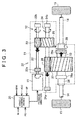
FIG. 3 illustrates operation of the drive unit during forward travel of the vehicle; -
FIG. 4 illustrates operation of the drive unit during rearward travel of the vehicle; -
FIG. 5 is a flowchart illustrating a driving process; and -
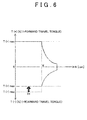
FIG. 6 illustrates torque restriction values for forward travel torque and rearward travel torque. - A vehicle control device according to a first embodiment will be described below.
- As illustrated in
FIG. 1 , a vehicle A includes aninternal combustion engine 2 that serves as a main drive source.Drive shafts 3 that transfer power of theinternal combustion engine 2 are mechanically coupled to theinternal combustion engine 2. A pair of right and leftfront drive wheels 4 provided on the front side of the vehicle is coupled to theinternal combustion engine 2 via thedrive shafts 3. - An electric generator (in the embodiment, a three-phase brushless motor) 5 that rotates using power of the
internal combustion engine 2 to generate electricity is mechanically coupled to theinternal combustion engine 2. A secondary battery 6 that is constituted of a lithium-ion battery, for example, is electrically connected to theelectric generator 5 as a power source to be charged with electricity generated by theelectric generator 5. Avehicle control device 30 that operates using electricity from the secondary battery 6 is electrically connected to the secondary battery 6. A drive motor (in the embodiment, a three-phase brushless motor) 11 that serves as an auxiliary drive source for the vehicle A is also electrically connected to the secondary battery 6 via thevehicle control device 30. - Various sensors that detect the travel state of the vehicle A or the like including a
brake sensor 7A, anaccelerator sensor 8A, avehicle speed sensor 9A, aposition sensor 10A, and arotational speed sensor 11A are electrically connected to thevehicle control device 30. Thebrake sensor 7A is a sensor that detects a brake operation amount BRK of abrake pedal 7. Theaccelerator sensor 8A is a sensor that detects an accelerator operation amount ACC of anaccelerator pedal 8. Thevehicle speed sensor 9A is a sensor that detects a vehicle speed SP of the vehicle A. Theposition sensor 10A is a sensor that detects a shift position PS of an automatic transmission of the vehicle A. The detected shift position may be whether the shift position of the automatic transmission is a forward travel position or a rearward travel position, for example. Therotational speed sensor 11A is a sensor that detects the rotational speed of thedrive motor 11, that is, a motor rotational speed N. - As illustrated in
FIG. 2 , thevehicle control device 30 grasps the travel state of the vehicle A on the basis of detection signals from the sensors, and controls various in-vehicle devices in accordance with the grasped travel state. In the embodiment, drive of thedrive motor 11, which is an example of such in-vehicle devices, is controlled. - A speed reducer 12 and a
differential gear 13 that adjust and transfer power of thedrive motor 11 to driveshafts 14 are coupled to thedrive motor 11. A pair of right and leftrear drive wheels 15 provided on the rear side of the vehicle is coupled to thedrive motor 11 via thespeed reducer 12, thedifferential gear 13, and thedrive shafts 14. - The vehicle A according to the embodiment is a so-called front-engine front-drive (FF) vehicle in which power of the
internal combustion engine 2 mounted on the front side of the vehicle A is provided to thefront drive wheels 4 to generate a drive force of the vehicle A. The vehicle A is a so-called hybrid four-wheel drive vehicle in which theelectric generator 5 generates electricity using power of theinternal combustion engine 2 to charge the secondary battery 6 and electricity is supplied from the secondary battery 6 to thedrive motor 11 which drives therear drive wheels 15 to generate a drive force of the vehicle A. - The drive force generated by the
drive motor 11 is transferred to therear drive wheels 15 by way of thedrive shafts 14. - The configuration of the
drive motor 11, thespeed reducer 12, thedifferential gear 13, and thedrive shafts 14 will be described. - As illustrated in
FIG. 2 , thespeed reducer 12 and thedifferential gear 13 are housed in ahousing 21 to constitute adrive unit 20 that transfers power from thedrive motor 11 to thedrive shafts 14 and therear drive wheels 15. - The
drive unit 20 includes aninput shaft 22 mechanically coupled to thedrive motor 11 to transfer power of thedrive motor 11 to thespeed reducer 12. Theinput shaft 22 is rotatably supported by a first input bearing 22a and a second input bearing 22b fixed to thehousing 21. Aninput gear 23 having helical teeth (seeFIG. 2 ; with tooth traces depicted as sloping downward to the right) is coupled to theinput shaft 22 so as to rotate together with theinput shaft 22. - A large-diameter
intermediate gear 25 is meshed with theinput gear 23. The large-diameterintermediate gear 25 is coupled so as to rotate together with anintermediate shaft 24, has helical teeth (seeFIG. 2 ; with tooth traces depicted as sloping downward to the left), and is larger in diameter than theinput gear 23. Theintermediate shaft 24 is rotatably supported by a firstintermediate bearing 24a and a secondintermediate bearing 24b fixed to thehousing 21. A small-diameterintermediate gear 26 is coupled to a portion of theintermediate shaft 24 between the large-diameterintermediate gear 25 and the firstintermediate bearing 24a so as to rotate together with theintermediate shaft 24. The small-diameterintermediate gear 26 has helical teeth (seeFIG. 2 ; with tooth traces depicted as sloping downward to the left), is smaller in diameter than the large-diameterintermediate gear 25, and has a large length in the axial direction. - An
output gear 27 is meshed with the small-diameterintermediate gear 26. Theoutput gear 27 is mechanically coupled so as to transfer power transferred from thedrive motor 11 to thedifferential gear 13, has helical teeth (seeFIG. 2 ; with tooth traces depicted as sloping downward to the right), and is larger in diameter than the small-diameterintermediate gear 26. Thedifferential gear 13 includes afirst output shaft 28 and asecond output shaft 29 that are rotatable along with rotation of theoutput gear 27. Thedifferential gear 13 transfers power transferred from thedrive motor 11 to thefirst output shaft 28 and thesecond output shaft 29 while allowing relative rotation between thefirst output shaft 28 and thesecond output shaft 29. Thedifferential gear 13 is rotatably supported by afirst output bearing 28a and a second output bearing 29a fixed to thehousing 21. - The
drive shafts 14 are mechanically coupled to thefirst output shaft 28 and thesecond output shaft 29. Thedrive shafts 14 transfer a force transferred from thedrive motor 11 via thespeed reducer 12 and thedifferential gear 13 to therear drive wheels 15. In the embodiment, theinput shaft 22, theinput gear 23, theintermediate shaft 24, the large-diameterintermediate gear 25, the small-diameterintermediate gear 26, and theoutput gear 27, which are disposed in the path through which power of thedrive motor 11 is transferred to thedifferential gear 13, constitute thespeed reducer 12. - In the
drive unit 20, as illustrated inFIG. 3 , when thevehicle control device 30 provides a command to drive the vehicle A forward and thedrive motor 11 rotates in the A direction (forward direction), theinput shaft 22 and theinput gear 23 are rotated in the same direction. The large-diameterintermediate gear 25 is rotated in the direction opposite to the A direction through meshing with theinput gear 23. Theintermediate shaft 24 and the small-diameterintermediate gear 26 are rotated together in the direction opposite to the A direction through rotation of the large-diameterintermediate gear 25. Theoutput gear 27 is rotated in the A direction through meshing with the small-diameterintermediate gear 26. Thefirst output shaft 28 and thesecond output shaft 29 are relatively rotated in the A direction via thedifferential gear 13 through rotation of theoutput gear 27. - A reaction force received by the
input gear 23 from the large-diameterintermediate gear 25 through the rotation described above acts on the first input bearing 22a as a force in the axial direction of theinput shaft 22. - A force received by the large-diameter
intermediate gear 25 from theinput gear 23 through the rotation described above acts on the secondintermediate bearing 24b as a force in the axial direction of theintermediate shaft 24. On the other hand, a reaction force received by the small-diameterintermediate gear 26 from theoutput gear 27 through the rotation described above acts on the firstintermediate bearing 24a as a force in the axial direction of theintermediate shaft 24. In the embodiment, the large-diameterintermediate gear 25 is larger in diameter than the small-diameterintermediate gear 26. Thus, the reaction force transmitted from theoutput gear 27 to the small-diameterintermediate gear 26 is larger than the force transmitted from theinput gear 23 to the large-diameterintermediate gear 25, and the difference between such forces acts on the firstintermediate bearing 24a as a force in the axial direction of theintermediate shaft 24. - A force transmitted from the small-diameter
intermediate gear 26 to theoutput gear 27 through the rotation described above acts on the second output bearing 29a as a force in the axial direction of thedifferential gear 13. - As understood from the above description, bearings such as the first input bearing 22a, the first
intermediate bearing 24a, and the second output bearing 29a receive a force in the axial direction when the vehicle travels forward. - In the
drive unit 20, as illustrated inFIG. 4 , when thevehicle control device 30 provides a command to drive the vehicle A rearward and thedrive motor 11 rotates in the B direction (rearward direction), theinput shaft 22 and theinput gear 23 are rotated in the same direction. The large-diameterintermediate gear 25 is rotated in the direction opposite to the B direction through meshing with theinput gear 23. Theintermediate shaft 24 and the small-diameterintermediate gear 26 are rotated together in the direction opposite to the B direction through rotation of the large-diameterintermediate gear 25. Theoutput gear 27 is rotated in the B direction through meshing with the small-diameterintermediate gear 26. Thefirst output shaft 28 and thesecond output shaft 29 are relatively rotated in the B direction via thedifferential gear 13 through rotation of theoutput gear 27. - A reaction force received by the
input gear 23 from the large-diameterintermediate gear 25 through the rotation described above acts on the second input bearing 22b as a force in the axial direction of theinput shaft 22. - A force received by the large-diameter
intermediate gear 25 from theinput gear 23 through the rotation described above acts on the firstintermediate bearing 24a as a force in the axial direction of theintermediate shaft 24. On the other hand, a reaction force received by the small-diameterintermediate gear 26 from theoutput gear 27 through the rotation described above acts on the secondintermediate bearing 24b as a force in the axial direction of theintermediate shaft 24. In the embodiment, the large-diameterintermediate gear 25 is larger in diameter than the small-diameterintermediate gear 26. Thus, the reaction force transmitted from theoutput gear 27 to the small-diameterintermediate gear 26 is larger than the force transmitted from theinput gear 23 to the large-diameterintermediate gear 25, and the difference between such forces acts on the secondintermediate bearing 24b as a force in the axial direction of theintermediate shaft 24. - A force transmitted from the small-diameter
intermediate gear 26 to theoutput gear 27 through the rotation described above acts on the first output bearing 28a as a force in the axial direction of thedifferential gear 13. - That is, bearings such as the second input bearing 22b, the second
intermediate bearing 24b, and the first output bearing 28a receive a force in the axial direction when the vehicle travels rearward. - A process for the
vehicle control device 30 to control drive of thedrive motor 11 will be described. - The
vehicle control device 30 includes a computation unit that computes a torque command value. In the case where a command value is generated to rotate thedrive motor 11 in order to drive the vehicle A forward or rearward, torque to be generated by thedrive motor 11 is commanded as a torque command value T*. - A torque restriction value is defined that falls within the range of torque that can be generated by the
drive motor 11 in accordance with the specifications of thedrive motor 11. The maximum value of the torque command value T* is restricted by the torque restriction value. The upper limit of torque generated by thedrive motor 11 is restricted by the torque restriction value defined in advance. The torque command value T* is calculated using a map (not illustrated) in accordance with the various detection signals such as the brake operation amount BRK, the accelerator operation amount ACC, the vehicle speed SP, and the motor rotational speed N. The map is stored in advance in a storage unit that constitutes the vehicle control device. - The vehicle control device includes a shift position signal reception unit that receives the shift position PS which is a shift position signal. The torque command value T* which commands torque (forward travel torque T(+) [N]) for forward drive (forward rotation (+ side) of the drive motor 11) and torque (rearward travel torque T(-) [N]) for rearward drive (rearward rotation (- side) of the drive motor 11) is computed in accordance with the shift position PS. In the embodiment, the torque command value T* is calculated as the absolute value of torque to be generated by the
drive motor 11 using an identical map during both forward travel and rearward travel. The torque command value T* is set to the same value as the torque restriction value in a motor rotational speed range in which the motor rotational speed N [rpm] is from zero to a threshold α. The torque command value T* is set so as to become smaller as the motor rotational speed N becomes higher in a motor rotational speed range in which the motor rotational speed N [rpm] is more than the threshold α. - When the vehicle is driven forward on the basis of the shift position PS, the
vehicle control device 30 performs a driving process in which the torque command value T* is computed using the map described above from the various detection signals and rotation (forward rotation) of thedrive motor 11 is controlled in accordance with the torque command value T*. Thevehicle control device 30 sets the map described above with the torque restriction value for thedrive motor 11 during forward travel set to T(+)max, and stores the map in the storage unit. -
FIG. 5 illustrates a driving process performed when thevehicle control device 30 drives the vehicle rearward on the basis of the shift position PS. - The
vehicle control device 30 executes a derivation process in which a torque command value T* is computed using the map described above from the various detection signals (step S100). Subsequently, thevehicle control device 30 determines whether or not the absolute value of the torque command value T* computed in step S100 is more than the absolute value of T(-)max (|T*| > |T(-)max|) (step S101). T(-)max is the upper limit of torque that is allowed to be generated by thedrive motor 11 during rearward travel, namely the torque restriction value during rearward travel. In the vehicle according to the embodiment, the center of gravity is leaned to the front wheel side, and the vehicle weight acting on the front wheels is larger than the vehicle weight acting on the rear wheels. The response of the vehicle is improved if thedrive motor 11 generates large torque during forward travel in which the vehicle travels to the side where a large weight acts on the wheels, namely to the front wheel side. Therefore, it is desirable that the torque restriction value T(+)max during forward travel, which is the upper-limit value of torque that is allowed to be generated by thedrive motor 11 during forward travel, should be larger than the torque restriction value T(-)max during rearward travel, and the torque restriction value is set in such a manner in the map according to the embodiment described above. - If it is determined in step S101 that the absolute value of the torque command value T* is larger (larger on the negative (-) side) than the absolute value of T(-)max (step S101: YES), the
vehicle control device 30 executes a setting process in which T(-)max is set in place of the value computed in step S100 as the torque command value T* (step S102). After that, thevehicle control device 30 controls rotation (reverse rotation) of thedrive motor 11 so as to output torque at the torque command value T* set in step S102 (step S103). - If it is determined in step S101 that the torque command value T* is not larger than T(-)max (step S101: NO), on the other hand, the
vehicle control device 30 controls rotation (reverse rotation) of thedrive motor 11 so as to output torque at the value computed in step S100 as it is as the torque command value T* (step S103). - According to the
vehicle control device 30 described above, the following functions and advantageous effects are obtained. - (1) Depending on the specifications of the drive system of the vehicle, the magnitude of torque to be generated during forward travel of the vehicle may not necessarily be the same as that during rearward travel of the vehicle in some cases, and the maximum value of torque that is allowed to be generated during forward travel and that during rearward travel may be set as different values in some cases.
- Specifically, when the vehicle moves to the smaller front-rear weight distribution side, travel of the vehicle is not obstructed even if drive torque is small at the start of travel of the vehicle compared to movement to the larger front-rear weight distribution side. That is, in the vehicle A according to the embodiment which is an FF vehicle, the front-rear weight distribution of the vehicle A is determined such that the weight on the rear side of the vehicle is smaller, and the maximum value of torque to be generated during rearward travel can be made smaller than that during forward travel.
- In the embodiment, the torque restriction value for rearward travel is set to be smaller than the torque restriction value for forward travel (|T(-)max| < |T(+)max|).
- With reference to
FIG. 6 , in the case where torque to be generated during forward travel is defined as forward travel torque T(+), the forward travel torque T(+) is at T(+)max in the motor rotational speed range in which the motor rotational speed N is up to the threshold α. The forward travel torque T(+) becomes gradually smaller as the motor rotational speed N becomes more than the threshold α. The torque restriction value for the forward travel torque T(+) is T(+)max. - In the case where torque to be generated during rearward travel is defined as rearward travel torque T(-), the rearward travel torque T(-) is at T(-)max in the motor rotational speed range in which the motor rotational speed N is up to the threshold α. In the motor rotational speed range, if a value that is more than T(-)max is commanded as the torque command value T*, the value is forcibly reduced to T(-)max. The rearward travel torque T(-) becomes gradually smaller as the motor rotational speed N becomes more than the threshold α. The torque restriction value T(-)max during rearward travel is smaller than the torque restriction value T(+)max during forward travel.
- The torque restriction value T(-)max during rearward travel is smaller than the torque restriction value T(+)max during forward travel. Therefore, the maximum value of torque to be generated during rearward travel is smaller than the maximum value of torque to be generated during forward travel. During rearward travel, the load applied to the bearings of the
drive unit 20 is reduced compared to that during forward travel. In the embodiment, the load applied to the bearings such as the second input bearing 22b, the secondintermediate bearing 24b, and thefirst output bearing 28a, on which a force in the axial direction acts particularly during rearward travel, is reduced. Thus, the life of the bearings of thedrive unit 20, particularly the second input bearing 22b, the secondintermediate bearing 24b, and thefirst output bearing 28a, can be extended. - In the process in which the torque command value T* is computed (such as the process in step S100), a computation is performed on the basis of an identical map to achieve commonality of the computation process for both forward travel and rearward travel. The process in step S102 in which torque is reduced, particularly, is additionally executed during rearward travel. The commonality of the computation process described above can extend the life of the bearings of the
drive unit 20 while reducing steps of the computation process related to drive. - Restricting the maximum value of torque is effective in extending the life of the bearings constituting the
drive unit 20, but may obstruct travel of the vehicle in some situations. - In the embodiment, in the case where the torque command value T* is not more than T(-)max in step S101, the
drive motor 11 is controlled so as to generate torque computed in step S100 as it is. The torque command value T* is restricted only when the torque command value T* is more than T(-)max. Consequently, situations in which travel of the vehicle A may be obstructed can be reduced to a minimum. - The embodiment described above may be modified as appropriate to be implemented in the following forms.
- • The function of the
speed reducer 12 to adjust power of thedrive motor 11 may be implemented as adjustment in one step with theintermediate shaft 24 omitted, or may be implemented as adjustment in three steps with theinput shaft 22, theintermediate shaft 24, and an additional second intermediate shaft. - Drive for which a large restriction value is set as the torque restriction value may be set in accordance with the front-rear weight distribution with loads loaded on the vehicle in consideration of the use status of the vehicle, e.g. the weight of the loads. Drive for which a large restriction value is set as the torque restriction value may be switched between forward travel and rearward travel in accordance with the use status of the vehicle discussed above.
- • The
vehicle control device 30 may perform a driving process in which the shift position PS is checked and the torque command value T* is computed using dedicated maps for forward drive and rearward drive in accordance with the shift position PS. - • A drive force for the
front drive wheels 4 or therear drive wheels 15 which are not directly coupled to theinternal combustion engine 2 may be generated by in-wheel motors in place of thedrive motor 11. - • The vehicle A may be a hybrid vehicle with a different drive system, or a so-called electric vehicle. Besides, the vehicle A may be a fuel-cell vehicle that uses a fuel cell as a power source.
- A
vehicle control device 30 controls torque of adrive motor 11 such that rotation of thedrive motor 11 is transferred torear drive wheels 15 of a vehicle via adrive unit 20 that includes aspeed reducer 12 including a plurality of gears rotatably supported by bearings. Thevehicle control device 30 sets different values as torque restriction values for torque to be generated by thedrive motor 11 when the vehicle is driven forward and when the vehicle is driven rearward.
Claims (3)
- A vehicle control device comprising:a computation unit that computes a torque command value for controlling a motor;a storage unit that stores a map for use to compute the torque command value; anda shift position signal reception unit that receives a shift position signal that indicates whether a vehicle is traveling forward or rearward, whereinthe vehicle control device is programmed to control a drive unit that transfers rotation of the motor to drive wheels of the vehicle and that includes a speed reducer including a plurality of gears rotatably supported by bearings, whereinthe vehicle control device is programmed to calculate the torque command value for causing the motor to generate torque on the basis of the map, whereinthe vehicle control device is programmed to set a maximum value of torque that is allowed to be generated by the motor during forward travel of the vehicle so as to be different from a maximum value of torque that is allowed to be generated by the motor during rearward travel of the vehicle.
- The vehicle control device according to claim 1, wherein
the vehicle control device is programmed to set the maximum value of torque that is allowed to be generated by the motor during forward travel/rearward travel so as to be larger than that during rearward travel/forward travel in the case where a front-rear weight distribution of the vehicle is determined such that a weight on a front side/rear side of the vehicle is larger than a weight on a rear side/front side of the vehicle. - The vehicle control device according to claim 1 or 2, wherein
the vehicle control device is programmed to restrict the torque command value to the same value as the maximum value of torque when the vehicle moves in a forward direction or a rearward direction for which the maximum value of torque is set to be smaller and in the case where the torque command value for the motor computed by the vehicle control device is larger than the maximum value of torque that is set to be smaller.
Applications Claiming Priority (2)
| Application Number | Priority Date | Filing Date | Title |
|---|---|---|---|
| JP2014081126 | 2014-04-10 | ||
| JP2014208789A JP6421533B2 (en) | 2014-04-10 | 2014-10-10 | Vehicle control device |
Publications (3)
| Publication Number | Publication Date |
|---|---|
| EP2930053A2 true EP2930053A2 (en) | 2015-10-14 |
| EP2930053A3 EP2930053A3 (en) | 2015-12-09 |
| EP2930053B1 EP2930053B1 (en) | 2018-06-27 |
Family
ID=53039202
Family Applications (1)
| Application Number | Title | Priority Date | Filing Date |
|---|---|---|---|
| EP15162952.4A Active EP2930053B1 (en) | 2014-04-10 | 2015-04-09 | Vehicle control device |
Country Status (4)
| Country | Link |
|---|---|
| US (1) | US9694710B2 (en) |
| EP (1) | EP2930053B1 (en) |
| JP (1) | JP6421533B2 (en) |
| CN (1) | CN104972930B (en) |
Families Citing this family (2)
| Publication number | Priority date | Publication date | Assignee | Title |
|---|---|---|---|---|
| JP6459370B2 (en) * | 2014-04-10 | 2019-01-30 | 株式会社ジェイテクト | Drive unit and drive module |
| US9834175B2 (en) | 2015-10-22 | 2017-12-05 | U-Shin Ltd. | Door opening and closing device |
Citations (1)
| Publication number | Priority date | Publication date | Assignee | Title |
|---|---|---|---|---|
| JPH09322311A (en) | 1996-06-03 | 1997-12-12 | Toyota Motor Corp | Power output device |
Family Cites Families (12)
| Publication number | Priority date | Publication date | Assignee | Title |
|---|---|---|---|---|
| JPS61113524A (en) * | 1984-11-08 | 1986-05-31 | Toyota Motor Corp | Internal-combustion engine controlling device for car with automatic transmission |
| US6050357A (en) * | 1995-05-31 | 2000-04-18 | Empower Corporation | Powered skateboard |
| US7332881B2 (en) | 2004-10-28 | 2008-02-19 | Textron Inc. | AC drive system for electrically operated vehicle |
| JP2006189064A (en) * | 2004-12-28 | 2006-07-20 | Gkn ドライブライン トルクテクノロジー株式会社 | Driving force transmission device |
| JP4462366B2 (en) | 2008-04-01 | 2010-05-12 | トヨタ自動車株式会社 | POWER OUTPUT DEVICE, VEHICLE EQUIPPED WITH THE SAME, AND METHOD FOR CONTROLLING POWER OUTPUT DEVICE |
| JP2011201370A (en) * | 2010-03-25 | 2011-10-13 | Aisin Aw Co Ltd | Control device of hybrid vehicle |
| JP5222895B2 (en) * | 2010-05-07 | 2013-06-26 | 株式会社小松製作所 | Work vehicle and control method of work vehicle |
| AU2011318924B2 (en) | 2010-10-22 | 2015-12-17 | Hino Motors, Ltd. | Vehicle, control method, and program |
| DE102011088460A1 (en) * | 2011-12-13 | 2013-06-13 | Robert Bosch Gmbh | Electric machine driving method and device |
| JP5952002B2 (en) * | 2012-01-23 | 2016-07-13 | Ntn株式会社 | Wheel drive device |
| US20150149057A1 (en) * | 2013-11-27 | 2015-05-28 | Hyundai Motor Company | System and method for protecting drive shaft |
| JP6459370B2 (en) | 2014-04-10 | 2019-01-30 | 株式会社ジェイテクト | Drive unit and drive module |
-
2014
- 2014-10-10 JP JP2014208789A patent/JP6421533B2/en active Active
-
2015
- 2015-04-06 US US14/679,296 patent/US9694710B2/en active Active
- 2015-04-09 EP EP15162952.4A patent/EP2930053B1/en active Active
- 2015-04-10 CN CN201510169156.7A patent/CN104972930B/en active Active
Patent Citations (1)
| Publication number | Priority date | Publication date | Assignee | Title |
|---|---|---|---|---|
| JPH09322311A (en) | 1996-06-03 | 1997-12-12 | Toyota Motor Corp | Power output device |
Also Published As
| Publication number | Publication date |
|---|---|
| EP2930053B1 (en) | 2018-06-27 |
| CN104972930A (en) | 2015-10-14 |
| US20150291058A1 (en) | 2015-10-15 |
| EP2930053A3 (en) | 2015-12-09 |
| US9694710B2 (en) | 2017-07-04 |
| JP6421533B2 (en) | 2018-11-14 |
| JP2015208207A (en) | 2015-11-19 |
| CN104972930B (en) | 2019-03-12 |
Similar Documents
| Publication | Publication Date | Title |
|---|---|---|
| JP4696918B2 (en) | Vehicle control device | |
| US7534191B2 (en) | Power output apparatus, vehicle including power output apparatus, and control unit and method for power output apparatus | |
| US9545918B2 (en) | Control device of hybrid vehicle | |
| US9751523B2 (en) | Hybrid vehicle | |
| US20140081499A1 (en) | Drive control device of hybrid vehicle | |
| US9669819B2 (en) | Hybrid vehicle | |
| US11260742B2 (en) | Hybrid vehicle | |
| US7885749B2 (en) | Drive system, power output system incorporating the drive system, a vehicle equipped with the power output system, and control method for a drive system | |
| US20160129911A1 (en) | Motor vehicle | |
| US9499041B2 (en) | Hybrid vehicle and control method thereof | |
| EP2933529B1 (en) | Drive unit and drive module | |
| US10752288B2 (en) | Lateral motion control for cornering and regenerative braking energy capture | |
| JP4089608B2 (en) | Car | |
| US7803478B2 (en) | Power output apparatus and method of setting secondary battery | |
| JP5092611B2 (en) | Vehicle driving force control device | |
| US7236873B2 (en) | System and method of controlling a hybrid electric vehicle | |
| JP2013141918A (en) | Power output device of vehicle | |
| US9643597B2 (en) | Control apparatus for hybrid vehicle | |
| EP2930053B1 (en) | Vehicle control device | |
| US11420610B2 (en) | Vehicle and control method of the same | |
| JP2020010518A (en) | Drive control device applied to vehicle drive system | |
| JP2012166618A (en) | Learning control device for vehicle | |
| JP2013107511A (en) | Hybrid vehicle | |
| JP4165475B2 (en) | Hybrid vehicle and control method thereof | |
| JP7013837B2 (en) | Hybrid vehicle |
Legal Events
| Date | Code | Title | Description |
|---|---|---|---|
| PUAI | Public reference made under article 153(3) epc to a published international application that has entered the european phase |
Free format text: ORIGINAL CODE: 0009012 |
|
| AK | Designated contracting states |
Kind code of ref document: A2 Designated state(s): AL AT BE BG CH CY CZ DE DK EE ES FI FR GB GR HR HU IE IS IT LI LT LU LV MC MK MT NL NO PL PT RO RS SE SI SK SM TR |
|
| AX | Request for extension of the european patent |
Extension state: BA ME |
|
| PUAL | Search report despatched |
Free format text: ORIGINAL CODE: 0009013 |
|
| AK | Designated contracting states |
Kind code of ref document: A3 Designated state(s): AL AT BE BG CH CY CZ DE DK EE ES FI FR GB GR HR HU IE IS IT LI LT LU LV MC MK MT NL NO PL PT RO RS SE SI SK SM TR |
|
| AX | Request for extension of the european patent |
Extension state: BA ME |
|
| RIC1 | Information provided on ipc code assigned before grant |
Ipc: B60L 15/20 20060101AFI20151030BHEP Ipc: B60L 15/10 20060101ALI20151030BHEP |
|
| 17P | Request for examination filed |
Effective date: 20160606 |
|
| STAA | Information on the status of an ep patent application or granted ep patent |
Free format text: STATUS: EXAMINATION IS IN PROGRESS |
|
| 17Q | First examination report despatched |
Effective date: 20161103 |
|
| R17C | First examination report despatched (corrected) |
Effective date: 20170904 |
|
| GRAP | Despatch of communication of intention to grant a patent |
Free format text: ORIGINAL CODE: EPIDOSNIGR1 |
|
| STAA | Information on the status of an ep patent application or granted ep patent |
Free format text: STATUS: GRANT OF PATENT IS INTENDED |
|
| INTG | Intention to grant announced |
Effective date: 20180103 |
|
| GRAS | Grant fee paid |
Free format text: ORIGINAL CODE: EPIDOSNIGR3 |
|
| GRAA | (expected) grant |
Free format text: ORIGINAL CODE: 0009210 |
|
| STAA | Information on the status of an ep patent application or granted ep patent |
Free format text: STATUS: THE PATENT HAS BEEN GRANTED |
|
| AK | Designated contracting states |
Kind code of ref document: B1 Designated state(s): AL AT BE BG CH CY CZ DE DK EE ES FI FR GB GR HR HU IE IS IT LI LT LU LV MC MK MT NL NO PL PT RO RS SE SI SK SM TR |
|
| REG | Reference to a national code |
Ref country code: GB Ref legal event code: FG4D |
|
| REG | Reference to a national code |
Ref country code: AT Ref legal event code: REF Ref document number: 1011999 Country of ref document: AT Kind code of ref document: T Effective date: 20180715 |
|
| REG | Reference to a national code |
Ref country code: IE Ref legal event code: FG4D |
|
| REG | Reference to a national code |
Ref country code: DE Ref legal event code: R096 Ref document number: 602015012643 Country of ref document: DE |
|
| PG25 | Lapsed in a contracting state [announced via postgrant information from national office to epo] |
Ref country code: FI Free format text: LAPSE BECAUSE OF FAILURE TO SUBMIT A TRANSLATION OF THE DESCRIPTION OR TO PAY THE FEE WITHIN THE PRESCRIBED TIME-LIMIT Effective date: 20180627 Ref country code: LT Free format text: LAPSE BECAUSE OF FAILURE TO SUBMIT A TRANSLATION OF THE DESCRIPTION OR TO PAY THE FEE WITHIN THE PRESCRIBED TIME-LIMIT Effective date: 20180627 Ref country code: BG Free format text: LAPSE BECAUSE OF FAILURE TO SUBMIT A TRANSLATION OF THE DESCRIPTION OR TO PAY THE FEE WITHIN THE PRESCRIBED TIME-LIMIT Effective date: 20180927 Ref country code: SE Free format text: LAPSE BECAUSE OF FAILURE TO SUBMIT A TRANSLATION OF THE DESCRIPTION OR TO PAY THE FEE WITHIN THE PRESCRIBED TIME-LIMIT Effective date: 20180627 Ref country code: NO Free format text: LAPSE BECAUSE OF FAILURE TO SUBMIT A TRANSLATION OF THE DESCRIPTION OR TO PAY THE FEE WITHIN THE PRESCRIBED TIME-LIMIT Effective date: 20180927 |
|
| REG | Reference to a national code |
Ref country code: NL Ref legal event code: MP Effective date: 20180627 |
|
| REG | Reference to a national code |
Ref country code: LT Ref legal event code: MG4D |
|
| PG25 | Lapsed in a contracting state [announced via postgrant information from national office to epo] |
Ref country code: HR Free format text: LAPSE BECAUSE OF FAILURE TO SUBMIT A TRANSLATION OF THE DESCRIPTION OR TO PAY THE FEE WITHIN THE PRESCRIBED TIME-LIMIT Effective date: 20180627 Ref country code: LV Free format text: LAPSE BECAUSE OF FAILURE TO SUBMIT A TRANSLATION OF THE DESCRIPTION OR TO PAY THE FEE WITHIN THE PRESCRIBED TIME-LIMIT Effective date: 20180627 Ref country code: GR Free format text: LAPSE BECAUSE OF FAILURE TO SUBMIT A TRANSLATION OF THE DESCRIPTION OR TO PAY THE FEE WITHIN THE PRESCRIBED TIME-LIMIT Effective date: 20180928 Ref country code: RS Free format text: LAPSE BECAUSE OF FAILURE TO SUBMIT A TRANSLATION OF THE DESCRIPTION OR TO PAY THE FEE WITHIN THE PRESCRIBED TIME-LIMIT Effective date: 20180627 |
|
| REG | Reference to a national code |
Ref country code: AT Ref legal event code: MK05 Ref document number: 1011999 Country of ref document: AT Kind code of ref document: T Effective date: 20180627 |
|
| PG25 | Lapsed in a contracting state [announced via postgrant information from national office to epo] |
Ref country code: NL Free format text: LAPSE BECAUSE OF FAILURE TO SUBMIT A TRANSLATION OF THE DESCRIPTION OR TO PAY THE FEE WITHIN THE PRESCRIBED TIME-LIMIT Effective date: 20180627 |
|
| PG25 | Lapsed in a contracting state [announced via postgrant information from national office to epo] |
Ref country code: AT Free format text: LAPSE BECAUSE OF FAILURE TO SUBMIT A TRANSLATION OF THE DESCRIPTION OR TO PAY THE FEE WITHIN THE PRESCRIBED TIME-LIMIT Effective date: 20180627 Ref country code: PL Free format text: LAPSE BECAUSE OF FAILURE TO SUBMIT A TRANSLATION OF THE DESCRIPTION OR TO PAY THE FEE WITHIN THE PRESCRIBED TIME-LIMIT Effective date: 20180627 Ref country code: RO Free format text: LAPSE BECAUSE OF FAILURE TO SUBMIT A TRANSLATION OF THE DESCRIPTION OR TO PAY THE FEE WITHIN THE PRESCRIBED TIME-LIMIT Effective date: 20180627 Ref country code: CZ Free format text: LAPSE BECAUSE OF FAILURE TO SUBMIT A TRANSLATION OF THE DESCRIPTION OR TO PAY THE FEE WITHIN THE PRESCRIBED TIME-LIMIT Effective date: 20180627 Ref country code: SK Free format text: LAPSE BECAUSE OF FAILURE TO SUBMIT A TRANSLATION OF THE DESCRIPTION OR TO PAY THE FEE WITHIN THE PRESCRIBED TIME-LIMIT Effective date: 20180627 Ref country code: EE Free format text: LAPSE BECAUSE OF FAILURE TO SUBMIT A TRANSLATION OF THE DESCRIPTION OR TO PAY THE FEE WITHIN THE PRESCRIBED TIME-LIMIT Effective date: 20180627 Ref country code: IS Free format text: LAPSE BECAUSE OF FAILURE TO SUBMIT A TRANSLATION OF THE DESCRIPTION OR TO PAY THE FEE WITHIN THE PRESCRIBED TIME-LIMIT Effective date: 20181027 |
|
| PG25 | Lapsed in a contracting state [announced via postgrant information from national office to epo] |
Ref country code: ES Free format text: LAPSE BECAUSE OF FAILURE TO SUBMIT A TRANSLATION OF THE DESCRIPTION OR TO PAY THE FEE WITHIN THE PRESCRIBED TIME-LIMIT Effective date: 20180627 Ref country code: SM Free format text: LAPSE BECAUSE OF FAILURE TO SUBMIT A TRANSLATION OF THE DESCRIPTION OR TO PAY THE FEE WITHIN THE PRESCRIBED TIME-LIMIT Effective date: 20180627 Ref country code: IT Free format text: LAPSE BECAUSE OF FAILURE TO SUBMIT A TRANSLATION OF THE DESCRIPTION OR TO PAY THE FEE WITHIN THE PRESCRIBED TIME-LIMIT Effective date: 20180627 |
|
| REG | Reference to a national code |
Ref country code: DE Ref legal event code: R097 Ref document number: 602015012643 Country of ref document: DE |
|
| PLBE | No opposition filed within time limit |
Free format text: ORIGINAL CODE: 0009261 |
|
| STAA | Information on the status of an ep patent application or granted ep patent |
Free format text: STATUS: NO OPPOSITION FILED WITHIN TIME LIMIT |
|
| PG25 | Lapsed in a contracting state [announced via postgrant information from national office to epo] |
Ref country code: DK Free format text: LAPSE BECAUSE OF FAILURE TO SUBMIT A TRANSLATION OF THE DESCRIPTION OR TO PAY THE FEE WITHIN THE PRESCRIBED TIME-LIMIT Effective date: 20180627 |
|
| 26N | No opposition filed |
Effective date: 20190328 |
|
| PG25 | Lapsed in a contracting state [announced via postgrant information from national office to epo] |
Ref country code: SI Free format text: LAPSE BECAUSE OF FAILURE TO SUBMIT A TRANSLATION OF THE DESCRIPTION OR TO PAY THE FEE WITHIN THE PRESCRIBED TIME-LIMIT Effective date: 20180627 |
|
| PG25 | Lapsed in a contracting state [announced via postgrant information from national office to epo] |
Ref country code: AL Free format text: LAPSE BECAUSE OF FAILURE TO SUBMIT A TRANSLATION OF THE DESCRIPTION OR TO PAY THE FEE WITHIN THE PRESCRIBED TIME-LIMIT Effective date: 20180627 |
|
| REG | Reference to a national code |
Ref country code: CH Ref legal event code: PL |
|
| REG | Reference to a national code |
Ref country code: BE Ref legal event code: MM Effective date: 20190430 |
|
| GBPC | Gb: european patent ceased through non-payment of renewal fee |
Effective date: 20190409 |
|
| PG25 | Lapsed in a contracting state [announced via postgrant information from national office to epo] |
Ref country code: MC Free format text: LAPSE BECAUSE OF FAILURE TO SUBMIT A TRANSLATION OF THE DESCRIPTION OR TO PAY THE FEE WITHIN THE PRESCRIBED TIME-LIMIT Effective date: 20180627 Ref country code: LU Free format text: LAPSE BECAUSE OF NON-PAYMENT OF DUE FEES Effective date: 20190409 |
|
| PG25 | Lapsed in a contracting state [announced via postgrant information from national office to epo] |
Ref country code: GB Free format text: LAPSE BECAUSE OF NON-PAYMENT OF DUE FEES Effective date: 20190409 Ref country code: LI Free format text: LAPSE BECAUSE OF NON-PAYMENT OF DUE FEES Effective date: 20190430 Ref country code: CH Free format text: LAPSE BECAUSE OF NON-PAYMENT OF DUE FEES Effective date: 20190430 |
|
| PG25 | Lapsed in a contracting state [announced via postgrant information from national office to epo] |
Ref country code: BE Free format text: LAPSE BECAUSE OF NON-PAYMENT OF DUE FEES Effective date: 20190430 |
|
| PG25 | Lapsed in a contracting state [announced via postgrant information from national office to epo] |
Ref country code: TR Free format text: LAPSE BECAUSE OF FAILURE TO SUBMIT A TRANSLATION OF THE DESCRIPTION OR TO PAY THE FEE WITHIN THE PRESCRIBED TIME-LIMIT Effective date: 20180627 |
|
| PG25 | Lapsed in a contracting state [announced via postgrant information from national office to epo] |
Ref country code: IE Free format text: LAPSE BECAUSE OF NON-PAYMENT OF DUE FEES Effective date: 20190409 |
|
| PG25 | Lapsed in a contracting state [announced via postgrant information from national office to epo] |
Ref country code: PT Free format text: LAPSE BECAUSE OF FAILURE TO SUBMIT A TRANSLATION OF THE DESCRIPTION OR TO PAY THE FEE WITHIN THE PRESCRIBED TIME-LIMIT Effective date: 20181029 |
|
| PGFP | Annual fee paid to national office [announced via postgrant information from national office to epo] |
Ref country code: FR Payment date: 20210309 Year of fee payment: 7 |
|
| PG25 | Lapsed in a contracting state [announced via postgrant information from national office to epo] |
Ref country code: CY Free format text: LAPSE BECAUSE OF FAILURE TO SUBMIT A TRANSLATION OF THE DESCRIPTION OR TO PAY THE FEE WITHIN THE PRESCRIBED TIME-LIMIT Effective date: 20180627 |
|
| PG25 | Lapsed in a contracting state [announced via postgrant information from national office to epo] |
Ref country code: MT Free format text: LAPSE BECAUSE OF FAILURE TO SUBMIT A TRANSLATION OF THE DESCRIPTION OR TO PAY THE FEE WITHIN THE PRESCRIBED TIME-LIMIT Effective date: 20180627 Ref country code: HU Free format text: LAPSE BECAUSE OF FAILURE TO SUBMIT A TRANSLATION OF THE DESCRIPTION OR TO PAY THE FEE WITHIN THE PRESCRIBED TIME-LIMIT; INVALID AB INITIO Effective date: 20150409 |
|
| PG25 | Lapsed in a contracting state [announced via postgrant information from national office to epo] |
Ref country code: MK Free format text: LAPSE BECAUSE OF FAILURE TO SUBMIT A TRANSLATION OF THE DESCRIPTION OR TO PAY THE FEE WITHIN THE PRESCRIBED TIME-LIMIT Effective date: 20180627 |
|
| PG25 | Lapsed in a contracting state [announced via postgrant information from national office to epo] |
Ref country code: FR Free format text: LAPSE BECAUSE OF NON-PAYMENT OF DUE FEES Effective date: 20220430 |
|
| PGFP | Annual fee paid to national office [announced via postgrant information from national office to epo] |
Ref country code: DE Payment date: 20250305 Year of fee payment: 11 |