EP2924457A1 - Half Fourier MRI with iterative reconstruction - Google Patents
Half Fourier MRI with iterative reconstruction Download PDFInfo
- Publication number
- EP2924457A1 EP2924457A1 EP14162404.9A EP14162404A EP2924457A1 EP 2924457 A1 EP2924457 A1 EP 2924457A1 EP 14162404 A EP14162404 A EP 14162404A EP 2924457 A1 EP2924457 A1 EP 2924457A1
- Authority
- EP
- European Patent Office
- Prior art keywords
- phase
- plane
- subset
- cost function
- referred
- Prior art date
- Legal status (The legal status is an assumption and is not a legal conclusion. Google has not performed a legal analysis and makes no representation as to the accuracy of the status listed.)
- Granted
Links
Images

Classifications
-
- G—PHYSICS
- G01—MEASURING; TESTING
- G01R—MEASURING ELECTRIC VARIABLES; MEASURING MAGNETIC VARIABLES
- G01R33/00—Arrangements or instruments for measuring magnetic variables
- G01R33/20—Arrangements or instruments for measuring magnetic variables involving magnetic resonance
- G01R33/44—Arrangements or instruments for measuring magnetic variables involving magnetic resonance using nuclear magnetic resonance [NMR]
- G01R33/48—NMR imaging systems
- G01R33/54—Signal processing systems, e.g. using pulse sequences ; Generation or control of pulse sequences; Operator console
- G01R33/56—Image enhancement or correction, e.g. subtraction or averaging techniques, e.g. improvement of signal-to-noise ratio and resolution
- G01R33/561—Image enhancement or correction, e.g. subtraction or averaging techniques, e.g. improvement of signal-to-noise ratio and resolution by reduction of the scanning time, i.e. fast acquiring systems, e.g. using echo-planar pulse sequences
-
- G—PHYSICS
- G06—COMPUTING OR CALCULATING; COUNTING
- G06T—IMAGE DATA PROCESSING OR GENERATION, IN GENERAL
- G06T12/00—Tomographic reconstruction from projections
- G06T12/30—Image post-processing, e.g. metal artefact correction
-
- G—PHYSICS
- G01—MEASURING; TESTING
- G01R—MEASURING ELECTRIC VARIABLES; MEASURING MAGNETIC VARIABLES
- G01R33/00—Arrangements or instruments for measuring magnetic variables
- G01R33/20—Arrangements or instruments for measuring magnetic variables involving magnetic resonance
- G01R33/44—Arrangements or instruments for measuring magnetic variables involving magnetic resonance using nuclear magnetic resonance [NMR]
- G01R33/48—NMR imaging systems
- G01R33/54—Signal processing systems, e.g. using pulse sequences ; Generation or control of pulse sequences; Operator console
- G01R33/56—Image enhancement or correction, e.g. subtraction or averaging techniques, e.g. improvement of signal-to-noise ratio and resolution
- G01R33/561—Image enhancement or correction, e.g. subtraction or averaging techniques, e.g. improvement of signal-to-noise ratio and resolution by reduction of the scanning time, i.e. fast acquiring systems, e.g. using echo-planar pulse sequences
- G01R33/5611—Parallel magnetic resonance imaging, e.g. sensitivity encoding [SENSE], simultaneous acquisition of spatial harmonics [SMASH], unaliasing by Fourier encoding of the overlaps using the temporal dimension [UNFOLD], k-t-broad-use linear acquisition speed-up technique [k-t-BLAST], k-t-SENSE
-
- G—PHYSICS
- G01—MEASURING; TESTING
- G01R—MEASURING ELECTRIC VARIABLES; MEASURING MAGNETIC VARIABLES
- G01R33/00—Arrangements or instruments for measuring magnetic variables
- G01R33/20—Arrangements or instruments for measuring magnetic variables involving magnetic resonance
- G01R33/44—Arrangements or instruments for measuring magnetic variables involving magnetic resonance using nuclear magnetic resonance [NMR]
- G01R33/48—NMR imaging systems
- G01R33/4818—MR characterised by data acquisition along a specific k-space trajectory or by the temporal order of k-space coverage, e.g. centric or segmented coverage of k-space
- G01R33/482—MR characterised by data acquisition along a specific k-space trajectory or by the temporal order of k-space coverage, e.g. centric or segmented coverage of k-space using a Cartesian trajectory
- G01R33/4822—MR characterised by data acquisition along a specific k-space trajectory or by the temporal order of k-space coverage, e.g. centric or segmented coverage of k-space using a Cartesian trajectory in three dimensions
-
- G—PHYSICS
- G01—MEASURING; TESTING
- G01R—MEASURING ELECTRIC VARIABLES; MEASURING MAGNETIC VARIABLES
- G01R33/00—Arrangements or instruments for measuring magnetic variables
- G01R33/20—Arrangements or instruments for measuring magnetic variables involving magnetic resonance
- G01R33/44—Arrangements or instruments for measuring magnetic variables involving magnetic resonance using nuclear magnetic resonance [NMR]
- G01R33/48—NMR imaging systems
- G01R33/4818—MR characterised by data acquisition along a specific k-space trajectory or by the temporal order of k-space coverage, e.g. centric or segmented coverage of k-space
- G01R33/4824—MR characterised by data acquisition along a specific k-space trajectory or by the temporal order of k-space coverage, e.g. centric or segmented coverage of k-space using a non-Cartesian trajectory
- G01R33/4826—MR characterised by data acquisition along a specific k-space trajectory or by the temporal order of k-space coverage, e.g. centric or segmented coverage of k-space using a non-Cartesian trajectory in three dimensions
-
- G—PHYSICS
- G06—COMPUTING OR CALCULATING; COUNTING
- G06T—IMAGE DATA PROCESSING OR GENERATION, IN GENERAL
- G06T2207/00—Indexing scheme for image analysis or image enhancement
- G06T2207/10—Image acquisition modality
- G06T2207/10004—Still image; Photographic image
-
- G—PHYSICS
- G06—COMPUTING OR CALCULATING; COUNTING
- G06T—IMAGE DATA PROCESSING OR GENERATION, IN GENERAL
- G06T2207/00—Indexing scheme for image analysis or image enhancement
- G06T2207/10—Image acquisition modality
- G06T2207/10072—Tomographic images
- G06T2207/10088—Magnetic resonance imaging [MRI]
Definitions
- the present invention relates to a magnetic resonance imaging method for the acquisition of a three-dimensional dataset, where spatial encoding by three mutually orthogonal magnetic field gradients is performed such, that signal is readout under a read-gradient in one spatial direction k 1 and spatial encoding in the other two spatial directions k 2 and k 3 is performed by applying phase encoding gradients in the other two spatial directions prior to signal acquisition and data acquisition is performed in a sequential manner such that at each acquisition step signal is acquired under the said readout gradient, but with different combinations of the two phase encoding gradients.
- a method of this type is known as 3DFT (or volume) imaging described in Reference [0] M. Bomans, K. Hohne, G. Laub, A. Pommert, U. Tiede, Improvement of 3D acquisition and visualization in MRI. Magn. Reson. Imaging 9, 597-609 (1991 ).
- MRI magnetic resonance imaging
- CT computed tomography
- An MRI system typically establishes a homogenous magnetic field, generally along a central axis of a subject undergoing an MRI procedure.
- This homogenous main magnetic field affects the magnetic properties of the subject to be imaged by aligning the nuclear spins, in atoms and molecules forming the body tissue. If the orientation of the nuclear spins is perturbed out of alignment, the nuclei attempt to realign their spins with the field. Perturbation of the orientation of the nuclear spins is typically caused by application of radio frequency (RF) pulses tuned to the Larmor frequency of the material of interest. During the realignment process, the nuclei precess about the direction of the main magnetic field and emit electromagnetic signals that may be detected by one or more RF detector coils placed on or around the subject.
- RF radio frequency
- Magnetic resonance imaging employs temporally and spatially variable magnetic fields to encode position by affecting the local Larmor frequency of spins.
- half Fourier imaging part of the k-space data are left unacquired in order to shorten the measurement time in MRI, and the missing data are synthesized by exploiting the conjugate symmetry of k-space during reconstruction (also known as partial Fourier imaging).
- a rectangular sampling pattern is often used in multidimensional half Fourier imaging (see References [1], [2]).
- phase correction methods were developed to synthesize the unacquired data (see References [3], [4]). In these methods, the phase image in an intermediate result is completely replaced by an estimate during the data synthesis.
- the present invention presents a way to substantially overcome one or more disadvantages of the above discussed existing methods.
- One object of the present invention is to propose a data acquisition method for half Fourier imaging in 3D MRI, where data are acquired under a readout gradient for spatial encoding in the first spatial dimension (referred to as k 1 ).
- Data in the 2 nd and 3 rd spatial dimension are spatially encoded according using two mutually orthogonal phase encoding gradients (referred to as k 2 and k 3 ).
- K-space undersampling is performed in the k 2 -k 3 plane.
- the k-space in said k 2 -k 3 plane comprises five parts:
- One option of the shape of said Part 2 and Part 4 is elliptical.
- One option of the shape of said Part 2 and Part 4 is rectangular.
- One option of data acquisition is to apply regular undersampling in said Part 2, Part 3 and Part 4 (see Reference [7]).
- One option to data acquisition is to apply random undersampling in said Part 2, Part 3 and Part 4.
- Another object of the present invention is to propose an image reconstruction method for the data set acquired by said k-space sampling pattern.
- Part 1 a first subset of k 2 -k 3 plane referred to as Part 1, which is symmetric around the k-space center, is fully sampled
- Part 2 a second subset of k 2 -k 3 plane referred to as Part 2 which has higher spatial frequencies than that in Part 1 and is symmetric around the k -space center, is undersampled with uniform density
- Part 3 a third subset in lower half of k 2 -k 3 plane referred to as Part 3, which has higher spatial frequencies than that in Part 2, is undersampled with uniform density
- Part 4 a fourth subset in upper half of k 2 -k 3 plane referred to as Part 4 which has higher spatial frequencies than that in Part 2 is undersampled with uniform density
- Part 5 a fifth subset in upper half of k 2 -k 3 plane referred to as Part 5, which has higher spatial frequencies than that in Part 4, is completely unacquired; that the sampling density in Part 2 is lower than that in Part 1, the sampling density in Part 3 is lower than that in Part
- the present invention proposes the following steps for the above discussed image reconstruction:
- the final image (referred to as IF ) is obtained by iteratively minimizing a cost function f c using descent algorithms, for example nonlinear conjugate gradient method as proposed per se in Reference [5].
- Said cost function f c can be expressed as the weighted summation of following regularization terms, but not limited to the listed terms:
- W is constant in the process of iterative minimization.
- W is proportional to a magnitude image reconstructed by using all or part of the acquired k-space by setting ⁇ pc to zero.
- the gradient of said phase constraint term R pc is calculated:
- Said reconstruction method is preferred to be applied to datasets acquired by said data acquisition method, but not limited to said data acquisition method.
- Said reconstruction method is not limited to 3D MRI.
- the shape of the subsets of k 2 -k 3 plane is rectangular. This is compatible with k-space regular undersampling, and the missing data are efficiently reconstructed using algorithm in Reference [7].
- the shape of the subsets of k 2 -k 3 plane is elliptical.
- image phase is efficiently estimated with a limited amount of acquired k-space data.
- the weighting map w is set to the magnitude of the intermediate solution x.
- SNR is directly proportional to the intensity of the image pixels.
- the dependence on the phase constraint is reduced in regions with poor phase estimation to reduce the reconstruction error by applying the weighting map.
- the weighting map is more precisely proportional to SNR when the iterative reconstruction converges, which can sufficiently suppress the artifacts in regions with poor SNR.
- the weighting map W is set to the magnitude of a reconstructed image without using R pc .
- R pc is convex term in all cases when the weighting map W is a constant magnitude image, which is reconstructed without using R pc .
- the descent algorithm becomes more robust to find the optimal solution with convex regularization term.
- the present invention discloses a method for accelerating magnetic resonance imaging, comprising: In 3D MRI, the k-space in the phase encoding plane is divided into two symmetric parts and three asymmetric parts. Different sampling densities are applied in different parts. Images are reconstructed by iteratively minimizing a cost function when random sampling is applied in each part. A phase constraint term is added into the cost function to improve the quality of the reconstruction by exploiting the conjugate symmetry of k-space.
Landscapes
- Physics & Mathematics (AREA)
- General Physics & Mathematics (AREA)
- Engineering & Computer Science (AREA)
- Health & Medical Sciences (AREA)
- General Health & Medical Sciences (AREA)
- Nuclear Medicine, Radiotherapy & Molecular Imaging (AREA)
- Radiology & Medical Imaging (AREA)
- Signal Processing (AREA)
- High Energy & Nuclear Physics (AREA)
- Condensed Matter Physics & Semiconductors (AREA)
- Theoretical Computer Science (AREA)
- Magnetic Resonance Imaging Apparatus (AREA)
Abstract
Description
- The present invention relates to a magnetic resonance imaging method for the acquisition of a three-dimensional dataset, where spatial encoding by three mutually orthogonal magnetic field gradients is performed such, that signal is readout under a read-gradient in one spatial direction k1 and spatial encoding in the other two spatial directions k2 and k3 is performed by applying phase encoding gradients in the other two spatial directions prior to signal acquisition and data acquisition is performed in a sequential manner such that at each acquisition step signal is acquired under the said readout gradient, but with different combinations of the two phase encoding gradients.
- A method of this type is known as 3DFT (or volume) imaging described in Reference [0] M. Bomans, K. Hohne, G. Laub, A. Pommert, U. Tiede, Improvement of 3D acquisition and visualization in MRI. Magn. Reson. Imaging 9, 597-609 (1991).
- The present invention relates generally to magnetic resonance imaging (=MRI) technology. It specifically relates to data acquisition and image reconstruction methods as well as to spatial encoding for MRI.
- Magnetic resonance imaging is a relative new technology compared with computed tomography (=CT) and the first MR Image was published in 1973 by P.C. Lauterbur in "Image Formation by Induced Local Interactions: Examples of Employing Nuclear Magnetic Resonance", Nature 242, 190491. It is primarily a medical imaging technique which most commonly used in radiology to visualize the structure and function of the body. It could provide detailed Images of the body in any plane. MRI provides much greater contrast between the different soft tissues of the body than CT does, making it especially useful in neurological, cardiovascular, and oncological imaging. It uses a powerful magnetic field to align the nuclear magnetization of hydrogen atoms in water in the body. Radio frequency fields are used to systematically alter the alignment of this magnetization, causing the hydrogen nuclei to produce a rotating magnetic field detectable by the scanner. This signal can be manipulated by additional magnetic fields to build up enough information to reconstruct an image of the body.
- An MRI system typically establishes a homogenous magnetic field, generally along a central axis of a subject undergoing an MRI procedure. This homogenous main magnetic field affects the magnetic properties of the subject to be imaged by aligning the nuclear spins, in atoms and molecules forming the body tissue. If the orientation of the nuclear spins is perturbed out of alignment, the nuclei attempt to realign their spins with the field. Perturbation of the orientation of the nuclear spins is typically caused by application of radio frequency (RF) pulses tuned to the Larmor frequency of the material of interest. During the realignment process, the nuclei precess about the direction of the main magnetic field and emit electromagnetic signals that may be detected by one or more RF detector coils placed on or around the subject.
- Magnetic resonance imaging employs temporally and spatially variable magnetic fields to encode position by affecting the local Larmor frequency of spins. Gradient coils typically used for that purpose generate spatial encoding magnetic fields (=SEMs) which are superimposed on the main magnetic field. This allows to choose the localization of the image slices and also to provide phase encoding and frequency encoding. This encoding permits identification of the origin of resonance signals during image reconstruction. The image quality and resolution depends significantly on the strength and how the applied encoding fields can be controlled. Control of the gradient coils is generally performed in accordance with pre-established protocols or sequences at events, called pulse sequences, permitting different types of contrast mechanisms to be imaged.
- In half Fourier imaging, part of the k-space data are left unacquired in order to shorten the measurement time in MRI, and the missing data are synthesized by exploiting the conjugate symmetry of k-space during reconstruction (also known as partial Fourier imaging). A rectangular sampling pattern is often used in multidimensional half Fourier imaging (see References [1], [2]).
- Off-resonance effects and technical imperfections may lead to spatial phase variation in the acquired MR image, which destroys the conjugate symmetry of k-space. Two types of phase correction methods were developed to synthesize the unacquired data (see References [3], [4]). In these methods, the phase image in an intermediate result is completely replaced by an estimate during the data synthesis.
- Recently developed k-space random sampling techniques (also known as "Compressed Sensing", see Reference [5]) were combined with Half Fourier acquisition to accelerate MRI (see References [2], [6]). In Reference [2], missing data in half Fourier imaging was reconstructed at a separate step using Homodyne detection method proposed in Reference [3]. In Reference [6], missing data in half Fourier imaging was reconstructed at a separate step using iterative POCS method proposed in Reference [4]. In all above methods, reconstructed image phase was directly replaced by the estimated phase, which may be inaccurate in some regions with rapid phase variation. Significant reconstruction errors exist in regions with poor phase estimation in these methods with 'direct' phase replacement.
- The present invention presents a way to substantially overcome one or more disadvantages of the above discussed existing methods.
- One object of the present invention is to propose a data acquisition method for half Fourier imaging in 3D MRI, where data are acquired under a readout gradient for spatial encoding in the first spatial dimension (referred to as k1). Data in the 2nd and 3rd spatial dimension are spatially encoded according using two mutually orthogonal phase encoding gradients (referred to as k2 and k3). K-space undersampling is performed in the k2-k3 plane.
- The k-space in said k2-k3 plane comprises five parts:
- Part 1: symmetrically acquired area in central k-space.
- Part 2: symmetrically acquired area, with higher spatial frequencies than that in Part 1.
- Part 3: acquired area in lower half k-space, with higher spatial frequencies than that in
Part 2. - Part 4: acquired area in upper half k-space, with higher spatial frequencies that that in
Part 2. - Part 5: unacquired area in upper half k-space, with higher spatial frequencies than that in Part 4.
- Part 1 in said k-space is fully sampled.
-
Part 2 in said k-space is undersampled with uniform sampling density. -
Part 3 in said k-space is undersampled, with lower uniform sampling density than that inPart 2. - Part 4 in said k-space is undersampled, with lower uniform sampling density than that in
Part 3. - Part 5 in said k-space is completely unacquired.
- One option of the shape of said
Part 2 and Part 4 is elliptical. - One option of the shape of said
Part 2 and Part 4 is rectangular. - One option of data acquisition is to apply regular undersampling in said
Part 2,Part 3 and Part 4 (see Reference [7]). - One option to data acquisition is to apply random undersampling in said
Part 2,Part 3 and Part 4. - Another object of the present invention is to propose an image reconstruction method for the data set acquired by said k-space sampling pattern.
- These object are achieved by modifying the method discussed above
in that a first subset of k2-k3 plane referred to as Part 1, which is symmetric around the k-space center, is fully sampled, a second subset of k2-k3 plane referred to asPart 2, which has higher spatial frequencies than that in Part 1 and is symmetric around the k-space center, is undersampled with uniform density, a third subset in lower half of k2-k3 plane referred to asPart 3, which has higher spatial frequencies than that inPart 2, is undersampled with uniform density, a fourth subset in upper half of k2-k3 plane referred to as Part 4, which has higher spatial frequencies than that inPart 2, is undersampled with uniform density, a fifth subset in upper half of k2-k3 plane referred to as Part 5, which has higher spatial frequencies than that in Part 4, is completely unacquired;
that the sampling density inPart 2 is lower than that in Part 1, the sampling density inPart 3 is lower than that inPart 2, the sampling density in Part 4 is lower than that inPart 3, no data are acquired in Part 5;
and that images are reconstructed by iteratively minimizing a cost function with descent algorithms like in the nonlinear conjugate gradient method, the cost function is a weighted summation of the multiple regularization terms, a phase constraint term is introduced into the cost function, the phase constraint term referred to as Rpc is: Rpc = ||g||1 = ||(x∘e-iPR - |x|)∘w||1, where x represents the intermediate solution in the iterative minimization, ||g||1 = ∑k|gk|,gk is the kth element of matrix g; A ∘ B represents the Hadamard product of matrix A and matrix B; |x| represents the magnitude of x; PR represents an estimate of the phase of the images to be reconstructed; W represents a weighting map. - The present invention proposes the following steps for the above discussed image reconstruction:
- An Image (referred to as IR ) is reconstructed by only using the acquired data in said Part 1 and
Part 2. The data in saidPart 3, Part4 and Part 5 are set to zero in the reconstruction of said IR. The phase image (referred to as PR ) in said IR is extracted. - The final image (referred to as IF) is obtained by iteratively minimizing a cost function fc using descent algorithms, for example nonlinear conjugate gradient method as proposed per se in Reference [5].
- Said cost function fc can be expressed as the weighted summation of following regularization terms, but not limited to the listed terms:

- x represents the intermediate solution of IF in said process of iterative minimization; y is the acquired k-space data; F is the Fourier transform operator; U represents the k-space sampling mask with binary entries; Ψ is a sparsifying transform operator (e.g. wavelet transform); TV is the total variation operator; Rpc is a phase constraint term. λl1, λTV are two real valued non-negative scalar factors; λpc is a real valued positive scalar factor.
- Rpc in said cost function fc is expressed as: Rpc = ||g|| = ||(x ∘e-iP
R - |x|) ∘w||1. - ||g||1 in said Rpc can be expressed as ||g||1 = ∑k|gk|. Where gk is the kth element of matrix g.
- A ∘ B in said Rpc represents the Hadamard product of matrix A and matrix B.
- |x| in said Rpc represents the magnitude of x.
- W in said Rpc is a weighting map.
- One option is that: said W = |x|. Said W is varying in the process of the iterative minimization. In order to find the descent direction in said iterative minimization of the cost function fc , the gradient of said phase constraint term Rpc is calculated:
- The gradient of Rpc is:

Where


- ε is a positive small parameter to avoid 'division by zero'.
-
x represents the conjugate of x. - (A)* represents the conjugate transpose of matrix A.
- One option is that: said W is constant in the process of iterative minimization. W is proportional to a magnitude image reconstructed by using all or part of the acquired k-space by setting λpc to zero. In order to find the descent direction in said iterative minimization of the cost function fc , the gradient of said phase constraint term Rpc is calculated:
- The gradient of Rpc is:

Where


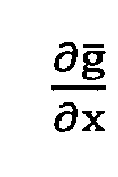

- ε is a positive small parameter to avoid 'division by zero'.
-
x represents the conjugate of x. - (A)* represents the conjugate transpose of matrix A.
- Said reconstruction method is preferred to be applied to datasets acquired by said data acquisition method, but not limited to said data acquisition method.
- Said reconstruction method is not limited to 3D MRI.
- These, as well as other objects and advantages of this invention can be better understood and appreciated through careful study of the following detailed description of presently preferred exemplary embodiments of this invention in conjunction with the accompanying drawing.
- In order to make the aforesaid and other features and advantages of the present invention more apparent to those skilled in the art, preferred embodiments of the present invention will be described in detail below by referring to the accompanying drawings, wherein identical numerals represent the same parts.
-
Fig. 1 shows an illustration of the distribution of the sampling density in k-space: a)Part 2 and Part 4 are in elliptical shape; b)Part 2 and Part 4 are in rectangular shape; -
Fig. 2 shows an illustration of the generated sampling pattern from the distribution of the sampling density inFig 1a ) with random sampling in gridded k-space; -
Fig. 3 shows a comparison of different reconstruction methods:- a) Reference image
- b) Reconstruction error image with the invented method
- c) Reconstruction error image with POCS method in Reference [4]
- d) Reconstruction error image with Homodyne detection method in Reference [3].
- In preferred embodiments of the present invention, the shape of the subsets of k2-k3 plane is rectangular. This is compatible with k-space regular undersampling, and the missing data are efficiently reconstructed using algorithm in Reference [7].
- In an alternative embodiment of the invention, the shape of the subsets of k2-k3 plane is elliptical. Here, image phase is efficiently estimated with a limited amount of acquired k-space data.
- In a further embodiment of the invention, wherein the estimate of the phase PR is taken from the reconstructed image by using only the symmetrically acquired data in Part 1 and
Part 2 in k2-k3 plane. This variant of the method according to the present invention is simple and direct, and provides sufficient accuracy in regions with slow phase variation. - In another class of embodiments of the invention, the weighting map w is set to the magnitude of the intermediate solution x. The accuracy of the image phase estimation is dependent on the signal-to-noise ratio (=SNR). SNR is directly proportional to the intensity of the image pixels. The dependence on the phase constraint is reduced in regions with poor phase estimation to reduce the reconstruction error by applying the weighting map. By using the magnitude of the intermediate solution x as the weighting map, the weighting map is more precisely proportional to SNR when the iterative reconstruction converges, which can sufficiently suppress the artifacts in regions with poor SNR.
- In an alternative class of embodiments of the invention, the weighting map W is set to the magnitude of a reconstructed image without using Rpc. Rpc is convex term in all cases when the weighting map W is a constant magnitude image, which is reconstructed without using Rpc. The descent algorithm becomes more robust to find the optimal solution with convex regularization term.
- The present invention discloses a method for accelerating magnetic resonance imaging, comprising: In 3D MRI, the k-space in the phase encoding plane is divided into two symmetric parts and three asymmetric parts. Different sampling densities are applied in different parts. Images are reconstructed by iteratively minimizing a cost function when random sampling is applied in each part. A phase constraint term is added into the cost function to improve the quality of the reconstruction by exploiting the conjugate symmetry of k-space.
- While only certain features of the invention have been illustrated and described herein, many modifications and changes will occur to those skilled in the art. It is, therefore, to be understood that the appended claims are intended to cover all such modifications and changes as fall within the true spirit of the invention.
-
- [0] M. Bomans et al, Magn. Reson. Imaging 9, 597-609 (1991);
- [1] Li F. et al, ISMRM 2011: 4368;
- [2] Liu F. et al 2012 Phys. Med. Biol. 57 N391
- [3] Nell, D.C., IEEE Trans. Med. Imaging, 10, 154-163, 1991;
- [4] EM Hacke, J Magn Reson 1991; 92:126-145;
- [5] Lustig M et al, MRM 2007, 1182 -1195;
- [6] Doneva M et al, ISMR 2010: 485;
- [7] Griswold, M. A., et al, Magn. Reson. Med., 47: 1202-1210.
Claims (6)
- A magnetic resonance imaging method for the acquisition of a three-dimensional dataset, where spatial encoding by three mutually orthogonal magnetic field gradients is performed such, that signal is readout under a read-gradient in one spatial direction k1 and spatial encoding in the other two spatial directions k2, k3 is performed by applying phase encoding gradients in the other two spatial directions prior to signal acquisition and data acquisition is performed in a sequential manner such that at each acquisition step signal is acquired under the said readout gradient but with different combinations of the two phase encoding gradients, characterized
in that a first subset of k2-k3 plane referred to as Part 1, which is symmetric around the k-space center, is fully sampled, a second subset of k2-k3 plane referred to as Part 2, which has higher spatial frequencies than that in Part 1 and is symmetric around the k-space center, is undersampled with uniform density, a third subset in lower half of k2-k3 plane referred to as Part 3, which has higher spatial frequencies than that in Part 2, is undersampled with uniform density, a fourth subset in upper half of k2-k3 plane referred to as Part 4, which has higher spatial frequencies than that in Part 2, is undersampled with uniform density, a fifth subset in upper half of k2-k3 plane referred to as Part 5, which has higher spatial frequencies than that in Part 4, is completely unacquired;
that the sampling density in Part 2 is lower than that in Part 1, the sampling density in Part 3 is lower than that in Part 2, the sampling density in Part 4 is lower than that in Part 3, no data are acquired in Part 5;
and that images are reconstructed by iteratively minimizing a cost function with descent algorithms like in the nonlinear conjugate gradient method, the cost function is a weighted summation of the multiple regularization terms, a phase constraint term is introduced into the cost function, the phase constraint term referred to as Rpc is: Rpc = ||g||1 = ||2(x ∘ e-iPR - |x|) ∘ w||1, where x represents the intermediate solution in the iterative minimization; ||g||1 = ∑k|gk|, gk is the kth element of matrix g; A ∘ B represents the Hadamard product of matrix A and matrix B; |x| represents the magnitude of x; PR represents an estimate of the phase of the images to be reconstructed; W represents a weighting map. - A method according to claim 1 wherein the shape of the subsets of k2-k3 plane is rectangular.
- A method according to claim 1 wherein the shape of the subsets of k2-k3 plane is elliptical
- A method according to any one of the preceding claims, wherein the estimate of the phase PR is taken from the reconstructed image by using only the symmetrically acquired data in Part 1 and Part2 in k2-k3 plane.
- A method according to any one of claims 1 through 4, wherein the weighting map W is set to the magnitude of the intermediate solution x.
- A method according to any one of claims 1 through 4, wherein the weighting map W is set to the magnitude of a reconstructed image without using Rpc.
Priority Applications (3)
| Application Number | Priority Date | Filing Date | Title |
|---|---|---|---|
| EP14162404.9A EP2924457B1 (en) | 2014-03-28 | 2014-03-28 | Half Fourier MRI with iterative reconstruction |
| US14/644,221 US9478051B2 (en) | 2014-03-28 | 2015-03-11 | Method for accelerating magnetic resonance imaging using varying k-space sampling density and phase-constrained reconstruction |
| CN201510195370.XA CN104939828B (en) | 2014-03-28 | 2015-03-27 | MR imaging method |
Applications Claiming Priority (1)
| Application Number | Priority Date | Filing Date | Title |
|---|---|---|---|
| EP14162404.9A EP2924457B1 (en) | 2014-03-28 | 2014-03-28 | Half Fourier MRI with iterative reconstruction |
Publications (2)
| Publication Number | Publication Date |
|---|---|
| EP2924457A1 true EP2924457A1 (en) | 2015-09-30 |
| EP2924457B1 EP2924457B1 (en) | 2016-11-02 |
Family
ID=50382375
Family Applications (1)
| Application Number | Title | Priority Date | Filing Date |
|---|---|---|---|
| EP14162404.9A Active EP2924457B1 (en) | 2014-03-28 | 2014-03-28 | Half Fourier MRI with iterative reconstruction |
Country Status (3)
| Country | Link |
|---|---|
| US (1) | US9478051B2 (en) |
| EP (1) | EP2924457B1 (en) |
| CN (1) | CN104939828B (en) |
Families Citing this family (15)
| Publication number | Priority date | Publication date | Assignee | Title |
|---|---|---|---|---|
| US11047935B2 (en) | 2015-05-14 | 2021-06-29 | Ohio State Innovation Foundation | Systems and methods for estimating complex B1+ fields of transmit coils of a magnetic resonance imaging (MRI) system |
| WO2017206048A1 (en) * | 2016-05-31 | 2017-12-07 | Shanghai United Imaging Healthcare Co., Ltd. | System and method for removing gibbs artifact in medical imaging system |
| US10921412B2 (en) * | 2016-11-17 | 2021-02-16 | Koninklijke Philips N.V. | Intensity corrected magnetic resonance images |
| US10890631B2 (en) | 2017-01-19 | 2021-01-12 | Ohio State Innovation Foundation | Estimating absolute phase of radio frequency fields of transmit and receive coils in a magnetic resonance |
| WO2019000348A1 (en) * | 2017-06-29 | 2019-01-03 | Shanghai United Imaging Healthcare Co., Ltd. | System and method for magnetic resonance imaging acceleration |
| US10551458B2 (en) | 2017-06-29 | 2020-02-04 | General Electric Company | Method and systems for iteratively reconstructing multi-shot, multi-acquisition MRI data |
| CN107622474B (en) | 2017-09-26 | 2021-03-30 | 北京大学深圳研究生院 | Panoramic video mapping method based on main viewpoint |
| US20190180481A1 (en) * | 2017-12-13 | 2019-06-13 | General Electric Company | Tomographic reconstruction with weights |
| CN108324276B (en) * | 2018-01-11 | 2021-07-30 | 上海东软医疗科技有限公司 | Magnetic resonance imaging method and apparatus |
| JP7164320B2 (en) * | 2018-05-11 | 2022-11-01 | キヤノンメディカルシステムズ株式会社 | Magnetic Resonance Imaging Apparatus, Medical Image Processing Apparatus, and Image Reconstruction Method |
| EP3598162B1 (en) * | 2018-07-19 | 2024-10-02 | Siemens Healthineers AG | Magnetic resonance method and apparatus for suppressing metal artifacts |
| US10950014B2 (en) * | 2019-03-01 | 2021-03-16 | Canon Medical Systems Corporation | Method and apparatus for adaptive compressed sensing (CS) to correct motion artifacts in magnetic resonance imaging (MRI) |
| US11313933B2 (en) * | 2019-03-20 | 2022-04-26 | The Board Of Trustees Of The Leland Stanford Junior University | Diffusion-weighted MRI with magnitude-based locally low-rank regularization |
| US12254536B2 (en) * | 2021-04-26 | 2025-03-18 | Canon Medical Systems Corporation | Reconstruction apparatus, method, and program |
| WO2025116808A1 (en) * | 2023-12-01 | 2025-06-05 | Corsmed Ab | A method intended in the magnetic resonance imaging (mri) field for simulation-based reconstruction (sbr) |
Citations (2)
| Publication number | Priority date | Publication date | Assignee | Title |
|---|---|---|---|---|
| US7592808B1 (en) * | 2008-05-06 | 2009-09-22 | General Electric Company | System and method for reducing MR scan time using partial fourier acquisition and compressed sensing |
| US8089278B1 (en) * | 2008-04-11 | 2012-01-03 | The Regents Of The University Of California | Time-resolved contrast-enhanced magnetic resonance (MR) angiography |
Family Cites Families (10)
| Publication number | Priority date | Publication date | Assignee | Title |
|---|---|---|---|---|
| US7545966B2 (en) * | 2003-05-05 | 2009-06-09 | Case Western Reserve University | Efficient methods for reconstruction and deblurring of magnetic resonance images |
| CN100366218C (en) * | 2003-05-09 | 2008-02-06 | 西门子(中国)有限公司 | Magnetic resonance imaging method |
| US7486839B2 (en) * | 2003-06-27 | 2009-02-03 | Case Western Reserve University | Efficient method for MR image reconstruction using coil sensitivity encoding |
| CN101308202B (en) * | 2007-05-17 | 2011-04-06 | 西门子公司 | Parallel collection image reconstruction method and device |
| EP2317333A1 (en) * | 2009-10-30 | 2011-05-04 | Max-Delbrück-Centrum für Molekulare Medizin (MDC) | MRT operating procedure |
| CN102232830B (en) * | 2010-04-30 | 2014-09-03 | 西门子(深圳)磁共振有限公司 | Method for water-fat separation through magnetic resonance imaging |
| CN101975935B (en) * | 2010-09-03 | 2012-12-05 | 杭州电子科技大学 | Partial echo compressed sensing-based quick magnetic resonance imaging method |
| CN101975936A (en) * | 2010-09-03 | 2011-02-16 | 杭州电子科技大学 | Rapid magnetic resonance imaging (MRI) method based on CS ( compressed sensing ) technique |
| DE102011005445B4 (en) * | 2011-03-11 | 2014-10-09 | Siemens Aktiengesellschaft | Normalization of magnetic resonance image data on a moving table |
| US8886283B1 (en) * | 2011-06-21 | 2014-11-11 | Stc.Unm | 3D and 4D magnetic susceptibility tomography based on complex MR images |
-
2014
- 2014-03-28 EP EP14162404.9A patent/EP2924457B1/en active Active
-
2015
- 2015-03-11 US US14/644,221 patent/US9478051B2/en active Active
- 2015-03-27 CN CN201510195370.XA patent/CN104939828B/en active Active
Patent Citations (2)
| Publication number | Priority date | Publication date | Assignee | Title |
|---|---|---|---|---|
| US8089278B1 (en) * | 2008-04-11 | 2012-01-03 | The Regents Of The University Of California | Time-resolved contrast-enhanced magnetic resonance (MR) angiography |
| US7592808B1 (en) * | 2008-05-06 | 2009-09-22 | General Electric Company | System and method for reducing MR scan time using partial fourier acquisition and compressed sensing |
Non-Patent Citations (15)
| Title |
|---|
| DONEVA M ET AL., ISMRM, 2010, pages 485 |
| EM HACKE; J MAGN RESON, IEEE TRANS. MED. IMAGING, vol. 92, 1991, pages 126 - 145 |
| FESSLER J A ET AL: "Iterative image reconstruction in MRI with separate magnitude and phase regularization", BIOMEDICAL IMAGING: MACRO TO NANO, 2004. IEEE INTERNATIONAL SYMPOSIUM ON ARLINGTON,VA, USA APRIL 15-18, 2004, PISCATAWAY, NJ, USA,IEEE, 15 April 2004 (2004-04-15), pages 209 - 212, XP010773745, ISBN: 978-0-7803-8389-0, DOI: 10.1109/ISBI.2004.1398511 * |
| GRISWOLD, M. A ET AL., MAGN. RESON. MED., vol. 47, pages 1202 - 1210 |
| HAACKE E M ET AL: "IMAGE RECONSTRUCTION USING PROJECTION ONTO CONVEX SETS, MODEL CONTRAINTS, AND LINEAR PREDICTION THEORY FOR THE REMOVAL OF PHASE, MOTION, AND GIBBS ARTIFACTS IN MAGNETIC RESONANCE AND ULTRASOUND IMAGING", OPTICAL ENGINEERING, SOC. OF PHOTO-OPTICAL INSTRUMENTATION ENGINEERS, BELLINGHAM, vol. 29, no. 5, 1 May 1990 (1990-05-01), pages 555 - 566, XP000127721, ISSN: 0091-3286, DOI: 10.1117/12.55624 * |
| LI F. ET AL., ISMRM, 2011, pages 4368 |
| LI G ET AL: "Partial Fourier acquisition with centric circular reference lines in 3D MRI", PROCEEDINGS OF THE INTERNATIONAL SOCIETY FOR MAGNETIC RESONANCE IN MEDICINE, ISMRM, 20TH ANNUAL MEETING AND EXHIBITION, MELBOURNE, AUSTRALIA, 5-11 MAY 2012, 21 April 2012 (2012-04-21), pages 4174, XP040626595 * |
| LIU F. ET AL., PHYS. MED. BIOL., vol. 57, 2012, pages N391 |
| LUSTIG M, MRM, 2007, pages 1182 - 1195 |
| M. BOMANS ET AL., MAGN. RESON. IMAGING, vol. 9, 1991, pages 597 - 609 |
| M. BOMANS; K. HOHNE; G. LAUB; A. POMMERT; U. TIEDE: "Improvement of 3D acquisition and visualization in MRI", MAGN. RESON. IMAGING, vol. 9, 1991, pages 597 - 609, XP026329961, DOI: doi:10.1016/0730-725X(91)90048-Q |
| NELL, D.C., IEEE TRANS. MED. IMAGING, vol. 10, 1991, pages 154 - 163 |
| P.C. LAUTERBUR: "Image Formation by Induced Local Interactions: Examples of Employing Nuclear Magnetic Resonance", NATURE, vol. 242, 1973, pages 190491 |
| RETTMANN D ET AL: "Differential subsampling with Cartesian ordering (DISCO): a novel k-space ordering scheme for dynamic MRI", PROCEEDINGS OF THE INTERNATIONAL SOCIETY FOR MAGNETIC RESONANCE IN MEDICINE, ISMRM, 18TH SCIENTIFIC MEETING AND EXHIBITION, STOCKHOLM, SWEDEN, 1-7 MAY 2010, 17 April 2010 (2010-04-17), pages 3044, XP040614491 * |
| SAMSONOV A, BYDDER M: "Adaptive phase-constrained reconstruction for partial Fourier partially parallel imaging", PROCEEDINGS OF THE INTERNATIONAL SOCIETY FOR MAGNETIC RESONANCE IN MEDICINE, ISMRM, 13TH SCIENTIFIC MEETING AND EXHIBITION, MIAMI BEACH, FLORIDA, USA, 7-13 MAY 2005, 23 April 2005 (2005-04-23), pages 2454, XP040595138 * |
Also Published As
| Publication number | Publication date |
|---|---|
| CN104939828B (en) | 2018-10-12 |
| CN104939828A (en) | 2015-09-30 |
| US20150279065A1 (en) | 2015-10-01 |
| EP2924457B1 (en) | 2016-11-02 |
| US9478051B2 (en) | 2016-10-25 |
Similar Documents
| Publication | Publication Date | Title |
|---|---|---|
| EP2924457B1 (en) | Half Fourier MRI with iterative reconstruction | |
| Zaitsev et al. | Point spread function mapping with parallel imaging techniques and high acceleration factors: Fast, robust, and flexible method for echo‐planar imaging distortion correction | |
| US9766313B2 (en) | MR imaging using apt contrast enhancement and sampling at multiple echo times | |
| Buonincontri et al. | MR fingerprinting with simultaneous B1 estimation | |
| CN104204838B (en) | MRI with Dixon-type water/fat separation and prior knowledge about the inhomogeneity of the main magnetic field | |
| CN103238082B (en) | MR Imaging Using Multipoint Dixon Technique and Low Resolution Calibration | |
| CN104067137B (en) | MR imagings with the suppression to flow artefacts | |
| Cai et al. | An efficient de-convolution reconstruction method for spatiotemporal-encoding single-scan 2D MRI | |
| CN103027681B (en) | For the system of the parallel MRI image obtaining of reconstruct | |
| Chen et al. | An aliasing artifacts reducing approach with random undersampling for spatiotemporally encoded single-shot MRI | |
| CN105934683A (en) | MRI with DIXON-type water/fat separation with estimation of main magnetic field variations | |
| CN105143906A (en) | Metal resistant MR imaging | |
| Liu et al. | Imaging neural architecture of the brain based on its multipole magnetic response | |
| CN107209238A (en) | Parallel many section MR imagings with the suppression to sideband artefact | |
| EP3702800A1 (en) | Epi mr imaging with distortion correction | |
| US8908951B2 (en) | Complex reconstruction of Q-space for simultaneous detection of coherent and incoherent motion | |
| Bastin et al. | On the application of a non‐CPMG single‐shot fast spin‐echo sequence to diffusion tensor MRI of the human brain | |
| CN107810425A (en) | T2-weighted MR imaging to eliminate non-T2-weighted signal contributions | |
| Krämer et al. | Functional magnetic resonance imaging using PROPELLER‐EPI | |
| Huang et al. | Rosette spectroscopic imaging for whole‐brain slab metabolite mapping at 7T: acceleration potential and reproducibility | |
| US10151814B2 (en) | Apparatus and method for improving balanced steady-state free precision in magnetic resonance imaging | |
| EP3497464B1 (en) | Phase offset determination in magnetic resonance imaging | |
| Stöcker et al. | Whole‐brain single‐shot STEAM DTI at 4 Tesla utilizing transverse coherences for enhanced SNR | |
| Jiang et al. | Simultaneous multislice diffusion imaging using navigator‐free multishot spiral acquisitions | |
| Jiang et al. | Positive susceptibility‐based contrast imaging with dephased balanced steady‐state free precession |
Legal Events
| Date | Code | Title | Description |
|---|---|---|---|
| PUAI | Public reference made under article 153(3) epc to a published international application that has entered the european phase |
Free format text: ORIGINAL CODE: 0009012 |
|
| AK | Designated contracting states |
Kind code of ref document: A1 Designated state(s): AL AT BE BG CH CY CZ DE DK EE ES FI FR GB GR HR HU IE IS IT LI LT LU LV MC MK MT NL NO PL PT RO RS SE SI SK SM TR |
|
| AX | Request for extension of the european patent |
Extension state: BA ME |
|
| 17P | Request for examination filed |
Effective date: 20160310 |
|
| RBV | Designated contracting states (corrected) |
Designated state(s): AL AT BE BG CH CY CZ DE DK EE ES FI FR GB GR HR HU IE IS IT LI LT LU LV MC MK MT NL NO PL PT RO RS SE SI SK SM TR |
|
| GRAP | Despatch of communication of intention to grant a patent |
Free format text: ORIGINAL CODE: EPIDOSNIGR1 |
|
| RIC1 | Information provided on ipc code assigned before grant |
Ipc: G01R 33/561 20060101AFI20160418BHEP Ipc: G01R 33/48 20060101ALN20160418BHEP |
|
| RIC1 | Information provided on ipc code assigned before grant |
Ipc: G01R 33/561 20060101AFI20160426BHEP Ipc: G01R 33/48 20060101ALN20160426BHEP |
|
| INTG | Intention to grant announced |
Effective date: 20160510 |
|
| GRAS | Grant fee paid |
Free format text: ORIGINAL CODE: EPIDOSNIGR3 |
|
| GRAA | (expected) grant |
Free format text: ORIGINAL CODE: 0009210 |
|
| AK | Designated contracting states |
Kind code of ref document: B1 Designated state(s): AL AT BE BG CH CY CZ DE DK EE ES FI FR GB GR HR HU IE IS IT LI LT LU LV MC MK MT NL NO PL PT RO RS SE SI SK SM TR |
|
| REG | Reference to a national code |
Ref country code: GB Ref legal event code: FG4D |
|
| REG | Reference to a national code |
Ref country code: AT Ref legal event code: REF Ref document number: 842376 Country of ref document: AT Kind code of ref document: T Effective date: 20161115 Ref country code: CH Ref legal event code: EP |
|
| REG | Reference to a national code |
Ref country code: IE Ref legal event code: FG4D |
|
| REG | Reference to a national code |
Ref country code: NL Ref legal event code: FP |
|
| REG | Reference to a national code |
Ref country code: DE Ref legal event code: R096 Ref document number: 602014004545 Country of ref document: DE |
|
| PG25 | Lapsed in a contracting state [announced via postgrant information from national office to epo] |
Ref country code: LV Free format text: LAPSE BECAUSE OF FAILURE TO SUBMIT A TRANSLATION OF THE DESCRIPTION OR TO PAY THE FEE WITHIN THE PRESCRIBED TIME-LIMIT Effective date: 20161102 |
|
| REG | Reference to a national code |
Ref country code: LT Ref legal event code: MG4D |
|
| REG | Reference to a national code |
Ref country code: AT Ref legal event code: MK05 Ref document number: 842376 Country of ref document: AT Kind code of ref document: T Effective date: 20161102 |
|
| REG | Reference to a national code |
Ref country code: FR Ref legal event code: PLFP Year of fee payment: 4 |
|
| PG25 | Lapsed in a contracting state [announced via postgrant information from national office to epo] |
Ref country code: SE Free format text: LAPSE BECAUSE OF FAILURE TO SUBMIT A TRANSLATION OF THE DESCRIPTION OR TO PAY THE FEE WITHIN THE PRESCRIBED TIME-LIMIT Effective date: 20161102 Ref country code: LT Free format text: LAPSE BECAUSE OF FAILURE TO SUBMIT A TRANSLATION OF THE DESCRIPTION OR TO PAY THE FEE WITHIN THE PRESCRIBED TIME-LIMIT Effective date: 20161102 Ref country code: GR Free format text: LAPSE BECAUSE OF FAILURE TO SUBMIT A TRANSLATION OF THE DESCRIPTION OR TO PAY THE FEE WITHIN THE PRESCRIBED TIME-LIMIT Effective date: 20170203 Ref country code: NO Free format text: LAPSE BECAUSE OF FAILURE TO SUBMIT A TRANSLATION OF THE DESCRIPTION OR TO PAY THE FEE WITHIN THE PRESCRIBED TIME-LIMIT Effective date: 20170202 |
|
| PG25 | Lapsed in a contracting state [announced via postgrant information from national office to epo] |
Ref country code: FI Free format text: LAPSE BECAUSE OF FAILURE TO SUBMIT A TRANSLATION OF THE DESCRIPTION OR TO PAY THE FEE WITHIN THE PRESCRIBED TIME-LIMIT Effective date: 20161102 Ref country code: ES Free format text: LAPSE BECAUSE OF FAILURE TO SUBMIT A TRANSLATION OF THE DESCRIPTION OR TO PAY THE FEE WITHIN THE PRESCRIBED TIME-LIMIT Effective date: 20161102 Ref country code: IS Free format text: LAPSE BECAUSE OF FAILURE TO SUBMIT A TRANSLATION OF THE DESCRIPTION OR TO PAY THE FEE WITHIN THE PRESCRIBED TIME-LIMIT Effective date: 20170302 Ref country code: HR Free format text: LAPSE BECAUSE OF FAILURE TO SUBMIT A TRANSLATION OF THE DESCRIPTION OR TO PAY THE FEE WITHIN THE PRESCRIBED TIME-LIMIT Effective date: 20161102 Ref country code: PL Free format text: LAPSE BECAUSE OF FAILURE TO SUBMIT A TRANSLATION OF THE DESCRIPTION OR TO PAY THE FEE WITHIN THE PRESCRIBED TIME-LIMIT Effective date: 20161102 Ref country code: AT Free format text: LAPSE BECAUSE OF FAILURE TO SUBMIT A TRANSLATION OF THE DESCRIPTION OR TO PAY THE FEE WITHIN THE PRESCRIBED TIME-LIMIT Effective date: 20161102 Ref country code: RS Free format text: LAPSE BECAUSE OF FAILURE TO SUBMIT A TRANSLATION OF THE DESCRIPTION OR TO PAY THE FEE WITHIN THE PRESCRIBED TIME-LIMIT Effective date: 20161102 Ref country code: PT Free format text: LAPSE BECAUSE OF FAILURE TO SUBMIT A TRANSLATION OF THE DESCRIPTION OR TO PAY THE FEE WITHIN THE PRESCRIBED TIME-LIMIT Effective date: 20170302 |
|
| PG25 | Lapsed in a contracting state [announced via postgrant information from national office to epo] |
Ref country code: DK Free format text: LAPSE BECAUSE OF FAILURE TO SUBMIT A TRANSLATION OF THE DESCRIPTION OR TO PAY THE FEE WITHIN THE PRESCRIBED TIME-LIMIT Effective date: 20161102 Ref country code: RO Free format text: LAPSE BECAUSE OF FAILURE TO SUBMIT A TRANSLATION OF THE DESCRIPTION OR TO PAY THE FEE WITHIN THE PRESCRIBED TIME-LIMIT Effective date: 20161102 Ref country code: EE Free format text: LAPSE BECAUSE OF FAILURE TO SUBMIT A TRANSLATION OF THE DESCRIPTION OR TO PAY THE FEE WITHIN THE PRESCRIBED TIME-LIMIT Effective date: 20161102 Ref country code: CZ Free format text: LAPSE BECAUSE OF FAILURE TO SUBMIT A TRANSLATION OF THE DESCRIPTION OR TO PAY THE FEE WITHIN THE PRESCRIBED TIME-LIMIT Effective date: 20161102 Ref country code: SK Free format text: LAPSE BECAUSE OF FAILURE TO SUBMIT A TRANSLATION OF THE DESCRIPTION OR TO PAY THE FEE WITHIN THE PRESCRIBED TIME-LIMIT Effective date: 20161102 |
|
| REG | Reference to a national code |
Ref country code: DE Ref legal event code: R097 Ref document number: 602014004545 Country of ref document: DE |
|
| PG25 | Lapsed in a contracting state [announced via postgrant information from national office to epo] |
Ref country code: BG Free format text: LAPSE BECAUSE OF FAILURE TO SUBMIT A TRANSLATION OF THE DESCRIPTION OR TO PAY THE FEE WITHIN THE PRESCRIBED TIME-LIMIT Effective date: 20170202 Ref country code: BE Free format text: LAPSE BECAUSE OF FAILURE TO SUBMIT A TRANSLATION OF THE DESCRIPTION OR TO PAY THE FEE WITHIN THE PRESCRIBED TIME-LIMIT Effective date: 20161102 Ref country code: IT Free format text: LAPSE BECAUSE OF FAILURE TO SUBMIT A TRANSLATION OF THE DESCRIPTION OR TO PAY THE FEE WITHIN THE PRESCRIBED TIME-LIMIT Effective date: 20161102 Ref country code: SM Free format text: LAPSE BECAUSE OF FAILURE TO SUBMIT A TRANSLATION OF THE DESCRIPTION OR TO PAY THE FEE WITHIN THE PRESCRIBED TIME-LIMIT Effective date: 20161102 |
|
| PLBE | No opposition filed within time limit |
Free format text: ORIGINAL CODE: 0009261 |
|
| STAA | Information on the status of an ep patent application or granted ep patent |
Free format text: STATUS: NO OPPOSITION FILED WITHIN TIME LIMIT |
|
| 26N | No opposition filed |
Effective date: 20170803 |
|
| REG | Reference to a national code |
Ref country code: CH Ref legal event code: PL |
|
| PG25 | Lapsed in a contracting state [announced via postgrant information from national office to epo] |
Ref country code: SI Free format text: LAPSE BECAUSE OF FAILURE TO SUBMIT A TRANSLATION OF THE DESCRIPTION OR TO PAY THE FEE WITHIN THE PRESCRIBED TIME-LIMIT Effective date: 20161102 Ref country code: MC Free format text: LAPSE BECAUSE OF FAILURE TO SUBMIT A TRANSLATION OF THE DESCRIPTION OR TO PAY THE FEE WITHIN THE PRESCRIBED TIME-LIMIT Effective date: 20161102 |
|
| REG | Reference to a national code |
Ref country code: IE Ref legal event code: MM4A |
|
| PG25 | Lapsed in a contracting state [announced via postgrant information from national office to epo] |
Ref country code: LU Free format text: LAPSE BECAUSE OF NON-PAYMENT OF DUE FEES Effective date: 20170328 |
|
| PG25 | Lapsed in a contracting state [announced via postgrant information from national office to epo] |
Ref country code: CH Free format text: LAPSE BECAUSE OF NON-PAYMENT OF DUE FEES Effective date: 20170331 Ref country code: LI Free format text: LAPSE BECAUSE OF NON-PAYMENT OF DUE FEES Effective date: 20170331 Ref country code: IE Free format text: LAPSE BECAUSE OF NON-PAYMENT OF DUE FEES Effective date: 20170328 |
|
| REG | Reference to a national code |
Ref country code: FR Ref legal event code: PLFP Year of fee payment: 5 |
|
| PG25 | Lapsed in a contracting state [announced via postgrant information from national office to epo] |
Ref country code: MT Free format text: LAPSE BECAUSE OF NON-PAYMENT OF DUE FEES Effective date: 20170328 |
|
| PG25 | Lapsed in a contracting state [announced via postgrant information from national office to epo] |
Ref country code: HU Free format text: LAPSE BECAUSE OF FAILURE TO SUBMIT A TRANSLATION OF THE DESCRIPTION OR TO PAY THE FEE WITHIN THE PRESCRIBED TIME-LIMIT; INVALID AB INITIO Effective date: 20140328 |
|
| PG25 | Lapsed in a contracting state [announced via postgrant information from national office to epo] |
Ref country code: CY Free format text: LAPSE BECAUSE OF FAILURE TO SUBMIT A TRANSLATION OF THE DESCRIPTION OR TO PAY THE FEE WITHIN THE PRESCRIBED TIME-LIMIT Effective date: 20161102 |
|
| PG25 | Lapsed in a contracting state [announced via postgrant information from national office to epo] |
Ref country code: MK Free format text: LAPSE BECAUSE OF FAILURE TO SUBMIT A TRANSLATION OF THE DESCRIPTION OR TO PAY THE FEE WITHIN THE PRESCRIBED TIME-LIMIT Effective date: 20161102 |
|
| PG25 | Lapsed in a contracting state [announced via postgrant information from national office to epo] |
Ref country code: TR Free format text: LAPSE BECAUSE OF FAILURE TO SUBMIT A TRANSLATION OF THE DESCRIPTION OR TO PAY THE FEE WITHIN THE PRESCRIBED TIME-LIMIT Effective date: 20161102 |
|
| PG25 | Lapsed in a contracting state [announced via postgrant information from national office to epo] |
Ref country code: AL Free format text: LAPSE BECAUSE OF FAILURE TO SUBMIT A TRANSLATION OF THE DESCRIPTION OR TO PAY THE FEE WITHIN THE PRESCRIBED TIME-LIMIT Effective date: 20161102 |
|
| PGFP | Annual fee paid to national office [announced via postgrant information from national office to epo] |
Ref country code: GB Payment date: 20260324 Year of fee payment: 13 |
|
| PGFP | Annual fee paid to national office [announced via postgrant information from national office to epo] |
Ref country code: DE Payment date: 20260320 Year of fee payment: 13 |
|
| PGFP | Annual fee paid to national office [announced via postgrant information from national office to epo] |
Ref country code: NL Payment date: 20260323 Year of fee payment: 13 |
|
| PGFP | Annual fee paid to national office [announced via postgrant information from national office to epo] |
Ref country code: FR Payment date: 20260324 Year of fee payment: 13 |