EP2922573B1 - Pharmaceutical composition used for reducing damage caused by free radicals - Google Patents
Pharmaceutical composition used for reducing damage caused by free radicals Download PDFInfo
- Publication number
- EP2922573B1 EP2922573B1 EP12885938.6A EP12885938A EP2922573B1 EP 2922573 B1 EP2922573 B1 EP 2922573B1 EP 12885938 A EP12885938 A EP 12885938A EP 2922573 B1 EP2922573 B1 EP 2922573B1
- Authority
- EP
- European Patent Office
- Prior art keywords
- amifostine
- pharmaceutical composition
- drug
- damage caused
- free radicals
- Prior art date
- Legal status (The legal status is an assumption and is not a legal conclusion. Google has not performed a legal analysis and makes no representation as to the accuracy of the status listed.)
- Active
Links
Images

Classifications
-
- A—HUMAN NECESSITIES
- A61—MEDICAL OR VETERINARY SCIENCE; HYGIENE
- A61K—PREPARATIONS FOR MEDICAL, DENTAL OR TOILETRY PURPOSES
- A61K47/00—Medicinal preparations characterised by the non-active ingredients used, e.g. carriers or inert additives; Targeting or modifying agents chemically bound to the active ingredient
- A61K47/02—Inorganic compounds
-
- A—HUMAN NECESSITIES
- A61—MEDICAL OR VETERINARY SCIENCE; HYGIENE
- A61K—PREPARATIONS FOR MEDICAL, DENTAL OR TOILETRY PURPOSES
- A61K31/00—Medicinal preparations containing organic active ingredients
- A61K31/045—Hydroxy compounds, e.g. alcohols; Salts thereof, e.g. alcoholates
- A61K31/05—Phenols
-
- A—HUMAN NECESSITIES
- A61—MEDICAL OR VETERINARY SCIENCE; HYGIENE
- A61K—PREPARATIONS FOR MEDICAL, DENTAL OR TOILETRY PURPOSES
- A61K31/00—Medicinal preparations containing organic active ingredients
- A61K31/12—Ketones
-
- A—HUMAN NECESSITIES
- A61—MEDICAL OR VETERINARY SCIENCE; HYGIENE
- A61K—PREPARATIONS FOR MEDICAL, DENTAL OR TOILETRY PURPOSES
- A61K31/00—Medicinal preparations containing organic active ingredients
- A61K31/12—Ketones
- A61K31/122—Ketones having the oxygen directly attached to a ring, e.g. quinones, vitamin K1, anthralin
-
- A—HUMAN NECESSITIES
- A61—MEDICAL OR VETERINARY SCIENCE; HYGIENE
- A61K—PREPARATIONS FOR MEDICAL, DENTAL OR TOILETRY PURPOSES
- A61K31/00—Medicinal preparations containing organic active ingredients
- A61K31/185—Acids; Anhydrides, halides or salts thereof, e.g. sulfur acids, imidic, hydrazonic or hydroximic acids
-
- A—HUMAN NECESSITIES
- A61—MEDICAL OR VETERINARY SCIENCE; HYGIENE
- A61K—PREPARATIONS FOR MEDICAL, DENTAL OR TOILETRY PURPOSES
- A61K31/00—Medicinal preparations containing organic active ingredients
- A61K31/185—Acids; Anhydrides, halides or salts thereof, e.g. sulfur acids, imidic, hydrazonic or hydroximic acids
- A61K31/19—Carboxylic acids, e.g. valproic acid
-
- A—HUMAN NECESSITIES
- A61—MEDICAL OR VETERINARY SCIENCE; HYGIENE
- A61K—PREPARATIONS FOR MEDICAL, DENTAL OR TOILETRY PURPOSES
- A61K31/00—Medicinal preparations containing organic active ingredients
- A61K31/185—Acids; Anhydrides, halides or salts thereof, e.g. sulfur acids, imidic, hydrazonic or hydroximic acids
- A61K31/19—Carboxylic acids, e.g. valproic acid
- A61K31/195—Carboxylic acids, e.g. valproic acid having an amino group
- A61K31/197—Carboxylic acids, e.g. valproic acid having an amino group the amino and the carboxyl groups being attached to the same acyclic carbon chain, e.g. gamma-aminobutyric acid [GABA], beta-alanine, epsilon-aminocaproic acid or pantothenic acid
- A61K31/198—Alpha-amino acids, e.g. alanine or edetic acid [EDTA]
-
- A—HUMAN NECESSITIES
- A61—MEDICAL OR VETERINARY SCIENCE; HYGIENE
- A61K—PREPARATIONS FOR MEDICAL, DENTAL OR TOILETRY PURPOSES
- A61K31/00—Medicinal preparations containing organic active ingredients
- A61K31/185—Acids; Anhydrides, halides or salts thereof, e.g. sulfur acids, imidic, hydrazonic or hydroximic acids
- A61K31/205—Amine addition salts of organic acids; Inner quaternary ammonium salts, e.g. betaine, carnitine
-
- A—HUMAN NECESSITIES
- A61—MEDICAL OR VETERINARY SCIENCE; HYGIENE
- A61K—PREPARATIONS FOR MEDICAL, DENTAL OR TOILETRY PURPOSES
- A61K31/00—Medicinal preparations containing organic active ingredients
- A61K31/33—Heterocyclic compounds
- A61K31/335—Heterocyclic compounds having oxygen as the only ring hetero atom, e.g. fungichromin
- A61K31/35—Heterocyclic compounds having oxygen as the only ring hetero atom, e.g. fungichromin having six-membered rings with one oxygen as the only ring hetero atom
- A61K31/352—Heterocyclic compounds having oxygen as the only ring hetero atom, e.g. fungichromin having six-membered rings with one oxygen as the only ring hetero atom condensed with carbocyclic rings, e.g. methantheline
- A61K31/353—3,4-Dihydrobenzopyrans, e.g. chroman, catechin
-
- A—HUMAN NECESSITIES
- A61—MEDICAL OR VETERINARY SCIENCE; HYGIENE
- A61K—PREPARATIONS FOR MEDICAL, DENTAL OR TOILETRY PURPOSES
- A61K31/00—Medicinal preparations containing organic active ingredients
- A61K31/33—Heterocyclic compounds
- A61K31/335—Heterocyclic compounds having oxygen as the only ring hetero atom, e.g. fungichromin
- A61K31/35—Heterocyclic compounds having oxygen as the only ring hetero atom, e.g. fungichromin having six-membered rings with one oxygen as the only ring hetero atom
- A61K31/352—Heterocyclic compounds having oxygen as the only ring hetero atom, e.g. fungichromin having six-membered rings with one oxygen as the only ring hetero atom condensed with carbocyclic rings, e.g. methantheline
- A61K31/353—3,4-Dihydrobenzopyrans, e.g. chroman, catechin
- A61K31/355—Tocopherols, e.g. vitamin E
-
- A—HUMAN NECESSITIES
- A61—MEDICAL OR VETERINARY SCIENCE; HYGIENE
- A61K—PREPARATIONS FOR MEDICAL, DENTAL OR TOILETRY PURPOSES
- A61K31/00—Medicinal preparations containing organic active ingredients
- A61K31/33—Heterocyclic compounds
- A61K31/335—Heterocyclic compounds having oxygen as the only ring hetero atom, e.g. fungichromin
- A61K31/365—Lactones
- A61K31/375—Ascorbic acid, i.e. vitamin C; Salts thereof
-
- A—HUMAN NECESSITIES
- A61—MEDICAL OR VETERINARY SCIENCE; HYGIENE
- A61K—PREPARATIONS FOR MEDICAL, DENTAL OR TOILETRY PURPOSES
- A61K31/00—Medicinal preparations containing organic active ingredients
- A61K31/33—Heterocyclic compounds
- A61K31/38—Heterocyclic compounds having sulfur as a ring hetero atom
- A61K31/385—Heterocyclic compounds having sulfur as a ring hetero atom having two or more sulfur atoms in the same ring
-
- A—HUMAN NECESSITIES
- A61—MEDICAL OR VETERINARY SCIENCE; HYGIENE
- A61K—PREPARATIONS FOR MEDICAL, DENTAL OR TOILETRY PURPOSES
- A61K31/00—Medicinal preparations containing organic active ingredients
- A61K31/33—Heterocyclic compounds
- A61K31/395—Heterocyclic compounds having nitrogen as a ring hetero atom, e.g. guanethidine or rifamycins
- A61K31/40—Heterocyclic compounds having nitrogen as a ring hetero atom, e.g. guanethidine or rifamycins having five-membered rings with one nitrogen as the only ring hetero atom, e.g. sulpiride, succinimide, tolmetin, buflomedil
- A61K31/403—Heterocyclic compounds having nitrogen as a ring hetero atom, e.g. guanethidine or rifamycins having five-membered rings with one nitrogen as the only ring hetero atom, e.g. sulpiride, succinimide, tolmetin, buflomedil condensed with carbocyclic rings, e.g. carbazole
- A61K31/404—Indoles, e.g. pindolol
- A61K31/4045—Indole-alkylamines; Amides thereof, e.g. serotonin, melatonin
-
- A—HUMAN NECESSITIES
- A61—MEDICAL OR VETERINARY SCIENCE; HYGIENE
- A61K—PREPARATIONS FOR MEDICAL, DENTAL OR TOILETRY PURPOSES
- A61K31/00—Medicinal preparations containing organic active ingredients
- A61K31/66—Phosphorus compounds
- A61K31/661—Phosphorus acids or esters thereof not having P—C bonds, e.g. fosfosal, dichlorvos, malathion or mevinphos
-
- A—HUMAN NECESSITIES
- A61—MEDICAL OR VETERINARY SCIENCE; HYGIENE
- A61K—PREPARATIONS FOR MEDICAL, DENTAL OR TOILETRY PURPOSES
- A61K33/00—Medicinal preparations containing inorganic active ingredients
- A61K33/06—Aluminium, calcium or magnesium; Compounds thereof, e.g. clay
-
- A—HUMAN NECESSITIES
- A61—MEDICAL OR VETERINARY SCIENCE; HYGIENE
- A61K—PREPARATIONS FOR MEDICAL, DENTAL OR TOILETRY PURPOSES
- A61K33/00—Medicinal preparations containing inorganic active ingredients
- A61K33/24—Heavy metals; Compounds thereof
-
- A—HUMAN NECESSITIES
- A61—MEDICAL OR VETERINARY SCIENCE; HYGIENE
- A61K—PREPARATIONS FOR MEDICAL, DENTAL OR TOILETRY PURPOSES
- A61K33/00—Medicinal preparations containing inorganic active ingredients
- A61K33/24—Heavy metals; Compounds thereof
- A61K33/26—Iron; Compounds thereof
-
- A—HUMAN NECESSITIES
- A61—MEDICAL OR VETERINARY SCIENCE; HYGIENE
- A61K—PREPARATIONS FOR MEDICAL, DENTAL OR TOILETRY PURPOSES
- A61K33/00—Medicinal preparations containing inorganic active ingredients
- A61K33/24—Heavy metals; Compounds thereof
- A61K33/30—Zinc; Compounds thereof
-
- A—HUMAN NECESSITIES
- A61—MEDICAL OR VETERINARY SCIENCE; HYGIENE
- A61K—PREPARATIONS FOR MEDICAL, DENTAL OR TOILETRY PURPOSES
- A61K33/00—Medicinal preparations containing inorganic active ingredients
- A61K33/24—Heavy metals; Compounds thereof
- A61K33/34—Copper; Compounds thereof
-
- A—HUMAN NECESSITIES
- A61—MEDICAL OR VETERINARY SCIENCE; HYGIENE
- A61K—PREPARATIONS FOR MEDICAL, DENTAL OR TOILETRY PURPOSES
- A61K38/00—Medicinal preparations containing peptides
- A61K38/04—Peptides having up to 20 amino acids in a fully defined sequence; Derivatives thereof
- A61K38/06—Tripeptides
- A61K38/063—Glutathione
-
- A—HUMAN NECESSITIES
- A61—MEDICAL OR VETERINARY SCIENCE; HYGIENE
- A61K—PREPARATIONS FOR MEDICAL, DENTAL OR TOILETRY PURPOSES
- A61K45/00—Medicinal preparations containing active ingredients not provided for in groups A61K31/00 - A61K41/00
- A61K45/06—Mixtures of active ingredients without chemical characterisation, e.g. antiphlogistics and cardiaca
-
- A—HUMAN NECESSITIES
- A61—MEDICAL OR VETERINARY SCIENCE; HYGIENE
- A61K—PREPARATIONS FOR MEDICAL, DENTAL OR TOILETRY PURPOSES
- A61K47/00—Medicinal preparations characterised by the non-active ingredients used, e.g. carriers or inert additives; Targeting or modifying agents chemically bound to the active ingredient
- A61K47/30—Macromolecular organic or inorganic compounds, e.g. inorganic polyphosphates
- A61K47/34—Macromolecular compounds obtained otherwise than by reactions only involving carbon-to-carbon unsaturated bonds, e.g. polyesters, polyamino acids, polysiloxanes, polyphosphazines, copolymers of polyalkylene glycol or poloxamers
-
- A—HUMAN NECESSITIES
- A61—MEDICAL OR VETERINARY SCIENCE; HYGIENE
- A61K—PREPARATIONS FOR MEDICAL, DENTAL OR TOILETRY PURPOSES
- A61K9/00—Medicinal preparations characterised by special physical form
- A61K9/10—Dispersions; Emulsions
- A61K9/107—Emulsions ; Emulsion preconcentrates; Micelles
- A61K9/1075—Microemulsions or submicron emulsions; Preconcentrates or solids thereof; Micelles, e.g. made of phospholipids or block copolymers
-
- A—HUMAN NECESSITIES
- A61—MEDICAL OR VETERINARY SCIENCE; HYGIENE
- A61P—SPECIFIC THERAPEUTIC ACTIVITY OF CHEMICAL COMPOUNDS OR MEDICINAL PREPARATIONS
- A61P35/00—Antineoplastic agents
-
- A—HUMAN NECESSITIES
- A61—MEDICAL OR VETERINARY SCIENCE; HYGIENE
- A61P—SPECIFIC THERAPEUTIC ACTIVITY OF CHEMICAL COMPOUNDS OR MEDICINAL PREPARATIONS
- A61P39/00—General protective or antinoxious agents
- A61P39/06—Free radical scavengers or antioxidants
Definitions
- the present invention relates to a pharmaceutical composition, in particular, a pharmaceutical composition for use in reducing damage caused by free radicals.
- Amifostine also called WR-2721, is the prodrug of WR-1065 with phosphate groups, and exhibits antioxidative activity.
- drug regulatory agencies in many countries have approved the use of amifostine as a radioprotective drug for treating damage caused by radiation therapy, and the adverse effects induced by platinum-related chemotherapeutic drugs.
- Amifostine is spontaneously hydrolyzed in vivo, or metabolized by alkaline phosphatase through breaking up the bond between WR-1065 and its phosphate groups. The active drug, WR-1065, is then released and protects cells from damage and reduces cell toxicity by scavenging free radicals.
- amifostine is usually administered through i.v. injection 3 and 15 minutes before radiation therapy and chemotherapy, respectively.
- the most difficult problem facing the clinical application of amifostine is its short half-life.
- amifostine can be formulated as a slow-release or non-parenteral administration drug. Although oral administration of such formulated amifostine has been reported to prolong its half-life and increase its efficacy, none have shown better results in treating various clinical complications such as the prevention of radiation toxicity caused by nuclear plant explosion or accidental exposure, simply because no effective methods are available to control the release and selective distribution of amifostine in radio-sensitive tissues and organs.
- antioxidants may not provide long-term protection against free radicals either because it is difficult to maintain their potency or easily to be metabolized in vivo. Thus, these antioxidants may not be easily applied for protection of normal tissue from damage caused by radiation toxicity or chemotherapy.
- the present invention uses the metal ion composition technology as disclosed in our prior invention (Taiwan Patent Application Number 101128939 ) to encapsulate amifostine or other antioxidants in metal ion-containing micelle and use it for reducing damage caused by radiation toxicity and chemotherapy.
- This pharmaceutical composition can prolong the half-life of these drugs, protect the drug activities, and alter the distributions of the drugs in vivo.
- the said pharmaceutical composition of the present invention can delay the drug release profiles and change drug distribution in vivo, which consequently reduces damage cause by radiation and adverse effects induced by chemotherapeutic drugs.
- the pharmaceutical composition may be designed according to different requirements including lipophilicity and particle size so as to ensure distribution at target organs resulting in the protection of the tissue and organ.
- the active ingredients released from the pharmaceutical composition such as amifostine, WR1065, or other antioxidants can reduce damage in the normal tissues induced by free radicals during radiation therapy or chemotherapy and consequently reduce radical induced toxicity.
- the goal of the present invention is to provide a pharmaceutical composition for use in reducing damage caused by free radicals.
- the pharmaceutical composition for use in reducing the damage caused by free radicals comprises iron ion, amifostine, and a drug carrier; wherein said drug carrier is poly(ethylene glycol)- b -poly(glutamic acid) (PEG- b -PGA).
- the said pharmaceutical composition can be utilized as a reducing agent to reduce the oxidized biomolecules and restore their functions by blocking the continuous transmission and attacks of free radicals; therefore, could reduce the level of free radicals produced by radiation, ultraviolet light, chemotherapeutic drugs and electromagnetic effects so as to prevent damage caused by free radicals and reduce the resulted toxicity.
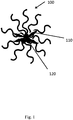
- Fig.1 is a schematic diagram of the pharmaceutical composition with a metal core.
- the center consists of a metal or metal ions 120 and is enclosed by an antioxidant compound or other similar drug(s) 110, and the outer layer is made of drug carrier 100.
- Amifostine is an antioxidant and a derivative of WR-1065 conjugating with phosphate groups, which exhibits antioxidative activity. Amifostine is currently approved by regulatory agencies in many countries for preventing radiation toxicity and adverse effects induced by cisplatin-like chemotherapeutic drugs.
- the drug carrier for the pharmaceutical composition is the drug carrier for the pharmaceutical composition
- the present invention provides a material, and said material contains 206.44 mg Amifostine, 825.50 mg PEG- b -PGA and 206.44 mg Iron (II) chloride (FeCl 2 ⁇ 4H 2 O).
- the obtained material was then added to 41.288 ml HEPES buffer [4-(2-hydroxyethyl)-1-piperazinee -thanesulfonic acid)] and stirred vigorously on a shaker at 200 rpm with the pH at 7.0 at 25 degree Celsius (°C).
- UV irradiation of the cells was used in this experiment to simulate the effects of radiation on normal cells, and the results were evaluated by Comet Assay.
- Comet Assay is a fast, sensitive and convenient method for examining DNA damage and is widely used in studying DNA damage caused by radiation, examining DNA crosslink, evaluating genotoxicity of drugs and identifying cell apoptosis, etc. In total, eight groups were included in this experiment:
- the mouse embryonic liver cells (BNLCL.2) were inoculated onto a 35 mm culture dish at the density of 3*10 5 cell/ mL and cultured for at least 20 hr before subjected to the test. After removal of supernatant, fresh medium containing serum and various test compounds was added to the control and the test groups at different times according to the experimental design. The culture dish was then washed with PBS and irradiated with UVB (100 J ⁇ m-2 UVB doses). Next, 2 mL fresh medium added, and the treated cells were cultured in the incubator for 4 hr to allow the drugs to take effects. The treated cells were then collected with a scraper, counted, and centrifuged at 1,200 rpm for 5 minutes. Followinged by washing with PBS (Ca 2+ , Mg 2+ free) once, the cell number was adjusted to 1*10 5 cell/mL by adding PBS.
- PBS Ca 2+ , Mg 2+ free
- the bottle containing LM agarose was placed in 95°C water for 5 minutes with loosed cap and then transferred to a 37°C water bath for at least 20 minutes.
- the cells (1 ⁇ 10 5 /ml) and melted LM agarose were combined in the volume of 7 ⁇ L and 70 ⁇ L, respectively, at 37°C, and 60 ⁇ L mixture was immediately spread on a CometSlide TM and allowed to set flat on ice for 10 minutes and protected from light.
- the slide was immersed in pre-cooled Lysis buffer and stored at 4°C for 30 minutes. The excess buffer on the slide was removed by gently tapping, and then placed in freshly prepared Alkaline Unwinding Solution at room temperature for 60 minutes and protected from light.
- mice 30-day old NMRI mice weighing 20 to 30 g were tested for acute radiation protection.
- mice were given 1, 4, and 8 Gy irradiation in 10 minutes, and for the standard treatment group, FDA-approved amifostine (6.25mg/kg) was injected intravenously, and 30 minutes later the animals were given 8 Gy irradiation in 10 minutes.
- the 30 mins duration design is based on the short half-life of amifostine.
- the animals in the test group A-01 were administered intravenously with 37.5mg/kg A-01 (containing the same amount of amifostine as used in the standard treatment group), and 120 minutes post injection, the animals were given 8 Gy radiation in 10 minutes. WBC number and survival rates were analyzed 30 days after treatment.
- A-01 contains 6.25 mg/kg amifostine, which suggests that about 30 mg amifostine (equivalent to 180 mg of the said pharmaceutical composition) is effective in providing radiation protection for a 60 kg body weight human.
- Amifostine approved by the FDA and used in radiation therapy for head and neck tumor, must be administered 3 minutes prior to radiation therapy and only provides obvious protection for salivary gland. The dosage of amifostine required 200 mg/m 2 translates to 320 mg amifostine for a 60 kg human.
- A-01 drug can provide better protection against radiation toxicity by selective accumulation and slow release.
- Table 2 WBC 1000/cm 3 1Gy 4Gy 8Gy Normal Control 1.90-1.92 1.44-1.84 0.54-0.68 2.72-3.54 Amifostine (-30 min) - - 3.04-3.80 - - A-01(-2hrs) - - 1.66-2.08 - - (- indicates radiation dosage is not enough to produce severe damage in the hematopoietic system; therefore, no drug is administered) (- - group indicates no adverse effects were observed in either rats or mice in the acute toxicity test and the results are within the normal range, hence WBC counts were not shown)
- the present invention provides an iron ion based micelle technology to encapsulate amifostine so as to reduce the damage caused by radiation and adverse effects induced by chemotherapy.
Landscapes
- Health & Medical Sciences (AREA)
- Chemical & Material Sciences (AREA)
- Life Sciences & Earth Sciences (AREA)
- Medicinal Chemistry (AREA)
- Pharmacology & Pharmacy (AREA)
- Animal Behavior & Ethology (AREA)
- General Health & Medical Sciences (AREA)
- Public Health (AREA)
- Veterinary Medicine (AREA)
- Epidemiology (AREA)
- Inorganic Chemistry (AREA)
- Proteomics, Peptides & Aminoacids (AREA)
- Dispersion Chemistry (AREA)
- Molecular Biology (AREA)
- Biophysics (AREA)
- Gastroenterology & Hepatology (AREA)
- Engineering & Computer Science (AREA)
- Bioinformatics & Cheminformatics (AREA)
- Immunology (AREA)
- Chemical Kinetics & Catalysis (AREA)
- General Chemical & Material Sciences (AREA)
- Nuclear Medicine, Radiotherapy & Molecular Imaging (AREA)
- Organic Chemistry (AREA)
- Biochemistry (AREA)
- Toxicology (AREA)
- Medicinal Preparation (AREA)
- Acyclic And Carbocyclic Compounds In Medicinal Compositions (AREA)
- Pharmaceuticals Containing Other Organic And Inorganic Compounds (AREA)
Description
- The present invention relates to a pharmaceutical composition, in particular, a pharmaceutical composition for use in reducing damage caused by free radicals.
- Amifostine, also called WR-2721, is the prodrug of WR-1065 with phosphate groups, and exhibits antioxidative activity. At present, drug regulatory agencies in many countries have approved the use of amifostine as a radioprotective drug for treating damage caused by radiation therapy, and the adverse effects induced by platinum-related chemotherapeutic drugs. Amifostine is spontaneously hydrolyzed in vivo, or metabolized by alkaline phosphatase through breaking up the bond between WR-1065 and its phosphate groups. The active drug, WR-1065, is then released and protects cells from damage and reduces cell toxicity by scavenging free radicals. Nonetheless, studies in patients have indicated that the distribution half-life of amifostine is less than 1 minute, and the elimination half-life is 8 minutes. Only 10% of amifostine remains 6 minutes after i.v. injection. Un-eliminated amifostine is rapidly converted to active free thiol metabolite, WR1065, and starts to function. Therefore, clinically amifostine is usually administered through i.v. injection 3 and 15 minutes before radiation therapy and chemotherapy, respectively. As a result, the most difficult problem facing the clinical application of amifostine is its short half-life.
- Numerous studies and literatures have suggested that amifostine can be formulated as a slow-release or non-parenteral administration drug. Although oral administration of such formulated amifostine has been reported to prolong its half-life and increase its efficacy, none have shown better results in treating various clinical complications such as the prevention of radiation toxicity caused by nuclear plant explosion or accidental exposure, simply because no effective methods are available to control the release and selective distribution of amifostine in radio-sensitive tissues and organs.
- In addition, other antioxidants may not provide long-term protection against free radicals either because it is difficult to maintain their potency or easily to be metabolized in vivo. Thus, these antioxidants may not be easily applied for protection of normal tissue from damage caused by radiation toxicity or chemotherapy.
- Based upon the aforementioned background information and in meeting the special requirements in the industry, the present invention uses the metal ion composition technology as disclosed in our prior invention (Taiwan Patent Application Number
101128939 - The active ingredients released from the pharmaceutical composition such as amifostine, WR1065, or other antioxidants can reduce damage in the normal tissues induced by free radicals during radiation therapy or chemotherapy and consequently reduce radical induced toxicity.
- The goal of the present invention is to provide a pharmaceutical composition for use in reducing damage caused by free radicals.
- The pharmaceutical composition for use in reducing the damage caused by free radicals, comprises iron ion, amifostine, and a drug carrier; wherein said drug carrier is poly(ethylene glycol)-b-poly(glutamic acid) (PEG-b-PGA).
- In another aspect, the said pharmaceutical composition can be utilized as a reducing agent to reduce the oxidized biomolecules and restore their functions by blocking the continuous transmission and attacks of free radicals; therefore, could reduce the level of free radicals produced by radiation, ultraviolet light, chemotherapeutic drugs and electromagnetic effects so as to prevent damage caused by free radicals and reduce the resulted toxicity.
- The foregoing summary, as well as the following detailed description of the invention, will be better understood when read in conjunction with the appended drawings. It should be understood, however, that the invention is not limited to the preferred embodiments shown.
-
Fig. 1 is a schematic diagram of the pharmaceutical composition with a metal core according to Example 1 of the present invention. ***P<0.001 significant differences from UV group. #P<0.05 significant differences fromAPI 40X20X 2h group. -
Fig. 2 is image of Comet Assay. CON is negative control, UV is UV irradiation without drug treatment as positive control,API 40X(2 hours),API 40X(30 mins), FeP 40X(2 hours), FePA 20X(2 hours) and FePA 20X(30 mins). -
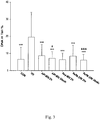
Fig. 3 is a quantitative diagram of Comet Assay DNA in tail(%). CON is negative control, UV is UV irradiation without drug treatment as positive control,API 40X(2 hours),API 40X(30 mins), FeP 40X(2 hours), FePA 20X(2 hours) and FePA 20X(30 mins). - The present invention will now be described more specifically with reference to the following embodiments, which are provided for the purpose of demonstration rather than limitation.
-
Fig.1 is a schematic diagram of the pharmaceutical composition with a metal core. The center consists of a metal ormetal ions 120 and is enclosed by an antioxidant compound or other similar drug(s) 110, and the outer layer is made ofdrug carrier 100. - Amifostine is an antioxidant and a derivative of WR-1065 conjugating with phosphate groups, which exhibits antioxidative activity. Amifostine is currently approved by regulatory agencies in many countries for preventing radiation toxicity and adverse effects induced by cisplatin-like chemotherapeutic drugs.
- Fifteen gram of γ-benzyl-L-glutamate and 7.5 g triphosgene were dissolved in tetrahydrofuran (THF) and stirred at 55in the presence of N2 till the solution is clear. Following concentration of the solution, 400 mL n-hexane was used for precipitation. The monomer, N-carboxy-γ-benzyl-L-glutamate anhydride (BLG-NCA), is obtained after removal of n-hexane with 300 mL n-hexane/ethyl acetate (1/1) and crystallization. Fifteen grams of BLG-NCA and 2.1 g α-amino-ω-methoxy-poly(ethylene glycol) (PEG-NH2) were dissolved in 43 mL dimethyl sulfoxide (DMSO) and stirred at 40
 for 72 hrs. The crude product was then subjected to precipitation using 215 mL diethyl ether followed by removal of diethyl ether, and 315 mL ethanol and 210 mL 1N NaOH were then added and the mixture stirred at 25for 24 hrs. The pH value was adjusted to 7.0 by adding 35% HCI on ice, and then purified using MWCO 3500 membrane by dialysis. Poly(ethylene glycol)-b-poly(glutamic acid) (PEG-b-PGA) is then obtained after freeze-drying (lyophilization).
 - The present invention provides a material, and said material contains 206.44 mg Amifostine, 825.50 mg PEG-b-PGA and 206.44 mg Iron (II) chloride (FeCl2·4H2O). The obtained material was then added to 41.288 ml HEPES buffer [4-(2-hydroxyethyl)-1-piperazinee -thanesulfonic acid)] and stirred vigorously on a shaker at 200 rpm with the pH at 7.0 at 25 degree Celsius (°C).
- Formulation of FePA is based on the ratio of PEG-b-PGA : FeCl2·4H2O : amifostine = 4 : 1 : 1 (w:w:w, according to the ratios of weight) with a preferred amifostine concentration at 5 mg/mL. Accordingly, the material containing amifostine is formed by self-assembly of ferrous ion (Fe2+) and PEG-b-PGA via coordinate bonding.
-
Amifostine 206.44 mg PEG-b-PGA 825.50 mg Iron(II) chloride 206.44 mg Total: 1238.38 mg - UV irradiation of the cells was used in this experiment to simulate the effects of radiation on normal cells, and the results were evaluated by Comet Assay. Comet Assay is a fast, sensitive and convenient method for examining DNA damage and is widely used in studying DNA damage caused by radiation, examining DNA crosslink, evaluating genotoxicity of drugs and identifying cell apoptosis, etc.
In total, eight groups were included in this experiment: - API group received 1mg/mL amifostine ;
- FePA group received 1mg/mL FeCl2·4H2O, 4mg/mL PEG-b-PGA and 1mg/mL amifostine ;
- FeP group received 1mg/mL FeCl2·4H2O and 4mg/mL PEG-b-PGA
- The mouse embryonic liver cells (BNLCL.2) were inoculated onto a 35 mm culture dish at the density of 3*105 cell/ mL and cultured for at least 20 hr before subjected to the test. After removal of supernatant, fresh medium containing serum and various test compounds was added to the control and the test groups at different times according to the experimental design. The culture dish was then washed with PBS and irradiated with UVB (100 J·m-2 UVB doses). Next, 2 mL fresh medium added, and the treated cells were cultured in the incubator for 4 hr to allow the drugs to take effects. The treated cells were then collected with a scraper, counted, and centrifuged at 1,200 rpm for 5 minutes. Followed by washing with PBS (Ca2+ , Mg2+ free) once, the cell number was adjusted to 1*105 cell/mL by adding PBS.
- The bottle containing LM agarose was placed in 95°C water for 5 minutes with loosed cap and then transferred to a 37°C water bath for at least 20 minutes. The cells (1×10⁵/ml) and melted LM agarose were combined in the volume of 7 µL and 70 µL, respectively, at 37°C, and 60µL mixture was immediately spread on a CometSlide ™ and allowed to set flat on ice for 10 minutes and protected from light. At the end of incubation, the slide was immersed in pre-cooled Lysis buffer and stored at 4°C for 30 minutes. The excess buffer on the slide was removed by gently tapping, and then placed in freshly prepared Alkaline Unwinding Solution at room temperature for 60 minutes and protected from light. Later, 950 mL pre-cooled Alkaline Electrophoresis Solution was added to the electrophoresis tank followed by placement of the slide in the tank and covered with slide Tray Overlay. The electrophoresis conditions are 21 V for 30 minutes. At the end of electrophoresis, the solution was gently removed and the slide was immersed first in de-ionized water twice for 5 minutes each time; and then in 70% ethanol for additional 5 minutes. The slide sample was then air-dried in the hood to allow easy observation of the single plane view of the cells. The sample can be stored at room temperature at this step with desiccant or proceed to the next step directly. An aliquot of 100µL diluted SYBR Green I was added to dried gel and stored at 4°C for 5 minutes. Excess SYBR solution was removed from the slide by gently tapping and air-dried at room temperature and protected from light. The resulting images were analyzed using the epifluorescence microscope (the maximum excitation and emission wavelength of SYBR®Green I are 494 nm and 521 nm, respectively.) The fluorescence filter was also adjusted accordingly for efficient lighting) 200X.
- The results are shown in
Figure 2 ,3 . Compared with the positive control group (UV), the average percentage of damaged DNA in the tail of the Comet (%TDNA) of the FePA20X,API 40X,FeP 40X or group were all significantly reduced when the treatment was given either 30 minutes or 2 hr before UV irradiation. However, the in-vitro experiment was not with sensitivities enough to show the different between drug carrier and API. Thus, administration of FePA indeed protected cells from damage caused by UV irradiation and the treated cells were almost morphologically identical to normal cells without UV irradiation. - In animal study, 30-day old NMRI mice weighing 20 to 30 g were tested for acute radiation protection. For radiation control group, mice were given 1, 4, and 8 Gy irradiation in 10 minutes, and for the standard treatment group, FDA-approved amifostine (6.25mg/kg) was injected intravenously, and 30 minutes later the animals were given 8 Gy irradiation in 10 minutes. The 30 mins duration design is based on the short half-life of amifostine. A-01 indicates FePA with a formulation ratio of PEG-b-PGA : FeCl2·4H2O : amifostine = 4 : 1 : 1 (w:w:w). The animals in the test group A-01 were administered intravenously with 37.5mg/kg A-01 (containing the same amount of amifostine as used in the standard treatment group), and 120 minutes post injection, the animals were given 8 Gy radiation in 10 minutes. WBC number and survival rates were analyzed 30 days after treatment.
- As shown in Table 2, WBC numbers in A-01 group were 3 to 4 times more than radiation control group, which suggests that drug A-01 can protect hematopoietic system from damage for at least 2 hr and can significantly reduce infection induced by radiation. Additionally, A-01 contains 6.25 mg/kg amifostine, which suggests that about 30 mg amifostine (equivalent to 180 mg of the said pharmaceutical composition) is effective in providing radiation protection for a 60 kg body weight human. Amifostine, approved by the FDA and used in radiation therapy for head and neck tumor, must be administered 3 minutes prior to radiation therapy and only provides obvious protection for salivary gland. The dosage of amifostine required 200 mg/m2 translates to 320 mg amifostine for a 60 kg human. Thus, A-01 drug can provide better protection against radiation toxicity by selective accumulation and slow release.
Table 2 WBC 1000/cm3 1Gy 4Gy 8Gy Normal Control 1.90-1.92 1.44-1.84 0.54-0.68 2.72-3.54 Amifostine (-30 min) - - 3.04-3.80 - - A-01(-2hrs) - - 1.66-2.08 - - (- indicates radiation dosage is not enough to produce severe damage in the hematopoietic system; therefore, no drug is administered)
(- - group indicates no adverse effects were observed in either rats or mice in the acute toxicity test and the results are within the normal range, hence WBC counts were not shown)
| Group name | Number of dish | |
| CON | ||
| 2 | No UV irradiation and no | |
| UV | ||
| 2 | UV irradiation without | |
| API 40x | ||
| 2 | Drug added 2 hr prior to UV | |
| API 40x | ||
| 2 | Drug added 30 min prior to | |
| FeP | ||
| 40X | ||
| 2 | Drug added 2 hr prior to UV | |
| FePA 20x | ||
| 2 | Drug added 2 hr prior to UV | |
| FePA 20x | ||
| 2 | Drug added 30 min prior to UV irradiation |
| CON: Negative Control UV: UV irradiation without drug treatment as Positive Control as Positive Control 40X: 40 folds dilution with PBS 20X: 20 folds dilution with PBS |
Claims (1)
- A pharmaceutical composition for use in reducing the damage caused by free radicals, comprising iron ion, amifostine, and a drug carrier; wherein said drug carrier is poly(ethylene glycol)-b-poly(glutamic acid) (PEG-b-PGA).
Applications Claiming Priority (1)
| Application Number | Priority Date | Filing Date | Title |
|---|---|---|---|
| PCT/CN2012/085066 WO2014079020A1 (en) | 2012-11-22 | 2012-11-22 | Pharmaceutical composition used for reducing damage caused by free radicals |
Publications (3)
| Publication Number | Publication Date |
|---|---|
| EP2922573A1 EP2922573A1 (en) | 2015-09-30 |
| EP2922573A4 EP2922573A4 (en) | 2016-07-20 |
| EP2922573B1 true EP2922573B1 (en) | 2018-11-14 |
Family
ID=50775402
Family Applications (1)
| Application Number | Title | Priority Date | Filing Date |
|---|---|---|---|
| EP12885938.6A Active EP2922573B1 (en) | 2012-11-22 | 2012-11-22 | Pharmaceutical composition used for reducing damage caused by free radicals |
Country Status (11)
| Country | Link |
|---|---|
| US (1) | US9700623B2 (en) |
| EP (1) | EP2922573B1 (en) |
| JP (1) | JP5920955B2 (en) |
| KR (1) | KR101730057B1 (en) |
| CN (1) | CN104114188A (en) |
| AU (1) | AU2012394378B2 (en) |
| BR (1) | BR112014013185A2 (en) |
| CA (1) | CA2851130C (en) |
| IL (1) | IL232938B (en) |
| IN (1) | IN2014MN00937A (en) |
| WO (1) | WO2014079020A1 (en) |
Families Citing this family (6)
| Publication number | Priority date | Publication date | Assignee | Title |
|---|---|---|---|---|
| KR102336699B1 (en) * | 2015-02-23 | 2021-12-08 | 주식회사 파마리서치 | Agent for inhibiting decomposition of hyaluronic acid comprising sodium 2-mercaptoethane sulfonate, and the composition comprising the same |
| KR102329495B1 (en) * | 2015-02-23 | 2021-11-24 | 주식회사 파마리서치 | Biodegradable polymer for administrating to a living body or for cosmetic surgery containing sodium 2-mercaptoethane sulfonate as an osmotic agent |
| CN106267223A (en) * | 2015-05-11 | 2017-01-04 | 华东理工大学 | A kind of target function material based on oxygen-derived free radicals and application thereof |
| CN110200941B (en) * | 2019-06-24 | 2020-05-15 | 苏州大学 | Radiation protection nano-medicine acting on small intestine and preparation method thereof |
| CN115516077B (en) * | 2020-06-22 | 2024-12-06 | 凸版印刷株式会社 | Gel composition and method for producing the same, and three-dimensional tissue and method for producing the same |
| IT202300003312A1 (en) * | 2023-02-24 | 2024-08-24 | Ghimas Spa | ANTIOXIDANT COMPOSITION FOR TOPICAL USE |
Family Cites Families (11)
| Publication number | Priority date | Publication date | Assignee | Title |
|---|---|---|---|---|
| JPH03184922A (en) * | 1989-12-14 | 1991-08-12 | Pola Chem Ind Inc | Skin drug for external use |
| JPWO2006033412A1 (en) * | 2004-09-24 | 2008-05-15 | 株式会社林原生物化学研究所 | Radiation damage reducing agent |
| US8758723B2 (en) * | 2006-04-19 | 2014-06-24 | The Board Of Regents Of The University Of Texas System | Compositions and methods for cellular imaging and therapy |
| KR100752990B1 (en) * | 2006-08-02 | 2007-08-30 | 주식회사 대웅 | Composition for preventing or treating skin diseases, including nanoliposomes and natural extracts |
| WO2010148163A1 (en) * | 2009-06-18 | 2010-12-23 | University Of Utah Research Foundation | Radiation enhanced macromolecular delivery of therapeutic agents for chemotherapy |
| GB0911002D0 (en) | 2009-06-25 | 2009-08-12 | Univ Leuven Kath | Metal organic framework synthesis |
| SI2552199T1 (en) * | 2010-03-26 | 2015-10-30 | Onconova Therapeutics, Inc. | Improved stable aqueous formulation of (e)-4-carboxystyryl-4-chlorobenzyl sulfone |
| WO2012058552A1 (en) * | 2010-10-29 | 2012-05-03 | Intezyne Technologies, Incorporated | Iron stabilized polymer micelles for drug delivery applications |
| US20130071482A1 (en) * | 2011-09-20 | 2013-03-21 | The University Of Kentucky Research Foundation | Block copolymer cross-linked nanoassemblies as modular delivery vehicles |
| TWI568453B (en) * | 2011-11-22 | 2017-02-01 | 原創生醫股份有限公司 | A drug carrier with chelating complex micelles and the application thereof |
| US8785569B2 (en) * | 2011-11-22 | 2014-07-22 | Original Biomedicals Co., Ltd. | Drug carrier with chelating complex micelles and the application thereof |
-
2012
- 2012-11-22 WO PCT/CN2012/085066 patent/WO2014079020A1/en not_active Ceased
- 2012-11-22 CN CN201280054773.7A patent/CN104114188A/en active Pending
- 2012-11-22 BR BR112014013185A patent/BR112014013185A2/en not_active IP Right Cessation
- 2012-11-22 IN IN937MUN2014 patent/IN2014MN00937A/en unknown
- 2012-11-22 AU AU2012394378A patent/AU2012394378B2/en not_active Ceased
- 2012-11-22 JP JP2014555061A patent/JP5920955B2/en active Active
- 2012-11-22 KR KR1020147009360A patent/KR101730057B1/en active Active
- 2012-11-22 CA CA2851130A patent/CA2851130C/en active Active
- 2012-11-22 EP EP12885938.6A patent/EP2922573B1/en active Active
- 2012-11-22 US US14/348,100 patent/US9700623B2/en active Active
-
2014
- 2014-06-02 IL IL232938A patent/IL232938B/en active IP Right Grant
Non-Patent Citations (1)
| Title |
|---|
| None * |
Also Published As
| Publication number | Publication date |
|---|---|
| KR101730057B1 (en) | 2017-04-25 |
| BR112014013185A8 (en) | 2017-06-13 |
| CN104114188A (en) | 2014-10-22 |
| KR20140097122A (en) | 2014-08-06 |
| JP5920955B2 (en) | 2016-05-24 |
| IL232938B (en) | 2018-04-30 |
| IN2014MN00937A (en) | 2015-09-04 |
| EP2922573A4 (en) | 2016-07-20 |
| US9700623B2 (en) | 2017-07-11 |
| AU2012394378B2 (en) | 2016-06-02 |
| JP2015510503A (en) | 2015-04-09 |
| AU2012394378A1 (en) | 2014-06-12 |
| IL232938A0 (en) | 2014-07-31 |
| EP2922573A1 (en) | 2015-09-30 |
| BR112014013185A2 (en) | 2017-06-13 |
| WO2014079020A1 (en) | 2014-05-30 |
| CA2851130C (en) | 2019-10-01 |
| CA2851130A1 (en) | 2014-05-22 |
| US20150290321A1 (en) | 2015-10-15 |
Similar Documents
| Publication | Publication Date | Title |
|---|---|---|
| Wang et al. | Olea europaea leaf exosome-like nanovesicles encapsulated in a hyaluronic acid/tannic acid hydrogel dressing with dual “defense-repair” effects for treating skin photoaging | |
| Karpisheh et al. | RETRACTED: Inhibition of HIF-1α/EP4 axis by hyaluronate-trimethyl chitosan-SPION nanoparticles markedly suppresses the growth and development of cancer cells | |
| US9700623B2 (en) | Pharmaceutical composition used for reducing damage caused by free radicals | |
| Da et al. | Functionalized prussian blue nanozyme as dual-responsive drug therapeutic nanoplatform against maxillofacial infection via macrophage polarization | |
| Carroll et al. | Brain-targeted delivery of Tempol-loaded nanoparticles for neurological disorders | |
| WO2019170059A1 (en) | Method for encapsulating drug within ferritin, and product thereof | |
| Hamzeh et al. | Nephroprotective effect of cerium oxide nanoparticles on cyclophosphamide-induced nephrotoxicity via antiapoptotic and antioxidant properties in BALB/c mice | |
| Jia et al. | Dopamine-derived nanoparticles for the protection of irradiation-induced intestinal injury by maintaining intestinal homeostasis | |
| Cao et al. | Biomimetic reactive oxygen/nitrogen nanoscavengers inhibit “ferroptosis storm” and modulate immune targeting for acute kidney injury | |
| Feng et al. | Ultra-small quercetin-based nanotherapeutics ameliorate acute liver failure by combatting inflammation/cellular senescence cycle | |
| Zhang et al. | Nano shield: a new tetrahedral framework nucleic acids-based solution to radiation-induced mucositis | |
| Lin et al. | Dual cell-penetrating peptide-conjugated polymeric nanocarriers for miRNA-205–5p delivery in gene therapy of cutaneous squamous cell carcinoma | |
| Li et al. | Cuproptosis-based layer-by-layer silk fibroin nanoplatform-loaded PD-L1 siRNA combining photothermal and chemodynamic therapy against metastatic breast cancer | |
| Xie et al. | Tetrahedral framework nucleic acids alleviate irradiation‐induced salivary gland damage | |
| Yang et al. | Mitochondrial targeted cerium oxide nanoclusters for radiation protection and promoting hematopoiesis | |
| Sheng et al. | Macrophage membrane coated manganese dioxide nanoparticles loaded with rapamycin alleviate intestinal ischemia-reperfusion injury by reducing oxidative stress and enhancing autophagy | |
| Huang et al. | Diselenide-based nanoparticles enhancing the radioprotection to the small intestine of mice | |
| CN114699537B (en) | A ROS-responsive anticancer drug that improves the efficacy of hypoxia-sensitized PD-1 antibodies | |
| Li et al. | Engineered biomimetic vesicles induce cuproptosis and disrupt efferocytosis for metastatic adenoid cystic carcinoma immunotherapy | |
| US9795677B2 (en) | Method for reducing damage caused by free radicals | |
| Li et al. | In vitro preparation and evaluation of chitosan/pluronic F-127 hydrogel as a local delivery of crude extract of phycocyanin for treating gingivitis | |
| Wang et al. | Palygorskite-based antibacterial composites induced intracellular S. aureus ferroptosis through SSTR2 | |
| CN116602980B (en) | A DNA tetrahedron-amifostine complex and its preparation method and use in radiation protection | |
| Gu et al. | Cascade targeted biomimetic nanoparticles targeting mitochondria of lung epithelial cells for restoring microenvironment homeostasis in the treatment of acute lung injury | |
| RU2317074C1 (en) | Hematopoietic precursor cell differentiation inhibitor |
Legal Events
| Date | Code | Title | Description |
|---|---|---|---|
| PUAI | Public reference made under article 153(3) epc to a published international application that has entered the european phase |
Free format text: ORIGINAL CODE: 0009012 |
|
| 17P | Request for examination filed |
Effective date: 20140627 |
|
| AK | Designated contracting states |
Kind code of ref document: A1 Designated state(s): AL AT BE BG CH CY CZ DE DK EE ES FI FR GB GR HR HU IE IS IT LI LT LU LV MC MK MT NL NO PL PT RO RS SE SI SK SM TR |
|
| AX | Request for extension of the european patent |
Extension state: BA ME |
|
| DAX | Request for extension of the european patent (deleted) | ||
| RA4 | Supplementary search report drawn up and despatched (corrected) |
Effective date: 20160621 |
|
| RIC1 | Information provided on ipc code assigned before grant |
Ipc: A61K 31/661 20060101ALI20160615BHEP Ipc: A61K 47/40 20060101ALI20160615BHEP Ipc: A61K 47/48 20060101AFI20160615BHEP Ipc: A61K 47/38 20060101ALI20160615BHEP Ipc: A61P 39/06 20060101ALI20160615BHEP Ipc: A61K 47/34 20060101ALI20160615BHEP |
|
| STAA | Information on the status of an ep patent application or granted ep patent |
Free format text: STATUS: EXAMINATION IS IN PROGRESS |
|
| 17Q | First examination report despatched |
Effective date: 20170810 |
|
| REG | Reference to a national code |
Ref country code: DE Ref legal event code: R079 Ref document number: 602012053645 Country of ref document: DE Free format text: PREVIOUS MAIN CLASS: A61K0047480000 Ipc: A61K0047020000 |
|
| RIC1 | Information provided on ipc code assigned before grant |
Ipc: A61K 31/661 20060101ALI20180423BHEP Ipc: A61P 39/06 20060101ALI20180423BHEP Ipc: A61K 47/34 20060101ALI20180423BHEP Ipc: A61K 47/02 20060101AFI20180423BHEP |
|
| GRAP | Despatch of communication of intention to grant a patent |
Free format text: ORIGINAL CODE: EPIDOSNIGR1 |
|
| STAA | Information on the status of an ep patent application or granted ep patent |
Free format text: STATUS: GRANT OF PATENT IS INTENDED |
|
| INTG | Intention to grant announced |
Effective date: 20180607 |
|
| GRAS | Grant fee paid |
Free format text: ORIGINAL CODE: EPIDOSNIGR3 |
|
| GRAA | (expected) grant |
Free format text: ORIGINAL CODE: 0009210 |
|
| STAA | Information on the status of an ep patent application or granted ep patent |
Free format text: STATUS: THE PATENT HAS BEEN GRANTED |
|
| AK | Designated contracting states |
Kind code of ref document: B1 Designated state(s): AL AT BE BG CH CY CZ DE DK EE ES FI FR GB GR HR HU IE IS IT LI LT LU LV MC MK MT NL NO PL PT RO RS SE SI SK SM TR |
|
| REG | Reference to a national code |
Ref country code: CH Ref legal event code: EP Ref country code: AT Ref legal event code: REF Ref document number: 1064026 Country of ref document: AT Kind code of ref document: T Effective date: 20181115 |
|
| REG | Reference to a national code |
Ref country code: DE Ref legal event code: R096 Ref document number: 602012053645 Country of ref document: DE |
|
| REG | Reference to a national code |
Ref country code: IE Ref legal event code: FG4D |
|
| REG | Reference to a national code |
Ref country code: NL Ref legal event code: MP Effective date: 20181114 |
|
| REG | Reference to a national code |
Ref country code: LT Ref legal event code: MG4D |
|
| REG | Reference to a national code |
Ref country code: AT Ref legal event code: MK05 Ref document number: 1064026 Country of ref document: AT Kind code of ref document: T Effective date: 20181114 |
|
| PG25 | Lapsed in a contracting state [announced via postgrant information from national office to epo] |
Ref country code: NO Free format text: LAPSE BECAUSE OF FAILURE TO SUBMIT A TRANSLATION OF THE DESCRIPTION OR TO PAY THE FEE WITHIN THE PRESCRIBED TIME-LIMIT Effective date: 20190214 Ref country code: BG Free format text: LAPSE BECAUSE OF FAILURE TO SUBMIT A TRANSLATION OF THE DESCRIPTION OR TO PAY THE FEE WITHIN THE PRESCRIBED TIME-LIMIT Effective date: 20190214 Ref country code: AT Free format text: LAPSE BECAUSE OF FAILURE TO SUBMIT A TRANSLATION OF THE DESCRIPTION OR TO PAY THE FEE WITHIN THE PRESCRIBED TIME-LIMIT Effective date: 20181114 Ref country code: HR Free format text: LAPSE BECAUSE OF FAILURE TO SUBMIT A TRANSLATION OF THE DESCRIPTION OR TO PAY THE FEE WITHIN THE PRESCRIBED TIME-LIMIT Effective date: 20181114 Ref country code: IS Free format text: LAPSE BECAUSE OF FAILURE TO SUBMIT A TRANSLATION OF THE DESCRIPTION OR TO PAY THE FEE WITHIN THE PRESCRIBED TIME-LIMIT Effective date: 20190314 Ref country code: LT Free format text: LAPSE BECAUSE OF FAILURE TO SUBMIT A TRANSLATION OF THE DESCRIPTION OR TO PAY THE FEE WITHIN THE PRESCRIBED TIME-LIMIT Effective date: 20181114 Ref country code: ES Free format text: LAPSE BECAUSE OF FAILURE TO SUBMIT A TRANSLATION OF THE DESCRIPTION OR TO PAY THE FEE WITHIN THE PRESCRIBED TIME-LIMIT Effective date: 20181114 Ref country code: LV Free format text: LAPSE BECAUSE OF FAILURE TO SUBMIT A TRANSLATION OF THE DESCRIPTION OR TO PAY THE FEE WITHIN THE PRESCRIBED TIME-LIMIT Effective date: 20181114 Ref country code: FI Free format text: LAPSE BECAUSE OF FAILURE TO SUBMIT A TRANSLATION OF THE DESCRIPTION OR TO PAY THE FEE WITHIN THE PRESCRIBED TIME-LIMIT Effective date: 20181114 |
|
| PG25 | Lapsed in a contracting state [announced via postgrant information from national office to epo] |
Ref country code: AL Free format text: LAPSE BECAUSE OF FAILURE TO SUBMIT A TRANSLATION OF THE DESCRIPTION OR TO PAY THE FEE WITHIN THE PRESCRIBED TIME-LIMIT Effective date: 20181114 Ref country code: RS Free format text: LAPSE BECAUSE OF FAILURE TO SUBMIT A TRANSLATION OF THE DESCRIPTION OR TO PAY THE FEE WITHIN THE PRESCRIBED TIME-LIMIT Effective date: 20181114 Ref country code: SE Free format text: LAPSE BECAUSE OF FAILURE TO SUBMIT A TRANSLATION OF THE DESCRIPTION OR TO PAY THE FEE WITHIN THE PRESCRIBED TIME-LIMIT Effective date: 20181114 Ref country code: GR Free format text: LAPSE BECAUSE OF FAILURE TO SUBMIT A TRANSLATION OF THE DESCRIPTION OR TO PAY THE FEE WITHIN THE PRESCRIBED TIME-LIMIT Effective date: 20190215 Ref country code: PT Free format text: LAPSE BECAUSE OF FAILURE TO SUBMIT A TRANSLATION OF THE DESCRIPTION OR TO PAY THE FEE WITHIN THE PRESCRIBED TIME-LIMIT Effective date: 20190314 Ref country code: NL Free format text: LAPSE BECAUSE OF FAILURE TO SUBMIT A TRANSLATION OF THE DESCRIPTION OR TO PAY THE FEE WITHIN THE PRESCRIBED TIME-LIMIT Effective date: 20181114 |
|
| REG | Reference to a national code |
Ref country code: CH Ref legal event code: PL |
|
| PG25 | Lapsed in a contracting state [announced via postgrant information from national office to epo] |
Ref country code: PL Free format text: LAPSE BECAUSE OF FAILURE TO SUBMIT A TRANSLATION OF THE DESCRIPTION OR TO PAY THE FEE WITHIN THE PRESCRIBED TIME-LIMIT Effective date: 20181114 Ref country code: LU Free format text: LAPSE BECAUSE OF NON-PAYMENT OF DUE FEES Effective date: 20181122 Ref country code: IT Free format text: LAPSE BECAUSE OF FAILURE TO SUBMIT A TRANSLATION OF THE DESCRIPTION OR TO PAY THE FEE WITHIN THE PRESCRIBED TIME-LIMIT Effective date: 20181114 Ref country code: DK Free format text: LAPSE BECAUSE OF FAILURE TO SUBMIT A TRANSLATION OF THE DESCRIPTION OR TO PAY THE FEE WITHIN THE PRESCRIBED TIME-LIMIT Effective date: 20181114 Ref country code: CZ Free format text: LAPSE BECAUSE OF FAILURE TO SUBMIT A TRANSLATION OF THE DESCRIPTION OR TO PAY THE FEE WITHIN THE PRESCRIBED TIME-LIMIT Effective date: 20181114 |
|
| REG | Reference to a national code |
Ref country code: DE Ref legal event code: R097 Ref document number: 602012053645 Country of ref document: DE |
|
| REG | Reference to a national code |
Ref country code: BE Ref legal event code: MM Effective date: 20181130 |
|
| REG | Reference to a national code |
Ref country code: IE Ref legal event code: MM4A |
|
| PG25 | Lapsed in a contracting state [announced via postgrant information from national office to epo] |
Ref country code: MC Free format text: LAPSE BECAUSE OF FAILURE TO SUBMIT A TRANSLATION OF THE DESCRIPTION OR TO PAY THE FEE WITHIN THE PRESCRIBED TIME-LIMIT Effective date: 20181114 Ref country code: RO Free format text: LAPSE BECAUSE OF FAILURE TO SUBMIT A TRANSLATION OF THE DESCRIPTION OR TO PAY THE FEE WITHIN THE PRESCRIBED TIME-LIMIT Effective date: 20181114 Ref country code: SM Free format text: LAPSE BECAUSE OF FAILURE TO SUBMIT A TRANSLATION OF THE DESCRIPTION OR TO PAY THE FEE WITHIN THE PRESCRIBED TIME-LIMIT Effective date: 20181114 Ref country code: EE Free format text: LAPSE BECAUSE OF FAILURE TO SUBMIT A TRANSLATION OF THE DESCRIPTION OR TO PAY THE FEE WITHIN THE PRESCRIBED TIME-LIMIT Effective date: 20181114 Ref country code: SK Free format text: LAPSE BECAUSE OF FAILURE TO SUBMIT A TRANSLATION OF THE DESCRIPTION OR TO PAY THE FEE WITHIN THE PRESCRIBED TIME-LIMIT Effective date: 20181114 Ref country code: LI Free format text: LAPSE BECAUSE OF NON-PAYMENT OF DUE FEES Effective date: 20181130 Ref country code: CH Free format text: LAPSE BECAUSE OF NON-PAYMENT OF DUE FEES Effective date: 20181130 |
|
| PLBE | No opposition filed within time limit |
Free format text: ORIGINAL CODE: 0009261 |
|
| STAA | Information on the status of an ep patent application or granted ep patent |
Free format text: STATUS: NO OPPOSITION FILED WITHIN TIME LIMIT |
|
| 26N | No opposition filed |
Effective date: 20190815 |
|
| PG25 | Lapsed in a contracting state [announced via postgrant information from national office to epo] |
Ref country code: IE Free format text: LAPSE BECAUSE OF NON-PAYMENT OF DUE FEES Effective date: 20181122 Ref country code: SI Free format text: LAPSE BECAUSE OF FAILURE TO SUBMIT A TRANSLATION OF THE DESCRIPTION OR TO PAY THE FEE WITHIN THE PRESCRIBED TIME-LIMIT Effective date: 20181114 |
|
| PG25 | Lapsed in a contracting state [announced via postgrant information from national office to epo] |
Ref country code: BE Free format text: LAPSE BECAUSE OF NON-PAYMENT OF DUE FEES Effective date: 20181130 |
|
| PG25 | Lapsed in a contracting state [announced via postgrant information from national office to epo] |
Ref country code: MT Free format text: LAPSE BECAUSE OF NON-PAYMENT OF DUE FEES Effective date: 20181122 |
|
| PG25 | Lapsed in a contracting state [announced via postgrant information from national office to epo] |
Ref country code: TR Free format text: LAPSE BECAUSE OF FAILURE TO SUBMIT A TRANSLATION OF THE DESCRIPTION OR TO PAY THE FEE WITHIN THE PRESCRIBED TIME-LIMIT Effective date: 20181114 |
|
| PG25 | Lapsed in a contracting state [announced via postgrant information from national office to epo] |
Ref country code: CY Free format text: LAPSE BECAUSE OF FAILURE TO SUBMIT A TRANSLATION OF THE DESCRIPTION OR TO PAY THE FEE WITHIN THE PRESCRIBED TIME-LIMIT Effective date: 20181114 Ref country code: HU Free format text: LAPSE BECAUSE OF FAILURE TO SUBMIT A TRANSLATION OF THE DESCRIPTION OR TO PAY THE FEE WITHIN THE PRESCRIBED TIME-LIMIT; INVALID AB INITIO Effective date: 20121122 Ref country code: MK Free format text: LAPSE BECAUSE OF NON-PAYMENT OF DUE FEES Effective date: 20181114 |
|
| REG | Reference to a national code |
Ref country code: DE Ref legal event code: R082 Ref document number: 602012053645 Country of ref document: DE Representative=s name: KANDLBINDER, MARKUS, DIPL.-PHYS., DE |
|
| PGFP | Annual fee paid to national office [announced via postgrant information from national office to epo] |
Ref country code: GB Payment date: 20251120 Year of fee payment: 14 |
|
| PGFP | Annual fee paid to national office [announced via postgrant information from national office to epo] |
Ref country code: FR Payment date: 20251125 Year of fee payment: 14 |
|
| PGFP | Annual fee paid to national office [announced via postgrant information from national office to epo] |
Ref country code: DE Payment date: 20260126 Year of fee payment: 14 |