EP2919907B1 - Modified y-zeolite/zsm-5 catalyst for increased propylene production - Google Patents
Modified y-zeolite/zsm-5 catalyst for increased propylene production Download PDFInfo
- Publication number
- EP2919907B1 EP2919907B1 EP13811955.7A EP13811955A EP2919907B1 EP 2919907 B1 EP2919907 B1 EP 2919907B1 EP 13811955 A EP13811955 A EP 13811955A EP 2919907 B1 EP2919907 B1 EP 2919907B1
- Authority
- EP
- European Patent Office
- Prior art keywords
- zeolite
- zsm
- catalyst
- exchanged
- range
- Prior art date
- Legal status (The legal status is an assumption and is not a legal conclusion. Google has not performed a legal analysis and makes no representation as to the accuracy of the status listed.)
- Active
Links
Images

Classifications
-
- B—PERFORMING OPERATIONS; TRANSPORTING
- B01—PHYSICAL OR CHEMICAL PROCESSES OR APPARATUS IN GENERAL
- B01J—CHEMICAL OR PHYSICAL PROCESSES, e.g. CATALYSIS OR COLLOID CHEMISTRY; THEIR RELEVANT APPARATUS
- B01J29/00—Catalysts comprising molecular sieves
- B01J29/04—Catalysts comprising molecular sieves having base-exchange properties, e.g. crystalline zeolites
- B01J29/06—Crystalline aluminosilicate zeolites; Isomorphous compounds thereof
- B01J29/80—Mixtures of different zeolites
-
- B—PERFORMING OPERATIONS; TRANSPORTING
- B01—PHYSICAL OR CHEMICAL PROCESSES OR APPARATUS IN GENERAL
- B01J—CHEMICAL OR PHYSICAL PROCESSES, e.g. CATALYSIS OR COLLOID CHEMISTRY; THEIR RELEVANT APPARATUS
- B01J29/00—Catalysts comprising molecular sieves
- B01J29/04—Catalysts comprising molecular sieves having base-exchange properties, e.g. crystalline zeolites
- B01J29/06—Crystalline aluminosilicate zeolites; Isomorphous compounds thereof
- B01J29/061—Crystalline aluminosilicate zeolites; Isomorphous compounds thereof containing metallic elements added to the zeolite
-
- B—PERFORMING OPERATIONS; TRANSPORTING
- B01—PHYSICAL OR CHEMICAL PROCESSES OR APPARATUS IN GENERAL
- B01J—CHEMICAL OR PHYSICAL PROCESSES, e.g. CATALYSIS OR COLLOID CHEMISTRY; THEIR RELEVANT APPARATUS
- B01J29/00—Catalysts comprising molecular sieves
- B01J29/04—Catalysts comprising molecular sieves having base-exchange properties, e.g. crystalline zeolites
- B01J29/06—Crystalline aluminosilicate zeolites; Isomorphous compounds thereof
- B01J29/08—Crystalline aluminosilicate zeolites; Isomorphous compounds thereof of the faujasite type, e.g. type X or Y
- B01J29/084—Y-type faujasite
-
- B—PERFORMING OPERATIONS; TRANSPORTING
- B01—PHYSICAL OR CHEMICAL PROCESSES OR APPARATUS IN GENERAL
- B01J—CHEMICAL OR PHYSICAL PROCESSES, e.g. CATALYSIS OR COLLOID CHEMISTRY; THEIR RELEVANT APPARATUS
- B01J29/00—Catalysts comprising molecular sieves
- B01J29/04—Catalysts comprising molecular sieves having base-exchange properties, e.g. crystalline zeolites
- B01J29/06—Crystalline aluminosilicate zeolites; Isomorphous compounds thereof
- B01J29/40—Crystalline aluminosilicate zeolites; Isomorphous compounds thereof of the pentasil type, e.g. types ZSM-5, ZSM-8 or ZSM-11, as exemplified by patent documents US3702886, GB1334243 and US3709979, respectively
-
- B—PERFORMING OPERATIONS; TRANSPORTING
- B01—PHYSICAL OR CHEMICAL PROCESSES OR APPARATUS IN GENERAL
- B01J—CHEMICAL OR PHYSICAL PROCESSES, e.g. CATALYSIS OR COLLOID CHEMISTRY; THEIR RELEVANT APPARATUS
- B01J35/00—Catalysts, in general, characterised by their form or physical properties
- B01J35/40—Catalysts, in general, characterised by their form or physical properties characterised by dimensions, e.g. grain size
-
- C—CHEMISTRY; METALLURGY
- C07—ORGANIC CHEMISTRY
- C07C—ACYCLIC OR CARBOCYCLIC COMPOUNDS
- C07C4/00—Preparation of hydrocarbons from hydrocarbons containing a larger number of carbon atoms
- C07C4/02—Preparation of hydrocarbons from hydrocarbons containing a larger number of carbon atoms by cracking a single hydrocarbon or a mixture of individually defined hydrocarbons or a normally gaseous hydrocarbon fraction
- C07C4/06—Catalytic processes
-
- C—CHEMISTRY; METALLURGY
- C10—PETROLEUM, GAS OR COKE INDUSTRIES; TECHNICAL GASES CONTAINING CARBON MONOXIDE; FUELS; LUBRICANTS; PEAT
- C10G—CRACKING HYDROCARBON OILS; PRODUCTION OF LIQUID HYDROCARBON MIXTURES, e.g. BY DESTRUCTIVE HYDROGENATION, OLIGOMERISATION, POLYMERISATION; RECOVERY OF HYDROCARBON OILS FROM OIL-SHALE, OIL-SAND, OR GASES; REFINING MIXTURES MAINLY CONSISTING OF HYDROCARBONS; REFORMING OF NAPHTHA; MINERAL WAXES
- C10G11/00—Catalytic cracking, in the absence of hydrogen, of hydrocarbon oils
- C10G11/02—Catalytic cracking, in the absence of hydrogen, of hydrocarbon oils characterised by the catalyst used
- C10G11/04—Oxides
- C10G11/05—Crystalline alumino-silicates, e.g. molecular sieves
-
- C—CHEMISTRY; METALLURGY
- C10—PETROLEUM, GAS OR COKE INDUSTRIES; TECHNICAL GASES CONTAINING CARBON MONOXIDE; FUELS; LUBRICANTS; PEAT
- C10G—CRACKING HYDROCARBON OILS; PRODUCTION OF LIQUID HYDROCARBON MIXTURES, e.g. BY DESTRUCTIVE HYDROGENATION, OLIGOMERISATION, POLYMERISATION; RECOVERY OF HYDROCARBON OILS FROM OIL-SHALE, OIL-SAND, OR GASES; REFINING MIXTURES MAINLY CONSISTING OF HYDROCARBONS; REFORMING OF NAPHTHA; MINERAL WAXES
- C10G11/00—Catalytic cracking, in the absence of hydrogen, of hydrocarbon oils
- C10G11/14—Catalytic cracking, in the absence of hydrogen, of hydrocarbon oils with preheated moving solid catalysts
-
- C—CHEMISTRY; METALLURGY
- C10—PETROLEUM, GAS OR COKE INDUSTRIES; TECHNICAL GASES CONTAINING CARBON MONOXIDE; FUELS; LUBRICANTS; PEAT
- C10G—CRACKING HYDROCARBON OILS; PRODUCTION OF LIQUID HYDROCARBON MIXTURES, e.g. BY DESTRUCTIVE HYDROGENATION, OLIGOMERISATION, POLYMERISATION; RECOVERY OF HYDROCARBON OILS FROM OIL-SHALE, OIL-SAND, OR GASES; REFINING MIXTURES MAINLY CONSISTING OF HYDROCARBONS; REFORMING OF NAPHTHA; MINERAL WAXES
- C10G11/00—Catalytic cracking, in the absence of hydrogen, of hydrocarbon oils
- C10G11/14—Catalytic cracking, in the absence of hydrogen, of hydrocarbon oils with preheated moving solid catalysts
- C10G11/16—Catalytic cracking, in the absence of hydrogen, of hydrocarbon oils with preheated moving solid catalysts according to the "moving bed" method
-
- C—CHEMISTRY; METALLURGY
- C10—PETROLEUM, GAS OR COKE INDUSTRIES; TECHNICAL GASES CONTAINING CARBON MONOXIDE; FUELS; LUBRICANTS; PEAT
- C10G—CRACKING HYDROCARBON OILS; PRODUCTION OF LIQUID HYDROCARBON MIXTURES, e.g. BY DESTRUCTIVE HYDROGENATION, OLIGOMERISATION, POLYMERISATION; RECOVERY OF HYDROCARBON OILS FROM OIL-SHALE, OIL-SAND, OR GASES; REFINING MIXTURES MAINLY CONSISTING OF HYDROCARBONS; REFORMING OF NAPHTHA; MINERAL WAXES
- C10G11/00—Catalytic cracking, in the absence of hydrogen, of hydrocarbon oils
- C10G11/14—Catalytic cracking, in the absence of hydrogen, of hydrocarbon oils with preheated moving solid catalysts
- C10G11/18—Catalytic cracking, in the absence of hydrogen, of hydrocarbon oils with preheated moving solid catalysts according to the "fluidised-bed" technique
-
- C—CHEMISTRY; METALLURGY
- C10—PETROLEUM, GAS OR COKE INDUSTRIES; TECHNICAL GASES CONTAINING CARBON MONOXIDE; FUELS; LUBRICANTS; PEAT
- C10G—CRACKING HYDROCARBON OILS; PRODUCTION OF LIQUID HYDROCARBON MIXTURES, e.g. BY DESTRUCTIVE HYDROGENATION, OLIGOMERISATION, POLYMERISATION; RECOVERY OF HYDROCARBON OILS FROM OIL-SHALE, OIL-SAND, OR GASES; REFINING MIXTURES MAINLY CONSISTING OF HYDROCARBONS; REFORMING OF NAPHTHA; MINERAL WAXES
- C10G11/00—Catalytic cracking, in the absence of hydrogen, of hydrocarbon oils
- C10G11/14—Catalytic cracking, in the absence of hydrogen, of hydrocarbon oils with preheated moving solid catalysts
- C10G11/18—Catalytic cracking, in the absence of hydrogen, of hydrocarbon oils with preheated moving solid catalysts according to the "fluidised-bed" technique
- C10G11/182—Regeneration
-
- B—PERFORMING OPERATIONS; TRANSPORTING
- B01—PHYSICAL OR CHEMICAL PROCESSES OR APPARATUS IN GENERAL
- B01J—CHEMICAL OR PHYSICAL PROCESSES, e.g. CATALYSIS OR COLLOID CHEMISTRY; THEIR RELEVANT APPARATUS
- B01J29/00—Catalysts comprising molecular sieves
- B01J29/04—Catalysts comprising molecular sieves having base-exchange properties, e.g. crystalline zeolites
- B01J29/06—Crystalline aluminosilicate zeolites; Isomorphous compounds thereof
- B01J2029/062—Mixtures of different aluminosilicates
-
- B—PERFORMING OPERATIONS; TRANSPORTING
- B01—PHYSICAL OR CHEMICAL PROCESSES OR APPARATUS IN GENERAL
- B01J—CHEMICAL OR PHYSICAL PROCESSES, e.g. CATALYSIS OR COLLOID CHEMISTRY; THEIR RELEVANT APPARATUS
- B01J2229/00—Aspects of molecular sieve catalysts not covered by B01J29/00
- B01J2229/10—After treatment, characterised by the effect to be obtained
- B01J2229/18—After treatment, characterised by the effect to be obtained to introduce other elements into or onto the molecular sieve itself
- B01J2229/186—After treatment, characterised by the effect to be obtained to introduce other elements into or onto the molecular sieve itself not in framework positions
-
- B—PERFORMING OPERATIONS; TRANSPORTING
- B01—PHYSICAL OR CHEMICAL PROCESSES OR APPARATUS IN GENERAL
- B01J—CHEMICAL OR PHYSICAL PROCESSES, e.g. CATALYSIS OR COLLOID CHEMISTRY; THEIR RELEVANT APPARATUS
- B01J2229/00—Aspects of molecular sieve catalysts not covered by B01J29/00
- B01J2229/30—After treatment, characterised by the means used
- B01J2229/42—Addition of matrix or binder particles
-
- B—PERFORMING OPERATIONS; TRANSPORTING
- B01—PHYSICAL OR CHEMICAL PROCESSES OR APPARATUS IN GENERAL
- B01J—CHEMICAL OR PHYSICAL PROCESSES, e.g. CATALYSIS OR COLLOID CHEMISTRY; THEIR RELEVANT APPARATUS
- B01J29/00—Catalysts comprising molecular sieves
- B01J29/90—Regeneration or reactivation
-
- B—PERFORMING OPERATIONS; TRANSPORTING
- B01—PHYSICAL OR CHEMICAL PROCESSES OR APPARATUS IN GENERAL
- B01J—CHEMICAL OR PHYSICAL PROCESSES, e.g. CATALYSIS OR COLLOID CHEMISTRY; THEIR RELEVANT APPARATUS
- B01J35/00—Catalysts, in general, characterised by their form or physical properties
- B01J35/19—Catalysts containing parts with different compositions
-
- B—PERFORMING OPERATIONS; TRANSPORTING
- B01—PHYSICAL OR CHEMICAL PROCESSES OR APPARATUS IN GENERAL
- B01J—CHEMICAL OR PHYSICAL PROCESSES, e.g. CATALYSIS OR COLLOID CHEMISTRY; THEIR RELEVANT APPARATUS
- B01J38/00—Regeneration or reactivation of catalysts, in general
- B01J38/04—Gas or vapour treating; Treating by using liquids vaporisable upon contacting spent catalyst
- B01J38/06—Gas or vapour treating; Treating by using liquids vaporisable upon contacting spent catalyst using steam
-
- B—PERFORMING OPERATIONS; TRANSPORTING
- B01—PHYSICAL OR CHEMICAL PROCESSES OR APPARATUS IN GENERAL
- B01J—CHEMICAL OR PHYSICAL PROCESSES, e.g. CATALYSIS OR COLLOID CHEMISTRY; THEIR RELEVANT APPARATUS
- B01J38/00—Regeneration or reactivation of catalysts, in general
- B01J38/04—Gas or vapour treating; Treating by using liquids vaporisable upon contacting spent catalyst
- B01J38/12—Treating with free oxygen-containing gas
-
- C—CHEMISTRY; METALLURGY
- C07—ORGANIC CHEMISTRY
- C07C—ACYCLIC OR CARBOCYCLIC COMPOUNDS
- C07C2529/00—Catalysts comprising molecular sieves
- C07C2529/04—Catalysts comprising molecular sieves having base-exchange properties, e.g. crystalline zeolites, pillared clays
- C07C2529/06—Crystalline aluminosilicate zeolites; Isomorphous compounds thereof
- C07C2529/08—Crystalline aluminosilicate zeolites; Isomorphous compounds thereof of the faujasite type, e.g. type X or Y
-
- C—CHEMISTRY; METALLURGY
- C07—ORGANIC CHEMISTRY
- C07C—ACYCLIC OR CARBOCYCLIC COMPOUNDS
- C07C2529/00—Catalysts comprising molecular sieves
- C07C2529/04—Catalysts comprising molecular sieves having base-exchange properties, e.g. crystalline zeolites, pillared clays
- C07C2529/06—Crystalline aluminosilicate zeolites; Isomorphous compounds thereof
- C07C2529/40—Crystalline aluminosilicate zeolites; Isomorphous compounds thereof of the pentasil type, e.g. types ZSM-5, ZSM-8 or ZSM-11
-
- C—CHEMISTRY; METALLURGY
- C07—ORGANIC CHEMISTRY
- C07C—ACYCLIC OR CARBOCYCLIC COMPOUNDS
- C07C2529/00—Catalysts comprising molecular sieves
- C07C2529/04—Catalysts comprising molecular sieves having base-exchange properties, e.g. crystalline zeolites, pillared clays
- C07C2529/06—Crystalline aluminosilicate zeolites; Isomorphous compounds thereof
- C07C2529/80—Mixtures of different zeolites
-
- C—CHEMISTRY; METALLURGY
- C10—PETROLEUM, GAS OR COKE INDUSTRIES; TECHNICAL GASES CONTAINING CARBON MONOXIDE; FUELS; LUBRICANTS; PEAT
- C10G—CRACKING HYDROCARBON OILS; PRODUCTION OF LIQUID HYDROCARBON MIXTURES, e.g. BY DESTRUCTIVE HYDROGENATION, OLIGOMERISATION, POLYMERISATION; RECOVERY OF HYDROCARBON OILS FROM OIL-SHALE, OIL-SAND, OR GASES; REFINING MIXTURES MAINLY CONSISTING OF HYDROCARBONS; REFORMING OF NAPHTHA; MINERAL WAXES
- C10G2400/00—Products obtained by processes covered by groups C10G9/00 - C10G69/14
- C10G2400/20—C2-C4 olefins
Definitions
- the present invention pertains to a catalyst composition and its use in a process for the cracking or conversion of a feed comprised of hydrocarbons, obtained from the processing of crude petroleum, to a mixture high in propylene.
- WO 2007/005075 is directed to catalysts for fluid catalytic cracking processes, which catalysts comprise a pentasil zeolite, phosphorus, and iron; these catalysts may also contain additional zeolite for cracking hydrocarbons.
- US 4,289,606 describes hydrocarbon cracking catalysts comprising an ultrastable Y zeolite, a crystalline ZSM-type zeolite, and an inorganic oxide matrix.
- US 2010/145127 is directed to processes for catalytic cracking to produce olefins, with catalysts comprising intergrowth molecular sieves containing at least two components selected from a rare earth element, a Group VA element, a Group IIIA element and a Group IB or Group IIB element.
- US 4,340,465 is directed to processes for catalytic cracking a hydrocarbonaceous feedstock with a catalyst having two components; one component is an alumina-free crystalline silicate and the other component is large pore size crystalline alumino-silicate.
- WO 2013/005225 describes fluid catalytic cracking catalysts containing two separate zeolite components, the separate zeolite components both containing 0.01 to 2.0 wt% of an alkaline earth metal. Fluidic Catalytic Cracking units are playing an increasingly important role in the production of propylene.
- Y-zeolites in conjunction with pentasil zeolites, in particular, ZSM-5, has led to increases in the amount of propylene which can be produced from petroleum fraction feedstocks such as deep cut gas oil, vacuum gas oil, thermal oil, residual oil, cycle stock, whole top crude, tar sand oil, shale oil, synthetic fuel, heavy hydrocarbon fractions, such as those derived from the destructive hydrogenation of coal, tar, pitches, asphalts, hydrotreated feedstocks derived from any of the foregoing, and the like.
- Such Y-zeolites are generally doped or exchanged with rare-earth metals such as Lanthanum, Cerium, Neodymium and Praseodymium.
- rare earth zeolites have reached a maximum in the amount of propylene that a given combination of rare earth-exchanged zeolites can generate in the copresence of ZSM-type zeolites. It has heretofore been thought that other types of catalyst systems would have to be employed in order to get further gains in the amount of propylene with respect to the amounts produced by Y-zeolite/ZSM catalytic systems. While other types of dopants have been tried, many reduced the rate of conversion by the Y-zeolite, giving rise to overall efficiency considerations.
- NRE non-rare earth
- the NRE-exchanged Y-zeolites can be used with ZSM-type zeolites to give increased amounts of propylene with respect to rare earth (RE) exchanged Y-zeolite catalyst systems at equivalent levels of conversion.
- RE rare earth
- NRE-exchanged Y-zeolites in a single particle combination with auxiliary pentasil zeolites, such as ZSM-5, has been discovered to be particularly effective at boosting propylene conversion efficiency with respect to two particle rare-earth doped catalyst systems. This holds true regardless of whether the two particle system comprises RE or NRE-exchanged Y-zeolite.
- Dual catalyst systems containing Y- and ZSM-5 zeolites for use in FCC processes are known in the art.
- the activity of the catalyst system generally increases but the overall yield of lower olefins, such as propylene, will be decreased.
- the reduced yield is due to the fact that RE-Y has an increased hydrogen transfer ability with respect to the unexchanged Y-zeolite (USY), which reduces the fraction of the product which gives propylene upon contact with the ZSM-5 catalyst component. This is true for both the one particle and the two particle systems; where ZSM-5 is either in the same particle or in a separate particle from the base FCC catalyst.
- NRE-exchanged Y-zeolite and ZSM-5 component are used as a single particle system in which each particle of the particulate catalyst contains both catalytic components (NRE-exchanged Y-zeolite and ZSM-5 zeolites).
- the overall implication is that when the non-rare-earth (NRE) exchanged zeolites are used instead of rare-earth (RE) exchanged zeolites, and the NRE-exchanged zeolite and the ZSM-5 zeolite are used together in a single particle, the proportion of propylene is increased for a given level of conversion with respect to a RE-exchanged system.
- NRE non-rare-earth
- RE rare-earth
- the propylene for the Mg-Y is comparable to the system containing unexchanged Y-zeolite (USY) with respect to the propylene yield at constant conversion, which is higher than for RE exchanged Y system.
- USY unexchanged Y-zeolite
- NRE exchanged systems give a reduction in the yield of coke at constant conversion with respect to two particle unexchanged (USY) systems.
- REY systems tend to produce more coke than USY systems and thus by inference MgY will have lower coke production than a REY system at constant conversion.
- the two-particle NRE system is therefore an improvement over the art by providing comparable propylene yield with less coke than the USY or RE-Y zeolite systems.
- a catalyst comprising a Y-zeolite exchanged with certain non-rare earth metals instead of rare-earth metals, can, when used in combination with a pentasil catalyst, increase the proportion of low molecular weight olefins relative to the use of Y-zeolites exchanged with rare earth metals.
- Y-zeolites exchanged with magnesium when used as cracking catalysts in combination with the pentasil type zeolite ZSM-5, can be used to produce surprisingly high proportions of propylene.
- the effect is particularly pronounced in the case of a single particle embodiment.
- NRE-exchanged systems produce less coke than RE-exchanged systems.
- a particulate FCC catalyst comprising:
- a non-rare earth-exchanged (NRE) Y-zeolite means a zeolite exchanged by a non-rare earth metal (as opposed to a non-metal element).
- the NRE metals are the alkali earth metals magnesium, calcium and strontium. More preferably, the NRE metal is magnesium.
- the exchange of the NRE metal is done by ion-exchange
- Both components are present as single composition particles.
- a process for producing propylene from petroleum fraction feedstocks including one or more of deep cut gas oil, vacuum gas oil, thermal oil, residual oil, cycle stock, whole top crude, tar sand oil, shale oil, synthetic fuel, heavy hydrocarbon fractions, including those derived from the destructive hydrogenation of coal, tar, pitches, asphalts, or hydrotreated feedstocks derived from any of the foregoing, said process comprising the steps of:
- the invention comprises a process as above, wherein the FCC catalyst composition improves the yield of propylene with respect to a process conducted as above, except using unexchanged Y-zeolite instead of non-rare earth exchanged zeolite on a weight-for weight basis, wherein the processes are compared at a feedstock conversion in the range of about 40-90 weight percent conversion.
- the weight percent conversion is the weight percent of the feed which is converted into coke, gas and gasoline.
- the FCC catalyst comprises a zeolite and a matrix.
- the zeolite proportions are given in the appended claim 1.
- the matrix is not expected to contribute significantly to the benefits of the inventive process.
- the matrix comprises alumina (0-35 wt%, more preferably, 4.5-25 wt%), a silica sol (0-25 wt%, more preferably 5-20 wt%) with the balance being kaolin or other type of clay which is typically present in the range of 15-55 wt%, and more preferably, in the range of 20-45 wt%. with the balance being largely or essentially kaolin clay.
- One catalytic component is preferably an ultrastabilized faujasite Y- or preferably a USY-type zeolite.
- Said catalytic component comprises a non-rare earth metal, present in its pores.
- the NRE metal be magnesium.
- the magnesium is exchanged onto the zeolite by an ion exchange method using a magnesium-containing salt
- the amount of magnesium salt, measured as magnesium oxide (MgO) is preferably in the range of from 0.25 to 3.0 wt%, and more preferably in the range of 1.25 to 2.75 wt%.
- the catalyst composition comprises at least one non-rare earth metal, where the total non-rare earth metal content is in the range of about 0.2 to about 3 wt% percent.
- the Y-zeolite is essentially RE metal-free.
- essentially RE metal-free it is meant that the RE-metal content is less than about 0.15 wt% of the Y-zeolite.
- the ZSM-5-type catalyst can be a commercially available ZSM-5-containing additive, such as ZOOM, available from Albemarle Corporation.
- ZOOM contains about 40 wt% zeolite in a alumina-silica-phosphate matrix.
- the catalytic particles have an average diameter in the range of about 30 microns to about 200 microns. More preferred is an average diameter in the range of about 60 microns to about 100 microns.
- the proportions of NRE-exchanged Y-zeolite mass to particle mass include ratios in the range of from about 5 to about 15 wt % Y-zeolite based upon the weight of the particulate.
- the proportions of ZSM-5 zeolite mass to particle mass are ratios in the range of from 10 to 35 wt % ZSM-5 zeolite based upon the weight of the particulate.
- the NRE-exchanged Y-zeolite and the ZSM-5 zeolite have a weight ratio in the range of 0.16 to 1.0 weight Y-zeolite to ZSM-5 zeolite. In an even more preferred embodiment, the NRE-exchanged Y-zeolite and the ZSM-5 zeolite have a weight ratio in the range of 0.16 to 0.4 weight Y-zeolite to ZSM-5 zeolite.
- the Y-zeolite and ZSM-5 particulate which is used to make the single particle have an average particulate diameter in the range of about 1.9 to about 3.0 microns, and about 1.3 to about 2.3 microns, respectively.
- a method outline of a convenient compounding follows.
- a USY-type zeolite is prepared.
- a NRE metal such as magnesium is then ion exchanged on to the zeolite to give a NRE Y-zeolite.
- the magnesium level on the zeolite reported as MgO, can conveniently be in the range of 1.0 to 4 wt%, but the benefits of the invention may obtain outside the range.
- the Example below was performed with 1.6 wt% MgO.
- the NRE zeolite is then incorporated into a catalyst type particle with ZSM-5 zeolite.
- the Mg-USY zeolite is referred to herein as a one-particle system where if the ZSM-5 is present in the another particle, it is herein referred to as a two-particle system. (the latter not according to the invention).
- the physical properties of the one-particle system will be as with other FCC catalysts as known in the art, it should have proper attrition and ABD characteristics.
- the binding system of the catalyst can be silica or alumina type.
- the Table below is for a catalyst having an alumina binder; not all the chemical values are given where the amount of TiO 2 and Fe 2 O 3 coming from the kaolin have been omitted along with the SiO 2 balance. All elements are reported as the oxides but are not necessarily found in that state in the catalytic composition.
- Example 1 gives the result of a study at 72 wt% conversion with three different single particle systems.
- One of the systems (denoted on the graph by square points), is an unexchanged system having both Y-zeolite (5 wt% based on the weight of the particulate) and ZSM-5 zeolite (30 wt% based on the weight of the particulate).
- Two of the systems (denoted by circles and diamonds, respectively) contain 30 wt% ZSM-5 and 5 wt% magnesium-exchanged Y-zeolite; and 25 wt% ZSM-5 and 10 wt% magnesium-exchanged Y-zeolite; respectively.
- the magnesium-exchanged Y-zeolite contained magnesium in 1.9 wt%, based upon the weight of the Y-zeolite.
- the Y-zeolites were used in with respect to two particle systems (i.e., systems in which the exchanged Y-catalyst and ZSM-5 catalyst are in separate particles and which is not part of the present invention) while the propylene yield may be lower than in the case of a single particle system, a reduction in the yield of coke at constant conversion was obtained with respect to an equivalent US-Y two particle system.
- REY systems tend to produce more coke than USY systems and thus by, inference, MgY will have lower coke than a REY system at constant conversion.
- Figure 2 shows a plot of propylene yield versus conversion for a two particle system, two of which are magnesium-exchanged systems (Mg-Y; Mg-Y and ZOOM, a ZSM-5 containing catalytic additive) and 2 systems analogous to the foregoing, but unexchanged.
- the Y-zeolite components were used in 25 wt% (exchanged) and 25 wt% (unexchanged).
- the ZSM-5 component was used in 5 wt% of ZSM-5 additive particle which contains 40% ZSM-5. Note that, unlike the one particle system, the difference in propylene yield at a given wt% conversion between the exchanged systems and the non-exchanged systems is not pronounced.
- the present invention provides a process for the production of increased amounts of low molecular weight olefins, and in particular, propylene, via a catalytic cracking process (i.e., the conversion of long-chain or large-size hydrocarbon compounds to shorter-chain or smaller hydrocarbon compounds).
- a catalytic cracking process i.e., the conversion of long-chain or large-size hydrocarbon compounds to shorter-chain or smaller hydrocarbon compounds.
- a range of catalytic apparatus can be used with the inventive catalyst. Included are fluidized bed, fixed bed, transfer line, and moving bed. While any of the foregoing can be used, the inventive catalyst is preferably used in a fluidized bed system with a Fluidized Catalytic Cracking process, although a Thermofor Catalytic Process can also be used.
- the catalyst can be used in processes in which the feedstock flow is concurrent or countercurrent to the flow of the catalyst.
- the inventive catalyst is particularly useful in systems which comprise a catalyst regeneration module or other means for partially or fully restoring the useful
- the process takes place at conditions known in the art to be suitable for catalytic cracking, i.e., at temperatures in the range of about 500 C to about 650 C, and pressures in the range of about atmospheric to about 5 atmospheres.
- the pressure can be subatmospheric, as one of skill will recognize that petroleum fractions and mixtures which boil above temperatures at which thermal cracking could occur are preferably distilled under vacuum to promote vaporization.
- the hydrocarbon feedstocks mixture to be subjected to cracking can include deep cut gas oil, vacuum gas oil, thermal oil, residual oil, cycle stock, whole top crude, tar sand oil, shale oil, synthetic fuel, heavy hydrocarbon fractions, such as those derived from the destructive hydrogenation of coal, tar, pitches, asphalts, hydrotreated feedstocks derived from any of the foregoing, and the like.
- deep cut gas oil vacuum gas oil
- thermal oil residual oil
- cycle stock whole top crude
- tar sand oil tar sand oil
- shale oil synthetic fuel
- heavy hydrocarbon fractions such as those derived from the destructive hydrogenation of coal, tar, pitches, asphalts, hydrotreated feedstocks derived from any of the foregoing, and the like.
- the process of the invention is particularly applicable to Fluid Catalytic Cracking (FCC).
- FCC Fluid Catalytic Cracking
- the catalyst which is generally present as a fine particulate comprising over 90 wt% of the particles having diameters in the range of about 5 to about 300 microns, with a range of about 10 to about 200 microns more preferred (with the mean particle size about 65 to 95 microns), circulates between a cracking reactor and a regenerator.
- a hydrocarbon feedstock is gasified and directed upward through a reaction zone, such that the particulate catalyst is entrained and fluidized in the hydrocarbon feedstock stream.
- the hot catalyst which is coming from the regenerator, reacts with the hydrocarbon feed which is vaporized and cracked by the catalyst.
- temperatures in the reactor are 400-650C and the pressure can be under reduced, atmospheric or superatmospheric pressure, usually about atmospheric to about 5 atmospheres.
- the catalytic process can be either fixed bed, moving bed, or fluidized bed, and the hydrocarbon flow may be either concurrent or countercurrent to the catalyst flow.
- the process of the invention is also suitable for TCC (Thermofor catalytic cracking).
- the cracking process produces coke deposits on the catalyst, which deactivates the catalyst.
- the cracked products are separated from the coked catalyst and the products are typically further separated into gaseous and liquid fractions.
- the coked catalyst is typically stripped of any volatiles with steam and then sent to the regenerator.
- the regenerator burns the coke off the catalyst with gas containing some oxygen to assist restoration of the catalyst activity and to heat the catalyst for the cracking reaction.
- the components removed from the catalyst by stripping and catalyst regeneration inactivate the catalyst, and thus their removal is essential to continued use of the catalyst. Typical temperatures in the regenerator are 600-850C.
- the hot catalyst is then routed back to the reaction zone, where it is refluidized in the oncoming hydrocarbon stream, which can comprise, if desired, a portion of hydrocarbons which had previously contacted the catalyst, as well as hydrocarbons which are contacting the catalyst for the first time.
- the continuously incoming catalyst which contains heat from the regeneration step, continuously supplies energy to the endothermic cracking reaction.
- Some units include the recirculation of the heavy gasoline or diesel fractions back to the unit to increase the LPG fraction.
- the catalyst Prior to any lab testing the catalyst must be deactivated to simulate catalyst in a refinery unit, this is typically done with steam. These samples were deactivated with 100% steam at 788°C for 20 hours.
- the deactivation step is known in the art, and is necessary to catalytic activity. In commercial FCC setting, deactivation occurs shortly after catalyst introduction, and does not need to carried out as a separate step.
- the propylene yield at a given conversion with respect to a Fluidized Bed Simulation is essentially the same as that which would be given in commercial practice.
- the Fluid microactivity test, or Fluidized-bed Simulation Test (FST) is a test known and generally accepted in the art for ascertaining the FCC cracking activity of a catalyst.
- the test is conducted with a series of four catalyst-to-feed ratios (CTO) which are obtained by varying the mass of catalyst present in the reactor, while using the same feed rate for all runs.
- CTO catalyst-to-feed ratios
- the testing apparatus simulates the cracking of a known amount of a hydrocarbon feedstock of known amount and compositional characteristics.
- This small scale testing unit is a once through unit and operated approximately as in ASTM 5154-10.
- the feed for both Examples below is characterized as in Table 1.
- the reactor is in a hot furnace and the catalyst is added directly to the reactor followed by the feed injection, as outlined below. TABLE 1 Source Company Crown API 25.8 Spec.
- the catalyst to oil ratio was varied by using four different catalyst amounts (0.5, 6.0, 7.5 and 9.0 grams) of each catalyst.
- the Y-zeolite was exchanged with magnesium at about 1.9 wt % magnesium substitution based upon the weight of the Y-zeolite.
- the average particle size was about 75 microns.
- the magnesium-exchanged Y-zeolite content was about 5 and 10 wt%, respectively (based upon the weight of the particulate), and a ZSM-5 zeolite content of 30 and 25 wt%, respectively (based upon the weight of the particulate).
- the sample catalyst formulation contained an unexchanged Y-zeolite (US-Y) having a wt% of about 5 (based upon the weight of the particulate), and a ZSM-5 zeolite content of 30 wt%, (based upon the weight of the particulate).
- the particulate was loaded into the FST unit.
- the reaction temperature was fixed at 537 °C.
- 1.5 grams of a hydrocarbon feed having the characteristics as listed in Table I are injected at a rate of 1.5 grams per minute.
- the gas and liquid products were collected and their component proportions were analyzed by GC.
- the weight percent conversion is the weight percent of the feed which is converted into coke, gas and gasoline.
- the catalyst-to-oil ratio was plotted against conversion, and the three formulations were compared at a conversion of 72 weight percent conversion. The results are given in Table 2.
- the catalyst-to-oil ratio was varied by performing four runs using four different catalyst amounts. About 4.5, 6.0, 7.5 and 9.0 grams of a two particle, two component catalyst were used in the four runs.
- the catalyst was composed of 95 wt % and 100 wt%, respectively (based upon the weight of the total particulate) of a particulate containing magnesium exchanged-Y-zeolite.
- the Y-zeolite was exchanged with magnesium at 1.9 wt% based on the weight of the Y-zeolite, and the Y-zeolite-containing particulate contained 25 wt% of the Mg-exchanged Y-zeolite.
- the remainder of the two-particle blend (5 wt% based on the total weight of the total particulate) consisted of a ZSM-5 containing particulate (ZOOM) which was 40 wt% ZSM-5.
- the catalyst formulations were as in the first two runs, except that the Y-zeolite was unexchanged.
- the Y-zeolite-containing particulate (exchanged or unexchanged) had an average particle size of about 75 microns, and the ZSM-5-containing particulate had an average particle size of about 85 microns. The overall average particle size was approximately about 75 microns.
- the reaction temperature was fixed at 537°C. 1.5 Grams of a hydrocarbon feed having the characteristics as listed in Table I are injected at a rate of 1.5 grams per minute. The gas and liquid products were collected and their component proportions were analyzed by GC.
- the weight percent conversion is the weight percent of the feed which is converted into coke, gas and gasoline: 100 ⁇ weight of feed ⁇ weight of light cycle oil produced ⁇ weight of bottoms / residue formed , including coke on catalyst / weight of feed .
- the weight of the coke on the catalyst is measured by removing the catalyst from the reactor after the reaction and subjecting it to analysis by a LECO TM carbon analyzer.
- the feed was a CROWN VGO feed and Table 1 shows the properties of this feed. The results are given in Table 2.
- the term "about" modifying the quantity of an ingredient in the compositions of the invention or employed in the methods of the invention refers to variation in the numerical quantity that can occur, for example, through typical measuring and liquid handling procedures used for making concentrates or use solutions in the real world; through inadvertent error in these procedures; through differences in the manufacture, source, or purity of the ingredients employed to make the compositions or carry out the methods; and the like.
- the term about also encompasses amounts that differ due to different equilibrium conditions for a composition resulting from a particular initial mixture.
Landscapes
- Chemical & Material Sciences (AREA)
- Organic Chemistry (AREA)
- Engineering & Computer Science (AREA)
- Chemical Kinetics & Catalysis (AREA)
- Oil, Petroleum & Natural Gas (AREA)
- Crystallography & Structural Chemistry (AREA)
- Materials Engineering (AREA)
- General Chemical & Material Sciences (AREA)
- Production Of Liquid Hydrocarbon Mixture For Refining Petroleum (AREA)
- Catalysts (AREA)
- Silicates, Zeolites, And Molecular Sieves (AREA)
- Organic Low-Molecular-Weight Compounds And Preparation Thereof (AREA)
Description
- The present invention pertains to a catalyst composition and its use in a process for the cracking or conversion of a feed comprised of hydrocarbons,
obtained from the processing of crude petroleum, to a mixture high in propylene. -
WO 2007/005075 is directed to catalysts for fluid catalytic cracking processes, which catalysts comprise a pentasil zeolite, phosphorus, and iron; these catalysts may also contain additional zeolite for cracking hydrocarbons.US 4,289,606 describes hydrocarbon cracking catalysts comprising an ultrastable Y zeolite, a crystalline ZSM-type zeolite, and an inorganic oxide matrix.US 2010/145127 is directed to processes for catalytic cracking to produce olefins, with catalysts comprising intergrowth molecular sieves containing at least two components selected from a rare earth element, a Group VA element, a Group IIIA element and a Group IB or Group IIB element.US 4,340,465 is directed to processes for catalytic cracking a hydrocarbonaceous feedstock with a catalyst having two components; one component is an alumina-free crystalline silicate and the other component is large pore size crystalline alumino-silicate.WO 2013/005225 describes fluid catalytic cracking catalysts containing two separate zeolite components, the separate zeolite components both containing 0.01 to 2.0 wt% of an alkaline earth metal. Fluidic Catalytic Cracking units are playing an increasingly important role in the production of propylene. The use of Y-zeolites in conjunction with pentasil zeolites, in particular, ZSM-5, has led to increases in the amount of propylene which can be produced from petroleum fraction feedstocks such as deep cut gas oil, vacuum gas oil, thermal oil, residual oil, cycle stock, whole top crude, tar sand oil, shale oil, synthetic fuel, heavy hydrocarbon fractions, such as those derived from the destructive hydrogenation of coal, tar, pitches, asphalts, hydrotreated feedstocks derived from any of the foregoing, and the like. Such Y-zeolites are generally doped or exchanged with rare-earth metals such as Lanthanum, Cerium, Neodymium and Praseodymium. These "rare-earth exchanged" zeolites are preferred because they have a high percentage of conversion which, it has been thought, is necessary in order to obtain high amounts of gasoline fraction which is generally thought to be necessary in order to maximize the amount of propylene which is produced by further cracking by the ZSM-catalyst. - However, such rare earth zeolites have reached a maximum in the amount of propylene that a given combination of rare earth-exchanged zeolites can generate in the copresence of ZSM-type zeolites. It has heretofore been thought that other types of catalyst systems would have to be employed in order to get further gains in the amount of propylene with respect to the amounts produced by Y-zeolite/ZSM catalytic systems. While other types of dopants have been tried, many reduced the rate of conversion by the Y-zeolite, giving rise to overall efficiency considerations.
- However, it has been found that when Y-zeolites are exchanged with non-rare earth (NRE) metals, such as, for example, alkaline earth metals, and in particular, magnesium, the NRE-exchanged Y-zeolites can be used with ZSM-type zeolites to give increased amounts of propylene with respect to rare earth (RE) exchanged Y-zeolite catalyst systems at equivalent levels of conversion. This holds true despite the fact that the NRE-exchanged Y-zeolites have been shown to have a lower cracking efficiency (lower overall conversion) than RE-exchanged Y-zeolites.
- Furthermore, the use of NRE-exchanged Y-zeolites in a single particle combination with auxiliary pentasil zeolites, such as ZSM-5, has been discovered to be particularly effective at boosting propylene conversion efficiency with respect to two particle rare-earth doped catalyst systems. This holds true regardless of whether the two particle system comprises RE or NRE-exchanged Y-zeolite.
- Dual catalyst systems containing Y- and ZSM-5 zeolites for use in FCC processes are known in the art. When the base FCC catalyst that contains the Y zeolite is modified with rare earth, the activity of the catalyst system generally increases but the overall yield of lower olefins, such as propylene, will be decreased. Without desiring to be bound by theory, it is thought that the reduced yield is due to the fact that RE-Y has an increased hydrogen transfer ability with respect to the unexchanged Y-zeolite (USY), which reduces the fraction of the product which gives propylene upon contact with the ZSM-5 catalyst component. This is true for both the one particle and the two particle systems; where ZSM-5 is either in the same particle or in a separate particle from the base FCC catalyst.
- It has been found that Y-zeolite substitution with NRE metals, particularly alkaline earth metals, and more particularly magnesium, gives a higher proportion of propylene than dual catalyst systems containing unexchanged Y-zeolite-containing systems. This effect is surprising because NRE substitution of the Y-zeolite component generally has the effect of lowering Y-zeolite catalyst activity with respect to unexchanged systems.
- The effect is especially strong when the NRE-exchanged Y-zeolite and ZSM-5 component are used as a single particle system in which each particle of the particulate catalyst contains both catalytic components (NRE-exchanged Y-zeolite and ZSM-5 zeolites). The overall implication is that when the non-rare-earth (NRE) exchanged zeolites are used instead of rare-earth (RE) exchanged zeolites, and the NRE-exchanged zeolite and the ZSM-5 zeolite are used together in a single particle, the proportion of propylene is increased for a given level of conversion with respect to a RE-exchanged system.
- For the two particle system, not according to the present invention, the propylene for the Mg-Y is comparable to the system containing unexchanged Y-zeolite (USY) with respect to the propylene yield at constant conversion, which is higher than for RE exchanged Y system. However, it has been found that a two particle, NRE exchanged systems give a reduction in the yield of coke at constant conversion with respect to two particle unexchanged (USY) systems. It is known that REY systems tend to produce more coke than USY systems and thus by inference MgY will have lower coke production than a REY system at constant conversion. The two-particle NRE system is therefore an improvement over the art by providing comparable propylene yield with less coke than the USY or RE-Y zeolite systems.
-
-
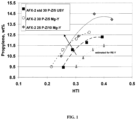
Fig. 1 : A plot of propylene yield vs. hydrogen transfer index for a non-exchanged system and two different magnesium-exchanged systems, as well as an estimated plot for a Lanthanum (RE) exchanged system at a constant conversion of 72 wt%. -
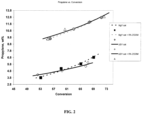
Fig. 2 : A plot of propylene yield versus conversion for two particle systems (not according to the invention), two of which are magnesium-exchanged systems (Mg-Y; Mg-Y and ZOOM, a ZSM-5 containing catalytic additive) and 2 systems analogous to the foregoing, but unexchanged. -
Fig. 3 : A plot of coke production versus catalyst-to-oil ratio for the systems referenced inFig. 2 . -
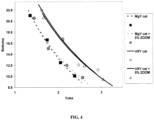
Fig. 4 : A plot of bottoms versus delta coke for the systems referenced inFig. 2 . - The invention is as disclosed in the appended claims. It is known that when a Y-zeolite FCC catalyst is modified with rare earth, the activity of the catalyst system will be increased, but the overall yield of propylene will be reduced.
- We have found that Y-zeolite substitution with a RE metal, such as magnesium, calcium or strontium, and most preferably magnesium, in a single particle system will yield more propylene than a USY-containing single particle system (see Example 1, which shows a higher propylene content at 73% conversion). Because the non-exchanged system yields more propylene at a constant conversion than a RE-exchanged system, it is also true that a NRE-exchanged system produces more propylene than a NRE-exchanged system, at equal conversion.
- Thus, Applicant has discovered that the use of a catalyst comprising a Y-zeolite exchanged with certain non-rare earth metals instead of rare-earth metals, can, when used in combination with a pentasil catalyst, increase the proportion of low molecular weight olefins relative to the use of Y-zeolites exchanged with rare earth metals. In particular, it has been found that Y-zeolites exchanged with magnesium, when used as cracking catalysts in combination with the pentasil type zeolite ZSM-5, can be used to produce surprisingly high proportions of propylene. The effect is particularly pronounced in the case of a single particle embodiment. Remarkably, with respect to a two particle embodiment, which is not according to the invention, NRE-exchanged systems produce less coke than RE-exchanged systems.
- In a first aspect, provided is a particulate FCC catalyst comprising:
- a) a non-rare earth-exchanged (NRE) Y-zeolite; and
- b) a ZSM-5 zeolite as stipulated in the appended
claim 1. - A non-rare earth-exchanged (NRE) Y-zeolite means a zeolite exchanged by a non-rare earth metal (as opposed to a non-metal element). The NRE metals are the alkali earth metals magnesium, calcium and strontium. More preferably, the NRE metal is magnesium. The exchange of the NRE metal is done by ion-exchange
- Both components are present as single composition particles.
- In a second aspect, provided is a process for producing propylene from petroleum fraction feedstocks including one or more of deep cut gas oil, vacuum gas oil, thermal oil, residual oil, cycle stock, whole top crude, tar sand oil, shale oil, synthetic fuel, heavy hydrocarbon fractions, including those derived from the destructive hydrogenation of coal, tar, pitches, asphalts, or hydrotreated feedstocks derived from any of the foregoing, said process comprising the steps of:
- a) providing an FCC catalyst composition of the present invention;
- b) contacting the FCC catalyst with said petroleum fraction feedstock at a temperature in the range of from 400 to 650°C, with a dwell time in the range of from 0.5 to 12 seconds, as defined in appended
claim 6. - In an embodiment, the invention comprises a process as above, wherein the FCC catalyst composition improves the yield of propylene with respect to a process conducted as above, except using unexchanged Y-zeolite instead of non-rare earth exchanged zeolite on a weight-for weight basis, wherein the processes are compared at a feedstock conversion in the range of about 40-90 weight percent conversion. The weight percent conversion is the weight percent of the feed which is converted into coke, gas and gasoline.
- The FCC catalyst comprises a zeolite and a matrix. The zeolite proportions are given in the appended
claim 1. The matrix is not expected to contribute significantly to the benefits of the inventive process. However, for both the one and two particle systems, the latter not being part of the invention, preferably the matrix comprises alumina (0-35 wt%, more preferably, 4.5-25 wt%), a silica sol (0-25 wt%, more preferably 5-20 wt%) with the balance being kaolin or other type of clay which is typically present in the range of 15-55 wt%, and more preferably, in the range of 20-45 wt%. with the balance being largely or essentially kaolin clay. - One catalytic component is preferably an ultrastabilized faujasite Y- or preferably a USY-type zeolite. Said catalytic component comprises a non-rare earth metal, present in its pores. In general, it is preferred that the NRE metal be magnesium. The magnesium is exchanged onto the zeolite by an ion exchange method using a magnesium-containing salt The amount of magnesium salt, measured as magnesium oxide (MgO) is preferably in the range of from 0.25 to 3.0 wt%, and more preferably in the range of 1.25 to 2.75 wt%. In other embodiments, the catalyst composition comprises at least one non-rare earth metal, where the total non-rare earth metal content is in the range of about 0.2 to about 3 wt% percent. While a small degree of RE substitution is permissible, the Y-zeolite is essentially RE metal-free. By "essentially RE metal-free", it is meant that the RE-metal content is less than about 0.15 wt% of the Y-zeolite.
- In an embodiment not according to the invention (separate particulate embodiment), the ZSM-5-type catalyst can be a commercially available ZSM-5-containing additive, such as ZOOM, available from Albemarle Corporation. ZOOM contains about 40 wt% zeolite in a alumina-silica-phosphate matrix.
- It is preferred that the catalytic particles have an average diameter in the range of about 30 microns to about 200 microns. More preferred is an average diameter in the range of about 60 microns to about 100 microns. The proportions of NRE-exchanged Y-zeolite mass to particle mass include ratios in the range of from about 5 to about 15 wt % Y-zeolite based upon the weight of the particulate. The proportions of ZSM-5 zeolite mass to particle mass are ratios in the range of from 10 to 35 wt % ZSM-5 zeolite based upon the weight of the particulate. The NRE-exchanged Y-zeolite and the ZSM-5 zeolite have a weight ratio in the range of 0.16 to 1.0 weight Y-zeolite to ZSM-5 zeolite. In an even more preferred embodiment, the NRE-exchanged Y-zeolite and the ZSM-5 zeolite have a weight ratio in the range of 0.16 to 0.4 weight Y-zeolite to ZSM-5 zeolite.
- It is preferred that the Y-zeolite and ZSM-5 particulate which is used to make the single particle have an average particulate diameter in the range of about 1.9 to about 3.0 microns, and about 1.3 to about 2.3 microns, respectively.
- Compounding zeolitic catalysts into particles is known in the art. A method outline of a convenient compounding follows. A USY-type zeolite is prepared. A NRE metal such as magnesium is then ion exchanged on to the zeolite to give a NRE Y-zeolite. The magnesium level on the zeolite, reported as MgO, can conveniently be in the range of 1.0 to 4 wt%, but the benefits of the invention may obtain outside the range. The Example below was performed with 1.6 wt% MgO. The NRE zeolite is then incorporated into a catalyst type particle with ZSM-5 zeolite. The Mg-USY zeolite is referred to herein as a one-particle system where if the ZSM-5 is present in the another particle, it is herein referred to as a two-particle system. (the latter not according to the invention).
- The physical properties of the one-particle system will be as with other FCC catalysts as known in the art, it should have proper attrition and ABD characteristics. The binding system of the catalyst can be silica or alumina type. The Table below is for a catalyst having an alumina binder; not all the chemical values are given where the amount of TiO2 and Fe2O3 coming from the kaolin have been omitted along with the SiO2 balance. All elements are reported as the oxides but are not necessarily found in that state in the catalytic composition.
TABLE AL2O3, wt% 50.81 51.94 Na2O, wt% 0.356 0.39 MgO, wt% 0.21 0.27 LOI (water content), wt% 16.52 17 SAMPLE PV (pore volume), cc 0.376 0.394 APS (average particle size), microns 70.84 72.9 Attrition index 2.25 2.15 SAMPLE ABD (apparent bulk density), g/cc 0.726 0.715 SA BET (surface area), m2/g 234.7114 250.3199 wt% P-ZSM-5 in particle 30 25 wt% Mg-Y in particle 5 10 - Referring to
Figure 1 , it should be noted that for a given yield of propylene, the hydrogen transfer index is higher in the lanthanum exchanged system than it is in the non-exchanged system, which is higher than the measured NRE magnesium-exchanged systems. Example 1 gives the result of a study at 72 wt% conversion with three different single particle systems. One of the systems (denoted on the graph by square points), is an unexchanged system having both Y-zeolite (5 wt% based on the weight of the particulate) and ZSM-5 zeolite (30 wt% based on the weight of the particulate). Two of the systems (denoted by circles and diamonds, respectively) contain 30 wt% ZSM-5 and 5 wt% magnesium-exchanged Y-zeolite; and 25 wt% ZSM-5 and 10 wt% magnesium-exchanged Y-zeolite; respectively. The magnesium-exchanged Y-zeolite contained magnesium in 1.9 wt%, based upon the weight of the Y-zeolite. It should be noted that despite the shift in Mg-Y and ZSM-5 exchanged Y-zeolite concentration, the NRE-exchanged catalysts had very similar effects on hydrogen transfer index (refer toFigure 1 , which shows a strong shift toward higher propylene yield, despite the fact that one zeolite concentration was raised significantly, and the other zeolite concentration was lowered) and propylene yield (refer to Example: 14.33 and 14.41, versus 13.75 for unexchanged system). Thus, it is expected that in the case of NRE exchanged, ZSM-5 containing catalyst systems, the effect increased propylene production at a given wt% conversion would hold over a wide range of component zeolite concentrations. - Referring to
Figure 2 , The Y-zeolites were used in with respect to two particle systems (i.e., systems in which the exchanged Y-catalyst and ZSM-5 catalyst are in separate particles and which is not part of the present invention) while the propylene yield may be lower than in the case of a single particle system, a reduction in the yield of coke at constant conversion was obtained with respect to an equivalent US-Y two particle system. As is known in the art, REY systems tend to produce more coke than USY systems and thus by, inference, MgY will have lower coke than a REY system at constant conversion.Figure 2 shows a plot of propylene yield versus conversion for a two particle system, two of which are magnesium-exchanged systems (Mg-Y; Mg-Y and ZOOM, a ZSM-5 containing catalytic additive) and 2 systems analogous to the foregoing, but unexchanged. The Y-zeolite components were used in 25 wt% (exchanged) and 25 wt% (unexchanged). The ZSM-5 component was used in 5 wt% of ZSM-5 additive particle which contains 40% ZSM-5. Note that, unlike the one particle system, the difference in propylene yield at a given wt% conversion between the exchanged systems and the non-exchanged systems is not pronounced. However, the coke production of the catalyst systems was significantly reduced with respect to the unexchanged systems. Referring toFigure 3 , the delta coke, an index of coke production is significantly lower for the exchanged systems than for the unexchanged systems. The difference is pronounced over a wide range of catalyst-to-oil ratios, and remains relatively unchanged despite that fact that the overall trend is toward lower delta coke with higher catalyst-to-oil ratios. Referring toFigure 4 , coke production as a percentage of bottoms is lower with magnesium exchanged systems than with unexchanged systems. Again, the difference is pronounced over a wide range of catalyst-to-oil ratios, and remains relatively unchanged despite that fact that the overall trend is toward lower delta coke with higher catalyst-to-oil ratios. - The present invention provides a process for the production of increased amounts of low molecular weight olefins, and in particular, propylene, via a catalytic cracking process (i.e., the conversion of long-chain or large-size hydrocarbon compounds to shorter-chain or smaller hydrocarbon compounds). A range of catalytic apparatus can be used with the inventive catalyst. Included are fluidized bed, fixed bed, transfer line, and moving bed. While any of the foregoing can be used, the inventive catalyst is preferably used in a fluidized bed system with a Fluidized Catalytic Cracking process, although a Thermofor Catalytic Process can also be used. The catalyst can be used in processes in which the feedstock flow is concurrent or countercurrent to the flow of the catalyst. The inventive catalyst is particularly useful in systems which comprise a catalyst regeneration module or other means for partially or fully restoring the usefulness of the catalyst once its usefulness has been reduced by the accumulation of coke or other process products.
- The process takes place at conditions known in the art to be suitable for catalytic cracking, i.e., at temperatures in the range of about 500 C to about 650 C, and pressures in the range of about atmospheric to about 5 atmospheres. In some cases, the pressure can be subatmospheric, as one of skill will recognize that petroleum fractions and mixtures which boil above temperatures at which thermal cracking could occur are preferably distilled under vacuum to promote vaporization.
- The hydrocarbon feedstocks mixture to be subjected to cracking can include deep cut gas oil, vacuum gas oil, thermal oil, residual oil, cycle stock, whole top crude, tar sand oil, shale oil, synthetic fuel, heavy hydrocarbon fractions, such as those derived from the destructive hydrogenation of coal, tar, pitches, asphalts, hydrotreated feedstocks derived from any of the foregoing, and the like. One of skill will recognize that petroleum fractions and mixtures which boil above temperatures at which thermal cracking could occur are preferably distilled under vacuum to promote vaporization.
- The process of the invention is particularly applicable to Fluid Catalytic Cracking (FCC). In the FCC process, the details of which are generally known, the catalyst, which is generally present as a fine particulate comprising over 90 wt% of the particles having diameters in the range of about 5 to about 300 microns, with a range of about 10 to about 200 microns more preferred (with the mean particle size about 65 to 95 microns), circulates between a cracking reactor and a regenerator. In the reactor portion, a hydrocarbon feedstock is gasified and directed upward through a reaction zone, such that the particulate catalyst is entrained and fluidized in the hydrocarbon feedstock stream. The hot catalyst, which is coming from the regenerator, reacts with the hydrocarbon feed which is vaporized and cracked by the catalyst. Typically temperatures in the reactor are 400-650C and the pressure can be under reduced, atmospheric or superatmospheric pressure, usually about atmospheric to about 5 atmospheres. The catalytic process can be either fixed bed, moving bed, or fluidized bed, and the hydrocarbon flow may be either concurrent or countercurrent to the catalyst flow. The process of the invention is also suitable for TCC (Thermofor catalytic cracking).
- The cracking process produces coke deposits on the catalyst, which deactivates the catalyst. The cracked products are separated from the coked catalyst and the products are typically further separated into gaseous and liquid fractions. The coked catalyst is typically stripped of any volatiles with steam and then sent to the regenerator. The regenerator burns the coke off the catalyst with gas containing some oxygen to assist restoration of the catalyst activity and to heat the catalyst for the cracking reaction. The components removed from the catalyst by stripping and catalyst regeneration inactivate the catalyst, and thus their removal is essential to continued use of the catalyst. Typical temperatures in the regenerator are 600-850C. The hot catalyst is then routed back to the reaction zone, where it is refluidized in the oncoming hydrocarbon stream, which can comprise, if desired, a portion of hydrocarbons which had previously contacted the catalyst, as well as hydrocarbons which are contacting the catalyst for the first time. The continuously incoming catalyst, which contains heat from the regeneration step, continuously supplies energy to the endothermic cracking reaction. In some units include the recirculation of the heavy gasoline or diesel fractions back to the unit to increase the LPG fraction.
- Prior to any lab testing the catalyst must be deactivated to simulate catalyst in a refinery unit, this is typically done with steam. These samples were deactivated with 100% steam at 788°C for 20 hours. The deactivation step is known in the art, and is necessary to catalytic activity. In commercial FCC setting, deactivation occurs shortly after catalyst introduction, and does not need to carried out as a separate step. The propylene yield at a given conversion with respect to a Fluidized Bed Simulation is essentially the same as that which would be given in commercial practice. The Fluid microactivity test, or Fluidized-bed Simulation Test (FST) is a test known and generally accepted in the art for ascertaining the FCC cracking activity of a catalyst. The test is conducted with a series of four catalyst-to-feed ratios (CTO) which are obtained by varying the mass of catalyst present in the reactor, while using the same feed rate for all runs. The testing apparatus simulates the cracking of a known amount of a hydrocarbon feedstock of known amount and compositional characteristics. This small scale testing unit is a once through unit and operated approximately as in ASTM 5154-10. The feed for both Examples below is characterized as in Table 1. The reactor is in a hot furnace and the catalyst is added directly to the reactor followed by the feed injection, as outlined below.
TABLE 1 Source Company Crown API 25.8 Spec. Gravity 60/15.6°C (60°F) 0.8998 Total Sulfur, wt% 0.6439 Total Nitrogen, ppmw 1153 Basic Nitrogen, ppmw 342 Conradson Carbon, wt% 0.14 Aniline Point °C (°F) 86.83 (188.3) Refractive Index 1.5000 Na, ppmw 1.0 Ni, ppmw 0.70 V, ppmw 0.06 Fe, ppmw 0.08 Cu, ppmw 0.05 Distillation by D-1160 (or Simdis) D-1160 vol% vol% IBP 442 5 557 10 608 20 667 30 705 40 740 50 778 60 819 70 855 80 889 90 953 95 1002 EP 1042 Recovery% 98.5 Residue % 1.5 Viscosity @ 50°C (122 F) (CST) Viscosity @ 98.9°C (210F) (CST) 5.00 Viscosity @ 263.6°C (506.4F) (CST) Molecular Weight 364 API Procedure 2B4.1, %Cp 55.6 %Cn 28.0 %Ca 16.4 Molecular Weight 386.8 n-d-m Method, %Cp 61.1 %Cn 22.2 %Ca 16.7 %Total Cr 38.9 Watson K 11.92 - Three single particle, two component catalyst formulations were tested. The catalyst to oil ratio was varied by using four different catalyst amounts (0.5, 6.0, 7.5 and 9.0 grams) of each catalyst. The Y-zeolite was exchanged with magnesium at about 1.9 wt % magnesium substitution based upon the weight of the Y-zeolite. The average particle size was about 75 microns.
- In two samples, the magnesium-exchanged Y-zeolite content was about 5 and 10 wt%, respectively (based upon the weight of the particulate), and a ZSM-5 zeolite content of 30 and 25 wt%, respectively (based upon the weight of the particulate). In another sample, the sample catalyst formulation contained an unexchanged Y-zeolite (US-Y) having a wt% of about 5 (based upon the weight of the particulate), and a ZSM-5 zeolite content of 30 wt%, (based upon the weight of the particulate).
- The particulate was loaded into the FST unit. The reaction temperature was fixed at 537 °C. 1.5 grams of a hydrocarbon feed having the characteristics as listed in Table I are injected at a rate of 1.5 grams per minute. The gas and liquid products were collected and their component proportions were analyzed by GC. The weight percent conversion is the weight percent of the feed which is converted into coke, gas and gasoline. For each formulation, the catalyst-to-oil ratio was plotted against conversion, and the three formulations were compared at a conversion of 72 weight percent conversion. The results are given in Table 2.
-
TABLE 2 AFX-2 std with USY not part of the present invention AFX-2 30 P-Z/ 5Mg-Y AFX-2 25 P-Z/ 10mg-Y Conversion, wt% 72.000 72.000 72.000 Conv./(100-Conv.) 2.571 2.571 2.571 Catalyst-to-Oil wt/wt 7.627 7.603 5.712 Delta Coke, wt% 0.513 0.471 0.513 YIELDS, WT% Coke 3.91 3.58 2.93 Dry gas 7.28 7.32 6.04 Hydrogen 0.30 0.29 0.20 Hydrogen sulfide 0.34 0.47 0.34 Methane 0.81 0.78 0.67 Ethane 0.74 0.69 0.58 Ethylene 5.1 5.1 4.3 Propane 6.03 5.32 4.21 Propylene 13.75 14.33 14.41 n-Butane 2.39 2.19 1.87 Isobutane 4.89 4.70 4.89 C4 Olefins 10.76 11.31 11.93 LPG 37.81 37.85 37.31 Gasoline 23.00 23.25 25.71 LCO 16.40 16.72 16.09 Bottoms 11.60 11.28 11.91 Total 100 100 100 i-C4/C4= (HTI) 0.4543 0.4156 0.4097 - The catalyst-to-oil ratio was varied by performing four runs using four different catalyst amounts. About 4.5, 6.0, 7.5 and 9.0 grams of a two particle, two component catalyst were used in the four runs.
- In two runs, the catalyst was composed of 95 wt % and 100 wt%, respectively (based upon the weight of the total particulate) of a particulate containing magnesium exchanged-Y-zeolite. The Y-zeolite was exchanged with magnesium at 1.9 wt% based on the weight of the Y-zeolite, and the Y-zeolite-containing particulate contained 25 wt% of the Mg-exchanged Y-zeolite. in one of the runs, the remainder of the two-particle blend (5 wt% based on the total weight of the total particulate) consisted of a ZSM-5 containing particulate (ZOOM) which was 40 wt% ZSM-5.
- In the remaining two runs, the catalyst formulations were as in the first two runs, except that the Y-zeolite was unexchanged.
- The Y-zeolite-containing particulate (exchanged or unexchanged) had an average particle size of about 75 microns, and the ZSM-5-containing particulate had an average particle size of about 85 microns. The overall average particle size was approximately about 75 microns. The reaction temperature was fixed at 537°C. 1.5 Grams of a hydrocarbon feed having the characteristics as listed in Table I are injected at a rate of 1.5 grams per minute. The gas and liquid products were collected and their component proportions were analyzed by GC. The weight percent conversion is the weight percent of the feed which is converted into coke, gas and gasoline:

- For each formulation, the catalyst-to-oil ratio was plotted against conversion, and the four formulations were compared at a conversion of 65 weight percent conversion. The results are given in Table 3.
- The weight of the coke on the catalyst is measured by removing the catalyst from the reactor after the reaction and subjecting it to analysis by a LECO™ carbon analyzer.
- The feed was a CROWN VGO feed and Table 1 shows the properties of this feed. The results are given in Table 2.
-
TABLE 3 MgY cat not part of the present invention MgY cat + 5% ZOOM USY cat not part of the present invention USY cat + 5% ZOOM not part of the present invention Conversion, wt% 65.000 65.000 65.000 65.000 Catalyst-to-Oil wt/wt 4.994 4.414 5.029 4.489 Delta Coke, wt% 0.412 0.446 0.499 0.525 YIELDS, WT% Coke 2.06 1.97 2.51 2.35 Dry gas 2.24 3.63 2.44 3.93 Hydrogen 0.18 0.16 0.19 0.20 Hydrogen sulfide 0.34 0.34 0.34 0.34 Methane 0.67 0.66 0.73 0.72 Ethane 0.45 0.44 0.53 0.52 Ethylene 0.61 2.02 0.65 2.16 Propane 0.92 1.83 0.89 1.94 Propylene 5.91 11.35 5.50 11.48 n-Butane 0.63 0.98 0.67 0.99 Isobutane 3.11 3.32 2.57 3.01 C4 Olefins 7.75 11.03 7.64 11.00 Gasoline 42.38 30.89 42.79 30.30 LCO 21.44 20.21 21.21 20.17 Bottoms 13.56 14.79 13.79 14.83 Total 100 100 100 100 - As used herein, the term "about" modifying the quantity of an ingredient in the compositions of the invention or employed in the methods of the invention refers to variation in the numerical quantity that can occur, for example, through typical measuring and liquid handling procedures used for making concentrates or use solutions in the real world; through inadvertent error in these procedures; through differences in the manufacture, source, or purity of the ingredients employed to make the compositions or carry out the methods; and the like. The term about also encompasses amounts that differ due to different equilibrium conditions for a composition resulting from a particular initial mixture.
- Except as may be expressly otherwise indicated, the article "a" or "an" if and as used herein is not intended to limit, and should not be construed as limiting, the description or a claim to a single element to which the article refers. Rather, the article "a" or "an" if and as used herein is intended to cover one or more such elements, unless the text expressly indicates otherwise.
Claims (7)
- An FCC catalyst composition comprising a particulate, said particulate comprising a matrix and non-rare earth metal exchanged Y-zeolite and ZSM-5 zeolite,wherein said catalyst composition comprises particles in which said Y-zeolite and ZSM-5 are present in the same particle, wherein the non-rare earth metal exchanged Y-zeolite is in an amount in the range of 5 to 15 wt%, based upon the weight of the particulate, and the ZSM-5 is in an amount in the range of 10 to 35 wt%, based upon the weight of the particulate and wherein the non-rare earth metal exchanged Y-zeolite and the ZSM-5 zeolite are in a weight ratio in the range of 0.16 to 1.0 weight Y-zeolite to ZSM-5 zeolite,wherein the non-rare earth metal is magnesium, calcium, or strontium andwherein the rare earth metal content is less than 0.15 wt%.
- An FCC catalyst composition as in claims 1 wherein said non rare earth metal comprises magnesium.
- An FCC catalyst composition as in claims 1 or 2 wherein said FCC catalyst composition is prepared by a process comprising magnesium/hydrogen ion exchange with an unexchanged Y-zeolite.
- An FCC catalyst composition as in claim 1 wherein the non-rare earth exchanged Y - zeolite and the ZSM-5 zeolite are used in a weight ratio in the range of 0.16 to 0.4 part Y - zeolite per part ZSM-5 zeolite.
- A FCC catalyst composition as in claims 1 to 4, wherein the matrix comprises an amount of alumina in the range of 0 to 35 wt %, an amount of silica sol in the range of 0 to 25 wt%, and the remaining balance being clay.
- A process for producing propylene from a petroleum fraction feedstock, said process comprising the steps of:a) providing an FCC catalyst composition according to any of the preceding claims;b) contacting the FCC particulate catalyst composition with the petroleum fraction feedstock, at one or more temperatures in the range of 400 to 650°C, with a dwell time in the range of 0.5 to 12 seconds.
- A process as in claim 6 wherein contacting in b) takes place in a fluidized bed reactor.
Applications Claiming Priority (2)
| Application Number | Priority Date | Filing Date | Title |
|---|---|---|---|
| US201261740948P | 2012-12-21 | 2012-12-21 | |
| PCT/EP2013/077509 WO2014096267A1 (en) | 2012-12-21 | 2013-12-19 | Modified y-zeolite/zsm-5 catalyst for increased propylene production |
Publications (2)
| Publication Number | Publication Date |
|---|---|
| EP2919907A1 EP2919907A1 (en) | 2015-09-23 |
| EP2919907B1 true EP2919907B1 (en) | 2023-12-06 |
Family
ID=49880783
Family Applications (1)
| Application Number | Title | Priority Date | Filing Date |
|---|---|---|---|
| EP13811955.7A Active EP2919907B1 (en) | 2012-12-21 | 2013-12-19 | Modified y-zeolite/zsm-5 catalyst for increased propylene production |
Country Status (7)
| Country | Link |
|---|---|
| US (2) | US10173206B2 (en) |
| EP (1) | EP2919907B1 (en) |
| JP (1) | JP6404228B2 (en) |
| CN (2) | CN104981290A (en) |
| BR (1) | BR112015014318B8 (en) |
| CA (1) | CA2893459C (en) |
| WO (1) | WO2014096267A1 (en) |
Families Citing this family (2)
| Publication number | Priority date | Publication date | Assignee | Title |
|---|---|---|---|---|
| US11278869B2 (en) | 2017-08-25 | 2022-03-22 | Hindustan Petroleum Corporation Ltd. | Fluid catalytic cracking (FCC) process and apparatus for production of light olefins |
| CN119972168B (en) * | 2023-11-10 | 2026-01-20 | 中国石油天然气集团有限公司 | Y/ZSM-5 composite molecular sieve, preparation method thereof and catalytic cracking catalyst |
Family Cites Families (38)
| Publication number | Priority date | Publication date | Assignee | Title |
|---|---|---|---|---|
| US3758403A (en) * | 1970-10-06 | 1973-09-11 | Mobil Oil | Olites catalytic cracking of hydrocarbons with mixture of zsm-5 and other ze |
| US4191638A (en) * | 1972-06-13 | 1980-03-04 | Mobil Oil Corporation | Reforming catalysts |
| US4289606A (en) * | 1979-05-31 | 1981-09-15 | Exxon Research & Engineering Co. | Hydrocarbon cracking with mixture of zeolites Y and ZSM-5 |
| US4309280A (en) * | 1980-07-18 | 1982-01-05 | Mobil Oil Corporation | Promotion of cracking catalyst octane yield performance |
| US4340465A (en) * | 1980-09-29 | 1982-07-20 | Chevron Research Company | Dual component crystalline silicate cracking catalyst |
| US4927523A (en) * | 1988-12-12 | 1990-05-22 | Mobil Oil Corporation | Addition of shape selective zeolites to catalytic cracking units |
| US4994424A (en) * | 1989-11-06 | 1991-02-19 | Mobil Oil Corporation | Catalytic cracking process with improved flow in swirl regenerator |
| US5366948A (en) | 1991-03-12 | 1994-11-22 | Mobil Oil Corp. | Catalyst and catalytic conversion therewith |
| US5302567A (en) * | 1991-11-04 | 1994-04-12 | W. R. Grace & Co.-Conn. | Zeolite octane additive |
| US5997728A (en) * | 1992-05-04 | 1999-12-07 | Mobil Oil Corporation | Catalyst system for maximizing light olefin yields in FCC |
| US5254785A (en) | 1992-06-09 | 1993-10-19 | Exxon Chemical Patents Inc. | Production of olefins |
| US5935551A (en) * | 1995-11-15 | 1999-08-10 | California Institute Of Technology | Synthesis of zeolites by hydrothermal reaction of zeolite P1 |
| NO319519B1 (en) | 1997-10-15 | 2005-08-22 | Res Inst Petroleum Processing | Process for Preparation of Ethylene and Propylene by Catalytic Pyrolysis of Heavy Hydrocarbons |
| CN1081218C (en) * | 1998-09-17 | 2002-03-20 | 中国石油化工集团公司 | Preparation of petroleum cracking catalyst |
| EP1116775A1 (en) * | 2000-01-12 | 2001-07-18 | Akzo Nobel N.V. | Catalyst composition with high efficiency for the production of light olefins |
| US6685897B1 (en) * | 2000-01-06 | 2004-02-03 | The Regents Of The University Of California | Highly-basic large-pore zeolite catalysts for NOx reduction at low temperatures |
| CN1223403C (en) * | 2000-07-19 | 2005-10-19 | 中国石油天然气股份有限公司兰州炼化分公司 | Heavy metal-resistant matrix-type cracking catalyst and its preparing process |
| EP1264635A1 (en) * | 2001-06-05 | 2002-12-11 | Akzo Nobel N.V. | Process for the production of catalysts with improved accessibility |
| US6858556B2 (en) * | 2002-02-25 | 2005-02-22 | Indian Oil Corporation Limited | Stabilized dual zeolite single particle catalyst composition and a process thereof |
| US20070060780A1 (en) | 2002-08-29 | 2007-03-15 | Dennis Stamires | Catalyst for the production of light olefins |
| CN1267531C (en) * | 2003-06-30 | 2006-08-02 | 中国石油化工股份有限公司 | Hydrocarbon oil cracking process for productive low carbon olefin |
| US8084383B2 (en) * | 2004-03-16 | 2011-12-27 | W.R. Grace & Co.-Conn. | Gasoline sulfur reduction catalyst for fluid catalytic cracking process |
| TWI277648B (en) | 2004-07-29 | 2007-04-01 | China Petrochemical Technology | A cracking catalyst for hydrocarbons and its preparation |
| TWM261738U (en) * | 2004-09-09 | 2005-04-11 | Tatung Co | Computer server |
| TWI379711B (en) * | 2004-11-05 | 2012-12-21 | Grace W R & Co | Catalyst for light olefins and lpg in fluidized catalytic cracking units |
| WO2006067104A1 (en) | 2004-12-20 | 2006-06-29 | Shell Internationale Research Maatschappij B.V. | Gasoline cracking |
| CN100509161C (en) * | 2005-04-29 | 2009-07-08 | 中国石油化工股份有限公司 | Petroleum hydrocabon cracking catalyst and production thereof |
| ES2730002T3 (en) * | 2005-06-29 | 2019-11-07 | Grace W R & Co | Pentayl catalyst for light olefins in fluidized catalytic units |
| CN101134172B (en) * | 2006-08-31 | 2010-10-27 | 中国石油化工股份有限公司 | A hydrocarbon conversion catalyst |
| US9764314B2 (en) * | 2006-11-07 | 2017-09-19 | Saudi Arabian Oil Company | Control of fluid catalytic cracking process for minimizing additive usage in the desulfurization of petroleum feedstocks |
| CN101279287B (en) * | 2007-04-04 | 2011-07-13 | 中国石油化工股份有限公司 | Catalyst for producing olefin hydrocarbon by catalytic pyrolysis |
| DK2184335T3 (en) | 2007-08-09 | 2021-06-07 | China Petroleum & Chem Corp | PROCEDURE FOR CATALYTIC TRANSFORMATION |
| CA2711392C (en) | 2008-01-09 | 2017-02-07 | China Petroleum & Chemical Corporation | Catalyst for converting inferior acid-containing crude oil, process for manufacturing the same, and application thereof |
| KR101065972B1 (en) * | 2008-08-26 | 2011-09-19 | 에스케이 텔레콤주식회사 | Transmission Bandwidth Measurement System and Method for Media Streaming |
| CN102215958A (en) * | 2008-09-15 | 2011-10-12 | 环球油品马来西亚有限公司 | Enhancing Propylene Yield and Decreasing Catalytic Cracking of Benzene Naphtha Fraction |
| WO2013005225A1 (en) * | 2011-07-06 | 2013-01-10 | Reliance Industries Ltd. | Process and composition of catalyst/ additive for reducing fuel gas yield in fluid catalytic cracking (fcc) process |
| EP2814913A1 (en) * | 2012-02-14 | 2014-12-24 | Reliance Industries Limited | A process for catalytic conversion of low value hydrocarbon streams to light olefins |
| TWI568495B (en) * | 2012-09-14 | 2017-02-01 | 中國石油化工科技開發有限公司 | Catalytic cracking catalyst with rare earth Y type molecular sieve and preparation method thereof |
-
2013
- 2013-12-19 CN CN201380066061.1A patent/CN104981290A/en active Pending
- 2013-12-19 WO PCT/EP2013/077509 patent/WO2014096267A1/en not_active Ceased
- 2013-12-19 EP EP13811955.7A patent/EP2919907B1/en active Active
- 2013-12-19 JP JP2015548598A patent/JP6404228B2/en active Active
- 2013-12-19 BR BR112015014318A patent/BR112015014318B8/en active IP Right Grant
- 2013-12-19 CA CA2893459A patent/CA2893459C/en active Active
- 2013-12-19 US US14/647,989 patent/US10173206B2/en active Active
- 2013-12-19 CN CN202010992756.4A patent/CN112237943A/en active Pending
-
2018
- 2018-11-27 US US16/201,237 patent/US10953391B2/en active Active
Also Published As
| Publication number | Publication date |
|---|---|
| JP6404228B2 (en) | 2018-10-10 |
| BR112015014318B8 (en) | 2020-07-14 |
| EP2919907A1 (en) | 2015-09-23 |
| CA2893459C (en) | 2021-03-16 |
| US10173206B2 (en) | 2019-01-08 |
| WO2014096267A1 (en) | 2014-06-26 |
| CN104981290A (en) | 2015-10-14 |
| US20150298107A1 (en) | 2015-10-22 |
| JP2016505369A (en) | 2016-02-25 |
| US10953391B2 (en) | 2021-03-23 |
| CA2893459A1 (en) | 2014-06-26 |
| US20190091669A1 (en) | 2019-03-28 |
| BR112015014318B1 (en) | 2020-02-11 |
| BR112015014318A2 (en) | 2018-05-15 |
| CN112237943A (en) | 2021-01-19 |
Similar Documents
| Publication | Publication Date | Title |
|---|---|---|
| KR102385316B1 (en) | Framework substituted zeolite catalyst for fluidized catalytic cracking and method for fluidized catalytic cracking | |
| US5326465A (en) | Process for the production of LPG rich in olefins and high quality gasoline | |
| US4624771A (en) | Fluid catalytic cracking of vacuum residuum oil | |
| CA2586516C (en) | Catalyst for light olefins and lpg in fluidized catalytic units | |
| KR101926200B1 (en) | High light olefins fcc catalyst compositions | |
| EP2855012B1 (en) | Catalyst for enhanced propylene in fluidized catalytic cracking | |
| KR101566185B1 (en) | Catalyst for fluid catalytic cracking of hydrocarbon oil and method of fluid catalytic cracking of hydrocarbon oil with the same | |
| US20120222991A1 (en) | Novel cracking catalytic compositions | |
| EP2821462B1 (en) | Additives for the maximization of light olefins in fluid catalytic cracking units, and process | |
| US10130943B2 (en) | Catalyst composition for fluid catalytic cracking, process for preparing the same and use thereof | |
| CN101213269B (en) | Five-membered ring silicalite catalysts for light olefins in fluidized catalytic units | |
| WO2002018045A1 (en) | Crystalline microporous oxide catalysts having increased lewis acidity and methods for the preparation thereof | |
| AU2001285090A1 (en) | Crystalline microporous oxide catalysts having increased lewis acidity and methods for the preparation thereof | |
| CN101755036A (en) | Catalytic cracking process for high diesel yield and/or high propylene yield with low aromatics content | |
| US10953391B2 (en) | Modified Y-zeolite/ZSM-5 catalyst for increased propylene production | |
| EP1377374B1 (en) | Zeolite based catalyst of ultra-high kinetic conversion activity | |
| CN114390947A (en) | Fluid cracking process for increasing olefin yield and catalyst composition therefor | |
| US11111443B2 (en) | Process and zeolitic catalyst for the catalytic cracking of unconventional light crude oil type shale/tight oil and its blends with vacuum gas oil | |
| SA116370868B1 (en) | Composition and Process for Preparation of Cracking Catalyst Suitable for Enhancing Yields of Light Olefins | |
| US4923593A (en) | Cracking catalyst and catalytic cracking process | |
| US6482313B1 (en) | FCC process incorporating crystalline microporous oxide catalysts having increased Lewis acidity | |
| JP2007181777A (en) | Hydrocarbon oil catalytic cracking catalyst and hydrocarbon oil catalytic cracking method | |
| US11866651B1 (en) | Process and catalyst formulation for cracking crude oil | |
| US11866660B1 (en) | Process and catalyst formulation for cracking crude oil | |
| HK40073242A (en) | Fluidized cracking process for increasing olefin yield and catalyst composition for same |
Legal Events
| Date | Code | Title | Description |
|---|---|---|---|
| PUAI | Public reference made under article 153(3) epc to a published international application that has entered the european phase |
Free format text: ORIGINAL CODE: 0009012 |
|
| 17P | Request for examination filed |
Effective date: 20150615 |
|
| AK | Designated contracting states |
Kind code of ref document: A1 Designated state(s): AL AT BE BG CH CY CZ DE DK EE ES FI FR GB GR HR HU IE IS IT LI LT LU LV MC MK MT NL NO PL PT RO RS SE SI SK SM TR |
|
| AX | Request for extension of the european patent |
Extension state: BA ME |
|
| DAX | Request for extension of the european patent (deleted) | ||
| STAA | Information on the status of an ep patent application or granted ep patent |
Free format text: STATUS: EXAMINATION IS IN PROGRESS |
|
| 17Q | First examination report despatched |
Effective date: 20181204 |
|
| P01 | Opt-out of the competence of the unified patent court (upc) registered |
Effective date: 20230523 |
|
| GRAP | Despatch of communication of intention to grant a patent |
Free format text: ORIGINAL CODE: EPIDOSNIGR1 |
|
| STAA | Information on the status of an ep patent application or granted ep patent |
Free format text: STATUS: GRANT OF PATENT IS INTENDED |
|
| INTG | Intention to grant announced |
Effective date: 20230707 |
|
| GRAS | Grant fee paid |
Free format text: ORIGINAL CODE: EPIDOSNIGR3 |
|
| GRAA | (expected) grant |
Free format text: ORIGINAL CODE: 0009210 |
|
| STAA | Information on the status of an ep patent application or granted ep patent |
Free format text: STATUS: THE PATENT HAS BEEN GRANTED |
|
| AK | Designated contracting states |
Kind code of ref document: B1 Designated state(s): AL AT BE BG CH CY CZ DE DK EE ES FI FR GB GR HR HU IE IS IT LI LT LU LV MC MK MT NL NO PL PT RO RS SE SI SK SM TR |
|
| REG | Reference to a national code |
Ref country code: GB Ref legal event code: FG4D |
|
| REG | Reference to a national code |
Ref country code: CH Ref legal event code: EP |
|
| REG | Reference to a national code |
Ref country code: DE Ref legal event code: R096 Ref document number: 602013085028 Country of ref document: DE |
|
| REG | Reference to a national code |
Ref country code: IE Ref legal event code: FG4D |
|
| REG | Reference to a national code |
Ref country code: NL Ref legal event code: FP |
|
| REG | Reference to a national code |
Ref country code: LT Ref legal event code: MG9D |
|
| PG25 | Lapsed in a contracting state [announced via postgrant information from national office to epo] |
Ref country code: GR Free format text: LAPSE BECAUSE OF FAILURE TO SUBMIT A TRANSLATION OF THE DESCRIPTION OR TO PAY THE FEE WITHIN THE PRESCRIBED TIME-LIMIT Effective date: 20240307 |
|
| PG25 | Lapsed in a contracting state [announced via postgrant information from national office to epo] |
Ref country code: LT Free format text: LAPSE BECAUSE OF FAILURE TO SUBMIT A TRANSLATION OF THE DESCRIPTION OR TO PAY THE FEE WITHIN THE PRESCRIBED TIME-LIMIT Effective date: 20231206 |
|
| PG25 | Lapsed in a contracting state [announced via postgrant information from national office to epo] |
Ref country code: ES Free format text: LAPSE BECAUSE OF FAILURE TO SUBMIT A TRANSLATION OF THE DESCRIPTION OR TO PAY THE FEE WITHIN THE PRESCRIBED TIME-LIMIT Effective date: 20231206 |
|
| PG25 | Lapsed in a contracting state [announced via postgrant information from national office to epo] |
Ref country code: LT Free format text: LAPSE BECAUSE OF FAILURE TO SUBMIT A TRANSLATION OF THE DESCRIPTION OR TO PAY THE FEE WITHIN THE PRESCRIBED TIME-LIMIT Effective date: 20231206 Ref country code: GR Free format text: LAPSE BECAUSE OF FAILURE TO SUBMIT A TRANSLATION OF THE DESCRIPTION OR TO PAY THE FEE WITHIN THE PRESCRIBED TIME-LIMIT Effective date: 20240307 Ref country code: ES Free format text: LAPSE BECAUSE OF FAILURE TO SUBMIT A TRANSLATION OF THE DESCRIPTION OR TO PAY THE FEE WITHIN THE PRESCRIBED TIME-LIMIT Effective date: 20231206 Ref country code: BG Free format text: LAPSE BECAUSE OF FAILURE TO SUBMIT A TRANSLATION OF THE DESCRIPTION OR TO PAY THE FEE WITHIN THE PRESCRIBED TIME-LIMIT Effective date: 20240306 |
|
| REG | Reference to a national code |
Ref country code: AT Ref legal event code: MK05 Ref document number: 1637893 Country of ref document: AT Kind code of ref document: T Effective date: 20231206 |
|
| PG25 | Lapsed in a contracting state [announced via postgrant information from national office to epo] |
Ref country code: SE Free format text: LAPSE BECAUSE OF FAILURE TO SUBMIT A TRANSLATION OF THE DESCRIPTION OR TO PAY THE FEE WITHIN THE PRESCRIBED TIME-LIMIT Effective date: 20231206 Ref country code: RS Free format text: LAPSE BECAUSE OF FAILURE TO SUBMIT A TRANSLATION OF THE DESCRIPTION OR TO PAY THE FEE WITHIN THE PRESCRIBED TIME-LIMIT Effective date: 20231206 Ref country code: NO Free format text: LAPSE BECAUSE OF FAILURE TO SUBMIT A TRANSLATION OF THE DESCRIPTION OR TO PAY THE FEE WITHIN THE PRESCRIBED TIME-LIMIT Effective date: 20240306 Ref country code: LV Free format text: LAPSE BECAUSE OF FAILURE TO SUBMIT A TRANSLATION OF THE DESCRIPTION OR TO PAY THE FEE WITHIN THE PRESCRIBED TIME-LIMIT Effective date: 20231206 Ref country code: HR Free format text: LAPSE BECAUSE OF FAILURE TO SUBMIT A TRANSLATION OF THE DESCRIPTION OR TO PAY THE FEE WITHIN THE PRESCRIBED TIME-LIMIT Effective date: 20231206 |
|
| PG25 | Lapsed in a contracting state [announced via postgrant information from national office to epo] |
Ref country code: IS Free format text: LAPSE BECAUSE OF FAILURE TO SUBMIT A TRANSLATION OF THE DESCRIPTION OR TO PAY THE FEE WITHIN THE PRESCRIBED TIME-LIMIT Effective date: 20240406 |
|
| PG25 | Lapsed in a contracting state [announced via postgrant information from national office to epo] |
Ref country code: CZ Free format text: LAPSE BECAUSE OF FAILURE TO SUBMIT A TRANSLATION OF THE DESCRIPTION OR TO PAY THE FEE WITHIN THE PRESCRIBED TIME-LIMIT Effective date: 20231206 Ref country code: AT Free format text: LAPSE BECAUSE OF FAILURE TO SUBMIT A TRANSLATION OF THE DESCRIPTION OR TO PAY THE FEE WITHIN THE PRESCRIBED TIME-LIMIT Effective date: 20231206 |
|
| PG25 | Lapsed in a contracting state [announced via postgrant information from national office to epo] |
Ref country code: SK Free format text: LAPSE BECAUSE OF FAILURE TO SUBMIT A TRANSLATION OF THE DESCRIPTION OR TO PAY THE FEE WITHIN THE PRESCRIBED TIME-LIMIT Effective date: 20231206 |
|
| PG25 | Lapsed in a contracting state [announced via postgrant information from national office to epo] |
Ref country code: SM Free format text: LAPSE BECAUSE OF FAILURE TO SUBMIT A TRANSLATION OF THE DESCRIPTION OR TO PAY THE FEE WITHIN THE PRESCRIBED TIME-LIMIT Effective date: 20231206 Ref country code: SK Free format text: LAPSE BECAUSE OF FAILURE TO SUBMIT A TRANSLATION OF THE DESCRIPTION OR TO PAY THE FEE WITHIN THE PRESCRIBED TIME-LIMIT Effective date: 20231206 Ref country code: RO Free format text: LAPSE BECAUSE OF FAILURE TO SUBMIT A TRANSLATION OF THE DESCRIPTION OR TO PAY THE FEE WITHIN THE PRESCRIBED TIME-LIMIT Effective date: 20231206 Ref country code: IT Free format text: LAPSE BECAUSE OF FAILURE TO SUBMIT A TRANSLATION OF THE DESCRIPTION OR TO PAY THE FEE WITHIN THE PRESCRIBED TIME-LIMIT Effective date: 20231206 Ref country code: IS Free format text: LAPSE BECAUSE OF FAILURE TO SUBMIT A TRANSLATION OF THE DESCRIPTION OR TO PAY THE FEE WITHIN THE PRESCRIBED TIME-LIMIT Effective date: 20240406 Ref country code: EE Free format text: LAPSE BECAUSE OF FAILURE TO SUBMIT A TRANSLATION OF THE DESCRIPTION OR TO PAY THE FEE WITHIN THE PRESCRIBED TIME-LIMIT Effective date: 20231206 Ref country code: CZ Free format text: LAPSE BECAUSE OF FAILURE TO SUBMIT A TRANSLATION OF THE DESCRIPTION OR TO PAY THE FEE WITHIN THE PRESCRIBED TIME-LIMIT Effective date: 20231206 Ref country code: AT Free format text: LAPSE BECAUSE OF FAILURE TO SUBMIT A TRANSLATION OF THE DESCRIPTION OR TO PAY THE FEE WITHIN THE PRESCRIBED TIME-LIMIT Effective date: 20231206 |
|
| REG | Reference to a national code |
Ref country code: CH Ref legal event code: PL |
|
| PG25 | Lapsed in a contracting state [announced via postgrant information from national office to epo] |
Ref country code: PT Free format text: LAPSE BECAUSE OF FAILURE TO SUBMIT A TRANSLATION OF THE DESCRIPTION OR TO PAY THE FEE WITHIN THE PRESCRIBED TIME-LIMIT Effective date: 20240408 Ref country code: PL Free format text: LAPSE BECAUSE OF FAILURE TO SUBMIT A TRANSLATION OF THE DESCRIPTION OR TO PAY THE FEE WITHIN THE PRESCRIBED TIME-LIMIT Effective date: 20231206 |
|
| PG25 | Lapsed in a contracting state [announced via postgrant information from national office to epo] |
Ref country code: LU Free format text: LAPSE BECAUSE OF NON-PAYMENT OF DUE FEES Effective date: 20231219 |
|
| REG | Reference to a national code |
Ref country code: BE Ref legal event code: MM Effective date: 20231231 |
|
| PG25 | Lapsed in a contracting state [announced via postgrant information from national office to epo] |
Ref country code: PT Free format text: LAPSE BECAUSE OF FAILURE TO SUBMIT A TRANSLATION OF THE DESCRIPTION OR TO PAY THE FEE WITHIN THE PRESCRIBED TIME-LIMIT Effective date: 20240408 Ref country code: PL Free format text: LAPSE BECAUSE OF FAILURE TO SUBMIT A TRANSLATION OF THE DESCRIPTION OR TO PAY THE FEE WITHIN THE PRESCRIBED TIME-LIMIT Effective date: 20231206 Ref country code: LU Free format text: LAPSE BECAUSE OF NON-PAYMENT OF DUE FEES Effective date: 20231219 |
|
| REG | Reference to a national code |
Ref country code: DE Ref legal event code: R097 Ref document number: 602013085028 Country of ref document: DE |
|
| PG25 | Lapsed in a contracting state [announced via postgrant information from national office to epo] |
Ref country code: MC Free format text: LAPSE BECAUSE OF FAILURE TO SUBMIT A TRANSLATION OF THE DESCRIPTION OR TO PAY THE FEE WITHIN THE PRESCRIBED TIME-LIMIT Effective date: 20231206 |
|
| REG | Reference to a national code |
Ref country code: IE Ref legal event code: MM4A |
|
| PG25 | Lapsed in a contracting state [announced via postgrant information from national office to epo] |
Ref country code: IE Free format text: LAPSE BECAUSE OF NON-PAYMENT OF DUE FEES Effective date: 20231219 |
|
| PG25 | Lapsed in a contracting state [announced via postgrant information from national office to epo] |
Ref country code: DK Free format text: LAPSE BECAUSE OF FAILURE TO SUBMIT A TRANSLATION OF THE DESCRIPTION OR TO PAY THE FEE WITHIN THE PRESCRIBED TIME-LIMIT Effective date: 20231206 |
|
| PLBE | No opposition filed within time limit |
Free format text: ORIGINAL CODE: 0009261 |
|
| STAA | Information on the status of an ep patent application or granted ep patent |
Free format text: STATUS: NO OPPOSITION FILED WITHIN TIME LIMIT |
|
| PG25 | Lapsed in a contracting state [announced via postgrant information from national office to epo] |
Ref country code: BE Free format text: LAPSE BECAUSE OF NON-PAYMENT OF DUE FEES Effective date: 20231231 |
|
| PG25 | Lapsed in a contracting state [announced via postgrant information from national office to epo] |
Ref country code: CH Free format text: LAPSE BECAUSE OF NON-PAYMENT OF DUE FEES Effective date: 20231231 |
|
| PG25 | Lapsed in a contracting state [announced via postgrant information from national office to epo] |
Ref country code: SI Free format text: LAPSE BECAUSE OF FAILURE TO SUBMIT A TRANSLATION OF THE DESCRIPTION OR TO PAY THE FEE WITHIN THE PRESCRIBED TIME-LIMIT Effective date: 20231206 |
|
| PG25 | Lapsed in a contracting state [announced via postgrant information from national office to epo] |
Ref country code: SI Free format text: LAPSE BECAUSE OF FAILURE TO SUBMIT A TRANSLATION OF THE DESCRIPTION OR TO PAY THE FEE WITHIN THE PRESCRIBED TIME-LIMIT Effective date: 20231206 Ref country code: IE Free format text: LAPSE BECAUSE OF NON-PAYMENT OF DUE FEES Effective date: 20231219 Ref country code: DK Free format text: LAPSE BECAUSE OF FAILURE TO SUBMIT A TRANSLATION OF THE DESCRIPTION OR TO PAY THE FEE WITHIN THE PRESCRIBED TIME-LIMIT Effective date: 20231206 Ref country code: CH Free format text: LAPSE BECAUSE OF NON-PAYMENT OF DUE FEES Effective date: 20231231 Ref country code: BE Free format text: LAPSE BECAUSE OF NON-PAYMENT OF DUE FEES Effective date: 20231231 |
|
| 26N | No opposition filed |
Effective date: 20240909 |
|
| GBPC | Gb: european patent ceased through non-payment of renewal fee |
Effective date: 20240306 |
|
| REG | Reference to a national code |
Ref country code: DE Ref legal event code: R081 Ref document number: 602013085028 Country of ref document: DE Owner name: KETJEN NETHERLANDS B.V., NL Free format text: FORMER OWNER: ALBEMARLE EUROPE SPRL., LOUVAIN-LA-NEUVE, BE |
|
| PG25 | Lapsed in a contracting state [announced via postgrant information from national office to epo] |
Ref country code: GB Free format text: LAPSE BECAUSE OF NON-PAYMENT OF DUE FEES Effective date: 20240306 |
|
| PG25 | Lapsed in a contracting state [announced via postgrant information from national office to epo] |
Ref country code: FR Free format text: LAPSE BECAUSE OF NON-PAYMENT OF DUE FEES Effective date: 20240206 |
|
| PG25 | Lapsed in a contracting state [announced via postgrant information from national office to epo] |
Ref country code: GB Free format text: LAPSE BECAUSE OF NON-PAYMENT OF DUE FEES Effective date: 20240306 Ref country code: FR Free format text: LAPSE BECAUSE OF NON-PAYMENT OF DUE FEES Effective date: 20240206 |
|
| PG25 | Lapsed in a contracting state [announced via postgrant information from national office to epo] |
Ref country code: FI Free format text: LAPSE BECAUSE OF FAILURE TO SUBMIT A TRANSLATION OF THE DESCRIPTION OR TO PAY THE FEE WITHIN THE PRESCRIBED TIME-LIMIT Effective date: 20231207 |
|
| PG25 | Lapsed in a contracting state [announced via postgrant information from national office to epo] |
Ref country code: CY Free format text: LAPSE BECAUSE OF FAILURE TO SUBMIT A TRANSLATION OF THE DESCRIPTION OR TO PAY THE FEE WITHIN THE PRESCRIBED TIME-LIMIT; INVALID AB INITIO Effective date: 20131219 |
|
| PG25 | Lapsed in a contracting state [announced via postgrant information from national office to epo] |
Ref country code: HU Free format text: LAPSE BECAUSE OF FAILURE TO SUBMIT A TRANSLATION OF THE DESCRIPTION OR TO PAY THE FEE WITHIN THE PRESCRIBED TIME-LIMIT; INVALID AB INITIO Effective date: 20131219 |
|
| PG25 | Lapsed in a contracting state [announced via postgrant information from national office to epo] |
Ref country code: TR Free format text: LAPSE BECAUSE OF FAILURE TO SUBMIT A TRANSLATION OF THE DESCRIPTION OR TO PAY THE FEE WITHIN THE PRESCRIBED TIME-LIMIT Effective date: 20231206 |
|
| PGFP | Annual fee paid to national office [announced via postgrant information from national office to epo] |
Ref country code: NL Payment date: 20251226 Year of fee payment: 13 |
|
| PGFP | Annual fee paid to national office [announced via postgrant information from national office to epo] |
Ref country code: DE Payment date: 20251229 Year of fee payment: 13 |