EP2919423A1 - A network element of a software-defined network - Google Patents
A network element of a software-defined network Download PDFInfo
- Publication number
- EP2919423A1 EP2919423A1 EP15158147.7A EP15158147A EP2919423A1 EP 2919423 A1 EP2919423 A1 EP 2919423A1 EP 15158147 A EP15158147 A EP 15158147A EP 2919423 A1 EP2919423 A1 EP 2919423A1
- Authority
- EP
- European Patent Office
- Prior art keywords
- data
- fixed
- functionality
- software
- actions
- Prior art date
- Legal status (The legal status is an assumption and is not a legal conclusion. Google has not performed a legal analysis and makes no representation as to the accuracy of the status listed.)
- Granted
Links
Images


Classifications
-
- H—ELECTRICITY
- H04—ELECTRIC COMMUNICATION TECHNIQUE
- H04L—TRANSMISSION OF DIGITAL INFORMATION, e.g. TELEGRAPHIC COMMUNICATION
- H04L45/00—Routing or path finding of packets in data switching networks
- H04L45/38—Flow based routing
-
- H—ELECTRICITY
- H04—ELECTRIC COMMUNICATION TECHNIQUE
- H04L—TRANSMISSION OF DIGITAL INFORMATION, e.g. TELEGRAPHIC COMMUNICATION
- H04L41/00—Arrangements for maintenance, administration or management of data switching networks, e.g. of packet switching networks
- H04L41/08—Configuration management of networks or network elements
- H04L41/0803—Configuration setting
-
- H—ELECTRICITY
- H04—ELECTRIC COMMUNICATION TECHNIQUE
- H04L—TRANSMISSION OF DIGITAL INFORMATION, e.g. TELEGRAPHIC COMMUNICATION
- H04L45/00—Routing or path finding of packets in data switching networks
- H04L45/50—Routing or path finding of packets in data switching networks using label swapping, e.g. multi-protocol label switch [MPLS]
-
- H—ELECTRICITY
- H04—ELECTRIC COMMUNICATION TECHNIQUE
- H04L—TRANSMISSION OF DIGITAL INFORMATION, e.g. TELEGRAPHIC COMMUNICATION
- H04L45/00—Routing or path finding of packets in data switching networks
- H04L45/54—Organization of routing tables
-
- H—ELECTRICITY
- H04—ELECTRIC COMMUNICATION TECHNIQUE
- H04L—TRANSMISSION OF DIGITAL INFORMATION, e.g. TELEGRAPHIC COMMUNICATION
- H04L69/00—Network arrangements, protocols or services independent of the application payload and not provided for in the other groups of this subclass
- H04L69/30—Definitions, standards or architectural aspects of layered protocol stacks
- H04L69/32—Architecture of open systems interconnection [OSI] 7-layer type protocol stacks, e.g. the interfaces between the data link level and the physical level
- H04L69/321—Interlayer communication protocols or service data unit [SDU] definitions; Interfaces between layers
Definitions
- the invention relates generally to a software-defined network "SDN". More particularly, the invention relates to a network element for a software-defined network. Furthermore, the invention relates to a method for managing data in a network element of a software-defined network. Furthermore, the invention relates to a computer program for a network element of a software-defined network.
- SDN software-defined network
- Software-defined networking is an emerging architecture for data transfer networks.
- the control plane is separated from the data plane so that the control plane is implemented in one or more controllers that can be separate from the network elements and the data plane is implemented in the network elements.
- the network elements can be, for example, Internet Protocol "IP” routers, multiprotocol label switching "MPLS” nodes, packet optical switches, and/or Ethernet switches.
- IP Internet Protocol
- MPLS multiprotocol label switching
- Each network element may consist of a single apparatus or a combination of a plurality of apparatuses.
- the software-defined networking allows for quick experimenting and optimization of switching and/or routing policies and external access to the innards of network elements that formerly were closed and proprietary.
- the one or more controllers of the software-defined network "SDN" are adapted to configure the network elements so that the network elements are capable of operating as nodes of the software-defined network.
- the controller sends to the network element configuration data with the aid of which the network element constructs a programmable data path for forwarding data.
- the programmable data path comprises one or more look-up tables with the aid of which the network element is capable of operating as a part of the software-defined network.
- the software-defined data path can be constructed in accordance with for example the OpenFlow protocol or the Forwarding and Control Element Separation "ForCES" protocol.
- the fixed-functionality data path can support for example one or more Open Systems Interconnection "OSI” model Level 3 "L3" network layer protocols, one or more OSI L2 data link layer protocols, and/or the MultiProtocol Label Switching "MPLS" protocol.
- the one or more L3 network layer routing protocols may comprise for example the Internet Protocol "IP”
- the one or more L2 data link layer switching protocols may comprise for example the Ethernet protocol.
- the fixed functionality data path may comprise for example an Internet protocol forwarding table, an Access Control List "ACL" filter, and other entities for fixed-functionality actions.
- Hybrid network elements of the kind described above are, however, not free from challenges.
- One of the challenges is related to a need to switch from the programmable data path to the fixed-functionality data path and vice versa in situations where data being managed is first managed in one of the above-mentioned data paths and then it turns out that functionality provided by the other one of the data paths is needed for further actions related to the data under consideration.
- the transfer from the programmable data path to the fixed-functionality data path is accomplished by switching from the end of the programmable data path to the beginning of the fixed-functionality data path. The switching always to the beginning of the fixed-functionality data path loads the network processing unit "NPU" and/or other hardware for implementing the fixed-functionality data path. Switching in the opposite direction from the fixed-functionality data path to the programmable data path is typically not supported.
- a new network element for a software-defined network can be, for example, an Internet Protocol "IP” router, a multiprotocol label switching "MPLS” switch, a packet optical switch, and/or an Ethernet switch.
- IP Internet Protocol
- MPLS multiprotocol label switching
- a network element according to the invention comprises a data transfer interface for receiving and transmitting data and a processing system adapted to:
- the metadata is converted prior to switching from the software-defined data path based on the software-defined networking to the fixed-functionality data path, it is not necessary to switch always to the beginning of the fixed-functionality data path but the operation can be continued at a desired point of the fixed-functionality data path.
- the loading of the hardware implementing the fixed-functionality data path can be reduced when switching from the programmable data path to the fixed-functionality data path.
- fixed-functionality means functionality where parameter values are changeable but which is otherwise pre-determined.
- An exemplifying fixed-functionality action is the Internet Protocol "IP"-address look-up which can be adapted to correspond to a desired forwarding table with the aid of suitable routing and forwarding data which represents an example of the forwarding-parameter data for configuring the fixed-functionality data path.
- IP Internet Protocol
- the processing system is adapted to enable switching from the fixed-functionality data path to the software-defined data path in a corresponding way.
- a method for managing data in a network element of a software-defined network comprises:
- a computer program according to the invention comprises computer executable instructions for controlling a programmable processing system of the network element to:
- the computer program product comprises a non-volatile computer readable medium, e.g. a compact disc "CD”, encoded with a computer program according to the invention.
- a non-volatile computer readable medium e.g. a compact disc "CD”
- FIG. 1 shows a schematic illustration of an exemplifying software-defined network "SDN" 100.
- the software-defined network comprises network elements 101, 102, 103, and 104 and a controller 105.
- the network elements 101-104 of this exemplifying software-defined network are mutually interconnected with data transfer links as illustrated in figure 1 .
- the exemplifying software-defined network "SDN” 100 may comprise other network elements that are not shown in figure 1 .
- Each of the network elements may be e.g. an Internet Protocol "IP” router, a multiprotocol label switching "MPLS" node, a packet optical switch, and/or an Ethernet switch.
- IP Internet Protocol
- MPLS multiprotocol label switching
- Each network element may consist of a single apparatus or a combination of a plurality of apparatuses.
- the controller 105 may consist of a single apparatus or a combination of a plurality of apparatuses.
- the controller 105 comprises two interconnected apparatuses.
- a user interface device 107 is connected to the controller 105 and the network element 102 acts as a gateway to an external network 106 that can be e.g. the global Internet.
- the controller 105 comprises a data transfer interface for receiving data from the terminal device 107 and/or from one or more other devices connected with data transfer links to the data transfer interface of the controller.
- the controller 105 or one or more parts of it can also act as one or more network elements that can be e.g. an Internet Protocol "IP" router, a multiprotocol label switching "MPLS" switch, a packet optical switch, and/or an Ethernet switch.
- IP Internet Protocol
- MPLS multiprotocol label switching
- the controller 105 is adapted to send, to at least one of the network elements 101-104, configuration data for configuring the network element under consideration to maintain a software-defined data path that enables the network element to manage data in a desired manner.
- the software-defined data path comprises typically a system of interconnected look-up tables for selecting software-defined actions to be carried out in different operational situations.
- the data to be managed can be in form of data frames such as for example Internet Protocol IP-packets, MPLS-labeled frames, Ethernet frames, or the data can be in some other form accordant with one or more data transfer protocols being used.
- the controller 105 can be adapted to configure the network element under consideration in accordance with the OpenFlow, the ForCES, or some other protocol suitable for the software-defined networking.
- the software-defined data path comprises one or more flow tables and one or more group tables according to the OpenFlow specification.
- Each flow table contains a set of flow entries.
- Each flow entry may consist of match fields, counters, and a set of software-defined actions to apply to matching data frames. Matching typically starts at the first flow table and may continue to additional flow tables.
- Flow entries are typically arranged into a priority order and the first matching entry in each table is the one being used. If a matching flow entry is found, the one or more software-defined actions associated with this specific flow entry are executed.
- the data frame under consideration may be forwarded to the controller 105 over an OpenFlow channel between the network element under consideration and the controller 105, the data frame may be dropped, or the data frame may continue to the next flow table or to a group table.
- Software-defined actions associated with each flow entry may comprise for example data frame forwarding, data frame modification, group table processing, and pipeline processing. Pipeline processing actions allow data frames to be sent to subsequent flow tables for further processing and allow information, in the form of metadata, to be communicated between the flow tables.
- the metadata is typically a bit vector having 64 bits. The pipeline processing stops when the one or more software-defined actions associated with a matching flow entry does not specify a next table.
- the group table processing actions allow data frames to be sent to a group table for further processing and allow information, in the form of metadata, to be communicated to the group table.
- the group table contains group entries, where each group entry may contain a list of software-defined actions to be executed in conjunction with data frames defined to belong to a particular group.
- the configuration data that is sent to one or more of the network elements 101-104 may comprise one or more configuration programs each of which comprising one or more computer executable instructions defining a software-defined action or a chain of software-defined actions to be executed in conjunction with managing data in the network element under consideration.
- the software-defined action or the chain of software-defined actions defined by the configuration program may comprise for example: recording data into a memory, modifying the data, selecting one or more of egress ports of the network element and forwarding the data and its possible duplicates to the selected one or more egress ports, selecting one or more look-up tables of a configuration system of the network element and executing one or more look-ups from the selected look-up tables, performing arithmetic operations, branching operations, performing logical operations, reading metadata associated with the data being managed, writing metadata associated with the data, modifying metadata associated with the data, dropping the data, and/or duplicating the data.
- the network elements 101-104 or at least some of them need to be hybrid network elements where both the above-presented programmable data path based on the software-defined networking and a traditional fixed-functionality data path are maintained for forwarding data.
- the traditional fixed-functionality data paths of the hybrid network elements can be configured and maintained in accordance with forwarding-parameter data, e.g. accessibility advertising data, transferred between the hybrid network elements according to a suitable protocol for exchanging accessibility information, e.g. a suitable Interior Gateway Protocol "IGP".
- the fixed-functionality data path can support for example one or more L3 network layer protocols, one or more L2 data link layer protocols, and/or the MultiProtocol Label Switching "MPLS" protocol.
- the "L3” refers to the Open System Interconnection "OSI” Level 3 network layer protocol, e.g. the Internet Protocol “IP”, and the “L2” refers to the OSI Level 2 data link layer protocol, e.g. the Ethernet.
- OSI Open System Interconnection
- IP Internet Protocol
- L2 refers to the OSI Level 2 data link layer protocol, e.g. the Ethernet.
- MPLS is regarded as an OSI Level 2.5 "L2.5" protocol.
- the network element 101 is one of the above-mentioned hybrid network elements.
- the network element 101 comprises a data transfer interface for receiving and transmitting data.
- the network element 101 comprises means for constructing the software-defined data path in accordance with configuration data received from the controller 105.
- the software-defined data path comprises look-up tables for selecting software-defined actions. Data being managed by the software-defined data path is associated with metadata that allows information to be communicated between the look-up tables. Relating to the communication between the look-up tables, one or more of the software-defined actions modify the metadata when the corresponding data is managed by software-defined data path.
- the network element 101 comprises means for configuring the fixed-functionality data path in accordance with the forwarding-parameter data received at the network element.
- the fixed-functionality data path defines fixed-functionality actions such as e.g. Internet routing, Ethernet switching, Access Control List filtering, etc.
- Data being managed by the fixed-functionality data path is associated with metadata that allows information to be communicated between the fixed-functionality actions. Relating to the communication between the fixed-functionality actions, one or more of the fixed-functionality actions modify the metadata when the corresponding data is managed by fixed-functionality data path.
- the network element 101 comprises means for converting metadata associated with data being managed by the software-defined data path to a data format suitable for the fixed-functionality data path in response to a need to carry out one or more of the fixed-functionality actions in conjunction with forwarding the data under consideration.
- the network element 101 comprises means for determining one of the fixed-functionality actions from among the fixed-functionality actions at least partly on the basis of which one of the look-up tables of the software-defined data path was most recently accessed when managing the data by software-defined data path.
- the network element 101 comprises means for controlling the determined one of the fixed-functionality actions to be carried out so as to initiate the needed one or more fixed-functionality actions to be carried out at least partly in accordance with the converted metadata, i.e.
- Switching from the fixed-functionality data path to the software-defined data path can be arranged in a corresponding way.
- the switching from the fixed-functionality data path to the software-defined data path comprises converting metadata used in the fixed-functionality data path to a data format suitable for the software-defined data path. It is also possible to switch two or more times between the software-defined data path and the fixed-functionality data path when managing data to be forwarded.
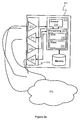
- FIG. 2a shows a schematic illustration of a network element 201 according to an exemplifying and non-limiting embodiment of the invention.
- the network element can be, for example, an Internet Protocol "IP” router, a Multiprotocol label switching "MPLS" switch, a packet optical switch, and/or an Ethernet switch.
- the network element comprises a data transfer interface 210 for receiving data and for transmitting data.
- the data transfer interface 210 comprises ingress ports 211 and 213 and egress ports 212 and 214 for connecting via data transfer links to a data transfer network 220.
- the network element 201 comprises a processing system 215 that comprises a control section 216 and a forwarding section 217.
- the control section 216 is adapted to construct a software-defined data path 218 in accordance with configuration data received from a controller of a software-defined network.
- the control section 216 is adapted to configure a fixed-functionality data path 219 in accordance with forwarding-parameter data, e.g. accessibility advertising data, received at the network element 101 from other network elements.
- the software-defined data path 218 comprises look-up tables for selecting software-defined actions when managing data to be forwarded, and the fixed-functionality data path 219 defines fixed-functionality actions for managing data to be forwarded.
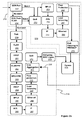
- the software-defined data path 218 and the fixed-functionality data path 219 can be such as illustrated by a functional block diagram shown in figure 2b .
- the software-defined data path 218 comprises look-up tables "SDN Port” 251 and "SDN Port + VLAN” 252 suitable for determining whether the software-defined data path 218 or the fixed-functionality data path 219 is to be used.
- the acronym "VLAN” means a virtual local access network.
- the software-defined data path 218 comprises a look-up table "QoS" 253 suitable for quality-of-service management, a look-up table “MPLS” 253 suitable for MultiProtocol Label Switching, a look-up table “ACL” 254 suitable for Access Control List filtering, a look-up table “IP” 255 suitable for Internet Protocol IP routing, a look-up table “Ethernet” 256 suitable for Ethernet switching, a look-up table 257 suitable for load balancing, a look-up table 258 suitable for flow protection, and means suitable for mapping quality of service "QoS" parameters to the MPLS Priority "PRI" field and/or to the Differentiated Service Code Point "DSCP".
- the fixed-functionality data path 219 comprises functionalities 259 and 260 for port and VLAN management, functionality 261 for the Virtual Router Redundancy Protocol VRRP destination Media Access Control MAC filtering, functionality 262 for VLAN priority management, functionality 263 for MPLS priority management, functionality 264 for the Differentiated Service Code Point "DSCP" management, functionality 265 for MultiProtocol Label Switching, functionality 266 for access control list "ACL” filtering, functionality 267 for Internet Protocol "IP”-routing, functionality 268 for Ethernet switching, functionality 269 for load balancing, functionality 270 for flow protection, functionality 271 for link aggregation, functionality 272 for Quality of Service management, and functionality 273 for the Outgoing Media Access Control MAC imposition.
- first data to be forwarded is initially managed by the software-defined data path 218 and second data to be forwarded is initially managed by the fixed-functionality data path 219.
- first data is associated with first metadata allowing information to be communicated between the look-up tables
- second data is associated with second metadata allowing information to be communicated between the fixed-functionality actions.
- One or more of the software-defined actions are assumed to modify the first metadata when the first data is managed by the software-defined data path 218.
- one or more of the fixed-functionality actions is assumed to modify the second metadata when the second data is managed by the fixed-functionality data path 219.
- the forwarding section 217 of the processing system 215 shown in figure 2a is adapted to convert the first metadata to a data format suitable for the fixed-functionality data path 219 in response to a need to carry out one or more of the fixed-functionality actions in conjunction with forwarding the first data.
- the forwarding section 217 is adapted to determine a first one of the fixed-functionality actions from among the fixed-functionality actions at least partly on the basis of which one of the look-up tables of the software-defined data path 218 was most recently accessed when managing the first data.
- the forwarding section 217 is adapted to control the determined first one of the fixed-functionality actions to be carried out so as to initiate the needed one or more fixed-functionality actions to be carried out at least partly in accordance with the converted first metadata.
- Figure 2b illustrates an exemplifying situation where there is a need to switch from the software-defined data path 218 to the fixed functionality data path 219 after carrying out the flow protection with the aid of the look-up table 258 of the software-defined data path 218.
- the link aggregation functionality 271 is selected from among the fixed-functionality actions of the fixed-functionality data path 219. Thereafter, the link aggregation functionality 271 is controlled to be carried out at least partly in accordance with the converted first metadata.
- the switching from the software-defined data path 218 to the fixed functionality data path 219 is depicted with a dashed-line arrow 280 in figure 2b .
- the processing system 215 is adapted to carry out the following actions in order to switch the managing of the second data from the fixed functionality data path 219 to the software-defined data path 218:
- the processing system 215 is adapted to carry out the following actions in order to switch the managing of the first data from the fixed functionality data path 219 back to the software-defined data path 218:
- the processing system 215 is adapted to carry out the following actions in order to switch the managing of the second data from the software-defined data path 218 back to the fixed functionality data path 219:
- the processing system 215 is adapted to construct the software-defined data path 218 in accordance with the OpenFlow protocol and/or the Forwarding and Control Element Separation "ForCES" protocol.
- the processing system 215 is adapted to configure the fixed-functionality data path in accordance with one or more L3 network layer routing protocols, one or more L2 data link layer control protocols, and/or one or more MultiProtocol Label Switching MPLS signaling protocols.
- the one or more L3 network layer routing protocols may comprise for example at least one of the following: the Open Shortest Path First OSPF, the Intermediate system-Intermediate system ISIS, the Border Gateway Protocol BGP, the Protocol Independent multicast Sparse Mode PIM-SM.
- the one or more L2 data link layer control protocols may comprise for example at least one of the following: the Spanning Tree Protocol STP, the Rapid Spanning Tree Protocol RSTP, the multiple Spanning Tree Protocol MSTP, the Transparent Interconnection of Lots of Links TRILL, the Link Aggregation Control Protocol LACP.
- the one or more MultiProtocol Label Switching MPLS signaling protocols may comprise for example at least one of the following: Label Distribution Protocol LDP, Resource Reservation Protocol -Traffic Engineering RSVP-TE, the Border Gateway Protocol BGP.
- the processing system 215 can be implemented with one or more processor circuits, each of which can be a programmable processor circuit provided with appropriate software, a dedicated hardware processor such as, for example, an application specific integrated circuit "ASIC”, or a configurable hardware processor such as, for example, a field programmable gate array "FPGA”.
- processor circuits each of which can be a programmable processor circuit provided with appropriate software, a dedicated hardware processor such as, for example, an application specific integrated circuit "ASIC”, or a configurable hardware processor such as, for example, a field programmable gate array "FPGA”.
- ASIC application specific integrated circuit
- FPGA field programmable gate array
- Figure 3 shows a flow chart of a method according to an exemplifying and non-limiting embodiment of the invention for managing data in a network element of a software-defined network.
- the method comprises the following actions:
- the software-defined data path is maintained in accordance with at least one of the following: the OpenFlow protocol, the Forwarding and Control Element Separation ForCES protocol.
- the fixed-functionality data path is maintained in accordance with at least one of the following: one or more L3 network layer routing protocols, one or more L2 data link layer control protocols, one or more MultiProtocol Label Switching MPLS signaling protocols.
- the one or more L3 network layer routing protocols may comprise for example at least one of the following: the Open Shortest Path First OSPF, the Intermediate system-Intermediate system ISIS, the Border Gateway Protocol BGP, the Protocol Independent multicast Sparse Mode PIM-SM.
- the one or more L2 data link layer control protocols may comprise for example at least one of the following: the Spanning Tree Protocol STP, the Rapid Spanning Tree Protocol RSTP, the multiple Spanning Tree Protocol MSTP, the Transparent Interconnection of Lots of Links TRILL, the Link Aggregation Control Protocol LACP.
- the one or more MultiProtocol Label Switching MPLS signaling protocols may comprise for example at least one of the following: Label Distribution Protocol LDP, Resource Reservation Protocol -Traffic Engineering RSVP-TE, the Border Gateway Protocol BGP.
- the software-defined data path comprises at least one of the following: a look-up table suitable for selecting between the software-defined data path and the fixed-functionality data path, a look-up table suitable for quality-of-service QoS management, a look-up table suitable for MultiProtocol Label Switching MPLS, a look-up table suitable for Access Control List ACL filtering, a look-up table suitable for Internet Protocol IP routing, a look-up table suitable for Ethernet switching, a look-up table suitable for load balancing, a look-up table suitable for flow protection.
- the fixed-functionality data path is capable of carrying out at least one of the following: Virtual Local Access Network VLAN management, Virtual Router Redundancy Protocol VRRP destination Media Access Control MAC filtering, quality-of-service management, MultiProtocol Label Switching MPLS, Access Control List ACL filtering, Internet Protocol IP routing, Ethernet switching, load balancing, flow protection, link aggregation, Outgoing Media Access Control MAC imposition.
- a computer program according to an exemplifying and non-limiting embodiment of the invention comprises computer executable instructions for controlling a programmable processing system to carry out actions related to a method according to any of the above-described exemplifying embodiments of the invention.
- a computer program comprises software modules for controlling a network element of a software-defined network.
- the software modules comprise computer executable instructions for controlling a programmable processing system of the network element to:
- the software modules can be e.g. subroutines or functions implemented with a suitable programming language and with a compiler suitable for the programming language and the programmable processing system.
- a computer readable medium e.g. a compact disc "CD”
- a signal according to an exemplifying and non-limiting embodiment of the invention is encoded to carry information defining a computer program according to an exemplifying embodiment of invention.
Landscapes
- Engineering & Computer Science (AREA)
- Computer Networks & Wireless Communication (AREA)
- Signal Processing (AREA)
- Computer Security & Cryptography (AREA)
- Data Exchanges In Wide-Area Networks (AREA)
Abstract
Description
- The invention relates generally to a software-defined network "SDN". More particularly, the invention relates to a network element for a software-defined network. Furthermore, the invention relates to a method for managing data in a network element of a software-defined network. Furthermore, the invention relates to a computer program for a network element of a software-defined network.
- Software-defined networking is an emerging architecture for data transfer networks. In a software-defined network "SDN", the control plane is separated from the data plane so that the control plane is implemented in one or more controllers that can be separate from the network elements and the data plane is implemented in the network elements. The network elements can be, for example, Internet Protocol "IP" routers, multiprotocol label switching "MPLS" nodes, packet optical switches, and/or Ethernet switches. Each network element may consist of a single apparatus or a combination of a plurality of apparatuses. Typically, the software-defined networking allows for quick experimenting and optimization of switching and/or routing policies and external access to the innards of network elements that formerly were closed and proprietary.
- The one or more controllers of the software-defined network "SDN" are adapted to configure the network elements so that the network elements are capable of operating as nodes of the software-defined network. When configuring a network element, the controller sends to the network element configuration data with the aid of which the network element constructs a programmable data path for forwarding data. The programmable data path comprises one or more look-up tables with the aid of which the network element is capable of operating as a part of the software-defined network. The software-defined data path can be constructed in accordance with for example the OpenFlow protocol or the Forwarding and Control Element Separation "ForCES" protocol. More details about the OpenFlow can be found from the OpenFlow Switch Specification managed by the Open Networking Foundation "ONF", and more details about the ForCES can be found from the Request for Comments "RFC": 3746 "Forwarding and Control Element Separation", the Internet Engineering Task Force "IETF", Network Working Group.
- In many cases there is, however, a need for hybrid network elements where both the above-presented programmable data path based on the software-defined networking and a traditional fixed-functionality data path are maintained for forwarding data. The fixed-functionality data path can support for example one or more Open Systems Interconnection "OSI" model Level 3 "L3" network layer protocols, one or more OSI L2 data link layer protocols, and/or the MultiProtocol Label Switching "MPLS" protocol. The one or more L3 network layer routing protocols may comprise for example the Internet Protocol "IP", and the one or more L2 data link layer switching protocols may comprise for example the Ethernet protocol. The fixed functionality data path may comprise for example an Internet protocol forwarding table, an Access Control List "ACL" filter, and other entities for fixed-functionality actions.
- Hybrid network elements of the kind described above are, however, not free from challenges. One of the challenges is related to a need to switch from the programmable data path to the fixed-functionality data path and vice versa in situations where data being managed is first managed in one of the above-mentioned data paths and then it turns out that functionality provided by the other one of the data paths is needed for further actions related to the data under consideration. In traditional hybrid network elements, the transfer from the programmable data path to the fixed-functionality data path is accomplished by switching from the end of the programmable data path to the beginning of the fixed-functionality data path. The switching always to the beginning of the fixed-functionality data path loads the network processing unit "NPU" and/or other hardware for implementing the fixed-functionality data path. Switching in the opposite direction from the fixed-functionality data path to the programmable data path is typically not supported.
- The following presents a simplified summary in order to provide a basic understanding of some aspects of various invention embodiments. The summary is not an extensive overview of the invention. It is neither intended to identify key or critical elements of the invention nor to delineate the scope of the invention. The following summary merely presents some concepts of the invention in a simplified form as a prelude to a more detailed description of exemplifying embodiments of the invention.
- In accordance with the invention, there is provided a new network element for a software-defined network. The network element can be, for example, an Internet Protocol "IP" router, a multiprotocol label switching "MPLS" switch, a packet optical switch, and/or an Ethernet switch. A network element according to the invention comprises a data transfer interface for receiving and transmitting data and a processing system adapted to:
- construct, in accordance with configuration data received from a controller of the software-defined network, a software-defined data path for managing first data to be forwarded, the software-defined data path comprising look-up tables for selecting software-defined actions and one or more of the software-defined actions modifying first metadata associated with the first data,
- configure, in accordance with forwarding-parameter data received at the network element, a fixed-functionality data path for managing second data to be forwarded, the fixed-functionality data path defining fixed-functionality actions and one or more of the fixed-functionality actions modifying second metadata associated with the second data,
- convert the first metadata associated with the first data being managed by the software-defined data path to a data format suitable for the fixed-functionality data path in response to a need to carry out one or more of the fixed-functionality actions in conjunction with forwarding the first data,
- determine one of the fixed-functionality actions from among the fixed-functionality actions at least partly on the basis of which one of the look-up tables was most recently accessed when managing the first data, and
- control the determined one of the fixed-functionality actions to be carried out so as to initiate the needed one or more fixed-functionality actions to be carried out at least partly in accordance with the converted first metadata.
- As the metadata is converted prior to switching from the software-defined data path based on the software-defined networking to the fixed-functionality data path, it is not necessary to switch always to the beginning of the fixed-functionality data path but the operation can be continued at a desired point of the fixed-functionality data path. Thus, the loading of the hardware implementing the fixed-functionality data path can be reduced when switching from the programmable data path to the fixed-functionality data path.
- In this document, the term "fixed-functionality" means functionality where parameter values are changeable but which is otherwise pre-determined. An exemplifying fixed-functionality action is the Internet Protocol "IP"-address look-up which can be adapted to correspond to a desired forwarding table with the aid of suitable routing and forwarding data which represents an example of the forwarding-parameter data for configuring the fixed-functionality data path.
- In a network element according to an exemplifying and non-limiting embodiment of the invention, the processing system is adapted to enable switching from the fixed-functionality data path to the software-defined data path in a corresponding way.
- In accordance with the invention, there is provided also a new method for managing data in a network element of a software-defined network. A method according to the invention comprises:
- maintaining, in accordance with configuration data received from a controller of the software-defined network, a software-defined data path for managing first data to be forwarded, the software-defined data path comprising look-up tables for selecting software-defined actions and one or more of the software-defined actions modifying first metadata associated with the first data,
- maintaining, in accordance with forwarding-parameter data received at the network element, a fixed-functionality data path for managing second data to be forwarded, the fixed-functionality data path defining fixed-functionality actions and one or more of the fixed-functionality actions modifying second metadata associated with the second data,
- converting the first metadata associated with the first data being managed by the software-defined data path to a data format suitable for the fixed-functionality data path in response to a need to carry out one or more of the fixed-functionality actions in conjunction with forwarding the first data,
- determining one of the fixed-functionality actions from among the fixed-functionality actions at least partly on the basis of which one of the look-up tables was most recently accessed when managing the first data, and
- controlling the determined one of the fixed-functionality actions to be carried out so as to initiate the needed one or more fixed-functionality actions to be carried out at least partly in accordance with the converted first metadata.
- In accordance with the invention, there is provided also a new computer program for a network element of a software-defined network. A computer program according to the invention comprises computer executable instructions for controlling a programmable processing system of the network element to:
- construct, in accordance with configuration data received from a controller of the software-defined network, a software-defined data path for managing first data to be forwarded, the software-defined data path comprising look-up tables for selecting software-defined actions and one or more of the software-defined actions modifying first metadata associated with the first data,
- configure, in accordance with forwarding-parameter data received at the network element, a fixed-functionality data path for managing second data to be forwarded, the fixed-functionality data path defining fixed-functionality actions and one or more of the fixed-functionality actions modifying second metadata associated with the second data,
- convert the first metadata associated with the first data being managed by the software-defined data path to a data format suitable for the fixed-functionality data path in response to a need to carry out one or more of the fixed-functionality actions in conjunction with forwarding the first data,
- determine one of the fixed-functionality actions from among the fixed-functionality actions at least partly on the basis of which one of the look-up tables was most recently accessed when managing the first data, and
- controlling the determined one of the fixed-functionality actions to be carried out so as to initiate the needed one or more fixed-functionality actions to be carried out at least partly in accordance with the converted first metadata.
- In accordance with the invention, there is provided also a new computer program product. The computer program product comprises a non-volatile computer readable medium, e.g. a compact disc "CD", encoded with a computer program according to the invention.
- A number of exemplifying and non-limiting embodiments of the invention are described in accompanied dependent claims.
- Various exemplifying and non-limiting embodiments of the invention both as to constructions and to methods of operation, together with additional objects and advantages thereof, will be best understood from the following description of specific exemplifying embodiments when read in connection with the accompanying drawings.
- The verbs "to comprise" and "to include" are used in this document as open limitations that neither exclude nor require the existence of also un-recited features. The features recited in the accompanied dependent claims are mutually freely combinable unless otherwise explicitly stated. Furthermore, it is to be understood that the use of "a" or "an", i.e. a singular form, throughout this document does not exclude a plurality.
- The exemplifying and non-limiting embodiments of the invention and their advantages are explained in greater detail below with reference to the accompanying drawings, in which:
-
figure 1 shows a schematic illustration of a software-defined network comprising network elements according to an exemplifying and non-limiting embodiment of the invention, -
figure 2a shows a schematic illustration of a network element according to an exemplifying and non-limiting embodiment of the invention, -
figure 2b shows a functional block diagram illustrating an exemplifying software-defined data path and an exemplifying fixed-functionality data path of the network element illustrated infigure 2a , and -
figure 3 shows a flow chart of a method according to an exemplifying and non-limiting embodiment of the invention for managing data in a network element of a software-defined network, and -
Figure 1 shows a schematic illustration of an exemplifying software-defined network "SDN" 100. The software-defined network comprisesnetwork elements controller 105. The network elements 101-104 of this exemplifying software-defined network are mutually interconnected with data transfer links as illustrated infigure 1 . Furthermore, the exemplifying software-defined network "SDN" 100 may comprise other network elements that are not shown infigure 1 . Each of the network elements may be e.g. an Internet Protocol "IP" router, a multiprotocol label switching "MPLS" node, a packet optical switch, and/or an Ethernet switch. Each network element may consist of a single apparatus or a combination of a plurality of apparatuses. As well, thecontroller 105 may consist of a single apparatus or a combination of a plurality of apparatuses. In the exemplifying case illustrated infigure 1 , thecontroller 105 comprises two interconnected apparatuses. Auser interface device 107 is connected to thecontroller 105 and thenetwork element 102 acts as a gateway to anexternal network 106 that can be e.g. the global Internet. Thecontroller 105 comprises a data transfer interface for receiving data from theterminal device 107 and/or from one or more other devices connected with data transfer links to the data transfer interface of the controller. It is to be noted that thecontroller 105 or one or more parts of it can also act as one or more network elements that can be e.g. an Internet Protocol "IP" router, a multiprotocol label switching "MPLS" switch, a packet optical switch, and/or an Ethernet switch. - The
controller 105 is adapted to send, to at least one of the network elements 101-104, configuration data for configuring the network element under consideration to maintain a software-defined data path that enables the network element to manage data in a desired manner. The software-defined data path comprises typically a system of interconnected look-up tables for selecting software-defined actions to be carried out in different operational situations. The data to be managed can be in form of data frames such as for example Internet Protocol IP-packets, MPLS-labeled frames, Ethernet frames, or the data can be in some other form accordant with one or more data transfer protocols being used. Thecontroller 105 can be adapted to configure the network element under consideration in accordance with the OpenFlow, the ForCES, or some other protocol suitable for the software-defined networking. - In an exemplifying case where the OpenFlow is used, the software-defined data path comprises one or more flow tables and one or more group tables according to the OpenFlow specification. Each flow table contains a set of flow entries. Each flow entry may consist of match fields, counters, and a set of software-defined actions to apply to matching data frames. Matching typically starts at the first flow table and may continue to additional flow tables. Flow entries are typically arranged into a priority order and the first matching entry in each table is the one being used. If a matching flow entry is found, the one or more software-defined actions associated with this specific flow entry are executed. If no match is found in a flow table, the data frame under consideration may be forwarded to the
controller 105 over an OpenFlow channel between the network element under consideration and thecontroller 105, the data frame may be dropped, or the data frame may continue to the next flow table or to a group table. Software-defined actions associated with each flow entry may comprise for example data frame forwarding, data frame modification, group table processing, and pipeline processing. Pipeline processing actions allow data frames to be sent to subsequent flow tables for further processing and allow information, in the form of metadata, to be communicated between the flow tables. In conjunction with the OpenFlow, the metadata is typically a bit vector having 64 bits. The pipeline processing stops when the one or more software-defined actions associated with a matching flow entry does not specify a next table. At this point the data frame under consideration is usually modified and forwarded. The group table processing actions allow data frames to be sent to a group table for further processing and allow information, in the form of metadata, to be communicated to the group table. The group table contains group entries, where each group entry may contain a list of software-defined actions to be executed in conjunction with data frames defined to belong to a particular group. Furthermore, the configuration data that is sent to one or more of the network elements 101-104 may comprise one or more configuration programs each of which comprising one or more computer executable instructions defining a software-defined action or a chain of software-defined actions to be executed in conjunction with managing data in the network element under consideration. The software-defined action or the chain of software-defined actions defined by the configuration program may comprise for example: recording data into a memory, modifying the data, selecting one or more of egress ports of the network element and forwarding the data and its possible duplicates to the selected one or more egress ports, selecting one or more look-up tables of a configuration system of the network element and executing one or more look-ups from the selected look-up tables, performing arithmetic operations, branching operations, performing logical operations, reading metadata associated with the data being managed, writing metadata associated with the data, modifying metadata associated with the data, dropping the data, and/or duplicating the data. - In many cases, the network elements 101-104 or at least some of them need to be hybrid network elements where both the above-presented programmable data path based on the software-defined networking and a traditional fixed-functionality data path are maintained for forwarding data. The traditional fixed-functionality data paths of the hybrid network elements can be configured and maintained in accordance with forwarding-parameter data, e.g. accessibility advertising data, transferred between the hybrid network elements according to a suitable protocol for exchanging accessibility information, e.g. a suitable Interior Gateway Protocol "IGP". The fixed-functionality data path can support for example one or more L3 network layer protocols, one or more L2 data link layer protocols, and/or the MultiProtocol Label Switching "MPLS" protocol. The "L3" refers to the Open System Interconnection "OSI" Level 3 network layer protocol, e.g. the Internet Protocol "IP", and the "L2" refers to the OSI Level 2 data link layer protocol, e.g. the Ethernet. Sometimes the MPLS is regarded as an OSI Level 2.5 "L2.5" protocol.
- Without limiting the generality and merely for illustrative purposes, was can assume that the
network element 101 is one of the above-mentioned hybrid network elements. Thenetwork element 101 comprises a data transfer interface for receiving and transmitting data. Thenetwork element 101 comprises means for constructing the software-defined data path in accordance with configuration data received from thecontroller 105. The software-defined data path comprises look-up tables for selecting software-defined actions. Data being managed by the software-defined data path is associated with metadata that allows information to be communicated between the look-up tables. Relating to the communication between the look-up tables, one or more of the software-defined actions modify the metadata when the corresponding data is managed by software-defined data path. Thenetwork element 101 comprises means for configuring the fixed-functionality data path in accordance with the forwarding-parameter data received at the network element. The fixed-functionality data path defines fixed-functionality actions such as e.g. Internet routing, Ethernet switching, Access Control List filtering, etc. Data being managed by the fixed-functionality data path is associated with metadata that allows information to be communicated between the fixed-functionality actions. Relating to the communication between the fixed-functionality actions, one or more of the fixed-functionality actions modify the metadata when the corresponding data is managed by fixed-functionality data path. Thenetwork element 101 comprises means for converting metadata associated with data being managed by the software-defined data path to a data format suitable for the fixed-functionality data path in response to a need to carry out one or more of the fixed-functionality actions in conjunction with forwarding the data under consideration. Thenetwork element 101 comprises means for determining one of the fixed-functionality actions from among the fixed-functionality actions at least partly on the basis of which one of the look-up tables of the software-defined data path was most recently accessed when managing the data by software-defined data path. Thenetwork element 101 comprises means for controlling the determined one of the fixed-functionality actions to be carried out so as to initiate the needed one or more fixed-functionality actions to be carried out at least partly in accordance with the converted metadata, i.e. to continue the operation in the fixed-functionality data path. Switching from the fixed-functionality data path to the software-defined data path can be arranged in a corresponding way. The switching from the fixed-functionality data path to the software-defined data path comprises converting metadata used in the fixed-functionality data path to a data format suitable for the software-defined data path. It is also possible to switch two or more times between the software-defined data path and the fixed-functionality data path when managing data to be forwarded. -
Figure 2a shows a schematic illustration of anetwork element 201 according to an exemplifying and non-limiting embodiment of the invention. The network element can be, for example, an Internet Protocol "IP" router, a Multiprotocol label switching "MPLS" switch, a packet optical switch, and/or an Ethernet switch. The network element comprises adata transfer interface 210 for receiving data and for transmitting data. Thedata transfer interface 210 comprisesingress ports egress ports data transfer network 220. Thenetwork element 201 comprises aprocessing system 215 that comprises acontrol section 216 and aforwarding section 217. Thecontrol section 216 is adapted to construct a software-defineddata path 218 in accordance with configuration data received from a controller of a software-defined network. Thecontrol section 216 is adapted to configure a fixed-functionality data path 219 in accordance with forwarding-parameter data, e.g. accessibility advertising data, received at thenetwork element 101 from other network elements. The software-defineddata path 218 comprises look-up tables for selecting software-defined actions when managing data to be forwarded, and the fixed-functionality data path 219 defines fixed-functionality actions for managing data to be forwarded. - In an exemplifying situation, the software-defined
data path 218 and the fixed-functionality data path 219 can be such as illustrated by a functional block diagram shown infigure 2b . In the exemplifying case illustrated infigure 2b , the software-defineddata path 218 comprises look-up tables "SDN Port" 251 and "SDN Port + VLAN" 252 suitable for determining whether the software-defineddata path 218 or the fixed-functionality data path 219 is to be used. The acronym "VLAN" means a virtual local access network. Furthermore, the software-defineddata path 218 comprises a look-up table "QoS" 253 suitable for quality-of-service management, a look-up table "MPLS" 253 suitable for MultiProtocol Label Switching, a look-up table "ACL" 254 suitable for Access Control List filtering, a look-up table "IP" 255 suitable for Internet Protocol IP routing, a look-up table "Ethernet" 256 suitable for Ethernet switching, a look-up table 257 suitable for load balancing, a look-up table 258 suitable for flow protection, and means suitable for mapping quality of service "QoS" parameters to the MPLS Priority "PRI" field and/or to the Differentiated Service Code Point "DSCP". In the exemplifying case illustrated infigure 2b , the fixed-functionality data path 219 comprisesfunctionalities functionality 261 for the Virtual Router Redundancy Protocol VRRP destination Media Access Control MAC filtering,functionality 262 for VLAN priority management,functionality 263 for MPLS priority management,functionality 264 for the Differentiated Service Code Point "DSCP" management,functionality 265 for MultiProtocol Label Switching,functionality 266 for access control list "ACL" filtering,functionality 267 for Internet Protocol "IP"-routing,functionality 268 for Ethernet switching,functionality 269 for load balancing,functionality 270 for flow protection,functionality 271 for link aggregation,functionality 272 for Quality of Service management, andfunctionality 273 for the Outgoing Media Access Control MAC imposition. - Without limiting the generality and merely for illustrative purposes, we can assume that first data to be forwarded is initially managed by the software-defined
data path 218 and second data to be forwarded is initially managed by the fixed-functionality data path 219. Furthermore, we assume that the first data is associated with first metadata allowing information to be communicated between the look-up tables, and that the second data is associated with second metadata allowing information to be communicated between the fixed-functionality actions. One or more of the software-defined actions are assumed to modify the first metadata when the first data is managed by the software-defineddata path 218. Correspondingly, one or more of the fixed-functionality actions is assumed to modify the second metadata when the second data is managed by the fixed-functionality data path 219. Theforwarding section 217 of theprocessing system 215 shown infigure 2a is adapted to convert the first metadata to a data format suitable for the fixed-functionality data path 219 in response to a need to carry out one or more of the fixed-functionality actions in conjunction with forwarding the first data. Theforwarding section 217 is adapted to determine a first one of the fixed-functionality actions from among the fixed-functionality actions at least partly on the basis of which one of the look-up tables of the software-defineddata path 218 was most recently accessed when managing the first data. Theforwarding section 217 is adapted to control the determined first one of the fixed-functionality actions to be carried out so as to initiate the needed one or more fixed-functionality actions to be carried out at least partly in accordance with the converted first metadata.Figure 2b illustrates an exemplifying situation where there is a need to switch from the software-defineddata path 218 to the fixedfunctionality data path 219 after carrying out the flow protection with the aid of the look-up table 258 of the software-defineddata path 218. On the basis of the fact that the most recently accessed look-up table of the software-defineddata path 218 is the look-up table 258, thelink aggregation functionality 271 is selected from among the fixed-functionality actions of the fixed-functionality data path 219. Thereafter, thelink aggregation functionality 271 is controlled to be carried out at least partly in accordance with the converted first metadata. The switching from the software-defineddata path 218 to the fixedfunctionality data path 219 is depicted with a dashed-line arrow 280 infigure 2b . - In network element according to an exemplifying and non-limiting embodiment of the invention, the
processing system 215 is adapted to carry out the following actions in order to switch the managing of the second data from the fixedfunctionality data path 219 to the software-defined data path 218: - converting the second metadata associated with the second data to a data format suitable for the software-defined data path in response to a need to carry out one or more of the software-defined actions in conjunction with forwarding the second data,
- determining a first one of the look-up tables of the software-defined data path at least partly on the basis of which one of the fixed-functionality actions was most recently carried out when managing the second data, and
- carrying out a look-up from the determined first one of the look-up tables so as to initiate the one or more needed software-defined actions to be carried out at least partly in accordance with the converted second metadata.
- In network element according to an exemplifying and non-limiting embodiment of the invention, the
processing system 215 is adapted to carry out the following actions in order to switch the managing of the first data from the fixedfunctionality data path 219 back to the software-defined data path 218: - converting the converted first metadata back to a data format suitable for the software-defined data path in response to a need to carry out one or more of the software-defined actions after carrying out the needed one or more fixed-functionality actions,
- determining a second one of the look-up tables of the software-defined data path at least partly on the basis of which one of the one or more needed fixed-functionality actions was most recently carried out when managing the first data by the fixed-functionality data path,
- carrying out a look-up from the determined second one of the look-up tables so as to initiate the one or more software-defined actions needed to be carried out, at least partly in accordance with the back converted first metadata, after the one or more needed fixed-functionality actions.
- In network element according to an exemplifying and non-limiting embodiment of the invention, the
processing system 215 is adapted to carry out the following actions in order to switch the managing of the second data from the software-defineddata path 218 back to the fixed functionality data path 219: - converting the converted second metadata back to the data format suitable for the fixed-functionality data path in response to a need to carry out one or more of the fixed-functionality actions after carrying out the needed one or more software-defined actions,
- determining a second one of the fixed-functionality actions from among the fixed-functionality actions at least partly on the basis of which one of the look-up tables was most recently accessed when managing the second data by the software-defined data path,
- controlling the determined second one of the fixed-functionality actions to be carried out so as to initiate the one or more fixed-functionality actions needed to be carried out, at least partly in accordance with the back converted second metadata, after the one or more needed software-defined actions.
- In network element according to an exemplifying and non-limiting embodiment of the invention, the
processing system 215 is adapted to construct the software-defineddata path 218 in accordance with the OpenFlow protocol and/or the Forwarding and Control Element Separation "ForCES" protocol. - In network element according to an exemplifying and non-limiting embodiment of the invention, the
processing system 215 is adapted to configure the fixed-functionality data path in accordance with one or more L3 network layer routing protocols, one or more L2 data link layer control protocols, and/or one or more MultiProtocol Label Switching MPLS signaling protocols. - The one or more L3 network layer routing protocols may comprise for example at least one of the following: the Open Shortest Path First OSPF, the Intermediate system-Intermediate system ISIS, the Border Gateway Protocol BGP, the Protocol Independent multicast Sparse Mode PIM-SM. The one or more L2 data link layer control protocols may comprise for example at least one of the following: the Spanning Tree Protocol STP, the Rapid Spanning Tree Protocol RSTP, the multiple Spanning Tree Protocol MSTP, the Transparent Interconnection of Lots of Links TRILL, the Link Aggregation Control Protocol LACP. The one or more MultiProtocol Label Switching MPLS signaling protocols may comprise for example at least one of the following: Label Distribution Protocol LDP, Resource Reservation Protocol -Traffic Engineering RSVP-TE, the Border Gateway Protocol BGP.
- The
processing system 215 can be implemented with one or more processor circuits, each of which can be a programmable processor circuit provided with appropriate software, a dedicated hardware processor such as, for example, an application specific integrated circuit "ASIC", or a configurable hardware processor such as, for example, a field programmable gate array "FPGA". -
Figure 3 shows a flow chart of a method according to an exemplifying and non-limiting embodiment of the invention for managing data in a network element of a software-defined network. The method comprises the following actions: - action 301: maintaining, in accordance with configuration data received from a controller of the software-defined network, a software-defined data path for managing first data to be forwarded, the software-defined data path comprising look-up tables for selecting software-defined actions and one or more of the software-defined actions modifying first metadata associated with the first data, and
- action 302: maintaining, in accordance with forwarding-parameter data received at the network element, a fixed-functionality data path for managing second data to be forwarded, the fixed-functionality data path defining fixed-functionality actions and one or more of the fixed-functionality actions modifying second metadata associated with the second data,
- action 303: converting the first metadata associated with the first data being managed by the software-defined data path to a data format suitable for the fixed-functionality data path in response to a need to carry out one or more of the fixed-functionality actions in conjunction with forwarding the first data,
- action 304: determining a first one of the fixed-functionality actions from among the fixed-functionality actions at least partly on the basis of which one of the look-up tables was most recently accessed when managing the first data, and
- action 305: controlling the determined first one of the fixed-functionality actions to be carried out so as to initiate the needed one or more fixed-functionality actions to be carried out at least partly in accordance with the converted first metadata.
- A method according to an exemplifying and non-limiting embodiment of the invention comprises the following actions in order to switch the managing of the second data from the fixed functionality data path to the software-defined data path:
- converting the second metadata associated with the second data being managed by the fixed-functionality data path to a data format suitable for the software-defined data path in response to a need to carry out one or more of the software-defined actions in conjunction with forwarding the second data,
- determining a first one of the look-up tables of the software-defined data path at least partly on the basis of which one of the fixed-functionality actions was most recently carried out when managing the second data, and
- carrying out a look-up from the determined first one of the look-up tables so as to initiate the one or more needed software-defined actions to be carried out at least partly in accordance with the converted second metadata.
- A method according to an exemplifying and non-limiting embodiment of the invention comprises the following actions in order to switch the managing of the first data from the fixed functionality data path back to the software-defined data path:
- converting the converted first metadata back to a data format suitable for the software-defined data path in response to a need to carry out one or more of the software-defined actions after carrying out the needed one or more fixed-functionality actions,
- determining a second one of the look-up tables of the software-defined data path at least partly on the basis of which one of the one or more needed fixed-functionality actions was most recently carried out when managing the first data by the fixed-functionality data path,
- carrying out a look-up from the determined second one of the look-up tables so as to initiate the one or more software-defined actions needed to be carried out, at least partly in accordance with the back converted first metadata, after the one or more needed fixed-functionality actions.
- A method according to an exemplifying and non-limiting embodiment of the invention comprises the following actions in order to switch the managing of the second data from the software-defined data path back to the fixed functionality data path:
- converting the converted second metadata back to the data format suitable for the fixed-functionality data path in response to a need to carry out one or more of the fixed-functionality actions after carrying out the needed one or more software-defined actions,
- determining a second one of the fixed-functionality actions from among the fixed-functionality actions at least partly on the basis of which one of the look-up tables was most recently accessed when managing the second data by the software-defined data path,
- controlling the determined second one of the fixed-functionality actions to be carried out so as to initiate the one or more fixed-functionality actions needed to be carried out, at least partly in accordance with the back converted second metadata, after the one or more needed software-defined actions.
- In a method according to an exemplifying and non-limiting embodiment of the invention, the software-defined data path is maintained in accordance with at least one of the following: the OpenFlow protocol, the Forwarding and Control Element Separation ForCES protocol.
- In a method according to an exemplifying and non-limiting embodiment of the invention, the fixed-functionality data path is maintained in accordance with at least one of the following: one or more L3 network layer routing protocols, one or more L2 data link layer control protocols, one or more MultiProtocol Label Switching MPLS signaling protocols.
- The one or more L3 network layer routing protocols may comprise for example at least one of the following: the Open Shortest Path First OSPF, the Intermediate system-Intermediate system ISIS, the Border Gateway Protocol BGP, the Protocol Independent multicast Sparse Mode PIM-SM. The one or more L2 data link layer control protocols may comprise for example at least one of the following: the Spanning Tree Protocol STP, the Rapid Spanning Tree Protocol RSTP, the multiple Spanning Tree Protocol MSTP, the Transparent Interconnection of Lots of Links TRILL, the Link Aggregation Control Protocol LACP. The one or more MultiProtocol Label Switching MPLS signaling protocols may comprise for example at least one of the following: Label Distribution Protocol LDP, Resource Reservation Protocol -Traffic Engineering RSVP-TE, the Border Gateway Protocol BGP.
- In a method according to an exemplifying and non-limiting embodiment of the invention, the software-defined data path comprises at least one of the following: a look-up table suitable for selecting between the software-defined data path and the fixed-functionality data path, a look-up table suitable for quality-of-service QoS management, a look-up table suitable for MultiProtocol Label Switching MPLS, a look-up table suitable for Access Control List ACL filtering, a look-up table suitable for Internet Protocol IP routing, a look-up table suitable for Ethernet switching, a look-up table suitable for load balancing, a look-up table suitable for flow protection.
- In a method according to an exemplifying and non-limiting embodiment of the invention, the fixed-functionality data path is capable of carrying out at least one of the following: Virtual Local Access Network VLAN management, Virtual Router Redundancy Protocol VRRP destination Media Access Control MAC filtering, quality-of-service management, MultiProtocol Label Switching MPLS, Access Control List ACL filtering, Internet Protocol IP routing, Ethernet switching, load balancing, flow protection, link aggregation, Outgoing Media Access Control MAC imposition.
- A computer program according to an exemplifying and non-limiting embodiment of the invention comprises computer executable instructions for controlling a programmable processing system to carry out actions related to a method according to any of the above-described exemplifying embodiments of the invention.
- A computer program according to an exemplifying and non-limiting embodiment of the invention comprises software modules for controlling a network element of a software-defined network. The software modules comprise computer executable instructions for controlling a programmable processing system of the network element to:
- construct, in accordance with configuration data received from a controller of the software-defined network, a software-defined data path for managing first data to be forwarded, the software-defined data path comprising look-up tables for selecting software-defined actions and one or more of the software-defined actions modifying first metadata associated with the first data,
- configure, in accordance with forwarding-parameter data received at the network element, a fixed-functionality data path for managing second data to be forwarded, the fixed-functionality data path defining fixed-functionality actions and one or more of the fixed-functionality actions modifying second metadata associated with the second data,
- convert the first metadata associated with the first data being managed by the software-defined data path to a data format suitable for the fixed-functionality data path in response to a need to carry out one or more of the fixed-functionality actions in conjunction with forwarding the first data,
- determine one of the fixed-functionality actions from among the fixed-functionality actions at least partly on the basis of which one of the look-up tables was most recently accessed when managing the first data, and
- control the determined one of the fixed-functionality actions to be carried out so as to initiate the needed one or more fixed-functionality actions to be carried out at least partly in accordance with the converted first metadata.
- The software modules can be e.g. subroutines or functions implemented with a suitable programming language and with a compiler suitable for the programming language and the programmable processing system.
- A computer program product according to an exemplifying and non-limiting embodiment of the invention comprises a computer readable medium, e.g. a compact disc "CD", encoded with a computer program according to an exemplifying embodiment of invention.
- A signal according to an exemplifying and non-limiting embodiment of the invention is encoded to carry information defining a computer program according to an exemplifying embodiment of invention.
- The specific examples provided in the description given above should not be construed as limiting the scope and/or the applicability of the appended claims.
Claims (15)
- A network element (201) for a software-defined network, the network element comprising a data transfer interface (210) for receiving and transmitting data and a processing system (215) adapted to:- construct, in accordance with configuration data received from a controller of the software-defined network, a software-defined data path for managing first data to be forwarded, the software-defined data path comprising look-up tables for selecting software-defined actions and one or more of the software-defined actions modifying first metadata associated with the first data, and- configure, in accordance with forwarding-parameter data received at the network element, a fixed-functionality data path for managing second data to be forwarded, the fixed-functionality data path defining fixed-functionality actions and one or more of the fixed-functionality actions modifying second metadata associated with the second data,characterized in that processing system is further adapted to:- convert the first metadata associated with the first data being managed by the software-defined data path to a data format suitable for the fixed-functionality data path in response to a need to carry out one or more of the fixed-functionality actions in conjunction with forwarding the first data,- determine a first one of the fixed-functionality actions from among the fixed-functionality actions at least partly on the basis of which one of the look-up tables was most recently accessed when managing the first data, and- control the determined first one of the fixed-functionality actions to be carried out so as to initiate the needed one or more fixed-functionality actions to be carried out at least partly in accordance with the converted first metadata.
- A network element according to claim 1, wherein the processing system is further adapted to:- convert the second metadata associated with the second data being managed by the fixed-functionality data path to a data format suitable for the software-defined data path in response to a need to carry out one or more of the software-defined actions in conjunction with forwarding the second data,- determine a first one of the look-up tables of the software-defined data path at least partly on the basis of which one of the fixed-functionality actions was most recently carried out when managing the second data, and- carry out a look-up from the determined first one of the look-up tables so as to initiate the one or more needed software-defined actions to be carried out at least partly in accordance with the converted second metadata.
- A network element according to claim 1 or 2, wherein the processing system is further adapted to:- convert the converted first metadata back to a data format suitable for the software-defined data path in response to a need to carry out one or more of the software-defined actions after carrying out the needed one or more fixed-functionality actions,- determine a second one of the look-up tables of the software-defined data path at least partly on the basis of which one of the one or more needed fixed-functionality actions was most recently carried out when managing the first data by the fixed-functionality data path,- carry out a look-up from the determined second one of the look-up tables so as to initiate the one or more software-defined actions needed to be carried out after the one or more needed fixed-functionality actions and at least partly in accordance with the back converted first metadata.
- A network element according to claim 2 or 3 when depending on claim 2, wherein the processing system is further adapted to:- convert the converted second metadata back to the data format suitable for the fixed-functionality data path in response to a need to carry out one or more of the fixed-functionality actions after carrying out the needed one or more software-defined actions,- determine a second one of the fixed-functionality actions from among the fixed-functionality actions at least partly on the basis of which one of the look-up tables was most recently accessed when managing the second data by the software-defined data path,- control the determined second one of the fixed-functionality actions to be carried out so as to initiate the one or more fixed-functionality actions needed to be carried out after the one or more needed software-defined actions and at least partly in accordance with the back converted second metadata.
- A network element according to any of claims 1-4, wherein the processing system is adapted to construct the software-defined data path in accordance with at least one of the following: the OpenFlow protocol, the Forwarding and Control Element Separation ForCES protocol.
- A network element according to any of claims 1-5, wherein the processing system is adapted to configure the fixed-functionality data path in accordance with at least one of the following: one or more L3 network layer routing protocols, one or more L2 data link layer control protocols, one or more MultiProtocol Label Switching MPLS signaling protocols.
- A network element according to claim 6, wherein:- the one or more L3 network layer routing protocols comprise at least one of the following: the Open Shortest Path First OSPF, the Intermediate system-Intermediate system ISIS, the Border Gateway Protocol BGP, the Protocol Independent multicast Sparse Mode PIM-SM,- the one or more L2 data link layer control protocols comprise at least one of the following: the Spanning Tree Protocol STP, the Rapid Spanning Tree Protocol RSTP, the multiple Spanning Tree Protocol MSTP, the Transparent Interconnection of Lots of Links TRILL, the Link Aggregation Control Protocol LACP, and- the one or more MultiProtocol Label Switching MPLS signaling protocols comprise at least one of the following: Label Distribution Protocol LDP, Resource Reservation Protocol - Traffic Engineering RSVP-TE, the Border Gateway Protocol BGP.
- A network element according to any of claims 1-7, wherein the software-defined data path comprises at least one of the following: a look-up table suitable for selecting between the software-defined data path and the fixed-functionality data path, a look-up table suitable for quality-of-service QoS management, a look-up table suitable for MultiProtocol Label Switching MPLS, a look-up table suitable for Access Control List ACL filtering, a look-up table suitable for Internet Protocol IP routing, a look-up table suitable for Ethernet switching, a look-up table suitable for load balancing, a look-up table suitable for flow protection.
- A network element according to any of claims 1-8, wherein the fixed-functionality data path is capable of carrying out at least one of the following: Virtual Local Access Network VLAN management, Virtual Router Redundancy Protocol VRRP destination Media Access Control MAC filtering, quality-of-service management, MultiProtocol Label Switching MPLS, Access Control List ACL filtering, Internet Protocol IP routing, Ethernet switching, load balancing, flow protection, link aggregation, Outgoing Media Access Control MAC imposition.
- A method for managing data in a network element of a software-defined network, the method comprising:- maintaining (301), in accordance with configuration data received from a controller of the software-defined network, a software-defined data path for managing first data to be forwarded, the software-defined data path comprising look-up tables for selecting software-defined actions and one or more of the software-defined actions modifying first metadata associated with the first data, and- maintaining (302), in accordance with forwarding-parameter data received at the network element, a fixed-functionality data path for managing second data to be forwarded, the fixed-functionality data path defining fixed-functionality actions and one or more of the fixed-functionality actions modifying second metadata associated with the second data,characterized in that the method further comprises:- converting (303) the first metadata associated with the first data being managed by the software-defined data path to a data format suitable for the fixed-functionality data path in response to a need to carry out one or more of the fixed-functionality actions in conjunction with forwarding the first data,- determining (304) a first one of the fixed-functionality actions from among the fixed-functionality actions at least partly on the basis of which one of the look-up tables was most recently accessed when managing the first data, and- controlling (305) the determined first one of the fixed-functionality actions to be carried out so as to initiate the needed one or more fixed-functionality actions to be carried out at least partly in accordance with the converted first metadata.
- A method according to claim 10, wherein the method further comprises:- converting the second metadata associated with the second data being managed by the fixed-functionality data path to a data format suitable for the software-defined data path in response to a need to carry out one or more of the software-defined actions in conjunction with forwarding the second data,- determining a first one of the look-up tables of the software-defined data path at least partly on the basis of which one of the fixed-functionality actions was most recently carried out when managing the second data, and- carrying out a look-up from the determined first one of the look-up tables so as to initiate the one or more needed software-defined actions to be carried out at least partly in accordance with the converted second metadata.
- A method according to claim 10 or 11, wherein the method further comprises:- converting the converted first metadata back to a data format suitable for the software-defined data path in response to a need to carry out one or more of the software-defined actions after carrying out the needed one or more fixed-functionality actions,- determining a second one of the look-up tables of the software-defined data path at least partly on the basis of which one of the one or more needed fixed-functionality actions was most recently carried out when managing the first data by the fixed-functionality data path,- carrying out a look-up from the determined second one of the look-up tables so as to initiate the one or more software-defined actions needed to be carried out after the one or more needed fixed-functionality actions and at least partly in accordance with the back converted first metadata.
- A method according to claim 11 or 12 when depending on claim 11, wherein the method further comprises:- converting the converted second metadata back to the data format suitable for the fixed-functionality data path in response to a need to carry out one or more of the fixed-functionality actions after carrying out the needed one or more software-defined actions,- determining a second one of the fixed-functionality actions from among the fixed-functionality actions at least partly on the basis of which one of the look-up tables was most recently accessed when managing the second data by the software-defined data path,- controlling the determined second one of the fixed-functionality actions to be carried out so as to initiate the one or more fixed-functionality actions needed to be carried out after the one or more needed software-defined actions and at least partly in accordance with the back converted second metadata.
- A method according to any of claims 10-13, wherein the software-defined data path is maintained in accordance with at least one of the following: the OpenFlow protocol, the Forwarding and Control Element Separation ForCES protocol.
- A computer program comprising computer executable instructions for controlling a programmable processing system of a network element of a software-defined network to:- construct, in accordance with configuration data received from a controller of the software-defined network, a software-defined data path for managing first data to be forwarded, the software-defined data path comprising look-up tables for selecting software-defined actions and one or more of the software-defined actions modifying first metadata associated with the first data, and- configure, in accordance with forwarding-parameter data received at the network element, a fixed-functionality data path for managing second data to be forwarded, the fixed-functionality data path defining fixed-functionality actions and one or more of the fixed-functionality actions modifying second metadata associated with the second data,characterized in that the computer program further comprises computer executable instructions for controlling the programmable processing system of the network element of the software-defined network to:- convert the first metadata associated with the first data being managed by the software-defined data path to a data format suitable for the fixed-functionality data path in response to a need to carry out one or more of the fixed-functionality actions in conjunction with forwarding the first data,- determine one of the fixed-functionality actions from among the fixed-functionality actions at least partly on the basis of which one of the look-up tables was most recently accessed when managing the first data, and- control the determined one of the fixed-functionality actions to be carried out so as to initiate the needed one or more fixed-functionality actions to be carried out at least partly in accordance with the converted first metadata.
Applications Claiming Priority (1)
| Application Number | Priority Date | Filing Date | Title |
|---|---|---|---|
| FI20145225 | 2014-03-12 |
Publications (2)
| Publication Number | Publication Date |
|---|---|
| EP2919423A1 true EP2919423A1 (en) | 2015-09-16 |
| EP2919423B1 EP2919423B1 (en) | 2018-11-14 |
Family
ID=52629457
Family Applications (1)
| Application Number | Title | Priority Date | Filing Date |
|---|---|---|---|
| EP15158147.7A Active EP2919423B1 (en) | 2014-03-12 | 2015-03-09 | A network element of a software-defined network |
Country Status (3)
| Country | Link |
|---|---|
| US (1) | US10404531B2 (en) |
| EP (1) | EP2919423B1 (en) |
| CN (1) | CN104917699B (en) |
Cited By (1)
| Publication number | Priority date | Publication date | Assignee | Title |
|---|---|---|---|---|
| CN106506515A (en) * | 2016-11-22 | 2017-03-15 | 杭州华三通信技术有限公司 | A kind of authentication method and device |
Families Citing this family (8)
| Publication number | Priority date | Publication date | Assignee | Title |
|---|---|---|---|---|
| US9871695B2 (en) * | 2014-05-22 | 2018-01-16 | Coriant Oy | Network element and a controller for managing the network element |
| CN106105129B (en) * | 2014-12-31 | 2019-05-28 | 华为技术有限公司 | Method and device for topology learning of Openflow network across traditional IP network |
| US10129293B2 (en) | 2015-02-23 | 2018-11-13 | Level 3 Communications, Llc | Managing traffic control in a network mitigating DDOS |
| CN106572029A (en) * | 2016-11-11 | 2017-04-19 | 浙江中烟工业有限责任公司 | Network data flow traction realizing method based on software definition |
| US10148561B2 (en) | 2016-12-06 | 2018-12-04 | At&T Intellectual Property I, L.P. | Enhanced quality of service in software-defined networking-based connectionless mobility architecture |
| US10810033B2 (en) * | 2017-08-11 | 2020-10-20 | International Business Machines Corporation | Propagating external route changes into a cloud network |
| CN108183862B (en) * | 2018-01-24 | 2021-02-09 | 上海宽带技术及应用工程研究中心 | Communication method/system of software-defined switching network, readable storage medium and device |
| CN115277424B (en) * | 2022-06-23 | 2023-10-03 | 中国联合网络通信集团有限公司 | Decision issuing method, device and storage medium in software defined network |
Citations (3)
| Publication number | Priority date | Publication date | Assignee | Title |
|---|---|---|---|---|
| US7706316B1 (en) * | 2003-03-26 | 2010-04-27 | Cisco Technology, Inc. | Processing an incoming packet of unknown protocol by encapsulating the packet and sending it to another processor |
| US20130272135A1 (en) * | 2012-04-11 | 2013-10-17 | Gigamon Llc | Traffic visibility in an open networking environment |
| US20130318243A1 (en) * | 2012-05-23 | 2013-11-28 | Brocade Communications Systems, Inc. | Integrated heterogeneous software-defined network |
Family Cites Families (18)
| Publication number | Priority date | Publication date | Assignee | Title |
|---|---|---|---|---|
| US20080112400A1 (en) * | 2006-11-15 | 2008-05-15 | Futurewei Technologies, Inc. | System for Providing Both Traditional and Traffic Engineering Enabled Services |
| US9391209B2 (en) * | 2010-02-05 | 2016-07-12 | Semiconductor Energy Laboratory Co., Ltd. | Semiconductor device |
| KR101538560B1 (en) | 2010-09-08 | 2015-07-21 | 닛본 덴끼 가부시끼가이샤 | Switching system, switching control method, and memory medium |
| US8971338B2 (en) * | 2012-01-09 | 2015-03-03 | Telefonaktiebolaget L M Ericsson (Publ) | Expanding network functionalities for openflow based split-architecture networks |
| US9225635B2 (en) * | 2012-04-10 | 2015-12-29 | International Business Machines Corporation | Switch routing table utilizing software defined network (SDN) controller programmed route segregation and prioritization |
| US9276877B1 (en) * | 2012-09-20 | 2016-03-01 | Wiretap Ventures, LLC | Data model for software defined networks |
| US8982727B2 (en) * | 2012-10-22 | 2015-03-17 | Futurewei Technologies, Inc. | System and apparatus of generalized network controller for a software defined network (SDN) |
| US9729425B2 (en) * | 2012-11-29 | 2017-08-08 | Futurewei Technologies, Inc. | Transformation and unified control of hybrid networks composed of OpenFlow switches and other programmable switches |
| US9253117B1 (en) * | 2012-12-18 | 2016-02-02 | Google Inc. | Systems and methods for reducing network hardware of a centrally-controlled network using in-band network connections |
| CN103067534B (en) | 2012-12-26 | 2016-09-28 | 中兴通讯股份有限公司 | A kind of NAT realizes system, method and Openflow switch |
| CN103152264B (en) | 2013-02-25 | 2015-11-25 | 北京百度网讯科技有限公司 | Openflow network and IP network connection communication method and Openflow subnet edge switch |
| WO2014132967A1 (en) * | 2013-02-26 | 2014-09-04 | 日本電気株式会社 | Communication system, switch, control apparatus, control channel configuration method and program |
| CA2902618A1 (en) * | 2013-02-27 | 2014-09-04 | Nec Corporation | Control apparatus, communication system, switch control method and program |
| US9917780B2 (en) * | 2013-03-15 | 2018-03-13 | Hewlett Packard Enterprise Development Lp | Traffic control across a layer 2 layer 3 boundary in a software defined network |
| US9124506B2 (en) * | 2013-06-07 | 2015-09-01 | Brocade Communications Systems, Inc. | Techniques for end-to-end network bandwidth optimization using software defined networking |
| US9838305B2 (en) * | 2013-07-11 | 2017-12-05 | Avago Technologies General Ip (Singapore) Pte. Ltd. | Method, system and apparatus for an OpenFlow hybrid architecture network device |
| US9450823B2 (en) * | 2013-08-09 | 2016-09-20 | Nec Corporation | Hybrid network management |
| US9674084B2 (en) * | 2013-11-21 | 2017-06-06 | Nephos (Hefei) Co. Ltd. | Packet processing apparatus using packet processing units located at parallel packet flow paths and with different programmability |
-
2015
- 2015-03-09 EP EP15158147.7A patent/EP2919423B1/en active Active
- 2015-03-10 US US14/643,421 patent/US10404531B2/en active Active
- 2015-03-12 CN CN201510109095.5A patent/CN104917699B/en not_active Expired - Fee Related
Patent Citations (3)
| Publication number | Priority date | Publication date | Assignee | Title |
|---|---|---|---|---|
| US7706316B1 (en) * | 2003-03-26 | 2010-04-27 | Cisco Technology, Inc. | Processing an incoming packet of unknown protocol by encapsulating the packet and sending it to another processor |
| US20130272135A1 (en) * | 2012-04-11 | 2013-10-17 | Gigamon Llc | Traffic visibility in an open networking environment |
| US20130318243A1 (en) * | 2012-05-23 | 2013-11-28 | Brocade Communications Systems, Inc. | Integrated heterogeneous software-defined network |
Cited By (2)
| Publication number | Priority date | Publication date | Assignee | Title |
|---|---|---|---|---|
| CN106506515A (en) * | 2016-11-22 | 2017-03-15 | 杭州华三通信技术有限公司 | A kind of authentication method and device |
| CN106506515B (en) * | 2016-11-22 | 2020-01-03 | 新华三技术有限公司 | Authentication method and device |
Also Published As
| Publication number | Publication date |
|---|---|
| US20150263888A1 (en) | 2015-09-17 |
| US10404531B2 (en) | 2019-09-03 |
| CN104917699A (en) | 2015-09-16 |
| EP2919423B1 (en) | 2018-11-14 |
| CN104917699B (en) | 2019-03-05 |
Similar Documents
| Publication | Publication Date | Title |
|---|---|---|
| US10404531B2 (en) | Network element of a software-defined network | |
| CN112262553B (en) | Apparatus and method for tracking packets in a packet processing pipeline of a software defined network switch | |
| US20150043589A1 (en) | Extending OpenFlow to Support Packet Encapsulation for Transport over Software-Defined Networks | |
| US20170195254A1 (en) | Application based conditional forwarding and load balancing in a software defined networking (sdn) architecture | |
| US9385939B2 (en) | Method and a controller system for configuring a software-defined network | |
| Das et al. | Unifying packet and circuit switched networks | |
| US20140160984A1 (en) | Method and equipment for configuring a software-defined network | |
| EP2797261B1 (en) | A method and a device for optimizing a configuration system of a network element of a software-defined network | |
| EP2904746A1 (en) | Control apparatus, control method thereof, and program | |
| US9602352B2 (en) | Network element of a software-defined network | |
| US9882772B2 (en) | Network element and a controller for managing the network element | |
| EP4037212B1 (en) | Controller-to-controller interface for multi-layer network abstraction | |
| US20140330946A1 (en) | Network element of a software-defined network | |
| US9871695B2 (en) | Network element and a controller for managing the network element | |
| EP2753034B1 (en) | A method and a device for defining implementation of a look-up table for a network element of a software-defined network | |
| US20150207726A1 (en) | Network element for a data transfer network | |
| CN105471658A (en) | SDN network and networking method thereof | |
| US9432291B2 (en) | Method and a device for defining a look-up system for a network element of a software-defined network | |
| Kriska et al. | Dynamic routing of IP traffic based on QoS parameters | |
| EP3701686B1 (en) | Optimized datapath troubleshooting | |
| CN106453145B (en) | A transmission link control method and device | |
| US20240348527A1 (en) | Signaling Service SID Transposition Capability in SRv6 Networks |
Legal Events
| Date | Code | Title | Description |
|---|---|---|---|
| PUAI | Public reference made under article 153(3) epc to a published international application that has entered the european phase |
Free format text: ORIGINAL CODE: 0009012 |
|
| AK | Designated contracting states |
Kind code of ref document: A1 Designated state(s): AL AT BE BG CH CY CZ DE DK EE ES FI FR GB GR HR HU IE IS IT LI LT LU LV MC MK MT NL NO PL PT RO RS SE SI SK SM TR |
|
| AX | Request for extension of the european patent |
Extension state: BA ME |
|
| 17P | Request for examination filed |
Effective date: 20160314 |
|
| RBV | Designated contracting states (corrected) |
Designated state(s): AL AT BE BG CH CY CZ DE DK EE ES FI FR GB GR HR HU IE IS IT LI LT LU LV MC MK MT NL NO PL PT RO RS SE SI SK SM TR |
|
| REG | Reference to a national code |
Ref country code: DE Ref legal event code: R079 Ref document number: 602015019696 Country of ref document: DE Free format text: PREVIOUS MAIN CLASS: H04L0012721000 Ipc: H04L0012707000 |
|
| GRAP | Despatch of communication of intention to grant a patent |
Free format text: ORIGINAL CODE: EPIDOSNIGR1 |
|
| STAA | Information on the status of an ep patent application or granted ep patent |
Free format text: STATUS: GRANT OF PATENT IS INTENDED |
|
| RIC1 | Information provided on ipc code assigned before grant |
Ipc: H04L 12/723 20130101ALI20180613BHEP Ipc: H04L 12/741 20130101ALI20180613BHEP Ipc: H04L 12/721 20130101ALI20180613BHEP Ipc: H04L 12/24 20060101ALI20180613BHEP Ipc: H04L 12/707 20130101AFI20180613BHEP Ipc: H04L 29/08 20060101ALI20180613BHEP |
|
| INTG | Intention to grant announced |
Effective date: 20180705 |
|
| GRAS | Grant fee paid |
Free format text: ORIGINAL CODE: EPIDOSNIGR3 |
|
| GRAA | (expected) grant |
Free format text: ORIGINAL CODE: 0009210 |
|
| STAA | Information on the status of an ep patent application or granted ep patent |
Free format text: STATUS: THE PATENT HAS BEEN GRANTED |
|
| AK | Designated contracting states |
Kind code of ref document: B1 Designated state(s): AL AT BE BG CH CY CZ DE DK EE ES FI FR GB GR HR HU IE IS IT LI LT LU LV MC MK MT NL NO PL PT RO RS SE SI SK SM TR |
|
| REG | Reference to a national code |
Ref country code: CH Ref legal event code: EP Ref country code: AT Ref legal event code: REF Ref document number: 1066153 Country of ref document: AT Kind code of ref document: T Effective date: 20181115 |
|
| REG | Reference to a national code |
Ref country code: DE Ref legal event code: R096 Ref document number: 602015019696 Country of ref document: DE |
|
| REG | Reference to a national code |
Ref country code: IE Ref legal event code: FG4D |
|
| REG | Reference to a national code |
Ref country code: NL Ref legal event code: MP Effective date: 20181114 |
|
| REG | Reference to a national code |
Ref country code: LT Ref legal event code: MG4D |
|
| REG | Reference to a national code |
Ref country code: AT Ref legal event code: MK05 Ref document number: 1066153 Country of ref document: AT Kind code of ref document: T Effective date: 20181114 |
|
| PG25 | Lapsed in a contracting state [announced via postgrant information from national office to epo] |
Ref country code: ES Free format text: LAPSE BECAUSE OF FAILURE TO SUBMIT A TRANSLATION OF THE DESCRIPTION OR TO PAY THE FEE WITHIN THE PRESCRIBED TIME-LIMIT Effective date: 20181114 Ref country code: LV Free format text: LAPSE BECAUSE OF FAILURE TO SUBMIT A TRANSLATION OF THE DESCRIPTION OR TO PAY THE FEE WITHIN THE PRESCRIBED TIME-LIMIT Effective date: 20181114 Ref country code: HR Free format text: LAPSE BECAUSE OF FAILURE TO SUBMIT A TRANSLATION OF THE DESCRIPTION OR TO PAY THE FEE WITHIN THE PRESCRIBED TIME-LIMIT Effective date: 20181114 Ref country code: BG Free format text: LAPSE BECAUSE OF FAILURE TO SUBMIT A TRANSLATION OF THE DESCRIPTION OR TO PAY THE FEE WITHIN THE PRESCRIBED TIME-LIMIT Effective date: 20190214 Ref country code: LT Free format text: LAPSE BECAUSE OF FAILURE TO SUBMIT A TRANSLATION OF THE DESCRIPTION OR TO PAY THE FEE WITHIN THE PRESCRIBED TIME-LIMIT Effective date: 20181114 Ref country code: IS Free format text: LAPSE BECAUSE OF FAILURE TO SUBMIT A TRANSLATION OF THE DESCRIPTION OR TO PAY THE FEE WITHIN THE PRESCRIBED TIME-LIMIT Effective date: 20190314 Ref country code: FI Free format text: LAPSE BECAUSE OF FAILURE TO SUBMIT A TRANSLATION OF THE DESCRIPTION OR TO PAY THE FEE WITHIN THE PRESCRIBED TIME-LIMIT Effective date: 20181114 Ref country code: NO Free format text: LAPSE BECAUSE OF FAILURE TO SUBMIT A TRANSLATION OF THE DESCRIPTION OR TO PAY THE FEE WITHIN THE PRESCRIBED TIME-LIMIT Effective date: 20190214 Ref country code: AT Free format text: LAPSE BECAUSE OF FAILURE TO SUBMIT A TRANSLATION OF THE DESCRIPTION OR TO PAY THE FEE WITHIN THE PRESCRIBED TIME-LIMIT Effective date: 20181114 |
|
| PGFP | Annual fee paid to national office [announced via postgrant information from national office to epo] |
Ref country code: SE Payment date: 20190320 Year of fee payment: 11 |
|
| PG25 | Lapsed in a contracting state [announced via postgrant information from national office to epo] |
Ref country code: SE Free format text: LAPSE BECAUSE OF FAILURE TO SUBMIT A TRANSLATION OF THE DESCRIPTION OR TO PAY THE FEE WITHIN THE PRESCRIBED TIME-LIMIT Effective date: 20181114 Ref country code: NL Free format text: LAPSE BECAUSE OF FAILURE TO SUBMIT A TRANSLATION OF THE DESCRIPTION OR TO PAY THE FEE WITHIN THE PRESCRIBED TIME-LIMIT Effective date: 20181114 Ref country code: AL Free format text: LAPSE BECAUSE OF FAILURE TO SUBMIT A TRANSLATION OF THE DESCRIPTION OR TO PAY THE FEE WITHIN THE PRESCRIBED TIME-LIMIT Effective date: 20181114 Ref country code: GR Free format text: LAPSE BECAUSE OF FAILURE TO SUBMIT A TRANSLATION OF THE DESCRIPTION OR TO PAY THE FEE WITHIN THE PRESCRIBED TIME-LIMIT Effective date: 20190215 Ref country code: RS Free format text: LAPSE BECAUSE OF FAILURE TO SUBMIT A TRANSLATION OF THE DESCRIPTION OR TO PAY THE FEE WITHIN THE PRESCRIBED TIME-LIMIT Effective date: 20181114 Ref country code: PT Free format text: LAPSE BECAUSE OF FAILURE TO SUBMIT A TRANSLATION OF THE DESCRIPTION OR TO PAY THE FEE WITHIN THE PRESCRIBED TIME-LIMIT Effective date: 20190314 |
|
| PG25 | Lapsed in a contracting state [announced via postgrant information from national office to epo] |
Ref country code: DK Free format text: LAPSE BECAUSE OF FAILURE TO SUBMIT A TRANSLATION OF THE DESCRIPTION OR TO PAY THE FEE WITHIN THE PRESCRIBED TIME-LIMIT Effective date: 20181114 Ref country code: IT Free format text: LAPSE BECAUSE OF FAILURE TO SUBMIT A TRANSLATION OF THE DESCRIPTION OR TO PAY THE FEE WITHIN THE PRESCRIBED TIME-LIMIT Effective date: 20181114 Ref country code: CZ Free format text: LAPSE BECAUSE OF FAILURE TO SUBMIT A TRANSLATION OF THE DESCRIPTION OR TO PAY THE FEE WITHIN THE PRESCRIBED TIME-LIMIT Effective date: 20181114 Ref country code: PL Free format text: LAPSE BECAUSE OF FAILURE TO SUBMIT A TRANSLATION OF THE DESCRIPTION OR TO PAY THE FEE WITHIN THE PRESCRIBED TIME-LIMIT Effective date: 20181114 |
|
| REG | Reference to a national code |
Ref country code: DE Ref legal event code: R097 Ref document number: 602015019696 Country of ref document: DE |
|
| PG25 | Lapsed in a contracting state [announced via postgrant information from national office to epo] |
Ref country code: SK Free format text: LAPSE BECAUSE OF FAILURE TO SUBMIT A TRANSLATION OF THE DESCRIPTION OR TO PAY THE FEE WITHIN THE PRESCRIBED TIME-LIMIT Effective date: 20181114 Ref country code: RO Free format text: LAPSE BECAUSE OF FAILURE TO SUBMIT A TRANSLATION OF THE DESCRIPTION OR TO PAY THE FEE WITHIN THE PRESCRIBED TIME-LIMIT Effective date: 20181114 Ref country code: EE Free format text: LAPSE BECAUSE OF FAILURE TO SUBMIT A TRANSLATION OF THE DESCRIPTION OR TO PAY THE FEE WITHIN THE PRESCRIBED TIME-LIMIT Effective date: 20181114 Ref country code: SM Free format text: LAPSE BECAUSE OF FAILURE TO SUBMIT A TRANSLATION OF THE DESCRIPTION OR TO PAY THE FEE WITHIN THE PRESCRIBED TIME-LIMIT Effective date: 20181114 |
|
| PLBE | No opposition filed within time limit |
Free format text: ORIGINAL CODE: 0009261 |
|
| STAA | Information on the status of an ep patent application or granted ep patent |
Free format text: STATUS: NO OPPOSITION FILED WITHIN TIME LIMIT |
|
| 26N | No opposition filed |
Effective date: 20190815 |
|
| PG25 | Lapsed in a contracting state [announced via postgrant information from national office to epo] |
Ref country code: SI Free format text: LAPSE BECAUSE OF FAILURE TO SUBMIT A TRANSLATION OF THE DESCRIPTION OR TO PAY THE FEE WITHIN THE PRESCRIBED TIME-LIMIT Effective date: 20181114 Ref country code: MC Free format text: LAPSE BECAUSE OF FAILURE TO SUBMIT A TRANSLATION OF THE DESCRIPTION OR TO PAY THE FEE WITHIN THE PRESCRIBED TIME-LIMIT Effective date: 20181114 |
|
| REG | Reference to a national code |
Ref country code: CH Ref legal event code: PL |
|
| GBPC | Gb: european patent ceased through non-payment of renewal fee |
Effective date: 20190309 |
|
| PG25 | Lapsed in a contracting state [announced via postgrant information from national office to epo] |
Ref country code: LU Free format text: LAPSE BECAUSE OF NON-PAYMENT OF DUE FEES Effective date: 20190309 |
|
| REG | Reference to a national code |
Ref country code: BE Ref legal event code: MM Effective date: 20190331 |
|
| PG25 | Lapsed in a contracting state [announced via postgrant information from national office to epo] |
Ref country code: LI Free format text: LAPSE BECAUSE OF NON-PAYMENT OF DUE FEES Effective date: 20190331 Ref country code: CH Free format text: LAPSE BECAUSE OF NON-PAYMENT OF DUE FEES Effective date: 20190331 Ref country code: GB Free format text: LAPSE BECAUSE OF NON-PAYMENT OF DUE FEES Effective date: 20190309 Ref country code: IE Free format text: LAPSE BECAUSE OF NON-PAYMENT OF DUE FEES Effective date: 20190309 |
|
| PG25 | Lapsed in a contracting state [announced via postgrant information from national office to epo] |
Ref country code: BE Free format text: LAPSE BECAUSE OF NON-PAYMENT OF DUE FEES Effective date: 20190331 |
|
| PG25 | Lapsed in a contracting state [announced via postgrant information from national office to epo] |
Ref country code: TR Free format text: LAPSE BECAUSE OF FAILURE TO SUBMIT A TRANSLATION OF THE DESCRIPTION OR TO PAY THE FEE WITHIN THE PRESCRIBED TIME-LIMIT Effective date: 20181114 |
|
| PG25 | Lapsed in a contracting state [announced via postgrant information from national office to epo] |
Ref country code: MT Free format text: LAPSE BECAUSE OF NON-PAYMENT OF DUE FEES Effective date: 20190309 |
|
| PG25 | Lapsed in a contracting state [announced via postgrant information from national office to epo] |
Ref country code: FR Free format text: LAPSE BECAUSE OF NON-PAYMENT OF DUE FEES Effective date: 20200331 |
|
| PG25 | Lapsed in a contracting state [announced via postgrant information from national office to epo] |
Ref country code: CY Free format text: LAPSE BECAUSE OF FAILURE TO SUBMIT A TRANSLATION OF THE DESCRIPTION OR TO PAY THE FEE WITHIN THE PRESCRIBED TIME-LIMIT Effective date: 20181114 |
|
| PG25 | Lapsed in a contracting state [announced via postgrant information from national office to epo] |
Ref country code: HU Free format text: LAPSE BECAUSE OF FAILURE TO SUBMIT A TRANSLATION OF THE DESCRIPTION OR TO PAY THE FEE WITHIN THE PRESCRIBED TIME-LIMIT; INVALID AB INITIO Effective date: 20150309 |
|
| REG | Reference to a national code |
Ref country code: DE Ref legal event code: R079 Ref document number: 602015019696 Country of ref document: DE Free format text: PREVIOUS MAIN CLASS: H04L0012707000 Ipc: H04L0045240000 |
|
| PG25 | Lapsed in a contracting state [announced via postgrant information from national office to epo] |
Ref country code: MK Free format text: LAPSE BECAUSE OF FAILURE TO SUBMIT A TRANSLATION OF THE DESCRIPTION OR TO PAY THE FEE WITHIN THE PRESCRIBED TIME-LIMIT Effective date: 20181114 |
|
| P01 | Opt-out of the competence of the unified patent court (upc) registered |
Effective date: 20230526 |
|
| PGFP | Annual fee paid to national office [announced via postgrant information from national office to epo] |
Ref country code: DE Payment date: 20260204 Year of fee payment: 12 |