EP2919188A1 - Image blurring method and apparatus, and electronic device - Google Patents
Image blurring method and apparatus, and electronic device Download PDFInfo
- Publication number
- EP2919188A1 EP2919188A1 EP15151927.9A EP15151927A EP2919188A1 EP 2919188 A1 EP2919188 A1 EP 2919188A1 EP 15151927 A EP15151927 A EP 15151927A EP 2919188 A1 EP2919188 A1 EP 2919188A1
- Authority
- EP
- European Patent Office
- Prior art keywords
- image
- computation
- depth information
- pixel
- area
- Prior art date
- Legal status (The legal status is an assumption and is not a legal conclusion. Google has not performed a legal analysis and makes no representation as to the accuracy of the status listed.)
- Granted
Links
Images


Classifications
-
- G—PHYSICS
- G06—COMPUTING OR CALCULATING; COUNTING
- G06T—IMAGE DATA PROCESSING OR GENERATION, IN GENERAL
- G06T5/00—Image enhancement or restoration
- G06T5/73—Deblurring; Sharpening
-
- G—PHYSICS
- G06—COMPUTING OR CALCULATING; COUNTING
- G06T—IMAGE DATA PROCESSING OR GENERATION, IN GENERAL
- G06T5/00—Image enhancement or restoration
- G06T5/70—Denoising; Smoothing
-
- H—ELECTRICITY
- H04—ELECTRIC COMMUNICATION TECHNIQUE
- H04N—PICTORIAL COMMUNICATION, e.g. TELEVISION
- H04N5/00—Details of television systems
- H04N5/222—Studio circuitry; Studio devices; Studio equipment
- H04N5/262—Studio circuits, e.g. for mixing, switching-over, change of character of image, other special effects ; Cameras specially adapted for the electronic generation of special effects
-
- G—PHYSICS
- G06—COMPUTING OR CALCULATING; COUNTING
- G06T—IMAGE DATA PROCESSING OR GENERATION, IN GENERAL
- G06T7/00—Image analysis
- G06T7/10—Segmentation; Edge detection
- G06T7/194—Segmentation; Edge detection involving foreground-background segmentation
-
- G—PHYSICS
- G06—COMPUTING OR CALCULATING; COUNTING
- G06T—IMAGE DATA PROCESSING OR GENERATION, IN GENERAL
- G06T7/00—Image analysis
- G06T7/50—Depth or shape recovery
- G06T7/55—Depth or shape recovery from multiple images
- G06T7/571—Depth or shape recovery from multiple images from focus
-
- G—PHYSICS
- G06—COMPUTING OR CALCULATING; COUNTING
- G06T—IMAGE DATA PROCESSING OR GENERATION, IN GENERAL
- G06T2207/00—Indexing scheme for image analysis or image enhancement
- G06T2207/10—Image acquisition modality
- G06T2207/10016—Video; Image sequence
Definitions
- the present invention relates to the field of image processing, and in particular, to an image blurring method and apparatus, and an electronic device.
- background blurring can quickly make a subject stand out, and therefore is well known and used by a majority of amateur photographers.
- a professional single-lens reflex camera has to be used, and a desired effect can be achieved only after a complex adjustment operation.
- a user needs to open an image by using software and manually selects a background area; in addition, the manually selected background area is inaccurate, and an operation process is complex, thereby causing a poor blurring effect and a waste of much user's time.
- embodiments of the present invention provide an image blurring method and apparatus, and an electronic device.
- the technical solutions are as follows:
- an image blurring method includes:
- the acquiring depth information according to the first image and the second image includes:
- the performing N iterative computations on the initialized depth information according to the photographic parameters, the first image, and the second image includes:
- the determining a background area of the first image according to the depth information includes:
- the performing blurring processing on content in the background area of the first image includes:
- an image blurring apparatus includes:
- the depth information acquiring module includes:
- the computing unit is configured to, when a first computation is performed, determine a diffusion coefficient of the first computation and a diffusion area of the first computation according to the initialized depth information and the photographic parameters; according to the first image, the second image, the diffusion coefficient of the first computation, and the diffusion area of the first computation, determine forward heat diffusion equations that are respectively corresponding to the first image and the second image in the first computation; determine a minimum value equation in the first computation, where the minimum value equation is used to represent a minimum value of the sum of a first difference and a second difference, where the first difference is a difference between an actual output value and a theoretical output value of a forward heat diffusion equation corresponding to the first image, and the second difference is a difference between an actual output value and a theoretical output value of a forward heat diffusion equation corresponding to the second image; according to the minimum value equation in the first computation, obtain a minimum gradient of each pixel in the first image and the second image in the
- the background determining module includes:
- the blurring module includes:
- an electronic device where the electronic device includes:
- a first image and a second image that are captured by a same camera and have a same viewfinder coverage are acquired; depth information is acquired according to the first image and the second image; a background area of the first image is determined according to the depth information; and blurring is performed on the background area.
- Depth information at each pixel in the images is obtained according to the two images respectively focused on a foreground and a background, and a background area is determined according to the depth information, so that blurring processing is completed automatically, thereby solving a problem in the prior art that box selection of a background area is inaccurate and an operation process is complex because a user needs to open an image by using software and manually selects the background area, and achieving an effect of improving a blurring effect, simplifying a user operation, and saving user's time.
- FIG. 1 shows a method flowchart of an image blurring method according to an embodiment of the present invention.
- the image blurring method is used in an electronic device to perform background blurring on an image, where the electronic device may be a mobile phone, a digital camera, a tablet computer, or the like.
- the image blurring method may include:
- a first image and a second image that are captured by a same camera and have a same viewfinder coverage are acquired; depth information is acquired according to the first image and the second image; a background area of the first image is determined according to the depth information; and blurring is performed on the background area.
- Depth information at each pixel in the images is obtained according to the two images respectively focused on a foreground and a background, and a background area is determined according to the depth information, so that blurring processing is completed automatically, thereby solving a problem in the prior art that box selection of a background area is inaccurate and an operation process is complex because a user needs to open an image by using software and manually selects the background area, and achieving an effect of improving a blurring effect, simplifying a user operation, and saving user's time.
- FIG. 2 shows a method flowchart of an image blurring method according to another embodiment of the present invention.
- the image blurring method is used in an electronic device to perform background blurring on an image, where the electronic device may be a mobile phone, a digital camera, a tablet computer, or the like.
- the image blurring method may include:
- An image distance of the first image is less than an image distance of the second image.
- the electronic device may collect a group of multi-focus images by using the image collecting unit (that is, a camera in the electronic device) included in the electronic device, acquire, from the group of multi-focus images, an image focused on a foreground (an image distance is relatively short) and another image focused on a background (an image distance is relatively long), and use the former image as the first image and the latter image as the second image.
- the image collecting unit that is, a camera in the electronic device
- Step 204 Acquire depth information of the first image and the second image according to the first image and the second image.
- the depth information is used to represent a distance between a scene at each pixel in the first image and a capturing point and a distance between a scene at each pixel in the second image and the capturing point. Because the first image and the second image are taken from the same group of multi-focus images that are captured by the same camera, a distance between a scene at each pixel in the first image and a capturing point is consistent with a distance between a scene at each pixel in the second image and the capturing point, that is, the depth information obtained by computation is not only depth information of the first image but also depth information of the second image.
- the electronic device may acquire photographic parameters of the camera in the electronic device, where the photographic parameters include: a calibrated focal length, a lens diameter, and a relationship parameter, where the relationship parameter is used to represent a relationship between an aperture size of the camera and blurriness of a defocused image; the electronic device determines initialized depth information according to the photographic parameters and the respective image distances of the first image and the second image; the electronic device performs N iterative computations on the initialized depth information according to the photographic parameters, the first image, and the second image, where N is a positive integer and N ⁇ 2; and the electronic device acquires a result obtained by the N th iterative computation and uses the result as the depth information.
- the photographic parameters include: a calibrated focal length, a lens diameter, and a relationship parameter, where the relationship parameter is used to represent a relationship between an aperture size of the camera and blurriness of a defocused image
- the electronic device determines initialized depth information according to the photographic parameters and the respective image distances of the first image and the second image
- the electronic device determines a diffusion coefficient of the first computation and a diffusion area of the first computation according to the initialized depth information and the photographic parameters; according to the first image, the second image, the diffusion coefficient of the first computation, and the diffusion area of the first computation, determines forward heat diffusion equations that are respectively corresponding to the first image and the second image in the first computation; determines a minimum value equation in the first computation, where the minimum value equation is used to represent a minimum value of the sum of a first difference and a second difference, where the first difference is a difference between an actual output value and a theoretical output value of a forward heat diffusion equation corresponding to the first image, and the second difference is a difference between an actual output value and a theoretical output value of a forward heat diffusion equation corresponding to the second image; according to the minimum value equation in the first computation, obtains a minimum gradient of each pixel in the first image and the second image in the first computation; according to a preset correction formula, performs n iterative corrections on depth information corresponding
- a scene image captured by a camera is merely an energy distribution of luminous intensity of a scene. This energy distribution is described by using heat diffusion on a metal plate, where a temperature of a given point represents intensity, and then a multi-focus imaging process may be modeled by using a theory of heat diffusion.
- An imaging process of a multi-focus image is modeled by using a theory of anisotropic heat diffusion, which converts extraction of depth information into an extreme value problem of an energy functional with a regularization term, and a depth of field, that is, the depth information of the first image and the second image, is obtained by iteration.
- Specific computation steps are as follows:
- M ( s ) 1 2 ⁇ H c y ⁇ I 2 y ⁇ u 1 ⁇ y , ⁇ t + H ⁇ - c y ⁇ I 1 y ⁇ u 2 ⁇ y ⁇ ⁇ t ;
- the first image and the second image need to be transformed from an RGB (Red Green Blue) model to a HSI (Hue Saturation Intensity) model in advance.
- RGB Red Green Blue
- HSI Human Saturation Intensity
- Step 206 Determine a background area of the first image according to the depth information.
- the electronic device may determine a critical depth between a foreground area and a background area according to the photographic parameters and the respective image distances of the first image and the second image, and determine that a pixel area, in the first image, corresponding to the depth information that depth represent by the depth information that is greater than the critical depth is the background area of the first image.
- Step 208 Layer the background area of the first image, and determine blur parameters of each layer of the background area.
- the electronic device may normalize the depth information to obtain normalized depth information; divide an interval, in the background area, of the normalized depth information equally into q segments to obtain q background intervals; and determine, according to a preset maximum blur radius, blur parameters corresponding to each of the q background intervals, where the blur parameters include a blur radius and a standard deviation.
- a scale of Gaussian Blur on the background is determined.
- a foreground area in the first image (the first image is focused on the foreground area by default) is kept unchanged, and the other two segments are background areas, and two incremental blurring scales are selected.
- a method for selecting a scale in this embodiment is first determining a maximum blur radius j, where j may be determined according to a to-be-simulated aperture size of a camera. Generally, a larger aperture size yields a stronger background blurring effect, and a value of m is larger; and a smaller aperture size yields a milder background blurring effect, and a value of m is smaller.
- Step 210 Perform blurring separately on each layer of the background area according to the blur parameters of each layer of the background area.
- the electronic device may perform, according to the blur radius and the standard deviation that are corresponding to each of the q background intervals, blurring processing separately on a pixel area, in the first image, corresponding to each of the q background intervals.
- a first image and a second image that are captured by a same camera and have a same viewfinder coverage are acquired; depth information is acquired according to the first image and the second image; a background area of the first image is determined according to the depth information; and blurring is performed on the background area.
- Depth information at each pixel in the images is obtained according to the two images respectively focused on a foreground and a background, and a background area is determined according to the depth information, so that blurring processing is completed automatically, thereby solving a problem in the prior art that box selection of a background area is inaccurate and an operation process is complex because a user needs to open an image by using software and manually selects the background area, and achieving an effect of improving a blurring effect, simplifying a user operation, and saving user's time.
- the background area of the first image is layered according to the depth information, and blurring is performed on each layer of background area according to different blur parameters, which further improves the blurring effect.
- FIG. 3 shows an apparatus structure diagram of an image blurring apparatus according to an embodiment of the present invention.
- the image blurring apparatus is configured in an electronic device to perform background blurring on an image, where the electronic device may be a mobile phone, a digital camera, a tablet computer, or the like.
- the image blurring apparatus may include:
- a first image and a second image that are captured by a same camera and have a same viewfinder coverage are acquired; depth information is acquired according to the first image and the second image; a background area of the first image is determined according to the depth information; and blurring is performed on the background area.
- Depth information at each pixel in the images is obtained according to the two images respectively focused on a foreground and a background, and a background area is determined according to the depth information, so that blurring processing is completed automatically, thereby solving a problem in the prior art that box selection of a background area is inaccurate and an operation process is complex because a user needs to open an image by using software and manually selects the background area, and achieving an effect of improving a blurring effect, simplifying a user operation, and saving user's time.
- FIG. 4 shows an apparatus structure diagram of an image blurring apparatus according to an embodiment of the present invention.
- the image blurring apparatus is configured in an electronic device to perform background blurring on an image, where the electronic device may be a mobile phone, a digital camera, a tablet computer, or the like.
- the image blurring apparatus may include:
- the depth information acquiring module 402 includes:
- the computing unit 402c is configured to, when a first computation is performed, determine a diffusion coefficient of the first computation and a diffusion area of the first computation according to the initialized depth information and the photographic parameters; according to the first image, the second image, the diffusion coefficient of the first computation, and the diffusion area of the first computation, determine forward heat diffusion equations that are respectively corresponding to the first image and the second image in the first computation; determine a minimum value equation in the first computation, where the minimum value equation is used to represent a minimum value of the sum of a first difference and a second difference, where the first difference is a difference between an actual output value and a theoretical output value of a forward heat diffusion equation corresponding to the first image, and the second difference is a difference between an actual output value and a theoretical output value of a forward heat diffusion equation corresponding to the second image; according to the minimum value equation in the first computation, obtain a minimum gradient of each pixel in the first image and the second image in the first computation; according to a preset correction formula, perform n iterative corrections on
- the background determining module 403 includes:
- the blurring module 404 includes:
- a first image and a second image that are captured by a same camera and have a same viewfinder coverage are acquired; depth information is acquired according to the first image and the second image; a background area of the first image is determined according to the depth information; and blurring is performed on the background area.
- Depth information at each pixel in the images is obtained according to the two images respectively focused on a foreground and a background, and a background area is determined according to the depth information, so that blurring processing is completed automatically, thereby solving a problem in the prior art that box selection of a background area is inaccurate and an operation process is complex because a user needs to open an image by using software and manually selects the background area, and achieving an effect of improving a blurring effect, simplifying a user operation, and saving user's time.
- the background area of the first image is layered according to the depth information, and blurring is performed on each layer of background area according to different blur parameters, which further improves the blurring effect.
- FIG. 5 shows a device composition diagram of an electronic device according to an embodiment of the present invention.
- the electronic device may be a mobile phone, a digital camera, a tablet computer, or the like.
- the electronic device may include:
- a first image and a second image that are captured by a same camera and have a same viewfinder coverage are acquired; depth information is acquired according to the first image and the second image; a background area of the first image is determined according to the depth information; and blurring is performed on the background area.
- Depth information at each pixel in the images is obtained according to the two images respectively focused on a foreground and a background, and a background area is determined according to the depth information, so that blurring processing is completed automatically, thereby solving a problem in the prior art that box selection of a background area is inaccurate and an operation process is complex because a user needs to open an image by using software and manually selects the background area, and achieving an effect of improving a blurring effect, simplifying a user operation, and saving user's time.
- the background area of the first image is layered according to the depth information, and blurring is performed on each layer of background area according to different blur parameters, which further improves the blurring effect.
- FIG. 6 shows a device composition diagram of an electronic device according to another embodiment of the present invention.
- the electronic device may be a mobile phone, a digital camera, a tablet computer, or the like.
- the electronic device may include:
- the processor 50 is configured to acquire a first image and a second image that are captured by a same camera and have a same viewfinder coverage, where an image distance of the first image is less than an image distance of the second image; the processor 50 is configured to acquire depth information according to the first image and the second image, where the depth information is used to represent a distance between a scene at each pixel in the first image and a capturing point and a distance between a scene at each pixel in the second image and the capturing point; the processor 50 is configured to determine a background area of the first image according to the depth information; and the processor 50 is configured to perform blurring processing on content in the background area of the first image.
- a first image and a second image that are captured by a same camera and have a same viewfinder coverage are acquired; depth information is acquired according to the first image and the second image; a background area of the first image is determined according to the depth information; and blurring is performed on the background area.
- Depth information at each pixel in the images is obtained according to the two images respectively focused on a foreground and a background, and a background area is determined according to the depth information, so that blurring processing is completed automatically, thereby solving a problem in the prior art that box selection of a background area is inaccurate and an operation process is complex because a user needs to open an image by using software and manually selects the background area, and achieving an effect of improving a blurring effect, simplifying a user operation, and saving user's time.
- FIG. 7 shows a device composition diagram of an electronic device according to still another embodiment of the present invention.
- the electronic device may be a mobile phone, a digital camera, a tablet computer, or the like.
- the electronic device may include:
- the processor 70 is configured to acquire a first image and a second image that are captured by a same camera and have a same viewfinder coverage, where an image distance of the first image is less than an image distance of the second image; the processor 70 is configured to acquire depth information according to the first image and the second image, where the depth information is used to represent a distance between a scene at each pixel in the first image and a capturing point and a distance between a scene at each pixel in the second image and the capturing point; the processor 70 is configured to determine a background area of the first image according to the depth information; and the processor 70 is configured to perform blurring processing on content in the background area of the first image.
- the processor 70 is configured to acquire photographic parameters of the camera, where the photographic parameters include: a calibrated focal length, a lens diameter, and a relationship parameter, where the relationship parameter is used to represent a relationship between an aperture size of the camera and blurriness of a defocused image; the processor 70 is configured to determine initialized depth information according to the photographic parameters and the respective image distances of the first image and the second image; the processor 70 is configured to perform N iterative computations on the initialized depth information according to the photographic parameters, the first image, and the second image, where N is a positive integer and N ⁇ 2; and the processor 70 is configured to acquire a result obtained by the N th iterative computation and use the result as the depth information.
- the photographic parameters include: a calibrated focal length, a lens diameter, and a relationship parameter, where the relationship parameter is used to represent a relationship between an aperture size of the camera and blurriness of a defocused image
- the processor 70 is configured to determine initialized depth information according to the photographic parameters and the respective image distances of the first image
- the processor 70 is configured to, when a first computation is performed, determine a diffusion coefficient of the first computation and a diffusion area of the first computation according to the initialized depth information and the photographic parameters; according to the first image, the second image, the diffusion coefficient of the first computation, and the diffusion area of the first computation, determine forward heat diffusion equations that are respectively corresponding to the first image and the second image in the first computation; determine a minimum value equation in the first computation, where the minimum value equation is used to represent a minimum value of the sum of a first difference and a second difference, where the first difference is a difference between an actual output value and a theoretical output value of a forward heat diffusion equation corresponding to the first image, and the second difference is a difference between an actual output value and a theoretical output value of a forward heat diffusion equation corresponding to the second image; according to the minimum value equation in the first computation, obtain a minimum gradient of each pixel in the first image and the second image in the first computation; according to a preset correction formula, perform n iterative corrections on depth information
- the processor 70 is configured to determine a critical depth between a foreground area and a background area according to the photographic parameters and the respective image distances of the first image and the second image; and the processor 70 is configured to determine that a pixel area, in the first image, corresponding to the depth information that depth represent by the depth information that is greater than the critical depth is the background area of the first image.
- the processor 70 is configured to normalize the depth information to obtain normalized depth information; the processor 70 is configured to divide an interval, in the background area, of the normalized depth information equally into q segments to obtain q background intervals; the processor 70 is configured to determine, according to a preset maximum blur radius, blur parameters corresponding to each of the q background intervals, where the blur parameters include a blur radius and a standard deviation; and the processor 70 is configured to perform, according to the blur radius and the standard deviation that are corresponding to each of the q background intervals, blurring processing separately on a pixel area, in the first image, corresponding to each of the q background intervals.
- a first image and a second image that are captured by a same camera and have a same viewfinder coverage are acquired; depth information is acquired according to the first image and the second image; a background area of the first image is determined according to the depth information; and blurring is performed on the background area.
- Depth information at each pixel in the images is obtained according to the two images respectively focused on a foreground and a background, and a background area is determined according to the depth information, so that blurring processing is completed automatically, thereby solving a problem in the prior art that box selection of a background area is inaccurate and an operation process is complex because a user needs to open an image by using software and manually selects the background area, and achieving an effect of improving a blurring effect, simplifying a user operation, and saving user's time.
- the background area of the first image is layered according to the depth information, and blurring is performed on each layer of background area according to different blur parameters, which further improves the blurring effect.
- the division of the foregoing functional modules is merely used as an example for description when the image blurring apparatus provided in the foregoing embodiments performs background blurring.
- the foregoing functions may be allocated to different functional modules for completion according to a requirement, that is, an internal structure of the apparatus may be divided into different functional modules so as to complete all or part of the functions described above.
- the image blurring apparatus provided in the foregoing embodiments pertains to a same concept as the embodiments of the image blurring method, and reference may be made to the method embodiments for a specific implementation process of the image blurring apparatus, which is not described herein again.
- the program may be stored in a computer-readable storage medium.
- the storage medium may include: a read-only memory, a magnetic disk, or an optical disc.
Landscapes
- Engineering & Computer Science (AREA)
- Physics & Mathematics (AREA)
- General Physics & Mathematics (AREA)
- Theoretical Computer Science (AREA)
- Computer Vision & Pattern Recognition (AREA)
- Multimedia (AREA)
- Signal Processing (AREA)
- Image Processing (AREA)
- Studio Devices (AREA)
Abstract
Description
- The present invention relates to the field of image processing, and in particular, to an image blurring method and apparatus, and an electronic device.
- As a common photography means, background blurring can quickly make a subject stand out, and therefore is well known and used by a majority of amateur photographers. However, to capture a photograph with a background blurring effect, a professional single-lens reflex camera has to be used, and a desired effect can be achieved only after a complex adjustment operation.
- In order to meet a requirement of a non-professional photographer, there is an existing method for obtaining a background blurring effect by processing an image by means of software: After capturing an image, a user opens the image by using image processing software and manually selects a background area by using a tool that comes with the image processing software. The image processing software performs Gaussian Blur on a same or gradient scale on the background area selected by the user, and outputs an image with a background blurring effect.
- In a process of implementing the present invention, the inventor finds that at least the following disadvantage exists in the prior art:
- In an existing image processing method, first, a user needs to open an image by using software and manually selects a background area; in addition, the manually selected background area is inaccurate, and an operation process is complex, thereby causing a poor blurring effect and a waste of much user's time.
- To solve a problem in the prior art that box selection of a background area is inaccurate and an operation process is complex because a user needs to open an image by using software and manually selects the background area, embodiments of the present invention provide an image blurring method and apparatus, and an electronic device. The technical solutions are as follows:
- According to a first aspect, an image blurring method is provided, where the method includes:
- acquiring a first image and a second image that are captured by a same camera and have a same viewfinder coverage, where an image distance of the first image is less than an image distance of the second image;
- acquiring depth information according to the first image and the second image, where the depth information is used to represent a distance between a scene at each pixel in the first image and a capturing point and a distance between a scene at each pixel in the second image and the capturing point;
- determining a background area of the first image according to the depth information; and
- performing blurring processing on content in the background area of the first image.
- In a first possible implementation manner of the first aspect, the acquiring depth information according to the first image and the second image includes:
- acquiring photographic parameters of the camera, where the photographic parameters include: a calibrated focal length, a lens diameter, and a relationship parameter, where the relationship parameter is used to represent a relationship between an aperture size of the camera and blurriness of a defocused image;
- determining initialized depth information according to the photographic parameters and the respective image distances of the first image and the second image;
- performing N iterative computations on the initialized depth information according to the photographic parameters, the first image, and the second image, where N is a positive integer and N≥2; and
- acquiring a result obtained by the Nth iterative computation and using the result as the depth information.
- With reference to the first possible implementation manner of the first aspect, in a second possible implementation manner of the first aspect, the performing N iterative computations on the initialized depth information according to the photographic parameters, the first image, and the second image includes:
- when a first computation is performed, determining a diffusion coefficient of the first computation and a diffusion area of the first computation according to the initialized depth information and the photographic parameters; according to the first image, the second image, the diffusion coefficient of the first computation, and the diffusion area of the first computation, determining forward heat diffusion equations that are respectively corresponding to the first image and the second image in the first computation; determining a minimum value equation in the first computation, where the minimum value equation is used to represent a minimum value of the sum of a first difference and a second difference, where the first difference is a difference between an actual output value and a theoretical output value of a forward heat diffusion equation corresponding to the first image, and the second difference is a difference between an actual output value and a theoretical output value of a forward heat diffusion equation corresponding to the second image; according to the minimum value equation in the first computation, obtaining a minimum gradient of each pixel in the first image and the second image in the first computation; according to a preset correction formula, performing n iterative corrections on depth information corresponding to a pixel of which a minimum gradient in the first computation is less than a preset gradient threshold, and obtaining depth information after the first computation, where n is a positive integer and n≥2; and
- when a pth computation is performed, determining a diffusion coefficient of the pth computation and a diffusion area of the pth computation according to depth information that is obtained after a (p-1)th computation and the photographic parameters; according to the first image, the second image, the diffusion coefficient of the pth computation, and the diffusion area of the pth computation, determining forward heat diffusion equations that are respectively corresponding to the first image and the second image in the pth computation; determining a minimum value equation in the pth computation; according to the minimum value equation in the pth computation, obtaining a minimum gradient of each pixel in the first image and the second image in the pth computation; according to the preset correction formula, performing n iterative corrections on depth information corresponding to a pixel of which a minimum gradient in the pth computation is less than the preset gradient threshold, and obtaining depth information after the pth computation, where 2≤p≤N.
- With reference to the second possible implementation manner of the first aspect, in a third possible implementation manner of the first aspect, the correction formula is:

s'(y) is depth information after a correction, s(y) is depth information before the correction, data_reg is a minimum value gradient, and α and k are preset regularization parameters. - In a fourth possible implementation manner of the first aspect, the determining a background area of the first image according to the depth information includes:
- determining a critical depth between a foreground area and a background area according to photographic parameters and the respective image distances of the first image and the second image; and
- determining that a pixel area, in the first image, corresponding to the depth information that depth represent by the depth information that is greater than the critical depth is the background area of the first image.
- In a fifth possible implementation manner of the first aspect, the performing blurring processing on content in the background area of the first image includes:
- normalizing the depth information to obtain normalized depth information;
- dividing an interval, in the background area, of the normalized depth information equally into q segments to obtain q background intervals;
- determining, according to a preset maximum blur radius, blur parameters corresponding to each of the q background intervals, where the blur parameters include a blur radius and a standard deviation; and
- performing, according to the blur radius and the standard deviation that are corresponding to each of the q background intervals, blurring processing separately on a pixel area, in the first image, corresponding to each of the q background intervals.
- According to a second aspect, an image blurring apparatus is provided, where the apparatus includes:
- an image acquiring module, configured to acquire a first image and a second image that are captured by a same camera and have a same viewfinder coverage, where an image distance of the first image is less than an image distance of the second image;
- a depth information acquiring module, configured to acquire depth information according to the first image and the second image, where the depth information is used to represent a distance between a scene at each pixel in the first image and a capturing point and a distance between a scene at each pixel in the second image and the capturing point;
- a background determining module, configured to determine a background area of the first image according to the depth information; and
- a blurring module, configured to perform blurring processing on content in the background area of the first image.
- In a first possible implementation manner of the second aspect, the depth information acquiring module includes:
- a first acquiring unit, configured to acquire photographic parameters of the camera, where the photographic parameters include: a calibrated focal length, a lens diameter, and a relationship parameter, where the relationship parameter is used to represent a relationship between an aperture size of the camera and blurriness of a defocused image;
- an initializing unit, configured to determine initialized depth information according to the photographic parameters and the respective image distances of the first image and the second image;
- a computing unit, configured to perform N iterative computations on the initialized depth information according to the photographic parameters, the first image, and the second image, where N is a positive integer and N≥2; and
- a second acquiring unit, configured to acquire a result obtained by the Nth iterative computation and use the result as the depth information.
- With reference to the first possible implementation manner of the second aspect, in a second possible implementation manner of the second aspect, the computing unit is configured to, when a first computation is performed, determine a diffusion coefficient of the first computation and a diffusion area of the first computation according to the initialized depth information and the photographic parameters; according to the first image, the second image, the diffusion coefficient of the first computation, and the diffusion area of the first computation, determine forward heat diffusion equations that are respectively corresponding to the first image and the second image in the first computation; determine a minimum value equation in the first computation, where the minimum value equation is used to represent a minimum value of the sum of a first difference and a second difference, where the first difference is a difference between an actual output value and a theoretical output value of a forward heat diffusion equation corresponding to the first image, and the second difference is a difference between an actual output value and a theoretical output value of a forward heat diffusion equation corresponding to the second image; according to the minimum value equation in the first computation, obtain a minimum gradient of each pixel in the first image and the second image in the first computation; according to a preset correction formula, perform n iterative corrections on depth information corresponding to a pixel of which a minimum gradient in the first computation is less than a preset gradient threshold, and obtain depth information after the first computation, where n is a positive integer and n≥2; and
the computing unit is configured to, when a pth computation is performed, determine a diffusion coefficient of the pth computation and a diffusion area of the pth computation according to depth information that is obtained after a (p-1)th computation and the photographic parameters; according to the first image, the second image, the diffusion coefficient of the pth computation, and the diffusion area of the pth computation, determine forward heat diffusion equations that are respectively corresponding to the first image and the second image in the pth computation; determine a minimum value equation in the pth computation; according to the minimum value equation in the pth computation, obtain a minimum gradient of each pixel in the first image and the second image in the pth computation; according to the preset correction formula, perform n iterative corrections on depth information corresponding to a pixel of which a minimum gradient in the pth computation is less than the preset gradient threshold, and obtain depth information after the pth computation, where 2≤p≤N. - In a third possible implementation manner of the second aspect, the background determining module includes:
- a critical depth determining unit, configured to determine a critical depth between a foreground area and a background area according to photographic parameters and the respective image distances of the first image and the second image; and
- a background determining unit, configured to determine that a pixel area, in the first image, corresponding to the depth information that depth represent by the depth information that is greater than the critical depth is the background area of the first image.
- In a fourth possible implementation manner of the second aspect, the blurring module includes:
- a normalizing unit, configured to normalize the depth information to obtain normalized depth information;
- a segmenting unit, configured to divide an interval, in the background area, of the normalized depth information equally into q segments to obtain q background intervals;
- a parameter determining unit, configured to determine, according to a preset maximum blur radius, blur parameters corresponding to each of the q background intervals, where the blur parameters include a blur radius and a standard deviation; and
- a blurring unit, configured to perform, according to the blur radius and the standard deviation that are corresponding to each of the q background intervals, blurring processing separately on a pixel area, in the first image, corresponding to each of the q background intervals.
- According to a third aspect, an electronic device is provided, where the electronic device includes:
- the image blurring apparatus according to the second aspect or any one of the possible implementation manners of the second aspect.
- Beneficial effects brought by the technical solutions provided in the embodiments of the present invention are as follows:
- A first image and a second image that are captured by a same camera and have a same viewfinder coverage are acquired; depth information is acquired according to the first image and the second image; a background area of the first image is determined according to the depth information; and blurring is performed on the background area. Depth information at each pixel in the images is obtained according to the two images respectively focused on a foreground and a background, and a background area is determined according to the depth information, so that blurring processing is completed automatically, thereby solving a problem in the prior art that box selection of a background area is inaccurate and an operation process is complex because a user needs to open an image by using software and manually selects the background area, and achieving an effect of improving a blurring effect, simplifying a user operation, and saving user's time.
- To describe the technical solutions in the embodiments of the present invention more clearly, the following briefly introduces the accompanying drawings required for describing the embodiments. Apparently, the accompanying drawings in the following description show merely some embodiments of the present invention, and a person of ordinary skill in the art may still derive other drawings from these accompanying drawings without creative efforts.
-
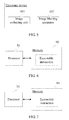
FIG. 1 is a method flowchart of an image blurring method according to an embodiment of the present invention; -
FIG. 2 is a method flowchart of an image blurring method according to another embodiment of the present invention; -
FIG. 3 is an apparatus structure diagram of an image blurring apparatus according to an embodiment of the present invention; -
FIG. 4 is an apparatus structure diagram of an image blurring apparatus according to another embodiment of the present invention; -
FIG. 5 is a device composition diagram of an electronic device according to an embodiment of the present invention; -
FIG. 6 is a device composition diagram of an electronic device according to another embodiment of the present invention; and -
FIG. 7 is a device composition diagram of an electronic device according to still another embodiment of the present invention. - To make the objectives, technical solutions, and advantages of the present invention clearer, the following further describes the embodiments of the present invention in detail with reference to the accompanying drawings.
- Referring to
FIG. 1, FIG. 1 shows a method flowchart of an image blurring method according to an embodiment of the present invention. The image blurring method is used in an electronic device to perform background blurring on an image, where the electronic device may be a mobile phone, a digital camera, a tablet computer, or the like. The image blurring method may include: - Step 102: Acquire a first image and a second image that are captured by a same camera and have a same viewfinder coverage, where an image distance of the first image is less than an image distance of the second image;
- Step 104: Acquire depth information according to the first image and the second image, where the depth information is used to represent a distance between a scene at each pixel in the first image and a capturing point and a distance between a scene at each pixel in the second image and the capturing point;
- Step 106: Determine a background area of the first image according to the depth information; and
- Step 108: Perform blurring processing on content in the background area of the first image;
- In conclusion, according to the image blurring method provided in this embodiment of the present invention, a first image and a second image that are captured by a same camera and have a same viewfinder coverage are acquired; depth information is acquired according to the first image and the second image; a background area of the first image is determined according to the depth information; and blurring is performed on the background area. Depth information at each pixel in the images is obtained according to the two images respectively focused on a foreground and a background, and a background area is determined according to the depth information, so that blurring processing is completed automatically, thereby solving a problem in the prior art that box selection of a background area is inaccurate and an operation process is complex because a user needs to open an image by using software and manually selects the background area, and achieving an effect of improving a blurring effect, simplifying a user operation, and saving user's time.
- Referring to
FIG. 2, FIG. 2 shows a method flowchart of an image blurring method according to another embodiment of the present invention. The image blurring method is used in an electronic device to perform background blurring on an image, where the electronic device may be a mobile phone, a digital camera, a tablet computer, or the like. In an example in which the electronic device is an electronic device including an image collecting unit, the image blurring method may include: - Step 202: Acquire a first image and a second image that are captured by a same camera and have a same viewfinder coverage.
- An image distance of the first image is less than an image distance of the second image.
- The electronic device may collect a group of multi-focus images by using the image collecting unit (that is, a camera in the electronic device) included in the electronic device, acquire, from the group of multi-focus images, an image focused on a foreground (an image distance is relatively short) and another image focused on a background (an image distance is relatively long), and use the former image as the first image and the latter image as the second image.
- Step 204: Acquire depth information of the first image and the second image according to the first image and the second image.
- The depth information is used to represent a distance between a scene at each pixel in the first image and a capturing point and a distance between a scene at each pixel in the second image and the capturing point. Because the first image and the second image are taken from the same group of multi-focus images that are captured by the same camera, a distance between a scene at each pixel in the first image and a capturing point is consistent with a distance between a scene at each pixel in the second image and the capturing point, that is, the depth information obtained by computation is not only depth information of the first image but also depth information of the second image.
- The electronic device may acquire photographic parameters of the camera in the electronic device, where the photographic parameters include: a calibrated focal length, a lens diameter, and a relationship parameter, where the relationship parameter is used to represent a relationship between an aperture size of the camera and blurriness of a defocused image; the electronic device determines initialized depth information according to the photographic parameters and the respective image distances of the first image and the second image; the electronic device performs N iterative computations on the initialized depth information according to the photographic parameters, the first image, and the second image, where N is a positive integer and N≥2; and the electronic device acquires a result obtained by the Nth iterative computation and uses the result as the depth information.
- When performing a first computation, the electronic device determines a diffusion coefficient of the first computation and a diffusion area of the first computation according to the initialized depth information and the photographic parameters; according to the first image, the second image, the diffusion coefficient of the first computation, and the diffusion area of the first computation, determines forward heat diffusion equations that are respectively corresponding to the first image and the second image in the first computation; determines a minimum value equation in the first computation, where the minimum value equation is used to represent a minimum value of the sum of a first difference and a second difference, where the first difference is a difference between an actual output value and a theoretical output value of a forward heat diffusion equation corresponding to the first image, and the second difference is a difference between an actual output value and a theoretical output value of a forward heat diffusion equation corresponding to the second image; according to the minimum value equation in the first computation, obtains a minimum gradient of each pixel in the first image and the second image in the first computation; according to a preset correction formula, performs n iterative corrections on depth information corresponding to a pixel of which a minimum gradient in the first computation is less than a preset gradient threshold, and obtains depth information after the first computation, where n is a positive integer and n≥2; and
when performing a pth computation, the electronic device determines a diffusion coefficient of the pth computation and a diffusion area of the pth computation according to depth information that is obtained after a (p-1)th computation and the photographic parameters; according to the first image, the second image, the diffusion coefficient of the pth computation, and the diffusion area of the pth computation, determines forward heat diffusion equations that are respectively corresponding to the first image and the second image in the pth computation; determines a minimum value equation in the pth computation; according to the minimum value equation in the pth computation, obtains a minimum gradient of each pixel in the first image and the second image in the pth computation; according to the preset correction formula, performs n iterative corrections on depth information corresponding to a pixel of which a minimum gradient in the pth computation is less than the preset gradient threshold, and obtains depth information after the pth computation, where 2≤p≤N. - The correction formula is:

s'(y) is depth information after a correction, s(y) is depth information before the correction, data_reg is a minimum gradient, and α and k are preset regularization parameters. - A scene image captured by a camera is merely an energy distribution of luminous intensity of a scene. This energy distribution is described by using heat diffusion on a metal plate, where a temperature of a given point represents intensity, and then a multi-focus imaging process may be modeled by using a theory of heat diffusion.
- An imaging process of a multi-focus image is modeled by using a theory of anisotropic heat diffusion, which converts extraction of depth information into an extreme value problem of an energy functional with a regularization term, and a depth of field, that is, the depth information of the first image and the second image, is obtained by iteration. Specific computation steps are as follows:
- 1) Acquire two multi-focus images I1 and I2 that are captured by the electronic device, and acquire calibrated camera parameters that are required, including a focal length f of the camera, image distances v1 and v2 of the two multi-focus images, a lens diameter D, and a relationship parameter γ. The electronic device may read the focal length f, target distances d1 and d2, and an aperture value F directly from image file headers. Then, the image distances v1 and v2 may be obtained by using f and d1 and d2 according to a formula (2.1); and the lens diameter D=f/F. If the foregoing parameters cannot be acquired from the image file headers, the following default parameters may be used: f=12mm, F=2.0, and d1 and d2 are 0.52m and 0.85m respectively.

- 2) Set a gradient threshold ε, virtual time Δt, regularization parameters α and k, a correction step length β, and the number of iteration times N.
- 3) Obtain initialized depth information:

- 4) According to depth information s(y), compute a corresponding diffusion coefficient c(y) and diffusion areas Ω+ and Ω- by using the following formulas:


- 5) Simulate the following forward heat diffusion equations of the two images by using the parameters obtained in the foregoing steps:


- 6) Solve the heat diffusion equations 2.4 and 2.5 in 5) separately to obtain their respective heat diffusion images u 1 (y, Δt) and u 2 (y, Δt) after the time Δt, and then use the heat diffusion images u 1 (y, Δt) and u 2 (y, Δt) to simulate the following heat diffusion parabolic equations:


- 7) Solve the equations in 6) to obtain w 1(y, Δt) and w2 (y, Δt), so as to obtain a minimum value of a formula (2.8):


- A computational formula of M(s) is as follows:

- A minimum gradient of a result obtained by solving the formula (2.11) is denoted by data_reg, that is,

- if data_reg ≤ ε, depth estimation of a pixel is relatively accurate, and no correction is required; and
- if data_reg > ε, depth estimation of a pixel is inaccurate, and it is required to perform a depth value correction.
- 8) Perform a correction on a depth value that needs to be corrected in 7) at the preset time step length β (that is, perform a depth correction for β times), and update a depth map. Assuming that:


iteration is performed on a depth value s(y) for β times to obtain a final corrected depth value. - 9) Use a corrected depth value obtained at each pixel as an initial depth value and return to 4), and continue execution until N times of iteration ends. A finally-obtained corrected depth value of each pixel is the depth information of the first image and the second image.
- 8) Perform a correction on a depth value that needs to be corrected in 7) at the preset time step length β (that is, perform a depth correction for β times), and update a depth map. Assuming that:
- It should be noted that, to facilitate the foregoing computation of the depth information, the first image and the second image need to be transformed from an RGB (Red Green Blue) model to a HSI (Hue Saturation Intensity) model in advance.
- Step 206: Determine a background area of the first image according to the depth information.
- The electronic device may determine a critical depth between a foreground area and a background area according to the photographic parameters and the respective image distances of the first image and the second image, and determine that a pixel area, in the first image, corresponding to the depth information that depth represent by the depth information that is greater than the critical depth is the background area of the first image.
- Specifically, by using a formula that represents a diffusion boundary:


- Then, the foreground and the background may be divided directly according to the depth information, as shown in the following formula:

- Step 208: Layer the background area of the first image, and determine blur parameters of each layer of the background area.
- Specifically, the electronic device may normalize the depth information to obtain normalized depth information; divide an interval, in the background area, of the normalized depth information equally into q segments to obtain q background intervals; and determine, according to a preset maximum blur radius, blur parameters corresponding to each of the q background intervals, where the blur parameters include a blur radius and a standard deviation.
- For the background, a scale of Gaussian Blur on the background is determined.
- First, an obtained depth map s is normalized to a range from 0 to 255 as follows:


- A foreground area in the first image (the first image is focused on the foreground area by default) is kept unchanged, and the other two segments are background areas, and two incremental blurring scales are selected.
- A method for selecting a scale in this embodiment is first determining a maximum blur radius j, where j may be determined according to a to-be-simulated aperture size of a camera. Generally, a larger aperture size yields a stronger background blurring effect, and a value of m is larger; and a smaller aperture size yields a milder background blurring effect, and a value of m is smaller.
- Then, a blur radius ri of each segment is determined according to a decremental rule by selecting 2 as a cardinal number:


- Step 210: Perform blurring separately on each layer of the background area according to the blur parameters of each layer of the background area.
- The electronic device may perform, according to the blur radius and the standard deviation that are corresponding to each of the q background intervals, blurring processing separately on a pixel area, in the first image, corresponding to each of the q background intervals.
- After a radius and a standard deviation of a Gaussian function are obtained, blurring processing may be performed on an image by using Gaussian filtering. Convolution processing is performed on a source image and the Gaussian function, and then a blurred image may be obtained:

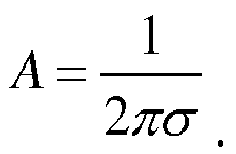
g[x, y] is the source image on which blurring processing needs to be performed, f[x, y] is a two-dimensional Gaussian function, and x and y are coordinates of the image; and m and n are a horizontal Gaussian Blur radius and a vertical Gaussian Blur radius respectively, and in this specification, a value ri is assigned to m and n. - The two-dimensional Gaussian function is defined as follows:

- In conclusion, according to the image blurring method provided in this embodiment of the present invention, a first image and a second image that are captured by a same camera and have a same viewfinder coverage are acquired; depth information is acquired according to the first image and the second image; a background area of the first image is determined according to the depth information; and blurring is performed on the background area. Depth information at each pixel in the images is obtained according to the two images respectively focused on a foreground and a background, and a background area is determined according to the depth information, so that blurring processing is completed automatically, thereby solving a problem in the prior art that box selection of a background area is inaccurate and an operation process is complex because a user needs to open an image by using software and manually selects the background area, and achieving an effect of improving a blurring effect, simplifying a user operation, and saving user's time.
- In addition, in the image blurring method provided in this embodiment of the present invention, the background area of the first image is layered according to the depth information, and blurring is performed on each layer of background area according to different blur parameters, which further improves the blurring effect.
- Referring to
FIG. 3, FIG. 3 shows an apparatus structure diagram of an image blurring apparatus according to an embodiment of the present invention. The image blurring apparatus is configured in an electronic device to perform background blurring on an image, where the electronic device may be a mobile phone, a digital camera, a tablet computer, or the like. The image blurring apparatus may include: - an
image acquiring module 301, configured to acquire a first image and a second image that are captured by a same camera and have a same viewfinder coverage, where an image distance of the first image is less than an image distance of the second image; - a depth
information acquiring module 302, configured to acquire depth information according to the first image and the second image, where the depth information is used to represent a distance between a scene at each pixel in the first image and a capturing point and a distance between a scene at each pixel in the second image and the capturing point; - a
background determining module 303, configured to determine a background area of the first image according to the depth information; and - a
blurring module 304, configured to perform blurring processing on content in the background area of the first image. - In conclusion, according to the image blurring apparatus provided in this embodiment of the present invention, a first image and a second image that are captured by a same camera and have a same viewfinder coverage are acquired; depth information is acquired according to the first image and the second image; a background area of the first image is determined according to the depth information; and blurring is performed on the background area. Depth information at each pixel in the images is obtained according to the two images respectively focused on a foreground and a background, and a background area is determined according to the depth information, so that blurring processing is completed automatically, thereby solving a problem in the prior art that box selection of a background area is inaccurate and an operation process is complex because a user needs to open an image by using software and manually selects the background area, and achieving an effect of improving a blurring effect, simplifying a user operation, and saving user's time.
- Referring to
FIG. 4, FIG. 4 shows an apparatus structure diagram of an image blurring apparatus according to an embodiment of the present invention. The image blurring apparatus is configured in an electronic device to perform background blurring on an image, where the electronic device may be a mobile phone, a digital camera, a tablet computer, or the like. The image blurring apparatus may include: - an
image acquiring module 401, configured to acquire a first image and a second image that are captured by a same camera and have a same viewfinder coverage, where an image distance of the first image is less than an image distance of the second image; - a depth
information acquiring module 402, configured to acquire depth information according to the first image and the second image, where the depth information is used to represent a distance between a scene at each pixel in the first image and a capturing point and a distance between a scene at each pixel in the second image and the capturing point; - a
background determining module 403, configured to determine a background area of the first image according to the depth information; and - a
blurring module 404, configured to perform blurring processing on content in the background area of the first image. - The depth
information acquiring module 402 includes: - a first acquiring
unit 402a, configured to acquire photographic parameters of the camera, where the photographic parameters include: a calibrated focal length, a lens diameter, and a relationship parameter, where the relationship parameter is used to represent a relationship between an aperture size of the camera and blurriness of a defocused image; - an
initializing unit 402b, configured to determine initialized depth information according to the photographic parameters and the respective image distances of the first image and the second image; - a
computing unit 402c, configured to perform N iterative computations on the initialized depth information according to the photographic parameters, the first image, and the second image, where N is a positive integer and N≥2; and - a second acquiring
unit 402d, configured to acquire a result obtained by the Nth iterative computation and use the result as the depth information. - The computing unit 402c is configured to, when a first computation is performed, determine a diffusion coefficient of the first computation and a diffusion area of the first computation according to the initialized depth information and the photographic parameters; according to the first image, the second image, the diffusion coefficient of the first computation, and the diffusion area of the first computation, determine forward heat diffusion equations that are respectively corresponding to the first image and the second image in the first computation; determine a minimum value equation in the first computation, where the minimum value equation is used to represent a minimum value of the sum of a first difference and a second difference, where the first difference is a difference between an actual output value and a theoretical output value of a forward heat diffusion equation corresponding to the first image, and the second difference is a difference between an actual output value and a theoretical output value of a forward heat diffusion equation corresponding to the second image; according to the minimum value equation in the first computation, obtain a minimum gradient of each pixel in the first image and the second image in the first computation; according to a preset correction formula, perform n iterative corrections on depth information corresponding to a pixel of which a minimum gradient in the first computation is less than a preset gradient threshold, and obtain depth information after the first computation, where n is a positive integer and n≥2; and
thecomputing unit 402c is configured to, when a pth computation is performed, determine a diffusion coefficient of the pth computation and a diffusion area of the pth computation according to depth information that is obtained after a (p-1)th computation and the photographic parameters; according to the first image, the second image, the diffusion coefficient of the pth computation, and the diffusion area of the pth computation, determine forward heat diffusion equations that are respectively corresponding to the first image and the second image in the pth computation; determine a minimum value equation in the pth computation; according to the minimum value equation in the pth computation, obtain a minimum gradient of each pixel in the first image and the second image in the pth computation; according to the preset correction formula, perform n iterative corrections on depth information corresponding to a pixel of which a minimum gradient in the pth computation is less than the preset gradient threshold, and obtain depth information after the pth computation, where 2≤p≤N. - The
background determining module 403 includes: - a critical
depth determining unit 403a, configured to determine a critical depth between a foreground area and a background area according to the photographic parameters and the respective image distances of the first image and the second image; and - a
background determining unit 403b, configured to determine that a pixel area, in the first image, corresponding to the depth information that depth represent by the depth information that is greater than the critical depth is the background area of the first image. - The
blurring module 404 includes: - a normalizing
unit 404a, configured to normalize the depth information to obtain normalized depth information; - a
segmenting unit 404b, configured to divide an interval, in the background area, of the normalized depth information equally into q segments to obtain q background intervals; - a
parameter determining unit 404c, configured to determine, according to a preset maximum blur radius, blur parameters corresponding to each of the q background intervals, where the blur parameters include a blur radius and a standard deviation; and - a
blurring unit 404d, configured to perform, according to the blur radius and the standard deviation that are corresponding to each of the q background intervals, blurring processing separately on a pixel area, in the first image, corresponding to each of the q background intervals. - In conclusion, according to the image blurring apparatus provided in this embodiment of the present invention, a first image and a second image that are captured by a same camera and have a same viewfinder coverage are acquired; depth information is acquired according to the first image and the second image; a background area of the first image is determined according to the depth information; and blurring is performed on the background area. Depth information at each pixel in the images is obtained according to the two images respectively focused on a foreground and a background, and a background area is determined according to the depth information, so that blurring processing is completed automatically, thereby solving a problem in the prior art that box selection of a background area is inaccurate and an operation process is complex because a user needs to open an image by using software and manually selects the background area, and achieving an effect of improving a blurring effect, simplifying a user operation, and saving user's time.
- In addition, in the image blurring apparatus provided in this embodiment of the present invention, the background area of the first image is layered according to the depth information, and blurring is performed on each layer of background area according to different blur parameters, which further improves the blurring effect.
- Referring to
FIG. 5, FIG. 5 shows a device composition diagram of an electronic device according to an embodiment of the present invention. The electronic device may be a mobile phone, a digital camera, a tablet computer, or the like. The electronic device may include: - an
image collecting unit 001 and animage blurring apparatus 002 shown in the foregoingFIG. 3 orFIG. 4 . - In conclusion, according to the electronic device provided in this embodiment of the present invention, a first image and a second image that are captured by a same camera and have a same viewfinder coverage are acquired; depth information is acquired according to the first image and the second image; a background area of the first image is determined according to the depth information; and blurring is performed on the background area. Depth information at each pixel in the images is obtained according to the two images respectively focused on a foreground and a background, and a background area is determined according to the depth information, so that blurring processing is completed automatically, thereby solving a problem in the prior art that box selection of a background area is inaccurate and an operation process is complex because a user needs to open an image by using software and manually selects the background area, and achieving an effect of improving a blurring effect, simplifying a user operation, and saving user's time.
- In addition, in the electronic device provided in this embodiment of the present invention, the background area of the first image is layered according to the depth information, and blurring is performed on each layer of background area according to different blur parameters, which further improves the blurring effect.
- Referring to
FIG. 6, FIG. 6 shows a device composition diagram of an electronic device according to another embodiment of the present invention. The electronic device may be a mobile phone, a digital camera, a tablet computer, or the like. The electronic device may include: - a
processor 50; and - a
memory 60 that is configured to store an instruction executable by theprocessor 50. - The
processor 50 is configured to acquire a first image and a second image that are captured by a same camera and have a same viewfinder coverage, where an image distance of the first image is less than an image distance of the second image; theprocessor 50 is configured to acquire depth information according to the first image and the second image, where the depth information is used to represent a distance between a scene at each pixel in the first image and a capturing point and a distance between a scene at each pixel in the second image and the capturing point;
theprocessor 50 is configured to determine a background area of the first image according to the depth information; and
theprocessor 50 is configured to perform blurring processing on content in the background area of the first image. - In conclusion, according to the electronic device provided in this embodiment of the present invention, a first image and a second image that are captured by a same camera and have a same viewfinder coverage are acquired; depth information is acquired according to the first image and the second image; a background area of the first image is determined according to the depth information; and blurring is performed on the background area. Depth information at each pixel in the images is obtained according to the two images respectively focused on a foreground and a background, and a background area is determined according to the depth information, so that blurring processing is completed automatically, thereby solving a problem in the prior art that box selection of a background area is inaccurate and an operation process is complex because a user needs to open an image by using software and manually selects the background area, and achieving an effect of improving a blurring effect, simplifying a user operation, and saving user's time.
- Referring to
FIG. 7, FIG. 7 shows a device composition diagram of an electronic device according to still another embodiment of the present invention. The electronic device may be a mobile phone, a digital camera, a tablet computer, or the like. The electronic device may include: - a
processor 70; and - a
memory 80 that is configured to store an instruction executable by theprocessor 70. - The
processor 70 is configured to acquire a first image and a second image that are captured by a same camera and have a same viewfinder coverage, where an image distance of the first image is less than an image distance of the second image;
theprocessor 70 is configured to acquire depth information according to the first image and the second image, where the depth information is used to represent a distance between a scene at each pixel in the first image and a capturing point and a distance between a scene at each pixel in the second image and the capturing point;
theprocessor 70 is configured to determine a background area of the first image according to the depth information; and
theprocessor 70 is configured to perform blurring processing on content in the background area of the first image. - The
processor 70 is configured to acquire photographic parameters of the camera, where the photographic parameters include: a calibrated focal length, a lens diameter, and a relationship parameter, where the relationship parameter is used to represent a relationship between an aperture size of the camera and blurriness of a defocused image;
theprocessor 70 is configured to determine initialized depth information according to the photographic parameters and the respective image distances of the first image and the second image;
theprocessor 70 is configured to perform N iterative computations on the initialized depth information according to the photographic parameters, the first image, and the second image, where N is a positive integer and N≥2; and
theprocessor 70 is configured to acquire a result obtained by the Nth iterative computation and use the result as the depth information. - The processor 70 is configured to, when a first computation is performed, determine a diffusion coefficient of the first computation and a diffusion area of the first computation according to the initialized depth information and the photographic parameters; according to the first image, the second image, the diffusion coefficient of the first computation, and the diffusion area of the first computation, determine forward heat diffusion equations that are respectively corresponding to the first image and the second image in the first computation; determine a minimum value equation in the first computation, where the minimum value equation is used to represent a minimum value of the sum of a first difference and a second difference, where the first difference is a difference between an actual output value and a theoretical output value of a forward heat diffusion equation corresponding to the first image, and the second difference is a difference between an actual output value and a theoretical output value of a forward heat diffusion equation corresponding to the second image; according to the minimum value equation in the first computation, obtain a minimum gradient of each pixel in the first image and the second image in the first computation; according to a preset correction formula, perform n iterative corrections on depth information corresponding to a pixel of which a minimum gradient in the first computation is less than a preset gradient threshold, and obtain depth information after the first computation, where n is a positive integer and n≥2; and
theprocessor 70 is configured to, when a pth computation is performed, determine a diffusion coefficient of the pth computation and a diffusion area of the pth computation according to depth information that is obtained after a (p-1)th computation and the photographic parameters; according to the first image, the second image, the diffusion coefficient of the pth computation, and the diffusion area of the pth computation, determine forward heat diffusion equations that are respectively corresponding to the first image and the second image in the pth computation; determine a minimum value equation in the pth computation; according to the minimum value equation in the pth computation, obtain a minimum gradient of each pixel in the first image and the second image in the pth computation; according to the preset correction formula, perform n iterative corrections on depth information corresponding to a pixel of which a minimum gradient in the pth computation is less than the preset gradient threshold, and obtain depth information after the pth computation, where 2≤p≤N. - The
processor 70 is configured to determine a critical depth between a foreground area and a background area according to the photographic parameters and the respective image distances of the first image and the second image; and
theprocessor 70 is configured to determine that a pixel area, in the first image, corresponding to the depth information that depth represent by the depth information that is greater than the critical depth is the background area of the first image. - The
processor 70 is configured to normalize the depth information to obtain normalized depth information;
theprocessor 70 is configured to divide an interval, in the background area, of the normalized depth information equally into q segments to obtain q background intervals;
theprocessor 70 is configured to determine, according to a preset maximum blur radius, blur parameters corresponding to each of the q background intervals, where the blur parameters include a blur radius and a standard deviation; and
theprocessor 70 is configured to perform, according to the blur radius and the standard deviation that are corresponding to each of the q background intervals, blurring processing separately on a pixel area, in the first image, corresponding to each of the q background intervals. - In conclusion, according to the electronic device provided in this embodiment of the present invention, a first image and a second image that are captured by a same camera and have a same viewfinder coverage are acquired; depth information is acquired according to the first image and the second image; a background area of the first image is determined according to the depth information; and blurring is performed on the background area. Depth information at each pixel in the images is obtained according to the two images respectively focused on a foreground and a background, and a background area is determined according to the depth information, so that blurring processing is completed automatically, thereby solving a problem in the prior art that box selection of a background area is inaccurate and an operation process is complex because a user needs to open an image by using software and manually selects the background area, and achieving an effect of improving a blurring effect, simplifying a user operation, and saving user's time.
- In addition, in the electronic device provided in this embodiment of the present invention, the background area of the first image is layered according to the depth information, and blurring is performed on each layer of background area according to different blur parameters, which further improves the blurring effect.
- It should be noted that: the division of the foregoing functional modules is merely used as an example for description when the image blurring apparatus provided in the foregoing embodiments performs background blurring. In a practical application, the foregoing functions may be allocated to different functional modules for completion according to a requirement, that is, an internal structure of the apparatus may be divided into different functional modules so as to complete all or part of the functions described above. In addition, the image blurring apparatus provided in the foregoing embodiments pertains to a same concept as the embodiments of the image blurring method, and reference may be made to the method embodiments for a specific implementation process of the image blurring apparatus, which is not described herein again.
- The foregoing serial numbers in the embodiments of the present invention are merely for description, but do not represent merits or demerits of the embodiments.
- A person of ordinary skill in the art may understand that all or a part of the steps of the embodiments may be implemented by hardware or a program instructing related hardware. The program may be stored in a computer-readable storage medium. The storage medium may include: a read-only memory, a magnetic disk, or an optical disc.
- The foregoing descriptions are merely exemplary embodiments of the present invention, but are not intended to limit the present invention. Any modification, equivalent replacement, and improvement made without departing from the principle of the present invention shall fall within the protection scope of the present invention.
Claims (12)
- An image blurring method, wherein the method comprises:acquiring a first image and a second image that are captured by a same camera and have a same viewfinder coverage, wherein an image distance of the first image is less than an image distance of the second image;acquiring depth information according to the first image and the second image, wherein the depth information is used to represent a distance between a scene at each pixel in the first image and a capturing point and a distance between a scene at each pixel in the second image and the capturing point;determining a background area of the first image according to the depth information; andperforming blurring processing on content in the background area of the first image.
- The method according to claim 1, wherein the acquiring depth information according to the first image and the second image comprises:acquiring photographic parameters of the camera, wherein the photographic parameters comprise: a calibrated focal length, a lens diameter, and a relationship parameter, wherein the relationship parameter is used to represent a relationship between an aperture size of the camera and blurriness of a defocused image;determining initialized depth information according to the photographic parameters and the respective image distances of the first image and the second image;performing N iterative computations on the initialized depth information according to the photographic parameters, the first image, and the second image, wherein N is a positive integer and N≥2; andacquiring a result obtained by the Nth iterative computation and using the result as the depth information.
- The method according to claim 2, wherein the performing N iterative computations on the initialized depth information according to the photographic parameters, the first image, and the second image comprises:when a first computation is performed, determining a diffusion coefficient of the first computation and a diffusion area of the first computation according to the initialized depth information and the photographic parameters; according to the first image, the second image, the diffusion coefficient of the first computation, and the diffusion area of the first computation, determining forward heat diffusion equations that are respectively corresponding to the first image and the second image in the first computation; determining a minimum value equation in the first computation, wherein the minimum value equation is used to represent a minimum value of the sum of a first difference and a second difference, wherein the first difference is a difference between an actual output value and a theoretical output value of a forward heat diffusion equation corresponding to the first image, and the second difference is a difference between an actual output value and a theoretical output value of a forward heat diffusion equation corresponding to the second image; according to the minimum value equation in the first computation, obtaining a minimum gradient of each pixel in the first image and the second image in the first computation; according to a preset correction formula, performing n iterative corrections on depth information corresponding to a pixel of which a minimum gradient in the first computation is less than a preset gradient threshold, and obtaining depth information after the first computation, wherein n is a positive integer and n≥2; andwhen a pth computation is performed, determining a diffusion coefficient of the pth computation and a diffusion area of the pth computation according to depth information that is obtained after a (p-1)th computation and the photographic parameters; according to the first image, the second image, the diffusion coefficient of the pth computation, and the diffusion area of the pth computation, determining forward heat diffusion equations that are respectively corresponding to the first image and the second image in the pth computation; determining a minimum value equation in the pth computation; according to the minimum value equation in the pth computation, obtaining a minimum gradient of each pixel in the first image and the second image in the pth computation; according to the preset correction formula, performing n iterative corrections on depth information corresponding to a pixel of which a minimum gradient in the pth computation is less than the preset gradient threshold, and obtaining depth information after the pth computation, wherein 2≤p≤N.
- The method according to claim 3, wherein the correction formula is:

s'(y) is depth information after a correction, s(y) is depth information before the correction, data_reg is a minimum gradient, and α and k are preset regularization parameters. - The method according to claim 1, wherein the determining a background area of the first image according to the depth information comprises:determining a critical depth between a foreground area and a background area according to photographic parameters and the respective image distances of the first image and the second image; anddetermining that a pixel area, in the first image, corresponding to the depth information that depth represent by the depth information that is greater than the critical depth is the background area of the first image.
- The method according to claim 1, wherein the performing blurring processing on content in the background area of the first image comprises:normalizing the depth information to obtain normalized depth information;dividing an interval, in the background area, of the normalized depth information equally into q segments to obtain q background intervals;determining, according to a preset maximum blur radius, blur parameters corresponding to each of the q background intervals, wherein the blur parameters comprise a blur radius and a standard deviation; andperforming, according to the blur radius and the standard deviation that are corresponding to each of the q background intervals, blurring processing separately on a pixel area, in the first image, corresponding to each of the q background intervals.
- An image blurring apparatus, wherein the apparatus comprises:an image acquiring module, configured to acquire a first image and a second image that are captured by a same camera and have a same viewfinder coverage, wherein an image distance of the first image is less than an image distance of the second image;a depth information acquiring module, configured to acquire depth information according to the first image and the second image, wherein the depth information is used to represent a distance between a scene at each pixel in the first image and a capturing point and a distance between a scene at each pixel in the second image and the capturing point;a background determining module, configured to determine a background area of the first image according to the depth information; anda blurring module, configured to perform blurring processing on content in the background area of the first image.
- The apparatus according to claim 7, wherein the depth information acquiring module comprises:a first acquiring unit, configured to acquire photographic parameters of the camera, wherein the photographic parameters comprise: a calibrated focal length, a lens diameter, and a relationship parameter, wherein the relationship parameter is used to represent a relationship between an aperture size of the camera and blurriness of a defocused image;an initializing unit, configured to determine initialized depth information according to the photographic parameters and the respective image distances of the first image and the second image;a computing unit, configured to perform N iterative computations on the initialized depth information according to the photographic parameters, the first image, and the second image, wherein N is a positive integer and N≥2; anda second acquiring unit, configured to acquire a result obtained by the Nth iterative computation and use the result as the depth information.
- The apparatus according to claim 8, wherein:the computing unit is configured to, when a first computation is performed, determine a diffusion coefficient of the first computation and a diffusion area of the first computation according to the initialized depth information and the photographic parameters; according to the first image, the second image, the diffusion coefficient of the first computation, and the diffusion area of the first computation, determine forward heat diffusion equations that are respectively corresponding to the first image and the second image in the first computation; determine a minimum value equation in the first computation, wherein the minimum value equation is used to represent a minimum value of the sum of a first difference and a second difference, wherein the first difference is a difference between an actual output value and a theoretical output value of a forward heat diffusion equation corresponding to the first image, and the second difference is a difference between an actual output value and a theoretical output value of a forward heat diffusion equation corresponding to the second image; according to the minimum value equation in the first computation, obtain a minimum gradient of each pixel in the first image and the second image in the first computation; according to a preset correction formula, perform n iterative corrections on depth information corresponding to a pixel of which a minimum gradient in the first computation is less than a preset gradient threshold, and obtain depth information after the first computation, wherein n is a positive integer and n≥2; andthe computing unit is configured to, when a pth computation is performed, determine a diffusion coefficient of the pth computation and a diffusion area of the pth computation according to depth information that is obtained after a (p-1)th computation and the photographic parameters; according to the first image, the second image, the diffusion coefficient of the pth computation, and the diffusion area of the pth computation, determine forward heat diffusion equations that are respectively corresponding to the first image and the second image in the pth computation; determine a minimum value equation in the pth computation; according to the minimum value equation in the pth computation, obtain a minimum gradient of each pixel in the first image and the second image in the pth computation; according to the preset correction formula, perform n iterative corrections on depth information corresponding to a pixel of which a minimum gradient in the pth computation is less than the preset gradient threshold, and obtain depth information after the pth computation, wherein 2≤p≤N.
- The apparatus according to claim 7, wherein the background determining module comprises:a critical depth determining unit, configured to determine a critical depth between a foreground area and a background area according to photographic parameters and the respective image distances of the first image and the second image; anda background determining unit, configured to determine that a pixel area, in the first image, corresponding to the depth information that depth represent by the depth information that is greater than the critical depth is the background area of the first image.
- The apparatus according to claim 7, wherein the blurring module comprises:a normalizing unit, configured to normalize the depth information to obtain normalized depth information;a segmenting unit, configured to divide an interval, in the background area, of the normalized depth information equally into q segments to obtain q background intervals;a parameter determining unit, configured to determine, according to a preset maximum blur radius, blur parameters corresponding to each of the q background intervals, wherein the blur parameters comprise a blur radius and a standard deviation; anda blurring unit, configured to perform, according to the blur radius and the standard deviation that are corresponding to each of the q background intervals, blurring processing separately on a pixel area, in the first image, corresponding to each of the q background intervals.
- An electronic device, wherein the electronic device comprises:the image blurring apparatus according to any of claims 7 to 11.
Applications Claiming Priority (1)
| Application Number | Priority Date | Filing Date | Title |
|---|---|---|---|
| CN201410095114.9A CN103945118B (en) | 2014-03-14 | 2014-03-14 | Image weakening method, device and electronic equipment |
Publications (2)
| Publication Number | Publication Date |
|---|---|
| EP2919188A1 true EP2919188A1 (en) | 2015-09-16 |
| EP2919188B1 EP2919188B1 (en) | 2017-03-15 |
Family
ID=51192577
Family Applications (1)
| Application Number | Title | Priority Date | Filing Date |
|---|---|---|---|
| EP15151927.9A Active EP2919188B1 (en) | 2014-03-14 | 2015-01-21 | Image blurring method and apparatus |
Country Status (6)
| Country | Link |
|---|---|
| US (1) | US9215381B2 (en) |
| EP (1) | EP2919188B1 (en) |
| JP (1) | JP6027159B2 (en) |
| KR (1) | KR101686926B1 (en) |
| CN (1) | CN103945118B (en) |
| ES (1) | ES2626174T3 (en) |
Cited By (5)
| Publication number | Priority date | Publication date | Assignee | Title |
|---|---|---|---|---|
| EP3410391A1 (en) * | 2017-05-31 | 2018-12-05 | Guangdong OPPO Mobile Telecommunications Corp., Ltd. | Image blurring method, electronic device and computer readable storage medium |
| EP3480783A1 (en) * | 2017-11-01 | 2019-05-08 | Guangdong OPPO Mobile Telecommunications Corp., Ltd. | Image-processing method, apparatus and device |
| EP3726473A1 (en) | 2019-04-18 | 2020-10-21 | SMR Patents S.à.r.l. | Method for rearview device simulation |
| US11256931B2 (en) | 2010-04-19 | 2022-02-22 | SMR Patent S.à.r.l | Rearview device simulation |
| US12337761B2 (en) | 2010-04-19 | 2025-06-24 | SMR Patents S.à.r.l. | Rearview device simulation |
Families Citing this family (43)
| Publication number | Priority date | Publication date | Assignee | Title |
|---|---|---|---|---|
| TWI578780B (en) * | 2014-10-02 | 2017-04-11 | 晶睿通訊股份有限公司 | Blurry image detecting method and related camera and image processing system |
| JP5927265B2 (en) * | 2014-10-28 | 2016-06-01 | シャープ株式会社 | Image processing apparatus and program |
| CN104463775A (en) * | 2014-10-31 | 2015-03-25 | 小米科技有限责任公司 | Device and method for achieving depth-of-field effect of image |
| TWI566601B (en) * | 2015-02-25 | 2017-01-11 | 光寶科技股份有限公司 | Image processing device and image depth processing method |
| CN105100615B (en) * | 2015-07-24 | 2019-02-26 | 青岛海信移动通信技术股份有限公司 | Image preview method, device and terminal |
| CN105163042B (en) * | 2015-08-03 | 2017-11-03 | 努比亚技术有限公司 | A kind of apparatus and method for blurring processing depth image |
| US10284835B2 (en) * | 2015-09-04 | 2019-05-07 | Apple Inc. | Photo-realistic shallow depth-of-field rendering from focal stacks |
| CN105352455B (en) * | 2015-11-18 | 2017-09-05 | 宁波大学 | A kind of plane inclination measuring method based on image blur |
| CN105513105B (en) * | 2015-12-07 | 2018-05-29 | 天津大学 | Image background weakening method based on notable figure |
| CN105592271A (en) * | 2015-12-21 | 2016-05-18 | 深圳市金立通信设备有限公司 | Image-processing method and terminal |
| CN107613199B (en) | 2016-06-02 | 2020-03-13 | Oppo广东移动通信有限公司 | Blurred photo generation method and device and mobile terminal |
| CN106331492B (en) * | 2016-08-29 | 2019-04-16 | Oppo广东移动通信有限公司 | Image processing method and terminal |
| CN106530241B (en) * | 2016-10-31 | 2020-08-11 | 努比亚技术有限公司 | Image blurring processing method and device |
| CN108886572B (en) | 2016-11-29 | 2021-08-06 | 深圳市大疆创新科技有限公司 | Method and system for adjusting image focus |
| US10389948B2 (en) * | 2016-12-06 | 2019-08-20 | Qualcomm Incorporated | Depth-based zoom function using multiple cameras |
| CN106803920B (en) * | 2017-03-17 | 2020-07-10 | 广州视源电子科技股份有限公司 | An image processing method, device and intelligent conference terminal |
| CN108230234B (en) * | 2017-05-19 | 2019-08-20 | 深圳市商汤科技有限公司 | Image blurs processing method, device, storage medium and electronic equipment |
| CN108234858B (en) | 2017-05-19 | 2020-05-01 | 深圳市商汤科技有限公司 | Image blurring processing method and device, storage medium and electronic equipment |
| CN107426493A (en) * | 2017-05-23 | 2017-12-01 | 深圳市金立通信设备有限公司 | A kind of image pickup method and terminal for blurring background |
| CN107085825A (en) * | 2017-05-27 | 2017-08-22 | 成都通甲优博科技有限责任公司 | Image weakening method, device and electronic equipment |
| CN107704798B (en) * | 2017-08-09 | 2020-06-12 | Oppo广东移动通信有限公司 | Image blurring method, apparatus, computer-readable storage medium, and computer device |
| CN108024054B (en) * | 2017-11-01 | 2021-07-13 | Oppo广东移动通信有限公司 | Image processing method, device, device and storage medium |
| CN107682639B (en) * | 2017-11-16 | 2019-09-27 | 维沃移动通信有限公司 | Image processing method, device and mobile terminal |
| CN108024058B (en) * | 2017-11-30 | 2019-08-02 | Oppo广东移动通信有限公司 | Image blurring processing method and device, mobile terminal and storage medium |
| CN108419008B (en) * | 2018-01-30 | 2020-04-28 | 努比亚技术有限公司 | Shooting method, terminal and computer readable storage medium |
| CN108564541B (en) * | 2018-03-28 | 2022-04-15 | 麒麟合盛网络技术股份有限公司 | Image processing method and device |
| WO2020036468A1 (en) * | 2018-08-16 | 2020-02-20 | 주식회사 날비컴퍼니 | Method for applying bokeh effect to image and recording medium |
| KR102683362B1 (en) * | 2018-12-07 | 2024-07-10 | 삼성전자주식회사 | Method for processing image and electronic device thereof |
| TWI701639B (en) * | 2018-12-11 | 2020-08-11 | 緯創資通股份有限公司 | Method of identifying foreground object in image and electronic device using the same |
| CN109618173B (en) * | 2018-12-17 | 2021-09-28 | 深圳Tcl新技术有限公司 | Video compression method, device and computer readable storage medium |
| CN109889724B (en) * | 2019-01-30 | 2020-11-06 | 北京达佳互联信息技术有限公司 | Image blurring method and device, electronic equipment and readable storage medium |
| CN110336942B (en) * | 2019-06-28 | 2021-02-02 | Oppo广东移动通信有限公司 | Blurred image acquisition method, terminal and computer-readable storage medium |
| CN110992284A (en) * | 2019-11-29 | 2020-04-10 | Oppo广东移动通信有限公司 | Image processing method, image processing apparatus, electronic device, and computer-readable storage medium |
| WO2021114061A1 (en) * | 2019-12-09 | 2021-06-17 | Guangdong Oppo Mobile Telecommunications Corp., Ltd. | Electric device and method of controlling an electric device |
| CN113052754B (en) * | 2019-12-26 | 2022-06-07 | 武汉Tcl集团工业研究院有限公司 | Method and device for blurring picture background |
| WO2021135676A1 (en) * | 2019-12-30 | 2021-07-08 | 武汉Tcl集团工业研究院有限公司 | Photographing background blurring method, mobile terminal, and storage medium |
| KR102260193B1 (en) | 2019-12-30 | 2021-06-03 | 주식회사 버넥트 | Remote augmented reality communication method and system that provides security for 3d-space |
| CN111385481A (en) * | 2020-03-30 | 2020-07-07 | 北京达佳互联信息技术有限公司 | Image processing method and device, electronic device and storage medium |
| KR20220005820A (en) | 2020-07-07 | 2022-01-14 | 삼성전자주식회사 | Electronic device for applying graphic effect and method thereof |
| CN112165575B (en) * | 2020-09-25 | 2022-03-18 | Oppo(重庆)智能科技有限公司 | Image blurring processing method and device, storage medium and electronic equipment |
| WO2022178781A1 (en) * | 2021-02-25 | 2022-09-01 | Guangdong Oppo Mobile Telecommunications Corp., Ltd. | Electric device, method of controlling electric device, and computer readable storage medium |
| US11727537B1 (en) * | 2022-03-24 | 2023-08-15 | Qualcomm Incorporated | Bokeh effect in variable aperture (VA) camera systems |
| CN117788272A (en) * | 2022-10-13 | 2024-03-29 | 小红书科技有限公司 | Background blurring method, device, electronic equipment and storage medium |
Citations (1)
| Publication number | Priority date | Publication date | Assignee | Title |
|---|---|---|---|---|
| US20090290041A1 (en) * | 2008-05-20 | 2009-11-26 | Fujifilm Corporation | Image processing device and method, and computer readable recording medium containing program |
Family Cites Families (11)
| Publication number | Priority date | Publication date | Assignee | Title |
|---|---|---|---|---|
| US7657171B2 (en) * | 2006-06-29 | 2010-02-02 | Scenera Technologies, Llc | Method and system for providing background blurring when capturing an image using an image capture device |
| US8929645B2 (en) * | 2007-04-24 | 2015-01-06 | 21 Ct, Inc. | Method and system for fast dense stereoscopic ranging |
| JP5434361B2 (en) * | 2009-02-24 | 2014-03-05 | 株式会社リコー | Image processing apparatus and image processing method |
| US8723912B2 (en) * | 2010-07-06 | 2014-05-13 | DigitalOptics Corporation Europe Limited | Scene background blurring including face modeling |
| US9007689B2 (en) * | 2011-04-04 | 2015-04-14 | General Electric Company | Method and apparatus for forming multiple images |
| AU2011224051B2 (en) * | 2011-09-14 | 2014-05-01 | Canon Kabushiki Kaisha | Determining a depth map from images of a scene |
| CN102722080B (en) * | 2012-06-27 | 2015-11-18 | 杭州南湾科技有限公司 | A kind of multi purpose spatial image capture method based on many lens shootings |
| US9214025B2 (en) * | 2012-11-30 | 2015-12-15 | Adobe Systems Incorporated | Depth estimation using normalized displacement of image pairs |
| AU2012258467A1 (en) * | 2012-12-03 | 2014-06-19 | Canon Kabushiki Kaisha | Bokeh amplification |
| CN103152521B (en) * | 2013-01-30 | 2016-08-17 | 广东欧珀移动通信有限公司 | A kind of mobile terminal realizes method and the mobile terminal of Deep Canvas |
| US20150243035A1 (en) * | 2014-02-21 | 2015-08-27 | Metaio Gmbh | Method and device for determining a transformation between an image coordinate system and an object coordinate system associated with an object of interest |
-
2014
- 2014-03-14 CN CN201410095114.9A patent/CN103945118B/en active Active
-
2015
- 2015-01-21 ES ES15151927.9T patent/ES2626174T3/en active Active
- 2015-01-21 EP EP15151927.9A patent/EP2919188B1/en active Active
- 2015-02-02 US US14/611,775 patent/US9215381B2/en active Active
- 2015-02-16 KR KR1020150023570A patent/KR101686926B1/en active Active
- 2015-02-27 JP JP2015037951A patent/JP6027159B2/en active Active
Patent Citations (1)
| Publication number | Priority date | Publication date | Assignee | Title |
|---|---|---|---|---|
| US20090290041A1 (en) * | 2008-05-20 | 2009-11-26 | Fujifilm Corporation | Image processing device and method, and computer readable recording medium containing program |
Non-Patent Citations (3)
| Title |
|---|
| JAMES E ADAMS: "A fully automatic digital camera image refocusing algorithm", IVMSP WORKSHOP, 2011 IEEE 10TH, IEEE, 16 June 2011 (2011-06-16), pages 81 - 86, XP031912084, ISBN: 978-1-4577-1284-5, DOI: 10.1109/IVMSPW.2011.5970359 * |
| KYUMAN JEONG ET AL: "Digital shallow depth-of-field adapter for photographs", THE VISUAL COMPUTER ; INTERNATIONAL JOURNAL OF COMPUTER GRAPHICS, SPRINGER, BERLIN, DE, vol. 24, no. 4, 21 December 2007 (2007-12-21), pages 281 - 294, XP019588647, ISSN: 1432-2315 * |
| TODD J KOSLOFF ET AL: "An Algorithm for Rendering Generalized Depth of Field Effects Based on Simulated Heat Diffusion", 26 August 2007, COMPUTATIONAL SCIENCE AND ITS APPLICATIONS - ICCSA 2007; [LECTURE NOTES IN COMPUTER SCIENCE], SPRINGER BERLIN HEIDELBERG, BERLIN, HEIDELBERG, PAGE(S) 1124 - 1140, ISBN: 978-3-540-74482-5, XP019068553 * |
Cited By (8)
| Publication number | Priority date | Publication date | Assignee | Title |
|---|---|---|---|---|
| US11256931B2 (en) | 2010-04-19 | 2022-02-22 | SMR Patent S.à.r.l | Rearview device simulation |
| US11731558B2 (en) | 2010-04-19 | 2023-08-22 | SMR Patents S.à.r.l. | Rearview device simulation |
| US12337761B2 (en) | 2010-04-19 | 2025-06-24 | SMR Patents S.à.r.l. | Rearview device simulation |
| EP3410391A1 (en) * | 2017-05-31 | 2018-12-05 | Guangdong OPPO Mobile Telecommunications Corp., Ltd. | Image blurring method, electronic device and computer readable storage medium |
| US10510136B2 (en) | 2017-05-31 | 2019-12-17 | Guangdong Oppo Mobile Telecommunications Corp., Ltd. | Image blurring method, electronic device and computer device |
| EP3480783A1 (en) * | 2017-11-01 | 2019-05-08 | Guangdong OPPO Mobile Telecommunications Corp., Ltd. | Image-processing method, apparatus and device |
| US10878539B2 (en) | 2017-11-01 | 2020-12-29 | Guangdong Oppo Mobile Telecommunications Corp., Ltd. | Image-processing method, apparatus and device |
| EP3726473A1 (en) | 2019-04-18 | 2020-10-21 | SMR Patents S.à.r.l. | Method for rearview device simulation |
Also Published As
| Publication number | Publication date |
|---|---|
| KR101686926B1 (en) | 2016-12-15 |
| ES2626174T3 (en) | 2017-07-24 |
| CN103945118B (en) | 2017-06-20 |
| JP6027159B2 (en) | 2016-11-16 |
| CN103945118A (en) | 2014-07-23 |
| KR20150107605A (en) | 2015-09-23 |
| US20150264271A1 (en) | 2015-09-17 |
| EP2919188B1 (en) | 2017-03-15 |
| JP2015177544A (en) | 2015-10-05 |
| US9215381B2 (en) | 2015-12-15 |
Similar Documents
| Publication | Publication Date | Title |
|---|---|---|
| EP2919188B1 (en) | Image blurring method and apparatus | |
| US10997696B2 (en) | Image processing method, apparatus and device | |
| EP3480784B1 (en) | Image processing method, and device | |
| EP2526528B1 (en) | Blur function modeling for depth of field rendering | |
| US9313419B2 (en) | Image processing apparatus and image pickup apparatus where image processing is applied using an acquired depth map | |
| US20180255254A1 (en) | Automatic lens flare detection and correction for light-field images | |
| US9100559B2 (en) | Image processing apparatus, image pickup apparatus, image processing method, and image processing program using compound kernel | |
| US10115186B2 (en) | Image processing apparatus, imaging apparatus, depth measuring apparatus and image processing method | |
| US9613403B2 (en) | Image processing apparatus and method | |
| WO2019105261A1 (en) | Background blurring method and apparatus, and device | |
| JP6579868B2 (en) | Image processing apparatus, imaging apparatus, image processing method, and program | |
| CN110349163A (en) | Image processing method and apparatus, electronic device, computer-readable storage medium | |
| KR20130090615A (en) | Exposure measuring method and apparatus based on the composition for automatic image correction | |
| WO2017190415A1 (en) | Image optimization method and device, and terminal | |
| CN110881103B (en) | Focusing control method and device, electronic equipment and computer readable storage medium | |
| CN117058183A (en) | Image processing method and device based on double cameras, electronic equipment and storage medium | |
| CN106576140A (en) | Image processing device and program | |
| KR101437898B1 (en) | Apparatus and method for generating a High Dynamic Range image using single image | |
| JP2008245033A (en) | Depth of field control method, image processing apparatus, program, and recording medium | |
| CN109191396B (en) | Portrait processing method and device, electronic equipment and computer readable storage medium |
Legal Events
| Date | Code | Title | Description |
|---|---|---|---|
| PUAI | Public reference made under article 153(3) epc to a published international application that has entered the european phase |
Free format text: ORIGINAL CODE: 0009012 |
|
| AK | Designated contracting states |
Kind code of ref document: A1 Designated state(s): AL AT BE BG CH CY CZ DE DK EE ES FI FR GB GR HR HU IE IS IT LI LT LU LV MC MK MT NL NO PL PT RO RS SE SI SK SM TR |
|
| AX | Request for extension of the european patent |
Extension state: BA ME |
|
| 17P | Request for examination filed |
Effective date: 20160316 |
|
| RBV | Designated contracting states (corrected) |
Designated state(s): AL AT BE BG CH CY CZ DE DK EE ES FI FR GB GR HR HU IE IS IT LI LT LU LV MC MK MT NL NO PL PT RO RS SE SI SK SM TR |
|
| RIC1 | Information provided on ipc code assigned before grant |
Ipc: G06T 7/00 20060101ALI20160610BHEP Ipc: G06T 5/00 20060101AFI20160610BHEP |
|
| GRAP | Despatch of communication of intention to grant a patent |
Free format text: ORIGINAL CODE: EPIDOSNIGR1 |
|
| INTG | Intention to grant announced |
Effective date: 20160920 |
|
| RIN1 | Information on inventor provided before grant (corrected) |
Inventor name: ZHENG, ZUQUAN Inventor name: XIAO, JINSHENG Inventor name: YANG, XIAOWEI |
|
| GRAS | Grant fee paid |
Free format text: ORIGINAL CODE: EPIDOSNIGR3 |
|
| GRAA | (expected) grant |
Free format text: ORIGINAL CODE: 0009210 |
|
| AK | Designated contracting states |
Kind code of ref document: B1 Designated state(s): AL AT BE BG CH CY CZ DE DK EE ES FI FR GB GR HR HU IE IS IT LI LT LU LV MC MK MT NL NO PL PT RO RS SE SI SK SM TR |
|
| REG | Reference to a national code |
Ref country code: CH Ref legal event code: EP Ref country code: GB Ref legal event code: FG4D |
|
| REG | Reference to a national code |
Ref country code: IE Ref legal event code: FG4D |
|
| REG | Reference to a national code |
Ref country code: AT Ref legal event code: REF Ref document number: 876269 Country of ref document: AT Kind code of ref document: T Effective date: 20170415 |
|
| REG | Reference to a national code |
Ref country code: DE Ref legal event code: R096 Ref document number: 602015001785 Country of ref document: DE |
|
| REG | Reference to a national code |
Ref country code: NL Ref legal event code: FP |
|
| REG | Reference to a national code |
Ref country code: ES Ref legal event code: FG2A Ref document number: 2626174 Country of ref document: ES Kind code of ref document: T3 Effective date: 20170724 |
|
| REG | Reference to a national code |
Ref country code: LT Ref legal event code: MG4D |
|
| PG25 | Lapsed in a contracting state [announced via postgrant information from national office to epo] |
Ref country code: FI Free format text: LAPSE BECAUSE OF FAILURE TO SUBMIT A TRANSLATION OF THE DESCRIPTION OR TO PAY THE FEE WITHIN THE PRESCRIBED TIME-LIMIT Effective date: 20170315 Ref country code: LT Free format text: LAPSE BECAUSE OF FAILURE TO SUBMIT A TRANSLATION OF THE DESCRIPTION OR TO PAY THE FEE WITHIN THE PRESCRIBED TIME-LIMIT Effective date: 20170315 Ref country code: NO Free format text: LAPSE BECAUSE OF FAILURE TO SUBMIT A TRANSLATION OF THE DESCRIPTION OR TO PAY THE FEE WITHIN THE PRESCRIBED TIME-LIMIT Effective date: 20170615 Ref country code: GR Free format text: LAPSE BECAUSE OF FAILURE TO SUBMIT A TRANSLATION OF THE DESCRIPTION OR TO PAY THE FEE WITHIN THE PRESCRIBED TIME-LIMIT Effective date: 20170616 Ref country code: HR Free format text: LAPSE BECAUSE OF FAILURE TO SUBMIT A TRANSLATION OF THE DESCRIPTION OR TO PAY THE FEE WITHIN THE PRESCRIBED TIME-LIMIT Effective date: 20170315 |
|
| REG | Reference to a national code |
Ref country code: AT Ref legal event code: MK05 Ref document number: 876269 Country of ref document: AT Kind code of ref document: T Effective date: 20170315 |
|
| PG25 | Lapsed in a contracting state [announced via postgrant information from national office to epo] |
Ref country code: SE Free format text: LAPSE BECAUSE OF FAILURE TO SUBMIT A TRANSLATION OF THE DESCRIPTION OR TO PAY THE FEE WITHIN THE PRESCRIBED TIME-LIMIT Effective date: 20170315 Ref country code: LV Free format text: LAPSE BECAUSE OF FAILURE TO SUBMIT A TRANSLATION OF THE DESCRIPTION OR TO PAY THE FEE WITHIN THE PRESCRIBED TIME-LIMIT Effective date: 20170315 Ref country code: RS Free format text: LAPSE BECAUSE OF FAILURE TO SUBMIT A TRANSLATION OF THE DESCRIPTION OR TO PAY THE FEE WITHIN THE PRESCRIBED TIME-LIMIT Effective date: 20170315 Ref country code: BG Free format text: LAPSE BECAUSE OF FAILURE TO SUBMIT A TRANSLATION OF THE DESCRIPTION OR TO PAY THE FEE WITHIN THE PRESCRIBED TIME-LIMIT Effective date: 20170615 |
|
| PG25 | Lapsed in a contracting state [announced via postgrant information from national office to epo] |
Ref country code: SK Free format text: LAPSE BECAUSE OF FAILURE TO SUBMIT A TRANSLATION OF THE DESCRIPTION OR TO PAY THE FEE WITHIN THE PRESCRIBED TIME-LIMIT Effective date: 20170315 Ref country code: RO Free format text: LAPSE BECAUSE OF FAILURE TO SUBMIT A TRANSLATION OF THE DESCRIPTION OR TO PAY THE FEE WITHIN THE PRESCRIBED TIME-LIMIT Effective date: 20170315 Ref country code: EE Free format text: LAPSE BECAUSE OF FAILURE TO SUBMIT A TRANSLATION OF THE DESCRIPTION OR TO PAY THE FEE WITHIN THE PRESCRIBED TIME-LIMIT Effective date: 20170315 Ref country code: CZ Free format text: LAPSE BECAUSE OF FAILURE TO SUBMIT A TRANSLATION OF THE DESCRIPTION OR TO PAY THE FEE WITHIN THE PRESCRIBED TIME-LIMIT Effective date: 20170315 Ref country code: AT Free format text: LAPSE BECAUSE OF FAILURE TO SUBMIT A TRANSLATION OF THE DESCRIPTION OR TO PAY THE FEE WITHIN THE PRESCRIBED TIME-LIMIT Effective date: 20170315 |
|
| PG25 | Lapsed in a contracting state [announced via postgrant information from national office to epo] |
Ref country code: PT Free format text: LAPSE BECAUSE OF FAILURE TO SUBMIT A TRANSLATION OF THE DESCRIPTION OR TO PAY THE FEE WITHIN THE PRESCRIBED TIME-LIMIT Effective date: 20170717 Ref country code: PL Free format text: LAPSE BECAUSE OF FAILURE TO SUBMIT A TRANSLATION OF THE DESCRIPTION OR TO PAY THE FEE WITHIN THE PRESCRIBED TIME-LIMIT Effective date: 20170315 Ref country code: SM Free format text: LAPSE BECAUSE OF FAILURE TO SUBMIT A TRANSLATION OF THE DESCRIPTION OR TO PAY THE FEE WITHIN THE PRESCRIBED TIME-LIMIT Effective date: 20170315 Ref country code: IS Free format text: LAPSE BECAUSE OF FAILURE TO SUBMIT A TRANSLATION OF THE DESCRIPTION OR TO PAY THE FEE WITHIN THE PRESCRIBED TIME-LIMIT Effective date: 20170715 |
|
| REG | Reference to a national code |
Ref country code: FR Ref legal event code: PLFP Year of fee payment: 4 |
|
| REG | Reference to a national code |
Ref country code: DE Ref legal event code: R097 Ref document number: 602015001785 Country of ref document: DE |
|
| PLBE | No opposition filed within time limit |
Free format text: ORIGINAL CODE: 0009261 |
|
| STAA | Information on the status of an ep patent application or granted ep patent |
Free format text: STATUS: NO OPPOSITION FILED WITHIN TIME LIMIT |
|
| PG25 | Lapsed in a contracting state [announced via postgrant information from national office to epo] |
Ref country code: DK Free format text: LAPSE BECAUSE OF FAILURE TO SUBMIT A TRANSLATION OF THE DESCRIPTION OR TO PAY THE FEE WITHIN THE PRESCRIBED TIME-LIMIT Effective date: 20170315 |
|
| 26N | No opposition filed |
Effective date: 20171218 |
|
| PG25 | Lapsed in a contracting state [announced via postgrant information from national office to epo] |
Ref country code: IT Free format text: LAPSE BECAUSE OF FAILURE TO SUBMIT A TRANSLATION OF THE DESCRIPTION OR TO PAY THE FEE WITHIN THE PRESCRIBED TIME-LIMIT Effective date: 20170315 Ref country code: SI Free format text: LAPSE BECAUSE OF FAILURE TO SUBMIT A TRANSLATION OF THE DESCRIPTION OR TO PAY THE FEE WITHIN THE PRESCRIBED TIME-LIMIT Effective date: 20170315 |
|
| REG | Reference to a national code |
Ref country code: CH Ref legal event code: PL |
|
| PG25 | Lapsed in a contracting state [announced via postgrant information from national office to epo] |
Ref country code: LU Free format text: LAPSE BECAUSE OF NON-PAYMENT OF DUE FEES Effective date: 20180121 |
|
| REG | Reference to a national code |
Ref country code: IE Ref legal event code: MM4A |
|
| REG | Reference to a national code |
Ref country code: BE Ref legal event code: MM Effective date: 20180131 |
|
| PG25 | Lapsed in a contracting state [announced via postgrant information from national office to epo] |
Ref country code: CH Free format text: LAPSE BECAUSE OF NON-PAYMENT OF DUE FEES Effective date: 20180131 Ref country code: LI Free format text: LAPSE BECAUSE OF NON-PAYMENT OF DUE FEES Effective date: 20180131 Ref country code: BE Free format text: LAPSE BECAUSE OF NON-PAYMENT OF DUE FEES Effective date: 20180131 |
|
| PG25 | Lapsed in a contracting state [announced via postgrant information from national office to epo] |
Ref country code: IE Free format text: LAPSE BECAUSE OF NON-PAYMENT OF DUE FEES Effective date: 20180121 |
|
| PG25 | Lapsed in a contracting state [announced via postgrant information from national office to epo] |
Ref country code: MC Free format text: LAPSE BECAUSE OF FAILURE TO SUBMIT A TRANSLATION OF THE DESCRIPTION OR TO PAY THE FEE WITHIN THE PRESCRIBED TIME-LIMIT Effective date: 20170315 |
|
| PG25 | Lapsed in a contracting state [announced via postgrant information from national office to epo] |
Ref country code: MT Free format text: LAPSE BECAUSE OF NON-PAYMENT OF DUE FEES Effective date: 20180121 |
|
| PG25 | Lapsed in a contracting state [announced via postgrant information from national office to epo] |
Ref country code: TR Free format text: LAPSE BECAUSE OF FAILURE TO SUBMIT A TRANSLATION OF THE DESCRIPTION OR TO PAY THE FEE WITHIN THE PRESCRIBED TIME-LIMIT Effective date: 20170315 |
|
| PG25 | Lapsed in a contracting state [announced via postgrant information from national office to epo] |
Ref country code: HU Free format text: LAPSE BECAUSE OF FAILURE TO SUBMIT A TRANSLATION OF THE DESCRIPTION OR TO PAY THE FEE WITHIN THE PRESCRIBED TIME-LIMIT; INVALID AB INITIO Effective date: 20150121 Ref country code: CY Free format text: LAPSE BECAUSE OF FAILURE TO SUBMIT A TRANSLATION OF THE DESCRIPTION OR TO PAY THE FEE WITHIN THE PRESCRIBED TIME-LIMIT Effective date: 20170315 Ref country code: MK Free format text: LAPSE BECAUSE OF NON-PAYMENT OF DUE FEES Effective date: 20170315 |
|
| PG25 | Lapsed in a contracting state [announced via postgrant information from national office to epo] |
Ref country code: AL Free format text: LAPSE BECAUSE OF FAILURE TO SUBMIT A TRANSLATION OF THE DESCRIPTION OR TO PAY THE FEE WITHIN THE PRESCRIBED TIME-LIMIT Effective date: 20170315 |
|
| P01 | Opt-out of the competence of the unified patent court (upc) registered |
Free format text: CASE NUMBER: UPC_APP_326828/2023 Effective date: 20230524 |
|
| PGFP | Annual fee paid to national office [announced via postgrant information from national office to epo] |
Ref country code: GB Payment date: 20251204 Year of fee payment: 12 |
|
| PGFP | Annual fee paid to national office [announced via postgrant information from national office to epo] |
Ref country code: FR Payment date: 20251208 Year of fee payment: 12 Ref country code: NL Payment date: 20251215 Year of fee payment: 12 |
|
| PGFP | Annual fee paid to national office [announced via postgrant information from national office to epo] |
Ref country code: ES Payment date: 20260209 Year of fee payment: 12 |
|
| PGFP | Annual fee paid to national office [announced via postgrant information from national office to epo] |
Ref country code: DE Payment date: 20251203 Year of fee payment: 12 |