EP2919148A1 - Privacy measurement and quantification - Google Patents
Privacy measurement and quantification Download PDFInfo
- Publication number
- EP2919148A1 EP2919148A1 EP15155946.5A EP15155946A EP2919148A1 EP 2919148 A1 EP2919148 A1 EP 2919148A1 EP 15155946 A EP15155946 A EP 15155946A EP 2919148 A1 EP2919148 A1 EP 2919148A1
- Authority
- EP
- European Patent Office
- Prior art keywords
- privacy
- factor
- quantification
- sensor data
- private content
- Prior art date
- Legal status (The legal status is an assumption and is not a legal conclusion. Google has not performed a legal analysis and makes no representation as to the accuracy of the status listed.)
- Granted
Links
Images


Classifications
-
- G—PHYSICS
- G06—COMPUTING OR CALCULATING; COUNTING
- G06F—ELECTRIC DIGITAL DATA PROCESSING
- G06F21/00—Security arrangements for protecting computers, components thereof, programs or data against unauthorised activity
- G06F21/50—Monitoring users, programs or devices to maintain the integrity of platforms, e.g. of processors, firmware or operating systems
- G06F21/57—Certifying or maintaining trusted computer platforms, e.g. secure boots or power-downs, version controls, system software checks, secure updates or assessing vulnerabilities
- G06F21/577—Assessing vulnerabilities and evaluating computer system security
-
- G—PHYSICS
- G06—COMPUTING OR CALCULATING; COUNTING
- G06F—ELECTRIC DIGITAL DATA PROCESSING
- G06F11/00—Error detection; Error correction; Monitoring
- G06F11/30—Monitoring
- G06F11/3003—Monitoring arrangements specially adapted to the computing system or computing system component being monitored
- G06F11/3024—Monitoring arrangements specially adapted to the computing system or computing system component being monitored where the computing system component is a central processing unit [CPU]
-
- G—PHYSICS
- G06—COMPUTING OR CALCULATING; COUNTING
- G06F—ELECTRIC DIGITAL DATA PROCESSING
- G06F11/00—Error detection; Error correction; Monitoring
- G06F11/30—Monitoring
- G06F11/34—Recording or statistical evaluation of computer activity, e.g. of down time, of input/output operation ; Recording or statistical evaluation of user activity, e.g. usability assessment
- G06F11/3409—Recording or statistical evaluation of computer activity, e.g. of down time, of input/output operation ; Recording or statistical evaluation of user activity, e.g. usability assessment for performance assessment
-
- G—PHYSICS
- G06—COMPUTING OR CALCULATING; COUNTING
- G06F—ELECTRIC DIGITAL DATA PROCESSING
- G06F21/00—Security arrangements for protecting computers, components thereof, programs or data against unauthorised activity
- G06F21/60—Protecting data
- G06F21/62—Protecting access to data via a platform, e.g. using keys or access control rules
- G06F21/6218—Protecting access to data via a platform, e.g. using keys or access control rules to a system of files or objects, e.g. local or distributed file system or database
- G06F21/6245—Protecting personal data, e.g. for financial or medical purposes
- G06F21/6254—Protecting personal data, e.g. for financial or medical purposes by anonymising data, e.g. decorrelating personal data from the owner's identification
-
- G—PHYSICS
- G06—COMPUTING OR CALCULATING; COUNTING
- G06F—ELECTRIC DIGITAL DATA PROCESSING
- G06F2221/00—Indexing scheme relating to security arrangements for protecting computers, components thereof, programs or data against unauthorised activity
- G06F2221/03—Indexing scheme relating to G06F21/50, monitoring users, programs or devices to maintain the integrity of platforms
- G06F2221/034—Test or assess a computer or a system
-
- Y—GENERAL TAGGING OF NEW TECHNOLOGICAL DEVELOPMENTS; GENERAL TAGGING OF CROSS-SECTIONAL TECHNOLOGIES SPANNING OVER SEVERAL SECTIONS OF THE IPC; TECHNICAL SUBJECTS COVERED BY FORMER USPC CROSS-REFERENCE ART COLLECTIONS [XRACs] AND DIGESTS
- Y04—INFORMATION OR COMMUNICATION TECHNOLOGIES HAVING AN IMPACT ON OTHER TECHNOLOGY AREAS
- Y04S—SYSTEMS INTEGRATING TECHNOLOGIES RELATED TO POWER NETWORK OPERATION, COMMUNICATION OR INFORMATION TECHNOLOGIES FOR IMPROVING THE ELECTRICAL POWER GENERATION, TRANSMISSION, DISTRIBUTION, MANAGEMENT OR USAGE, i.e. SMART GRIDS
- Y04S40/00—Systems for electrical power generation, transmission, distribution or end-user application management characterised by the use of communication or information technologies, or communication or information technology specific aspects supporting them
- Y04S40/20—Information technology specific aspects, e.g. CAD, simulation, modelling, system security
Definitions
- the present disclosure in general relates to a method and system for privacy measurement of sensor data. More particularly, the system and method provides privacy measurement and privacy quantification of the time-series sensor data.
- Information privacy or data privacy refers to a relationship between collection of data and dissemination of data. With respect to various issues such as legal and personal, privacy protection of sensor data has become an important requirement. Privacy concerns usually exist wherever personally identifiable information is collected and stored. Such personally identifiable information if not handled carefully may reveal personal data during analysis. The challenge while protecting personal data or sensitive data lies in amount of privacy that should be given as per the private content present in any personally identifiable information.
- One such methodology to provide data privacy includes encryption of sensor data.
- encryption of sensor data may protect the private content present in the sensor data, however the encryption may destroy complete utility of the sensor data particularly in broadcast or storage, only the person with key can understand the full content of sensor data, but others in the broadcast mode will get illegible data.
- One of the important issues associated with respect to known privacy preserving techniques is that, more the strength of privacy preservation on sensor data more utility or intelligence is lost, makes sensor data useless. Without measuring the amount of privacy protection required, arbitrary privacy preservation results in irreversible utility loss to sensor data.
- the present disclosure relates to a method to provide privacy measurement and privacy quantification of sensor data.
- the method comprises receiving the sensor data from a sensor.
- the method further comprises calculating a privacy measuring factor with respect to a private content and a non private content associated with the sensor data.
- the privacy measuring factor is calculated by using a computation technique and the privacy measuring factor depicts an amount of privacy with respect to the private content.
- the method further comprises determining a compensation value with respect to the distribution dissimilarity of the private content such that the compensation value compensates a statistical deviation in the privacy measuring factor.
- the statistical deviation refers to a deviation in measurement of privacy while calculating the privacy measuring factor.
- the method further comprises determining a privacy quantification factor by using the compensation value and the privacy measuring factor and scaling the privacy quantification factor with respect to a predefined finite scale to obtain at least one scaled privacy quantification factor.
- the predefined scale comprises finite set of values and each value from the finite set of values refers to quantification of privacy content associated with the sensor data.
- the present disclosure also provides a system to provide privacy measurement and privacy quantification of sensor data.
- the system comprises a processor and a memory coupled to the processor.
- the processor is capable of executing a plurality of modules stored in the memory.
- the plurality of modules comprises a receiving module configured to receive the sensor data from a sensor.
- the plurality of modules comprises a calculation module configured to calculate a privacy measuring factor with respect to a private content and a non private content associated with the sensor data.
- the privacy measuring factor is calculated by using a computation technique and the privacy measuring factor depicts an amount of privacy with respect to the private content.
- the plurality of modules comprises a determination module configured to determine a compensation value with respect to the distribution dissimilarity of private data; the compensation value compensates a statistical deviation in the privacy measuring factor.
- the statistical deviation refers to a deviation in measurement of privacy while calculating the privacy measuring factor.
- the determination module is further configured to determine a privacy quantification factor by using the compensation value and the privacy measuring factor.
- the plurality of modules comprises a privacy quantification module configured to scale the privacy quantification factor with respect to a predefined finite scale to obtain at least one scaled privacy quantification factor.
- the predefined finite scale comprises finite set of values and each value from the finite set of values refers to quantification of privacy content associated with the sensor data.
- the present subject matter also provide computer program product having embodied thereon a computer program to provide privacy measurement and privacy quantification of sensor data.
- the computer program product comprises a program code for receiving the sensor data from a sensor.
- the computer program code further comprises a program code for calculating a privacy measuring factor with respect to a private content and a non private content associated with the sensor data.
- the privacy measuring factor is calculated by using a computation technique and the privacy measuring factor.
- the computer program code further comprises a program code for determining a compensation value with respect to the distribution dissimilarity of private content factor such that the compensation value compensates a statistical deviation in the privacy measuring factor.
- the statistical deviation refers to a deviation in measurement of privacy while calculating the privacy measuring factor.
- the computer program product further comprises a program code for determining a privacy quantification factor by using the compensation value and the privacy measuring factor and a program code for scaling the privacy quantification factor with respect to a predefined finite scale to obtain at least one scaled privacy quantification factor.
- the predefined scale comprises finite set of values and each value from the finite set of values refers to quantification of privacy content associated with the sensor data.
- the data sensed by one or more sensor many a times comprise private data (or private content).
- the private content may reveal data about human activities.
- many privacy techniques are applied over the sensor data.
- a privacy measurement factor is calculated for the sensor data.
- the privacy measurement factor depicts amount of privacy associated with the private data of the sensor data.
- the system 102 further determines a compensation value to remove deviation(s) or errors in the privacy measurement in terms of privacy measurement factor.
- the compensation value and the privacy measurement factor are used to calculate a privacy quantification factor.
- the privacy quantification factor is scaled with respect to a predefined finite scale in order to provide quantification of the private data of the sensor data in terms of scaled privacy quantification factor.
- system 102 may also be implemented in a variety of computing systems, such as a laptop computer, a desktop computer, a notebook, a workstation, a server, a network server, and the like.
- system 102 may be implemented in a cloud-based environment. It will be understood that the system 102 may be accessed by multiple users through one or more user devices 104-1, 104-2...104-N, collectively referred to as user 104 hereinafter, or applications residing on the user devices 104. Examples of the user devices 104 may include, but are not limited to, a portable computer, a personal digital assistant, a handheld device, and a workstation.
- the user devices 104 are communicatively coupled to the system 102 through a network 106.
- the network 106 may be a wireless network, a wired network or a combination thereof.
- the network 106 can be implemented as one of the different types of networks, such as intranet, local area network (LAN), wide area network (WAN), the internet, and the like.
- the network 106 may either be a dedicated network or a shared network.
- the shared network represents an association of the different types of networks that use a variety of protocols, for example, Hypertext Transfer Protocol (HTTP), Transmission Control Protocol/Internet Protocol (TCP/IP), Wireless Application Protocol (WAP), and the like, to communicate with one another.
- the network 106 may include a variety of network devices, including routers, bridges, servers, computing devices, storage devices, and the like.
- the system 102 may include at least one processor 202, an input/output (I/O) interface 204, a memory 208.
- the at least one processor 202 may be implemented as one or more microprocessors, microcomputers, microcontrollers, digital signal processors, central processing units, state machines, logic circuitries, and/or any devices that manipulate signals based on operational instructions.
- the at least one processor 202 is configured to fetch and execute computer-readable instructions stored in the memory 208.
- the I/O interface 204 may include a variety of software and hardware interfaces, for example, a web interface, a graphical user interface, and the like.
- the I/O interface 204 may allow the system 102 to interact with a user directly or through the client devices 104. Further, the I/O interface 204 may enable the system 102 to communicate with other computing devices, such as web servers and external data servers (not shown).
- the I/O interface 204 can facilitate multiple communications within a wide variety of networks and protocol types, including wired networks, for example, LAN, cable, etc., and wireless networks, such as WLAN, cellular, or satellite.
- the I/O interface 204 may include one or more ports for connecting a number of devices to one another or to another server.
- the memory 208 may include any computer-readable medium known in the art including, for example, volatile memory, such as static random access memory (SRAM) and dynamic random access memory (DRAM), and/or non-volatile memory, such as read only memory (ROM), erasable programmable ROM, flash memories, hard disks, optical disks, and magnetic tapes.
- volatile memory such as static random access memory (SRAM) and dynamic random access memory (DRAM)
- non-volatile memory such as read only memory (ROM), erasable programmable ROM, flash memories, hard disks, optical disks, and magnetic tapes.
- ROM read only memory
- erasable programmable ROM erasable programmable ROM
- the modules 210 include routines, programs, objects, components, data structures, etc., which perform particular tasks, functions or implement particular abstract data types.
- the modules 210 may include a receiving module 212, a calculation module 214, and a determination module 216 and a privacy quantification module 218.
- Other modules 220 may include programs or coded instructions that supplement applications and functions of the system 102.
- the data 222 serves as a repository for storing data processed, received, and generated by one or more of the modules 218.
- the data 222 may also include a database 224, and other data 226.
- the other data 226 may include data generated as a result of the execution of one or more modules in the other module 220.
- the present disclosure relates to system(s) and method(s) for privacy measurement and privacy quantification of sensor data.
- the privacy is quantified in terms of a privacy quantification factor.
- the privacy is quantified in a predefined range.
- the privacy is quantified by scaling the privacy quantification factor with respect to a predefined finite scale.
- the finite values in the predefined finite scale refer to the predefined range and contain values from low to high. The value from low to high provides the privacy quantification.
- the receiving module 212 is configured to receive sensor data from a sensor.
- the sensor data comprises time series data.
- the time series data further comprises smart meter data, temperature data or other sensor data.
- the sensor data further comprises private data and non private data.
- data sensed by a smart energy management system is considered.
- Fine grained smart meter data is used by utility and other third party applications such as theft detection, smart grid management, push retail marketing, dynamic energy pricing or a combination thereof.
- the smart meter potential data has potential of revealing minute details of human activity and that may be privacy breaching.
- the minute detail of human activity is considered as private data.
- the system 102 provides measurement and quantification of the private content of the sensor data before applying any privacy technique (such as adding noise, encryption).
- any privacy technique such as adding noise, encryption.
- the sensor collects physical sensor data about human activities, some of the sensor data signifies private events.
- the private events refer to events that are unpredictable and individual - centric. For example, details revealing identity of an individual.
- the calculation module 214 is configured to calculate a privacy measuring factor by using the private content and the non private content associated with the sensor data.
- the privacy measuring factor is calculated by using an entropy computation (or entropy based information theoretic model).
- the privacy measuring factor depicts an amount of privacy with respect to private events associated with the private content.
- the calculation module 214 uses an information theoretical (computation technique) model for calculating the privacy measuring factor.
- the determination module 216 is configured to determine a compensation value with respect to distribution dissimilarity in the private content of the sensor data in order to provide an accurate measurement of privacy in terms of privacy measurement factor.
- the determination module 218 is determined to compensate a statistical deviation in the privacy measuring factor.
- the statistical deviation refers to a deviation in measurement of privacy while the privacy measuring factor is being calculated.
- private content private events
- private events have (mostly) similar distribution characteristics like the sensor data set, that incurs error in the measurement of the privacy in terms of the privacy measuring factor, as they are not independent. So, statistical compensation value (or compensation value) is used to remove the error.
- the statistical deviation refers to an error due to statistical relationship between S and p.
- KS Kolmogorov-Smirnov
- the Kolmogorov-Smirnov test is a nonparametric hypothesis test that evaluates the difference between the cumulative distribution functions of the distributions of S and ⁇ .
- the Kolmogorov-Smirnov test computes under the null hypothesis that S and ⁇ are drawn from the same distribution or not. When KS-test accepts null hypotheses, statistical compensation P s is 1.
- Wasserstein distance wd between S and ⁇ is computed, which quantifies the numerical cost with respect to distribution dissimilarity between pair of distributions of S and ⁇ as ⁇ is derived from S and statistical compensation P s equals to wd , where:
- Wasserstein distance quantifies the numerical cost with respect to distribution dissimilarity between pair of distributions, defined for ⁇ , ⁇ :
- system 102 chooses closed solution considering CDFs of ⁇ , ⁇ as: where P, Q be the distribution functions of ⁇ , ⁇ .
- the determination module 216 is further configured to determine a privacy quantification factor by using the privacy measurement factor and the compensation value.
- Privacy quantification factor information theoretic model (privacy measurement factor) x compensation value
- the privacy quantification module 218 is configured to scale the privacy quantification factor (Pq) with respect to a predefined finite scale to obtain at least one scaled privacy quantification factor (Pq scaled).
- the predefined finite scale comprises finite set of values ranging from 1 to 5. Each value of the predefined finite scale refers to a quantification of private content thereby providing privacy quantification of the sensor data.
- Value 1 in the predefined finite scale means least amount or no private events in the sensor data set and value 5 in the redefined finite scale means highest private event in the sensor data.
- Privacy quantification may be maximum to value 1, which is equated to 5 and minimum value is equated to 1.
- the system 102 further applies a privacy technique based on the scaled quantification factor.
- sensor data S is converted into S' by introducing privacy preservation strength proportional (directly proportional) or equivalent to Pq scaled. For example, when additive noise N is to be added to S to generate S ', i.e.
- S' S+N, where N is function of Pq scaled. More the value of Pq scaled, more noise to be added. Generally, more the magnitude of scaled privacy quantification factor, more noise, distortion, obfuscation, perturbation, generalization or suppression is added.
- Figure 5 provides an outcome of privacy quantification by using system 102 comparing with few other solutions (1-2) using REDD dataset (Raw sensor data) [3, a known method] for 24 hour smart meter dataset, where four groups of 6 hour is considered for measurement.
- the system 102 provides privacy measure for each of the four equal parts of the day. Further efficacy of the privacy measure of system 102 is established by measuring the privacy risk probability when an attack with standard disaggregation or NILM (Non-Intrusive Load Monitoring) is launched, this is shown in figure 6-8 , which shows that proposed system 102 and method successfully defends leaking of fridge and high power appliance signature.
- NILM Non-Intrusive Load Monitoring
- the order in which the method 300 is described is not intended to be construed as a limitation, and any number of the described method blocks can be combined in any order to implement the method 300 or alternate methods. Additionally, individual blocks may be deleted from the method 300 without departing from the spirit and scope of the subject matter described herein. Furthermore, the method can be implemented in any suitable hardware, software, firmware, or combination thereof. However, for ease of explanation, in the embodiments described below, the method 300 may be considered to be implemented in the above described system 102.
- a privacy measuring factor is calculated by using the private content.
- the privacy measuring factor depicts an amount of privacy with respect to the private events associated with the private content.
- a compensation value with respect to the privacy measuring factor is determined.
- a privacy quantification factor is determined by using the privacy measuring factor and the compensation value.
- the privacy quantification factor is scaled with respect to a predefined finite scale to obtain at least one scaled privacy quantification factor.
- the method for privacy measurement and quantification comprises calculation or computation of privacy measurement factor by using equation 1 (step 402 and 404).
- Privacy preservation on sensor data is function of privacy quantification factor. More the magnitude of privacy quantification factor, more noise, distortion, obfuscation, perturbation, generalization or suppression is added (step 408).
Landscapes
- Engineering & Computer Science (AREA)
- Theoretical Computer Science (AREA)
- General Engineering & Computer Science (AREA)
- Physics & Mathematics (AREA)
- Computer Hardware Design (AREA)
- Computer Security & Cryptography (AREA)
- General Physics & Mathematics (AREA)
- Software Systems (AREA)
- Health & Medical Sciences (AREA)
- General Health & Medical Sciences (AREA)
- Bioethics (AREA)
- Computing Systems (AREA)
- Quality & Reliability (AREA)
- Databases & Information Systems (AREA)
- Medical Informatics (AREA)
- Mathematical Physics (AREA)
- Storage Device Security (AREA)
- Management, Administration, Business Operations System, And Electronic Commerce (AREA)
- Arrangements For Transmission Of Measured Signals (AREA)
Abstract
Description
- The present disclosure in general relates to a method and system for privacy measurement of sensor data. More particularly, the system and method provides privacy measurement and privacy quantification of the time-series sensor data.
- Information privacy or data privacy refers to a relationship between collection of data and dissemination of data. With respect to various issues such as legal and personal, privacy protection of sensor data has become an important requirement. Privacy concerns usually exist wherever personally identifiable information is collected and stored. Such personally identifiable information if not handled carefully may reveal personal data during analysis. The challenge while protecting personal data or sensitive data lies in amount of privacy that should be given as per the private content present in any personally identifiable information.
- Existing privacy methodologies introduces different privacy preserving techniques to counter the problem of privacy breaching attacks. However, arbitrary privacy preservation on sensitive data would be over provisioning, considers worst-case scenario and thus minimizes the utility and intelligence of the privacy preserved sensor data. So it is equally important to measure amount of privacy content in a data set to be privacy protected before applying any privacy preserving technique. This will help in identifying required privacy and will also reduce data distortion.
- One such methodology to provide data privacy includes encryption of sensor data. Although encryption of sensor data may protect the private content present in the sensor data, however the encryption may destroy complete utility of the sensor data particularly in broadcast or storage, only the person with key can understand the full content of sensor data, but others in the broadcast mode will get illegible data. One of the important issues associated with respect to known privacy preserving techniques is that, more the strength of privacy preservation on sensor data more utility or intelligence is lost, makes sensor data useless. Without measuring the amount of privacy protection required, arbitrary privacy preservation results in irreversible utility loss to sensor data.
- This summary is provided to introduce aspects related to system(s) and method(s) for providing privacy measurement and privacy quantification of sensor data and the aspects are further described below in the detailed description. This summary is not intended to identify essential features of the claimed subject matter nor is it intended for use in determining or limiting the scope of the claimed subject matter.
- The present disclosure relates to a method to provide privacy measurement and privacy quantification of sensor data. The method comprises receiving the sensor data from a sensor. The method further comprises calculating a privacy measuring factor with respect to a private content and a non private content associated with the sensor data. The privacy measuring factor is calculated by using a computation technique and the privacy measuring factor depicts an amount of privacy with respect to the private content. The method further comprises determining a compensation value with respect to the distribution dissimilarity of the private content such that the compensation value compensates a statistical deviation in the privacy measuring factor. The statistical deviation refers to a deviation in measurement of privacy while calculating the privacy measuring factor. The method further comprises determining a privacy quantification factor by using the compensation value and the privacy measuring factor and scaling the privacy quantification factor with respect to a predefined finite scale to obtain at least one scaled privacy quantification factor. The predefined scale comprises finite set of values and each value from the finite set of values refers to quantification of privacy content associated with the sensor data.
- The present disclosure also provides a system to provide privacy measurement and privacy quantification of sensor data. The system comprises a processor and a memory coupled to the processor. The processor is capable of executing a plurality of modules stored in the memory. The plurality of modules comprises a receiving module configured to receive the sensor data from a sensor. The plurality of modules comprises a calculation module configured to calculate a privacy measuring factor with respect to a private content and a non private content associated with the sensor data. The privacy measuring factor is calculated by using a computation technique and the privacy measuring factor depicts an amount of privacy with respect to the private content. The plurality of modules comprises a determination module configured to determine a compensation value with respect to the distribution dissimilarity of private data; the compensation value compensates a statistical deviation in the privacy measuring factor. The statistical deviation refers to a deviation in measurement of privacy while calculating the privacy measuring factor. The determination module is further configured to determine a privacy quantification factor by using the compensation value and the privacy measuring factor. The plurality of modules comprises a privacy quantification module configured to scale the privacy quantification factor with respect to a predefined finite scale to obtain at least one scaled privacy quantification factor. The predefined finite scale comprises finite set of values and each value from the finite set of values refers to quantification of privacy content associated with the sensor data.
- The present subject matter also provide computer program product having embodied thereon a computer program to provide privacy measurement and privacy quantification of sensor data. The computer program product comprises a program code for receiving the sensor data from a sensor. The computer program code further comprises a program code for calculating a privacy measuring factor with respect to a private content and a non private content associated with the sensor data. The privacy measuring factor is calculated by using a computation technique and the privacy measuring factor. The computer program code further comprises a program code for determining a compensation value with respect to the distribution dissimilarity of private content factor such that the compensation value compensates a statistical deviation in the privacy measuring factor. The statistical deviation refers to a deviation in measurement of privacy while calculating the privacy measuring factor. The computer program product further comprises a program code for determining a privacy quantification factor by using the compensation value and the privacy measuring factor and a program code for scaling the privacy quantification factor with respect to a predefined finite scale to obtain at least one scaled privacy quantification factor. The predefined scale comprises finite set of values and each value from the finite set of values refers to quantification of privacy content associated with the sensor data.
- The detailed description is described with reference to the accompanying figures. In the figures, the left-most digit(s) of a reference number identifies the figure in which the reference number first appears. The same numbers are used throughout the drawings to refer like features and components.
-
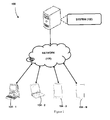
FIG 1 illustrates a network implementation of a system for providing privacy measurement and privacy quantification is shown, in accordance with an embodiment of the present subject matter. -
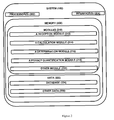
FIG 2 illustrates the system for providing privacy measurement and privacy quantification is shown, in accordance with an embodiment of the present subject matter. -
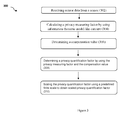
FIG 3 illustrates a method for providing privacy measurement and privacy quantification is shown, in accordance with an embodiment of the present subject matter. -
FIG 4 illustrates a flow chart for privacy measurement and privacy quantification in accordance with an exemplary embodiment of the present subject matter. -
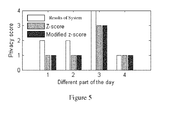
FIG 5 illustrates comparative results of privacy quantification in accordance with an exemplary embodiment of the present subject matter. -
FIG 6 illustrates results with respect to privacy breach attack for fridge detection in accordance with an exemplary embodiment of the present subject matter. -
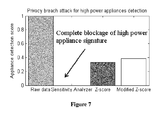
FIG 7 illustrates results with respect to privacy breach attack for high power appliances detection in accordance with an exemplary embodiment of the present subject matter. -
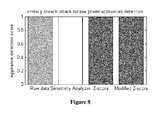
FIG 8 illustrates privacy breach for low power appliances detection in accordance with an exemplary embodiment of the present subject matter. - While aspects of described system and method for providing privacy measurement and privacy quantification is shown may be implemented in any number of different computing systems, environments, and/or configurations, the embodiments are described in the context of the following exemplary system.
- Referring now to
Figure 1 , anetwork implementation 100 ofsystem 102 for providing privacy measurement and privacy quantification of sensor data is shown. The data sensed by one or more sensor many a times comprise private data (or private content). The private content may reveal data about human activities. In order to protect the private data, many privacy techniques are applied over the sensor data. Before, applying the privacy techniques (such as adding noise), a privacy measurement factor is calculated for the sensor data. The privacy measurement factor depicts amount of privacy associated with the private data of the sensor data. Thesystem 102 further determines a compensation value to remove deviation(s) or errors in the privacy measurement in terms of privacy measurement factor. The compensation value and the privacy measurement factor are used to calculate a privacy quantification factor. The privacy quantification factor is scaled with respect to a predefined finite scale in order to provide quantification of the private data of the sensor data in terms of scaled privacy quantification factor. - Although the present subject matter is explained considering that the
system 102 is implemented as an application on a server, it may be understood that thesystem 102 may also be implemented in a variety of computing systems, such as a laptop computer, a desktop computer, a notebook, a workstation, a server, a network server, and the like. In one implementation, thesystem 102 may be implemented in a cloud-based environment. It will be understood that thesystem 102 may be accessed by multiple users through one or more user devices 104-1, 104-2...104-N, collectively referred to asuser 104 hereinafter, or applications residing on theuser devices 104. Examples of theuser devices 104 may include, but are not limited to, a portable computer, a personal digital assistant, a handheld device, and a workstation. Theuser devices 104 are communicatively coupled to thesystem 102 through anetwork 106. - In one implementation, the
network 106 may be a wireless network, a wired network or a combination thereof. Thenetwork 106 can be implemented as one of the different types of networks, such as intranet, local area network (LAN), wide area network (WAN), the internet, and the like. Thenetwork 106 may either be a dedicated network or a shared network. The shared network represents an association of the different types of networks that use a variety of protocols, for example, Hypertext Transfer Protocol (HTTP), Transmission Control Protocol/Internet Protocol (TCP/IP), Wireless Application Protocol (WAP), and the like, to communicate with one another. Further thenetwork 106 may include a variety of network devices, including routers, bridges, servers, computing devices, storage devices, and the like. - Referring now to
Figure 2 , thesystem 102 is illustrated in accordance with an embodiment of the present subject matter. In one embodiment, thesystem 102 may include at least oneprocessor 202, an input/output (I/O)interface 204, amemory 208. The at least oneprocessor 202 may be implemented as one or more microprocessors, microcomputers, microcontrollers, digital signal processors, central processing units, state machines, logic circuitries, and/or any devices that manipulate signals based on operational instructions. Among other capabilities, the at least oneprocessor 202 is configured to fetch and execute computer-readable instructions stored in thememory 208. - The I/
O interface 204 may include a variety of software and hardware interfaces, for example, a web interface, a graphical user interface, and the like. The I/O interface 204 may allow thesystem 102 to interact with a user directly or through theclient devices 104. Further, the I/O interface 204 may enable thesystem 102 to communicate with other computing devices, such as web servers and external data servers (not shown). The I/O interface 204 can facilitate multiple communications within a wide variety of networks and protocol types, including wired networks, for example, LAN, cable, etc., and wireless networks, such as WLAN, cellular, or satellite. The I/O interface 204 may include one or more ports for connecting a number of devices to one another or to another server. - The
memory 208 may include any computer-readable medium known in the art including, for example, volatile memory, such as static random access memory (SRAM) and dynamic random access memory (DRAM), and/or non-volatile memory, such as read only memory (ROM), erasable programmable ROM, flash memories, hard disks, optical disks, and magnetic tapes. Thememory 208 may includemodules 210 anddata 220. - The
modules 210 include routines, programs, objects, components, data structures, etc., which perform particular tasks, functions or implement particular abstract data types. In one implementation, themodules 210 may include a receiving module 212, acalculation module 214, and adetermination module 216 and aprivacy quantification module 218.Other modules 220 may include programs or coded instructions that supplement applications and functions of thesystem 102. - The
data 222, amongst other things, serves as a repository for storing data processed, received, and generated by one or more of themodules 218. Thedata 222 may also include adatabase 224, andother data 226. Theother data 226 may include data generated as a result of the execution of one or more modules in theother module 220. - The present disclosure relates to system(s) and method(s) for privacy measurement and privacy quantification of sensor data. The privacy is quantified in terms of a privacy quantification factor. The privacy is quantified in a predefined range. The privacy is quantified by scaling the privacy quantification factor with respect to a predefined finite scale. The finite values in the predefined finite scale refer to the predefined range and contain values from low to high. The value from low to high provides the privacy quantification.
- The receiving module 212 is configured to receive sensor data from a sensor. The sensor data comprises time series data. The time series data further comprises smart meter data, temperature data or other sensor data. The sensor data further comprises private data and non private data.
- By way of a non limiting example, data sensed by a smart energy management system (sensor) is considered. Fine grained smart meter data is used by utility and other third party applications such as theft detection, smart grid management, push retail marketing, dynamic energy pricing or a combination thereof. The smart meter potential data has potential of revealing minute details of human activity and that may be privacy breaching. The minute detail of human activity is considered as private data.
- The
system 102 provides measurement and quantification of the private content of the sensor data before applying any privacy technique (such as adding noise, encryption). As the sensor collects physical sensor data about human activities, some of the sensor data signifies private events. The private events refer to events that are unpredictable and individual - centric. For example, details revealing identity of an individual. - The
calculation module 214 is configured to calculate a privacy measuring factor by using the private content and the non private content associated with the sensor data. The privacy measuring factor is calculated by using an entropy computation (or entropy based information theoretic model). The privacy measuring factor depicts an amount of privacy with respect to private events associated with the private content. - The
calculation module 214 uses an information theoretical (computation technique) model for calculating the privacy measuring factor. - S is considered the sensor data under investigation and ρ is considered as private content or sensitive part of S. δ is considered as non private content or non sensitive content of S.


where |S| > 1, |ρ| > 1
where |ρ| denotes number of discrete data points in ρ and |S| denotes number of discrete data points in S. - The
determination module 216 is configured to determine a compensation value with respect to distribution dissimilarity in the private content of the sensor data in order to provide an accurate measurement of privacy in terms of privacy measurement factor. Thedetermination module 218 is determined to compensate a statistical deviation in the privacy measuring factor. The statistical deviation refers to a deviation in measurement of privacy while the privacy measuring factor is being calculated. As the private content (private events) are subset of overall sensor data, private events have (mostly) similar distribution characteristics like the sensor data set, that incurs error in the measurement of the privacy in terms of the privacy measuring factor, as they are not independent. So, statistical compensation value (or compensation value) is used to remove the error. - The statistical deviation refers to an error due to statistical relationship between S and p. In order to determine the statistical deviation (or error) a two sample Kolmogorov-Smirnov (KS) test of S and p is performed. The Kolmogorov-Smirnov test is a nonparametric hypothesis test that evaluates the difference between the cumulative distribution functions of the distributions of S and ρ. The Kolmogorov-Smirnov test computes under the null hypothesis that S and ρ are drawn from the same distribution or not. When KS-test accepts null hypotheses, statistical compensation Ps is 1. Otherwise, Wasserstein distance wd between S and ρ is computed, which quantifies the numerical cost with respect to distribution dissimilarity between pair of distributions of S and ρ as ρ is derived from S and statistical compensation Ps equals to wd, where:
- Wasserstein distance quantifies the numerical cost with respect to distribution dissimilarity between pair of distributions, defined for δ, ρ:

- As wδ is not straightforward for implementation,
system 102 chooses closed solution considering CDFs of δ, ρ as:
- In order to ensure over the privacy of the sensor data while measuring the privacy measuring factor, both information theoretic and statistical property should be satisfied. The
determination module 216 is further configured to determine a privacy quantification factor by using the privacy measurement factor and the compensation value. - Logically, Privacy quantification factor = information theoretic model (Λ) statistical compensation.
- Algebraically, Privacy quantification factor = information theoretic model (privacy measurement factor) x compensation value
- Therefore, Pq = Pix Ps, Pq < 1.
- The
privacy quantification module 218 is configured to scale the privacy quantification factor (Pq) with respect to a predefined finite scale to obtain at least one scaled privacy quantification factor (Pq scaled). The predefined finite scale comprises finite set of values ranging from 1 to 5. Each value of the predefined finite scale refers to a quantification of private content thereby providing privacy quantification of the sensor data.Value 1 in the predefined finite scale means least amount or no private events in the sensor data set and value 5 in the redefined finite scale means highest private event in the sensor data. Privacy quantification may be maximum tovalue 1, which is equated to 5 and minimum value is equated to 1. - The
system 102 further applies a privacy technique based on the scaled quantification factor. Based on Pq scaled, sensor data S is converted into S' by introducing privacy preservation strength proportional (directly proportional) or equivalent to Pq scaled. For example, when additive noise N is to be added to S to generate S', i.e. - S' = S+N, where N is function of Pq scaled. More the value of Pq scaled, more noise to be added. Generally, more the magnitude of scaled privacy quantification factor, more noise, distortion, obfuscation, perturbation, generalization or suppression is added.
- By way of a non limiting exemplary embodiment,
Figure 5 provides an outcome of privacy quantification by usingsystem 102 comparing with few other solutions (1-2) using REDD dataset (Raw sensor data) [3, a known method] for 24 hour smart meter dataset, where four groups of 6 hour is considered for measurement. Thesystem 102 provides privacy measure for each of the four equal parts of the day. Further efficacy of the privacy measure ofsystem 102 is established by measuring the privacy risk probability when an attack with standard disaggregation or NILM (Non-Intrusive Load Monitoring) is launched, this is shown infigure 6-8 , which shows that proposedsystem 102 and method successfully defends leaking of fridge and high power appliance signature. - Referring to
Figure 3 , the order in which themethod 300 is described is not intended to be construed as a limitation, and any number of the described method blocks can be combined in any order to implement themethod 300 or alternate methods. Additionally, individual blocks may be deleted from themethod 300 without departing from the spirit and scope of the subject matter described herein. Furthermore, the method can be implemented in any suitable hardware, software, firmware, or combination thereof. However, for ease of explanation, in the embodiments described below, themethod 300 may be considered to be implemented in the above describedsystem 102. - At
block 302, sensor data from one or more sensors is received. - At block 304, a privacy measuring factor is calculated by using the private content. The privacy measuring factor depicts an amount of privacy with respect to the private events associated with the private content.
- At
block 306, a compensation value with respect to the privacy measuring factor is determined. - At block 308, a privacy quantification factor is determined by using the privacy measuring factor and the compensation value.
- At
block 310, the privacy quantification factor is scaled with respect to a predefined finite scale to obtain at least one scaled privacy quantification factor. - Referring to
figure 4 , the method for privacy measurement and quantification comprises calculation or computation of privacy measurement factor by using equation 1 (step 402 and 404). Kolmogorov-Smirnov (KS) test is conducted two sample test between S and p. If KS-tests results in 0, privacy quantification factor = privacy measurement value * 5. Else, find Wasserstein distance wd and privacy quantification factor = privacy measurement value * wd* 5. Thus a privacy quantification factor is determined (step 406). - Privacy preservation on sensor data is function of privacy quantification factor. More the magnitude of privacy quantification factor, more noise, distortion, obfuscation, perturbation, generalization or suppression is added (step 408).
- The written description describes the subject matter herein to enable any person skilled in the art to make and use the embodiments of the invention. The scope of the subject matter embodiments are defined by the claims and may include other modifications that occur to those skilled in the art. Such other modifications are intended to be within the scope of the claims if they have similar elements that do not differ from the literal language of the claims or if they include equivalent elements with insubstantial differences from the literal language of the claims.
Claims (11)
- A method to provide privacy measurement and privacy quantification of sensor data, the method comprising:receiving the sensor data from a sensor;calculating a privacy measuring factor with respect to a private content and a non private content, wherein the private content and the non private content are associated with the sensor data, wherein the privacy measuring factor is calculated by using a computation technique; and wherein the privacy measuring factor depicts amount of privacy with respect to the private content;determining a compensation value with respect to a distribution dissimilarity of private content of the sensor data, such that the compensation value compensates a statistical deviation in the privacy measuring factor, wherein the statistical deviation refers to a deviation in measurement of privacy while calculating the privacy measuring factor;determining a privacy quantification factor by using the compensation value and the privacy measuring factor; andscaling the privacy quantification factor with respect to a predefined finite scale to obtain at least one scaled privacy quantification factor, wherein the predefined scale comprises finite set of values, and wherein each value from the finite set of values refers to quantification of privacy content associated with the sensor data; wherein the receiving, the identifying, the calculating, the determining the compensation value, the determining the privacy quantification factor and the scaling are performed by a processor.
- The method of claim 1, wherein the sensor data comprises time series data, and wherein the time series data comprises smart meter data, or temperature data, or other sensor data.
- The method of claim 1, wherein the computation technique comprises entropy based information theoretical model.
- The method of claim 1, wherein the statistical compensation value compensates an error in the privacy measuring factor, wherein the error is due to statistical relation between private data and sensor data, wherein the private data and the sensor data are drawn from a similar distribution.
- The method of claim 1, wherein the compensation value is determined based on an outcome of two-sample Kolmogorov- Smirnov test.
- The method of claim 5, wherein statistical compensation is computed using Wasserstein distance when two-sample Kolmogorov- Smirnov test finds a misfit between the distribution of private data and the sensor data.
- The method of claim 1, wherein the privacy quantification factor is determined by using a product of the compensation value and the privacy measuring factor.
- The method of claim 1, further comprising preserving the sensor data based on the scaled privacy quantification factor by using at least one privacy preservation technique, wherein the at least one privacy preservation technique comprising adding noise to the sensor data, wherein the noise is added equivalent to privacy quantification value; and wherein the noise to be added is directly proportional to the privacy quantification factor.
- A system to provide privacy measurement and privacy quantification of sensor data, the system comprising:a processor; anda memory coupled to the processor, wherein the processor is capable of executing a plurality of modules stored in the memory, and wherein the plurality of modules comprising:a receiving module configured to receive the sensor data from a sensor;a calculation module configured to calculate a privacy measuring factor with respect to a private content and a non private content, wherein the private content and the non private content are associated with the sensor data, wherein the privacy measuring factor is calculated by using computation technique; and wherein the privacy measuring factor depicts an amount of privacy with respect to the private content;a determination module configured to:determine a compensation value with respect to a distribution dissimilarity of private content of the sensor data, such that the compensation value compensates a statistical deviation in the privacy measuring factor, wherein the statistical deviation refers to a deviation in measurement of privacy while calculating the privacy measuring factor;determine a privacy quantification factor by using the compensation value and the privacy measuring factor; anda privacy quantification module configured to scale the privacy quantification factor with respect to a predefined finite scale to obtain at least one scaled privacy quantification factor, wherein the predefined finite scale comprises finite set of values, and wherein each value from the finite set of values refers to quantification of privacy content associated with the sensor data.
- The system of claim 9, further comprising preserving the sensor data based on the scaled privacy quantification factor by using at least one privacy preservation technique, wherein the at least one privacy preservation technique comprising adding noise to the sensor data.
- A computer program product having embodied thereon a computer program to provide privacy measurement and privacy quantification of sensor data, the computer program product comprising:a program code for receiving the sensor data from at least one sensor;a program code for calculating a privacy measuring factor with respect to a private content and a non private content, wherein the private content and the non private content are associated with the sensor data, wherein the privacy measuring factor is calculated by using an entropy computation; and wherein the privacy measuring factor depicts amount of privacy with respect to the private content;a program code for determining a compensation value with respect to a distribution dissimilarity of private content of the sensor data, such that the compensation value compensates a statistical deviation in the privacy measuring factor, wherein the statistical deviation refers to a deviation in measurement of privacy while calculating the privacy measuring factor;a program code for determining a privacy quantification factor by using the compensation value and the privacy measuring factor; anda program code for scaling the privacy quantification factor with respect to a predefined finite scale to obtain at least one scaled privacy quantification factor, wherein the predefined scale comprises finite set of values, and wherein each value from the finite set of values refers to quantification of privacy content associated with the sensor data.
Applications Claiming Priority (1)
| Application Number | Priority Date | Filing Date | Title |
|---|---|---|---|
| IN870MU2014 IN2014MU00870A (en) | 2014-03-14 | 2014-03-14 |
Publications (2)
| Publication Number | Publication Date |
|---|---|
| EP2919148A1 true EP2919148A1 (en) | 2015-09-16 |
| EP2919148B1 EP2919148B1 (en) | 2020-04-08 |
Family
ID=52626996
Family Applications (1)
| Application Number | Title | Priority Date | Filing Date |
|---|---|---|---|
| EP15155946.5A Active EP2919148B1 (en) | 2014-03-14 | 2015-02-20 | Privacy measurement and quantification |
Country Status (3)
| Country | Link |
|---|---|
| US (1) | US9547768B2 (en) |
| EP (1) | EP2919148B1 (en) |
| IN (1) | IN2014MU00870A (en) |
Families Citing this family (6)
| Publication number | Priority date | Publication date | Assignee | Title |
|---|---|---|---|---|
| US9672364B2 (en) * | 2013-03-15 | 2017-06-06 | Microsoft Technology Licensing, Llc | Differentially private linear queries on histograms |
| US11106809B2 (en) * | 2016-12-28 | 2021-08-31 | Samsung Electronics Co., Ltd. | Privacy-preserving transformation of continuous data |
| EP3633534A1 (en) * | 2018-10-04 | 2020-04-08 | Thales Dis France SA | A connected device adapted to measure at least a physical quantity |
| US11386216B2 (en) | 2018-11-13 | 2022-07-12 | International Business Machines Corporation | Verification of privacy in a shared resource environment |
| EP3674988A1 (en) * | 2018-12-31 | 2020-07-01 | Tata Consultancy Services Limited | Method and system for prediction of correct discrete sensor data based on temporal uncertainty |
| CN118409049B (en) * | 2024-04-29 | 2025-03-04 | 北京科技大学 | Privacy-preserving method and estimator for estimating CO2 concentration in buildings |
Citations (1)
| Publication number | Priority date | Publication date | Assignee | Title |
|---|---|---|---|---|
| EP2485430A2 (en) * | 2011-02-04 | 2012-08-08 | Palo Alto Research Center Incorporated | Privacy-preserving aggregation of time-series data |
Family Cites Families (14)
| Publication number | Priority date | Publication date | Assignee | Title |
|---|---|---|---|---|
| US7940302B2 (en) | 2004-09-15 | 2011-05-10 | The Regents Of The University Of California | Apparatus and method for privacy protection of data collection in pervasive environments |
| US7631362B2 (en) * | 2005-09-20 | 2009-12-08 | International Business Machines Corporation | Method and system for adaptive identity analysis, behavioral comparison, compliance, and application protection using usage information |
| KR101187756B1 (en) * | 2005-11-07 | 2012-10-08 | 엘지전자 주식회사 | Method for controlling privacy mask display of monitoring camera |
| US8543711B2 (en) * | 2007-04-30 | 2013-09-24 | Hewlett-Packard Development Company, L.P. | System and method for evaluating a pattern of resource demands of a workload |
| GB201112665D0 (en) | 2011-07-22 | 2011-09-07 | Vodafone Ip Licensing Ltd | Data anonymisation |
| CN103930899B (en) * | 2011-11-14 | 2017-03-08 | 意法爱立信有限公司 | Method for the management public data of input and private data at equipment |
| KR101282282B1 (en) | 2011-12-13 | 2013-07-10 | 고려대학교 산학협력단 | Smart meter for protection of privacy and method for controlling memory tereof |
| WO2013187963A2 (en) * | 2012-03-30 | 2013-12-19 | The University Of North Carolina At Chapel Hill | Methods, systems, and computer readable media for rapid filtering of opaque data traffic |
| CN102946307B (en) | 2012-11-14 | 2015-05-13 | 中国地质大学(武汉) | Method and system for protecting electricity consumption privacy of smart grid users |
| US9124635B2 (en) * | 2012-11-30 | 2015-09-01 | Intel Corporation | Verified sensor data processing |
| US20150186635A1 (en) * | 2014-01-02 | 2015-07-02 | Madjid F. Nakhjiri | Granular Redaction of Resources |
| US10019595B2 (en) * | 2013-01-17 | 2018-07-10 | Tata Consultancy Services Limited | System and method for providing sensitive information access control |
| US10146958B2 (en) * | 2013-03-14 | 2018-12-04 | Mitsubishi Electric Research Laboratories, Inc. | Privacy preserving statistical analysis on distributed databases |
| US10057764B2 (en) * | 2014-01-18 | 2018-08-21 | Microsoft Technology Licensing, Llc | Privacy preserving sensor apparatus |
-
2014
- 2014-03-14 IN IN870MU2014 patent/IN2014MU00870A/en unknown
-
2015
- 2015-02-20 US US14/627,185 patent/US9547768B2/en active Active
- 2015-02-20 EP EP15155946.5A patent/EP2919148B1/en active Active
Patent Citations (1)
| Publication number | Priority date | Publication date | Assignee | Title |
|---|---|---|---|---|
| EP2485430A2 (en) * | 2011-02-04 | 2012-08-08 | Palo Alto Research Center Incorporated | Privacy-preserving aggregation of time-series data |
Non-Patent Citations (2)
| Title |
|---|
| LALITHA SANKAR ET AL: "Smart Meter Privacy: A Theoretical Framework", IEEE TRANSACTIONS ON SMART GRID, IEEE, USA, vol. 4, no. 2, 1 June 2013 (2013-06-01), pages 837 - 846, XP011510754, ISSN: 1949-3053, DOI: 10.1109/TSG.2012.2211046 * |
| RAGHU K GANTI ET AL: "Mobile crowdsensing: current state and future challenges", IEEE COMMUNICATIONS MAGAZINE, IEEE SERVICE CENTER, PISCATAWAY, US, vol. 49, no. 11, 1 November 2011 (2011-11-01), pages 32 - 39, XP011364902, ISSN: 0163-6804, DOI: 10.1109/MCOM.2011.6069707 * |
Also Published As
| Publication number | Publication date |
|---|---|
| IN2014MU00870A (en) | 2015-09-25 |
| US20150261959A1 (en) | 2015-09-17 |
| US9547768B2 (en) | 2017-01-17 |
| EP2919148B1 (en) | 2020-04-08 |
Similar Documents
| Publication | Publication Date | Title |
|---|---|---|
| Peng et al. | Modeling multivariate cybersecurity risks | |
| EP2919148B1 (en) | Privacy measurement and quantification | |
| EP2814218B1 (en) | Detecting anomalies in work practice data by combining multiple domains of information | |
| Chen et al. | Impact analysis of false data injection attacks on power system static security assessment | |
| Ganti et al. | PoolView: stream privacy for grassroots participatory sensing | |
| US20160119373A1 (en) | System and method for automatic calculation of cyber-risk in business-critical applications | |
| Taveras | SCADA live forensics: real time data acquisition process to detect, prevent or evaluate critical situations | |
| EP2918976B1 (en) | Smart meter Privacy Analyzer | |
| CN112395630A (en) | Data encryption method and device based on information security, terminal equipment and medium | |
| Ksibi et al. | IoMT security model based on machine learning and risk assessment techniques | |
| CN116663026B (en) | Block chain-based data processing method and device, electronic equipment and medium | |
| Chuvakin et al. | How to do application logging right | |
| EP4348465A1 (en) | Detecting anomalous events through application of anomaly detection models | |
| Variyath et al. | Robust Control Charts for Monitoring Process Mean of Phase‐I Multivariate Individual Observations | |
| CN113486366A (en) | Web illegal operation behavior detection method based on cluster analysis | |
| Thantharate et al. | Priv-ml: Analyzing privacy loss in iterative machine learning with differential privacy | |
| Enki et al. | Taylor's power law and the statistical modelling of infectious disease surveillance data | |
| Popov et al. | Application of stress strength analysis for investigation of investments in heterogeneous assets | |
| Baybulatov et al. | Industrial control system cybersecurity assessment handling delay estimation | |
| Erdei et al. | Privacy assessment methodology | |
| Roshandel et al. | User-centric monitoring of sensitive information access in Android applications | |
| US12554846B2 (en) | Identifying atypical activity involving an entity in a computer system | |
| CN118071528B (en) | Data processing method and related device | |
| Yang et al. | A Quantitative Privacy Evaluation Method Based on Tsallis Entropy for Trustworthy Data Sharing | |
| Leslie et al. | Modeling approaches for intrusion detection and prevention system return on investment |
Legal Events
| Date | Code | Title | Description |
|---|---|---|---|
| PUAI | Public reference made under article 153(3) epc to a published international application that has entered the european phase |
Free format text: ORIGINAL CODE: 0009012 |
|
| AK | Designated contracting states |
Kind code of ref document: A1 Designated state(s): AL AT BE BG CH CY CZ DE DK EE ES FI FR GB GR HR HU IE IS IT LI LT LU LV MC MK MT NL NO PL PT RO RS SE SI SK SM TR |
|
| AX | Request for extension of the european patent |
Extension state: BA ME |
|
| 17P | Request for examination filed |
Effective date: 20160316 |
|
| RBV | Designated contracting states (corrected) |
Designated state(s): AL AT BE BG CH CY CZ DE DK EE ES FI FR GB GR HR HU IE IS IT LI LT LU LV MC MK MT NL NO PL PT RO RS SE SI SK SM TR |
|
| STAA | Information on the status of an ep patent application or granted ep patent |
Free format text: STATUS: EXAMINATION IS IN PROGRESS |
|
| 17Q | First examination report despatched |
Effective date: 20180723 |
|
| REG | Reference to a national code |
Ref country code: DE Ref legal event code: R079 Ref document number: 602015050134 Country of ref document: DE Free format text: PREVIOUS MAIN CLASS: G06F0021620000 Ipc: G06F0011300000 |
|
| RIC1 | Information provided on ipc code assigned before grant |
Ipc: G06F 11/30 20060101AFI20190611BHEP Ipc: G06F 11/34 20060101ALI20190611BHEP Ipc: G06F 21/57 20130101ALI20190611BHEP Ipc: G06F 21/62 20130101ALI20190611BHEP |
|
| GRAP | Despatch of communication of intention to grant a patent |
Free format text: ORIGINAL CODE: EPIDOSNIGR1 |
|
| STAA | Information on the status of an ep patent application or granted ep patent |
Free format text: STATUS: GRANT OF PATENT IS INTENDED |
|
| INTG | Intention to grant announced |
Effective date: 20190911 |
|
| GRAS | Grant fee paid |
Free format text: ORIGINAL CODE: EPIDOSNIGR3 |
|
| GRAA | (expected) grant |
Free format text: ORIGINAL CODE: 0009210 |
|
| STAA | Information on the status of an ep patent application or granted ep patent |
Free format text: STATUS: THE PATENT HAS BEEN GRANTED |
|
| AK | Designated contracting states |
Kind code of ref document: B1 Designated state(s): AL AT BE BG CH CY CZ DE DK EE ES FI FR GB GR HR HU IE IS IT LI LT LU LV MC MK MT NL NO PL PT RO RS SE SI SK SM TR |
|
| REG | Reference to a national code |
Ref country code: AT Ref legal event code: REF Ref document number: 1255301 Country of ref document: AT Kind code of ref document: T Effective date: 20200415 Ref country code: CH Ref legal event code: EP |
|
| REG | Reference to a national code |
Ref country code: IE Ref legal event code: FG4D |
|
| REG | Reference to a national code |
Ref country code: DE Ref legal event code: R096 Ref document number: 602015050134 Country of ref document: DE |
|
| REG | Reference to a national code |
Ref country code: NL Ref legal event code: MP Effective date: 20200408 |
|
| REG | Reference to a national code |
Ref country code: LT Ref legal event code: MG4D |
|
| PG25 | Lapsed in a contracting state [announced via postgrant information from national office to epo] |
Ref country code: LT Free format text: LAPSE BECAUSE OF FAILURE TO SUBMIT A TRANSLATION OF THE DESCRIPTION OR TO PAY THE FEE WITHIN THE PRESCRIBED TIME-LIMIT Effective date: 20200408 Ref country code: PT Free format text: LAPSE BECAUSE OF FAILURE TO SUBMIT A TRANSLATION OF THE DESCRIPTION OR TO PAY THE FEE WITHIN THE PRESCRIBED TIME-LIMIT Effective date: 20200817 Ref country code: NL Free format text: LAPSE BECAUSE OF FAILURE TO SUBMIT A TRANSLATION OF THE DESCRIPTION OR TO PAY THE FEE WITHIN THE PRESCRIBED TIME-LIMIT Effective date: 20200408 Ref country code: SE Free format text: LAPSE BECAUSE OF FAILURE TO SUBMIT A TRANSLATION OF THE DESCRIPTION OR TO PAY THE FEE WITHIN THE PRESCRIBED TIME-LIMIT Effective date: 20200408 Ref country code: IS Free format text: LAPSE BECAUSE OF FAILURE TO SUBMIT A TRANSLATION OF THE DESCRIPTION OR TO PAY THE FEE WITHIN THE PRESCRIBED TIME-LIMIT Effective date: 20200808 Ref country code: NO Free format text: LAPSE BECAUSE OF FAILURE TO SUBMIT A TRANSLATION OF THE DESCRIPTION OR TO PAY THE FEE WITHIN THE PRESCRIBED TIME-LIMIT Effective date: 20200708 Ref country code: GR Free format text: LAPSE BECAUSE OF FAILURE TO SUBMIT A TRANSLATION OF THE DESCRIPTION OR TO PAY THE FEE WITHIN THE PRESCRIBED TIME-LIMIT Effective date: 20200709 Ref country code: FI Free format text: LAPSE BECAUSE OF FAILURE TO SUBMIT A TRANSLATION OF THE DESCRIPTION OR TO PAY THE FEE WITHIN THE PRESCRIBED TIME-LIMIT Effective date: 20200408 |
|
| REG | Reference to a national code |
Ref country code: AT Ref legal event code: MK05 Ref document number: 1255301 Country of ref document: AT Kind code of ref document: T Effective date: 20200408 |
|
| PG25 | Lapsed in a contracting state [announced via postgrant information from national office to epo] |
Ref country code: LV Free format text: LAPSE BECAUSE OF FAILURE TO SUBMIT A TRANSLATION OF THE DESCRIPTION OR TO PAY THE FEE WITHIN THE PRESCRIBED TIME-LIMIT Effective date: 20200408 Ref country code: BG Free format text: LAPSE BECAUSE OF FAILURE TO SUBMIT A TRANSLATION OF THE DESCRIPTION OR TO PAY THE FEE WITHIN THE PRESCRIBED TIME-LIMIT Effective date: 20200708 Ref country code: RS Free format text: LAPSE BECAUSE OF FAILURE TO SUBMIT A TRANSLATION OF THE DESCRIPTION OR TO PAY THE FEE WITHIN THE PRESCRIBED TIME-LIMIT Effective date: 20200408 Ref country code: HR Free format text: LAPSE BECAUSE OF FAILURE TO SUBMIT A TRANSLATION OF THE DESCRIPTION OR TO PAY THE FEE WITHIN THE PRESCRIBED TIME-LIMIT Effective date: 20200408 |
|
| PG25 | Lapsed in a contracting state [announced via postgrant information from national office to epo] |
Ref country code: AL Free format text: LAPSE BECAUSE OF FAILURE TO SUBMIT A TRANSLATION OF THE DESCRIPTION OR TO PAY THE FEE WITHIN THE PRESCRIBED TIME-LIMIT Effective date: 20200408 |
|
| REG | Reference to a national code |
Ref country code: DE Ref legal event code: R097 Ref document number: 602015050134 Country of ref document: DE |
|
| PG25 | Lapsed in a contracting state [announced via postgrant information from national office to epo] |
Ref country code: CZ Free format text: LAPSE BECAUSE OF FAILURE TO SUBMIT A TRANSLATION OF THE DESCRIPTION OR TO PAY THE FEE WITHIN THE PRESCRIBED TIME-LIMIT Effective date: 20200408 Ref country code: RO Free format text: LAPSE BECAUSE OF FAILURE TO SUBMIT A TRANSLATION OF THE DESCRIPTION OR TO PAY THE FEE WITHIN THE PRESCRIBED TIME-LIMIT Effective date: 20200408 Ref country code: SM Free format text: LAPSE BECAUSE OF FAILURE TO SUBMIT A TRANSLATION OF THE DESCRIPTION OR TO PAY THE FEE WITHIN THE PRESCRIBED TIME-LIMIT Effective date: 20200408 Ref country code: IT Free format text: LAPSE BECAUSE OF FAILURE TO SUBMIT A TRANSLATION OF THE DESCRIPTION OR TO PAY THE FEE WITHIN THE PRESCRIBED TIME-LIMIT Effective date: 20200408 Ref country code: EE Free format text: LAPSE BECAUSE OF FAILURE TO SUBMIT A TRANSLATION OF THE DESCRIPTION OR TO PAY THE FEE WITHIN THE PRESCRIBED TIME-LIMIT Effective date: 20200408 Ref country code: AT Free format text: LAPSE BECAUSE OF FAILURE TO SUBMIT A TRANSLATION OF THE DESCRIPTION OR TO PAY THE FEE WITHIN THE PRESCRIBED TIME-LIMIT Effective date: 20200408 Ref country code: DK Free format text: LAPSE BECAUSE OF FAILURE TO SUBMIT A TRANSLATION OF THE DESCRIPTION OR TO PAY THE FEE WITHIN THE PRESCRIBED TIME-LIMIT Effective date: 20200408 Ref country code: ES Free format text: LAPSE BECAUSE OF FAILURE TO SUBMIT A TRANSLATION OF THE DESCRIPTION OR TO PAY THE FEE WITHIN THE PRESCRIBED TIME-LIMIT Effective date: 20200408 |
|
| PLBE | No opposition filed within time limit |
Free format text: ORIGINAL CODE: 0009261 |
|
| STAA | Information on the status of an ep patent application or granted ep patent |
Free format text: STATUS: NO OPPOSITION FILED WITHIN TIME LIMIT |
|
| PG25 | Lapsed in a contracting state [announced via postgrant information from national office to epo] |
Ref country code: PL Free format text: LAPSE BECAUSE OF FAILURE TO SUBMIT A TRANSLATION OF THE DESCRIPTION OR TO PAY THE FEE WITHIN THE PRESCRIBED TIME-LIMIT Effective date: 20200408 Ref country code: SK Free format text: LAPSE BECAUSE OF FAILURE TO SUBMIT A TRANSLATION OF THE DESCRIPTION OR TO PAY THE FEE WITHIN THE PRESCRIBED TIME-LIMIT Effective date: 20200408 |
|
| 26N | No opposition filed |
Effective date: 20210112 |
|
| PG25 | Lapsed in a contracting state [announced via postgrant information from national office to epo] |
Ref country code: SI Free format text: LAPSE BECAUSE OF FAILURE TO SUBMIT A TRANSLATION OF THE DESCRIPTION OR TO PAY THE FEE WITHIN THE PRESCRIBED TIME-LIMIT Effective date: 20200408 |
|
| PG25 | Lapsed in a contracting state [announced via postgrant information from national office to epo] |
Ref country code: MC Free format text: LAPSE BECAUSE OF FAILURE TO SUBMIT A TRANSLATION OF THE DESCRIPTION OR TO PAY THE FEE WITHIN THE PRESCRIBED TIME-LIMIT Effective date: 20200408 |
|
| REG | Reference to a national code |
Ref country code: BE Ref legal event code: MM Effective date: 20210228 |
|
| PG25 | Lapsed in a contracting state [announced via postgrant information from national office to epo] |
Ref country code: LU Free format text: LAPSE BECAUSE OF NON-PAYMENT OF DUE FEES Effective date: 20210220 |
|
| PG25 | Lapsed in a contracting state [announced via postgrant information from national office to epo] |
Ref country code: IE Free format text: LAPSE BECAUSE OF NON-PAYMENT OF DUE FEES Effective date: 20210220 |
|
| PG25 | Lapsed in a contracting state [announced via postgrant information from national office to epo] |
Ref country code: BE Free format text: LAPSE BECAUSE OF NON-PAYMENT OF DUE FEES Effective date: 20210228 |
|
| PG25 | Lapsed in a contracting state [announced via postgrant information from national office to epo] |
Ref country code: HU Free format text: LAPSE BECAUSE OF FAILURE TO SUBMIT A TRANSLATION OF THE DESCRIPTION OR TO PAY THE FEE WITHIN THE PRESCRIBED TIME-LIMIT; INVALID AB INITIO Effective date: 20150220 |
|
| PG25 | Lapsed in a contracting state [announced via postgrant information from national office to epo] |
Ref country code: CY Free format text: LAPSE BECAUSE OF FAILURE TO SUBMIT A TRANSLATION OF THE DESCRIPTION OR TO PAY THE FEE WITHIN THE PRESCRIBED TIME-LIMIT Effective date: 20200408 |
|
| P01 | Opt-out of the competence of the unified patent court (upc) registered |
Effective date: 20230526 |
|
| PG25 | Lapsed in a contracting state [announced via postgrant information from national office to epo] |
Ref country code: MK Free format text: LAPSE BECAUSE OF FAILURE TO SUBMIT A TRANSLATION OF THE DESCRIPTION OR TO PAY THE FEE WITHIN THE PRESCRIBED TIME-LIMIT Effective date: 20200408 |
|
| PG25 | Lapsed in a contracting state [announced via postgrant information from national office to epo] |
Ref country code: TR Free format text: LAPSE BECAUSE OF FAILURE TO SUBMIT A TRANSLATION OF THE DESCRIPTION OR TO PAY THE FEE WITHIN THE PRESCRIBED TIME-LIMIT Effective date: 20200408 |
|
| PG25 | Lapsed in a contracting state [announced via postgrant information from national office to epo] |
Ref country code: MT Free format text: LAPSE BECAUSE OF FAILURE TO SUBMIT A TRANSLATION OF THE DESCRIPTION OR TO PAY THE FEE WITHIN THE PRESCRIBED TIME-LIMIT Effective date: 20200408 |
|
| REG | Reference to a national code |
Ref country code: CH Ref legal event code: U11 Free format text: ST27 STATUS EVENT CODE: U-0-0-U10-U11 (AS PROVIDED BY THE NATIONAL OFFICE) Effective date: 20260301 |
|
| PGFP | Annual fee paid to national office [announced via postgrant information from national office to epo] |
Ref country code: GB Payment date: 20260227 Year of fee payment: 12 |
|
| PGFP | Annual fee paid to national office [announced via postgrant information from national office to epo] |
Ref country code: DE Payment date: 20260227 Year of fee payment: 12 |
|
| PGFP | Annual fee paid to national office [announced via postgrant information from national office to epo] |
Ref country code: FR Payment date: 20260227 Year of fee payment: 12 |
|
| PGFP | Annual fee paid to national office [announced via postgrant information from national office to epo] |
Ref country code: CH Payment date: 20260301 Year of fee payment: 12 |