EP2918596A1 - Immune receptor modifier conjugate and preparation method and use thereof, coupling precursor for preparing same, and compound for synthesizing coupling precursor - Google Patents
Immune receptor modifier conjugate and preparation method and use thereof, coupling precursor for preparing same, and compound for synthesizing coupling precursor Download PDFInfo
- Publication number
- EP2918596A1 EP2918596A1 EP13845289.1A EP13845289A EP2918596A1 EP 2918596 A1 EP2918596 A1 EP 2918596A1 EP 13845289 A EP13845289 A EP 13845289A EP 2918596 A1 EP2918596 A1 EP 2918596A1
- Authority
- EP
- European Patent Office
- Prior art keywords
- compound
- conjugate
- coupling
- immune receptor
- coupling precursor
- Prior art date
- Legal status (The legal status is an assumption and is not a legal conclusion. Google has not performed a legal analysis and makes no representation as to the accuracy of the status listed.)
- Withdrawn
Links
- 0 C*CCO[C@](C)*[C@@](C=C)NC Chemical compound C*CCO[C@](C)*[C@@](C=C)NC 0.000 description 3
Images


Classifications
-
- C—CHEMISTRY; METALLURGY
- C07—ORGANIC CHEMISTRY
- C07K—PEPTIDES
- C07K14/00—Peptides having more than 20 amino acids; Gastrins; Somatostatins; Melanotropins; Derivatives thereof
- C07K14/435—Peptides having more than 20 amino acids; Gastrins; Somatostatins; Melanotropins; Derivatives thereof from animals; from humans
- C07K14/705—Receptors; Cell surface antigens; Cell surface determinants
- C07K14/70596—Molecules with a "CD"-designation not provided for elsewhere
-
- C—CHEMISTRY; METALLURGY
- C07—ORGANIC CHEMISTRY
- C07K—PEPTIDES
- C07K14/00—Peptides having more than 20 amino acids; Gastrins; Somatostatins; Melanotropins; Derivatives thereof
-
- A—HUMAN NECESSITIES
- A61—MEDICAL OR VETERINARY SCIENCE; HYGIENE
- A61K—PREPARATIONS FOR MEDICAL, DENTAL OR TOILETRY PURPOSES
- A61K38/00—Medicinal preparations containing peptides
- A61K38/16—Peptides having more than 20 amino acids; Gastrins; Somatostatins; Melanotropins; Derivatives thereof
-
- A—HUMAN NECESSITIES
- A61—MEDICAL OR VETERINARY SCIENCE; HYGIENE
- A61K—PREPARATIONS FOR MEDICAL, DENTAL OR TOILETRY PURPOSES
- A61K39/00—Medicinal preparations containing antigens or antibodies
- A61K39/0005—Vertebrate antigens
- A61K39/0011—Cancer antigens
-
- A—HUMAN NECESSITIES
- A61—MEDICAL OR VETERINARY SCIENCE; HYGIENE
- A61K—PREPARATIONS FOR MEDICAL, DENTAL OR TOILETRY PURPOSES
- A61K39/00—Medicinal preparations containing antigens or antibodies
- A61K39/0005—Vertebrate antigens
- A61K39/0011—Cancer antigens
- A61K39/001102—Receptors, cell surface antigens or cell surface determinants
- A61K39/001103—Receptors for growth factors
- A61K39/001106—Her-2/neu/ErbB2, Her-3/ErbB3 or Her 4/ErbB4
-
- A—HUMAN NECESSITIES
- A61—MEDICAL OR VETERINARY SCIENCE; HYGIENE
- A61K—PREPARATIONS FOR MEDICAL, DENTAL OR TOILETRY PURPOSES
- A61K39/00—Medicinal preparations containing antigens or antibodies
- A61K39/0005—Vertebrate antigens
- A61K39/0011—Cancer antigens
- A61K39/001102—Receptors, cell surface antigens or cell surface determinants
- A61K39/001129—Molecules with a "CD" designation not provided for elsewhere
-
- A—HUMAN NECESSITIES
- A61—MEDICAL OR VETERINARY SCIENCE; HYGIENE
- A61K—PREPARATIONS FOR MEDICAL, DENTAL OR TOILETRY PURPOSES
- A61K39/00—Medicinal preparations containing antigens or antibodies
- A61K39/0005—Vertebrate antigens
- A61K39/0011—Cancer antigens
- A61K39/001154—Enzymes
- A61K39/001158—Proteinases
- A61K39/001159—Matrix metalloproteinases [MMP]
-
- A—HUMAN NECESSITIES
- A61—MEDICAL OR VETERINARY SCIENCE; HYGIENE
- A61K—PREPARATIONS FOR MEDICAL, DENTAL OR TOILETRY PURPOSES
- A61K39/00—Medicinal preparations containing antigens or antibodies
- A61K39/0005—Vertebrate antigens
- A61K39/0011—Cancer antigens
- A61K39/001169—Tumor associated carbohydrates
- A61K39/00117—Mucins, e.g. MUC-1
-
- A—HUMAN NECESSITIES
- A61—MEDICAL OR VETERINARY SCIENCE; HYGIENE
- A61K—PREPARATIONS FOR MEDICAL, DENTAL OR TOILETRY PURPOSES
- A61K39/00—Medicinal preparations containing antigens or antibodies
- A61K39/0005—Vertebrate antigens
- A61K39/0011—Cancer antigens
- A61K39/001193—Prostate associated antigens e.g. Prostate stem cell antigen [PSCA]; Prostate carcinoma tumor antigen [PCTA]; PAP or PSGR
- A61K39/001195—Prostate specific membrane antigen [PSMA]
-
- A—HUMAN NECESSITIES
- A61—MEDICAL OR VETERINARY SCIENCE; HYGIENE
- A61K—PREPARATIONS FOR MEDICAL, DENTAL OR TOILETRY PURPOSES
- A61K39/00—Medicinal preparations containing antigens or antibodies
- A61K39/12—Viral antigens
-
- A—HUMAN NECESSITIES
- A61—MEDICAL OR VETERINARY SCIENCE; HYGIENE
- A61K—PREPARATIONS FOR MEDICAL, DENTAL OR TOILETRY PURPOSES
- A61K39/00—Medicinal preparations containing antigens or antibodies
- A61K39/12—Viral antigens
- A61K39/145—Orthomyxoviridae, e.g. influenza virus
-
- A—HUMAN NECESSITIES
- A61—MEDICAL OR VETERINARY SCIENCE; HYGIENE
- A61K—PREPARATIONS FOR MEDICAL, DENTAL OR TOILETRY PURPOSES
- A61K39/00—Medicinal preparations containing antigens or antibodies
- A61K39/39—Medicinal preparations containing antigens or antibodies characterised by the immunostimulating additives, e.g. chemical adjuvants
-
- A—HUMAN NECESSITIES
- A61—MEDICAL OR VETERINARY SCIENCE; HYGIENE
- A61K—PREPARATIONS FOR MEDICAL, DENTAL OR TOILETRY PURPOSES
- A61K47/00—Medicinal preparations characterised by the non-active ingredients used, e.g. carriers or inert additives; Targeting or modifying agents chemically bound to the active ingredient
- A61K47/50—Medicinal preparations characterised by the non-active ingredients used, e.g. carriers or inert additives; Targeting or modifying agents chemically bound to the active ingredient the non-active ingredient being chemically bound to the active ingredient, e.g. polymer-drug conjugates
- A61K47/51—Medicinal preparations characterised by the non-active ingredients used, e.g. carriers or inert additives; Targeting or modifying agents chemically bound to the active ingredient the non-active ingredient being chemically bound to the active ingredient, e.g. polymer-drug conjugates the non-active ingredient being a modifying agent
- A61K47/54—Medicinal preparations characterised by the non-active ingredients used, e.g. carriers or inert additives; Targeting or modifying agents chemically bound to the active ingredient the non-active ingredient being chemically bound to the active ingredient, e.g. polymer-drug conjugates the non-active ingredient being a modifying agent the modifying agent being an organic compound
- A61K47/55—Medicinal preparations characterised by the non-active ingredients used, e.g. carriers or inert additives; Targeting or modifying agents chemically bound to the active ingredient the non-active ingredient being chemically bound to the active ingredient, e.g. polymer-drug conjugates the non-active ingredient being a modifying agent the modifying agent being an organic compound the modifying agent being also a pharmacologically or therapeutically active agent, i.e. the entire conjugate being a codrug
-
- A—HUMAN NECESSITIES
- A61—MEDICAL OR VETERINARY SCIENCE; HYGIENE
- A61K—PREPARATIONS FOR MEDICAL, DENTAL OR TOILETRY PURPOSES
- A61K47/00—Medicinal preparations characterised by the non-active ingredients used, e.g. carriers or inert additives; Targeting or modifying agents chemically bound to the active ingredient
- A61K47/50—Medicinal preparations characterised by the non-active ingredients used, e.g. carriers or inert additives; Targeting or modifying agents chemically bound to the active ingredient the non-active ingredient being chemically bound to the active ingredient, e.g. polymer-drug conjugates
- A61K47/51—Medicinal preparations characterised by the non-active ingredients used, e.g. carriers or inert additives; Targeting or modifying agents chemically bound to the active ingredient the non-active ingredient being chemically bound to the active ingredient, e.g. polymer-drug conjugates the non-active ingredient being a modifying agent
- A61K47/62—Medicinal preparations characterised by the non-active ingredients used, e.g. carriers or inert additives; Targeting or modifying agents chemically bound to the active ingredient the non-active ingredient being chemically bound to the active ingredient, e.g. polymer-drug conjugates the non-active ingredient being a modifying agent the modifying agent being a protein, peptide or polyamino acid
- A61K47/64—Drug-peptide, drug-protein or drug-polyamino acid conjugates, i.e. the modifying agent being a peptide, protein or polyamino acid which is covalently bonded or complexed to a therapeutically active agent
-
- A—HUMAN NECESSITIES
- A61—MEDICAL OR VETERINARY SCIENCE; HYGIENE
- A61K—PREPARATIONS FOR MEDICAL, DENTAL OR TOILETRY PURPOSES
- A61K47/00—Medicinal preparations characterised by the non-active ingredients used, e.g. carriers or inert additives; Targeting or modifying agents chemically bound to the active ingredient
- A61K47/50—Medicinal preparations characterised by the non-active ingredients used, e.g. carriers or inert additives; Targeting or modifying agents chemically bound to the active ingredient the non-active ingredient being chemically bound to the active ingredient, e.g. polymer-drug conjugates
- A61K47/51—Medicinal preparations characterised by the non-active ingredients used, e.g. carriers or inert additives; Targeting or modifying agents chemically bound to the active ingredient the non-active ingredient being chemically bound to the active ingredient, e.g. polymer-drug conjugates the non-active ingredient being a modifying agent
- A61K47/62—Medicinal preparations characterised by the non-active ingredients used, e.g. carriers or inert additives; Targeting or modifying agents chemically bound to the active ingredient the non-active ingredient being chemically bound to the active ingredient, e.g. polymer-drug conjugates the non-active ingredient being a modifying agent the modifying agent being a protein, peptide or polyamino acid
- A61K47/65—Peptidic linkers, binders or spacers, e.g. peptidic enzyme-labile linkers
-
- A—HUMAN NECESSITIES
- A61—MEDICAL OR VETERINARY SCIENCE; HYGIENE
- A61K—PREPARATIONS FOR MEDICAL, DENTAL OR TOILETRY PURPOSES
- A61K47/00—Medicinal preparations characterised by the non-active ingredients used, e.g. carriers or inert additives; Targeting or modifying agents chemically bound to the active ingredient
- A61K47/50—Medicinal preparations characterised by the non-active ingredients used, e.g. carriers or inert additives; Targeting or modifying agents chemically bound to the active ingredient the non-active ingredient being chemically bound to the active ingredient, e.g. polymer-drug conjugates
- A61K47/51—Medicinal preparations characterised by the non-active ingredients used, e.g. carriers or inert additives; Targeting or modifying agents chemically bound to the active ingredient the non-active ingredient being chemically bound to the active ingredient, e.g. polymer-drug conjugates the non-active ingredient being a modifying agent
- A61K47/62—Medicinal preparations characterised by the non-active ingredients used, e.g. carriers or inert additives; Targeting or modifying agents chemically bound to the active ingredient the non-active ingredient being chemically bound to the active ingredient, e.g. polymer-drug conjugates the non-active ingredient being a modifying agent the modifying agent being a protein, peptide or polyamino acid
- A61K47/66—Medicinal preparations characterised by the non-active ingredients used, e.g. carriers or inert additives; Targeting or modifying agents chemically bound to the active ingredient the non-active ingredient being chemically bound to the active ingredient, e.g. polymer-drug conjugates the non-active ingredient being a modifying agent the modifying agent being a protein, peptide or polyamino acid the modifying agent being a pre-targeting system involving a peptide or protein for targeting specific cells
-
- A—HUMAN NECESSITIES
- A61—MEDICAL OR VETERINARY SCIENCE; HYGIENE
- A61P—SPECIFIC THERAPEUTIC ACTIVITY OF CHEMICAL COMPOUNDS OR MEDICINAL PREPARATIONS
- A61P3/00—Drugs for disorders of the metabolism
- A61P3/08—Drugs for disorders of the metabolism for glucose homeostasis
- A61P3/10—Drugs for disorders of the metabolism for glucose homeostasis for hyperglycaemia, e.g. antidiabetics
-
- A—HUMAN NECESSITIES
- A61—MEDICAL OR VETERINARY SCIENCE; HYGIENE
- A61P—SPECIFIC THERAPEUTIC ACTIVITY OF CHEMICAL COMPOUNDS OR MEDICINAL PREPARATIONS
- A61P31/00—Antiinfectives, i.e. antibiotics, antiseptics, chemotherapeutics
- A61P31/12—Antivirals
-
- A—HUMAN NECESSITIES
- A61—MEDICAL OR VETERINARY SCIENCE; HYGIENE
- A61P—SPECIFIC THERAPEUTIC ACTIVITY OF CHEMICAL COMPOUNDS OR MEDICINAL PREPARATIONS
- A61P31/00—Antiinfectives, i.e. antibiotics, antiseptics, chemotherapeutics
- A61P31/12—Antivirals
- A61P31/14—Antivirals for RNA viruses
- A61P31/16—Antivirals for RNA viruses for influenza or rhinoviruses
-
- A—HUMAN NECESSITIES
- A61—MEDICAL OR VETERINARY SCIENCE; HYGIENE
- A61P—SPECIFIC THERAPEUTIC ACTIVITY OF CHEMICAL COMPOUNDS OR MEDICINAL PREPARATIONS
- A61P35/00—Antineoplastic agents
-
- A—HUMAN NECESSITIES
- A61—MEDICAL OR VETERINARY SCIENCE; HYGIENE
- A61P—SPECIFIC THERAPEUTIC ACTIVITY OF CHEMICAL COMPOUNDS OR MEDICINAL PREPARATIONS
- A61P37/00—Drugs for immunological or allergic disorders
- A61P37/02—Immunomodulators
-
- C—CHEMISTRY; METALLURGY
- C07—ORGANIC CHEMISTRY
- C07D—HETEROCYCLIC COMPOUNDS
- C07D473/00—Heterocyclic compounds containing purine ring systems
- C07D473/02—Heterocyclic compounds containing purine ring systems with oxygen, sulphur, or nitrogen atoms directly attached in positions 2 and 6
- C07D473/18—Heterocyclic compounds containing purine ring systems with oxygen, sulphur, or nitrogen atoms directly attached in positions 2 and 6 one oxygen and one nitrogen atom, e.g. guanine
-
- C—CHEMISTRY; METALLURGY
- C07—ORGANIC CHEMISTRY
- C07D—HETEROCYCLIC COMPOUNDS
- C07D487/00—Heterocyclic compounds containing nitrogen atoms as the only ring hetero atoms in the condensed system, not provided for by groups C07D451/00 - C07D477/00
- C07D487/02—Heterocyclic compounds containing nitrogen atoms as the only ring hetero atoms in the condensed system, not provided for by groups C07D451/00 - C07D477/00 in which the condensed system contains two hetero rings
- C07D487/04—Ortho-condensed systems
-
- C—CHEMISTRY; METALLURGY
- C07—ORGANIC CHEMISTRY
- C07K—PEPTIDES
- C07K14/00—Peptides having more than 20 amino acids; Gastrins; Somatostatins; Melanotropins; Derivatives thereof
- C07K14/435—Peptides having more than 20 amino acids; Gastrins; Somatostatins; Melanotropins; Derivatives thereof from animals; from humans
- C07K14/46—Peptides having more than 20 amino acids; Gastrins; Somatostatins; Melanotropins; Derivatives thereof from animals; from humans from vertebrates
- C07K14/47—Peptides having more than 20 amino acids; Gastrins; Somatostatins; Melanotropins; Derivatives thereof from animals; from humans from vertebrates from mammals
- C07K14/4701—Peptides having more than 20 amino acids; Gastrins; Somatostatins; Melanotropins; Derivatives thereof from animals; from humans from vertebrates from mammals not used
- C07K14/4727—Mucins, e.g. human intestinal mucin
-
- A—HUMAN NECESSITIES
- A61—MEDICAL OR VETERINARY SCIENCE; HYGIENE
- A61K—PREPARATIONS FOR MEDICAL, DENTAL OR TOILETRY PURPOSES
- A61K39/00—Medicinal preparations containing antigens or antibodies
- A61K2039/555—Medicinal preparations containing antigens or antibodies characterised by a specific combination antigen/adjuvant
- A61K2039/55511—Organic adjuvants
Definitions
- the present invention relates to an immune receptor modifier conjugate, its preparation and use thereof for antitumor, antivirus, diabetes, antibody induction and immunomodulation.
- the present invention relates to 9-position aminomethyl benzyl purine biotic coupling precursor for preparing the above-mentioned immune receptor modifier conjugate.
- the present invention relates to the compounds or salts thereof for synthesizing the coupling precursor.
- immune agonists and immune antigens such as polypeptides, proteins, glycoproteins, polysaccharides, polynucleotides, cell lysates, inactivated cells and inactivated microorganisms ( World Chin J Digestol 2005 September 15, 13(17):2078-2081 ; Vaccine, Volume 23, Issue 45, 1 November 2005, Pages 5263-5270 ; The J.Clin.Invest. 2011,121(5), 1782-1796 ).
- the present invention prepares a series of small molecular immune agonist coupling precursors and conjugates synthesized from such immune agonist coupling precursors with biotic ligands or immune antigens. Also disclosed are the uses of such conjugates for anti-tumor, anti-virus, diabetes, antibody induction and immunomodulation.
- the purpose of the present invention is to provide an immune receptor modifier conjugate with enhanced immunological effect and the preparation method thereof.
- the purpose of the present invention is to provide a coupling precursor for preparing such conjugate and to provide compounds or salts thereof for synthesizing such coupling precursor.
- a further purpose of the present invention is to provide the use of such immune receptor modifier conjugate in immunomodulation, antibody preparation, anti-virus, diabetes, tumor immunomodulation and tumor biological-immunotherapy.
- an immune receptor modifier conjugate which is obtained by reacting a coupling precursor with a biotic ligand, wherein the conjugate is a compound of general formula (I): wherein R 2 represents the biotic ligand, X 1 represents OH or SH, R 1 represents linear alkyl, branched alkyl, substituted alkyl, unsubstituted alkyl or alkoxyalkyl, X 2 represents a coupling group; m and n each are an integer selected from 1 to 10, m is the number of small molecular agonist (m is defined as coupling degree), and n is the number of the biotic ligand.
- R 2 represents the biotic ligand
- X 1 represents OH or SH
- R 1 represents linear alkyl, branched alkyl, substituted alkyl, unsubstituted alkyl or alkoxyalkyl
- X 2 represents a coupling group
- m and n each are an integer selected from 1 to 10
- m is the number
- X 2 represents the group thiocarbonyl
- X 2 represents the group
- X 2 represents the group in which u is an integers selected from 0 to 12;
- X 2 represents the group in which PEG represents a polyethylene glycol group.
- the biotic ligand is one or more selected from polypeptide, protein, glycoprotein, polysaccharide, polynucleotide, inactivated cells and inactivated microorganisms.
- PEG is a polyethylene glycol group such as a di-polyethylene glycol group a tri-polyethylene glycol group and a tetra-polyethylene glycol group
- the typical representative structures of the protein conjugates formed are as follows:
- the expression "or R 2" means that OCT4 and SOX2 can be substituted by other antigens, proteins or polypeptides, wherein the substitution by NANOG results in compounds 5-3 and 6-3 respectively; the substitution by MUC1 results in compounds 5-4 and 6-4 respectively; the substitution by MG7 results in compounds 5-5 and 6-5 respectively; the substitution by POSTN results in compounds 5-6 and 6-6 respectively; the substitution by Twist results in compounds 5-7 and 6-7 respectively; the substitution by Anxa1 results in compounds 5-8 and 6-8 respectively; the substitution by Akt results in compounds 5-9 and 6-9 respectively; the substitution by CD47 results in compounds 5-10 and 6-10 respectively; the substitution by Sp17 results in compounds 5-11 and 6-11 respectively; the substitution by PSMA results in compounds 5-12 and 6-12 respectively; the substitution by M2e (monomer and tetramer) results in compounds 5-13 and 6-13 respectively; the substitution by NP 366-374 (9-peptide epitope) results in compounds 5-14 and 6-14 respectively; the substitution by NANOG results in compounds
- Table 1 Conjugates formed by the coupling precursor of formula 3 and various biotic ligands
- R 2 NANOG MUC1 (epitope) MG7 POSTN Twist Anxal Akt CD47 Sp17 Conjugate 5-3 5-4 5-5 5-6 5-7 5-8 5-9 5-10 5-11
- R 2 PSMA M2e NP 366-374 SGLT2
- PEAK1 HER2 MMP-10 PD-L1 PD-1 Conjugate 5-12 5-13 5-14 5-15 5-16 5-17 5-18 5-19 5-20 Table 2.
- Conjugates formed by the coupling precursor of formula (4) and various biotic ligands R 2 NANOG MUC1 (epitope) MG7 POSTN Twist Anxal Akt CD47 Sp17 Conjugate 6-3 6-4 6-5 6-6 6-7 6-8 6-9 6-10 6-11 R 2 PSMA M2e NP 366-374 SGLT2 PEAK1 HER2 MMP-10 PD-L1 PD-1 Conjugate 6-12 6-13 6-14 6-15 6-16 6-17 6-18 6-19 6-20
- OCT4, SOX2 and NANOG are tumor stem cell antigen proteins ( Chinese Medicine Herald, 2011, 8(8):17-20 ; Chinese Bulletin of Life Sciences, 2004, 16(3):129-134 ); MG7 is a stomach cancer-related antigen protein ( China Oncology, 2010, 20(4): 312-313 ); MUC1 is an antigen related to various tumors ( European Journal of Organic Chemistry, 2011, 20(21): 3685-3689 ); POSTN is a tumor-related protein ( Nature, 2012, 481: 85-89 ); Twist and Akt are both tumor-related antigens ( Journal of Shenyang Medical College, 2010, 12(3): 182-184 ); Anxal is specifically expressed in various tumor tissues ( PNAS, 2011, October 3,19587-19592 ; Oncology Progress, 2010, January, 8(1):63-66 ); CD47 is highly expressed on the surface of almost every type of cancer cells ( Science: Translational Medicine, 22 December 2010, Vol 2, Issue 63 63ra94 ); Sp17 is a tumor antigen having very high
- PEAK1 is a biomarker of early pancreatic cancer ( Cancer Res. 2012 May 15; 72(10):2554-64 );
- HER2 is a proto-oncogene human epidermal growth factor receptor 2 ( MEDICAL JOURNAL OF CASC, 2002, 4 (1), 69-70 );
- MMP-10 is a protein closely related to the occurrence and metastasis of lung carcinoma ( Anticancer Res. 2007 Jul-Aug; 27(4C): 2791-5 ); and
- PD-L1 and PD-1 are a ligand and a receptor of tumor immune escape, respectively ( N. Engl. J. Med., 2012, Jun 2, 1-11 ).
- the coupling precursor is a compound of formula 1 or 2
- typical representative synthesis and structure formulae of the polypeptide conjugates formed from the coupling precursor and biotic ligand R 2 are as follows:
- suitable biotic ligands are not limited to the polypeptides or proteins as listed above, and can also be the tumor antigens as shown in table 3.
- Antigen PDGFR-b MAD-CT-2 Fos-related antigen 1 Percentage of positive expression and cells (0.07) 0.14 0.14 0.13 Stem cell performance (0.04) 0.0 0.0 0.1 Number of patients with cancer cell antigen (0.04) 0.11 0.1 0.11 Amount of antigens (0.04) 0.12 0.00 0.00 Constitutive expression in cells (0.02) 0.1 0.54 0.1 (Characteristic, preparation and source of the tumor antigens as shown in table 2 may be found in Clin Cancer Res, 2009;15(17), 5323-5337 ).
- the immune receptor modifier conjugate may be administered by intraperitoneal, subcutaneous, intramuscular or intravenous injection.
- the immune receptor modifier conjugate may be administered by in vivo re-transfusing the isolated immune cells after co-culturing the immune cells (for example, dendritic cells, natural killer (NK) cells, lymphocyte, monocyte/macrophage, granulocyte, etc.) with the immune receptor modifier conjugate of this invention.
- the immune cells for example, dendritic cells, natural killer (NK) cells, lymphocyte, monocyte/macrophage, granulocyte, etc.
- the immune receptor modifier conjugate of the present invention can be used for immunomodulation, antibody preparation, anti-virus, diabetes, tumor immunomodulation and tumor biological-immunotherapy.
- the above-mentioned conjugates or salts thereof can be formulated into therapeutic drugs suitable for such therapies, or formulated into compound drugs with other pharmaceuticals, or formulated into complexes or combinations with pharmaceutically acceptable carriers.
- the present immune receptor modifier conjugates or salts thereof can be present at various ratios in the therapeutic preparations.
- Proteins are purchased from or synthesized by the following companies:
- Mass spectrometer for material identification LDI-1700 MALDI-TOF mass spectroscopy (Linear Scientific Inc., USA).
- the method for determining coupling degree by mass-spectrometry is, for example, as follows:
- the average molecular weight of POSTN is 86kDa (see, World J Gastroenterol, 2007 October 21; 13(39): 5261-5266; http://www.sinobiological.cn/Periostin-Protein-g-465.html ).
- the molecular weight of the resultant coupling product 5-6 is 88132, as determined by mass spectrum.
- the synthesis is analogous to the synthesis of compound 5. If the antigen is a polypeptide (with the number of amino acids being less than 50), then follow the synthesis method of compound 5-4 (the solvents and reactants were in identical molar ratios, and the determination of reaction time, temperature, molecular weight and coupling degree, as well as the steps and conditions of the method were also identical). The conjugates obtained are shown in the table below.
- R 2 represents polypeptide or protein
- R 2 NANOG MUC1 (epitope) MG7 POSTN Twist Anxal Aktl CD47 Sp17 Conjugate 5-3 5-4 5-5 5-6 5-7 5-8 5-9 5-10 5-11
- Molecular weight 36326 3396 1272 88132 22233 40420 50724 36067 18259 Coupling degree 4 1 1 5 3 4 6 2
- Molecular weight 86890 3357 1424 75029 194385 140469 55430 35834 33353 Coupling degree 6 1 1 5 3 6 3 6 4
- SOX2 (10 mg, average molecular weight: 34310) was dissolved into PBS solution (10 ml).
- a solution of compound 4 (50 mg) (PEG ethylene glycol group) in DMSO (2 ml) was mixed with equimolar NHS, and then equimolar EDC was added. The mixture was stirred at room temperature for 2 h. Subsequently, the solution of SOX2 in PBS was added and the resultant mixture was stirred overnight at 10°C.
- the mixture was separated on PD-10 desalting column (Amersham disposable PD-1 desalting column). The eluates containing compound 6 (detected by the absorptance at 320 nm) were combined and lyophilized.
- the molecular weight of NANOG was 34620.
- the antigen is a protein
- synthesis is analogous to the synthesis of compound 6.
- the antigen is a polypeptide (with the number of amino acids being less than 50)
- the solvents and reactants were in identical molar ratios, and the determination of reaction time, temperature, molecular weight and coupling degree, as well as the steps and conditions of the method were also identical).
- the conjugates obtained are shown in the table below.
- R 2 represents polypeptide or protein
- R 2 NANOG MUC1 (epitope) MG7 POSTN Twist Anxal Aktl CD47 Sp17 Conjugate 6-3 6-4 6-5 6-6 6-7 6-8 6-9 6-10 6-11
- Molecular weight 36630 3469 2257 88512 22461 40724 51362 36219 18411 Coupling degree 4 1 1 5 3 4 6 2 2
- mice The health state and tumor size of the mice were monitored (via visual observation). After 14 days, the mice were killed. Blood samples were collected from each mouse for testing cytokines, and the tumors were taken out to measure the weight, length and width so as to calculate their volumes.
- the method used for testing in vivo anti-tumor effect by, for example, compound 6-17, in mice was the same as those described above, except that the cells used were mouse lung carcinoma cells.
- Figures 3 and 4 showed the tumor-inhibiting effects.
- Figure 5 showed the antibody induction effect.
- Figure 6 showed immunity-induction effect of diabetes-related proteins.
- mice 36 female BALB/c mice (5 to 6-week-old, about 16 g) were randomly assigned into six cages, 6 mice each.
- the mice were provided with standard diet prepared by animal center and cooled boiled water on daily basis. After purchase, the mice were fed for one week to adapt the environment. After health examination, the experiments were started.
- mice The experimental animals were randomly divided into six groups, as shown in Table 4: Table 4: Grouping and treatment of experimental animals
- Booster immunization was performed with the same antigen and dosage on day 14 after initial immunization. Blood samples were collected by cutting rat tail for three times: before initial immunization, before booster immunization and 7 days after booster immunization. The blood samples were placed into 1.5ml Eppendorf tubes at 4°C for several hours, and then centrifuged at 3000 rpm for 15 min to separate serum. M2e-specific antibodies in the immune serum were assayed using standard ELISA method.
Landscapes
- Health & Medical Sciences (AREA)
- Life Sciences & Earth Sciences (AREA)
- Chemical & Material Sciences (AREA)
- Medicinal Chemistry (AREA)
- General Health & Medical Sciences (AREA)
- Public Health (AREA)
- Animal Behavior & Ethology (AREA)
- Veterinary Medicine (AREA)
- Pharmacology & Pharmacy (AREA)
- Epidemiology (AREA)
- Immunology (AREA)
- Microbiology (AREA)
- Mycology (AREA)
- Organic Chemistry (AREA)
- Oncology (AREA)
- Engineering & Computer Science (AREA)
- Bioinformatics & Cheminformatics (AREA)
- Proteomics, Peptides & Aminoacids (AREA)
- Molecular Biology (AREA)
- Cell Biology (AREA)
- Virology (AREA)
- Chemical Kinetics & Catalysis (AREA)
- General Chemical & Material Sciences (AREA)
- Gastroenterology & Hepatology (AREA)
- Nuclear Medicine, Radiotherapy & Molecular Imaging (AREA)
- Biochemistry (AREA)
- Genetics & Genomics (AREA)
- Biophysics (AREA)
- Toxicology (AREA)
- Zoology (AREA)
- Pulmonology (AREA)
- Developmental Biology & Embryology (AREA)
- Diabetes (AREA)
- Communicable Diseases (AREA)
- Emergency Medicine (AREA)
- Obesity (AREA)
- Endocrinology (AREA)
- Hematology (AREA)
- Medicines Containing Antibodies Or Antigens For Use As Internal Diagnostic Agents (AREA)
- Peptides Or Proteins (AREA)
Abstract
Description
- The present invention relates to an immune receptor modifier conjugate, its preparation and use thereof for antitumor, antivirus, diabetes, antibody induction and immunomodulation. In particular, the present invention relates to 9-position aminomethyl benzyl purine biotic coupling precursor for preparing the above-mentioned immune receptor modifier conjugate. In addition, the present invention relates to the compounds or salts thereof for synthesizing the coupling precursor.
- Improved immunological effect can often be realized by combined application or conjugation of immune agonists and immune antigens such as polypeptides, proteins, glycoproteins, polysaccharides, polynucleotides, cell lysates, inactivated cells and inactivated microorganisms (World Chin J Digestol 2005 September 15, 13(17):2078-2081; Vaccine, Volume 23, ; The J.Clin.Invest. 2011,121(5), 1782-1796).
- The present invention prepares a series of small molecular immune agonist coupling precursors and conjugates synthesized from such immune agonist coupling precursors with biotic ligands or immune antigens. Also disclosed are the uses of such conjugates for anti-tumor, anti-virus, diabetes, antibody induction and immunomodulation.
- The purpose of the present invention is to provide an immune receptor modifier conjugate with enhanced immunological effect and the preparation method thereof. The purpose of the present invention is to provide a coupling precursor for preparing such conjugate and to provide compounds or salts thereof for synthesizing such coupling precursor. A further purpose of the present invention is to provide the use of such immune receptor modifier conjugate in immunomodulation, antibody preparation, anti-virus, diabetes, tumor immunomodulation and tumor biological-immunotherapy.
- According to one aspect of the present invention, provided is an immune receptor modifier conjugate which is obtained by reacting a coupling precursor with a biotic ligand, wherein the conjugate is a compound of general formula (I):

- When the coupling precursor is a compound of formula 1:


- When the coupling precursor is a compound of formula 2:

- X2 represents the group

- When the coupling precursor is a compound of formula 3:


and - When the coupling precursor is a compound of formula (4):

- X2 represents the group

- Among the above-mentioned immune receptor modifier conjugates, the biotic ligand is one or more selected from polypeptide, protein, glycoprotein, polysaccharide, polynucleotide, inactivated cells and inactivated microorganisms.
- Among the above mentioned immune receptor modifier conjugates, PEG is a polyethylene glycol group


- When the coupling precursor is a compound of formula 3 or 4, by using the biotic ligand R2, such as OCT4, SOX2, NANOG, MUC1, MG7, POSTN, Twist, Anxa1, Akt, CD47, Sp17, PSMA, M2e (monomer and tetramer), NP366-374 (9-peptide epitope), FOXO1, PEAK1, HER2, MMP-10, PD-L1, PD-1, and SGLT2, the typical representative structures of the protein conjugates formed are as follows:

- In formulae (5) and (6), the expression "or R2" means that OCT4 and SOX2 can be substituted by other antigens, proteins or polypeptides, wherein the substitution by NANOG results in compounds 5-3 and 6-3 respectively; the substitution by MUC1 results in compounds 5-4 and 6-4 respectively; the substitution by MG7 results in compounds 5-5 and 6-5 respectively; the substitution by POSTN results in compounds 5-6 and 6-6 respectively; the substitution by Twist results in compounds 5-7 and 6-7 respectively; the substitution by Anxa1 results in compounds 5-8 and 6-8 respectively; the substitution by Akt results in compounds 5-9 and 6-9 respectively; the substitution by CD47 results in compounds 5-10 and 6-10 respectively; the substitution by Sp17 results in compounds 5-11 and 6-11 respectively; the substitution by PSMA results in compounds 5-12 and 6-12 respectively; the substitution by M2e (monomer and tetramer) results in compounds 5-13 and 6-13 respectively; the substitution by NP366-374 (9-peptide epitope) results in compounds 5-14 and 6-14 respectively; the substitution by SGLT2 results in compounds 5-15 and 6-15 respectively; the substitution by PEAK1 results in compounds 5-16 and 6-16 respectively; the substitution by HER2 results in compounds 5-17 and 6-17 respectively; the substitution by MMP-10 results in compounds 5-18 and 6-18 respectively; the substitution by PD-L1 results in compounds 5-19 and 6-19 respectively; and the substitution by PD-1 results in compounds 5-20 and 6-20 respectively.
- The aforementioned compounds are shown in tables 1 and 2 below:

Table 1. Conjugates formed by the coupling precursor of formula 3 and various biotic ligands R2 NANOG MUC1 (epitope) MG7 POSTN Twist Anxal Akt CD47 Sp17 Conjugate 5-3 5-4 5-5 5-6 5-7 5-8 5-9 5-10 5-11 R2 PSMA M2e NP366-374 SGLT2 PEAK1 HER2 MMP-10 PD-L1 PD-1 Conjugate 5-12 5-13 5-14 5-15 5-16 5-17 5-18 5-19 5-20 
Table 2. Conjugates formed by the coupling precursor of formula (4) and various biotic ligands R2 NANOG MUC1 (epitope) MG7 POSTN Twist Anxal Akt CD47 Sp17 Conjugate 6-3 6-4 6-5 6-6 6-7 6-8 6-9 6-10 6-11 R2 PSMA M2e NP366-374 SGLT2 PEAK1 HER2 MMP-10 PD-L1 PD-1 Conjugate 6-12 6-13 6-14 6-15 6-16 6-17 6-18 6-19 6-20 - Among them, OCT4, SOX2 and NANOG are tumor stem cell antigen proteins (Chinese Medicine Herald, 2011, 8(8):17-20; Chinese Bulletin of Life Sciences, 2004, 16(3):129-134); MG7 is a stomach cancer-related antigen protein (China Oncology, 2010, 20(4): 312-313); MUC1 is an antigen related to various tumors (European Journal of Organic Chemistry, 2011, 20(21): 3685-3689); POSTN is a tumor-related protein (Nature, 2012, 481: 85-89); Twist and Akt are both tumor-related antigens (Journal of Shenyang Medical College, 2010, 12(3): 182-184); Anxal is specifically expressed in various tumor tissues (PNAS, 2011, October 3,19587-19592; Oncology Progress, 2010, January, 8(1):63-66); CD47 is highly expressed on the surface of almost every type of cancer cells (Science: Translational Medicine, 22 December 2010, ); Sp17 is a tumor antigen having very high expression in ovarian carcinoma cells (PloS ONE, 2010, 5(5), e10471, 1-13); PSMA is a special biomarker of prostate cancer (Cancer, 1998, 82(11): 2256-2261); M2e and NP366-374 are epitope polypeptides in the conserved protein of influenza virus A; SGLT2 is a functional protein related to sugar metabolism (Chinese Journal of Medicinal Chemistry, 2011, Vol. 21, No. 4, p322); PEAK1 is a biomarker of early pancreatic cancer (Cancer Res. 2012 May 15; 72(10):2554-64); HER2 is a proto-oncogene human epidermal growth factor receptor 2 (MEDICAL JOURNAL OF CASC, 2002, 4 (1), 69-70); MMP-10 is a protein closely related to the occurrence and metastasis of lung carcinoma (Anticancer Res. 2007 Jul-Aug; 27(4C): 2791-5); and PD-L1 and PD-1 are a ligand and a receptor of tumor immune escape, respectively (N. Engl. J. Med., 2012, Jun 2, 1-11).
- When the coupling precursor is a compound of
formula 


- For the immune receptor modifier conjugates of this invention, suitable biotic ligands are not limited to the polypeptides or proteins as listed above, and can also be the tumor antigens as shown in table 3.
Table 3 Suitable biotic ligands in the form of tumor antigens Serial No. 1 2 3 4 5 6 7 8 9 Antigen WT1 MUC2 LMP2 HPV E6 E7 EGFRVIII HER-2/neu Idiotypc MAGE A3 p53 monmutant Percentage of positive expression and cells (0.07) 0.37 1.0 0.37 0.23 0.37 0.37 1.0 0.37 0.37 Stem cell performance (0.04) 1.0 1.0 1.0 0.73 1.0 0.66 0.66 1.0 1.0 Number of patients with cancer cell antigen (0.04) 1.0 1.0 1.0 0.16 0.11 0.11 0.14 1.0 1.0 Amount of antigen (0.04) 1.0 1.0 1.0 1.0 0.13 1.0 1.0 1.0 1.0 Constitutive expression in cells (0.02) 0.95 0.25 0.95 0.95 1.0 0.25 1.0 0.95 0.95 Serial No. 10 11 12 13 14 15 16 17 18 Antigen NY-ESO-1 PSMA GD2 CEA MelanA/V MART1 Ras Mutant Gp100 P53 mutant Proteinase3 (PR1) Percentage of positive expression and cells (0.07) 0.37 1.0 1.0 0.37 0.37 0.23 0.37 1.0 0.37 Stem cell performance (0.04) 1.0 0.2 0.2 0.66 0.2 1.0 0.2 0.77 0.2 Number of patients with cancer cell antigen (0.04) 0.11 1.0 1.0 1.0 1.0 0.16 1.0 0.14 1.0 Amount of antigen (0.04) 1.0 1.0 1.0 1.0 1.0 0.13 1.0 0.13 0.13 Constitutive expression in cells (0.02) 0.95 1.0 0.62 0.25 0.95 0.95 0.95 0.95 0.95 Serial No. 19 20 21 22 23 24 25 26 27 Antigen Bcr-abi Tyrosinase Survivin PSA hTERT Sarcocna tranalocation breakpoints EphA2 PAP ML-IAP Percentage of positive 0.23 0.37 0.37 0.08 0.23 1.0 0.37 0.23 0.37 expression and cells (0.07) Stem cell performance (0.04) 1.0 0.2 0.66 0.66 1.0 1.0 0.2 0.2 0.2 Number of patients with cancer cell antigen (0.04) 0.16 1.0 1.0 0.16 0.16 1.0 1.0 0.16 1.0 Amount of antigens (0.04) 0.13 1.0 1.0 1.0 1.0 0.13 1.0 1.0 1.0 Constitutive expression in cells (0.02) 0.95 0.95 0.95 0.95 0.25 0.95 0.95 1.0 0.25 Serial No. 28 29 30 31 32 33 34 35 36 Antigen AFP EpCAM ERG(TMR PSS2 ETS fusion gene) NA17 PAX3 ALK Androgen receptor Cyclin B1 Polysialic Percentage of positive expression and cells (0.07) 0.37 1.0 0.37 0.00 0.08 1.0 0.37 0.32 1.0 Stem cell performance (0.04) 1.0 1.0 0.66 0.00 0.2 1.0 0.66 0.66 0.2 Number of patients with cancer cell antigen (0.04) 1.0 1.0 1.0 1.0 1.0 1.0 1.0 1.0 1.0 Amount of antigens (0.04) 1.0 1.0 0.13 0.13 1.0 0.27 1.0 1.0 1.0 Constitutive expression in cells (0.02) 0.25 1.0 0.95 0.95 0.95 0.95 0.95 0.95 1.0 Serial No. 37 38 39 40 41 42 43 44 45 Antigen MYCN Rhoc TRP-2 GD3 Fucosyl GM1 Mesothelin PSCA MEGEA1 sLe(a) Percentage of positive expression and cells (0.07) 0.37 0.37 0.37 1.0 1.0 0.37 0.37 0.00 1.0 Stem cell performance (0.04) 0.2 0.66 1.0 0.2 0.2 0.66 0.2 0.2 0.2 Number of patients with cancer cell antigen (0.04) 1.0 1.0 1.0 1.0 1.0 1.0 0.16 0.16 1.0 Amount of antigens (0.04) 1.0 1.0 1.0 1.0 1.0 1.0 1.0 1.0 1.0 Constitutive expression in cells (0.02) 0.95 0.95 0.95 1.0 1.0 1.0 1.0 0.95 0.25 Serial No. 46 47 48 49 50 51 52 53 54 Antigen CYP1B1 PLAC1 GM3 BORIS Tn GloboH ETV6-A ML NY-BR-1 RGS5 Percentage of positive expression and cells (0.07) 1.0 0.37 0.37 0.08 0.37 0.37 0.37 0.36 0.35 Stem cell performance (0.04) 0.2 0.2 0.2 0.66 0.2 0.00 0.00 0.00 0.00 Number of patients with cancer cell antigen (0.04) 1.0 0.11 1.0 0.16 1.0 1.0 0.00 0.39 1.0 Amount of antigens (0.04) 1.0 1.0 1.0 1.0 1.0 0.12 1.0 0.12 0.00 Constitutive expression in cells (0.02) 0.95 1.0 0.25 0.95 1.0 1.35 1.0 1.0 0.35 No. 55 56 57 58 59 60 61 62 63 Antigen SART3 STn Carbonic anhydrase IX PAX5 OY- TES1 Sperm protein 17 LCK HMWMAA AKAP-4 Percentage of positive expression and cells (0.07) 0.35 0.34 0.34 0.33 0.32 0.30 0.28 0.27 0.26 Stem cell performance (0.04) 0.00 0.00 0.00 0.00 0.00 0.1 0.00 0.1 0.1 Number of patients with cancer cell antigen (0.04) 1.0 1.0 1.0 0.39 0.1 0.11 1.0 0.11 0.11 Amount of antigens (0.04) 0.00 0.25 0.00 1.0 1.0 0.25 0.00 0.00 0.12 Constitutive expression in cells(0.02) 0.35 0.23 0.35 0.21 0.54 0.54 0.35 0.35 0.54 No. 64 65 66 67 68 69 70 71 72 Antigen SSX2 XAGE 1 B7H3 Legumain Tie 2 Page4 VEGFR2 MAD-CT-1 FAP Percentage of positive 0.26 0.23 0.22 0.19 0.18 0.17 0.16 0.15 0.14 expression and cells (0.07) Stem cell performance (0.04) 0.00 0.00 0.00 0.1 0.1 0.00 0.1 0.00 0.1 Number of patients with cancer cell antigen (0.04) 0.39 0.1 0.00 0.11 0.11 0.00 0.11 0.1 0.00 Amount of antigens (0.04) 0.25 0.00 0.25 0.00 0.00 0.12 0.12 0.00 0.00 Constitutive expression in cells (0.02) 0.54 0.54 0.35 0.35 0.23 0.21 0.1 0.54 0.1 Serial No. 73 74 75 Antigen PDGFR-b MAD-CT-2 Fos- related antigen 1Percentage of positive expression and cells (0.07) 0.14 0.14 0.13 Stem cell performance (0.04) 0.0 0.0 0.1 Number of patients with cancer cell antigen (0.04) 0.11 0.1 0.11 Amount of antigens (0.04) 0.12 0.00 0.00 Constitutive expression in cells (0.02) 0.1 0.54 0.1 (Characteristic, preparation and source of the tumor antigens as shown in table 2 may be found in Clin Cancer Res, 2009;15(17), 5323-5337). -

- Method for preparing compound of formula 7 is described in
WO 2009005687 for compound 1096159-02-2P. - Synthesis Process: Compound 7 (5 g) was dissolved into methanol (100 ml) and active nickel (0.5 g) was added. The mixture was reduced by hydrogenation at room temperature under 3 atm. for 24 h. After the catalyst nickel was filtered off, the residue was concentrated under reduced pressure to small volume, frozen at -10°C for 12 h, and precipitated to give a solid product 8 (3 g, yield 60%). Melting point: 265∼267°C. MS (ESI, M+1): 345.
- Compound 8 (1 g, 2.9 mmol) was mixed with carbon disulfide (2 ml), triethylamine (0.5 ml), DMAP (0.1 g), (BOC)2O (640 mg) and dichloromethane (50 ml). The mixture was stirred at room temperature for 2 h, heated under reflux for 4 h, concentrated under reduced pressure, and separated by silica gel column chromatography (5% methanol - dichloromethane) to give compound 1 (0.7 g, yield 65%). Melting point: 221∼223°C. MS (ESI, M+1): 373.
-

- Synthesis Process: Compound 8 (1 g) was mixed with compound 9 (0.78 g) in DMF (30 ml), stirred under room temperature for 2 h, concentrated under reduced pressure, and separated by silica gel column chromatography (ethyl acetate) to give compound 2 (1.1 g, yield 82%). Melting point 203∼205°C. MS (ESI, M+1): 496.
-

- Synthesis Process: Compound 8 (1 g) was mixed with succinic anhydride (0.3 g) in DMF (50 ml) and stirred at room temperature for 12 h. N-hydroxy succinimide (0.34 g) and equal molar DCC were added. The mixture was stirred at room temperature for another 12 h to give a solution of compound 3 in DMF. The solution was distilled under reduced pressure to dryness. The resultant solid residue was extracted with ethyl acetate (50 ml), and then equal volume of diethyl ether was added. The mixture was frozen at -10°C for 12 h and precipitated to give a solid 3 (u=2) (0.6 g, yield 38%). MS (ESI, M+1): 542.
-

- The reference for synthesis of compound 11:
PCT patent application No. 2011134669, published on November 3, 2011 .
- Note: 1) regioselective, scale up; 2) regioselective, scale up; 3) scale up, reactants: 3, reagents: 3, solvents: 3, steps: 3, stages: 3.
- Synthesis of compound 12: the synthesis protocol is analogous to the synthesis of compound 8, yield: 88%, MS (ESI, M+1): 329.
- Synthesis of compound 13: Compound 12 (1 g) was dissolved into dichloromethane (50 ml). Then bromine (10 ml) was added and the mixture was stirred at room temperature for 12 h. Air was blown through the mixture such that the excessive bromine was removed and absorbed into saturated sodium bicarbonate solution. The solid residue was filtered to give a pale yellow solid 13 (1 g), with a yield of 85% and mass spectra (ESI, M+1): 407.
- Synthesis of compound 15: Compound 13 (0.5 g) was dissolved into anhydrous DMF (10 ml) and compound 14 (0.24 g) was added. The mixture was stirred homogenously, and then added with DCC (0.26 g) at 0°C. The mixture was stirred at 0°C for 2 h and then at room temperature for another 12 h. DCU was filtered off and the remaining solution was distilled under reduced pressure to dryness. To the residue was added 50 ml of saturated sodium bicarbonate solution. The mixture was stirred at 40°C for 4 h. Under cooling, the mixture was adjusted to pH 4 with concentrated hydrochloric acid. The precipitated solid was filtered, washed with water, and dried to give compound 15 (0.5 g, yield 72%). MS (ESI, M+1):567.
- Synthesis of compound 16: Compound 15 (0.4 g) was dissolved into methanol (20 ml), and thiourea (1 g) was added. The mixture was heated under reflux for 12 h, cooled and filtered. The filtrate was concentrated under reduced pressure and the residue was dissolved into 5% sodium carbonate solution (10 ml). Under cooling, the mixture was adjusted to pH 4 with concentrated hydrochloric acid. The precipitated solid was filtered, washed with water and dried to give compound 16 (0.23 g, yield 65%). MS (ESI, M+1):521.
- Synthesis of coupling precursor 4: Compound 16 (0.15 g) was dissolved into anhydrous DMF (5 ml), and N-hydroxy succinimide (0.04 g) was added. The mixture was stirred homogenously and then added with DCC (0.06 g) at 0°C. The resultant mixture was stirred at 0°C for 2 h and then at room temperature for another 12 h. DCU was filtered off and the filtrate was distilled under reduced pressure to dryness. The remaining solid was extracted with ethyl acetate (10 ml). To the extraction was added equal volume of diethyl ether. The mixture was frozen at -10°C for 12 h and precipitated to give a solid 4 (0.05 g, yield 32%). MS (ESI, M+1):618.
- For immune therapy and immunomodulation of malignant tumor, the immune receptor modifier conjugate may be administered by intraperitoneal, subcutaneous, intramuscular or intravenous injection. Alternatively, the immune receptor modifier conjugate may be administered by in vivo re-transfusing the isolated immune cells after co-culturing the immune cells (for example, dendritic cells, natural killer (NK) cells, lymphocyte, monocyte/macrophage, granulocyte, etc.) with the immune receptor modifier conjugate of this invention.
- The immune receptor modifier conjugate of the present invention can be used for immunomodulation, antibody preparation, anti-virus, diabetes, tumor immunomodulation and tumor biological-immunotherapy. The above-mentioned conjugates or salts thereof can be formulated into therapeutic drugs suitable for such therapies, or formulated into compound drugs with other pharmaceuticals, or formulated into complexes or combinations with pharmaceutically acceptable carriers. The present immune receptor modifier conjugates or salts thereof can be present at various ratios in the therapeutic preparations.
- The present invention is further illustrated by the following figures and specific examples.
- In the figures:
-
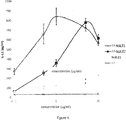
Figure 1 is a graph showing the comparison of IFN-γ induction by conjugate 5-4, in which T7 is couplingprecursor 1 and T7-MUC1 is conjugate 1-2. -
Figure 2 is a graph showing the comparison of IL-12 induction by conjugate 2-1, in which T7 is couplingprecursor 2 and T7-M2e is conjugate 2-1. -
Figure 3 is a diagram schematically showing the tumor-inhibiting effects of conjugate 5-4 (m=1), in which T7 is couplingprecursor 10 and T7-MUC1 is conjugate 5-4 (m=1), *p<0.001. -
Figure 4 is a diagram schematically showing the tumor-inhibiting effects of conjugate 5-4 (m=1), in which T7 is couplingprecursor 10 and T7-MUC1 is conjugate 5-4 (m=1), *p<0.001. -
Figure 5 is a diagram schematically showing the in vivo antibody-inducing effect of the influenza virus conserved protein M2e conjugate (T7-M2e), compared with original antigen M2e. -
Figure 6 is a diagram schematically showing the immune-induction effect of urine glucose reabsorption functional protein SGLT2, in which T7-SGLT2 is conjugate 5-15. - Source of the antigens: the molecular weight of all proteins may be found in the International protein database (http://www.uniprot.org/uniprot/P48432).
- Source of proteins or polypeptides: Except the proteins or polypeptides for which the specific preparation or synthesis methods have been described, other polypeptides are synthesized by Hybio Pharmaceutical Co., Ltd.
- Proteins are purchased from or synthesized by the following companies:
- GenScript Inc., Nanjing, China (http://www.genscript.com.cn/index.html);
- Novoprotein Scientific Inc., Shanghai, China (http://www.sinobio.net/);
- Sino Biological Inc., Beijing, China (http://www.sinobiological.cn/);
- Abnova Corporation (http://www.abnova.com/cn/).
- Mass spectrometer for material identification: LDI-1700 MALDI-TOF mass spectroscopy (Linear Scientific Inc., USA).
- The method for determining coupling degree by mass-spectrometry is, for example, as follows:
- The average molecular weight of POSTN is 86kDa (see, World J Gastroenterol, 2007 October 21; 13(39): 5261-5266; http://www.sinobiological.cn/Periostin-Protein-g-465.html). The molecular weight of the resultant coupling product 5-6 is 88132, as determined by mass spectrum. The coupling degree is calculated as follows: (88132-86000)/427 = 4.99 ≈ 5 (the molecular weight 427 is obtained by subtracting one H2O molecular from molecular weight of compound 3). Thus, it can be determined that 5 monomers of compound 3 were coupled (coupling degree m=5).
- The preparation of the present coupling conjugate is further illustrated by the following examples.
- MG7 (0.37 mmol) and compound 1 (0.88 mmol) were mixed and dissolved into absolute methanol, and then anhydrous triethylamine (1.12 mmol) was added. The mixture was reacted at 45 °C for 4 h. The solvent was removed by evaporating under reduced pressure and the residue was separated by silica gel column chromatography (10% methanol-dichloromethane) to give compound 1-1 (55 mg, yield 23%). MS (ESI): theoretical m/z 969.1516, found 970.1518 (M + H).
- Analogous to the synthesis of compound 1-1, MUC1 (epitope) was mixed with
compound 1 at a molar ratio of 1:1, and then 1.5-fold molar of triethylamine was added. The resultant mixture was allowed to react in methanol at 20°C for 12 h. For work up, please refer to "Synthesis of compound 1-1". This gave compound 1-2 (yield 20%). MS (ESI): theoretical m/z 3341.72, found 3342.75 (M + H). - Analogous to the synthesis of compound 1-1, M2e was mixed with
compound 1 at a molar ratio of 1:1, and then 1.5-fold molar of triethylamine was added. The resultant mixture was allowed to in methanol at 20°C for 12 h. For work up, please refer to "Synthesis of compound 1-1". This gave compound 1-3 (yield 25%). MS (ESI): theoretical m/z 3303.32, found 3304.33 (M + H). - Compound 2 (0.22mmol) was mixed with M2e (0.1mmol) in anhydrous DMSO (10 ml). The mixture was stirred at room temperature for 12 h. To the mixture H2O (100 ml) was added. The resultant mixture was lyophilized to remove solvents and the residue was separated by silica gel column chromatography (10% methanol - dichloromethane) to give compound 2-1 (56 mg, yield 15%). MS (ESI): theoretical m/z 3761.71, found 3761.75 (M + H).
-
- 1) The expression and preparation of OCT4 are described in Progress in Modern Biomedicine, Vol.10, NO. 9, MAY, 2010, 1610-1612).
- OCT4 (10 mg, average molecular weight: 38216) was dissolved into PBS solution (10 ml). A solution of compound 3 (u =2, 50 mg) in 2 ml DMSO was mixed with equimolar NHS, and then equimolar EDC was added. The mixture was stirred at room temperature for 2 h. Subsequently, the solution of OCT 4 in PBS was added and the resultant mixture was stirred overnight at 10°C. The mixture was separated with PD-10 desalting column (Amersham disposable PD-1 desalting column). The
eluates containing conjugate 5 were combined (detected by the absorptance at 320 nm) and lyophilized. The average molecular weight was 40348, as determined by MS. Thus, it was determined that theproduct 5 comprises five monomers of compound 3 (u=2), i.e. coupling degree m=5. Compound 5 (m = 1, 2, 3, 4) was synthesized with compound 3 (u=2) at different molar ratios by the same method. -
- 1) Methods for preparing MUC1 (epitope) may be found in the references, such as, Proc Natl Acad Sci. 2011, 109(1): 261-266; Angew Chem Int Ed Engl, 2010, 49(21): 3688 -3692; Angew Chem Int Ed Engl, 2011, 50(7): 1635 -1639; European Journal of Organic Chemistry, 2011, 20(21): 3685-3689; and Chemistry, 2011, 17(23): 6396-6406. According to compound 11 shown in the reference Proc Natl Acad Sci. 2011, 109(1): 261-266, the molecular weight of MUC1 (epitope) is 2967.
- 2) Coupling precursor 3 (u =2, 10 mg, 0.019 mmol) was dissolved into DMSO (2 ml) and MUC1 (epitope) (59 mg, 0.02 mmol) was added. The mixture was stirred at room temperature for 2 h, and then H2O (20 ml) was added. The solvent was removed by lyophilization and the residue was separated by silica gel column chromatography (10% methanol-dichloromethane) to give compound 5-4 (16 mg, yield 25%). MS (ESI): 3396.6 (M + H). Coupling degree m=1.
- Analogous to the synthesis of compound 5-4, except that MUC1 (epitope) was replaced by NP366-374 (ASNENMDAM), other solvents and reactants are used in identical molar ratios to give compound 5-14. MS (ESI): 1424.54 (M + H). Coupling degree m=1.
- If the antigen is a protein, the synthesis is analogous to the synthesis of
compound 5. If the antigen is a polypeptide (with the number of amino acids being less than 50), then follow the synthesis method of compound 5-4 (the solvents and reactants were in identical molar ratios, and the determination of reaction time, temperature, molecular weight and coupling degree, as well as the steps and conditions of the method were also identical). The conjugates obtained are shown in the table below.
R2 NANOG MUC1 (epitope) MG7 POSTN Twist Anxal Aktl CD47 Sp17 Conjugate 5-3 5-4 5-5 5-6 5-7 5-8 5-9 5-10 5-11 Molecular weight 36326 3396 1272 88132 22233 40420 50724 36067 18259 Coupling degree 4 1 1 5 3 4 6 2 2 R2 PSMA M2e NP366-374 SGLT2 PEAK1 HER2 MMP-10 PD-L1 PD-1 Conjugate 5-12 5-13 5-14 5-15 5-16 5-17 5-18 5-19 5-20 Molecular weight 86890 3357 1424 75029 194385 140469 55430 35834 33353 Coupling degree 6 1 1 5 3 6 3 6 4 -
- 1) SOX2 is prepared according to Journal of Huazhong Normal University ( Nat. Sci.), 2008, 42 (1), 102-105. Sp17 is prepared according to Chinese Journal of Pathophysiology, 2001, 17(10), 1019-1021. PSMA is prepared according to The Journal of Biomedical Research (Natural Science), 2010, 30(11): 1608-1611.
- SOX2 (10 mg, average molecular weight: 34310) was dissolved into PBS solution (10 ml). A solution of compound 4 (50 mg) (PEG = ethylene glycol group) in DMSO (2 ml) was mixed with equimolar NHS, and then equimolar EDC was added. The mixture was stirred at room temperature for 2 h. Subsequently, the solution of SOX2 in PBS was added and the resultant mixture was stirred overnight at 10°C. The mixture was separated on PD-10 desalting column (Amersham disposable PD-1 desalting column). The eluates containing compound 6 (detected by the absorptance at 320 nm) were combined and lyophilized. The average molecular weight was 35817, as determined by MS. Thus, it was determined that the product 6 comprises three monomers of compound 4 (PEG = ethylene glycol group), i.e. coupling degree m=3. Compound 6 (m = 1, 2, 4) was synthesized with compound 4 (PEG = ethylene glycol group) used at different molar ratios by the same method.
- Synthesis of compound 6-3 (m = 4) was analogous to the synthesis of compound 6. The molecular weight of NANOG was 34620. Compound 6-3 (m=4) was analyzed to have a molecular weight of 36630.24. Compound 6-3 (m = 1, 2, 3, 5) was synthesized with compound 4 (PEG = ethylene glycol group) at different molar ratios by the same method.
- Compound 4 (PEG = ethylene glycol group) (11 mg, 0.02mmol) was dissolved into DMSO (2 ml), and then NP366-374 trimer (59.1 mg, 0.02mmol) was added. The mixture was stirred at room temperature for 2 h. To the mixture with 20 ml water was added. The resultant mixture was lyophilized to remove solvents, and then the residue was separated by silica gel column chromatography (10% methanol - dichloromethane) to give compound 6-14 (in which R2 is NP366-374 trimer) (17mg, yield 25%). MS (ESI): 3460.8 (M+H). Coupling degree m=1.
- If the antigen is a protein, synthesis is analogous to the synthesis of compound 6. If the antigen is a polypeptide (with the number of amino acids being less than 50), then follow the synthesis process of compound 6-14 (the solvents and reactants were in identical molar ratios, and the determination of reaction time, temperature, molecular weight and coupling degree, as well as the steps and conditions of the method were also identical). The conjugates obtained are shown in the table below.

R2 NANOG MUC1 (epitope) MG7 POSTN Twist Anxal Aktl CD47 Sp17 Conjugate 6-3 6-4 6-5 6-6 6-7 6-8 6-9 6-10 6-11 Molecular weight 36630 3469 2257 88512 22461 40724 51362 36219 18411 Coupling degree 4 1 1 5 3 4 6 2 2 R2 PSMA M2e NP366-374 SGLT2 PEAK1 HER2 MMP-10 PD-L1 PD-1 Conjugate 6-12 6-13 6-14 6-15 6-16 6-17 6-18 6-19 6-20 Molecular weight 87346 3433 3460 75410 194614 140925 55659 36290 33657 Coupling degree 6 1 1 5 3 6 3 6 4 (Note: R2 of conjugate 6-14 is NP366-374 trimer; and R2 of conjugate 6-5 is MG7 trimer) - Human peripheral blood mononuclear cells were separated by centrifugation sedimentation. The centrifugator was Ficoll-Hypaque. The separated cells were suspended in RPMI1640 medium, and then 10% of FBS, L-glutamine, and penicillin /streptomycin (RP10, Invitrogen) were added. The resultant mixture was placed into 96-well plate. The cells were stimulated by the compounds of the present invention at a concentration of 0.1-10 µM, and cultured at 37°C with 5% CO2 for 24 h. The levels of y-interferon and interleukin-12 were measured using Luminex (Austin, TX).
Figures 1 and 2 showed the in vitro immunity-induction effects of conjugate 5-4 and conjugate 2-1, respectively. The results shown in the figures were average of three separate experiments. - The method for assaying in vivo anti-tumor effect by the conjugates of this application such as conjugate 5-4 in mice was as follows:
- Cell: 4T1, mouse breast carcinoma cells, 1 x 10⁶ cells/mouse.
- Animals: 5-week-old BALB/C mice (the number of male mice is identical with female mice).
- Tumor transplantation: Tumor cells were injected subcutaneously on left/right sides of a mouse.
- Administration: Intraperitoneal injection (0.125 mg/mouse/injection, PBS solution). Drugs were administered three times in total: one week before transplantation, on the day of transplantation and 7 days after transplantation.
- The health state and tumor size of the mice were monitored (via visual observation). After 14 days, the mice were killed. Blood samples were collected from each mouse for testing cytokines, and the tumors were taken out to measure the weight, length and width so as to calculate their volumes. The method used for testing in vivo anti-tumor effect by, for example, compound 6-17, in mice was the same as those described above, except that the cells used were mouse lung carcinoma cells.
Figures 3 and4 showed the tumor-inhibiting effects.Figure 5 showed the antibody induction effect.Figure 6 showed immunity-induction effect of diabetes-related proteins. - 36 female BALB/c mice (5 to 6-week-old, about 16 g) were randomly assigned into six cages, 6 mice each. The mice were provided with standard diet prepared by animal center and cooled boiled water on daily basis. After purchase, the mice were fed for one week to adapt the environment. After health examination, the experiments were started. The experimental animals were randomly divided into six groups, as shown in Table 4:
Table 4: Grouping and treatment of experimental animals Group Immune dose (per mouse) PBS group 200 µL sterile PBS TLR-7 agonist group 18 µM TLR-7 agonist M2e group 18 µM M2e antigen TLR-7 and M2e mixture group 200 µL mixture (18 µM TLR-7 and M2e, mixed at a ratio 1:1 by volume) Conjugate (TLR-7:M2e=1:1) group 18 µM conjugate (TLR-7:M2e=1:1) (conjugate 1-3) Conjugate (TLR-7:M2e=2:1) group 18 µM conjugate (TLR-7:M2e=2:1) (conjugate 2-1) - 200 µl of the drugs were administered intraperitoneally to the above groups of mice, respectively. Booster immunization was performed with the same antigen and dosage on day 14 after initial immunization. Blood samples were collected by cutting rat tail for three times: before initial immunization, before booster immunization and 7 days after booster immunization. The blood samples were placed into 1.5ml Eppendorf tubes at 4°C for several hours, and then centrifuged at 3000 rpm for 15 min to separate serum. M2e-specific antibodies in the immune serum were assayed using standard ELISA method.

- Synthesis of compound 12: the synthesis protocol is analogous to the synthesis of compound 8, yield: 88%, MS (ESI, M+1): 329.
- Synthesis of compound 13: Compound 12 (1 g) was dissolved into dichloromethane (50 ml). Then bromine (10 ml) was added and the mixture was stirred at room temperature for 12 h. Air was blown through the mixture such that the excessive bromine was removed and absorbed into saturated sodium bicarbonate solution. The solid residue was filtered to give a pale yellow solid 13 (1 g), with a yield of 85% and mass spectra (ESI, M+1): 407.
- Synthesis of compound 15: Compound 13 (0.5 g) was dissolved into anhydrous DMF (10 ml) and compound 14 (0.24 g) was added. The mixture was stirred homogenously, and then added with DCC (0.26 g) at 0°C. The mixture was stirred at 0°C for 2 h and then at room temperature for another 12 h. DCU was filtered off and the remaining solution was distilled under reduced pressure to dryness. To the residue was added 50 ml of saturated sodium bicarbonate solution. The mixture was stirred at 40°C for 4 h. Under cooling, the mixture was adjusted to pH 4 with concentrated hydrochloric acid. The precipitated solid was filtered, washed with water, and dried to give compound 15 (0.5 g, yield 72%). MS (ESI, M+1):567.
- Synthesis of compound 16: Compound 15 (0.4 g) was dissolved into methanol (20 ml), and thiourea (1 g) was added. The mixture was heated under reflux for 12 h, cooled and filtered. The filtrate was concentrated under reduced pressure and the residue was dissolved into 5% sodium carbonate solution (10 ml). Under cooling, the mixture was adjusted to pH 4 with concentrated hydrochloric acid. The precipitated solid was filtered, washed with water and dried to give compound 16 (0.23 g, yield 65%). MS (ESI, M+1):521.
- Synthesis of coupling precursor 4: Compound 16 (0.15 g) was dissolved into anhydrous DMF (5 ml), and N-hydroxy succinimide (0.04 g) was added. The mixture was stirred homogenously and then added with DCC (0.06 g) at 0°C. The resultant mixture was stirred at 0°C for 2 h and then at room temperature for another 12 h. DCU was filtered off and the filtrate was distilled under reduced pressure to dryness. The remaining solid was extracted with ethyl acetate (10 ml). To the extraction was added equal volume of diethyl ether. The mixture was frozen at -10°C for 12 h and precipitated to give a solid 4 (0.05 g, yield 32%). MS (ESI, M+1):618.
Claims (10)
- An immune receptor modifier conjugate, characterized in that the conjugate is obtained by the reaction between a coupling precursor and a biotic ligand, and is a compound of formula (I):

When the coupling precursor is a compound of formula 1:


or
when the coupling precursor is a compound of formula 4:

- The immune receptor modifier conjugate of claim 1, characterized in that the biotic ligand is one or more selected from the group consisting of polypeptide, protein, glycoprotein, polysaccharide, polynucleotide, inactivated cells and inactivated microorganisms.
- The immune receptor modifier conjugate of claim 1 or 2, characterized in that the conjugate comprises the compounds of formulae 1-1, 1-2, 1-3 and 2-1:


- The immune receptor modifier conjugate of claim 1 or 2, characterized in that the conjugate comprises:

R2 NANOG MUC1 (epitope) MG7 POSTN Twist Anxal Aktl CD47 Sp17 Conjugate 5-3 5-4 5-5 5-6 5-7 5-8 5-9 5-10 5-11 Molecular weight 36326 3396 1272 88132 22233 40420 50724 36067 18259 Coupling degree 4 1 1 5 3 4 6 2 2 R2 PSMA M2e NP366-374 SGLT2 PEAK1 HER2 MMP-10 PD-L1 PD-1 Conjugate 5-12 5-13 5-14 5-15 5-16 5-17 5-18 5-19 5-20 Molecular weight 86890 3357 1424 75029 194385 140469 55430 35834 33353 Coupling degree 6 1 1 5 3 6 3 6 4 - The immune receptor modifier conjugate of claim 1 or 2, characterized in that the conjugate comprises:

R2 NANOG MUC1 (epitope) MG7 POSTN Twist Anxal Aktl CD47 Sp17 Conjugate 6-3 6-4 6-5 6-6 6-7 6-8 6-9 6-10 6-11 Molecular weight 36630 3469 2257 88512 22461 40724 51362 36219 18411 Coupling degree 4 1 1 5 3 4 6 2 2 R2 PSMA M2e NP366-374 SGLT2 PEAK1 HER2 MMP-10 PD-L1 PD-1 Conjugate 6-12 6-13 6-14 6-15 6-16 6-17 6-18 6-19 6-20 Molecular weight 87346 3433 3460 75410 194614 140925 55659 36290 33657 - A coupling precursor for preparing the immune receptor modifier conjugate of claim 1, characterized in that the coupling precursor comprises compounds of formulae 1, 2, 3 and 4:


and
- A compound for synthesizing the coupling precursor of claim 6, characterized in that the compound is a compound of formula 10, 12, 13, 15 or 16:


- The synthesis method according to the synthesis protocol of each compound in the description of the present invention and the method of the synthesis Examples, useful for the preparation of each compound of formula I, wherein the specific synthesis conditions are not limited to those in the synthesis Examples.
- Use of the immune receptor modifier conjugate of any of claim 1-5 or the salts thereof, for preparing therapeutic drugs at various ratios, for preparing compound drugs at various ratios with other drugs, or for preparing complexes or combinations with pharmaceutically acceptable carriers.
- Use of the immune receptor modifier conjugate of any of claim 1-5 for immunomodulation, antibody preparation, anti-virus, diabetes, tumor immunomodulation and tumor biological-immunotherapy.
Applications Claiming Priority (2)
| Application Number | Priority Date | Filing Date | Title |
|---|---|---|---|
| CN201210382202.8A CN102993265B (en) | 2012-10-10 | 2012-10-10 | Immunoreceptor Modulator Conjugate, Its Preparation Method and Application, Its Conjugated Precursor and Synthetic Conjugated Precursor Compound |
| PCT/CN2013/077972 WO2014056333A1 (en) | 2012-10-10 | 2013-06-26 | Immune receptor modifier conjugate and preparation method and use thereof, coupling precursor for preparing same, and compound for synthesizing coupling precursor |
Publications (2)
| Publication Number | Publication Date |
|---|---|
| EP2918596A1 true EP2918596A1 (en) | 2015-09-16 |
| EP2918596A4 EP2918596A4 (en) | 2016-08-31 |
Family
ID=47922429
Family Applications (1)
| Application Number | Title | Priority Date | Filing Date |
|---|---|---|---|
| EP13845289.1A Withdrawn EP2918596A4 (en) | 2012-10-10 | 2013-06-26 | IMMUNE RECEIVER-MODIFIER CONJUGATE AND PREPARATION METHOD AND USE THEREOF, COUPLING PRECURSOR FOR PREPARING THE SAME, AND COMPOUND FOR SYNTHESIZING COUPLING PRECURSOR |
Country Status (4)
| Country | Link |
|---|---|
| US (1) | US10030066B2 (en) |
| EP (1) | EP2918596A4 (en) |
| CN (4) | CN111375056B (en) |
| WO (1) | WO2014056333A1 (en) |
Cited By (2)
| Publication number | Priority date | Publication date | Assignee | Title |
|---|---|---|---|---|
| EP4304658A1 (en) | 2021-03-08 | 2024-01-17 | Genequantum Healthcare (Suzhou) Co., Ltd. | Antibody-immune agonist conjugate and applications thereof |
| US12569566B2 (en) | 2019-02-12 | 2026-03-10 | Ambrx, Inc. | Compositions containing, methods and uses of antibody-TLR agonist conjugates |
Families Citing this family (15)
| Publication number | Priority date | Publication date | Assignee | Title |
|---|---|---|---|---|
| CN111375056B (en) * | 2012-10-10 | 2023-06-27 | 深圳大学 | Immunoreceptor Modulator Conjugate, Its Preparation Method and Application, Its Conjugated Precursor and Synthetic Conjugated Precursor Compound |
| CN105315281B (en) | 2015-11-16 | 2017-04-19 | 深圳大学 | Compound I and compound II as well as preparation methods and application thereof |
| CN105327345A (en) * | 2015-11-19 | 2016-02-17 | 深圳大学 | A vaccine adjuvant and vaccine comprising the adjuvant |
| CN106267188B (en) * | 2016-08-15 | 2025-06-17 | 深圳大学 | A novel antibody combining small molecule immune agonist and PD-1 antibody and its application in anti-tumor |
| CN106692982A (en) * | 2016-11-28 | 2017-05-24 | 吴福勤 | Resurrection and consolidation method for TSH (Thyroid Stimulating Hormone) immunological competence ligand |
| CN106632338B (en) * | 2016-12-16 | 2018-11-27 | 温州医科大学 | A kind of 9- substitution-N-(2- chlorobenzyl)Purine -6- amine derivant and its preparation method and application |
| CN107281483B (en) * | 2017-04-25 | 2025-10-24 | 深圳大学 | Immune agonist and composition and application thereof and preparation method of the composition |
| CN107281484A (en) * | 2017-05-31 | 2017-10-24 | 深圳大学 | Composition for preparing hepatitis B vaccine and its preparation method and application |
| CN115192726A (en) * | 2018-04-03 | 2022-10-18 | 深圳大学 | Synthesis of immune agonist targeting compound and application thereof |
| US12331320B2 (en) | 2018-10-10 | 2025-06-17 | The Research Foundation For The State University Of New York | Genome edited cancer cell vaccines |
| CN111704614B (en) | 2020-04-15 | 2021-10-22 | 深圳大学 | A series of immune agonists |
| CN111892648B (en) * | 2020-06-08 | 2022-08-26 | 中国科学院上海药物研究所 | Novel coronavirus polypeptide vaccine coupled with TLR7 agonist and application thereof |
| US20230416369A1 (en) * | 2020-11-16 | 2023-12-28 | Immuneoncia Therapeutics, Inc. | Biomarker for predicting therapeutic responsiveness to cancer immunotherapeutic agent and use thereof |
| WO2022188743A1 (en) * | 2021-03-08 | 2022-09-15 | Genequantum Healthcare (Suzhou) Co., Ltd. | Anti-her2 antibody-immune agonist conjugate and applications thereof |
| CN115068625B (en) * | 2021-03-16 | 2024-07-02 | 中国科学院上海药物研究所 | PD-L1 and TLR7 double-targeting nano antibody coupled drug and application thereof in resisting tumor |
Family Cites Families (13)
| Publication number | Priority date | Publication date | Assignee | Title |
|---|---|---|---|---|
| EP1939202A4 (en) | 2005-09-22 | 2010-06-16 | Dainippon Sumitomo Pharma Co | NEW COMPOUND OF ADENINE |
| US8846697B2 (en) * | 2006-05-31 | 2014-09-30 | The Regents Of The University Of California | Purine analogs |
| CN101230064A (en) * | 2007-01-22 | 2008-07-30 | 靳广毅 | 9 methylene aryl substituted purine derivative |
| CN101229168B (en) * | 2007-01-22 | 2010-05-19 | 靳广毅 | Immunity excitant containing selenium |
| EP2510946B1 (en) * | 2007-02-07 | 2015-08-05 | The Regents of The University of California | Conjugates of synthetic tlr agonists and uses therefor |
| TW200902018A (en) | 2007-03-20 | 2009-01-16 | Dainippon Sumitomo Pharma Co | Novel adenine compound |
| EP2170888B1 (en) | 2007-06-29 | 2015-04-22 | Gilead Sciences, Inc. | Purine derivatives and their use as modulators of toll-like receptor 7 |
| CN101239980B (en) * | 2008-02-18 | 2011-06-22 | 靳广毅 | Immune receptor regulator couplet precursor, couplet and application thereof |
| KR20110117705A (en) * | 2009-02-11 | 2011-10-27 | 더 리전트 오브 더 유니버시티 오브 캘리포니아 | Toll-like receptor modulators and treatment of disease |
| WO2011134669A1 (en) | 2010-04-30 | 2011-11-03 | Telormedix Sa | Methods for inducing an immune response |
| WO2012038058A1 (en) * | 2010-09-21 | 2012-03-29 | Telormedix Sa | Treatment of conditions by toll-like receptor modulators |
| WO2012122396A1 (en) * | 2011-03-08 | 2012-09-13 | Baylor Research Institute | Novel vaccine adjuvants based on targeting adjuvants to antibodies directly to antigen-presenting cells |
| CN111375056B (en) * | 2012-10-10 | 2023-06-27 | 深圳大学 | Immunoreceptor Modulator Conjugate, Its Preparation Method and Application, Its Conjugated Precursor and Synthetic Conjugated Precursor Compound |
-
2012
- 2012-10-10 CN CN202010160581.0A patent/CN111375056B/en active Active
- 2012-10-10 CN CN201510253948.2A patent/CN105061567B/en active Active
- 2012-10-10 CN CN201210382202.8A patent/CN102993265B/en active Active
- 2012-10-10 CN CN202010160582.5A patent/CN111420045B/en active Active
-
2013
- 2013-06-26 EP EP13845289.1A patent/EP2918596A4/en not_active Withdrawn
- 2013-06-26 WO PCT/CN2013/077972 patent/WO2014056333A1/en not_active Ceased
- 2013-06-26 US US14/434,743 patent/US10030066B2/en active Active
Cited By (3)
| Publication number | Priority date | Publication date | Assignee | Title |
|---|---|---|---|---|
| US12569566B2 (en) | 2019-02-12 | 2026-03-10 | Ambrx, Inc. | Compositions containing, methods and uses of antibody-TLR agonist conjugates |
| EP4304658A1 (en) | 2021-03-08 | 2024-01-17 | Genequantum Healthcare (Suzhou) Co., Ltd. | Antibody-immune agonist conjugate and applications thereof |
| EP4304658A4 (en) * | 2021-03-08 | 2025-03-12 | Genequantum Healthcare (Suzhou) Co., Ltd. | ANTIBODY-IMMUNE AGONIST CONJUGATE AND ITS APPLICATIONS |
Also Published As
| Publication number | Publication date |
|---|---|
| CN105061567A (en) | 2015-11-18 |
| EP2918596A4 (en) | 2016-08-31 |
| WO2014056333A9 (en) | 2015-04-30 |
| US20150284445A1 (en) | 2015-10-08 |
| CN111420045A (en) | 2020-07-17 |
| US10030066B2 (en) | 2018-07-24 |
| CN111375056A (en) | 2020-07-07 |
| CN111420045B (en) | 2023-03-31 |
| CN102993265B (en) | 2015-05-13 |
| CN105061567B (en) | 2021-07-20 |
| CN102993265A (en) | 2013-03-27 |
| WO2014056333A1 (en) | 2014-04-17 |
| CN111375056B (en) | 2023-06-27 |
Similar Documents
| Publication | Publication Date | Title |
|---|---|---|
| US10030066B2 (en) | Immune receptor modifier conjugate and preparation method and use thereof, coupling precursor for preparing same, and compound for synthesizing coupling precursor | |
| AU750701B2 (en) | Alpha-O-linked glycoconjugates, methods of preparation and uses thereof | |
| CN106267188B (en) | A novel antibody combining small molecule immune agonist and PD-1 antibody and its application in anti-tumor | |
| JP2002507577A (en) | Trimeric antigenic O-linked glycoconjugate, production method thereof and use thereof | |
| AU2009268349B2 (en) | Glycopeptide constructs and uses thereof | |
| CN108047282B (en) | Sialic acid derivative and preparation method and application thereof | |
| Liu et al. | Synthetic MUC1 breast cancer vaccine containing a Toll-like receptor 7 agonist exerts antitumor effects | |
| Luo et al. | Fully synthetic Mincle-dependent self-adjuvanting cancer vaccines elicit robust humoral and T cell-dependent immune responses and protect mice from tumor development | |
| CN103254304A (en) | Immune stimulant couplet, preparation method thereof and antineoplastic application of the immune stimulant couplet | |
| US10711005B2 (en) | Compound I and compound II as well as preparation methods therefor and application thereof | |
| CN119462481B (en) | STING-activating adjuvant lipids, compositions comprising same and uses | |
| CN121154799A (en) | Preparation method and application of antitumor vaccine based on self antigen and synthetic antigen | |
| EP3928797B1 (en) | Cd44 targeted multi-arm conjugate | |
| CN113527702A (en) | Amphiphilic phosphorus-containing tree crown macromolecular material and preparation and application thereof | |
| CN1235939C (en) | Target hydrophili polymer and its combined object with interferon and medicinal composition conteining said combined object | |
| CN107080837B (en) | Tumor vaccine, dendritic cell tumor vaccine and preparation method thereof | |
| EP4087853B1 (en) | New immunostimulators and use thereof in immunotherapy | |
| CN121293183B (en) | Adjuvant lipids and their compositions containing benzothiophene structures for activating the STING pathway | |
| US20200325274A1 (en) | Tertiary alkoxy polyethylene glycol and derivatives thereof | |
| CN119930462A (en) | Vaccine adjuvant lipid compound based on RLRs receptor agonist, composition containing the same and use thereof | |
| WO2024256369A1 (en) | Vaccine compositions | |
| WO2017049946A1 (en) | Human ribosomal protein rps6 subunit anti-cancer peptide | |
| CN121320357A (en) | Nucleic acid molecules encoding the CD24 antigen protein and their uses | |
| CN118236482A (en) | Self-adjuvant lipoprotein vaccine molecule and preparation method and application thereof | |
| EP3530652A1 (en) | Modified phenylphthalimide and pharmaceutical composition having same as active ingredient |
Legal Events
| Date | Code | Title | Description |
|---|---|---|---|
| PUAI | Public reference made under article 153(3) epc to a published international application that has entered the european phase |
Free format text: ORIGINAL CODE: 0009012 |
|
| 17P | Request for examination filed |
Effective date: 20150508 |
|
| AK | Designated contracting states |
Kind code of ref document: A1 Designated state(s): AL AT BE BG CH CY CZ DE DK EE ES FI FR GB GR HR HU IE IS IT LI LT LU LV MC MK MT NL NO PL PT RO RS SE SI SK SM TR |
|
| AX | Request for extension of the european patent |
Extension state: BA ME |
|
| DAX | Request for extension of the european patent (deleted) | ||
| RA4 | Supplementary search report drawn up and despatched (corrected) |
Effective date: 20160802 |
|
| RIC1 | Information provided on ipc code assigned before grant |
Ipc: A61P 31/12 20060101ALI20160727BHEP Ipc: C07K 14/005 20060101ALI20160727BHEP Ipc: C07K 7/06 20060101ALI20160727BHEP Ipc: C07K 14/705 20060101ALI20160727BHEP Ipc: C07D 473/18 20060101ALI20160727BHEP Ipc: A61P 35/00 20060101ALI20160727BHEP Ipc: A61P 3/10 20060101ALI20160727BHEP Ipc: A61K 39/12 20060101ALI20160727BHEP Ipc: C07K 14/47 20060101ALI20160727BHEP Ipc: C07K 14/11 20060101ALI20160727BHEP Ipc: A61K 47/48 20060101ALI20160727BHEP Ipc: A61P 37/02 20060101ALI20160727BHEP Ipc: C07K 1/107 20060101AFI20160727BHEP Ipc: A61K 39/145 20060101ALI20160727BHEP Ipc: A61K 39/00 20060101ALI20160727BHEP Ipc: A61K 39/39 20060101ALI20160727BHEP |
|
| STAA | Information on the status of an ep patent application or granted ep patent |
Free format text: STATUS: EXAMINATION IS IN PROGRESS |
|
| 17Q | First examination report despatched |
Effective date: 20161125 |
|
| STAA | Information on the status of an ep patent application or granted ep patent |
Free format text: STATUS: THE APPLICATION IS DEEMED TO BE WITHDRAWN |
|
| 18D | Application deemed to be withdrawn |
Effective date: 20220104 |