EP2916500A1 - Method of handling soft buffer size for a transport block and related communication device - Google Patents
Method of handling soft buffer size for a transport block and related communication device Download PDFInfo
- Publication number
- EP2916500A1 EP2916500A1 EP15154638.9A EP15154638A EP2916500A1 EP 2916500 A1 EP2916500 A1 EP 2916500A1 EP 15154638 A EP15154638 A EP 15154638A EP 2916500 A1 EP2916500 A1 EP 2916500A1
- Authority
- EP
- European Patent Office
- Prior art keywords
- parameter
- soft buffer
- buffer size
- unit
- transport block
- Prior art date
- Legal status (The legal status is an assumption and is not a legal conclusion. Google has not performed a legal analysis and makes no representation as to the accuracy of the status listed.)
- Granted
Links
Images




Classifications
-
- H—ELECTRICITY
- H04—ELECTRIC COMMUNICATION TECHNIQUE
- H04L—TRANSMISSION OF DIGITAL INFORMATION, e.g. TELEGRAPHIC COMMUNICATION
- H04L1/00—Arrangements for detecting or preventing errors in the information received
- H04L1/12—Arrangements for detecting or preventing errors in the information received by using return channel
- H04L1/16—Arrangements for detecting or preventing errors in the information received by using return channel in which the return channel carries supervisory signals, e.g. repetition request signals
- H04L1/18—Automatic repetition systems, e.g. Van Duuren systems
- H04L1/1829—Arrangements specially adapted for the receiver end
- H04L1/1835—Buffer management
-
- H—ELECTRICITY
- H04—ELECTRIC COMMUNICATION TECHNIQUE
- H04L—TRANSMISSION OF DIGITAL INFORMATION, e.g. TELEGRAPHIC COMMUNICATION
- H04L1/00—Arrangements for detecting or preventing errors in the information received
- H04L1/0001—Systems modifying transmission characteristics according to link quality, e.g. power backoff
- H04L1/0009—Systems modifying transmission characteristics according to link quality, e.g. power backoff by adapting the channel coding
- H04L1/0013—Rate matching, e.g. puncturing or repetition of code symbols
-
- H—ELECTRICITY
- H04—ELECTRIC COMMUNICATION TECHNIQUE
- H04L—TRANSMISSION OF DIGITAL INFORMATION, e.g. TELEGRAPHIC COMMUNICATION
- H04L1/00—Arrangements for detecting or preventing errors in the information received
- H04L1/12—Arrangements for detecting or preventing errors in the information received by using return channel
- H04L1/16—Arrangements for detecting or preventing errors in the information received by using return channel in which the return channel carries supervisory signals, e.g. repetition request signals
- H04L1/18—Automatic repetition systems, e.g. Van Duuren systems
- H04L1/1812—Hybrid protocols; Hybrid automatic repeat request [HARQ]
-
- H—ELECTRICITY
- H04—ELECTRIC COMMUNICATION TECHNIQUE
- H04L—TRANSMISSION OF DIGITAL INFORMATION, e.g. TELEGRAPHIC COMMUNICATION
- H04L1/00—Arrangements for detecting or preventing errors in the information received
- H04L1/12—Arrangements for detecting or preventing errors in the information received by using return channel
- H04L1/16—Arrangements for detecting or preventing errors in the information received by using return channel in which the return channel carries supervisory signals, e.g. repetition request signals
- H04L1/18—Automatic repetition systems, e.g. Van Duuren systems
- H04L1/1822—Automatic repetition systems, e.g. Van Duuren systems involving configuration of automatic repeat request [ARQ] with parallel processes
-
- H—ELECTRICITY
- H04—ELECTRIC COMMUNICATION TECHNIQUE
- H04L—TRANSMISSION OF DIGITAL INFORMATION, e.g. TELEGRAPHIC COMMUNICATION
- H04L1/00—Arrangements for detecting or preventing errors in the information received
- H04L1/12—Arrangements for detecting or preventing errors in the information received by using return channel
- H04L1/16—Arrangements for detecting or preventing errors in the information received by using return channel in which the return channel carries supervisory signals, e.g. repetition request signals
- H04L1/18—Automatic repetition systems, e.g. Van Duuren systems
- H04L1/1825—Adaptation of specific ARQ protocol parameters according to transmission conditions
-
- H—ELECTRICITY
- H04—ELECTRIC COMMUNICATION TECHNIQUE
- H04L—TRANSMISSION OF DIGITAL INFORMATION, e.g. TELEGRAPHIC COMMUNICATION
- H04L1/00—Arrangements for detecting or preventing errors in the information received
- H04L1/12—Arrangements for detecting or preventing errors in the information received by using return channel
- H04L1/16—Arrangements for detecting or preventing errors in the information received by using return channel in which the return channel carries supervisory signals, e.g. repetition request signals
- H04L1/18—Automatic repetition systems, e.g. Van Duuren systems
- H04L1/1829—Arrangements specially adapted for the receiver end
- H04L1/1835—Buffer management
- H04L1/1845—Combining techniques, e.g. code combining
-
- H—ELECTRICITY
- H04—ELECTRIC COMMUNICATION TECHNIQUE
- H04L—TRANSMISSION OF DIGITAL INFORMATION, e.g. TELEGRAPHIC COMMUNICATION
- H04L1/00—Arrangements for detecting or preventing errors in the information received
- H04L1/12—Arrangements for detecting or preventing errors in the information received by using return channel
- H04L1/16—Arrangements for detecting or preventing errors in the information received by using return channel in which the return channel carries supervisory signals, e.g. repetition request signals
- H04L1/18—Automatic repetition systems, e.g. Van Duuren systems
- H04L1/1829—Arrangements specially adapted for the receiver end
- H04L1/1861—Physical mapping arrangements
-
- H—ELECTRICITY
- H04—ELECTRIC COMMUNICATION TECHNIQUE
- H04L—TRANSMISSION OF DIGITAL INFORMATION, e.g. TELEGRAPHIC COMMUNICATION
- H04L27/00—Modulated-carrier systems
- H04L27/32—Carrier systems characterised by combinations of two or more of the types covered by groups H04L27/02, H04L27/10, H04L27/18 or H04L27/26
- H04L27/34—Amplitude- and phase-modulated carrier systems, e.g. quadrature-amplitude modulated carrier systems
- H04L27/36—Modulator circuits; Transmitter circuits
- H04L27/366—Arrangements for compensating undesirable properties of the transmission path between the modulator and the demodulator
-
- H—ELECTRICITY
- H04—ELECTRIC COMMUNICATION TECHNIQUE
- H04L—TRANSMISSION OF DIGITAL INFORMATION, e.g. TELEGRAPHIC COMMUNICATION
- H04L49/00—Packet switching elements
- H04L49/90—Buffering arrangements
- H04L49/9005—Buffering arrangements using dynamic buffer space allocation
-
- H—ELECTRICITY
- H04—ELECTRIC COMMUNICATION TECHNIQUE
- H04L—TRANSMISSION OF DIGITAL INFORMATION, e.g. TELEGRAPHIC COMMUNICATION
- H04L5/00—Arrangements affording multiple use of the transmission path
- H04L5/003—Arrangements for allocating sub-channels of the transmission path
- H04L5/0053—Allocation of signalling, i.e. of overhead other than pilot signals
- H04L5/0055—Physical resource allocation for ACK/NACK
-
- H—ELECTRICITY
- H04—ELECTRIC COMMUNICATION TECHNIQUE
- H04L—TRANSMISSION OF DIGITAL INFORMATION, e.g. TELEGRAPHIC COMMUNICATION
- H04L1/00—Arrangements for detecting or preventing errors in the information received
- H04L1/004—Arrangements for detecting or preventing errors in the information received by using forward error control
- H04L1/0056—Systems characterized by the type of code used
- H04L1/0067—Rate matching
-
- H—ELECTRICITY
- H04—ELECTRIC COMMUNICATION TECHNIQUE
- H04L—TRANSMISSION OF DIGITAL INFORMATION, e.g. TELEGRAPHIC COMMUNICATION
- H04L27/00—Modulated-carrier systems
- H04L27/32—Carrier systems characterised by combinations of two or more of the types covered by groups H04L27/02, H04L27/10, H04L27/18 or H04L27/26
- H04L27/34—Amplitude- and phase-modulated carrier systems, e.g. quadrature-amplitude modulated carrier systems
-
- H—ELECTRICITY
- H04—ELECTRIC COMMUNICATION TECHNIQUE
- H04L—TRANSMISSION OF DIGITAL INFORMATION, e.g. TELEGRAPHIC COMMUNICATION
- H04L5/00—Arrangements affording multiple use of the transmission path
- H04L5/003—Arrangements for allocating sub-channels of the transmission path
- H04L5/0058—Allocation criteria
- H04L5/0064—Rate requirement of the data, e.g. scalable bandwidth, data priority
Definitions
- the present invention relates a method of handling a soft buffer size for a transport block and related communication device.
- LTE long-term evolution
- 3GPP 3rd Generation Partnership Project
- 3GPP Rel-8 3rd Generation Partnership Project
- 3GPP Rel-9 3rd Generation Partnership Project
- UMTS universal mobile telecommunication system
- the LTE system includes a new radio interface and a new radio network architecture that provides high data rate, low latency, packet optimization, and improved system capacity and coverage.
- a radio access network known as an evolved universal terrestrial radio access network (E-UTRAN) includes multiple evolved Node-Bs (eNBs) for communicating with multiple user equipments (UEs), and for communicating with a core network including a mobility management entity (MME), a serving gateway, etc., for Non-Access Stratum (NAS) control.
- E-UTRAN evolved universal terrestrial radio access network
- eNBs evolved Node-Bs
- MME mobility management entity
- serving gateway etc.
- NAS Non-Access Stratum
- LTE-advanced (LTE-A) system is an evolution of the LTE system.
- the LTE-A system targets faster switching between power states, improves performance at the coverage edge of an eNB, and includes advanced techniques, such as carrier aggregation (CA), coordinated multipoint (CoMP) transmissions/reception, uplink (UL) multiple-input multiple-output (UL-MIMO), etc.
- CA carrier aggregation
- CoMP coordinated multipoint
- UL-MIMO uplink
- the UE and the eNB must support standards developed for the LTE-A system, such as the 3GPP Rel-10 standard or later versions.
- a rate-matching procedure targets to match the number of bits in a transport block (TB) to the number of bits that can be transmitted within a transmission time interval (TTI) when a transmitter (e.g., eNB) prepares to transmit/retransmit the TB to a receiver (e.g., UE), wherein the number of bits transmitted within the TTI may be determined according to a soft buffer size for the TB for the rate-matching procedure.
- a hybrid automatic repeat request (HARQ) process starts to operate, when a receiver (eNB or UE) cannot decode a received packet successfully.
- HARQ hybrid automatic repeat request
- the receiver stores soft values of a transmitted/retransmitted TB in a soft buffer of the receiver, and combines the soft values to increase a probability of successful decoding, wherein a size of the soft values stored by the receiver may be determined according to a soft buffer size for the TB for storing the soft values.
- the receiver continues the HARQ process until the TB is decoded correctly, or until a maximum number of retransmissions have been sent, at which time the HARQ process declares a failure and leaves it up to the HARQ process in radio link control (RLC) layer for trying again.
- RLC radio link control
- a maximum modulation level of 64 quadrature amplitude modulation 64QAM
- the storage efficiency of the soft buffer may not be a big issue for the receiver.
- an increased maximum modulation level e.g., 256QAM
- an enhanced technology e.g., small cell enhancement
- the maximum number of bits of a downlink shared channel (DL-SCH) TB received within a TTI may also be increased.
- a method designed for partitioning a soft buffer of a UE and/or a network in the legacy LTE system may not be efficient for the increased maximum modulation level. Not only a blocking probability of a HARQ process may be increased in this scenario, but also coding/retransmission performance of the HARQ process may be degraded. The problem may be even worse when a carrier aggregation (CA) is supported, where multiple cells (e.g., multiple component carriers) are operated at the same time and a larger number of HARQ processes may occur.
- CA carrier aggregation
- the present invention therefore provides a method and related communication device for handling a soft buffer size for a transport block, to solve the abovementioned problem.
- a method of determining a soft buffer size for a transport block comprises determining a basic unit for the soft buffer size according to a legacy soft buffer size for the transport block and a first parameter, and determining the soft buffer size for the transport block according to the basic unit and a second parameter.
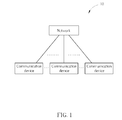
- Fig. 1 is a schematic diagram of a wireless communication system 10 according to an example of the present invention.
- the wireless communication system 10 is briefly composed of a network and a plurality of communication devices.
- the wireless communication system 10 may support a time-division duplexing (TDD) mode, a frequency-division duplexing (FDD) mode or a TDD-FDD joint operation mode. That is, the network and a communication device may communicate with each other via FDD carrier(s) and/or TDD carrier(s).
- the wireless communication system 10 may support a carrier aggregation (CA).
- CA carrier aggregation
- the network and a communication device may communicate with each other via multiple cells (e.g., multiple carriers) including a primary cell (e.g., primary component carrier) and one or more secondary cells (e.g., secondary component carriers).
- the abovementioned cells may be operated in the same or different duplexing modes.
- each cell may be a FDD cell (or TDD cell), when the cells are operated in the same duplexing mode.
- the cells are operated in different duplexing modes (e.g. TDD-FDD joint operation).
- the primary cell may be a TDD carrier
- a secondary cell may be a FDD carrier.
- the primary cell may be the FDD carrier
- the secondary cell may be the TDD carrier.
- For the CA conforming to the 3GPP LTE Rel-10/11/12,5 cells (e.g., serving cells) may be supported by the communication device and the network.
- the network and the communication devices are simply utilized for illustrating the structure of the wireless communication system 10.
- the network may be a universal terrestrial radio access network (UTRAN) comprising a plurality of Node-Bs (NBs) in a universal mobile telecommunications system (UMTS).
- UTRAN universal terrestrial radio access network
- UMTS universal mobile telecommunications system
- the network may be an evolved UTRAN (E-UTRAN) comprising a plurality of evolved NBs (eNBs) and/or relays in a long term evolution (LTE) system, a LTE-Advanced (LTE-A) system or an evolution of the LTE-A system.
- LTE long term evolution
- LTE-A LTE-Advanced
- the network may also include both the UTRAN/E-UTRAN and a core network, wherein the core network includes network entities such as Mobility Management Entity (MME), Serving Gateway (S-GW), Packet Data Network (PDN) Gateway (P-GW), Self-Organizing Networks (SON) server and/or Radio Network Controller (RNC), etc.
- MME Mobility Management Entity
- S-GW Serving Gateway
- PDN Packet Data Network
- P-GW Packet Data Network Gateway
- SON Self-Organizing Networks
- RNC Radio Network Controller
- a communication device may be a user equipment (UE), a low cost device (e.g., machine type communication (MTC) device), a device-to-device (D2D) device, a mobile phone, a laptop, a tablet computer, an electronic book, a portable computer system, or combination thereof.
- the network and the communication device can be seen as a transmitter or a receiver according to direction (i.e., transmission direction), e.g., for an uplink (UL), the communication device is the transmitter and the network is the receiver, and for a downlink (DL), the network is the transmitter and the communication device is the receiver.
- direction i.e., transmission direction
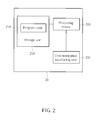
- Fig. 2 is a schematic diagram of a communication device 20 according to an example of the present invention.
- the communication device 20 may be a communication device or the network shown in Fig. 1 , but is not limited herein.
- the communication device 20 may include a processing means 200 such as a microprocessor or Application Specific Integrated Circuit (ASIC), a storage unit 210 and a communication interfacing unit 220.
- the storage unit 210 may be any data storage device that may store a program code 214, accessed and executed by the processing means 200.
- Examples of the storage unit 210 include but are not limited to, a subscriber identity module (SIM), read-only memory (ROM), flash memory, random-access memory (RAM), Compact Disc Read-Only Memory (CD-ROM), digital versatile disc-ROM (DVD-ROM), Blu-ray Disc-ROM (BD-ROM), magnetic tape, hard disk, optical data storage device, non-volatile storage unit, non-transitory computer-readable medium (e.g., tangible media), etc.
- SIM subscriber identity module
- ROM read-only memory
- flash memory random-access memory
- RAM random-access memory
- CD-ROM Compact Disc Read-Only Memory
- DVD-ROM digital versatile disc-ROM
- BD-ROM Blu-ray Disc-ROM
- Fig. 3 is a flowchart of a process 30 according to an example of the present invention.
- the process 30 may be utilized in a communication device, the network or both shown in Fig. 1 , to handling a soft buffer size for a transport block (TB) (e.g., in a transmission time interval (TTI)).
- the process 30 may be compiled into the program code 214 and includes the following steps: Step 300: Start.
- Step 302 Determine a basic unit for the soft buffer size according to a legacy soft buffer size for the TB and a first parameter.
- Step 304 Determine the soft buffer size for the TB according to the basic unit and a second parameter.
- Step 306 End.
- the communication device determines a basic unit for the soft buffer size according to a legacy soft buffer size for the TB and a first parameter. Then, the communication device determines the soft buffer size for the TB according to the basic unit and a second parameter.
- the legacy soft buffer size for the TB may correspond to (e.g., be used for) a modulation level (e.g., maximum modulation level) not greater than 64 quadrature amplitude nodulation (64QAM).
- the legacy soft buffer size for the TB may be a size of a partition of a soft buffer for storing a hybrid automatic repeat request (HARQ) process (e.g., DL HARQ processes) of a TB, when the maximum modulation level of the TB is equal to or lower than 64QAM.
- HARQ hybrid automatic repeat request
- the soft buffer size for the TB may correspond to a modulation level (e.g., maximum modulation level) greater than 64QAM.
- the soft buffer size for the TB determined according to the process 30 may be a size of a partition of a soft buffer for storing a HARQ process (e.g., DL HARQ processes) of a TB, when the maximum modulation level of the TB (e.g., 256QAM) may be greater than 64QAM.
- the basic unit for the soft buffer size for the TB may be not greater than the legacy soft buffer size for the TB. That is, the legacy soft buffer size may be divided into at least one basic unit according to the process 30, to increase flexibility of usage of the soft buffer.
- a blocking probability of a HARQ process e.g., DL HARQ processes
- coding/retransmission performance of the HARQ process may be improved.
- the network may determine a basic unit for a soft buffer size for a TB according to a legacy soft buffer size for the TB and a first parameter. Then, the network determines the soft buffer size for the TB according to the basic unit and a second parameter.
- the legacy soft buffer size for the TB may correspond to (e.g., be used for) a modulation level (e.g., maximum modulation level) not greater than 64QAM. That is, for the network, the legacy soft buffer size for the TB may be a size of a partition of a soft buffer for performing a rate-matching procedure of a TB, when the maximum modulation level of the TB is equal to or lower than 64QAM.
- the soft buffer size for the TB may correspond to a modulation level (e.g., maximum modulation level) greater than 64QAM. That is, for the network, the soft buffer size for the TB determined according to the process 30 may be a size of a partition of a soft buffer for performing a rate-matching procedure of a TB, when the maximum modulation level of the TB (e.g., 256QAM) may be greater than 64QAM.
- the basic unit for the soft buffer size for the TB may be not greater than the legacy soft buffer size for the TB. That is, the legacy soft buffer size for the TB may be divided into at least one basic unit according to the process 30, to increase flexibility of usage of the soft buffer.
- a blocking probability of a HARQ process e.g., DL HARQ processes
- coding/retransmission performance of the HARQ process may be improved.
- Realization of the process 30 is not limited to the above description.
- operation of a communication device in Fig. 1 is used to illustrate various realizations of the present invention.
- the examples may also be realized by the network in Fig. 1 , and is not limited herein.
- a HARQ process in the following examples may be a DL HARQ process or a UL HARQ process.
- the first parameter may be determined according to channel quality related to a channel for transmitting the TB.
- the second parameter may be determined according to channel quality related to a channel for transmitting the TB.
- the first parameter may be determined according to a user equipment (UE) category of a communication device processing (e.g., transmitting or receiving) the TB.
- the second parameter may be determined according to a UE category of a communication device processing (e.g., transmitting or receiving) the TB.
- the first parameter may be a cell-specific parameter (e.g., when a communication device and/or the network processing the TB is configured with multiple cells).
- the second parameter may be a cell-specific parameter (e.g., when a communication device and/or the network processing the TB is configured with multiple cells).
- the first parameter may be determined according to a size of the TB (i.e., TB size).
- the second parameter may be determined according to a size of the TB.
- the first parameter may be determined according to a maximum TB size.
- the second parameter may be determined according to a maximum TB size.
- a communication device may allocate a first HARQ process corresponding to the TB(s) in at least one basic unit of a soft buffer according to the soft buffer size for the TB if the first HARQ process is not correctly received. Further, the communication device may store a second HARQ process, if the second HARQ process is not correctly received. The communication device may allocate the second HARQ process corresponding to another TB(s) in other basic unit(s) of the soft buffer according to the soft buffer size again, e.g., if there is available space in the soft buffer.
- the communication device may release part of the at least one basic unit of the first HARQ process and allocate the second HARQ process in the part of the at least one basic unit according to the soft buffer size, e.g., if there is no available space in the soft buffer.
- the network may perform a rate-matching procedure on the TB according to the soft buffer size in the process 30 and/or the above description. That is, the examples in the present invention can be applied to both the HARQ process and the rate-matching procedure.
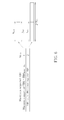
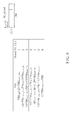
- Fig. 4 is a schematic diagram of determination of the second parameter in the process 30 according to an example of the present invention.
- the basic unit, the first parameter, the second parameter, the legacy soft buffer size for a TB and the soft buffer size for the TB are denoted as N unit , M unit , M TBS , N IR and M TBS *N unit , respectively, according to the process 30.
- the maximum TB size for a modulation level not greater than 64QAM is denoted as TBS Legacy_Max , and the TB size of the TB is denoted as TBS.
- the legacy soft buffer size for the TB N IR is divided into 4 basic units (each with the size of N unit ).
- a HARQ process may be stored in 6 basic units of the soft buffer wherein a size of each basic unit is N unit , if the criterion "1.25TBS Legacy_Max ⁇ TBS ⁇ 1.5TBS Legacy_Max " is satisfied.
- the soft buffer sizes for corresponding TB sizes are shown at the right hand side of Fig. 4 .
- the network can determine the soft buffer size for the TB according to Fig. 4 , to perform a rate-matching procedure.
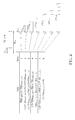
- Fig. 5 is a schematic diagram of states of a soft buffer of a communication device according to an example of the present invention.
- the soft buffer of the communication device is divided into 32 basic units "x-y", where 1 ⁇ x ⁇ 8 and 1 ⁇ y ⁇ 4.
- 4 HARQ processes P1-P4 are stored in sets of the basic units of the soft buffer, and M TBS (i.e., the second parameter in the process 30) of each of the HARQ processes P1-P4 is 8.
- the soft buffer is fully occupied by the HARQ process P1-P4, as shown at the first row of Fig. 5 .
- the HARQ process P1 is stored in the basic units "1-1", ..., "1-4” and “2-1", ..., "2-4".
- the communication device may release the basic units "2-1 “, ..., "2-4", and allocate a HARQ process P5 in the released basic units, if the communication device needs to store the HARQ process P5 due to an unsuccessful reception of the HARQ process P5, as shown at the second row of Fig. 5 .
- the communication device may release the basic units "4-1 ", ..., "4-4", and allocate a HARQ process P6 in the released basic units, if the communication device needs to store the HARQ process P6 due to an unsuccessful reception of the HARQ process P6, as shown at the third row of Fig. 5 .
- the communication device can store the HARQ processes flexibly and efficiently. As a result, a blocking probability of a HARQ process may be decreased, and coding/retransmission performance of the HARQ process may be improved.
- Fig. 6 is a schematic diagram of determination of the second parameter in the process 30 according to an example of the present invention.
- the basic unit, the first parameter, the second parameter, the legacy soft buffer size for a TB and the soft buffer size for the TB are denoted as N unit , M unit , M TBS , N IR and M TBS *N unit , respectively, according to the process 30.
- the maximum TB size for a modulation level not greater than 64QAM is denoted as TBS Legacy_Max , and the TB size of the TB is denoted as TBS.
- M TBS the maximum TBS for a modulation level greater than 64QAM (e.g., 256QAM) which is greater than the legacy maximum TBS for a modulation level not greater than 64QAM.
- the soft buffer sizes for corresponding maximum TBSs are shown at the right hand side of Fig. 6 .
- a HARQ process may be stored in 2 basic units of the soft buffer wherein a size of each basic unit is N IR , if the criterion "TBS Legacy_Max ⁇ maximum TBS" is satisfied.
- Fig. 7 is a schematic diagram of states of a soft buffer of a communication device according to an example of the present invention.
- the soft buffer of the communication device is divided into 8 basic units K1-K8.
- 4 HARQ processes P1-P4 are stored in sets of the basic units of the soft buffer, and M TBS (i.e., the second parameter in the process 30) of each of the HARQ processes P1-P4 is 2.
- the soft buffer is fully occupied by the HARQ processes P1-P4, as shown at the first row of Fig. 7 .
- the HARQ process P1 is stored in the basic units K1 and K2.
- the communication device may release the basic unit K2, and allocate a HARQ process P5 in the released partition, if the communication device needs to store the HARQ process P5 due to an unsuccessful reception of the HARQ process P5, as shown at the second row of Fig. 7 .
- the communication device may release the basic units K4, K6 and K8, and allocate HARQ process P6, P7 and P8 in the basic units K4, K6 and K8, respectively, if the communication device needs to store the HARQ process P6, P7 and P8 due to unsuccessful receptions of the HARQ process P6, P7 and P8.
- the communication device can store the HARQ processes flexibly and efficiently. As a result, a blocking probability of a HARQ process may be decreased, and coding/retransmission performance of the HARQ process may be improved.
- the first parameter and/or the second parameter in the process 30 may be cell-specific parameter(s). Properties of the cell-specific parameter(s) are illustrated in the following examples, wherein the communication device is configured with two cells CC1 and CC2.
- Fig. 8 is a schematic diagram of determination of the second parameter in the process 30 according to an example of the present invention.
- the basic unit, the first parameter, the second parameter, the legacy soft buffer size for a TB and the soft buffer size for the TB are denoted as N unit (1), M unit (1), M TBS (1), N IR and M TBS (1)*N unit (1), respectively, according to the process 30.
- the parameters and the relations therein with the index "(1)" are used for the cell CC1.
- the maximum TB size for a modulation level not greater than 64QAM is denoted as TBS Legacy_Max
- the TB size of the TB is denoted as TBS.
- a HARQ process of the cell CC1 may be stored in 5 basic units of the soft buffer wherein a size of each basic unit is N unit (1), if the criterion "TBS Legacy_Max ⁇ TBS ⁇ 1.25TBS Legacy_Max " is satisfied.
- Fig. 9 is a schematic diagram of determination of the second parameter in the process 30 according to an example of the present invention.
- the basic unit, the first parameter, the second parameter, the legacy soft buffer size for a TB and the soft buffer size for the TB are denoted as N unit (2), M unit (2), M TBS (2), N IR and M TBS (2)*N unit (2), respectively, according to the process 30.
- the parameters and the relations therein with the index "(2)" are used for the cell CC2.
- the maximum TB size for a modulation level not greater than 64QAM is denoted as TBS Legacy_Max
- the TB size of the TB is denoted as TBS.
- the legacy soft buffer size for the TB N IR is divided into 2 basic units (each with the size N unit (2)).
- a HARQ process of the cell CC2 may be stored in 3 basic units of the soft buffer wherein a size of each basic unit is N unit (2), if the criterion "TBS Legacy_Max ⁇ TBS ⁇ 1. 5TBS Legacy_Max " is satisfied.
- the HARQ processes of the cells CC1 and CC2 are stored in the soft buffer according to storage rules of the cells CC1 and CC2, respectively.
- the soft buffer sizes of the cells CC1 and CC2 for a TB may be different according to design considerations and system specifications.
- the communication device can store the HARQ processes flexibly and efficiently. As a result, blocking probabilities of HARQ processes may be decreased, and coding/retransmission performance of the HARQ processes may be improved.
- the first parameter and/or the second parameter in the process 30 may be determined according to channel quality related to a channel for transmitting a TB.
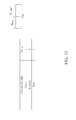
- Fig. 10 is a schematic diagram of determination of the second parameter in the process 30 according to an example of the present invention.
- the basic unit, the first parameter, the second parameter, the legacy soft buffer size for a TB and the soft buffer size for the TB are denoted as N unit , M unit , M TBS , N IR and M TBS *N unit , respectively, according to the process 30.
- the channel quality may be divided into 3 levels including "Good”, “Medium” and "Bad", and is not limited herein.
- the legacy soft buffer size for the TB N IR is divided into 2 basic units (with the size N unit ).
- a HARQ process may be stored in 4 basic units of the soft buffer wherein a size of each basic unit is N unit , if the channel quality is determined as "Good".
- the network can determine the soft buffer size for the TB according to Fig. 10 , to perform a rate-matching procedure.
- the legacy soft buffer size for a TB N IR may be determined according a UE category of the communication device.
- a set of the abovementioned parameters may be combined into a single parameter.
- Examples of the hardware may include analog circuit(s), digital circuit(s) and/or mixed circuit(s).
- the hardware may include ASIC(s), field programmable gate array(s) (FPGA(s)), programmable logic device(s), coupled hardware components or combination thereof.
- the hardware may include general-purpose processor(s), microprocessor(s), controller(s), digital signal processor(s) (DSP(s)) or combination thereof.
- Examples of the software may include set(s) of codes, set(s) of instructions and/or set(s) of functions retained (e.g., stored) in a storage unit, e.g., a computer-readable medium.
- the computer-readable medium may include SIM, ROM, flash memory, RAM, CD-ROM/DVD-ROM/BD-ROM, magnetic tape, hard disk, optical data storage device, non-volatile storage unit, or combination thereof.
- the computer-readable medium (e.g., storage unit) may be coupled to at least one processor internally (e.g., integrated) or externally (e.g., separated).
- the at least one processor which may include one or more modules may (e.g., be configured to) execute the software in the computer-readable medium.
- the set(s) of codes, the set(s) of instructions and/or the set(s) of functions may cause the at least one processor, the module(s), the hardware and/or the electronic system to perform the related steps.
- Examples of the electronic system may include a system on chip (SoC), system in package (SiP), a computer on module (CoM), a computer program product, an apparatus, a mobile phone, a laptop, a tablet computer, an electronic book or a portable computer system, and the communication device 20.
- SoC system on chip
- SiP system in package
- CoM computer on module
- a computer program product an apparatus, a mobile phone, a laptop, a tablet computer, an electronic book or a portable computer system, and the communication device 20.
- the present invention provides a method of handling a soft buffer size for a TB.
- the method can be used in a communication device and/or the network.
- a blocking probability of a HARQ process e.g., DL HARQ processes
- coding/retransmission performance of the HARQ process can be improved.
- the present invention is backward compatible if the parameter(s) is properly designed.
Landscapes
- Engineering & Computer Science (AREA)
- Signal Processing (AREA)
- Computer Networks & Wireless Communication (AREA)
- Quality & Reliability (AREA)
- Mobile Radio Communication Systems (AREA)
Abstract
Description
- The present invention relates a method of handling a soft buffer size for a transport block and related communication device.
- A long-term evolution (LTE) system supporting the 3rd Generation Partnership Project (3GPP) Rel-8 standard and/or the 3GPP Rel-9 standard are developed by the 3GPP as a successor of the universal mobile telecommunication system (UMTS) for further enhancing performance of the UMTS to satisfy increasing needs of users. The LTE system includes a new radio interface and a new radio network architecture that provides high data rate, low latency, packet optimization, and improved system capacity and coverage. In the LTE system, a radio access network known as an evolved universal terrestrial radio access network (E-UTRAN) includes multiple evolved Node-Bs (eNBs) for communicating with multiple user equipments (UEs), and for communicating with a core network including a mobility management entity (MME), a serving gateway, etc., for Non-Access Stratum (NAS) control.
- A LTE-advanced (LTE-A) system, as its name implies, is an evolution of the LTE system. The LTE-A system targets faster switching between power states, improves performance at the coverage edge of an eNB, and includes advanced techniques, such as carrier aggregation (CA), coordinated multipoint (CoMP) transmissions/reception, uplink (UL) multiple-input multiple-output (UL-MIMO), etc. For a UE and an eNB to communicate with each other in the LTE-A system, the UE and the eNB must support standards developed for the LTE-A system, such as the 3GPP Rel-10 standard or later versions.
- A rate-matching procedure targets to match the number of bits in a transport block (TB) to the number of bits that can be transmitted within a transmission time interval (TTI) when a transmitter (e.g., eNB) prepares to transmit/retransmit the TB to a receiver (e.g., UE), wherein the number of bits transmitted within the TTI may be determined according to a soft buffer size for the TB for the rate-matching procedure. A hybrid automatic repeat request (HARQ) process starts to operate, when a receiver (eNB or UE) cannot decode a received packet successfully. The receiver stores soft values of a transmitted/retransmitted TB in a soft buffer of the receiver, and combines the soft values to increase a probability of successful decoding, wherein a size of the soft values stored by the receiver may be determined according to a soft buffer size for the TB for storing the soft values. The receiver continues the HARQ process until the TB is decoded correctly, or until a maximum number of retransmissions have been sent, at which time the HARQ process declares a failure and leaves it up to the HARQ process in radio link control (RLC) layer for trying again.
- In a legacy LTE system, e.g., the LTE system or the LTE-A system, a maximum modulation level of 64 quadrature amplitude modulation (64QAM) is supported, and the storage efficiency of the soft buffer may not be a big issue for the receiver. However, an increased maximum modulation level (e.g., 256QAM) may be supported, when an enhanced technology (e.g., small cell enhancement) is implemented to improve performance of the legacy LTE system. That is, the maximum number of bits of a downlink shared channel (DL-SCH) TB received within a TTI may also be increased. In this situation, a method designed for partitioning a soft buffer of a UE and/or a network in the legacy LTE system may not be efficient for the increased maximum modulation level. Not only a blocking probability of a HARQ process may be increased in this scenario, but also coding/retransmission performance of the HARQ process may be degraded. The problem may be even worse when a carrier aggregation (CA) is supported, where multiple cells (e.g., multiple component carriers) are operated at the same time and a larger number of HARQ processes may occur.
- Thus, improving the performance of the HARQ process is an important problem to be solved.
- The present invention therefore provides a method and related communication device for handling a soft buffer size for a transport block, to solve the abovementioned problem.
- This is achieved by a method and a communication device for handling the soft buffer size according to the independent claims here below. The dependent claims pertain to corresponding further developments and improvements.
- A method of determining a soft buffer size for a transport block comprises determining a basic unit for the soft buffer size according to a legacy soft buffer size for the transport block and a first parameter, and determining the soft buffer size for the transport block according to the basic unit and a second parameter.
-
-
Fig. 1 is a schematic diagram of a wireless communication system according to an example of the present invention. -
Fig. 2 is a schematic diagram of a communication device according to an example of the present invention. -
Fig. 3 is a flowchart of a process according to an example of the present invention. -
Fig. 4 is a schematic diagram of determination of the second parameter in theprocess 30 according to an example of the present invention. -
Fig. 5 is a schematic diagram of states of a soft buffer of a communication device according to an example of the present invention. -
Fig. 6 is a schematic diagram of determination of the second parameter in theprocess 30 according to an example of the present invention. -
Fig. 7 is a schematic diagram of states of a soft buffer of a communication device according to an example of the present invention. -
Figs. 8-10 are schematic diagrams of determination of the second parameter in theprocess 30 according to examples of the present invention. -
Fig. 1 is a schematic diagram of awireless communication system 10 according to an example of the present invention. Thewireless communication system 10 is briefly composed of a network and a plurality of communication devices. Thewireless communication system 10 may support a time-division duplexing (TDD) mode, a frequency-division duplexing (FDD) mode or a TDD-FDD joint operation mode. That is, the network and a communication device may communicate with each other via FDD carrier(s) and/or TDD carrier(s). In addition, thewireless communication system 10 may support a carrier aggregation (CA). That is, the network and a communication device may communicate with each other via multiple cells (e.g., multiple carriers) including a primary cell (e.g., primary component carrier) and one or more secondary cells (e.g., secondary component carriers). The abovementioned cells may be operated in the same or different duplexing modes. For example, each cell may be a FDD cell (or TDD cell), when the cells are operated in the same duplexing mode. There are several scenarios, when the cells are operated in different duplexing modes (e.g. TDD-FDD joint operation). For example, the primary cell may be a TDD carrier, and a secondary cell may be a FDD carrier. In another example, the primary cell may be the FDD carrier, and the secondary cell may be the TDD carrier. For the CA conforming to the 3GPP LTE Rel-10/11/12,5 cells (e.g., serving cells) may be supported by the communication device and the network. - In
Fig. 1 , the network and the communication devices are simply utilized for illustrating the structure of thewireless communication system 10. Practically, the network may be a universal terrestrial radio access network (UTRAN) comprising a plurality of Node-Bs (NBs) in a universal mobile telecommunications system (UMTS). In another example, the network may be an evolved UTRAN (E-UTRAN) comprising a plurality of evolved NBs (eNBs) and/or relays in a long term evolution (LTE) system, a LTE-Advanced (LTE-A) system or an evolution of the LTE-A system. - Furthermore, the network may also include both the UTRAN/E-UTRAN and a core network, wherein the core network includes network entities such as Mobility Management Entity (MME), Serving Gateway (S-GW), Packet Data Network (PDN) Gateway (P-GW), Self-Organizing Networks (SON) server and/or Radio Network Controller (RNC), etc. In other words, after the network receives information transmitted by a communication device, the information may be processed only by the UTRAN/E-UTRAN and decisions corresponding to the information are made at the UTRAN/E-UTRAN. Alternatively, the UTRAN/E-UTRAN may forward the information to the core network, and the decisions corresponding to the information are made at the core network after the core network processes the information. In addition, the information may be processed by both the UTRAN/E-UTRAN and the core network, and the decisions are made after coordination and/or cooperation are performed by the UTRAN/E-UTRAN and the core network.
- A communication device may be a user equipment (UE), a low cost device (e.g., machine type communication (MTC) device), a device-to-device (D2D) device, a mobile phone, a laptop, a tablet computer, an electronic book, a portable computer system, or combination thereof. In addition, the network and the communication device can be seen as a transmitter or a receiver according to direction (i.e., transmission direction), e.g., for an uplink (UL), the communication device is the transmitter and the network is the receiver, and for a downlink (DL), the network is the transmitter and the communication device is the receiver.
-
Fig. 2 is a schematic diagram of acommunication device 20 according to an example of the present invention. Thecommunication device 20 may be a communication device or the network shown inFig. 1 , but is not limited herein. Thecommunication device 20 may include a processing means 200 such as a microprocessor or Application Specific Integrated Circuit (ASIC), astorage unit 210 and acommunication interfacing unit 220. Thestorage unit 210 may be any data storage device that may store aprogram code 214, accessed and executed by the processing means 200. Examples of thestorage unit 210 include but are not limited to, a subscriber identity module (SIM), read-only memory (ROM), flash memory, random-access memory (RAM), Compact Disc Read-Only Memory (CD-ROM), digital versatile disc-ROM (DVD-ROM), Blu-ray Disc-ROM (BD-ROM), magnetic tape, hard disk, optical data storage device, non-volatile storage unit, non-transitory computer-readable medium (e.g., tangible media), etc. Thecommunication interfacing unit 220 is preferably a transceiver and is used to transmit and receive signals (e.g., data, messages and/or packets) according to processing results of the processing means 200. -
Fig. 3 is a flowchart of aprocess 30 according to an example of the present invention. Theprocess 30 may be utilized in a communication device, the network or both shown inFig. 1 , to handling a soft buffer size for a transport block (TB) (e.g., in a transmission time interval (TTI)). Theprocess 30 may be compiled into theprogram code 214 and includes the following steps:Step 300: Start. Step 302: Determine a basic unit for the soft buffer size according to a legacy soft buffer size for the TB and a first parameter. Step 304: Determine the soft buffer size for the TB according to the basic unit and a second parameter. Step 306: End. - According to the
process 30, the communication device determines a basic unit for the soft buffer size according to a legacy soft buffer size for the TB and a first parameter. Then, the communication device determines the soft buffer size for the TB according to the basic unit and a second parameter. In one example, the legacy soft buffer size for the TB may correspond to (e.g., be used for) a modulation level (e.g., maximum modulation level) not greater than 64 quadrature amplitude nodulation (64QAM). That is, for the communication device, the legacy soft buffer size for the TB may be a size of a partition of a soft buffer for storing a hybrid automatic repeat request (HARQ) process (e.g., DL HARQ processes) of a TB, when the maximum modulation level of the TB is equal to or lower than 64QAM. The soft buffer size for the TB may correspond to a modulation level (e.g., maximum modulation level) greater than 64QAM. That is, for the communication device, the soft buffer size for the TB determined according to theprocess 30 may be a size of a partition of a soft buffer for storing a HARQ process (e.g., DL HARQ processes) of a TB, when the maximum modulation level of the TB (e.g., 256QAM) may be greater than 64QAM. Preferably, the basic unit for the soft buffer size for the TB may be not greater than the legacy soft buffer size for the TB. That is, the legacy soft buffer size may be divided into at least one basic unit according to theprocess 30, to increase flexibility of usage of the soft buffer. Thus, according to theprocess 30, a blocking probability of a HARQ process (e.g., DL HARQ processes) may be decreased, and coding/retransmission performance of the HARQ process may be improved. - Similarly, according to the
process 30, the network may determine a basic unit for a soft buffer size for a TB according to a legacy soft buffer size for the TB and a first parameter. Then, the network determines the soft buffer size for the TB according to the basic unit and a second parameter. In one example, the legacy soft buffer size for the TB may correspond to (e.g., be used for) a modulation level (e.g., maximum modulation level) not greater than 64QAM. That is, for the network, the legacy soft buffer size for the TB may be a size of a partition of a soft buffer for performing a rate-matching procedure of a TB, when the maximum modulation level of the TB is equal to or lower than 64QAM. The soft buffer size for the TB may correspond to a modulation level (e.g., maximum modulation level) greater than 64QAM. That is, for the network, the soft buffer size for the TB determined according to theprocess 30 may be a size of a partition of a soft buffer for performing a rate-matching procedure of a TB, when the maximum modulation level of the TB (e.g., 256QAM) may be greater than 64QAM. Preferably, the basic unit for the soft buffer size for the TB may be not greater than the legacy soft buffer size for the TB. That is, the legacy soft buffer size for the TB may be divided into at least one basic unit according to theprocess 30, to increase flexibility of usage of the soft buffer. Thus, according to theprocess 30, a blocking probability of a HARQ process (e.g., DL HARQ processes) may be decreased and coding/retransmission performance of the HARQ process may be improved. - Realization of the
process 30 is not limited to the above description. In the following examples, operation of a communication device inFig. 1 is used to illustrate various realizations of the present invention. However, the examples may also be realized by the network inFig. 1 , and is not limited herein. In addition, a HARQ process in the following examples may be a DL HARQ process or a UL HARQ process. - In one example, the first parameter may be determined according to channel quality related to a channel for transmitting the TB. Similarly, the second parameter may be determined according to channel quality related to a channel for transmitting the TB. In one example, the first parameter may be determined according to a user equipment (UE) category of a communication device processing (e.g., transmitting or receiving) the TB. Similarly, the second parameter may be determined according to a UE category of a communication device processing (e.g., transmitting or receiving) the TB. In one example, the first parameter may be a cell-specific parameter (e.g., when a communication device and/or the network processing the TB is configured with multiple cells). Similarly, the second parameter may be a cell-specific parameter (e.g., when a communication device and/or the network processing the TB is configured with multiple cells). In one example, the first parameter may be determined according to a size of the TB (i.e., TB size). Similarly, the second parameter may be determined according to a size of the TB. In one example, the first parameter may be determined according to a maximum TB size. Similarly, the second parameter may be determined according to a maximum TB size.
- According to the
process 30, a communication device may allocate a first HARQ process corresponding to the TB(s) in at least one basic unit of a soft buffer according to the soft buffer size for the TB if the first HARQ process is not correctly received. Further, the communication device may store a second HARQ process, if the second HARQ process is not correctly received. The communication device may allocate the second HARQ process corresponding to another TB(s) in other basic unit(s) of the soft buffer according to the soft buffer size again, e.g., if there is available space in the soft buffer. The communication device may release part of the at least one basic unit of the first HARQ process and allocate the second HARQ process in the part of the at least one basic unit according to the soft buffer size, e.g., if there is no available space in the soft buffer. In another example, the network may perform a rate-matching procedure on the TB according to the soft buffer size in theprocess 30 and/or the above description. That is, the examples in the present invention can be applied to both the HARQ process and the rate-matching procedure. -
Fig. 4 is a schematic diagram of determination of the second parameter in theprocess 30 according to an example of the present invention. The basic unit, the first parameter, the second parameter, the legacy soft buffer size for a TB and the soft buffer size for the TB are denoted as Nunit, Munit, MTBS, NIR and MTBS*Nunit, respectively, according to theprocess 30. The maximum TB size for a modulation level not greater than 64QAM is denoted as TBSLegacy_Max, and the TB size of the TB is denoted as TBS. In the present example, the basic unit can be obtained as

Fig. 4 , the legacy soft buffer size for the TB NIR is divided into 4 basic units (each with the size of Nunit). For example, a HARQ process may be stored in 6 basic units of the soft buffer wherein a size of each basic unit is Nunit, if the criterion "1.25TBSLegacy_Max<TBS≤1.5TBSLegacy_Max" is satisfied. The soft buffer sizes for corresponding TB sizes (i.e., MTBS) are shown at the right hand side ofFig. 4 . - Similarly, the network can determine the soft buffer size for the TB according to
Fig. 4 , to perform a rate-matching procedure. In detail, the network may obtain the basic unit as

-
Fig. 5 is a schematic diagram of states of a soft buffer of a communication device according to an example of the present invention. The soft buffer of the communication device is divided into 32 basic units "x-y", where 1 ≤ x ≤ 8 and 1 ≤ y ≤ 4. At the beginning, 4 HARQ processes P1-P4 are stored in sets of the basic units of the soft buffer, and MTBS (i.e., the second parameter in the process 30) of each of the HARQ processes P1-P4 is 8. The soft buffer is fully occupied by the HARQ process P1-P4, as shown at the first row ofFig. 5 . For example, the HARQ process P1 is stored in the basic units "1-1", ..., "1-4" and "2-1", ..., "2-4". According to the present invention, the communication device may release the basic units "2-1 ", ..., "2-4", and allocate a HARQ process P5 in the released basic units, if the communication device needs to store the HARQ process P5 due to an unsuccessful reception of the HARQ process P5, as shown at the second row ofFig. 5 . Similarly, the communication device may release the basic units "4-1 ", ..., "4-4", and allocate a HARQ process P6 in the released basic units, if the communication device needs to store the HARQ process P6 due to an unsuccessful reception of the HARQ process P6, as shown at the third row ofFig. 5 . Thus, according to the description, the communication device can store the HARQ processes flexibly and efficiently. As a result, a blocking probability of a HARQ process may be decreased, and coding/retransmission performance of the HARQ process may be improved. -
Fig. 6 is a schematic diagram of determination of the second parameter in theprocess 30 according to an example of the present invention. The basic unit, the first parameter, the second parameter, the legacy soft buffer size for a TB and the soft buffer size for the TB are denoted as Nunit, Munit, MTBS, NIR and MTBS*Nunit, respectively, according to theprocess 30. The maximum TB size for a modulation level not greater than 64QAM is denoted as TBSLegacy_Max, and the TB size of the TB is denoted as TBS. In the present example, the basic unit can be obtained as
Fig. 6 , there are only two values of MTBS according to the present example, wherein the case of "MTBS=2" may be used when the maximum TBS for a modulation level greater than 64QAM (e.g., 256QAM) which is greater than the legacy maximum TBS for a modulation level not greater than 64QAM. The soft buffer sizes for corresponding maximum TBSs (i.e., MTBS) are shown at the right hand side ofFig. 6 . For example, a HARQ process may be stored in 2 basic units of the soft buffer wherein a size of each basic unit is NIR, if the criterion "TBSLegacy_Max<maximum TBS" is satisfied. -
Fig. 7 is a schematic diagram of states of a soft buffer of a communication device according to an example of the present invention. The soft buffer of the communication device is divided into 8 basic units K1-K8. At the beginning, 4 HARQ processes P1-P4 are stored in sets of the basic units of the soft buffer, and MTBS (i.e., the second parameter in the process 30) of each of the HARQ processes P1-P4 is 2. The soft buffer is fully occupied by the HARQ processes P1-P4, as shown at the first row ofFig. 7 . For example, the HARQ process P1 is stored in the basic units K1 and K2. According to the present invention, the communication device may release the basic unit K2, and allocate a HARQ process P5 in the released partition, if the communication device needs to store the HARQ process P5 due to an unsuccessful reception of the HARQ process P5, as shown at the second row ofFig. 7 . Similarly, the communication device may release the basic units K4, K6 and K8, and allocate HARQ process P6, P7 and P8 in the basic units K4, K6 and K8, respectively, if the communication device needs to store the HARQ process P6, P7 and P8 due to unsuccessful receptions of the HARQ process P6, P7 and P8. Thus, according to the description, the communication device can store the HARQ processes flexibly and efficiently. As a result, a blocking probability of a HARQ process may be decreased, and coding/retransmission performance of the HARQ process may be improved. - As stated previously, the first parameter and/or the second parameter in the
process 30 may be cell-specific parameter(s). Properties of the cell-specific parameter(s) are illustrated in the following examples, wherein the communication device is configured with two cells CC1 and CC2. -
Fig. 8 is a schematic diagram of determination of the second parameter in theprocess 30 according to an example of the present invention. The basic unit, the first parameter, the second parameter, the legacy soft buffer size for a TB and the soft buffer size for the TB are denoted as Nunit(1), Munit(1), MTBS(1), NIR and MTBS(1)*Nunit(1), respectively, according to theprocess 30. The parameters and the relations therein with the index "(1)" are used for the cell CC1. The maximum TB size for a modulation level not greater than 64QAM is denoted as TBSLegacy_Max, and the TB size of the TB is denoted as TBS. In the present example, the basic unit can be obtained as

Fig. 8 , the legacy soft buffer size for the TB NIR is divided into smaller basic units (each with the size Nunit(1)). For example, a HARQ process of the cell CC1 may be stored in 5 basic units of the soft buffer wherein a size of each basic unit is Nunit(1), if the criterion "TBSLegacy_Max<TBS≤1.25TBSLegacy_Max" is satisfied. -
Fig. 9 is a schematic diagram of determination of the second parameter in theprocess 30 according to an example of the present invention. The basic unit, the first parameter, the second parameter, the legacy soft buffer size for a TB and the soft buffer size for the TB are denoted as Nunit(2), Munit(2), MTBS(2), NIR and MTBS(2)*Nunit(2), respectively, according to theprocess 30. The parameters and the relations therein with the index "(2)" are used for the cell CC2. The maximum TB size for a modulation level not greater than 64QAM is denoted as TBSLegacy_Max, and the TB size of the TB is denoted as TBS. In the present example, the basic unit can be obtained as

Fig. 9 , the legacy soft buffer size for the TB NIR is divided into 2 basic units (each with the size Nunit(2)). For example, a HARQ process of the cell CC2 may be stored in 3 basic units of the soft buffer wherein a size of each basic unit is Nunit(2), if the criterion "TBSLegacy_Max<TBS≤1. 5TBSLegacy_Max" is satisfied. - As can be seen, the HARQ processes of the cells CC1 and CC2 are stored in the soft buffer according to storage rules of the cells CC1 and CC2, respectively. The soft buffer sizes of the cells CC1 and CC2 for a TB may be different according to design considerations and system specifications. Thus, the communication device can store the HARQ processes flexibly and efficiently. As a result, blocking probabilities of HARQ processes may be decreased, and coding/retransmission performance of the HARQ processes may be improved.
- As stated previously, the first parameter and/or the second parameter in the
process 30 may be determined according to channel quality related to a channel for transmitting a TB. -
Fig. 10 is a schematic diagram of determination of the second parameter in theprocess 30 according to an example of the present invention. The basic unit, the first parameter, the second parameter, the legacy soft buffer size for a TB and the soft buffer size for the TB are denoted as Nunit, Munit, MTBS, NIR and MTBS*Nunit, respectively, according to theprocess 30. The channel quality may be divided into 3 levels including "Good", "Medium" and "Bad", and is not limited herein. In the present example, the basic unit can be obtained as

Fig. 10 , the legacy soft buffer size for the TB NIR is divided into 2 basic units (with the size Nunit). For example, a HARQ process may be stored in 4 basic units of the soft buffer wherein a size of each basic unit is Nunit, if the channel quality is determined as "Good". - Similarly, the network can determine the soft buffer size for the TB according to
Fig. 10 , to perform a rate-matching procedure. In detail, the network may obtain the basic unit as

- The legacy soft buffer size for a TB NIR may be determined according a UE category of the communication device. A set of the abovementioned parameters may be combined into a single parameter. For example, the soft buffer size for a TB


- Those skilled in the art should readily make combinations, modifications and/or alterations on the abovementioned description and examples. The abovementioned description, steps and/or processes including suggested steps can be realized by means that could be hardware, software, firmware (known as a combination of a hardware device and computer instructions and data that reside as read-only software on the hardware device), an electronic system, or combination thereof. An example of the means may be the
communication device 20. - Examples of the hardware may include analog circuit(s), digital circuit(s) and/or mixed circuit(s). For example, the hardware may include ASIC(s), field programmable gate array(s) (FPGA(s)), programmable logic device(s), coupled hardware components or combination thereof. In another example, the hardware may include general-purpose processor(s), microprocessor(s), controller(s), digital signal processor(s) (DSP(s)) or combination thereof.
- Examples of the software may include set(s) of codes, set(s) of instructions and/or set(s) of functions retained (e.g., stored) in a storage unit, e.g., a computer-readable medium. The computer-readable medium may include SIM, ROM, flash memory, RAM, CD-ROM/DVD-ROM/BD-ROM, magnetic tape, hard disk, optical data storage device, non-volatile storage unit, or combination thereof. The computer-readable medium (e.g., storage unit) may be coupled to at least one processor internally (e.g., integrated) or externally (e.g., separated). The at least one processor which may include one or more modules may (e.g., be configured to) execute the software in the computer-readable medium. The set(s) of codes, the set(s) of instructions and/or the set(s) of functions may cause the at least one processor, the module(s), the hardware and/or the electronic system to perform the related steps.
- Examples of the electronic system may include a system on chip (SoC), system in package (SiP), a computer on module (CoM), a computer program product, an apparatus, a mobile phone, a laptop, a tablet computer, an electronic book or a portable computer system, and the
communication device 20. - To sum up, the present invention provides a method of handling a soft buffer size for a TB. The method can be used in a communication device and/or the network. According to the present invention, a blocking probability of a HARQ process (e.g., DL HARQ processes) can be decreased, and coding/retransmission performance of the HARQ process can be improved. In addition, the present invention is backward compatible if the parameter(s) is properly designed.
Claims (16)
- A method of determining a soft buffer size for a transport block, characterized by the method comprising:determining a basic unit for the soft buffer size according to a legacy soft buffer size for the transport block and a first parameter (302); anddetermining the soft buffer size for the transport block according to the basic unit and a second parameter (304).
- The method of claim 1, characterized in that the legacy soft buffer size for the transport block corresponds to a modulation level not greater than 64 quadrature amplitude modulation (64QAM).
- The method of any of claims 1-2, characterized in that the soft buffer size for the transport block corresponds to a modulation level greater than 64QAM.
- The method of any of claims 1-3, characterized in that a combination of the first parameter and the second parameter is determined according to channel quality related to a channel for transmitting the transport block.
- The method of any of claims 1-4, characterized in that a combination of the first parameter and the second parameter is determined according to a user equipment (UE) category of a communication device processing the transport block.
- The method of any of claims 1-5, characterized in that a combination of the first parameter and the second parameter is a cell-specific parameter.
- The method of any of claims 1-6, characterized in that a combination of the first parameter and the second parameter is determined according to a size of the transport block.
- The method of any of claims 1-7, characterized in that a combination of the first parameter and the second parameter is determined according to a maximum transport block size.
- The method of any of claims 1-8, further comprising the step of:allocating a first hybrid automatic repeat request (HARQ) process corresponding to the transport block in at least one basic unit of a soft buffer according to the soft buffer size for the transport block, wherein each of the at least one basic unit is determined according to the legacy soft buffer size for the transport block and the first parameter.
- The method of claim 9, further comprising the steps of:releasing part of the at least one basic unit of the first HARQ process; andallocating the second HARQ process in the part of the at least one partition.
- The method of any of claims 1-9, further comprising the step of:performing a rate matching on the transport block according to the soft buffer size for the transport block.
- The method of any of claims 1-9 and 11, characterized in that the basic unit is determined according to the following equation:
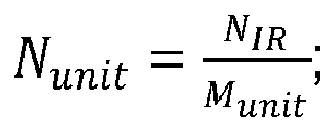
where Nunit is the basic unit, NIR is the legacy soft buffer size for the transport block, and Munit is the first parameter. - The method of claim 12, characterized in that the soft buffer size for the transport block is MTBS * Nunit, where MTBS is the second parameter.
- The method of claim 13, characterized in that the soft buffer size for the transport block is


- The method of any of claims 13-14, characterized in that the soft buffer size for the transport block is └MTBS * Nunit ┘, were └·┘ is a floor function.
- A communication device (20) for determining a soft buffer size for a transport block, characterized by the communication device (20) comprising:a storage unit (210) for storing instructions for carrying out any of methods 1-15; anda processing means (200), coupled to the storage unit (210), configured to execute the instructions stored in the storage unit (210).
Applications Claiming Priority (2)
| Application Number | Priority Date | Filing Date | Title |
|---|---|---|---|
| US201461949265P | 2014-03-07 | 2014-03-07 | |
| US14/617,881 US9692561B2 (en) | 2014-03-07 | 2015-02-09 | Method of handling soft buffer size for a transport block and related communication device |
Publications (2)
| Publication Number | Publication Date |
|---|---|
| EP2916500A1 true EP2916500A1 (en) | 2015-09-09 |
| EP2916500B1 EP2916500B1 (en) | 2019-12-25 |
Family
ID=52577621
Family Applications (1)
| Application Number | Title | Priority Date | Filing Date |
|---|---|---|---|
| EP15154638.9A Active EP2916500B1 (en) | 2014-03-07 | 2015-02-11 | Method of handling soft buffer size for a transport block and related communication device |
Country Status (4)
| Country | Link |
|---|---|
| US (1) | US9692561B2 (en) |
| EP (1) | EP2916500B1 (en) |
| CN (1) | CN104901900B (en) |
| TW (1) | TWI566628B (en) |
Cited By (1)
| Publication number | Priority date | Publication date | Assignee | Title |
|---|---|---|---|---|
| WO2018019498A1 (en) * | 2016-07-28 | 2018-02-01 | Nokia Solutions And Networks Oy | Mitigation of rate matching errors in a wireless network |
Families Citing this family (8)
| Publication number | Priority date | Publication date | Assignee | Title |
|---|---|---|---|---|
| US20160227540A1 (en) * | 2015-01-30 | 2016-08-04 | Qualcomm Incorporated | Soft buffer management for enhanced carrier aggregation |
| WO2017122945A1 (en) * | 2016-01-11 | 2017-07-20 | 엘지전자(주) | Data reception method and user equipment, and data transmission method and base station |
| WO2018029382A1 (en) | 2016-08-12 | 2018-02-15 | Telefonaktiebolaget Lm Ericsson (Publ) | Systems and methods of handling collisions between multiple semi-persistent grants |
| US10313083B2 (en) | 2016-09-30 | 2019-06-04 | Telefonaktiebolaget Lm Ericsson (Publ) | Method for hybrid automatic repeat request process, network device and terminal device |
| WO2018174473A1 (en) * | 2017-03-19 | 2018-09-27 | 엘지전자 주식회사 | Method and apparatus for transmitting uplink transport block in wireless communication system |
| CN110959266B (en) | 2017-03-23 | 2023-06-06 | 苹果公司 | Apparatus for New Radio NR User Equipment UE and method of operating NR UE |
| US10985878B2 (en) * | 2017-10-09 | 2021-04-20 | Qualcomm Incorporated | Transport block size, soft channel bit buffer size, and rate matching for short transmission time intervals |
| US11700080B2 (en) | 2020-11-23 | 2023-07-11 | Qualcomm Incorporated | Maximum transport block sizes and span for a transport block in a non-terrestrial network |
Citations (3)
| Publication number | Priority date | Publication date | Assignee | Title |
|---|---|---|---|---|
| US20110274044A1 (en) * | 2010-05-04 | 2011-11-10 | Lg Electronics Inc. | Apparatus and method of reporting amount of information in wireless communication system |
| KR20130039700A (en) * | 2011-10-12 | 2013-04-22 | 삼성전자주식회사 | Method and apparatus for transmitting uplink control signal in mobile communication system |
| EP2768171A1 (en) * | 2011-10-12 | 2014-08-20 | Samsung Electronics Co., Ltd. | Method and device for transmitting reverse control signal in mobile communication system |
Family Cites Families (12)
| Publication number | Priority date | Publication date | Assignee | Title |
|---|---|---|---|---|
| EP1389847B1 (en) * | 2002-08-13 | 2006-12-27 | Matsushita Electric Industrial Co., Ltd. | Hybrid automatic repeat request protocol |
| US20070189231A1 (en) * | 2006-02-14 | 2007-08-16 | Chang Li F | Method and system for implementing a bufferless HARQ processor |
| US7873710B2 (en) * | 2007-02-06 | 2011-01-18 | 5O9, Inc. | Contextual data communication platform |
| TW200931918A (en) * | 2007-12-07 | 2009-07-16 | Interdigital Patent Holdings | Method and apparatus for supporting configuration and control of the RLC and PDCP sub-layers |
| WO2011119002A2 (en) * | 2010-03-26 | 2011-09-29 | 엘지전자 주식회사 | Method and apparatus for performing measurement in a wireless communication system |
| US8724742B2 (en) * | 2010-10-06 | 2014-05-13 | Motorola Mobility Llc | Method and apparatus for soft buffer management for carrier aggregation |
| US8891466B2 (en) | 2011-04-29 | 2014-11-18 | Acer Incorporated | Method of handling soft buffer for carrier aggregation and related communication device |
| US8885525B2 (en) * | 2011-08-24 | 2014-11-11 | Industrial Technology Research Institute | Method and apparatus for soft buffer partitioning in time-division duplexing system |
| US10397942B2 (en) | 2012-08-10 | 2019-08-27 | Industrial Technology Research Institute | Method of handling communication operation in TDD system and related apparatus |
| US9565140B2 (en) * | 2013-10-11 | 2017-02-07 | Mediatek, Inc. | HARQ memory space management for LTE carrier aggregation |
| US20150172023A1 (en) * | 2013-12-13 | 2015-06-18 | Qualcomm Incorporated | Process for discarding pending harq processes |
| WO2015116335A1 (en) * | 2014-01-30 | 2015-08-06 | Intel Corporation | Mechanism for 256-qam capable user equipment to operate seamlessly with a node |
-
2015
- 2015-02-09 US US14/617,881 patent/US9692561B2/en active Active
- 2015-02-11 EP EP15154638.9A patent/EP2916500B1/en active Active
- 2015-03-06 TW TW104107221A patent/TWI566628B/en active
- 2015-03-06 CN CN201510100182.4A patent/CN104901900B/en active Active
Patent Citations (3)
| Publication number | Priority date | Publication date | Assignee | Title |
|---|---|---|---|---|
| US20110274044A1 (en) * | 2010-05-04 | 2011-11-10 | Lg Electronics Inc. | Apparatus and method of reporting amount of information in wireless communication system |
| KR20130039700A (en) * | 2011-10-12 | 2013-04-22 | 삼성전자주식회사 | Method and apparatus for transmitting uplink control signal in mobile communication system |
| EP2768171A1 (en) * | 2011-10-12 | 2014-08-20 | Samsung Electronics Co., Ltd. | Method and device for transmitting reverse control signal in mobile communication system |
Cited By (1)
| Publication number | Priority date | Publication date | Assignee | Title |
|---|---|---|---|---|
| WO2018019498A1 (en) * | 2016-07-28 | 2018-02-01 | Nokia Solutions And Networks Oy | Mitigation of rate matching errors in a wireless network |
Also Published As
| Publication number | Publication date |
|---|---|
| TWI566628B (en) | 2017-01-11 |
| CN104901900B (en) | 2018-08-31 |
| CN104901900A (en) | 2015-09-09 |
| US9692561B2 (en) | 2017-06-27 |
| EP2916500B1 (en) | 2019-12-25 |
| US20150256296A1 (en) | 2015-09-10 |
| TW201536086A (en) | 2015-09-16 |
Similar Documents
| Publication | Publication Date | Title |
|---|---|---|
| EP2916500B1 (en) | Method of handling soft buffer size for a transport block and related communication device | |
| US8891466B2 (en) | Method of handling soft buffer for carrier aggregation and related communication device | |
| EP2835928B1 (en) | Methods of handling communication operation | |
| US8885525B2 (en) | Method and apparatus for soft buffer partitioning in time-division duplexing system | |
| EP3211813B1 (en) | Device and method of handling hybrid automatic repeat request transmission | |
| US11044053B2 (en) | Device and method of handling code block group-based communication operation | |
| US10397942B2 (en) | Method of handling communication operation in TDD system and related apparatus | |
| US9107214B2 (en) | Method of handling hybrid automatic repeat request acknowledgement responses in wireless communication system | |
| US9882698B2 (en) | Device and method of handling resource for device-to-device communication | |
| US20150098370A1 (en) | Method of Handling HARQ Resource for FDD Carrier and Related Communication Device | |
| EP2953288A2 (en) | Method of handling on-off state of a cell | |
| US9929799B2 (en) | Network and user equipment of HD-FDD communication system for handling HARQ | |
| US20160043853A1 (en) | Device and Method of Handling Device-to-Device Communication | |
| US9706547B2 (en) | Method of handling communication operations and related communication device | |
| US11647507B2 (en) | Device and method for handling physical uplink control channel collision |
Legal Events
| Date | Code | Title | Description |
|---|---|---|---|
| PUAI | Public reference made under article 153(3) epc to a published international application that has entered the european phase |
Free format text: ORIGINAL CODE: 0009012 |
|
| AK | Designated contracting states |
Kind code of ref document: A1 Designated state(s): AL AT BE BG CH CY CZ DE DK EE ES FI FR GB GR HR HU IE IS IT LI LT LU LV MC MK MT NL NO PL PT RO RS SE SI SK SM TR |
|
| AX | Request for extension of the european patent |
Extension state: BA ME |
|
| 17P | Request for examination filed |
Effective date: 20160308 |
|
| RBV | Designated contracting states (corrected) |
Designated state(s): AL AT BE BG CH CY CZ DE DK EE ES FI FR GB GR HR HU IE IS IT LI LT LU LV MC MK MT NL NO PL PT RO RS SE SI SK SM TR |
|
| STAA | Information on the status of an ep patent application or granted ep patent |
Free format text: STATUS: EXAMINATION IS IN PROGRESS |
|
| 17Q | First examination report despatched |
Effective date: 20180525 |
|
| REG | Reference to a national code |
Ref country code: DE Ref legal event code: R079 Ref document number: 602015044135 Country of ref document: DE Free format text: PREVIOUS MAIN CLASS: H04L0012835000 Ipc: H04L0001000000 |
|
| GRAP | Despatch of communication of intention to grant a patent |
Free format text: ORIGINAL CODE: EPIDOSNIGR1 |
|
| STAA | Information on the status of an ep patent application or granted ep patent |
Free format text: STATUS: GRANT OF PATENT IS INTENDED |
|
| RIC1 | Information provided on ipc code assigned before grant |
Ipc: H04L 12/861 20130101ALI20190626BHEP Ipc: H04L 1/18 20060101ALI20190626BHEP Ipc: H04L 1/00 20060101AFI20190626BHEP Ipc: H04L 27/34 20060101ALI20190626BHEP Ipc: H04L 5/00 20060101ALI20190626BHEP |
|
| INTG | Intention to grant announced |
Effective date: 20190716 |
|
| GRAS | Grant fee paid |
Free format text: ORIGINAL CODE: EPIDOSNIGR3 |
|
| GRAA | (expected) grant |
Free format text: ORIGINAL CODE: 0009210 |
|
| STAA | Information on the status of an ep patent application or granted ep patent |
Free format text: STATUS: THE PATENT HAS BEEN GRANTED |
|
| AK | Designated contracting states |
Kind code of ref document: B1 Designated state(s): AL AT BE BG CH CY CZ DE DK EE ES FI FR GB GR HR HU IE IS IT LI LT LU LV MC MK MT NL NO PL PT RO RS SE SI SK SM TR |
|
| REG | Reference to a national code |
Ref country code: GB Ref legal event code: FG4D |
|
| REG | Reference to a national code |
Ref country code: CH Ref legal event code: EP |
|
| REG | Reference to a national code |
Ref country code: DE Ref legal event code: R096 Ref document number: 602015044135 Country of ref document: DE |
|
| REG | Reference to a national code |
Ref country code: AT Ref legal event code: REF Ref document number: 1218307 Country of ref document: AT Kind code of ref document: T Effective date: 20200115 |
|
| REG | Reference to a national code |
Ref country code: IE Ref legal event code: FG4D |
|
| REG | Reference to a national code |
Ref country code: NL Ref legal event code: MP Effective date: 20191225 |
|
| PG25 | Lapsed in a contracting state [announced via postgrant information from national office to epo] |
Ref country code: GR Free format text: LAPSE BECAUSE OF FAILURE TO SUBMIT A TRANSLATION OF THE DESCRIPTION OR TO PAY THE FEE WITHIN THE PRESCRIBED TIME-LIMIT Effective date: 20200326 Ref country code: NO Free format text: LAPSE BECAUSE OF FAILURE TO SUBMIT A TRANSLATION OF THE DESCRIPTION OR TO PAY THE FEE WITHIN THE PRESCRIBED TIME-LIMIT Effective date: 20200325 Ref country code: FI Free format text: LAPSE BECAUSE OF FAILURE TO SUBMIT A TRANSLATION OF THE DESCRIPTION OR TO PAY THE FEE WITHIN THE PRESCRIBED TIME-LIMIT Effective date: 20191225 Ref country code: BG Free format text: LAPSE BECAUSE OF FAILURE TO SUBMIT A TRANSLATION OF THE DESCRIPTION OR TO PAY THE FEE WITHIN THE PRESCRIBED TIME-LIMIT Effective date: 20200325 Ref country code: LT Free format text: LAPSE BECAUSE OF FAILURE TO SUBMIT A TRANSLATION OF THE DESCRIPTION OR TO PAY THE FEE WITHIN THE PRESCRIBED TIME-LIMIT Effective date: 20191225 Ref country code: SE Free format text: LAPSE BECAUSE OF FAILURE TO SUBMIT A TRANSLATION OF THE DESCRIPTION OR TO PAY THE FEE WITHIN THE PRESCRIBED TIME-LIMIT Effective date: 20191225 Ref country code: LV Free format text: LAPSE BECAUSE OF FAILURE TO SUBMIT A TRANSLATION OF THE DESCRIPTION OR TO PAY THE FEE WITHIN THE PRESCRIBED TIME-LIMIT Effective date: 20191225 |
|
| REG | Reference to a national code |
Ref country code: LT Ref legal event code: MG4D |
|
| PG25 | Lapsed in a contracting state [announced via postgrant information from national office to epo] |
Ref country code: RS Free format text: LAPSE BECAUSE OF FAILURE TO SUBMIT A TRANSLATION OF THE DESCRIPTION OR TO PAY THE FEE WITHIN THE PRESCRIBED TIME-LIMIT Effective date: 20191225 Ref country code: HR Free format text: LAPSE BECAUSE OF FAILURE TO SUBMIT A TRANSLATION OF THE DESCRIPTION OR TO PAY THE FEE WITHIN THE PRESCRIBED TIME-LIMIT Effective date: 20191225 |
|
| PG25 | Lapsed in a contracting state [announced via postgrant information from national office to epo] |
Ref country code: AL Free format text: LAPSE BECAUSE OF FAILURE TO SUBMIT A TRANSLATION OF THE DESCRIPTION OR TO PAY THE FEE WITHIN THE PRESCRIBED TIME-LIMIT Effective date: 20191225 |
|
| PG25 | Lapsed in a contracting state [announced via postgrant information from national office to epo] |
Ref country code: PT Free format text: LAPSE BECAUSE OF FAILURE TO SUBMIT A TRANSLATION OF THE DESCRIPTION OR TO PAY THE FEE WITHIN THE PRESCRIBED TIME-LIMIT Effective date: 20200520 Ref country code: CZ Free format text: LAPSE BECAUSE OF FAILURE TO SUBMIT A TRANSLATION OF THE DESCRIPTION OR TO PAY THE FEE WITHIN THE PRESCRIBED TIME-LIMIT Effective date: 20191225 Ref country code: RO Free format text: LAPSE BECAUSE OF FAILURE TO SUBMIT A TRANSLATION OF THE DESCRIPTION OR TO PAY THE FEE WITHIN THE PRESCRIBED TIME-LIMIT Effective date: 20191225 Ref country code: NL Free format text: LAPSE BECAUSE OF FAILURE TO SUBMIT A TRANSLATION OF THE DESCRIPTION OR TO PAY THE FEE WITHIN THE PRESCRIBED TIME-LIMIT Effective date: 20191225 Ref country code: EE Free format text: LAPSE BECAUSE OF FAILURE TO SUBMIT A TRANSLATION OF THE DESCRIPTION OR TO PAY THE FEE WITHIN THE PRESCRIBED TIME-LIMIT Effective date: 20191225 |
|
| PG25 | Lapsed in a contracting state [announced via postgrant information from national office to epo] |
Ref country code: IS Free format text: LAPSE BECAUSE OF FAILURE TO SUBMIT A TRANSLATION OF THE DESCRIPTION OR TO PAY THE FEE WITHIN THE PRESCRIBED TIME-LIMIT Effective date: 20200425 Ref country code: SK Free format text: LAPSE BECAUSE OF FAILURE TO SUBMIT A TRANSLATION OF THE DESCRIPTION OR TO PAY THE FEE WITHIN THE PRESCRIBED TIME-LIMIT Effective date: 20191225 Ref country code: SM Free format text: LAPSE BECAUSE OF FAILURE TO SUBMIT A TRANSLATION OF THE DESCRIPTION OR TO PAY THE FEE WITHIN THE PRESCRIBED TIME-LIMIT Effective date: 20191225 |
|
| REG | Reference to a national code |
Ref country code: DE Ref legal event code: R097 Ref document number: 602015044135 Country of ref document: DE |
|
| REG | Reference to a national code |
Ref country code: CH Ref legal event code: PL |
|
| REG | Reference to a national code |
Ref country code: BE Ref legal event code: MM Effective date: 20200229 |
|
| PG25 | Lapsed in a contracting state [announced via postgrant information from national office to epo] |
Ref country code: LU Free format text: LAPSE BECAUSE OF NON-PAYMENT OF DUE FEES Effective date: 20200211 Ref country code: ES Free format text: LAPSE BECAUSE OF FAILURE TO SUBMIT A TRANSLATION OF THE DESCRIPTION OR TO PAY THE FEE WITHIN THE PRESCRIBED TIME-LIMIT Effective date: 20191225 Ref country code: MC Free format text: LAPSE BECAUSE OF FAILURE TO SUBMIT A TRANSLATION OF THE DESCRIPTION OR TO PAY THE FEE WITHIN THE PRESCRIBED TIME-LIMIT Effective date: 20191225 Ref country code: DK Free format text: LAPSE BECAUSE OF FAILURE TO SUBMIT A TRANSLATION OF THE DESCRIPTION OR TO PAY THE FEE WITHIN THE PRESCRIBED TIME-LIMIT Effective date: 20191225 |
|
| PLBE | No opposition filed within time limit |
Free format text: ORIGINAL CODE: 0009261 |
|
| STAA | Information on the status of an ep patent application or granted ep patent |
Free format text: STATUS: NO OPPOSITION FILED WITHIN TIME LIMIT |
|
| REG | Reference to a national code |
Ref country code: AT Ref legal event code: MK05 Ref document number: 1218307 Country of ref document: AT Kind code of ref document: T Effective date: 20191225 |
|
| PG25 | Lapsed in a contracting state [announced via postgrant information from national office to epo] |
Ref country code: CH Free format text: LAPSE BECAUSE OF NON-PAYMENT OF DUE FEES Effective date: 20200229 Ref country code: SI Free format text: LAPSE BECAUSE OF FAILURE TO SUBMIT A TRANSLATION OF THE DESCRIPTION OR TO PAY THE FEE WITHIN THE PRESCRIBED TIME-LIMIT Effective date: 20191225 Ref country code: LI Free format text: LAPSE BECAUSE OF NON-PAYMENT OF DUE FEES Effective date: 20200229 |
|
| 26N | No opposition filed |
Effective date: 20200928 |
|
| PG25 | Lapsed in a contracting state [announced via postgrant information from national office to epo] |
Ref country code: AT Free format text: LAPSE BECAUSE OF FAILURE TO SUBMIT A TRANSLATION OF THE DESCRIPTION OR TO PAY THE FEE WITHIN THE PRESCRIBED TIME-LIMIT Effective date: 20191225 Ref country code: IT Free format text: LAPSE BECAUSE OF FAILURE TO SUBMIT A TRANSLATION OF THE DESCRIPTION OR TO PAY THE FEE WITHIN THE PRESCRIBED TIME-LIMIT Effective date: 20191225 Ref country code: IE Free format text: LAPSE BECAUSE OF NON-PAYMENT OF DUE FEES Effective date: 20200211 |
|
| PG25 | Lapsed in a contracting state [announced via postgrant information from national office to epo] |
Ref country code: BE Free format text: LAPSE BECAUSE OF NON-PAYMENT OF DUE FEES Effective date: 20200229 Ref country code: PL Free format text: LAPSE BECAUSE OF FAILURE TO SUBMIT A TRANSLATION OF THE DESCRIPTION OR TO PAY THE FEE WITHIN THE PRESCRIBED TIME-LIMIT Effective date: 20191225 |
|
| PG25 | Lapsed in a contracting state [announced via postgrant information from national office to epo] |
Ref country code: TR Free format text: LAPSE BECAUSE OF FAILURE TO SUBMIT A TRANSLATION OF THE DESCRIPTION OR TO PAY THE FEE WITHIN THE PRESCRIBED TIME-LIMIT Effective date: 20191225 Ref country code: MT Free format text: LAPSE BECAUSE OF FAILURE TO SUBMIT A TRANSLATION OF THE DESCRIPTION OR TO PAY THE FEE WITHIN THE PRESCRIBED TIME-LIMIT Effective date: 20191225 Ref country code: CY Free format text: LAPSE BECAUSE OF FAILURE TO SUBMIT A TRANSLATION OF THE DESCRIPTION OR TO PAY THE FEE WITHIN THE PRESCRIBED TIME-LIMIT Effective date: 20191225 |
|
| PG25 | Lapsed in a contracting state [announced via postgrant information from national office to epo] |
Ref country code: MK Free format text: LAPSE BECAUSE OF FAILURE TO SUBMIT A TRANSLATION OF THE DESCRIPTION OR TO PAY THE FEE WITHIN THE PRESCRIBED TIME-LIMIT Effective date: 20191225 |
|
| REG | Reference to a national code |
Ref country code: DE Ref legal event code: R082 Ref document number: 602015044135 Country of ref document: DE Representative=s name: STRAUS, ALEXANDER, DIPL.-CHEM.UNIV. DR.PHIL., DE |
|
| PGFP | Annual fee paid to national office [announced via postgrant information from national office to epo] |
Ref country code: GB Payment date: 20260112 Year of fee payment: 12 |
|
| PGFP | Annual fee paid to national office [announced via postgrant information from national office to epo] |
Ref country code: DE Payment date: 20260107 Year of fee payment: 12 |
|
| PGFP | Annual fee paid to national office [announced via postgrant information from national office to epo] |
Ref country code: FR Payment date: 20260108 Year of fee payment: 12 |