EP2916237A2 - A system and method for rectifying a typographical error in a text file - Google Patents
A system and method for rectifying a typographical error in a text file Download PDFInfo
- Publication number
- EP2916237A2 EP2916237A2 EP14188841.2A EP14188841A EP2916237A2 EP 2916237 A2 EP2916237 A2 EP 2916237A2 EP 14188841 A EP14188841 A EP 14188841A EP 2916237 A2 EP2916237 A2 EP 2916237A2
- Authority
- EP
- European Patent Office
- Prior art keywords
- words
- word
- category
- pair
- text file
- Prior art date
- Legal status (The legal status is an assumption and is not a legal conclusion. Google has not performed a legal analysis and makes no representation as to the accuracy of the status listed.)
- Ceased
Links
Images


Classifications
-
- G—PHYSICS
- G06—COMPUTING OR CALCULATING; COUNTING
- G06F—ELECTRIC DIGITAL DATA PROCESSING
- G06F16/00—Information retrieval; Database structures therefor; File system structures therefor
- G06F16/20—Information retrieval; Database structures therefor; File system structures therefor of structured data, e.g. relational data
- G06F16/28—Databases characterised by their database models, e.g. relational or object models
- G06F16/284—Relational databases
- G06F16/285—Clustering or classification
-
- G—PHYSICS
- G06—COMPUTING OR CALCULATING; COUNTING
- G06F—ELECTRIC DIGITAL DATA PROCESSING
- G06F16/00—Information retrieval; Database structures therefor; File system structures therefor
- G06F16/10—File systems; File servers
- G06F16/13—File access structures, e.g. distributed indices
-
- G—PHYSICS
- G06—COMPUTING OR CALCULATING; COUNTING
- G06F—ELECTRIC DIGITAL DATA PROCESSING
- G06F16/00—Information retrieval; Database structures therefor; File system structures therefor
- G06F16/20—Information retrieval; Database structures therefor; File system structures therefor of structured data, e.g. relational data
- G06F16/24—Querying
- G06F16/245—Query processing
- G06F16/2457—Query processing with adaptation to user needs
- G06F16/24578—Query processing with adaptation to user needs using ranking
-
- G—PHYSICS
- G06—COMPUTING OR CALCULATING; COUNTING
- G06F—ELECTRIC DIGITAL DATA PROCESSING
- G06F16/00—Information retrieval; Database structures therefor; File system structures therefor
- G06F16/30—Information retrieval; Database structures therefor; File system structures therefor of unstructured textual data
- G06F16/33—Querying
- G06F16/3331—Query processing
- G06F16/3332—Query translation
- G06F16/3335—Syntactic pre-processing, e.g. stopword elimination, stemming
-
- G—PHYSICS
- G06—COMPUTING OR CALCULATING; COUNTING
- G06F—ELECTRIC DIGITAL DATA PROCESSING
- G06F16/00—Information retrieval; Database structures therefor; File system structures therefor
- G06F16/30—Information retrieval; Database structures therefor; File system structures therefor of unstructured textual data
- G06F16/35—Clustering; Classification
- G06F16/355—Creation or modification of classes or clusters
-
- G—PHYSICS
- G06—COMPUTING OR CALCULATING; COUNTING
- G06F—ELECTRIC DIGITAL DATA PROCESSING
- G06F16/00—Information retrieval; Database structures therefor; File system structures therefor
- G06F16/90—Details of database functions independent of the retrieved data types
- G06F16/901—Indexing; Data structures therefor; Storage structures
- G06F16/9024—Graphs; Linked lists
-
- G—PHYSICS
- G06—COMPUTING OR CALCULATING; COUNTING
- G06F—ELECTRIC DIGITAL DATA PROCESSING
- G06F40/00—Handling natural language data
- G06F40/20—Natural language analysis
- G06F40/232—Orthographic correction, e.g. spell checking or vowelisation
-
- G—PHYSICS
- G06—COMPUTING OR CALCULATING; COUNTING
- G06F—ELECTRIC DIGITAL DATA PROCESSING
- G06F40/00—Handling natural language data
- G06F40/30—Semantic analysis
Definitions
- the present subject matter described herein in general, relates to a system and method for rectifying a typographical error in a text file.
- computing systems play an important role in transforming data into useful information to derive a meaningful output.
- Examples of the data may include a text data, an image data, a video data and an audio data.
- the text data constitutes significant and influential content available on the Web and other data repositories.
- the text data may be received from a plurality of users accessing through the web by using a computing system.
- Example of the text data may comprise responses to surveys conducted on the Internet or intranet.
- the text data may be relevant in order to derive statistical inferences from the responses.
- some of the other major sources of the data that may be used for deriving the statistical inference are social platforms.
- Examples of the social platforms may include, but not limited to, such as FacebookTM, TwitterTM, and LinkedInTM.
- the text data in the form of the responses and the data received from the plurality of users may use colloquial or informal language in order to convey feelings share thoughts; provide opinions, suggestions and the like on the social platform.
- the colloquial or informal language and tendency to use non-standard shorter forms of words, abbreviations etc. may be attributed to the advent of modem technologies of communication such as SMS (short messaging service), or 'SWYPE1TM'.
- the SWYPE1TM provides a method for using the colloquial or informal language through a hand held device for instant messaging/chatting on various web tools (such as Google's GTalk, Yahoo Messenger).
- the SWYPE1TM enables the users to minimize or use fewer amounts of key-strokes that are needed to perform for conveying feelings sharing thoughts, providing opinions or suggestions.
- the users may use: “gud” for "good”, “pkg” for “package”, “gr8” for "great”, “4 u” for "for you”, “LOL” for "Laughing out Loud", or "IMHO” for "In My Humble Opinion”.
- each word in the text file may be compared with a lexicon to provide a list of possible replacement for the word that is deemed to be identified as a candidate word having the typographical error.
- the user has to intervene so as to decide if the candidate word is indeed having the typographical error. If the user identified that the candidate word is having the typographical error, an appropriate spelling correction from the list of suggested corrections by such systems may be selected by the user. It may be understood that, if the appropriate spelling correction may not present in the list, then user may correct the typographical error of the candidate word.
- a system for rectifying a typographical error in a text file may comprise a processor and a memory coupled to the processor for executing a plurality of modules present in the memory.
- the plurality of modules may further comprise a network generating module, a computation module, a weight assignment module, a categorization module, a word identification module, and a word substitution module.
- the network generating module may be configured to generate a linguistic network of a plurality of words present in the text file. Each pair of words of the plurality of words in the linguistic network may be interconnected via an edge.
- the computation module may be configured to compute similarity between each pair of words based on based on a set of parameters associated with words of each pair.
- the set of parameters may comprise distance between the words, phonetic similarity between the words, presence of the words in lexicon, morphological root form of the words, frequency of the words in the text file, probability of occurrence of the words in the context, domain similarity of the words, and a flag associated to similar starting character of the words or their encodings such as phonetic encoding or consonant skeleton.
- the weight assignment module may be configured to assign a weight to the edge present between the each pair of words based on the set of parameters.
- the edge may be removed from the linguistic network.
- the categorization module may be configured to categorize one or more words present in the linguistic network in a category. The one or more words may be categorized based on the weight assigned to each edge connecting the each pair of words of the one or more words.
- the word identification module may be configured to identify a word from the category which is deemed to have the typographical error. After identifying the word having the typographical error, the word identification module may further be configured to identify a reference word corresponding to the word having the typographical error. Based to the identification of the reference word, the word substitution module may be configured to substitute selected word of the category with the corresponding reference word in the text file in order to rectify the typographical error.
- a method for rectifying a typographical error in a text file is disclosed.
- a linguistic network of a plurality of words present in the text file may be generated, wherein each pair of words of the plurality of words in the linguistic network may be interconnected via an edge.
- similarity between the each pair of words may be computed based on a set of parameters associated with words of each pair.
- the set of parameters may comprise distance between the words, phonetic similarity between the words, presence of the words in lexicon, morphological root form of the words, frequency of the words in the text file, probability of occurrence of the words in the context, domain similarity of the words, and a flag associated to similar starting character of the words or their encodings such as phonetic encoding or consonant skeleton.
- a weight may be assigned to the edge present between the each pair of words. The weight may be assigned based on the set of parameters.
- one or more words present in the linguistic network may be categorized in a category, wherein the one or more words may be categorized based on the weight assigned to each edge connecting the each pair of words of the one or more words.
- a word from the category which is deemed to have the typographical error may be identified.
- a reference word corresponding to the word having the typographical error may be identified. Based to the identification of the reference word, each word of the category which is deemed to have the typographical error may be substituted with the corresponding reference word in the text file for rectifying the typographical error.
- a non-transitory computer readable medium having embodied thereon a computer program comprising instructions for rectifying a typographical error in a text file.
- the non-transitory computer readable medium may comprise instructions for generating a linguistic network of a plurality of words present in the text file. Each pair of words of the plurality of words in the linguistic network may be interconnected via an edge.
- the non-transitory computer readable medium may comprise instructions for computing similarity between the each pair of words based on a set of parameters associated with words of each pair.
- the set of parameters may comprise distance between the words, phonetic similarity between the words, presence of the words in lexicon, morphological root form of the words, frequency of the words in the text file, probability of occurrence of the words in the context, domain similarity of the words, and a flag associated to similar starting character of the words or their encodings such as phonetic encoding or consonant skeleton.
- the non-transitory computer readable medium may comprise instructions for assigning a weight to the edge present between the each pair of words based on the set of parameters.
- the non-transitory computer readable medium may comprise instructions for categorizing one or more words present in the linguistic network in a category.
- the one or more words are categorized based on the weight assigned to each edge connecting the each pair of words of the one or more words.
- the non-transitory computer readable medium may comprise instructions for identifying a word from the category which is deemed to have the typographical error. After identifying the word having the typographical error, the non-transitory computer readable medium may comprise instructions for identifying a reference word corresponding to the word having the typographical error. The non-transitory computer readable medium may comprise instructions for substituting each word of the category which is deemed to have the typographical error with the corresponding reference word in the text file for rectifying the typographical error.
- the present subject matter provides systems and methods for rectifying a typographical error in a text file.
- the text file may include, but not limited to, a word file, a PDF (Portable Document File), a text file, and the like.
- the text file may include a plurality of words.
- the plurality of words may be used to generate a linguistic network.
- the linguistic network may be generated by interconnecting each pair of words of the plurality of words via an edge. It may be understood that, the edge present between the each pair of words may be assigned a weight. The weight may indicate a distance and a phonetic similarity between the each pair of words.
- the distance may be computed by transforming a first word to a second word of the each pair of words. It may be understood that, the first word may be transformed to the second word by inserting, deleting, substituting, transpositioning of characters present in the first word for deriving the second word.
- the phonetic similarity may be computed by at least one of a metaphone algorithm, a double metaphone algorithm, Metaphone 3, Daitch-Mokotoff Soundex, Caverphone and the like.
- one or more words in the linguistic network may be categorized in a category. It may be understood that, the category may comprise the one or more words based on the weight assigned to the edge. In other words, the category may comprise the one or more words that may have the phonetic similarity and less distance amongst the one or more words.
- a word from the category which is deemed to have the typographical error may be identified.
- a reference word corresponding to the word having the typographical error may be identified.
- the reference word is a word that may be present in a lexicon vocabulary or may be phonetically similar to the word in the lexicon vocabulary.
- each word of the one or more words in the category may be substituted with the reference word in the text file in order to rectify the typographical error.
- each word of the category, that may have the typographical error may be replaced with the reference word from the category corresponding to the word having the typographical error. In this manner, the typographical error in the text file may be rectified without any manual intervention.
- the system 102 may generate a linguistic network of a plurality of words present in the text file. Each pair of words of the plurality of words in the linguistic network is interconnected via an edge. In one aspect, if the words in the text file are not present in a lexicon but the words from lexicon have high similarity with the typographical error in the text file, then such words from lexicon may also added to the linguistic network. After generating the linguistic network, the system 102 may compute similarity between the each pair of words based on a set of parameters associated with words of each pair.
- the set of parameters may comprise distance between the words, phonetic similarity between the words, presence of the words in lexicon, morphological root form of the words, frequency of the words in the text file, probability of occurrence of the words in the given context, domain similarity of the words, and a flag associated to similar starting character of the words or their encodings such as phonetic encoding or consonant skeleton.
- the system 102 may assign a weight to the edge present between the each pair of words based on the set of parameters. Subsequent to the assignment of the weight, the system 102 may categorize one or more words present in the linguistic network in a category.
- the system 102 may identify a reference word for each word from the category which is not present in lexicon or which is deemed to be a typographical error. Subsequent to the identification of the reference word, the system 102 may substitute each word of the category, having the typographical error, with its corresponding reference word in the text file for rectifying the typographical error.
- the system 102 may also be implemented in a variety of computing systems, such as a laptop computer, a desktop computer, a notebook, a workstation, a mainframe computer, a server, a network server, a cloud-based computing environment and the like.
- the system 102 may comprise the cloud-based computing environment in which the user may operate individual computing systems configured to execute remotely located applications.
- the system 102 may be accessed by multiple users through one or more user devices 104-1, 104-2...104-N, collectively referred to as user devices 104 hereinafter referred also to as client devices 104, or applications residing on the user devices 104.
- client devices 104 may include, but are not limited to, a portable computer, a personal digital assistant, a handheld device, and a workstation.
- the user devices 104 are communicatively coupled to the system 102 through a network 106.
- the network 106 may be a wireless network, a wired network or a combination thereof.
- the network 106 can be implemented as one of the different types of networks, such as intranet, local area network (LAN), wide area network (WAN), the internet, and the like.
- the network 106 may either be a dedicated network or a shared network.
- the shared network represents an association of the different types of networks that use a variety of protocols, for example, Hypertext Transfer Protocol (HTTP), Transmission Control Protocol/Internet Protocol (TCP/IP), Wireless Application Protocol (WAP), and the like, to communicate with one another.
- the network 106 may include a variety of network devices, including routers, bridges, servers, computing devices, storage devices, and the like.
- the system 102 may include at least one processor 202, an input/output (I/O) interface 204, and a memory 206.
- the at least one processor 202 may be implemented as one or more microprocessors, microcomputers, microcontrollers, digital signal processors, central processing units, state machines, logic circuitries, and/or any devices that manipulate signals based on operational instructions.
- the at least one processor 202 is configured to fetch and execute computer-readable instructions stored in the memory 206.
- the I/O interface 204 may include a variety of software and hardware interfaces, for example, a web interface, a graphical user interface, and the like.
- the I/O interface 204 may allow the system 102 to interact with the user directly or through the client devices 104. Further, the I/O interface 204 may enable the system 102 to communicate with other computing devices, such as web servers and external data servers (not shown).
- the I/O interface 204 can facilitate multiple communications within a wide variety of networks and protocol types, including wired networks, for example, LAN, cable, etc., and wireless networks, such as WLAN, cellular, or satellite.
- the I/O interface 204 may include one or more ports for connecting a number of devices to one another or to another server.
- the memory 206 may include any computer-readable medium or computer program product known in the art including, for example, volatile memory, such as static random access memory (SRAM) and dynamic random access memory (DRAM), and/or nonvolatile memory, such as read only memory (ROM), erasable programmable ROM, flash memories, hard disks, optical disks, and magnetic tapes.
- volatile memory such as static random access memory (SRAM) and dynamic random access memory (DRAM)
- nonvolatile memory such as read only memory (ROM), erasable programmable ROM, flash memories, hard disks, optical disks, and magnetic tapes.
- ROM read only memory
- erasable programmable ROM erasable programmable ROM
- the modules 208 include routines, programs, objects, components, data structures, etc., which perform particular tasks or implement particular abstract data types.
- the modules 208 may include a network generating module 212, a computation module 214, a weight assignment module 216, a categorization module 218, a word identification module 220, a word substitution module 222 and other modules 224.
- the other modules 224 may include programs or coded instructions that supplement applications and functions of the system 102.
- the modules 208 described herein may be implemented as software modules that may be executed in the cloud-based computing environment of the system 102.
- the data 210 serves as a repository for storing data processed, received, and generated by one or more of the modules 208.
- the data 210 may also include a lexicon database 226 and other data 228.
- the other data 228 may include data generated as a result of the execution of one or more modules in the other modules 224.
- a user may use the client devices 104 to access the system 102 via the I/O interface 204.
- the user may register themselves using the I/O interface 204 in order to use the system 102.
- the user may accesses the I/O interface 204 of the system 102 for rectifying a typographical error in a text file.
- the text file may include, but not limited to, a word file, a PDF (Portable Document File), a text file, and the like. It may be understood that, the text file may include a plurality of words.
- the system 102 may employ the network generating module 212, the computation module 214, the weight assignment module 216, the categorization module 218, the word identification module 220, and a word substitution module 222.
- the detailed working of the plurality of modules is described below.
- the network generating module 212 may generate a linguistic network of the plurality of words present in the text file.
- the linguistic network may be generated by interconnecting the plurality of words by a plurality of edges. It may be understood that, each pair of words of the plurality of words in the linguistic network may be interconnected via an edge.
- the linguistic network may be generated by using various software tools or using standard graph data structures in customized code. Examples of the software tools may include, but not limited to, NodeXL Pajek, UCINet, NetworkX and Gephi.
- a set of responses may be received from a plurality of users in an online survey conducted related to food category. It may be understood that, the set of responses may have typographical error.
- the set of responses may comprise:
- the network generating module 212 may generate a linguistic network as illustrated in figure 3(a) .
- the plurality of words, as appeared in the set of responses, may be linked with a plurality of edges in the linguistic network. Each pair of words of the plurality of words in the linguistic network is interconnected via an edge of the plurality of edges.
- the computation module 214 may compute similarity between the each pair of words based on a set of parameters associated with words of each pair.
- the set of parameters may comprise distance between the words, phonetic similarity between the words, presence of the words in lexicon, morphological root form of the words, frequency of the words in the text file, probability of occurrence of the words in the context, domain similarity of the words, and a flag associated to similar starting character of the words or their encodings such as phonetic encoding or consonant skeleton. It may be understood that, the distance between the each pair of words may be computed for the edge connecting the each pair of words.
- the distance may be computed by counting a minimum number of operations needed to transform a first word to a second word.
- the minimum number of operations may include insertion, deletion, substitution of a single character of the first word into the second word, or a transposition of two adjacent characters of the first word and the second word in the each pair of words. Therefore the minimum number of operations, when performed, may compute the distance between the each pair of words.
- a few techniques of computing the distance may include, but not limited to, weighted Damerau-Levenshtein distance, Hamming distance, Levenshtein distance, Jaro-Winkler distance.
- the distance and the weights for the operations like insertion, deletion, substitution, and transposition may be different from each other.
- the weights may be pre-specified or they may also be learnt from a noisy-channel error model.
- the phonetic similarity may be computed through indexing of the each pair of words by their pronunciation.
- Example of various algorithms for computing the phonetic similarity may include, but not limited to, Metaphone, Double Metaphone, Metaphone 3, Daitch-Mokotoff Soundex, Caverphone and the like. In this manner, the distance and the phonetic similarity may be computed for the edge connecting the each pair of words in the linguistic network.
- the weight assignment module 216 may assign a weight to the edge present between the each pair of words.
- the weight may be assigned based on the at least one of the distance and the phonetic similarity between the each pair of words.
- the similarity between two words, denoted by w1 and w2 is determined based on the set of parameters (such as distance between the words, phonetic similarity between the words, presence of the words in lexicon, morphological root form of between the words, frequency of between the words in the text file, probability of occurrence of the words in the context, domain similarity of the words, and a flag associated to similar starting character of the words) as defined below:
- the weight of the edge connecting words w1 and w2 may be given as per the following function:
- Weight of the edge f(editDistFrac1, editDistFrac1, lexiconPresenceFlag, phoneticDistance, consonantSkeletonDistance, sameStartCharacterFlag, domainSimilarity, languageModelFlag)
- the network generating module 212 In order to rectify the typographical error in the set of responses, the network generating module 212, initially, generate a linguistic network of a plurality of words present in the responses (i.e. 1 to 8), as illustrated in figure 3(a) . Further, the computation module 214 may compute similarity between each pair of words based on a set of parameters associated with words of each pair.
- the set of parameters may comprise distance between the words, phonetic similarity between the words, presence of the words in lexicon, morphological root form of the words, frequency of the words in the text file, probability of occurrence of the words in the context, domain similarity of the words, and a flag associated to similar starting character of the words or their encodings such as phonetic encoding or consonant skeleton.
- the weight assignment module 216 may assign a weight to the edge present between the each pair of words based on the set of parameters.
- a graph sparsification technique may be executed on the linguistic network in order to simplify the linguistic network by eliminating one or more edges.
- the graph sparsification technique may eliminate each edge from the linguistic network having a weight '0' or less than a pre-defined threshold value. After eliminating the one or more edges, the linguistic network comprising may be simplified as illustrated in figure 3(b) .
- the categorization module 218 may categorize one or more words present in the linguistic network in a category.
- the category may comprise the one or more words that may have the phonetic similarity and having less distance amongst the each pair of words. It may be understood that, the one or more words may be categorized based on the weight assigned to the each edge connecting the each pair of words in the category.
- the one or more words may be categorized by running a community detection algorithm on the weight assigned to each edge.
- Example of the community detection algorithm may include, but not limited to, a minimum-cut method, a hierarchical clustering, a Girvan-Newman algorithm, a modularity maximization, a clique based methods.
- the graph sparsification technique and the community detection technique may be executed on the linguistic network. Based on the execution of the graph sparsification technique and the community detection technique on the linguistic network, one or more communities may be determined as illustrated in figure 3(c) in which each community is shown using set of connected nodes.
- the categorization module 218 categorizes the one or more words, i.e. "chocolate-chochlet-choklet-chocklet-quickly" in a first category. Similarly, “loves-handy-hapen-happy-happen” are categorized in a second category. Further, "Caramel-caremel-carmel-cream” is categorized in a third category.
- “ingredients-ingreents-everybody” are categorized in a fourth category, as illustrated in figure 3(c) . It may be understood that, the first category, the second category, the third category and the fourth category may be categorized based on the weight assigned to the each edge connecting the one or more pairs of words in the linguistic network.
- the word identification module 220 may identify a word from the category which is deemed to have the typographical error. After identifying the word having the typographical error, the word identification module may further identify a reference word corresponding to the word which is deemed to have the typographical error in the category. For example consider a word 'w1' having the typographical error.
- the word 'w2' is chosen as the reference word for the word 'w1' having the typographical error.
- the weight of the edge connecting the words 'w1' and 'w2' is considered as significantly higher than weight of other edges incident on the word 'w1' if the weight of the edge connecting the word 'w1' and the word 'w2' is higher than other individual edge weights or it is higher than the average of weights of other edges incident on the word 'w1'.
- the reference word 'w3' from lexicon database may be selected by computing the at least one of distance and phonetic similarity. If the phonetic similarity between 'w1' and 'w3' is high, that is one of the phonetic encodings of 'w1' and 'w3' match, then 'w3' is retained as a reference word for 'w1'. Further, if the reference word is not identified based on the approach as aforementioned, then a centroid based approach may be used as described below. In one embodiment, each word of the category that is lexicographically and phonetically closest to the centroid of the community may be identified as the reference word.
- centroid of the community may be computed by using a weighted average of a set of parameters associated to the each word of the category.
- the set of parameters may include:
- the word identification module 220 may identify the reference word from the category 'C1'.
- the word identification module 220 is adapted to verify whether 'chocolate' and 'chocklet' is present in the lexicon vocabulary. Based on the verification, it is to be understood that, 'chocolate' is present in the lexicon vocabulary whereas 'chocklet' is not present in the lexicon vocabulary. In addition, the word identification module 220 also compares the weight assigned to the two edges (i.e. an edge connecting 'chochlet'- 'chocolate' and another edge connecting 'chochlet'-'chocklet') in order to determine the significantly higher weight amongst the two edges.
- the word identification module 220 identifies 'chocolate' as the reference word for the word 'chochlet' in the category 'C1'. Thereafter, the word substitution module 222, after identifying the reference word, substitute 'chochlet' with 'chocolate' in the set of responses in order to rectify the typographical error.
- the word identification module 220 may identify the reference word from the category 'C2'. As illustrated in the figure 3(c) that, 'hapen' is connected via an edge with 'loves', 'handy', 'happy' and 'happen', the word identification module 220 is adapted to verify 'loves', 'handy', 'happy' and 'happen' are present in the lexicon vocabulary.
- the word identification module 220 compares the weight of four edges connecting 'hapen'- 'loves', 'hapen'- 'handy', 'hapen'- 'happy', and 'hapen'- 'happen' respectively. The weights of the four edges are then compared with each other in order to determine the edge with significantly higher weight amongst the four edges.
- the weight of the edge connecting the words 'hapen and 'happen' is considered to be significantly higher than the weights of other edges incident on the word 'hapen' because the weight of the edge 'hapen'-'happen' is higher than all other individual weights of the edges incident on the word 'hapen' and it is more than the twice of the average of weights of other edges incident on the word 'hapen'.
- the word identification module 220 identifies 'happen' as the reference word for the word 'hapen' in the category 'C2'. Thereafter, the word substitution module 222, after identifying the reference word, substitute 'happen' with 'hapen' in the set of responses in order to rectify the typographical error.
- oval nodes comprise the reference word
- octagonal nodes comprise words having the typographical error
- rectangular nodes comprise words which are not changed (i.e. kept as-is).
- Some embodiments enable a system and a method for rectifying the typographical errors in a text file without any manual intervention.
- Some embodiments enable various techniques from linguistic networks and social network analysis to achieve unsupervised spelling error correction of a set of informal, noisy text.
- a method 400 for rectifying a typographical error in a text file is shown, in accordance with an embodiment of the present subject matter.
- the method 400 may be described in the general context of computer executable instructions.
- computer executable instructions can include routines, programs, objects, components, data structures, procedures, modules, functions, etc., that perform particular functions or implement particular abstract data types.
- the method 400 may also be practiced in a distributed computing environment where functions are performed by remote processing devices that are linked through a communications network.
- computer executable instructions may be located in both local and remote computer storage media, including memory storage devices.
- the order in which the method 400 is described is not intended to be construed as a limitation, and any number of the described method blocks can be combined in any order to implement the method 400 or alternate methods. Additionally, individual blocks may be deleted from the method 400 without departing from the spirit and scope of the subject matter described herein. Furthermore, the method can be implemented in any suitable hardware, software, firmware, or combination thereof. However, for ease of explanation, in the embodiments described below, the method 400 may be considered to be implemented as described in the system 102.
- a linguistic network of a plurality of words present in the text file may be generated.
- each pair of words of the plurality of words in the linguistic network may be interconnected via an edge.
- the linguistic network may be generated by the network generating module 212.
- similarity between each pair of words may be computed based on a set of parameters associated with words of each pair, wherein the set of parameters comprises distance between the words, phonetic similarity between the words, presence of the words in lexicon, morphological root form of the words, frequency of the words in the text file, probability of occurrence of the words in the context, domain similarity of the words, and a flag associated to similar starting character of the words or their encodings such as phonetic encoding or consonant skeleton.
- the at least one of the distance and the phonetic similarity may be computed by the computation module 214.
- a weight may be assigned to the edge present between the each pair of words.
- the weight may be assigned based on the set of parameters.
- the weight may be assigned by the weight assignment module 216.
- the edges having weight less than a predefined threshold value may be removed from the linguistic network.
- one or more words present in the linguistic network may be categorized in a category.
- the one or more words may be categorized based on the weight assigned to each edge connecting the each pair of words of the one or more words.
- the one or more words may be categorized in the category by the categorization module 218.
- a word from the category which is deemed to have the typographical error may be identified.
- a reference word corresponding to the word having the typographical error may be identified.
- the reference word may be identified by the word identification module 220.
- each word of the category having the typographical error may be substituted with the corresponding reference word in the text file for rectifying the typographical error.
- the each word may be substituted by the word substitution module 222.
Landscapes
- Engineering & Computer Science (AREA)
- Theoretical Computer Science (AREA)
- General Physics & Mathematics (AREA)
- Databases & Information Systems (AREA)
- Physics & Mathematics (AREA)
- General Engineering & Computer Science (AREA)
- Data Mining & Analysis (AREA)
- Computational Linguistics (AREA)
- Health & Medical Sciences (AREA)
- Artificial Intelligence (AREA)
- Audiology, Speech & Language Pathology (AREA)
- General Health & Medical Sciences (AREA)
- Software Systems (AREA)
- Machine Translation (AREA)
- Detection And Correction Of Errors (AREA)
Abstract
Description
- The present patent application claims priority to Indian Application No.
789/MUM/2014, filed March 07, 2014 - The present subject matter described herein, in general, relates to a system and method for rectifying a typographical error in a text file.
- In an electronic era, computing systems play an important role in transforming data into useful information to derive a meaningful output. Examples of the data may include a text data, an image data, a video data and an audio data. The text data constitutes significant and influential content available on the Web and other data repositories. In one aspect, the text data may be received from a plurality of users accessing through the web by using a computing system. Example of the text data may comprise responses to surveys conducted on the Internet or intranet. In such scenario, the text data may be relevant in order to derive statistical inferences from the responses. In addition, some of the other major sources of the data that may be used for deriving the statistical inference are social platforms. Examples of the social platforms, may include, but not limited to, such as Facebook™, Twitter™, and LinkedIn™. However, it has been observed that, the text data in the form of the responses and the data received from the plurality of users may use colloquial or informal language in order to convey feelings share thoughts; provide opinions, suggestions and the like on the social platform. It may be understood that, the colloquial or informal language and tendency to use non-standard shorter forms of words, abbreviations etc. may be attributed to the advent of modem technologies of communication such as SMS (short messaging service), or 'SWYPE1™'. The SWYPE1™ provides a method for using the colloquial or informal language through a hand held device for instant messaging/chatting on various web tools (such as Google's GTalk, Yahoo Messenger). In one aspect, the SWYPE1™ enables the users to minimize or use fewer amounts of key-strokes that are needed to perform for conveying feelings sharing thoughts, providing opinions or suggestions. For example, the users may use: "gud" for "good", "pkg" for "package", "gr8" for "great", "4 u" for "for you", "LOL" for "Laughing out Loud", or "IMHO" for "In My Humble Opinion".
- In addition to the social platforms, a lot of surveys are frequently conducted to derive the statistical inferences about population being studied. In order to make the statistical inferences, survey methodologies have been applied to collect data of individuals from the population. The data may be collected from the individual in the form of responses for a set of questionnaire. It may be understood that, the responses may be in the form of textual data that may contain certain typographical errors. Therefore, the informal/colloquial and the typographical error in the textual data need to be rectified before it is amenable for further automated text analysis in order to make statistical inferences.
- However, various typographical error rectification methods and systems have been implemented that are aimed towards rectifying the typographical error. Some such systems for rectifying the typographical error are Microsoft™ Word's spelling and grammar checker as well as open source like Open Office Writer, HunSpell, and Gnu Aspell. In such systems, each word in the text file may be compared with a lexicon to provide a list of possible replacement for the word that is deemed to be identified as a candidate word having the typographical error. In order to rectify the candidate word using such systems, the user has to intervene so as to decide if the candidate word is indeed having the typographical error. If the user identified that the candidate word is having the typographical error, an appropriate spelling correction from the list of suggested corrections by such systems may be selected by the user. It may be understood that, if the appropriate spelling correction may not present in the list, then user may correct the typographical error of the candidate word.
- Before the present system and method are described, it is to be understood that this application is not limited to the particular systems, and methodologies described, as there can be multiple possible embodiments which are not expressly illustrated in the present disclosures. It is also to be understood that the terminology used in the description is for the purpose of describing the particular versions or embodiments only, and is not intended to limit the scope of the present application. This summary is provided to introduce concepts related to systems and methods for rectifying typographical error in a text file and the concepts are further described below in the detailed description. This summary is not intended to identify essential features of the claimed subject matter nor is it intended for use in determining or limiting the scope of the claimed subject matter.
- In one implementation, a system for rectifying a typographical error in a text file is disclosed. In one aspect, the system may comprise a processor and a memory coupled to the processor for executing a plurality of modules present in the memory. The plurality of modules may further comprise a network generating module, a computation module, a weight assignment module, a categorization module, a word identification module, and a word substitution module. The network generating module may be configured to generate a linguistic network of a plurality of words present in the text file. Each pair of words of the plurality of words in the linguistic network may be interconnected via an edge. After generating the linguistic network, the computation module may be configured to compute similarity between each pair of words based on based on a set of parameters associated with words of each pair. The set of parameters may comprise distance between the words, phonetic similarity between the words, presence of the words in lexicon, morphological root form of the words, frequency of the words in the text file, probability of occurrence of the words in the context, domain similarity of the words, and a flag associated to similar starting character of the words or their encodings such as phonetic encoding or consonant skeleton. Based on the computation of similarity between each pair of words, the weight assignment module may be configured to assign a weight to the edge present between the each pair of words based on the set of parameters. In one aspect, if the weight of the edge is less than a threshold, then the edge may be removed from the linguistic network. Subsequent to the assignment of the weight to the edge, the categorization module may be configured to categorize one or more words present in the linguistic network in a category. The one or more words may be categorized based on the weight assigned to each edge connecting the each pair of words of the one or more words. After categorizing the one or more words in the category, the word identification module may be configured to identify a word from the category which is deemed to have the typographical error. After identifying the word having the typographical error, the word identification module may further be configured to identify a reference word corresponding to the word having the typographical error. Based to the identification of the reference word, the word substitution module may be configured to substitute selected word of the category with the corresponding reference word in the text file in order to rectify the typographical error.
- In another implementation, a method for rectifying a typographical error in a text file is disclosed. In one aspect, a linguistic network of a plurality of words present in the text file may be generated, wherein each pair of words of the plurality of words in the linguistic network may be interconnected via an edge. After generating the linguistic network, similarity between the each pair of words may be computed based on a set of parameters associated with words of each pair. The set of parameters may comprise distance between the words, phonetic similarity between the words, presence of the words in lexicon, morphological root form of the words, frequency of the words in the text file, probability of occurrence of the words in the context, domain similarity of the words, and a flag associated to similar starting character of the words or their encodings such as phonetic encoding or consonant skeleton. Based on the computation of the similarity, a weight may be assigned to the edge present between the each pair of words. The weight may be assigned based on the set of parameters. Subsequent to the assignment of the weight to the edge, one or more words present in the linguistic network may be categorized in a category, wherein the one or more words may be categorized based on the weight assigned to each edge connecting the each pair of words of the one or more words. After the categorizing the one or more words in the category, a word from the category which is deemed to have the typographical error may be identified. After identifying the word having the typographical error, a reference word corresponding to the word having the typographical error may be identified. Based to the identification of the reference word, each word of the category which is deemed to have the typographical error may be substituted with the corresponding reference word in the text file for rectifying the typographical error.
- In yet another implementation, a non-transitory computer readable medium having embodied thereon a computer program comprising instructions for rectifying a typographical error in a text file is disclosed. The non-transitory computer readable medium may comprise instructions for generating a linguistic network of a plurality of words present in the text file. Each pair of words of the plurality of words in the linguistic network may be interconnected via an edge. The non-transitory computer readable medium may comprise instructions for computing similarity between the each pair of words based on a set of parameters associated with words of each pair. The set of parameters may comprise distance between the words, phonetic similarity between the words, presence of the words in lexicon, morphological root form of the words, frequency of the words in the text file, probability of occurrence of the words in the context, domain similarity of the words, and a flag associated to similar starting character of the words or their encodings such as phonetic encoding or consonant skeleton. The non-transitory computer readable medium may comprise instructions for assigning a weight to the edge present between the each pair of words based on the set of parameters. The non-transitory computer readable medium may comprise instructions for categorizing one or more words present in the linguistic network in a category. The one or more words are categorized based on the weight assigned to each edge connecting the each pair of words of the one or more words. The non-transitory computer readable medium may comprise instructions for identifying a word from the category which is deemed to have the typographical error. After identifying the word having the typographical error, the non-transitory computer readable medium may comprise instructions for identifying a reference word corresponding to the word having the typographical error. The non-transitory computer readable medium may comprise instructions for substituting each word of the category which is deemed to have the typographical error with the corresponding reference word in the text file for rectifying the typographical error.
- The foregoing detailed description of embodiments is better understood when read in conjunction with the appended drawings. For the purpose of illustrating the disclosure, there is shown in the present document example constructions of the disclosure; however, the disclosure is not limited to the specific methods and apparatus disclosed in the document and the drawings.
- The detailed description is described with reference to the accompanying figures. In the figures, the left-most digit(s) of a reference number identifies the figure in which the reference number first appears. The same numbers are used throughout the drawings to refer like features and components.
-
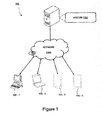
Figure 1 illustrates a network implementation of a system for rectifying a typographical error in a text file, in accordance with an embodiment of the present subject matter. -
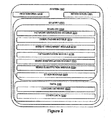
Figure 2 illustrates the system, in accordance with an embodiment of the present subject matter. -
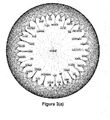
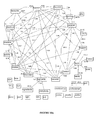
Figures 3(a) - 3(c) are examples of thesystem 102, in accordance with one or more embodiments of the present subject matter -
Figure 4 illustrates a method for rectifying the typographical error in the text file, in accordance with an embodiment of the present subject matter. - Some embodiments of this disclosure, illustrating all its features, will now be discussed in detail. The words "comprising," "having," "containing," and "including," and other forms thereof, are intended to be equivalent in meaning and be open ended in that an item or items following any one of these words is not meant to be an exhaustive listing of such item or items, or meant to be limited to only the listed item or items. It must also be noted that as used herein and in the appended claims, the singular forms "a," "an," and "the" include plural references unless the context clearly dictates otherwise. Although any systems and methods similar or equivalent to those described herein can be used in the practice or testing of embodiments of the present disclosure, the exemplary, systems and methods are now described. The disclosed embodiments are merely exemplary of the disclosure, which may be embodied in various forms.
- Various modifications to the embodiment will be readily apparent to those skilled in the art and the generic principles herein may be applied to other embodiments. However, one of ordinary skill in the art will readily recognize that the present disclosure is not intended to be limited to the embodiments illustrated, but is to be accorded the widest scope consistent with the principles and features described herein.
- The present subject matter provides systems and methods for rectifying a typographical error in a text file. Examples of the text file may include, but not limited to, a word file, a PDF (Portable Document File), a text file, and the like. It may be understood that, the text file may include a plurality of words. The plurality of words may be used to generate a linguistic network. In one example, the linguistic network may be generated by interconnecting each pair of words of the plurality of words via an edge. It may be understood that, the edge present between the each pair of words may be assigned a weight. The weight may indicate a distance and a phonetic similarity between the each pair of words. In one aspect, the distance may be computed by transforming a first word to a second word of the each pair of words. It may be understood that, the first word may be transformed to the second word by inserting, deleting, substituting, transpositioning of characters present in the first word for deriving the second word. The phonetic similarity, on the other hand, may be computed by at least one of a metaphone algorithm, a double metaphone algorithm, Metaphone 3, Daitch-Mokotoff Soundex, Caverphone and the like.
- After assigning the weight to the edge, one or more words in the linguistic network may be categorized in a category. It may be understood that, the category may comprise the one or more words based on the weight assigned to the edge. In other words, the category may comprise the one or more words that may have the phonetic similarity and less distance amongst the one or more words.
- It may be understood that, a word from the category which is deemed to have the typographical error may be identified. After identifying the word having the typographical error, a reference word corresponding to the word having the typographical error may be identified. In one aspect, the reference word is a word that may be present in a lexicon vocabulary or may be phonetically similar to the word in the lexicon vocabulary. After identifying the reference word, each word of the one or more words in the category may be substituted with the reference word in the text file in order to rectify the typographical error. It may be understood that, each word of the category, that may have the typographical error, may be replaced with the reference word from the category corresponding to the word having the typographical error. In this manner, the typographical error in the text file may be rectified without any manual intervention.
- While aspects of described system and method for rectifying a typographical error in a text file and may be implemented in any number of different computing systems, environments, and/or configurations, the embodiments are described in the context of the following exemplary system.
- Referring now to
Figure 1 , anetwork implementation 100 of asystem 102 for rectifying a typographical error in a text file is illustrated, in accordance with an embodiment of the present subject matter. In one embodiment, thesystem 102 may generate a linguistic network of a plurality of words present in the text file. Each pair of words of the plurality of words in the linguistic network is interconnected via an edge. In one aspect, if the words in the text file are not present in a lexicon but the words from lexicon have high similarity with the typographical error in the text file, then such words from lexicon may also added to the linguistic network. After generating the linguistic network, thesystem 102 may compute similarity between the each pair of words based on a set of parameters associated with words of each pair. The set of parameters may comprise distance between the words, phonetic similarity between the words, presence of the words in lexicon, morphological root form of the words, frequency of the words in the text file, probability of occurrence of the words in the given context, domain similarity of the words, and a flag associated to similar starting character of the words or their encodings such as phonetic encoding or consonant skeleton. Based on the computation of the similarity, thesystem 102 may assign a weight to the edge present between the each pair of words based on the set of parameters. Subsequent to the assignment of the weight, thesystem 102 may categorize one or more words present in the linguistic network in a category. After categorizing the one or more words in the category, thesystem 102 may identify a reference word for each word from the category which is not present in lexicon or which is deemed to be a typographical error. Subsequent to the identification of the reference word, thesystem 102 may substitute each word of the category, having the typographical error, with its corresponding reference word in the text file for rectifying the typographical error. - Although the present subject matter is explained considering that the
system 102 is implemented on a server, it may be understood that thesystem 102 may also be implemented in a variety of computing systems, such as a laptop computer, a desktop computer, a notebook, a workstation, a mainframe computer, a server, a network server, a cloud-based computing environment and the like. In one implementation, thesystem 102 may comprise the cloud-based computing environment in which the user may operate individual computing systems configured to execute remotely located applications. It will be understood that thesystem 102 may be accessed by multiple users through one or more user devices 104-1, 104-2...104-N, collectively referred to asuser devices 104 hereinafter referred also to asclient devices 104, or applications residing on theuser devices 104. Examples of theuser devices 104 may include, but are not limited to, a portable computer, a personal digital assistant, a handheld device, and a workstation. Theuser devices 104 are communicatively coupled to thesystem 102 through anetwork 106. - In one implementation, the
network 106 may be a wireless network, a wired network or a combination thereof. Thenetwork 106 can be implemented as one of the different types of networks, such as intranet, local area network (LAN), wide area network (WAN), the internet, and the like. Thenetwork 106 may either be a dedicated network or a shared network. The shared network represents an association of the different types of networks that use a variety of protocols, for example, Hypertext Transfer Protocol (HTTP), Transmission Control Protocol/Internet Protocol (TCP/IP), Wireless Application Protocol (WAP), and the like, to communicate with one another. Further thenetwork 106 may include a variety of network devices, including routers, bridges, servers, computing devices, storage devices, and the like. - Referring now to
Figure 2 , thesystem 102 is illustrated in accordance with an embodiment of the present subject matter. In one embodiment, thesystem 102 may include at least oneprocessor 202, an input/output (I/O)interface 204, and amemory 206. The at least oneprocessor 202 may be implemented as one or more microprocessors, microcomputers, microcontrollers, digital signal processors, central processing units, state machines, logic circuitries, and/or any devices that manipulate signals based on operational instructions. Among other capabilities, the at least oneprocessor 202 is configured to fetch and execute computer-readable instructions stored in thememory 206. - The I/
O interface 204 may include a variety of software and hardware interfaces, for example, a web interface, a graphical user interface, and the like. The I/O interface 204 may allow thesystem 102 to interact with the user directly or through theclient devices 104. Further, the I/O interface 204 may enable thesystem 102 to communicate with other computing devices, such as web servers and external data servers (not shown). The I/O interface 204 can facilitate multiple communications within a wide variety of networks and protocol types, including wired networks, for example, LAN, cable, etc., and wireless networks, such as WLAN, cellular, or satellite. The I/O interface 204 may include one or more ports for connecting a number of devices to one another or to another server. - The
memory 206 may include any computer-readable medium or computer program product known in the art including, for example, volatile memory, such as static random access memory (SRAM) and dynamic random access memory (DRAM), and/or nonvolatile memory, such as read only memory (ROM), erasable programmable ROM, flash memories, hard disks, optical disks, and magnetic tapes. Thememory 206 may includemodules 208 anddata 210. - The
modules 208 include routines, programs, objects, components, data structures, etc., which perform particular tasks or implement particular abstract data types. In one implementation, themodules 208 may include anetwork generating module 212, acomputation module 214, aweight assignment module 216, acategorization module 218, aword identification module 220, aword substitution module 222 andother modules 224. Theother modules 224 may include programs or coded instructions that supplement applications and functions of thesystem 102. Themodules 208 described herein may be implemented as software modules that may be executed in the cloud-based computing environment of thesystem 102. - The
data 210, amongst other things, serves as a repository for storing data processed, received, and generated by one or more of themodules 208. Thedata 210 may also include alexicon database 226 andother data 228. Theother data 228 may include data generated as a result of the execution of one or more modules in theother modules 224. - In one implementation, at first, a user may use the
client devices 104 to access thesystem 102 via the I/O interface 204. The user may register themselves using the I/O interface 204 in order to use thesystem 102. In one aspect, the user may accesses the I/O interface 204 of thesystem 102 for rectifying a typographical error in a text file. Examples of the text file may include, but not limited to, a word file, a PDF (Portable Document File), a text file, and the like. It may be understood that, the text file may include a plurality of words. In order to in order to rectify the typographical error of the plurality of words in the text file, thesystem 102 may employ thenetwork generating module 212, thecomputation module 214, theweight assignment module 216, thecategorization module 218, theword identification module 220, and aword substitution module 222. The detailed working of the plurality of modules is described below. - Referring to
Figure 2 , at first, thenetwork generating module 212 may generate a linguistic network of the plurality of words present in the text file. The linguistic network may be generated by interconnecting the plurality of words by a plurality of edges. It may be understood that, each pair of words of the plurality of words in the linguistic network may be interconnected via an edge. In one aspect, the linguistic network may be generated by using various software tools or using standard graph data structures in customized code. Examples of the software tools may include, but not limited to, NodeXL Pajek, UCINet, NetworkX and Gephi. - Now, in order to understand a working of the
network generating module 212, consider a following example (1), where a set of responses may be received from a plurality of users in an online survey conducted related to food category. It may be understood that, the set of responses may have typographical error. In one aspect, the set of responses may comprise: - 1: chocklet with caremel, this hapen to be my favoret, i mostly love caremel, very good size in piece
- 2: everybody loves chochlet
- 3: I like the combination of chocolate and caramel
- 4: It is in a handy pkg, & nice bite size. Love chocolate & carmel.
- 5: happen to be favourite package
- 6: it was gud. choklet cream is favorate. happy
- 7: it seems to have just the right ingreents
- 8: uses professional ingredients and works quickly
- Since the one or more words (i.e. "chocklet", "caremel", "hapen", "favoret", "chochlet", "pkg", "carmel", "favourite", "gud", "choklet", "favorate", and "ingreents") are not present in the lexicon, therefore the one or more words are deemed to have the typographical error. In order to rectify the typographical error, the
network generating module 212 may generate a linguistic network as illustrated infigure 3(a) . The plurality of words, as appeared in the set of responses, may be linked with a plurality of edges in the linguistic network. Each pair of words of the plurality of words in the linguistic network is interconnected via an edge of the plurality of edges. - In one aspect, after generating the linguistic network, the
computation module 214 may compute similarity between the each pair of words based on a set of parameters associated with words of each pair. The set of parameters may comprise distance between the words, phonetic similarity between the words, presence of the words in lexicon, morphological root form of the words, frequency of the words in the text file, probability of occurrence of the words in the context, domain similarity of the words, and a flag associated to similar starting character of the words or their encodings such as phonetic encoding or consonant skeleton. It may be understood that, the distance between the each pair of words may be computed for the edge connecting the each pair of words. In one embodiment, the distance may be computed by counting a minimum number of operations needed to transform a first word to a second word. The minimum number of operations may include insertion, deletion, substitution of a single character of the first word into the second word, or a transposition of two adjacent characters of the first word and the second word in the each pair of words. Therefore the minimum number of operations, when performed, may compute the distance between the each pair of words. A few techniques of computing the distance may include, but not limited to, weighted Damerau-Levenshtein distance, Hamming distance, Levenshtein distance, Jaro-Winkler distance. In one aspect, the distance and the weights for the operations like insertion, deletion, substitution, and transposition may be different from each other. The weights may be pre-specified or they may also be learnt from a noisy-channel error model. - The phonetic similarity, on the other hand, may be computed through indexing of the each pair of words by their pronunciation. Example of various algorithms for computing the phonetic similarity may include, but not limited to, Metaphone, Double Metaphone, Metaphone 3, Daitch-Mokotoff Soundex, Caverphone and the like. In this manner, the distance and the phonetic similarity may be computed for the edge connecting the each pair of words in the linguistic network.
- Subsequent to the computation of the distance and the phonetic similarity, the
weight assignment module 216 may assign a weight to the edge present between the each pair of words. In one aspect, the weight may be assigned based on the at least one of the distance and the phonetic similarity between the each pair of words. In one embodiment, the similarity between two words, denoted by w1 and w2, is determined based on the set of parameters (such as distance between the words, phonetic similarity between the words, presence of the words in lexicon, morphological root form of between the words, frequency of between the words in the text file, probability of occurrence of the words in the context, domain similarity of the words, and a flag associated to similar starting character of the words) as defined below: - editDistFrac1 = (Weighted edit distance between w1 and w2) / length(w1)
- editDistFrac2 = (Weighted edit distance between w1 and w2) / length(w2)
- lexiconPresenceFlag = 1 if both w1 and w2 are present in the reference lexicon for a language (else lexiconPresenceFlag = 0).
- phoneticDistance = minimum of edit distance between the phonetic encodings of w1 and w2. In one aspect, the phoneticDistance may be obtained by using at least one of a metaphone, a double metaphone, a soundex, a caperphone.
- consonantSkeletonDistance = edit distance between the consonant skeleton of the words w1 and w2. (Consonant skeleton of a word is obtained by first removing any consecutively repeating characters from the words and then removing all the vowels).
- sameStartCharacterFlag = 1 if both w1 and w2 start with same character of the alphabet (otherwise sameStartCharacterFlag = 0)
- wordFreq1 = frequency of word w1 in the input file (or set of survey responses).
- wordFreq2 = frequency of word w2 in the input file (or set of survey responses).
- domainSimilarity = inverse of the difference between similarity values of word w1 and w2 with the domain of input file (or set of survey responses) computed using lexical databases such as the WordNet™.
- languageModelFlag = 1 if the difference in probabilities of occurrence of w1 and w2 in the context of their respective locations (within the sentence/phrase in the input file) using a language model exceeds a fraction of their individual occurrence probabilities as predicted by the language model. Else, languageModelFlag = 0.
- Based on the aforementioned description, the weight of the edge connecting words w1 and w2 may be given as per the following function:
- Weight of the edge (w1, w2) = f(editDistFrac1, editDistFrac1, lexiconPresenceFlag, phoneticDistance, consonantSkeletonDistance, sameStartCharacterFlag, domainSimilarity, languageModelFlag)
- In order to explain the aforementioned method of assigning the weight to the edge (w1, and w2), consider the example (1) as aforementioned.
- 1: chocklet with caremel, this hapen to be my favoret, i mostly love caremel, very good size in piece
- 2: everybody loves chochlet
- 3: I like the combination of chocolate and caramel
- 4: It is in a handy pkg, & nice bite size. Love chocolate & carmel.
- 5: happen to be favourite package
- 6: it was gud. choklet cream is favorate. happy
- 7: it seems to have just the right ingreents
- 8: uses professional ingredients and works quickly
- In order to rectify the typographical error in the set of responses, the
network generating module 212, initially, generate a linguistic network of a plurality of words present in the responses (i.e. 1 to 8), as illustrated infigure 3(a) . Further, thecomputation module 214 may compute similarity between each pair of words based on a set of parameters associated with words of each pair. The set of parameters may comprise distance between the words, phonetic similarity between the words, presence of the words in lexicon, morphological root form of the words, frequency of the words in the text file, probability of occurrence of the words in the context, domain similarity of the words, and a flag associated to similar starting character of the words or their encodings such as phonetic encoding or consonant skeleton. After computing the similarity between each pair of words, theweight assignment module 216 may assign a weight to the edge present between the each pair of words based on the set of parameters. In one aspect, the weight may be computed by using a function i.e. Weight of the edge (w1, w2) = f(editDistFrac1, editDistFrac1, lexiconPresenceFlag, phoneticDistance, consonantSkeletonDistance, sameStartCharacterFlag, domainSimilarity, languageModelFlag). - In one embodiment, a graph sparsification technique may be executed on the linguistic network in order to simplify the linguistic network by eliminating one or more edges. In one aspect, the graph sparsification technique may eliminate each edge from the linguistic network having a weight '0' or less than a pre-defined threshold value. After eliminating the one or more edges, the linguistic network comprising may be simplified as illustrated in
figure 3(b) . - Based on the assignment of the weight to each edge, the
categorization module 218 may categorize one or more words present in the linguistic network in a category. In one aspect, the category may comprise the one or more words that may have the phonetic similarity and having less distance amongst the each pair of words. It may be understood that, the one or more words may be categorized based on the weight assigned to the each edge connecting the each pair of words in the category. In one embodiment, the one or more words may be categorized by running a community detection algorithm on the weight assigned to each edge. Example of the community detection algorithm may include, but not limited to, a minimum-cut method, a hierarchical clustering, a Girvan-Newman algorithm, a modularity maximization, a clique based methods. - In one embodiment, the graph sparsification technique and the community detection technique may be executed on the linguistic network. Based on the execution of the graph sparsification technique and the community detection technique on the linguistic network, one or more communities may be determined as illustrated in
figure 3(c) in which each community is shown using set of connected nodes. In one embodiment, further referring to example (1), thecategorization module 218 categorizes the one or more words, i.e. "chocolate-chochlet-choklet-chocklet-quickly" in a first category. Similarly, "loves-handy-hapen-happy-happen" are categorized in a second category. Further, "Caramel-caremel-carmel-cream" is categorized in a third category. Further "ingredients-ingreents-everybody" are categorized in a fourth category, as illustrated infigure 3(c) . It may be understood that, the first category, the second category, the third category and the fourth category may be categorized based on the weight assigned to the each edge connecting the one or more pairs of words in the linguistic network. - Subsequent to the categorization of the one or more words, the
word identification module 220 may identify a word from the category which is deemed to have the typographical error. After identifying the word having the typographical error, the word identification module may further identify a reference word corresponding to the word which is deemed to have the typographical error in the category. For example consider a word 'w1' having the typographical error. If there is another word 'w2' (connected with an edge to the word 'w1') in the same category and the word 'w2' is present in the lexicon and has significantly higher similarity weight compared to other words connected to word 'w1' within the category; then the word 'w2' is chosen as the reference word for the word 'w1' having the typographical error. Further, the weight of the edge connecting the words 'w1' and 'w2' is considered as significantly higher than weight of other edges incident on the word 'w1' if the weight of the edge connecting the word 'w1' and the word 'w2' is higher than other individual edge weights or it is higher than the average of weights of other edges incident on the word 'w1'. If there is no such word 'w2' within the category, then the reference word 'w3' from lexicon database may be selected by computing the at least one of distance and phonetic similarity. If the phonetic similarity between 'w1' and 'w3' is high, that is one of the phonetic encodings of 'w1' and 'w3' match, then 'w3' is retained as a reference word for 'w1'. Further, if the reference word is not identified based on the approach as aforementioned, then a centroid based approach may be used as described below. In one embodiment, each word of the category that is lexicographically and phonetically closest to the centroid of the community may be identified as the reference word. - In one aspect, the centroid of the community may be computed by using a weighted average of a set of parameters associated to the each word of the category. The set of parameters may include:
- ▪ asIsWord: The word as it appears in the text file.
- ▪ A flag to denote if the asIsWord is present in the lexicon.
- ▪ rootForm: Morphological root form of the word if available in the lexicon
- ▪ consonant skeleton of the word: Consonant skeleton of a word is obtained by first removing any consecutively repeating characters from the words and then removing all the vowels.
- ▪ Number of occurrences: Total number of times the word appears in the text file.
- ▪ Double Metaphone based encoding of the asIsWord.
- ▪ Double Metaphone based encoding of the rootForm of the asIsWord.
- ▪ Domain Similarity: similarity of the word with the domain of input file (or set of survey responses) computed using lexical databases such as the WordNet.
- ▪ Language Model Probability: probability of occurrence of the word in the context of its location (within the sentence/phrase in the input file) using a language model.
- In order to understand a working of the
word identification module 220 and theword substitution module 222, consider the example (1) same as aforementioned. It may be understood that, the first category includes "chocolate-chochlet-choklet-chocklet-quickly". Since, that the word 'chochlet' is not present in the lexicon vocabulary, therefore the word 'chochlet' is deemed to have the typographical error. In order to rectify the typographical error, theword identification module 220 may identify the reference word from the category 'C1'. As illustrated in thefigure 3(c) that, 'chochlet' is connected via two edges with 'chocolate' and 'chocklet' respectively, theword identification module 220 is adapted to verify whether 'chocolate' and 'chocklet' is present in the lexicon vocabulary. Based on the verification, it is to be understood that, 'chocolate' is present in the lexicon vocabulary whereas 'chocklet' is not present in the lexicon vocabulary. In addition, theword identification module 220 also compares the weight assigned to the two edges (i.e. an edge connecting 'chochlet'- 'chocolate' and another edge connecting 'chochlet'-'chocklet') in order to determine the significantly higher weight amongst the two edges. Therefore, based on the presence of the word in the lexicon vocabulary and the edge with highest weight, theword identification module 220 identifies 'chocolate' as the reference word for the word 'chochlet' in the category 'C1'. Thereafter, theword substitution module 222, after identifying the reference word, substitute 'chochlet' with 'chocolate' in the set of responses in order to rectify the typographical error. - Similarly, in the category 'C2', a word 'hapen' is not present in the lexicon vocabulary, therefore 'happen' is deemed to have the typographical error. In order to rectify the typographical error, the
word identification module 220 may identify the reference word from the category 'C2'. As illustrated in thefigure 3(c) that, 'hapen' is connected via an edge with 'loves', 'handy', 'happy' and 'happen', theword identification module 220 is adapted to verify 'loves', 'handy', 'happy' and 'happen' are present in the lexicon vocabulary. Based on the verification, it is to be understood that, 'loves', 'handy', 'happy' and 'happen' are present in the lexicon vocabulary. In order to identify the reference word amongst 'loves', 'handy', 'happy' and 'happen', theword identification module 220 compares the weight of four edges connecting 'hapen'- 'loves', 'hapen'- 'handy', 'hapen'- 'happy', and 'hapen'- 'happen' respectively. The weights of the four edges are then compared with each other in order to determine the edge with significantly higher weight amongst the four edges. The weight of the edge connecting the words 'hapen and 'happen' is considered to be significantly higher than the weights of other edges incident on the word 'hapen' because the weight of the edge 'hapen'-'happen' is higher than all other individual weights of the edges incident on the word 'hapen' and it is more than the twice of the average of weights of other edges incident on the word 'hapen'. Thus, because the edge connecting 'hapen'- 'happen' is assigned with the highest weight and also the word 'happen' is present in the lexicon vocabulary, theword identification module 220 identifies 'happen' as the reference word for the word 'hapen' in the category 'C2'. Thereafter, theword substitution module 222, after identifying the reference word, substitute 'happen' with 'hapen' in the set of responses in order to rectify the typographical error. - In one embodiment, as illustrated in
figure 3(c) , it may be understood that, oval nodes comprise the reference word, octagonal nodes comprise words having the typographical error, and rectangular nodes comprise words which are not changed (i.e. kept as-is). - Exemplary embodiments discussed above may provide certain advantages. Though not required to practice aspects of the disclosure, these advantages may include those provided by the following features.
- Some embodiments enable a system and a method for rectifying the typographical errors in a text file without any manual intervention.
- Some embodiments enable various techniques from linguistic networks and social network analysis to achieve unsupervised spelling error correction of a set of informal, noisy text.
- Referring now to
Figure 4 , amethod 400 for rectifying a typographical error in a text file is shown, in accordance with an embodiment of the present subject matter. Themethod 400 may be described in the general context of computer executable instructions. Generally, computer executable instructions can include routines, programs, objects, components, data structures, procedures, modules, functions, etc., that perform particular functions or implement particular abstract data types. Themethod 400 may also be practiced in a distributed computing environment where functions are performed by remote processing devices that are linked through a communications network. In a distributed computing environment, computer executable instructions may be located in both local and remote computer storage media, including memory storage devices. - The order in which the
method 400 is described is not intended to be construed as a limitation, and any number of the described method blocks can be combined in any order to implement themethod 400 or alternate methods. Additionally, individual blocks may be deleted from themethod 400 without departing from the spirit and scope of the subject matter described herein. Furthermore, the method can be implemented in any suitable hardware, software, firmware, or combination thereof. However, for ease of explanation, in the embodiments described below, themethod 400 may be considered to be implemented as described in thesystem 102. - At
block 402, a linguistic network of a plurality of words present in the text file may be generated. In one aspect, each pair of words of the plurality of words in the linguistic network may be interconnected via an edge. In one implementation, the linguistic network may be generated by thenetwork generating module 212. - At
block 404, similarity between each pair of words may be computed based on a set of parameters associated with words of each pair, wherein the set of parameters comprises distance between the words, phonetic similarity between the words, presence of the words in lexicon, morphological root form of the words, frequency of the words in the text file, probability of occurrence of the words in the context, domain similarity of the words, and a flag associated to similar starting character of the words or their encodings such as phonetic encoding or consonant skeleton. In one implementation, the at least one of the distance and the phonetic similarity may be computed by thecomputation module 214. - At
block 406, a weight may be assigned to the edge present between the each pair of words. In one aspect, the weight may be assigned based on the set of parameters. In one implementation, the weight may be assigned by theweight assignment module 216. In one embodiment, the edges having weight less than a predefined threshold value may be removed from the linguistic network. - At
block 408, one or more words present in the linguistic network may be categorized in a category. In one aspect, the one or more words may be categorized based on the weight assigned to each edge connecting the each pair of words of the one or more words. In one implementation, the one or more words may be categorized in the category by thecategorization module 218. - At
block 410, a word from the category which is deemed to have the typographical error may be identified. After identifying the word having the typographical error, a reference word corresponding to the word having the typographical error may be identified. In one implementation, the reference word may be identified by theword identification module 220. - At
block 412, each word of the category having the typographical error may be substituted with the corresponding reference word in the text file for rectifying the typographical error. In one implementation, the each word may be substituted by theword substitution module 222. - Although implementations for methods and systems for rectifying the typographical error in the text file have been described in language specific to structural features and/or methods, it is to be understood that the appended claims are not necessarily limited to the specific features or methods described. Rather, the specific features and methods are disclosed as examples of implementations for rectifying the typographical error in the text file.
Claims (13)
- A method for rectifying a typographical error in a text file, the method comprising:generating a linguistic network of a plurality of words present in the text file, wherein each pair of words of the plurality of words in the linguistic network is interconnected via an edge;computing similarity between each pair of words based on a set of parameters associated with words of each pair, wherein the set of parameters comprises distance between the words, phonetic similarity between the words, consonant skeleton distance, presence of the words in lexicon, morphological root form of the words, frequency of the words in the text file, probability of occurrence of the words in the context, domain similarity of the words, and a flag associated to similar starting character of the words;assigning a weight to the edge present between the each pair of words based on the set of parameters;categorizing one or more words present in the linguistic network in a category, wherein the one or more words are categorized based on the weight assigned to each edge connecting the each pair of words of the one or more words;identifying a reference word for each word which is deemed to have the typographical error from the category; andsubstituting each word of the category, having the typographical error, with the reference word corresponding to the word having typographical error in the text file for rectifying the typographical error, wherein the generating, the computing, the assigning, the categorizing, the identifying and the substituting are performed by a processor using programmed instructions stored in a memory.
- The method of claim 1, wherein computing the distance comprises:transforming a first word to a second word of the each pair of words by inserting, deleting, substituting, transpositioning characters present in the first word.
- The method of claim 1, wherein the phonetic similarity is computed by at least one of a metaphone algorithm, a double metaphone algorithm, a Metaphone 3, a Daitch-Mokotoff and a Soundex, Caverphone.
- The method of claim 1, wherein the categorizing comprising running a community detection algorithm on the weight assigned to the edge connecting one or more pairs of words of the one or more words and wherein the community detection algorithm may be selected from a group comprising a minimum-cut method, a hierarchical clustering, a Girvan-Newman algorithm, a modularity maximization, and a clique based methods.
- The method of claim 1, wherein the identification of the reference word is based on the set of parameters, and wherein the identifying further comprises:comparing each word of the category with a lexicon vocabulary to verify at least one word of the category is present in the lexicon vocabulary, wherein the at least one word is assigned a flag, and wherein the flag associated to the at least one word is indicated as the reference word; orselecting the reference word from the lexicon database by computing the at least one of the distance and the phonetic similarity between each word of the category and the lexicon vocabulary, wherein the reference word is selected when the at least one word of the category is not present in the lexicon database; ordetermining a number of instances associated to each word of the category in the text file, wherein the number of instances is determined to select the reference word having highest number of instances in the text file and wherein the number of instances is determined when the reference word is not selected based on the computing.
- The method of claim 5, wherein the lexicon vocabulary is stored in a lexicon database.
- The method of claim 1 further comprising executing a graph sparsification technique on the linguistic network after assigning the weight to the edge present between the each pair of words in the linguistic network, wherein the graph sparsification technique facilitates in simplifying the linguistic network by eliminating one or more edges of the linguistic network having the weight 0 or less than a pre-defined threshold value.
- A system for rectifying a typographical error in a text file, the system comprising:a processor; anda memory coupled to the processor, wherein the processor is capable of executing a plurality of modules stored in the memory, and wherein the plurality of module comprising:a network generating module configured to generate a linguistic network of a plurality of words present in the text file, wherein each pair of words of the plurality of words in the linguistic network is interconnected via an edge;a computation module configured to compute similarity between the each pair of words based on a set of parameters associated with words of each pair, wherein the set of parameters comprises distance between the words, phonetic similarity between the words, consonant skeleton distance, presence of the words in lexicon, morphological root form of the words, frequency of the words in the text file, probability of occurrence of the words in the context, domain similarity of the words, and a flag associated to similar starting character of the words;a weight assignment module configured to assign a weight to the edge present between the each pair of words based on the set of parameters;a categorization module configured to categorize one or more words present in the linguistic network in a category, wherein the one or more words are categorized based on the weight assigned to each edge connecting the each pair of words of the one or more words;a word identification module configured to identify a reference word for each word which is deemed to have the typographical error from the category; anda word substitution module configured to substitute each word of the category, having the typographical error, with the corresponding reference word in the text file for rectifying the typographical error.
- The system of claim 8, wherein the computation module is further configured to compute the distance by transforming a first word to a second word of the each pair of words by inserting, deleting, substituting, transpositioning characters present in the first word.
- The system of claim 8, wherein the computation module is further configured to compute the phonetic similarity by at least one of a metaphone algorithm, a double metaphone algorithm, a Metaphone 3, a Daitch-Mokotoff Soundex, and a Caverphone.
- The system of claim 8, wherein the word identification module is further configured to:compare each word of the category with a lexicon vocabulary to verify at least one word of the category is present in the lexicon vocabulary, wherein the at least one word is assigned a flag, and wherein the flag associated to the at least one word is indicated as the reference word; orselect the reference word from the lexicon database by computing the at least one of the distance and the phonetic similarity between each word of the category and the lexicon vocabulary, wherein the reference word is selected when the at least one word of the category is not present in the lexicon database; ordetermine a number of instances associated to each word of the category in the text file, wherein the number of instances is determined to select the reference word having highest number of instances in the text file and wherein the number of instances is determined when the reference word is not selected based on the computing.
- The system of claim 11, wherein the lexicon vocabulary is stored in a lexicon database.
- A non-transitory computer readable medium having embodied thereon a computer program for rectifying a typographical error in a text file, the computer program comprising instructions for:generating a linguistic network of a plurality of words present in the text file, wherein each pair of words of the plurality of words in the linguistic network is interconnected via an edge;computing similarity between the each pair of words based on a set of parameters associated with words of each pair, wherein the set of parameters comprises distance between the words, phonetic similarity between the words, consonant skeleton distance, presence of the words in lexicon, morphological root form of the words, frequency of the words in the text file, probability of occurrence of the words in the context, domain similarity of the words, and a flag associated to similar starting character of the words;assigning a weight to the edge present between the each pair of words based on the set of parameters;categorizing one or more words present in the linguistic network in a category, wherein the one or more words are categorized based on the weight assigned to each edge connecting the each pair of words of the one or more words;identifying a reference word for each word which is deemed to have the typographical error from the category; andsubstituting each word of the category, having the typographical error, with the corresponding reference word in the text file for rectifying the typographical error.
Applications Claiming Priority (1)
| Application Number | Priority Date | Filing Date | Title |
|---|---|---|---|
| IN789MU2014 IN2014MU00789A (en) | 2014-03-07 | 2014-03-07 |
Publications (2)
| Publication Number | Publication Date |
|---|---|
| EP2916237A2 true EP2916237A2 (en) | 2015-09-09 |
| EP2916237A3 EP2916237A3 (en) | 2015-12-30 |
Family
ID=51753020
Family Applications (1)
| Application Number | Title | Priority Date | Filing Date |
|---|---|---|---|
| EP14188841.2A Ceased EP2916237A3 (en) | 2014-03-07 | 2014-10-14 | A system and method for rectifying a typographical error in a text file |
Country Status (3)
| Country | Link |
|---|---|
| US (1) | US9734234B2 (en) |
| EP (1) | EP2916237A3 (en) |
| IN (1) | IN2014MU00789A (en) |
Cited By (1)
| Publication number | Priority date | Publication date | Assignee | Title |
|---|---|---|---|---|
| CN120045709A (en) * | 2025-02-10 | 2025-05-27 | 兵器装备集团财务有限责任公司 | Text deviation correcting method and system |
Families Citing this family (9)
| Publication number | Priority date | Publication date | Assignee | Title |
|---|---|---|---|---|
| CN106569994B (en) * | 2015-10-10 | 2019-02-26 | 阿里巴巴集团控股有限公司 | Address analysis method and device |
| US10565627B2 (en) * | 2015-12-30 | 2020-02-18 | Google Llc | Systems and methods for automatically generating remarketing lists |
| US9558265B1 (en) * | 2016-05-12 | 2017-01-31 | Quid, Inc. | Facilitating targeted analysis via graph generation based on an influencing parameter |
| US11194865B2 (en) | 2017-04-21 | 2021-12-07 | Visa International Service Association | Hybrid approach to approximate string matching using machine learning |
| US11301626B2 (en) * | 2019-11-11 | 2022-04-12 | International Business Machines Corporation | Artificial intelligence based context dependent spellchecking |
| RU2753183C1 (en) * | 2020-05-21 | 2021-08-12 | Федеральное государственное автономное образовательное учреждение высшего образования «Московский физико-технический институт (национальный исследовательский университет)» (МФТИ) | System and method for correcting spelling errors |
| CN113191119A (en) * | 2021-06-02 | 2021-07-30 | 云知声智能科技股份有限公司 | Method, apparatus and storage medium for training text error correction model |
| US12333249B2 (en) * | 2022-02-22 | 2025-06-17 | OneTrust, LLC | Mapping entities in unstructured text documents via entity correction and entity resolution |
| US20240211701A1 (en) * | 2022-12-23 | 2024-06-27 | Genesys Cloud Services, Inc. | Automatic alternative text suggestions for speech recognition engines of contact center systems |
Family Cites Families (8)
| Publication number | Priority date | Publication date | Assignee | Title |
|---|---|---|---|---|
| US5933822A (en) | 1997-07-22 | 1999-08-03 | Microsoft Corporation | Apparatus and methods for an information retrieval system that employs natural language processing of search results to improve overall precision |
| GB9811874D0 (en) | 1998-06-02 | 1998-07-29 | Univ Brunel | Information management system |
| US7430504B2 (en) | 2004-03-02 | 2008-09-30 | Microsoft Corporation | Method and system for ranking words and concepts in a text using graph-based ranking |
| US8126890B2 (en) | 2004-12-21 | 2012-02-28 | Make Sence, Inc. | Techniques for knowledge discovery by constructing knowledge correlations using concepts or terms |
| US8285719B1 (en) | 2008-08-08 | 2012-10-09 | The Research Foundation Of State University Of New York | System and method for probabilistic relational clustering |
| JP5752150B2 (en) | 2010-02-01 | 2015-07-22 | ジンジャー ソフトウェア、インコーポレイティッド | Context-sensitive automatic language correction using an Internet corpus specifically for small keyboard devices |
| US9378202B2 (en) | 2010-03-26 | 2016-06-28 | Virtuoz Sa | Semantic clustering |
| WO2011131785A1 (en) * | 2010-04-21 | 2011-10-27 | Université Catholique de Louvain | Normalisation of noisy typewritten texts |
-
2014
- 2014-03-07 IN IN789MU2014 patent/IN2014MU00789A/en unknown
- 2014-10-10 US US14/512,049 patent/US9734234B2/en active Active
- 2014-10-14 EP EP14188841.2A patent/EP2916237A3/en not_active Ceased
Non-Patent Citations (1)
| Title |
|---|
| None |
Cited By (1)
| Publication number | Priority date | Publication date | Assignee | Title |
|---|---|---|---|---|
| CN120045709A (en) * | 2025-02-10 | 2025-05-27 | 兵器装备集团财务有限责任公司 | Text deviation correcting method and system |
Also Published As
| Publication number | Publication date |
|---|---|
| IN2014MU00789A (en) | 2015-09-25 |
| US20150254327A1 (en) | 2015-09-10 |
| US9734234B2 (en) | 2017-08-15 |
| EP2916237A3 (en) | 2015-12-30 |
Similar Documents
| Publication | Publication Date | Title |
|---|---|---|
| US9734234B2 (en) | System and method for rectifying a typographical error in a text file | |
| US11783131B2 (en) | Knowledge graph fusion | |
| US12288140B2 (en) | Classifier assistance using domain-trained embedding | |
| US10354009B2 (en) | Characteristic-pattern analysis of text | |
| US9436681B1 (en) | Natural language translation techniques | |
| US9268766B2 (en) | Phrase-based data classification system | |
| US9910886B2 (en) | Visual representation of question quality | |
| US11023478B2 (en) | Determining temporal categories for a domain of content for natural language processing | |
| US10783200B2 (en) | Systems and methods of de-duplicating similar news feed items | |
| US20180225274A1 (en) | Systems and methods for assessing quality of input text using recurrent neural networks | |
| US11354340B2 (en) | Time-based optimization of answer generation in a question and answer system | |
| US10013450B2 (en) | Using knowledge graphs to identify potential inconsistencies in works of authorship | |
| US20130159277A1 (en) | Target based indexing of micro-blog content | |
| US11429652B2 (en) | Chat management to address queries | |
| US11030533B2 (en) | Method and system for generating a transitory sentiment community | |
| US12164879B2 (en) | Data processing method, device, and storage medium | |
| WO2024199689A1 (en) | Systems and methods for automated communication training | |
| Hoti et al. | Sentiment analysis using the VADER model for assessing company services based on posts on social media | |
| Singh et al. | Sentiment analysis using lexicon based approach | |
| CN114925185A (en) | Interaction method, model training method, device, equipment and medium | |
| Zoya et al. | Assessing urdu language processing tools via statistical and outlier detection methods on urdu tweets | |
| US10614100B2 (en) | Semantic merge of arguments | |
| US20220366133A1 (en) | Training a Model in a Data-Scarce Environment Using Added Parameter Information | |
| US20230168989A1 (en) | BUSINESS LANGUAGE PROCESSING USING LoQoS AND rb-LSTM | |
| EP4447413A2 (en) | Machine-learned classification of network traffic |
Legal Events
| Date | Code | Title | Description |
|---|---|---|---|
| PUAI | Public reference made under article 153(3) epc to a published international application that has entered the european phase |
Free format text: ORIGINAL CODE: 0009012 |
|
| AK | Designated contracting states |
Kind code of ref document: A2 Designated state(s): AL AT BE BG CH CY CZ DE DK EE ES FI FR GB GR HR HU IE IS IT LI LT LU LV MC MK MT NL NO PL PT RO RS SE SI SK SM TR |
|
| AX | Request for extension of the european patent |
Extension state: BA ME |
|
| PUAL | Search report despatched |
Free format text: ORIGINAL CODE: 0009013 |
|
| AK | Designated contracting states |
Kind code of ref document: A3 Designated state(s): AL AT BE BG CH CY CZ DE DK EE ES FI FR GB GR HR HU IE IS IT LI LT LU LV MC MK MT NL NO PL PT RO RS SE SI SK SM TR |
|
| AX | Request for extension of the european patent |
Extension state: BA ME |
|
| RIC1 | Information provided on ipc code assigned before grant |
Ipc: G06F 17/30 20060101ALI20151126BHEP Ipc: G06F 17/27 20060101AFI20151126BHEP |
|
| 17P | Request for examination filed |
Effective date: 20160628 |
|
| RBV | Designated contracting states (corrected) |
Designated state(s): AL AT BE BG CH CY CZ DE DK EE ES FI FR GB GR HR HU IE IS IT LI LT LU LV MC MK MT NL NO PL PT RO RS SE SI SK SM TR |
|
| STAA | Information on the status of an ep patent application or granted ep patent |
Free format text: STATUS: REQUEST FOR EXAMINATION WAS MADE |
|
| R17P | Request for examination filed (corrected) |
Effective date: 20160628 |
|
| STAA | Information on the status of an ep patent application or granted ep patent |
Free format text: STATUS: EXAMINATION IS IN PROGRESS |
|
| 17Q | First examination report despatched |
Effective date: 20170711 |
|
| STAA | Information on the status of an ep patent application or granted ep patent |
Free format text: STATUS: THE APPLICATION HAS BEEN REFUSED |
|
| 18R | Application refused |
Effective date: 20200705 |