EP2915042B1 - Metadata-based virtual machine configuration - Google Patents
Metadata-based virtual machine configuration Download PDFInfo
- Publication number
- EP2915042B1 EP2915042B1 EP13789937.3A EP13789937A EP2915042B1 EP 2915042 B1 EP2915042 B1 EP 2915042B1 EP 13789937 A EP13789937 A EP 13789937A EP 2915042 B1 EP2915042 B1 EP 2915042B1
- Authority
- EP
- European Patent Office
- Prior art keywords
- metadata
- virtual machine
- key
- value
- identifier
- Prior art date
- Legal status (The legal status is an assumption and is not a legal conclusion. Google has not performed a legal analysis and makes no representation as to the accuracy of the status listed.)
- Active
Links
Images


Classifications
-
- G—PHYSICS
- G06—COMPUTING OR CALCULATING; COUNTING
- G06F—ELECTRIC DIGITAL DATA PROCESSING
- G06F9/00—Arrangements for program control, e.g. control units
- G06F9/06—Arrangements for program control, e.g. control units using stored programs, i.e. using an internal store of processing equipment to receive or retain programs
- G06F9/44—Arrangements for executing specific programs
- G06F9/455—Emulation; Interpretation; Software simulation, e.g. virtualisation or emulation of application or operating system execution engines
- G06F9/45533—Hypervisors; Virtual machine monitors
- G06F9/45558—Hypervisor-specific management and integration aspects
-
- G—PHYSICS
- G06—COMPUTING OR CALCULATING; COUNTING
- G06F—ELECTRIC DIGITAL DATA PROCESSING
- G06F16/00—Information retrieval; Database structures therefor; File system structures therefor
- G06F16/10—File systems; File servers
- G06F16/14—Details of searching files based on file metadata
- G06F16/144—Query formulation
-
- G—PHYSICS
- G06—COMPUTING OR CALCULATING; COUNTING
- G06F—ELECTRIC DIGITAL DATA PROCESSING
- G06F16/00—Information retrieval; Database structures therefor; File system structures therefor
- G06F16/10—File systems; File servers
- G06F16/14—Details of searching files based on file metadata
- G06F16/156—Query results presentation
-
- G—PHYSICS
- G06—COMPUTING OR CALCULATING; COUNTING
- G06F—ELECTRIC DIGITAL DATA PROCESSING
- G06F16/00—Information retrieval; Database structures therefor; File system structures therefor
- G06F16/20—Information retrieval; Database structures therefor; File system structures therefor of structured data, e.g. relational data
- G06F16/24—Querying
- G06F16/245—Query processing
- G06F16/2457—Query processing with adaptation to user needs
- G06F16/24573—Query processing with adaptation to user needs using data annotations, e.g. user-defined metadata
-
- G—PHYSICS
- G06—COMPUTING OR CALCULATING; COUNTING
- G06F—ELECTRIC DIGITAL DATA PROCESSING
- G06F16/00—Information retrieval; Database structures therefor; File system structures therefor
- G06F16/90—Details of database functions independent of the retrieved data types
- G06F16/95—Retrieval from the web
- G06F16/951—Indexing; Web crawling techniques
-
- G—PHYSICS
- G06—COMPUTING OR CALCULATING; COUNTING
- G06F—ELECTRIC DIGITAL DATA PROCESSING
- G06F16/00—Information retrieval; Database structures therefor; File system structures therefor
- G06F16/90—Details of database functions independent of the retrieved data types
- G06F16/95—Retrieval from the web
- G06F16/955—Retrieval from the web using information identifiers, e.g. uniform resource locators [URL]
-
- G—PHYSICS
- G06—COMPUTING OR CALCULATING; COUNTING
- G06F—ELECTRIC DIGITAL DATA PROCESSING
- G06F9/00—Arrangements for program control, e.g. control units
- G06F9/06—Arrangements for program control, e.g. control units using stored programs, i.e. using an internal store of processing equipment to receive or retain programs
- G06F9/44—Arrangements for executing specific programs
- G06F9/455—Emulation; Interpretation; Software simulation, e.g. virtualisation or emulation of application or operating system execution engines
- G06F9/45533—Hypervisors; Virtual machine monitors
- G06F9/45558—Hypervisor-specific management and integration aspects
- G06F2009/4557—Distribution of virtual machine instances; Migration and load balancing
-
- G—PHYSICS
- G06—COMPUTING OR CALCULATING; COUNTING
- G06F—ELECTRIC DIGITAL DATA PROCESSING
- G06F9/00—Arrangements for program control, e.g. control units
- G06F9/06—Arrangements for program control, e.g. control units using stored programs, i.e. using an internal store of processing equipment to receive or retain programs
- G06F9/44—Arrangements for executing specific programs
- G06F9/455—Emulation; Interpretation; Software simulation, e.g. virtualisation or emulation of application or operating system execution engines
- G06F9/45533—Hypervisors; Virtual machine monitors
- G06F9/45558—Hypervisor-specific management and integration aspects
- G06F2009/45583—Memory management, e.g. access or allocation
Definitions
- This specification relates to cloud computing.
- Cloud computing is network-based computing in which typically large collections of servers housed in data centers or "server farms" provide computational resources and data storage as needed to end users.
- Some cloud computing services provide access to software applications such as word processors and other commonly used applications to end users who interface with the applications through web browsers or other client-side software. Users' electronic data files are usually stored in the server farm rather than on the users' computing devices. Maintaining software applications and user data on a server farm simplifies management of end user computing devices.
- Some cloud computing services allow end users to execute software applications in virtual machines.
- Each metadata key-value pair can be associated with one or more identifiers.
- the identifiers can include, for example, a project identifier that references a particular project with which one or more virtual machine instances are associated, an instance identifier that references a particular virtual machine instance, or a tag identifier that references a particular tag with which one or more virtual machine instances are associated.
- Each metadata key-value pair is stored in a metadata collection that is identified by a particular identifier.
- a metadata key-value pair that is associated with a project identifier P1 and a tag identifier T1 is stored in both a first metadata collection that is identified by the project identifier P1 and a second metadata collection that is identified by the tag identifier T1.
- each virtual machine instance can associate with one or more identifiers, e.g., a project identifier, an instance identifier, or a tag identifier, as described above.
- Each virtual machine instance can obtain metadata, for example, from a metadata server.
- a virtual machine instance that is associated with particular identifiers can obtain metadata that is also associated with the particular identifiers.
- Each virtual machine instance can apply the obtained metadata key-value pairs to configure various settings associated with the respective virtual machine instance.
- one aspect of the subject matter described in this specification can be embodied in methods that include the actions of associating one or more of a plurality of metadata collections with one or more respective identifiers, wherein each metadata collection includes one or more pairings of metadata attributes with metadata values, and wherein each identifier is one of a project identifier, a tag identifier or an instance identifier; identifying, based on identifier information associated with a virtual machine instance, one or more metadata values to be provided to the virtual machine instance, wherein the identifier information specifies one or more of a project identifier, a tag identifier and an instance identifier, and wherein each identified metadata value belongs to a metadata collection associated with an identifier that is specified in the identifier information; and providing, to the virtual machine instance, the identified one or more metadata values.
- Other embodiments of this aspect include corresponding systems, apparatus, and computer program products.
- the method further includes receiving, from the virtual machine instance, a metadata query that includes the identifier information; and identifying the one or more metadata values in response to receipt of the metadata query.
- the metadata query is communicated using a Hanging GET operation.
- the method further includes receiving data that includes one or more user specified identifiers and one or more user specified pairings of metadata values with metadata attributes; generating a metadata collection that includes the one or more user-specified pairings; and associating the generated metadata collection with the user specified identifier.
- the metadata collections include a first metadata collection and a second metadata collection, the first metadata collection being associated with a first identifier and including a pairing of a first metadata attribute with a first metadata value, and the second metadata collection being associated with a second identifier and including a pairing of the first metadata attribute with a second metadata value, the first metadata value being different from the second metadata value.
- the method further includes providing both the first metadata value and the second metadata value to the virtual machine instance.
- the method further includes determining that the first metadata collection has a higher priority level than the second metadata collection based on an evaluation of the first identifier and the second identifier; and providing the first metadata value and not the second metadata value to the virtual machine instance.
- the first identifier is an instance identifier or a tag identifier and the second identifier is a project identifier or the first identifier is an instance identifier and the second identifier is a tag identifier or a project identifier.
- the method further includes receiving data specifying an identifier and a new pairing of a metadata attribute with a metadata value and updating the metadata collection associated with the identifier specified in the data to include the new pairing.
- Virtual machine roles can be defined based on their respective tag identifiers. Users can specify metadata key-value pairs and the specified metadata key-value pairs can be used to collectively configure settings for one or more virtual machine instances. Settings and roles of virtual machine instances can be dynamically updated upon updating. Metadata can be associated with project identifiers or tag identifiers to simplify enforcement of common configurations and properties across multiple virtual machine instances. In cases when virtual machine instances do not access metadata associated with an instance identifier, or if access to the metadata is prohibited by policy, the auditing of virtual machine instances that use a standard configuration can be simplified.
- FIG. 1 is a schematic illustration of an example virtual machine system 100.
- the system 100 includes one or more host machines such as, for example, host machine 102 and host machine 104.
- a host machine is one or more data processing apparatus such as rack mounted servers or other computing devices.
- the data processing apparatus can be in different physical locations and can have different capabilities and computer architectures.
- Host machines can communicate with each other through an internal data communications network 116.
- the internal network can include one or more wired, e.g., Ethernet, or wireless, e.g., WI-FI, networks, for example.
- the internal network 116 is an intranet.
- Host machines can also communicate with devices on external networks, such as the Internet 122, through one or more gateways 120 which are data processing apparatus responsible for routing data communication traffic between the internal network 116 and the external network 122. Other types of external networks are possible.
- Each host machine 102, 104 executes a host operating system 106, 108.
- a host operating system 106, 108 manages host machine resources.
- host operating systems 106, 108 run software, e.g. a virtual machine monitor ("VMM") or a hypervisor, that virtualizes the underlying host machine hardware and manages concurrent execution of one or more virtual machine (“VMs") instances.
- VMM virtual machine monitor
- VMs virtual machine
- the host operating system 106 manages two VM instances, VM 110 and VM 112, while a different host operating system 108 manages a single VM 114.
- VM instances can be migrated from one host machine to another host machine.
- a single VM instance can be managed by multiple host machines.
- a host machine can, in general, manage multiple virtual machines, however, the quantity may be limited based on physical resources of the host machine.
- Each VM instance provides an emulation of a physical hardware system which may, but need not, be based on the host machine hardware architecture.
- the simulated version of the hardware is referred to as virtual hardware, e.g., virtual hardware 110a, 112a, and 114a.
- Software that is executed by the virtual hardware is referred to as guest software.
- guest software cannot determine if it is being executed by virtual hardware or by a physical host machine. If guest software executing in a VM instance, or the VM instance itself, is compromised, malfunctions, or aborts, other VM instances executing on the host machine may not be affected.
- a host machine's microprocessor(s) can include processor-level mechanisms to enable virtual hardware to execute software applications efficiently by allowing guest software instructions to be executed directly on the host machine's microprocessor without requiring code-rewriting, recompilation, or instruction emulation.
- Each VM instance e.g., VMs 110, 112, and 114, is allocated a set of virtual memory pages from the virtual memory of the underlying host operating system and is allocated virtual disk blocks from one or more virtual disk drives for use by the guest software executing on the VM instance.
- host operating 106 allocates memory pages and disk blocks to VM 110 and VM 112, and host operating system 108 does the same for VM 114.
- a given VM instance cannot access the virtual memory pages assigned to other VMs.
- VM 110 cannot access memory pages that have been assigned to VM 112.
- a virtual disk drive can be persisted across VM instance restarts.
- Virtual disk blocks are allocated on physical disk drives coupled to host machines or available over the internal network 116, for example.
- VM instances can be allocated network addresses through which their respective guest software can communicate with other processes reachable through the internal network 116 or the Internet 122.
- guest software executing on VM 110 can communicate with guest software executing on VM 112 or VM 114.
- each VM instance is allocated one or more unique Internet Protocol (IP) version 4 or version 6 addresses. Other address schemes are possible.
- IP Internet Protocol
- the VM instance IP addresses are addressable on the internal network 116 and, in some implementations, are addressable on the Internet 122 if the addresses are advertised using a suitable routing protocol, for instance.
- a VM instance's guest software can include a guest operating system, e.g., guest operating systems 110b, 112b, and 114b, which is software that controls the execution of respective guest software applications, e.g., guest applications 110c, 112c, and 114c, within the VM instance and provides services to those applications.
- a guest operating system could be a variant of the UNIX operating system.
- Other operating systems, e.g., Microsoft Windows, and different versions of these operating systems can be used as the guest operating system.
- Each VM instance can execute the same guest operating system or different guest operating systems.
- a VM instance does not require a guest operating system in order to execute guest software applications.
- a guest operating system's access to resources such as networks and virtual disk storage is controlled by the underlying host operating system.
- the guest application 110c or guest operating system 110b when the guest application 110c or guest operating system 110b attempts to perform an input/output operation on a virtual disk, initiate network communication, or perform a privileged operation, for example, the virtual hardware 110a is interrupted so that the host operating system 106 can perform the action on behalf of the virtual machine 110.
- the host operating system 106 can perform these actions with a process that executes in kernel process space 106b, user process space 106a, or both.
- the kernel process space 106b is virtual memory reserved for the host operating system 106's kernel 106d which can include kernel extensions and device drivers, for instance.
- the kernel process space has elevated privileges, sometimes referred to as "supervisor mode"; that is, the kernel 106d can perform certain privileged operations that are off limits to processes running in the user process space 106a. Examples of privileged operations include access to different address spaces, access to special functional processor units in the host machine such as memory management units, and so on.
- the user process space 106a is a separate portion of virtual memory reserved for user mode processes. User mode processes cannot perform privileged operations directly.
- a portion of VM instance network communication functionality is implemented in a communication process, e.g., communication process 106c.
- the communication process executes in the user process space, e.g., user process space 106a, of a host operating system, e.g., host operating system 106.
- the communication process can execute in the kernel process space, e.g., kernel process space 106d of the host operating system.
- some portion of the communication process executes in the user process space and another portion executes in the kernel process space.
- the system 100 includes a metadata server 130 that manages and provides access to metadata for VM instances in the system 100.
- the metadata server 130 can be implemented as one or more computer programs installed on one or more computers in system 100.
- the metadata server 130 can, for example, be installed on a particular host machine.
- the metadata server 130 can also be implemented as a VM instance in the system 100.
- the metadata server 130 is located in the same datacenter as VM instances that the metadata server 130 services, although the metadata server 130 can also be located elsewhere and be, for example, accessible over the Internet.
- Metadata can be written to and read from the metadata server 130 using any appropriate network communications protocol.
- the read and write commands are implemented using conventional hypertext transfer protocol (HTTP) "GET" and "PUT” commands.
- HTTP hypertext transfer protocol
- users can provide custom metadata to the metadata server 130 using an Application Programming Interface (API).
- API Application Programming Interface
- Each element of metadata is a key-value pair.
- the key, or attribute uniquely identifies a type of metadata.
- the value can be one or more pieces of data, for example, text strings.
- a user can specify a metadata key "hostname” and a corresponding metadata value "myinst.myproject.mydomain.internal.”
- Users can also associate each key-value pair with one or more respective identifiers.
- the one or more identifiers include a project identifier, an instance identifier, or a tag identifier.
- a project identifier can reference a particular project that was created by a user.
- An instance identifier can reference a particular virtual machine instance.
- a tag identifier can reference a particular tag, e.g., "front-end webserver” or “sql server” with which one or more virtual machines instances are associated.
- users can specify custom identifiers that can be associated with key-value pairs. For example, a user can specify a machine-type identifier that can be associated with metadata key "hostname.”
- access to metadata that is associated with one or more identifiers is restricted to VM instances that are also associated with the one or more identifiers.
- a VM instance that is associated with a project identifier P1 can access metadata associated with the project identifier P1 but not metadata associated with a project identifier P2.
- similar tag identifiers can be associated with different project identifiers.
- a first tag identifier "front-end webserver” can be associated with a project identifier P1 while a second tag identifier "front-end webserver" can be associated with a project identifier P2.
- metadata associated with the first tag identifier "front-end webserver" in the project P1 has no relation to metadata associated with the second tag identifier "front-end webserver” in the project P2.
- VM instances that are associated with the project identifier P1 cannot access metadata that is associated with the project identifier P2.
- VM instances that are associated with the project identifier P2 cannot access metadata that is associated with the project identifier P1. This is a useful property for a multi-tenant system, as it ensures metadata remains confidential and is not visible to VM instances that are not associated with the proper identifiers.
- the metadata server 130 is configured to receive user specified key-value pairs and their corresponding identifiers. In some implementations, the metadata server 130 categorizes and stores received key-value pairs in one or more metadata collections based on their respective identifiers. For example, a key-value pair that is associated with a project identifier P1 and a tag identifier T1 can be stored in a first metadata collection that corresponds to the project identifier P1 and a second metadata collection that corresponds to the tag identifier T1.
- the metadata server 130 is also configured to receive queries from VM instances requesting metadata. Users can customize the configuration of VM instances running in the system 100 by associating the VM instances with one or more respective identifiers, e.g., a project identifier, an instance identifier, or a tag identifier, as described above. For example, a user can specify that a VM instance be associated with a project identifier P1, an instance identifier M1, and tag identifiers "sql server" and "front-end webserver.” In some implementations, each VM instance can be associated with only one project identifier.
- the VM instance can query the metadata server 130 to obtain metadata that is associated with the same identifiers that are associated with the VM instance.
- a VM instance associated with a project identifier P1, an instance identifier M1, and tag identifiers "sql server” and "front-end webserver” can query the metadata server 130 to obtain metadata that is also associated with the project identifier P1, the instance identifier M1, and the tag identifiers "sql server” and "front-end webserver.”
- the metadata server 130 can identify metadata collections that respectively correspond to the project identifier P1, the instance identifier M1, and the tag identifiers "sql server” and "front-end webserver.”
- the metadata server 130 can provide metadata that was categorized in the identified metadata collections to the VM instance.
- the VM instance can apply the received metadata to configure various settings associated with the VM instance.
- a user can associate a first metadata key "sshKeys” and corresponding value, e.g., "joe:ssh-rsa ⁇ SSH key>,” that describes user accounts and corresponding public SSH keys, with a project identifier P1.
- the user can also associate a second metadata key "allowedHosts” and corresponding value, e.g., "192.0.2.24/30,” that describes Internet Protocol (IP) addresses that are allowed to connect to a VM instance, with the project identifier P1.
- IP Internet Protocol
- the user can then associate a third metadata key "startupScript” and corresponding value, e.g., a shell script that configures and starts a webserver, with a tag identifier "web.”
- a third metadata key "startupScript” and corresponding value e.g., a shell script that configures and starts a webserver
- a tag identifier "web” e.g., a tag identifier "web”
- the user can associate a fourth metadata key “allowedHosts” and corresponding value, e.g., "0.0.0.0/0" that describes IP addresses that are allowed to connect to a VM instance, with an instance identifier "shell.”
- users can specify particular identifiers to be associated with one or more VM instances using an Application Programming Interface (API).
- API Application Programming Interface
- a system component in each VM instance is configured to obtain the user specified identifiers, and to associate the identifiers with the respective VM instance.
- a user can initialize a VM instance and can associate the VM instance with a project identifier P1 and an instance identifier "shell.”
- the VM instance can query the metadata server 130 to obtain metadata that is associated with the project identifier P1 and the instance identifier "shell.”
- the metadata server 130 can provide the VM instance with metadata associated with the project identifier P1, e.g., the first and second metadata key-value pairs, and metadata associated with the instance identifier "shell,” e.g., the fourth metadata key-value pair.
- the metadata server 130 provides the VM instance with respective Uniform Resource Locator (URL) paths that reference the requested metadata.
- URL Uniform Resource Locator
- the metadata server 130 can provide a first URL, e.g., "/vlbeta/computemetadata/project/attributes/sshKeys,” that references the "sshKeys" key-value pair associated with the project identifier P1, a second URL, e.g., "/vlbeta/computemetadata/project/attributes/allowedHosts ,” that references the "allowedHosts" key-value pair associated with the project identifier P1, and a third URL, e.g., "/vlbeta/computemetadata/instance/attributes/allowedHosts,” that references the "allowedHosts" key-value pair associated with the instance identifier "shell.”
- the VM instance can then process the received metadata to configure the VM instance.
- the metadata server 130 would also provide the VM instance with a fourth URL, e.g., "/v1beta/computemetadata/tags/web/attributes/startupScript,” that references the "startupScript" key-value pair associated with the tag identifier "web.”
- a fourth URL e.g., "/v1beta/computemetadata/tags/web/attributes/startupScript”
- a metadata conflict may arise when different values are specified for a metadata key that is associated with more than one metadata collection, e.g., with more than one identifier, and when a VM instance is associated with those identifiers.
- the second metadata key "allowedHosts,” which is associated with the project identifier P1 has a corresponding value "192.0.2.24/30”
- the fourth metadata key "allowedHosts,” which is associated with the instance identifier "shell” has a corresponding value "0.0.0.0/0.”
- the VM instance is associated with the project identifier P1 and the instance identifier "shell,” there is a conflict as to whether the metadata value corresponding to the second metadata key "allowedHosts," e.g., "192.0.2.24/30,” or the fourth metadata key "allowedHosts,” e.g., "0.0.0.0/0,” is used to configure the VM instance.
- the metadata server 130 provides all conflicting metadata to the VM instance, and the VM instance itself determines which metadata value is used to configure the VM instance. In some implementations, the metadata server 130 determines which metadata key-value pair has a higher priority level by evaluating respective identifiers associated with the metadata key-value pairs, and provides to the VM instance the metadata key-value pair that is associated with the higher priority level. In some implementations, instance identifiers and tag identifiers are prioritized higher than project identifiers. In some implementations, instance identifiers are prioritized higher than both tag identifiers and project identifiers.
- users can dynamically reconfigure VM instances by updating metadata collections. For example, a user can specify new metadata key-value pairs or the user can update metadata values for existing metadata keys.
- VM instances can be configured to automatically query the metadata server 130 to obtain the new or updated metadata, as described below in reference to FIG. 2 . The VM instances can use the obtained metadata to reconfigure various settings associated with the VM instance.
- each VM instance e.g., VM 110, 112, or 114
- a distinct metadata server e.g., the metadata server 130.
- each host machine e.g., host machines 102 or 104
- a distinct metadata server e.g., the metadata server 130.
- the metadata server e.g., the metadata server 130, is configured as a distributed system.
- FIG. 2 is a swim lane diagram illustrating configuration of a virtual machine instance using pairings of metadata attributes with metadata values.
- a user operating a user device provides metadata, e.g., key-value pairs, and one or more corresponding identifiers, to a metadata server, as described above (202).
- users can provide values for a metadata key, e.g., "attached-disks," to specify a list of ephemeral and persistent disks, and can associate the metadata with one or more identifiers to configure VM instances that are also associated with the one or more identifiers to use the identified ephemeral and persistent disks.
- Metadata for which users can provide customized values include a metadata key, e.g., "description,” to specify a description of an instance, a metadata key, e.g., "domain,” to specify a domain of a VM instance hostname, a metadata key, e.g., "hostname,” to specify a host name for an instance, a metadata key, e.g., "image,” to specify an image to be used for initializing a VM instance.
- users can provide customized values for a metadata key, e.g., "machine-type,” that identifies a machine type, e.g., a machine having a particular number of Central Processing Units (CPUs) and memory configuration, a metadata key, e.g., "network,” to specify network information, a metadata key, e.g., "zone,” to specify a zone, e.g., time zone.
- a metadata key e.g., "machine-type” that identifies a machine type, e.g., a machine having a particular number of Central Processing Units (CPUs) and memory configuration
- a metadata key e.g., "network”
- a metadata key e.g., "zone”
- zone e.g., time zone
- users can provide customized values for a metadata key, e.g., "sshKeys,” to specify a list of Secure Shell (SSH) keys that can be used to connect to an instance, a metadata key, e.g., "startup-script,” to specify a startup script to execute when an instance starts, a metadata key, e.g., "startup-script-url,” to specify a URL (Uniform Resource Locator) of a startup script to execute when an instance starts.
- SSH Secure Shell
- the metadata server associates one or more metadata collections with respective identifiers (204). As described above, in some implementations, the metadata server categorizes and stores the received metadata into one or more respective metadata collections based on the identifiers corresponding to the received metadata. Thus, for example, the metadata server can categorize and store all received metadata that is associated with a particular project identifier, e.g., P1, into a first metadata collection, and can associate the first metadata collection with the particular project identifier, e.g., P1.
- the metadata server can categorize and store all received metadata that is associated with a particular tag identifier, e.g., T1, into a second metadata collection, and can associate the second metadata collection with the particular tag identifier, e.g., T1.
- a VM instance that is associated with particular identifiers sends a metadata query to the metadata server to obtain metadata that is also associated with the particular identifiers (206).
- a VM instance is configured to query the metadata server for metadata when the VM instance is initialized, e.g., at startup.
- a VM instance is configured to query the metadata server for metadata at specified time intervals, for example, as specified in a cron job.
- a VM instance is configured to query the metadata server using a "Hanging GET" operation.
- the VM instance can use the conventional hypertext transfer protocol (HTTP) "GET” operation to request metadata.
- HTTP hypertext transfer protocol
- the VM instance can "hang,” or maintain the HTTP "GET” connection, to continue waiting until the metadata server has new or updated metadata to provide the VM instance.
- the HTTP "GET" connection is closed due to inactivity, e.g., a time out, the VM instance can be configured to re-establish the connection and continue waiting for new or updated metadata.
- the metadata server receives the query requesting metadata associated with particular identifiers, as described above (208).
- the metadata server can communicate data, e.g., queries and metadata, using any appropriate network communications protocol or using conventional hypertext transfer protocol (HTTP) "GET" and “PUT” commands.
- HTTP hypertext transfer protocol
- the metadata server identifies metadata responsive to the metadata query (210).
- the metadata server can identify one or more metadata collections that respectively correspond to the particular identifiers, as described above in reference to FIG. 1 .
- the metadata server provides the metadata responsive to the query to the VM instance (212).
- the metadata server can provide metadata that was categorized and stored in the identified metadata collections to the VM instance, as described above.
- the VM instance receives and applies the metadata to configure the VM instance (214).
- the VM instance configures itself by updating a particular setting associated with the VM instance, for example, by updating data in a particular file.
- the VM instance can receive a metadata key "hostname" and its corresponding value "example.com.” Based on the key "hostname,” the VM instance can be configured to update a particular file, e.g., "/etc/hostname,” with the value "example.com.”
- the VM instance Upon updating the file "/etc/hostname,” the VM instance can reinitialize its networking configuration so that the VM instance domain corresponds to "example.com.”
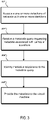
- FIG. 3 is a flow diagram of an example process 300 for configuring a virtual machine instance using pairings of metadata attributes with metadata values.
- the process 300 will be described with respect to a system, e.g., the metadata server 130, including one or more computing devices that performs the process 300.
- the system associates one or more metadata collections with respective identifiers, as described above (302).
- the system receives a metadata query requesting metadata associated with particular identifiers, as described above (304). For example, the system can receive the query from a VM instance that is also associated with the particular identifiers.
- the system identifies metadata responsive to the metadata query, as described above (306).
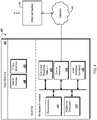
- FIG. 4 is a schematic diagram of an example host machine.
- the host machine 400 generally consists of a data processing apparatus 402.
- the data processing apparatus 402 can optionally communicate with one or more other computers 490 through a network 480. While only one data processing apparatus 402 is shown in FIG. 4 , multiple data processing apparatus can be used in one or more locations.
- the data processing apparatus 402 includes various modules, e.g. executable software programs. One of the modules is the kernel 406 of a host operating system (e.g., host operating system 106).
- a virtual machine module 408 e.g., virtual machine 110
- guest applications 110c guest applications
- the data processing apparatus 402 also includes hardware or firmware devices including one or more processors 412, one or more additional devices 414, a computer-readable storage medium 416, a communication interface 418, and optionally one or more user interface devices 420.
- Each processor 412 is capable of processing instructions for execution within the data processing apparatus 402. In some implementations, the processor 412 is a single or multi-threaded processor.
- Each processor 412 is capable of processing instructions stored on the computer-readable storage medium 416 or on a storage device such as one of the additional devices 414.
- the data processing apparatus 402 uses its communication interface 418 to communicate with one or more computers 490, for example, over a network 480.
- Examples of user interface devices 420 include a display, a camera, a speaker, a microphone, a tactile feedback device, a keyboard, and a mouse.
- the data processing apparatus 402 can store instructions that implement operations associated with the modules described above, for example, on the computer-readable storage medium 416 or one or more additional devices 414, for example, one or more of a floppy disk device, a hard disk device, an optical disk device, or a tape device.
- FIG. 4 is also a schematic diagram of an example metadata server.
- the metadata server generally consists of one or more data processing apparatus in one or more locations.
- the data processing apparatus includes hardware or firmware devices including one or more processors, a computer readable storage medium, and a communication interface.
- Each processor is capable of processing instructions for execution within the data processing apparatus.
- the processor is a single or multi-threaded processor.
- Each processor is capable of processing instructions stored on the computer readable storage medium or on a storage device such as one of the additional devices.
- the data processing apparatus uses its communication interface to communicate with one or more computers, for example, over a network.
- Embodiments of the subject matter and the functional operations described in this specification can be implemented in digital electronic circuitry, in tangibly-embodied computer software or firmware, in computer hardware, including the structures disclosed in this specification and their structural equivalents, or in combinations of one or more of them.
- Embodiments of the subject matter described in this specification can be implemented as one or more computer programs, i.e., one or more modules of computer program instructions encoded on a tangible non-transitory program carrier for execution by, or to control the operation of, data processing apparatus.
- the program instructions can be encoded on an artificially-generated propagated signal, e.g., a machine-generated electrical, optical, or electromagnetic signal, that is generated to encode information for transmission to suitable receiver apparatus for execution by a data processing apparatus.
- the computer storage medium can be a machine-readable storage device, a machine-readable storage substrate, a random or serial access memory device, or a combination of one or more of them.
- data processing apparatus encompasses all kinds of apparatus, devices, and machines for processing data, including by way of example a programmable processor, a computer, or multiple processors or computers.
- the apparatus can include special purpose logic circuitry, e.g., an FPGA (field programmable gate array) or an ASIC (application-specific integrated circuit).
- the apparatus can also include, in addition to hardware, code that creates an execution environment for the computer program in question, e.g., code that constitutes processor firmware, a protocol stack, a database management system, an operating system, or a combination of one or more of them.
- a computer program (which may also be referred to or described as a program, software, a software application, a module, a software module, a script, or code) can be written in any form of programming language, including compiled or interpreted languages, or declarative or procedural languages, and it can be deployed in any form, including as a stand-alone program or as a module, component, subroutine, or other unit suitable for use in a computing environment.
- a computer program may, but need not, correspond to a file in a file system.
- a program can be stored in a portion of a file that holds other programs or data, e.g., one or more scripts stored in a markup language document, in a single file dedicated to the program in question, or in multiple coordinated files, e.g., files that store one or more modules, sub-programs, or portions of code.
- a computer program can be deployed to be executed on one computer or on multiple computers that are located at one site or distributed across multiple sites and interconnected by a communication network.
- the processes and logic flows described in this specification can be performed by one or more programmable computers executing one or more computer programs to perform functions by operating on input data and generating output.
- the processes and logic flows can also be performed by, and apparatus can also be implemented as, special purpose logic circuitry, e.g., an FPGA (field programmable gate array) or an ASIC (application-specific integrated circuit).
- special purpose logic circuitry e.g., an FPGA (field programmable gate array) or an ASIC (application-specific integrated circuit).
- Computers suitable for the execution of a computer program include, by way of example, can be based on general or special purpose microprocessors or both, or any other kind of central processing unit.
- a central processing unit will receive instructions and data from a read-only memory or a random access memory or both.
- the essential elements of a computer are a central processing unit for performing or executing instructions and one or more memory devices for storing instructions and data.
- a computer will also include, or be operatively coupled to receive data from or transfer data to, or both, one or more mass storage devices for storing data, e.g., magnetic, magneto-optical disks, or optical disks.
- mass storage devices for storing data, e.g., magnetic, magneto-optical disks, or optical disks.
- a computer need not have such devices.
- a computer can be embedded in another device, e.g., a mobile telephone, a personal digital assistant (PDA), a mobile audio or video player, a game console, a Global Positioning System (GPS) receiver, or a portable storage device, e.g., a universal serial bus (USB) flash drive, to name just a few.
- PDA personal digital assistant
- GPS Global Positioning System
- USB universal serial bus
- Computer-readable media suitable for storing computer program instructions and data include all forms of non-volatile memory, media and memory devices, including by way of example semiconductor memory devices, e.g., EPROM, EEPROM, and flash memory devices; magnetic disks, e.g., internal hard disks or removable disks; magneto-optical disks; and CD-ROM and DVD-ROM disks.
- semiconductor memory devices e.g., EPROM, EEPROM, and flash memory devices
- magnetic disks e.g., internal hard disks or removable disks
- magneto-optical disks e.g., CD-ROM and DVD-ROM disks.
- the processor and the memory can be supplemented by, or incorporated in, special purpose logic circuitry.
- a computer having a display device, e.g., a CRT (cathode ray tube) or LCD (liquid crystal display) monitor, for displaying information to the user and a keyboard and a pointing device, e.g., a mouse or a trackball, by which the user can provide input to the computer.
- a display device e.g., a CRT (cathode ray tube) or LCD (liquid crystal display) monitor
- keyboard and a pointing device e.g., a mouse or a trackball
- Other kinds of devices can be used to provide for interaction with a user as well; for example, feedback provided to the user can be any form of sensory feedback, e.g., visual feedback, auditory feedback, or tactile feedback; and input from the user can be received in any form, including acoustic, speech, or tactile input.
- a computer can interact with a user by sending documents to and receiving documents from a device that is used by the user; for example, by sending web pages to a
- Embodiments of the subject matter described in this specification can be implemented in a computing system that includes a back-end component, e.g., as a data server, or that includes a middleware component, e.g., an application server, or that includes a front-end component, e.g., a client computer having a graphical user interface or a Web browser through which a user can interact with an implementation of the subject matter described in this specification, or any combination of one or more such back-end, middleware, or front-end components.
- the components of the system can be interconnected by any form or medium of digital data communication, e.g., a communication network. Examples of communication networks include a local area network (“LAN”) and a wide area network (“WAN”), e.g., the Internet.
- LAN local area network
- WAN wide area network
- the computing system can include clients and servers.
- a client and server are generally remote from each other and typically interact through a communication network.
- the relationship of client and server arises by virtue of computer programs running on the respective computers and having a client-server relationship to each other.
Landscapes
- Engineering & Computer Science (AREA)
- Theoretical Computer Science (AREA)
- Physics & Mathematics (AREA)
- Databases & Information Systems (AREA)
- General Engineering & Computer Science (AREA)
- General Physics & Mathematics (AREA)
- Data Mining & Analysis (AREA)
- Software Systems (AREA)
- Library & Information Science (AREA)
- Computational Linguistics (AREA)
- Mathematical Physics (AREA)
- Information Retrieval, Db Structures And Fs Structures Therefor (AREA)
Description
- This specification relates to cloud computing.
- Cloud computing is network-based computing in which typically large collections of servers housed in data centers or "server farms" provide computational resources and data storage as needed to end users. Some cloud computing services provide access to software applications such as word processors and other commonly used applications to end users who interface with the applications through web browsers or other client-side software. Users' electronic data files are usually stored in the server farm rather than on the users' computing devices. Maintaining software applications and user data on a server farm simplifies management of end user computing devices. Some cloud computing services allow end users to execute software applications in virtual machines.
- Users can define metadata, e.g., pairings of metadata attributes and metadata values, to be used in configuring virtual machine instances. As used in this specification, the terms pairings of metadata attributes with metadata values and metadata key-value pairs are used interchangeably. Each metadata key-value pair can be associated with one or more identifiers. The identifiers can include, for example, a project identifier that references a particular project with which one or more virtual machine instances are associated, an instance identifier that references a particular virtual machine instance, or a tag identifier that references a particular tag with which one or more virtual machine instances are associated. Each metadata key-value pair is stored in a metadata collection that is identified by a particular identifier. For example, a metadata key-value pair that is associated with a project identifier P1 and a tag identifier T1 is stored in both a first metadata collection that is identified by the project identifier P1 and a second metadata collection that is identified by the tag identifier T1.
- When initializing virtual machine instances, users can associate each virtual machine instance with one or more identifiers, e.g., a project identifier, an instance identifier, or a tag identifier, as described above. Each virtual machine instance can obtain metadata, for example, from a metadata server. In some implementations, a virtual machine instance that is associated with particular identifiers can obtain metadata that is also associated with the particular identifiers. Each virtual machine instance can apply the obtained metadata key-value pairs to configure various settings associated with the respective virtual machine instance.
- In general, one aspect of the subject matter described in this specification can be embodied in methods that include the actions of associating one or more of a plurality of metadata collections with one or more respective identifiers, wherein each metadata collection includes one or more pairings of metadata attributes with metadata values, and wherein each identifier is one of a project identifier, a tag identifier or an instance identifier; identifying, based on identifier information associated with a virtual machine instance, one or more metadata values to be provided to the virtual machine instance, wherein the identifier information specifies one or more of a project identifier, a tag identifier and an instance identifier, and wherein each identified metadata value belongs to a metadata collection associated with an identifier that is specified in the identifier information; and providing, to the virtual machine instance, the identified one or more metadata values. Other embodiments of this aspect include corresponding systems, apparatus, and computer program products.
- These and other embodiments can optionally include one or more of the following features. The method further includes receiving, from the virtual machine instance, a metadata query that includes the identifier information; and identifying the one or more metadata values in response to receipt of the metadata query. The metadata query is communicated using a Hanging GET operation. The method further includes receiving data that includes one or more user specified identifiers and one or more user specified pairings of metadata values with metadata attributes; generating a metadata collection that includes the one or more user-specified pairings; and associating the generated metadata collection with the user specified identifier. The metadata collections include a first metadata collection and a second metadata collection, the first metadata collection being associated with a first identifier and including a pairing of a first metadata attribute with a first metadata value, and the second metadata collection being associated with a second identifier and including a pairing of the first metadata attribute with a second metadata value, the first metadata value being different from the second metadata value.
- The method further includes providing both the first metadata value and the second metadata value to the virtual machine instance. The method further includes determining that the first metadata collection has a higher priority level than the second metadata collection based on an evaluation of the first identifier and the second identifier; and providing the first metadata value and not the second metadata value to the virtual machine instance. The first identifier is an instance identifier or a tag identifier and the second identifier is a project identifier or the first identifier is an instance identifier and the second identifier is a tag identifier or a project identifier. The method further includes receiving data specifying an identifier and a new pairing of a metadata attribute with a metadata value and updating the metadata collection associated with the identifier specified in the data to include the new pairing.
- Particular embodiments of the subject matter described in this specification can be implemented so as to realize one or more of the following advantages. Virtual machine roles can be defined based on their respective tag identifiers. Users can specify metadata key-value pairs and the specified metadata key-value pairs can be used to collectively configure settings for one or more virtual machine instances. Settings and roles of virtual machine instances can be dynamically updated upon updating. Metadata can be associated with project identifiers or tag identifiers to simplify enforcement of common configurations and properties across multiple virtual machine instances. In cases when virtual machine instances do not access metadata associated with an instance identifier, or if access to the metadata is prohibited by policy, the auditing of virtual machine instances that use a standard configuration can be simplified.
- The details of one or more embodiments of the subject matter of this specification are set forth in the accompanying drawings and the description below. Other features, aspects, and advantages of the subject matter will become apparent from the description, the drawings, and the claims.
-
-
FIG. 1 is a schematic illustration of an example virtual machine system. -
FIG. 2 is a swim lane diagram illustrating configuration of a virtual machine instance using pairings of metadata attributes with metadata values. -
FIG. 3 is a flow diagram of an example process for configuring a virtual machine instance using pairings of metadata attributes with metadata values. -
FIG. 4 is a schematic diagram of an example host machine. - Like reference numbers and designations in the various drawings indicate like elements.
-
FIG. 1 is a schematic illustration of an examplevirtual machine system 100. Thesystem 100 includes one or more host machines such as, for example,host machine 102 andhost machine 104. Generally speaking, a host machine is one or more data processing apparatus such as rack mounted servers or other computing devices. The data processing apparatus can be in different physical locations and can have different capabilities and computer architectures. Host machines can communicate with each other through an internaldata communications network 116. The internal network can include one or more wired, e.g., Ethernet, or wireless, e.g., WI-FI, networks, for example. In some implementations theinternal network 116 is an intranet. Host machines can also communicate with devices on external networks, such as the Internet 122, through one ormore gateways 120 which are data processing apparatus responsible for routing data communication traffic between theinternal network 116 and theexternal network 122. Other types of external networks are possible. - Each
host machine - Each VM instance provides an emulation of a physical hardware system which may, but need not, be based on the host machine hardware architecture. The simulated version of the hardware is referred to as virtual hardware, e.g.,
virtual hardware - Each VM instance, e.g.,
VMs 110, 112, and 114, is allocated a set of virtual memory pages from the virtual memory of the underlying host operating system and is allocated virtual disk blocks from one or more virtual disk drives for use by the guest software executing on the VM instance. For example, host operating 106 allocates memory pages and disk blocks to VM 110 andVM 112, and host operating system 108 does the same for VM 114. In some implementations, a given VM instance cannot access the virtual memory pages assigned to other VMs. For example, VM 110 cannot access memory pages that have been assigned toVM 112. A virtual disk drive can be persisted across VM instance restarts. Virtual disk blocks are allocated on physical disk drives coupled to host machines or available over theinternal network 116, for example. In addition to virtual memory and disk resources, VM instances can be allocated network addresses through which their respective guest software can communicate with other processes reachable through theinternal network 116 or theInternet 122. For example, guest software executing on VM 110 can communicate with guest software executing onVM 112 or VM 114. In some implementations, each VM instance is allocated one or more unique Internet Protocol (IP) version 4 or version 6 addresses. Other address schemes are possible. The VM instance IP addresses are addressable on theinternal network 116 and, in some implementations, are addressable on theInternet 122 if the addresses are advertised using a suitable routing protocol, for instance. - A VM instance's guest software can include a guest operating system, e.g.,
guest operating systems guest applications - By way of illustration, and with reference to virtual machine 110, when the
guest application 110c orguest operating system 110b attempts to perform an input/output operation on a virtual disk, initiate network communication, or perform a privileged operation, for example, thevirtual hardware 110a is interrupted so that the host operating system 106 can perform the action on behalf of the virtual machine 110. The host operating system 106 can perform these actions with a process that executes inkernel process space 106b,user process space 106a, or both. - The
kernel process space 106b is virtual memory reserved for the host operating system 106'skernel 106d which can include kernel extensions and device drivers, for instance. The kernel process space has elevated privileges, sometimes referred to as "supervisor mode"; that is, thekernel 106d can perform certain privileged operations that are off limits to processes running in theuser process space 106a. Examples of privileged operations include access to different address spaces, access to special functional processor units in the host machine such as memory management units, and so on. Theuser process space 106a is a separate portion of virtual memory reserved for user mode processes. User mode processes cannot perform privileged operations directly. - In various implementations, a portion of VM instance network communication functionality is implemented in a communication process, e.g., communication process 106c. In some implementations, the communication process executes in the user process space, e.g.,
user process space 106a, of a host operating system, e.g., host operating system 106. In other implementations, the communication process can execute in the kernel process space, e.g.,kernel process space 106d of the host operating system. In yet further implementations, some portion of the communication process executes in the user process space and another portion executes in the kernel process space. - The
system 100 includes ametadata server 130 that manages and provides access to metadata for VM instances in thesystem 100. Themetadata server 130 can be implemented as one or more computer programs installed on one or more computers insystem 100. Themetadata server 130 can, for example, be installed on a particular host machine. Themetadata server 130 can also be implemented as a VM instance in thesystem 100. Generally, themetadata server 130 is located in the same datacenter as VM instances that themetadata server 130 services, although themetadata server 130 can also be located elsewhere and be, for example, accessible over the Internet. - Metadata can be written to and read from the
metadata server 130 using any appropriate network communications protocol. In some implementations, the read and write commands are implemented using conventional hypertext transfer protocol (HTTP) "GET" and "PUT" commands. In some implementations, users can provide custom metadata to themetadata server 130 using an Application Programming Interface (API). - Each element of metadata is a key-value pair. The key, or attribute, uniquely identifies a type of metadata. The value can be one or more pieces of data, for example, text strings. For example, a user can specify a metadata key "hostname" and a corresponding metadata value "myinst.myproject.mydomain.internal." Users can also associate each key-value pair with one or more respective identifiers. In some implementations, the one or more identifiers include a project identifier, an instance identifier, or a tag identifier. For example, a project identifier can reference a particular project that was created by a user. An instance identifier can reference a particular virtual machine instance. A tag identifier can reference a particular tag, e.g., "front-end webserver" or "sql server" with which one or more virtual machines instances are associated. In some implementations, users can specify custom identifiers that can be associated with key-value pairs. For example, a user can specify a machine-type identifier that can be associated with metadata key "hostname."
- In some implementations, access to metadata that is associated with one or more identifiers is restricted to VM instances that are also associated with the one or more identifiers. For example, a VM instance that is associated with a project identifier P1 can access metadata associated with the project identifier P1 but not metadata associated with a project identifier P2. Similarly, similar tag identifiers can be associated with different project identifiers. Thus, for example, a first tag identifier "front-end webserver" can be associated with a project identifier P1 while a second tag identifier "front-end webserver" can be associated with a project identifier P2. In this example, metadata associated with the first tag identifier "front-end webserver" in the project P1 has no relation to metadata associated with the second tag identifier "front-end webserver" in the project P2. Thus, VM instances that are associated with the project identifier P1 cannot access metadata that is associated with the project identifier P2. Similarly, VM instances that are associated with the project identifier P2 cannot access metadata that is associated with the project identifier P1. This is a useful property for a multi-tenant system, as it ensures metadata remains confidential and is not visible to VM instances that are not associated with the proper identifiers.
- The
metadata server 130 is configured to receive user specified key-value pairs and their corresponding identifiers. In some implementations, themetadata server 130 categorizes and stores received key-value pairs in one or more metadata collections based on their respective identifiers. For example, a key-value pair that is associated with a project identifier P1 and a tag identifier T1 can be stored in a first metadata collection that corresponds to the project identifier P1 and a second metadata collection that corresponds to the tag identifier T1. - The
metadata server 130 is also configured to receive queries from VM instances requesting metadata. Users can customize the configuration of VM instances running in thesystem 100 by associating the VM instances with one or more respective identifiers, e.g., a project identifier, an instance identifier, or a tag identifier, as described above. For example, a user can specify that a VM instance be associated with a project identifier P1, an instance identifier M1, and tag identifiers "sql server" and "front-end webserver." In some implementations, each VM instance can be associated with only one project identifier. - At startup, the VM instance can query the
metadata server 130 to obtain metadata that is associated with the same identifiers that are associated with the VM instance. Thus, for example, a VM instance associated with a project identifier P1, an instance identifier M1, and tag identifiers "sql server" and "front-end webserver" can query themetadata server 130 to obtain metadata that is also associated with the project identifier P1, the instance identifier M1, and the tag identifiers "sql server" and "front-end webserver." In response to receiving the query, themetadata server 130 can identify metadata collections that respectively correspond to the project identifier P1, the instance identifier M1, and the tag identifiers "sql server" and "front-end webserver." Themetadata server 130 can provide metadata that was categorized in the identified metadata collections to the VM instance. The VM instance can apply the received metadata to configure various settings associated with the VM instance. - For example, a user can associate a first metadata key "sshKeys" and corresponding value, e.g., "joe:ssh-rsa <SSH key>," that describes user accounts and corresponding public SSH keys, with a project identifier P1. The user can also associate a second metadata key "allowedHosts" and corresponding value, e.g., "192.0.2.24/30," that describes Internet Protocol (IP) addresses that are allowed to connect to a VM instance, with the project identifier P1. The user can then associate a third metadata key "startupScript" and corresponding value, e.g., a shell script that configures and starts a webserver, with a tag identifier "web." Finally, the user can associate a fourth metadata key "allowedHosts" and corresponding value, e.g., "0.0.0.0/0" that describes IP addresses that are allowed to connect to a VM instance, with an instance identifier "shell."
- In some implementations, users can specify particular identifiers to be associated with one or more VM instances using an Application Programming Interface (API). A system component in each VM instance is configured to obtain the user specified identifiers, and to associate the identifiers with the respective VM instance.
- A user can initialize a VM instance and can associate the VM instance with a project identifier P1 and an instance identifier "shell." At startup, the VM instance can query the
metadata server 130 to obtain metadata that is associated with the project identifier P1 and the instance identifier "shell." In response to the query, themetadata server 130 can provide the VM instance with metadata associated with the project identifier P1, e.g., the first and second metadata key-value pairs, and metadata associated with the instance identifier "shell," e.g., the fourth metadata key-value pair. In some implementations, themetadata server 130 provides the VM instance with respective Uniform Resource Locator (URL) paths that reference the requested metadata. For example, themetadata server 130 can provide a first URL, e.g., "/vlbeta/computemetadata/project/attributes/sshKeys," that references the "sshKeys" key-value pair associated with the project identifier P1, a second URL, e.g., "/vlbeta/computemetadata/project/attributes/allowedHosts ," that references the "allowedHosts" key-value pair associated with the project identifier P1, and a third URL, e.g., "/vlbeta/computemetadata/instance/attributes/allowedHosts," that references the "allowedHosts" key-value pair associated with the instance identifier "shell." The VM instance can then process the received metadata to configure the VM instance. In this example, if the user had associated the VM instance with a tag identifier "web," then themetadata server 130 would also provide the VM instance with a fourth URL, e.g., "/v1beta/computemetadata/tags/web/attributes/startupScript," that references the "startupScript" key-value pair associated with the tag identifier "web." - In some instances, a metadata conflict may arise when different values are specified for a metadata key that is associated with more than one metadata collection, e.g., with more than one identifier, and when a VM instance is associated with those identifiers. As described in the example above, the second metadata key "allowedHosts," which is associated with the project identifier P1, has a corresponding value "192.0.2.24/30" while the fourth metadata key "allowedHosts," which is associated with the instance identifier "shell," has a corresponding value "0.0.0.0/0." In this example, since the VM instance is associated with the project identifier P1 and the instance identifier "shell," there is a conflict as to whether the metadata value corresponding to the second metadata key "allowedHosts," e.g., "192.0.2.24/30," or the fourth metadata key "allowedHosts," e.g., "0.0.0.0/0," is used to configure the VM instance.
- In some implementations, the
metadata server 130 provides all conflicting metadata to the VM instance, and the VM instance itself determines which metadata value is used to configure the VM instance. In some implementations, themetadata server 130 determines which metadata key-value pair has a higher priority level by evaluating respective identifiers associated with the metadata key-value pairs, and provides to the VM instance the metadata key-value pair that is associated with the higher priority level. In some implementations, instance identifiers and tag identifiers are prioritized higher than project identifiers. In some implementations, instance identifiers are prioritized higher than both tag identifiers and project identifiers. - In some implementations, users can dynamically reconfigure VM instances by updating metadata collections. For example, a user can specify new metadata key-value pairs or the user can update metadata values for existing metadata keys. VM instances can be configured to automatically query the
metadata server 130 to obtain the new or updated metadata, as described below in reference toFIG. 2 . The VM instances can use the obtained metadata to reconfigure various settings associated with the VM instance. - In some implementations, each VM instance, e.g.,
VM 110, 112, or 114, is paired with a distinct metadata server, e.g., themetadata server 130. In some implementations, each host machine, e.g.,host machines metadata server 130. In some implementations, the metadata server, e.g., themetadata server 130, is configured as a distributed system. -
FIG. 2 is a swim lane diagram illustrating configuration of a virtual machine instance using pairings of metadata attributes with metadata values. - A user operating a user device provides metadata, e.g., key-value pairs, and one or more corresponding identifiers, to a metadata server, as described above (202). In some implementations, users can provide values for a metadata key, e.g., "attached-disks," to specify a list of ephemeral and persistent disks, and can associate the metadata with one or more identifiers to configure VM instances that are also associated with the one or more identifiers to use the identified ephemeral and persistent disks. Other examples of metadata for which users can provide customized values include a metadata key, e.g., "description," to specify a description of an instance, a metadata key, e.g., "domain," to specify a domain of a VM instance hostname, a metadata key, e.g., "hostname," to specify a host name for an instance, a metadata key, e.g., "image," to specify an image to be used for initializing a VM instance.
- Additionally, users can provide customized values for a metadata key, e.g., "machine-type," that identifies a machine type, e.g., a machine having a particular number of Central Processing Units (CPUs) and memory configuration, a metadata key, e.g., "network," to specify network information, a metadata key, e.g., "zone," to specify a zone, e.g., time zone. Further, users can provide customized values for a metadata key, e.g., "sshKeys," to specify a list of Secure Shell (SSH) keys that can be used to connect to an instance, a metadata key, e.g., "startup-script," to specify a startup script to execute when an instance starts, a metadata key, e.g., "startup-script-url," to specify a URL (Uniform Resource Locator) of a startup script to execute when an instance starts.
- The metadata server associates one or more metadata collections with respective identifiers (204). As described above, in some implementations, the metadata server categorizes and stores the received metadata into one or more respective metadata collections based on the identifiers corresponding to the received metadata. Thus, for example, the metadata server can categorize and store all received metadata that is associated with a particular project identifier, e.g., P1, into a first metadata collection, and can associate the first metadata collection with the particular project identifier, e.g., P1. Similarly, the metadata server can categorize and store all received metadata that is associated with a particular tag identifier, e.g., T1, into a second metadata collection, and can associate the second metadata collection with the particular tag identifier, e.g., T1.
- A VM instance that is associated with particular identifiers sends a metadata query to the metadata server to obtain metadata that is also associated with the particular identifiers (206). In some implementations, a VM instance is configured to query the metadata server for metadata when the VM instance is initialized, e.g., at startup. In some implementations, a VM instance is configured to query the metadata server for metadata at specified time intervals, for example, as specified in a cron job.
- In some implementations, a VM instance is configured to query the metadata server using a "Hanging GET" operation. For example, the VM instance can use the conventional hypertext transfer protocol (HTTP) "GET" operation to request metadata. In situations where the metadata server has already provided the VM instance with metadata, the VM instance can "hang," or maintain the HTTP "GET" connection, to continue waiting until the metadata server has new or updated metadata to provide the VM instance. In such implementations, if the HTTP "GET" connection is closed due to inactivity, e.g., a time out, the VM instance can be configured to re-establish the connection and continue waiting for new or updated metadata.
- The metadata server receives the query requesting metadata associated with particular identifiers, as described above (208). The metadata server can communicate data, e.g., queries and metadata, using any appropriate network communications protocol or using conventional hypertext transfer protocol (HTTP) "GET" and "PUT" commands.
- The metadata server identifies metadata responsive to the metadata query (210). The metadata server can identify one or more metadata collections that respectively correspond to the particular identifiers, as described above in reference to
FIG. 1 . - The metadata server provides the metadata responsive to the query to the VM instance (212). The metadata server can provide metadata that was categorized and stored in the identified metadata collections to the VM instance, as described above.
- The VM instance receives and applies the metadata to configure the VM instance (214). In some implementations, the VM instance configures itself by updating a particular setting associated with the VM instance, for example, by updating data in a particular file. For example, the VM instance can receive a metadata key "hostname" and its corresponding value "example.com." Based on the key "hostname," the VM instance can be configured to update a particular file, e.g., "/etc/hostname," with the value "example.com." Upon updating the file "/etc/hostname," the VM instance can reinitialize its networking configuration so that the VM instance domain corresponds to "example.com."
-
FIG. 3 is a flow diagram of an example process 300 for configuring a virtual machine instance using pairings of metadata attributes with metadata values. For convenience, the process 300 will be described with respect to a system, e.g., themetadata server 130, including one or more computing devices that performs the process 300. - The system associates one or more metadata collections with respective identifiers, as described above (302).
- The system receives a metadata query requesting metadata associated with particular identifiers, as described above (304). For example, the system can receive the query from a VM instance that is also associated with the particular identifiers.
- The system identifies metadata responsive to the metadata query, as described above (306).
- They system provides the metadata to the VM instance, as described above (308).
-
FIG. 4 is a schematic diagram of an example host machine. Thehost machine 400 generally consists of adata processing apparatus 402. Thedata processing apparatus 402 can optionally communicate with one or moreother computers 490 through anetwork 480. While only onedata processing apparatus 402 is shown inFIG. 4 , multiple data processing apparatus can be used in one or more locations. Thedata processing apparatus 402 includes various modules, e.g. executable software programs. One of the modules is thekernel 406 of a host operating system (e.g., host operating system 106). A virtual machine module 408 (e.g., virtual machine 110) includes virtual hardware (e.g., virtual hardware 1 10a), a guest operating system (e.g., guest operating system 1 10b), and guest applications (guest applications 110c). Although several software modules are illustrated, there may be fewer or more software modules. Moreover, the software modules can be distributed on one or more data processing apparatus connected by one or more networks or other suitable communication mediums. - The
data processing apparatus 402 also includes hardware or firmware devices including one ormore processors 412, one or moreadditional devices 414, a computer-readable storage medium 416, acommunication interface 418, and optionally one or moreuser interface devices 420. Eachprocessor 412 is capable of processing instructions for execution within thedata processing apparatus 402. In some implementations, theprocessor 412 is a single or multi-threaded processor. Eachprocessor 412 is capable of processing instructions stored on the computer-readable storage medium 416 or on a storage device such as one of theadditional devices 414. Thedata processing apparatus 402 uses itscommunication interface 418 to communicate with one ormore computers 490, for example, over anetwork 480. Examples ofuser interface devices 420 include a display, a camera, a speaker, a microphone, a tactile feedback device, a keyboard, and a mouse. Thedata processing apparatus 402 can store instructions that implement operations associated with the modules described above, for example, on the computer-readable storage medium 416 or one or moreadditional devices 414, for example, one or more of a floppy disk device, a hard disk device, an optical disk device, or a tape device. -
FIG. 4 is also a schematic diagram of an example metadata server. The metadata server generally consists of one or more data processing apparatus in one or more locations. The data processing apparatus includes hardware or firmware devices including one or more processors, a computer readable storage medium, and a communication interface. Each processor is capable of processing instructions for execution within the data processing apparatus. In some implementations, the processor is a single or multi-threaded processor. Each processor is capable of processing instructions stored on the computer readable storage medium or on a storage device such as one of the additional devices. The data processing apparatus uses its communication interface to communicate with one or more computers, for example, over a network. - Embodiments of the subject matter and the functional operations described in this specification can be implemented in digital electronic circuitry, in tangibly-embodied computer software or firmware, in computer hardware, including the structures disclosed in this specification and their structural equivalents, or in combinations of one or more of them. Embodiments of the subject matter described in this specification can be implemented as one or more computer programs, i.e., one or more modules of computer program instructions encoded on a tangible non-transitory program carrier for execution by, or to control the operation of, data processing apparatus. Alternatively or in addition, the program instructions can be encoded on an artificially-generated propagated signal, e.g., a machine-generated electrical, optical, or electromagnetic signal, that is generated to encode information for transmission to suitable receiver apparatus for execution by a data processing apparatus. The computer storage medium can be a machine-readable storage device, a machine-readable storage substrate, a random or serial access memory device, or a combination of one or more of them.
- The term "data processing apparatus" encompasses all kinds of apparatus, devices, and machines for processing data, including by way of example a programmable processor, a computer, or multiple processors or computers. The apparatus can include special purpose logic circuitry, e.g., an FPGA (field programmable gate array) or an ASIC (application-specific integrated circuit). The apparatus can also include, in addition to hardware, code that creates an execution environment for the computer program in question, e.g., code that constitutes processor firmware, a protocol stack, a database management system, an operating system, or a combination of one or more of them.
- A computer program (which may also be referred to or described as a program, software, a software application, a module, a software module, a script, or code) can be written in any form of programming language, including compiled or interpreted languages, or declarative or procedural languages, and it can be deployed in any form, including as a stand-alone program or as a module, component, subroutine, or other unit suitable for use in a computing environment. A computer program may, but need not, correspond to a file in a file system. A program can be stored in a portion of a file that holds other programs or data, e.g., one or more scripts stored in a markup language document, in a single file dedicated to the program in question, or in multiple coordinated files, e.g., files that store one or more modules, sub-programs, or portions of code. A computer program can be deployed to be executed on one computer or on multiple computers that are located at one site or distributed across multiple sites and interconnected by a communication network.
- The processes and logic flows described in this specification can be performed by one or more programmable computers executing one or more computer programs to perform functions by operating on input data and generating output. The processes and logic flows can also be performed by, and apparatus can also be implemented as, special purpose logic circuitry, e.g., an FPGA (field programmable gate array) or an ASIC (application-specific integrated circuit).
- Computers suitable for the execution of a computer program include, by way of example, can be based on general or special purpose microprocessors or both, or any other kind of central processing unit. Generally, a central processing unit will receive instructions and data from a read-only memory or a random access memory or both. The essential elements of a computer are a central processing unit for performing or executing instructions and one or more memory devices for storing instructions and data. Generally, a computer will also include, or be operatively coupled to receive data from or transfer data to, or both, one or more mass storage devices for storing data, e.g., magnetic, magneto-optical disks, or optical disks. However, a computer need not have such devices. Moreover, a computer can be embedded in another device, e.g., a mobile telephone, a personal digital assistant (PDA), a mobile audio or video player, a game console, a Global Positioning System (GPS) receiver, or a portable storage device, e.g., a universal serial bus (USB) flash drive, to name just a few.
- Computer-readable media suitable for storing computer program instructions and data include all forms of non-volatile memory, media and memory devices, including by way of example semiconductor memory devices, e.g., EPROM, EEPROM, and flash memory devices; magnetic disks, e.g., internal hard disks or removable disks; magneto-optical disks; and CD-ROM and DVD-ROM disks. The processor and the memory can be supplemented by, or incorporated in, special purpose logic circuitry.
- To provide for interaction with a user, embodiments of the subject matter described in this specification can be implemented on a computer having a display device, e.g., a CRT (cathode ray tube) or LCD (liquid crystal display) monitor, for displaying information to the user and a keyboard and a pointing device, e.g., a mouse or a trackball, by which the user can provide input to the computer. Other kinds of devices can be used to provide for interaction with a user as well; for example, feedback provided to the user can be any form of sensory feedback, e.g., visual feedback, auditory feedback, or tactile feedback; and input from the user can be received in any form, including acoustic, speech, or tactile input. In addition, a computer can interact with a user by sending documents to and receiving documents from a device that is used by the user; for example, by sending web pages to a web browser on a user's client device in response to requests received from the web browser.
- Embodiments of the subject matter described in this specification can be implemented in a computing system that includes a back-end component, e.g., as a data server, or that includes a middleware component, e.g., an application server, or that includes a front-end component, e.g., a client computer having a graphical user interface or a Web browser through which a user can interact with an implementation of the subject matter described in this specification, or any combination of one or more such back-end, middleware, or front-end components. The components of the system can be interconnected by any form or medium of digital data communication, e.g., a communication network. Examples of communication networks include a local area network ("LAN") and a wide area network ("WAN"), e.g., the Internet.
- The computing system can include clients and servers. A client and server are generally remote from each other and typically interact through a communication network. The relationship of client and server arises by virtue of computer programs running on the respective computers and having a client-server relationship to each other.
- While this specification contains many specific implementation details, these should not be construed as limitations on the scope of any invention or of what may be claimed, but rather as descriptions of features that may be specific to particular embodiments of particular inventions. Certain features that are described in this specification in the context of separate embodiments can also be implemented in combination in a single embodiment. Conversely, various features that are described in the context of a single embodiment can also be implemented in multiple embodiments separately or in any suitable subcombination. Moreover, although features may be described above as acting in certain combinations and even initially claimed as such, one or more features from a claimed combination can in some cases be excised from the combination, and the claimed combination may be directed to a subcombination or variation of a subcombination.
- Similarly, while operations are depicted in the drawings in a particular order, this should not be understood as requiring that such operations be performed in the particular order shown or in sequential order, or that all illustrated operations be performed, to achieve desirable results. In certain circumstances, multitasking and parallel processing may be advantageous. Moreover, the separation of various system modules and components in the embodiments described above should not be understood as requiring such separation in all embodiments, and it should be understood that the described program components and systems can generally be integrated together in a single software product or packaged into multiple software products.
- Particular embodiments of the subject matter have been described. Other embodiments are within the scope of the following claims. For example, the actions recited in the claims can be performed in a different order and still achieve desirable results. As one example, the processes depicted in the accompanying figures do not necessarily require the particular order shown, or sequential order, to achieve desirable results. In certain implementations, multitasking and parallel processing may be advantageous.
Claims (12)
- A computer-implemented method, the method comprising:associating (204), by a metadata server (130), one or more of a plurality of user-specified metadata key-value pairs for configuring a plurality of virtual machine instances, with one or more respective identifiers of a plurality of identifiers,wherein each identifier is one of a project identifier, a tag identifier or an instance identifier, each metadata key-value pair specifying a metadata key that identifies a setting of the virtual machine instances and a metadata value that specifies a value for the setting to be used to configure the virtual machine instances;wherein each identifier corresponds to a collection of metadata key-value pairs of the one or more of the plurality of user-specified metadata key-value pairs;receiving (206), by the metadata server (130) from a virtual machine instance (110, 112, 114) executing in a multi-tenant system, a metadata query,obtaining (208), by the metadata server (130), identifier information associated with the virtual machine instance, wherein the identifier information specifies two or more identifiers of the plurality of identifiers,identifying (210), by the metadata server (130), based on identifier information associated with a virtual machine instance (110, 112, 114), one or more user-specified metadata key-value pairs that are each associated with at least one of the two or more identifiers specified by the identifier information associated with the virtual machine instance, the one or more metadata key-value pairs being key-value pairs to be provided to the virtual machine instance, wherein access to the key-value pairs to be provided to the virtual machine instance is restricted to the virtual machine instance and other virtual machine instances that are also associated with the at least one of the two or more identifiers; andproviding (212), by the metadata server (130) to the virtual machine instance, the identified one or more metadata key-value pairs in response to receiving the metadata query, wherein the virtual machine instance configures itself using each metadata key-value pair of the identified one or more metadata key-value pairs by updating a setting, for the virtual machine instance, corresponding to the metadata key of each of the metadata key-value pairs with a value identified by the value of the identified one or more metadata key-value pairs.
- The method of claim 1, further comprising:
associating, by a user, the virtual machine instance with the identifier information specifying the two or more identifiers of the plurality of identifiers. - The method of claim 2, wherein the metadata query is communicated using a Hanging GET operation.
- The method of claim 1, further comprising:receiving data that includes one or more user-specified identifiers and one or more user-specified metadata key-value pairs; andassociating the metadata key-value pairs with the one or more user-specified identifiers.
- The method of claim 1, further comprising:determining that the identified metadata key-value pairs include two conflicting metadata key-value pairs, the conflicting metadata key-value pairs including a first metadata key that is identical to a second metadata key, and a first metadata value that is different than a second metadata value, the first metadata key being paired with the first metadata value, and the second metadata key being paired with the second metadata value; andproviding both the first metadata value and the second metadata value to the virtual machine instance, wherein the virtual machine instance resolves two conflicting metadata key value pairs by selecting a value of one of the conflicting metadata key-value pairs.
- The method of claim 1, further comprising:determining that the identified metadata key-value pairs include two conflicting metadata key-value pairs, the conflicting metadata key-value pairs including a first metadata key that is identical to a second metadata key, and a first metadata value being different than a second metadata value, the first metadata key being paired with the first metadata value and the second metadata key being paired with the second metadata value; anddetermining that the first metadata key is associated with a first identifier that has a higher priority level than a second identifier associated with the second metadata key; andin response to the determining, providing the first metadata value and not the second metadata value to the virtual machine instance.
- The method of claim 6, wherein:the first identifier is an instance identifier or a tag identifier and the second identifier is a project identifier; orthe first identifier is an instance identifier and the second identifier is a tag identifier or a project identifier.
- The method of claim 1, wherein the virtual machine instance provides the metadata query to the metadata service upon startup of the virtual machine instance.
- A computer storage medium encoded with instructions that when executed by one or more computers cause the one or more computers to perform operations comprising:associating (204), by a metadata server (130), one or more of a plurality of user-specified metadata key-value pairs for configuring a plurality of virtual machine instances, with one or more respective identifiers or a plurality of identifiers,wherein each identifier is one of a project identifier, a tag identifier or an instance identifier, each metadata key-value pair specifying a metadata key that identifies a setting of the virtual machine instances and a metadata value that specifies a value for the setting to be used to configure the virtual machine instances;wherein each identifier corresponds to a collection of metadata key-value pairs of the one or more of the plurality of user-specified metadata key-value pairs;receiving (206), by the metadata server (130) from a virtual machine instance (110, 112, 114) executing in a multi-tenant system, a metadata query,obtaining (208), by the metadata server (130), identifier information associated with the virtual machine instance, wherein the identifier information specifies two or more identifiers of the plurality of identifiers,identifying (210), by the metadata server (130), based on identifier information associated with a virtual machine instance (110, 112, 114), one or more user-specified metadata key-value pairs that are each associated with at least one of the two or more identifiers specified by the identifier information associated with the virtual machine instance, the one or more metadata key-value pairs being key-value pairs to be provided to the virtual machine instance, wherein access to the key-value pairs to be provided to the virtual machine instance is restricted to the virtual machine instance and other virtual machine instances that are also associated with the at least one of the two or more identifiers; andproviding (212), by the metadata server (130), to the virtual machine instance, the identified one or more metadata key-value pairs in response to receiving the metadata query, wherein the virtual machine instance configures itself using each metadata key-value pair of the identified one or more metadata key-value pairs by updating a setting, for the virtual machine instance, corresponding to the metadata key of each of the metadata key-value pairs with a value identified by the value the identified one or more of the metadata key-value pairs.
- The computer storage medium of claim 9, further comprising instructions that when executed by one or more computers cause the one or more computers to perform operations that carry out the method according to one of claims 2 to 8.
- A system comprising:
one or more computers and one or more storage devices storing instructions that are operable, when executed by the one or more computers, to cause the one or more computers to perform operations comprising:associating (204), by a metadata server (130), one or more of a plurality of user-specified metadata key-value pairs for configuring a plurality of virtual machine instances, with one or more respective identifiers or a plurality of identifiers,wherein each identifier is one of a project identifier, a tag identifier or an instance identifier, each metadata key-value pair specifying a metadata key that identifies a setting of the virtual machine instances and a metadata value that specifies a value for the setting to be used to configure the virtual machine instances;wherein each identifier corresponds to a collection of metadata key-value pairs of the one or more of the plurality of user-specified metadata key-value pairs;receiving (206), by the metadata server (130) from a virtual machine instance (110, 112, 114) executing in a multi-tenant system, a metadata query,obtaining (208), by the metadata server (130), identifier information associated with the virtual machine instance, wherein the identifier information specifies two or more identifiers of the plurality of identifiers,identifying (210), by the metadata server (130), based on identifier information associated with a virtual machine instance (110, 112, 114), one or more user-specified metadata key-value pairs that are each associated with at least one of the two or more identifiers specified by the identifier information associated with the virtual machine instance, the one or more metadata key-value pairs being key-value pairs to be provided to the virtual machine instance, wherein access to the key-value pairs to be provided to the virtual machine instance is restricted to the virtual machine instance and other virtual machine instances that are also associated with the at least one of the two or more identifiers; andproviding (212), by the metadata server (130), to the virtual machine instance, the identified one or more metadata key-value pairs in response to receiving the metadata query, wherein the virtual machine instance configures itself using each metadata key-value pair of the identified one or more metadata key-value pairs by updating a setting, for the virtual machine instance, corresponding to the metadata key of each of the metadata key-value pairs with a value identified by the value of the identified one or more metadata key-value pairs. - The system of claim 11, further comprising instructions that are operable, when executed by the one or more computers, to cause the one or more computers to perform the method according to one of claims 2 to 8.
Applications Claiming Priority (2)
| Application Number | Priority Date | Filing Date | Title |
|---|---|---|---|
| US13/665,890 US9170834B2 (en) | 2012-10-31 | 2012-10-31 | Metadata-based virtual machine configuration |
| PCT/US2013/067507 WO2014070891A2 (en) | 2012-10-31 | 2013-10-30 | Metadata-based virtual machine configuration |
Publications (2)
| Publication Number | Publication Date |
|---|---|
| EP2915042A2 EP2915042A2 (en) | 2015-09-09 |
| EP2915042B1 true EP2915042B1 (en) | 2022-12-28 |
Family
ID=49582818
Family Applications (1)
| Application Number | Title | Priority Date | Filing Date |
|---|---|---|---|
| EP13789937.3A Active EP2915042B1 (en) | 2012-10-31 | 2013-10-30 | Metadata-based virtual machine configuration |
Country Status (5)
| Country | Link |
|---|---|
| US (2) | US9170834B2 (en) |
| EP (1) | EP2915042B1 (en) |
| CN (2) | CN104823163B (en) |
| DE (1) | DE202013012495U1 (en) |
| WO (1) | WO2014070891A2 (en) |
Families Citing this family (30)
| Publication number | Priority date | Publication date | Assignee | Title |
|---|---|---|---|---|
| US9430255B1 (en) * | 2013-03-15 | 2016-08-30 | Google Inc. | Updating virtual machine generated metadata to a distribution service for sharing and backup |
| EP2972856B1 (en) * | 2013-03-15 | 2017-05-10 | Oracle International Corporation | System and method for generic product wiring in a virtual assembly builder environment |
| US10491533B1 (en) * | 2013-05-29 | 2019-11-26 | Amazon Technologies, Inc. | Dynamically configured overlay multicast |
| EP3148138B1 (en) | 2014-05-23 | 2021-01-06 | Nec Corporation | Communication apparatus, communication method, and communication system |
| US10659523B1 (en) * | 2014-05-23 | 2020-05-19 | Amazon Technologies, Inc. | Isolating compute clusters created for a customer |
| US9519503B2 (en) * | 2014-12-01 | 2016-12-13 | Dell Products, L.P. | Systems and methods for virtual machine attribution with fault resilient memory tag |
| WO2016178679A1 (en) * | 2015-05-06 | 2016-11-10 | Hewlett Packard Enterprise Development Lp | Securely and reliably transferring startup script |
| US9853913B2 (en) * | 2015-08-25 | 2017-12-26 | Accenture Global Services Limited | Multi-cloud network proxy for control and normalization of tagging data |
| US10289398B2 (en) * | 2015-09-26 | 2019-05-14 | Cisco Technology, Inc. | In-service upgrade of kernel loadable modules |
| US20170147355A1 (en) * | 2015-11-24 | 2017-05-25 | Le Holdings (Beijing) Co., Ltd. | Method and system for accelerating intelligent terminal boot speed |
| US9678857B1 (en) * | 2015-11-30 | 2017-06-13 | International Business Machines Corporation | Listing optimal machine instances |
| US10650007B2 (en) * | 2016-04-25 | 2020-05-12 | Microsoft Technology Licensing, Llc | Ranking contextual metadata to generate relevant data insights |
| GB201607825D0 (en) | 2016-05-04 | 2016-06-15 | King Com Ltd | A method and apparatus for processing data |
| CN107770095B (en) * | 2016-08-22 | 2021-07-06 | 阿里巴巴集团控股有限公司 | A method and device for controlling access to virtual machine metadata |
| US10437928B2 (en) * | 2016-12-30 | 2019-10-08 | Google Llc | Device identifier dependent operation processing of packet based data communication |
| CN110785740B (en) * | 2017-06-16 | 2024-06-11 | 微软技术许可有限责任公司 | Rule-based user interface generation |
| US11397726B2 (en) | 2017-11-15 | 2022-07-26 | Sumo Logic, Inc. | Data enrichment and augmentation |
| US11182434B2 (en) | 2017-11-15 | 2021-11-23 | Sumo Logic, Inc. | Cardinality of time series |
| US11615142B2 (en) * | 2018-08-20 | 2023-03-28 | Salesforce, Inc. | Mapping and query service between object oriented programming objects and deep key-value data stores |
| US11327814B2 (en) * | 2018-11-28 | 2022-05-10 | International Business Machines Corporation | Semaphores for serverless computing |
| CN109726592B (en) * | 2018-12-31 | 2021-02-23 | 联动优势科技有限公司 | Data sandbox processing method and device |
| US11620147B2 (en) * | 2019-04-02 | 2023-04-04 | International Business Machines Corporation | Metadata service provisioning in a cloud environment |
| US11237747B1 (en) * | 2019-06-06 | 2022-02-01 | Amazon Technologies, Inc. | Arbitrary server metadata persistence for control plane static stability |
| CN112559114A (en) * | 2019-09-24 | 2021-03-26 | 阿里巴巴集团控股有限公司 | Virtual machine generation method and device |
| CN121143945A (en) * | 2020-09-30 | 2025-12-16 | 华为云计算技术有限公司 | Cloud platforms and cloud-based program code processing methods |
| US11941125B2 (en) | 2021-03-14 | 2024-03-26 | Microsoft Technology Licensing, Llc | Automatic update of VM sets |
| US12293233B2 (en) * | 2021-10-05 | 2025-05-06 | VMware LLC | Automated methods and systems that provide resource recommendations for virtual machines |
| CN114299522B (en) * | 2022-01-10 | 2023-08-29 | 北京百度网讯科技有限公司 | Image recognition method device, equipment and storage medium |
| CN115454579A (en) * | 2022-10-20 | 2022-12-09 | 北京淳中科技股份有限公司 | A virtual machine creation method, device, electronic device and storage medium |
| CN116361249B (en) * | 2023-03-30 | 2025-11-18 | 济南浪潮数据技术有限公司 | A method and apparatus for creating fusion files |
Citations (5)
| Publication number | Priority date | Publication date | Assignee | Title |
|---|---|---|---|---|
| US20100198972A1 (en) * | 2009-02-04 | 2010-08-05 | Steven Michael Umbehocker | Methods and Systems for Automated Management of Virtual Resources In A Cloud Computing Environment |
| US20100250892A1 (en) * | 2009-03-27 | 2010-09-30 | International Business Machines Corporation | Managing a Logically Partitioned Computing System Through a Virtual File System |
| EP2369479A2 (en) * | 2006-01-24 | 2011-09-28 | Citrix Systems, Inc. | Methods and systems for providing access to a computing environment |
| US20120096271A1 (en) * | 2010-10-15 | 2012-04-19 | Microsoft Corporation | Remote Access to Hosted Virtual Machines By Enterprise Users |
| US20120110572A1 (en) * | 2010-11-01 | 2012-05-03 | Microsoft Corporation | Dynamic Allocation and Assignment of Virtual Environment |
Family Cites Families (12)
| Publication number | Priority date | Publication date | Assignee | Title |
|---|---|---|---|---|
| US6208988B1 (en) * | 1998-06-01 | 2001-03-27 | Bigchalk.Com, Inc. | Method for identifying themes associated with a search query using metadata and for organizing documents responsive to the search query in accordance with the themes |
| US6678695B1 (en) * | 2001-06-29 | 2004-01-13 | Trilogy Development Group, Inc. | Master data maintenance tool for single source data |
| US7962545B2 (en) | 2002-12-27 | 2011-06-14 | Intel Corporation | Dynamic service registry for virtual machines |
| CN1577251B (en) * | 2003-07-28 | 2012-07-18 | 国际商业机器公司 | Long-distance cooperating method and system for small server program |
| US7587721B2 (en) * | 2004-05-20 | 2009-09-08 | Sap Ag | Sharing objects in runtime systems |
| US20080104586A1 (en) * | 2006-10-27 | 2008-05-01 | Microsoft Corporation | Allowing Virtual Machine to Discover Virtual Status Thereof |
| WO2008146639A1 (en) * | 2007-05-23 | 2008-12-04 | Nec Corporation | Information sharing system, computer, project management server and information sharing method used for them |
| US9229748B2 (en) | 2010-01-29 | 2016-01-05 | Code Systems Corporation | Method and system for improving startup performance and interoperability of a virtual application |
| US8959511B2 (en) | 2010-12-14 | 2015-02-17 | Microsoft Corporation | Template virtual machines |
| US8392526B2 (en) * | 2011-03-23 | 2013-03-05 | Color Labs, Inc. | Sharing content among multiple devices |
| US8935704B2 (en) * | 2012-08-10 | 2015-01-13 | International Business Machines Corporation | Resource management using reliable and efficient delivery of application performance information in a cloud computing system |
| US8838961B2 (en) * | 2012-09-14 | 2014-09-16 | Netflix, Inc. | Security credential deployment in cloud environment |
-
2012
- 2012-10-31 US US13/665,890 patent/US9170834B2/en active Active
-
2013
- 2013-10-30 DE DE202013012495.4U patent/DE202013012495U1/en not_active Expired - Lifetime
- 2013-10-30 CN CN201380063264.5A patent/CN104823163B/en active Active
- 2013-10-30 EP EP13789937.3A patent/EP2915042B1/en active Active
- 2013-10-30 WO PCT/US2013/067507 patent/WO2014070891A2/en not_active Ceased
- 2013-10-30 CN CN201811268712.6A patent/CN109375986B/en active Active
-
2015
- 2015-10-23 US US14/921,824 patent/US9798566B2/en active Active
Patent Citations (5)
| Publication number | Priority date | Publication date | Assignee | Title |
|---|---|---|---|---|
| EP2369479A2 (en) * | 2006-01-24 | 2011-09-28 | Citrix Systems, Inc. | Methods and systems for providing access to a computing environment |
| US20100198972A1 (en) * | 2009-02-04 | 2010-08-05 | Steven Michael Umbehocker | Methods and Systems for Automated Management of Virtual Resources In A Cloud Computing Environment |
| US20100250892A1 (en) * | 2009-03-27 | 2010-09-30 | International Business Machines Corporation | Managing a Logically Partitioned Computing System Through a Virtual File System |
| US20120096271A1 (en) * | 2010-10-15 | 2012-04-19 | Microsoft Corporation | Remote Access to Hosted Virtual Machines By Enterprise Users |
| US20120110572A1 (en) * | 2010-11-01 | 2012-05-03 | Microsoft Corporation | Dynamic Allocation and Assignment of Virtual Environment |
Also Published As
| Publication number | Publication date |
|---|---|
| EP2915042A2 (en) | 2015-09-09 |
| CN104823163A (en) | 2015-08-05 |
| CN109375986B (en) | 2020-06-09 |
| US20160048410A1 (en) | 2016-02-18 |
| US9170834B2 (en) | 2015-10-27 |
| US20140123136A1 (en) | 2014-05-01 |
| CN104823163B (en) | 2018-11-23 |
| US9798566B2 (en) | 2017-10-24 |
| WO2014070891A3 (en) | 2014-11-06 |
| CN109375986A (en) | 2019-02-22 |
| DE202013012495U1 (en) | 2017-01-24 |
| WO2014070891A2 (en) | 2014-05-08 |
Similar Documents
| Publication | Publication Date | Title |
|---|---|---|
| US9798566B2 (en) | Metadata-based virtual machine configuration | |
| CA2916966C (en) | Cryptographically attested resources for hosting virtual machines | |
| US11082499B2 (en) | Browser server session transfer | |
| US10362096B2 (en) | Lifecycle management of custom resources in a cloud computing environment | |
| US11303540B2 (en) | Cloud resource estimation and recommendation | |
| CN107003865B (en) | File sharing with remote applications | |
| US20130263131A1 (en) | Global computing interface | |
| US9430255B1 (en) | Updating virtual machine generated metadata to a distribution service for sharing and backup | |
| US8677449B1 (en) | Exposing data to virtual machines | |
| US20150040183A1 (en) | Network policy implementation for a multi-virtual machine appliance within a virtualization environment | |
| US20190158569A1 (en) | Rendering a Web Application in a Cloud Service | |
| US20120185688A1 (en) | Processor mode locking | |
| US9210162B2 (en) | Certificate based connection to cloud virtual machine | |
| US10545625B2 (en) | Redirection of web content | |
| US9178698B1 (en) | Dynamic key management | |
| US11500893B2 (en) | System and method for dynamically finding database nodes and replication state | |
| US20240004685A1 (en) | Virtual Machine Managing System Using Snapshot | |
| US10791103B2 (en) | Adapting remote display protocols to remote applications | |
| US11544230B2 (en) | Cross environment update of cloud resource tags | |
| US20220200929A1 (en) | Multi-cloud deployment and validation | |
| US20240118937A1 (en) | Cloud-based resource throttling prediction | |
| US12355802B2 (en) | Method and system for virtual desktop service manager placement based on security profiles | |
| US12547465B2 (en) | Method and system for virtual desktop service manager placement based on end-user experience | |
| Ohri | Setting Up R on the Cloud |
Legal Events
| Date | Code | Title | Description |
|---|---|---|---|
| PUAI | Public reference made under article 153(3) epc to a published international application that has entered the european phase |
Free format text: ORIGINAL CODE: 0009012 |
|
| 17P | Request for examination filed |
Effective date: 20150601 |
|
| AK | Designated contracting states |
Kind code of ref document: A2 Designated state(s): AL AT BE BG CH CY CZ DE DK EE ES FI FR GB GR HR HU IE IS IT LI LT LU LV MC MK MT NL NO PL PT RO RS SE SI SK SM TR |
|
| AX | Request for extension of the european patent |
Extension state: BA ME |
|
| DAX | Request for extension of the european patent (deleted) | ||
| RAP1 | Party data changed (applicant data changed or rights of an application transferred) |
Owner name: GOOGLE LLC |
|
| STAA | Information on the status of an ep patent application or granted ep patent |
Free format text: STATUS: EXAMINATION IS IN PROGRESS |
|
| 17Q | First examination report despatched |
Effective date: 20190528 |
|
| GRAP | Despatch of communication of intention to grant a patent |
Free format text: ORIGINAL CODE: EPIDOSNIGR1 |
|
| STAA | Information on the status of an ep patent application or granted ep patent |
Free format text: STATUS: GRANT OF PATENT IS INTENDED |
|
| INTG | Intention to grant announced |
Effective date: 20220715 |
|
| GRAS | Grant fee paid |
Free format text: ORIGINAL CODE: EPIDOSNIGR3 |
|
| GRAA | (expected) grant |
Free format text: ORIGINAL CODE: 0009210 |
|
| STAA | Information on the status of an ep patent application or granted ep patent |
Free format text: STATUS: THE PATENT HAS BEEN GRANTED |
|
| AK | Designated contracting states |
Kind code of ref document: B1 Designated state(s): AL AT BE BG CH CY CZ DE DK EE ES FI FR GB GR HR HU IE IS IT LI LT LU LV MC MK MT NL NO PL PT RO RS SE SI SK SM TR |
|
| REG | Reference to a national code |
Ref country code: GB Ref legal event code: FG4D |
|
| REG | Reference to a national code |
Ref country code: CH Ref legal event code: EP |
|
| REG | Reference to a national code |
Ref country code: DE Ref legal event code: R096 Ref document number: 602013083147 Country of ref document: DE |
|
| REG | Reference to a national code |
Ref country code: AT Ref legal event code: REF Ref document number: 1540918 Country of ref document: AT Kind code of ref document: T Effective date: 20230115 |
|
| REG | Reference to a national code |
Ref country code: IE Ref legal event code: FG4D |
|
| REG | Reference to a national code |
Ref country code: NL Ref legal event code: FP |
|
| REG | Reference to a national code |
Ref country code: LT Ref legal event code: MG9D |
|
| PG25 | Lapsed in a contracting state [announced via postgrant information from national office to epo] |
Ref country code: SE Free format text: LAPSE BECAUSE OF FAILURE TO SUBMIT A TRANSLATION OF THE DESCRIPTION OR TO PAY THE FEE WITHIN THE PRESCRIBED TIME-LIMIT Effective date: 20221228 Ref country code: NO Free format text: LAPSE BECAUSE OF FAILURE TO SUBMIT A TRANSLATION OF THE DESCRIPTION OR TO PAY THE FEE WITHIN THE PRESCRIBED TIME-LIMIT Effective date: 20230328 Ref country code: LT Free format text: LAPSE BECAUSE OF FAILURE TO SUBMIT A TRANSLATION OF THE DESCRIPTION OR TO PAY THE FEE WITHIN THE PRESCRIBED TIME-LIMIT Effective date: 20221228 Ref country code: FI Free format text: LAPSE BECAUSE OF FAILURE TO SUBMIT A TRANSLATION OF THE DESCRIPTION OR TO PAY THE FEE WITHIN THE PRESCRIBED TIME-LIMIT Effective date: 20221228 |
|
| REG | Reference to a national code |
Ref country code: AT Ref legal event code: MK05 Ref document number: 1540918 Country of ref document: AT Kind code of ref document: T Effective date: 20221228 |
|
| PG25 | Lapsed in a contracting state [announced via postgrant information from national office to epo] |
Ref country code: RS Free format text: LAPSE BECAUSE OF FAILURE TO SUBMIT A TRANSLATION OF THE DESCRIPTION OR TO PAY THE FEE WITHIN THE PRESCRIBED TIME-LIMIT Effective date: 20221228 Ref country code: LV Free format text: LAPSE BECAUSE OF FAILURE TO SUBMIT A TRANSLATION OF THE DESCRIPTION OR TO PAY THE FEE WITHIN THE PRESCRIBED TIME-LIMIT Effective date: 20221228 Ref country code: HR Free format text: LAPSE BECAUSE OF FAILURE TO SUBMIT A TRANSLATION OF THE DESCRIPTION OR TO PAY THE FEE WITHIN THE PRESCRIBED TIME-LIMIT Effective date: 20221228 Ref country code: GR Free format text: LAPSE BECAUSE OF FAILURE TO SUBMIT A TRANSLATION OF THE DESCRIPTION OR TO PAY THE FEE WITHIN THE PRESCRIBED TIME-LIMIT Effective date: 20230329 |
|
| P01 | Opt-out of the competence of the unified patent court (upc) registered |
Effective date: 20230508 |
|
| PG25 | Lapsed in a contracting state [announced via postgrant information from national office to epo] |
Ref country code: SM Free format text: LAPSE BECAUSE OF FAILURE TO SUBMIT A TRANSLATION OF THE DESCRIPTION OR TO PAY THE FEE WITHIN THE PRESCRIBED TIME-LIMIT Effective date: 20221228 Ref country code: RO Free format text: LAPSE BECAUSE OF FAILURE TO SUBMIT A TRANSLATION OF THE DESCRIPTION OR TO PAY THE FEE WITHIN THE PRESCRIBED TIME-LIMIT Effective date: 20221228 Ref country code: PT Free format text: LAPSE BECAUSE OF FAILURE TO SUBMIT A TRANSLATION OF THE DESCRIPTION OR TO PAY THE FEE WITHIN THE PRESCRIBED TIME-LIMIT Effective date: 20230428 Ref country code: ES Free format text: LAPSE BECAUSE OF FAILURE TO SUBMIT A TRANSLATION OF THE DESCRIPTION OR TO PAY THE FEE WITHIN THE PRESCRIBED TIME-LIMIT Effective date: 20221228 Ref country code: EE Free format text: LAPSE BECAUSE OF FAILURE TO SUBMIT A TRANSLATION OF THE DESCRIPTION OR TO PAY THE FEE WITHIN THE PRESCRIBED TIME-LIMIT Effective date: 20221228 Ref country code: CZ Free format text: LAPSE BECAUSE OF FAILURE TO SUBMIT A TRANSLATION OF THE DESCRIPTION OR TO PAY THE FEE WITHIN THE PRESCRIBED TIME-LIMIT Effective date: 20221228 Ref country code: AT Free format text: LAPSE BECAUSE OF FAILURE TO SUBMIT A TRANSLATION OF THE DESCRIPTION OR TO PAY THE FEE WITHIN THE PRESCRIBED TIME-LIMIT Effective date: 20221228 |
|
| PG25 | Lapsed in a contracting state [announced via postgrant information from national office to epo] |
Ref country code: SK Free format text: LAPSE BECAUSE OF FAILURE TO SUBMIT A TRANSLATION OF THE DESCRIPTION OR TO PAY THE FEE WITHIN THE PRESCRIBED TIME-LIMIT Effective date: 20221228 Ref country code: PL Free format text: LAPSE BECAUSE OF FAILURE TO SUBMIT A TRANSLATION OF THE DESCRIPTION OR TO PAY THE FEE WITHIN THE PRESCRIBED TIME-LIMIT Effective date: 20221228 Ref country code: IS Free format text: LAPSE BECAUSE OF FAILURE TO SUBMIT A TRANSLATION OF THE DESCRIPTION OR TO PAY THE FEE WITHIN THE PRESCRIBED TIME-LIMIT Effective date: 20230428 Ref country code: AL Free format text: LAPSE BECAUSE OF FAILURE TO SUBMIT A TRANSLATION OF THE DESCRIPTION OR TO PAY THE FEE WITHIN THE PRESCRIBED TIME-LIMIT Effective date: 20221228 |
|
| REG | Reference to a national code |
Ref country code: DE Ref legal event code: R097 Ref document number: 602013083147 Country of ref document: DE |
|
| PG25 | Lapsed in a contracting state [announced via postgrant information from national office to epo] |
Ref country code: DK Free format text: LAPSE BECAUSE OF FAILURE TO SUBMIT A TRANSLATION OF THE DESCRIPTION OR TO PAY THE FEE WITHIN THE PRESCRIBED TIME-LIMIT Effective date: 20221228 |
|
| PLBE | No opposition filed within time limit |
Free format text: ORIGINAL CODE: 0009261 |
|
| STAA | Information on the status of an ep patent application or granted ep patent |
Free format text: STATUS: NO OPPOSITION FILED WITHIN TIME LIMIT |
|
| 26N | No opposition filed |
Effective date: 20230929 |
|
| PG25 | Lapsed in a contracting state [announced via postgrant information from national office to epo] |
Ref country code: SI Free format text: LAPSE BECAUSE OF FAILURE TO SUBMIT A TRANSLATION OF THE DESCRIPTION OR TO PAY THE FEE WITHIN THE PRESCRIBED TIME-LIMIT Effective date: 20221228 |
|
| PG25 | Lapsed in a contracting state [announced via postgrant information from national office to epo] |
Ref country code: IT Free format text: LAPSE BECAUSE OF FAILURE TO SUBMIT A TRANSLATION OF THE DESCRIPTION OR TO PAY THE FEE WITHIN THE PRESCRIBED TIME-LIMIT Effective date: 20221228 Ref country code: MC Free format text: LAPSE BECAUSE OF FAILURE TO SUBMIT A TRANSLATION OF THE DESCRIPTION OR TO PAY THE FEE WITHIN THE PRESCRIBED TIME-LIMIT Effective date: 20221228 |
|
| REG | Reference to a national code |
Ref country code: CH Ref legal event code: PL |
|
| REG | Reference to a national code |
Ref country code: BE Ref legal event code: MM Effective date: 20231031 |
|
| PG25 | Lapsed in a contracting state [announced via postgrant information from national office to epo] |
Ref country code: LU Free format text: LAPSE BECAUSE OF NON-PAYMENT OF DUE FEES Effective date: 20231030 |
|
| PG25 | Lapsed in a contracting state [announced via postgrant information from national office to epo] |
Ref country code: LU Free format text: LAPSE BECAUSE OF NON-PAYMENT OF DUE FEES Effective date: 20231030 |
|
| PG25 | Lapsed in a contracting state [announced via postgrant information from national office to epo] |
Ref country code: CH Free format text: LAPSE BECAUSE OF NON-PAYMENT OF DUE FEES Effective date: 20231031 |
|
| PG25 | Lapsed in a contracting state [announced via postgrant information from national office to epo] |
Ref country code: CH Free format text: LAPSE BECAUSE OF NON-PAYMENT OF DUE FEES Effective date: 20231031 |
|
| PG25 | Lapsed in a contracting state [announced via postgrant information from national office to epo] |
Ref country code: BE Free format text: LAPSE BECAUSE OF NON-PAYMENT OF DUE FEES Effective date: 20231031 |
|
| PG25 | Lapsed in a contracting state [announced via postgrant information from national office to epo] |
Ref country code: IE Free format text: LAPSE BECAUSE OF NON-PAYMENT OF DUE FEES Effective date: 20231030 |
|
| PG25 | Lapsed in a contracting state [announced via postgrant information from national office to epo] |
Ref country code: IE Free format text: LAPSE BECAUSE OF NON-PAYMENT OF DUE FEES Effective date: 20231030 |
|
| PG25 | Lapsed in a contracting state [announced via postgrant information from national office to epo] |
Ref country code: BG Free format text: LAPSE BECAUSE OF FAILURE TO SUBMIT A TRANSLATION OF THE DESCRIPTION OR TO PAY THE FEE WITHIN THE PRESCRIBED TIME-LIMIT Effective date: 20221228 |
|
| PG25 | Lapsed in a contracting state [announced via postgrant information from national office to epo] |
Ref country code: BG Free format text: LAPSE BECAUSE OF FAILURE TO SUBMIT A TRANSLATION OF THE DESCRIPTION OR TO PAY THE FEE WITHIN THE PRESCRIBED TIME-LIMIT Effective date: 20221228 |
|
| PG25 | Lapsed in a contracting state [announced via postgrant information from national office to epo] |
Ref country code: CY Free format text: LAPSE BECAUSE OF FAILURE TO SUBMIT A TRANSLATION OF THE DESCRIPTION OR TO PAY THE FEE WITHIN THE PRESCRIBED TIME-LIMIT; INVALID AB INITIO Effective date: 20131030 |
|
| PG25 | Lapsed in a contracting state [announced via postgrant information from national office to epo] |
Ref country code: HU Free format text: LAPSE BECAUSE OF FAILURE TO SUBMIT A TRANSLATION OF THE DESCRIPTION OR TO PAY THE FEE WITHIN THE PRESCRIBED TIME-LIMIT; INVALID AB INITIO Effective date: 20131030 |
|
| PGFP | Annual fee paid to national office [announced via postgrant information from national office to epo] |
Ref country code: NL Payment date: 20251026 Year of fee payment: 13 |
|
| PG25 | Lapsed in a contracting state [announced via postgrant information from national office to epo] |
Ref country code: TR Free format text: LAPSE BECAUSE OF FAILURE TO SUBMIT A TRANSLATION OF THE DESCRIPTION OR TO PAY THE FEE WITHIN THE PRESCRIBED TIME-LIMIT Effective date: 20221228 |
|
| PGFP | Annual fee paid to national office [announced via postgrant information from national office to epo] |
Ref country code: DE Payment date: 20251029 Year of fee payment: 13 |
|
| PGFP | Annual fee paid to national office [announced via postgrant information from national office to epo] |
Ref country code: GB Payment date: 20251027 Year of fee payment: 13 |
|
| PGFP | Annual fee paid to national office [announced via postgrant information from national office to epo] |
Ref country code: FR Payment date: 20251027 Year of fee payment: 13 |