EP2912057B1 - A microtubuli-modifying compound - Google Patents
A microtubuli-modifying compound Download PDFInfo
- Publication number
- EP2912057B1 EP2912057B1 EP13783316.6A EP13783316A EP2912057B1 EP 2912057 B1 EP2912057 B1 EP 2912057B1 EP 13783316 A EP13783316 A EP 13783316A EP 2912057 B1 EP2912057 B1 EP 2912057B1
- Authority
- EP
- European Patent Office
- Prior art keywords
- component
- compound
- combination
- cells
- seq
- Prior art date
- Legal status (The legal status is an assumption and is not a legal conclusion. Google has not performed a legal analysis and makes no representation as to the accuracy of the status listed.)
- Active
Links
Images

























Classifications
-
- C—CHEMISTRY; METALLURGY
- C07—ORGANIC CHEMISTRY
- C07K—PEPTIDES
- C07K16/00—Immunoglobulins [IG], e.g. monoclonal or polyclonal antibodies
- C07K16/18—Immunoglobulins [IG], e.g. monoclonal or polyclonal antibodies against material from animals or humans
- C07K16/28—Immunoglobulins [IG], e.g. monoclonal or polyclonal antibodies against material from animals or humans against receptors, cell surface antigens or cell surface determinants
- C07K16/2803—Immunoglobulins [IG], e.g. monoclonal or polyclonal antibodies against material from animals or humans against receptors, cell surface antigens or cell surface determinants against the immunoglobulin superfamily
- C07K16/283—Immunoglobulins [IG], e.g. monoclonal or polyclonal antibodies against material from animals or humans against receptors, cell surface antigens or cell surface determinants against the immunoglobulin superfamily against Fc-receptors, e.g. CD16, CD32, CD64
-
- C—CHEMISTRY; METALLURGY
- C07—ORGANIC CHEMISTRY
- C07K—PEPTIDES
- C07K14/00—Peptides having more than 20 amino acids; Gastrins; Somatostatins; Melanotropins; Derivatives thereof
- C07K14/435—Peptides having more than 20 amino acids; Gastrins; Somatostatins; Melanotropins; Derivatives thereof from animals; from humans
-
- A—HUMAN NECESSITIES
- A61—MEDICAL OR VETERINARY SCIENCE; HYGIENE
- A61P—SPECIFIC THERAPEUTIC ACTIVITY OF CHEMICAL COMPOUNDS OR MEDICINAL PREPARATIONS
- A61P35/00—Antineoplastic agents
-
- C—CHEMISTRY; METALLURGY
- C07—ORGANIC CHEMISTRY
- C07K—PEPTIDES
- C07K14/00—Peptides having more than 20 amino acids; Gastrins; Somatostatins; Melanotropins; Derivatives thereof
- C07K14/435—Peptides having more than 20 amino acids; Gastrins; Somatostatins; Melanotropins; Derivatives thereof from animals; from humans
- C07K14/46—Peptides having more than 20 amino acids; Gastrins; Somatostatins; Melanotropins; Derivatives thereof from animals; from humans from vertebrates
- C07K14/47—Peptides having more than 20 amino acids; Gastrins; Somatostatins; Melanotropins; Derivatives thereof from animals; from humans from vertebrates from mammals
-
- C—CHEMISTRY; METALLURGY
- C07—ORGANIC CHEMISTRY
- C07K—PEPTIDES
- C07K14/00—Peptides having more than 20 amino acids; Gastrins; Somatostatins; Melanotropins; Derivatives thereof
- C07K14/435—Peptides having more than 20 amino acids; Gastrins; Somatostatins; Melanotropins; Derivatives thereof from animals; from humans
- C07K14/52—Cytokines; Lymphokines; Interferons
- C07K14/521—Chemokines
-
- C—CHEMISTRY; METALLURGY
- C07—ORGANIC CHEMISTRY
- C07K—PEPTIDES
- C07K14/00—Peptides having more than 20 amino acids; Gastrins; Somatostatins; Melanotropins; Derivatives thereof
- C07K14/435—Peptides having more than 20 amino acids; Gastrins; Somatostatins; Melanotropins; Derivatives thereof from animals; from humans
- C07K14/52—Cytokines; Lymphokines; Interferons
- C07K14/54—Interleukins [IL]
-
- C—CHEMISTRY; METALLURGY
- C07—ORGANIC CHEMISTRY
- C07K—PEPTIDES
- C07K16/00—Immunoglobulins [IG], e.g. monoclonal or polyclonal antibodies
- C07K16/18—Immunoglobulins [IG], e.g. monoclonal or polyclonal antibodies against material from animals or humans
- C07K16/28—Immunoglobulins [IG], e.g. monoclonal or polyclonal antibodies against material from animals or humans against receptors, cell surface antigens or cell surface determinants
- C07K16/2878—Immunoglobulins [IG], e.g. monoclonal or polyclonal antibodies against material from animals or humans against receptors, cell surface antigens or cell surface determinants against the NGF-receptor/TNF-receptor superfamily, e.g. CD27, CD30, CD40, CD95
-
- C—CHEMISTRY; METALLURGY
- C07—ORGANIC CHEMISTRY
- C07K—PEPTIDES
- C07K16/00—Immunoglobulins [IG], e.g. monoclonal or polyclonal antibodies
- C07K16/18—Immunoglobulins [IG], e.g. monoclonal or polyclonal antibodies against material from animals or humans
- C07K16/28—Immunoglobulins [IG], e.g. monoclonal or polyclonal antibodies against material from animals or humans against receptors, cell surface antigens or cell surface determinants
- C07K16/2896—Immunoglobulins [IG], e.g. monoclonal or polyclonal antibodies against material from animals or humans against receptors, cell surface antigens or cell surface determinants against molecules with a "CD"-designation, not provided for elsewhere
-
- A—HUMAN NECESSITIES
- A61—MEDICAL OR VETERINARY SCIENCE; HYGIENE
- A61K—PREPARATIONS FOR MEDICAL, DENTAL OR TOILETRY PURPOSES
- A61K38/00—Medicinal preparations containing peptides
-
- C—CHEMISTRY; METALLURGY
- C07—ORGANIC CHEMISTRY
- C07K—PEPTIDES
- C07K2317/00—Immunoglobulins specific features
- C07K2317/60—Immunoglobulins specific features characterized by non-natural combinations of immunoglobulin fragments
- C07K2317/62—Immunoglobulins specific features characterized by non-natural combinations of immunoglobulin fragments comprising only variable region components
- C07K2317/622—Single chain antibody (scFv)
-
- C—CHEMISTRY; METALLURGY
- C07—ORGANIC CHEMISTRY
- C07K—PEPTIDES
- C07K2319/00—Fusion polypeptide
-
- C—CHEMISTRY; METALLURGY
- C07—ORGANIC CHEMISTRY
- C07K—PEPTIDES
- C07K2319/00—Fusion polypeptide
- C07K2319/20—Fusion polypeptide containing a tag with affinity for a non-protein ligand
- C07K2319/21—Fusion polypeptide containing a tag with affinity for a non-protein ligand containing a His-tag
-
- C—CHEMISTRY; METALLURGY
- C07—ORGANIC CHEMISTRY
- C07K—PEPTIDES
- C07K2319/00—Fusion polypeptide
- C07K2319/33—Fusion polypeptide fusions for targeting to specific cell types, e.g. tissue specific targeting, targeting of a bacterial subspecies
Definitions
- the present invention pertains to a compound, a polynucleotide encoding the compound of the invention, a process of manufacturing the compound of the invention, a vector comprising the polynucleotide of the invention, a cell comprising the vector of the invention, a medicament comprising the compound of the invention as well as a composition of matter comprising the compound for use in the treatment of proliferative diseases.
- Recombinant immunotoxins are chimeric proteins predominantly used to treat cancer. These proteins are composed of a binding domain, which is commonly an antibody or a fragment thereof, and a toxic domain, which is a protein usually derived from bacteria or plants.
- the immunotoxin After binding of the antibody to a target cell antigen, the immunotoxin is internalized followed by endosomal processing and the final release of the toxin into the cytosol, where it exerts its toxic activity.
- ligands including growth factors have been used [1-4].
- immunotoxins were generated by genetically fusing the ligand and the protein-based toxin resulting in a single chain DNA construct.
- most immunotoxins can be easily expressed by fermentation of transformed Escherichia coli or by Mammalian or yeast cells and purified by standard chromatographic methods.
- the most prominent toxins which have been used so far are the plant-derived ricin, especially the A chain thereof, and the bacterial Pseudomonas Exotoxin A (ETA) and Diphtheria Toxin (DT) [6]. Both bacterial toxins are multidomain proteins comprising a cell binding and a toxic domain separated by a translocation domain.
- truncated versions of ETA and DT were generated by deletion of the cell-binding domain. This has reduced the size of ETA and DT, respectively, making them even more suitable to be used as fusion proteins and it has increased their specificity preventing unwanted binding to healthy cells [7-11].
- the most prominent shortened version of ETA is called PE38 (here referred to as ETA') [10].
- ETA' The most prominent shortened version of ETA.
- immunotoxins have been implicated for use in life threatening disease only. Consequently, their clinical use has been restricted to indications such as cancer.
- Madhumthi and Verma reviewed existing therapeutic targets for immunotherapy emphasizing that cancer, including solid tumors, lymphoma and leukemia, represents the dominating indication for classical immunotoxins [12].
- Vascular leak syndrome triggered by binding of toxins to endothelial cells represents another disadvantage of chimeric immunotoxins.
- receptor mutation, inhibitors preventing the binding to endothelial cells and administration of anti-inflammatory agents have been taken [19].
- Huhn et al. could show specific cytotoxicity of human angiogenin to CD30 overexpressing Hodgkin lymphoma-derived cell lines delivered by a CD30 ligand (CD30L) [21].
- Tur et al. generated a fully human CD30L-based immunokinase and could show specific cytotoxicity of the human death associated protein kinase 2 towards several Hodgkin lymphoma cells in vitro and in vivo [22, 23].
- Proapoptotic proteins such as Bik, Bak, Bax, DNA fragmentation factor 40, FAS-ligand, TNF-related apoptosis-inducing ligand proofed effective in melanoma, renal cancer, cutaneous T cell lymphoma, and AML [24].
- a novel human cytolytic fusion protein composed of a single chain fragment (scFv) against CTLA4 and perforin was shown to kill CTLA-positive cell lines in vitro [25].
- Potent classical anti-cancer agents are cytostatic molecules capable of intervening into the process of mitosis. Primarily, their cytotoxicity is conferred by stabilizing or destabilizing microtubules, which are known to be sensitive to changes in both mass and dynamics. Similar to bacteria- or plant-derived toxins, cytostatic small molecules are recognized as foreign leading to undesired side effects.
- One object of the invention is to provide an effective medicament for treating proliferative diseases.
- Another object of the present invention is to provide a compound, which is able to treat proliferative diseases.
- a further object of the present invention is to provide a medicament based on a compound having reduced side effects.
- the present invention pertains to a compound formed from at least one component A comprising a binding domain for extra-cellular surface structures of a diseased proliferating cell that internalizes upon binding of component A said compound, wherein said extra-cellular surface structures are selected from CD64, EGFR, AchR, EpCAM and CD30, and at least one component B, characterized in that component B is a polypeptide which amino acid sequence comprises a microtubule-associated protein (MAP) or comprises at least a partial sequence of the MAP, the partial sequence having maintained the binding function of the MAP to a microtubule.
- MAP microtubule-associated protein
- the substances known to the skilled person as MAP are a specific class of compounds which show defined interaction with microtubules. The up-to-date skilled person's understanding of the term is e.g. summarized in Wikipedia (http://en.wikipedia.org/wiki/Microtubule-associated_protein).
- Gb-H22(scFv) also showed specific activity against primary CD64 + acute myeloid leukemia cells.
- this article is the first report on a fully human Gb-based immunotoxin.
- the component A of the compound of the invention may be selected from internalizing cell surface receptor binding structures consisting of antibodies or their derivatives or fragments thereof, synthetic peptides such as scFv and mimotopes or chemical molecules such as carbohydrates, lipids, nucleic acids, peptides and vitamins, and/or small molecules with up to 100 atoms with receptor-binding activity like ligands, in particular single atoms, peptidic molecules and non-peptidic molecules, and/or carbohydrate binding proteins and their ligands such as lectins, in particular calnexins, c-type lectins, l-type lectins, m-type lectins, p-type lectins, r-type lectins, galectins and their derivatives, and/or receptor binding molecules such as natural ligands to the cluster of differentiation (CD) antigens, like CD30 and CD40, cytokines such as chemokines, colony stimulating factors, type-1 cytokines,
- component A is binding to a cell surface marker of a healthy or diseased cell belonging to the cluster of differentiation antigens CD30 or CD64 (CD-antigens, Table 1).
- the component A may be a chemokine or a specifically binding fragment thereof.
- Table 2 lists known chemokines.
- the chemokines introduced there are the CXC chemokine/receptor family such as CXCL1, CXCL2, CXCL3, CXCL4, CXCL5, CXCL6, CXCL7, CXCL8, CXCL9, CXCL10, CXCL11, CXCL12, CXCL13, CXCL14, KXCL15, CXCL16; or the C chemokine /receptor family, such as XCL1 and XCL2; or the CX 3 C chemokine/receptor family, such as CX3CL1, or the CC chemokine/receptor family, such as CCL1, CCL2, CCL3, CCL3L1, CCL4, CCLS, CCL6, CCL7, CCL8, CCL9/10, CCL11, CCL12, CCL13, CCL14, CCL15, CCL16, C
- Component A may be an interleukin or a specifically binding fragment thereof.
- Table 3 lists known interleukins and their binding to aspecific cellular receptor.
- the component B of the compound of the invention is selected from microtubule-associated proteins (MAPs [SEQ ID NOs: 57-65]) including Kinesins (KIF1-27 [SEQ ID NOs: 14-35], KIFC1-3 [SEQ ID NOs: 36-38]), Dyneins (DNAH1-14 [SEQ ID NOs: 39-50], DNAI1+2 [SEQ ID NOs: 51-52], DNAL1+4 [SEQ ID NOs: 53-54]), as well as Tau protein [SEQ ID NO: 1], Dynactin (DCTN1 [SEQ ID NO: 66]), Tubulins (TUBA1-8 [SEQ ID NOs: 67-72]), Stathmin [SEQ ID NO: 55], Gephyrin [SEQ ID NO: 56], Tektins (TEKT1-5 [SEQ ID NOs: 73-77]), Dynamins (DNM1-3 [SEQ ID NOs: 78-80]).
- MAPs microtubule-associated
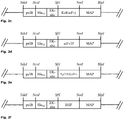
- the components A and B are chemically coupled in order to yield a conjugate or fused to each other by genetic engineering to obtain a fusion protein, such as exemplified by the proteins having one of the amino acid sequences encoded by the polynucleotide of one of the Seq ID Nos. 3, 7, 11 and 13.
- Further conjugates disclosed herein may be formed by the following representatives: a ligand binding to a cluster of differentiation antigens (CD-antigens, Table 1) and KIF1, a ligand binding to a cluster of differentiation antigens (CD-antigens, Table 1) and KIF2A, a ligand binding to a cluster of differentiation antigens (CD-antigens, Table 1) and KIF4A, a ligand binding to a cluster of differentiation antigens (CD-antigens, Table 1) and KIF5A, a ligand binding to a cluster of differentiation antigens (CD-antigens, Table 1) and KIF5B, a ligand binding to a cluster of differentiation antigens (CD-antigens, Table 1) and KIF6, a ligand binding to a cluster of differentiation antigens (CD-antigens, Table 1) and KIF7, a ligand binding to a cluster of differentiation antigens (CD-antigens, Table 1) and KIF9, a ligand binding
- the compound of the invention is formed by the combination of a ligand binding to the following clusters of differentiation: CD30 or CD64; and KIF1.
- the compound of the invention is formed by the combination of a ligand binding to the following clusters of differentiation: CD30 or CD64; and KIF2A.
- the compound of the invention is formed by the combination of a ligand binding to the following clusters of differentiation: CD30 or CD649; and KIF4A.
- the compound of the invention is formed by the combination of a ligand binding to the following clusters of differentiation: CD30 or CD64; and KIF5A.
- the compound of the invention is formed by the combination of a ligand binding to the following clusters of differentiation: CD30 or CD64; and KIF5B.
- the compound of the invention is formed by the combination of a ligand binding to the following clusters of differentiation: CD30 or CD64; and KIF6.
- the compound of the invention is formed by the combination of a ligand binding to the following clusters of differentiation: CD30 or CD64; and KIF7.
- the compound of the invention is formed by the combination of a ligand binding to the following clusters of differentiation: CD30 or CD64; and KIF9.
- the compound of the invention is formed by the combination of a ligand binding to the following clusters of differentiation: CD30 or CD64; and KIF10.
- the compound of the invention is formed by the combination of a ligand binding to the following clusters of differentiation: CD30 or CD64; and KIF11.
- the compound of the invention is formed by the combination of a ligand binding to the following clusters of differentiation: CD30 or CD64; and KIF12.
- the compound of the invention is formed by the combination of a ligand binding to the following clusters of differentiation: CD30 or CD64; and MAP11.
- the compound of the invention is formed by the combination of a ligand binding to the following clusters of differentiation: CD30 or CD64; and KIF13B.
- the compound of the invention is formed by the combination of a ligand binding to the following clusters of differentiation: CD30 or CD64; and KIF14.
- the compound of the invention is formed by the combination of a ligand binding to the following clusters of differentiation: CD30 or CD64; and KIF15
- the compound of the invention is formed by the combination of a ligand binding to the following clusters of differentiation: CD30 or CD64; and KIF17.
- the compound of the invention is formed by the combination of a ligand binding to the following clusters of differentiation: CD30 or CD64; and KIF19.
- the compound of the invention is formed by the combination of a ligand binding to the following clusters of differentiation: CD30 or CD64; and KIF22.
- the compound of the invention is formed by the combination of a ligand binding to the following clusters of differentiation: CD30 or CD64; and KIF23.
- the compound of the invention is formed by the combination of a ligand binding to the following clusters of differentiation: CD30 or CD64; and KIF24.
- the compound of the invention is formed by the combination of a ligand binding to the following clusters of differentiation: CD30 or CD64; and KIF25.
- the compound of the invention is formed by the combination of a ligand binding to the following clusters of differentiation: CD30 or CD64; and KIF26.
- the compound of the invention is formed by the combination of a ligand binding to the following clusters of differentiation: CD30 or CD64; and KIF27.
- the compound of the invention is formed by the combination of a ligand binding to the following clusters of differentiation: CD30 or CD64; and KIFC1.
- the compound of the invention is formed by the combination of a ligand binding to the following clusters of differentiation: CD30 or CD64; and KIFC2.
- the compound of the invention is formed by the combination of a ligand binding to the following clusters of differentiation: CD30 or CD64; and KIFC3.
- the compound of the invention is formed by the combination of a ligand binding to the following clusters of differentiation: CD30 or CD64; and DNAH1.
- the compound of the invention is formed by the combination of a ligand binding to the following clusters of differentiation: CD30 or CD64; and DNAH2.
- the compound of the invention is formed by the combination of a ligand binding to the following clusters of differentiationCD30 or CD64; and DNAH3.
- the compound of the invention is formed by the combination of a ligand binding to the following clusters of differentiation: CD30 or CD64; and DNAH5.
- the compound of the invention is formed by the combination of a ligand binding to the following clusters of differentiationCD30 or CD64; and DNAH6.
- the compound of the invention is formed by the combination of a ligand binding to the following clusters of differentiation: CD30 or CD64; and DNAH7.
- the compound of the invention is formed by the combination of a ligand binding to the following clusters of differentiation: CD30 or CD64; and DNAH8.
- the compound of the invention is formed by the combination of a ligand binding to the following clusters of differentiation: CD30 or CD64; and DNAH9.
- the compound of the invention is formed by the combination of a ligand binding to the following clusters of differentiation: CD30 or CD64; and DNAH10.
- the compound of the invention is formed by the combination of a ligand binding to the following clusters of differentiation: CD30 or CD64; and DNAH11.
- the compound of the invention is formed by the combination of a ligand binding to the following clusters of differentiation: CD30 or CD64; and DNAH12.
- the compound of the invention is formed by the combination of a ligand binding to the following clusters of differentiation: CD30 or CD64; and DNAH14.
- the compound of the invention is formed by the combination of a ligand binding to the following clusters of differentiation: CD30 or CD64; and DNAI1.
- the compound of the invention is formed by the combination of a ligand binding to the following clusters of differentiation: CD30 or CD64; and DNAI2.
- the compound of the invention is formed by the combination of a ligand binding to the following clusters of differentiation: CD30 or CD64; and DNAL1.
- the compound of the invention is formed by the combination of a ligand binding to the following clusters of differentiationCD30 or CD64; and DNAL4.
- the compound of the invention is formed by the combination of a ligand binding to the following clusters of differentiation: CD30 or CD64; and Tau.
- the compound of the invention is formed by the combination of a ligand binding to the following clusters of differentiation: CD30 or CD64; and Stathmin.
- the compound of the invention is formed by the combination of a ligand binding to the following clusters of differentiation: CD30 or CD64; and Gephyrin.
- the compound of the invention is formed by the combination of a ligand binding to the following clusters of differentiation: CD30 or CD64; and MAP1a.
- the compound of the invention is formed by the combination of a ligand binding to the following clusters of differentiation: CD30 or CD64; and MAP1b.
- the compound of the invention is formed by the combination of a ligand binding to the following clusters of differentiation: CD30 or CD64; and MAP2.
- the compound of the invention is formed by the combination of a ligand binding to the following clusters of differentiation: CD30 or CD64; and MAP4.
- the compound of the invention is formed by the combination of a ligand binding to the following clusters of differentiation: CD30 or CD64; and XMAP5.
- the compound of the invention is formed by the combination of a ligand binding to the following clusters of differentiation: CD30 or CD64; and MAP6.
- the compound of the invention is formed by the combination of a ligand binding to the following clusters of differentiation: CD30 or CD64; and MAP7.
- the compound of the invention is formed by the combination of a ligand binding to the following clusters of differentiation: CD30 or CD64; and MAP8.
- the compound of the invention is formed by the combination of a ligand binding to the following clusters of differentiation: CD30 or CD64; and MAP9.
- the compound of the invention is formed by the combination of a ligand binding to the following clusters of differentiation: CD30 or CD64; and DCTN1.
- the compound of the invention is formed by the combination of a ligand binding to the following clusters of differentiation: CD30 or CD64; and TUBA1.
- the compound of the invention is formed by the combination of a ligand binding to the following clusters of differentiation: CD30 or CD64; and TUBA2.
- the compound of the invention is formed by the combination of a ligand binding to the following clusters of differentiation: CD30 or CD64; and TUBA3.
- the compound of the invention is formed by the combination of a ligand binding to the following clusters of differentiation: CD30 or CD64; and TUBA4.
- the compound of the invention is formed by the combination of a ligand binding to the following clusters of differentiation: CD30 or CD64; and TUBA6.
- the compound of the invention is formed by the combination of a ligand binding to the following clusters of differentiation: CD30 or CD64; and TUBA8.
- the compound of the invention is formed by the combination of a ligand binding to the following clusters of differentiation: CD30 or CD64; and TEKT1.
- the compound of the invention is formed by the combination of a ligand binding to the following clusters of differentiation: CD30 or CD64; and TEKT2.
- the compound of the invention is formed by the combination of a ligand binding to the following clusters of differentiation: CD30 or CD64; and TEKT3.
- the compound of the invention is formed by the combination of a ligand binding to the following clusters of differentiation: CD30 or CD64; and TEKT4.
- the compound of the invention is formed by the combination of a ligand binding to the following clusters of differentiation: CD30 or CD64; and TEKT5.
- the compound of the invention is formed by the combination of a ligand binding to the following clusters of differentiation: CD30 or CD64; and DNM1.
- the compound of the invention is formed by the combination of a ligand binding to the following clusters of differentiation: CD30 or CD64; and DNM2.
- the compound of the invention is formed by the combination of a ligand binding to the following clusters of differentiation: CD30 or CD64; and DNM3.
- a compound disclosed herein may be formed by the combination of the following chemokines: Members of table 2; and KIF1.
- a compound disclosed herein may be formed by the combination of the following chemokines: Members of table 2; and KIF2A.
- a compound disclosed herein may be formed by the combination of the following chemokines: Members of table 2; and KIF4A.
- a compound disclosed herein may be formed by the combination of the following chemokines: Members of table 2; and KIF5A.
- a compound disclosed herein may be formed by the combination of the following chemokines: Members of table 2; and KIF5B.
- a compound disclosed herein may be formed by the combination of the following chemokines: Members of table 2; and KIF6.
- a compound disclosed herein may be formed by the combination of the following chemokines: Members of table 2; and KIF7.
- a compound disclosed herein may be formed by the combination of the following chemokines: Members of table 2; and KIF9.
- a compound disclosed herein may be formed by the combination of the following chemokines: Members of table 2; and KIF10.
- a compound disclosed herein may be formed by the combination of the following chemokines: Members of table 2; and KIF11.
- a compound disclosed herein may be formed by the combination of the following chemokines: Members of table 2; and KIF12.
- a compound disclosed herein may be formed by the combination of the following chemokines: Members of table 2; and KIF13B.
- a compound disclosed herein may be formed by the combination of the following chemokines: Members of table 2; and KIF14.
- a compound disclosed herein may be formed by the combination of the following chemokines: Members of table 2; and KIF15.
- a compound disclosed herein may be formed by the combination of the following chemokines: Members of table 2; and KIF17.
- a compound disclosed herein may be formed by the combination of the following chemokines: Members of table 2; and KIF19.
- a compound disclosed herein may be formed by the combination of the following chemokines: Members of table 2; and KIF22.
- a compound disclosed herein may be formed by the combination of the following chemokines: Members of table 2; and KIF23.
- a compound disclosed herein may be formed by the combination of the following chemokines: Members of table 2; and KIF24.
- a compound disclosed herein may be formed by the combination of the following chemokines: Members of table 2; and KIF25.
- a compound disclosed herein may be formed by the combination of the following chemokines: Members of table 2; and KIF26.
- a compound disclosed herein may be formed by the combination of the following chemokines: Members of table 2; and KIF27.
- a compound disclosed herein may be formed by the combination of the following chemokines: Members of table 2; and KIFC1.
- a compound disclosed herein may be formed by the combination of the following chemokines: Members of table 2; and KIFC2.
- a compound disclosed herein may be formed by the combination of the following chemokines: Members of table 2; and KIFC3.
- a compound disclosed herein may be formed by the combination of the following chemokines: Members of table 2; and DNAH1.
- a compound disclosed herein may be formed by the combination of the following chemokines: Members of table 2; and DNAH2.
- a compound disclosed herein may be formed by the combination of the following chemokines: Members of table 2; and DNAH3.
- a compound disclosed herein may be formed by the combination of the following chemokines: Members of table 2; and DNAH5.
- a compound disclosed herein may be formed by the combination of the following chemokines: Members of table 2; and DNAH6.
- a compound disclosed herein may be formed by the combination of the following chemokines: Members of table 2; and DNAH7.
- a compound disclosed herein may be formed by the combination of the following chemokines: Members of table 2; and DNAH8.
- a compound disclosed herein may be formed by the combination of the following chemokines: Members of table 2; and DNAH9.
- a compound disclosed herein may be formed by the combination of the following chemokines: Members of table 2; and DNAH10.
- a compound disclosed herein may be formed by the combination of the following chemokines: Members of table 2; and DNAH11.
- a compound disclosed herein may be formed by the combination of the following chemokines: Members of table 2; and DNAH12.
- a compound disclosed herein may be formed by the combination of the following chemokines: Members of table 2; and DNAH14.
- a compound disclosed herein may be formed by the combination of the following chemokines: Members of table 2; and DNAI1.
- a compound disclosed herein may be formed by the combination of the following chemokines: Members of table 2; and DNAI2.
- a compound disclosed herein may be formed by the combination of the following chemokines: Members of table 2; and DNAL1.
- a compound disclosed herein may be formed by the combination of the following chemokines: Members of table 2; and DNAL4.
- a compound disclosed herein may be formed by the combination of the following chemokines: Members of table 2; and Tau.
- a compound disclosed herein may be formed by the combination of the following chemokines: Members of table 2; and Stathmin.
- a compound disclosed herein may be formed by the combination of the following chemokines: Members of table 2; and Gephyrin.
- a compound disclosed herein may be formed by the combination of the following chemokines: Members of table 2; and MAP1a.
- a compound disclosed herein may be formed by the combination of the following chemokines: Members of table 2; and MAP1b.
- a compound disclosed herein may be formed by the combination of the following chemokines: Members of table 2; and MAP2.
- a compound disclosed herein may be formed by the combination of the following chemokines: Members of table 2; and MAP4.
- a compound disclosed herein may be formed by the combination of the following chemokines: Members of table 2; and XMAP5.
- a compound disclosed herein may be formed by the combination of the following chemokines: Members of table 2; and MAP6.
- a compound disclosed herein may be formed by the combination of the following chemokines: Members of table 2; and MAP7.
- a compound disclosed herein may be formed by the combination of the following chemokines: Members of table 2; and MAP8.
- a compound disclosed herein may be formed by the combination of the following chemokines: Members of table 2; and MAP9.
- a compound disclosed herein may be formed by the combination of the following chemokines: Members of table 2; and DCTN1.
- a compound disclosed herein may be formed by the combination of the following chemokines: Members of table 2; and TUBA1.
- a compound disclosed herein may be formed by the combination of the following chemokines: Members of table 2; and TUBA2.
- a compound disclosed herein may be formed by the combination of the following chemokines: Members of table 2; and TUBA3.
- a compound disclosed herein may be formed by the combination of the following chemokines: Members of table 2; and TUBA4.
- a compound disclosed herein may be formed by the combination of the following chemokines: Members of table 2; and TUBA6.
- a compound disclosed herein may be formed by the combination of the following chemokines: Members of table 2; and TUBA8.
- a compound disclosed herein may be formed by the combination of the following chemokines: Members of table 2; and TEKT1.
- a compound disclosed herein may be formed by the combination of the following chemokines: Members of table 2; and TEKT2.
- a compound disclosed herein may be formed by the combination of the following chemokines: Members of table 2; and TEKT3.
- a compound disclosed herein may be formed by the combination of the following chemokines: Members of table 2; and TEKT4.
- a compound disclosed herein may be formed by the combination of the following chemokines: Members of table 2; and TEKT5.
- a compound disclosed herein may be formed by the combination of the following chemokines: Members of table 2; and DNM1.
- a compound disclosed herein may be formed by the combination of the following chemokines: Members of table 2; and DNM2.
- a compound disclosed herein may be formed by the combination of the following chemokines: Members of table 2; and DNM3.
- a compound disclosed herein may be formed by the combination of the following interleukins: IL-1; IL-2; IL-3; IL-4; IL-5; IL-6; IL-7; IL-8; IL-9; IL-10; IL-11; IL-12; IL-13; IL-14; IL-15; IL-16; IL-17; IL-18; IL-19; IL-20; IL-21; IL-22; IL-23; IL-24; IL-25; IL-26; IL-27; IL-28; IL-29; IL-30; IL-31; IL-32; IL-33; IL-35; and KIF1.
- a compound disclosed herein may be formed by the combination of the following interleukins: IL-1; IL-2; IL-3; IL-4; IL-5; IL-6; IL-7; IL-8; IL-9; IL-10; IL-11; IL-12; IL-13; IL-14; IL-15; IL-16; IL-17; IL-18; IL-19; IL-20; IL-21; IL-22; IL-23; IL-24; IL-25; IL-26; IL-27; IL-28; IL-29; IL-30; IL-31; IL-32; IL-33; IL-35; and KIF2A.
- a compound disclosed herein may be formed by the combination of the following interleukins: IL-1; IL-2; IL-3; IL-4; IL-5; IL-6; IL-7; IL-8; IL-9; IL-10; IL-11; IL-12; IL-13; IL-14; IL-15; IL-16; IL-17; IL-18; IL-19; IL-20; IL-21; IL-22; IL-23; IL-24; IL-25; IL-26; IL-27; IL-28; IL-29; IL-30; IL-31; IL-32; IL-33; IL-35; and KIF4A.
- a compound disclosed herein may be formed by the combination of the following interleukins: IL-1; IL-2; IL-3; IL-4; IL-5; IL-6; IL-7; IL-8; IL-9; IL-10; IL-11; IL-12; IL-13; IL-14; IL-15; IL-16; IL-17; IL-18; IL-19; IL-20; IL-21; IL-22; IL-23; IL-24; IL-25; IL-26; IL-27; IL-28; IL-29; IL-30; IL-31; IL-32; IL-33; IL-35; and KIF5A.
- a compound disclosed herein may be formed by the combination of the following interleukins: IL-1; IL-2; IL-3; IL-4; IL-5; IL-6; IL-7; IL-8; IL-9; IL-10; IL-11; IL-12; IL-13; IL-14; IL-15; IL-16; IL-17; IL-18; IL-19; IL-20; IL-21; IL-22; IL-23; IL-24; IL-25; IL-26; IL-27; IL-28; IL-29; IL-30; IL-31; IL-32; IL-33; IL-35; and KIF5B.
- a compound disclosed herein may be formed by the combination of the following interleukins: IL-1; IL-2; IL-3; IL-4; IL-5; IL-6; IL-7; IL-8; IL-9; IL-10; IL-11; IL-12; IL-13; IL-14; IL-15; IL-16; IL-17; IL-18; IL-19; IL-20; IL-21; IL-22; IL-23; IL-24; IL-25; IL-26; IL-27; IL-28; IL-29; IL-30; IL-31; IL-32; IL-33; IL-35; and KIF6.
- a compound disclosed herein may be formed by the combination of the following interleukins: IL-1; IL-2; IL-3; IL-4; IL-5; IL-6; IL-7; IL-8; IL-9; IL-10; IL-11; IL-12; IL-13; IL-14; IL-15; IL-16; IL-17; IL-18; IL-19; IL-20; IL-21; IL-22; IL-23; IL-24; IL-25; IL-26; IL-27; IL-28; IL-29; IL-30; IL-31; IL-32; IL-33; IL-35; and KIF7.
- a compound disclosed herein may be formed by the combination of the following interleukins: IL-1; IL-2; IL-3; IL-4; IL-5; IL-6; IL-7; IL-8; IL-9; IL-10; IL-11; IL-12; IL-13; IL-14; IL-15; IL-16; IL-17; IL-18; IL-19; IL-20; IL-21; IL-22; IL-23; IL-24; IL-25; IL-26; IL-27; IL-28; IL-29; IL-30; IL-31; IL-32; IL-33; IL-35; and KIF9.
- a compound disclosed herein may be formed by the combination of the following interleukins: IL-1; IL-2; IL-3; IL-4; IL-5; IL-6; IL-7; IL-8; IL-9; IL-10; IL-11; IL-12; IL-13; IL-14; IL-15; IL-16; IL-17; IL-18; IL-19; IL-20; IL-21; IL-22; IL-23; IL-24; IL-25; IL-26; IL-27; IL-28; IL-29; IL-30; IL-31; IL-32; IL-33; IL-35; and KIF10.
- a compound disclosed herein may be formed by the combination of the following interleukins: IL-1; IL-2; IL-3; IL-4; IL-5; IL-6; IL-7; IL-8; IL-9; IL-10; IL-11; IL-12; IL-13; IL-14; IL-15; IL-16; IL-17; IL-18; IL-19; IL-20; IL-21; IL-22; IL-23; IL-24; IL-25; IL-26; IL-27; IL-28; IL-29; IL-30; IL-31; IL-32; IL-33; IL-35; and KIF11.
- a compound disclosed herein may be formed by the combination of the following interleukins: IL-1; IL-2; IL-3; IL-4; IL-5; IL-6; IL-7; IL-8; IL-9; IL-10; IL-11; IL-12; IL-13; IL-14; IL-15; IL-16; IL-17; IL-18; IL-19; IL-20; IL-21; IL-22; IL-23; IL-24; IL-25; IL-26; IL-27; IL-28; IL-29; IL-30; IL-31; IL-32; IL-33; IL-35; and KIF12.
- a compound disclosed herein may be formed by the combination of the following interleukins: IL-1; IL-2; IL-3; IL-4; IL-5; IL-6; IL-7; IL-8; IL-9; IL-10; IL-11; IL-12; IL-13; IL-14; IL-15; IL-16; IL-17; IL-18; IL-19; IL-20; IL-21; IL-22; IL-23; IL-24; IL-25; IL-26; IL-27; IL-28; IL-29; IL-30; IL-31; IL-32; IL-33; IL-35; and KIF13B.
- a compound disclosed herein may be formed by the combination of the following interleukins: IL-1; IL-2; IL-3; IL-4; IL-5; IL-6; IL-7; IL-8; IL-9; IL-10; IL-11; IL-12; IL-13; IL-14; IL-15; IL-16; IL-17; IL-18; IL-19; IL-20; IL-21; IL-22; IL-23; IL-24; IL-25; IL-26; IL-27; IL-28; IL-29; IL-30; IL-31; IL-32; IL-33; IL-35; and KIF14.
- a compound disclosed herein may be formed by the combination of the following interleukins: IL-1; IL-2; IL-3; IL-4; IL-5; IL-6; IL-7; IL-8; IL-9; IL-10; IL-11; IL-12; IL-13; IL-14; IL-15; IL-16; IL-17; IL-18; IL-19; IL-20; IL-21; IL-22; IL-23; IL-24; IL-25; IL-26; IL-27; IL-28; IL-29; IL-30; IL-31; IL-32; IL-33; IL-35; and KIF15.
- a compound disclosed herein may be formed by the combination of the following interleukins: IL-1; IL-2; IL-3; IL-4; IL-5; IL-6; IL-7; IL-8; IL-9; IL-10; IL-11; IL-12; IL-13; IL-14; IL-15; IL-16; IL-17; IL-18; IL-19; IL-20; IL-21; IL-22; IL-23; IL-24; IL-25; IL-26; IL-27; IL-28; IL-29; IL-30; IL-31; IL-32; IL-33; IL-35; and KIF17.
- a compound disclosed herein may be formed by the combination of the following interleukins: IL-1; IL-2; IL-3; IL-4; IL-5; IL-6; IL-7; IL-8; IL-9; IL-10; IL-11; IL-12; IL-13; IL-14; IL-15; IL-16; IL-17; IL-18; IL-19; IL-20; IL-21; IL-22; IL-23; IL-24; IL-25; IL-26; IL-27; IL-28; IL-29; IL-30; IL-31; IL-32; IL-33; IL-35; and KIF19.
- a compound disclosed herein may be formed by the combination of the following interleukins: IL-1; IL-2; IL-3; IL-4; IL-5; IL-6; IL-7; IL-8; IL-9; IL-10; IL-11; IL-12; IL-13; IL-14; IL-15; IL-16; IL-17; IL-18; IL-19; IL-20; IL-21; IL-22; IL-23; IL-24; IL-25; IL-26; IL-27; IL-28; IL-29; IL-30; IL-31; IL-32; IL-33; IL-35; and KIF22.
- a compound disclosed herein may be formed by the combination of the following interleukins: IL-1; IL-2; IL-3; IL-4; IL-5; IL-6; IL-7; IL-8; IL-9; IL-10; IL-11; IL-12; IL-13; IL-14; IL-15; IL-16; IL-17; IL-18; IL-19; IL-20; IL-21; IL-22; IL-23; IL-24; IL-25; IL-26; IL-27; IL-28; IL-29; IL-30; IL-31; IL-32; IL-33; IL-35; and KIF23.
- a compound disclosed herein may be formed by the combination of the following interleukins: IL-1; IL-2; IL-3; IL-4; IL-5; IL-6; IL-7; IL-8; IL-9; IL-10; IL-11; IL-12; IL-13; IL-14; IL-15; IL-16; IL-17; IL-18; IL-19; IL-20; IL-21; IL-22; IL-23; IL-24; IL-25; IL-26; IL-27; IL-28; IL-29; IL-30; IL-31; IL-32; IL-33; IL-35; and KIF24.
- a compound disclosed herein may be formed by the combination of the following interleukins: IL-1; IL-2; IL-3; IL-4; IL-5; IL-6; IL-7; IL-8; IL-9; IL-10; IL-11; IL-12; IL-13; IL-14; IL-15; IL-16; IL-17; IL-18; IL-19; IL-20; IL-21; IL-22; IL-23; IL-24; IL-25; IL-26; IL-27; IL-28; IL-29; IL-30; IL-31; IL-32; IL-33; IL-35; and KIF25.
- a compound disclosed herein may be formed by the combination of the following interleukins: IL-1; IL-2; IL-3; IL-4; IL-5; IL-6; IL-7; IL-8; IL-9; IL-10; IL-11; IL-12; IL-13; IL-14; IL-15; IL-16; IL-17; IL-18; IL-19; IL-20; IL-21; IL-22; IL-23; IL-24; IL-25; IL-26; IL-27; IL-28; IL-29; IL-30; IL-31; IL-32; IL-33; IL-35; and KIF26.
- a compound disclosed herein may be formed by the combination of the following interleukins: IL-1; IL-2; IL-3; IL-4; IL-5; IL-6; IL-7; IL-8; IL-9; IL-10; IL-11; IL-12; IL-13; IL-14; IL-15; IL-16; IL-17; IL-18; IL-19; IL-20; IL-21; IL-22; IL-23; IL-24; IL-25; IL-26; IL-27; IL-28; IL-29; IL-30; IL-31; IL-32; IL-33; IL-35; and KIF27.
- a compound disclosed herein may be formed by the combination of the following interleukins: IL-1; IL-2; IL-3; IL-4; IL-5; IL-6; IL-7; IL-8; IL-9; IL-10; IL-11; IL-12; IL-13; IL-14; IL-15; IL-16; IL-17; IL-18; IL-19; IL-20; IL-21; IL-22; IL-23; IL-24; IL-25; IL-26; IL-27; IL-28; IL-29; IL-30; IL-31; IL-32; IL-33; IL-35; and KIFC1.
- a compound disclosed herein may be formed by the combination of the following interleukins: IL-1; IL-2; IL-3; IL-4; IL-5; IL-6; IL-7; IL-8; IL-9; IL-10; IL-11; IL-12; IL-13; IL-14; IL-15; IL-16; IL-17; IL-18; IL-19; IL-20; IL-21; IL-22; IL-23; IL-24; IL-25; IL-26; IL-27; IL-28; IL-29; IL-30; IL-31; IL-32; IL-33; IL-35; and KIFC2.
- a compound disclosed herein may be formed by the combination of the following interleukins: IL-1; IL-2; IL-3; IL-4; IL-5; IL-6; IL-7; IL-8; IL-9; IL-10; IL-11; IL-12; IL-13; IL-14; IL-15; IL-16; IL-17; IL-18; IL-19; IL-20; IL-21; IL-22; IL-23; IL-24; IL-25; IL-26; IL-27; IL-28; IL-29; IL-30; IL-31; IL-32; IL-33; IL-35; and KIFC3.
- a compound disclosed herein may be formed by the combination of the following interleukins: IL-1; IL-2; IL-3; IL-4; IL-5; IL-6; IL-7; IL-8; IL-9; IL-10; IL-11; IL-12; IL-13; IL-14; IL-15; IL-16; IL-17; IL-18; IL-19; IL-20; IL-21; IL-22; IL-23; IL-24; IL-25; IL-26; IL-27; IL-28; IL-29; IL-30; IL-31; IL-32; IL-33; IL-35; and DNAH1.
- a compound disclosed herein may be formed by the combination of the following interleukins: IL-1; IL-2; IL-3; IL-4; IL-5; IL-6; IL-7; IL-8; IL-9; IL-10; IL-11; IL-12; IL-13; IL-14; IL-15; IL-16; IL-17; IL-18; IL-19; IL-20; IL-21; IL-22; IL-23; IL-24; IL-25; IL-26; IL-27; IL-28; IL-29; IL-30; IL-31; IL-32; IL-33; IL-35; and DNAH2.
- a compound disclosed herein may be formed by the combination of the following interleukins: IL-1; IL-2; IL-3; IL-4; IL-5; IL-6; IL-7; IL-8; IL-9; IL-10; IL-11; IL-12; IL-13; IL-14; IL-15; IL-16; IL-17; IL-18; IL-19; IL-20; IL-21; IL-22; IL-23; IL-24; IL-25; IL-26; IL-27; IL-28; IL-29; IL-30; IL-31; IL-32; IL-33; IL-35; and DNAH3.
- a compound disclosed herein may be formed by the combination of the following interleukins: IL-1; IL-2; IL-3; IL-4; IL-5; IL-6; IL-7; IL-8; IL-9; IL-10; IL-11; IL-12; IL-13; IL-14; IL-15; IL-16; IL-17; IL-18; IL-19; IL-20; IL-21; IL-22; IL-23; IL-24; IL-25; IL-26; IL-27; IL-28; IL-29; IL-30; IL-31; IL-32; IL-33; IL-35; and DNAH5.
- a compound disclosed herein may be formed by the combination of the following interleukins: IL-1; IL-2; IL-3; IL-4; IL-5; IL-6; IL-7; IL-8; IL-9; IL-10; IL-11; IL-12; IL-13; IL-14; IL-15; IL-16; IL-17; IL-18; IL-19; IL-20; IL-21; IL-22; IL-23; IL-24; IL-25; IL-26; IL-27; IL-28; IL-29; IL-30; IL-31; IL-32; IL-33; IL-35; and DNAH6.
- a compound disclosed herein may be formed by the combination of the following interleukins: IL-1; IL-2; IL-3; IL-4; IL-5; IL-6; IL-7; IL-8; IL-9; IL-10; IL-11; IL-12; IL-13; IL-14; IL-15; IL-16; IL-17; IL-18; IL-19; IL-20; IL-21; IL-22; IL-23; IL-24; IL-25; IL-26; IL-27; IL-28; IL-29; IL-30; IL-31; IL-32; IL-33; IL-35; and DNAH7.
- a compound disclosed herein may be formed by the combination of the following interleukins: IL-1; IL-2; IL-3; IL-4; IL-5; IL-6; IL-7; IL-8; IL-9; IL-10; IL-11; IL-12; IL-13; IL-14; IL-15; IL-16; IL-17; IL-18; IL-19; IL-20; IL-21; IL-22; IL-23; IL-24; IL-25; IL-26; IL-27; IL-28; IL-29; IL-30; IL-31; IL-32; IL-33; IL-35; and DNAH8.
- a compound disclosed herein may be formed by the combination of the following interleukins: IL-1; IL-2; IL-3; IL-4; IL-5; IL-6; IL-7; IL-8; IL-9; IL-10; IL-11; IL-12; IL-13; IL-14; IL-15; IL-16; IL-17; IL-18; IL-19; IL-20; IL-21; IL-22; IL-23; IL-24; IL-25; IL-26; IL-27; IL-28; IL-29; IL-30; IL-31; IL-32; IL-33; IL-35; and DNAH9.
- a compound disclosed herein may be formed by the combination of the following interleukins: IL-1; IL-2; IL-3; IL-4; IL-5; IL-6; IL-7; IL-8; IL-9; IL-10; IL-11; IL-12; IL-13; IL-14; IL-15; IL-16; IL-17; IL-18; IL-19; IL-20; IL-21; IL-22; IL-23; IL-24; IL-25; IL-26; IL-27; IL-28; IL-29; IL-30; IL-31; IL-32; IL-33; IL-35; and DNAH10.
- a compound disclosed herein may be formed by the combination of the following interleukins: IL-1; IL-2; IL-3; IL-4; IL-5; IL-6; IL-7; IL-8; IL-9; IL-10; IL-11; IL-12; IL-13; IL-14; IL-15; IL-16; IL-17; IL-18; IL-19; IL-20; IL-21; IL-22; IL-23; IL-24; IL-25; IL-26; IL-27; IL-28; IL-29; IL-30; IL-31; IL-32; IL-33; IL-35; and DNAH11.
- a compound disclosed herein may be formed by the combination of the following interleukins: IL-1; IL-2; IL-3; IL-4; IL-5; IL-6; IL-7; IL-8; IL-9; IL-10; IL-11; IL-12; IL-13; IL-14; IL-15; IL-16; IL-17; IL-18; IL-19; IL-20; IL-21; IL-22; IL-23; IL-24; IL-25; IL-26; IL-27; IL-28; IL-29; IL-30; IL-31; IL-32; IL-33; IL-35; and DNAH12.
- a compound disclosed herein may be formed by the combination of the following interleukins: IL-1; IL-2; IL-3; IL-4; IL-5; IL-6; IL-7; IL-8; IL-9; IL-10; IL-11; IL-12; IL-13; IL-14; IL-15; IL-16; IL-17; IL-18; IL-19; IL-20; IL-21; IL-22; IL-23; IL-24; IL-25; IL-26; IL-27; IL-28; IL-29; IL-30; IL-31; IL-32; IL-33; IL-35; and DNAH14.
- a compound disclosed herein may be formed by the combination of the following interleukins: IL-1; IL-2; IL-3; IL-4; IL-5; IL-6; IL-7; IL-8; IL-9; IL-10; IL-11; IL-12; IL-13; IL-14; IL-15; IL-16; IL-17; IL-18; IL-19; IL-20; IL-21; IL-22; IL-23; IL-24; IL-25; IL-26; IL-27; IL-28; IL-29; IL-30; IL-31; IL-32; IL-33; IL-35; and DNAI1.
- a compound disclosed herein may be formed by the combination of the following interleukins: IL-1; IL-2; IL-3; IL-4; IL-5; IL-6; IL-7; IL-8; IL-9; IL-10; IL-11; IL-12; IL-13; IL-14; IL-15; IL-16; IL-17; IL-18; IL-19; IL-20; IL-21; IL-22; IL-23; IL-24; IL-25; IL-26; IL-27; IL-28; IL-29; IL-30; IL-31; IL-32; IL-33; IL-35; and DNAI2.
- a compound disclosed herein may be formed by the combination of the following interleukins: IL-1; IL-2; IL-3; IL-4; IL-5; IL-6; IL-7; IL-8; IL-9; IL-10; IL-11; IL-12; IL-13; IL-14; IL-15; IL-16; IL-17; IL-18; IL-19; IL-20; IL-21; IL-22; IL-23; IL-24; IL-25; IL-26; IL-27; IL-28; IL-29; IL-30; IL-31; IL-32; IL-33; IL-35; and DNAL1.
- a compound disclosed herein may be formed by the combination of the following interleukins: IL-1; IL-2; IL-3; IL-4; IL-5; IL-6; IL-7; IL-8; IL-9; IL-10; IL-11; IL-12; IL-13; IL-14; IL-15; IL-16; IL-17; IL-18; IL-19; IL-20; IL-21; IL-22; IL-23; IL-24; IL-25; IL-26; IL-27; IL-28; IL-29; IL-30; IL-31; IL-32; IL-33; IL-35; and DNAL4.
- a compound disclosed herein may be formed by the combination of the following interleukins: IL-1; IL-2; IL-3; IL-4; IL-5; IL-6; IL-7; IL-8; IL-9; IL-10; IL-11; IL-12; IL-13; IL-14; IL-15; IL-16; IL-17; IL-18; IL-19; IL-20; IL-21; IL-22; IL-23; IL-24; IL-25; IL-26; IL-27; IL-28; IL-29; IL-30; IL-31; IL-32; IL-33; IL-35; and Tau.
- a compound disclosed herein may be formed by the combination of the following interleukins: IL-1; IL-2; IL-3; IL-4; IL-5; IL-6; IL-7; IL-8; IL-9; IL-10; IL-11; IL-12; IL-13; IL-14; IL-15; IL-16; IL-17; IL-18; IL-19; IL-20; IL-21; IL-22; IL-23; IL-24; IL-25; IL-26; IL-27; IL-28; IL-29; IL-30; IL-31; IL-32; IL-33; IL-35; and Stathmin.
- a compound disclosed herein may be formed by the combination of the following interleukins: IL-1; IL-2; IL-3; IL-4; IL-5; IL-6; IL-7; IL-8; IL-9; IL-10; IL-11; IL-12; IL-13; IL-14; IL-15; IL-16; IL-17; IL-18; IL-19; IL-20; IL-21; IL-22; IL-23; IL-24; IL-25; IL-26; IL-27; IL-28; IL-29; IL-30; IL-31; IL-32; IL-33; IL-35; and Gephyrin.
- a compound disclosed herein may be formed by the combination of the following interleukins: IL-1; IL-2; IL-3; IL-4; IL-5; IL-6; IL-7; IL-8; IL-9; IL-10; IL-11; IL-12; IL-13; IL-14; IL-15; IL-16; IL-17; IL-18; IL-19; IL-20; IL-21; IL-22; IL-23; IL-24; IL-25; IL-26; IL-27; IL-28; IL-29; IL-30; IL-31; IL-32; IL-33; IL-35; and MAP1a.
- a compound disclosed herein may be formed by the combination of the following interleukins: IL-1; IL-2; IL-3; IL-4; IL-5; IL-6; IL-7; IL-8; IL-9; IL-10; IL-11; IL-12; IL-13; IL-14; IL-15; IL-16; IL-17; IL-18; IL-19; IL-20; IL-21; IL-22; IL-23; IL-24; IL-25; IL-26; IL-27; IL-28; IL-29; IL-30; IL-31; IL-32; IL-33; IL-35; and MAP1b.
- a compound disclosed herein may be formed by the combination of the following interleukins: IL-1; IL-2; IL-3; IL-4; IL-5; IL-6; IL-7; IL-8; IL-9; IL-10; IL-11; IL-12; IL-13; IL-14; IL-15; IL-16; IL-17; IL-18; IL-19; IL-20; IL-21; IL-22; IL-23; IL-24; IL-25; IL-26; IL-27; IL-28; IL-29; IL-30; IL-31; IL-32; IL-33; IL-35; and MAP2.
- a compound disclosed herein may be formed by the combination of the following interleukins: IL-1; IL-2; IL-3; IL-4; IL-5; IL-6; IL-7; IL-8; IL-9; IL-10; IL-11; IL-12; IL-13; IL-14; IL-15; IL-16; IL-17; IL-18; IL-19; IL-20; IL-21; IL-22; IL-23; IL-24; IL-25; IL-26; IL-27; IL-28; IL-29; IL-30; IL-31; IL-32; IL-33; IL-35; and MAP4.
- a compound disclosed herein may be formed by the combination of the following interleukins: IL-1; IL-2; IL-3; IL-4; IL-5; IL-6; IL-7; IL-8; IL-9; IL-10; IL-11; IL-12; IL-13; IL-14; IL-15; IL-16; IL-17; IL-18; IL-19; IL-20; IL-21; IL-22; IL-23; IL-24; IL-25; IL-26; IL-27; IL-28; IL-29; IL-30; IL-31; IL-32; IL-33; IL-35; and XMAP5.
- a compound disclosed herein may be formed by the combination of the following interleukins: IL-1; IL-2; IL-3; IL-4; IL-5; IL-6; IL-7; IL-8; IL-9; IL-10; IL-11; IL-12; IL-13; IL-14; IL-15; IL-16; IL-17; IL-18; IL-19; IL-20; IL-21; IL-22; IL-23; IL-24; IL-25; IL-26; IL-27; IL-28; IL-29; IL-30; IL-31; IL-32; IL-33; IL-35; and MAP6.
- a compound disclosed herein may be formed by the combination of the following interleukins: IL-1; IL-2; IL-3; IL-4; IL-5; IL-6; IL-7; IL-8; IL-9; IL-10; IL-11; IL-12; IL-13; IL-14; IL-15; IL-16; IL-17; IL-18; IL-19; IL-20; IL-21; IL-22; IL-23; IL-24; IL-25; IL-26; IL-27; IL-28; IL-29; IL-30; IL-31; IL-32; IL-33; IL-35; and MAP7.
- a compound disclosed herein may be formed by the combination of the following interleukins: IL-1; IL-2; IL-3; IL-4; IL-5; IL-6; IL-7; IL-8; IL-9; IL-10; IL-11; IL-12; IL-13; IL-14; IL-15; IL-16; IL-17; IL-18; IL-19; IL-20; IL-21; IL-22; IL-23; IL-24; IL-25; IL-26; IL-27; IL-28; IL-29; IL-30; IL-31; IL-32; IL-33; IL-35; and MAP8.
- a compound disclosed herein may be formed by the combination of the following interleukins: IL-1; IL-2; IL-3; IL-4; IL-5; IL-6; IL-7; IL-8; IL-9; IL-10; IL-11; IL-12; IL-13; IL-14; IL-15; IL-16; IL-17; IL-18; IL-19; IL-20; IL-21; IL-22; IL-23; IL-24; IL-25; IL-26; IL-27; IL-28; IL-29; IL-30; IL-31; IL-32; IL-33; IL-35; and MAP9.
- a compound disclosed herein may be formed by the combination of the following interleukins: IL-1; IL-2; IL-3; IL-4; IL-5; IL-6; IL-7; IL-8; IL-9; IL-10; IL-11; IL-12; IL-13; IL-14; IL-15; IL-16; IL-17; IL-18; IL-19; IL-20; IL-21; IL-22; IL-23; IL-24; IL-25; IL-26; IL-27; IL-28; IL-29; IL-30; IL-31; IL-32; IL-33; IL-35; and DCTN1.
- a compound disclosed herein may be formed by the combination of the following interleukins: IL-1; IL-2; IL-3; IL-4; IL-5; IL-6; IL-7; IL-8; IL-9; IL-10; IL-11; IL-12; IL-13; IL-14; IL-15; IL-16; IL-17; IL-18; IL-19; IL-20; IL-21; IL-22; IL-23; IL-24; IL-25; IL-26; IL-27; IL-28; IL-29; IL-30; IL-31; IL-32; IL-33; IL-35; and TUBA1.
- a compound disclosed herein may be formed by the combination of the following interleukins: IL-1; IL-2; IL-3; IL-4; IL-5; IL-6; IL-7; IL-8; IL-9; IL-10; IL-11; IL-12; IL-13; IL-14; IL-15; IL-16; IL-17; IL-18; IL-19; IL-20; IL-21; IL-22; IL-23; IL-24; IL-25; IL-26; IL-27; IL-28; IL-29; IL-30; IL-31; IL-32; IL-33; IL-35; and TUBA2.
- a compound disclosed herein may be formed by the combination of the following interleukins: IL-1; IL-2; IL-3; IL-4; IL-5; IL-6; IL-7; IL-8; IL-9; IL-10; IL-11; IL-12; IL-13; IL-14; IL-15; IL-16; IL-17; IL-18; IL-19; IL-20; IL-21; IL-22; IL-23; IL-24; IL-25; IL-26; IL-27; IL-28; IL-29; IL-30; IL-31; IL-32; IL-33; IL-35; and TUBA3.
- a compound disclosed herein may be formed by the combination of the following interleukins: IL-1; IL-2; IL-3; IL-4; IL-5; IL-6; IL-7; IL-8; IL-9; IL-10; IL-11; IL-12; IL-13; IL-14; IL-15; IL-16; IL-17; IL-18; IL-19; IL-20; IL-21; IL-22; IL-23; IL-24; IL-25; IL-26; IL-27; IL-28; IL-29; IL-30; IL-31; IL-32; IL-33; IL-35; and TUBA4.
- a compound disclosed herein may be formed by the combination of the following interleukins: IL-1; IL-2; IL-3; IL-4; IL-5; IL-6; IL-7; IL-8; IL-9; IL-10; IL-11; IL-12; IL-13; IL-14; IL-15; IL-16; IL-17; IL-18; IL-19; IL-20; IL-21; IL-22; IL-23; IL-24; IL-25; IL-26; IL-27; IL-28; IL-29; IL-30; IL-31; IL-32; IL-33; IL-35; and TUBA6.
- a compound disclosed herein may be formed by the combination of the following interleukins: IL-1; IL-2; IL-3; IL-4; IL-5; IL-6; IL-7; IL-8; IL-9; IL-10; IL-11; IL-12; IL-13; IL-14; IL-15; IL-16; IL-17; IL-18; IL-19; IL-20; IL-21; IL-22; IL-23; IL-24; IL-25; IL-26; IL-27; IL-28; IL-29; IL-30; IL-31; IL-32; IL-33; IL-35; and TUBA8.
- a compound disclosed herein may be formed by the combination of the following interleukins: IL-1; IL-2; IL-3; IL-4; IL-5; IL-6; IL-7; IL-8; IL-9; IL-10; IL-11; IL-12; IL-13; IL-14; IL-15; IL-16; IL-17; IL-18; IL-19; IL-20; IL-21; IL-22; IL-23; IL-24; IL-25; IL-26; IL-27; IL-28; IL-29; IL-30; IL-31; IL-32; IL-33; IL-35; and TEKT1.
- a compound disclosed herein may be formed by the combination of the following interleukins: IL-1; IL-2; IL-3; IL-4; IL-5; IL-6; IL-7; IL-8; IL-9; IL-10; IL-11; IL-12; IL-13; IL-14; IL-15; IL-16; IL-17; IL-18; IL-19; IL-20; IL-21; IL-22; IL-23; IL-24; IL-25; IL-26; IL-27; IL-28; IL-29; IL-30; IL-31; IL-32; IL-33; IL-35; and TEKT2.
- a compound disclosed herein may be formed by the combination of the following interleukins: IL-1; IL-2; IL-3; IL-4; IL-5; IL-6; IL-7; IL-8; IL-9; IL-10; IL-11; IL-12; IL-13; IL-14; IL-15; IL-16; IL-17; IL-18; IL-19; IL-20; IL-21; IL-22; IL-23; IL-24; IL-25; IL-26; IL-27; IL-28; IL-29; IL-30; IL-31; IL-32; IL-33; IL-35; and TEKT3.
- a compound disclosed herein may be formed by the combination of the following interleukins: IL-1; IL-2; IL-3; IL-4; IL-5; IL-6; IL-7; IL-8; IL-9; IL-10; IL-11; IL-12; IL-13; IL-14; IL-15; IL-16; IL-17; IL-18; IL-19; IL-20; IL-21; IL-22; IL-23; IL-24; IL-25; IL-26; IL-27; IL-28; IL-29; IL-30; IL-31; IL-32; IL-33; IL-35; and TEKT4.
- a compound disclosed herein may be formed by the combination of the following interleukins: IL-1; IL-2; IL-3; IL-4; IL-5; IL-6; IL-7; IL-8; IL-9; IL-10; IL-11; IL-12; IL-13; IL-14; IL-15; IL-16; IL-17; IL-18; IL-19; IL-20; IL-21; IL-22; IL-23; IL-24; IL-25; IL-26; IL-27; IL-28; IL-29; IL-30; IL-31; IL-32; IL-33; IL-35; and TEKT5.
- a compound disclosed herein may be formed by the combination of the following interleukins: IL-1; IL-2; IL-3; IL-4; IL-5; IL-6; IL-7; IL-8; IL-9; IL-10; IL-11; IL-12; IL-13; IL-14; IL-15; IL-16; IL-17; IL-18; IL-19; IL-20; IL-21; IL-22; IL-23; IL-24; IL-25; IL-26; IL-27; IL-28; IL-29; IL-30; IL-31; IL-32; IL-33; IL-35; and DNM1.
- the compound disclosed herein may be formed by the combination of the following interleukins: IL-1; IL-2; IL-3; IL-4; IL-5; IL-6; IL-7; IL-8; IL-9; IL-10; IL-11; IL-12; IL-13; IL-14; IL-15; IL-16; IL-17; IL-18; IL-19; IL-20; IL-21; IL-22; IL-23; IL-24; IL-25; IL-26; IL-27; IL-28; IL-29; IL-30; IL-31; IL-32; IL-33; IL-35; and DNM2.
- the compound disclosed herein may be formed by the combination of the following interleukins: IL-1; IL-2; IL-3; IL-4; IL-5; IL-6; IL-7; IL-8; IL-9; IL-10; IL-11; IL-12; IL-13; IL-14; IL-15; IL-16; IL-17; IL-18; IL-19; IL-20; IL-21; IL-22; IL-23; IL-24; IL-25; IL-26; IL-27; IL-28; IL-29; IL-30; IL-31; IL-32; IL-33; IL-35; and DNM3.
- the compound of the invention is encoded by a polynucleotide having the nucleotide sequences of one of the Seq ID Nos. 3, 7, 11 and/or 13.
- Subject matter of the invention is also a polynucleotide having the Seq ID Nos. 3, 711 and/or 13. These polynucleotides can be used for manufacturing a genetically fused compound of the invention.
- the polynucleotides of Seq ID Nos. 2, 4, 6, 8, 10, and 12 coding for representatives of component A can be used in combination with polynucleotides coding for representatives of component B having the Seq ID Nos. 1, and 14 to 80.
- polynucleotides of Seq. ID Nos. 1, and 14 to 80 encoding proteins of component B can also be used for obtaining the expressed proteins which proteins can then be linked to a representative of the component A to yield a conjugated protein of component A and B, in particular linked via a linker group.
- the proteins of component A encoded by polynucleotides having the sequence of one of the Seq ID Nos. 2, 4, 6, 8, 10, 12, and those represented in Tables 1-3 can be attached to proteins of component B encoded by the polynucleotides of Seq. ID Nos. 1, and 14 to 80.
- Another subject matter of the invention is a process for manufacturing the compound of the invention by
- Subject matter of the invention is further a vector comprising at least one polynucleotide of the invention and a cell having the vector of the invention.
- a medicament comprising the compound of the invention is also subject matter of the invention as well as a composition of matter comprising the compound of the invention for use in the treatment of a cancer disease, in particular for use in the treatment of proliferating diseases.
- the present invention uses human microtubule-associated proteins (MAPs). This approach combines two major advantages: (1) prevention of undesired side effects as described for chimeric immunotoxins; (2) increase of specificity of the human cytolytic fusion protein for proliferating cells including cancer.
- MAPs microtubule-associated proteins
- the compound according to the invention is a compound comprising at least two domains, i.e. one domain having a microtubule-associated protein (MAP) and at least one cell-specific binding domain.
- MAP microtubule-associated protein
- the compound according to the invention is usable for therapy of proliferating diseases.
- immunotoxins refers to chimeric molecules in which a cell-binding monoclonal antibody or fragments thereof are chemically coupled or genetically fused to a bacterial or plant protein-based toxin. Immunotoxins per se as well as their constructions are well known to the person skilled in the art.
- human cytolytic fusion protein refers to completely human immunotoxins in which a cell-binding human ligand or fragments thereof are chemically coupled or genetically fused to a human enzyme especially a microtubule-associated protein (MAP) or at least a partial sequence of the MAP, the partial sequence having maintained the binding function to a microtubule.
- MAP microtubule-associated protein
- component A of the compound represents the proliferating cell-specific binding structure of the compound of present invention.
- the component A comprises a binding domain for extra-cellular surface structures of a diseased proliferating cell that internalized upon binding of component A of said compound, wherein said extra-cellular surface structures are selected from CD64, EGFR, AchR, EpCAM and CD30.
- antibody refers to polyclonal antibodies, monoclonal antibodies, humanized antibodies, single-chain antibodies, and fragments thereof such as Fab, F(ab')2, Fv, and other fragments which retain the antigen binding function and specificity of the parent antibody.
- the term "monoclonal antibody” refers to an antibody composition having a homogeneous antibody population.
- the term encompasses whole immunoglobulins as well as fragments such as Fab, F(ab')2, Fv, and others which retain the antigen binding function and specificity of the antibody.
- Monoclonal antibodies of any mammalian species can be used in this invention. In practice, however, the antibodies will typically be of rat or murine origin because of the availability of rat or murine cell lines for use in making the required hybrid cell lines or hybridomas to produce monoclonal antibodies.
- human antibodies means that the framework regions of an immunoglobulin are derived from human immunoglobulin sequences.
- single chain antibody fragments refers to antibodies prepared by determining the binding domains (both heavy and light chains) of a binding antibody, and supplying a linking moiety, which permits preservation of the binding function. This forms, in essence, a radically abbreviated antibody, having only that part of the variable domain necessary for binding to the antigen. Determination and construction of single chain antibodies are described in U.S. Patent 4,946,778 to Ladner et al.
- the “component B” of the present invention is a protein which interacts with microtubule by stabilizing the microtubule due to the interaction.
- the skilled person designates such protein as microtubules associated protein (MAP). These MAPs are binding to the tubulin subunits that make up microtubules to regulate their stability. Different MAPs have been identified in different cell types, and they have been found to carry out defined functions which include both stabilizing and destabilizing microtubules, guiding microtubules towards specific cellular locations, cross-linking microtubules and mediating the interactions of microtubules with other proteins in the cell.
- MAP microtubules associated protein
- MAPs bind directly to the tubulin dimers of microtubules. This binding can occur with either polymerized or depolymerized tubulin, and in most cases leads to the stabilization of microtubule structure, further encouraging polymerization.
- it is the C-terminal domain of the MAP that interacts with tubulin, while the N-terminal domain can bind with cellular vesicles, intermediate filaments or other microtubules.
- MAP-microtubule binding is believed to be regulated through MAP phosphorylation. This is accomplished through the function of the microtubule-affinity-regulating-kinase (MARK) protein.
- MARK microtubule-affinity-regulating-kinase
- Phosphorylation of the MAP by the MARK causes the MAP to detach from any bound microtubules. This detachment is usually associated with a destabilization of the microtubule causing it to fall apart. In this way the stabilization of microtubules by MAPs is regulated within the cell through phosphorylation.
- MAPs have been largely divided into two categories: Type I including MAP1 proteins and type II including MAP2, MAP4 and tau proteins.
- MAP1a and MAP1b which make up the MAP1 family, bind to microtubules differently than other MAPs, utilizing charged interactions. While the C-terminals of these MAPs bind the microtubules, the N-terminals bind other parts of the cyto-skeleton or the plasma membrane to control spacing of the microtubule within the cell.
- Members of the MAP1 family are found in the axons and dendrites of nerve cells.
- MAP2 and tau are also found exclusively in nerve cells.
- MAP2 and tau are also found exclusively in nerve cells.
- MAP2 and tau are also found exclusively in nerve cells.
- These proteins have a conserved C-terminal microtubule-binding domain and variable N-terminal domains projecting outwards probably interacting with other proteins.
- MAP2 and tau stabilize microtubules, and thus shift the reaction kinetics in favor of addition of new subunits, accelerating microtubule growth. Both MAP2 and tau have been shown to stabilize microtubules by binding to the outer surface of the microtubule protofilaments.
- MAP2 binds in a cooperative manner with many MAP2 proteins binding a single microtubule to promote stabilization. Tau as well helps to stabilize microtubules, however it forms the additional, important function of facilitating bundling of microtubules within the nerve cell.
- tau has been linked to the neurological condition known as Alzheimer's Disease.
- tau forms abnormal aggregates. This aggregated tau is often severely modified, most commonly through hyperphosphorylation. Phosphorylation of MAPs causes them to detach from microtubules.
- the hyperphosphorylation of tau leads to massive detachment which in turn greatly reduces the stability of microtubules in nerve cells. This increase in microtubule instability may be one of the main causes of the symptoms of Alzheimer's Disease.
- MAP4 In contrast to the MAPs described above, MAP4 is not confined to just nerve cells, but rather can be found in nearly all types of cells. Like MAP2 and tau, MAP4 is responsible for stabilization of microtubules. MAP4 has also been linked to the process of cell division.
- MAPs have been identified that bind the length of the microtubules. These include STOP (also known as MAP6), and enscosin (also known as MAP7).
- XMAP215 Another MAP whose function has been investigated during cell division is known as XMAP215 (the "X” stands for Xenopus).
- XMAP215 has generally been linked to microtubule stabilization. During mitosis the dynamic instability of microtubules has been observed to rise approximately tenfold. This is partly due to phosphorylation of XMAP215, which makes catastrophes (rapid depolymerization of microtubules) more likely. In this way the phosphorylation of MAPs plays a role in mitosis.
- MAPs proteins which affect microtubule behavior
- catastrophin which destabilizes microtubules
- katanin which severs them
- motor proteins that transport vesicles along them.
- Certain motor proteins were originally designated as MAPs before it was found that they utilized ATP hydrolysis to transport cargo. In general, all these proteins are not considered "MAPs" because they do not bind directly to tubulin monomers, a defining characteristic of MAPs.
- MAPs bind directly to microtubules to stabilize or destabilize them and link them to various cellular components including other microtubules. That is why the skilled person regards MAPs by its clear function as a well defined molecular species rather than an arbitrary collection of proteins.
- component B of the compound of the invention is selected from KIF1, KIF2A, KIF4A, KIF5A, KIF5B, KIF6, KIF7, KIF9, KIF10, KIF11, KIF12, KIF13B, KIF14, KIF15, KIF17, KIF19, KIF22, KIF23, KIF24, KIF25, KIF26, KIF27, KIFC1, KIFC2, KIFC3, DNAH1, DNAH2, DNAH3, DNAH5, DNAH6, DNAH7, DNAH8, DNAH9, DNAH10, DNAH11, DNAH12, DNAH14, DNAI1, DNAI2, DNAL1, DNAL4, Tau, Stathmin, Gephyrin, MAP1a, MAP1b, MAP2, MAP4, XMAP5, MAP6, MAP7, MAP8, MAP9, DCTN1, TUBA1, TUBA2, TUBA3, TUBA4, TUBA6, TUBA8, TEKT1, TEKT2, TEKT3,
- target cell refers to cells carrying an extracellular surface structure to which the component A of the compound actively or passively binds. Target cells are thus cells to which the component A of the compound can bind. The target cells are further characterized by their ability to internalize the compound according to the present invention upon binding of component A.
- soluble refers to the ability of the compound to stay in solution when recombinantly expressed, in particular during protein purification, enabling high yields.
- soluble also refers to the state of the compound in fluidic systems inside an organism, until specifically attached to the target cell/tissue.
- the term also refers to the state of the compound inside a cell upon release from any kind of incorporation vesicles.
- endogenous refers to the localization of the compound in the surrounding/environment of a given target cell.
- synthetic refers to a man-made compound, not found in nature.
- the term also comprises the meaning of "recombinant”.
- recombinant refers to the preparation of molecules, in particular the covalent joining of molecules from different sources, by any one of the known methods of molecular biology.
- the term “recombinant” refers in particular to the fusion of the antibody part to the protein, which interacts with microtubule, by any one of the known methods of molecular biology, such as through production of single chain antibodies.
- the recombinant DNA molecule encoding the recombinant compound - in this case a fusion protein - comprising the antibody part and the protein, which interacts with microtubule, are recombinantly expressed.
- Recombinant human cytolytic fusion proteins produced in this way may be isolated by any technique known in the field of recombinant DNA expression technology suitable for this purpose.
- the compound of the invention can be a soluble, endogenous, synthetic and/or recombinantly manufactured compound.
- derivative refers to a mutated or modified protein, which has retained its characterizing activity, i.e. binding activity or microtubules stabilizing activity. Particular preferred are constitutively active derivatives.
- derivative comprises proteins, which carry at least one amino acid substitution, deletion, addition, a swapping of a single domain or at least one modification of at least one amino acid. Preferred are derivatives, which carry 20 such changes, more preferred are those with 10 such changes and most preferred are those with 1 to 5 such changes. Modifications, which can occur, are phosphorylation, acetylation, methylation, prenylation and sulfation.
- vector comprises DNA and RNA forms of a plasmid, a cosmid, a phage, phagemid, derivatives of them, or a virus.
- a vector comprises control sequences and coding sequences.
- expression of the recombinant genes encoding the recombinant compound refers to the transformation and/or transfection of a host cell with a nucleic acid or vector encoding such a compound, and culturing said host cells selected from bacteria, such as E. coli, and /or in yeast, such as in S.
- mammalian or insect cell lines such as CHO, COS, BHK, 293T and MDCK cells
- primary cells such as human cells, non-human vertebrate cells, and/or in invertebrate cells such as insect cells, and the synthesis and translation of the corresponding mRNA, finally giving rise to the recombinant protein, the recombinant compound.
- the term "expression of the recombinant genes encoding the recombinant compound”, comprises the following steps: Transformation of an appropriate cellular host with a recombinant vector, in which a nucleotide sequence coding for the fusion protein had been inserted under the control of the appropriate regulatory elements, particularly a promoter recognized by the polymerases of the cellular host.
- an appropriate ribosome-binding site also precedes the nucleotide sequence coding for the fusion protein, enabling the translation in said cellular host.
- any artificial signal sequence or pre/pro sequence may be provided, or the natural signal sequence may be employed.
- the transformed cellular host is cultured under conditions enabling the expression of said insert.
- the compound of the invention in particular soluble, endogenous compound can also be manufactured by chemically linking a representative of component A with one of component B.
- the skilled person has an arsenal of methods at his or her disposal to chemically combine two proteins. It is e.g. possible to directly couple component A and B, however, for reasons known to the skilled person when considering coupling reactions and proteins to be coupled, he or she provides for a "spacer" between the two components.
- the spacer between the two proteins is advantageous since the two proteins are kept apart to some extent e.g. reducing possible sterical interaction between the two components.
- supplementary component S refers to an additional component of the compound comprising A and B.
- the supplementary component S contributes features and properties to the compound, which allow efficient preparation and/or modify the effectiveness of the compound:
- the supplementary component S is selected from a translocation domain, membrane transfer peptides, amphiphatic sequences and consensus sequences for intracellular proteases.
- the invention also relates to polynucleotides, such as DNA and/or RNA, or vectors, which code for the compound of the present invention.
- polynucleotides such as DNA and/or RNA, or vectors, which code for the compound of the present invention.
- the feasibility of the expression of the nucleic acids encoding a recombinant compound in eukaryotic cells of human origin is successfully documented here, as well as the feasibility to use the compound as a specific agent in eukaryotic cells of human origin for interaction to microtubules. This suggests the suitability of nucleic acids coding for a compound according to the invention also for non germ line gene-therapeutic approaches.
- cells or in vitro translation systems which synthesize complete compounds according to the invention or individual components thereof, after transformation and/or transfection with, or addition of the nucleic acid molecules or vectors according to the invention.
- Such cells or organisms may either be of prokaryotic origin, especially from E . coli, B. subtilis, S. carnosus, S. coelicolor, Marinococcus sp., or eukaryotic origin, especially from Saccharomyces sp., Aspergillus sp., Spodoptera sp., P. pastoris, primary or cultivated mammalian cells, eukaryotic cell lines (e.g., CHO, Cos or 293) or plants (e.g. N. tabacum ).
- prokaryotic origin especially from E . coli, B. subtilis, S. carnosus, S. coelicolor, Marinococcus sp.
- eukaryotic origin especially from Saccharomyces sp., Aspergillus sp., Spodoptera sp., P. pastoris
- primary or cultivated mammalian cells eukaryotic cell lines (e.g., CHO, Cos
- the invention also relates to medicaments comprising the compound according to the present invention.
- the compounds according to the invention are administered in physiologically acceptable dosage forms. These include, for example, Tris, NaCl, phosphate buffers and all approved buffer systems, especially including buffer systems, which are characterized by the addition of approved protein stabilizers.
- the administration is effected, in particular, by parenteral, intravenous, subcutaneous, intramuscular, intratumoral, transnasal administrations, and by transmucosal application.
- the dosage of the compounds according to the invention to be administered must be established for each application in each disease to be newly treated by clinical phase I studies (dose-escalation studies).
- Nucleic acids or vectors which code for a compound according to the invention, are advantageously administered in physiologically acceptable dosage forms. These include, for example, Tris, NaCl, phosphate buffers and all approved buffer systems, especially including buffer systems, which are characterized by the addition of approved stabilizers for the nucleic acids and/or vectors to be used.
- the administration is effected, in particular, by parenteral, intravenous, subcutaneous, intramuscular, intratumoral, transnasal administrations, and by transmucosal application.
- nucleic acid molecules coding therefore and/or cells or in vitro translation systems can be used for the preparation of a medicament for treating tumor diseases, in particular leukemia such as acute myeloid leukemia.
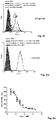
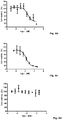
- the invention is further described - by way of example - by the cloning of a selected MAP candidate as fusion to H22(scFv) specific for binding to CD64, which is up-regulated on cells of AML and CML patients, and expressing this human cytolytic fusion protein in E. coli. After affinity purification, identity and purity of obtained proteins were confirmed by SDS-PAGE followed by Coomassie staining and Western Blotting. Specific binding was verified by flow cytometry. Proliferation-dependent anti-tumor cytotoxicity was finally demonstrated in viability assays in vitro. In vivo efficacy was confirmed in a cutaneous inflammation model in mice.
- results demonstrate how fully human MAPs can be exploited as effective component of a compound of the invention, in particular the human cytolytic fusion protein in form of a fusion protein for therapy of proliferative diseases including cancer.
- the cytostatic nature of human MAPs renders anti-cancer human cytolytic fusion protein even more selective as non-proliferating cells also expressing the target molecule are not affected.
- the invention is further illustrated in the following examples. It has to be noted, that although using the wt-MAP tau works it was decided to use - instead of the even more easily available wt-tau - a double mutation in order to quench two potential phosphorylation sites of the tau protein. As explained before highly phosphorylated tau-protein has been connected with the etiology of Alzheimer's disease.
- MAP-based MAP-based cytolytic fusion proteins were expressed in Escherichia coli BL21 (DE3) ( E. coli ) using the protocol for periplasmic stress expression in the presence of compatible solutes as described previously [26]. Briefly, after transformation bacteria were grown to an OD of 1.6 followed by stress induction with 500 mM D-sorbitol, 10 mM betaine monohydrate and 4% (w/w) NaCl. After an incubation of 30 min at 26°C with shaking (180 rpm), protein expression was induced by 2 mM IPTG. Bacteria were harvested 18 h after induction by centrifugation (4,000xg, 10 min, 4°C) and frozen at -80°C overnight.
- the frozen pellet was resuspended in preparation buffer (75 mM Tris-HCl, 300 mM NaCl, 5 mM DTT, 10 mM EDTA, 10% (v/w) glycerol, pH 8.0 containing a complete protease inhibitor cocktail (Roche, Germany)) at 4°C and sonicated 5 times for 60 sec at 200 W.
- preparation buffer 75 mM Tris-HCl, 300 mM NaCl, 5 mM DTT, 10 mM EDTA, 10% (v/w) glycerol, pH 8.0 containing a complete protease inhibitor cocktail (Roche, Germany)
- preparation buffer 75 mM Tris-HCl, 300 mM NaCl, 5 mM DTT, 10 mM EDTA, 10% (v/w) glycerol, pH 8.0 containing a complete protease inhibitor cocktail (Roche, Germany)
- Cell debris were removed by centrifugation (24,000xg, 20 min
- MAP-based cytolytic fusion proteins were purified by immobilized metal-ion affinity chromatography (IMAC) using Ni-NTA Sepharose (Qiagen, Germany) and size exclusion chromatography (SEC) against PBS (pH 7.4) with Bio-Prep SE-100 /17 (Bio-Rad, Germany) columns according to the manufacturers' instructions.
- IMAC immobilized metal-ion affinity chromatography
- SEC size exclusion chromatography
- Protein concentration were quantified by densitometry using AIDA software after Coomassie staining in comparison with bovine serum albumin standards and verified by Bradford assays (Bio-Rad, Germany).
- MAP-based cytolytic fusion proteins on Western Blot was achieved using anti-human MAP (1:25,000; Thermo Scientific, Germany) or mouse-anti-Penta-His (1:5,000; Qiagen, Germany) in combination with an alkaline phosphatase-conjugated antimouse-IgG mAb (1:5,000; Sigma, Germany) followed by staining with Tris-HCl (pH 8.0) and 0.2 mg/ml naphtol-AS-Bi-phosphate (Sigma, Germany) supplemented with 1 mg/ml Fast-Red (Serva, Germany).
- Tris-HCl pH 8.0
- naphtol-AS-Bi-phosphate Sigma, Germany
- FIG. 4 shows a 12% SDS-PAGE gel (A: Coomassie stained; B: Western Blot) of different human MAP-based cytolytic fusion proteins after purification via IMAC and SEC.
- the gel contains: 1, 425(scFv)-MAP; 2, scFv35-MAP; 3, H22(scFv)-MAP; 4, EGF-MAP; 5, anti-EpCAM(scFv)-MAP. Protein size is shown in kDa.
- MAP-based cytolytic fusion proteins were assessed by flow cytometry.
- H22(scFv)-MAP binding was tested on human CD64 (hCD64)-positive leukemia cell lines HL-60 ( Fig. 5a ) and U937 ( Fig. 5b ), a mouse B-cell/macrophage cell line stably transfected with hCD64 IIA1.6 ( Fig. 5c ), murine peritoneal macrophages derived from hCD64-transgenic mice ( Fig. 5d ), or peripheral blood mononuclear cells derived (PBMC) human macrophages ( Fig. 5e ). All cells were stimulated with IFN- ⁇ (50 U/ml for HL-60, U937 and IIA1.6; 100 U/ml for murine and human primary macrophages; Peprotech, Germany) 24 h prior to analysis.
- IFN- ⁇ 50 U/ml for HL-60, U937 and IIA1.6; 100 U/ml for mur
- the EGFR-positive cell lines A431 ( Fig. 5m and Fig. 5f , respectively) and L3.6pl ( Fig. 5l and Fig. 5g , respectively) were used.
- the fAchR-positive cell lines FLOH-1 ( Fig. 5k ), RD6 ( Fig. 5i ) and TE-671 ( Fig. 5j ) were used.
- EpCAM-positive cell line MCF-7 ( Fig. 5h ) was used.
- cytotoxic effect of human MAP-based cytolytic fusion proteins towards target cells was assessed by measuring the conversion of XTT to a water soluble orange formazan dye.
- H22(scFv)-MAP 1-5x10 5 cells/well were seeded into a 96-well microtiter plate and stimulated with 50-100 U/ml IFN- ⁇ or 20 ng/ml phorbol 12-myristate 13-acetate (PMA) for induction of proliferation arrest for 24 h at 37°C, 5% CO 2 and 100% humidity. After stimulation, various dilutions of the human MAP-based cytolytic fusion proteins were added to the wells and cells were incubated for further 72 h at conditions mentioned above.
- PMA phorbol 12-myristate 13-acetate
- MAP-based constructs 1-5x10 5 cells/well were seeded into a 96-well microtiter plate and incubated with various dilutions of the human cytolytic fusion protein for 72 h at conditions mentioned above.
- 50 ⁇ l of XTT/phenanzine methosulfate (100:1; Serva and Sigma-Aldrich, Germany) solution were added to each well followed by incubation for 3-4 h.
- Absorbances at 450 and 630 nm were measured using an Epoch Microplate Spectrophotometer (Biotek, Germany).
- the concentration required to achieve 50% reduction of protein synthesis (IC 50 ) relative to untreated control cells was calculated using GraphPad Prism (GraphPad Software, USA). All experiments were carried out in triplicates.
- Fig. 6 exemplifies the results of cytotoxicity analysis as follows:
- H22(scFv)-MAP HL-60 cells were stimulated with 50 U/ml of IFN- ⁇ (Peprotech, Germany) for 24 h followed by addition of 50 nM H22(scFv)-MAP. The same amount of H22(scFv)-ETA' and H22(scFv)-SNAP were used as controls.
- the CD64-negative cell line L540cy was used as negative control ( Fig. 7 ).
- Nude transgenic male C57/BI6/SKH1-E mice (> 6 weeks) expressing hCD64 were used in all experiments.
- Non-transgenic male C57/BI6/SKH1-E mice were used as controls.
- 5% (m/v) SDS in PBS was applied to a 1.5x1.5 cm skin surface area on both flanks of each mouse daily for 11 consecutive days.
- For administration of the human MAP-based cytolytic fusion protein animals were anaesthetized with isofluran. Three intradermal injections of 20 ⁇ l of 1 ⁇ M human MAP-based cytolytic fusion protein, or PBS control, were administered contralaterally.
- the immunotoxin H22(scFv)-ETA' was used as a positive control. Finally, animals were sacrificed and skin biopsies were taken, snap frozen in liquid nitrogen, and stored at -80°C prior to use.
- Biopsies were cut into 8 ⁇ m sections on a freezing microtome and mounted on coated slides. After drying for 48-72 h, sections were fixed for 10 min with dry acetone and air-dried. Slides were incubated with FITC-conjugated primary antibody (1:40) in PBS 1% normal mouse serum for 45 min. Slides were washed three times for 5 min with PBS, 0.05% Tween, after which alkaline phosphatase (AP) conjugated sheep anti-FITC (Southern Biotech, Germany, 1:400) in PBS (1% sheep serum for 30 min) was added.
- AP alkaline phosphatase
- Target cells Function IL-1 macrophages, B cells, monocytes, dendritic cells CD121a/IL1R1, CD121b/IL1R2 T helper cells co-stimulation B cells Maturation & proliferation Nk cells activation macrophages, endothelium, other inflammation, small amounts induce acute phase reaction, large amounts induce fever IL-2 TH1-cells CD25/IL2RA, CD122/IL2RB, CD132/IL2RG activated T cells and B cells, NK cells, macrophages, oligodendro-cytes stimulates growth and differentiation of T cell response.
- IL-3 activated T helper cells[3], mast cells, NK cells, endothelium, eosinophils CD123/IL3RA, CD131/IL3RB hematopoietic stem cells growth and differentiation to e.g. erythrocytes, granulocytes mast cells growth and histamine release IL-4 TH2-cells, just activated naive CD4+ cell, memory CD4+ cells, mast cells, macrophages CD124/IL4R, CD132/IL2RG activated B cells proliferation and differentiation, IgG1 and IgE synthesis.
- B cells activated B cells controls the growth and pro-liferation of B cells, inhibits Ig secretion IL-15 mononuclear phagocytes (and some other cells), especially macrophages following infection by virus(es) IL15RA T cells, activated B cells Induces production of Natural Killer Cells IL-16 lymphocytes, epithelial cells, eosinophils, CD8+ T cells CD4 CD4+ T cells CD4+ chemoattractant IL-17 subsets of T cells CDw217/IL17RA, IL17RB epithelium, endothelium, other osteoclastogenesis, angiogenesis, ⁇ inflammatory cytokines IL-18 macrophages CDw218a/IL18R1 Th1 cells, NK cells Induces production of IFN ⁇ , ⁇ NK cell activity IL-19 - IL20R - IL-20
- IL-25 - LY6E Induces the production IL-4, IL-5 and IL-13, which stimulate eosinophil expansion IL-26 - IL20R1 Enhances secretion of IL-10 and IL-8 and cell surface expression of CD54 on epithelial cells
- IL-27 - IL27RA Regulates the activity of B lymphocyte and T lymphocytes
- IL-28 - IL28R Plays a role in immune defense against viruses IL-29 - Plays a role in host defenses against microbes IL-30 -
- one chain of IL-27 IL-31 - IL31RA May play a role in inflammation of the skin IL-32 - Induces monocytes and macrophages to secrete TNF- ⁇ , IL-8 and CXCL2 IL-33 - Induces helper T cells to produce type 2 cytokine IL-35 regulatory T cells Suppression of T helper cell activation
Landscapes
- Health & Medical Sciences (AREA)
- Chemical & Material Sciences (AREA)
- Organic Chemistry (AREA)
- Life Sciences & Earth Sciences (AREA)
- General Health & Medical Sciences (AREA)
- Medicinal Chemistry (AREA)
- Genetics & Genomics (AREA)
- Proteomics, Peptides & Aminoacids (AREA)
- Molecular Biology (AREA)
- Biophysics (AREA)
- Biochemistry (AREA)
- Immunology (AREA)
- Gastroenterology & Hepatology (AREA)
- Toxicology (AREA)
- Zoology (AREA)
- Veterinary Medicine (AREA)
- Pharmacology & Pharmacy (AREA)
- Public Health (AREA)
- Chemical Kinetics & Catalysis (AREA)
- General Chemical & Material Sciences (AREA)
- Animal Behavior & Ethology (AREA)
- Nuclear Medicine, Radiotherapy & Molecular Imaging (AREA)
- Peptides Or Proteins (AREA)
- Micro-Organisms Or Cultivation Processes Thereof (AREA)
- Medicines That Contain Protein Lipid Enzymes And Other Medicines (AREA)
- Preparation Of Compounds By Using Micro-Organisms (AREA)
- Medicines Containing Antibodies Or Antigens For Use As Internal Diagnostic Agents (AREA)
Description
- The present invention pertains to a compound, a polynucleotide encoding the compound of the invention, a process of manufacturing the compound of the invention, a vector comprising the polynucleotide of the invention, a cell comprising the vector of the invention, a medicament comprising the compound of the invention as well as a composition of matter comprising the compound for use in the treatment of proliferative diseases. Recombinant immunotoxins are chimeric proteins predominantly used to treat cancer. These proteins are composed of a binding domain, which is commonly an antibody or a fragment thereof, and a toxic domain, which is a protein usually derived from bacteria or plants. After binding of the antibody to a target cell antigen, the immunotoxin is internalized followed by endosomal processing and the final release of the toxin into the cytosol, where it exerts its toxic activity. In addition to antibodies as targeting units, several ligands including growth factors have been used [1-4].
- In the beginning of immunotoxin development, antibodies were conjugated to the toxin via chemical coupling, which, however, bore many disadvantages, such as a required separate production and purification of targeting and toxic unit, low yields after conjugation, and an undirected coupling leading to a heterogeneous protein preparation [5].
- To overcome these drawbacks and to allow the commercial development of immunotoxins, recombinant immunotoxins were generated by genetically fusing the ligand and the protein-based toxin resulting in a single chain DNA construct. To date, most immunotoxins can be easily expressed by fermentation of transformed Escherichia coli or by Mammalian or yeast cells and purified by standard chromatographic methods. The most prominent toxins which have been used so far are the plant-derived ricin, especially the A chain thereof, and the bacterial Pseudomonas Exotoxin A (ETA) and Diphtheria Toxin (DT) [6]. Both bacterial toxins are multidomain proteins comprising a cell binding and a toxic domain separated by a translocation domain.
- For use in immunotoxins, truncated versions of ETA and DT were generated by deletion of the cell-binding domain. This has reduced the size of ETA and DT, respectively, making them even more suitable to be used as fusion proteins and it has increased their specificity preventing unwanted binding to healthy cells [7-11]. The most prominent shortened version of ETA is called PE38 (here referred to as ETA') [10]. Historically, due to their relatively strong side effects, immunotoxins have been implicated for use in life threatening disease only. Consequently, their clinical use has been restricted to indications such as cancer. Just recently, Madhumthi and Verma reviewed existing therapeutic targets for immunotherapy emphasizing that cancer, including solid tumors, lymphoma and leukemia, represents the dominating indication for classical immunotoxins [12].
- Besides their toxic side effects, immunogenicity of chimeric immunotoxins composed of a murine or human antibody and a bacterial or plant toxin had to be considered as an obstacle to treatment [13]. Generation of neutralizing antibodies by the own immune system would lead to a less biologically active immunotoxin concomitant with the demand to administer higher doses. Different attempts have been done to reduce immunogenicity. For example, putative T- and B-cell epitopes on ETA have been identified and mutated expecting a more humanized version of the bacterial toxin [14, 15]. An alternative strategy was to modify the immunotoxin using polyethylene glycol, which has been proved to be efficient in preventing immunogenicity of interferon and L-asparaginase [16-18]. However, these strategies failed to significantly reduce immunogenicity.
- Vascular leak syndrome triggered by binding of toxins to endothelial cells represents another disadvantage of chimeric immunotoxins. As counter-measures, receptor mutation, inhibitors preventing the binding to endothelial cells and administration of anti-inflammatory agents have been taken [19].
- Another approach is the generation of fully human cytolytic fusion proteins. Fully human antibody fragments fused to human proteins, which are capable of directly or indirectly inducing apoptosis, are now gaining attention.
- Human RNases like
RNase protein kinase 2 towards several Hodgkin lymphoma cells in vitro and in vivo [22, 23]. - Proapoptotic proteins such as Bik, Bak, Bax,
DNA fragmentation factor 40, FAS-ligand, TNF-related apoptosis-inducing ligand proofed effective in melanoma, renal cancer, cutaneous T cell lymphoma, and AML [24]. A novel human cytolytic fusion protein composed of a single chain fragment (scFv) against CTLA4 and perforin was shown to kill CTLA-positive cell lines in vitro [25]. - Potent classical anti-cancer agents are cytostatic molecules capable of intervening into the process of mitosis. Primarily, their cytotoxicity is conferred by stabilizing or destabilizing microtubules, which are known to be sensitive to changes in both mass and dynamics. Similar to bacteria- or plant-derived toxins, cytostatic small molecules are recognized as foreign leading to undesired side effects.
- One object of the invention is to provide an effective medicament for treating proliferative diseases.
- Another object of the present invention is to provide a compound, which is able to treat proliferative diseases.
- A further object of the present invention is to provide a medicament based on a compound having reduced side effects.
-
- Fig. 1:
- Shows Construction of open reading frames for MAP-based human cytolytic fusion protein
- Fig. 2:
- Shows Complete expression cassettes for MAP-based human cytolytic fusion protein
- Fig. 3:
- Shows sequences ID 1-13.
- Fig. 4
- Shows a 12 % SDS-PAGE gel of different MAP-based human cytolytic fusion protein after purification via IMAC and SEC.
- Fig. 5:
- shows cell binding activity of purified MAP-based human cytolytic fusion protein assessed by flow cytometry.
- Fig. 6:
- Shows the results of cytotoxicity analysis.
- Fig. 7:
- Shows the results of an AnnexinV/PI assay.
- Fig. 8:
- Shows successful elimination hCD64-positive inflammatory macrophages for H22(scFv)-MAP.
- Fig. 9:
- Shows ORFs of human MAPs corresponding to sequences ID 14-24.
- The present invention pertains to a compound formed from at least one component A comprising a binding domain for extra-cellular surface structures of a diseased proliferating cell that internalizes upon binding of component A said compound, wherein said extra-cellular surface structures are selected from CD64, EGFR, AchR, EpCAM and CD30, and at least one component B, characterized in that component B is a polypeptide which amino acid sequence comprises a microtubule-associated protein (MAP) or comprises at least a partial sequence of the MAP, the partial sequence having maintained the binding function of the MAP to a microtubule. The substances known to the skilled person as MAP are a specific class of compounds which show defined interaction with microtubules. The up-to-date skilled person's understanding of the term is e.g. summarized in Wikipedia (http://en.wikipedia.org/wiki/Microtubule-associated_protein).
- It has to be noted, that in contrast to the classical approach to select for enzymes as toxic entity in an immunotoxin it has now surprisingly be found that proliferation of cells can be inhibited by coupling MAPs to a targeting protein which is an entity not exhibiting enzymatic activities.
- The following references representing the prior art, however, are using the classical approach.
- Bettina Stahnke, et al. in Granzyme B-H22(scFv), a human immunotoxin targeting CD64 in acute myeloid leukemia of monocytic subtypes, Molecular Cancer Therapeutics, vol. 7, no. 9, pp.2924-2932 present a novel fully human immunotoxin composed of an anti-CD64 antibody fragment [H22(scFv)] as binding ligand and the human serine protease granzyme B (Gb) as effector protein. After successful production in HEK293T cells and purification by affinity chromatography, the authors show that Gb-H22(scFv) has pro-apoptotic activity towards CD64+ leukemia cells in vitro. In addition to cell lines, Gb-H22(scFv) also showed specific activity against primary CD64+ acute myeloid leukemia cells. In contrast to the use of free cytosolic Gb, this article is the first report on a fully human Gb-based immunotoxin.
- In Mrudula Mathew et al. Humanized immunotoxins: A new generation of immunotoxins for targeted cancer therapy, Cancer Science vol. 100, no. 8, pp 1359-165, the authors review general aspects of chimeric immunotoxins, which classically comprise a cell-binding ligand and a chemically-linked or genetically fused toxin, usually derived from bacteria or plants. The authors point out that despite the success of these immunotoxins in pre-clinical studies, off-target effects and immunogenicity often are limiting their use in clinical applications. As countermeasure, a new generation of fusion proteins containing both human binding ligands and human pro-apoptotic effector proteins has emerged as a promising format. The authors present existing data on several human pro-apoptotic effector proteins, including members of the Bcl-2 family, DNA fragmentation factor-40, Fas ligand, TRAIL, granzyme B, and several RNAses.
- In Dmitrij Hristodorov et al. Macrophage-Targeted Therapy: CD64-Based Immunotoxins for Treatment of Chronic Inflammatory Diseases, Toxins Sep 2012, vol. 4, no.9, September 2012, pp 676-694, the authors describe the critical role of macrophages during chronic inflammation and how CD64-directed immunotoxins, such as H22(scFv)-ETA or H22-RicinA, can be used to target and eliminate activated macrophages in favor of resolution of chronic inflammation. In addition to the classical view on macrophages, which had been separated into a resting and an activated population in the past, the authors review recent findings on different subsets of polarized macrophages. Finally, the authors hypothesize that it will be possible to develop a subset-specific therapeutic approach using target-selective immunotoxins in the near future.
- In Keith R. Olson et al, Analysis of MAP4 function in living cells using green fluorescent protein (GFP) chimeras, JCB, The Rockefeller University Press, vol. 130, no. 3, 1995, pp. 639-650, the authors analyzed the function of the microtubule-associated protein 4 (MAP4) in living cells. Therefore, the sequences of MAP4 and the green fluorescent protein (GFP) were genetically fused and transfected into baby hamster kidney (BHK) or chinese hamster ovary (CHO) cells. Co-localization experiments revealed that GFP-MAP4 localized to and stabilized microtubules. To map the region of MAP4 that is responsible for binding to microtubules, the authors separated the known basic domain into a PGGG domain, which is shared between MAP4, MAP2, and the tau protein, and into a PSP domain, which is unique to MAP4. While the PSP domain maintained strong binding to microtubules, the PGGG domain showed only weak affinity, which brings the authors to the conclusion that this domain is dispensable for microtubule binding. Interestingly, this conclusion is in line with previously reported in vivo results for the PGGG domain of MAP2 and tau, however it is in contrast to numerous in vitro studies, which demonstrate pronounced affinity of this domain towards microtubules. In addition to the basic domain, this article shows that the acidic carboxy-terminus of MAP4 is critical for the binding affinity of the other domains to microtubules.
- In Nikolai N. Sluchanko et al., Phosphorylation of more than one site is required for tight interaction of human tau protein with 14-3-3f, FEBS Letters, vol. 583, no. 17, (2009), pp. 2739-2742, the authors analyzed the role of phosphorylation of the human tau protein in regard to its interaction with the highly conserved regulatory protein 14-3-3. The authors generated several tau mutants, phosphorylated them in vitro and assessed their binding to 14-3-3 by native gel electrophoresis. The single mutant S156A, and the double mutants S156A/S267A and S156A/S235A showed reduced interaction with 14-3-3.
- The component A of the compound of the invention may be selected from internalizing cell surface receptor binding structures consisting of antibodies or their derivatives or fragments thereof, synthetic peptides such as scFv and mimotopes or chemical molecules such as carbohydrates, lipids, nucleic acids, peptides and vitamins, and/or small molecules with up to 100 atoms with receptor-binding activity like ligands, in particular single atoms, peptidic molecules and non-peptidic molecules, and/or carbohydrate binding proteins and their ligands such as lectins, in particular calnexins, c-type lectins, l-type lectins, m-type lectins, p-type lectins, r-type lectins, galectins and their derivatives, and/or receptor binding molecules such as natural ligands to the cluster of differentiation (CD) antigens, like CD30 and CD40, cytokines such as chemokines, colony stimulating factors, type-1 cytokines, type-2 cytokines, interferons, interleukins and lymphokines, monokines, and/or adhesion molecules including their derivatives and mutants, and/or derivatives or combinations of any of the above listed binding structures.
- In particular embodiments of the invention component A is binding to a cell surface marker of a healthy or diseased cell belonging to the cluster of differentiation antigens CD30 or CD64 (CD-antigens, Table 1).
- The component A may be a chemokine or a specifically binding fragment thereof. Table 2 lists known chemokines. The chemokines introduced there are the CXC chemokine/receptor family such as CXCL1, CXCL2, CXCL3, CXCL4, CXCL5, CXCL6, CXCL7, CXCL8, CXCL9, CXCL10, CXCL11, CXCL12, CXCL13, CXCL14, KXCL15, CXCL16; or the C chemokine /receptor family, such as XCL1 and XCL2; or the CX3C chemokine/receptor family, such as CX3CL1, or the CC chemokine/receptor family, such as CCL1, CCL2, CCL3, CCL3L1, CCL4, CCLS, CCL6, CCL7, CCL8, CCL9/10, CCL11, CCL12, CCL13, CCL14, CCL15, CCL16, CCL17, CCL18, CCL19, CCL20, CCL21, CCL22, CCL23, CCL24, CCL25, CCL26, CCL27, CCL28.
- Component A may be an interleukin or a specifically binding fragment thereof. Table 3 lists known interleukins and their binding to aspecific cellular receptor.
- In a further embodiment of the invention the component B of the compound of the invention is selected from microtubule-associated proteins (MAPs [SEQ ID NOs: 57-65]) including Kinesins (KIF1-27 [SEQ ID NOs: 14-35], KIFC1-3 [SEQ ID NOs: 36-38]), Dyneins (DNAH1-14 [SEQ ID NOs: 39-50], DNAI1+2 [SEQ ID NOs: 51-52], DNAL1+4 [SEQ ID NOs: 53-54]), as well as Tau protein [SEQ ID NO: 1], Dynactin (DCTN1 [SEQ ID NO: 66]), Tubulins (TUBA1-8 [SEQ ID NOs: 67-72]), Stathmin [SEQ ID NO: 55], Gephyrin [SEQ ID NO: 56], Tektins (TEKT1-5 [SEQ ID NOs: 73-77]), Dynamins (DNM1-3 [SEQ ID NOs: 78-80]).
- In yet a further embodiment of the invention the components A and B are chemically coupled in order to yield a conjugate or fused to each other by genetic engineering to obtain a fusion protein, such as exemplified by the proteins having one of the amino acid sequences encoded by the polynucleotide of one of the Seq ID Nos. 3, 7, 11 and 13.
- Thus particular embodiments of the compound of the invention are formed by the following representatives: component A and KIF1, component A and KIF2A, component A and KIF4A, component A and KIF5A, component A and KIF5B, component A and KIF6, component A and KIF7, component A and KIF9, component A and KIF10, component A and KIF11, component A and KIF12, component A and KIF13B, component A and KIF14, component A and KIF15, component A and KIF17, component A and KIF19, component A and KIF22, component A and KIF23, component A and KIF24, component A and KIF25, component A and KIF26, component A and KIF27, component A and KIFC1, component A and KIFC2, component A and KIFC3, 5component A and DNAH1, component A and DNAH2, component A and DNAH3, component A and DNAH5, component A and DNAH6, component A and DNAH7, component A and DNAH8, component A and DNAH9, component A and DNAH10, component A and DNAH11, component A and DNAH12, component A and DNAH14, component A and DNAI1, component A and DNAI2, component A and DNAL1, component A and DNAL4, component A and Tau, component A and Stathmin, component A and Gephyrin, component A and MAP1a, component A and MAP1b, component A and MAP2, component A and MAP4, component A and XMAP5, component A and MAP6, component A and MAP7, component A and MAP8, component A and MAP9, component A and DCTN1, component A and TUBA1, component A and TUBA2, component A and TUBA3, component A and TUBA4, component A and TUBA6, component A and TUBA8, component A and TEKT1, component A and TEKT2, component A and TEKT3, component A and TEKT4, component A and TEKT5, component A and DNM1, component A and DNM2, as well as component A and DNM3.
- Further conjugates disclosed herein may be formed by the following representatives: a ligand binding to a cluster of differentiation antigens (CD-antigens, Table 1) and KIF1, a ligand binding to a cluster of differentiation antigens (CD-antigens, Table 1) and KIF2A, a ligand binding to a cluster of differentiation antigens (CD-antigens, Table 1) and KIF4A, a ligand binding to a cluster of differentiation antigens (CD-antigens, Table 1) and KIF5A, a ligand binding to a cluster of differentiation antigens (CD-antigens, Table 1) and KIF5B, a ligand binding to a cluster of differentiation antigens (CD-antigens, Table 1) and KIF6, a ligand binding to a cluster of differentiation antigens (CD-antigens, Table 1) and KIF7, a ligand binding to a cluster of differentiation antigens (CD-antigens, Table 1) and KIF9, a ligand binding to a cluster of differentiation antigens (CD-antigens, Table 1) and KIF10, a ligand binding to a cluster of differentiation antigens (CD-antigens, Table 1) and KIF11, a ligand binding to a cluster of differentiation antigens (CD-antigens, Table 1) and KIF12, a ligand binding to a cluster of differentiation antigens (CD-antigens, Table 1) and KIF13B, a ligand binding to a cluster of differentiation antigens (CD-antigens, Table 1) and KIF14, a ligand binding to a cluster of differentiation antigens (CD-antigens, Table 1) and KIF15, a ligand binding to a cluster of differentiation antigens (CD-antigens, Table 1) and KIF17, a ligand binding to a cluster of differentiation antigens (CD-antigens, Table 1) and KIF19, a ligand binding to a cluster of differentiation antigens (CD-antigens, Table 1) and KIF22, a ligand binding to a cluster of differentiation antigens (CD-antigens, Table 1) and KIF23, a ligand binding to a cluster of differentiation antigens (CD-antigens, Table 1) and KIF24, a ligand binding to a cluster of differentiation antigens (CD-antigens, Table 1) and KIF25, a ligand binding to a cluster of differentiation antigens (CD-antigens, Table 1) and KIF26, a ligand binding to a cluster of differentiation antigens (CD-antigens, Table 1) and KIF27, a ligand binding to a cluster of differentiation antigens (CD-antigens, Table 1) and KIFC1, a ligand binding to a cluster of differentiation antigens (CD-antigens, Table 1) and KIFC2, a ligand binding to a cluster of differentiation antigens (CD-antigens, Table 1) and KIFC3, a ligand binding to a cluster of differentiation antigens (CD-antigens, Table 1) and DNAH1, a ligand binding to a cluster of differentiation antigens (CD-antigens, Table 1) and DNAH2, a ligand binding to a cluster of differentiation antigens (CD-antigens, Table 1) and DNAH3, a ligand binding to a cluster of differentiation antigens (CD-antigens, Table 1) and DNAH5, a ligand binding to a cluster of differentiation antigens (CD-antigens, Table 1) and DNAH6, a ligand binding to a cluster of differentiation antigens (CD-antigens, Table 1) and DNAH7, a ligand binding to a cluster of differentiation antigens (CD-antigens, Table 1) and DNAH8, a ligand binding to a cluster of differentiation antigens (CD-antigens, Table 1) and DNAH9, a ligand binding to a cluster of differentiation antigens (CD-antigens, Table 1) and DNAH10, a ligand binding to a cluster of differentiation antigens (CD-antigens, Table 1) and DNAH11, a ligand binding to a cluster of differentiation antigens (CD-antigens, Table 1) and DNAH12, a ligand binding to a cluster of differentiation antigens (CD-antigens, Table 1) and DNAH14, a ligand binding to a cluster of differentiation antigens (CD-antigens, Table 1) and DNAI1, a ligand binding to a cluster of differentiation antigens (CD-antigens, Table 1) and DNAI2, a ligand binding to a cluster of differentiation antigens (CD-antigens, Table 1) and DNAL1, a ligand binding to a cluster of differentiation antigens (CD-antigens, Table 1) and DNAL4, a ligand binding to a cluster of differentiation antigens (CD-antigens, Table 1) and Tau, a ligand binding to a cluster of differentiation antigens (CD-antigens, Table 1) and Stathmin, a ligand binding to a cluster of differentiation antigens (CD-antigens, Table 1) and Gephyrin, a ligand binding to a cluster of differentiation antigens (CD-antigens, Table 1) and MAP1a, a ligand binding to a cluster of differentiation antigens (CD-antigens, Table 1) and MAP1b, a ligand binding to a cluster of differentiation antigens (CD-antigens, Table 1) and MAP2, a ligand binding to a cluster of differentiation antigens (CD-antigens, Table 1) and MAP4, a ligand binding to a cluster of differentiation antigens (CD-antigens, Table 1) and XMAP5, a ligand binding to a cluster of differentiation antigens (CD-antigens, Table 1) and MAP6, a ligand binding to a cluster of differentiation antigens (CD-antigens, Table 1) and MAP7, a ligand binding to a cluster of differentiation antigens (CD-antigens, Table 1) and MAP8, a ligand binding to a cluster of differentiation antigens (CD-antigens, Table 1) and MAP9, a ligand binding to a cluster of differentiation antigens (CD-antigens, Table 1) and DCTN1, a ligand binding to a cluster of differentiation antigens (CD-antigens, Table 1) and TUBA1, a ligand binding to a cluster of differentiation antigens (CD-antigens, Table 1) and TUBA2, a ligand binding to a cluster of differentiation antigens (CD-antigens, Table 1) and TUBA3, a ligand binding to a cluster of differentiation antigens (CD-antigens, Table 1) and TUBA4, a ligand binding to a cluster of differentiation antigens (CD-antigens, Table 1) and TUBA6, a ligand binding to a cluster of differentiation antigens (CD-antigens, Table 1) and TUBA8, a ligand binding to a cluster of differentiation antigens (CD-antigens, Table 1) and TEKT1, a ligand binding to a cluster of differentiation antigens (CD-antigens, Table 1) and TEKT2, a ligand binding to a cluster of differentiation antigens (CD-antigens, Table 1) and TEKT3, a ligand binding to a cluster of differentiation antigens (CD-antigens, Table 1) and TEKT4, a ligand binding to a cluster of differentiation antigens (CD-antigens, Table 1) and TEKT5, a ligand binding to a cluster of differentiation antigens (CD-antigens, Table 1) and DNM1, a ligand binding to a cluster of differentiation antigens (CD-antigens, Table 1) and DNM2, as well as a ligand binding to a cluster of differentiation antigens (CD-antigens, Table 1) and DNM3.
- In a particular embodiment, the compound of the invention is formed by the combination of a ligand binding to the following clusters of differentiation: CD30 or CD64; and KIF1.In another embodiment the compound of the invention is formed by the combination of a ligand binding to the following clusters of differentiation: CD30 or CD64; and KIF2A.
- In another embodiment the compound of the invention is formed by the combination of a ligand binding to the following clusters of differentiation: CD30 or CD649; and KIF4A.
- In another embodiment the compound of the invention is formed by the combination of a ligand binding to the following clusters of differentiation: CD30 or CD64; and KIF5A.
- In another embodiment the compound of the invention is formed by the combination of a ligand binding to the following clusters of differentiation: CD30 or CD64; and KIF5B.
- In another embodiment the compound of the invention is formed by the combination of a ligand binding to the following clusters of differentiation: CD30 or CD64; and KIF6.
- In another embodiment the compound of the invention is formed by the combination of a ligand binding to the following clusters of differentiation: CD30 or CD64; and KIF7.
- In another embodiment the compound of the invention is formed by the combination of a ligand binding to the following clusters of differentiation: CD30 or CD64; and KIF9.
- In another embodiment the compound of the invention is formed by the combination of a ligand binding to the following clusters of differentiation: CD30 or CD64; and KIF10.
- In another embodiment the compound of the invention is formed by the combination of a ligand binding to the following clusters of differentiation: CD30 or CD64; and KIF11.
- In another embodiment the compound of the invention is formed by the combination of a ligand binding to the following clusters of differentiation: CD30 or CD64; and KIF12.
- In another embodiment the compound of the invention is formed by the combination of a ligand binding to the following clusters of differentiation: CD30 or CD64; and MAP11.
- In a particular embodiment, the compound of the invention is formed by the combination of a ligand binding to the following clusters of differentiation: CD30 or CD64; and KIF13B.
- In a particular embodiment, the compound of the invention is formed by the combination of a ligand binding to the following clusters of differentiation: CD30 or CD64; and KIF14.
- In a particular embodiment, the compound of the invention is formed by the combination of a ligand binding to the following clusters of differentiation: CD30 or CD64; and KIF15
- In a particular embodiment, the compound of the invention is formed by the combination of a ligand binding to the following clusters of differentiation: CD30 or CD64; and KIF17.
- In a particular embodiment, the compound of the invention is formed by the combination of a ligand binding to the following clusters of differentiation: CD30 or CD64; and KIF19.
- In a particular embodiment, the compound of the invention is formed by the combination of a ligand binding to the following clusters of differentiation: CD30 or CD64; and KIF22.
- In a particular embodiment, the compound of the invention is formed by the combination of a ligand binding to the following clusters of differentiation: CD30 or CD64; and KIF23.
- In a particular embodiment, the compound of the invention is formed by the combination of a ligand binding to the following clusters of differentiation: CD30 or CD64; and KIF24.
- In a particular embodiment, the compound of the invention is formed by the combination of a ligand binding to the following clusters of differentiation: CD30 or CD64; and KIF25.
- In a particular embodiment, the compound of the invention is formed by the combination of a ligand binding to the following clusters of differentiation: CD30 or CD64; and KIF26.
- In a particular embodiment, the compound of the invention is formed by the combination of a ligand binding to the following clusters of differentiation: CD30 or CD64; and KIF27.
- In a particular embodiment, the compound of the invention is formed by the combination of a ligand binding to the following clusters of differentiation: CD30 or CD64; and KIFC1.
- In a particular embodiment, the compound of the invention is formed by the combination of a ligand binding to the following clusters of differentiation: CD30 or CD64; and KIFC2.
- In a particular embodiment, the compound of the invention is formed by the combination of a ligand binding to the following clusters of differentiation: CD30 or CD64; and KIFC3.
- In a particular embodiment, the compound of the invention is formed by the combination of a ligand binding to the following clusters of differentiation: CD30 or CD64; and DNAH1.
- In a particular embodiment, the compound of the invention is formed by the combination of a ligand binding to the following clusters of differentiation: CD30 or CD64; and DNAH2.
- In a particular embodiment, the compound of the invention is formed by the combination of a ligand binding to the following clusters of differentiationCD30 or CD64; and DNAH3.
- In a particular embodiment, the compound of the invention is formed by the combination of a ligand binding to the following clusters of differentiation: CD30 or CD64; and DNAH5.
- In a particular embodiment, the compound of the invention is formed by the combination of a ligand binding to the following clusters of differentiationCD30 or CD64; and DNAH6.
- In a particular embodiment, the compound of the invention is formed by the combination of a ligand binding to the following clusters of differentiation: CD30 or CD64; and DNAH7.
- In a particular embodiment, the compound of the invention is formed by the combination of a ligand binding to the following clusters of differentiation: CD30 or CD64; and DNAH8.
- In a particular embodiment, the compound of the invention is formed by the combination of a ligand binding to the following clusters of differentiation: CD30 or CD64; and DNAH9.
- In a particular embodiment, the compound of the invention is formed by the combination of a ligand binding to the following clusters of differentiation: CD30 or CD64; and DNAH10.
- In a particular embodiment, the compound of the invention is formed by the combination of a ligand binding to the following clusters of differentiation: CD30 or CD64; and DNAH11.
- In a particular embodiment, the compound of the invention is formed by the combination of a ligand binding to the following clusters of differentiation: CD30 or CD64; and DNAH12.
- In a particular embodiment, the compound of the invention is formed by the combination of a ligand binding to the following clusters of differentiation: CD30 or CD64; and DNAH14.
- In a particular embodiment, the compound of the invention is formed by the combination of a ligand binding to the following clusters of differentiation: CD30 or CD64; and DNAI1.
- In a particular embodiment, the compound of the invention is formed by the combination of a ligand binding to the following clusters of differentiation: CD30 or CD64; and DNAI2.
- In a particular embodiment, the compound of the invention is formed by the combination of a ligand binding to the following clusters of differentiation: CD30 or CD64; and DNAL1.
- In a particular embodiment, the compound of the invention is formed by the combination of a ligand binding to the following clusters of differentiationCD30 or CD64; and DNAL4.
- In a particular embodiment, the compound of the invention is formed by the combination of a ligand binding to the following clusters of differentiation: CD30 or CD64; and Tau.
- In a particular embodiment, the compound of the invention is formed by the combination of a ligand binding to the following clusters of differentiation: CD30 or CD64; and Stathmin.
- In a particular embodiment, the compound of the invention is formed by the combination of a ligand binding to the following clusters of differentiation: CD30 or CD64; and Gephyrin.
- In a particular embodiment, the compound of the invention is formed by the combination of a ligand binding to the following clusters of differentiation: CD30 or CD64; and MAP1a.
- In a particular embodiment, the compound of the invention is formed by the combination of a ligand binding to the following clusters of differentiation: CD30 or CD64; and MAP1b.
- In a particular embodiment, the compound of the invention is formed by the combination of a ligand binding to the following clusters of differentiation: CD30 or CD64; and MAP2.
- In a particular embodiment, the compound of the invention is formed by the combination of a ligand binding to the following clusters of differentiation: CD30 or CD64; and MAP4.
- In a particular embodiment, the compound of the invention is formed by the combination of a ligand binding to the following clusters of differentiation: CD30 or CD64; and XMAP5.
- In a particular embodiment, the compound of the invention is formed by the combination of a ligand binding to the following clusters of differentiation: CD30 or CD64; and MAP6.
- In a particular embodiment, the compound of the invention is formed by the combination of a ligand binding to the following clusters of differentiation: CD30 or CD64; and MAP7.
- In a particular embodiment, the compound of the invention is formed by the combination of a ligand binding to the following clusters of differentiation: CD30 or CD64; and MAP8.
- In a particular embodiment, the compound of the invention is formed by the combination of a ligand binding to the following clusters of differentiation: CD30 or CD64; and MAP9.
- In a particular embodiment, the compound of the invention is formed by the combination of a ligand binding to the following clusters of differentiation: CD30 or CD64; and DCTN1.
- In a particular embodiment, the compound of the invention is formed by the combination of a ligand binding to the following clusters of differentiation: CD30 or CD64; and TUBA1.
- In a particular embodiment, the compound of the invention is formed by the combination of a ligand binding to the following clusters of differentiation: CD30 or CD64; and TUBA2.
- In a particular embodiment, the compound of the invention is formed by the combination of a ligand binding to the following clusters of differentiation: CD30 or CD64; and TUBA3.
- In a particular embodiment, the compound of the invention is formed by the combination of a ligand binding to the following clusters of differentiation: CD30 or CD64; and TUBA4.
- In a particular embodiment, the compound of the invention is formed by the combination of a ligand binding to the following clusters of differentiation: CD30 or CD64; and TUBA6.
- In a particular embodiment, the compound of the invention is formed by the combination of a ligand binding to the following clusters of differentiation: CD30 or CD64; and TUBA8.
- In a particular embodiment, the compound of the invention is formed by the combination of a ligand binding to the following clusters of differentiation: CD30 or CD64; and TEKT1.
- In a particular embodiment, the compound of the invention is formed by the combination of a ligand binding to the following clusters of differentiation: CD30 or CD64; and TEKT2.
- In a particular embodiment, the compound of the invention is formed by the combination of a ligand binding to the following clusters of differentiation: CD30 or CD64; and TEKT3.
- In a particular embodiment, the compound of the invention is formed by the combination of a ligand binding to the following clusters of differentiation: CD30 or CD64; and TEKT4.
- In a particular embodiment, the compound of the invention is formed by the combination of a ligand binding to the following clusters of differentiation: CD30 or CD64; and TEKT5.
- In a particular embodiment, the compound of the invention is formed by the combination of a ligand binding to the following clusters of differentiation: CD30 or CD64; and DNM1.
- In a particular embodiment, the compound of the invention is formed by the combination of a ligand binding to the following clusters of differentiation: CD30 or CD64; and DNM2.
- In a particular embodiment, the compound of the invention is formed by the combination of a ligand binding to the following clusters of differentiation: CD30 or CD64; and DNM3.
- A compound disclosed herein may be formed by the combination of the following chemokines: Members of table 2; and KIF1.
- In another case a compound disclosed herein may be formed by the combination of the following chemokines: Members of table 2; and KIF2A.
- In another case a compound disclosed herein may be formed by the combination of the following chemokines: Members of table 2; and KIF4A.
- In another case a compound disclosed herein may be formed by the combination of the following chemokines: Members of table 2; and KIF5A.
- In another case a compound disclosed herein may be formed by the combination of the following chemokines: Members of table 2; and KIF5B.
- In another case a compound disclosed herein may be formed by the combination of the following chemokines: Members of table 2; and KIF6.
- In another case a compound disclosed herein may be formed by the combination of the following chemokines: Members of table 2; and KIF7.
- In another case a compound disclosed herein may be formed by the combination of the following chemokines: Members of table 2; and KIF9.
- In another case a compound disclosed herein may be formed by the combination of the following chemokines: Members of table 2; and KIF10.
- In another case a compound disclosed herein may be formed by the combination of the following chemokines: Members of table 2; and KIF11.
- In another case a compound disclosed herein may be formed by the combination of the following chemokines: Members of table 2; and KIF12.
- In another case a compound disclosed herein may be formed by the combination of the following chemokines: Members of table 2; and KIF13B.
- In yet another case a compound disclosed herein may be formed by the combination of the following chemokines: Members of table 2; and KIF14.
- In yet another case a compound disclosed herein may be formed by the combination of the following chemokines: Members of table 2; and KIF15.
- In yet another case a compound disclosed herein may be formed by the combination of the following chemokines: Members of table 2; and KIF17.
- In yet another case a compound disclosed herein may be formed by the combination of the following chemokines: Members of table 2; and KIF19.
- In yet another case a compound disclosed herein may be formed by the combination of the following chemokines: Members of table 2; and KIF22.
- In yet another case a compound disclosed herein may be formed by the combination of the following chemokines: Members of table 2; and KIF23.
- In yet another case a compound disclosed herein may be formed by the combination of the following chemokines: Members of table 2; and KIF24.
- In yet another case a compound disclosed herein may be formed by the combination of the following chemokines: Members of table 2; and KIF25.
- In yet another case a compound disclosed herein may be formed by the combination of the following chemokines: Members of table 2; and KIF26.
- In yet another case a compound disclosed herein may be formed by the combination of the following chemokines: Members of table 2; and KIF27.
- In yet another case a compound disclosed herein may be formed by the combination of the following chemokines: Members of table 2; and KIFC1.
- In yet another case a compound disclosed herein may be formed by the combination of the following chemokines: Members of table 2; and KIFC2.
- In yet another case a compound disclosed herein may be formed by the combination of the following chemokines: Members of table 2; and KIFC3.
- In yet another case a compound disclosed herein may be formed by the combination of the following chemokines: Members of table 2; and DNAH1.
- In yet another case a compound disclosed herein may be formed by the combination of the following chemokines: Members of table 2; and DNAH2.
- In yet another case a compound disclosed herein may be formed by the combination of the following chemokines: Members of table 2; and DNAH3.
- In yet another case a compound disclosed herein may be formed by the combination of the following chemokines: Members of table 2; and DNAH5.
- In yet another case a compound disclosed herein may be formed by the combination of the following chemokines: Members of table 2; and DNAH6.
- In yet another case a compound disclosed herein may be formed by the combination of the following chemokines: Members of table 2; and DNAH7.
- In yet another case a compound disclosed herein may be formed by the combination of the following chemokines: Members of table 2; and DNAH8.
- In yet another case a compound disclosed herein may be formed by the combination of the following chemokines: Members of table 2; and DNAH9.
- In yet another case a compound disclosed herein may be formed by the combination of the following chemokines: Members of table 2; and DNAH10.
- In yet another case a compound disclosed herein may be formed by the combination of the following chemokines: Members of table 2; and DNAH11.
- In yet another case a compound disclosed herein may be formed by the combination of the following chemokines: Members of table 2; and DNAH12.
- In yet another case a compound disclosed herein may be formed by the combination of the following chemokines: Members of table 2; and DNAH14.
- In yet another case a compound disclosed herein may be formed by the combination of the following chemokines: Members of table 2; and DNAI1.
- In yet another case a compound disclosed herein may be formed by the combination of the following chemokines: Members of table 2; and DNAI2.
- In yet another case a compound disclosed herein may be formed by the combination of the following chemokines: Members of table 2; and DNAL1.
- In yet another case a compound disclosed herein may be formed by the combination of the following chemokines: Members of table 2; and DNAL4.
- In yet another case a compound disclosed herein may be formed by the combination of the following chemokines: Members of table 2; and Tau.
- In yet another case a compound disclosed herein may be formed by the combination of the following chemokines: Members of table 2; and Stathmin.
- In yet another case a compound disclosed herein may be formed by the combination of the following chemokines: Members of table 2; and Gephyrin.
- In yet another case a compound disclosed herein may be formed by the combination of the following chemokines: Members of table 2; and MAP1a.
- In yet another case a compound disclosed herein may be formed by the combination of the following chemokines: Members of table 2; and MAP1b.
- In yet another case a compound disclosed herein may be formed by the combination of the following chemokines: Members of table 2; and MAP2.
- In yet another case a compound disclosed herein may be formed by the combination of the following chemokines: Members of table 2; and MAP4.
- In yet another case a compound disclosed herein may be formed by the combination of the following chemokines: Members of table 2; and XMAP5.
- In yet another case a compound disclosed herein may be formed by the combination of the following chemokines: Members of table 2; and MAP6.
- In yet another case a compound disclosed herein may be formed by the combination of the following chemokines: Members of table 2; and MAP7.
- In yet another case a compound disclosed herein may be formed by the combination of the following chemokines: Members of table 2; and MAP8.
- In yet another case a compound disclosed herein may be formed by the combination of the following chemokines: Members of table 2; and MAP9.
- In yet another case a compound disclosed herein may be formed by the combination of the following chemokines: Members of table 2; and DCTN1.
- In yet another case a compound disclosed herein may be formed by the combination of the following chemokines: Members of table 2; and TUBA1.
- In yet another case a compound disclosed herein may be formed by the combination of the following chemokines: Members of table 2; and TUBA2.
- In yet another case a compound disclosed herein may be formed by the combination of the following chemokines: Members of table 2; and TUBA3.
- In yet another case a compound disclosed herein may be formed by the combination of the following chemokines: Members of table 2; and TUBA4.
- In yet another case a compound disclosed herein may be formed by the combination of the following chemokines: Members of table 2; and TUBA6.
- In yet another case a compound disclosed herein may be formed by the combination of the following chemokines: Members of table 2; and TUBA8.
- In yet another case a compound disclosed herein may be formed by the combination of the following chemokines: Members of table 2; and TEKT1.
- In yet another case a compound disclosed herein may be formed by the combination of the following chemokines: Members of table 2; and TEKT2.
- In yet another case a compound disclosed herein may be formed by the combination of the following chemokines: Members of table 2; and TEKT3.
- In yet another case a compound disclosed herein may be formed by the combination of the following chemokines: Members of table 2; and TEKT4.
- In yet another case a compound disclosed herein may be formed by the combination of the following chemokines: Members of table 2; and TEKT5.
- In yet another case a compound disclosed herein may be formed by the combination of the following chemokines: Members of table 2; and DNM1.
- In yet another case a compound disclosed herein may be formed by the combination of the following chemokines: Members of table 2; and DNM2.
- In yet another case a compound disclosed herein may be formed by the combination of the following chemokines: Members of table 2; and DNM3.
- In another case a compound disclosed herein may be formed by the combination of the following interleukins: IL-1; IL-2; IL-3; IL-4; IL-5; IL-6; IL-7; IL-8; IL-9; IL-10; IL-11; IL-12; IL-13; IL-14; IL-15; IL-16; IL-17; IL-18; IL-19; IL-20; IL-21; IL-22; IL-23; IL-24; IL-25; IL-26; IL-27; IL-28; IL-29; IL-30; IL-31; IL-32; IL-33; IL-35; and KIF1.
- In another case a compound disclosed herein may be formed by the combination of the following interleukins: IL-1; IL-2; IL-3; IL-4; IL-5; IL-6; IL-7; IL-8; IL-9; IL-10; IL-11; IL-12; IL-13; IL-14; IL-15; IL-16; IL-17; IL-18; IL-19; IL-20; IL-21; IL-22; IL-23; IL-24; IL-25; IL-26; IL-27; IL-28; IL-29; IL-30; IL-31; IL-32; IL-33; IL-35; and KIF2A.
- In another case a compound disclosed herein may be formed by the combination of the following interleukins: IL-1; IL-2; IL-3; IL-4; IL-5; IL-6; IL-7; IL-8; IL-9; IL-10; IL-11; IL-12; IL-13; IL-14; IL-15; IL-16; IL-17; IL-18; IL-19; IL-20; IL-21; IL-22; IL-23; IL-24; IL-25; IL-26; IL-27; IL-28; IL-29; IL-30; IL-31; IL-32; IL-33; IL-35; and KIF4A.
- In another case a compound disclosed herein may be formed by the combination of the following interleukins: IL-1; IL-2; IL-3; IL-4; IL-5; IL-6; IL-7; IL-8; IL-9; IL-10; IL-11; IL-12; IL-13; IL-14; IL-15; IL-16; IL-17; IL-18; IL-19; IL-20; IL-21; IL-22; IL-23; IL-24; IL-25; IL-26; IL-27; IL-28; IL-29; IL-30; IL-31; IL-32; IL-33; IL-35; and KIF5A.
- In another case a compound disclosed herein may be formed by the combination of the following interleukins: IL-1; IL-2; IL-3; IL-4; IL-5; IL-6; IL-7; IL-8; IL-9; IL-10; IL-11; IL-12; IL-13; IL-14; IL-15; IL-16; IL-17; IL-18; IL-19; IL-20; IL-21; IL-22; IL-23; IL-24; IL-25; IL-26; IL-27; IL-28; IL-29; IL-30; IL-31; IL-32; IL-33; IL-35; and KIF5B.
- In another case a compound disclosed herein may be formed by the combination of the following interleukins: IL-1; IL-2; IL-3; IL-4; IL-5; IL-6; IL-7; IL-8; IL-9; IL-10; IL-11; IL-12; IL-13; IL-14; IL-15; IL-16; IL-17; IL-18; IL-19; IL-20; IL-21; IL-22; IL-23; IL-24; IL-25; IL-26; IL-27; IL-28; IL-29; IL-30; IL-31; IL-32; IL-33; IL-35; and KIF6.
- In another case a compound disclosed herein may be formed by the combination of the following interleukins: IL-1; IL-2; IL-3; IL-4; IL-5; IL-6; IL-7; IL-8; IL-9; IL-10; IL-11; IL-12; IL-13; IL-14; IL-15; IL-16; IL-17; IL-18; IL-19; IL-20; IL-21; IL-22; IL-23; IL-24; IL-25; IL-26; IL-27; IL-28; IL-29; IL-30; IL-31; IL-32; IL-33; IL-35; and KIF7.
- In another case a compound disclosed herein may be formed by the combination of the following interleukins: IL-1; IL-2; IL-3; IL-4; IL-5; IL-6; IL-7; IL-8; IL-9; IL-10; IL-11; IL-12; IL-13; IL-14; IL-15; IL-16; IL-17; IL-18; IL-19; IL-20; IL-21; IL-22; IL-23; IL-24; IL-25; IL-26; IL-27; IL-28; IL-29; IL-30; IL-31; IL-32; IL-33; IL-35; and KIF9.
- In another case a compound disclosed herein may be formed by the combination of the following interleukins: IL-1; IL-2; IL-3; IL-4; IL-5; IL-6; IL-7; IL-8; IL-9; IL-10; IL-11; IL-12; IL-13; IL-14; IL-15; IL-16; IL-17; IL-18; IL-19; IL-20; IL-21; IL-22; IL-23; IL-24; IL-25; IL-26; IL-27; IL-28; IL-29; IL-30; IL-31; IL-32; IL-33; IL-35; and KIF10.
- In another case a compound disclosed herein may be formed by the combination of the following interleukins: IL-1; IL-2; IL-3; IL-4; IL-5; IL-6; IL-7; IL-8; IL-9; IL-10; IL-11; IL-12; IL-13; IL-14; IL-15; IL-16; IL-17; IL-18; IL-19; IL-20; IL-21; IL-22; IL-23; IL-24; IL-25; IL-26; IL-27; IL-28; IL-29; IL-30; IL-31; IL-32; IL-33; IL-35; and KIF11.
- In another case a compound disclosed herein may be formed by the combination of the following interleukins: IL-1; IL-2; IL-3; IL-4; IL-5; IL-6; IL-7; IL-8; IL-9; IL-10; IL-11; IL-12; IL-13; IL-14; IL-15; IL-16; IL-17; IL-18; IL-19; IL-20; IL-21; IL-22; IL-23; IL-24; IL-25; IL-26; IL-27; IL-28; IL-29; IL-30; IL-31; IL-32; IL-33; IL-35; and KIF12.
- In another case a compound disclosed herein may be formed by the combination of the following interleukins: IL-1; IL-2; IL-3; IL-4; IL-5; IL-6; IL-7; IL-8; IL-9; IL-10; IL-11; IL-12; IL-13; IL-14; IL-15; IL-16; IL-17; IL-18; IL-19; IL-20; IL-21; IL-22; IL-23; IL-24; IL-25; IL-26; IL-27; IL-28; IL-29; IL-30; IL-31; IL-32; IL-33; IL-35; and KIF13B.
- In another case a compound disclosed herein may be formed by the combination of the following interleukins: IL-1; IL-2; IL-3; IL-4; IL-5; IL-6; IL-7; IL-8; IL-9; IL-10; IL-11; IL-12; IL-13; IL-14; IL-15; IL-16; IL-17; IL-18; IL-19; IL-20; IL-21; IL-22; IL-23; IL-24; IL-25; IL-26; IL-27; IL-28; IL-29; IL-30; IL-31; IL-32; IL-33; IL-35; and KIF14.
- In another case a compound disclosed herein may be formed by the combination of the following interleukins: IL-1; IL-2; IL-3; IL-4; IL-5; IL-6; IL-7; IL-8; IL-9; IL-10; IL-11; IL-12; IL-13; IL-14; IL-15; IL-16; IL-17; IL-18; IL-19; IL-20; IL-21; IL-22; IL-23; IL-24; IL-25; IL-26; IL-27; IL-28; IL-29; IL-30; IL-31; IL-32; IL-33; IL-35; and KIF15.
- In another case a compound disclosed herein may be formed by the combination of the following interleukins: IL-1; IL-2; IL-3; IL-4; IL-5; IL-6; IL-7; IL-8; IL-9; IL-10; IL-11; IL-12; IL-13; IL-14; IL-15; IL-16; IL-17; IL-18; IL-19; IL-20; IL-21; IL-22; IL-23; IL-24; IL-25; IL-26; IL-27; IL-28; IL-29; IL-30; IL-31; IL-32; IL-33; IL-35; and KIF17.
- In another case a compound disclosed herein may be formed by the combination of the following interleukins: IL-1; IL-2; IL-3; IL-4; IL-5; IL-6; IL-7; IL-8; IL-9; IL-10; IL-11; IL-12; IL-13; IL-14; IL-15; IL-16; IL-17; IL-18; IL-19; IL-20; IL-21; IL-22; IL-23; IL-24; IL-25; IL-26; IL-27; IL-28; IL-29; IL-30; IL-31; IL-32; IL-33; IL-35; and KIF19.
- In another case a compound disclosed herein may be formed by the combination of the following interleukins: IL-1; IL-2; IL-3; IL-4; IL-5; IL-6; IL-7; IL-8; IL-9; IL-10; IL-11; IL-12; IL-13; IL-14; IL-15; IL-16; IL-17; IL-18; IL-19; IL-20; IL-21; IL-22; IL-23; IL-24; IL-25; IL-26; IL-27; IL-28; IL-29; IL-30; IL-31; IL-32; IL-33; IL-35; and KIF22.
- In another case a compound disclosed herein may be formed by the combination of the following interleukins: IL-1; IL-2; IL-3; IL-4; IL-5; IL-6; IL-7; IL-8; IL-9; IL-10; IL-11; IL-12; IL-13; IL-14; IL-15; IL-16; IL-17; IL-18; IL-19; IL-20; IL-21; IL-22; IL-23; IL-24; IL-25; IL-26; IL-27; IL-28; IL-29; IL-30; IL-31; IL-32; IL-33; IL-35; and KIF23.
- In another case a compound disclosed herein may be formed by the combination of the following interleukins: IL-1; IL-2; IL-3; IL-4; IL-5; IL-6; IL-7; IL-8; IL-9; IL-10; IL-11; IL-12; IL-13; IL-14; IL-15; IL-16; IL-17; IL-18; IL-19; IL-20; IL-21; IL-22; IL-23; IL-24; IL-25; IL-26; IL-27; IL-28; IL-29; IL-30; IL-31; IL-32; IL-33; IL-35; and KIF24.
- In another case a compound disclosed herein may be formed by the combination of the following interleukins: IL-1; IL-2; IL-3; IL-4; IL-5; IL-6; IL-7; IL-8; IL-9; IL-10; IL-11; IL-12; IL-13; IL-14; IL-15; IL-16; IL-17; IL-18; IL-19; IL-20; IL-21; IL-22; IL-23; IL-24; IL-25; IL-26; IL-27; IL-28; IL-29; IL-30; IL-31; IL-32; IL-33; IL-35; and KIF25.
- In another case a compound disclosed herein may be formed by the combination of the following interleukins: IL-1; IL-2; IL-3; IL-4; IL-5; IL-6; IL-7; IL-8; IL-9; IL-10; IL-11; IL-12; IL-13; IL-14; IL-15; IL-16; IL-17; IL-18; IL-19; IL-20; IL-21; IL-22; IL-23; IL-24; IL-25; IL-26; IL-27; IL-28; IL-29; IL-30; IL-31; IL-32; IL-33; IL-35; and KIF26.
- In another case a compound disclosed herein may be formed by the combination of the following interleukins: IL-1; IL-2; IL-3; IL-4; IL-5; IL-6; IL-7; IL-8; IL-9; IL-10; IL-11; IL-12; IL-13; IL-14; IL-15; IL-16; IL-17; IL-18; IL-19; IL-20; IL-21; IL-22; IL-23; IL-24; IL-25; IL-26; IL-27; IL-28; IL-29; IL-30; IL-31; IL-32; IL-33; IL-35; and KIF27.
- In another case a compound disclosed herein may be formed by the combination of the following interleukins: IL-1; IL-2; IL-3; IL-4; IL-5; IL-6; IL-7; IL-8; IL-9; IL-10; IL-11; IL-12; IL-13; IL-14; IL-15; IL-16; IL-17; IL-18; IL-19; IL-20; IL-21; IL-22; IL-23; IL-24; IL-25; IL-26; IL-27; IL-28; IL-29; IL-30; IL-31; IL-32; IL-33; IL-35; and KIFC1.
- In another case a compound disclosed herein may be formed by the combination of the following interleukins: IL-1; IL-2; IL-3; IL-4; IL-5; IL-6; IL-7; IL-8; IL-9; IL-10; IL-11; IL-12; IL-13; IL-14; IL-15; IL-16; IL-17; IL-18; IL-19; IL-20; IL-21; IL-22; IL-23; IL-24; IL-25; IL-26; IL-27; IL-28; IL-29; IL-30; IL-31; IL-32; IL-33; IL-35; and KIFC2.
- In another case a compound disclosed herein may be formed by the combination of the following interleukins: IL-1; IL-2; IL-3; IL-4; IL-5; IL-6; IL-7; IL-8; IL-9; IL-10; IL-11; IL-12; IL-13; IL-14; IL-15; IL-16; IL-17; IL-18; IL-19; IL-20; IL-21; IL-22; IL-23; IL-24; IL-25; IL-26; IL-27; IL-28; IL-29; IL-30; IL-31; IL-32; IL-33; IL-35; and KIFC3.
- In another case a compound disclosed herein may be formed by the combination of the following interleukins: IL-1; IL-2; IL-3; IL-4; IL-5; IL-6; IL-7; IL-8; IL-9; IL-10; IL-11; IL-12; IL-13; IL-14; IL-15; IL-16; IL-17; IL-18; IL-19; IL-20; IL-21; IL-22; IL-23; IL-24; IL-25; IL-26; IL-27; IL-28; IL-29; IL-30; IL-31; IL-32; IL-33; IL-35; and DNAH1.
- In another case a compound disclosed herein may be formed by the combination of the following interleukins: IL-1; IL-2; IL-3; IL-4; IL-5; IL-6; IL-7; IL-8; IL-9; IL-10; IL-11; IL-12; IL-13; IL-14; IL-15; IL-16; IL-17; IL-18; IL-19; IL-20; IL-21; IL-22; IL-23; IL-24; IL-25; IL-26; IL-27; IL-28; IL-29; IL-30; IL-31; IL-32; IL-33; IL-35; and DNAH2.
- In another case a compound disclosed herein may be formed by the combination of the following interleukins: IL-1; IL-2; IL-3; IL-4; IL-5; IL-6; IL-7; IL-8; IL-9; IL-10; IL-11; IL-12; IL-13; IL-14; IL-15; IL-16; IL-17; IL-18; IL-19; IL-20; IL-21; IL-22; IL-23; IL-24; IL-25; IL-26; IL-27; IL-28; IL-29; IL-30; IL-31; IL-32; IL-33; IL-35; and DNAH3.
- In another case a compound disclosed herein may be formed by the combination of the following interleukins: IL-1; IL-2; IL-3; IL-4; IL-5; IL-6; IL-7; IL-8; IL-9; IL-10; IL-11; IL-12; IL-13; IL-14; IL-15; IL-16; IL-17; IL-18; IL-19; IL-20; IL-21; IL-22; IL-23; IL-24; IL-25; IL-26; IL-27; IL-28; IL-29; IL-30; IL-31; IL-32; IL-33; IL-35; and DNAH5.
- In another case a compound disclosed herein may be formed by the combination of the following interleukins: IL-1; IL-2; IL-3; IL-4; IL-5; IL-6; IL-7; IL-8; IL-9; IL-10; IL-11; IL-12; IL-13; IL-14; IL-15; IL-16; IL-17; IL-18; IL-19; IL-20; IL-21; IL-22; IL-23; IL-24; IL-25; IL-26; IL-27; IL-28; IL-29; IL-30; IL-31; IL-32; IL-33; IL-35; and DNAH6.
- In another case a compound disclosed herein may be formed by the combination of the following interleukins: IL-1; IL-2; IL-3; IL-4; IL-5; IL-6; IL-7; IL-8; IL-9; IL-10; IL-11; IL-12; IL-13; IL-14; IL-15; IL-16; IL-17; IL-18; IL-19; IL-20; IL-21; IL-22; IL-23; IL-24; IL-25; IL-26; IL-27; IL-28; IL-29; IL-30; IL-31; IL-32; IL-33; IL-35; and DNAH7.
- In another case a compound disclosed herein may be formed by the combination of the following interleukins: IL-1; IL-2; IL-3; IL-4; IL-5; IL-6; IL-7; IL-8; IL-9; IL-10; IL-11; IL-12; IL-13; IL-14; IL-15; IL-16; IL-17; IL-18; IL-19; IL-20; IL-21; IL-22; IL-23; IL-24; IL-25; IL-26; IL-27; IL-28; IL-29; IL-30; IL-31; IL-32; IL-33; IL-35; and DNAH8.
- In another case a compound disclosed herein may be formed by the combination of the following interleukins: IL-1; IL-2; IL-3; IL-4; IL-5; IL-6; IL-7; IL-8; IL-9; IL-10; IL-11; IL-12; IL-13; IL-14; IL-15; IL-16; IL-17; IL-18; IL-19; IL-20; IL-21; IL-22; IL-23; IL-24; IL-25; IL-26; IL-27; IL-28; IL-29; IL-30; IL-31; IL-32; IL-33; IL-35; and DNAH9.
- In another case a compound disclosed herein may be formed by the combination of the following interleukins: IL-1; IL-2; IL-3; IL-4; IL-5; IL-6; IL-7; IL-8; IL-9; IL-10; IL-11; IL-12; IL-13; IL-14; IL-15; IL-16; IL-17; IL-18; IL-19; IL-20; IL-21; IL-22; IL-23; IL-24; IL-25; IL-26; IL-27; IL-28; IL-29; IL-30; IL-31; IL-32; IL-33; IL-35; and DNAH10.
- In another case a compound disclosed herein may be formed by the combination of the following interleukins: IL-1; IL-2; IL-3; IL-4; IL-5; IL-6; IL-7; IL-8; IL-9; IL-10; IL-11; IL-12; IL-13; IL-14; IL-15; IL-16; IL-17; IL-18; IL-19; IL-20; IL-21; IL-22; IL-23; IL-24; IL-25; IL-26; IL-27; IL-28; IL-29; IL-30; IL-31; IL-32; IL-33; IL-35; and DNAH11.
- In another case a compound disclosed herein may be formed by the combination of the following interleukins: IL-1; IL-2; IL-3; IL-4; IL-5; IL-6; IL-7; IL-8; IL-9; IL-10; IL-11; IL-12; IL-13; IL-14; IL-15; IL-16; IL-17; IL-18; IL-19; IL-20; IL-21; IL-22; IL-23; IL-24; IL-25; IL-26; IL-27; IL-28; IL-29; IL-30; IL-31; IL-32; IL-33; IL-35; and DNAH12.
- In another case a compound disclosed herein may be formed by the combination of the following interleukins: IL-1; IL-2; IL-3; IL-4; IL-5; IL-6; IL-7; IL-8; IL-9; IL-10; IL-11; IL-12; IL-13; IL-14; IL-15; IL-16; IL-17; IL-18; IL-19; IL-20; IL-21; IL-22; IL-23; IL-24; IL-25; IL-26; IL-27; IL-28; IL-29; IL-30; IL-31; IL-32; IL-33; IL-35; and DNAH14.
- In another case a compound disclosed herein may be formed by the combination of the following interleukins: IL-1; IL-2; IL-3; IL-4; IL-5; IL-6; IL-7; IL-8; IL-9; IL-10; IL-11; IL-12; IL-13; IL-14; IL-15; IL-16; IL-17; IL-18; IL-19; IL-20; IL-21; IL-22; IL-23; IL-24; IL-25; IL-26; IL-27; IL-28; IL-29; IL-30; IL-31; IL-32; IL-33; IL-35; and DNAI1.
- In another case a compound disclosed herein may be formed by the combination of the following interleukins: IL-1; IL-2; IL-3; IL-4; IL-5; IL-6; IL-7; IL-8; IL-9; IL-10; IL-11; IL-12; IL-13; IL-14; IL-15; IL-16; IL-17; IL-18; IL-19; IL-20; IL-21; IL-22; IL-23; IL-24; IL-25; IL-26; IL-27; IL-28; IL-29; IL-30; IL-31; IL-32; IL-33; IL-35; and DNAI2.
- In another case a compound disclosed herein may be formed by the combination of the following interleukins: IL-1; IL-2; IL-3; IL-4; IL-5; IL-6; IL-7; IL-8; IL-9; IL-10; IL-11; IL-12; IL-13; IL-14; IL-15; IL-16; IL-17; IL-18; IL-19; IL-20; IL-21; IL-22; IL-23; IL-24; IL-25; IL-26; IL-27; IL-28; IL-29; IL-30; IL-31; IL-32; IL-33; IL-35; and DNAL1.
- In another case a compound disclosed herein may be formed by the combination of the following interleukins: IL-1; IL-2; IL-3; IL-4; IL-5; IL-6; IL-7; IL-8; IL-9; IL-10; IL-11; IL-12; IL-13; IL-14; IL-15; IL-16; IL-17; IL-18; IL-19; IL-20; IL-21; IL-22; IL-23; IL-24; IL-25; IL-26; IL-27; IL-28; IL-29; IL-30; IL-31; IL-32; IL-33; IL-35; and DNAL4.
- In another case a compound disclosed herein may be formed by the combination of the following interleukins: IL-1; IL-2; IL-3; IL-4; IL-5; IL-6; IL-7; IL-8; IL-9; IL-10; IL-11; IL-12; IL-13; IL-14; IL-15; IL-16; IL-17; IL-18; IL-19; IL-20; IL-21; IL-22; IL-23; IL-24; IL-25; IL-26; IL-27; IL-28; IL-29; IL-30; IL-31; IL-32; IL-33; IL-35; and Tau.
- In another case a compound disclosed herein may be formed by the combination of the following interleukins: IL-1; IL-2; IL-3; IL-4; IL-5; IL-6; IL-7; IL-8; IL-9; IL-10; IL-11; IL-12; IL-13; IL-14; IL-15; IL-16; IL-17; IL-18; IL-19; IL-20; IL-21; IL-22; IL-23; IL-24; IL-25; IL-26; IL-27; IL-28; IL-29; IL-30; IL-31; IL-32; IL-33; IL-35; and Stathmin.
- In another case a compound disclosed herein may be formed by the combination of the following interleukins: IL-1; IL-2; IL-3; IL-4; IL-5; IL-6; IL-7; IL-8; IL-9; IL-10; IL-11; IL-12; IL-13; IL-14; IL-15; IL-16; IL-17; IL-18; IL-19; IL-20; IL-21; IL-22; IL-23; IL-24; IL-25; IL-26; IL-27; IL-28; IL-29; IL-30; IL-31; IL-32; IL-33; IL-35; and Gephyrin.
- In another case a compound disclosed herein may be formed by the combination of the following interleukins: IL-1; IL-2; IL-3; IL-4; IL-5; IL-6; IL-7; IL-8; IL-9; IL-10; IL-11; IL-12; IL-13; IL-14; IL-15; IL-16; IL-17; IL-18; IL-19; IL-20; IL-21; IL-22; IL-23; IL-24; IL-25; IL-26; IL-27; IL-28; IL-29; IL-30; IL-31; IL-32; IL-33; IL-35; and MAP1a.
- In another case a compound disclosed herein may be formed by the combination of the following interleukins: IL-1; IL-2; IL-3; IL-4; IL-5; IL-6; IL-7; IL-8; IL-9; IL-10; IL-11; IL-12; IL-13; IL-14; IL-15; IL-16; IL-17; IL-18; IL-19; IL-20; IL-21; IL-22; IL-23; IL-24; IL-25; IL-26; IL-27; IL-28; IL-29; IL-30; IL-31; IL-32; IL-33; IL-35; and MAP1b.
- In another case a compound disclosed herein may be formed by the combination of the following interleukins: IL-1; IL-2; IL-3; IL-4; IL-5; IL-6; IL-7; IL-8; IL-9; IL-10; IL-11; IL-12; IL-13; IL-14; IL-15; IL-16; IL-17; IL-18; IL-19; IL-20; IL-21; IL-22; IL-23; IL-24; IL-25; IL-26; IL-27; IL-28; IL-29; IL-30; IL-31; IL-32; IL-33; IL-35; and MAP2.
- In another case a compound disclosed herein may be formed by the combination of the following interleukins: IL-1; IL-2; IL-3; IL-4; IL-5; IL-6; IL-7; IL-8; IL-9; IL-10; IL-11; IL-12; IL-13; IL-14; IL-15; IL-16; IL-17; IL-18; IL-19; IL-20; IL-21; IL-22; IL-23; IL-24; IL-25; IL-26; IL-27; IL-28; IL-29; IL-30; IL-31; IL-32; IL-33; IL-35; and MAP4.
- In another case a compound disclosed herein may be formed by the combination of the following interleukins: IL-1; IL-2; IL-3; IL-4; IL-5; IL-6; IL-7; IL-8; IL-9; IL-10; IL-11; IL-12; IL-13; IL-14; IL-15; IL-16; IL-17; IL-18; IL-19; IL-20; IL-21; IL-22; IL-23; IL-24; IL-25; IL-26; IL-27; IL-28; IL-29; IL-30; IL-31; IL-32; IL-33; IL-35; and XMAP5.
- In another case a compound disclosed herein may be formed by the combination of the following interleukins: IL-1; IL-2; IL-3; IL-4; IL-5; IL-6; IL-7; IL-8; IL-9; IL-10; IL-11; IL-12; IL-13; IL-14; IL-15; IL-16; IL-17; IL-18; IL-19; IL-20; IL-21; IL-22; IL-23; IL-24; IL-25; IL-26; IL-27; IL-28; IL-29; IL-30; IL-31; IL-32; IL-33; IL-35; and MAP6.
- In another case a compound disclosed herein may be formed by the combination of the following interleukins: IL-1; IL-2; IL-3; IL-4; IL-5; IL-6; IL-7; IL-8; IL-9; IL-10; IL-11; IL-12; IL-13; IL-14; IL-15; IL-16; IL-17; IL-18; IL-19; IL-20; IL-21; IL-22; IL-23; IL-24; IL-25; IL-26; IL-27; IL-28; IL-29; IL-30; IL-31; IL-32; IL-33; IL-35; and MAP7.
- In another case a compound disclosed herein may be formed by the combination of the following interleukins: IL-1; IL-2; IL-3; IL-4; IL-5; IL-6; IL-7; IL-8; IL-9; IL-10; IL-11; IL-12; IL-13; IL-14; IL-15; IL-16; IL-17; IL-18; IL-19; IL-20; IL-21; IL-22; IL-23; IL-24; IL-25; IL-26; IL-27; IL-28; IL-29; IL-30; IL-31; IL-32; IL-33; IL-35; and MAP8.
- In another case a compound disclosed herein may be formed by the combination of the following interleukins: IL-1; IL-2; IL-3; IL-4; IL-5; IL-6; IL-7; IL-8; IL-9; IL-10; IL-11; IL-12; IL-13; IL-14; IL-15; IL-16; IL-17; IL-18; IL-19; IL-20; IL-21; IL-22; IL-23; IL-24; IL-25; IL-26; IL-27; IL-28; IL-29; IL-30; IL-31; IL-32; IL-33; IL-35; and MAP9.
- In another case a compound disclosed herein may be formed by the combination of the following interleukins: IL-1; IL-2; IL-3; IL-4; IL-5; IL-6; IL-7; IL-8; IL-9; IL-10; IL-11; IL-12; IL-13; IL-14; IL-15; IL-16; IL-17; IL-18; IL-19; IL-20; IL-21; IL-22; IL-23; IL-24; IL-25; IL-26; IL-27; IL-28; IL-29; IL-30; IL-31; IL-32; IL-33; IL-35; and DCTN1.
- In another case a compound disclosed herein may be formed by the combination of the following interleukins: IL-1; IL-2; IL-3; IL-4; IL-5; IL-6; IL-7; IL-8; IL-9; IL-10; IL-11; IL-12; IL-13; IL-14; IL-15; IL-16; IL-17; IL-18; IL-19; IL-20; IL-21; IL-22; IL-23; IL-24; IL-25; IL-26; IL-27; IL-28; IL-29; IL-30; IL-31; IL-32; IL-33; IL-35; and TUBA1.
- In another case a compound disclosed herein may be formed by the combination of the following interleukins: IL-1; IL-2; IL-3; IL-4; IL-5; IL-6; IL-7; IL-8; IL-9; IL-10; IL-11; IL-12; IL-13; IL-14; IL-15; IL-16; IL-17; IL-18; IL-19; IL-20; IL-21; IL-22; IL-23; IL-24; IL-25; IL-26; IL-27; IL-28; IL-29; IL-30; IL-31; IL-32; IL-33; IL-35; and TUBA2.
- In another case a compound disclosed herein may be formed by the combination of the following interleukins: IL-1; IL-2; IL-3; IL-4; IL-5; IL-6; IL-7; IL-8; IL-9; IL-10; IL-11; IL-12; IL-13; IL-14; IL-15; IL-16; IL-17; IL-18; IL-19; IL-20; IL-21; IL-22; IL-23; IL-24; IL-25; IL-26; IL-27; IL-28; IL-29; IL-30; IL-31; IL-32; IL-33; IL-35; and TUBA3.
- In another case a compound disclosed herein may be formed by the combination of the following interleukins: IL-1; IL-2; IL-3; IL-4; IL-5; IL-6; IL-7; IL-8; IL-9; IL-10; IL-11; IL-12; IL-13; IL-14; IL-15; IL-16; IL-17; IL-18; IL-19; IL-20; IL-21; IL-22; IL-23; IL-24; IL-25; IL-26; IL-27; IL-28; IL-29; IL-30; IL-31; IL-32; IL-33; IL-35; and TUBA4.
- In another case a compound disclosed herein may be formed by the combination of the following interleukins: IL-1; IL-2; IL-3; IL-4; IL-5; IL-6; IL-7; IL-8; IL-9; IL-10; IL-11; IL-12; IL-13; IL-14; IL-15; IL-16; IL-17; IL-18; IL-19; IL-20; IL-21; IL-22; IL-23; IL-24; IL-25; IL-26; IL-27; IL-28; IL-29; IL-30; IL-31; IL-32; IL-33; IL-35; and TUBA6.
- In another case a compound disclosed herein may be formed by the combination of the following interleukins: IL-1; IL-2; IL-3; IL-4; IL-5; IL-6; IL-7; IL-8; IL-9; IL-10; IL-11; IL-12; IL-13; IL-14; IL-15; IL-16; IL-17; IL-18; IL-19; IL-20; IL-21; IL-22; IL-23; IL-24; IL-25; IL-26; IL-27; IL-28; IL-29; IL-30; IL-31; IL-32; IL-33; IL-35; and TUBA8.
- In another case a compound disclosed herein may be formed by the combination of the following interleukins: IL-1; IL-2; IL-3; IL-4; IL-5; IL-6; IL-7; IL-8; IL-9; IL-10; IL-11; IL-12; IL-13; IL-14; IL-15; IL-16; IL-17; IL-18; IL-19; IL-20; IL-21; IL-22; IL-23; IL-24; IL-25; IL-26; IL-27; IL-28; IL-29; IL-30; IL-31; IL-32; IL-33; IL-35; and TEKT1.
- In another case a compound disclosed herein may be formed by the combination of the following interleukins: IL-1; IL-2; IL-3; IL-4; IL-5; IL-6; IL-7; IL-8; IL-9; IL-10; IL-11; IL-12; IL-13; IL-14; IL-15; IL-16; IL-17; IL-18; IL-19; IL-20; IL-21; IL-22; IL-23; IL-24; IL-25; IL-26; IL-27; IL-28; IL-29; IL-30; IL-31; IL-32; IL-33; IL-35; and TEKT2.
- In another case a compound disclosed herein may be formed by the combination of the following interleukins: IL-1; IL-2; IL-3; IL-4; IL-5; IL-6; IL-7; IL-8; IL-9; IL-10; IL-11; IL-12; IL-13; IL-14; IL-15; IL-16; IL-17; IL-18; IL-19; IL-20; IL-21; IL-22; IL-23; IL-24; IL-25; IL-26; IL-27; IL-28; IL-29; IL-30; IL-31; IL-32; IL-33; IL-35; and TEKT3.
- In another case a compound disclosed herein may be formed by the combination of the following interleukins: IL-1; IL-2; IL-3; IL-4; IL-5; IL-6; IL-7; IL-8; IL-9; IL-10; IL-11; IL-12; IL-13; IL-14; IL-15; IL-16; IL-17; IL-18; IL-19; IL-20; IL-21; IL-22; IL-23; IL-24; IL-25; IL-26; IL-27; IL-28; IL-29; IL-30; IL-31; IL-32; IL-33; IL-35; and TEKT4.
- In another case a compound disclosed herein may be formed by the combination of the following interleukins: IL-1; IL-2; IL-3; IL-4; IL-5; IL-6; IL-7; IL-8; IL-9; IL-10; IL-11; IL-12; IL-13; IL-14; IL-15; IL-16; IL-17; IL-18; IL-19; IL-20; IL-21; IL-22; IL-23; IL-24; IL-25; IL-26; IL-27; IL-28; IL-29; IL-30; IL-31; IL-32; IL-33; IL-35; and TEKT5.
- In another case a compound disclosed herein may be formed by the combination of the following interleukins: IL-1; IL-2; IL-3; IL-4; IL-5; IL-6; IL-7; IL-8; IL-9; IL-10; IL-11; IL-12; IL-13; IL-14; IL-15; IL-16; IL-17; IL-18; IL-19; IL-20; IL-21; IL-22; IL-23; IL-24; IL-25; IL-26; IL-27; IL-28; IL-29; IL-30; IL-31; IL-32; IL-33; IL-35; and DNM1.
- In another case the compound disclosed herein may be formed by the combination of the following interleukins: IL-1; IL-2; IL-3; IL-4; IL-5; IL-6; IL-7; IL-8; IL-9; IL-10; IL-11; IL-12; IL-13; IL-14; IL-15; IL-16; IL-17; IL-18; IL-19; IL-20; IL-21; IL-22; IL-23; IL-24; IL-25; IL-26; IL-27; IL-28; IL-29; IL-30; IL-31; IL-32; IL-33; IL-35; and DNM2.
- In another case the compound disclosed herein may be formed by the combination of the following interleukins: IL-1; IL-2; IL-3; IL-4; IL-5; IL-6; IL-7; IL-8; IL-9; IL-10; IL-11; IL-12; IL-13; IL-14; IL-15; IL-16; IL-17; IL-18; IL-19; IL-20; IL-21; IL-22; IL-23; IL-24; IL-25; IL-26; IL-27; IL-28; IL-29; IL-30; IL-31; IL-32; IL-33; IL-35; and DNM3.
- In another embodiment of the invention the compound of the invention is encoded by a polynucleotide having the nucleotide sequences of one of the Seq ID Nos. 3, 7, 11 and/or 13.
- Subject matter of the invention is also a polynucleotide having the Seq ID Nos. 3, 711 and/or 13. These polynucleotides can be used for manufacturing a genetically fused compound of the invention. In addition the polynucleotides of Seq ID Nos. 2, 4, 6, 8, 10, and 12 coding for representatives of component A can be used in combination with polynucleotides coding for representatives of component B having the Seq ID Nos. 1, and 14 to 80.
- Further, the polynucleotides of Seq. ID Nos. 1, and 14 to 80 encoding proteins of component B can also be used for obtaining the expressed proteins which proteins can then be linked to a representative of the component A to yield a conjugated protein of component A and B, in particular linked via a linker group. In particular, the proteins of component A encoded by polynucleotides having the sequence of one of the Seq ID Nos. 2, 4, 6, 8, 10, 12, and those represented in Tables 1-3 can be attached to proteins of component B encoded by the polynucleotides of Seq. ID Nos. 1, and 14 to 80.
- Another subject matter of the invention is a process for manufacturing the compound of the invention by
- cloning a component B to yield a polynucleotide; and
- fuse said polynucleotide coding for component B with a polynucleotide coding for a protein of component A to yield a polynucleotide coding for the compound of the invention;
- expressing said polynucleotide coding for the compound of the invention in suitable host, such as E. coli;
- isolation and purification of the compound of the invention.
- Subject matter of the invention is further a vector comprising at least one polynucleotide of the invention and a cell having the vector of the invention.
- Further a medicament comprising the compound of the invention is also subject matter of the invention as well as a composition of matter comprising the compound of the invention for use in the treatment of a cancer disease, in particular for use in the treatment of proliferating diseases.
- The present invention uses human microtubule-associated proteins (MAPs). This approach combines two major advantages: (1) prevention of undesired side effects as described for chimeric immunotoxins; (2) increase of specificity of the human cytolytic fusion protein for proliferating cells including cancer.
- The compound according to the invention is a compound comprising at least two domains, i.e. one domain having a microtubule-associated protein (MAP) and at least one cell-specific binding domain. The compound according to the invention is usable for therapy of proliferating diseases.
- As used herein, the term "immunotoxin" refers to chimeric molecules in which a cell-binding monoclonal antibody or fragments thereof are chemically coupled or genetically fused to a bacterial or plant protein-based toxin. Immunotoxins per se as well as their constructions are well known to the person skilled in the art.
- As used herein, the term "human cytolytic fusion protein" refers to completely human immunotoxins in which a cell-binding human ligand or fragments thereof are chemically coupled or genetically fused to a human enzyme especially a microtubule-associated protein (MAP) or at least a partial sequence of the MAP, the partial sequence having maintained the binding function to a microtubule.
- As used herein, the term "component A" of the compound represents the proliferating cell-specific binding structure of the compound of present invention. The component A comprises a binding domain for extra-cellular surface structures of a diseased proliferating cell that internalized upon binding of component A of said compound, wherein said extra-cellular surface structures are selected from CD64, EGFR, AchR, EpCAM and CD30.
- As used herein, the term "antibody" refers to polyclonal antibodies, monoclonal antibodies, humanized antibodies, single-chain antibodies, and fragments thereof such as Fab, F(ab')2, Fv, and other fragments which retain the antigen binding function and specificity of the parent antibody.
- As used herein, the term "monoclonal antibody" refers to an antibody composition having a homogeneous antibody population. The term encompasses whole immunoglobulins as well as fragments such as Fab, F(ab')2, Fv, and others which retain the antigen binding function and specificity of the antibody. Monoclonal antibodies of any mammalian species can be used in this invention. In practice, however, the antibodies will typically be of rat or murine origin because of the availability of rat or murine cell lines for use in making the required hybrid cell lines or hybridomas to produce monoclonal antibodies.
- As used herein, the term "human antibodies" means that the framework regions of an immunoglobulin are derived from human immunoglobulin sequences.
- As used herein, the term "single chain antibody fragments" (scFv) refers to antibodies prepared by determining the binding domains (both heavy and light chains) of a binding antibody, and supplying a linking moiety, which permits preservation of the binding function. This forms, in essence, a radically abbreviated antibody, having only that part of the variable domain necessary for binding to the antigen. Determination and construction of single chain antibodies are described in
U.S. Patent 4,946,778 to Ladner et al. - The "component B" of the present invention is a protein which interacts with microtubule by stabilizing the microtubule due to the interaction. The skilled person designates such protein as microtubules associated protein (MAP). These MAPs are binding to the tubulin subunits that make up microtubules to regulate their stability. Different MAPs have been identified in different cell types, and they have been found to carry out defined functions which include both stabilizing and destabilizing microtubules, guiding microtubules towards specific cellular locations, cross-linking microtubules and mediating the interactions of microtubules with other proteins in the cell.
- It is characteristic, that within the cell, MAPs bind directly to the tubulin dimers of microtubules. This binding can occur with either polymerized or depolymerized tubulin, and in most cases leads to the stabilization of microtubule structure, further encouraging polymerization. Usually, it is the C-terminal domain of the MAP that interacts with tubulin, while the N-terminal domain can bind with cellular vesicles, intermediate filaments or other microtubules. MAP-microtubule binding is believed to be regulated through MAP phosphorylation. This is accomplished through the function of the microtubule-affinity-regulating-kinase (MARK) protein. Phosphorylation of the MAP by the MARK causes the MAP to detach from any bound microtubules. This detachment is usually associated with a destabilization of the microtubule causing it to fall apart. In this way the stabilization of microtubules by MAPs is regulated within the cell through phosphorylation.
- The numerous identified MAPs have been largely divided into two categories: Type I including MAP1 proteins and type II including MAP2, MAP4 and tau proteins.
- MAP1a and MAP1b which make up the MAP1 family, bind to microtubules differently than other MAPs, utilizing charged interactions. While the C-terminals of these MAPs bind the microtubules, the N-terminals bind other parts of the cyto-skeleton or the plasma membrane to control spacing of the microtubule within the cell. Members of the MAP1 family are found in the axons and dendrites of nerve cells.
- Also found exclusively in nerve cells are the most well studied MAPs, MAP2 and tau (MAPT) as representatives of type II, which participate in determining the structure of different parts of nerve cells - MAP2 being found mostly in dendrites and tau in the axon. These proteins have a conserved C-terminal microtubule-binding domain and variable N-terminal domains projecting outwards probably interacting with other proteins. MAP2 and tau stabilize microtubules, and thus shift the reaction kinetics in favor of addition of new subunits, accelerating microtubule growth. Both MAP2 and tau have been shown to stabilize microtubules by binding to the outer surface of the microtubule protofilaments. MAP2 binds in a cooperative manner with many MAP2 proteins binding a single microtubule to promote stabilization. Tau as well helps to stabilize microtubules, however it forms the additional, important function of facilitating bundling of microtubules within the nerve cell.
- The function of tau has been linked to the neurological condition known as Alzheimer's Disease. In the nervous tissue of Alzheimer's patients tau forms abnormal aggregates. This aggregated tau is often severely modified, most commonly through hyperphosphorylation. Phosphorylation of MAPs causes them to detach from microtubules. Thus, the hyperphosphorylation of tau leads to massive detachment which in turn greatly reduces the stability of microtubules in nerve cells. This increase in microtubule instability may be one of the main causes of the symptoms of Alzheimer's Disease.
- In contrast to the MAPs described above, MAP4 is not confined to just nerve cells, but rather can be found in nearly all types of cells. Like MAP2 and tau, MAP4 is responsible for stabilization of microtubules. MAP4 has also been linked to the process of cell division.
- Besides the classic MAP groups, MAPs have been identified that bind the length of the microtubules. These include STOP (also known as MAP6), and enscosin (also known as MAP7).
- In addition, plus end tracking proteins, which bind to the very tip of growing microtubules, have also been identified. These include EB1, EB2, EB3, p150Glued, Dynamitin, Lis1, CLIP170, CLIP115, CLASP1, and CLASP2.
- Another MAP whose function has been investigated during cell division is known as XMAP215 (the "X" stands for Xenopus). XMAP215 has generally been linked to microtubule stabilization. During mitosis the dynamic instability of microtubules has been observed to rise approximately tenfold. This is partly due to phosphorylation of XMAP215, which makes catastrophes (rapid depolymerization of microtubules) more likely. In this way the phosphorylation of MAPs plays a role in mitosis.
- There are many other proteins which affect microtubule behavior, such as catastrophin, which destabilizes microtubules, katanin, which severs them, and a number of motor proteins that transport vesicles along them. Certain motor proteins were originally designated as MAPs before it was found that they utilized ATP hydrolysis to transport cargo. In general, all these proteins are not considered "MAPs" because they do not bind directly to tubulin monomers, a defining characteristic of MAPs. MAPs bind directly to microtubules to stabilize or destabilize them and link them to various cellular components including other microtubules. That is why the skilled person regards MAPs by its clear function as a well defined molecular species rather than an arbitrary collection of proteins.
- In particular the component B of the compound of the invention is selected from KIF1, KIF2A, KIF4A, KIF5A, KIF5B, KIF6, KIF7, KIF9, KIF10, KIF11, KIF12, KIF13B, KIF14, KIF15, KIF17, KIF19, KIF22, KIF23, KIF24, KIF25, KIF26, KIF27, KIFC1, KIFC2, KIFC3, DNAH1, DNAH2, DNAH3, DNAH5, DNAH6, DNAH7, DNAH8, DNAH9, DNAH10, DNAH11, DNAH12, DNAH14, DNAI1, DNAI2, DNAL1, DNAL4, Tau, Stathmin, Gephyrin, MAP1a, MAP1b, MAP2, MAP4, XMAP5, MAP6, MAP7, MAP8, MAP9, DCTN1, TUBA1, TUBA2, TUBA3, TUBA4, TUBA6, TUBA8, TEKT1, TEKT2, TEKT3, TEKT4, TEKT5, DNM1, DNM2, and DNM3, such as represented by the proteins having one of the amino acid sequences encoded by the polynucleotide of one of the Seq ID Nos. 14 - 80. The term "target cell" refers to cells carrying an extracellular surface structure to which the component A of the compound actively or passively binds. Target cells are thus cells to which the component A of the compound can bind. The target cells are further characterized by their ability to internalize the compound according to the present invention upon binding of component A.
- The term "soluble" refers to the ability of the compound to stay in solution when recombinantly expressed, in particular during protein purification, enabling high yields. The term "soluble" also refers to the state of the compound in fluidic systems inside an organism, until specifically attached to the target cell/tissue. The term also refers to the state of the compound inside a cell upon release from any kind of incorporation vesicles.
- The term "endogenous" refers to the localization of the compound in the surrounding/environment of a given target cell.
- The term "synthetic" refers to a man-made compound, not found in nature. The term also comprises the meaning of "recombinant".
- The term "recombinant" refers to the preparation of molecules, in particular the covalent joining of molecules from different sources, by any one of the known methods of molecular biology. As used herein, the term "recombinant" refers in particular to the fusion of the antibody part to the protein, which interacts with microtubule, by any one of the known methods of molecular biology, such as through production of single chain antibodies. The recombinant DNA molecule encoding the recombinant compound - in this case a fusion protein - comprising the antibody part and the protein, which interacts with microtubule, are recombinantly expressed. Recombinant human cytolytic fusion proteins produced in this way may be isolated by any technique known in the field of recombinant DNA expression technology suitable for this purpose.
- The compound of the invention can be a soluble, endogenous, synthetic and/or recombinantly manufactured compound.
- The term "derivative" refers to a mutated or modified protein, which has retained its characterizing activity, i.e. binding activity or microtubules stabilizing activity. Particular preferred are constitutively active derivatives. The term derivative comprises proteins, which carry at least one amino acid substitution, deletion, addition, a swapping of a single domain or at least one modification of at least one amino acid. Preferred are derivatives, which carry 20 such changes, more preferred are those with 10 such changes and most preferred are those with 1 to 5 such changes. Modifications, which can occur, are phosphorylation, acetylation, methylation, prenylation and sulfation.
- As used herein, the term "vector" comprises DNA and RNA forms of a plasmid, a cosmid, a phage, phagemid, derivatives of them, or a virus. A vector comprises control sequences and coding sequences.
- The term "expression of the recombinant genes encoding the recombinant compound", wherein the recombinant compound is a single chain antibody-toxin moiety fusion polypeptide, refers to the transformation and/or transfection of a host cell with a nucleic acid or vector encoding such a compound, and culturing said host cells selected from bacteria, such as E. coli, and/or in yeast, such as in S. cerevisiae, and/or in established mammalian or insect cell lines, such as CHO, COS, BHK, 293T and MDCK cells, and/or in primary cells, such as human cells, non-human vertebrate cells, and/or in invertebrate cells such as insect cells, and the synthesis and translation of the corresponding mRNA, finally giving rise to the recombinant protein, the recombinant compound. In more detail, the term "expression of the recombinant genes encoding the recombinant compound", comprises the following steps:
Transformation of an appropriate cellular host with a recombinant vector, in which a nucleotide sequence coding for the fusion protein had been inserted under the control of the appropriate regulatory elements, particularly a promoter recognized by the polymerases of the cellular host. In the case of a prokaryotic host, an appropriate ribosome-binding site (RBS) also precedes the nucleotide sequence coding for the fusion protein, enabling the translation in said cellular host. In the case of an eukaryotic host any artificial signal sequence or pre/pro sequence may be provided, or the natural signal sequence may be employed. The transformed cellular host is cultured under conditions enabling the expression of said insert. - The compound of the invention, in particular soluble, endogenous compound can also be manufactured by chemically linking a representative of component A with one of component B. The skilled person has an arsenal of methods at his or her disposal to chemically combine two proteins. It is e.g. possible to directly couple component A and B, however, for reasons known to the skilled person when considering coupling reactions and proteins to be coupled, he or she provides for a "spacer" between the two components. The spacer between the two proteins is advantageous since the two proteins are kept apart to some extent e.g. reducing possible sterical interaction between the two components.
- The term "supplementary component S", refers to an additional component of the compound comprising A and B. The supplementary component S contributes features and properties to the compound, which allow efficient preparation and/or modify the effectiveness of the compound:
- translocation of the apoptotic agents into the target cells (e.g., translocation domain, membrane transfer peptides, amphiphatic sequences);
- intracellular activation/separation of component B (intracellular proteases).
- Thus the supplementary component S is selected from a translocation domain, membrane transfer peptides, amphiphatic sequences and consensus sequences for intracellular proteases.
- The invention also relates to polynucleotides, such as DNA and/or RNA, or vectors, which code for the compound of the present invention. The feasibility of the expression of the nucleic acids encoding a recombinant compound in eukaryotic cells of human origin is successfully documented here, as well as the feasibility to use the compound as a specific agent in eukaryotic cells of human origin for interaction to microtubules. This suggests the suitability of nucleic acids coding for a compound according to the invention also for non germ line gene-therapeutic approaches. Also disclosed herein are cells or in vitro translation systems, which synthesize complete compounds according to the invention or individual components thereof, after transformation and/or transfection with, or addition of the nucleic acid molecules or vectors according to the invention.
- Such cells or organisms may either be of prokaryotic origin, especially from E. coli, B. subtilis, S. carnosus, S. coelicolor, Marinococcus sp., or eukaryotic origin, especially from Saccharomyces sp., Aspergillus sp., Spodoptera sp., P. pastoris, primary or cultivated mammalian cells, eukaryotic cell lines (e.g., CHO, Cos or 293) or plants (e.g. N. tabacum).
- The invention also relates to medicaments comprising the compound according to the present invention. Typically, the compounds according to the invention are administered in physiologically acceptable dosage forms. These include, for example, Tris, NaCl, phosphate buffers and all approved buffer systems, especially including buffer systems, which are characterized by the addition of approved protein stabilizers. The administration is effected, in particular, by parenteral, intravenous, subcutaneous, intramuscular, intratumoral, transnasal administrations, and by transmucosal application.
- The dosage of the compounds according to the invention to be administered must be established for each application in each disease to be newly treated by clinical phase I studies (dose-escalation studies).
- Nucleic acids or vectors, which code for a compound according to the invention, are advantageously administered in physiologically acceptable dosage forms. These include, for example, Tris, NaCl, phosphate buffers and all approved buffer systems, especially including buffer systems, which are characterized by the addition of approved stabilizers for the nucleic acids and/or vectors to be used. The administration is effected, in particular, by parenteral, intravenous, subcutaneous, intramuscular, intratumoral, transnasal administrations, and by transmucosal application.
- The compound according to the invention, nucleic acid molecules coding therefore and/or cells or in vitro translation systems can be used for the preparation of a medicament for treating tumor diseases, in particular leukemia such as acute myeloid leukemia.
- The invention is further described - by way of example - by the cloning of a selected MAP candidate as fusion to H22(scFv) specific for binding to CD64, which is up-regulated on cells of AML and CML patients, and expressing this human cytolytic fusion protein in E. coli. After affinity purification, identity and purity of obtained proteins were confirmed by SDS-PAGE followed by Coomassie staining and Western Blotting. Specific binding was verified by flow cytometry. Proliferation-dependent anti-tumor cytotoxicity was finally demonstrated in viability assays in vitro. In vivo efficacy was confirmed in a cutaneous inflammation model in mice. The results demonstrate how fully human MAPs can be exploited as effective component of a compound of the invention, in particular the human cytolytic fusion protein in form of a fusion protein for therapy of proliferative diseases including cancer. In addition, the cytostatic nature of human MAPs renders anti-cancer human cytolytic fusion protein even more selective as non-proliferating cells also expressing the target molecule are not affected.
- The invention is further illustrated in the following examples. It has to be noted, that although using the wt-MAP tau works it was decided to use - instead of the even more easily available wt-tau - a double mutation in order to quench two potential phosphorylation sites of the tau protein. As explained before highly phosphorylated tau-protein has been connected with the etiology of Alzheimer's disease.
- Different components A like antibody fragments and natural ligands for receptors including soluble ligands, receptors, chemokines, growth factors or interleukins or fragments thereof were cloned in an open reading frame (ORF) together with different MAPs (component B). The ORF of MAPs was modified with 5'-NotI and 3'-BlpI restriction sites by PCR followed by ligation into a NotI/BlpI-linearized pMT vector already containing the sequence for component A (e.g. H22(scFv)) thus replacing the OFR of ETA (
Fig. 1 ). Furthermore, two point mutations resulting in the removal of two putative phosphorylation sites S156A and S204A and a 3' nuclear localization sequence (NLS) were introduced into the ORF of MAP by PCR. Complete expression cassettes for MAP-based cytolytic fusion proteins are exemplified inFig. 2a-f . Successful cloning was confirmed by test digestion and sequencing. The exemplified ORFs are listed by their sequences. See list of sequences ID 1-13 inFig. 3 . - MAP-based MAP-based cytolytic fusion proteins were expressed in Escherichia coli BL21 (DE3) (E. coli) using the protocol for periplasmic stress expression in the presence of compatible solutes as described previously [26]. Briefly, after transformation bacteria were grown to an OD of 1.6 followed by stress induction with 500 mM D-sorbitol, 10 mM betaine monohydrate and 4% (w/w) NaCl. After an incubation of 30 min at 26°C with shaking (180 rpm), protein expression was induced by 2 mM IPTG. Bacteria were harvested 18 h after induction by centrifugation (4,000xg, 10 min, 4°C) and frozen at -80°C overnight. The frozen pellet was resuspended in preparation buffer (75 mM Tris-HCl, 300 mM NaCl, 5 mM DTT, 10 mM EDTA, 10% (v/w) glycerol, pH 8.0 containing a complete protease inhibitor cocktail (Roche, Germany)) at 4°C and sonicated 5 times for 60 sec at 200 W. Cell debris were removed by centrifugation (24,000xg, 20 min, 4°C) and for removal of EDTA protein preparation was dialyzed against PBS (pH 7.4) at 4°C overnight. Human MAP-based cytolytic fusion proteins were purified by immobilized metal-ion affinity chromatography (IMAC) using Ni-NTA Sepharose (Qiagen, Germany) and size exclusion chromatography (SEC) against PBS (pH 7.4) with Bio-Prep SE-100 /17 (Bio-Rad, Germany) columns according to the manufacturers' instructions.
- Purity and quantity were assessed by sodium dodecylsulfate polyacrylamide gel electrophoresis (SDS-PAGE) and Western blot as described previously [27]. Protein concentration were quantified by densitometry using AIDA software after Coomassie staining in comparison with bovine serum albumin standards and verified by Bradford assays (Bio-Rad, Germany). Detection of human MAP-based cytolytic fusion proteins on Western Blot was achieved using anti-human MAP (1:25,000; Thermo Scientific, Germany) or mouse-anti-Penta-His (1:5,000; Qiagen, Germany) in combination with an alkaline phosphatase-conjugated antimouse-IgG mAb (1:5,000; Sigma, Germany) followed by staining with Tris-HCl (pH 8.0) and 0.2 mg/ml naphtol-AS-Bi-phosphate (Sigma, Germany) supplemented with 1 mg/ml Fast-Red (Serva, Germany).
Fig. 4 shows a 12% SDS-PAGE gel (A: Coomassie stained; B: Western Blot) of different human MAP-based cytolytic fusion proteins after purification via IMAC and SEC. The gel contains: 1, 425(scFv)-MAP; 2, scFv35-MAP; 3, H22(scFv)-MAP; 4, EGF-MAP; 5, anti-EpCAM(scFv)-MAP. Protein size is shown in kDa. - Cell binding activity of purified human MAP-based cytolytic fusion proteins was assessed by flow cytometry. For H22(scFv)-MAP, binding was tested on human CD64 (hCD64)-positive leukemia cell lines HL-60 (
Fig. 5a ) and U937 (Fig. 5b ), a mouse B-cell/macrophage cell line stably transfected with hCD64 IIA1.6 (Fig. 5c ), murine peritoneal macrophages derived from hCD64-transgenic mice (Fig. 5d ), or peripheral blood mononuclear cells derived (PBMC) human macrophages (Fig. 5e ). All cells were stimulated with IFN-γ (50 U/ml for HL-60, U937 and IIA1.6; 100 U/ml for murine and human primary macrophages; Peprotech, Germany) 24 h prior to analysis. - For 425(scFv)-MAP and EGF-MAP, the EGFR-positive cell lines A431 (
Fig. 5m andFig. 5f , respectively) and L3.6pl (Fig. 5l andFig. 5g , respectively) were used. - For scFv35-MAP, the fAchR-positive cell lines FLOH-1 (
Fig. 5k ), RD6 (Fig. 5i ) and TE-671 (Fig. 5j ) were used. - For anti-EpCAM(scFv)-MAP, the EpCAM-positive cell line MCF-7 (
Fig. 5h ) was used. - For Ki4-MAP, the CD30-positive cell lines L540 and L428 were used (data not shown).
- A total of 4x10⁵ cells were incubated with 50-100 nM of the human MAP-based cytolytic fusion protein for 30 min on ice followed by washing with PBS containing 0.5% BSA and 2 mM EDTA. Finally, cells were incubated with Penta-His-Alexa Fluor 488 Conjugate (1:100; Qiagen, Germany) for 30 min on ice, washed twice as described above and analyzed by FACS Calibur (Becton Dickinson, Germany).
Fig. 5a-m exemplifies the results of binding analysis. - The cytotoxic effect of human MAP-based cytolytic fusion proteins towards target cells was assessed by measuring the conversion of XTT to a water soluble orange formazan dye. For H22(scFv)-MAP, 1-5x10⁵ cells/well were seeded into a 96-well microtiter plate and stimulated with 50-100 U/ml IFN-γ or 20 ng/ml phorbol 12-myristate 13-acetate (PMA) for induction of proliferation arrest for 24 h at 37°C, 5% CO2 and 100% humidity. After stimulation, various dilutions of the human MAP-based cytolytic fusion proteins were added to the wells and cells were incubated for further 72 h at conditions mentioned above. For all other MAP-based constructs, 1-5x10⁵ cells/well were seeded into a 96-well microtiter plate and incubated with various dilutions of the human cytolytic fusion protein for 72 h at conditions mentioned above. For the read out, 50 µl of XTT/phenanzine methosulfate (100:1; Serva and Sigma-Aldrich, Germany) solution were added to each well followed by incubation for 3-4 h. Absorbances at 450 and 630 nm were measured using an Epoch Microplate Spectrophotometer (Biotek, Germany). The concentration required to achieve 50% reduction of protein synthesis (IC50) relative to untreated control cells was calculated using GraphPad Prism (GraphPad Software, USA). All experiments were carried out in triplicates.
Fig. 6 exemplifies the results of cytotoxicity analysis as follows: - a: IFN-γ stimulated (proliferating) HL-60 cells + H22(scFv)-MAP/ IC50: 36 pM
- b: IFN-γ stimulated (proliferating) U937 cells + H22(scFv)-MAP/ IC50: 3.8 nM
- c: IFN-γ stimulated (proliferating) hCD64_IIA1.6 cells + H22(scFv)-MAP/ IC50: 1.7 nM
- d: IFN-γ stimulated (non-proliferating) mouse primary macrophages + H22(scFv)-MAP
- e: IFN-γ stimulated (non-proliferating) human primary macrophages + H22(scFv)-MAP
- f: PMA stimulated (non-proliferating) HL-60 cells + H22(scFv)-MAP
- g: PMA stimulated (non-proliferating) HL-60 cells + H22(scFv)-ETA'
- h: L3.6pl cells (non-proliferating; induced by binding of 425(scFv)) + 425(scFv)-MAP
- i: A431 cells (non-proliferating; induced by binding of 425(scFv)) + 425(scFv)-MAP
- j: A431 cells (non-proliferating; induced by binding of 425(scFv)) + 425(scFv)-ETA'
- k: L3.6pl cells (non-proliferating; induced by binding of 425(scFv)) + 425(scFv)-ETA'
- l: MCF-7 cells + anti-EpCAM(scFv)-MAP
- m: fAChR-positive FLOH-1 cells + scFv35-MAP
- n: fAChR-positive RD6 cells + scFv35-MAP
- o: fAChR-positive TE-671 cells + scFv35-MAP
- To determine the mechanism of killing exhibited by human MAP-based cytolytic fusion proteins, an AnnexinV/PI assay was performed. For H22(scFv)-MAP, HL-60 cells were stimulated with 50 U/ml of IFN-γ (Peprotech, Germany) for 24 h followed by addition of 50 nM H22(scFv)-MAP. The same amount of H22(scFv)-ETA' and H22(scFv)-SNAP were used as controls. The CD64-negative cell line L540cy was used as negative control (
Fig. 7 ). After incubation for further 24 h with the human MAP-based cytolytic fusion protein, cells were washed twice with 1x AnnexinV binding buffer (10 mM Hepes/NaOH (pH 7.4), 140 mM NaCl, 2.5 mM CaCl2) and stained with AnnexinV-FITC (eBioscience, Germany) for 30 min at RT. Finally, cells were washed again as described above, resuspended in 1xAnnexinV buffer containing 10 µg/ml propidium iodide and analyzed by flow cytometry using a FACS Calibur (Becton Dickinson, Germany). - Nude transgenic male C57/BI6/SKH1-E mice (> 6 weeks) expressing hCD64 were used in all experiments. Non-transgenic male C57/BI6/SKH1-E mice were used as controls. To induce chronic cutaneous inflammation, 5% (m/v) SDS in PBS was applied to a 1.5x1.5 cm skin surface area on both flanks of each mouse daily for 11 consecutive days. For administration of the human MAP-based cytolytic fusion protein, animals were anaesthetized with isofluran. Three intradermal injections of 20 µl of 1 µM human MAP-based cytolytic fusion protein, or PBS control, were administered contralaterally. The immunotoxin H22(scFv)-ETA' was used as a positive control. Finally, animals were sacrificed and skin biopsies were taken, snap frozen in liquid nitrogen, and stored at -80°C prior to use.
- Biopsies were cut into 8 µm sections on a freezing microtome and mounted on coated slides. After drying for 48-72 h, sections were fixed for 10 min with dry acetone and air-dried. Slides were incubated with FITC-conjugated primary antibody (1:40) in
PBS 1% normal mouse serum for 45 min. Slides were washed three times for 5 min with PBS, 0.05% Tween, after which alkaline phosphatase (AP) conjugated sheep anti-FITC (Southern Biotech, Germany, 1:400) in PBS (1% sheep serum for 30 min) was added. After washing twice in PBS/Tween and once in Tris-HCl (0.1 M, pH 8.5), AP activity was demonstrated using naphthol AS-BI phosphate (sodium salt, 50 mg/100 ml; Sigma-Aldrich, Germany) as substrate and new fuchsin (10 mg/100 ml; Merck, USA) as chromogen dissolved in 0.1 M Tris-HCl, pH 8.5, resulting in pink/red staining. Endogenous AP activity was inhibited by addition of levamisole (35 mg/100 ml, Sigma-Aldrich, Germany) to the reaction mixture. Slides were lightly counterstained with hematoxylin. For H22(scFv)-MAP, successful elimination hCD64-positive inflammatory macrophages is shown inFig. 8 . Further MAPs potentially suitable as cytostatic proteins. - The herein presented approach of generating fully human cytolytic fusion proteins by fusing a binding domain with a human MAP describes a general mechanism. Hence, the choice of the MAP is not limited to the sequence presented here but can be extended to other MAPs. Further exemplified ORFs of human MAPs are listed by their sequences. See list of sequences ID 14-80 in
Fig. 9 . -
- 1. Cawley, D.B., et al. (1980) Epidermal growth factor-toxin A chain conjugates: EGF-ricin A is a potent toxin while EGF-diphtheria fragment A is nontoxic. Cell. 22, 563-570.
- 2. Hu, C.C., et al. (2010) Investigation of a plasmid containing a novel immunotoxin VEGF165-PE38 gene for antiangiogenic therapy in a malignant glioma model. Int J Cancer. 127, 2222-2229.
- 3. Murphy, J.R., et al. (1986) Genetic construction, expression, and melanoma-selective cytotoxicity of a diphtheria toxin-related alpha-melanocyte-stimulating hormone fusion protein. Proc Natl Acad Sci U S A. 83, 8258-8262.
- 4. Williams, D.P., et al. (1987) Diphtheria toxin receptor binding domain substitution with interleukin-2: genetic construction and properties of a diphtheria toxin-related interleukin-2 fusion protein. Protein Eng. 1, 493-498.
- 5. Kreitman, R.J. (2009) Recombinant immunotoxins for the treatment of chemoresistant hematologic malignancies. Curr Pharm Des. 15, 2652-2664.
- 6. Blythman, H.E., et al. (1981) Immunotoxins: hybrid molecules of monoclonal antibodies and a toxin subunit specifically kill tumour cells. Nature. 290, 145-146.
- 7. Chaudhary, V.K., D.J. FitzGerald, and I. Pastan (1991) A proper amino terminus of diphtheria toxin is important for cytotoxicity. Biochem Biophys Res Commun. 180, 545-551.
- 8. Kondo, T., et al. (1988) Activity of immunotoxins constructed with modified Pseudomonas exotoxin A lacking the cell recognition domain. J Biol Chem. 263, 9470-9475.
- 9. Kreitman, R.J., et al. (1993) Single-chain immunotoxin fusions between anti-Tac and Pseudomonas exotoxin: relative importance of the two toxin disulfide bonds. Bioconjug Chem. 4, 112-120.
- 10. Siegall, C.B., et al. (1989) Functional analysis of domains II, Ib, and III of Pseudomonas exotoxin. J Biol Chem. 264, 14256-14261.
- 11. Williams, D.P., et al. (1990) Structure/function analysis of interleukin-2-toxin (DAB486-IL-2). Fragment B sequences required for the delivery of fragment A to the cytosol of target cells. J Biol Chem. 265, 11885-11889.
- 12. Madhumathi, J. and R.S. Verma (2012) Therapeutic targets and recent advances in protein immunotoxins. Curr Opin Microbiol.
- 13. Kreitman, R.J. (2006) Immunotoxins for targeted cancer therapy. AAPS J. 8, E532-551.
- 14. Roscoe, D.M., et al. (1994) Primate antibody response to immunotoxin: serological and computer-aided analysis of epitopes on a truncated form of Pseudomonas exotoxin. Infect Immun. 62, 5055-5065.
- 15. Roscoe, D.M., L.H. Pai, and I. Pastan (1997) Identification of epitopes on a mutant form of Pseudomonas exotoxin using serum from humans treated with Pseudomonas exotoxin containing immunotoxins. Eur J Immunol. 27, 1459-1468.
- 16. Graham, M.L. (2003) Pegaspargase: a review of clinical studies. Adv Drug Deliv Rev. 55, 1293-1302.
- 17. Reddy, K.R. (2004) Development and pharmacokinetics and pharmacodynamics of pegylated interferon alfa-2a (40 kD). Semin Liver Dis. 24 .
- 18. Tsutsumi, Y., et al. (2000) Site-specific chemical modification with polyethylene glycol of recombinant immunotoxin anti-Tac(Fv)-PE38 (LMB-2) improves antitumor activity and reduces animal toxicity and immunogenicity. Proc Natl Acad Sci U S A. 97, 8548-8553.
- 19. Li, Z., et al. (2005) Immunotoxins and cancer therapy. Cell Mol Immunol. 2, 106-112.
- 20. Mathew, M. and R.S. Verma (2009) Humanized immunotoxins: a new generation of immunotoxins for targeted cancer therapy. Cancer Sci. 100, 1359-1365.
- 21. Huhn, M., et al. (2001) Human angiogenin fused to human CD30 ligand (Ang-CD30L) exhibits specific cytotoxicity against CD30-positive lymphoma. Cancer Res. 61, 8737-8742.
- 22. Tur, M.K., et al. (2009) Immunokinases, a novel class of immunotherapeutics for targeted cancer therapy. Curr Pharm Des. 15, 2693-2699.
- 23. Tur, M.K., et al. (2009) Targeted restoration of down-regulated DAPK2 tumor suppressor activity induces apoptosis in Hodgkin lymphoma cells. J Immunother. 32, 431-441.
- 24. ten Cate, B., et al. (2010) Targeted elimination of leukemia stem cells; a new therapeutic approach in hemato-oncology. Curr Drug Targets. 11, 95-110.
- 25. Wan, L., et al. (2006) Expression, purification, and refolding of a novel immunotoxin containing humanized single-chain fragment variable antibody against CTLA4 and the N-terminal fragment of human perforin. Protein Expr Purif. 48, 307-313.
- 26. Barth, S., et al. (2000) Compatible-solute-supported periplasmic expression of functional recombinant proteins under stress conditions. Appl Environ Microbiol. 66, 1572-1579.
- 27. Hetzel, C., et al. (2008) Small cleavable adapters enhance the specific cytotoxicity of a humanized immunotoxin directed against CD64-positive cells. J Immunother. 31, 370-376.
- Extracted from R. Thorpe et al., Cytokine 21 (2003) 48-49
Table 3 Name Source Target receptors Target cells Function IL-1 macrophages, B cells, monocytes, dendritic cells CD121a/IL1R1, CD121b/IL1R2 T helper cells co-stimulation B cells Maturation & proliferation Nk cells activation macrophages, endothelium, other inflammation, small amounts induce acute phase reaction, large amounts induce fever IL-2 TH1-cells CD25/IL2RA, CD122/IL2RB, CD132/IL2RG activated T cells and B cells, NK cells, macrophages, oligodendro-cytes stimulates growth and differentiation of T cell response. Can be used in immunotherapy to treat cancer or suppressed for transplant patients. IL-3 activated T helper cells[3], mast cells, NK cells, endothelium, eosinophils CD123/IL3RA, CD131/IL3RB hematopoietic stem cells growth and differentiation to e.g. erythrocytes, granulocytes mast cells growth and histamine release IL-4 TH2-cells, just activated naive CD4+ cell, memory CD4+ cells, mast cells, macrophages CD124/IL4R, CD132/IL2RG activated B cells proliferation and differentiation, IgG1 and IgE synthesis. Important role in allergic response (IqE) T cells proliferation IL-5 TH2-cells, mast cells, eosinophils CD125/IL5RA, CD131/IL3RB eosinophils production B cells differentiation, IgA production IL-6 macrophages, TH2-cells, B cells, astrocytes, endothelium CD126/IL6RA, CD130/IR6RB activated B cells differentiation into plasma cells plasma cells antibody secretion hematopoietic stem cells differentiation T cells, others induces acute phase reaction, hematopoiesis, differentiation, inflammation IL-7 bone marrow stromal cells and thymus stromal cells CD127/IL7RA, CD132/IL2RG pre/pro-B cell, pre/pro-T cell, NK cells involved in B, T, and NK cell survival, development, and homeostasis, ↑proinflammatory cytokines IL-8 macrophages, lymphocytes, epithelial cells, endothelial cells CXCR1/IL8RA, CXCR2/IL8RB/CD1 28 neutrophils, basophils, lymphocytes Neutrophil chemotaxis IL-9 Th2-cells, specifically by CD4+ helper cells CD129/IL9R T cells, B cells Potentiates IgM, IgG, IgE, stimulates mast cells IL-10 monocytes, TH2-cells, CD8+ T cells, mast cells, macrophages, B cell subset CD210/IL10RA, CDW210B/IL10RB macrophages cytokine production B cells activation Th1 cells inhibits Th1 cytokine production (IFN-γ, TNF-β, IL-2) Th2 cells Stimulation IL-11 bone marrow stroma IL11RA bone marrow stroma acute phase protein production, osteoclast formation IL-12 dendritic cells, B cells, T cells, macrophages CD212/IL12RB1, IR12RB2 activated [3] T cells, differentiation into Cytotoxic T cells with IL-2[3], ↑ IFN-γ, TNF-α, ↓ IL-10 NK cells ↑ IFN-γ, TNF-α IL-13 activated TH2-cells, mast cells, NK cells IL13R TH2-cells, B cells, macrophages Stimulates growth and differentiation of B-Cells (IgE), inhibits TH1-cells and the production of macrophage inflammatory cytokines (e.g. IL-1, IL-6), ↓ IL-8, IL-10, IL-12 IL-14 T cells and certain malignant B cells activated B cells controls the growth and pro-liferation of B cells, inhibits Ig secretion IL-15 mononuclear phagocytes (and some other cells), especially macrophages following infection by virus(es) IL15RA T cells, activated B cells Induces production of Natural Killer Cells IL-16 lymphocytes, epithelial cells, eosinophils, CD8+ T cells CD4 CD4+ T cells CD4+ chemoattractant IL-17 subsets of T cells CDw217/IL17RA, IL17RB epithelium, endothelium, other osteoclastogenesis, angiogenesis, ↑ inflammatory cytokines IL-18 macrophages CDw218a/IL18R1 Th1 cells, NK cells Induces production of IFNγ, ↑ NK cell activity IL-19 - IL20R - IL-20 - IL20R regulates proliferation and differentiation of keratinocytes IL-21 - IL21R IL-22 - IL22R Activates STAT1 and STAT3 and increases production of acute phase proteins such as serum amyloid A, Alpha 1-antichymotrypsin and haptoglobin in hepatoma cell lines IL-23 - IL23R Increases angio-genesis but reduces CD8 T-cell infiltration IL-24 - IL20R Plays important roles in tumor suppression, wound healing and psoriasis by influencing cell survival. IL-25 - LY6E Induces the production IL-4, IL-5 and IL-13, which stimulate eosinophil expansion IL-26 - IL20R1 Enhances secretion of IL-10 and IL-8 and cell surface expression of CD54 on epithelial cells IL-27 - IL27RA Regulates the activity of B lymphocyte and T lymphocytes IL-28 - IL28R Plays a role in immune defense against viruses IL-29 - Plays a role in host defenses against microbes IL-30 - Forms one chain of IL-27 IL-31 - IL31RA May play a role in inflammation of the skin IL-32 - Induces monocytes and macrophages to secrete TNF-α, IL-8 and CXCL2 IL-33 - Induces helper T cells to produce type 2 cytokineIL-35 regulatory T cells Suppression of T helper cell activation -
- <110> Fraunhofer-Gesellschaft zur Förderung der angewandten Forschung e.V.
- <120> A Microtubuli-modifying compound
- <130> 132098wo
- <150>
EP12189804.3
<151> 2012-10-24 - <160> 80
- <170> PatentIn version 3.3
- <210> 1
<211> 1173
<212> DNA
<213> Homo sapiens - <400> 1

- <210> 2
<211> 747
<212> DNA
<213> Homo sapiens - <400> 2

- <210> 3
<211> 1929
<212> DNA
<213> Homo sapiens - <400> 3


- <210> 4
<211> 732
<212> DNA
<213> Mus sp. - <400> 4


- <210> 5
<211> 1914
<212> DNA
<213> artificial sequence - <220>
<223> Mus sp. and Homo sapiens - <400> 5


- <210> 6
<211> 735
<212> DNA
<213> Mus sp. - <400> 6

- <210> 7
<211> 735
<212> DNA
<213> Artificial Sequence - <220>
<223> Mus sp. and Homo sapiens - <400> 7

- <210> 8
<211> 741
<212> DNA
<213> Homo sapiens - <400> 8
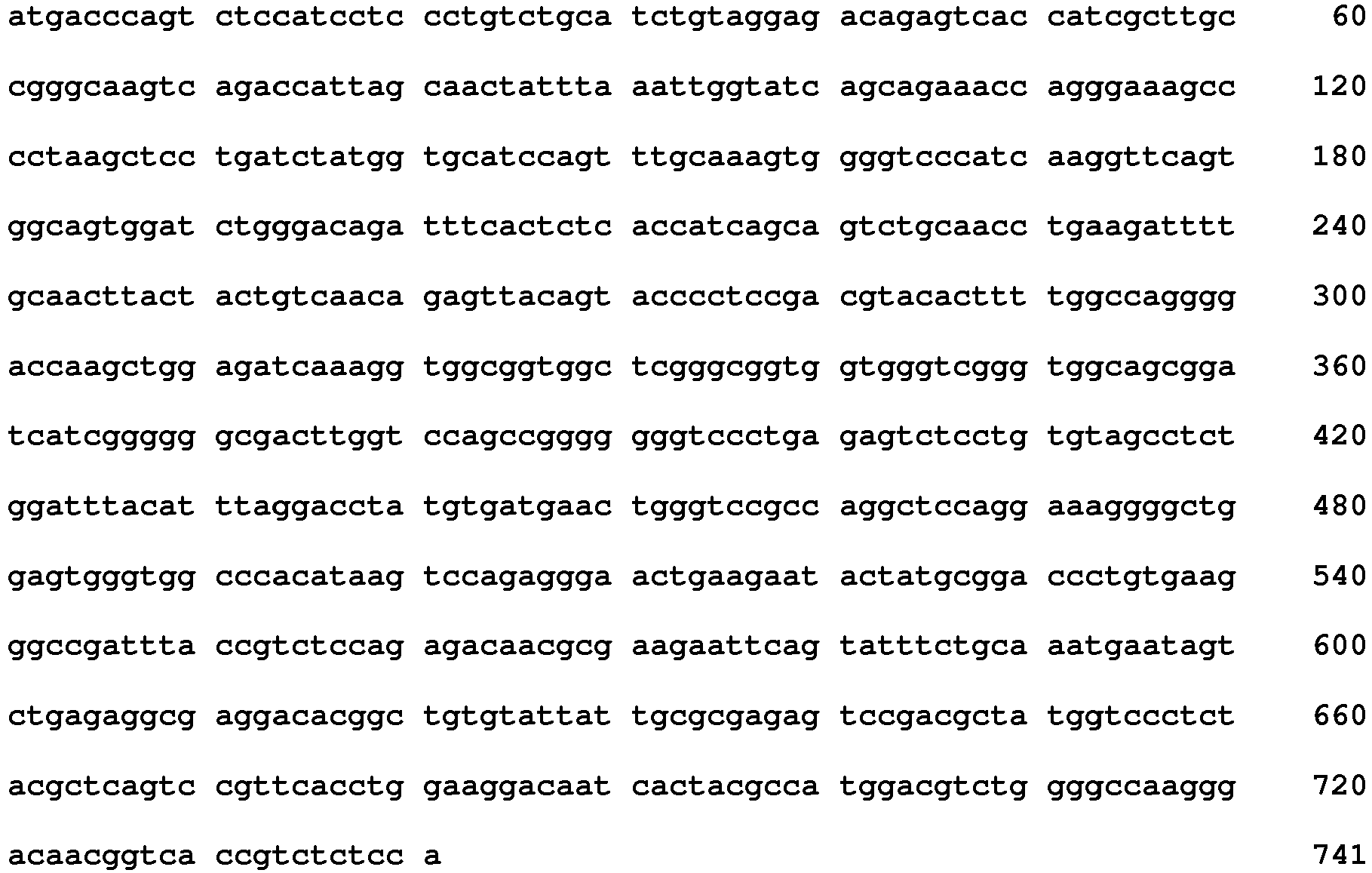
- <210> 9
<211> 1923
<212> DNA
<213> Homo sapiens - <400> 9


- <210> 10
<211> 732
<212> DNA
<213> Homo sapiens - <400> 10

- <210> 11
<211> 1914
<212> DNA
<213> Homo sapiens - <400> 11


- <210> 12
<211> 174
<212> DNA
<213> Homo sapiens - <400> 12

- <210> 13
<211> 1356
<212> DNA
<213> Homo sapiens - <400> 13

- <210> 14
<211> 1866
<212> DNA
<213> Homo sapiens - <400> 14


- <210> 15
<211> 2235
<212> DNA
<213> Homo sapiens - <400> 15


- <210> 16
<211> 3699
<212> DNA
<213> Homo sapiens - <400> 16


- <210> 17
<211> 3099
<212> DNA
<213> Homo sapiens - <400> 17


- <210> 18
<211> 2892
<212> DNA
<213> Homo sapiens - <400> 18


- <210> 19
<211> 2445
<212> DNA
<213> Homo sapiens - <400> 19


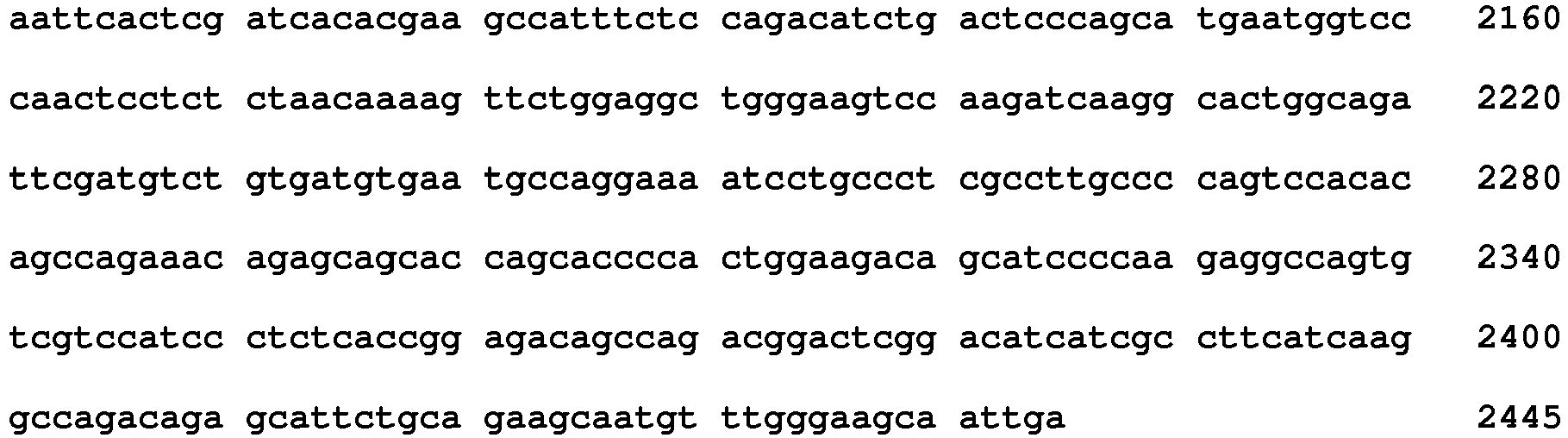
- <210> 20
<211> 4032
<212> DNA
<213> Homo sapiens - <400> 20


- <210> 21
<211> 2373
<212> DNA
<213> Homo sapiens - <400> 21


- <210> 22
<211> 8106
<212> DNA
<213> Homo sapiens - <400> 22


- <210> 23
<211> 3171
<212> DNA
<213> Homo sapiens - <400> 23



- <210> 24
<211> 1542
<212> DNA
<213> Homo sapiens - <400> 24

- <210> 25
<211> 5481
<212> DNA
<213> Homo sapiens - <400> 25
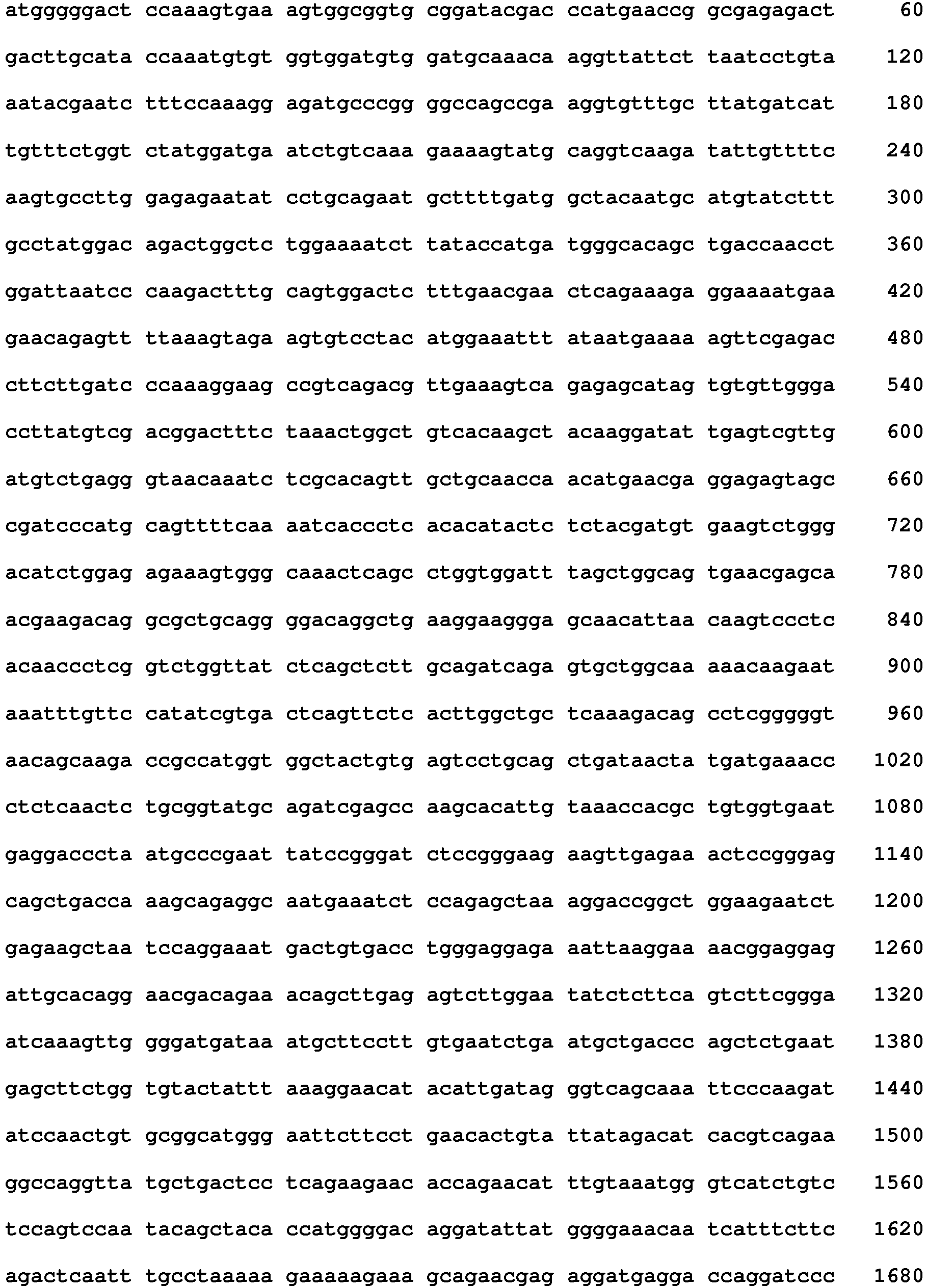
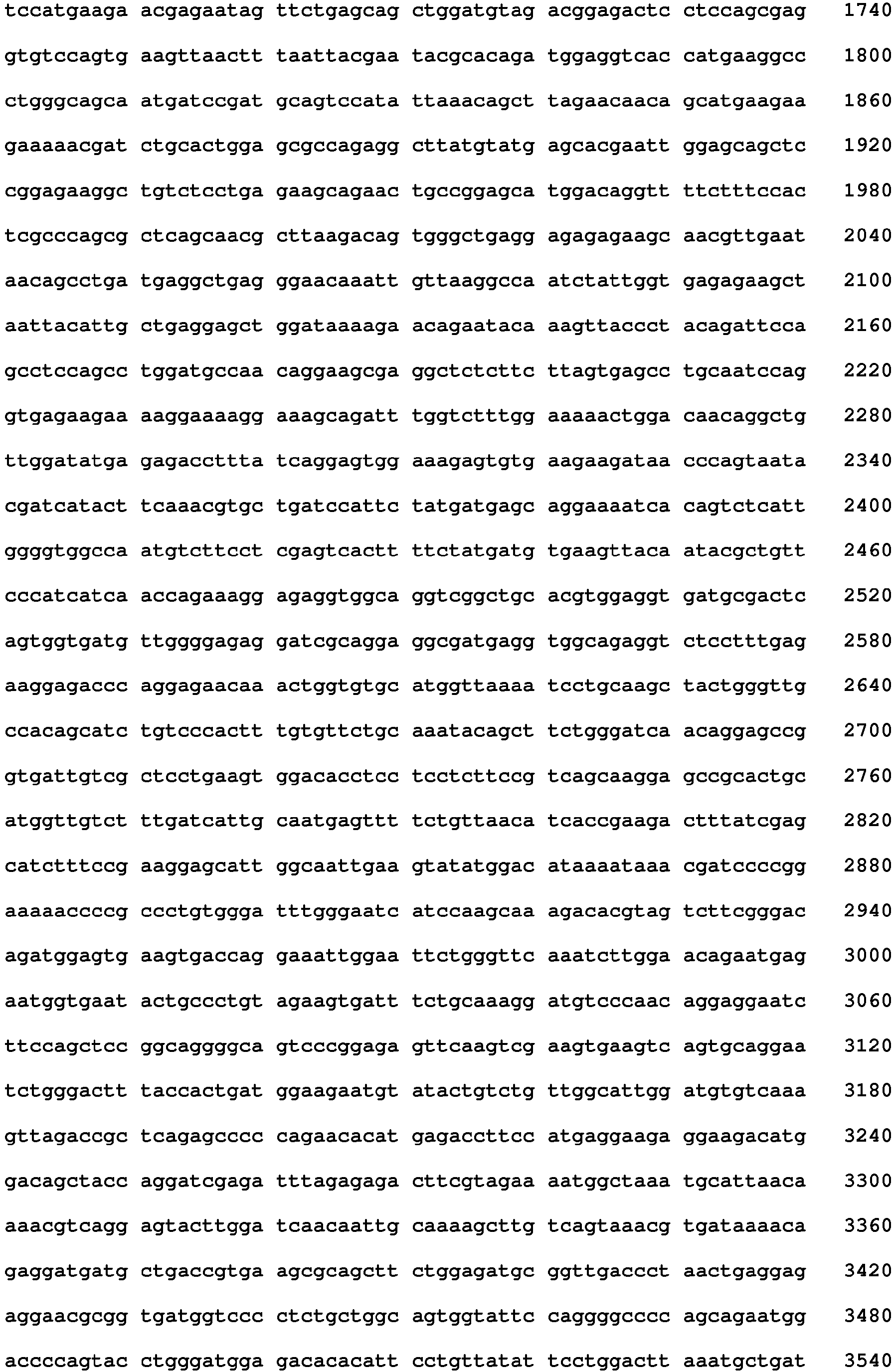


- <210> 26
<211> 4947
<212> DNA
<213> Homo sapiens - <400> 26


- <210> 27
<211> 4167
<212> DNA
<213> Homo sapiens - <400> 27


- <210> 28
<211> 3090
<212> DNA
<213> Homo sapiens - <400> 28


- <210> 29
<211> 2997
<212> DNA
<213> Homo sapiens - <400> 29


- <210> 30
<211> 1998
<212> DNA
<213> Homo sapiens - <400> 30


- <210> 31
<211> 2883
<212> DNA
<213> Homo sapiens - <400> 31


- <210> 32
<211> 4107
<212> DNA
<213> Homo sapiens - <400> 32


- <210> 33
<211> 1155
<212> DNA
<213> Homo sapiens - <400> 33


- <210> 34
<211> 4206
<212> DNA
<213> Homo sapiens - <400> 34

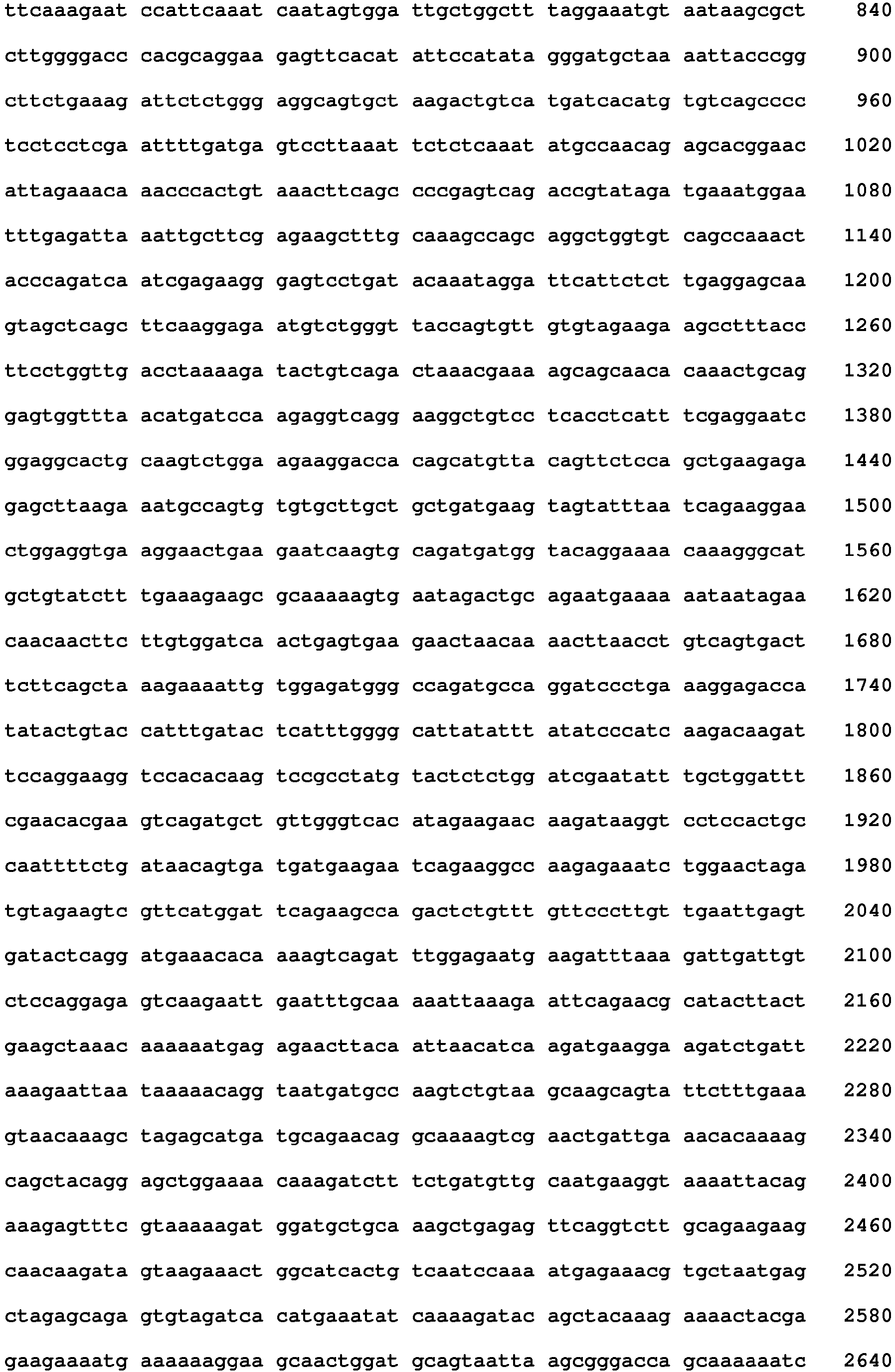

- <210> 35
<211> 4206
<212> DNA
<213> Homo sapiens - <400> 35


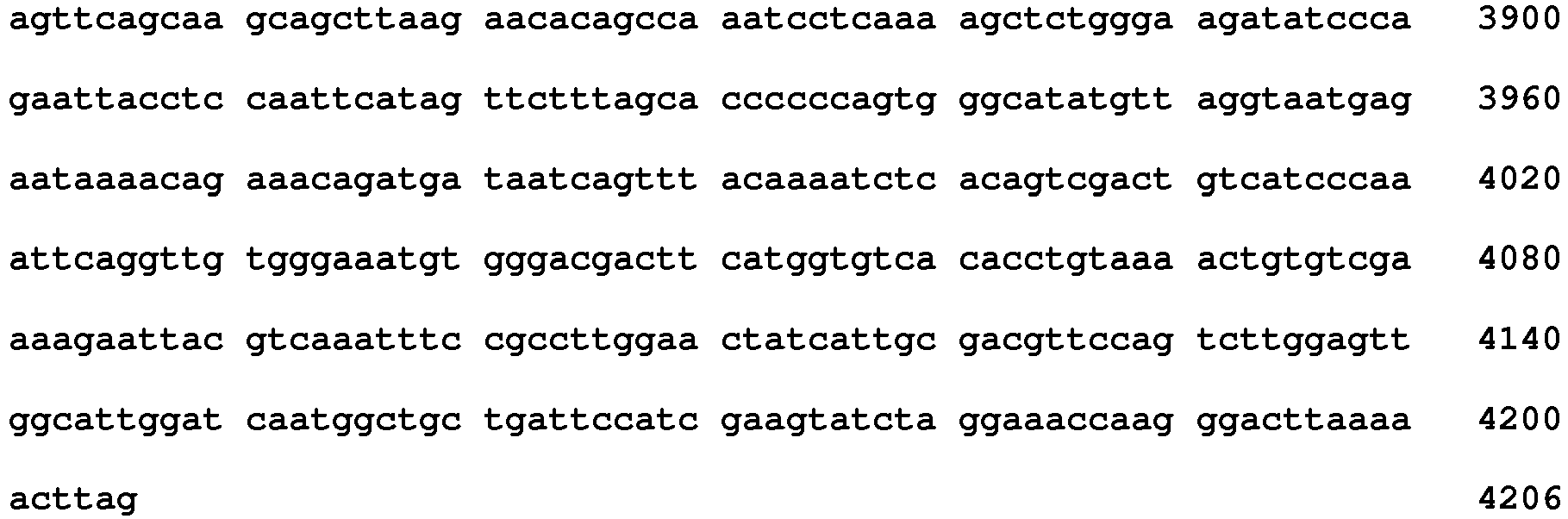
- <210> 36
<211> 2022
<212> DNA
<213> Homo sapiens - <400> 36

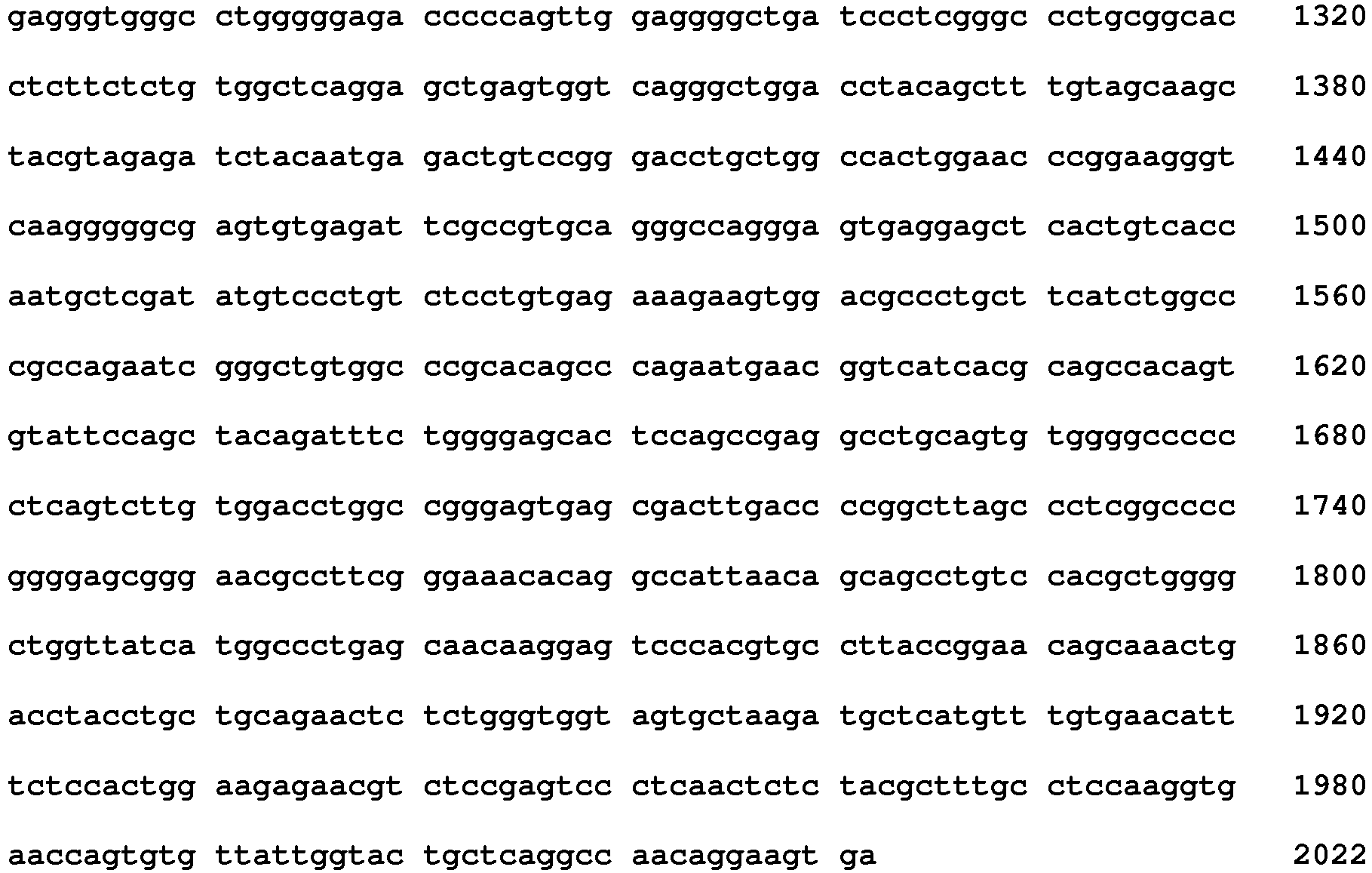
- <210> 37
<211> 2517
<212> DNA
<213> Homo sapiens - <400> 37


- <210> 38
<211> 2502
<212> DNA
<213> Homo sapiens - <400> 38


- <210> 39
<211> 12798
<212> DNA
<213> Homo sapiens - <400> 39
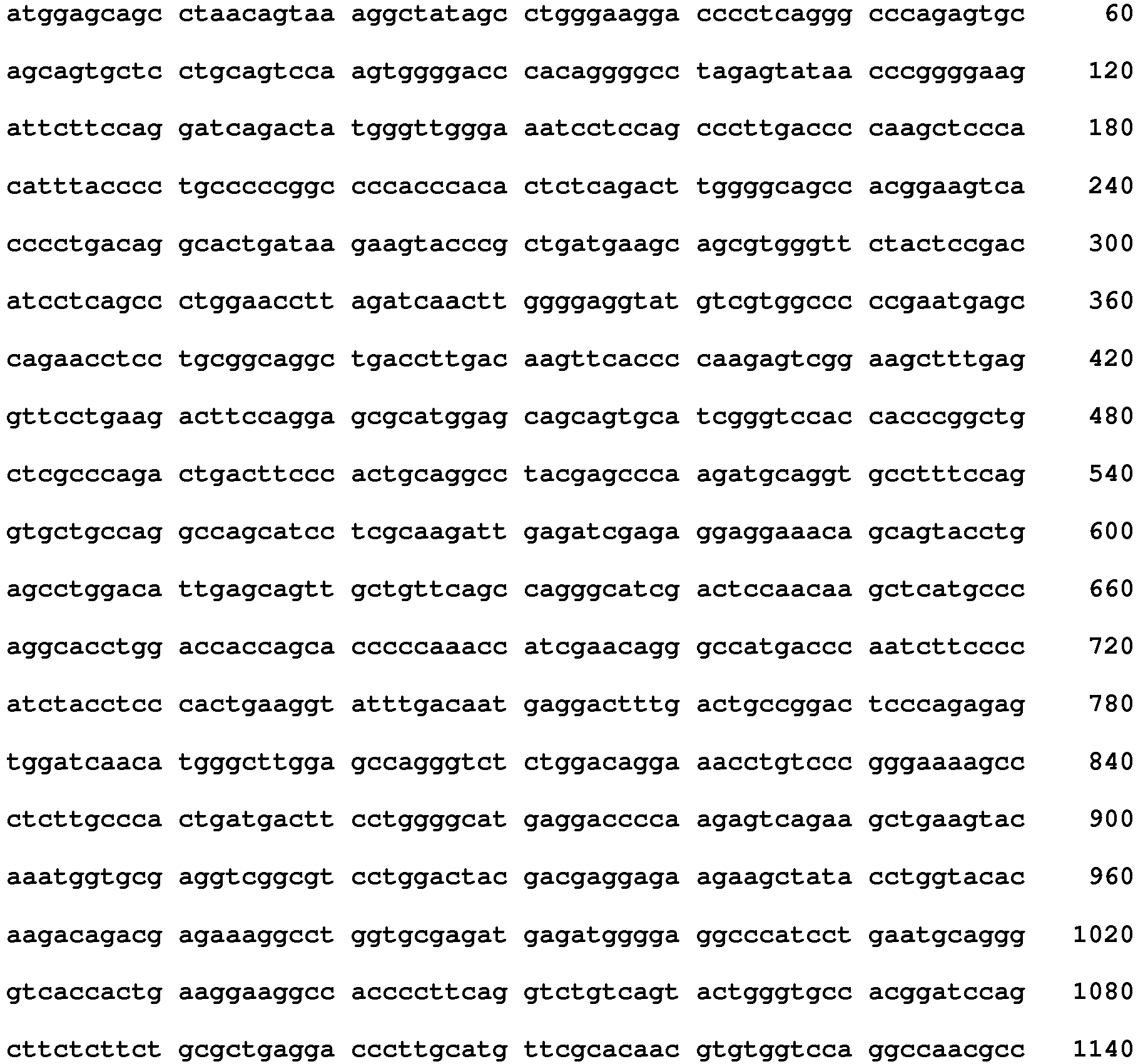


- <210> 40
<211> 13284
<212> DNA
<213> Homo sapiens - <400> 40




- <210> 41
<211> 12351
<212> DNA
<213> Homo sapiens - <400> 41


- <210> 42
<211> 13875
<212> DNA
<213> Homo sapiens - <400> 42


- <210> 43
<211> 12477
<212> DNA
<213> Homo sapiens - <400> 43




- <210> 44
<211> 12075
<212> DNA
<213> Homo sapiens - <400> 44




- <210> 45
<211> 13473
<212> DNA
<213> Homo sapiens - <400> 45

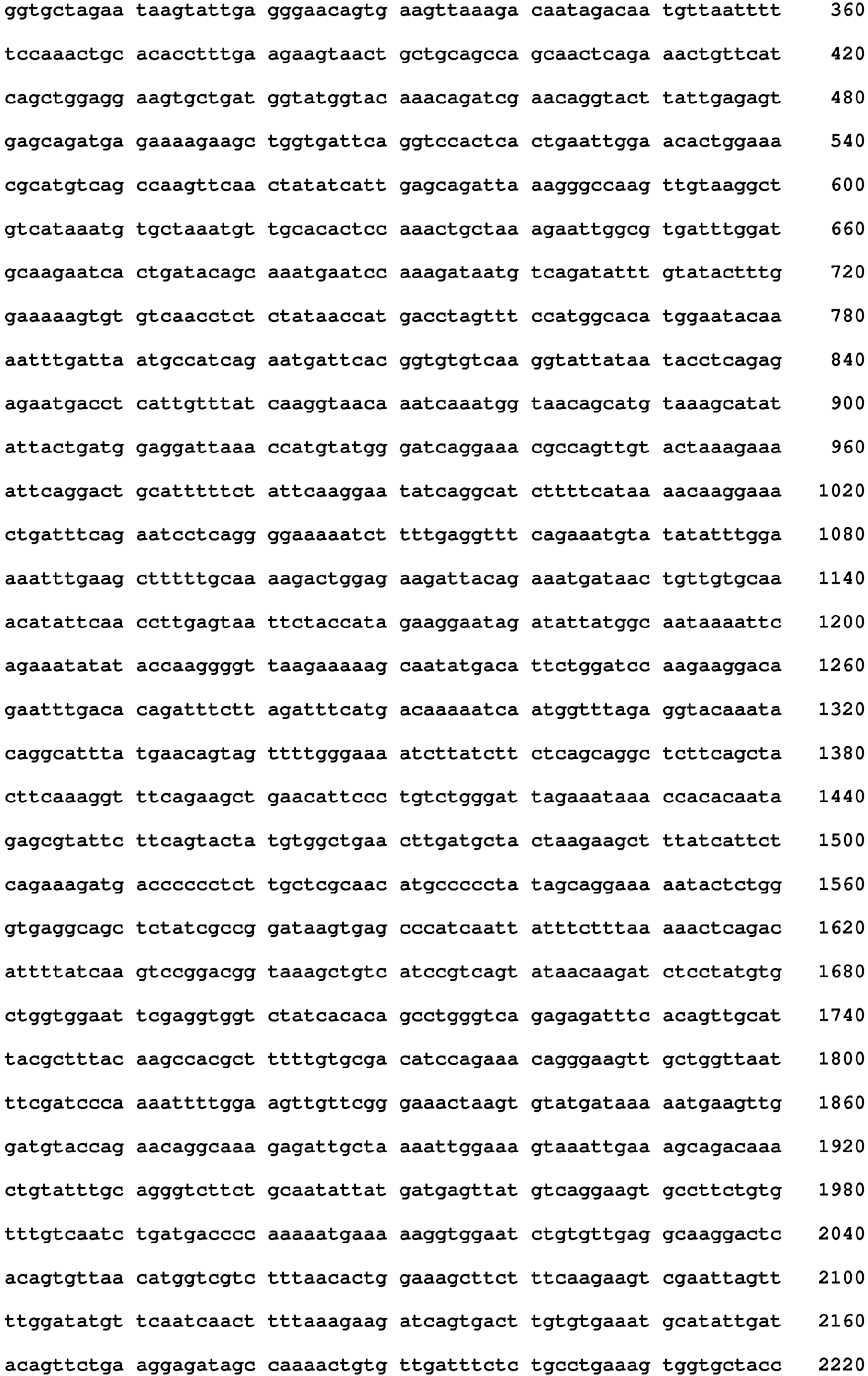


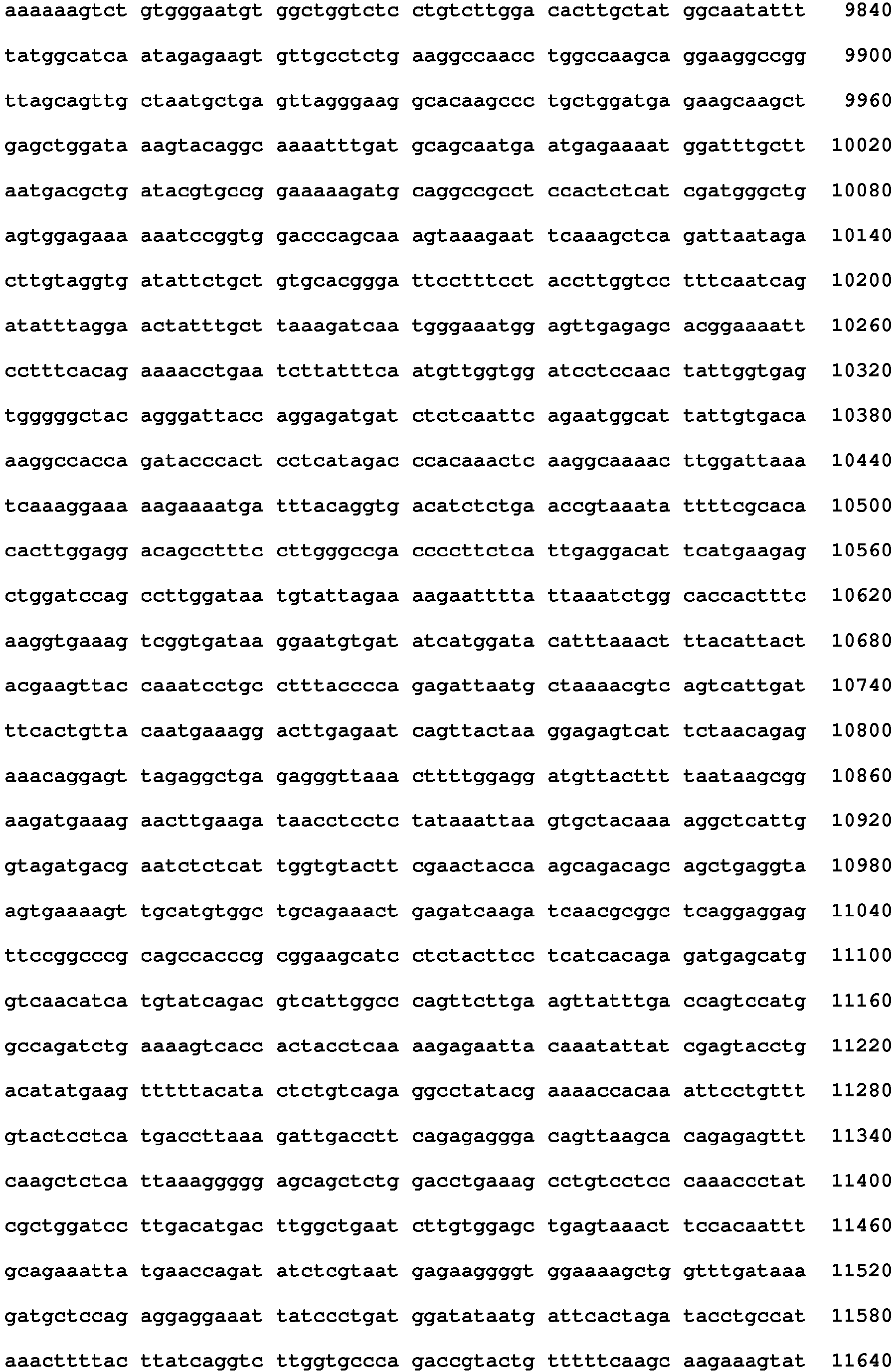

- <210> 46
<211> 13461
<212> DNA
<213> Homo sapiens - <400> 46


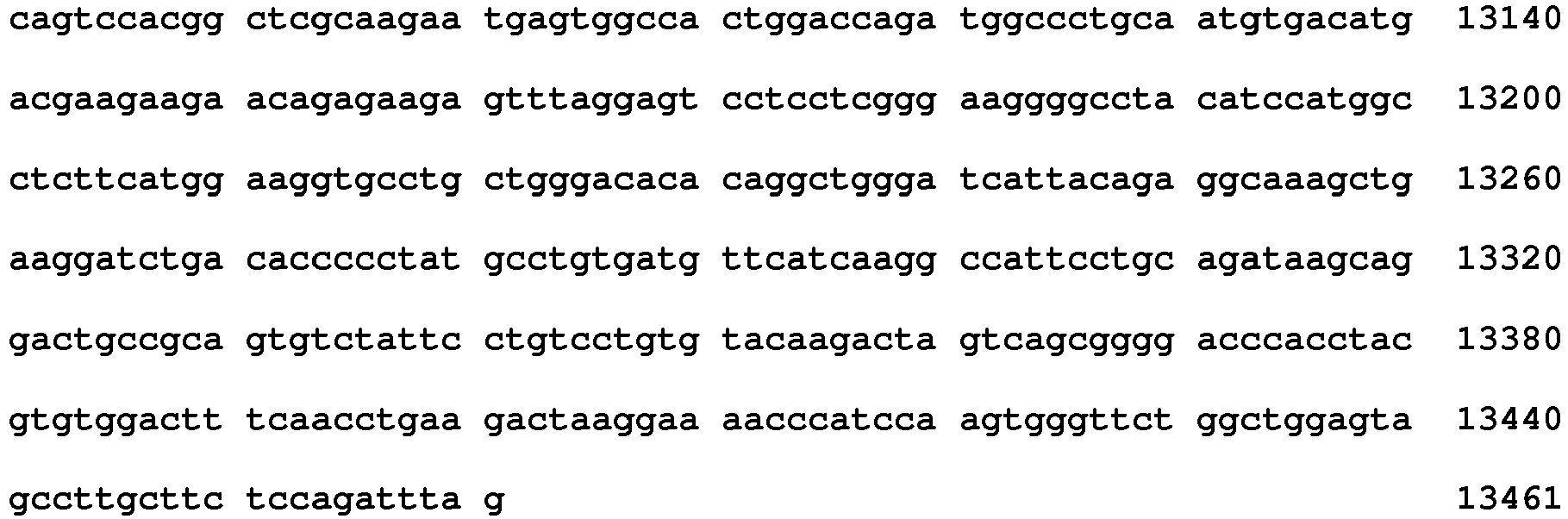
- <210> 47
<211> 13416
<212> DNA
<213> Homo sapiens - <400> 47


- <210> 48
<211> 13572
<212> DNA
<213> Homo sapiens - <400> 48


- <210> 49
<211> 1374
<212> DNA
<213> Homo sapiens - <400> 49


- <210> 50
<211> 1362
<212> DNA
<213> Homo sapiens - <400> 50


- <210> 51
<211> 2100
<212> DNA
<213> Homo sapiens - <400> 51


- <210> 52
<211> 1818
<212> DNA
<213> Homo sapiens - <400> 52


- <210> 53
<211> 573
<212> DNA
<213> Homo sapiens - <400> 53


- <210> 54
<211> 318
<212> DNA
<213> Homo sapiens - <400> 54

- <210> 55
<211> 525
<212> DNA
<213> Homo sapiens - <400> 55

- <210> 56
<211> 2310
<212> DNA
<213> Homo sapiens - <400> 56


- <210> 57
<211> 8412
<212> DNA
<213> Homo sapiens - <400> 57

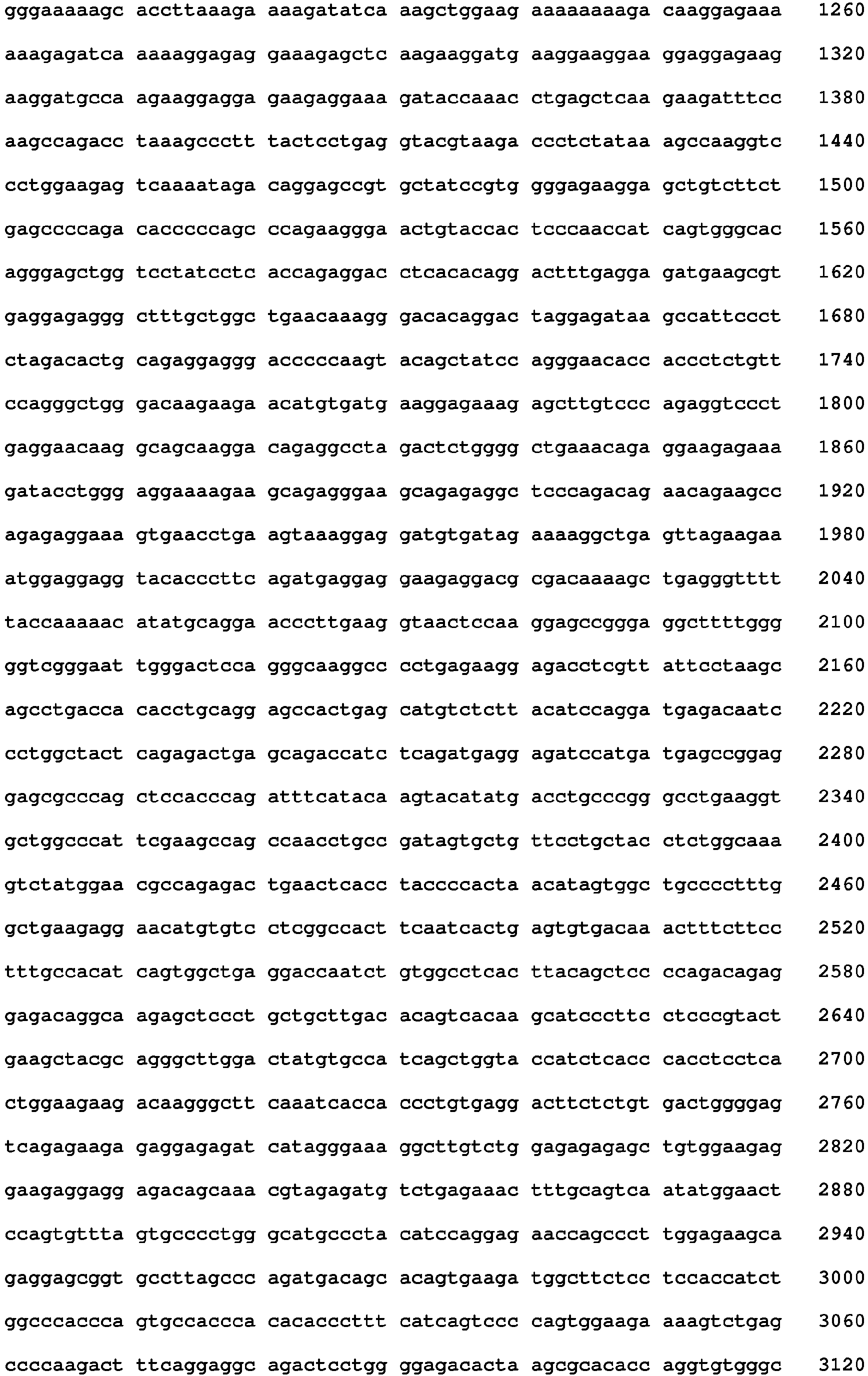


- <210> 58
<211> 7407
<212> DNA
<213> Homo sapiens - <400> 58


- <210> 59
<211> 5484
<212> DNA
<213> Homo sapiens - <400> 59


- <210> 60
<211> 3459
<212> DNA
<213> Homo sapiens - <400> 60


- <210> 61
<211> 6099
<212> DNA
<213> Homo sapiens - <400> 61


- <210> 62
<211> 2442
<212> DNA
<213> Homo sapiens - <400> 62


- <210> 63
<211> 2316
<212> DNA
<213> Homo sapiens - <400> 63

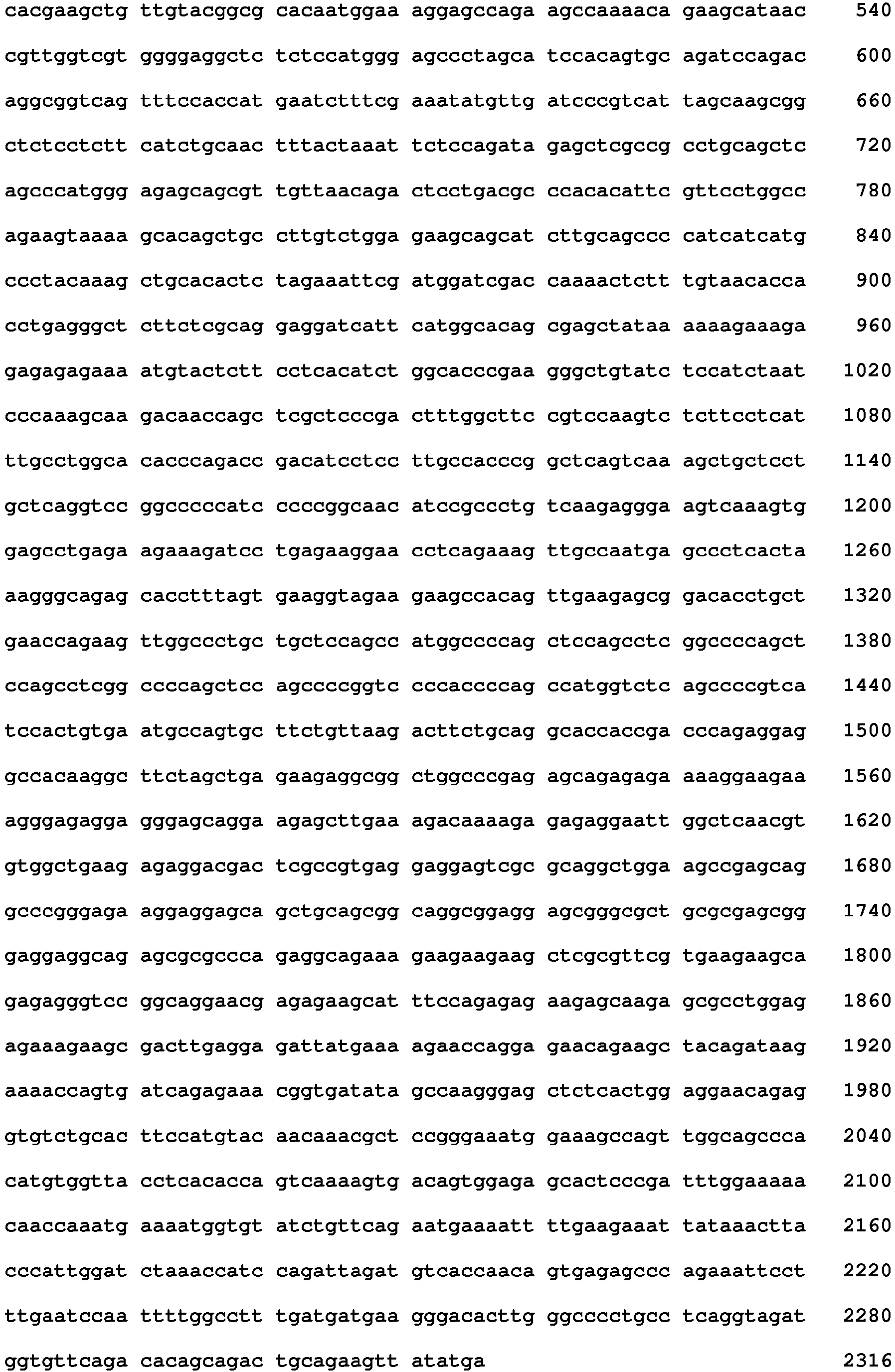
- <210> 64
<211> 3180
<212> DNA
<213> Homo sapiens - <400> 64


- <210> 65
<211> 1944
<212> DNA
<213> Homo sapiens - <400> 65


- <210> 66
<211> 3837
<212> DNA
<213> Homo sapiens - <400> 66


- <210> 67
<211> 1347
<212> DNA
<213> Homo sapiens - <400> 67

- <210> 68
<211> 1353
<212> DNA
<213> Homo sapiens - <400> 68

- <210> 69
<211> 1356
<212> DNA
<213> Homo sapiens - <400> 69


- <210> 70
<211> 1380
<212> DNA
<213> Homo sapiens - <400> 70


- <210> 71
<211> 1350
<212> DNA
<213> Homo sapiens - <400> 71


- <210> 72
<211> 1350
<212> DNA
<213> Homo sapiens - <400> 72


- <210> 73
<211> 1257
<212> DNA
<213> Homo sapiens - <400> 73

- <210> 74
<211> 1293
<212> DNA
<213> Homo sapiens - <400> 74

- <210> 75
<211> 1473
<212> DNA
<213> Homo sapiens - <400> 75


- <210> 76
<211> 1308
<212> DNA
<213> Homo sapiens - <400> 76


- <210> 77
<211> 1458
<212> DNA
<213> Homo sapiens - <400> 77


- <210> 78
<211> 2595
<212> DNA
<213> Homo sapiens - <400> 78


- <210> 79
<211> 2613
<212> DNA
<213> Homo sapiens - <400> 79


- <210> 80
<211> 2592
<212> DNA
<213> Homo sapiens - <400> 80


| CD molecule | Alternate Names |
| CD1a | R4; HTA1 |
| CD1b | R1 |
| CD1c | M241; R7 |
| CD1d | R3 |
| CD1e | R2 |
| CD2 | CD2R; E-rosette receptor; T11; LFA-2 |
| CD3delta | CD3d |
| CD3epsilon | CD3e |
| CD3gamma | CD3g |
| CD4 | L3T4; W3/25 |
| CD5 | Leu-1; Ly-1; T1; Tp67 |
| CD6 | T12 |
| CD7 | gp40 |
| CD8alpha | Leu2; Lyt2; T cell co-receptor; T8 |
| CD8beta | Leu2; CD8; Lyt3 |
| CD9 | DRAP-27; MRP-1; p24 |
| CD10 | EC 3.4.24.11; neprilysin; CALLA; enkephalinase; gp100; NEP |
| CD11a | AlphaL integrin chain; LFA-1alpha |
| CD11b | AlphaM integrin chain; AlphaM-beta2; C3biR; CR3; Mac-1; Mo1 |
| CD11c | AlphaX integrin chain; Axb2; CR4; leukocyte surface antigen p150,95 |
| CDw12 | p90-120 |
| CD13 | APN; EC 3.4.11.2; gp150 |
| CD14 | LPS-R |
| CD15u | Sulphated CD15 |
| CD16a | FCRIIIA |
| CD16b | FCRIIIB |
| CDw17 | LacCer |
| CD18 | CD11a beta subunit; CD11b beta subunit; CD11c beta subunit; beta-2 integrin chain |
| CD19 | B4 |
| CD20 | B1; Bp35 |
| CD21 | C3d receptor; CR2; EBV-R |
| CD22 | BL-CAM; Lyb8 |
| CD23 | B6; BLAST-2; FceRII; Leu-20; Low affinity IgE receptor |
| CD24 | BA-1; HSA |
| CD25 | IL-2R alpha chain; IL-2R; Tac antigen |
| CD26 | EC 3.4.14.5; ADA-binding protein; DPP IV ectoenzyme |
| CD27 | S152; T14 |
| CD28 | T44; Tp44 |
| CD29 | Platelet GPIIa; VLA-beta chain; beta-1 integrin chain |
| CD30 | Ber-H2 antigen; Ki-1 antigen |
| CD31 | GPiia'; endocam; PECAM-1 |
| CD32 | FCR II; Fc gamma RII |
| CD33 | gp67; p67 |
| CD34 | gp105-120 |
| CD35 | C3bR; C4bR; CR1; Immune Adherence Receptor |
| CD36 | GPIIIb; GPIV; OKM5-antigen; PASIV |
| CD37 | gp52-40 |
| CD38 | T10; cyclic ADP-ribose hydrolase |
| CD39 | |
| CD40 | Bp50 |
| CD41 | GPIIb; alpha IIb integrin chain |
| CD42a | GPIX |
| CD42b | GPIbalpha; Glycocalicin |
| CD42c | GPIb-beta |
| CD42d | GPV |
| CD43 | gpL115; leukocyte sialoglycoprotein; leukosialin; sialophorin |
| CD44 | ECMR III; H-CAM; HUTCH-1; Hermes; Lu, In-related; Pgp-1; gp85 |
| CD44R | CD44v; CD44v9 |
| CD45 | B220; CD45R; CD45RA; CD45RB; CD45RC; CD45RO; EC 3.1.3.4; LCA; T200; Ly5 |
| CD46 | MCP |
| CD47R | Rh-associated protein; gp42; IAP; neurophilin; OA3; MEM-133; formerly CDw149 |
| CD48 | BCM1; Blast-1; Hu Lym3; OX-45 |
| CD49a | Alpha-1 integrin chain; VLA-1 alpha chain |
| CD49b | Alpha-2 integrin chain; GPIa; VLA-2 alpha chain |
| CD49c | Alpha-3 integrin chain; VLA-3 alpha chain |
| CD49d | Alpha-4 integrin chain; VLA-4 alpha chain |
| CD49e | Alpha-5 integrin chain; FNR alpha chain; VLA-5 alpha chain |
| CD49f | Alpha-6 integrin chain; Platelet gpI; VLA-6 alpha chain |
| CD50 | ICAM-3 |
| CD51 | VNR-alpha chain; alpha V integrin chain; vitronectin receptor |
| CD52 | |
| CD53 | |
| CD54 | ICAM-1 |
| CD55 | DAF |
| CD56 | Leu-19; NKH1; NCAM |
| CD57 | HNK1; Leu-7 |
| CD58 | LFA-3 |
| CD59 | 1F-5Ag; H19; HRF20; MACIF; MIRL; P-18; Protectin |
| CD60a | GD3 |
| CD60b | 9-O-acetyl-GD3 |
| CD60c | 7-O-acetyl-GD3 |
| CD61 | CD61A; GPIIb/IIIa; beta 3 integrin chain |
| CD62E | E-selectin; ELAM-1; LECAM-2 |
| CD62L | L-selectin; LAM-1; LECAM-1; Leu-8; MEL-14; TQ-1 |
| CD62P | P-selectin; GMP-140; PADGEM |
| CD63 | LIMP; MLA1; PTLGP40; gp55; granulophysin; LAMP-3; ME491; NGA |
| CD64 | FC gammaRI; FCR I |
| CD65 | Ceramide-dodecasaccharide; VIM-2 |
| CD65s | Sialylated-CD65; VIM2 |
| CD66a | NCA-160; BGP |
| CD66b | CD67; CGM6; NCA-95 |
| CD66c | NCA; NCA-50/90 |
| CD66d | CGM1 |
| CD66e | CEA |
| CD66f | Pregnancy specific b1 glycoprotein; SP-1; PSG |
| CD68 | gp110; macrosialin |
| CD69 | AIM; EA 1; MLR3; gp34/28; VEA |
| CD70 | CD27-ligand; Ki-24 antigen |
| CD71 | T9; transferrin receptor |
| CD72 | Ly-19.2; Ly-32.2; Lyb-2 |
| CD73 | Ecto-5'-nucleotidase |
| CD74 | Class II-specific chaperone; Ii; Invariant chain |
| CD75 | Lactosamines |
| CD75s | Alpha-2,6-sialylated lactosamines (formerly CDw75 and CDw76) |
| CD77 | Pk blood group antigen; BLA; CTH; Gb3 |
| CD79a | Ig alpha; MB1 |
| CD79b | B29; Ig beta |
| CD80 | B7; BB1 |
| CD81 | TAPA-1 |
| CD82 | 4F9;C33;IA4;KAI1; R2 |
| CD83 | HB15 |
| CD84 | |
| CD85 | ILT/LIR family |
| CD86 | B7-2;B70 |
| CD87 | uPAR |
| CD88 | C5aR |
| CD89 | Fcalpha-R; IgA Fc receptor;IgA receptor |
| CD90 | Thy-1 |
| CD91 | ALPHA2M-R; LRP |
| CD92 | CTL1; formerly CDw92 |
| CDw93 | |
| CD94 | Kp43 |
| CD95 | APO-1; Fas; TNFRSF6; APT1 |
| CD96 | TACTILE |
| CD97 | |
| CD98 | 4F2; FRP-1; RL-388 |
| CD99 | CD99R; E2; MIC2 gene product |
| CD100 | SEMA4D |
| CD101 | IGSF2; P126; V7 |
| CD102 | ICAM-2 |
| CD103 | ITGAE; HML-1; integrin alphaE chain |
| CD104 | beta 4 integrin chain; TSP-1180; beta 4 |
| CD105 | endoglin |
| CD106 | INCAM-110; VCAM-1 |
| CD107a | LAMP-1 |
| CD107b | LAMP-2 |
| CD108 | SEMA7A; JMH human blood group antigen; formerly CDw108 |
| CD109 | 8A3; E123; 7D1 |
| CD110 | MPL; TPO-R; C-MPL |
| CD111 | PVRL1; PRR1; HevC; nectin-1; HIgR |
| CD112 | HVEB; PRR2; PVRL2; nectin 2 |
| CDw113 | PVRL3, Nectin3; poliovirus receptor-related 3; nectin-3 |
| CD114 | CSF3R; HG-CSFR; G-CSFR |
| CD115 | c-fms; CSF-1R; M-CSFR |
| CD116 | GM-CSF receptor alpha chain |
| CD117 | c-KIT; SCFR |
| CD118 | LIFR; leukemia inhibitory factor receptor |
| CDw119 | IFNgR; IFNgRa |
| CD120a | TNFRI; p55 |
| CD120b | TNFRII; p75; TNFR p80 |
| CD121a | IL-1R; type 1 IL-1R |
| CDw121b | IL-1R, type 2 |
| CD122 | IL-2Rbeta |
| CD123 | IL-3Ralpha |
| CD124 | IL-4R |
| CDw125 | IL-5Ralpha |
| CD126 | IL-6R |
| CD127 | IL-7R; IL-7R alpha; p90 Il7 R |
| CDw128a | CXCR1; IL-8RA |
| CDw128b | CXCR2; IL-8RB |
| CD129 | Reserved |
| CD130 | gp130 |
| CD131 | common beta subunit |
| CD132 | IL2RG; common cytokine receptor gamma chain; common gamma chain |
| CD133 | PROML1; AC133; hematopoietic stem cell antigen; prominin-like 1 |
| CD134 | OX40 |
| CD135 | flt3; Flk-2; STK-1 |
| CDw136 | msp receptor; ron; p158-ron |
| CDw137 | 4-1BB; ILA |
| CD138 | heparan sulfate proteoglycan; syndecan-1 |
| CD139 | |
| CD140a | PDGF-R; PDGFRa |
| CD140b | PDGFRb |
| CD141 | fetomodulin; TM |
| CD142 | F3; coagulation Factor III; thromboplastin; TF |
| CD143 | EC 3.4.15.1; ACE; kininase II; peptidyl dipeptidase A |
| CD144 | cadherin-5; VE-Cadherin |
| CDw145 | |
| CD146 | MCAM; A32; MUC18; Mel-CAM; S-endo |
| CD147 | 5A11; Basigin; CE9; HT7; M6; Neurothelin; OX-47; EMMPRIN; gp42 |
| CD148 | HPTP-eta; DEP-1; p260 |
| CDw149 | new designation is CD47R |
| CD150 | SLAM; IPO-3; fomerly CDw150 |
| CD151 | PETA-3; SFA-1 |
| CD152 | CTLA-4 |
| CD153 | CD30L |
| CD154 | CD40L; T-BAM; TRAP; gp39 |
| CD155 | PVR |
| CD156a | ADAM8; MS2 human; fomerly CD156 |
| CD156b | ADAM17; TACE; cSVP |
| CDw156C | ADAM10; a disintegrin and metalloproteinase domain 10 |
| CD157 | BP-3/IF-7; BST-1; Mo5 |
| CD158 | KIR family |
| CD159a | NKG2A |
| CD159c | NKG2C; killer cell lectin-like receptor subfamily C, member 2 |
| CD160 | BY55 antigen; NK1; NK28 |
| CD161 | KLRB1; NKR-P1A; killer cell lectin-like receptor subfamily B, member 1 |
| CD162 | PSGL-1, PSGL |
| CD162R | PEN5 (a post-translational modification of PSGL-1) |
| CD163 | GHI/61; M130; RM3/1 |
| CD164 | MUC-24; MGC-24v |
| CD165 | AD2; gp37 |
| CD166 | BEN; DM-GRASP; KG-CAM; Neurolin; SC-1; ALCAM |
| CD167a | trkE; trk6; cak; eddr1; DDR1; MCK10; RTK6; NTRK4 |
| CD168 | HMMR; IHABP; RHAMM |
| CD169 | sialoadhesin; siglec-1 |
| CD170 | Siglec-5 |
| CD171 | L1; L1CAM; N-CAM L1 |
| CD172a | SIRP alpha |
| CD172b | SIRPbeta; signal-regulatory protein beta 1 |
| CD172g | SIRPgamma; signal-regulatory protein beta 2 |
| CD173 | Blood group H type 2 |
| CD174 | Lewis y |
| CD175 | Tn |
| CD175s | Sialyl-Tn |
| CD176 | TF |
| CD177 | NB1 |
| CD178 | fas-L; TNFSF6; APT1LG1; CD95-L |
| CD179a | VpreB; VPREB1; IGVPB |
| CD179b | IGLL1; lambda5; immunoglobulin omega polypeptide; IGVPB; 14.1 chain |
| CD180 | LY64; RP105 |
| CD181 | CXCR1; (was CDw128A), IL8Ralpha |
| CD182 | CXCR2; (was CDw128B), IL8Rbeta |
| CD183 | CXCR3; GPR9; CKR-L2; IP10-R; Mig-R |
| CD184 | CXCR4; fusin; LESTR; NPY3R; HM89; FB22 |
| CD185 | CXCR5; Chemokine (C-X-C motif) Receptor 5, Burkitt lymphoma receptor 1 |
| CDw186 | CXCR6; Chemokine (C-X-C motif) Receptor 6 |
| CD191 | CCR1; Chemokine (C-C motif) Receptor 1, RANTES Receptor |
| CD192 | CCR2; Chemokine (C-C motif) Receptor 2, MCP-1 receptor |
| CD193 | CCR3; Chemokine (C-C motif) Receptor 3, eosinophil eotaxin receptor |
| CD195 | CCR5 |
| CD196 | CCR6; Chemokine (C-C motif) Receptor 6 |
| CD197 | CCR7; (was CDw197) Chemokine (C-C motif) Receptor 7 |
| CDw198 | CCR8; Chemokine (C-C motif) Receptor 8 |
| CDw199 | CCR9; Chemokine (C-C motif) Receptor 9 |
| CDw197 | CCR7 |
| CD200 | OX2 |
| CD201 | EPC R |
| CD202b | tie2; tek |
| CD203c | NPP3; PDNP3; PD-Ibeta; B10; gp130RB13-6; ENPP3; bovine intestinal phosphodiesterase |
| CD204 | macrophage scavenger R |
| CD205 | DEC205 |
| CD206 | MRC1; MMR |
| CD207 | Langerin |
| CD208 | DC-LAMP |
| CD209 | DC-SIGN |
| CDw210 | IL-10 R |
| CD212 | IL-12 R |
| CD213a1 | IL-13 R alpha 1 |
| CD213a2 | IL-13 R alpha 2 |
| CDw217 | IL-17 R |
| CDw218a | IL18Ralpha; IL18Ralpha |
| CDw218b | IL18Rbeta; IL18Rbeta |
| CD220 | Insulin R |
| CD221 | IGF1 R |
| CD222 | Mannose-6-phosphate/IGF2 R |
| CD223 | LAG-3 |
| CD224 | GGT; EC2.3.2.2 |
| CD225 | Leu13 |
| CD226 | DNAM-1; PTA1; TLiSA1 |
| CD227 | MUC1; episialin; PUM; PEM; EMA; DF3 antigen; H23 antigen |
| CD228 | melanotransferrin |
| CD229 | Ly9 |
| CD230 | Prion protein |
| CD231 | TM4SF2; A15; TALLA-1; MXS1; CCG-B7; TALLA |
| CD232 | VESP R |
| CD233 | band 3; erythrocyte membrane protein band 3;AE1; SLC4A1; Diego blood group; EPB3 |
| CD234 | Fy-glycoprotein; Duffy antigen |
| CD235a | Glycophorin A |
| CD235b | Glycophorin B |
| CD235ab | Glycophorin A/B crossreactive mabs |
| CD236 | Glycophorin C/D |
| CD236R | Glycophorin C |
| CD238 | Kell |
| CD239 | B-CAM |
| CD240CE | Rh30CE |
| CD240D | Rh30D |
| CD240DCE | Rh30D/CE crossreactive mabs |
| CD241 | RhAg |
| CD242 | ICAM-4 |
| CD243 | MDR-1 |
| CD244 | 2B4; NAIL; p38 |
| CD245 | p220/240 |
| CD246 | Anaplastic lymphoma kinase |
| CD247 | Zeta chain |
| CD248 | TEM1, Endosialin; CD164 sialomucin-like 1, tumor endothelial marker 1 |
| CD249 | Aminopeptidase A; APA, gp160 |
| CD252 | OX40L; TNF (ligand) superfamily member 4, CD134 ligand |
| CD253 | TRAIL; TNF (ligand) superfamily member 10, APO2L |
| CD254 | TRANCE; TNF (ligand) superfamily member 11, RANKL |
| CD256 | APRIL; TNF (ligand) superfamily member 13, TALL2 |
| CD257 | BLYS; TNF (ligand) superfamily, member 13b, TALL1, BAFF |
| CD258 | LIGHT; TNF (ligand) superfamily, member 14 |
| CD261 | TRAIL-R1; TNFR superfamily, member 10a, DR4, APO2 |
| CD262 | TRAIL-R2; TNFR superfamily, member 10b, DR5 |
| CD263 | TRAIL-R3; TNFR superfamily, member 10c, DCR1 |
| CD264 | TRAIL-R4; TNFR superfamily, member 10d, DCR2 |
| CD265 | TRANCE-R; TNFR superfamily, member 11a, RANK |
| CD266 | TWEAK-R; TNFR superfamily, member 12A, type I transmembrane protein Fn14 |
| CD267 | TACI; TNFR superfamily, member 13B, transmembrane activator and CAML interactor |
| CD268 | BAFFR; TNFR superfamily, member 13C, B cell-activating factor receptor |
| CD269 | BCMA; TNFR superfamily, member 17, B-cell maturation factor |
| CD271 | NGFR (p75); nerve growth factor receptor (TNFR superfamily, member 16) |
| CD272 | BTLA; B and T lymphocyte attenuator |
| CD273 | B7DC, PDL2; programmed cell death 1 ligand 2 |
| CD274 | B7H1, PDL1; programmed cell death 1 ligand 1 |
| CD275 | B7H2, ICOSL; inducible T-cell co-stimulator ligand (ICOSL) |
| CD276 | B7H3; B7 homolog 3 |
| CD277 | BT3.1; B7 family: butyrophilin, subfamily 3, member A1 |
| CD278 | ICOS; inducible T-cell co-stimulator |
| CD279 | PD1; programmed cell death 1 |
| CD280 | ENDO180; uPARAP, mannose receptor, C type 2, TEM22 |
| CD281 | TLR1; TOLL-like receptor 1 |
| CD282 | TLR2; TOLL-like receptor 2 |
| CD283 | TLR3; TOLL-like receptor 3 |
| CD284 | TLR4; TOLL-like receptor 4 |
| CD289 | TLR9; TOLL-like receptor 9 |
| CD292 | BMPR1A; Bone Morphogenetic Protein Receptor, type IA |
| CDw293 | BMPR1B; Bone Morphogenetic Protein Receptor, type IB |
| CD294 | CRTH2; PGRD2; G protein-coupled receptor 44, |
| CD295 | LEPR; Leptin Receptor |
| CD296 | ART1; ADP-ribosyltransferase 1 |
| CD297 | ART4; ADP-ribosyltransferase 4; Dombrock blood group glycoprotein |
| CD298 | ATP1B3; Na+/K+ -ATPase beta 3 subunit |
| CD299 | DCSIGN-related; CD209 antigen-like, DC-SIGN2, L-SIGN |
| CD300a | CMRF35 FAMILY; CMRF-35H |
| CD300c | CMRF35 FAMILY; CMRF-35A |
| CD300e | CMRF35 FAMILY; CMRF-35L1 |
| CD301 | MGL; CLECSF14, macrophage galactose-type C-type lectin |
| CD302 | DCL1; Type I transmembrane C-type lectin receptor DCL-1 |
| CD303 | BDCA2; C-type lectin, superfamily member 11 |
| CD304 | BDCA4; Neuropilin 1 |
| CD305 | LAIR1; Leukocyte-Associated Ig-like Receptor 1 |
| CD306 | LAIR2; Leukocyte-Associated Ig-like Receptor 2 |
| CD307 | IRTA2; Immunoglobulin superfamily Receptor Translocation Associated 2 |
| CD309 | VEGFR2; KDR (a type III receptor tyrosine kinase) |
| CD312 | EMR2 ; EGF-like module containing, mucin-like, hormone receptor-like 2 |
| CD314 | NKG2D; Killer cell lectin-like receptor subfamily K, member 1 |
| CD315 | CD9P1; Prostaglandin F2 receptor negative regulator |
| CD316 | EWI2; Immunoglobulin superfamily, member 8 |
| CD317 | BST2; Bone Marrow Stromal cell antigen 2 |
| CD318 | CDCP1; CUB domain-containing protein 1 |
| CD319 | CRACC; SLAM family member 7 |
| CD320 | 8D6; 8D6 Antigen; FDC |
| CD321 | JAM1; F11 receptor |
| CD322 | JAM2; Junctional Adhesion Molecule 2 |
| CD324 | E-Cadherin; cadherin 1, type 1, E-cadherin (epithelial) |
| CDw325 | N-Cadherin; cadherin 2, type 1, N-cadherin (neuronal) |
| CD326 | Ep-CAM; tumor-associated calcium signal transducer 1 |
| CDw327 | siglec6; sialic acid binding Ig-like lectin 6 |
| CDw328 | siglec7; sialic acid binding Ig-like lectin 7 |
| CDw329 | siglec9; sialic acid binding Ig-like lectin 9 |
| CD331 | FGFR1; Fibroblast Growth Factor Receptor 1 |
| CD332 | FGFR2; Fibroblast Growth Factor Receptor 2 (keratinocyte growth factor receptor) |
| CD333 | FGFR3; Fibroblast Growth Factor Receptor 3 (achondroplasia, thanatophoric dwarfism) |
| CD334 | FGFR4; Fibroblast Growth Factor Receptor 4 |
| CD335 | NKp46; NCR1, (Ly94); natural cytotoxicity triggering receptor 1 |
| CD336 | NKp44; NCR2, (Ly95); natural cytotoxicity triggering receptor 2 |
| CD337 | NKp30; NCR3 |
| CDw338 | ABCG2; ATP-binding cassette, sub-family G (WHITE), member 2 |
| CD339 | Jagged-1; Jagged 1 (Alagille syndrome) |
| Systematic name | Human chromosome | Human ligand | Mouse ligand | Chemokine receptor(s) |
| CXC chemokine/receptor family | ||||
| CXCL1 | 4q21.1 | GROα/MGSA-α | GRO/MIP·2/KC? | CXCR2 > CXCR1 |
| CXCL2 | 4q21.1 | GROβ/MGSA-β | GRO/MIP·2/KC? | CXCR2 |
| CXCL3 | 4q21.1 | GROγ/MGSA-γ | GRO/MIP·2/KC? | CXCR2 |
| CXCL4 | 4q21.1 | PF4 | PF4 | Unknown |
| CXCL5 | 4q21.1 | ENA·78 | GCP·2/LX? | CXCR2 |
| CXCL6 | 4q21.1 | GCP·2 | GCP·2/LIX? | CXCR1, CXCR2 |
| CXCL7 | 4q21.1 | NAP·2 | Unknown | CXCR2 |
| CXCL8 | 4q21.1 | IL-8 | Unknown | CXCR1, CXCR2 |
| CXCL9 | 4q21.1 | Mig | Mig | CXCR31 |
| CXCL10 | 4q21.1 | IP·10 | IP·10/CRG·2 | CXCR32 |
| CXCL11 | 4q21.1 | I.TAC | I.TAC | CXCR33 |
| CXCL12 | 10q11.21 | SDF-1 α/β | SDF·I/PBSF | CXCR44 |
| CXCL13 | 4q21.1 | BCA-1 | BLC | CXCR5 |
| CXCL14 | 5q31.1 | BRAK/b-olekine | BRAK | Unknown |
| (CXCL15) | Unknown | Lungkine WECITE | Unknown | |
| CXCL16 | 17p13 | CXCR6 | ||
| C chemokine/receptor family | ||||
| XCL1 | lq24.2 | Lymphotactin/SCM-1α/ ATAC | Lympotactin | XCR1 |
| XCL2 | lq24.2 | SCM·1β | Unknown | XCR1 |
| CX1 C chemokine/receptor family | ||||
| CX3CL1 | 16q13 | Fractalkine | Neurotactin/ABCD.3 | CX3CR1 |
| CC chemokine/receptor family | ||||
| CCL1 | 17q11.2 | 1·309 | TCA-3/P500 | CCR8 |
| CCL2 | 17q11.2 | MCP·1/MCAF/TDCF | JE? | CCR2 |
| CCL3 | 17q12 | MIP·1α/LD78α | MIP-1α | CCR1, CCR5 |
| CCL3L1 | 17q12 | LD78β | Unknown | CCR1, CCR5 |
| CCL4 | 17q12 | MIP·1β | MIP·1β | CCR51 |
| CCL5 | 17q12 | RANTES | RANTES | CCR1, CCR3, CCR5c |
| (CCL6) | Unknown | C10/MRP·1 | Unknown | |
| CCL7 | 17q11.2 | MCP·3 | MARC? | CCR1, CCR2, CCR3 |
| CCL8 | 17q11.2 | MCP·2 | MCP·2? | CCR3, CCR5c |
| (CCL9/10) | Unknown | MRP·2/CCF18/MIP·1γ | CCR1 | |
| CCL11 | 17q11.2 | Eotaxin | Extaxin | CCR3 |
| (CCL12) | Unknown | MCP·5 | CCR2 | |
| CCL13 | 17q11.2 | MCP·4 | Unknown | CCR2, CCR3 |
| CCL14 | 17q12 | TTCC-1 | Unknown | CCR1, CCR5 |
| CCL15 | 17q12 | TTCC-2/Lkn-1/MIP·1 | Unknown | CCR1, CCR3 |
| CCL16 | 17q12 | TTCC-4/LEC/LCC-1 | Unknown | CCR1, CCR2 |
| CCL17 | 16q13 | TARC | TARC/ABCD·2 | CCR4 |
| CCL18 | 17q12 | DC.CK1/PARC/AMAC-1 | Unknown | Unknown |
| CCL19 | 9p13.3 | MIP·3β/ELC/exodus-3 | MIP·3β/ELC/exodus-3 | CCR7d |
| CCL20 | 2q36.3 | MIP·3α/LARC/exodus-1 | MIP·3α/LARC/exodus-1 | CCR6 |
| CCL21 | 9p13.3 | 6Ckine/SLC/exodus-2 | 6Ckine/SLC/exodus-2/ TCA-4 | CCR7d |
| CCL22 | 16q13 | MDC/STCP·1 | ABCD-1 | CCR4 |
| CCL23 | 17q12 | MPIF·1/CKβ8/CKβ8-1 | Unknown | CCR1 |
| CCL24 | 7q11.23 | Eotaxin·2/MPIF-2 | MPIF·2 | CCR3 |
| CCL25 | 19p13.3 | TEC K | TECK | CCR9 |
| CCL26 | 7q11.23 | Eotarin·3 | Unknown | CCR3 |
| CCL27 | 9p13.3 | CTACK/ILC | ALP/CTACK/ILC/ESkine | CCR10 |
| CCL28 | 5p12 | MBC | CCR3/CCR10 | |
| aCD183. bCD184. cCD195. dCDa197. |
Claims (12)
- A compound formed from at least one component A comprising a binding domain for extra-cellular surface structures of a diseased proliferating cell that internalized upon binding of component A of said compound, wherein said extra-cellular surface structures are selected from CD64, EGFR, AchR, EpCAM and CD30, and at least one component B, characterized in that component B is a polypeptide which amino acid sequence comprises a microtubule-associated protein (MAP) or comprises at least a partial sequence of the MAP, the partial sequence having maintained the binding function of the MAP to a microtubule.
- The compound according to claim 1, wherein component B is selected from microtubule-associated proteins MAPs, in particular Seq ID No 57-65; Kinesins, in particular KIF1-27 in particular with SEQ ID NO 14-35; KIFC1-3 SEQ ID NO 36-38; Dyneins, in particular DNAH1-14 with SEQ ID NO 39-50; DNAI1 and 2 in particular with SEQ ID NO 51-52; DNAL1 and 4 in particular with SEQ ID NO 53-54; Tau protein, in particular a Tau protein having deleted phosphorylation sites with SEQ ID NO 1; Dynactin DCTN1 in particular with SEQ ID NO 66; Tubulins in particular TUBA1-8 with SEQ ID NO 67-72; Stathmin, in particular with SEQ ID NO 55; Gephyrin, in particular with SEQ ID NO 56; Tektins in particular TEKT1-5 with SEQ ID NO 73-77; Dynamins, in particular DNM1-3 with SEQ ID NO 78-80.
- The compound according to claims 1 or 2 formed by component A and KIF1, component A and KIF2A, component A and KIF4A, component A and KIF5A, component A and KIF5B, component A and KIF6, component A and KIF7, component A and KIF9, component A and KIF10, component A and KIF11, component A and KIF12, component A and KIF13B, component A and KIF14, component A and KIF15, component A and KIF17, component A and KIF19, component A and KIF22, component A and KIF23, component A and KIF24, component A and KIF25, component A and KIF26, component A and KIF27, component A and KIFC1, component A and KIFC2, component A and KIFC3, component A and DNAH1, component A and DNAH2, component A and DNAH3, component A and DNAH5, component A and DNAH6, component A and DNAH7, component A and DNAH8, component A and DNAH9, component A and DNAH10, component A and DNAH11, component A and DNAH12, component A and DNAH14, component A and DNAI1, component A and DNAI2, component A and DNAL1, component A and DNAL4, component A and Tau, component A and Stathmin, component A and Gephyrin, component A and MAP1a, component A and MAP1b, component A and MAP2, component A and MAP4, component A and XMAP5, component A and MAP6, component A and MAP7, component A and MAP8, component A and MAP9, component A and DCTN1, component A and TUBA1, component A and TUBA2, component A and TUBA3, component A and TUBA4, component A and TUBA6, component A and TUBA8, component A and TEKT1, component A and TEKT2, component A and TEKT3, component A and TEKT4, component A and TEKT5, component A and DNM1, component A and DNM2, as well as component A and DNM3.
- The compound according to any one of the claims 1 to 3, wherein component A is a ligand binding to the cluster of differentiation antigens or functional fragment or derivative thereof, in particular CD30 or CD64.
- The compound according to anyone of the claims 1 to 4, wherein the components are chemically coupled or fused to each other by genetic engineering.
- The compound according to anyone of claims 1 to 5, encoded by a polynucleotide in particular having the nucleotide sequences of one of the Seq ID Nos. 3, 7, 11 and/or 13.
- A polynucleotide encoding the compound of any one of the claims 1 to 6, in particular having the Seq ID Nos. 3, 7, 11 and/or 13.
- A process for manufacturing the fused compound of claim 5 by- cloning a component B to yield a polynucleotide; and- fuse said polynucleotide coding for component B with a polynucleotide coding for a protein of component A to yield a polynucleotide coding for the compound of the invention;- expressing said polynucleotide coding for the compound of the invention in suitable host, such as E. coli; and- isolation and purification of the compound of the invention.
- A vector comprising at least one polynucleotide of claim 7.
- A cell having a vector of claim 9.
- A medicament comprising a compound of one of the claims 1 to 4.
- A composition of matter comprising a compound of at least one of the claims 1 to 4 for use in the treatment of a cancer disease, in particular for use in the treatment of proliferating disease.
Priority Applications (1)
| Application Number | Priority Date | Filing Date | Title |
|---|---|---|---|
| EP13783316.6A EP2912057B1 (en) | 2012-10-24 | 2013-10-24 | A microtubuli-modifying compound |
Applications Claiming Priority (3)
| Application Number | Priority Date | Filing Date | Title |
|---|---|---|---|
| EP12189804 | 2012-10-24 | ||
| EP13783316.6A EP2912057B1 (en) | 2012-10-24 | 2013-10-24 | A microtubuli-modifying compound |
| PCT/EP2013/072257 WO2014064187A1 (en) | 2012-10-24 | 2013-10-24 | A microtubuli-modifying compound |
Publications (2)
| Publication Number | Publication Date |
|---|---|
| EP2912057A1 EP2912057A1 (en) | 2015-09-02 |
| EP2912057B1 true EP2912057B1 (en) | 2018-09-19 |
Family
ID=47076122
Family Applications (1)
| Application Number | Title | Priority Date | Filing Date |
|---|---|---|---|
| EP13783316.6A Active EP2912057B1 (en) | 2012-10-24 | 2013-10-24 | A microtubuli-modifying compound |
Country Status (5)
| Country | Link |
|---|---|
| US (1) | US9695239B2 (en) |
| EP (1) | EP2912057B1 (en) |
| JP (1) | JP6243919B2 (en) |
| CN (1) | CN104936977B (en) |
| WO (1) | WO2014064187A1 (en) |
Families Citing this family (20)
| Publication number | Priority date | Publication date | Assignee | Title |
|---|---|---|---|---|
| EP2903692B1 (en) | 2012-10-08 | 2019-12-25 | St. Jude Children's Research Hospital | Therapies based on control of regulatory t cell stability and function via a neuropilin-1:semaphorin axis |
| AU2015289831B2 (en) | 2014-07-14 | 2021-01-28 | The Penn State Research Foundation | Compositions and methods for targeting of the surfactant protein a receptor |
| US10591486B2 (en) | 2014-07-23 | 2020-03-17 | Institut National De La Sante Et De La Recherche Medicale (Inserm) | Methods and tools for detecting interactions in eukaryotic cells using microtubule structures and dynamics |
| WO2016020791A1 (en) * | 2014-08-05 | 2016-02-11 | Novartis Ag | Ckit antibody drug conjugates |
| US9616114B1 (en) | 2014-09-18 | 2017-04-11 | David Gordon Bermudes | Modified bacteria having improved pharmacokinetics and tumor colonization enhancing antitumor activity |
| SG11201706293XA (en) * | 2015-02-04 | 2017-09-28 | Hoffmann La Roche | Tau antisense oligomers and uses thereof |
| US10676723B2 (en) | 2015-05-11 | 2020-06-09 | David Gordon Bermudes | Chimeric protein toxins for expression by therapeutic bacteria |
| EP3377079A1 (en) * | 2015-11-19 | 2018-09-26 | Abbvie Stemcentrx LLC | Novel anti-emr2 antibodies and methods of use |
| EP4678748A2 (en) | 2015-12-21 | 2026-01-14 | Novartis AG | Compositions and methods for decreasing tau expression |
| PT3463483T (en) | 2016-05-27 | 2024-03-04 | Transcriptx Inc | Treatment of primary ciliary dyskinesia with synthetic messenger rna |
| CN108117590A (en) * | 2016-11-30 | 2018-06-05 | 天津师范大学 | The preparation method of one species specificity, 61 threonine phosphorylation antibody of anti-Kif4A protein 11s and application |
| US11129906B1 (en) | 2016-12-07 | 2021-09-28 | David Gordon Bermudes | Chimeric protein toxins for expression by therapeutic bacteria |
| US11180535B1 (en) | 2016-12-07 | 2021-11-23 | David Gordon Bermudes | Saccharide binding, tumor penetration, and cytotoxic antitumor chimeric peptides from therapeutic bacteria |
| US20230053449A1 (en) | 2018-10-31 | 2023-02-23 | Novartis Ag | Dc-sign antibody drug conjugates |
| EP4155386A1 (en) * | 2021-09-27 | 2023-03-29 | Max-Planck-Gesellschaft zur Förderung der Wissenschaften e.V. | Stabilising the human spindle by kifc1/hset |
| CN118962102B (en) * | 2022-03-15 | 2025-07-11 | 上海君赛生物科技有限公司 | Tumor specific immune cell marker and application thereof |
| CN116042798A (en) * | 2022-08-19 | 2023-05-02 | 复旦大学 | TUBA4A gene for detecting female primary infertility and kit for detecting mutation of the gene |
| TW202540200A (en) | 2023-12-01 | 2025-10-16 | 美商基利科學股份有限公司 | Anti-fap-light fusion protein and use thereof |
| US20260056209A1 (en) | 2024-06-14 | 2026-02-26 | Gilead Sciences, Inc. | Anti-ccr8 antibodies and uses thereof |
| CN119955797B (en) * | 2025-01-13 | 2026-01-23 | 江南大学 | Function and application of KIF5B gene in regulating myoblast physiological activity |
Family Cites Families (4)
| Publication number | Priority date | Publication date | Assignee | Title |
|---|---|---|---|---|
| US4946778A (en) | 1987-09-21 | 1990-08-07 | Genex Corporation | Single polypeptide chain binding molecules |
| EP1311664A2 (en) * | 2000-08-21 | 2003-05-21 | Incyte Genomics, Inc. | Microtubule-associated proteins and tubulins |
| EP1704228B1 (en) * | 2004-01-16 | 2012-04-11 | Fraunhofer-Gesellschaft zur Förderung der angewandten Forschung e.V. | Immunokinases |
| UA112062C2 (en) * | 2010-10-04 | 2016-07-25 | Бьорінгер Інгельхайм Інтернаціональ Гмбх | CD33-Binding Agent |
-
2013
- 2013-10-24 CN CN201380055938.7A patent/CN104936977B/en active Active
- 2013-10-24 EP EP13783316.6A patent/EP2912057B1/en active Active
- 2013-10-24 WO PCT/EP2013/072257 patent/WO2014064187A1/en not_active Ceased
- 2013-10-24 JP JP2015538440A patent/JP6243919B2/en not_active Expired - Fee Related
- 2013-10-24 US US14/436,568 patent/US9695239B2/en active Active
Non-Patent Citations (1)
| Title |
|---|
| None * |
Also Published As
| Publication number | Publication date |
|---|---|
| WO2014064187A1 (en) | 2014-05-01 |
| US9695239B2 (en) | 2017-07-04 |
| CN104936977B (en) | 2019-10-08 |
| JP2015535229A (en) | 2015-12-10 |
| CN104936977A (en) | 2015-09-23 |
| EP2912057A1 (en) | 2015-09-02 |
| JP6243919B2 (en) | 2017-12-06 |
| US20150259418A1 (en) | 2015-09-17 |
Similar Documents
| Publication | Publication Date | Title |
|---|---|---|
| US9695239B2 (en) | Microtubule-modifying compound | |
| US20140023592A1 (en) | Self coupling recombinant antibody fusion proteins | |
| JP7681681B2 (en) | Cleavable linker compositions and methods | |
| US12509521B2 (en) | Agonistic tumor necrosis factor receptor superfamily polypeptides | |
| US20130011401A1 (en) | Soluble proteins for use as therapeutics | |
| KR20210020907A (en) | Activatable interleukin 12 polypeptide and method of use thereof | |
| CA3173268A1 (en) | Materials and methods for modulating an immune response | |
| US20230227547A1 (en) | Antibody-payload conjugates with enhanced delivery domain and uses thereof | |
| US12590133B2 (en) | IL-13/IL-4 superkines: immune cell targeting constructs and methods of use thereof | |
| US20250304690A1 (en) | Therapeutic agent comprising multispecific antibody and use thereof in tumor therapy | |
| WO2023028657A1 (en) | Methods and compositions for stimulating immune activity | |
| US20260035426A1 (en) | Il-15 prodrug and uses thereof | |
| WO2007091078A2 (en) | Polypeptide conjugate comprising hla-g and uses thereof, stem cells transfected with hla-g | |
| EP3937975A1 (en) | Sodium fluorescein as a reversal agent for an anti-fluorescein car t cells and fluorescein-phospholipid-ethers or profluorescein-phospholipid-ethers | |
| US20240101693A1 (en) | Antagonistic anti-tumor necrosis factor receptor superfamily antibodies | |
| WO2023023467A1 (en) | Nucleic acid molecules and methods of using the same | |
| CN121293363B (en) | CD14 and CD3 targeting dual-function T cell adapter and application thereof | |
| WO2026085492A2 (en) | Mutant ccl27 binders against ccr10 | |
| KR20260030107A (en) | Pseudotyped viral particles containing engineered chimeric receptor proteins |
Legal Events
| Date | Code | Title | Description |
|---|---|---|---|
| PUAI | Public reference made under article 153(3) epc to a published international application that has entered the european phase |
Free format text: ORIGINAL CODE: 0009012 |
|
| 17P | Request for examination filed |
Effective date: 20150417 |
|
| AK | Designated contracting states |
Kind code of ref document: A1 Designated state(s): AL AT BE BG CH CY CZ DE DK EE ES FI FR GB GR HR HU IE IS IT LI LT LU LV MC MK MT NL NO PL PT RO RS SE SI SK SM TR |
|
| AX | Request for extension of the european patent |
Extension state: BA ME |
|
| RIN1 | Information on inventor provided before grant (corrected) |
Inventor name: BARTH, STEFAN Inventor name: THE OTHER INVENTORS HAVE AGREED TO WAIVE THEIR ENT Inventor name: THEPEN, THEOPILUS |
|
| DAX | Request for extension of the european patent (deleted) | ||
| RIN1 | Information on inventor provided before grant (corrected) |
Inventor name: THEPEN, THEOPILUS Inventor name: THE OTHER INVENTORS HAVE AGREED TO WAIVE THEIR ENT Inventor name: BARTH, STEFAN |
|
| STAA | Information on the status of an ep patent application or granted ep patent |
Free format text: STATUS: EXAMINATION IS IN PROGRESS |
|
| 17Q | First examination report despatched |
Effective date: 20170616 |
|
| GRAP | Despatch of communication of intention to grant a patent |
Free format text: ORIGINAL CODE: EPIDOSNIGR1 |
|
| STAA | Information on the status of an ep patent application or granted ep patent |
Free format text: STATUS: GRANT OF PATENT IS INTENDED |
|
| INTG | Intention to grant announced |
Effective date: 20180329 |
|
| GRAS | Grant fee paid |
Free format text: ORIGINAL CODE: EPIDOSNIGR3 |
|
| GRAA | (expected) grant |
Free format text: ORIGINAL CODE: 0009210 |
|
| STAA | Information on the status of an ep patent application or granted ep patent |
Free format text: STATUS: THE PATENT HAS BEEN GRANTED |
|
| AK | Designated contracting states |
Kind code of ref document: B1 Designated state(s): AL AT BE BG CH CY CZ DE DK EE ES FI FR GB GR HR HU IE IS IT LI LT LU LV MC MK MT NL NO PL PT RO RS SE SI SK SM TR |
|
| REG | Reference to a national code |
Ref country code: GB Ref legal event code: FG4D |
|
| REG | Reference to a national code |
Ref country code: CH Ref legal event code: EP |
|
| REG | Reference to a national code |
Ref country code: AT Ref legal event code: REF Ref document number: 1043135 Country of ref document: AT Kind code of ref document: T Effective date: 20181015 |
|
| REG | Reference to a national code |
Ref country code: IE Ref legal event code: FG4D |
|
| REG | Reference to a national code |
Ref country code: DE Ref legal event code: R096 Ref document number: 602013043939 Country of ref document: DE |
|
| REG | Reference to a national code |
Ref country code: FR Ref legal event code: PLFP Year of fee payment: 6 |
|
| REG | Reference to a national code |
Ref country code: NL Ref legal event code: FP |
|
| PG25 | Lapsed in a contracting state [announced via postgrant information from national office to epo] |
Ref country code: LT Free format text: LAPSE BECAUSE OF FAILURE TO SUBMIT A TRANSLATION OF THE DESCRIPTION OR TO PAY THE FEE WITHIN THE PRESCRIBED TIME-LIMIT Effective date: 20180919 Ref country code: SE Free format text: LAPSE BECAUSE OF FAILURE TO SUBMIT A TRANSLATION OF THE DESCRIPTION OR TO PAY THE FEE WITHIN THE PRESCRIBED TIME-LIMIT Effective date: 20180919 Ref country code: BG Free format text: LAPSE BECAUSE OF FAILURE TO SUBMIT A TRANSLATION OF THE DESCRIPTION OR TO PAY THE FEE WITHIN THE PRESCRIBED TIME-LIMIT Effective date: 20181219 Ref country code: NO Free format text: LAPSE BECAUSE OF FAILURE TO SUBMIT A TRANSLATION OF THE DESCRIPTION OR TO PAY THE FEE WITHIN THE PRESCRIBED TIME-LIMIT Effective date: 20181219 Ref country code: RS Free format text: LAPSE BECAUSE OF FAILURE TO SUBMIT A TRANSLATION OF THE DESCRIPTION OR TO PAY THE FEE WITHIN THE PRESCRIBED TIME-LIMIT Effective date: 20180919 Ref country code: FI Free format text: LAPSE BECAUSE OF FAILURE TO SUBMIT A TRANSLATION OF THE DESCRIPTION OR TO PAY THE FEE WITHIN THE PRESCRIBED TIME-LIMIT Effective date: 20180919 |
|
| REG | Reference to a national code |
Ref country code: LT Ref legal event code: MG4D |
|
| PG25 | Lapsed in a contracting state [announced via postgrant information from national office to epo] |
Ref country code: HR Free format text: LAPSE BECAUSE OF FAILURE TO SUBMIT A TRANSLATION OF THE DESCRIPTION OR TO PAY THE FEE WITHIN THE PRESCRIBED TIME-LIMIT Effective date: 20180919 Ref country code: AL Free format text: LAPSE BECAUSE OF FAILURE TO SUBMIT A TRANSLATION OF THE DESCRIPTION OR TO PAY THE FEE WITHIN THE PRESCRIBED TIME-LIMIT Effective date: 20180919 Ref country code: LV Free format text: LAPSE BECAUSE OF FAILURE TO SUBMIT A TRANSLATION OF THE DESCRIPTION OR TO PAY THE FEE WITHIN THE PRESCRIBED TIME-LIMIT Effective date: 20180919 |
|
| REG | Reference to a national code |
Ref country code: AT Ref legal event code: MK05 Ref document number: 1043135 Country of ref document: AT Kind code of ref document: T Effective date: 20180919 |
|
| PG25 | Lapsed in a contracting state [announced via postgrant information from national office to epo] |
Ref country code: AT Free format text: LAPSE BECAUSE OF FAILURE TO SUBMIT A TRANSLATION OF THE DESCRIPTION OR TO PAY THE FEE WITHIN THE PRESCRIBED TIME-LIMIT Effective date: 20180919 Ref country code: EE Free format text: LAPSE BECAUSE OF FAILURE TO SUBMIT A TRANSLATION OF THE DESCRIPTION OR TO PAY THE FEE WITHIN THE PRESCRIBED TIME-LIMIT Effective date: 20180919 Ref country code: RO Free format text: LAPSE BECAUSE OF FAILURE TO SUBMIT A TRANSLATION OF THE DESCRIPTION OR TO PAY THE FEE WITHIN THE PRESCRIBED TIME-LIMIT Effective date: 20180919 Ref country code: IS Free format text: LAPSE BECAUSE OF FAILURE TO SUBMIT A TRANSLATION OF THE DESCRIPTION OR TO PAY THE FEE WITHIN THE PRESCRIBED TIME-LIMIT Effective date: 20190119 Ref country code: PL Free format text: LAPSE BECAUSE OF FAILURE TO SUBMIT A TRANSLATION OF THE DESCRIPTION OR TO PAY THE FEE WITHIN THE PRESCRIBED TIME-LIMIT Effective date: 20180919 Ref country code: CZ Free format text: LAPSE BECAUSE OF FAILURE TO SUBMIT A TRANSLATION OF THE DESCRIPTION OR TO PAY THE FEE WITHIN THE PRESCRIBED TIME-LIMIT Effective date: 20180919 Ref country code: ES Free format text: LAPSE BECAUSE OF FAILURE TO SUBMIT A TRANSLATION OF THE DESCRIPTION OR TO PAY THE FEE WITHIN THE PRESCRIBED TIME-LIMIT Effective date: 20180919 |
|
| PG25 | Lapsed in a contracting state [announced via postgrant information from national office to epo] |
Ref country code: PT Free format text: LAPSE BECAUSE OF FAILURE TO SUBMIT A TRANSLATION OF THE DESCRIPTION OR TO PAY THE FEE WITHIN THE PRESCRIBED TIME-LIMIT Effective date: 20190119 Ref country code: SK Free format text: LAPSE BECAUSE OF FAILURE TO SUBMIT A TRANSLATION OF THE DESCRIPTION OR TO PAY THE FEE WITHIN THE PRESCRIBED TIME-LIMIT Effective date: 20180919 Ref country code: SM Free format text: LAPSE BECAUSE OF FAILURE TO SUBMIT A TRANSLATION OF THE DESCRIPTION OR TO PAY THE FEE WITHIN THE PRESCRIBED TIME-LIMIT Effective date: 20180919 |
|
| REG | Reference to a national code |
Ref country code: CH Ref legal event code: PL |
|
| REG | Reference to a national code |
Ref country code: DE Ref legal event code: R097 Ref document number: 602013043939 Country of ref document: DE |
|
| REG | Reference to a national code |
Ref country code: BE Ref legal event code: MM Effective date: 20181031 |
|
| PG25 | Lapsed in a contracting state [announced via postgrant information from national office to epo] |
Ref country code: LU Free format text: LAPSE BECAUSE OF NON-PAYMENT OF DUE FEES Effective date: 20181024 |
|
| REG | Reference to a national code |
Ref country code: IE Ref legal event code: MM4A |
|
| PLBE | No opposition filed within time limit |
Free format text: ORIGINAL CODE: 0009261 |
|
| STAA | Information on the status of an ep patent application or granted ep patent |
Free format text: STATUS: NO OPPOSITION FILED WITHIN TIME LIMIT |
|
| PG25 | Lapsed in a contracting state [announced via postgrant information from national office to epo] |
Ref country code: MC Free format text: LAPSE BECAUSE OF FAILURE TO SUBMIT A TRANSLATION OF THE DESCRIPTION OR TO PAY THE FEE WITHIN THE PRESCRIBED TIME-LIMIT Effective date: 20180919 Ref country code: DK Free format text: LAPSE BECAUSE OF FAILURE TO SUBMIT A TRANSLATION OF THE DESCRIPTION OR TO PAY THE FEE WITHIN THE PRESCRIBED TIME-LIMIT Effective date: 20180919 |
|
| 26N | No opposition filed |
Effective date: 20190620 |
|
| PG25 | Lapsed in a contracting state [announced via postgrant information from national office to epo] |
Ref country code: LI Free format text: LAPSE BECAUSE OF NON-PAYMENT OF DUE FEES Effective date: 20181031 Ref country code: CH Free format text: LAPSE BECAUSE OF NON-PAYMENT OF DUE FEES Effective date: 20181031 Ref country code: BE Free format text: LAPSE BECAUSE OF NON-PAYMENT OF DUE FEES Effective date: 20181031 |
|
| REG | Reference to a national code |
Ref country code: NL Ref legal event code: PD Owner name: UNIVERSITY OF CAPE TOWN; ZA Free format text: DETAILS ASSIGNMENT: CHANGE OF OWNER(S), ASSIGNMENT; FORMER OWNER NAME: FRAUNHOFER-GESELLSCHAFT ZUR FOERDERUNG DER ANGEWANDTEN FORSCHUNG E.V. Effective date: 20190904 |
|
| REG | Reference to a national code |
Ref country code: DE Ref legal event code: R082 Ref document number: 602013043939 Country of ref document: DE Representative=s name: DOMPATENT VON KREISLER SELTING WERNER - PARTNE, DE Ref country code: DE Ref legal event code: R081 Ref document number: 602013043939 Country of ref document: DE Owner name: UNIVERSITY OF CAPE TOWN, ZA Free format text: FORMER OWNER: FRAUNHOFER-GESELLSCHAFT ZUR FOERDERUNG DER ANGEWANDTEN FORSCHUNG E.V., 80686 MUENCHEN, DE |
|
| PG25 | Lapsed in a contracting state [announced via postgrant information from national office to epo] |
Ref country code: SI Free format text: LAPSE BECAUSE OF FAILURE TO SUBMIT A TRANSLATION OF THE DESCRIPTION OR TO PAY THE FEE WITHIN THE PRESCRIBED TIME-LIMIT Effective date: 20180919 Ref country code: IE Free format text: LAPSE BECAUSE OF NON-PAYMENT OF DUE FEES Effective date: 20181024 |
|
| REG | Reference to a national code |
Ref country code: GB Ref legal event code: 732E Free format text: REGISTERED BETWEEN 20191024 AND 20191030 |
|
| PG25 | Lapsed in a contracting state [announced via postgrant information from national office to epo] |
Ref country code: MT Free format text: LAPSE BECAUSE OF NON-PAYMENT OF DUE FEES Effective date: 20181024 |
|
| PG25 | Lapsed in a contracting state [announced via postgrant information from national office to epo] |
Ref country code: TR Free format text: LAPSE BECAUSE OF FAILURE TO SUBMIT A TRANSLATION OF THE DESCRIPTION OR TO PAY THE FEE WITHIN THE PRESCRIBED TIME-LIMIT Effective date: 20180919 |
|
| PG25 | Lapsed in a contracting state [announced via postgrant information from national office to epo] |
Ref country code: HU Free format text: LAPSE BECAUSE OF FAILURE TO SUBMIT A TRANSLATION OF THE DESCRIPTION OR TO PAY THE FEE WITHIN THE PRESCRIBED TIME-LIMIT; INVALID AB INITIO Effective date: 20131024 Ref country code: MK Free format text: LAPSE BECAUSE OF NON-PAYMENT OF DUE FEES Effective date: 20180919 Ref country code: GR Free format text: LAPSE BECAUSE OF FAILURE TO SUBMIT A TRANSLATION OF THE DESCRIPTION OR TO PAY THE FEE WITHIN THE PRESCRIBED TIME-LIMIT Effective date: 20180919 Ref country code: CY Free format text: LAPSE BECAUSE OF FAILURE TO SUBMIT A TRANSLATION OF THE DESCRIPTION OR TO PAY THE FEE WITHIN THE PRESCRIBED TIME-LIMIT Effective date: 20180919 |
|
| P01 | Opt-out of the competence of the unified patent court (upc) registered |
Effective date: 20230523 |
|
| P02 | Opt-out of the competence of the unified patent court (upc) changed |
Effective date: 20230527 |
|
| PGFP | Annual fee paid to national office [announced via postgrant information from national office to epo] |
Ref country code: NL Payment date: 20251024 Year of fee payment: 13 |
|
| PGFP | Annual fee paid to national office [announced via postgrant information from national office to epo] |
Ref country code: DE Payment date: 20251022 Year of fee payment: 13 |
|
| PGFP | Annual fee paid to national office [announced via postgrant information from national office to epo] |
Ref country code: GB Payment date: 20251023 Year of fee payment: 13 |
|
| PGFP | Annual fee paid to national office [announced via postgrant information from national office to epo] |
Ref country code: IT Payment date: 20251030 Year of fee payment: 13 |
|
| PGFP | Annual fee paid to national office [announced via postgrant information from national office to epo] |
Ref country code: FR Payment date: 20251023 Year of fee payment: 13 |