EP2907841A1 - Polypropylene composite - Google Patents
Polypropylene composite Download PDFInfo
- Publication number
- EP2907841A1 EP2907841A1 EP14155222.4A EP14155222A EP2907841A1 EP 2907841 A1 EP2907841 A1 EP 2907841A1 EP 14155222 A EP14155222 A EP 14155222A EP 2907841 A1 EP2907841 A1 EP 2907841A1
- Authority
- EP
- European Patent Office
- Prior art keywords
- fiber reinforced
- reinforced composition
- group
- groups
- raco
- Prior art date
- Legal status (The legal status is an assumption and is not a legal conclusion. Google has not performed a legal analysis and makes no representation as to the accuracy of the status listed.)
- Withdrawn
Links
- 0 *C(Cc1c2c(*)c(*)cc1[Al])C2IC1c2c(*)c(*)c(*)c([Al])c2CC1* Chemical compound *C(Cc1c2c(*)c(*)cc1[Al])C2IC1c2c(*)c(*)c(*)c([Al])c2CC1* 0.000 description 1
Images

Classifications
-
- C—CHEMISTRY; METALLURGY
- C08—ORGANIC MACROMOLECULAR COMPOUNDS; THEIR PREPARATION OR CHEMICAL WORKING-UP; COMPOSITIONS BASED THEREON
- C08J—WORKING-UP; GENERAL PROCESSES OF COMPOUNDING; AFTER-TREATMENT NOT COVERED BY SUBCLASSES C08B, C08C, C08F, C08G or C08H
- C08J5/00—Manufacture of articles or shaped materials containing macromolecular substances
- C08J5/04—Reinforcing macromolecular compounds with loose or coherent fibrous material
- C08J5/0405—Reinforcing macromolecular compounds with loose or coherent fibrous material with inorganic fibres
- C08J5/043—Reinforcing macromolecular compounds with loose or coherent fibrous material with inorganic fibres with glass fibres
-
- C—CHEMISTRY; METALLURGY
- C08—ORGANIC MACROMOLECULAR COMPOUNDS; THEIR PREPARATION OR CHEMICAL WORKING-UP; COMPOSITIONS BASED THEREON
- C08F—MACROMOLECULAR COMPOUNDS OBTAINED BY REACTIONS ONLY INVOLVING CARBON-TO-CARBON UNSATURATED BONDS
- C08F210/00—Copolymers of unsaturated aliphatic hydrocarbons having only one carbon-to-carbon double bond
- C08F210/04—Monomers containing three or four carbon atoms
- C08F210/06—Propene
-
- C—CHEMISTRY; METALLURGY
- C08—ORGANIC MACROMOLECULAR COMPOUNDS; THEIR PREPARATION OR CHEMICAL WORKING-UP; COMPOSITIONS BASED THEREON
- C08F—MACROMOLECULAR COMPOUNDS OBTAINED BY REACTIONS ONLY INVOLVING CARBON-TO-CARBON UNSATURATED BONDS
- C08F4/00—Polymerisation catalysts
- C08F4/42—Metals; Metal hydrides; Metallo-organic compounds; Use thereof as catalyst precursors
- C08F4/44—Metals; Metal hydrides; Metallo-organic compounds; Use thereof as catalyst precursors selected from light metals, zinc, cadmium, mercury, copper, silver, gold, boron, gallium, indium, thallium, rare earths or actinides
- C08F4/60—Metals; Metal hydrides; Metallo-organic compounds; Use thereof as catalyst precursors selected from light metals, zinc, cadmium, mercury, copper, silver, gold, boron, gallium, indium, thallium, rare earths or actinides together with refractory metals, iron group metals, platinum group metals, manganese, rhenium technetium or compounds thereof
- C08F4/62—Refractory metals or compounds thereof
- C08F4/64—Titanium, zirconium, hafnium or compounds thereof
- C08F4/659—Component covered by group C08F4/64 containing a transition metal-carbon bond
- C08F4/6592—Component covered by group C08F4/64 containing a transition metal-carbon bond containing at least one cyclopentadienyl ring, condensed or not, e.g. an indenyl or a fluorenyl ring
- C08F4/65922—Component covered by group C08F4/64 containing a transition metal-carbon bond containing at least one cyclopentadienyl ring, condensed or not, e.g. an indenyl or a fluorenyl ring containing at least two cyclopentadienyl rings, fused or not
- C08F4/65925—Component covered by group C08F4/64 containing a transition metal-carbon bond containing at least one cyclopentadienyl ring, condensed or not, e.g. an indenyl or a fluorenyl ring containing at least two cyclopentadienyl rings, fused or not two cyclopentadienyl rings being mutually non-bridged
-
- C—CHEMISTRY; METALLURGY
- C08—ORGANIC MACROMOLECULAR COMPOUNDS; THEIR PREPARATION OR CHEMICAL WORKING-UP; COMPOSITIONS BASED THEREON
- C08J—WORKING-UP; GENERAL PROCESSES OF COMPOUNDING; AFTER-TREATMENT NOT COVERED BY SUBCLASSES C08B, C08C, C08F, C08G or C08H
- C08J3/00—Processes of treating or compounding macromolecular substances
- C08J3/20—Compounding polymers with additives, e.g. colouring
- C08J3/203—Solid polymers with solid and/or liquid additives
-
- C—CHEMISTRY; METALLURGY
- C08—ORGANIC MACROMOLECULAR COMPOUNDS; THEIR PREPARATION OR CHEMICAL WORKING-UP; COMPOSITIONS BASED THEREON
- C08K—Use of inorganic or non-macromolecular organic substances as compounding ingredients
- C08K5/00—Use of organic ingredients
- C08K5/04—Oxygen-containing compounds
- C08K5/09—Carboxylic acids; Metal salts thereof; Anhydrides thereof
-
- C—CHEMISTRY; METALLURGY
- C08—ORGANIC MACROMOLECULAR COMPOUNDS; THEIR PREPARATION OR CHEMICAL WORKING-UP; COMPOSITIONS BASED THEREON
- C08K—Use of inorganic or non-macromolecular organic substances as compounding ingredients
- C08K7/00—Use of ingredients characterised by shape
- C08K7/02—Fibres or whiskers
- C08K7/04—Fibres or whiskers inorganic
- C08K7/14—Glass
-
- C—CHEMISTRY; METALLURGY
- C08—ORGANIC MACROMOLECULAR COMPOUNDS; THEIR PREPARATION OR CHEMICAL WORKING-UP; COMPOSITIONS BASED THEREON
- C08L—COMPOSITIONS OF MACROMOLECULAR COMPOUNDS
- C08L23/00—Compositions of homopolymers or copolymers of unsaturated aliphatic hydrocarbons having only one carbon-to-carbon double bond; Compositions of derivatives of such polymers
- C08L23/02—Compositions of homopolymers or copolymers of unsaturated aliphatic hydrocarbons having only one carbon-to-carbon double bond; Compositions of derivatives of such polymers not modified by chemical after-treatment
- C08L23/10—Homopolymers or copolymers of propene
- C08L23/14—Copolymers of propene
-
- C—CHEMISTRY; METALLURGY
- C08—ORGANIC MACROMOLECULAR COMPOUNDS; THEIR PREPARATION OR CHEMICAL WORKING-UP; COMPOSITIONS BASED THEREON
- C08L—COMPOSITIONS OF MACROMOLECULAR COMPOUNDS
- C08L51/00—Compositions of graft polymers in which the grafted component is obtained by reactions only involving carbon-to-carbon unsaturated bonds; Compositions of derivatives of such polymers
- C08L51/06—Compositions of graft polymers in which the grafted component is obtained by reactions only involving carbon-to-carbon unsaturated bonds; Compositions of derivatives of such polymers grafted on to homopolymers or copolymers of aliphatic hydrocarbons containing only one carbon-to-carbon double bond
-
- C—CHEMISTRY; METALLURGY
- C08—ORGANIC MACROMOLECULAR COMPOUNDS; THEIR PREPARATION OR CHEMICAL WORKING-UP; COMPOSITIONS BASED THEREON
- C08F—MACROMOLECULAR COMPOUNDS OBTAINED BY REACTIONS ONLY INVOLVING CARBON-TO-CARBON UNSATURATED BONDS
- C08F2500/00—Characteristics or properties of obtained polyolefins; Use thereof
- C08F2500/12—Melt flow index or melt flow ratio
-
- C—CHEMISTRY; METALLURGY
- C08—ORGANIC MACROMOLECULAR COMPOUNDS; THEIR PREPARATION OR CHEMICAL WORKING-UP; COMPOSITIONS BASED THEREON
- C08J—WORKING-UP; GENERAL PROCESSES OF COMPOUNDING; AFTER-TREATMENT NOT COVERED BY SUBCLASSES C08B, C08C, C08F, C08G or C08H
- C08J2323/00—Characterised by the use of homopolymers or copolymers of unsaturated aliphatic hydrocarbons having only one carbon-to-carbon double bond; Derivatives of such polymers
- C08J2323/02—Characterised by the use of homopolymers or copolymers of unsaturated aliphatic hydrocarbons having only one carbon-to-carbon double bond; Derivatives of such polymers not modified by chemical after treatment
- C08J2323/10—Homopolymers or copolymers of propene
- C08J2323/12—Polypropene
-
- C—CHEMISTRY; METALLURGY
- C08—ORGANIC MACROMOLECULAR COMPOUNDS; THEIR PREPARATION OR CHEMICAL WORKING-UP; COMPOSITIONS BASED THEREON
- C08J—WORKING-UP; GENERAL PROCESSES OF COMPOUNDING; AFTER-TREATMENT NOT COVERED BY SUBCLASSES C08B, C08C, C08F, C08G or C08H
- C08J2323/00—Characterised by the use of homopolymers or copolymers of unsaturated aliphatic hydrocarbons having only one carbon-to-carbon double bond; Derivatives of such polymers
- C08J2323/02—Characterised by the use of homopolymers or copolymers of unsaturated aliphatic hydrocarbons having only one carbon-to-carbon double bond; Derivatives of such polymers not modified by chemical after treatment
- C08J2323/10—Homopolymers or copolymers of propene
- C08J2323/14—Copolymers of propene
-
- C—CHEMISTRY; METALLURGY
- C08—ORGANIC MACROMOLECULAR COMPOUNDS; THEIR PREPARATION OR CHEMICAL WORKING-UP; COMPOSITIONS BASED THEREON
- C08J—WORKING-UP; GENERAL PROCESSES OF COMPOUNDING; AFTER-TREATMENT NOT COVERED BY SUBCLASSES C08B, C08C, C08F, C08G or C08H
- C08J2423/00—Characterised by the use of homopolymers or copolymers of unsaturated aliphatic hydrocarbons having only one carbon-to-carbon double bond; Derivatives of such polymers
- C08J2423/02—Characterised by the use of homopolymers or copolymers of unsaturated aliphatic hydrocarbons having only one carbon-to-carbon double bond; Derivatives of such polymers not modified by chemical after treatment
- C08J2423/10—Homopolymers or copolymers of propene
- C08J2423/14—Copolymers of propene
-
- C—CHEMISTRY; METALLURGY
- C08—ORGANIC MACROMOLECULAR COMPOUNDS; THEIR PREPARATION OR CHEMICAL WORKING-UP; COMPOSITIONS BASED THEREON
- C08J—WORKING-UP; GENERAL PROCESSES OF COMPOUNDING; AFTER-TREATMENT NOT COVERED BY SUBCLASSES C08B, C08C, C08F, C08G or C08H
- C08J2423/00—Characterised by the use of homopolymers or copolymers of unsaturated aliphatic hydrocarbons having only one carbon-to-carbon double bond; Derivatives of such polymers
- C08J2423/26—Characterised by the use of homopolymers or copolymers of unsaturated aliphatic hydrocarbons having only one carbon-to-carbon double bond; Derivatives of such polymers modified by chemical after-treatment
-
- C—CHEMISTRY; METALLURGY
- C08—ORGANIC MACROMOLECULAR COMPOUNDS; THEIR PREPARATION OR CHEMICAL WORKING-UP; COMPOSITIONS BASED THEREON
- C08L—COMPOSITIONS OF MACROMOLECULAR COMPOUNDS
- C08L23/00—Compositions of homopolymers or copolymers of unsaturated aliphatic hydrocarbons having only one carbon-to-carbon double bond; Compositions of derivatives of such polymers
- C08L23/02—Compositions of homopolymers or copolymers of unsaturated aliphatic hydrocarbons having only one carbon-to-carbon double bond; Compositions of derivatives of such polymers not modified by chemical after-treatment
- C08L23/04—Homopolymers or copolymers of ethene
- C08L23/08—Copolymers of ethene
- C08L23/0846—Copolymers of ethene with unsaturated hydrocarbons containing atoms other than carbon or hydrogen
-
- C—CHEMISTRY; METALLURGY
- C08—ORGANIC MACROMOLECULAR COMPOUNDS; THEIR PREPARATION OR CHEMICAL WORKING-UP; COMPOSITIONS BASED THEREON
- C08L—COMPOSITIONS OF MACROMOLECULAR COMPOUNDS
- C08L2314/00—Polymer mixtures characterised by way of preparation
- C08L2314/06—Metallocene or single site catalysts
Definitions
- the present invention is directed to a fiber reinforced polypropylene composition with excellent impact/stiffness balance and reduced emissions as well as to its preparation and use.
- Polypropylene is a material used in a wide variety of technical fields, and reinforced polypropylenes have in particular gained relevance in fields previously exclusively relying on non-polymeric materials, in particular metals.
- reinforced polypropylenes are glass fiber reinforced polypropylenes. Such materials enable a tailoring of the properties of the composition by selecting the type of polypropylene, the amount of glass fiber and sometimes by selecting the type of coupling agent used. Accordingly, nowadays glass-fiber reinforced polypropylene is a well-established material for applications requiring high stiffness, heat deflection resistance and resistance to both impact and dynamic fracture loading (examples include automotive components with a load-bearing function in the engine compartment, support parts for polymer body panels, washing machine and dishwasher components).
- GF glass fiber
- PP polypropylene
- polymer processors desire material with low emissions to fulfil the consistently rising demands of regulatory authorities as well as consumers.
- WO 98/16359 A1 describes rod-shaped PP pellets containing glass and PP fibers, the fibers having the length of the pellets.
- the core contains a mixture of GF with PP fibers, the fibers being a PP homopolymer or a random copolymer with ⁇ 10 wt.% C 2 or C 4 -C 10 as comonomer, while the sheath comprises a PP homopolymer and/or a random copolymer with ⁇ 10 wt.% C 2 or C 4 -C 10 as comonomer and/or a PP impact copolymer with ⁇ 27 wt.% C 2 or C 4 -C 10 as comonomer.
- Long glass fibers (LGF) as used in this case are generally more difficult to process and deliver parts with a very high degree of orientation and mechanical anisotropy.
- EP 2062936 A1 describes PP glass fiber compositions with > 15 wt.% glass fibers and a heterophasic PP composition comprising a matrix phase and at least two disperse elastomer components with a total comonomer content of ⁇ 12 wt.% and a comonomer content in the elastomer phase of ⁇ 20 wt.%. While demonstrating good impact strength, the described compositions still show a very limited strain at break.
- EP 2308923 B1 describes fiber reinforced compositions comprising (a) an EP-heterophasic copolymer, (b) a PP homo-or copolymer with MFR ⁇ 500, and (c) fibers having good flowability.
- the described compositions show a very limited strain at break.
- the object of the present invention is to provide a fiber reinforced composition with excellent elongation at break. It is further an object of the present invention to obtain an improved balance of mechanical properties, like flexural modulus, impact strength and elongation at break and at the same time reduced emissions.
- the finding of the present invention is that a fibrous reinforced material with excellent impact/stiffness balance and reduced emissions can be obtained with fibers embedded in a monophasic alpha-olefin propylene random copolymer, whereby the alpha-olefin propylene random copolymer is produced in the presence of a metallocene catalyst.
- the polypropylene random copolymer comprising ethylene and/or C 4 to C 8 ⁇ -olefin (PP-RACO) has a melt flow rate MFR 2 (230 °C) measured according to ISO 1133 in the range of at least 2.5 g/10min up to 15.0 g/10min, preferably in the range of 3.0 g/10min to 12.0 g/10min and more preferably in the range of 5.0 g/10min to 10.0 g/10min.
- PP-RACO polypropylene random copolymer comprising ethylene and/or C 4 to C 8 ⁇ -olefin
- PP-RACO polypropylene random copolymer comprising ethylene and/or C 4 to C 8 ⁇ -olefin
- the polypropylene random copolymer comprises, preferably consists of, propylene and a comonomer selected from ethylene and/or at least one C 4 to C 8 ⁇ -olefin, preferably at least one comonomer selected from the group consisting of ethylene, 1-butene, 1-pentene, 1-hexene and 1-octene, more preferably ethylene and/or 1-butene and most preferably ethylene.
- the propylene random copolymer (PP-RACO) according to this invention comprises units derivable from ethylene and propylene only.
- the comonomer content of the polypropylene random copolymer is within the range of 1.0 to 10.0 wt.% of ethylene and/or C 4 to C 8 ⁇ -olefin comonomer.
- the comonomer content is in the range of 2.0 to 9.8 wt.%, more preferably in the range of 2.2 to 9.5 wt.% and still more preferably in the range of 2.5 to 9.0 wt.%.
- polypropylene random copolymer has a xylene cold soluble content (XCS) in the range of 10.0 to 25.0 wt.%, preferably in the range of 10.5 to 23.0 wt.% and more preferably in the range of 11.0 to 20.0 wt.%.
- XCS xylene cold soluble content
- propylene random copolymer has a melting temperature measured according to ISO 11357-3 of at least 135 °C, preferably of at least 140°C and more preferably of at least 142°C.
- the melting temperature will normally not be higher than 160°C.
- propylene random copolymer is preferably characterized by a relatively narrow molecular weight distribution as determined by size exclusion chromatography (SEC).
- SEC size exclusion chromatography
- Mw weight average molecular weight
- Mn number average molecular weight
- Mw/Mn polydispersity
- the propylene random copolymer is preferably characterized by its monophasic nature, meaning the absence of a separated elastomer phase otherwise typical for the high impact polypropylene compositions as described in the above cited documents EP 2062936 A1 and EP 2308923 B1 .
- the presence or absence of such a separated elastomer phase can for example be detected in high resolution microscopy, like electron microscopy or atomic force microscopy, or by dynamic mechanical thermal analysis (DMTA).
- DMTA dynamic mechanical thermal analysis
- the presence of a monophase structure can be identified by the presence of only one distinct glass transition temperature (Tg).
- Tg glass transition temperature
- Tg will normally be in the range of -12 to +2°C. More preferably, the PP-RACO will not have a Tg below -20°C.
- a suitable propylene random copolymer (PP-RACO) according to this invention is preferably produced in a sequential polymerization process in the presence of a metallocene catalyst, more preferably in the presence of a catalyst (system) as defined below.
- the term “sequential polymerization process” indicates that the propylene random copolymer (PP-RACO) is produced in at least two reactors, preferably in two or three reactors, connected in series. Accordingly the present process comprises at least a first reactor (R1) and a second reactor (R2), as well as optionally a third reactor (R3).
- the term “polymerization reactor” shall indicate that the main polymerization takes place. Thus in case the process consists of two polymerization reactors, this definition does not exclude the option that the overall process comprises for instance a pre-polymerization step in a pre-polymerization reactor.
- the term “consist of” is only a closing formulation in view of the main polymerization reactors.
- the first reactor (R1) is preferably a slurry reactor (SR) and can be any continuous or simple stirred batch tank reactor or loop reactor operating in bulk or slurry.
- Bulk means a polymerization in a reaction medium that comprises of at least 60 % (w/w) monomer.
- the slurry reactor (SR) is preferably a (bulk) loop reactor (LR).
- the second reactor (R2) is preferably a gas phase reactor (GPR).
- GPR gas phase reactor
- Such gas phase reactor (GPR) can be any mechanically mixed or fluid bed reactor.
- the gas phase reactor (GPR) can be a mechanically agitated fluid bed reactor with gas velocities of at least 0.2 m/sec.
- the gas phase reactor is a fluidized bed type reactor, optionally with a mechanical stirrer.
- a third reactor being a second gas phase reactor (GPR2), connected in series with the first gas phase reactor (GPR), is used.
- the first reactor (R1) is a slurry reactor (SR), like a loop reactor (LR), whereas the second reactor (R2) is a gas phase reactor (GPR), optionally connected in series with a second gas phase reactor (GPR2).
- SR slurry reactor
- GPR gas phase reactor
- GPR2 optionally connected in series with a second gas phase reactor
- a preferred multistage process is a "loop-gas phase"-process, such as developed by Borealis A/S, Denmark (known as BORSTAR® technology) described e.g. in patent literature, such as in EP 0 887 379 , WO 92/12182 WO 2004/000899 , WO 2004/111095 , WO 99/24478 , WO 99/24479 or in WO 00/68315 .
- a further suitable slurry-gas phase process is the Spheripol ® process of Basell described e.g.in figure 20 of the paper by Galli and Vecello, Prog.Polym.Sci. 26 (2001) 1287-1336 .
- the conditions for the first reactor (R1) i.e. the slurry reactor (SR), like a loop reactor (LR), of step (a) may be as follows:
- reaction mixture from step (a) is transferred to the second reactor (R2), i.e. gas phase reactor (GPR) and optionally subsequently to the second gas phase reactor (GPR2), whereby the conditions are preferably as follows:
- the residence time can vary in the reaction zones identified above.
- the residence time the first reactor (R1) i.e. the slurry reactor (SR), like a loop reactor (LR)
- the residence time in the gas phase reactor(s) (GPR and optional GPR2) will generally be 0.2 to 6.0 hours, like 0.5 to 4.0 hours.
- the polymerization may be effected in a known manner under supercritical conditions in the first reactor (R1), i.e. in the slurry reactor (SR), like in the loop reactor (LR), and/or as a condensed mode in the gas phase reactor(s) (GPR and optional GPR2).
- R1 first reactor
- SR slurry reactor
- LR loop reactor
- GPR and optional GPR2 gas phase reactor
- the process comprises also a prepolymerization with the chosen catalyst system, as described in detail below.
- the prepolymerization is conducted as bulk slurry polymerization in liquid propylene, i.e. the liquid phase mainly comprises propylene, with minor amount of other reactants and optionally inert components dissolved therein.
- the prepolymerization reaction is typically conducted at a temperature of 0 to 50 °C, preferably from 10 to 40 °C, and more preferably from 10 to 23 °C.
- the pressure in the prepolymerization reactor is not critical but must be sufficiently high to maintain the reaction mixture in liquid phase.
- the pressure may be from 20 to 100 bar, for example 30 to 70 bar.
- the catalyst components are preferably all introduced to the prepolymerization step.
- the solid catalyst component (i) and the cocatalyst (ii) can be fed separately it is possible that only a part of the cocatalyst is introduced into the prepolymerization stage and the remaining part into subsequent polymerization stages. Also in such cases it is necessary to introduce so much cocatalyst into the prepolymerization stage that a sufficient polymerization reaction is obtained therein.
- hydrogen may be added into the prepolymerization stage to control the molecular weight of the prepolymer as is known in the art.
- antistatic additive may be used to prevent the particles from adhering to each other or to the walls of the reactor.
- the polymerization takes place in the presence of a metallocene catalyst system, said metallocene catalyst system, comprises
- the catalyst must comprise an asymmetrical complex. Additionally the catalyst may comprise a cocatalyst.
- the molar-ratio of cocatalyst (Co) to the metal (M) of the complex is below 500, more preferably in the range of more than 100 to below 500, still more preferably in the range of 150 to 450, yet more preferably in the range of 200 to 450.
- the metallocene complex especially the complexes defined by the formulas specified in the present invention, used for manufacture of the polypropylene random copolymer (PP-RACO) are asymmetrical. That means that the two indenyl ligands forming the metallocene complex are different, that is, each indenyl ligand bears a set of substituents that are either chemically different, or located in different positions with respect to the other indenyl ligand. More precisely, they are chiral, racemic bridged bisindenyl metallocene complexes. Whilst the complexes of the invention may be in their syn-configuration, ideally they are in their anti-configuration.
- racemic-anti means that the two indenyl ligands are oriented in opposite directions with respect to the cyclopentadienyl-metal-cyclopentadienyl plane
- racemic-syn means that the two indenyl ligands are oriented in the same direction with respect to the cyclopentadienyl-metal-cyclopentadienyl plane, as shown in the Figure below.
- Formula (I) is intended to cover both syn- and anti-configurations, preferably anti. It is required in addition, that the group R 5' is not hydrogen where the 5-position in the other ligand carries a hydrogen.
- the metallocene complexes of use in the invention are C 1 -symmetric but they maintain a pseudo- C 2 -symmetry since they maintain C 2 -symmetry in close proximity of the metal center, although not at the ligand periphery.
- the use of two different indenyl ligands as described in this invention allows for a much finer structural variation, hence a more precise tuning of the catalyst performance, compared to the typical C 2 -symmetric catalysts.
- both anti and syn enantiomer pairs are formed during the synthesis of the complexes.
- separation of the preferred anti isomers from the syn isomers is straightforward.
- the metallocene complexes of the invention are employed as the rac anti isomer. Ideally therefore at least 95% mol, such as at least 98% mol, especially at least 99% mol of the metallocene catalyst is in the racemic anti isomeric form.
- each X is independently a hydrogen atom, a halogen atom, C 1-6 alkoxy group or an R group, e.g. preferably a C 1-6 alkyl, phenyl or benzyl group. Most preferably X is chlorine or a methyl radical. Preferably both X groups are the same.
- L is preferably an alkylene linker or a bridge comprising a heteroatom, such as silicon or germanium, e.g. -SiR 3 2 -, wherein each R 8 is independently C 1-20 alkyl, C 3-10 cycloakyl, C 6-20 aryl or tri(C 1-20 alkyl)silyl, such as trimethylsilyl. More preferably R 8 is C 1-6 alkyl, especially methyl or C 3-7 cycloalkyl, such as cyclohexyl. Most preferably, L is a dimethylsilyl or a methylcyclohexylsilyl bridge (i.e. Me-Si-cyclohexyl). It may also be an ethylene bridge.
- R 2 and R 2' can be different but they are preferably the same.
- R 2 and R 2' are preferably a C 1-10 hydrocarbyl group such as C 1-6 hydrocarbyl group. More preferably it is a linear or branched C 1-10 alkyl group. More preferably it is a linear or branched C 1-6 alkyl group, especially linear C 1-6 alkyl group such as methyl or ethyl.
- the R 2 and R 2' groups can be interrupted by one or more heteroatoms, such as 1 or 2 heteroatoms, e.g. one heteroatom, selected from groups 14 to 16 of the periodic table.
- a heteroatom is preferably O, N or S, especially O. More preferably however the R 2 and R 2' groups are free from heteroatoms. Most especially R 2 and R 2' are methyl, especially both methyl.
- the two Ar groups Ar and Ar' can be the same or different.
- the Ar' group may be unsubstituted.
- the Ar' is preferably a phenyl based group optionally substituted by groups R 1 , especially an unsubstituted phenyl group.
- the Ar group is preferably a C 6-20 aryl group such as a phenyl group or naphthyl group. Whilst the Ar group can be a heteroaryl group, such as carbazolyl, it is preferable that Ar is not a heteroaryl group.
- the Ar group can be unsubstituted or substituted by one or more groups R 1 , more preferably by one or two R 1 groups, especially in position 4 of the aryl ring bound to the indenyl ligand or in the 3, 5-positions.
- both Ar and Ar' are unsubstituted. In another embodiment Ar' is unsubstituted and Ar is substituted by one or two groups R 1 .
- R 1 is preferably a C 1-20 hydrocarbyl group, such as a C 1-20 alkyl group.
- R 1 groups can be the same or different, preferably the same. More preferably, R 1 is a C 2-10 alkyl group such as C 3-8 alkyl group. Highly preferred groups are tert butyl or isopropyl groups. It is preferred if the group R 1 is bulky, i.e. is branched. Branching might be alpha or beta to the ring. Branched C 3-8 alkyl groups are also favoured therefore.
- two R 1 groups on adjacent carbon atoms taken together can form a fused 5 or 6 membered non aromatic ring with the Ar group, said ring being itself optionally substituted with one or more groups R 4 .
- Such a ring might form a tetrahydroindenyl group with the Ar ring or a tetrahydronaphthyl group.
- R 4 group there is preferably only 1 such group. It is preferably a C 1-10 alkyl group.
- R 1 groups there is one or two R 1 groups present on the Ar group. Where there is one R 1 group present, the group is preferably para to the indenyl ring (4-position). Where two R 1 groups are present these are preferably at the 3 and 5 positions.
- R 5' is preferably a C 1-20 hydrocarbyl group containing one or more heteroatoms from groups 14-16 and optionally substituted by one or more halo atoms or R 5' is a C 1-10 alkyl group, such as methyl but most preferably it is a group Z'R 3' .
- R 6 and R 6' may be the same or different.
- one of R 6 and R 6' is hydrogen, especially R 6 . It is preferred if R 6 and R 6' are not both hydrogen. If not hydrogen, it is preferred if each R 6 and R 6' is preferably a C 1-20 hydrocarbyl group, such as a C 1-20 alkyl group or C 6-10 aryl group. More preferably, R 6 and R 6' are a C 2-10 alkyl group such as C 3-8 alkyl group. Highly preferred groups are tert-butyl groups. It is preferred if R 6 and R 6' are bulky, i.e. are branched. Branching might be alpha or beta to the ring. Branched C 3-8 alkyl groups are also favoured therefore.
- R 7 and R 7' groups can be the same or different.
- Each R 7 and R 7' group is preferably hydrogen, a C 1-6 alkyl group or is a group ZR 3 . It is preferred if R 7' is hydrogen. It is preferred if R 7 is hydrogen, C 1-6 alkyl or ZR 3 . The combination of both R 7 and R 7' being hydrogen is most preferred. It is also preferred if ZR 3 represents OC 1-6 alkyl, such as methoxy. It is also preferred is R 7 represents C 1-6 alkyl such as methyl.
- Z and Z' are O or S, preferably O.
- R 3 is preferably a C 1-10 hydrocarbyl group, especially a C 1-10 alkyl group, or aryl group optionally substituted by one or more halo groups. Most especially R 3 is a C 1-6 alkyl group, such as a linear C 1-6 alkyl group, e.g. methyl or ethyl.
- R 3' is preferably a C 1-10 hydrocarbyl group, especially a C 1-10 alkyl group, or aryl group optionally substituted by one or more halo groups. Most especially R 3' is a C 1-6 alkyl group, such as a linear C 1-6 alkyl group, e.g. methyl or ethyl or it is a phenyl based radical optionally substituted with one or more halo groups such as Ph or C 6 F 5 .
- Particular compounds of the invention include:
- the complex is rac-anti-Me 2 Si(2-Me-4-(p- t BuPh)-Ind)(2-Me-4-Ph-5-OMe-6- t Bu-Ind)ZrCl 2 .
- Cocatalysts comprising one or more compounds of Group 13 metals, like organoaluminium compounds or borates used to activate metallocene catalysts are suitable for use in this invention.
- the catalyst according to this invention comprises (i) a complex as defined above and (ii) a cocatalyst, like an aluminium alkyl compound (or other appropriate cocatalyst), or the reaction product thereof.
- a cocatalyst like an aluminium alkyl compound (or other appropriate cocatalyst), or the reaction product thereof.
- the cocatalyst is preferably an alumoxane, like MAO or an alumoxane other than MAO.
- Borate cocatalysts can also be employed. It will be appreciated by the skilled man that where boron based cocatalysts are employed, it is normal to preactivate the complex by reaction thereof with an aluminium alkyl compound, such as TIBA. This procedure is well known and any suitable aluminium alkyl, e.g. Al(C 1-6 -alkyl) 3 , can be used.
- Boron based cocatalysts of interest include those of formula BY 3 wherein Y is the same or different and is a hydrogen atom, an alkyl group of from 1 to about 20 carbon atoms, an aryl group of from 6 to about 15 carbon atoms, alkylaryl, arylalkyl, haloalkyl or haloaryl each having from 1 to 10 carbon atoms in the alkyl radical and from 6-20 carbon atoms in the aryl radical or fluorine, chlorine, bromine or iodine.
- Preferred examples for Y are trifluoromethyl, p-fluorophenyl, 3,5- difluorophenyl, pentafluorophenyl, 3,4,5-trifluorophenyl and 3,5- di(trifluoromethyl)phenyl.
- Preferred options are trifluoroborane, tris(4-fluorophenyl)borane, tris(3,5-difluorophenyl)borane, tris(4-fluoromethylphenyl)borane, tris(2,4,6-trifluorophenyl)borane, tris(penta-fluorophenyl)borane, tris(3,5-difluorophenyl)borane and/or tris (3,4,5-trifluorophenyl)borane.
- borates are used, i.e. compounds of general formula [C] + [BX4] - .
- Such ionic cocatalysts contain a non-coordinating anion [BX4] - such as tetrakis(pentafluorophenyl)borate.
- Suitable counterions [C] + are protonated amine or aniline derivatives such as methylammonium, anilinium, dimethylammonium, diethylammonium, N-methylanilinium, diphenylammonium, N,N-dimethylanilinium, trimethylammonium, triethylammonium, tri-n-butylammonium, methyldiphenylammonium, pyridinium, p-bromo-N,N- dimethylanilinium or p-nitro-N,N-dimethylanilinium.
- Preferred ionic compounds which can be used according to the present invention include:
- the metallocene complex used in the present invention can be used in combination with a suitable cocatalyst as a catalyst e.g. in a solvent such as toluene or an aliphatic hydrocarbon, (i.e. for polymerization in solution), as it is well known in the art.
- a suitable cocatalyst as a catalyst e.g. in a solvent such as toluene or an aliphatic hydrocarbon, (i.e. for polymerization in solution), as it is well known in the art.
- the catalyst used in the invention can be used in supported or unsupported form.
- the particulate support material used is preferably an organic or inorganic material, such as silica, alumina or zirconia or a mixed oxide such as silica-alumina, in particular silica, alumina or silica-alumina.
- the use of a silica support is preferred. The skilled man is aware of the procedures required to support a metallocene catalyst.
- the support is a porous material so that the complex may be loaded into the pores of the support, e.g. using a process analogous to those described in WO94/14856 (Mobil), WO95/12622 (Borealis) and WO2006/097497 .
- the particle size is not critical but is preferably in the range 5 to 200 ⁇ m, more preferably 20 to 80 ⁇ m. The use of these supports is routine in the art.
- a catalyst can be prepared in solution, for example in an aromatic solvent like toluene, by contacting the metallocene (as a solid or as a solution) with the cocatalyst, for example methylaluminoxane or a borane or a borate salt, or can be prepared by sequentially adding the catalyst components to the polymerization medium.
- the metallocene as a solid or as a solution
- the cocatalyst for example methylaluminoxane or a borane or a borate salt
- the metallocene (when X differs from alkyl or hydrogen) is prereacted with an aluminum alkyl, in a ratio metal/aluminum of from 1:1 up to 1:500, preferably from 1:1 up to 1:250, and then combined with the borane or borate cocatalyst, either in a separate vessel or directly into the polymerization reactor.
- Preferred metal/boron ratios are between 1:1 and 1:100, more preferably 1:1 to 1:10.
- no external carrier is used but the catalyst is still presented in solid particulate form.
- no external support material such as inert organic or inorganic carrier, such as for example silica, as described above, is employed.
- a liquid/liquid emulsion system is used.
- the process involves forming dispersing catalyst components (i) and (ii), i.e. the complex and the cocatalyst, in a solvent, and solidifying said dispersed droplets to form solid particles.
- present invention is preferably directed to fiber reinforced compositions in which the polymer phase forms a continuous phase being the matrix for the fibers.
- the polymer forming the matrix for the fibers in the composition is preferably monophasic.
- the polymer matrix does not contain elastomeric (co)polymers forming inclusions as a second phase for improving mechanical properties of the composite, such as elongation at break.
- a polymer phase containing elastomeric (co)polymers as insertions of a second phase would by contrast be called heterophasic and is not part of this preferred embodiment.
- the desired mechanical properties of the fiber reinforced composite are hence preferably controlled by the polypropylene random copolymer comprising ethylene and/or C 4 to C 8 ⁇ -olefin (PP-RACO) in combination with the adhesion promoter (AP) improving the adhesion an insertion of the fibers. It is believed that the polymer of such composite forms a continuous phase. Further insertions of second or more elastomer phases aiming to improve the same mechanical properties are preferably excluded.
- the second essential component of the present fiber reinforced composition are the glass fibers (GF).
- the glass fibers are cut glass fibers, also known as short fibers or chopped strands.
- the cut or short glass fibers used in the fiber reinforced composition preferably have an average length of from 1 to 10 mm, more preferably from 1 to 7 mm, for example 3 to 5 mm, or 4 mm.
- the cut or short glass fibers used in the fiber reinforced composition preferably have an average diameter of from 8 to 20 ⁇ m, more preferably from 9 to 16 ⁇ m, for example 10 to 15 ⁇ m.
- the fibers (GF) have an aspect ratio of 125 to 650, preferably of 150 to 450, more preferably 200 to 400, still more preferably 250 to 350.
- the aspect ratio is the relation between average length and average diameter of the fibers.
- Adhesion promoter (AP) Adhesion promoter
- the fiber reinforced composition also comprises an adhesion promoter (AP).
- AP adhesion promoter
- the adhesion promoter (AP) preferably comprises a modified (functionalized) polymer and optionally a low molecular weight compound having reactive polar groups.
- Modified ⁇ -olefin polymers in particular propylene homopolymers and copolymers, like copolymers of ethylene and propylene with each other or with other ⁇ -olefins, are most preferred, as they are highly compatible with the polymers of the fiber reinforced composition.
- Modified polyethylene can be used as well.
- the modified polymers are preferably selected from graft or block copolymers.
- modified polymers containing groups deriving from polar compounds in particular selected from the group consisting of acid anhydrides, carboxylic acids, carboxylic acid derivatives, primary and secondary amines, hydroxyl compounds, oxazoline and epoxides, and also ionic compounds.
- the said polar compounds are unsaturated cyclic anhydrides and their aliphatic diesters, and the diacid derivatives.
- the modified polymer i.e. the adhesion promoter (AP)
- AP adhesion promoter
- the modified polymer i.e. the adhesion promoter (AP)
- the amounts of groups deriving from polar compounds in the modified polymer, i.e. the adhesion promoter (AP), are from 0.5 to 5.0 wt.%, preferably from 0.5 to 4.0 wt.%, and more preferably from 0.5 to 3.0 wt.%.
- melt flow rate MFR 2 (230 °C) for the modified polymer i.e. for the adhesion promoter (AP) are from 1.0 to 500 g/10 min.
- the instant composition may additionally contain typical other additives useful for instance in the automobile sector, like carbon black, other pigments, antioxidants, UV stabilizers, nucleating agents, antistatic agents and slip agents, in amounts usual in the art.
- Additives in this meaning are for example carbon black, other pigments, antioxidants, UV stabilizers, nucleating agents, antistatic agents and slip agents.
- masterbatch means polymer-bound additives, for instance color and additive concentrates physically or chemically bound onto or into polymers. It is appreciated that such masterbatches contain as less polymer as possible.
- the additives as stated above are added to the polypropylene random copolymer (PP-RACO), which is collected from the final reactor of the polymer production process.
- these additives are mixed into the polypropylene random copolymer (PP-RACO) or during the extrusion process in a one-step compounding process.
- a master batch may be formulated, wherein the polypropylene random copolymer (PP-RACO) is first mixed with only some of the additives.
- the properties of the polypropylene random copolymer comprising ethylene and/or C 4 to C 8 ⁇ -olefin (PP-RACO), produced with the above-outlined process may be adjusted and controlled with the process conditions as known to the skilled person, for example by one or more of the following process parameters: temperature, hydrogen feed, comonomer feed, propylene feed, catalyst, type and amount of external donor, split between two or more components of a multimodal polymer.
- a conventional compounding or blending apparatus e.g. a Banbury mixer, a 2-roll rubber mill, Buss-co-kneader or a twin screw extruder may be used.
- mixing is accomplished in a co-rotating twin screw extruder.
- the polymer materials recovered from the extruder are usually in the form of pellets. These pellets are then preferably further processed, e.g. by injection molding to generate articles and products of the inventive fiber reinforced composition.
- the fiber reinforced composite according to the invention has the following properties:
- the overall tensile modulus i.e. the tensile modulus measured at 23°C according to ISO 527-2 (cross head speed 1 mm/min) of the fiber reinforced composite, is at least 2,500 MPa, preferably at least 3,000 MPa and more preferably at least 3,500 MPa.
- the upper limit of the tensile modulus of the fiber reinforced composite may be 10,000 MPa, preferably 9,000 MPa, and more preferably in the range of 8,000 MPa.
- the tensile strain at break measured at 23°C according to ISO 527-2 is at least 4.0%, preferably at least 4.5% and more preferably at least 4.8%.
- the tensile stress at break measured at 23°C according to ISO 527-2 is at least 50 MPa, preferably at least 60 MPa and more preferably at least 65 MPa.
- VOC is the amount of volatile organic compounds (VOC) [in ppm].
- FOG is the amount of fogging compounds (FOG) [in ppm].
- HDT heat distortion temperature
- the fiber reinforced polypropylene composites show an excellent impact/stiffness balance and have very low emissions.
- the fiber reinforced composition according to the invention may be pelletized and compounded using any of the variety of compounding and blending methods well known and commonly used in the resin compounding art.
- composition of the present fiber reinforced composition can be used for the production of molded articles, preferably injection molded articles as well as foamed articles. Even more preferred is the use for the production of parts of washing machines or dishwashers as well as automotive articles, especially of car interiors and exteriors, like instrumental carriers, shrouds, structural carriers, bumpers, side trims, step assists, body panels, spoilers, dashboards, interior trims and the like.
- the article is a foamed article comprising the fiber reinforced composition described above.
- the present invention further relates to automotive articles comprising the fiber reinforced composition as defined above.
- the present invention also relates to a process for the preparation of the fiber reinforced composition as described above, comprising the steps of adding (a)polypropylene random copolymer (PP-RACO),
- MFR 2 (230 °C) is measured according to ISO 1133 (230 °C, 2.16 kg load).
- NMR nuclear-magnetic resonance
- the NMR tube was further heated in a rotatory oven for at least 1 hour. Upon insertion into the magnet the tube was spun at 10 Hz.
- This setup was chosen primarily for the high resolution and quantitatively needed for accurate ethylene content quantification. Standard single-pulse excitation was employed without NOE, using an optimised tip angle, 1 s recycle delay and a bi-level WALTZ16 decoupling scheme as described in Z. Zhou, R. Kuemmerle, X. Qiu, D. Redwine, R. Cong, A. Taha, D. Baugh, B. Winniford, J. Mag. Reson. 187 (2007) 225 and V. Busico, P.
- the comonomer fraction was quantified using the method of W-J. Wang and S. Zhu, Macromolecules 2000, 33 1157 , through integration of multiple signals across the whole spectral region in the 13 C ⁇ 1 H ⁇ spectra. This method was chosen for its robust nature and ability to account for the presence of regio-defects when needed. Integral regions were slightly adjusted to increase applicability across the whole range of encountered comonomer contents.
- the mole percent comonomer incorporation was calculated from the mole fraction.
- the weight percent comonomer incorporation was calculated from the mole fraction.
- xylene solubles (XCS, wt.-%): Content of xylene cold solubles (XCS) is determined at 25 °C according ISO 16152; first edition; 2005.
- T m melting temperature measured with a TA Instrument Q200-differential scanning calorimetry (DSC) on 5 to 7 mg samples.
- DSC TA Instrument Q200-differential scanning calorimetry
- Size exclusion chromatography Number average molecular weight (Mn), weight average molecular weight (Mw) and polydispersity (Mw/Mn) are determined by size exclusion chromatography (SEC) using Waters Alliance GPCV 2000 instrument with online viscometer. The oven temperature is 140 °C. Trichlorobenzene is used as a solvent (ISO 16014: 2003).
- the tensile modulus, the tensile strain at break and the tensile stress at break were measured at 23 °C according to ISO 527-2 (cross head speed 1 mm/min for tensile modulus, 50 mm/min for others) using injection moulded specimens moulded at 230 °C according to ISO 527-2(1B), produced according to EN ISO 1873-2 (dog 10 bone shape, 4 mm thickness).
- Charpy impact test The Charpy impact strength (IS) was measured according to ISO 179-1 eU: 2000 at +23 °C and the Charpy notched impact strength (NIS) was measured according to ISO 179-1eA:2000 at +23 °C, using injection-molded bar test specimens of 80x10x4 mm 3 prepared in accordance with ISO 1873-2:2007.
- Heat distortion temperature was determined according to ISO 75-2 Method A (1.80 MPa surface stress) using injection molded test specimens of 80x10x4 mm 3 produced as described in EN ISO 1873-2 (80 x 10 x 4 mm).
- the total emission of the polymers was determined by using multiple head space extraction according to VDA 277:1995 using a gas chromatograph and a headspace method.
- the equipment was a Hewlett Packard gas chromatograph with a WCOT-capillary column (wax type) of 30 m length and 0.25 mm x 2.5 ⁇ m inner diameter (0.25 ⁇ m film thickness).
- a flame ionisation detector was used with hydrogen as a fuel gas.
- the GC settings were as follows: 3 minutes isothermal at 50 °C, heat up to 200 °C at 12
- the emission potential was measured on the basis of the sum of all values provided by the emitted substances after gas chromatography analysis and flame ionization detection with acetone as the calibration standard.
- Sample introduction (pellets, about 1 gram) was by headspace analysis (10 ml head space vial) after conditioning at 120°C for 5 hours prior to the measurement.
- the unit is ⁇ gC/g ( ⁇ g carbon per g of sample), respectively ppm.
- VOC/FOG emission was measured according to VDA 278:2002 on the granulated compounds.
- the volatile organic compounds are measured in toluene equivalents per gram sample ( ⁇ gTE/g).
- the fogging is measured in hexadecane equivalents per gram sample ( ⁇ gHD/g).
- the measurements were carried out with a TDSA supplied by Gerstel using helium 5.0 as carrier gas and a column HP Ultra 2 of 50 m length and 0.32 mm diameter and 0.52 ⁇ m coating of 5 % Phenyl-Methyl-Siloxane.
- the VOC-Analysis was done according to device setting 1 listed in the standard using following main parameters: flow mode splitless, final temperature 90 °C; final time 30 min, rate 60K/min.
- the cooling trap was purged with a flow-mode split 1:30 in a temperature range from -150 °C to + 280 °C with a heating rate of 12 K/sec and a final time of 5 min.
- the following GC settings were used for analysis: 2 min isothermal at 40 °C. heating at 3 K/min up to 92 °C, then at 5 K/min up to 160 °C, and then at 10 K/min up to 280 °C, 10 minutes isothermal; flow 1,3 ml/min.
- the FOG analysis was done according to device setting 1 listed in the standard using following main parameters: flow-mode splitless, rate 60K/min; final temperature 120 °C; final time 60 min.
- the cooling trap was purged with a flow-mode split 1:30 in a temperature range from -150 °C to + 280 °C with a heating rate of 12 K/sec.
- the following GC-settings were used for analysis: isothermal at 50 °C for 2 min, heating at 25 K/min up to 160 °C, then at 10 K/min up to 280 °C, 30 minutes isothermal; flow 1,3 ml/min.
- the catalyst used in the Inventive Examples IE1 to IE4 has been prepared following the procedure described in WO 2013/007650 A1 for catalyst E2, by adjusting the metallocene and MAO amounts in order to achieve the Al/Zr ratios indicated in table 1.
- the catalyst has been off-line prepolymerized with propylene, following the procedure described in WO 2013/007650 A1 for catalyst E2P.
- the complex used was rac-anti-Me 2 Si(2-Me-4-(p- t BuPh)-Ind)(2-Me-4-Ph-5-OMe-6- t Bu-Ind)ZrCl 2 .
- Metallocene complex content of off-line prepolymerized catalyst 0.696 wt.%
- the catalyst used in the polymerization process of the base polymer for CE5 has been produced as follows: First, 0.1 mol of MgCl 2 x 3 EtOH was suspended under inert conditions in 250 ml of decane in a reactor at atmospheric pressure. The solution was cooled to the temperature of -15°C and 300 ml of cold TiCl 4 was added while maintaining the temperature at said level. Then, the temperature of the slurry was increased slowly to 20 °C. At this temperature, 0.02 mol of dioctylphthalate (DOP) was added to the slurry. After the addition of the phthalate, the temperature was raised to 135 °C during 90 minutes and the slurry was allowed to stand for 60 minutes.
- DOP dioctylphthalate
- the catalyst was prepolymerized with vinyl cyclohexane in an amount to achieve a concentration of 200 ppm poly(vinyl cyclohexane) (PVCH) in the final polymer.
- PVCH poly(vinyl cyclohexane)
- the base polymers for IE1 to IE 4 and the base polymer of CE1 and CE2 have been prepared in a Borstar® PP pilot plant with a prepolymerization reactor, a loop reactor and 2 gas phase reactors (GPR1 and GPR2) connected in series.
- Table 1 Preparation of base polymers for IE1 to IE 4 and for CE1 and CE2
- the base polymers (BP1) for IE1 and IE 2 are the same, the base polymers for IE3 and IE4 (BP2) are the same and the base polymers for CE1 and CE2 (BP3) are the same unit IE1/IE2 (BP1) IE3/IE4 (BP2) CE1/CE2 (BP3)
- Prepolymerization Amount of cat g/kg C 3 0.079 0.085 0.110 Temperature °C 20 20 20 Residence time h 0.45 0.43 0.47 Loop Temperature °C 80 80 80 80 Split % 49 43 46 H 2 /C 3 ratio mol/kmol 0.26 0.18 0.31 C 2 content % 0 0 0 MFR 2 g/10min 6.3 3.3 8.2 XS % 0.9 0.8 1.8 GPR1 Temperature °C 80 80 80 Split % 51 49 54 Pressure kPa 1800 2109 3000 H 2 /C 3 ratio mol/k
- Base polymer (BP4) for CE3 is a mixture of 79.2 wt.% of HF700SA, being a PP homopolymer commercially available from Borealis AG, Austria, having an MFR (230°C/2.16kg) of 21 g/10min, a density of 905 kg/m 3 and a melting point (DSC) of 165°C and 20.8 wt.% of BE50, being a PP homopolymer commercially available from Borealis AG, Austria, having an MFR (230°C/2.16kg) of 0.3 g/10min, a density of 905 kg/m 3 and a melting point (DSC) of 165°C.
- Base polymer (BP5) for CE4 is a mixture of of 79.1 wt.% of HF700SA, being a PP homopolymer commercially available from Borealis AG, Austria, having an MFR (230°C/2.16kg) of 21 g/10min, a density of 905 kg/m 3 and a melting point (DSC) of 165°C and 20.9 wt.% of BE50, being a PP homopolymer commercially available from Borealis AG, Austria, having an MFR (230°C/2.16kg) of 0.3 g/10min, a density of 905 kg/m 3 and a melting point (DSC) of 165°C.
- Base polymer (BP7) for CE6 is the commercial polypropylene random copolymer (PP-RACO) "RF366MO" of Borealis AG with an MFR 2 of 20 g/10 min, a melting temperature of 151 °C, an ethylene content of 3.3 wt.-%, a XCS content of 6.0 wt.%, a density of 905 kg/m 3 , and a tensile modulus of 1,200 MPa;
- inventive examples IE1 to IE4 and comparative examples CE1 to CE6 were prepared by compounding on a co-rotating twin-screw extruder with a screw configuration typical for glass fiber mixing using a temperature range between 200 and 240°C.
- AP-1 is the commercial maleic anhydride functionalized polypropylene "Exxelor PO1020" of Exxon Mobil with a density 0.9 g/cm 3 , an MFR 2 of 430 g/10min and an MAH content of 1.0 mol.-%;
- AP-2 is the commercial maleic anhydride functionalized polypropylene "Scona TPPP 2112FA” of Kometra GmbH, Germany with a density of 0.9 g/cm 3 , having an MFR 2 of 5 g/10min and an MAH content of 1.2 mol.-%.
- DSTDP is the heat stabilizer Di-stearyl-thio-di-propionate (CAS No. 693-36-7) commercially available as Irganox PS-802 FL from BASF AG, Germany
- A03 is the primary antioxidant Bis-(3,3-bis-(4-'-hydroxy-3'-tert. butylphenyl)butanic acid)-glycolester (CAS No. 32509-66-3) commercially available as Hostanox 03 from Clariant SE, Switzerland
- P168 is the secondary antioxidant Tris (2,4-di-t-butylphenyl) phosphite (CAS No. 31570-04-4) commercially available as Irgafos 168 from BASF AG, Germany
- MB-1 is the commercial carbon black masterbatch "Plasblak PE4103" of Cabot Corporation, Germany
- GF are the commercial glass fibers "Thermo Flow ® Chopped Strand 636 for PP" of Johns Manville, which are E-glass fibers coated with a silane based sizing, a length of 4 mm, and an average diameter of 13 ⁇ m
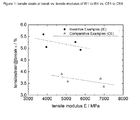
- compositions have the following properties Parameter unit IE1 IE2 IE3 IE4 CE1 CE2 CE3 CE4 CE5 CE6 MFR 2 g/10min 4 3 3 2 4 3 3 2 4.2 6.2 CV ppm 3 2 1 1 7 6 30 23 33 35 VOC ppm 28 25 33 25 44 43 104 93 122 134 FOG ppm 74 74 95 93 138 147 254 239 266 287 TM MPa 3807 5486 3958 5756 4767 6814 5087 6982 7060 6158 Bstress MPa 66 82 66 83 82 102 85 104 108 95 Bstrain % 5.59 5.26 5.05 4.93 3.9 3.7 3.58 3.36 3.4 4.2 IS kJ/m 2 11.48 14.8 12.6 15.2 9.7 12.2 9.2 11.6 n.d n.d NIS kJ/m 2 7.2 9.3 8.5 10.4 7.5 9.6 7.4 9.6 9.4 9.4 9.4 9.4 9.4 9.4 9.4 9.
- compositions of the Inventive Examples show much better impact/stiffness balance as the compositions of the Comparative Examples CE1 to CE4.
- compositions of the Inventive Examples have clearly lower emissions.
Landscapes
- Chemical & Material Sciences (AREA)
- Chemical Kinetics & Catalysis (AREA)
- Medicinal Chemistry (AREA)
- Polymers & Plastics (AREA)
- Organic Chemistry (AREA)
- Health & Medical Sciences (AREA)
- Materials Engineering (AREA)
- Engineering & Computer Science (AREA)
- Inorganic Chemistry (AREA)
- Manufacturing & Machinery (AREA)
- Crystallography & Structural Chemistry (AREA)
- Transition And Organic Metals Composition Catalysts For Addition Polymerization (AREA)
- Compositions Of Macromolecular Compounds (AREA)
- Addition Polymer Or Copolymer, Post-Treatments, Or Chemical Modifications (AREA)
- Reinforced Plastic Materials (AREA)
Abstract
Fiber reinforced composition comprising (a) a polypropylene random copolymer comprising ethylene and/or C4 to C8 α-olefin (PP-RACO), (b) glass fibers (GF), and (c) a polar modified polypropylene as adhesion promoter (AP), wherein (i) the polypropylene random copolymer comprising ethylene and/or C4 to C8 α-olefin (PP-RACO) heaving a melt flow rate MFR2 (230 °C) measured according to ISO 1133 of at least 2.5 g/10min, (ii) the glass fibers (GF) are cut glass fibers and (iii) the polymer contained in the reinforced composition forms a continuous phase being the matrix of the fiber reinforced composition.
Description
- The present invention is directed to a fiber reinforced polypropylene composition with excellent impact/stiffness balance and reduced emissions as well as to its preparation and use.
- Polypropylene is a material used in a wide variety of technical fields, and reinforced polypropylenes have in particular gained relevance in fields previously exclusively relying on non-polymeric materials, in particular metals. One particular example of reinforced polypropylenes are glass fiber reinforced polypropylenes. Such materials enable a tailoring of the properties of the composition by selecting the type of polypropylene, the amount of glass fiber and sometimes by selecting the type of coupling agent used. Accordingly, nowadays glass-fiber reinforced polypropylene is a well-established material for applications requiring high stiffness, heat deflection resistance and resistance to both impact and dynamic fracture loading (examples include automotive components with a load-bearing function in the engine compartment, support parts for polymer body panels, washing machine and dishwasher components). However one drawback of the commercial available fiber reinforced material is its limited flowability and processability. The fact that there is a clear negative correlation between glass fiber content (usually ranging between 10 and 40 wt.-%) and flowability (MFR) makes the forming of thin-wall or otherwise delicate parts difficult or impossible.
- There is a need in the art to have glass fiber (GF) reinforced polypropylene (PP) grades combining an excellent impact/stiffness balance with an increased tenacity. A key parameter in this context is the strain at break (or elongation at break, εB) which normally is at a very low level, i.e. < 3.0%) for PP/GF grades.
- This goal is generally considered to be difficult to achieve because the coupling in PP/GF composites achieved by a chemical reaction between the GF sizing (surface coating) and the normally applied adhesion promoter is limiting the deformation of the matrix polymer. The limit in deformation becomes even stronger with increasing glass fiber content, but the coupling quality on the other hand is decisive for the stiffness and impact resistance (toughness) of the material.
- Further nowadays the polymer processors desire material with low emissions to fulfil the consistently rising demands of regulatory authorities as well as consumers.
- Fujiyama M. and Kimura S. describe in "Effect of Molecular Parameters on the Shrinkage of Injection-Molded Polypropylene" (J.Appl.Polym.Sci. 22 (1978) 1225-1241) compositions of PP homopolymers, random and impact copolymers with glass fibers which have been investigated in terms of shrinkage. The polymers are characterized very superficially only, and the glass fibers not at all; mechanical data are missing.
-
WO 98/16359 A1 -
EP 2062936 A1 describes PP glass fiber compositions with > 15 wt.% glass fibers and a heterophasic PP composition comprising a matrix phase and at least two disperse elastomer components with a total comonomer content of ≥ 12 wt.% and a comonomer content in the elastomer phase of ≥ 20 wt.%. While demonstrating good impact strength, the described compositions still show a very limited strain at break. -
EP 2308923 B1 describes fiber reinforced compositions comprising (a) an EP-heterophasic copolymer, (b) a PP homo-or copolymer with MFR ≥ 500, and (c) fibers having good flowability. As in case of theEP 2062936 A1 , the described compositions show a very limited strain at break. - Accordingly, although much development work has been done in the field of fiber reinforced polypropylene compositions, there still remains the need for further improved PP/GF grades.
- Thus, the object of the present invention is to provide a fiber reinforced composition with excellent elongation at break. It is further an object of the present invention to obtain an improved balance of mechanical properties, like flexural modulus, impact strength and elongation at break and at the same time reduced emissions.
- The finding of the present invention is that a fibrous reinforced material with excellent impact/stiffness balance and reduced emissions can be obtained with fibers embedded in a monophasic alpha-olefin propylene random copolymer, whereby the alpha-olefin propylene random copolymer is produced in the presence of a metallocene catalyst.
- Thus the present invention is directed to a fiber reinforced composition comprising
- (a) 50.0 to 84.5 wt.% of a metallocene catalyzed polypropylene random copolymer comprising ethylene and/or C4 to C8 α-olefin (PP-RACO),
- (b) 15.0 to 45.0 wt.% glass fibers (GF) and
- (c) 0.5 to 5.0 wt.% a polar modified polypropylene as adhesion promoter (AP),
based on the total weight of the fiber reinforced composition, - (i) the polypropylene random copolymer comprising ethylene and/or C4 to C8 α-olefin (PP-RACO) has a melt flow rate MFR2 (230 °C) measured according to ISO 1133 of at least 2.5 g/10min up to 15.0 g/10min,
- (ii) the glass fibers (GF) are cut glass fibers and
- (iii) the complete polymer contained in the reinforced composition forms a continuous phase being the matrix of the fiber reinforced composition.
- The polypropylene random copolymer comprising ethylene and/or C4 to C8 α-olefin (PP-RACO) has a melt flow rate MFR2 (230 °C) measured according to ISO 1133 in the range of at least 2.5 g/10min up to 15.0 g/10min, preferably in the range of 3.0 g/10min to 12.0 g/10min and more preferably in the range of 5.0 g/10min to 10.0 g/10min.
- It is also possible that more than one sort of PP-RACO is used, as long as all used PP-RACOs form one single phase, and as long as the complete monophase fulfills the physical and chemical requirements as described herein for the polypropylene random copolymer comprising ethylene and/or C4 to C8 α-olefin (PP-RACO). However it is especially preferred that just one sort of PP-RACO is used in the present fiber reinforced composition.
- The polypropylene random copolymer (PP-RACO) comprises, preferably consists of, propylene and a comonomer selected from ethylene and/or at least one C4 to C8 α-olefin, preferably at least one comonomer selected from the group consisting of ethylene, 1-butene, 1-pentene, 1-hexene and 1-octene, more preferably ethylene and/or 1-butene and most preferably ethylene. Thus, in a preferred embodiment the propylene random copolymer (PP-RACO) according to this invention comprises units derivable from ethylene and propylene only.
- The comonomer content of the polypropylene random copolymer (PP-RACO) is within the range of 1.0 to 10.0 wt.% of ethylene and/or C4 to C8 α-olefin comonomer.
- Preferably the comonomer content is in the range of 2.0 to 9.8 wt.%, more preferably in the range of 2.2 to 9.5 wt.% and still more preferably in the range of 2.5 to 9.0 wt.%.
- Furthermore the polypropylene random copolymer (PP-RACO) has a xylene cold soluble content (XCS) in the range of 10.0 to 25.0 wt.%, preferably in the range of 10.5 to 23.0 wt.% and more preferably in the range of 11.0 to 20.0 wt.%.
- Further the propylene random copolymer (PP-RACO) has a melting temperature measured according to ISO 11357-3 of at least 135 °C, preferably of at least 140°C and more preferably of at least 142°C. The melting temperature will normally not be higher than 160°C.
- Further the propylene random copolymer (PP-RACO) is preferably characterized by a relatively narrow molecular weight distribution as determined by size exclusion chromatography (SEC). The ratio between weight average molecular weight (Mw) and number average molecular weight (Mn) is normally called polydispersity (Mw/Mn) and is preferably in the range of 1.5 to 6.5, more preferably in the range of 2.0 to 6.0, and still more preferably in the range of 2.5 to 5.5.
- Additionally the propylene random copolymer (PP-RACO) is preferably characterized by its monophasic nature, meaning the absence of a separated elastomer phase otherwise typical for the high impact polypropylene compositions as described in the above cited documents
EP 2062936 A1 andEP 2308923 B1 . The presence or absence of such a separated elastomer phase can for example be detected in high resolution microscopy, like electron microscopy or atomic force microscopy, or by dynamic mechanical thermal analysis (DMTA). Specifically in DMTA the presence of a monophase structure can be identified by the presence of only one distinct glass transition temperature (Tg). For the PP-RACO according to the present invention, Tg will normally be in the range of -12 to +2°C. More preferably, the PP-RACO will not have a Tg below -20°C. - A suitable propylene random copolymer (PP-RACO) according to this invention is preferably produced in a sequential polymerization process in the presence of a metallocene catalyst, more preferably in the presence of a catalyst (system) as defined below.
- The term "sequential polymerization process" indicates that the propylene random copolymer (PP-RACO) is produced in at least two reactors, preferably in two or three reactors, connected in series. Accordingly the present process comprises at least a first reactor (R1) and a second reactor (R2), as well as optionally a third reactor (R3). The term "polymerization reactor" shall indicate that the main polymerization takes place. Thus in case the process consists of two polymerization reactors, this definition does not exclude the option that the overall process comprises for instance a pre-polymerization step in a pre-polymerization reactor. The term "consist of" is only a closing formulation in view of the main polymerization reactors.
- The first reactor (R1) is preferably a slurry reactor (SR) and can be any continuous or simple stirred batch tank reactor or loop reactor operating in bulk or slurry. Bulk means a polymerization in a reaction medium that comprises of at least 60 % (w/w) monomer. According to the present invention the slurry reactor (SR) is preferably a (bulk) loop reactor (LR).
- The second reactor (R2) is preferably a gas phase reactor (GPR). Such gas phase reactor (GPR) can be any mechanically mixed or fluid bed reactor. For example the gas phase reactor (GPR) can be a mechanically agitated fluid bed reactor with gas velocities of at least 0.2 m/sec. Thus it is appreciated that the gas phase reactor is a fluidized bed type reactor, optionally with a mechanical stirrer.
- In a further embodiment a third reactor (R3) being a second gas phase reactor (GPR2), connected in series with the first gas phase reactor (GPR), is used.
- Thus in a preferred embodiment the first reactor (R1) is a slurry reactor (SR), like a loop reactor (LR), whereas the second reactor (R2) is a gas phase reactor (GPR), optionally connected in series with a second gas phase reactor (GPR2). Accordingly for the instant process at least two up to three polymerization reactors, namely a slurry reactor (SR), like a loop reactor (LR), and a gas phase reactor (GPR) and optionally a second gas phase reactor (GPR2) are connected in series. If needed prior to the slurry reactor (SR) a pre-polymerization reactor is placed.
- A preferred multistage process is a "loop-gas phase"-process, such as developed by Borealis A/S, Denmark (known as BORSTAR® technology) described e.g. in patent literature, such as in
EP 0 887 379 ,WO 92/12182 WO 2004/000899 ,WO 2004/111095 ,WO 99/24478 WO 99/24479 WO 00/68315 - A further suitable slurry-gas phase process is the Spheripol® process of Basell described e.g.in figure 20 of the paper by Galli and Vecello, Prog.Polym.Sci. 26 (2001) 1287-1336. Preferably, in the instant process for producing the propylene copolymer (R-PP) as defined above the conditions for the first reactor (R1), i.e. the slurry reactor (SR), like a loop reactor (LR), of step (a) may be as follows:
- the temperature is within the range of 40 °C to 110 °C, preferably between 60 °C and 100°C, like 68 to 95 °C,
- the pressure is within the range of 20 bar to 80 bar, preferably between 40 bar to 70 bar,
- hydrogen can be added for controlling the molar mass in a manner known per se.
- Subsequently, the reaction mixture from step (a) is transferred to the second reactor (R2), i.e. gas phase reactor (GPR) and optionally subsequently to the second gas phase reactor (GPR2), whereby the conditions are preferably as follows:
- the temperature is within the range of 50 °C to 130 °C, preferably between 60 °C and 100°C,
- the pressure is within the range of 5 bar to 50 bar, preferably between 15 bar to 35 bar,
- hydrogen can be added for controlling the molar mass in a manner known per se.
- The residence time can vary in the reaction zones identified above.
- In one embodiment of the process for producing the propylene random copolymer (PP-RACO) the residence time the first reactor (R1), i.e. the slurry reactor (SR), like a loop reactor (LR), is in the range 0.2 to 4 hours, e.g. 0.3 to 1.5 hours and the residence time in the gas phase reactor(s) (GPR and optional GPR2) will generally be 0.2 to 6.0 hours, like 0.5 to 4.0 hours.
- If desired, the polymerization may be effected in a known manner under supercritical conditions in the first reactor (R1), i.e. in the slurry reactor (SR), like in the loop reactor (LR), and/or as a condensed mode in the gas phase reactor(s) (GPR and optional GPR2).
- Preferably the process comprises also a prepolymerization with the chosen catalyst system, as described in detail below.
- In a preferred embodiment, the prepolymerization is conducted as bulk slurry polymerization in liquid propylene, i.e. the liquid phase mainly comprises propylene, with minor amount of other reactants and optionally inert components dissolved therein.
- The prepolymerization reaction is typically conducted at a temperature of 0 to 50 °C, preferably from 10 to 40 °C, and more preferably from 10 to 23 °C.
- The pressure in the prepolymerization reactor is not critical but must be sufficiently high to maintain the reaction mixture in liquid phase. Thus, the pressure may be from 20 to 100 bar, for example 30 to 70 bar.
- The catalyst components are preferably all introduced to the prepolymerization step. However, where the solid catalyst component (i) and the cocatalyst (ii) can be fed separately it is possible that only a part of the cocatalyst is introduced into the prepolymerization stage and the remaining part into subsequent polymerization stages. Also in such cases it is necessary to introduce so much cocatalyst into the prepolymerization stage that a sufficient polymerization reaction is obtained therein.
- It is possible to add other components also to the prepolymerization stage. Thus, hydrogen may be added into the prepolymerization stage to control the molecular weight of the prepolymer as is known in the art. Further, antistatic additive may be used to prevent the particles from adhering to each other or to the walls of the reactor.
- The precise control of the prepolymerization conditions and reaction parameters is within the skill of the art.
- The polymerization takes place in the presence of a metallocene catalyst system, said metallocene catalyst system, comprises
- (i) an asymmetrical complex of formula (I)

- M is zirconium or hafnium;
- each X is a sigma ligand;
- L is a divalent bridge selected from -R'2C-, -R'2C-CR'2-, -R'2Si-, -R'2Si-SiR'2-,
- -R'2Ge-, wherein each R' is independently a hydrogen atom, C1-20-hydrocarbyl, tri(C1-20-alkyl)silyl, C6-20-aryl, C7-20-arylalkyl or C7-20-alkylaryl;
- R2 and R2' are each independently a C1-20 hydrocarbyl radical optionally containing one or more heteroatoms from groups 14-16;
- R5' is a C1-20 hydrocarbyl group optionally containing one or more heteroatoms from groups 14-16 and optionally substituted by one or more halo atoms;
- R6 and R6' are each independently hydrogen or a C1-20 hydrocarbyl group optionally containing one or more heteroatoms from groups 14-16;
- R7 and R7' are each independently hydrogen or C1-20 hydrocarbyl group optionally containing one or more heteroatoms from groups 14-16;
- Ar is an aryl or heteroaryl group having up to 20 carbon atoms optionally substituted by one or more groups R1;
- Ar' is an aryl or heteroaryl group having up to 20 carbon atoms optionally substituted by one or more groups R1;
- each R1 is a C1-20 hydrocarbyl group or two R1 groups on adjacent carbon atoms taken together can form a fused 5 or 6 membered non aromatic ring with the Ar group, said ring being itself optionally substituted with one or more groups R4; and
- each R4 is a C1-20 hydrocarbyl group, and
- (ii) optionally a cocatalyst (Co) comprising an element (E) of
group 13 of the periodic table (IUPAC), preferably a cocatalyst (Co) comprising a compound of Al. - As mentioned above the catalyst must comprise an asymmetrical complex. Additionally the catalyst may comprise a cocatalyst.
- Preferably the molar-ratio of cocatalyst (Co) to the metal (M) of the complex, like Zr, [Co/M] is below 500, more preferably in the range of more than 100 to below 500, still more preferably in the range of 150 to 450, yet more preferably in the range of 200 to 450.
- Concerning the preparation of the catalyst composition as defined above reference is made to
WO 2010/052260 . - The metallocene complex, especially the complexes defined by the formulas specified in the present invention, used for manufacture of the polypropylene random copolymer (PP-RACO) are asymmetrical. That means that the two indenyl ligands forming the metallocene complex are different, that is, each indenyl ligand bears a set of substituents that are either chemically different, or located in different positions with respect to the other indenyl ligand. More precisely, they are chiral, racemic bridged bisindenyl metallocene complexes. Whilst the complexes of the invention may be in their syn-configuration, ideally they are in their anti-configuration. For the purpose of this invention, racemic-anti means that the two indenyl ligands are oriented in opposite directions with respect to the cyclopentadienyl-metal-cyclopentadienyl plane, while racemic-syn means that the two indenyl ligands are oriented in the same direction with respect to the cyclopentadienyl-metal-cyclopentadienyl plane, as shown in the Figure below.

- Formula (I) is intended to cover both syn- and anti-configurations, preferably anti. It is required in addition, that the group R5' is not hydrogen where the 5-position in the other ligand carries a hydrogen.
- In fact, the metallocene complexes of use in the invention are C1-symmetric but they maintain a pseudo-C 2-symmetry since they maintain C 2-symmetry in close proximity of the metal center, although not at the ligand periphery. The use of two different indenyl ligands as described in this invention allows for a much finer structural variation, hence a more precise tuning of the catalyst performance, compared to the typical C 2-symmetric catalysts. By nature of their chemistry, both anti and syn enantiomer pairs are formed during the synthesis of the complexes. However, by using the ligands of this invention, separation of the preferred anti isomers from the syn isomers is straightforward.
- It is preferred if the metallocene complexes of the invention are employed as the rac anti isomer. Ideally therefore at least 95% mol, such as at least 98% mol, especially at least 99% mol of the metallocene catalyst is in the racemic anti isomeric form.
- In the complex of use in the invention:
- M is preferably Zr.
- Each X, which may be the same or different, is preferably a hydrogen atom, a halogen atom, a R, OR, OSO2CF3, OCOR, SR, NR2 or PR2 group wherein R is a linear or branched, cyclic or acyclic, C1-20 alkyl, C2-20 alkenyl, C2-20 alkynyl, C6-20 aryl, C1-20 alkylaryl or C1-20 arylalkyl radical; optionally containing heteroatoms belonging to groups 14-16. R is preferably a C1-6 alkyl, phenyl or benzyl group.
- Most preferably each X is independently a hydrogen atom, a halogen atom, C1-6 alkoxy group or an R group, e.g. preferably a C1-6 alkyl, phenyl or benzyl group. Most preferably X is chlorine or a methyl radical. Preferably both X groups are the same.
- L is preferably an alkylene linker or a bridge comprising a heteroatom, such as silicon or germanium, e.g. -SiR3 2-, wherein each R8 is independently C1-20 alkyl, C3-10 cycloakyl, C6-20 aryl or tri(C1-20 alkyl)silyl, such as trimethylsilyl. More preferably R8 is C1-6 alkyl, especially methyl or C3-7 cycloalkyl, such as cyclohexyl. Most preferably, L is a dimethylsilyl or a methylcyclohexylsilyl bridge (i.e. Me-Si-cyclohexyl). It may also be an ethylene bridge.
- R2 and R2' can be different but they are preferably the same. R2 and R2' are preferably a C1-10 hydrocarbyl group such as C1-6 hydrocarbyl group. More preferably it is a linear or branched C1-10 alkyl group. More preferably it is a linear or branched C1-6 alkyl group, especially linear C1-6 alkyl group such as methyl or ethyl.
- The R2 and R2' groups can be interrupted by one or more heteroatoms, such as 1 or 2 heteroatoms, e.g. one heteroatom, selected from
groups 14 to 16 of the periodic table. Such a heteroatom is preferably O, N or S, especially O. More preferably however the R2 and R2' groups are free from heteroatoms. Most especially R2 and R2' are methyl, especially both methyl. - The two Ar groups Ar and Ar' can be the same or different. The Ar' group may be unsubstituted. The Ar' is preferably a phenyl based group optionally substituted by groups R1, especially an unsubstituted phenyl group.
- The Ar group is preferably a C6-20 aryl group such as a phenyl group or naphthyl group. Whilst the Ar group can be a heteroaryl group, such as carbazolyl, it is preferable that Ar is not a heteroaryl group. The Ar group can be unsubstituted or substituted by one or more groups R1, more preferably by one or two R1 groups, especially in position 4 of the aryl ring bound to the indenyl ligand or in the 3, 5-positions.
- In one embodiment both Ar and Ar' are unsubstituted. In another embodiment Ar' is unsubstituted and Ar is substituted by one or two groups R1.
- R1 is preferably a C1-20 hydrocarbyl group, such as a C1-20 alkyl group. R1 groups can be the same or different, preferably the same. More preferably, R1 is a C2-10 alkyl group such as C3-8 alkyl group. Highly preferred groups are tert butyl or isopropyl groups. It is preferred if the group R1 is bulky, i.e. is branched. Branching might be alpha or beta to the ring. Branched C3-8 alkyl groups are also favoured therefore.
- In a further embodiment, two R1 groups on adjacent carbon atoms taken together can form a fused 5 or 6 membered non aromatic ring with the Ar group, said ring being itself optionally substituted with one or more groups R4. Such a ring might form a tetrahydroindenyl group with the Ar ring or a tetrahydronaphthyl group.
- If an R4 group is present, there is preferably only 1 such group. It is preferably a C1-10 alkyl group.
- It is preferred if there is one or two R1 groups present on the Ar group. Where there is one R1 group present, the group is preferably para to the indenyl ring (4-position). Where two R1 groups are present these are preferably at the 3 and 5 positions.
- R5' is preferably a C1-20 hydrocarbyl group containing one or more heteroatoms from groups 14-16 and optionally substituted by one or more halo atoms or R5' is a C1-10 alkyl group, such as methyl but most preferably it is a group Z'R3'.
- R6 and R6' may be the same or different. In one preferred embodiment one of R6 and R6' is hydrogen, especially R6. It is preferred if R6 and R6' are not both hydrogen. If not hydrogen, it is preferred if each R6 and R6' is preferably a C1-20 hydrocarbyl group, such as a C1-20 alkyl group or C6-10 aryl group. More preferably, R6 and R6' are a C2-10 alkyl group such as C3-8 alkyl group. Highly preferred groups are tert-butyl groups. It is preferred if R6 and R6' are bulky, i.e. are branched. Branching might be alpha or beta to the ring. Branched C3-8 alkyl groups are also favoured therefore.
- The R7 and R7' groups can be the same or different. Each R7 and R7' group is preferably hydrogen, a C1-6 alkyl group or is a group ZR3. It is preferred if R7' is hydrogen. It is preferred if R7 is hydrogen, C1-6 alkyl or ZR3. The combination of both R7 and R7' being hydrogen is most preferred. It is also preferred if ZR3 represents OC1-6 alkyl, such as methoxy. It is also preferred is R7 represents C1-6 alkyl such as methyl.
- Z and Z' are O or S, preferably O.
- R3 is preferably a C1-10 hydrocarbyl group, especially a C1-10 alkyl group, or aryl group optionally substituted by one or more halo groups. Most especially R3 is a C1-6 alkyl group, such as a linear C1-6 alkyl group, e.g. methyl or ethyl.
- R3' is preferably a C1-10 hydrocarbyl group, especially a C1-10 alkyl group, or aryl group optionally substituted by one or more halo groups. Most especially R3' is a C1-6 alkyl group, such as a linear C1-6 alkyl group, e.g. methyl or ethyl or it is a phenyl based radical optionally substituted with one or more halo groups such as Ph or C6F5.
- Thus, preferred complexes of the invention are of formula (II) or (II')

- M is zirconium or hafnium;
- each X is a sigma ligand, preferably each X is independently a hydrogen atom, a halogen atom, C1-6 alkoxy group, C1-6 alkyl, phenyl or benzyl group;
- L is a divalent bridge selected from -R'2C-, -R'2C-CR'2-, -R'2Si-, -R'2Si-SiR'2-, -R'2Ge-, wherein each R' is independently a hydrogen atom, C1-20 alkyl, C3-10 cycloalkyl, tri(C1-20-alkyl)silyl, C6-20-aryl, C1-20 arylalkyl or C1-20 alkylaryl;
- each R2 or R2' is a C1-10 alkyl group;
- R5' is a C1-10 alkyl group or Z'R3' group;
- R6 is hydrogen or a C1-10 alkyl group;
- R6' is a C1-10 alkyl group or C6-10 aryl group;
- R7 is hydrogen, a C1-6 alkyl group or ZR3 group;
- R7' is hydrogen or a C1-10 alkyl group;
- Z and Z' are independently O or S;
- R3' is a C1-10 alkyl group, or a C6-10 aryl group optionally substituted by one or more halo groups;
- R3 is a C1-10-alkyl group;
- Each n is independently 0 to 4, e.g. 0, 1 or 2;
- and each R1 is independently a C1-20 hydrocarbyl group, e.g. C1-10 alkyl group.
- Further preferred complexes of the invention are those of formula (III) or (III'):

- M is zirconium or hafnium;
- each X is a sigma ligand, preferably each X is independently a hydrogen atom, a halogen atom, C1-6 alkoxy group, C1-6 alkyl, phenyl or benzyl group;
- L is a divalent bridge selected from -R'2C- or -R'2Si- wherein each R' is independently a hydrogen atom, C1-20 alkyl or C3-10 cycloalkyl;
- R6 is hydrogen or a C1-10 alkyl group;
- R6' is a C1-10 alkyl group or C6-10 aryl group;
- R7 is hydrogen, C1-6 alkyl or OC1-6 alkyl;
- Z' is O or S;
- R3' is a C1-10 alkyl group, or C6-10 aryl group optionally substituted by one or more halo groups;
- n is independently 0 to 4, e.g. 0, 1 or 2; and
- each R1 is independently a C1-10 alkyl group.
- Further preferred complexes of use in the invention are those of formula (IV) or (IV'):

- M is zirconium or hafnium;
- each X is a sigma ligand, preferably each X is independently a hydrogen atom, a halogen atom, C1-6-alkoxy group, C1-6-alkyl, phenyl or benzyl group;
- each R' is independently a hydrogen atom, C1-20 alkyl or C3-7 cycloalkyl;
- R6 is hydrogen or a C1-10 alkyl group;
- R6' is a C1-10 alkyl group or C6-10 aryl group;
- R7 is hydrogen, C1-6 alkyl or OC1-6 alkyl;
- Z' is O or S;
- R3' is a C1-10 alkyl group, or C6-10 aryl group optionally substituted by one or more halo groups;
- n is independently 0, 1 to 2; and
- each R1 is independently a C3-8 alkyl group.
- Most especially, the complex of use in the invention is of formula (V) or (V'):

- each X is a sigma ligand, preferably each X is independently a hydrogen atom, a halogen atom, C1-6-alkoxy group, C1-6-alkyl, phenyl or benzyl group;
- R' is independently a C1-6 alkyl or C3-10 cycloalkyl;
- R1 is independently C3-8 alkyl;
- R6 is hydrogen or a C3-8 alkyl group;
- R6' is a C3-8 alkyl group or C6-10 aryl group;
- R3' is a C1-6 alkyl group, or C6-10 aryl group optionally substituted by one or more halo groups; and
- n is independently 0, 1 or 2.
- Particular compounds of the invention include:
- rac-anti-Me2Si(2-Me-4-Ph-6-tBu-Ind)(2-Me-4-Ph-5-OMe-6-tBu-Ind)ZrCl2,
- rac-anti-Me2Si(2-Me-4-(p-tBuPh)-Ind)(2-Me-4-Ph-5-OMe-6-tBu-Ind)ZrCl2,
- rac-anti-Me2Si(2-Me-4-(3,5-di-tBuPh)-6-tBu-Ind)(2-Me-4-Ph-5-OMe-6-tBu-Ind)ZrCl2,
- rac-anti-Me2Si(2-Me-4-Ph-6-tBu-Ind)(2-Me-4,6-di-Ph-5-OMe-Ind)ZrCl2,
- rac-anti-Me2Si(2-Me-4-(p-tBuPh)-Ind)(2-Me-4-Ph-5-OC6F5)-6-iPr-Ind)ZrCl2,
- rac-anti-Me(CyHex)Si(2-Me-4-Ph-6-tBu-Ind)(2-Me-4-Ph-5-OMe-6-tBu-Ind)ZrCl2,
- rac-anti-Me2Si(2-Me-4-(3,5-di-tBuPh)-7-Me-Ind)(2-Me-4-Ph-5-OMe-6-tBu-Ind)ZrCl2,
- rac-anti-Me2Si(2-Me-4-(3,5-di-tBuPh)-7-OMe-Ind)(2-Me-4-Ph-5-OMe-6-tBu-Ind)ZrCl2,
- rac-anti-Me2Si(2-Me-4-(p-tBuPh)-6-tBu-Ind)(2-Me-4-Ph-5-OMe-6-tBu-Ind)ZrCl2,
- rac-anti-Me2Si(2-Me-4-(p-tBuPh)-Ind)(2-Me-4-(4-tBuPh)-5-OMe-6-tBu-Ind)ZrCl2,
- rac-anti-Me2Si(2-Me-4-(p-tBuPh)-Ind)(2-Me-4-(3,5-tBu2Ph)-5-OMe-6-tBu-Ind)ZrCl2, and
- rac-anti-Me2Si(2-Me-4-(p-tBuPh)-Ind)(2-Me-4-Ph-5-OiBu-6-tBu-Ind)ZrCl2.
- For the avoidance of doubt, any narrower definition of a substituent offered above can be combined with any other broad or narrowed definition of any other substituent.
- Throughout the disclosure above, where a narrower definition of a substituent is presented, that narrower definition is deemed disclosed in conjunction with all broader and narrower definitions of other substituents in the application.
- In one especially preferred embodiment the complex is rac-anti-Me2Si(2-Me-4-(p-tBuPh)-Ind)(2-Me-4-Ph-5-OMe-6-tBu-Ind)ZrCl2.
- Concerning the synthesis of the complex according to this invention it is also referred to
WO 2013/007650 A1 . - To form an active catalytic species it is normally necessary to employ a cocatalyst as is well known in the art. Cocatalysts comprising one or more compounds of
Group 13 metals, like organoaluminium compounds or borates used to activate metallocene catalysts are suitable for use in this invention. - Thus the catalyst according to this invention comprises (i) a complex as defined above and (ii) a cocatalyst, like an aluminium alkyl compound (or other appropriate cocatalyst), or the reaction product thereof. Thus the cocatalyst is preferably an alumoxane, like MAO or an alumoxane other than MAO.
- Borate cocatalysts can also be employed. It will be appreciated by the skilled man that where boron based cocatalysts are employed, it is normal to preactivate the complex by reaction thereof with an aluminium alkyl compound, such as TIBA. This procedure is well known and any suitable aluminium alkyl, e.g. Al(C1-6-alkyl)3, can be used.
- Boron based cocatalysts of interest include those of formula
BY3
wherein Y is the same or different and is a hydrogen atom, an alkyl group of from 1 to about 20 carbon atoms, an aryl group of from 6 to about 15 carbon atoms, alkylaryl, arylalkyl, haloalkyl or haloaryl each having from 1 to 10 carbon atoms in the alkyl radical and from 6-20 carbon atoms in the aryl radical or fluorine, chlorine, bromine or iodine. Preferred examples for Y are trifluoromethyl, p-fluorophenyl, 3,5- difluorophenyl, pentafluorophenyl, 3,4,5-trifluorophenyl and 3,5- di(trifluoromethyl)phenyl. Preferred options are trifluoroborane, tris(4-fluorophenyl)borane, tris(3,5-difluorophenyl)borane, tris(4-fluoromethylphenyl)borane, tris(2,4,6-trifluorophenyl)borane, tris(penta-fluorophenyl)borane, tris(3,5-difluorophenyl)borane and/or tris (3,4,5-trifluorophenyl)borane. - Particular preference is given to tris(pentafluorophenyl)borane.
- It is preferred however is borates are used, i.e. compounds of general formula [C]+[BX4]-. Such ionic cocatalysts contain a non-coordinating anion [BX4]- such as tetrakis(pentafluorophenyl)borate. Suitable counterions [C]+ are protonated amine or aniline derivatives such as methylammonium, anilinium, dimethylammonium, diethylammonium, N-methylanilinium, diphenylammonium, N,N-dimethylanilinium, trimethylammonium, triethylammonium, tri-n-butylammonium, methyldiphenylammonium, pyridinium, p-bromo-N,N- dimethylanilinium or p-nitro-N,N-dimethylanilinium.
- Preferred ionic compounds which can be used according to the present invention include:
- tributylammoniumtetrakis(pentafluorophenyl)borate,
- tributylammoniumtetrakis(trifluoromethylphenyl)borate,
- tributylammoniumtetrakis(4-fluorophenyl)borate,
- N,N-dimethylcyclohexylammoniumtetrakis(pentafluorophenyl)borate,
- N,N-dimethylbenzylammoniumtetrakis(pentafluorophenyl)borate,
- N,N-dimethylaniliniumtetrakis(pentafluorophenyl)borate,
- N,N- di(propyl)ammoniumtetrakis(pentafluorophenyl)borate,
- di(cyclohexyl)ammoniumtetrakist(pentafluorophenyl)borate,
- triphenylcarbeniumtetrakis(pentafluorophenyl)borate, or
- ferroceniumtetrakis(pentafluorophenyl)borate.
- Preference is given to triphenylcarbeniumtetrakis(pentafluorophenyl) borate,
- N,N- dimethylcyclohexylammoniumtetrakis(pentafluorophenyl)borate or
- N,N- dimethylbenzylammoniumtetrakis(pentafluorophenyl)borate.
- The use of B(C6F5)3, C6H5N(CH3)2H:B(C6F5)4, (C6H5)3C:B(C6F5)4 is especially preferred.
- The metallocene complex used in the present invention can be used in combination with a suitable cocatalyst as a catalyst e.g. in a solvent such as toluene or an aliphatic hydrocarbon, (i.e. for polymerization in solution), as it is well known in the art.
- The catalyst used in the invention can be used in supported or unsupported form. The particulate support material used is preferably an organic or inorganic material, such as silica, alumina or zirconia or a mixed oxide such as silica-alumina, in particular silica, alumina or silica-alumina. The use of a silica support is preferred. The skilled man is aware of the procedures required to support a metallocene catalyst.
- Especially preferably the support is a porous material so that the complex may be loaded into the pores of the support, e.g. using a process analogous to those described in
WO94/14856 WO95/12622 WO2006/097497 . The particle size is not critical but is preferably in the range 5 to 200 µm, more preferably 20 to 80 µm. The use of these supports is routine in the art. - In preferred embodiment, no support is used at all. Such a catalyst can be prepared in solution, for example in an aromatic solvent like toluene, by contacting the metallocene (as a solid or as a solution) with the cocatalyst, for example methylaluminoxane or a borane or a borate salt, or can be prepared by sequentially adding the catalyst components to the polymerization medium. In a preferred embodiment, the metallocene (when X differs from alkyl or hydrogen) is prereacted with an aluminum alkyl, in a ratio metal/aluminum of from 1:1 up to 1:500, preferably from 1:1 up to 1:250, and then combined with the borane or borate cocatalyst, either in a separate vessel or directly into the polymerization reactor. Preferred metal/boron ratios are between 1:1 and 1:100, more preferably 1:1 to 1:10.
- In one particularly preferred embodiment, no external carrier is used but the catalyst is still presented in solid particulate form. Thus, no external support material such as inert organic or inorganic carrier, such as for example silica, as described above, is employed.
- In order to provide the catalyst used in the invention in solid form but without using an external carrier, it is preferred if a liquid/liquid emulsion system is used. The process involves forming dispersing catalyst components (i) and (ii), i.e. the complex and the cocatalyst, in a solvent, and solidifying said dispersed droplets to form solid particles.
- Reference is made to
WO2006/069733 describing principles of such a continuous or semicontinuous preparation methods of the solid catalyst types, prepared via emulsion/solidification method. For further details it is also referred toWO 2013/007650 A1 . - It should be noted that present invention is preferably directed to fiber reinforced compositions in which the polymer phase forms a continuous phase being the matrix for the fibers. Hence, the polymer forming the matrix for the fibers in the composition is preferably monophasic. In case of this preferred embodiment, the polymer matrix does not contain elastomeric (co)polymers forming inclusions as a second phase for improving mechanical properties of the composite, such as elongation at break. A polymer phase containing elastomeric (co)polymers as insertions of a second phase would by contrast be called heterophasic and is not part of this preferred embodiment.
- The desired mechanical properties of the fiber reinforced composite are hence preferably controlled by the polypropylene random copolymer comprising ethylene and/or C4 to C8 α-olefin (PP-RACO) in combination with the adhesion promoter (AP) improving the adhesion an insertion of the fibers. It is believed that the polymer of such composite forms a continuous phase. Further insertions of second or more elastomer phases aiming to improve the same mechanical properties are preferably excluded.
- The second essential component of the present fiber reinforced composition are the glass fibers (GF). Preferably the glass fibers are cut glass fibers, also known as short fibers or chopped strands.
- The cut or short glass fibers used in the fiber reinforced composition preferably have an average length of from 1 to 10 mm, more preferably from 1 to 7 mm, for example 3 to 5 mm, or 4 mm. The cut or short glass fibers used in the fiber reinforced composition preferably have an average diameter of from 8 to 20 µm, more preferably from 9 to 16 µm, for example 10 to 15 µm.
- Preferably, the fibers (GF) have an aspect ratio of 125 to 650, preferably of 150 to 450, more preferably 200 to 400, still more preferably 250 to 350. The aspect ratio is the relation between average length and average diameter of the fibers.
- The fiber reinforced composition also comprises an adhesion promoter (AP).
- The adhesion promoter (AP) preferably comprises a modified (functionalized) polymer and optionally a low molecular weight compound having reactive polar groups. Modified α-olefin polymers, in particular propylene homopolymers and copolymers, like copolymers of ethylene and propylene with each other or with other α-olefins, are most preferred, as they are highly compatible with the polymers of the fiber reinforced composition. Modified polyethylene can be used as well.
- In terms of structure, the modified polymers are preferably selected from graft or block copolymers.
- In this context, preference is given to modified polymers containing groups deriving from polar compounds, in particular selected from the group consisting of acid anhydrides, carboxylic acids, carboxylic acid derivatives, primary and secondary amines, hydroxyl compounds, oxazoline and epoxides, and also ionic compounds.
- Specific examples of the said polar compounds are unsaturated cyclic anhydrides and their aliphatic diesters, and the diacid derivatives. In particular, one can use maleic anhydride and compounds selected from C1 to C10 linear and branched dialkyl maleates, C1 to C10 linear and branched dialkyl fumarates, itaconic anhydride, C1 to C10 linear and branched itaconic acid dialkyl esters, maleic acid, fumaric acid, itaconic acid and mixtures thereof.
- Particular preference is given to using a propylene polymer grafted with maleic anhydride as the modified polymer, i.e. as the adhesion promoter (AP).
- The modified polymer, i.e. the adhesion promoter (AP), can be produced in a simple manner by reactive extrusion of the polymer, for example with maleic anhydride in the presence of free radical generators (like organic peroxides), as disclosed for instance in
EP 0 572 028 . - The amounts of groups deriving from polar compounds in the modified polymer, i.e. the adhesion promoter (AP), are from 0.5 to 5.0 wt.%, preferably from 0.5 to 4.0 wt.%, and more preferably from 0.5 to 3.0 wt.%.
- Preferred values of the melt flow rate MFR2 (230 °C) for the modified polymer, i.e. for the adhesion promoter (AP), are from 1.0 to 500 g/10 min.
- In addition to the above described components, the instant composition may additionally contain typical other additives useful for instance in the automobile sector, like carbon black, other pigments, antioxidants, UV stabilizers, nucleating agents, antistatic agents and slip agents, in amounts usual in the art.
- Thus a further embodiment of present invention is a fiber reinforced composition consisting of
- (a) 50 to 84.5 wt.%, preferably 60 to 80 wt.%, and more preferably 65 to 77 wt.%, of the polypropylene random copolymer comprising ethylene and/or C4 to C8 α-olefin (PP-RACO),
- (b) 15 to 45 wt.%, preferably 18 to 35 wt.%, and more preferably 20 to 30 wt.% of glass fibers (GF) and
- (c) 0.5 to 5.0 wt.-% of a polar modified polypropylene as adhesion promoter (AP), preferably 1.0 to 4.0 wt.-% and more preferably 1.0 to 3.0 wt.-%,
- (d) 0.0 to 3.0 wt.-% of a masterbatch, and
- (e) 0.0 to 3.0 wt.-% of one or more additives,
based on the total weight of the fiber reinforced composition, wherein- (i) the polypropylene random copolymer comprising ethylene and/or C4 to C8 α-olefin (PP-RACO) heaving a melt flow rate MFR2 (230 °C) measured according to ISO 1133 of at least 2.5 g/10min,
- (ii) the glass fibers (GF) are cut glass fibers,
- (iii) the complete polymer contained in the reinforced composition forms a continuous phase being the matrix of the fiber reinforced composition
- It is to be understood that all the combinations as described above are applicable for these embodiments as well.
- Additives in this meaning are for example carbon black, other pigments, antioxidants, UV stabilizers, nucleating agents, antistatic agents and slip agents.
- The term masterbatch means polymer-bound additives, for instance color and additive concentrates physically or chemically bound onto or into polymers. It is appreciated that such masterbatches contain as less polymer as possible.
- The additives as stated above are added to the polypropylene random copolymer (PP-RACO), which is collected from the final reactor of the polymer production process. Preferably, these additives are mixed into the polypropylene random copolymer (PP-RACO) or during the extrusion process in a one-step compounding process. Alternatively, a master batch may be formulated, wherein the polypropylene random copolymer (PP-RACO) is first mixed with only some of the additives.
- The properties of the polypropylene random copolymer comprising ethylene and/or C4 to C8 α-olefin (PP-RACO), produced with the above-outlined process may be adjusted and controlled with the process conditions as known to the skilled person, for example by one or more of the following process parameters: temperature, hydrogen feed, comonomer feed, propylene feed, catalyst, type and amount of external donor, split between two or more components of a multimodal polymer.
- For mixing the individual components of the instant fiber reinforced composition, a conventional compounding or blending apparatus, e.g. a Banbury mixer, a 2-roll rubber mill, Buss-co-kneader or a twin screw extruder may be used. Preferably, mixing is accomplished in a co-rotating twin screw extruder. The polymer materials recovered from the extruder are usually in the form of pellets. These pellets are then preferably further processed, e.g. by injection molding to generate articles and products of the inventive fiber reinforced composition.
- The fiber reinforced composite according to the invention has the following properties:
- The overall melt flow rate MFR2 (230 °C), i.e. the melt flow rate of the fiber reinforced composite is at least 1.0 g/10min, preferably at least 1.5 g/10min. The upper limit of the MFR2 (230°C) is 15.0 g/10min, preferably 10.0 g/10min and more preferably 7.0 g/10min.
- The overall tensile modulus, i.e. the tensile modulus measured at 23°C according to ISO 527-2 (cross head speed 1 mm/min) of the fiber reinforced composite, is at least 2,500 MPa, preferably at least 3,000 MPa and more preferably at least 3,500 MPa.
- The upper limit of the tensile modulus of the fiber reinforced composite may be 10,000 MPa, preferably 9,000 MPa, and more preferably in the range of 8,000 MPa.
- The tensile strain at break measured at 23°C according to ISO 527-2 (cross head speed 50 mm/min) is at least 4.0%, preferably at least 4.5% and more preferably at least 4.8%.
- The tensile stress at break measured at 23°C according to ISO 527-2 (cross head speed 50 mm/min) is at least 50 MPa, preferably at least 60 MPa and more preferably at least 65 MPa.
- A value for the total emission of volatiles measured according to VDA 277:1995 of equal or below 10 ppm, preferably equal or below 5 ppm and more preferably equal or below 4 ppm.
- A VOC value measured according to VDA 278:2002 of equal or below 50 ppm, preferably equal or below 40 ppm and more preferably equal or below 35 ppm.
- VOC is the amount of volatile organic compounds (VOC) [in ppm].
- A FOG value measured according to VDA 278:2002 of equal or below 130 ppm, preferably equal or below 110 ppm and more preferably equal or below 100 ppm.
- FOG is the amount of fogging compounds (FOG) [in ppm].
- A Charpy notched impact strength at 23 °C ISO 179-1eA:2000 of at least 5.0 kJ/m2, preferably in the range of 6.5 to 15 kJ/m2 and more preferably in the range of 7.0 to 12 kJ/m2.
- A Charpy impact strength at 23 °C ISO 179-1 eU:2000 of at least 8.0 kJ/m2, preferably in the range of 9.0 to 18 kJ/m2 and more preferably in the range of 10.0 to 16.0 kJ/m2.
- A heat distortion temperature (HDT) determined according to ISO 75-2 Method A (load 1.80 MPa surface stress) in the range of 95°C to 145°C, preferably in the range of 100°C to 135°C and more preferably in the range of 105°C to 130°C.
- Thus, the fiber reinforced polypropylene composites show an excellent impact/stiffness balance and have very low emissions.
- The fiber reinforced composition according to the invention may be pelletized and compounded using any of the variety of compounding and blending methods well known and commonly used in the resin compounding art.
- The composition of the present fiber reinforced composition can be used for the production of molded articles, preferably injection molded articles as well as foamed articles. Even more preferred is the use for the production of parts of washing machines or dishwashers as well as automotive articles, especially of car interiors and exteriors, like instrumental carriers, shrouds, structural carriers, bumpers, side trims, step assists, body panels, spoilers, dashboards, interior trims and the like.
- According to a preferred embodiment, the article is a foamed article comprising the fiber reinforced composition described above.
- Appropriate preparation methods of foamed articles, either by chemical or physical foaming, are commonly known to the skilled person.
- The present invention further relates to automotive articles comprising the fiber reinforced composition as defined above.
- In addition, the present invention also relates to a process for the preparation of the fiber reinforced composition as described above, comprising the steps of adding (a)polypropylene random copolymer (PP-RACO),
- (b)the glass fibers (GF), and
- (c)the polar modified polypropylene as adhesion promoter (AP)
to an extruder and extruding the same obtaining said fiber reinforced composition. - MFR2 (230 °C) is measured according to ISO 1133 (230 °C, 2.16 kg load).
- Quantitative nuclear-magnetic resonance (NMR) spectroscopy was used to quantify the comonomer content of the polymers.
- Quantitative 13C{1H} NMR spectra were recorded in the solution-state using a Bruker Advance III 400 NMR spectrometer operating at 400.15 and 100.62 MHz for 1H and 13C respectively. All spectra were recorded using a 13C optimised 10 mm extended temperature probehead at 125 °C using nitrogen gas for all pneumatics. Approximately 200 mg of material was dissolved in 3 ml of 1,2-tetrachloroethane-d2 (TCE-d2) along with chromium-(III)-acetylacetonate (Cr(acac)3) resulting in a 65 mM solution of relaxation agent in solvent as described in G. Singh, A. Kothari, V. Gupta, Polymer Testing 2009, 28(5), 475.
- To ensure a homogenous solution, after initial sample preparation in a heat block, the NMR tube was further heated in a rotatory oven for at least 1 hour. Upon insertion into the magnet the tube was spun at 10 Hz. This setup was chosen primarily for the high resolution and quantitatively needed for accurate ethylene content quantification. Standard single-pulse excitation was employed without NOE, using an optimised tip angle, 1 s recycle delay and a bi-level WALTZ16 decoupling scheme as described in Z. Zhou, R. Kuemmerle, X. Qiu, D. Redwine, R. Cong, A. Taha, D. Baugh, B. Winniford, J. Mag. Reson. 187 (2007) 225 and V. Busico, P. Carbonniere, R. Cipullo, C. Pellecchia, J. Severn, G. Talarico, Macromol. Rapid Commun. 2007, 28, 1128. A total of 6144 (6k) transients were acquired per spectra. Quantitative 13C{1H} NMR spectra were processed, integrated and relevant quantitative properties determined from the integrals. All chemical shifts were indirectly referenced to the central methylene group of the ethylene block (EEE) at 30.00 ppm using the chemical shift of the solvent. This approach allowed comparable referencing even when this structural unit was not present.
- With characteristic signals corresponding to 2,1 erythro regio defects observed (as described in L. Resconi, L. Cavallo, A. Fait, F. Piemontesi, Chem. Rev. 2000, 100 (4), 1253, in Cheng, H. N., , and in W-J. Wang and S. Zhu, Macromolecules 2000, 33 1157) the correction for the influence of the regio defects on determined properties was required. Characteristic signals corresponding to other types of regio defects were not observed.
- Characteristic signals corresponding to the incorporation of ethylene were observed (as described in Cheng, H. N., ) and the comonomer fraction calculated as the fraction of ethylene in the polymer with respect to all monomer in the polymer.
- The comonomer fraction was quantified using the method of W-J. Wang and S. Zhu, Macromolecules 2000, 33 1157, through integration of multiple signals across the whole spectral region in the 13C{1H} spectra. This method was chosen for its robust nature and ability to account for the presence of regio-defects when needed. Integral regions were slightly adjusted to increase applicability across the whole range of encountered comonomer contents.
- The mole percent comonomer incorporation was calculated from the mole fraction.
- The weight percent comonomer incorporation was calculated from the mole fraction.
- The xylene solubles (XCS, wt.-%): Content of xylene cold solubles (XCS) is determined at 25 °C according ISO 16152; first edition; 2005.
- DSC analysis, melting temperature (Tm) measured with a TA Instrument Q200-differential scanning calorimetry (DSC) on 5 to 7 mg samples. DSC is run according to ISO 11357 / part 3 /method C2 (1999) in a heat / cool / heat cycle with a scan rate of 10 °C/min in the temperature range of -30 to +225°C. The melting temperature is determined from the second heating step.
- Size exclusion chromatography (SEC): Number average molecular weight (Mn), weight average molecular weight (Mw) and polydispersity (Mw/Mn) are determined by size exclusion chromatography (SEC) using Waters Alliance GPCV 2000 instrument with online viscometer. The oven temperature is 140 °C. Trichlorobenzene is used as a solvent (ISO 16014: 2003).
- The tensile modulus, the tensile strain at break and the tensile stress at break were measured at 23 °C according to ISO 527-2 (cross head speed 1 mm/min for tensile modulus, 50 mm/min for others) using injection moulded specimens moulded at 230 °C according to ISO 527-2(1B), produced according to EN ISO 1873-2 (
dog 10 bone shape, 4 mm thickness). - Charpy impact test: The Charpy impact strength (IS) was measured according to ISO 179-1 eU: 2000 at +23 °C and the Charpy notched impact strength (NIS) was measured according to ISO 179-1eA:2000 at +23 °C, using injection-molded bar test specimens of 80x10x4 mm3 prepared in accordance with ISO 1873-2:2007.
- Heat distortion temperature (HDT) was determined according to ISO 75-2 Method A (1.80 MPa surface stress) using injection molded test specimens of 80x10x4 mm3 produced as described in EN ISO 1873-2 (80 x 10 x 4 mm).
- The total emission of the polymers was determined by using multiple head space extraction according to VDA 277:1995 using a gas chromatograph and a headspace method. The equipment was a Hewlett Packard gas chromatograph with a WCOT-capillary column (wax type) of 30 m length and 0.25 mm x 2.5 µm inner diameter (0.25 µm film thickness). A flame ionisation detector was used with hydrogen as a fuel gas.
- The GC settings were as follows: 3 minutes isothermal at 50 °C, heat up to 200 °C at 12
- K/min, 4 minutes isothermal at 200 °C, injection-temperature: 200°C, detection-temperature: 250 °C, carrier helium, flow-mode split 1:20 and average carrier-speed 22 - 27 cm/s.
- The emission potential was measured on the basis of the sum of all values provided by the emitted substances after gas chromatography analysis and flame ionization detection with acetone as the calibration standard. Sample introduction (pellets, about 1 gram) was by headspace analysis (10 ml head space vial) after conditioning at 120°C for 5 hours prior to the measurement.
- The unit is µgC/g (µg carbon per g of sample), respectively ppm.
- The VOC/FOG emission was measured according to VDA 278:2002 on the granulated compounds. The volatile organic compounds are measured in toluene equivalents per gram sample (µgTE/g). The fogging is measured in hexadecane equivalents per gram sample (µgHD/g).
- The measurements were carried out with a TDSA supplied by Gerstel using helium 5.0 as carrier gas and a column HP Ultra 2 of 50 m length and 0.32 mm diameter and 0.52 µm coating of 5 % Phenyl-Methyl-Siloxane.
- The VOC-Analysis was done according to device setting 1 listed in the standard using following main parameters: flow mode splitless, final temperature 90 °C; final time 30 min, rate 60K/min. The cooling trap was purged with a flow-mode split 1:30 in a temperature range from -150 °C to + 280 °C with a heating rate of 12 K/sec and a final time of 5 min. The following GC settings were used for analysis: 2 min isothermal at 40 °C. heating at 3 K/min up to 92 °C, then at 5 K/min up to 160 °C, and then at 10 K/min up to 280 °C, 10 minutes isothermal; flow 1,3 ml/min.
- The VOC amounts account for C10 to C16 species.
- The FOG analysis was done according to device setting 1 listed in the standard using following main parameters: flow-mode splitless, rate 60K/min; final temperature 120 °C; final time 60 min. The cooling trap was purged with a flow-mode split 1:30 in a temperature range from -150 °C to + 280 °C with a heating rate of 12 K/sec. The following GC-settings were used for analysis: isothermal at 50 °C for 2 min, heating at 25 K/min up to 160 °C, then at 10 K/min up to 280 °C, 30 minutes isothermal; flow 1,3 ml/min.
- The FOG amounts account for C16 to C30 species.
- The catalyst used in the Inventive Examples IE1 to IE4 has been prepared following the procedure described in
WO 2013/007650 A1 for catalyst E2, by adjusting the metallocene and MAO amounts in order to achieve the Al/Zr ratios indicated in table 1. The catalyst has been off-line prepolymerized with propylene, following the procedure described inWO 2013/007650 A1 for catalyst E2P. - The complex used was rac-anti-Me2Si(2-Me-4-(p-tBuPh)-Ind)(2-Me-4-Ph-5-OMe-6-tBu-Ind)ZrCl2.
- Degree of off-line pre-polymerization 3.3 g/g
- Al/Zr molar ratio in catalyst 431 mol/mol
- Metallocene complex content of off-line prepolymerized catalyst 0.696 wt.%
- The same catalyst was used for preparing the polymer of Comparative Examples CE1 and CE2.
- For Comparative Examples CE3 and CE4 commercially available base polymers based on ZN catalysts have been used.
- For Comparative Example CE5 the catalyst used in the polymerization process of the base polymer for CE5 has been produced as follows: First, 0.1 mol of MgCl2 x 3 EtOH was suspended under inert conditions in 250 ml of decane in a reactor at atmospheric pressure. The solution was cooled to the temperature of -15°C and 300 ml of cold TiCl4 was added while maintaining the temperature at said level. Then, the temperature of the slurry was increased slowly to 20 °C. At this temperature, 0.02 mol of dioctylphthalate (DOP) was added to the slurry. After the addition of the phthalate, the temperature was raised to 135 °C during 90 minutes and the slurry was allowed to stand for 60 minutes. Then, another 300 ml of TiCl4 was added and the temperature was kept at 135 °C for 120 minutes. After this, the catalyst was filtered from the liquid and washed six times with 300 ml heptane at 80 °C. Then, the solid catalyst component was filtered and dried. Catalyst and its preparation concept is described in general e.g. in patent publications
EP491566 EP591224 EP586390 EP 1 028 984 andEP 1 183 307 . - The base polymers for IE1 to IE 4 and the base polymer of CE1 and CE2 have been prepared in a Borstar® PP pilot plant with a prepolymerization reactor, a loop reactor and 2 gas phase reactors (GPR1 and GPR2) connected in series.
Table 1: Preparation of base polymers for IE1 to IE 4 and for CE1 and CE2 The base polymers (BP1) for IE1 and IE 2 are the same, the base polymers for IE3 and IE4 (BP2) are the same and the base polymers for CE1 and CE2 (BP3) are the same unit IE1/IE2 (BP1) IE3/IE4 (BP2) CE1/CE2 (BP3) Prepolymerization Amount of cat g/kg C3 0.079 0.085 0.110 Temperature °C 20 20 20 Residence time h 0.45 0.43 0.47 Loop Temperature °C 80 80 80 Split % 49 43 46 H2/C3 ratio mol/kmol 0.26 0.18 0.31 C2 content % 0 0 0 MFR2 g/10min 6.3 3.3 8.2 XS % 0.9 0.8 1.8 GPR1 Temperature °C 80 80 80 Split % 51 49 54 Pressure kPa 1800 2109 3000 H2/C3 ratio mol/kmol 6.21 8.19 1.96 C2 content % 2.8 1.7 0 MFR2 g/10min 9.0 10.0 8.0 XS % 13.2 3.2 1.3 GPR2 Temperature °C n.a. 75 n.a Split % n.a. 8 n.a. Pressure kPa n.a. 2600 n.a. H2/C3 ratio Mol/kmol n.a. 5.03 n.a. C2/C3 ratio Mol/kmol n.a. 10000 n.a. Final product MFR2 g/10min 8.2 7.4 9.0 XS % 11.6 12.9 1.3 C2 content % 2.6 8.7 0 Mw (SEC) kg/mol 220 230 202 Mw/Mn (SEC) - 4.2 5.1 3.2 n.a..........not applicable, since not used - Base polymer (BP4) for CE3 is a mixture of 79.2 wt.% of HF700SA, being a PP homopolymer commercially available from Borealis AG, Austria, having an MFR (230°C/2.16kg) of 21 g/10min, a density of 905 kg/m3 and a melting point (DSC) of 165°C and 20.8 wt.% of BE50, being a PP homopolymer commercially available from Borealis AG, Austria, having an MFR (230°C/2.16kg) of 0.3 g/10min, a density of 905 kg/m3 and a melting point (DSC) of 165°C.
- Base polymer (BP5) for CE4 is a mixture of of 79.1 wt.% of HF700SA, being a PP homopolymer commercially available from Borealis AG, Austria, having an MFR (230°C/2.16kg) of 21 g/10min, a density of 905 kg/m3 and a melting point (DSC) of 165°C and 20.9 wt.% of BE50, being a PP homopolymer commercially available from Borealis AG, Austria, having an MFR (230°C/2.16kg) of 0.3 g/10min, a density of 905 kg/m3 and a melting point (DSC) of 165°C.
-
unit Base polymer CE5 Prepolymerization Temperature °C 25 pressure bar 52 Residence time h 0.35 C2 content wt.% 0 Loop Temperature °C 65 pressure bar 55 Residence time h 0.38 MFR2 g/10 min 19 C2 content wt.% 1.35 XCS wt.% 2.4 GPR Temperature °C 80 pressure bar 23 Residence time h 1.1 MFR2 g/10 min 14 C2 content wt.-% 1.8 XCS wt.-% 2.3 Split Loop/GPR % 56/44 - Base polymer (BP7) for CE6 is the commercial polypropylene random copolymer (PP-RACO) "RF366MO" of Borealis AG with an MFR2 of 20 g/10 min, a melting temperature of 151 °C, an ethylene content of 3.3 wt.-%, a XCS content of 6.0 wt.%, a density of 905 kg/m3, and a tensile modulus of 1,200 MPa;
- The following inventive examples IE1 to IE4 and comparative examples CE1 to CE6 were prepared by compounding on a co-rotating twin-screw extruder with a screw configuration typical for glass fiber mixing using a temperature range between 200 and 240°C.
-
Component IE1 IE2 IE3 IE4 CE1 CE2 CE3 CE4 CE5 CE6 BP1 [wt.%] 78.45 68.45 BP2 [wt.%] 78.45 68.45 BP3 [wt.%] 78.45 68.45 BP4 [wt.%] 78.45 BP5 [wt.%] 68.45 BP6 [wt.%] 62.5 BP7 [wt.%] 62.5 AP-1 [wt.%] 1 1 1 1 1 1 1 1 AP-2 [wt.%] 1.5 1.5 DSTDP 0.25 0.25 0.25 0.25 0.25 0.25 0.25 0.25 AO3 0.2 0.2 0.2 0.2 0.2 0.2 0.2 0.2 P168 0.1 0.1 0.1 0.1 0.1 0.1 0.1 0.1 MB-1 2.0 2.0 GF 20 30 20 30 20 30 20 30 32 32 - AP-1 is the commercial maleic anhydride functionalized polypropylene "Exxelor PO1020" of Exxon Mobil with a density 0.9 g/cm3, an MFR2 of 430 g/10min and an MAH content of 1.0 mol.-%;
- AP-2 is the commercial maleic anhydride functionalized polypropylene "Scona TPPP 2112FA" of Kometra GmbH, Germany with a density of 0.9 g/cm3, having an MFR2 of 5 g/10min and an MAH content of 1.2 mol.-%.
- DSTDP is the heat stabilizer Di-stearyl-thio-di-propionate (CAS No. 693-36-7) commercially available as Irganox PS-802 FL from BASF AG, Germany
- A03 is the primary antioxidant Bis-(3,3-bis-(4-'-hydroxy-3'-tert. butylphenyl)butanic acid)-glycolester (CAS No. 32509-66-3) commercially available as Hostanox 03 from Clariant SE, Switzerland
- P168 is the secondary antioxidant Tris (2,4-di-t-butylphenyl) phosphite (CAS No. 31570-04-4) commercially available as Irgafos 168 from BASF AG, Germany
- MB-1 is the commercial carbon black masterbatch "Plasblak PE4103" of Cabot Corporation, Germany
- GF are the commercial glass fibers "Thermo Flow ® Chopped Strand 636 for PP" of Johns Manville, which are E-glass fibers coated with a silane based sizing, a length of 4 mm, and an average diameter of 13µm
- The compositions have the following properties
Parameter unit IE1 IE2 IE3 IE4 CE1 CE2 CE3 CE4 CE5 CE6 MFR2 g/10min 4 3 3 2 4 3 3 2 4.2 6.2 CV ppm 3 2 1 1 7 6 30 23 33 35 VOC ppm 28 25 33 25 44 43 104 93 122 134 FOG ppm 74 74 95 93 138 147 254 239 266 287 TM MPa 3807 5486 3958 5756 4767 6814 5087 6982 7060 6158 Bstress MPa 66 82 66 83 82 102 85 104 108 95 Bstrain % 5.59 5.26 5.05 4.93 3.9 3.7 3.58 3.36 3.4 4.2 IS kJ/m2 11.48 14.8 12.6 15.2 9.7 12.2 9.2 11.6 n.d n.d NIS kJ/m2 7.2 9.3 8.5 10.4 7.5 9.6 7.4 9.6 9.4 9.4 HDT °C 105 116 112 120 132 137 137 144 138 134 CV...content volatile
TM...tensile modulus
Bstress......tensile stress at break
Bstrain.......tensile strain at break
IS .....Charpy impact strength (ISO 179-1eU) at 23°C
NIS........Charpy notched impact strength (ISO 179-1eA) at 23°C
HDT.....Heat deflection temperature
n.d. - not determined - As can be seen from
Figure 1 and2 the compositions of the Inventive Examples show much better impact/stiffness balance as the compositions of the Comparative Examples CE1 to CE4. - Additionally the compositions of the Inventive Examples have clearly lower emissions.
Claims (14)
- Fiber reinforced composition comprising(a) 50.0 to 84.5 wt.% of a metallocene catalyzed polypropylene random copolymer comprising ethylene and/or C4 to C8 α-olefin (PP-RACO),(b) 15.0 to 45.0 wt.% glass fibers (GF) and(c) 0.5 to 5.0 wt.% a polar modified polypropylene as adhesion promoter (AP),
based on the total weight of the fiber reinforced composition,
wherein(i) the polypropylene random copolymer comprising ethylene and/or C4 to C8 α-olefin (PP-RACO) having a melt flow rate MFR2 (230 °C) measured according to ISO 1133 of at least 2.5 g/10min up to 15.0 g/10min,(ii) the glass fibers (GF) are cut glass fibers and(iii) the complete polymer contained in the reinforced composition forms a continuous phase being the matrix of the fiber reinforced composition. - Fiber reinforced composition according to claim 1, wherein the polypropylene random copolymer (PP-RACO) comprises 1.0 to 10.0 wt.% of ethylene and/or C4 to C8 α-olefin.
- Fiber reinforced composition according to claim 1 or 2, wherein the polypropylene random copolymer (PP-RACO) has a xylene cold soluble content (XCS) measured according ISO 16152 (25°C) in the range of 10 to 25 wt.%.
- Fiber reinforced composition according to any of the preceding claims, wherein the polypropylene random copolymer (PP-RACO) has a polydispersity (Mw/Mn) as determined by size exclusion chromatography in the range of 1.5 to 6.5.
- Fiber reinforced composition according to any of the preceding claims, wherein the adhesion promoter (AP) is a polypropylene homo- or copolymer with grafted polar groups, preferably with maleic anhydride groups.
- Fiber reinforced composition according to any one of the preceding claims, wherein the overall tensile modulus measured at 23 °C according to ISO 527-2 (cross head speed 1 mm/min) is at least 2,500 MPa.
- Fiber reinforced composition according to any one of the preceding claims, wherein the tensile strain at break measured at 23°C according to ISO 527-2 (cross head speed 50 mm/min) is at least 4.0%.
- Fiber reinforced composition according to any one of the preceding claims, wherein the amount of volatile organic compounds (VOC) measured according to VDA 278:2002 is equal or below 50 ppm.
- Fiber reinforced composition according to any one of the preceding claims, wherein the amount of fogging compounds (FOG) measured according to VDA 278:2002 is equal or below 130 ppm.
- Fiber reinforced composition according to claim 1, wherein the polypropylene random copolymer (PP-RACO) is prepared by polymerizing propylene and ethylene and/or C4-8 α-olefin in the presence of a catalyst, said catalyst comprises an asymmetrical complex of formula (I)
 M is zirconium or hafnium;each X is a sigma ligand;L is a divalent bridge selected from -R'2C-, -R'2C-CR'2-, -R'2Si-, -R'2Si-SiR'2-, -R'2Ge-, wherein each R' is independently a hydrogen atom, C1-20-hydrocarbyl, tri(C1-20-alkyl)silyl, C6-20-aryl, C7-20-arylalkyl or C7-20-alkylaryl;R2 and R2' are each independently a C1-20 hydrocarbyl radical optionally containing one or more heteroatoms from groups 14-16;R5' is a C1-20 hydrocarbyl group optionally containing one or more heteroatoms from groups 14-16 and optionally substituted by one or more halo atoms;R6 and R6' are each independently hydrogen or a C1-20 hydrocarbyl group optionally containing one or more heteroatoms from groups 14-16;R7 and R7' are each independently hydrogen or C1-20 hydrocarbyl group optionally containing one or more heteroatoms from groups 14-16;Ar is an aryl or heteroaryl group having up to 20 carbon atoms optionally substituted by one or more groups R1;Ar' is an aryl or heteroaryl group having up to 20 carbon atoms optionally substituted by one or more groups R1;each R1 is a C1-20 hydrocarbyl group or two R1 groups on adjacent carbon atoms taken together can form a fused 5 or 6 membered non aromatic ring with the Ar group, said ring being itself optionally substituted with one or more groups R4; and each R4 is a C1-20 hydrocarbyl group.
 - Fiber reinforced composition according to claim 10, wherein the polypropylene random copolymer (PP-RACO) is prepared by polymerizing propylene and ethylene and/or C4-8 α-olefin in the presence of a catalyst, said catalyst comprises an asymmetrical complex of formula (V) or (V')
 R' is independently a C1-6 alkyl or C3-10 cycloalkyl;R1 is C3-8 alkyl;R6 is hydrogen or a C3-8 alkyl group;R6' is a C3-8 alkyl group or C6-10 aryl group;R3' is a C1-6 alkyl group, or C6-10 aryl group optionally substituted by one or more halo groups; andn is 0, 1 or 2.
 - Process for the preparation of the fiber reinforced composition according to any one of the preceding claims 1 to 11 comprising the steps of adding(a) polypropylene random copolymer (PP-RACO),(b) the glass fibers (GF), and(c) the polar modified polypropylene as adhesion promoter (AP) to an extruder and extruding the same obtaining said fiber reinforced composition.
- Automotive article comprising the fiber reinforced composition according to any one of the preceding claims 1 to 11.
- A foamed article, comprising the fiber reinforced composition according to one of the claims 1 to 11.
Priority Applications (13)
| Application Number | Priority Date | Filing Date | Title |
|---|---|---|---|
| EP14155222.4A EP2907841A1 (en) | 2014-02-14 | 2014-02-14 | Polypropylene composite |
| PCT/EP2015/052476 WO2015121160A1 (en) | 2014-02-14 | 2015-02-06 | Polypropylene composite |
| CN201580006592.0A CN106255718B (en) | 2014-02-14 | 2015-02-06 | polypropylene composite |
| ES15702795.4T ES2674238T3 (en) | 2014-02-14 | 2015-02-06 | Polypropylene Composite Material |
| EP15702795.4A EP3105287B1 (en) | 2014-02-14 | 2015-02-06 | Polypropylene composite |
| BR112016017887-4A BR112016017887B1 (en) | 2014-02-14 | 2015-02-06 | fiber reinforced composition, process for preparing a fiber reinforced composition, automotive article, and foam article |
| US15/115,929 US10030109B2 (en) | 2014-02-14 | 2015-02-06 | Polypropylene composite |
| MX2016009938A MX352067B (en) | 2014-02-14 | 2015-02-06 | Polypropylene composite. |
| EA201600565A EA031496B1 (en) | 2014-02-14 | 2015-02-06 | Fiber reinforced polypropylene composition, process for the preparation thereof and articles comprising same |
| KR1020167024399A KR101759857B1 (en) | 2014-02-14 | 2015-02-06 | Polypropylene composite |
| CA2938228A CA2938228C (en) | 2014-02-14 | 2015-02-06 | Polypropylene composite |
| JP2016550557A JP2017509742A (en) | 2014-02-14 | 2015-02-06 | Polypropylene composite material |
| ZA2016/04861A ZA201604861B (en) | 2014-02-14 | 2016-07-14 | Polypropylene composite |
Applications Claiming Priority (1)
| Application Number | Priority Date | Filing Date | Title |
|---|---|---|---|
| EP14155222.4A EP2907841A1 (en) | 2014-02-14 | 2014-02-14 | Polypropylene composite |
Publications (1)
| Publication Number | Publication Date |
|---|---|
| EP2907841A1 true EP2907841A1 (en) | 2015-08-19 |
Family
ID=50101784
Family Applications (2)
| Application Number | Title | Priority Date | Filing Date |
|---|---|---|---|
| EP14155222.4A Withdrawn EP2907841A1 (en) | 2014-02-14 | 2014-02-14 | Polypropylene composite |
| EP15702795.4A Active EP3105287B1 (en) | 2014-02-14 | 2015-02-06 | Polypropylene composite |
Family Applications After (1)
| Application Number | Title | Priority Date | Filing Date |
|---|---|---|---|
| EP15702795.4A Active EP3105287B1 (en) | 2014-02-14 | 2015-02-06 | Polypropylene composite |
Country Status (12)
| Country | Link |
|---|---|
| US (1) | US10030109B2 (en) |
| EP (2) | EP2907841A1 (en) |
| JP (1) | JP2017509742A (en) |
| KR (1) | KR101759857B1 (en) |
| CN (1) | CN106255718B (en) |
| BR (1) | BR112016017887B1 (en) |
| CA (1) | CA2938228C (en) |
| EA (1) | EA031496B1 (en) |
| ES (1) | ES2674238T3 (en) |
| MX (1) | MX352067B (en) |
| WO (1) | WO2015121160A1 (en) |
| ZA (1) | ZA201604861B (en) |
Cited By (4)
| Publication number | Priority date | Publication date | Assignee | Title |
|---|---|---|---|---|
| CN113195623A (en) * | 2018-11-15 | 2021-07-30 | 博里利斯股份公司 | Composition comprising a metal oxide and a metal oxide |
| CN114746595A (en) * | 2019-12-04 | 2022-07-12 | 博里利斯股份公司 | Lightweight meltblown webs with improved barrier properties |
| CN115605537A (en) * | 2020-05-22 | 2023-01-13 | 北欧化工公司(At) | Fiberglass Composite |
| CN116075544A (en) * | 2020-09-11 | 2023-05-05 | 博里利斯股份公司 | Polypropylene based articles with increased surface tension retention |
Families Citing this family (50)
| Publication number | Priority date | Publication date | Assignee | Title |
|---|---|---|---|---|
| ES2651456T3 (en) | 2013-08-14 | 2018-01-26 | Borealis Ag | Propylene composition with better low temperature impact resistance |
| BR112016002682A8 (en) | 2013-08-21 | 2020-01-28 | Borealis Ag | high flow polyolefin composition with high rigidity and toughness |
| JP6190961B2 (en) | 2013-08-21 | 2017-08-30 | ボレアリス・アクチェンゲゼルシャフトBorealis Ag | High flow polyolefin composition having high rigidity and toughness |
| PT2853563T (en) | 2013-09-27 | 2016-07-14 | Borealis Ag | Films suitable for bopp processing from polymers with high xs and high tm |
| EP2860031B1 (en) | 2013-10-11 | 2016-03-30 | Borealis AG | Machine direction oriented film for labels |
| EP3060589B9 (en) | 2013-10-24 | 2018-04-18 | Borealis AG | Low melting pp homopolymer with high content of regioerrors and high molecular weight |
| BR112016011829B1 (en) | 2013-12-04 | 2022-01-18 | Borealis Ag | COMPOSITION OF POLYPROPYLENE, FIBER AND MELT BLOWN, ARTICLE AND USE OF POLYPROPYLENE COMPOSITION |
| US9637602B2 (en) | 2013-12-18 | 2017-05-02 | Borealis Ag | BOPP film with improved stiffness/toughness balance |
| CN105829364B (en) | 2014-01-17 | 2017-11-10 | 博里利斯股份公司 | Method for preparing the butylene copolymer of propylene/1 |
| WO2015117958A1 (en) | 2014-02-06 | 2015-08-13 | Borealis Ag | Soft copolymers with high impact strength |
| PL3102634T3 (en) | 2014-02-06 | 2020-11-16 | Borealis Ag | Soft and transparent impact copolymers |
| EP2907841A1 (en) | 2014-02-14 | 2015-08-19 | Borealis AG | Polypropylene composite |
| EP3140329B2 (en) * | 2014-05-06 | 2026-04-29 | Basell Poliolefine Italia S.r.l. | Random propylene-ethylene copolymers |
| ES2659731T3 (en) | 2014-05-20 | 2018-03-19 | Borealis Ag | Polypropylene composition for automotive interior applications |
| BR112018008756A2 (en) | 2015-11-02 | 2018-10-30 | Braskem America Inc | homopolymer propylene and polypropylene based polymeric resins, impact copolymer polypropylene composition, and molded article |
| ES2713267T3 (en) * | 2016-10-17 | 2019-05-20 | Borealis Ag | Composite of fiber reinforced polypropylene |
| CN110291139A (en) | 2017-01-10 | 2019-09-27 | 国际人造丝公司 | Long fiber reinforced propylene composition for thin parts |
| CN110291140A (en) * | 2017-01-10 | 2019-09-27 | 国际人造丝公司 | High flow fiber reinforced propylene composition with low emissions |
| EP3489296B1 (en) | 2017-11-28 | 2021-09-01 | Borealis AG | Polymer composition with improved paint adhesion |
| EP3489297B1 (en) | 2017-11-28 | 2021-08-04 | Borealis AG | Polymer composition with improved paint adhesion |
| ES2874060T3 (en) | 2017-12-05 | 2021-11-04 | Borealis Ag | Article comprising a fiber-reinforced polypropylene composition |
| EP3495421B2 (en) * | 2017-12-05 | 2024-03-13 | Borealis AG | Fiber reinforced polypropylene composition |
| EP3495422B1 (en) * | 2017-12-05 | 2020-11-11 | Borealis AG | Fiber reinforced polypropylene composition |
| PT3502177T (en) | 2017-12-20 | 2020-03-17 | Borealis Ag | Polypropylene composition |
| IL257637B (en) | 2018-02-20 | 2021-10-31 | Carmel Olefins Ltd | Polypropylene impact copolymers with reduced emission of volatiles |
| KR102553655B1 (en) | 2018-04-16 | 2023-07-07 | 보레알리스 아게 | multilayer elements |
| CN110498973B (en) | 2018-05-16 | 2023-09-01 | 北欧化工公司 | Expanded polypropylene composition |
| EP3584089A1 (en) | 2018-06-19 | 2019-12-25 | Borealis AG | Polyolefin composition providing improved contrast of laser marks |
| WO2020025757A1 (en) | 2018-08-02 | 2020-02-06 | Borealis Ag | Process for polymerizing ethylene in a multi-stage polymerization process |
| CN112638959B (en) | 2018-09-26 | 2023-05-02 | 博里利斯股份公司 | Propylene copolymers with excellent optical properties |
| WO2020064313A1 (en) | 2018-09-26 | 2020-04-02 | Borealis Ag | Propylene random copolymer for use in film applications |
| US12404393B2 (en) | 2018-09-26 | 2025-09-02 | Borealis Ag | Propylene copolymer composition with excellent optical and mechanical properties |
| CA3107692C (en) | 2018-10-02 | 2023-10-17 | Borealis Ag | High speed cross-linking of grafted plastomers |
| ES2986692T3 (en) | 2018-10-02 | 2024-11-12 | Borealis Ag | Low-speed crosslinking catalyst for silane-grafted plastomers |
| CN113166486B (en) * | 2018-12-20 | 2023-04-11 | 博禄塑料(上海)有限公司 | Polypropylene composition for vehicle light-weight exterior parts |
| KR102593923B1 (en) | 2018-12-20 | 2023-10-25 | 보레알리스 아게 | Biaxially oriented polypropylene film with improved breaking strength |
| ES3053799T3 (en) | 2019-07-01 | 2026-01-26 | Borealis Gmbh | Pipe made of peroxide-crosslinked polyethylene of high uv stability |
| EP3994187A1 (en) | 2019-07-04 | 2022-05-11 | Borealis AG | Long-chain branched propylene polymer composition |
| EP3763777B1 (en) | 2019-07-08 | 2022-03-16 | Borealis AG | Aldehyde content reduction process and recycled polyolefin with low aldehyde content |
| KR102723723B1 (en) | 2019-08-19 | 2024-10-29 | 보레알리스 아게 | Polypropylene-polyethylene blends with improved properties |
| CA3167398A1 (en) | 2020-01-16 | 2021-07-22 | Borealis Ag | Process for avoiding phase separation during solution polymerization of ethylene-1-octene copolymers |
| WO2021144179A1 (en) | 2020-01-16 | 2021-07-22 | Borealis Ag | Process for avoiding phase separation during solution polymerization of ethylene-1-butene copolymers |
| BR112022020713A2 (en) | 2020-04-17 | 2022-11-29 | Borealis Ag | BLOWN FILM |
| CN116323687A (en) * | 2020-07-23 | 2023-06-23 | 博里利斯股份公司 | Process for the preparation of multimodal polyethylene |
| MX2023008133A (en) | 2021-01-22 | 2023-07-21 | Borealis Ag | Fiber reinforced polypropylene composition. |
| CN116724083B (en) * | 2021-01-22 | 2025-09-19 | 博里利斯股份公司 | Fiber reinforced compositions comprising propylene random copolymers |
| EP4380794B8 (en) * | 2021-08-04 | 2025-08-06 | Borealis GmbH | Multilayer nonwoven structure |
| WO2023180223A1 (en) * | 2022-03-21 | 2023-09-28 | Borealis Ag | Glass fiber reinforced polypropylene composition |
| EP4286476B1 (en) * | 2022-05-31 | 2025-01-22 | Borealis AG | Glass fiber composite |
| EP4299668A1 (en) * | 2022-07-01 | 2024-01-03 | Borealis AG | Glass fiber reinforced polypropylene composition |
Citations (22)
| Publication number | Priority date | Publication date | Assignee | Title |
|---|---|---|---|---|
| EP0491566A2 (en) | 1990-12-19 | 1992-06-24 | Borealis A/S | A method for the modification of catalysts intended for the polymerization of olefins |
| WO1992012182A1 (en) | 1990-12-28 | 1992-07-23 | Neste Oy | Multi-stage process for producing polyethylene |
| EP0572028A1 (en) | 1992-05-29 | 1993-12-01 | Montell North America Inc. | Concentrates suitable for the preparation of functionalized polyolefins and functionalization process using said concentrates |
| EP0586390A1 (en) | 1991-05-09 | 1994-03-16 | Neste Oy | Coarse grained polyolefin, production thereof and a procatalyst containing a transesterification product between a lower alcohol and dioctylphthalate used therefore. |
| EP0591224A1 (en) | 1991-05-09 | 1994-04-13 | Borealis A/S | A procatalyst for polymerization of olefins containing a trans-esterification product of a lower alcohol and a phthalic acid ester |
| WO1994014856A1 (en) | 1992-12-28 | 1994-07-07 | Mobil Oil Corporation | A process for forming a carrier material |
| WO1995012622A1 (en) | 1993-11-05 | 1995-05-11 | Borealis Holding A/S | Supported olefin polymerization catalyst, its preparation and use |
| WO1998016359A1 (en) | 1996-10-14 | 1998-04-23 | Dsm N.V. | Rod-shaped pellets |
| EP0887379A1 (en) | 1997-06-24 | 1998-12-30 | Borealis A/S | Process and apparatus for preparing propylene homopolymers and copolymers |
| WO1999024478A1 (en) | 1997-11-07 | 1999-05-20 | Borealis A/S | Process for preparing polypropylene |
| WO1999024479A1 (en) | 1997-11-07 | 1999-05-20 | Borealis A/S | Novel propylene polymers and products thereof |
| WO2000068315A1 (en) | 1999-05-07 | 2000-11-16 | Borealis Technology Oy | High-stiffness propylene polymers and a process for the preparation thereof |
| WO2004000899A1 (en) | 2002-06-25 | 2003-12-31 | Borealis Technology Oy | Polyolefin with improved scratch resistance and process for producing the same |
| WO2004111095A1 (en) | 2003-06-06 | 2004-12-23 | Borealis Technology Oy | Process for the catalytic polymerization of olefins, a reactor system, its use in the process, the polyolefins obtained and their use |
| WO2006069733A1 (en) | 2004-12-31 | 2006-07-06 | Borealis Technology Oy | Process |
| WO2006097497A1 (en) | 2005-03-18 | 2006-09-21 | Basell Polyolefine Gmbh | Metallocene compounds |
| WO2008074713A1 (en) * | 2006-12-20 | 2008-06-26 | Basell Poliolefine Italia S.R.L. | Filled polyolefin compositions |
| EP2062936A1 (en) | 2007-11-20 | 2009-05-27 | Borealis Technology OY | Improved glass fiber reinforced polypropylene |
| WO2010052260A1 (en) | 2008-11-07 | 2010-05-14 | Borealis Ag | Solid catalyst composition |
| WO2011144703A1 (en) * | 2010-05-21 | 2011-11-24 | Borealis Ag | Composition |
| EP2308923B1 (en) | 2009-10-09 | 2012-05-16 | Borealis AG | Glass fibre composite of improved processability |
| WO2013007650A1 (en) | 2011-07-08 | 2013-01-17 | Borealis Ag | Catalysts |
Family Cites Families (210)
| Publication number | Priority date | Publication date | Assignee | Title |
|---|---|---|---|---|
| US4107414A (en) | 1971-06-25 | 1978-08-15 | Montecatini Edison S.P.A. | Process for the stereoregular polymerization of alpha olefins |
| US4226963A (en) | 1971-06-25 | 1980-10-07 | Montedison S.P.A. | Process for the stereoregular polymerization of alpha-olephins |
| US4186107A (en) | 1978-04-14 | 1980-01-29 | Hercules Incorporated | Solid catalyst component for olefin polymerization |
| US4347160A (en) | 1980-06-27 | 1982-08-31 | Stauffer Chemical Company | Titanium halide catalyst system |
| IT1209255B (en) | 1980-08-13 | 1989-07-16 | Montedison Spa | CATALYSTS FOR THE POLYMERIZATION OF OLEFINE. |
| JPS57153005A (en) | 1981-03-19 | 1982-09-21 | Ube Ind Ltd | Polymerization of alpha-olefin |
| US4530912A (en) | 1981-06-04 | 1985-07-23 | Chemplex Company | Polymerization catalyst and method |
| EP0072129B2 (en) | 1981-08-07 | 1990-02-28 | Imperial Chemical Industries Plc | Supported transition metal composition |
| US4382019A (en) | 1981-09-10 | 1983-05-03 | Stauffer Chemical Company | Purified catalyst support |
| IT1190682B (en) | 1982-02-12 | 1988-02-24 | Montedison Spa | CATALYSTS FOR THE POLYMERIZATION OF OLEFINE |
| IT1190681B (en) | 1982-02-12 | 1988-02-24 | Montedison Spa | COMPONENTS AND CATALYSTS FOR THE POLYMERIZATION OF OLEFINE |
| IT1190683B (en) | 1982-02-12 | 1988-02-24 | Montedison Spa | COMPONENTS AND CATALYSTS FOR THE POLYMERIZATION OF OLEFINE |
| US4532313A (en) | 1982-10-13 | 1985-07-30 | Himont Incorporated | Method for preparing an improved catalyst support, Ziegler-Natta catalyst utilizing said support and polymerization of 1-olefins utilizing said catalyst |
| US4560671A (en) | 1983-07-01 | 1985-12-24 | Union Carbide Corporation | Olefin polymerization catalysts adapted for gas phase processes |
| US4657882A (en) | 1984-11-26 | 1987-04-14 | Amoco Corporation | Supported olefin polymerization catalyst produced from a magnesium alkyl/organophosphoryl complex |
| US4581342A (en) | 1984-11-26 | 1986-04-08 | Standard Oil Company (Indiana) | Supported olefin polymerization catalyst |
| US4665208A (en) | 1985-07-11 | 1987-05-12 | Exxon Chemical Patents Inc. | Process for the preparation of alumoxanes |
| FI80055C (en) | 1986-06-09 | 1990-04-10 | Neste Oy | Process for preparing catalytic components for polymerization of olefins |
| US5077255A (en) | 1986-09-09 | 1991-12-31 | Exxon Chemical Patents Inc. | New supported polymerization catalyst |
| EP0406912B1 (en) | 1986-09-24 | 1994-11-30 | Mitsui Petrochemical Industries, Ltd. | Process for polymerizing olefins |
| JPH0780933B2 (en) | 1986-11-20 | 1995-08-30 | 三井石油化学工業株式会社 | Olefin Polymerization Method |
| JPH0742301B2 (en) | 1987-02-14 | 1995-05-10 | 三井石油化学工業株式会社 | Particulate aluminoxane, its manufacturing method and its use |
| JP2538588B2 (en) | 1987-04-03 | 1996-09-25 | 三井石油化学工業株式会社 | Method for producing solid catalyst for olefin polymerization |
| US5206199A (en) | 1987-04-20 | 1993-04-27 | Mitsui Petrochemical Industries, Ltd. | Catalyst for polymerizing an olefin and process for polymerizing an olefin |
| US5091352A (en) | 1988-09-14 | 1992-02-25 | Mitsui Petrochemical Industries, Ltd. | Olefin polymerization catalyst component, olefin polymerization catalyst and process for the polymerization of olefins |
| IT1227260B (en) | 1988-09-30 | 1991-03-28 | Himont Inc | DIETTERS THAT CAN BE USED IN THE PREPARATION OF ZIEGLER-NATTA CATALYSTS |
| US4908463A (en) | 1988-12-05 | 1990-03-13 | Ethyl Corporation | Aluminoxane process |
| US5103031A (en) | 1989-02-21 | 1992-04-07 | Ethyl Corporation | Falling film aluminoxane process |
| US4968827A (en) | 1989-06-06 | 1990-11-06 | Ethyl Corporation | Alkylaluminoxane process |
| US4924018A (en) | 1989-06-26 | 1990-05-08 | Ethyl Corporation | Alkylaluminoxane process |
| US5036034A (en) | 1989-10-10 | 1991-07-30 | Fina Technology, Inc. | Catalyst for producing hemiisotactic polypropylene |
| JPH0813826B2 (en) | 1990-11-29 | 1996-02-14 | 信越化学工業株式会社 | Thexyltrialkoxysilane |
| SE467825B (en) | 1991-01-22 | 1992-09-21 | Neste Oy | SETTING OUT OF PLASTIC MATERIALS ELIMINATE SMELLING / TASTEING OBJECTS |
| FI88049C (en) | 1991-05-09 | 1993-03-25 | Neste Oy | Large pore polyolefin, process for its preparation and a catalyst used in the process |
| FI90247C (en) | 1991-05-31 | 1994-01-10 | Borealis As | Process for the preparation of active and uniform carrier particles for polymerization catalysts |
| US5308815A (en) | 1991-07-26 | 1994-05-03 | Ethyl Corporation | Heterogeneous methylaluminoxane catalyst system |
| US5157137A (en) | 1991-07-26 | 1992-10-20 | Ethyl Corporation | Method of making gel free alkylaluminoxane solutions |
| US5235081A (en) | 1992-03-18 | 1993-08-10 | Ethyl Corporation | Method of removing gel forming materials from methylaluminoxanes |
| US5416228A (en) | 1991-10-07 | 1995-05-16 | Fina Technology, Inc. | Process and catalyst for producing isotactic polyolefins |
| FI90248C (en) | 1991-11-29 | 1994-01-10 | Borealis As | A process for preparing a particulate support for an olefin polymerization catalyst |
| FI91967C (en) | 1991-11-29 | 1994-09-12 | Borealis Polymers Oy | Process for the preparation of olefin polymerization catalysts |
| US5329032A (en) | 1992-03-18 | 1994-07-12 | Akzo Chemicals Inc. | Polymethylaluminoxane of enhanced solution stability |
| FI95715C (en) | 1992-03-24 | 1996-03-11 | Neste Oy | Preparation of polymerization catalyst support prepared by spray crystallization |
| US5248801A (en) | 1992-08-27 | 1993-09-28 | Ethyl Corporation | Preparation of methylaluminoxanes |
| US5939346A (en) | 1992-11-02 | 1999-08-17 | Akzo Nobel N.V. | Catalyst system comprising an aryloxyaluminoxane containing an electron withdrawing group |
| US5391793A (en) | 1992-11-02 | 1995-02-21 | Akzo Nobel N.V. | Aryloxyaluminoxanes |
| EP0841370B1 (en) * | 1993-01-11 | 2003-05-02 | Mitsui Chemicals, Inc. | Propylene polymer compositions |
| US5391529A (en) | 1993-02-01 | 1995-02-21 | Albemarle Corporation | Siloxy-aluminoxane compositions, and catalysts which include such compositions with a metallocene |
| CA2121721C (en) | 1993-04-29 | 2004-11-23 | Giampiero Morini | Crystalline propylene polymers having high melt flow rate values and a narrow molecular weight distribution |
| DE69431222T2 (en) | 1993-06-07 | 2003-04-17 | Mitsui Chemicals, Inc. | Transition metal compound, and polymerization catalyst containing the same |
| DE4337251A1 (en) | 1993-09-27 | 1995-03-30 | Hoechst Ag | Biaxially oriented polypropylene film with improved properties in terms of mechanics and barrier |
| FI96214C (en) | 1994-05-31 | 1996-05-27 | Borealis As | For olefin polymerization intended stereospecific catalytic system |
| US5529850A (en) | 1994-07-05 | 1996-06-25 | Montell North America Inc. | Fibers produced from crystalline propylene polymers having high melt flow rate values and a narrow molecular weight distribution |
| US6322883B1 (en) | 1994-07-15 | 2001-11-27 | Exxonmobil Oil Corporation | Uniaxially shrinkable biaxially oriented polypropylene film with HDPE skin |
| IL117114A (en) | 1995-02-21 | 2000-02-17 | Montell North America Inc | Components and catalysts for the polymerization ofolefins |
| US5731253A (en) | 1995-07-27 | 1998-03-24 | Albemarle Corporation | Hydrocarbylsilloxy - aluminoxane compositions |
| US6403772B1 (en) | 1995-09-11 | 2002-06-11 | Montell Technology Company, Bv | Open-pentadienyl metallocenes, precursors thereof and polymerization catalysts therefrom |
| US5670682A (en) | 1995-10-19 | 1997-09-23 | Albemarle Corporation | Liquid clathrate aluminoxane compositions |
| US5922631A (en) | 1995-10-19 | 1999-07-13 | Albemarle Corporation | Liquid clathrate aluminoxane compositions as co-catalysts with transition metal catalyst compounds |
| US5693838A (en) | 1995-11-13 | 1997-12-02 | Albemarle Corporation | Aluminoxane process and product |
| FI104826B (en) | 1996-01-30 | 2000-04-14 | Borealis As | Heteroatom-substituted metallose compounds for catalytic systems in olefin polymerization and process for their preparation |
| JPH09268248A (en) | 1996-03-29 | 1997-10-14 | Tonen Chem Corp | Thermoplastic resin composition |
| FI102070B1 (en) | 1996-03-29 | 1998-10-15 | Borealis As | New complex compound, its preparation and use |
| US5731451A (en) | 1996-07-12 | 1998-03-24 | Akzo Nobel Nv | Modified polyalkylauminoxane composition formed using reagent containing aluminum trialkyl siloxide |
| FI963707A0 (en) | 1996-09-19 | 1996-09-19 | Borealis Polymers Oy | Free polymerization of an alpha-olefin, by polymerization with an optional catalyst and further preparation of a polymer |
| US5744656A (en) | 1996-10-25 | 1998-04-28 | Boulder Scientific Company | Conversion of hexafluorobenzene to bromopentafluorobenzene |
| FI971565A7 (en) | 1997-04-14 | 1998-10-15 | Borealis As | Substituted metallocene compounds for catalyst systems for the polymerization of olefins, intermediates thereof and method of preparation |
| US6492539B1 (en) | 1997-03-07 | 2002-12-10 | Basell Polypropylen Gmbh | Preparation of preparing substituted indanones |
| GB9708487D0 (en) | 1997-04-25 | 1997-06-18 | Bp Chem Int Ltd | Novel catalysts for olefin polymerisation |
| ATE223441T1 (en) | 1997-06-10 | 2002-09-15 | Peroxid Chemie Gmbh & Co Kg | NEW CATALYST SYSTEMS FOR (CO-)POLYMERIZATION REACTIONS, METALLOCENAMIDE HALOGENIDES AND THEIR USE |
| FI104824B (en) | 1997-06-24 | 2000-04-14 | Borealis As | Process for producing propylene polymers |
| FI111847B (en) | 1997-06-24 | 2003-09-30 | Borealis Tech Oy | Process for preparing copolymers of propylene |
| FI111845B (en) | 1997-06-24 | 2003-09-30 | Borealis Tech Oy | Process for producing propylene homopolymers and polymers with modified impact strength |
| FI111846B (en) | 1997-06-24 | 2003-09-30 | Borealis Tech Oy | Process and apparatus for preparing mixtures of polypropylene |
| CN1140554C (en) | 1997-06-24 | 2004-03-03 | 波里阿利斯有限公司 | Process for preparing propylene polymers |
| FI973451A0 (en) | 1997-08-22 | 1997-08-22 | Borealis As | New organometallic processes and methods For the polymerization of olefins with the aid of a catalytic composition with an organic compound |
| PT1015501E (en) | 1997-09-05 | 2002-11-29 | Bp Chem Int Ltd | POLYMERIZATION CATALYSTS |
| GB9721559D0 (en) | 1997-10-11 | 1997-12-10 | Bp Chem Int Ltd | Novel polymerisation catalysts |
| EP0926165B1 (en) | 1997-12-23 | 2002-02-27 | Borealis Technology Oy | Catalyst component comprising magnesium, titanium, a halogen and a electron donor, its preparation and use |
| CA2321419A1 (en) | 1998-02-12 | 1999-08-19 | Woo-Kyu Kim | Catalyst compounds with beta-diiminate anionic ligands and processes for polymerizing olefins |
| GB9826874D0 (en) | 1998-12-07 | 1999-01-27 | Borealis As | Process |
| CN1590422A (en) | 1999-12-23 | 2005-03-09 | 巴塞尔聚烯烃有限公司 | Transition metal compounds, ligand systems, catalyst systems and their use in the polymerization and copolymerization of olefins |
| US6384142B1 (en) | 2000-02-08 | 2002-05-07 | Exxonmobil Chemical Patents Inc. | Propylene impact copolymers |
| GB0007002D0 (en) | 2000-03-22 | 2000-05-10 | Borealis Polymers Oy | Catalysts |
| EP1313746B1 (en) | 2000-06-30 | 2005-07-27 | ExxonMobil Chemical Patents Inc. | Metallocenes with a bridged 4-phenyl-indenyl-ligand for olefin polymerisation |
| US6586528B1 (en) | 2000-11-15 | 2003-07-01 | Polypropylene Belgium (Naamlose Vennootshap) | Composition based on propylene polymers and process for obtaining same |
| US6642317B1 (en) | 2000-11-15 | 2003-11-04 | Polypropylene Belgium Naamlose Vennootschap | Composition based on propylene polymers and process for obtaining same |
| EP1377629B1 (en) | 2000-12-22 | 2012-02-01 | Basell Poliolefine Italia S.r.l. | Polyolefin sheets for thermoforming |
| TWI238169B (en) | 2000-12-22 | 2005-08-21 | Basell Technology Co Bv | Bioriented polypropylene films |
| ATE328015T1 (en) | 2001-06-20 | 2006-06-15 | Borealis Polymers Oy | PRODUCTION OF A CATALYST COMPONENT FOR OLEFIN POLYMERIZATION |
| ATE328912T1 (en) | 2001-06-20 | 2006-06-15 | Borealis Tech Oy | PRODUCTION OF A CATALYST COMPONENT FOR OLEFIN POLYMERIZATION |
| ES2236090T3 (en) | 2001-06-27 | 2005-07-16 | Borealis Technology Oy | PROPYLENE POLYMER RESIN WITH IMPROVED PROPERTIES. |
| JP2003128854A (en) | 2001-10-19 | 2003-05-08 | Grand Polymer Co Ltd | Polypropylene resin composition, method for producing the same, and foam thereof |
| BRPI0206560B1 (en) | 2001-11-27 | 2016-02-10 | Basell Poliolefine Spa | clear and flexible propylene polymer compositions |
| MY136330A (en) | 2001-12-12 | 2008-09-30 | Basell Poliolefine Spa | Process for the polymerization of olefins |
| EP1323747A1 (en) | 2001-12-19 | 2003-07-02 | Borealis Technology Oy | Production of olefin polymerisation catalysts |
| ATE287420T1 (en) | 2002-02-04 | 2005-02-15 | Borealis Tech Oy | FILM WITH HIGH IMPACT RESISTANCE |
| WO2003082879A1 (en) | 2002-03-28 | 2003-10-09 | Albemarle Corporation | Ionic aluminoxanate compositions and their use in catalysis |
| ATE396472T1 (en) | 2002-06-26 | 2008-06-15 | Avery Dennison Corp | LENGTH-ORIENTED POLYMERIC FILMS |
| PL374508A1 (en) | 2002-08-01 | 2005-10-31 | Basell Poliolefine Italia S.P.A. | Highly stereoregular polypropylene with improved properties |
| US7807769B2 (en) | 2002-09-20 | 2010-10-05 | Exxonmobil Chemical Patents Inc. | Isotactic polypropylene produced from supercritical polymerization process |
| EP1403292B1 (en) | 2002-09-30 | 2016-04-13 | Borealis Polymers Oy | Process for preparing an olefin polymerisation catalyst component with improved high temperature activity |
| EP1452630A1 (en) | 2003-02-26 | 2004-09-01 | Borealis Technology OY | Polypropylene fibres |
| DE10359366A1 (en) | 2003-12-18 | 2005-07-21 | Nordenia Deutschland Gronau Gmbh | Labeling film laminate |
| JP2007517122A (en) | 2003-12-24 | 2007-06-28 | ペトロキミカ クーヨ エスエイアイシー | Sealing layer resin composition |
| US20050187367A1 (en) | 2004-02-19 | 2005-08-25 | Sumitomo Chemical Company, Limited | Biaxially oriented polypropylene film |
| US20050200046A1 (en) | 2004-03-10 | 2005-09-15 | Breese D. R. | Machine-direction oriented multilayer films |
| US7285608B2 (en) | 2004-04-21 | 2007-10-23 | Novolen Technology Holdings C.V. | Metallocene ligands, metallocene compounds and metallocene catalysts, their synthesis and their use for the polymerization of olefins |
| ES2399823T3 (en) | 2004-09-02 | 2013-04-03 | Borealis Technology Oy | A polymer pipe without pressure, a composition for it, and a process for its preparation |
| CN100363417C (en) | 2005-01-28 | 2008-01-23 | 中国石油化工股份有限公司 | Propylene polymer composition and biaxially oriented film prepared therefrom |
| US20060177641A1 (en) | 2005-02-09 | 2006-08-10 | Breese D R | Multilayer polyethylene thin films |
| US20060211801A1 (en) | 2005-03-16 | 2006-09-21 | Fina Technology, Inc. | Polyolefin film and production thereof |
| EP1726602A1 (en) | 2005-05-27 | 2006-11-29 | Borealis Technology Oy | Propylene polymer with high crystallinity |
| EP1741725B1 (en) | 2005-07-08 | 2014-04-09 | Borealis Technology Oy | Propylene polymer composition |
| EP1788023A1 (en) | 2005-11-21 | 2007-05-23 | Borealis Technology Oy | Multimodal polypropylene polymer composition |
| EP1803743B1 (en) | 2005-12-30 | 2016-08-10 | Borealis Technology Oy | Catalyst particles |
| ATE526337T1 (en) | 2006-03-17 | 2011-10-15 | Basell Polyolefine Gmbh | METALLOCENE COMPOUNDS |
| US20070235896A1 (en) | 2006-04-06 | 2007-10-11 | Fina Technology, Inc. | High shrink high modulus biaxially oriented films |
| WO2007116034A1 (en) | 2006-04-12 | 2007-10-18 | Basell Polyolefine Gmbh | Metallocene compounds |
| WO2007122239A1 (en) | 2006-04-24 | 2007-11-01 | Total Petrochemicals Research Feluy | Use of a ziegler-natta catalyst to make a polypropylene homopolymer or random copolymer having a high melt flow rate |
| ES2594859T3 (en) | 2006-05-31 | 2016-12-23 | Borealis Technology Oy | Catalyst with Al-alkoxy component |
| ATE421760T1 (en) | 2006-07-10 | 2009-02-15 | Borealis Tech Oy | ELECTRICAL INSULATING FILM |
| US7977435B2 (en) | 2006-07-12 | 2011-07-12 | Lin Chon-Yie | Propylene polymer compositions and processes for making the same |
| EP1967547A1 (en) | 2006-08-25 | 2008-09-10 | Borealis Technology OY | Extrusion coated substrate |
| EP1902837A1 (en) | 2006-09-22 | 2008-03-26 | Borealis Technology OY | Multilayer film |
| EP1923200A1 (en) | 2006-11-20 | 2008-05-21 | Borealis Technology Oy | Article |
| EP1941997B1 (en) | 2006-12-18 | 2009-05-27 | Borealis Technology Oy | Terpolymer with high melting point |
| US8309659B2 (en) * | 2006-12-20 | 2012-11-13 | Basell Poliolefine Italia S.R.L. | Filled polyolefin compositions |
| EP1941998B2 (en) | 2006-12-21 | 2016-03-16 | Borealis Technology Oy | Film |
| EP1947143A1 (en) | 2007-01-19 | 2008-07-23 | Borealis Technology Oy | Polypropylene-based resin composition and molded article thereof |
| EP1950241A1 (en) | 2007-01-25 | 2008-07-30 | Borealis Technology Oy | Multimodal medium density polyethylene polymer composition |
| EP1950233A1 (en) | 2007-01-25 | 2008-07-30 | Borealis Technology Oy | polymer |
| JP5377474B2 (en) | 2007-04-27 | 2013-12-25 | バーゼル・ポリオレフィン・イタリア・ソチエタ・ア・レスポンサビリタ・リミタータ | Butene-1 terpolymer and process for producing the same |
| DE602007001873D1 (en) | 2007-05-08 | 2009-09-17 | Borealis Tech Oy | Foil for electrical insulation |
| EP2014714A1 (en) | 2007-07-11 | 2009-01-14 | Borealis Technology Oy | Heterophasic polyolefin composition |
| US10150828B2 (en) | 2007-08-03 | 2018-12-11 | Basell Poliolefine Italia S.R.L. | Process for producing propylene terpolymers |
| US20100305286A1 (en) | 2007-08-27 | 2010-12-02 | Borealis Technology Oy | Catalysts |
| JP5598856B2 (en) | 2007-10-25 | 2014-10-01 | ルムス・ノボレン・テクノロジー・ゲゼルシャフト・ミット・ベシュレンクテル・ハフツング | Metallocene compound, catalyst containing the same, process for producing olefin polymer using the catalyst, and olefin homopolymer and copolymer |
| JPWO2009063819A1 (en) | 2007-11-13 | 2011-03-31 | 株式会社プライムポリマー | Propylene-based resin composition for stretched sheet, stretched sheet and thermoformed body containing the composition |
| EP2065087B1 (en) | 2007-11-30 | 2012-01-04 | Borealis Technology OY | Process for the preparation of propylene random copolymers |
| EP2363433B1 (en) | 2007-12-17 | 2018-02-07 | Borealis Technology OY | Heterophasic polypropylene with high flowability and excellent low temperature impact properties |
| CN104558857B (en) | 2007-12-18 | 2018-03-27 | 巴塞尔聚烯烃意大利有限责任公司 | The copolymer of propylene and hexene 1 and the blown film obtained from it |
| EP2147939A1 (en) | 2008-07-22 | 2010-01-27 | Borealis AG | Polypropylene composition with improved optics for film and moulding applications |
| KR20160017096A (en) | 2008-08-21 | 2016-02-15 | 더블유.알. 그레이스 앤드 캄파니-콘. | High melt flow propylene impact copolymer and method |
| US20100081760A1 (en) | 2008-10-01 | 2010-04-01 | Sunoco, Inc. (R&M) | Film comprising a random copolymer with enhanced ethylene content |
| MX2011003476A (en) | 2008-10-01 | 2011-04-28 | Braskem America Inc | Random copolymer with enhanced ethylene content. |
| PL2174980T5 (en) | 2008-10-07 | 2019-04-30 | Borealis Ag | High flowable heterophasic polypropylene |
| CN102245648B (en) | 2008-11-04 | 2013-12-04 | 埃克森美孚化学专利公司 | Super-solution homogeneous propylene polymerization and polypropylenes made therefrom |
| EP2251361B1 (en) | 2009-05-04 | 2013-10-02 | Borealis AG | Preparation of precipitated ZN PP catalysts with internal pore structure using nanoparticles |
| EP2275476A1 (en) | 2009-06-09 | 2011-01-19 | Borealis AG | Automotive material with excellent flow, high stiffness, excellent ductility and low CLTE |
| US20110031645A1 (en) | 2009-08-07 | 2011-02-10 | Dow Global Technologies Inc. | Polypropylene for use in bopp applications |
| WO2011023594A1 (en) | 2009-08-28 | 2011-03-03 | Borealis Ag | Polypropylene-talc composite with reduced malodour |
| EP2305723A1 (en) | 2009-10-01 | 2011-04-06 | Total Petrochemicals Research Feluy | Propylene polymer with improved processability in thermoforming. |
| JP5441778B2 (en) | 2010-03-18 | 2014-03-12 | 三井化学株式会社 | Propylene-based resin composition and molded product obtained therefrom |
| ES2392240T3 (en) | 2010-04-20 | 2012-12-07 | Borealis Ag | Car interior compound |
| ES2710606T3 (en) | 2010-04-20 | 2019-04-26 | Borealis Ag | Polypropylene bottles |
| CN103025767B (en) | 2010-04-28 | 2015-01-14 | 博瑞立斯有限公司 | Solid particle catalysts comprising bridged metallocenes |
| EP2383299B1 (en) | 2010-04-28 | 2017-12-20 | Borealis AG | Solid particulate catalysts comprising bridged metallocenes |
| EP2386583A1 (en) | 2010-05-07 | 2011-11-16 | Borealis AG | Process for the preparation of a solid metallocene catalyst system and its use in polymerisation of olefins |
| EP2386582B1 (en) | 2010-05-07 | 2016-02-17 | Borealis AG | Preparation of a solid catalyst system |
| BR112012028659A2 (en) | 2010-05-12 | 2016-08-09 | Borealis Ag | calcium stearate-specific polypropylene for special capacitors |
| US20130102744A1 (en) | 2010-06-24 | 2013-04-25 | Basell Poliolefine Italia, s.r.l. | Catalyst Systems for the Polymerization of Olefins |
| EP2402353B1 (en) | 2010-07-01 | 2018-04-25 | Borealis AG | Group 4 metallocenes useful as catalysts for the polymerization of olefins |
| EP2415790B1 (en) | 2010-07-13 | 2014-09-24 | Borealis AG | Catalyst component |
| ES2488545T3 (en) | 2010-07-22 | 2014-08-27 | Borealis Ag | Polypropylene / talc composition with improved impact behavior |
| EP2415831A1 (en) | 2010-08-06 | 2012-02-08 | Borealis AG | Heterophasic propylene copolymer with excellent impact/stiffness balance |
| ES2397547T3 (en) | 2010-08-27 | 2013-03-07 | Borealis Ag | Rigid polypropylene composition with excellent break elongation |
| US9062232B2 (en) | 2011-01-03 | 2015-06-23 | Borealis Ag | Sealing material of polypropylene with improved optical performance |
| EP2479025B1 (en) | 2011-01-25 | 2019-03-06 | Mondi Gronau GmbH | Sticker film |
| EP2532687A3 (en) | 2011-06-10 | 2013-04-10 | Borealis AG | Bridged Metallocene Catalysts |
| WO2013004507A1 (en) | 2011-07-01 | 2013-01-10 | Basell Poliolefine Italia S.R.L. | Polypropylene films and sheets |
| BR112014000551B1 (en) | 2011-07-15 | 2020-03-03 | Borealis Ag | High flow polyolefin composition with low shrinkage and CLTE, automotive article comprising said composition and method for preparing said composition |
| EP2546298B1 (en) | 2011-07-15 | 2017-04-12 | Borealis AG | Unoriented film |
| EP2551299B2 (en) | 2011-07-27 | 2020-05-06 | Borealis AG | Lightweight polypropylene resin with superior surface characteristics for use in automotive interior applications |
| EP2565221B2 (en) | 2011-08-30 | 2018-08-08 | Borealis AG | Process for the manufacture of a capacitor film |
| ES2628011T3 (en) | 2011-09-21 | 2017-08-01 | Borealis Ag | Molding composition |
| EP2578395A1 (en) | 2011-10-04 | 2013-04-10 | Rkw Se | Multilayer label film construction for pressure sensitive labels |
| EP2589623A1 (en) * | 2011-11-02 | 2013-05-08 | Basell Poliolefine Italia S.r.l. | Polypropylene composition for foaming |
| EP2592112A1 (en) | 2011-11-11 | 2013-05-15 | Basell Poliolefine Italia S.r.l. | Polymer composition for bumpers and interiors and polyethylene-based resin precursor |
| WO2013092620A1 (en) | 2011-12-23 | 2013-06-27 | Borealis Ag | Propylene copolymer for injection molded articles or films |
| ES2552785T3 (en) | 2011-12-23 | 2015-12-02 | Borealis Ag | Process for the preparation of a heterophasic propylene copolymer |
| ES2665889T3 (en) | 2011-12-30 | 2018-04-30 | Borealis Ag | Catalytic component |
| EP2610270B1 (en) | 2011-12-30 | 2015-10-07 | Borealis AG | Catalyst component |
| EP2610272B1 (en) | 2011-12-30 | 2017-05-10 | Borealis AG | Catalyst component |
| ES2727405T3 (en) | 2011-12-30 | 2019-10-16 | Borealis Ag | Preparation of phthalate free ZN PP catalysts |
| CN104136469B (en) | 2012-02-27 | 2016-09-21 | 北欧化工公司 | Process for producing polypropylene with lower ash content |
| ES2608963T3 (en) | 2012-05-21 | 2017-04-17 | Borealis Ag | High flow polypropylene with excellent mechanical properties |
| CN105431459B (en) | 2012-08-07 | 2017-07-21 | 博里利斯股份公司 | Prepare the polyacrylic method with the productivity ratio improved |
| CA2878439C (en) | 2012-08-07 | 2016-08-30 | Borealis Ag | Process for the preparation of polypropylene with improved productivity |
| ES2651456T3 (en) | 2013-08-14 | 2018-01-26 | Borealis Ag | Propylene composition with better low temperature impact resistance |
| JP6190961B2 (en) | 2013-08-21 | 2017-08-30 | ボレアリス・アクチェンゲゼルシャフトBorealis Ag | High flow polyolefin composition having high rigidity and toughness |
| BR112016002682A8 (en) | 2013-08-21 | 2020-01-28 | Borealis Ag | high flow polyolefin composition with high rigidity and toughness |
| PT2853563T (en) | 2013-09-27 | 2016-07-14 | Borealis Ag | Films suitable for bopp processing from polymers with high xs and high tm |
| EP2860031B1 (en) | 2013-10-11 | 2016-03-30 | Borealis AG | Machine direction oriented film for labels |
| EP3060589B9 (en) | 2013-10-24 | 2018-04-18 | Borealis AG | Low melting pp homopolymer with high content of regioerrors and high molecular weight |
| ES2574428T3 (en) | 2013-10-24 | 2016-06-17 | Borealis Ag | Blow molded article based on bimodal random copolymer |
| WO2015062936A1 (en) | 2013-10-29 | 2015-05-07 | Borealis Ag | Solid single site catalysts with high polymerisation activity |
| MX368147B (en) | 2013-11-22 | 2019-09-20 | Borealis Ag | Low emission propylene homopolymer with high melt flow. |
| BR112016011829B1 (en) | 2013-12-04 | 2022-01-18 | Borealis Ag | COMPOSITION OF POLYPROPYLENE, FIBER AND MELT BLOWN, ARTICLE AND USE OF POLYPROPYLENE COMPOSITION |
| EP3083778B1 (en) | 2013-12-18 | 2020-11-11 | Borealis AG | Bopp film having low shrinkage |
| US9637602B2 (en) | 2013-12-18 | 2017-05-02 | Borealis Ag | BOPP film with improved stiffness/toughness balance |
| EP2886600B1 (en) | 2013-12-19 | 2018-05-30 | Abu Dhabi Polymers Co. Ltd (Borouge) LLC. | Multimodal polypropylene with respect to comonomer content |
| EP3090021B1 (en) | 2013-12-31 | 2018-06-06 | Borealis AG | Process for producing propylene terpolymer |
| CN105829364B (en) | 2014-01-17 | 2017-11-10 | 博里利斯股份公司 | Method for preparing the butylene copolymer of propylene/1 |
| ES2571587T3 (en) | 2014-01-29 | 2016-05-26 | Borealis Ag | High fluid polyolefin composition with high rigidity and puncture resistance |
| PL3102634T3 (en) | 2014-02-06 | 2020-11-16 | Borealis Ag | Soft and transparent impact copolymers |
| WO2015117958A1 (en) | 2014-02-06 | 2015-08-13 | Borealis Ag | Soft copolymers with high impact strength |
| EP2907841A1 (en) | 2014-02-14 | 2015-08-19 | Borealis AG | Polypropylene composite |
| ES2659731T3 (en) | 2014-05-20 | 2018-03-19 | Borealis Ag | Polypropylene composition for automotive interior applications |
| EP3006472A1 (en) | 2014-10-07 | 2016-04-13 | Borealis AG | Process for the preparation of an alpha nucleated polypropylene |
-
2014
- 2014-02-14 EP EP14155222.4A patent/EP2907841A1/en not_active Withdrawn
-
2015
- 2015-02-06 WO PCT/EP2015/052476 patent/WO2015121160A1/en not_active Ceased
- 2015-02-06 BR BR112016017887-4A patent/BR112016017887B1/en active IP Right Grant
- 2015-02-06 JP JP2016550557A patent/JP2017509742A/en not_active Ceased
- 2015-02-06 ES ES15702795.4T patent/ES2674238T3/en active Active
- 2015-02-06 CN CN201580006592.0A patent/CN106255718B/en active Active
- 2015-02-06 MX MX2016009938A patent/MX352067B/en active IP Right Grant
- 2015-02-06 EA EA201600565A patent/EA031496B1/en active IP Right Revival
- 2015-02-06 US US15/115,929 patent/US10030109B2/en active Active
- 2015-02-06 KR KR1020167024399A patent/KR101759857B1/en not_active Expired - Fee Related
- 2015-02-06 EP EP15702795.4A patent/EP3105287B1/en active Active
- 2015-02-06 CA CA2938228A patent/CA2938228C/en not_active Expired - Fee Related
-
2016
- 2016-07-14 ZA ZA2016/04861A patent/ZA201604861B/en unknown
Patent Citations (24)
| Publication number | Priority date | Publication date | Assignee | Title |
|---|---|---|---|---|
| EP0491566A2 (en) | 1990-12-19 | 1992-06-24 | Borealis A/S | A method for the modification of catalysts intended for the polymerization of olefins |
| WO1992012182A1 (en) | 1990-12-28 | 1992-07-23 | Neste Oy | Multi-stage process for producing polyethylene |
| EP0586390A1 (en) | 1991-05-09 | 1994-03-16 | Neste Oy | Coarse grained polyolefin, production thereof and a procatalyst containing a transesterification product between a lower alcohol and dioctylphthalate used therefore. |
| EP0591224A1 (en) | 1991-05-09 | 1994-04-13 | Borealis A/S | A procatalyst for polymerization of olefins containing a trans-esterification product of a lower alcohol and a phthalic acid ester |
| EP0572028A1 (en) | 1992-05-29 | 1993-12-01 | Montell North America Inc. | Concentrates suitable for the preparation of functionalized polyolefins and functionalization process using said concentrates |
| WO1994014856A1 (en) | 1992-12-28 | 1994-07-07 | Mobil Oil Corporation | A process for forming a carrier material |
| WO1995012622A1 (en) | 1993-11-05 | 1995-05-11 | Borealis Holding A/S | Supported olefin polymerization catalyst, its preparation and use |
| WO1998016359A1 (en) | 1996-10-14 | 1998-04-23 | Dsm N.V. | Rod-shaped pellets |
| EP0887379A1 (en) | 1997-06-24 | 1998-12-30 | Borealis A/S | Process and apparatus for preparing propylene homopolymers and copolymers |
| WO1999024478A1 (en) | 1997-11-07 | 1999-05-20 | Borealis A/S | Process for preparing polypropylene |
| WO1999024479A1 (en) | 1997-11-07 | 1999-05-20 | Borealis A/S | Novel propylene polymers and products thereof |
| EP1028984A1 (en) | 1997-11-07 | 2000-08-23 | Borealis A/S | Process for preparing polypropylene |
| WO2000068315A1 (en) | 1999-05-07 | 2000-11-16 | Borealis Technology Oy | High-stiffness propylene polymers and a process for the preparation thereof |
| EP1183307A1 (en) | 1999-05-07 | 2002-03-06 | Borealis Technology Oy | High-stiffness propylene polymers and a process for the preparation thereof |
| WO2004000899A1 (en) | 2002-06-25 | 2003-12-31 | Borealis Technology Oy | Polyolefin with improved scratch resistance and process for producing the same |
| WO2004111095A1 (en) | 2003-06-06 | 2004-12-23 | Borealis Technology Oy | Process for the catalytic polymerization of olefins, a reactor system, its use in the process, the polyolefins obtained and their use |
| WO2006069733A1 (en) | 2004-12-31 | 2006-07-06 | Borealis Technology Oy | Process |
| WO2006097497A1 (en) | 2005-03-18 | 2006-09-21 | Basell Polyolefine Gmbh | Metallocene compounds |
| WO2008074713A1 (en) * | 2006-12-20 | 2008-06-26 | Basell Poliolefine Italia S.R.L. | Filled polyolefin compositions |
| EP2062936A1 (en) | 2007-11-20 | 2009-05-27 | Borealis Technology OY | Improved glass fiber reinforced polypropylene |
| WO2010052260A1 (en) | 2008-11-07 | 2010-05-14 | Borealis Ag | Solid catalyst composition |
| EP2308923B1 (en) | 2009-10-09 | 2012-05-16 | Borealis AG | Glass fibre composite of improved processability |
| WO2011144703A1 (en) * | 2010-05-21 | 2011-11-24 | Borealis Ag | Composition |
| WO2013007650A1 (en) | 2011-07-08 | 2013-01-17 | Borealis Ag | Catalysts |
Non-Patent Citations (8)
| Title |
|---|
| CHENG, H. N., MACROMOLECULES, vol. 17, 1984, pages 1950 |
| FUJIYAMA M.; KIMURA S.: "Effect of Molecular Parameters on the Shrinkage of Injection-Molded Polypropylene", J.APPI.POLYM.SCI., vol. 22, 1978, pages 1225 - 1241 |
| G. SINGH; A. KOTHARI; V. GUPTA, POLYMER TESTING, vol. 28, no. 5, 2009, pages 475 |
| GALLI; VECELLO, PROG.POLYM.SCI., vol. 26, 2001, pages 1287 - 1336 |
| L. RESCONI; L. CAVALLO; A. FAIT; F. PIEMONTESI, CHEM. REV., vol. 100, no. 4, 2000, pages 1253 |
| V. BUSICO; P. CARBONNIERE; R. CIPULLO; C. PELLECCHIA; J. SEVERN; G. TALARICO, MACROMOL. RAPID COMMUN., vol. 28, 2007, pages 1128 |
| W-J. WANG; S. ZHU, MACROMOLECULES, vol. 33, 2000, pages 1157 |
| Z. ZHOU; R. KUEMMERLE; X. QIU; D. REDWINE; R. CONG; A. TAHA; D. BAUGH; B. WINNIFORD, J. MAG. RESON., vol. 187, 2007, pages 225 |
Cited By (8)
| Publication number | Priority date | Publication date | Assignee | Title |
|---|---|---|---|---|
| CN113195623A (en) * | 2018-11-15 | 2021-07-30 | 博里利斯股份公司 | Composition comprising a metal oxide and a metal oxide |
| CN113195623B (en) * | 2018-11-15 | 2024-02-06 | 博里利斯股份公司 | combination |
| CN114746595A (en) * | 2019-12-04 | 2022-07-12 | 博里利斯股份公司 | Lightweight meltblown webs with improved barrier properties |
| CN114746595B (en) * | 2019-12-04 | 2023-09-08 | 博里利斯股份公司 | Lightweight meltblown web with improved barrier properties |
| US12571144B2 (en) | 2019-12-04 | 2026-03-10 | Borealis Ag | Light weight melt blown webs with improved barrier properties |
| CN115605537A (en) * | 2020-05-22 | 2023-01-13 | 北欧化工公司(At) | Fiberglass Composite |
| CN115605537B (en) * | 2020-05-22 | 2024-04-05 | 北欧化工公司 | Glass fiber composite material |
| CN116075544A (en) * | 2020-09-11 | 2023-05-05 | 博里利斯股份公司 | Polypropylene based articles with increased surface tension retention |
Also Published As
| Publication number | Publication date |
|---|---|
| EP3105287B1 (en) | 2018-04-04 |
| MX352067B (en) | 2017-11-08 |
| ES2674238T3 (en) | 2018-06-28 |
| KR101759857B1 (en) | 2017-07-19 |
| US20170166711A1 (en) | 2017-06-15 |
| EA031496B1 (en) | 2019-01-31 |
| EP3105287A1 (en) | 2016-12-21 |
| CN106255718A (en) | 2016-12-21 |
| KR20160110526A (en) | 2016-09-21 |
| CN106255718B (en) | 2018-09-21 |
| BR112016017887B1 (en) | 2021-05-04 |
| MX2016009938A (en) | 2016-10-31 |
| CA2938228A1 (en) | 2015-08-20 |
| ZA201604861B (en) | 2017-08-30 |
| CA2938228C (en) | 2018-01-02 |
| EA201600565A1 (en) | 2016-12-30 |
| JP2017509742A (en) | 2017-04-06 |
| WO2015121160A1 (en) | 2015-08-20 |
| US10030109B2 (en) | 2018-07-24 |
Similar Documents
| Publication | Publication Date | Title |
|---|---|---|
| EP3105287B1 (en) | Polypropylene composite | |
| EP3495423B1 (en) | Article comprising a fiber reinforced polypropylene composition | |
| EP3095820B1 (en) | Fiber reinforced polymer composition | |
| US12084567B2 (en) | Polypropylene based composition with improved paintability | |
| US12084564B2 (en) | Foamable polypropylene composition | |
| EP4153678B1 (en) | Glass fiber composite | |
| CN118076654A (en) | Propylene composition for foaming having high melt flow rate | |
| KR102779063B1 (en) | Propylene composition for foaming with improved mechanical properties | |
| CN119173574A (en) | Fiberglass Composites | |
| US11396593B2 (en) | Foamable polypropylene compositions | |
| US20230174759A1 (en) | Glass fiber reinforced composite with narrow mwd polypropylene | |
| CA3081452A1 (en) | Fiber reinforced polypropylene composition |
Legal Events
| Date | Code | Title | Description |
|---|---|---|---|
| PUAI | Public reference made under article 153(3) epc to a published international application that has entered the european phase |
Free format text: ORIGINAL CODE: 0009012 |
|
| AK | Designated contracting states |
Kind code of ref document: A1 Designated state(s): AL AT BE BG CH CY CZ DE DK EE ES FI FR GB GR HR HU IE IS IT LI LT LU LV MC MK MT NL NO PL PT RO RS SE SI SK SM TR |
|
| AX | Request for extension of the european patent |
Extension state: BA ME |
|
| STAA | Information on the status of an ep patent application or granted ep patent |
Free format text: STATUS: THE APPLICATION IS DEEMED TO BE WITHDRAWN |
|
| 18D | Application deemed to be withdrawn |
Effective date: 20160220 |