EP2907514A1 - Purine derivative compounds for medical use - Google Patents
Purine derivative compounds for medical use Download PDFInfo
- Publication number
- EP2907514A1 EP2907514A1 EP14305215.7A EP14305215A EP2907514A1 EP 2907514 A1 EP2907514 A1 EP 2907514A1 EP 14305215 A EP14305215 A EP 14305215A EP 2907514 A1 EP2907514 A1 EP 2907514A1
- Authority
- EP
- European Patent Office
- Prior art keywords
- group
- compound
- anyone
- formula
- disease
- Prior art date
- Legal status (The legal status is an assumption and is not a legal conclusion. Google has not performed a legal analysis and makes no representation as to the accuracy of the status listed.)
- Granted
Links
- -1 Purine derivative compounds Chemical class 0.000 title claims description 19
- 150000001875 compounds Chemical class 0.000 claims abstract description 69
- 230000001580 bacterial effect Effects 0.000 claims abstract description 39
- 201000010099 disease Diseases 0.000 claims abstract description 34
- 208000037265 diseases, disorders, signs and symptoms Diseases 0.000 claims abstract description 34
- 210000002540 macrophage Anatomy 0.000 claims abstract description 34
- 230000002147 killing effect Effects 0.000 claims abstract description 28
- 230000009467 reduction Effects 0.000 claims abstract description 17
- 230000001404 mediated effect Effects 0.000 claims abstract description 16
- 125000000753 cycloalkyl group Chemical group 0.000 claims abstract description 12
- 239000008194 pharmaceutical composition Substances 0.000 claims abstract description 12
- 125000003118 aryl group Chemical group 0.000 claims abstract description 10
- 125000005843 halogen group Chemical group 0.000 claims abstract description 10
- 125000000956 methoxy group Chemical group [H]C([H])([H])O* 0.000 claims abstract description 10
- 125000002887 hydroxy group Chemical group [H]O* 0.000 claims abstract description 8
- 125000002496 methyl group Chemical group [H]C([H])([H])* 0.000 claims abstract description 8
- 229910052760 oxygen Inorganic materials 0.000 claims abstract description 8
- 125000004178 (C1-C4) alkyl group Chemical group 0.000 claims abstract description 7
- 150000003839 salts Chemical class 0.000 claims abstract description 7
- 125000006527 (C1-C5) alkyl group Chemical group 0.000 claims abstract description 6
- 125000002843 carboxylic acid group Chemical group 0.000 claims abstract description 6
- 229910052717 sulfur Inorganic materials 0.000 claims abstract description 5
- 125000000623 heterocyclic group Chemical group 0.000 claims abstract description 4
- BSKHPKMHTQYZBB-UHFFFAOYSA-N 2-methylpyridine Chemical compound CC1=CC=CC=N1 BSKHPKMHTQYZBB-UHFFFAOYSA-N 0.000 claims abstract description 3
- XQQBUAPQHNYYRS-UHFFFAOYSA-N 2-methylthiophene Chemical compound CC1=CC=CS1 XQQBUAPQHNYYRS-UHFFFAOYSA-N 0.000 claims abstract description 3
- QENGPZGAWFQWCZ-UHFFFAOYSA-N Methylthiophene Natural products CC=1C=CSC=1 QENGPZGAWFQWCZ-UHFFFAOYSA-N 0.000 claims abstract description 3
- 125000005002 aryl methyl group Chemical group 0.000 claims abstract description 3
- 125000004029 hydroxymethyl group Chemical group [H]OC([H])([H])* 0.000 claims abstract description 3
- 201000003883 Cystic fibrosis Diseases 0.000 claims description 32
- 239000002207 metabolite Substances 0.000 claims description 28
- 208000015181 infectious disease Diseases 0.000 claims description 21
- 239000000203 mixture Substances 0.000 claims description 20
- 230000000813 microbial effect Effects 0.000 claims description 18
- 230000002685 pulmonary effect Effects 0.000 claims description 13
- 239000003795 chemical substances by application Substances 0.000 claims description 11
- 125000001449 isopropyl group Chemical group [H]C([H])([H])C([H])(*)C([H])([H])[H] 0.000 claims description 11
- 241000589517 Pseudomonas aeruginosa Species 0.000 claims description 10
- 208000006673 asthma Diseases 0.000 claims description 10
- 241001515965 unidentified phage Species 0.000 claims description 9
- YEQDRGUKXUXDFD-CYBMUJFWSA-N (3R)-3-[[6-(benzylamino)-9-propan-2-ylpurin-2-yl]amino]butanoic acid Chemical compound C(C1=CC=CC=C1)NC1=C2N=CN(C2=NC(=N1)N[C@@H](CC(=O)O)C)C(C)C YEQDRGUKXUXDFD-CYBMUJFWSA-N 0.000 claims description 7
- 125000001797 benzyl group Chemical group [H]C1=C([H])C([H])=C(C([H])=C1[H])C([H])([H])* 0.000 claims description 7
- 239000003242 anti bacterial agent Substances 0.000 claims description 6
- 201000008827 tuberculosis Diseases 0.000 claims description 6
- KXUXLMRJEVPBJI-ZDUSSCGKSA-N (2S)-2-[[6-(benzylamino)-9-propan-2-ylpurin-2-yl]amino]-3-hydroxypropanoic acid Chemical compound C(C1=CC=CC=C1)NC1=C2N=CN(C2=NC(=N1)N[C@H](C(=O)O)CO)C(C)C KXUXLMRJEVPBJI-ZDUSSCGKSA-N 0.000 claims description 5
- 241000589513 Burkholderia cepacia Species 0.000 claims description 5
- 208000006545 Chronic Obstructive Pulmonary Disease Diseases 0.000 claims description 5
- 241000606768 Haemophilus influenzae Species 0.000 claims description 5
- 206010035664 Pneumonia Diseases 0.000 claims description 5
- 239000004599 antimicrobial Substances 0.000 claims description 5
- 230000002757 inflammatory effect Effects 0.000 claims description 5
- 241000187479 Mycobacterium tuberculosis Species 0.000 claims description 4
- 241000191967 Staphylococcus aureus Species 0.000 claims description 4
- 229940121363 anti-inflammatory agent Drugs 0.000 claims description 4
- 239000002260 anti-inflammatory agent Substances 0.000 claims description 4
- 229910052794 bromium Inorganic materials 0.000 claims description 4
- 229910052801 chlorine Inorganic materials 0.000 claims description 4
- 125000001495 ethyl group Chemical group [H]C([H])([H])C([H])([H])* 0.000 claims description 4
- 229910052731 fluorine Inorganic materials 0.000 claims description 4
- 125000001072 heteroaryl group Chemical group 0.000 claims description 4
- MZLAEKOAINERGI-CQSZACIVSA-N (2r)-2-[[6-(benzylamino)-9-propan-2-ylpurin-2-yl]amino]butanoic acid Chemical compound C=12N=CN(C(C)C)C2=NC(N[C@H](CC)C(O)=O)=NC=1NCC1=CC=CC=C1 MZLAEKOAINERGI-CQSZACIVSA-N 0.000 claims description 3
- 230000003115 biocidal effect Effects 0.000 claims description 3
- 239000003172 expectorant agent Substances 0.000 claims description 3
- 125000004435 hydrogen atom Chemical group [H]* 0.000 claims description 3
- 229940066491 mucolytics Drugs 0.000 claims description 3
- 230000009885 systemic effect Effects 0.000 claims description 3
- 125000006273 (C1-C3) alkyl group Chemical group 0.000 claims description 2
- 229960005475 antiinfective agent Drugs 0.000 claims description 2
- 229940124630 bronchodilator Drugs 0.000 claims description 2
- 125000001559 cyclopropyl group Chemical group [H]C1([H])C([H])([H])C1([H])* 0.000 claims description 2
- 239000003937 drug carrier Substances 0.000 claims description 2
- 125000006431 methyl cyclopropyl group Chemical group 0.000 claims description 2
- 125000001436 propyl group Chemical group [H]C([*])([H])C([H])([H])C([H])([H])[H] 0.000 claims description 2
- 210000004027 cell Anatomy 0.000 description 45
- 210000001132 alveolar macrophage Anatomy 0.000 description 40
- 238000000034 method Methods 0.000 description 21
- BTIHMVBBUGXLCJ-OAHLLOKOSA-N seliciclib Chemical compound C=12N=CN(C(C)C)C2=NC(N[C@@H](CO)CC)=NC=1NCC1=CC=CC=C1 BTIHMVBBUGXLCJ-OAHLLOKOSA-N 0.000 description 19
- 241000894006 Bacteria Species 0.000 description 18
- 241000699670 Mus sp. Species 0.000 description 14
- 230000035772 mutation Effects 0.000 description 12
- 230000020477 pH reduction Effects 0.000 description 11
- 210000000680 phagosome Anatomy 0.000 description 11
- JNGRENQDBKMCCR-UHFFFAOYSA-N 2-(3-amino-6-iminoxanthen-9-yl)benzoic acid;hydrochloride Chemical compound [Cl-].C=12C=CC(=[NH2+])C=C2OC2=CC(N)=CC=C2C=1C1=CC=CC=C1C(O)=O JNGRENQDBKMCCR-UHFFFAOYSA-N 0.000 description 8
- 241000699666 Mus <mouse, genus> Species 0.000 description 7
- 108010040974 cystic fibrosis transmembrane conductance regulator delta F508 Proteins 0.000 description 7
- 210000003712 lysosome Anatomy 0.000 description 7
- 230000001868 lysosomic effect Effects 0.000 description 7
- 244000005700 microbiome Species 0.000 description 7
- 230000020658 phagosome acidification Effects 0.000 description 7
- IAZDPXIOMUYVGZ-UHFFFAOYSA-N Dimethylsulphoxide Chemical compound CS(C)=O IAZDPXIOMUYVGZ-UHFFFAOYSA-N 0.000 description 6
- 241000588724 Escherichia coli Species 0.000 description 6
- 230000006870 function Effects 0.000 description 6
- 230000003641 microbiacidal effect Effects 0.000 description 6
- 125000001997 phenyl group Chemical group [H]C1=C([H])C([H])=C(*)C([H])=C1[H] 0.000 description 6
- 241000124008 Mammalia Species 0.000 description 5
- 241001529936 Murinae Species 0.000 description 5
- 206010057249 Phagocytosis Diseases 0.000 description 5
- 239000000460 chlorine Substances 0.000 description 5
- 230000004927 fusion Effects 0.000 description 5
- 229940124561 microbicide Drugs 0.000 description 5
- 239000002855 microbicide agent Substances 0.000 description 5
- RZNZEEVYJDIYEJ-UHFFFAOYSA-N n-benzyl-2-fluoro-9-propan-2-ylpurin-6-amine Chemical compound N1=C(F)N=C2N(C(C)C)C=NC2=C1NCC1=CC=CC=C1 RZNZEEVYJDIYEJ-UHFFFAOYSA-N 0.000 description 5
- 230000008782 phagocytosis Effects 0.000 description 5
- 230000003389 potentiating effect Effects 0.000 description 5
- 108090000623 proteins and genes Proteins 0.000 description 5
- 238000003786 synthesis reaction Methods 0.000 description 5
- IJGRMHOSHXDMSA-UHFFFAOYSA-N Atomic nitrogen Chemical compound N#N IJGRMHOSHXDMSA-UHFFFAOYSA-N 0.000 description 4
- 108010079245 Cystic Fibrosis Transmembrane Conductance Regulator Proteins 0.000 description 4
- 102000012605 Cystic Fibrosis Transmembrane Conductance Regulator Human genes 0.000 description 4
- 101000907783 Homo sapiens Cystic fibrosis transmembrane conductance regulator Proteins 0.000 description 4
- 241001465754 Metazoa Species 0.000 description 4
- 108091000080 Phosphotransferase Proteins 0.000 description 4
- FAPWRFPIFSIZLT-UHFFFAOYSA-M Sodium chloride Chemical compound [Na+].[Cl-] FAPWRFPIFSIZLT-UHFFFAOYSA-M 0.000 description 4
- 230000001464 adherent effect Effects 0.000 description 4
- 229940024606 amino acid Drugs 0.000 description 4
- 150000001413 amino acids Chemical class 0.000 description 4
- 229940088710 antibiotic agent Drugs 0.000 description 4
- XDHNQDDQEHDUTM-UHFFFAOYSA-N bafliomycin A1 Natural products COC1C=CC=C(C)CC(C)C(O)C(C)C=C(C)C=C(OC)C(=O)OC1C(C)C(O)C(C)C1(O)OC(C(C)C)C(C)C(O)C1 XDHNQDDQEHDUTM-UHFFFAOYSA-N 0.000 description 4
- 230000015572 biosynthetic process Effects 0.000 description 4
- 238000009472 formulation Methods 0.000 description 4
- 102000056427 human CFTR Human genes 0.000 description 4
- 238000011534 incubation Methods 0.000 description 4
- 230000005764 inhibitory process Effects 0.000 description 4
- 230000002132 lysosomal effect Effects 0.000 description 4
- TTYFSTRCKXBULP-UHFFFAOYSA-N n-benzyl-2-fluoro-7h-purin-6-amine Chemical compound C=12NC=NC2=NC(F)=NC=1NCC1=CC=CC=C1 TTYFSTRCKXBULP-UHFFFAOYSA-N 0.000 description 4
- 102000020233 phosphotransferase Human genes 0.000 description 4
- 239000000843 powder Substances 0.000 description 4
- 239000003755 preservative agent Substances 0.000 description 4
- MHFRGQHAERHWKZ-HHHXNRCGSA-N (R)-edelfosine Chemical compound CCCCCCCCCCCCCCCCCCOC[C@@H](OC)COP([O-])(=O)OCC[N+](C)(C)C MHFRGQHAERHWKZ-HHHXNRCGSA-N 0.000 description 3
- 102000005600 Cathepsins Human genes 0.000 description 3
- 108010084457 Cathepsins Proteins 0.000 description 3
- LFQSCWFLJHTTHZ-UHFFFAOYSA-N Ethanol Chemical compound CCO LFQSCWFLJHTTHZ-UHFFFAOYSA-N 0.000 description 3
- XEKOWRVHYACXOJ-UHFFFAOYSA-N Ethyl acetate Chemical compound CCOC(C)=O XEKOWRVHYACXOJ-UHFFFAOYSA-N 0.000 description 3
- 241000233866 Fungi Species 0.000 description 3
- 102000035195 Peptidases Human genes 0.000 description 3
- 108091005804 Peptidases Proteins 0.000 description 3
- 239000004365 Protease Substances 0.000 description 3
- QAOWNCQODCNURD-UHFFFAOYSA-L Sulfate Chemical compound [O-]S([O-])(=O)=O QAOWNCQODCNURD-UHFFFAOYSA-L 0.000 description 3
- 230000002378 acidificating effect Effects 0.000 description 3
- 239000000443 aerosol Substances 0.000 description 3
- 239000003963 antioxidant agent Substances 0.000 description 3
- 235000006708 antioxidants Nutrition 0.000 description 3
- 229930192649 bafilomycin Natural products 0.000 description 3
- KRKNYBCHXYNGOX-UHFFFAOYSA-N citric acid Chemical compound OC(=O)CC(O)(C(O)=O)CC(O)=O KRKNYBCHXYNGOX-UHFFFAOYSA-N 0.000 description 3
- 238000012217 deletion Methods 0.000 description 3
- 230000037430 deletion Effects 0.000 description 3
- 125000005842 heteroatom Chemical group 0.000 description 3
- 230000001771 impaired effect Effects 0.000 description 3
- 239000006193 liquid solution Substances 0.000 description 3
- 239000006194 liquid suspension Substances 0.000 description 3
- 210000004072 lung Anatomy 0.000 description 3
- 125000000896 monocarboxylic acid group Chemical group 0.000 description 3
- 239000006199 nebulizer Substances 0.000 description 3
- 210000000440 neutrophil Anatomy 0.000 description 3
- 229910052757 nitrogen Inorganic materials 0.000 description 3
- 230000008569 process Effects 0.000 description 3
- 239000003380 propellant Substances 0.000 description 3
- 150000003254 radicals Chemical class 0.000 description 3
- 108010054624 red fluorescent protein Proteins 0.000 description 3
- 239000000243 solution Substances 0.000 description 3
- 239000002904 solvent Substances 0.000 description 3
- 239000004094 surface-active agent Substances 0.000 description 3
- 208000024891 symptom Diseases 0.000 description 3
- OMDMTHRBGUBUCO-IUCAKERBSA-N (1s,5s)-5-(2-hydroxypropan-2-yl)-2-methylcyclohex-2-en-1-ol Chemical compound CC1=CC[C@H](C(C)(C)O)C[C@@H]1O OMDMTHRBGUBUCO-IUCAKERBSA-N 0.000 description 2
- MTCFGRXMJLQNBG-REOHCLBHSA-N (2S)-2-Amino-3-hydroxypropansäure Chemical compound OC[C@H](N)C(O)=O MTCFGRXMJLQNBG-REOHCLBHSA-N 0.000 description 2
- UUFQTNFCRMXOAE-UHFFFAOYSA-N 1-methylmethylene Chemical compound C[CH] UUFQTNFCRMXOAE-UHFFFAOYSA-N 0.000 description 2
- OQEBBZSWEGYTPG-UHFFFAOYSA-N 3-aminobutanoic acid Chemical compound CC(N)CC(O)=O OQEBBZSWEGYTPG-UHFFFAOYSA-N 0.000 description 2
- GAMYYCRTACQSBR-UHFFFAOYSA-N 4-azabenzimidazole Chemical class C1=CC=C2NC=NC2=N1 GAMYYCRTACQSBR-UHFFFAOYSA-N 0.000 description 2
- VRJHQPZVIGNGMX-UHFFFAOYSA-N 4-piperidinone Chemical compound O=C1CCNCC1 VRJHQPZVIGNGMX-UHFFFAOYSA-N 0.000 description 2
- UNRIYCIDCQDGQE-UHFFFAOYSA-N 6-chloro-2-fluoro-7h-purine Chemical compound FC1=NC(Cl)=C2NC=NC2=N1 UNRIYCIDCQDGQE-UHFFFAOYSA-N 0.000 description 2
- HBAQYPYDRFILMT-UHFFFAOYSA-N 8-[3-(1-cyclopropylpyrazol-4-yl)-1H-pyrazolo[4,3-d]pyrimidin-5-yl]-3-methyl-3,8-diazabicyclo[3.2.1]octan-2-one Chemical class C1(CC1)N1N=CC(=C1)C1=NNC2=C1N=C(N=C2)N1C2C(N(CC1CC2)C)=O HBAQYPYDRFILMT-UHFFFAOYSA-N 0.000 description 2
- CIWBSHSKHKDKBQ-JLAZNSOCSA-N Ascorbic acid Chemical compound OC[C@H](O)[C@H]1OC(=O)C(O)=C1O CIWBSHSKHKDKBQ-JLAZNSOCSA-N 0.000 description 2
- WKBOTKDWSSQWDR-UHFFFAOYSA-N Bromine atom Chemical compound [Br] WKBOTKDWSSQWDR-UHFFFAOYSA-N 0.000 description 2
- 229940126074 CDK kinase inhibitor Drugs 0.000 description 2
- ZAMOUSCENKQFHK-UHFFFAOYSA-N Chlorine atom Chemical compound [Cl] ZAMOUSCENKQFHK-UHFFFAOYSA-N 0.000 description 2
- 108010078777 Colistin Proteins 0.000 description 2
- 102100034770 Cyclin-dependent kinase inhibitor 3 Human genes 0.000 description 2
- 206010011763 Cystic fibrosis lung Diseases 0.000 description 2
- 102220537434 Cystic fibrosis transmembrane conductance regulator_N1303K_mutation Human genes 0.000 description 2
- FEWJPZIEWOKRBE-JCYAYHJZSA-N Dextrotartaric acid Chemical compound OC(=O)[C@H](O)[C@@H](O)C(O)=O FEWJPZIEWOKRBE-JCYAYHJZSA-N 0.000 description 2
- IAZDPXIOMUYVGZ-WFGJKAKNSA-N Dimethyl sulfoxide Chemical compound [2H]C([2H])([2H])S(=O)C([2H])([2H])[2H] IAZDPXIOMUYVGZ-WFGJKAKNSA-N 0.000 description 2
- 239000006144 Dulbecco’s modified Eagle's medium Substances 0.000 description 2
- 102000004190 Enzymes Human genes 0.000 description 2
- 108090000790 Enzymes Proteins 0.000 description 2
- PXGOKWXKJXAPGV-UHFFFAOYSA-N Fluorine Chemical compound FF PXGOKWXKJXAPGV-UHFFFAOYSA-N 0.000 description 2
- CEAZRRDELHUEMR-URQXQFDESA-N Gentamicin Chemical compound O1[C@H](C(C)NC)CC[C@@H](N)[C@H]1O[C@H]1[C@H](O)[C@@H](O[C@@H]2[C@@H]([C@@H](NC)[C@@](C)(O)CO2)O)[C@H](N)C[C@@H]1N CEAZRRDELHUEMR-URQXQFDESA-N 0.000 description 2
- 229930182566 Gentamicin Natural products 0.000 description 2
- 241000282412 Homo Species 0.000 description 2
- 101000945639 Homo sapiens Cyclin-dependent kinase inhibitor 3 Proteins 0.000 description 2
- 208000019693 Lung disease Diseases 0.000 description 2
- 208000032376 Lung infection Diseases 0.000 description 2
- 206010028980 Neoplasm Diseases 0.000 description 2
- VYPSYNLAJGMNEJ-UHFFFAOYSA-N Silicium dioxide Chemical compound O=[Si]=O VYPSYNLAJGMNEJ-UHFFFAOYSA-N 0.000 description 2
- NINIDFKCEFEMDL-UHFFFAOYSA-N Sulfur Chemical compound [S] NINIDFKCEFEMDL-UHFFFAOYSA-N 0.000 description 2
- HEDRZPFGACZZDS-MICDWDOJSA-N Trichloro(2H)methane Chemical compound [2H]C(Cl)(Cl)Cl HEDRZPFGACZZDS-MICDWDOJSA-N 0.000 description 2
- 239000002253 acid Substances 0.000 description 2
- 230000000844 anti-bacterial effect Effects 0.000 description 2
- 230000003078 antioxidant effect Effects 0.000 description 2
- QVGXLLKOCUKJST-UHFFFAOYSA-N atomic oxygen Chemical compound [O] QVGXLLKOCUKJST-UHFFFAOYSA-N 0.000 description 2
- 238000001574 biopsy Methods 0.000 description 2
- GDTBXPJZTBHREO-UHFFFAOYSA-N bromine Substances BrBr GDTBXPJZTBHREO-UHFFFAOYSA-N 0.000 description 2
- 239000002775 capsule Substances 0.000 description 2
- 210000000170 cell membrane Anatomy 0.000 description 2
- MYSWGUAQZAJSOK-UHFFFAOYSA-N ciprofloxacin Chemical compound C12=CC(N3CCNCC3)=C(F)C=C2C(=O)C(C(=O)O)=CN1C1CC1 MYSWGUAQZAJSOK-UHFFFAOYSA-N 0.000 description 2
- 238000003776 cleavage reaction Methods 0.000 description 2
- 238000002425 crystallisation Methods 0.000 description 2
- 230000008025 crystallization Effects 0.000 description 2
- 239000002875 cyclin dependent kinase inhibitor Substances 0.000 description 2
- 229940043378 cyclin-dependent kinase inhibitor Drugs 0.000 description 2
- 230000002950 deficient Effects 0.000 description 2
- 238000010790 dilution Methods 0.000 description 2
- 239000012895 dilution Substances 0.000 description 2
- 229950011461 edelfosine Drugs 0.000 description 2
- 230000000694 effects Effects 0.000 description 2
- 239000000839 emulsion Substances 0.000 description 2
- 238000005516 engineering process Methods 0.000 description 2
- 229940088598 enzyme Drugs 0.000 description 2
- 230000005284 excitation Effects 0.000 description 2
- 239000000796 flavoring agent Substances 0.000 description 2
- 239000011737 fluorine Substances 0.000 description 2
- 235000013355 food flavoring agent Nutrition 0.000 description 2
- 239000000499 gel Substances 0.000 description 2
- 229960002518 gentamicin Drugs 0.000 description 2
- 239000011521 glass Substances 0.000 description 2
- 229910052736 halogen Inorganic materials 0.000 description 2
- 150000002367 halogens Chemical class 0.000 description 2
- JYGXADMDTFJGBT-VWUMJDOOSA-N hydrocortisone Chemical compound O=C1CC[C@]2(C)[C@H]3[C@@H](O)C[C@](C)([C@@](CC4)(O)C(=O)CO)[C@@H]4[C@@H]3CCC2=C1 JYGXADMDTFJGBT-VWUMJDOOSA-N 0.000 description 2
- 238000002347 injection Methods 0.000 description 2
- 239000007924 injection Substances 0.000 description 2
- 210000005007 innate immune system Anatomy 0.000 description 2
- 230000003834 intracellular effect Effects 0.000 description 2
- 239000000463 material Substances 0.000 description 2
- 230000007246 mechanism Effects 0.000 description 2
- 238000000386 microscopy Methods 0.000 description 2
- 239000013642 negative control Substances 0.000 description 2
- 230000003287 optical effect Effects 0.000 description 2
- 239000001301 oxygen Substances 0.000 description 2
- 238000007911 parenteral administration Methods 0.000 description 2
- 244000052769 pathogen Species 0.000 description 2
- 230000037361 pathway Effects 0.000 description 2
- 239000000546 pharmaceutical excipient Substances 0.000 description 2
- XUWHAWMETYGRKB-UHFFFAOYSA-N piperidin-2-one Chemical compound O=C1CCCCN1 XUWHAWMETYGRKB-UHFFFAOYSA-N 0.000 description 2
- 108090000765 processed proteins & peptides Proteins 0.000 description 2
- 238000012545 processing Methods 0.000 description 2
- 150000003212 purines Chemical class 0.000 description 2
- 230000004044 response Effects 0.000 description 2
- 230000007017 scission Effects 0.000 description 2
- BNRNXUUZRGQAQC-UHFFFAOYSA-N sildenafil Chemical compound CCCC1=NN(C)C(C(N2)=O)=C1N=C2C(C(=CC=1)OCC)=CC=1S(=O)(=O)N1CCN(C)CC1 BNRNXUUZRGQAQC-UHFFFAOYSA-N 0.000 description 2
- 239000000741 silica gel Substances 0.000 description 2
- 229910002027 silica gel Inorganic materials 0.000 description 2
- 239000011780 sodium chloride Substances 0.000 description 2
- 239000012453 solvate Substances 0.000 description 2
- 229960005322 streptomycin Drugs 0.000 description 2
- 239000000758 substrate Substances 0.000 description 2
- 239000011593 sulfur Substances 0.000 description 2
- 239000000725 suspension Substances 0.000 description 2
- 239000003826 tablet Substances 0.000 description 2
- 230000008685 targeting Effects 0.000 description 2
- 229940095064 tartrate Drugs 0.000 description 2
- VZCYOOQTPOCHFL-UHFFFAOYSA-N trans-butenedioic acid Natural products OC(=O)C=CC(O)=O VZCYOOQTPOCHFL-UHFFFAOYSA-N 0.000 description 2
- 238000010865 video microscopy Methods 0.000 description 2
- XLYOFNOQVPJJNP-UHFFFAOYSA-N water Chemical compound O XLYOFNOQVPJJNP-UHFFFAOYSA-N 0.000 description 2
- 125000004169 (C1-C6) alkyl group Chemical group 0.000 description 1
- WRIDQFICGBMAFQ-UHFFFAOYSA-N (E)-8-Octadecenoic acid Natural products CCCCCCCCCC=CCCCCCCC(O)=O WRIDQFICGBMAFQ-UHFFFAOYSA-N 0.000 description 1
- DDMOUSALMHHKOS-UHFFFAOYSA-N 1,2-dichloro-1,1,2,2-tetrafluoroethane Chemical compound FC(F)(Cl)C(F)(F)Cl DDMOUSALMHHKOS-UHFFFAOYSA-N 0.000 description 1
- 238000001644 13C nuclear magnetic resonance spectroscopy Methods 0.000 description 1
- 238000005160 1H NMR spectroscopy Methods 0.000 description 1
- YBYIRNPNPLQARY-UHFFFAOYSA-N 1H-indene Natural products C1=CC=C2CC=CC2=C1 YBYIRNPNPLQARY-UHFFFAOYSA-N 0.000 description 1
- VGIRNWJSIRVFRT-UHFFFAOYSA-N 2',7'-difluorofluorescein Chemical compound OC(=O)C1=CC=CC=C1C1=C2C=C(F)C(=O)C=C2OC2=CC(O)=C(F)C=C21 VGIRNWJSIRVFRT-UHFFFAOYSA-N 0.000 description 1
- RMFWVOLULURGJI-UHFFFAOYSA-N 2,6-dichloro-7h-purine Chemical compound ClC1=NC(Cl)=C2NC=NC2=N1 RMFWVOLULURGJI-UHFFFAOYSA-N 0.000 description 1
- QWCKQJZIFLGMSD-UHFFFAOYSA-N 2-Aminobutanoic acid Natural products CCC(N)C(O)=O QWCKQJZIFLGMSD-UHFFFAOYSA-N 0.000 description 1
- LQJBNNIYVWPHFW-UHFFFAOYSA-N 20:1omega9c fatty acid Natural products CCCCCCCCCCC=CCCCCCCCC(O)=O LQJBNNIYVWPHFW-UHFFFAOYSA-N 0.000 description 1
- YEQDRGUKXUXDFD-UHFFFAOYSA-N 3-[[6-(benzylamino)-9-propan-2-ylpurin-2-yl]amino]butanoic acid Chemical compound C(C1=CC=CC=C1)NC1=C2N=CN(C2=NC(=N1)NC(CC(=O)O)C)C(C)C YEQDRGUKXUXDFD-UHFFFAOYSA-N 0.000 description 1
- RPABDKTXMKOGKI-OYTUFZPASA-N 6-methyl-n-[2-[(2s,5s,8s,11s,14s,17s,20s,23s)-8,11,14,20-tetrakis(2-aminoethyl)-5-[(1r)-1-hydroxyethyl]-17,23-bis(2-methylpropyl)-3,6,9,12,15,18,21,24-octaoxo-1,4,7,10,13,16,19,22-octazacyclotetracos-2-yl]ethyl]octanamide Chemical compound CCC(C)CCCCC(=O)NCC[C@@H]1NC(=O)[C@H](CC(C)C)NC(=O)[C@H](CCN)NC(=O)[C@H](CC(C)C)NC(=O)[C@H](CCN)NC(=O)[C@H](CCN)NC(=O)[C@H](CCN)NC(=O)[C@H]([C@@H](C)O)NC1=O RPABDKTXMKOGKI-OYTUFZPASA-N 0.000 description 1
- QSBYPNXLFMSGKH-UHFFFAOYSA-N 9-Heptadecensaeure Natural products CCCCCCCC=CCCCCCCCC(O)=O QSBYPNXLFMSGKH-UHFFFAOYSA-N 0.000 description 1
- 229940121819 ATPase inhibitor Drugs 0.000 description 1
- QTBSBXVTEAMEQO-UHFFFAOYSA-M Acetate Chemical compound CC([O-])=O QTBSBXVTEAMEQO-UHFFFAOYSA-M 0.000 description 1
- 241001673062 Achromobacter xylosoxidans Species 0.000 description 1
- 241000838140 Acrophialophora fusispora Species 0.000 description 1
- 241000186046 Actinomyces Species 0.000 description 1
- 102000007469 Actins Human genes 0.000 description 1
- 108010085238 Actins Proteins 0.000 description 1
- WZPBZJONDBGPKJ-UHFFFAOYSA-N Antibiotic SQ 26917 Natural products O=C1N(S(O)(=O)=O)C(C)C1NC(=O)C(=NOC(C)(C)C(O)=O)C1=CSC(N)=N1 WZPBZJONDBGPKJ-UHFFFAOYSA-N 0.000 description 1
- 241001225321 Aspergillus fumigatus Species 0.000 description 1
- 241001465318 Aspergillus terreus Species 0.000 description 1
- 238000012935 Averaging Methods 0.000 description 1
- 241001626895 Bacillus vietnamensis Species 0.000 description 1
- 241000283690 Bos taurus Species 0.000 description 1
- 241001453380 Burkholderia Species 0.000 description 1
- 241001646647 Burkholderia ambifaria Species 0.000 description 1
- 241001646389 Burkholderia dolosa Species 0.000 description 1
- 241000020731 Burkholderia multivorans Species 0.000 description 1
- 241000866604 Burkholderia pyrrocinia Species 0.000 description 1
- 241000371422 Burkholderia stabilis Species 0.000 description 1
- 238000011740 C57BL/6 mouse Methods 0.000 description 1
- AFQXCZCRJSGHPB-UHFFFAOYSA-N CCNc1cc(OC)ccc1 Chemical compound CCNc1cc(OC)ccc1 AFQXCZCRJSGHPB-UHFFFAOYSA-N 0.000 description 1
- 108091007887 CK1δ/ε Proteins 0.000 description 1
- BHAAPTBBJKJZER-UHFFFAOYSA-N COc(cc1)ccc1N Chemical compound COc(cc1)ccc1N BHAAPTBBJKJZER-UHFFFAOYSA-N 0.000 description 1
- 241000282472 Canis lupus familiaris Species 0.000 description 1
- 108010062745 Chloride Channels Proteins 0.000 description 1
- 102000011045 Chloride Channels Human genes 0.000 description 1
- KRKNYBCHXYNGOX-UHFFFAOYSA-K Citrate Chemical compound [O-]C(=O)CC(O)(CC([O-])=O)C([O-])=O KRKNYBCHXYNGOX-UHFFFAOYSA-K 0.000 description 1
- 208000035473 Communicable disease Diseases 0.000 description 1
- 102000002554 Cyclin A Human genes 0.000 description 1
- 108010068192 Cyclin A Proteins 0.000 description 1
- 102000002427 Cyclin B Human genes 0.000 description 1
- 108010068150 Cyclin B Proteins 0.000 description 1
- 102000002435 Cyclin T Human genes 0.000 description 1
- 108010068106 Cyclin T Proteins 0.000 description 1
- 108010024986 Cyclin-Dependent Kinase 2 Proteins 0.000 description 1
- 108010025454 Cyclin-Dependent Kinase 5 Proteins 0.000 description 1
- 102100032857 Cyclin-dependent kinase 1 Human genes 0.000 description 1
- 101710106279 Cyclin-dependent kinase 1 Proteins 0.000 description 1
- 102100036239 Cyclin-dependent kinase 2 Human genes 0.000 description 1
- 102100024457 Cyclin-dependent kinase 9 Human genes 0.000 description 1
- 102100026805 Cyclin-dependent-like kinase 5 Human genes 0.000 description 1
- FBPFZTCFMRRESA-KVTDHHQDSA-N D-Mannitol Chemical compound OC[C@@H](O)[C@@H](O)[C@H](O)[C@H](O)CO FBPFZTCFMRRESA-KVTDHHQDSA-N 0.000 description 1
- QWCKQJZIFLGMSD-GSVOUGTGSA-N D-alpha-aminobutyric acid Chemical compound CC[C@@H](N)C(O)=O QWCKQJZIFLGMSD-GSVOUGTGSA-N 0.000 description 1
- 229920002307 Dextran Polymers 0.000 description 1
- 239000004338 Dichlorodifluoromethane Substances 0.000 description 1
- 102100040862 Dual specificity protein kinase CLK1 Human genes 0.000 description 1
- 102100040844 Dual specificity protein kinase CLK2 Human genes 0.000 description 1
- 102100040856 Dual specificity protein kinase CLK3 Human genes 0.000 description 1
- 102100040858 Dual specificity protein kinase CLK4 Human genes 0.000 description 1
- 102100028554 Dual specificity tyrosine-phosphorylation-regulated kinase 1A Human genes 0.000 description 1
- 102100033363 Dual specificity tyrosine-phosphorylation-regulated kinase 1B Human genes 0.000 description 1
- 102100023115 Dual specificity tyrosine-phosphorylation-regulated kinase 2 Human genes 0.000 description 1
- 102100023114 Dual specificity tyrosine-phosphorylation-regulated kinase 3 Human genes 0.000 description 1
- 241000589566 Elizabethkingia meningoseptica Species 0.000 description 1
- 241000248325 Exophiala dermatitidis Species 0.000 description 1
- 241000282326 Felis catus Species 0.000 description 1
- BDAGIHXWWSANSR-UHFFFAOYSA-M Formate Chemical compound [O-]C=O BDAGIHXWWSANSR-UHFFFAOYSA-M 0.000 description 1
- VZCYOOQTPOCHFL-OWOJBTEDSA-N Fumaric acid Chemical compound OC(=O)\C=C\C(O)=O VZCYOOQTPOCHFL-OWOJBTEDSA-N 0.000 description 1
- 101100226596 Gallus gallus FABP gene Proteins 0.000 description 1
- 241000606790 Haemophilus Species 0.000 description 1
- 101000980930 Homo sapiens Cyclin-dependent kinase 9 Proteins 0.000 description 1
- 101000749294 Homo sapiens Dual specificity protein kinase CLK1 Proteins 0.000 description 1
- 101000749291 Homo sapiens Dual specificity protein kinase CLK2 Proteins 0.000 description 1
- 101000749304 Homo sapiens Dual specificity protein kinase CLK3 Proteins 0.000 description 1
- 101000749298 Homo sapiens Dual specificity protein kinase CLK4 Proteins 0.000 description 1
- 101000838016 Homo sapiens Dual specificity tyrosine-phosphorylation-regulated kinase 1A Proteins 0.000 description 1
- 101000926738 Homo sapiens Dual specificity tyrosine-phosphorylation-regulated kinase 1B Proteins 0.000 description 1
- 101001049990 Homo sapiens Dual specificity tyrosine-phosphorylation-regulated kinase 2 Proteins 0.000 description 1
- 101001049991 Homo sapiens Dual specificity tyrosine-phosphorylation-regulated kinase 3 Proteins 0.000 description 1
- 101000934372 Homo sapiens Macrosialin Proteins 0.000 description 1
- VEXZGXHMUGYJMC-UHFFFAOYSA-N Hydrochloric acid Chemical compound Cl VEXZGXHMUGYJMC-UHFFFAOYSA-N 0.000 description 1
- CPELXLSAUQHCOX-UHFFFAOYSA-N Hydrogen bromide Chemical compound Br CPELXLSAUQHCOX-UHFFFAOYSA-N 0.000 description 1
- HEFNNWSXXWATRW-UHFFFAOYSA-N Ibuprofen Chemical compound CC(C)CC1=CC=C(C(C)C(O)=O)C=C1 HEFNNWSXXWATRW-UHFFFAOYSA-N 0.000 description 1
- 206010061218 Inflammation Diseases 0.000 description 1
- 241000693155 Inquilinus limosus Species 0.000 description 1
- 108090000862 Ion Channels Proteins 0.000 description 1
- 102000004310 Ion Channels Human genes 0.000 description 1
- PWKSKIMOESPYIA-BYPYZUCNSA-N L-N-acetyl-Cysteine Chemical compound CC(=O)N[C@@H](CS)C(O)=O PWKSKIMOESPYIA-BYPYZUCNSA-N 0.000 description 1
- COLNVLDHVKWLRT-QMMMGPOBSA-N L-phenylalanine Chemical compound OC(=O)[C@@H](N)CC1=CC=CC=C1 COLNVLDHVKWLRT-QMMMGPOBSA-N 0.000 description 1
- GUBGYTABKSRVRQ-QKKXKWKRSA-N Lactose Natural products OC[C@H]1O[C@@H](O[C@H]2[C@H](O)[C@@H](O)C(O)O[C@@H]2CO)[C@H](O)[C@@H](O)[C@H]1O GUBGYTABKSRVRQ-QKKXKWKRSA-N 0.000 description 1
- 241000589242 Legionella pneumophila Species 0.000 description 1
- GSDSWSVVBLHKDQ-JTQLQIEISA-N Levofloxacin Chemical compound C([C@@H](N1C2=C(C(C(C(O)=O)=C1)=O)C=C1F)C)OC2=C1N1CCN(C)CC1 GSDSWSVVBLHKDQ-JTQLQIEISA-N 0.000 description 1
- 241000132887 Lomentospora prolificans Species 0.000 description 1
- 102100025136 Macrosialin Human genes 0.000 description 1
- 229930195725 Mannitol Natural products 0.000 description 1
- AFVFQIVMOAPDHO-UHFFFAOYSA-N Methanesulfonic acid Chemical compound CS(O)(=O)=O AFVFQIVMOAPDHO-UHFFFAOYSA-N 0.000 description 1
- VKEQBMCRQDSRET-UHFFFAOYSA-N Methylone Chemical compound CNC(C)C(=O)C1=CC=C2OCOC2=C1 VKEQBMCRQDSRET-UHFFFAOYSA-N 0.000 description 1
- 241000186359 Mycobacterium Species 0.000 description 1
- 241000186367 Mycobacterium avium Species 0.000 description 1
- 239000007832 Na2SO4 Substances 0.000 description 1
- ZQPPMHVWECSIRJ-UHFFFAOYSA-N Oleic acid Natural products CCCCCCCCC=CCCCCCCCC(O)=O ZQPPMHVWECSIRJ-UHFFFAOYSA-N 0.000 description 1
- 239000005642 Oleic acid Substances 0.000 description 1
- 229940124034 Phospholipase C inhibitor Drugs 0.000 description 1
- 101150056413 Pim1 gene Proteins 0.000 description 1
- VQDBNKDJNJQRDG-UHFFFAOYSA-N Pirbuterol Chemical compound CC(C)(C)NCC(O)C1=CC=C(O)C(CO)=N1 VQDBNKDJNJQRDG-UHFFFAOYSA-N 0.000 description 1
- 241000605861 Prevotella Species 0.000 description 1
- 241000186429 Propionibacterium Species 0.000 description 1
- 102000006270 Proton Pumps Human genes 0.000 description 1
- 108010083204 Proton Pumps Proteins 0.000 description 1
- 241000589516 Pseudomonas Species 0.000 description 1
- 208000032536 Pseudomonas Infections Diseases 0.000 description 1
- 241001513398 Ralstonia mannitolilytica Species 0.000 description 1
- 241000589625 Ralstonia pickettii Species 0.000 description 1
- 241000959173 Rasamsonia emersonii Species 0.000 description 1
- 208000004756 Respiratory Insufficiency Diseases 0.000 description 1
- GBFLZEXEOZUWRN-VKHMYHEASA-N S-carboxymethyl-L-cysteine Chemical compound OC(=O)[C@@H](N)CSCC(O)=O GBFLZEXEOZUWRN-VKHMYHEASA-N 0.000 description 1
- 241000852049 Scedosporium apiospermum Species 0.000 description 1
- GIIZNNXWQWCKIB-UHFFFAOYSA-N Serevent Chemical compound C1=C(O)C(CO)=CC(C(O)CNCCCCCCOCCCCC=2C=CC=CC=2)=C1 GIIZNNXWQWCKIB-UHFFFAOYSA-N 0.000 description 1
- PMZURENOXWZQFD-UHFFFAOYSA-L Sodium Sulfate Chemical compound [Na+].[Na+].[O-]S([O-])(=O)=O PMZURENOXWZQFD-UHFFFAOYSA-L 0.000 description 1
- 239000004147 Sorbitan trioleate Substances 0.000 description 1
- PRXRUNOAOLTIEF-ADSICKODSA-N Sorbitan trioleate Chemical compound CCCCCCCC\C=C/CCCCCCCC(=O)OC[C@@H](OC(=O)CCCCCCC\C=C/CCCCCCCC)[C@H]1OC[C@H](O)[C@H]1OC(=O)CCCCCCC\C=C/CCCCCCCC PRXRUNOAOLTIEF-ADSICKODSA-N 0.000 description 1
- 241000191940 Staphylococcus Species 0.000 description 1
- 241000122973 Stenotrophomonas maltophilia Species 0.000 description 1
- 241000194017 Streptococcus Species 0.000 description 1
- 241000193998 Streptococcus pneumoniae Species 0.000 description 1
- 241000143014 T7virus Species 0.000 description 1
- WKDDRNSBRWANNC-UHFFFAOYSA-N Thienamycin Natural products C1C(SCCN)=C(C(O)=O)N2C(=O)C(C(O)C)C21 WKDDRNSBRWANNC-UHFFFAOYSA-N 0.000 description 1
- YTGJWQPHMWSCST-UHFFFAOYSA-N Tiopronin Chemical compound CC(S)C(=O)NCC(O)=O YTGJWQPHMWSCST-UHFFFAOYSA-N 0.000 description 1
- 108010058907 Tiopronin Proteins 0.000 description 1
- DTQVDTLACAAQTR-UHFFFAOYSA-M Trifluoroacetate Chemical compound [O-]C(=O)C(F)(F)F DTQVDTLACAAQTR-UHFFFAOYSA-M 0.000 description 1
- GLNADSQYFUSGOU-GPTZEZBUSA-J Trypan blue Chemical compound [Na+].[Na+].[Na+].[Na+].C1=C(S([O-])(=O)=O)C=C2C=C(S([O-])(=O)=O)C(/N=N/C3=CC=C(C=C3C)C=3C=C(C(=CC=3)\N=N\C=3C(=CC4=CC(=CC(N)=C4C=3O)S([O-])(=O)=O)S([O-])(=O)=O)C)=C(O)C2=C1N GLNADSQYFUSGOU-GPTZEZBUSA-J 0.000 description 1
- 241001148134 Veillonella Species 0.000 description 1
- 229920000392 Zymosan Polymers 0.000 description 1
- 229960004308 acetylcysteine Drugs 0.000 description 1
- 150000007513 acids Chemical class 0.000 description 1
- 239000004480 active ingredient Substances 0.000 description 1
- 239000000654 additive Substances 0.000 description 1
- 239000000362 adenosine triphosphatase inhibitor Substances 0.000 description 1
- 239000004479 aerosol dispenser Substances 0.000 description 1
- 238000013019 agitation Methods 0.000 description 1
- 210000005058 airway cell Anatomy 0.000 description 1
- NDAUXUAQIAJITI-UHFFFAOYSA-N albuterol Chemical compound CC(C)(C)NCC(O)C1=CC=C(O)C(CO)=C1 NDAUXUAQIAJITI-UHFFFAOYSA-N 0.000 description 1
- 230000001476 alcoholic effect Effects 0.000 description 1
- 125000000217 alkyl group Chemical group 0.000 description 1
- 229960005174 ambroxol Drugs 0.000 description 1
- JBDGDEWWOUBZPM-XYPYZODXSA-N ambroxol Chemical compound NC1=C(Br)C=C(Br)C=C1CN[C@@H]1CC[C@@H](O)CC1 JBDGDEWWOUBZPM-XYPYZODXSA-N 0.000 description 1
- 229960004821 amikacin Drugs 0.000 description 1
- LKCWBDHBTVXHDL-RMDFUYIESA-N amikacin Chemical compound O([C@@H]1[C@@H](N)C[C@H]([C@@H]([C@H]1O)O[C@@H]1[C@@H]([C@@H](N)[C@H](O)[C@@H](CO)O1)O)NC(=O)[C@@H](O)CCN)[C@H]1O[C@H](CN)[C@@H](O)[C@H](O)[C@H]1O LKCWBDHBTVXHDL-RMDFUYIESA-N 0.000 description 1
- 229960003022 amoxicillin Drugs 0.000 description 1
- LSQZJLSUYDQPKJ-NJBDSQKTSA-N amoxicillin Chemical compound C1([C@@H](N)C(=O)N[C@H]2[C@H]3SC([C@@H](N3C2=O)C(O)=O)(C)C)=CC=C(O)C=C1 LSQZJLSUYDQPKJ-NJBDSQKTSA-N 0.000 description 1
- 239000008135 aqueous vehicle Substances 0.000 description 1
- 229940072107 ascorbate Drugs 0.000 description 1
- 235000010323 ascorbic acid Nutrition 0.000 description 1
- 239000011668 ascorbic acid Substances 0.000 description 1
- 229940091771 aspergillus fumigatus Drugs 0.000 description 1
- 238000003556 assay Methods 0.000 description 1
- 230000003190 augmentative effect Effects 0.000 description 1
- 208000025341 autosomal recessive disease Diseases 0.000 description 1
- 229960004099 azithromycin Drugs 0.000 description 1
- MQTOSJVFKKJCRP-BICOPXKESA-N azithromycin Chemical compound O([C@@H]1[C@@H](C)C(=O)O[C@@H]([C@@]([C@H](O)[C@@H](C)N(C)C[C@H](C)C[C@@](C)(O)[C@H](O[C@H]2[C@@H]([C@H](C[C@@H](C)O2)N(C)C)O)[C@H]1C)(C)O)CC)[C@H]1C[C@@](C)(OC)[C@@H](O)[C@H](C)O1 MQTOSJVFKKJCRP-BICOPXKESA-N 0.000 description 1
- 229960003644 aztreonam Drugs 0.000 description 1
- WZPBZJONDBGPKJ-VEHQQRBSSA-N aztreonam Chemical compound O=C1N(S([O-])(=O)=O)[C@@H](C)[C@@H]1NC(=O)C(=N/OC(C)(C)C(O)=O)\C1=CSC([NH3+])=N1 WZPBZJONDBGPKJ-VEHQQRBSSA-N 0.000 description 1
- 230000008901 benefit Effects 0.000 description 1
- 229960002537 betamethasone Drugs 0.000 description 1
- UREBDLICKHMUKA-DVTGEIKXSA-N betamethasone Chemical compound C1CC2=CC(=O)C=C[C@]2(C)[C@]2(F)[C@@H]1[C@@H]1C[C@H](C)[C@@](C(=O)CO)(O)[C@@]1(C)C[C@@H]2O UREBDLICKHMUKA-DVTGEIKXSA-N 0.000 description 1
- 150000005347 biaryls Chemical group 0.000 description 1
- 230000033228 biological regulation Effects 0.000 description 1
- 238000009395 breeding Methods 0.000 description 1
- 230000001488 breeding effect Effects 0.000 description 1
- 229960003870 bromhexine Drugs 0.000 description 1
- OJGDCBLYJGHCIH-UHFFFAOYSA-N bromhexine Chemical compound C1CCCCC1N(C)CC1=CC(Br)=CC(Br)=C1N OJGDCBLYJGHCIH-UHFFFAOYSA-N 0.000 description 1
- 238000013276 bronchoscopy Methods 0.000 description 1
- 239000006172 buffering agent Substances 0.000 description 1
- 201000011510 cancer Diseases 0.000 description 1
- 229960004399 carbocisteine Drugs 0.000 description 1
- 125000004432 carbon atom Chemical group C* 0.000 description 1
- 229960000603 cefalotin Drugs 0.000 description 1
- 230000003833 cell viability Effects 0.000 description 1
- 230000001413 cellular effect Effects 0.000 description 1
- 230000030570 cellular localization Effects 0.000 description 1
- 238000005119 centrifugation Methods 0.000 description 1
- VUFGUVLLDPOSBC-XRZFDKQNSA-M cephalothin sodium Chemical compound [Na+].N([C@H]1[C@@H]2N(C1=O)C(=C(CS2)COC(=O)C)C([O-])=O)C(=O)CC1=CC=CS1 VUFGUVLLDPOSBC-XRZFDKQNSA-M 0.000 description 1
- 238000006243 chemical reaction Methods 0.000 description 1
- KYKAJFCTULSVSH-UHFFFAOYSA-N chloro(fluoro)methane Chemical class F[C]Cl KYKAJFCTULSVSH-UHFFFAOYSA-N 0.000 description 1
- 230000001684 chronic effect Effects 0.000 description 1
- 229960003405 ciprofloxacin Drugs 0.000 description 1
- 229960002626 clarithromycin Drugs 0.000 description 1
- AGOYDEPGAOXOCK-KCBOHYOISA-N clarithromycin Chemical compound O([C@@H]1[C@@H](C)C(=O)O[C@@H]([C@@]([C@H](O)[C@@H](C)C(=O)[C@H](C)C[C@](C)([C@H](O[C@H]2[C@@H]([C@H](C[C@@H](C)O2)N(C)C)O)[C@H]1C)OC)(C)O)CC)[C@H]1C[C@@](C)(OC)[C@@H](O)[C@H](C)O1 AGOYDEPGAOXOCK-KCBOHYOISA-N 0.000 description 1
- 239000011248 coating agent Substances 0.000 description 1
- 229940110456 cocoa butter Drugs 0.000 description 1
- 235000019868 cocoa butter Nutrition 0.000 description 1
- 229960003346 colistin Drugs 0.000 description 1
- 238000004440 column chromatography Methods 0.000 description 1
- 230000000052 comparative effect Effects 0.000 description 1
- 239000000306 component Substances 0.000 description 1
- 238000013270 controlled release Methods 0.000 description 1
- 238000007796 conventional method Methods 0.000 description 1
- 238000001816 cooling Methods 0.000 description 1
- 239000006184 cosolvent Substances 0.000 description 1
- 230000008878 coupling Effects 0.000 description 1
- 238000010168 coupling process Methods 0.000 description 1
- 238000005859 coupling reaction Methods 0.000 description 1
- 239000012043 crude product Substances 0.000 description 1
- 210000000805 cytoplasm Anatomy 0.000 description 1
- 230000001086 cytosolic effect Effects 0.000 description 1
- 230000006378 damage Effects 0.000 description 1
- 230000003247 decreasing effect Effects 0.000 description 1
- 230000007547 defect Effects 0.000 description 1
- 230000000593 degrading effect Effects 0.000 description 1
- 229960003957 dexamethasone Drugs 0.000 description 1
- UREBDLICKHMUKA-CXSFZGCWSA-N dexamethasone Chemical compound C1CC2=CC(=O)C=C[C@]2(C)[C@]2(F)[C@@H]1[C@@H]1C[C@@H](C)[C@@](C(=O)CO)(O)[C@@]1(C)C[C@@H]2O UREBDLICKHMUKA-CXSFZGCWSA-N 0.000 description 1
- PXBRQCKWGAHEHS-UHFFFAOYSA-N dichlorodifluoromethane Chemical compound FC(F)(Cl)Cl PXBRQCKWGAHEHS-UHFFFAOYSA-N 0.000 description 1
- 235000019404 dichlorodifluoromethane Nutrition 0.000 description 1
- 229940042935 dichlorodifluoromethane Drugs 0.000 description 1
- 229940087091 dichlorotetrafluoroethane Drugs 0.000 description 1
- 239000003085 diluting agent Substances 0.000 description 1
- 229960001700 domiodol Drugs 0.000 description 1
- NEIPZWZQHXCYDV-UHFFFAOYSA-N domiodol Chemical compound OCC1COC(CI)O1 NEIPZWZQHXCYDV-UHFFFAOYSA-N 0.000 description 1
- 229960000533 dornase alfa Drugs 0.000 description 1
- 108010067396 dornase alfa Proteins 0.000 description 1
- 239000002552 dosage form Substances 0.000 description 1
- 239000003814 drug Substances 0.000 description 1
- 229940079593 drug Drugs 0.000 description 1
- 239000003480 eluent Substances 0.000 description 1
- 239000003995 emulsifying agent Substances 0.000 description 1
- 230000001804 emulsifying effect Effects 0.000 description 1
- 210000002919 epithelial cell Anatomy 0.000 description 1
- 210000000981 epithelium Anatomy 0.000 description 1
- 229960002561 eprazinone Drugs 0.000 description 1
- BSHWLCACYCVCJE-UHFFFAOYSA-N eprazinone Chemical compound C=1C=CC=CC=1C(OCC)CN(CC1)CCN1CC(C)C(=O)C1=CC=CC=C1 BSHWLCACYCVCJE-UHFFFAOYSA-N 0.000 description 1
- 229960003262 erdosteine Drugs 0.000 description 1
- QGFORSXNKQLDNO-UHFFFAOYSA-N erdosteine Chemical compound OC(=O)CSCC(=O)NC1CCSC1=O QGFORSXNKQLDNO-UHFFFAOYSA-N 0.000 description 1
- 238000001704 evaporation Methods 0.000 description 1
- 230000008020 evaporation Effects 0.000 description 1
- 230000007717 exclusion Effects 0.000 description 1
- 238000002474 experimental method Methods 0.000 description 1
- 238000000684 flow cytometry Methods 0.000 description 1
- 239000012530 fluid Substances 0.000 description 1
- 238000002073 fluorescence micrograph Methods 0.000 description 1
- 108010021843 fluorescent protein 583 Proteins 0.000 description 1
- 229960000308 fosfomycin Drugs 0.000 description 1
- YMDXZJFXQJVXBF-STHAYSLISA-N fosfomycin Chemical compound C[C@@H]1O[C@@H]1P(O)(O)=O YMDXZJFXQJVXBF-STHAYSLISA-N 0.000 description 1
- 125000002541 furyl group Chemical group 0.000 description 1
- 238000003205 genotyping method Methods 0.000 description 1
- 125000005456 glyceride group Chemical group 0.000 description 1
- 108010049611 glycogen synthase kinase 3 alpha Proteins 0.000 description 1
- 230000009036 growth inhibition Effects 0.000 description 1
- 239000001963 growth medium Substances 0.000 description 1
- 238000010438 heat treatment Methods 0.000 description 1
- 238000004128 high performance liquid chromatography Methods 0.000 description 1
- 239000003906 humectant Substances 0.000 description 1
- 150000004677 hydrates Chemical class 0.000 description 1
- 125000001183 hydrocarbyl group Chemical group 0.000 description 1
- 229960000890 hydrocortisone Drugs 0.000 description 1
- 239000000017 hydrogel Substances 0.000 description 1
- CBOIHMRHGLHBPB-UHFFFAOYSA-N hydroxymethyl Chemical compound O[CH2] CBOIHMRHGLHBPB-UHFFFAOYSA-N 0.000 description 1
- 229960001680 ibuprofen Drugs 0.000 description 1
- 125000002632 imidazolidinyl group Chemical group 0.000 description 1
- 125000002883 imidazolyl group Chemical group 0.000 description 1
- 229960002182 imipenem Drugs 0.000 description 1
- GSOSVVULSKVSLQ-JJVRHELESA-N imipenem hydrate Chemical compound O.C1C(SCCNC=N)=C(C(O)=O)N2C(=O)[C@H]([C@H](O)C)[C@H]21 GSOSVVULSKVSLQ-JJVRHELESA-N 0.000 description 1
- 229940027941 immunoglobulin g Drugs 0.000 description 1
- 230000006872 improvement Effects 0.000 description 1
- 238000001727 in vivo Methods 0.000 description 1
- 125000003454 indenyl group Chemical group C1(C=CC2=CC=CC=C12)* 0.000 description 1
- 125000001041 indolyl group Chemical group 0.000 description 1
- 208000027866 inflammatory disease Diseases 0.000 description 1
- 230000004054 inflammatory process Effects 0.000 description 1
- 239000004615 ingredient Substances 0.000 description 1
- 230000002401 inhibitory effect Effects 0.000 description 1
- 238000007918 intramuscular administration Methods 0.000 description 1
- 238000001990 intravenous administration Methods 0.000 description 1
- 238000011835 investigation Methods 0.000 description 1
- PNDPGZBMCMUPRI-UHFFFAOYSA-N iodine Chemical compound II PNDPGZBMCMUPRI-UHFFFAOYSA-N 0.000 description 1
- 238000002955 isolation Methods 0.000 description 1
- QXJSBBXBKPUZAA-UHFFFAOYSA-N isooleic acid Natural products CCCCCCCC=CCCCCCCCCC(O)=O QXJSBBXBKPUZAA-UHFFFAOYSA-N 0.000 description 1
- 125000004628 isothiazolidinyl group Chemical group S1N(CCC1)* 0.000 description 1
- 125000001786 isothiazolyl group Chemical group 0.000 description 1
- 125000003965 isoxazolidinyl group Chemical group 0.000 description 1
- 125000000842 isoxazolyl group Chemical group 0.000 description 1
- 239000008101 lactose Substances 0.000 description 1
- 150000002605 large molecules Chemical class 0.000 description 1
- 231100000518 lethal Toxicity 0.000 description 1
- 230000001665 lethal effect Effects 0.000 description 1
- 229960004870 letosteine Drugs 0.000 description 1
- IKOCLISPVJZJEA-UHFFFAOYSA-N letosteine Chemical compound CCOC(=O)CSCCC1NC(C(O)=O)CS1 IKOCLISPVJZJEA-UHFFFAOYSA-N 0.000 description 1
- 229960003376 levofloxacin Drugs 0.000 description 1
- 230000000670 limiting effect Effects 0.000 description 1
- 230000002366 lipolytic effect Effects 0.000 description 1
- 239000007788 liquid Substances 0.000 description 1
- 238000011068 loading method Methods 0.000 description 1
- 210000005265 lung cell Anatomy 0.000 description 1
- 230000007309 lysosomal acidification Effects 0.000 description 1
- 229920002521 macromolecule Polymers 0.000 description 1
- VZCYOOQTPOCHFL-UPHRSURJSA-N maleic acid Chemical compound OC(=O)\C=C/C(O)=O VZCYOOQTPOCHFL-UPHRSURJSA-N 0.000 description 1
- 239000000594 mannitol Substances 0.000 description 1
- 235000010355 mannitol Nutrition 0.000 description 1
- 229960001855 mannitol Drugs 0.000 description 1
- 239000002609 medium Substances 0.000 description 1
- 239000012528 membrane Substances 0.000 description 1
- 229960002260 meropenem Drugs 0.000 description 1
- CTUAQTBUVLKNDJ-OBZXMJSBSA-N meropenem trihydrate Chemical compound O.O.O.C=1([C@H](C)[C@@H]2[C@H](C(N2C=1C(O)=O)=O)[C@H](O)C)S[C@@H]1CN[C@H](C(=O)N(C)C)C1 CTUAQTBUVLKNDJ-OBZXMJSBSA-N 0.000 description 1
- LXCFILQKKLGQFO-UHFFFAOYSA-N methylparaben Chemical compound COC(=O)C1=CC=C(O)C=C1 LXCFILQKKLGQFO-UHFFFAOYSA-N 0.000 description 1
- 244000000010 microbial pathogen Species 0.000 description 1
- 239000003068 molecular probe Substances 0.000 description 1
- 125000002757 morpholinyl group Chemical group 0.000 description 1
- JORAUNFTUVJTNG-BSTBCYLQSA-N n-[(2s)-4-amino-1-[[(2s,3r)-1-[[(2s)-4-amino-1-oxo-1-[[(3s,6s,9s,12s,15r,18s,21s)-6,9,18-tris(2-aminoethyl)-3-[(1r)-1-hydroxyethyl]-12,15-bis(2-methylpropyl)-2,5,8,11,14,17,20-heptaoxo-1,4,7,10,13,16,19-heptazacyclotricos-21-yl]amino]butan-2-yl]amino]-3-h Chemical compound CC(C)CCCCC(=O)N[C@@H](CCN)C(=O)N[C@H]([C@@H](C)O)CN[C@@H](CCN)C(=O)N[C@H]1CCNC(=O)[C@H]([C@@H](C)O)NC(=O)[C@H](CCN)NC(=O)[C@H](CCN)NC(=O)[C@H](CC(C)C)NC(=O)[C@@H](CC(C)C)NC(=O)[C@H](CCN)NC1=O.CCC(C)CCCCC(=O)N[C@@H](CCN)C(=O)N[C@H]([C@@H](C)O)CN[C@@H](CCN)C(=O)N[C@H]1CCNC(=O)[C@H]([C@@H](C)O)NC(=O)[C@H](CCN)NC(=O)[C@H](CCN)NC(=O)[C@H](CC(C)C)NC(=O)[C@@H](CC(C)C)NC(=O)[C@H](CCN)NC1=O JORAUNFTUVJTNG-BSTBCYLQSA-N 0.000 description 1
- 125000004123 n-propyl group Chemical group [H]C([H])([H])C([H])([H])C([H])([H])* 0.000 description 1
- 125000001624 naphthyl group Chemical group 0.000 description 1
- 229960003652 neltenexine Drugs 0.000 description 1
- SSLHKNBKUBAHJY-HDJSIYSDSA-N neltenexine Chemical compound C1C[C@@H](O)CC[C@@H]1NCC1=CC(Br)=CC(Br)=C1NC(=O)C1=CC=CS1 SSLHKNBKUBAHJY-HDJSIYSDSA-N 0.000 description 1
- 229960000808 netilmicin Drugs 0.000 description 1
- ZBGPYVZLYBDXKO-HILBYHGXSA-N netilmycin Chemical compound O([C@@H]1[C@@H](N)C[C@H]([C@@H]([C@H]1O)O[C@@H]1[C@]([C@H](NC)[C@@H](O)CO1)(C)O)NCC)[C@H]1OC(CN)=CC[C@H]1N ZBGPYVZLYBDXKO-HILBYHGXSA-N 0.000 description 1
- 230000007935 neutral effect Effects 0.000 description 1
- 125000004433 nitrogen atom Chemical group N* 0.000 description 1
- 239000003921 oil Substances 0.000 description 1
- ZQPPMHVWECSIRJ-KTKRTIGZSA-N oleic acid Chemical compound CCCCCCCC\C=C/CCCCCCCC(O)=O ZQPPMHVWECSIRJ-KTKRTIGZSA-N 0.000 description 1
- 210000003463 organelle Anatomy 0.000 description 1
- 239000012044 organic layer Substances 0.000 description 1
- 125000001715 oxadiazolyl group Chemical group 0.000 description 1
- 125000000160 oxazolidinyl group Chemical group 0.000 description 1
- 125000002971 oxazolyl group Chemical group 0.000 description 1
- LSQZJLSUYDQPKJ-UHFFFAOYSA-N p-Hydroxyampicillin Natural products O=C1N2C(C(O)=O)C(C)(C)SC2C1NC(=O)C(N)C1=CC=C(O)C=C1 LSQZJLSUYDQPKJ-UHFFFAOYSA-N 0.000 description 1
- 230000000242 pagocytic effect Effects 0.000 description 1
- 230000008506 pathogenesis Effects 0.000 description 1
- 239000008188 pellet Substances 0.000 description 1
- ATGAWOHQWWULNK-UHFFFAOYSA-I pentapotassium;[oxido(phosphonatooxy)phosphoryl] phosphate Chemical compound [K+].[K+].[K+].[K+].[K+].[O-]P([O-])(=O)OP([O-])(=O)OP([O-])([O-])=O ATGAWOHQWWULNK-UHFFFAOYSA-I 0.000 description 1
- COLNVLDHVKWLRT-UHFFFAOYSA-N phenylalanine Natural products OC(=O)C(N)CC1=CC=CC=C1 COLNVLDHVKWLRT-UHFFFAOYSA-N 0.000 description 1
- 239000003371 phospholipase C inhibitor Substances 0.000 description 1
- 230000001766 physiological effect Effects 0.000 description 1
- 229960002292 piperacillin Drugs 0.000 description 1
- WCMIIGXFCMNQDS-IDYPWDAWSA-M piperacillin sodium Chemical compound [Na+].O=C1C(=O)N(CC)CCN1C(=O)N[C@H](C=1C=CC=CC=1)C(=O)N[C@@H]1C(=O)N2[C@@H](C([O-])=O)C(C)(C)S[C@@H]21 WCMIIGXFCMNQDS-IDYPWDAWSA-M 0.000 description 1
- 125000004193 piperazinyl group Chemical group 0.000 description 1
- USISRUCGEISZIB-UHFFFAOYSA-N piperidin-3-one Chemical compound O=C1CCCNC1 USISRUCGEISZIB-UHFFFAOYSA-N 0.000 description 1
- 125000003386 piperidinyl group Chemical group 0.000 description 1
- 229960005414 pirbuterol Drugs 0.000 description 1
- 229920000729 poly(L-lysine) polymer Polymers 0.000 description 1
- XDJYMJULXQKGMM-UHFFFAOYSA-N polymyxin E1 Natural products CCC(C)CCCCC(=O)NC(CCN)C(=O)NC(C(C)O)C(=O)NC(CCN)C(=O)NC1CCNC(=O)C(C(C)O)NC(=O)C(CCN)NC(=O)C(CCN)NC(=O)C(CC(C)C)NC(=O)C(CC(C)C)NC(=O)C(CCN)NC1=O XDJYMJULXQKGMM-UHFFFAOYSA-N 0.000 description 1
- KNIWPHSUTGNZST-UHFFFAOYSA-N polymyxin E2 Natural products CC(C)CCCCC(=O)NC(CCN)C(=O)NC(C(C)O)C(=O)NC(CCN)C(=O)NC1CCNC(=O)C(C(C)O)NC(=O)C(CCN)NC(=O)C(CCN)NC(=O)C(CC(C)C)NC(=O)C(CC(C)C)NC(=O)C(CCN)NC1=O KNIWPHSUTGNZST-UHFFFAOYSA-N 0.000 description 1
- 229960005205 prednisolone Drugs 0.000 description 1
- OIGNJSKKLXVSLS-VWUMJDOOSA-N prednisolone Chemical compound O=C1C=C[C@]2(C)[C@H]3[C@@H](O)C[C@](C)([C@@](CC4)(O)C(=O)CO)[C@@H]4[C@@H]3CCC2=C1 OIGNJSKKLXVSLS-VWUMJDOOSA-N 0.000 description 1
- 229960004618 prednisone Drugs 0.000 description 1
- XOFYZVNMUHMLCC-ZPOLXVRWSA-N prednisone Chemical compound O=C1C=C[C@]2(C)[C@H]3C(=O)C[C@](C)([C@@](CC4)(O)C(=O)CO)[C@@H]4[C@@H]3CCC2=C1 XOFYZVNMUHMLCC-ZPOLXVRWSA-N 0.000 description 1
- 238000002360 preparation method Methods 0.000 description 1
- 230000002335 preservative effect Effects 0.000 description 1
- 239000000047 product Substances 0.000 description 1
- 102000004169 proteins and genes Human genes 0.000 description 1
- 230000002797 proteolythic effect Effects 0.000 description 1
- 125000000561 purinyl group Chemical group N1=C(N=C2N=CNC2=C1)* 0.000 description 1
- 125000003373 pyrazinyl group Chemical group 0.000 description 1
- 125000003072 pyrazolidinyl group Chemical group 0.000 description 1
- 125000003226 pyrazolyl group Chemical group 0.000 description 1
- 125000004076 pyridyl group Chemical group 0.000 description 1
- HNJBEVLQSNELDL-UHFFFAOYSA-N pyrrolidin-2-one Chemical compound O=C1CCCN1 HNJBEVLQSNELDL-UHFFFAOYSA-N 0.000 description 1
- QGKLPGKXAVVPOJ-UHFFFAOYSA-N pyrrolidin-3-one Chemical compound O=C1CCNC1 QGKLPGKXAVVPOJ-UHFFFAOYSA-N 0.000 description 1
- 125000000719 pyrrolidinyl group Chemical group 0.000 description 1
- 125000000168 pyrrolyl group Chemical group 0.000 description 1
- 201000004193 respiratory failure Diseases 0.000 description 1
- 238000012552 review Methods 0.000 description 1
- PYWVYCXTNDRMGF-UHFFFAOYSA-N rhodamine B Chemical compound [Cl-].C=12C=CC(=[N+](CC)CC)C=C2OC2=CC(N(CC)CC)=CC=C2C=1C1=CC=CC=C1C(O)=O PYWVYCXTNDRMGF-UHFFFAOYSA-N 0.000 description 1
- 229960001225 rifampicin Drugs 0.000 description 1
- JQXXHWHPUNPDRT-WLSIYKJHSA-N rifampicin Chemical compound O([C@](C1=O)(C)O/C=C/[C@@H]([C@H]([C@@H](OC(C)=O)[C@H](C)[C@H](O)[C@H](C)[C@@H](O)[C@@H](C)\C=C\C=C(C)/C(=O)NC=2C(O)=C3C([O-])=C4C)C)OC)C4=C1C3=C(O)C=2\C=N\N1CC[NH+](C)CC1 JQXXHWHPUNPDRT-WLSIYKJHSA-N 0.000 description 1
- 229960002052 salbutamol Drugs 0.000 description 1
- 229960004017 salmeterol Drugs 0.000 description 1
- 239000000523 sample Substances 0.000 description 1
- 229930195734 saturated hydrocarbon Natural products 0.000 description 1
- 229960001153 serine Drugs 0.000 description 1
- 229960003310 sildenafil Drugs 0.000 description 1
- 229960000230 sobrerol Drugs 0.000 description 1
- 229910052938 sodium sulfate Inorganic materials 0.000 description 1
- 235000019337 sorbitan trioleate Nutrition 0.000 description 1
- 229960000391 sorbitan trioleate Drugs 0.000 description 1
- 238000004611 spectroscopical analysis Methods 0.000 description 1
- 239000003381 stabilizer Substances 0.000 description 1
- 239000007858 starting material Substances 0.000 description 1
- 229960000353 stepronin Drugs 0.000 description 1
- JNYSEDHQJCOWQU-UHFFFAOYSA-N stepronin Chemical compound OC(=O)CNC(=O)C(C)SC(=O)C1=CC=CS1 JNYSEDHQJCOWQU-UHFFFAOYSA-N 0.000 description 1
- 239000008223 sterile water Substances 0.000 description 1
- 238000007920 subcutaneous administration Methods 0.000 description 1
- 238000006467 substitution reaction Methods 0.000 description 1
- 229960005256 sulbactam Drugs 0.000 description 1
- FKENQMMABCRJMK-RITPCOANSA-N sulbactam Chemical compound O=S1(=O)C(C)(C)[C@H](C(O)=O)N2C(=O)C[C@H]21 FKENQMMABCRJMK-RITPCOANSA-N 0.000 description 1
- 239000006228 supernatant Substances 0.000 description 1
- 239000000829 suppository Substances 0.000 description 1
- 239000002511 suppository base Substances 0.000 description 1
- 229960003865 tazobactam Drugs 0.000 description 1
- LPQZKKCYTLCDGQ-WEDXCCLWSA-N tazobactam Chemical compound C([C@]1(C)S([C@H]2N(C(C2)=O)[C@H]1C(O)=O)(=O)=O)N1C=CN=N1 LPQZKKCYTLCDGQ-WEDXCCLWSA-N 0.000 description 1
- 125000000999 tert-butyl group Chemical group [H]C([H])([H])C(*)(C([H])([H])[H])C([H])([H])[H] 0.000 description 1
- 125000003831 tetrazolyl group Chemical group 0.000 description 1
- 230000001225 therapeutic effect Effects 0.000 description 1
- 125000001113 thiadiazolyl group Chemical group 0.000 description 1
- 125000001984 thiazolidinyl group Chemical group 0.000 description 1
- 125000000335 thiazolyl group Chemical group 0.000 description 1
- 239000002562 thickening agent Substances 0.000 description 1
- 125000001544 thienyl group Chemical group 0.000 description 1
- 229960004659 ticarcillin Drugs 0.000 description 1
- OHKOGUYZJXTSFX-KZFFXBSXSA-N ticarcillin Chemical compound C=1([C@@H](C(O)=O)C(=O)N[C@H]2[C@H]3SC([C@@H](N3C2=O)C(O)=O)(C)C)C=CSC=1 OHKOGUYZJXTSFX-KZFFXBSXSA-N 0.000 description 1
- 229960004402 tiopronin Drugs 0.000 description 1
- 210000001519 tissue Anatomy 0.000 description 1
- 230000000451 tissue damage Effects 0.000 description 1
- 231100000827 tissue damage Toxicity 0.000 description 1
- 229960000707 tobramycin Drugs 0.000 description 1
- NLVFBUXFDBBNBW-PBSUHMDJSA-N tobramycin Chemical compound N[C@@H]1C[C@H](O)[C@@H](CN)O[C@@H]1O[C@H]1[C@H](O)[C@@H](O[C@@H]2[C@@H]([C@@H](N)[C@H](O)[C@@H](CO)O2)O)[C@H](N)C[C@@H]1N NLVFBUXFDBBNBW-PBSUHMDJSA-N 0.000 description 1
- OMDMTHRBGUBUCO-UHFFFAOYSA-N trans-sobrerol Natural products CC1=CCC(C(C)(C)O)CC1O OMDMTHRBGUBUCO-UHFFFAOYSA-N 0.000 description 1
- 230000005945 translocation Effects 0.000 description 1
- 125000001425 triazolyl group Chemical group 0.000 description 1
- CYRMSUTZVYGINF-UHFFFAOYSA-N trichlorofluoromethane Chemical compound FC(Cl)(Cl)Cl CYRMSUTZVYGINF-UHFFFAOYSA-N 0.000 description 1
- 229940029284 trichlorofluoromethane Drugs 0.000 description 1
- ITMCEJHCFYSIIV-UHFFFAOYSA-M triflate Chemical compound [O-]S(=O)(=O)C(F)(F)F ITMCEJHCFYSIIV-UHFFFAOYSA-M 0.000 description 1
- LWIHDJKSTIGBAC-UHFFFAOYSA-K tripotassium phosphate Chemical compound [K+].[K+].[K+].[O-]P([O-])([O-])=O LWIHDJKSTIGBAC-UHFFFAOYSA-K 0.000 description 1
- 229910000404 tripotassium phosphate Inorganic materials 0.000 description 1
- 241001148471 unidentified anaerobic bacterium Species 0.000 description 1
- 239000003981 vehicle Substances 0.000 description 1
- 239000000341 volatile oil Substances 0.000 description 1
- 238000005406 washing Methods 0.000 description 1
- 238000010626 work up procedure Methods 0.000 description 1
Images


Classifications
-
- A—HUMAN NECESSITIES
- A61—MEDICAL OR VETERINARY SCIENCE; HYGIENE
- A61K—PREPARATIONS FOR MEDICAL, DENTAL OR TOILETRY PURPOSES
- A61K31/00—Medicinal preparations containing organic active ingredients
- A61K31/33—Heterocyclic compounds
- A61K31/395—Heterocyclic compounds having nitrogen as a ring hetero atom, e.g. guanethidine or rifamycins
- A61K31/495—Heterocyclic compounds having nitrogen as a ring hetero atom, e.g. guanethidine or rifamycins having six-membered rings with two or more nitrogen atoms as the only ring heteroatoms, e.g. piperazine or tetrazines
- A61K31/505—Pyrimidines; Hydrogenated pyrimidines, e.g. trimethoprim
- A61K31/519—Pyrimidines; Hydrogenated pyrimidines, e.g. trimethoprim ortho- or peri-condensed with heterocyclic rings
- A61K31/52—Purines, e.g. adenine
-
- A—HUMAN NECESSITIES
- A61—MEDICAL OR VETERINARY SCIENCE; HYGIENE
- A61K—PREPARATIONS FOR MEDICAL, DENTAL OR TOILETRY PURPOSES
- A61K45/00—Medicinal preparations containing active ingredients not provided for in groups A61K31/00 - A61K41/00
- A61K45/06—Mixtures of active ingredients without chemical characterisation, e.g. antiphlogistics and cardiaca
-
- A—HUMAN NECESSITIES
- A61—MEDICAL OR VETERINARY SCIENCE; HYGIENE
- A61P—SPECIFIC THERAPEUTIC ACTIVITY OF CHEMICAL COMPOUNDS OR MEDICINAL PREPARATIONS
- A61P11/00—Drugs for disorders of the respiratory system
-
- A—HUMAN NECESSITIES
- A61—MEDICAL OR VETERINARY SCIENCE; HYGIENE
- A61P—SPECIFIC THERAPEUTIC ACTIVITY OF CHEMICAL COMPOUNDS OR MEDICINAL PREPARATIONS
- A61P31/00—Antiinfectives, i.e. antibiotics, antiseptics, chemotherapeutics
- A61P31/04—Antibacterial agents
-
- A—HUMAN NECESSITIES
- A61—MEDICAL OR VETERINARY SCIENCE; HYGIENE
- A61P—SPECIFIC THERAPEUTIC ACTIVITY OF CHEMICAL COMPOUNDS OR MEDICINAL PREPARATIONS
- A61P31/00—Antiinfectives, i.e. antibiotics, antiseptics, chemotherapeutics
- A61P31/04—Antibacterial agents
- A61P31/06—Antibacterial agents for tuberculosis
-
- A—HUMAN NECESSITIES
- A61—MEDICAL OR VETERINARY SCIENCE; HYGIENE
- A61P—SPECIFIC THERAPEUTIC ACTIVITY OF CHEMICAL COMPOUNDS OR MEDICINAL PREPARATIONS
- A61P31/00—Antiinfectives, i.e. antibiotics, antiseptics, chemotherapeutics
- A61P31/10—Antimycotics
-
- C—CHEMISTRY; METALLURGY
- C07—ORGANIC CHEMISTRY
- C07D—HETEROCYCLIC COMPOUNDS
- C07D473/00—Heterocyclic compounds containing purine ring systems
- C07D473/02—Heterocyclic compounds containing purine ring systems with oxygen, sulphur, or nitrogen atoms directly attached in positions 2 and 6
- C07D473/16—Heterocyclic compounds containing purine ring systems with oxygen, sulphur, or nitrogen atoms directly attached in positions 2 and 6 two nitrogen atoms
-
- G—PHYSICS
- G01—MEASURING; TESTING
- G01N—INVESTIGATING OR ANALYSING MATERIALS BY DETERMINING THEIR CHEMICAL OR PHYSICAL PROPERTIES
- G01N33/00—Investigating or analysing materials by specific methods not covered by groups G01N1/00 - G01N31/00
- G01N33/48—Biological material, e.g. blood, urine; Haemocytometers
- G01N33/50—Chemical analysis of biological material, e.g. blood, urine; Testing involving biospecific ligand binding methods; Immunological testing
- G01N33/5005—Chemical analysis of biological material, e.g. blood, urine; Testing involving biospecific ligand binding methods; Immunological testing involving human or animal cells
- G01N33/5091—Chemical analysis of biological material, e.g. blood, urine; Testing involving biospecific ligand binding methods; Immunological testing involving human or animal cells for testing the pathological state of an organism
Definitions
- the present invention relates to purine derivative compounds and substituted imidazo[4,5-b]pyridines derivatives for their use for treating a disease characterized by a reduction in macrophage-mediated bacterial killing, in particular alveolar macrophages (AMs), and more particularly a disease resulting from impaired acidification of phago-lysosomes in macrophages, in particular alveolar macrophages.
- As alveolar macrophages
- the invention relies upon said derivatives, for their use for the treatment of cystic fibrosis (CF) and more generally for the treatment of diseases involving pulmonary microbial infections and even more broadly for their use in the treatment of pulmonary infectious diseases.
- CF cystic fibrosis
- Cystic fibrosis the most common lethal autosomal recessive inherited disease, is linked to non-functional chloride channel CFTR (for Cystic Fibrosis Trans-membrane Conductance Regulator).
- phenylalanine 508 in the CFTR protein encoding gene accounts for the most prevalent mutation in cystic fibrosis patients and represents almost 70% of the mutations. ⁇ 508F CFTR protein is unable to translocate to the plasma membrane where CFTR normally displays its physiological activity.
- Other mutations of human CFTR which may be cited are G542X, G551D, N1303K, W1282X, R553X, 621+1G, 1717-1G, R117H and R1162X. Over the 1900 different mutations that have been described, only four of these, besides ⁇ 508F, represent more than 1% of cases.
- (R)-roscovitine is a potent cyclin-dependent kinase inhibitor that was initially proposed to be used for treating various cancers (see WO 97/20842 ).
- AMs alveolar macrophages
- phages In order to perform their major function, macrophages must ingest and destroy microbial pathogens. Following engulfment of pathogens by phagocytosis, the phagosomes fuse with lysosomes into phago-lysosomes where pathogens are digested by various proteolytic and lipolytic enzymes. Optimal functioning of the lysosomal degrading enzymes requires an acidic pH, which characterizes the lysosomes lumen. Generation of low phago-lysosomes pH is primarily driven by the V-ATPases, proton pumps that use cytoplasmic ATP to load H+ into the organelle derived during lysosomes fusion to the maturing phagosomes.
- AMs CF pulmonary alveolar macrophages
- M3 is a known metabolite of (R)-Roscovitine, which does not exhibit kinase inhibiting properties. It was in particular described in patent application WO 2004/016612 .
- the present invention therefore provides compounds of formula (I) as defined hereinafter for their use in the treatment of a disease characterized by a reduction in macrophage-mediated bacterial killing, particularly alveolar macrophages (AMs).
- As alveolar macrophages
- the present invention more particularly focuses on said compounds of formula (I) for their use in the treatment of diseases involving pulmonary microbial infections and more particularly cystic fibrosis (CF).
- a subject matter of the present invention relates to a compound of formula (I): wherein
- R 2 means an aryl group substituted by an identical or different aryl or heteroaryl group, it constructs a biaryl moiety.
- a " disease characterized by a reduction in macrophage-mediated bacterial killing" typically encompasses a disease for which macrophages, particularly alveolar macrophages, are impaired with respect with acidification of lyso-phagosomes hence resulting in a reduction of their abilities to kill bacteria.
- such a disease characterized by a reduction in macrophage-mediated bacterial killing is selected in a group comprising asthma, chronic obstructive pulmonary disease (COPD), cystic fibrosis, inflammatory asthma, pneumonia and tuberculosis.
- COPD chronic obstructive pulmonary disease
- cystic fibrosis inflammatory asthma, pneumonia and tuberculosis.
- the compounds of formula (I) according to the present invention are used in the treatment of cystic fibrosis.
- the treatment is intended for patients having cystic fibrosis and possessing anyone of the mutant forms of human CFTR.
- the treatment is intended for patients having cystic fibrosis and possessing a mutation being the deletion of the ⁇ F508 in the gene encoding CFTR or possessing a mutation being a mutation different from the deletion of the ⁇ F508 in the gene encoding CFTR.
- the following other mutations may be cited as examples: G542X, G551D, N1303K, W1282X, R553X, 621+1G, 1717-1G, R117H and R1162X.
- the compounds of formula (I) according to the present invention are used for the treatment of diseases involving pulmonary microbial infections or of pulmonary inflammatory diseases.
- the compound of formula (I) according to the present invention may be useful to inhibit, prevent and/or treat lung infection by bacteria and other micro-organisms, which may or may not be a consequence of cystic fibrosis.
- a bacterium such as: a bacterium from the genus Staphylococcus , such as S. aureus ; a bacterium from the genus Haemophilus , such as H. influenzae ; a bacterium from the genus Pseudomonas , such as P. aeruginosa , ; a bacterium from the genus Burkholderia , for example B. cepacia , B. multivorans , B. cenopacia , B. stabilis , B. vietnamensis , B. dolosa , B. ambifaria , B. pyrrocinia ; a bacterium from the genus Mycobacterium , such as M. absessus , M. avium , M. tuberculosis.
- Anaerobic bacteria may be also considered within the scope of the instant invention, such as for example a bacterium from the genus Prevotella , Veillonella , Propionibacterium , Actinomyces , Streptococcus , for example S. pneumonia , Legionnella , for example L. pneumophila.
- bacteria species may be considered within the scope of the instant invention, as for example: Stenotrophomonas maltophilia , Achromobacter xylosoxidans , Ralstonia mannitolilytica, Ralstonia pickettii, Inquilinus limosus, Elizabethkingia meningoseptica.
- the disease characterized by a reduction in macrophage-mediated bacterial killing is a disease involving pulmonary microbial infection, which may be selected in a group comprising an infection by Pseudomonas aeruginosa, Staphylococcus aureus , Burkholderia cepacia , Haemophilus influenza and Mycobacterium tuberculosis.
- Another category of micro-organisms is susceptible of infecting an individual having a cystic fibrosis, namely fungi.
- filamentous fungi for example Aspergillus fumigatus , which remains by far the most common agent of airway colonization, Acrophialophora fusispora , Aspergillus terreus , Exophiala dermatitidis , Penicillium emersonii , Scedosporium apiospermum and Scedosporium prolificans.
- the present invention relates to a compound of formula (I) as defined above, wherein the group NHR 2 may be chosen among one of the following groups:
- the present invention relates to a compound of formula (I) as defined above, wherein B is N and the group NR 3 R 4 is chosen among:
- the present invention relates to a compound of formula (I) as defined above, wherein B is O and OR 4 is chosen among:
- the present invention relates to a compound of formula (I) as defined above, wherein R 1 represents a 2-propyl(isopropyl).
- the present invention relates to a compound of formula (I) as defined above, wherein R 2 represents a benzyl group.
- the present invention relates to a compound of formula (I) as defined above, wherein R 3 represents a hydrogen atom.
- the present invention relates to a compound of formula (I) as defined above, wherein R 4 represents a 1-carboxypropan-1-yl group.
- the present invention relates to a compound of formula (I) as defined above, wherein R 1 represents a 2-propyl(isopropyl), R 2 represents a benzyl group, R 3 represents a hydrogen atom and R 4 represents a 1-carboxypropan-1-yl group, in the (R) or (S) form or in the form of a racemic mixture thereof.
- the present invention particularly focuses on M3 or (2R)-2-[[9-isopropyl-6-(phenylmethylamino)purin-2-yl]amino]butanoic acid:
- the present invention particularly focuses on (3R)-3-[[6-(benzylamino)-9-isopropyl-purin-2-yl]amino]butanoic acid: and on (2S)-2-[[6-(benzylamino)-9-isopropyl-purin-2-yl]amino]-3-hydroxy-propanoic acid:
- the present invention further extends to said two compounds (4) and (6) which are new and to any pharmaceutical composition containing them.
- the compounds of the invention may exist in the form of free bases or of addition salts with pharmaceutically acceptable acids.
- Suitable physiologically acceptable acid addition salts of compounds of formula (I) include hydrobromide, tartrate, citrate, trifluoroacetate, ascorbate, hydrochloride, tartrate, triflate, maleate, mesylate, formate, acetate and fumarate.
- the compounds of formula (I) and/or salts thereof may form solvates (e.g. hydrates) and the invention includes all such solvates.
- the compounds of formulae (I) can comprise one or more asymmetric carbon atoms. They can thus exist in the form of enantiomers or of diastereoisomers. These enantiomers, diastereoisomers and their mixtures, including the racemic mixtures, are encompassed within the scope of the present invention.
- the compounds of the present invention can be prepared by conventional methods of organic synthesis practiced by those skilled in the art.
- the starting material may be 6-chloro-2-fluoropurine.
- One possible process is illustrated in example 1 hereinafter.
- substitution of the halogen in the compound of formula (II), wherein R 1 and R 2 are as defined above may be performed by reacting it with a compound of formula R 3 R 4 NH, wherein R 3 and R 4 are as defined above, upon heating, for example 120 to 160°C, using a base in a limited amount, for example potassium triphosphate, in a solvent, for example DMSO.
- Said process step is simple and allows the introduction of a variety of amino acids.
- One other major advantage of said process step lies in the work-up that is simple as the compounds can be separated by crystallization or column chromatography on silica gel using mixture of solvent (eg: CH 2 Cl 2 -EtOAc-THF) as eluents and therefore the use of HPLC can be avoided.
- solvent eg: CH 2 Cl 2 -EtOAc-THF
- the present invention also relates to a pharmaceutical composition
- a pharmaceutical composition comprising a compound of formula (I) according to the present invention and a pharmaceutically acceptable carrier, for use in the treatment of a disease characterized by a reduction in macrophage-mediated bacterial killing.
- the pharmaceutical composition is for use in the treatment of a disease selected in a group comprising asthma, chronic obstructive pulmonary disease (COPD), cystic fibrosis, inflammatory asthma, pneumonia and tuberculosis or a disease involving pulmonary microbial infection, which may be selected in a group comprising an infection by Pseudomonas aeruginosa, Staphylococcus aureus , Burkholderia cepacia , Haemophilus influenza and Mycobacterium tuberculosis.
- COPD chronic obstructive pulmonary disease
- cystic fibrosis inflammatory asthma
- a disease involving pulmonary microbial infection which may be selected in a group comprising an infection by Pseudomonas aeruginosa, Staphylococcus aureus , Burkholderia cepacia , Haemophilus influenza and Mycobacterium tuberculosis.
- composition according to the present invention may be suitable for oral, systemic, parenteral, intra-pulmonary, intra-bronchial or intra-alveolar administration.
- a compound of formula (I) according to the invention may be formulated with excipients and components that are commonly used for oral compositions, as for example, fatty and/or aqueous components, humectants, thickeners, preserving agents, texture agents, taste agents and/or coating agents, antioxidants, preserving agents.
- excipients and components that are commonly used for oral compositions, as for example, fatty and/or aqueous components, humectants, thickeners, preserving agents, texture agents, taste agents and/or coating agents, antioxidants, preserving agents.
- oral compositions are known in this field and will not be the object of a fully detailed description herein. Many embodiments of oral compositions are formulated via usual processes for producing coated tablets, gel capsules, gels, controlled-release hydrogels, emulsions, tablets and capsules.
- a compound of formula (I) may be formulated in a pharmaceutical composition suitable for a systemic or a parenteral administration and in particular for an administration by injection.
- Parenteral administration comprises subcutaneous, intra-muscular and intra-venous administration.
- Formulations for injection may be presented in single-unit dosage form, such as ampoules or in multi-dose containers.
- the compositions may be formulated as suspensions, solutions or emulsions in oily or aqueous vehicles, and may contain additional agents, such as preservatives, emulsifying and/or stabilizing agents.
- a compound of formula (I) may be formulated as a dispersible powder, which may be prepared as a liquid composition, with a suitable vehicle, for example sterile water, just before use.
- a compound of formula (I) may also be formulated as a rectal composition, such as for example a suppository, containing conventional suppository bases, such as cocoa butter or other glycerides.
- a compound of formula (I) may be formulated as an aerosol for intra-pulmonary, intra-bronchial or intra-alveolar administration.
- pMDIs pressurized metered dose inhalers
- DPIs dry powder inhalers
- nebulizers such as pressure-driven jet nebulizer or an ultrasonic nebulizer.
- a compound of formula (I) may be formulated as a liquid solution a liquid suspension or a powder.
- a carrier may be typically pyrogen-free sterile or a dilute aqueous alcoholic solution.
- Liquid solution or suspension are preferably isotonic, hence may comprise sodium chloride.
- Optional additives include one or more preservative(s), such as for example methyl hydroxybenzoate, one or more antioxidant(s), one or more flavouring agent(s), one or more volatile oil(s), one or more buffering agent(s) and one or more surfactant(s).
- a powder formulation commonly used ingredients, such as a powdered diluent, for example powdered lactose, and surfactant(s) may be added.
- a powdered diluent for example powdered lactose
- surfactant(s) may be added.
- Metered dose inhalers are pressurized aerosol dispensers, typically comprising a solution or a suspension of the active ingredient, namely a compound of formula (I), and a liquefied propellant.
- Suitable propellants include propellants commonly used in the art, such as for example chlorofluorocarbon compounds, in particular, dichlorodifluoromethane, trichlorofluoromethane, dichlorotetrafluoroethane and mixtures thereof.
- Suitable formulations may also comprise one or more co-solvent(s), such as for example, ethanol, one or more surfactant(s), such as oleic acid and sorbitan trioleate, one or more antioxidant(s) and one or more suitable flavouring agent(s).
- co-solvent(s) such as for example, ethanol, one or more surfactant(s), such as oleic acid and sorbitan trioleate, one or more antioxidant(s) and one or more suitable flavouring agent(s).
- a dosage regimen suitable for the administration of a compound of formula (I) falls within the technical skills of an artisan in the art, and depends from multiple parameters. Indeed, a suitable dosage regimen depends from the gender, the age, the weight, and the progress of the disease. Within the scope of the instant invention, a suitable dosage regimen may encompass about 1 to 500 mg of the active compound.
- a drug may comprise about 1 to about 500 mg of active compound, for example about 20 to about 250 mg of active compound, for example about 50 to 150 mg of active compound.
- the active compound may be administrated from about 1 to about 100 mg per inhalation.
- the pharmaceutical composition according to the present invention may be administered prior, during or after another pharmaceutical composition comprising an additional agent.
- the pharmaceutical composition according to the present invention may comprise an additional agent.
- Said additional agent may in particular be an antibiotic suitable to relieve or alleviate microbial infection.
- Such antibiotic may be selected in a group comprising amikacin, amoxicillin, azithromycin, aztreonam, cefalotin, ceftazidim, ciprofloxacin, clarithromycin, colimycin, colistin, fosfomycin, gentamicin, imipenem, levofloxacin, meropenem, netilmicin, piperacillin, rifampicin, sulbactam, tazobactam, ticarcillin, tobramycin, a derivative thereof and a mix thereof.
- the additional agent may be a mucolytic agent, a bronchodilator, a bacteriophage, an anti-inflammatory agent or an anti-infective agent.
- a mucolytic agent may be selected among acetylcysteine, ambroxol, bromhexine, carbocisteine, domiodol, dornase alfa, eprazinone, erdosteine, letosteine, mannitol, neltenexine, sobrerol, stepronin, tiopronin.
- a bronchodialator may be selected among albuterol, metaprotenerol sulfate, pirbuterol sulfate, salmeterol and tetrabuline sulfate.
- a bacteriophage is suitable to relieve or alleviate microbial infection.
- Suitable bacteriophage may be a myovirus, for example ⁇ NH-4 and a podovirus, for example ⁇ MR299-2, as described by Alemayehu et al. (2012).
- An anti-inflammatory agent may be suitable to relieve or alleviate tissue inflammation that may appear during the microbial infection.
- Such anti-inflammatory agent may be selected in a group comprising a steroid compound and a non-steroid compound.
- cortisol betamethasone
- dexamethasone prednisone or prednisolone
- non-steroid compounds one may use ibuprofen, sildenafil.
- the invention provides a method for the treatment of a disease characterized by a reduction in macrophages-mediated bacterial killing, comprising the administration to a patient in need thereof of a compound of formula (I) according to the present invention, and in particular of compound M3.
- the disease characterized by a reduction in macrophage-mediated bacterial killing is selected in a group comprising asthma, chronic obstructive pulmonary disease (COPD), cystic fibrosis, inflammatory asthma, pneumonia and tuberculosis.
- COPD chronic obstructive pulmonary disease
- cystic fibrosis inflammatory asthma, pneumonia and tuberculosis.
- the disease characterized by a reduction in macrophage-mediated bacterial killing is cystic fibrosis.
- the individual is selected in a group comprising a mammal and a non-mammal animal, preferably a mammal animal, more preferably a human.
- the patient possesses mutant forms of human CFTR.
- the patient possesses a mutant form of human CFTR being the ⁇ 508F mutation or being different from the ⁇ 508F mutation.
- the compounds of formula (I) that are described herein are susceptible to be used for diagnosing diseases other than cystic fibrosis, provided these diseases have impaired acidification of lyso-phagosomes in macrophages.
- the instant invention relates to a method for diagnosing disease characterized by a reduction in macrophage-mediated bacterial killing in an individual, said method comprising the steps of:
- Said method may also be called a method of determining phagosome bacterial killing function or phagosome acidification.
- macrophages may be alveolar macrophages.
- alveolar macrophages may be collected by broncho-alveolar lavage or a biopsy of the lung epithelium.
- the invention relates to a method for identifying a patient with an increased likelihood of responding to a compound of formula (I), wherein the patient has been diagnosed with or is at risk of developing a pulmonary infection, said method comprising:
- Some specific dye compounds may serve as specific sensors of phagocytosis and further indicate whether the phago-lysosomal compartment is functional, i.e. has a proper pH value of about 5.2.
- the dye compound may be almost non-fluorescent at neutral pH and may fluoresce in an acidic environment, hence displaying a low pKa.
- Example of useful dye compounds to be used in the instant invention may be those commercially available under the name pHrodo® Red, pHrodo® Green from Life technologies; LysoSensor® Yellow/Blue, LysoSensor® Blue, LysoSensor® Green, Oregon Green from Molecular Probes.
- These dye compounds may further be conjugated to bacteria, for example pHrodo Red E. coli BioParticles®, or large molecule, such as zymosan and dextran 10,000.
- the related fluorescence may be assessed by flow cytometry, microscopy, spectroscopy or any suitable method known from a skilled artisan.
- 6-Benzylamino-2-fluoropurine (2) and N-benzyl-2-fluoro-9-isopropyl-purin-6-amine (3) were prepared starting from 6-chloro-2-fluoropurine using a procedure starting from 2,6-dichloropurine (Oumata et al. 2009).
- Example 4 M3 metabolite and related derivatives potentiate phagosomal acidification in human alveolar macrophages.
- Broncho-alveolar lavage from humans was performed on consenting adults following a protocol approved by The University of Chicago Institutional Review Board.
- the patients included men and women, smokers and non-smokers, undergoing bronchoscopy for cancer biopsies prior to clinical treatment.
- the procedures used for the collection, isolation, and culture of human alveolar macrophages have been previously described (Nelson et al ., 1985).
- broncho-alveolar lavage fluid was strained through a 70 ⁇ m sterile cell strainer into a 50 ml conical tube centrifuge tube with a maximum broncho-alveolar lavage volume of 40 ml and a minimum volume of 10 ml followed by centrifugation at 1000 x g for 5 min at 4°C.
- the broncho-alveolar lavage supernatant was then discarded and the cell pellet resuspended in 0.1-0.3 ml of cold complete media: DMEM, 10% FBS, 1% penicillin-streptomycin. Cells were counted on Countess® (Invitrogen) with a distribution cut-off of 20-60 ⁇ m and cell viability determined by trypan blue exclusion.
- the total number of macrophages per broncho-alveolar lavage was between 10 4 and 2x10 5 .
- Cells were either plated on MatTek® glass bottom dishes for live cell video-microscopy as above or in 96- or 384-multi-well plates depending upon yield and experimental need. Multi-well plates were seeded at a density of 5-10 x10 3 cells per well depending upon yield. Patient cells were not pooled and were maintained in individual cultures. Cells were incubated undisturbed for at least 3 hours to allow for macrophage attachment. After 3 h, medium was aspirated from each well or dish and cells were washed gently twice with fresh, warmed complete media to remove all non-adherent cells. Adherent cells were ⁇ 98% viable and CD68 positive.
- Phagosomal acidification is a prerequisite for efficient bacterial killing (Hackam et al ., 1997), thus, several compounds were assessed for enhanced phagosomal acidification upon internalization of bioparticles conjugated to the pH sensitive dye pHrodo Red BioParticle® as depicted in Fig. 1 .
- Human alveolar macrophages were isolated from bronchoalveolar lavage, plated in multi-well plates and fed with pHrodo Red BioParticle® conjugated lyophilized E.coli ( Fig. 1A ). The kinetics of phagosomal acidification were read in a plate reader over a period of 3 h.
- (R)-roscovitine, M3 metabolite and related purines are identified as compounds that significantly enhance acidification ( Fig. 1 B-C ) over phagosomal pH observed in untreated cells.
- Negative controls in the screen included the V-ATPase inhibitor bafilomycin (Baf), and the potent phospholipase C inhibitor edelfosine (ET-18-OCH 3 ).
- Edelfosine has been previously also shown to prevent phagocytic uptake at the level of actin assembly.
- (R)-roscovitine is a potent cyclin-dependent kinase inhibitor
- M3 metabolite does not share this feature (see Table 1 below).
- Table 1 IC 50 value of (R)-roscovitine and M3 metabolite towards inhibition of various kinases.
- Example 5 Inhibition of bacterial growth in cftr - / - and ⁇ F508 alveolar macrophages by metabolite M3.
- CFTR null mice or cftr - / - (STOCK Cftr ⁇ tm1Unc>/TgN (FABPCFTR) # Jaw/Cwr and ⁇ F508 mutant mice (C57BL/6 Cftr ⁇ tm1Kth>/TgN(FABPCFTR) #J aw/Cwr homozygous for ⁇ F508 (van Heeckeren et al ., 2004) breeding pairs were originally purchased from Case Western Reserve University's Cystic Fibrosis Animal Core. These mice express the hCFTR protein in the gut under the influence of the rat FABP promoter and are referred to as "gut corrected".
- CFTR null mice (cftr - / - ) were bred as homozygotes, ⁇ F508 mutant mice were bred as heterozygotes. All animals were housed in a specific pathogen-free biohazard level 2 facility maintained by The University of Chicago Animal Resources Center (Chicago, IL). Animal genotyping was performed by Transnetyx, Inc., (Cordova, TN).
- Intracellular bacterial growth measured as an increase in fluorescent intensity as a function of genotype is seen in Fig. 2B .
- ⁇ F508 CFTR expressing cells and cftr - / - cells showed bacterial growth, hence are confirmed being defective in bacterial killing.
- Example 6 M3 metabolite recues phagolysosomal microbicidal activity and does not act as an antimicrobial compound.
- M3 metabolite In order to assess whether the killing effect of M3 metabolite towards bacterial cells are an indirect or a direct effect, bactericidal activity M3 metabolite and derivatives thereof was tested on bacterial cells.
- Pseudomonas aeruginosa DsRed from single colony was grown in gentamicin containing TSB overnight at 37°C with agitation at 300 RPM. Next day it was started the new culture at 1/100 dilution and certain compound of blocker were added to the tubes. We measured optical density (660 nm) of bacterial culture at every 30 minutes.
- M3 metabolite and its derivatives were unable to prevent bacterial growth when added at following concentrations: 20 ⁇ M (R)-roscovitine, metabolite M3, or 1 ⁇ M bafilomycin ( Fig. 3 ).
- Example 7 M3 metabolite enhanced lysosomes fusion in murine alveolar macrophages.
- Isolated mouse alveolar macrophages (from cftr - / - or ⁇ 508F CFTR mice) were cultured adherent on the poly-L-lysine coated glass bottom dishes for 24-48 h. Then they were treated with 10 ⁇ M Rhodamine-110 for 20 min at room temperature in the dark with following incubation with 0.1 mg/ml pHrodo- Red conjugated E. coli Bioparticles® for 1 hour at 37°C.
- Rhodamine-110 bis-(CBZ-L-Phenylalanyl-L-Arginine Amide)
- Rhodamine-110 bis-(CBZ-L-Phenylalanyl-L-Arginine Amide)
- the cells were washed twice with PBS, fixed with 4% PFA.
- the images were acquired immediately after fixation on Leica SP5 2-photon laser confocal microscope with a 63X (NA1.4) oil objective.
- Isolated mouse macrophages were plated on 96-well plate with a density of 3-6,000 cells (20-60 ⁇ m diameter) per well, incubated in complete DMEM (10% FBS, 1% penicillin-streptomycin) at 37°C under 5%CO 2 pressure for 24-48 h.
- the cells were loaded with 5 ⁇ M Rhodamine-110 for 20 min at room temperature in the dark, fed with E. coli Bioparticles® conjugated to pHrodo- Red for 1 h at 37°C.
- Rhodamine-110 signal was read in Synergy MX, Biotek plate reader with excitation 498 nm and emission 521 nm wavelengths.
- Fig. 4A shows that in the presence of R-roscovitine, the fluorescence resulting from rhodamine-110 processing by lysosomal proteases is increased as compared to the control assay performed in the absence of R-roscovitine.
- fluorescence from pHrodo- Red conjugated E. coli Bioparticles® phagocytosis in alveolar macrophages are decreased in the presence of R-roscovitine, suggesting that phagocytosis of bacterial cells was followed by bacterial killing.
- Fig. 4B shows that M3 metabolite allows rhodamine-110 processing by lysosomal proteases in an increased manner as compared to condition in which M3 metabolite is absent.
Landscapes
- Health & Medical Sciences (AREA)
- Chemical & Material Sciences (AREA)
- Life Sciences & Earth Sciences (AREA)
- Medicinal Chemistry (AREA)
- General Health & Medical Sciences (AREA)
- Organic Chemistry (AREA)
- Animal Behavior & Ethology (AREA)
- Veterinary Medicine (AREA)
- Public Health (AREA)
- Pharmacology & Pharmacy (AREA)
- Engineering & Computer Science (AREA)
- Epidemiology (AREA)
- Immunology (AREA)
- Nuclear Medicine, Radiotherapy & Molecular Imaging (AREA)
- General Chemical & Material Sciences (AREA)
- Chemical Kinetics & Catalysis (AREA)
- Oncology (AREA)
- Communicable Diseases (AREA)
- Urology & Nephrology (AREA)
- Molecular Biology (AREA)
- Hematology (AREA)
- Biomedical Technology (AREA)
- Pulmonology (AREA)
- Cell Biology (AREA)
- Biotechnology (AREA)
- Tropical Medicine & Parasitology (AREA)
- Microbiology (AREA)
- Physiology (AREA)
- Food Science & Technology (AREA)
- Physics & Mathematics (AREA)
- Analytical Chemistry (AREA)
- Biochemistry (AREA)
- General Physics & Mathematics (AREA)
- Pathology (AREA)
- Bioinformatics & Cheminformatics (AREA)
- Pharmaceuticals Containing Other Organic And Inorganic Compounds (AREA)
Abstract
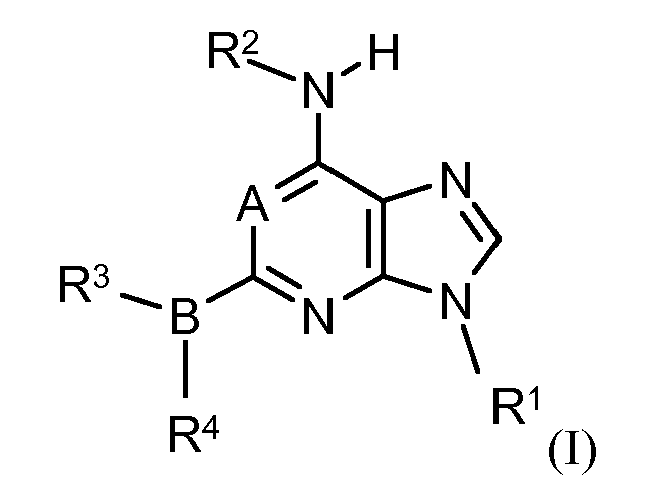
Description
- The present invention relates to purine derivative compounds and substituted imidazo[4,5-b]pyridines derivatives for their use for treating a disease characterized by a reduction in macrophage-mediated bacterial killing, in particular alveolar macrophages (AMs), and more particularly a disease resulting from impaired acidification of phago-lysosomes in macrophages, in particular alveolar macrophages.
- More particularly, the invention relies upon said derivatives, for their use for the treatment of cystic fibrosis (CF) and more generally for the treatment of diseases involving pulmonary microbial infections and even more broadly for their use in the treatment of pulmonary infectious diseases.
- Cystic fibrosis, the most common lethal autosomal recessive inherited disease, is linked to non-functional chloride channel CFTR (for Cystic Fibrosis Trans-membrane Conductance Regulator).
- Deletion of phenylalanine 508 (Δ508F CFTR) in the CFTR protein encoding gene accounts for the most prevalent mutation in cystic fibrosis patients and represents almost 70% of the mutations. Δ508F CFTR protein is unable to translocate to the plasma membrane where CFTR normally displays its physiological activity. Other mutations of human CFTR which may be cited are G542X, G551D, N1303K, W1282X, R553X, 621+1G, 1717-1G, R117H and R1162X. Over the 1900 different mutations that have been described, only four of these, besides Δ508F, represent more than 1% of cases.
- In addition to the well-established role of CFTR in the function of pulmonary epithelial cells, the importance of CFTR in microbicide activity of pulmonary macrophages has been shown, as well as CFTR also augmenting the neutrophil microbicide capacity.
- Therefore, one strategy aimed at developing novel molecules targeting the root cause of CF rather than disease symptoms, lies on the improvement of mutant CFTR functions.
- Despite a tremendous effort in particular within said strategy made over the last two decades to understand pathogenesis of cystic fibrosis, there is no cure for the disease.
- (R)-roscovitine is a potent cyclin-dependent kinase inhibitor that was initially proposed to be used for treating various cancers (see
WO 97/20842 - (R)-roscovitine, (2-(R)-(1-ethyl-2-hydroxyethylamino)-6- benzylamino-9-isopropylpurine), which is a substituted derivative of purine, and closely related derivatives thereof, were shown to rescue some Δ508F CFTR plasma membrane translocation (see
WO 2006/042949 ). - Nevertheless, it is still not clear why the cells of innate immune system including macrophages and neutrophils are unable to eradicate microbial infection. In the cystic fibrosis lung, microbial colonization, predominantly with Pseudomonas aeruginosa, and massive lung tissue damage by recruited neutrophils lead to severe bronchial damage, respiratory insufficiency, and death. Defects in innate immune system could have important consequences for microbial defence in cystic fibrosis patients.
- Current treatment of cystic fibrosis relies upon treating microbial infections that are consequently appearing at one stage of this disease. Antimicrobials and more particularly antibiotics are largely used, with numerous drawbacks because of increasingly highly resistant microorganisms to the known antibiotics.
- In order to develop an alternative strategy, the inventors investigated another pathway, in connection to alveolar macrophages (AMs), and identified compounds which could resolve microbial infection without the use of antimicrobials.
- In order to perform their major function, macrophages must ingest and destroy microbial pathogens. Following engulfment of pathogens by phagocytosis, the phagosomes fuse with lysosomes into phago-lysosomes where pathogens are digested by various proteolytic and lipolytic enzymes. Optimal functioning of the lysosomal degrading enzymes requires an acidic pH, which characterizes the lysosomes lumen. Generation of low phago-lysosomes pH is primarily driven by the V-ATPases, proton pumps that use cytoplasmic ATP to load H+ into the organelle derived during lysosomes fusion to the maturing phagosomes.
- It was recently shown that murine alveolar macrophages employ CFTR as a major charge shunt mechanism thereby allowing acidification of phago-lysosomal compartment and consequent bacterial killing (Deriy et al., 2009; Di et al., 2006).
- Indeed it was shown that the intra-phago-lysosomal pH of alveolar macrophages of individuals having cystic fibrosis is less acidic (pH 7.2), as compared with those of healthy individuals (pH 5.2). It was further shown that there is a tight correlation between CFTR genotype and levels of lysosomal acidification and microbial killing.
- Accordingly, there is a need for providing a method of treatment of cystic fibrosis condition in an individual in need thereof.
- There is furthermore a need for providing a treatment for alleviating symptoms associated with cystic fibrosis condition in an individual in need thereof.
- There is a need to provide a treatment of microbial infection that is most frequently associated with cystic fibrosis condition in an individual in need thereof.
- There is a need to provide a treatment of microbial infection that is most frequently associated with cystic fibrosis condition, by limiting the use of antibiotics in an individual in need thereof.
- There is also a need for providing a treatment for alleviating symptoms associated with cystic fibrosis condition in an individual in need thereof, said treatment being independent from the mutation of the CFTR encoding gene.
- There is still a need to provide molecules rescuing the microbicide function in CF pulmonary alveolar macrophages (AMs).
- M3 is a known metabolite of (R)-Roscovitine, which does not exhibit kinase inhibiting properties. It was in particular described in patent application
WO 2004/016612 . - Surprisingly, the inventors found that a subset of purine derivative compounds and substituted imidazo[4,5-b]pyridines derivatives has the capacity of restoring the microbicide properties of alveolar macrophages, this microbicide properties relying upon the acidification of the intra-phago-lysosomal pH of said alveolar macrophages.
- In one of its aspect, the present invention therefore provides compounds of formula (I) as defined hereinafter for their use in the treatment of a disease characterized by a reduction in macrophage-mediated bacterial killing, particularly alveolar macrophages (AMs).
- In a further object, the present invention more particularly focuses on said compounds of formula (I) for their use in the treatment of diseases involving pulmonary microbial infections and more particularly cystic fibrosis (CF).
-
-
Figure 1 . M3 metabolite and related derivatives potentiate phagosomal acidification in human alveolar macrophages.- (A) DIC overlay of fluorescence image for alveolar macrophages following a 120-200 min loading with BioParticles®. Scale bars: 10 µm.
- (B) Kinetics of acidification for representative compounds.
- (C) Comparative effect of various compounds on phagosomal pH in human alveolar macrophages. Data summary from 3-10 patients for each compound tested at 10 µM. Data was obtained in triplicate for each patient and averaged for all patients with error bars indicating the SEM. Data were normalized to fluorescence changes observed in untreated control cells for each patient before averaging.
-
Figure 2 . Inhibition of Pseudomonas aeruginosa growth in cftr-/- and ΔF508 alveolar macrophages by M3 metabolite and derivatives. A comparison of intracellular bacterial growth in single murine alveolar macrophages was carried out using live cell microscopy. Cells were fed DS-Red expressing P. aeruginosa for 30 min (MOI < 10). Cells were exposed to M3 metabolite for 20 min prior to exposure to bacteria. Adherent and non-ingested bacteria were then removed by washing and incubation with antibiotics and live alveolar macrophages were observed microscopically for approximately 6 hours.- (A) Representative cells from ΔF508 CFTR mutant mouse with ingested bacteria at 3 and 8 hours after incubation. Intracellular localization of bacteria was confirmed by 3D reconstruction of confocal Z stacks of bacterial fluorescence and cellular reflection/backscatter.
- (B-E) Summary data from at least 3 separate experiments comparing bacterial growth over time (assayed as mean DS-Red intensity at λ = 607 ± 20 (F)), per cell) between genotypes (B); in ΔF508 CFTR alveolar macrophages in the presence and absence of 20 µM (R)-roscovitine (C); in ΔF508 CFTR alveolar macrophages in the presence of 20 µM of M3 metabolite (D); data from cftr-/- alveolar macrophages in the presence M3 metabolite are shown in (E). The data are presented as means of fluorescence intensities ± SEM. Control conditions summarized data obtained from: WT - 2 mice, 38 cells; Δ F508 - 6 mice, 120 cells; cftr-/- 4 mice, 87 cells. In the presence of (R)-roscovitine data was obtained from: WT- 1 mouse, 7 cells; ΔF508 - 5 mice, 91 cells; cftr-/- 1 mouse, 18 cells. In the presence of M3 metabolite we analysed data from: Δ F508 -3 mice, 57 cells; cftr-/- 1 mouse, 67 cells.
-
Figure 3 . Absence of growth inhibition of P. aeruginosa culture by M3 metabolite and derivatives. 1/100 dilution of an overnight culture of P. aeruginosa was introduced in fresh culture medium and cultures were incubated at 37°C with 20 µM of M3 metabolite or derivatives or 1 µM bafilomycin (negative control). Optical density (600 nm) was measured 2 h and 3,5 h after starting the cultivation, and every 30 min for 2.5 h. -
Figure 4 . M3 metabolite enhanced lysosomes fusion in murine alveolar macrophages.- (A) Rhodamine-110, bis-(CBZ-L-Phenylalanyl-L-Arginine Amide), is cathepsin sensitive and selective non-fluorescent substrate that converts to fluorescent mono-amide upon the cleavage of the covalently linked peptide/amino acid. We added Rhodamine-110 to the cells prior the pHrodo-Red conjugated E. coli Bioparticles® providing simultaneous uptake of both probes into phagosomes. Lysosomes fusion into nascent phagosomes brings proteases including cathepsin and triggers Rhodamine conversion.
- (B) M3 metabolite (10 µM) enhanced lysosomes fusion in mouse alveolar macrophages over that observed in control cells following pHrodo-E.coli uptake.
- According to a first aspect, a subject matter of the present invention relates to a compound of formula (I):

- A is N or CH,
- B is N, O, or S,
- R1 is
- H,
- a (C1-C4)alkyl group, for example chosen among methyl, ethyl, propyl, 2propyl(isopropyl), preferentially being a 2-propyl(isopropyl),
- a methyl(C1-C6)cycloalkyl group for example chosen among methylcyclopropyl and methylcyclobutyl, or
- a (C1-C6)cycloalkyl group for example a cyclopropyl,
- R2 is
- an aryl, said aryl group being optionally substituted by an halogen atom, an hydroxyl group, a methoxy group or an identical or different aryl group or a heteroaryl group,
- an arylmethyl group, in particular benzyl, and substituted benzyl with one to three groups, such as a (C1-C3)alkyl group, a OH, a OMe or an halogen group chosen among F, Cl and Br, or
- a methylheteroaryl group such as methylpyridine and methylthiophene,
- R3 is
- absent when B is O or S, or is
- H or a (C1-C4)alkyl group when B is N,
- R4 is a (C1-C5)alkyl group or a (C1-C4)cycloalkyl group, each group bearing a carboxylic acid group, and said (C1-C5)alkyl group or (C1-C4)cycloalkyl being optionally substituted by a hydroxyl group, a halogen group or a methoxy group, and
- when B is N, R3 and R4 can together form a 5- or 6- membered heterocycle substituted by a carboxylic acid group, and optionally substituted by a halogen atom, a hydroxyl group, a methoxy group or a hydroxymethyl group,
- or anyone of its pharmaceutically acceptable salt,
- for use in the treatment of a disease characterized by a reduction in macrophage-mediated bacterial killing.
- When in formula (I) R2 means an aryl group substituted by an identical or different aryl or heteroaryl group, it constructs a biaryl moiety.
- In the framework of the instant invention, a "disease characterized by a reduction in macrophage-mediated bacterial killing" typically encompasses a disease for which macrophages, particularly alveolar macrophages, are impaired with respect with acidification of lyso-phagosomes hence resulting in a reduction of their abilities to kill bacteria.
- In a particular embodiment, such a disease characterized by a reduction in macrophage-mediated bacterial killing is selected in a group comprising asthma, chronic obstructive pulmonary disease (COPD), cystic fibrosis, inflammatory asthma, pneumonia and tuberculosis.
- In another particular embodiment, the compounds of formula (I) according to the present invention are used in the treatment of cystic fibrosis.
- According to a particular embodiment, the treatment is intended for patients having cystic fibrosis and possessing anyone of the mutant forms of human CFTR.
- According to a particular embodiment, the treatment is intended for patients having cystic fibrosis and possessing a mutation being the deletion of the ΔF508 in the gene encoding CFTR or possessing a mutation being a mutation different from the deletion of the ΔF508 in the gene encoding CFTR. The following other mutations may be cited as examples: G542X, G551D, N1303K, W1282X, R553X, 621+1G, 1717-1G, R117H and R1162X.
- In a further particular embodiment, the compounds of formula (I) according to the present invention are used for the treatment of diseases involving pulmonary microbial infections or of pulmonary inflammatory diseases.
- According to one aspect of the present invention, the compound of formula (I) according to the present invention may be useful to inhibit, prevent and/or treat lung infection by bacteria and other micro-organisms, which may or may not be a consequence of cystic fibrosis.
- Among the bacteria in particular susceptible of infecting an individual having a cystic fibrosis one may consider a bacterium such as: a bacterium from the genus Staphylococcus, such as S. aureus ; a bacterium from the genus Haemophilus, such as H. influenzae ; a bacterium from the genus Pseudomonas, such as P. aeruginosa, ; a bacterium from the genus Burkholderia, for example B. cepacia, B. multivorans, B. cenopacia, B. stabilis, B. vietnamensis, B. dolosa, B. ambifaria, B. pyrrocinia ; a bacterium from the genus Mycobacterium, such as M. absessus, M. avium, M. tuberculosis.
- Anaerobic bacteria may be also considered within the scope of the instant invention, such as for example a bacterium from the genus Prevotella, Veillonella, Propionibacterium, Actinomyces, Streptococcus, for example S. pneumonia, Legionnella, for example L. pneumophila.
- Other bacteria species may be considered within the scope of the instant invention, as for example: Stenotrophomonas maltophilia, Achromobacter xylosoxidans, Ralstonia mannitolilytica, Ralstonia pickettii, Inquilinus limosus, Elizabethkingia meningoseptica.
- According to a particular embodiment, the disease characterized by a reduction in macrophage-mediated bacterial killing is a disease involving pulmonary microbial infection, which may be selected in a group comprising an infection by Pseudomonas aeruginosa, Staphylococcus aureus, Burkholderia cepacia, Haemophilus influenza and Mycobacterium tuberculosis.
- Besides bacteria, another category of micro-organisms is susceptible of infecting an individual having a cystic fibrosis, namely fungi.
- Among fungi, one may consider more particularly the filamentous fungi, for example Aspergillus fumigatus, which remains by far the most common agent of airway colonization, Acrophialophora fusispora, Aspergillus terreus, Exophiala dermatitidis, Penicillium emersonii, Scedosporium apiospermum and Scedosporium prolificans.
- According to one aspect, the present invention relates to a compound of formula (I) as defined above, wherein the group NHR2 may be chosen among one of the following groups:


- According to another aspect, the present invention relates to a compound of formula (I) as defined above, wherein B is N and the group NR3R4 is chosen among:


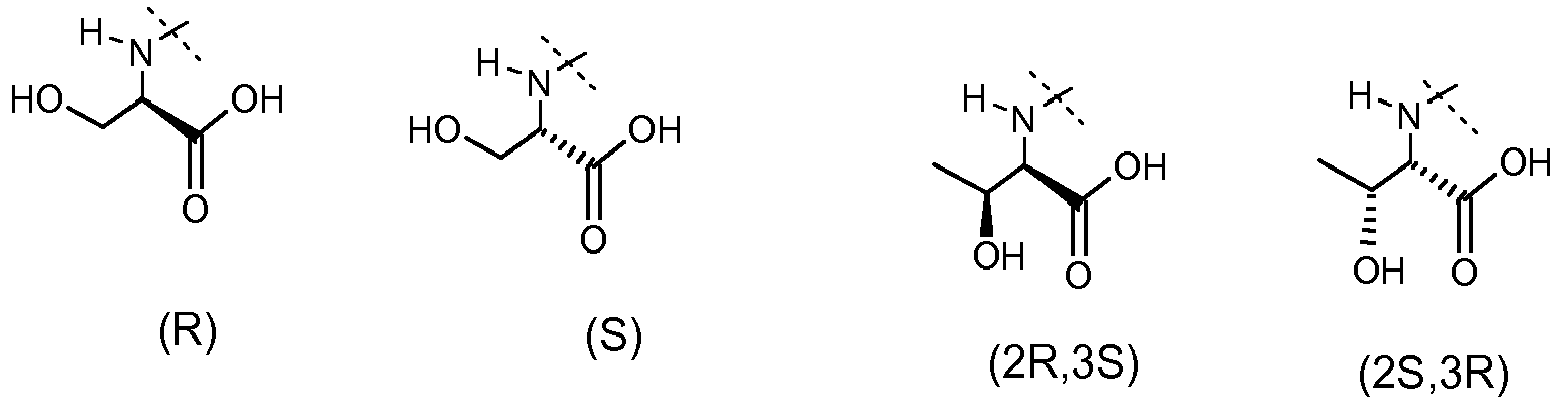

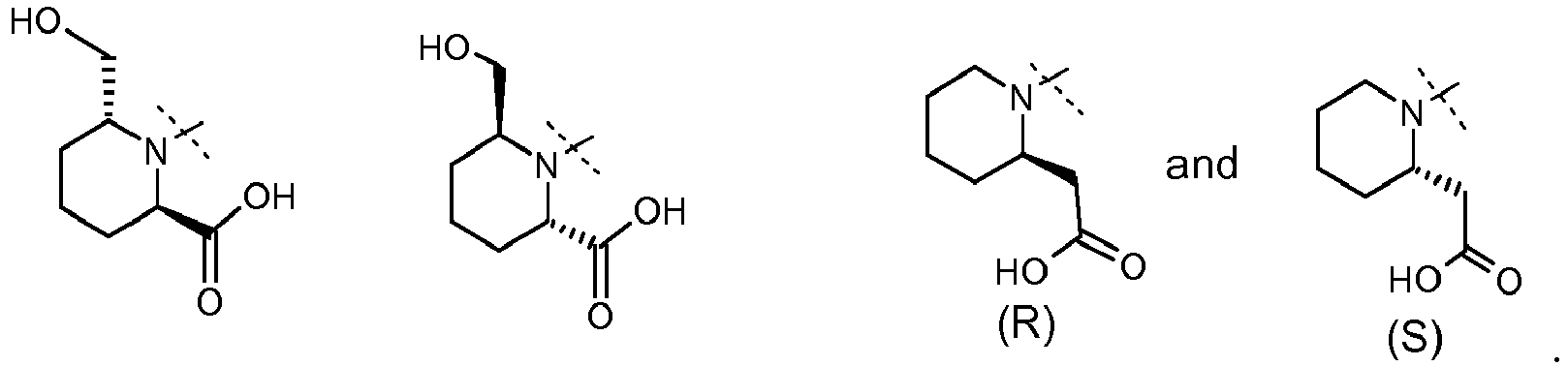
- According to another aspect, the present invention relates to a compound of formula (I) as defined above, wherein B is O and OR4 is chosen among:


- According to another aspect, the present invention relates to a compound of formula (I) as defined above, wherein R1 represents a 2-propyl(isopropyl).
- According to another aspect, the present invention relates to a compound of formula (I) as defined above, wherein R2 represents a benzyl group.
- According to another aspect, the present invention relates to a compound of formula (I) as defined above, wherein R3 represents a hydrogen atom.
- According to another aspect, the present invention relates to a compound of formula (I) as defined above, wherein R4 represents a 1-carboxypropan-1-yl group.
- According to another aspect, the present invention relates to a compound of formula (I) as defined above, wherein R1 represents a 2-propyl(isopropyl), R2 represents a benzyl group, R3 represents a hydrogen atom and R4 represents a 1-carboxypropan-1-yl group, in the (R) or (S) form or in the form of a racemic mixture thereof.
- According to a more particular embodiment, the present invention particularly focuses on M3 or (2R)-2-[[9-isopropyl-6-(phenylmethylamino)purin-2-yl]amino]butanoic acid:

- According to a further particular embodiment, the present invention particularly focuses on (3R)-3-[[6-(benzylamino)-9-isopropyl-purin-2-yl]amino]butanoic acid:


- The present invention further extends to said two compounds (4) and (6) which are new and to any pharmaceutical composition containing them.
- The compounds of the invention may exist in the form of free bases or of addition salts with pharmaceutically acceptable acids.
- Suitable physiologically acceptable acid addition salts of compounds of formula (I) include hydrobromide, tartrate, citrate, trifluoroacetate, ascorbate, hydrochloride, tartrate, triflate, maleate, mesylate, formate, acetate and fumarate.
- The compounds of formula (I) and/or salts thereof may form solvates (e.g. hydrates) and the invention includes all such solvates.
- In the context of the present invention, the term:
- "halogen" is understood to mean chlorine, fluorine, bromine, or iodine, and in particular denotes chlorine, fluorine or bromine,
- "(C1-C4)alkyl", (C1-C5)alkyl and "(C1-C6)alkyl" as used herein respectively refers to C1-C4, C1-C5 or C1-C6 straight- or branched- saturated hydrocarbon chain. Examples are, but are not limited to, methyl, ethyl, 1-propyl, 2-propyl, t-butyl,
- "aryl" radicals are chosen from phenyl, naphthyl or indenyl,
- "heteroaryl" radicals comprise 3 to 10 ring members, optionally comprising one or more heteroatoms chosen from oxygen, sulfur and nitrogen, in particular, thiazolyl, thienyl, pyrrolyl, pyridinyl, furyl, imidazolyl, oxazolyl, pyrazinyl, tetrazolyl, oxadiazolyl, thiadiazolyl, isoxadiazolyl, isothiadiazolyl, isothiazolyl, isoxazolyl, triazolyl, pyrazolyl or indolyl,
- "heterocycle" radicals comprise 1 to 2 heteroatoms, and at least a nitrogen atom, and optionally another heteroatom chosen from oxygen, sulfur or nitrogen and represent in particular piperidinyl, morpholinyl, pyrrolidinyl, imidazolidinyl, pyrazolidinyl, isothiazolidinyl, thiazolidinyl, isoxazolidinyl, oxazolidinyl, piperazinyl, 2-piperidone, 3-piperidone, 4-piperidone, 2-pyrrolidone or 3-pyrrolidone;
- "patient" may extend to mammal and non-mammal animals, preferably humans or non-human mammals, such as cats, dogs or cattle.
- The compounds of formulae (I) can comprise one or more asymmetric carbon atoms. They can thus exist in the form of enantiomers or of diastereoisomers. These enantiomers, diastereoisomers and their mixtures, including the racemic mixtures, are encompassed within the scope of the present invention.
- The compounds of the present invention can be prepared by conventional methods of organic synthesis practiced by those skilled in the art. In particular, the starting material may be 6-chloro-2-fluoropurine. One possible process is illustrated in example 1 hereinafter.
- When B is N, the introduction of amino acids on the 2 position of the purine scaffold can be performed according to the following scheme:

- The substitution of the halogen in the compound of formula (II), wherein R1 and R2 are as defined above, may be performed by reacting it with a compound of formula R3R4NH, wherein R3 and R4 are as defined above, upon heating, for example 120 to 160°C, using a base in a limited amount, for example potassium triphosphate, in a solvent, for example DMSO. Said process step is simple and allows the introduction of a variety of amino acids. One other major advantage of said process step lies in the work-up that is simple as the compounds can be separated by crystallization or column chromatography on silica gel using mixture of solvent (eg: CH2Cl2-EtOAc-THF) as eluents and therefore the use of HPLC can be avoided.
- According to a further embodiment, the present invention also relates to a pharmaceutical composition comprising a compound of formula (I) according to the present invention and a pharmaceutically acceptable carrier, for use in the treatment of a disease characterized by a reduction in macrophage-mediated bacterial killing.
- In one preferred embodiment, the pharmaceutical composition is for use in the treatment of a disease selected in a group comprising asthma, chronic obstructive pulmonary disease (COPD), cystic fibrosis, inflammatory asthma, pneumonia and tuberculosis or a disease involving pulmonary microbial infection, which may be selected in a group comprising an infection by Pseudomonas aeruginosa, Staphylococcus aureus, Burkholderia cepacia, Haemophilus influenza and Mycobacterium tuberculosis.
- The pharmaceutical composition according to the present invention may be suitable for oral, systemic, parenteral, intra-pulmonary, intra-bronchial or intra-alveolar administration.
- A compound of formula (I) according to the invention may be formulated with excipients and components that are commonly used for oral compositions, as for example, fatty and/or aqueous components, humectants, thickeners, preserving agents, texture agents, taste agents and/or coating agents, antioxidants, preserving agents.
- The formulating agents and excipients for an oral composition are known in this field and will not be the object of a fully detailed description herein. Many embodiments of oral compositions are formulated via usual processes for producing coated tablets, gel capsules, gels, controlled-release hydrogels, emulsions, tablets and capsules.
- In another embodiment, a compound of formula (I) may be formulated in a pharmaceutical composition suitable for a systemic or a parenteral administration and in particular for an administration by injection. Parenteral administration comprises subcutaneous, intra-muscular and intra-venous administration. Formulations for injection may be presented in single-unit dosage form, such as ampoules or in multi-dose containers. The compositions may be formulated as suspensions, solutions or emulsions in oily or aqueous vehicles, and may contain additional agents, such as preservatives, emulsifying and/or stabilizing agents. Alternatively, a compound of formula (I) may be formulated as a dispersible powder, which may be prepared as a liquid composition, with a suitable vehicle, for example sterile water, just before use.
- A compound of formula (I) may also be formulated as a rectal composition, such as for example a suppository, containing conventional suppository bases, such as cocoa butter or other glycerides.
- In a most preferred embodiment, a compound of formula (I) may be formulated as an aerosol for intra-pulmonary, intra-bronchial or intra-alveolar administration.
- As an example of devices suitable for implementing the present invention one may cite pressurized metered dose inhalers (pMDIs), dry powder inhalers (DPIs) and nebulizers, such as pressure-driven jet nebulizer or an ultrasonic nebulizer.
- Any type of formulations adapted for such an aerosol administration is a common knowledge for a skilled in the art.
- A compound of formula (I) may be formulated as a liquid solution a liquid suspension or a powder.
- As for liquid solution or suspension, a carrier may be typically pyrogen-free sterile or a dilute aqueous alcoholic solution. Liquid solution or suspension are preferably isotonic, hence may comprise sodium chloride. Optional additives include one or more preservative(s), such as for example methyl hydroxybenzoate, one or more antioxidant(s), one or more flavouring agent(s), one or more volatile oil(s), one or more buffering agent(s) and one or more surfactant(s).
- As for a powder formulation, commonly used ingredients, such as a powdered diluent, for example powdered lactose, and surfactant(s) may be added.
- Metered dose inhalers are pressurized aerosol dispensers, typically comprising a solution or a suspension of the active ingredient, namely a compound of formula (I), and a liquefied propellant. Suitable propellants include propellants commonly used in the art, such as for example chlorofluorocarbon compounds, in particular, dichlorodifluoromethane, trichlorofluoromethane, dichlorotetrafluoroethane and mixtures thereof.
- Suitable formulations may also comprise one or more co-solvent(s), such as for example, ethanol, one or more surfactant(s), such as oleic acid and sorbitan trioleate, one or more antioxidant(s) and one or more suitable flavouring agent(s).
- A dosage regimen suitable for the administration of a compound of formula (I) falls within the technical skills of an artisan in the art, and depends from multiple parameters. Indeed, a suitable dosage regimen depends from the gender, the age, the weight, and the progress of the disease. Within the scope of the instant invention, a suitable dosage regimen may encompass about 1 to 500 mg of the active compound.
- For example, for an oral administration, a drug may comprise about 1 to about 500 mg of active compound, for example about 20 to about 250 mg of active compound, for example about 50 to 150 mg of active compound.
- For example, for an aerosol mode of administration, the active compound may be administrated from about 1 to about 100 mg per inhalation.
- In another embodiment, the pharmaceutical composition according to the present invention may be administered prior, during or after another pharmaceutical composition comprising an additional agent.
- In a further embodiment, the pharmaceutical composition according to the present invention may comprise an additional agent.
- Said additional agent may in particular be an antibiotic suitable to relieve or alleviate microbial infection.
- Such antibiotic may be selected in a group comprising amikacin, amoxicillin, azithromycin, aztreonam, cefalotin, ceftazidim, ciprofloxacin, clarithromycin, colimycin, colistin, fosfomycin, gentamicin, imipenem, levofloxacin, meropenem, netilmicin, piperacillin, rifampicin, sulbactam, tazobactam, ticarcillin, tobramycin, a derivative thereof and a mix thereof.
- In another embodiment, the additional agent may be a mucolytic agent, a bronchodilator, a bacteriophage, an anti-inflammatory agent or an anti-infective agent.
- A mucolytic agent may be selected among acetylcysteine, ambroxol, bromhexine, carbocisteine, domiodol, dornase alfa, eprazinone, erdosteine, letosteine, mannitol, neltenexine, sobrerol, stepronin, tiopronin.
- A bronchodialator may be selected among albuterol, metaprotenerol sulfate, pirbuterol sulfate, salmeterol and tetrabuline sulfate.
- A bacteriophage is suitable to relieve or alleviate microbial infection.
- Suitable bacteriophage may be a myovirus, for example φNH-4 and a podovirus, for example φMR299-2, as described by Alemayehu et al. (2012).
- Other bacteriophage may also be found as suitable within the scope of this invention, for example in Cooper et al. (2013); Soothill (2013); Henry et al. (2013).
- An anti-inflammatory agent may be suitable to relieve or alleviate tissue inflammation that may appear during the microbial infection. Such anti-inflammatory agent may be selected in a group comprising a steroid compound and a non-steroid compound.
- Among steroid compounds, one may use cortisol, betamethasone, dexamethasone, prednisone or prednisolone.
- Among non-steroid compounds, one may use ibuprofen, sildenafil.
- In one aspect, the invention provides a method for the treatment of a disease characterized by a reduction in macrophages-mediated bacterial killing, comprising the administration to a patient in need thereof of a compound of formula (I) according to the present invention, and in particular of compound M3.
- In one embodiment, the disease characterized by a reduction in macrophage-mediated bacterial killing is selected in a group comprising asthma, chronic obstructive pulmonary disease (COPD), cystic fibrosis, inflammatory asthma, pneumonia and tuberculosis.
- Yet, in a most particular embodiment, the disease characterized by a reduction in macrophage-mediated bacterial killing is cystic fibrosis.
- In another embodiment, the individual is selected in a group comprising a mammal and a non-mammal animal, preferably a mammal animal, more preferably a human.
- In certain embodiments, the patient possesses mutant forms of human CFTR.
- In a particular embodiment, the patient possesses a mutant form of human CFTR being the Δ508F mutation or being different from the Δ508F mutation.
- Within the scope of the instant invention, the compounds of formula (I) that are described herein are susceptible to be used for diagnosing diseases other than cystic fibrosis, provided these diseases have impaired acidification of lyso-phagosomes in macrophages.
- Hence, in another aspect, the instant invention relates to a method for diagnosing disease characterized by a reduction in macrophage-mediated bacterial killing in an individual, said method comprising the steps of:
- a) providing isolated macrophages from said individual;
- b) incubating said macrophages with a microorganism able to provoke a pulmonary disease;
- c) assessing the abilities of said macrophages to kill said microorganism.
- Said method may also be called a method of determining phagosome bacterial killing function or phagosome acidification.
- In a preferred embodiment, macrophages may be alveolar macrophages.
- In a still preferred embodiment, alveolar macrophages may be collected by broncho-alveolar lavage or a biopsy of the lung epithelium.
- In an another embodiment, the invention relates to a method for identifying a patient with an increased likelihood of responding to a compound of formula (I), wherein the patient has been diagnosed with or is at risk of developing a pulmonary infection, said method comprising:
- a) providing isolated macrophages from said individual;
- b) incubating said macrophages with a microorganism able to provoke a pulmonary disease;
- c) providing to said macrophages an effective amount of a compound of formula (I);
- d) assessing the abilities of said macrophages to kill said microorganism.
- Some specific dye compounds may serve as specific sensors of phagocytosis and further indicate whether the phago-lysosomal compartment is functional, i.e. has a proper pH value of about 5.2. For example, the dye compound may be almost non-fluorescent at neutral pH and may fluoresce in an acidic environment, hence displaying a low pKa.
- Example of useful dye compounds to be used in the instant invention may be those commercially available under the name pHrodo® Red, pHrodo® Green from Life technologies; LysoSensor® Yellow/Blue, LysoSensor® Blue, LysoSensor® Green, Oregon Green from Molecular Probes.
- These dye compounds may further be conjugated to bacteria, for example pHrodo Red E. coli BioParticles®, or large molecule, such as zymosan and dextran 10,000.
- The related fluorescence may be assessed by flow cytometry, microscopy, spectroscopy or any suitable method known from a skilled artisan.
-

- 6-Benzylamino-2-fluoropurine (2) and N-benzyl-2-fluoro-9-isopropyl-purin-6-amine (3) were prepared starting from 6-chloro-2-fluoropurine using a procedure starting from 2,6-dichloropurine (Oumata et al. 2009).
- Mp 250 °C. 1H-NMR(DMSO-d6, δ ppm) 4.63 (brd, 2H, CH2); 7.31(m, 6H, C6H5 and 8-H).
- Mp 153°C. 1H-NMR(CDCl3, δ ppm) 1.59(d, 6H, J = 6.5 Hz,CH(CH3)2); 4.75(hept, 1H, CH(CH3)2); 4.83(brs, 2H, CH2); 6.61( Brs, 1H, NH); 7.31(m, 5H, C6H5), 7.67(s, 1H, H-8).
- A mixture of N-benzyl-2-fluoro-9-isopropyl-purin-6-amine (0,5 g, 1.7 mmol,) and 3-aminobutanoic acid (1.26 g, 12.26 mmol), K3PO4 (0.743 g, 3.50 mmol) in 1ml DMSO was heated at 160°C during 5h. After cooling to 20°C the mixture was diluted with 5 mL citric acid (10% in water, m:v). The mixture was extracted with EtOAC and the combined organic layers were washed with satured NaCl and dried over Na2SO4. After evaporation of the solvent in vacuo, the crude product was purified by crystallization from Ethyl acetate to afford 0.45 g of 4.
Compound 4 could also be purified on silica gel using CH2Cl2-EtOAc-THF(6:2:1); 1H-NMR(DMSO-d6 , 400MHz): 1.13(d, 3H, J= Hz, CH3CH); 1.46(d, 6H, J= Hz, iPr); 2.40(m, 2H, CH2COOH); 4.26(p, 1H, CHCH3); 4.51(hept, 1H, CH(CH3); 4.62(brs, 2H, CH2C6H5); 6.14(d, 1H, NH); 7.21, 7.27, 7.29(t, t and d, 5H, C6H5), 7.79(s, 1H, 8-H). -

- In the same conditions the
fluoropurine 3 could be reacted with (R)-2-aminobutanoic acid to affordproduct 5. - 1H-NMR(DMSO-d6, 400MHz): 0.99(t, 3H, J= 6.5 Hz, CH3-CH2); 1.51(d, 6H, J= 6.5 Hz, CH(CH3)2); 1.78(m, 2H, CH2CH3); 4.24(m, 1H, CHN); 4.59 (hept, 1H, CH(CH3); 4.71(brs, 2H, CH2C6H5); 6.43(brs, 1H, NH); 7.32, 7.34 and 7.36(t, t and d, 5H, C6H5);7.86 (s, 1H, 8-H), 12.4(brs, 1H, COOH).
- In the same conditions,
compound 6 by reacting 3 with L-serine to affordcompound 6.
- Mp 120-130 °C. 1H-NMR(DMSO-d6, δ ppm): 1.47(d, 1H, J=6.5 Hz, CH(CH3)2); 3.83(m, 2H, CH2OH); 4.38(m, 1H, CH-N); 4.51(hept, 1H, CH(CH3)2); 4.62(brs, 2H, CH2C6H5) 7.21, 7.28, 7.36(t, t and d, 5H, C6H5), 7.82(s, 1H, 8-H); 12.35(brs, 1H, COOH). 13C-NMR (DMSO-d6, δ ppm): 174.1(COOH).
- Broncho-alveolar lavage from humans was performed on consenting adults following a protocol approved by The University of Chicago Institutional Review Board. The patients included men and women, smokers and non-smokers, undergoing bronchoscopy for cancer biopsies prior to clinical treatment. The procedures used for the collection, isolation, and culture of human alveolar macrophages have been previously described (Nelson et al., 1985).
- In brief, broncho-alveolar lavage fluid was strained through a 70 µm sterile cell strainer into a 50 ml conical tube centrifuge tube with a maximum broncho-alveolar lavage volume of 40 ml and a minimum volume of 10 ml followed by centrifugation at 1000 x g for 5 min at 4°C. The broncho-alveolar lavage supernatant was then discarded and the cell pellet resuspended in 0.1-0.3 ml of cold complete media: DMEM, 10% FBS, 1% penicillin-streptomycin. Cells were counted on Countess® (Invitrogen) with a distribution cut-off of 20-60 µm and cell viability determined by trypan blue exclusion.
- In general, the total number of macrophages per broncho-alveolar lavage was between 104 and 2x10⁵. Cells were either plated on MatTek® glass bottom dishes for live cell video-microscopy as above or in 96- or 384-multi-well plates depending upon yield and experimental need. Multi-well plates were seeded at a density of 5-10 x103 cells per well depending upon yield. Patient cells were not pooled and were maintained in individual cultures. Cells were incubated undisturbed for at least 3 hours to allow for macrophage attachment. After 3 h, medium was aspirated from each well or dish and cells were washed gently twice with fresh, warmed complete media to remove all non-adherent cells. Adherent cells were ≥ 98% viable and CD68 positive.
- After 24 h incubation cells were exposed to pHrodo Red BioParticles® (Life Technologies). Acidification was measured on 96-well plate format with 560 and 580 nm excitation and emission wavelengths at 37°C in a Synergy MX, BioTek® plate reader. In order to synchronize phagocytosis the plate was centrifuged (300 x g) for 3 min after pHrodo Red BioParticle® addition.
- Phagosomal acidification is a prerequisite for efficient bacterial killing (Hackam et al., 1997), thus, several compounds were assessed for enhanced phagosomal acidification upon internalization of bioparticles conjugated to the pH sensitive dye pHrodo Red BioParticle® as depicted in
Fig. 1 . Human alveolar macrophages were isolated from bronchoalveolar lavage, plated in multi-well plates and fed with pHrodo Red BioParticle® conjugated lyophilized E.coli (Fig. 1A ). The kinetics of phagosomal acidification were read in a plate reader over a period of 3 h. - (R)-roscovitine, M3 metabolite and related purines are identified as compounds that significantly enhance acidification (
Fig. 1 B-C ) over phagosomal pH observed in untreated cells. Negative controls in the screen included the V-ATPase inhibitor bafilomycin (Baf), and the potent phospholipase C inhibitor edelfosine (ET-18-OCH3). Edelfosine has been previously also shown to prevent phagocytic uptake at the level of actin assembly. - Although (R)-roscovitine is a potent cyclin-dependent kinase inhibitor, surprisingly M3 metabolite does not share this feature (see Table 1 below).
Table 1. IC50 value of (R)-roscovitine and M3 metabolite towards inhibition of various kinases. Kinases (R)-roscovitine Metabolite M3 CDK1/cyclin B 0.42 11 CDK2/cyclin A 0.14 23 CDK5/p25 0.22 41 CDK9/cyclin T 0.59 >10 CK1δ/ε 1.7 21 LmCK1 5.1 >100 CK2 >100 >100 CLK1 1.3 18 CLK2 0.69 14 CLK3 17 52 CLK4 0.69 19 DYRK1A 2.2 19 DYRK1B 2.1 22 DYRK2 2.3 23 DYRK3 59 >100 GSK-3α/β 51 >100 PfGSK-3 11 >100 Pim1 >100 >100 - These results suggest that the pathway of kinase inhibition is not involved in the mechanism leading to acidification of macrophage lyso-phagosomes.
- CFTR null mice, or cftr -/- (STOCK Cftr <tm1Unc>/TgN (FABPCFTR) # Jaw/Cwr and ΔF508 mutant mice (C57BL/6 Cftr <tm1Kth>/TgN(FABPCFTR) #J aw/Cwr homozygous for ΔF508 (van Heeckeren et al., 2004) breeding pairs were originally purchased from Case Western Reserve University's Cystic Fibrosis Animal Core. These mice express the hCFTR protein in the gut under the influence of the rat FABP promoter and are referred to as "gut corrected". CFTR null mice (cftr -/-) were bred as homozygotes, ΔF508 mutant mice were bred as heterozygotes. All animals were housed in a specific pathogen-
free biohazard level 2 facility maintained by The University of Chicago Animal Resources Center (Chicago, IL). Animal genotyping was performed by Transnetyx, Inc., (Cordova, TN). - We have shown previously that alveolar macrophages from cftr -/- and ΔF508 CFTR mice are defective in bacterial killing (Deriy et al., 2009; Di et al., 2006). Given the tight coupling between phago-lysosomal acidification and bacterial killing, we examined whether M3 metabolite and derivatives thereof could restore bacterial killing in alveolar macrophages from cftr-/- and ΔF508 CFTR expressing mice.
- Cultured alveolar macrophages were exposed to (R)-roscovitine, M3 metabolite and derivatives thereof (20 µM) for 30 min prior to exposing cells to DS-red expressing Pseudomonas aeruginosa. Cells were allowed to ingest bacteria in the continued presence of the purine derivative compound to be tested and were observed in live cell video microscopy over a 6 h period for an increase in fluorescence indicative of bacterial growth either in the phagosome or in the cytoplasm following release from the phagosome (
Fig. 2A ). - Intracellular bacterial growth, measured as an increase in fluorescent intensity as a function of genotype is seen in
Fig. 2B . As expected, ΔF508 CFTR expressing cells and cftr -/- cells showed bacterial growth, hence are confirmed being defective in bacterial killing. - In contrast, wildtype cftr+/+ cells present no fluorescence increase, suggesting an absence of bacterial growth. Data in
Fig. 2C demonstrate that (R)-roscovitine significantly rescues bacterial killing in ΔF508 CFTR expressing cells as well as in cftr -/- cells (Fig. 2E ) to levels similar to that seen in cftr+/+. - Surprisingly, data in
Fig. 2D and E using a kinase-inactive M3 metabolite showed that rescue of bacterial killing is at least as efficient as with (R)-roscovitine. - In order to assess whether the killing effect of M3 metabolite towards bacterial cells are an indirect or a direct effect, bactericidal activity M3 metabolite and derivatives thereof was tested on bacterial cells.
- Pseudomonas aeruginosa DsRed from single colony was grown in gentamicin containing TSB overnight at 37°C with agitation at 300 RPM. Next day it was started the new culture at 1/100 dilution and certain compound of blocker were added to the tubes. We measured optical density (660 nm) of bacterial culture at every 30 minutes.
- Both M3 metabolite and its derivatives were unable to prevent bacterial growth when added at following concentrations: 20 µM (R)-roscovitine, metabolite M3, or 1 µM bafilomycin (
Fig. 3 ). - Isolated mouse alveolar macrophages (from cftr -/- or Δ508F CFTR mice) were cultured adherent on the poly-L-lysine coated glass bottom dishes for 24-48 h. Then they were treated with 10 µM Rhodamine-110 for 20 min at room temperature in the dark with following incubation with 0.1 mg/ml pHrodo- Red conjugated E. coli Bioparticles® for 1 hour at 37°C. Rhodamine-110, bis-(CBZ-L-Phenylalanyl-L-Arginine Amide), is cathepsin sensitive and selective non-fluorescent substrate that converts to fluorescent mono-amide upon the cleavage of the covalently linked peptide/amino acid. Then the cells were washed twice with PBS, fixed with 4% PFA. The images were acquired immediately after fixation on Leica SP5 2-photon laser confocal microscope with a 63X (NA1.4) oil objective.
- Isolated mouse macrophages were plated on 96-well plate with a density of 3-6,000 cells (20-60 µm diameter) per well, incubated in complete DMEM (10% FBS, 1% penicillin-streptomycin) at 37°C under 5%CO2 pressure for 24-48 h. The cells were loaded with 5µM Rhodamine-110 for 20 min at room temperature in the dark, fed with E. coli Bioparticles® conjugated to pHrodo- Red for 1 h at 37°C. Rhodamine-110 signal was read in Synergy MX, Biotek plate reader with excitation 498 nm and emission 521 nm wavelengths.
-
Fig. 4A shows that in the presence of R-roscovitine, the fluorescence resulting from rhodamine-110 processing by lysosomal proteases is increased as compared to the control assay performed in the absence of R-roscovitine. At the same time, fluorescence from pHrodo- Red conjugated E. coli Bioparticles® phagocytosis in alveolar macrophages are decreased in the presence of R-roscovitine, suggesting that phagocytosis of bacterial cells was followed by bacterial killing. -
Fig. 4B shows that M3 metabolite allows rhodamine-110 processing by lysosomal proteases in an increased manner as compared to condition in which M3 metabolite is absent. - These results indicate that (R)-roscovitine and M3 metabolite allows for increased lysosomal activity.
-
- Patent references
-
WO 97/20842 -
WO 2004/016612 -
WO 2006/042949 - Non patent references
- Alemayehu et al. Bacteriophages φMR299-2 and φNH-4 Can Eliminate Pseudomonas aeruginosa in the Murine Lung and on Cystic Fibrosis Lung Airway Cells. mBio 3:2 March/April 2012; doi:10.1128.
- Cooper et al. Stability and purity of a bacteriophage cocktail preparation for nebulizer delivery. Lett Appl Microbiol. 2013 Sep 25. doi: 10.1111/lam.12161.
- Deriy et al. Disease-causing Mutations in the Cystic Fibrosis Transmembrane Conductance Regulator Determine the Functional Responses of Alveolar Macrophages, Journal of Biological Chemistry, 284, 51, 35926-35938, 2009.
- Di et al. CFTR regulates phagosomes acidification in macrophages and alters bactericidal activity. Nat. Cell Biol. 2006; 8, 933-9442006.
- Hackam et al. Regulation of phagosomal acidification. Differential targeting of Na+/H+ exchangers, Na+/K+-ATPases, and vacuolar-type H+-Atpases. The Journal of biological chemistry 1997; 272, 29810-29820.
- Henry et al. Predicting in vivo efficacy to guide the choice of therapeutic bacteriophages to treat pulmonary infections. Antimicrob Agents Chemother. 2013 Sep 16.
- Nelson et al. Immunoglobulin G-induced single ionic channels in human alveolar macrophage membranes. Journal of Clinical Investigation 1985; 76, 500-507.
- Oumata et al. Practical synthesis of roscovitine and CR8. Organic Process Res. And Dev. 2009, 13:641-644.
- Soothill. Use of bacteriophages in the treatment of Pseudomonas aeruginosa infections. Expert Rev Anti Infect Ther. 2013 Sep;11(9):909-15.
- Van Heeckeren et al. Role of Cftr genotype in the response to chronic Pseudomonas aeruginosa lung infection in mice. Am J Physiol Lung Cell Mol Physiol 2004; 287, L944-952.
Claims (12)
- Compound of formula (I):
 A is N or CH,B is N, O, or S,R1 is- H,- a (C1-C4)alkyl group, for example chosen among methyl, ethyl, propyl, 2propyl(isopropyl), preferentially being a 2-propyl(isopropyl),- a methyl(C1-C6)cycloalkyl group for example chosen among methylcyclopropyl and methylcyclobutyl, or- a (C1-C6)cycloalkyl group for example a cyclopropyl,R2 is- an aryl, said aryl group being optionally substituted by an halogen atom, an hydroxyl group, a methoxy group or an identical or different aryl group or a heteroaryl group,- an arylmethyl group, in particular benzyl, and substituted benzyl with one to three groups, such as a (C1-C3)alkyl group, a OH, a OMe or an halogen group chosen among F, Cl and Br, or- a methylheteroaryl group such as methylpyridine and methylthiophene,R3 is- absent when B is O or S, or is- H or a (C1-C4)alkyl group when B is N,R4 is a (C1-C5)alkyl group or a (C1-C4)cycloalkyl group, each group bearing a carboxylic acid group, and said (C1-C5)alkyl group or (C1-C4)cycloalkyl being optionally substituted by a hydroxyl group, a halogen group or a methoxy group, andwhen B is N, R3 and R4 can together form a 5- or 6- membered heterocycle substituted by a carboxylic acid group, and optionally substituted by a halogen atom, a hydroxyl group, a methoxy group or a hydroxymethyl group,or anyone of its pharmaceutically acceptable salt,for use in the treatment of a disease characterized by a reduction in macrophage-mediated bacterial killing.
 - Compound of formula (I) according to claim 1, wherein the disease characterized by a reduction in macrophage-mediated bacterial killing is selected in a group comprising asthma, chronic obstructive pulmonary disease (COPD), cystic fibrosis, inflammatory asthma, pneumonia and tuberculosis.
- Compound of formula (I) according to anyone of the preceding claims, wherein the disease characterized by a reduction in macrophage-mediated bacterial killing is a disease involving pulmonary microbial infection, which may be selected in a group comprising an infection by Pseudomonas aeruginosa, Staphylococcus aureus, Burkholderia cepacia, Haemophilus influenza and Mycobacterium tuberculosis.
- Compound of formula (I) according to anyone of the preceding claims, or anyone of its pharmaceutically acceptable salt, for use in the treatment of cystic fibrosis.
- Compound of formula (I) according to anyone of the preceding claims, wherein the group NHR2 is chosen among one the following groups:


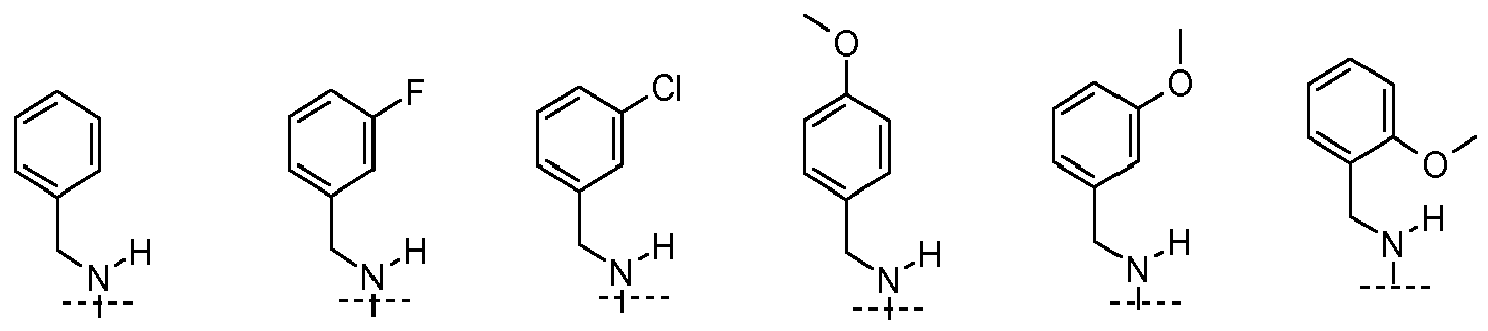

- Compound according to anyone of the preceding claims, wherein B is N and the group NR3R4 is chosen among:


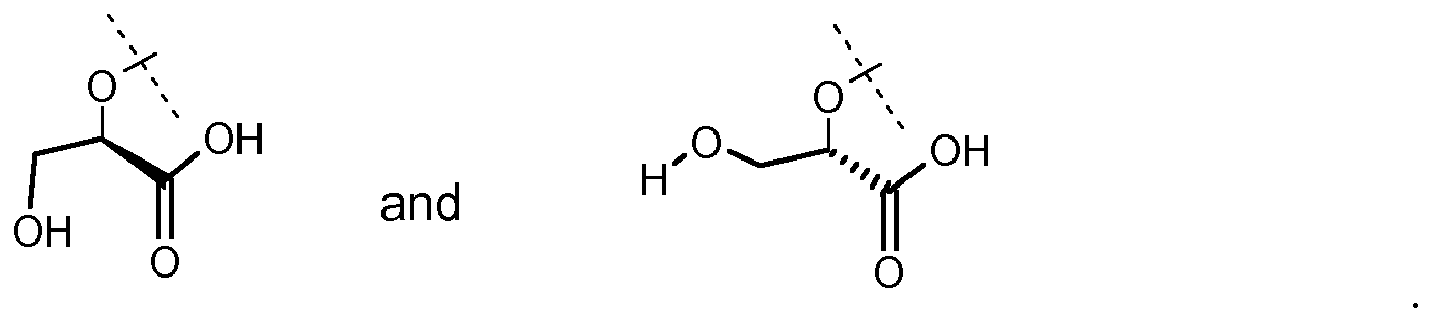
- Compound according to anyone of the preceding claims, wherein R1 represents a 2-propyl(isopropyl), R2 represents a benzyl group, R3 represents a hydrogen atom and R4 represents a 1-carboxypropan-1-yl group, in the (R) or (S) form or in the form of a racemic mixture thereof.
- Compound according to the preceding claim, wherein it is M3 metabolite or (2R)-2-[[9-isopropyl-6-(phenylmethylamino)purin-2-yl]amino]butanoic acid.
- A compound chosen among (3R)-3-[[6-(benzylamino)-9-isopropyl-purin-2-yl]amino]butanoic acid (4) and (2S)-2-[[6-(benzylamino)-9-isopropyl-purin-2-yl]amino]-3-hydroxy-propanoic acid (6).
- Pharmaceutical composition comprising a compound as defined in anyone of claims 1 to 9 and a pharmaceutically acceptable carrier, for use in the treatment of a disease characterized by a reduction in macrophage-mediated bacterial killing, in particular a disease selected in a group comprising asthma, chronic obstructive pulmonary disease (COPD), cystic fibrosis, inflammatory asthma, pneumonia and tuberculosis or a disease involving pulmonary microbial infection, which may be selected in a group comprising an infection by Pseudomonas aeruginosa, Staphylococcus aureus, Burkholderia cepacia, Haemophilus influenza and Mycobacterium tuberculosis.
- Pharmaceutical composition according to the preceding claim, wherein it is administered by oral, systemic, parenteral, intra-pulmonary, intra-bronchial or intra-alveolar administration.
- Pharmaceutical composition according to claim 10 or 11, wherein it further comprises an additional agent selected from a mucolytic agent, bronchodilator, an antibiotic, a bacteriophage, an anti-inflammatory agent or an anti-infective agent.
Priority Applications (3)
| Application Number | Priority Date | Filing Date | Title |
|---|---|---|---|
| ES14305215T ES2765253T3 (en) | 2014-02-17 | 2014-02-17 | Purine-derived compounds for medical use |
| EP14305215.7A EP2907514B1 (en) | 2014-02-17 | 2014-02-17 | Purine derivative compounds for medical use |
| US14/623,799 US10561661B2 (en) | 2014-02-17 | 2015-02-17 | Purine derivative compounds for medical use |
Applications Claiming Priority (1)
| Application Number | Priority Date | Filing Date | Title |
|---|---|---|---|
| EP14305215.7A EP2907514B1 (en) | 2014-02-17 | 2014-02-17 | Purine derivative compounds for medical use |
Publications (2)
| Publication Number | Publication Date |
|---|---|
| EP2907514A1 true EP2907514A1 (en) | 2015-08-19 |
| EP2907514B1 EP2907514B1 (en) | 2019-10-23 |
Family
ID=50231092
Family Applications (1)
| Application Number | Title | Priority Date | Filing Date |
|---|---|---|---|
| EP14305215.7A Active EP2907514B1 (en) | 2014-02-17 | 2014-02-17 | Purine derivative compounds for medical use |
Country Status (3)
| Country | Link |
|---|---|
| US (1) | US10561661B2 (en) |
| EP (1) | EP2907514B1 (en) |
| ES (1) | ES2765253T3 (en) |
Cited By (2)
| Publication number | Priority date | Publication date | Assignee | Title |
|---|---|---|---|---|
| US20150320753A1 (en) * | 2014-02-17 | 2015-11-12 | Manros Therapeutics | Purine derivative compounds for medical use |
| WO2020188100A2 (en) | 2019-03-20 | 2020-09-24 | Sorbonne Universite | Roscovitine analogues and use thereof for treating rare biliary diseases |
Citations (4)
| Publication number | Priority date | Publication date | Assignee | Title |
|---|---|---|---|---|
| WO1997020842A1 (en) | 1995-12-01 | 1997-06-12 | Centre National De La Recherche Scientifique (C.N.R.S.) | Novel purine derivatives having, in particular, antiproliferative properties, and biological uses thereof |
| WO2004016612A2 (en) | 2002-08-15 | 2004-02-26 | Cyclacel Limited | New purine derivatives |
| WO2006042949A1 (en) | 2004-10-15 | 2006-04-27 | Centre National De La Recherche Scientifique (Cnrs) | Use of purine derivatives for the production of medicaments for the treatment of mucoviscidosis and diseases related to protein addressing errors in cells |
| WO2008012563A2 (en) * | 2006-07-28 | 2008-01-31 | University Court Of The University Of Edinburgh | Use of cdk inhibitors for the treatment of granulocyte mediated disorders |
Family Cites Families (1)
| Publication number | Priority date | Publication date | Assignee | Title |
|---|---|---|---|---|
| EP2907514B1 (en) * | 2014-02-17 | 2019-10-23 | Manros Therapeutics | Purine derivative compounds for medical use |
-
2014
- 2014-02-17 EP EP14305215.7A patent/EP2907514B1/en active Active
- 2014-02-17 ES ES14305215T patent/ES2765253T3/en active Active
-
2015
- 2015-02-17 US US14/623,799 patent/US10561661B2/en active Active
Patent Citations (4)
| Publication number | Priority date | Publication date | Assignee | Title |
|---|---|---|---|---|
| WO1997020842A1 (en) | 1995-12-01 | 1997-06-12 | Centre National De La Recherche Scientifique (C.N.R.S.) | Novel purine derivatives having, in particular, antiproliferative properties, and biological uses thereof |
| WO2004016612A2 (en) | 2002-08-15 | 2004-02-26 | Cyclacel Limited | New purine derivatives |
| WO2006042949A1 (en) | 2004-10-15 | 2006-04-27 | Centre National De La Recherche Scientifique (Cnrs) | Use of purine derivatives for the production of medicaments for the treatment of mucoviscidosis and diseases related to protein addressing errors in cells |
| WO2008012563A2 (en) * | 2006-07-28 | 2008-01-31 | University Court Of The University Of Edinburgh | Use of cdk inhibitors for the treatment of granulocyte mediated disorders |
Non-Patent Citations (15)
| Title |
|---|
| ALEMAYEHU ET AL.: "Bacteriophages ?MR299-2 and cpNH-4 Can Eliminate Pseudomonas aeruginosa in the Murine Lung and on Cystic Fibrosis Lung Airway Cells", MBIO, vol. 3, no. 2, March 2012 (2012-03-01), XP002718987, DOI: doi:10.1128/mBio.00029-12 |
| COOPER ET AL.: "Stability and purity of a bacteriophage cocktail preparation for nebulizer delivery", LETT APPL MICROBIOL., 25 September 2013 (2013-09-25) |
| DERIY ET AL.: "Disease-causing Mutations in the Cystic Fibrosis Transmembrane Conductance Regulator Determine the Functional Responses of Alveolar Macrophages", JOURNAL OF BIOLOGICAL CHEMISTRY, vol. 284, no. 51, 2009, pages 35926 - 35938, XP002723326 * |
| DERIY ET AL.: "Disease-causing Mutations in the Cystic Fibrosis Transmembrane Conductance Regulator Determine the Functional Responses of Alveolar Macrophages", JOURNAL OF BIOLOGICAL CHEMISTRY, vol. 284, no. 51, 2009, pages 35926 - 35938, XP002723326, DOI: doi:10.1074/jbc.M109.057372 |
| DI ET AL.: "CFTR regulates phagosomes acidification in macrophages and alters bactericidal activity", NAT. CELL BIOL., vol. 8, 2006, pages 933 - 9442006 |
| HACKAM ET AL.: "Regulation of phagosomal acidification. Differential targeting of Na+/H+ exchangers, Na+/K+-ATPases, and vacuolar-type H+-Atpases", THE JOURNAL OF BIOLOGICAL CHEMISTRY, vol. 272, 1997, pages 29810 - 29820 |
| HENRY ET AL.: "Predicting in vivo efficacy to guide the choice of therapeutic bacteriophages to treat pulmonary infections", ANTIMICROB AGENTS CHEMOTHER, 16 September 2013 (2013-09-16) |
| HOOGENDIJK ARIE J ET AL: "R-roscovitine reduces lung inflammation induced by lipoteichoic acid and Streptococcus pneumoniae.", MOLECULAR MEDICINE (CAMBRIDGE, MASS.) 2012, vol. 18, 2012, pages 1086 - 1095, XP002723323, ISSN: 1528-3658 * |
| MORICEAU SANDRA ET AL: "In cystic fibrosis homozygotes and heterozygotes, neutrophil apoptosis is delayed and modulated by diamide or roscovitine: evidence for an innate neutrophil disturbance.", JOURNAL OF INNATE IMMUNITY 2010, vol. 2, no. 3, 2010, pages 260 - 266, XP002723322, ISSN: 1662-8128 * |
| NELSON ET AL.: "Immunoglobulin G-induced single ionic channels in human alveolar macrophage membranes", JOURNAL OF CLINICAL INVESTIGATION, vol. 76, 1985, pages 500 - 507 |
| OUMATA ET AL.: "Practical synthesis ofroscovitine and CR8", ORGANIC PROCESS RES. AND DEV., vol. 13, 2009, pages 641 - 644 |
| SOOTHILL: "Use of bacteriophages in the treatment of Pseudomonas aeruginosa infections", EXPERT REV ANTI INFECT THER., vol. L 1, no. 9, September 2013 (2013-09-01), pages 909 - 15 |
| VAN HEECKEREN ET AL.: "Role of Cftr genotype in the response to chronic Pseudomonas aeruginosa lung infection in mice", AM J PHYSIOL LUNG CELL MOL PHYSIOL, vol. 287, 2004, pages L944 - 952 |
| VITA MARINA ET AL: "Tissue distribution, pharmacokinetics and identification of roscovitine metabolites in rat.", EUROPEAN JOURNAL OF PHARMACEUTICAL SCIENCES : OFFICIAL JOURNAL OF THE EUROPEAN FEDERATION FOR PHARMACEUTICAL SCIENCES MAY 2005, vol. 25, no. 1, May 2005 (2005-05-01), pages 91 - 103, XP002723325, ISSN: 0928-0987 * |
| WILSON STUART C ET AL: "Design, synthesis and biological evaluation of 6-pyridylmethylaminopurines as CDK inhibitors.", BIOORGANIC & MEDICINAL CHEMISTRY 15 NOV 2011, vol. 19, no. 22, 15 November 2011 (2011-11-15), pages 6949 - 6965, XP002723324, ISSN: 1464-3391 * |
Cited By (5)
| Publication number | Priority date | Publication date | Assignee | Title |
|---|---|---|---|---|
| US20150320753A1 (en) * | 2014-02-17 | 2015-11-12 | Manros Therapeutics | Purine derivative compounds for medical use |
| US10561661B2 (en) * | 2014-02-17 | 2020-02-18 | Manros Therapeutics | Purine derivative compounds for medical use |
| WO2020188100A2 (en) | 2019-03-20 | 2020-09-24 | Sorbonne Universite | Roscovitine analogues and use thereof for treating rare biliary diseases |
| WO2020188100A3 (en) * | 2019-03-20 | 2020-12-03 | Sorbonne Universite | Roscovitine analogues and use thereof for treating rare biliary diseases |
| CN113795493A (en) * | 2019-03-20 | 2021-12-14 | 索邦大学 | Roscovitine analogs and their use for treating rare biliary disorders |
Also Published As
| Publication number | Publication date |
|---|---|
| EP2907514B1 (en) | 2019-10-23 |
| ES2765253T3 (en) | 2020-06-08 |
| US20150320753A1 (en) | 2015-11-12 |
| US10561661B2 (en) | 2020-02-18 |
Similar Documents
| Publication | Publication Date | Title |
|---|---|---|
| Xu et al. | 5-(3, 4-Difluorophenyl)-3-(6-methylpyridin-3-yl)-1, 2, 4-oxadiazole (DDO-7263), a novel Nrf2 activator targeting brain tissue, protects against MPTP-induced subacute Parkinson's disease in mice by inhibiting the NLRP3 inflammasome and protects PC12 cells against oxidative stress | |
| JP6879980B2 (en) | Enhancement of autophagy or prolongation of lifespan by administration of urolithin or its precursor | |
| JP5931164B2 (en) | Novel anti-aging agents and methods for identifying them | |
| US9730922B2 (en) | Combined therapy for cystic fibrosis | |
| US12458630B2 (en) | Combination therapy for cancer | |
| CN109640967B (en) | Method for inhibiting the conversion of choline to trimethylamine (TMA) | |
| CA3230871A1 (en) | Methods and uses of microbiome compositions, components, or metabolites for treating neurodegenerative diseases | |
| JP2016535727A (en) | Compounds, compositions and corresponding uses for preventing and / or treating dyslipidemia | |
| JP2023126932A (en) | Genotype-independent rescue of cystic fibrosis using small molecule bicarbonate ion channels | |
| JP2024542523A (en) | Treatment options and treatments for neurodegenerative disorders | |
| EP2907514B1 (en) | Purine derivative compounds for medical use | |
| JP6796581B2 (en) | Recovery of physiology using small molecule mimics of missing proteins | |
| JP6279583B2 (en) | Pharmaceutical composition for diseases caused by pathogenic microorganisms such as Aspergillus | |
| US11389414B2 (en) | Methods for treating atherosclerosis with gamma-ketoaldehyde scavengers | |
| RS67283B1 (en) | Combination therapy with acetyl-leucine and miglustat for treating a lysosomal storage disease | |
| JP6901149B2 (en) | Drugs for the treatment of idiopathic pulmonary fibrosis | |
| US20230174571A1 (en) | Method of treating ship1-mediated diseases using pelorol derivatives | |
| EP2524922B1 (en) | Preparation method of optically active s-(-)-prulifloxacin | |
| AU2017205162A1 (en) | Tacrolimus for treating TDP-43 proteinopathy | |
| Davies | New therapeutic approaches for cystic fibrosis lung disease | |
| US20230364032A1 (en) | Use of 2-hoba to treat atherosclerosis | |
| WO2017205383A1 (en) | Method of treating cystic fibrosis airway disease | |
| WO2020059242A1 (en) | Method for evaluating pathology of cardiac failure | |
| JP2021530515A (en) | Methods, systems and compositions for the new use of enterobactin to treat iron deficiency and associated anemia | |
| EP3941476A2 (en) | Roscovitine analogues and use thereof for treating rare biliary diseases |
Legal Events
| Date | Code | Title | Description |
|---|---|---|---|
| PUAI | Public reference made under article 153(3) epc to a published international application that has entered the european phase |
Free format text: ORIGINAL CODE: 0009012 |
|
| AK | Designated contracting states |
Kind code of ref document: A1 Designated state(s): AL AT BE BG CH CY CZ DE DK EE ES FI FR GB GR HR HU IE IS IT LI LT LU LV MC MK MT NL NO PL PT RO RS SE SI SK SM TR |
|
| AX | Request for extension of the european patent |
Extension state: BA ME |
|
| 17P | Request for examination filed |
Effective date: 20160219 |
|
| RBV | Designated contracting states (corrected) |
Designated state(s): AL AT BE BG CH CY CZ DE DK EE ES FI FR GB GR HR HU IE IS IT LI LT LU LV MC MK MT NL NO PL PT RO RS SE SI SK SM TR |
|
| 17Q | First examination report despatched |
Effective date: 20160628 |
|
| STAA | Information on the status of an ep patent application or granted ep patent |
Free format text: STATUS: EXAMINATION IS IN PROGRESS |
|
| RIN1 | Information on inventor provided before grant (corrected) |
Inventor name: RIAZANSKI, VLADIMIR Inventor name: NELSON, DEBORAH Inventor name: GABDOULKHAKOVA, AIDA Inventor name: GALONS, HERVE Inventor name: MEIJER, LAURENT Inventor name: OUMATA, NASSIMA |
|
| GRAP | Despatch of communication of intention to grant a patent |
Free format text: ORIGINAL CODE: EPIDOSNIGR1 |
|
| STAA | Information on the status of an ep patent application or granted ep patent |
Free format text: STATUS: GRANT OF PATENT IS INTENDED |
|
| INTG | Intention to grant announced |
Effective date: 20181005 |
|
| RIN1 | Information on inventor provided before grant (corrected) |
Inventor name: OUMATA, NASSIMA Inventor name: RIAZANSKI, VLADIMIR Inventor name: MEIJER, LAURENT Inventor name: NELSON, DEBORAH Inventor name: GABDOULKHAKOVA, AIDA Inventor name: GALONS, HERVE |
|
| GRAJ | Information related to disapproval of communication of intention to grant by the applicant or resumption of examination proceedings by the epo deleted |
Free format text: ORIGINAL CODE: EPIDOSDIGR1 |
|
| STAA | Information on the status of an ep patent application or granted ep patent |
Free format text: STATUS: EXAMINATION IS IN PROGRESS |
|
| GRAP | Despatch of communication of intention to grant a patent |
Free format text: ORIGINAL CODE: EPIDOSNIGR1 |
|
| STAA | Information on the status of an ep patent application or granted ep patent |
Free format text: STATUS: GRANT OF PATENT IS INTENDED |
|
| INTC | Intention to grant announced (deleted) | ||
| INTG | Intention to grant announced |
Effective date: 20190114 |
|
| GRAJ | Information related to disapproval of communication of intention to grant by the applicant or resumption of examination proceedings by the epo deleted |
Free format text: ORIGINAL CODE: EPIDOSDIGR1 |
|
| STAA | Information on the status of an ep patent application or granted ep patent |
Free format text: STATUS: EXAMINATION IS IN PROGRESS |
|
| INTC | Intention to grant announced (deleted) | ||
| GRAP | Despatch of communication of intention to grant a patent |
Free format text: ORIGINAL CODE: EPIDOSNIGR1 |
|
| STAA | Information on the status of an ep patent application or granted ep patent |
Free format text: STATUS: GRANT OF PATENT IS INTENDED |
|
| INTG | Intention to grant announced |
Effective date: 20190708 |
|
| GRAS | Grant fee paid |
Free format text: ORIGINAL CODE: EPIDOSNIGR3 |
|
| GRAA | (expected) grant |
Free format text: ORIGINAL CODE: 0009210 |
|
| STAA | Information on the status of an ep patent application or granted ep patent |
Free format text: STATUS: THE PATENT HAS BEEN GRANTED |
|
| AK | Designated contracting states |
Kind code of ref document: B1 Designated state(s): AL AT BE BG CH CY CZ DE DK EE ES FI FR GB GR HR HU IE IS IT LI LT LU LV MC MK MT NL NO PL PT RO RS SE SI SK SM TR |
|
| REG | Reference to a national code |
Ref country code: GB Ref legal event code: FG4D |
|
| REG | Reference to a national code |
Ref country code: CH Ref legal event code: EP |
|
| REG | Reference to a national code |
Ref country code: IE Ref legal event code: FG4D |
|
| REG | Reference to a national code |
Ref country code: DE Ref legal event code: R096 Ref document number: 602014055515 Country of ref document: DE |
|
| REG | Reference to a national code |
Ref country code: AT Ref legal event code: REF Ref document number: 1192898 Country of ref document: AT Kind code of ref document: T Effective date: 20191115 |
|
| REG | Reference to a national code |
Ref country code: NL Ref legal event code: MP Effective date: 20191023 |
|
| REG | Reference to a national code |
Ref country code: LT Ref legal event code: MG4D |
|
| PG25 | Lapsed in a contracting state [announced via postgrant information from national office to epo] |
Ref country code: NL Free format text: LAPSE BECAUSE OF FAILURE TO SUBMIT A TRANSLATION OF THE DESCRIPTION OR TO PAY THE FEE WITHIN THE PRESCRIBED TIME-LIMIT Effective date: 20191023 Ref country code: LT Free format text: LAPSE BECAUSE OF FAILURE TO SUBMIT A TRANSLATION OF THE DESCRIPTION OR TO PAY THE FEE WITHIN THE PRESCRIBED TIME-LIMIT Effective date: 20191023 Ref country code: PL Free format text: LAPSE BECAUSE OF FAILURE TO SUBMIT A TRANSLATION OF THE DESCRIPTION OR TO PAY THE FEE WITHIN THE PRESCRIBED TIME-LIMIT Effective date: 20191023 Ref country code: GR Free format text: LAPSE BECAUSE OF FAILURE TO SUBMIT A TRANSLATION OF THE DESCRIPTION OR TO PAY THE FEE WITHIN THE PRESCRIBED TIME-LIMIT Effective date: 20200124 Ref country code: NO Free format text: LAPSE BECAUSE OF FAILURE TO SUBMIT A TRANSLATION OF THE DESCRIPTION OR TO PAY THE FEE WITHIN THE PRESCRIBED TIME-LIMIT Effective date: 20200123 Ref country code: BG Free format text: LAPSE BECAUSE OF FAILURE TO SUBMIT A TRANSLATION OF THE DESCRIPTION OR TO PAY THE FEE WITHIN THE PRESCRIBED TIME-LIMIT Effective date: 20200123 Ref country code: PT Free format text: LAPSE BECAUSE OF FAILURE TO SUBMIT A TRANSLATION OF THE DESCRIPTION OR TO PAY THE FEE WITHIN THE PRESCRIBED TIME-LIMIT Effective date: 20200224 Ref country code: FI Free format text: LAPSE BECAUSE OF FAILURE TO SUBMIT A TRANSLATION OF THE DESCRIPTION OR TO PAY THE FEE WITHIN THE PRESCRIBED TIME-LIMIT Effective date: 20191023 Ref country code: SE Free format text: LAPSE BECAUSE OF FAILURE TO SUBMIT A TRANSLATION OF THE DESCRIPTION OR TO PAY THE FEE WITHIN THE PRESCRIBED TIME-LIMIT Effective date: 20191023 Ref country code: LV Free format text: LAPSE BECAUSE OF FAILURE TO SUBMIT A TRANSLATION OF THE DESCRIPTION OR TO PAY THE FEE WITHIN THE PRESCRIBED TIME-LIMIT Effective date: 20191023 |
|
| PG25 | Lapsed in a contracting state [announced via postgrant information from national office to epo] |
Ref country code: RS Free format text: LAPSE BECAUSE OF FAILURE TO SUBMIT A TRANSLATION OF THE DESCRIPTION OR TO PAY THE FEE WITHIN THE PRESCRIBED TIME-LIMIT Effective date: 20191023 Ref country code: IS Free format text: LAPSE BECAUSE OF FAILURE TO SUBMIT A TRANSLATION OF THE DESCRIPTION OR TO PAY THE FEE WITHIN THE PRESCRIBED TIME-LIMIT Effective date: 20200224 Ref country code: HR Free format text: LAPSE BECAUSE OF FAILURE TO SUBMIT A TRANSLATION OF THE DESCRIPTION OR TO PAY THE FEE WITHIN THE PRESCRIBED TIME-LIMIT Effective date: 20191023 |
|
| REG | Reference to a national code |
Ref country code: ES Ref legal event code: FG2A Ref document number: 2765253 Country of ref document: ES Kind code of ref document: T3 Effective date: 20200608 |
|
| PG25 | Lapsed in a contracting state [announced via postgrant information from national office to epo] |
Ref country code: AL Free format text: LAPSE BECAUSE OF FAILURE TO SUBMIT A TRANSLATION OF THE DESCRIPTION OR TO PAY THE FEE WITHIN THE PRESCRIBED TIME-LIMIT Effective date: 20191023 |
|
| PGFP | Annual fee paid to national office [announced via postgrant information from national office to epo] |
Ref country code: FR Payment date: 20200128 Year of fee payment: 7 |
|
| REG | Reference to a national code |
Ref country code: DE Ref legal event code: R097 Ref document number: 602014055515 Country of ref document: DE |
|
| PG2D | Information on lapse in contracting state deleted |
Ref country code: IS |
|
| PG25 | Lapsed in a contracting state [announced via postgrant information from national office to epo] |
Ref country code: CZ Free format text: LAPSE BECAUSE OF FAILURE TO SUBMIT A TRANSLATION OF THE DESCRIPTION OR TO PAY THE FEE WITHIN THE PRESCRIBED TIME-LIMIT Effective date: 20191023 Ref country code: RO Free format text: LAPSE BECAUSE OF FAILURE TO SUBMIT A TRANSLATION OF THE DESCRIPTION OR TO PAY THE FEE WITHIN THE PRESCRIBED TIME-LIMIT Effective date: 20191023 Ref country code: DK Free format text: LAPSE BECAUSE OF FAILURE TO SUBMIT A TRANSLATION OF THE DESCRIPTION OR TO PAY THE FEE WITHIN THE PRESCRIBED TIME-LIMIT Effective date: 20191023 Ref country code: EE Free format text: LAPSE BECAUSE OF FAILURE TO SUBMIT A TRANSLATION OF THE DESCRIPTION OR TO PAY THE FEE WITHIN THE PRESCRIBED TIME-LIMIT Effective date: 20191023 Ref country code: IS Free format text: LAPSE BECAUSE OF FAILURE TO SUBMIT A TRANSLATION OF THE DESCRIPTION OR TO PAY THE FEE WITHIN THE PRESCRIBED TIME-LIMIT Effective date: 20200223 |
|
| REG | Reference to a national code |
Ref country code: AT Ref legal event code: MK05 Ref document number: 1192898 Country of ref document: AT Kind code of ref document: T Effective date: 20191023 |
|
| PLBE | No opposition filed within time limit |
Free format text: ORIGINAL CODE: 0009261 |
|
| STAA | Information on the status of an ep patent application or granted ep patent |
Free format text: STATUS: NO OPPOSITION FILED WITHIN TIME LIMIT |
|
| PG25 | Lapsed in a contracting state [announced via postgrant information from national office to epo] |
Ref country code: SK Free format text: LAPSE BECAUSE OF FAILURE TO SUBMIT A TRANSLATION OF THE DESCRIPTION OR TO PAY THE FEE WITHIN THE PRESCRIBED TIME-LIMIT Effective date: 20191023 Ref country code: SM Free format text: LAPSE BECAUSE OF FAILURE TO SUBMIT A TRANSLATION OF THE DESCRIPTION OR TO PAY THE FEE WITHIN THE PRESCRIBED TIME-LIMIT Effective date: 20191023 |
|
| 26N | No opposition filed |
Effective date: 20200724 |
|
| REG | Reference to a national code |
Ref country code: CH Ref legal event code: PL |
|
| REG | Reference to a national code |
Ref country code: BE Ref legal event code: MM Effective date: 20200229 |
|
| PG25 | Lapsed in a contracting state [announced via postgrant information from national office to epo] |
Ref country code: LU Free format text: LAPSE BECAUSE OF NON-PAYMENT OF DUE FEES Effective date: 20200217 Ref country code: MC Free format text: LAPSE BECAUSE OF FAILURE TO SUBMIT A TRANSLATION OF THE DESCRIPTION OR TO PAY THE FEE WITHIN THE PRESCRIBED TIME-LIMIT Effective date: 20191023 |
|
| PG25 | Lapsed in a contracting state [announced via postgrant information from national office to epo] |
Ref country code: CH Free format text: LAPSE BECAUSE OF NON-PAYMENT OF DUE FEES Effective date: 20200229 Ref country code: SI Free format text: LAPSE BECAUSE OF FAILURE TO SUBMIT A TRANSLATION OF THE DESCRIPTION OR TO PAY THE FEE WITHIN THE PRESCRIBED TIME-LIMIT Effective date: 20191023 Ref country code: AT Free format text: LAPSE BECAUSE OF FAILURE TO SUBMIT A TRANSLATION OF THE DESCRIPTION OR TO PAY THE FEE WITHIN THE PRESCRIBED TIME-LIMIT Effective date: 20191023 Ref country code: LI Free format text: LAPSE BECAUSE OF NON-PAYMENT OF DUE FEES Effective date: 20200229 |
|
| PG25 | Lapsed in a contracting state [announced via postgrant information from national office to epo] |
Ref country code: IE Free format text: LAPSE BECAUSE OF NON-PAYMENT OF DUE FEES Effective date: 20200217 |
|
| PG25 | Lapsed in a contracting state [announced via postgrant information from national office to epo] |
Ref country code: BE Free format text: LAPSE BECAUSE OF NON-PAYMENT OF DUE FEES Effective date: 20200229 |
|
| PGFP | Annual fee paid to national office [announced via postgrant information from national office to epo] |
Ref country code: IT Payment date: 20210120 Year of fee payment: 8 |
|
| PGFP | Annual fee paid to national office [announced via postgrant information from national office to epo] |
Ref country code: DE Payment date: 20210120 Year of fee payment: 8 Ref country code: GB Payment date: 20210120 Year of fee payment: 8 Ref country code: ES Payment date: 20210301 Year of fee payment: 8 |
|
| PG25 | Lapsed in a contracting state [announced via postgrant information from national office to epo] |
Ref country code: FR Free format text: LAPSE BECAUSE OF NON-PAYMENT OF DUE FEES Effective date: 20210228 |
|
| PG25 | Lapsed in a contracting state [announced via postgrant information from national office to epo] |
Ref country code: TR Free format text: LAPSE BECAUSE OF FAILURE TO SUBMIT A TRANSLATION OF THE DESCRIPTION OR TO PAY THE FEE WITHIN THE PRESCRIBED TIME-LIMIT Effective date: 20191023 Ref country code: MT Free format text: LAPSE BECAUSE OF FAILURE TO SUBMIT A TRANSLATION OF THE DESCRIPTION OR TO PAY THE FEE WITHIN THE PRESCRIBED TIME-LIMIT Effective date: 20191023 Ref country code: CY Free format text: LAPSE BECAUSE OF FAILURE TO SUBMIT A TRANSLATION OF THE DESCRIPTION OR TO PAY THE FEE WITHIN THE PRESCRIBED TIME-LIMIT Effective date: 20191023 |
|
| PG25 | Lapsed in a contracting state [announced via postgrant information from national office to epo] |
Ref country code: MK Free format text: LAPSE BECAUSE OF FAILURE TO SUBMIT A TRANSLATION OF THE DESCRIPTION OR TO PAY THE FEE WITHIN THE PRESCRIBED TIME-LIMIT Effective date: 20191023 |
|
| REG | Reference to a national code |
Ref country code: DE Ref legal event code: R119 Ref document number: 602014055515 Country of ref document: DE |
|
| GBPC | Gb: european patent ceased through non-payment of renewal fee |
Effective date: 20220217 |
|
| PG25 | Lapsed in a contracting state [announced via postgrant information from national office to epo] |
Ref country code: GB Free format text: LAPSE BECAUSE OF NON-PAYMENT OF DUE FEES Effective date: 20220217 Ref country code: DE Free format text: LAPSE BECAUSE OF NON-PAYMENT OF DUE FEES Effective date: 20220901 |
|
| REG | Reference to a national code |
Ref country code: ES Ref legal event code: FD2A Effective date: 20230428 |
|
| PG25 | Lapsed in a contracting state [announced via postgrant information from national office to epo] |
Ref country code: IT Free format text: LAPSE BECAUSE OF NON-PAYMENT OF DUE FEES Effective date: 20220217 |
|
| PG25 | Lapsed in a contracting state [announced via postgrant information from national office to epo] |
Ref country code: ES Free format text: LAPSE BECAUSE OF NON-PAYMENT OF DUE FEES Effective date: 20220218 |