EP2905939A1 - A method for determining an employee´s reconnaissance risk score - Google Patents
A method for determining an employee´s reconnaissance risk score Download PDFInfo
- Publication number
- EP2905939A1 EP2905939A1 EP15152800.7A EP15152800A EP2905939A1 EP 2905939 A1 EP2905939 A1 EP 2905939A1 EP 15152800 A EP15152800 A EP 15152800A EP 2905939 A1 EP2905939 A1 EP 2905939A1
- Authority
- EP
- European Patent Office
- Prior art keywords
- employee
- list
- urls
- url
- risk score
- Prior art date
- Legal status (The legal status is an assumption and is not a legal conclusion. Google has not performed a legal analysis and makes no representation as to the accuracy of the status listed.)
- Granted
Links
Images

Classifications
-
- G—PHYSICS
- G06—COMPUTING OR CALCULATING; COUNTING
- G06F—ELECTRIC DIGITAL DATA PROCESSING
- G06F21/00—Security arrangements for protecting computers, components thereof, programs or data against unauthorised activity
- G06F21/50—Monitoring users, programs or devices to maintain the integrity of platforms, e.g. of processors, firmware or operating systems
- G06F21/57—Certifying or maintaining trusted computer platforms, e.g. secure boots or power-downs, version controls, system software checks, secure updates or assessing vulnerabilities
- G06F21/577—Assessing vulnerabilities and evaluating computer system security
-
- H—ELECTRICITY
- H04—ELECTRIC COMMUNICATION TECHNIQUE
- H04L—TRANSMISSION OF DIGITAL INFORMATION, e.g. TELEGRAPHIC COMMUNICATION
- H04L63/00—Network architectures or network communication protocols for network security
- H04L63/14—Network architectures or network communication protocols for network security for detecting or protecting against malicious traffic
- H04L63/1433—Vulnerability analysis
-
- H—ELECTRICITY
- H04—ELECTRIC COMMUNICATION TECHNIQUE
- H04L—TRANSMISSION OF DIGITAL INFORMATION, e.g. TELEGRAPHIC COMMUNICATION
- H04L67/00—Network arrangements or protocols for supporting network services or applications
- H04L67/01—Protocols
- H04L67/02—Protocols based on web technology, e.g. hypertext transfer protocol [HTTP]
-
- H—ELECTRICITY
- H04—ELECTRIC COMMUNICATION TECHNIQUE
- H04W—WIRELESS COMMUNICATION NETWORKS
- H04W12/00—Security arrangements; Authentication; Protecting privacy or anonymity
- H04W12/60—Context-dependent security
- H04W12/67—Risk-dependent, e.g. selecting a security level depending on risk profiles
Definitions
- the invention is from the field of computer security. Specifically the invention is from the field of preventing Advanced Persistent Threat (APT) attacks on the computers of an organization's employees.
- API Advanced Persistent Threat
- APT Advanced Persistent Threat
- the present invention focuses on APTs that try to identify employees in organizations that are very close to an asset of interest. Once the attacker identifies the employee or employees their computers will be attacked. In many cases the attack involves sending an email that contains (or directs the receiver to) malicious content, for example, spear-phishing attacks.
- the invention is a method that is implemented by dedicated software that provides a computer system with instructions for carrying out a series of steps to assign a reconnaissance risk score for an employee in an organization. After the following information has been input into the computer system:
- the reconnaissance risk score for an employee that is determined according to the method of the invention provides an indication of the level of exposure of the employee on the Web.
- the lexicon used to determine reconnaissance risk score for an employee is a contextual lexicon that contains a list of words that are assumed to be used by an attacker that is interested in the specific employee.
- the invention is a method that is implemented by dedicated software that provides a computer system with instructions for carrying out a series of steps that assign a reconnaissance risk score for each employee in an organization.
- the risk score assigned by the computer system indicates the level of exposure of an employee on the Web; or in other words, the effort that an attacker will have to invest, when searching the Web, in order to link a role/function in an organization with a real employee.
- the security officer of the organization can warn highly exposed employees and direct monitoring efforts on these employees.
- the method operates under the assumption that an attacker wants to find the real identity (i.e. the full name) of an employee by searching the Web. For example, the attacker would like to find the full name of the database administrator of company X located in France. In order to do this the attacker will submit different queries to a web search engine and will look for a Web page that reveals the name of Company X's database administrator. For example by searching the following keywords: DBA (Data Base Administrator), France, CompanyX, database, administrator, expert, Oracle, MSSQL, an attacker can manually inspect each page in the results and look for the real name of the administrator.
- DBA Data Base Administrator
- France France
- CompanyX database
- database administrator
- expert expert
- MSSQL MSSQL
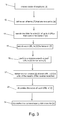
- the method of the invention which is schematically shown in the flow chart of Fig. 3 , simulates the activity of an attacker by instructing the computer system to automatically perform the following search operations:
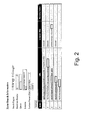
- Fig. 2 schematically illustrates a simple implementation of the method of the invention.
- the lexicon can be selected from a predefined list (“Lexicon Presets”) and manually modified.
- a result table showing the first five results of the search for a specific employee.
- the first column (“Index”) is the position of the URL in the result list returned by the search engine
- the second column (“URL”) is the name of the URL in which the employees name appears
- the third column (“Lexicon Hits”) is a list of the terms from the lexicon that appear in the URL
- the fourth column (“Reverse Index”) shows the position of the URL in the result list returned by the search engine for the reverse-search. Note that lack of a reverse index for a URL in the table of Fig. 2 indicates that the URL did not appear in the first m results in the second list returned by the search engine.
- risk score u i 1 s i ⁇ T i
- This score takes into consideration the following parameters: (1) the position of each URL in the "reverse search" - a URL in a higher position is assumed to be more difficult to be identified by the attacker; and (2) the number of terms identified in the URL - more terms means a higher chance that the URL refers to the employee of interest.
Landscapes
- Engineering & Computer Science (AREA)
- Computer Security & Cryptography (AREA)
- Computer Hardware Design (AREA)
- General Engineering & Computer Science (AREA)
- Computing Systems (AREA)
- Software Systems (AREA)
- Theoretical Computer Science (AREA)
- Physics & Mathematics (AREA)
- General Physics & Mathematics (AREA)
- Computer Networks & Wireless Communication (AREA)
- Signal Processing (AREA)
- Information Retrieval, Db Structures And Fs Structures Therefor (AREA)
Abstract
Description
- The invention is from the field of computer security. Specifically the invention is from the field of preventing Advanced Persistent Threat (APT) attacks on the computers of an organization's employees.
- One of the key elements for a successful Advanced Persistent Threat (APT) attack is the reconnaissance phase, during which the attacker attempts to gain as much information as possible on his/her attack subject. Such information is mostly collected from public sources and without direct interaction with the target, and may include data about internal network elements (e.g., IP addresses range, domain names) and employees. The present invention focuses on APTs that try to identify employees in organizations that are very close to an asset of interest. Once the attacker identifies the employee or employees their computers will be attacked. In many cases the attack involves sending an email that contains (or directs the receiver to) malicious content, for example, spear-phishing attacks.
- Internal evidence collected by a several companies has indicated a correlation between the level of exposure of employees in the open Web and the number of attack attempts on those employees. More specifically, employees having their name and role exposed in the Web (for example, in conference sites as presenters or in online social networks) experience more attack attempts in terms of phishing and targeted malicious emails (TME) [Amin, R.M., Ryan, J., and Dorp. "Detecting Targeted Malicious Email," IEEE Security & Privacy, vol. 10, no. 3, pp. 64-71, May-June, 2012].
- It would be a great advantage to an organization to know which of its employees could be vulnerable to such attacks in order to take effective counter measures before an attack is launched.
- It is therefore a purpose of the present invention to provide an APT risk score for employees.
- Further purposes and advantages of this invention will appear as the description proceeds.
- The invention is a method that is implemented by dedicated software that provides a computer system with instructions for carrying out a series of steps to assign a reconnaissance risk score for an employee in an organization. After the following information has been input into the computer system:
- i. the name of a Web search engine;
- ii. the maximum number of search results;
- iii. the name of the employee; and
- iv. a lexicon;
- a. searches the internet to obtain a first list containing URLs each containing the name of the employee;
- b. parses the URLs in the first list and searches each URL in the first list for the subset of terms from the lexicon found in each URL in the first list;
- c. performs a reverse-search in the internet for the terms from the lexicon that were found in step "c" to obtain a second list of URLs;
- d. searches in the second list of URLs for the URLs in the first list of URLs;
- e. defines a reverse index for each URL in the first list of URLs, wherein the reverse index is the location of the URL in the second list of URLs;
- f. determines a risk score for each URL in the first list of URLs; and
- g. determines a reconnaissance risk score for the employee.
- The reconnaissance risk score for an employee that is determined according to the method of the invention provides an indication of the level of exposure of the employee on the Web.
- The lexicon used to determine reconnaissance risk score for an employee according to the method of the invention is a contextual lexicon that contains a list of words that are assumed to be used by an attacker that is interested in the specific employee.
- According to the method of the invention the risk score for each URL in the first list of URLs is determined from:

wherein, - ui = the ith URL in the first list;
- Si = the reverse index for ui, and
- T('i) = the subset of terms from the lexicon identified in ui.
- According to the method of the invention the reconnaissance risk score for an employee is determined from:

wherein, - e = the name of the employee;
- Si = the reverse index for ui, and
- T ('i) = the subset of terms from the lexicon identified in ui.
- All the above and other characteristics and advantages of the invention will be further understood through the following illustrative and non-limitative description of embodiments thereof, with reference to the appended drawings.
-
-
Fig. 1 schematically illustrates the threat model addressed by the invention; -
Fig. 2 schematically illustrates a simple implementation of the method of the invention; and -
Fig. 3 is a flow chart showing the steps of the method of the invention. - The invention is a method that is implemented by dedicated software that provides a computer system with instructions for carrying out a series of steps that assign a reconnaissance risk score for each employee in an organization. The risk score assigned by the computer system indicates the level of exposure of an employee on the Web; or in other words, the effort that an attacker will have to invest, when searching the Web, in order to link a role/function in an organization with a real employee. Using the method of the invention, the security officer of the organization can warn highly exposed employees and direct monitoring efforts on these employees.
- The method operates under the assumption that an attacker wants to find the real identity (i.e. the full name) of an employee by searching the Web. For example, the attacker would like to find the full name of the database administrator of company X located in France. In order to do this the attacker will submit different queries to a web search engine and will look for a Web page that reveals the name of Company X's database administrator. For example by searching the following keywords: DBA (Data Base Administrator), France, CompanyX, database, administrator, expert, Oracle, MSSQL, an attacker can manually inspect each page in the results and look for the real name of the administrator. This threat model is illustrated in
Fig. 1 . - The method of the invention, which is schematically shown in the flow chart of
Fig. 3 , simulates the activity of an attacker by instructing the computer system to automatically perform the following search operations: - 1. Given the full name of an employee (step 10), an internet search is carried out that returns a first list of the top k (where k is a configurable parameter) URLs, i.e., Web pages, containing the employee's name (step 14).
- 2. The system parses the content of each URL in the first list and searches in the k URLs (step 16) for terms in a lexicon that is defined by the organization's security officer (step 12). This lexicon is a contextual lexicon that contains a list of terms that are assumed to be used by an attacker that is interested in the specific employee (e.g., company name, employee role...)
- 3. For each of the terms from the lexicon that was found in at least one of the k URLs, the system performs a reverse-search in the Web using these terms (step 18).
- 4. The result of the reverse-search is a second list of URLs. A search is then made in this list for the URLs found in the original list (step 20). Note that the second list contains all of the URLs found by the search engine. This can be a very large number and therefore as a practical matter, the search in this step is carried out only for the first m URLs (m is configurable parameter, which may or may not be equal to k).
- 5. The reverse index of the URL is defined as the location of the URL (from the search for the employee's name) in the reverse-search result list (step 20).
- 6. A risk score (Equation 1 herein below) is determined for each URL in the original list (step 22).
- 7. A reconnaissance risk score (
Equation 2 herein below) is determined for the employee (step 24. -
Fig. 2 schematically illustrates a simple implementation of the method of the invention. At the top of the figure the user configures the parameters she is interested in: 1) "Search Engine" = which search engine to use, e.g. Bing or Google; 2) "Maximum Results" = the maximum number of URLs containing the name of the employee to evaluate; 3) "Query" = the name of the employee for whom she would like to derive the Web reconnaissance risk score; and 4) "Lexicon" = the lexicon that is most relevant for the employee. In embodiments of the invention the lexicon can be selected from a predefined list ("Lexicon Presets") and manually modified. - At the bottom of the figure is a result table showing the first five results of the search for a specific employee. In the result table the first column ("Index") is the position of the URL in the result list returned by the search engine, the second column ("URL") is the name of the URL in which the employees name appears, the third column ("Lexicon Hits") is a list of the terms from the lexicon that appear in the URL, and the fourth column ("Reverse Index") shows the position of the URL in the result list returned by the search engine for the reverse-search. Note that lack of a reverse index for a URL in the table of
Fig. 2 indicates that the URL did not appear in the first m results in the second list returned by the search engine. -
- e = the employee for whom the risk score is to be computed;
- T={t 1, t 2 , ..., tn } - set of terms that are assumed to be used by the attacker for searching the name of the relevant employee, i.e. the "Lexicon" in the example shown in
Fig. 2 ; - U={µ 1 , u 2 , ..., uk } - the list of top k URLs containing the name of employee e returned by the search engine, i.e. the column labeled "URL" in the example shown in
Fig. 2 ; - T(i) ⊆T- is the subset of terms identified in ui , i.e. the column labeled "Lexicon Hits" in the example shown in
Fig. 2 ; and - Si - the position of ui in the search result list of the query containing the terms in T(i) (the reverse-search), i.e. the column labeled "Reverse Index" in the example shown in
Fig. 2 - Note that ui having |T(i) | >0 means that the ui Web page links the name of the employee with at least one of the key terms specified in T and therefore might provide useful information for the attacker.
- Then the risk score for ui is defined as:

- This score takes into consideration the following parameters: (1) the position of each URL in the "reverse search" - a URL in a higher position is assumed to be more difficult to be identified by the attacker; and (2) the number of terms identified in the URL - more terms means a higher chance that the URL refers to the employee of interest.
- The reconnaissance risk score for employee e (WebRecScore[e]) is defined to be the sum of the scores for all URLs in U containing the name of the employee and at least two (the inventors have found that URLs with only one term frequently are not be related to the employee) of the key terms specified in T:

- Although embodiments of the invention have been described by way of illustration, it will be understood that the invention may be carried out with many variations, modifications, and adaptations, without exceeding the scope of the claims.
Claims (5)
- A method that is implemented by dedicated software that provides a computer system with instructions for carrying out a series of steps to assign a reconnaissance risk score for an employee in an organization, wherein, after the following information has been input into the computer system:i. the name of a Web search engine;ii. the maximum number of search results;iii. the name of the employee; andiv. a lexicon;the computer system automatically executes the following steps:a. searches the internet to obtain a first list containing URLs each containing the name of the employee;b. parses the URLs in the first list and searches each URL in the first list for the subset of terms from the lexicon found in each URL in the first list;c. performs a reverse-search in the internet for the terms from the lexicon that were found in step "c" to obtain a second list of URLs;d. searches in the second list of URLs for the URLs in the first list of URLs;e. defines a reverse index for each URL in the first list of URLs, wherein the reverse index is the location of the URL in the second list of URLs;f. determines a risk score for each URL in the first list of URLs;
andg. determines a reconnaissance risk score for the employee. - The method of claim 1, wherein the reconnaissance risk score for an employee provides an indication of the level of exposure of the employee on the Web.
- The method of claim 1, wherein the lexicon is a contextual lexicon that contains a list of words that are assumed to be used by an attacker that is interested in the specific employee.
- The method of claim 1, wherein the risk score for each URL in the first list of URLs is determined from:

wherein,ui = the ith URL in the first list;Si = the reverse index for ui; andT (i) = the subset of terms from the lexicon identified in ui . - The method of claim 1, wherein the reconnaissance risk score for an employee is determined from:

wherein,e = the name of the employee;Si = the reverse index for ui , andT (i) = the subset of terms from the lexicon identified in ui.
Applications Claiming Priority (1)
| Application Number | Priority Date | Filing Date | Title |
|---|---|---|---|
| IL230878A IL230878A0 (en) | 2014-02-06 | 2014-02-06 | A method for determining an employees' reconnaissance risk score |
Publications (2)
| Publication Number | Publication Date |
|---|---|
| EP2905939A1 true EP2905939A1 (en) | 2015-08-12 |
| EP2905939B1 EP2905939B1 (en) | 2019-04-17 |
Family
ID=51691253
Family Applications (1)
| Application Number | Title | Priority Date | Filing Date |
|---|---|---|---|
| EP15152800.7A Active EP2905939B1 (en) | 2014-02-06 | 2015-01-28 | A method for determining an employee´s reconnaissance risk score |
Country Status (2)
| Country | Link |
|---|---|
| EP (1) | EP2905939B1 (en) |
| IL (1) | IL230878A0 (en) |
Citations (1)
| Publication number | Priority date | Publication date | Assignee | Title |
|---|---|---|---|---|
| WO2013140410A1 (en) * | 2012-03-22 | 2013-09-26 | Ben-Gurion University Of The Negev Research & Development Authority | Method for detecting spammers and fake profiles in social networks |
-
2014
- 2014-02-06 IL IL230878A patent/IL230878A0/en unknown
-
2015
- 2015-01-28 EP EP15152800.7A patent/EP2905939B1/en active Active
Patent Citations (1)
| Publication number | Priority date | Publication date | Assignee | Title |
|---|---|---|---|---|
| WO2013140410A1 (en) * | 2012-03-22 | 2013-09-26 | Ben-Gurion University Of The Negev Research & Development Authority | Method for detecting spammers and fake profiles in social networks |
Non-Patent Citations (3)
| Title |
|---|
| AMIN, R.M.; RYAN, J.; DORP.: "Detecting Targeted Malicious Email", IEEE SECURITY & PRIVACY, vol. 10, no. 3, May 2012 (2012-05-01), pages 64 - 71, XP011449068, DOI: doi:10.1109/MSP.2011.154 |
| ARVIND NARAYANAN ET AL: "Robust De-anonymization of Large Sparse Datasets", SECURITY AND PRIVACY, 2008. SP 2008. IEEE SYMPOSIUM ON, IEEE, PISCATAWAY, NJ, USA, 18 May 2008 (2008-05-18), pages 111 - 125, XP031259100, ISBN: 978-0-7695-3168-7 * |
| IASONAS POLAKIS ET AL: "Using social networks to harvest email addresses", PROCEEDINGS OF THE 9TH ANNUAL ACM WORKSHOP ON PRIVACY IN THE ELECTRONIC SOCIETY, WPES '10, 1 January 2010 (2010-01-01), New York, New York, USA, pages 11, XP055193857, ISBN: 978-1-45-030096-4, DOI: 10.1145/1866919.1866922 * |
Also Published As
| Publication number | Publication date |
|---|---|
| IL230878A0 (en) | 2014-09-30 |
| EP2905939B1 (en) | 2019-04-17 |
Similar Documents
| Publication | Publication Date | Title |
|---|---|---|
| Oosthoek et al. | Cyber threat intelligence: A product without a process? | |
| James et al. | Detection of phishing URLs using machine learning techniques | |
| US9544316B2 (en) | Method, device and system for detecting security of download link | |
| CN112364173B (en) | An IP address organization traceability method based on knowledge graph | |
| CN111104579A (en) | Identification method and device for public network assets and storage medium | |
| CN106534146A (en) | Safety monitoring system and method | |
| CN109104421B (en) | Website content tampering detection method, device, equipment and readable storage medium | |
| CN109756467B (en) | Method and device for identifying a phishing website | |
| CN112769803B (en) | Network threat detection method and device and electronic equipment | |
| Ramesh et al. | Identification of phishing webpages and its target domains by analyzing the feign relationship | |
| Nobili | Review OSINT tool for social engineering | |
| Piñeiro et al. | Web architecture for URL-based phishing detection based on Random Forest, Classification Trees, and Support Vector Machine | |
| Guo et al. | Review of the accreditation of digital forensics in China | |
| Westlake et al. | Using file and folder naming and structuring to improve automated detection of child sexual abuse images on the Dark Web | |
| Han et al. | WHAP: Web-hacking profiling using case-based reasoning | |
| US20260081953A1 (en) | Automated brand protection techniques | |
| IL279893A (en) | A system and method for identifying exploited cves using honeypots | |
| Saha et al. | Mobile device and social media forensic analysis: Impacts on cyber-crime | |
| EP2905939B1 (en) | A method for determining an employee´s reconnaissance risk score | |
| Agyemang et al. | A Profile-Based cyber security readiness assessment framework at country level | |
| Yeboah-Ofori et al. | Relativism digital forensics investigations model: a case for the emerging economies | |
| Almishari et al. | Ads-portal domains: Identification and measurements | |
| Jo et al. | Interactive website filter for safe web browsing | |
| Anashkin et al. | Implementation of Behavioral Indicators in Threat Detection and User Behavior Analysis | |
| Okesola et al. | Malvertisements Detection using urlscan. io, Pulsedive, and SucuriSiteCheck |
Legal Events
| Date | Code | Title | Description |
|---|---|---|---|
| PUAI | Public reference made under article 153(3) epc to a published international application that has entered the european phase |
Free format text: ORIGINAL CODE: 0009012 |
|
| AK | Designated contracting states |
Kind code of ref document: A1 Designated state(s): AL AT BE BG CH CY CZ DE DK EE ES FI FR GB GR HR HU IE IS IT LI LT LU LV MC MK MT NL NO PL PT RO RS SE SI SK SM TR |
|
| AX | Request for extension of the european patent |
Extension state: BA ME |
|
| 17P | Request for examination filed |
Effective date: 20160201 |
|
| RBV | Designated contracting states (corrected) |
Designated state(s): AL AT BE BG CH CY CZ DE DK EE ES FI FR GB GR HR HU IE IS IT LI LT LU LV MC MK MT NL NO PL PT RO RS SE SI SK SM TR |
|
| RIN1 | Information on inventor provided before grant (corrected) |
Inventor name: SHABTAI, ASAF Inventor name: ELOVICI, YUVAL |
|
| REG | Reference to a national code |
Ref country code: DE Ref legal event code: R079 Ref document number: 602015028314 Country of ref document: DE Free format text: PREVIOUS MAIN CLASS: H04L0029060000 Ipc: H04L0029080000 |
|
| GRAP | Despatch of communication of intention to grant a patent |
Free format text: ORIGINAL CODE: EPIDOSNIGR1 |
|
| STAA | Information on the status of an ep patent application or granted ep patent |
Free format text: STATUS: GRANT OF PATENT IS INTENDED |
|
| RIC1 | Information provided on ipc code assigned before grant |
Ipc: H04L 29/08 20060101AFI20181115BHEP Ipc: G06F 21/57 20130101ALI20181115BHEP Ipc: H04L 29/06 20060101ALI20181115BHEP |
|
| INTG | Intention to grant announced |
Effective date: 20181206 |
|
| GRAS | Grant fee paid |
Free format text: ORIGINAL CODE: EPIDOSNIGR3 |
|
| GRAA | (expected) grant |
Free format text: ORIGINAL CODE: 0009210 |
|
| STAA | Information on the status of an ep patent application or granted ep patent |
Free format text: STATUS: THE PATENT HAS BEEN GRANTED |
|
| AK | Designated contracting states |
Kind code of ref document: B1 Designated state(s): AL AT BE BG CH CY CZ DE DK EE ES FI FR GB GR HR HU IE IS IT LI LT LU LV MC MK MT NL NO PL PT RO RS SE SI SK SM TR |
|
| REG | Reference to a national code |
Ref country code: GB Ref legal event code: FG4D |
|
| REG | Reference to a national code |
Ref country code: CH Ref legal event code: EP |
|
| REG | Reference to a national code |
Ref country code: DE Ref legal event code: R096 Ref document number: 602015028314 Country of ref document: DE |
|
| REG | Reference to a national code |
Ref country code: AT Ref legal event code: REF Ref document number: 1122794 Country of ref document: AT Kind code of ref document: T Effective date: 20190515 Ref country code: IE Ref legal event code: FG4D |
|
| REG | Reference to a national code |
Ref country code: NL Ref legal event code: MP Effective date: 20190417 |
|
| REG | Reference to a national code |
Ref country code: LT Ref legal event code: MG4D |
|
| PG25 | Lapsed in a contracting state [announced via postgrant information from national office to epo] |
Ref country code: NL Free format text: LAPSE BECAUSE OF FAILURE TO SUBMIT A TRANSLATION OF THE DESCRIPTION OR TO PAY THE FEE WITHIN THE PRESCRIBED TIME-LIMIT Effective date: 20190417 |
|
| PG25 | Lapsed in a contracting state [announced via postgrant information from national office to epo] |
Ref country code: PT Free format text: LAPSE BECAUSE OF FAILURE TO SUBMIT A TRANSLATION OF THE DESCRIPTION OR TO PAY THE FEE WITHIN THE PRESCRIBED TIME-LIMIT Effective date: 20190817 Ref country code: AL Free format text: LAPSE BECAUSE OF FAILURE TO SUBMIT A TRANSLATION OF THE DESCRIPTION OR TO PAY THE FEE WITHIN THE PRESCRIBED TIME-LIMIT Effective date: 20190417 Ref country code: FI Free format text: LAPSE BECAUSE OF FAILURE TO SUBMIT A TRANSLATION OF THE DESCRIPTION OR TO PAY THE FEE WITHIN THE PRESCRIBED TIME-LIMIT Effective date: 20190417 Ref country code: HR Free format text: LAPSE BECAUSE OF FAILURE TO SUBMIT A TRANSLATION OF THE DESCRIPTION OR TO PAY THE FEE WITHIN THE PRESCRIBED TIME-LIMIT Effective date: 20190417 Ref country code: LT Free format text: LAPSE BECAUSE OF FAILURE TO SUBMIT A TRANSLATION OF THE DESCRIPTION OR TO PAY THE FEE WITHIN THE PRESCRIBED TIME-LIMIT Effective date: 20190417 Ref country code: SE Free format text: LAPSE BECAUSE OF FAILURE TO SUBMIT A TRANSLATION OF THE DESCRIPTION OR TO PAY THE FEE WITHIN THE PRESCRIBED TIME-LIMIT Effective date: 20190417 Ref country code: ES Free format text: LAPSE BECAUSE OF FAILURE TO SUBMIT A TRANSLATION OF THE DESCRIPTION OR TO PAY THE FEE WITHIN THE PRESCRIBED TIME-LIMIT Effective date: 20190417 Ref country code: NO Free format text: LAPSE BECAUSE OF FAILURE TO SUBMIT A TRANSLATION OF THE DESCRIPTION OR TO PAY THE FEE WITHIN THE PRESCRIBED TIME-LIMIT Effective date: 20190717 |
|
| PG25 | Lapsed in a contracting state [announced via postgrant information from national office to epo] |
Ref country code: LV Free format text: LAPSE BECAUSE OF FAILURE TO SUBMIT A TRANSLATION OF THE DESCRIPTION OR TO PAY THE FEE WITHIN THE PRESCRIBED TIME-LIMIT Effective date: 20190417 Ref country code: PL Free format text: LAPSE BECAUSE OF FAILURE TO SUBMIT A TRANSLATION OF THE DESCRIPTION OR TO PAY THE FEE WITHIN THE PRESCRIBED TIME-LIMIT Effective date: 20190417 Ref country code: BG Free format text: LAPSE BECAUSE OF FAILURE TO SUBMIT A TRANSLATION OF THE DESCRIPTION OR TO PAY THE FEE WITHIN THE PRESCRIBED TIME-LIMIT Effective date: 20190717 Ref country code: GR Free format text: LAPSE BECAUSE OF FAILURE TO SUBMIT A TRANSLATION OF THE DESCRIPTION OR TO PAY THE FEE WITHIN THE PRESCRIBED TIME-LIMIT Effective date: 20190718 Ref country code: RS Free format text: LAPSE BECAUSE OF FAILURE TO SUBMIT A TRANSLATION OF THE DESCRIPTION OR TO PAY THE FEE WITHIN THE PRESCRIBED TIME-LIMIT Effective date: 20190417 |
|
| REG | Reference to a national code |
Ref country code: AT Ref legal event code: MK05 Ref document number: 1122794 Country of ref document: AT Kind code of ref document: T Effective date: 20190417 |
|
| PG25 | Lapsed in a contracting state [announced via postgrant information from national office to epo] |
Ref country code: IS Free format text: LAPSE BECAUSE OF FAILURE TO SUBMIT A TRANSLATION OF THE DESCRIPTION OR TO PAY THE FEE WITHIN THE PRESCRIBED TIME-LIMIT Effective date: 20190817 |
|
| REG | Reference to a national code |
Ref country code: DE Ref legal event code: R097 Ref document number: 602015028314 Country of ref document: DE |
|
| PG25 | Lapsed in a contracting state [announced via postgrant information from national office to epo] |
Ref country code: CZ Free format text: LAPSE BECAUSE OF FAILURE TO SUBMIT A TRANSLATION OF THE DESCRIPTION OR TO PAY THE FEE WITHIN THE PRESCRIBED TIME-LIMIT Effective date: 20190417 Ref country code: RO Free format text: LAPSE BECAUSE OF FAILURE TO SUBMIT A TRANSLATION OF THE DESCRIPTION OR TO PAY THE FEE WITHIN THE PRESCRIBED TIME-LIMIT Effective date: 20190417 Ref country code: AT Free format text: LAPSE BECAUSE OF FAILURE TO SUBMIT A TRANSLATION OF THE DESCRIPTION OR TO PAY THE FEE WITHIN THE PRESCRIBED TIME-LIMIT Effective date: 20190417 Ref country code: EE Free format text: LAPSE BECAUSE OF FAILURE TO SUBMIT A TRANSLATION OF THE DESCRIPTION OR TO PAY THE FEE WITHIN THE PRESCRIBED TIME-LIMIT Effective date: 20190417 Ref country code: DK Free format text: LAPSE BECAUSE OF FAILURE TO SUBMIT A TRANSLATION OF THE DESCRIPTION OR TO PAY THE FEE WITHIN THE PRESCRIBED TIME-LIMIT Effective date: 20190417 Ref country code: SK Free format text: LAPSE BECAUSE OF FAILURE TO SUBMIT A TRANSLATION OF THE DESCRIPTION OR TO PAY THE FEE WITHIN THE PRESCRIBED TIME-LIMIT Effective date: 20190417 |
|
| PLBE | No opposition filed within time limit |
Free format text: ORIGINAL CODE: 0009261 |
|
| STAA | Information on the status of an ep patent application or granted ep patent |
Free format text: STATUS: NO OPPOSITION FILED WITHIN TIME LIMIT |
|
| PG25 | Lapsed in a contracting state [announced via postgrant information from national office to epo] |
Ref country code: SM Free format text: LAPSE BECAUSE OF FAILURE TO SUBMIT A TRANSLATION OF THE DESCRIPTION OR TO PAY THE FEE WITHIN THE PRESCRIBED TIME-LIMIT Effective date: 20190417 Ref country code: IT Free format text: LAPSE BECAUSE OF FAILURE TO SUBMIT A TRANSLATION OF THE DESCRIPTION OR TO PAY THE FEE WITHIN THE PRESCRIBED TIME-LIMIT Effective date: 20190417 |
|
| 26N | No opposition filed |
Effective date: 20200120 |
|
| PG25 | Lapsed in a contracting state [announced via postgrant information from national office to epo] |
Ref country code: TR Free format text: LAPSE BECAUSE OF FAILURE TO SUBMIT A TRANSLATION OF THE DESCRIPTION OR TO PAY THE FEE WITHIN THE PRESCRIBED TIME-LIMIT Effective date: 20190417 |
|
| PG25 | Lapsed in a contracting state [announced via postgrant information from national office to epo] |
Ref country code: SI Free format text: LAPSE BECAUSE OF FAILURE TO SUBMIT A TRANSLATION OF THE DESCRIPTION OR TO PAY THE FEE WITHIN THE PRESCRIBED TIME-LIMIT Effective date: 20190417 |
|
| PG25 | Lapsed in a contracting state [announced via postgrant information from national office to epo] |
Ref country code: MC Free format text: LAPSE BECAUSE OF FAILURE TO SUBMIT A TRANSLATION OF THE DESCRIPTION OR TO PAY THE FEE WITHIN THE PRESCRIBED TIME-LIMIT Effective date: 20190417 |
|
| REG | Reference to a national code |
Ref country code: CH Ref legal event code: PL |
|
| REG | Reference to a national code |
Ref country code: BE Ref legal event code: MM Effective date: 20200131 |
|
| PG25 | Lapsed in a contracting state [announced via postgrant information from national office to epo] |
Ref country code: LU Free format text: LAPSE BECAUSE OF NON-PAYMENT OF DUE FEES Effective date: 20200128 |
|
| PG25 | Lapsed in a contracting state [announced via postgrant information from national office to epo] |
Ref country code: BE Free format text: LAPSE BECAUSE OF NON-PAYMENT OF DUE FEES Effective date: 20200131 Ref country code: CH Free format text: LAPSE BECAUSE OF NON-PAYMENT OF DUE FEES Effective date: 20200131 Ref country code: LI Free format text: LAPSE BECAUSE OF NON-PAYMENT OF DUE FEES Effective date: 20200131 |
|
| PG25 | Lapsed in a contracting state [announced via postgrant information from national office to epo] |
Ref country code: IE Free format text: LAPSE BECAUSE OF NON-PAYMENT OF DUE FEES Effective date: 20200128 |
|
| REG | Reference to a national code |
Ref country code: DE Ref legal event code: R079 Ref document number: 602015028314 Country of ref document: DE Free format text: PREVIOUS MAIN CLASS: H04L0029080000 Ipc: H04L0065000000 |
|
| PG25 | Lapsed in a contracting state [announced via postgrant information from national office to epo] |
Ref country code: MT Free format text: LAPSE BECAUSE OF FAILURE TO SUBMIT A TRANSLATION OF THE DESCRIPTION OR TO PAY THE FEE WITHIN THE PRESCRIBED TIME-LIMIT Effective date: 20190417 Ref country code: CY Free format text: LAPSE BECAUSE OF FAILURE TO SUBMIT A TRANSLATION OF THE DESCRIPTION OR TO PAY THE FEE WITHIN THE PRESCRIBED TIME-LIMIT Effective date: 20190417 |
|
| PG25 | Lapsed in a contracting state [announced via postgrant information from national office to epo] |
Ref country code: MK Free format text: LAPSE BECAUSE OF FAILURE TO SUBMIT A TRANSLATION OF THE DESCRIPTION OR TO PAY THE FEE WITHIN THE PRESCRIBED TIME-LIMIT Effective date: 20190417 |
|
| PGFP | Annual fee paid to national office [announced via postgrant information from national office to epo] |
Ref country code: GB Payment date: 20260122 Year of fee payment: 12 |
|
| PGFP | Annual fee paid to national office [announced via postgrant information from national office to epo] |
Ref country code: DE Payment date: 20260120 Year of fee payment: 12 |
|
| PGFP | Annual fee paid to national office [announced via postgrant information from national office to epo] |
Ref country code: FR Payment date: 20260123 Year of fee payment: 12 |