EP2905329A1 - Microorganism culture vessel, microorganism test kit, method for testing dialysate, method for culturing microorganism, method for testing microorganism, and method for producing microorganism culture vessel - Google Patents
Microorganism culture vessel, microorganism test kit, method for testing dialysate, method for culturing microorganism, method for testing microorganism, and method for producing microorganism culture vessel Download PDFInfo
- Publication number
- EP2905329A1 EP2905329A1 EP13843709.0A EP13843709A EP2905329A1 EP 2905329 A1 EP2905329 A1 EP 2905329A1 EP 13843709 A EP13843709 A EP 13843709A EP 2905329 A1 EP2905329 A1 EP 2905329A1
- Authority
- EP
- European Patent Office
- Prior art keywords
- bag
- culture
- microorganism
- sterilization
- culture bag
- Prior art date
- Legal status (The legal status is an assumption and is not a legal conclusion. Google has not performed a legal analysis and makes no representation as to the accuracy of the status listed.)
- Granted
Links
Images





Classifications
-
- C—CHEMISTRY; METALLURGY
- C12—BIOCHEMISTRY; BEER; SPIRITS; WINE; VINEGAR; MICROBIOLOGY; ENZYMOLOGY; MUTATION OR GENETIC ENGINEERING
- C12M—APPARATUS FOR ENZYMOLOGY OR MICROBIOLOGY; APPARATUS FOR CULTURING MICROORGANISMS FOR PRODUCING BIOMASS, FOR GROWING CELLS OR FOR OBTAINING FERMENTATION OR METABOLIC PRODUCTS, i.e. BIOREACTORS OR FERMENTERS
- C12M23/00—Constructional details, e.g. recesses, hinges
- C12M23/02—Form or structure of the vessel
- C12M23/14—Bags
-
- C—CHEMISTRY; METALLURGY
- C12—BIOCHEMISTRY; BEER; SPIRITS; WINE; VINEGAR; MICROBIOLOGY; ENZYMOLOGY; MUTATION OR GENETIC ENGINEERING
- C12M—APPARATUS FOR ENZYMOLOGY OR MICROBIOLOGY; APPARATUS FOR CULTURING MICROORGANISMS FOR PRODUCING BIOMASS, FOR GROWING CELLS OR FOR OBTAINING FERMENTATION OR METABOLIC PRODUCTS, i.e. BIOREACTORS OR FERMENTERS
- C12M23/00—Constructional details, e.g. recesses, hinges
- C12M23/38—Caps; Covers; Plugs; Pouring means
-
- C—CHEMISTRY; METALLURGY
- C12—BIOCHEMISTRY; BEER; SPIRITS; WINE; VINEGAR; MICROBIOLOGY; ENZYMOLOGY; MUTATION OR GENETIC ENGINEERING
- C12M—APPARATUS FOR ENZYMOLOGY OR MICROBIOLOGY; APPARATUS FOR CULTURING MICROORGANISMS FOR PRODUCING BIOMASS, FOR GROWING CELLS OR FOR OBTAINING FERMENTATION OR METABOLIC PRODUCTS, i.e. BIOREACTORS OR FERMENTERS
- C12M23/00—Constructional details, e.g. recesses, hinges
- C12M23/46—Means for fastening
-
- C—CHEMISTRY; METALLURGY
- C12—BIOCHEMISTRY; BEER; SPIRITS; WINE; VINEGAR; MICROBIOLOGY; ENZYMOLOGY; MUTATION OR GENETIC ENGINEERING
- C12M—APPARATUS FOR ENZYMOLOGY OR MICROBIOLOGY; APPARATUS FOR CULTURING MICROORGANISMS FOR PRODUCING BIOMASS, FOR GROWING CELLS OR FOR OBTAINING FERMENTATION OR METABOLIC PRODUCTS, i.e. BIOREACTORS OR FERMENTERS
- C12M25/00—Means for supporting, enclosing or fixing the microorganisms, e.g. immunocoatings
-
- C—CHEMISTRY; METALLURGY
- C12—BIOCHEMISTRY; BEER; SPIRITS; WINE; VINEGAR; MICROBIOLOGY; ENZYMOLOGY; MUTATION OR GENETIC ENGINEERING
- C12M—APPARATUS FOR ENZYMOLOGY OR MICROBIOLOGY; APPARATUS FOR CULTURING MICROORGANISMS FOR PRODUCING BIOMASS, FOR GROWING CELLS OR FOR OBTAINING FERMENTATION OR METABOLIC PRODUCTS, i.e. BIOREACTORS OR FERMENTERS
- C12M37/00—Means for sterilizing, maintaining sterile conditions or avoiding chemical or biological contamination
- C12M37/04—Seals
-
- C—CHEMISTRY; METALLURGY
- C12—BIOCHEMISTRY; BEER; SPIRITS; WINE; VINEGAR; MICROBIOLOGY; ENZYMOLOGY; MUTATION OR GENETIC ENGINEERING
- C12N—MICROORGANISMS OR ENZYMES; COMPOSITIONS THEREOF; PROPAGATING, PRESERVING, OR MAINTAINING MICROORGANISMS; MUTATION OR GENETIC ENGINEERING; CULTURE MEDIA
- C12N1/00—Microorganisms; Compositions thereof; Processes of propagating, maintaining or preserving microorganisms or compositions thereof; Processes of preparing or isolating a composition containing a microorganism; Culture media therefor
-
- C—CHEMISTRY; METALLURGY
- C12—BIOCHEMISTRY; BEER; SPIRITS; WINE; VINEGAR; MICROBIOLOGY; ENZYMOLOGY; MUTATION OR GENETIC ENGINEERING
- C12N—MICROORGANISMS OR ENZYMES; COMPOSITIONS THEREOF; PROPAGATING, PRESERVING, OR MAINTAINING MICROORGANISMS; MUTATION OR GENETIC ENGINEERING; CULTURE MEDIA
- C12N1/00—Microorganisms; Compositions thereof; Processes of propagating, maintaining or preserving microorganisms or compositions thereof; Processes of preparing or isolating a composition containing a microorganism; Culture media therefor
- C12N1/20—Bacteria; Culture media therefor
-
- C—CHEMISTRY; METALLURGY
- C12—BIOCHEMISTRY; BEER; SPIRITS; WINE; VINEGAR; MICROBIOLOGY; ENZYMOLOGY; MUTATION OR GENETIC ENGINEERING
- C12Q—MEASURING OR TESTING PROCESSES INVOLVING ENZYMES, NUCLEIC ACIDS OR MICROORGANISMS; COMPOSITIONS OR TEST PAPERS THEREFOR; PROCESSES OF PREPARING SUCH COMPOSITIONS; CONDITION-RESPONSIVE CONTROL IN MICROBIOLOGICAL OR ENZYMOLOGICAL PROCESSES
- C12Q1/00—Measuring or testing processes involving enzymes, nucleic acids or microorganisms; Compositions therefor; Processes of preparing such compositions
- C12Q1/02—Measuring or testing processes involving enzymes, nucleic acids or microorganisms; Compositions therefor; Processes of preparing such compositions involving viable microorganisms
- C12Q1/04—Determining presence or kind of microorganism; Use of selective media for testing antibiotics or bacteriocides; Compositions containing a chemical indicator therefor
-
- C—CHEMISTRY; METALLURGY
- C12—BIOCHEMISTRY; BEER; SPIRITS; WINE; VINEGAR; MICROBIOLOGY; ENZYMOLOGY; MUTATION OR GENETIC ENGINEERING
- C12Q—MEASURING OR TESTING PROCESSES INVOLVING ENZYMES, NUCLEIC ACIDS OR MICROORGANISMS; COMPOSITIONS OR TEST PAPERS THEREFOR; PROCESSES OF PREPARING SUCH COMPOSITIONS; CONDITION-RESPONSIVE CONTROL IN MICROBIOLOGICAL OR ENZYMOLOGICAL PROCESSES
- C12Q1/00—Measuring or testing processes involving enzymes, nucleic acids or microorganisms; Compositions therefor; Processes of preparing such compositions
- C12Q1/02—Measuring or testing processes involving enzymes, nucleic acids or microorganisms; Compositions therefor; Processes of preparing such compositions involving viable microorganisms
- C12Q1/04—Determining presence or kind of microorganism; Use of selective media for testing antibiotics or bacteriocides; Compositions containing a chemical indicator therefor
- C12Q1/06—Quantitative determination
-
- G—PHYSICS
- G01—MEASURING; TESTING
- G01N—INVESTIGATING OR ANALYSING MATERIALS BY DETERMINING THEIR CHEMICAL OR PHYSICAL PROPERTIES
- G01N2333/00—Assays involving biological materials from specific organisms or of a specific nature
- G01N2333/195—Assays involving biological materials from specific organisms or of a specific nature from bacteria
-
- Y—GENERAL TAGGING OF NEW TECHNOLOGICAL DEVELOPMENTS; GENERAL TAGGING OF CROSS-SECTIONAL TECHNOLOGIES SPANNING OVER SEVERAL SECTIONS OF THE IPC; TECHNICAL SUBJECTS COVERED BY FORMER USPC CROSS-REFERENCE ART COLLECTIONS [XRACs] AND DIGESTS
- Y10—TECHNICAL SUBJECTS COVERED BY FORMER USPC
- Y10T—TECHNICAL SUBJECTS COVERED BY FORMER US CLASSIFICATION
- Y10T29/00—Metal working
- Y10T29/49—Method of mechanical manufacture
- Y10T29/49826—Assembling or joining
Definitions
- the present application discloses a microorganism culture vessel, a microorganism test kit, a method for testing a dialysate, a method for culturing a microorganism, a method for testing the microorganism, and a method for producing the microorganism culture vessel.
- a microorganism is cultured using various kinds of culture media.
- the culture media include a liquid medium and an agar medium that have generally been used so far.
- the liquid medium has no restriction on an amount of sample.
- the liquid medium has a disadvantage of having no quantitativeness, and being bulky.
- an upper limit of an amount of sample liquid is ordinarily 1 milliliter in a 90 mm-diameter petri dish that is ordinarily used, and a test of the sample liquid in an amount exceeding 1 milliliter is difficult. Therefore, upon testing a sample having a relatively low microorganism concentration, in order to test the sample liquid in an amount of about 1 milliliter, an original sample is first subjected to enrichment culture, and then provided for testing.
- a sensitivity of 1 cfu/25 g is required for testing bacteria capable of causing food poisoning, such as Salmonella.
- testing of not only a pyrogen but also the microorganism has been recently recommended, for example, in testing water for medical use such as water for dialysis (dialysis water).
- dialysis water is required to have a high sensitivity at which the microorganism in an amount less than one piece in a 1 milliliter of sample can be detected in several cases. If a microorganism test of the sample liquid in an amount of exceeding 1 milliliter, for example 10 to 100 milliliters can be conducted directly or quantitatively, such a case is simple and desirable.
- a larger vessel is used for the test of such a large amount of sample, testing of the sample in an amount exceeding 1 milliliter can also be conducted.
- testing occupies much space, and is not practical. Therefore, for example, if a sheet-like medium as proposed in Patent literature No. 1 is used in a large area, a quantitative test of the sample in an amount exceeding 1 milliliter can also be conducted.
- a test needs a mount and a cover film larger than a culture medium part. Therefore, space-saving performance is adversely affected, and the large area needs time for opening and closing of the cover and also for diffusion of the sample.
- a membrane filter (MF) method requires an exclusive-use filter holder, manifold or suction pumps, and upon testing the dialysate, the method needs many working processes, such as necessity of preparation of an exclusive-use medium, and is complicated.
- MF membrane filter
- addition of the liquid medium is needed, measurement of the bacteria count is not easy, and upon putting the sample in a device, bacteria and viruses are easily adhered to a hand or the like.
- color reaction method in the case of a color reaction method
- a microorganism culture vessel formed by housing a sheet-like medium in a bag-shaped vessel can be processed into a sterilized microorganism culture vessel, for example, by opening a zipper in an opening of the bag-shaped vessel into an opened state and placing the vessel in an atmosphere of a sterilizing gas.
- a foreign matter such as a microorganism is likely invaded into the vessel through the opening before closing the opening after the sterilization treatment.
- the bag-shaped vessel using the zippers as a means for opening and closing the opening the foreign matters likely invade thereinto due to low tightly sealed properties, even in a state in which the opening is closed.
- a sample such as a dialysate in which the bacteria count is originally small is difficult to be put in the vessel in a large amount for detecting the bacteria.
- an object of the application is to provide a microorganism culture vessel in which existence of invading foreign matters is controlled, and a large amount of sample can be put, a microorganism test kit, a method for testing a dialysate, a method for culturing a microorganism, a method for testing the microorganism and a method for producing the microorganism culture vessel.
- an inlet for putting a sample in a culture bag has been designed to be provided separately from an opening part for putting a culture medium in the vessel.
- the invention concerns a microorganism culture vessel including an inlet-equipped culture bag in which a sheet-like medium is put and sealed.
- a microorganism culture vessel including an inlet-equipped culture bag in which a sheet-like medium is put and sealed.
- the sample upon putting the sample in the culture bag, the sample is to be put in the bag through the inlet through which foreign matters are further difficult to pass in comparison with the opening part through which the culture medium can be put in and out, and therefore existence of invading foreign matters is controlled.
- tightly sealed properties of the vessel are high and the sample is hard to leak, and therefore a large amount of sample can also be put in the vessel.
- any material can be applied to the inlet in a culture part, if a sealed state is formed after the sample is charged into the bag.
- at least one kind can be applied thereto from any one of a spout, a screw cap, a push-in cap, a crown, a rubber cap, a urethane cap, a silicon cap, a cork stopper, a molten cap, a cotton cap, a paper cap, a three-way stopcock, a fastener, a chuck and a zipper.
- the microorganism culture vessel may have the inlet-equipped culture bag in which the sheet-like medium is put and sealed, and a sterilization bag sealed after the culture bag is put in the sterilization bag.
- a sterilized state outside the culture bag is kept by the sterilization bag. Therefore, upon putting the sample in the culture bag, possibility at which the foreign matter enter the culture bag is low.
- the microorganism culture vessel may be for use in detecting aerobes, and the culture bag may be formed of an oxygen-permeable raw material. If the culture bag is formed of the oxygen-permeable raw material, oxygen is supplied from an outside to an inside of the culture bag, and therefore the aerobes can grow in the bag.
- the microorganism culture vessel may be for use in detecting anaerobes
- the culture bag may be formed of an oxygen-impermeable raw material. If the culture bag is formed of the oxygen-impermeable raw material, no oxygen is supplied from the outside to the inside of the culture bag, and therefore the anaerobes can grow in the bag.
- the microorganism culture vessel may be for use in detecting the microorganism contained in a dialysate or reverse osmosis water, and the culture medium in the culture bag may have a predetermined supplemental nutrition ingredient for supplementing a nutrition ingredient contained in the dialysate or the reverse osmosis water. If the culture medium has a predetermined supplemental nutrition ingredient at a level at which the culture medium supplements the nutrition ingredient originally contained in the dialysate, the microorganism in the dialysate can be grown in the culture bag without killing the microorganism by excessive nutritional intake.
- the predetermined supplemental nutrition ingredient of the culture medium in the culture bag may include, for example, per square meter, 0.1 to 3.0 g of peptone, 0.1 to 3.0 g of yeast extract, 0.1 to 0.5 g of casein digest, 0 to 0.5 g of glucose, 0.075 to 0.3 g of sodium pyruvate, 0 to 0.3 g of dipotassium phosphate, 0.1 to 0.5 g of soluble starch, 0.01 to 0.05 g of magnesium sulfate and 0.015 to 0.1 g of tetrazolium salt or 0.15 to 1.0 g of indoxyl derivative. If the ingredients at such a level are contained in the culture medium, the microorganism in the dialysate or reverse osmosis water can be grown in the culture bag.
- the predetermined supplemental nutrition ingredient of the culture medium in the culture bag may also include, for example, per square meter, 0.38 to 9.0 g of meat extract or fish meat extract, 0.63 to 15.0 g of trypton, 0 to 3.0 g of glucose, 0 to 0.3 g of dipotassium phosphate, and 0.015 to 0.1 g of tetrazolium salt or 0.15 to 1.0 g of indoxyl derivative. If the ingredients at such a level are contained in the culture medium, the microorganism in the dialysate or reverse osmosis water can be grown in the culture bag.
- the predetermined supplemental nutrition ingredient of the culture medium in the culture bag may also include, for example, per square meter, 2.5 to 40.0 g of malt extract, 0 to 40.0 g of glucose, 0.25 to 4.0 g of peptone, 0 to 0.3 g of monopotassium phosphate, 0 to 0.1 g of chloramphenicol, and 0.015 to 0.1 g of tetrazolium salt or 0.15 to 1.0 g of indoxyl derivative. If the ingredients at such a level are contained in the culture medium, the microorganism in the dialysate or reverse osmosis water can be grown in the culture bag.
- the invention can also be understood in terms of a microorganism test kit including any one of the microorganism culture vessels.
- the invention can also be understood in terms of a method for testing the dialysate.
- the invention may include the method for testing the dialysate, removing from the sterilization bag the culture bag sealed in the sterilization bag in the microorganism culture vessel having the inlet-equipped culture bag in which the sheet-like medium is put and sealed, and the sterilization bag in which the culture bag is put in and sealed; opening the inlet of the culture bag to inject the dialysate from the inlet into the culture bag; sealing the inlet and then placing the culture bag under conditions of culturing the microorganism to culture the microorganism; and testing existence or an amount of the cultured microorganism.
- the invention can also be understood in view of a method for culturing the microorganism.
- the invention may include the method for culturing the microorganism, removing from the sterilization bag the culture bag sealed in the sterilization bag in the microorganism culture vessel having the inlet-equipped culture bag in which the sheet-like medium is put and sealed and the sterilization bag in which the culture bag is put in and sealed; opening the inlet of the culture bag to inject a sample liquid from the inlet into the culture bag; and sealing the inlet and then placing the culture bag under conditions of culturing the microorganism to culture the microorganism.
- the invention can also be understood in view of a method for testing the microorganism.
- the invention may include the method for testing the microorganism, testing existence or the amount of the microorganism cultured by the method for culturing the microorganism.
- the invention can also be understood in terms of a method for producing the microorganism culture vessel.
- the invention may include the method for producing the microorganism culture vessel having the inlet-equipped culture bag in which the sheet-like medium is put and sealed, and the sterilization bag in which the culture bag is put in and sealed, housing in the gas-permeable sterilization bag the culture bag in which the culture medium is put from an opening part of the culture bag to apply tightly sealing treatment to the sterilization bag; placing the sterilization bag subjected to the tightly sealing treatment in an atmosphere of a sterilizing gas to apply sterilization treatment to the culture medium in the culture bag as housed in the sterilization bag; closing the opening part of the culture bag from the outside of the sterilization bag in a state in which the sterilization bag housing the culture bag is kept sealed; and applying the tightly sealing treatment to the culture bag in which the culture medium subjected to the sterilization treatment is put.
- the sheet-like medium is housed in a bag-shaped vessel formed by using as the inlet a portion having a large opening and highly tightly sealed properties, such as caps
- the vessel is placed in the atmosphere of the sterilizing gas and processed into a sterilized microorganism culture vessel, a size of the opening is small, and therefore a possibility of the sterilizing gas remaining in the bag-shaped vessel after the sterilization treatment increases. If the sterilizing gas remains in the bag-shaped vessel, the remaining gas affects growth of the microorganism that is desired to be cultured.
- the remaining gas is difficult to completely outgas from the vessel even if the gas-permeable material is used for the bag-shaped vessel. Moreover, even the portion having a small size of the opening cannot preclude a possibility of invasion of the foreign matters into the inside of the vessel through the opening before the opening is closed after the sterilization treatment.
- the microorganism culture vessel is produced by such a method, a state is kept in which the culture bag is kept housed inside the sterilization bag before the culture bag is subjected to the tightly sealing treatment after the sterilization treatment of the culture medium, and therefore a possibility of the foreign matters entering the culture bag after the sterilization treatment is significantly low.
- the microorganism culture vessel is produced by such a method, a state is formed in which the culture bag is kept housed inside the sterilization bag before the culture bag is subjected to the tightly sealing treatment after the sterilization treatment of the culture medium, and therefore an open part of the culture bag can be increased, and the sterilizing gas remaining in the culture bag can be drawn from the outside of the sterilization bag through the gas-permeable sterilization bag and eliminated.
- the sterilized bas subjected to the sterilization treatment may be placed in vacuum before the tightly sealing treatment after the sterilization treatment, and then treatment for eliminating the sterilizing gas remaining in the sterilization bag may be further applied. If the elimination treatment is further applied, the microorganism culture vessel in which the remaining sterilizing gas is controlled can be produced.
- removal treatment for removing the culture bag from the sterilization bag may be further applied. If the removal treatment is further applied, the sterilized culture bag may be distributed.
- an inner surface of the culture bag is formed of a raw material that can be thermally welded at a temperature lower than a temperature of at least a raw material forming an inner surface of the sterilization bag among raw materials forming the sterilization bag, and the tightly sealing treatment may be applied by heating the culture bag in a state in which the opening part is closed from the outside of the sterilization bag to tightly seal the culture bag. If the tightly sealing treatment is applied by thermal welding from the outside of the sterilization bag, the tightly sealing treatment is easy and tightly sealed properties of the culture bag are enhanced to allow further positive control of invasion of the foreign matters.
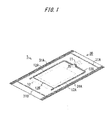
- FIG. 1 is one example of an external view of a microorganism culture vessel related to an embodiment.
- microorganism culture vessel 1 is formed by putting sheet-like medium 20 in bag-shaped culture bag 10, and housed in sterilization bag 30.
- microorganism culture vessel 1 is not limited to a microorganism culture vessel equipped with sterilization bag 30 for housing culture bag 10, and sterilization bag 30 may be omitted.
- Microorganism culture vessel 1 may form wholly or partially a microorganism test kit that appropriately includes a convenience if present upon testing bacteria.
- Culture bag 10 is equipped with inlet 11 for injecting a sample into a vessel.
- Culture bag 10 is formed by welding margins of doubly laminated sheet-like raw materials (for example, a thermally meltable material such as a polymer) with each other, and as shown in Figure 1 , margin parts 12A and 12B are welded.
- Sterilization bag 30 is also formed by thermally welding margins of doubly laminated sheet-like raw materials with each other in a manner similar to culture bag 10, and as shown in Figure 1 , margin parts 31A and 31B are welded.
- the material desirably causes no leakage of a sample when the sample is added thereto, and is liquid-impermeable, and on the other hand, has permeability of oxygen under which aerobes grow.
- the material is preferably transparent or translucent in order to observe growth of a microorganism.
- the material satisfying such requirements the material is preferably substantially non-porous, for example, and has an oxygen transmission rate of at least 3 mL/m 2 /24 hr.
- Specific examples thereof include a resin film such as a polymer film described above. A thickness of the film on the above occasion is suitably in the range of 150 micrometers so as to have sufficient gas permeability for growth of the microorganism.
- resin include polyethylene, polypropylene and a composite thereof. For example, when polypropylene is used, the thickness is desirably 150 micrometers or less from a viewpoint of gas permeability.
- a shape of culture bag 10 is not particularly limited, but a quadratic shape such as a square or a rectangle is convenient for mass production. Moreover, a size of culture bag 10 can be freely determined according to a volume of a sample liquid. For example, if a volume of the sample assumed is 10 milliliters, a bag in the range of 100 ⁇ 120 millimeters to 160 ⁇ 200 millimeters is conveniently arranged.
- inlet 11 of culture bag 10 may be of any kind, as long as the sample can be injected into the vessel, and caps that are excellent in tightly sealed properties can be used, and also zippers can also be used, for example.
- Microorganism culture vessel 1 can be produced by production processes described below, for example.
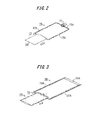
- Figure 2 is one example of a diagram showing an aspect of putting culture medium 20 in culture bag 10.
- culture medium 20 is put in culture bag 10 from open part 13 before margin part 12B is welded.
- Figure 3 is one example of a diagram showing an aspect of housing in sterilization bag 30 culture bag 10 in which culture medium 20 is put. After culture medium 20 is put in culture bag 10, culture bag 10 in a state in which open part 13 is kept opened is put in sterilization bag 30 from open part 32 before margin part 31B is welded.
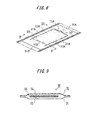
- FIG 4 is one example of a diagram showing an aspect of sealing sterilization bag 30 in which culture bag 10 is housed. After culture bag 10 is housed in sterilization bag 30, open part 32 is closed with welding sealer 2 to apply sealing treatment to sterilization bag 30. Thus, in sterilization bag 30, two sheet-like raw materials forming sterilization bag 30 are welded each other in margin part 31B shown in Figure 1 to enter a state in which sterilization bag 30 is sealed.
- Figure 5 is one example of a diagram showing sterilization bag 30 after open part 32 is closed with welding sealer 2.
- open part 32 is closed with welding sealer 2
- an inside of sterilization bag 30 enters a state in which the inside is closed by margin parts 31A and 31B over an entire circumference. Therefore, culture bag 10 in sterilization bag 30 enters a state in which culture bag 10 is isolated from the microorganism or other foreign matters outside sterilization bag 30.
- FIG 6 is one example of a cross-sectional view of sterilization bag 30 cut along a line shown by sign A-A in Figure 5 .
- one of the two sheet-like raw materials forming sterilization bag 30 is formed of gas-permeable sheet 31, and the other is formed of thermally meltable film 33 that can be fused with sheet 31.
- Sterilization bag 30 is thus formed, and therefore open part 32 can be closed with welding sealer 2, and also even in a state in which open part 13 is closed, if sterilization bag 30 is placed in the atmosphere of a predetermined gas, the predetermined gas is permeated through sheet 31 to allow exposure of a housed object in sterilization bag 30 to the predetermined gas.
- sterilization bag 30 prepared by closing open part 32 with welding sealer 2 and being subjected to sealing processing is placed in the atmosphere of the sterilizing gas, and the sterilization treatment is applied to an outside and an inside of culture bag 10 housed in sterilization bag 30, culture medium 20 in culture bag 10, and so forth.
- sterilization bag 30 is placed in the atmosphere of the sterilizing gas, the microorganism adhering to the outside and the inside of culture bag 10 housed in sterilization bag 30, culture medium 20 in culture bag 10 and so forth are killed.
- gas-permeable sheet 31 of sterilization bag 30 is provided with indicators such as ink colors of which change upon contact with gas, whether or not microorganism culture vessel 1 is subjected to the sterilization treatment can be easily distinguished.
- sterilization treatment include treatment as described below. More specifically, for example, indicators colors of which change on contact with gas are put on a suitable place of culture bag 10, sterilization bag 30 or the like, and sterilization bag 30 in which culture bag 10 is housed is inserted into a sterilizer. Temperature of the sterilizer is set to about 45°C, for example. Then, a door of the sterilizer is closed, and pressure inside a can is reduced (about -0.085 MPa in gauge pressure) into a vacuum state. Next, an ethyleneoxide (EO) gas is introduced up to a predetermined pressure (0.110 MPa in gauge pressure). Then, the sterilizer is allowed to stand until a predetermined period of time (12 hours after the pressure reaches set pressure) elapses.
- EO ethyleneoxide
- FIG 7 is one example of a diagram showing an aspect of sealing culture bag 10 in which culture medium 20 is put.
- sterilization bag 30 is placed in the atmosphere of the sterilizing gas and subjected to the sterilization treatment, a procedure of eliminating the sterilizing gas in culture bag 10 is applied, and then open part 13 of culture bag 10 is closed from an outside of sterilization bag 30 with welding sealer 2 in a state in which sterilization bag 30 in which culture bag 10 is housed is kept sealed to apply the tightly sealing treatment to culture bag 10 in which culture medium 20 subjected to the sterilization treatment is put.
- culture bag 10 enters a state in which two sheet-like raw materials forming culture bag 10 are welded with each other in margin part 12B shown in Figure 1 , and culture bag 10 is sealed.
- specific examples of the procedure of eliminating the sterilizing gas in culture bag 10 include a method of placing, in an atmosphere of a non-sterilizing gas, sterilization bag 30 in which culture bag 10 is stored, for a long period of time before start of the tightly sealing treatment of culture bag 10 after completion of the sterilization treatment, or a method of arranging, in a bath that can be vacuumed, sterilization bag 30 in a state in which culture bag 10 is stored to perform vacuuming, and placing sterilization bag 30 in an atmosphere of low pressure.
- Figure 8 is one example of a diagram showing sterilization bag 30 in which culture bag 10 after open part 13 is closed with welding sealer 2. If open part 13 is closed with welding sealer 2, the inside of culture bag 10 enters a state in which the inside is closed over the entire circumference by margin parts 12A and 12B. Therefore, culture medium 20 in culture bag 10 enters a state in which culture medium 20 is isolated from the microorganism or other foreign matters outside culture bag 10.
- FIG 9 is one example of a cross-sectional view of sterilization bag 30 and culture bag 10 as cut along a line shown by sign B-B in Figure 8 .
- Culture bag 10 is formed such that each of two sheet-like raw materials forming culture bag 10 has liquid impermeability allowing no leakage of the sample, and oxygen permeability allowing permeation of oxygen required for growth of the microorganism, and while one of the raw materials can be fused with the other raw material, one of the raw materials is hard to be easily fused with film 33 forming sterilization bag 30.
- Microorganism culture vessel 1 reaches completion through a series of production processes as described above.
- Microorganism culture vessel 1 related to the present embodiment reaches completion through the production process in one example described above, and therefore a possibility of bacteria or other foreign matters invading into the culture bag can be significantly controlled, for example, in comparison with a case where the sterilization treatment is applied to the culture bag in a state in which sterilization bag 30 is omitted, and then the open part of the culture bag is closed thereafter.
- microorganism culture vessel 1 that has reached completion through the series of production processes as described above can control adhesion of the microorganism or other foreign matters to a surface of culture bag 10 in a distribution process by shipping culture bag 10 while culture bag 10 is kept housed in sterilization bag 30. If adhesion of the foreign matters to the surface of culture bag 10 is controlled, upon opening inlet 11, a possibility of the foreign matters invading into culture bag 10 reduces.
- the production method described above is not limited to an embodiment of putting culture medium 20 in culture bag 10 from open part 13 arranged on a side opposite to inlet 11 upon putting culture medium 20 in culture bag 10.
- culture medium 20 may be put in culture bag 10 from an open part provided in the vicinity of inlet 11 or in other parts.
- the producing method described above is not limited to an embodiment of putting culture bag 10 in sterilization bag 30 from a side of inlet 11, upon housing culture bag 10 into sterilization bag 30.
- culture bag 10 may be put in sterilization bag 30 from a side of open part 13.
- culture medium 20 may be entered in a state in which culture medium 20 is housed in culture bag 10 by the method described below.
- culture medium 20 may be entered in a state in which culture medium 20 is housed in culture bag 10 by stacking two sheet-like raw materials forming culture bag 10, inserting culture medium 20 therebetween, heating margins of the sheet-like raw materials with each other, and welding margin part 12A.
- culture bag 10 is not limited to a bag formed by heating and welding the margins of the sheet-like raw material with each other.
- culture bag 10 may be formed by bonding with an adhesive tape or the like.
- sterilization bag 30 can be realized, for example, by using materials shown in Table 1 below.
- Table 1 Sterilization bag Pattern 1 2 Raw material 1 (outside) PET CPP Raw material 1 (inside) CPP Raw material 2 Paper Paper PET: Polyester / CPP: Cast polypropylene
- Sterilization bag 30 can provide sheet 31 with gas permeability, for example, by using the bag formed of the materials shown in Table 1 above, and can provide film 33 with fusible thermal meltability relative to sheet 31.
- culture bag 10 can be realized, for example, by using materials shown in Table 2 below.
- Table 2 Culture Bag Pattern 1 2 3 4 5 6 7 8 9 10 11 12 13 Raw material 3 (outside) PE* NY OPP PET PT NY OPP PET PT NY OPP PET PT Raw material 3 (inside) PE* PE* PE* PE* EVA EVA EVA ION ION ION Raw material 4 (inside) PE* PE* PE* PE* PE* PE* PE* EVA EVA EVA EVA ION ION ION Raw material 4 (outside) NY OPP PET PT NY OPP PET PT NY OPP PET PT NY OPP PET PT PET PT PET: polyester / CPP: cast polypropylene / PE: polyethylene / NY: nylon (biaxially oriented nylon or cast nylon) / OPP: biaxially oriented polypropylene / PT: PT cellophane / EVA: ethylene-vinyl acetate copolymer resin / ION: ionomer resin [
- raw material 3 (outsie) corresponds to an outer part (a side not in contact with film 15) of film 14 shown in Figure 9
- raw material 3 (inside) corresponds to an inner part (a side in contact with film 15) of film 14 shown in Figure 9
- raw material 4 (inside) corresponds to an inner part (a side in contact with film 14) of film 15 shown in Figure 9
- raw material 4 (outside) corresponds to an outer part (a side not in contact with film 14) of film 15 shown in Figure 9
- a raw material forming culture bag 10 is not limited by the embodiment shown in Table 2 above, and combinations of raw materials as shown in Table 2 can be further modified, for example, PET/PE in the outer side and OPP/PE in the inner side.
- use of materials having the oxygen transmission rates and the melting points as shown in Tables 3, 4 and 5 above, for example, in combination of the patterns as shown in Table 2 above, can provide films 14 and 15 with liquid impermeability allowing no leakage of the sample and the oxygen transmission rate allowing oxygen permeation required for growth of the microorganism, and while one of the films can be welded to the other film, and can provide films 14 and 15 with thermally meltability at a temperature lower the melting point of film 33 forming sterilization bag 30.
- culture medium 20 to be housed in culture bag 10 is desirably a laminated material suitable for growth of the microorganism.
- a sheet-like medium including a porous matrix layer and a water-soluble polymer compound layer is preferred.
- Examples of further specific structure of culture medium 20 include structure including a substrate, a water-soluble polymer compound layer and a porous matrix layer.
- a nutrition ingredient suitable for the microorganism for the purpose of culture may be incorporated.
- a nutrition ingredient suitable for the microorganism for the purpose of culture may be incorporated.
- at least one kind selected from a pH modifier, a selective agent for controlling growth of a microorganism for an unintended purpose, a coloring agent for facilitating observation of growth of the microorganism or confirming growth of a specific microorganism, a dye, a surfactant, inorganic salts or the like may be incorporated.
- Specific methods for producing culture medium 20 include a method for applying onto a substrate an aqueous solution containing a water-soluble polymer compound, a nutrition ingredient suitable for the microorganism for the purpose of culture, a pH modifier, a selective agent for controlling growth of a microorganism for an unintended purpose, a coloring agent for facilitating observation of growth of the microorganism or confirming growth of a specific microorganism, a dye, a surfactant and inorganic salts, and drying the applied solution to form a film.
- Aqueous solutions of a water-soluble polymer compound separately containing each of the ingredients described above may be successively applied and overlaid thereon.
- culture medium 20 includes a porous matrix layer and at least one water-soluble polymer compound layer, and at least one water-soluble polymer compound layer is formed in containing a nutrition ingredient.
- Specific examples of the method for producing culture medium 20 include a method for applying onto a film (substrate) of polyester an aqueous solution of a water-soluble polymer compound containing a nutrition ingredient, a salt ingredient and a chromogenic enzyme substrate and drying the applied solution to form a film.
- specific examples include a method for overlaying an aqueous solution of a water-soluble polymer onto a film (substrate) of polyester to prepare a dry film, and then overlaying an aqueous solution of a water-soluble polymer containing a nutrition ingredient thereon to prepare a dry film, and then onto the film, further overlaying an aqueous solution of a water-soluble polymer containing a coloring agent (a nutrition ingredient and a pH adjuster may be contained in the aqueous solution) to form a dry film, and then onto a film layer, further overlaying a porous matrix to dry the resulting material.
- a coloring agent a nutrition ingredient and a pH adjuster may be contained in the aqueous solution
- drying may be applied after overlaying the porous matrix before an upmost layer is dried.
- Various kinds of ingredients such as the nutrition ingredient, the pH modifier, the selective agent, the coloring agent, the dye, the surfactant and the inorganic salt may also be wholly or partially applied onto the porous matrix beforehand by using a gravure roll or the like.
- sheet-like medium 20 is arranged by cutting the culture medium layer to a size corresponding to an amount of sample liquid to be cultured after the thus prepared dry film-like medium layer is peeled or not peeled from the film (substrate) of polyester or the like to perform a series of the production processes described above.
- the substrate of culture medium 20 is not particularly limited, if tensile strength during heating and drying is sufficient.
- a polyester film having a thickness of 20 to 50 micrometers is used.
- any compound can be used, if the compound dissolves into water upon adding the sample added to exhibit a viscosity of 10 cps or more and does not inhibit growth of the microorganism.
- polyvinyl alcohol modified polyvinyl alcohol (a copolymerized product of vinyl acetate and unsaturated dicarboxylic acid [maleic acid, fumaric acid, glutaconic acid, allylmalonic acid, anhydrides or a monoalkyl ester thereof (for a polymerization method, see JP S61-42002 B ], a product obtained by allowing cyclic anhydride to react with polyvinyl alcohol; a cellulose derivative (carboxymethyl-cellulose (CMC) and hydroxyalkyl cellulose (for example, hydroxymethylcellulose)); starch and a derivative thereof (soluble starch, carboxymethyl starch); polysaccharides other than the cellulose derivative, starch and a derivative thereof (hyaluronic acid, guar gum, gum arabic); acrylic acid and a derivative thereof (polyacrylic acid, polyacrylate, acrylic acid (salt)-vinyl alcohol copolymer); polyether (polyethylene glycol, polypropylene glycol); and protein
- the water-soluble polymer compounds exhibit, in a viscosity of a 4 mass% aqueous solution of the water-soluble polymer compound measured at 20°C using an Ostwald viscometer, preferably 10 cps or more, and further preferably 15 to 80 cps.
- Use of such a water-soluble polymer compound is preferred because no microorganism invade into the inside of the culture medium, and a microorganism starting division forms a colony mainly on a culture medium surface without moving on the culture medium surface, and counting is facilitated.
- water-soluble polymer compounds a compound selected from the group of a cellulose derivative and polyvinyl alcohol is preferred, and polyvinyl alcohol having a degree of saponification of 75 to 95% and a molecular weight of 25,000 to 250,000 is particularly preferred.
- a preferred content of the water-soluble polymer compound in culture medium 20 in microorganism culture vessel 1 related to the present embodiment is suitably 40 to 300 g/m 2 , and preferably, 70 to 150 g/m 2 .
- porous matrix layer of culture medium 20 examples include a woven or knitted fabric, a fiber web or a nonwoven fabric formed of synthetic fibers (nylon, polyacrylonitrile, polyester (particularly, hydrophilized), polyolefin (particularly, subjected to hydrophilization treatment), polyurethane), semisynthetic fibers (rayon), natural fibers (wool (animal hair), silk, cotton, cellulose, pulp) or inorganic fibers (glass fibers), and a porous film or sponge made of a constituent material of the fibers described above, and porous ceramics.
- the porous matrix does not necessarily need to be hydrophilic.
- a hydrophilic porous or hydrophilization-treated matrix if used, a water absorption rate increases and work efficiency increases.
- a water-soluble material is applied onto a surface of the hydrophilic or hydrophilization-treated porous matrix, dispersibility of the microorganism improves, and such application is further preferred.
- a fiber web or a nonwoven fabric is preferred.
- nylon, cotton, cellulose or rayon is preferred, and a fiber web or nonwoven fabric formed of nylon is particularly preferred.
- a nonwoven fabric prepared by a melt-blown process is preferred.
- porous matrix layer examples include a nylon melt-blown nonwoven fabric having a basis weight of 40 to 100 g/m 2 and a permeability of 7 to 24 cm/sec. Specific examples of the porous matrix layer are disclosed in WO 01/44437 A .
- the nutrition ingredient namely, a culture medium ingredient used in culture medium 20
- any substance may be used, if the substance is suitable for growth of the microorganism for the purpose of detection.
- a general-purpose liquid medium the culture medium ingredient prepared by eliminating agar from an agar medium or the like can be used.
- the selective agent that controls growth of the microorganism for an unintended detection purpose an indicator, a coloring agent or the like for facilitating observation of a produced colony may be added to the sheet-like medium.
- a coloring or fluorescent enzyme substrate may be added to detect the specific microorganism.
- the dye, the surfactant, the inorganic salt or the like can be added thereto.
- Examples of the culture medium ingredient for the microorganism for testing general viable bacteria include a mixture of yeast extract, peptone and glucose, a mixture of meat extract and peptone, a mixture of peptone, soybean peptone and glucose and a mixture obtained by adding salts such as phosphate, sodium chloride, carbonate or a magnesium salt thereto.
- Examples for testing Escherichia coli and the coli group include a mixture of sodium desoxycholate, peptone, ferric ammonium citrate, sodium chloride, dipotassium phosphate, lactose and neutral red, and a mixture of peptone, lactose, dipotassium phosphate, eosin y and methylene blue.
- Examples for testing Staphylococcus include a mixture of meat extract, peptone, sodium chloride, mannite, phenol red, and yolk, and a mixture of peptone, meat extract, yeast extract, sodium pyruvate, glycine, lithium chloride and a tellurite yolk liquid.
- Examples for testing vibrio include a mixture of yeast extract, peptone, sucrose, sodium thiosulfate, sodium citrate, sodium cholate, ferric citrate, sodium chloride, bovine bile, bromothymol blue and thymol blue.
- Examples for testing Enterococci include a mixture of bovine brain extract, heart extract, peptone, glucose, dipotassium phosphate, sodium nitride, bromothymol blue and 2,3,5-triphenyltetrazolium chloride.
- Examples for testing Eumycetes include a mixture of peptone and glucose, a mixture of yeast extract and glucose, a mixture of potato extract and glucose, and a mixture of malt extract, peptone and glucose.
- Examples for testing Salmonellae include a mixture of peptone, meat extract, glycerin, sodium thiophosphate, L-lysine, ammonium iron citrate, sodium deoxycholate and sodium lauryl sulfate.
- Examples for testing waterborne bacteria include a mixture of peptone, yeast extract, casamino acid, glucose, phosphate, soluble starch and a magnesium salt, and meat extract or fish meat extract, tryptone and glucose, which is used.
- pH adjuster examples include phosphate, carbonate (monosodium phosphate, disodium phosphate, monopotassium phosphate, dipotassium phosphate, sodium carbonate and sodium hydrogencarbonate, potassium carbonate and calcium carbonate). Such a pH adjuster is used to maintain pH suitable for growth of the microorganism.
- an antibiotic such as a synthetic antibacterial agent, a dye, a surfactant, an inorganic salt or the like is used.
- antibiotics include methicillin, cefmetazole, cefixime, ceftadizime, cefsulodin, bacitracin, polymyxin B, rifampicin, novobiocin, colistin, lincomycin, chloramphenicol, tetracycline and streptomycin
- specific examples of the synthetic antibacterial agents include a sulfa drug, nalidixic acid and olaquindox.
- the dyes include crystal violet, brilliant green, malachite green and methylene blue, all of which are bacteriostatic or bactericidal.
- Specific examples of the surfactants include Tergitol 7, dodecylsulfate and lauryl sulfate.
- Specific examples of the inorganic salts include selenite, tellurite, sulfite, sodium nitride, lithium chloride, oxalate and concentrated sodium chloride.
- specific examples of the selective agents include taurocholate, glycine, bile powder, bile salt and deoxycholate.
- addition of a tetrazolium salt or a chromogenic or fluorogenic enzyme substrate such as esterase or phosphatase to the water-soluble polymer compound layer allows easy observation of growth of the microorganism as colored or fluorescent spots.
- addition of coloring or fluorescent enzyme substrates of an enzyme of the specific microorganism has an advantage of allowing detection of the specific microorganism. Specific examples include 5-bromo-4-chloro-3-indolyl phosphate, 2,3,5-triphenyl tetrazolium chloride and 6-chloro-3-indoxyl- ⁇ -D-glucuronic acid.
- the dialysate or the reverse osmosis water only needs to have a predetermined supplemental nutrition ingredient in a degree of supplementing a nutrition ingredient originally contained in the dialysate, or in a trace amount necessary for the microorganism in the reverse osmosis water so as to avoid killing of the microorganism in the dialysate or the reverse osmosis water by excess nutritional intake.
- Specific examples include, per square meter, 0.1 to 3.0 g of peptone, 0.1 to 3.0 g of yeast extract, 0.1 to 0.5 g of casein digest, 0 to 0.5 g of glucose, 0.075 to 0.3 g of sodium pyruvate, 0 to 0.3 g of dipotassium phosphate, 0.1 to 0.5 g of soluble starch, 0.01 to 0.05 g of magnesium sulfate, and 0.015 to 0.1 g of tetrazolium salt or 0.15 to 1.0 g of indoxyl derivative.
- the culture medium ingredient includes 0.1 to 3.0 g of peptone, 0.1 to 3.0 g of yeast extract, 0.1 to 0.5 g of casein digest, 0 to 0.5 g of glucose, 0.075 to 0.3 g of sodium pyruvate, 0 to 0.3 g of dipotassium phosphate, 0.1 to 0.5 g of soluble starch and 0.01 to 0.05 g of magnesium sulfate, and 0 to 0.3 g of dipotassium phosphate is an ingredient serving as the pH adjuster.
- a rate or sensitivity of detection decreases or the amount becomes beyond detection by a decrease in a rate of proliferation of bacteria or reduction of the viable bacteria count.
- a coloring substrate (ingredient for facilitating observation of the grown bacteria) includes 0.015 to 0.1 g of tetrazolium salt or 0.15 to 1.0 g of indoxyl derivative, and when the substrate exceeds the lower limit described above, the bacteria become hard to be visually detected. Moreover, when the substrate exceeds the upper limit described above, proliferation of the bacteria is inhibited and detection sensitivity decreases. Alternatively, a background becomes high due to excessive coloring of the substrate. As a result, the microorganism count becomes hard to distinguish.
- the dialysate or the reverse osmosis water only needs to have the predetermined supplemental nutrition ingredient in the degree of supplementing the nutrition ingredient originally contained in the dialysate, or in the trace amount necessary for the microorganism in the reverse osmosis water so as to avoid killing of the microorganism in the dialysate or the reverse osmosis water by excess nutritional intake.
- Specific examples include, per square meter, 0.38 to 9.0 g of meat extract or fish meat extract, 0.63 to 15.0 g of trypton, 0 to 3.0 g of glucose, 0 to 0.3 g of dipotassium phosphate, 0.015 to 0.1 g of tetrazolium salt or 0.15 to 1.0 g of indoxyl derivative.
- the culture medium ingredient includes 0.38 to 9.0 g of meat extract or fish meat extract, 0.63 to 15.0 g of trypton and 0 to 3.0 g of glucose, and 0 to 0.3 g of dipotassium phosphate is the ingredient serving as the pH adjuster.
- the rate or sensitivity of detection decreases or the amount becomes beyond detection by the decrease in the rate of proliferation of bacteria or reduction of the viable bacteria count.
- the coloring substrate (ingredient for facilitating observation of the grown bacteria) includes 0.015 to 0.1 g of tetrazolium salt or 0.15 to 1.0 g of indoxyl derivative, and when the substrate exceeds the lower limit described above, the bacteria become hard to be visually detected. Moreover, when the substrate exceeds the upper limit described above, proliferation of the bacteria is inhibited and detection sensitivity decreases. Alternatively, the background becomes high due to excessive coloring of the substrate. As a result, the microorganism count becomes hard to distinguish.
- the dialysate or the reverse osmosis water only needs to have the predetermined supplemental nutrition ingredient in the degree of supplementing the nutrition ingredient originally contained in the dialysate, or in the trace amount necessary for the microorganism in the reverse osmosis water so as to avoid killing of the microorganism in the dialysate or the reverse osmosis water by excess nutritional intake.
- Specific examples include, per square meter, 2.5 to 40.0 g of malt extract, 0 to 40.0 g of glucose, 0.25 to 4.0 g of peptone, 0 to 0.3 g of monopotassium phosphate, 0 to 0.1 g of chloramphenicol, 0.015 to 0.1 g of tetrazolium salt or 0.15 to 1.0 g of indoxyl derivative.
- the culture medium ingredient includes 2.5 to 40.0 g of malt extract, 0 to 40.0 g of glucose and 0.25 to 4.0 g of peptone, and 0 to 0.3 g of monopotassium phosphate is the ingredient serving as the pH adjuster. Further, 0 to 0.1 g of chloramphenicol is the ingredient serving as the selection agent.
- the rate or sensitivity of detection decreases or the amount becomes beyond detection by the decrease in the rate of proliferation of bacteria or reduction of the viable bacteria count.
- the coloring substrate (ingredient for facilitating observation of the grown bacteria) includes 0.015 to 0.1 g of tetrazolium salt or 0.15 to 1.0 g of indoxyl derivative, and when the substrate exceeds the lower limit described above, the bacteria become hard to be visually detected. Moreover, when the substrate exceeds the upper limit described above, proliferation of the bacteria is inhibited and detection sensitivity decreases. Alternatively, the background becomes high due to excessive coloring of the substrate. As a result, the microorganism count becomes hard to distinguish.
- culture medium 20 With regard to a shape of culture medium 20, if culture medium 20 has a quadrate such as a square or a rectangle, for example, production is easy. An area and a thickness of culture medium 20 are appropriately determined depending on the amount of sample liquid to be tested, and the water-soluble polymer compound and the porous matrix used for the sheet-like medium and amounts thereof. Culture medium 20 desirably satisfies a relationship between a mass of the water-soluble polymer compound and the amount of sample liquid shown in formula (1) described below, and has a size satisfying a content of the water-soluble polymer compound in an amount of 40 to 300 g/m 2 in the sheet-like medium described above: 0.08 ⁇ weight of water - soluble polymer compound g / amount of sample mL ⁇ 0.5.
- Specific examples of preferred structure of culture medium 20 include structure in which a water-soluble polymer compound layer, a water-soluble polymer compound layer containing a nutrition ingredient, a water-soluble polymer compound layer and a porous matrix layer are laminated on a substrate (polyester film) in the above order.
- Specific examples of another structure include structure in which a water-soluble polymer compound layer, a water-soluble polymer compound layer containing a nutrition ingredient, a water-soluble polymer compound layer containing a coloring agent and a porous matrix layer are laminated on a substrate (polyester film) in the above order.
- microorganism culture vessel 1 Onto the porous matrix layer, various kinds of ingredients, such as the nutrition ingredient, the pH modifier, the selective agent, the coloring agent, the dye, the surfactant and the inorganic salt may be wholly or partially applied.
- a microorganism culture vessel material described in WO 97/24432 A can also be used, for example.
- microorganism culture vessel 1 housing culture medium 20 and before use can be appropriately selected depending on a kind of the nutrition ingredient or the coloring agent, stability or the like. For example, general conditions being a range of low temperature to ordinary temperature can also be selected.
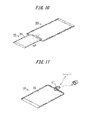
- Figure 10 is one example of a diagram showing an aspect of removing culture bag 10 from sterilization bag 30.
- Figure 11 is one example of a diagram showing an aspect of putting a sample in culture bag 10.
- culture bag 10 is removed from sterilization bag 30.
- avoidance of adhesion of the foreign matters to a surface of culture bag 10 protected by sterilization bag 30 as much as possible is preferably taken into consideration.
- inlet 11 of culture bag 10 is opened, a sample is put in culture bag 10, and inlet 11 is closed again.
- a mass (g) of the water-soluble polymer compound in culture medium 20 and a volume (mL) of the sample liquid desirably have the relationship in formula (1) described above.
- culture bag 10 is placed under conditions of time, temperature and so forth suitable for the microorganism that is desirably cultured to start culture of the microorganism.
- microorganism culture vessel 1 related to the present embodiment is suitable for culture of aerobes, but anaerobes can also be cultured by forming culture bag 10 using an oxygen-impermeable raw material.
- a material of culture bag 10 used when the bag 10 is used for detecting the anaerobes preferably causes no leakage of the sample when the sample is added thereto, and is liquid-impermeable, and on the other hand, has oxygen-impermeability under which the anaerobes grow.
- the material is preferably transparent or translucent.
- the material is substantially unporous and has an oxygen transmission rate of 0 to 20 mL/m 2 /24 hr.
- positions of inlet 11 can also be appropriately changed.
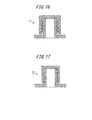
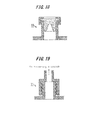
- Inlet 11 is not limited to a mere screw-type cap as shown in Figure 16 . Any material may be used, if the material allows sample injection and opening and closing of inlet 11. Specific examples of the material that can be applied as inlet 11 other than the cap include at least one kind of any one of a spout, a screw cap, a push-in cap, a crown, a rubber cap, a urethane cap, a silicon cap, a cork stopper, a molten cap, a cotton cap, a paper cap, a three-way stopcock, a fastener, a chuck and a zipper.
- specific examples include a snap-on cap as shown in Figure 17 , a rubber-type lid through which a sample is injected with an injection needle or the like as shown in Figure 18 (a rubber cap is inserted into a mouth and is fixed using an aluminum cap), a product prepared by connecting a three-way valve for injecting medicine solutions to be used for a medical instrument as shown in Figure 19 , or a plate-like rubber-type lid used for a so-called vial bottle as shown in Figure 20 (a mouth is capped with a rubber plate, which is then fixed using an aluminum cap).
- Sheet-like medium 20 was cut into a size of 120 mm ⁇ 150 mm, put in culture bag 10, and culture bag 10 in which culture medium 20 was put was put in sterilization bag 30 to close open part 32, the resulting sterilization bag 30 was sterilized with an ethylene oxide gas, open part 13 was closed, and thus microorganism culture vessel 1 was produced.
- Culture bag 20 used here was produced by laminating two films of nylon/LLDPE (Linear Low Density Polyethylene) (size: 150 ⁇ 220 mm) and welding margin part 12A in a state of interposing spouts being inlet 11.
- Sterilization bag 30 used here was a sterilized roll bag (size: 200 ⁇ 350) of Medicom Co., Ltd. (Medicom is a registered trademark).
- culture medium 20 related to the present Example is low in a glucose concentration and zero in a sodium carbonate concentration. Therefore, a sample for measurement needs to contain glucose and a pH adjuster, for example. Moreover, when a bacillus having a slow proliferation rate is cultured, further addition of a nutrition ingredient such as yeast extract is desired. If nutrition becomes excessive, a possibility of growth of bacteria being inhibited is produced due to a rise of osmotic pressure or the like over the bacteria. In culture medium 20 related to the present Example, however, growth inhibition is hard to be caused even if a nutrition ingredient is added by decreasing a glucose concentration and reducing a sodium carbonate concentration to zero.
- Sheet-like medium 20 was cut into a size of 120 mm ⁇ 150 mm, put in culture bag 10, and culture bag 10 in which culture medium 20 was put was put in sterilization bag 30 to close open part 32, the resulting sterilization bag 30 was sterilized with an ethylene oxide gas, open part 13 was closed, and thus microorganism culture vessel 1 was produced.
- Culture bag 20 used here was produced by laminating two films of nylon/LLDPE (Linear Low Density Polyethylene) (size: 150 ⁇ 220 mm) and welding margin part 12A in a state of interposing spouts being inlet 11.
- Sterilization bag 30 used here was a sterilized roll bag (size: 200 ⁇ 350) of Medicom Co., Ltd. (Medicom is a registered trademark).
- Sheet-like medium 20 was cut into a size of 120 mm ⁇ 150 mm, put in culture bag 10, and culture bag 10 in which culture medium 20 was put was put in sterilization bag 30 to close open part 32, the resulting sterilization bag 30 was sterilized with an ethylene oxide gas, open part 13 was closed, and thus microorganism culture vessel 1 was produced.
- Culture bag 20 used here was produced by laminating two films of nylon/LLDPE (Linear Low Density Polyethylene) (size: 150 ⁇ 220 mm) and welding margin part 12A in a state of interposing spouts being inlet 11.
- Sterilization bag 30 used here was a sterilized roll bag (size: 200 ⁇ 350) of Medicom Co., Ltd. (Medicom is a registered trademark).
- a method using microorganism culture vessel 1 related to embodiment described above and a conventional MF method were compared.
- a solution prepared by diluting a bacteria liquid with a dialysate to a concentration of about 4 CFU/mL was arranged.
- 25 milliliters of the bacteria liquid was put in each of microorganism culture vessel 1 related to the embodiment described above and a filter according to the MF method.
- the bacteria liquid was subjected to suction filtration, the filter was transferred to an R2A agar medium.
- a method using microorganism culture vessel 1 related to the embodiment described above and a conventional simplified MF method were compared.
- a solution prepared by diluting a bacteria liquid with a dialysate to a concentration of about 0.4 CFU/mL was arranged.
- 25 milliliters of the bacteria liquid was put in each of microorganism culture vessel 1 related to the embodiment described above and a filter according to the simplified MF method.
- the bacteria liquid was subjected to suction filtration, and then 2 milliliters of mTGE medium was added thereto and subjected to suction filtration.
- Table 6 and Table 7 described above show that a higher level of the lager bacteria count are confirmed when microorganism culture vessel 1 according to the embodiment described above is used in comparison with the conventional MF method or simplified MF method.
- the results show that bacteriological testing with higher accuracy to give a higher level of the bacteria count to be detected can be realized when microorganism culture vessel 1 related to the embodiment described above is used in comparison with the conventional MF method or simplified MF method.
- Tables 6 and 7 above are obtained when the culture medium related to Example 1 above was used.
- Data obtained when the culture medium related to Example 2 above was used are shown in Table 8 below, and data obtained when the culture medium related to Example 3 above was used are shown in Table 9 below. While Tables 6 and 7 show the bacteria count after 3 days and 5 days, Tables 8 and 9 below show the bacteria count after 3 days and 6 days.
- Microorganism culture vessel according to new invention ⁇ Example 2 of culture medium> Method Similar to the method applied in Example 1 of culture medium Device for microorganism measurement Strain Bacteria count after 3 days of culture Bacteria count after 6 days of culture 1 2 3 Mean value 1 2 3 Mean value Microorganism culture vessel according to new invention ⁇ Example 2 of culture medium> Pseudomonas fluorescens 42 61 38 47 42 61 38 47 Methylobacterium extorquens 0 0 0 0 235 205 212 217 R2A MF method Pseudomonas fluorescens 64 56 53 58 64 56 53 58 Methylobacterium extorquens 0 0 0 0 211 245 258 238 Results Results obtained using microorganism culture vessel according to new invention ⁇ Example 2 of culture medium> were almost equivalent to the results according to R2A MF method.
- Microorganism culture vessel according to new invention ⁇ Example 3 of culture medium> Method Similar to the method applied in Example 1 of culture medium Device for microorganism measurement Strain Bacteria count after 3 days of culture Bacteria count after 6 days of culture 1 2 3 Mean value 1 2 3 Mean value Microorganism culture vessel Candida albicans 120 143 122 128 120 143 122 128 According to new invention ⁇ Example 3 of culture Saccharomyces cerevisiae 150 163 215 176 150 163 215 176 R2A MF method Candida albicans 111 109 92 104 111 109 92 104 Saccharomyces cerevisiae 153 110 80 114 153 110 80 114 Results Results obtained using microorganism culture vessel according to new invention ⁇ Example 3 of culture medium> gave large viable cell counts of enzyme (Saccharomyces cerevisiae) in comparison with the results according to R2A MF method.
- Table 8 and Table 9 above show that a higher level of the bacteria count is confirmed for at least the culture medium related to Example 3, when microorganism culture vessel 1 related to the embodiment described above was used in comparison with the conventional MF method.
- Table 8 and Tabe 9 also show that the bacteria count almost equivalent to the count is confirmed for at least the culture medium related to Example 2, between the case where microorganism culture vessel 1 related to the embodiment described above was used and the case where the conventional MF method was applied.
Landscapes
- Health & Medical Sciences (AREA)
- Chemical & Material Sciences (AREA)
- Life Sciences & Earth Sciences (AREA)
- Organic Chemistry (AREA)
- Engineering & Computer Science (AREA)
- Zoology (AREA)
- Wood Science & Technology (AREA)
- Bioinformatics & Cheminformatics (AREA)
- Genetics & Genomics (AREA)
- Biotechnology (AREA)
- General Health & Medical Sciences (AREA)
- Biochemistry (AREA)
- General Engineering & Computer Science (AREA)
- Microbiology (AREA)
- Biomedical Technology (AREA)
- Sustainable Development (AREA)
- Clinical Laboratory Science (AREA)
- Proteomics, Peptides & Aminoacids (AREA)
- Immunology (AREA)
- Molecular Biology (AREA)
- Analytical Chemistry (AREA)
- Toxicology (AREA)
- Physics & Mathematics (AREA)
- Biophysics (AREA)
- Virology (AREA)
- Tropical Medicine & Parasitology (AREA)
- Medicinal Chemistry (AREA)
- Apparatus Associated With Microorganisms And Enzymes (AREA)
- Measuring Or Testing Involving Enzymes Or Micro-Organisms (AREA)
- Micro-Organisms Or Cultivation Processes Thereof (AREA)
Abstract
Description
- The present application discloses a microorganism culture vessel, a microorganism test kit, a method for testing a dialysate, a method for culturing a microorganism, a method for testing the microorganism, and a method for producing the microorganism culture vessel.
- A microorganism is cultured using various kinds of culture media. Specific examples of the culture media include a liquid medium and an agar medium that have generally been used so far. The liquid medium has no restriction on an amount of sample. However, the liquid medium has a disadvantage of having no quantitativeness, and being bulky. On the other hand, in the agar medium, an upper limit of an amount of sample liquid is ordinarily 1 milliliter in a 90 mm-diameter petri dish that is ordinarily used, and a test of the sample liquid in an amount exceeding 1 milliliter is difficult. Therefore, upon testing a sample having a relatively low microorganism concentration, in order to test the sample liquid in an amount of about 1 milliliter, an original sample is first subjected to enrichment culture, and then provided for testing.
- For example, a sensitivity of 1 cfu/25 g is required for testing bacteria capable of causing food poisoning, such as Salmonella. Moreover, testing of not only a pyrogen but also the microorganism has been recently recommended, for example, in testing water for medical use such as water for dialysis (dialysis water). However, such a sample has a significantly low microorganism concentration, and therefore a large amount of the sample is needed for testing in several cases. For example, dialysis water is required to have a high sensitivity at which the microorganism in an amount less than one piece in a 1 milliliter of sample can be detected in several cases. If a microorganism test of the sample liquid in an amount of exceeding 1 milliliter, for example 10 to 100 milliliters can be conducted directly or quantitatively, such a case is simple and desirable.
- If a larger vessel is used for the test of such a large amount of sample, testing of the sample in an amount exceeding 1 milliliter can also be conducted. However, such testing occupies much space, and is not practical. Therefore, for example, if a sheet-like medium as proposed in Patent literature No. 1 is used in a large area, a quantitative test of the sample in an amount exceeding 1 milliliter can also be conducted. However, such a test needs a mount and a cover film larger than a culture medium part. Therefore, space-saving performance is adversely affected, and the large area needs time for opening and closing of the cover and also for diffusion of the sample. Moreover, a membrane filter (MF) method requires an exclusive-use filter holder, manifold or suction pumps, and upon testing the dialysate, the method needs many working processes, such as necessity of preparation of an exclusive-use medium, and is complicated. Moreover, in the case of a simplified MF method without needing the agar medium, addition of the liquid medium is needed, measurement of the bacteria count is not easy, and upon putting the sample in a device, bacteria and viruses are easily adhered to a hand or the like. Moreover, in the case of a color reaction method
- (SensiMedia Method), testing is conducted using the liquid medium, and therefore has no quantitativeness, and in a detection principle, no correct detection can be made when bacteria having no respiration activity exist.
- Thus, proposal has been recently made for a microorganism culture vessel in which space is saved, quantitative testing of a microorganism in a sample in a relatively large amount exceeding 1 milliliter can be simply achieved, and a sheet-like medium is housed in a bag-shaped vessel (see Patent literature No. 2).
-
- Patent literature No. 1:
WO 01/44437 A - Patent literature No. 2:
JP 2007-124985 A - Patent literature No. 3:
JP H7-75545 A - Patent literature No. 4:
JP H8-112088 A - Patent literature No. 5:
JP H11-137241 A - A microorganism culture vessel formed by housing a sheet-like medium in a bag-shaped vessel can be processed into a sterilized microorganism culture vessel, for example, by opening a zipper in an opening of the bag-shaped vessel into an opened state and placing the vessel in an atmosphere of a sterilizing gas. However, in the microorganism culture vessel subjected to sterilization treatment as described above, a foreign matter such as a microorganism is likely invaded into the vessel through the opening before closing the opening after the sterilization treatment. Moreover, in the bag-shaped vessel using the zippers as a means for opening and closing the opening, the foreign matters likely invade thereinto due to low tightly sealed properties, even in a state in which the opening is closed. Moreover, a sample such as a dialysate in which the bacteria count is originally small is difficult to be put in the vessel in a large amount for detecting the bacteria.
- In view of such a situation, an object of the application is to provide a microorganism culture vessel in which existence of invading foreign matters is controlled, and a large amount of sample can be put, a microorganism test kit, a method for testing a dialysate, a method for culturing a microorganism, a method for testing the microorganism and a method for producing the microorganism culture vessel.
- In order to solve the problem described above, in the invention, an inlet for putting a sample in a culture bag has been designed to be provided separately from an opening part for putting a culture medium in the vessel.
- In detail, the invention concerns a microorganism culture vessel including an inlet-equipped culture bag in which a sheet-like medium is put and sealed. In such a microorganism culture vessel, upon putting the sample in the culture bag, the sample is to be put in the bag through the inlet through which foreign matters are further difficult to pass in comparison with the opening part through which the culture medium can be put in and out, and therefore existence of invading foreign matters is controlled. Moreover, tightly sealed properties of the vessel are high and the sample is hard to leak, and therefore a large amount of sample can also be put in the vessel.
- In addition, any material can be applied to the inlet in a culture part, if a sealed state is formed after the sample is charged into the bag. For example, at least one kind can be applied thereto from any one of a spout, a screw cap, a push-in cap, a crown, a rubber cap, a urethane cap, a silicon cap, a cork stopper, a molten cap, a cotton cap, a paper cap, a three-way stopcock, a fastener, a chuck and a zipper.
- Moreover, the microorganism culture vessel may have the inlet-equipped culture bag in which the sheet-like medium is put and sealed, and a sterilization bag sealed after the culture bag is put in the sterilization bag. In such a microorganism culture vessel, a sterilized state outside the culture bag is kept by the sterilization bag. Therefore, upon putting the sample in the culture bag, possibility at which the foreign matter enter the culture bag is low.
- Moreover, the microorganism culture vessel may be for use in detecting aerobes, and the culture bag may be formed of an oxygen-permeable raw material. If the culture bag is formed of the oxygen-permeable raw material, oxygen is supplied from an outside to an inside of the culture bag, and therefore the aerobes can grow in the bag.
- Moreover, the microorganism culture vessel may be for use in detecting anaerobes, and the culture bag may be formed of an oxygen-impermeable raw material. If the culture bag is formed of the oxygen-impermeable raw material, no oxygen is supplied from the outside to the inside of the culture bag, and therefore the anaerobes can grow in the bag.
- Moreover, the microorganism culture vessel may be for use in detecting the microorganism contained in a dialysate or reverse osmosis water, and the culture medium in the culture bag may have a predetermined supplemental nutrition ingredient for supplementing a nutrition ingredient contained in the dialysate or the reverse osmosis water. If the culture medium has a predetermined supplemental nutrition ingredient at a level at which the culture medium supplements the nutrition ingredient originally contained in the dialysate, the microorganism in the dialysate can be grown in the culture bag without killing the microorganism by excessive nutritional intake.
- In addition, the predetermined supplemental nutrition ingredient of the culture medium in the culture bag may include, for example, per square meter, 0.1 to 3.0 g of peptone, 0.1 to 3.0 g of yeast extract, 0.1 to 0.5 g of casein digest, 0 to 0.5 g of glucose, 0.075 to 0.3 g of sodium pyruvate, 0 to 0.3 g of dipotassium phosphate, 0.1 to 0.5 g of soluble starch, 0.01 to 0.05 g of magnesium sulfate and 0.015 to 0.1 g of tetrazolium salt or 0.15 to 1.0 g of indoxyl derivative. If the ingredients at such a level are contained in the culture medium, the microorganism in the dialysate or reverse osmosis water can be grown in the culture bag.
- In addition, the predetermined supplemental nutrition ingredient of the culture medium in the culture bag may also include, for example, per square meter, 0.38 to 9.0 g of meat extract or fish meat extract, 0.63 to 15.0 g of trypton, 0 to 3.0 g of glucose, 0 to 0.3 g of dipotassium phosphate, and 0.015 to 0.1 g of tetrazolium salt or 0.15 to 1.0 g of indoxyl derivative. If the ingredients at such a level are contained in the culture medium, the microorganism in the dialysate or reverse osmosis water can be grown in the culture bag.
- In addition, the predetermined supplemental nutrition ingredient of the culture medium in the culture bag may also include, for example, per square meter, 2.5 to 40.0 g of malt extract, 0 to 40.0 g of glucose, 0.25 to 4.0 g of peptone, 0 to 0.3 g of monopotassium phosphate, 0 to 0.1 g of chloramphenicol, and 0.015 to 0.1 g of tetrazolium salt or 0.15 to 1.0 g of indoxyl derivative. If the ingredients at such a level are contained in the culture medium, the microorganism in the dialysate or reverse osmosis water can be grown in the culture bag.
- Moreover, the invention can also be understood in terms of a microorganism test kit including any one of the microorganism culture vessels.
- Moreover, the invention can also be understood in terms of a method for testing the dialysate. For example, the invention may include the method for testing the dialysate, removing from the sterilization bag the culture bag sealed in the sterilization bag in the microorganism culture vessel having the inlet-equipped culture bag in which the sheet-like medium is put and sealed, and the sterilization bag in which the culture bag is put in and sealed; opening the inlet of the culture bag to inject the dialysate from the inlet into the culture bag; sealing the inlet and then placing the culture bag under conditions of culturing the microorganism to culture the microorganism; and testing existence or an amount of the cultured microorganism.
- Moreover, the invention can also be understood in view of a method for culturing the microorganism. For example, the invention may include the method for culturing the microorganism, removing from the sterilization bag the culture bag sealed in the sterilization bag in the microorganism culture vessel having the inlet-equipped culture bag in which the sheet-like medium is put and sealed and the sterilization bag in which the culture bag is put in and sealed; opening the inlet of the culture bag to inject a sample liquid from the inlet into the culture bag; and sealing the inlet and then placing the culture bag under conditions of culturing the microorganism to culture the microorganism.
- Moreover, the invention can also be understood in view of a method for testing the microorganism. For example, the invention may include the method for testing the microorganism, testing existence or the amount of the microorganism cultured by the method for culturing the microorganism.
- Moreover, the invention can also be understood in terms of a method for producing the microorganism culture vessel. For example, the invention may include the method for producing the microorganism culture vessel having the inlet-equipped culture bag in which the sheet-like medium is put and sealed, and the sterilization bag in which the culture bag is put in and sealed, housing in the gas-permeable sterilization bag the culture bag in which the culture medium is put from an opening part of the culture bag to apply tightly sealing treatment to the sterilization bag; placing the sterilization bag subjected to the tightly sealing treatment in an atmosphere of a sterilizing gas to apply sterilization treatment to the culture medium in the culture bag as housed in the sterilization bag; closing the opening part of the culture bag from the outside of the sterilization bag in a state in which the sterilization bag housing the culture bag is kept sealed; and applying the tightly sealing treatment to the culture bag in which the culture medium subjected to the sterilization treatment is put.
- In order to allow control of existence of invading foreign matters and putting of a large amount of sample in the vessel, when the sheet-like medium is housed in a bag-shaped vessel formed by using as the inlet a portion having a large opening and highly tightly sealed properties, such as caps, the vessel is placed in the atmosphere of the sterilizing gas and processed into a sterilized microorganism culture vessel, a size of the opening is small, and therefore a possibility of the sterilizing gas remaining in the bag-shaped vessel after the sterilization treatment increases. If the sterilizing gas remains in the bag-shaped vessel, the remaining gas affects growth of the microorganism that is desired to be cultured. The remaining gas is difficult to completely outgas from the vessel even if the gas-permeable material is used for the bag-shaped vessel. Moreover, even the portion having a small size of the opening cannot preclude a possibility of invasion of the foreign matters into the inside of the vessel through the opening before the opening is closed after the sterilization treatment. However, if the microorganism culture vessel is produced by such a method, a state is kept in which the culture bag is kept housed inside the sterilization bag before the culture bag is subjected to the tightly sealing treatment after the sterilization treatment of the culture medium, and therefore a possibility of the foreign matters entering the culture bag after the sterilization treatment is significantly low. Moreover, if the microorganism culture vessel is produced by such a method, a state is formed in which the culture bag is kept housed inside the sterilization bag before the culture bag is subjected to the tightly sealing treatment after the sterilization treatment of the culture medium, and therefore an open part of the culture bag can be increased, and the sterilizing gas remaining in the culture bag can be drawn from the outside of the sterilization bag through the gas-permeable sterilization bag and eliminated.
- In addition, in the method for producing the microorganism culture vessel, the sterilized bas subjected to the sterilization treatment may be placed in vacuum before the tightly sealing treatment after the sterilization treatment, and then treatment for eliminating the sterilizing gas remaining in the sterilization bag may be further applied. If the elimination treatment is further applied, the microorganism culture vessel in which the remaining sterilizing gas is controlled can be produced.
- Moreover, in the method for producing the microorganism culture vessel, removal treatment for removing the culture bag from the sterilization bag may be further applied. If the removal treatment is further applied, the sterilized culture bag may be distributed.
- Moreover, an inner surface of the culture bag is formed of a raw material that can be thermally welded at a temperature lower than a temperature of at least a raw material forming an inner surface of the sterilization bag among raw materials forming the sterilization bag, and the tightly sealing treatment may be applied by heating the culture bag in a state in which the opening part is closed from the outside of the sterilization bag to tightly seal the culture bag. If the tightly sealing treatment is applied by thermal welding from the outside of the sterilization bag, the tightly sealing treatment is easy and tightly sealed properties of the culture bag are enhanced to allow further positive control of invasion of the foreign matters.
- According to the invention, existence of invading foreign matters can be controlled and a large amount of sample can be housed.
-
-
Figure 1 is one example of an external view of a microorganism culture vessel related to an embodiment. -
Figure 2 is one example of a diagram showing an aspect of putting a culture medium in a culture bag. -
Figure 3 is one example of a diagram showing an aspect of housing in a sterilization bag a culture bag in which a culture medium is put. -
Figure 4 is one example of a diagram showing an aspect of sealing a sterilization bag in which a culture bag is housed. -
Figure 5 is one example of a diagram showing a sterilization bag after an open part is closed with a welding sealer. -
Figure 6 is one example of a cross-sectional view of a sterilization bag cut along a line shown by sign A-A inFigure 5 . -
Figure 7 is one example of a diagram showing an aspect of sealing a culture bag in which a culture medium is put. -
Figure 8 is one example of a diagram showing a culture bag after an open part is closed with a welding sealer. -
Figure 9 is one example of cross-sectional views of a sterilization bag and a culture bag cut along a line shown by sign B-B inFigure 8 . -
Figure 10 is one example of a diagram showing an aspect of removing a culture bag from a sterilization bag. -
Figure 11 is one example of a diagram showing an aspect of putting a sample in a culture bag. -
Figure 12 is one example of a diagram showing a culture bag related to First Modified Example. -
Figure 13 is one example of a diagram showing a culture bag related to Second Modified Example. -
Figure 14 is one example of a diagram showing a culture bag related to Third Modified Example. -
Figure 15 is one example of a diagram showing a culture bag related to Fourth Modified Example. -
Figure 16 is one example of a diagram showing a screw-type cap. -
Figure 17 is one example of a diagram showing a snap-on cap. -
Figure 18 is one example of a diagram showing a rubber-type lid. -
Figure 19 is one example of a diagram showing a tube connected to a three-way valve. -
Figure 20 is one example of a diagram showing a plate-like rubber lid. - Embodiments of the invention are described below. The embodiments shown below are described merely as examples, and a technical scope of the invention is not limited thereto.
-
Figure 1 is one example of an external view of a microorganism culture vessel related to an embodiment. As shown inFigure 1 , microorganism culture vessel 1 is formed by putting sheet-like medium 20 in bag-shapedculture bag 10, and housed insterilization bag 30. In addition, microorganism culture vessel 1 is not limited to a microorganism culture vessel equipped withsterilization bag 30 forhousing culture bag 10, andsterilization bag 30 may be omitted. Microorganism culture vessel 1 may form wholly or partially a microorganism test kit that appropriately includes a convenience if present upon testing bacteria.Culture bag 10 is equipped withinlet 11 for injecting a sample into a vessel.Culture bag 10 is formed by welding margins of doubly laminated sheet-like raw materials (for example, a thermally meltable material such as a polymer) with each other, and as shown inFigure 1 ,margin parts Sterilization bag 30 is also formed by thermally welding margins of doubly laminated sheet-like raw materials with each other in a manner similar toculture bag 10, and as shown inFigure 1 ,margin parts - As a material of
culture bag 10, the material desirably causes no leakage of a sample when the sample is added thereto, and is liquid-impermeable, and on the other hand, has permeability of oxygen under which aerobes grow. Moreover, the material is preferably transparent or translucent in order to observe growth of a microorganism. As the material satisfying such requirements, the material is preferably substantially non-porous, for example, and has an oxygen transmission rate of at least 3 mL/m2/24 hr. Specific examples thereof include a resin film such as a polymer film described above. A thickness of the film on the above occasion is suitably in the range of 150 micrometers so as to have sufficient gas permeability for growth of the microorganism. Specific examples of resin include polyethylene, polypropylene and a composite thereof. For example, when polypropylene is used, the thickness is desirably 150 micrometers or less from a viewpoint of gas permeability. - A shape of
culture bag 10 is not particularly limited, but a quadratic shape such as a square or a rectangle is convenient for mass production. Moreover, a size ofculture bag 10 can be freely determined according to a volume of a sample liquid. For example, if a volume of the sample assumed is 10 milliliters, a bag in the range of 100 × 120 millimeters to 160 × 200 millimeters is conveniently arranged. - Moreover,
inlet 11 ofculture bag 10 may be of any kind, as long as the sample can be injected into the vessel, and caps that are excellent in tightly sealed properties can be used, and also zippers can also be used, for example. - Microorganism culture vessel 1 can be produced by production processes described below, for example.
-
Figure 2 is one example of a diagram showing an aspect of puttingculture medium 20 inculture bag 10. In order to produce microorganism culture vessel 1,culture medium 20 is put inculture bag 10 fromopen part 13 beforemargin part 12B is welded. -
Figure 3 is one example of a diagram showing an aspect of housing insterilization bag 30culture bag 10 in whichculture medium 20 is put. Afterculture medium 20 is put inculture bag 10,culture bag 10 in a state in which openpart 13 is kept opened is put insterilization bag 30 fromopen part 32 beforemargin part 31B is welded. -
Figure 4 is one example of a diagram showing an aspect of sealingsterilization bag 30 in whichculture bag 10 is housed. Afterculture bag 10 is housed insterilization bag 30,open part 32 is closed withwelding sealer 2 to apply sealing treatment tosterilization bag 30. Thus, insterilization bag 30, two sheet-like raw materials formingsterilization bag 30 are welded each other inmargin part 31B shown inFigure 1 to enter a state in whichsterilization bag 30 is sealed. -
Figure 5 is one example of a diagram showingsterilization bag 30 afteropen part 32 is closed withwelding sealer 2. Whenopen part 32 is closed withwelding sealer 2, an inside ofsterilization bag 30 enters a state in which the inside is closed bymargin parts culture bag 10 insterilization bag 30 enters a state in whichculture bag 10 is isolated from the microorganism or other foreign matters outsidesterilization bag 30. -
Figure 6 is one example of a cross-sectional view ofsterilization bag 30 cut along a line shown by sign A-A inFigure 5 . Insterilization bag 30, one of the two sheet-like raw materials formingsterilization bag 30 is formed of gas-permeable sheet 31, and the other is formed of thermallymeltable film 33 that can be fused withsheet 31.Sterilization bag 30 is thus formed, and thereforeopen part 32 can be closed withwelding sealer 2, and also even in a state in which openpart 13 is closed, ifsterilization bag 30 is placed in the atmosphere of a predetermined gas, the predetermined gas is permeated throughsheet 31 to allow exposure of a housed object insterilization bag 30 to the predetermined gas. - Therefore, in the present production method,
sterilization bag 30 prepared by closingopen part 32 withwelding sealer 2 and being subjected to sealing processing is placed in the atmosphere of the sterilizing gas, and the sterilization treatment is applied to an outside and an inside ofculture bag 10 housed insterilization bag 30,culture medium 20 inculture bag 10, and so forth. Whensterilization bag 30 is placed in the atmosphere of the sterilizing gas, the microorganism adhering to the outside and the inside ofculture bag 10 housed insterilization bag 30,culture medium 20 inculture bag 10 and so forth are killed. In addition, if gas-permeable sheet 31 ofsterilization bag 30 is provided with indicators such as ink colors of which change upon contact with gas, whether or not microorganism culture vessel 1 is subjected to the sterilization treatment can be easily distinguished. - Specific examples of the sterilization treatment include treatment as described below. More specifically, for example, indicators colors of which change on contact with gas are put on a suitable place of
culture bag 10,sterilization bag 30 or the like, andsterilization bag 30 in whichculture bag 10 is housed is inserted into a sterilizer. Temperature of the sterilizer is set to about 45°C, for example. Then, a door of the sterilizer is closed, and pressure inside a can is reduced (about -0.085 MPa in gauge pressure) into a vacuum state. Next, an ethyleneoxide (EO) gas is introduced up to a predetermined pressure (0.110 MPa in gauge pressure). Then, the sterilizer is allowed to stand until a predetermined period of time (12 hours after the pressure reaches set pressure) elapses. During the period, sterilizing activity gradually progresses within the sterilizer. After lapse of the predetermined period of time, the inside of the sterilizer is outgassed and vacuumed.Culture bag 10 enters a state in whichmargin part 12B is not welded andopen part 13 is kept opened, and therefore the EO gas is rapidly discharged without remaining inculture bag 10. After vacuuming, air is supplied to perform air displacement. Then, such vacuuming and air displacement are further performed twice, and aeration three times in total is carried out. Then, the door of the sterilizer is opened to remove a product, and a color change of the indicator is confirmed. If the color change of the indicator discoloration is confirmed, the sterilization treatment is regarded to be completed. -
Figure 7 is one example of a diagram showing an aspect of sealingculture bag 10 in whichculture medium 20 is put. Aftersterilization bag 30 is placed in the atmosphere of the sterilizing gas and subjected to the sterilization treatment, a procedure of eliminating the sterilizing gas inculture bag 10 is applied, and thenopen part 13 ofculture bag 10 is closed from an outside ofsterilization bag 30 withwelding sealer 2 in a state in whichsterilization bag 30 in whichculture bag 10 is housed is kept sealed to apply the tightly sealing treatment toculture bag 10 in whichculture medium 20 subjected to the sterilization treatment is put. Thus,culture bag 10 enters a state in which two sheet-like raw materials formingculture bag 10 are welded with each other inmargin part 12B shown inFigure 1 , andculture bag 10 is sealed. - In addition, specific examples of the procedure of eliminating the sterilizing gas in
culture bag 10 include a method of placing, in an atmosphere of a non-sterilizing gas,sterilization bag 30 in whichculture bag 10 is stored, for a long period of time before start of the tightly sealing treatment ofculture bag 10 after completion of the sterilization treatment, or a method of arranging, in a bath that can be vacuumed,sterilization bag 30 in a state in whichculture bag 10 is stored to perform vacuuming, and placingsterilization bag 30 in an atmosphere of low pressure. -
Figure 8 is one example of a diagram showingsterilization bag 30 in whichculture bag 10 afteropen part 13 is closed withwelding sealer 2. Ifopen part 13 is closed withwelding sealer 2, the inside ofculture bag 10 enters a state in which the inside is closed over the entire circumference bymargin parts culture medium 20 inculture bag 10 enters a state in whichculture medium 20 is isolated from the microorganism or other foreign matters outsideculture bag 10. -
Figure 9 is one example of a cross-sectional view ofsterilization bag 30 andculture bag 10 as cut along a line shown by sign B-B inFigure 8 .Culture bag 10 is formed such that each of two sheet-like raw materials formingculture bag 10 has liquid impermeability allowing no leakage of the sample, and oxygen permeability allowing permeation of oxygen required for growth of the microorganism, and while one of the raw materials can be fused with the other raw material, one of the raw materials is hard to be easily fused withfilm 33 formingsterilization bag 30. - More specifically, when a raw material forming an outer surface of
film 33 ofsterilization bag 30 is taken as "raw material 1 (outside)," a raw material forming an inner surface offilm 33 as "raw material 1 (inside)," a rawmaterial forming sheet 31 ofsterilization bag 30 as "raw material 2," a raw material forming an outer surface offilm 14 ofculture bag 10 as "raw material 3 (outside)," a raw material forming an inner surface offilm 14 as "raw material 3 (inside)," a raw material forming an outer surface offilm 15 ofculture bag 10 as "raw material 4 (outside)" and a raw material forming an inner surface offilm 15 as "material 4 (inside)," temperature ofwelding sealer 2 upon closingopen part 13 can be suitably adjusted andopen part 13 ofculture bag 10 can be closed withwelding sealer 2 from the outside ofsterilization bag 30 without fusingculture bag 10 withsterilization bag 30, if melting points of individual raw materials satisfy the following relationship: - "Raw materials 3, 4 (inside)" << "Raw material 1 (inside)" « "Raw material 1 (outside),
Raw material 2, Raw materials 3, 4 (outside)." - Microorganism culture vessel 1 reaches completion through a series of production processes as described above. Microorganism culture vessel 1 related to the present embodiment reaches completion through the production process in one example described above, and therefore a possibility of bacteria or other foreign matters invading into the culture bag can be significantly controlled, for example, in comparison with a case where the sterilization treatment is applied to the culture bag in a state in which
sterilization bag 30 is omitted, and then the open part of the culture bag is closed thereafter. Moreover, microorganism culture vessel 1 that has reached completion through the series of production processes as described above can control adhesion of the microorganism or other foreign matters to a surface ofculture bag 10 in a distribution process by shippingculture bag 10 whileculture bag 10 is kept housed insterilization bag 30. If adhesion of the foreign matters to the surface ofculture bag 10 is controlled, upon openinginlet 11, a possibility of the foreign matters invading intoculture bag 10 reduces. - In addition, the production method described above is not limited to an embodiment of putting
culture medium 20 inculture bag 10 fromopen part 13 arranged on a side opposite toinlet 11 upon puttingculture medium 20 inculture bag 10. For example,culture medium 20 may be put inculture bag 10 from an open part provided in the vicinity ofinlet 11 or in other parts. Moreover, the producing method described above is not limited to an embodiment of puttingculture bag 10 insterilization bag 30 from a side ofinlet 11, uponhousing culture bag 10 intosterilization bag 30. For example,culture bag 10 may be put insterilization bag 30 from a side ofopen part 13. - Moreover,
culture medium 20 may be entered in a state in whichculture medium 20 is housed inculture bag 10 by the method described below. For example,culture medium 20 may be entered in a state in whichculture medium 20 is housed inculture bag 10 by stacking two sheet-like raw materials formingculture bag 10, insertingculture medium 20 therebetween, heating margins of the sheet-like raw materials with each other, andwelding margin part 12A. - Moreover,
culture bag 10 is not limited to a bag formed by heating and welding the margins of the sheet-like raw material with each other. For example,culture bag 10 may be formed by bonding with an adhesive tape or the like. - In addition,
sterilization bag 30 can be realized, for example, by using materials shown in Table 1 below.[Table 1] Sterilization bag Pattern 1 2 Raw material 1 (outside) PET CPP Raw material 1 (inside) CPP Raw material 2 Paper Paper PET: Polyester / CPP: Cast polypropylene - In Table 1 above, "raw material 1 (outside)" corresponds to an outer part (a side not in contact with sheet 31) of
film 33 shown inFigure 6 , "raw material 1 (inside)" corresponds to an inner part (a side in contact with sheet 31) offilm 33 shown inFigure 6 , and "raw material 2" corresponds tosheet 31 shown inFigure 6 .Sterilization bag 30 can providesheet 31 with gas permeability, for example, by using the bag formed of the materials shown in Table 1 above, and can providefilm 33 with fusible thermal meltability relative tosheet 31. - In addition,
culture bag 10 can be realized, for example, by using materials shown in Table 2 below.[Table 2] Culture Bag Pattern 1 2 3 4 5 6 7 8 9 10 11 12 13 Raw material 3 (outside) PE* NY OPP PET PT NY OPP PET PT NY OPP PET PT Raw material 3 (inside) PE* PE* PE* PE* EVA EVA EVA EVA ION ION ION ION Raw material 4 (inside) PE* PE* PE* PE* PE* EVA EVA EVA EVA ION ION ION ION Raw material 4 (outside) NY OPP PET PT NY OPP PET PT NY OPP PET PT PET: polyester / CPP: cast polypropylene / PE: polyethylene / NY: nylon (biaxially oriented nylon or cast nylon) /
OPP: biaxially oriented polypropylene / PT: PT cellophane / EVA: ethylene-vinyl acetate copolymer resin / ION: ionomer resin
[*] PE includes LDPE (low-density polyethylene), LLDPE (linear low-density polyethylene) and HDPE (high-density polyethylene). - In table 2 above, "raw material 3 (outsie)" corresponds to an outer part (a side not in contact with film 15) of
film 14 shown inFigure 9 , "raw material 3 (inside)" corresponds to an inner part (a side in contact with film 15) offilm 14 shown inFigure 9 , "raw material 4 (inside)" corresponds to an inner part (a side in contact with film 14) offilm 15 shown inFigure 9 , and "raw material 4 (outside)" corresponds to an outer part (a side not in contact with film 14) offilm 15 shown inFigure 9 . In addition, a raw material formingculture bag 10 is not limited by the embodiment shown in Table 2 above, and combinations of raw materials as shown in Table 2 can be further modified, for example, PET/PE in the outer side and OPP/PE in the inner side. - Here, an oxygen transmission rate and a melting point of each material shown in Table 2 above are as shown in Tables 3, 4 and 5 below.
[Table 3] Material used Oxygen transmission rate (cc/m2·24 hrs·atm) Melting point (°C) Material 1 Material 2 Material 3 Material 4 Material 1 Material 2 Material 3 Material 4 PT/PE 3 to 80 7.900 - - No melting point 83 to 137 - - OPP/PE 2,500 7,900 - - 165 83 to 137 - - 0°P/CPP 2,500 3,800 - - 165 135 to 165 - - KOP/CPP <16 3,800 - - 165 135 to 165 - - PET/PE 95 to 130 7,900 - - 250 to 262 83 to 137 - - PET/CPP 95 to 130 3,800 - - 250 to 262 135 to 165 - - NY/PE 30* 7,900 - - 220 to 260 83 to 137 - - KOP/CPP <16 3,800 - - 165 135 to 165 - - KOP/PE <16 7,900 - - 165 83 to 137 - - KPET/PE 7,900 - - 250 to 262 83 to 137 - - KPET/CPP 3,800 - - 250 to 262 135 to 165 - - KNY/PE 10* 7.900 - - 220 to 260 83 to 137 - - KNY/CPP 10* 3,800 - - 220 to 260 135 to 165 - - PT/PE/AI/PE 3 to 80 7,900 - 7.900 No melting point 83 to 137 660.47 83 to 137 OPP/PE/AI/PE 2.500 7,900 - 7,900 165 83 to 137 660.47 83 to 137 PET/PE/AI/PE 95 to 130 7.900 - 7.900 250 to 262 83 to 137 660.47 83 to 137 PET/VM/PE 95 to 130 0.2 to 0.8** 7.900 - 250 to 262 83 to 137 - OPP/VM/PE 2,500 0.2 to 0.8** 7,900 - 165 83 to 137 - OPP/EVOH/PE 2,500 2 7.900 - 165 172 to 191 83 to 137 - PET/CPP 95 to 130 3,800 - - 250 to 262 135 to 165 - - NY/CPP 30* 3.800 - - 220 to 260 135 to 165 - - PET/NY/CPP 95 to 130 30* 3,800 - 250 to 262 220 to 260 135 to 165 - PET/AI/CPP 95 to 130 - 3.800 - 250 to 262 660.47 135 to 165 - NY/AI/CPP 30* - 3.800 - 220 to 260 660.47 135 to 165 - C-NY/PE 40 7,900 - - 220 to 260 83 to 137 - - K-CNY/PE 10 or more? 7,900 - - 220 to 260 83 to 137 - - C-NY/EVOH/PE 40 2 7.900 - 220 to 260 172 to 191 83 to 137 - Conditions for measuring oxygen transmission rate
No mark: 25°C, 50% RH, ASTM D 1434 to 66
*: 27°C, 56% RH, isobaric oxygen electrode method[Table 4] Type of PE Oxygen transmission rate (cc/m2·24 hrs·atm) Melting point (°C) LDPE 2,900 or more 105 to 115 LLDPE 2,900 or more 125 to 130 HDPE 2,900 135 to 150 Conditions for measuring oxygen transmission rate
25°C, 50% RH, ASTM D 1434 to 66[Table 5] Others Oxygen transmission rate (cc/m2·24 hrs·atm) Melting point (°C) EVA 7,900 89 to 113 ION 7,700 86 to 97 Conditions for measuring oxygen transmission rate
25°C, 50% RH, ASTM D 1434 to 66 - As
culture bag 10, use of materials having the oxygen transmission rates and the melting points as shown in Tables 3, 4 and 5 above, for example, in combination of the patterns as shown in Table 2 above, can providefilms films film 33 formingsterilization bag 30. - In addition,
culture medium 20 to be housed inculture bag 10 is desirably a laminated material suitable for growth of the microorganism. For example, a sheet-like medium including a porous matrix layer and a water-soluble polymer compound layer is preferred. Examples of further specific structure ofculture medium 20 include structure including a substrate, a water-soluble polymer compound layer and a porous matrix layer. - Into the water-soluble polymer layer described above, a nutrition ingredient suitable for the microorganism for the purpose of culture may be incorporated. Into the water-soluble polymer layer, at least one kind selected from a pH modifier, a selective agent for controlling growth of a microorganism for an unintended purpose, a coloring agent for facilitating observation of growth of the microorganism or confirming growth of a specific microorganism, a dye, a surfactant, inorganic salts or the like may be incorporated.
- Specific methods for producing
culture medium 20 include a method for applying onto a substrate an aqueous solution containing a water-soluble polymer compound, a nutrition ingredient suitable for the microorganism for the purpose of culture, a pH modifier, a selective agent for controlling growth of a microorganism for an unintended purpose, a coloring agent for facilitating observation of growth of the microorganism or confirming growth of a specific microorganism, a dye, a surfactant and inorganic salts, and drying the applied solution to form a film. Aqueous solutions of a water-soluble polymer compound separately containing each of the ingredients described above may be successively applied and overlaid thereon. In the above case,culture medium 20 includes a porous matrix layer and at least one water-soluble polymer compound layer, and at least one water-soluble polymer compound layer is formed in containing a nutrition ingredient. - Specific examples of the method for producing
culture medium 20 include a method for applying onto a film (substrate) of polyester an aqueous solution of a water-soluble polymer compound containing a nutrition ingredient, a salt ingredient and a chromogenic enzyme substrate and drying the applied solution to form a film. - In another embodiment, specific examples include a method for overlaying an aqueous solution of a water-soluble polymer onto a film (substrate) of polyester to prepare a dry film, and then overlaying an aqueous solution of a water-soluble polymer containing a nutrition ingredient thereon to prepare a dry film, and then onto the film, further overlaying an aqueous solution of a water-soluble polymer containing a coloring agent (a nutrition ingredient and a pH adjuster may be contained in the aqueous solution) to form a dry film, and then onto a film layer, further overlaying a porous matrix to dry the resulting material. Existence of the porous matrix layer facilitates diffusion of the sample liquid to achieve easy use. When the porous matrix is overlaid, drying may be applied after overlaying the porous matrix before an upmost layer is dried. Various kinds of ingredients such as the nutrition ingredient, the pH modifier, the selective agent, the coloring agent, the dye, the surfactant and the inorganic salt may also be wholly or partially applied onto the porous matrix beforehand by using a gravure roll or the like.
- Upon producing microorganism culture vessel 1 related to the present embodiment, sheet-
like medium 20 is arranged by cutting the culture medium layer to a size corresponding to an amount of sample liquid to be cultured after the thus prepared dry film-like medium layer is peeled or not peeled from the film (substrate) of polyester or the like to perform a series of the production processes described above. - In addition, the substrate of
culture medium 20 is not particularly limited, if tensile strength during heating and drying is sufficient. In general, for example, a polyester film having a thickness of 20 to 50 micrometers is used. - As the water-soluble polymer compound forming the water-soluble polymer compound layer of
culture medium 20, any compound can be used, if the compound dissolves into water upon adding the sample added to exhibit a viscosity of 10 cps or more and does not inhibit growth of the microorganism. Specific examples include polyvinyl alcohol; modified polyvinyl alcohol (a copolymerized product of vinyl acetate and unsaturated dicarboxylic acid [maleic acid, fumaric acid, glutaconic acid, allylmalonic acid, anhydrides or a monoalkyl ester thereof (for a polymerization method, seeJP S61-42002 B - The water-soluble polymer compounds exhibit, in a viscosity of a 4 mass% aqueous solution of the water-soluble polymer compound measured at 20°C using an Ostwald viscometer, preferably 10 cps or more, and further preferably 15 to 80 cps. Use of such a water-soluble polymer compound is preferred because no microorganism invade into the inside of the culture medium, and a microorganism starting division forms a colony mainly on a culture medium surface without moving on the culture medium surface, and counting is facilitated. Among the water-soluble polymer compounds, a compound selected from the group of a cellulose derivative and polyvinyl alcohol is preferred, and polyvinyl alcohol having a degree of saponification of 75 to 95% and a molecular weight of 25,000 to 250,000 is particularly preferred. A preferred content of the water-soluble polymer compound in
culture medium 20 in microorganism culture vessel 1 related to the present embodiment is suitably 40 to 300 g/m2, and preferably, 70 to 150 g/m2. - Specific examples of materials for forming the porous matrix layer of
culture medium 20 include a woven or knitted fabric, a fiber web or a nonwoven fabric formed of synthetic fibers (nylon, polyacrylonitrile, polyester (particularly, hydrophilized), polyolefin (particularly, subjected to hydrophilization treatment), polyurethane), semisynthetic fibers (rayon), natural fibers (wool (animal hair), silk, cotton, cellulose, pulp) or inorganic fibers (glass fibers), and a porous film or sponge made of a constituent material of the fibers described above, and porous ceramics. The porous matrix does not necessarily need to be hydrophilic. However, if a hydrophilic porous or hydrophilization-treated matrix is used, a water absorption rate increases and work efficiency increases. When a water-soluble material is applied onto a surface of the hydrophilic or hydrophilization-treated porous matrix, dispersibility of the microorganism improves, and such application is further preferred. Among the porous matrices, a fiber web or a nonwoven fabric is preferred. As the fibers forming the fiber web or the nonwoven fabric, nylon, cotton, cellulose or rayon is preferred, and a fiber web or nonwoven fabric formed of nylon is particularly preferred. Among the nylon nonwoven fabrics, a nonwoven fabric prepared by a melt-blown process is preferred. Preferred examples of the porous matrix layer include a nylon melt-blown nonwoven fabric having a basis weight of 40 to 100 g/m2 and a permeability of 7 to 24 cm/sec. Specific examples of the porous matrix layer are disclosed inWO 01/44437 A - As the nutrition ingredient, namely, a culture medium ingredient used in
culture medium 20, any substance may be used, if the substance is suitable for growth of the microorganism for the purpose of detection. For example, a general-purpose liquid medium, the culture medium ingredient prepared by eliminating agar from an agar medium or the like can be used. Further, the selective agent that controls growth of the microorganism for an unintended detection purpose, an indicator, a coloring agent or the like for facilitating observation of a produced colony may be added to the sheet-like medium. Moreover, a coloring or fluorescent enzyme substrate may be added to detect the specific microorganism. In addition, the dye, the surfactant, the inorganic salt or the like can be added thereto. - Examples of the culture medium ingredient for the microorganism for testing general viable bacteria include a mixture of yeast extract, peptone and glucose, a mixture of meat extract and peptone, a mixture of peptone, soybean peptone and glucose and a mixture obtained by adding salts such as phosphate, sodium chloride, carbonate or a magnesium salt thereto. Examples for testing Escherichia coli and the coli group include a mixture of sodium desoxycholate, peptone, ferric ammonium citrate, sodium chloride, dipotassium phosphate, lactose and neutral red, and a mixture of peptone, lactose, dipotassium phosphate, eosin y and methylene blue. Examples for testing Staphylococcus include a mixture of meat extract, peptone, sodium chloride, mannite, phenol red, and yolk, and a mixture of peptone, meat extract, yeast extract, sodium pyruvate, glycine, lithium chloride and a tellurite yolk liquid. Examples for testing vibrio include a mixture of yeast extract, peptone, sucrose, sodium thiosulfate, sodium citrate, sodium cholate, ferric citrate, sodium chloride, bovine bile, bromothymol blue and thymol blue. Examples for testing Enterococci include a mixture of bovine brain extract, heart extract, peptone, glucose, dipotassium phosphate, sodium nitride, bromothymol blue and 2,3,5-triphenyltetrazolium chloride. Examples for testing Eumycetes include a mixture of peptone and glucose, a mixture of yeast extract and glucose, a mixture of potato extract and glucose, and a mixture of malt extract, peptone and glucose. Examples for testing Salmonellae include a mixture of peptone, meat extract, glycerin, sodium thiophosphate, L-lysine, ammonium iron citrate, sodium deoxycholate and sodium lauryl sulfate. Examples for testing waterborne bacteria include a mixture of peptone, yeast extract, casamino acid, glucose, phosphate, soluble starch and a magnesium salt, and meat extract or fish meat extract, tryptone and glucose, which is used.
- Examples of the pH adjuster include phosphate, carbonate (monosodium phosphate, disodium phosphate, monopotassium phosphate, dipotassium phosphate, sodium carbonate and sodium hydrogencarbonate, potassium carbonate and calcium carbonate). Such a pH adjuster is used to maintain pH suitable for growth of the microorganism.
- As the selective agent, an antibiotic, an antibiotic agent such as a synthetic antibacterial agent, a dye, a surfactant, an inorganic salt or the like is used. Specific examples of the antibiotics include methicillin, cefmetazole, cefixime, ceftadizime, cefsulodin, bacitracin, polymyxin B, rifampicin, novobiocin, colistin, lincomycin, chloramphenicol, tetracycline and streptomycin, and specific examples of the synthetic antibacterial agents include a sulfa drug, nalidixic acid and olaquindox.
- Specific examples of the dyes include crystal violet, brilliant green, malachite green and methylene blue, all of which are bacteriostatic or bactericidal. Specific examples of the surfactants include Tergitol 7, dodecylsulfate and lauryl sulfate. Specific examples of the inorganic salts include selenite, tellurite, sulfite, sodium nitride, lithium chloride, oxalate and concentrated sodium chloride. In addition thereto, specific examples of the selective agents include taurocholate, glycine, bile powder, bile salt and deoxycholate.
- In order to facilitate observation of produced colonies, addition of a tetrazolium salt or a chromogenic or fluorogenic enzyme substrate such as esterase or phosphatase to the water-soluble polymer compound layer allows easy observation of growth of the microorganism as colored or fluorescent spots. Moreover, addition of coloring or fluorescent enzyme substrates of an enzyme of the specific microorganism has an advantage of allowing detection of the specific microorganism. Specific examples include 5-bromo-4-chloro-3-indolyl phosphate, 2,3,5-triphenyl tetrazolium chloride and 6-chloro-3-indoxyl-β-D-glucuronic acid.
- Moreover, as the culture medium ingredient when testing of a dialysate or reverse osmosis water is intended, the dialysate or the reverse osmosis water only needs to have a predetermined supplemental nutrition ingredient in a degree of supplementing a nutrition ingredient originally contained in the dialysate, or in a trace amount necessary for the microorganism in the reverse osmosis water so as to avoid killing of the microorganism in the dialysate or the reverse osmosis water by excess nutritional intake. Specific examples include, per square meter, 0.1 to 3.0 g of peptone, 0.1 to 3.0 g of yeast extract, 0.1 to 0.5 g of casein digest, 0 to 0.5 g of glucose, 0.075 to 0.3 g of sodium pyruvate, 0 to 0.3 g of dipotassium phosphate, 0.1 to 0.5 g of soluble starch, 0.01 to 0.05 g of magnesium sulfate, and 0.015 to 0.1 g of tetrazolium salt or 0.15 to 1.0 g of indoxyl derivative.
- Among the ingredients described above, the culture medium ingredient (ingredient required for growing bacteria) includes 0.1 to 3.0 g of peptone, 0.1 to 3.0 g of yeast extract, 0.1 to 0.5 g of casein digest, 0 to 0.5 g of glucose, 0.075 to 0.3 g of sodium pyruvate, 0 to 0.3 g of dipotassium phosphate, 0.1 to 0.5 g of soluble starch and 0.01 to 0.05 g of magnesium sulfate, and 0 to 0.3 g of dipotassium phosphate is an ingredient serving as the pH adjuster. When the ingredient exceeds the range described above, a rate or sensitivity of detection decreases or the amount becomes beyond detection by a decrease in a rate of proliferation of bacteria or reduction of the viable bacteria count.
- Moreover, among the ingredients described above, a coloring substrate (ingredient for facilitating observation of the grown bacteria) includes 0.015 to 0.1 g of tetrazolium salt or 0.15 to 1.0 g of indoxyl derivative, and when the substrate exceeds the lower limit described above, the bacteria become hard to be visually detected. Moreover, when the substrate exceeds the upper limit described above, proliferation of the bacteria is inhibited and detection sensitivity decreases. Alternatively, a background becomes high due to excessive coloring of the substrate. As a result, the microorganism count becomes hard to distinguish.
- Moreover, as the culture medium ingredient when testing of the dialysate or the reverse osmosis water is intended, the dialysate or the reverse osmosis water only needs to have the predetermined supplemental nutrition ingredient in the degree of supplementing the nutrition ingredient originally contained in the dialysate, or in the trace amount necessary for the microorganism in the reverse osmosis water so as to avoid killing of the microorganism in the dialysate or the reverse osmosis water by excess nutritional intake. Specific examples include, per square meter, 0.38 to 9.0 g of meat extract or fish meat extract, 0.63 to 15.0 g of trypton, 0 to 3.0 g of glucose, 0 to 0.3 g of dipotassium phosphate, 0.015 to 0.1 g of tetrazolium salt or 0.15 to 1.0 g of indoxyl derivative.
- Among the ingredients described above, the culture medium ingredient (ingredient required for growing bacteria) includes 0.38 to 9.0 g of meat extract or fish meat extract, 0.63 to 15.0 g of trypton and 0 to 3.0 g of glucose, and 0 to 0.3 g of dipotassium phosphate is the ingredient serving as the pH adjuster. When the ingredient exceeds the range described above, the rate or sensitivity of detection decreases or the amount becomes beyond detection by the decrease in the rate of proliferation of bacteria or reduction of the viable bacteria count.
- Moreover, among the ingredients described above, the coloring substrate (ingredient for facilitating observation of the grown bacteria) includes 0.015 to 0.1 g of tetrazolium salt or 0.15 to 1.0 g of indoxyl derivative, and when the substrate exceeds the lower limit described above, the bacteria become hard to be visually detected. Moreover, when the substrate exceeds the upper limit described above, proliferation of the bacteria is inhibited and detection sensitivity decreases. Alternatively, the background becomes high due to excessive coloring of the substrate. As a result, the microorganism count becomes hard to distinguish.
- Moreover, as the culture medium ingredient when testing of the dialysate or the reverse osmosis water is intended, the dialysate or the reverse osmosis water only needs to have the predetermined supplemental nutrition ingredient in the degree of supplementing the nutrition ingredient originally contained in the dialysate, or in the trace amount necessary for the microorganism in the reverse osmosis water so as to avoid killing of the microorganism in the dialysate or the reverse osmosis water by excess nutritional intake. Specific examples include, per square meter, 2.5 to 40.0 g of malt extract, 0 to 40.0 g of glucose, 0.25 to 4.0 g of peptone, 0 to 0.3 g of monopotassium phosphate, 0 to 0.1 g of chloramphenicol, 0.015 to 0.1 g of tetrazolium salt or 0.15 to 1.0 g of indoxyl derivative.
- Among the ingredients described above, the culture medium ingredient (ingredient required for growing bacteria) includes 2.5 to 40.0 g of malt extract, 0 to 40.0 g of glucose and 0.25 to 4.0 g of peptone, and 0 to 0.3 g of monopotassium phosphate is the ingredient serving as the pH adjuster. Further, 0 to 0.1 g of chloramphenicol is the ingredient serving as the selection agent. When the ingredient exceeds the range described above, the rate or sensitivity of detection decreases or the amount becomes beyond detection by the decrease in the rate of proliferation of bacteria or reduction of the viable bacteria count.
- Moreover, among the ingredients described above, the coloring substrate (ingredient for facilitating observation of the grown bacteria) includes 0.015 to 0.1 g of tetrazolium salt or 0.15 to 1.0 g of indoxyl derivative, and when the substrate exceeds the lower limit described above, the bacteria become hard to be visually detected. Moreover, when the substrate exceeds the upper limit described above, proliferation of the bacteria is inhibited and detection sensitivity decreases. Alternatively, the background becomes high due to excessive coloring of the substrate. As a result, the microorganism count becomes hard to distinguish.
- With regard to a shape of
culture medium 20, ifculture medium 20 has a quadrate such as a square or a rectangle, for example, production is easy. An area and a thickness ofculture medium 20 are appropriately determined depending on the amount of sample liquid to be tested, and the water-soluble polymer compound and the porous matrix used for the sheet-like medium and amounts thereof.Culture medium 20 desirably satisfies a relationship between a mass of the water-soluble polymer compound and the amount of sample liquid shown in formula (1) described below, and has a size satisfying a content of the water-soluble polymer compound in an amount of 40 to 300 g/m2 in the sheet-like medium described above:
- Specific examples of preferred structure of
culture medium 20 include structure in which a water-soluble polymer compound layer, a water-soluble polymer compound layer containing a nutrition ingredient, a water-soluble polymer compound layer and a porous matrix layer are laminated on a substrate (polyester film) in the above order. Specific examples of another structure include structure in which a water-soluble polymer compound layer, a water-soluble polymer compound layer containing a nutrition ingredient, a water-soluble polymer compound layer containing a coloring agent and a porous matrix layer are laminated on a substrate (polyester film) in the above order. Onto the porous matrix layer, various kinds of ingredients, such as the nutrition ingredient, the pH modifier, the selective agent, the coloring agent, the dye, the surfactant and the inorganic salt may be wholly or partially applied. Asculture medium 20 of microorganism culture vessel 1 related to the present embodiment, a microorganism culture vessel material described inWO 97/24432 A - Conditions under which microorganism culture vessel 1
housing culture medium 20 and before use can be appropriately selected depending on a kind of the nutrition ingredient or the coloring agent, stability or the like. For example, general conditions being a range of low temperature to ordinary temperature can also be selected. -
Figure 10 is one example of a diagram showing an aspect of removingculture bag 10 fromsterilization bag 30. Moreover,Figure 11 is one example of a diagram showing an aspect of putting a sample inculture bag 10. Upon using microorganism culture vessel 1, as shown inFigure 10 ,culture bag 10 is removed fromsterilization bag 30. On the above occasion, avoidance of adhesion of the foreign matters to a surface ofculture bag 10 protected bysterilization bag 30 as much as possible is preferably taken into consideration. Next, as shown inFigure 11 ,inlet 11 ofculture bag 10 is opened, a sample is put inculture bag 10, andinlet 11 is closed again. Upon culture, a mass (g) of the water-soluble polymer compound inculture medium 20 and a volume (mL) of the sample liquid desirably have the relationship in formula (1) described above. Afterinlet 11 is closed and the inside ofculture bag 10 is tightly sealed,culture bag 10 is placed under conditions of time, temperature and so forth suitable for the microorganism that is desirably cultured to start culture of the microorganism. In addition, microorganism culture vessel 1 related to the present embodiment is suitable for culture of aerobes, but anaerobes can also be cultured by formingculture bag 10 using an oxygen-impermeable raw material. A material ofculture bag 10 used when thebag 10 is used for detecting the anaerobes preferably causes no leakage of the sample when the sample is added thereto, and is liquid-impermeable, and on the other hand, has oxygen-impermeability under which the anaerobes grow. Moreover, in order to observe growth of the microorganism, the material is preferably transparent or translucent. As a material that satisfies such a requirement, for example, the material is substantially unporous and has an oxygen transmission rate of 0 to 20 mL/m2/24 hr. - Testing of existence or the amount of the microorganism cultured according to the method described above allows conduct of various tests on the microorganism.
- As shown in
Figure 12 to Figure 15 , for example, inculture bag 10, positions ofinlet 11 can also be appropriately changed. -
Inlet 11 is not limited to a mere screw-type cap as shown inFigure 16 . Any material may be used, if the material allows sample injection and opening and closing ofinlet 11. Specific examples of the material that can be applied asinlet 11 other than the cap include at least one kind of any one of a spout, a screw cap, a push-in cap, a crown, a rubber cap, a urethane cap, a silicon cap, a cork stopper, a molten cap, a cotton cap, a paper cap, a three-way stopcock, a fastener, a chuck and a zipper. More specifically, specific examples include a snap-on cap as shown inFigure 17 , a rubber-type lid through which a sample is injected with an injection needle or the like as shown inFigure 18 (a rubber cap is inserted into a mouth and is fixed using an aluminum cap), a product prepared by connecting a three-way valve for injecting medicine solutions to be used for a medical instrument as shown inFigure 19 , or a plate-like rubber-type lid used for a so-called vial bottle as shown inFigure 20 (a mouth is capped with a rubber plate, which is then fixed using an aluminum cap). - To 0.125 L of water, 15 g of polyvinyl alcohol having a degree of saponification of 89% and a degree of polymerization of 1,700 was added, and the resulting mixture was heated to dissolve polyvinyl alcohol into water. Then, the resulting solution was applied onto a polyester film having a thickness of 20 micrometers and an area of 0.5 m × 0.5 m, and the resulting material was dried at 120°C for 5 minutes to form a film. Subsequently, 8 g of polyvinyl alcohol having a degree of saponification of 89% and a degree of polymerization of 1,700, 0.0625 g of peptone, 0.0625 g of yeast extract, 0.0625 g of casamino acid, 0.015625 g of glucose, 0.0375 g of dipotassium phosphate, 0.0625 g of soluble starch and 0.00625 g of magnesium sulfate were dissolved into 0.125 L of water, and the resulting solution was applied onto the film, and the resulting material was dried at 110°C for 7 minutes. Then, 2.5 g of polyvinyl alcohol, 0.075 g of 5-bromo-4-chloro-3-indolylphosphate, and 0.0075 g of 2,3,5-triphenyltetrazolium chloride were dissolved into 0.05 L of water, and the resulting solution was overlaid on the film. A melt-blown nylon nonwoven fabric having a basis weight of 65 g/m2 and an air permeability of 110 L/m2·sec was laminated on the resulting material, and the resulting laminate was dried at 100°C for 30 seconds.
- Sheet-
like medium 20 was cut into a size of 120 mm × 150 mm, put inculture bag 10, andculture bag 10 in whichculture medium 20 was put was put insterilization bag 30 to closeopen part 32, the resultingsterilization bag 30 was sterilized with an ethylene oxide gas,open part 13 was closed, and thus microorganism culture vessel 1 was produced.Culture bag 20 used here was produced by laminating two films of nylon/LLDPE (Linear Low Density Polyethylene) (size: 150 × 220 mm) andwelding margin part 12A in a state of interposingspouts being inlet 11.Sterilization bag 30 used here was a sterilized roll bag (size: 200 × 350) of Medicom Co., Ltd. (Medicom is a registered trademark). - In addition,
culture medium 20 related to the present Example is low in a glucose concentration and zero in a sodium carbonate concentration. Therefore, a sample for measurement needs to contain glucose and a pH adjuster, for example. Moreover, when a bacillus having a slow proliferation rate is cultured, further addition of a nutrition ingredient such as yeast extract is desired. If nutrition becomes excessive, a possibility of growth of bacteria being inhibited is produced due to a rise of osmotic pressure or the like over the bacteria. Inculture medium 20 related to the present Example, however, growth inhibition is hard to be caused even if a nutrition ingredient is added by decreasing a glucose concentration and reducing a sodium carbonate concentration to zero. - To 0.125 L of water, 15 g of polyvinyl alcohol having a degree of saponification of 89% and a degree of polymerization of 1,700 was added, and the resulting mixture was heated to dissolve polyvinyl alcohol into water. Then, the resulting solution was applied onto a polyester film having a thickness of 20 micrometers and an area of 0.5 m × 0.5 m, and the resulting material was dried at 120°C for 5 minutes to form a film. Subsequently, 8 g of polyvinyl alcohol having a degree of saponification of 89% and a degree of polymerization of 1,700, 0.375 g of meat extract, 0.625 g of trypton, and 0.125 g of glucose were dissolved into 0.125 L of water, the resulting solution was applied onto the film, and the resulting material was dried at 110°C for 7 minutes. Then, 2.5 g of polyvinyl alcohol, 0.075 g of 5-bromo-4-chloro-3-indolylphosphate and 0.0075 g of 2,3,5-triphenyltetrazolium chloride were dissolved into 0.05 L of water, and the resulting solution was overlaid on the film. A melt-blown nylon nonwoven fabric having a basis weight of 65 g/m2 and an air permeability of 110 L/m2·sec was laminated on the resulting material, and the resulting laminate was dried at 100°C for 30 seconds.
- Sheet-
like medium 20 was cut into a size of 120 mm × 150 mm, put inculture bag 10, andculture bag 10 in whichculture medium 20 was put was put insterilization bag 30 to closeopen part 32, the resultingsterilization bag 30 was sterilized with an ethylene oxide gas,open part 13 was closed, and thus microorganism culture vessel 1 was produced.Culture bag 20 used here was produced by laminating two films of nylon/LLDPE (Linear Low Density Polyethylene) (size: 150 × 220 mm) andwelding margin part 12A in a state of interposingspouts being inlet 11.Sterilization bag 30 used here was a sterilized roll bag (size: 200 × 350) of Medicom Co., Ltd. (Medicom is a registered trademark). - To 0.125 L of water, 15 g of polyvinyl alcohol having a degree of saponification of 89% and a degree of polymerization of 1,700 was added, and the resulting mixture was heated to dissolve polyvinyl alcohol into water. Then the resulting solution was applied onto a polyester film having a thickness of 20 micrometers and an area of 0.5 m × 0.5 m, and the resulting material was dried at 120°C for 5 minutes to form a film. Subsequently, 8 g of polyvinyl alcohol having a degree of saponification of 89% and a degree of polymerization of 1,700, 2.5 g of malt extract, 2.5 g of glucose, 0.125 g of peptone, 0.0375 g of monopotassium phosphate and 0.0125 g of chloramphenicol were dissolved into 0.125 L of water, and the resulting solution was applied onto the film, and the resulting material was dried at 110°C for 7 minutes. Then, 2.5 g of polyvinyl alcohol, 0.075 g of 5-bromo-4-chloro-3-indolylphosphate and 0.0075 g of 2,3,5-triphenyltetrazolium chloride were dissolved into 0.05 L of water, and the resulting solution was overlaid onto the film. A melt-blown nylon nonwoven fabric having a basis weight of 65 g/m2 and an air permeability of 110 L/m2·sec was laminated on the resulting material, and the resulting laminate was dried at 100°C for 30 seconds.
- Sheet-
like medium 20 was cut into a size of 120 mm × 150 mm, put inculture bag 10, andculture bag 10 in whichculture medium 20 was put was put insterilization bag 30 to closeopen part 32, the resultingsterilization bag 30 was sterilized with an ethylene oxide gas,open part 13 was closed, and thus microorganism culture vessel 1 was produced.Culture bag 20 used here was produced by laminating two films of nylon/LLDPE (Linear Low Density Polyethylene) (size: 150 × 220 mm) andwelding margin part 12A in a state of interposingspouts being inlet 11.Sterilization bag 30 used here was a sterilized roll bag (size: 200 × 350) of Medicom Co., Ltd. (Medicom is a registered trademark). - With regard to testing of the dialysate, a method using microorganism culture vessel 1 related to embodiment described above and a conventional MF method were compared. In the comparison, a solution prepared by diluting a bacteria liquid with a dialysate to a concentration of about 4 CFU/mL was arranged. Then, 25 milliliters of the bacteria liquid was put in each of microorganism culture vessel 1 related to the embodiment described above and a filter according to the MF method. In the MF method, the bacteria liquid was subjected to suction filtration, the filter was transferred to an R2A agar medium. After each sample was cultured at 25°C for 3 days and 5 days, the bacteria count was measured (count also after 7 days was measured only for Methylobacterium extorquens). Results are shown below.
[Table 6] Device for microorganism measurement Strain Bacteria count after 3 days of culture Bacteria count after 5 days of culture Bacteria count after 7 days of culture 1 2 3 4 5 Mean value 1 2 3 4 5 Mean value 1 2 3 4 5 Mean value Microorganism culture vessel according to new invention Bacillus subtilis 116 140 118 102 100 115 116 140 118 102 100 115 Escherichia coli 97 93 98 108 94 98 97 93 98 108 94 98 Methylobacterium extorquens 0 0 0 0 0 0 0 0 0 0 0 0 253 290 230 249 231 251 Pseudomonas aeruginosa 184 150 168 167 149 164 184 150 169 167 149 164 Pseudomonas fluorescens 98 111 109 104 132 111 99 111 110 105 132 111 Pseudomonas stutzeri 248 257 212 260 263 248 271 274 238 282 291 271 Staphylococcus aureus subsp. Aureus 314 305 277 294 285 295 314 305 277 294 285 295 MF method Bacillus subtilis 106 109 91 109 108 105 106 110 91 110 108 105 Escherichia coli 66 83 66 74 74 73 67 83 66 74 74 73 Methylobacterium extorquens 0 0 0 0 0 0 0 0 0 0 0 0 202 244 232 212 185 215 Pseudomonas aeruginosa 103 98 102 105 106 103 111 98 102 105 106 104 Pseudomonas fluorescens 69 44 59 55 63 58 69 44 59 55 63 58 Pseudomonas stutzeri 63 61 67 64 60 63 63 61 67 64 60 63 Staphylococcus aureus subsp. Aureus 219 223 214 220 241 223 219 223 214 220 241 223 - Further, with regard to testing the dialysate, a method using microorganism culture vessel 1 related to the embodiment described above and a conventional simplified MF method were compared. In the comparison, a solution prepared by diluting a bacteria liquid with a dialysate to a concentration of about 0.4 CFU/mL was arranged. Then, 25 milliliters of the bacteria liquid was put in each of microorganism culture vessel 1 related to the embodiment described above and a filter according to the simplified MF method. In the simplified MF method, the bacteria liquid was subjected to suction filtration, and then 2 milliliters of mTGE medium was added thereto and subjected to suction filtration. After each sample was cultured at 25°C for 3 days and 5 days, the bacteria count was measured (count also after 7 days were measured only for Methylobacterium extorquens). Results are shown below.
[Table 7] Device for microorganism measurement Strain Bacteria count after 3 days of culture Bacteria count after 5 days of culture Bacteria count after 7 days of culture 1 2 3 Mean 1 2 3 Mean 1 2 3 Mean Microorganism culture vessel according to new invention Bacillus subtilis 22 36 12 23 22 36 12 23 Candida albicans 5 14 12 10 5 14 12 10 Escherichia coli 9 13 16 13 9 13 16 13 Methylobacterium extorquens 0 0 0 0 0 0 0 0 9 7 6 7 Pseudomonas aeruginosa 12 24 16 17 12 24 16 17 Pseudomonas fluorescens 19 14 10 14 19 14 10 14 Pseudomonas stutzeri 18 12 21 17 19 12 21 17 Staphylococcus aureus subsp. Aureus 6 11 14 10 6 11 14 10 Simplified MF method Bacillus subtilis 18 17 22 19 16 18 22 19 Candida albicans 10 9 7 9 11 11 8 10 Escherichia coli 15 8 17 13 14 8 17 13 Methylobacterium extorquens 0 0 0 0 0 0 0 0 3 2 6 4 Pseudomonas aeruginosa 15 17 16 16 15 17 16 16 Pseudomonas fluorescens 12 8 10 10 12 8 10 10 Pseudomonas stutzeri 10 - 10 10 10 - 11 11 Staphylococcus aureus subsp. Aureus 9 8 11 9 9 8 11 9 - Table 6 and Table 7 described above show that a higher level of the lager bacteria count are confirmed when microorganism culture vessel 1 according to the embodiment described above is used in comparison with the conventional MF method or simplified MF method. The results show that bacteriological testing with higher accuracy to give a higher level of the bacteria count to be detected can be realized when microorganism culture vessel 1 related to the embodiment described above is used in comparison with the conventional MF method or simplified MF method.
- The data shown in Tables 6 and 7 above are obtained when the culture medium related to Example 1 above was used. Data obtained when the culture medium related to Example 2 above was used are shown in Table 8 below, and data obtained when the culture medium related to Example 3 above was used are shown in Table 9 below. While Tables 6 and 7 show the bacteria count after 3 days and 5 days, Tables 8 and 9 below show the bacteria count after 3 days and 6 days.
[Table 8] Microorganism culture vessel according to new invention <Example 2 of culture medium> Method Similar to the method applied in Example 1 of culture medium Device for microorganism measurement Strain Bacteria count after 3 days of culture Bacteria count after 6 days of culture 1 2 3 Mean value 1 2 3 Mean value Microorganism culture vessel according to new invention <Example 2 of culture medium> Pseudomonas fluorescens 42 61 38 47 42 61 38 47 Methylobacterium extorquens 0 0 0 0 235 205 212 217 R2A MF method Pseudomonas fluorescens 64 56 53 58 64 56 53 58 Methylobacterium extorquens 0 0 0 0 211 245 258 238 Results
Results obtained using microorganism culture vessel according to new invention <Example 2 of culture medium> were almost equivalent to the results according to R2A MF method.[Table 9] Microorganism culture vessel according to new invention <Example 3 of culture medium> Method Similar to the method applied in Example 1 of culture medium Device for microorganism measurement Strain Bacteria count after 3 days of culture Bacteria count after 6 days of culture 1 2 3 Mean value 1 2 3 Mean value Microorganism culture vessel Candida albicans 120 143 122 128 120 143 122 128 According to new invention <Example 3 of culture Saccharomyces cerevisiae 150 163 215 176 150 163 215 176 R2A MF method Candida albicans 111 109 92 104 111 109 92 104 Saccharomyces cerevisiae 153 110 80 114 153 110 80 114 Results
Results obtained using microorganism culture vessel according to new invention <Example 3 of culture medium> gave large viable cell counts of enzyme (Saccharomyces cerevisiae) in comparison with the results according to R2A MF method. - Table 8 and Table 9 above show that a higher level of the bacteria count is confirmed for at least the culture medium related to Example 3, when microorganism culture vessel 1 related to the embodiment described above was used in comparison with the conventional MF method. Table 8 and Tabe 9 also show that the bacteria count almost equivalent to the count is confirmed for at least the culture medium related to Example 2, between the case where microorganism culture vessel 1 related to the embodiment described above was used and the case where the conventional MF method was applied.
-
- 1
- Microorganism culture vessel.
- 2
- Welding sealer.
- 10
- Culture bag.
- 20
- Culture medium.
- 30
- Sterilization bag.
- 11
- Mouth part.
- 12A, 12B, 31A, 31B
- Margin part.
- 13, 32
- Open part.
- 31
- Sheet.
- 14, 15, 33
- Film.
Claims (17)
- A microorganism culture vessel, comprising an inlet-equipped culture bag in which a sheet-like medium is housed and sealed.
- The microorganism culture vessel according to claim 1, wherein the inlet of the culture bag is at least one kind of any one of a spout, a screw cap, a push-in cap, a crown, a rubber cap, a urethane cap, a silicon cap, a cork stopper, a molten cap, a cotton cap, a paper cap, a three-way stopcock, a fastener, a chuck and a zipper.
- The microorganism culture vessel according to claim 1 or 2, comprising:the inlet-equipped culture bag in which the sheet-like medium is housed and sealed, anda sterilization bag in which the culture bag is put and sealed.
- The microorganism culture vessel according to any one of claims 1 to 3, wherein
the microorganism culture vessel is for use in detecting aerobes, and
the culture bag is formed of an oxygen-permeable raw material. - The microorganism culture vessel according to any one of claims 1 to 3, wherein
the microorganism culture vessel is for use in detecting anaerobes, and
the culture bag is formed of an oxygen-impermeable raw material. - The microorganism culture vessel according to any one of claims 1 to 4, wherein
the microorganism culture vessel is for use in detecting a microorganism contained in a dialysate or reverse osmosis water, and
the culture medium in the culture bag has a predetermined supplemental nutrition ingredient that supplements a nutrition ingredient contained in the dialysate or the reverse osmosis water. - The microorganism culture vessel according to claim 6, wherein the predetermined supplemental nutrition ingredient of the culture medium in the culture bag is, per square meter, 0.1 to 3.0 g of peptone, 0.1 to 3.0 g of yeast extract, 0.1 to 0.5 g of casein digest, 0 to 0.5 g of glucose, 0.075 to 0.3 g of sodium pyruvate, 0 to 0.3 g of dipotassium phosphate, 0.1 to 0.5 g of soluble starch, 0.01 to 0.05 g of magnesium sulfate, and 0.015 to 0.1 g of tetrazolium salt or 0.15 to 1.0 g of indoxyl derivative.
- The microorganism culture vessel according to claim 6, wherein the predetermined supplemental nutrition ingredient of the culture medium in the culture bag is, per square meter, 0.38 to 9.0 g of meat extract or fish meat extract, 0.63 to 15.0 g of trypton, 0 to 3.0 g of glucose, 0 to 0.3 g of dipotassium phosphate, and 0.015 to 0.1 g of tetrazolium salt or 0.15 to 1.0 g of indoxyl derivative.
- The microorganism culture vessel according to claim 6, wherein the predetermined supplemental nutrition ingredient of the culture medium in the culture bag is, per square meter, 2.5 to 40.0 g of malt extract, 0 to 40.0 g of glucose, 0.25 to 4.0 g of peptone, 0 to 0.3 g of monopotassium phosphate, 0 to 0.1 g of chloramphenicol, and 0.015 to 0.1 g of tetrazolium salt or 0.15 to 1.0 g of indoxyl derivative.
- A microorganism test kit, comprising the microorganism culture vessel according to any one of claims 1 to 9.
- A method for testing a dialysate, comprising:removing from a sterilization bag a culture bag sealed in the sterilization bag in a microorganism culture vessel having an inlet-equipped culture bag, in which a sheet-like medium is put and sealed, and the sterilization bag in which he culture bag is put and sealed;opening the inlet of the culture bag and putting the dialysate from the inlet in the culture bag; andtightly sealing the inlet and then culturing a microorganism by placing the culture bag under conditions in which the microorganism is cultured; andtesting existence or an amount of the cultured microorganism.
- A method for culturing a microorganism, comprising:removing from a sterilization bag a culture bag sealed in the sterilization bag in a microorganism culture vessel having an inlet-equipped culture, in which a sheet-like medium is put and sealed, and the sterilization bag in which the culture bag is put and sealed;opening the inlet of the culture bag and injecting a sample liquid from the inlet into the culture bag; andtightly sealing the inlet and then placing the culture bag under conditions in which the microorganism is cultured.
- A method for testing a microorganism, wherein existence or an amount of the microorganism cultured by the method for culturing the microorganism according to claim 12 is tested.
- A method for producing a microorganism culture vessel having an inlet-equipped culture bag, in which a sheet-like medium is put and sealed, and a sterilization bag in which the culture bag is put and sealed, comprising:housing in a gas-permeable sterilization bag the culture bag in which the culture medium is put from an opening part of the culture bag to apply sealing treatment to the sterilization bag;placing the sterilization bag subjected to the sealing treatment in an atmosphere of a sterilizing gas to apply sterilization treatment to the culture medium in the culture bag housed in the sterilization bag; andclosing the opening part of the culture bag from an outside of the sterilization bag in a state in which the sterilization bag housing the culture bag is kept sealed to apply tightly sealing treatment to the culture bag in which the culture medium subjected to the sterilization treatment is put.
- The method for producing the microorganism culture vessel according to claim 14, wherein the sterilization bag subjected to the sterilization treatment is placed in vacuum after the sterilization treatment and before tightly sealing treatment to further apply elimination treatment for eliminating the sterilizing gas remaining in the sterilization bag.
- The method for producing the microorganism culture vessel according to claim 14 or 15, wherein removal treatment for removing the culture bag from the sterilization bag is applied after the tightly sealing treatment.
- The method for producing the microorganism culture vessel according to any one of claims 14 to 16, wherein
an inner surface of the culture bag is formed of a raw material that can be thermally welded at a temperature lower than a temperature of a raw material forming the inner surface of the sterilization bag among the raw materials forming the sterilization bag, and
tightly sealing treatment is applied by heating the culture bag in a state in which an opening part is closed from an outside of the sterilization bag to tightly seal the culture bag.
Applications Claiming Priority (2)
| Application Number | Priority Date | Filing Date | Title |
|---|---|---|---|
| JP2012222473 | 2012-10-04 | ||
| PCT/JP2013/076022 WO2014054494A1 (en) | 2012-10-04 | 2013-09-26 | Microorganism culture vessel, microorganism test kit, method for testing dialysate, method for culturing microorganism, method for testing microorganism, and method for producing microorganism culture vessel |
Publications (3)
| Publication Number | Publication Date |
|---|---|
| EP2905329A1 true EP2905329A1 (en) | 2015-08-12 |
| EP2905329A4 EP2905329A4 (en) | 2016-05-25 |
| EP2905329B1 EP2905329B1 (en) | 2020-05-27 |
Family
ID=50434822
Family Applications (1)
| Application Number | Title | Priority Date | Filing Date |
|---|---|---|---|
| EP13843709.0A Active EP2905329B1 (en) | 2012-10-04 | 2013-09-26 | Microorganism culture vessel, microorganism test kit, method for testing dialysate, method for culturing microorganism, method for testing microorganism, and method for producing microorganism culture vessel |
Country Status (6)
| Country | Link |
|---|---|
| US (1) | US10030218B2 (en) |
| EP (1) | EP2905329B1 (en) |
| JP (1) | JP6206412B2 (en) |
| CN (1) | CN104685047B (en) |
| TW (1) | TWI661043B (en) |
| WO (1) | WO2014054494A1 (en) |
Cited By (1)
| Publication number | Priority date | Publication date | Assignee | Title |
|---|---|---|---|---|
| WO2018061719A1 (en) * | 2016-09-28 | 2018-04-05 | Jnc Corporation | Method of measuring microbial count |
Families Citing this family (21)
| Publication number | Priority date | Publication date | Assignee | Title |
|---|---|---|---|---|
| WO2015190090A1 (en) * | 2014-06-09 | 2015-12-17 | 誠一 横尾 | Closed culture vessel for anchorage-dependent cells |
| EP3183332A1 (en) | 2014-08-20 | 2017-06-28 | 3M Innovative Properties Company | Self-contained anaerobic culture device for sulfate-reducing microorganisms |
| JP6380003B2 (en) * | 2014-10-29 | 2018-08-29 | Jnc株式会社 | Microorganism culture equipment and microorganism detection method |
| EP3280821B1 (en) | 2015-04-07 | 2023-12-06 | Polyskope Labs | Detection of one or more pathogens |
| WO2016176183A1 (en) | 2015-04-29 | 2016-11-03 | 3M Innovative Properties Company | Self-contained anaerobic environment-generating culture device |
| CN104911243A (en) * | 2015-06-29 | 2015-09-16 | 汇征联合(北京)医疗器械有限公司 | Solid culture medium for inoculating liquid samples and culture method |
| CN107849509B (en) | 2015-07-24 | 2022-04-08 | 3M创新有限公司 | Thin film culture device for counting microorganisms |
| EP3356510B1 (en) | 2015-09-28 | 2021-10-27 | 3M Innovative Properties Company | Self-contained anaerobic culture device with microcompartments |
| CN105886398B (en) * | 2016-06-24 | 2019-04-09 | 郑州威瑞生物技术有限公司 | The mantle bioreactor and its support frame of three-dimensional endoluminal |
| JP6870556B2 (en) * | 2017-09-29 | 2021-05-12 | Jnc株式会社 | How to measure the number of microorganisms |
| EP3788130A1 (en) | 2018-05-03 | 2021-03-10 | 3M Innovative Properties Company | Selective thin-film culture device for enumerating microorganisms |
| WO2019229600A1 (en) | 2018-05-29 | 2019-12-05 | 3M Innovative Properties Company | Device for enumerating microorganisms |
| KR102235806B1 (en) * | 2018-12-31 | 2021-04-06 | 주식회사 엔셀 | Peracetic acid decomposition method and culture method of microorganism using the same |
| US11567092B2 (en) * | 2018-12-31 | 2023-01-31 | Robert Bosch Gmbh | System and method for operating a mold detecting device |
| US11726022B2 (en) * | 2018-12-31 | 2023-08-15 | Robert Bosch Gmbh | Device for detecting mold |
| WO2020141779A1 (en) | 2018-12-31 | 2020-07-09 | 주식회사 엔셀 | Method for decomposing peracetic acid and method for culturing microorganisms using same |
| CN119875799A (en) * | 2019-03-26 | 2025-04-25 | 株式会社村田制作所 | Microorganism culture apparatus and microorganism culture method |
| AU2020271134B2 (en) | 2019-04-12 | 2025-04-10 | Pathotrak Inc. | Apparatuses and methods for rapid collection of microbe from a sample |
| CN115537334A (en) * | 2022-11-03 | 2022-12-30 | 湖南精至生物科技有限公司 | A novel cell culture device and culture method with controllable environment |
| EP4627104A2 (en) * | 2022-11-30 | 2025-10-08 | pathOtrak Inc. | System, devices, and methods for food sample processing for pathogen detection |
| TWI885664B (en) * | 2023-12-27 | 2025-06-01 | 南亞塑膠工業股份有限公司 | Cell culture bag |
Family Cites Families (25)
| Publication number | Priority date | Publication date | Assignee | Title |
|---|---|---|---|---|
| US3476506A (en) * | 1965-04-14 | 1969-11-04 | Andersen Prod H W | Sterilization apparatus |
| US3552083A (en) | 1965-04-14 | 1971-01-05 | Andersen Prod H W | Apparatus and method for storing and releasing a volatile substance |
| US3865695A (en) * | 1971-06-25 | 1975-02-11 | Agricole De Mycelium Du Centre | Culture of mycelium |
| JPS55132713A (en) | 1979-03-30 | 1980-10-15 | Nippon Synthetic Chem Ind Co Ltd:The | Production of fibrous product of high-absorption polyvinyl alcohol resin |
| JP2726708B2 (en) * | 1989-08-01 | 1998-03-11 | 株式会社ニッショー | Cell culture bag |
| JPH0775545A (en) | 1993-09-09 | 1995-03-20 | Mitsubishi Gas Chem Co Inc | Anaerobic bacterium simple culture bag and anaerobic bacterium culture method using the same |
| JPH08112088A (en) | 1994-10-18 | 1996-05-07 | Business Network:Kk | Bacteria inspection system for culture bags and food |
| KR100499436B1 (en) | 1995-12-27 | 2005-12-16 | 칫소가부시키가이샤 | Microbial Culture Substrates and Media |
| JP3943622B2 (en) * | 1996-04-16 | 2007-07-11 | 株式会社日研生物医学研究所 | Bacteria culture vessel |
| TW369562B (en) | 1996-07-17 | 1999-09-11 | Chisso Corp | Devices for detecting microorganisms and culture media for use in said devices |
| US5736398A (en) * | 1997-01-16 | 1998-04-07 | Board Of Regents, The University Of Texas System | Gas permeable pouches for growing cultures |
| ATE295315T1 (en) * | 1997-02-17 | 2005-05-15 | Cryovac Inc | PACKAGING FOR BAGS WITH INNER BAG |
| US6146875A (en) | 1997-05-02 | 2000-11-14 | Ward; N. Robert | Method for culturing microorganisms in prefilled flexible containers |
| JPH11137241A (en) | 1997-11-05 | 1999-05-25 | Otsuka Techno Kk | Culture vessel |
| JP2000342246A (en) * | 1999-06-08 | 2000-12-12 | Nissho Corp | Microorganism filter container |
| JP4396078B2 (en) | 1999-12-17 | 2010-01-13 | チッソ株式会社 | Microorganism incubator and microorganism medium using the same |
| US6996952B2 (en) * | 2003-09-30 | 2006-02-14 | Codman & Shurtleff, Inc. | Method for improving stability and effectivity of a drug-device combination product |
| EP1739164B1 (en) * | 2004-04-13 | 2016-08-10 | Toyo Seikan Group Holdings, Ltd. | Double incubator and incubating method |
| US20050239200A1 (en) * | 2004-04-23 | 2005-10-27 | Beckwith Scott W | Devices for culturing anaerobic microorganisms and methods of using the same |
| EP1863897A1 (en) * | 2005-03-14 | 2007-12-12 | Corning Inc. | Cell cultivating flask |
| WO2007047028A1 (en) | 2005-10-14 | 2007-04-26 | Atrium Medical Corporation | Packaging and sterilization of medical devices |
| JP2007124985A (en) * | 2005-11-07 | 2007-05-24 | Chisso Corp | Microbial culture method and microorganism incubator |
| US20070122894A1 (en) | 2005-11-28 | 2007-05-31 | Richardson Casella Linda J | Sterile microbiological nutrient media device and methods of using |
| CN201092575Y (en) * | 2007-07-26 | 2008-07-30 | 天津百若克医药生物技术有限责任公司 | Divided cell culture bag |
| JP5309305B2 (en) * | 2008-01-07 | 2013-10-09 | 福岡県 | Culture bag and cell culture method |
-
2013
- 2013-09-26 EP EP13843709.0A patent/EP2905329B1/en active Active
- 2013-09-26 CN CN201380051626.9A patent/CN104685047B/en not_active Expired - Fee Related
- 2013-09-26 WO PCT/JP2013/076022 patent/WO2014054494A1/en not_active Ceased
- 2013-09-26 US US14/433,035 patent/US10030218B2/en not_active Expired - Fee Related
- 2013-09-26 JP JP2014539684A patent/JP6206412B2/en not_active Expired - Fee Related
- 2013-10-03 TW TW102135889A patent/TWI661043B/en not_active IP Right Cessation
Cited By (1)
| Publication number | Priority date | Publication date | Assignee | Title |
|---|---|---|---|---|
| WO2018061719A1 (en) * | 2016-09-28 | 2018-04-05 | Jnc Corporation | Method of measuring microbial count |
Also Published As
| Publication number | Publication date |
|---|---|
| TW201428096A (en) | 2014-07-16 |
| US20150252314A1 (en) | 2015-09-10 |
| JP6206412B2 (en) | 2017-10-04 |
| EP2905329A4 (en) | 2016-05-25 |
| US10030218B2 (en) | 2018-07-24 |
| EP2905329B1 (en) | 2020-05-27 |
| CN104685047A (en) | 2015-06-03 |
| CN104685047B (en) | 2018-08-24 |
| JPWO2014054494A1 (en) | 2016-08-25 |
| TWI661043B (en) | 2019-06-01 |
| WO2014054494A1 (en) | 2014-04-10 |
Similar Documents
| Publication | Publication Date | Title |
|---|---|---|
| EP2905329B1 (en) | Microorganism culture vessel, microorganism test kit, method for testing dialysate, method for culturing microorganism, method for testing microorganism, and method for producing microorganism culture vessel | |
| US3346464A (en) | Biological sterility indicator and method for making and using same | |
| JP4396078B2 (en) | Microorganism incubator and microorganism medium using the same | |
| US6576474B2 (en) | Apparatus and method of monitoring an analyte | |
| JP3304985B2 (en) | Chemical indicator sheet and sterilizing packaging bag using the same | |
| US3846242A (en) | Biological sterility indicator and method for using same | |
| EP0837948B1 (en) | Device and method for detecting microorganisms | |
| EP2530141B1 (en) | Microorganism culture sheet | |
| JP6938151B2 (en) | Built-in anaerobic environment generation culture device and usage | |
| FI63059B (en) | ANORDNING ATT ANVAENDAS VID MICROBIOLOGICAL ARBETEN | |
| US3585112A (en) | Biological sterility indicator and method for making and using same | |
| JPWO2001044437A1 (en) | Microbial culture device and microbial culture medium using the same | |
| KR20000071045A (en) | Sensor device for detecting microorganisms, and method therefor | |
| US20170058312A1 (en) | Concentration gradient test reagent kit and testing method for use in bacterial/fungal drug susceptibility testing | |
| JP7088602B2 (en) | Adhesive-masked nutrient-containing microbial detection device and how to use it | |
| JP6920212B2 (en) | Culture device for anaerobic microorganisms | |
| JP2021106588A (en) | Built-in anaerobic environment-generating culture apparatus | |
| JP3115002B2 (en) | Microbial medium | |
| JP4574048B2 (en) | Plasma sterilization indicator and sterilization packaging material | |
| JP2007124985A (en) | Microbial culture method and microorganism incubator | |
| US11851643B2 (en) | Selective thin-film culture device for enumerating microorganisms | |
| US20200032194A1 (en) | Method of measuring microbial count | |
| JP4571259B2 (en) | Microbial culture medium, microbial test tool, and microbial count test method | |
| JP2008017712A (en) | Microbial culture medium | |
| CN115461468A (en) | Biological indicator with test microorganisms encapsulated by wax composition |
Legal Events
| Date | Code | Title | Description |
|---|---|---|---|
| PUAI | Public reference made under article 153(3) epc to a published international application that has entered the european phase |
Free format text: ORIGINAL CODE: 0009012 |
|
| 17P | Request for examination filed |
Effective date: 20150421 |
|
| AK | Designated contracting states |
Kind code of ref document: A1 Designated state(s): AL AT BE BG CH CY CZ DE DK EE ES FI FR GB GR HR HU IE IS IT LI LT LU LV MC MK MT NL NO PL PT RO RS SE SI SK SM TR |
|
| AX | Request for extension of the european patent |
Extension state: BA ME |
|
| DAX | Request for extension of the european patent (deleted) | ||
| RA4 | Supplementary search report drawn up and despatched (corrected) |
Effective date: 20160428 |
|
| RIC1 | Information provided on ipc code assigned before grant |
Ipc: C12N 1/00 20060101ALI20160421BHEP Ipc: C12Q 1/04 20060101ALI20160421BHEP Ipc: C12M 1/34 20060101AFI20160421BHEP Ipc: A61L 2/20 20060101ALI20160421BHEP |
|
| STAA | Information on the status of an ep patent application or granted ep patent |
Free format text: STATUS: EXAMINATION IS IN PROGRESS |
|
| RIC1 | Information provided on ipc code assigned before grant |
Ipc: C12Q 1/04 20060101ALI20190502BHEP Ipc: C12N 1/00 20060101ALI20190502BHEP Ipc: A61L 2/20 20060101ALI20190502BHEP Ipc: C12M 1/34 20060101AFI20190502BHEP |
|
| 17Q | First examination report despatched |
Effective date: 20190510 |
|
| GRAP | Despatch of communication of intention to grant a patent |
Free format text: ORIGINAL CODE: EPIDOSNIGR1 |
|
| STAA | Information on the status of an ep patent application or granted ep patent |
Free format text: STATUS: GRANT OF PATENT IS INTENDED |
|
| INTG | Intention to grant announced |
Effective date: 20200110 |
|
| GRAS | Grant fee paid |
Free format text: ORIGINAL CODE: EPIDOSNIGR3 |
|
| GRAA | (expected) grant |
Free format text: ORIGINAL CODE: 0009210 |
|
| STAA | Information on the status of an ep patent application or granted ep patent |
Free format text: STATUS: THE PATENT HAS BEEN GRANTED |
|
| AK | Designated contracting states |
Kind code of ref document: B1 Designated state(s): AL AT BE BG CH CY CZ DE DK EE ES FI FR GB GR HR HU IE IS IT LI LT LU LV MC MK MT NL NO PL PT RO RS SE SI SK SM TR |
|
| REG | Reference to a national code |
Ref country code: GB Ref legal event code: FG4D |
|
| REG | Reference to a national code |
Ref country code: CH Ref legal event code: EP |
|
| REG | Reference to a national code |
Ref country code: AT Ref legal event code: REF Ref document number: 1274570 Country of ref document: AT Kind code of ref document: T Effective date: 20200615 |
|
| REG | Reference to a national code |
Ref country code: DE Ref legal event code: R096 Ref document number: 602013069479 Country of ref document: DE |
|
| REG | Reference to a national code |
Ref country code: LT Ref legal event code: MG4D |
|
| PG25 | Lapsed in a contracting state [announced via postgrant information from national office to epo] |
Ref country code: SE Free format text: LAPSE BECAUSE OF FAILURE TO SUBMIT A TRANSLATION OF THE DESCRIPTION OR TO PAY THE FEE WITHIN THE PRESCRIBED TIME-LIMIT Effective date: 20200527 Ref country code: LT Free format text: LAPSE BECAUSE OF FAILURE TO SUBMIT A TRANSLATION OF THE DESCRIPTION OR TO PAY THE FEE WITHIN THE PRESCRIBED TIME-LIMIT Effective date: 20200527 Ref country code: PT Free format text: LAPSE BECAUSE OF FAILURE TO SUBMIT A TRANSLATION OF THE DESCRIPTION OR TO PAY THE FEE WITHIN THE PRESCRIBED TIME-LIMIT Effective date: 20200928 Ref country code: IS Free format text: LAPSE BECAUSE OF FAILURE TO SUBMIT A TRANSLATION OF THE DESCRIPTION OR TO PAY THE FEE WITHIN THE PRESCRIBED TIME-LIMIT Effective date: 20200927 Ref country code: FI Free format text: LAPSE BECAUSE OF FAILURE TO SUBMIT A TRANSLATION OF THE DESCRIPTION OR TO PAY THE FEE WITHIN THE PRESCRIBED TIME-LIMIT Effective date: 20200527 Ref country code: NO Free format text: LAPSE BECAUSE OF FAILURE TO SUBMIT A TRANSLATION OF THE DESCRIPTION OR TO PAY THE FEE WITHIN THE PRESCRIBED TIME-LIMIT Effective date: 20200827 Ref country code: GR Free format text: LAPSE BECAUSE OF FAILURE TO SUBMIT A TRANSLATION OF THE DESCRIPTION OR TO PAY THE FEE WITHIN THE PRESCRIBED TIME-LIMIT Effective date: 20200828 |
|
| PGFP | Annual fee paid to national office [announced via postgrant information from national office to epo] |
Ref country code: DE Payment date: 20200828 Year of fee payment: 8 |
|
| REG | Reference to a national code |
Ref country code: NL Ref legal event code: MP Effective date: 20200527 |
|
| PG25 | Lapsed in a contracting state [announced via postgrant information from national office to epo] |
Ref country code: LV Free format text: LAPSE BECAUSE OF FAILURE TO SUBMIT A TRANSLATION OF THE DESCRIPTION OR TO PAY THE FEE WITHIN THE PRESCRIBED TIME-LIMIT Effective date: 20200527 Ref country code: RS Free format text: LAPSE BECAUSE OF FAILURE TO SUBMIT A TRANSLATION OF THE DESCRIPTION OR TO PAY THE FEE WITHIN THE PRESCRIBED TIME-LIMIT Effective date: 20200527 Ref country code: BG Free format text: LAPSE BECAUSE OF FAILURE TO SUBMIT A TRANSLATION OF THE DESCRIPTION OR TO PAY THE FEE WITHIN THE PRESCRIBED TIME-LIMIT Effective date: 20200827 Ref country code: HR Free format text: LAPSE BECAUSE OF FAILURE TO SUBMIT A TRANSLATION OF THE DESCRIPTION OR TO PAY THE FEE WITHIN THE PRESCRIBED TIME-LIMIT Effective date: 20200527 |
|
| REG | Reference to a national code |
Ref country code: AT Ref legal event code: MK05 Ref document number: 1274570 Country of ref document: AT Kind code of ref document: T Effective date: 20200527 |
|
| PG25 | Lapsed in a contracting state [announced via postgrant information from national office to epo] |
Ref country code: NL Free format text: LAPSE BECAUSE OF FAILURE TO SUBMIT A TRANSLATION OF THE DESCRIPTION OR TO PAY THE FEE WITHIN THE PRESCRIBED TIME-LIMIT Effective date: 20200527 Ref country code: AL Free format text: LAPSE BECAUSE OF FAILURE TO SUBMIT A TRANSLATION OF THE DESCRIPTION OR TO PAY THE FEE WITHIN THE PRESCRIBED TIME-LIMIT Effective date: 20200527 |
|
| PG25 | Lapsed in a contracting state [announced via postgrant information from national office to epo] |
Ref country code: CZ Free format text: LAPSE BECAUSE OF FAILURE TO SUBMIT A TRANSLATION OF THE DESCRIPTION OR TO PAY THE FEE WITHIN THE PRESCRIBED TIME-LIMIT Effective date: 20200527 Ref country code: RO Free format text: LAPSE BECAUSE OF FAILURE TO SUBMIT A TRANSLATION OF THE DESCRIPTION OR TO PAY THE FEE WITHIN THE PRESCRIBED TIME-LIMIT Effective date: 20200527 Ref country code: IT Free format text: LAPSE BECAUSE OF FAILURE TO SUBMIT A TRANSLATION OF THE DESCRIPTION OR TO PAY THE FEE WITHIN THE PRESCRIBED TIME-LIMIT Effective date: 20200527 Ref country code: SM Free format text: LAPSE BECAUSE OF FAILURE TO SUBMIT A TRANSLATION OF THE DESCRIPTION OR TO PAY THE FEE WITHIN THE PRESCRIBED TIME-LIMIT Effective date: 20200527 Ref country code: EE Free format text: LAPSE BECAUSE OF FAILURE TO SUBMIT A TRANSLATION OF THE DESCRIPTION OR TO PAY THE FEE WITHIN THE PRESCRIBED TIME-LIMIT Effective date: 20200527 Ref country code: DK Free format text: LAPSE BECAUSE OF FAILURE TO SUBMIT A TRANSLATION OF THE DESCRIPTION OR TO PAY THE FEE WITHIN THE PRESCRIBED TIME-LIMIT Effective date: 20200527 Ref country code: AT Free format text: LAPSE BECAUSE OF FAILURE TO SUBMIT A TRANSLATION OF THE DESCRIPTION OR TO PAY THE FEE WITHIN THE PRESCRIBED TIME-LIMIT Effective date: 20200527 Ref country code: ES Free format text: LAPSE BECAUSE OF FAILURE TO SUBMIT A TRANSLATION OF THE DESCRIPTION OR TO PAY THE FEE WITHIN THE PRESCRIBED TIME-LIMIT Effective date: 20200527 |
|
| PG25 | Lapsed in a contracting state [announced via postgrant information from national office to epo] |
Ref country code: SK Free format text: LAPSE BECAUSE OF FAILURE TO SUBMIT A TRANSLATION OF THE DESCRIPTION OR TO PAY THE FEE WITHIN THE PRESCRIBED TIME-LIMIT Effective date: 20200527 Ref country code: PL Free format text: LAPSE BECAUSE OF FAILURE TO SUBMIT A TRANSLATION OF THE DESCRIPTION OR TO PAY THE FEE WITHIN THE PRESCRIBED TIME-LIMIT Effective date: 20200527 |
|
| REG | Reference to a national code |
Ref country code: DE Ref legal event code: R097 Ref document number: 602013069479 Country of ref document: DE |
|
| PLBE | No opposition filed within time limit |
Free format text: ORIGINAL CODE: 0009261 |
|
| STAA | Information on the status of an ep patent application or granted ep patent |
Free format text: STATUS: NO OPPOSITION FILED WITHIN TIME LIMIT |
|
| PG25 | Lapsed in a contracting state [announced via postgrant information from national office to epo] |
Ref country code: MC Free format text: LAPSE BECAUSE OF FAILURE TO SUBMIT A TRANSLATION OF THE DESCRIPTION OR TO PAY THE FEE WITHIN THE PRESCRIBED TIME-LIMIT Effective date: 20200527 |
|
| REG | Reference to a national code |
Ref country code: CH Ref legal event code: PL |
|
| 26N | No opposition filed |
Effective date: 20210302 |
|
| GBPC | Gb: european patent ceased through non-payment of renewal fee |
Effective date: 20200926 |
|
| PG25 | Lapsed in a contracting state [announced via postgrant information from national office to epo] |
Ref country code: SI Free format text: LAPSE BECAUSE OF FAILURE TO SUBMIT A TRANSLATION OF THE DESCRIPTION OR TO PAY THE FEE WITHIN THE PRESCRIBED TIME-LIMIT Effective date: 20200527 |
|
| REG | Reference to a national code |
Ref country code: BE Ref legal event code: MM Effective date: 20200930 |
|
| PG25 | Lapsed in a contracting state [announced via postgrant information from national office to epo] |
Ref country code: LU Free format text: LAPSE BECAUSE OF NON-PAYMENT OF DUE FEES Effective date: 20200926 |
|
| PG25 | Lapsed in a contracting state [announced via postgrant information from national office to epo] |
Ref country code: FR Free format text: LAPSE BECAUSE OF NON-PAYMENT OF DUE FEES Effective date: 20200930 |
|
| PG25 | Lapsed in a contracting state [announced via postgrant information from national office to epo] |
Ref country code: GB Free format text: LAPSE BECAUSE OF NON-PAYMENT OF DUE FEES Effective date: 20200926 Ref country code: IE Free format text: LAPSE BECAUSE OF NON-PAYMENT OF DUE FEES Effective date: 20200926 Ref country code: LI Free format text: LAPSE BECAUSE OF NON-PAYMENT OF DUE FEES Effective date: 20200930 Ref country code: BE Free format text: LAPSE BECAUSE OF NON-PAYMENT OF DUE FEES Effective date: 20200930 Ref country code: CH Free format text: LAPSE BECAUSE OF NON-PAYMENT OF DUE FEES Effective date: 20200930 |
|
| REG | Reference to a national code |
Ref country code: DE Ref legal event code: R119 Ref document number: 602013069479 Country of ref document: DE |
|
| PG25 | Lapsed in a contracting state [announced via postgrant information from national office to epo] |
Ref country code: TR Free format text: LAPSE BECAUSE OF FAILURE TO SUBMIT A TRANSLATION OF THE DESCRIPTION OR TO PAY THE FEE WITHIN THE PRESCRIBED TIME-LIMIT Effective date: 20200527 Ref country code: MT Free format text: LAPSE BECAUSE OF FAILURE TO SUBMIT A TRANSLATION OF THE DESCRIPTION OR TO PAY THE FEE WITHIN THE PRESCRIBED TIME-LIMIT Effective date: 20200527 Ref country code: CY Free format text: LAPSE BECAUSE OF FAILURE TO SUBMIT A TRANSLATION OF THE DESCRIPTION OR TO PAY THE FEE WITHIN THE PRESCRIBED TIME-LIMIT Effective date: 20200527 |
|
| PG25 | Lapsed in a contracting state [announced via postgrant information from national office to epo] |
Ref country code: MK Free format text: LAPSE BECAUSE OF FAILURE TO SUBMIT A TRANSLATION OF THE DESCRIPTION OR TO PAY THE FEE WITHIN THE PRESCRIBED TIME-LIMIT Effective date: 20200527 |
|
| PG25 | Lapsed in a contracting state [announced via postgrant information from national office to epo] |
Ref country code: DE Free format text: LAPSE BECAUSE OF NON-PAYMENT OF DUE FEES Effective date: 20220401 |