EP2903262A1 - Video acquisition method and device - Google Patents
Video acquisition method and device Download PDFInfo
- Publication number
- EP2903262A1 EP2903262A1 EP13841730.8A EP13841730A EP2903262A1 EP 2903262 A1 EP2903262 A1 EP 2903262A1 EP 13841730 A EP13841730 A EP 13841730A EP 2903262 A1 EP2903262 A1 EP 2903262A1
- Authority
- EP
- European Patent Office
- Prior art keywords
- video capture
- video
- class
- bottom layer
- library
- Prior art date
- Legal status (The legal status is an assumption and is not a legal conclusion. Google has not performed a legal analysis and makes no representation as to the accuracy of the status listed.)
- Granted
Links
Images


Classifications
-
- G—PHYSICS
- G06—COMPUTING OR CALCULATING; COUNTING
- G06F—ELECTRIC DIGITAL DATA PROCESSING
- G06F9/00—Arrangements for program control, e.g. control units
- G06F9/06—Arrangements for program control, e.g. control units using stored programs, i.e. using an internal store of processing equipment to receive or retain programs
- G06F9/46—Multiprogramming arrangements
- G06F9/54—Interprogram communication
-
- H—ELECTRICITY
- H04—ELECTRIC COMMUNICATION TECHNIQUE
- H04N—PICTORIAL COMMUNICATION, e.g. TELEVISION
- H04N23/00—Cameras or camera modules comprising electronic image sensors; Control thereof
- H04N23/60—Control of cameras or camera modules
- H04N23/64—Computer-aided capture of images, e.g. transfer from script file into camera, check of taken image quality, advice or proposal for image composition or decision on when to take image
-
- G—PHYSICS
- G06—COMPUTING OR CALCULATING; COUNTING
- G06T—IMAGE DATA PROCESSING OR GENERATION, IN GENERAL
- G06T1/00—General purpose image data processing
- G06T1/0007—Image acquisition
-
- H—ELECTRICITY
- H04—ELECTRIC COMMUNICATION TECHNIQUE
- H04L—TRANSMISSION OF DIGITAL INFORMATION, e.g. TELEGRAPHIC COMMUNICATION
- H04L65/00—Network arrangements, protocols or services for supporting real-time applications in data packet communication
- H04L65/10—Architectures or entities
- H04L65/1046—Call controllers; Call servers
-
- H—ELECTRICITY
- H04—ELECTRIC COMMUNICATION TECHNIQUE
- H04L—TRANSMISSION OF DIGITAL INFORMATION, e.g. TELEGRAPHIC COMMUNICATION
- H04L65/00—Network arrangements, protocols or services for supporting real-time applications in data packet communication
- H04L65/60—Network streaming of media packets
-
- H—ELECTRICITY
- H04—ELECTRIC COMMUNICATION TECHNIQUE
- H04N—PICTORIAL COMMUNICATION, e.g. TELEVISION
- H04N19/00—Methods or arrangements for coding, decoding, compressing or decompressing digital video signals
- H04N19/85—Methods or arrangements for coding, decoding, compressing or decompressing digital video signals using pre-processing or post-processing specially adapted for video compression
-
- H—ELECTRICITY
- H04—ELECTRIC COMMUNICATION TECHNIQUE
- H04N—PICTORIAL COMMUNICATION, e.g. TELEVISION
- H04N21/00—Selective content distribution, e.g. interactive television or video on demand [VOD]
- H04N21/20—Servers specifically adapted for the distribution of content, e.g. VOD servers; Operations thereof
- H04N21/27—Server based end-user applications
- H04N21/274—Storing end-user multimedia data in response to end-user request, e.g. network recorder
- H04N21/2743—Video hosting of uploaded data from client
-
- H—ELECTRICITY
- H04—ELECTRIC COMMUNICATION TECHNIQUE
- H04L—TRANSMISSION OF DIGITAL INFORMATION, e.g. TELEGRAPHIC COMMUNICATION
- H04L2209/00—Additional information or applications relating to cryptographic mechanisms or cryptographic arrangements for secret or secure communication H04L9/00
- H04L2209/34—Encoding or coding, e.g. Huffman coding or error correction
-
- H—ELECTRICITY
- H04—ELECTRIC COMMUNICATION TECHNIQUE
- H04N—PICTORIAL COMMUNICATION, e.g. TELEVISION
- H04N21/00—Selective content distribution, e.g. interactive television or video on demand [VOD]
- H04N21/40—Client devices specifically adapted for the reception of or interaction with content, e.g. set-top-box [STB]; Operations thereof
- H04N21/41—Structure of client; Structure of client peripherals
- H04N21/414—Specialised client platforms, e.g. receiver in car or embedded in a mobile appliance
- H04N21/41407—Specialised client platforms, e.g. receiver in car or embedded in a mobile appliance embedded in a portable device, e.g. video client on a mobile phone, PDA, laptop
-
- H—ELECTRICITY
- H04—ELECTRIC COMMUNICATION TECHNIQUE
- H04N—PICTORIAL COMMUNICATION, e.g. TELEVISION
- H04N21/00—Selective content distribution, e.g. interactive television or video on demand [VOD]
- H04N21/40—Client devices specifically adapted for the reception of or interaction with content, e.g. set-top-box [STB]; Operations thereof
- H04N21/41—Structure of client; Structure of client peripherals
- H04N21/422—Input-only peripherals, i.e. input devices connected to specially adapted client devices, e.g. global positioning system [GPS]
- H04N21/4223—Cameras
-
- H—ELECTRICITY
- H04—ELECTRIC COMMUNICATION TECHNIQUE
- H04N—PICTORIAL COMMUNICATION, e.g. TELEVISION
- H04N21/00—Selective content distribution, e.g. interactive television or video on demand [VOD]
- H04N21/40—Client devices specifically adapted for the reception of or interaction with content, e.g. set-top-box [STB]; Operations thereof
- H04N21/43—Processing of content or additional data, e.g. demultiplexing additional data from a digital video stream; Elementary client operations, e.g. monitoring of home network or synchronising decoder's clock; Client middleware
- H04N21/443—OS processes, e.g. booting an STB, implementing a Java virtual machine in an STB or power management in an STB
- H04N21/4431—OS processes, e.g. booting an STB, implementing a Java virtual machine in an STB or power management in an STB characterized by the use of Application Program Interface [API] libraries
Definitions
- the present disclosure relates to information processing techniques, and particularly to a method and an apparatus for capturing videos.
- Video communications are generally implemented based on video streams.
- Video streams can provide video in real time while ensuring video continuity.
- Various examples provide a method for capturing videos to simplify transmission of video data and increase the efficiency of capturing video data.
- Various examples provide an apparatus for capturing videos to simplify transmission of video data and increase the efficiency of capturing video data.
- a method for capturing videos may include:
- An apparatus for capturing videos may include a setting module, a video capturing module and a video encoding module, in which the setting module is configured to set a camera activation class in a framework layer of a programming language, the camera activation class inheriting a video capture bottom layer library and registering a callback function at the video capture bottom layer library; the video capturing module is configured to make the camera activation class send a video capture command to the video capture bottom layer library which starts to capture video data according to the video capture command; and the video encoding module is configured to obtain the video data from the video capture bottom layer library by using the callback function, and send the video data to an encoder to encode the video data.
- a camera activation class is set in a framework layer of a programming language.
- the camera activation class inherits a video capture bottom layer library and registers a callback function for the video capture bottom layer library.
- the camera activation class sends a video capture command to the video capture bottom layer library which captures video data according to the video capture command.
- the camera activation class obtains the video data from the video capture bottom layer library by using the callback function, and sends the video data to an encoder to encode the video data.
- the capturing, encoding and sending of video data are all implemented in the framework layer of a programming language, and do not need processing at the Java layer. Therefore, time needed for copying and delivering the video data can be reduced, and the efficiency of capturing videos can be increased.
- the present disclosure is described by referring mainly to an example thereof.
- numerous specific details are set forth in order to provide a thorough understanding of the present disclosure. It will be readily apparent however, that the present disclosure may be practiced without limitation to these specific details. In other instances, some methods and structures have not been described in detail so as not to unnecessarily obscure the present disclosure.
- the term "includes” means includes but not limited to, the term “including” means including but not limited to.
- the term “based on” means based at least in part on. Quantities of an element, unless specifically mentioned, may be one or a plurality of, or at least one.
- FIG. 1 is a schematic diagram illustrating an example of a computing device.
- computing device 100 may be capable of executing a method and apparatus of the present disclosure.
- the computing device 100 may, for example, be a device such as a personal desktop computer or a portable device, such as a laptop computer, a tablet computer, a cellular telephone, or a smart phone.
- the computing device 100 may also be a server that connects to the above devices locally or via a network.
- the computing device 100 may vary in terms of capabilities or features. Claimed subject matter is intended to cover a wide range of potential variations.
- the computing device 100 may include a keypad/keyboard 156. It may also comprise a display 154, such as a liquid crystal display (LCD), or a display with a high degree of functionality, such as a touch-sensitive color 2 D or 3 D display.
- a web-enabled computing device 100 may include one or more physical or virtual keyboards, and mass storage medium 130.
- the computing device 100 may also include or may execute a variety of operating systems 141, including an operating system, such as a WindowsTM or LinuxTM, or a mobile operating system, such as iOSTM, AndroidTM, or Windows MobileTM.
- the computing device 100 may include or may execute a variety of possible applications 142, such as an anti-virus application 145 .An application 142 may communicate with other devices over the communication network.
- the computing device 100 may include one or multiple non-transitory processor-readable storage medium 130 and one or multiple processors 122 in communication with the non-transitory processor-readable storage media 130.
- the non-transitory processor-readable storage medium 130 may be a RAM memory, flash memory, ROM memory, EPROM memory, EEPROM memory, registers, hard disk, a removable disk, a CD-ROM, or any other form of non-transitory storage medium known in the art.
- the one or more non-transitory processor-readable storage medium 130 may store a series of instructions, or units and/or modules that comprise the series of instructions, for conducting operations described in the present disclosure.
- the one or multiple processors may be configured to execute the series of instructions and perform the operations in examples of the present application.
- FIG. 2 is a schematic diagram illustrating modules of an operating system.
- the operating system may include a Linux kernel, a native framework, a Java environment (including a hardware abstraction layer), an application framework and applications.
- Linux kernel generally includes a Linux operating system and drivers which are generally implemented by the C language. Functions of the Linux kernel mainly include: security, memory management, process management, network protocols, driver models, and so on.
- the Linux kernel may also serve as the abstract layer between hardware and the software stack.
- kernel driver programs are also provided in the operating system, e.g., Binder (IPC) drivers, display drivers, input device drivers, audio system drivers, camera drivers, WiFi drivers, Blue-tooth drivers, power supply management drivers, and the like.
- IPC Binder
- the native framework and the Java environment are generally implemented by C/C++ language.
- C/C++ libraries in the native framework layer can be used by different components of the operating system, and provide services for developers through the application framework.
- the C/C++ libraries may include the following libraries.
- the library of the C system (libc) is a library of standard C functions inherited from BSD (Berkeley Standard Distribution), and is customized for embedded Linux-based devices.
- a multimedia library is PackerVideo-based OpenCore. The multimedia library supports playback and recording of data in multiple commonly-used audio/video formats, and supports encoding/decoding of data in multiple media formats.
- a surface manager is a manager of display sub systems, and provides seamless merging of 2 D and 3 D image layers for various application programs.
- LibWebCore is a Web browser engine supporting browsers and embedded Web views.
- SGL is a Skia graphic library, and is a 2 D image engine at the bottom layer.
- 3 D libraries are implemented based on OpenGL ES 1.0 API, and can use hardware 3 D acceleration (if available) or highly optimized software 3D acceleration.
- FreeType is for displaying bitmaps and vector fonts.
- the Java environment e.g., ANDROID RUNTIME
- provides most functions of the Java kernel and is composed of Dalvik Java virtual machines and basic Java class libraries. Dalvik is a Java virtual machine used in the operating system.
- Each Android application runs in its own process, and has an individual Dalvik virtual machine instance.
- Dalvik is designed to be a virtual system which can run multiple virtual machine instances at the same time with high efficiency.
- the virtual system executes Dalvik executable files having a suffix .dex. Files in the .dex format have done optimization to usage of small pieces of memory.
- Virtual machines are based on registers. All classes are compiled by a Java compiler, converted into the format .dex by "dx" tools in SDK (Software Development Kit), and then executed by a virtual machine.
- Dalvik virtual machines relies on some functions of the Linux kernel, e.g., the thread mechanism and bottom layer memory management mechanisms.
- the Android framework enables developers to freely visit the API framework used by core applications.
- Applications in the operating system are all programmed using the Java language. Applications developed by users are in the same level with core applications in the operating system, and are constructed based on the API provided by the operating system.
- a video capture system also referred to as a camera system
- the video capture system may be used by multiple applications such as a camera application, a webcam application, a video call application and the like.
- the camera system may include native codes and Java codes.
- the native codes refer to C/C++ language codes.
- An API (Application Program Interface) of the native codes is available to be called by two types of applications.
- the API provided by the native codes encapsulates JNI (Java native interface) of the camera system into a Java class which may be called by applications such as a camera application.
- the API may also be called when video input is needed by applications programmed using native codes.
- the video capture system may call an API provided by the native codes to obtain a video data flow, and send the video data flow directly to an encoder for encoding.
- the video data will not be processed by the Java framework and applications.
- the API provided by the native codes may be called by native codes of an application (e.g., the native codes may be C/C++ codes).
- the encoder may be re-encapsulated to make the video encoding API more suitable to be called by the native layer. As such, the capturing, encoding and sending of the video data will not processed by the Java layer, and system performances can also be improved.
- the technical mechanism is applicable to the operating system as shown in FIG. 2 or other similar operating systems, e.g., Android, Symbian, Windows Phone, BlackBerry OS, Mac OSX, and so on.
- FIG. 3 is a schematic diagram illustrating modules of a video capture system in accordance with examples of the present disclosure.
- various examples capture and encode video data through inheriting the camera bottom layer library so as to avoid the need of calling by the Java native codes.
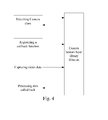
- FIG. 4 is a schematic diagram illustrating modules of a video capture system in accordance with examples of the present disclosure.
- a camera activation class is newly set up in a programming language framework layer (e.g., a C language framework layer) of the operating system to inherit a camera class in the camera bottom layer library (e.g., libui.co), and registers a callback function for the camera bottom layer.
- An application may call a capture start function interface of the camera activation class to start capturing data, call the callback function to obtain the data captured, and directly call an encoder to encode the data.
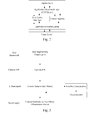
- FIG. 5 is a flowchart illustrating a method of capturing videos in accordance with examples of the present disclosure. As shown in FIG. 5 , the method may include the following procedures.
- a video capture class (also referred to as camera activation class) is set in a framework layer of a programming language of an operating system.
- the video capture class inherits a class in a video capture bottom layer library, and registers a callback function for the video capture bottom layer library.
- the programming language framework layer may be a C language framework layer, or a C++ language framework layer, or the like.
- the video capture bottom layer library (Libui.so) is the core of various libraries involved in video capture processes, e.g., Camera Java native calling library, Camera bottom layer library, Camera service library, hardware driver library, and the like.
- the video capture bottom layer library provides a camera class as the interface for the JNI layer.
- Camera.h is a header file defining external interfaces of the camera class.
- the camera class may implement basic functions of a camera, e.g., playback, stop, halt, and the like.
- Connect () is a static function for the camera class for obtaining a camera instance.
- the camera class also provides a function for setting callback functions. Callback functions may be set by upper layer applications for use by the upper layer applications. A callback functions set by the upper layer may be called by a function which set the callback function.
- a camera activation class may be set in a C language framework layer of an Android platform.
- the camera activation class may call a header file defining external interfaces of the camera class (e.g., Camera.h) in the video capture bottom layer library to inherit the video capture bottom layer library.
- a native function may be set by using a callback function interface of the header file defining external interfaces of the camera class (Camera.h) in the Libui.so. Then, the native function may be set to be the callback function for the camera class in the video capture bottom layer class.
- the video capture class sends a video capture command to the video capture bottom layer library which starts to capture video data according to the video capture command.
- the video capture bottom layer library may capture the video data by using a camera hardware service library, e.g., libcameraservice.so, in response to the video capture command.
- a camera hardware service library e.g., libcameraservice.so
- the video data is obtained from the video capture bottom layer library by using the callback function, and sent to an encoder to encode the video data.
- the video data may be obtained from the video capture bottom layer library by using the callback function, and then sent to an encoder pre-set in a C language framework layer of an Android platform to be encoded.
- the method may also include: a Java framework layer application sends a video capture command to a camera API layer which forwards the video capture command to the camera activation class in the C language framework layer.
- the method may also include: providing video data codes obtained by the encoder for an application for processing.
- the application may package and send the video data codes to a communication peer in a network, or may store the video data codes in a storage device.
- the technical mechanism may be applied to various versions of Android platforms.
- the technical mechanism is applicable to: Android Beta, Android 1.0, Android 1.5, Android 1.6, Android 2.0/2.1, Android 2.2, Android 2.3, Android 3.0, Android 4.0, Android 4.1 and so on.
- FIG. 6 is a schematic diagram illustrating modules of a video capture apparatus in accordance with examples of the present disclosure.
- the apparatus may include a setting module 601, a video capturing module 602 and a video encoding module 603.
- the setting module 601 is configured to set a video capture class in a programming language framework layer of an operating system (e.g., a C language framework layer).
- the video capture class inherits a class in a video capture bottom layer library, and registers a callback function for the video capture bottom layer library.
- the video capturing module 602 is configured to enable the video capture class to send a video capture command to the video capture bottom layer library which starts to capture video data according to the video capture command.
- the video encoding module 603 is configured to obtain the video data from the video capture bottom layer library by using the callback function, and send the video data to an encoder to encode the video data.
- the setting module 601 may set a camera activation class in a C language framework layer of an Android platform.
- the camera activation class may call a header file defining external interfaces of a camera class in the video capture bottom layer library (e.g., Camera.h) to inherit the video capture bottom layer library.
- the setting module 601 may set a native function by using a callback function interface of the header file defining external interfaces of the camera class in the video capture bottom layer library, and set the native function to be the callback function for the camera class in the video capture bottom layer library.
- the video capturing module 603 may make the camera activation class send a video capture command to the video capture bottom layer library, the header file defining external interfaces of the camera class in the video capture bottom layer library calls a video capture start function to capture video data.
- the video capturing module 603 is configured to trigger the camera activation class to send a video capture command to the video capture bottom layer library which triggers a camera hardware service library, e.g., libcameraservice.so, to capture video data according to the video capture command.
- a camera hardware service library e.g., libcameraservice.so
- the video capture command receiving module 604 is configured to trigger an application in a Java application layer to send the video capture command to a camera API layer.
- the camera API layer sends the video capture command to the camera activation class in the C language framework layer.
- the video capture method and/or apparatus may be stored in various types of storage medium in the form of instructions or an instruction set.
- the storage medium may include, but not limited to, floppy disk, compact disk, DVD, hard drive, flash memory, USB flash disk, CF card, SD card, MMC card, SM card, memory stick, xD card, and the like.
- the method and/or apparatus may also be implemented by Nand flash-based storage medium, such as USB flash disk, CF card, SD card, MMC card, SM card, memory stick, xD card, and the like.
- a camera activation class is set in a framework layer of a programming language, inherits a video capture bottom layer library and registers a callback function for the video capture bottom layer library.
- the camera activation class sends a video capture command to the video capture bottom layer library which captures video data according to the video capture command.
- the camera activation class obtains the video data from the video capture bottom layer library by using the callback function, and sends the video data to an encoder to encode the video data.
- the capturing, encoding and sending of video data are all implemented in the framework layer of a programming language, and do not need processing at Java-implemented layer. Therefore, time needed for copying and delivering the video data can be reduced, and the efficiency of capture video data can be increased.
- a module may be implemented by hardware and or machine-executable instructions.
- a hardware module may comprise dedicated circuitry or logic that is permanently configured (e.g., as a special-purpose processor, such as a field programmable gate array (FPGA) or an application-specific integrated circuit (ASIC)) to perform certain operations.
- a module may also comprise programmable logic or circuitry (e.g., as encompassed within a general-purpose processor or other programmable processor) that is temporarily configured by software to perform certain operations. It will be appreciated that the decision to implement a hardware module mechanically, in dedicated and permanently configured circuitry, or in temporarily configured circuitry (e.g., configured by software) may be driven by cost and time considerations.
Landscapes
- Engineering & Computer Science (AREA)
- Multimedia (AREA)
- Signal Processing (AREA)
- Theoretical Computer Science (AREA)
- General Physics & Mathematics (AREA)
- Physics & Mathematics (AREA)
- Software Systems (AREA)
- Computer Networks & Wireless Communication (AREA)
- General Engineering & Computer Science (AREA)
- Stored Programmes (AREA)
- Studio Devices (AREA)
- Compression Or Coding Systems Of Tv Signals (AREA)
- Closed-Circuit Television Systems (AREA)
Abstract
Description
- The present disclosure priority of Chinese patent application No.
201210370674.1 - The present disclosure relates to information processing techniques, and particularly to a method and an apparatus for capturing videos.
- Video communications are generally implemented based on video streams. Video streams can provide video in real time while ensuring video continuity. People usually have the need of performing video communications using their video capture devices, e.g., mobile phones, computers, digital televisions, and the like. But currently, no standard interface is defined for video capture devices to implement video streaming services.
- Various examples provide a method for capturing videos to simplify transmission of video data and increase the efficiency of capturing video data.
- Various examples provide an apparatus for capturing videos to simplify transmission of video data and increase the efficiency of capturing video data.
- The technical mechanism of various examples is as follows.
- A method for capturing videos may include:
- setting a camera activation class in a framework layer of a programming language, the camera activation class inheriting a video capture bottom layer library and registering a callback function for the video capture bottom layer library;
- sending, by the camera activation class, a video capture command to the video capture bottom layer library, the video capture bottom layer library starting to capture video data according to the video capture command; and
- obtaining the video data from the video capture bottom layer library by using the callback function, and sending the video data to an encoder to encode the video data.
- An apparatus for capturing videos may include a setting module, a video capturing module and a video encoding module, in which
the setting module is configured to set a camera activation class in a framework layer of a programming language, the camera activation class inheriting a video capture bottom layer library and registering a callback function at the video capture bottom layer library;
the video capturing module is configured to make the camera activation class send a video capture command to the video capture bottom layer library which starts to capture video data according to the video capture command; and
the video encoding module is configured to obtain the video data from the video capture bottom layer library by using the callback function, and send the video data to an encoder to encode the video data. - According to the above technical mechanism, a camera activation class is set in a framework layer of a programming language. The camera activation class inherits a video capture bottom layer library and registers a callback function for the video capture bottom layer library. The camera activation class sends a video capture command to the video capture bottom layer library which captures video data according to the video capture command. The camera activation class obtains the video data from the video capture bottom layer library by using the callback function, and sends the video data to an encoder to encode the video data. According to the examples of the present disclosure, the capturing, encoding and sending of video data are all implemented in the framework layer of a programming language, and do not need processing at the Java layer. Therefore, time needed for copying and delivering the video data can be reduced, and the efficiency of capturing videos can be increased.
-
-
FIG. 1 is a schematic diagram illustrating an example of a computing device; -
FIG. 2 is a schematic diagram illustrating modules of an operating system; -
FIG. 3 is a schematic diagram illustrating modules of a video capture system in accordance with examples of the present disclosure; -
FIG. 4 is a schematic diagram illustrating modules of a video capture system in accordance with examples of the present disclosure; -
FIG. 5 is a flowchart illustrating a method for capturing videos in accordance with examples of the present disclosure; -
FIG. 6 is a schematic diagram illustrating modules of a video capture apparatus in accordance with examples of the present disclosure. - For simplicity and illustrative purposes, the present disclosure is described by referring mainly to an example thereof. In the following description, numerous specific details are set forth in order to provide a thorough understanding of the present disclosure. It will be readily apparent however, that the present disclosure may be practiced without limitation to these specific details. In other instances, some methods and structures have not been described in detail so as not to unnecessarily obscure the present disclosure. As used herein, the term "includes" means includes but not limited to, the term "including" means including but not limited to. The term "based on" means based at least in part on. Quantities of an element, unless specifically mentioned, may be one or a plurality of, or at least one.
- In an example, a computing device may execute methods and software systems of the present disclosure.
FIG. 1 is a schematic diagram illustrating an example of a computing device. As shown inFIG. 1 ,computing device 100 may be capable of executing a method and apparatus of the present disclosure. Thecomputing device 100 may, for example, be a device such as a personal desktop computer or a portable device, such as a laptop computer, a tablet computer, a cellular telephone, or a smart phone. Thecomputing device 100 may also be a server that connects to the above devices locally or via a network. - The
computing device 100 may vary in terms of capabilities or features. Claimed subject matter is intended to cover a wide range of potential variations. For example, thecomputing device 100 may include a keypad/keyboard 156. It may also comprise adisplay 154, such as a liquid crystal display (LCD), or a display with a high degree of functionality, such as a touch-sensitive color 2D or 3D display. In contrast, however, as another example, a web-enabledcomputing device 100 may include one or more physical or virtual keyboards, andmass storage medium 130. - The
computing device 100 may also include or may execute a variety ofoperating systems 141, including an operating system, such as a WindowsTM or LinuxTM, or a mobile operating system, such as iOSTM, AndroidTM, or Windows MobileTM. Thecomputing device 100 may include or may execute a variety ofpossible applications 142, such as an anti-virus application 145.Anapplication 142 may communicate with other devices over the communication network. - Further, the
computing device 100 may include one or multiple non-transitory processor-readable storage medium 130 and one ormultiple processors 122 in communication with the non-transitory processor-readable storage media 130. For example, the non-transitory processor-readable storage medium 130 may be a RAM memory, flash memory, ROM memory, EPROM memory, EEPROM memory, registers, hard disk, a removable disk, a CD-ROM, or any other form of non-transitory storage medium known in the art. The one or more non-transitory processor-readable storage medium 130 may store a series of instructions, or units and/or modules that comprise the series of instructions, for conducting operations described in the present disclosure. The one or multiple processors may be configured to execute the series of instructions and perform the operations in examples of the present application. -
FIG. 2 is a schematic diagram illustrating modules of an operating system. As shown inFIG. 2 , the operating system may include a Linux kernel, a native framework, a Java environment (including a hardware abstraction layer), an application framework and applications. - The "native **" here refers to "** implemented by the programming language of the operating system kernel".
- Linux kernel generally includes a Linux operating system and drivers which are generally implemented by the C language. Functions of the Linux kernel mainly include: security, memory management, process management, network protocols, driver models, and so on. The Linux kernel may also serve as the abstract layer between hardware and the software stack. In an example, besides a standard Linux kernel, kernel driver programs are also provided in the operating system, e.g., Binder (IPC) drivers, display drivers, input device drivers, audio system drivers, camera drivers, WiFi drivers, Blue-tooth drivers, power supply management drivers, and the like.
- The native framework and the Java environment (e.g., LIBRARIES and ANDROID RUNTIME of an Android operating system) are generally implemented by C/C++ language. C/C++ libraries in the native framework layer can be used by different components of the operating system, and provide services for developers through the application framework. The C/C++ libraries may include the following libraries. The library of the C system (libc) is a library of standard C functions inherited from BSD (Berkeley Standard Distribution), and is customized for embedded Linux-based devices. A multimedia library is PackerVideo-based OpenCore. The multimedia library supports playback and recording of data in multiple commonly-used audio/video formats, and supports encoding/decoding of data in multiple media formats. A surface manager is a manager of display sub systems, and provides seamless merging of 2D and 3D image layers for various application programs. LibWebCore is a Web browser engine supporting browsers and embedded Web views. SGL is a Skia graphic library, and is a 2D image engine at the bottom layer. 3D libraries are implemented based on OpenGL ES1.0 API, and can use hardware 3D acceleration (if available) or highly optimized software 3D acceleration. FreeType is for displaying bitmaps and vector fonts. The Java environment (e.g., ANDROID RUNTIME) provides most functions of the Java kernel, and is composed of Dalvik Java virtual machines and basic Java class libraries. Dalvik is a Java virtual machine used in the operating system. Each Android application runs in its own process, and has an individual Dalvik virtual machine instance. Dalvik is designed to be a virtual system which can run multiple virtual machine instances at the same time with high efficiency. The virtual system executes Dalvik executable files having a suffix .dex. Files in the .dex format have done optimization to usage of small pieces of memory. Virtual machines are based on registers. All classes are compiled by a Java compiler, converted into the format .dex by "dx" tools in SDK (Software Development Kit), and then executed by a virtual machine. Dalvik virtual machines relies on some functions of the Linux kernel, e.g., the thread mechanism and bottom layer memory management mechanisms.
- The Android framework enables developers to freely visit the API framework used by core applications.
- Applications in the operating system are all programmed using the Java language. Applications developed by users are in the same level with core applications in the operating system, and are constructed based on the API provided by the operating system.
- In the above structure of the operating system, a video capture system, also referred to as a camera system, is capable of inputting video data. The video capture system may be used by multiple applications such as a camera application, a webcam application, a video call application and the like. The camera system may include native codes and Java codes. The native codes refer to C/C++ language codes. An API (Application Program Interface) of the native codes is available to be called by two types of applications. For one type of applications, the API provided by the native codes encapsulates JNI (Java native interface) of the camera system into a Java class which may be called by applications such as a camera application. For the other type of applications, the API may also be called when video input is needed by applications programmed using native codes.
- In an example, after video data is captured, the video capture system may call an API provided by the native codes to obtain a video data flow, and send the video data flow directly to an encoder for encoding. The video data will not be processed by the Java framework and applications. The API provided by the native codes may be called by native codes of an application (e.g., the native codes may be C/C++ codes).
- In an example, the encoder may be re-encapsulated to make the video encoding API more suitable to be called by the native layer. As such, the capturing, encoding and sending of the video data will not processed by the Java layer, and system performances can also be improved.
- The technical mechanism is applicable to the operating system as shown in
FIG. 2 or other similar operating systems, e.g., Android, Symbian, Windows Phone, BlackBerry OS, Mac OSX, and so on. -
FIG. 3 is a schematic diagram illustrating modules of a video capture system in accordance with examples of the present disclosure. - As shown in
FIG. 3 , various examples capture and encode video data through inheriting the camera bottom layer library so as to avoid the need of calling by the Java native codes. -
FIG. 4 is a schematic diagram illustrating modules of a video capture system in accordance with examples of the present disclosure. As shown inFIG. 4 , a camera activation class is newly set up in a programming language framework layer (e.g., a C language framework layer) of the operating system to inherit a camera class in the camera bottom layer library (e.g., libui.co), and registers a callback function for the camera bottom layer. An application may call a capture start function interface of the camera activation class to start capturing data, call the callback function to obtain the data captured, and directly call an encoder to encode the data. - According to various examples, there is no need to transfer video data from the Java native framework layer to the Java application layer before the encoder is called to encode the video data. Thus, the process of copying and delivering the video data is simplified, and efficiency of capturing videos is also improved.
-
FIG. 5 is a flowchart illustrating a method of capturing videos in accordance with examples of the present disclosure. As shown inFIG. 5 , the method may include the following procedures. - At
block 501, a video capture class (also referred to as camera activation class) is set in a framework layer of a programming language of an operating system. The video capture class inherits a class in a video capture bottom layer library, and registers a callback function for the video capture bottom layer library. - The programming language framework layer may be a C language framework layer, or a C++ language framework layer, or the like. The video capture bottom layer library (Libui.so) is the core of various libraries involved in video capture processes, e.g., Camera Java native calling library, Camera bottom layer library, Camera service library, hardware driver library, and the like. The video capture bottom layer library provides a camera class as the interface for the JNI layer. Camera.h is a header file defining external interfaces of the camera class. The camera class may implement basic functions of a camera, e.g., playback, stop, halt, and the like. Connect () is a static function for the camera class for obtaining a camera instance. The camera class also provides a function for setting callback functions. Callback functions may be set by upper layer applications for use by the upper layer applications. A callback functions set by the upper layer may be called by a function which set the callback function.
- In an example, a camera activation class may be set in a C language framework layer of an Android platform. The camera activation class may call a header file defining external interfaces of the camera class (e.g., Camera.h) in the video capture bottom layer library to inherit the video capture bottom layer library.
- In an example, a native function may be set by using a callback function interface of the header file defining external interfaces of the camera class (Camera.h) in the Libui.so. Then, the native function may be set to be the callback function for the camera class in the video capture bottom layer class.
- At
block 502, the video capture class sends a video capture command to the video capture bottom layer library which starts to capture video data according to the video capture command. - The video capture bottom layer library may capture the video data by using a camera hardware service library, e.g., libcameraservice.so, in response to the video capture command.
- At
block 503, the video data is obtained from the video capture bottom layer library by using the callback function, and sent to an encoder to encode the video data. - In an example, the video data may be obtained from the video capture bottom layer library by using the callback function, and then sent to an encoder pre-set in a C language framework layer of an Android platform to be encoded.
- In an example, the method may also include: a Java framework layer application sends a video capture command to a camera API layer which forwards the video capture command to the camera activation class in the C language framework layer.
- In an example, the method may also include: providing video data codes obtained by the encoder for an application for processing. The application may package and send the video data codes to a communication peer in a network, or may store the video data codes in a storage device.
- The technical mechanism may be applied to various versions of Android platforms. For example, the technical mechanism is applicable to: Android Beta, Android 1.0, Android 1.5, Android 1.6, Android 2.0/2.1, Android 2.2, Android 2.3, Android 3.0, Android 4.0, Android 4.1 and so on.
- The above only lists versions of Android platforms as an example of the application scenario of the technical mechanism of the examples. But the technical mechanism is also applicable to any version of Android-based platforms and other similar operating systems.
-
FIG. 6 is a schematic diagram illustrating modules of a video capture apparatus in accordance with examples of the present disclosure. - As shown in
FIG. 6 , the apparatus may include asetting module 601, avideo capturing module 602 and avideo encoding module 603. - The
setting module 601 is configured to set a video capture class in a programming language framework layer of an operating system (e.g., a C language framework layer). The video capture class inherits a class in a video capture bottom layer library, and registers a callback function for the video capture bottom layer library. - The
video capturing module 602 is configured to enable the video capture class to send a video capture command to the video capture bottom layer library which starts to capture video data according to the video capture command. - The
video encoding module 603 is configured to obtain the video data from the video capture bottom layer library by using the callback function, and send the video data to an encoder to encode the video data. - In an example, the
setting module 601 may set a camera activation class in a C language framework layer of an Android platform. The camera activation class may call a header file defining external interfaces of a camera class in the video capture bottom layer library (e.g., Camera.h) to inherit the video capture bottom layer library. - In an example, the
setting module 601 may set a native function by using a callback function interface of the header file defining external interfaces of the camera class in the video capture bottom layer library, and set the native function to be the callback function for the camera class in the video capture bottom layer library. - In an example, the
video capturing module 603 may make the camera activation class send a video capture command to the video capture bottom layer library, the header file defining external interfaces of the camera class in the video capture bottom layer library calls a video capture start function to capture video data. - In an example, the video encoding module 6026 may obtain the video data from the video capture bottom layer library by using the callback function, and send the video data to the encoder pre-set in a C language framework layer of an Android platform to encode the video data.
- In an example, the
video capturing module 603 is configured to trigger the camera activation class to send a video capture command to the video capture bottom layer library which triggers a camera hardware service library, e.g., libcameraservice.so, to capture video data according to the video capture command. - In an example, the apparatus may also include a video capture
command receiving module 604. - The video capture
command receiving module 604 is configured to trigger an application in a Java application layer to send the video capture command to a camera API layer. The camera API layer sends the video capture command to the camera activation class in the C language framework layer. - The technical mechanism of the examples is applicable to various terminal devices. The terminal devices may include, but not limited to, feature phones, smart phones, PCs, tablet computers, personal digital assistants (PDA), and the like.
- The above description takes the Android system as an example. The technical mechanism is also applicable to other operating systems. The operating systems may include, but not limited to: Android, iOS, Symbian, Windows Phone, BlackBerry OS, Mac OSX and the like.
- When applied to other operating systems than Android, the technical mechanism may be adjusted to adapt to requirements and application environment of the operating systems, e.g., adjusting the name of the modules, the order of the steps being executed, and the like. But the modifications are still within the scope of the present disclosure.
- Various forms may be adopted to implement the video capture method and/or apparatus. The apparatus may be programmed into a plug-in that can be installed in a mobile terminal based on certain application interface standards, or may be encapsulated into an application which can be downloaded and used by users. When the apparatus is programmed to be a plug-in, the format of the plug-in may be ocx, dll, cab or the like. The apparatus may also be implemented by a Flash plug-in, a RealPlayer plug-in, an MMS plug-in, a MIDI plug-in, an ActiveX plug-in or the like.
- A machine-readable storage medium is also provided, which is to store instructions executable by a machine to implement the method of various examples. Specifically, a system or apparatus may have a storage medium which stores machine-readable program codes for implementing functions of any of the above examples. A computing device (or a CPU or an MPU) in the system or the apparatus may read and execute the program codes stored in the storage medium. In addition, the program codes may cause an operating system running in a computer to implement part or all of the operations. In addition, the program codes may be read out from a storage medium and be written in a storage device in an extension board inserted in the computer or in a storage device in an extension unit connected to the computer. In this example, a CPU in the extension board or the extension unit executes at least part of the operations according to the instructions of the program codes to realize the technical mechanism of any of the above examples.
- The video capture method and/or apparatus may be stored in various types of storage medium in the form of instructions or an instruction set. The storage medium may include, but not limited to, floppy disk, compact disk, DVD, hard drive, flash memory, USB flash disk, CF card, SD card, MMC card, SM card, memory stick, xD card, and the like. The method and/or apparatus may also be implemented by Nand flash-based storage medium, such as USB flash disk, CF card, SD card, MMC card, SM card, memory stick, xD card, and the like.
- According to the above technical mechanism, a camera activation class is set in a framework layer of a programming language, inherits a video capture bottom layer library and registers a callback function for the video capture bottom layer library. The camera activation class sends a video capture command to the video capture bottom layer library which captures video data according to the video capture command. The camera activation class obtains the video data from the video capture bottom layer library by using the callback function, and sends the video data to an encoder to encode the video data. According to the examples of the present disclosure, the capturing, encoding and sending of video data are all implemented in the framework layer of a programming language, and do not need processing at Java-implemented layer. Therefore, time needed for copying and delivering the video data can be reduced, and the efficiency of capture video data can be increased.
- It should be understood that in the above processes and structures, not all of the procedures and modules are necessary. Certain procedures or modules may be omitted according to the needs. The order of the procedures is not fixed, and can be adjusted according to the needs. The modules are defined based on function simply for facilitating description. In implementation, a module may be implemented by multiple modules, and functions of multiple modules may be implemented by the same module. The modules may reside in the same device or distribute in different devices. The "first", "second" in the above descriptions are merely for distinguishing two similar objects, and have no substantial meanings.
- In various embodiments, a module may be implemented by hardware and or machine-executable instructions. For example, a hardware module may comprise dedicated circuitry or logic that is permanently configured (e.g., as a special-purpose processor, such as a field programmable gate array (FPGA) or an application-specific integrated circuit (ASIC)) to perform certain operations. A module may also comprise programmable logic or circuitry (e.g., as encompassed within a general-purpose processor or other programmable processor) that is temporarily configured by software to perform certain operations. It will be appreciated that the decision to implement a hardware module mechanically, in dedicated and permanently configured circuitry, or in temporarily configured circuitry (e.g., configured by software) may be driven by cost and time considerations.
- The scope of the claims should not be limited by the embodiments set forth in the examples, but should be given the broadest interpretation consistent with the description as a whole.
Claims (16)
- A method for capturing videos, comprising:setting a video capture class in a framework layer of a programming language, the video capture class inheriting a class in a video capture bottom layer library and registering a callback function for the video capture bottom layer library;sending, by the video capture class, a video capture command to the video capture bottom layer library which starts to capture video data according to the video capture command; andobtaining the video data from the video capture bottom layer library by using the callback function, and sending the video data to an encoder to encode the video data.
- The method of claim 1, wherein the setting the video capture class in the framework layer of the programming language, the video capture class inheriting a class in the video capture bottom layer library comprises:setting the video capture class in the framework layer of the programming language, the video capture class being capable of calling a header file defining external interfaces in a camera class in the video capture bottom layer library (Camera.h).
- The method of claim 1, wherein registering a callback function for the video capture bottom layer library comprises:setting a first function by using a callback function interface of the header file defining external interfaces of the camera class in the video capture bottom layer library (Camera.h); andsetting the first function as the callback function for the camera class in the video capture bottom layer library.
- The method of claim 1, wherein the sending by the video capture class a video capture command to the video capture bottom layer library which starts to capture video data according to the video capture command comprises:sending, by the video capture class, the video capture command to the video capture bottom layer library; andtriggering, by the video capture bottom layer library, the header file defining external interfaces in the camera class (Camera.h) to call a video capture start function to capture the video data.
- The method of claim 1, wherein the obtaining the video data from the video capture bottom layer library by using the callback function and sending the video data to the encoder to encode the video data comprise:obtaining the video data from the video capture bottom layer library by using the callback function; andsending the video data to the encoder which is pre-set in the framework layer of the programming language to encode the video data.
- The method of any of claims 1-5, wherein the video capture bottom layer library starts to capturing video data according to the video capture command comprises:capturing, by the video capturing bottom layer library, the video data by using a camera hardware service library libcameraservice.so in response to the video capture command.
- The method of any of claims 1-5, wherein the video capture bottom layer library is compiled into a library libui.so.
- The method of any of claims 1-5, further comprising:sending, by an application in a Java framework layer, the video capture command to a camera API layer; andsending, by the camera API layer, the video capture command to the video capture class in the framework layer of the programming language.
- An apparatus for capturing videos, comprising a processor and a memory, the memory storing a setting module, a video capturing module and a video encoding module, wherein
the setting module is configured to set a video capture class in a framework layer of a programming language, the video capture class inheriting a class in a video capture bottom layer library and registering a callback function for the video capture bottom layer library;
the video capturing module is configured to trigger the video capture class to send a video capture command to the video capture bottom layer library which starts to capture video data according to the video capture command; and
the video encoding module is configured to obtain the video data from the video capture bottom layer library by using the callback function, and send the video data to an encoder to encode the video data. - The apparatus of claim 9, wherein
the setting module is configured to set the video capture class in the framework layer of the programming language, the video capture class inheriting a class in the video capture bottom layer library by calling a header file defining external interfaces of a camera class in the video capture bottom layer library (Camera.h). - The apparatus of claim 9, wherein
the setting module is configured to set a native function by using a callback function interface of the header file defining external interfaces of the camera class in the video capture bottom layer library (Camera.h), and set the native function as the callback function for the camera class in the video capture bottom layer library. - The apparatus of claim 9, wherein
the video capturing module is configured to send a video capture command to the video capture bottom layer library, a header file defining external interfaces of a camera class in the video capture bottom layer library (Camera.h) calling a video capture start function to start capturing the video data. - The apparatus of claim 9, wherein
the video encoding module is configured to obtain the video data from the video capture bottom layer library by using the callback function, and send the video data to an encoder pre-set in the framework layer of the programming language to encode the video data. - The apparatus of any of claims 9-13, wherein
the video capturing module is configured to make the video capture class send the video capture command to the video capture bottom layer library which uses a camera hardware service library libcameraservice.so to capture the video data. - The apparatus of any of claims 9-13, wherein the video capture bottom layer library is compiled into a library libui.so.
- The apparatus of any of claims 9-13, wherein the memory further comprises a video capture command receiving module,
the video capture command receiving module is configured to trigger an application in a Java application layer to send the video capture command to a camera API layer which sends the video capture command to the video capture class in the framework layer of the programming language.
Applications Claiming Priority (2)
| Application Number | Priority Date | Filing Date | Title |
|---|---|---|---|
| CN201210370674.1A CN103716691B (en) | 2012-09-29 | 2012-09-29 | A kind of video capture method and device |
| PCT/CN2013/084154 WO2014048314A1 (en) | 2012-09-29 | 2013-09-25 | Video acquisition method and device |
Publications (3)
| Publication Number | Publication Date |
|---|---|
| EP2903262A1 true EP2903262A1 (en) | 2015-08-05 |
| EP2903262A4 EP2903262A4 (en) | 2015-10-21 |
| EP2903262B1 EP2903262B1 (en) | 2021-11-10 |
Family
ID=50386998
Family Applications (1)
| Application Number | Title | Priority Date | Filing Date |
|---|---|---|---|
| EP13841730.8A Active EP2903262B1 (en) | 2012-09-29 | 2013-09-25 | Video acquisition method and device |
Country Status (5)
| Country | Link |
|---|---|
| US (1) | US9819858B2 (en) |
| EP (1) | EP2903262B1 (en) |
| CN (1) | CN103716691B (en) |
| CA (1) | CA2885114C (en) |
| WO (1) | WO2014048314A1 (en) |
Families Citing this family (12)
| Publication number | Priority date | Publication date | Assignee | Title |
|---|---|---|---|---|
| CN104967770B (en) * | 2014-05-14 | 2018-07-10 | 腾讯科技(北京)有限公司 | Video capture method and device |
| CN104038731A (en) * | 2014-05-15 | 2014-09-10 | 塔里木大学 | Mobile-internet real-time video monitoring system |
| CN105376494B (en) * | 2015-11-30 | 2018-11-23 | 诚迈科技(南京)股份有限公司 | A method of multichannel USB camera is supported based on Android system |
| CN107295243A (en) * | 2016-04-05 | 2017-10-24 | 希姆通信息技术(上海)有限公司 | The method and mobile terminal of mobile terminal collection image |
| CN106250113A (en) * | 2016-07-18 | 2016-12-21 | 百富计算机技术(深圳)有限公司 | A kind of application development platform |
| CN106210724B (en) * | 2016-07-21 | 2020-06-02 | 腾讯科技(深圳)有限公司 | Picture decoding method and device |
| CN107995524A (en) * | 2017-12-07 | 2018-05-04 | 郑州云海信息技术有限公司 | A client system connected to a network video server and its design and data processing method |
| CN109976836A (en) * | 2019-01-31 | 2019-07-05 | 中山大学 | A kind of method and system obtaining android terminal camera data |
| CN112019484B (en) * | 2019-05-31 | 2024-06-07 | 阿里巴巴集团控股有限公司 | Method for acquiring sound source data and related equipment |
| CN114615423B (en) | 2019-09-12 | 2024-05-14 | 华为技术有限公司 | Callback flow processing method and device |
| US20210120259A1 (en) * | 2020-12-23 | 2021-04-22 | Intel Corporation | Technologies for memory-efficient video encoding and decoding |
| CN116708988B (en) * | 2022-02-25 | 2024-08-06 | 荣耀终端有限公司 | Electronic device and shooting method and medium thereof |
Family Cites Families (15)
| Publication number | Priority date | Publication date | Assignee | Title |
|---|---|---|---|---|
| US5940610A (en) * | 1995-10-05 | 1999-08-17 | Brooktree Corporation | Using prioritized interrupt callback routines to process different types of multimedia information |
| US5940160A (en) * | 1998-03-01 | 1999-08-17 | Shih; Hung-Yu | Spectacles |
| US6489973B1 (en) * | 1999-10-04 | 2002-12-03 | Canon Kabushiki Kaisha | Image acquisition architecture |
| US7382970B2 (en) * | 2001-03-01 | 2008-06-03 | Sony Corporation | Process control manager for audio/video file system |
| JP2003296138A (en) * | 2002-03-29 | 2003-10-17 | Fuji Electric Co Ltd | Simulated debugging of embedded device applications |
| CN1170232C (en) * | 2002-10-16 | 2004-10-06 | 西安交通大学 | Reconfigurable Machine Vision System Based on PCI and Vision Bus |
| CN100375070C (en) * | 2004-12-31 | 2008-03-12 | 联想(北京)有限公司 | Method for acquiring video data by using camera phone as computer camera |
| JP2007317101A (en) * | 2006-05-29 | 2007-12-06 | Ricoh Co Ltd | Information processing apparatus, image processing apparatus, image forming apparatus, and information processing program |
| US7979264B2 (en) * | 2008-02-26 | 2011-07-12 | Streaming Networks (Pvt) Ltd | System and method for interfacing a media processing apparatus with a computer |
| WO2012018786A1 (en) * | 2010-08-02 | 2012-02-09 | Ncomputing Inc. | System and method for efficiently streaming digital video |
| CN102377985A (en) * | 2010-08-07 | 2012-03-14 | 浙江工业大学 | Media module of mobile video monitoring system |
| US20120254759A1 (en) * | 2011-03-31 | 2012-10-04 | Greenberg David S | Browser-based recording of content |
| CN102319285B (en) * | 2011-08-08 | 2013-03-13 | 李熙东 | External medicament for treating psoriasis and preparation method thereof |
| KR20130034832A (en) * | 2011-09-29 | 2013-04-08 | 삼성전자주식회사 | Expansion function supporting method and electric device supporting the same |
| CN102547239B (en) * | 2011-12-29 | 2014-01-29 | 浙江工业大学 | Video surveillance system based on Android mobile terminal |
-
2012
- 2012-09-29 CN CN201210370674.1A patent/CN103716691B/en active Active
-
2013
- 2013-09-25 EP EP13841730.8A patent/EP2903262B1/en active Active
- 2013-09-25 WO PCT/CN2013/084154 patent/WO2014048314A1/en not_active Ceased
- 2013-09-25 CA CA2885114A patent/CA2885114C/en active Active
-
2015
- 2015-03-27 US US14/671,060 patent/US9819858B2/en active Active
Also Published As
| Publication number | Publication date |
|---|---|
| WO2014048314A1 (en) | 2014-04-03 |
| CN103716691A (en) | 2014-04-09 |
| US9819858B2 (en) | 2017-11-14 |
| CA2885114A1 (en) | 2014-04-03 |
| CN103716691B (en) | 2017-10-27 |
| US20150201125A1 (en) | 2015-07-16 |
| EP2903262B1 (en) | 2021-11-10 |
| EP2903262A4 (en) | 2015-10-21 |
| CA2885114C (en) | 2019-07-16 |
Similar Documents
| Publication | Publication Date | Title |
|---|---|---|
| CA2885114C (en) | Video acquisition method and device | |
| AU2021229220B2 (en) | Image processing method and device | |
| CN110874217B (en) | Interface display method and device for quick application and storage medium | |
| CN101930366B (en) | Browser-based mobile phone run time system | |
| CN110865863B (en) | Interface display method and device for fast application and storage medium | |
| CN111580879A (en) | Applet running method and device, electronic equipment and computer storage medium | |
| CN106598655A (en) | Application page processing method and apparatus | |
| KR20140075786A (en) | Method and device for image-capturing application screen for use in mobile terminal | |
| CN112114808A (en) | Page rendering method, device, and electronic device | |
| CN110851240B (en) | Function calling method, device and storage medium | |
| WO2015074526A1 (en) | Method and apparatus for injecting java by tecode into target process | |
| CN109743359B (en) | Hybrid communication processing method and device, computer equipment and storage medium | |
| CN108647032A (en) | Using loading method and device, computer installation and computer readable storage medium | |
| CN111078316B (en) | Layout file loading method, device, storage medium and electronic equipment | |
| CN110865864B (en) | Quick application interface display method, device, equipment and storage medium | |
| CN115220803A (en) | A data processing method and device | |
| CN113676748A (en) | Cloud game screen capture interaction method and system | |
| CN113127361A (en) | Application program development method and device, electronic equipment and storage medium | |
| CN106462911A (en) | Method for providing cloud streaming service, device and system for same, and computer-readable recording medium having, recorded thereon, cloud streaming script code for same | |
| CN115865908A (en) | Remote desktop system startup control method and related equipment | |
| CN110865760A (en) | Electronic equipment operation method and device, electronic equipment and storage medium | |
| CN111104183B (en) | Application running method, device, electronic device and storage medium | |
| CN115454596A (en) | Webpage service processing method, device, equipment and medium | |
| CN106575304A (en) | Method, apparatus for loading a resource in a web page on a device | |
| CN113271497B (en) | Video playing method, intelligent terminal, storage medium and program product |
Legal Events
| Date | Code | Title | Description |
|---|---|---|---|
| PUAI | Public reference made under article 153(3) epc to a published international application that has entered the european phase |
Free format text: ORIGINAL CODE: 0009012 |
|
| 17P | Request for examination filed |
Effective date: 20150428 |
|
| AK | Designated contracting states |
Kind code of ref document: A1 Designated state(s): AL AT BE BG CH CY CZ DE DK EE ES FI FR GB GR HR HU IE IS IT LI LT LU LV MC MK MT NL NO PL PT RO RS SE SI SK SM TR |
|
| AX | Request for extension of the european patent |
Extension state: BA ME |
|
| RA4 | Supplementary search report drawn up and despatched (corrected) |
Effective date: 20150918 |
|
| RIC1 | Information provided on ipc code assigned before grant |
Ipc: G06F 9/54 20060101ALI20150914BHEP Ipc: H04N 7/18 20060101AFI20150914BHEP Ipc: H04N 19/85 20140101ALI20150914BHEP |
|
| DAX | Request for extension of the european patent (deleted) | ||
| STAA | Information on the status of an ep patent application or granted ep patent |
Free format text: STATUS: EXAMINATION IS IN PROGRESS |
|
| 17Q | First examination report despatched |
Effective date: 20181126 |
|
| GRAP | Despatch of communication of intention to grant a patent |
Free format text: ORIGINAL CODE: EPIDOSNIGR1 |
|
| STAA | Information on the status of an ep patent application or granted ep patent |
Free format text: STATUS: GRANT OF PATENT IS INTENDED |
|
| INTG | Intention to grant announced |
Effective date: 20210602 |
|
| GRAS | Grant fee paid |
Free format text: ORIGINAL CODE: EPIDOSNIGR3 |
|
| GRAA | (expected) grant |
Free format text: ORIGINAL CODE: 0009210 |
|
| STAA | Information on the status of an ep patent application or granted ep patent |
Free format text: STATUS: THE PATENT HAS BEEN GRANTED |
|
| AK | Designated contracting states |
Kind code of ref document: B1 Designated state(s): AL AT BE BG CH CY CZ DE DK EE ES FI FR GB GR HR HU IE IS IT LI LT LU LV MC MK MT NL NO PL PT RO RS SE SI SK SM TR |
|
| REG | Reference to a national code |
Ref country code: GB Ref legal event code: FG4D |
|
| REG | Reference to a national code |
Ref country code: AT Ref legal event code: REF Ref document number: 1447157 Country of ref document: AT Kind code of ref document: T Effective date: 20211115 Ref country code: CH Ref legal event code: EP |
|
| REG | Reference to a national code |
Ref country code: DE Ref legal event code: R096 Ref document number: 602013080010 Country of ref document: DE |
|
| REG | Reference to a national code |
Ref country code: IE Ref legal event code: FG4D |
|
| REG | Reference to a national code |
Ref country code: LT Ref legal event code: MG9D |
|
| REG | Reference to a national code |
Ref country code: NL Ref legal event code: MP Effective date: 20211110 |
|
| REG | Reference to a national code |
Ref country code: AT Ref legal event code: MK05 Ref document number: 1447157 Country of ref document: AT Kind code of ref document: T Effective date: 20211110 |
|
| PG25 | Lapsed in a contracting state [announced via postgrant information from national office to epo] |
Ref country code: RS Free format text: LAPSE BECAUSE OF FAILURE TO SUBMIT A TRANSLATION OF THE DESCRIPTION OR TO PAY THE FEE WITHIN THE PRESCRIBED TIME-LIMIT Effective date: 20211110 Ref country code: LT Free format text: LAPSE BECAUSE OF FAILURE TO SUBMIT A TRANSLATION OF THE DESCRIPTION OR TO PAY THE FEE WITHIN THE PRESCRIBED TIME-LIMIT Effective date: 20211110 Ref country code: FI Free format text: LAPSE BECAUSE OF FAILURE TO SUBMIT A TRANSLATION OF THE DESCRIPTION OR TO PAY THE FEE WITHIN THE PRESCRIBED TIME-LIMIT Effective date: 20211110 Ref country code: BG Free format text: LAPSE BECAUSE OF FAILURE TO SUBMIT A TRANSLATION OF THE DESCRIPTION OR TO PAY THE FEE WITHIN THE PRESCRIBED TIME-LIMIT Effective date: 20220210 Ref country code: AT Free format text: LAPSE BECAUSE OF FAILURE TO SUBMIT A TRANSLATION OF THE DESCRIPTION OR TO PAY THE FEE WITHIN THE PRESCRIBED TIME-LIMIT Effective date: 20211110 |
|
| PG25 | Lapsed in a contracting state [announced via postgrant information from national office to epo] |
Ref country code: IS Free format text: LAPSE BECAUSE OF FAILURE TO SUBMIT A TRANSLATION OF THE DESCRIPTION OR TO PAY THE FEE WITHIN THE PRESCRIBED TIME-LIMIT Effective date: 20220310 Ref country code: SE Free format text: LAPSE BECAUSE OF FAILURE TO SUBMIT A TRANSLATION OF THE DESCRIPTION OR TO PAY THE FEE WITHIN THE PRESCRIBED TIME-LIMIT Effective date: 20211110 Ref country code: PT Free format text: LAPSE BECAUSE OF FAILURE TO SUBMIT A TRANSLATION OF THE DESCRIPTION OR TO PAY THE FEE WITHIN THE PRESCRIBED TIME-LIMIT Effective date: 20220310 Ref country code: PL Free format text: LAPSE BECAUSE OF FAILURE TO SUBMIT A TRANSLATION OF THE DESCRIPTION OR TO PAY THE FEE WITHIN THE PRESCRIBED TIME-LIMIT Effective date: 20211110 Ref country code: NO Free format text: LAPSE BECAUSE OF FAILURE TO SUBMIT A TRANSLATION OF THE DESCRIPTION OR TO PAY THE FEE WITHIN THE PRESCRIBED TIME-LIMIT Effective date: 20220210 Ref country code: NL Free format text: LAPSE BECAUSE OF FAILURE TO SUBMIT A TRANSLATION OF THE DESCRIPTION OR TO PAY THE FEE WITHIN THE PRESCRIBED TIME-LIMIT Effective date: 20211110 Ref country code: LV Free format text: LAPSE BECAUSE OF FAILURE TO SUBMIT A TRANSLATION OF THE DESCRIPTION OR TO PAY THE FEE WITHIN THE PRESCRIBED TIME-LIMIT Effective date: 20211110 Ref country code: HR Free format text: LAPSE BECAUSE OF FAILURE TO SUBMIT A TRANSLATION OF THE DESCRIPTION OR TO PAY THE FEE WITHIN THE PRESCRIBED TIME-LIMIT Effective date: 20211110 Ref country code: GR Free format text: LAPSE BECAUSE OF FAILURE TO SUBMIT A TRANSLATION OF THE DESCRIPTION OR TO PAY THE FEE WITHIN THE PRESCRIBED TIME-LIMIT Effective date: 20220211 Ref country code: ES Free format text: LAPSE BECAUSE OF FAILURE TO SUBMIT A TRANSLATION OF THE DESCRIPTION OR TO PAY THE FEE WITHIN THE PRESCRIBED TIME-LIMIT Effective date: 20211110 |
|
| RAP4 | Party data changed (patent owner data changed or rights of a patent transferred) |
Owner name: TENCENT TECHNOLOGY (SHENZHEN) COMPANY LIMITED |
|
| PG25 | Lapsed in a contracting state [announced via postgrant information from national office to epo] |
Ref country code: SM Free format text: LAPSE BECAUSE OF FAILURE TO SUBMIT A TRANSLATION OF THE DESCRIPTION OR TO PAY THE FEE WITHIN THE PRESCRIBED TIME-LIMIT Effective date: 20211110 Ref country code: SK Free format text: LAPSE BECAUSE OF FAILURE TO SUBMIT A TRANSLATION OF THE DESCRIPTION OR TO PAY THE FEE WITHIN THE PRESCRIBED TIME-LIMIT Effective date: 20211110 Ref country code: RO Free format text: LAPSE BECAUSE OF FAILURE TO SUBMIT A TRANSLATION OF THE DESCRIPTION OR TO PAY THE FEE WITHIN THE PRESCRIBED TIME-LIMIT Effective date: 20211110 Ref country code: EE Free format text: LAPSE BECAUSE OF FAILURE TO SUBMIT A TRANSLATION OF THE DESCRIPTION OR TO PAY THE FEE WITHIN THE PRESCRIBED TIME-LIMIT Effective date: 20211110 Ref country code: DK Free format text: LAPSE BECAUSE OF FAILURE TO SUBMIT A TRANSLATION OF THE DESCRIPTION OR TO PAY THE FEE WITHIN THE PRESCRIBED TIME-LIMIT Effective date: 20211110 Ref country code: CZ Free format text: LAPSE BECAUSE OF FAILURE TO SUBMIT A TRANSLATION OF THE DESCRIPTION OR TO PAY THE FEE WITHIN THE PRESCRIBED TIME-LIMIT Effective date: 20211110 |
|
| REG | Reference to a national code |
Ref country code: DE Ref legal event code: R097 Ref document number: 602013080010 Country of ref document: DE |
|
| PLBE | No opposition filed within time limit |
Free format text: ORIGINAL CODE: 0009261 |
|
| STAA | Information on the status of an ep patent application or granted ep patent |
Free format text: STATUS: NO OPPOSITION FILED WITHIN TIME LIMIT |
|
| 26N | No opposition filed |
Effective date: 20220811 |
|
| PG25 | Lapsed in a contracting state [announced via postgrant information from national office to epo] |
Ref country code: AL Free format text: LAPSE BECAUSE OF FAILURE TO SUBMIT A TRANSLATION OF THE DESCRIPTION OR TO PAY THE FEE WITHIN THE PRESCRIBED TIME-LIMIT Effective date: 20211110 |
|
| PG25 | Lapsed in a contracting state [announced via postgrant information from national office to epo] |
Ref country code: SI Free format text: LAPSE BECAUSE OF FAILURE TO SUBMIT A TRANSLATION OF THE DESCRIPTION OR TO PAY THE FEE WITHIN THE PRESCRIBED TIME-LIMIT Effective date: 20211110 |
|
| PG25 | Lapsed in a contracting state [announced via postgrant information from national office to epo] |
Ref country code: MC Free format text: LAPSE BECAUSE OF FAILURE TO SUBMIT A TRANSLATION OF THE DESCRIPTION OR TO PAY THE FEE WITHIN THE PRESCRIBED TIME-LIMIT Effective date: 20211110 |
|
| REG | Reference to a national code |
Ref country code: CH Ref legal event code: PL |
|
| REG | Reference to a national code |
Ref country code: BE Ref legal event code: MM Effective date: 20220930 |
|
| PG25 | Lapsed in a contracting state [announced via postgrant information from national office to epo] |
Ref country code: IT Free format text: LAPSE BECAUSE OF FAILURE TO SUBMIT A TRANSLATION OF THE DESCRIPTION OR TO PAY THE FEE WITHIN THE PRESCRIBED TIME-LIMIT Effective date: 20211110 |
|
| PG25 | Lapsed in a contracting state [announced via postgrant information from national office to epo] |
Ref country code: LU Free format text: LAPSE BECAUSE OF NON-PAYMENT OF DUE FEES Effective date: 20220925 |
|
| PG25 | Lapsed in a contracting state [announced via postgrant information from national office to epo] |
Ref country code: LI Free format text: LAPSE BECAUSE OF NON-PAYMENT OF DUE FEES Effective date: 20220930 Ref country code: IE Free format text: LAPSE BECAUSE OF NON-PAYMENT OF DUE FEES Effective date: 20220925 Ref country code: CH Free format text: LAPSE BECAUSE OF NON-PAYMENT OF DUE FEES Effective date: 20220930 |
|
| PG25 | Lapsed in a contracting state [announced via postgrant information from national office to epo] |
Ref country code: BE Free format text: LAPSE BECAUSE OF NON-PAYMENT OF DUE FEES Effective date: 20220930 |
|
| PG25 | Lapsed in a contracting state [announced via postgrant information from national office to epo] |
Ref country code: HU Free format text: LAPSE BECAUSE OF FAILURE TO SUBMIT A TRANSLATION OF THE DESCRIPTION OR TO PAY THE FEE WITHIN THE PRESCRIBED TIME-LIMIT; INVALID AB INITIO Effective date: 20130925 |
|
| PG25 | Lapsed in a contracting state [announced via postgrant information from national office to epo] |
Ref country code: CY Free format text: LAPSE BECAUSE OF FAILURE TO SUBMIT A TRANSLATION OF THE DESCRIPTION OR TO PAY THE FEE WITHIN THE PRESCRIBED TIME-LIMIT Effective date: 20211110 |
|
| PG25 | Lapsed in a contracting state [announced via postgrant information from national office to epo] |
Ref country code: MK Free format text: LAPSE BECAUSE OF FAILURE TO SUBMIT A TRANSLATION OF THE DESCRIPTION OR TO PAY THE FEE WITHIN THE PRESCRIBED TIME-LIMIT Effective date: 20211110 |
|
| PG25 | Lapsed in a contracting state [announced via postgrant information from national office to epo] |
Ref country code: MT Free format text: LAPSE BECAUSE OF FAILURE TO SUBMIT A TRANSLATION OF THE DESCRIPTION OR TO PAY THE FEE WITHIN THE PRESCRIBED TIME-LIMIT Effective date: 20211110 |
|
| PGFP | Annual fee paid to national office [announced via postgrant information from national office to epo] |
Ref country code: DE Payment date: 20250919 Year of fee payment: 13 |
|
| PGFP | Annual fee paid to national office [announced via postgrant information from national office to epo] |
Ref country code: GB Payment date: 20250923 Year of fee payment: 13 |
|
| PGFP | Annual fee paid to national office [announced via postgrant information from national office to epo] |
Ref country code: FR Payment date: 20250924 Year of fee payment: 13 |
|
| PG25 | Lapsed in a contracting state [announced via postgrant information from national office to epo] |
Ref country code: TR Free format text: LAPSE BECAUSE OF FAILURE TO SUBMIT A TRANSLATION OF THE DESCRIPTION OR TO PAY THE FEE WITHIN THE PRESCRIBED TIME-LIMIT Effective date: 20211110 |