EP2903221A1 - Method of performing traffic steering in a wireless network system and related wireless network system - Google Patents
Method of performing traffic steering in a wireless network system and related wireless network system Download PDFInfo
- Publication number
- EP2903221A1 EP2903221A1 EP14183015.8A EP14183015A EP2903221A1 EP 2903221 A1 EP2903221 A1 EP 2903221A1 EP 14183015 A EP14183015 A EP 14183015A EP 2903221 A1 EP2903221 A1 EP 2903221A1
- Authority
- EP
- European Patent Office
- Prior art keywords
- network
- user equipment
- indicator
- threshold
- base station
- Prior art date
- Legal status (The legal status is an assumption and is not a legal conclusion. Google has not performed a legal analysis and makes no representation as to the accuracy of the status listed.)
- Granted
Links
Images
Classifications
-
- H—ELECTRICITY
- H04—ELECTRIC COMMUNICATION TECHNIQUE
- H04W—WIRELESS COMMUNICATION NETWORKS
- H04W40/00—Communication routing or communication path finding
- H04W40/02—Communication route or path selection, e.g. power-based or shortest path routing
- H04W40/04—Communication route or path selection, e.g. power-based or shortest path routing based on wireless node resources
-
- H—ELECTRICITY
- H04—ELECTRIC COMMUNICATION TECHNIQUE
- H04L—TRANSMISSION OF DIGITAL INFORMATION, e.g. TELEGRAPHIC COMMUNICATION
- H04L47/00—Traffic control in data switching networks
- H04L47/10—Flow control; Congestion control
- H04L47/12—Avoiding congestion; Recovering from congestion
- H04L47/122—Avoiding congestion; Recovering from congestion by diverting traffic away from congested entities
-
- H—ELECTRICITY
- H04—ELECTRIC COMMUNICATION TECHNIQUE
- H04W—WIRELESS COMMUNICATION NETWORKS
- H04W28/00—Network traffic management; Network resource management
- H04W28/02—Traffic management, e.g. flow control or congestion control
- H04W28/08—Load balancing or load distribution
- H04W28/0827—Triggering entity
- H04W28/0835—Access entity, e.g. eNB
-
- H—ELECTRICITY
- H04—ELECTRIC COMMUNICATION TECHNIQUE
- H04W—WIRELESS COMMUNICATION NETWORKS
- H04W28/00—Network traffic management; Network resource management
- H04W28/02—Traffic management, e.g. flow control or congestion control
- H04W28/10—Flow control between communication endpoints
-
- H—ELECTRICITY
- H04—ELECTRIC COMMUNICATION TECHNIQUE
- H04W—WIRELESS COMMUNICATION NETWORKS
- H04W36/00—Hand-off or reselection arrangements
- H04W36/16—Performing reselection for specific purposes
- H04W36/22—Performing reselection for specific purposes for handling the traffic
-
- H—ELECTRICITY
- H04—ELECTRIC COMMUNICATION TECHNIQUE
- H04L—TRANSMISSION OF DIGITAL INFORMATION, e.g. TELEGRAPHIC COMMUNICATION
- H04L45/00—Routing or path finding of packets in data switching networks
- H04L45/22—Alternate routing
-
- Y—GENERAL TAGGING OF NEW TECHNOLOGICAL DEVELOPMENTS; GENERAL TAGGING OF CROSS-SECTIONAL TECHNOLOGIES SPANNING OVER SEVERAL SECTIONS OF THE IPC; TECHNICAL SUBJECTS COVERED BY FORMER USPC CROSS-REFERENCE ART COLLECTIONS [XRACs] AND DIGESTS
- Y02—TECHNOLOGIES OR APPLICATIONS FOR MITIGATION OR ADAPTATION AGAINST CLIMATE CHANGE
- Y02D—CLIMATE CHANGE MITIGATION TECHNOLOGIES IN INFORMATION AND COMMUNICATION TECHNOLOGIES [ICT], I.E. INFORMATION AND COMMUNICATION TECHNOLOGIES AIMING AT THE REDUCTION OF THEIR OWN ENERGY USE
- Y02D30/00—Reducing energy consumption in communication networks
- Y02D30/70—Reducing energy consumption in communication networks in wireless communication networks
Definitions
- the present invention is related to a method of performing traffic steering in a wireless network system and a related wireless network system.
- a wireless device is sometimes constructed to be operable in conformity with multiple communication standards associated with a single radio communication system-type or multiple communication system-types.
- a multi-mode device may provide a user with the capability of communicating with an Internet Protocol (IP)-based radio network and a 3rd Generation Partnership Project (3GPP)-based cellular network.
- IP Internet Protocol
- 3GPP 3rd Generation Partnership Project
- a base station is configured to broadcast various system information blocks to a user equipment (UE).
- System information block type 1 contains cell access related information when evaluating if a user equipment is allowed to access a cell, such as public land mobile network (PLMN) identity list, tracking area code, cell identity, information for cell selection, maximum power value (p-Max), frequency band indicator, scheduling information, time division duplex (TDD) configuration, system information window length and system information value tag.
- PLMN public land mobile network
- p-Max maximum power value
- frequency band indicator frequency band indicator
- scheduling information time division duplex
- TDD time division duplex
- SIB17 system information block type 17
- SIB1 uses a fixed schedule with a periodicity of 80ms and repetitions made within 80ms.
- the user equipment can decide how to access the SIB17 message.
- the user equipment may perform traffic steering between the 3GPP-based network and the IP-based network, such as data offloading from the 3GPP-based network to the IP-based network. If it is determined that the 3GPP-based network is still overloaded, the base station is configured to update the threshold of the RAN rule in SIB17 and notify the user equipment to read the updated SIB17 message in SIB1 for encouraging the user equipment to steer traffic from the 3GPP-based network.
- the efficiency of the base station may be influenced when the threshold of the RAN rule needs to be updated many times before a congested network is sufficiently offloaded.
- the user equipment is required to read both SIB1 and SIB17 each time when the threshold of the RAN rule is updated. Also, since the user equipment user only reads SIB1 periodically, it may not be able to immediately respond to any update made to the RAN rule. Therefore, there is a need for a method of performing high efficient and real-time traffic steering in a wireless network system.
- the present invention aims at providing a method of performing traffic steering in a wireless network system and a related wireless network system in which the user equipment is configured to automatically adjust one or multiple thresholds of one or multiple RAN rules, thereby improving the efficiency of the base station.
- the claimed method of performing traffic steering in a wireless network system having a base station of a first network and a user equipment camping on the first network includes the base station setting an indicator to a first value when determining that the first network is not loaded evenly or setting the indicator to a second value when determining that the first network is loaded evenly; the base station sending the indicator, an update amount, a timer length, and at least a first RAN rule including a first threshold to the user equipment; the user equipment starting a timer when receiving the first RAN rule if the indicator is set to the first value from the base station; the user equipment adjusting the first threshold by the update amount when the timer expires according to the timer length; and the user equipment steering traffic from the first network to a second network or from the second network to the first network when the first RAN rule is satisfied according to the adjusted first threshold.
- the claimed wireless network system which performs traffic steering includes a first network, a second network, and a user equipment.
- the first network includes a base station configured to set an indicator to a first value when determining that the first network is not loaded evenly or set the indicator to a second value when determining that the first network is loaded evenly; and transmit the indicator, an update amount, a timer length, and at least one RAN rule including a threshold.
- the user equipment is currently camping on the first network and configured to start a timer when receiving the at least one RAN rule if the indicator is set to the first value from the base station; adjust the threshold by the update amount when the timer expires according to the timer length; and steer traffic from the first network to the second network or from the second network to the first network when the first RAN rule is satisfied according to the adjusted threshold.
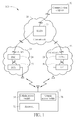
- FIG. 1 is a diagram illustrating a wireless network system 100 configured to perform high efficient and real-time traffic steering according to an embodiment of the present invention.
- the wireless network system 100 includes one or multiple wireless devices (only one wireless device 12 is shown), a PLMN 14 and an unlicensed mobile access/generic access network (UMA/GAN) 16, a core network 18 and a communication endpoint 30.
- the PLMN 14 may be representative of any 3GPP-based cellular network including, but not limited to, 2G, 2.5G, 3G or 4G network.
- the UMA/GAN 16 may be representative of any IP-based radio network including, but not limited to, a wireless local area network (WLAN) or a wireless fidelity (Wi-Fi) network.
- WLAN wireless local area network
- Wi-Fi wireless fidelity
- the PLMN 14 and the UMA/GAN 16 are coupled in communication connectivity by way of the core network 18.
- the core network 18 includes a serving general packet radio service support node (SGSN) 20 which is responsible for the delivery of data packets from and to the wireless devices within its geographical service area.
- SGSN serving general packet radio service support node
- the PLMN 14 is shown to include a base transceiver station (BTS) 22 and a base station controller (BSC) 24, while the UMA/GAN 16 is shown to include an access point (AP) 26 and a GAN controller (GANC) 28, also sometimes referred to as a UMA/GAN network controller (UNC).
- BTS base transceiver station
- BSC base station controller
- AP access point
- GANC GAN controller
- UMA/GAN network controller also sometimes referred to as a UMA/GAN network controller
- the 2G-based BTS 22 and the BSC 24 may be substituted by their 3G-based equivalences of a NODE B and a radio network controller (RNC), respectively, or by their 4G-based equivalence of an e-NODE B.
- the communication endpoint 30 may be representative of any of various data destinations forming communication nodes used in performance of a communication service.
- the user equipment 12 includes a processor 52, a cellular access module 54 and a generic access module 56.
- the user equipment 12 may register on the PLMN 14 using the cellular access module 54 and/or register on the UMA/GAN 16 using the generic access module 56, thereby providing dual-mode operation.
- the processor 52 is configured to control data loading between the PLMN 14 and the cellular access module 54 and between the UMA/GAN 16 and the generic access module 56 according to one or multiple RAN rules received from the PLMN 14 or the UMA/GAN 16. The detailed operation of the user equipment 12 when performing the present traffic steering method will be described in subsequent paragraphs.
- the wireless device 12 or the communication endpoint 30 may include multi-mode transportable electronic devices such as mobile telephones, personal digital assistants, handheld, tablet, nettop, or laptop computers, or other devices with similar telecommunication and interworking capabilities. In other cases, the wireless device 12 or the communication endpoint 30 may include multi-mode non-transportable devices with similar telecommunications and interworking capabilities, such as desktop computers, set-top boxes, or network appliances.
- the PLMN 14 and the UMA/GAN 16 are configured to provide local coverage (an area where the wireless device 12 or the communication endpoint 30 can work) for the wireless network system 100.
- the types of the wireless device 12, the communication endpoint 30, the PLMN 14 and the UMA/GAN 16 do not limit the scope of the present invention.
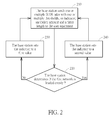
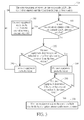
- FIGs. 2 and 3 are flowcharts illustrating a method of performing high efficient and real-time traffic steering in a wireless network system according to an embodiment of the present invention.
- FIG. 2 illustrates the operation of a base station in the wireless network system 100, such as a 2G-based BTS, a 3G-based NODE B or a 4G-based e-NODE B in the 3GPP-based PLMN 14, or the IP-based UMA/GAN 16.
- FIG. 3 illustrates the operation of a user equipment in the wireless network system 100, such as that of the multi-mode wireless device 12.
- the user equipment capable of registering on at least a first network and a second network, is currently camping on the first network.
- the first network may be the 3GPP-based PLMN 14 and the second network may be the IP-based UMA/GAN 16, or vice versa.
- the method depicted in FIG. 2 includes the following steps:
- the method depicted in FIG. 3 includes the following steps:
- the base station is configured to send one or multiple RAN rules with one or multiple thresholds, the indicator, the update amount (represented by ⁇ TH ) and the timer length to the user equipment.
- Each RAN rule may be associated with parameters used to evaluate the signal quality of the first network which the user equipment is currently camping on, such as RSRP (reference signal receiving power), RSRQ (reference signal receiving quality), CPICH RSCP (common pilot channel received signal code power), CPICH EC/No (common pilot channel energy per chip over the noise), RSSI (received signal strength indicator), RCPI (received channel power indicator), or BSS (basic service set) load.
- RSRP reference signal receiving power
- RSRQ reference signal receiving quality
- CPICH RSCP common pilot channel received signal code power
- CPICH EC/No common pilot channel energy per chip over the noise
- RSSI received signal strength indicator
- RCPI receiverived channel power indicator
- BSS basic service set
- M RSRP and M RSSI represent the RSRP and RSSI measured by the user equipment when camping on the first network.
- T 1 -T 4 represent the thresholds sent by the base station.
- the type and number of the RAN rule do not limit the scope of the present invention.
- the base station is configured to send the one or multiple RAN rules, the indicator, the update amount and the timer length to the user equipment via dedicated or broadcast signaling, such as via radio resource control (RRC) messages, paging messages, master information blocks (MIBs) or SIBs, separately, together, simultaneously or periodically.
- RRC radio resource control
- MIBs master information blocks
- SIBs SIBs
- each indicator includes at least one bit. If it is determined in step 220 that the first network is over-loaded or under-loaded, the indicator is set to the first value (such as logic 1) in step 230; if it is determined in step 220 that the first network is evenly loaded, the indicator is set to the second value (such as logic 0) in step 240.
- the indicator set to the first value means that the loading of the first network still needs to be balanced, and the corresponding operation of the user equipment will be described in detail in subsequent paragraphs.
- whether the first network is evenly loaded may be determined according to the traffic of the first network. For example, the first network is considered to be evenly loaded if the current data throughput of the first network is within a predetermined range which allows the optimized performance. Or, the first network is not considered to be evenly loaded if the current data throughput of the first network is above the predetermined range or above the predetermined range.
- the method and the criteria of determining whether the first network is evenly loaded do not limit the scope of the present invention.
- the user receives one RAN rule with one threshold To from the base station in step 310.
- the user equipment may determine that the RAN rule is satisfied when the RSRP measured by the user equipment is below T 0 in a first scenario, or when the RSRP measured by the user equipment is above T 0 in a second scenario.
- the first scenario means that the performance of the first network has downgraded to a certain degree, possibly due to overloading.
- the user equipment may steer traffic from the first network to the second network in step 380, thereby balancing data loading of the first and second networks.
- the second scenario means that the first network is able to handle more tasks.
- the user equipment may steer traffic from the second network to the first network in step 380, thereby balancing data loading of the first and second networks.
- the base station may determine that the first network becomes evenly loaded in step 220, thus setting the indicator to the second value in step 210. In this case, it can be determined in step 330 that the indicator (if any) received from the base station is not set to the first value.
- the user equipment is configured stop the timer in step 340 (note that the timer may or may not be running when step 320 is being executed) and) before looping back to step 310.
- the base station may determine that the first network is still not evenly loaded in step 220, thus setting the indicator to the first value in step 210. In this case, it may be determined in step 330 that the indicator received from the base station is set to the first value.
- the user equipment is configured start the timer in step 350 (note that the timer may or may not be running when step 320 is being executed).
- the user equipment is configured to adjust the threshold by the update amount ⁇ TH when the timer expires according to the timer length received in step 310.
- the threshold for determining if the RAN rule is satisfied is updated before looping back to step 320.
- the base station may determine that the first network is evenly loaded in step 220, thus setting the indicator to the second value in step 240. Afterwards, the present invention may loop back to step 310. The adjustment of threshold from T 1 -T n is automatically performed by the user equipment according to the value of the indicator, which does not influence the efficiency of the base station.
- the base station may send the one or multiple RAN rules by broadcasting SIB17 and send the indicator by broadcasting SIB1 or via an RRC/paging massage in step 210.
- the user equipment After reading the SIB1 message or the RRC/paging massage notifying that the indicator is set to the first value, the user equipment only needs to access the SIB17 message once for automatically adjusting the threshold from T 1 -T n , instead of accessing both the SIB1 and SIB17 messages n times for receiving the updated values T 1 -T n of the threshold.
- the base station can operate with high efficiency since the user equipment is configured to automatically adjust one or multiple thresholds of one or multiple RAN rules. Also, since the indicator may be transmitted via dedicated signaling, the user equipment is able to immediately respond to any update made to the one or multiple RAN rules. Therefore, the present invention can provide a method of performing high efficient and real-time traffic steering in a wireless network system.
Landscapes
- Engineering & Computer Science (AREA)
- Computer Networks & Wireless Communication (AREA)
- Signal Processing (AREA)
- Mobile Radio Communication Systems (AREA)
Abstract
Description
- The present invention is related to a method of performing traffic steering in a wireless network system and a related wireless network system.
- With rapid development in technology, a user may easily connect to a network using desktop computers, notebook computers, personal digital assistants (PDAs) or smart phones. As successive generations of operating standards proliferate, a wireless device is sometimes constructed to be operable in conformity with multiple communication standards associated with a single radio communication system-type or multiple communication system-types. For instance, a multi-mode device may provide a user with the capability of communicating with an Internet Protocol (IP)-based radio network and a 3rd Generation Partnership Project (3GPP)-based cellular network.
- According to relevant 3GPP specifications (such as TS. 34.108), a base station is configured to broadcast various system information blocks to a user equipment (UE). System information block type 1 (SIB1) contains cell access related information when evaluating if a user equipment is allowed to access a cell, such as public land mobile network (PLMN) identity list, tracking area code, cell identity, information for cell selection, maximum power value (p-Max), frequency band indicator, scheduling information, time division duplex (TDD) configuration, system information window length and system information value tag. In a wireless network system, radio access network (RAN) rules associated with interworking between a 3GPP-based network and an IP-based network are included in a system information block type 17 (SIB17). SIB1 uses a fixed schedule with a periodicity of 80ms and repetitions made within 80ms. Upon receiving the SIB1 message, the user equipment can decide how to access the SIB17 message. Based on the RAN rule, the user equipment may perform traffic steering between the 3GPP-based network and the IP-based network, such as data offloading from the 3GPP-based network to the IP-based network. If it is determined that the 3GPP-based network is still overloaded, the base station is configured to update the threshold of the RAN rule in SIB17 and notify the user equipment to read the updated SIB17 message in SIB1 for encouraging the user equipment to steer traffic from the 3GPP-based network.
- In the prior art traffic steering method, the efficiency of the base station may be influenced when the threshold of the RAN rule needs to be updated many times before a congested network is sufficiently offloaded. The user equipment is required to read both SIB1 and SIB17 each time when the threshold of the RAN rule is updated. Also, since the user equipment user only reads SIB1 periodically, it may not be able to immediately respond to any update made to the RAN rule. Therefore, there is a need for a method of performing high efficient and real-time traffic steering in a wireless network system.
- The present invention aims at providing a method of performing traffic steering in a wireless network system and a related wireless network system in which the user equipment is configured to automatically adjust one or multiple thresholds of one or multiple RAN rules, thereby improving the efficiency of the base station.
- This is achieved by a method of performing traffic steering in a wireless network system according to claim 1 and a wireless network system which performs traffic steering according to claims 8 and 10. The dependent claims pertain to corresponding further developments and improvements.
- As will be seen more clearly from the detailed description following below, the claimed method of performing traffic steering in a wireless network system having a base station of a first network and a user equipment camping on the first network includes the base station setting an indicator to a first value when determining that the first network is not loaded evenly or setting the indicator to a second value when determining that the first network is loaded evenly; the base station sending the indicator, an update amount, a timer length, and at least a first RAN rule including a first threshold to the user equipment; the user equipment starting a timer when receiving the first RAN rule if the indicator is set to the first value from the base station; the user equipment adjusting the first threshold by the update amount when the timer expires according to the timer length; and the user equipment steering traffic from the first network to a second network or from the second network to the first network when the first RAN rule is satisfied according to the adjusted first threshold.
- As will be seen more clearly from the detailed description following below, the claimed wireless network system which performs traffic steering includes a first network, a second network, and a user equipment. The first network includes a base station configured to set an indicator to a first value when determining that the first network is not loaded evenly or set the indicator to a second value when determining that the first network is loaded evenly; and transmit the indicator, an update amount, a timer length, and at least one RAN rule including a threshold. The user equipment is currently camping on the first network and configured to start a timer when receiving the at least one RAN rule if the indicator is set to the first value from the base station; adjust the threshold by the update amount when the timer expires according to the timer length; and steer traffic from the first network to the second network or from the second network to the first network when the first RAN rule is satisfied according to the adjusted threshold.
- In the following, the invention is further illustrated by way of example, taking reference to the accompanying drawings.
-
FIG. 1 is a diagram illustrating a wireless network system configured to perform high efficient and real-time traffic steering according to an embodiment of the present invention. -
FIGs. 2 and3 are flowcharts illustrating a method of performing high efficient and real-time traffic steering in a wireless network system according to an embodiment of the present invention. -
FIG. 1 is a diagram illustrating awireless network system 100 configured to perform high efficient and real-time traffic steering according to an embodiment of the present invention. Thewireless network system 100 includes one or multiple wireless devices (only onewireless device 12 is shown), aPLMN 14 and an unlicensed mobile access/generic access network (UMA/GAN) 16, acore network 18 and acommunication endpoint 30. The PLMN 14 may be representative of any 3GPP-based cellular network including, but not limited to, 2G, 2.5G, 3G or 4G network. The UMA/GAN 16 may be representative of any IP-based radio network including, but not limited to, a wireless local area network (WLAN) or a wireless fidelity (Wi-Fi) network. - The
PLMN 14 and the UMA/GAN 16 are coupled in communication connectivity by way of thecore network 18. Thecore network 18 includes a serving general packet radio service support node (SGSN) 20 which is responsible for the delivery of data packets from and to the wireless devices within its geographical service area. In conformity with the 3GPP network structure, thePLMN 14 is shown to include a base transceiver station (BTS) 22 and a base station controller (BSC) 24, while the UMA/GAN 16 is shown to include an access point (AP) 26 and a GAN controller (GANC) 28, also sometimes referred to as a UMA/GAN network controller (UNC). The 2G-based BTS 22 and theBSC 24 may be substituted by their 3G-based equivalences of a NODE B and a radio network controller (RNC), respectively, or by their 4G-based equivalence of an e-NODE B. Thecommunication endpoint 30 may be representative of any of various data destinations forming communication nodes used in performance of a communication service. - The
user equipment 12 includes aprocessor 52, acellular access module 54 and ageneric access module 56. Theuser equipment 12 may register on thePLMN 14 using thecellular access module 54 and/or register on the UMA/GAN 16 using thegeneric access module 56, thereby providing dual-mode operation. Also, theprocessor 52 is configured to control data loading between thePLMN 14 and thecellular access module 54 and between the UMA/GAN 16 and thegeneric access module 56 according to one or multiple RAN rules received from thePLMN 14 or the UMA/GAN 16. The detailed operation of theuser equipment 12 when performing the present traffic steering method will be described in subsequent paragraphs. - In the present invention, the
wireless device 12 or thecommunication endpoint 30 may include multi-mode transportable electronic devices such as mobile telephones, personal digital assistants, handheld, tablet, nettop, or laptop computers, or other devices with similar telecommunication and interworking capabilities. In other cases, thewireless device 12 or thecommunication endpoint 30 may include multi-mode non-transportable devices with similar telecommunications and interworking capabilities, such as desktop computers, set-top boxes, or network appliances. The PLMN 14 and the UMA/GAN 16 are configured to provide local coverage (an area where thewireless device 12 or thecommunication endpoint 30 can work) for thewireless network system 100. However, the types of thewireless device 12, thecommunication endpoint 30, thePLMN 14 and the UMA/GAN 16 do not limit the scope of the present invention. -
FIGs. 2 and3 are flowcharts illustrating a method of performing high efficient and real-time traffic steering in a wireless network system according to an embodiment of the present invention.FIG. 2 illustrates the operation of a base station in thewireless network system 100, such as a 2G-based BTS, a 3G-based NODE B or a 4G-based e-NODE B in the 3GPP-basedPLMN 14, or the IP-based UMA/GAN 16.FIG. 3 illustrates the operation of a user equipment in thewireless network system 100, such as that of the multi-modewireless device 12. The user equipment, capable of registering on at least a first network and a second network, is currently camping on the first network. The first network may be the 3GPP-basedPLMN 14 and the second network may be the IP-based UMA/GAN 16, or vice versa. - The method depicted in
FIG. 2 includes the following steps: - Step 210:
- the base station sends one or multiple RAN rules with one or multiple thresholds, an indicator, an update amount and a timer length to the user equipment; execute
step 220. - Step 220:
- the base station determines if the first network is loaded evenly; if yes, execute
step 240; if no, executestep 230. - Step 230:
- the base station sets the indicator to a first value; execute
step 210. - Step 240:
- the base station sets the indicator to a second value; execute
step 210. - The method depicted in
FIG. 3 includes the following steps: - Step 310:
- the user equipment receives the one or multiple RAN rules, the update amount and the timer length from the base station; execute
step 320. - Step 320:
- the user equipment determines if the one or multiple RAN rules are satisfied; if yes, execute
step 380; if no, executestep 330. - Step 330:
- the user equipment determines if an indicator set to a first value can be received from the base station; if yes, execute
step 350; if no, executestep 340. - Step 340:
- the user equipment stops the timer; execute
step 310. - Step 350:
- the user equipment starts the timer; execute
step 360. - Step 360:
- the user equipment determines if the timer has expired according to the timer length; if yes, execute
step 370; if no, executestep 360. - Step 370:
- the user equipment adjusts the one or multiple thresholds by the update amount and restarts the timer; execute
step 320. - Step 380:
- the user equipment steers traffic to or from the second network; execute
step 310. - In
step 210, the base station is configured to send one or multiple RAN rules with one or multiple thresholds, the indicator, the update amount (represented by ΔTH) and the timer length to the user equipment. Each RAN rule may be associated with parameters used to evaluate the signal quality of the first network which the user equipment is currently camping on, such as RSRP (reference signal receiving power), RSRQ (reference signal receiving quality), CPICH RSCP (common pilot channel received signal code power), CPICH EC/No (common pilot channel energy per chip over the noise), RSSI (received signal strength indicator), RCPI (received channel power indicator), or BSS (basic service set) load. - Some examples of the one or multiple RAN rules in
step 210 are shown following this paragraph. MRSRP and MRSSI represent the RSRP and RSSI measured by the user equipment when camping on the first network. T1-T4 represent the thresholds sent by the base station. However, the type and number of the RAN rule do not limit the scope of the present invention. - Example 1: MRSRP>T1
- Example 2: MRSRP>T1 and MRSSI>T2
- Example 3: MRSRP<T3 or MRSSI<T4
- In the present invention, the base station is configured to send the one or multiple RAN rules, the indicator, the update amount and the timer length to the user equipment via dedicated or broadcast signaling, such as via radio resource control (RRC) messages, paging messages, master information blocks (MIBs) or SIBs, separately, together, simultaneously or periodically. However, the method of sending the one or multiple RAN rules, the indicator, the update amount and the timer length do not limit the scope of the present invention.
- In an embodiment of the present invention, each indicator includes at least one bit. If it is determined in
step 220 that the first network is over-loaded or under-loaded, the indicator is set to the first value (such as logic 1) instep 230; if it is determined instep 220 that the first network is evenly loaded, the indicator is set to the second value (such as logic 0) instep 240. The indicator set to the first value means that the loading of the first network still needs to be balanced, and the corresponding operation of the user equipment will be described in detail in subsequent paragraphs. - In the present invention, whether the first network is evenly loaded may be determined according to the traffic of the first network. For example, the first network is considered to be evenly loaded if the current data throughput of the first network is within a predetermined range which allows the optimized performance. Or, the first network is not considered to be evenly loaded if the current data throughput of the first network is above the predetermined range or above the predetermined range. However, the method and the criteria of determining whether the first network is evenly loaded do not limit the scope of the present invention.
- For illustrative purpose, assume that the user receives one RAN rule with one threshold To from the base station in
step 310. Instep 320, it is determined if the RAN rule is satisfied when camping on the first network. More specifically, the threshold of the initial value T0 received from the base station is used to evaluate the signal quality of the first network. In an embodiment when the RAN rule is associated with RSRP, the user equipment may determine that the RAN rule is satisfied when the RSRP measured by the user equipment is below T0 in a first scenario, or when the RSRP measured by the user equipment is above T0 in a second scenario. - The first scenario means that the performance of the first network has downgraded to a certain degree, possibly due to overloading. In response, the user equipment may steer traffic from the first network to the second network in
step 380, thereby balancing data loading of the first and second networks. The second scenario means that the first network is able to handle more tasks. In response, the user equipment may steer traffic from the second network to the first network instep 380, thereby balancing data loading of the first and second networks. - After the user equipment steers traffic to or from the second network in
step 380, the base station may determine that the first network becomes evenly loaded instep 220, thus setting the indicator to the second value instep 210. In this case, it can be determined instep 330 that the indicator (if any) received from the base station is not set to the first value. In response, the user equipment is configured stop the timer in step 340 (note that the timer may or may not be running whenstep 320 is being executed) and) before looping back to step 310. - However, after the user equipment steers traffic to or from the second network in
step 380, the base station may determine that the first network is still not evenly loaded instep 220, thus setting the indicator to the first value instep 210. In this case, it may be determined instep 330 that the indicator received from the base station is set to the first value. In response, the user equipment is configured start the timer in step 350 (note that the timer may or may not be running whenstep 320 is being executed). - Next in
steps step 310. In other words, the threshold for determining if the RAN rule is satisfied is updated before looping back to step 320. - The overall operation of the user equipment when performing the present method is illustrated hereafter. At the first execution of
step 320, the threshold of the initial value T0 received from the base station is used to evaluate the signal quality of the first network. If the RAN rule is not satisfied according to the threshold of the initial value T0, the user equipment is configured to adjust the threshold from the current value T0 to an updated value T1 (T1= T0+ΔTH) and the adjusted threshold T1 is used to evaluate the signal quality of the first network at the 2nd execution ofstep 320. Similarly, at the nth execution ofstep 320, if it is determined that the RAN rule is not satisfied according to the current value Tn-1, the user equipment is configured to adjust the threshold from the current value Tn-1 to an updated value Tn (Tn= Tn-1+ΔTH) and the adjusted threshold Tn is used to evaluate the signal quality of the first network at the (n+1)th execution ofstep 320, wherein n is an integer larger than 1. - In an embodiment after the user equipment has adjusted the threshold to Tn, the base station may determine that the first network is evenly loaded in
step 220, thus setting the indicator to the second value instep 240. Afterwards, the present invention may loop back to step 310. The adjustment of threshold from T1-Tn is automatically performed by the user equipment according to the value of the indicator, which does not influence the efficiency of the base station. - As previously stated, the base station may send the one or multiple RAN rules by broadcasting SIB17 and send the indicator by broadcasting SIB1 or via an RRC/paging massage in
step 210. After reading the SIB1 message or the RRC/paging massage notifying that the indicator is set to the first value, the user equipment only needs to access the SIB17 message once for automatically adjusting the threshold from T1-Tn, instead of accessing both the SIB1 and SIB17 messages n times for receiving the updated values T1-Tn of the threshold. - In the present invention, the base station can operate with high efficiency since the user equipment is configured to automatically adjust one or multiple thresholds of one or multiple RAN rules. Also, since the indicator may be transmitted via dedicated signaling, the user equipment is able to immediately respond to any update made to the one or multiple RAN rules. Therefore, the present invention can provide a method of performing high efficient and real-time traffic steering in a wireless network system.
Claims (10)
- A method of performing traffic steering in a wireless network system having a base station of a first network and a user equipment camping on the first network, the method characterized in that it comprises the steps of:the base station setting an indicator to a first value when determining that the first network is not loaded evenly or setting the indicator to a second value when determining that the first network is loaded evenly;the base station sending the indicator, an update amount, a timer length, and at least a first radio access network (RAN) rule including a first threshold to the user equipment;the user equipment starting a timer when receiving the first RAN rule if the indicator is set to the first value from the base station;the user equipment adjusting the first threshold by the update amount when the timer expires according to the timer length; andthe user equipment steering traffic from the first network to a second network or from the second network to the first network when the first RAN rule is satisfied according to the adjusted first threshold.
- The method of claim 1, characterized in that all of the indicator, the update amount, the timer length and the first RAN rule are transmitted via a radio resource control (RRC) message, a paging message, a master information block (MIB), or a system information block (SIB).
- The method of claim 1, characterized in that:the indicator, the update amount and the timer length are transmitted via an RRC message or a paging message; andthe first RAN rule is transmitted via an MIB or an SIB.
- The method of any of claims 1-3, characterized in that the first RAN rule is associated with a reference signal receiving power (RSRP), a reference signal receiving quality (RSRQ), a common pilot channel received signal code power (CPICH RSCP), a common pilot channel energy per chip over the noise (CPICH EC/No), a received signal strength indicator (RSSI), a received channel power indicator (RCPI), or a basic service set (BSS) load measured by the user equipment.
- The method of claim any of claims 1-4, further characterized by comprising the further step of:the user equipment stopping the timer if receiving the indicator is set to the second value from the base station; andthe user equipment steering traffic from the first network to the second network or from the second network to the first network when the first RAN rule is satisfied according to the first threshold.
- The method of claim any of claims 1-5, further characterized by comprising the further step of:the base station sending a second RAN rule including a second threshold to the user equipment;the user equipment starting a timer when receiving the second RAN rule if the indicator is set to the first value from the base station;the user equipment adjusting the second threshold by the update amount if the indicator is set to the first value and the timer expires according to the timer length; andthe user equipment steering traffic from the first network to the second network or from the second network to the first network when the first RAN rule is satisfied according to the adjusted first threshold and the second RAN rule is satisfied according to the adjusted second threshold.
- The method of claim any of claims 1-5, further characterized by comprising the further step of:the base station sending a second RAN rule including a second threshold to the user equipment;the user equipment starting a timer when receiving the second RAN ruleif the indicator is set to the first value from the base station;the user equipment adjusting the second threshold by the update amount if the indicator is set to the first value and the timer expires according to the timer length; andthe user equipment steering traffic from the first network to the second network or from the second network to the first network when the first RAN rule is satisfied according to the adjusted first threshold or when the second RAN rule is satisfied according to the adjusted second threshold.
- A wireless network system which performs traffic steering, characterized by comprising:a first network including a base station configured to:set an indicator to a first value when determining that the first network is not loaded evenly or set the indicator to a second value when determining that the first network is loaded evenly; andtransmit the indicator, an update amount, a timer length, and at least one RAN rule including a threshold;a second network; anda user equipment currently camping on the first network and configured to:start a timer when receiving the at least one RAN rule if the indicator is set to the first value from the base station;adjust the threshold by the update amount when the timer expires according to the timer length; andsteer traffic from the first network to the second network or from the second network to the first network when the first RAN rule is satisfied according to the adjusted threshold.
- The wireless network system of claim 8, characterized in that the first network is a 3rd Generation Partnership Project (3GPP)-based cellular network and the second network is an Internet Protocol (IP)-based radio network.
- A wireless network system which performs traffic steering, the wireless network system configured to execute method of performing traffic steering according to any of claims 1-7.
Applications Claiming Priority (3)
| Application Number | Priority Date | Filing Date | Title |
|---|---|---|---|
| US201461932802P | 2014-01-29 | 2014-01-29 | |
| US201461939746P | 2014-02-14 | 2014-02-14 | |
| US14/462,547 US9544815B2 (en) | 2014-01-29 | 2014-08-18 | Method of performing traffic steering in a wireless network system and related wireless network system |
Publications (2)
| Publication Number | Publication Date |
|---|---|
| EP2903221A1 true EP2903221A1 (en) | 2015-08-05 |
| EP2903221B1 EP2903221B1 (en) | 2016-06-08 |
Family
ID=51453657
Family Applications (1)
| Application Number | Title | Priority Date | Filing Date |
|---|---|---|---|
| EP14183015.8A Active EP2903221B1 (en) | 2014-01-29 | 2014-09-01 | Method of performing traffic steering in a wireless network system and related wireless network system |
Country Status (4)
| Country | Link |
|---|---|
| US (1) | US9544815B2 (en) |
| EP (1) | EP2903221B1 (en) |
| CN (1) | CN104812005B (en) |
| TW (1) | TWI531259B (en) |
Families Citing this family (6)
| Publication number | Priority date | Publication date | Assignee | Title |
|---|---|---|---|---|
| TWI516142B (en) * | 2014-05-22 | 2016-01-01 | 財團法人工業技術研究院 | Base station and method for reducing abnormal cell re-selection behavior |
| US10779161B2 (en) * | 2014-09-15 | 2020-09-15 | Nokia Solutions And Networks Oy | Delivery of cellular network insights to subscriber devices through SSID via cellular system information block |
| US20180255606A1 (en) * | 2015-10-06 | 2018-09-06 | Lg Electronics Inc. | Method for updating system information in wireless communication system and apparatus therefor |
| EP3453204B1 (en) | 2016-05-05 | 2023-09-13 | Telefonaktiebolaget LM Ericsson (publ) | User equipment, resource control server and corresponding operating method |
| CN109151737A (en) * | 2017-06-16 | 2019-01-04 | 华为技术有限公司 | A communication method and device |
| US20220338159A1 (en) * | 2021-04-14 | 2022-10-20 | Qualcomm Incorporated | Techniques for mobile terminated calls in non-terrestrial networks |
Citations (2)
| Publication number | Priority date | Publication date | Assignee | Title |
|---|---|---|---|---|
| US20120039175A1 (en) * | 2010-08-11 | 2012-02-16 | Alcatel-Lucent Usa Inc. | Enabling a distributed policy architecture with extended son (extended self organizing networks) |
| WO2013042330A1 (en) * | 2011-09-22 | 2013-03-28 | Panasonic Corporation | Method and apparatus for mobile terminal connection control and management of local accesses |
Family Cites Families (16)
| Publication number | Priority date | Publication date | Assignee | Title |
|---|---|---|---|---|
| US7315744B2 (en) * | 2001-01-24 | 2008-01-01 | Qualcomm Incorporated | System and method for minimizing hardware and maximizing capacity in a wireless communications system |
| RU2426261C2 (en) | 2005-09-08 | 2011-08-10 | Эл Джи Электроникс Инк. | Method and protocol for processing attempts at accessing communication system |
| WO2009000312A1 (en) * | 2007-06-22 | 2008-12-31 | Telefonaktiebolaget Lm Ericsson (Publ) | Inter-msc handover in a communications network |
| GB0812632D0 (en) * | 2008-07-10 | 2008-08-20 | Vodafone Plc | Security architecture for LTE relays |
| US8743696B2 (en) * | 2009-08-07 | 2014-06-03 | Cisco Technology, Inc. | Mobile transport solution for offloading to an alternate network |
| JP2013520100A (en) * | 2010-02-12 | 2013-05-30 | インターデイジタル パテント ホールディングス インコーポレイテッド | Access control and congestion control in machine-to-machine communication |
| WO2012016598A1 (en) | 2010-08-06 | 2012-02-09 | Nokia Siemens Networks Oy | Method for self-optimized interworking between radio access networks |
| EP2482588B1 (en) * | 2011-01-28 | 2016-05-18 | Alcatel Lucent | Method for performing a handover of a mobile device |
| US9125200B2 (en) * | 2012-03-14 | 2015-09-01 | Marvell World Trade Ltd. | Carrier aggregation scheduling based on traffic characteristics and cell characteristics |
| US9203563B2 (en) | 2012-07-02 | 2015-12-01 | Intel Corporation | Devices and methods for radio communication network guided traffic offload |
| CN102917406B (en) * | 2012-08-02 | 2016-04-06 | 华为技术有限公司 | Data traffic shunt method and equipment |
| US20140133294A1 (en) | 2012-11-09 | 2014-05-15 | Qualcomm Incorporated | Methods and Systems for Broadcasting Load Information to Enable a User Equipment (UE) to Select Different Network Access |
| WO2014112599A1 (en) * | 2013-01-18 | 2014-07-24 | 京セラ株式会社 | Communication control method and user terminal |
| US9288717B2 (en) | 2013-01-29 | 2016-03-15 | Telefonaktiebolaget L M Ericsson (Publ) | Inter-rat systems access network (AN) load balance and congestion control mechanism |
| US9872210B2 (en) * | 2013-10-16 | 2018-01-16 | At&T Mobility Ii Llc | Adaptive rate of congestion indicator to enhance intelligent traffic steering |
| US9210613B2 (en) * | 2013-11-20 | 2015-12-08 | At&T Mobility Ii Llc | Method and apparatus for using a local area network to offload demand of a wide area network |
-
2014
- 2014-08-18 US US14/462,547 patent/US9544815B2/en active Active
- 2014-09-01 EP EP14183015.8A patent/EP2903221B1/en active Active
- 2014-12-12 TW TW103143558A patent/TWI531259B/en active
- 2014-12-24 CN CN201410817452.9A patent/CN104812005B/en active Active
Patent Citations (2)
| Publication number | Priority date | Publication date | Assignee | Title |
|---|---|---|---|---|
| US20120039175A1 (en) * | 2010-08-11 | 2012-02-16 | Alcatel-Lucent Usa Inc. | Enabling a distributed policy architecture with extended son (extended self organizing networks) |
| WO2013042330A1 (en) * | 2011-09-22 | 2013-03-28 | Panasonic Corporation | Method and apparatus for mobile terminal connection control and management of local accesses |
Non-Patent Citations (2)
| Title |
|---|
| "Interworking between Next Generation Fixed and 3GPP Wireless Access", 3GPP DRAFT; S2-113892_WT-203_REV-09, 3RD GENERATION PARTNERSHIP PROJECT (3GPP), MOBILE COMPETENCE CENTRE ; 650, ROUTE DES LUCIOLES ; F-06921 SOPHIA-ANTIPOLIS CEDEX ; FRANCE, vol. SA WG2, no. Jeju Island; 20111010, 27 September 2011 (2011-09-27), XP050549084 * |
| JOHN L TOMICI ET AL: "Multi-RAT traffic offloading solutions for the bandwidth crunch problem", SYSTEMS, APPLICATIONS AND TECHNOLOGY CONFERENCE (LISAT), 2011 IEEE LONG ISLAND, IEEE, 6 May 2011 (2011-05-06), pages 1 - 6, XP031880722, ISBN: 978-1-4244-9878-9, DOI: 10.1109/LISAT.2011.5784243 * |
Also Published As
| Publication number | Publication date |
|---|---|
| US9544815B2 (en) | 2017-01-10 |
| US20150215820A1 (en) | 2015-07-30 |
| CN104812005B (en) | 2018-05-11 |
| EP2903221B1 (en) | 2016-06-08 |
| TW201531121A (en) | 2015-08-01 |
| TWI531259B (en) | 2016-04-21 |
| CN104812005A (en) | 2015-07-29 |
Similar Documents
| Publication | Publication Date | Title |
|---|---|---|
| JP7010316B2 (en) | Wireless terminals, base stations, and how to control them | |
| TWI583217B (en) | Method of handling cell reselection | |
| EP2827634B1 (en) | Method and device for implementing report measurement and reporting measurement result | |
| US8837321B2 (en) | Measurement reporting | |
| CN107615819B (en) | System and method for data speed improvement for wireless devices | |
| EP2903221B1 (en) | Method of performing traffic steering in a wireless network system and related wireless network system | |
| CN105493556A (en) | Systems, methods and devices for traffic offloading | |
| US12507141B2 (en) | Cell reselection-related information associated with network slice or closed access group for wireless networks | |
| EP2946609A1 (en) | Optimized offloading to wlan in 3gpp-rat mobility | |
| US20140220978A1 (en) | Cell reselection method, device, and system | |
| US10588051B2 (en) | Method and apparatus for offloading network traffic | |
| CN111434145A (en) | Method and apparatus for load balancing across bandwidth segments | |
| WO2014111463A1 (en) | Robust measurement report event trigger for heterogeneous networks | |
| US10320639B2 (en) | Method of controlling user equipment communication with a network and corresponding apparatus and computer program product | |
| US10142065B2 (en) | Enhanced UE performance in HetNet poor coverage scenarios | |
| EP2903222B1 (en) | Method of performing traffic steering in a wireless network system and related wireless network system | |
| WO2023005730A1 (en) | Communication method and communication apparatus | |
| US20190037478A1 (en) | Communication message sending method and apparatus | |
| WO2024245564A1 (en) | Controlling idle mode mobility (cell reselection) during network energy saving mode implemented on a cell basis | |
| US9204357B1 (en) | Systems and methods of access node selection | |
| WO2014112922A2 (en) | Integration between wi-fi and mobile communication networks |
Legal Events
| Date | Code | Title | Description |
|---|---|---|---|
| PUAI | Public reference made under article 153(3) epc to a published international application that has entered the european phase |
Free format text: ORIGINAL CODE: 0009012 |
|
| 17P | Request for examination filed |
Effective date: 20140901 |
|
| AK | Designated contracting states |
Kind code of ref document: A1 Designated state(s): AL AT BE BG CH CY CZ DE DK EE ES FI FR GB GR HR HU IE IS IT LI LT LU LV MC MK MT NL NO PL PT RO RS SE SI SK SM TR |
|
| AX | Request for extension of the european patent |
Extension state: BA ME |
|
| 17P | Request for examination filed |
Effective date: 20151211 |
|
| RBV | Designated contracting states (corrected) |
Designated state(s): AL AT BE BG CH CY CZ DE DK EE ES FI FR GB GR HR HU IE IS IT LI LT LU LV MC MK MT NL NO PL PT RO RS SE SI SK SM TR |
|
| REG | Reference to a national code |
Ref country code: DE Ref legal event code: R079 Ref document number: 602014002246 Country of ref document: DE Free format text: PREVIOUS MAIN CLASS: H04L0012803000 Ipc: H04L0012707000 |
|
| GRAP | Despatch of communication of intention to grant a patent |
Free format text: ORIGINAL CODE: EPIDOSNIGR1 |
|
| RIC1 | Information provided on ipc code assigned before grant |
Ipc: H04W 28/08 20090101ALI20160302BHEP Ipc: H04W 40/04 20090101ALI20160302BHEP Ipc: H04W 88/06 20090101ALN20160302BHEP Ipc: H04L 12/803 20130101ALI20160302BHEP Ipc: H04L 12/707 20130101AFI20160302BHEP |
|
| INTG | Intention to grant announced |
Effective date: 20160314 |
|
| GRAS | Grant fee paid |
Free format text: ORIGINAL CODE: EPIDOSNIGR3 |
|
| GRAA | (expected) grant |
Free format text: ORIGINAL CODE: 0009210 |
|
| AK | Designated contracting states |
Kind code of ref document: B1 Designated state(s): AL AT BE BG CH CY CZ DE DK EE ES FI FR GB GR HR HU IE IS IT LI LT LU LV MC MK MT NL NO PL PT RO RS SE SI SK SM TR |
|
| REG | Reference to a national code |
Ref country code: GB Ref legal event code: FG4D |
|
| REG | Reference to a national code |
Ref country code: CH Ref legal event code: EP |
|
| REG | Reference to a national code |
Ref country code: IE Ref legal event code: FG4D |
|
| REG | Reference to a national code |
Ref country code: AT Ref legal event code: REF Ref document number: 805901 Country of ref document: AT Kind code of ref document: T Effective date: 20160715 |
|
| REG | Reference to a national code |
Ref country code: DE Ref legal event code: R096 Ref document number: 602014002246 Country of ref document: DE |
|
| REG | Reference to a national code |
Ref country code: FR Ref legal event code: PLFP Year of fee payment: 3 |
|
| REG | Reference to a national code |
Ref country code: LT Ref legal event code: MG4D |
|
| REG | Reference to a national code |
Ref country code: NL Ref legal event code: MP Effective date: 20160608 |
|
| PG25 | Lapsed in a contracting state [announced via postgrant information from national office to epo] |
Ref country code: LT Free format text: LAPSE BECAUSE OF FAILURE TO SUBMIT A TRANSLATION OF THE DESCRIPTION OR TO PAY THE FEE WITHIN THE PRESCRIBED TIME-LIMIT Effective date: 20160608 Ref country code: FI Free format text: LAPSE BECAUSE OF FAILURE TO SUBMIT A TRANSLATION OF THE DESCRIPTION OR TO PAY THE FEE WITHIN THE PRESCRIBED TIME-LIMIT Effective date: 20160608 Ref country code: NO Free format text: LAPSE BECAUSE OF FAILURE TO SUBMIT A TRANSLATION OF THE DESCRIPTION OR TO PAY THE FEE WITHIN THE PRESCRIBED TIME-LIMIT Effective date: 20160908 |
|
| REG | Reference to a national code |
Ref country code: AT Ref legal event code: MK05 Ref document number: 805901 Country of ref document: AT Kind code of ref document: T Effective date: 20160608 |
|
| PG25 | Lapsed in a contracting state [announced via postgrant information from national office to epo] |
Ref country code: SE Free format text: LAPSE BECAUSE OF FAILURE TO SUBMIT A TRANSLATION OF THE DESCRIPTION OR TO PAY THE FEE WITHIN THE PRESCRIBED TIME-LIMIT Effective date: 20160608 Ref country code: NL Free format text: LAPSE BECAUSE OF FAILURE TO SUBMIT A TRANSLATION OF THE DESCRIPTION OR TO PAY THE FEE WITHIN THE PRESCRIBED TIME-LIMIT Effective date: 20160608 Ref country code: ES Free format text: LAPSE BECAUSE OF FAILURE TO SUBMIT A TRANSLATION OF THE DESCRIPTION OR TO PAY THE FEE WITHIN THE PRESCRIBED TIME-LIMIT Effective date: 20160608 Ref country code: RS Free format text: LAPSE BECAUSE OF FAILURE TO SUBMIT A TRANSLATION OF THE DESCRIPTION OR TO PAY THE FEE WITHIN THE PRESCRIBED TIME-LIMIT Effective date: 20160608 Ref country code: GR Free format text: LAPSE BECAUSE OF FAILURE TO SUBMIT A TRANSLATION OF THE DESCRIPTION OR TO PAY THE FEE WITHIN THE PRESCRIBED TIME-LIMIT Effective date: 20160909 Ref country code: LV Free format text: LAPSE BECAUSE OF FAILURE TO SUBMIT A TRANSLATION OF THE DESCRIPTION OR TO PAY THE FEE WITHIN THE PRESCRIBED TIME-LIMIT Effective date: 20160608 Ref country code: HR Free format text: LAPSE BECAUSE OF FAILURE TO SUBMIT A TRANSLATION OF THE DESCRIPTION OR TO PAY THE FEE WITHIN THE PRESCRIBED TIME-LIMIT Effective date: 20160608 |
|
| PG25 | Lapsed in a contracting state [announced via postgrant information from national office to epo] |
Ref country code: IT Free format text: LAPSE BECAUSE OF FAILURE TO SUBMIT A TRANSLATION OF THE DESCRIPTION OR TO PAY THE FEE WITHIN THE PRESCRIBED TIME-LIMIT Effective date: 20160608 Ref country code: RO Free format text: LAPSE BECAUSE OF FAILURE TO SUBMIT A TRANSLATION OF THE DESCRIPTION OR TO PAY THE FEE WITHIN THE PRESCRIBED TIME-LIMIT Effective date: 20160608 Ref country code: SK Free format text: LAPSE BECAUSE OF FAILURE TO SUBMIT A TRANSLATION OF THE DESCRIPTION OR TO PAY THE FEE WITHIN THE PRESCRIBED TIME-LIMIT Effective date: 20160608 Ref country code: EE Free format text: LAPSE BECAUSE OF FAILURE TO SUBMIT A TRANSLATION OF THE DESCRIPTION OR TO PAY THE FEE WITHIN THE PRESCRIBED TIME-LIMIT Effective date: 20160608 Ref country code: CZ Free format text: LAPSE BECAUSE OF FAILURE TO SUBMIT A TRANSLATION OF THE DESCRIPTION OR TO PAY THE FEE WITHIN THE PRESCRIBED TIME-LIMIT Effective date: 20160608 Ref country code: IS Free format text: LAPSE BECAUSE OF FAILURE TO SUBMIT A TRANSLATION OF THE DESCRIPTION OR TO PAY THE FEE WITHIN THE PRESCRIBED TIME-LIMIT Effective date: 20161008 |
|
| PG25 | Lapsed in a contracting state [announced via postgrant information from national office to epo] |
Ref country code: PT Free format text: LAPSE BECAUSE OF FAILURE TO SUBMIT A TRANSLATION OF THE DESCRIPTION OR TO PAY THE FEE WITHIN THE PRESCRIBED TIME-LIMIT Effective date: 20161010 Ref country code: SM Free format text: LAPSE BECAUSE OF FAILURE TO SUBMIT A TRANSLATION OF THE DESCRIPTION OR TO PAY THE FEE WITHIN THE PRESCRIBED TIME-LIMIT Effective date: 20160608 Ref country code: BE Free format text: LAPSE BECAUSE OF NON-PAYMENT OF DUE FEES Effective date: 20160608 Ref country code: PL Free format text: LAPSE BECAUSE OF FAILURE TO SUBMIT A TRANSLATION OF THE DESCRIPTION OR TO PAY THE FEE WITHIN THE PRESCRIBED TIME-LIMIT Effective date: 20160608 Ref country code: AT Free format text: LAPSE BECAUSE OF FAILURE TO SUBMIT A TRANSLATION OF THE DESCRIPTION OR TO PAY THE FEE WITHIN THE PRESCRIBED TIME-LIMIT Effective date: 20160608 |
|
| REG | Reference to a national code |
Ref country code: DE Ref legal event code: R097 Ref document number: 602014002246 Country of ref document: DE |
|
| PLBE | No opposition filed within time limit |
Free format text: ORIGINAL CODE: 0009261 |
|
| STAA | Information on the status of an ep patent application or granted ep patent |
Free format text: STATUS: NO OPPOSITION FILED WITHIN TIME LIMIT |
|
| PG25 | Lapsed in a contracting state [announced via postgrant information from national office to epo] |
Ref country code: MC Free format text: LAPSE BECAUSE OF FAILURE TO SUBMIT A TRANSLATION OF THE DESCRIPTION OR TO PAY THE FEE WITHIN THE PRESCRIBED TIME-LIMIT Effective date: 20160608 |
|
| 26N | No opposition filed |
Effective date: 20170309 |
|
| PG25 | Lapsed in a contracting state [announced via postgrant information from national office to epo] |
Ref country code: SI Free format text: LAPSE BECAUSE OF FAILURE TO SUBMIT A TRANSLATION OF THE DESCRIPTION OR TO PAY THE FEE WITHIN THE PRESCRIBED TIME-LIMIT Effective date: 20160608 Ref country code: DK Free format text: LAPSE BECAUSE OF FAILURE TO SUBMIT A TRANSLATION OF THE DESCRIPTION OR TO PAY THE FEE WITHIN THE PRESCRIBED TIME-LIMIT Effective date: 20160608 |
|
| REG | Reference to a national code |
Ref country code: IE Ref legal event code: MM4A |
|
| REG | Reference to a national code |
Ref country code: FR Ref legal event code: PLFP Year of fee payment: 4 |
|
| PG25 | Lapsed in a contracting state [announced via postgrant information from national office to epo] |
Ref country code: IE Free format text: LAPSE BECAUSE OF NON-PAYMENT OF DUE FEES Effective date: 20160901 |
|
| PG25 | Lapsed in a contracting state [announced via postgrant information from national office to epo] |
Ref country code: LU Free format text: LAPSE BECAUSE OF NON-PAYMENT OF DUE FEES Effective date: 20160901 |
|
| REG | Reference to a national code |
Ref country code: CH Ref legal event code: PL |
|
| PG25 | Lapsed in a contracting state [announced via postgrant information from national office to epo] |
Ref country code: HU Free format text: LAPSE BECAUSE OF FAILURE TO SUBMIT A TRANSLATION OF THE DESCRIPTION OR TO PAY THE FEE WITHIN THE PRESCRIBED TIME-LIMIT; INVALID AB INITIO Effective date: 20140901 |
|
| PG25 | Lapsed in a contracting state [announced via postgrant information from national office to epo] |
Ref country code: CY Free format text: LAPSE BECAUSE OF FAILURE TO SUBMIT A TRANSLATION OF THE DESCRIPTION OR TO PAY THE FEE WITHIN THE PRESCRIBED TIME-LIMIT Effective date: 20160608 Ref country code: MT Free format text: LAPSE BECAUSE OF NON-PAYMENT OF DUE FEES Effective date: 20160930 Ref country code: MK Free format text: LAPSE BECAUSE OF FAILURE TO SUBMIT A TRANSLATION OF THE DESCRIPTION OR TO PAY THE FEE WITHIN THE PRESCRIBED TIME-LIMIT Effective date: 20160608 |
|
| REG | Reference to a national code |
Ref country code: FR Ref legal event code: PLFP Year of fee payment: 5 |
|
| PG25 | Lapsed in a contracting state [announced via postgrant information from national office to epo] |
Ref country code: CH Free format text: LAPSE BECAUSE OF NON-PAYMENT OF DUE FEES Effective date: 20170930 Ref country code: LI Free format text: LAPSE BECAUSE OF NON-PAYMENT OF DUE FEES Effective date: 20170930 Ref country code: BG Free format text: LAPSE BECAUSE OF FAILURE TO SUBMIT A TRANSLATION OF THE DESCRIPTION OR TO PAY THE FEE WITHIN THE PRESCRIBED TIME-LIMIT Effective date: 20160608 |
|
| PG25 | Lapsed in a contracting state [announced via postgrant information from national office to epo] |
Ref country code: AL Free format text: LAPSE BECAUSE OF FAILURE TO SUBMIT A TRANSLATION OF THE DESCRIPTION OR TO PAY THE FEE WITHIN THE PRESCRIBED TIME-LIMIT Effective date: 20160608 Ref country code: TR Free format text: LAPSE BECAUSE OF FAILURE TO SUBMIT A TRANSLATION OF THE DESCRIPTION OR TO PAY THE FEE WITHIN THE PRESCRIBED TIME-LIMIT Effective date: 20160608 |
|
| REG | Reference to a national code |
Ref country code: DE Ref legal event code: R082 Ref document number: 602014002246 Country of ref document: DE Representative=s name: STRAUS, ALEXANDER, DIPL.-CHEM.UNIV. DR.PHIL., DE Ref country code: DE Ref legal event code: R082 Ref document number: 602014002246 Country of ref document: DE Representative=s name: 2K PATENT- UND RECHTSANWAELTE PARTNERSCHAFT MB, DE |
|
| REG | Reference to a national code |
Ref country code: DE Ref legal event code: R079 Ref document number: 602014002246 Country of ref document: DE Free format text: PREVIOUS MAIN CLASS: H04L0012707000 Ipc: H04L0045240000 |
|
| REG | Reference to a national code |
Ref country code: FR Ref legal event code: PLFP Year of fee payment: 9 |
|
| REG | Reference to a national code |
Ref country code: DE Ref legal event code: R082 Ref document number: 602014002246 Country of ref document: DE Representative=s name: STRAUS, ALEXANDER, DIPL.-CHEM.UNIV. DR.PHIL., DE |
|
| PGFP | Annual fee paid to national office [announced via postgrant information from national office to epo] |
Ref country code: DE Payment date: 20250730 Year of fee payment: 12 |
|
| PGFP | Annual fee paid to national office [announced via postgrant information from national office to epo] |
Ref country code: GB Payment date: 20250731 Year of fee payment: 12 |
|
| PGFP | Annual fee paid to national office [announced via postgrant information from national office to epo] |
Ref country code: FR Payment date: 20250808 Year of fee payment: 12 |