EP2903125A1 - Ups and dc/dc circuit thereof - Google Patents
Ups and dc/dc circuit thereof Download PDFInfo
- Publication number
- EP2903125A1 EP2903125A1 EP13841938.7A EP13841938A EP2903125A1 EP 2903125 A1 EP2903125 A1 EP 2903125A1 EP 13841938 A EP13841938 A EP 13841938A EP 2903125 A1 EP2903125 A1 EP 2903125A1
- Authority
- EP
- European Patent Office
- Prior art keywords
- diode
- switch transistor
- tap
- terminal
- isolation transformer
- Prior art date
- Legal status (The legal status is an assumption and is not a legal conclusion. Google has not performed a legal analysis and makes no representation as to the accuracy of the status listed.)
- Granted
Links
Images




Classifications
-
- H—ELECTRICITY
- H02—GENERATION; CONVERSION OR DISTRIBUTION OF ELECTRIC POWER
- H02M—APPARATUS FOR CONVERSION BETWEEN AC AND AC, BETWEEN AC AND DC, OR BETWEEN DC AND DC, AND FOR USE WITH MAINS OR SIMILAR POWER SUPPLY SYSTEMS; CONVERSION OF DC OR AC INPUT POWER INTO SURGE OUTPUT POWER; CONTROL OR REGULATION THEREOF
- H02M3/00—Conversion of DC power input into DC power output
- H02M3/22—Conversion of DC power input into DC power output with intermediate conversion into AC
- H02M3/24—Conversion of DC power input into DC power output with intermediate conversion into AC by static converters
- H02M3/28—Conversion of DC power input into DC power output with intermediate conversion into AC by static converters using discharge tubes with control electrode or semiconductor devices with control electrode to produce the intermediate AC
- H02M3/325—Conversion of DC power input into DC power output with intermediate conversion into AC by static converters using discharge tubes with control electrode or semiconductor devices with control electrode to produce the intermediate AC using devices of a triode or a transistor type requiring continuous application of a control signal
- H02M3/335—Conversion of DC power input into DC power output with intermediate conversion into AC by static converters using discharge tubes with control electrode or semiconductor devices with control electrode to produce the intermediate AC using devices of a triode or a transistor type requiring continuous application of a control signal using semiconductor devices only
- H02M3/33569—Conversion of DC power input into DC power output with intermediate conversion into AC by static converters using discharge tubes with control electrode or semiconductor devices with control electrode to produce the intermediate AC using devices of a triode or a transistor type requiring continuous application of a control signal using semiconductor devices only having several active switching elements
- H02M3/33576—Conversion of DC power input into DC power output with intermediate conversion into AC by static converters using discharge tubes with control electrode or semiconductor devices with control electrode to produce the intermediate AC using devices of a triode or a transistor type requiring continuous application of a control signal using semiconductor devices only having several active switching elements having at least one active switching element at the secondary side of an isolation transformer
- H02M3/33584—Bidirectional converters
-
- H—ELECTRICITY
- H02—GENERATION; CONVERSION OR DISTRIBUTION OF ELECTRIC POWER
- H02J—ELECTRIC POWER NETWORKS; CIRCUIT ARRANGEMENTS OR SYSTEMS FOR SUPPLYING OR DISTRIBUTING ELECTRIC POWER; SYSTEMS FOR STORING ELECTRIC ENERGY
- H02J7/00—Circuit arrangements for charging or discharging batteries or for supplying loads from batteries
- H02J7/02—Circuit arrangements for charging or discharging batteries or for supplying loads from batteries for charging batteries from AC mains by converters
-
- H—ELECTRICITY
- H02—GENERATION; CONVERSION OR DISTRIBUTION OF ELECTRIC POWER
- H02J—ELECTRIC POWER NETWORKS; CIRCUIT ARRANGEMENTS OR SYSTEMS FOR SUPPLYING OR DISTRIBUTING ELECTRIC POWER; SYSTEMS FOR STORING ELECTRIC ENERGY
- H02J9/00—Circuit arrangements for emergency or stand-by power supply, e.g. for emergency lighting
- H02J9/04—Circuit arrangements for emergency or stand-by power supply, e.g. for emergency lighting in which the distribution system is disconnected from the normal source and connected to a standby source
- H02J9/06—Circuit arrangements for emergency or stand-by power supply, e.g. for emergency lighting in which the distribution system is disconnected from the normal source and connected to a standby source with automatic change-over, e.g. UPS systems
- H02J9/062—Circuit arrangements for emergency or stand-by power supply, e.g. for emergency lighting in which the distribution system is disconnected from the normal source and connected to a standby source with automatic change-over, e.g. UPS systems for AC powered loads
-
- H—ELECTRICITY
- H02—GENERATION; CONVERSION OR DISTRIBUTION OF ELECTRIC POWER
- H02J—ELECTRIC POWER NETWORKS; CIRCUIT ARRANGEMENTS OR SYSTEMS FOR SUPPLYING OR DISTRIBUTING ELECTRIC POWER; SYSTEMS FOR STORING ELECTRIC ENERGY
- H02J2207/00—Details of circuit arrangements for charging or discharging batteries or supplying loads from batteries
- H02J2207/20—Charging or discharging characterised by the power electronics converter
-
- H—ELECTRICITY
- H02—GENERATION; CONVERSION OR DISTRIBUTION OF ELECTRIC POWER
- H02M—APPARATUS FOR CONVERSION BETWEEN AC AND AC, BETWEEN AC AND DC, OR BETWEEN DC AND DC, AND FOR USE WITH MAINS OR SIMILAR POWER SUPPLY SYSTEMS; CONVERSION OF DC OR AC INPUT POWER INTO SURGE OUTPUT POWER; CONTROL OR REGULATION THEREOF
- H02M3/00—Conversion of DC power input into DC power output
- H02M3/22—Conversion of DC power input into DC power output with intermediate conversion into AC
- H02M3/24—Conversion of DC power input into DC power output with intermediate conversion into AC by static converters
- H02M3/28—Conversion of DC power input into DC power output with intermediate conversion into AC by static converters using discharge tubes with control electrode or semiconductor devices with control electrode to produce the intermediate AC
- H02M3/325—Conversion of DC power input into DC power output with intermediate conversion into AC by static converters using discharge tubes with control electrode or semiconductor devices with control electrode to produce the intermediate AC using devices of a triode or a transistor type requiring continuous application of a control signal
- H02M3/335—Conversion of DC power input into DC power output with intermediate conversion into AC by static converters using discharge tubes with control electrode or semiconductor devices with control electrode to produce the intermediate AC using devices of a triode or a transistor type requiring continuous application of a control signal using semiconductor devices only
- H02M3/33569—Conversion of DC power input into DC power output with intermediate conversion into AC by static converters using discharge tubes with control electrode or semiconductor devices with control electrode to produce the intermediate AC using devices of a triode or a transistor type requiring continuous application of a control signal using semiconductor devices only having several active switching elements
- H02M3/33571—Half-bridge at primary side of an isolation transformer
-
- H—ELECTRICITY
- H02—GENERATION; CONVERSION OR DISTRIBUTION OF ELECTRIC POWER
- H02M—APPARATUS FOR CONVERSION BETWEEN AC AND AC, BETWEEN AC AND DC, OR BETWEEN DC AND DC, AND FOR USE WITH MAINS OR SIMILAR POWER SUPPLY SYSTEMS; CONVERSION OF DC OR AC INPUT POWER INTO SURGE OUTPUT POWER; CONTROL OR REGULATION THEREOF
- H02M3/00—Conversion of DC power input into DC power output
- H02M3/22—Conversion of DC power input into DC power output with intermediate conversion into AC
- H02M3/24—Conversion of DC power input into DC power output with intermediate conversion into AC by static converters
- H02M3/28—Conversion of DC power input into DC power output with intermediate conversion into AC by static converters using discharge tubes with control electrode or semiconductor devices with control electrode to produce the intermediate AC
- H02M3/325—Conversion of DC power input into DC power output with intermediate conversion into AC by static converters using discharge tubes with control electrode or semiconductor devices with control electrode to produce the intermediate AC using devices of a triode or a transistor type requiring continuous application of a control signal
- H02M3/335—Conversion of DC power input into DC power output with intermediate conversion into AC by static converters using discharge tubes with control electrode or semiconductor devices with control electrode to produce the intermediate AC using devices of a triode or a transistor type requiring continuous application of a control signal using semiconductor devices only
- H02M3/33569—Conversion of DC power input into DC power output with intermediate conversion into AC by static converters using discharge tubes with control electrode or semiconductor devices with control electrode to produce the intermediate AC using devices of a triode or a transistor type requiring continuous application of a control signal using semiconductor devices only having several active switching elements
- H02M3/33573—Full-bridge at primary side of an isolation transformer
-
- H—ELECTRICITY
- H02—GENERATION; CONVERSION OR DISTRIBUTION OF ELECTRIC POWER
- H02M—APPARATUS FOR CONVERSION BETWEEN AC AND AC, BETWEEN AC AND DC, OR BETWEEN DC AND DC, AND FOR USE WITH MAINS OR SIMILAR POWER SUPPLY SYSTEMS; CONVERSION OF DC OR AC INPUT POWER INTO SURGE OUTPUT POWER; CONTROL OR REGULATION THEREOF
- H02M3/00—Conversion of DC power input into DC power output
- H02M3/22—Conversion of DC power input into DC power output with intermediate conversion into AC
- H02M3/24—Conversion of DC power input into DC power output with intermediate conversion into AC by static converters
- H02M3/28—Conversion of DC power input into DC power output with intermediate conversion into AC by static converters using discharge tubes with control electrode or semiconductor devices with control electrode to produce the intermediate AC
- H02M3/325—Conversion of DC power input into DC power output with intermediate conversion into AC by static converters using discharge tubes with control electrode or semiconductor devices with control electrode to produce the intermediate AC using devices of a triode or a transistor type requiring continuous application of a control signal
- H02M3/335—Conversion of DC power input into DC power output with intermediate conversion into AC by static converters using discharge tubes with control electrode or semiconductor devices with control electrode to produce the intermediate AC using devices of a triode or a transistor type requiring continuous application of a control signal using semiconductor devices only
- H02M3/337—Conversion of DC power input into DC power output with intermediate conversion into AC by static converters using discharge tubes with control electrode or semiconductor devices with control electrode to produce the intermediate AC using devices of a triode or a transistor type requiring continuous application of a control signal using semiconductor devices only in push-pull configuration
Definitions
- the disclosure relates to the field of power supply, and particularly to an uninterrupted power supply (UPS) and a DC/DC circuit thereof.
- UPS uninterrupted power supply
- FIG. 1 and 2 The structure of a conventional uninterrupted power supply (UPS) is shown in Figures 1 and 2 , which includes a charging circuit and discharging circuit designed independently. Both of the charging circuit and the discharging circuit are DC/DC circuits.
- the commercial power supplying mode the commercial power is supplied to the charging circuit directly or after being rectified by a power factor correction (PFC) rectification circuit, to charge a battery.
- PFC power factor correction
- the battery discharges to supply an input voltage to an inverter circuit through the discharging circuit, so as to supply power to a load.
- the conventional charging circuit and discharging circuit are two independent parts of a UPS system in any conventional manner of connecting (coupling) the charging circuit.
- Such a UPS has disadvantages of large size, high cost and uncentralized key elements, which impacts the product miniaturization.
- the UPS has disadvantages of large size, high cost and uncentralized key elements
- the technical solution of the disclosure for solving the technical problems is to construct a DC/DC circuit of an uninterrupted power supply, wherein the DC/DC circuit is a bidirectional DC/DC circuit connected between a bus and a battery; in a charging mode, the bidirectional DC/DC circuit obtains power from the bus and charges the battery; and in a discharging mode, the bidirectional DC/DC circuit obtains power from the battery and supplies the bus with power.
- the bidirectional DC/DC circuit includes:
- the primary side and/or the secondary side of the isolation transformer includes a plurality of controllable taps
- the first chopper unit and the first rectification unit are connected to different controllable taps on the primary side of the isolation transformer, respectively
- the second chopper unit and the second rectification unit are connected to different controllable taps on the secondary side of the isolation transformer, respectively.
- each of the first chopper unit and the second chopper unit is a push-pull chopper unit, a full bridge chopper unit or a half bridge chopper unit.
- each of the first rectification unit and the second rectification unit is a full bridge rectification unit, a full wave rectification unit, a voltage-doubler rectification unit or a current-doubler rectification unit.
- each of the first selection unit and the second selection unit is a relay and/or a solid-state switch.
- the relay in a case that the first selection unit and the second selection unit are relays, includes at least one single-pole single-throw relay, single-pole double-throw relay or double-pole double-throw relay.
- the bidirectional DC/DC circuit further includes a current transformer or a Hall sensor arranged on the primary side and/or the secondary side of the isolation transformer, and the current transformer or the Hall sensor is configured to sample a current on the primary side and/or the secondary side of the isolation transformer.
- the bidirectional DC/DC circuit further includes filter inductors arranged on the primary side and the secondary side of the isolation transformer.
- the first selection unit includes a single-pole single-throw first relay
- the second selection unit includes a single-pole double-throw second relay
- the first chopper unit includes a first switch transistor and a second switch transistor
- the second chopper unit includes a third switch transistor and a fourth switch transistor
- the first rectification unit includes a first diode and a second diode
- the second rectification unit includes a third diode and a fourth diode
- the bidirectional DC/DC circuit further includes a first filter inductor arranged on the primary side of the isolation transformer, a second filter inductor arranged on the secondary side of the isolation transformer, and a current transformer arranged on the primary side of the isolation transformer, and a positive terminal of the battery is connected to a second tap, i.e., a central tap, on the primary side of the isolation transformer, a negative terminal of the battery is connected to a second terminal of the first switch transistor and a second terminal of the second
- the first selection unit includes a single-pole single-throw first relay and third relay
- the second selection unit includes a single-pole double-throw second relay
- the first chopper unit includes a first switch transistor and a second switch transistor
- the second chopper unit includes a third switch transistor and a fourth switch transistor
- the first rectification unit includes a first diode and a second diode
- the second rectification unit includes a third diode and a fourth diode
- the bidirectional DC/DC circuit further includes a first filter inductor arranged on the primary side of the isolation transformer, a second filter inductor arranged on the secondary side of the isolation transformer, and a current transformer arranged on the primary side of the isolation transformer, and a positive terminal of the battery is connected to a second tap, i.e., a central tap, on the primary side of the isolation transformer, a negative terminal of the battery is connected to a second terminal of the first switch transistor and a second terminal
- the UPS can have a reduced size, a lowered cost and centralized key elements, thereby promoting the product miniaturization.
- FIG. 3 is a logic diagram of a UPS according to a first embodiment of the disclosure.
- the UPS includes a PFC rectification circuit 20, an inverter circuit 30, a battery BAT and a DC/DC circuit 10.
- the PFC rectification circuit 20 is configured to perform PFC rectification on a voltage of the commercial power to supply power to the bus, in the case that the commercial power supply is normal.
- the inverter circuit 30 is configured to perform an inversion on a voltage of the DC bus to supply power to a load.
- the DC/DC circuit 10 will be mainly described.
- the DC/DC circuit 10 is connected between the bus and the battery BAT, and is a bidirectional DC/DC circuit.
- the bidirectional DC/DC circuit 10 In a charging mode (in the case that the commercial power supply is normal), the bidirectional DC/DC circuit 10 obtains power from the bus and charges the battery BAT. In a discharging mode (in the case that the commercial power supply is abnormal), the bidirectional DC/DC circuit 10 obtains power from the battery BAT and supplies power to the bus.
- the UPS can have a reduced size, a lowered cost and centralized key elements, thereby promoting the product miniaturization.
- the bidirectional DC/DC circuit includes an isolation transformer, a first selection unit, a first chopper unit, a first rectification unit, a second selection unit, a second chopper unit, and a second rectification unit.
- the first selection unit, the first chopper unit and the first rectification unit are arranged on a primary side (i.e., a battery side) of the isolation transformer.
- the second selection unit, the second chopper unit and the second rectification unit are arranged on a secondary side (i.e., a bus side) of the isolation transformer.
- the second selection unit selects the second chopper unit to operate, and the first selection unit selects the first rectification unit to operate; and in the discharging mode, the first selection unit selects the first chopper unit to operate, and the second selection unit selects the second rectification unit to operate.
- respective suitable devices may be effectively selected according to the rectification requirement and a chopping requirement by separating the rectification units from the chopper units, thereby avoiding the difficulty in device selection in practical applications, which is caused by an improved level of withstanding voltage of the device due to one of the rectification requirement and the chopping requirement (the withstanding voltage and reverse recovery capability).
- one or both of the primary side and the secondary side of the isolation transformer include a plurality of controllable taps.
- the first chopper unit and the first rectification unit are connected to different controllable taps on the primary side of the isolation transformer, respectively.
- the second chopper unit and the second rectification unit are connected to different controllable taps on the secondary side of the isolation transformer, respectively.
- both of the primary side and the secondary side of the isolation transformer may also have a plurality of different controllable taps.
- the turns ratio between the primary side and the secondary side of the isolation transformer may be changed by selecting the controllable taps on the primary side and/or the secondary side of the isolation transformer, thereby adjusting a charging voltage or a discharging voltage.
- each of the first chopper unit and the second chopper unit may be a push-pull chopper unit, a full bridge chopper unit or a half bridge chopper unit; and each of the first rectification unit and the second rectification unit may be a full bridge rectification unit, a full wave rectification unit, a voltage-doubler rectification unit or a current-doubler rectification unit.
- Each of the first selection unit and the second selection unit may be a relay, a solid-state switch or the like.
- the relay may include at least one single-pole single-throw relay, single-pole double-throw relay or double-pole double-throw relay.
- the bidirectional DC/DC circuit may further include a current transformer or a Hall sensor arranged on the primary side and/or the secondary side of the isolation transformer, which is configured to sample a current on the primary side and/or the secondary side of the isolation transformer.
- FIG. 4 is a circuit diagram of the bidirectional DC/DC circuit of the UPS according to a first embodiment of the disclosure.
- the first selection unit is a relay RLY1, a single-pole single-throw relay.
- a positive terminal BAT+ of the battery is connected to a second (central) tap on the primary side of the isolation transformer T1
- a negative terminal BAT- of the battery is connected to a source of a mental oxide semiconductor (MOS) transistor Q1 and a source of a MOS transistor Q2 via the relay RLY1
- MOS mental oxide semiconductor
- a drain of the MOS transistor Q1 and a drain of the MOS transistor Q2 are connected to a first tap (a dotted terminal) and a third tap (an undotted terminal) on the primary side of the isolation transformer T1, respectively.
- MOS mental oxide semiconductor
- the first tap and the third tap on the primary side of the isolation transformer T1 are connected to a cathode of a diode D1 and a cathode of a diode D2 via a current transformer T2, respectively, and both of an anode of the diode D1 and an anode of the diode D2 are connected to the negative terminal BAT- of the battery via a filter inductor L1.
- a voltage stabilizing capacitor C1 is connected in parallel between the positive terminal BAT+ and the negative terminal BAT- of the battery.
- the second selection unit is a relay RLY2, a single-pole double-throw relay.
- a first tap and a fifth tap on the secondary side of the isolation transformer T1 are connected to a cathode of a diode D3 and a cathode of a diode D4, respectively, and both of an anode of the diode D3 and an anode of the diode D4 are connected to a first selection contact of the relay RLY2 via a filter inductor L2.
- a second tap and a fourth tap on the secondary side of the isolation transformer T1 are connected to a collector of an insulated gate bipolar transistor (IGBT) Q3 and a collector of an IGBT Q4, respectively, and both of an emitter of the IGBT Q3 and an emitter of the IGBT Q4 are connected to a second selection contact of the relay RLY2.
- a moving contact of the relay RLY2 is connected to a cathode of the bus capacitor C2.
- Both the first chopper unit on the battery side and the second chopper unit on the bus side are push-pull chopper units, and both the first rectification unit on the battery side and the second rectification unit on the bus side are full wave rectification units.
- the moving contact of the relay RLY2 is controlled to be connected to the second selection contact, and the relay RLY1 is controlled to be disconnected.
- the second chopper unit and the first rectification unit operate.
- the IGBT Q3 and the IGBT Q4 are controlled to perform high frequency chopping to convert DC power obtained from the bus to high frequency pulses whose energy is delivered to the battery side via the isolation transformer T1, is then rectified by the first rectification unit formed of the diodes D1 and D2, and is used to charge the battery after being filtered by the filter inductor L1.
- the relay RLY 1 is controlled to be closed and the moving contact of the relay RLY2 is controlled to be connected to the first selection contact.
- the first chopper unit and the second rectification unit operate.
- the MOS transistor Q1 and the MOS transistor Q2 are controlled to perform the high frequency chopping to convert the energy of the battery to high frequency pulses which are delivered to the bus side via the isolation transformer T1, are rectified by the second rectification unit formed of the diodes D3 and D4, and then supply power to the bus.
- FIG. 5 is a circuit diagram of the bidirectional DC/DC circuit of the UPS according to a second embodiment of the disclosure.
- the circuit structure of the primary side of the isolation transformer T1 is the same as that in the bidirectional DC/DC circuit shown in Figure 4 , and it will not be repeated here.
- the circuit structure of only the secondary side of the isolation transformer T1 is illustrated in the following.
- the second chopper unit is a half bridge chopper unit
- the second rectification unit is a full bridge rectification unit.
- the second selection unit includes three solid-state switches SWITCH1, SWITCH2 and SWITCH3.
- diodes D3, D4, D5 and D6 form a full bridge rectifier.
- Two input terminals of the full bridge rectifier are connected to a first and fourth taps on the secondary side of the isolation transformer T1 via the solid-state switches SWITCH1 and SWITCH3, a first output terminal of the full bridge rectifier is connected to an anode of the bus capacitor C2 via a filter inductor L2, and a second output terminal of the full bridge rectifier is connected to a cathode of the bus capacitor C3 via a filter inductor L3.
- a collector of an IGBT Q3 is connected to the anode of the bus capacitor C2
- an emitter of an IGBT Q4 is connected to the cathode of the bus capacitor C3
- both of an emitter of the IGBT Q3 and a collector of the IGBT Q4 are connected to a second tap on the secondary side of the isolation transformer T1 via the solid-state switch SWITCH2.
- the operating principle of the bidirectional DC/DC circuit is illustrated as follows.
- the solid-state switches SWITCH1 and SWITCH3 are controlled to be turned off, the solid-state switch SWITCH2 is controlled to be turned on, and the relay RLY1 is controlled to be opened.
- the second chopper unit and the first rectification unit operate.
- the IGBTs Q3 and Q4 are controlled to perform high frequency chopping to convert the DC power obtained from the bus to high frequency pulses, whose energy is delivered to the battery side via the isolation transformer T1, is then rectified by the first rectification unit formed of the diodes D1 and D2, and is used to charge the battery after being filtered by the filter inductor L1.
- the relay RLY1 is controlled to be closed, the solid-state switches SWITCH1 and SWITCH3 are controlled to be turned on, and the solid-state switch SWITCH2 is controlled to be turned off.
- the first chopper unit and the second rectification unit operate.
- the MOS transistors Q1 and Q2 are controlled to perform the high frequency chopping to convert the energy of the battery to high frequency pulses which are delivered to the bus side via the isolation transformer T1, are rectified by the second rectification unit formed of the diodes D3, D4, D5 and D6, and then supply power to the bus.
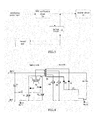
- Figure 6 is a circuit diagram of the bidirectional DC/DC circuit of the UPS according to a third embodiment of the disclosure.
- the circuit structure of only the first selection unit and the first chopper unit is different from that in the bidirectional DC/DC circuit shown in Figure 4 .
- the first selection unit includes two relays RLY1-1 and RLY1-2, two single-pole single-throw relays.
- both of the source of the MOS transistor Q1 and the source of the MOS transistor Q2 are connected to the negative terminal BAT- of the battery, the drain of the MOS transistor Q1 is connected to the first tap on the primary side of the isolation transformer T1 via the relay RLY1-1, and the drain of the MOS transistor Q2 is connected to the third tap on the primary side of the isolation transformer T1 via the relay RLY1-2.
- the working process of the bidirectional DC/DC circuit in this embodiment is the same as that of the bidirectional DC/DC circuit in the first embodiment, except for the following.
- the moving contact of the relay RLY2 in the charging mode, is controlled to be connected to the second selection contact, and the relays RLY1-1 and RLY1-2 are controlled to be opened.
- the second chopper unit and the first rectification unit operate.
- the discharging mode according to this embodiment at first, the relays RLY1-1 and RLY1-2 are controlled to be closed, and the moving contact of the relay RLY2 is controlled to be connected to the first selection contact. In this case, the first chopper unit and the second rectification unit operate.
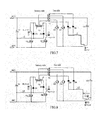
- FIG. 7 is a circuit diagram of the bidirectional DC/DC circuit of the UPS according to a fourth embodiment of the disclosure.
- the bidirectional DC/DC circuit in this embodiment differs from that shown in Figure 6 only in that: both of one terminal of the relay RLY1-1 and the cathode of the diode D1 are connected to one terminal of the current transformer T2, and both of one terminal of the relay RLY1-2 and the cathode of the diode D2 are connected to the other terminal of the current transformer T2.
- the current transformer T2 can sample the battery current not only in the charging mode but also in the discharging mode.
- FIG 8 is a circuit diagram of the bidirectional DC/DC circuit of the UPS according to a fifth embodiment of the disclosure.
- the bidirectional DC/DC circuit in this embodiment differs from that shown in Figure 7 only in that: the single-pole double-throw relay RLY2 is replaced with two single-pole single-throw relays RLY2-1 and RLY2-2, one terminal of the relay RLY2-1 is connected to the filter inductor L2, one terminal of the relay RLY2-2 is connected to the IGBTs Q3 and Q4, and both of the other terminal of the relay RLY2-1 and the other terminal of the relay RLY2-2 are connected to the cathode of the bus capacitor C2.
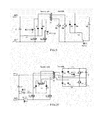
- FIG 9 is a circuit diagram of the bidirectional DC/DC circuit of the UPS according to a sixth embodiment of the disclosure.
- the bidirectional DC/DC circuit in this embodiment differs from that shown in Figure 7 only in that: the current transformer is omitted, that is, both of the cathode of the diode D1 and one terminal of the relay RLY1-1 are connected to the first tap on the primary side of the isolation transformer T1, and both of the cathode of the diode D2 and one terminal of the relay RLY1-2 are connected to the third tap on the primary side of the isolation transformer T1.
- the current transformer may also be arranged on the secondary side of the isolation transformer T1.
- the above embodiments are illustrated by taking a case that there are a plurality of controllable taps on the secondary side of the isolation transformer. Practically, there may also be a plurality of controllable taps on the primary side of the isolation transformer.
- the circuit diagram of the bidirectional DC/DC circuit of the UPS according to the seventh embodiment of the disclosure on the battery side, there are a total of 5 taps on the primary side of the isolation transformer T1, in which a third (central) tap is connected to the positive terminal BAT+ of the battery.
- the first selection unit includes relays RLY1-1 and RLY1-2, single-pole single-throw relays.
- the negative terminal BAT- of the battery is connected to a source of a MOS transistor Q1 and a source of a MOS transistor Q2 via the relay RLY1-1, and a drain of the MOS transistor Q1 and a drain of the MOS transistor Q2 are connected to a second tap and a fourth tap on the primary side of the isolation transformer T1, respectively.
- the negative terminal BAT- of the battery is connected to an anode of a diode D1 and an anode of a diode D2, respectively via the relay RLY1-2 and the filter inductor L1, and a cathode of the diode D1 and a cathode of the diode D2 are connected to a first tap and a fifth tap on the primary side of the isolation transformer T1 via a current transformer T2, respectively.
- a voltage stabilizing capacitor C1 is connected in parallel between the positive terminal BAT+ of the battery and the negative terminal BAT- of the battery.
- the second selection unit includes the relay RLY2, a single-pole single-throw relay.
- the diodes D3, D4, D5 and D6 form a full bridge diode rectifier, two input terminals of the full bridge diode rectifier are respectively connected to a first tap (a dotted terminal) and a third tap (an undotted terminal) on the secondary side of the isolation transformer T1, a first output terminal of the full bridge diode rectifier is connected to an anode of a bus capacitor C2 via a filter inductor L2, and a second output terminal of the full bridge diode rectifier is connected to a cathode of a bus capacitor C3 via a filter inductor L3.
- a collector of an IGBT Q3 is connected to the anode of the bus capacitor C2
- an emitter of an IGBT Q4 is connected to the cathode of the bus capacitor C3
- both of an emitter of the IGBT Q3 and a collector of the IGBT Q4 are connected to a firs tap on the secondary side of the isolation transformer T1 via the relay RLY2
- a second (central) tap of the isolation transformer T1 is connected to a cathode of the bus capacitor C2 and an anode of the bus capacitor C3.
- the operating principle of the bidirectional DC/DC circuit in the embodiment is similar to that in the second embodiment shown in Figure 5 , except that: for the bidirectional DC/DC circuit in the embodiment, the relay RLY2 and the relay RLY1-2 are closed and the relay RLY1-1 is opened in the charging node, and the relay RLY1-1 is closed and the relay RLY1-2 and the relay RLY2 are opened in the discharging mode.
- the current transformer is configured to detect the charging current on the primary side of the isolation transformer.
- the current transformer T2 may not be included or may be replaced with a Hall sensor.
- the taps on the primary side of the isolation transformer are directly connected to the cathodes of the first and second diodes.
- the first tap on the primary side of the isolation transformer is connected to the cathode of the first diode and the third tap on the primary side of the isolation transformer is connected to the cathode of the second diode.
- the first tap on the primary side of the isolation transformer is connected to the cathode of the first diode
- the fifth tap on the primary side of the isolation transformer is connected to the cathode of the second diode.
- the current transformer is connected to an AC side of the first rectification unit.
- the Hall sensor is arranged on the AC side or a DC side of the first rectification unit.
- FIG 11 is a circuit diagram of the bidirectional DC/DC circuit of the UPS according to an eighth embodiment of the disclosure.
- the bidirectional DC/DC circuit includes an isolation transformer T1, a first selection unit, a first chopper unit, a first rectification unit, a second selection unit, a second chopper unit and a second rectification unit.
- the bidirectional DC/DC circuit further includes a filter inductor L4 arranged on a primary side of the isolation transformer T1.
- the isolation transformer T1 There are two taps on the primary side of the isolation transformer T1, and five taps on a secondary side of the isolation transformer T1.
- the first selection unit, the first chopper unit and the first rectification unit are arranged on the primary side (i.e., the battery side) of the isolation transformer T1; and the second selection unit, the second chopper unit and the second rectification unit are arranged on the secondary side (i.e., the bus side) of the isolation transformer T1.
- the circuit structure of the secondary side of the isolation transformer T1 in the embodiment is the same as that in the bidirectional DC/DC circuit shown in Figure 4 , and it will not be repeated here.
- the circuit structure of only the primary side of the isolation transformer T1 is illustrated in the following.
- the first selection unit is a relay RLY3, a single-pole single-throw relay.
- the first chopper unit is a half bridge chopper unit including a MOS transistors Q5 and Q6.
- the first rectification unit is a full bridge rectification unit including diodes D7, D8, D9 and D10.
- the MOS transistors Q5 and Q6 are connected in series between a positive terminal BAT+ and a negative terminal BAT- of the battery, and a common node between the MOS transistors Q5 and Q6 is connected with a first tap (a dotted terminal) on the primary side of the isolation transformer T1.
- the positive terminal BAT+ of the battery is also connected to a cathode of the diode D7 and a cathode of the diode D8 via the filter inductor L4, an anode of the diode D7 is connected to a cathode of the diode D9, an anode of the diode D8 is connected to a cathode of the diode D10, an anode of the diode D9 and an anode of the diode D10 are connected to the negative terminal BAT- of the battery, and the anode of the diode D7 and the anode of the diode D8 are connected to the first tap (the dotted terminal) and the second tap (an undotted terminal) on the primary side of the isolation transformer T1, respectively.
- a series circuit formed of voltage stabilizing capacitors C4 and C5 is connected in parallel with the series circuit of the MOS transistors Q5 and Q6, and a common node between the voltage stabilizing capacitors C4 and C5 is connected to the second tap (the undotted terminal) on the primary side of the isolation transformer T1 via the relay RLY3.
- the operating principle of the bidirectional DC/DC circuit is illustrated as follows.
- the moving contact of the relay RLY2 is controlled to be connected to the second selection contact and the relay RLY3 is controlled to be opened.
- the second chopper unit and the first rectification unit operate.
- the IGBTs Q3 and Q4 are controlled to perform high frequency chopping to convert the DC power obtained from the bus to high frequency pulses whose energy is delivered to the battery side via the isolation transformer T1, is then rectified by the first rectification unit formed of the diodes D7, D8, D9 and D10, and is used to charge the battery after being filtered by the filter inductor L4.
- the moving contact of the relay RLY2 is controlled to be connected to the second selection contact and the relay RLY3 is controlled to be closed.
- the first chopper unit and the second rectification unit operate.
- the MOS transistors Q5 and Q6 are controlled to perform the high frequency chopping to convert the energy of the battery to high frequency pulses which are delivered to the bus side via the isolation transformer T1, are rectified by the second rectification unit formed of the diodes D3 and D4, and then supply power to the bus.
- the IGBT Q3, the IGBT Q4, the MOS transistor Q5 and the MOS transistor Q6 in the embodiment may also be switch transistors in other forms.
- FIG 12 is a circuit diagram of the bidirectional DC/DC circuit of the UPS according to a ninth embodiment of the disclosure.
- the bidirectional DC/DC circuit includes an isolation transformer T1, a first selection unit, a first chopper unit, a first rectification unit, a second selection unit, a second chopper unit and a second rectification unit.
- the bidirectional DC/DC circuit further includes a filter inductor L4 arranged on a primary side of the isolation transformer T1.
- the isolation transformer T1 There are two taps on the primary side of the isolation transformer T1, and four taps on a secondary side of the isolation transformer T1.
- the first selection unit, the first chopper unit and the first rectification unit are arranged on the primary side (i.e., the battery side) of the isolation transformer T1; and the second selection unit, the second chopper unit and the second rectification unit are arranged on the secondary side (i.e., the bus side) of the isolation transformer T1.
- circuit structure of the primary side of the isolation transformer T1 in the embodiment is the same as that in the bidirectional DC/DC circuit shown in Figure 11
- circuit structure of the secondary side of the isolation transformer T1 in the embodiment is the same as that in the bidirectional DC/DC circuit shown in Figure 5 . Therefore, the circuit structure of the embodiment will not be described in detail here, and the circuit structures shown in Figures 5 and 11 may be referred to for details.
- the working process of the bidirectional DC/DC circuit in the embodiment differs from that of the bidirectional DC/DC circuit shown in Figure 11 only in that: the controlling on the relay RLY2 in Figure 11 is replaced with the controlling on solid-state switches SWITCH1, SWITCH2 and SWITCH3.
- the solid-state switch SWITCH2 in the charging mode, is controlled to be turned on, and the solid-state switches SWITCH1 and SWITCH3 are controlled to be turned off.
- the second chopper unit formed of the IGBTs Q3 and Q4 operates.
- the solid-state switches SWITCH1 and SWITCH3 are controlled to be turned on, and the solid-state switch SWITCH2 is controlled to be turned off.
- the second rectification unit formed of the diodes D3, D4, D5 and D6 operates.
- the IGBT Q3, the IGBT Q4, the MOS transistor Q5 and the MOS transistor Q6 in the embodiment may also be switch transistors in other forms.
- FIG. 13 is a circuit diagram of a bidirectional DC/DC circuit of the UPS according to a tenth embodiment of the disclosure.
- the bidirectional DC/DC circuit includes an isolation transformer T1, a first selection unit, a first chopper unit, a first rectification unit, a second selection unit, a second chopper unit and a second rectification unit.
- the bidirectional DC/DC circuit further includes a filter inductor L5 arranged on a primary side of the isolation transformer T1.
- the isolation transformer T1 There are two taps on the primary side of the isolation transformer T1, and five taps on a secondary side of the isolation transformer T1.
- the first selection unit, the first chopper unit and the first rectification unit are arranged on the primary side (i.e., the battery side) of the isolation transformer T1; and the second selection unit, the second chopper unit and the second rectification unit are arranged on the secondary side (i.e., the bus side) of the isolation transformer T1.
- the circuit structure of the secondary side of the isolation transformer T1 in the embodiment is the same as that in the bidirectional DC/DC circuit shown in Figure 4 , and it will not be repeated here.
- the circuit structure of only the primary side of the isolation transformer T1 is illustrated in the following.
- the first selection unit is a relay RLY4, a single-pole single-throw relay.
- the first chopper unit is a full bridge chopper unit including MOS transistors Q7, Q8, Q9 and Q10.
- the first rectification unit includes diodes D11, D12, D13 and D14.
- the MOS transistor Q7 is connected in series with the MOS transistor Q9
- the MOS transistor Q8 is connected in series with the MOS transistor Q10
- the series circuit formed of the MOS transistors Q7 and Q9 and the series circuit formed of the MOS transistors Q8 and Q10 are connected between a positive terminal BAT+ and a negative terminal BAT- of the battery
- a common node between the MOS transistors Q8 and Q10 is connected to a first tap (a dotted terminal) on the primary side of the isolation transformer T1 via the relay RLY4
- a common node between the MOS transistors Q7 and Q9 is connected to a second tap (an undotted terminal) on the primary side of the isolation transformer T1.
- the positive terminal BAT+ of the battery is connected to a cathode of the diode D11 and a cathode of the diode D12 via the filter inductor L5, an anode of the diode D11 is connected to a cathode of the diode D 13, an anode of the diode D12 is connected to a cathode of the diode D14, an anode of the diode D13 and an anode of the diode D14 are connected to the negative terminal BAT- of the battery, and the anode of the diode D11 and the anode of the diode D12 are connected to the first tap (the dotted terminal) and the second tap (the undotted terminal) on the primary side of the isolation transformer T1, respectively.
- the operating principle of the bidirectional DC/DC circuit is illustrated as follows.
- the moving contact of the relay RLY2 is controlled to be connected to the second selection contact, and the relay RLY4 is controlled to be opened.
- the second chopper unit and the first rectification unit operate.
- the IGBTs Q3 and Q4 are controlled to perform high frequency chopping to convert the DC power obtained from the bus to high frequency pulses whose energy is delivered to the battery side via the isolation transformer T1, is then rectified by the first rectification unit formed of the diodes D11, D12, D13 and D14, and is used to charge the battery after being filtered by the filter inductor L5.
- the moving contact of the relay RLY2 is controlled to be connected to the second selection contact and the relay RLY4 is controlled to be closed.
- the first chopper unit and the second rectification unit operate.
- the MOS transistors Q7, Q8, Q9 and Q10 are controlled to perform the high frequency chopping to convert the energy of the battery to high frequency pulses which are delivered to the bus side via the isolation transformer T1, are rectified by the second rectification unit formed of the diodes D3 and D4, and then supply power to the bus.
- the IGBTs Q3 and Q4 and the MOS transistors Q7, Q8, Q9 and Q10 in the embodiment may also be switch transistors in other forms.
- a voltage stabilizing capacitor C6 is connected in parallel with the series circuit of the MOS transistors Q7 and Q9 in the embodiment.
- FIG 14 is a circuit diagram of the bidirectional DC/DC circuit of the UPS according to an eleventh embodiment of the disclosure.
- the bidirectional DC/DC circuit includes an isolation transformer T1, a first selection unit, a first chopper unit, a first rectification unit, a second selection unit, a second chopper unit and a second rectification unit.
- the bidirectional DC/DC circuit further includes a filter inductor L5 arranged on a primary side of the isolation transformer T1.
- the isolation transformer T1 There are two taps on the primary side of the isolation transformer T1, and four taps on a secondary side of the isolation transformer T1.
- the first selection unit, the first chopper unit and the first rectification unit are arranged on the primary side (i.e., the battery side) of the isolation transformer T1; and the second selection unit, the second chopper unit and the second rectification unit are arranged on the secondary side (i.e., the bus side) of the isolation transformer T1.
- the circuit structure of the primary side of the isolation transformer T1 in the embodiment is the same as that in the bidirectional DC/DC circuit shown in Figure 13
- the circuit structure of the secondary side of the isolation transformer T1 in the embodiment is the same as that in the bidirectional DC/DC circuit shown in Figure 5 . Therefore, the circuit structure of the embodiment will not be described in detail here, and the circuit structures shown in Figures 5 and 13 may be referred to for details.
- the working process of the bidirectional DC/DC circuit in the embodiment differs from that of the bidirectional DC/DC circuit shown in Figure 13 only in that: the controlling on the relay RLY2 in Figure 13 is replaced with the controlling on solid-state switches SWITCH1, SWITCH2 and SWITCH3.
- the solid-state switch SWITCH2 in the charging mode, is controlled to be turned on, and the solid-state switches SWITCH1 and SWITCH3 are controlled to be turned off.
- the second chopper unit formed of the IGBTs Q3 and Q4 operates.
- the solid-state switches SWITCH1 and SWITCH3 are controlled to be turned on, and the solid-state switch SWITCH2 is controlled to be turned off.
- the second rectification unit formed of the diodes D3, D4, D5 and D6 operates.
- the IGBTs Q3 and Q4 and the MOS transistors Q7, Q8, Q9 and Q10 in the embodiment may also be switch transistors in other forms.
- each of the bidirectional DC/DC circuits shown in Figures 11 to 14 may further include a current transformer or a Hall sensor arranged on the primary side of the isolation transformer, to detect the charging current on the primary side.
- the current transformer is arranged on an AC side of the first rectification unit, and the Hall sensor is arranged on the AC side or a DC side of the first rectification unit.
- the current transformer may be arranged between the first tap of the isolation transformer and the common node of the diodes D7 and D9, or may be arranged between the second tap of the isolation transformer and the common node of the diodes D8 and D10.
- the Hall sensor may be arranged at the position described above where the current transformer is arranged, that is, the Hall sensor may be arranged on the AC side of the first rectification unit.
- the Hall sensor may be arranged between the filter inductor L4 and a common node of the positive terminal BAT+ of the battery, the filter inductor L4 and the MOS transistor Q5, or may be arranged between the filter inductor L4 and a common node of the diodes D7 and D8, that is, the Hall sensor may be arranged on the DC side of the first rectification unit.
- each of the first chopper unit and the second chopper unit may be in the form of a push-pull chopper unit, a full bridge chopper unit or a half bridge chopper unit; and each of the first rectification unit and the second rectification unit may be in the form of a full bridge rectification unit, a full wave rectification unit, a voltage-doubler rectification unit or a current-doubler rectification unit.
- the various forms of the first chopper unit, the second chopper unit, the first rectification unit and the second rectification unit may be combined in different ways.
- the switch transistor is not limited to the MOS transistor and the IGBT, and the position of current sampling point, i.e., the position of the current transformer or the Hall sensor, is also not limited.
Landscapes
- Engineering & Computer Science (AREA)
- Power Engineering (AREA)
- Business, Economics & Management (AREA)
- Emergency Management (AREA)
- Charge And Discharge Circuits For Batteries Or The Like (AREA)
- Dc-Dc Converters (AREA)
- Inverter Devices (AREA)
- Stand-By Power Supply Arrangements (AREA)
Abstract
Description
- This application claims the priority to the Chinese patent application No.
201210374995.9 - The disclosure relates to the field of power supply, and particularly to an uninterrupted power supply (UPS) and a DC/DC circuit thereof.
- The structure of a conventional uninterrupted power supply (UPS) is shown in
Figures 1 and 2 , which includes a charging circuit and discharging circuit designed independently. Both of the charging circuit and the discharging circuit are DC/DC circuits. In the commercial power supplying mode, the commercial power is supplied to the charging circuit directly or after being rectified by a power factor correction (PFC) rectification circuit, to charge a battery. In the battery power supplying mode, the battery discharges to supply an input voltage to an inverter circuit through the discharging circuit, so as to supply power to a load. However, as shown inFigures 1 and 2 , the conventional charging circuit and discharging circuit are two independent parts of a UPS system in any conventional manner of connecting (coupling) the charging circuit. Such a UPS has disadvantages of large size, high cost and uncentralized key elements, which impacts the product miniaturization. - For solving the technical problem in the conventional art that the UPS has disadvantages of large size, high cost and uncentralized key elements, it is to provide a UPS and a DC/DC circuit thereof, in which the UPS has a small size, a low cost and centralized key elements, thereby promoting product miniaturization.
- The technical solution of the disclosure for solving the technical problems is to construct a DC/DC circuit of an uninterrupted power supply, wherein the DC/DC circuit is a bidirectional DC/DC circuit connected between a bus and a battery;
in a charging mode, the bidirectional DC/DC circuit obtains power from the bus and charges the battery; and in a discharging mode, the bidirectional DC/DC circuit obtains power from the battery and supplies the bus with power. - In the DC/DC circuit of the uninterrupted power supply according to the disclosure, the bidirectional DC/DC circuit includes:
- an isolation transformer;
- a first selection unit, a first chopper unit and a first rectification unit which are arranged on a primary side of the isolation transformer; and
- a second selection unit, a second chopper unit and a second rectification unit which are arranged on a secondary side of the isolation transformer; and
- wherein in the charging mode, the second selection unit selects the second chopper unit to operate and the first selection unit selects the first rectification unit to operate; and in the discharging mode, the first selection unit selects the first chopper unit to operate, and the second selection unit selects the second rectification unit to operate.
- In the DC/DC circuit of the uninterrupted power supply according to the disclosure, the primary side and/or the secondary side of the isolation transformer includes a plurality of controllable taps, the first chopper unit and the first rectification unit are connected to different controllable taps on the primary side of the isolation transformer, respectively, and/or the second chopper unit and the second rectification unit are connected to different controllable taps on the secondary side of the isolation transformer, respectively.
- In the DC/DC circuit of the uninterrupted power supply according to the disclosure, each of the first chopper unit and the second chopper unit is a push-pull chopper unit, a full bridge chopper unit or a half bridge chopper unit.
- In the DC/DC circuit of the uninterrupted power supply according to the disclosure, each of the first rectification unit and the second rectification unit is a full bridge rectification unit, a full wave rectification unit, a voltage-doubler rectification unit or a current-doubler rectification unit.
- In the DC/DC circuit of the uninterrupted power supply according to the disclosure, each of the first selection unit and the second selection unit is a relay and/or a solid-state switch.
- In the DC/DC circuit of the uninterrupted power supply according to the disclosure, in a case that the first selection unit and the second selection unit are relays, the relay includes at least one single-pole single-throw relay, single-pole double-throw relay or double-pole double-throw relay.
- In the DC/DC circuit of the uninterrupted power supply according to the disclosure, the bidirectional DC/DC circuit further includes a current transformer or a Hall sensor arranged on the primary side and/or the secondary side of the isolation transformer, and the current transformer or the Hall sensor is configured to sample a current on the primary side and/or the secondary side of the isolation transformer.
- In the DC/DC circuit of the uninterrupted power supply according to the disclosure, the bidirectional DC/DC circuit further includes filter inductors arranged on the primary side and the secondary side of the isolation transformer.
- In the DC/DC circuit of the uninterrupted power supply according to the disclosure, the first selection unit includes a single-pole single-throw first relay, the second selection unit includes a single-pole double-throw second relay, the first chopper unit includes a first switch transistor and a second switch transistor, the second chopper unit includes a third switch transistor and a fourth switch transistor, the first rectification unit includes a first diode and a second diode, the second rectification unit includes a third diode and a fourth diode, and the bidirectional DC/DC circuit further includes a first filter inductor arranged on the primary side of the isolation transformer, a second filter inductor arranged on the secondary side of the isolation transformer, and a current transformer arranged on the primary side of the isolation transformer, and
a positive terminal of the battery is connected to a second tap, i.e., a central tap, on the primary side of the isolation transformer, a negative terminal of the battery is connected to a second terminal of the first switch transistor and a second terminal of the second switch transistor via the first relay, a first terminal of the first switch transistor and a first terminal of the second switch transistor are respectively connected to a first tap, i.e., a dotted terminal, and a third tap, i.e., an undotted terminal, on the primary side of the isolation transformer, the first tap and the third tap on the primary side of the isolation transformer are connected to a cathode of the first diode and a cathode of the second diode via the current transformer, respectively, and both of an anode of the first diode and an anode of the second diode are connected to the negative terminal of the battery via the first filter inductor; and a third tap, i.e., a central tap, on the secondary side of the isolation transformer is connected to a positive bus, a first tap and a fifth tap on the secondary side of the isolation transformer are connected to a cathode of the third diode and a cathode of the fourth diode, respectively, both of an anode of the third diode and an anode of the fourth diode are connected to a first selection contact of the second relay via the second filter inductor, a second tap and a fourth tap on the secondary side of the isolation transformer are connected to a first terminal of the third switch transistor and a first terminal of the fourth switch transistor, respectively, both of a second terminal of the third switch transistor and a second terminal of the fourth switch transistor are connected to a second selection contact of the second relay, and a moving contact of the second relay is connected to a negative bus. - In the DC/DC circuit of the uninterrupted power supply according to the disclosure, the first selection unit includes a single-pole single-throw first relay and third relay, the second selection unit includes a single-pole double-throw second relay, the first chopper unit includes a first switch transistor and a second switch transistor, the second chopper unit includes a third switch transistor and a fourth switch transistor, the first rectification unit includes a first diode and a second diode, the second rectification unit includes a third diode and a fourth diode, and the bidirectional DC/DC circuit further includes a first filter inductor arranged on the primary side of the isolation transformer, a second filter inductor arranged on the secondary side of the isolation transformer, and a current transformer arranged on the primary side of the isolation transformer, and
a positive terminal of the battery is connected to a second tap, i.e., a central tap, on the primary side of the isolation transformer, a negative terminal of the battery is connected to a second terminal of the first switch transistor and a second terminal of the second switch transistor, a first terminal of the first switch transistor is connected to a first tap, i.e., a dotted terminal, on the primary side of the isolation transformer via the first relay, a first terminal of the second switch transistor is connected to a third tap, i.e., an undotted terminal, on the primary side of the isolation transformer via the third relay, the first tap and the third tap on the primary side of the isolation transformer are connected to a cathode of the first diode and a cathode of the second diode via the current transformer, respectively, and both of an anode of the first diode and an anode of the second diode are connected to the negative terminal of the battery via the first filter inductor; and a third tap, i.e., a central tap, on the secondary side of the isolation transformer is connected to a positive bus, a first tap and a fifth tap on the secondary side of the isolation transformer are connected to a cathode of the third diode and a cathode of the fourth diode, respectively, both of an anode of the third diode and an anode of the fourth diode are connected to a first selection contact of the second relay via the second filter inductor, a second tap and a fourth tap on the secondary side of the isolation transformer are connected to a first terminal of the third switch transistor and a first terminal of the fourth switch transistor, respectively, both of a second terminal of the third switch transistor and a second terminal of the fourth switch transistor are connected to a second selection contact of the second relay, and a moving contact of the second relay is connected to a negative bus. - It is also to construct a UPS according to the disclosure, which includes any one of the DC/DC circuits described above.
- With the technical solution of the disclosure, not only a charging function but also a discharging function can be achieved in the UPS, since the charging circuit and the discharging circuit are integrated into one DC/DC circuit in the UPS, which is a bidirectional DC/DC circuit. Therefore, the UPS can have a reduced size, a lowered cost and centralized key elements, thereby promoting the product miniaturization.
- The disclosure will be further described in conjunction with accompany drawings and embodiments hereinafter. In the accompany drawings:
-
Figure 1 is a logic diagram of a first kind of UPS in the conventional art; -
Figure 2 is a logic diagram of a second kind of UPS in the conventional art; -
Figure 3 is a logic diagram of a UPS according to a first embodiment of the disclosure; -
Figure 4 is a circuit diagram of a bidirectional DC/DC circuit of the UPS according to a first embodiment of the disclosure; -
Figure 5 is a circuit diagram of a bidirectional DC/DC circuit of the UPS according to a second embodiment of the disclosure; -
Figure 6 is a circuit diagram of a bidirectional DC/DC circuit of the UPS according to a third embodiment of the disclosure; -
Figure 7 is a circuit diagram of a bidirectional DC/DC circuit of the UPS according to a fourth embodiment of the disclosure; -
Figure 8 is a circuit diagram of a bidirectional DC/DC circuit of the UPS according to a fifth embodiment of the disclosure; -
Figure 9 is a circuit diagram of a bidirectional DC/DC circuit of the UPS according to a sixth embodiment of the disclosure; -
Figure 10 is a circuit diagram of a bidirectional DC/DC circuit of the UPS according to a seventh embodiment of the disclosure; -
Figure 11 is a circuit diagram of a bidirectional DC/DC circuit of the UPS according to an eighth embodiment of the disclosure; -
Figure 12 is a circuit diagram of a bidirectional DC/DC circuit of the UPS according to a ninth embodiment of the disclosure; -
Figure 13 is a circuit diagram of a bidirectional DC/DC circuit of the UPS according to a tenth embodiment of the disclosure; and -
Figure 14 is a circuit diagram of a bidirectional DC/DC circuit of the UPS according to an eleventh embodiment of the disclosure. -
Figure 3 is a logic diagram of a UPS according to a first embodiment of the disclosure. The UPS includes aPFC rectification circuit 20, aninverter circuit 30, a battery BAT and a DC/DC circuit 10. ThePFC rectification circuit 20 is configured to perform PFC rectification on a voltage of the commercial power to supply power to the bus, in the case that the commercial power supply is normal. Theinverter circuit 30 is configured to perform an inversion on a voltage of the DC bus to supply power to a load. In the following, the DC/DC circuit 10 will be mainly described. The DC/DC circuit 10 is connected between the bus and the battery BAT, and is a bidirectional DC/DC circuit. In a charging mode (in the case that the commercial power supply is normal), the bidirectional DC/DC circuit 10 obtains power from the bus and charges the battery BAT. In a discharging mode (in the case that the commercial power supply is abnormal), the bidirectional DC/DC circuit 10 obtains power from the battery BAT and supplies power to the bus. - With this technical solution, not only a charging function but also a discharging function can be achieved in the UPS, since the charging circuit and the discharging circuit are integrated into one DC/DC circuit which is a bidirectional DC/DC circuit. Therefore, the UPS can have a reduced size, a lowered cost and centralized key elements, thereby promoting the product miniaturization.
- In a logic diagram showing a preferable embodiment of a bidirectional DC/DC circuit of the UPS according to the disclosure, the bidirectional DC/DC circuit includes an isolation transformer, a first selection unit, a first chopper unit, a first rectification unit, a second selection unit, a second chopper unit, and a second rectification unit. The first selection unit, the first chopper unit and the first rectification unit are arranged on a primary side (i.e., a battery side) of the isolation transformer. The second selection unit, the second chopper unit and the second rectification unit are arranged on a secondary side (i.e., a bus side) of the isolation transformer. In addition, in the charging mode, the second selection unit selects the second chopper unit to operate, and the first selection unit selects the first rectification unit to operate; and in the discharging mode, the first selection unit selects the first chopper unit to operate, and the second selection unit selects the second rectification unit to operate. With this technical solution, in addition to enabling the UPS to have advantages of small size, low cost and centralized key elements, only the isolation transformer is shared in charging and discharging, the first chopper unit used in the discharging mode and the first rectification unit used in the charging mode are completely independent and the second chopper unit used in the charging mode and the second rectification unit used in the discharging mode are completely independent. Therefore, for each of the battery side and the bus side, respective suitable devices may be effectively selected according to the rectification requirement and a chopping requirement by separating the rectification units from the chopper units, thereby avoiding the difficulty in device selection in practical applications, which is caused by an improved level of withstanding voltage of the device due to one of the rectification requirement and the chopping requirement (the withstanding voltage and reverse recovery capability).
- In the bidirectional DC/DC circuit, preferably, one or both of the primary side and the secondary side of the isolation transformer include a plurality of controllable taps. In a case that there are a plurality of controllable taps on the primary side of the isolation transformer, the first chopper unit and the first rectification unit are connected to different controllable taps on the primary side of the isolation transformer, respectively. In a case that there are a plurality of controllable taps on the secondary side of the isolation transformer, the second chopper unit and the second rectification unit are connected to different controllable taps on the secondary side of the isolation transformer, respectively. Practically, it may also be possible for both of the primary side and the secondary side of the isolation transformer to have a plurality of different controllable taps. In this way, the turns ratio between the primary side and the secondary side of the isolation transformer may be changed by selecting the controllable taps on the primary side and/or the secondary side of the isolation transformer, thereby adjusting a charging voltage or a discharging voltage. In addition, each of the first chopper unit and the second chopper unit may be a push-pull chopper unit, a full bridge chopper unit or a half bridge chopper unit; and each of the first rectification unit and the second rectification unit may be a full bridge rectification unit, a full wave rectification unit, a voltage-doubler rectification unit or a current-doubler rectification unit. Each of the first selection unit and the second selection unit may be a relay, a solid-state switch or the like. The relay may include at least one single-pole single-throw relay, single-pole double-throw relay or double-pole double-throw relay. Furthermore, the bidirectional DC/DC circuit may further include a current transformer or a Hall sensor arranged on the primary side and/or the secondary side of the isolation transformer, which is configured to sample a current on the primary side and/or the secondary side of the isolation transformer.
-
Figure 4 is a circuit diagram of the bidirectional DC/DC circuit of the UPS according to a first embodiment of the disclosure. On the battery side, the first selection unit is a relay RLY1, a single-pole single-throw relay. In the first chopper unit, a positive terminal BAT+ of the battery is connected to a second (central) tap on the primary side of the isolation transformer T1, a negative terminal BAT- of the battery is connected to a source of a mental oxide semiconductor (MOS) transistor Q1 and a source of a MOS transistor Q2 via the relay RLY1, and a drain of the MOS transistor Q1 and a drain of the MOS transistor Q2 are connected to a first tap (a dotted terminal) and a third tap (an undotted terminal) on the primary side of the isolation transformer T1, respectively. In the first rectification unit, the first tap and the third tap on the primary side of the isolation transformer T1 are connected to a cathode of a diode D1 and a cathode of a diode D2 via a current transformer T2, respectively, and both of an anode of the diode D1 and an anode of the diode D2 are connected to the negative terminal BAT- of the battery via a filter inductor L1. In addition, a voltage stabilizing capacitor C1 is connected in parallel between the positive terminal BAT+ and the negative terminal BAT- of the battery. On the bus side, there are a total of 5 taps on the secondary side of the isolation transformer T1, in which a third (central) tap is connected to an anode of a bus capacitor C2. The second selection unit is a relay RLY2, a single-pole double-throw relay. In the second rectification unit, a first tap and a fifth tap on the secondary side of the isolation transformer T1 are connected to a cathode of a diode D3 and a cathode of a diode D4, respectively, and both of an anode of the diode D3 and an anode of the diode D4 are connected to a first selection contact of the relay RLY2 via a filter inductor L2. In the second chopper unit, a second tap and a fourth tap on the secondary side of the isolation transformer T1 are connected to a collector of an insulated gate bipolar transistor (IGBT) Q3 and a collector of an IGBT Q4, respectively, and both of an emitter of the IGBT Q3 and an emitter of the IGBT Q4 are connected to a second selection contact of the relay RLY2. A moving contact of the relay RLY2 is connected to a cathode of the bus capacitor C2. - The operating principle of the bidirectional DC/DC circuit is described as follows. Both the first chopper unit on the battery side and the second chopper unit on the bus side are push-pull chopper units, and both the first rectification unit on the battery side and the second rectification unit on the bus side are full wave rectification units. In the charging mode, at first, the moving contact of the relay RLY2 is controlled to be connected to the second selection contact, and the relay RLY1 is controlled to be disconnected. In this case, the second chopper unit and the first rectification unit operate. Then, the IGBT Q3 and the IGBT Q4 are controlled to perform high frequency chopping to convert DC power obtained from the bus to high frequency pulses whose energy is delivered to the battery side via the isolation transformer T1, is then rectified by the first rectification unit formed of the diodes D1 and D2, and is used to charge the battery after being filtered by the filter inductor L1. In the discharging mode, at first, the
relay RLY 1 is controlled to be closed and the moving contact of the relay RLY2 is controlled to be connected to the first selection contact. In this case, the first chopper unit and the second rectification unit operate. Then, the MOS transistor Q1 and the MOS transistor Q2 are controlled to perform the high frequency chopping to convert the energy of the battery to high frequency pulses which are delivered to the bus side via the isolation transformer T1, are rectified by the second rectification unit formed of the diodes D3 and D4, and then supply power to the bus. -
Figure 5 is a circuit diagram of the bidirectional DC/DC circuit of the UPS according to a second embodiment of the disclosure. In the embodiment, the circuit structure of the primary side of the isolation transformer T1 is the same as that in the bidirectional DC/DC circuit shown inFigure 4 , and it will not be repeated here. The circuit structure of only the secondary side of the isolation transformer T1 is illustrated in the following. In the embodiment, there is a double bus structure on the bus side, the second chopper unit is a half bridge chopper unit, and the second rectification unit is a full bridge rectification unit. On the bus side, there are a total of 4 taps on the secondary side of the isolation transformer T1, and a third tap is connected to a cathode of a bus capacitor C2 and an anode of a bus capacitor C3. The second selection unit includes three solid-state switches SWITCH1, SWITCH2 and SWITCH3. In the second rectification unit, diodes D3, D4, D5 and D6 form a full bridge rectifier. Two input terminals of the full bridge rectifier are connected to a first and fourth taps on the secondary side of the isolation transformer T1 via the solid-state switches SWITCH1 and SWITCH3, a first output terminal of the full bridge rectifier is connected to an anode of the bus capacitor C2 via a filter inductor L2, and a second output terminal of the full bridge rectifier is connected to a cathode of the bus capacitor C3 via a filter inductor L3. In the second chopper unit, a collector of an IGBT Q3 is connected to the anode of the bus capacitor C2, an emitter of an IGBT Q4 is connected to the cathode of the bus capacitor C3, and both of an emitter of the IGBT Q3 and a collector of the IGBT Q4 are connected to a second tap on the secondary side of the isolation transformer T1 via the solid-state switch SWITCH2. - The operating principle of the bidirectional DC/DC circuit is illustrated as follows. In the charging mode, at first, the solid-state switches SWITCH1 and SWITCH3 are controlled to be turned off, the solid-state switch SWITCH2 is controlled to be turned on, and the relay RLY1 is controlled to be opened. In this case, the second chopper unit and the first rectification unit operate. Then, the IGBTs Q3 and Q4 are controlled to perform high frequency chopping to convert the DC power obtained from the bus to high frequency pulses, whose energy is delivered to the battery side via the isolation transformer T1, is then rectified by the first rectification unit formed of the diodes D1 and D2, and is used to charge the battery after being filtered by the filter inductor L1. In the discharging mode, at first, the relay RLY1 is controlled to be closed, the solid-state switches SWITCH1 and SWITCH3 are controlled to be turned on, and the solid-state switch SWITCH2 is controlled to be turned off. In this case, the first chopper unit and the second rectification unit operate. Then, the MOS transistors Q1 and Q2 are controlled to perform the high frequency chopping to convert the energy of the battery to high frequency pulses which are delivered to the bus side via the isolation transformer T1, are rectified by the second rectification unit formed of the diodes D3, D4, D5 and D6, and then supply power to the bus.
-
Figure 6 is a circuit diagram of the bidirectional DC/DC circuit of the UPS according to a third embodiment of the disclosure. In the embodiment, the circuit structure of only the first selection unit and the first chopper unit is different from that in the bidirectional DC/DC circuit shown inFigure 4 . The first selection unit includes two relays RLY1-1 and RLY1-2, two single-pole single-throw relays. In the first chopper unit, both of the source of the MOS transistor Q1 and the source of the MOS transistor Q2 are connected to the negative terminal BAT- of the battery, the drain of the MOS transistor Q1 is connected to the first tap on the primary side of the isolation transformer T1 via the relay RLY1-1, and the drain of the MOS transistor Q2 is connected to the third tap on the primary side of the isolation transformer T1 via the relay RLY1-2. - The working process of the bidirectional DC/DC circuit in this embodiment is the same as that of the bidirectional DC/DC circuit in the first embodiment, except for the following. For the bidirectional DC/DC circuit in this embodiment, in the charging mode, the moving contact of the relay RLY2 is controlled to be connected to the second selection contact, and the relays RLY1-1 and RLY1-2 are controlled to be opened. In this case, the second chopper unit and the first rectification unit operate. In the discharging mode according to this embodiment, at first, the relays RLY1-1 and RLY1-2 are controlled to be closed, and the moving contact of the relay RLY2 is controlled to be connected to the first selection contact. In this case, the first chopper unit and the second rectification unit operate.
-
Figure 7 is a circuit diagram of the bidirectional DC/DC circuit of the UPS according to a fourth embodiment of the disclosure. The bidirectional DC/DC circuit in this embodiment differs from that shown inFigure 6 only in that: both of one terminal of the relay RLY1-1 and the cathode of the diode D1 are connected to one terminal of the current transformer T2, and both of one terminal of the relay RLY1-2 and the cathode of the diode D2 are connected to the other terminal of the current transformer T2. In the bidirectional DC/DC circuit of this embodiment, the current transformer T2 can sample the battery current not only in the charging mode but also in the discharging mode. -
Figure 8 is a circuit diagram of the bidirectional DC/DC circuit of the UPS according to a fifth embodiment of the disclosure. The bidirectional DC/DC circuit in this embodiment differs from that shown inFigure 7 only in that: the single-pole double-throw relay RLY2 is replaced with two single-pole single-throw relays RLY2-1 and RLY2-2, one terminal of the relay RLY2-1 is connected to the filter inductor L2, one terminal of the relay RLY2-2 is connected to the IGBTs Q3 and Q4, and both of the other terminal of the relay RLY2-1 and the other terminal of the relay RLY2-2 are connected to the cathode of the bus capacitor C2. -
Figure 9 is a circuit diagram of the bidirectional DC/DC circuit of the UPS according to a sixth embodiment of the disclosure. The bidirectional DC/DC circuit in this embodiment differs from that shown inFigure 7 only in that: the current transformer is omitted, that is, both of the cathode of the diode D1 and one terminal of the relay RLY1-1 are connected to the first tap on the primary side of the isolation transformer T1, and both of the cathode of the diode D2 and one terminal of the relay RLY1-2 are connected to the third tap on the primary side of the isolation transformer T1. In addition, it should be noted that, the current transformer may also be arranged on the secondary side of the isolation transformer T1. - The above embodiments are illustrated by taking a case that there are a plurality of controllable taps on the secondary side of the isolation transformer. Practically, there may also be a plurality of controllable taps on the primary side of the isolation transformer. For example, as shown in
Figure 10 , the circuit diagram of the bidirectional DC/DC circuit of the UPS according to the seventh embodiment of the disclosure, on the battery side, there are a total of 5 taps on the primary side of the isolation transformer T1, in which a third (central) tap is connected to the positive terminal BAT+ of the battery. The first selection unit includes relays RLY1-1 and RLY1-2, single-pole single-throw relays. In the first chopper unit, the negative terminal BAT- of the battery is connected to a source of a MOS transistor Q1 and a source of a MOS transistor Q2 via the relay RLY1-1, and a drain of the MOS transistor Q1 and a drain of the MOS transistor Q2 are connected to a second tap and a fourth tap on the primary side of the isolation transformer T1, respectively. In the first rectification unit, the negative terminal BAT- of the battery is connected to an anode of a diode D1 and an anode of a diode D2, respectively via the relay RLY1-2 and the filter inductor L1, and a cathode of the diode D1 and a cathode of the diode D2 are connected to a first tap and a fifth tap on the primary side of the isolation transformer T1 via a current transformer T2, respectively. In addition, a voltage stabilizing capacitor C1 is connected in parallel between the positive terminal BAT+ of the battery and the negative terminal BAT- of the battery. On the bus side, the second selection unit includes the relay RLY2, a single-pole single-throw relay. In the second rectification unit, the diodes D3, D4, D5 and D6 form a full bridge diode rectifier, two input terminals of the full bridge diode rectifier are respectively connected to a first tap (a dotted terminal) and a third tap (an undotted terminal) on the secondary side of the isolation transformer T1, a first output terminal of the full bridge diode rectifier is connected to an anode of a bus capacitor C2 via a filter inductor L2, and a second output terminal of the full bridge diode rectifier is connected to a cathode of a bus capacitor C3 via a filter inductor L3. In the second chopper unit, a collector of an IGBT Q3 is connected to the anode of the bus capacitor C2, an emitter of an IGBT Q4 is connected to the cathode of the bus capacitor C3, both of an emitter of the IGBT Q3 and a collector of the IGBT Q4 are connected to a firs tap on the secondary side of the isolation transformer T1 via the relay RLY2, and a second (central) tap of the isolation transformer T1 is connected to a cathode of the bus capacitor C2 and an anode of the bus capacitor C3. - The operating principle of the bidirectional DC/DC circuit in the embodiment is similar to that in the second embodiment shown in
Figure 5 , except that: for the bidirectional DC/DC circuit in the embodiment, the relay RLY2 and the relay RLY1-2 are closed and the relay RLY1-1 is opened in the charging node, and the relay RLY1-1 is closed and the relay RLY1-2 and the relay RLY2 are opened in the discharging mode. - In the disclosure, the current transformer is configured to detect the charging current on the primary side of the isolation transformer.
- It should be noted that, in the bidirectional DC/DC circuits shown in
Figures 4 to 8 andFigure 10 , the current transformer T2 may not be included or may be replaced with a Hall sensor. In the case that there is no current transformer T2, the taps on the primary side of the isolation transformer are directly connected to the cathodes of the first and second diodes. Specifically, inFigures 4 to 8 , the first tap on the primary side of the isolation transformer is connected to the cathode of the first diode and the third tap on the primary side of the isolation transformer is connected to the cathode of the second diode. InFigure 10 , the first tap on the primary side of the isolation transformer is connected to the cathode of the first diode, and the fifth tap on the primary side of the isolation transformer is connected to the cathode of the second diode. In fact, the current transformer is connected to an AC side of the first rectification unit. In the case that the current transformer T2 is replaced with a Hall sensor, the Hall sensor is arranged on the AC side or a DC side of the first rectification unit. -
Figure 11 is a circuit diagram of the bidirectional DC/DC circuit of the UPS according to an eighth embodiment of the disclosure. In the embodiment, the bidirectional DC/DC circuit includes an isolation transformer T1, a first selection unit, a first chopper unit, a first rectification unit, a second selection unit, a second chopper unit and a second rectification unit. The bidirectional DC/DC circuit further includes a filter inductor L4 arranged on a primary side of the isolation transformer T1. - There are two taps on the primary side of the isolation transformer T1, and five taps on a secondary side of the isolation transformer T1. The first selection unit, the first chopper unit and the first rectification unit are arranged on the primary side (i.e., the battery side) of the isolation transformer T1; and the second selection unit, the second chopper unit and the second rectification unit are arranged on the secondary side (i.e., the bus side) of the isolation transformer T1.
- The circuit structure of the secondary side of the isolation transformer T1 in the embodiment is the same as that in the bidirectional DC/DC circuit shown in
Figure 4 , and it will not be repeated here. The circuit structure of only the primary side of the isolation transformer T1 is illustrated in the following. - The first selection unit is a relay RLY3, a single-pole single-throw relay. The first chopper unit is a half bridge chopper unit including a MOS transistors Q5 and Q6. The first rectification unit is a full bridge rectification unit including diodes D7, D8, D9 and D10.
- In the first chopper unit, the MOS transistors Q5 and Q6 are connected in series between a positive terminal BAT+ and a negative terminal BAT- of the battery, and a common node between the MOS transistors Q5 and Q6 is connected with a first tap (a dotted terminal) on the primary side of the isolation transformer T1. In the first rectification unit, the positive terminal BAT+ of the battery is also connected to a cathode of the diode D7 and a cathode of the diode D8 via the filter inductor L4, an anode of the diode D7 is connected to a cathode of the diode D9, an anode of the diode D8 is connected to a cathode of the diode D10, an anode of the diode D9 and an anode of the diode D10 are connected to the negative terminal BAT- of the battery, and the anode of the diode D7 and the anode of the diode D8 are connected to the first tap (the dotted terminal) and the second tap (an undotted terminal) on the primary side of the isolation transformer T1, respectively. In addition, a series circuit formed of voltage stabilizing capacitors C4 and C5 is connected in parallel with the series circuit of the MOS transistors Q5 and Q6, and a common node between the voltage stabilizing capacitors C4 and C5 is connected to the second tap (the undotted terminal) on the primary side of the isolation transformer T1 via the relay RLY3.
- The operating principle of the bidirectional DC/DC circuit is illustrated as follows. In the charging mode, at first, the moving contact of the relay RLY2 is controlled to be connected to the second selection contact and the relay RLY3 is controlled to be opened. In this case, the second chopper unit and the first rectification unit operate. Then, the IGBTs Q3 and Q4 are controlled to perform high frequency chopping to convert the DC power obtained from the bus to high frequency pulses whose energy is delivered to the battery side via the isolation transformer T1, is then rectified by the first rectification unit formed of the diodes D7, D8, D9 and D10, and is used to charge the battery after being filtered by the filter inductor L4. In the discharging mode, at first, the moving contact of the relay RLY2 is controlled to be connected to the second selection contact and the relay RLY3 is controlled to be closed. In this case, the first chopper unit and the second rectification unit operate. Then, the MOS transistors Q5 and Q6 are controlled to perform the high frequency chopping to convert the energy of the battery to high frequency pulses which are delivered to the bus side via the isolation transformer T1, are rectified by the second rectification unit formed of the diodes D3 and D4, and then supply power to the bus.
- It should be noted that, the IGBT Q3, the IGBT Q4, the MOS transistor Q5 and the MOS transistor Q6 in the embodiment may also be switch transistors in other forms.
-
Figure 12 is a circuit diagram of the bidirectional DC/DC circuit of the UPS according to a ninth embodiment of the disclosure. In the embodiment, the bidirectional DC/DC circuit includes an isolation transformer T1, a first selection unit, a first chopper unit, a first rectification unit, a second selection unit, a second chopper unit and a second rectification unit. The bidirectional DC/DC circuit further includes a filter inductor L4 arranged on a primary side of the isolation transformer T1. - There are two taps on the primary side of the isolation transformer T1, and four taps on a secondary side of the isolation transformer T1. The first selection unit, the first chopper unit and the first rectification unit are arranged on the primary side (i.e., the battery side) of the isolation transformer T1; and the second selection unit, the second chopper unit and the second rectification unit are arranged on the secondary side (i.e., the bus side) of the isolation transformer T1.
- The circuit structure of the primary side of the isolation transformer T1 in the embodiment is the same as that in the bidirectional DC/DC circuit shown in
Figure 11 , and the circuit structure of the secondary side of the isolation transformer T1 in the embodiment is the same as that in the bidirectional DC/DC circuit shown inFigure 5 . Therefore, the circuit structure of the embodiment will not be described in detail here, and the circuit structures shown inFigures 5 and11 may be referred to for details. - The working process of the bidirectional DC/DC circuit in the embodiment differs from that of the bidirectional DC/DC circuit shown in
Figure 11 only in that: the controlling on the relay RLY2 inFigure 11 is replaced with the controlling on solid-state switches SWITCH1, SWITCH2 and SWITCH3. Specifically, in the charging mode, the solid-state switch SWITCH2 is controlled to be turned on, and the solid-state switches SWITCH1 and SWITCH3 are controlled to be turned off. In this case, the second chopper unit formed of the IGBTs Q3 and Q4 operates. In the discharging mode, the solid-state switches SWITCH1 and SWITCH3 are controlled to be turned on, and the solid-state switch SWITCH2 is controlled to be turned off. In this case, the second rectification unit formed of the diodes D3, D4, D5 and D6 operates. - It should be noted that, the IGBT Q3, the IGBT Q4, the MOS transistor Q5 and the MOS transistor Q6 in the embodiment may also be switch transistors in other forms.
-
Figure 13 is a circuit diagram of a bidirectional DC/DC circuit of the UPS according to a tenth embodiment of the disclosure. In the embodiment, the bidirectional DC/DC circuit includes an isolation transformer T1, a first selection unit, a first chopper unit, a first rectification unit, a second selection unit, a second chopper unit and a second rectification unit. The bidirectional DC/DC circuit further includes a filter inductor L5 arranged on a primary side of the isolation transformer T1. - There are two taps on the primary side of the isolation transformer T1, and five taps on a secondary side of the isolation transformer T1. The first selection unit, the first chopper unit and the first rectification unit are arranged on the primary side (i.e., the battery side) of the isolation transformer T1; and the second selection unit, the second chopper unit and the second rectification unit are arranged on the secondary side (i.e., the bus side) of the isolation transformer T1.
- The circuit structure of the secondary side of the isolation transformer T1 in the embodiment is the same as that in the bidirectional DC/DC circuit shown in
Figure 4 , and it will not be repeated here. The circuit structure of only the primary side of the isolation transformer T1 is illustrated in the following. - The first selection unit is a relay RLY4, a single-pole single-throw relay. The first chopper unit is a full bridge chopper unit including MOS transistors Q7, Q8, Q9 and Q10. The first rectification unit includes diodes D11, D12, D13 and D14.
- In the first chopper unit, the MOS transistor Q7 is connected in series with the MOS transistor Q9, the MOS transistor Q8 is connected in series with the MOS transistor Q10, the series circuit formed of the MOS transistors Q7 and Q9 and the series circuit formed of the MOS transistors Q8 and Q10 are connected between a positive terminal BAT+ and a negative terminal BAT- of the battery, a common node between the MOS transistors Q8 and Q10 is connected to a first tap (a dotted terminal) on the primary side of the isolation transformer T1 via the relay RLY4, and a common node between the MOS transistors Q7 and Q9 is connected to a second tap (an undotted terminal) on the primary side of the isolation transformer T1. In the first rectification unit, the positive terminal BAT+ of the battery is connected to a cathode of the diode D11 and a cathode of the diode D12 via the filter inductor L5, an anode of the diode D11 is connected to a cathode of the
diode D 13, an anode of the diode D12 is connected to a cathode of the diode D14, an anode of the diode D13 and an anode of the diode D14 are connected to the negative terminal BAT- of the battery, and the anode of the diode D11 and the anode of the diode D12 are connected to the first tap (the dotted terminal) and the second tap (the undotted terminal) on the primary side of the isolation transformer T1, respectively. - The operating principle of the bidirectional DC/DC circuit is illustrated as follows. In the charging mode, at first, the moving contact of the relay RLY2 is controlled to be connected to the second selection contact, and the relay RLY4 is controlled to be opened. In this case, the second chopper unit and the first rectification unit operate. Then, the IGBTs Q3 and Q4 are controlled to perform high frequency chopping to convert the DC power obtained from the bus to high frequency pulses whose energy is delivered to the battery side via the isolation transformer T1, is then rectified by the first rectification unit formed of the diodes D11, D12, D13 and D14, and is used to charge the battery after being filtered by the filter inductor L5. In the discharging mode, at first, the moving contact of the relay RLY2 is controlled to be connected to the second selection contact and the relay RLY4 is controlled to be closed. In this case, the first chopper unit and the second rectification unit operate. Then, the MOS transistors Q7, Q8, Q9 and Q10 are controlled to perform the high frequency chopping to convert the energy of the battery to high frequency pulses which are delivered to the bus side via the isolation transformer T1, are rectified by the second rectification unit formed of the diodes D3 and D4, and then supply power to the bus.
- It should be noted that, the IGBTs Q3 and Q4 and the MOS transistors Q7, Q8, Q9 and Q10 in the embodiment may also be switch transistors in other forms.
- Preferably, a voltage stabilizing capacitor C6 is connected in parallel with the series circuit of the MOS transistors Q7 and Q9 in the embodiment.
-
Figure 14 is a circuit diagram of the bidirectional DC/DC circuit of the UPS according to an eleventh embodiment of the disclosure. In the embodiment, the bidirectional DC/DC circuit includes an isolation transformer T1, a first selection unit, a first chopper unit, a first rectification unit, a second selection unit, a second chopper unit and a second rectification unit. The bidirectional DC/DC circuit further includes a filter inductor L5 arranged on a primary side of the isolation transformer T1. - There are two taps on the primary side of the isolation transformer T1, and four taps on a secondary side of the isolation transformer T1. The first selection unit, the first chopper unit and the first rectification unit are arranged on the primary side (i.e., the battery side) of the isolation transformer T1; and the second selection unit, the second chopper unit and the second rectification unit are arranged on the secondary side (i.e., the bus side) of the isolation transformer T1.
- The circuit structure of the primary side of the isolation transformer T1 in the embodiment is the same as that in the bidirectional DC/DC circuit shown in
Figure 13 , and the circuit structure of the secondary side of the isolation transformer T1 in the embodiment is the same as that in the bidirectional DC/DC circuit shown inFigure 5 . Therefore, the circuit structure of the embodiment will not be described in detail here, and the circuit structures shown inFigures 5 and13 may be referred to for details. - The working process of the bidirectional DC/DC circuit in the embodiment differs from that of the bidirectional DC/DC circuit shown in
Figure 13 only in that: the controlling on the relay RLY2 inFigure 13 is replaced with the controlling on solid-state switches SWITCH1, SWITCH2 and SWITCH3. Specifically, in the charging mode, the solid-state switch SWITCH2 is controlled to be turned on, and the solid-state switches SWITCH1 and SWITCH3 are controlled to be turned off. In this case, the second chopper unit formed of the IGBTs Q3 and Q4 operates. In the discharging mode, the solid-state switches SWITCH1 and SWITCH3 are controlled to be turned on, and the solid-state switch SWITCH2 is controlled to be turned off. In this case, the second rectification unit formed of the diodes D3, D4, D5 and D6 operates. - It should be noted that, the IGBTs Q3 and Q4 and the MOS transistors Q7, Q8, Q9 and Q10 in the embodiment may also be switch transistors in other forms.
- In practice, each of the bidirectional DC/DC circuits shown in
Figures 11 to 14 may further include a current transformer or a Hall sensor arranged on the primary side of the isolation transformer, to detect the charging current on the primary side. The current transformer is arranged on an AC side of the first rectification unit, and the Hall sensor is arranged on the AC side or a DC side of the first rectification unit. - For example, taking the DC/DC circuit shown in
Figure 11 as an example, the current transformer may be arranged between the first tap of the isolation transformer and the common node of the diodes D7 and D9, or may be arranged between the second tap of the isolation transformer and the common node of the diodes D8 and D10. The Hall sensor may be arranged at the position described above where the current transformer is arranged, that is, the Hall sensor may be arranged on the AC side of the first rectification unit. Alternatively, the Hall sensor may be arranged between the filter inductor L4 and a common node of the positive terminal BAT+ of the battery, the filter inductor L4 and the MOS transistor Q5, or may be arranged between the filter inductor L4 and a common node of the diodes D7 and D8, that is, the Hall sensor may be arranged on the DC side of the first rectification unit. - For the DC/DC circuits shown in
Figures 12 to 14 , the positions where the current transformer and the Hall sensor are arranged are similar to those described with reference toFigure 11 , and the description thereof will not be repeated. - The above embodiments are only some of the embodiments of the disclosure. Practically, in other embodiments, each of the first chopper unit and the second chopper unit may be in the form of a push-pull chopper unit, a full bridge chopper unit or a half bridge chopper unit; and each of the first rectification unit and the second rectification unit may be in the form of a full bridge rectification unit, a full wave rectification unit, a voltage-doubler rectification unit or a current-doubler rectification unit. Furthermore, the various forms of the first chopper unit, the second chopper unit, the first rectification unit and the second rectification unit may be combined in different ways. In addition, in the disclosure, the switch transistor is not limited to the MOS transistor and the IGBT, and the position of current sampling point, i.e., the position of the current transformer or the Hall sensor, is also not limited.
- The above embodiments are only preferable embodiments of the disclosure, and should not be interpreted as limiting the disclosure. For those skilled in the art, various modifications and variations may be made to the disclosure. Any modification, equivalent replacement, improvement or the like, made within the spirit and scope of the disclosure, should fall into the scope defined in the claims of the disclosure.
Claims (22)
- A DC/DC circuit of an uninterrupted power supply, wherein the DC/DC circuit is a bidirectional DC/DC circuit connected between a bus and a battery;
in a charging mode, the bidirectional DC/DC circuit obtains power from the bus and charges the battery; and in a discharging mode, the bidirectional DC/DC circuit obtains power from the battery and supplies the bus with power. - The DC/DC circuit of the uninterrupted power supply according to claim 1, wherein the bidirectional DC/DC circuit comprises:an isolation transformer;a first selection unit, a first chopper unit and a first rectification unit arranged on a primary side of the isolation transformer; anda second selection unit, a second chopper unit and a second rectification unit arranged on a secondary side of the isolation transformer;and wherein in the charging mode, the second selection unit selects the second chopper unit to operate, and the first selection unit selects the first rectification unit to operate; and in the discharging mode, the first selection unit selects the first chopper unit to operate, and the second selection unit selects the second rectification unit to operate.
- The DC/DC circuit of the uninterrupted power supply according to claim 2,
wherein the primary side and/or the secondary side of the isolation transformer comprises a plurality of controllable taps, and
wherein the first chopper unit and the first rectification unit are connected to different controllable taps on the primary side of the isolation transformer, respectively, and/or the second chopper unit and the second rectification unit are connected to different controllable taps on the secondary side of the isolation transformer, respectively. - The DC/DC circuit of the uninterrupted power supply according to claim 2, wherein each of the first chopper unit and the second chopper unit is a push-pull chopper unit, a full bridge chopper unit or a half bridge chopper unit.
- The DC/DC circuit of the uninterrupted power supply according to claim 2, wherein each of the first rectification unit and the second rectification unit is a full bridge rectification unit, a full wave rectification unit, a voltage-doubler rectification unit or a current-doubler rectification unit.
- The DC/DC circuit of the uninterrupted power supply according to claim 2, wherein each of the first selection unit and the second selection unit is a relay and/or a solid-state switch.
- The DC/DC circuit of the uninterrupted power supply according to claim 6, wherein in a case that the first selection unit and/or the second selection unit is a relay, the relay comprises at least one single-pole single-throw relay, a single-pole double-throw relay or a double-pole double-throw relay.
- The DC/DC circuit of the uninterrupted power supply according to claim 2, wherein the bidirectional DC/DC circuit further comprises a current transformer or a Hall sensor arranged on the primary side and/or the secondary side of the isolation transformer, the current transformer or the Hall sensor is configured to sample a current on the primary side and/or the secondary side of the isolation transformer.
- The DC/DC circuit of the uninterrupted power supply according to claim 2, wherein the bidirectional DC/DC circuit further comprises filter inductors arranged on the primary side and the secondary side of the isolation transformer.
- The DC/DC circuit of the uninterrupted power supply according to claim 2, wherein the first selection unit comprises a single-pole single-throw first relay, the second selection unit comprises a single-pole double-throw second relay, the first chopper unit comprises a first switch transistor and a second switch transistor, the second chopper unit comprises a third switch transistor and a fourth switch transistor, the first rectification unit comprises a first diode and a second diode, the second rectification unit comprises a third diode and a fourth diode, and the bidirectional DC/DC circuit further comprises a first filter inductor arranged on the primary side of the isolation transformer and a second filter inductor arranged on the secondary side of the isolation transformer, and
wherein a positive terminal of the battery is connected to a second tap, which is a central tap, on the primary side of the isolation transformer, a negative terminal of the battery is connected to a second terminal of the first switch transistor and a second terminal of the second switch transistor via the first relay, a first terminal of the first switch transistor and a first terminal of the second switch transistor are respectively connected to a first tap, which is a dotted terminal, and a third tap, which is an undotted terminal, on the primary side of the isolation transformer, the first tap and the third tap on the primary side of the isolation transformer are connected to a cathode of the first diode and a cathode of the second diode, respectively, and both of an anode of the first diode and an anode of the second diode are connected to the negative terminal of the battery via the first filter inductor; a third tap, which is a central tap, on the secondary side of the isolation transformer is connected to a positive bus, a first tap and a fifth tap on the secondary side of the isolation transformer are connected to a cathode of the third diode and a cathode of the fourth diode, respectively, both of an anode of the third diode and an anode of the fourth diode are connected to a first selection contact of the second relay via the second filter inductor, a second tap and a fourth tap on the secondary side of the isolation transformer are connected to a first terminal of the third switch transistor and a first terminal of the fourth switch transistor, respectively, both of a second terminal of the third switch transistor and a second terminal of the fourth switch transistor are connected to a second selection contact of the second relay, and a moving contact of the second relay is connected to a negative bus. - The DC/DC circuit of the uninterrupted power supply according to claim 2, wherein the first selection unit comprises a single-pole single-throw first relay and third relay, the second selection unit comprises a single-pole double-throw second relay, the first chopper unit comprises a first switch transistor and a second switch transistor, the second chopper unit comprises a third switch transistor and a fourth switch transistor, the first rectification unit comprises a first diode and a second diode, the second rectification unit comprises a third diode and a fourth diode, and the bidirectional DC/DC circuit further comprises a first filter inductor arranged on the primary side of the isolation transformer and a second filter inductor arranged on the secondary side of the isolation transformer, and
wherein a positive terminal of the battery is connected to a second tap, which is a central tap, on the primary side of the isolation transformer, a negative terminal of the battery is connected to a second terminal of the first switch transistor and a second terminal of the second switch transistor, a first terminal of the first switch transistor is connected to a first tap, which is a dotted terminal, on the primary side of the isolation transformer via the first relay, a first terminal of the second switch transistor is connected to a third tap, which is an undotted terminal, on the primary side of the isolation transformer via the third relay, the first tap and the third tap on the primary side of the isolation transformer are connected to a cathode of the first diode and a cathode of the second diode, respectively, and both of an anode of the first diode and an anode of the second diode are connected to the negative terminal of the battery via the first filter inductor; and a third tap, which is a central tap, on the secondary side of the isolation transformer is connected to a positive bus, a first tap and a fifth tap on the secondary side of the isolation transformer are connected to a cathode of the third diode and a cathode of the fourth diode, respectively, both of an anode of the third diode and an anode of the fourth diode are connected to a first selection contact of the second relay via the second filter inductor, a second tap and a fourth tap on the secondary side of the isolation transformer are connected to a first terminal of the third switch transistor and a first terminal of the fourth switch transistor, respectively, both of a second terminal of the third switch transistor and a second terminal of the fourth switch transistor are connected to a second selection contact of the second relay, and a moving contact of the second relay is connected to a negative bus. - The DC/DC circuit of the uninterrupted power supply according to claim 2, wherein the first selection unit comprises a single-pole single-throw first relay, the second selection unit comprises a first solid-state switch, a second solid-state switch and a third solid-state switch, the first chopper unit comprises a first switch transistor and a second switch transistor, the second chopper unit comprises a third switch transistor and a fourth switch transistor, the first rectification unit comprises a first diode and a second diode, the second rectification unit comprises a third diode, a fourth diode, a fifth diode and a sixth diode, the bidirectional DC/DC circuit further comprises a first filter inductor, a second filter inductor and a third filter inductor, the first filter inductor is arranged on the primary side of the isolation transformer, and the second filter inductor and the third filter inductor are arranged on the secondary side of the isolation transformer;
wherein a positive terminal of the battery is connected to a second tap, which is a central tap, on the primary side of the isolation transformer, a negative terminal of the battery is connected to a second terminal of the first switch transistor and a second terminal of the second switch transistor via the first relay, a first terminal of the first switch transistor and a first terminal of the second switch transistor are connected to a first tap, which is a dotted terminal, and a third tap, which is an undotted terminal, on the primary side of the isolation transformer, respectively, the first tap and the third tap on the primary side of the isolation transformer are connected to a cathode of the first diode and a cathode of the second diode, respectively, and both of an anode of the first diode and an anode of the second diode are connected to the negative terminal of the battery via the first filter inductor; and
wherein the third diode, the fourth diode, the fifth diode and the sixth diode form a full bridge rectifier, two input terminals of the full bridge rectifier are connected to a first tap and a fourth tap on the secondary side of the isolation transformer, respectively, via the first and third solid-state switches, a first output terminal of the full bridge rectifier is connected to an anode of a second bus capacitor via the second filter inductor, a second output terminal of the full bridge rectifier is connected to a cathode of a third bus capacitor via the third filter inductor, a first terminal of the third switch transistor is connected to the anode of the second bus capacitor, a second terminal of the fourth switch transistor is connected to the cathode of the third bus capacitor, both of a second terminal of the third switch transistor and a first terminal of the fourth switch transistor are connected to a second tap on the secondary side of the isolation transformer via the second solid-state switch. - The DC/DC circuit of the uninterrupted power supply according to claim 2, wherein the first selection unit comprises a single-pole single-throw first relay and third relay, the second selection unit comprises a single-pole double-throw second relay, the first chopper unit comprises a first switch transistor and a second switch transistor, the second chopper unit comprises a third switch transistor and a fourth switch transistor, the first rectification unit comprises a first diode and a second diode, the second rectification unit comprises a third diode and a fourth diode, and the bidirectional DC/DC circuit further comprises a first filter inductor arranged on the primary side of the isolation transformer and a second filter inductor arranged on the secondary side of the isolation transformer;
wherein a positive terminal of the battery is connected to a second tap, which is a central tap, on the primary side of the isolation transformer, a negative terminal of the battery is connected to a second terminal of the first switch transistor and a second terminal of the second switch transistor, a first terminal of the first switch transistor is connected to a cathode of the first diode via the first relay, a first terminal of the second switch transistor is connected to a cathode of the second diode via the third relay, a firs tap and a third tap on the primary side of the isolation transformer are connected to the cathode of the first diode and the cathode of the second diode, respectively, and both of an anode of the first diode and an anode of the second diode are connected to the negative terminal of the battery via the first filter inductor; and
wherein a third tap, which a central tap, on the secondary side of the isolation transformer is connected to an anode of a second bus capacitor, a first tap and a fifth tap on the secondary side of the isolation transformer are connected to a cathode of the third diode and a cathode of the fourth diode, respectively, both of an anode of the third diode and an anode of the fourth diode are connected to a first selection contact of the second relay via the second filter inductor, a second tap and a fourth tap on the secondary side of the isolation transformer are connected to a first terminal of the third switch transistor and a first terminal of the fourth switch transistor, respectively, both of a second terminal of the third switch transistor and a second terminal of the fourth switch transistor are connected to a second selection contact of the second relay, and a moving contact of the second relay is connected to a cathode of the second bus capacitor. - The DC/DC circuit of the uninterrupted power supply according to claim 2, wherein the first selection unit comprises a single-pole single-throw first relay and third relay, the second selection unit comprises a single-pole single-throw fourth relay and a fifth relay, the first chopper unit comprises a first switch transistor and a second switch transistor, the second chopper unit comprises a third switch transistor and a fourth switch transistor, the first rectification unit comprises a first diode and a second diode, the second rectification unit comprises a third diode and a fourth diode, and the bidirectional DC/DC circuit further comprises a first filter inductor arranged on the primary side of the isolation transformer and a second filter inductor arranged on the secondary side of the isolation transformer;
wherein a positive terminal of the battery is connected to a second tap, which is a central tap, on the primary side of the isolation transformer, a negative terminal of the battery is connected to a second terminal of the first switch transistor and a second terminal of the second switch transistor, a first terminal of the first switch transistor is connected to a cathode of the first diode via the first relay, a first terminal of the second switch transistor is connected to a cathode of the second diode via the third relay, a first tap and a third tap on the primary side of the isolation transformer are connected to the cathode of the first diode and the cathode of the second diode, respectively, and both of an anode of the first diode and an anode of the second diode are connected to the negative terminal of the battery via the first filter inductor; and
wherein a third tap, which a central tap, on the secondary side of the isolation transformer is connected to an anode of a second bus capacitor, a first tap and a fifth tap on the secondary side of the isolation transformer are connected to a cathode of the third diode and a cathode of the fourth diode, respectively, both of an anode of the third diode and an anode of the fourth diode are connected to a first terminal of the fourth relay via the second filter inductor, a second tap and a fourth tap on the secondary side of the isolation transformer are connected to a first terminal of the third switch transistor and a first terminal of the fourth switch transistor, respectively, both of a second terminal of the third switch transistor and a second terminal of the fourth switch transistor are connected to a first terminal of the fifth relay, and both of a second terminal of the fourth relay and a second terminal of the fifth relay are connected to a cathode of the second bus capacitor. - The DC/DC circuit of the uninterrupted power supply according to claim 2, wherein the first selection unit comprises a single-pole single-throw first relay and third relay, the second selection unit comprises a single-pole single-throw type sixth relay, the first chopper unit comprises a first switch transistor and a second switch transistor, the second chopper unit comprises a third switch transistor and a fourth switch transistor, the first rectification unit comprises a first diode and a second diode, the second rectification unit comprises a third diode, a fourth diode, a fifth diode and a sixth diode, the bidirectional DC/DC circuit further comprises a first filter inductor, a second filter inductor and a third filter inductor, the first filter inductor is arranged on the primary side of the isolation transformer, and the second filter inductor and the third filter inductor are arranged on the secondary side of the isolation transformer;
wherein a negative terminal of the battery is connected to a second terminal of the first switch transistor and a second terminal of the second switch transistor via the first relay, a first terminal of the first switch transistor and a first terminal of the second switch transistor are connected to a second tap and a fourth tap on the primary side of the isolation transformer, respectively, the negative terminal of the battery is connected to an anode of the first diode and an anode of the second diode via a series circuit formed of the third relay and the first filter inductor, and a first tap and a fifth tap on the primary side of the isolation transformer are connected to a cathode of the first diode and a cathode of the second diode, respectively; and
wherein the third diode, the fourth diode, the fifth diode and the sixth diode form a full bridge diode rectifier, two input terminals of the full bridge diode rectifier are connected to a first tap and a third tap on the secondary side of the isolation transformer, respectively, a first output terminal of the full bridge diode rectifier is connected to an anode of a second bus capacitor via the second filter inductor, a second output terminal of the full bridge diode rectifier is connected to a cathode of a third bus capacitor via the third filter inductor, a first terminal of the third switch transistor is connected to the anode of the second bus capacitor, a second terminal of the fourth switch transistor is connected to the cathode of the third bus capacitor, and both of a second terminal of the third switch transistor and a first terminal of the fourth switch transistor are connected to the first tap on the secondary side of the isolation transformer via the sixth relay. - The DC/DC circuit of the uninterrupted power supply according to any one of claims 10-15, wherein the DC/DC circuit further comprises a current transformer or a Hall sensor arranged on the primary side of the isolation transformer,
in a case that the DC/DC circuit comprises the current transformer, the connection of the isolation transformer with the cathode of the first diode and the cathode of the second diode is implemented by connecting the isolation transformer with the cathode of the first diode and the cathode of the second diode via the current transformer; and
in a case that the DC/DC circuit comprises the current transformer, the Hall sensor is arranged on a DC side or an AC side of the first rectification unit. - The DC/DC circuit of the uninterrupted power supply according to claim 2, wherein the first selection unit comprises a single-pole single-throw third relay, the second selection unit comprises a single-pole double-throw second relay, the first chopper unit comprises a fifth switch transistor and a sixth switch transistor, the second chopper unit comprises a third switch transistor and a fourth switch transistor, the first rectification unit comprises a seventh diode, an eighth diode, a ninth diode and a tenth diode, the second rectification unit comprises a third diode and a fourth diode, and the bidirectional DC/DC circuit further comprises a fourth filter inductor arranged on the primary side of the isolation transformer and a second filter inductor arranged on the secondary side of the isolation transformer;
wherein the fifth switch transistor and the sixth switch transistor connected in series are connected between a positive terminal and a negative terminal of the battery, a common node between the fifth switch transistor and the sixth switch transistor is connected to a first tap on the primary side of the isolation transformer, the positive terminal of the battery is connected to a cathode of the seventh diode and a cathode of the eighth diode via the fourth filter inductor, an anode of the seventh diode is connected to a cathode of the ninth diode, an anode of the eighth diode is connected to a cathode of the tenth diode, an anode of the ninth diode and an anode of the tenth diode are connected to the negative terminal of the battery, the anode of the seventh diode and the anode of the eighth diode are connected to the first tap and a second tap on the primary side of the isolation transformer, respectively, a series circuit formed of a fourth voltage stabilizing capacitor and a fifth voltage stabilizing capacitor is connected in parallel at two terminals of the fifth switch transistor and the sixth switch transistor, and a common node between the fourth voltage stabilizing capacitor and the fifth voltage stabilizing capacitor is connected to the second tap on the primary side of the isolation transformer via the third relay; and
wherein a third tap, which is a central tap, on the secondary side of the isolation transformer is connected to an anode of a second bus capacitor, a first tap and a fifth tap on the secondary side of the isolation transformer are connected to a cathode of the third diode and a cathode of the fourth diode, respectively, both of an anode of the third diode and an anode of the fourth diode are connected to a first selection contact of the second relay via the second filter inductor, a second tap and a fourth tap on the secondary side of the isolation transformer are connected to a first terminal of the third switch transistor and a first terminal of the fourth switch transistor, respectively, both of a second terminal of the third switch transistor and a second terminal of the fourth switch transistor are connected to a second selection contact of the second relay, and a moving contact of the second relay is connected to a cathode of the second bus capacitor. - The DC/DC circuit of the uninterrupted power supply according to claim 2, wherein the first selection unit comprises a single-pole single-throw third relay, the second selection unit comprises a first solid-state switch, a second solid-state switch and a third solid-state switch, the first chopper unit comprises a fifth switch transistor and a sixth switch transistor, the second chopper unit comprises a third switch transistor and a fourth switch transistor, the first rectification unit comprises a seventh diode, an eighth diode, a ninth diode and a tenth diode, the second rectification unit comprises a third diode, a fourth diode, a fifth diode and a sixth diode, the bidirectional DC/DC circuit further comprises a fourth filter inductor, a second filter inductor and a third filter inductor, the fourth filter inductor is arranged on the primary side of the isolation transformer, and the second filter inductor and the third filter inductor are arranged on the secondary side of the isolation transformer;
wherein the fifth switch transistor and the sixth switch transistor connected in series are connected between a positive terminal and a negative terminal of the battery, a common node between the fifth switch transistor and the sixth switch transistor is connected to a first tap on the primary side of the isolation transformer, the positive terminal of the battery is connected to a cathode of the seventh diode and a cathode of the eighth diode via the fourth filter inductor, an anode of the seventh diode is connected to a cathode of the ninth diode, an anode of the eighth diode is connected to a cathode of the tenth diode, an anode of the ninth diode and an anode of the tenth diode are connected to the negative terminal of the battery, the anode of the seventh diode and the anode of the eighth diode are also connected to the first tap and a second tap on the primary side of the isolation transformer, respectively, a series circuit formed of a fourth voltage stabilizing capacitor and a fifth voltage stabilizing capacitor is connected in parallel at two terminals of the fifth switch transistor and the sixth switch transistor, and a common node between the fourth voltage stabilizing capacitor and the fifth voltage stabilizing capacitor is connected to the second tap on the primary side of the isolation transformer via the third relay; and
wherein the third diode, the fourth diode, the fifth diode and the sixth diode form a full bridge rectifier, two input terminals of the full bridge rectifier are connected to a first tap and a fourth tap on the secondary side of the isolation transformer, respectively, via the first solid-state switch and the third solid-state switch, a first output terminal of the full bridge rectifier is connected to an anode of a second bus capacitor via the second filter inductor, a second output terminal of the full bridge rectifier is connected to a cathode of a third bus capacitor via the third filter inductor, a first terminal of the third switch transistor is connected to the anode of the second bus capacitor, a second terminal of the fourth switch transistor is connected to the cathode of the third bus capacitor, and both of a second terminal of the third switch transistor and a first terminal of the fourth switch transistor are connected to a second tap on the secondary side of the isolation transformer via the second solid-state switch. - The DC/DC circuit of the uninterrupted power supply according to claim 2, wherein the first selection unit comprises a single-pole single-throw fourth relay, the second selection unit comprises a single-pole double-throw second relay, the first chopper unit comprises a seventh switch transistor, an eighth switch transistor, a ninth switch transistor and a tenth switch transistor, the second chopper unit comprises a third switch transistor and a fourth switch transistor, the first rectification unit comprises an eleventh diode, a twelfth diode, a thirteenth diode and a fourteenth diode, the second rectification unit comprises a third diode and a fourth diode, and the bidirectional DC/DC circuit further comprises a fifth filter inductor arranged on the primary side of the isolation transformer and a second filter inductor arranged on the secondary side of the isolation transformer;
wherein the seventh switch transistor is connected in series with the ninth switch transistor, the eighth switch transistor is connected in series with the tenth switch transistor, both of the series circuit formed of the seventh switch transistor and the ninth switch transistor and the series circuit formed of the eighth switch transistor and the tenth switch transistor are connected in parallel with each other between a positive terminal and a negative terminal of the battery, a common node between the eighth switch transistor and the tenth switch transistor is connected to a first tap on the primary side of the isolation transformer via the fourth relay, a common node between the seventh switch transistor and the ninth switch transistor is connected to a second tap on the primary side of the isolation transformer, the positive terminal of the battery is connected to a cathode of the eleventh diode and a cathode of the twelfth diode via the fifth filter inductor, an anode of the eleventh diode is connected to a cathode of the thirteenth diode, an anode of the twelfth diode is connected to a cathode of the fourteenth diode, an anode of the thirteenth diode and an anode of the fourteenth diode are connected to the negative terminal of the battery, and the anode of the eleventh diode and the anode of the twelfth diode are connected to the first tap and the second tap on the primary side of the isolation transformer, respectively; and
wherein a third tap, which is a central tap, on the secondary side of the isolation transformer is connected to an anode of a second bus capacitor, a first tap and a fifth tap on the secondary side of the isolation transformer are connected to a cathode of the third diode and a cathode of the fourth diode, respectively, both of an anode of the third diode and an anode of the fourth diode are connected to a first selection contact of the second relay via the second filter inductor, a second tap and a fourth tap on the secondary side of the isolation transformer are connected to a first terminal of the third switch transistor and a first terminal of the fourth switch transistor, respectively, both of a second terminal of the third switch transistor and a second terminal of the fourth switch transistor are connected to a second selection contact of the second relay, and a moving contact of the second relay is connected to a cathode of the second bus capacitor. - The DC/DC circuit of the uninterrupted power supply according to claim 2, wherein the first selection unit comprises a single-pole single-throw fourth relay, the second selection unit comprises a first solid-state switch, a second solid-state switch and a third solid-state switch, the first chopper unit comprises a seventh switch transistor, an eighth switch transistor, a ninth switch transistor and a tenth switch transistor, the second chopper unit comprises a third switch transistor and a fourth switch transistor, the first rectification unit comprises an eleventh diode, a twelfth diode, a thirteenth diode and a fourteenth diode, the second rectification unit comprises a third diode, a fourth diode, a fifth diode and a sixth diode, the bidirectional DC/DC circuit further comprises a fifth filter inductor, a second filter inductor and a third filter inductor, the fifth filter inductor is arranged on the primary side of the isolation transformer, and the second filter inductor and the third filter inductor are arranged on the secondary side of the isolation transformer;
wherein the seventh switch transistor is connected in series with the ninth switch transistor, the eighth switch transistor is connected in series with the tenth switch transistor, both of the series circuit formed of the seventh switch transistor and the ninth switch transistor and the series circuit formed of the eighth switch transistor and the tenth switch transistor are connected in parallel with each other between a positive terminal and a negative terminal of the battery, a common node between the eighth switch transistor and the tenth switch transistor is connected to a first tap on the primary side of the isolation transformer via the fourth relay, a common node between the seventh switch transistor and the ninth switch transistor is connected to a second tap on the primary side of the isolation transformer, the positive terminal of the battery is connected to a cathode of the eleventh diode and a cathode of the twelfth diode via the fifth filter inductor, an anode of the eleventh diode is connected to a cathode of the thirteenth diode, an anode of the twelfth diode is connected to a cathode of the fourteenth diode, an anode of the thirteenth diode and an anode of the fourteenth diode are connected to the negative terminal of the battery, and the anode of the eleventh diode and the anode of the twelfth diode are connected to the first tap and the second tap on the primary side of the isolation transformer, respectively; and
wherein the third diode, the fourth diode, the fifth diode and the sixth diode form a full bridge rectifier, two input terminals of the full bridge rectifier are connected to a first tap and a fourth tap on the secondary side of the isolation transformer, respectively, via the first solid-state switch and the third solid-state switch, a first output terminal of the full bridge rectifier is connected to an anode of a second bus capacitor via the second filter inductor, a second output terminal of the full bridge rectifier is connected to a cathode of a third bus capacitor via the third filter inductor, a first terminal of the third switch transistor is connected to the anode of the second bus capacitor, a second terminal of the fourth switch transistor is connected to the cathode of the third bus capacitor, and both of a second terminal of the third switch transistor and a first terminal of the fourth switch transistor are connected to a second tap on the secondary side of the isolation transformer via the second solid-state switch. - The DC/DC circuit of the uninterrupted power supply according to any one of claims 17 to 20, wherein the DC/DC circuit further comprises a current transformer or a Hall sensor arranged on the primary side of the isolation transformer, the current transformer is arranged on an AC side of the first rectification unit, and the Hall sensor is arranged on the AC side or a DC side of the first rectification unit.
- An uninterrupted power supply, wherein the uninterrupted power supply comprises the DC/DC circuit according to any one of claims 1 to 21.
Applications Claiming Priority (2)
| Application Number | Priority Date | Filing Date | Title |
|---|---|---|---|
| CN201210374995.9A CN103715746B (en) | 2012-09-29 | 2012-09-29 | A kind of UPS and DC/DC circuit |
| PCT/CN2013/077378 WO2014048141A1 (en) | 2012-09-29 | 2013-06-18 | Ups and dc/dc circuit thereof |
Publications (3)
| Publication Number | Publication Date |
|---|---|
| EP2903125A1 true EP2903125A1 (en) | 2015-08-05 |
| EP2903125A4 EP2903125A4 (en) | 2016-11-02 |
| EP2903125B1 EP2903125B1 (en) | 2018-09-05 |
Family
ID=50386942
Family Applications (1)
| Application Number | Title | Priority Date | Filing Date |
|---|---|---|---|
| EP13841938.7A Not-in-force EP2903125B1 (en) | 2012-09-29 | 2013-06-18 | Ups and dc/dc circuit thereof |
Country Status (3)
| Country | Link |
|---|---|
| EP (1) | EP2903125B1 (en) |
| CN (1) | CN103715746B (en) |
| WO (1) | WO2014048141A1 (en) |
Cited By (4)
| Publication number | Priority date | Publication date | Assignee | Title |
|---|---|---|---|---|
| CN105846674A (en) * | 2016-06-21 | 2016-08-10 | 中国电子科技集团公司第三十八研究所 | Non-isolation and high-transformation-ratio bidirectional direct-current converter |
| WO2019019297A1 (en) * | 2017-07-27 | 2019-01-31 | 深圳市泰昂能源科技股份有限公司 | Direct-current ups device, system, and control method |
| CN110784009A (en) * | 2019-10-28 | 2020-02-11 | 樊氏科技发展有限公司 | Charging current adjustable UPS power charging system |
| US11777338B2 (en) | 2021-06-15 | 2023-10-03 | Schneider Electric It Corporation | AC switch PFC with integrated charger and DC-DC for online UPS systems |
Families Citing this family (12)
| Publication number | Priority date | Publication date | Assignee | Title |
|---|---|---|---|---|
| CN106130084B (en) * | 2015-05-04 | 2019-02-01 | 储盈新能源科技(上海)有限公司 | Uninterruptible power supply |
| CN104852586B (en) * | 2015-05-27 | 2017-09-22 | 深圳科士达科技股份有限公司 | A kind of bidirectional DC/DC converter |
| CN106329699B (en) * | 2015-06-24 | 2019-03-05 | 维谛技术有限公司 | A kind of uninterruptible power supply and its control method, control device |
| CN105790429A (en) * | 2016-04-28 | 2016-07-20 | 上海电机学院 | Low-power uninterrupted power source based on bidirectional DC-DC converter and control method thereof |
| CN106787040A (en) * | 2016-12-05 | 2017-05-31 | 深圳市泰昂能源科技股份有限公司 | DC power system |
| CN107688122B (en) * | 2017-09-28 | 2024-08-09 | 武汉博泰电力科技有限公司 | Loop resistance tester |
| CN107797088B (en) * | 2017-11-06 | 2023-12-12 | 广东省计量科学研究院(华南国家计量测试中心) | Chargeable photoelectric trigger device integrating broadband filtering and infrared receiving functions |
| CN110571919B (en) * | 2019-10-11 | 2021-08-27 | 哈尔滨西陆科技有限公司 | Dual-power switching distributor |
| CN111446872B (en) * | 2020-04-01 | 2021-08-31 | 石家庄通合电子科技股份有限公司 | Transformer transformation ratio adjustable wide-range constant power output switching circuit |
| CN111463800B (en) * | 2020-04-20 | 2021-08-03 | 珠海格力电器股份有限公司 | Voltage compensation circuit and method for motor driving system and air conditioning equipment |
| CN113036893A (en) * | 2021-03-18 | 2021-06-25 | 山东大学 | High-power charging pile main circuit structure with energy storage battery |
| US11621579B2 (en) | 2021-06-15 | 2023-04-04 | Schneider Electric It Corporation | Line-interactive uninterruptible power supply with integrated charger |
Family Cites Families (13)
| Publication number | Priority date | Publication date | Assignee | Title |
|---|---|---|---|---|
| US4916329A (en) * | 1987-10-05 | 1990-04-10 | Square D Company | Uninterruptible power supply |
| US5602462A (en) * | 1995-02-21 | 1997-02-11 | Best Power Technology, Incorporated | Uninterruptible power system |
| CA2258340A1 (en) * | 1997-01-31 | 1998-08-06 | Ira S. Faberman | Uninterruptible power supply |
| JP2006049175A (en) * | 2004-08-06 | 2006-02-16 | Sanyo Electric Co Ltd | Fuel cell system |
| CN2893944Y (en) * | 2006-05-10 | 2007-04-25 | 周学富 | Electric vehicle accumulator capacitor recovery device |
| TWI320626B (en) * | 2006-09-12 | 2010-02-11 | Ablerex Electronics Co Ltd | Bidirectional active power conditioner |
| CN101976871B (en) * | 2010-10-22 | 2013-03-06 | 艾默生网络能源有限公司 | UPS (Uninterrupted Power Supply) power supply control circuit and UPS power supply |
| US8698354B2 (en) * | 2010-11-05 | 2014-04-15 | Schneider Electric It Corporation | System and method for bidirectional DC-AC power conversion |
| CN201928040U (en) * | 2010-11-22 | 2011-08-10 | 河南省电力公司新乡供电公司 | Charging-discharging device |
| CN201918762U (en) * | 2011-01-05 | 2011-08-03 | 深圳市高斯贝尔数码科技有限公司 | Battery charging and discharging system with energy in bidirectional flow |
| JP2012152035A (en) * | 2011-01-19 | 2012-08-09 | Sharp Corp | Electric automobile charging device, electric automobile charging method, program, and recording medium |
| KR101017391B1 (en) * | 2011-01-24 | 2011-02-28 | 주식회사 케이엘 | Battery charge / discharge control circuit using micom |
| CN103187876B (en) * | 2011-12-28 | 2016-08-03 | 艾默生网络能源有限公司 | A kind of DC/DC circuit of uninterrupted power source |
-
2012
- 2012-09-29 CN CN201210374995.9A patent/CN103715746B/en active Active
-
2013
- 2013-06-18 EP EP13841938.7A patent/EP2903125B1/en not_active Not-in-force
- 2013-06-18 WO PCT/CN2013/077378 patent/WO2014048141A1/en not_active Ceased
Cited By (7)
| Publication number | Priority date | Publication date | Assignee | Title |
|---|---|---|---|---|
| CN105846674A (en) * | 2016-06-21 | 2016-08-10 | 中国电子科技集团公司第三十八研究所 | Non-isolation and high-transformation-ratio bidirectional direct-current converter |
| CN105846674B (en) * | 2016-06-21 | 2019-04-30 | 中国电子科技集团公司第三十八研究所 | Non-isolated high transformation ratio bidirectional DC converter |
| WO2019019297A1 (en) * | 2017-07-27 | 2019-01-31 | 深圳市泰昂能源科技股份有限公司 | Direct-current ups device, system, and control method |
| CN110784009A (en) * | 2019-10-28 | 2020-02-11 | 樊氏科技发展有限公司 | Charging current adjustable UPS power charging system |
| CN110784009B (en) * | 2019-10-28 | 2020-11-17 | 樊氏科技发展股份有限公司 | Charging current adjustable UPS power charging system |
| US11777338B2 (en) | 2021-06-15 | 2023-10-03 | Schneider Electric It Corporation | AC switch PFC with integrated charger and DC-DC for online UPS systems |
| US12062943B2 (en) | 2021-06-15 | 2024-08-13 | Schneider Electric It Corporation | AC switch PFC with integrated charger and DC-DC for online UPS systems |
Also Published As
| Publication number | Publication date |
|---|---|
| CN103715746B (en) | 2016-08-24 |
| EP2903125B1 (en) | 2018-09-05 |
| CN103715746A (en) | 2014-04-09 |
| WO2014048141A1 (en) | 2014-04-03 |
| EP2903125A4 (en) | 2016-11-02 |
Similar Documents
| Publication | Publication Date | Title |
|---|---|---|
| EP2903125B1 (en) | Ups and dc/dc circuit thereof | |
| EP2800230B1 (en) | Dc/dc circuit for uninterruptible power supply | |
| EP2846436B1 (en) | Uninterruptible power supply circuit | |
| US9570930B2 (en) | UPS electricity supply control circuit and UPS electricity supply | |
| US10128756B2 (en) | DC-DC converter with high transformer ratio | |
| US10135359B2 (en) | Hybrid full bridge-voltage doubler rectifier and single stage LLC converter thereof | |
| EP3101795B1 (en) | Bidirectional dc/dc converter and control method thereof | |
| CN103187876A (en) | DC/DC circuit for UPS | |
| EP3101797B1 (en) | Power supply device and air-conditioning device | |
| US20250135928A1 (en) | Bidirectional on-board charger, vehicle power system, and electric vehicle | |
| EP3270486A1 (en) | Ups power supply | |
| CN103683473A (en) | Three-bridge-arm topology circuit, control method and uninterrupted power supply system | |
| EP4054067A1 (en) | Voltage regulation module, charging module, and charging pile | |
| CN103166222B (en) | filter system | |
| US20140021790A1 (en) | Method for controlling output waveforms of an uninterruptible power supply | |
| US20210249899A1 (en) | Double conversion on line ups with pass through neutral employing single dc bus | |
| CN114301271A (en) | Power conversion system and control method | |
| JP2021097465A (en) | Bidirectional dc/dc converter circuit and power storage system | |
| US20250167584A1 (en) | Power converters and uninterruptible power suppy (ups) including the same | |
| KR20160010158A (en) | Electric operator about integrated inverter and charger | |
| CN210041671U (en) | Isolated AC-DC power supply for high speed motorized spindle drive | |
| CN108808833A (en) | A kind of UPS circuits | |
| CN113131753A (en) | Auxiliary power supply system of bidirectional converter and power utilization system | |
| CN208401600U (en) | Bidirectional charger and electric automobile | |
| CN116742934A (en) | AC/DC composite auxiliary power circuit and photovoltaic inverter |
Legal Events
| Date | Code | Title | Description |
|---|---|---|---|
| PUAI | Public reference made under article 153(3) epc to a published international application that has entered the european phase |
Free format text: ORIGINAL CODE: 0009012 |
|
| 17P | Request for examination filed |
Effective date: 20150428 |
|
| AK | Designated contracting states |
Kind code of ref document: A1 Designated state(s): AL AT BE BG CH CY CZ DE DK EE ES FI FR GB GR HR HU IE IS IT LI LT LU LV MC MK MT NL NO PL PT RO RS SE SI SK SM TR |
|
| AX | Request for extension of the european patent |
Extension state: BA ME |
|
| DAX | Request for extension of the european patent (deleted) | ||
| RA4 | Supplementary search report drawn up and despatched (corrected) |
Effective date: 20161005 |
|
| RIC1 | Information provided on ipc code assigned before grant |
Ipc: H02J 7/02 20060101AFI20160928BHEP Ipc: H02M 3/337 20060101ALI20160928BHEP Ipc: H02M 3/00 20060101ALI20160928BHEP |
|
| GRAP | Despatch of communication of intention to grant a patent |
Free format text: ORIGINAL CODE: EPIDOSNIGR1 |
|
| STAA | Information on the status of an ep patent application or granted ep patent |
Free format text: STATUS: GRANT OF PATENT IS INTENDED |
|
| INTG | Intention to grant announced |
Effective date: 20171031 |
|
| RAP1 | Party data changed (applicant data changed or rights of an application transferred) |
Owner name: VERTIV TECH CO., LTD. |
|
| GRAJ | Information related to disapproval of communication of intention to grant by the applicant or resumption of examination proceedings by the epo deleted |
Free format text: ORIGINAL CODE: EPIDOSDIGR1 |
|
| STAA | Information on the status of an ep patent application or granted ep patent |
Free format text: STATUS: REQUEST FOR EXAMINATION WAS MADE |
|
| GRAP | Despatch of communication of intention to grant a patent |
Free format text: ORIGINAL CODE: EPIDOSNIGR1 |
|
| STAA | Information on the status of an ep patent application or granted ep patent |
Free format text: STATUS: GRANT OF PATENT IS INTENDED |
|
| INTC | Intention to grant announced (deleted) | ||
| INTG | Intention to grant announced |
Effective date: 20180329 |
|
| GRAS | Grant fee paid |
Free format text: ORIGINAL CODE: EPIDOSNIGR3 |
|
| GRAA | (expected) grant |
Free format text: ORIGINAL CODE: 0009210 |
|
| STAA | Information on the status of an ep patent application or granted ep patent |
Free format text: STATUS: THE PATENT HAS BEEN GRANTED |
|
| AK | Designated contracting states |
Kind code of ref document: B1 Designated state(s): AL AT BE BG CH CY CZ DE DK EE ES FI FR GB GR HR HU IE IS IT LI LT LU LV MC MK MT NL NO PL PT RO RS SE SI SK SM TR |
|
| REG | Reference to a national code |
Ref country code: GB Ref legal event code: FG4D |
|
| REG | Reference to a national code |
Ref country code: CH Ref legal event code: EP |
|
| REG | Reference to a national code |
Ref country code: AT Ref legal event code: REF Ref document number: 1038973 Country of ref document: AT Kind code of ref document: T Effective date: 20180915 |
|
| REG | Reference to a national code |
Ref country code: IE Ref legal event code: FG4D |
|
| REG | Reference to a national code |
Ref country code: DE Ref legal event code: R096 Ref document number: 602013043318 Country of ref document: DE |
|
| REG | Reference to a national code |
Ref country code: NL Ref legal event code: MP Effective date: 20180905 |
|
| REG | Reference to a national code |
Ref country code: LT Ref legal event code: MG4D |
|
| PG25 | Lapsed in a contracting state [announced via postgrant information from national office to epo] |
Ref country code: LT Free format text: LAPSE BECAUSE OF FAILURE TO SUBMIT A TRANSLATION OF THE DESCRIPTION OR TO PAY THE FEE WITHIN THE PRESCRIBED TIME-LIMIT Effective date: 20180905 Ref country code: RS Free format text: LAPSE BECAUSE OF FAILURE TO SUBMIT A TRANSLATION OF THE DESCRIPTION OR TO PAY THE FEE WITHIN THE PRESCRIBED TIME-LIMIT Effective date: 20180905 Ref country code: FI Free format text: LAPSE BECAUSE OF FAILURE TO SUBMIT A TRANSLATION OF THE DESCRIPTION OR TO PAY THE FEE WITHIN THE PRESCRIBED TIME-LIMIT Effective date: 20180905 Ref country code: SE Free format text: LAPSE BECAUSE OF FAILURE TO SUBMIT A TRANSLATION OF THE DESCRIPTION OR TO PAY THE FEE WITHIN THE PRESCRIBED TIME-LIMIT Effective date: 20180905 Ref country code: GR Free format text: LAPSE BECAUSE OF FAILURE TO SUBMIT A TRANSLATION OF THE DESCRIPTION OR TO PAY THE FEE WITHIN THE PRESCRIBED TIME-LIMIT Effective date: 20181206 Ref country code: NO Free format text: LAPSE BECAUSE OF FAILURE TO SUBMIT A TRANSLATION OF THE DESCRIPTION OR TO PAY THE FEE WITHIN THE PRESCRIBED TIME-LIMIT Effective date: 20181205 Ref country code: BG Free format text: LAPSE BECAUSE OF FAILURE TO SUBMIT A TRANSLATION OF THE DESCRIPTION OR TO PAY THE FEE WITHIN THE PRESCRIBED TIME-LIMIT Effective date: 20181205 |
|
| REG | Reference to a national code |
Ref country code: AT Ref legal event code: MK05 Ref document number: 1038973 Country of ref document: AT Kind code of ref document: T Effective date: 20180905 |
|
| PG25 | Lapsed in a contracting state [announced via postgrant information from national office to epo] |
Ref country code: HR Free format text: LAPSE BECAUSE OF FAILURE TO SUBMIT A TRANSLATION OF THE DESCRIPTION OR TO PAY THE FEE WITHIN THE PRESCRIBED TIME-LIMIT Effective date: 20180905 Ref country code: LV Free format text: LAPSE BECAUSE OF FAILURE TO SUBMIT A TRANSLATION OF THE DESCRIPTION OR TO PAY THE FEE WITHIN THE PRESCRIBED TIME-LIMIT Effective date: 20180905 Ref country code: AL Free format text: LAPSE BECAUSE OF FAILURE TO SUBMIT A TRANSLATION OF THE DESCRIPTION OR TO PAY THE FEE WITHIN THE PRESCRIBED TIME-LIMIT Effective date: 20180905 |
|
| PG25 | Lapsed in a contracting state [announced via postgrant information from national office to epo] |
Ref country code: RO Free format text: LAPSE BECAUSE OF FAILURE TO SUBMIT A TRANSLATION OF THE DESCRIPTION OR TO PAY THE FEE WITHIN THE PRESCRIBED TIME-LIMIT Effective date: 20180905 Ref country code: CZ Free format text: LAPSE BECAUSE OF FAILURE TO SUBMIT A TRANSLATION OF THE DESCRIPTION OR TO PAY THE FEE WITHIN THE PRESCRIBED TIME-LIMIT Effective date: 20180905 Ref country code: EE Free format text: LAPSE BECAUSE OF FAILURE TO SUBMIT A TRANSLATION OF THE DESCRIPTION OR TO PAY THE FEE WITHIN THE PRESCRIBED TIME-LIMIT Effective date: 20180905 Ref country code: AT Free format text: LAPSE BECAUSE OF FAILURE TO SUBMIT A TRANSLATION OF THE DESCRIPTION OR TO PAY THE FEE WITHIN THE PRESCRIBED TIME-LIMIT Effective date: 20180905 Ref country code: IS Free format text: LAPSE BECAUSE OF FAILURE TO SUBMIT A TRANSLATION OF THE DESCRIPTION OR TO PAY THE FEE WITHIN THE PRESCRIBED TIME-LIMIT Effective date: 20190105 Ref country code: PL Free format text: LAPSE BECAUSE OF FAILURE TO SUBMIT A TRANSLATION OF THE DESCRIPTION OR TO PAY THE FEE WITHIN THE PRESCRIBED TIME-LIMIT Effective date: 20180905 Ref country code: NL Free format text: LAPSE BECAUSE OF FAILURE TO SUBMIT A TRANSLATION OF THE DESCRIPTION OR TO PAY THE FEE WITHIN THE PRESCRIBED TIME-LIMIT Effective date: 20180905 Ref country code: ES Free format text: LAPSE BECAUSE OF FAILURE TO SUBMIT A TRANSLATION OF THE DESCRIPTION OR TO PAY THE FEE WITHIN THE PRESCRIBED TIME-LIMIT Effective date: 20180905 |
|
| PG25 | Lapsed in a contracting state [announced via postgrant information from national office to epo] |
Ref country code: SK Free format text: LAPSE BECAUSE OF FAILURE TO SUBMIT A TRANSLATION OF THE DESCRIPTION OR TO PAY THE FEE WITHIN THE PRESCRIBED TIME-LIMIT Effective date: 20180905 Ref country code: PT Free format text: LAPSE BECAUSE OF FAILURE TO SUBMIT A TRANSLATION OF THE DESCRIPTION OR TO PAY THE FEE WITHIN THE PRESCRIBED TIME-LIMIT Effective date: 20190105 Ref country code: SM Free format text: LAPSE BECAUSE OF FAILURE TO SUBMIT A TRANSLATION OF THE DESCRIPTION OR TO PAY THE FEE WITHIN THE PRESCRIBED TIME-LIMIT Effective date: 20180905 |
|
| REG | Reference to a national code |
Ref country code: DE Ref legal event code: R097 Ref document number: 602013043318 Country of ref document: DE |
|
| PLBE | No opposition filed within time limit |
Free format text: ORIGINAL CODE: 0009261 |
|
| STAA | Information on the status of an ep patent application or granted ep patent |
Free format text: STATUS: NO OPPOSITION FILED WITHIN TIME LIMIT |
|
| PG25 | Lapsed in a contracting state [announced via postgrant information from national office to epo] |
Ref country code: DK Free format text: LAPSE BECAUSE OF FAILURE TO SUBMIT A TRANSLATION OF THE DESCRIPTION OR TO PAY THE FEE WITHIN THE PRESCRIBED TIME-LIMIT Effective date: 20180905 |
|
| 26N | No opposition filed |
Effective date: 20190606 |
|
| PG25 | Lapsed in a contracting state [announced via postgrant information from national office to epo] |
Ref country code: SI Free format text: LAPSE BECAUSE OF FAILURE TO SUBMIT A TRANSLATION OF THE DESCRIPTION OR TO PAY THE FEE WITHIN THE PRESCRIBED TIME-LIMIT Effective date: 20180905 |
|
| REG | Reference to a national code |
Ref country code: DE Ref legal event code: R119 Ref document number: 602013043318 Country of ref document: DE |
|
| PG25 | Lapsed in a contracting state [announced via postgrant information from national office to epo] |
Ref country code: MC Free format text: LAPSE BECAUSE OF FAILURE TO SUBMIT A TRANSLATION OF THE DESCRIPTION OR TO PAY THE FEE WITHIN THE PRESCRIBED TIME-LIMIT Effective date: 20180905 |
|
| REG | Reference to a national code |
Ref country code: CH Ref legal event code: PL |
|
| GBPC | Gb: european patent ceased through non-payment of renewal fee |
Effective date: 20190618 |
|
| REG | Reference to a national code |
Ref country code: BE Ref legal event code: MM Effective date: 20190630 |
|
| PG25 | Lapsed in a contracting state [announced via postgrant information from national office to epo] |
Ref country code: TR Free format text: LAPSE BECAUSE OF FAILURE TO SUBMIT A TRANSLATION OF THE DESCRIPTION OR TO PAY THE FEE WITHIN THE PRESCRIBED TIME-LIMIT Effective date: 20180905 |
|
| PG25 | Lapsed in a contracting state [announced via postgrant information from national office to epo] |
Ref country code: IE Free format text: LAPSE BECAUSE OF NON-PAYMENT OF DUE FEES Effective date: 20190618 Ref country code: DE Free format text: LAPSE BECAUSE OF NON-PAYMENT OF DUE FEES Effective date: 20200101 Ref country code: IT Free format text: LAPSE BECAUSE OF NON-PAYMENT OF DUE FEES Effective date: 20190618 Ref country code: GB Free format text: LAPSE BECAUSE OF NON-PAYMENT OF DUE FEES Effective date: 20190618 |
|
| PG25 | Lapsed in a contracting state [announced via postgrant information from national office to epo] |
Ref country code: BE Free format text: LAPSE BECAUSE OF NON-PAYMENT OF DUE FEES Effective date: 20190630 Ref country code: LU Free format text: LAPSE BECAUSE OF NON-PAYMENT OF DUE FEES Effective date: 20190618 Ref country code: CH Free format text: LAPSE BECAUSE OF NON-PAYMENT OF DUE FEES Effective date: 20190630 Ref country code: LI Free format text: LAPSE BECAUSE OF NON-PAYMENT OF DUE FEES Effective date: 20190630 |
|
| PG25 | Lapsed in a contracting state [announced via postgrant information from national office to epo] |
Ref country code: FR Free format text: LAPSE BECAUSE OF NON-PAYMENT OF DUE FEES Effective date: 20190630 |
|
| PG25 | Lapsed in a contracting state [announced via postgrant information from national office to epo] |
Ref country code: CY Free format text: LAPSE BECAUSE OF FAILURE TO SUBMIT A TRANSLATION OF THE DESCRIPTION OR TO PAY THE FEE WITHIN THE PRESCRIBED TIME-LIMIT Effective date: 20180905 |
|
| PG25 | Lapsed in a contracting state [announced via postgrant information from national office to epo] |
Ref country code: HU Free format text: LAPSE BECAUSE OF FAILURE TO SUBMIT A TRANSLATION OF THE DESCRIPTION OR TO PAY THE FEE WITHIN THE PRESCRIBED TIME-LIMIT; INVALID AB INITIO Effective date: 20130618 Ref country code: MT Free format text: LAPSE BECAUSE OF FAILURE TO SUBMIT A TRANSLATION OF THE DESCRIPTION OR TO PAY THE FEE WITHIN THE PRESCRIBED TIME-LIMIT Effective date: 20180905 |
|
| PG25 | Lapsed in a contracting state [announced via postgrant information from national office to epo] |
Ref country code: MK Free format text: LAPSE BECAUSE OF FAILURE TO SUBMIT A TRANSLATION OF THE DESCRIPTION OR TO PAY THE FEE WITHIN THE PRESCRIBED TIME-LIMIT Effective date: 20180905 |