EP2902913A1 - Device management apparatus and device search method - Google Patents
Device management apparatus and device search method Download PDFInfo
- Publication number
- EP2902913A1 EP2902913A1 EP13841376.0A EP13841376A EP2902913A1 EP 2902913 A1 EP2902913 A1 EP 2902913A1 EP 13841376 A EP13841376 A EP 13841376A EP 2902913 A1 EP2902913 A1 EP 2902913A1
- Authority
- EP
- European Patent Office
- Prior art keywords
- query
- area
- devices
- search
- condition
- Prior art date
- Legal status (The legal status is an assumption and is not a legal conclusion. Google has not performed a legal analysis and makes no representation as to the accuracy of the status listed.)
- Withdrawn
Links
Images




Classifications
-
- G—PHYSICS
- G06—COMPUTING OR CALCULATING; COUNTING
- G06F—ELECTRIC DIGITAL DATA PROCESSING
- G06F16/00—Information retrieval; Database structures therefor; File system structures therefor
- G06F16/90—Details of database functions independent of the retrieved data types
- G06F16/95—Retrieval from the web
- G06F16/953—Querying, e.g. by the use of web search engines
- G06F16/9532—Query formulation
-
- G—PHYSICS
- G06—COMPUTING OR CALCULATING; COUNTING
- G06F—ELECTRIC DIGITAL DATA PROCESSING
- G06F16/00—Information retrieval; Database structures therefor; File system structures therefor
- G06F16/90—Details of database functions independent of the retrieved data types
- G06F16/95—Retrieval from the web
- G06F16/951—Indexing; Web crawling techniques
-
- G—PHYSICS
- G06—COMPUTING OR CALCULATING; COUNTING
- G06F—ELECTRIC DIGITAL DATA PROCESSING
- G06F16/00—Information retrieval; Database structures therefor; File system structures therefor
- G06F16/90—Details of database functions independent of the retrieved data types
- G06F16/95—Retrieval from the web
- G06F16/953—Querying, e.g. by the use of web search engines
- G06F16/9537—Spatial or temporal dependent retrieval, e.g. spatiotemporal queries
Definitions
- the present invention relates to a technique for making it possible to easily find a device matching a purpose from among a large number of devices present in various places.
- the sensor network is a technique for setting sensor devices, which have a detection function and a communication function, in various places and networking the sensor devices to enable collection, management, and seamless use of sensing data (see Japanese Patent Application Laid-open No. 2005-260697 ). If the sensor network is realized, it is easy to quickly and accurately grasp situations in all places from anywhere. Therefore, it is expected that the sensor network is not only applied to industrial fields such as manufacturing sites and physical distribution but also extensively applied to social systems such as transportation and various infrastructures and fields related to life such as medical and educational fields.
- Patent Literature 1 Japanese Patent Application Laid-open No. 2005-260697
- a server centrally manages position information, types, and the like of sensors in a database and searches through the database using a request of a user as a search key.
- the system disclosed in Japanese Patent Application Laid-open No. 2005-0260697 is characteristic in associating the hierarchical structure of the network and the positions of the sensors to simplify a search.
- the system is the same as the conventional system in centrally managing the position information of the sensors in the server.
- Such a conventional system has problems explained below.
- a request of a user, who uses the sensor network is usually designated as a target area (space) of sensing in such a manner as "I would like to know a congestion situation of Platform 0 of Kyoto station”
- setting places of the sensors are managed by the database.
- the setting places of the sensors and sensing areas of the sensors do not always coincide with each other. That is, even if there is a monitoring camera set in the "Platform 0 of Kyoto station", the camera might be photographing arrivals and departures of trains, a platforms on the opposite side, situations of ticket gates rather than Platform 0. Therefore, in the case of the conventional system, after once searching for a sensor set in the vicinity of an area desired to be sensed, a user himself or herself needs to check parameters such as setting directions and ranges of the sensors and screen out the sensors.
- the present invention has been devised in view of the circumstances and it is an object of the present invention to provide a technique for making it possible to accurately and quickly find a device matching a request of a user out of a large number of device present in various places.
- the present invention (a characteristic operation principle on which claims recited in the scope of patent claims are based) adopts a configuration in which a query including an area condition based on a user request is sent to devices, determination concerning matching or mismatching with the area condition is performed on the device side, and responses from the devices are aggregated to create a search result. Since the configuration for causing the devices to perform the determination concerning matching or mismatching with the area condition is adopted, it is possible to accurately and quickly find a device matching a request of a user out of a large number of devices.
- a device managing apparatus is a device managing apparatus configured to be capable of communicating with a plurality of devices through a network.
- Each of the plurality of devices is a device having a causal relation with a target area specified by a space or a spacetime.
- the device managing apparatus includes: a search request acquiring unit that acquires a device search request from a user; a query creating unit that extracts a search condition concerning the space or the spacetime from the acquired device search request as an area condition and creates a query for extracting a device having a target area matching the area condition from among the plurality of devices; a query transmitting unit that transmits the created query to the plurality of devices through a network in order to cause the devices to determine whether target areas of their own match the area condition; and a search result creating unit that creates a device search result for the device search request on the basis of a response sent from the device matching the area condition included in the query.
- the "space” is an area specified by two dimensions (x, y) or three dimensions (x, y, z).
- the "spacetime” means an area obtained by adding a dimension of "time (t)" to the "space", that is, an area specified by the three dimensions (x, y; t) or four dimensions (x, y, z; t).
- the “device” is a device having a causal relation with the target area specified by the space or the spacetime. For example, a sensor and an actuator (including a form incorporating a controller that receives information from the sensor and controls the operation of the actuator) correspond to the device.
- the sensor is a device that detects (acquires) a state of the target area.
- the actuator is a device that changes the state of the target area.
- there is a causal relation between the action and the operation of the actuator ("cause") and a state change of the target area (“result”).
- an image sensor For example, an image sensor, a temperature sensor, a humidity sensor, an illuminance sensor, a force sensor, a sound sensor, an RFID sensor, an infrared sensor, an attitude sensor, a rainfall sensor, a radiation sensor, and a gas sensor correspond to the sensor.
- Various devices for example, a motor, a solenoid, a controller, a robot, a light, a speaker, a display, a digital signage, and an air conditioner correspond to the actuator.
- There are also devices including both of the sensor (an image sensor, etc.) and an actuator (a display, a speaker, etc.) such as a cellular phone, a smartphone, and a slate device. It is possible to mix various kinds of devices in the "plurality of devices" managed by the device managing apparatus.
- the device managing apparatus since the "target area" of the device and the "area condition" based on the request of the user are compared, it is possible to accurately extract a device having a causal relation with a space or a spacetime intended by the user. Since the device managing apparatus causes the devices to perform the determination processing (distributed processing), it is possible to markedly reduce a processing load compared with the concentrated processing performed on the device managing apparatus side. Since the device itself performs the determination processing, even when a target area changes every moment as in a mobile device, it is possible to obtain a determination result based on an actual target area at a point in time of the change.
- the search result creating unit presents the created device search result to the user who has performed the device search request.
- the device managing apparatus further includes a rough search unit that extracts, from among the plurality of devices, a plurality of candidate devices that are likely to satisfy the device search request.
- the query transmitting unit sets, as transmission destinations of the query, the plurality of candidate devices extracted by the rough search unit.
- the rough search unit selects, with reference to an index mapping each of a plurality of area blocks formed by dividing the entire space or spacetime into a plurality of areas to one or more devices that are likely to have target areas of their own overlapping the area block, an area block matching the area condition extracted from the device search request from among the plurality of area blocks and sets, as the candidate device, a device associated with the selected area block in the index.
- the plurality of devices include a query-compliant device having a determination function of determining whether a target area of its own matches an area condition included in a query, and returning a response and a query-noncompliant device not having the determination function.
- the device managing apparatus according to claim 5 performs, in the case of the query-noncompliant device, instead of transmitting a query to the device, processing for determining, on the basis of information acquired from a storing unit that stores information representing a target area of the query-noncompliant device, whether the target area of the device matches the area condition.
- a device is a device having a causal relation with a target area specified by a space or a spacetime.
- the device includes: a receiving unit that receives, through a network, a query including an area condition, which is a condition concerning the space or the spacetime; a determining unit that compares an area condition included in the received query and a target area of the device thereby determining whether the target area of the device matches the area condition; and a transmitting unit that transmits, when determination is made by the determining unit that the target area of the device matches the area condition, a response to the query to the device managing apparatus through the network.
- a device searching method is a device searching method for finding a device that satisfies a request condition from among a plurality of devices.
- Each of the plurality of devices is a device having a causal relation with a target area specified by a space or a spacetime.
- the device searching method includes: a step in which a computer acquires a device search request from a user; a step in which the computer extracts a search condition concerning the space or the spacetime from the acquired device search request as an area condition and creates a query for extracting a device having a target area matching the area condition from among the plurality of devices; a step in which the computer transmits the created query to the plurality of devices through a network in order to cause the devices to determine whether target areas of their own match the area condition; and a step in which the computer creates a device search result for the device search request on the basis of a response sent from the device matching the area condition included in the query.
- the device searching method since the "target area" of the device and the "area condition" based on the request of the user are compared, it is possible to accurately extract a device having a causal relation with a space or a spacetime intended by the user. Since the computer causes the devices to perform the determination processing (distributed processing), it is possible to markedly reduce a processing load compared with the concentrated processing performed on the computer side. Since the device itself performs the determination processing, even when a target area changes every moment as in a mobile device, it is possible to obtain a determination result based on an actual target area at a point in time of the change.
- Aprogramaccording to claim 8 is a program for causing a computer to execute the steps of the device searching method according to claim 7.
- the "target area" of the device and the "area condition" based on the request of the user are compared, it is possible to accurately extract a device having a causal relation with a space or a spacetime intended by the user. Since the computer causes the devices to perform the determination processing (distributed processing), it is possible to markedly reduce a processing load compared with the concentrated processing performed on the computer side. Since the device itself performs the determination processing, even when a target area changes every moment as in a mobile device, it is possible to obtain a determination result based on an actual target area at a point in time of the change.
- FIG. 1 A configuration example of a device network system according to an embodiment of the present invention is explained with reference to Fig. 1 .
- the device network system is configured from a device network 1 and a device managing apparatus 2.
- the device network 1 is a network configured by a large number of devices 10 present in various places. A configuration, a communication system, and the like of the network can be arbitrarily designed and are not particularly limited.
- the respective devices 10 are capable of communicating with the device managing apparatus 2 via a wide area network such as the Internet.
- the device managing apparatus 2 is a server apparatus that manages information concerning the devices 10 configuring the device network 1 and information and the like collected from the devices and provides various services (a device search is one of the services) for a user who desires to use the device 10. The user can access the services provided by the device managing apparatus 2 from a user terminal 3 through the wide area network such as the Internet.
- the respective devices 10 are devices having a causal relation with a target area specified by a space or a spacetime and can be roughly divided into a "sensor" and an "actuator".
- the "space” is an area specified by two dimensions (x, y) or three dimensions (x, y, z).
- the "spacetime” means an area obtained by adding a dimension of "time (t)" to the "space", that is, an area specified by the three dimensions (x, y; t) or four dimensions (x, y, z; t).
- an image sensor For example, an image sensor, a temperature sensor, a humidity sensor, an illuminance sensor, a force sensor, a sound sensor, an RFID sensor, an infrared sensor, an attitude sensor, a rainfall sensor, a radiation sensor, and a gas sensor correspond to the sensor.
- any kinds of sensors can be used.
- a motor, a solenoid, a controller, a robot, a light, a speaker, a display, a digital signage, and an air conditioner correspond to the actuator.
- any kinds of actuators can be used.
- There are also devices including both of the sensor (an image sensor, etc.) and an actuator (a display, a speaker, etc.) such as a cellular phone, a smartphone, and a slate device. It is possible to mix various kinds of devices in the device network 1.
- the device managing apparatus 2 has a function of a search request acquiring unit 20, a rough search unit 21, a storing unit 22, a query creating unit 23, a query determining unit 24, a search result creating unit 25, and the like.
- the device managing apparatus 2 can be configured by a computer including a CPU, a main storage device (a memory), an auxiliary storage device (a HDD, a SSD, etc.), a communication device, an input device, and a display device.
- Functional blocks shown in Fig. 1 are embodied by loading a computer program stored in the auxiliary storage device to the main storage device and the CPU executing the program.
- the device managing apparatus 2 may be configured by a single computer or can be configured by a plurality of computers that cooperate with one another.
- the user terminal 3 for example, a personal computer, a cellular phone, a smartphone, and a slate device can be used. Note that, in this embodiment, an example is explained in which the user performs a device search through the Internet. However, it is also possible to adopt a configuration in which the user operates the device managing apparatus itself or a part or all of functions of the device managing apparatus are implemented on the user terminal 3 side.
- the device search service is a service for facilitating the user to find a device optimum for attaining a purpose out of a large number of devices 10 configuring the device network 1.
- the search service is explained with reference to Fig. 2 and Fig. 3 .
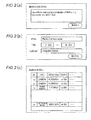
- a search condition input screen shown in Fig. 2 (a) is displayed.
- a search condition (a purpose of a search) can be input as a free sentence such as "I would like to know a congestion situation of Platform 0 of Kyoto station around 8 o'clock".
- Fig. 2(b) is another example of the search condition input screen.
- an area, time, and content are input to separate boxes.
- Fig. 2(c) is an example of a search result screen returned from the device managing apparatus 2.
- a congestion situation of a platform for example, a video of an image sensor (a camera), a level of congestion sound, and an entrance record of an automatic ticket checking machine are assumed.
- the image sensor there is an image sensor set in Platform 0 and an image sensor that photographs Platform 0 from a platform on the opposite side or another place.
- the device search service all devices likely to satisfy a search condition input by the user are retrieved. The devices are displayed as a list in order from a device having the highest coincidence with the search condition.
- information such as specifications of the devices, a condition of use, a usage charge, a provider of the devices (these are collectively referred to as "device information") are also displayed according to necessity.
- the user can select a device while viewing the devices presented as a search result, comparing the devices, and examining which of the devices the user uses.
- Fig. 3 shows another example of use.
- a condition (a purpose) "I would like to send an advertisement to people present on Platform 0 of Kyoto station around 8 o'clock" is input.
- a digital signage (DS) set in the platform and a speaker for announcement are assumed.
- An object not set (fixed) on the platform such as a large display set on a wall surface of a building in the neighborhood, the outer surface of a train entering Platform 0, a smartphone carried by a person present on the platform, or an airship can be an advertisement transmission medium.
- a device list shown in Fig. 3(b) these usable devices are displayed as a list.
- the device search service of this system enables a search for a device through comparison of an area condition input by the user and a target area with which the device has a causal relation. Consequently, it is possible to accurately extract a device matching a purpose and a desire of the user. Moreover, since purpose attaining means not assumed by the user is also listed (recommended), it is possible to expect an increase in opportunities of use by the user.
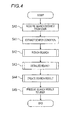
- the search request acquiring unit 20 acquires a search request from the user terminal 3 (stepS40) and extracts, as an area condition, a search condition concerning a space or a spacetime out of the search request (step S41).
- a search request "I would like to know a congestion situation of Platform 0 of Kyoto station around 8 o'clock" is obtained as shown in Fig. 2(a)
- the search request acquiring unit 20 performs a morphological analysis or a semantic analysis to extract a condition "(Platform 0 of Kyoto station) and (around 8 o'clock)" out of this text.
- the extracted area condition is passed to the rough search unit 21 and the query creating unit 23.
- the rough search unit 21 refers to an inverted index stored in the storing unit 22 to extract candidates (referred to as "candidate devices") of the device 10 likely to satisfy the area condition (step S42).
- a purpose of a rough search is to reduce a processing load of a detailed search at a later stage. Therefore, the rough search may be omitted when the processing load of the detailed search is not a problem, for example, when the number of the devices 10 configuring the device network 1 is small or when a processing ability of the device 10 and a band of the network have margins.
- the query creating unit 23 creates a query including the area condition extracted in step S41.
- the query determining unit 24 transmits the query to the candidate devices 10 extracted in the rough search.
- the query is a processing request for an information search (information retrieval) used in a computer program and the like.
- the query is data in which, for example, a search range and a search condition are described.
- a query for extracting a device having a target area matching the area condition extracted in step S41 out of the plurality of devices 10 configuring the device network 1 is created.
- the respective devices 10, which receive the query, determine whether target areas of their own match the area condition of the query and return results of the determination to the device managing apparatus 2.
- the search result creating unit 25 aggregates the responses from the devices 10 and creates a device list (step S44).
- the device list is transmitted from the search result creating unit 25 to the user terminal 2 and presented to the user as a search result (step S45). In this way, the device search processing is completed.
- Fig. 5 is a flowchart showing a processing flow of the rough search.
- Fig. 6 is a diagram schematically showing the inverted index used in the rough search.
- the transposition index is data (a table) that maps each of a plurality of area blocks formed by dividing an entire space or spacetime into a plurality of areas to one or more devices likely to have target areas of their own overlapping the area block.
- information such as a setting place of a device is acquired using a device ID as a key.
- a reverse lookup search that is, processing for acquiring a device ID using an area condition as a key is performed.
- the inverted index shown in Fig. 6 is prepared in advance.
- Fig. 6 is an example of a three-dimensional spacetime consisting of space axes x and y and a time axis t.
- the three-dimensional spacetime is divided into a plurality of rectangular parallelepipeds.
- Device IDs are associated with respective area blocks.
- the device IDs may be redundantly allocated. That is, for example, when a target area of a device extends across a plurality of area blocks or when a target area could change as in a device of a mobile type and a portable type, an ID of the device is associated with all areas that the target area could overlap. Since the inverted index is referred to in the rough search, it is preferable that redundancy is high rather than accuracy (stringency).
- An area block including a large number of device IDs is subdivided into sub-blocks as shown in Fig. 6 .
- an area block is subdivided in a place where setting density of sensors or actuators is high such as the periphery of a station or a downtown.
- an area block is increased in size. Consequently, it is possible to improve efficiency of the rough search.
- the same effect can be obtained by varying the size of blocks such that the number of device IDs to be registered is substantially equal rather than equalizing the size of the blocks.
- the device managing apparatus 2 automatically generates the inverted index from device information (meta information) stored in the storing unit 22 or collected from the devices 10.
- device information metal information
- batch processing may be carried out at night or the like.
- the generation or update of the inverted index may be carried out at timing of addition, change, or the like of a device.
- position information may be periodically collected from the device to perform update of the inverted index substantially on a real time basis.
- an ID indicating a device set consisting of a plurality of devices or only an ID of a representative device among a plurality of device can also be registered.
- the device network 1 is divided into a plurality of segments and gateways are set in the segments, it is also possible to adopt a configuration in which IDs of the gateways are registered.
- the three-dimensional spacetime of x, y, and t is illustrated.
- the same processing is possible in a multidimensional space or a spacetime including at least one space axis. It is also preferable to add, besides the space axis and the time axis, axes concerning attributes of the devices such as a detection frequency and resolution of a sensor and a type of an object.
- the rough search unit 21 extracts, on the basis of the inverted index, one or more area blocks meeting the area condition acquired from the search request acquiring unit 20 (step S50). Subsequently, the rough search unit 21 checks whether an area block located at an end among the extracted area blocks (i.e., an area block including a boundary of the space or the spacetime specified in the area condition) is an area block subdivided into sub-blocks (step S51). When there are sub-blocks, the rough search unit 21 determines again whether the sub-blocks meet the area condition in sub-block units (step S52). By performing detailed area determination only in the boundary portion of the area, it is possible to improve efficiency of the rough search.
- the rough search unit 21 refers to the inverted index, acquires device IDs corresponding to the area blocks (or the sub-blocks), passes a list of the IDs (a list of candidate devices) to the query determining unit 24, and ends the processing (step S53).
- Fig. 7 is a flowchart showing a processing flow of the detailed search.
- step S70 the query creating unit 23 creates a query including the area condition obtained in step S41.
- conditions e.g., a usage charge, a detection frequency, and a type of a device
- the query creating unit 23 creates a query including the area condition obtained in step S41.
- conditions e.g., a usage charge, a detection frequency, and a type of a device
- the query determining unit 24 determines whether each of the candidate devices obtained in the rough search satisfies the query condition.
- the processing is varied according to whether the candidate device is a query-compliant device or a query-noncompliant device (step S71).
- the query-compliant device means a device including a determination function for determining whether a target area of the device matches an area condition included in the query and returning a response.
- the query-noncompliant device is a device not including such a determination function. It is possible to determine whether a device is query-compliant or noncompliant referring to the device information stored in the storing unit 22.
- the query determining unit 24 transmits a query to the device (step S72) .
- the device itself determines on the basis of the received query whether the own device meets respective conditions included in the query. When the device satisfies all the conditions, the device returns a "match" response to the device managing apparatus 2. When the device satisfies only a part of the conditions, the device returns a "partial match" response to the device managing apparatus 2. However, when the device does not satisfy at least one of unavoidable conditions (conditions designated as essential conditions by the user, conditions essential for attaining a purpose of the user, etc.) or when the device satisfies no conditions, the device does not return a response.
- unavoidable conditions conditions designated as essential conditions by the user, conditions essential for attaining a purpose of the user, etc.
- an address of a transmission destination device is set in a destination of a query packet to transmit the query packet.
- This method can be applied to any network as long as packet transfer is performed through the network on the basis of a peculiar address.
- a method of sending packets individually to candidate devices or a method of designating a plurality of destinations as a destination of one packet may be adopted. If multicast like the latter method is possible, there is an advantage that it is possible to attain a reduction in a network load.
- a special query packet transferred to all devices included in a specific area or all devices of a specific type may be used.
- an ID indicating a set of device groups an ID of a representative device, a gateway ID of a segment, and the like are registered in the inverted index as explained above, it is also preferable to set the IDs as destinations.
- the query determining unit 24 refers to the device information stored in the storing unit 22 and determines whether a target area of this candidate device and an area condition of a query are "match", “partially match”, or other than "match” or “partial match” (step S74).
- the query determining unit 24 determines whether a target area of this candidate device and an area condition of a query are "match”, “partially match”, or other than "match” or “partial match” (step S74).
- it is desirable to execute determination for the devices in parallel according to distributed processing. Determination results of query-noncompliant devices are also aggregated in the search result creating unit 25 (step S73).
- the search result creating unit 25 adds, on the basis of a result of the detailed search, a device determined as "match" to the device list. Concerning a device determined as "partial match", the search result creating unit 25 determines whether the device can satisfy all the query conditions by being combined with other "partial match" devices. When the device can satisfy the conditions by being combined with a plurality of devices, the search result creating unit 25 adds the plurality of devices to the device list as one set. For example, when there is a device that can cover only the right half of an area designated by the user as a condition, if there is a device that can cover the remaining left half, the search result creating unit 25 inserts a pair of the devices in the device list.
- a search result obtained by the processing explained above is the search result shown in Fig. 2(c) and Fig. 3(b) .
- the device managing apparatus 2 causes the devices 10 to perform the determination processing, it is possible to markedly reduce a processing load compared with the over-concentrated processing performed on the device managing apparatus 2 side. Since the device itself performs the determination processing, even when a target area changes every moment as in the device of the mobile type or the portable type, it is possible to obtain a determination result based on an actual target area at a point in time of the change.
- the embodiment explained above indicates a specific example of the present invention and does not mean to limit the scope of the present invention to the specific example.
- the processing concerning query-noncompliance is unnecessary.
- the devices can be narrowed down to a number of a certain degree in the rough search, the detailed search can be omitted.
Landscapes
- Engineering & Computer Science (AREA)
- Databases & Information Systems (AREA)
- Theoretical Computer Science (AREA)
- Physics & Mathematics (AREA)
- Data Mining & Analysis (AREA)
- General Engineering & Computer Science (AREA)
- General Physics & Mathematics (AREA)
- Mathematical Physics (AREA)
- Information Retrieval, Db Structures And Fs Structures Therefor (AREA)
- Information Transfer Between Computers (AREA)
Abstract
Description
- The present invention relates to a technique for making it possible to easily find a device matching a purpose from among a large number of devices present in various places.
- As one means for realizing the ubiquitous society, a sensor network attracts attention. The sensor network is a technique for setting sensor devices, which have a detection function and a communication function, in various places and networking the sensor devices to enable collection, management, and seamless use of sensing data (see Japanese Patent Application Laid-open No.
2005-260697 - Incidentally, in the sensor network, there is an advantage that detection performance (resolution, types of detectable information, etc.) of an entire system increases as the number of sensors increases. On the other hand, if there are too many choices, it is difficult to find a sensor optimum for obtaining target information. Harmful effects such as deterioration in convenience for users and an increase in a load on a server occur. In order to solve such a problem in the system disclosed in Japanese Patent Application Laid-open No.
2005-0260697 - Patent Literature 1: Japanese Patent Application Laid-open No.
2005-260697 - As a method of extracting a desired sensor out of a sensor group configuring a sensor network, conventionally, in general, a server centrally manages position information, types, and the like of sensors in a database and searches through the database using a request of a user as a search key. The system disclosed in Japanese Patent Application Laid-open No.
2005-0260697 - Such a conventional system has problems explained below. Whereas a request of a user, who uses the sensor network, is usually designated as a target area (space) of sensing in such a manner as "I would like to know a congestion situation of
Platform 0 of Kyoto station", in most cases, setting places of the sensors are managed by the database. However, the setting places of the sensors and sensing areas of the sensors do not always coincide with each other. That is, even if there is a monitoring camera set in the "Platform 0 of Kyoto station", the camera might be photographing arrivals and departures of trains, a platforms on the opposite side, situations of ticket gates rather thanPlatform 0. Therefore, in the case of the conventional system, after once searching for a sensor set in the vicinity of an area desired to be sensed, a user himself or herself needs to check parameters such as setting directions and ranges of the sensors and screen out the sensors. - Naturally, a system configuration is also theoretically possible in which accurate sensing areas of sensors are registered in a database in advance and a server side determines matching of a user request and the sensing areas of the sensors. However, it is unrealistic from the viewpoint of a processing load to manage, in the server, sensing areas of all sensors configuring a sensor network and perform calculation in overconcentration. There is also a sensor, a sensing area of which changes every moment, such as a monitoring camera having a PTZ (pan/tilt/zoom) function or a mobile (portable) sensor. However, in the configuration in which the server performs the central management, it is difficult to cope with such a change in the sensing area on a real time basis.
- Note that the sensors are explained as examples above. However, in the case of a network by a device such as an actuator (or a controller), completely the same problems could occur. This is because, although there is a difference of "detecting (acquiring) a state" or "changing a state", the "sensor" and the "actuator" are common in having a causal relation with a target area in a predetermined range and in that a setting place and a target area of the device do not always coincide with each other.
- The present invention has been devised in view of the circumstances and it is an object of the present invention to provide a technique for making it possible to accurately and quickly find a device matching a request of a user out of a large number of device present in various places.
- In order to attain the object, the present invention (a characteristic operation principle on which claims recited in the scope of patent claims are based) adopts a configuration in which a query including an area condition based on a user request is sent to devices, determination concerning matching or mismatching with the area condition is performed on the device side, and responses from the devices are aggregated to create a search result. Since the configuration for causing the devices to perform the determination concerning matching or mismatching with the area condition is adopted, it is possible to accurately and quickly find a device matching a request of a user out of a large number of devices.
- A device managing apparatus according to claim 1 is a device managing apparatus configured to be capable of communicating with a plurality of devices through a network. Each of the plurality of devices is a device having a causal relation with a target area specified by a space or a spacetime. The device managing apparatus includes: a search request acquiring unit that acquires a device search request from a user; a query creating unit that extracts a search condition concerning the space or the spacetime from the acquired device search request as an area condition and creates a query for extracting a device having a target area matching the area condition from among the plurality of devices; a query transmitting unit that transmits the created query to the plurality of devices through a network in order to cause the devices to determine whether target areas of their own match the area condition; and a search result creating unit that creates a device search result for the device search request on the basis of a response sent from the device matching the area condition included in the query.
- The "space" is an area specified by two dimensions (x, y) or three dimensions (x, y, z). The "spacetime" means an area obtained by adding a dimension of "time (t)" to the "space", that is, an area specified by the three dimensions (x, y; t) or four dimensions (x, y, z; t). The "device" is a device having a causal relation with the target area specified by the space or the spacetime. For example, a sensor and an actuator (including a form incorporating a controller that receives information from the sensor and controls the operation of the actuator) correspond to the device. Further, there is also a device capable of operating as both of the sensor and the actuator (example: bidirectional conversion between mechanical vibration and electrical vibration by a piezoelectric element). The sensor is a device that detects (acquires) a state of the target area. In the case of the sensor, there is a causal relation between a state of the target area ("cause") and information detected (acquired) by the sensor ("result"). The actuator is a device that changes the state of the target area. In the case of the actuator, there is a causal relation between the action and the operation of the actuator ("cause") and a state change of the target area ("result"). For example, an image sensor, a temperature sensor, a humidity sensor, an illuminance sensor, a force sensor, a sound sensor, an RFID sensor, an infrared sensor, an attitude sensor, a rainfall sensor, a radiation sensor, and a gas sensor correspond to the sensor. Various devices, for example, a motor, a solenoid, a controller, a robot, a light, a speaker, a display, a digital signage, and an air conditioner correspond to the actuator. There are also devices including both of the sensor (an image sensor, etc.) and an actuator (a display, a speaker, etc.) such as a cellular phone, a smartphone, and a slate device. It is possible to mix various kinds of devices in the "plurality of devices" managed by the device managing apparatus.
- With the configuration of the device managing apparatus according to claim 1, since the "target area" of the device and the "area condition" based on the request of the user are compared, it is possible to accurately extract a device having a causal relation with a space or a spacetime intended by the user. Since the device managing apparatus causes the devices to perform the determination processing (distributed processing), it is possible to markedly reduce a processing load compared with the concentrated processing performed on the device managing apparatus side. Since the device itself performs the determination processing, even when a target area changes every moment as in a mobile device, it is possible to obtain a determination result based on an actual target area at a point in time of the change.
- In the device managing apparatus according to
claim 2, the search result creating unit presents the created device search result to the user who has performed the device search request. With the configuration of the device managing apparatus according toclaim 2, it is possible to easily realize provision of information concerning a device matching the area condition requested by the user to the user. - The device managing apparatus according to
claim 3 further includes a rough search unit that extracts, from among the plurality of devices, a plurality of candidate devices that are likely to satisfy the device search request. The query transmitting unit sets, as transmission destinations of the query, the plurality of candidate devices extracted by the rough search unit. With the configuration of the device managing apparatus according toclaim 3, it is possible to reduce a load on the network and processing loads on the device managing apparatus and the devices by narrowing down transmission destinations of the query through a rough search. - In the device managing apparatus according to claim 4, the rough search unit selects, with reference to an index mapping each of a plurality of area blocks formed by dividing the entire space or spacetime into a plurality of areas to one or more devices that are likely to have target areas of their own overlapping the area block, an area block matching the area condition extracted from the device search request from among the plurality of area blocks and sets, as the candidate device, a device associated with the selected area block in the index. With the configuration of the device managing apparatus according to claim 4, it is possible to perform processing for selecting a candidate device (a query transmission destination) from a given area condition at extremely high speed by referring to the index.
- It is also assumed that the plurality of devices include a query-compliant device having a determination function of determining whether a target area of its own matches an area condition included in a query, and returning a response and a query-noncompliant device not having the determination function. The device managing apparatus according to claim 5 performs, in the case of the query-noncompliant device, instead of transmitting a query to the device, processing for determining, on the basis of information acquired from a storing unit that stores information representing a target area of the query-noncompliant device, whether the target area of the device matches the area condition. With the configuration of the device managing apparatus according to claim 5, it is possible to include the query-noncompliant device in a search target as well.
- A device according to claim 6 is a device having a causal relation with a target area specified by a space or a spacetime. The device includes: a receiving unit that receives, through a network, a query including an area condition, which is a condition concerning the space or the spacetime; a determining unit that compares an area condition included in the received query and a target area of the device thereby determining whether the target area of the device matches the area condition; and a transmitting unit that transmits, when determination is made by the determining unit that the target area of the device matches the area condition, a response to the query to the device managing apparatus through the network.
- A device searching method according to claim 7 is a device searching method for finding a device that satisfies a request condition from among a plurality of devices. Each of the plurality of devices is a device having a causal relation with a target area specified by a space or a spacetime. The device searching method includes: a step in which a computer acquires a device search request from a user; a step in which the computer extracts a search condition concerning the space or the spacetime from the acquired device search request as an area condition and creates a query for extracting a device having a target area matching the area condition from among the plurality of devices; a step in which the computer transmits the created query to the plurality of devices through a network in order to cause the devices to determine whether target areas of their own match the area condition; and a step in which the computer creates a device search result for the device search request on the basis of a response sent from the device matching the area condition included in the query.
- With the device searching method according to claim 7, since the "target area" of the device and the "area condition" based on the request of the user are compared, it is possible to accurately extract a device having a causal relation with a space or a spacetime intended by the user. Since the computer causes the devices to perform the determination processing (distributed processing), it is possible to markedly reduce a processing load compared with the concentrated processing performed on the computer side. Since the device itself performs the determination processing, even when a target area changes every moment as in a mobile device, it is possible to obtain a determination result based on an actual target area at a point in time of the change.
- Aprogramaccording to claim 8 is a program for causing a computer to execute the steps of the device searching method according to claim 7.
- With the program according to
claim 8, since the "target area" of the device and the "area condition" based on the request of the user are compared, it is possible to accurately extract a device having a causal relation with a space or a spacetime intended by the user. Since the computer causes the devices to perform the determination processing (distributed processing), it is possible to markedly reduce a processing load compared with the concentrated processing performed on the computer side. Since the device itself performs the determination processing, even when a target area changes every moment as in a mobile device, it is possible to obtain a determination result based on an actual target area at a point in time of the change. - According to the present invention, it is possible to accurately and quickly find a device matching a request of a user out of a large number of devices.
-
- [
Fig. 1] Fig. 1 is a diagram showing the configuration of a device network system. - [
Fig. 2] Fig. 2 is a diagram showing an example of use of device search processing. - [
Fig. 3] Fig. 3 is a diagram showing another example of use of the device search processing. - [
Fig. 4] Fig. 4 is a flowchart showing an overall flow of device search processing. - [
Fig. 5] Fig. 5 is a flowchart showing a processing flow of rough search. - [
Fig. 6] Fig. 6 is a diagram schematically showing an inverted index used in the rough search. - [
Fig. 7] Fig. 7 is a flowchart showing a processing flow of a detailed search. - A configuration example of a device network system according to an embodiment of the present invention is explained with reference to
Fig. 1 . - The device network system is configured from a device network 1 and a
device managing apparatus 2. The device network 1 is a network configured by a large number ofdevices 10 present in various places. A configuration, a communication system, and the like of the network can be arbitrarily designed and are not particularly limited. Therespective devices 10 are capable of communicating with thedevice managing apparatus 2 via a wide area network such as the Internet. Thedevice managing apparatus 2 is a server apparatus that manages information concerning thedevices 10 configuring the device network 1 and information and the like collected from the devices and provides various services (a device search is one of the services) for a user who desires to use thedevice 10. The user can access the services provided by thedevice managing apparatus 2 from auser terminal 3 through the wide area network such as the Internet. - The
respective devices 10 are devices having a causal relation with a target area specified by a space or a spacetime and can be roughly divided into a "sensor" and an "actuator". The "space" is an area specified by two dimensions (x, y) or three dimensions (x, y, z). The "spacetime" means an area obtained by adding a dimension of "time (t)" to the "space", that is, an area specified by the three dimensions (x, y; t) or four dimensions (x, y, z; t). For example, an image sensor, a temperature sensor, a humidity sensor, an illuminance sensor, a force sensor, a sound sensor, an RFID sensor, an infrared sensor, an attitude sensor, a rainfall sensor, a radiation sensor, and a gas sensor correspond to the sensor. In this system, any kinds of sensors can be used. For example, a motor, a solenoid, a controller, a robot, a light, a speaker, a display, a digital signage, and an air conditioner correspond to the actuator. In this system, any kinds of actuators can be used. There are also devices including both of the sensor (an image sensor, etc.) and an actuator (a display, a speaker, etc.) such as a cellular phone, a smartphone, and a slate device. It is possible to mix various kinds of devices in the device network 1. - The
device managing apparatus 2 has a function of a search request acquiring unit 20, arough search unit 21, a storingunit 22, aquery creating unit 23, aquery determining unit 24, a searchresult creating unit 25, and the like. In terms of hardware, thedevice managing apparatus 2 can be configured by a computer including a CPU, a main storage device (a memory), an auxiliary storage device (a HDD, a SSD, etc.), a communication device, an input device, and a display device. Functional blocks shown inFig. 1 are embodied by loading a computer program stored in the auxiliary storage device to the main storage device and the CPU executing the program. Note that thedevice managing apparatus 2 may be configured by a single computer or can be configured by a plurality of computers that cooperate with one another. - As the
user terminal 3, for example, a personal computer, a cellular phone, a smartphone, and a slate device can be used. Note that, in this embodiment, an example is explained in which the user performs a device search through the Internet. However, it is also possible to adopt a configuration in which the user operates the device managing apparatus itself or a part or all of functions of the device managing apparatus are implemented on theuser terminal 3 side. - A device search service provided by the
device managing apparatus 2 is explained in detail below. The device search service is a service for facilitating the user to find a device optimum for attaining a purpose out of a large number ofdevices 10 configuring the device network 1. First, specific examples of use of the search service are explained with reference toFig. 2 andFig. 3 . - When the user accesses the device search service using the
user terminal 3, a search condition input screen shown inFig. 2 (a) is displayed. On this screen, a search condition (a purpose of a search) can be input as a free sentence such as "I would like to know a congestion situation ofPlatform 0 of Kyoto station around 8 o'clock".Fig. 2(b) is another example of the search condition input screen. In the case of this screen, an area, time, and content are input to separate boxes. When a search button is pressed, a search request is transmitted from theuser terminal 3 to thedevice managing apparatus 2. Device search processing is executed in thedevice managing apparatus 2. Details of the device search processing are explained below. -
Fig. 2(c) is an example of a search result screen returned from thedevice managing apparatus 2. As means for grasping a congestion situation of a platform, for example, a video of an image sensor (a camera), a level of congestion sound, and an entrance record of an automatic ticket checking machine are assumed. As the image sensor, there is an image sensor set inPlatform 0 and an image sensor that photographsPlatform 0 from a platform on the opposite side or another place. In the device search service, all devices likely to satisfy a search condition input by the user are retrieved. The devices are displayed as a list in order from a device having the highest coincidence with the search condition. In the device list, information such as specifications of the devices, a condition of use, a usage charge, a provider of the devices (these are collectively referred to as "device information") are also displayed according to necessity. The user can select a device while viewing the devices presented as a search result, comparing the devices, and examining which of the devices the user uses. -
Fig. 3 shows another example of use. On a search condition input screen shown inFig. 3(a) , a condition (a purpose) "I would like to send an advertisement to people present onPlatform 0 of Kyoto station around 8 o'clock" is input. As means for communicating information to people present on a platform, for example, a digital signage (DS) set in the platform and a speaker for announcement are assumed. An object not set (fixed) on the platform such as a large display set on a wall surface of a building in the neighborhood, the outer surface of atrain entering Platform 0, a smartphone carried by a person present on the platform, or an airship can be an advertisement transmission medium. In a device list shown inFig. 3(b) , these usable devices are displayed as a list. - As it is seen from the examples shown in
Fig. 2 andFig. 3 , irrespective of whether thedevice 10 is a sensor or an actuator, a setting position (a position of presence) of thedevice 10 and an area with which thedevice 10 has a causal relation do not always coincide with each other. Therefore, the device search service of this system enables a search for a device through comparison of an area condition input by the user and a target area with which the device has a causal relation. Consequently, it is possible to accurately extract a device matching a purpose and a desire of the user. Moreover, since purpose attaining means not assumed by the user is also listed (recommended), it is possible to expect an increase in opportunities of use by the user. - Subsequently, the device search processing by the
device managing apparatus 2 is explained with reference toFig. 4 . - First, the search request acquiring unit 20 acquires a search request from the user terminal 3 (stepS40) and extracts, as an area condition, a search condition concerning a space or a spacetime out of the search request (step S41). Forexample, when a search request "I would like to know a congestion situation of
Platform 0 of Kyoto station around 8 o'clock" is obtained as shown inFig. 2(a) , the search request acquiring unit 20 performs a morphological analysis or a semantic analysis to extract a condition "(Platform 0 of Kyoto station) and (around 8 o'clock)" out of this text. The extracted area condition is passed to therough search unit 21 and thequery creating unit 23. - Subsequently, the
rough search unit 21 refers to an inverted index stored in the storingunit 22 to extract candidates (referred to as "candidate devices") of thedevice 10 likely to satisfy the area condition (step S42). A purpose of a rough search is to reduce a processing load of a detailed search at a later stage. Therefore, the rough search may be omitted when the processing load of the detailed search is not a problem, for example, when the number of thedevices 10 configuring the device network 1 is small or when a processing ability of thedevice 10 and a band of the network have margins. - Subsequently, in the detailed search in step S43, the
query creating unit 23 creates a query including the area condition extracted in step S41. Thequery determining unit 24 transmits the query to thecandidate devices 10 extracted in the rough search. The query is a processing request for an information search (information retrieval) used in a computer program and the like. The query is data in which, for example, a search range and a search condition are described. A query for extracting a device having a target area matching the area condition extracted in step S41 out of the plurality ofdevices 10 configuring the device network 1 is created. Therespective devices 10, which receive the query, determine whether target areas of their own match the area condition of the query and return results of the determination to thedevice managing apparatus 2. - The search
result creating unit 25 aggregates the responses from thedevices 10 and creates a device list (step S44). The device list is transmitted from the searchresult creating unit 25 to theuser terminal 2 and presented to the user as a search result (step S45). In this way, the device search processing is completed. - Details of the rough search (step S42) are explained with reference to
Fig. 5 andFig. 6 .Fig. 5 is a flowchart showing a processing flow of the rough search.Fig. 6 is a diagram schematically showing the inverted index used in the rough search. - The transposition index is data (a table) that maps each of a plurality of area blocks formed by dividing an entire space or spacetime into a plurality of areas to one or more devices likely to have target areas of their own overlapping the area block. In the conventional system, in general, information such as a setting place of a device is acquired using a device ID as a key. On the other hand, in the rough search, a reverse lookup search, that is, processing for acquiring a device ID using an area condition as a key is performed. In order to quickly and easily perform the processing, in the
device searching apparatus 2, the inverted index shown inFig. 6 is prepared in advance. -
Fig. 6 is an example of a three-dimensional spacetime consisting of space axes x and y and a time axis t. The three-dimensional spacetime is divided into a plurality of rectangular parallelepipeds. Device IDs are associated with respective area blocks. The device IDs may be redundantly allocated. That is, for example, when a target area of a device extends across a plurality of area blocks or when a target area could change as in a device of a mobile type and a portable type, an ID of the device is associated with all areas that the target area could overlap. Since the inverted index is referred to in the rough search, it is preferable that redundancy is high rather than accuracy (stringency). - An area block including a large number of device IDs is subdivided into sub-blocks as shown in
Fig. 6 . For example, in a place where setting density of sensors or actuators is high such as the periphery of a station or a downtown, an area block is subdivided. In a suburb or the like, an area block is increased in size. Consequently, it is possible to improve efficiency of the rough search. The same effect can be obtained by varying the size of blocks such that the number of device IDs to be registered is substantially equal rather than equalizing the size of the blocks. - The
device managing apparatus 2 automatically generates the inverted index from device information (meta information) stored in the storingunit 22 or collected from thedevices 10. As generation or update of the inverted index, batch processing may be carried out at night or the like. Alternatively, the generation or update of the inverted index may be carried out at timing of addition, change, or the like of a device. In the case of the device of the mobile type or the portable type, position information may be periodically collected from the device to perform update of the inverted index substantially on a real time basis. Alternatively, it is also preferable to statistically predict an area in future on the basis of a history of movement and automatically register an ID in a pertinent area block. - Note that, as the ID registered in the inverted index, besides peculiar IDs allocated to the respective devices, an ID indicating a device set consisting of a plurality of devices or only an ID of a representative device among a plurality of device can also be registered. When the device network 1 is divided into a plurality of segments and gateways are set in the segments, it is also possible to adopt a configuration in which IDs of the gateways are registered. In
Fig. 6 , the three-dimensional spacetime of x, y, and t is illustrated. However, the same processing is possible in a multidimensional space or a spacetime including at least one space axis. It is also preferable to add, besides the space axis and the time axis, axes concerning attributes of the devices such as a detection frequency and resolution of a sensor and a type of an object. - As shown in
Fig. 5 , therough search unit 21 extracts, on the basis of the inverted index, one or more area blocks meeting the area condition acquired from the search request acquiring unit 20 (step S50). Subsequently, therough search unit 21 checks whether an area block located at an end among the extracted area blocks (i.e., an area block including a boundary of the space or the spacetime specified in the area condition) is an area block subdivided into sub-blocks (step S51). When there are sub-blocks, therough search unit 21 determines again whether the sub-blocks meet the area condition in sub-block units (step S52). By performing detailed area determination only in the boundary portion of the area, it is possible to improve efficiency of the rough search. - When the area blocks (or the sub-blocks) determined as meeting the area condition are obtained through the processing explained above, the
rough search unit 21 refers to the inverted index, acquires device IDs corresponding to the area blocks (or the sub-blocks), passes a list of the IDs (a list of candidate devices) to thequery determining unit 24, and ends the processing (step S53). - Details of the detailed search (step S43) are explained with reference to
Fig. 7. Fig. 7 is a flowchart showing a processing flow of the detailed search. - In step S70, the
query creating unit 23 creates a query including the area condition obtained in step S41. In this case, conditions (e.g., a usage charge, a detection frequency, and a type of a device) other than the area condition can be included in the query. - Subsequently, the
query determining unit 24 determines whether each of the candidate devices obtained in the rough search satisfies the query condition. In this case, the processing is varied according to whether the candidate device is a query-compliant device or a query-noncompliant device (step S71). The query-compliant device means a device including a determination function for determining whether a target area of the device matches an area condition included in the query and returning a response. The query-noncompliant device is a device not including such a determination function. It is possible to determine whether a device is query-compliant or noncompliant referring to the device information stored in the storingunit 22. - In the case of the query compliant device, the
query determining unit 24 transmits a query to the device (step S72) . The device itself determines on the basis of the received query whether the own device meets respective conditions included in the query. When the device satisfies all the conditions, the device returns a "match" response to thedevice managing apparatus 2. When the device satisfies only a part of the conditions, the device returns a "partial match" response to thedevice managing apparatus 2. However, when the device does not satisfy at least one of unavoidable conditions (conditions designated as essential conditions by the user, conditions essential for attaining a purpose of the user, etc.) or when the device satisfies no conditions, the device does not return a response. It is also possible to adopt a configuration in which the device returns a "mismatch" response. However, it is preferable not to generate an unnecessary response from the viewpoint of a reduction of a load on the network. Responses received from thedevices 10 are aggregated in the search result creating unit 25 (step S73). - As a method of sending a query, various methods are conceivable according to forms of the device network 1. For example, in a basic configuration, an address of a transmission destination device is set in a destination of a query packet to transmit the query packet. This method can be applied to any network as long as packet transfer is performed through the network on the basis of a peculiar address. A method of sending packets individually to candidate devices or a method of designating a plurality of destinations as a destination of one packet may be adopted. If multicast like the latter method is possible, there is an advantage that it is possible to attain a reduction in a network load. A special query packet transferred to all devices included in a specific area or all devices of a specific type may be used. When an ID indicating a set of device groups, an ID of a representative device, a gateway ID of a segment, and the like are registered in the inverted index as explained above, it is also preferable to set the IDs as destinations. When closeness of devices in a real space and closeness of devices in a device network correspond to each other, it is also preferable to transfer, according to multi-hop, a query packet to a device present close to the
device managing apparatus 2. In this case, to limit a search time or prevent an infinite loop being formed in a simple mesh network, it is desirable to designate, in the query, upper limits of the number of times of transfer and a transfer time of the query. - On the other hand, in the case of the query-noncompliant device, the
query determining unit 24 refers to the device information stored in the storingunit 22 and determines whether a target area of this candidate device and an area condition of a query are "match", "partially match", or other than "match" or "partial match" (step S74). When a large number of query-noncompliant devices are present, it is desirable to execute determination for the devices in parallel according to distributed processing. Determination results of query-noncompliant devices are also aggregated in the search result creating unit 25 (step S73). - The search
result creating unit 25 adds, on the basis of a result of the detailed search, a device determined as "match" to the device list. Concerning a device determined as "partial match", the searchresult creating unit 25 determines whether the device can satisfy all the query conditions by being combined with other "partial match" devices. When the device can satisfy the conditions by being combined with a plurality of devices, the searchresult creating unit 25 adds the plurality of devices to the device list as one set. For example, when there is a device that can cover only the right half of an area designated by the user as a condition, if there is a device that can cover the remaining left half, the searchresult creating unit 25 inserts a pair of the devices in the device list. When all the conditions cannot be satisfied irrespective of how the device is combined, it is desirable to add the device to the device list together with coincidence or exclude the device from the device list. A search result obtained by the processing explained above is the search result shown inFig. 2(c) andFig. 3(b) . - With the configuration of this embodiment explained above, since the "target area" of the
device 10 and the "area condition" based on the request of the user are compared, it is possible to accurately extract thedevice 10 having a causal relation with a space or a spacetime intended by the user. Since thedevice managing apparatus 2 causes thedevices 10 to perform the determination processing, it is possible to markedly reduce a processing load compared with the over-concentrated processing performed on thedevice managing apparatus 2 side. Since the device itself performs the determination processing, even when a target area changes every moment as in the device of the mobile type or the portable type, it is possible to obtain a determination result based on an actual target area at a point in time of the change. In this embodiment, since transmission destinations of a query are narrowed down by the rough search, it is possible reduce a load on the network and processing loads of thedevice managing apparatus 2 and thedevice 10. Further, since the query determination can also be performed on thedevice managing apparatus 2 side as well, it is possible to include a query-noncompliant device in the search target as well. - Note that the embodiment explained above indicates a specific example of the present invention and does not mean to limit the scope of the present invention to the specific example. For example, when all the devices configuring the device network are query-compliant, the processing concerning query-noncompliance is unnecessary. When the devices can be narrowed down to a number of a certain degree in the rough search, the detailed search can be omitted.
-
- 1: Device network
- 2: Device managing apparatus
- 3: User terminal
- 10: Device
- 20: Search request acquiring unit
- 21: Rough search unit
- 22: Storing unit
- 23: Query creating unit
- 24: Query transmitting unit
- 25: Search result creating unit
Claims (8)
- A device managing apparatus configured to be capable of communicating with a plurality of devices through a network, each of the plurality of devices being a device having a causal relation with a target area specified by a space or a spacetime,
the device managing apparatus comprising:a search request acquiring unit that acquires a device search request from a user;a query creating unit that extracts a search condition concerning the space or the spacetime from the acquired device search request as an area condition and creates a query for extracting a device having a target area matching the area condition from among the plurality of devices;a query transmitting unit that transmits the created query to the plurality of devices through a network in order to cause the devices to determine whether target areas of their own match the area condition; anda search result creating unit that creates a device search result for the device search request on the basis of a response sent from the device matching the area condition included in the query. - The device managing apparatus according to claim 1, wherein the search result creating unit presents the created device search result to the user who has performed the device search request.
- The device managing apparatus according to claim 1 or 2, further comprising a rough search unit that extracts, from among the plurality of devices, a plurality of candidate devices that are likely to satisfy the device search request, wherein
the query transmitting unit sets, as transmission destinations of the query, the plurality of candidate devices extracted by the rough search unit. - The device managing apparatus according to claim 3, wherein the rough search unit selects, with reference to an indexmapping each of a plurality of area blocks formed by dividing the entire space or spacetime into a plurality of areas to one or more devices that are likely to have target areas of their own overlapping the area block, an area block matching the area condition extracted from the device search request from among the plurality of area blocks, and
sets, as the candidate device, a device associated with the selected area block in the index. - The device managing apparatus according to any one of claims 1 to 4, wherein
the plurality of devices include a query-compliant device having a determination function of determining whether a target area of its own matches an area condition included in a query and returning a response, and a query-noncompliant device not having the determination function, and
the device managing apparatus performs, in the case of the query-noncompliant device, instead of transmitting a query to the device, processing for determining, on the basis of information acquired from a storing unit that stores information representing a target area of the query-noncompliant device, whether the target area of the device matches the area condition. - A device having a causal relation with a target area specified by a space or a spacetime,
the device comprising:a receiving unit that receives, through a network, a query including an area condition, which is a condition concerning the space or the spacetime;a determining unit that compares an area condition included in the received query and a target area of the device thereby determining whether the target area of the device matches the area condition; anda transmitting unit that transmits, when determination is made by the determining unit that the target area of its own matches the area condition, a response to the query to the device managing apparatus through the network. - A device searching method for finding a device that satisfies a request condition from among a plurality of devices, each of the plurality of devices being a device having a causal relation with a target area specified by a space or a spacetime,
the device searching method comprising:a step in which a computer acquires a device search request from a user;a step in which the computer extracts a search condition concerning the space or the spacetime from the acquired device search request as an area condition and creates a query for extracting a device having a target area matching the area condition from among the plurality of devices;a step in which the computer transmits the created query to the plurality of devices through a network in order to cause the devices to determine whether target areas of their own match the area condition; anda step in which the computer creates a device search result for the device search request on the basis of a response sent from the device matching the area condition included in the query. - A program for causing a computer to execute the steps of the device searching method according to claim 7.
Applications Claiming Priority (2)
| Application Number | Priority Date | Filing Date | Title |
|---|---|---|---|
| JP2012213776 | 2012-09-27 | ||
| PCT/JP2013/062561 WO2014050192A1 (en) | 2012-09-27 | 2013-04-30 | Device management apparatus and device search method |
Publications (2)
| Publication Number | Publication Date |
|---|---|
| EP2902913A1 true EP2902913A1 (en) | 2015-08-05 |
| EP2902913A4 EP2902913A4 (en) | 2016-06-15 |
Family
ID=50387612
Family Applications (1)
| Application Number | Title | Priority Date | Filing Date |
|---|---|---|---|
| EP13841376.0A Withdrawn EP2902913A4 (en) | 2012-09-27 | 2013-04-30 | Device management apparatus and device search method |
Country Status (5)
| Country | Link |
|---|---|
| US (1) | US20150242505A1 (en) |
| EP (1) | EP2902913A4 (en) |
| JP (1) | JPWO2014050192A1 (en) |
| AU (1) | AU2013321782A1 (en) |
| WO (1) | WO2014050192A1 (en) |
Cited By (1)
| Publication number | Priority date | Publication date | Assignee | Title |
|---|---|---|---|---|
| CN107918641A (en) * | 2017-10-20 | 2018-04-17 | 深圳市艾特智能科技有限公司 | robot control method, device and storage medium |
Families Citing this family (11)
| Publication number | Priority date | Publication date | Assignee | Title |
|---|---|---|---|---|
| CN105528384B (en) * | 2014-10-27 | 2019-03-15 | 阿里巴巴集团控股有限公司 | Information push method and device |
| WO2016206646A1 (en) * | 2015-06-26 | 2016-12-29 | 北京贝虎机器人技术有限公司 | Method and system for urging machine device to generate action |
| KR102046730B1 (en) * | 2015-08-03 | 2019-11-19 | 콘비다 와이어리스, 엘엘씨 | Elements of service |
| JP6922170B2 (en) * | 2016-08-25 | 2021-08-18 | ソニーグループ株式会社 | Information processing equipment, information processing methods, programs, and information processing systems |
| JP7107046B2 (en) * | 2018-07-13 | 2022-07-27 | オムロン株式会社 | Control system, search device and search program |
| JP7107047B2 (en) * | 2018-07-13 | 2022-07-27 | オムロン株式会社 | Control system, search device and search program |
| US11115302B1 (en) * | 2018-09-17 | 2021-09-07 | Amazon Technologies, Inc. | Self-service metric publication in a computer network |
| US11443055B2 (en) * | 2019-05-17 | 2022-09-13 | Microsoft Technology Licensing, Llc | Information sharing in a collaborative, privacy conscious environment |
| JP7462191B2 (en) * | 2020-02-07 | 2024-04-05 | 株式会社Essホールディングス | Search method and search device |
| CN113434499A (en) * | 2021-05-28 | 2021-09-24 | 西安电子科技大学 | Spatio-temporal data index construction and query method, system and database system |
| CN115695510B (en) * | 2022-09-29 | 2025-09-30 | 海尔优家智能科技(北京)有限公司 | Control instruction sending method, device, storage medium and electronic device |
Family Cites Families (14)
| Publication number | Priority date | Publication date | Assignee | Title |
|---|---|---|---|---|
| JP2005115571A (en) * | 2003-10-06 | 2005-04-28 | Nippon Telegr & Teleph Corp <Ntt> | Information retrieval system, information retrieval device, retrieval information utilization device, information retrieval program, and retrieval information utilization program |
| JP2005260697A (en) | 2004-03-12 | 2005-09-22 | Fuji Xerox Co Ltd | Sensor network system |
| US7142107B2 (en) * | 2004-05-27 | 2006-11-28 | Lawrence Kates | Wireless sensor unit |
| US8149801B2 (en) * | 2007-08-17 | 2012-04-03 | At&T Intellectual Property Ii, L.P. | System and method for geocasting in a mobile ad hoc network |
| US7809805B2 (en) * | 2007-02-28 | 2010-10-05 | Facebook, Inc. | Systems and methods for automatically locating web-based social network members |
| US7912628B2 (en) * | 2006-03-03 | 2011-03-22 | Inrix, Inc. | Determining road traffic conditions using data from multiple data sources |
| US8108414B2 (en) * | 2006-11-29 | 2012-01-31 | David Stackpole | Dynamic location-based social networking |
| JP4982191B2 (en) * | 2007-01-17 | 2012-07-25 | 独立行政法人情報通信研究機構 | Sensor network |
| JP4647632B2 (en) * | 2007-03-06 | 2011-03-09 | 日本電信電話株式会社 | Sensor data control system and sensor data control method |
| JP5076587B2 (en) * | 2007-03-27 | 2012-11-21 | 富士通株式会社 | Sensor information management system, sensor information management method, sensor information management program |
| US8335854B2 (en) * | 2009-07-21 | 2012-12-18 | Empire Technology Development Llc | Performing services on behalf of low-power devices |
| CA2803404A1 (en) * | 2010-11-15 | 2012-05-24 | Image Sensing Systems, Inc. | Hybrid traffic sensor system and associated method |
| US9171079B2 (en) * | 2011-01-28 | 2015-10-27 | Cisco Technology, Inc. | Searching sensor data |
| US10248184B2 (en) * | 2011-11-09 | 2019-04-02 | Qualcomm Incorporated | Sensor API framework for cloud based applications |
-
2013
- 2013-04-30 AU AU2013321782A patent/AU2013321782A1/en not_active Abandoned
- 2013-04-30 US US14/431,679 patent/US20150242505A1/en not_active Abandoned
- 2013-04-30 WO PCT/JP2013/062561 patent/WO2014050192A1/en not_active Ceased
- 2013-04-30 JP JP2014538221A patent/JPWO2014050192A1/en active Pending
- 2013-04-30 EP EP13841376.0A patent/EP2902913A4/en not_active Withdrawn
Cited By (2)
| Publication number | Priority date | Publication date | Assignee | Title |
|---|---|---|---|---|
| CN107918641A (en) * | 2017-10-20 | 2018-04-17 | 深圳市艾特智能科技有限公司 | robot control method, device and storage medium |
| CN107918641B (en) * | 2017-10-20 | 2020-11-17 | 深圳市艾特智能科技有限公司 | Robot control method, device and storage medium |
Also Published As
| Publication number | Publication date |
|---|---|
| US20150242505A1 (en) | 2015-08-27 |
| JPWO2014050192A1 (en) | 2016-08-22 |
| WO2014050192A1 (en) | 2014-04-03 |
| EP2902913A4 (en) | 2016-06-15 |
| AU2013321782A1 (en) | 2015-04-16 |
Similar Documents
| Publication | Publication Date | Title |
|---|---|---|
| EP2902913A1 (en) | Device management apparatus and device search method | |
| JP6208654B2 (en) | Method and system for pushing point of interest information | |
| Song et al. | Big data and emergency management: concepts, methodologies, and applications | |
| US8533187B2 (en) | Augmentation of place ranking using 3D model activity in an area | |
| Resch | People as sensors and collective sensing-contextual observations complementing geo-sensor network measurements | |
| US20140343984A1 (en) | Spatial crowdsourcing with trustworthy query answering | |
| EP3385852B1 (en) | Data flow control apparatus and data flow control method | |
| US20160371305A1 (en) | Method, device and apparatus for generating picture search library, and picture search method, device and apparatus | |
| JP5716866B2 (en) | Device management apparatus and device search method | |
| US8566325B1 (en) | Building search by contents | |
| CN105474720B (en) | A Crowdsourcing Approach to Detecting Broken WIFI Indoor Localization Models | |
| CN101842788A (en) | Method, apparatus and computer program product for performing a visual search using grid-based feature organization | |
| CN110083762B (en) | Room source searching method, device and equipment and computer readable storage medium | |
| Hasan | Toward situation awareness for the semantic sensor web: Complex event processing with dynamic linked data enrichment | |
| CN116341567B (en) | Method and System for Semantic Labeling of Points of Interest Based on Spatial and Semantic Neighborhood Information | |
| US8639693B1 (en) | Personalized place recommendations using collections of place listings | |
| CN104581639A (en) | A seamless spatio-temporal access method applied to mobile terminal sensor perception information | |
| Bolaji | [Retracted] Construction and Case Analysis of Sensor News Whole Chain Production Model Based on Artificial Intelligence Technology | |
| CN111314094A (en) | Grouping data processing method and device, electronic equipment and readable storage medium | |
| CN120321133A (en) | A network structure evolution method and system for emerging industrial clusters | |
| CN116610859A (en) | Interest place pushing method, electronic device and computer readable storage medium | |
| CN116204698A (en) | Information recommendation method and device, electronic equipment and storage medium | |
| US10334420B2 (en) | Data-flow control device and data-flow control method | |
| WO2012128011A1 (en) | Mobile management system, mobile management server, mobile management method and mobile management program | |
| TW202036446A (en) | System, server and method for providing travel information |
Legal Events
| Date | Code | Title | Description |
|---|---|---|---|
| PUAI | Public reference made under article 153(3) epc to a published international application that has entered the european phase |
Free format text: ORIGINAL CODE: 0009012 |
|
| 17P | Request for examination filed |
Effective date: 20150417 |
|
| AK | Designated contracting states |
Kind code of ref document: A1 Designated state(s): AL AT BE BG CH CY CZ DE DK EE ES FI FR GB GR HR HU IE IS IT LI LT LU LV MC MK MT NL NO PL PT RO RS SE SI SK SM TR |
|
| AX | Request for extension of the european patent |
Extension state: BA ME |
|
| DAX | Request for extension of the european patent (deleted) | ||
| RA4 | Supplementary search report drawn up and despatched (corrected) |
Effective date: 20160518 |
|
| RIC1 | Information provided on ipc code assigned before grant |
Ipc: G06F 13/00 20060101AFI20160511BHEP Ipc: G06F 17/30 20060101ALI20160511BHEP |
|
| STAA | Information on the status of an ep patent application or granted ep patent |
Free format text: STATUS: REQUEST FOR EXAMINATION WAS MADE |
|
| STAA | Information on the status of an ep patent application or granted ep patent |
Free format text: STATUS: THE APPLICATION IS DEEMED TO BE WITHDRAWN |
|
| 18D | Application deemed to be withdrawn |
Effective date: 20161214 |