EP2902017B1 - Stable pharmaceutical composition comprising solifenacin, and method for preparing the same - Google Patents
Stable pharmaceutical composition comprising solifenacin, and method for preparing the same Download PDFInfo
- Publication number
- EP2902017B1 EP2902017B1 EP15153587.9A EP15153587A EP2902017B1 EP 2902017 B1 EP2902017 B1 EP 2902017B1 EP 15153587 A EP15153587 A EP 15153587A EP 2902017 B1 EP2902017 B1 EP 2902017B1
- Authority
- EP
- European Patent Office
- Prior art keywords
- solifenacin
- weight
- antioxidant
- preparation
- binder
- Prior art date
- Legal status (The legal status is an assumption and is not a legal conclusion. Google has not performed a legal analysis and makes no representation as to the accuracy of the status listed.)
- Not-in-force
Links
Images


Classifications
-
- A—HUMAN NECESSITIES
- A61—MEDICAL OR VETERINARY SCIENCE; HYGIENE
- A61K—PREPARATIONS FOR MEDICAL, DENTAL OR TOILETRY PURPOSES
- A61K31/00—Medicinal preparations containing organic active ingredients
- A61K31/33—Heterocyclic compounds
- A61K31/395—Heterocyclic compounds having nitrogen as a ring hetero atom, e.g. guanethidine or rifamycins
- A61K31/435—Heterocyclic compounds having nitrogen as a ring hetero atom, e.g. guanethidine or rifamycins having six-membered rings with one nitrogen as the only ring hetero atom
- A61K31/47—Quinolines; Isoquinolines
- A61K31/472—Non-condensed isoquinolines, e.g. papaverine
- A61K31/4725—Non-condensed isoquinolines, e.g. papaverine containing further heterocyclic rings
-
- A—HUMAN NECESSITIES
- A61—MEDICAL OR VETERINARY SCIENCE; HYGIENE
- A61K—PREPARATIONS FOR MEDICAL, DENTAL OR TOILETRY PURPOSES
- A61K9/00—Medicinal preparations characterised by special physical form
- A61K9/20—Pills, tablets, discs, rods
-
- A—HUMAN NECESSITIES
- A61—MEDICAL OR VETERINARY SCIENCE; HYGIENE
- A61K—PREPARATIONS FOR MEDICAL, DENTAL OR TOILETRY PURPOSES
- A61K31/00—Medicinal preparations containing organic active ingredients
- A61K31/33—Heterocyclic compounds
- A61K31/395—Heterocyclic compounds having nitrogen as a ring hetero atom, e.g. guanethidine or rifamycins
- A61K31/435—Heterocyclic compounds having nitrogen as a ring hetero atom, e.g. guanethidine or rifamycins having six-membered rings with one nitrogen as the only ring hetero atom
- A61K31/439—Heterocyclic compounds having nitrogen as a ring hetero atom, e.g. guanethidine or rifamycins having six-membered rings with one nitrogen as the only ring hetero atom the ring forming part of a bridged ring system, e.g. quinuclidine
-
- A—HUMAN NECESSITIES
- A61—MEDICAL OR VETERINARY SCIENCE; HYGIENE
- A61K—PREPARATIONS FOR MEDICAL, DENTAL OR TOILETRY PURPOSES
- A61K47/00—Medicinal preparations characterised by the non-active ingredients used, e.g. carriers or inert additives; Targeting or modifying agents chemically bound to the active ingredient
- A61K47/06—Organic compounds, e.g. natural or synthetic hydrocarbons, polyolefins, mineral oil, petrolatum or ozokerite
- A61K47/08—Organic compounds, e.g. natural or synthetic hydrocarbons, polyolefins, mineral oil, petrolatum or ozokerite containing oxygen, e.g. ethers, acetals, ketones, quinones, aldehydes, peroxides
- A61K47/10—Alcohols; Phenols; Salts thereof, e.g. glycerol; Polyethylene glycols [PEG]; Poloxamers; PEG/POE alkyl ethers
-
- A—HUMAN NECESSITIES
- A61—MEDICAL OR VETERINARY SCIENCE; HYGIENE
- A61K—PREPARATIONS FOR MEDICAL, DENTAL OR TOILETRY PURPOSES
- A61K47/00—Medicinal preparations characterised by the non-active ingredients used, e.g. carriers or inert additives; Targeting or modifying agents chemically bound to the active ingredient
- A61K47/30—Macromolecular organic or inorganic compounds, e.g. inorganic polyphosphates
- A61K47/36—Polysaccharides; Derivatives thereof, e.g. gums, starch, alginate, dextrin, hyaluronic acid, chitosan, inulin, agar or pectin
- A61K47/38—Cellulose; Derivatives thereof
-
- A—HUMAN NECESSITIES
- A61—MEDICAL OR VETERINARY SCIENCE; HYGIENE
- A61K—PREPARATIONS FOR MEDICAL, DENTAL OR TOILETRY PURPOSES
- A61K9/00—Medicinal preparations characterised by special physical form
- A61K9/20—Pills, tablets, discs, rods
- A61K9/2004—Excipients; Inactive ingredients
- A61K9/2022—Organic macromolecular compounds
- A61K9/205—Polysaccharides, e.g. alginate, gums; Cyclodextrin
- A61K9/2054—Cellulose; Cellulose derivatives, e.g. hydroxypropyl methylcellulose
-
- A—HUMAN NECESSITIES
- A61—MEDICAL OR VETERINARY SCIENCE; HYGIENE
- A61K—PREPARATIONS FOR MEDICAL, DENTAL OR TOILETRY PURPOSES
- A61K9/00—Medicinal preparations characterised by special physical form
- A61K9/20—Pills, tablets, discs, rods
- A61K9/2095—Tabletting processes
-
- A—HUMAN NECESSITIES
- A61—MEDICAL OR VETERINARY SCIENCE; HYGIENE
- A61P—SPECIFIC THERAPEUTIC ACTIVITY OF CHEMICAL COMPOUNDS OR MEDICINAL PREPARATIONS
- A61P11/00—Drugs for disorders of the respiratory system
-
- A—HUMAN NECESSITIES
- A61—MEDICAL OR VETERINARY SCIENCE; HYGIENE
- A61P—SPECIFIC THERAPEUTIC ACTIVITY OF CHEMICAL COMPOUNDS OR MEDICINAL PREPARATIONS
- A61P11/00—Drugs for disorders of the respiratory system
- A61P11/02—Nasal agents, e.g. decongestants
-
- A—HUMAN NECESSITIES
- A61—MEDICAL OR VETERINARY SCIENCE; HYGIENE
- A61P—SPECIFIC THERAPEUTIC ACTIVITY OF CHEMICAL COMPOUNDS OR MEDICINAL PREPARATIONS
- A61P11/00—Drugs for disorders of the respiratory system
- A61P11/06—Antiasthmatics
-
- A—HUMAN NECESSITIES
- A61—MEDICAL OR VETERINARY SCIENCE; HYGIENE
- A61P—SPECIFIC THERAPEUTIC ACTIVITY OF CHEMICAL COMPOUNDS OR MEDICINAL PREPARATIONS
- A61P13/00—Drugs for disorders of the urinary system
-
- A—HUMAN NECESSITIES
- A61—MEDICAL OR VETERINARY SCIENCE; HYGIENE
- A61P—SPECIFIC THERAPEUTIC ACTIVITY OF CHEMICAL COMPOUNDS OR MEDICINAL PREPARATIONS
- A61P13/00—Drugs for disorders of the urinary system
- A61P13/02—Drugs for disorders of the urinary system of urine or of the urinary tract, e.g. urine acidifiers
-
- A—HUMAN NECESSITIES
- A61—MEDICAL OR VETERINARY SCIENCE; HYGIENE
- A61P—SPECIFIC THERAPEUTIC ACTIVITY OF CHEMICAL COMPOUNDS OR MEDICINAL PREPARATIONS
- A61P13/00—Drugs for disorders of the urinary system
- A61P13/10—Drugs for disorders of the urinary system of the bladder
-
- A—HUMAN NECESSITIES
- A61—MEDICAL OR VETERINARY SCIENCE; HYGIENE
- A61P—SPECIFIC THERAPEUTIC ACTIVITY OF CHEMICAL COMPOUNDS OR MEDICINAL PREPARATIONS
- A61P43/00—Drugs for specific purposes, not provided for in groups A61P1/00-A61P41/00
Definitions
- the present invention relates to a stable preparation containing solifenacin, and a method of manufacturing the same.
- Solifenacin is a compound represented by Chemical Formula 1 below and is reported to have an excellent selective antagonistic action against muscarinic M3 receptors.
- solifenacin or a pharmaceutically acceptable salt thereof may be stable in the state of a raw material, there is a problem with the drug in that it decomposes with time due to various factors involved in the process of manufacturing it into a final product.
- an amorphous form of solifenacin succinate is generated during the process of wet granulation and easily oxidized within a short period.
- the main degradation product an oxidized form of solifenacin succinate
- KR Patent Application Publication No. 10-2007-0010132 discloses that it is preferred that any formulations containing solifenacin or a pharmaceutically acceptable salt thereof be manufactured via a wet granulation process because the content uniformity of solifenacin or a pharmaceutically acceptable salt thereof is difficult to ensure via direct compression and also they tend to adhere to the punch during the compression process.
- KR Patent Application Publication No. 10-2007-0010132 discloses, as a method of preventing the time-based decomposition of a drug in solifenacin succinate-containing formulation, a method of controlling the percentage of the amorphous form in the formulation to a certain amount or lower, thereby preventing the time-based decomposition, or controlling the water content contained in the formulation during manufacture, heat treatment and/or humidity treatment after manufacture, thereby lowering the content of the amorphous form.
- KR Patent Application Publication No. 10-2007-2007-0010132 discloses, as a method of preventing the time-based decomposition of a drug in solifenacin succinate-containing formulation, a method of controlling the percentage of the amorphous form in the formulation to a certain amount or lower, thereby preventing the time-based decomposition, or controlling the water content contained in the formulation during manufacture, heat treatment and/or humidity treatment after manufacture, thereby lowering the content of the amorphous form.
- 10-2007-0010132 discloses that, at the time of manufacturing a formulation containing solifenacin or its salt, the amorphization of solifenacin can be prevented by using a binder such as polyethylene glycol (PEG), thereby manufacturing a formulation capable of inhibiting the time-based decomposition.
- a binder such as polyethylene glycol (PEG)
- KR Patent Application Publication No. 10-2007-0098889 discloses that, in manufacturing a granular pharmaceutical composition containing solifenacin or a pharmaceutically acceptable salt thereof, the stability of the main component can be secured by using a binder having a Tg of 174°C or below.
- solifenacin or a pharmaceutically acceptable salt thereof as a raw material and its instability during the formulation process it is very difficult to select a suitable formulation method.
- the previously-suggested methods may provide a certain degree of stability but the water content contained in the granules during the wet granulation process is affected by various conditions during the manufacturing process such as reaction time, order of mixing, etc., and thus controlling the percentage of the amorphous form to a certain amount or lower by adjusting the water content is very unlikely to improve the stability of the formulation when this method is applied to large-scale production.
- the main components generally tend to exhibit time-based decomposition due to their interaction with water or organic solvents such as alcohol, and due to heat treatment for the purpose of removing the solvents.
- US2010137358 discloses formulations comprising solifenacin or a salt thereof and processes for preparing the same.
- EP2500013 discloses a pharmaceutical composition in the form of a solid oral dosage form, which comprises solifenacin or a pharmaceutically acceptable salt thereof and excipient granules prepared from at least two pharmaceutical excipients.
- US2010273825 discloses a stable solid pharmaceutical composition containing an amorphous form of solifenacin or a pharmaceutically acceptable salt thereof and capable of inhibiting decomposition accompanied by long-term storage.
- EP2018850 discloses a pharmaceutical composition comprising solifenacin or a pharmaceutically acceptable salt thereof and a process for the preparation of said pharmaceutical composition.
- WO2010097243 discloses pharmaceutical compositions comprising solifenacin or its pharmaceutically acceptable salts as the active pharmaceutical ingredient prepared by dry technological methods.
- an objective of the present invention is to provide a preparation capable of preventing the time-based decomposition of solifenacin or a pharmaceutically acceptable salt thereof while also providing easy control over the preparation process in a commercial production environment.
- Another objective of the present invention is to provide a preparation which can be manufactured via direct compression instead of a wet granulation process, and a method of manufacturing the same.
- the present invention provides a solifenacin tablet comprising solifenacin or a pharmaceutically acceptable salt thereof, an antioxidant, and a binder, wherein the antioxidant is contained in the amount from 0.01 part by weight to 0.04 part by weight relative to 1 part by weight of the solifenacin or a pharmaceutically acceptable salt thereof, and the binder is low-substituted hydroxypropyl cellulose and is contained in the amount from 0.4 part by weight to 10 parts by weight relative to 1 part by weight of the solifenacin or a pharmaceutically acceptable salt thereof, and in the amount from 25 parts by weight to 200 parts by weight relative to 1 part by weight of the antioxidant, and wherein the solifenacin tablet is prepared via direct compression, which does not include a process using a solvent.
- 'solifenacin' refers to a compound with the chemical name of (1R,3'R)-3'-quinuclidinyl-1-phenyl-1,2,3,4-tetrahydro-2-isoquinoline carboxylate [IUPAC name: 1-azabicyclo[2.2.2]oct-3-yl (1 R )-1-phenyl-3,4-dihydro-1 H -isoquinoline-2-carboxylate] as represented by Chemical Formula 1 below.
- Solifenacin has been reported to have an excellent selective antagonistic action against muscarinic M3 receptors, and also is effective as a therapeutic agent for the prevention and treatment of urosis such as nervous pollakiuria, neurogenic bladder, nocturnal enuresis, unstable bladder, bladder contracture or chronic cystitis, and respiratory diseases such as chronic obstructive pulmonary disease, chronic bronchitis, asthma, rhinitis, etc.
- the term 'pharmaceutically acceptable salt' refers to an acid added salt with an inorganic acid such as hydrochloric acid, hydrobromic acid, hydriodic acid, sulfuric acid, nitric acid, phosphoric acid, etc. or an organic acid such as formic acid, acetic acid, propionic acid, oxalic acid, malonic acid, succinic acid, fumaric acid, maleic acid, lactic acid, malic acid, citric acid, tartaric acid, carbonic acid, picric acid, methanesulfonic acid, ethanesulfonic acid, glutamic acid, etc.; or a quaternary ammonium salt.
- succinate of solifenacin is desirable as a commercial drug and it is also preferable because it can be considerably stabilized by the present invention.
- the present invention relates to a solifenacin preparation capable of inhibiting the time-based decomposition of solifenacin or its pharmaceutically acceptable salt while also providing easy control over the preparation process in a commercial production environment. Due to the high cohesiveness of solifenacin, the conventional wet granulation method has been used for securing content uniformity, but the wet granulation method cannot fundamentally resolve the problem of solifenacin decomposition because of the high sensitivity of solifenacin to water.
- the present invention includes an antioxidant and a binder as constituting components of the solifenacin preparation, and thus is capable of securing content uniformity by direct compression instead of a wet granulation method, and also of fundamentally resolving the problem of the decomposition of solifenacin, which is sensitive to water.
- the term 'antioxidant' refers to a substance which inhibits the decomposition of solifenacin in a pharmaceutical preparation, and specifically, butylhydroxytoluene or butylhydroxyanisol may be used.
- the antioxidant is used in the amount from 0.01 part by weight to 0.04 part by weight relative to 1 part by weight of solifenacin or a pharmaceutically acceptable salt thereof When the amount is less than 0.01 part by weight, the amount of the main degradation product of solifenacin (hereinafter referred to as F1) relative to the total amount of solifenacin as an active ingredient and the degradation products cannot be maintained at a level of 0.5% or less, whereas when it exceeds 0.04 part by weight it can be toxic to the human body.
- F1 main degradation product of solifenacin
- the term 'binder' refers to low-substituted hydroxypropyl cellulose.
- the low-substituted hydroxypropyl cellulose (L-HPC) used in the present invention refers to hydroxypropyl cellulose containing from 5% to 16% of hydroxypropoxy group. Due to the water-insolubility of low-substituted hydroxypropyl cellulose, when it contacts an aqueous solution it tends to swell, thereby providing a binding force during the direct compression method. Additionally, due to the swelling phenomenon, it is expected to have the indirect function of a disintegrating agent. Additionally, L-HPC has different particle sizes depending on the substitution level and thus L-HPC having the desired particle size may be selected to provide a binding force in the direct compression method.
- the binder is contained in the amount from 0.4 part by weight to 10 parts by weight relative to 1 part by weight of solifenacin or a pharmaceutically acceptable salt thereof.
- the binder is contained in an amount less than 0.4 part by weight, the binding force during the tableting process becomes too weak to allow compression, or the prepared products may have low hardness, resulting in tablet fracture during the manufacturing process or other tablet defects seriously compromising their merchantability, thereby lowering production efficiency.
- the binder content exceeds 10 parts by weight, the in vivo dissolution pattern of the drug may not meet the requirement of bioequivalence in comparison with the commercial tablet products on the market, thus lowering the practicability of the corresponding solifenacin-containing tablet.
- the binder is contained in the amount from 25 parts by weight to 300 parts by weight relative to 1 part by weight of the antioxidant. More preferably, the binder is contained in the amount from 50 parts by weight to 200 parts by weight relative to 1 part by weight of the antioxidant.
- the stability of solifenacin may not be guaranteed or the problems of the direct compression method, e.g., content uniformity variations, may not be resolved.
- the addition of the antioxidant and the binder as the constituting components of the solifenacin preparation can prevent generation of related substances or impurities and allow the solifenacin preparation to be formulated via a direct compression method, and also can provide a dissolution pattern equivalent to those of the commercial products.
- the solifenacin preparation containing the antioxidant and the binder showed a significant decrease in its mass deviation even when manufactured via direct compression. Additionally, according to an embodiment of the present invention (Example 12), the solifenacin preparation containing the antioxidant and the binder showed a significant content uniformity similar to the level of preparations manufactured via a wet granulation method. From the above, it was confirmed that the addition of the antioxidant and the binder as constituting ingredients of the solifenacin preparation could solve the problems existing in the conventional solifenacin preparations manufactured via a wet granulation method.
- the solifenacin preparation may further include a pharmaceutically acceptable disintegrating agent, lubricant or coating agent insofar as the inclusion thereof would not alter the effects of the present invention.
- the coating agent may form a film layer on the external surface of the solifenacin preparation, e.g., a light-shielding film layer, a moisture-proofing film layer, a sugar film layer, etc.
- the external film layer is preferably formed by a water-soluble material.
- Examples of the material for forming the water-soluble film layer may include hydroxypropyl methylcellulose, hydroxypropyl cellulose, hydroxyethyl cellulose, cellulose acetate phthalate, ethylcellulose, methylcellulose, polymethacrylate, polyvinyl alcohol (Opadry®; Colorcon, USA), and mixtures thereof, but not limited thereto.
- the amount of solifenacin or a pharmaceutically acceptable salt thereof contained in the solifenacin preparation may be from 0.01 mg to 100 mg, preferably from 0.5 mg to 50 mg, more preferably from 0.5 mg to 20 mg, most preferably from 0.5 mg to 10 mg.
- solifenacin tablet comprising:
- the present invention by including the antioxidant and the binder, provides a stable composition not generating drug degradation products or causing a decrease of drug content even when employing the direct compression method, while meeting the standards for content uniformity prescribed in the Revision of the Regulatory Provision for Review of Request on Specifications and Test Procedures of Drugs (Notification No. 2007-47 of the Korean Ministry of Food and Drug Safety, July 2, 2007) and the Korean Pharmacopoeia (10 th Edition).
- the manufacture of a preparation by the direct compression method according to the present invention is simpler than that by the wet granulation method and is thus advantageous for a large-scale process.
- the above method of manufacturing the solifenacin preparation is characterized in that it does not include a solvent.
- Examples of the pulverizer used in the process for preparing a stable pharmaceutical composition containing solifenacin or a salt thereof may include a hammer mill, a ball mill, a jet miller, a colloid mill, a motor-driven mesh, an oscillator, a co-mill, etc., but may not be particularly limited, and any device or means capable of pulverizing from the conventional, pharmaceutical aspect may be used.
- a mixing device for each component used subsequently to the pulverization may include a V-type mixer, a ribbon-type mixer, a container mixer, a high speed agitator mixer, etc., but may not be particularly limited, and any device or means capable of uniformly mixing each component from the conventional, pharmaceutical aspect may be used.
- tablet press machines may include rotary tablet press machines, single tablet press machines, etc., but they are not particularly limited, and any conventional pharmaceutical device or means capable of manufacturing compressed products (more appropriately, tablets) will be sufficient.
- solifenacin preparation containing solifenacin or a pharmaceutically acceptable salt thereof, an antioxidant, and a binder can be rapidly manufactured via a simplified direct compression method, and the thus-manufactured solifenacin preparation has excellent stability. Additionally, although the main components have high cohesiveness, the percentage of the main components in the preparation is low, and the preparation is manufactured via a direct compression method, the preparation, by including the antioxidant and the binder, is advantageous in that it has excellent content uniformity and is free of problems of weight deviation.
- solifenacin succinate 0.5 g of butylhydroxytoluene, and 100.0 g of lactose were mixed by trituration and then filtered through a 30-mesh sieve (trituration mixing-1). Subsequently, 50.0 g of microcrystalline cellulose and 325.35 g of lactose hydrate were mixed, and filtered through a 30-mesh sieve (trituration mixing-2).
- the trituration mixtures 1 and 2 were mixed in a 1 kg mixer (erweka AR 402/cubemixer) at 200 rpm for 15 minutes, and the resulting mixture was lubricated and mixed with 7.5 g of magnesium stearate, filtered through a 30-mesh sieve, and then formed into circular tablets using a single tablet press machine (erweka AR 401).
- the content of each component of the thus-obtained tablets is shown in Table 1 below.
- the trituration mixtures 1 and 2 were mixed in a 1 kg mixer (erweka AR 402/cubemixer) at 200 rpm for 15 minutes, and the resulting mixture was lubricated and mixed with 7.5 g of magnesium stearate, filtered through a 30-mesh sieve, and then formed into circular tablets using a single tablet press machine (erweka AR 401).
- the thus-completed core tablets were coated with Opadry® (yellow, opadry 03B52293).
- the content of each component of the thus-obtained tablets is shown in Table 2 below. [Table 2] Composition Ex. 2 Ex. 3 Ex. 4 Ex. 5 Ex. 6 Ex. 7 Comp. Ex.
- solifenacin succinate 16.65 g of solifenacin succinate, 0.5g of butylhydroxytoluene, low-substituted hydroxypropyl cellulose (varying from 0.0 g to 150.0 g depending on the respective composition of Examples 8 through 11 and Comparative Example 2) and 95.0 g of isomalt were mixed by trituration, and filtered through a 30-mesh sieve (trituration mixing-1).
- hydrophobic colloidal silicon dioxide and lactose hydrate (varying from 207.35 g to 357.35g depending on Examples 8 through 11 and Comparative Example 2) were mixed, and filtered through a 30-mesh sieve (trituration mixing-2).
- the trituration mixtures 1 and 2 were mixed in a 1 kg mixer (erweka AR 402/cubemixer) at 200 rpm for 15 minutes, and the resulting mixture was lubricated and mixed with 7.5 g of magnesium stearate, filtered through a 30-mesh sieve, and then formed into circular tablets using a single tablet press machine (erweka AR 401).
- the thus-completed core tablets were coated with Opadry® (yellow, opadry 03B52293).
- the content of each component of the thus-obtained tablets is shown in Table 3 below. [Table 3] Composition Ex. 8 Ex. 9 Ex. 10 Ex. 11 Comp. Ex.
- Example 12 and Comparative Example 3 16.65 g of solifenacin succinate, 0.5 g of butylhydroxytoluene, low-substituted hydroxypropyl cellulose (varying from 0.0 g to 15.0g depending on Example 12 and Comparative Example 3), lactose hydrate (varying from 18.35 g to 33.35 g depending on Example 12 and Comparative Example 3) and 33.35g of isomalt were mixed by trituration, and filtered through a 30-mesh sieve (trituration mixing-1).
- the trituration mixtures 1 and 2 were mixed in a 1 kg mixer (erweka AR 402/cubemixer) at 200 rpm for 15 minutes, and the resulting mixture was lubricated and mixed with 10.0 g of sodium stearyl fumarate, filtered through a 30-mesh sieve, and then formed into circular tablets using a single tablet press machine (erweka AR 401).
- the thus-completed core tablets were coated with Opadry® (yellow, opadry 03B52293).
- the content of each component of the thus-obtained tablets is shown in Table 4 below. [Table 4] Composition Ex. 12 Comp. Ex.
- Solifenacin succinate-containing preparations manufactured in Examples 1 through 7 and Example 8 containing a binder were packed in PVC, PVDC, and HDPE containers conventionally used in the art, stored under severe stability conditions (60°C/relative humidity 80%), and the change in related substances at initial stage, after 1 week, 2 weeks, and 4 weeks of storage were analyzed.
- Vesicare® 5 mg coated tablets on the market were used as a control drug, and stability test was performed under the same condition.
- Example 1 In the case of the preparation of Example 1, although it was a core tablet, all of its contents and the levels of related substances satisfied the standard requirement and remained stable until the 4 th week of severe stress conditions regardless of their packing materials. However, in the case of the control drug, the related substance YM-64250 failed to meet the standard in PVC packing (under 1 to 4 weeks of severe stress conditions) and HDPE (4 weeks) materials, and the related substance YM-217880 failed to meet the standard in PVC packing (under 1 to 4 weeks of severe stress conditions) HDPE (2 and 4 weeks), and PVDC (4 weeks) materials.
- Example 2 In the case of the preparation of Example 2, the presence of the related substance YM-64250 was detected in HDPE container until the 2 nd and 4 th week of the severe stress conditions, but the detected level was lower than that of control drugs on the market and satisfied the standard requirement.
- antioxidants butylhydroxytoluene and butylhydroxyanisol used in Examples 1 through 7 improved the stability of solifenacin succinate. Additionally, in the preparation of tablets with the composition of Example 8 containing an antioxidant and a binder, it was also confirmed that the level of the related substances satisfied the standard requirement.
- the dissolution rates of the solifenacin succinate-containing preparations according to the present invention were evaluated by comparing with those of the control drug (Vesicare®, 5 mg).
- the conditions applied in the evaluation of the dissolution rates are as follows.
- Dissolution Apparatus Manufacturer of Dissolution Apparatus and Test solution sampling Apparatus: Agilent technologies Model name of Dissolution Apparatus: 708-DS Model name of Test solution sampling Apparatus: Dissolution sampling station Test solution sampling method: Auto sampling according to time passage Dissolution method: the Korean Pharmacopoeia (10th Editi on), the 2 nd method (paddle speed: 50 rpm) Time for collecting test solution: 5, 10, 15, 30 (and 45 min) Number of tested materials: 4 tablets
- Dissolution medium Purified water and pH 6.8 phosphate buffer Temperature of Dissolution medium: 37.5°C ⁇ 0.5
- Dissolution Apparatus UV Spectrophotometer (wavelength for measurement: 210 nm).
- the preparations of Examples 8 through 10 and Comparative Example 2 had dissolution rates of between 54.8% and 84.8% at the 15 min determining point, and between 74.9% and 104.9% at the 30 min determining point, thus being considered to be equivalent with that of the drug on the market (according to the Notification No. 2013-201 of the Korean Ministry of Food and Drug Safety, when the average dissolution rate of a drug on the market (reference drug) reaches 85% between 15 min and 30 min, if the average dissolution rate of a drug to be compared (test drug) is within that of the reference drug ⁇ 15% at two different time points where the average dissolution rate of the reference drug is around 60% and 85%, respectively, they can be determined as having equivalence).
- Example 11 showed a dissolution rate of 55.9%, thus being equivalent, but at the 30 min determining point, it showed a dissolution rate of 72.2%, which was lower than the equivalent range of ⁇ 15%. Accordingly, the preparation is not suitable for use as a solifenacin-containing preparation with regard to biological equivalence.
- Example 12 and Comparative Example 3 were evaluated by comparing them with those of the control drug. The results are shown in FIG. 1B .
- the conditions for the evaluation of the dissolution were the same as used in Experimental Example 2.
- Example 12 showed a dissolution profile equivalent to that of the control drug.
- the dissolution rate of the preparation of Comparative Example 3 was outside of the range that could be considered as determining equivalence to that of the control drug.
- Example 13 The dissolution pattern of the preparation of Example 13, which contains 10 mg of solifenacin, was evaluated by comparing it with that of the control drug, and was shown to have an equivalent level of dissolution to that of the control drug ( FIG. 2 ).
- the condition for the evaluation of the dissolution was the same suggested in Experimental Example 2.
- Example 11 The preparation of Example 11, to which a binder was added in the amount of at least 30%, showed a larger tableting deviation compared with those in other Examples, and also showed a larger mass deviation compared with those in other Examples.
- Comparative Example 2 which had no binder added at all, the deviation relative to individual weight after tableting was shown as large as being around average weight ⁇ 7%.
- Example 11 requires a considerable amount of time for its dissolution. This implies that the preparation failed to show a desirable dissolution pattern considering that solifenacin succinate, as a main component, should be fast-released for rapid therapeutic action.
- Table 10 below shows the results of evaluation by comparison of content uniformity of solifenacin succinate contained per each tablet of the preparations in Example 12 and Comparative Example 3 relative to the control drug on the market (Vesicare® tablet).
- the content uniformity test was performed according to the Content Uniformity Test Method of the General Test Methods in the Korean Pharmacopoeia (KP 10).
- Example 12 As a result of the content uniformity test, it was confirmed that the preparation of Example 12 manufactured via a direct compression method by adding a binder had an equivalence in terms of preparation uniformity and content in an individual tablet to that of the control drug, and showed an improved result compared to the composition not using a binder (Comparative Example 3) (the recommended standard for solifenacin succinate content of the drugs on the market is in the range of from 93.0% to 105.0%).
- compositions of the present invention enables the manufacture of preparations, which are expected to exhibit an in vivo dissolution at a degree equivalent to that of the control drug without any problems such as difficulty in tableting or mass deviation.
- Example 12 When the manufacture is performed using a high speed tableting machine, in order to evaluate the effect on the content of the main components, the composition of Example 12 was manufactured via high speed tableting, and the content of solifenacin succinate according to the tableting time was measured.
- the high speed tableting machine used was an 8-station Piccolo rotary tablet press (RIVA), wherein the turret was rotated at 25 rpm, and the tableted test materials were randomly collected at the predetermined time for measurement, and three tablets were selected therefrom and subjected to a test for the average content. The tablets were collected at initial time, 5, 10, 15, 30, 45, and 60 min, and the collection was stopped thereafter.
- RIVA Piccolo rotary tablet press
Landscapes
- Health & Medical Sciences (AREA)
- Chemical & Material Sciences (AREA)
- Pharmacology & Pharmacy (AREA)
- Veterinary Medicine (AREA)
- Public Health (AREA)
- General Health & Medical Sciences (AREA)
- Medicinal Chemistry (AREA)
- Animal Behavior & Ethology (AREA)
- Life Sciences & Earth Sciences (AREA)
- Epidemiology (AREA)
- General Chemical & Material Sciences (AREA)
- Chemical Kinetics & Catalysis (AREA)
- Engineering & Computer Science (AREA)
- Organic Chemistry (AREA)
- Nuclear Medicine, Radiotherapy & Molecular Imaging (AREA)
- Bioinformatics & Cheminformatics (AREA)
- Pulmonology (AREA)
- Urology & Nephrology (AREA)
- Inorganic Chemistry (AREA)
- Oil, Petroleum & Natural Gas (AREA)
- Otolaryngology (AREA)
- Medicinal Preparation (AREA)
- Pharmaceuticals Containing Other Organic And Inorganic Compounds (AREA)
Description
- The present invention relates to a stable preparation containing solifenacin, and a method of manufacturing the same.
- Solifenacin is a compound represented by Chemical Formula 1 below and is reported to have an excellent selective antagonistic action against muscarinic M3 receptors.

- Meanwhile, although solifenacin or a pharmaceutically acceptable salt thereof may be stable in the state of a raw material, there is a problem with the drug in that it decomposes with time due to various factors involved in the process of manufacturing it into a final product. As a representative example, an amorphous form of solifenacin succinate is generated during the process of wet granulation and easily oxidized within a short period. In particular, the main degradation product (an oxidized form of solifenacin succinate) has been reported to be the major cause of the decomposition problems of the main drug. That is, it is difficult to develop a desirable formulation and process due to drug instability problems which may occur, depending on various process conditions such as reaction temperature, pH, reaction time, order of mixing, etc., or by interactions occurring when excipients, binders, lubricants, etc. are combined and come in contact with the active ingredient, depending on the characteristics of exipients, etc.
- Additionally, the cohesiveness of solifenacin or a pharmaceutically acceptable salt thereof complicates the formulation process.
KR Patent Application Publication No. 10-2007-0010132 - Accordingly, commercial formulations on the market such as Vesicare® containing solifenacin succinate are manufactured via a wet granulation process, and various methods have been suggested to improve the stability of such formulations. For example,
KR Patent Application Publication No. 10-2007-0010132 KR Patent Application Publication No. 10-2007-0010132 - Additionally,
KR Patent Application Publication No. 10-2007-0098889 - As described above, due to the strong cohesiveness of solifenacin or a pharmaceutically acceptable salt thereof as a raw material and its instability during the formulation process, it is very difficult to select a suitable formulation method. The previously-suggested methods may provide a certain degree of stability but the water content contained in the granules during the wet granulation process is affected by various conditions during the manufacturing process such as reaction time, order of mixing, etc., and thus controlling the percentage of the amorphous form to a certain amount or lower by adjusting the water content is very unlikely to improve the stability of the formulation when this method is applied to large-scale production.
- Additionally, in the case of manufacturing a formulation via a wet granulation method, the main components generally tend to exhibit time-based decomposition due to their interaction with water or organic solvents such as alcohol, and due to heat treatment for the purpose of removing the solvents.
- Additionally, there are also limitations in the methods of preventing the time-based decomposition of solifenacin via selection and utilization of a specific binder for the wet granulation method due to the instability of the wet method. In particular, polyethylene oxide, which was suggested as one of the binders, has incompatibility with a strong oxidant (Handbook of Pharmaceutical excipients, 4th edition), and in addition, when lactose or mannitol is mixed with polyethylene oxide, the release behavior of the drug may vary over the course of its storage life, and thus its incompatibility was disclosed by a publication released by DOW company during the CRS conference in 2008 (
KR Patent Application Publication No. 10-2012-0093500 - Therefore, there is still a high demand for the development of a novel preparation capable of preventing the time-based decomposition of solifenacin or its salt while also providing easy control over the preparation process in a commercial production environment.
-
US2010137358 discloses formulations comprising solifenacin or a salt thereof and processes for preparing the same.EP2500013 discloses a pharmaceutical composition in the form of a solid oral dosage form, which comprises solifenacin or a pharmaceutically acceptable salt thereof and excipient granules prepared from at least two pharmaceutical excipients.US2010273825 discloses a stable solid pharmaceutical composition containing an amorphous form of solifenacin or a pharmaceutically acceptable salt thereof and capable of inhibiting decomposition accompanied by long-term storage.EP2018850 discloses a pharmaceutical composition comprising solifenacin or a pharmaceutically acceptable salt thereof and a process for the preparation of said pharmaceutical composition.WO2010097243 discloses pharmaceutical compositions comprising solifenacin or its pharmaceutically acceptable salts as the active pharmaceutical ingredient prepared by dry technological methods. - Accordingly, the present invention has been made keeping in mind the above problems occurring in the prior art, and an objective of the present invention is to provide a preparation capable of preventing the time-based decomposition of solifenacin or a pharmaceutically acceptable salt thereof while also providing easy control over the preparation process in a commercial production environment.
- Additionally, another objective of the present invention is to provide a preparation which can be manufactured via direct compression instead of a wet granulation process, and a method of manufacturing the same.
- In order to accomplish the above objectives, the present invention provides a solifenacin tablet comprising solifenacin or a pharmaceutically acceptable salt thereof, an antioxidant, and a binder, wherein the antioxidant is contained in the amount from 0.01 part by weight to 0.04 part by weight relative to 1 part by weight of the solifenacin or a pharmaceutically acceptable salt thereof, and the binder is low-substituted hydroxypropyl cellulose and is contained in the amount from 0.4 part by weight to 10 parts by weight relative to 1 part by weight of the solifenacin or a pharmaceutically acceptable salt thereof, and in the amount from 25 parts by weight to 200 parts by weight relative to 1 part by weight of the antioxidant, and wherein the solifenacin tablet is prepared via direct compression, which does not include a process using a solvent.
- As used herein, the term 'solifenacin' refers to a compound with the chemical name of (1R,3'R)-3'-quinuclidinyl-1-phenyl-1,2,3,4-tetrahydro-2-isoquinoline carboxylate [IUPAC name: 1-azabicyclo[2.2.2]oct-3-yl (1R)-1-phenyl-3,4-dihydro-1H-isoquinoline-2-carboxylate] as represented by Chemical Formula 1 below.

- Solifenacin has been reported to have an excellent selective antagonistic action against muscarinic M3 receptors, and also is effective as a therapeutic agent for the prevention and treatment of urosis such as nervous pollakiuria, neurogenic bladder, nocturnal enuresis, unstable bladder, bladder contracture or chronic cystitis, and respiratory diseases such as chronic obstructive pulmonary disease, chronic bronchitis, asthma, rhinitis, etc.
- Additionally, as used herein, the term 'pharmaceutically acceptable salt' refers to an acid added salt with an inorganic acid such as hydrochloric acid, hydrobromic acid, hydriodic acid, sulfuric acid, nitric acid, phosphoric acid, etc. or an organic acid such as formic acid, acetic acid, propionic acid, oxalic acid, malonic acid, succinic acid, fumaric acid, maleic acid, lactic acid, malic acid, citric acid, tartaric acid, carbonic acid, picric acid, methanesulfonic acid, ethanesulfonic acid, glutamic acid, etc.; or a quaternary ammonium salt. Among them, succinate of solifenacin is desirable as a commercial drug and it is also preferable because it can be considerably stabilized by the present invention.
- The present invention relates to a solifenacin preparation capable of inhibiting the time-based decomposition of solifenacin or its pharmaceutically acceptable salt while also providing easy control over the preparation process in a commercial production environment. Due to the high cohesiveness of solifenacin, the conventional wet granulation method has been used for securing content uniformity, but the wet granulation method cannot fundamentally resolve the problem of solifenacin decomposition because of the high sensitivity of solifenacin to water. In this regard, the present invention includes an antioxidant and a binder as constituting components of the solifenacin preparation, and thus is capable of securing content uniformity by direct compression instead of a wet granulation method, and also of fundamentally resolving the problem of the decomposition of solifenacin, which is sensitive to water.
- As used herein, the term 'antioxidant' refers to a substance which inhibits the decomposition of solifenacin in a pharmaceutical preparation, and specifically, butylhydroxytoluene or butylhydroxyanisol may be used. The antioxidant is used in the amount from 0.01 part by weight to 0.04 part by weight relative to 1 part by weight of solifenacin or a pharmaceutically acceptable salt thereof When the amount is less than 0.01 part by weight, the amount of the main degradation product of solifenacin (hereinafter referred to as F1) relative to the total amount of solifenacin as an active ingredient and the degradation products cannot be maintained at a level of 0.5% or less, whereas when it exceeds 0.04 part by weight it can be toxic to the human body.
- According to an embodiment of the present invention (Examples 1 through 7), at the time of manufacturing the preparation via direct compression, when the preparation includes an antioxidant to maintain stability of solifenacin, the degradation products of solifenacin was significantly reduced.
- As used herein, the term 'binder' refers to low-substituted hydroxypropyl cellulose. The low-substituted hydroxypropyl cellulose (L-HPC) used in the present invention refers to hydroxypropyl cellulose containing from 5% to 16% of hydroxypropoxy group. Due to the water-insolubility of low-substituted hydroxypropyl cellulose, when it contacts an aqueous solution it tends to swell, thereby providing a binding force during the direct compression method. Additionally, due to the swelling phenomenon, it is expected to have the indirect function of a disintegrating agent. Additionally, L-HPC has different particle sizes depending on the substitution level and thus L-HPC having the desired particle size may be selected to provide a binding force in the direct compression method.
- The binder is contained in the amount from 0.4 part by weight to 10 parts by weight relative to 1 part by weight of solifenacin or a pharmaceutically acceptable salt thereof. When the binder is contained in an amount less than 0.4 part by weight, the binding force during the tableting process becomes too weak to allow compression, or the prepared products may have low hardness, resulting in tablet fracture during the manufacturing process or other tablet defects seriously compromising their merchantability, thereby lowering production efficiency. Additionally, when the binder content exceeds 10 parts by weight, the in vivo dissolution pattern of the drug may not meet the requirement of bioequivalence in comparison with the commercial tablet products on the market, thus lowering the practicability of the corresponding solifenacin-containing tablet. Additionally, the binder is contained in the amount from 25 parts by weight to 300 parts by weight relative to 1 part by weight of the antioxidant. More preferably, the binder is contained in the amount from 50 parts by weight to 200 parts by weight relative to 1 part by weight of the antioxidant. When the content ratio of the binder and the antioxidant are not within the above ranges, the stability of solifenacin may not be guaranteed or the problems of the direct compression method, e.g., content uniformity variations, may not be resolved.
- As described above, the addition of the antioxidant and the binder as the constituting components of the solifenacin preparation can prevent generation of related substances or impurities and allow the solifenacin preparation to be formulated via a direct compression method, and also can provide a dissolution pattern equivalent to those of the commercial products.
- According to an embodiment of the present invention (Examples 8 through 11), the solifenacin preparation containing the antioxidant and the binder showed a significant decrease in its mass deviation even when manufactured via direct compression. Additionally, according to an embodiment of the present invention (Example 12), the solifenacin preparation containing the antioxidant and the binder showed a significant content uniformity similar to the level of preparations manufactured via a wet granulation method. From the above, it was confirmed that the addition of the antioxidant and the binder as constituting ingredients of the solifenacin preparation could solve the problems existing in the conventional solifenacin preparations manufactured via a wet granulation method.
- Additionally, the solifenacin preparation may further include a pharmaceutically acceptable disintegrating agent, lubricant or coating agent insofar as the inclusion thereof would not alter the effects of the present invention. The coating agent may form a film layer on the external surface of the solifenacin preparation, e.g., a light-shielding film layer, a moisture-proofing film layer, a sugar film layer, etc. The external film layer is preferably formed by a water-soluble material. Examples of the material for forming the water-soluble film layer may include hydroxypropyl methylcellulose, hydroxypropyl cellulose, hydroxyethyl cellulose, cellulose acetate phthalate, ethylcellulose, methylcellulose, polymethacrylate, polyvinyl alcohol (Opadry®; Colorcon, USA), and mixtures thereof, but not limited thereto.
- Additionally, considering the pharmaceutically acceptable daily dose of solifenacin or a pharmaceutically acceptable salt thereof, the amount of solifenacin or a pharmaceutically acceptable salt thereof contained in the solifenacin preparation may be from 0.01 mg to 100 mg, preferably from 0.5 mg to 50 mg, more preferably from 0.5 mg to 20 mg, most preferably from 0.5 mg to 10 mg.
- Additionally, the present invention provides a method for manufacturing solifenacin tablet, comprising:
- mixing solifenacin or a pharmaceutically acceptable salt thereof, an antioxidant and a binder; and
- tableting the mixture,
- Generally, it is highly likely that the manufacture of preparations with a smaller proportion of main components by a direct compression method may cause problems of weight deviation or content uniformity among tablets. In particular, in the case of a main component such as solifenacin which has low stability, factors related to the stability of the main components should also be considered and thus it is very difficult to find an optimal method of manufacturing a preparation suitable for the characteristics of solifenacin as a main component.
- The present invention, by including the antioxidant and the binder, provides a stable composition not generating drug degradation products or causing a decrease of drug content even when employing the direct compression method, while meeting the standards for content uniformity prescribed in the Revision of the Regulatory Provision for Review of Request on Specifications and Test Procedures of Drugs (Notification No. 2007-47 of the Korean Ministry of Food and Drug Safety, July 2, 2007) and the Korean Pharmacopoeia (10th Edition). The manufacture of a preparation by the direct compression method according to the present invention is simpler than that by the wet granulation method and is thus advantageous for a large-scale process. As such, the above method of manufacturing the solifenacin preparation is characterized in that it does not include a solvent.
- Examples of the pulverizer used in the process for preparing a stable pharmaceutical composition containing solifenacin or a salt thereof may include a hammer mill, a ball mill, a jet miller, a colloid mill, a motor-driven mesh, an oscillator, a co-mill, etc., but may not be particularly limited, and any device or means capable of pulverizing from the conventional, pharmaceutical aspect may be used.
- A mixing device for each component used subsequently to the pulverization may include a V-type mixer, a ribbon-type mixer, a container mixer, a high speed agitator mixer, etc., but may not be particularly limited, and any device or means capable of uniformly mixing each component from the conventional, pharmaceutical aspect may be used.
- Examples of tablet press machines may include rotary tablet press machines, single tablet press machines, etc., but they are not particularly limited, and any conventional pharmaceutical device or means capable of manufacturing compressed products (more appropriately, tablets) will be sufficient.
- It is disclosed that a solifenacin preparation containing solifenacin or a pharmaceutically acceptable salt thereof, an antioxidant, and a binder can be rapidly manufactured via a simplified direct compression method, and the thus-manufactured solifenacin preparation has excellent stability. Additionally, although the main components have high cohesiveness, the percentage of the main components in the preparation is low, and the preparation is manufactured via a direct compression method, the preparation, by including the antioxidant and the binder, is advantageous in that it has excellent content uniformity and is free of problems of weight deviation.
-
-
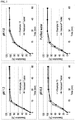
FIG. 1A andFIG. 1B respectively show the results of a dissolution test between the compositions of Examples 8 through 11 according to the present invention and the control drug (Vesicare® tablet), and the results of a dissolution test between the composition of Example 12, the composition of Comparative Example 3 and the control drug (Vesicare® tablet). -
FIG. 2 shows the results of a dissolution test between the composition of Example 13 according to the present invention and the control drug (Vesicare® tablet, 10mg). - The present invention will be explained in greater detail through the following examples and experimental examples as set forth herein below.
- For the manufacture of tablets, 16.65 g of solifenacin succinate, 0.5 g of butylhydroxytoluene, and 100.0 g of lactose were mixed by trituration and then filtered through a 30-mesh sieve (trituration mixing-1). Subsequently, 50.0 g of microcrystalline cellulose and 325.35 g of lactose hydrate were mixed, and filtered through a 30-mesh sieve (trituration mixing-2).
- The trituration mixtures 1 and 2 were mixed in a 1 kg mixer (erweka AR 402/cubemixer) at 200 rpm for 15 minutes, and the resulting mixture was lubricated and mixed with 7.5 g of magnesium stearate, filtered through a 30-mesh sieve, and then formed into circular tablets using a single tablet press machine (erweka AR 401). The content of each component of the thus-obtained tablets is shown in Table 1 below.
[Table 1] Mixing Purpose Composition (grade) Weight% per Tablet Excipient lactose 20.00 Active Ingredient solifenacin succinate 3.33 Disintegrating Agent microcrystalline cellulose 10.00 Excipient lactose hydrate 65.07 Antioxidant butylhydroxytoluene 0.10 Lubricant magnesium stearate 1.50 Total Weight (%) 100.00 - In order to evaluate the degree of generation of related substances or impurities, or unknown materials by the addition of an antioxidant in the composition, tablets with the compositions of Examples 2 through 7 and Comparative Example 1 were manufactured.
- For the manufacture of tablets with the compositions of Examples 2 through 7 and Comparative Example 1, 16.65 g of solifenacin succinate, butylhydroxytoluene (varying from 0.25 g to 0.5 g depending on Examples 2 through 7), 100.0 g of lactose hydrate and 50.0 g of microcrystalline cellulose were mixed by trituration, and then filtered through a 30-mesh sieve (trituration mixing-1). Subsequently, 100.0 g of microcrystalline cellulose and lactose hydrate (varying from 212.35 g to 212.85 g depending on Example 2 through 7 and Comparative Example 1), and then filtered through a 30-mesh sieve (trituration mixing-2).
- The trituration mixtures 1 and 2 were mixed in a 1 kg mixer (erweka AR 402/cubemixer) at 200 rpm for 15 minutes, and the resulting mixture was lubricated and mixed with 7.5 g of magnesium stearate, filtered through a 30-mesh sieve, and then formed into circular tablets using a single tablet press machine (erweka AR 401). The thus-completed core tablets were coated with Opadry® (yellow, opadry 03B52293). The content of each component of the thus-obtained tablets is shown in Table 2 below.
[Table 2] Composition Ex. 2 Ex. 3 Ex. 4 Ex. 5 Ex. 6 Ex. 7 Comp. Ex. 1 Lactose 20.00 20.00 20.00 20.00 20.00 20.00 20.00 Solifenacin Succinate 3.33 3.33 3.33 3.33 3.33 3.33 3.33 Microcrystalline Cellulose (Trituration mixing-1) 10.00 10.00 10.00 10.00 10.00 10.00 10.00 Microcrystalline Cellulose (Trituration mixing-2) 20.00 20.00 20.00 20.00 20.00 20.00 20.00 Lactose Hydrate 42.47 42.52 42.56 42.47 42.52 42.56 42.57 Butylhydroxytoluene 0.10 0.05 0.01 - - - - Butylhydroxyanisol - - - 0.10 0.05 0.01 - Magnesium Stearate 1.50 1.50 1.50 1.50 1.50 1.50 1.50 Opadry® (Yellow) 2.60 2.60 2.60 2.60 2.60 2.60 2.60 Total Weight (%) 100 100 100 100 100 100 100 - In order to evaluate content uniformity and dissolution pattern of preparations according to the present invention, tablets with the compositions of Example 8 through 11 and Comparative Example 2 were manufactured.
- 16.65 g of solifenacin succinate, 0.5g of butylhydroxytoluene, low-substituted hydroxypropyl cellulose (varying from 0.0 g to 150.0 g depending on the respective composition of Examples 8 through 11 and Comparative Example 2) and 95.0 g of isomalt were mixed by trituration, and filtered through a 30-mesh sieve (trituration mixing-1).
- Subsequently, 10.0 g of hydrophobic colloidal silicon dioxide and lactose hydrate (varying from 207.35 g to 357.35g depending on Examples 8 through 11 and Comparative Example 2) were mixed, and filtered through a 30-mesh sieve (trituration mixing-2).
- The trituration mixtures 1 and 2 were mixed in a 1 kg mixer (erweka AR 402/cubemixer) at 200 rpm for 15 minutes, and the resulting mixture was lubricated and mixed with 7.5 g of magnesium stearate, filtered through a 30-mesh sieve, and then formed into circular tablets using a single tablet press machine (erweka AR 401). The thus-completed core tablets were coated with Opadry® (yellow, opadry 03B52293). The content of each component of the thus-obtained tablets is shown in Table 3 below.
[Table 3] Composition Ex. 8 Ex. 9 Ex. 10 Ex. 11 Comp. Ex. 2 Solifenacin Succinate 3.33 3.33 3.33 3.33 3.33 Butylhydroxytoluene 0.10 0.10 0.10 0.10 0.10 Hydrophobic Colloidal Silicon Dioxide 2.00 2.00 2.00 2.00 2.00 Low-Substituted Hydroxypropyl Cellulose 5.00 10.00 20.00 30.00 0.00 Isomalt 19.00 19.00 19.00 19.00 19.00 Lactose Hydrate 66.47 61.47 51.47 41.47 71.47 Magnesium Stearate 1.50 1.50 1.50 1.50 1.50 Opadry® (Yellow) 2.60 2.60 2.60 2.60 2.60 Total Weight (%) 100 100 100 100 100 - Additionally, for the manufacture of tablets according to Example 12 and Comparative Example 3, 16.65 g of solifenacin succinate, 0.5 g of butylhydroxytoluene, low-substituted hydroxypropyl cellulose (varying from 0.0 g to 15.0g depending on Example 12 and Comparative Example 3), lactose hydrate (varying from 18.35 g to 33.35 g depending on Example 12 and Comparative Example 3) and 33.35g of isomalt were mixed by trituration, and filtered through a 30-mesh sieve (trituration mixing-1).
- Subsequently, 5.0 g of hydrophobic colloidal silicon dioxide and 388.15 g of lactose were mixed and filtered through a 30-mesh sieve (trituration mixing-2).
- The trituration mixtures 1 and 2 were mixed in a 1 kg mixer (erweka AR 402/cubemixer) at 200 rpm for 15 minutes, and the resulting mixture was lubricated and mixed with 10.0 g of sodium stearyl fumarate, filtered through a 30-mesh sieve, and then formed into circular tablets using a single tablet press machine (erweka AR 401). The thus-completed core tablets were coated with Opadry® (yellow, opadry 03B52293). The content of each component of the thus-obtained tablets is shown in Table 4 below.
[Table 4] Composition Ex. 12 Comp. Ex. 3 Lactose Hydrate 3.67 6.67 Hydrophobic Colloidal Silicon Dioxide 1.0 1.0 Solifenacin Succinate 3.33 3.33 Low-Substituted Hydroxypropyl Cellulose 3.00 - Butylhydroxytoluene 0.10 0.10 Isomalt 6.67 6.67 Lactose 77.63 77.63 Sodium Stearyl Fumarate 2.0 2.0 Opadry® (Yellow) 2.60 2.60 Total Weight (%) 100 100 - In order to evaluate the dissolution of solifenacin succinate-containing preparations with different constitutional contents of solifenacin succinate, tablets with the composition of Example 13 were manufactured. The manufacturing process was the same as in Example 12, and the content of each component of the thus-obtained tablets is shown in Table 5 below.
[Table 5] Composition Ex. 13 Solifenacin succinate 6.49 Butylhydroxytoluene 0.10 Hydrophobic colloidal silicon dioxide 2.92 Low-substituted hydroxypropyl cellulose 2.92 Isomalt 19.48 Lactose hydrate 64.03 Magnesium stearate 1.46 Opadry® (pink) 2.60 Total weight (%) 100 - Solifenacin succinate-containing preparations manufactured in Examples 1 through 7 and Example 8 containing a binder were packed in PVC, PVDC, and HDPE containers conventionally used in the art, stored under severe stability conditions (60°C/
relative humidity 80%), and the change in related substances at initial stage, after 1 week, 2 weeks, and 4 weeks of storage were analyzed.Vesicare® 5 mg coated tablets on the market were used as a control drug, and stability test was performed under the same condition. - The stantadard of related substances or impurities in solifenacin succinate as a raw material was applied to this Example, and the detailed standard and items are shown in Table 6 below.
[Table 6] Related Substances or Impurities Standard YM-64250 (+)-(1S,3'R)-1'-oxidoquinuclidin-3'-yl-1-phenyl-1,2,3,4-tetrahydroisoquinoline-2-carboxylate ≤1.1% YM 217880 (+)-(R)-quinuclidin-3-yl [2-(2-benzoylphenyl)ethyl]carbamate ≤0.5% Unknown Related Substances or Impurities ≤02% Total of Related Substances or Impurities ≤2.0% - The change in the related substances or impurities was analyzed via high performance chromatography (Agilent) and the HPLC conditions used are as follows.
- Detector: UV spectrophotometer (wavelength for measurement: 215 nm)
- Column: XBridgeTM C18, 150 × 4.6 mm, 5.0 µm or a column equivalent thereof
- Flow rate: 1.0 mL/min
- Column temperature: a constant temperature around 35°C
- Amount of injection: 20 µL
- Range of measurement: 1) for 40 minutes after injecting a test solution 2) for 20 minutes after injecting a standard solution
- Mobile phase: buffer solution*/methanol = 35/65
- Diluent: mobile phase
- *buffer solution: 3.4 g of dipotassium monohydrogen phosphate was well dissolved in 1000 mL of water, added with 1.0 mL of trifluoroacetic acid, and adjusted to a pH of 7.5 by using triethylamine. The resulting solution was filtered through a 0.45 µm filter and deaerated to be used.
- The evaluation results on the stability are shown in Table 7 below.
[Table 7] Category Related Substances or Impurities Standard Initial stage Under Severe Stress Condition for 1 Week Under Severe Stress Condition for 2 weeks Under Severe Stress Condition for 4 weeks Bottle (%) PVC (%) PVDC (%) Bottle (%) PVC (%) PVDC (%) Bottle (%) PVC (%) PV DC (%) Control Drug (Vesicare® 5 mg) YM-64250 ≤1.1% ND* 0.59 1.07 0.48 1.03 1.33 0.59 1.12 1.63 0.57 YM 217880 ≤0.5% ND ND 0.55 0.25 0.71 0.96 0.43 0.80 0.96 1.78 Other respective impurities ≤02% ND ND ND ND ND 0.13 ND ND 0.28 ND total ≤2% ND 0.59 1.62 0.73 1.74 2.42 1.02 1.52 2.87 2.35 Ex. 1 YM-64250 ≤1.1% ND ND ND ND 0.05 0.38 0.36 0.07 0.74 0.75 YM 217880 ≤0.5% ND ND ND ND 0.01 0.16 0.16 0.03 0.36 0.37 Other respective impurities ≤02% ND ND ND ND ND ND ND ND ND ND total ≤2% ND ND ND ND 0.06 0.54 0.52 0.10 1.1 1.12 Ex. 2 YM-64250 ≤1.1% ND ND ND ND 0.14 ND ND 0.67 ND ND YM 217880 ≤0.5% ND ND ND ND 0.26 ND ND 0.61 ND ND Otherrespecti ve impurities ≤02% ND ND ND ND ND ND ND ND ND ND total ≤2% ND ND ND ND 0.4 ND ND 1.28 ND ND Ex. 3 YM-64250 ≤1.1% ND ND ND ND ND ND ND 0.59 ND ND YM 217880 ≤0.5% ND ND ND ND ND 0.12 ND 0.81 ND ND Other respective impurities ≤02% ND ND ND ND ND ND ND ND ND ND total ≤2% ND ND ND ND ND 0.12 ND 1.4 ND ND Ex. 4 YM-64250 ≤1.1% ND 0.24 0.4 ND ND 0.25 ND 0.67 0.57 0.69 YM 217880 ≤0.5% ND 0.08 0.17 ND ND 0.43 0.11 0.78 0.26 0.42 Other respective impurities ≤02% ND ND ND ND ND ND ND ND ND ND total ≤2% ND 0.32 0.31 ND ND 0.68 0.11 1.45 0.83 1.11 Ex. 5 YM-64250 ≤1.1% ND ND ND ND ND ND ND ND ND ND YM 217880 ≤0.5% ND ND ND ND ND ND ND ND ND ND Other respective impurities ≤02% ND ND ND ND ND ND ND ND ND ND Total ≤2% ND ND ND ND ND ND ND ND ND ND Ex. 6 YM-64250 ≤1.1% ND ND ND ND ND ND ND ND ND ND YM 217880 ≤0.5% ND ND ND ND ND ND ND ND ND ND Other respective impurities ≤02% ND 0.03 ND ND ND ND ND ND ND ND Total ≤2% ND 0.03 ND ND ND ND ND ND ND ND Ex. 7 YM-64250 ≤1.1% ND ND ND ND ND 0.06 ND ND ND ND YM 217880 ≤0.5% ND ND ND ND ND 0.17 ND ND ND ND Other respective impurities ≤02% ND 0.03 ND ND ND ND ND ND ND ND Total ≤2% ND 0.03 ND ND ND 0.25 ND ND ND ND Ex. 8 YM-64250 ≤1.1% ND ND ND ND 0.04 0.27 0.24 0.07 0.35 0.37 YM217880 ≤0.5% ND ND ND ND 0.02 0.11 0.12 0.05 0.41 0.39 Other respective impurities ≤02% ND ND ND ND ND 0.01 ND ND 0.05 0.02 Total ≤2% ND ND ND ND 0.07 0.39 0.36 0.12 0.81 0.78 Comp. Ex. 1 YM-64250 ≤1.1% ND 0.23 1.35 0.42 0.36 1.36 0.94 1.41 1.88 1.08 YM 217880 ≤0.5% ND 0.40 1.06 0.35 0.56 1.21 0.80 0.89 1.37 1.10 Other respective impurities ≤02% ND 0.49 0.13 ND ND ND ND ND 0.29 ND Total ≤2% ND 1.12 2.54 0.77 0.92 2.57 1.74 2.3 3.25 2.18 - In the case of the preparation of Example 1, although it was a core tablet, all of its contents and the levels of related substances satisfied the standard requirement and remained stable until the 4th week of severe stress conditions regardless of their packing materials. However, in the case of the control drug, the related substance YM-64250 failed to meet the standard in PVC packing (under 1 to 4 weeks of severe stress conditions) and HDPE (4 weeks) materials, and the related substance YM-217880 failed to meet the standard in PVC packing (under 1 to 4 weeks of severe stress conditions) HDPE (2 and 4 weeks), and PVDC (4 weeks) materials.
- In the case of the preparation of Example 2, the presence of the related substance YM-64250 was detected in HDPE container until the 2nd and 4th week of the severe stress conditions, but the detected level was lower than that of control drugs on the market and satisfied the standard requirement.
- Overall, it was confirmed that antioxidants, butylhydroxytoluene and butylhydroxyanisol used in Examples 1 through 7 improved the stability of solifenacin succinate. Additionally, in the preparation of tablets with the composition of Example 8 containing an antioxidant and a binder, it was also confirmed that the level of the related substances satisfied the standard requirement.
- However, in the case of the preparation of Comparative Example land the control drug not containing an antioxidant, the levels of the related substances or impurities, or the unknown related substances of solifenacin succinate were shown very high. Accordingly, it was confirmed that the solifenacin succinate-containing preparations according to the present invention were very effectively prevented from generating the related substances and also had an excellent stability compared to that of the control drug.
- The dissolution rates of the solifenacin succinate-containing preparations according to the present invention were evaluated by comparing with those of the control drug (Vesicare®, 5 mg). The conditions applied in the evaluation of the dissolution rates are as follows.
- Manufacturer of Dissolution Apparatus and Test solution sampling Apparatus: Agilent technologies
Model name of Dissolution Apparatus: 708-DS
Model name of Test solution sampling Apparatus: Dissolution sampling station
Test solution sampling method: Auto sampling according to time passage
Dissolution method: the Korean Pharmacopoeia (10th Edition), the 2nd method (paddle speed: 50 rpm)
Time for collecting test solution: 5, 10, 15, 30 (and 45 min)
Number of tested materials: 4 tablets
Dissolution medium: Purified water and pH 6.8 phosphate buffer
Temperature of Dissolution medium: 37.5°C ± 0.5
Dissolution Apparatus: UV Spectrophotometer (wavelength for measurement: 210 nm).
Column: Develosil ODS-UG-5(150mm×4.6mm ID, Nomura Chemical Co., Ltd.) or a column equivalent thereof
Column temperature: 40°C
Mobile phase: 0.05 mol/L potassium phosphate buffer (pH 6.0)/acetonitrile mixture (65:35)
Flow rate: 1.0 mL/min (adjusted to maintain the retention time of solifenacin to be between 7 min to 11 min)
Test Period: About 12 min - As a result of the experiment, the dissolution rate of each preparation in the phosphate buffer at pH 6.8 was as shown in Table 8.
[Table 8] Dissolution Time (min) Ex. 8 Ex. 9 Ex. 10 Ex. 11 Comp. Ex. 2 Control Drug 5 22.5±5.4 18.4±4.7 15.9±2.4 12.1±6.2 29.8±1.4 26.3±4.0 10 43.8±2.8 39.9±2.3 37.5±2.2 30.4±2.9 56.7±9.8 50.9±5.8 15 64.5+2.1 60.7+2.2 58.5±1.2 49.7±3.8 83.6±8.7 69.6±8.1 30 84.1±1.6 81.1±1.6 77.6±0.8 68.6±4.4 93.8±5.1 89.6±2.5 45 89.4±1.1 87.3±1.5 84.7±1.1 82.8±3.1 107.5±5.0 93.7±2.4 - From the results of Examples 8 through 11, it was confirmed that the greater the amount of a binder, the lower the dissolution rate. In the case of the preparation of tablets according to the composition of Example 11, its dissolution rate, at 30 minutes, fell short of 80% of that of the control drug, the drug on the market, and thus it is not suitable for a release profile of a solifenacin-containing preparation, which requires a fast release, in terms of biological equivalence (according to the Notification No. 2013-201 of the Korean Ministry of Food and Drug Safety, when the average dissolution rate of a drug on the market (reference drug) reaches 85% between 15 min and 30 min, if the average dissolution rate of a drug to be compared (test drug) is within that of the reference drug ±15% at two different time points where the average dissolution rate of the reference drug is around 60% and 85%, respectively, they can be determined as having equivalence). Additionally, it is also not suitable considering there is a large deviation in terms of average dissolution rate.
- When a binder was not added at all (Comparative Example 2), there was a large deviation in terms of average dissolution rate and thus a stable in vivo dissolution of the preparation cannot be expected.
- The dissolution patterns of the tablets manufactured via direct compression in Examples 8 through 11 and Comparative Example 2 were observed in purified water and compared with that of the control drug. The results are shown in
FIG. 1A . The conditions for the evaluation of the dissolution were the same as provided in Experimental Example 2. - The preparations of Examples 8 through 10 and Comparative Example 2 had dissolution rates of between 54.8% and 84.8% at the 15 min determining point, and between 74.9% and 104.9% at the 30 min determining point, thus being considered to be equivalent with that of the drug on the market (according to the Notification No. 2013-201 of the Korean Ministry of Food and Drug Safety, when the average dissolution rate of a drug on the market (reference drug) reaches 85% between 15 min and 30 min, if the average dissolution rate of a drug to be compared (test drug) is within that of the reference drug ±15% at two different time points where the average dissolution rate of the reference drug is around 60% and 85%, respectively, they can be determined as having equivalence).
- Meanwhile, the preparation of Example 11 showed a dissolution rate of 55.9%, thus being equivalent, but at the 30 min determining point, it showed a dissolution rate of 72.2%, which was lower than the equivalent range of ±15%. Accordingly, the preparation is not suitable for use as a solifenacin-containing preparation with regard to biological equivalence.
- The dissolution patterns of the preparations of Example 12 and Comparative Example 3 were evaluated by comparing them with those of the control drug. The results are shown in
FIG. 1B . The conditions for the evaluation of the dissolution were the same as used in Experimental Example 2. - As a result of the evaluation, the preparation of Example 12 showed a dissolution profile equivalent to that of the control drug. However, the dissolution rate of the preparation of Comparative Example 3 was outside of the range that could be considered as determining equivalence to that of the control drug.
- The dissolution pattern of the preparation of Example 13, which contains 10 mg of solifenacin, was evaluated by comparing it with that of the control drug, and was shown to have an equivalent level of dissolution to that of the control drug (
FIG. 2 ). The condition for the evaluation of the dissolution was the same suggested in Experimental Example 2. - As a result of the evaluation, it was confirmed that the dissolution pattern of the preparation containing 10 mg of solifenacin according to the present invention is equivalent to that of the control drug.
- Mass deviation and degree of disintegration among various compositions in Examples were evaluated by comparison, and the results are shown in Table 9 below. The preparations of Examples 8 through 11 and Comparative Example 2 were all manufactured to have the same hardness.
[Table 9] Evaluation Item Ex. 8 Ex. 9 Ex. 10 Ex. 11 Comp. Ex. 2 Hardness (KP) 7±1 7±1 7±1 8±3 7±4 Mass Deviation (%) 0.59 0.59 1.02 3.34 7.03 Degree of Disintegration (min) 4±1 4±1.5 6±1 12±2.5 5±3.8 Disintegration Time in a Medium at pH 6.8 (min) 9±1 10±2 11±3 21±4 12±7 - The preparation of Example 11, to which a binder was added in the amount of at least 30%, showed a larger tableting deviation compared with those in other Examples, and also showed a larger mass deviation compared with those in other Examples. In the case of Comparative Example 2, which had no binder added at all, the deviation relative to individual weight after tableting was shown as large as being around average weight ±7%.
- As a result of evaluating the degree of disintegration and disintegration time in a phosphate buffer medium at pH 6.8 according to the types prepared, it was confirmed that the preparation of Example 11 requires a considerable amount of time for its dissolution. This implies that the preparation failed to show a desirable dissolution pattern considering that solifenacin succinate, as a main component, should be fast-released for rapid therapeutic action.
- Table 10 below shows the results of evaluation by comparison of content uniformity of solifenacin succinate contained per each tablet of the preparations in Example 12 and Comparative Example 3 relative to the control drug on the market (Vesicare® tablet). The content uniformity test was performed according to the Content Uniformity Test Method of the General Test Methods in the Korean Pharmacopoeia (KP 10).
- 1) Diluent: a mixed solution of water/acetonitrile = 7/3
- 2) Preparation of Test Solution: About one tablet was added into a 20 mL flask, filled up with the diluent up to about 80%, agitated while occasionally shaking the flask until the test material was disintegrated, and cooled at room temperature. The resultant was added with the diluent to 20 mL and filtered through a 0.45 µm PVDF membrane filter to obtain a test solution.
- 3) Preparation of Standard Solution: 50 mg of a reference standard of solifenacin succinate was accurately added into a 100 mL flask and line-marked with the diluent to obtain a standard solution.
- 4) Operation and Calculation: 10 µL each of the test solution and the standard solution were subjected to the liquid chromatography under the same operating condition as in the content test, and the amount of solifenacin succinate was calculated via the following equation.
- 5) Equation

- AT: Peak area of solifenacin succinate in the chromatogram of a test solution
- AS: Peak area of solifenacin succinate in the chromatogram of a standard solution
- Ws: Amount of collection of a reference standard of solifenacin succinate (mg)
- C: Indicated amount of solifenacin succinate per one tablet of a drug (mg)
- P: Purity of a reference standard of solifenacin succinate (%)
- D: Dilution fold (5)
- As a result of the content uniformity test, it was confirmed that the preparation of Example 12 manufactured via a direct compression method by adding a binder had an equivalence in terms of preparation uniformity and content in an individual tablet to that of the control drug, and showed an improved result compared to the composition not using a binder (Comparative Example 3) (the recommended standard for solifenacin succinate content of the drugs on the market is in the range of from 93.0% to 105.0%).
- From the above results, it was found that a simple application of the direct compression method can cause various problems in the tableting process such as insufficient filling into dies of a tablet press, a serious mass deviation due to separation of layers or polarization within the granulated materials mixed therein, content non-uniformity, sticking, capping, etc.
- However, it was confirmed that the application of the compositions of the present invention enables the manufacture of preparations, which are expected to exhibit an in vivo dissolution at a degree equivalent to that of the control drug without any problems such as difficulty in tableting or mass deviation.
- When the manufacture is performed using a high speed tableting machine, in order to evaluate the effect on the content of the main components, the composition of Example 12 was manufactured via high speed tableting, and the content of solifenacin succinate according to the tableting time was measured. The high speed tableting machine used was an 8-station Piccolo rotary tablet press (RIVA), wherein the turret was rotated at 25 rpm, and the tableted test materials were randomly collected at the predetermined time for measurement, and three tablets were selected therefrom and subjected to a test for the average content. The tablets were collected at initial time, 5, 10, 15, 30, 45, and 60 min, and the collection was stopped thereafter. The test results are shown in Table 11 below. The tablets manufactured via high speed tableting showed no difference in content compared to those manufactured by a single tableting machine.
[Table 11] Collection Time of Tableted Material Test - 1 Test - 2 Test - 3 Mean Standard Deviation Initial time 100.6 100.7 99.7 100.3 0.5 5 min after high speed 100.3 101.0 99.8 100.4 0.6 tableting 10 min after high speed tableting 101.6 99.9 97.5 99.7 2.1 15 min after high speed tableting 98.2 99.2 100.7 99.4 1.3 30 min after high speed tableting 99.4 100.3 97.9 99.2 1.2 45 min after high speed tableting 102.7 104.0 101.3 103.3 0.9 60 min after high speed tableting (termination) 102.2 97.5 98.3 99.3 2.5
| No. of Tests | Ex. 12 | Comp. Ex. 3 | Control Drug |
| Test - 1 | 98.80 | 101.26 | 100.50 |
| Test - 2 | 100.4 | 101.17 | 101.74 |
| Test - 3 | 100.8 | 95.95 | 98.63 |
| Test - 4 | 100.6 | 99.42 | 100.90 |
| Test - 5 | 101.9 | 98.10 | 99.66 |
| Test - 6 | 103.9 | 97.24 | 97.52 |
| Test - 7 | 104.1 | 95.31 | 100.24 |
| Test - 8 | 100.1 | 96.46 | 99.69 |
| Test - 9 | 100.8 | 95.68 | 100.01 |
| Test - 10 | 100.0 | 96.46 | 101.68 |
| Mean | 101.1 | 97.71 | 100.06 |
| Standard Deviation | 1.70 | 2.21 | 1.30 |
Claims (5)
- A solifenacin tablet comprising solifenacin or a pharmaceutically acceptable salt thereof, an antioxidant, and a binder, wherein the antioxidant is contained in the amount from 0.01 part by weight to 0.04 part by weight relative to 1 part by weight of the solifenacin or a pharmaceutically acceptable salt thereof, and the binder is low-substituted hydroxypropyl cellulose and is contained in the amount from 0.4 part by weight to 10 parts by weight relative to 1 part by weight of the solifenacin or a pharmaceutically acceptable salt thereof, and in the amount from 25 parts by weight to 200 parts by weight relative to 1 part by weight of the antioxidant, and wherein the solifenacin tablet is prepared via direct compression, which does not include a process using a solvent.
- The solifenacin tablet of claim 1, wherein the antioxidant is butylhydroxytoluene or butylhydroxyanisol.
- The solifenacin tablet of claim 1, wherein the binder is contained in the amount from 50 parts by weight to 200 parts by weight relative to 1 part by weight of the antioxidant.
- The solifenacin tablet of claim 1, further comprising a disintegrating agent, a lubricant or a coating agent.
- A method for manufacturing solifenacin tablet, comprising:mixing solifenacin or a pharmaceutically acceptable salt thereof, an antioxidant and a binder; andtableting the mixture,wherein the mixture does not comprise a solvent, and wherein the antioxidant is contained in the amount from 0.01 part by weight to 0.04 part by weight relative to 1 part by weight of the solifenacin or a pharmaceutically acceptable salt thereof, and the binder is low-substituted hydroxypropyl cellulose and is contained in the amount from 0.4 part by weight to 10 parts by weight relative to 1 part by weight of the solifenacin or a pharmaceutically acceptable salt thereof, and in the amount from 25 parts by weight to 200 parts by weight relative to 1 part by weight of the antioxidant.
Applications Claiming Priority (1)
| Application Number | Priority Date | Filing Date | Title |
|---|---|---|---|
| KR1020140012121A KR20150092385A (en) | 2014-02-03 | 2014-02-03 | Stable pharmaceutical composition comprising solifenacin, and method for preparing the same |
Publications (2)
| Publication Number | Publication Date |
|---|---|
| EP2902017A1 EP2902017A1 (en) | 2015-08-05 |
| EP2902017B1 true EP2902017B1 (en) | 2020-07-29 |
Family
ID=52449981
Family Applications (1)
| Application Number | Title | Priority Date | Filing Date |
|---|---|---|---|
| EP15153587.9A Not-in-force EP2902017B1 (en) | 2014-02-03 | 2015-02-03 | Stable pharmaceutical composition comprising solifenacin, and method for preparing the same |
Country Status (6)
| Country | Link |
|---|---|
| US (1) | US9687482B2 (en) |
| EP (1) | EP2902017B1 (en) |
| JP (1) | JP5993965B2 (en) |
| KR (1) | KR20150092385A (en) |
| CN (1) | CN104814935A (en) |
| WO (1) | WO2015115750A1 (en) |
Families Citing this family (6)
| Publication number | Priority date | Publication date | Assignee | Title |
|---|---|---|---|---|
| JP6782168B2 (en) | 2014-12-05 | 2020-11-11 | 古河電気工業株式会社 | Manufacturing method of aluminum alloy wire, aluminum alloy stranded wire, coated electric wire and wire harness, and aluminum alloy wire |
| KR20170055211A (en) * | 2015-11-11 | 2017-05-19 | 한미약품 주식회사 | Solid formulation for oral administration containing amorphous solifenacin and a process for the preparation thereof |
| KR20180003340A (en) * | 2016-06-30 | 2018-01-09 | 한미약품 주식회사 | Solid formulation for oral administration containing amorphous solifenacin and a process for the preparation thereof |
| WO2018154495A1 (en) | 2017-02-24 | 2018-08-30 | Ftf Pharma Private Limited | Pharmaceutical composition of oral solution of muscarinic antagonist |
| JP7102200B2 (en) * | 2017-04-14 | 2022-07-19 | 東和薬品株式会社 | Solid pharmaceutical composition containing solifenacin succinate |
| KR20210114271A (en) | 2020-03-10 | 2021-09-23 | 주식회사 종근당 | Pharmaceutical composition comprising solifenacin or its pharmaceutically acceptable salts |
Family Cites Families (12)
| Publication number | Priority date | Publication date | Assignee | Title |
|---|---|---|---|---|
| US20100137358A1 (en) * | 1996-11-05 | 2010-06-03 | Dr. Reddy's Laboratories Ltd. | Solifenacin compositions |
| NZ532707A (en) | 2001-12-21 | 2006-07-28 | Pfizer Prod Inc | Directly compressible formulations of azithromycin |
| US8039482B2 (en) | 2004-03-25 | 2011-10-18 | Astellas Pharma Inc. | Composition of solifenacin or salt thereof for use in solid formulation |
| WO2006070735A1 (en) | 2004-12-27 | 2006-07-06 | Astellas Pharma Inc. | Stable granular pharmaceutical composition of solifenacin or its salt |
| DE102005060377A1 (en) | 2005-12-16 | 2007-06-21 | Ratiopharm Gmbh | Composition, useful for preparing compressed form, preferably tablets to treat senile dementia, preferably for preventing and alleviating Alzheimer's disease, comprises donepezil hydrochloride of polymorph form |
| EP2146693A2 (en) | 2007-04-11 | 2010-01-27 | Dr. Reddy's Laboratories Ltd. | Solifenacin compositions |
| EP2018850A1 (en) | 2007-07-24 | 2009-01-28 | Ratiopharm GmbH | Pharmaceutical composition comprising solifenacin or a pharmaceutically acceptable salt thereof |
| ES2609061T3 (en) | 2009-02-27 | 2017-04-18 | Krka, D.D., Novo Mesto | Procedure for forming solid oral pharmaceutical forms of solifenacin and its pharmaceutically acceptable salts |
| JP4816828B2 (en) * | 2009-03-30 | 2011-11-16 | アステラス製薬株式会社 | Solid pharmaceutical composition containing amorphous solifenacin |
| KR102027912B1 (en) | 2011-02-15 | 2019-10-02 | 지엘팜텍주식회사 | An oral sustained-release triple layer tablet comprising tamsulosin or pharmaceutically acceptable salts thereof |
| EP2500013B1 (en) | 2011-03-15 | 2019-10-02 | Alfred E. Tiefenbacher (GmbH & Co. KG) | Pharmaceutical composition comprising solifenacin |
| CN104739789B (en) | 2013-12-31 | 2018-07-31 | 浙江京新药业股份有限公司 | Pharmaceutical composition containing Solifenacin or its salt |
-
2014
- 2014-02-03 KR KR1020140012121A patent/KR20150092385A/en not_active Ceased
-
2015
- 2015-01-22 WO PCT/KR2015/000655 patent/WO2015115750A1/en not_active Ceased
- 2015-01-29 US US14/608,560 patent/US9687482B2/en active Active
- 2015-01-30 CN CN201510050666.2A patent/CN104814935A/en active Pending
- 2015-01-30 JP JP2015017240A patent/JP5993965B2/en active Active
- 2015-02-03 EP EP15153587.9A patent/EP2902017B1/en not_active Not-in-force
Non-Patent Citations (1)
| Title |
|---|
| None * |
Also Published As
| Publication number | Publication date |
|---|---|
| CN104814935A (en) | 2015-08-05 |
| KR20150092385A (en) | 2015-08-13 |
| US20150216856A1 (en) | 2015-08-06 |
| JP5993965B2 (en) | 2016-09-21 |
| WO2015115750A1 (en) | 2015-08-06 |
| US9687482B2 (en) | 2017-06-27 |
| JP2015145363A (en) | 2015-08-13 |
| EP2902017A1 (en) | 2015-08-05 |
Similar Documents
| Publication | Publication Date | Title |
|---|---|---|
| US9687482B2 (en) | Stable pharmaceutical composition comprising solifenacin, and method for preparing the same | |
| KR101665705B1 (en) | Film-coated preparation having improved stability | |
| AU2016286804B2 (en) | Oral solid formulation containing irinotecan and method of preparing the same | |
| US20100104637A1 (en) | Tablet formulations containing 8-[-methyl]-8-phenyl-1,7-diaza-spiro[4.5]decan-2-one salts and tablets made therefrom | |
| US20160346267A1 (en) | Pharmaceutical Composition Comprising Apixaban | |
| EA023529B1 (en) | Process for forming solid oral dosage forms of solifenacin and its pharmaceutically acceptable salts for oral administration | |
| KR20130030261A (en) | Manufacturing of active-free granules and tablets comprising the same | |
| TWI405591B (en) | Process for solid formulations | |
| CN120379652A (en) | Pharmaceutical formulations of (R) -1- (1-propenylpiperidin-3-yl) -4-amino-3- (4-phenoxyphenyl) -1H-imidazo [4,5-c ] pyridin-2 (3H) -one | |
| CN108348617A (en) | The solid pharmaceutical preparation and preparation method thereof containing amorphous solifenacin for oral use | |
| KR101977890B1 (en) | Stable pharmaceutical composition comprising solifenacin, and method for preparing the same | |
| US20120121700A1 (en) | Pharmaceutical formulations comprising valganciclovir | |
| JP2023052494A (en) | Immediate release pharmaceutical formulation of anticoagulant and method for its preparation | |
| JP5900702B2 (en) | Pharmaceutical composition for oral administration | |
| JP2018177789A (en) | Solid pharmaceutical composition containing solifenacin succinate | |
| EP3421034B1 (en) | Composite capsule preparation containing tadalafil and tamsulosin and having improved stability and elution rate | |
| JP6831645B2 (en) | Galantamine-containing pharmaceutical compositions, methods for stabilizing galantamine in pharmaceutical compositions, and galantamine stabilizers. | |
| KR20170043108A (en) | Stable pharmaceutical composition comprising solifenacin, and method for preparing the same | |
| EP4574820A1 (en) | Crystalline form of pyrimidine-4-carboxamide compound and oral pharmaceutical formulation containing same | |
| WO2012153347A2 (en) | Oral pharmaceutical composition of olanzapine form 1 | |
| KR20180003340A (en) | Solid formulation for oral administration containing amorphous solifenacin and a process for the preparation thereof | |
| WO2014118809A1 (en) | Pharmaceutical composition with linezolid | |
| Lavanya et al. | Formulation and evaluation of zolmitriptan rapimelts | |
| EP0974343A1 (en) | Metoprolol composition and processes for manufacturing the same | |
| EP0987020A1 (en) | Metoprolol composition and processes for manufacturing the same |
Legal Events
| Date | Code | Title | Description |
|---|---|---|---|
| PUAI | Public reference made under article 153(3) epc to a published international application that has entered the european phase |
Free format text: ORIGINAL CODE: 0009012 |
|
| 17P | Request for examination filed |
Effective date: 20150203 |
|
| AK | Designated contracting states |
Kind code of ref document: A1 Designated state(s): AL AT BE BG CH CY CZ DE DK EE ES FI FR GB GR HR HU IE IS IT LI LT LU LV MC MK MT NL NO PL PT RO RS SE SI SK SM TR |
|
| AX | Request for extension of the european patent |
Extension state: BA ME |
|
| TPAC | Observations filed by third parties |
Free format text: ORIGINAL CODE: EPIDOSNTIPA |
|
| STAA | Information on the status of an ep patent application or granted ep patent |
Free format text: STATUS: EXAMINATION IS IN PROGRESS |
|
| 17Q | First examination report despatched |
Effective date: 20181105 |
|
| GRAP | Despatch of communication of intention to grant a patent |
Free format text: ORIGINAL CODE: EPIDOSNIGR1 |
|
| STAA | Information on the status of an ep patent application or granted ep patent |
Free format text: STATUS: GRANT OF PATENT IS INTENDED |
|
| INTG | Intention to grant announced |
Effective date: 20200225 |
|
| GRAS | Grant fee paid |
Free format text: ORIGINAL CODE: EPIDOSNIGR3 |
|
| GRAA | (expected) grant |
Free format text: ORIGINAL CODE: 0009210 |
|
| STAA | Information on the status of an ep patent application or granted ep patent |
Free format text: STATUS: THE PATENT HAS BEEN GRANTED |
|
| AK | Designated contracting states |
Kind code of ref document: B1 Designated state(s): AL AT BE BG CH CY CZ DE DK EE ES FI FR GB GR HR HU IE IS IT LI LT LU LV MC MK MT NL NO PL PT RO RS SE SI SK SM TR |
|
| REG | Reference to a national code |
Ref country code: CH Ref legal event code: EP |
|
| REG | Reference to a national code |
Ref country code: DE Ref legal event code: R096 Ref document number: 602015056390 Country of ref document: DE |
|
| REG | Reference to a national code |
Ref country code: AT Ref legal event code: REF Ref document number: 1294982 Country of ref document: AT Kind code of ref document: T Effective date: 20200815 |
|
| REG | Reference to a national code |
Ref country code: IE Ref legal event code: FG4D |
|
| REG | Reference to a national code |
Ref country code: LT Ref legal event code: MG4D |
|
| REG | Reference to a national code |
Ref country code: NL Ref legal event code: MP Effective date: 20200729 |
|
| REG | Reference to a national code |
Ref country code: AT Ref legal event code: MK05 Ref document number: 1294982 Country of ref document: AT Kind code of ref document: T Effective date: 20200729 |
|
| PG25 | Lapsed in a contracting state [announced via postgrant information from national office to epo] |
Ref country code: SE Free format text: LAPSE BECAUSE OF FAILURE TO SUBMIT A TRANSLATION OF THE DESCRIPTION OR TO PAY THE FEE WITHIN THE PRESCRIBED TIME-LIMIT Effective date: 20200729 Ref country code: PT Free format text: LAPSE BECAUSE OF FAILURE TO SUBMIT A TRANSLATION OF THE DESCRIPTION OR TO PAY THE FEE WITHIN THE PRESCRIBED TIME-LIMIT Effective date: 20201130 Ref country code: FI Free format text: LAPSE BECAUSE OF FAILURE TO SUBMIT A TRANSLATION OF THE DESCRIPTION OR TO PAY THE FEE WITHIN THE PRESCRIBED TIME-LIMIT Effective date: 20200729 Ref country code: GR Free format text: LAPSE BECAUSE OF FAILURE TO SUBMIT A TRANSLATION OF THE DESCRIPTION OR TO PAY THE FEE WITHIN THE PRESCRIBED TIME-LIMIT Effective date: 20201030 Ref country code: LT Free format text: LAPSE BECAUSE OF FAILURE TO SUBMIT A TRANSLATION OF THE DESCRIPTION OR TO PAY THE FEE WITHIN THE PRESCRIBED TIME-LIMIT Effective date: 20200729 Ref country code: NO Free format text: LAPSE BECAUSE OF FAILURE TO SUBMIT A TRANSLATION OF THE DESCRIPTION OR TO PAY THE FEE WITHIN THE PRESCRIBED TIME-LIMIT Effective date: 20201029 Ref country code: HR Free format text: LAPSE BECAUSE OF FAILURE TO SUBMIT A TRANSLATION OF THE DESCRIPTION OR TO PAY THE FEE WITHIN THE PRESCRIBED TIME-LIMIT Effective date: 20200729 Ref country code: ES Free format text: LAPSE BECAUSE OF FAILURE TO SUBMIT A TRANSLATION OF THE DESCRIPTION OR TO PAY THE FEE WITHIN THE PRESCRIBED TIME-LIMIT Effective date: 20200729 Ref country code: AT Free format text: LAPSE BECAUSE OF FAILURE TO SUBMIT A TRANSLATION OF THE DESCRIPTION OR TO PAY THE FEE WITHIN THE PRESCRIBED TIME-LIMIT Effective date: 20200729 Ref country code: BG Free format text: LAPSE BECAUSE OF FAILURE TO SUBMIT A TRANSLATION OF THE DESCRIPTION OR TO PAY THE FEE WITHIN THE PRESCRIBED TIME-LIMIT Effective date: 20201029 |
|
| PG25 | Lapsed in a contracting state [announced via postgrant information from national office to epo] |
Ref country code: IS Free format text: LAPSE BECAUSE OF FAILURE TO SUBMIT A TRANSLATION OF THE DESCRIPTION OR TO PAY THE FEE WITHIN THE PRESCRIBED TIME-LIMIT Effective date: 20201129 Ref country code: PL Free format text: LAPSE BECAUSE OF FAILURE TO SUBMIT A TRANSLATION OF THE DESCRIPTION OR TO PAY THE FEE WITHIN THE PRESCRIBED TIME-LIMIT Effective date: 20200729 Ref country code: RS Free format text: LAPSE BECAUSE OF FAILURE TO SUBMIT A TRANSLATION OF THE DESCRIPTION OR TO PAY THE FEE WITHIN THE PRESCRIBED TIME-LIMIT Effective date: 20200729 Ref country code: LV Free format text: LAPSE BECAUSE OF FAILURE TO SUBMIT A TRANSLATION OF THE DESCRIPTION OR TO PAY THE FEE WITHIN THE PRESCRIBED TIME-LIMIT Effective date: 20200729 |
|
| PG25 | Lapsed in a contracting state [announced via postgrant information from national office to epo] |
Ref country code: NL Free format text: LAPSE BECAUSE OF FAILURE TO SUBMIT A TRANSLATION OF THE DESCRIPTION OR TO PAY THE FEE WITHIN THE PRESCRIBED TIME-LIMIT Effective date: 20200729 |
|
| PG25 | Lapsed in a contracting state [announced via postgrant information from national office to epo] |
Ref country code: EE Free format text: LAPSE BECAUSE OF FAILURE TO SUBMIT A TRANSLATION OF THE DESCRIPTION OR TO PAY THE FEE WITHIN THE PRESCRIBED TIME-LIMIT Effective date: 20200729 Ref country code: RO Free format text: LAPSE BECAUSE OF FAILURE TO SUBMIT A TRANSLATION OF THE DESCRIPTION OR TO PAY THE FEE WITHIN THE PRESCRIBED TIME-LIMIT Effective date: 20200729 Ref country code: SM Free format text: LAPSE BECAUSE OF FAILURE TO SUBMIT A TRANSLATION OF THE DESCRIPTION OR TO PAY THE FEE WITHIN THE PRESCRIBED TIME-LIMIT Effective date: 20200729 Ref country code: IT Free format text: LAPSE BECAUSE OF FAILURE TO SUBMIT A TRANSLATION OF THE DESCRIPTION OR TO PAY THE FEE WITHIN THE PRESCRIBED TIME-LIMIT Effective date: 20200729 Ref country code: DK Free format text: LAPSE BECAUSE OF FAILURE TO SUBMIT A TRANSLATION OF THE DESCRIPTION OR TO PAY THE FEE WITHIN THE PRESCRIBED TIME-LIMIT Effective date: 20200729 Ref country code: CZ Free format text: LAPSE BECAUSE OF FAILURE TO SUBMIT A TRANSLATION OF THE DESCRIPTION OR TO PAY THE FEE WITHIN THE PRESCRIBED TIME-LIMIT Effective date: 20200729 |
|
| REG | Reference to a national code |
Ref country code: DE Ref legal event code: R097 Ref document number: 602015056390 Country of ref document: DE |
|
| PG25 | Lapsed in a contracting state [announced via postgrant information from national office to epo] |
Ref country code: AL Free format text: LAPSE BECAUSE OF FAILURE TO SUBMIT A TRANSLATION OF THE DESCRIPTION OR TO PAY THE FEE WITHIN THE PRESCRIBED TIME-LIMIT Effective date: 20200729 |
|
| PLBE | No opposition filed within time limit |
Free format text: ORIGINAL CODE: 0009261 |
|
| STAA | Information on the status of an ep patent application or granted ep patent |
Free format text: STATUS: NO OPPOSITION FILED WITHIN TIME LIMIT |
|
| PG25 | Lapsed in a contracting state [announced via postgrant information from national office to epo] |
Ref country code: SK Free format text: LAPSE BECAUSE OF FAILURE TO SUBMIT A TRANSLATION OF THE DESCRIPTION OR TO PAY THE FEE WITHIN THE PRESCRIBED TIME-LIMIT Effective date: 20200729 |
|
| 26N | No opposition filed |
Effective date: 20210430 |
|
| PG25 | Lapsed in a contracting state [announced via postgrant information from national office to epo] |
Ref country code: SI Free format text: LAPSE BECAUSE OF FAILURE TO SUBMIT A TRANSLATION OF THE DESCRIPTION OR TO PAY THE FEE WITHIN THE PRESCRIBED TIME-LIMIT Effective date: 20200729 |
|
| REG | Reference to a national code |
Ref country code: DE Ref legal event code: R119 Ref document number: 602015056390 Country of ref document: DE |
|
| PG25 | Lapsed in a contracting state [announced via postgrant information from national office to epo] |
Ref country code: MC Free format text: LAPSE BECAUSE OF FAILURE TO SUBMIT A TRANSLATION OF THE DESCRIPTION OR TO PAY THE FEE WITHIN THE PRESCRIBED TIME-LIMIT Effective date: 20200729 |
|
| GBPC | Gb: european patent ceased through non-payment of renewal fee |
Effective date: 20210203 |
|
| REG | Reference to a national code |
Ref country code: BE Ref legal event code: MM Effective date: 20210228 |
|
| PG25 | Lapsed in a contracting state [announced via postgrant information from national office to epo] |
Ref country code: LI Free format text: LAPSE BECAUSE OF NON-PAYMENT OF DUE FEES Effective date: 20210228 Ref country code: LU Free format text: LAPSE BECAUSE OF NON-PAYMENT OF DUE FEES Effective date: 20210203 Ref country code: CH Free format text: LAPSE BECAUSE OF NON-PAYMENT OF DUE FEES Effective date: 20210228 |
|
| PG25 | Lapsed in a contracting state [announced via postgrant information from national office to epo] |
Ref country code: DE Free format text: LAPSE BECAUSE OF NON-PAYMENT OF DUE FEES Effective date: 20210901 Ref country code: IE Free format text: LAPSE BECAUSE OF NON-PAYMENT OF DUE FEES Effective date: 20210203 Ref country code: GB Free format text: LAPSE BECAUSE OF NON-PAYMENT OF DUE FEES Effective date: 20210203 Ref country code: FR Free format text: LAPSE BECAUSE OF NON-PAYMENT OF DUE FEES Effective date: 20210228 |
|
| PG25 | Lapsed in a contracting state [announced via postgrant information from national office to epo] |
Ref country code: BE Free format text: LAPSE BECAUSE OF NON-PAYMENT OF DUE FEES Effective date: 20210228 |
|
| PG25 | Lapsed in a contracting state [announced via postgrant information from national office to epo] |
Ref country code: HU Free format text: LAPSE BECAUSE OF FAILURE TO SUBMIT A TRANSLATION OF THE DESCRIPTION OR TO PAY THE FEE WITHIN THE PRESCRIBED TIME-LIMIT; INVALID AB INITIO Effective date: 20150203 |
|
| PG25 | Lapsed in a contracting state [announced via postgrant information from national office to epo] |
Ref country code: CY Free format text: LAPSE BECAUSE OF FAILURE TO SUBMIT A TRANSLATION OF THE DESCRIPTION OR TO PAY THE FEE WITHIN THE PRESCRIBED TIME-LIMIT Effective date: 20200729 |
|
| PG25 | Lapsed in a contracting state [announced via postgrant information from national office to epo] |
Ref country code: MK Free format text: LAPSE BECAUSE OF FAILURE TO SUBMIT A TRANSLATION OF THE DESCRIPTION OR TO PAY THE FEE WITHIN THE PRESCRIBED TIME-LIMIT Effective date: 20200729 |
|
| PG25 | Lapsed in a contracting state [announced via postgrant information from national office to epo] |
Ref country code: TR Free format text: LAPSE BECAUSE OF FAILURE TO SUBMIT A TRANSLATION OF THE DESCRIPTION OR TO PAY THE FEE WITHIN THE PRESCRIBED TIME-LIMIT Effective date: 20200729 |
|
| PG25 | Lapsed in a contracting state [announced via postgrant information from national office to epo] |
Ref country code: MT Free format text: LAPSE BECAUSE OF FAILURE TO SUBMIT A TRANSLATION OF THE DESCRIPTION OR TO PAY THE FEE WITHIN THE PRESCRIBED TIME-LIMIT Effective date: 20200729 |