EP2898909A1 - Triple syringe and methods of making platelet-enriched plasma and use thereof - Google Patents
Triple syringe and methods of making platelet-enriched plasma and use thereof Download PDFInfo
- Publication number
- EP2898909A1 EP2898909A1 EP15152674.6A EP15152674A EP2898909A1 EP 2898909 A1 EP2898909 A1 EP 2898909A1 EP 15152674 A EP15152674 A EP 15152674A EP 2898909 A1 EP2898909 A1 EP 2898909A1
- Authority
- EP
- European Patent Office
- Prior art keywords
- syringe
- fraction
- plasma
- ppp
- prp
- Prior art date
- Legal status (The legal status is an assumption and is not a legal conclusion. Google has not performed a legal analysis and makes no representation as to the accuracy of the status listed.)
- Granted
Links
Images


Classifications
-
- A—HUMAN NECESSITIES
- A61—MEDICAL OR VETERINARY SCIENCE; HYGIENE
- A61M—DEVICES FOR INTRODUCING MEDIA INTO, OR ONTO, THE BODY; DEVICES FOR TRANSDUCING BODY MEDIA OR FOR TAKING MEDIA FROM THE BODY; DEVICES FOR PRODUCING OR ENDING SLEEP OR STUPOR
- A61M1/00—Suction or pumping devices for medical purposes; Devices for carrying-off, for treatment of, or for carrying-over, body-liquids; Drainage systems
- A61M1/36—Other treatment of blood in a by-pass of the natural circulatory system, e.g. temperature adaptation, irradiation ; Extra-corporeal blood circuits
- A61M1/38—Removing constituents from donor blood and storing or returning remainder to body, e.g. for transfusion
- A61M1/382—Optimisation of blood component yield
-
- A—HUMAN NECESSITIES
- A61—MEDICAL OR VETERINARY SCIENCE; HYGIENE
- A61B—DIAGNOSIS; SURGERY; IDENTIFICATION
- A61B5/00—Measuring for diagnostic purposes; Identification of persons
- A61B5/15—Devices for taking samples of blood
- A61B5/150007—Details
- A61B5/150015—Source of blood
- A61B5/15003—Source of blood for venous or arterial blood
-
- A—HUMAN NECESSITIES
- A61—MEDICAL OR VETERINARY SCIENCE; HYGIENE
- A61B—DIAGNOSIS; SURGERY; IDENTIFICATION
- A61B5/00—Measuring for diagnostic purposes; Identification of persons
- A61B5/15—Devices for taking samples of blood
- A61B5/150007—Details
- A61B5/150206—Construction or design features not otherwise provided for; manufacturing or production; packages; sterilisation of piercing element, piercing device or sampling device
- A61B5/150236—Pistons, i.e. cylindrical bodies that sit inside the syringe barrel, typically with an air tight seal, and slide in the barrel to create a vacuum or to expel blood
-
- A—HUMAN NECESSITIES
- A61—MEDICAL OR VETERINARY SCIENCE; HYGIENE
- A61B—DIAGNOSIS; SURGERY; IDENTIFICATION
- A61B5/00—Measuring for diagnostic purposes; Identification of persons
- A61B5/15—Devices for taking samples of blood
- A61B5/150007—Details
- A61B5/150206—Construction or design features not otherwise provided for; manufacturing or production; packages; sterilisation of piercing element, piercing device or sampling device
- A61B5/150244—Rods for actuating or driving the piston, i.e. the cylindrical body that sits inside the syringe barrel, typically with an air tight seal, and slides in the barrel to create a vacuum or to expel blood
-
- A—HUMAN NECESSITIES
- A61—MEDICAL OR VETERINARY SCIENCE; HYGIENE
- A61B—DIAGNOSIS; SURGERY; IDENTIFICATION
- A61B5/00—Measuring for diagnostic purposes; Identification of persons
- A61B5/15—Devices for taking samples of blood
- A61B5/150007—Details
- A61B5/150206—Construction or design features not otherwise provided for; manufacturing or production; packages; sterilisation of piercing element, piercing device or sampling device
- A61B5/150251—Collection chamber divided into at least two compartments, e.g. for division of samples
-
- A—HUMAN NECESSITIES
- A61—MEDICAL OR VETERINARY SCIENCE; HYGIENE
- A61B—DIAGNOSIS; SURGERY; IDENTIFICATION
- A61B5/00—Measuring for diagnostic purposes; Identification of persons
- A61B5/15—Devices for taking samples of blood
- A61B5/150007—Details
- A61B5/150755—Blood sample preparation for further analysis, e.g. by separating blood components or by mixing
-
- A—HUMAN NECESSITIES
- A61—MEDICAL OR VETERINARY SCIENCE; HYGIENE
- A61B—DIAGNOSIS; SURGERY; IDENTIFICATION
- A61B5/00—Measuring for diagnostic purposes; Identification of persons
- A61B5/15—Devices for taking samples of blood
- A61B5/153—Devices specially adapted for taking samples of venous or arterial blood, e.g. with syringes
-
- A—HUMAN NECESSITIES
- A61—MEDICAL OR VETERINARY SCIENCE; HYGIENE
- A61K—PREPARATIONS FOR MEDICAL, DENTAL OR TOILETRY PURPOSES
- A61K35/00—Medicinal preparations containing materials or reaction products thereof with undetermined constitution
- A61K35/12—Materials from mammals; Compositions comprising non-specified tissues or cells; Compositions comprising non-embryonic stem cells; Genetically modified cells
- A61K35/14—Blood; Artificial blood
- A61K35/16—Blood plasma; Blood serum
-
- A—HUMAN NECESSITIES
- A61—MEDICAL OR VETERINARY SCIENCE; HYGIENE
- A61M—DEVICES FOR INTRODUCING MEDIA INTO, OR ONTO, THE BODY; DEVICES FOR TRANSDUCING BODY MEDIA OR FOR TAKING MEDIA FROM THE BODY; DEVICES FOR PRODUCING OR ENDING SLEEP OR STUPOR
- A61M1/00—Suction or pumping devices for medical purposes; Devices for carrying-off, for treatment of, or for carrying-over, body-liquids; Drainage systems
- A61M1/02—Blood transfusion apparatus
- A61M1/029—Separating blood components present in distinct layers in a container, not otherwise provided for
-
- A—HUMAN NECESSITIES
- A61—MEDICAL OR VETERINARY SCIENCE; HYGIENE
- A61M—DEVICES FOR INTRODUCING MEDIA INTO, OR ONTO, THE BODY; DEVICES FOR TRANSDUCING BODY MEDIA OR FOR TAKING MEDIA FROM THE BODY; DEVICES FOR PRODUCING OR ENDING SLEEP OR STUPOR
- A61M5/00—Devices for bringing media into the body in a subcutaneous, intra-vascular or intramuscular way; Accessories therefor, e.g. filling or cleaning devices, arm-rests
- A61M5/178—Syringes
- A61M5/19—Syringes having more than one chamber, e.g. including a manifold coupling two parallelly aligned syringes through separate channels to a common discharge assembly
-
- G—PHYSICS
- G01—MEASURING; TESTING
- G01N—INVESTIGATING OR ANALYSING MATERIALS BY DETERMINING THEIR CHEMICAL OR PHYSICAL PROPERTIES
- G01N1/00—Sampling; Preparing specimens for investigation
- G01N1/28—Preparing specimens for investigation including physical details of (bio-)chemical methods covered elsewhere, e.g. G01N33/50, C12Q
- G01N1/40—Concentrating samples
- G01N1/4077—Concentrating samples by other techniques involving separation of suspended solids
-
- A—HUMAN NECESSITIES
- A61—MEDICAL OR VETERINARY SCIENCE; HYGIENE
- A61M—DEVICES FOR INTRODUCING MEDIA INTO, OR ONTO, THE BODY; DEVICES FOR TRANSDUCING BODY MEDIA OR FOR TAKING MEDIA FROM THE BODY; DEVICES FOR PRODUCING OR ENDING SLEEP OR STUPOR
- A61M2202/00—Special media to be introduced, removed or treated
- A61M2202/04—Liquids
- A61M2202/0413—Blood
-
- A—HUMAN NECESSITIES
- A61—MEDICAL OR VETERINARY SCIENCE; HYGIENE
- A61M—DEVICES FOR INTRODUCING MEDIA INTO, OR ONTO, THE BODY; DEVICES FOR TRANSDUCING BODY MEDIA OR FOR TAKING MEDIA FROM THE BODY; DEVICES FOR PRODUCING OR ENDING SLEEP OR STUPOR
- A61M2202/00—Special media to be introduced, removed or treated
- A61M2202/04—Liquids
- A61M2202/0413—Blood
- A61M2202/0415—Plasma
-
- A—HUMAN NECESSITIES
- A61—MEDICAL OR VETERINARY SCIENCE; HYGIENE
- A61M—DEVICES FOR INTRODUCING MEDIA INTO, OR ONTO, THE BODY; DEVICES FOR TRANSDUCING BODY MEDIA OR FOR TAKING MEDIA FROM THE BODY; DEVICES FOR PRODUCING OR ENDING SLEEP OR STUPOR
- A61M2202/00—Special media to be introduced, removed or treated
- A61M2202/10—Bone-marrow
-
- C—CHEMISTRY; METALLURGY
- C12—BIOCHEMISTRY; BEER; SPIRITS; WINE; VINEGAR; MICROBIOLOGY; ENZYMOLOGY; MUTATION OR GENETIC ENGINEERING
- C12N—MICROORGANISMS OR ENZYMES; COMPOSITIONS THEREOF; PROPAGATING, PRESERVING, OR MAINTAINING MICROORGANISMS; MUTATION OR GENETIC ENGINEERING; CULTURE MEDIA
- C12N5/00—Undifferentiated human, animal or plant cells, e.g. cell lines; Tissues; Cultivation or maintenance thereof; Culture media therefor
- C12N5/06—Animal cells or tissues; Human cells or tissues
- C12N5/0602—Vertebrate cells
- C12N5/0634—Cells from the blood or the immune system
-
- C—CHEMISTRY; METALLURGY
- C12—BIOCHEMISTRY; BEER; SPIRITS; WINE; VINEGAR; MICROBIOLOGY; ENZYMOLOGY; MUTATION OR GENETIC ENGINEERING
- C12N—MICROORGANISMS OR ENZYMES; COMPOSITIONS THEREOF; PROPAGATING, PRESERVING, OR MAINTAINING MICROORGANISMS; MUTATION OR GENETIC ENGINEERING; CULTURE MEDIA
- C12N5/00—Undifferentiated human, animal or plant cells, e.g. cell lines; Tissues; Cultivation or maintenance thereof; Culture media therefor
- C12N5/06—Animal cells or tissues; Human cells or tissues
- C12N5/0602—Vertebrate cells
- C12N5/0634—Cells from the blood or the immune system
- C12N5/0641—Erythrocytes
-
- Y—GENERAL TAGGING OF NEW TECHNOLOGICAL DEVELOPMENTS; GENERAL TAGGING OF CROSS-SECTIONAL TECHNOLOGIES SPANNING OVER SEVERAL SECTIONS OF THE IPC; TECHNICAL SUBJECTS COVERED BY FORMER USPC CROSS-REFERENCE ART COLLECTIONS [XRACs] AND DIGESTS
- Y10—TECHNICAL SUBJECTS COVERED BY FORMER USPC
- Y10T—TECHNICAL SUBJECTS COVERED BY FORMER US CLASSIFICATION
- Y10T436/00—Chemistry: analytical and immunological testing
- Y10T436/25—Chemistry: analytical and immunological testing including sample preparation
- Y10T436/25375—Liberation or purification of sample or separation of material from a sample [e.g., filtering, centrifuging, etc.]
Definitions
- the present invention relates to methods and apparatus for producing therapeutically active proteins with decreased catabolic cytokines.
- ACP autologous conditioned plasma
- U.S. Patent No. 8,052,969 issued November 8, 2011 .
- the double-syringe system disclosed in U.S. Patent No. 8,052,969 consists of two syringes that are in direct fluid communication and that are provided one within the other, for storing and delivering autologous plasma.
- the present invention provides a multi-syringe system that allows for either a larger volume of ACP, or a larger combined output of PRP (platelet rich plasma or plasma enriched with platelets) and PPP (platelet poor plasma).
- PRP platelet rich plasma or plasma enriched with platelets
- PPP platelet poor plasma
- the different outputs are based upon different centrifuge spin regimes and effluent fractions obtained.
- the multi-syringe system allows for the connection of two or more additional syringes.
- the present invention also provides techniques that produce a serum/fluid effluent with various fractions and which have a high concentration of growth factors, cytokines and proteins, in a simplified and fast manner.
- the fractions may be extracted with the multi-syringe system of the present invention at different sequential times, or at the same time.
- a method of the present invention comprises the steps of: (i) providing a multi-syringe including a syringe body (a first or outer syringe body) and a plurality of additional syringe bodies (two or more inner syringe bodies); (ii) providing blood and/or BMA (bone marrow aspirate or bone marrow) into the first syringe body; (iii) subjecting the blood and/or BMA to centrifugation to obtain an effluent comprising various plasma fractions such ACP, PRP or PPP, or combinations thereof; and (iv) removing, from the first syringe body, a specific fraction of the effluent with one of the plurality of additional syringe bodies.
- the method may further comprise the step of repeating step (iv) for all the specific effluent fractions employing separate syringe bodies.
- the present invention provides techniques and devices that produce a serum/fluid effluent with various fractions and which have a high concentration of growth factors, cytokines and proteins, in a simplified and fast manner.
- the multi-syringe syringe system of the present invention provides compositions (effluents) with increased anabolic and anti-inflammatory cytokines for treatment of human or non-human damaged tissue such as cartilage and neurological tissue.
- the multi-syringe system of the present invention allows for either a larger volume of ACP, or a larger combined output of PRP (platelet rich plasma) and PPP (platelet poor plasma).
- the different outputs are based upon different centrifuge spin regimes and effluent fractions obtained.
- the multi-syringe system allows for the connection of two or more additional syringes.
- the present invention also provides techniques that produce a serum/fluid effluent with various separate fractions and which have a high concentration of growth factors, cytokines and proteins, in a simplified and fast manner.
- the fractions may be extracted with the multi-syringe system of the present invention at sequential times, or at the same time.
- the device of the present invention is a triple syringe system that allows for either a larger volume of ACP, or a larger combined output of PRP (platelet rich plasma) and PPP (platelet poor plasma).
- PRP platelet rich plasma
- PPP platelet poor plasma
- the different outputs are based upon different centrifuge spin regimes.
- the ACP system disclosed in U.S. Patent No. 8,052,969 double-syringe system
- the system of the present invention produces up to 15mL of ACP, or 3mL of PRP plus 25mL of PPP.
- the system of the present invention solves the problem of a larger volume of ACP and with a higher cellular concentration.
- An exemplary triple syringe of the present invention comprises inter alia: (i) a first syringe body (an outer tube provided with a luer connector and a rubber gasket to allow connection to additional structures/syringes) having a volume of about 60cc; and (ii) a plurality of additional syringes that are designed to connect with the first syringe, preferably in sequence to withdraw various effluent plasma fractions from the first syringe, the additional syringes having volumes smaller than about 60cc.
- each of the additional syringes has a diameter smaller than that of the first syringe, to allow the body of the additional syringes to be at least partially within the body of the outer one.
- the additional syringes may be provided as an integral unit with the first syringe body (i.e., may be nested within each other) or may be provided as separate units that can be connected to the first syringe body.
- a method of obtaining a plasma enriched with platelets comprises the steps of:
- a method of obtaining a plasma enriched with platelets comprises the steps of:
- the present invention also provides a method of providing autologous growth factors for treatment of connective tissue injuries.
- An exemplary method comprises inter alia the steps of: (i) providing an extraction assembly comprising a centrifuge, an outer syringe body, and a plurality of inner syringe bodies, each of the plurality of the inner syringes being designed so that at least a portion of the inner syringe body is disposed, in use, within a portion of the outer syringe body; (ii) drawing autologous blood and/or BMA from the animal/patient and introducing the autologous blood and/or BMA into the outer syringe body; (iii) conducting a centrifugation step of the autologous blood/BMA in the outer syringe body to obtain an effluent with various plasma fractions such as ACP, PPP and PRP fractions; (iv) removing, with a first of the plurality of inner syringe body, a first eff
- the present invention also provides a method of obtaining at least 3mL of PRP and at least 25 mL of PPP by the steps of: (i) providing an apparatus comprising a centrifuge and a triple syringe, the triple syringe including an outer syringe body with a volume of about 60cc, and two additional inner syringe bodies (a second syringe body and a third syringe body) with volumes smaller than about 60cc that are designed to connect, in use, with the outer syringe body; (ii) providing autologous blood or BMA into the outer syringe body; (iii) subjecting the autologous blood to centrifugation by hard spin (about 12x3000) to obtain a PPP fraction and a PRP fraction; (iv) removing, with the second syringe body, the PPP fraction from the first syringe body; (v) removing, with the third syringe body, the PRP fraction
- FIGS. 1(a)-7(e) illustrate components and structural parts of exemplary multi-syringe system 100, 200 of the present invention for providing platelet-enriched plasma (ACP, or PPP and PRP), for treatment of human or non-human damaged tissue such as cartilage and neurological tissue.
- ACP platelet-enriched plasma
- PPP platelet-enriched plasma
- multi-syringe system 100, 200 will be made as to a triple syringe, triple syringe system or tri-syringe 100, 200, the invention is not limited to this exemplary-only embodiment and encompasses any number of additional syringes to be employed with the outer (first) syringe body, depending on the number of effluent fractions to be removed, and as detailed below.
- Exemplary triple syringe system 100 of the present invention consists of three syringes 10, 20, 30 (also labeled A, B, C) that are used in sequential order to extract various effluent fractions, for example, ACP, or PRP and PPP, and as detailed below.
- First syringe 10 of the system/apparatus 100 is provided in direct fluid communication with the second syringe 20 or the third syringe 30, the second and third syringes 20, 30 being provided, in use, within at least a portion of the body of the first syringe 10.
- the second and third syringes 20, 30 have a diameter smaller than that of the first syringe 10, to allow the body of the second or third syringe to be at least partially located within the larger first syringe body 10.
- outer syringe body 10 distal syringe
- inner syringe body 20 and inner syringe body 30 proximal syringes
- distal syringes are used to remove/extract at least part of ACP, or PPP or PRP, from the outer syringe body 10 and to further inject the removed part of ACP, or PPP or PRP into the damaged tissue.
- Triple syringe system 100 allows for either (i) a larger volume of ACP, or (ii) a combined output of PRP (platelet rich plasma) plus PPP (platelet poor plasma). The different outputs are based upon different centrifuge spin regimes.
- the Arthrex ACP system (the double syringe system) only produces 5mL of ACP and is devoid of any PPP.
- the new system 100 of the present invention produces up to 15mL of ACP, or 3mL of PRP plus 25mL of PPP.
- FIGS. 1(a)-1(d) illustrate a first or outer syringe body 10 (distal syringe or syringe A) in the form of an outer plastic tube 10 formed of polypropylene, polycarbonate, or similar materials.
- Outer syringe body 10 may be in the form of a conventional syringe for obtaining a blood sample, including a body having an enlarged volume, preferably of at least 60cc, and also configured to accommodate a flow-through plunger 16 ( FIGS. 2(a) and 2(b) ).
- a shaft or plunger rod 16 provided within the body 10 permits the syringe body 10 to be filled with the fluid sample 50 (for example, blood, bone marrow, and/or BMA, etc.) and store it therein.
- the fluid sample 50 for example, blood, bone marrow, and/or BMA, etc.
- Outer syringe body 10 is also provided with a tip or coupling device 11 provided at the most distal end of body 10.
- Coupling device 11 may be a luer-lock type cap or a twist-on locking device, and is configured to receive a syringe needle or the luer-lock coupling of a three-way stop cock.
- Outer syringe body 10 distal syringe is also provided with a small rubber gasket 15 that allows for connection of an additional "inner syringe" 20, 30 (syringe B, C), as shown in FIGS. 4(a)-4(d) . Connection of syringe 20, 30 to the rubber gasket 15 creates a seal so that autologous fluid 50 (whole blood, bone marrow, etc.) can be pulled into the outer tube 10 (tube A).
- FIGS. 2(a)-2(c) illustrate exemplary embodiments of how fluid 50 is provided into the syringe body 10 for further centrifugation.
- Fluid 50 e.g., blood or BMA 50
- FIGS. 2(a) and 2(b) illustrate introduction of the fluid 50 from the top of the syringe body 10, i.e., through rubber gasket 15 and into the syringe. Pulling on plunger 16 permits body 10 to be filled with the fluid 50.
- first syringe 10 may be itself employed to directly draw blood or bone marrow from patient.
- the syringe body 10 containing fluid 50 (without plunger 16) is centrifuged.
- a luer cap (not shown) is provided on top of the syringe body 10 adjacent the rubber gasket 15 to allow centrifugation ( FIG. 3(a) ).
- FIG. 3(b) illustrates syringe body 10 with fluid 50 after the centrifugation, i.e., with obtained effluent 60.
- the degree of centrifugation i.e., on whether soft spin (to obtain ACP) or hard spin (to obtain PPP and PRP) is applied, different cellular fractions can be isolated.
- the embodiment shown in FIG. 3(b) illustrates effluent 60 with three different fractions 61, 62, 63 obtained as a result of hard spin, for example, 12x3000, to obtain exemplary PPP fraction 63 and exemplary PRP fraction 62.
- FIGS. 4(a)-4(d) illustrate subsequent steps of a method of extracting two different effluent fractions, i.e., fractions 62, 63 provided within the first syringe 10, and with two additional syringes 20, 30 of the multi-syringe system 100 of the present invention.
- Second syringe 20 (inner syringe 20 or syringe B) is connected to first syringe 10 as shown in FIGS. 4(a) and 4(b) to pull off PPP 63 (PPP fraction 63). Second syringe 20 is then removed and the PPP 63 (PPP fraction 63) may be employed for various tissue treatments.
- Third syringe 30 (inner syringe 30 or syringe C) is then connected to the first syringe 10 to draw off the remaining PRP 62 (PRP fraction 62), as shown in FIGS. 4(c)-4(d) .
- the first syringe 10 (A) has a volume of about 60cc
- the second syringe 20 (B) has a volume of about 30cc
- the third syringe 30 (C) has a volume of about 10cc.
- This design permits the system 100 of the present invention to obtain a high volume effluent 60 that contains 3mL of PRP (fraction 62) and 25mL of PPP (fraction 63).
- the plunger of syringe 10 is designed to allow different sizes of syringes (i.e., 60, 30, 10 and/or 5cc syringes) to be attached thereto.
- the syringe system 100 allows for the connection of two or more inner syringes, different cellular fractions can be isolated, depending on the requirements and specifics of the surgery.
- the triple syringe produces a larger volume of PPP and a concentrated PRP.
- FIG. 5 illustrates results of the process of using the first syringe 10 of the system 100 of present invention, using soft spin, to obtain effluent 70 with ACP 72 on top.
- An additional syringe (for example, second syringe 20) is connected to withdraw ACP fraction 72 having an increased harvest volume of about 15mL.
- FIG. 5(a) is a table depicting various ratios of the ACP fraction 72 of effluent 70 of FIG. 5 .
- FIG. 6 illustrates the first syringe 10 after hard spin centrifugation and with second effluent 60 containing various fractions, i.e., PPP fraction 63 and exemplary PRP fraction 62.
- FIG. 6(a) is a table depicting various ratios of the PPP fraction 63 and exemplary PRP fraction 62 of the effluent 60 of FIG. 6 .
- FIGS. 7(a)-7(e) illustrate exemplary triple syringe 200 consisting of three nested syringes (nested syringe bodies) 1, 2, 3.
- the second syringe 2 is nested within the first syringe 1
- the third syringe 3 is nested within the second syringe 2.
- the second syringe 2 and the third syringe 3 are also in fluid communication with the first syringe 1.
- Blood or bone marrow aspirate 50 is inserted within syringe 1 ( FIG. 7(b) ) and subjected to centrifugation for separating of cellular layers, and to obtain effluent fractions 61, 62, 63.
- the smaller diameter syringe 3 is then employed to extract effluent fraction 63 (( FIG. 7(d) ) and syringe 2 to extract effluent fraction 62.
- the symbol "*" indicated that syringes 1 and 2 can be removed for/with different cellular content.
- syringe 1 After centrifugation, syringe 1 could have the red blood cell cellular component. Syringe 3 could have the platelet poor component and syringe 2 could have the concentrated platelet component and white blood cell component. As detailed above with reference to system 100, depending on how fast the device is centrifuged and how aggressive each plunger is pulled, different concentrations of cells can be found in each syringe. Syringes 2 and 3 can be removed from syringe 1.
- Exemplary syringes 10, 20, 30, 1, 2, 3 of the system 100, 200 of the present invention may be provides as part of a kit (tray) incorporating additional syringes having different dimensions and volumes, to accommodate extraction of the various fractions of the effluents obtained as a result of at least one rotational step as part of centrifugation.
- the kit may include a centrifuge to allow medical personnel (surgeon) to obtain the effluent fractions in situ (at the surgical site) and then conduct at least one procedure of therapeutic usage of the fraction (ACP, PPP or PRP) at an arthroscopic site, for example.
- the ACP, PPP and PRP fractions of the present invention may be prepared/obtained directly in a doctor's office as well as in the operating room.
- a main advantage of the method of obtaining the ACP, PPP and PRP fractions of the present invention is that the multi-syringe 100, 200 enables to transfer plasma, PPP or PRP from the bigger syringe into smaller syringes and then using the smaller syringes on various patients and/or various surgical sites.
- activators such as thrombin, for example may be added subsequent to the harvesting of the effluent fractions (i.e., subsequent to the centrifugation process) to force the platelets to secrete their growth factors.
- a method of obtaining platelet enriched plasma with the system 100 of the present invention comprises the steps of: (i) providing a multi-syringe assembly comprising a first syringe having a first body with a first diameter; a second syringe having a second body with a second diameter smaller than the first diameter; and a third syringe having a third body with a third diameter smaller than the first diameter; (ii) introducing blood or bone marrow aspirate into the first syringe; (iii) subjecting the first syringe to centrifugation to obtain platelet enriched plasma containing a plurality of plasma fractions; (iv) connecting the second syringe to the first syringe so that the first syringe is in direct fluid communication with the second syringe, and the second syringe is located partially within the first syringe, and transferring a first fraction of the plurality of plasma fractions from the first syringe to
- a method of surgical treatment of connective tissue injury with system 100, 200 of the present invention comprises the steps of: (i) providing a multi-syringe system comprising a first syringe having a first body with a first diameter and a volume of about 60cc; a second syringe having a second body with a second diameter smaller than the first diameter; and a third syringe having a third body with a third diameter smaller than the first diameter; (ii) introducing about 60mL of autologous blood or bone marrow aspirate into the first syringe so that the autologous blood or bone marrow aspirate is temporarily stored within the first syringe; (iii) introducing the first syringe into a centrifuge and centrifuging the first syringe to obtain a PPP fraction and a PRP fraction in the first syringe; (iv) transferring the PPP fraction from the first syringe to the second syringe
- Benefits of the system 100, 200 of the present invention include as follows:
- Additional growth factors including autologous growth factors produced from a patient's own blood, obtained by a centrifugation process
- additional antiseptic chemicals and/or antibiotics and/or electrolytes may be added to the effluent fractions.
- the additional antiseptics and/or the antibiotics and/or the electrolytes will typically be present in the plasma (ACP, PPP or PRP) in a predetermined concentration range, which will be dependent upon the particular tissue site and application, as well as the specific activity of the antiseptic and/or the antibiotic and/or the electrolytes.
- the antibiotics may be selected from the group consisting of a neosporin, vancomycin and gentamycin, and combinations thereof.
- the fractions may further comprise one or more additional components which promote or enhance the wound healing effectiveness of the autologous growth factors.
- hormones or site-specific hybrid proteins may be incorporated in the autologous blood suspension to maximize the availability of the autologous growth factors at the tissue to be repaired and/or to potentiate wound healing.
- the plasma fractions may additionally comprise anticoagulants such as, for example, citrate, acid-citrate dextrose (ACD), citrate-phosphate-dextrose (CPD), or ethylene diamine tetra-acetic acid (EDTA).
- ACD acid-citrate dextrose
- CPD citrate-phosphate-dextrose
- EDTA ethylene diamine tetra-acetic acid
- Heparin may be also added in an amount sufficient for the prevention of thrombin activity during the processing steps.
- Proteolytic enzyme inhibitors such as aprotinin E-aminocaproic acid or tranexamic acid may be added to prevent proteolytic degradation of the autog-enous growth factors.
- the plasma fractions may further comprise one or more vitamins such as vitamin E, vitamin A and other retinoids. Vitamins are known to have wound healing and antioxidant properties. Alternatively, or additionally, non-vitamin anti-oxidants may be included in the blood suspension. Non-limiting representative examples of such anti-oxidants include 13-carotene.
- the plasma fractions in the inner syringe body 20, 30, 2, 3 contain an amount of thrombocytes that provides enhancement of the healing of the damaged tissue and promote tissue growth.
- the thrombocytes excrete growth factors that will trigger/enhance the healing process.
- the high level of thrombocytes also enhances the healing of the damaged tissue and tissue growth.
- Autologous conditioned plasma (ACP) 72 may be obtained by subjecting a volume of about 60 ml blood (of a donor) to a soft spin (about 5x1500) to obtain a harvest volume of about 15 mL autologous conditioned plasma (ACP), which is a very large output obtained by a single process.
- the ACP, PPP or PRP fractions may be employed for treatment of human joints, for example, a shoulder joint, a hip joint, an elbow joint, or a knee joint.
- the plasma fractions may be employed for treatment of various cartilage or tendon damage or diseases (as long as the cartilage is partially remaining) such as, for example:
- the plasma fractions may be also employed in neurosurgery applications, such as, for example:
- the plasma fractions extracted with the inner syringe body 20, 30, 2, 3 may be administered to a patient by injection once a week, for a total of about six weeks. In individual cases, however, the plasma fractions may be administered twice a week. In neurological applications, the plasma fractions of the present invention may be provided by assisted injections upon the relevant nerve roots. Alternatively, the plasma fractions may be provided on or between the vertebral joints.
Landscapes
- Health & Medical Sciences (AREA)
- Life Sciences & Earth Sciences (AREA)
- Engineering & Computer Science (AREA)
- Heart & Thoracic Surgery (AREA)
- General Health & Medical Sciences (AREA)
- Hematology (AREA)
- Animal Behavior & Ethology (AREA)
- Biomedical Technology (AREA)
- Veterinary Medicine (AREA)
- Public Health (AREA)
- Pathology (AREA)
- Physics & Mathematics (AREA)
- Biophysics (AREA)
- Molecular Biology (AREA)
- Surgery (AREA)
- Medical Informatics (AREA)
- Vascular Medicine (AREA)
- Anesthesiology (AREA)
- Manufacturing & Machinery (AREA)
- Chemical & Material Sciences (AREA)
- Immunology (AREA)
- Cardiology (AREA)
- Cell Biology (AREA)
- Analytical Chemistry (AREA)
- Biochemistry (AREA)
- General Physics & Mathematics (AREA)
- Virology (AREA)
- Biotechnology (AREA)
- Developmental Biology & Embryology (AREA)
- Pharmacology & Pharmacy (AREA)
- Zoology (AREA)
- Medicinal Chemistry (AREA)
- Epidemiology (AREA)
- External Artificial Organs (AREA)
- Medicines Containing Material From Animals Or Micro-Organisms (AREA)
Abstract
Description
- The present invention relates to methods and apparatus for producing therapeutically active proteins with decreased catabolic cytokines.
- Systems and methods of producing autologous conditioned plasma (ACP) for treating damaged tissue are known in the art. For example, a system and method of producing ACP in an efficient manner are disclosed in
U.S. Patent No. 8,052,969 issued November 8, 2011 . The double-syringe system disclosed inU.S. Patent No. 8,052,969 consists of two syringes that are in direct fluid communication and that are provided one within the other, for storing and delivering autologous plasma. - There is a need for devices and methods for producing serum and autologous fluid that would produce an increased output, desirably up to 15mL of ACP or 3mL of PRP (platelet rich plasma) and 25mL of PPP (platelet poor plasma). Also needed are devices and methods for producing a high concentration of growth factors, cytokines and proteins in a high volume effluent, and by a simplified method.
- The present invention provides a multi-syringe system that allows for either a larger volume of ACP, or a larger combined output of PRP (platelet rich plasma or plasma enriched with platelets) and PPP (platelet poor plasma). The different outputs are based upon different centrifuge spin regimes and effluent fractions obtained. The multi-syringe system allows for the connection of two or more additional syringes.
- The present invention also provides techniques that produce a serum/fluid effluent with various fractions and which have a high concentration of growth factors, cytokines and proteins, in a simplified and fast manner. The fractions may be extracted with the multi-syringe system of the present invention at different sequential times, or at the same time.
- A method of the present invention comprises the steps of: (i) providing a multi-syringe including a syringe body (a first or outer syringe body) and a plurality of additional syringe bodies (two or more inner syringe bodies); (ii) providing blood and/or BMA (bone marrow aspirate or bone marrow) into the first syringe body; (iii) subjecting the blood and/or BMA to centrifugation to obtain an effluent comprising various plasma fractions such ACP, PRP or PPP, or combinations thereof; and (iv) removing, from the first syringe body, a specific fraction of the effluent with one of the plurality of additional syringe bodies. The method may further comprise the step of repeating step (iv) for all the specific effluent fractions employing separate syringe bodies.
- Other features and advantages of the present invention will become apparent from the following description of the invention, which refers to the accompanying drawings.
-
-
FIG. 1(a) illustrates a perspective view of an exemplary first syringe (outer syringe body provided with a rubber gasket within) of a first exemplary multi-syringe system of the present invention. -
FIG. 1(b) illustrates a schematic perspective view of the first syringe ofFIG. 1(a) showing the inner components. -
FIG. 1(c) illustrates another perspective view of the first syringe ofFIG. 1(a) . -
FIG. 1(d) illustrates a cross-sectional view of the first syringe ofFIG. 1(a) showing the inner components. -
FIGS. 2(a) and 2(b) illustrate how blood/BMA is provided within the first syringe ofFIG. 1(a) (from the top) and according to an exemplary embodiment of the present invention. -
FIG. 2(c) illustrates how blood/BMA is provided within the first syringe ofFIG. 1(a) (from the bottom) and according to another exemplary embodiment of the present invention. -
FIGS. 3(a) and 3(b) illustrate subsequent steps of a method of centrifuging the blood/BMA provided within the first syringe ofFIG. 1(a) , and according to an embodiment of the present invention. -
FIGS. 4(a)-4(d) illustrate subsequent steps of a method of extracting two different effluent fractions provided within the first syringe ofFIG. 1(a) , and with two additional syringes of the multi-syringe system of the present invention, and according to an exemplary embodiment of the present invention (i.e., a triple syringe system). -
FIG. 5 illustrates the first syringe ofFIG. 1(a) after soft spin centrifugation and with a first effluent. -
FIG. 5(a) is a table depicting various ratios of the first effluent ofFIG. 5 . -
FIG. 6 illustrates the first syringe ofFIG. 1(a) after hard spin centrifugation and with a second effluent containing various fractions. -
FIG. 6(a) is a table depicting various ratios of the second effluent ofFIG. 6 . -
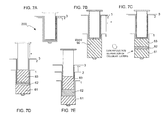
FIGS. 7(a)-7(e) illustrate subsequent steps of another method of extracting two different effluent fractions provided within another multi-syringe system of the present invention, and according to another exemplary embodiment of the present invention (i.e., a nested triple syringe system). - In the following detailed description, reference is made to various specific embodiments in which the invention may be practiced. These embodiments are described with sufficient detail to enable those skilled in the art to practice the invention, and it is to be understood that other embodiments may be employed.
- The present invention provides techniques and devices that produce a serum/fluid effluent with various fractions and which have a high concentration of growth factors, cytokines and proteins, in a simplified and fast manner. The multi-syringe syringe system of the present invention provides compositions (effluents) with increased anabolic and anti-inflammatory cytokines for treatment of human or non-human damaged tissue such as cartilage and neurological tissue.
- The multi-syringe system of the present invention allows for either a larger volume of ACP, or a larger combined output of PRP (platelet rich plasma) and PPP (platelet poor plasma). The different outputs are based upon different centrifuge spin regimes and effluent fractions obtained. The multi-syringe system allows for the connection of two or more additional syringes.
- The present invention also provides techniques that produce a serum/fluid effluent with various separate fractions and which have a high concentration of growth factors, cytokines and proteins, in a simplified and fast manner. The fractions may be extracted with the multi-syringe system of the present invention at sequential times, or at the same time.
- In an exemplary embodiment, the device of the present invention is a triple syringe system that allows for either a larger volume of ACP, or a larger combined output of PRP (platelet rich plasma) and PPP (platelet poor plasma). The different outputs are based upon different centrifuge spin regimes. Currently, the ACP system disclosed in
U.S. Patent No. 8,052,969 (double-syringe system) only produces 5mL of ACP. The system of the present invention produces up to 15mL of ACP, or 3mL of PRP plus 25mL of PPP. The system of the present invention solves the problem of a larger volume of ACP and with a higher cellular concentration. - An exemplary triple syringe of the present invention comprises inter alia: (i) a first syringe body (an outer tube provided with a luer connector and a rubber gasket to allow connection to additional structures/syringes) having a volume of about 60cc; and (ii) a plurality of additional syringes that are designed to connect with the first syringe, preferably in sequence to withdraw various effluent plasma fractions from the first syringe, the additional syringes having volumes smaller than about 60cc. Preferably, each of the additional syringes has a diameter smaller than that of the first syringe, to allow the body of the additional syringes to be at least partially within the body of the outer one.
- The additional syringes may be provided as an integral unit with the first syringe body (i.e., may be nested within each other) or may be provided as separate units that can be connected to the first syringe body.
- A method of obtaining a plasma enriched with platelets comprises the steps of:
- (i) providing a multi-syringe including an outer syringe body (a first or distal syringe body) and a plurality of additional syringe bodies (two or more inner syringe bodies or proximal syringe bodies); (ii) providing blood and/or BMA into the first syringe body; (iii) subjecting the blood and/or BMA to centrifugation to obtain an effluent comprising various fractions such autologous plasma, PRP or PPP, or combinations thereof; and (iv) connecting one or more of the plurality of additional syringe bodies to the first syringe body and removing, with the connected additional syringe body, a specific separate fraction of the effluent.
- A method of obtaining a plasma enriched with platelets comprises the steps of:
- (i) providing a multi-syringe including an outer syringe body (a first or distal syringe body) and a plurality of additional syringe bodies (two or more inner syringe bodies or proximal syringe bodies), the plurality of additional syringe bodies being nested within the outer syringe body; (ii) providing blood and/or BMA into the first syringe body; (iii) subjecting the blood and/or BMA to centrifugation to obtain an effluent comprising various fractions such autologous plasma, PRP or PPP, or combinations thereof; (iv) removing, with one of the plurality of additional syringe bodies, a specific separate fraction of the effluent; and (v) removing, with another of the plurality of additional syringe bodies, another specific separate effluent fraction.
- The present invention also provides a method of providing autologous growth factors for treatment of connective tissue injuries. An exemplary method comprises inter alia the steps of: (i) providing an extraction assembly comprising a centrifuge, an outer syringe body, and a plurality of inner syringe bodies, each of the plurality of the inner syringes being designed so that at least a portion of the inner syringe body is disposed, in use, within a portion of the outer syringe body; (ii) drawing autologous blood and/or BMA from the animal/patient and introducing the autologous blood and/or BMA into the outer syringe body; (iii) conducting a centrifugation step of the autologous blood/BMA in the outer syringe body to obtain an effluent with various plasma fractions such as ACP, PPP and PRP fractions; (iv) removing, with a first of the plurality of inner syringe body, a first effluent fraction (for example, PPP) from the outer syringe body; (v) removing, with a second of the plurality of inner syringe body a second effluent fraction (for example, PRP) from the outer syringe body, the second effluent fraction being different from the first effluent fraction; and (vi) delivering at least a portion of the first and/or second effluents into a damaged tissue of the animal, by employing the first and/or second of the plurality of inner syringe bodies.
- The present invention also provides a method of obtaining at least 3mL of PRP and at least 25 mL of PPP by the steps of: (i) providing an apparatus comprising a centrifuge and a triple syringe, the triple syringe including an outer syringe body with a volume of about 60cc, and two additional inner syringe bodies (a second syringe body and a third syringe body) with volumes smaller than about 60cc that are designed to connect, in use, with the outer syringe body; (ii) providing autologous blood or BMA into the outer syringe body; (iii) subjecting the autologous blood to centrifugation by hard spin (about 12x3000) to obtain a PPP fraction and a PRP fraction; (iv) removing, with the second syringe body, the PPP fraction from the first syringe body; (v) removing, with the third syringe body, the PRP fraction from the first syringe body; and (vi) delivering at least a portion of the PPP fraction and/or of the PRP fraction into a damaged tissue of the animal, by employing the second and/or third syringe body.
- Referring now to the drawings, where like elements are designated by like reference numerals,
FIGS. 1(a)-7(e) illustrate components and structural parts of exemplarymulti-syringe system 100, 200 of the present invention for providing platelet-enriched plasma (ACP, or PPP and PRP), for treatment of human or non-human damaged tissue such as cartilage and neurological tissue. Although, for simplicity, reference to themulti-syringe system 100, 200 will be made as to a triple syringe, triple syringe system or tri-syringe 100, 200, the invention is not limited to this exemplary-only embodiment and encompasses any number of additional syringes to be employed with the outer (first) syringe body, depending on the number of effluent fractions to be removed, and as detailed below. - Exemplary triple syringe system 100 of the present invention consists of three
syringes First syringe 10 of the system/apparatus 100 is provided in direct fluid communication with thesecond syringe 20 or thethird syringe 30, the second andthird syringes first syringe 10. The second andthird syringes first syringe 10, to allow the body of the second or third syringe to be at least partially located within the largerfirst syringe body 10. - As detailed below, outer syringe body 10 (distal syringe) is used to store the ACP, or PPP and PRP, formed as the result of the centrifugation of blood, while
inner syringe body 20 and inner syringe body 30 (proximal syringes) are used to remove/extract at least part of ACP, or PPP or PRP, from theouter syringe body 10 and to further inject the removed part of ACP, or PPP or PRP into the damaged tissue. - Triple syringe system 100 allows for either (i) a larger volume of ACP, or (ii) a combined output of PRP (platelet rich plasma) plus PPP (platelet poor plasma). The different outputs are based upon different centrifuge spin regimes. Currently, the Arthrex ACP system (the double syringe system) only produces 5mL of ACP and is devoid of any PPP. The new system 100 of the present invention produces up to 15mL of ACP, or 3mL of PRP plus 25mL of PPP.
-
FIGS. 1(a)-1(d) illustrate a first or outer syringe body 10 (distal syringe or syringe A) in the form of an outerplastic tube 10 formed of polypropylene, polycarbonate, or similar materials. Outer syringe body 10 (distal syringe) may be in the form of a conventional syringe for obtaining a blood sample, including a body having an enlarged volume, preferably of at least 60cc, and also configured to accommodate a flow-through plunger 16 (FIGS. 2(a) and 2(b) ). A shaft orplunger rod 16 provided within thebody 10 permits thesyringe body 10 to be filled with the fluid sample 50 (for example, blood, bone marrow, and/or BMA, etc.) and store it therein. -
Outer syringe body 10 is also provided with a tip orcoupling device 11 provided at the most distal end ofbody 10. Couplingdevice 11 may be a luer-lock type cap or a twist-on locking device, and is configured to receive a syringe needle or the luer-lock coupling of a three-way stop cock. Outer syringe body 10 (distal syringe) is also provided with asmall rubber gasket 15 that allows for connection of an additional "inner syringe" 20, 30 (syringe B, C), as shown inFIGS. 4(a)-4(d) . Connection ofsyringe rubber gasket 15 creates a seal so that autologous fluid 50 (whole blood, bone marrow, etc.) can be pulled into the outer tube 10 (tube A). -
FIGS. 2(a)-2(c) illustrate exemplary embodiments of how fluid 50 is provided into thesyringe body 10 for further centrifugation. Fluid 50 (e.g., blood or BMA 50) may be injected into tube 10 (A) in two ways, either from the top or from the bottom.FIGS. 2(a) and 2(b) illustrate introduction of the fluid 50 from the top of thesyringe body 10, i.e., throughrubber gasket 15 and into the syringe. Pulling onplunger 16permits body 10 to be filled with the fluid 50.FIG. 2(c) illustrates introduction of the fluid 50 from the bottom of thesyringe body 10, i.e., through coupling device/luer 11 and with anadditional syringe 101 or similar device. Alternatively,first syringe 10 may be itself employed to directly draw blood or bone marrow from patient. - Subsequent to the fluid (blood/BMA) injection into the tube 10 (through
rubber gasket 15 or coupling device 11), thesyringe body 10 containing fluid 50 (without plunger 16) is centrifuged. A luer cap (not shown) is provided on top of thesyringe body 10 adjacent therubber gasket 15 to allow centrifugation (FIG. 3(a) ). -
FIG. 3(b) illustratessyringe body 10 withfluid 50 after the centrifugation, i.e., with obtainedeffluent 60. Depending on the degree of centrifugation, i.e., on whether soft spin (to obtain ACP) or hard spin (to obtain PPP and PRP) is applied, different cellular fractions can be isolated. The embodiment shown inFIG. 3(b) illustrateseffluent 60 with threedifferent fractions exemplary PPP fraction 63 andexemplary PRP fraction 62. -
FIGS. 4(a)-4(d) illustrate subsequent steps of a method of extracting two different effluent fractions, i.e.,fractions first syringe 10, and with twoadditional syringes - Second syringe 20 (
inner syringe 20 or syringe B) is connected tofirst syringe 10 as shown inFIGS. 4(a) and 4(b) to pull off PPP 63 (PPP fraction 63).Second syringe 20 is then removed and the PPP 63 (PPP fraction 63) may be employed for various tissue treatments. - Third syringe 30 (
inner syringe 30 or syringe C) is then connected to thefirst syringe 10 to draw off the remaining PRP 62 (PRP fraction 62), as shown inFIGS. 4(c)-4(d) . In an exemplary-only embodiment, the first syringe 10 (A) has a volume of about 60cc, the second syringe 20 (B) has a volume of about 30cc and the third syringe 30 (C) has a volume of about 10cc. This design permits the system 100 of the present invention to obtain ahigh volume effluent 60 that contains 3mL of PRP (fraction 62) and 25mL of PPP (fraction 63). The plunger ofsyringe 10 is designed to allow different sizes of syringes (i.e., 60, 30, 10 and/or 5cc syringes) to be attached thereto. - As the syringe system 100 allows for the connection of two or more inner syringes, different cellular fractions can be isolated, depending on the requirements and specifics of the surgery. The triple syringe produces a larger volume of PPP and a concentrated PRP.
-
FIG. 5 illustrates results of the process of using thefirst syringe 10 of the system 100 of present invention, using soft spin, to obtain effluent 70 with ACP 72 on top. An additional syringe (for example, second syringe 20) is connected to withdraw ACP fraction 72 having an increased harvest volume of about 15mL.FIG. 5(a) is a table depicting various ratios of the ACP fraction 72 of effluent 70 ofFIG. 5 . -
FIG. 6 illustrates thefirst syringe 10 after hard spin centrifugation and withsecond effluent 60 containing various fractions, i.e.,PPP fraction 63 andexemplary PRP fraction 62.FIG. 6(a) is a table depicting various ratios of thePPP fraction 63 andexemplary PRP fraction 62 of theeffluent 60 ofFIG. 6 . -
FIGS. 7(a)-7(e) illustrate exemplarytriple syringe 200 consisting of three nested syringes (nested syringe bodies) 1, 2, 3. Thesecond syringe 2 is nested within thefirst syringe 1, and thethird syringe 3 is nested within thesecond syringe 2. Thesecond syringe 2 and thethird syringe 3 are also in fluid communication with thefirst syringe 1. - Blood or
bone marrow aspirate 50 is inserted within syringe 1 (FIG. 7(b) ) and subjected to centrifugation for separating of cellular layers, and to obtaineffluent fractions smaller diameter syringe 3 is then employed to extract effluent fraction 63 ((FIG. 7(d) ) andsyringe 2 to extracteffluent fraction 62. The symbol "*" indicated thatsyringes - After centrifugation,
syringe 1 could have the red blood cell cellular component.Syringe 3 could have the platelet poor component andsyringe 2 could have the concentrated platelet component and white blood cell component. As detailed above with reference to system 100, depending on how fast the device is centrifuged and how aggressive each plunger is pulled, different concentrations of cells can be found in each syringe.Syringes syringe 1. -
Exemplary syringes system 100, 200 of the present invention may be provides as part of a kit (tray) incorporating additional syringes having different dimensions and volumes, to accommodate extraction of the various fractions of the effluents obtained as a result of at least one rotational step as part of centrifugation. The kit may include a centrifuge to allow medical personnel (surgeon) to obtain the effluent fractions in situ (at the surgical site) and then conduct at least one procedure of therapeutic usage of the fraction (ACP, PPP or PRP) at an arthroscopic site, for example. - The ACP, PPP and PRP fractions of the present invention may be prepared/obtained directly in a doctor's office as well as in the operating room. A main advantage of the method of obtaining the ACP, PPP and PRP fractions of the present invention is that the multi-syringe 100, 200 enables to transfer plasma, PPP or PRP from the bigger syringe into smaller syringes and then using the smaller syringes on various patients and/or various surgical sites. Further, as no activator (such as thrombin, for example) is added to the extracted blood to initiate or catalyze a platelet release reaction (i.e., no activator or substance to release material from the platelets is added prior to, or during, the centrifugation process), the risk of contamination is additionally reduced and the complexity of the procedure is decreased.
- According to an exemplary embodiment, and if desired, activators (such as thrombin, for example) may be added subsequent to the harvesting of the effluent fractions (i.e., subsequent to the centrifugation process) to force the platelets to secrete their growth factors.
- A method of obtaining platelet enriched plasma with the system 100 of the present invention comprises the steps of: (i) providing a multi-syringe assembly comprising a first syringe having a first body with a first diameter; a second syringe having a second body with a second diameter smaller than the first diameter; and a third syringe having a third body with a third diameter smaller than the first diameter; (ii) introducing blood or bone marrow aspirate into the first syringe; (iii) subjecting the first syringe to centrifugation to obtain platelet enriched plasma containing a plurality of plasma fractions; (iv) connecting the second syringe to the first syringe so that the first syringe is in direct fluid communication with the second syringe, and the second syringe is located partially within the first syringe, and transferring a first fraction of the plurality of plasma fractions from the first syringe to the second syringe; and (v) connecting the third syringe to the first syringe, so that the first syringe is in direct fluid communication with the third syringe, and the third syringe is located partially within the first syringe, and transferring a second fraction of the plurality of plasma fractions from the first syringe to the third syringe.
- A method of surgical treatment of connective tissue injury with system 100, 200 of the present invention comprises the steps of: (i) providing a multi-syringe system comprising a first syringe having a first body with a first diameter and a volume of about 60cc; a second syringe having a second body with a second diameter smaller than the first diameter; and a third syringe having a third body with a third diameter smaller than the first diameter; (ii) introducing about 60mL of autologous blood or bone marrow aspirate into the first syringe so that the autologous blood or bone marrow aspirate is temporarily stored within the first syringe; (iii) introducing the first syringe into a centrifuge and centrifuging the first syringe to obtain a PPP fraction and a PRP fraction in the first syringe; (iv) transferring the PPP fraction from the first syringe to the second syringe; (v) disconnecting the second syringe with the PPP fraction from the first syringe; (vi) subsequently, transferring the PRP fraction from the first syringe to the third syringe; (vii) disconnecting the third syringe with the PRP fraction from the first syringe; and (viii) delivering at least one of the PPP fraction and the PRP fraction to the connective tissue, wherein the PPP fraction has a harvest volume of about 25mL and the PRP fraction has a harvest volume of about 3mL.
- Benefits of the
system 100, 200 of the present invention include as follows: - Can perform soft or hard centrifugation on device, i.e., more
- volume of ACP (soft spin) or PRP/PPP (hard spin);
- Performs better when compared to previously-tested devices;
- Could apply design into IRAP systems.
- Additional growth factors (including autologous growth factors produced from a patient's own blood, obtained by a centrifugation process) and/or additional antiseptic chemicals and/or antibiotics and/or electrolytes may be added to the effluent fractions. The additional antiseptics and/or the antibiotics and/or the electrolytes will typically be present in the plasma (ACP, PPP or PRP) in a predetermined concentration range, which will be dependent upon the particular tissue site and application, as well as the specific activity of the antiseptic and/or the antibiotic and/or the electrolytes. The antibiotics may be selected from the group consisting of a neosporin, vancomycin and gentamycin, and combinations thereof.
- The fractions may further comprise one or more additional components which promote or enhance the wound healing effectiveness of the autologous growth factors. As such, hormones or site-specific hybrid proteins may be incorporated in the autologous blood suspension to maximize the availability of the autologous growth factors at the tissue to be repaired and/or to potentiate wound healing.
- According to another embodiment of the present invention, the plasma fractions may additionally comprise anticoagulants such as, for example, citrate, acid-citrate dextrose (ACD), citrate-phosphate-dextrose (CPD), or ethylene diamine tetra-acetic acid (EDTA). Heparin may be also added in an amount sufficient for the prevention of thrombin activity during the processing steps. Proteolytic enzyme inhibitors, such as aprotinin E-aminocaproic acid or tranexamic acid may be added to prevent proteolytic degradation of the autog-enous growth factors.
- According to yet another embodiment of the present invention, the plasma fractions may further comprise one or more vitamins such as vitamin E, vitamin A and other retinoids. Vitamins are known to have wound healing and antioxidant properties. Alternatively, or additionally, non-vitamin anti-oxidants may be included in the blood suspension. Non-limiting representative examples of such anti-oxidants include 13-carotene.
- Preferably, the plasma fractions in the
inner syringe body syringe - Autologous conditioned plasma (ACP) 72 (shown in
FIG. 5 ) may be obtained by subjecting a volume of about 60 ml blood (of a donor) to a soft spin (about 5x1500) to obtain a harvest volume of about 15 mL autologous conditioned plasma (ACP), which is a very large output obtained by a single process. - The ACP, PPP or PRP fractions may be employed for treatment of human joints, for example, a shoulder joint, a hip joint, an elbow joint, or a knee joint. The plasma fractions may be employed for treatment of various cartilage or tendon damage or diseases (as long as the cartilage is partially remaining) such as, for example:
- Chondromalacia I'-III° (according to Outerbridge);
- a. Large and small joints of upper and lower extremities; and
- b. Small vertebral joints.
- Traumatologic cartilage damage;
- Post-op situations e.g. flake fracture refixation, microfractures and/or cartilage transplantation (ACT or OATS); and
- Tendinosis and ligamentosis.
- The plasma fractions may be also employed in neurosurgery applications, such as, for example:
- Radiculitis and radiculopathy of the cervical and lumbar spine;
- Syndrome of the vertebral column facets; and
- Other spinal applications, e.g., degeneration of spinal disk and erosive osteochondrosis.
- The plasma fractions extracted with the
inner syringe body - While the present invention is described herein with reference to illustrative embodiments for particular applications, it should be understood that the invention is not limited thereto. Those having ordinary skill in the art and access to the teachings provided herein will recognize additional modifications, applications, embodiments and substitution of equivalents within the scope of the invention. Accordingly, the invention is not to be considered as limited by the foregoing description.
Claims (9)
- A method of obtaining platelet enriched plasma, comprising:providing a multi-syringe assembly comprising a first syringe having a first body with a first diameter; a second syringe having a second body with a second diameter smaller than the first diameter; and a third syringe having a third body with a third diameter smaller than the first diameter;introducing blood or bone marrow aspirate into the first syringe;subjecting the first syringe to centrifugation to obtain platelet enriched plasma containing a plurality of plasma fractions;transferring a first fraction of the plurality of plasma fractions from the first syringe to the second syringe; andtransferring a second fraction of the plurality of plasma fractions from the first syringe to the third syringe.
- The method of claim 1, wherein the first plasma fraction is ACP, PRP or PPP.
- The method of claim 1, wherein the second plasma fraction is ACP, PRP or PPP.
- The method of claim 1, further comprising the steps of connecting the second syringe to the first syringe so that the first syringe is in direct fluid communication with the second syringe, and the second syringe is located partially within the first syringe, and transferring the first fraction of the plurality of plasma fractions from the first syringe to the second syringe.
- The method of claim 4, further comprising the steps of removing the second syringe and then connecting the third syringe to the first syringe, so that the first syringe is in direct fluid communication with the third syringe, and the third syringe is located partially within the first syringe, and transferring the second fraction of the plurality of plasma fractions from the first syringe to the third syringe.
- The method of claim 1, wherein the second syringe is nested within the first syringe, and the third syringe is nested within the second syringe, and wherein the second and third syringe are in fluid communication with the first syringe.
- The method of claim 1, wherein the first body has a volume of about 60cc.
- The method of claim 1, wherein the first fraction is PPP fraction with a harvest volume of about 25mL.
- The method of claim 1, wherein the second fraction is PRP fraction with a harvest volume of about 3mL.
Priority Applications (1)
| Application Number | Priority Date | Filing Date | Title |
|---|---|---|---|
| EP17151930.9A EP3175874B1 (en) | 2014-01-27 | 2015-01-27 | Triple syringe for making platelet-enriched plasma |
Applications Claiming Priority (1)
| Application Number | Priority Date | Filing Date | Title |
|---|---|---|---|
| US201461931956P | 2014-01-27 | 2014-01-27 |
Related Child Applications (1)
| Application Number | Title | Priority Date | Filing Date |
|---|---|---|---|
| EP17151930.9A Division EP3175874B1 (en) | 2014-01-27 | 2015-01-27 | Triple syringe for making platelet-enriched plasma |
Publications (2)
| Publication Number | Publication Date |
|---|---|
| EP2898909A1 true EP2898909A1 (en) | 2015-07-29 |
| EP2898909B1 EP2898909B1 (en) | 2017-01-25 |
Family
ID=52589219
Family Applications (2)
| Application Number | Title | Priority Date | Filing Date |
|---|---|---|---|
| EP15152674.6A Active EP2898909B1 (en) | 2014-01-27 | 2015-01-27 | Triple syringe and methods of making platelet-enriched plasma and use thereof |
| EP17151930.9A Active EP3175874B1 (en) | 2014-01-27 | 2015-01-27 | Triple syringe for making platelet-enriched plasma |
Family Applications After (1)
| Application Number | Title | Priority Date | Filing Date |
|---|---|---|---|
| EP17151930.9A Active EP3175874B1 (en) | 2014-01-27 | 2015-01-27 | Triple syringe for making platelet-enriched plasma |
Country Status (2)
| Country | Link |
|---|---|
| US (4) | US20150209502A1 (en) |
| EP (2) | EP2898909B1 (en) |
Cited By (3)
| Publication number | Priority date | Publication date | Assignee | Title |
|---|---|---|---|---|
| WO2017093838A1 (en) | 2015-12-03 | 2017-06-08 | Lacerta Technologies Inc. | Method and apparatus for preparing blood fraction concentrate |
| CN109925545A (en) * | 2019-03-06 | 2019-06-25 | 北京华悦恒生健康管理有限公司 | A kind of injection device and preparation method thereof in autoblood purification injection |
| US11944667B2 (en) | 2018-12-07 | 2024-04-02 | Biotherapy Services Limited | Methods of making a wound treatment composition |
Families Citing this family (11)
| Publication number | Priority date | Publication date | Assignee | Title |
|---|---|---|---|---|
| US10512659B2 (en) | 2015-07-02 | 2019-12-24 | Arthrex, Inc. | Methods and devices for preparation of enriched biological fluids |
| EP3165921A1 (en) * | 2015-11-05 | 2017-05-10 | Dominik Olbrzymek | A kit for centrifugal separation of biological fluid components and a method for centrifugal separation of biological fluid components |
| US10039882B2 (en) | 2016-09-01 | 2018-08-07 | Arthrex, Inc. | Binding syringe |
| KR200486998Y1 (en) * | 2017-04-24 | 2018-07-24 | 주식회사 씨피엘 | Medical syringe kit capable of extracting specific ingredients |
| WO2018209668A1 (en) * | 2017-05-19 | 2018-11-22 | 萨摩亚商艾得卡医疗股份有限公司 | Sealed medication dispensing and administering device |
| EP3799896B1 (en) | 2019-10-04 | 2025-09-10 | Arthrex, Inc | Devices and methods for making therapeutic fluids |
| JP2021177827A (en) * | 2020-05-11 | 2021-11-18 | 京セラ株式会社 | Syringe system, how to prepare platelet-rich plasma |
| EP4429738A4 (en) * | 2021-11-11 | 2025-06-25 | PRP Technologies, Inc. | SAMPLE COLLECTION DEVICE |
| US20230321671A1 (en) | 2022-04-08 | 2023-10-12 | Arthrex, Inc. | Systems and methods for motor source driven biological sample processing |
| WO2024223053A1 (en) | 2023-04-28 | 2024-10-31 | Hubertus Goller Gesellschaft M.B.H. | Centrifuge syringe |
| WO2025159790A1 (en) * | 2024-01-24 | 2025-07-31 | Nxtgen Biomedical Llc | Separation syringe and processing methods for separation of biological fluids into fractions |
Citations (3)
| Publication number | Priority date | Publication date | Assignee | Title |
|---|---|---|---|---|
| US20060273050A1 (en) * | 2002-05-24 | 2006-12-07 | Higgins Joel C | Apparatus and method for separating and concentrating fluids containing multiple components |
| US20080166421A1 (en) * | 2006-12-28 | 2008-07-10 | Michael Buhr | Method of surgical treatment using autologous conditioned plasma |
| WO2013140858A1 (en) * | 2012-03-23 | 2013-09-26 | ニプロ株式会社 | Connection device and blood component separation apparatus |
Family Cites Families (2)
| Publication number | Priority date | Publication date | Assignee | Title |
|---|---|---|---|---|
| US6649072B2 (en) * | 2001-11-16 | 2003-11-18 | Robert Brandt | Method for producing autologous platelet-rich plasma |
| US7736536B2 (en) | 2006-07-11 | 2010-06-15 | Intematix Corporation | Compositions comprising a mixture of a BAM phosphor and at least one other hexaaluminate |
-
2015
- 2015-01-26 US US14/605,657 patent/US20150209502A1/en not_active Abandoned
- 2015-01-27 EP EP15152674.6A patent/EP2898909B1/en active Active
- 2015-01-27 EP EP17151930.9A patent/EP3175874B1/en active Active
-
2021
- 2021-04-06 US US17/223,277 patent/US11806462B2/en active Active
-
2023
- 2023-10-11 US US18/484,844 patent/US12220518B2/en active Active
-
2025
- 2025-01-14 US US19/020,553 patent/US20250144284A1/en active Pending
Patent Citations (4)
| Publication number | Priority date | Publication date | Assignee | Title |
|---|---|---|---|---|
| US20060273050A1 (en) * | 2002-05-24 | 2006-12-07 | Higgins Joel C | Apparatus and method for separating and concentrating fluids containing multiple components |
| US20080166421A1 (en) * | 2006-12-28 | 2008-07-10 | Michael Buhr | Method of surgical treatment using autologous conditioned plasma |
| US8052969B2 (en) | 2006-12-28 | 2011-11-08 | Arthrex, Inc. | Method of making plasma enriched with platelets using a double syringe system where the second sytringe is within the first syringe and use thereof |
| WO2013140858A1 (en) * | 2012-03-23 | 2013-09-26 | ニプロ株式会社 | Connection device and blood component separation apparatus |
Non-Patent Citations (1)
| Title |
|---|
| SAMPSON STEVEN ET AL: "Platelet rich plasma injection grafts for musculoskeletal injuries: a review", CURRENT REVIEWS IN MUSCULOSKELETAL MEDICINE, HUMANA PRESS, INC, US, vol. 1, no. 3-4, 1 December 2008 (2008-12-01), pages 165 - 174, XP002565647, ISSN: 1935-973X, [retrieved on 20080716], DOI: 10.1007/S12178-008-9032-5 * |
Cited By (4)
| Publication number | Priority date | Publication date | Assignee | Title |
|---|---|---|---|---|
| WO2017093838A1 (en) | 2015-12-03 | 2017-06-08 | Lacerta Technologies Inc. | Method and apparatus for preparing blood fraction concentrate |
| US11944667B2 (en) | 2018-12-07 | 2024-04-02 | Biotherapy Services Limited | Methods of making a wound treatment composition |
| CN109925545A (en) * | 2019-03-06 | 2019-06-25 | 北京华悦恒生健康管理有限公司 | A kind of injection device and preparation method thereof in autoblood purification injection |
| CN109925545B (en) * | 2019-03-06 | 2022-03-01 | 北京华悦恒生健康管理有限公司 | Injection device for autologous blood purification injection and preparation method thereof |
Also Published As
| Publication number | Publication date |
|---|---|
| US20250144284A1 (en) | 2025-05-08 |
| EP3175874A1 (en) | 2017-06-07 |
| US20150209502A1 (en) | 2015-07-30 |
| EP3175874B1 (en) | 2018-07-11 |
| EP2898909B1 (en) | 2017-01-25 |
| US20210220543A1 (en) | 2021-07-22 |
| US11806462B2 (en) | 2023-11-07 |
| US12220518B2 (en) | 2025-02-11 |
| US20240100236A1 (en) | 2024-03-28 |
Similar Documents
| Publication | Publication Date | Title |
|---|---|---|
| US12220518B2 (en) | Triple syringe and methods of making platelet-enriched plasma and use thereof | |
| US8052969B2 (en) | Method of making plasma enriched with platelets using a double syringe system where the second sytringe is within the first syringe and use thereof | |
| US8512575B2 (en) | Method and apparatus for collecting biological materials | |
| US7771590B2 (en) | Method and apparatus for collecting biological materials | |
| CN107771079B (en) | Method and apparatus for preparing enriched biological fluids | |
| IL284309B (en) | New standardizations and medical devices for the preparation of platelet rich plasma (prp) or bone marrow centrate (bmc) alone or in combination with hyaluronic acid | |
| KR20100116106A (en) | Assembly, kit and method for preparing platelet-rich plasma (prp) | |
| US20150320938A1 (en) | Single Step Desiccating Bead-in-Syringe Concentrating Device | |
| US20190025162A1 (en) | Blood and Marrow Draw Processing Devices and Methods | |
| US10105084B2 (en) | Blood sampler | |
| RU2570965C2 (en) | Connecting system | |
| TWI736824B (en) | Blood separation method | |
| US20240181165A1 (en) | Devices and methods for making therapeutic fluids |
Legal Events
| Date | Code | Title | Description |
|---|---|---|---|
| PUAI | Public reference made under article 153(3) epc to a published international application that has entered the european phase |
Free format text: ORIGINAL CODE: 0009012 |
|
| 17P | Request for examination filed |
Effective date: 20150127 |
|
| AK | Designated contracting states |
Kind code of ref document: A1 Designated state(s): AL AT BE BG CH CY CZ DE DK EE ES FI FR GB GR HR HU IE IS IT LI LT LU LV MC MK MT NL NO PL PT RO RS SE SI SK SM TR |
|
| AX | Request for extension of the european patent |
Extension state: BA ME |
|
| 17P | Request for examination filed |
Effective date: 20160128 |
|
| RBV | Designated contracting states (corrected) |
Designated state(s): AL AT BE BG CH CY CZ DE DK EE ES FI FR GB GR HR HU IE IS IT LI LT LU LV MC MK MT NL NO PL PT RO RS SE SI SK SM TR |
|
| GRAP | Despatch of communication of intention to grant a patent |
Free format text: ORIGINAL CODE: EPIDOSNIGR1 |
|
| RIC1 | Information provided on ipc code assigned before grant |
Ipc: A61B 5/153 20060101ALI20160715BHEP Ipc: A61B 5/15 20060101ALI20160715BHEP Ipc: A61M 1/02 20060101AFI20160715BHEP Ipc: A61M 1/38 20060101ALI20160715BHEP |
|
| INTG | Intention to grant announced |
Effective date: 20160817 |
|
| GRAS | Grant fee paid |
Free format text: ORIGINAL CODE: EPIDOSNIGR3 |
|
| GRAA | (expected) grant |
Free format text: ORIGINAL CODE: 0009210 |
|
| AK | Designated contracting states |
Kind code of ref document: B1 Designated state(s): AL AT BE BG CH CY CZ DE DK EE ES FI FR GB GR HR HU IE IS IT LI LT LU LV MC MK MT NL NO PL PT RO RS SE SI SK SM TR |
|
| REG | Reference to a national code |
Ref country code: GB Ref legal event code: FG4D |
|
| REG | Reference to a national code |
Ref country code: CH Ref legal event code: EP |
|
| REG | Reference to a national code |
Ref country code: AT Ref legal event code: REF Ref document number: 863755 Country of ref document: AT Kind code of ref document: T Effective date: 20170215 |
|
| REG | Reference to a national code |
Ref country code: IE Ref legal event code: FG4D |
|
| REG | Reference to a national code |
Ref country code: FR Ref legal event code: PLFP Year of fee payment: 3 |
|
| REG | Reference to a national code |
Ref country code: DE Ref legal event code: R096 Ref document number: 602015001293 Country of ref document: DE |
|
| REG | Reference to a national code |
Ref country code: LT Ref legal event code: MG4D |
|
| REG | Reference to a national code |
Ref country code: NL Ref legal event code: MP Effective date: 20170125 |
|
| PG25 | Lapsed in a contracting state [announced via postgrant information from national office to epo] |
Ref country code: NL Free format text: LAPSE BECAUSE OF FAILURE TO SUBMIT A TRANSLATION OF THE DESCRIPTION OR TO PAY THE FEE WITHIN THE PRESCRIBED TIME-LIMIT Effective date: 20170125 |
|
| PG25 | Lapsed in a contracting state [announced via postgrant information from national office to epo] |
Ref country code: LT Free format text: LAPSE BECAUSE OF FAILURE TO SUBMIT A TRANSLATION OF THE DESCRIPTION OR TO PAY THE FEE WITHIN THE PRESCRIBED TIME-LIMIT Effective date: 20170125 Ref country code: IS Free format text: LAPSE BECAUSE OF FAILURE TO SUBMIT A TRANSLATION OF THE DESCRIPTION OR TO PAY THE FEE WITHIN THE PRESCRIBED TIME-LIMIT Effective date: 20170525 Ref country code: NO Free format text: LAPSE BECAUSE OF FAILURE TO SUBMIT A TRANSLATION OF THE DESCRIPTION OR TO PAY THE FEE WITHIN THE PRESCRIBED TIME-LIMIT Effective date: 20170425 Ref country code: FI Free format text: LAPSE BECAUSE OF FAILURE TO SUBMIT A TRANSLATION OF THE DESCRIPTION OR TO PAY THE FEE WITHIN THE PRESCRIBED TIME-LIMIT Effective date: 20170125 Ref country code: HR Free format text: LAPSE BECAUSE OF FAILURE TO SUBMIT A TRANSLATION OF THE DESCRIPTION OR TO PAY THE FEE WITHIN THE PRESCRIBED TIME-LIMIT Effective date: 20170125 Ref country code: GR Free format text: LAPSE BECAUSE OF FAILURE TO SUBMIT A TRANSLATION OF THE DESCRIPTION OR TO PAY THE FEE WITHIN THE PRESCRIBED TIME-LIMIT Effective date: 20170426 |
|
| PG25 | Lapsed in a contracting state [announced via postgrant information from national office to epo] |
Ref country code: BG Free format text: LAPSE BECAUSE OF FAILURE TO SUBMIT A TRANSLATION OF THE DESCRIPTION OR TO PAY THE FEE WITHIN THE PRESCRIBED TIME-LIMIT Effective date: 20170425 Ref country code: ES Free format text: LAPSE BECAUSE OF FAILURE TO SUBMIT A TRANSLATION OF THE DESCRIPTION OR TO PAY THE FEE WITHIN THE PRESCRIBED TIME-LIMIT Effective date: 20170125 Ref country code: LV Free format text: LAPSE BECAUSE OF FAILURE TO SUBMIT A TRANSLATION OF THE DESCRIPTION OR TO PAY THE FEE WITHIN THE PRESCRIBED TIME-LIMIT Effective date: 20170125 Ref country code: RS Free format text: LAPSE BECAUSE OF FAILURE TO SUBMIT A TRANSLATION OF THE DESCRIPTION OR TO PAY THE FEE WITHIN THE PRESCRIBED TIME-LIMIT Effective date: 20170125 Ref country code: PL Free format text: LAPSE BECAUSE OF FAILURE TO SUBMIT A TRANSLATION OF THE DESCRIPTION OR TO PAY THE FEE WITHIN THE PRESCRIBED TIME-LIMIT Effective date: 20170125 Ref country code: PT Free format text: LAPSE BECAUSE OF FAILURE TO SUBMIT A TRANSLATION OF THE DESCRIPTION OR TO PAY THE FEE WITHIN THE PRESCRIBED TIME-LIMIT Effective date: 20170525 Ref country code: SE Free format text: LAPSE BECAUSE OF FAILURE TO SUBMIT A TRANSLATION OF THE DESCRIPTION OR TO PAY THE FEE WITHIN THE PRESCRIBED TIME-LIMIT Effective date: 20170125 |
|
| REG | Reference to a national code |
Ref country code: DE Ref legal event code: R097 Ref document number: 602015001293 Country of ref document: DE |
|
| PG25 | Lapsed in a contracting state [announced via postgrant information from national office to epo] |
Ref country code: SK Free format text: LAPSE BECAUSE OF FAILURE TO SUBMIT A TRANSLATION OF THE DESCRIPTION OR TO PAY THE FEE WITHIN THE PRESCRIBED TIME-LIMIT Effective date: 20170125 Ref country code: EE Free format text: LAPSE BECAUSE OF FAILURE TO SUBMIT A TRANSLATION OF THE DESCRIPTION OR TO PAY THE FEE WITHIN THE PRESCRIBED TIME-LIMIT Effective date: 20170125 Ref country code: RO Free format text: LAPSE BECAUSE OF FAILURE TO SUBMIT A TRANSLATION OF THE DESCRIPTION OR TO PAY THE FEE WITHIN THE PRESCRIBED TIME-LIMIT Effective date: 20170125 Ref country code: CZ Free format text: LAPSE BECAUSE OF FAILURE TO SUBMIT A TRANSLATION OF THE DESCRIPTION OR TO PAY THE FEE WITHIN THE PRESCRIBED TIME-LIMIT Effective date: 20170125 |
|
| REG | Reference to a national code |
Ref country code: IE Ref legal event code: MM4A |
|
| PG25 | Lapsed in a contracting state [announced via postgrant information from national office to epo] |
Ref country code: LU Free format text: LAPSE BECAUSE OF NON-PAYMENT OF DUE FEES Effective date: 20170127 Ref country code: SM Free format text: LAPSE BECAUSE OF FAILURE TO SUBMIT A TRANSLATION OF THE DESCRIPTION OR TO PAY THE FEE WITHIN THE PRESCRIBED TIME-LIMIT Effective date: 20170125 Ref country code: MC Free format text: LAPSE BECAUSE OF FAILURE TO SUBMIT A TRANSLATION OF THE DESCRIPTION OR TO PAY THE FEE WITHIN THE PRESCRIBED TIME-LIMIT Effective date: 20170125 Ref country code: DK Free format text: LAPSE BECAUSE OF FAILURE TO SUBMIT A TRANSLATION OF THE DESCRIPTION OR TO PAY THE FEE WITHIN THE PRESCRIBED TIME-LIMIT Effective date: 20170125 |
|
| PLBE | No opposition filed within time limit |
Free format text: ORIGINAL CODE: 0009261 |
|
| STAA | Information on the status of an ep patent application or granted ep patent |
Free format text: STATUS: NO OPPOSITION FILED WITHIN TIME LIMIT |
|
| REG | Reference to a national code |
Ref country code: FR Ref legal event code: PLFP Year of fee payment: 4 |
|
| 26N | No opposition filed |
Effective date: 20171026 |
|
| PG25 | Lapsed in a contracting state [announced via postgrant information from national office to epo] |
Ref country code: SI Free format text: LAPSE BECAUSE OF FAILURE TO SUBMIT A TRANSLATION OF THE DESCRIPTION OR TO PAY THE FEE WITHIN THE PRESCRIBED TIME-LIMIT Effective date: 20170125 Ref country code: IE Free format text: LAPSE BECAUSE OF NON-PAYMENT OF DUE FEES Effective date: 20170127 |
|
| REG | Reference to a national code |
Ref country code: CH Ref legal event code: PL |
|
| PG25 | Lapsed in a contracting state [announced via postgrant information from national office to epo] |
Ref country code: MT Free format text: LAPSE BECAUSE OF NON-PAYMENT OF DUE FEES Effective date: 20170127 |
|
| PG25 | Lapsed in a contracting state [announced via postgrant information from national office to epo] |
Ref country code: LI Free format text: LAPSE BECAUSE OF NON-PAYMENT OF DUE FEES Effective date: 20180131 Ref country code: CH Free format text: LAPSE BECAUSE OF NON-PAYMENT OF DUE FEES Effective date: 20180131 |
|
| PG25 | Lapsed in a contracting state [announced via postgrant information from national office to epo] |
Ref country code: HU Free format text: LAPSE BECAUSE OF FAILURE TO SUBMIT A TRANSLATION OF THE DESCRIPTION OR TO PAY THE FEE WITHIN THE PRESCRIBED TIME-LIMIT; INVALID AB INITIO Effective date: 20150127 |
|
| PG25 | Lapsed in a contracting state [announced via postgrant information from national office to epo] |
Ref country code: CY Free format text: LAPSE BECAUSE OF FAILURE TO SUBMIT A TRANSLATION OF THE DESCRIPTION OR TO PAY THE FEE WITHIN THE PRESCRIBED TIME-LIMIT Effective date: 20170125 |
|
| PG25 | Lapsed in a contracting state [announced via postgrant information from national office to epo] |
Ref country code: MK Free format text: LAPSE BECAUSE OF FAILURE TO SUBMIT A TRANSLATION OF THE DESCRIPTION OR TO PAY THE FEE WITHIN THE PRESCRIBED TIME-LIMIT Effective date: 20170125 |
|
| PG25 | Lapsed in a contracting state [announced via postgrant information from national office to epo] |
Ref country code: TR Free format text: LAPSE BECAUSE OF FAILURE TO SUBMIT A TRANSLATION OF THE DESCRIPTION OR TO PAY THE FEE WITHIN THE PRESCRIBED TIME-LIMIT Effective date: 20170125 |
|
| REG | Reference to a national code |
Ref country code: AT Ref legal event code: UEP Ref document number: 863755 Country of ref document: AT Kind code of ref document: T Effective date: 20170125 |
|
| PG25 | Lapsed in a contracting state [announced via postgrant information from national office to epo] |
Ref country code: AL Free format text: LAPSE BECAUSE OF FAILURE TO SUBMIT A TRANSLATION OF THE DESCRIPTION OR TO PAY THE FEE WITHIN THE PRESCRIBED TIME-LIMIT Effective date: 20170125 |
|
| PGFP | Annual fee paid to national office [announced via postgrant information from national office to epo] |
Ref country code: GB Payment date: 20251204 Year of fee payment: 12 |
|
| PGFP | Annual fee paid to national office [announced via postgrant information from national office to epo] |
Ref country code: FR Payment date: 20251208 Year of fee payment: 12 |
|
| PGFP | Annual fee paid to national office [announced via postgrant information from national office to epo] |
Ref country code: DE Payment date: 20251203 Year of fee payment: 12 |
|
| PGFP | Annual fee paid to national office [announced via postgrant information from national office to epo] |
Ref country code: AT Payment date: 20251230 Year of fee payment: 12 |
|
| PGFP | Annual fee paid to national office [announced via postgrant information from national office to epo] |
Ref country code: BE Payment date: 20260106 Year of fee payment: 12 Ref country code: IT Payment date: 20251219 Year of fee payment: 12 |