EP2895855B1 - System and method for eluting and testing substance from exhaled aerosol sample - Google Patents
System and method for eluting and testing substance from exhaled aerosol sample Download PDFInfo
- Publication number
- EP2895855B1 EP2895855B1 EP13766246.6A EP13766246A EP2895855B1 EP 2895855 B1 EP2895855 B1 EP 2895855B1 EP 13766246 A EP13766246 A EP 13766246A EP 2895855 B1 EP2895855 B1 EP 2895855B1
- Authority
- EP
- European Patent Office
- Prior art keywords
- filter membrane
- eluate
- compounds
- exhaled breath
- solvent
- Prior art date
- Legal status (The legal status is an assumption and is not a legal conclusion. Google has not performed a legal analysis and makes no representation as to the accuracy of the status listed.)
- Active
Links
Images



Classifications
-
- G—PHYSICS
- G01—MEASURING; TESTING
- G01N—INVESTIGATING OR ANALYSING MATERIALS BY DETERMINING THEIR CHEMICAL OR PHYSICAL PROPERTIES
- G01N33/00—Investigating or analysing materials by specific methods not covered by groups G01N1/00 - G01N31/00
- G01N33/48—Biological material, e.g. blood, urine; Haemocytometers
- G01N33/483—Physical analysis of biological material
- G01N33/497—Physical analysis of biological material of gaseous biological material, e.g. breath
-
- A—HUMAN NECESSITIES
- A61—MEDICAL OR VETERINARY SCIENCE; HYGIENE
- A61B—DIAGNOSIS; SURGERY; IDENTIFICATION
- A61B5/00—Measuring for diagnostic purposes; Identification of persons
- A61B5/08—Measuring devices for evaluating the respiratory organs
- A61B5/082—Evaluation by breath analysis, e.g. determination of the chemical composition of exhaled breath
-
- A—HUMAN NECESSITIES
- A61—MEDICAL OR VETERINARY SCIENCE; HYGIENE
- A61B—DIAGNOSIS; SURGERY; IDENTIFICATION
- A61B5/00—Measuring for diagnostic purposes; Identification of persons
- A61B5/08—Measuring devices for evaluating the respiratory organs
- A61B5/097—Devices for facilitating collection of breath or for directing breath into or through measuring devices
-
- A—HUMAN NECESSITIES
- A61—MEDICAL OR VETERINARY SCIENCE; HYGIENE
- A61B—DIAGNOSIS; SURGERY; IDENTIFICATION
- A61B5/00—Measuring for diagnostic purposes; Identification of persons
- A61B5/48—Other medical applications
- A61B5/4845—Toxicology, e.g. by detection of alcohol, drug or toxic products
-
- H—ELECTRICITY
- H01—ELECTRIC ELEMENTS
- H01J—ELECTRIC DISCHARGE TUBES OR DISCHARGE LAMPS
- H01J49/00—Particle spectrometers or separator tubes
- H01J49/02—Details
- H01J49/04—Arrangements for introducing or extracting samples to be analysed, e.g. vacuum locks; Arrangements for external adjustment of electron- or ion-optical components
- H01J49/0422—Arrangements for introducing or extracting samples to be analysed, e.g. vacuum locks; Arrangements for external adjustment of electron- or ion-optical components for gaseous samples
- H01J49/0427—Arrangements for introducing or extracting samples to be analysed, e.g. vacuum locks; Arrangements for external adjustment of electron- or ion-optical components for gaseous samples using a membrane permeable to gases
Definitions
- the present invention relates to methods for eluting nonvolatile compounds from a solid matrix.
- the invention is a method for eluting and optionally analyzing nonvolatile compounds collected on a membrane from exhaled air.
- Exhaled breath is commonly used in alcohol testing and today's technology makes it possible to perform on-site breath testing with legally defensible results using infrared spectroscopy.
- Testing DNA and testing for drugs generally requires the taking of blood or urine samples for testing. Hair, sweat, and oral fluid can also used for drug and DNA testing. Blood sampling is invasive and requires medically trained personnel, and the test subject is often transported to a hospital or other specialized facility for sampling. These procedures are time and effort consuming. The collection of urine samples may also be considered intruding on personal integrity. Other problematic issues related to samples and specimens taken from a subject include risk of disease transmission or infection and the risk of the subject exchanging samples or using a clean sample from another subject to avoid detection of illicit drugs.
- WO2012/120140 apparatus, system and method for sampling the exhaled breath of a subject for a drug substance and/or a biomarker. Aerosols from the lungs of the subject are collected on a sampling membrane and then analyzed for the presence and optionally the amount of one or more nonvolatile compounds.
- breath is in a specific exhalation device conveyed through a fiber fleece. Large aerosol particles are caught in the fiber fleece by condensation.
- the device of DE19718924 comprises several valves which increase the resistance to blow through the device.
- the fiber fleece is removed from the housing, folded into the upper part of a centrifugal tube.
- the fiber fleece can be contaminated by this procedure.
- a standard elution solution such as ELISA buffer or salt solutions, is added to the tube.
- a total amount of lung substances from the caught aerosol is determined from the eluate obtained.
- the determined total amount of lung substances allows for diagnosis and therapy of diseases, such as asthma.
- the disclosure of DE19718924 is not very detailed.
- the total amount of lung substances obtained as a result is not very specific and allows only coarse diagnostics and doubtful therapy based on such diagnostics.. Sampling times in a range of 5-15 minutes are rather long and consistency of results over the range is not demonstrated.
- the method and device of DE19718924 do not appear to be very efficient and have a limited applicational range.
- the present invention provides a method for eluting nonvolatile compounds from a sampling membrane in such a way that the eluted compounds are easily assayed.
- the present method improves the yield and consistency of recovery of nonvolatile compounds from sampling membranes used to collect aerosols from exhaled breath.
- embodiments of the present invention preferably seek to mitigate, alleviate or eliminate one or more deficiencies, disadvantages or issues in the art, such as the above-identified, singly or in any combination by providing a method, according to the appended patent claims.
- a method for recovery for collecting nonvolatile compounds from a sample taken from the exhaled breath of a subject for further analysis.
- the sampling membrane is in place in a housing of a breath sampling device.
- Nonvolatile compounds are eluted by passing a polar solvent through an inlet and an outlet in an adapted housing.
- By leaving the sampling membrane in place and eluting through the housing lowers the risk of contamination of the membrane. It also provides a more convenient and fast way of handling a collected breath sample.
- a sampling membrane comprising collected from exhaled breath and aerosols containing nonvolatile compounds of interest is eluted by passing a polar organic solvent through the membrane using gravity alone or under pressure or centrifugal force.
- the sampling membrane is an electrostatic filter membrane, and most preferably an electrostatic membrane comprising nonwoven acrylic and polyethylene fibers.
- the sampling membrane may be a filter membrane comprising at least one layer of non-woven filtration media with a specific weight in the range of 23 g/m3 to 500g/m3, preferably in the range of 150 up to 300 g/m3, and even more preferably in the range of 200 up to 280 g/m3 and may comprise at least one further layer that is a spunbonded carrier with a scrim weight of 10 to 20 g/m3.
- the polar solvents suitable for use in the method are miscible in water, are capable of dissolving water soluble and lipid soluble components of the exhaled aerosol, and are capable of eluting the
- Polar solvents meeting these criteria include methanol, acetonitrile, isopropanol, and acetone.
- the nonvolatile compounds of interest may originate from blood by a mechanism of producing a gas phase in the alveoli or from other parts of the airways and are transferred from the lungs carried by an aerosol.
- the nonvolatile compounds may be medical drugs, drugs of abuse, metabolites of drugs, markers indicative of drug use, or naturally occurring markers of disease states or metabolic conditions of subjects.
- Analysis of nonvolatile compounds from sample membranes may include mass-spectroscopy (MS) and Surface Enhanced Raman Spectroscopy (SERS) and other sensitive analytical methods known in the art.
- the aerosol on the sampling membrane may contain nonvolatile compounds of at least one drug substance in the exhaled breath.
- drug substances include amphetamines, ecstasy, Cannabis, THC, cannabinoids, opiates, heroin, morphine, 6-AM, cocaine, benzodiazepines, Propoxyphene, Methadone, Buprenorphine, Tramadol, LSD, Designer/Internet drugs, Kathinon, GHB, Meprobamat, Z-drugs, tryptamines, and anabolic steroids .
- MS and SERS are the preferred analyzing methods with liquid chromatography /MS (LC/MS) being preferred over gas chromatography/MS (GC/MS).
- Some known nonvolatile biomarker that may be transported by aerosols in exhaled breath is comprised in the list comprising lipids, peptides, nucleotides, prostanoids, proteins, DNA or RNA. These biomarkers may be used for diagnosis of diseases or illnesses, such as cancer (such as lung cancer), asthma, inflammation, infection (such as tuberculosis) and/or oxidative stress or other medical conditions.
- Fig. 1 is a schematic illustration showing an example of a portable system configured to collect a sample from exhaled breath of a subject.
- Sampling system 20 is configured to collect a sample from exhaled breath of a subject 201.
- the subject exhales through a mouthpiece and a tubular element 202 being in flow communication with a housing 204 via at least one inlet 203.
- the mouthpiece and tubular element 202 may be of same size or type as conventionally used for alcohol-testing.
- the mouthpiece and tubular element 202 are configured to mainly permit aerosols to pass through.
- the housing 204 can be made of any suitably material or combinations thereof such as, metal, plastic, glass or ceramics and comprises a sampling membrane 205, being a fibre membrane, for collecting aerosols comprising non-volatile drug substances from the exhaled breath.
- the exhaled breath exits the housing through at least one outlet 206.
- the portable system may be sealed after being used and sent to a laboratory 207 to be analyzed. Analysis of the amount of illicit drugs may be performed using any suitable method with Surface Enhanced Raman Spectroscopy (SERS) and mass-spectroscopy (MS), for example Liquid chromatography MS (LCMS), being most preferred.
- SERS Surface Enhanced Raman Spectroscopy
- MS mass-spectroscopy
- LCMS Liquid chromatography MS
- the sampling membrane can be placed anywhere in the housing 204.
- the sampling membrane 205 is fastened to the inner walls of the housing 204 and stretched over the cross-section of the housing.
- the housing 204 is preferably constructed out of two or more parts, a first part with an inlet 203 and one part with at least one outlet 206.
- the mouthpiece and tubular element 202 are detachable and in fluid communication with the housing 204 via the inlet 203.
- the tubular element 202 functions as a pre-filter for filtering out saliva and/or mucus and/or large particles and/or aggregates from the exhaled breath.
- a cleaner sampling filter membrane to be analyzed is obtained, which may result in better and more accurate analysis.
- Another advantage of using a tubular element 202 is to prevent contamination between subjects and samples.
- the exhaled breath will, after flowing through the tubular element 202, travel into the housing 204 and be brought into contact with the sampling filter membrane 205.
- the drug substances being non-volatile compounds conveyed by aerosols in the exhaled breath, are collected by the sampling membrane 205 as the exhaled breath is permeated through the sampling membrane 205.
- sampling membrane 205 being a filter membrane is not to be confused with an electronic or chemical sampling unit and/or trap.
- the sampling element 205 is a physical entity on which the drug substance is collected. Collection may, in different embodiments, be based on various principles, singly or in combination, comprising depositing, catching, fastening, and condensing of non-volatile constituents on the sampling element 205.
- Using a filter membrane allows for a low pressure drop through the portable sampling system, making it easy and comfortable to exhale through the device. This is important for subjects experiencing problems with their lungs.
- the filter membrane is placed to block the path for the exhaled breath through the portable system.
- a separate support structure to retain the filter which may be an element that is either fastened to the inside walls of the housing 204 or a segment being slid onto a first part of the housing during the assembly before the second part of the housing is mounted.
- the filter membrane may be fastened direct onto the inside walls of the housing 204, either by glue or by heat and thereby melting a small part of the edge of the filter membrane.
- the second part of the housing is either screwed or slid onto the first part of the housing.
- the second part comprises at least one outlet 206.
- the housing 204 may comprise at least two outlets 206. This will aid to avoid a subject being tested to block the outlet and thereby blowing up the volume measuring element with minimum exhaled breath being permeated through the filter membrane
- the sampling element 205 is preferably a filter membrane made of synthetic and/or half-synthetic fibers for the exhaled breath to diffuse through.
- the filter membrane has a structure that catches the aerosols and thereby collects the drug substances being exhaled while letting gas pass through.
- the aerosol particles comprise the non-volatile drug compounds.
- the filter membrane is operable to collect the aerosols from the air with a high volumetric capacity while maintaining a low pressure drop across the filter substrate.
- the filter membrane is an electrostatic filter made of fibers.
- the filter membrane may be of a non-woven polymeric fibrous that may be an electret.
- the filter membrane may be an electrostatic filter being preferably a non-woven filter membrane comprising a blend of acrylic fibers and polypropylene fibers.
- the filter membrane may have a density (sometimes called grade or weight) in the range 23 up to 500 g/m2. But it has been shown that the range 130 up to 300 g/m2 is preferred. Even more preferably is the range 200 up to 280 g/m2.
- the non-woven layer may be attached to at least one further layer. Further layers can be used to enhance a filter membrane's physical properties or improve filtration performance.
- the extra layer can be a carrier, preferably a polypropylene spunbonded carrier.
- the spunbond carrier may have a scrim weight in the range 10 up to 20 g/m2, preferably 15 g/m2.
- a three layered filter membrane comprising one non-woven layer with a density of 250 g/m2 and two layers being carriers each with a scrim weight of 15 g/m2 will have an air flow resistance of about 36 Pa at 9.5 m/min media velocity.
- the filter membrane may be corrugated to enhance the filtering area within a given housing volume.
- the portable system combined with the method of eluting the content of the filter membrane is configured and adapted to have a sensitivity for illicit drugs high enough to obtain results of a standard to be used as proof in a court of law.
- the collected aerosols may comprise nonvolatile compounds of at least one drug substance in the exhaled breath.
- the drug substance may, by way of example, be an amphetamine, ecstasy, Cannabis, THC, a cannabinoid, an opiate, heroin, morphine, 6-AM, cocaine, a benzodiazepine, Propoxyphene, Methadone, Buprenorphine, Tramadol, LSD, a designer/Internet drug, Kathinon, GHB, Meprobamat, a Z-drug, a tryptamine, or an anabolic steroid.
- Other illicit drugs (drugs of abuse) and therapeutic drugs not included in the list may also be detectable due to similar interchanges with the human body as the above mentioned illicit drug substances.
- non-volatile compounds may include biomarkers transported by aerosols in exhaled breath. These biomarkers may comprise lipids, peptides, nucleotides, prostanoids, proteins, DNA or RNA and may be used for diagnosis of diseases or illnesses, such as cancer (such as lung cancer), asthma, inflammation, infection (such as tuberculosis) and/or oxidative stress or other medical conditions. These biomarkers may be collected and recovered using the system and methods described herein.
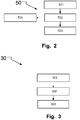
- Fig. 2 is a flow-chart illustrating a method 50 for using a portable system configured for collecting a sample 502 from exhaled breath from a subject.
- Fig. 2 illustrates detecting the presence and/or determining the quantitative amount 503 of at least one illicit drug substance or compound in a collected sample.
- the illicit drug compounds are collected as aerosols, being non-volatile particles and/or compounds, from the exhaled breath.
- the method comprises: a subject exhaling 501 into the invented portable system; a sampling unit collects a sample 502 comprising drug substances or compounds; the collected sample is extracted from the sampling membrane and analyzed 503 using MS or SERS.
- a subject exhales 501 in and out; preferably the subject exhales into the portable system until a specific volume of exhaled breath has been passed through the sampling membrane, preferably a filter membrane.
- the subject may exhales either for a certain time or for a fixed number of times, such as 1 to 10 times, into a portable system.
- a fixed number of times such as 1 to 10 times
- each exhalation may be set to last for a fixed time.
- one preferred method is to use a port located on the mouthpiece or between the mouthpiece and the inlet of the housing. A portion of the exhaled breath is extracted 504 through the port and inflates an element, such as a non-elastic bag. Hence when the bag is full, the volume of said bag will be proportional to the volume passed through the sampling membrane.
- a bag with elastic properties may be used.
- a deep breath is preferred to obtain exhaled breath from deep lying lung portions, such as the central or peripheral lung regions.
- the exhaled breath is then collected 502 by the sampling element, i.e. an easy to breathe through filter membrane, suitable for collecting drug substances before it exits the system.
- the filter membrane is preferably made of synthetics and/or half synthetic fibers.
- the filter membrane has electrostatic-properties. Using a filter membrane creates a small, light-weight and easy to use method that can be used everywhere by anyone to detect if a subject is under influence of an illicit drug.
- the sampling method is of such high quality that the obtained results are of a court approved standard.
- the housing of the sampling system is sealed off by sealing the inlet and the outlet and the device may be sent to a laboratory, where the collected compounds in the filter are recovered an analyzed.
- Fig. 3 illustrates a method 30 for recovering one or more nonvolatile compounds from a sampling filter membrane.
- the fibers are preferably nonwoven and filter is most preferably a felt or a matted material.
- the filter is an electrostatic filter and most preferably comprises acrylic fibers and polypropylene fibers.
- the method comprises contacting 301 the filter with an amount of a polar solvent capable of neutralizing the electrostatic charge on the filter.
- the contacting of the filter with the polar solvent elutes the nonvolatile compounds from the sampling filter to form an eluate.
- Preferred polar solvents include methanol, acetonitrile, isopropanol, acetone, and combinations thereof, with methanol and acetonitrile being most preferred for their relative ease of handling.
- the polar solvents are miscible in water, are capable of dissolving water soluble and lipid soluble components of the aerosol, and thereby eluting the nonvolatile compounds of interest from the filter membrane.
- Polar solvents meeting these criteria include methanol, acetonitrile, isopropanol, and acetone. Methanol and acetonitrile are preferred polar solvents in combination with filter membranes comprising acrylic and polyethylene fibers.
- the polar solvents are used in pure form, i.e. in no mixture with other compounds or solvents. Pure solvents are e.g. pure methanol, or pure acetonitrile.
- the amount of solvent used depends on the size of the filter and should be enough to elute the nonvolatile compounds but should not unnecessarily dilute the compounds.
- the amount of solvent may be between 0.02ml and 20 ml.
- Contacting may be accomplished by washing the filter with the solvent, by passing an amount of the solvent through the filter.
- the filter 205 is in the housing 204 of the sampling device with the solvent being passed though the device from one of the inlet 203 or outlet 206 to the other of the inlet 203 or outlet 206 of the device.
- the eluate is collected 302 in a suitable container. Collection may be accomplished, for example, by gravity flow from a filter in a device or, alternatively, saturating the filter with solvent and placing the device in a centrifuge with a collecting vessel positioned to receive the eluate during centrifugation.
- the eluate may also be collected by applying solvent to a sampling device and applying pressure to force the solvent through the filter and into a collecting vessel. Collection may also be accomplished by gravity, pressure, or centrifugation from a filter that has been removed from a sampling device and placed in a column or tube for elution by gravity, pressure, or centrifugation.
- the collected eluate may be stored or optionally delivered 303 to an assay system capable of detecting (qualitative analysis) and/or measuring (quantitative analysis) one or more nonvolatile compounds in the eluate.
- an assay system capable of detecting (qualitative analysis) and/or measuring (quantitative analysis) one or more nonvolatile compounds in the eluate.
- Any suitable assay system may be used, with LC/MS, GC/MS, and SERS being most preferred.
- MS may include, for example, time-of-flight MS, quadrupole ion trap MS, tandem MS, electrospray ionization MS, and matrix-assisted laser desorption/ionization MS.
- the eluate may be pretreated or concentrated before delivery to the assay system.
- the eluate may be loaded into the liquid chromatography column, optionally after reducing the volume of the eluate by evaporation of the solvent with or without partial vacuum.
- the eluate may be placed on a SERS substrate comprising, for example, gold or silver colloids, optionally after reducing the volume of the eluate.
- the eluate may alternatively be evaporated to dryness to form a dry residue that is resuspended in the same or a different solvent or combination of solvents before application to an assay system.
- Fig. 4 illustrates a system 60 for detecting the presence or determining the quantitative amount of at least one drug compound in exhaled breath.
- the system comprising a portable drug testing device 602 for handheld collection of a sample from exhaled breathe from a subject 601.
- the device 602 could be according to any embodiment described herein.
- the system 60 comprises a sensor unit 603 for analyzing the collected compounds in the testing device 602.
- the sensor could be any know type of sensor but preferably mass spectroscopy or SERS.
- To be able to analyze the collected sample the content of the filter membrane in the device 602 is extracted. This could be done for example by using a solvent to be analyzed using the sensor unit 603.
- test may be performed almost anywhere at a low cost and short lead time before obtaining a result.
- Table 1 shows the results of recovering a variety of nonvolatile compounds from an electrostatic filter membrane comprising acrylic fibers and polyethylene fibers by elution with methanol.
- the eluates were analyzed using LC-MS/MS with reference solution.
- Recovery and assay for each nonvolatile compound analyte was performed in triplicate.
- Typical chromatograms for some drugs when analyzing the eluates using LC-MS/MS equipment are illustrated in figure 5 . From the top to the bottom the chromatogram shows peaks for, amphetamine 70, 75; Morphine 80, 85; Diazepam, 90, 95; and THC, 100, 105.
Landscapes
- Health & Medical Sciences (AREA)
- Life Sciences & Earth Sciences (AREA)
- Engineering & Computer Science (AREA)
- Molecular Biology (AREA)
- Physics & Mathematics (AREA)
- Biomedical Technology (AREA)
- General Health & Medical Sciences (AREA)
- Biophysics (AREA)
- Pathology (AREA)
- Medical Informatics (AREA)
- Veterinary Medicine (AREA)
- Public Health (AREA)
- Animal Behavior & Ethology (AREA)
- Surgery (AREA)
- Heart & Thoracic Surgery (AREA)
- Chemical & Material Sciences (AREA)
- Physiology (AREA)
- Pulmonology (AREA)
- Analytical Chemistry (AREA)
- Urology & Nephrology (AREA)
- Immunology (AREA)
- Hematology (AREA)
- Biochemistry (AREA)
- General Physics & Mathematics (AREA)
- Medicinal Chemistry (AREA)
- Food Science & Technology (AREA)
- Bioinformatics & Cheminformatics (AREA)
- Pharmacology & Pharmacy (AREA)
- Toxicology (AREA)
- Sampling And Sample Adjustment (AREA)
- Investigating Or Analysing Biological Materials (AREA)
Description
- The present invention relates to methods for eluting nonvolatile compounds from a solid matrix. In particular, the invention is a method for eluting and optionally analyzing nonvolatile compounds collected on a membrane from exhaled air.
- Exhaled breath is commonly used in alcohol testing and today's technology makes it possible to perform on-site breath testing with legally defensible results using infrared spectroscopy.
- Testing DNA and testing for drugs, whether abused or used therapeutically, generally requires the taking of blood or urine samples for testing. Hair, sweat, and oral fluid can also used for drug and DNA testing. Blood sampling is invasive and requires medically trained personnel, and the test subject is often transported to a hospital or other specialized facility for sampling. These procedures are time and effort consuming. The collection of urine samples may also be considered intruding on personal integrity. Other problematic issues related to samples and specimens taken from a subject include risk of disease transmission or infection and the risk of the subject exchanging samples or using a clean sample from another subject to avoid detection of illicit drugs.
- The need to provide a non-invasive, not-specimen based apparatus, system and/or method for detecting the presence (i.e. qualitative) or determining the quantitative amount of a substance in a subject is at least partially met by the invention disclosed
WO2012/120140 , namely apparatus, system and method for sampling the exhaled breath of a subject for a drug substance and/or a biomarker. Aerosols from the lungs of the subject are collected on a sampling membrane and then analyzed for the presence and optionally the amount of one or more nonvolatile compounds. InDE19718924 , breath is in a specific exhalation device conveyed through a fiber fleece. Large aerosol particles are caught in the fiber fleece by condensation. The device ofDE19718924 comprises several valves which increase the resistance to blow through the device. The fiber fleece is removed from the housing, folded into the upper part of a centrifugal tube. The fiber fleece can be contaminated by this procedure. A standard elution solution, such as ELISA buffer or salt solutions, is added to the tube. A total amount of lung substances from the caught aerosol is determined from the eluate obtained. The determined total amount of lung substances allows for diagnosis and therapy of diseases, such as asthma. However, the disclosure ofDE19718924 is not very detailed. The total amount of lung substances obtained as a result is not very specific and allows only coarse diagnostics and doubtful therapy based on such diagnostics.. Sampling times in a range of 5-15 minutes are rather long and consistency of results over the range is not demonstrated. The method and device ofDE19718924 do not appear to be very efficient and have a limited applicational range. - Olof Beck et al., "Demonstration that methadone is being present in exhaled breath aerosol fraction", Journal of Pharmaceutical and Biomedical Analysis, 56 (2011) 1024- 1028, describes methods of extracting methadone from different filters collecting methadone from exhaled breath.
- The present invention provides a method for eluting nonvolatile compounds from a sampling membrane in such a way that the eluted compounds are easily assayed. The present method improves the yield and consistency of recovery of nonvolatile compounds from sampling membranes used to collect aerosols from exhaled breath.
- Accordingly, embodiments of the present invention preferably seek to mitigate, alleviate or eliminate one or more deficiencies, disadvantages or issues in the art, such as the above-identified, singly or in any combination by providing a method, according to the appended patent claims.
- A method for recovery is provided for collecting nonvolatile compounds from a sample taken from the exhaled breath of a subject for further analysis. The sampling membrane is in place in a housing of a breath sampling device. Nonvolatile compounds are eluted by passing a polar solvent through an inlet and an outlet in an adapted housing. By leaving the sampling membrane in place and eluting through the housing lowers the risk of contamination of the membrane. It also provides a more convenient and fast way of handling a collected breath sample.
A sampling membrane comprising collected from exhaled breath and aerosols containing nonvolatile compounds of interest is eluted by passing a polar organic solvent through the membrane using gravity alone or under pressure or centrifugal force. - The sampling membrane is an electrostatic filter membrane, and most preferably an electrostatic membrane comprising nonwoven acrylic and polyethylene fibers.
- The sampling membrane may be a filter membrane comprising at least one layer of non-woven filtration media with a specific weight in the range of 23 g/m3 to 500g/m3, preferably in the range of 150 up to 300 g/m3, and even more preferably in the range of 200 up to 280 g/m3 and may comprise at least one further layer that is a spunbonded carrier with a scrim weight of 10 to 20 g/m3.
- The polar solvents suitable for use in the method are miscible in water, are capable of dissolving water soluble and lipid soluble components of the exhaled aerosol, and are capable of eluting the
- nonvolatile compounds of interest. Polar solvents meeting these criteria include methanol, acetonitrile, isopropanol, and acetone.
- The nonvolatile compounds of interest may originate from blood by a mechanism of producing a gas phase in the alveoli or from other parts of the airways and are transferred from the lungs carried by an aerosol. The nonvolatile compounds may be medical drugs, drugs of abuse, metabolites of drugs, markers indicative of drug use, or naturally occurring markers of disease states or metabolic conditions of subjects. Analysis of nonvolatile compounds from sample membranes may include mass-spectroscopy (MS) and Surface Enhanced Raman Spectroscopy (SERS) and other sensitive analytical methods known in the art.
- In some examples of the invention, the aerosol on the sampling membrane may contain nonvolatile compounds of at least one drug substance in the exhaled breath. Nonlimiting examples of drug substances include amphetamines, ecstasy, Cannabis, THC, cannabinoids, opiates, heroin, morphine, 6-AM, cocaine, benzodiazepines, Propoxyphene, Methadone, Buprenorphine, Tramadol, LSD, Designer/Internet drugs, Kathinon, GHB, Meprobamat, Z-drugs, tryptamines, and anabolic steroids .
- MS and SERS are the preferred analyzing methods with liquid chromatography /MS (LC/MS) being preferred over gas chromatography/MS (GC/MS).
- Further examples of the invention are defined in the dependent claims, wherein features for the second and subsequent aspects of the invention are as for the first aspect mutatis mutandis.
- Some known nonvolatile biomarker that may be transported by aerosols in exhaled breath is comprised in the list comprising lipids, peptides, nucleotides, prostanoids, proteins, DNA or RNA. These biomarkers may be used for diagnosis of diseases or illnesses, such as cancer (such as lung cancer), asthma, inflammation, infection (such as tuberculosis) and/or oxidative stress or other medical conditions.
- The term "comprises/comprising" when used in this specification is taken to specify the presence of stated features, integers, steps or components but does not preclude the presence or addition of one or more other features, integers, steps, components or groups thereof.
- These and other aspects, features and advantages of which examples of the invention are capable of will be apparent and elucidated from the following description of examples of the present invention, reference being made to the accompanying drawings, in which
-
Fig. 1 is a schematic illustration illustrating an example of a portable device configured to collect a sample from exhaled breath of a subject; -
Fig. 2 is a flow-chart illustrating a method for using a portable device configured to collect a sample from exhaled breath of a subject; -
Fig. 3 is a flow chart of method steps for a recovery method according to the invention; -
Fig. 4 illustrates a system for detecting the presence or determining the quantitative amount of at least one drug compound in exhaled breath; and -
Fig.5 illustrates typical chromatograms for four different drugs. - Specific embodiments of the invention will now be described with reference to the accompanying drawings. This invention may, however, be embodied in many different forms and should not be construed as limited to the embodiments set forth herein; rather, these embodiments are provided so that this disclosure will be thorough and complete, and will fully convey the scope of the invention to those skilled in the art. The terminology used in the detailed description of the embodiments illustrated in the accompanying drawings is not intended to be limiting of the invention. In the drawings, like numbers refer to like elements.
- In
Fig. 1 is a schematic illustration showing an example of a portable system configured to collect a sample from exhaled breath of a subject.Sampling system 20 is configured to collect a sample from exhaled breath of asubject 201. The subject exhales through a mouthpiece and atubular element 202 being in flow communication with ahousing 204 via at least oneinlet 203. The mouthpiece andtubular element 202 may be of same size or type as conventionally used for alcohol-testing. Preferably, the mouthpiece andtubular element 202 are configured to mainly permit aerosols to pass through. - The
housing 204 can be made of any suitably material or combinations thereof such as, metal, plastic, glass or ceramics and comprises asampling membrane 205, being a fibre membrane, for collecting aerosols comprising non-volatile drug substances from the exhaled breath. The exhaled breath exits the housing through at least oneoutlet 206. The portable system may be sealed after being used and sent to alaboratory 207 to be analyzed. Analysis of the amount of illicit drugs may be performed using any suitable method with Surface Enhanced Raman Spectroscopy (SERS) and mass-spectroscopy (MS), for example Liquid chromatography MS (LCMS), being most preferred. - The sampling membrane can be placed anywhere in the
housing 204. Preferably thesampling membrane 205 is fastened to the inner walls of thehousing 204 and stretched over the cross-section of the housing. Thehousing 204 is preferably constructed out of two or more parts, a first part with aninlet 203 and one part with at least oneoutlet 206. - The mouthpiece and
tubular element 202 are detachable and in fluid communication with thehousing 204 via theinlet 203. Thetubular element 202 functions as a pre-filter for filtering out saliva and/or mucus and/or large particles and/or aggregates from the exhaled breath. Thus a cleaner sampling filter membrane to be analyzed is obtained, which may result in better and more accurate analysis. Another advantage of using atubular element 202 is to prevent contamination between subjects and samples. - The exhaled breath will, after flowing through the
tubular element 202, travel into thehousing 204 and be brought into contact with thesampling filter membrane 205. - The drug substances, being non-volatile compounds conveyed by aerosols in the exhaled breath, are collected by the
sampling membrane 205 as the exhaled breath is permeated through thesampling membrane 205. - The
sampling membrane 205, being a filter membrane is not to be confused with an electronic or chemical sampling unit and/or trap. Thesampling element 205 is a physical entity on which the drug substance is collected. Collection may, in different embodiments, be based on various principles, singly or in combination, comprising depositing, catching, fastening, and condensing of non-volatile constituents on thesampling element 205. - Using a filter membrane allows for a low pressure drop through the portable sampling system, making it easy and comfortable to exhale through the device. This is important for subjects experiencing problems with their lungs.
- In an example of a portable sampling system, the filter membrane is placed to block the path for the exhaled breath through the portable system.
- There are many possibilities for fastening the filter membrane, for example, using a separate support structure to retain the filter, which may be an element that is either fastened to the inside walls of the
housing 204 or a segment being slid onto a first part of the housing during the assembly before the second part of the housing is mounted. - Alternatively and/or additionally, the filter membrane may be fastened direct onto the inside walls of the
housing 204, either by glue or by heat and thereby melting a small part of the edge of the filter membrane. - The second part of the housing is either screwed or slid onto the first part of the housing. The second part comprises at least one
outlet 206. Alternatively and/or additionally, thehousing 204 may comprise at least twooutlets 206. This will aid to avoid a subject being tested to block the outlet and thereby blowing up the volume measuring element with minimum exhaled breath being permeated through the filter membrane - The
sampling element 205 is preferably a filter membrane made of synthetic and/or half-synthetic fibers for the exhaled breath to diffuse through. The filter membrane has a structure that catches the aerosols and thereby collects the drug substances being exhaled while letting gas pass through. The aerosol particles comprise the non-volatile drug compounds. Preferably, the filter membrane is operable to collect the aerosols from the air with a high volumetric capacity while maintaining a low pressure drop across the filter substrate. In accordance with the present invention, the filter membrane is an electrostatic filter made of fibers. The filter membrane may be of a non-woven polymeric fibrous that may be an electret. - The filter membrane may be an electrostatic filter being preferably a non-woven filter membrane comprising a blend of acrylic fibers and polypropylene fibers. The filter membrane may have a density (sometimes called grade or weight) in the range 23 up to 500 g/m2. But it has been shown that the range 130 up to 300 g/m2 is preferred. Even more preferably is the range 200 up to 280 g/m2.
- The non-woven layer may be attached to at least one further layer. Further layers can be used to enhance a filter membrane's physical properties or improve filtration performance. The extra layer can be a carrier, preferably a polypropylene spunbonded carrier. The spunbond carrier may have a scrim weight in the
range 10 up to 20 g/m2, preferably 15 g/m2. - For example a three layered filter membrane comprising one non-woven layer with a density of 250 g/m2 and two layers being carriers each with a scrim weight of 15 g/m2 will have an air flow resistance of about 36 Pa at 9.5 m/min media velocity. Alternatively and/or additionally, the filter membrane may be corrugated to enhance the filtering area within a given housing volume.
- The portable system combined with the method of eluting the content of the filter membrane is configured and adapted to have a sensitivity for illicit drugs high enough to obtain results of a standard to be used as proof in a court of law.
- The collected aerosols may comprise nonvolatile compounds of at least one drug substance in the exhaled breath. The drug substance may, by way of example, be an amphetamine, ecstasy, Cannabis, THC, a cannabinoid, an opiate, heroin, morphine, 6-AM, cocaine, a benzodiazepine, Propoxyphene, Methadone, Buprenorphine, Tramadol, LSD, a designer/Internet drug, Kathinon, GHB, Meprobamat, a Z-drug, a tryptamine, or an anabolic steroid. Other illicit drugs (drugs of abuse) and therapeutic drugs not included in the list may also be detectable due to similar interchanges with the human body as the above mentioned illicit drug substances.
- Alternatively and/or additionally, non-volatile compounds may include biomarkers transported by aerosols in exhaled breath. These biomarkers may comprise lipids, peptides, nucleotides, prostanoids, proteins, DNA or RNA and may be used for diagnosis of diseases or illnesses, such as cancer (such as lung cancer), asthma, inflammation, infection (such as tuberculosis) and/or oxidative stress or other medical conditions. These biomarkers may be collected and recovered using the system and methods described herein.
-
Fig. 2 is a flow-chart illustrating amethod 50 for using a portable system configured for collecting asample 502 from exhaled breath from a subject. Briefly,Fig. 2 illustrates detecting the presence and/or determining thequantitative amount 503 of at least one illicit drug substance or compound in a collected sample. The illicit drug compounds are collected as aerosols, being non-volatile particles and/or compounds, from the exhaled breath. The method comprises: a subject exhaling 501 into the invented portable system; a sampling unit collects asample 502 comprising drug substances or compounds; the collected sample is extracted from the sampling membrane and analyzed 503 using MS or SERS. - With reference to
Fig. 2 , a subject exhales 501 in and out; preferably the subject exhales into the portable system until a specific volume of exhaled breath has been passed through the sampling membrane, preferably a filter membrane. - Alternatively and/or additionally, the subject may exhales either for a certain time or for a fixed number of times, such as 1 to 10 times, into a portable system. When breathing a fixed number of times, each exhalation may be set to last for a fixed time.
- To measure a specific volume, one preferred method is to use a port located on the mouthpiece or between the mouthpiece and the inlet of the housing. A portion of the exhaled breath is extracted 504 through the port and inflates an element, such as a non-elastic bag. Hence when the bag is full, the volume of said bag will be proportional to the volume passed through the sampling membrane.
- Alternatively and/or additionally, a bag with elastic properties may be used.
- A deep breath is preferred to obtain exhaled breath from deep lying lung portions, such as the central or peripheral lung regions.
- The exhaled breath is then collected 502 by the sampling element, i.e. an easy to breathe through filter membrane, suitable for collecting drug substances before it exits the system. The filter membrane is preferably made of synthetics and/or half synthetic fibers. The filter membrane has electrostatic-properties. Using a filter membrane creates a small, light-weight and easy to use method that can be used everywhere by anyone to detect if a subject is under influence of an illicit drug. The sampling method is of such high quality that the obtained results are of a court approved standard. These results are obtained using a method that is neither invasive, e.g. Blood sampling, nor intruding on personal integrity, e.g. urine sampling. Hence the known drawbacks with these methods are prevented.
- After being used, the housing of the sampling system is sealed off by sealing the inlet and the outlet and the device may be sent to a laboratory, where the collected compounds in the filter are recovered an analyzed.
-
Fig. 3 illustrates amethod 30 for recovering one or more nonvolatile compounds from a sampling filter membrane. The fibers are preferably nonwoven and filter is most preferably a felt or a matted material. The filter is an electrostatic filter and most preferably comprises acrylic fibers and polypropylene fibers. The method comprises contacting 301 the filter with an amount of a polar solvent capable of neutralizing the electrostatic charge on the filter. The contacting of the filter with the polar solvent elutes the nonvolatile compounds from the sampling filter to form an eluate. Preferred polar solvents include methanol, acetonitrile, isopropanol, acetone, and combinations thereof, with methanol and acetonitrile being most preferred for their relative ease of handling. The polar solvents are miscible in water, are capable of dissolving water soluble and lipid soluble components of the aerosol, and thereby eluting the nonvolatile compounds of interest from the filter membrane. Polar solvents meeting these criteria include methanol, acetonitrile, isopropanol, and acetone. Methanol and acetonitrile are preferred polar solvents in combination with filter membranes comprising acrylic and polyethylene fibers. Preferably, the polar solvents are used in pure form, i.e. in no mixture with other compounds or solvents. Pure solvents are e.g. pure methanol, or pure acetonitrile. - The amount of solvent used depends on the size of the filter and should be enough to elute the nonvolatile compounds but should not unnecessarily dilute the compounds. By way of example, the amount of solvent may be between 0.02ml and 20 ml. Contacting may be accomplished by washing the filter with the solvent, by passing an amount of the solvent through the filter. The
filter 205 is in thehousing 204 of the sampling device with the solvent being passed though the device from one of theinlet 203 oroutlet 206 to the other of theinlet 203 oroutlet 206 of the device. - After the solvent is contacted with the filter membrane, the eluate is collected 302 in a suitable container. Collection may be accomplished, for example, by gravity flow from a filter in a device or, alternatively, saturating the filter with solvent and placing the device in a centrifuge with a collecting vessel positioned to receive the eluate during centrifugation. The eluate may also be collected by applying solvent to a sampling device and applying pressure to force the solvent through the filter and into a collecting vessel. Collection may also be accomplished by gravity, pressure, or centrifugation from a filter that has been removed from a sampling device and placed in a column or tube for elution by gravity, pressure, or centrifugation.
- The collected eluate may be stored or optionally delivered 303 to an assay system capable of detecting (qualitative analysis) and/or measuring (quantitative analysis) one or more nonvolatile compounds in the eluate. Any suitable assay system may be used, with LC/MS, GC/MS, and SERS being most preferred. MS may include, for example, time-of-flight MS, quadrupole ion trap MS, tandem MS, electrospray ionization MS, and matrix-assisted laser desorption/ionization MS. Depending on the assay system being used, the eluate may be pretreated or concentrated before delivery to the assay system. For LC/MS, the eluate may be loaded into the liquid chromatography column, optionally after reducing the volume of the eluate by evaporation of the solvent with or without partial vacuum. For SERS, the eluate may be placed on a SERS substrate comprising, for example, gold or silver colloids, optionally after reducing the volume of the eluate. The eluate may alternatively be evaporated to dryness to form a dry residue that is resuspended in the same or a different solvent or combination of solvents before application to an assay system.
-
Fig. 4 illustrates asystem 60 for detecting the presence or determining the quantitative amount of at least one drug compound in exhaled breath. The system comprising a portabledrug testing device 602 for handheld collection of a sample from exhaled breathe from a subject 601. Thedevice 602 could be according to any embodiment described herein. Further, thesystem 60 comprises asensor unit 603 for analyzing the collected compounds in thetesting device 602. The sensor could be any know type of sensor but preferably mass spectroscopy or SERS. To be able to analyze the collected sample the content of the filter membrane in thedevice 602 is extracted. This could be done for example by using a solvent to be analyzed using thesensor unit 603. - An advantage is that the test may be performed almost anywhere at a low cost and short lead time before obtaining a result.
- Table 1 shows the results of recovering a variety of nonvolatile compounds from an electrostatic filter membrane comprising acrylic fibers and polyethylene fibers by elution with methanol. The eluates were analyzed using LC-MS/MS with reference solution. Recovery and assay for each nonvolatile compound analyte was performed in triplicate. Typical chromatograms for some drugs when analyzing the eluates using LC-MS/MS equipment are illustrated in
figure 5 . From the top to the bottom the chromatogram shows peaks for,amphetamine Morphine Table 1. Recovery of nonvolatile compounds by methanol elution Analyte Recovery (%) Analyte Recovery (%) Amphetamine 101 Methamphetamine 107 THC 95 Morphine 98 Codeine 97 MDMA 93 Benzoylecgonine 95 Cocaine 95 Buprenorphine 116 Methadone 115 Oxazepam 106 Flunitrazepam 107 6-Acetylmorphine 97 Diazepam 105 - The present invention has been described above with reference to specific embodiments. However, other alternatively and/or additionally embodiments than the above described are equally possible within the scope of the invention. Different method steps than those described above, performing the method by hardware or software, may be provided within the scope of the invention. The different features and steps of the invention may be combined in other combinations than those described. The scope of the invention is only limited by the appended patent claims.
Claims (13)
- A method for recovering non-volatile compounds from an electrostatic filter membrane, comprising:providing said electrostatic filtermembrane (205) comprising an exhaled aerosol comprising nonvolatile compounds;washing (301) said electrostatic filter membrane with a polar organic solvent to form an eluate;collecting (302) said eluate comprising said nonvolatile compounds; and characterised in that said electrostatic filter membrane (205) is fitted in a housing (204) comprising at least one inlet (203) and at least one outlet (206), and said washing includes pouring said solvent in one of said inlet (203) or outlet (206) and collecting said eluate through the other (203, 206).
- The method according to claim 1, wherein said filter membrane comprises at least one layer of non-woven filtration media with a specific weight in the range of 23 g/m3 to 500g/ m3, preferably in the range of 150 up to 300 g/m3, and even more preferably in the range of 200 up to 280 g/m3.
- The method according to claim 2, wherein said electrostatic filter membrane comprises at least one further layer, said further layer being a spunbonded carrier with a scrim weight of 10 to 20 g/m3.
- The method according to claim 2, wherein said electrostatic filter membrane has a filter surface to be passed by exhaled gas of approximately 800mm2 and a pressure drop of 36 Pa at 9,5 m/min media velocity.
- The method according to any of claims 1 to 4, wherein said electrostatic filter membrane comprises a blend of acrylic fibers and polypropylene fibers.
- The method according to any of the preceding claims, wherein said aerosols comprise nonvolatile compounds of at least one drug substance in said exhaled breath; wherein said aerosols comprise nonvolatile compounds of at least one drug substance in said exhaled breath, and wherein said drug substance is selected from the list comprising Amphetamine, ecstasy, Cannabis, THC and cannabinoids, Opiates, heroin, morphine, 6-AM, Cocaine, Benzodiazepines, Propoxyphene, Methadone, Buprenorphine, Tramadol, LSD, Designer/Internet drugs, Kathinon, GHB, Meprobamat, Z-drugs, Tryptamines, Anabolic steroids, or combinations thereof.
- The method according to any of claims 1 to 5, wherein said aerosols comprise nonvolatile biomarkers in said exhaled breath; wherein said aerosols comprise nonvolatile compounds of at least one biomarker in said exhaled breath and wherein said biomarker is selected from the list comprising lipids, peptides, nucleotides, prostanoids, proteins, DNA, RNA, or combinations thereof.
- The method according to any of the preceding claims, and further comprising contacting said collected eluate with a SERS surface.
- The method according to any of the preceding claims, and further comprising evaporating said solvent from said eluate.
- The method according to any of the preceding claims, and further comprising performing a qualitative and/or quantitative analysis of a content comprising said non-volatile compounds on the SERS-surface using a SERS-technique.
- The method according to any of claim 1 to 7, and further comprising analyzing said eluate using a mass spectroscopy method.
- The method according to any of the preceding claims, wherein said solvent is methanol.
- The method according to any of the preceding claims 1-11, wherein said solvent is acetonitrile.
Priority Applications (2)
| Application Number | Priority Date | Filing Date | Title |
|---|---|---|---|
| PL13766246T PL2895855T3 (en) | 2012-09-11 | 2013-09-11 | System and method for eluting and testing substance from exhaled aerosol sample |
| EP13766246.6A EP2895855B1 (en) | 2012-09-11 | 2013-09-11 | System and method for eluting and testing substance from exhaled aerosol sample |
Applications Claiming Priority (4)
| Application Number | Priority Date | Filing Date | Title |
|---|---|---|---|
| US201261699307P | 2012-09-11 | 2012-09-11 | |
| EP12183840.3A EP2706355A1 (en) | 2012-09-11 | 2012-09-11 | System and method for eluting and testing substance from exhaled aerosol sample |
| EP13766246.6A EP2895855B1 (en) | 2012-09-11 | 2013-09-11 | System and method for eluting and testing substance from exhaled aerosol sample |
| PCT/EP2013/068860 WO2014041045A1 (en) | 2012-09-11 | 2013-09-11 | System and method for eluting and testing substance from exhaled aerosol sample |
Publications (2)
| Publication Number | Publication Date |
|---|---|
| EP2895855A1 EP2895855A1 (en) | 2015-07-22 |
| EP2895855B1 true EP2895855B1 (en) | 2017-03-01 |
Family
ID=46940312
Family Applications (2)
| Application Number | Title | Priority Date | Filing Date |
|---|---|---|---|
| EP12183840.3A Withdrawn EP2706355A1 (en) | 2012-09-11 | 2012-09-11 | System and method for eluting and testing substance from exhaled aerosol sample |
| EP13766246.6A Active EP2895855B1 (en) | 2012-09-11 | 2013-09-11 | System and method for eluting and testing substance from exhaled aerosol sample |
Family Applications Before (1)
| Application Number | Title | Priority Date | Filing Date |
|---|---|---|---|
| EP12183840.3A Withdrawn EP2706355A1 (en) | 2012-09-11 | 2012-09-11 | System and method for eluting and testing substance from exhaled aerosol sample |
Country Status (7)
| Country | Link |
|---|---|
| US (1) | US9429564B2 (en) |
| EP (2) | EP2706355A1 (en) |
| CA (1) | CA2924107C (en) |
| ES (1) | ES2627090T3 (en) |
| PL (1) | PL2895855T3 (en) |
| PT (1) | PT2895855T (en) |
| WO (1) | WO2014041045A1 (en) |
Families Citing this family (16)
| Publication number | Priority date | Publication date | Assignee | Title |
|---|---|---|---|---|
| US9970950B1 (en) | 2014-03-09 | 2018-05-15 | Hound Labs, Inc. | Method and apparatus for detecting acute use of target substance(s) |
| US9726684B1 (en) | 2015-01-18 | 2017-08-08 | Hound Labs, Inc. | Compositions for target substance detection and measurement |
| US9933445B1 (en) | 2016-05-16 | 2018-04-03 | Hound Labs, Inc. | System and method for target substance identification |
| US11026596B1 (en) | 2017-05-19 | 2021-06-08 | Hound Labs, Inc. | Detection and measurement of target substance in exhaled breath |
| US11187711B1 (en) | 2017-09-11 | 2021-11-30 | Hound Labs, Inc. | Analyte detection from breath samples |
| US11426097B1 (en) * | 2018-10-17 | 2022-08-30 | Hound Labs, Inc. | Rotary valve assemblies and methods of use for breath sample cartridge systems |
| US20200245898A1 (en) * | 2019-01-31 | 2020-08-06 | Hound Labs, Inc. | Single-use Microfluidic Cartridge for Detection of Target Chemical Presence in Human Breath |
| EP3924728A4 (en) | 2019-02-11 | 2023-03-22 | Giner, Inc. | METHOD AND SYSTEM FOR DETECTION AND/OR QUANTIFICATION OF DELTA-9-TETRAHYDROCANNABINOL IN EXPIRED AIR |
| US11977086B2 (en) | 2019-03-21 | 2024-05-07 | Hound Labs, Inc. | Biomarker detection from breath samples |
| US11933731B1 (en) | 2020-05-13 | 2024-03-19 | Hound Labs, Inc. | Systems and methods using Surface-Enhanced Raman Spectroscopy for detecting tetrahydrocannabinol |
| EP4222501A1 (en) * | 2020-10-24 | 2023-08-09 | Universitätsspital Basel | Method of quantifying lysergic acid diethylamide (lsd) and 2,3-dihydro-3-hydroxy-2-oxo lysergide (o-h-lsd) in human plasma |
| US12392769B1 (en) | 2021-01-12 | 2025-08-19 | Hound Labs, Inc. | Ambient contamination in breath analyte detection and measurement |
| EP4291087A2 (en) * | 2021-02-12 | 2023-12-20 | Université de Genève | Gas analysis device |
| WO2022234044A1 (en) * | 2021-05-05 | 2022-11-10 | Avelo Ag | Device, system and method for collecting and eluting aerosol particles from human breaths for analysis |
| SE547329C2 (en) * | 2022-06-03 | 2025-07-01 | Munkplast Ab | Method and system for preparing a breath sample for analysis |
| CN116046879A (en) * | 2023-02-17 | 2023-05-02 | 山东省产品质量检验研究院 | Method for detecting heavy metal elements in air or waste gas particulate matters |
Family Cites Families (47)
| Publication number | Priority date | Publication date | Assignee | Title |
|---|---|---|---|---|
| US4292978A (en) | 1979-12-26 | 1981-10-06 | Guth Richard U | Breath test mouthpiece |
| GB8911627D0 (en) | 1989-05-19 | 1989-07-05 | Intersurgical Guernsey Ltd | Improvements in filters |
| US5042501A (en) | 1990-05-01 | 1991-08-27 | Battelle Memorial Institute | Apparatus and method for analysis of expired breath |
| US5467776A (en) | 1993-07-28 | 1995-11-21 | The Brewer Company | Air sampling device and method for sampling exhaled air |
| US5465728A (en) | 1994-01-11 | 1995-11-14 | Phillips; Michael | Breath collection |
| US5478377A (en) | 1994-07-22 | 1995-12-26 | The United States Of America As Represented By The Secretary Of The Army | Filter for a respiratory device |
| EP0997733A3 (en) | 1995-06-19 | 2004-07-14 | Btg International Limited | Animal exhalation monitoring |
| US5814516A (en) | 1995-10-13 | 1998-09-29 | Lockheed Martin Energy Systems, Inc. | Surface enhanced Raman gene probe and methods thereof |
| US5859362A (en) | 1996-10-22 | 1999-01-12 | Revenue Canada | Trace vapor detection |
| US5834626A (en) | 1996-11-29 | 1998-11-10 | De Castro; Emory S. | Colorimetric indicators for breath, air, gas and vapor analyses and method of manufacture |
| DE19718924A1 (en) * | 1997-04-28 | 1998-10-29 | Medium Sensor Gmbh | Apparatus to recover component fractions from exhaled air |
| US6097480A (en) | 1998-01-27 | 2000-08-01 | Kaplan; Milton | Vehicle interlock system |
| US6209541B1 (en) | 1998-02-25 | 2001-04-03 | Sims Portex Inc. | Hydrophobic electrostatic breathing filters, and methods of manufacturing the same |
| US7057168B2 (en) | 1999-07-21 | 2006-06-06 | Sionex Corporation | Systems for differential ion mobility analysis |
| US6468222B1 (en) | 1999-08-02 | 2002-10-22 | Healthetech, Inc. | Metabolic calorimeter employing respiratory gas analysis |
| US6623977B1 (en) | 1999-11-05 | 2003-09-23 | Real-Time Analyzers, Inc. | Material for surface-enhanced Raman spectroscopy, and SER sensors and method for preparing same |
| US20050233459A1 (en) | 2003-11-26 | 2005-10-20 | Melker Richard J | Marker detection method and apparatus to monitor drug compliance |
| WO2001084112A1 (en) | 2000-05-01 | 2001-11-08 | Respiratory Research, Inc. | Method and device for collecting and analyzing exhaled breath |
| US6553241B2 (en) | 2000-08-31 | 2003-04-22 | Mallinckrodt Inc. | Oximeter sensor with digital memory encoding sensor expiration data |
| WO2005098429A2 (en) | 2000-11-08 | 2005-10-20 | University Of Florida Research Foundation, Inc. | System and method for real-time diagnosis, treatment, and therapeutic drug monitoring |
| US20070258894A1 (en) | 2000-11-08 | 2007-11-08 | Melker Richard J | System and Method for Real-Time Diagnosis, Treatment, and Therapeutic Drug Monitoring |
| US20050054942A1 (en) | 2002-01-22 | 2005-03-10 | Melker Richard J. | System and method for therapeutic drug monitoring |
| WO2002095359A2 (en) | 2001-05-23 | 2002-11-28 | University Of Florida | Method and apparatus for detecting illicit substances |
| AU2002231066A1 (en) | 2001-12-21 | 2003-07-24 | Pierre M. Crespo | Substance testing devices with photo identification |
| WO2003064994A2 (en) | 2002-01-29 | 2003-08-07 | Talton James D | Methods of collecting and analyzing human breath |
| AU2003299850A1 (en) | 2002-12-20 | 2004-07-22 | Amidex, Inc. | Breath aerosol collection system and method |
| GB2425836B (en) | 2003-02-10 | 2008-05-21 | Waters Investments Ltd | Adsorption, detection, and identification of components of ambient air with desorption/ionization on silicon mass spectrometry (dios-ms) |
| JP3800422B2 (en) | 2003-03-31 | 2006-07-26 | 株式会社日立製作所 | Method and apparatus for detecting a specific drug |
| US20050048660A1 (en) | 2003-09-02 | 2005-03-03 | Case Western Reserve University | Biomarker of maternal alcohol use during pregnancy |
| US7857767B2 (en) | 2004-04-19 | 2010-12-28 | Invention Science Fund I, Llc | Lumen-traveling device |
| US7713849B2 (en) | 2004-08-20 | 2010-05-11 | Illuminex Corporation | Metallic nanowire arrays and methods for making and using same |
| US7450227B2 (en) | 2004-09-22 | 2008-11-11 | The Penn State Research Foundation | Surface enhanced Raman spectroscopy (SERS) substrates exhibiting uniform high enhancement and stability |
| US7393692B2 (en) | 2004-10-18 | 2008-07-01 | Real-Time Analyzers, Inc. | SERS method for rapid pharmacokinetic analysis of drugs in saliva |
| US7483130B2 (en) | 2004-11-04 | 2009-01-27 | D3 Technologies, Ltd. | Metal nano-void photonic crystal for enhanced Raman spectroscopy |
| US7279132B2 (en) | 2005-01-12 | 2007-10-09 | Delphi Technologies, Inc. | Chemical vapor sensor having an active and a passive measurement mode |
| JP4564406B2 (en) | 2005-05-25 | 2010-10-20 | 株式会社日立製作所 | Exhalation collection filter, exhalation collection device, exhalation analysis system, and exhalation analysis method |
| US20070224128A1 (en) | 2006-03-07 | 2007-09-27 | Donn Michael Dennis | Drug adherence monitoring system |
| US7414239B2 (en) | 2006-04-27 | 2008-08-19 | Ricoh Company, Ltd. | Optical-scanning apparatus and image forming apparatus |
| JP4856514B2 (en) | 2006-10-20 | 2012-01-18 | 株式会社日立製作所 | Exhalation component collector, exhalation component collection device, exhalation component collector manufacturing method, exhalation component analysis device, and exhalation component analysis method |
| WO2008091621A1 (en) | 2007-01-23 | 2008-07-31 | Alan Goodrich | An unobitrusive system and method for monitoring the physiological condition of a target user of a vehicle |
| JP5011026B2 (en) | 2007-08-21 | 2012-08-29 | シャープ株式会社 | SPECIFIC GAS COMPONENT CONCENTRATION DEVICE USING POROUS STRUCTURE AND SPECIFIC GAS COMPONENT DETECTION DEVICE |
| GB0717433D0 (en) | 2007-09-07 | 2007-10-17 | Bedfont Scient Ltd | Apparatus and method |
| CN101827558B (en) | 2007-10-02 | 2013-03-27 | 安娜-卡林·奥林 | Collection and measurement of exhaled particles |
| CA3029712A1 (en) | 2009-09-09 | 2011-03-17 | Sensa Bues Ab | Drug detection in exhaled breath |
| EP2498091A1 (en) | 2011-03-09 | 2012-09-12 | Sensa Bues AB | A vehicle interlocking system and method based on detection of analytes in exhaled breath |
| EP2518499B1 (en) | 2011-03-09 | 2015-06-10 | Sensa Bues AB | A portable sampling device and method for drug detection from exhaled breath |
| US10359417B2 (en) * | 2012-03-08 | 2019-07-23 | Sensa Bues Ab | Portable sampling device and method for detection of biomarkers in exhaled breath |
-
2012
- 2012-09-11 EP EP12183840.3A patent/EP2706355A1/en not_active Withdrawn
-
2013
- 2013-09-11 US US14/427,229 patent/US9429564B2/en not_active Expired - Fee Related
- 2013-09-11 WO PCT/EP2013/068860 patent/WO2014041045A1/en not_active Ceased
- 2013-09-11 ES ES13766246.6T patent/ES2627090T3/en active Active
- 2013-09-11 CA CA2924107A patent/CA2924107C/en active Active
- 2013-09-11 PL PL13766246T patent/PL2895855T3/en unknown
- 2013-09-11 EP EP13766246.6A patent/EP2895855B1/en active Active
- 2013-09-11 PT PT137662466T patent/PT2895855T/en unknown
Also Published As
| Publication number | Publication date |
|---|---|
| WO2014041045A1 (en) | 2014-03-20 |
| PT2895855T (en) | 2017-06-08 |
| CA2924107A1 (en) | 2014-03-20 |
| ES2627090T3 (en) | 2017-07-26 |
| US9429564B2 (en) | 2016-08-30 |
| US20150226726A1 (en) | 2015-08-13 |
| EP2706355A1 (en) | 2014-03-12 |
| PL2895855T3 (en) | 2017-08-31 |
| CA2924107C (en) | 2023-03-07 |
| EP2895855A1 (en) | 2015-07-22 |
Similar Documents
| Publication | Publication Date | Title |
|---|---|---|
| US9429564B2 (en) | System and method for eluting and testing substance from exhaled aerosol sample | |
| EP2361387B1 (en) | Drug detection in exhaled breath | |
| Yuan et al. | Solid-phase microextraction fiber in face mask for in vivo sampling and direct mass spectrometry analysis of exhaled breath aerosol | |
| JP6332597B2 (en) | Portable sampling device and method for sampling drug substance from exhaled breath | |
| US11617521B2 (en) | Multiple breath sampling method | |
| EP3667317A1 (en) | A portable sampling device and method for detection of biomarkers in exhaled breath | |
| JP2013504074A5 (en) | ||
| CN104939831B (en) | The system and method and application thereof of sample are collected from the expiratory air of subject | |
| JP2024515320A (en) | Gas or breath sampling device that captures both aerosol and vapor fractions | |
| SE1550376A1 (en) | Method and device for analyte sampling from exhaled breath |
Legal Events
| Date | Code | Title | Description |
|---|---|---|---|
| PUAI | Public reference made under article 153(3) epc to a published international application that has entered the european phase |
Free format text: ORIGINAL CODE: 0009012 |
|
| 17P | Request for examination filed |
Effective date: 20150409 |
|
| AK | Designated contracting states |
Kind code of ref document: A1 Designated state(s): AL AT BE BG CH CY CZ DE DK EE ES FI FR GB GR HR HU IE IS IT LI LT LU LV MC MK MT NL NO PL PT RO RS SE SI SK SM TR |
|
| AX | Request for extension of the european patent |
Extension state: BA ME |
|
| DAX | Request for extension of the european patent (deleted) | ||
| GRAP | Despatch of communication of intention to grant a patent |
Free format text: ORIGINAL CODE: EPIDOSNIGR1 |
|
| INTG | Intention to grant announced |
Effective date: 20160913 |
|
| GRAS | Grant fee paid |
Free format text: ORIGINAL CODE: EPIDOSNIGR3 |
|
| GRAA | (expected) grant |
Free format text: ORIGINAL CODE: 0009210 |
|
| AK | Designated contracting states |
Kind code of ref document: B1 Designated state(s): AL AT BE BG CH CY CZ DE DK EE ES FI FR GB GR HR HU IE IS IT LI LT LU LV MC MK MT NL NO PL PT RO RS SE SI SK SM TR |
|
| REG | Reference to a national code |
Ref country code: GB Ref legal event code: FG4D |
|
| REG | Reference to a national code |
Ref country code: CH Ref legal event code: EP Ref country code: AT Ref legal event code: REF Ref document number: 871958 Country of ref document: AT Kind code of ref document: T Effective date: 20170315 |
|
| REG | Reference to a national code |
Ref country code: IE Ref legal event code: FG4D |
|
| REG | Reference to a national code |
Ref country code: DE Ref legal event code: R096 Ref document number: 602013018031 Country of ref document: DE |
|
| REG | Reference to a national code |
Ref country code: RO Ref legal event code: EPE |
|
| REG | Reference to a national code |
Ref country code: NL Ref legal event code: FP |
|
| REG | Reference to a national code |
Ref country code: PT Ref legal event code: SC4A Ref document number: 2895855 Country of ref document: PT Date of ref document: 20170608 Kind code of ref document: T Free format text: AVAILABILITY OF NATIONAL TRANSLATION Effective date: 20170530 |
|
| REG | Reference to a national code |
Ref country code: SE Ref legal event code: TRGR |
|
| REG | Reference to a national code |
Ref country code: LT Ref legal event code: MG4D |
|
| REG | Reference to a national code |
Ref country code: NO Ref legal event code: T2 Effective date: 20170301 |
|
| REG | Reference to a national code |
Ref country code: ES Ref legal event code: FG2A Ref document number: 2627090 Country of ref document: ES Kind code of ref document: T3 Effective date: 20170726 |
|
| PG25 | Lapsed in a contracting state [announced via postgrant information from national office to epo] |
Ref country code: LT Free format text: LAPSE BECAUSE OF FAILURE TO SUBMIT A TRANSLATION OF THE DESCRIPTION OR TO PAY THE FEE WITHIN THE PRESCRIBED TIME-LIMIT Effective date: 20170301 Ref country code: HR Free format text: LAPSE BECAUSE OF FAILURE TO SUBMIT A TRANSLATION OF THE DESCRIPTION OR TO PAY THE FEE WITHIN THE PRESCRIBED TIME-LIMIT Effective date: 20170301 |
|
| PG25 | Lapsed in a contracting state [announced via postgrant information from national office to epo] |
Ref country code: BG Free format text: LAPSE BECAUSE OF FAILURE TO SUBMIT A TRANSLATION OF THE DESCRIPTION OR TO PAY THE FEE WITHIN THE PRESCRIBED TIME-LIMIT Effective date: 20170601 Ref country code: LV Free format text: LAPSE BECAUSE OF FAILURE TO SUBMIT A TRANSLATION OF THE DESCRIPTION OR TO PAY THE FEE WITHIN THE PRESCRIBED TIME-LIMIT Effective date: 20170301 Ref country code: RS Free format text: LAPSE BECAUSE OF FAILURE TO SUBMIT A TRANSLATION OF THE DESCRIPTION OR TO PAY THE FEE WITHIN THE PRESCRIBED TIME-LIMIT Effective date: 20170301 |
|
| REG | Reference to a national code |
Ref country code: FR Ref legal event code: PLFP Year of fee payment: 5 |
|
| PG25 | Lapsed in a contracting state [announced via postgrant information from national office to epo] |
Ref country code: EE Free format text: LAPSE BECAUSE OF FAILURE TO SUBMIT A TRANSLATION OF THE DESCRIPTION OR TO PAY THE FEE WITHIN THE PRESCRIBED TIME-LIMIT Effective date: 20170301 Ref country code: SK Free format text: LAPSE BECAUSE OF FAILURE TO SUBMIT A TRANSLATION OF THE DESCRIPTION OR TO PAY THE FEE WITHIN THE PRESCRIBED TIME-LIMIT Effective date: 20170301 Ref country code: CZ Free format text: LAPSE BECAUSE OF FAILURE TO SUBMIT A TRANSLATION OF THE DESCRIPTION OR TO PAY THE FEE WITHIN THE PRESCRIBED TIME-LIMIT Effective date: 20170301 |
|
| REG | Reference to a national code |
Ref country code: GR Ref legal event code: EP Ref document number: 20170401450 Country of ref document: GR Effective date: 20171023 |
|
| PG25 | Lapsed in a contracting state [announced via postgrant information from national office to epo] |
Ref country code: SM Free format text: LAPSE BECAUSE OF FAILURE TO SUBMIT A TRANSLATION OF THE DESCRIPTION OR TO PAY THE FEE WITHIN THE PRESCRIBED TIME-LIMIT Effective date: 20170301 Ref country code: IS Free format text: LAPSE BECAUSE OF FAILURE TO SUBMIT A TRANSLATION OF THE DESCRIPTION OR TO PAY THE FEE WITHIN THE PRESCRIBED TIME-LIMIT Effective date: 20170701 |
|
| REG | Reference to a national code |
Ref country code: DE Ref legal event code: R097 Ref document number: 602013018031 Country of ref document: DE |
|
| PLBE | No opposition filed within time limit |
Free format text: ORIGINAL CODE: 0009261 |
|
| STAA | Information on the status of an ep patent application or granted ep patent |
Free format text: STATUS: NO OPPOSITION FILED WITHIN TIME LIMIT |
|
| PG25 | Lapsed in a contracting state [announced via postgrant information from national office to epo] |
Ref country code: DK Free format text: LAPSE BECAUSE OF FAILURE TO SUBMIT A TRANSLATION OF THE DESCRIPTION OR TO PAY THE FEE WITHIN THE PRESCRIBED TIME-LIMIT Effective date: 20170301 |
|
| 26N | No opposition filed |
Effective date: 20171204 |
|
| PG25 | Lapsed in a contracting state [announced via postgrant information from national office to epo] |
Ref country code: SI Free format text: LAPSE BECAUSE OF FAILURE TO SUBMIT A TRANSLATION OF THE DESCRIPTION OR TO PAY THE FEE WITHIN THE PRESCRIBED TIME-LIMIT Effective date: 20170301 |
|
| PG25 | Lapsed in a contracting state [announced via postgrant information from national office to epo] |
Ref country code: MC Free format text: LAPSE BECAUSE OF FAILURE TO SUBMIT A TRANSLATION OF THE DESCRIPTION OR TO PAY THE FEE WITHIN THE PRESCRIBED TIME-LIMIT Effective date: 20170301 |
|
| REG | Reference to a national code |
Ref country code: IE Ref legal event code: MM4A |
|
| PG25 | Lapsed in a contracting state [announced via postgrant information from national office to epo] |
Ref country code: LU Free format text: LAPSE BECAUSE OF NON-PAYMENT OF DUE FEES Effective date: 20170911 |
|
| PG25 | Lapsed in a contracting state [announced via postgrant information from national office to epo] |
Ref country code: IE Free format text: LAPSE BECAUSE OF NON-PAYMENT OF DUE FEES Effective date: 20170911 |
|
| REG | Reference to a national code |
Ref country code: FR Ref legal event code: PLFP Year of fee payment: 6 |
|
| PG25 | Lapsed in a contracting state [announced via postgrant information from national office to epo] |
Ref country code: MT Free format text: LAPSE BECAUSE OF NON-PAYMENT OF DUE FEES Effective date: 20170911 |
|
| REG | Reference to a national code |
Ref country code: AT Ref legal event code: UEP Ref document number: 871958 Country of ref document: AT Kind code of ref document: T Effective date: 20170301 |
|
| PG25 | Lapsed in a contracting state [announced via postgrant information from national office to epo] |
Ref country code: HU Free format text: LAPSE BECAUSE OF FAILURE TO SUBMIT A TRANSLATION OF THE DESCRIPTION OR TO PAY THE FEE WITHIN THE PRESCRIBED TIME-LIMIT; INVALID AB INITIO Effective date: 20130911 |
|
| PG25 | Lapsed in a contracting state [announced via postgrant information from national office to epo] |
Ref country code: CY Free format text: LAPSE BECAUSE OF FAILURE TO SUBMIT A TRANSLATION OF THE DESCRIPTION OR TO PAY THE FEE WITHIN THE PRESCRIBED TIME-LIMIT Effective date: 20170301 |
|
| PG25 | Lapsed in a contracting state [announced via postgrant information from national office to epo] |
Ref country code: MK Free format text: LAPSE BECAUSE OF FAILURE TO SUBMIT A TRANSLATION OF THE DESCRIPTION OR TO PAY THE FEE WITHIN THE PRESCRIBED TIME-LIMIT Effective date: 20170301 |
|
| PG25 | Lapsed in a contracting state [announced via postgrant information from national office to epo] |
Ref country code: AL Free format text: LAPSE BECAUSE OF FAILURE TO SUBMIT A TRANSLATION OF THE DESCRIPTION OR TO PAY THE FEE WITHIN THE PRESCRIBED TIME-LIMIT Effective date: 20170301 |
|
| PGFP | Annual fee paid to national office [announced via postgrant information from national office to epo] |
Ref country code: RO Payment date: 20230206 Year of fee payment: 10 Ref country code: NO Payment date: 20230323 Year of fee payment: 10 Ref country code: FR Payment date: 20230201 Year of fee payment: 10 Ref country code: FI Payment date: 20230322 Year of fee payment: 10 Ref country code: CH Payment date: 20230323 Year of fee payment: 10 Ref country code: AT Payment date: 20230322 Year of fee payment: 10 |
|
| PGFP | Annual fee paid to national office [announced via postgrant information from national office to epo] |
Ref country code: TR Payment date: 20230130 Year of fee payment: 10 Ref country code: SE Payment date: 20230214 Year of fee payment: 10 Ref country code: PT Payment date: 20230130 Year of fee payment: 10 Ref country code: PL Payment date: 20230201 Year of fee payment: 10 Ref country code: IT Payment date: 20230322 Year of fee payment: 10 Ref country code: GR Payment date: 20230210 Year of fee payment: 10 Ref country code: GB Payment date: 20230228 Year of fee payment: 10 Ref country code: DE Payment date: 20230322 Year of fee payment: 10 Ref country code: BE Payment date: 20230322 Year of fee payment: 10 |
|
| PGFP | Annual fee paid to national office [announced via postgrant information from national office to epo] |
Ref country code: NL Payment date: 20230322 Year of fee payment: 10 |
|
| PGFP | Annual fee paid to national office [announced via postgrant information from national office to epo] |
Ref country code: ES Payment date: 20230629 Year of fee payment: 10 |
|
| REG | Reference to a national code |
Ref country code: DE Ref legal event code: R119 Ref document number: 602013018031 Country of ref document: DE |
|
| PG25 | Lapsed in a contracting state [announced via postgrant information from national office to epo] |
Ref country code: RO Free format text: LAPSE BECAUSE OF NON-PAYMENT OF DUE FEES Effective date: 20230911 Ref country code: FI Free format text: LAPSE BECAUSE OF NON-PAYMENT OF DUE FEES Effective date: 20230911 Ref country code: PT Free format text: LAPSE BECAUSE OF NON-PAYMENT OF DUE FEES Effective date: 20240311 |
|
| REG | Reference to a national code |
Ref country code: CH Ref legal event code: PL Ref country code: SE Ref legal event code: EUG |
|
| REG | Reference to a national code |
Ref country code: NL Ref legal event code: MM Effective date: 20231001 |
|
| REG | Reference to a national code |
Ref country code: AT Ref legal event code: MM01 Ref document number: 871958 Country of ref document: AT Kind code of ref document: T Effective date: 20230911 |
|
| REG | Reference to a national code |
Ref country code: BE Ref legal event code: MM Effective date: 20230930 |
|
| GBPC | Gb: european patent ceased through non-payment of renewal fee |
Effective date: 20230911 |
|
| PG25 | Lapsed in a contracting state [announced via postgrant information from national office to epo] |
Ref country code: NL Free format text: LAPSE BECAUSE OF NON-PAYMENT OF DUE FEES Effective date: 20231001 |
|
| PG25 | Lapsed in a contracting state [announced via postgrant information from national office to epo] |
Ref country code: NL Free format text: LAPSE BECAUSE OF NON-PAYMENT OF DUE FEES Effective date: 20231001 |
|
| PG25 | Lapsed in a contracting state [announced via postgrant information from national office to epo] |
Ref country code: GB Free format text: LAPSE BECAUSE OF NON-PAYMENT OF DUE FEES Effective date: 20230911 |
|
| PG25 | Lapsed in a contracting state [announced via postgrant information from national office to epo] |
Ref country code: GR Free format text: LAPSE BECAUSE OF NON-PAYMENT OF DUE FEES Effective date: 20240408 |
|
| PG25 | Lapsed in a contracting state [announced via postgrant information from national office to epo] |
Ref country code: CH Free format text: LAPSE BECAUSE OF NON-PAYMENT OF DUE FEES Effective date: 20230930 |
|
| PG25 | Lapsed in a contracting state [announced via postgrant information from national office to epo] |
Ref country code: AT Free format text: LAPSE BECAUSE OF NON-PAYMENT OF DUE FEES Effective date: 20230911 |
|
| PG25 | Lapsed in a contracting state [announced via postgrant information from national office to epo] |
Ref country code: NO Free format text: LAPSE BECAUSE OF NON-PAYMENT OF DUE FEES Effective date: 20230930 Ref country code: GR Free format text: LAPSE BECAUSE OF NON-PAYMENT OF DUE FEES Effective date: 20240408 Ref country code: GB Free format text: LAPSE BECAUSE OF NON-PAYMENT OF DUE FEES Effective date: 20230911 Ref country code: FR Free format text: LAPSE BECAUSE OF NON-PAYMENT OF DUE FEES Effective date: 20230930 Ref country code: DE Free format text: LAPSE BECAUSE OF NON-PAYMENT OF DUE FEES Effective date: 20240403 Ref country code: CH Free format text: LAPSE BECAUSE OF NON-PAYMENT OF DUE FEES Effective date: 20230930 Ref country code: AT Free format text: LAPSE BECAUSE OF NON-PAYMENT OF DUE FEES Effective date: 20230911 |
|
| PG25 | Lapsed in a contracting state [announced via postgrant information from national office to epo] |
Ref country code: SE Free format text: LAPSE BECAUSE OF NON-PAYMENT OF DUE FEES Effective date: 20230912 Ref country code: BE Free format text: LAPSE BECAUSE OF NON-PAYMENT OF DUE FEES Effective date: 20230930 |
|
| REG | Reference to a national code |
Ref country code: ES Ref legal event code: FD2A Effective date: 20241104 |
|
| PG25 | Lapsed in a contracting state [announced via postgrant information from national office to epo] |
Ref country code: IT Free format text: LAPSE BECAUSE OF NON-PAYMENT OF DUE FEES Effective date: 20230911 |
|
| PG25 | Lapsed in a contracting state [announced via postgrant information from national office to epo] |
Ref country code: IT Free format text: LAPSE BECAUSE OF NON-PAYMENT OF DUE FEES Effective date: 20230911 |
|
| PG25 | Lapsed in a contracting state [announced via postgrant information from national office to epo] |
Ref country code: ES Free format text: LAPSE BECAUSE OF NON-PAYMENT OF DUE FEES Effective date: 20230912 |
|
| PG25 | Lapsed in a contracting state [announced via postgrant information from national office to epo] |
Ref country code: ES Free format text: LAPSE BECAUSE OF NON-PAYMENT OF DUE FEES Effective date: 20230912 |
|
| PG25 | Lapsed in a contracting state [announced via postgrant information from national office to epo] |
Ref country code: PL Free format text: LAPSE BECAUSE OF NON-PAYMENT OF DUE FEES Effective date: 20230911 |
|
| PG25 | Lapsed in a contracting state [announced via postgrant information from national office to epo] |
Ref country code: TR Free format text: LAPSE BECAUSE OF NON-PAYMENT OF DUE FEES Effective date: 20230911 |