EP2895147B1 - Rapidly dissolving pharmaceutical composition - Google Patents
Rapidly dissolving pharmaceutical composition Download PDFInfo
- Publication number
- EP2895147B1 EP2895147B1 EP13802105.0A EP13802105A EP2895147B1 EP 2895147 B1 EP2895147 B1 EP 2895147B1 EP 13802105 A EP13802105 A EP 13802105A EP 2895147 B1 EP2895147 B1 EP 2895147B1
- Authority
- EP
- European Patent Office
- Prior art keywords
- wafer
- dosage form
- drugs
- api
- matrix
- Prior art date
- Legal status (The legal status is an assumption and is not a legal conclusion. Google has not performed a legal analysis and makes no representation as to the accuracy of the status listed.)
- Active
Links
Images











Classifications
-
- A—HUMAN NECESSITIES
- A61—MEDICAL OR VETERINARY SCIENCE; HYGIENE
- A61K—PREPARATIONS FOR MEDICAL, DENTAL OR TOILETRY PURPOSES
- A61K9/00—Medicinal preparations characterised by special physical form
- A61K9/20—Pills, tablets, discs, rods
- A61K9/2095—Tabletting processes
-
- C—CHEMISTRY; METALLURGY
- C07—ORGANIC CHEMISTRY
- C07H—SUGARS; DERIVATIVES THEREOF; NUCLEOSIDES; NUCLEOTIDES; NUCLEIC ACIDS
- C07H15/00—Compounds containing hydrocarbon or substituted hydrocarbon radicals directly attached to hetero atoms of saccharide radicals
- C07H15/02—Acyclic radicals, not substituted by cyclic structures
-
- A—HUMAN NECESSITIES
- A61—MEDICAL OR VETERINARY SCIENCE; HYGIENE
- A61K—PREPARATIONS FOR MEDICAL, DENTAL OR TOILETRY PURPOSES
- A61K31/00—Medicinal preparations containing organic active ingredients
- A61K31/13—Amines
- A61K31/135—Amines having aromatic rings, e.g. ketamine, nortriptyline
- A61K31/138—Aryloxyalkylamines, e.g. propranolol, tamoxifen, phenoxybenzamine
-
- A—HUMAN NECESSITIES
- A61—MEDICAL OR VETERINARY SCIENCE; HYGIENE
- A61K—PREPARATIONS FOR MEDICAL, DENTAL OR TOILETRY PURPOSES
- A61K31/00—Medicinal preparations containing organic active ingredients
- A61K31/185—Acids; Anhydrides, halides or salts thereof, e.g. sulfur acids, imidic, hydrazonic or hydroximic acids
- A61K31/19—Carboxylic acids, e.g. valproic acid
- A61K31/195—Carboxylic acids, e.g. valproic acid having an amino group
- A61K31/196—Carboxylic acids, e.g. valproic acid having an amino group the amino group being directly attached to a ring, e.g. anthranilic acid, mefenamic acid, diclofenac, chlorambucil
-
- A—HUMAN NECESSITIES
- A61—MEDICAL OR VETERINARY SCIENCE; HYGIENE
- A61K—PREPARATIONS FOR MEDICAL, DENTAL OR TOILETRY PURPOSES
- A61K31/00—Medicinal preparations containing organic active ingredients
- A61K31/33—Heterocyclic compounds
- A61K31/395—Heterocyclic compounds having nitrogen as a ring hetero atom, e.g. guanethidine or rifamycins
- A61K31/41—Heterocyclic compounds having nitrogen as a ring hetero atom, e.g. guanethidine or rifamycins having five-membered rings with two or more ring hetero atoms, at least one of which being nitrogen, e.g. tetrazole
- A61K31/4196—1,2,4-Triazoles
-
- A—HUMAN NECESSITIES
- A61—MEDICAL OR VETERINARY SCIENCE; HYGIENE
- A61K—PREPARATIONS FOR MEDICAL, DENTAL OR TOILETRY PURPOSES
- A61K31/00—Medicinal preparations containing organic active ingredients
- A61K31/33—Heterocyclic compounds
- A61K31/395—Heterocyclic compounds having nitrogen as a ring hetero atom, e.g. guanethidine or rifamycins
- A61K31/535—Heterocyclic compounds having nitrogen as a ring hetero atom, e.g. guanethidine or rifamycins having six-membered rings with at least one nitrogen and one oxygen as the ring hetero atoms, e.g. 1,2-oxazines
- A61K31/5375—1,4-Oxazines, e.g. morpholine
- A61K31/5377—1,4-Oxazines, e.g. morpholine not condensed and containing further heterocyclic rings, e.g. timolol
-
- A—HUMAN NECESSITIES
- A61—MEDICAL OR VETERINARY SCIENCE; HYGIENE
- A61K—PREPARATIONS FOR MEDICAL, DENTAL OR TOILETRY PURPOSES
- A61K45/00—Medicinal preparations containing active ingredients not provided for in groups A61K31/00 - A61K41/00
- A61K45/06—Mixtures of active ingredients without chemical characterisation, e.g. antiphlogistics and cardiaca
-
- A—HUMAN NECESSITIES
- A61—MEDICAL OR VETERINARY SCIENCE; HYGIENE
- A61K—PREPARATIONS FOR MEDICAL, DENTAL OR TOILETRY PURPOSES
- A61K9/00—Medicinal preparations characterised by special physical form
- A61K9/0012—Galenical forms characterised by the site of application
- A61K9/0048—Eye, e.g. artificial tears
- A61K9/0051—Ocular inserts or implants
-
- A—HUMAN NECESSITIES
- A61—MEDICAL OR VETERINARY SCIENCE; HYGIENE
- A61K—PREPARATIONS FOR MEDICAL, DENTAL OR TOILETRY PURPOSES
- A61K9/00—Medicinal preparations characterised by special physical form
- A61K9/20—Pills, tablets, discs, rods
- A61K9/2004—Excipients; Inactive ingredients
- A61K9/2013—Organic compounds, e.g. phospholipids, fats
-
- A—HUMAN NECESSITIES
- A61—MEDICAL OR VETERINARY SCIENCE; HYGIENE
- A61K—PREPARATIONS FOR MEDICAL, DENTAL OR TOILETRY PURPOSES
- A61K9/00—Medicinal preparations characterised by special physical form
- A61K9/20—Pills, tablets, discs, rods
- A61K9/2004—Excipients; Inactive ingredients
- A61K9/2022—Organic macromolecular compounds
- A61K9/2027—Organic macromolecular compounds obtained by reactions only involving carbon-to-carbon unsaturated bonds, e.g. polyvinyl pyrrolidone, poly(meth)acrylates
-
- A—HUMAN NECESSITIES
- A61—MEDICAL OR VETERINARY SCIENCE; HYGIENE
- A61K—PREPARATIONS FOR MEDICAL, DENTAL OR TOILETRY PURPOSES
- A61K9/00—Medicinal preparations characterised by special physical form
- A61K9/20—Pills, tablets, discs, rods
- A61K9/2004—Excipients; Inactive ingredients
- A61K9/2022—Organic macromolecular compounds
- A61K9/2031—Organic macromolecular compounds obtained otherwise than by reactions only involving carbon-to-carbon unsaturated bonds, e.g. polyethylene glycol, polyethylene oxide, poloxamers
-
- A—HUMAN NECESSITIES
- A61—MEDICAL OR VETERINARY SCIENCE; HYGIENE
- A61K—PREPARATIONS FOR MEDICAL, DENTAL OR TOILETRY PURPOSES
- A61K9/00—Medicinal preparations characterised by special physical form
- A61K9/20—Pills, tablets, discs, rods
- A61K9/2004—Excipients; Inactive ingredients
- A61K9/2022—Organic macromolecular compounds
- A61K9/205—Polysaccharides, e.g. alginate, gums; Cyclodextrin
- A61K9/2054—Cellulose; Cellulose derivatives, e.g. hydroxypropyl methylcellulose
-
- A—HUMAN NECESSITIES
- A61—MEDICAL OR VETERINARY SCIENCE; HYGIENE
- A61K—PREPARATIONS FOR MEDICAL, DENTAL OR TOILETRY PURPOSES
- A61K9/00—Medicinal preparations characterised by special physical form
- A61K9/20—Pills, tablets, discs, rods
- A61K9/2004—Excipients; Inactive ingredients
- A61K9/2022—Organic macromolecular compounds
- A61K9/205—Polysaccharides, e.g. alginate, gums; Cyclodextrin
- A61K9/2059—Starch, including chemically or physically modified derivatives; Amylose; Amylopectin; Dextrin
-
- A—HUMAN NECESSITIES
- A61—MEDICAL OR VETERINARY SCIENCE; HYGIENE
- A61K—PREPARATIONS FOR MEDICAL, DENTAL OR TOILETRY PURPOSES
- A61K9/00—Medicinal preparations characterised by special physical form
- A61K9/20—Pills, tablets, discs, rods
- A61K9/2072—Pills, tablets, discs, rods characterised by shape, structure or size; Tablets with holes, special break lines or identification marks; Partially coated tablets; Disintegrating flat shaped forms
- A61K9/2077—Tablets comprising drug-containing microparticles in a substantial amount of supporting matrix; Multiparticulate tablets
-
- A—HUMAN NECESSITIES
- A61—MEDICAL OR VETERINARY SCIENCE; HYGIENE
- A61K—PREPARATIONS FOR MEDICAL, DENTAL OR TOILETRY PURPOSES
- A61K9/00—Medicinal preparations characterised by special physical form
- A61K9/20—Pills, tablets, discs, rods
- A61K9/2072—Pills, tablets, discs, rods characterised by shape, structure or size; Tablets with holes, special break lines or identification marks; Partially coated tablets; Disintegrating flat shaped forms
Definitions
- the present invention relates to a pharmaceutical dosage form which may comprise a novel polymer, and particularly it relates to a pharmaceutical dosage form comprising the novel polymer in a lyophilized polymeric wafer form which shows rapid disintegration and dissolution characteristics in use.
- Successful treatment of medical conditions and/or disease is not only dependent on novel active pharmaceutical ingredients (API), but it is also dependent on providing novel and effective pharmaceutical dosage forms to ensure delivery of the API to the intended target site within the human or animal being treated.
- API active pharmaceutical ingredients
- In order to achieve effective API delivery at the intended site due consideration must be given to where the intended target is within the body, and to the physiological obstacles that may prevent effective delivery via various routes of administration.
- Wafer technology is already used within the pharmaceutical industry as a species of pharmaceutical dosage form. Wafers are typically used when needing to deliver API through the mucosal membrane of the mouth cavity. Essentially, the wafer incorporates at least one active pharmaceutical ingredient (API) to be released in use.
- API active pharmaceutical ingredient
- the API should be rapidly absorbed through the mucosal membranes in the mouth via transmucosal absorption; wafer technologies typically attempt to deliver API's that cannot be effectively delivered via conventional oral solid dosage (OSD) forms (for reasons including that the API has a low gastric bioavailability, and that normal OSD's may result in nausea of the patient making them unsuitable); a low dose of the API is typically required since the dosage form is not subjected to passage through the entire gastro-intestinal tract; and rapid action is often required, especially where pain and/or allergy relief is required.
- OSD oral solid dosage
- Known wafer technology typically relies on the formulation of the active pharmaceutical ingredient (API) within a water soluble polymeric/excipient blend to dissolve rapidly in the mouth, thereby releasing the API for absorption and transport to its desired target.
- the formulation requires that the following performance aspects are met: the polymers and/or excipients used to manufacture the wafer must be soluble at physiological temperature (about 37°C) without the aid of heating or stirring; the API taste must be masked by the excipients; the wafer should not be excessively hygroscopic and must have an acceptable shelf life; the total wafer size should not exceed a diameter of about 2 cm and the mass should be less than about 800 mg for ease of use for the patient; and the wafers should dissolve completely and leave no residue after disintegration.
- the polymers and/or excipients used to manufacture the wafer must be soluble at physiological temperature (about 37°C) without the aid of heating or stirring; the API taste must be masked by the excipients; the wafer should not be excessive
- the manufacture of rapidly dissolving dosage forms, particularly wafer type dosage forms, for the rapid release of active pharmaceutical ingredient remains a difficult task.
- the lyophilized polymeric matrices of the dosage forms are not robust and present difficulty in handling with a risk of breaking when taking them out from the packaging (typically blister packs). Therefore, a specialized peel-off packaging is required for the same which further increases that final cost of the product.
- the complete solubility of the matrix components is very important as a gritty feel would compromise patient compliance.
- the disintegration, dispersion, and dissolution of the matrix should be very fast in order to provide enhanced permeability and taste-masking.
- Existing products on the market include the Zydis® technology, which has been used for a number of commercial products including Claritin® Reditab®, Dimetapp® Quick Dissolve, Feldene® Melt, Maxalt-MLT®, Pepcid® RPD, Zofran® ODT®, and Zyprexa®.
- the existing products are known to use active pharmaceutical ingredients (APIs) including for examples: oxazepam, lorazepam, loperamide, and enalapril.
- a wafer pharmaceutical dosage form for the release of at least one active pharmaceutical ingredient (API) at a target site in a human or animal, the pharmaceutical dosage form comprising a soluble matrix forming polymer, an ester containing derivative of an acrylic polymer, an anti-collapsing agent, and a filler substance.
- API active pharmaceutical ingredient
- the soluble matrix forming polymer is hydroxypropyl cellulose, wherein the ester containing derivative of an acrylic polymer is sodium polyacrylate, wherein the anti-collapsing agent is diglycine, and wherein the filler substance is maltodextrin.
- the invention may further comprise at least one active pharmaceutical compound (API).
- API active pharmaceutical compound
- the invention may further comprise a taste masking agent.
- the invention may further comprise a taste masking agent and API, preferably hydroxypropyl-beta-cyclodextrin HP ⁇ CD - active pharmaceutical ingredient (API) inclusion complex (HP ⁇ CD-API inclusion complex).
- API hydroxypropyl-beta-cyclodextrin HP ⁇ CD - active pharmaceutical ingredient
- An embodiment of the invention may be formulated as a placebo and lacking an API.
- Such a placebo embodiment may comprise:
- the placebo may further comprise a taste-masking agent, preferably HP ⁇ CD.
- the pharmaceutical dosage form may comprise:
- each layer may include at least one of the same or different API.
- a method of manufacturing the wafer pharmaceutical dosage form of this invention comprising the steps of:
- Step (b) may further include adding a taste-masking agent, preferably HP ⁇ CD complex, to produce Solution 2.
- a taste-masking agent preferably HP ⁇ CD complex
- a pharmaceutical dosage form for the release of at least one active pharmaceutical ingredient (API) at a target site in a human or animal, the pharmaceutical dosage form comprising a compound of the Formula (I):
- the compound of the Formula (I) is a soluble ester chitosan derivative polymer and is herein termed carbomoyl glycinated chitosan (CmGC).
- the pharmaceutical dosage form may further comprise a soluble matrix forming polymer.
- the dosage form is used as an oral pharmaceutical dosage form, and more typically is formed into a wafer for abutment, in use, against mucosa in the oral cavity of a human and/or an animal.
- the term 'wafer' in this specification refers to a solid, laminar and rigid structure.
- the target site is typically the oral cavity of a human and/or animal.
- the dosage form may also be formed into a tablet, capsule and/or ocular dosage form.
- the ocular dosage form being a mini-tablet essentially comprises a solid eye drop.
- the dosage form according to the invention incorporates advantages including the fact that no coating or microencapsulation is involved; there is a one-step formulation; no effervescence in use; robust and non-friable formulation (for geriatrics); no moisture sensitivity; no chewing required; no water insoluble content; no grittiness; and no remnants during and/or after use.
- the dosage form according to the invention dissolves rapidly in aqueous media, especially when it comes into contact with the mucosal membranes of the mouth cavity in a human or animal.
- the rapid, and in fact, ultrafast disintegration follows the following principle: the phenomenon involved in the fast disintegration of the dosage form is based on the use of freely water soluble polymeric/excipient blends.
- the important aspect for choosing the polymers/excipients is that the polymers/excipients should be soluble at physiological temperature (37°C) without the aid of heating or stirring.
- the inherent individual solubility of the components is synergistically enhanced when used with other polymers/excipients in a particular ratio.
- hydroxypropyl cellulose was chosen for the matrix stability.
- Hydroxypropyl cellulose can be combined with a soluble novel derivative of chitosan namely carbamoyl glycinated chitosan (CmGC).
- CmGC carbamoyl glycinated chitosan
- This novel polymer is also easily dispersible in deionised water in lyophilized form and is capable of forming channels making the aqueous media to intrude rapidly.
- sodium polyacrylate was used to assist in rapid wettability and hence disintegration and solubility.
- Diglycine conferred microhardness properties at very low concentrations and provide required functional groups for hydrogen bonding rendering intactness to the wafer matrix dosage form.
- the soluble matrix forming polymer is hydroxypropyl cellulose.
- the pharmaceutical dosage form further comprises an ester containing derivative of an acrylic polymer, namely sodium polyacrylate.
- the pharmaceutical dosage form further comprises an anti-collapsing agent, the anti-collapsing agent being diglycine.
- the pharmaceutical dosage form further comprises a filler substance, in use binding and/or combining the various components comprising the dosage form, the filler substance being maltodextrin (MD).
- MD maltodextrin
- the pharmaceutical dosage form may further comprise a taste masking agent, in use to mask the unsavoury taste of the dosage form, the taste masking agent may be at least one compound selected from the group including, but not limited to: macrocyclic compound such as but not limited to a cyclodextrins and their derivatives, porphyrins, ion exchange resins, cucurbiturils, permeation enhancing agents well known in the art such as surfactants (fatty acid derivatives - sodium decanoate), and stabilizers.
- the cyclodextrin derivative comprises a rapidly soluble derivative, more preferably hydroxypropyl-beta-cyclodextrin. It is to be understood that the taste masking agent may also act in use as a permeation enhancer.
- the pharmaceutical dosage form may further comprise an active pharmaceutical ingredient (API).
- the API may be selected from the group including, but not limited to: smoking cessation drugs, narcotic analgesics, anesthetics, antitussives, non-narcotic analgesics such as the nonsteroidal anti-inflammatory agents (NSAIDS), erectile dysfunction drugs, female sexual dysfunction drugs, antihistamines, cold and allergy drugs, drugs that combat cough, drugs that combat respiratory disorders, drugs that combat sore throat, drugs that combat heartburn and/or dyspepsia, antiemetics, sleep aids, drugs that combat diarrhea, drugs that improve oral hygiene, antagonists of CGRP receptors, drugs associated with migrane treatment, drugs for hormone replacement, drugs that combat Alzheimer's disease, sitagliptin, caffeine and caffeine salt compounds.
- the API may be incorporated together with at least one of the soluble chitosan derivative polymer and/or the ester containing derivative of the acrylic acid and/or the anti-collapsing agent and/or the filler substance and/or the taste masking agent. API incorporation may take place via at least one of the group, but not limited to: noncovalent interactions, covalent interactions, van der Waals forces, electrostatic interactions and hydrogen bonding.
- the active pharmaceutical ingredient (API) may be incorporated within the taste masking agent hydroxypropyl-beta-cyclodextrin (HP ⁇ CD) to form a HP ⁇ CD-API inclusion complex.
- a wafer pharmaceutical dosage form for the release of at least one active pharmaceutical ingredient (API) at a target site in a human or animal, the pharmaceutical dosage form comprising a soluble matrix forming polymer, an ester containing derivative of an acrylic polymer, an anti-collapsing agent, and a filler.
- API active pharmaceutical ingredient
- the invention is formulated without the use of the compound of Formula (I).
- the invention may further comprise at least one active pharmaceutical compound (API).
- the invention may further comprise a taste masking agent.
- the invention may further comprise a taste masking agent and API, preferably hydroxypropyl-beta-cyclodextrin HP ⁇ CD - active pharmaceutical ingredient (API) inclusion complex (HP ⁇ CD-API inclusion complex).
- an embodiment of the invention may be formulated as a placebo and lacking an API.
- a placebo embodiment comprises a soluble matrix forming polymer, namely hydroxypropyl cellulose (HPC); an ester containing derivative of an acrylic polymer, namely sodium polyacrylate; an anti-collapsing agent, namely diglycine; and a filler substance, namely maltodextrin.
- HPC hydroxypropyl cellulose
- an ester containing derivative of an acrylic polymer namely sodium polyacrylate
- an anti-collapsing agent namely diglycine
- a filler substance namely maltodextrin.
- the placebo according to the invention may additionally comprise a taste masking agent.
- the pharmaceutical dosage form comprises a soluble matrix forming polymer, namely hydroxypropyl cellulose (HPC); an ester containing derivative of an acrylic polymer, namely sodium polyacrylate; an anti-collapsing agent, namely diglycine; a filler substance, namely maltodextrin; and a taste masking agent and API, preferably HP ⁇ CD-API inclusion complex.
- HPC hydroxypropyl cellulose
- an ester containing derivative of an acrylic polymer namely sodium polyacrylate
- an anti-collapsing agent namely diglycine
- a filler substance namely maltodextrin
- a taste masking agent and API preferably HP ⁇ CD-API inclusion complex.
- each layer may include at least one of the same or different API.
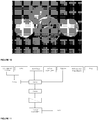
- Figure 11 shows a block flow diagram representing a method of manufacturing the dosage form according to the invention and illustrates and/or exemplifies the method according to this invention when read together with the Examples below.
- Step (b) may further include adding a taste-masking agent, preferably HP ⁇ CD complex, to produce Solution 2;
- a taste-masking agent preferably HP ⁇ CD complex
- the unique combination of components that comprise the dosage form according to the invention imparts very specific three dimensional architecture to the solid dosage form.
- these components are the soluble matrix forming polymer (HPC), the ester containing derivative of an acrylic polymer (sodium polyacrylate), an anti-collapsing agent (diglycine), and a filler substance (maltodextrin).
- HPC soluble matrix forming polymer
- ester containing derivative of an acrylic polymer sodium polyacrylate
- diglycine an anti-collapsing agent
- a filler substance maltodextrin
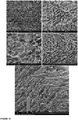
- the SEM figures show aligned laminar troughs or channels that lead into the interior of the dosage form. These troughs or channels allow for the rapid ingress of fluid in use causing rapid disintegration and/or dissolution.
- the combination of components imparts this physico-mechanical property to the dosage form.
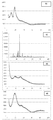
- the XRD shows that diglycine improves crystallinity to the overall structure which is balanced by other more amorphous components.
- the formation of the troughs or channels seen on the SEM figures also imparts increased stability and rigidity to the dosage form.
- the formation of the troughs and/or channels in the three dimensional structure is surprising and unexpected.
- the pharmaceutical dosage form was manufactured to be a multi-constituent system displaying, in use, rapid disintegration, the dosage form being formed into a wafer and comprising:
- a placebo may also be manufactured by simply excluding item (vi) above during the manufacturing process.
- placebos may include a taste masking agent without API.
- Ester containing derivative of an acrylic polymer Ester containing derivative of sodium polyacrylate Soluble polymer; ester components for initiation of rapid solubility 3. Filler substance Maltodextrin Soluble bulk filler component; cryoprotectant 5. Anti-collapsing agent Diglycine Microhardness providing agent and/or prevents collapse of dosage form 6.
- Taste masking agent Hydroxypropyl- ⁇ -cyclodextrin (HP ⁇ CD) Solubilizing agent, permeation enhancer, and taste masking agent
- Preferred embodiments of the dosage forms were prepared as wafered pharmaceutical dosage forms, where a wafer is a solid, laminar, rigid structure.
- Preparatory methods describing the manufacture and/or preparation of the various components of the wafered dosage form and/or the wafered dosage form itself, will now be described in detail. Characterization experiments of the various components of the wafered dosage form and/or of the wafered dosage form itself will also be discussed.
- Chitosan (low molecular weight, Sigma-Aldrich, St. Louis, MO, USA, Lot#MKBF2754V); hydantoic acid (N-Carbomoylglycine, Sigma-Aldrich, St. Louis, MO, USA)]; Hydroxypropyl cellulose (KLUCEL®, Type:EF, Hercules Incorporated, Wilminton, DE, USA); Maltodextrin (Dextrose equivalent 16.5-19.5, Sigma-Aldrich, St. Louis, MO, USA); Sodium Polyacrylate (average M W ⁇ 2100Da, Sigma-Aldrich, St. Louis, MO, USA); Diglycine (Gly-Gly, Sigma-Aldrich, St. Louis, MO, USA); Hydroxypropyl- ⁇ -Cyclodextrin (average M w ⁇ 1,460, Sigma-Aldrich, St. Louis, MO, USA).
- Chitosan (2g) was dissolved in 50mL of 2%w/v hydantoic acid solution until a clear solution is obtained. The resulting solution was centrifuged to remove any particulate matter. The supernatant from the centrifuged solution was then dialyzed (cellulose membrane; MWCO 12,000Da) against 1000mL of deionized water for 48 hours with replenishment of deionized water every 6 hours. The dialyzed solution so obtained was frozen at -82°C for 12 hours followed by lyophilization at 25mtorr/-42°C/12hours (FreeZone® 2.5, Labconco®, Kansas City, Missouri, USA). The lyophilized sample was pulverized and stored for further use in a desiccator.
- a specified amount of API and HP ⁇ CD (in a specified ratio to the API) were dissolved in a common solvent (in which both the API and HP ⁇ CD were soluble), preferably deionized water, until clear solutions were obtained, preferably at the saturation solubility of the API.
- the resulting HP ⁇ CD-API inclusion complex solution so obtained was frozen at -82°C for 12 hours followed by lyophilization at 25mtorr/-42°C/12hours (FreeZone® 2.5, Labconco®, Kansas City, Missouri, USA) to yield the drug- HP ⁇ CD inclusion complex.
- the lyophilized sample was pulverized and stored for further use in a desiccator. Should lyophilization not be used, micronisation may be used, especially in embodiments of the invention where inhaler or spray dosage forms are to be manufactured.
- HPC hydroxypropyl cellulose
- the moulds were then frozen at -82°C for 12 hours followed by lyophilization at 25mtorr/-42°C/5hours to obtain the final dosage form.
- the final dosage forms were wafers. It is to be understood that the API may be incorporated into the dosage using various means and need not necessarily be incorporated therewith through the use of the HP ⁇ CD-API inclusion complex. Should lyophilization not be used, micronisation may be used, especially in embodiments of the invention where inhaler or spray dosage forms are to be manufactured.
- Placebo wafers according to both, the not claimed aspect and the invention, were manufactured according to Tables 2 and 3 below.
- Table 2 Wafer 2- Placebo wafer matrix (an embodiment of the invention) Hydroxypropyl cellulose : 0.5% w / v Maltodextrin : 5.0% w / v Sodium Polyacrylate : 0.25% w / v Diglycine : 0.25% w / v Hydroxypropyl- ⁇ -Cyclodextrin : 1.0% w / v
- Table 3 Wafer 1- Placebo wafer matrix (a not claimed embodiment) Hydroxypropyl cellulose : 0.5% w / v carbamoyl glycinated chitosan : 0.5% w / v Maltodextrin : 5.0% w / v Sodium Polyacrylate : 0.25% w / v Diglycine : 0.25% w / v Hydroxypropyl- ⁇ -C
- Carbamoyl glycinated chitosan (CmGC) or chitosan-hydantoate is a novel chitosan derivative having the characteristic property in being rapidly soluble in deionized water without requiring acidic conditions.
- the derivative is formed by the interaction of the carboxylic functionality (-COOH) of hydantoic acid with the amine functionality (-NH 2 ) of chitosan as shown below and discussed further in detail in the FTIR description below.
- the -COOH/-NH 2 interaction in case of carbamoyl glycinated chitosan differs from that of acetic acid-chitosan and citric acid-chitosan.
- FIG. 1 shows a schematic representation of synthesis of chitosan carbamoyl glycine derivative via -NH 2 ----COOH- hydrogen bond formation as elucidated using molecular modelling simulations.
- the -COOH group of carbamoylglycine can be conjugated to the -NH 2 group of chitosan by carobodiimide chemistry or any other type of chemistry known to a person skilled in the art of forming an amide bond.
- Characteristic peaks assignment of chitosan are: 3359cm -1 (O-H stretch overlapped with N-H stretch), 2868cm -1 (C-H stretch), 1640 cm -1 (amide II band, C-O stretch of acetyl group), 1588 cm -1 (amide II band, N-H stretch), 1485-1375 cm -1 (asymmetric C-H bending of CH 2 group) and 1022 cm -1 (bridge O stretch) of glucosamine residue.
- the IR spectral band of carbamoyl glycine showed characteristic peaks at ( Figure 2b ): 3386cm -1 , 3220cm -1 , 2735cm -1 , 2452cm -1 , 1872cm -1 , 1694cm -1 , 1664cm -1 , 1637cm -1 , 1523cm -1 , 1448cm -1 , 1402cm -1 , 1305cm -1 , 1236cm -1 , 1172cm -1 , 1083cm -1 , 1025cm -1 , 972cm -1 , 918cm -1 , 768cm -1 , 713cm -1 , 647cm -1 .
- Figure 2c shows the significant peaks of chitosan carbamoyl glycine derivative.
- the peaks corresponding to chitosan are 2882cm -1 , 1602cm -1 , 1382cm -1 , 1151cm -1 , 1019cm -1 and 899cm -1 .
- the new peak appearing 3262cm -1 (3386cm -1 and 3220cm -1 merge), 1518cm -1 , 1382cm -1 , 1304cm -1 , and 1248cm -1 indicates the incorporation of the carbamoyl glycine moieties.
- Figure 2 shows Fourier transform infra-red spectra of (a) pristine chitosan; (b) carbamoyl glycinated chitosan; and (c) pristine carbamoyl glycine.
- the FTIR spectra of all the constituent components and the overall dosage form of Wafer 1 are depicted in Figure 5 .
- the FTIR spectra of the overall dosage form of Wafer 2 are also shown.
- a detailed analysis of the unique and general contribution of the components to the formation of final structure can be elucidates as shown in Table 4 and as discussed below.
- NaPAA sodium polyacrylate
- 3308cm -1 The broad peak contribution of sodium polyacrylate (NaPAA) confirms its role as the ester polymer coating the granular matrix rather than being the inherent matrix itself.
- the dosage form is not layered but there is provided that it may be formulated as sandwiched layered structures.
- the NaPAA is not a coating of the dosage form.
- the word "coating” is used to indicate that the NaPAA may be spread homogenously in the matrix in the form of a coating on the "microenvironment" of the wafer matrix making the dosage form rapidly disintegrating when in use.
- the highly prominent band at 1373cm -1 arising from the CH bending vibration in cellulose confirmed the intact presence of the cellulosic structure and hence the robustness of the dosage form, in this case formed into a wafer, can be assured.
- diglycine characteristic peak (-CH 2 -CH 2 -) in the finger print region (704cm -1 ) and also in the aliphatic region (2923cm -1 ) fulfils the hydrophobicity condition (among the all-hydrophillic system involved in lyophilization) required for the anti-collapsing micro-hardening property of diglycine in the final formulation.
- 2922cm -1 Diglycine (2923cm -1 ) Hydroxypropyl- ⁇ -cyclodextrin (2925cm -1 ) Maltodextrin (2923cm -1 ) 3. 1590cm -1 Unique to the wafer system 4. 1373cm -1 Hydroxypropyl cellulose (1373cm -1 ) 5. 1148cm -1 Hydroxypropyl- ⁇ -cyclodextrin (1148cm -1 ) Maltodextrin (1147cm -1 ) 6. 1077cm -1 Hydroxypropyl- ⁇ -cyclodextrin (1079cm -1 ) Maltodextrin (1076cm -1 ) 7.
- DSC Differential scanning calorimetry
- Figure 3 revealed differential scanning calorimetric analysis curves of pristine chitosan ( Figure 3a ), pristine carbamoyl glycine ( Figure 3b ) and chitosan carbamoyl glycine derivative ( Figure 3c ). From the DSC curves, two endothermic stages appeared in the thermal analysis of chitosan. The first stage began at about 100°C due to the loss of residual or physically adsorbed water, and the second stage showed an endothermic peak at 203°C which corresponds to the Tg of chitosan (CHT). The DSC curve of hydantoic acid also showed two peaks at 172°C (melting point of carbamoyl glycine) and 195°C (decomposition peak).
- the chitosan carbamoyl glycine derivative however showed three major endothermic steps assigned by chitosan and the conjugated groups, individually. Different from the peak of chitosan at 203°C, a flat peak at 210°C and a sharp peak at 236°C were preset in chitosan derivative, which clearly revealed that the degradation peak temperature of chitosan derivative was higher than that of chitosan.
- Figure 3 shows differential scanning calorimetry curves of (a) pristine chitosan; (b) pristine carbamoyl glycine; and (c) carbamoyl glycinated chitosan.
- XRD X-ray diffraction
- XRD analysis is being carried out for the confirmation of the exact mechanism of this high-performance API delivery system. XRD analysis will provide the amorpho-crystalline profile and the final elucidation is under process.
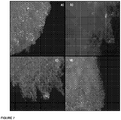
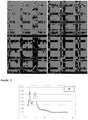
- the horizontal cross-sectional area is highly porous with the pore size ranging from macro- to micropores: this continuous porous structure is likely to help in rapid ingress of aqueous phase leading to dispersion as well as dissolution of the matrix structure ( Figure 6c and Figure 6d ).
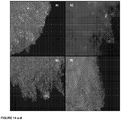
- Figure 7c and 7d display a micrograph inherent to a single layer in the dosage form's structure: the fibrous nature of the polymer composite can be visualized in the micrograph further explaining the robustness and connectivity of the matrix forming the dosage form.
- It is the unique combination of components comprising the Wafer 1 that allows for channels, typically parallel channels, to be formed. These channels facilitate rapid ingress of water and rapid disintegration and/or dissolution in use, and were surprising and expected physico-mechanical features of the Wafer 1.
- the three dimensional architecture is a function of the individual components of the Wafer 1 and also ensures sufficient rigidity to the wafer prior to use. Increased rigidity facilitates ease of use, since the dosage form will not disintegrate and/or break when handled by a user.
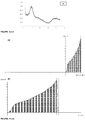
- Figure 8 shows linear isothermic plot, log isothermic plot, linear BJH adsorption dV/dD curve for pore volume, and log BJH adsorption dV/dD curve for pore volume of the composite polymeric matrices.
- the figures confirm the presence of a "H4 hysteresis" of the isotherm.
- Pore Volume Single point adsorption total pore volume of pores less than 808.805 ⁇ diameter at P/Po 0.975468283: 0.003604 cm 3 /g t-Plot micropore volume: -0.000998 cm 3 /g BJH Adsorption cumulative volume of pores between 17.000 ⁇ and 3000.000 ⁇ diameter: 0.005569 cm 3 /g BJH Desorption cumulative volume of pores between 17.000 ⁇ and 3000.000 ⁇ diameter: 0.005528 cm 3 /g Pore Size Adsorption average pore width (4V/A by BET): 53.4764 ⁇ BJH Adsorption average pore diameter (4V/A): 84.867 ⁇ BJH Desorption average pore diameter (4V/A): 86.694 ⁇
- Table 5 The salient features of the wafered dosage form (Wafer 1) Feature Ultra-fast disintegrating matrix system Dispersion speed ⁇ 1 second ( Figure 9 ) Mouth feel Non-gritty Texture Smooth Dose size ⁇ 500mg - insoluble ⁇ 100mg - soluble *Adjustable to the requirements as cyclodextrin can be used to enclose the drug Taste masking Yes Hygroscopicity Non-hygroscopic Stability Stable at room temperature and humidity condition as observed for 1 year (July 2011-July 2012) under South African climate conditions Packaging No special packaging required as the wafers can be dispensed on a poly-bottle with a dessicant, if required Applications An oral wafer matrix, a graft lubricant, a chromatography gel, a wound dressing, a mesh, a degradable bone fixation glue, a degradable ligament glue and sealant, a tendon implant, a dental implant, a reconstituted nerve injectable,
- the pharmaceutical dosage form was manufactured to be a multi-constituent system displaying, in use, ultra-rapid disintegration, the dosage form being formed into a wafer and comprising:
- a placebo may also be manufactured by simply excluding item (v) above during the manufacturing process.
- placebos may include a taste masking agent without API.
- Hydroxypropyl cellulose KLUCEL®, Type:EF, Hercules Incorporated, Wilminton, DE, USA
- Maltodextrin Dextrose equivalent 16.5-19.5, Sigma-Aldrich, St. Louis, MO, USA
- Sodium Polyacrylate average M W ⁇ 2100Da, Sigma-Aldrich, St. Louis, MO, USA
- Diglycine Gly-Gly, Sigma-Aldrich, St. Louis, MO, USA
- Hydroxypropyl- ⁇ -Cyclodextrin average M w ⁇ 1,460, Sigma-Aldrich, St. Louis, MO, USA).
- HP ⁇ CD-API inclusion complex solution so obtained was frozen at -82°C for 12 hours followed by lyophilization at 25mtorr/-42°C/12hours (FreeZone® 2.5, Labconco®, Kansas City, Missouri, USA). The lyophilized sample was pulverized and stored for further use in a desiccator.
- a specified quantity of hydroxypropyl cellulose was dissolved in deionized water to make a clear solution 1. Thereafter, specified quantities of maltodextrin, sodium polyacrylate, and diglycine were added to solution 1 and stirred to complete solubilisation to form solution 2.
- a specified quantity of hydroxypropyl- ⁇ -cyclodextrin-API (drug) inclusion complex was added to solution 2 as the last addition to obtain solution 3.
- the solution 3 obtained above was filtered to remove any particulate matter and frozen at -82°C for 12 hours followed by lyophilization at 25mtorr/-42°C/5hours to obtain the final dosage form.
- a placebo (or drug-free (DF)) wafer was manufactured by omitting the step of adding hydroxypropyl- ⁇ -cyclodextrin-API (drug) inclusion complex to solution 2.
- the formulation of prepared placebo wafers is provided below in Table 6a (Formulation 1).
- a drug-loaded (DL) wafer was prepared as described above wherein the API was rizatriptan benzoate, and the formulation thereof is provided below in Table 6b (Formulation 2).
- a drug-loaded (DL) wafer was prepared as described above wherein the API was fluoxetine hydrochloride, and the formulation thereof is provided below in Table 6c (Formulation 3).
- Table 6a Formulation 1- Placebo (DF) of Wafer 2 Hydroxypropyl cellulose : 0.5% w / v Maltodextrin : 5.0% w / v Sodium Polyacrylate : 0.25% w / v Diglycine : 0.25% w / v Hydroxypropyl- ⁇ -Cyclodextrin : 1.0% w / v
- Table 6b Formulation 2- Rizatriptan benzoate loaded (DL) Wafer 2 (per wafer) Hydroxypropyl cellulose : 0.5% w / v Maltodextrin : 5.0% w / v Sodium Polyacrylate : 0.25% w / v Diglycine : 0.25% w / v Hydroxypropyl- ⁇ -Cyclodextr
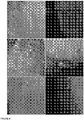
- the top surface electron microscopy scan of the wafer system of Formulation 1 displayed a unique highly porous-symmetrical-channelled structure ( Figure 15 ).
- the SEM micrograph showed that the channels are lined parallel with inter- and intra-channel connectivity.
- These channels further continued into the matrix bulk structure perpendicularly as evident from the SEM micrograph of the bottom surface of the wafer ( Figure 16 ).
- a closer view at the surface reveals that the symmetrical-channelled structure consisted of very deep thin-walled microporous architecture (pore width approximatel 50 ⁇ m) going to full width of the wafer matrix.
- the porous architecture of the matrix displayed an angled morphology which imparted the much needed matrix resilience to the wafers.
- the influence of the constituent components on the performance of the wafer of Formulation 1 was analyzed using XRD analysis.
- XRD analysis was performed on the individual excipients hydroxypropyl cellullose, maltodextrin, sodium polyacrylate, diglycine, and Hydroxypropyl- ⁇ -Cyclodextrin.
- the XRD spectra clearly show that diglycine is a crystalline substance while hydroxypropyl cellulose, maltodextrin, sodium polyacrylate, and hydroxypropyl- ⁇ -cyclodextrin displayed amorphous nature.
- the final product - the wafer of Formulation 1 - demonstrated primarily amorphous and partial crystalline nature.
- maltodextrin constituted the bulk of the matrix (5.0%); the XRD curve of the final wafer formulation can be seen as a derivative of maltodextrin curve - leading to a remapping of maltodextrin due to the addition of specialized excipients for the wafer application.
- Figure 18 shows X-Ray diffraction patterns of hydroxypropyl cellulose (HPC), hydroxyl- ⁇ -cyclodextrin (HP ⁇ CD), diglycine, sodium polyacrylate, maltodextrin, and the final wafer product (Formulation 1 - a drug-free embodiment of the invention).
- the textural analysis of the matrix at various force (5N and 10 N), strain (10% and 25%), and displacement (2mm) conditions was carried out on a texture analyzer (TA.XT plus, Stable Micro Systems, UK) using a flat-base cylindrical probe (10 mm in diameter) to ascertain the robustness of the wafer matrix.
- the matrix structure was intact at all these conditions and displayed a high matrix deformation energy, rigidity gradient and matrix resilience at force (5N and 10 N), strain (5% and 25%), and displacement (2mm) conditions, as shown in Table 4.
- Table 8 Textural profiling for physicochemical characterization of the wafer matrices of Formulation 1 (DF Wafer 2) Texture analysis mode Deformation energy (J) Matrix Hardness (N/mm 2 ) Matrix resilience (%) Strain (%) 10 0.425 9.769 15.437 25 3.980 16.088 09.046 Force (N) 5 0.795 17.446 17.000 10 1.312 25.222 19.721 Distance (mm) 2 24.016 12.644 03.608
- Figure 19 shows typical force distance and force time profiles of the wafer matrix of Formulation 1 (a drug-free embodiment of the invention) at distance mode for determining (a) matrix hardness (determined from gradient between anchors 1 and 2) and deformation energy (determined from AUC between anchors 1 and 2) and (b) matrix resilience.
- Figure 20 shows typical force distance and force time profiles of the wafer matrix (of Formulation 1 - a drug-free embodiment of the invention) at strain mode for determining (a) matrix hardness (determined from gradient between anchors 1 and 2) and deformation energy (determined from AUC between anchors 1 and 2); and (b) matrix resilience.
- Figure 21 shows typical force distance and force time profiles of the wafer matrix (of Formulation 1 - a drug-free embodiment of the invention) at force mode for determining (a) matrix hardness (determined from gradient between anchors 1 and 2) and deformation energy (determined from AUC between anchors 1 and 2); and (b) matrix resilience.
- Figure 22 shows a) a linear isothermic plot, b) a Log isothermic plot, c) a linear BJH adsorption dV/dD curve for pore volume, and d) a log BJH adsorption dV/dD curve for pore volume of the composite polymeric matrices.
- the figures 12a-d confirm the presence of a "H4 hysteresis" of the isotherm.
- Table 9 The salient features of the Ultra-fast or rapid disintegrating matrix system of Formulation 1 (DF Wafer 2) Feature Ultra-fast disintegrating matrix system Dispersion speed ⁇ 1 second Mouth feel Non-gritty Texture Smooth Dose size ⁇ 500mg - insoluble ⁇ 100mg - soluble *Adjustable to the requirements as cyclodextrin can be used to enclose the drug Taste masking Yes Hygroscopicity Non-hygroscopic Drug assay (%) Rizatriptan benzoate wafers: 96.32 ⁇ 1.82 Fluoxetine HCl wafers: 97.24 ⁇ 3.23 Stability Stable at room temperature and humidity condition as observed for 1 year (July 2011-July 2012) under South African climate conditions Packaging No special packaging required as the wafers can be dispensed on a poly-bottle with a dessicant, if required Applications An oral wafer matrix, a graft lubricant, a chromatography gel, a wound dressing
Landscapes
- Health & Medical Sciences (AREA)
- Chemical & Material Sciences (AREA)
- Life Sciences & Earth Sciences (AREA)
- General Health & Medical Sciences (AREA)
- Animal Behavior & Ethology (AREA)
- Epidemiology (AREA)
- Pharmacology & Pharmacy (AREA)
- Public Health (AREA)
- Veterinary Medicine (AREA)
- Medicinal Chemistry (AREA)
- Molecular Biology (AREA)
- Organic Chemistry (AREA)
- Engineering & Computer Science (AREA)
- Ophthalmology & Optometry (AREA)
- Biotechnology (AREA)
- Genetics & Genomics (AREA)
- Biochemistry (AREA)
- Crystallography & Structural Chemistry (AREA)
- Biophysics (AREA)
- Bioinformatics & Cheminformatics (AREA)
- Medicinal Preparation (AREA)
- Pharmaceuticals Containing Other Organic And Inorganic Compounds (AREA)
Description
- The present invention relates to a pharmaceutical dosage form which may comprise a novel polymer, and particularly it relates to a pharmaceutical dosage form comprising the novel polymer in a lyophilized polymeric wafer form which shows rapid disintegration and dissolution characteristics in use.
- Successful treatment of medical conditions and/or disease is not only dependent on novel active pharmaceutical ingredients (API), but it is also dependent on providing novel and effective pharmaceutical dosage forms to ensure delivery of the API to the intended target site within the human or animal being treated. In order to achieve effective API delivery at the intended site due consideration must be given to where the intended target is within the body, and to the physiological obstacles that may prevent effective delivery via various routes of administration.
- Often the time taken for the API to reach its target site is also important. This is of particular importance in API's that provide pain relief or allergy relief.
- Extensive research has been conducted in the field of biocompatible polymers which have been developed to provide effective pharmaceutical dosage forms. These polymers are then formulated into various solid dosage forms such as wafers, tablets and capsules depending on their physico-chemical and/or physico-mechanical properties.
- Document
WO 2012/083269 A1 describes sublingual films for use in treatment of various diseases like Parkinson's disease. Among other ingredients it discloses use of hydroxypropyl cellulose as polymer. Polyacrylate may be used as pH neutralizing agent. Moreover, maltodextrin may be present as hydrolyzed starch. - Wafer technology is already used within the pharmaceutical industry as a species of pharmaceutical dosage form. Wafers are typically used when needing to deliver API through the mucosal membrane of the mouth cavity. Essentially, the wafer incorporates at least one active pharmaceutical ingredient (API) to be released in use. When formulating wafers, one needs to consider several variables, including, but not limited to the fact that: the API should be rapidly absorbed through the mucosal membranes in the mouth via transmucosal absorption; wafer technologies typically attempt to deliver API's that cannot be effectively delivered via conventional oral solid dosage (OSD) forms (for reasons including that the API has a low gastric bioavailability, and that normal OSD's may result in nausea of the patient making them unsuitable); a low dose of the API is typically required since the dosage form is not subjected to passage through the entire gastro-intestinal tract; and rapid action is often required, especially where pain and/or allergy relief is required.
- Known wafer technology typically relies on the formulation of the active pharmaceutical ingredient (API) within a water soluble polymeric/excipient blend to dissolve rapidly in the mouth, thereby releasing the API for absorption and transport to its desired target. To be effective, the formulation requires that the following performance aspects are met: the polymers and/or excipients used to manufacture the wafer must be soluble at physiological temperature (about 37°C) without the aid of heating or stirring; the API taste must be masked by the excipients; the wafer should not be excessively hygroscopic and must have an acceptable shelf life; the total wafer size should not exceed a diameter of about 2 cm and the mass should be less than about 800 mg for ease of use for the patient; and the wafers should dissolve completely and leave no residue after disintegration.
- The manufacture of rapidly dissolving dosage forms, particularly wafer type dosage forms, for the rapid release of active pharmaceutical ingredient remains a difficult task. The lyophilized polymeric matrices of the dosage forms are not robust and present difficulty in handling with a risk of breaking when taking them out from the packaging (typically blister packs). Therefore, a specialized peel-off packaging is required for the same which further increases that final cost of the product. The complete solubility of the matrix components is very important as a gritty feel would compromise patient compliance. The disintegration, dispersion, and dissolution of the matrix should be very fast in order to provide enhanced permeability and taste-masking.
- Existing products on the market include the Zydis® technology, which has been used for a number of commercial products including Claritin® Reditab®, Dimetapp® Quick Dissolve, Feldene® Melt, Maxalt-MLT®, Pepcid® RPD, Zofran® ODT®, and Zyprexa®. The existing products are known to use active pharmaceutical ingredients (APIs) including for examples: oxazepam, lorazepam, loperamide, and enalapril.
- There is a need for novel and improved pharmaceutical dosage forms in order to improve effective delivery of APIs.
- According to the invention there is provided a wafer pharmaceutical dosage form for the release of at least one active pharmaceutical ingredient (API) at a target site in a human or animal, the pharmaceutical dosage form comprising a soluble matrix forming polymer, an ester containing derivative of an acrylic polymer, an anti-collapsing agent, and a filler substance.
- The pharmaceutical dosage form according to the invention, wherein the soluble matrix forming polymer is hydroxypropyl cellulose, wherein the ester containing derivative of an acrylic polymer is sodium polyacrylate, wherein the anti-collapsing agent is diglycine, and wherein the filler substance is maltodextrin.
- The invention may further comprise at least one active pharmaceutical compound (API).
- The invention may further comprise a taste masking agent.
- The invention may further comprise a taste masking agent and API, preferably hydroxypropyl-beta-cyclodextrin HPβCD - active pharmaceutical ingredient (API) inclusion complex (HPβCD-API inclusion complex).
- An embodiment of the invention may be formulated as a placebo and lacking an API. Such a placebo embodiment may comprise:
- a soluble matrix forming polymer, preferably hydroxypropyl cellulose (HPC);
- an ester containing derivative of an acrylic polymer, preferably sodium polyacrylate;
- an anti-collapsing agent, preferably diglycine;and
- a filler substance, preferably maltodextrin.
- The placebo may further comprise a taste-masking agent, preferably HPβCD.
- In a preferred embodiment of the invention, the pharmaceutical dosage form may comprise:
- a soluble matrix forming polymer, namely hydroxypropyl cellulose (HPC);
- an ester containing derivative of an acrylic polymer, namely sodium polyacrylate;
- an anti-collapsing agent, namely diglycine;
- a filler substance, namely maltodextrin; and
- a taste masking agent and API, preferably HPβCD-API inclusion complex.
- There is provided that the dosage forms according to this invention may be homogenous, alternatively layered like a sandwich, alternatively layered like an onion. In the event that the dosage form is layered, each layer may include at least one of the same or different API.
- According to a further aspect of the invention, there is provided a method of manufacturing the wafer pharmaceutical dosage form of this invention, the method comprising the steps of:
- (a). dissolving a soluble matrix forming polymer, preferably hydroxy propyl cellulose (HPC), in a liquid medium, preferably deionized water to produce
Solution 1; - (b). adding to Solution 1 a filler, preferably maltodextrin, an ester containing derivative of an acrylic polymer, preferably sodium polyacrylate and an anti-collapsing agent, preferably diglycine, to produce
Solution 2; - (c). freezing
Solution 2; and - (d). lyophilizing the
frozen Solution 2. - Step (b) may further include adding a taste-masking agent, preferably HPβCD complex, to produce
Solution 2. - There is provided for pharmaceutical dosage forms in accordance with this invention substantially as herein described, exemplified and/or illustrated with reference to any one of Examples 1 to 2 and the accompanying figures.
- There is provided for a compound of Formula (I) substantially as herein described, exemplified and/or illustrated with reference to any one of Examples 1 to 2 and the accompanying figures.
- There is provided for methods in accordance with aspects of this invention substantially as herein described, exemplified and/or illustrated with reference to any one of Examples 1 to 2 and the accompanying figures.
- The invention is now described, by way of example only, with reference to the accompanying diagrammatic drawings, in which
- Figure 1
- shows a schematic representation of synthesis of chitosan carbamoyl glycine derivative via -NH2----COOH- hydrogen bond formation as elucidated using molecular modelling simulations;
- Figure 2
- shows Fourier transform infra-red spectra of (a) pristine chitosan; (b) carbamoyl glycinated chitosan (CmGC); and (c) pristine carbamoyl glycine;
- Figure 3
- shows differential scanning calorimetry (DSC) curves of (a) pristine chitosan; (b) pristine carbamoyl glycine; and (c) carbamoyl glycinated chitosan (CmGC);
- Figure 4
- shows photomicrographs of the lyophilized carbamoyl glycinated chitosan (CmGC) depicting the well-defined; uniformly-distributed; unidirectional; multi-lamellar; and fibrous structure;
- Figure 5
- shows Fourier transform infra-red spectra of the pharmaceutical dosage forms of
Wafer 1 & 2 (drug-free embodiments of an aspect not being part of the present invention and of the invention respectively) and the inherent components ofWafer 1 thereof; - Figure 6
- shows photomicrographs showing a) and b) the surface of the wafer matrices; c) and d) the horizontal cross-sectional porous structure of
Wafer 1 in accordance with a not claimed embodiment; - Figure 7
- shows photomicrographs showing a) and b) the layered structure vertically; c) and d) the connected fibrous structure of the wafered pharmaceutical dosage form (vertical cross-section) of
Wafer 1 in accordance with a not claimed embodiment. - Figure 8
- shows a) a linear isothermic plot, b) a log isothermic plot, c) a linear BJH adsorption dV/dD curve for pore volume, and d) a log BJH adsorption dV/dD curve for pore volume of the composite polymeric matrices of
Wafer 1 in accordance with a not claimed embodiment. Thefigures 8a-d confirm the presence of a "H4 hysteresis" of the isotherm; - Figure 9
- shows visualization of the dissolution of
Wafer 1 in accordance with a not claimed embodiment; - Figure 10
- shows the size of the pharmaceutical dosage form of
Wafer 2 in accordance with the invention (drug-free embodiment) compared to a one Rand coin; - Figure 11
- shows a block flow diagram representing a method of manufacturing the dosage form of
Wafer 2 in accordance with the invention (drug-free embodiment); - Figure 12
- shows a Fourier Transform Infra-Red spectra of the wafer matrix of Formulation 1 (a drug-free embodiment of the invention) and the inherent components;
- Figure 13
- shows photomicrographs showing a) and b) the surface of the wafer matrices of Formulation 1 (a drug-free embodiment of the invention); c) and d) the horizontal cross-sectional porous structure of the wafer matrices;
- Figure 14
- shows photomicrographs showing a) and b) the layered structure vertically; c) and d) the connected fibrous structure of the wafer matrices of Formulation 1 (a drug-free embodiment of the invention) (vertical cross-section);
- Figure 15
- shows scanning electron micrographs for the top surface of the wafer of Formulation 1 (a drug-free embodiment of the invention) at various magnifications;
- Figure 16
- shows scanning electron micrographs for the bottom surface of the wafer of Formulation 1 (a drug-free embodiment of the invention) at various magnifications;
- Figure 17
- shows Scanning electron micrographs for the cross-section of the wafer of Formulation 1 (a drug-free embodiment of the invention) at various magnifications;
- Figure 18
- shows X-Ray diffaction patterns of hydroxypropyl cellulose, a) hydroxypropyl-β-cyclodextrin, diglycine, b) sodium polyacrylate, c) maltodextrin, and d) the final wafer product of Formulation 1 (a drug-free embodiment of the invention). X-axis corresponds to 2θ degrees and Y-axis corresponds to intensity values;
- Figure 19
- shows typical force-distance and force-time profiles of the wafer matrix of Formulation 1 (a drug-free embodiment of the invention) at distance mode for determining (a) matrix hardness (determined from gradient between
anchors 1 and 2) and deformation energy (determined from AUC betweenanchors 1 and 2); and (b) matrix resilience; - Figure 20
- shows typical force-distance and force-time profiles of the wafer matrix of Formulation 1 (a drug-free embodiment of the invention) at strain mode for determining (a) matrix hardness (determined from gradient between
anchors 1 and 2) and deformation energy (determined from AUC betweenanchors 1 and 2); and (b) matrix resilience; - Figure 21
- shows typical force-distance and force-time profiles of the wafer matrix of Formulation 1 (a drug-free embodiment of invention) at force mode for determining (a) matrix hardness (determined from gradient between
anchors 1 and 2) and deformation energy (determined from AUC betweenanchors 1 and 2); and (b) matrix resilience; and - Figure 22
- shows a Linear isothermic plot, Log isothermic plot, linear BJH adsorption dV/dD curve for pore volume, and log BJH adsorption dV/dD curve for pore volume of the composite polymeric matrices of Formulation 1 (a drug-free embodiment of the invention). The figures confirm the presence of a "H4 hysteresis" of the isotherm.
- According to a not claimed aspect there is provided a pharmaceutical dosage form for the release of at least one active pharmaceutical ingredient (API) at a target site in a human or animal, the pharmaceutical dosage form comprising a compound of the Formula (I):

- The compound of the Formula (I) is a soluble ester chitosan derivative polymer and is herein termed carbomoyl glycinated chitosan (CmGC). The pharmaceutical dosage form may further comprise a soluble matrix forming polymer. Typically, the dosage form is used as an oral pharmaceutical dosage form, and more typically is formed into a wafer for abutment, in use, against mucosa in the oral cavity of a human and/or an animal. The term 'wafer' in this specification refers to a solid, laminar and rigid structure. The target site is typically the oral cavity of a human and/or animal. The dosage form may also be formed into a tablet, capsule and/or ocular dosage form. The ocular dosage form being a mini-tablet essentially comprises a solid eye drop.
- It is to be understood that the dosage form according to the invention, namely in regard to a wafered dosage form, incorporates advantages including the fact that no coating or microencapsulation is involved; there is a one-step formulation; no effervescence in use; robust and non-friable formulation (for geriatrics); no moisture sensitivity; no chewing required; no water insoluble content; no grittiness; and no remnants during and/or after use.
- The dosage form according to the invention dissolves rapidly in aqueous media, especially when it comes into contact with the mucosal membranes of the mouth cavity in a human or animal. The rapid, and in fact, ultrafast disintegration follows the following principle: the phenomenon involved in the fast disintegration of the dosage form is based on the use of freely water soluble polymeric/excipient blends. The important aspect for choosing the polymers/excipients is that the polymers/excipients should be soluble at physiological temperature (37°C) without the aid of heating or stirring. The inherent individual solubility of the components is synergistically enhanced when used with other polymers/excipients in a particular ratio. The component with the highest solubility (maltodextrin) was chosen as the bulk and hydroxypropyl cellulose was chosen for the matrix stability. Hydroxypropyl cellulose can be combined with a soluble novel derivative of chitosan namely carbamoyl glycinated chitosan (CmGC). This novel polymer is also easily dispersible in deionised water in lyophilized form and is capable of forming channels making the aqueous media to intrude rapidly. Being a polymeric ester, sodium polyacrylate was used to assist in rapid wettability and hence disintegration and solubility. Diglycine conferred microhardness properties at very low concentrations and provide required functional groups for hydrogen bonding rendering intactness to the wafer matrix dosage form. The combination of compounds comprising the wafer dosage forms in accordance with the invention involved a considerable amount of research and development. The very rapid dissolution characteristics and robust nature of the dosage forms of the invention could not have been predicted, are surprising and are advantageous when compared to the current state of the art.
- The soluble matrix forming polymer is hydroxypropyl cellulose.
- The pharmaceutical dosage form further comprises an ester containing derivative of an acrylic polymer, namely sodium polyacrylate.
- The pharmaceutical dosage form further comprises an anti-collapsing agent, the anti-collapsing agent being diglycine.
- The pharmaceutical dosage form further comprises a filler substance, in use binding and/or combining the various components comprising the dosage form, the filler substance being maltodextrin (MD).
- The pharmaceutical dosage form may further comprise a taste masking agent, in use to mask the unsavoury taste of the dosage form, the taste masking agent may be at least one compound selected from the group including, but not limited to: macrocyclic compound such as but not limited to a cyclodextrins and their derivatives, porphyrins, ion exchange resins, cucurbiturils, permeation enhancing agents well known in the art such as surfactants (fatty acid derivatives - sodium decanoate), and stabilizers. In a preferred embodiment of the invention, the cyclodextrin derivative comprises a rapidly soluble derivative, more preferably hydroxypropyl-beta-cyclodextrin. It is to be understood that the taste masking agent may also act in use as a permeation enhancer.
- The pharmaceutical dosage form may further comprise an active pharmaceutical ingredient (API). The API may be selected from the group including, but not limited to: smoking cessation drugs, narcotic analgesics, anesthetics, antitussives, non-narcotic analgesics such as the nonsteroidal anti-inflammatory agents (NSAIDS), erectile dysfunction drugs, female sexual dysfunction drugs, antihistamines, cold and allergy drugs, drugs that combat cough, drugs that combat respiratory disorders, drugs that combat sore throat, drugs that combat heartburn and/or dyspepsia, antiemetics, sleep aids, drugs that combat diarrhea, drugs that improve oral hygiene, antagonists of CGRP receptors, drugs associated with migrane treatment, drugs for hormone replacement, drugs that combat Alzheimer's disease, sitagliptin, caffeine and caffeine salt compounds.
- The API may be incorporated together with at least one of the soluble chitosan derivative polymer and/or the ester containing derivative of the acrylic acid and/or the anti-collapsing agent and/or the filler substance and/or the taste masking agent. API incorporation may take place via at least one of the group, but not limited to: noncovalent interactions, covalent interactions, van der Waals forces, electrostatic interactions and hydrogen bonding. The active pharmaceutical ingredient (API) may be incorporated within the taste masking agent hydroxypropyl-beta-cyclodextrin (HPβCD) to form a HPβCD-API inclusion complex.
- According to the invention there is provided a wafer pharmaceutical dosage form for the release of at least one active pharmaceutical ingredient (API) at a target site in a human or animal, the pharmaceutical dosage form comprising a soluble matrix forming polymer, an ester containing derivative of an acrylic polymer, an anti-collapsing agent, and a filler.
- Essentially, the invention is formulated without the use of the compound of Formula (I).
- The invention may further comprise at least one active pharmaceutical compound (API). The invention may further comprise a taste masking agent. The invention may further comprise a taste masking agent and API, preferably hydroxypropyl-beta-cyclodextrin HPβCD - active pharmaceutical ingredient (API) inclusion complex (HPβCD-API inclusion complex).
- It is to be understood that an embodiment of the invention may be formulated as a placebo and lacking an API. Such a placebo embodiment comprises a soluble matrix forming polymer, namely hydroxypropyl cellulose (HPC); an ester containing derivative of an acrylic polymer, namely sodium polyacrylate; an anti-collapsing agent, namely diglycine; and a filler substance, namely maltodextrin.
- The placebo according to the invention may additionally comprise a taste masking agent.
- In a preferred embodiment of the invention the pharmaceutical dosage form comprises a soluble matrix forming polymer, namely hydroxypropyl cellulose (HPC); an ester containing derivative of an acrylic polymer, namely sodium polyacrylate; an anti-collapsing agent, namely diglycine; a filler substance, namely maltodextrin; and a taste masking agent and API, preferably HPβCD-API inclusion complex.
- It is to be understood that the dosage forms according to this invention may be homogenous, alternatively layered like a sandwich, alternatively layered like an onion. In the event that the dosage form is layered, each layer may include at least one of the same or different API.
-
Figure 11 shows a block flow diagram representing a method of manufacturing the dosage form according to the invention and illustrates and/or exemplifies the method according to this invention when read together with the Examples below. - According to another aspect of the invention there is provided a method of manufacturing the wafer pharmaceutical dosage form of this invention, the method comprising the steps of:
- (a). dissolving a soluble matrix forming polymer, preferably hydroxy propyl cellulose (HPC), in a liquid medium, preferably deionized water to produce
Solution 1; - (b). adding to Solution 1 a filler, preferably maltodextrin, an ester containing derivative of an acrylic polymer, preferably sodium polyacrylate and an anti-collapsing agent, preferably diglycine, to produce
Solution 2; - (c). freezing
Solution 2; and - (d). lyophilizing the
frozen Solution 2. - Step (b) may further include adding a taste-masking agent, preferably HPβCD complex, to produce
Solution 2;
Example 2 below particularly describes and/or illustrates and/or exemplifies the method of manufacturing the dosage form according to the invention. - It is to be understood that the unique combination of components that comprise the dosage form according to the invention imparts very specific three dimensional architecture to the solid dosage form. These components are the soluble matrix forming polymer (HPC), the ester containing derivative of an acrylic polymer (sodium polyacrylate), an anti-collapsing agent (diglycine), and a filler substance (maltodextrin). The SEM figures show aligned laminar troughs or channels that lead into the interior of the dosage form. These troughs or channels allow for the rapid ingress of fluid in use causing rapid disintegration and/or dissolution. The combination of components imparts this physico-mechanical property to the dosage form. The XRD shows that diglycine improves crystallinity to the overall structure which is balanced by other more amorphous components. The formation of the troughs or channels seen on the SEM figures also imparts increased stability and rigidity to the dosage form. The formation of the troughs and/or channels in the three dimensional structure is surprising and unexpected.
- Representative examples of the invention are described in detail hereunder.
- In a not claimed embodiment the pharmaceutical dosage form was manufactured to be a multi-constituent system displaying, in use, rapid disintegration, the dosage form being formed into a wafer and comprising:
- i. a soluble chitosan derivative polymer, preferably carbamoyl glycinated-chitosan (CmGC)
- ii. a soluble matrix forming polymer, preferably hydroxypropyl cellulose (HPC);
- iii. an ester containing derivative of an acrylic polymer, preferably sodium polyacrylate;
- iv. an anti-collapsing agent, preferably diglycine;
- v. a filler substance, preferably maltodextrin; and
- vi. a taste masking agent and API, preferably hydroxypropyl-beta-cyclodextrin HPβCD - active pharmaceutical ingredient (API) inclusion complex (HPβCD-API inclusion complex).
- A placebo may also be manufactured by simply excluding item (vi) above during the manufacturing process. However, it is to be understood that placebos may include a taste masking agent without API.
- When the term 'rapid disintegration' or 'rapid dissolution' is used in this specification it means fast ingress of fluid into a dosage form and immediate onset of dissolution and/or disintegration of the dosage form.
Table 1: Dosage form components of the pharmaceutical dosage form according to the not claimed embodiment, and their specific function(s) (Wafer 1 - drug-free placebo embodiment) S. No. Component Compound Function(s) 1. Soluble chitosan derivative polymer Carbamoylglycinated-chitosan Rapidly soluble polymer; unique soluble polymeric ester providing the fibrous matrix for rapid water channeling and directional flow 2. Soluble matrix forming agent Hydroxypropyl cellulose Soluble polymer; robust matrix forming polymer 3. Ester containing derivative of an acrylic polymer Ester containing derivative of sodium polyacrylate Soluble polymer; ester components for initiation of rapid solubility 3. Filler substance Maltodextrin Soluble bulk filler component; cryoprotectant 5. Anti-collapsing agent Diglycine Microhardness providing agent and/or prevents collapse of dosage form 6. Taste masking agent Hydroxypropyl-β-cyclodextrin (HPβCD) Solubilizing agent, permeation enhancer, and taste masking agent - Preferred embodiments of the dosage forms were prepared as wafered pharmaceutical dosage forms, where a wafer is a solid, laminar, rigid structure. Preparatory methods describing the manufacture and/or preparation of the various components of the wafered dosage form and/or the wafered dosage form itself, will now be described in detail. Characterization experiments of the various components of the wafered dosage form and/or of the wafered dosage form itself will also be discussed.
- Chitosan (low molecular weight, Sigma-Aldrich, St. Louis, MO, USA, Lot#MKBF2754V); hydantoic acid (N-Carbomoylglycine, Sigma-Aldrich, St. Louis, MO, USA)]; Hydroxypropyl cellulose (KLUCEL®, Type:EF, Hercules Incorporated, Wilminton, DE, USA); Maltodextrin (Dextrose equivalent 16.5-19.5, Sigma-Aldrich, St. Louis, MO, USA); Sodium Polyacrylate (average MW∼2100Da, Sigma-Aldrich, St. Louis, MO, USA); Diglycine (Gly-Gly, Sigma-Aldrich, St. Louis, MO, USA); Hydroxypropyl-β-Cyclodextrin (average Mw∼1,460, Sigma-Aldrich, St. Louis, MO, USA).
- Chitosan (2g) was dissolved in 50mL of 2%w/v hydantoic acid solution until a clear solution is obtained. The resulting solution was centrifuged to remove any particulate matter. The supernatant from the centrifuged solution was then dialyzed (cellulose membrane; MWCO 12,000Da) against 1000mL of deionized water for 48 hours with replenishment of deionized water every 6 hours. The dialyzed solution so obtained was frozen at -82°C for 12 hours followed by lyophilization at 25mtorr/-42°C/12hours (FreeZone® 2.5, Labconco®, Kansas City, Missouri, USA). The lyophilized sample was pulverized and stored for further use in a desiccator.
- A specified amount of API and HPβCD (in a specified ratio to the API) were dissolved in a common solvent (in which both the API and HPβCD were soluble), preferably deionized water, until clear solutions were obtained, preferably at the saturation solubility of the API. The resulting HPβCD-API inclusion complex solution so obtained was frozen at -82°C for 12 hours followed by lyophilization at 25mtorr/-42°C/12hours (FreeZone® 2.5, Labconco®, Kansas City, Missouri, USA) to yield the drug- HPβCD inclusion complex. The lyophilized sample was pulverized and stored for further use in a desiccator. Should lyophilization not be used, micronisation may be used, especially in embodiments of the invention where inhaler or spray dosage forms are to be manufactured.
- A specified quantity of hydroxypropyl cellulose (HPC) was dissolved in deionized water to make a
clear solution 1. Tosolution 1, carbamoyl glycinated chitosan was added and allowed to dissolve completely to obtainsolution 2. Thereafter, specified quantities of maltodextrin, sodium polyacrylate, and diglycine were added tosolution 2 and stirred to complete solubilisation to formsolution 3. A specified quantity of HPβCD-API inclusion complex was added tosolution 3 as the last addition to obtainsolution 4. Thesolution 4 obtained above was filtered to remove any particulate matter and was poured into circular moulds of various capacities such as 0.25cc; 0.4cc; and 0.75cc. The moulds were then frozen at -82°C for 12 hours followed by lyophilization at 25mtorr/-42°C/5hours to obtain the final dosage form. The final dosage forms were wafers. It is to be understood that the API may be incorporated into the dosage using various means and need not necessarily be incorporated therewith through the use of the HPβCD-API inclusion complex. Should lyophilization not be used, micronisation may be used, especially in embodiments of the invention where inhaler or spray dosage forms are to be manufactured. - Placebo wafers according to both, the not claimed aspect and the invention, were manufactured according to Tables 2 and 3 below.
Table 2: Wafer 2- Placebo wafer matrix (an embodiment of the invention) Hydroxypropyl cellulose : 0.5% w/v Maltodextrin : 5.0% w/v Sodium Polyacrylate : 0.25% w/v Diglycine : 0.25% w/v Hydroxypropyl-β-Cyclodextrin : 1.0% w/v Table 3: Wafer 1- Placebo wafer matrix (a not claimed embodiment) Hydroxypropyl cellulose : 0.5% w/v carbamoyl glycinated chitosan : 0.5% w/v Maltodextrin : 5.0% w/v Sodium Polyacrylate : 0.25% w/v Diglycine : 0.25% w/v Hydroxypropyl-β-Cyclodextrin : 1.0% w/v - Carbamoyl glycinated chitosan (CmGC) or chitosan-hydantoate is a novel chitosan derivative having the characteristic property in being rapidly soluble in deionized water without requiring acidic conditions. The derivative is formed by the interaction of the carboxylic functionality (-COOH) of hydantoic acid with the amine functionality (-NH2) of chitosan as shown below and discussed further in detail in the FTIR description below. Notably, the -COOH/-NH2 interaction in case of carbamoyl glycinated chitosan differs from that of acetic acid-chitosan and citric acid-chitosan. This is evident from the fact that acetic acid-chitosan is not soluble in deionized water after lyophilisation. In case of citric acid-chitosan; chitosan precipitates out during the dialysis stage because of diffusion of citric acid from the mixture leaving the chitosan insoluble again. This confirms that carbamoyl glycinated chitosan forms a very stable bond by simple mixing and requires no special reactants for the -COOH/-NH2 interaction.
Figure 1 shows a schematic representation of synthesis of chitosan carbamoyl glycine derivative via -NH2----COOH- hydrogen bond formation as elucidated using molecular modelling simulations. The -COOH group of carbamoylglycine can be conjugated to the -NH2 group of chitosan by carobodiimide chemistry or any other type of chemistry known to a person skilled in the art of forming an amide bond. - Characteristic peaks assignment of chitosan (
Figure 2a ) are: 3359cm-1 (O-H stretch overlapped with N-H stretch), 2868cm-1 (C-H stretch), 1640 cm-1 (amide II band, C-O stretch of acetyl group), 1588 cm-1 (amide II band, N-H stretch), 1485-1375 cm-1 (asymmetric C-H bending of CH2 group) and 1022 cm-1 (bridge O stretch) of glucosamine residue. The IR spectral band of carbamoyl glycine showed characteristic peaks at (Figure 2b ): 3386cm-1, 3220cm-1, 2735cm-1, 2452cm-1, 1872cm-1, 1694cm-1, 1664cm-1, 1637cm-1, 1523cm-1, 1448cm-1, 1402cm-1, 1305cm-1, 1236cm-1, 1172cm-1, 1083cm-1, 1025cm-1, 972cm-1, 918cm-1, 768cm-1, 713cm-1, 647cm-1.Figure 2c shows the significant peaks of chitosan carbamoyl glycine derivative. The peaks corresponding to chitosan are 2882cm-1, 1602cm-1, 1382cm-1, 1151cm-1, 1019cm-1 and 899cm-1. The new peak appearing 3262cm-1 (3386cm-1 and 3220cm-1 merge), 1518cm-1, 1382cm-1, 1304cm-1, and 1248cm-1 indicates the incorporation of the carbamoyl glycine moieties. The FTIR results suggest that the-COOH group of HA have been successfully bonded to the NH2 group of chitosan main chain to form amide linkage. When viewingFigure 2, Figure 2 shows Fourier transform infra-red spectra of (a) pristine chitosan; (b) carbamoyl glycinated chitosan; and (c) pristine carbamoyl glycine. - The FTIR spectra of all the constituent components and the overall dosage form of
Wafer 1 are depicted inFigure 5 . The FTIR spectra of the overall dosage form ofWafer 2 are also shown. A detailed analysis of the unique and general contribution of the components to the formation of final structure can be elucidates as shown in Table 4 and as discussed below. - It is evident from FTIR analysis that all the components are uniformly distributed in the dosage form irrespective of the concentration of the component as all the components contributed to the generation of transmittance spectra with maltodextrin forming the major part of the dosage form - the bulk filler.
- The broad peak contribution of sodium polyacrylate (NaPAA) (3308cm-1) confirms its role as the ester polymer coating the granular matrix rather than being the inherent matrix itself. In this embodiment of the invention the dosage form is not layered but there is provided that it may be formulated as sandwiched layered structures. The NaPAA is not a coating of the dosage form. The word "coating" is used to indicate that the NaPAA may be spread homogenously in the matrix in the form of a coating on the "microenvironment" of the wafer matrix making the dosage form rapidly disintegrating when in use.
- The highly prominent band at 1373cm-1 arising from the CH bending vibration in cellulose confirmed the intact presence of the cellulosic structure and hence the robustness of the dosage form, in this case formed into a wafer, can be assured.
- The presence of diglycine characteristic peak (-CH2-CH2-) in the finger print region (704cm-1) and also in the aliphatic region (2923cm-1) fulfils the hydrophobicity condition (among the all-hydrophillic system involved in lyophilization) required for the anti-collapsing micro-hardening property of diglycine in the final formulation.
- The ubiquitous presence of hydroxyporpyl-β-cyclodextrin along the polymeric matrix encourages the fact that the drug will be uniformly dispersed once complexed with the cyclodextrin thereby providing adequate release. Given the short time of disintegration of the matrix, this might appear insignificant.
- The incorporation of carbamoyl glycinated chitosan into the above formulation shifted the very intense 995cm-1 peak (Wafer 1) to 1013cm-1 peak corresponding to that of carbamoyl glycinated chitosan and hence proving the potential effect of incorporating this novel fibrous polymer to the matrix.
- The shifting and change in intensity of various transmittance peaks along with the occurance of a peak at 1590cm-1 confirms the formation of a unique blend having all the inherent functionalities of the components as well as a novel interaction profile of the components.
Table 4: FTIR spectral analysis of the Wafer 1 & 2, pharmaceutical dosage form, with respect to the component polymersS. No. Wavelength Number for Wafer 2 (embodiment of the invention) Corresponding wavelength number of the component(s) 1. 3308cm-1 Sodium polyacrylate (3306cm-1) 2. 2922cm-1 Diglycine (2923cm-1) Hydroxypropyl-β-cyclodextrin (2925cm-1) Maltodextrin (2923cm-1) 3. 1590cm-1 Unique to the wafer system 4. 1373cm-1 Hydroxypropyl cellulose (1373cm-1) 5. 1148cm-1 Hydroxypropyl-β-cyclodextrin (1148cm-1) Maltodextrin (1147cm-1) 6. 1077cm-1 Hydroxypropyl-β-cyclodextrin (1079cm-1) Maltodextrin (1076cm-1) 7. 995cm-1 Maltodextrin (991cm-1) 8. 930cm-1 Maltodextrin (927cm-1) 9. 848cm-1 Maltodextrin (847cm-1) Hydroxypropyl-β-cyclodextrin (848cm-1) 10. 758cm-1 Maltodextrin (758cm-1) Hydroxypropyl-β-cyclodextrin (755cm-1) 11. 704cm-1 Diglycine (706cm-1) S. No. Wavelength Number shift for Wafer 1 (not claimed embodiment) Corresponding wavelength number of the component(s) 1. 995cm-1 to 1013cm-1 carbamoyl glycinated chitosan (1019cm-1) 2. 3308cm-1 Sodium polyacrylate (3306cm-1) 3. 2922cm-1 Diglycine (2923cm-1) Hydroxypropyl-β-cyclodextrin (2925cm-1) Maltodextrin (2923cm-1) 4. 1590cm-1 Unique to the wafer system 5. 1373cm-1 Hydroxypropyl cellulose (1373cm-1) 6. 1148cm-1 Hydroxypropyl-β-cyclodextrin (1148cm-1) Maltodextrin (1147cm-1) 7. 1077cm-1 Hydroxypropyl-β-cyclodextrin (1079cm-1) Maltodextrin (1076cm-1) 8. 995cm-1 Maltodextrin (991cm-1) 9. 930cm-1 Maltodextrin (927cm-1) 10. 848cm-1 Maltodextrin (847cm-1) Hydroxypropyl-β-cyclodextrin (848cm-1) 11. 758cm-1 Maltodextrin (758cm-1) Hydroxypropyl-β-cyclodextrin (755cm-1) 12. 704cm-1 Diglycine (706cm-1) -
Figure 3 revealed differential scanning calorimetric analysis curves of pristine chitosan (Figure 3a ), pristine carbamoyl glycine (Figure 3b ) and chitosan carbamoyl glycine derivative (Figure 3c ). From the DSC curves, two endothermic stages appeared in the thermal analysis of chitosan. The first stage began at about 100°C due to the loss of residual or physically adsorbed water, and the second stage showed an endothermic peak at 203°C which corresponds to the Tg of chitosan (CHT). The DSC curve of hydantoic acid also showed two peaks at 172°C (melting point of carbamoyl glycine) and 195°C (decomposition peak). The chitosan carbamoyl glycine derivative however showed three major endothermic steps assigned by chitosan and the conjugated groups, individually. Different from the peak of chitosan at 203°C, a flat peak at 210°C and a sharp peak at 236°C were preset in chitosan derivative, which clearly revealed that the degradation peak temperature of chitosan derivative was higher than that of chitosan. Additionally, the sharp peak manifested that chitosan derivative degraded very fast at the temperature range close to 240°C, which resulted from a series of complex chemical changes in the process including the sugar ring dehydration, degradation, molecular chain glycine and N-deacetylation of the cracking unit, as well as the disruption of the ordered structure of chitosan by the introduction of the carbamoyl moeity.Figure 3 shows differential scanning calorimetry curves of (a) pristine chitosan; (b) pristine carbamoyl glycine; and (c) carbamoyl glycinated chitosan. - Owing to the presence of the a) well-defined; b) uniformly-distributed, c) uni-directional, d) multi-lamellar, fibrous structure - the amorpho-crystal nature of the said polymer may play a significant role in providing the insight of the inherent mechanism of superior performance of the novel polymer. Apart from the structural and thermals analysis, preliminary XRD analysis shows a very unique amorpho-crystalline profile and the final elucidation is under process.
- Detailed XRD analysis is being carried out for the confirmation of the exact mechanism of this high-performance API delivery system. XRD analysis will provide the amorpho-crystalline profile and the final elucidation is under process.
- The unique morphology of carbamoylglycinated-chitosan is depicted in
Figure 4 . It is evident from the photomicrographs that the lyophilized form consists of a) well-defined; b) uniformly-distributed, c) uni-directional, d) multi-lamellar, fibrous structure which led to an instant ingress of aqueous phase making carbamoyl glycinated chitosan "an instantly soluble chitosan derivative". The parallel-channels formed during the lyophilisation phase rendered rapid influx of aqueous phase inside the polymer matrix leading to rapid disintegration and dissolution of the dosage form. - As depicted in
Figure 6 andFigure 7 ; it can be concluded that:
The upper surface of the wafered dosage form (the surface from which the water phase escaped during lyrophilization) was crystalline in appearance: the surface structure is likely to disperse amongst the constituents microcrystalline environment leading to separation of these parts as soon as the aqueous phase makes a contact with the wafer (Figure 6a and Figure 6b ). - The horizontal cross-sectional area is highly porous with the pore size ranging from macro- to micropores: this continuous porous structure is likely to help in rapid ingress of aqueous phase leading to dispersion as well as dissolution of the matrix structure (
Figure 6c and Figure 6d ). - In order to take the photomicrographs of
Figure 7 ; the dosage form was broken to visualise the vertical cross-section. The dosage form appeared layered in nature: this layer-by-layer structure is likely to assist the aqueous phase to disperse the dosage form stage-by-stage leading to independent dispersion and dissolution of one layer with respect to other. This divides the dosage form into various microstructures to be acted upon by the ingress aqueous phase. Additionally, these independent microstructures will ensure the rapid disintegration of the dosage form independent of the size of the final formulation (Figure 7a and 7b ). -
Figure 7c and 7d display a micrograph inherent to a single layer in the dosage form's structure: the fibrous nature of the polymer composite can be visualized in the micrograph further explaining the robustness and connectivity of the matrix forming the dosage form. It is the unique combination of components comprising theWafer 1 that allows for channels, typically parallel channels, to be formed. These channels facilitate rapid ingress of water and rapid disintegration and/or dissolution in use, and were surprising and expected physico-mechanical features of theWafer 1. The three dimensional architecture is a function of the individual components of theWafer 1 and also ensures sufficient rigidity to the wafer prior to use. Increased rigidity facilitates ease of use, since the dosage form will not disintegrate and/or break when handled by a user. -
Surface Area Single point surface area at P/Po = 0.200637096: 1.9615 m2/g BET Surface Area: 2.6956 m2/g t-Plot External Surface Area: 4.2946 m2/g BJH Adsorption cumulative surface area of pores between 17.000 Å and 3000.000 Å diameter: 2.625 m2/g BJH Desorption cumulative surface area of pores between 17.000 Å and 3000.000 Å diameter: 2.5504 m2/g -
Figure 8 shows linear isothermic plot, log isothermic plot, linear BJH adsorption dV/dD curve for pore volume, and log BJH adsorption dV/dD curve for pore volume of the composite polymeric matrices. The figures confirm the presence of a "H4 hysteresis" of the isotherm.Pore Volume Single point adsorption total pore volume of pores less than 808.805 Å diameter at P/Po = 0.975468283: 0.003604 cm3/g t-Plot micropore volume: -0.000998 cm3/g BJH Adsorption cumulative volume of pores between 17.000 Å and 3000.000 Å diameter: 0.005569 cm3/g BJH Desorption cumulative volume of pores between 17.000 Å and 3000.000 Å diameter: 0.005528 cm3/g Pore Size Adsorption average pore width (4V/A by BET): 53.4764 Å BJH Adsorption average pore diameter (4V/A): 84.867 Å BJH Desorption average pore diameter (4V/A): 86.694 Å -
Table 5: The salient features of the wafered dosage form (Wafer 1) Feature Ultra-fast disintegrating matrix system Dispersion speed ∼1 second ( Figure 9 )Mouth feel Non-gritty Texture Smooth Dose size <500mg - insoluble <100mg - soluble *Adjustable to the requirements as cyclodextrin can be used to enclose the drug Taste masking Yes Hygroscopicity Non-hygroscopic Stability Stable at room temperature and humidity condition as observed for 1 year (July 2011-July 2012) under South African climate conditions Packaging No special packaging required as the wafers can be dispensed on a poly-bottle with a dessicant, if required Applications An oral wafer matrix, a graft lubricant, a chromatography gel, a wound dressing, a mesh, a degradable bone fixation glue, a degradable ligament glue and sealant, a tendon implant, a dental implant, a reconstituted nerve injectable, a disposable article, a disposable contact lens, an ocular device, a rupture net, a rupture mesh, an instant blood bag additive, an instant haemodialysis additive, an instant peritoneal dialysis additive, an instant plasmapheresis additive, an inhalation drug delivery device, a cardiac assist device, a tissue replacing implant, a drug delivery device, an endotracheal tube lubricant, a drain additive, and a dispersible suspension system. - A representative Example of the invention was manufactured as described, illustrated and exemplified below.
- In an embodiment of the invention the pharmaceutical dosage form was manufactured to be a multi-constituent system displaying, in use, ultra-rapid disintegration, the dosage form being formed into a wafer and comprising:
- i. a soluble matrix forming polymer, namely hydroxypropyl cellulose (HPC);
- ii. an ester containing derivative of an acrylic polymer, namely sodium polyacrylate;
- iii. an anti-collapsing agent, namely diglycine;
- iv. a filler substance, namely maltodextrin; and
- v. a taste masking agent and API, preferably hydroxypropyl-beta-cyclodextrin HPβCD - active pharmaceutical ingredient (API) inclusion complex (HPβCD-API inclusion complex).
- A placebo may also be manufactured by simply excluding item (v) above during the manufacturing process. However, it is to be understood that placebos may include a taste masking agent without API.
- Hydroxypropyl cellulose (KLUCEL®, Type:EF, Hercules Incorporated, Wilminton, DE, USA); Maltodextrin (Dextrose equivalent 16.5-19.5, Sigma-Aldrich, St. Louis, MO, USA); Sodium Polyacrylate (average MW∼2100Da, Sigma-Aldrich, St. Louis, MO, USA); Diglycine (Gly-Gly, Sigma-Aldrich, St. Louis, MO, USA); Hydroxypropyl-β-Cyclodextrin (average Mw∼1,460, Sigma-Aldrich, St. Louis, MO, USA).
- A specified amount of drug and HPβCD (in a specified ratio to the API or drug) were dissolved in a common solvent (in which both the API and HPβCD were soluble), preferably deionized water, until clear solutions were obtained, preferably at the saturation solubility of the API. The resulting HPβCD-API inclusion complex solution so obtained was frozen at -82°C for 12 hours followed by lyophilization at 25mtorr/-42°C/12hours (FreeZone® 2.5, Labconco®, Kansas City, Missouri, USA). The lyophilized sample was pulverized and stored for further use in a desiccator.
- A specified quantity of hydroxypropyl cellulose was dissolved in deionized water to make a
clear solution 1. Thereafter, specified quantities of maltodextrin, sodium polyacrylate, and diglycine were added tosolution 1 and stirred to complete solubilisation to formsolution 2. A specified quantity of hydroxypropyl-β-cyclodextrin-API (drug) inclusion complex was added tosolution 2 as the last addition to obtainsolution 3. Thesolution 3 obtained above was filtered to remove any particulate matter and frozen at -82°C for 12 hours followed by lyophilization at 25mtorr/-42°C/5hours to obtain the final dosage form. - A placebo (or drug-free (DF)) wafer was manufactured by omitting the step of adding hydroxypropyl-β-cyclodextrin-API (drug) inclusion complex to
solution 2. The formulation of prepared placebo wafers is provided below in Table 6a (Formulation 1). - A drug-loaded (DL) wafer was prepared as described above wherein the API was rizatriptan benzoate, and the formulation thereof is provided below in Table 6b (Formulation 2).
- A drug-loaded (DL) wafer was prepared as described above wherein the API was fluoxetine hydrochloride, and the formulation thereof is provided below in Table 6c (Formulation 3).
Table 6a: Formulation 1- Placebo (DF) of Wafer 2Hydroxypropyl cellulose : 0.5% w/v Maltodextrin : 5.0% w/v Sodium Polyacrylate : 0.25% w/v Diglycine : 0.25% w/v Hydroxypropyl-β-Cyclodextrin : 1.0% w/v Table 6b: Formulation 2- Rizatriptan benzoate loaded (DL) Wafer 2 (per wafer) Hydroxypropyl cellulose : 0.5% w/v Maltodextrin : 5.0% w/v Sodium Polyacrylate : 0.25% w/v Diglycine : 0.25% w/v Hydroxypropyl-β-Cyclodextrin : 1.0% w/v Rizatriptan benzoate : 14.53mg Deionized water q.s. : 0.4mL Table 6c: Formulation 3- Fluoxetine Hydrochloride loaded (DL) Wafer 2 matrixHydroxypropyl cellulose : 0.5% w/v Maltodextrin : 5.0% w/v Sodium Polyacrylate : 0.25% w/v Diglycine : 0.25% w/v Hydroxypropyl-β-Cyclodextrin : 1.0% w/v Fluoxetine Hydrochloride : 11.22mg Deionized water q.s. : 0.4mL - The FTIR spectra of all the constituent components and the wafer of
Formulation 1 are depicted inFigure 12 . A detailed analysis of the unique and general contribution of the components to the formation of final structure can be elucidates as shown in Table 7 and as discussed below: - 1. It is evident from FTIR analysis that all the components are uniformly distributed in the matrix system irrespective of the concentration of the component as all the components contributed to the generation of transmittance spectra with Maltodextrin forming the major part of the matrix - bulk filler.
- 2. The broad peak contribution of sodium polyacrylate (3308cm-1) confirms its role as the ester polymer coating the granular matrix rather than being the inherent matrix itself.
- 3. The highly prominent band at 1373cm-1 arising from the CH bending vibration in cellulose confirmed the intact presence of the cellulosic structure and hence the robustness of the wafer can be assured.
- 4. The presence of diglycine characteristic peak (-CH2-CH2-) in the finger print region (704cm-1) and also in the aliphatic region (2923cm-1) fulfils the hydrophobicity condition (among the all-hydrophillic system involved in lyophilization) required for the anti-collapsing micro-hardening property of diglycine in the final formulation.
- 5. The ubiquitous presence of hydroxyporpyl-b-cyclodextrin along the polymeric matrix encourages the fact that the drug will be uniformly dispersed once complexed with the cyclodextrin thereby providing adequate release. Given the short time of disintegration of the matrix; this might appear insignificant.
- 6. The shifting and change in intensity of various transmittance peaks along with the occurance of a peak at 1590cm-1 confirms the formation of a unique blend having all the inherent functionalities of the components as well as a novel interaction profile of the components.
- As depicted in
Figure 13 andFigure 14 ; it can be concluded that: - 1. The upper surface (the surface from which the water phase escaped during lyrophilization) was crystalline in appearance: the surface structure is likely to disperse amongst the constituents microcrystalline environment leading to separation of these parts as soon as the aqueous phase makes a contact with the wafer matrix (
Figure 13a and Figure 13b ). - 2. The horizontal cross-sectional area is highly porous with the pore size ranging from macro- to micropores: this continuous porous structure is likely to help in rapid ingress of aqueous phase leading to dispersion as well as dissolution of the matrix structure (
Figure 13c and Figure 13d ). - 3. For taking the photomicrographs of
Figure 14 ; the matrix or wafer structure was broken to visualise the vertical cross-section. The matrix structure appeared layered in nature: this layer-by-layer structure is likely to assist the aqueous phase to disperse the matrix structure stage-by-stage leading to independent dispersion and dissolution of one layer with respect to other. This divides the matrix structure into various microstructures to be acted upon by the ingressing aqueous phase. Additionally, these independent microstructures will ensure the rapid disintegration of matrix structure independent of the size of the final formulation (Figure 14a and 14b ). - 4.
Figure 14c and 14d display the micrograph inherent to a single layer in the matrix structure: the fibrous nature of the polymer composite can be visualized in the micrograph further explaining the robustness and connectivity of the matrix structure. - The top surface electron microscopy scan of the wafer system of
Formulation 1 displayed a unique highly porous-symmetrical-channelled structure (Figure 15 ). On further magnification, the SEM micrograph showed that the channels are lined parallel with inter- and intra-channel connectivity. These channels further continued into the matrix bulk structure perpendicularly as evident from the SEM micrograph of the bottom surface of the wafer (Figure 16 ). A closer view at the surface reveals that the symmetrical-channelled structure consisted of very deep thin-walled microporous architecture (pore width approximatel 50µm) going to full width of the wafer matrix. Additionally, the porous architecture of the matrix displayed an angled morphology which imparted the much needed matrix resilience to the wafers. The full-width continuity of the matrix was further proved by the scanning the cross-section of the wafer matrix (Figure 17 ) which confirmed the vertical continuity-symmetry-linearity of the porous architecture and hence the no-resistance characteristic of the matrix towards water inflow and ingress. - The influence of the constituent components on the performance of the wafer of
Formulation 1 was analyzed using XRD analysis. In addition to the final product, XRD analysis was performed on the individual excipients hydroxypropyl cellullose, maltodextrin, sodium polyacrylate, diglycine, and Hydroxypropyl-β-Cyclodextrin. The XRD spectra clearly show that diglycine is a crystalline substance while hydroxypropyl cellulose, maltodextrin, sodium polyacrylate, and hydroxypropyl-β-cyclodextrin displayed amorphous nature. However; the final product - the wafer of Formulation 1 - demonstrated primarily amorphous and partial crystalline nature. As maltodextrin constituted the bulk of the matrix (5.0%); the XRD curve of the final wafer formulation can be seen as a derivative of maltodextrin curve - leading to a remapping of maltodextrin due to the addition of specialized excipients for the wafer application. Maltodextrin displayed a broad peak (2θ = 8.1-31.7) at an intensity of approximately 6547 at 2θ = 18.55 which was reduced to approximately 5007 in the final product. This decrease in intensity of 2θ = 8.1-31.7 degrees peak in maltodextrin can be attributed to the addition of sodium polyacrylate as sodium polyacrylate show a peak of intensity approximately3876 at 2θ = 18.55 as compared to hydroxypropyl cellullose and hydroxypropyl-β-cyclodextrin showing intensities of approximately11688 and approximately700, respectively. This confirms the role of sodium polyacrylate in imparting amorphousness to the final product. Additionally the peak width decreased from 2θ = 8.1-31.7 to 2θ = 10.34-28.73 which can be attributed to the crystalline nature of diglycine in the range of 2θ = 20-30. The peak at 2θ = 10.34-28.73 also corresponds to the peaks observed in hydroxypropyl cellullose and hydroxypropyl-β-cyclodextrin showing intensities of approximately11688 and approximately9700, respectively, ascertaining the overall conversion of partial crystallanity of hydroxypropyl cellullose and Hydroxypropyl-β-Cyclodextrin to amorphous nature. A small but significant peak was observed at 2θ = 8.5 (intensity approximately3007) which can be assigned to 2θ = 8.23 (intensity ≈13488) and 2θ = 11.33 (intensity approximately 7105) peaks of hydroxypropyl cellulose and hydroxypropyl-β-cyclodextrin confirming their presence in the matrix system with an increase in amorphousness as the intensity of these peaks is drastically decreased. After lyophilisation, few very small signals are seen throughout the wafer spectra, indicating that some parts of the freeze dried product are still crystalline. One of the signals, at an angle of approximately 2θ = 81.08 (intensity approximately 2126), is not present in any other sample. This new signal at 2θ = 81.08 and the change in peak intensity, height, and width at 2θ = 10.34-28.73 signal can be assigned to the unique polymorphic structure of maltodextrin, formed in presence of diglycine and sodium polyacrylate and due to water contact. This makes the wafer system a partial amorphous - partial crystalline matrix system providing the desired matrix solubility and stability. It is the unique combination of components comprising theWafer 2 that allows for channels, typically parallel channels, to be formed. These channels facilitate rapid ingress of water and rapid disintegration and/or dissolution in use, and were surprising and expected physico-mechanical features of theWafer 2. -
Figure 18 shows X-Ray diffraction patterns of hydroxypropyl cellulose (HPC), hydroxyl-β-cyclodextrin (HPβCD), diglycine, sodium polyacrylate, maltodextrin, and the final wafer product (Formulation 1 - a drug-free embodiment of the invention). - The textural analysis of the matrix at various force (5N and 10 N), strain (10% and 25%), and displacement (2mm) conditions was carried out on a texture analyzer (TA.XT plus, Stable Micro Systems, UK) using a flat-base cylindrical probe (10 mm in diameter) to ascertain the robustness of the wafer matrix. The matrix structure was intact at all these conditions and displayed a high matrix deformation energy, rigidity gradient and matrix resilience at force (5N and 10 N), strain (5% and 25%), and displacement (2mm) conditions, as shown in Table 4.
Table 8: Textural profiling for physicochemical characterization of the wafer matrices of Formulation 1 (DF Wafer 2) Texture analysis mode Deformation energy (J) Matrix Hardness (N/mm2) Matrix resilience (%) Strain (%) 10 0.425 9.769 15.437 25 3.980 16.088 09.046 Force (N) 5 0.795 17.446 17.000 10 1.312 25.222 19.721 Distance (mm) 2 24.016 12.644 03.608 -
Figure 19 shows typical force distance and force time profiles of the wafer matrix of Formulation 1 (a drug-free embodiment of the invention) at distance mode for determining (a) matrix hardness (determined from gradient betweenanchors 1 and 2) and deformation energy (determined from AUC betweenanchors 1 and 2) and (b) matrix resilience. -
Figure 20 shows typical force distance and force time profiles of the wafer matrix (of Formulation 1 - a drug-free embodiment of the invention) at strain mode for determining (a) matrix hardness (determined from gradient betweenanchors 1 and 2) and deformation energy (determined from AUC betweenanchors 1 and 2); and (b) matrix resilience. -
Figure 21 shows typical force distance and force time profiles of the wafer matrix (of Formulation 1 - a drug-free embodiment of the invention) at force mode for determining (a) matrix hardness (determined from gradient betweenanchors 1 and 2) and deformation energy (determined from AUC betweenanchors 1 and 2); and (b) matrix resilience. -
Surface Area Single point surface area at P/Po = 0.200637096: 1.9615 m2/g BET Surface Area: 2.6956 m2/g t-Plot External Surface Area: 4.2946 m2/g BJH Adsorption cumulative surface area of pores between 17.000 Å and 3000.000 Å diameter: 2.625 m2/g BJH Desorption cumulative surface area of pores between 17.000 Å and 3000.000 Å diameter: 2.5504 m2/g Pore Volume Single point adsorption total pore volume of pores less than 808.805 Å diameter at P/Po = 0.975468283: 0.003604 cm3/g t-Plot micropore volume: -0.000998 cm3/g BJH Adsorption cumulative volume of pores between 17.000 Å and 3000.000 Å diameter: 0.005569 cm3/g BJH Desorption cumulative volume of pores between 17.000 Å and 3000.000 Å diameter: 0.005528 cm3/g Pore Size Adsorption average pore width (4V/A by BET): 53.4764 Å BJH Adsorption average pore diameter (4V/A): 84.867 Å BJH Desorption average pore diameter (4V/A): 86.694 Å -
Figure 22 shows a) a linear isothermic plot, b) a Log isothermic plot, c) a linear BJH adsorption dV/dD curve for pore volume, and d) a log BJH adsorption dV/dD curve for pore volume of the composite polymeric matrices. Thefigures 12a-d confirm the presence of a "H4 hysteresis" of the isotherm.Table 9: The salient features of the Ultra-fast or rapid disintegrating matrix system of Formulation 1 (DF Wafer 2) Feature Ultra-fast disintegrating matrix system Dispersion speed ∼1 second Mouth feel Non-gritty Texture Smooth Dose size <500mg - insoluble <100mg - soluble *Adjustable to the requirements as cyclodextrin can be used to enclose the drug Taste masking Yes Hygroscopicity Non-hygroscopic Drug assay (%) Rizatriptan benzoate wafers: 96.32±1.82 Fluoxetine HCl wafers: 97.24±3.23 Stability Stable at room temperature and humidity condition as observed for 1 year (July 2011-July 2012) under South African climate conditions Packaging No special packaging required as the wafers can be dispensed on a poly-bottle with a dessicant, if required Applications An oral wafer matrix, a graft lubricant, a chromatography gel, a wound dressing, a mesh, a degradable bone fixation glue, a degradable ligament glue and sealant, a tendon implant, a dental implant, a reconstituted nerve injectable, a disposable article, a disposable contact lens, an ocular device, a rupture net, a rupture mesh, an instant blood bag additive, an instant haemodialysis additive, an instant peritoneal dialysis additive, an instant plasmapheresis additive, an inhalation drug delivery device, a cardiac assist device, a tissue replacing implant, a drug delivery device, an endotracheal tube lubricant, a drain additive, and a dispersible suspension system. - The performance of this ultra-fast disintegrating matrix system can be summarised in following points:
- 1. The constituent polymers and excipients used in the fabrication of the matrix are hydrophilic and freely soluble in aqueous media and hence impart rapid and complete dissolution and solubilisation of the matrix system.
- 2. The addition of sodium polyacrylate and diglycine provided the much needed amorphous-crystalline balance to the wafer matrix further responsible for the enhanced solubility of the combination over the individual components as well as the much required robustness and stability of the solid matrix further proven by the texture analysis results.
- 3. The scanning electron micrographs displayed a microporous-symmetrical-angled morphology capable of imparting a resistance-free and laminar flow of water into the matrix leading to rapid disintegration and subsequent dissolution of the matrix. The angled morphology additionally contributed to the much needed matrix resilience of the final product.
- 4. It is the unique combination of components comprising the
Wafer 2 that allows for channels, typically parallel channels, to be formed. These channels facilitate rapid ingress of water and rapid disintegration and/or dissolution in use, and were surprising and expected physico-mechanical features of theWafer 2. The three dimensional architecture is a function of the individual components of theWafer 2 and also ensures sufficient rigidity to the wafer prior to use. Increased rigidity facilitates ease of use, since the dosage form will not disintegrate and/or break when handled by a user. - While the invention has been described in detail with respect to specific embodiments and/or examples thereof, it will be appreciated that those skilled in the art, upon attaining an understanding of the foregoing may readily conceive of alterations to, variations of and equivalents to these embodiments. Accordingly, the scope of the present invention should be assessed as that of the claims and any equivalents thereto, which claims appended hereto.
| S. No. | Wavelength Number for W1 | Corresponding wavelength number of the component(s) |
| 1. | 3308cm-1 | Sodium polyacrylate (3306cm-1) |
| 2. | 2922cm-1 | Diglycine (2923cm-1) |
| Hydroxypropyl-β-cyclodextrin (2925cm-1) | ||
| Maltodextrin (2923cm-1) | ||
| 3. | 1590cm-1 | Unique to the |
| 4. | 1373cm-1 | Hydroxypropyl cellulose (1373cm-1) |
| 5. | 1148cm-1 | Hydroxypropyl-β-cyclodextrin (1148cm-1) |
| Maltodextrin (1147cm-1) | ||
| 6. | 1077cm-1 | Hydroxypropyl-β-cyclodextrin (1079cm-1) Maltodextrin (1076cm-1) |
| 7. | 995cm-1 | Maltodextrin (991cm-1) |
| 8. | 930cm-1 | Maltodextrin (927cm-1) |
| 9. | 848cm-1 | Maltodextrin (847cm-1) |
| Hydroxypropyl-β-cyclodextrin (848cm-1) | ||
| 10. | 758cm-1 | Maltodextrin (758cm-1) |
| Hydroxypropyl-β-cyclodextrin (755cm-1) | ||
| 11. | 704cm-1 | Diglycine (706cm-1) |
Claims (5)
- A wafer pharmaceutical dosage form for the release of at least one active pharmaceutical ingredient (API) at a target site in a human or animal, the pharmaceutical dosage form comprising:a soluble matrix forming polymer in the form of hydroxypropyl cellulose (HPC);an ester containing derivative of an acrylic polymer in the form of sodium polyacrylate;an anti-collapsing agent in the form of diglycine; anda filler substance in the form of maltodextrin.
- The wafer pharmaceutical dosage form according to claim 1, further comprising a taste masking agent, in use to mask the unsavoury taste of the dosage form, the taste masking agent selected from the group: macrocyclic compounds such as cyclodextrins and their derivatives, porphyrins, ion exchange resins, cucurbiturils, permeation enhancing agents and stabilizers, preferably the taste masking agent is hydroxypropyl-beta-cyclodextrin (HPβCD).
- The wafer pharmaceutical dosage form according to claim 1 or 2, further comprising an active pharmaceutical ingredient (API) selected from the group consisting of: smoking cessation drugs, narcotic analgesics, anesthetics, antitussives, non-narcotic analgesics such as the nonsteroidal anti-inflammatory agents (NSAIDS), erectile dysfunction drugs, female sexual dysfunction drugs, antihistamines, cold and allergy drugs, drugs that combat cough, drugs that combat respiratory disorders, drugs that combat sore throat, drugs that combat heartburn and/or dyspepsia, antiemetics, sleep aids, drugs that combat diarrhea, drugs that improve oral hygiene, antagonists of CGRP receptors, drugs associated with migrane treatment, drugs for hormone replacement, drugs that combat Alzheimer's disease, sitagliptin, caffeine and caffeine salt compounds.
- The wafer pharmaceutical dosage form according to any one of claims 1 to 3, further comprising a HPβCD-API inclusion complex consisting of an active pharmaceutical ingredient (API) incorporated within taste masking agent hydroxypropyl-beta-cyclodextrin (HPβCD).
- A method of manufacturing the wafer pharmaceutical dosage form according to claim 1 comprising the steps of:(a). dissolving a soluble matrix forming polymer, preferably hydroxy propyl cellulose (HPC), in a liquid medium, preferably deionized water to produce Solution 1;(b). adding to Solution 1 a filler, preferably maltodextrin, an ester containing derivative of an acrylic polymer, preferably sodium polyacrylate and an anti-collapsing agent, preferably diglycine, to produce Solution 2;(c). freezing Solution 2; and(d). lyophilizing the frozen Solution 2.
Applications Claiming Priority (3)
| Application Number | Priority Date | Filing Date | Title |
|---|---|---|---|
| ZA201206803 | 2012-09-11 | ||
| ZA201206792 | 2012-09-11 | ||
| PCT/IB2013/058458 WO2014041489A2 (en) | 2012-09-11 | 2013-09-11 | Pharmaceutical dosage form |
Publications (2)
| Publication Number | Publication Date |
|---|---|
| EP2895147A2 EP2895147A2 (en) | 2015-07-22 |
| EP2895147B1 true EP2895147B1 (en) | 2019-06-26 |
Family
ID=49585457
Family Applications (2)
| Application Number | Title | Priority Date | Filing Date |
|---|---|---|---|
| EP13802105.0A Active EP2895147B1 (en) | 2012-09-11 | 2013-09-11 | Rapidly dissolving pharmaceutical composition |
| EP13792091.4A Withdrawn EP2895153A1 (en) | 2012-09-11 | 2013-09-11 | Fast dissolving ocular insert |
Family Applications After (1)
| Application Number | Title | Priority Date | Filing Date |
|---|---|---|---|
| EP13792091.4A Withdrawn EP2895153A1 (en) | 2012-09-11 | 2013-09-11 | Fast dissolving ocular insert |
Country Status (5)
| Country | Link |
|---|---|
| US (2) | US20150209275A1 (en) |
| EP (2) | EP2895147B1 (en) |
| CN (1) | CN104797239B (en) |
| WO (2) | WO2014041489A2 (en) |
| ZA (1) | ZA201502355B (en) |
Families Citing this family (6)
| Publication number | Priority date | Publication date | Assignee | Title |
|---|---|---|---|---|
| US20150335704A1 (en) * | 2014-05-23 | 2015-11-26 | Imprimis Pharmaceuticals, Inc. | Pharmaceutical compositions comprising gels and methods for fabricating thereof |
| EP3568124A1 (en) | 2017-01-11 | 2019-11-20 | Ferring B.V. | A fast disintegrating pharmaceutical composition |
| WO2018189587A1 (en) | 2017-04-14 | 2018-10-18 | Capsugel Belgium Nv | Process for making pullulan |
| CA3059527A1 (en) | 2017-04-14 | 2018-10-18 | Capsugel Belgium Nv | Pullulan capsules |
| WO2020141293A1 (en) * | 2019-01-04 | 2020-07-09 | Scotthealth Ltd | Eye assay |
| CN110151708B (en) * | 2019-06-20 | 2022-02-08 | 陕西量子高科药业有限公司 | Lyophilized orally disintegrating preparation containing volatile component and preparation method thereof |
Family Cites Families (9)
| Publication number | Priority date | Publication date | Assignee | Title |
|---|---|---|---|---|
| SE9604610D0 (en) * | 1996-12-16 | 1996-12-16 | Noviscens Ab | Medical composition |
| WO2004061433A1 (en) * | 2002-12-30 | 2004-07-22 | Transform Pharmaceuticals, Inc. | Pharmaceutical compositions with improved dissolution |
| US20050025791A1 (en) * | 2002-06-21 | 2005-02-03 | Julius Remenar | Pharmaceutical compositions with improved dissolution |
| US20050065175A1 (en) * | 2003-09-24 | 2005-03-24 | Xanodyne Pharmacal, Inc. | Oral transmucosal methadone |
| WO2006062875A1 (en) * | 2004-12-08 | 2006-06-15 | Merck & Co., Inc. | Ophthalmic nanoparticulate formulation of a cyclooxygenase-2 selective inhibitor |
| EP1980240A1 (en) * | 2007-04-11 | 2008-10-15 | Cephalon France | Lyophilized pharmaceutical compositions and methods of making and using same |
| WO2009153634A1 (en) | 2008-06-19 | 2009-12-23 | University Of Witwatersrand, Johannesburg | A transmucosal delivery system |
| US20130316010A1 (en) * | 2010-10-18 | 2013-11-28 | Case Western Reserve University | Polymeric microparticles |
| EP2651357B1 (en) | 2010-12-16 | 2020-04-01 | Sunovion Pharmaceuticals Inc. | Sublingual films |
-
2013
- 2013-09-11 CN CN201380058882.0A patent/CN104797239B/en active Active
- 2013-09-11 WO PCT/IB2013/058458 patent/WO2014041489A2/en not_active Ceased
- 2013-09-11 US US14/427,195 patent/US20150209275A1/en not_active Abandoned
- 2013-09-11 EP EP13802105.0A patent/EP2895147B1/en active Active
- 2013-09-11 EP EP13792091.4A patent/EP2895153A1/en not_active Withdrawn
- 2013-09-11 WO PCT/IB2013/058453 patent/WO2014041485A1/en not_active Ceased
- 2013-09-11 US US14/427,244 patent/US9284341B2/en active Active
-
2015
- 2015-04-08 ZA ZA2015/02355A patent/ZA201502355B/en unknown
Non-Patent Citations (1)
| Title |
|---|
| None * |
Also Published As
| Publication number | Publication date |
|---|---|
| CN104797239B (en) | 2018-09-21 |
| EP2895153A1 (en) | 2015-07-22 |
| US20150209275A1 (en) | 2015-07-30 |
| EP2895147A2 (en) | 2015-07-22 |
| CN104797239A (en) | 2015-07-22 |
| WO2014041489A2 (en) | 2014-03-20 |
| WO2014041489A3 (en) | 2014-05-08 |
| ZA201502355B (en) | 2016-01-27 |
| US20150274765A1 (en) | 2015-10-01 |
| US9284341B2 (en) | 2016-03-15 |
| WO2014041485A1 (en) | 2014-03-20 |
Similar Documents
| Publication | Publication Date | Title |
|---|---|---|
| CA2986171C (en) | Parenteral formulations of dopamine agonists | |
| US11045464B2 (en) | Parenteral formulations of dopamine agonists | |
| EP2161021B1 (en) | Medicinal film preparation with rapidly dissolving property and flexibility | |
| US9284341B2 (en) | Rapidly dissolving pharmaceutical composition | |
| AU2019200138A1 (en) | Sublingual films | |
| KR102392347B1 (en) | Orally disintegrating tablet | |
| KR20140122650A (en) | Orally Disintegrating Tablet and Preparation Method Therefor | |
| US20210401824A1 (en) | Parenteral Formulations of Dopamine Agonists | |
| WO2022223822A1 (en) | Silicon particles for drug delivery | |
| AU2017203605B2 (en) | Parenteral formulations of dopamine agonists | |
| EP3305282A2 (en) | Composition of pranlukast-containing solid preparation with improved bioavailability and method for preparing same | |
| CN104427978B (en) | Alfentanil compositions for the treatment of acute pain | |
| KR20150145730A (en) | A pharmaceutical preparation comprising entecavir as an active ingredient and the method for preparing the same | |
| JP5365949B2 (en) | Orally disintegrating tablets containing low-dose ramosetron | |
| Jagdale et al. | Development of Buccal Patches for Delivery of Darifenacin from Beta-Cyclodextrin Complexes. | |
| KR100509886B1 (en) | Formulation of quick-dissolved tablet containing ondansetron HCl and it's manufacturing process | |
| AU2022305851A1 (en) | Method of production of the composition of cyclooxygenase-2 (cox-2) inhibitors | |
| AU2015201255B2 (en) | Parenteral formulations of dopamine agonists | |
| Alghabban et al. | Taste masking of prifinium bromide in orodispersible tablets | |
| PHARMACEUTICS | FORMULATION AND CHARACTERIZATION OF RIZATRIPTAN BENZOATE SUBLINGUAL TABLET WITH VARIOUS PERMEATION ENHANCERS | |
| HK1157636A (en) | Parenteral formulations of dopamine agonists |
Legal Events
| Date | Code | Title | Description |
|---|---|---|---|
| PUAI | Public reference made under article 153(3) epc to a published international application that has entered the european phase |
Free format text: ORIGINAL CODE: 0009012 |
|
| 17P | Request for examination filed |
Effective date: 20150313 |
|
| AK | Designated contracting states |
Kind code of ref document: A2 Designated state(s): AL AT BE BG CH CY CZ DE DK EE ES FI FR GB GR HR HU IE IS IT LI LT LU LV MC MK MT NL NO PL PT RO RS SE SI SK SM TR |
|
| AX | Request for extension of the european patent |
Extension state: BA ME |
|
| DAX | Request for extension of the european patent (deleted) | ||
| 17Q | First examination report despatched |
Effective date: 20160818 |
|
| STAA | Information on the status of an ep patent application or granted ep patent |
Free format text: STATUS: EXAMINATION IS IN PROGRESS |
|
| REG | Reference to a national code |
Ref country code: DE Ref legal event code: R079 Ref document number: 602013057171 Country of ref document: DE Free format text: PREVIOUS MAIN CLASS: A61K0009000000 Ipc: A61K0009700000 |
|
| GRAP | Despatch of communication of intention to grant a patent |
Free format text: ORIGINAL CODE: EPIDOSNIGR1 |
|
| STAA | Information on the status of an ep patent application or granted ep patent |
Free format text: STATUS: GRANT OF PATENT IS INTENDED |
|
| RIC1 | Information provided on ipc code assigned before grant |
Ipc: A61K 31/135 20060101ALI20181108BHEP Ipc: A61K 31/404 20060101ALI20181108BHEP Ipc: A61K 9/70 20060101AFI20181108BHEP |
|
| INTG | Intention to grant announced |
Effective date: 20181212 |
|
| GRAJ | Information related to disapproval of communication of intention to grant by the applicant or resumption of examination proceedings by the epo deleted |
Free format text: ORIGINAL CODE: EPIDOSDIGR1 |
|
| STAA | Information on the status of an ep patent application or granted ep patent |
Free format text: STATUS: EXAMINATION IS IN PROGRESS |
|
| GRAR | Information related to intention to grant a patent recorded |
Free format text: ORIGINAL CODE: EPIDOSNIGR71 |
|
| GRAS | Grant fee paid |
Free format text: ORIGINAL CODE: EPIDOSNIGR3 |
|
| STAA | Information on the status of an ep patent application or granted ep patent |
Free format text: STATUS: GRANT OF PATENT IS INTENDED |
|
| GRAA | (expected) grant |
Free format text: ORIGINAL CODE: 0009210 |
|
| STAA | Information on the status of an ep patent application or granted ep patent |
Free format text: STATUS: THE PATENT HAS BEEN GRANTED |
|
| INTC | Intention to grant announced (deleted) | ||
| AK | Designated contracting states |
Kind code of ref document: B1 Designated state(s): AL AT BE BG CH CY CZ DE DK EE ES FI FR GB GR HR HU IE IS IT LI LT LU LV MC MK MT NL NO PL PT RO RS SE SI SK SM TR |
|
| INTG | Intention to grant announced |
Effective date: 20190517 |
|
| REG | Reference to a national code |
Ref country code: GB Ref legal event code: FG4D |
|
| REG | Reference to a national code |
Ref country code: CH Ref legal event code: EP |
|
| REG | Reference to a national code |
Ref country code: DE Ref legal event code: R096 Ref document number: 602013057171 Country of ref document: DE |
|
| REG | Reference to a national code |
Ref country code: AT Ref legal event code: REF Ref document number: 1147493 Country of ref document: AT Kind code of ref document: T Effective date: 20190715 |
|
| REG | Reference to a national code |
Ref country code: IE Ref legal event code: FG4D |
|
| REG | Reference to a national code |
Ref country code: CH Ref legal event code: NV Representative=s name: ABP PATENT NETWORK AG, CH |
|
| REG | Reference to a national code |
Ref country code: NL Ref legal event code: MP Effective date: 20190626 |
|
| PG25 | Lapsed in a contracting state [announced via postgrant information from national office to epo] |
Ref country code: AL Free format text: LAPSE BECAUSE OF FAILURE TO SUBMIT A TRANSLATION OF THE DESCRIPTION OR TO PAY THE FEE WITHIN THE PRESCRIBED TIME-LIMIT Effective date: 20190626 Ref country code: SE Free format text: LAPSE BECAUSE OF FAILURE TO SUBMIT A TRANSLATION OF THE DESCRIPTION OR TO PAY THE FEE WITHIN THE PRESCRIBED TIME-LIMIT Effective date: 20190626 Ref country code: FI Free format text: LAPSE BECAUSE OF FAILURE TO SUBMIT A TRANSLATION OF THE DESCRIPTION OR TO PAY THE FEE WITHIN THE PRESCRIBED TIME-LIMIT Effective date: 20190626 Ref country code: NO Free format text: LAPSE BECAUSE OF FAILURE TO SUBMIT A TRANSLATION OF THE DESCRIPTION OR TO PAY THE FEE WITHIN THE PRESCRIBED TIME-LIMIT Effective date: 20190926 Ref country code: HR Free format text: LAPSE BECAUSE OF FAILURE TO SUBMIT A TRANSLATION OF THE DESCRIPTION OR TO PAY THE FEE WITHIN THE PRESCRIBED TIME-LIMIT Effective date: 20190626 Ref country code: LT Free format text: LAPSE BECAUSE OF FAILURE TO SUBMIT A TRANSLATION OF THE DESCRIPTION OR TO PAY THE FEE WITHIN THE PRESCRIBED TIME-LIMIT Effective date: 20190626 |
|
| REG | Reference to a national code |
Ref country code: LT Ref legal event code: MG4D |
|
| PG25 | Lapsed in a contracting state [announced via postgrant information from national office to epo] |
Ref country code: RS Free format text: LAPSE BECAUSE OF FAILURE TO SUBMIT A TRANSLATION OF THE DESCRIPTION OR TO PAY THE FEE WITHIN THE PRESCRIBED TIME-LIMIT Effective date: 20190626 Ref country code: BG Free format text: LAPSE BECAUSE OF FAILURE TO SUBMIT A TRANSLATION OF THE DESCRIPTION OR TO PAY THE FEE WITHIN THE PRESCRIBED TIME-LIMIT Effective date: 20190926 Ref country code: GR Free format text: LAPSE BECAUSE OF FAILURE TO SUBMIT A TRANSLATION OF THE DESCRIPTION OR TO PAY THE FEE WITHIN THE PRESCRIBED TIME-LIMIT Effective date: 20190927 Ref country code: LV Free format text: LAPSE BECAUSE OF FAILURE TO SUBMIT A TRANSLATION OF THE DESCRIPTION OR TO PAY THE FEE WITHIN THE PRESCRIBED TIME-LIMIT Effective date: 20190626 |
|
| REG | Reference to a national code |
Ref country code: AT Ref legal event code: MK05 Ref document number: 1147493 Country of ref document: AT Kind code of ref document: T Effective date: 20190626 |
|
| PG25 | Lapsed in a contracting state [announced via postgrant information from national office to epo] |
Ref country code: NL Free format text: LAPSE BECAUSE OF FAILURE TO SUBMIT A TRANSLATION OF THE DESCRIPTION OR TO PAY THE FEE WITHIN THE PRESCRIBED TIME-LIMIT Effective date: 20190626 Ref country code: AT Free format text: LAPSE BECAUSE OF FAILURE TO SUBMIT A TRANSLATION OF THE DESCRIPTION OR TO PAY THE FEE WITHIN THE PRESCRIBED TIME-LIMIT Effective date: 20190626 Ref country code: EE Free format text: LAPSE BECAUSE OF FAILURE TO SUBMIT A TRANSLATION OF THE DESCRIPTION OR TO PAY THE FEE WITHIN THE PRESCRIBED TIME-LIMIT Effective date: 20190626 Ref country code: RO Free format text: LAPSE BECAUSE OF FAILURE TO SUBMIT A TRANSLATION OF THE DESCRIPTION OR TO PAY THE FEE WITHIN THE PRESCRIBED TIME-LIMIT Effective date: 20190626 Ref country code: SK Free format text: LAPSE BECAUSE OF FAILURE TO SUBMIT A TRANSLATION OF THE DESCRIPTION OR TO PAY THE FEE WITHIN THE PRESCRIBED TIME-LIMIT Effective date: 20190626 Ref country code: CZ Free format text: LAPSE BECAUSE OF FAILURE TO SUBMIT A TRANSLATION OF THE DESCRIPTION OR TO PAY THE FEE WITHIN THE PRESCRIBED TIME-LIMIT Effective date: 20190626 Ref country code: PT Free format text: LAPSE BECAUSE OF FAILURE TO SUBMIT A TRANSLATION OF THE DESCRIPTION OR TO PAY THE FEE WITHIN THE PRESCRIBED TIME-LIMIT Effective date: 20191028 |
|
| PG25 | Lapsed in a contracting state [announced via postgrant information from national office to epo] |
Ref country code: SM Free format text: LAPSE BECAUSE OF FAILURE TO SUBMIT A TRANSLATION OF THE DESCRIPTION OR TO PAY THE FEE WITHIN THE PRESCRIBED TIME-LIMIT Effective date: 20190626 Ref country code: IS Free format text: LAPSE BECAUSE OF FAILURE TO SUBMIT A TRANSLATION OF THE DESCRIPTION OR TO PAY THE FEE WITHIN THE PRESCRIBED TIME-LIMIT Effective date: 20191026 Ref country code: IT Free format text: LAPSE BECAUSE OF FAILURE TO SUBMIT A TRANSLATION OF THE DESCRIPTION OR TO PAY THE FEE WITHIN THE PRESCRIBED TIME-LIMIT Effective date: 20190626 Ref country code: ES Free format text: LAPSE BECAUSE OF FAILURE TO SUBMIT A TRANSLATION OF THE DESCRIPTION OR TO PAY THE FEE WITHIN THE PRESCRIBED TIME-LIMIT Effective date: 20190626 |
|
| PG25 | Lapsed in a contracting state [announced via postgrant information from national office to epo] |
Ref country code: TR Free format text: LAPSE BECAUSE OF FAILURE TO SUBMIT A TRANSLATION OF THE DESCRIPTION OR TO PAY THE FEE WITHIN THE PRESCRIBED TIME-LIMIT Effective date: 20190626 |
|
| PG25 | Lapsed in a contracting state [announced via postgrant information from national office to epo] |
Ref country code: DK Free format text: LAPSE BECAUSE OF FAILURE TO SUBMIT A TRANSLATION OF THE DESCRIPTION OR TO PAY THE FEE WITHIN THE PRESCRIBED TIME-LIMIT Effective date: 20190626 Ref country code: PL Free format text: LAPSE BECAUSE OF FAILURE TO SUBMIT A TRANSLATION OF THE DESCRIPTION OR TO PAY THE FEE WITHIN THE PRESCRIBED TIME-LIMIT Effective date: 20190626 |
|
| PG25 | Lapsed in a contracting state [announced via postgrant information from national office to epo] |
Ref country code: IS Free format text: LAPSE BECAUSE OF FAILURE TO SUBMIT A TRANSLATION OF THE DESCRIPTION OR TO PAY THE FEE WITHIN THE PRESCRIBED TIME-LIMIT Effective date: 20200224 Ref country code: MC Free format text: LAPSE BECAUSE OF FAILURE TO SUBMIT A TRANSLATION OF THE DESCRIPTION OR TO PAY THE FEE WITHIN THE PRESCRIBED TIME-LIMIT Effective date: 20190626 |
|
| REG | Reference to a national code |
Ref country code: DE Ref legal event code: R097 Ref document number: 602013057171 Country of ref document: DE |
|
| PLBE | No opposition filed within time limit |
Free format text: ORIGINAL CODE: 0009261 |
|
| STAA | Information on the status of an ep patent application or granted ep patent |
Free format text: STATUS: NO OPPOSITION FILED WITHIN TIME LIMIT |
|
| PG2D | Information on lapse in contracting state deleted |
Ref country code: IS |
|
| PG25 | Lapsed in a contracting state [announced via postgrant information from national office to epo] |
Ref country code: LU Free format text: LAPSE BECAUSE OF NON-PAYMENT OF DUE FEES Effective date: 20190911 Ref country code: IE Free format text: LAPSE BECAUSE OF NON-PAYMENT OF DUE FEES Effective date: 20190911 |
|
| REG | Reference to a national code |
Ref country code: BE Ref legal event code: MM Effective date: 20190930 |
|
| 26N | No opposition filed |
Effective date: 20200603 |
|
| PG25 | Lapsed in a contracting state [announced via postgrant information from national office to epo] |
Ref country code: BE Free format text: LAPSE BECAUSE OF NON-PAYMENT OF DUE FEES Effective date: 20190930 Ref country code: SI Free format text: LAPSE BECAUSE OF FAILURE TO SUBMIT A TRANSLATION OF THE DESCRIPTION OR TO PAY THE FEE WITHIN THE PRESCRIBED TIME-LIMIT Effective date: 20190626 |
|
| PG25 | Lapsed in a contracting state [announced via postgrant information from national office to epo] |
Ref country code: CY Free format text: LAPSE BECAUSE OF FAILURE TO SUBMIT A TRANSLATION OF THE DESCRIPTION OR TO PAY THE FEE WITHIN THE PRESCRIBED TIME-LIMIT Effective date: 20190626 |
|
| PG25 | Lapsed in a contracting state [announced via postgrant information from national office to epo] |
Ref country code: MT Free format text: LAPSE BECAUSE OF FAILURE TO SUBMIT A TRANSLATION OF THE DESCRIPTION OR TO PAY THE FEE WITHIN THE PRESCRIBED TIME-LIMIT Effective date: 20190626 Ref country code: HU Free format text: LAPSE BECAUSE OF FAILURE TO SUBMIT A TRANSLATION OF THE DESCRIPTION OR TO PAY THE FEE WITHIN THE PRESCRIBED TIME-LIMIT; INVALID AB INITIO Effective date: 20130911 |
|
| PG25 | Lapsed in a contracting state [announced via postgrant information from national office to epo] |
Ref country code: MK Free format text: LAPSE BECAUSE OF FAILURE TO SUBMIT A TRANSLATION OF THE DESCRIPTION OR TO PAY THE FEE WITHIN THE PRESCRIBED TIME-LIMIT Effective date: 20190626 |
|
| REG | Reference to a national code |
Ref country code: CH Ref legal event code: U11 Free format text: ST27 STATUS EVENT CODE: U-0-0-U10-U11 (AS PROVIDED BY THE NATIONAL OFFICE) Effective date: 20251001 |
|
| PGFP | Annual fee paid to national office [announced via postgrant information from national office to epo] |
Ref country code: DE Payment date: 20250917 Year of fee payment: 13 |
|
| PGFP | Annual fee paid to national office [announced via postgrant information from national office to epo] |
Ref country code: GB Payment date: 20250702 Year of fee payment: 13 |
|
| PGFP | Annual fee paid to national office [announced via postgrant information from national office to epo] |
Ref country code: FR Payment date: 20250912 Year of fee payment: 13 |
|
| PGFP | Annual fee paid to national office [announced via postgrant information from national office to epo] |
Ref country code: CH Payment date: 20251001 Year of fee payment: 13 |