EP2894208B1 - Friction material - Google Patents
Friction material Download PDFInfo
- Publication number
- EP2894208B1 EP2894208B1 EP13797481.2A EP13797481A EP2894208B1 EP 2894208 B1 EP2894208 B1 EP 2894208B1 EP 13797481 A EP13797481 A EP 13797481A EP 2894208 B1 EP2894208 B1 EP 2894208B1
- Authority
- EP
- European Patent Office
- Prior art keywords
- friction material
- metal
- copper
- fiber
- material composition
- Prior art date
- Legal status (The legal status is an assumption and is not a legal conclusion. Google has not performed a legal analysis and makes no representation as to the accuracy of the status listed.)
- Active
Links
Images


Classifications
-
- F—MECHANICAL ENGINEERING; LIGHTING; HEATING; WEAPONS; BLASTING
- F16—ENGINEERING ELEMENTS AND UNITS; GENERAL MEASURES FOR PRODUCING AND MAINTAINING EFFECTIVE FUNCTIONING OF MACHINES OR INSTALLATIONS; THERMAL INSULATION IN GENERAL
- F16D—COUPLINGS FOR TRANSMITTING ROTATION; CLUTCHES; BRAKES
- F16D69/00—Friction linings; Attachment thereof; Selection of coacting friction substances or surfaces
- F16D69/02—Composition of linings ; Methods of manufacturing
-
- F—MECHANICAL ENGINEERING; LIGHTING; HEATING; WEAPONS; BLASTING
- F16—ENGINEERING ELEMENTS AND UNITS; GENERAL MEASURES FOR PRODUCING AND MAINTAINING EFFECTIVE FUNCTIONING OF MACHINES OR INSTALLATIONS; THERMAL INSULATION IN GENERAL
- F16D—COUPLINGS FOR TRANSMITTING ROTATION; CLUTCHES; BRAKES
- F16D69/00—Friction linings; Attachment thereof; Selection of coacting friction substances or surfaces
- F16D69/02—Composition of linings ; Methods of manufacturing
- F16D69/025—Compositions based on an organic binder
- F16D69/026—Compositions based on an organic binder containing fibres
-
- F—MECHANICAL ENGINEERING; LIGHTING; HEATING; WEAPONS; BLASTING
- F16—ENGINEERING ELEMENTS AND UNITS; GENERAL MEASURES FOR PRODUCING AND MAINTAINING EFFECTIVE FUNCTIONING OF MACHINES OR INSTALLATIONS; THERMAL INSULATION IN GENERAL
- F16D—COUPLINGS FOR TRANSMITTING ROTATION; CLUTCHES; BRAKES
- F16D2200/00—Materials; Production methods therefor
- F16D2200/0034—Materials; Production methods therefor non-metallic
- F16D2200/0039—Ceramics
-
- F—MECHANICAL ENGINEERING; LIGHTING; HEATING; WEAPONS; BLASTING
- F16—ENGINEERING ELEMENTS AND UNITS; GENERAL MEASURES FOR PRODUCING AND MAINTAINING EFFECTIVE FUNCTIONING OF MACHINES OR INSTALLATIONS; THERMAL INSULATION IN GENERAL
- F16D—COUPLINGS FOR TRANSMITTING ROTATION; CLUTCHES; BRAKES
- F16D2200/00—Materials; Production methods therefor
- F16D2200/006—Materials; Production methods therefor containing fibres or particles
- F16D2200/0065—Inorganic, e.g. non-asbestos mineral fibres
-
- F—MECHANICAL ENGINEERING; LIGHTING; HEATING; WEAPONS; BLASTING
- F16—ENGINEERING ELEMENTS AND UNITS; GENERAL MEASURES FOR PRODUCING AND MAINTAINING EFFECTIVE FUNCTIONING OF MACHINES OR INSTALLATIONS; THERMAL INSULATION IN GENERAL
- F16D—COUPLINGS FOR TRANSMITTING ROTATION; CLUTCHES; BRAKES
- F16D2200/00—Materials; Production methods therefor
- F16D2200/006—Materials; Production methods therefor containing fibres or particles
- F16D2200/0073—Materials; Production methods therefor containing fibres or particles having lubricating properties
-
- F—MECHANICAL ENGINEERING; LIGHTING; HEATING; WEAPONS; BLASTING
- F16—ENGINEERING ELEMENTS AND UNITS; GENERAL MEASURES FOR PRODUCING AND MAINTAINING EFFECTIVE FUNCTIONING OF MACHINES OR INSTALLATIONS; THERMAL INSULATION IN GENERAL
- F16D—COUPLINGS FOR TRANSMITTING ROTATION; CLUTCHES; BRAKES
- F16D2200/00—Materials; Production methods therefor
- F16D2200/0082—Production methods therefor
- F16D2200/0086—Moulding materials together by application of heat and pressure
Definitions
- This invention relates to a friction material which is used for a disc brake pad and a brake shoe of an automobile or the like.
- a disc brake device and/or a drum brake device are used as the brake device of the automobile, and a disc brake pad and/or a brake shoe both of which are made by fixing the friction material on a metal base member such as steel are used as a friction member of the brake device.
- the friction material is classified into a semi-metallic friction material containing, as a fiber base, 30 weight % or more but less than 60 weight % of a steel fiber relative to the total amount of the friction material composition, a low steel friction material containing, as a part of the fiber base, less than 30 weight % of the steel fiber relative to the total amount of the friction material composition, and Non-Asbestos-Organic (NAO) friction material not containing a steel-based fiber such as the steel fiber and a stainless steel fiber.
- NAO Non-Asbestos-Organic
- the friction material generating less braking noise is demanded of late years, it is a recent trend to use the friction member that uses the NAO friction material that does not contain the steel fiber and steel-based fiber but mainly contains a fiber base such as a non-ferrous metal fiber, an organic fiber, and an inorganic fiber, a binder such as a thermosetting resin, an organic filler, an inorganic filler, an inorganic abrasive material, a lubricant, and a friction modifier such as metallic particles.
- the friction material that does not contain copper which is one of heavy metals, has been on demand, and the development of the NAO friction material that does not contain copper component such as a metal copper, a copper alloy, and a copper compound, has been started.
- the Patent Document 1 discloses the friction material for an automobile brake that contains 12 - 24 volume % of the binder, 2 - 10 volume % of the fiber, 5 volume % or less of at least one type of lubricant, 15 - 30 volume % of at least one type of abrasive material, 10 - 24 volume % of at least one type of titanate and essentially does not contain copper and asbestos, i.e., the NAO friction material that does not contain a copper component.
- the copper component especially a copper fiber and/or a copper particle
- the copper component have been added as a necessary component to satisfy the required performance, but it became more obvious that removing the copper fiber and copper particle from the NAO friction material causes various problems that did not exist before.
- the metal catch occurs when the abrasion dust of the counter member of the friction material that is generated when the friction material frictionally slides on the counter member such as the disc rotor and brake drum made of cast iron, transfer to adhere to the metal component existing on the sliding surface of the friction material to form metal lump, and the metal lump is pushed into and affixed in the internal portion of the sliding surface of the friction material.
- the metal lump inside the friction material significantly grinds the counter member to cause vibration when braking and the life span of the friction material is shortened because of abnormal wear of the friction material due to the grinded counter member.
- Conventional friction material that contains a copper fiber and a copper particle, to suppress the metal catch contains a metal, i. e. a metal simple substance except copper and an alloy that are softer than the counter member and/or the metal sulfide having lubricity.
- Patent Document 2 Japanese Provisional Patent Publication No. 2002-226834 discloses non-asbestos friction material characterized in manufacturing by forming and curing the non-asbestos friction material composition mainly including a fiber base, filler, and a binder as the frictional material component, and further including tin and/or tin sulfide as the friction material component.
- Patent Document 3 Japanese Provisional Patent Publication No. 2004-35281 discloses the friction material characterized in manufacturing by forming and curing the non-asbestos friction material composition mainly including fiber base, filler, and binder as the friction material component, and further including 5.5 - 17.5 volume % of at least three materials that are selected from tin, tin alloy and tin compound and have different melting points.
- Patent Document 4 relates to an environment-friendly break friction material composition containing 16-36wt% of lubricant, 8-22wt% of binder, 7-15wt% of reinforced fiber, 8-15wt% of abrasive, and 38 ⁇ 61wt% of filler.
- the lubricant includes 3 ⁇ 7wt% of natural graphite, 2 ⁇ 5wt% of artificial graphite, 3-6wt% of graphite fiber, 4-7wt% of tin sulfide, 2-5wt% of zinc sulfide, and 2-6wt% of iron sulfide.
- An object of this invention is to provide the friction material that suppresses the metal catch while securing the sufficient wear resistance in the NAO friction material that does not contain a copper component.
- NAO friction material that contains a copper fiber and/or a copper particle as the copper component, the following structural reason is expected to lead to suppress the metal catch when adding the metal simple substance, alloy and/or metal sulfide thereto.
- a fiber and/or a particle made of a metal simple substance such as tin, and/or an alloy such as brass are added to the NAO friction material that contains the copper fiber and/or copper particle as the copper component, first, the transferred adhesion layer of metal simple substance and/or alloy is formed on the sliding surface of the counter member by sliding of the friction material and the counter member.
- the metal simple substance and/or alloy of the transferred adhesion layer is transferred to adhere to the copper component of the friction material, thereby inhibiting the occurrence of transferring to adhere the abrasion dust of the counter member to the copper component of the friction material.
- the metal simple substance and/or alloy which is transferred and adhere to the copper component of the friction material does not develop the metal lump because of the softness thereof, thereby suppressing the occurrence of the metal catch.
- the metal sulfide is added to the NAO friction material that contains the copper fiber and/or copper particle as the copper component, the lubricating effect of the metal sulfide suppresses the generation of the abrasion dust and at the same time suppresses the metal catch.
- NAO friction material that does not contain copper component, if the metal simple substance, alloy, and/or metal sulfide is added thereto, the following structural reason is expected to cause the occurrence of the metal catch.
- the fiber and/or particle of metal simple substance such as tin, and/or an alloy such as brass is added to the NAO friction material that does not contain copper fibers and copper particles as the copper component, the abrasion dust of the counter member is transferred to adhere to the metal simple substance and/or alloy which exists on the sliding surface of the friction material to form the metal lump, thereby occurring the metal catch.
- the metal sulfide is added to the NAO friction material that does not contain the copper fibers and copper particles as the copper component, the generation of the abrasion dust of the counter member is suppressed within the relatively lower temperature range because of the lubricating effect of the metal sulfide, thereby suppressing the metal catch.
- removing the copper which has high thermal conductivity from the friction material reduces the heat dissipation of the friction material and the friction material keeps the heat if the friction material is exposed under high temperature and high load condition, thereby tending to reach the decomposition temperature of the metal sulfide.
- the metal sulfide When the metal sulfide is decomposed into the metal component and the sulfide component, the abrasion dust of the counter member is transferred to adhere to the decomposed metal component to form the metal lump, thereby causing the metal catch.
- some metal sulfides with relatively higher decomposition temperature do not cause occurrence of the metal catch.
- the inventors of this invention surprisingly found out that to suppress the occurrence of the metal catch in the NAO friction material that does not contain the copper fiber and copper particle as the copper component, removing the material conventionally considered to suppress the metal catch was the most effective way of suppressing the metal catch.
- This invention relates to a friction material, which is manufactured by forming a NAO friction material composition that does not contain a copper component, metal and alloys and contains the predetermined particular amount of the metal sulfide as the lubricant, and is based on the following technology.
- the friction material is manufactured by forming a NAO friction material composition that neither contains any copper component, nor a metal, nor an alloy, wherein said friction material composition contains 1.0 - 2.0 weight % of zinc sulfide as a lubricant relative to the total amount of the friction material composition but does not contain tin disulfide.
- the friction material composition further contains, as lubricant, 2.0 - 5.0 weight % of graphite relative to the total amount of the friction material composition.
- This invention can provide, for the NAO friction material that does not contain a copper component, the friction material that can suppress the occurrence of the metal catch while securing sufficient wear resistance.
- FIG. 1 is a view showing an example of the manufacturing process of the disc brake pad employing the friction material of this invention
- FIG. 2 is a perspective view of one example of the disc brake pad employing the friction material of this invention
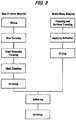
- FIG. 3 is a view showing an example of the manufacturing process of the brake shoe employing the friction material of this invention
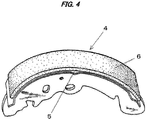
- FIG. 4 is a perspective view of one example of the brake shoe employing the friction material of this invention.
- the friction material is manufactured by forming the NAO friction material composition that neither contains any copper component, nor a metal, nor an alloy, wherein said friction material composition contains 1.0 - 2.0 weight % of zinc sulfide as a lubricant relative to the total amount of the friction material composition, but does not contain tin disulfide.
- the wear resistance of the friction material becomes more preferable and sufficient braking force is obtained without reducing the frictional coefficient.
- Zinc sulfide has an oxidation temperature of about 700 centigrade and can maintain the lubricating effect within the temperature range.
- the friction material composition according to this invention contains, in addition to the lubricant of the zinc sulfide and/or the graphite, the fiber base such as organic fiber and inorganic fiber, the binder such as the thermosetting resin, and the friction modifier such as organic filler, inorganic filler and the abrasive material.
- an organic fiber such as an aramid fiber and an acrylic fiber and an inorganic fiber such as a carbon fiber, a ceramic fiber, and a rock wool can be used, where one or two or more combinations of these fibers can be used.
- the amount of the fiber base contained in the friction material composition is preferably 3 - 10 weight % relative to the total amount of the friction material composition in order to secure the sufficient mechanical strength.
- thermosetting resin such as phenolic resin and epoxy resin
- the resin obtained as a result of modifying above thermosetting resin with such as cashew oil, silicone oil, and various elastomer the resin obtained as a result of dispersing such as the various elastomer and fluoropolymer to above thermosetting resin
- one or two or more combinations of these binders can be used.
- the amount of the binder is preferably 4 - 15 weight % relative to the total amount of the friction material composition in order to secure the sufficient mechanical strength and the wear resistance.
- an organic filler such as cashew dust, rubber dust (pulverized powder of tire tread rubber), and various unvulcanized rubber powder and vulcanized rubber powder
- an inorganic filler such as barium sulfate, calcium carbonate, calcium hydroxide, vermiculite, mica, platelet or flake-like titanate, and magnetite
- the abrasive material such as silica, aluminum oxide, zirconium oxide, zirconium silicate, and magnesium oxide can be used, where one or more of combination of these friction modifiers can be used.
- the amount of the friction modifier is preferably 65 - 90 weight % relative to the total amount of the friction material composition in consideration of the desirable frictional characteristics.
- the friction material of this invention is manufactures through the process of a mixing step of uniformly mixing the prescribed amount of above friction material composition using the mixer, a heat pressure forming step of heat pressure forming the above-obtained raw friction material mixture set in the heat forming die to obtain the heat pressure forming article, a heat processing step of heating the obtained heat pressure forming article to complete the curing of the binder, and a grinding step of making the frictional surface.
- a granulating step of granulating the raw friction material mixture may be performed after the heat pressure forming step.
- a pre-forming step of pressure forming the raw friction material mixture set in the pre-forming die in advance or the granulated substance obtained through the granulating step in the pre-forming die in advance may be performed after the heat pressure forming step.
- a back plate made of metal such as steel and the above friction material mixture, granulating substance or pre-forming article are superposed.
- the back plate is cleaned, surface treated, and adhesive applied in advance.
- the friction material composition with the contents shown in the TABLE 1 and TABLE 2 are mixed with the Loedige Mixer for 5 minutes and pressed in the pre-forming die at 10MPa for 1 minute to obtain the preformed article.
- the obtained preformed article is superposed on the back plate which is cleaned, surface treated, and applied adhesive thereon in advance, and then heat pressure forming in the heat forming die at 40MPa at 150 centigrade for 10 minutes, heat treated (postcured) at 200 centigrade for 5 hours, and grinded to produce the brake pad for automobile (according to the Embodiments 3, 4, and 8 - 11; and Comparative Examples 1-6, and 2A).
- the abrasion amount ( ⁇ m) of the disc rotor was measured and the braking frequency at 1000 cycle was measured to evaluate based on the following standard.
- the friction material of the present invention has an excellent practical value.
Landscapes
- Engineering & Computer Science (AREA)
- General Engineering & Computer Science (AREA)
- Mechanical Engineering (AREA)
- Braking Arrangements (AREA)
Description
- This invention relates to a friction material which is used for a disc brake pad and a brake shoe of an automobile or the like.
- Conventionally, a disc brake device and/or a drum brake device are used as the brake device of the automobile, and a disc brake pad and/or a brake shoe both of which are made by fixing the friction material on a metal base member such as steel are used as a friction member of the brake device.
- The friction material is classified into a semi-metallic friction material containing, as a fiber base, 30 weight % or more but less than 60 weight % of a steel fiber relative to the total amount of the friction material composition, a low steel friction material containing, as a part of the fiber base, less than 30 weight % of the steel fiber relative to the total amount of the friction material composition, and Non-Asbestos-Organic (NAO) friction material not containing a steel-based fiber such as the steel fiber and a stainless steel fiber.
- The friction material generating less braking noise is demanded of late years, it is a recent trend to use the friction member that uses the NAO friction material that does not contain the steel fiber and steel-based fiber but mainly contains a fiber base such as a non-ferrous metal fiber, an organic fiber, and an inorganic fiber, a binder such as a thermosetting resin, an organic filler, an inorganic filler, an inorganic abrasive material, a lubricant, and a friction modifier such as metallic particles.
- Also, because of the environmental consciousness, the friction material that does not contain copper, which is one of heavy metals, has been on demand, and the development of the NAO friction material that does not contain copper component such as a metal copper, a copper alloy, and a copper compound, has been started.
- The Patent Document 1 (
US Provisional Patent Publication No. 2010/0084233 ) discloses the friction material for an automobile brake that contains 12 - 24 volume % of the binder, 2 - 10 volume % of the fiber, 5 volume % or less of at least one type of lubricant, 15 - 30 volume % of at least one type of abrasive material, 10 - 24 volume % of at least one type of titanate and essentially does not contain copper and asbestos, i.e., the NAO friction material that does not contain a copper component. - In the NAO friction material, the copper component, especially a copper fiber and/or a copper particle, have been added as a necessary component to satisfy the required performance, but it became more obvious that removing the copper fiber and copper particle from the NAO friction material causes various problems that did not exist before.
- One of the problems is an occurrence of the metal catch. The metal catch occurs when the abrasion dust of the counter member of the friction material that is generated when the friction material frictionally slides on the counter member such as the disc rotor and brake drum made of cast iron, transfer to adhere to the metal component existing on the sliding surface of the friction material to form metal lump, and the metal lump is pushed into and affixed in the internal portion of the sliding surface of the friction material.
- When the metal catch occurs, the metal lump inside the friction material significantly grinds the counter member to cause vibration when braking and the life span of the friction material is shortened because of abnormal wear of the friction material due to the grinded counter member.
- Conventional friction material that contains a copper fiber and a copper particle, to suppress the metal catch, contains a metal, i. e. a metal simple substance except copper and an alloy that are softer than the counter member and/or the metal sulfide having lubricity.
- The Patent Document 2 (Japanese Provisional Patent Publication No.
2002-226834 - The Patent Document 3 (Japanese Provisional Patent Publication No.
2004-35281 Patent Document 4 relates to an environment-friendly break friction material composition containing 16-36wt% of lubricant, 8-22wt% of binder, 7-15wt% of reinforced fiber, 8-15wt% of abrasive, and 38∼61wt% of filler. The lubricant includes 3∼7wt% of natural graphite, 2∼5wt% of artificial graphite, 3-6wt% of graphite fiber, 4-7wt% of tin sulfide, 2-5wt% of zinc sulfide, and 2-6wt% of iron sulfide.Patent document 5 relates to a friction material comprising a fibrous base material, a binder and a filler, the friction material comprising >=0.05 vol.% and <0.45 vol.% of at least zinc sulfide (ZnS) as the filler. - However, in the NAO friction material that does not contain a copper fiber and a copper particle, it became obvious that the metal catch occurs more when the metal simple substances, alloys, and/or some metal sulfides that have been known to suppress the metal catch are added.
-
- [Patent Document 1]
US Provisional Patent Publication No. 2010/0084233 - [Patent Document 2] Japanese Provisional Patent Publication No.
2002-226834 - [Patent Document 3] Japanese Provisional Patent Publication No.
2004-35281 - [Patent Document 4]
KR 2010 127 968 A - [Patent Document 5]
JP 2006-257113 A - An object of this invention is to provide the friction material that suppresses the metal catch while securing the sufficient wear resistance in the NAO friction material that does not contain a copper component.
- The invention is defined by the appended claims. For the NAO friction material that contains a copper fiber and/or a copper particle as the copper component, the following structural reason is expected to lead to suppress the metal catch when adding the metal simple substance, alloy and/or metal sulfide thereto.
- If a fiber and/or a particle made of a metal simple substance such as tin, and/or an alloy such as brass, are added to the NAO friction material that contains the copper fiber and/or copper particle as the copper component, first, the transferred adhesion layer of metal simple substance and/or alloy is formed on the sliding surface of the counter member by sliding of the friction material and the counter member.
- The metal simple substance and/or alloy of the transferred adhesion layer is transferred to adhere to the copper component of the friction material, thereby inhibiting the occurrence of transferring to adhere the abrasion dust of the counter member to the copper component of the friction material.
The metal simple substance and/or alloy which is transferred and adhere to the copper component of the friction material does not develop the metal lump because of the softness thereof, thereby suppressing the occurrence of the metal catch. - If the metal sulfide is added to the NAO friction material that contains the copper fiber and/or copper particle as the copper component, the lubricating effect of the metal sulfide suppresses the generation of the abrasion dust and at the same time suppresses the metal catch.
- In the NAO friction material that does not contain copper component, if the metal simple substance, alloy, and/or metal sulfide is added thereto, the following structural reason is expected to cause the occurrence of the metal catch.
- If the fiber and/or particle of metal simple substance such as tin, and/or an alloy such as brass, is added to the NAO friction material that does not contain copper fibers and copper particles as the copper component, the abrasion dust of the counter member is transferred to adhere to the metal simple substance and/or alloy which exists on the sliding surface of the friction material to form the metal lump, thereby occurring the metal catch.
- If the metal sulfide is added to the NAO friction material that does not contain the copper fibers and copper particles as the copper component, the generation of the abrasion dust of the counter member is suppressed within the relatively lower temperature range because of the lubricating effect of the metal sulfide, thereby suppressing the metal catch. However, removing the copper which has high thermal conductivity from the friction material reduces the heat dissipation of the friction material and the friction material keeps the heat if the friction material is exposed under high temperature and high load condition, thereby tending to reach the decomposition temperature of the metal sulfide. When the metal sulfide is decomposed into the metal component and the sulfide component, the abrasion dust of the counter member is transferred to adhere to the decomposed metal component to form the metal lump, thereby causing the metal catch. However, some metal sulfides with relatively higher decomposition temperature do not cause occurrence of the metal catch.
- The inventors of this invention surprisingly found out that to suppress the occurrence of the metal catch in the NAO friction material that does not contain the copper fiber and copper particle as the copper component, removing the material conventionally considered to suppress the metal catch was the most effective way of suppressing the metal catch.
- This invention relates to a friction material, which is manufactured by forming a NAO friction material composition that does not contain a copper component, metal and alloys and contains the predetermined particular amount of the metal sulfide as the lubricant, and is based on the following technology.
- According to the invention, the friction material is manufactured by forming a NAO friction material composition that neither contains any copper component, nor a metal, nor an alloy, wherein said friction material composition contains 1.0 - 2.0 weight % of zinc sulfide as a lubricant relative to the total amount of the friction material composition but does not contain tin disulfide.
- It is also advantageous that the friction material composition further contains, as lubricant, 2.0 - 5.0 weight % of graphite relative to the total amount of the friction material composition.
- This invention can provide, for the NAO friction material that does not contain a copper component, the friction material that can suppress the occurrence of the metal catch while securing sufficient wear resistance.
-
FIG. 1 is a view showing an example of the manufacturing process of the disc brake pad employing the friction material of this invention;FIG. 2 is a perspective view of one example of the disc brake pad employing the friction material of this invention;FIG. 3 is a view showing an example of the manufacturing process of the brake shoe employing the friction material of this invention; andFIG. 4 is a perspective view of one example of the brake shoe employing the friction material of this invention. - The friction material is manufactured by forming the NAO friction material composition that neither contains any copper component, nor a metal, nor an alloy, wherein said friction material composition contains 1.0 - 2.0 weight % of zinc sulfide as a lubricant relative to the total amount of the friction material composition, but does not contain tin disulfide.
- If the amount of the added zinc sulfide is within the above-range, the wear resistance of the friction material becomes more preferable and sufficient braking force is obtained without reducing the frictional coefficient.
- Zinc sulfide has an oxidation temperature of about 700 centigrade and can maintain the lubricating effect within the temperature range.
- Further adding 2.0 - 5.0 weight % of the graphite relative to the total amount of the friction material composition as lubricant further improves the wear resistance.
- Also, the friction material composition according to this invention contains, in addition to the lubricant of the zinc sulfide and/or the graphite, the fiber base such as organic fiber and inorganic fiber, the binder such as the thermosetting resin, and the friction modifier such as organic filler, inorganic filler and the abrasive material.
- As the fiber base, an organic fiber such as an aramid fiber and an acrylic fiber and an inorganic fiber such as a carbon fiber, a ceramic fiber, and a rock wool can be used, where one or two or more combinations of these fibers can be used. The amount of the fiber base contained in the friction material composition is preferably 3 - 10 weight % relative to the total amount of the friction material composition in order to secure the sufficient mechanical strength.
- As the binder, the thermosetting resin such as phenolic resin and epoxy resin, the resin obtained as a result of modifying above thermosetting resin with such as cashew oil, silicone oil, and various elastomer, the resin obtained as a result of dispersing such as the various elastomer and fluoropolymer to above thermosetting resin can be used, where one or two or more combinations of these binders can be used.
- The amount of the binder is preferably 4 - 15 weight % relative to the total amount of the friction material composition in order to secure the sufficient mechanical strength and the wear resistance.
- As the friction modifier, an organic filler such as cashew dust, rubber dust (pulverized powder of tire tread rubber), and various unvulcanized rubber powder and vulcanized rubber powder, an inorganic filler such as barium sulfate, calcium carbonate, calcium hydroxide, vermiculite, mica, platelet or flake-like titanate, and magnetite, and the abrasive material such as silica, aluminum oxide, zirconium oxide, zirconium silicate, and magnesium oxide can be used, where one or more of combination of these friction modifiers can be used.
- The amount of the friction modifier is preferably 65 - 90 weight % relative to the total amount of the friction material composition in consideration of the desirable frictional characteristics.
- The friction material of this invention is manufactures through the process of a mixing step of uniformly mixing the prescribed amount of above friction material composition using the mixer, a heat pressure forming step of heat pressure forming the above-obtained raw friction material mixture set in the heat forming die to obtain the heat pressure forming article, a heat processing step of heating the obtained heat pressure forming article to complete the curing of the binder, and a grinding step of making the frictional surface.
- As desired, prior to the heat pressure forming step, a granulating step of granulating the raw friction material mixture, a pre-forming step of pressure forming the raw friction material mixture set in the pre-forming die in advance or the granulated substance obtained through the granulating step in the pre-forming die in advance, and a coating step, a baking finish step following to the coating step, and scorching step may be performed after the heat pressure forming step.
- When manufacturing the disc brake pad, in the earliest stage of the heat pressure forming step, a back plate made of metal such as steel and the above friction material mixture, granulating substance or pre-forming article are superposed. The back plate is cleaned, surface treated, and adhesive applied in advance.
- In the following sections, embodiments and comparative examples are shown to concretely explain this invention, but this invention is not limited to the embodiments described herein.
- The friction material composition with the contents shown in the TABLE 1 and TABLE 2 are mixed with the Loedige Mixer for 5 minutes and pressed in the pre-forming die at 10MPa for 1 minute to obtain the preformed article. The obtained preformed article is superposed on the back plate which is cleaned, surface treated, and applied adhesive thereon in advance, and then heat pressure forming in the heat forming die at 40MPa at 150 centigrade for 10 minutes, heat treated (postcured) at 200 centigrade for 5 hours, and grinded to produce the brake pad for automobile (according to the
Embodiments - The existence of metal catch, aggressiveness against the counter member, wear resistance, and frictional coefficient were evaluated for the obtained substance according to the respective embodiments and comparative examples. The evaluating method is as follows and the result of the evaluation is shown in TABLE 1 and TABLE 2.
- In the wear test, when measuring the frictional wear amount at the respective temperature, the metal catch was visually observed and is evaluated based on the following standard.
- ○: no metal catch
- ×: metal catch
- According to the "Wear Test Procedure on Inertia Dynamometer" of the JASO C427, under the condition of the initial speed of braking at 50 km/h, braking deceleration at 0.3G, appropriate braking frequency, brake temperature before braking operation at 100 centigrade, 200 centigrade, 300 centigrade, and 400 centigrade, the abrasion amount (µm) of the disc rotor was measured and the braking frequency at 1000 cycle was measured to evaluate based on the following standard.
- ⊚: Abrasion amount of the disc rotor (µm) < 15
- ○: 15≦ abrasion amount of the disc rotor (µm) < 20
- Δ: 20≦ abrasion amount of the disc rotor (µm) < 25
- ×: 25≦ abrasion amount of the disc rotor (µm)
- According to the "Wear Test Procedure on Inertia Dynamometer" of the JASO C427, under the condition of the initial speed of braking at 50 km/h, braking deceleration at 0.3G, appropriate braking frequency, brake temperature before braking operation at 100 centigrade, 200 centigrade, 300 centigrade, and 400 centigrade, the wear amount (mm) of the friction material was measured and the braking frequency at 1000 cycle was measured to evaluate based on the following standard.
- ⊚: Wear amount of the disc pad (mm) < 0.15
- ○: 0.15≦ Wear amount of the disc pad (mm) < 0.20
- Δ: 0.20≦ Wear amount of the disc pad (mm) < 0.25
- ×: Wear amount of the disc pad (mm) ≧ 0.25
- According to the "Second Effect Test" of the JASO C406, performing 5 times of the braking test under 4MPa of hydraulic pressure at the initial speed of braking at 50km/h to determine the average value.
- ⊚: 0.42 or more but less than 0.45
- ○: 0.39 or more but less than 042
- Δ: 0.36 or more but less than 0.39
- ×: less than 0.36
- According to TABLE 1 and TABLE 2, in the NAO friction material that does not contain copper component, it was found that containing the zinc sulfide to be decomposed into the metal and sulfur as the lubricant suppress the occurrence of the metal catch and at the same time the required performance for the friction material such as aggressiveness against the counter member, wear resistance, and frictional coefficient can be sufficiently secured.
- In recent year, a friction material that generates less brake noise and does not contain copper, which is the heavy metal, is required, and according to this invention, the friction material that can suppress the occurrence of the metal catch while securing sufficient wear resistance can be obtained, therefore, the friction material of the present invention has an excellent practical value.
-
- 1.
- Disc Brake Pad
- 2.
- Back Plate
- 3.
- Friction Material
- 4.
- Brake Shoe
- 5.
- Brake Shoe Body
- 6.
- Friction Material (Lining)
| CE1 | CE2 | EB3 | EB4 | CE2A | CE3 | CE4 | ||
| Fiber Base | Aramid Fiber | 2 | 2 | 2 | 2 | 2 | 2 | 2 |
| Biosoluble Rock Wool | 3 | 3 | 3 | 3 | 3 | 3 | 3 | |
| Binder | Phenolic Resin | 6 | 6 | 6 | 6 | 6 | 6 | 6 |
| Lubricant | Zinc Sulfide (ZnS) | 0.2 | 0.5 | 1 | 2 | 3 | 0 | 0 |
| Molybdenum Disulfide (MoS2) | 0 | 0 | 0 | 0 | 0 | 1 | 0 | |
| Tungsten Disulfide (WS2) | 0 | 0 | 0 | 0 | 0 | 0 | 1 | |
| Tin Disulfide (SnS2) | 0 | 0 | 0 | 0 | 0 | 0 | 0 | |
| Tin Particle | 0 | 0 | 0 | 0 | 0 | 0 | 0 | |
| Graphite | 4 | 4 | 4 | 4 | 4 | 4 | 4 | |
| Abrasive Material | Zirconium Silicate | 2 | 2 | 2 | 2 | 2 | 2 | 2 |
| Zirconium Oxide | 22 | 22 | 22 | 22 | 22 | 22 | 22 | |
| Organic Filler | Cashew Dust | 5 | 5 | 5 | 5 | 5 | 5 | 5 |
| Pulverized Powder of Tire Tread Rubber | 2 | 2 | 2 | 2 | 2 | 2 | 2 | |
| Inorganic Filler | Mica | 3 | 3 | 3 | 3 | 3 | 3 | 3 |
| Vermiculite | 2 | 2 | 2 | 2 | 2 | 2 | 2 | |
| Magnetite | 3 | 3 | 3 | 3 | 3 | 3 | 3 | |
| Platelet Potassium Hexatitanate | 20 | 20 | 20 | 20 | 20 | 20 | 20 | |
| Calcium Hydroxide | 2 | 2 | 2 | 2 | 2 | 2 | 2 | |
| Barium Sulfate | 23.8 | 23.5 | 23 | 22 | 21 | 23 | 23 | |
| Total | 100 | 100 | 100 | 100 | 100 | 100 | 100 | |
| Evaluation | Metal Catch | ○ | ○ | ○ | ○ | ○ | ○ | ○ |
| Aggressiveness against Counter Member | ⊚ | ⊚ | ⊚ | ⊚ | ⊚ | ○ | ○ | |
| Wear Resistance | Δ | ○ | ⊚ | ⊚ | ⊚ | ○ | ○ | |
| Frictional Coefficient | ⊚ | ⊚ | ⊚ | ○ | Δ | ⊚ | ⊚ | |
| EB = Embodiment CE = Comparative Example |
| EB8 | EB9 | EB10 | EB11 | CE5 | CE6 | |||
| Fiber | Aramid Fiber | 2 | 2 | 2 | 2 | 2 | 2 | |
| | 3 | 3 | 3 | 3 | 3 | 3 | ||
| | Phenolic Resin | 6 | 6 | 6 | 6 | 6 | 6 | |
| Lubricant | Zinc Sulfide (ZnS) | 1 | 1 | 1 | 1 | 0 | 0 | |
| Molybdenum Disulfide (MoS2) | 0 | 0 | 0 | 0 | 0 | 0 | ||
| Tungsten Disulfide (WS2) | 0 | 0 | 0 | 0 | 0 | 0 | ||
| Tin Disulfide (SnS2) | 0 | 0 | 0 | 0 | 1 | 0 | ||
| | 0 | 0 | 0 | 0 | 0 | 1 | ||
| | 1 | 2 | 5 | 6 | 4 | 4 | ||
| Abrasive | Zirconium Silicate | 2 | 2 | 2 | 2 | 2 | 2 | |
| Zirconium Oxide | 22 | 22 | 22 | 22 | 22 | 22 | ||
| Organic | Cashew Dust | 5 | 5 | 5 | 5 | 5 | 5 | |
| Pulverized Powder of | 2 | 2 | 2 | 2 | 2 | 2 | ||
| | Mica | 3 | 3 | 3 | 3 | 3 | 3 | |
| | 2 | 2 | 2 | 2 | 2 | 2 | ||
| | 3 | 3 | 3 | 3 | 3 | 3 | ||
| Platelet Potassium Hexatitanate | 20 | 20 | 20 | 20 | 20 | 20 | ||
| | 2 | 2 | 2 | 2 | 2 | 2 | ||
| Barium Sulfate | 26 | 25 | 22 | 21 | 23 | 23 | ||
| Total | 100 | 100 | 100 | 100 | 100 | 100 | ||
| Evaluation | Metal Catch | ○ | ○ | ○ | ○ | × | × | |
| Aggressiveness against Counter Member | ○ | ○ | ⊚ | ⊚ | Δ | × | ||
| Wear Resistance | Δ | ○ | ⊚ | ⊚ | Δ | × | ||
| Frictional Coefficient | ⊚ | ⊚ | ○ | Δ | ⊚ | ⊚ | ||
Claims (2)
- A friction material that is manufactured by forming a NAO friction material composition that neither contains any copper component nor a metal nor an alloy, wherein
said friction material composition contains 1.0 - 2.0 weight % of zinc sulfide as a lubricant relative to the total amount of the friction material composition but does not contain tin disulfide. - The friction material according to Claim 1, wherein
the friction material composition contains, as lubricant, 2.0 - 5.0 weight % of graphite relative to the total amount of the friction material composition.
Applications Claiming Priority (2)
| Application Number | Priority Date | Filing Date | Title |
|---|---|---|---|
| JP2012122046A JP5738801B2 (en) | 2012-05-29 | 2012-05-29 | Friction material |
| PCT/JP2013/067894 WO2013180315A1 (en) | 2012-05-29 | 2013-06-28 | Friction material |
Publications (3)
| Publication Number | Publication Date |
|---|---|
| EP2894208A1 EP2894208A1 (en) | 2015-07-15 |
| EP2894208A4 EP2894208A4 (en) | 2016-06-29 |
| EP2894208B1 true EP2894208B1 (en) | 2020-02-12 |
Family
ID=49673489
Family Applications (1)
| Application Number | Title | Priority Date | Filing Date |
|---|---|---|---|
| EP13797481.2A Active EP2894208B1 (en) | 2012-05-29 | 2013-06-28 | Friction material |
Country Status (4)
| Country | Link |
|---|---|
| US (1) | US20160298710A9 (en) |
| EP (1) | EP2894208B1 (en) |
| JP (1) | JP5738801B2 (en) |
| WO (1) | WO2013180315A1 (en) |
Families Citing this family (4)
| Publication number | Priority date | Publication date | Assignee | Title |
|---|---|---|---|---|
| JP6474544B2 (en) * | 2013-12-24 | 2019-02-27 | 日清紡ブレーキ株式会社 | Friction material |
| US10233988B2 (en) | 2015-09-23 | 2019-03-19 | Akebono Brake Industry Co., Ltd | Friction material |
| JP6630136B2 (en) | 2015-11-27 | 2020-01-15 | 曙ブレーキ工業株式会社 | Friction material |
| CN107061572A (en) * | 2017-03-13 | 2017-08-18 | 浙江工贸职业技术学院 | A kind of few metal-resin group automobile brake block and preparation method thereof |
Citations (1)
| Publication number | Priority date | Publication date | Assignee | Title |
|---|---|---|---|---|
| JP2006257113A (en) * | 2005-03-15 | 2006-09-28 | Nisshinbo Ind Inc | Friction material |
Family Cites Families (16)
| Publication number | Priority date | Publication date | Assignee | Title |
|---|---|---|---|---|
| JPH04372687A (en) * | 1991-06-22 | 1992-12-25 | Nisshinbo Ind Inc | Nonasbestos friction material |
| JPH07102245A (en) * | 1993-09-30 | 1995-04-18 | Nisshinbo Ind Inc | Nonasbestos friction material |
| DE69514593T2 (en) * | 1994-03-03 | 2000-08-10 | Osaka Gas Co. Ltd., Osaka | BINDING COMPOSITION FOR FRICTION MATERIALS AND FRICTION MATERIAL |
| JP2002226834A (en) * | 2001-01-30 | 2002-08-14 | Nisshinbo Ind Inc | Non-asbestos friction material |
| JP2003113368A (en) * | 2001-10-02 | 2003-04-18 | Nisshinbo Ind Inc | Non-asbestos friction material |
| JP2004035281A (en) | 2002-06-28 | 2004-02-05 | Kinseki Ltd | Method for producing lithium tetraborate single crystal |
| JP2007254621A (en) * | 2006-03-24 | 2007-10-04 | Nisshinbo Ind Inc | Friction material |
| JP2009209288A (en) * | 2008-03-05 | 2009-09-17 | Akebono Brake Ind Co Ltd | Friction material |
| US8172051B2 (en) * | 2008-10-03 | 2012-05-08 | Federal-Mogul Products, Inc. | Friction material for brakes |
| KR20100127968A (en) * | 2009-05-27 | 2010-12-07 | 현대모비스 주식회사 | Eco-friendly brake friction material composition |
| CN101792654B (en) * | 2009-07-27 | 2014-02-26 | 湖北赤壁赛飞摩擦材料有限公司 | Ceramic base/NAO composite friction material and preparation method thereof |
| CN102971550B (en) * | 2010-04-20 | 2016-05-11 | 联合莫古尔摩擦制品有限公司 | Copper-free friction material for brake linings |
| JP6042599B2 (en) * | 2011-03-22 | 2016-12-14 | 日清紡ブレーキ株式会社 | Friction material |
| JP5970749B2 (en) * | 2011-06-07 | 2016-08-17 | 日立化成株式会社 | Non-asbestos friction material composition |
| JP5895367B2 (en) * | 2011-06-07 | 2016-03-30 | 日立化成株式会社 | Non-asbestos friction material composition |
| JP5797073B2 (en) * | 2011-09-26 | 2015-10-21 | 日清紡ブレーキ株式会社 | Friction material manufacturing method |
-
2012
- 2012-05-29 JP JP2012122046A patent/JP5738801B2/en active Active
-
2013
- 2013-06-28 WO PCT/JP2013/067894 patent/WO2013180315A1/en not_active Ceased
- 2013-06-28 EP EP13797481.2A patent/EP2894208B1/en active Active
- 2013-06-28 US US14/766,691 patent/US20160298710A9/en not_active Abandoned
Patent Citations (1)
| Publication number | Priority date | Publication date | Assignee | Title |
|---|---|---|---|---|
| JP2006257113A (en) * | 2005-03-15 | 2006-09-28 | Nisshinbo Ind Inc | Friction material |
Also Published As
| Publication number | Publication date |
|---|---|
| EP2894208A4 (en) | 2016-06-29 |
| JP5738801B2 (en) | 2015-06-24 |
| WO2013180315A1 (en) | 2013-12-05 |
| US20160160951A1 (en) | 2016-06-09 |
| JP2013245338A (en) | 2013-12-09 |
| US20160298710A9 (en) | 2016-10-13 |
| EP2894208A1 (en) | 2015-07-15 |
Similar Documents
| Publication | Publication Date | Title |
|---|---|---|
| US9970501B2 (en) | Friction material | |
| EP3048325B1 (en) | Friction material and friction pair | |
| EP3133134B1 (en) | Friction material | |
| CN111720462B (en) | Friction material | |
| EP2584017B1 (en) | Friction material | |
| KR101904546B1 (en) | Friction material | |
| KR102387551B1 (en) | Friction material | |
| EP3173653B1 (en) | Friction material | |
| CN108291133B (en) | Friction material | |
| EP2894208B1 (en) | Friction material | |
| CN117869500A (en) | Friction material | |
| US20200032869A1 (en) | Friction Material | |
| CN114144494A (en) | Friction material composition, friction material, and disc brake pad | |
| WO2021015003A1 (en) | Friction material | |
| JP2004352813A (en) | Friction material | |
| JP4412475B2 (en) | Friction material | |
| JP4029026B2 (en) | Non-asbestos friction material | |
| CN114174692A (en) | Friction material | |
| JP2010116520A (en) | Friction member and brake gear | |
| JP2014189691A (en) | Brake friction material |
Legal Events
| Date | Code | Title | Description |
|---|---|---|---|
| PUAI | Public reference made under article 153(3) epc to a published international application that has entered the european phase |
Free format text: ORIGINAL CODE: 0009012 |
|
| 17P | Request for examination filed |
Effective date: 20150414 |
|
| AK | Designated contracting states |
Kind code of ref document: A1 Designated state(s): AL AT BE BG CH CY CZ DE DK EE ES FI FR GB GR HR HU IE IS IT LI LT LU LV MC MK MT NL NO PL PT RO RS SE SI SK SM TR |
|
| AX | Request for extension of the european patent |
Extension state: BA ME |
|
| DAX | Request for extension of the european patent (deleted) | ||
| REG | Reference to a national code |
Ref country code: DE Ref legal event code: R079 Ref document number: 602013065748 Country of ref document: DE Free format text: PREVIOUS MAIN CLASS: C09K0003140000 Ipc: F16D0069020000 |
|
| RA4 | Supplementary search report drawn up and despatched (corrected) |
Effective date: 20160530 |
|
| RIC1 | Information provided on ipc code assigned before grant |
Ipc: F16D 69/02 20060101AFI20160523BHEP |
|
| STAA | Information on the status of an ep patent application or granted ep patent |
Free format text: STATUS: EXAMINATION IS IN PROGRESS |
|
| 17Q | First examination report despatched |
Effective date: 20180102 |
|
| GRAP | Despatch of communication of intention to grant a patent |
Free format text: ORIGINAL CODE: EPIDOSNIGR1 |
|
| STAA | Information on the status of an ep patent application or granted ep patent |
Free format text: STATUS: GRANT OF PATENT IS INTENDED |
|
| INTG | Intention to grant announced |
Effective date: 20190822 |
|
| GRAS | Grant fee paid |
Free format text: ORIGINAL CODE: EPIDOSNIGR3 |
|
| GRAA | (expected) grant |
Free format text: ORIGINAL CODE: 0009210 |
|
| STAA | Information on the status of an ep patent application or granted ep patent |
Free format text: STATUS: THE PATENT HAS BEEN GRANTED |
|
| AK | Designated contracting states |
Kind code of ref document: B1 Designated state(s): AL AT BE BG CH CY CZ DE DK EE ES FI FR GB GR HR HU IE IS IT LI LT LU LV MC MK MT NL NO PL PT RO RS SE SI SK SM TR |
|
| REG | Reference to a national code |
Ref country code: GB Ref legal event code: FG4D |
|
| REG | Reference to a national code |
Ref country code: CH Ref legal event code: EP |
|
| REG | Reference to a national code |
Ref country code: AT Ref legal event code: REF Ref document number: 1232510 Country of ref document: AT Kind code of ref document: T Effective date: 20200215 |
|
| REG | Reference to a national code |
Ref country code: IE Ref legal event code: FG4D |
|
| REG | Reference to a national code |
Ref country code: DE Ref legal event code: R096 Ref document number: 602013065748 Country of ref document: DE |
|
| PG25 | Lapsed in a contracting state [announced via postgrant information from national office to epo] |
Ref country code: NO Free format text: LAPSE BECAUSE OF FAILURE TO SUBMIT A TRANSLATION OF THE DESCRIPTION OR TO PAY THE FEE WITHIN THE PRESCRIBED TIME-LIMIT Effective date: 20200512 Ref country code: RS Free format text: LAPSE BECAUSE OF FAILURE TO SUBMIT A TRANSLATION OF THE DESCRIPTION OR TO PAY THE FEE WITHIN THE PRESCRIBED TIME-LIMIT Effective date: 20200212 Ref country code: FI Free format text: LAPSE BECAUSE OF FAILURE TO SUBMIT A TRANSLATION OF THE DESCRIPTION OR TO PAY THE FEE WITHIN THE PRESCRIBED TIME-LIMIT Effective date: 20200212 |
|
| REG | Reference to a national code |
Ref country code: LT Ref legal event code: MG4D |
|
| REG | Reference to a national code |
Ref country code: NL Ref legal event code: MP Effective date: 20200212 |
|
| PG25 | Lapsed in a contracting state [announced via postgrant information from national office to epo] |
Ref country code: IS Free format text: LAPSE BECAUSE OF FAILURE TO SUBMIT A TRANSLATION OF THE DESCRIPTION OR TO PAY THE FEE WITHIN THE PRESCRIBED TIME-LIMIT Effective date: 20200612 Ref country code: GR Free format text: LAPSE BECAUSE OF FAILURE TO SUBMIT A TRANSLATION OF THE DESCRIPTION OR TO PAY THE FEE WITHIN THE PRESCRIBED TIME-LIMIT Effective date: 20200513 Ref country code: HR Free format text: LAPSE BECAUSE OF FAILURE TO SUBMIT A TRANSLATION OF THE DESCRIPTION OR TO PAY THE FEE WITHIN THE PRESCRIBED TIME-LIMIT Effective date: 20200212 Ref country code: LV Free format text: LAPSE BECAUSE OF FAILURE TO SUBMIT A TRANSLATION OF THE DESCRIPTION OR TO PAY THE FEE WITHIN THE PRESCRIBED TIME-LIMIT Effective date: 20200212 Ref country code: SE Free format text: LAPSE BECAUSE OF FAILURE TO SUBMIT A TRANSLATION OF THE DESCRIPTION OR TO PAY THE FEE WITHIN THE PRESCRIBED TIME-LIMIT Effective date: 20200212 Ref country code: BG Free format text: LAPSE BECAUSE OF FAILURE TO SUBMIT A TRANSLATION OF THE DESCRIPTION OR TO PAY THE FEE WITHIN THE PRESCRIBED TIME-LIMIT Effective date: 20200512 |
|
| PG25 | Lapsed in a contracting state [announced via postgrant information from national office to epo] |
Ref country code: NL Free format text: LAPSE BECAUSE OF FAILURE TO SUBMIT A TRANSLATION OF THE DESCRIPTION OR TO PAY THE FEE WITHIN THE PRESCRIBED TIME-LIMIT Effective date: 20200212 |
|
| PG25 | Lapsed in a contracting state [announced via postgrant information from national office to epo] |
Ref country code: PT Free format text: LAPSE BECAUSE OF FAILURE TO SUBMIT A TRANSLATION OF THE DESCRIPTION OR TO PAY THE FEE WITHIN THE PRESCRIBED TIME-LIMIT Effective date: 20200705 Ref country code: DK Free format text: LAPSE BECAUSE OF FAILURE TO SUBMIT A TRANSLATION OF THE DESCRIPTION OR TO PAY THE FEE WITHIN THE PRESCRIBED TIME-LIMIT Effective date: 20200212 Ref country code: EE Free format text: LAPSE BECAUSE OF FAILURE TO SUBMIT A TRANSLATION OF THE DESCRIPTION OR TO PAY THE FEE WITHIN THE PRESCRIBED TIME-LIMIT Effective date: 20200212 Ref country code: ES Free format text: LAPSE BECAUSE OF FAILURE TO SUBMIT A TRANSLATION OF THE DESCRIPTION OR TO PAY THE FEE WITHIN THE PRESCRIBED TIME-LIMIT Effective date: 20200212 Ref country code: LT Free format text: LAPSE BECAUSE OF FAILURE TO SUBMIT A TRANSLATION OF THE DESCRIPTION OR TO PAY THE FEE WITHIN THE PRESCRIBED TIME-LIMIT Effective date: 20200212 Ref country code: CZ Free format text: LAPSE BECAUSE OF FAILURE TO SUBMIT A TRANSLATION OF THE DESCRIPTION OR TO PAY THE FEE WITHIN THE PRESCRIBED TIME-LIMIT Effective date: 20200212 Ref country code: RO Free format text: LAPSE BECAUSE OF FAILURE TO SUBMIT A TRANSLATION OF THE DESCRIPTION OR TO PAY THE FEE WITHIN THE PRESCRIBED TIME-LIMIT Effective date: 20200212 Ref country code: SK Free format text: LAPSE BECAUSE OF FAILURE TO SUBMIT A TRANSLATION OF THE DESCRIPTION OR TO PAY THE FEE WITHIN THE PRESCRIBED TIME-LIMIT Effective date: 20200212 Ref country code: SM Free format text: LAPSE BECAUSE OF FAILURE TO SUBMIT A TRANSLATION OF THE DESCRIPTION OR TO PAY THE FEE WITHIN THE PRESCRIBED TIME-LIMIT Effective date: 20200212 |
|
| REG | Reference to a national code |
Ref country code: DE Ref legal event code: R097 Ref document number: 602013065748 Country of ref document: DE |
|
| REG | Reference to a national code |
Ref country code: AT Ref legal event code: MK05 Ref document number: 1232510 Country of ref document: AT Kind code of ref document: T Effective date: 20200212 |
|
| PLBE | No opposition filed within time limit |
Free format text: ORIGINAL CODE: 0009261 |
|
| STAA | Information on the status of an ep patent application or granted ep patent |
Free format text: STATUS: NO OPPOSITION FILED WITHIN TIME LIMIT |
|
| 26N | No opposition filed |
Effective date: 20201113 |
|
| PG25 | Lapsed in a contracting state [announced via postgrant information from national office to epo] |
Ref country code: IT Free format text: LAPSE BECAUSE OF FAILURE TO SUBMIT A TRANSLATION OF THE DESCRIPTION OR TO PAY THE FEE WITHIN THE PRESCRIBED TIME-LIMIT Effective date: 20200212 Ref country code: AT Free format text: LAPSE BECAUSE OF FAILURE TO SUBMIT A TRANSLATION OF THE DESCRIPTION OR TO PAY THE FEE WITHIN THE PRESCRIBED TIME-LIMIT Effective date: 20200212 Ref country code: MC Free format text: LAPSE BECAUSE OF FAILURE TO SUBMIT A TRANSLATION OF THE DESCRIPTION OR TO PAY THE FEE WITHIN THE PRESCRIBED TIME-LIMIT Effective date: 20200212 |
|
| REG | Reference to a national code |
Ref country code: CH Ref legal event code: PL |
|
| PG25 | Lapsed in a contracting state [announced via postgrant information from national office to epo] |
Ref country code: SI Free format text: LAPSE BECAUSE OF FAILURE TO SUBMIT A TRANSLATION OF THE DESCRIPTION OR TO PAY THE FEE WITHIN THE PRESCRIBED TIME-LIMIT Effective date: 20200212 Ref country code: PL Free format text: LAPSE BECAUSE OF FAILURE TO SUBMIT A TRANSLATION OF THE DESCRIPTION OR TO PAY THE FEE WITHIN THE PRESCRIBED TIME-LIMIT Effective date: 20200212 |
|
| GBPC | Gb: european patent ceased through non-payment of renewal fee |
Effective date: 20200628 |
|
| PG25 | Lapsed in a contracting state [announced via postgrant information from national office to epo] |
Ref country code: LU Free format text: LAPSE BECAUSE OF NON-PAYMENT OF DUE FEES Effective date: 20200628 |
|
| REG | Reference to a national code |
Ref country code: BE Ref legal event code: MM Effective date: 20200630 |
|
| PG25 | Lapsed in a contracting state [announced via postgrant information from national office to epo] |
Ref country code: CH Free format text: LAPSE BECAUSE OF NON-PAYMENT OF DUE FEES Effective date: 20200630 Ref country code: GB Free format text: LAPSE BECAUSE OF NON-PAYMENT OF DUE FEES Effective date: 20200628 Ref country code: LI Free format text: LAPSE BECAUSE OF NON-PAYMENT OF DUE FEES Effective date: 20200630 Ref country code: IE Free format text: LAPSE BECAUSE OF NON-PAYMENT OF DUE FEES Effective date: 20200628 Ref country code: FR Free format text: LAPSE BECAUSE OF NON-PAYMENT OF DUE FEES Effective date: 20200630 |
|
| PG25 | Lapsed in a contracting state [announced via postgrant information from national office to epo] |
Ref country code: BE Free format text: LAPSE BECAUSE OF NON-PAYMENT OF DUE FEES Effective date: 20200630 |
|
| PG25 | Lapsed in a contracting state [announced via postgrant information from national office to epo] |
Ref country code: TR Free format text: LAPSE BECAUSE OF FAILURE TO SUBMIT A TRANSLATION OF THE DESCRIPTION OR TO PAY THE FEE WITHIN THE PRESCRIBED TIME-LIMIT Effective date: 20200212 Ref country code: MT Free format text: LAPSE BECAUSE OF FAILURE TO SUBMIT A TRANSLATION OF THE DESCRIPTION OR TO PAY THE FEE WITHIN THE PRESCRIBED TIME-LIMIT Effective date: 20200212 Ref country code: CY Free format text: LAPSE BECAUSE OF FAILURE TO SUBMIT A TRANSLATION OF THE DESCRIPTION OR TO PAY THE FEE WITHIN THE PRESCRIBED TIME-LIMIT Effective date: 20200212 |
|
| PG25 | Lapsed in a contracting state [announced via postgrant information from national office to epo] |
Ref country code: MK Free format text: LAPSE BECAUSE OF FAILURE TO SUBMIT A TRANSLATION OF THE DESCRIPTION OR TO PAY THE FEE WITHIN THE PRESCRIBED TIME-LIMIT Effective date: 20200212 Ref country code: AL Free format text: LAPSE BECAUSE OF FAILURE TO SUBMIT A TRANSLATION OF THE DESCRIPTION OR TO PAY THE FEE WITHIN THE PRESCRIBED TIME-LIMIT Effective date: 20200212 |
|
| REG | Reference to a national code |
Ref country code: DE Ref legal event code: R082 Ref document number: 602013065748 Country of ref document: DE Representative=s name: STOLMAR & PARTNER PATENTANWAELTE PARTG MBB, DE |
|
| P01 | Opt-out of the competence of the unified patent court (upc) registered |
Effective date: 20230530 |
|
| PGFP | Annual fee paid to national office [announced via postgrant information from national office to epo] |
Ref country code: DE Payment date: 20250629 Year of fee payment: 13 |