EP2891954A1 - User-directed personal information assistant - Google Patents
User-directed personal information assistant Download PDFInfo
- Publication number
- EP2891954A1 EP2891954A1 EP15150025.3A EP15150025A EP2891954A1 EP 2891954 A1 EP2891954 A1 EP 2891954A1 EP 15150025 A EP15150025 A EP 15150025A EP 2891954 A1 EP2891954 A1 EP 2891954A1
- Authority
- EP
- European Patent Office
- Prior art keywords
- user
- sensors
- gesture
- processor
- interest
- Prior art date
- Legal status (The legal status is an assumption and is not a legal conclusion. Google has not performed a legal analysis and makes no representation as to the accuracy of the status listed.)
- Granted
Links
Images



Classifications
-
- G—PHYSICS
- G06—COMPUTING OR CALCULATING; COUNTING
- G06F—ELECTRIC DIGITAL DATA PROCESSING
- G06F3/00—Input arrangements for transferring data to be processed into a form capable of being handled by the computer; Output arrangements for transferring data from processing unit to output unit, e.g. interface arrangements
- G06F3/01—Input arrangements or combined input and output arrangements for interaction between user and computer
- G06F3/017—Gesture based interaction, e.g. based on a set of recognized hand gestures
-
- G—PHYSICS
- G06—COMPUTING OR CALCULATING; COUNTING
- G06F—ELECTRIC DIGITAL DATA PROCESSING
- G06F3/00—Input arrangements for transferring data to be processed into a form capable of being handled by the computer; Output arrangements for transferring data from processing unit to output unit, e.g. interface arrangements
- G06F3/01—Input arrangements or combined input and output arrangements for interaction between user and computer
- G06F3/011—Arrangements for interaction with the human body, e.g. for user immersion in virtual reality
- G06F3/013—Eye tracking input arrangements
-
- G—PHYSICS
- G06—COMPUTING OR CALCULATING; COUNTING
- G06F—ELECTRIC DIGITAL DATA PROCESSING
- G06F3/00—Input arrangements for transferring data to be processed into a form capable of being handled by the computer; Output arrangements for transferring data from processing unit to output unit, e.g. interface arrangements
- G06F3/01—Input arrangements or combined input and output arrangements for interaction between user and computer
- G06F3/03—Arrangements for converting the position or the displacement of a member into a coded form
- G06F3/033—Pointing devices displaced or positioned by the user, e.g. mice, trackballs, pens or joysticks; Accessories therefor
- G06F3/038—Control and interface arrangements therefor, e.g. drivers or device-embedded control circuitry
-
- G—PHYSICS
- G06—COMPUTING OR CALCULATING; COUNTING
- G06F—ELECTRIC DIGITAL DATA PROCESSING
- G06F3/00—Input arrangements for transferring data to be processed into a form capable of being handled by the computer; Output arrangements for transferring data from processing unit to output unit, e.g. interface arrangements
- G06F3/16—Sound input; Sound output
- G06F3/167—Audio in a user interface, e.g. using voice commands for navigating, audio feedback
-
- G—PHYSICS
- G06—COMPUTING OR CALCULATING; COUNTING
- G06F—ELECTRIC DIGITAL DATA PROCESSING
- G06F9/00—Arrangements for program control, e.g. control units
- G06F9/06—Arrangements for program control, e.g. control units using stored programs, i.e. using an internal store of processing equipment to receive or retain programs
- G06F9/44—Arrangements for executing specific programs
- G06F9/451—Execution arrangements for user interfaces
- G06F9/453—Help systems
-
- G—PHYSICS
- G06—COMPUTING OR CALCULATING; COUNTING
- G06T—IMAGE DATA PROCESSING OR GENERATION, IN GENERAL
- G06T7/00—Image analysis
- G06T7/70—Determining position or orientation of objects or cameras
- G06T7/73—Determining position or orientation of objects or cameras using feature-based methods
-
- G—PHYSICS
- G10—MUSICAL INSTRUMENTS; ACOUSTICS
- G10L—SPEECH ANALYSIS TECHNIQUES OR SPEECH SYNTHESIS; SPEECH RECOGNITION; SPEECH OR VOICE PROCESSING TECHNIQUES; SPEECH OR AUDIO CODING OR DECODING
- G10L17/00—Speaker identification or verification techniques
- G10L17/22—Interactive procedures; Man-machine interfaces
-
- G—PHYSICS
- G06—COMPUTING OR CALCULATING; COUNTING
- G06F—ELECTRIC DIGITAL DATA PROCESSING
- G06F2203/00—Indexing scheme relating to G06F3/00 - G06F3/048
- G06F2203/038—Indexing scheme relating to G06F3/038
- G06F2203/0381—Multimodal input, i.e. interface arrangements enabling the user to issue commands by simultaneous use of input devices of different nature, e.g. voice plus gesture on digitizer
Definitions
- Embodiments of the present invention generally relate to information retrieval and, more specifically, to a user-directed personal information assistant.
- Such devices provide users with convenient access to databases that include information on a variety of topics.
- a user may submit a textual query associated with the object of interest to a search engine. Search results for the textual query are then presented to the user, enabling the user to visit different websites in order to locate the website that contains the most relevant information.
- One common obstacle confronted by users attempting to locate information about an object of interest is providing an accurate textual description of the object to the search engine. For example, in many situations, a user would like to learn specific information about a particular object that the user has come across, but the user may not be able to accurately identify the object to the search engine (e.g., using an object name or some other type of object identifier). Consequently, in such instances, the user must first determine the identity of the object by describing one or more physical attributes of the object to the search engine. Then, to the extent the object is identified by the search engine, the user might need to perform an additional search to locate a specific type of information about the object. This type of multistep process, which is common with current search techniques, is tedious and oftentimes produces unsatisfactory results.
- One embodiment of the present invention sets forth a method for identifying a characteristic of an object.
- the technique includes determining that the object is a target of a directional gesture and detecting a trigger event that occurs while the object is the target of the directional gesture.
- the technique further includes, in response to the trigger event, acquiring sensor data associated with the object via one or more sensors and analyzing the sensor data to identify at least one characteristic of the object.
- At least one advantage of the various embodiments is that a user is able to acquire specific information about objects located in the user's environment. Additionally, the user is able to acquire information about objects that the user cannot accurately identify, such as objects that do not have an official name, objects that may be referred to by multiple names, and/or objects which are difficult to precisely describe. Further, the disclosed techniques enable the user to acquire information about an object using convenient voice prompts, gestures, and/or other types of triggers.
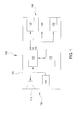
- Figure 1 illustrates an information assistant 100 configured to implement one or aspects of various embodiments.
- the information assistant 100 may include, without limitation, a device body 104, a processing unit 102, a memory 110, a speaker 112, a microphone 114, a camera 120, and one or more input/output (I/O) devices (e.g., I/O device 122 and I/O device 124).
- the device body 104 may include a first side 105 and a second side 106.
- the microphone 114 is configured to acquire sound from the surrounding environment and transmit signals associated with the sound to the processing unit 102. For example, and without limitation, the microphone 114 may acquire voice prompts spoken by the user. Consequently, in some embodiments, the microphone 114 is located in a portion of the first side 105 of the device body 104, and the first side 105 faces the user during operation of the information assistant 100. In the same or other embodiments, the microphone 114 may be located in a different portion of the device body 104 and/or one or more additional microphones 114 may be included in portions of the device body 104 (e.g., in a portion of the second side 106 of the device body 104). For example, and without limitation, a microphone 114 may be located in a portion of the second side 106 in order to acquire audio samples from an object of interest.
- one or more microphones 114 may be physically separate from the device body 104 and coupled to the processing unit 102 via a wired connection or wireless connection.
- one or more microphones 114 may be positioned on the user's body (e.g., head, arm, hand, etc.) and/or on one or more other devices (e.g., electronic device, vehicle, etc.) the user is operating. Such microphones 114 may then be coupled to the processing unit 102 via a wired connection or wireless connection.
- the speaker 112 may be located in a portion of the first side 105 of the device body 104.
- the speaker 112 is configured to produce sounds based on signals that are generated by the processing unit 102 and/or other signals that are transmitted to the speaker 112.
- the speaker 112 may output auditory information to the user to describe one or more objects that have been identified by the information assistant 100.
- one or more speakers 112 are located in a different portion of the device body 104.
- one or more speakers 112 may be physically separate from the device body 104 and coupled to the processing unit 102 via a wired connection or wireless connection.
- one or more speakers 112 may be located in a headset worn by the user, in a vehicle or electronic device being operated by the user, and the like.
- the camera 120 is configured to capture images of the user's surroundings, such as one or more images of an object of interest. Consequently, the camera 120 may be located in a portion of the device body 104 that enables the camera 120 to capture images from the user's point of view. The camera 120 may be located in a portion of the second side 106 of the device body 104. In some embodiments, the second side 106 of the device body 104 faces away from the user, towards one or more objects of interest, during operation of the information assistant 100.
- the camera 210 may be positioned on the user's body (e.g., head, arm, hand, etc.) and/or on one or more other devices (e.g., electronic device, vehicle, etc.) the user is operating, such as on a vehicle in which the user is traveling.
- the user's body e.g., head, arm, hand, etc.
- one or more other devices e.g., electronic device, vehicle, etc.
- one or more cameras 120 are configured to capture images of the user.
- a camera 120 may capture images of the user (e.g., the user's face, eyes, body, limbs, etc.) and transmit the images to the processing unit 102.
- the processing unit 102 analyzes the images to determine an eye gaze direction of the user, a direction in which the user is pointing, whether a particular gesture (e.g., hand gesture, arm gesture, facial gesture, etc.) is being performed by the user, the positions of the user's arms and/or legs, and the like. Based on the analysis of the images, the processing unit 102 may then determine an object of interest that is being targeted by the user. Further, in some embodiments, the camera 120 identifies gestures and/or determines the position of the user's arms and/or legs.
- a particular gesture e.g., hand gesture, arm gesture, facial gesture, etc.
- the I/O devices may include one or more types of sensors that enable the information assistant 100 to identify an object of interest and/or determine one or more characteristics of an object of interest.
- the I/O devices may include one or more image sensors (e.g., a visible light sensor, infrared sensor, etc.), depth sensors, and/or one or more auditory sensors that acquire different types of sensor data including image data, thermal data, depth data, and/or audio samples for analysis by the processing unit 102.
- the I/O devices may include one or more radiofrequency (RF) sensors, spectrometers, sensor arrays (e.g., molecular sensors, chemosensors, etc.), tomographic sensors, and the like that acquire other types of sensor data.
- RF radiofrequency
- spectrometers e.g., molecular sensors, chemosensors, etc.
- sensor arrays e.g., molecular sensors, chemosensors, etc.
- tomographic sensors e.g., a RF sensor, spectrometer, sensor array, and/or tomographic sensor may be used to determine the composition of an object by detecting a first type of sensor data (e.g., image data, audio data, etc.) and a second type of sensor data (e.g., an odor profile or vaporized chemical composition, spectroscopic data, electromagnetic energy, tomographic data, etc.). The composition of the object may then be compared to reference compositions stored in a remote database or local database in order to
- the I/O devices may include one or more motion sensors, accelerometers, compasses, global positioning system (GPS) receivers, gyroscopes, physiological sensors, electroencephalography (EEG), electromyography (EMG), electrocardiography (ECG), etc. that are configured to detect movement, location, and/or orientation of the information assistant 100.
- GPS global positioning system
- gyroscopes physiological sensors
- EEG electroencephalography
- EMG electromyography
- ECG electrocardiography
- these types of I/O devices may be used to detect user gestures and/or trigger detection of a gesture or object of interest, as described below in further detail in conjunction with Figure 2A .
- the I/O devices may be used to determine which object, if any, is being targeted by the user.
- a GPS receiver may be used to determine the location of the user, and a compass and/or gyroscope may be used to determine the direction in which the information assistant 100 is pointing (e.g., the direction in which the user is pointing the information assistant 100). The GPS location and the direction may then be used to determine the object of interest that is being targeted by the user, as described in further detail in conjunction with Figure 7 .
- the I/O devices include one or more communication devices, such as RF communication devices, (e.g., 802.11x devices, Bluetooth® modules, cellular radios, etc.), near-field communication (NFC) tags, NFC readers, infrared communication devices, and the like.
- the communication device(s) may be configured to transmit information to and/or receive information from microphones 114, speakers 112, cameras 120, and/or other I/O devices. Additionally, the communication device(s) may be configured to retrieve information from and/or store information in a remote database (e.g., via a local area connection and/or the Internet).
- the processing unit 102 is configured to receive signals from the microphone 114, the camera 120, and the one or more input/output (I/O) devices and process the signals, either alone or in combination, in order to determine the identity and/or characteristics of an object of interest. In some embodiments, the processing unit 102 is further configured to transmit signals to the speaker 112 and/or a display to inform the user of the identity of the object of interest and/or of one or more characteristics of the object of interest. In the same or other embodiments, the processing unit 102 is further configured to transmit signals to one or more I/O devices to inform the user of the identity of the object of interest and/or of one or more characteristics of the object of interest. For example, and without limitation, the processing unit 102 may transmit signals to a Bluetooth® module in order to provide auditory, visual, or haptic information to a Bluetooth® device being operated by the user.
- I/O input/output
- the memory 110 may store one or more applications that are executed by the processing unit 102 to perform analysis on data received from the microphone 114, the camera 120, and the one or more input/output (I/O) devices. Additionally, in some embodiments, the memory 110 stores a database that includes reference information (e.g., image data, spectral data, look-up tables, audio data, geographical data, language models, etc.) to which data received from the microphone 114, the camera 120, and the one or more input/output (I/O) devices can be compared to determine the identity and/or characteristics of an object of interest.
- reference information e.g., image data, spectral data, look-up tables, audio data, geographical data, language models, etc.
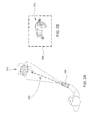
- Figures 2A and 2B illustrate a technique for operating the information assistant 100 of Figure 1 , according to various embodiments.
- the information assistant 100 may be attached to the user in a manner the enables the user to direct the information assistant 100 towards an object of interest 210.
- the information assistant 100 may be attached to the user's arm and/or hand, allowing the user to target an object of interest 210 for identification and/or characterization by the information assistant 100 by pointing at the object of interest 210.
- the information assistant 100 (and/or one or more components of the information assistant 100) may be attached to other parts of the user, such as the user's head, shoulders, torso, etc.
- the user may perform multi-modal actions to interact with the information assistant 100.
- the multi-modal actions include a directional gesture and a trigger event.
- the user may perform a directional gesture by pointing or looking at an object of interest 210 and/or by pointing the information assistant 100 at the object of interest 210.
- the user may then verbally trigger the information assistant 100 by speaking a voice prompt to the information assistant 100 via the microphone 114, such as by asking, "what is that" or "what type of turtle is that?"
- the information assistant 100 determines which object is being targeted by the user (e.g., based on the direction of the user's arm or eye gaze) and analyzes data received from the camera 120 and/or one or more I/O devices (e.g., image data, sound data, sensory data, etc. received from I/O device 122 and/or I/O device 124) to identify and/or characterize the object 210. Additionally, the type of information provided to the user may depend on the voice prompt.
- the information assistant 100 may analyze the voice prompt to determine the specific type of information requested by the user (e.g., the species of turtle). The information assistant 100 may then provide information about the object of interest 210 to the user via the speaker 112, an I/O device, a display, etc.
- the specific type of information requested by the user e.g., the species of turtle.
- the information assistant 100 may then provide information about the object of interest 210 to the user via the speaker 112, an I/O device, a display, etc.
- the directional gesture may include any manner of indicating the object of interest 210 that is to be analyzed by the information assistant 100.
- Examples of directional gestures include, without limitation, hand gestures, limb gestures, eye gaze gestures, and gestures with objects, such as the information assistant 100, sensors, pointing devices, etc.
- the information assistant 100 may detect directional gestures using a camera 120 or I/O device included in the device body 104.
- the information assistant 100 may detect directional gestures using a camera 120 or I/O device that is separate from the device body 104 and coupled to the information assistant 100 via a wired or wireless connection.
- the information assistant 100 may detect eye gaze gestures via an eye gaze sensor that is mounted on the user's head (e.g., a head-mounted display, headphones, etc.) or body and/or via an environment-mounted eye gaze sensor that is facing, but not directly attached to, the user (e.g., a Tobii® eye gaze detection system). Additional examples of directional gesture detection sensors are described in conjunction with Figures 5A-7 .
- Trigger events that are recognized by the information assistant 100 may include, without limitation, voice prompts, motion-based trigger events, time-based trigger events, input device trigger events, implicit trigger events, and the like.
- a voice prompt may include a verbal query (e.g., "what is X?" or "what type of X is that?") and/or a voice command (e.g., "analyze X" or "search for X").
- motion-based trigger events include, without limitation, movement (e.g., rotation, tapping, shaking, etc.) of the information assistant 100 or of an I/O device coupled to the information assistant 100.
- Time-based trigger events may include performing any directional gesture for a specified period of time. For example, and without limitation, the user may perform and hold a hand gesture, limb gesture, eye gaze gesture, etc. for a specified period of time to trigger the information assistant 100 to identify and/or characterize and object of interest 210 being targeted by the directional gesture.
- Implicit trigger events may include, without limitation, pressing a button on or associated with the information assistant 100 and/or interacting with an I/O device coupled to the information assistant 100 in a manner intended to trigger the information assistant to identify and/or characterize an object of interest 210.
- Implicit trigger events may include, without limitation, criteria that indicate interest by the user in a particular object the user is currently looking at or pointing too. In some embodiments, such criteria include changes to the user's physiological state, such as pupil dilation or heart rate. For example, and without limitation, the user may trigger the information assistant 100 when his or her pupils dilate and/or when the user's heart rate increases.
- a voice prompt may modify a directional gesture or may be used in place of a directional gesture to target an object of interest 210. For example, and without limitation, if a user speaks the directional voice prompt "what type of car is to my right?" the information assistant 100 may detect the current directional gesture (e.g., the direction of the user's body position and/or eye gaze) and analyze data associated with an object that is to the right of the directional gesture.
- the current directional gesture e.g., the direction of the user's body position and/or eye gaze
- the information assistant 100 determines that a multi-modal action (e.g., a directional gesture and a trigger event) has been received, the information assistant 100 isolates data (e.g., color data, depth data, spectroscopic data, audio data, etc.) associated with the object of interest 210 from other data in the surrounding environment that is unrelated to the object of interest 210.
- data e.g., color data, depth data, spectroscopic data, audio data, etc.
- the directional gesture may be used to capture one or more images of an object of interest 210 (e.g., mechanically with a pan-tilt mechanism or via post-processing) and/or analyze one or more images to visually isolate the object of interest 210.
- Isolating the object of interest 210 may include any effective manner of image processing, including, without limitation, cropping an image, performing edge detection on objects included in an image, applying an object recognition algorithm to an image, comparing an image to one or more images included in a database, and the like.
- the processing unit 102 (or a remote server in communication with the information assistant 100) may analyze an image acquired by the camera 120 to perform scene analysis.
- scene analysis includes determining which portions of the image include the object of interest 210 and which portions are unrelated to the object of interest 210. The portions of the image relating to the object of interest 210 may then be compared to data stored in a database to determine that the object of interest 210 is a turtle and/or to determine the species of the turtle.
- Information about the object of interest 210 may then be communicated to the user by the information assistant 100.
- multiple objects included in one or more images acquired by the camera 120 and/or I/O devices may be detected, and the directional gesture and/or trigger event may be used to isolate the object of interest 210 that is being targeted by the user.
- the object of interest 210 is then analyzed by the information assistant 100.
- data received from the camera 120 and/or the I/O devices is analyzed by comparing the data to data stored in a database. Additionally, the processing unit 102 may apply one or more algorithms to the data before and/or after comparing the data to data included in a database. As described above, various types of data processing techniques may be used to determine the identity and/or characteristics of an object of interest 210, for example, and without limitation, image recognition techniques, auditory techniques, spectroscopic techniques, geographical techniques, etc. Further, any of the data analysis techniques described herein may be combined to identity and/or characterize an object of interest 210. In some embodiments, data acquired by the information assistant 100 is transmitted to a remote server and analyzed remotely. The results of the analysis are then transmitted back to the information assistant 100 and provided to the user.
- the information assistant 100 will look up information associated with the identified object.
- the information assistant 100 may acquire such information from local sources (e.g., a local knowledge base, a local copy of Wikipedia®, etc.) and/or from a remote server (e.g., Wikipedia®, Google®, Wolfram Alpha®, etc.).
- the information assistant 100 may access specific databases based on the type of object that is identified. For example, and without limitation, if the object of interest 210 is a leaf or tree, then the information assistant 100 may access a database of known leaves, plants, and trees (e.g., LeafSnapTM).
- the information assistant may learn where objects of interest 210 are situated in the user's environment and remember the location(s) of those objects in the future to enable more efficient recognition for the original user or another user. For example, and without limitation, if the information assistant 100 is implemented for an indoor setting, the information assistant 100 may learn where the user's furniture is located and, after an initial training phase, may recognize the furniture based on the stored location(s).
- the information assistant 100 may train the information assistant 100 to recognize the object of interest 210. This information may then be stored locally or remotely (e.g., in cloud storage) to enable the information to be later accessed by the user and/or by other users of information assistants 100. Accordingly, the information assistant 100 may learn from other users' interactions with an information assistant 100 via a remote server, enabling the information assistant 100 to utilize the "collective intelligence" of a community.
- Figure 3 illustrates locations at which different components of the information assistant 100 of Figure 1 may be attached to a user, according to various embodiments.
- one or more components of the information assistant 100 may be attached to a user's hand/fingers 310, wrist 312, forearm 314, and/or upper arm/shoulder 316.
- the device body 104 of the information assistant 100 may be attached to the user's forearm 314 (as shown in Figure 2A ), such that the user is able to point the information assistant 100 in the direction of the object of interest 210.
- any of the cameras 120, microphones 114, and/or I/O devices may be coupled to the user's hand/fingers 310, wrist 312, and/or upper arm/shoulder 316.
- one or more I/O devices are coupled to a user's finger nail(s) and optionally use the body's electric field as a power source and/or a communication channel.
- an I/O device may be included in a thimble that is placed on the user's finger, such as for performing proximity sensing.
- a camera 120, microphone 114, and/or I/O device may be coupled to the user's hand/fingers 310 to enable the user to collect data in close proximity and/or contact with the object of interest 210.
- a user may use an I/O device (e.g., sensor array, spectrometer, tomographic sensor) coupled to the user's finger to collect data from a food item the user would like to identify or characterize. The user may then use a voice prompt such as "what type of food is this?" or "is this vegetarian?" to cause (e.g., trigger) the information assistant 100 to analyze the object of interest 210 being targeted by the user.
- I/O device e.g., sensor array, spectrometer, tomographic sensor
- the information assistant 100 acquires data from the I/O device(s), camera(s), etc. and causes the data to be processed locally and/or remotely to determine the identity and/or characteristics of the food. Once processing is complete, the information assistant 100 may then respond by indicating, for example, and without limitation, the type of food, ingredients included in the food, and/or whether the food is vegetarian. In some embodiments, this type of detailed analysis is performed by referencing data received from other users that have acquired data from the same or similar types of objects of interest.
- data associated with that type of food may be stored in a collaborative database and referenced by the information assistant 100 to determine that the user has targeted an object of interest 210 that includes ingredients that are the same or similar to those included in the archived food item.
- any of the components of the information assistant 100 described above may be attached to the user's wrist 312 and/or upper arm/shoulder 316.
- a camera 120 may be attached to the user's upper arm/shoulder 316 to track movement of the user's arm and the object of interest 210 that is being targeted by the user (e.g., via finger pointing).
- an I/O device may be attached to the user's wrist 312, another I/O device may be attached to the user's upper arm/shoulder 316, and the position of the I/O devices relative to one another may be used to detect directional gestures and/or trigger events as described below in conjunction with Figures 4A and 4B .
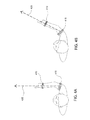
- FIGS 4A and 4B illustrate a technique for detecting directional gestures and/or trigger events based on I/O devices attached to an arm of a user, according to various embodiments.
- two or more I/O devices may be attached to the user (e.g., the user's wrist 312 and the user's upper arm/shoulder 316).
- the relative positions of the I/O devices may then be used to detect directional gestures and/or trigger events performed by the user.
- the location of an I/O device 410 located on the user's wrist 312 may be determined relative to an I/O device 415 the user's upper arm/shoulder 316 to determine a direction 420 in which the user is pointing.
- the absolute position(s) (e.g., geolocation) of one or more of the I/O devices 410, 415 may be used to determine directional gestures performed by user.
- the I/O devices may include infrared, RF, visible light, and/or other types of sensors that use techniques (e.g., triangulation, trilateration, etc.) to determine the relative position, in two dimension or three dimensions, of an user's limb relative to the rest of the user's body.
- the I/O devices may be mounted on finger rings, smart watches, wrist bands, finger nails, and the like.
- the I/O devices may use accelerometers, gyroscopes, electrodes, and other types of sensors that measure the acceleration and speed of the user's limbs and/or activity of the user's muscles to determine the location of the limbs, hands, and/or fingers (e.g., MyoTM by Thalmic LabsTM).
- the information assistant may generate a two-dimensional or three-dimensional vector (e.g., direction 420), which may be transmitted to or otherwise processed by the information assistant 100 as a directional gesture.
- Figures 5A and 5B illustrate a technique for detecting directional gestures and/or trigger events with the information assistant 100 of Figure 1 implemented in an automotive environment, according to various embodiments.
- one or more components of the information assistant 100 may be separate from a device body 104 of the information assistant 100.
- a camera 120-1 (or other type of I/O device) may be disposed on a roof of an automobile and/or within an automotive cabin, behind the user, in order to capture directional gestures, trigger events performed by the user, and/or images of an object of interest.
- a user-facing camera 120-2 (or other type of I/O device) is coupled to the information assistant 100 to detect directional gestures (e.g., arm pointing, eye gaze direction, etc.) and/or trigger events performed by the user.
- directional gestures e.g., arm pointing, eye gaze direction, etc.
- One or both of the camera 120-1 and camera 120-2 may include any type of sensor described above, such as image sensors, depth sensors, infrared sensors, etc.
- one or both of the camera 120-1 and camera 120-2 may be a pan and tilt camera that is able to pan left and right as well as tilt up and down.
- Information about the object of interest 210 may be provided to the user via speakers 112 that are located in the automotive cabin. Further, although not shown in Figure 5A , one or more microphones 114 may be included in the automotive environment to acquire voice prompts spoken by the user and/or to acquire audio samples from the environment to assist in analyzing an object of interest 210.
- Figures 6A-6D illustrate a technique for determining an object of interest 210 being targeted by a user of the information assistant 100 of Figure 1 implemented in an automotive environment, according to various embodiments.
- the information assistant 100 may include a camera 120 or other type of I/O device that faces the user's environment and captures images of potential objects of interest 210.
- the camera 120 is a wide-angle camera that captures images using an angle-of-view 605 of at least 90° and, in some embodiments, an angle-of-view 605 of at least 120° or up to a full 360° view.
- An object of interest 210 included in the wide-angle images is then isolated using the direction 420 of a directional gesture performed by the user.
- the direction 420 is used to determine a sub-angle 610 (e.g., the rectangular area around the tree shown in Figure 6C ) of the angle-of-view 605. Then, one or more wide-angle images may be processed to isolate an object of interest 210 that is located within the sub-angle 610 (e.g., resulting in the image shown in Figure 6D ). The processed image(s) (e.g., Figure 6D ) (including the isolated object of interest 210) is/are then analyzed to identify and/or characterize the object of interest 210. In some embodiments, the direction 420 of the directional gesture is determined using one or more of the techniques described above in conjunction with Figures 1-5A . Additionally, the processed image(s) of the object of interest 210 may be analyzed using one or more of the data analysis techniques described above in conjunction with Figures 1-5A .
- a sub-angle 610 e.g., the rectangular area around the tree shown in Figure 6C
- one or more wide-angle images may be processed to isolate an
- Figure 7 illustrates a technique for determining an object of interest 210 being targeted by a user based on a global positioning system (GPS) device coupled to the information assistant 100 of Figure 1 , according to various embodiments.
- the information assistant 100 may include a GPS receiver configured to detect the location of the user 705. Then, once the location of the user 705 and the direction 420 of the object of interest 210 relative to the user have been determined, the location of the object of interest 710 can be determined.
- GPS global positioning system
- a vector is extended from the location of the user 705 in the direction 420 of the directional gesture. Then, the vector may be cross-referenced with geographical data (e.g., map data, such as Google® Maps or Google® Street View) to determine the identity of the object of interest 210 (e.g., a house or landmark). Additionally, once the identity of the object of interest 210 is determined, the information assistant 100 may acquire additional information about the object of interest 210 and provide the additional information to the user.
- geographical data e.g., map data, such as Google® Maps or Google® Street View
- the information assistant 100 may acquire cached images of the surrounding area (e.g., via Google® Street View) associated with the location 705 and analyze the images based on the direction 420 to identify an object of interest 210.
- the direction 420 may be used to determine which image orientation(s) will be analyzed to identify the object of interest 210.
- the components of the information assistant 100 shown in Figures 5A-7 are separate from the device body 104, these components may be configured to detect directional gestures and trigger events, transmit data to the processing unit 102, and/or provide information about an object of interest 210 to the user in a substantially similar manner as described above in conjunction with Figures 1-4B .
- any aspects of the techniques shown in Figures 5A-7 may be combined with any aspects of the techniques described above in conjunction with Figures 1-4B to identify and/or characterize an object of interest 210.
- Figure 8 is a flow diagram of method steps for identifying a characteristic of an object that is being targeted by a directional gesture via an information assistant 100, according to various embodiments. Although the method steps are described in conjunction with the systems of Figures 1-7 , persons skilled in the art will understand that any system configured to perform the method steps, in any order, falls within the scope of the present invention.
- a method 800 begins at step 810, where the processing unit 102 determines whether an object 210 is being targeted by a directional gesture.
- An object of interest 210 may be targeted by a directional gesture using any of the techniques described above.
- the processing unit 102 analyzes sensor data (e.g., image data and/or depth data) received via one or more I/O devices to determine whether a directional gesture (e.g., hand/arm pointing, eye gaze, voice prompt, etc.) performed by a user intersects an object in the surrounding environment.
- sensor data e.g., image data and/or depth data
- the voice prompt includes a directional gesture (e.g., a directional voice prompt), such as by prompting the information assistant 100 to identify an object that is to the right/left of the user, to a compass direction (e.g., north, east, south, west) relative to the user, at an angular position relative to the user (e.g., 70° relative to the direction in which is user is facing), at a clockwise position relative to the user (e.g., at the user's 2 o'clock), and the like.
- a directional gesture e.g., a directional voice prompt
- the processing unit 102 may analyze acceleration and/or orientation data received via one or more I/O devices to determine that the information assistant 100 is being pointed at an object 210 and/or that a portion of the user's body is being pointed at an object 210.
- an accelerometer and/or gyroscope may determine that the information assistant 100 has been moved from a first position (e.g., at the user's side, facing the ground) to a second position (e.g., pointed out in front of the user, facing a direction that is substantially parallel to the ground).
- the processing unit 102 may determine that an object 210 is being targeted by a directional gesture - and may also determine directional data associated with the directional gesture - when a user points at an object 210, looks at an object 210, points the information assistant 100 at an object 210, speaks a voice prompt, and the like.
- processing unit 102 determines that a directional gesture is targeting an object of interest 210, then the method proceeds to step 820. If an object of interest 210 is not being targeted by a directional gesture, then the processing unit 102 continues to monitor for a directional gesture.
- trigger events that are recognized by the information assistant 100 may include, without limitation, voice prompts, motion-based trigger events, time-based trigger events, input device trigger events, implicit trigger events, and the like.
- a trigger event is detected via sensor data (e.g., image data, audio samples, accelerometer data, gyroscopic data, and the like) received from one or more I/O devices (e.g., from EMG and muscle activity sensors), as described above.
- a motion-based trigger may be detected by analyzing, via the processing unit 102, one or more images acquired via the camera 120 to determine that the user has winked, performed a hand/arm gesture, and the like.
- a motion-based trigger may be detected by analyzing data received from an accelerometer and/or gyroscope to determine that the information assistant 100 has been moved (e.g., rotated, lifted, shook, etc.) in a particular manner.
- a voice prompt may serve as both a directional gesture that is targeting an object of interest 210, as described above, as well as a trigger event indicating that information is to be acquired for the object of interest 210.
- a time-based trigger event may be detected by analyzing data received via a camera 120, microphone 114, and/or one or more I/O devices to determine that an object 210 has been targeted by a directional gesture for a specified period of time (e.g., 1 to 3 seconds).
- a directional gesture for a specified period of time (e.g. 1 to 3 seconds).
- the processing unit 102 may determine that a hand gesture, limb gesture, eye gaze gesture, etc. has been targeting an object 210 for a specified period of time.
- step 830 If a trigger event is received while the object 210 is being targeted by the directional gesture, then the method 800 proceeds to step 830. If no trigger event is received while the object 210 is being targeted by the directional gesture, then the method 800 returns to step 810.
- step 810 and step 820 may be reversed such that step 820 is performed before step 810.
- the processing unit 102 may first determine whether a trigger event has been received. If a trigger event is not received, then the processing unit 102 may continue to monitor for a trigger event. If a trigger event is received, the method 800 may then proceed to step 810, where the processing unit 102 next determines an object of interest 210 that is being targeted by a directional gesture. If an object 210 is being targeted by the directional gesture when the trigger event is received by the information assistant 100, then the method 800 proceeds to step 830.
- the information assistant 100 acquires sensor data associated with the object of interest 210 being targeted by the directional gesture.
- the information assistant 100 may acquire sensor data via one or more I/O devices, microphones 114, and/or cameras 120.
- the information assistant 100 may acquire image data, depth data, and/or audio samples via one or more image sensors, depth sensors, and/or auditory sensors.
- the information assistant 100 may acquire sensor data via one or more I/O devices, such as radiofrequency (RF) sensors, spectrometers, sensor arrays, tomographic sensors, and the like.
- RF radiofrequency
- the processing unit 102 analyzes one or more types of sensor data associated with the object of interest 210 to determine at least one characteristic of the object of interest 210.
- the processing unit 102 analyzes sensor data according to any of the techniques described above in conjunction with Figures 1-7 , including, for example and without limitation, analyzing one or more types of sensor data (e.g., both a first type of sensor data and a second type of sensor) acquired from one or more image sensors (e.g., a visible light sensor, infrared sensor, etc.), depth sensors, auditory sensors, RF sensors, spectrometers, sensor arrays (e.g., molecular sensors, chemosensors, etc.), and/or tomographic sensors.
- image sensors e.g., a visible light sensor, infrared sensor, etc.
- depth sensors e.g., a visible light sensor, infrared sensor, etc.
- auditory sensors e.g., a visible light sensor, infrared sensor, etc.
- At least a portion of the sensor data associated with the object of interest 210 is analyzed locally by the information assistant 100.
- some or all of the sensor data associated with the object of interest 210 may be transmitted to a remote server and analyzed remotely. The results of the analysis may then be transmitted back to the information assistant 100.
- a single characteristic of an object of interest 210 may be determined based on analyzing a first type of sensor data in conjunction with one or more other types of sensor data.
- the information assistant 100 presents the at least one characteristic of the object of interest 210 (e.g., identity, type, composition, etc.) to the user.
- the at least one characteristic of the object of interest 210 may be presented to the user via the speaker 112, an I/O device, a display, and the like.
- the method 800 then ends.
- FIG 9 is a block diagram of a computing device that may be implemented in conjunction with the information assistant 100 of Figure 1 , according to various embodiments.
- computing device 900 includes the processing unit 102, one or more input/output (I/O) devices 904 (e.g., image sensors, depth sensors, auditory sensors, RF sensors, spectrometers, sensor arrays, tomographic sensors, etc.), and a memory device 110.
- I/O input/output
- Memory device 110 includes an application 912 configured to interact with one or more databases 914.
- Processing unit 102 may include a central processing unit (CPU), digital signal processing unit (DSP), and so forth.
- I/O devices 904 may include input devices, output devices, and devices capable of both receiving input and providing output.
- Memory device 110 may include a memory module or collection of memory modules.
- Software application 912 within memory device 110 may be executed by processing unit 102 to implement the overall functionality of computing device 900, and, thus, to coordinate the operation of the information assistant 100 as a whole. These operations include, without limitation, the various techniques discussed above in conjunction with Figures 1-7 and the flow diagram of Figure 8 .
- the database(s) 914 may store data that enables the information assistant 100 to identify directional gestures and trigger events as well as data that enables the information assistant 100 to provide information about an object of interest 100 to a user (e.g., image and/or sound recognition algorithms, a local knowledge base, a local copy of WikipediaTM, etc.).
- Computing device 900 as a whole may be a microprocessor, an application-specific integrated circuit (ASIC), a system-on- ⁇ -chip (SoC), a mobile computing device such as a tablet computer or cell phone, a media player, and so forth.
- ASIC application-specific integrated circuit
- SoC system-on- ⁇ -chip
- mobile computing device such as a tablet computer or cell phone, a media player, and so forth.
- computing device 900 is configured to coordinate the overall operation of the information assistant 100. Any technically feasible system configured to implement the functionality of the information assistant 100 falls within the scope of the present invention.
- the information assistant 100 determines that the user is targeting an object of interest 100 (e.g., via a directional gesture). If the information assistant 100 receives a trigger event while the object of interest 210 is being targeted, then data associated with the object of interest 210 is acquired by the information assistant. The information assistant 100 then analyzes the acquired data to determine at least one characteristic of the object of interest 210 and provides the at least one characteristic to the user.
- At least one advantage of the techniques described herein is that the user is able to acquire specific information about objects located in the user's environment. Additionally, the user is able to acquire information about objects that the user cannot accurately identify, such as objects that do not have an official name, objects that may be referred to by multiple names, and/or objects which are difficult to precisely describe. Further, the disclosed techniques enable the user to acquire information about an object using convenient voice prompts, gestures, and/or other types of triggers.
- aspects of the present embodiments may be embodied as a system, method or computer program product. Accordingly, aspects of the present disclosure may take the form of an entirely hardware embodiment, an entirely software embodiment (including firmware, resident software, micro-code, etc.) or an embodiment combining software and hardware aspects that may all generally be referred to herein as a "circuit,” “module” or “system.” Furthermore, aspects of the present disclosure may take the form of a computer program product embodied in one or more computer readable medium(s) having computer readable program code embodied thereon.
- the computer readable medium may be a computer readable signal medium or a computer readable storage medium.
- a computer readable storage medium may be, for example, but not limited to, an electronic, magnetic, optical, electromagnetic, infrared, or semiconductor system, apparatus, or device, or any suitable combination of the foregoing.
- a computer readable storage medium may be any tangible medium that can contain, or store a program for use by or in connection with an instruction execution system, apparatus, or device.
- each block in the flowchart or block diagrams may represent a module, segment, or portion of code, which comprises one or more executable instructions for implementing the specified logical function(s).
- the functions noted in the block may occur out of the order noted in the figures. For example, two blocks shown in succession may, in fact, be executed substantially concurrently, or the blocks may sometimes be executed in the reverse order, depending upon the functionality involved.
Landscapes
- Engineering & Computer Science (AREA)
- Theoretical Computer Science (AREA)
- General Engineering & Computer Science (AREA)
- Physics & Mathematics (AREA)
- Human Computer Interaction (AREA)
- General Physics & Mathematics (AREA)
- Software Systems (AREA)
- Multimedia (AREA)
- Health & Medical Sciences (AREA)
- Audiology, Speech & Language Pathology (AREA)
- Computer Vision & Pattern Recognition (AREA)
- General Health & Medical Sciences (AREA)
- Acoustics & Sound (AREA)
- User Interface Of Digital Computer (AREA)
- Information Retrieval, Db Structures And Fs Structures Therefor (AREA)
Abstract
Description
- Embodiments of the present invention generally relate to information retrieval and, more specifically, to a user-directed personal information assistant.
- Use of electronic devices, such as personal computers, smartphones, smart watches, etc., is becoming increasingly popular in all aspects of daily life. Such devices provide users with convenient access to databases that include information on a variety of topics. In order to locate specific types of content about an object of interest within those databases, a user may submit a textual query associated with the object of interest to a search engine. Search results for the textual query are then presented to the user, enabling the user to visit different websites in order to locate the website that contains the most relevant information.
- One common obstacle confronted by users attempting to locate information about an object of interest is providing an accurate textual description of the object to the search engine. For example, in many situations, a user would like to learn specific information about a particular object that the user has come across, but the user may not be able to accurately identify the object to the search engine (e.g., using an object name or some other type of object identifier). Consequently, in such instances, the user must first determine the identity of the object by describing one or more physical attributes of the object to the search engine. Then, to the extent the object is identified by the search engine, the user might need to perform an additional search to locate a specific type of information about the object. This type of multistep process, which is common with current search techniques, is tedious and oftentimes produces unsatisfactory results.
- As the foregoing illustrates, one or more techniques that enable a user to more effectively acquire information about objects in the user's environment would be useful.
- One embodiment of the present invention sets forth a method for identifying a characteristic of an object. The technique includes determining that the object is a target of a directional gesture and detecting a trigger event that occurs while the object is the target of the directional gesture. The technique further includes, in response to the trigger event, acquiring sensor data associated with the object via one or more sensors and analyzing the sensor data to identify at least one characteristic of the object.
- Further embodiments provide, among other things, a system and a non-transitory computer-readable medium configured to implement the method set forth above.
- At least one advantage of the various embodiments is that a user is able to acquire specific information about objects located in the user's environment. Additionally, the user is able to acquire information about objects that the user cannot accurately identify, such as objects that do not have an official name, objects that may be referred to by multiple names, and/or objects which are difficult to precisely describe. Further, the disclosed techniques enable the user to acquire information about an object using convenient voice prompts, gestures, and/or other types of triggers.
- So that the manner in which the above recited features of the present invention can be understood in detail, a more particular description of the invention, briefly summarized above, may be had by reference to embodiments, some of which are illustrated in the appended drawings. It is to be noted, however, that the appended drawings illustrate only typical embodiments of this invention and are therefore not to be considered limiting of its scope, for the invention may admit to other equally effective embodiments.
-
Figure 1 illustrates an information assistant configured to implement one or aspects of various embodiments; -
Figures 2A and 2B illustrate a technique for operating the information assistant ofFigure 1 , according to various embodiments; -
Figure 3 illustrates locations at which different components of the information assistant ofFigure 1 may be attached to a user, according to various embodiments; -
Figures 4A and 4B illustrate a technique for detecting directional gestures and/or trigger events based on I/O devices attached to an arm of a user, according to various embodiments; -
Figures 5A and 5B illustrate a technique for detecting directional gestures and/or trigger events with the information assistant ofFigure 1 implemented in an automotive environment, according to various embodiments; -
Figures 6A-6D illustrate a technique for determining an object of interest being targeted by a user of the information assistant ofFigure 1 implemented in an automotive environment, according to various embodiments; -
Figure 7 illustrates a technique for determining an object of interest being targeted by a user based on a global positioning system (GPS) device coupled to the information assistant ofFigure 1 , according to various embodiments; -
Figure 8 is a flow diagram of method steps for identifying a characteristic of an object that is being targeted by a directional gesture via an information assistant, according to various embodiments, according to various embodiments; and -
Figure 9 is a block diagram of a computing device that may be implemented in conjunction with the information assistant ofFigure 1 , according to various embodiments. - In the following description, numerous specific details are set forth to provide a more thorough understanding of the embodiments. However, it will be apparent to one of skill in the art that the embodiments may be practiced without one or more of these specific details.
-
Figure 1 illustrates aninformation assistant 100 configured to implement one or aspects of various embodiments. Theinformation assistant 100 may include, without limitation, adevice body 104, aprocessing unit 102, amemory 110, aspeaker 112, amicrophone 114, acamera 120, and one or more input/output (I/O) devices (e.g., I/O device 122 and I/O device 124). Thedevice body 104 may include afirst side 105 and asecond side 106. - The
microphone 114 is configured to acquire sound from the surrounding environment and transmit signals associated with the sound to theprocessing unit 102. For example, and without limitation, themicrophone 114 may acquire voice prompts spoken by the user. Consequently, in some embodiments, themicrophone 114 is located in a portion of thefirst side 105 of thedevice body 104, and thefirst side 105 faces the user during operation of theinformation assistant 100. In the same or other embodiments, themicrophone 114 may be located in a different portion of thedevice body 104 and/or one or moreadditional microphones 114 may be included in portions of the device body 104 (e.g., in a portion of thesecond side 106 of the device body 104). For example, and without limitation, amicrophone 114 may be located in a portion of thesecond side 106 in order to acquire audio samples from an object of interest. - Additionally, one or
more microphones 114 may be physically separate from thedevice body 104 and coupled to theprocessing unit 102 via a wired connection or wireless connection. For example, and without limitation, in order to more effectively acquire sound from the surrounding environment, one ormore microphones 114 may be positioned on the user's body (e.g., head, arm, hand, etc.) and/or on one or more other devices (e.g., electronic device, vehicle, etc.) the user is operating.Such microphones 114 may then be coupled to theprocessing unit 102 via a wired connection or wireless connection. - The
speaker 112 may be located in a portion of thefirst side 105 of thedevice body 104. Thespeaker 112 is configured to produce sounds based on signals that are generated by theprocessing unit 102 and/or other signals that are transmitted to thespeaker 112. For example, and without limitation, thespeaker 112 may output auditory information to the user to describe one or more objects that have been identified by theinformation assistant 100. In the same or other embodiments, one ormore speakers 112 are located in a different portion of thedevice body 104. In still other embodiments, one ormore speakers 112 may be physically separate from thedevice body 104 and coupled to theprocessing unit 102 via a wired connection or wireless connection. For example, and without limitation, one ormore speakers 112 may be located in a headset worn by the user, in a vehicle or electronic device being operated by the user, and the like. - The
camera 120 is configured to capture images of the user's surroundings, such as one or more images of an object of interest. Consequently, thecamera 120 may be located in a portion of thedevice body 104 that enables thecamera 120 to capture images from the user's point of view. Thecamera 120 may be located in a portion of thesecond side 106 of thedevice body 104. In some embodiments, thesecond side 106 of thedevice body 104 faces away from the user, towards one or more objects of interest, during operation of theinformation assistant 100. In some embodiments, thecamera 210 may be positioned on the user's body (e.g., head, arm, hand, etc.) and/or on one or more other devices (e.g., electronic device, vehicle, etc.) the user is operating, such as on a vehicle in which the user is traveling. - Additionally, in various embodiments, one or
more cameras 120 are configured to capture images of the user. For example, and without limitation, acamera 120 may capture images of the user (e.g., the user's face, eyes, body, limbs, etc.) and transmit the images to theprocessing unit 102. Theprocessing unit 102 then analyzes the images to determine an eye gaze direction of the user, a direction in which the user is pointing, whether a particular gesture (e.g., hand gesture, arm gesture, facial gesture, etc.) is being performed by the user, the positions of the user's arms and/or legs, and the like. Based on the analysis of the images, theprocessing unit 102 may then determine an object of interest that is being targeted by the user. Further, in some embodiments, thecamera 120 identifies gestures and/or determines the position of the user's arms and/or legs. - The I/O devices (e.g., I/
O device 122 and I/O device 124) may include one or more types of sensors that enable theinformation assistant 100 to identify an object of interest and/or determine one or more characteristics of an object of interest. For example, and without limitation, the I/O devices may include one or more image sensors (e.g., a visible light sensor, infrared sensor, etc.), depth sensors, and/or one or more auditory sensors that acquire different types of sensor data including image data, thermal data, depth data, and/or audio samples for analysis by theprocessing unit 102. In the same or other embodiments, the I/O devices may include one or more radiofrequency (RF) sensors, spectrometers, sensor arrays (e.g., molecular sensors, chemosensors, etc.), tomographic sensors, and the like that acquire other types of sensor data. For example, and without limitation, a RF sensor, spectrometer, sensor array, and/or tomographic sensor may be used to determine the composition of an object by detecting a first type of sensor data (e.g., image data, audio data, etc.) and a second type of sensor data (e.g., an odor profile or vaporized chemical composition, spectroscopic data, electromagnetic energy, tomographic data, etc.). The composition of the object may then be compared to reference compositions stored in a remote database or local database in order to identify the object based on one or more type(s) of sensor data. - In some embodiments, the I/O devices may include one or more motion sensors, accelerometers, compasses, global positioning system (GPS) receivers, gyroscopes, physiological sensors, electroencephalography (EEG), electromyography (EMG), electrocardiography (ECG), etc. that are configured to detect movement, location, and/or orientation of the
information assistant 100. In the same or other embodiments, these types of I/O devices may be used to detect user gestures and/or trigger detection of a gesture or object of interest, as described below in further detail in conjunction withFigure 2A . Additionally, in some embodiments, the I/O devices may be used to determine which object, if any, is being targeted by the user. For example, and without limitation, a GPS receiver may be used to determine the location of the user, and a compass and/or gyroscope may be used to determine the direction in which theinformation assistant 100 is pointing (e.g., the direction in which the user is pointing the information assistant 100). The GPS location and the direction may then be used to determine the object of interest that is being targeted by the user, as described in further detail in conjunction withFigure 7 . - In some embodiments, the I/O devices include one or more communication devices, such as RF communication devices, (e.g., 802.11x devices, Bluetooth® modules, cellular radios, etc.), near-field communication (NFC) tags, NFC readers, infrared communication devices, and the like. The communication device(s) may be configured to transmit information to and/or receive information from
microphones 114,speakers 112,cameras 120, and/or other I/O devices. Additionally, the communication device(s) may be configured to retrieve information from and/or store information in a remote database (e.g., via a local area connection and/or the Internet). - The
processing unit 102 is configured to receive signals from themicrophone 114, thecamera 120, and the one or more input/output (I/O) devices and process the signals, either alone or in combination, in order to determine the identity and/or characteristics of an object of interest. In some embodiments, theprocessing unit 102 is further configured to transmit signals to thespeaker 112 and/or a display to inform the user of the identity of the object of interest and/or of one or more characteristics of the object of interest. In the same or other embodiments, theprocessing unit 102 is further configured to transmit signals to one or more I/O devices to inform the user of the identity of the object of interest and/or of one or more characteristics of the object of interest. For example, and without limitation, theprocessing unit 102 may transmit signals to a Bluetooth® module in order to provide auditory, visual, or haptic information to a Bluetooth® device being operated by the user. - The
memory 110 may store one or more applications that are executed by theprocessing unit 102 to perform analysis on data received from themicrophone 114, thecamera 120, and the one or more input/output (I/O) devices. Additionally, in some embodiments, thememory 110 stores a database that includes reference information (e.g., image data, spectral data, look-up tables, audio data, geographical data, language models, etc.) to which data received from themicrophone 114, thecamera 120, and the one or more input/output (I/O) devices can be compared to determine the identity and/or characteristics of an object of interest. -
Figures 2A and 2B illustrate a technique for operating theinformation assistant 100 ofFigure 1 , according to various embodiments. As shown, in some embodiments, theinformation assistant 100 may be attached to the user in a manner the enables the user to direct theinformation assistant 100 towards an object ofinterest 210. For example, and without limitation, theinformation assistant 100 may be attached to the user's arm and/or hand, allowing the user to target an object ofinterest 210 for identification and/or characterization by theinformation assistant 100 by pointing at the object ofinterest 210. Additionally, in some embodiments, the information assistant 100 (and/or one or more components of the information assistant 100) may be attached to other parts of the user, such as the user's head, shoulders, torso, etc. - In various embodiments, the user may perform multi-modal actions to interact with the
information assistant 100. In some embodiments, the multi-modal actions include a directional gesture and a trigger event. For example, and without limitation, as shown inFigure 2A , the user may perform a directional gesture by pointing or looking at an object ofinterest 210 and/or by pointing theinformation assistant 100 at the object ofinterest 210. The user may then verbally trigger theinformation assistant 100 by speaking a voice prompt to theinformation assistant 100 via themicrophone 114, such as by asking, "what is that" or "what type of turtle is that?" In response, theinformation assistant 100 determines which object is being targeted by the user (e.g., based on the direction of the user's arm or eye gaze) and analyzes data received from thecamera 120 and/or one or more I/O devices (e.g., image data, sound data, sensory data, etc. received from I/O device 122 and/or I/O device 124) to identify and/or characterize theobject 210. Additionally, the type of information provided to the user may depend on the voice prompt. For example, and without limitation, theinformation assistant 100 may analyze the voice prompt to determine the specific type of information requested by the user (e.g., the species of turtle). Theinformation assistant 100 may then provide information about the object ofinterest 210 to the user via thespeaker 112, an I/O device, a display, etc. - In the same or other embodiments, the directional gesture may include any manner of indicating the object of
interest 210 that is to be analyzed by theinformation assistant 100. Examples of directional gestures include, without limitation, hand gestures, limb gestures, eye gaze gestures, and gestures with objects, such as theinformation assistant 100, sensors, pointing devices, etc. As described above, theinformation assistant 100 may detect directional gestures using acamera 120 or I/O device included in thedevice body 104. In the same or other embodiments, theinformation assistant 100 may detect directional gestures using acamera 120 or I/O device that is separate from thedevice body 104 and coupled to theinformation assistant 100 via a wired or wireless connection. For example, and without limitation, theinformation assistant 100 may detect eye gaze gestures via an eye gaze sensor that is mounted on the user's head (e.g., a head-mounted display, headphones, etc.) or body and/or via an environment-mounted eye gaze sensor that is facing, but not directly attached to, the user (e.g., a Tobii® eye gaze detection system). Additional examples of directional gesture detection sensors are described in conjunction withFigures 5A-7 . - Trigger events that are recognized by the
information assistant 100 may include, without limitation, voice prompts, motion-based trigger events, time-based trigger events, input device trigger events, implicit trigger events, and the like. For example, and without limitation, a voice prompt may include a verbal query (e.g., "what is X?" or "what type of X is that?") and/or a voice command (e.g., "analyze X" or "search for X"). In some embodiments, motion-based trigger events include, without limitation, movement (e.g., rotation, tapping, shaking, etc.) of theinformation assistant 100 or of an I/O device coupled to theinformation assistant 100. Time-based trigger events may include performing any directional gesture for a specified period of time. For example, and without limitation, the user may perform and hold a hand gesture, limb gesture, eye gaze gesture, etc. for a specified period of time to trigger theinformation assistant 100 to identify and/or characterize and object ofinterest 210 being targeted by the directional gesture. - Input device trigger events may include, without limitation, pressing a button on or associated with the
information assistant 100 and/or interacting with an I/O device coupled to theinformation assistant 100 in a manner intended to trigger the information assistant to identify and/or characterize an object ofinterest 210. Implicit trigger events may include, without limitation, criteria that indicate interest by the user in a particular object the user is currently looking at or pointing too. In some embodiments, such criteria include changes to the user's physiological state, such as pupil dilation or heart rate. For example, and without limitation, the user may trigger theinformation assistant 100 when his or her pupils dilate and/or when the user's heart rate increases. - Further, in some embodiments, a voice prompt may modify a directional gesture or may be used in place of a directional gesture to target an object of
interest 210. For example, and without limitation, if a user speaks the directional voice prompt "what type of car is to my right?" theinformation assistant 100 may detect the current directional gesture (e.g., the direction of the user's body position and/or eye gaze) and analyze data associated with an object that is to the right of the directional gesture. - Once the
information assistant 100 determines that a multi-modal action (e.g., a directional gesture and a trigger event) has been received, theinformation assistant 100 isolates data (e.g., color data, depth data, spectroscopic data, audio data, etc.) associated with the object ofinterest 210 from other data in the surrounding environment that is unrelated to the object ofinterest 210. For example, and without limitation, as shown inFigure 2B , in embodiments where theinformation assistant 100 includes acamera 120, the directional gesture may be used to capture one or more images of an object of interest 210 (e.g., mechanically with a pan-tilt mechanism or via post-processing) and/or analyze one or more images to visually isolate the object ofinterest 210. - Isolating the object of
interest 210 may include any effective manner of image processing, including, without limitation, cropping an image, performing edge detection on objects included in an image, applying an object recognition algorithm to an image, comparing an image to one or more images included in a database, and the like. For example, and without limitation, the processing unit 102 (or a remote server in communication with the information assistant 100) may analyze an image acquired by thecamera 120 to perform scene analysis. In some embodiments, scene analysis includes determining which portions of the image include the object ofinterest 210 and which portions are unrelated to the object ofinterest 210. The portions of the image relating to the object ofinterest 210 may then be compared to data stored in a database to determine that the object ofinterest 210 is a turtle and/or to determine the species of the turtle. Information about the object ofinterest 210 may then be communicated to the user by theinformation assistant 100. In the same or other embodiments, multiple objects included in one or more images acquired by thecamera 120 and/or I/O devices may be detected, and the directional gesture and/or trigger event may be used to isolate the object ofinterest 210 that is being targeted by the user. The object ofinterest 210 is then analyzed by theinformation assistant 100. - In some embodiments, data received from the
camera 120 and/or the I/O devices is analyzed by comparing the data to data stored in a database. Additionally, theprocessing unit 102 may apply one or more algorithms to the data before and/or after comparing the data to data included in a database. As described above, various types of data processing techniques may be used to determine the identity and/or characteristics of an object ofinterest 210, for example, and without limitation, image recognition techniques, auditory techniques, spectroscopic techniques, geographical techniques, etc. Further, any of the data analysis techniques described herein may be combined to identity and/or characterize an object ofinterest 210. In some embodiments, data acquired by theinformation assistant 100 is transmitted to a remote server and analyzed remotely. The results of the analysis are then transmitted back to theinformation assistant 100 and provided to the user. - In various embodiments, once the object of
interest 210 is identified as a specific object (e.g., the Golden Gate Bridge) or as a generic object (e.g., an oak tree or French fries), theinformation assistant 100 will look up information associated with the identified object. Theinformation assistant 100 may acquire such information from local sources (e.g., a local knowledge base, a local copy of Wikipedia®, etc.) and/or from a remote server (e.g., Wikipedia®, Google®, Wolfram Alpha®, etc.). Additionally, theinformation assistant 100 may access specific databases based on the type of object that is identified. For example, and without limitation, if the object ofinterest 210 is a leaf or tree, then theinformation assistant 100 may access a database of known leaves, plants, and trees (e.g., LeafSnap™). - In some embodiments, the information assistant may learn where objects of
interest 210 are situated in the user's environment and remember the location(s) of those objects in the future to enable more efficient recognition for the original user or another user. For example, and without limitation, if theinformation assistant 100 is implemented for an indoor setting, theinformation assistant 100 may learn where the user's furniture is located and, after an initial training phase, may recognize the furniture based on the stored location(s). - If the
information assistant 100 does not recognize an object ofinterest 210, a user may train theinformation assistant 100 to recognize the object ofinterest 210. This information may then be stored locally or remotely (e.g., in cloud storage) to enable the information to be later accessed by the user and/or by other users ofinformation assistants 100. Accordingly, theinformation assistant 100 may learn from other users' interactions with aninformation assistant 100 via a remote server, enabling theinformation assistant 100 to utilize the "collective intelligence" of a community. -
Figure 3 illustrates locations at which different components of theinformation assistant 100 ofFigure 1 may be attached to a user, according to various embodiments. As shown, one or more components of theinformation assistant 100 may be attached to a user's hand/fingers 310,wrist 312,forearm 314, and/or upper arm/shoulder 316. For example, and without limitation, thedevice body 104 of theinformation assistant 100 may be attached to the user's forearm 314 (as shown inFigure 2A ), such that the user is able to point theinformation assistant 100 in the direction of the object ofinterest 210. However, in the same or other embodiments, any of thecameras 120,microphones 114, and/or I/O devices (e.g., RF sensors, spectrometers, sensor arrays, tomographic sensors, etc.) may be coupled to the user's hand/fingers 310,wrist 312, and/or upper arm/shoulder 316. In some embodiments, one or more I/O devices are coupled to a user's finger nail(s) and optionally use the body's electric field as a power source and/or a communication channel. In other embodiments, an I/O device may be included in a thimble that is placed on the user's finger, such as for performing proximity sensing. - In some embodiments, a
camera 120,microphone 114, and/or I/O device may be coupled to the user's hand/fingers 310 to enable the user to collect data in close proximity and/or contact with the object ofinterest 210. For example, and without limitation, a user may use an I/O device (e.g., sensor array, spectrometer, tomographic sensor) coupled to the user's finger to collect data from a food item the user would like to identify or characterize. The user may then use a voice prompt such as "what type of food is this?" or "is this vegetarian?" to cause (e.g., trigger) theinformation assistant 100 to analyze the object ofinterest 210 being targeted by the user. In response to the directional gesture and trigger event, theinformation assistant 100 acquires data from the I/O device(s), camera(s), etc. and causes the data to be processed locally and/or remotely to determine the identity and/or characteristics of the food. Once processing is complete, theinformation assistant 100 may then respond by indicating, for example, and without limitation, the type of food, ingredients included in the food, and/or whether the food is vegetarian. In some embodiments, this type of detailed analysis is performed by referencing data received from other users that have acquired data from the same or similar types of objects of interest. For example, and without limitation, when enough users acquire data from a certain type of food, data associated with that type of food may be stored in a collaborative database and referenced by theinformation assistant 100 to determine that the user has targeted an object ofinterest 210 that includes ingredients that are the same or similar to those included in the archived food item. - In the same or other embodiments, any of the components of the
information assistant 100 described above may be attached to the user'swrist 312 and/or upper arm/shoulder 316. For example, and without limitation, acamera 120 may be attached to the user's upper arm/shoulder 316 to track movement of the user's arm and the object ofinterest 210 that is being targeted by the user (e.g., via finger pointing). Additionally, an I/O device may be attached to the user'swrist 312, another I/O device may be attached to the user's upper arm/shoulder 316, and the position of the I/O devices relative to one another may be used to detect directional gestures and/or trigger events as described below in conjunction withFigures 4A and 4B . -
Figures 4A and 4B illustrate a technique for detecting directional gestures and/or trigger events based on I/O devices attached to an arm of a user, according to various embodiments. As shown, two or more I/O devices may be attached to the user (e.g., the user'swrist 312 and the user's upper arm/shoulder 316). The relative positions of the I/O devices may then be used to detect directional gestures and/or trigger events performed by the user. For example, and without limitation, the location of an I/O device 410 located on the user'swrist 312 may be determined relative to an I/O device 415 the user's upper arm/shoulder 316 to determine adirection 420 in which the user is pointing. Additionally, the absolute position(s) (e.g., geolocation) of one or more of the I/O devices fingers 310,wrist 312,forearm 314, and/or upper arm/shoulder 316 relative to the user's body is determined, the information assistant may generate a two-dimensional or three-dimensional vector (e.g., direction 420), which may be transmitted to or otherwise processed by theinformation assistant 100 as a directional gesture. -
Figures 5A and 5B illustrate a technique for detecting directional gestures and/or trigger events with theinformation assistant 100 ofFigure 1 implemented in an automotive environment, according to various embodiments. As described above, one or more components of theinformation assistant 100 may be separate from adevice body 104 of theinformation assistant 100. For example, and without limitation, as shown, a camera 120-1 (or other type of I/O device) may be disposed on a roof of an automobile and/or within an automotive cabin, behind the user, in order to capture directional gestures, trigger events performed by the user, and/or images of an object of interest. Additionally, in some embodiments, a user-facing camera 120-2 (or other type of I/O device) is coupled to theinformation assistant 100 to detect directional gestures (e.g., arm pointing, eye gaze direction, etc.) and/or trigger events performed by the user. One or both of the camera 120-1 and camera 120-2 may include any type of sensor described above, such as image sensors, depth sensors, infrared sensors, etc. Further, one or both of the camera 120-1 and camera 120-2 may be a pan and tilt camera that is able to pan left and right as well as tilt up and down. - Information about the object of interest 210 (e.g., a tree in
Figures 5A and 5B ) may be provided to the user viaspeakers 112 that are located in the automotive cabin. Further, although not shown inFigure 5A , one ormore microphones 114 may be included in the automotive environment to acquire voice prompts spoken by the user and/or to acquire audio samples from the environment to assist in analyzing an object ofinterest 210. -
Figures 6A-6D illustrate a technique for determining an object ofinterest 210 being targeted by a user of theinformation assistant 100 ofFigure 1 implemented in an automotive environment, according to various embodiments. As shown, theinformation assistant 100 may include acamera 120 or other type of I/O device that faces the user's environment and captures images of potential objects ofinterest 210. In some embodiments, thecamera 120 is a wide-angle camera that captures images using an angle-of-view 605 of at least 90° and, in some embodiments, an angle-of-view 605 of at least 120° or up to a full 360° view. An object ofinterest 210 included in the wide-angle images is then isolated using thedirection 420 of a directional gesture performed by the user. - In various embodiments, the
direction 420 is used to determine a sub-angle 610 (e.g., the rectangular area around the tree shown inFigure 6C ) of the angle-of-view 605. Then, one or more wide-angle images may be processed to isolate an object ofinterest 210 that is located within the sub-angle 610 (e.g., resulting in the image shown inFigure 6D ). The processed image(s) (e.g.,Figure 6D ) (including the isolated object of interest 210) is/are then analyzed to identify and/or characterize the object ofinterest 210. In some embodiments, thedirection 420 of the directional gesture is determined using one or more of the techniques described above in conjunction withFigures 1-5A . Additionally, the processed image(s) of the object ofinterest 210 may be analyzed using one or more of the data analysis techniques described above in conjunction withFigures 1-5A . -
Figure 7 illustrates a technique for determining an object ofinterest 210 being targeted by a user based on a global positioning system (GPS) device coupled to theinformation assistant 100 ofFigure 1 , according to various embodiments. As described above, theinformation assistant 100 may include a GPS receiver configured to detect the location of theuser 705. Then, once the location of theuser 705 and thedirection 420 of the object ofinterest 210 relative to the user have been determined, the location of the object ofinterest 710 can be determined. - In some embodiments, once the location of the
user 705 is determined, a vector is extended from the location of theuser 705 in thedirection 420 of the directional gesture. Then, the vector may be cross-referenced with geographical data (e.g., map data, such as Google® Maps or Google® Street View) to determine the identity of the object of interest 210 (e.g., a house or landmark). Additionally, once the identity of the object ofinterest 210 is determined, theinformation assistant 100 may acquire additional information about the object ofinterest 210 and provide the additional information to the user. In the same or other embodiments, once the location of theuser 705 is determined, theinformation assistant 100 may acquire cached images of the surrounding area (e.g., via Google® Street View) associated with thelocation 705 and analyze the images based on thedirection 420 to identify an object ofinterest 210. For example, and without limitation, once the location of theuser 705 is determined, thedirection 420 may be used to determine which image orientation(s) will be analyzed to identify the object ofinterest 210. - In general, although the components of the
information assistant 100 shown inFigures 5A-7 are separate from thedevice body 104, these components may be configured to detect directional gestures and trigger events, transmit data to theprocessing unit 102, and/or provide information about an object ofinterest 210 to the user in a substantially similar manner as described above in conjunction withFigures 1-4B . Thus, any aspects of the techniques shown inFigures 5A-7 may be combined with any aspects of the techniques described above in conjunction withFigures 1-4B to identify and/or characterize an object ofinterest 210. -
Figure 8 is a flow diagram of method steps for identifying a characteristic of an object that is being targeted by a directional gesture via aninformation assistant 100, according to various embodiments. Although the method steps are described in conjunction with the systems ofFigures 1-7 , persons skilled in the art will understand that any system configured to perform the method steps, in any order, falls within the scope of the present invention. - As shown, a
method 800 begins atstep 810, where theprocessing unit 102 determines whether anobject 210 is being targeted by a directional gesture. An object ofinterest 210 may be targeted by a directional gesture using any of the techniques described above. For example, and without limitation, in some embodiments, theprocessing unit 102 analyzes sensor data (e.g., image data and/or depth data) received via one or more I/O devices to determine whether a directional gesture (e.g., hand/arm pointing, eye gaze, voice prompt, etc.) performed by a user intersects an object in the surrounding environment. In some embodiments, the voice prompt includes a directional gesture (e.g., a directional voice prompt), such as by prompting theinformation assistant 100 to identify an object that is to the right/left of the user, to a compass direction (e.g., north, east, south, west) relative to the user, at an angular position relative to the user (e.g., 70° relative to the direction in which is user is facing), at a clockwise position relative to the user (e.g., at the user's 2 o'clock), and the like. In the same or other embodiments, theprocessing unit 102 may analyze acceleration and/or orientation data received via one or more I/O devices to determine that theinformation assistant 100 is being pointed at anobject 210 and/or that a portion of the user's body is being pointed at anobject 210. For example, and without limitation, an accelerometer and/or gyroscope may determine that theinformation assistant 100 has been moved from a first position (e.g., at the user's side, facing the ground) to a second position (e.g., pointed out in front of the user, facing a direction that is substantially parallel to the ground). Accordingly, in various embodiments, theprocessing unit 102 may determine that anobject 210 is being targeted by a directional gesture - and may also determine directional data associated with the directional gesture - when a user points at anobject 210, looks at anobject 210, points theinformation assistant 100 at anobject 210, speaks a voice prompt, and the like. - If the
processing unit 102 determines that a directional gesture is targeting an object ofinterest 210, then the method proceeds to step 820. If an object ofinterest 210 is not being targeted by a directional gesture, then theprocessing unit 102 continues to monitor for a directional gesture. - Next, at
step 820, theprocessing unit 102 determines whether a trigger event is received while theobject 210 is being targeted by the directional gesture. As described above, trigger events that are recognized by theinformation assistant 100 may include, without limitation, voice prompts, motion-based trigger events, time-based trigger events, input device trigger events, implicit trigger events, and the like. In some embodiments, a trigger event is detected via sensor data (e.g., image data, audio samples, accelerometer data, gyroscopic data, and the like) received from one or more I/O devices (e.g., from EMG and muscle activity sensors), as described above. For example, and without limitation, a motion-based trigger may be detected by analyzing, via theprocessing unit 102, one or more images acquired via thecamera 120 to determine that the user has winked, performed a hand/arm gesture, and the like. In the same or other embodiments, a motion-based trigger may be detected by analyzing data received from an accelerometer and/or gyroscope to determine that theinformation assistant 100 has been moved (e.g., rotated, lifted, shook, etc.) in a particular manner. Additionally, in some embodiments, a voice prompt may serve as both a directional gesture that is targeting an object ofinterest 210, as described above, as well as a trigger event indicating that information is to be acquired for the object ofinterest 210. - In addition, a time-based trigger event may be detected by analyzing data received via a
camera 120,microphone 114, and/or one or more I/O devices to determine that anobject 210 has been targeted by a directional gesture for a specified period of time (e.g., 1 to 3 seconds). For example, and without limitation, theprocessing unit 102 may determine that a hand gesture, limb gesture, eye gaze gesture, etc. has been targeting anobject 210 for a specified period of time. - If a trigger event is received while the
object 210 is being targeted by the directional gesture, then themethod 800 proceeds to step 830. If no trigger event is received while theobject 210 is being targeted by the directional gesture, then themethod 800 returns to step 810. - Alternatively, in some embodiments, the order of
step 810 and step 820 may be reversed such thatstep 820 is performed beforestep 810. For example, and without limitation, atstep 820, theprocessing unit 102 may first determine whether a trigger event has been received. If a trigger event is not received, then theprocessing unit 102 may continue to monitor for a trigger event. If a trigger event is received, themethod 800 may then proceed to step 810, where theprocessing unit 102 next determines an object ofinterest 210 that is being targeted by a directional gesture. If anobject 210 is being targeted by the directional gesture when the trigger event is received by theinformation assistant 100, then themethod 800 proceeds to step 830. - At
step 830, theinformation assistant 100 acquires sensor data associated with the object ofinterest 210 being targeted by the directional gesture. Theinformation assistant 100 may acquire sensor data via one or more I/O devices,microphones 114, and/orcameras 120. For example, and without limitation, as described above, theinformation assistant 100 may acquire image data, depth data, and/or audio samples via one or more image sensors, depth sensors, and/or auditory sensors. Additionally, theinformation assistant 100 may acquire sensor data via one or more I/O devices, such as radiofrequency (RF) sensors, spectrometers, sensor arrays, tomographic sensors, and the like. - Then, at
step 840, theprocessing unit 102 analyzes one or more types of sensor data associated with the object ofinterest 210 to determine at least one characteristic of the object ofinterest 210. In various embodiments, theprocessing unit 102 analyzes sensor data according to any of the techniques described above in conjunction withFigures 1-7 , including, for example and without limitation, analyzing one or more types of sensor data (e.g., both a first type of sensor data and a second type of sensor) acquired from one or more image sensors (e.g., a visible light sensor, infrared sensor, etc.), depth sensors, auditory sensors, RF sensors, spectrometers, sensor arrays (e.g., molecular sensors, chemosensors, etc.), and/or tomographic sensors. - In some embodiments, at least a portion of the sensor data associated with the object of
interest 210 is analyzed locally by theinformation assistant 100. In the same or other embodiments, some or all of the sensor data associated with the object ofinterest 210 may be transmitted to a remote server and analyzed remotely. The results of the analysis may then be transmitted back to theinformation assistant 100. Additionally, as described above, a single characteristic of an object ofinterest 210 may be determined based on analyzing a first type of sensor data in conjunction with one or more other types of sensor data. - At
step 850, theinformation assistant 100 presents the at least one characteristic of the object of interest 210 (e.g., identity, type, composition, etc.) to the user. For example, and without limitation, the at least one characteristic of the object ofinterest 210 may be presented to the user via thespeaker 112, an I/O device, a display, and the like. Themethod 800 then ends. -
Figure 9 is a block diagram of a computing device that may be implemented in conjunction with theinformation assistant 100 ofFigure 1 , according to various embodiments. As shown,computing device 900 includes theprocessing unit 102, one or more input/output (I/O) devices 904 (e.g., image sensors, depth sensors, auditory sensors, RF sensors, spectrometers, sensor arrays, tomographic sensors, etc.), and amemory device 110.Memory device 110 includes anapplication 912 configured to interact with one ormore databases 914. -
Processing unit 102 may include a central processing unit (CPU), digital signal processing unit (DSP), and so forth. I/O devices 904 may include input devices, output devices, and devices capable of both receiving input and providing output.Memory device 110 may include a memory module or collection of memory modules.Software application 912 withinmemory device 110 may be executed by processingunit 102 to implement the overall functionality ofcomputing device 900, and, thus, to coordinate the operation of theinformation assistant 100 as a whole. These operations include, without limitation, the various techniques discussed above in conjunction withFigures 1-7 and the flow diagram ofFigure 8 . The database(s) 914 may store data that enables theinformation assistant 100 to identify directional gestures and trigger events as well as data that enables theinformation assistant 100 to provide information about an object ofinterest 100 to a user (e.g., image and/or sound recognition algorithms, a local knowledge base, a local copy of Wikipedia™, etc.). -
Computing device 900 as a whole may be a microprocessor, an application-specific integrated circuit (ASIC), a system-on-α-chip (SoC), a mobile computing device such as a tablet computer or cell phone, a media player, and so forth. Generally,computing device 900 is configured to coordinate the overall operation of theinformation assistant 100. Any technically feasible system configured to implement the functionality of theinformation assistant 100 falls within the scope of the present invention. - In sum, the
information assistant 100 determines that the user is targeting an object of interest 100 (e.g., via a directional gesture). If theinformation assistant 100 receives a trigger event while the object ofinterest 210 is being targeted, then data associated with the object ofinterest 210 is acquired by the information assistant. Theinformation assistant 100 then analyzes the acquired data to determine at least one characteristic of the object ofinterest 210 and provides the at least one characteristic to the user. - At least one advantage of the techniques described herein is that the user is able to acquire specific information about objects located in the user's environment. Additionally, the user is able to acquire information about objects that the user cannot accurately identify, such as objects that do not have an official name, objects that may be referred to by multiple names, and/or objects which are difficult to precisely describe. Further, the disclosed techniques enable the user to acquire information about an object using convenient voice prompts, gestures, and/or other types of triggers.
- The descriptions of the various embodiments have been presented for purposes of illustration, but are not intended to be exhaustive or limited to the embodiments disclosed. Many modifications and variations will be apparent to those of ordinary skill in the art without departing from the scope of the described embodiments.
- Aspects of the present embodiments may be embodied as a system, method or computer program product. Accordingly, aspects of the present disclosure may take the form of an entirely hardware embodiment, an entirely software embodiment (including firmware, resident software, micro-code, etc.) or an embodiment combining software and hardware aspects that may all generally be referred to herein as a "circuit," "module" or "system." Furthermore, aspects of the present disclosure may take the form of a computer program product embodied in one or more computer readable medium(s) having computer readable program code embodied thereon.
- Any combination of one or more computer readable medium(s) may be utilized. The computer readable medium may be a computer readable signal medium or a computer readable storage medium. A computer readable storage medium may be, for example, but not limited to, an electronic, magnetic, optical, electromagnetic, infrared, or semiconductor system, apparatus, or device, or any suitable combination of the foregoing. More specific examples (a non-exhaustive list) of the computer readable storage medium would include the following: an electrical connection having one or more wires, a portable computer diskette, a hard disk, a random access memory (RAM), a read-only memory (ROM), an erasable programmable read-only memory (EPROM or Flash memory), an optical fiber, a portable compact disc read-only memory (CD-ROM), an optical storage device, a magnetic storage device, or any suitable combination of the foregoing. In the context of this document, a computer readable storage medium may be any tangible medium that can contain, or store a program for use by or in connection with an instruction execution system, apparatus, or device.
- Aspects of the present disclosure are described above with reference to flowchart illustrations and/or block diagrams of methods, apparatus (systems) and computer program products according to embodiments of the disclosure. It will be understood that each block of the flowchart illustrations and/or block diagrams, and combinations of blocks in the flowchart illustrations and/or block diagrams, can be implemented by computer program instructions. These computer program instructions may be provided to a processor of a general purpose computer, special purpose computer, or other programmable data processing apparatus to produce a machine, such that the instructions, which execute via the processor of the computer or other programmable data processing apparatus, enable the implementation of the functions/acts specified in the flowchart and/or block diagram block or blocks. Such processors may be, without limitation, general purpose processors, special-purpose processors, application-specific processors, or field-programmable processors.
- The flowchart and block diagrams in the Figures illustrate the architecture, functionality, and operation of possible implementations of systems, methods and computer program products according to various embodiments of the present disclosure. In this regard, each block in the flowchart or block diagrams may represent a module, segment, or portion of code, which comprises one or more executable instructions for implementing the specified logical function(s). It should also be noted that, in some alternative implementations, the functions noted in the block may occur out of the order noted in the figures. For example, two blocks shown in succession may, in fact, be executed substantially concurrently, or the blocks may sometimes be executed in the reverse order, depending upon the functionality involved. It will also be noted that each block of the block diagrams and/or flowchart illustration, and combinations of blocks in the block diagrams and/or flowchart illustration, can be implemented by special purpose hardware-based systems that perform the specified functions or acts, or combinations of special purpose hardware and computer instructions.
- The invention has been described above with reference to specific embodiments. Persons of ordinary skill in the art, however, will understand that various modifications and changes may be made thereto without departing from the broader scope of the invention as set forth in the appended claims. For example, and without limitation, although many of the descriptions herein refer to specific types of I/O devices that may acquire data associated with an object of interest, persons skilled in the art will appreciate that the systems and techniques described herein are applicable to other types of I/O devices. The foregoing description and drawings are, accordingly, to be regarded in an illustrative rather than a restrictive sense.
- While the preceding is directed to embodiments of the present disclosure, other and further embodiments of the disclosure may be devised without departing from the basic scope thereof, and the scope thereof is determined by the claims that follow.
Claims (15)
- A method for identifying a characteristic of an object (210), the method comprising:determining (810) that the object (210) is a target of a directional gesture;detecting (820) a trigger event that occurs while the object (210) is the target of the directional gesture;in response to the trigger event, acquiring (830) sensor data associated with the object (210) via one or more sensors (114, 120, 122, 124; 904); andanalyzing (840) the sensor data to identify at least one characteristic of the object (210).
- The method of claim 1, wherein detecting the trigger event comprises detecting a body gesture.
- The method of claim 1 or claim 2, wherein detecting the trigger event comprises detecting a voice prompt.
- The method of any one of claims 1 to 3, wherein detecting the trigger event comprises determining that the object (210) has been targeted by the directional gesture for a threshold period of time.
- A system for identifying a characteristic of an object (210), comprising:a memory (110);a plurality of sensors (114, 120, 122, 124; 904) configured to acquire sensor data associated with the object (210); anda processor (102) coupled to the memory (110) and the plurality of sensors (114, 120, 122, 124; 904), the processor configured to:determine that the object (210) is a target of a directional gesture;detect a trigger event that occurs while the object (210) is the target of the directional gesture;in response to the trigger event, cause a first type of sensor data and a second type of sensor data to be acquired by the plurality of sensors (114, 120, 122, 124; 904); andanalyze the first type of sensor data and the second type of sensor data to identify at least one characteristic of the object (210).
- The system of claim 5, wherein the plurality of sensors (114, 120, 122, 124; 904) comprises an image sensor and a microphone (114), the first type of sensor data comprises image data, and the second type of sensor data comprises an audio sample.
- The system of claim 5 or claim 6, wherein the plurality of sensors (114, 120, 122, 124; 904) comprises a spectrometer, and the first type of sensor data comprises spectroscopic data.
- The system of any one of claims 5 to 7, wherein the plurality of sensors (114, 120, 122, 124; 904) comprises an image sensor and a sensor array, the first type of sensor data comprises image data, and the second type of sensor data comprises a vaporized chemical composition of the object (210).
- The system of any one of claims 5 to 8, further comprising a camera (120) coupled to the processor (102) and configured to acquire one or more images, wherein the processor (102) is configured to detect the trigger event by analyzing the one or more images to detect at least one of a hand gesture, an arm gesture, and a facial gesture.
- The system of any one of claims 5 to 8, wherein the plurality of sensors (114, 120, 122, 124; 904) comprises a camera (120) configured to acquire one or more images, and the processor (102) is configured to determine that the object (210) is the target of the directional gesture by analyzing the one or more images to determine that a hand of the user is pointing at the object (210).
- The system of any one of claims 5 to 8, wherein the plurality of sensors (114, 120, 122, 124; 904) comprises a camera (120) configured to acquire one or more images, and the processor (102) is configured to determine that the object (210) is the target of the directional gesture by analyzing the one or more images to determine an eye gaze direction of the user.
- The system of claim 11, wherein the processor (102) is configured to detect the trigger event by determining, based on the one or more images, that the eye gaze direction has been targeting the object (210) for a threshold period of time.
- The system of any one of claims 5 to 8, further comprising at least one of an accelerometer and a gyroscope coupled to the processor (102), wherein the processor (102) is configured to determine that the object (210) is the target of the directional gesture based on orientation data received from the at least one of the accelerometer and the gyroscope.
- The system of any one of claims 5 to 8, further comprising an arm mounted sensor (410, 415) coupled to the processor (102) and configured to determine a direction (420) in which the user is pointing, wherein the plurality of sensors (114, 120, 122, 124; 904) comprise a camera (120) configured to acquire one or more images, and the processor is configured to determine that the object (210) is the target of the directional gesture by analyzing the one or more images based on the direction (420) in which the user is pointing.
- A non-transitory computer-readable storage medium including instructions that, when executed by a processor (102), cause the processor (102) to perform the method of any one of claims 1 to 4 to identify a characteristic of an object (210).
Applications Claiming Priority (1)
| Application Number | Priority Date | Filing Date | Title |
|---|---|---|---|
| US201461923553P | 2014-01-03 | 2014-01-03 |
Publications (2)
| Publication Number | Publication Date |
|---|---|
| EP2891954A1 true EP2891954A1 (en) | 2015-07-08 |
| EP2891954B1 EP2891954B1 (en) | 2024-04-17 |
Family
ID=52423567
Family Applications (1)
| Application Number | Title | Priority Date | Filing Date |
|---|---|---|---|
| EP15150025.3A Active EP2891954B1 (en) | 2014-01-03 | 2015-01-02 | User-directed personal information assistant |
Country Status (4)
| Country | Link |
|---|---|
| US (1) | US9720510B2 (en) |
| EP (1) | EP2891954B1 (en) |
| JP (2) | JP6851133B2 (en) |
| CN (1) | CN104820488B (en) |
Cited By (5)
| Publication number | Priority date | Publication date | Assignee | Title |
|---|---|---|---|---|
| WO2019212567A1 (en) * | 2018-05-04 | 2019-11-07 | Google Llc | Invoking automated assistant function(s) based on detected gesture and gaze |
| US11614794B2 (en) | 2018-05-04 | 2023-03-28 | Google Llc | Adapting automated assistant based on detected mouth movement and/or gaze |
| US11688417B2 (en) | 2018-05-04 | 2023-06-27 | Google Llc | Hot-word free adaptation of automated assistant function(s) |
| US12020704B2 (en) | 2022-01-19 | 2024-06-25 | Google Llc | Dynamic adaptation of parameter set used in hot word free adaptation of automated assistant |
| US12548558B2 (en) | 2022-01-19 | 2026-02-10 | Google Llc | Mitigating false positives and/or false negatives in hot word free adaptation of automated assistant |
Families Citing this family (39)
| Publication number | Priority date | Publication date | Assignee | Title |
|---|---|---|---|---|
| US8977255B2 (en) | 2007-04-03 | 2015-03-10 | Apple Inc. | Method and system for operating a multi-function portable electronic device using voice-activation |
| DE102013207528A1 (en) * | 2013-04-25 | 2014-10-30 | Bayerische Motoren Werke Aktiengesellschaft | A method for interacting with an object displayed on a data goggle |
| US10460227B2 (en) | 2015-05-15 | 2019-10-29 | Apple Inc. | Virtual assistant in a communication session |
| US10747498B2 (en) | 2015-09-08 | 2020-08-18 | Apple Inc. | Zero latency digital assistant |
| CN105204743A (en) * | 2015-09-28 | 2015-12-30 | 百度在线网络技术(北京)有限公司 | Interaction control method and device for speech and video communication |
| US9958870B1 (en) * | 2015-09-29 | 2018-05-01 | Amazon Technologies, Inc. | Environmental condition identification assistance for autonomous vehicles |
| US9971348B1 (en) | 2015-09-29 | 2018-05-15 | Amazon Technologies, Inc. | Passenger profiles for autonomous vehicles |
| US10296097B2 (en) * | 2016-07-15 | 2019-05-21 | International Business Machines Corporation | Controlling a computer system using epidermal electronic devices |
| CN106980362A (en) * | 2016-10-09 | 2017-07-25 | 阿里巴巴集团控股有限公司 | Input method and device based on virtual reality scenario |
| WO2018098161A1 (en) | 2016-11-22 | 2018-05-31 | Dispatch, Inc. | Methods for autonomously navigating across uncontrolled and controlled intersections |
| US11351453B2 (en) * | 2017-09-12 | 2022-06-07 | Sony Interactive Entertainment LLC | Attention-based AI determination of player choices |
| US10732708B1 (en) * | 2017-11-21 | 2020-08-04 | Amazon Technologies, Inc. | Disambiguation of virtual reality information using multi-modal data including speech |
| US11232645B1 (en) | 2017-11-21 | 2022-01-25 | Amazon Technologies, Inc. | Virtual spaces as a platform |
| US10818288B2 (en) * | 2018-03-26 | 2020-10-27 | Apple Inc. | Natural assistant interaction |
| US10748001B2 (en) * | 2018-04-27 | 2020-08-18 | Microsoft Technology Licensing, Llc | Context-awareness |
| US10748002B2 (en) | 2018-04-27 | 2020-08-18 | Microsoft Technology Licensing, Llc | Context-awareness |
| US11169668B2 (en) * | 2018-05-16 | 2021-11-09 | Google Llc | Selecting an input mode for a virtual assistant |
| US10861242B2 (en) | 2018-05-22 | 2020-12-08 | Magic Leap, Inc. | Transmodal input fusion for a wearable system |
| DK180639B1 (en) | 2018-06-01 | 2021-11-04 | Apple Inc | DISABILITY OF ATTENTION-ATTENTIVE VIRTUAL ASSISTANT |
| JP2020052875A (en) * | 2018-09-28 | 2020-04-02 | 株式会社デンソー | Gesture input device |
| JP7182990B2 (en) * | 2018-10-15 | 2022-12-05 | 東京瓦斯株式会社 | Information processing system and program |
| JP6589038B1 (en) * | 2018-12-19 | 2019-10-09 | 株式会社メルカリ | Wearable terminal, information processing terminal, program, and product information display method |
| US11334174B2 (en) * | 2019-07-18 | 2022-05-17 | Eyal Shlomot | Universal pointing and interacting device |
| US11474530B1 (en) | 2019-08-15 | 2022-10-18 | Amazon Technologies, Inc. | Semantic navigation of autonomous ground vehicles |
| JP7544071B2 (en) * | 2020-01-29 | 2024-09-03 | ソニーグループ株式会社 | Information processing device, information processing system, and information processing method |
| EP3920083A1 (en) * | 2020-06-05 | 2021-12-08 | Aptiv Technologies Limited | Pointing to non-mapped objects outside a vehicle |
| DE102020120546A1 (en) | 2020-08-04 | 2022-02-10 | Gestigon Gmbh | METHOD AND APPARATUS FOR IDENTIFYING AN OBJECT OF INTEREST TO A SPECIFIC INDIVIDUAL BASED ON DETECTABLE BEHAVIOR OF THAT INDIVIDUAL |
| US12311761B2 (en) * | 2021-03-31 | 2025-05-27 | Cerence Operating Company | Infotainment system having awareness of local dynamic features |
| JP7703181B2 (en) * | 2021-08-11 | 2025-07-07 | 株式会社ジェイテクト | Information provision system, method, and program |
| US12299213B2 (en) * | 2021-11-12 | 2025-05-13 | Eyal Shlomot | Activating a handheld device with universal pointing and interacting device |
| CN114715175B (en) * | 2022-05-06 | 2025-04-25 | Oppo广东移动通信有限公司 | Method, device, electronic device and storage medium for determining target object |
| WO2023219645A1 (en) * | 2022-05-11 | 2023-11-16 | Google Llc | Adapting assistant suggestions rendered at computerized glasses according to changes in user gaze and/or other user input |
| US12141345B2 (en) | 2022-05-11 | 2024-11-12 | Google Llc | Adapting assistant suggestions rendered at computerized glasses according to changes in user gaze and/or other user input |
| US12423917B2 (en) | 2022-06-10 | 2025-09-23 | Apple Inc. | Extended reality based digital assistant interactions |
| US12203773B1 (en) | 2022-06-29 | 2025-01-21 | Amazon Technologies, Inc. | Visual localization for autonomous ground vehicles |
| US12461228B1 (en) | 2022-08-29 | 2025-11-04 | Amazon Technologies, Inc. | Radar-inertial odometry for autonomous ground vehicles |
| US12379770B2 (en) | 2022-09-22 | 2025-08-05 | Apple Inc. | Integrated sensor framework for multi-device communication and interoperability |
| JP2024061017A (en) * | 2022-10-20 | 2024-05-07 | Lineヤフー株式会社 | Information processing device, information processing method, and information processing program |
| JP2024061036A (en) * | 2022-10-20 | 2024-05-07 | Lineヤフー株式会社 | Information processing device, information processing method, and information processing program |
Citations (2)
| Publication number | Priority date | Publication date | Assignee | Title |
|---|---|---|---|---|
| US20060161379A1 (en) * | 2001-01-24 | 2006-07-20 | Geovector Corporation | Pointing systems for addressing objects |
| US20130050258A1 (en) * | 2011-08-25 | 2013-02-28 | James Chia-Ming Liu | Portals: Registered Objects As Virtualized, Personalized Displays |
Family Cites Families (19)
| Publication number | Priority date | Publication date | Assignee | Title |
|---|---|---|---|---|
| JP3160108B2 (en) * | 1993-02-23 | 2001-04-23 | 三菱電機株式会社 | Driving support system |
| US6393136B1 (en) * | 1999-01-04 | 2002-05-21 | International Business Machines Corporation | Method and apparatus for determining eye contact |
| US20020182739A1 (en) * | 1999-04-07 | 2002-12-05 | Sadik Omowunmi A. | Rapid detection of aromas using integrated gas chromatography with multiarray sensors |
| US6529855B1 (en) * | 1999-07-28 | 2003-03-04 | Ncr Corporation | Produce recognition system and method |
| JP2003329476A (en) * | 2002-05-13 | 2003-11-19 | Denso Corp | Vehicle guidance device |
| US9153074B2 (en) * | 2011-07-18 | 2015-10-06 | Dylan T X Zhou | Wearable augmented reality eyeglass communication device including mobile phone and mobile computing via virtual touch screen gesture control and neuron command |
| JP2005138755A (en) * | 2003-11-07 | 2005-06-02 | Denso Corp | Virtual image display device and program |
| US7331929B2 (en) * | 2004-10-01 | 2008-02-19 | General Electric Company | Method and apparatus for surgical operating room information display gaze detection and user prioritization for control |
| JP4167663B2 (en) * | 2005-02-21 | 2008-10-15 | Necシステムテクノロジー株式会社 | Article discrimination device, article discrimination method, and article discrimination program |
| JP2010271978A (en) * | 2009-05-22 | 2010-12-02 | Nippon Telegr & Teleph Corp <Ntt> | Behavior estimation device |
| US9377862B2 (en) * | 2010-09-20 | 2016-06-28 | Kopin Corporation | Searchlight navigation using headtracker to reveal hidden or extra document data |
| JP2012070671A (en) * | 2010-09-29 | 2012-04-12 | Nec Fielding Ltd | Regulation system against feeding |
| US9014754B2 (en) * | 2010-11-02 | 2015-04-21 | Nec Casio Mobile Communications, Ltd. | Information processing system and information processing method |
| US20130030811A1 (en) | 2011-07-29 | 2013-01-31 | Panasonic Corporation | Natural query interface for connected car |
| JP5762892B2 (en) * | 2011-09-06 | 2015-08-12 | ビッグローブ株式会社 | Information display system, information display method, and information display program |
| US9152376B2 (en) | 2011-12-01 | 2015-10-06 | At&T Intellectual Property I, L.P. | System and method for continuous multimodal speech and gesture interaction |
| DE102012013503B4 (en) * | 2012-07-06 | 2014-10-09 | Audi Ag | Method and control system for operating a motor vehicle |
| US10423214B2 (en) | 2012-11-20 | 2019-09-24 | Samsung Electronics Company, Ltd | Delegating processing from wearable electronic device |
| KR102129786B1 (en) * | 2013-04-03 | 2020-07-03 | 엘지전자 주식회사 | Terminal and method for controlling the same |
-
2014
- 2014-12-29 JP JP2014267024A patent/JP6851133B2/en active Active
- 2014-12-31 US US14/587,720 patent/US9720510B2/en active Active
-
2015
- 2015-01-02 EP EP15150025.3A patent/EP2891954B1/en active Active
- 2015-01-04 CN CN201510001803.3A patent/CN104820488B/en active Active
-
2019
- 2019-07-02 JP JP2019123477A patent/JP2019169202A/en not_active Withdrawn
Patent Citations (2)
| Publication number | Priority date | Publication date | Assignee | Title |
|---|---|---|---|---|
| US20060161379A1 (en) * | 2001-01-24 | 2006-07-20 | Geovector Corporation | Pointing systems for addressing objects |
| US20130050258A1 (en) * | 2011-08-25 | 2013-02-28 | James Chia-Ming Liu | Portals: Registered Objects As Virtualized, Personalized Displays |
Cited By (11)
| Publication number | Priority date | Publication date | Assignee | Title |
|---|---|---|---|---|
| WO2019212567A1 (en) * | 2018-05-04 | 2019-11-07 | Google Llc | Invoking automated assistant function(s) based on detected gesture and gaze |
| US10890969B2 (en) | 2018-05-04 | 2021-01-12 | Google Llc | Invoking automated assistant function(s) based on detected gesture and gaze |
| CN112236738A (en) * | 2018-05-04 | 2021-01-15 | 谷歌有限责任公司 | Invoke automated assistant functions based on detected gestures and gaze |
| EP3982236A1 (en) * | 2018-05-04 | 2022-04-13 | Google LLC | Invoking automated assistant function(s) based on detected gesture and gaze |
| US11493992B2 (en) | 2018-05-04 | 2022-11-08 | Google Llc | Invoking automated assistant function(s) based on detected gesture and gaze |
| US11614794B2 (en) | 2018-05-04 | 2023-03-28 | Google Llc | Adapting automated assistant based on detected mouth movement and/or gaze |
| US11688417B2 (en) | 2018-05-04 | 2023-06-27 | Google Llc | Hot-word free adaptation of automated assistant function(s) |
| EP4307093A3 (en) * | 2018-05-04 | 2024-03-13 | Google LLC | Invoking automated assistant function(s) based on detected gesture and gaze |
| US12020704B2 (en) | 2022-01-19 | 2024-06-25 | Google Llc | Dynamic adaptation of parameter set used in hot word free adaptation of automated assistant |
| US12424222B2 (en) | 2022-01-19 | 2025-09-23 | Google Llc | Dynamic adaptation of parameter set used in hot word free adaptation of automated assistant |
| US12548558B2 (en) | 2022-01-19 | 2026-02-10 | Google Llc | Mitigating false positives and/or false negatives in hot word free adaptation of automated assistant |
Also Published As
| Publication number | Publication date |
|---|---|
| JP6851133B2 (en) | 2021-03-31 |
| CN104820488B (en) | 2019-07-26 |
| JP2019169202A (en) | 2019-10-03 |
| EP2891954B1 (en) | 2024-04-17 |
| JP2015135674A (en) | 2015-07-27 |
| US9720510B2 (en) | 2017-08-01 |
| US20150193005A1 (en) | 2015-07-09 |
| CN104820488A (en) | 2015-08-05 |
Similar Documents
| Publication | Publication Date | Title |
|---|---|---|
| US9720510B2 (en) | User-directed personal information assistant | |
| KR102225411B1 (en) | Command processing using multimode signal analysis | |
| US20240200962A1 (en) | Providing directional awareness indicators based on context | |
| US10229565B2 (en) | Method for producing haptic signal and electronic device supporting the same | |
| JP7504476B2 (en) | Apparatus, method and program for determining the cognitive state of a user of a mobile device | |
| RU2601152C2 (en) | Device, method and computer program to provide information to user | |
| US20120259638A1 (en) | Apparatus and method for determining relevance of input speech | |
| US9213413B2 (en) | Device interaction with spatially aware gestures | |
| US10514755B2 (en) | Glasses-type terminal and control method therefor | |
| US20170330555A1 (en) | Information processing system and information processing method | |
| KR101728707B1 (en) | Method and program for controlling electronic device by wearable glass device | |
| JP2021193566A (en) | Augmented reality system | |
| US20150238136A1 (en) | Information processing method and electronic device | |
| US20240371378A1 (en) | Using visual context to improve a virtual assistant | |
| US11715332B2 (en) | System and method for eye-tracking | |
| CN116686044A (en) | Selectively use sensors for contextual data | |
| KR20160053472A (en) | System, method and application for confirmation of identity by wearable glass device | |
| TWI918371B (en) | User identification device, method and non-transitory computer readable storage medium thereof | |
| JP2015130631A (en) | Information processing apparatus and electronic apparatus | |
| US20260017976A1 (en) | User identification device, method and non-transitory computer readable storage medium thereof | |
| KR101499044B1 (en) | Wearable computer obtaining text based on gesture and voice of user and method of obtaining the text | |
| CN109540132B (en) | Localization method of mobile device on human body based on sensor fusion | |
| KR20160017439A (en) | System and method for inputting touch signal by wearable glass device | |
| HK40017489A (en) | Apparatus, method and program for determining a cognitive state of a user of a mobile device |
Legal Events
| Date | Code | Title | Description |
|---|---|---|---|
| PUAI | Public reference made under article 153(3) epc to a published international application that has entered the european phase |
Free format text: ORIGINAL CODE: 0009012 |
|
| 17P | Request for examination filed |
Effective date: 20150102 |
|
| AK | Designated contracting states |
Kind code of ref document: A1 Designated state(s): AL AT BE BG CH CY CZ DE DK EE ES FI FR GB GR HR HU IE IS IT LI LT LU LV MC MK MT NL NO PL PT RO RS SE SI SK SM TR |
|
| AX | Request for extension of the european patent |
Extension state: BA ME |
|
| R17P | Request for examination filed (corrected) |
Effective date: 20160108 |
|
| RBV | Designated contracting states (corrected) |
Designated state(s): AL AT BE BG CH CY CZ DE DK EE ES FI FR GB GR HR HU IE IS IT LI LT LU LV MC MK MT NL NO PL PT RO RS SE SI SK SM TR |
|
| STAA | Information on the status of an ep patent application or granted ep patent |
Free format text: STATUS: EXAMINATION IS IN PROGRESS |
|
| 17Q | First examination report despatched |
Effective date: 20180619 |
|
| GRAP | Despatch of communication of intention to grant a patent |
Free format text: ORIGINAL CODE: EPIDOSNIGR1 |
|
| STAA | Information on the status of an ep patent application or granted ep patent |
Free format text: STATUS: GRANT OF PATENT IS INTENDED |
|
| RIC1 | Information provided on ipc code assigned before grant |
Ipc: G06F 3/16 20060101ALI20231031BHEP Ipc: G06F 9/451 20180101ALI20231031BHEP Ipc: G06F 3/01 20060101AFI20231031BHEP |
|
| INTG | Intention to grant announced |
Effective date: 20231127 |
|
| GRAS | Grant fee paid |
Free format text: ORIGINAL CODE: EPIDOSNIGR3 |
|
| GRAA | (expected) grant |
Free format text: ORIGINAL CODE: 0009210 |
|
| STAA | Information on the status of an ep patent application or granted ep patent |
Free format text: STATUS: THE PATENT HAS BEEN GRANTED |
|
| P01 | Opt-out of the competence of the unified patent court (upc) registered |
Effective date: 20240306 |
|
| AK | Designated contracting states |
Kind code of ref document: B1 Designated state(s): AL AT BE BG CH CY CZ DE DK EE ES FI FR GB GR HR HU IE IS IT LI LT LU LV MC MK MT NL NO PL PT RO RS SE SI SK SM TR |
|
| REG | Reference to a national code |
Ref country code: GB Ref legal event code: FG4D |
|
| REG | Reference to a national code |
Ref country code: CH Ref legal event code: EP |
|
| REG | Reference to a national code |
Ref country code: DE Ref legal event code: R096 Ref document number: 602015088321 Country of ref document: DE |
|
| REG | Reference to a national code |
Ref country code: IE Ref legal event code: FG4D |
|
| REG | Reference to a national code |
Ref country code: LT Ref legal event code: MG9D |
|
| REG | Reference to a national code |
Ref country code: NL Ref legal event code: MP Effective date: 20240417 |
|
| REG | Reference to a national code |
Ref country code: AT Ref legal event code: MK05 Ref document number: 1677867 Country of ref document: AT Kind code of ref document: T Effective date: 20240417 |
|
| PG25 | Lapsed in a contracting state [announced via postgrant information from national office to epo] |
Ref country code: NL Free format text: LAPSE BECAUSE OF FAILURE TO SUBMIT A TRANSLATION OF THE DESCRIPTION OR TO PAY THE FEE WITHIN THE PRESCRIBED TIME-LIMIT Effective date: 20240417 |
|
| PG25 | Lapsed in a contracting state [announced via postgrant information from national office to epo] |
Ref country code: NL Free format text: LAPSE BECAUSE OF FAILURE TO SUBMIT A TRANSLATION OF THE DESCRIPTION OR TO PAY THE FEE WITHIN THE PRESCRIBED TIME-LIMIT Effective date: 20240417 |
|
| PG25 | Lapsed in a contracting state [announced via postgrant information from national office to epo] |
Ref country code: IS Free format text: LAPSE BECAUSE OF FAILURE TO SUBMIT A TRANSLATION OF THE DESCRIPTION OR TO PAY THE FEE WITHIN THE PRESCRIBED TIME-LIMIT Effective date: 20240817 |
|
| PG25 | Lapsed in a contracting state [announced via postgrant information from national office to epo] |
Ref country code: BG Free format text: LAPSE BECAUSE OF FAILURE TO SUBMIT A TRANSLATION OF THE DESCRIPTION OR TO PAY THE FEE WITHIN THE PRESCRIBED TIME-LIMIT Effective date: 20240417 |
|
| PG25 | Lapsed in a contracting state [announced via postgrant information from national office to epo] |
Ref country code: HR Free format text: LAPSE BECAUSE OF FAILURE TO SUBMIT A TRANSLATION OF THE DESCRIPTION OR TO PAY THE FEE WITHIN THE PRESCRIBED TIME-LIMIT Effective date: 20240417 Ref country code: FI Free format text: LAPSE BECAUSE OF FAILURE TO SUBMIT A TRANSLATION OF THE DESCRIPTION OR TO PAY THE FEE WITHIN THE PRESCRIBED TIME-LIMIT Effective date: 20240417 |
|
| PG25 | Lapsed in a contracting state [announced via postgrant information from national office to epo] |
Ref country code: GR Free format text: LAPSE BECAUSE OF FAILURE TO SUBMIT A TRANSLATION OF THE DESCRIPTION OR TO PAY THE FEE WITHIN THE PRESCRIBED TIME-LIMIT Effective date: 20240718 |
|
| PG25 | Lapsed in a contracting state [announced via postgrant information from national office to epo] |
Ref country code: PT Free format text: LAPSE BECAUSE OF FAILURE TO SUBMIT A TRANSLATION OF THE DESCRIPTION OR TO PAY THE FEE WITHIN THE PRESCRIBED TIME-LIMIT Effective date: 20240819 |
|
| PG25 | Lapsed in a contracting state [announced via postgrant information from national office to epo] |
Ref country code: ES Free format text: LAPSE BECAUSE OF FAILURE TO SUBMIT A TRANSLATION OF THE DESCRIPTION OR TO PAY THE FEE WITHIN THE PRESCRIBED TIME-LIMIT Effective date: 20240417 |
|
| PG25 | Lapsed in a contracting state [announced via postgrant information from national office to epo] |
Ref country code: AT Free format text: LAPSE BECAUSE OF FAILURE TO SUBMIT A TRANSLATION OF THE DESCRIPTION OR TO PAY THE FEE WITHIN THE PRESCRIBED TIME-LIMIT Effective date: 20240417 |
|
| PG25 | Lapsed in a contracting state [announced via postgrant information from national office to epo] |
Ref country code: PL Free format text: LAPSE BECAUSE OF FAILURE TO SUBMIT A TRANSLATION OF THE DESCRIPTION OR TO PAY THE FEE WITHIN THE PRESCRIBED TIME-LIMIT Effective date: 20240417 |
|
| PG25 | Lapsed in a contracting state [announced via postgrant information from national office to epo] |
Ref country code: LV Free format text: LAPSE BECAUSE OF FAILURE TO SUBMIT A TRANSLATION OF THE DESCRIPTION OR TO PAY THE FEE WITHIN THE PRESCRIBED TIME-LIMIT Effective date: 20240417 |
|
| PG25 | Lapsed in a contracting state [announced via postgrant information from national office to epo] |
Ref country code: PT Free format text: LAPSE BECAUSE OF FAILURE TO SUBMIT A TRANSLATION OF THE DESCRIPTION OR TO PAY THE FEE WITHIN THE PRESCRIBED TIME-LIMIT Effective date: 20240819 Ref country code: PL Free format text: LAPSE BECAUSE OF FAILURE TO SUBMIT A TRANSLATION OF THE DESCRIPTION OR TO PAY THE FEE WITHIN THE PRESCRIBED TIME-LIMIT Effective date: 20240417 Ref country code: NO Free format text: LAPSE BECAUSE OF FAILURE TO SUBMIT A TRANSLATION OF THE DESCRIPTION OR TO PAY THE FEE WITHIN THE PRESCRIBED TIME-LIMIT Effective date: 20240717 Ref country code: LV Free format text: LAPSE BECAUSE OF FAILURE TO SUBMIT A TRANSLATION OF THE DESCRIPTION OR TO PAY THE FEE WITHIN THE PRESCRIBED TIME-LIMIT Effective date: 20240417 Ref country code: IS Free format text: LAPSE BECAUSE OF FAILURE TO SUBMIT A TRANSLATION OF THE DESCRIPTION OR TO PAY THE FEE WITHIN THE PRESCRIBED TIME-LIMIT Effective date: 20240817 Ref country code: HR Free format text: LAPSE BECAUSE OF FAILURE TO SUBMIT A TRANSLATION OF THE DESCRIPTION OR TO PAY THE FEE WITHIN THE PRESCRIBED TIME-LIMIT Effective date: 20240417 Ref country code: GR Free format text: LAPSE BECAUSE OF FAILURE TO SUBMIT A TRANSLATION OF THE DESCRIPTION OR TO PAY THE FEE WITHIN THE PRESCRIBED TIME-LIMIT Effective date: 20240718 Ref country code: FI Free format text: LAPSE BECAUSE OF FAILURE TO SUBMIT A TRANSLATION OF THE DESCRIPTION OR TO PAY THE FEE WITHIN THE PRESCRIBED TIME-LIMIT Effective date: 20240417 Ref country code: ES Free format text: LAPSE BECAUSE OF FAILURE TO SUBMIT A TRANSLATION OF THE DESCRIPTION OR TO PAY THE FEE WITHIN THE PRESCRIBED TIME-LIMIT Effective date: 20240417 Ref country code: BG Free format text: LAPSE BECAUSE OF FAILURE TO SUBMIT A TRANSLATION OF THE DESCRIPTION OR TO PAY THE FEE WITHIN THE PRESCRIBED TIME-LIMIT Effective date: 20240417 Ref country code: AT Free format text: LAPSE BECAUSE OF FAILURE TO SUBMIT A TRANSLATION OF THE DESCRIPTION OR TO PAY THE FEE WITHIN THE PRESCRIBED TIME-LIMIT Effective date: 20240417 Ref country code: RS Free format text: LAPSE BECAUSE OF FAILURE TO SUBMIT A TRANSLATION OF THE DESCRIPTION OR TO PAY THE FEE WITHIN THE PRESCRIBED TIME-LIMIT Effective date: 20240717 |
|
| PG25 | Lapsed in a contracting state [announced via postgrant information from national office to epo] |
Ref country code: DK Free format text: LAPSE BECAUSE OF FAILURE TO SUBMIT A TRANSLATION OF THE DESCRIPTION OR TO PAY THE FEE WITHIN THE PRESCRIBED TIME-LIMIT Effective date: 20240417 |
|
| REG | Reference to a national code |
Ref country code: DE Ref legal event code: R026 Ref document number: 602015088321 Country of ref document: DE |
|
| PG25 | Lapsed in a contracting state [announced via postgrant information from national office to epo] |
Ref country code: EE Free format text: LAPSE BECAUSE OF FAILURE TO SUBMIT A TRANSLATION OF THE DESCRIPTION OR TO PAY THE FEE WITHIN THE PRESCRIBED TIME-LIMIT Effective date: 20240417 |
|
| PG25 | Lapsed in a contracting state [announced via postgrant information from national office to epo] |
Ref country code: CZ Free format text: LAPSE BECAUSE OF FAILURE TO SUBMIT A TRANSLATION OF THE DESCRIPTION OR TO PAY THE FEE WITHIN THE PRESCRIBED TIME-LIMIT Effective date: 20240417 |
|
| PLBI | Opposition filed |
Free format text: ORIGINAL CODE: 0009260 |
|
| PG25 | Lapsed in a contracting state [announced via postgrant information from national office to epo] |
Ref country code: SK Free format text: LAPSE BECAUSE OF FAILURE TO SUBMIT A TRANSLATION OF THE DESCRIPTION OR TO PAY THE FEE WITHIN THE PRESCRIBED TIME-LIMIT Effective date: 20240417 Ref country code: RO Free format text: LAPSE BECAUSE OF FAILURE TO SUBMIT A TRANSLATION OF THE DESCRIPTION OR TO PAY THE FEE WITHIN THE PRESCRIBED TIME-LIMIT Effective date: 20240417 |
|
| PG25 | Lapsed in a contracting state [announced via postgrant information from national office to epo] |
Ref country code: SM Free format text: LAPSE BECAUSE OF FAILURE TO SUBMIT A TRANSLATION OF THE DESCRIPTION OR TO PAY THE FEE WITHIN THE PRESCRIBED TIME-LIMIT Effective date: 20240417 |
|
| PLAX | Notice of opposition and request to file observation + time limit sent |
Free format text: ORIGINAL CODE: EPIDOSNOBS2 |
|
| PG25 | Lapsed in a contracting state [announced via postgrant information from national office to epo] |
Ref country code: SM Free format text: LAPSE BECAUSE OF FAILURE TO SUBMIT A TRANSLATION OF THE DESCRIPTION OR TO PAY THE FEE WITHIN THE PRESCRIBED TIME-LIMIT Effective date: 20240417 Ref country code: SK Free format text: LAPSE BECAUSE OF FAILURE TO SUBMIT A TRANSLATION OF THE DESCRIPTION OR TO PAY THE FEE WITHIN THE PRESCRIBED TIME-LIMIT Effective date: 20240417 Ref country code: RO Free format text: LAPSE BECAUSE OF FAILURE TO SUBMIT A TRANSLATION OF THE DESCRIPTION OR TO PAY THE FEE WITHIN THE PRESCRIBED TIME-LIMIT Effective date: 20240417 Ref country code: EE Free format text: LAPSE BECAUSE OF FAILURE TO SUBMIT A TRANSLATION OF THE DESCRIPTION OR TO PAY THE FEE WITHIN THE PRESCRIBED TIME-LIMIT Effective date: 20240417 Ref country code: DK Free format text: LAPSE BECAUSE OF FAILURE TO SUBMIT A TRANSLATION OF THE DESCRIPTION OR TO PAY THE FEE WITHIN THE PRESCRIBED TIME-LIMIT Effective date: 20240417 Ref country code: CZ Free format text: LAPSE BECAUSE OF FAILURE TO SUBMIT A TRANSLATION OF THE DESCRIPTION OR TO PAY THE FEE WITHIN THE PRESCRIBED TIME-LIMIT Effective date: 20240417 |
|
| PG25 | Lapsed in a contracting state [announced via postgrant information from national office to epo] |
Ref country code: IT Free format text: LAPSE BECAUSE OF FAILURE TO SUBMIT A TRANSLATION OF THE DESCRIPTION OR TO PAY THE FEE WITHIN THE PRESCRIBED TIME-LIMIT Effective date: 20240417 |
|
| 26 | Opposition filed |
Opponent name: GESTIGON GMBH Effective date: 20250117 |
|
| PG25 | Lapsed in a contracting state [announced via postgrant information from national office to epo] |
Ref country code: SI Free format text: LAPSE BECAUSE OF FAILURE TO SUBMIT A TRANSLATION OF THE DESCRIPTION OR TO PAY THE FEE WITHIN THE PRESCRIBED TIME-LIMIT Effective date: 20240417 |
|
| PLBB | Reply of patent proprietor to notice(s) of opposition received |
Free format text: ORIGINAL CODE: EPIDOSNOBS3 |
|
| REG | Reference to a national code |
Ref country code: CH Ref legal event code: PL |
|
| PG25 | Lapsed in a contracting state [announced via postgrant information from national office to epo] |
Ref country code: SE Free format text: LAPSE BECAUSE OF FAILURE TO SUBMIT A TRANSLATION OF THE DESCRIPTION OR TO PAY THE FEE WITHIN THE PRESCRIBED TIME-LIMIT Effective date: 20240417 |
|
| PG25 | Lapsed in a contracting state [announced via postgrant information from national office to epo] |
Ref country code: MC Free format text: LAPSE BECAUSE OF FAILURE TO SUBMIT A TRANSLATION OF THE DESCRIPTION OR TO PAY THE FEE WITHIN THE PRESCRIBED TIME-LIMIT Effective date: 20240417 Ref country code: LU Free format text: LAPSE BECAUSE OF NON-PAYMENT OF DUE FEES Effective date: 20250102 |
|
| PG25 | Lapsed in a contracting state [announced via postgrant information from national office to epo] |
Ref country code: BE Free format text: LAPSE BECAUSE OF NON-PAYMENT OF DUE FEES Effective date: 20250131 |
|
| PG25 | Lapsed in a contracting state [announced via postgrant information from national office to epo] |
Ref country code: FR Free format text: LAPSE BECAUSE OF NON-PAYMENT OF DUE FEES Effective date: 20250131 |
|
| PG25 | Lapsed in a contracting state [announced via postgrant information from national office to epo] |
Ref country code: CH Free format text: LAPSE BECAUSE OF NON-PAYMENT OF DUE FEES Effective date: 20250131 |
|
| REG | Reference to a national code |
Ref country code: BE Ref legal event code: MM Effective date: 20250131 |
|
| PLAB | Opposition data, opponent's data or that of the opponent's representative modified |
Free format text: ORIGINAL CODE: 0009299OPPO |
|
| REG | Reference to a national code |
Ref country code: CH Ref legal event code: L10 Free format text: ST27 STATUS EVENT CODE: U-0-0-L10-L00 (AS PROVIDED BY THE NATIONAL OFFICE) Effective date: 20251217 |
|
| PGFP | Annual fee paid to national office [announced via postgrant information from national office to epo] |
Ref country code: GB Payment date: 20251220 Year of fee payment: 12 |
|
| R26 | Opposition filed (corrected) |
Opponent name: GESTIGON GMBH Effective date: 20250117 |
|
| PG25 | Lapsed in a contracting state [announced via postgrant information from national office to epo] |
Ref country code: IE Free format text: LAPSE BECAUSE OF NON-PAYMENT OF DUE FEES Effective date: 20250102 |
|
| PLBP | Opposition withdrawn |
Free format text: ORIGINAL CODE: 0009264 |
|
| PLBD | Termination of opposition procedure: decision despatched |
Free format text: ORIGINAL CODE: EPIDOSNOPC1 |
|
| REG | Reference to a national code |
Ref country code: CH Ref legal event code: L10 Free format text: ST27 STATUS EVENT CODE: U-0-0-L10-L00 (AS PROVIDED BY THE NATIONAL OFFICE) Effective date: 20260225 |
|
| PLAM | Termination of opposition procedure: information related to despatch of decision modified |
Free format text: ORIGINAL CODE: EPIDOSCOPC1 |
|
| PGFP | Annual fee paid to national office [announced via postgrant information from national office to epo] |
Ref country code: DE Payment date: 20251217 Year of fee payment: 12 |