EP2891484B1 - Stable liposomal formulations for ocular drug delivery - Google Patents
Stable liposomal formulations for ocular drug delivery Download PDFInfo
- Publication number
- EP2891484B1 EP2891484B1 EP14155291.9A EP14155291A EP2891484B1 EP 2891484 B1 EP2891484 B1 EP 2891484B1 EP 14155291 A EP14155291 A EP 14155291A EP 2891484 B1 EP2891484 B1 EP 2891484B1
- Authority
- EP
- European Patent Office
- Prior art keywords
- latanoprost
- popc
- ocular
- drug
- formulation
- Prior art date
- Legal status (The legal status is an assumption and is not a legal conclusion. Google has not performed a legal analysis and makes no representation as to the accuracy of the status listed.)
- Active
Links
Images

Classifications
-
- A—HUMAN NECESSITIES
- A61—MEDICAL OR VETERINARY SCIENCE; HYGIENE
- A61K—PREPARATIONS FOR MEDICAL, DENTAL OR TOILETRY PURPOSES
- A61K31/00—Medicinal preparations containing organic active ingredients
- A61K31/21—Esters, e.g. nitroglycerine, selenocyanates
- A61K31/215—Esters, e.g. nitroglycerine, selenocyanates of carboxylic acids
- A61K31/216—Esters, e.g. nitroglycerine, selenocyanates of carboxylic acids of acids having aromatic rings, e.g. benactizyne, clofibrate
-
- A—HUMAN NECESSITIES
- A61—MEDICAL OR VETERINARY SCIENCE; HYGIENE
- A61K—PREPARATIONS FOR MEDICAL, DENTAL OR TOILETRY PURPOSES
- A61K31/00—Medicinal preparations containing organic active ingredients
- A61K31/557—Eicosanoids, e.g. leukotrienes or prostaglandins
- A61K31/5575—Eicosanoids, e.g. leukotrienes or prostaglandins having a cyclopentane, e.g. prostaglandin E2, prostaglandin F2-alpha
-
- A—HUMAN NECESSITIES
- A61—MEDICAL OR VETERINARY SCIENCE; HYGIENE
- A61K—PREPARATIONS FOR MEDICAL, DENTAL OR TOILETRY PURPOSES
- A61K9/00—Medicinal preparations characterised by special physical form
- A61K9/0012—Galenical forms characterised by the site of application
- A61K9/0048—Eye, e.g. artificial tears
-
- A—HUMAN NECESSITIES
- A61—MEDICAL OR VETERINARY SCIENCE; HYGIENE
- A61K—PREPARATIONS FOR MEDICAL, DENTAL OR TOILETRY PURPOSES
- A61K9/00—Medicinal preparations characterised by special physical form
- A61K9/10—Dispersions; Emulsions
- A61K9/127—Synthetic bilayered vehicles, e.g. liposomes or liposomes with cholesterol as the only non-phosphatidyl surfactant
-
- A—HUMAN NECESSITIES
- A61—MEDICAL OR VETERINARY SCIENCE; HYGIENE
- A61P—SPECIFIC THERAPEUTIC ACTIVITY OF CHEMICAL COMPOUNDS OR MEDICINAL PREPARATIONS
- A61P27/00—Drugs for disorders of the senses
-
- A—HUMAN NECESSITIES
- A61—MEDICAL OR VETERINARY SCIENCE; HYGIENE
- A61P—SPECIFIC THERAPEUTIC ACTIVITY OF CHEMICAL COMPOUNDS OR MEDICINAL PREPARATIONS
- A61P27/00—Drugs for disorders of the senses
- A61P27/02—Ophthalmic agents
-
- A—HUMAN NECESSITIES
- A61—MEDICAL OR VETERINARY SCIENCE; HYGIENE
- A61P—SPECIFIC THERAPEUTIC ACTIVITY OF CHEMICAL COMPOUNDS OR MEDICINAL PREPARATIONS
- A61P27/00—Drugs for disorders of the senses
- A61P27/02—Ophthalmic agents
- A61P27/06—Antiglaucoma agents or miotics
Definitions
- Intraocular pressure (IOP) in the eye is maintained by a continuous flow of aqueous humor produced by the ciliary body. Excess fluid flows out of the eye through the trabecular meshwork. If the outflow is blocked, aqueous humor builds up inside the eye leading to increased IOP and ocular hypertension. The ocular hypertension can damage the optic nerve, resulting in an optic neuropathy and irreversibly impaired vision. This condition, known as glaucoma, affects more than 60 million people worldwide and is the second leading cause of blindness. Increased IOP is the key modifiable risk factor for glaucoma.
- Topical eye drops contain drugs for controlling IOP which typically act by reducing fluid production by the eye, increasing fluid outflow, or by both mechanisms.
- Prostaglandin analogues e.g., latanoprost
- latanoprost are potent drugs which can reduce IOP by increasing aqueous outflow through the uveoscleral pathway.
- subconjunctival injection of a sustained release IOP-reducing drug can be used to deliver drugs directly to the site of action.
- a sustained release IOP-reducing drug can be used to deliver drugs directly to the site of action.
- US patent application 2013/216606 discloses liposomes comprising latanoprost for use in the treatment of ocular diseases by subconjunctival injection.
- the formulation includes a liposome containing at least one lipid bilayer that includes a phosphatidylcholine.
- the formulation also contains latanoprost (which is a prostaglandin F 2 ⁇ ) encapsulated in the liposome. Additionally, the liposome has a diameter of less than 2 ⁇ m.
- the formulation is for use in the treatment of an ocular disorder and is administered via subconjunctival injection.
- a stable liposomal formulation for ocular delivery via subconjunctival injection includes a liposome containing at least one lipid bilayer that includes a phosphatidylcholine.
- the liposome is a unilamellar vesicle.
- the phosphatidyl choline is palmitoyl oleoyl phosphatidyl choline (POPC).
- the formulation also contains a prostaglandin F 2 ⁇ encapsulated in the liposome.
- the prostaglandin F 2 ⁇ is latanoprost.
- the mole ratio of prostaglandin F 2 ⁇ to POPC can be 0.01: 1 to 0.5: 1. In an embodiment, the mole ratio is 0.01: 1 to 0.35: 1. In a preferred embodiment, the stable liposomal formulation includes latanoprost and POPC at a mole ratio of 0.01: 1 to 0.175: 1. Additionally, the liposome can be formulated to include between 2 and 25 wt % of the prostaglandin F 2 ⁇ .
- the liposome can have a diameter of less than 2 ⁇ m.
- the diameter of the liposome is 100 nm to 300 nm, e.g., 100 nm, 150 nm, 200 nm, 250 nm, and 300 nm. In a preferred embodiment, the diameter is 100 nm.
- the liposomal formulation described above can be a pre-constituted, ready-to-inject aqueous formulation for sub-conjunctival injection.
- the formulation is for use in the treatment of an ocular disorder that relies on administering the liposomal formulation described above.
- the ocular disorder can be ocular hypertension or glaucoma.
- the disorder is glaucoma.
- the liposomal formulation is administered by subconjunctival injection.
- Administering the liposomal formulation described above can significantly reduce IOP at one hour post injection. More specifically, administering the liposomal formulation results in a reduction in IOP of at least 30 % (e.g., 30%, 40%, and 50%) compared to the pretreatment IOP. Advantageously, the IOP remains reduced for as long as 4-6 months following a single injection.
- the injected liposomal formulation can slowly release the prostaglandin F 2 ⁇ , i.e., latanoprost, over several months.
- 50 % of the initial amount of drug in the liposomes can be released within 10 days after injection of the formulation into the eye.
- 65 % of the drug is released within 28 days of injection.
- Chronic topical application of anti- glaucoma drugs often induces ocular surface disease.
- the slow-release feature of the liposomal formulation obviates the need for daily applications of these drugs, thereby reducing or eliminating the concomitant side effects.
- drugs which are not stable are lyophilized or frozen at a temperature of -20 °C or lower to prevent loss of activity over time.
- lyophilizing or freezing sustained release formulations of drug-loaded liposomes can adversely affect the drug release profile, resulting in an unpredictable variability in the drug effectiveness.
- the liposomal formulation is stable for extended periods of time.
- the formulation can be stored at 4 °C for up to 6 months (e.g., 1, 2, 3, 4, 5, and 6 months) without aggregation of the liposomes or loss of drug from them.
- the liposomal formulation can be stored in a vial at 4 °C for extended periods and then can be directly injected straight from the vial.
- EXAMPLE 1 Preparation of large unilamellar vesicles (LUVs) for drug release studies
- a thin film hydration technique was used to formulate latanoprost-loaded POPC liposomes for drug release studies. Briefly, POPC was weighed and dissolved in a chloroform:methanol (2: 1 v/v) solvent mixture. Latanoprost (2 mg/ml stock solution in acetonitrile) was added to the lipid solvent mixture at a drug:lipid mole ratio of 0.175:1 and maintained at 40 °C. The solvent mixture was added to a round bottomed flask in a rotary evaporator connected to a water bath maintained at 40 °C. The flask was rotated at 100 rpm under low pressure for 1 h to remove the solvent, thereby forming a thin drug-loaded lipid film.
- MLVs multilamellar vesicles
- Drug-loaded LUVs were also prepared for stability studies.
- POPC was dissolved in PBS at a pH of 6.7 with constant stirring at room temperature for 2 h to form MLVs.
- the MLVs were extruded 3-5 times using three 80 nm sized polycarbonate membranes stacked together on a bench top extruder to form POPC LUVs.
- Latanoprost was dissolved in ethanol and the resulting solution, maintained in a round bottomed flask at 50 °C in a water bath, was dried under a stream of nitrogen gas to form a thin drug film.
- the drug film was hydrated with the POPC LUVs at room temperature for 2-3 h until no oil droplets were observed on the flask walls.
- a latanoprost:POPC mole ratio of 0.175:1 was used to prepare the drug-loaded LUVs.
- Latanoprost-loaded POPC LUVs were sterile filtered at room temperature using a 0.2 ⁇ m syringe filter and stored at 4 °C until analyzed.
- a similar method was used to prepare a comparative formulation, latanoprost-loaded egg PC liposomes.
- the physical characteristics of the latanoprost-loaded POPC liposomes were determined essentially as described in Venkatraman et al., International Application Publication No. 2012/021107 .
- the stability of latanoprost-loaded POPC liposomes prepared as described in EXAMPLE 2 above was measured and compared to similar latanoprost-loaded egg PC liposomes. Stability of the liposomes stored at 4 °C was assessed for a period of 6-9 months. Stability was assessed by measuring the average size of the liposomes as well as measuring by HPLC the concentration of latanoprost in the liposomes. The results are depicted in FIG. 2A and FIG. 2B . As shown in FIG.
- the macaques were anesthetized by intramuscular injection of a mixture containing ketamine (5-10 mg/kg body weight) and acepromazine maleate (0.25 mg/kg body weight), together with a subcutaneous injection of atropine sulfate (0.125 mg/kg body weight). Their airway, respiration, and pulse were monitored during all procedures. One to two drops of 1% xylocaine was used as a topical anesthesia to reduce possible discomfort to the animals during subconjunctival injection. The animals' pupils were dilated with 2.5% phenylephrine hydrochloride and 1% tropicamide drops (Alcon Laboratories, French's Forest, NSW, Australia).
- Latanoprost-loaded POPC liposomes were prepared by the technique described in EXAMPLE 2 above.
- a latanoprost liposomal formulation (100 ⁇ l) having an initial drug/lipid mole ratio of 0.175:1 was introduced by subconjunctival injection into both eyes of three animals. IOP was measured prior to injection and at daily and weekly intervals post-injection.
- the monkeys were slightly anesthetized with ketamine (5 mg/kg body weight) before measurement of IOP. Again, 1-2 drops of 1% xylocaine was used as topical anesthesia to reduce possible discomfort to the animals involved during the measurement procedure. IOP was measured using a calibrated tonometer (Tono-Pen® XL, Reichert Technologies, Depew, NY). IOP was monitored for three days pre-injection and for 120 days post-injection. The results are shown in FIG. 3 . A single subconjunctival injection led to an initial rapid drop in intraocular pressure during the first day following the injection. The reduced IOP remained stable for at least 120 days post-injection.
Landscapes
- Health & Medical Sciences (AREA)
- Chemical & Material Sciences (AREA)
- Veterinary Medicine (AREA)
- Life Sciences & Earth Sciences (AREA)
- Public Health (AREA)
- General Health & Medical Sciences (AREA)
- Animal Behavior & Ethology (AREA)
- Medicinal Chemistry (AREA)
- Pharmacology & Pharmacy (AREA)
- Epidemiology (AREA)
- Ophthalmology & Optometry (AREA)
- Organic Chemistry (AREA)
- Nuclear Medicine, Radiotherapy & Molecular Imaging (AREA)
- Bioinformatics & Cheminformatics (AREA)
- General Chemical & Material Sciences (AREA)
- Chemical Kinetics & Catalysis (AREA)
- Engineering & Computer Science (AREA)
- Emergency Medicine (AREA)
- Dispersion Chemistry (AREA)
- Medicinal Preparation (AREA)
- Pharmaceuticals Containing Other Organic And Inorganic Compounds (AREA)
Description
- Intraocular pressure (IOP) in the eye is maintained by a continuous flow of aqueous humor produced by the ciliary body. Excess fluid flows out of the eye through the trabecular meshwork. If the outflow is blocked, aqueous humor builds up inside the eye leading to increased IOP and ocular hypertension. The ocular hypertension can damage the optic nerve, resulting in an optic neuropathy and irreversibly impaired vision. This condition, known as glaucoma, affects more than 60 million people worldwide and is the second leading cause of blindness. Increased IOP is the key modifiable risk factor for glaucoma.
- Conventional treatments for ocular hypertensive and glaucoma patients include ocular surgery and topical eye drop instillation. These treatment modalities have drawbacks. For example, not all patients are candidates for ocular surgery. Additionally, although topical eye drops are generally considered to be effective, patients' long-term compliance with instillation schedules is a major issue. Ocular hypertension and glaucoma cannot be well controlled if patients do not adhere to the proper topical eye drop instillation schedule.
- Topical eye drops contain drugs for controlling IOP which typically act by reducing fluid production by the eye, increasing fluid outflow, or by both mechanisms. Prostaglandin analogues, e.g., latanoprost, are potent drugs which can reduce IOP by increasing aqueous outflow through the uveoscleral pathway.
- Typically, only 5% of free drug applied to the corneal epithelium via eye drops successfully penetrates through the cornea. As a result, the amount of drug reaching the aqueous humor often falls below the therapeutically effective concentration. This necessitates repeated administration. Additionally, a substantial portion of the drug can enter the circulation via the conjunctival sac, causing undesirable systemic side effects.
- As an alternative to topical eye drops, subconjunctival injection of a sustained release IOP-reducing drug can be used to deliver drugs directly to the site of action. Such a delivery modality solves the problems of patient non-compliance with instillation schedules and inefficient drug transport across the cornea.
-
US patent application 2013/216606 discloses liposomes comprising latanoprost for use in the treatment of ocular diseases by subconjunctival injection. - International patent application
WO2011/098578 discloses liposomes comprising latanoprost and POPC. - The need exists for a stable drug formulation for subconjunctival injection requiring a minimal frequency of administration for long-term stable control of IOP.
- To address the need for an improved treatment for intraocular pressure (IOP), a stable liposomal formulation for ocular delivery is provided. The formulation includes a liposome containing at least one lipid bilayer that includes a phosphatidylcholine. The formulation also contains latanoprost (which is a prostaglandin F2α) encapsulated in the liposome. Additionally, the liposome has a diameter of less than 2 µm. The formulation is for use in the treatment of an ocular disorder and is administered via subconjunctival injection. The details of one or more embodiments of the invention are set forth in the drawings and description below.
- The description below refers to the accompanying drawings, of which:
-
Fig. 1 is a plot of cumulative release of latanoprost from a palmitoyl oleoyl phosphatidyl choline (POPC) liposome versus time; -
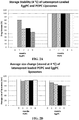
Fig. 2a is a plot of the percentage of the starting amount of latanoprost remaining in liposomes versus time for egg phosphatidyl choline (PC)-containing liposomes and POPC-containing liposomes; -
Fig. 2b is a plot of liposome size versus time of storage at 4 °C; and -
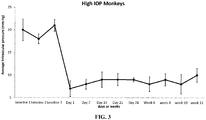
Fig. 3 is a plot of intraocular pressure versus days after a single subconjunctival injection of latanoprost encapsulated in a POPC-containing liposome - As mentioned above, a stable liposomal formulation for ocular delivery via subconjunctival injection is provided. The formulation includes a liposome containing at least one lipid bilayer that includes a phosphatidylcholine. In an embodiment, the liposome is a unilamellar vesicle. The phosphatidyl choline is palmitoyl oleoyl phosphatidyl choline (POPC).
- The formulation also contains a prostaglandin F2α encapsulated in the liposome. The prostaglandin F2α is latanoprost.
- The mole ratio of prostaglandin F2α to POPC can be 0.01: 1 to 0.5: 1. In an embodiment, the mole ratio is 0.01: 1 to 0.35: 1. In a preferred embodiment, the stable liposomal formulation includes latanoprost and POPC at a mole ratio of 0.01: 1 to 0.175: 1. Additionally, the liposome can be formulated to include between 2 and 25 wt % of the prostaglandin F2α.
- The liposome can have a diameter of less than 2 µm. In an embodiment, the diameter of the liposome is 100 nm to 300 nm, e.g., 100 nm, 150 nm, 200 nm, 250 nm, and 300 nm. In a preferred embodiment, the diameter is 100 nm. These nano-sized drug-loaded liposomes can release the prostaglandin F2α slowly over time.
- In an embodiment, the liposomal formulation described above can be a pre-constituted, ready-to-inject aqueous formulation for sub-conjunctival injection. The formulation is for use in the treatment of an ocular disorder that relies on administering the liposomal formulation described above. The ocular disorder can be ocular hypertension or glaucoma. Preferably, the disorder is glaucoma. According to the invention, the liposomal formulation is administered by subconjunctival injection.
- Administering the liposomal formulation described above can significantly reduce IOP at one hour post injection. More specifically, administering the liposomal formulation results in a reduction in IOP of at least 30 % (e.g., 30%, 40%, and 50%) compared to the pretreatment IOP. Advantageously, the IOP remains reduced for as long as 4-6 months following a single injection.
- As mentioned above, the injected liposomal formulation can slowly release the prostaglandin F2α, i.e., latanoprost, over several months. For example, 50 % of the initial amount of drug in the liposomes can be released within 10 days after injection of the formulation into the eye. Preferably, 65 % of the drug is released within 28 days of injection. Chronic topical application of anti- glaucoma drugs often induces ocular surface disease. The slow-release feature of the liposomal formulation obviates the need for daily applications of these drugs, thereby reducing or eliminating the concomitant side effects.
- Typically, drugs which are not stable are lyophilized or frozen at a temperature of -20 °C or lower to prevent loss of activity over time. Notably, lyophilizing or freezing sustained release formulations of drug-loaded liposomes can adversely affect the drug release profile, resulting in an unpredictable variability in the drug effectiveness.
- Advantageously, the liposomal formulation is stable for extended periods of time. For example, the formulation can be stored at 4 °C for up to 6 months (e.g., 1, 2, 3, 4, 5, and 6 months) without aggregation of the liposomes or loss of drug from them. Thus, the liposomal formulation can be stored in a vial at 4 °C for extended periods and then can be directly injected straight from the vial.
- A thin film hydration technique was used to formulate latanoprost-loaded POPC liposomes for drug release studies. Briefly, POPC was weighed and dissolved in a chloroform:methanol (2: 1 v/v) solvent mixture. Latanoprost (2 mg/ml stock solution in acetonitrile) was added to the lipid solvent mixture at a drug:lipid mole ratio of 0.175:1 and maintained at 40 °C. The solvent mixture was added to a round bottomed flask in a rotary evaporator connected to a water bath maintained at 40 °C. The flask was rotated at 100 rpm under low pressure for 1 h to remove the solvent, thereby forming a thin drug-loaded lipid film. Isotonic phosphate buffered saline (PBS; 150mM, pH 5.5) was added to this film to form multilamellar vesicles (MLVs). The MLVs were extruded ten times through a polycarbonate filter (0.2 µm -0.08 µm). The extrusions resulted in the formation of LUVs having a size distribution of 0.09-0.12 µm in diameter. EXAMPLE 2: Preparation of LUVs for drug stability studies
- Drug-loaded LUVs were also prepared for stability studies. POPC was dissolved in PBS at a pH of 6.7 with constant stirring at room temperature for 2 h to form MLVs. The MLVs were extruded 3-5 times using three 80 nm sized polycarbonate membranes stacked together on a bench top extruder to form POPC LUVs. Latanoprost was dissolved in ethanol and the resulting solution, maintained in a round bottomed flask at 50 °C in a water bath, was dried under a stream of nitrogen gas to form a thin drug film. The drug film was hydrated with the POPC LUVs at room temperature for 2-3 h until no oil droplets were observed on the flask walls. A latanoprost:POPC mole ratio of 0.175:1 was used to prepare the drug-loaded LUVs. Latanoprost-loaded POPC LUVs were sterile filtered at room temperature using a 0.2 µm syringe filter and stored at 4 °C until analyzed. A similar method was used to prepare a comparative formulation, latanoprost-loaded egg PC liposomes.
- Drug Release studies were performed by dialysing latanoprost-loaded POPC liposomes prepared as described in EXAMPLE 1 above against PBS at a pH of 7.4 and measuring by HPLC the amount of latanoprost released. The results are shown in
FIG. 1 . Over a 28 day period, approximately 65% of the latanoprost was released from the latanoprost-loaded POPC liposomes in a time-dependent manner. - The physical characteristics of the latanoprost-loaded POPC liposomes were determined essentially as described in
Venkatraman et al., International Application Publication No. 2012/021107 . The stability of latanoprost-loaded POPC liposomes prepared as described in EXAMPLE 2 above was measured and compared to similar latanoprost-loaded egg PC liposomes. Stability of the liposomes stored at 4 °C was assessed for a period of 6-9 months. Stability was assessed by measuring the average size of the liposomes as well as measuring by HPLC the concentration of latanoprost in the liposomes. The results are depicted inFIG. 2A and FIG. 2B . As shown inFIG. 2A , a significant amount of latanoprost was lost from egg PC liposomes over time, demonstrating a 45 % reduction of the starting amount of latanoprost after 3 months of storage at 4 °C. Unexpectedly, no measureable amount of latanoprost was lost from POPC liposomes even after 6 months of storage at 4 °C. Turning to particle size, the results depicted inFIG. 2B reveal that the average size of latanoprost-loaded egg PC liposomes got progressively smaller over a 9 month period of storage at 4 °C. Again unexpectedly, latanoprost-loaded POPC liposomes did not change measurably even after 6 months at 4 °C. Notably, a change in size of a drug-loaded liposome will significantly alter the drug release kinetics. - The efficacy of the latanoprost liposomal formulation described above was tested in an animal model of glaucoma, namely, long tailed macaques (Macaca fascicularis) having ocular hypertension, defined as an IOP > 18 mm Hg. Animal studies were performed in accordance with the statement for the use of animals in ophthalmic and vision research approved by the Association for Research in Vision and Ophthalmology. Additionally, the guidelines of the Animal Ethics Committee of the Singhealth Singapore Association for Assessment and Accreditation of Laboratory Animal Care were also followed.
- The macaques were anesthetized by intramuscular injection of a mixture containing ketamine (5-10 mg/kg body weight) and acepromazine maleate (0.25 mg/kg body weight), together with a subcutaneous injection of atropine sulfate (0.125 mg/kg body weight). Their airway, respiration, and pulse were monitored during all procedures. One to two drops of 1% xylocaine was used as a topical anesthesia to reduce possible discomfort to the animals during subconjunctival injection. The animals' pupils were dilated with 2.5% phenylephrine hydrochloride and 1% tropicamide drops (Alcon Laboratories, French's Forest, NSW, Australia).
- Latanoprost-loaded POPC liposomes were prepared by the technique described in EXAMPLE 2 above. A latanoprost liposomal formulation (100 µl) having an initial drug/lipid mole ratio of 0.175:1 was introduced by subconjunctival injection into both eyes of three animals. IOP was measured prior to injection and at daily and weekly intervals post-injection.
- The monkeys were slightly anesthetized with ketamine (5 mg/kg body weight) before measurement of IOP. Again, 1-2 drops of 1% xylocaine was used as topical anesthesia to reduce possible discomfort to the animals involved during the measurement procedure. IOP was measured using a calibrated tonometer (Tono-Pen® XL, Reichert Technologies, Depew, NY). IOP was monitored for three days pre-injection and for 120 days post-injection. The results are shown in
FIG. 3 . A single subconjunctival injection led to an initial rapid drop in intraocular pressure during the first day following the injection. The reduced IOP remained stable for at least 120 days post-injection.
Claims (5)
- A stable liposomal formulation for use in treating an ocular disorder by ocular delivery via subconjunctival injection, the formulation comprising a liposome including at least one lipid bilayer that contains palmitoyl oleoyl phosphatidyl choline (POPC), and latanoprost encapsulated in the liposome, wherein the liposome has a diameter of less than 2 µm.
- The stable liposomal formulation for use in treating an ocular disorder according to claim 1, wherein the formulation has a mole ratio of latanoprost to POPC of 0.01: 1 to 0.5: 1.
- The stable liposomal formulation for use in treating an ocular disorder according to claim 2, wherein the mole ratio of latanoprost to POPC is 0.01: 1 to 0.175: 1.
- The stable liposomal formulation for use in treating an ocular disorder according to claim 2 or 3, wherein the liposome has a diameter of 100 nm to 300 nm.
- The stable liposomal formulation for use in treating an ocular disorder according to any of claims 1 to 4, wherein the ocular disorder is ocular hypertension or glaucoma.
Applications Claiming Priority (1)
| Application Number | Priority Date | Filing Date | Title |
|---|---|---|---|
| US14/149,159 US9956195B2 (en) | 2014-01-07 | 2014-01-07 | Stable liposomal formulations for ocular drug delivery |
Publications (2)
| Publication Number | Publication Date |
|---|---|
| EP2891484A1 EP2891484A1 (en) | 2015-07-08 |
| EP2891484B1 true EP2891484B1 (en) | 2018-04-11 |
Family
ID=50112787
Family Applications (1)
| Application Number | Title | Priority Date | Filing Date |
|---|---|---|---|
| EP14155291.9A Active EP2891484B1 (en) | 2014-01-07 | 2014-02-14 | Stable liposomal formulations for ocular drug delivery |
Country Status (9)
| Country | Link |
|---|---|
| US (1) | US9956195B2 (en) |
| EP (1) | EP2891484B1 (en) |
| JP (1) | JP6463902B2 (en) |
| KR (1) | KR102315264B1 (en) |
| CN (1) | CN104758249B (en) |
| ES (1) | ES2676213T3 (en) |
| HK (1) | HK1206254A1 (en) |
| TW (1) | TWI630925B (en) |
| WO (1) | WO2015105458A1 (en) |
Families Citing this family (5)
| Publication number | Priority date | Publication date | Assignee | Title |
|---|---|---|---|---|
| WO2014039012A1 (en) * | 2012-09-06 | 2014-03-13 | Nanyang Technological University | Hyaluronic acid-based drug delivery systems |
| US20190133931A1 (en) * | 2016-04-19 | 2019-05-09 | Nanyang Technological University | Subconjunctival depot forming formulations for ocular drug delivery |
| US11452703B2 (en) * | 2020-05-21 | 2022-09-27 | Peregrine Ophthalmic PTE LTD. | Methods and compositions for reducing adipocyte numbers |
| AU2024287943A1 (en) | 2023-07-10 | 2026-01-22 | Eden Ophthalmic Pte Ltd. | Liposomal formulations of corticosteroids and uses thereof |
| US20250387331A1 (en) * | 2024-02-22 | 2025-12-25 | Peregrine Ophthalmic Pte Ltd | Prostaglandin analogs and methods for sustained glaucoma management |
Citations (1)
| Publication number | Priority date | Publication date | Assignee | Title |
|---|---|---|---|---|
| WO2011098578A2 (en) * | 2010-02-12 | 2011-08-18 | Bioneer A/S | Liposome system for ocular administration |
Family Cites Families (66)
| Publication number | Priority date | Publication date | Assignee | Title |
|---|---|---|---|---|
| WO1988009170A1 (en) | 1987-05-22 | 1988-12-01 | The Liposome Company, Inc. | Prostaglandin-lipid formulations |
| US5925375A (en) | 1987-05-22 | 1999-07-20 | The Liposome Company, Inc. | Therapeutic use of multilamellar liposomal prostaglandin formulations |
| US4938965A (en) | 1987-07-22 | 1990-07-03 | Her Majesty The Queen In Right Of Canada, As Represented By The Minister Of National Defence Of Her Majesty's Canadian Government | Ocular delivery of prophylactic agents |
| SE8703854D0 (en) | 1987-10-07 | 1987-10-07 | Pharmacia Ab | PROSTAGLAND INGREDIENTS FOR TREATMENT OF GLAUCOME OR OCULAR HYPERTENSION |
| JP2602964B2 (en) | 1989-10-16 | 1997-04-23 | 裕 水島 | Prostaglandin analogs and their fat emulsions |
| US5478819A (en) | 1993-06-23 | 1995-12-26 | Simo Tarpila | Phospholipid composition and use thereof |
| US6773719B2 (en) | 1994-03-04 | 2004-08-10 | Esperion Luv Development, Inc. | Liposomal compositions, and methods of using liposomal compositions to treat dislipidemias |
| AU2230497A (en) | 1996-02-26 | 1997-09-10 | Daiichi Pharmaceutical Co., Ltd. | Liposome and liposome dispersion |
| US6015716A (en) * | 1996-07-12 | 2000-01-18 | The Liposome Company, Inc. | Detection of endotoxin levels in liposomes, lipid bilayers and lipid complexes |
| US5997899A (en) | 1996-10-01 | 1999-12-07 | Skyepharma Inc. | Method for producing liposomes with increased percent of compound encapsulated |
| WO1998043616A1 (en) | 1997-03-31 | 1998-10-08 | University Of Iowa Research Foundation | Glycosylceramide-containing liposomes |
| WO2000018316A2 (en) | 1998-09-25 | 2000-04-06 | Alcon Laboratories, Inc. | Sustained release, and comfortable ophthalmic composition and method for ocular therapy |
| WO2003030818A2 (en) | 2001-10-05 | 2003-04-17 | Pichit Suvanprakorn | Active agents using liposome beads |
| WO2003080659A1 (en) | 2002-03-27 | 2003-10-02 | Theratechnologies Inc. | Methods and compounds for prevention and treatment of elevated intraocular pressure and related conditions |
| AU2003262268A1 (en) | 2002-08-23 | 2004-04-30 | Santen Pharmaceutical Co., Ltd. | Stable eye drops containing latanoprost as the active ingredient |
| US20040224010A1 (en) * | 2002-11-15 | 2004-11-11 | Optime Therapeutics, Inc. | Ophthalmic liposome compositions and uses thereof |
| AU2003297607A1 (en) | 2002-12-02 | 2004-06-23 | Genvec, Inc | Materials and methods for treating ocular-related disorders |
| NZ540885A (en) | 2002-12-20 | 2009-02-28 | Chakshu Res Inc | Ophthalmic formulation for the prevention and treatment of ocular conditions |
| EP1643971A2 (en) | 2003-05-22 | 2006-04-12 | Neopharm, Inc. | Liposomal formulations comprising a combination of two or more active agents |
| CA2467410A1 (en) | 2003-05-27 | 2004-11-27 | Synphora Ab | Method for treatment of glaucoma and ocular hypertension with prostaglandin analgoues without melanogenic side-effect |
| WO2005039619A1 (en) | 2003-10-03 | 2005-05-06 | Allergan, Inc. | Compositions and methods comprising prostaglandin-related compounds and trefoil factor family peptides for the treatment of glaucoma with reduced hyperemia |
| WO2005094790A1 (en) | 2004-04-02 | 2005-10-13 | Italfarmaco, S.A. | Liposomal formulations |
| US8722097B2 (en) * | 2004-04-30 | 2014-05-13 | Allergan, Inc. | Oil-in-water method for making polymeric implants containing a hypotensive lipid |
| EP1759702B1 (en) | 2004-05-26 | 2009-01-07 | Arturo Jimenez Bayardo | Method of preparing a latanoprost ophthalmic solution and solution thus produced |
| EP1768650B1 (en) | 2004-06-04 | 2008-07-16 | Camurus Ab | Liquid depot formulations |
| HUE033977T2 (en) | 2004-08-23 | 2018-02-28 | Sylentis Sau | Treatment of eye disorders characterized by an elevated intraocular pressure by sirnas |
| AU2005279308B2 (en) * | 2004-09-03 | 2012-05-03 | Creabilis Therapeutics S.R.L. | Protease resistant human and non-human HMGB1 Box-A mutants and their therapeutic/diagnostic use |
| DK1797109T3 (en) | 2004-09-09 | 2016-04-11 | Yeda Res & Dev | MIXTURES OF POLYPEPTIDES, compositions containing them and methods for their preparation, and uses thereof |
| EP1655021B1 (en) | 2004-11-09 | 2008-10-29 | Novagali Pharma SA | Oil-in-water type emulsion with low concentration of cationic agent and positive zeta potential |
| US20060188481A1 (en) | 2005-02-22 | 2006-08-24 | Saitama Medical School | Methods for prophylactically or therapeutically treating an animal for an ocular-related disorder |
| US7851504B2 (en) | 2005-03-16 | 2010-12-14 | Allergan, Inc. | Enhanced bimatoprost ophthalmic solution |
| RU2414904C2 (en) | 2005-03-31 | 2011-03-27 | Асахи Гласс Компани, Лимитед | PROTECTIVE MEDICIATION FOR RETINA NEURON WHICH CONTAINS AS ACTIVE COMPONETS PROSTAGLANDIN F2α DERIVATIVE |
| US20070026061A1 (en) | 2005-05-25 | 2007-02-01 | Nahid Ali | Liposomal formulation and use thereof |
| US9539202B2 (en) | 2006-04-28 | 2017-01-10 | Universidad Complutense De Madrid | Formulation of liposomal vesicles in aqueous solutions with lachrymal film characteristics |
| WO2008120249A1 (en) | 2007-03-30 | 2008-10-09 | Sifi S.P.A. | Pharmaceutical formulations based on apolar and polar lipids for ophthalmic use |
| CN101049504B (en) * | 2007-04-05 | 2010-05-19 | 广州立恩生物科技有限公司 | A kind of liposome drug carrier and preparation method thereof |
| EP1985298A1 (en) | 2007-04-24 | 2008-10-29 | Azad Pharma AG | Ophtalmic oil-in-water emulsions containing prostaglandins |
| AU2008289552B2 (en) | 2007-08-16 | 2014-10-09 | The Schepens Eye Research Institute, Inc. | Therapeutic compositions for treatment of inflammation of ocular and adnexal tissues |
| IL186598A0 (en) * | 2007-10-11 | 2008-11-03 | Mohammad Abdulrazik | Composition and method for the treatment or prevention of glaucoma and ocular hypertension |
| EP2214660A2 (en) | 2007-10-12 | 2010-08-11 | Resolvyx Pharmaceuticals, Inc. | Omega-3 fatty acids, hydroxy polyunsaturated fatty acids, lipoxin compounds, or oxylipin compounds for the treatment of ophthalmic conditions |
| EP2255788B1 (en) | 2008-02-29 | 2015-07-22 | Nagoya Industrial Science Research Institute | Liposome for delivery to posterior segment of eye and pharmaceutical composition for disease in posterior segment of eye |
| ITRM20080182A1 (en) | 2008-04-07 | 2009-10-08 | Medivis S R L | OPHTHALMIC PREPARATION BASED ON DORZOLAMIDE AND LATANOPROST FOR THE TOP TREATMENT OF GLAUCOMA. |
| MX2010012022A (en) | 2008-05-09 | 2011-03-15 | Qlt Plug Delivery Inc | Sustained release delivery of active agents to treat glaucoma and ocular hypertension. |
| EP2127638A1 (en) | 2008-05-30 | 2009-12-02 | Santen Pharmaceutical Co., Ltd | Method and composition for treating ocular hypertension and glaucoma |
| CA2728623A1 (en) | 2008-06-24 | 2010-01-21 | Qlt Plug Delivery, Inc. | Combination treatment of glaucoma |
| US20100104654A1 (en) | 2008-10-27 | 2010-04-29 | Allergan, Inc. | Prostaglandin and prostamide drug delivery systems and intraocular therapeutic uses thereof |
| CA2750381C (en) | 2009-01-23 | 2021-03-16 | Qlt Inc. | Sustained released delivery of one or more agents |
| JP5890182B2 (en) | 2009-02-12 | 2016-03-22 | インセプト エルエルシー | Drug delivery with hydrogel plugs |
| US20100247606A1 (en) | 2009-03-25 | 2010-09-30 | Allergan, Inc. | Intraocular sustained release drug delivery systems and methods for treating ocular conditions |
| WO2011025734A1 (en) | 2009-08-24 | 2011-03-03 | Stealth Peptides International, Inc. | Methods and compositions for preventing or treating ophthalmic conditions |
| CA2773597A1 (en) | 2009-09-17 | 2011-03-24 | Senju Pharmaceutical Co., Ltd. | Latanoprost-containing aqueous eye drops and method for inhibiting adsorption of latanoprost to resin |
| US20110070294A1 (en) | 2009-09-23 | 2011-03-24 | Javeri Indu | Methods for the Administration of Drugs Using Liposomes |
| EP2493474B1 (en) | 2009-10-30 | 2019-09-04 | Intratus, Inc. | Methods and compositions for sustained delivery of drugs |
| CA2791278C (en) | 2010-02-25 | 2015-11-24 | The Johns Hopkins University | Sustained delivery of therapeutic agents to an eye compartment |
| US20110294730A1 (en) | 2010-05-31 | 2011-12-01 | Shantha Totada R | Method of treating glaucoma and intraocular hypertension |
| WO2012021107A2 (en) | 2010-08-12 | 2012-02-16 | Nanyang Technological University | A liposomal formulation for ocular drug delivery |
| US20120264681A1 (en) | 2010-11-08 | 2012-10-18 | Healor Ltd. | Buffered ophthalmic compositions and methods of use thereof |
| CA2860453C (en) | 2011-01-24 | 2020-04-28 | Inceptum Research & Therapeutics, Inc. | Compositions comprising a prostaglandin for treating neuropsychiatric conditions |
| US9974685B2 (en) | 2011-08-29 | 2018-05-22 | Mati Therapeutics | Drug delivery system and methods of treating open angle glaucoma and ocular hypertension |
| ES2727203T3 (en) | 2011-08-29 | 2019-10-14 | Mati Therapeutics Inc | Administration for sustained release of active agents to treat glaucoma and ocular hypertension |
| US9248135B2 (en) | 2012-04-24 | 2016-02-02 | Allergan, Inc. | Prostaglandin and vasoconstrictor pharmaceutical compositions and methods of use |
| CA2872338C (en) | 2012-05-03 | 2021-09-14 | Qlt Inc. | Drug delivery system and methods of treating open angle glaucoma and ocular hypertension |
| WO2014039012A1 (en) | 2012-09-06 | 2014-03-13 | Nanyang Technological University | Hyaluronic acid-based drug delivery systems |
| EP2911623B1 (en) | 2012-10-26 | 2019-08-14 | Forsight Vision5, Inc. | Ophthalmic system for sustained release of drug to eye |
| WO2014120866A1 (en) | 2013-01-31 | 2014-08-07 | Icon Bioscience, Inc. | Sustained release formulations for the treatment of intraocular pressure or glaucoma |
| AU2013384818A1 (en) | 2013-03-27 | 2015-11-12 | Comprehensive Drug Enterprises, Ltd. | Ophthalmic composition, method for preparing the same, and use of the same |
-
2014
- 2014-01-07 US US14/149,159 patent/US9956195B2/en active Active
- 2014-02-14 EP EP14155291.9A patent/EP2891484B1/en active Active
- 2014-02-14 ES ES14155291.9T patent/ES2676213T3/en active Active
- 2014-03-27 TW TW103111459A patent/TWI630925B/en active
- 2014-04-30 JP JP2014094096A patent/JP6463902B2/en active Active
- 2014-05-15 CN CN201410204720.XA patent/CN104758249B/en active Active
- 2014-11-03 KR KR1020140151228A patent/KR102315264B1/en active Active
-
2015
- 2015-01-07 WO PCT/SG2015/000001 patent/WO2015105458A1/en not_active Ceased
- 2015-07-17 HK HK15106846.6A patent/HK1206254A1/en unknown
Patent Citations (1)
| Publication number | Priority date | Publication date | Assignee | Title |
|---|---|---|---|---|
| WO2011098578A2 (en) * | 2010-02-12 | 2011-08-18 | Bioneer A/S | Liposome system for ocular administration |
Also Published As
| Publication number | Publication date |
|---|---|
| KR102315264B1 (en) | 2021-10-20 |
| ES2676213T3 (en) | 2018-07-17 |
| HK1206254A1 (en) | 2016-01-08 |
| KR20150082078A (en) | 2015-07-15 |
| EP2891484A1 (en) | 2015-07-08 |
| WO2015105458A1 (en) | 2015-07-16 |
| CN104758249B (en) | 2019-08-23 |
| TWI630925B (en) | 2018-08-01 |
| JP6463902B2 (en) | 2019-02-06 |
| CN104758249A (en) | 2015-07-08 |
| JP2015129107A (en) | 2015-07-16 |
| US20150190359A1 (en) | 2015-07-09 |
| TW201526924A (en) | 2015-07-16 |
| US9956195B2 (en) | 2018-05-01 |
Similar Documents
| Publication | Publication Date | Title |
|---|---|---|
| US20250041219A1 (en) | W/o/w microemulsions for ocular administration | |
| CN111867560B (en) | Pharmaceutical composition comprising timolol | |
| Castro-Balado et al. | New ophthalmic drug delivery systems | |
| US9956195B2 (en) | Stable liposomal formulations for ocular drug delivery | |
| BR112020017838A2 (en) | PHARMACEUTICAL COMPOSITIONS THAT UNDERSTAND NEBIVOLOL | |
| KR20170130443A (en) | Topical formulation of endothelin receptor antagonist | |
| Nordin et al. | Liposomal topical drug administration surpasses alternative methods in glaucoma therapeutics: a novel paradigm for enhanced treatment | |
| Huang et al. | Dexamethasone pharmacokinetics characteristics via sub-tenon microfluidic system in uveitis rabbits | |
| Pignatello et al. | Nanotechnology in ophthalmic drug delivery: a survey of recent developments and patenting activity | |
| EP4260845A1 (en) | Preservative-free ophthalmic pharmaceutical emulsion and its application | |
| WO2018011705A1 (en) | Liposome-based eye drops and use thereof for in vivo evaluation of the drug efficacy of medical and surgical anti-glaucoma therapy | |
| Pravin et al. | Ocular Drug Delivery and Novel Formulations: A Review | |
| US20240285572A1 (en) | Compositions comprising nitric oxide-releasing compounds for treating choroidal vascular diseases and methods of their use | |
| US20250387331A1 (en) | Prostaglandin analogs and methods for sustained glaucoma management | |
| Kesharwani et al. | Nanospanlastic vesicles as novel strategies for enhancing anti-glaucoma drug bioavailability | |
| Madhav et al. | Recent research innovations in drug delivery ‘through and to’ocular route | |
| Samathoti | Occular Drug Delivery System: A Novel Review with Applications | |
| Garrigue et al. | A comparative study of latanoprost-cationic emulsion (Catioprost) and latanoprost aqueous solution (Xalatan) in preclinical efficacy and safety models | |
| Sahoo et al. | Mucoadhesive nanopolymers for posterior segment drug delivery | |
| Fedorchak | Barriers to Glaucoma Drug Delivery and Resolving the Challenges Using Nanotechnology | |
| Parikh | A review on present and probable drug delivery systems for Latanoprost a antiglaucomadrug | |
| PAUL et al. | International Journal of Pharmacy and Pharmaceutical Sciences |
Legal Events
| Date | Code | Title | Description |
|---|---|---|---|
| PUAI | Public reference made under article 153(3) epc to a published international application that has entered the european phase |
Free format text: ORIGINAL CODE: 0009012 |
|
| 17P | Request for examination filed |
Effective date: 20140214 |
|
| AK | Designated contracting states |
Kind code of ref document: A1 Designated state(s): AL AT BE BG CH CY CZ DE DK EE ES FI FR GB GR HR HU IE IS IT LI LT LU LV MC MK MT NL NO PL PT RO RS SE SI SK SM TR |
|
| AX | Request for extension of the european patent |
Extension state: BA ME |
|
| R17P | Request for examination filed (corrected) |
Effective date: 20151229 |
|
| RBV | Designated contracting states (corrected) |
Designated state(s): AL AT BE BG CH CY CZ DE DK EE ES FI FR GB GR HR HU IE IS IT LI LT LU LV MC MK MT NL NO PL PT RO RS SE SI SK SM TR |
|
| STAA | Information on the status of an ep patent application or granted ep patent |
Free format text: STATUS: EXAMINATION IS IN PROGRESS |
|
| 17Q | First examination report despatched |
Effective date: 20170207 |
|
| GRAP | Despatch of communication of intention to grant a patent |
Free format text: ORIGINAL CODE: EPIDOSNIGR1 |
|
| STAA | Information on the status of an ep patent application or granted ep patent |
Free format text: STATUS: GRANT OF PATENT IS INTENDED |
|
| RIC1 | Information provided on ipc code assigned before grant |
Ipc: A61K 31/216 20060101ALI20171031BHEP Ipc: A61K 9/127 20060101AFI20171031BHEP Ipc: A61K 31/5575 20060101ALI20171031BHEP Ipc: A61P 27/06 20060101ALI20171031BHEP Ipc: A61K 9/00 20060101ALI20171031BHEP |
|
| INTG | Intention to grant announced |
Effective date: 20171120 |
|
| GRAS | Grant fee paid |
Free format text: ORIGINAL CODE: EPIDOSNIGR3 |
|
| GRAA | (expected) grant |
Free format text: ORIGINAL CODE: 0009210 |
|
| STAA | Information on the status of an ep patent application or granted ep patent |
Free format text: STATUS: THE PATENT HAS BEEN GRANTED |
|
| AK | Designated contracting states |
Kind code of ref document: B1 Designated state(s): AL AT BE BG CH CY CZ DE DK EE ES FI FR GB GR HR HU IE IS IT LI LT LU LV MC MK MT NL NO PL PT RO RS SE SI SK SM TR |
|
| REG | Reference to a national code |
Ref country code: GB Ref legal event code: FG4D |
|
| REG | Reference to a national code |
Ref country code: CH Ref legal event code: EP |
|
| REG | Reference to a national code |
Ref country code: AT Ref legal event code: REF Ref document number: 987240 Country of ref document: AT Kind code of ref document: T Effective date: 20180415 |
|
| REG | Reference to a national code |
Ref country code: IE Ref legal event code: FG4D |
|
| REG | Reference to a national code |
Ref country code: DE Ref legal event code: R096 Ref document number: 602014023572 Country of ref document: DE |
|
| REG | Reference to a national code |
Ref country code: ES Ref legal event code: FG2A Ref document number: 2676213 Country of ref document: ES Kind code of ref document: T3 Effective date: 20180717 |
|
| REG | Reference to a national code |
Ref country code: NL Ref legal event code: MP Effective date: 20180411 |
|
| REG | Reference to a national code |
Ref country code: LT Ref legal event code: MG4D |
|
| PG25 | Lapsed in a contracting state [announced via postgrant information from national office to epo] |
Ref country code: NL Free format text: LAPSE BECAUSE OF FAILURE TO SUBMIT A TRANSLATION OF THE DESCRIPTION OR TO PAY THE FEE WITHIN THE PRESCRIBED TIME-LIMIT Effective date: 20180411 |
|
| PG25 | Lapsed in a contracting state [announced via postgrant information from national office to epo] |
Ref country code: AL Free format text: LAPSE BECAUSE OF FAILURE TO SUBMIT A TRANSLATION OF THE DESCRIPTION OR TO PAY THE FEE WITHIN THE PRESCRIBED TIME-LIMIT Effective date: 20180411 Ref country code: BG Free format text: LAPSE BECAUSE OF FAILURE TO SUBMIT A TRANSLATION OF THE DESCRIPTION OR TO PAY THE FEE WITHIN THE PRESCRIBED TIME-LIMIT Effective date: 20180711 Ref country code: FI Free format text: LAPSE BECAUSE OF FAILURE TO SUBMIT A TRANSLATION OF THE DESCRIPTION OR TO PAY THE FEE WITHIN THE PRESCRIBED TIME-LIMIT Effective date: 20180411 Ref country code: LT Free format text: LAPSE BECAUSE OF FAILURE TO SUBMIT A TRANSLATION OF THE DESCRIPTION OR TO PAY THE FEE WITHIN THE PRESCRIBED TIME-LIMIT Effective date: 20180411 Ref country code: PL Free format text: LAPSE BECAUSE OF FAILURE TO SUBMIT A TRANSLATION OF THE DESCRIPTION OR TO PAY THE FEE WITHIN THE PRESCRIBED TIME-LIMIT Effective date: 20180411 Ref country code: SE Free format text: LAPSE BECAUSE OF FAILURE TO SUBMIT A TRANSLATION OF THE DESCRIPTION OR TO PAY THE FEE WITHIN THE PRESCRIBED TIME-LIMIT Effective date: 20180411 Ref country code: NO Free format text: LAPSE BECAUSE OF FAILURE TO SUBMIT A TRANSLATION OF THE DESCRIPTION OR TO PAY THE FEE WITHIN THE PRESCRIBED TIME-LIMIT Effective date: 20180711 |
|
| PG25 | Lapsed in a contracting state [announced via postgrant information from national office to epo] |
Ref country code: GR Free format text: LAPSE BECAUSE OF FAILURE TO SUBMIT A TRANSLATION OF THE DESCRIPTION OR TO PAY THE FEE WITHIN THE PRESCRIBED TIME-LIMIT Effective date: 20180712 Ref country code: LV Free format text: LAPSE BECAUSE OF FAILURE TO SUBMIT A TRANSLATION OF THE DESCRIPTION OR TO PAY THE FEE WITHIN THE PRESCRIBED TIME-LIMIT Effective date: 20180411 Ref country code: HR Free format text: LAPSE BECAUSE OF FAILURE TO SUBMIT A TRANSLATION OF THE DESCRIPTION OR TO PAY THE FEE WITHIN THE PRESCRIBED TIME-LIMIT Effective date: 20180411 Ref country code: RS Free format text: LAPSE BECAUSE OF FAILURE TO SUBMIT A TRANSLATION OF THE DESCRIPTION OR TO PAY THE FEE WITHIN THE PRESCRIBED TIME-LIMIT Effective date: 20180411 |
|
| REG | Reference to a national code |
Ref country code: AT Ref legal event code: MK05 Ref document number: 987240 Country of ref document: AT Kind code of ref document: T Effective date: 20180411 |
|
| PG25 | Lapsed in a contracting state [announced via postgrant information from national office to epo] |
Ref country code: PT Free format text: LAPSE BECAUSE OF FAILURE TO SUBMIT A TRANSLATION OF THE DESCRIPTION OR TO PAY THE FEE WITHIN THE PRESCRIBED TIME-LIMIT Effective date: 20180813 |
|
| REG | Reference to a national code |
Ref country code: DE Ref legal event code: R097 Ref document number: 602014023572 Country of ref document: DE |
|
| PG25 | Lapsed in a contracting state [announced via postgrant information from national office to epo] |
Ref country code: SK Free format text: LAPSE BECAUSE OF FAILURE TO SUBMIT A TRANSLATION OF THE DESCRIPTION OR TO PAY THE FEE WITHIN THE PRESCRIBED TIME-LIMIT Effective date: 20180411 Ref country code: EE Free format text: LAPSE BECAUSE OF FAILURE TO SUBMIT A TRANSLATION OF THE DESCRIPTION OR TO PAY THE FEE WITHIN THE PRESCRIBED TIME-LIMIT Effective date: 20180411 Ref country code: CZ Free format text: LAPSE BECAUSE OF FAILURE TO SUBMIT A TRANSLATION OF THE DESCRIPTION OR TO PAY THE FEE WITHIN THE PRESCRIBED TIME-LIMIT Effective date: 20180411 Ref country code: RO Free format text: LAPSE BECAUSE OF FAILURE TO SUBMIT A TRANSLATION OF THE DESCRIPTION OR TO PAY THE FEE WITHIN THE PRESCRIBED TIME-LIMIT Effective date: 20180411 Ref country code: DK Free format text: LAPSE BECAUSE OF FAILURE TO SUBMIT A TRANSLATION OF THE DESCRIPTION OR TO PAY THE FEE WITHIN THE PRESCRIBED TIME-LIMIT Effective date: 20180411 Ref country code: AT Free format text: LAPSE BECAUSE OF FAILURE TO SUBMIT A TRANSLATION OF THE DESCRIPTION OR TO PAY THE FEE WITHIN THE PRESCRIBED TIME-LIMIT Effective date: 20180411 |
|
| PLBE | No opposition filed within time limit |
Free format text: ORIGINAL CODE: 0009261 |
|
| STAA | Information on the status of an ep patent application or granted ep patent |
Free format text: STATUS: NO OPPOSITION FILED WITHIN TIME LIMIT |
|
| PG25 | Lapsed in a contracting state [announced via postgrant information from national office to epo] |
Ref country code: SM Free format text: LAPSE BECAUSE OF FAILURE TO SUBMIT A TRANSLATION OF THE DESCRIPTION OR TO PAY THE FEE WITHIN THE PRESCRIBED TIME-LIMIT Effective date: 20180411 |
|
| 26N | No opposition filed |
Effective date: 20190114 |
|
| PG25 | Lapsed in a contracting state [announced via postgrant information from national office to epo] |
Ref country code: SI Free format text: LAPSE BECAUSE OF FAILURE TO SUBMIT A TRANSLATION OF THE DESCRIPTION OR TO PAY THE FEE WITHIN THE PRESCRIBED TIME-LIMIT Effective date: 20180411 |
|
| REG | Reference to a national code |
Ref country code: CH Ref legal event code: PL |
|
| PG25 | Lapsed in a contracting state [announced via postgrant information from national office to epo] |
Ref country code: LU Free format text: LAPSE BECAUSE OF NON-PAYMENT OF DUE FEES Effective date: 20190214 Ref country code: MC Free format text: LAPSE BECAUSE OF FAILURE TO SUBMIT A TRANSLATION OF THE DESCRIPTION OR TO PAY THE FEE WITHIN THE PRESCRIBED TIME-LIMIT Effective date: 20180411 |
|
| REG | Reference to a national code |
Ref country code: BE Ref legal event code: MM Effective date: 20190228 |
|
| REG | Reference to a national code |
Ref country code: IE Ref legal event code: MM4A |
|
| PG25 | Lapsed in a contracting state [announced via postgrant information from national office to epo] |
Ref country code: CH Free format text: LAPSE BECAUSE OF NON-PAYMENT OF DUE FEES Effective date: 20190228 Ref country code: LI Free format text: LAPSE BECAUSE OF NON-PAYMENT OF DUE FEES Effective date: 20190228 |
|
| PG25 | Lapsed in a contracting state [announced via postgrant information from national office to epo] |
Ref country code: IE Free format text: LAPSE BECAUSE OF NON-PAYMENT OF DUE FEES Effective date: 20190214 |
|
| PG25 | Lapsed in a contracting state [announced via postgrant information from national office to epo] |
Ref country code: BE Free format text: LAPSE BECAUSE OF NON-PAYMENT OF DUE FEES Effective date: 20190228 |
|
| PG25 | Lapsed in a contracting state [announced via postgrant information from national office to epo] |
Ref country code: TR Free format text: LAPSE BECAUSE OF FAILURE TO SUBMIT A TRANSLATION OF THE DESCRIPTION OR TO PAY THE FEE WITHIN THE PRESCRIBED TIME-LIMIT Effective date: 20180411 |
|
| PG25 | Lapsed in a contracting state [announced via postgrant information from national office to epo] |
Ref country code: MT Free format text: LAPSE BECAUSE OF NON-PAYMENT OF DUE FEES Effective date: 20190214 |
|
| PG25 | Lapsed in a contracting state [announced via postgrant information from national office to epo] |
Ref country code: CY Free format text: LAPSE BECAUSE OF FAILURE TO SUBMIT A TRANSLATION OF THE DESCRIPTION OR TO PAY THE FEE WITHIN THE PRESCRIBED TIME-LIMIT Effective date: 20180411 |
|
| PG25 | Lapsed in a contracting state [announced via postgrant information from national office to epo] |
Ref country code: IS Free format text: LAPSE BECAUSE OF FAILURE TO SUBMIT A TRANSLATION OF THE DESCRIPTION OR TO PAY THE FEE WITHIN THE PRESCRIBED TIME-LIMIT Effective date: 20180811 |
|
| PG25 | Lapsed in a contracting state [announced via postgrant information from national office to epo] |
Ref country code: HU Free format text: LAPSE BECAUSE OF FAILURE TO SUBMIT A TRANSLATION OF THE DESCRIPTION OR TO PAY THE FEE WITHIN THE PRESCRIBED TIME-LIMIT; INVALID AB INITIO Effective date: 20140214 |
|
| PG25 | Lapsed in a contracting state [announced via postgrant information from national office to epo] |
Ref country code: MK Free format text: LAPSE BECAUSE OF FAILURE TO SUBMIT A TRANSLATION OF THE DESCRIPTION OR TO PAY THE FEE WITHIN THE PRESCRIBED TIME-LIMIT Effective date: 20180411 |
|
| P01 | Opt-out of the competence of the unified patent court (upc) registered |
Effective date: 20230529 |
|
| PGFP | Annual fee paid to national office [announced via postgrant information from national office to epo] |
Ref country code: GB Payment date: 20260227 Year of fee payment: 13 |
|
| PGFP | Annual fee paid to national office [announced via postgrant information from national office to epo] |
Ref country code: ES Payment date: 20260302 Year of fee payment: 13 |
|
| PGFP | Annual fee paid to national office [announced via postgrant information from national office to epo] |
Ref country code: DE Payment date: 20260227 Year of fee payment: 13 |
|
| PGFP | Annual fee paid to national office [announced via postgrant information from national office to epo] |
Ref country code: IT Payment date: 20260219 Year of fee payment: 13 |
|
| PGFP | Annual fee paid to national office [announced via postgrant information from national office to epo] |
Ref country code: FR Payment date: 20260225 Year of fee payment: 13 |