EP2890981B1 - Senescence tracers - Google Patents
Senescence tracers Download PDFInfo
- Publication number
- EP2890981B1 EP2890981B1 EP12766009.0A EP12766009A EP2890981B1 EP 2890981 B1 EP2890981 B1 EP 2890981B1 EP 12766009 A EP12766009 A EP 12766009A EP 2890981 B1 EP2890981 B1 EP 2890981B1
- Authority
- EP
- European Patent Office
- Prior art keywords
- mmol
- compound
- compounds
- cells
- salts
- Prior art date
- Legal status (The legal status is an assumption and is not a legal conclusion. Google has not performed a legal analysis and makes no representation as to the accuracy of the status listed.)
- Active
Links
- 230000009758 senescence Effects 0.000 title claims description 18
- 150000001875 compounds Chemical class 0.000 claims description 117
- 150000003839 salts Chemical class 0.000 claims description 22
- 239000012453 solvate Substances 0.000 claims description 12
- 238000000034 method Methods 0.000 claims description 10
- 206010028980 Neoplasm Diseases 0.000 claims description 8
- 201000011510 cancer Diseases 0.000 claims description 8
- 238000000338 in vitro Methods 0.000 claims description 8
- 231100000252 nontoxic Toxicity 0.000 claims description 5
- 230000003000 nontoxic effect Effects 0.000 claims description 5
- 229910052757 nitrogen Inorganic materials 0.000 claims description 4
- 229910052760 oxygen Inorganic materials 0.000 claims description 4
- 239000000546 pharmaceutical excipient Substances 0.000 claims description 4
- 239000003814 drug Substances 0.000 claims description 3
- 229910052717 sulfur Inorganic materials 0.000 claims description 2
- 210000004027 cell Anatomy 0.000 description 65
- YMWUJEATGCHHMB-UHFFFAOYSA-N Dichloromethane Chemical compound ClCCl YMWUJEATGCHHMB-UHFFFAOYSA-N 0.000 description 47
- OKKJLVBELUTLKV-UHFFFAOYSA-N Methanol Chemical compound OC OKKJLVBELUTLKV-UHFFFAOYSA-N 0.000 description 41
- AOJJSUZBOXZQNB-TZSSRYMLSA-N Doxorubicin Chemical compound O([C@H]1C[C@@](O)(CC=2C(O)=C3C(=O)C=4C=CC=C(C=4C(=O)C3=C(O)C=21)OC)C(=O)CO)[C@H]1C[C@H](N)[C@H](O)[C@H](C)O1 AOJJSUZBOXZQNB-TZSSRYMLSA-N 0.000 description 30
- CSNNHWWHGAXBCP-UHFFFAOYSA-L Magnesium sulfate Chemical compound [Mg+2].[O-][S+2]([O-])([O-])[O-] CSNNHWWHGAXBCP-UHFFFAOYSA-L 0.000 description 28
- UIIMBOGNXHQVGW-UHFFFAOYSA-M Sodium bicarbonate Chemical compound [Na+].OC([O-])=O UIIMBOGNXHQVGW-UHFFFAOYSA-M 0.000 description 28
- 239000002904 solvent Substances 0.000 description 25
- XEKOWRVHYACXOJ-UHFFFAOYSA-N Ethyl acetate Chemical compound CCOC(C)=O XEKOWRVHYACXOJ-UHFFFAOYSA-N 0.000 description 22
- 239000007787 solid Substances 0.000 description 22
- 238000006243 chemical reaction Methods 0.000 description 21
- -1 alkali metal salts Chemical class 0.000 description 17
- 239000000243 solution Substances 0.000 description 17
- 238000003756 stirring Methods 0.000 description 17
- XKRFYHLGVUSROY-UHFFFAOYSA-N Argon Chemical compound [Ar] XKRFYHLGVUSROY-UHFFFAOYSA-N 0.000 description 16
- ZMANZCXQSJIPKH-UHFFFAOYSA-N Triethylamine Chemical compound CCN(CC)CC ZMANZCXQSJIPKH-UHFFFAOYSA-N 0.000 description 15
- 229960004679 doxorubicin Drugs 0.000 description 15
- 229910052943 magnesium sulfate Inorganic materials 0.000 description 14
- 229910000030 sodium bicarbonate Inorganic materials 0.000 description 14
- 235000017557 sodium bicarbonate Nutrition 0.000 description 14
- WEVYAHXRMPXWCK-UHFFFAOYSA-N Acetonitrile Chemical compound CC#N WEVYAHXRMPXWCK-UHFFFAOYSA-N 0.000 description 13
- QTBSBXVTEAMEQO-UHFFFAOYSA-N Acetic acid Chemical compound CC(O)=O QTBSBXVTEAMEQO-UHFFFAOYSA-N 0.000 description 12
- 238000010898 silica gel chromatography Methods 0.000 description 12
- 239000012267 brine Substances 0.000 description 11
- 238000001035 drying Methods 0.000 description 11
- 235000019439 ethyl acetate Nutrition 0.000 description 11
- HPALAKNZSZLMCH-UHFFFAOYSA-M sodium;chloride;hydrate Chemical compound O.[Na+].[Cl-] HPALAKNZSZLMCH-UHFFFAOYSA-M 0.000 description 11
- 238000004895 liquid chromatography mass spectrometry Methods 0.000 description 10
- HEMHJVSKTPXQMS-UHFFFAOYSA-M Sodium hydroxide Chemical compound [OH-].[Na+] HEMHJVSKTPXQMS-UHFFFAOYSA-M 0.000 description 9
- 108010005774 beta-Galactosidase Proteins 0.000 description 9
- XLYOFNOQVPJJNP-UHFFFAOYSA-N water Substances O XLYOFNOQVPJJNP-UHFFFAOYSA-N 0.000 description 9
- 229910052786 argon Inorganic materials 0.000 description 8
- WQZGKKKJIJFFOK-FPRJBGLDSA-N beta-D-galactose Chemical compound OC[C@H]1O[C@@H](O)[C@H](O)[C@@H](O)[C@H]1O WQZGKKKJIJFFOK-FPRJBGLDSA-N 0.000 description 8
- 239000011368 organic material Substances 0.000 description 7
- HZAXFHJVJLSVMW-UHFFFAOYSA-N 2-Aminoethan-1-ol Chemical compound NCCO HZAXFHJVJLSVMW-UHFFFAOYSA-N 0.000 description 6
- HXEWMTXDBOQQKO-UHFFFAOYSA-N 4,7-dichloroquinoline Chemical compound ClC1=CC=NC2=CC(Cl)=CC=C21 HXEWMTXDBOQQKO-UHFFFAOYSA-N 0.000 description 6
- LYCAIKOWRPUZTN-UHFFFAOYSA-N Ethylene glycol Chemical compound OCCO LYCAIKOWRPUZTN-UHFFFAOYSA-N 0.000 description 6
- JUJWROOIHBZHMG-UHFFFAOYSA-N Pyridine Chemical compound C1=CC=NC=C1 JUJWROOIHBZHMG-UHFFFAOYSA-N 0.000 description 6
- WQDUMFSSJAZKTM-UHFFFAOYSA-N Sodium methoxide Chemical compound [Na+].[O-]C WQDUMFSSJAZKTM-UHFFFAOYSA-N 0.000 description 6
- BWHMMNNQKKPAPP-UHFFFAOYSA-L potassium carbonate Chemical compound [K+].[K+].[O-]C([O-])=O BWHMMNNQKKPAPP-UHFFFAOYSA-L 0.000 description 6
- 206010006187 Breast cancer Diseases 0.000 description 5
- 208000026310 Breast neoplasm Diseases 0.000 description 5
- 206010009944 Colon cancer Diseases 0.000 description 5
- 208000001333 Colorectal Neoplasms Diseases 0.000 description 5
- VYPSYNLAJGMNEJ-UHFFFAOYSA-N Silicium dioxide Chemical compound O=[Si]=O VYPSYNLAJGMNEJ-UHFFFAOYSA-N 0.000 description 5
- 201000010989 colorectal carcinoma Diseases 0.000 description 5
- 239000000047 product Substances 0.000 description 5
- 239000011541 reaction mixture Substances 0.000 description 5
- 239000011343 solid material Substances 0.000 description 5
- 125000004169 (C1-C6) alkyl group Chemical group 0.000 description 4
- YYROPELSRYBVMQ-UHFFFAOYSA-N 4-toluenesulfonyl chloride Chemical compound CC1=CC=C(S(Cl)(=O)=O)C=C1 YYROPELSRYBVMQ-UHFFFAOYSA-N 0.000 description 4
- SHZGCJCMOBCMKK-UHFFFAOYSA-N D-mannomethylose Natural products CC1OC(O)C(O)C(O)C1O SHZGCJCMOBCMKK-UHFFFAOYSA-N 0.000 description 4
- SHZGCJCMOBCMKK-DHVFOXMCSA-N L-fucopyranose Chemical compound C[C@@H]1OC(O)[C@@H](O)[C@H](O)[C@@H]1O SHZGCJCMOBCMKK-DHVFOXMCSA-N 0.000 description 4
- 125000004432 carbon atom Chemical group C* 0.000 description 4
- 229910052736 halogen Inorganic materials 0.000 description 4
- 150000002367 halogens Chemical class 0.000 description 4
- 210000003712 lysosome Anatomy 0.000 description 4
- 230000001868 lysosomic effect Effects 0.000 description 4
- 239000000203 mixture Substances 0.000 description 4
- 230000007935 neutral effect Effects 0.000 description 4
- 238000000746 purification Methods 0.000 description 4
- 238000010186 staining Methods 0.000 description 4
- 239000000725 suspension Substances 0.000 description 4
- 238000005406 washing Methods 0.000 description 4
- OKAGUKLYVZDEQC-SLPGGIOYSA-N (2R,3R,4R,5S)-2-bromo-2,3,4,5-tetrahydroxyhexanal Chemical class Br[C@](C=O)(O)[C@H](O)[C@H](O)[C@@H](O)C OKAGUKLYVZDEQC-SLPGGIOYSA-N 0.000 description 3
- 125000000229 (C1-C4)alkoxy group Chemical group 0.000 description 3
- OCKGFTQIICXDQW-ZEQRLZLVSA-N 5-[(1r)-1-hydroxy-2-[4-[(2r)-2-hydroxy-2-(4-methyl-1-oxo-3h-2-benzofuran-5-yl)ethyl]piperazin-1-yl]ethyl]-4-methyl-3h-2-benzofuran-1-one Chemical compound C1=C2C(=O)OCC2=C(C)C([C@@H](O)CN2CCN(CC2)C[C@H](O)C2=CC=C3C(=O)OCC3=C2C)=C1 OCKGFTQIICXDQW-ZEQRLZLVSA-N 0.000 description 3
- HBAQYPYDRFILMT-UHFFFAOYSA-N 8-[3-(1-cyclopropylpyrazol-4-yl)-1H-pyrazolo[4,3-d]pyrimidin-5-yl]-3-methyl-3,8-diazabicyclo[3.2.1]octan-2-one Chemical class C1(CC1)N1N=CC(=C1)C1=NNC2=C1N=C(N=C2)N1C2C(N(CC1CC2)C)=O HBAQYPYDRFILMT-UHFFFAOYSA-N 0.000 description 3
- WFDIJRYMOXRFFG-UHFFFAOYSA-N Acetic anhydride Chemical compound CC(=O)OC(C)=O WFDIJRYMOXRFFG-UHFFFAOYSA-N 0.000 description 3
- RTZKZFJDLAIYFH-UHFFFAOYSA-N Diethyl ether Chemical compound CCOCC RTZKZFJDLAIYFH-UHFFFAOYSA-N 0.000 description 3
- PIICEJLVQHRZGT-UHFFFAOYSA-N Ethylenediamine Chemical compound NCCN PIICEJLVQHRZGT-UHFFFAOYSA-N 0.000 description 3
- CPELXLSAUQHCOX-UHFFFAOYSA-N Hydrogen bromide Chemical class Br CPELXLSAUQHCOX-UHFFFAOYSA-N 0.000 description 3
- SJRJJKPEHAURKC-UHFFFAOYSA-N N-Methylmorpholine Chemical compound CN1CCOCC1 SJRJJKPEHAURKC-UHFFFAOYSA-N 0.000 description 3
- 239000004698 Polyethylene Substances 0.000 description 3
- 125000000217 alkyl group Chemical group 0.000 description 3
- 125000004429 atom Chemical group 0.000 description 3
- 239000000460 chlorine Chemical group 0.000 description 3
- 238000005859 coupling reaction Methods 0.000 description 3
- 229920001971 elastomer Polymers 0.000 description 3
- 229910052731 fluorine Inorganic materials 0.000 description 3
- 238000001727 in vivo Methods 0.000 description 3
- 239000000543 intermediate Substances 0.000 description 3
- 239000007788 liquid Substances 0.000 description 3
- 230000000144 pharmacologic effect Effects 0.000 description 3
- 229910000027 potassium carbonate Inorganic materials 0.000 description 3
- UMJSCPRVCHMLSP-UHFFFAOYSA-N pyridine Natural products COC1=CC=CN=C1 UMJSCPRVCHMLSP-UHFFFAOYSA-N 0.000 description 3
- 125000001424 substituent group Chemical group 0.000 description 3
- UMGDCJDMYOKAJW-UHFFFAOYSA-N thiourea Chemical compound NC(N)=S UMGDCJDMYOKAJW-UHFFFAOYSA-N 0.000 description 3
- RSYOSUMAMNFKSM-UHFFFAOYSA-N 2-[(7-chloroquinolin-4-yl)amino]ethanol Chemical compound ClC1=CC=C2C(NCCO)=CC=NC2=C1 RSYOSUMAMNFKSM-UHFFFAOYSA-N 0.000 description 2
- CIWBSHSKHKDKBQ-JLAZNSOCSA-N Ascorbic acid Chemical compound OC[C@H](O)[C@H]1OC(=O)C(O)=C1O CIWBSHSKHKDKBQ-JLAZNSOCSA-N 0.000 description 2
- WKBOTKDWSSQWDR-UHFFFAOYSA-N Bromine atom Chemical group [Br] WKBOTKDWSSQWDR-UHFFFAOYSA-N 0.000 description 2
- UXVMQQNJUSDDNG-UHFFFAOYSA-L Calcium chloride Chemical compound [Cl-].[Cl-].[Ca+2] UXVMQQNJUSDDNG-UHFFFAOYSA-L 0.000 description 2
- ZAMOUSCENKQFHK-UHFFFAOYSA-N Chlorine atom Chemical group [Cl] ZAMOUSCENKQFHK-UHFFFAOYSA-N 0.000 description 2
- LFQSCWFLJHTTHZ-UHFFFAOYSA-N Ethanol Chemical compound CCO LFQSCWFLJHTTHZ-UHFFFAOYSA-N 0.000 description 2
- 238000012413 Fluorescence activated cell sorting analysis Methods 0.000 description 2
- PNNNRSAQSRJVSB-SLPGGIOYSA-N Fucose Natural products C[C@H](O)[C@@H](O)[C@H](O)[C@H](O)C=O PNNNRSAQSRJVSB-SLPGGIOYSA-N 0.000 description 2
- SHZGCJCMOBCMKK-PQMKYFCFSA-N L-Fucose Natural products C[C@H]1O[C@H](O)[C@@H](O)[C@@H](O)[C@@H]1O SHZGCJCMOBCMKK-PQMKYFCFSA-N 0.000 description 2
- PNNNRSAQSRJVSB-UHFFFAOYSA-N L-rhamnose Natural products CC(O)C(O)C(O)C(O)C=O PNNNRSAQSRJVSB-UHFFFAOYSA-N 0.000 description 2
- YNAVUWVOSKDBBP-UHFFFAOYSA-N Morpholine Chemical compound C1COCCN1 YNAVUWVOSKDBBP-UHFFFAOYSA-N 0.000 description 2
- 235000019502 Orange oil Nutrition 0.000 description 2
- 229910020667 PBr3 Inorganic materials 0.000 description 2
- GLUUGHFHXGJENI-UHFFFAOYSA-N Piperazine Chemical compound C1CNCCN1 GLUUGHFHXGJENI-UHFFFAOYSA-N 0.000 description 2
- NQRYJNQNLNOLGT-UHFFFAOYSA-N Piperidine Chemical compound C1CCNCC1 NQRYJNQNLNOLGT-UHFFFAOYSA-N 0.000 description 2
- SMWDFEZZVXVKRB-UHFFFAOYSA-N Quinoline Chemical compound N1=CC=CC2=CC=CC=C21 SMWDFEZZVXVKRB-UHFFFAOYSA-N 0.000 description 2
- 238000010521 absorption reaction Methods 0.000 description 2
- 229940024606 amino acid Drugs 0.000 description 2
- 150000001413 amino acids Chemical class 0.000 description 2
- 150000001540 azides Chemical class 0.000 description 2
- WGQKYBSKWIADBV-UHFFFAOYSA-N benzylamine Chemical compound NCC1=CC=CC=C1 WGQKYBSKWIADBV-UHFFFAOYSA-N 0.000 description 2
- GDTBXPJZTBHREO-UHFFFAOYSA-N bromine Chemical group BrBr GDTBXPJZTBHREO-UHFFFAOYSA-N 0.000 description 2
- 229910052794 bromium Inorganic materials 0.000 description 2
- 239000001110 calcium chloride Substances 0.000 description 2
- 229910001628 calcium chloride Inorganic materials 0.000 description 2
- 229910052799 carbon Inorganic materials 0.000 description 2
- 125000002915 carbonyl group Chemical group [*:2]C([*:1])=O 0.000 description 2
- 229910052801 chlorine Inorganic materials 0.000 description 2
- 238000001816 cooling Methods 0.000 description 2
- 230000008878 coupling Effects 0.000 description 2
- 238000010168 coupling process Methods 0.000 description 2
- 125000004093 cyano group Chemical group *C#N 0.000 description 2
- PAFZNILMFXTMIY-UHFFFAOYSA-N cyclohexylamine Chemical compound NC1CCCCC1 PAFZNILMFXTMIY-UHFFFAOYSA-N 0.000 description 2
- 238000010511 deprotection reaction Methods 0.000 description 2
- 238000000605 extraction Methods 0.000 description 2
- 239000011737 fluorine Substances 0.000 description 2
- 150000008267 fucoses Chemical class 0.000 description 2
- 125000005843 halogen group Chemical group 0.000 description 2
- 229910052739 hydrogen Inorganic materials 0.000 description 2
- 239000001257 hydrogen Substances 0.000 description 2
- 125000000449 nitro group Chemical group [O-][N+](*)=O 0.000 description 2
- 239000003921 oil Substances 0.000 description 2
- 235000019198 oils Nutrition 0.000 description 2
- 239000010502 orange oil Substances 0.000 description 2
- 150000007530 organic bases Chemical class 0.000 description 2
- 238000007911 parenteral administration Methods 0.000 description 2
- IPNPIHIZVLFAFP-UHFFFAOYSA-N phosphorus tribromide Chemical compound BrP(Br)Br IPNPIHIZVLFAFP-UHFFFAOYSA-N 0.000 description 2
- 229920006395 saturated elastomer Polymers 0.000 description 2
- LPXPTNMVRIOKMN-UHFFFAOYSA-M sodium nitrite Chemical compound [Na+].[O-]N=O LPXPTNMVRIOKMN-UHFFFAOYSA-M 0.000 description 2
- 239000006188 syrup Substances 0.000 description 2
- 235000020357 syrup Nutrition 0.000 description 2
- XFNJVJPLKCPIBV-UHFFFAOYSA-N trimethylenediamine Chemical compound NCCCN XFNJVJPLKCPIBV-UHFFFAOYSA-N 0.000 description 2
- DNIAPMSPPWPWGF-VKHMYHEASA-N (+)-propylene glycol Chemical compound C[C@H](O)CO DNIAPMSPPWPWGF-VKHMYHEASA-N 0.000 description 1
- GGBBFUMMOMDGNN-PMZGEXBGSA-N (3s,4r,5s,6s)-2-[2-[(7-chloroquinolin-4-yl)-methylamino]ethoxy]-6-methyloxane-3,4,5-triol Chemical compound O[C@H]1[C@H](O)[C@H](O)[C@H](C)OC1OCCN(C)C1=CC=NC2=CC(Cl)=CC=C12 GGBBFUMMOMDGNN-PMZGEXBGSA-N 0.000 description 1
- 125000006273 (C1-C3) alkyl group Chemical group 0.000 description 1
- 125000004178 (C1-C4) alkyl group Chemical group 0.000 description 1
- 125000004191 (C1-C6) alkoxy group Chemical group 0.000 description 1
- VEFLKXRACNJHOV-UHFFFAOYSA-N 1,3-dibromopropane Chemical compound BrCCCBr VEFLKXRACNJHOV-UHFFFAOYSA-N 0.000 description 1
- YPFDHNVEDLHUCE-UHFFFAOYSA-N 1,3-propanediol Substances OCCCO YPFDHNVEDLHUCE-UHFFFAOYSA-N 0.000 description 1
- ITQFYZZQWXNGKU-UHFFFAOYSA-N 1-(7-chloroquinolin-4-yl)-n',n'-dimethylethane-1,2-diamine Chemical compound ClC1=CC=C2C(C(N)CN(C)C)=CC=NC2=C1 ITQFYZZQWXNGKU-UHFFFAOYSA-N 0.000 description 1
- AHRWKPRZRAGMPH-UHFFFAOYSA-N 2-(bromomethoxy)-9-(diethylamino)benzo[a]phenoxazin-5-one Chemical compound CCN(CC)C1=CC=C2N=C3C(OC2=C1)=CC(=O)C1=C3C=C(OCBr)C=C1 AHRWKPRZRAGMPH-UHFFFAOYSA-N 0.000 description 1
- XDGSMDPOSVJGQN-UHFFFAOYSA-N 2-[(7-chloroquinolin-4-yl)amino]ethyl 4-methylbenzenesulfonate Chemical compound C1=CC(C)=CC=C1S(=O)(=O)OCCNC1=CC=NC2=CC(Cl)=CC=C12 XDGSMDPOSVJGQN-UHFFFAOYSA-N 0.000 description 1
- APOYTRAZFJURPB-UHFFFAOYSA-N 2-methoxy-n-(2-methoxyethyl)-n-(trifluoro-$l^{4}-sulfanyl)ethanamine Chemical compound COCCN(S(F)(F)F)CCOC APOYTRAZFJURPB-UHFFFAOYSA-N 0.000 description 1
- RSEBUVRVKCANEP-UHFFFAOYSA-N 2-pyrroline Chemical compound C1CC=CN1 RSEBUVRVKCANEP-UHFFFAOYSA-N 0.000 description 1
- WAVOOWVINKGEHS-UHFFFAOYSA-N 3-(diethylamino)phenol Chemical compound CCN(CC)C1=CC=CC(O)=C1 WAVOOWVINKGEHS-UHFFFAOYSA-N 0.000 description 1
- YRSFWRHCSSHODH-UHFFFAOYSA-N 4-(diethylamino)-2-nitrosophenol Chemical compound CCN(CC)C1=CC=C(O)C(N=O)=C1 YRSFWRHCSSHODH-UHFFFAOYSA-N 0.000 description 1
- AWZGPVUJFBHWLX-UHFFFAOYSA-N 7-chloro-n-(2-fluoroethyl)quinolin-4-amine Chemical compound ClC1=CC=C2C(NCCF)=CC=NC2=C1 AWZGPVUJFBHWLX-UHFFFAOYSA-N 0.000 description 1
- ZCYVEMRRCGMTRW-UHFFFAOYSA-N 7553-56-2 Chemical group [I] ZCYVEMRRCGMTRW-UHFFFAOYSA-N 0.000 description 1
- JRXYWNYUEFRTLI-PCMKXSSQSA-N 9-(diethylamino)-2-[3-[(2R,3S,4R,5S,6S)-3,4,5-trihydroxy-6-methyloxan-2-yl]sulfanylpropoxy]benzo[a]phenoxazin-5-one Chemical compound CCN(CC)C1=CC2=C(C=C1)N=C1C(O2)=CC(=O)C2=C1C=C(OCCCS[C@H]1O[C@@H](C)[C@@H](O)[C@@H](O)[C@@H]1O)C=C2 JRXYWNYUEFRTLI-PCMKXSSQSA-N 0.000 description 1
- XVNZDFMVUIGZQA-UHFFFAOYSA-N 9-(diethylamino)-5-hydroxybenzo[a]phenoxazin-2-one Chemical compound C1=CC(=O)C=C2C3=NC4=CC=C(N(CC)CC)C=C4OC3=CC(O)=C21 XVNZDFMVUIGZQA-UHFFFAOYSA-N 0.000 description 1
- 102000009027 Albumins Human genes 0.000 description 1
- 108010088751 Albumins Proteins 0.000 description 1
- GUBGYTABKSRVRQ-XLOQQCSPSA-N Alpha-Lactose Chemical compound O[C@@H]1[C@@H](O)[C@@H](O)[C@@H](CO)O[C@H]1O[C@@H]1[C@@H](CO)O[C@H](O)[C@H](O)[C@H]1O GUBGYTABKSRVRQ-XLOQQCSPSA-N 0.000 description 1
- 239000004475 Arginine Substances 0.000 description 1
- CPELXLSAUQHCOX-UHFFFAOYSA-M Bromide Chemical compound [Br-] CPELXLSAUQHCOX-UHFFFAOYSA-M 0.000 description 1
- HEDRZPFGACZZDS-UHFFFAOYSA-N Chloroform Chemical compound ClC(Cl)Cl HEDRZPFGACZZDS-UHFFFAOYSA-N 0.000 description 1
- FBPFZTCFMRRESA-KVTDHHQDSA-N D-Mannitol Chemical compound OC[C@@H](O)[C@@H](O)[C@H](O)[C@H](O)CO FBPFZTCFMRRESA-KVTDHHQDSA-N 0.000 description 1
- XPDXVDYUQZHFPV-UHFFFAOYSA-N Dansyl Chloride Chemical compound C1=CC=C2C(N(C)C)=CC=CC2=C1S(Cl)(=O)=O XPDXVDYUQZHFPV-UHFFFAOYSA-N 0.000 description 1
- 108090000790 Enzymes Proteins 0.000 description 1
- 102000004190 Enzymes Human genes 0.000 description 1
- PXGOKWXKJXAPGV-UHFFFAOYSA-N Fluorine Chemical compound FF PXGOKWXKJXAPGV-UHFFFAOYSA-N 0.000 description 1
- 108010031186 Glycoside Hydrolases Proteins 0.000 description 1
- 102000005744 Glycoside Hydrolases Human genes 0.000 description 1
- UFHFLCQGNIYNRP-UHFFFAOYSA-N Hydrogen Chemical compound [H][H] UFHFLCQGNIYNRP-UHFFFAOYSA-N 0.000 description 1
- DGAQECJNVWCQMB-PUAWFVPOSA-M Ilexoside XXIX Chemical compound C[C@@H]1CC[C@@]2(CC[C@@]3(C(=CC[C@H]4[C@]3(CC[C@@H]5[C@@]4(CC[C@@H](C5(C)C)OS(=O)(=O)[O-])C)C)[C@@H]2[C@]1(C)O)C)C(=O)O[C@H]6[C@@H]([C@H]([C@@H]([C@H](O6)CO)O)O)O.[Na+] DGAQECJNVWCQMB-PUAWFVPOSA-M 0.000 description 1
- AHLPHDHHMVZTML-BYPYZUCNSA-N L-Ornithine Chemical compound NCCC[C@H](N)C(O)=O AHLPHDHHMVZTML-BYPYZUCNSA-N 0.000 description 1
- ODKSFYDXXFIFQN-BYPYZUCNSA-P L-argininium(2+) Chemical compound NC(=[NH2+])NCCC[C@H]([NH3+])C(O)=O ODKSFYDXXFIFQN-BYPYZUCNSA-P 0.000 description 1
- CKLJMWTZIZZHCS-REOHCLBHSA-N L-aspartic acid Chemical compound OC(=O)[C@@H](N)CC(O)=O CKLJMWTZIZZHCS-REOHCLBHSA-N 0.000 description 1
- WHUUTDBJXJRKMK-VKHMYHEASA-N L-glutamic acid Chemical compound OC(=O)[C@@H](N)CCC(O)=O WHUUTDBJXJRKMK-VKHMYHEASA-N 0.000 description 1
- HNDVDQJCIGZPNO-YFKPBYRVSA-N L-histidine Chemical compound OC(=O)[C@@H](N)CC1=CN=CN1 HNDVDQJCIGZPNO-YFKPBYRVSA-N 0.000 description 1
- KDXKERNSBIXSRK-YFKPBYRVSA-N L-lysine Chemical compound NCCCC[C@H](N)C(O)=O KDXKERNSBIXSRK-YFKPBYRVSA-N 0.000 description 1
- GUBGYTABKSRVRQ-QKKXKWKRSA-N Lactose Natural products OC[C@H]1O[C@@H](O[C@H]2[C@H](O)[C@@H](O)C(O)O[C@@H]2CO)[C@H](O)[C@@H](O)[C@H]1O GUBGYTABKSRVRQ-QKKXKWKRSA-N 0.000 description 1
- KDXKERNSBIXSRK-UHFFFAOYSA-N Lysine Natural products NCCCCC(N)C(O)=O KDXKERNSBIXSRK-UHFFFAOYSA-N 0.000 description 1
- 239000004472 Lysine Substances 0.000 description 1
- FYYHWMGAXLPEAU-UHFFFAOYSA-N Magnesium Chemical compound [Mg] FYYHWMGAXLPEAU-UHFFFAOYSA-N 0.000 description 1
- 229930195725 Mannitol Natural products 0.000 description 1
- 229920000168 Microcrystalline cellulose Polymers 0.000 description 1
- HTLZVHNRZJPSMI-UHFFFAOYSA-N N-ethylpiperidine Chemical compound CCN1CCCCC1 HTLZVHNRZJPSMI-UHFFFAOYSA-N 0.000 description 1
- 229910004879 Na2S2O5 Inorganic materials 0.000 description 1
- 239000007832 Na2SO4 Substances 0.000 description 1
- AHLPHDHHMVZTML-UHFFFAOYSA-N Orn-delta-NH2 Natural products NCCCC(N)C(O)=O AHLPHDHHMVZTML-UHFFFAOYSA-N 0.000 description 1
- UTJLXEIPEHZYQJ-UHFFFAOYSA-N Ornithine Natural products OC(=O)C(C)CCCN UTJLXEIPEHZYQJ-UHFFFAOYSA-N 0.000 description 1
- 229910019142 PO4 Inorganic materials 0.000 description 1
- ABLZXFCXXLZCGV-UHFFFAOYSA-N Phosphorous acid Chemical class OP(O)=O ABLZXFCXXLZCGV-UHFFFAOYSA-N 0.000 description 1
- WUGQZFFCHPXWKQ-UHFFFAOYSA-N Propanolamine Chemical compound NCCCO WUGQZFFCHPXWKQ-UHFFFAOYSA-N 0.000 description 1
- XBDQKXXYIPTUBI-UHFFFAOYSA-N Propionic acid Chemical class CCC(O)=O XBDQKXXYIPTUBI-UHFFFAOYSA-N 0.000 description 1
- PMZURENOXWZQFD-UHFFFAOYSA-L Sodium Sulfate Chemical compound [Na+].[Na+].[O-]S([O-])(=O)=O PMZURENOXWZQFD-UHFFFAOYSA-L 0.000 description 1
- VMHLLURERBWHNL-UHFFFAOYSA-M Sodium acetate Chemical compound [Na+].CC([O-])=O VMHLLURERBWHNL-UHFFFAOYSA-M 0.000 description 1
- DBMJMQXJHONAFJ-UHFFFAOYSA-M Sodium laurylsulphate Chemical compound [Na+].CCCCCCCCCCCCOS([O-])(=O)=O DBMJMQXJHONAFJ-UHFFFAOYSA-M 0.000 description 1
- XSQUKJJJFZCRTK-UHFFFAOYSA-N Urea Natural products NC(N)=O XSQUKJJJFZCRTK-UHFFFAOYSA-N 0.000 description 1
- HTQRWBMARHPDKO-RRNNTYSQSA-N [(2S,3R,4R,5S)-4,5-diacetyloxy-6-[2-[(7-chloroquinolin-4-yl)amino]ethoxy]-2-methyloxan-3-yl] acetate Chemical compound C[C@@H]1OC(OCCNc2ccnc3cc(Cl)ccc23)[C@@H](OC(C)=O)[C@H](OC(C)=O)[C@@H]1OC(C)=O HTQRWBMARHPDKO-RRNNTYSQSA-N 0.000 description 1
- MHUAWFHGBXQHMI-GSFXOHHKSA-N [(2S,3R,4R,5S,6S)-4,5-diacetyloxy-6-(2-hydroxyethoxy)-2-methyloxan-3-yl] acetate Chemical compound C[C@@H]1O[C@H](OCCO)[C@@H](OC(C)=O)[C@H](OC(C)=O)[C@@H]1OC(C)=O MHUAWFHGBXQHMI-GSFXOHHKSA-N 0.000 description 1
- QZQMGQQOGJIDKJ-DTYUZISYSA-N [(2s,3r,4r,5s)-4,5,6-triacetyloxy-2-methyloxan-3-yl] acetate Chemical compound C[C@@H]1OC(OC(C)=O)[C@@H](OC(C)=O)[C@H](OC(C)=O)[C@@H]1OC(C)=O QZQMGQQOGJIDKJ-DTYUZISYSA-N 0.000 description 1
- RLJCRSFLYYQNAK-IMLHYIKCSA-N [(2s,3r,4r,5s)-4,5,6-tribenzoyloxy-2-methyloxan-3-yl] benzoate Chemical compound O([C@H]([C@H]([C@@H](OC(=O)C=1C=CC=CC=1)[C@@H]1OC(=O)C=2C=CC=CC=2)OC(=O)C=2C=CC=CC=2)C)C1OC(=O)C1=CC=CC=C1 RLJCRSFLYYQNAK-IMLHYIKCSA-N 0.000 description 1
- HUSDUZXJWHGMSK-DPZZKJQHSA-N [(2s,3r,4r,5s)-4,5-dibenzoyloxy-6-[2-[(7-chloroquinolin-4-yl)amino]ethoxy]-2-methyloxan-3-yl] benzoate Chemical compound O([C@@H]1C(OCCNC=2C3=CC=C(Cl)C=C3N=CC=2)O[C@H]([C@H]([C@H]1OC(=O)C=1C=CC=CC=1)OC(=O)C=1C=CC=CC=1)C)C(=O)C1=CC=CC=C1 HUSDUZXJWHGMSK-DPZZKJQHSA-N 0.000 description 1
- BWMDVFOFYSJKHO-BSOOIWJMSA-N [(2s,3r,4r,5s,6r)-4,5-diacetyloxy-2-methyl-6-sulfanyloxan-3-yl] acetate Chemical compound C[C@@H]1O[C@H](S)[C@@H](OC(C)=O)[C@H](OC(C)=O)[C@@H]1OC(C)=O BWMDVFOFYSJKHO-BSOOIWJMSA-N 0.000 description 1
- XUZQAPSYNYIKSR-MOBXTKCLSA-N [(2s,3r,4r,5s,6r)-4,5-diacetyloxy-6-bromo-2-methyloxan-3-yl] acetate Chemical compound C[C@@H]1O[C@H](Br)[C@@H](OC(C)=O)[C@H](OC(C)=O)[C@@H]1OC(C)=O XUZQAPSYNYIKSR-MOBXTKCLSA-N 0.000 description 1
- ZNQXFYBHGDPZCZ-BQEPTVRSSA-N [(2s,3r,4r,5s,6r)-4,5-dibenzoyloxy-6-bromo-2-methyloxan-3-yl] benzoate Chemical compound O([C@@H]1[C@@H](Br)O[C@H]([C@H]([C@H]1OC(=O)C=1C=CC=CC=1)OC(=O)C=1C=CC=CC=1)C)C(=O)C1=CC=CC=C1 ZNQXFYBHGDPZCZ-BQEPTVRSSA-N 0.000 description 1
- CLSYTKSSGDMGGF-ZKOLMHPNSA-N [(2s,3r,4r,5s,6s)-4,5-diacetyloxy-2-methyl-6-[2-(4-methylphenyl)sulfonyloxyethoxy]oxan-3-yl] acetate Chemical compound CC(=O)O[C@H]1[C@H](OC(C)=O)[C@H](OC(C)=O)[C@H](C)O[C@@H]1OCCOS(=O)(=O)C1=CC=C(C)C=C1 CLSYTKSSGDMGGF-ZKOLMHPNSA-N 0.000 description 1
- 150000001242 acetic acid derivatives Chemical class 0.000 description 1
- 230000002378 acidificating effect Effects 0.000 description 1
- 229910052783 alkali metal Inorganic materials 0.000 description 1
- 229910052784 alkaline earth metal Inorganic materials 0.000 description 1
- 150000001345 alkine derivatives Chemical class 0.000 description 1
- 125000003545 alkoxy group Chemical group 0.000 description 1
- 102000012086 alpha-L-Fucosidase Human genes 0.000 description 1
- 108010061314 alpha-L-Fucosidase Proteins 0.000 description 1
- 150000003863 ammonium salts Chemical class 0.000 description 1
- 239000003963 antioxidant agent Substances 0.000 description 1
- 235000006708 antioxidants Nutrition 0.000 description 1
- ODKSFYDXXFIFQN-UHFFFAOYSA-N arginine Natural products OC(=O)C(N)CCCNC(N)=N ODKSFYDXXFIFQN-UHFFFAOYSA-N 0.000 description 1
- 229960005070 ascorbic acid Drugs 0.000 description 1
- 235000010323 ascorbic acid Nutrition 0.000 description 1
- 239000011668 ascorbic acid Substances 0.000 description 1
- 229940009098 aspartate Drugs 0.000 description 1
- SRSXLGNVWSONIS-UHFFFAOYSA-N benzenesulfonic acid Chemical class OS(=O)(=O)C1=CC=CC=C1 SRSXLGNVWSONIS-UHFFFAOYSA-N 0.000 description 1
- 150000001558 benzoic acid derivatives Chemical class 0.000 description 1
- PASDCCFISLVPSO-UHFFFAOYSA-N benzoyl chloride Chemical compound ClC(=O)C1=CC=CC=C1 PASDCCFISLVPSO-UHFFFAOYSA-N 0.000 description 1
- 102000005936 beta-Galactosidase Human genes 0.000 description 1
- 239000011230 binding agent Substances 0.000 description 1
- 238000009835 boiling Methods 0.000 description 1
- 125000000484 butyl group Chemical group [H]C([*])([H])C([H])([H])C([H])([H])C([H])([H])[H] 0.000 description 1
- 159000000007 calcium salts Chemical class 0.000 description 1
- WIKQEUJFZPCFNJ-UHFFFAOYSA-N carbonic acid;silver Chemical compound [Ag].[Ag].OC(O)=O WIKQEUJFZPCFNJ-UHFFFAOYSA-N 0.000 description 1
- 239000000969 carrier Substances 0.000 description 1
- 230000025084 cell cycle arrest Effects 0.000 description 1
- 230000004663 cell proliferation Effects 0.000 description 1
- 230000019522 cellular metabolic process Effects 0.000 description 1
- 239000003153 chemical reaction reagent Substances 0.000 description 1
- 239000003795 chemical substances by application Substances 0.000 description 1
- 230000000973 chemotherapeutic effect Effects 0.000 description 1
- 229960001701 chloroform Drugs 0.000 description 1
- 150000001860 citric acid derivatives Chemical class 0.000 description 1
- 238000012650 click reaction Methods 0.000 description 1
- 239000003086 colorant Substances 0.000 description 1
- 238000004891 communication Methods 0.000 description 1
- 239000000470 constituent Substances 0.000 description 1
- ARUVKPQLZAKDPS-UHFFFAOYSA-L copper(II) sulfate Chemical compound [Cu+2].[O-][S+2]([O-])([O-])[O-] ARUVKPQLZAKDPS-UHFFFAOYSA-L 0.000 description 1
- 239000013058 crude material Substances 0.000 description 1
- 239000012043 crude product Substances 0.000 description 1
- 238000002425 crystallisation Methods 0.000 description 1
- 230000008025 crystallization Effects 0.000 description 1
- 238000007872 degassing Methods 0.000 description 1
- 238000001514 detection method Methods 0.000 description 1
- 125000004663 dialkyl amino group Chemical group 0.000 description 1
- ZBCBWPMODOFKDW-UHFFFAOYSA-N diethanolamine Chemical compound OCCNCCO ZBCBWPMODOFKDW-UHFFFAOYSA-N 0.000 description 1
- HPNMFZURTQLUMO-UHFFFAOYSA-N diethylamine Chemical compound CCNCC HPNMFZURTQLUMO-UHFFFAOYSA-N 0.000 description 1
- 238000010790 dilution Methods 0.000 description 1
- 239000012895 dilution Substances 0.000 description 1
- 239000002270 dispersing agent Substances 0.000 description 1
- 239000003995 emulsifying agent Substances 0.000 description 1
- 239000000839 emulsion Substances 0.000 description 1
- CCIVGXIOQKPBKL-UHFFFAOYSA-N ethanesulfonic acid Chemical class CCS(O)(=O)=O CCIVGXIOQKPBKL-UHFFFAOYSA-N 0.000 description 1
- 125000001495 ethyl group Chemical group [H]C([H])([H])C([H])([H])* 0.000 description 1
- 238000011156 evaluation Methods 0.000 description 1
- 210000002950 fibroblast Anatomy 0.000 description 1
- 125000001153 fluoro group Chemical group F* 0.000 description 1
- 150000004675 formic acid derivatives Chemical class 0.000 description 1
- 230000033581 fucosylation Effects 0.000 description 1
- VZCYOOQTPOCHFL-OWOJBTEDSA-L fumarate(2-) Chemical class [O-]C(=O)\C=C\C([O-])=O VZCYOOQTPOCHFL-OWOJBTEDSA-L 0.000 description 1
- 239000007789 gas Substances 0.000 description 1
- 229940052308 general anesthetics halogenated hydrocarbons Drugs 0.000 description 1
- 238000007429 general method Methods 0.000 description 1
- 229930195712 glutamate Natural products 0.000 description 1
- 229940093915 gynecological organic acid Drugs 0.000 description 1
- 150000008282 halocarbons Chemical class 0.000 description 1
- HNDVDQJCIGZPNO-UHFFFAOYSA-N histidine Natural products OC(=O)C(N)CC1=CN=CN1 HNDVDQJCIGZPNO-UHFFFAOYSA-N 0.000 description 1
- 150000004677 hydrates Chemical class 0.000 description 1
- 150000003840 hydrochlorides Chemical class 0.000 description 1
- 125000004435 hydrogen atom Chemical group [H]* 0.000 description 1
- 239000005457 ice water Substances 0.000 description 1
- 238000001802 infusion Methods 0.000 description 1
- 239000003112 inhibitor Substances 0.000 description 1
- 238000002347 injection Methods 0.000 description 1
- 239000007924 injection Substances 0.000 description 1
- 150000007529 inorganic bases Chemical class 0.000 description 1
- 239000001023 inorganic pigment Substances 0.000 description 1
- 238000009830 intercalation Methods 0.000 description 1
- 230000002687 intercalation Effects 0.000 description 1
- 238000001361 intraarterial administration Methods 0.000 description 1
- 238000007918 intramuscular administration Methods 0.000 description 1
- 238000007912 intraperitoneal administration Methods 0.000 description 1
- 238000001990 intravenous administration Methods 0.000 description 1
- 229910052740 iodine Chemical group 0.000 description 1
- 239000011630 iodine Chemical group 0.000 description 1
- INQOMBQAUSQDDS-UHFFFAOYSA-N iodomethane Chemical compound IC INQOMBQAUSQDDS-UHFFFAOYSA-N 0.000 description 1
- UQSXHKLRYXJYBZ-UHFFFAOYSA-N iron oxide Inorganic materials [Fe]=O UQSXHKLRYXJYBZ-UHFFFAOYSA-N 0.000 description 1
- 235000013980 iron oxide Nutrition 0.000 description 1
- VBMVTYDPPZVILR-UHFFFAOYSA-N iron(2+);oxygen(2-) Chemical class [O-2].[Fe+2] VBMVTYDPPZVILR-UHFFFAOYSA-N 0.000 description 1
- 125000000959 isobutyl group Chemical group [H]C([H])([H])C([H])(C([H])([H])[H])C([H])([H])* 0.000 description 1
- 238000002955 isolation Methods 0.000 description 1
- 125000001449 isopropyl group Chemical group [H]C([H])([H])C([H])(*)C([H])([H])[H] 0.000 description 1
- 150000003893 lactate salts Chemical class 0.000 description 1
- 239000008101 lactose Substances 0.000 description 1
- 230000003902 lesion Effects 0.000 description 1
- 239000006193 liquid solution Substances 0.000 description 1
- 229910052749 magnesium Inorganic materials 0.000 description 1
- 239000011777 magnesium Substances 0.000 description 1
- 150000002688 maleic acid derivatives Chemical class 0.000 description 1
- 150000004701 malic acid derivatives Chemical class 0.000 description 1
- 239000000594 mannitol Substances 0.000 description 1
- 235000010355 mannitol Nutrition 0.000 description 1
- AFVFQIVMOAPDHO-UHFFFAOYSA-M methanesulfonate group Chemical class CS(=O)(=O)[O-] AFVFQIVMOAPDHO-UHFFFAOYSA-M 0.000 description 1
- 125000002496 methyl group Chemical group [H]C([H])([H])* 0.000 description 1
- 239000008108 microcrystalline cellulose Substances 0.000 description 1
- 235000019813 microcrystalline cellulose Nutrition 0.000 description 1
- 229940016286 microcrystalline cellulose Drugs 0.000 description 1
- 150000007522 mineralic acids Chemical class 0.000 description 1
- 238000002156 mixing Methods 0.000 description 1
- DILRJUIACXKSQE-UHFFFAOYSA-N n',n'-dimethylethane-1,2-diamine Chemical compound CN(C)CCN DILRJUIACXKSQE-UHFFFAOYSA-N 0.000 description 1
- XBDASFGJHWAFFE-UHFFFAOYSA-N n'-(7-chloroquinolin-4-yl)ethane-1,2-diamine Chemical compound ClC1=CC=C2C(NCCN)=CC=NC2=C1 XBDASFGJHWAFFE-UHFFFAOYSA-N 0.000 description 1
- 229920005615 natural polymer Polymers 0.000 description 1
- IOQPZZOEVPZRBK-UHFFFAOYSA-N octan-1-amine Chemical compound CCCCCCCCN IOQPZZOEVPZRBK-UHFFFAOYSA-N 0.000 description 1
- 229940049964 oleate Drugs 0.000 description 1
- ZQPPMHVWECSIRJ-KTKRTIGZSA-N oleic acid Chemical compound CCCCCCCC\C=C/CCCCCCCC(O)=O ZQPPMHVWECSIRJ-KTKRTIGZSA-N 0.000 description 1
- 238000012634 optical imaging Methods 0.000 description 1
- 150000007524 organic acids Chemical class 0.000 description 1
- 235000005985 organic acids Nutrition 0.000 description 1
- 239000012074 organic phase Substances 0.000 description 1
- 229960003104 ornithine Drugs 0.000 description 1
- 235000021317 phosphate Nutrition 0.000 description 1
- 150000003013 phosphoric acid derivatives Chemical class 0.000 description 1
- 229920001223 polyethylene glycol Polymers 0.000 description 1
- 229920000166 polytrimethylene carbonate Polymers 0.000 description 1
- 239000001267 polyvinylpyrrolidone Substances 0.000 description 1
- 229920000036 polyvinylpyrrolidone Polymers 0.000 description 1
- 235000013855 polyvinylpyrrolidone Nutrition 0.000 description 1
- 159000000001 potassium salts Chemical class 0.000 description 1
- 239000000843 powder Substances 0.000 description 1
- 239000002244 precipitate Substances 0.000 description 1
- 230000001855 preneoplastic effect Effects 0.000 description 1
- 238000002360 preparation method Methods 0.000 description 1
- MFDFERRIHVXMIY-UHFFFAOYSA-N procaine Chemical compound CCN(CC)CCOC(=O)C1=CC=C(N)C=C1 MFDFERRIHVXMIY-UHFFFAOYSA-N 0.000 description 1
- 229960004919 procaine Drugs 0.000 description 1
- 238000004393 prognosis Methods 0.000 description 1
- 125000001436 propyl group Chemical group [H]C([*])([H])C([H])([H])C([H])([H])[H] 0.000 description 1
- 125000006239 protecting group Chemical group 0.000 description 1
- ZVJHJDDKYZXRJI-UHFFFAOYSA-N pyrroline Natural products C1CC=NC1 ZVJHJDDKYZXRJI-UHFFFAOYSA-N 0.000 description 1
- 238000010791 quenching Methods 0.000 description 1
- 230000000171 quenching effect Effects 0.000 description 1
- 230000002285 radioactive effect Effects 0.000 description 1
- 238000010992 reflux Methods 0.000 description 1
- 238000011160 research Methods 0.000 description 1
- 239000012047 saturated solution Substances 0.000 description 1
- 239000000377 silicon dioxide Substances 0.000 description 1
- LKZMBDSASOBTPN-UHFFFAOYSA-L silver carbonate Substances [Ag].[O-]C([O-])=O LKZMBDSASOBTPN-UHFFFAOYSA-L 0.000 description 1
- KQTXIZHBFFWWFW-UHFFFAOYSA-L silver(I) carbonate Inorganic materials [Ag]OC(=O)O[Ag] KQTXIZHBFFWWFW-UHFFFAOYSA-L 0.000 description 1
- 239000011734 sodium Substances 0.000 description 1
- 229910052708 sodium Inorganic materials 0.000 description 1
- HRZFUMHJMZEROT-UHFFFAOYSA-L sodium disulfite Chemical compound [Na+].[Na+].[O-]S(=O)S([O-])(=O)=O HRZFUMHJMZEROT-UHFFFAOYSA-L 0.000 description 1
- 229910052938 sodium sulfate Inorganic materials 0.000 description 1
- 239000003381 stabilizer Substances 0.000 description 1
- 239000007858 starting material Substances 0.000 description 1
- 238000007920 subcutaneous administration Methods 0.000 description 1
- 239000000126 substance Substances 0.000 description 1
- 239000000758 substrate Substances 0.000 description 1
- 150000003467 sulfuric acid derivatives Chemical class 0.000 description 1
- 229920001059 synthetic polymer Polymers 0.000 description 1
- 150000003892 tartrate salts Chemical class 0.000 description 1
- 238000012360 testing method Methods 0.000 description 1
- 238000002560 therapeutic procedure Methods 0.000 description 1
- LBLYYCQCTBFVLH-UHFFFAOYSA-M toluenesulfonate group Chemical group C=1(C(=CC=CC1)S(=O)(=O)[O-])C LBLYYCQCTBFVLH-UHFFFAOYSA-M 0.000 description 1
- 150000003852 triazoles Chemical class 0.000 description 1
- 238000003828 vacuum filtration Methods 0.000 description 1
- 238000012800 visualization Methods 0.000 description 1
- 239000000080 wetting agent Substances 0.000 description 1
Images


Classifications
-
- G—PHYSICS
- G01—MEASURING; TESTING
- G01N—INVESTIGATING OR ANALYSING MATERIALS BY DETERMINING THEIR CHEMICAL OR PHYSICAL PROPERTIES
- G01N33/00—Investigating or analysing materials by specific methods not covered by groups G01N1/00 - G01N31/00
- G01N33/48—Biological material, e.g. blood, urine; Haemocytometers
- G01N33/50—Chemical analysis of biological material, e.g. blood, urine; Testing involving biospecific ligand binding methods; Immunological testing
- G01N33/58—Chemical analysis of biological material, e.g. blood, urine; Testing involving biospecific ligand binding methods; Immunological testing involving labelled substances
- G01N33/582—Chemical analysis of biological material, e.g. blood, urine; Testing involving biospecific ligand binding methods; Immunological testing involving labelled substances with fluorescent label
-
- C—CHEMISTRY; METALLURGY
- C07—ORGANIC CHEMISTRY
- C07D—HETEROCYCLIC COMPOUNDS
- C07D215/00—Heterocyclic compounds containing quinoline or hydrogenated quinoline ring systems
- C07D215/02—Heterocyclic compounds containing quinoline or hydrogenated quinoline ring systems having no bond between the ring nitrogen atom and a non-ring member or having only hydrogen atoms or carbon atoms directly attached to the ring nitrogen atom
- C07D215/16—Heterocyclic compounds containing quinoline or hydrogenated quinoline ring systems having no bond between the ring nitrogen atom and a non-ring member or having only hydrogen atoms or carbon atoms directly attached to the ring nitrogen atom with hetero atoms or with carbon atoms having three bonds to hetero atoms with at the most one bond to halogen, e.g. ester or nitrile radicals, directly attached to ring carbon atoms
- C07D215/38—Nitrogen atoms
- C07D215/42—Nitrogen atoms attached in position 4
-
- C—CHEMISTRY; METALLURGY
- C07—ORGANIC CHEMISTRY
- C07D—HETEROCYCLIC COMPOUNDS
- C07D215/00—Heterocyclic compounds containing quinoline or hydrogenated quinoline ring systems
- C07D215/02—Heterocyclic compounds containing quinoline or hydrogenated quinoline ring systems having no bond between the ring nitrogen atom and a non-ring member or having only hydrogen atoms or carbon atoms directly attached to the ring nitrogen atom
- C07D215/16—Heterocyclic compounds containing quinoline or hydrogenated quinoline ring systems having no bond between the ring nitrogen atom and a non-ring member or having only hydrogen atoms or carbon atoms directly attached to the ring nitrogen atom with hetero atoms or with carbon atoms having three bonds to hetero atoms with at the most one bond to halogen, e.g. ester or nitrile radicals, directly attached to ring carbon atoms
- C07D215/38—Nitrogen atoms
- C07D215/42—Nitrogen atoms attached in position 4
- C07D215/46—Nitrogen atoms attached in position 4 with hydrocarbon radicals, substituted by nitrogen atoms, attached to said nitrogen atoms
-
- C—CHEMISTRY; METALLURGY
- C07—ORGANIC CHEMISTRY
- C07H—SUGARS; DERIVATIVES THEREOF; NUCLEOSIDES; NUCLEOTIDES; NUCLEIC ACIDS
- C07H15/00—Compounds containing hydrocarbon or substituted hydrocarbon radicals directly attached to hetero atoms of saccharide radicals
- C07H15/26—Acyclic or carbocyclic radicals, substituted by hetero rings
-
- G—PHYSICS
- G01—MEASURING; TESTING
- G01N—INVESTIGATING OR ANALYSING MATERIALS BY DETERMINING THEIR CHEMICAL OR PHYSICAL PROPERTIES
- G01N2800/00—Detection or diagnosis of diseases
- G01N2800/70—Mechanisms involved in disease identification
- G01N2800/7042—Aging, e.g. cellular aging
Definitions
- the instant invention relates to novel compounds useful for visualizing cell senescence and their use.
- this invention relates to novel fucose derivatives useful as senescence traces.
- Cell senescence is broadly defined as the general biological program by which cellular proliferation is ceased and in which cells enter a cell-cycle arrest. Senescence is thereby accompanied by distinct changes in the cellular metabolism.
- Treatment-associated senescence can be a measure of chemotherapeutic success and the detection of senescent cells might also offer diagnostic opportunities for detecting preneoplastic lesions.
- SA senescence-associated
- ⁇ -gal senescence-associated ⁇ -galactosidase
- ⁇ -fucosidase a-fuc
- glycosidases such as ⁇ -gal and ⁇ -fuc are expressed in the lysosomes and that those lysosomes are often notably enlarged in senescent cells.
- the present invention relates to compounds of formula A-L-M (I) in which,
- Compounds of the invention are the compounds of formulae (I), (Ia), (Ib), (Ic) and (Id) and the salts, solvates and solvates of the salts thereof, as well as the compounds which are encompassed by formula (I), (Ia), (Ib), (Ic) and (Id) and are mentioned hereinafter as exemplary embodiment(s), and the salts, solvates and solvates of the salts thereof, insofar as the compounds encompassed by formula (I), (Ia), (Ib), (Ic) and (Id) and mentioned hereinafter are not already salts, solvates and solvates of the salts.
- the compounds of the invention may, depending on their structure, exist in stereoisomeric forms (enantiomers, diastereomers).
- the invention therefore also encompasses the enantiomers or diastereomers and respective mixtures thereof.
- the stereoisomerically uniform constituents can be isolated in a known manner from such mixtures of enantiomers and/or diastereomers.
- the compounds of the invention may occur in tautomeric forms, the present invention encompasses all tautomeric forms.
- Salts preferred for the purposes of the present invention are physiologically acceptable salts of the compounds of the invention. Also encompassed however are salts which are themselves not suitable for pharmaceutical applications but can be used for example for the isolation or purification of the compounds of the invention.
- Examples of pharmaceutically acceptable salts of the compounds of formula (I) include salts of inorganic bases like ammonium salts, alkali metal salts, in particular sodium or potassium salts, alkaline earth metal salts, in particular magnesium or calcium salts; salts of organic bases, in particular salts derived from cyclohexylamine, benzylamine, octylamine, ethanolamine, diethanolamine, diethylamine, triethylamine, ethylenediamine, procaine, morpholine, pyrroline, piperidine, N-ethylpiperidine, N-methylmorpholine, piperazine as the organic base; or salts with basic amino acids, in particular lysine, arginine, ornithine and histidine.
- inorganic bases like ammonium salts, alkali metal salts, in particular sodium or potassium salts, alkaline earth metal salts, in particular magnesium or calcium salts
- salts of organic bases in particular salts derived from
- Examples of pharmaceutically acceptable salts of the compounds of formula (I) also include salts of inorganic acids like hydrochlorides, hydrobromides, sulfates, phosphates or phosphonates; salts of organic acids, in particular acetates, formates, propionates, lactates, citrates, fumarates, maleates, benzoates, tartrates, malates, methanesulfonates, ethanesulfonates, toluenesulfonates or benzenesulfonates; or salts with acidic amino acids, in particular aspartate or glutamate.
- inorganic acids like hydrochlorides, hydrobromides, sulfates, phosphates or phosphonates
- salts of organic acids in particular acetates, formates, propionates, lactates, citrates, fumarates, maleates, benzoates, tartrates, malates, methanesulfonates, ethanesul
- Solvates for the purposes of the invention refer to those forms of the compounds of the invention which in the solid or liquid state form a complex by coordination with solvent molecules. Hydrates are a specific form of solvates in which the coordination takes place with water.
- alkyl generally refers to branched or straight-chain (C 1 -C 6 )-alkyl, preferably (C 1 -C 4 )-alkyl, such as in particular methyl, ethyl, propyl, butyl, isopropyl, isobutyl and tert.-butyl.
- alkoxy generally refers to branched or straight-chain (C 1 -C 6 )-alkoxy, preferably (C 1 -C 4 )-alkoxy, such as in particular methoxy, ethoxy, propoxy, butoxy, isopropoxy, isobutoxy and tert.-butoxy.
- mono- and dialkylamino respectively represent an alkylamino radical having one or two alkyl substituents (chosen independently of one another), by way of example and preferably methylamino, ethylamino, n-propylamino, isopropylamino, tert-butylamino, n-pentylamino, n-hexylamino, N,N-dimethylamino, N,N-diethylamino, N-ethyl-N-methylamino, N-methyl-N-n-propylamino, N-isopropyl-N-n-propylamino, N-tert-butyl-N-methylamino, N-ethyl-N-n-pentylamino and N-n-hexyl-N-methylamino.
- Mono-(C 1 -C 3 )-alkylamino represents for example a monoalkylamino radical having 1 to 3 carbon atoms.
- Di-(C 1 -C 3 )-alkylamino represents a dialkylamino radical having 1 to 3 carbon atoms each per alkyl substituent.
- halogen or halo refers to fluorine, chlorine, bromine or iodine; preferably fluorine, chlorine or bromine. In some embodiments the term halogen or halo preferably refers to 76 Br, 75 Br, 19 F and 18 F.
- the end point of the line adjacent to which there is an * is not a carbon atom or a CH 2 group but rather a component of the bond to the atom to which A is attached.
- the end point of the line adjacent to which there is an * or # is not a carbon atom or a CH 2 group but rather a component of the bond to the atom to which L is attached.
- the residue represented by M in the compounds of the invention iscan be attached to the residue represented by L in the compounds of the invention.
- the fluorophore is substantially non-toxic within the concentration range at which the compounds of the invention are used.
- the residue represented by M in the compounds of the invention is 18 F that can be attached to the residue represented by L in the compounds of the invention.
- the residue 18 F is substantially non-toxic within the concentration range at which the compounds of the invention are used.
- M is a 18 F atom.
- the present invention also relates to compounds of formula (I) in which X represents Cl.
- the present invention also relates to compounds of formula (I) in which n is 2, 3 or 4.
- A represents preferably
- the compound of formula (I) is a compound of formula wherein R 1 , L and X have the meaning indicated above, preferably wherein R 1 , L and X have the meaning indicated above.
- the compound of formula (I) is a compound of formula wherein R 1 , Y, X and n have the meaning indicated above and Y preferably represents O or N, preferably wherein R 1 , Y, X and n have the meaning indicated above and Y preferably represents O or N,
- the compounds of the invention can be prepared by various route depending on the precise nature of A, L and M.
- This reaction generally takes place in the presence of a brominating reagent, optionally in a solvent, at a temperature from 0°C to the reflux of the solvent.
- Suitable brominating agents include PBr 3 and HBr in acetic acid.
- Preferred solvents are halogenated hydrocarbons such as dichloromethane or trichloromethane.
- the 2-bromofucose derivative can in the next step be reacted with a compound that will form the residue represented by L in the compounds of the invention.
- Examples for such compounds include ethylene glycol, 2-amino-ethanol, 1,2-ethylenediamine, 1,3-propanediol, 3-amino-1-propanol and 1,3-diaminopropane.
- Another route to the compounds of the invention involves reacting a compound corresponding to the residue represented by M in the compounds of the invention with a compound that will form the residue represented by L in the compounds of the invention.
- the M-L-conjugate can then again be coupled to a compound corresponding to the residue represented by A in the compounds of the invention followed (a) deprotection reaction(s) where appropriate.
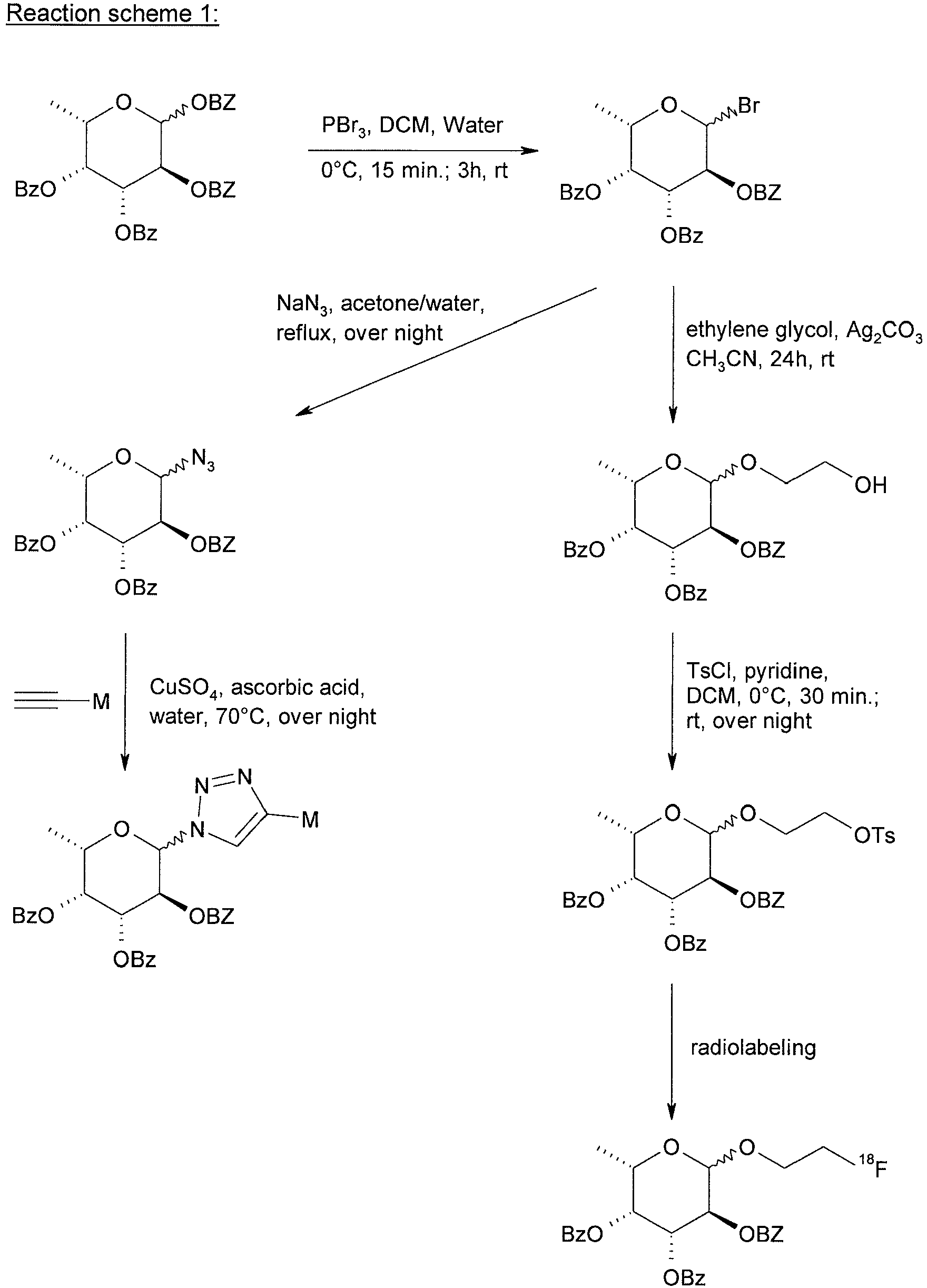
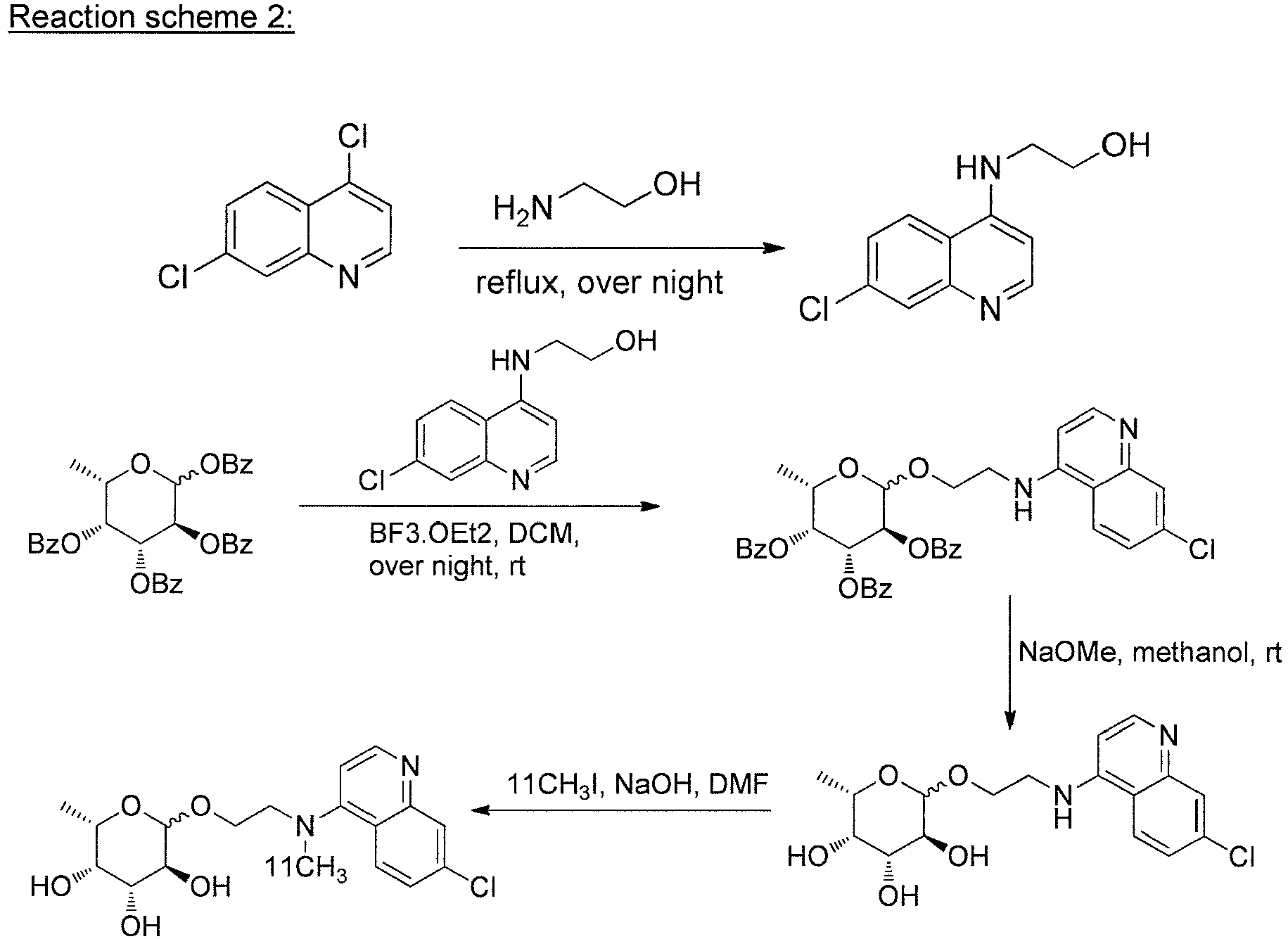
- reaction scheme 1 results in a protected intermediate that can be deprotected e.g. via a method in analogy to the final step shown in reaction scheme 2 to give the compounds of the invention.
- the compounds of the invention show a valuable range of pharmacological effects which could not have been predicted. They are capable of marking senescent cells.
- the invention therefore further relates to the use of the compound of the invention in a method of detecting cell senescence.
- the invention therefore further relates to the use of the compound of the invention a method of determining the efficiency of cancer treatment.
- the invention therefore further relates to a medicament comprising a compound according to the invention in combination with at least one inert, non-toxic, pharmaceutically suitable excipient.
- the compound of the invention can be used for detecting cell senescence.
- the compound of the invention can be used for determining the efficiency of cancer treatment.
- Method for detecting cell senescence comprising contacting cells with a compound of the invention.
- Method for determining the efficiency of cancer treatment comprising contacting cells with a compound of the invention.
- the above methods can be performed both in vivo, e.g. in a human patient to monitor the efficiency of cancer treatment or in vitro, e.g. to screen for new medicaments.
- the compounds will preferably be administered parenterally.
- the compounds of the invention can be administered in suitable administration forms.
- Parenteral administration can take place with avoidance of an absorption step (e.g. intravenous, intraarterial, intracardiac, intraspinal or intralumbar) or with inclusion of an absorption step (e.g. intramuscular, subcutaneous, intracutaneous, percutaneous, or intraperitoneal).
- absorption step e.g. intravenous, intraarterial, intracardiac, intraspinal or intralumbar
- absorption step e.g. intramuscular, subcutaneous, intracutaneous, percutaneous, or intraperitoneal.
- Administration forms suitable for parenteral administration are, inter alia, preparations for injection and infusion in the form of solutions, suspensions, emulsions, lyophilizates or sterile powders.
- the compounds of the invention can be converted into the stated administration forms. This can take place in a manner known per se by mixing with inert, non-toxic, pharmaceutically acceptable excipients.
- excipients include inter alia carriers (for example microcrystalline cellulose, lactose, mannitol), solvents (e.g. liquid polyethylene glycols), emulsifiers and dispersants or wetting agents (for example sodium dodecyl sulfate, polyoxysorbitan oleate), binders (for example polyvinylpyrrolidone), synthetic and natural polymers (for example albumin), stabilizers (e.g. antioxidants such as, for example, ascorbic acid), colors (e.g. inorganic pigments such as, for example, iron oxides) and taste and/or odor corrigents.
- carriers for example microcrystalline cellulose, lactose, mannitol
- solvents e.g. liquid polyethylene glycols
- Example 3A The compound of Example 3A (1.1 g, 1.9 mmol) in dry DCM (6 mL) was cooled to 0°C in a RBF fitted with a rubber septum. After degassing and charging the vessel with Argon, PBr 3 (0.285 mL, 3.1 mmol), followed by water (0.190 mL, 10.5 mmol) were added dropwise through separate disposable syringes. After 15 minutes of stirring at 0 °C, the ice bath was removed and the reaction was allowed to stir at RT for 3 hours. DCM (50 mL) was added, followed by water (50 mL).
- Example 4A The compound of Example 4A (4.0 g, 11.3 mmol), ethylene glycol (7.0 g, 112.7 mmol) and Ag 2 CO 3 (4.7 g, 16.9 mmol) in dry CH 3 CN (25 mL) were stirred for 24 hours at RT under a calcium chloride drying tube. The solution was filtered through a pad of celite to remove all of the solid material, after which sodium bicarbonate (150 mL) was added and the organic material extracted into DCM (3 x 100 mL).
- Tosyl chloride (1.1 g, 3.0 mmol) was added to a solution of the compound of Example 6A (1.0 g, 3.0 mmol) and pyridine (1 mL) in DCM (15 mL), stirring at 0°C for 30 minutes. The reaction was then allowed to warm to RT and stirred overnight, after which sodium bicarbonate (50 mL) was added and the organic material extracted into DCM (3 x 50 mL).
- Example 4A The compound of Example 4A (1.5 g, 4.3 mmol) and thiourea (0.4 g, 5.5 mmol) were refluxed in dry degassed acetonitrile (20 mL) for 1 hour, after which the flask was cooled for 30 minutes in an ice bath. The solid material was collected with a Buchner funnel, washed with cold acetonitrile and air dried for 30 minutes (0.9 g). The isothiouronium salt (0.9 g, 2.5 mmol) in DCM (10 mL) was added to a 3-necked flask containing thoroughly degassed water (20 mL).
- Example 12A The unpurified compound of Example 12A was dissolved in dry methanol (5 mL), after which NaOMe (30 - 40 % in MeOH, 0.1 mL) was added and the reaction was left to stir under a drying tube for 90 minutes. AcOH (30 % in methanol) was added dropwise to lower the pH to 4 - 6. After quenching the NaOMe, the solvents were removed under vacuum to give the title compound. The identity was confirmed by LCMS (8.91 minutes, m/z 382.7 [M] + ).
- This compound does not fall within the scope of claim 1 but is provided as a model e.g. for the 11 C-labeled compounds of the invention.
- Example 1A The compound of Example 1A (0.5 g, 2.3 mmol) was dissolved in DCM (10 mL) containing NEt 3 (1 mL, 6.9 mmol) and the solution was cooled to 0°C in an ice bath.
- dansyl chloride (0.6 g, 2.3 mmol) was added as a solid and the reaction was allowed to warm to RT, while stirring under a calcium chloride packed drying tube.
- Sodium bicarbonate (10 mL) was added and the organic residue extracted into DCM (3 x 15 mL). The combined organic material was washed with water (10 mL) and then brine (10 mL), dried over MgSO 4 and the solvents removed under vacuum.
- Deoxofluor 50% in THF, 1.79 mL, 4.1 mmol
- This compound does not fall within the scope of claim 1 but is provided as a model for the 18 F-labeled compounds of the invention.
- This compound does not fall within the scope of claim 1 but is provided as a model e.g. for the 11 C-labeled compounds of the invention.
- HCT116 cells colonal carcinoma cell line
- MCF7 cells breast cancer cell line
- MCF7 cells treated with Doxorubicin showed enhanced enrichment of the compound of Example 5 inhibitor indicated by a shift in the direction of PerCP-A. This demonstrates the ability of the compound of Example 5 to bind to and visualize senescent cells.
- HCT116 colonal carcinoma cell line
- MCF7 breast cancer cell line
- Doxorubicin interacts with DNA by intercalation and inhibits the progression of the enzyme topoisonerase II.
- Figure 2 shows representative light microscope pictures of ⁇ -gal-stained HCT116 and MCF7 cells with and with out 250 nM Doxorubicin treatment.
- Doxorubicin treated cells enlarge in senescence and, mainly MCF7 cells, showed strong expression of ⁇ -gal (blue), indicating the presence of senescent cells (see Fig. 2 ).
- Fig. 3 a graph is displayed indicating the signal obtained from a lysosome staining of HCT116 (colorectal carcinoma cell line) cells and MCF7 (breast cancer cell line) cells, both in the presence and absence of Doxorubicin.
- This graph again shows an enhanced positive lysosome staining compared to cells without Doxorubicin treatment (untreated cells), indicating the presence of senescent cells.
- HCT116 cells colonal carcinoma cell line
- MCF7 cells breast cancer cell line
- Fig. 2 and Fig. 3 clearly demonstrates the presence of senescent cells in the cell lines treated with Doxorubicin.
- Fig. 1 and Fig. 4 show clearly that the compounds of the invention accumulate in senescent cells and produce a meas-surable signal. This shows that the compounds of the invention can serve as markers for senescent cells and can be detected e.g. by optical imaging methods.
Landscapes
- Chemical & Material Sciences (AREA)
- Organic Chemistry (AREA)
- Life Sciences & Earth Sciences (AREA)
- Health & Medical Sciences (AREA)
- Engineering & Computer Science (AREA)
- Molecular Biology (AREA)
- Biomedical Technology (AREA)
- Immunology (AREA)
- General Health & Medical Sciences (AREA)
- Biotechnology (AREA)
- Biochemistry (AREA)
- Urology & Nephrology (AREA)
- Hematology (AREA)
- Cell Biology (AREA)
- Microbiology (AREA)
- Genetics & Genomics (AREA)
- Food Science & Technology (AREA)
- Medicinal Chemistry (AREA)
- Physics & Mathematics (AREA)
- Analytical Chemistry (AREA)
- General Physics & Mathematics (AREA)
- Pathology (AREA)
- Pharmaceuticals Containing Other Organic And Inorganic Compounds (AREA)
Description
- The instant invention relates to novel compounds useful for visualizing cell senescence and their use. In particular, this invention relates to novel fucose derivatives useful as senescence traces.
- Cell senescence is broadly defined as the general biological program by which cellular proliferation is ceased and in which cells enter a cell-cycle arrest. Senescence is thereby accompanied by distinct changes in the cellular metabolism.
- Recently senescence is recognised to play an important role in cancer treatment and therapy resistance as well as offer insight into cancer staging and prognosis. Treatment-associated senescence can be a measure of chemotherapeutic success and the detection of senescent cells might also offer diagnostic opportunities for detecting preneoplastic lesions.
- One of the most widely used markers for senescent cell is the senescence-associated (SA)-β-galactosidase (β-gal). Several β-gal substrates have been developed and are currently used ex vivo and in vitro to show β-gal expression.
- Chen and Chang (1987), Biochemical and Biophysical Research Communications, Vol. 142, No. 3, p. 767-774, disclose an increase in fucosylation in senescent fibroblasts and rely on the use of the radioactive isotope 3H in vitro.
- However there still is a need for improved compounds that can act as tracers for cell senescence, in particular it would be useful if such tracers could be used as diagnostic compounds in vivo using non-invasive methods for the visualisation of such tracers.
- Recently it has come to light that the α-fucosidase (a-fuc) expression is a more specific indicator of cell senescence. Furthermore it is known that glycosidases such as β-gal and α-fuc are expressed in the lysosomes and that those lysosomes are often notably enlarged in senescent cells.
- The instant inventors have know found that certain fucose derivatives carrying fluorescent labels or radiolabels accumulate in senescent cells and can be used to reliably mark and detect senescent cells both in vitro and in vivo.
- The present invention relates to compounds of formula
A-L-M (I)
in which, - A represents

- X represents a halo-substituent, and
- * represents the binding site to the residue represented by L.
- L represents *Y-(CH2)n-# or

- Y is selected from the group consisting of O, N, S, SO and SO2,
- n is an integer from 2 to 6,
- * represents the binding site to the residue represented by A, and
- # represents the binding site to the residue represented by M, and
- M represents 18F,
- Compounds of the invention are the compounds of formulae (I), (Ia), (Ib), (Ic) and (Id) and the salts, solvates and solvates of the salts thereof, as well as the compounds which are encompassed by formula (I), (Ia), (Ib), (Ic) and (Id) and are mentioned hereinafter as exemplary embodiment(s), and the salts, solvates and solvates of the salts thereof, insofar as the compounds encompassed by formula (I), (Ia), (Ib), (Ic) and (Id) and mentioned hereinafter are not already salts, solvates and solvates of the salts.
- The compounds of the invention may, depending on their structure, exist in stereoisomeric forms (enantiomers, diastereomers). The invention therefore also encompasses the enantiomers or diastereomers and respective mixtures thereof. The stereoisomerically uniform constituents can be isolated in a known manner from such mixtures of enantiomers and/or diastereomers.
- It might be preferred in those compounds of the invention, in which A represents a fucosidyl residue, if this fucosidyl residue is in the natural L-configuration.
- If the compounds of the invention may occur in tautomeric forms, the present invention encompasses all tautomeric forms.
- Salts preferred for the purposes of the present invention are physiologically acceptable salts of the compounds of the invention. Also encompassed however are salts which are themselves not suitable for pharmaceutical applications but can be used for example for the isolation or purification of the compounds of the invention.
- Examples of pharmaceutically acceptable salts of the compounds of formula (I) include salts of inorganic bases like ammonium salts, alkali metal salts, in particular sodium or potassium salts, alkaline earth metal salts, in particular magnesium or calcium salts; salts of organic bases, in particular salts derived from cyclohexylamine, benzylamine, octylamine, ethanolamine, diethanolamine, diethylamine, triethylamine, ethylenediamine, procaine, morpholine, pyrroline, piperidine, N-ethylpiperidine, N-methylmorpholine, piperazine as the organic base; or salts with basic amino acids, in particular lysine, arginine, ornithine and histidine.
- Examples of pharmaceutically acceptable salts of the compounds of formula (I) also include salts of inorganic acids like hydrochlorides, hydrobromides, sulfates, phosphates or phosphonates; salts of organic acids, in particular acetates, formates, propionates, lactates, citrates, fumarates, maleates, benzoates, tartrates, malates, methanesulfonates, ethanesulfonates, toluenesulfonates or benzenesulfonates; or salts with acidic amino acids, in particular aspartate or glutamate.
- Solvates for the purposes of the invention refer to those forms of the compounds of the invention which in the solid or liquid state form a complex by coordination with solvent molecules. Hydrates are a specific form of solvates in which the coordination takes place with water.
- In the context of this invention the substituents have the following definitions unless specified otherwise.
- The term alkyl generally refers to branched or straight-chain (C1-C6)-alkyl, preferably (C1-C4)-alkyl, such as in particular methyl, ethyl, propyl, butyl, isopropyl, isobutyl and tert.-butyl.
- The term alkoxy generally refers to branched or straight-chain (C1-C6)-alkoxy, preferably (C1-C4)-alkoxy, such as in particular methoxy, ethoxy, propoxy, butoxy, isopropoxy, isobutoxy and tert.-butoxy.
- The terms mono- and dialkylamino respectively represent an alkylamino radical having one or two alkyl substituents (chosen independently of one another), by way of example and preferably methylamino, ethylamino, n-propylamino, isopropylamino, tert-butylamino, n-pentylamino, n-hexylamino, N,N-dimethylamino, N,N-diethylamino, N-ethyl-N-methylamino, N-methyl-N-n-propylamino, N-isopropyl-N-n-propylamino, N-tert-butyl-N-methylamino, N-ethyl-N-n-pentylamino and N-n-hexyl-N-methylamino. Mono-(C1-C3)-alkylamino represents for example a monoalkylamino radical having 1 to 3 carbon atoms. Di-(C1-C3)-alkylamino represents a dialkylamino radical having 1 to 3 carbon atoms each per alkyl substituent.
- The term halogen or halo refers to fluorine, chlorine, bromine or iodine; preferably fluorine, chlorine or bromine. In some embodiments the term halogen or halo preferably refers to 76Br, 75Br, 19F and 18F.
- In formulae of the group which are represented by A, the end point of the line adjacent to which there is an *, is not a carbon atom or a CH2 group but rather a component of the bond to the atom to which A is attached.
- In the formulae of the group which are represented by L, the end point of the line adjacent to which there is an * or #, is not a carbon atom or a CH2 group but rather a component of the bond to the atom to which L is attached.
- The residue represented by M in the compounds of the invention iscan be attached to the residue represented by L in the compounds of the invention. Preferably the fluorophore is substantially non-toxic within the concentration range at which the compounds of the invention are used.
- The residue represented by M in the compounds of the invention is 18F that can be attached to the residue represented by L in the compounds of the invention. Preferably the residue 18F is substantially non-toxic within the concentration range at which the compounds of the invention are used. In one of its simplest forms M is a 18F atom.
- The present invention also relates to compounds of formula (I) in which X represents Cl.
- The present invention also relates to compounds of formula (I) in which n is 2, 3 or 4.
-
- R1 represents hydrogen or (C1-C6)-alkyl,
- whereby alkyl may be substituted with one to three substituents selected independently form the group consisting of, hydroxy, amino, cyano, nitro, halogen, carbonyl, (C1-C4)-alkoxy, mono (C1-C4)-alkylamino and di-(C1-C4)-alkylamino,
- whereby R1 represents an optionally substituted (C1-C6)-alkyl comprising at least one 76Br, 75Br, 18F or 11C if X is not 76Br, 75Br or 18F,
- R2 and R3 independently from one another represent hydrogen or (C1-C6)-alkyl,
- whereby alkyl may be substituted with one to three substituents selected independently form the group consisting of, hydroxy, amino, cyano, nitro, halogen, carbonyl, (C1-C4)-alkoxy, mono (C1-C4)-alkylamino and di-(C1-C4)-alkylamino,
- whereby at least on of R2 and R3 represents a (C1-C3)-alkyl comprising at least one 11C or being substituted with a residue comprising at least one 76Br, 75Br, 18F or 11C, and
- * represents the binding site to the residue represented by L.
- In some embodiments it may be preferred if M represents

- In some embodiments it may be preferred if A represents


- In some embodiments it may be preferred if the compound of formula (I) is a compound of formula


- In some embodiments it may be preferred if the compound of formula (I) is a compound of formula

preferably
- The compounds of the invention can be prepared by various route depending on the precise nature of A, L and M.
- It is for example possible to start from a protected fucose and convert the protected fucose to a protected 2-bromo-fucose derivative.
- This reaction generally takes place in the presence of a brominating reagent, optionally in a solvent, at a temperature from 0°C to the reflux of the solvent.
- Suitable brominating agents include PBr3 and HBr in acetic acid.
- Preferred solvents are halogenated hydrocarbons such as dichloromethane or trichloromethane.
- The 2-bromofucose derivative can in the next step be reacted with a compound that will form the residue represented by L in the compounds of the invention.
- Examples for such compounds include ethylene glycol, 2-amino-ethanol, 1,2-ethylenediamine, 1,3-propanediol, 3-amino-1-propanol and 1,3-diaminopropane.
- The conditions for such a coupling reaction are well known to a person skilled in the art.
- The A-L-conjugate obtained this way can then again be coupled under conditions know to a person skilled in the art to a compound corresponding to the residue represented by M in the compounds of the invention.
- After the final coupling step any protecting group present in the obtained compound is removed to obtain the compounds of the invention.
- It is also possible to convert the 2-bromofucose derivative into the corresponding azide and react this azide with a suitable alkyne using conditions usual for a click reaction followed by further coupling steps and (a) deprotection reaction(s) where appropriate. In this case compounds will be obtained in which L represents a triazole.
- Another route to the compounds of the invention involves reacting a compound corresponding to the residue represented by M in the compounds of the invention with a compound that will form the residue represented by L in the compounds of the invention. The M-L-conjugate can then again be coupled to a compound corresponding to the residue represented by A in the compounds of the invention followed (a) deprotection reaction(s) where appropriate.
- Some exemplary, non-limiting synthetic routes for the compounds of the invention are displayed in the following schemes. The reactions of reaction scheme 1 result in a protected intermediate that can be deprotected e.g. via a method in analogy to the final step shown in reaction scheme 2 to give the compounds of the invention.
- The compounds of the invention show a valuable range of pharmacological effects which could not have been predicted. They are capable of marking senescent cells.
- The invention therefore further relates to the use of the compound of the invention in a method of detecting cell senescence.
- The invention therefore further relates to the use of the compound of the invention a method of determining the efficiency of cancer treatment.
- The invention therefore further relates to a medicament comprising a compound according to the invention in combination with at least one inert, non-toxic, pharmaceutically suitable excipient.
- The compound of the invention can be used for detecting cell senescence.
- The compound of the invention can be used for determining the efficiency of cancer treatment.
- Method for detecting cell senescence comprising contacting cells with a compound of the invention.
- Method for determining the efficiency of cancer treatment comprising contacting cells with a compound of the invention.
- The above methods can be performed both in vivo, e.g. in a human patient to monitor the efficiency of cancer treatment or in vitro, e.g. to screen for new medicaments.
- The compounds will preferably be administered parenterally.
- For this administration route the compounds of the invention can be administered in suitable administration forms.
- Parenteral administration can take place with avoidance of an absorption step (e.g. intravenous, intraarterial, intracardiac, intraspinal or intralumbar) or with inclusion of an absorption step (e.g. intramuscular, subcutaneous, intracutaneous, percutaneous, or intraperitoneal). Administration forms suitable for parenteral administration are, inter alia, preparations for injection and infusion in the form of solutions, suspensions, emulsions, lyophilizates or sterile powders.
- The compounds of the invention can be converted into the stated administration forms. This can take place in a manner known per se by mixing with inert, non-toxic, pharmaceutically acceptable excipients. These excipients include inter alia carriers (for example microcrystalline cellulose, lactose, mannitol), solvents (e.g. liquid polyethylene glycols), emulsifiers and dispersants or wetting agents (for example sodium dodecyl sulfate, polyoxysorbitan oleate), binders (for example polyvinylpyrrolidone), synthetic and natural polymers (for example albumin), stabilizers (e.g. antioxidants such as, for example, ascorbic acid), colors (e.g. inorganic pigments such as, for example, iron oxides) and taste and/or odor corrigents.
- The percentage data in the following tests and examples are, unless indicated otherwise, percentages by weight; parts are parts by weight. Solvent ratios, dilution ratios and concentration data of liquid/liquid solutions are based in each case on volume. The statement "w/v" means "weight/volume". Thus, for example, "10% w/v" means: 100 ml of solution or suspension contain 10 g of substance.
- All LCMS data (unless otherwise specified) was obtained using an Agilent ESI/APCI HPLC-ms system with a Phenomenex (Luna C-18, 250 x 4.60 mm, 5 micron) column. The samples were run using a gradient of 5 % CH3CN in water (+ 0.1% AcOH) for 2 minutes and then increased to 100 % CH3CN over 26 minutes, after which the solvent was maintained at 100 % CH3CN for a further 2 minutes.
-

- A solution of 4,7-dichloroquinoline (5.0 g, 25.2 mmol) in ethylenediamine (15 g, 250 mmol) was heated to 90°C, stirring overnight under Argon. TLC indicated the complete consumption of the starting quinoline, with a spot-to-spot conversion into a more polar product. 6M NaOH (30 mL) was added and the organic material was extracted into DCM (3 x 100 mL). After washing with brine (2 x 100 mL), drying over MgSO4, the solvents were removed under vacuum, yielding 2.0 g of a colourless crystalline solid, which was not purified further. The identity and purity were confirmed using LCMS, revealing a single uv active peak (3.47 minutes, m/z 221.7 [M]+).
-

- To a boiling solution of acetic anhydride (35 mL) and NaOAc (2.5 g, 30.5 mmol) was added L-fucose (5 g, 30.5 mmol) in small portions. Once the solution became translucent, it was removed from the heat and partially solidified upon cooling. The residues were poured over crushed ice (50 g) and solid sodium bicarbonate was added until the evolution of gas ceased. The organic material was extracted into EtOAc (3 x 100 mL), washed with sodium bicarbonate (100 mL) and brine (100 mL) and dried over MgSO4. Removing the solvents under vacuum, resulted in a yellow syrup (10.1 g, 99.6 %).
-
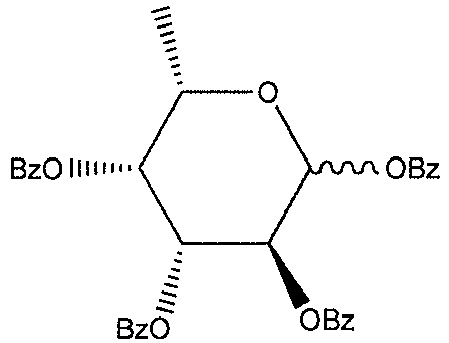
- L-fucose (2.0 g, 12.2 mmol) was dissolved in pyridine (15 mL) and cooled to 0°C in an ice bath. Benzoyl chloride (7.1 mL, 60.1 mmol) was added though a dropping funnel over 5 minutes, after which the ice bath was removed and the reaction was allowed to stir at RT for 3 hours. The reaction mixture was poured into ice-water (100 mL) and extracted into EtOAc (3 x 100 mL). The residues were washed with ice-cold 1 M HCl (2 x 100 mL) and brine (100 mL), followed by drying over MgSO4. After removal of solvents under vacuum, the resulting semi-solid was purified using silica-gel column chromatography (EtOAC : PE = 3 : 7), yielding a crystalline colourless solid (6.9 g, 93 %).
-

- To a solution of HBr (10 mL, 33 % in AcOH) was added the compound of Example 2A (2.1 g, 6.3 mmol). The reaction was allowed to stir for 2 hours at RT, after which it was poured over crushed ice (50 g). After extraction into DCM (3 x 30 mL), the combined organic phases were washed repetitively with portions of sodium bicarbonate (3 to 7 x 50 ml) until neutral. Drying over MgSO4 and removal of solvents under vacuum, afforded the bromide as a thick orange syrup. Due to its instability, it was not purified further but used directly in the following reactions.
-

- The compound of Example 3A (1.1 g, 1.9 mmol) in dry DCM (6 mL) was cooled to 0°C in a RBF fitted with a rubber septum. After degassing and charging the vessel with Argon, PBr3 (0.285 mL, 3.1 mmol), followed by water (0.190 mL, 10.5 mmol) were added dropwise through separate disposable syringes. After 15 minutes of stirring at 0 °C, the ice bath was removed and the reaction was allowed to stir at RT for 3 hours. DCM (50 mL) was added, followed by water (50 mL). The residues were further extracted into DCM (2 x 30 mL), washed with sodium bicarbonate (2 x 50 mL), brine (50 mL) and dried over MgSO4. After the solvent was removed under vacuum, the resulting colourless solid, shown pure by TLC, remained (1.0 g, 98 %).
-

- The compound of Example 4A (4.0 g, 11.3 mmol), ethylene glycol (7.0 g, 112.7 mmol) and Ag2CO3 (4.7 g, 16.9 mmol) in dry CH3CN (25 mL) were stirred for 24 hours at RT under a calcium chloride drying tube. The solution was filtered through a pad of celite to remove all of the solid material, after which sodium bicarbonate (150 mL) was added and the organic material extracted into DCM (3 x 100 mL). After drying over MgSO4 and removing the solvents under vacuum, the resulting orange oil was purified using silica-gel column chromatography (EtOAC : PE = 2 : 5), affording the title compound as an orange oil (1.5 g, 40 %).
-

- Tosyl chloride (1.1 g, 3.0 mmol) was added to a solution of the compound of Example 6A (1.0 g, 3.0 mmol) and pyridine (1 mL) in DCM (15 mL), stirring at 0°C for 30 minutes. The reaction was then allowed to warm to RT and stirred overnight, after which sodium bicarbonate (50 mL) was added and the organic material extracted into DCM (3 x 50 mL). After washing with brine (2 x 30 mL) and aqueous 10 % copper sulphate, the crude product was dried over MgSO4, concentrated under vacuum and was purified using silica-gel column chromatography (EtOAC : PE = 2 : 5) to afford the title compound as a crystalline white solid (0.43 g, 29 %).
-

- 4,7-dichloroquinoline (11.6 g, 58.6 mmol) in 2-aminoethanol (45 mL, 1.37 mol) was refluxed under Argon overnight. After cooling to RT, 1M NaOH (100 mL) was added and allowed to stir for 10 minutes. The resulting yellow solid material was collected using a Büchner funnel, washed with water (5 x 100 mL) and dried thoroughly under vacuum, affording the title compound as a light yellow solid (12.27 g, 94 %).
-

- A solution containing the compound of Example 2A (2.0 g, 6.0 mmol), the compound of Example 8A (2.0 g, 9.0 mmol) and mol-sieve 4Å (5 g) in dry DCM (15 mL) was prepared, degassed and allowed to stir under argon for 10 minutes at 0°C in an ice bath. BF3·OEt2 (2.6 g, 18.2 mmol) was added through a rubber septum and the reaction was maintained at 0°C for a further 30 minutes, after which the ice bath was removed and the reaction was allowed to stir at RT overnight. The next day, the reaction mixture was filtered through a pad of celite and washed thoroughly with DCM (3 x 20 mL). The organic residue was washed until neutral with sodium bicarbonate (3 x 50 mL), after which it was further washed with brine (50 mL), dried over MgSO4 and the solvent removed under vacuum. The crude mixture was purified using silica gel column chromatography (MeOH : EtOAc : NEt3 = 10 : 90 : 1), which afforded the title compound as a yellow semi-solid (0.6 g, 20 %). The identity was confirmed by LCMS (10.58 minutes, m/z 494.6 [M]+).
-

- A solution containing the compound of Example 3A (3.3 g, 5.7 mmol), the compound of Example 8A (1.9 g, 8.3 mmol) and mol-sieve 4Ǻ (10 g) in dry DCM (30 mL) was prepared, degassed and allowed to stir under argon for 10 minutes at 0°C in an ice bath. BF3·OEt2 (4.8 g, 35.06 mmol) was added through a rubber septum and the reaction was maintained at 0°C for a further 30 minutes, after which the ice bath was removed and the reaction was allowed to stir at RT overnight. The next day, the reaction mixture was filtered through a pad of celite and washed thoroughly with DCM (3 x 30 mL). The organic residue was washed until neutral with sodium bicarbonate (3 x 50 mL), after which it was further washed with brine (50 mL), dried over MgSO4 and the solvent removed under vacuum. The crude mixture was purified using silica gel column chromatography (MeOH : EtOAc : NEt3 = 10 : 90 : 1), which afforded the title compound as a yellow semi-solid (0.9 g, 23 %). The identity was confirmed by LCMS (13.29 minutes, m/z 680.6 [M]+).
-

- To a solution of the compound of Example 11A (107 mg, 0.17 mmol) and K2CO3 (40 mg, 0.29 mmol) in DMF (5 mL), stirring at RT under argon, was added CH3I (50 mg, 0.35 mmol). The reaction was heated to 90°C for 1 hour. The reaction mixture was poured into a saturated solution sodium bicarbonate (50 mL), extracted into DCM (3 x 50 mL) and washed with brine (50 mL). Drying over MgSO4 and removing the solvent under vacuum, afforded the intermediate as an yellow oil. No purification was attempted and the crude reaction mixture was carried over the next step. The identity was confirmed by LCMS (13.64 minutes, m/z 695.7 [M]+).
-

- A solution of the compound of Example 8A (1.0 g, 4.5 mmol) and pyridine (1 mL, 12.4 mmol) in DCM (13 mL) was prepared and cooled with stirring in an ice-bath. Tosyl chloride (0.9 g, 4.7 mmol) was added and the reaction was allowed to warm to RT. Saturated aqueous sodium bicarbonate (100 mL) was added and the organics extracted into DCM (3 x 50 mL), followed by washings with more sodium bicarbonate (2 x 50 mL) and brine (50 mL). The organic material was dried over MgSO4, the solvents removed under vacuum and purified using silica gel column chromatography (MeOH : EtOAc : NEt3 = 5 : 95 : 1 - MeOH : EtOAc : NEt3 = 10 : 90 : 1), affording the title compound as a yellow solid (0.55 g, 33%).
-

- A solution containing 3-diethylaminophenol (15.0 g, 90.7 mmol) in concentrated HCI (100 mL) was prepared and cooled to 0°C in an ice-bath. NaNO2 (6.9 g, 100.0 mmol) in water (50 mL) was added slowly over 40 minutes such that no brown NOx vapours were observed. The reaction was left to stir for 2 hours, after which the thick precipitate was filtered using a Buchner funnel and washed with small portions of water (3 x 50 mL). After drying the solid for 1 hour on the Büchner funnel, the solid material was dissolved into EtOH (70 mL), Et2O (35 mL) was added and the solution stored at -20°C overnight to allow for crystallization. The next day, the solid material was collected by vacuum filtration, using a Büchner funnel and air dried. The product was an orange/red solid (8.8 g, 50 %).
-

- The compound of Example 13A (7.0 g, 36.0 mmol) and 1,6-dihydroxynaphthelene (5.9 g, 36.1 mmol) were refluxed in DMF (100 mL) for 3 hours. After the solvents were removed under vacuum, the residue was redissolved in methanol and adsorbed onto silica and purified using silica gel column chromatography (MeOH : NEt3 = 50 : 1) to afford the title compound as a dark purple solid (11.1 g, 92 %).
-

- A solution containing the compound of Example 14A (4.2 g, 12.6 mmol), K2CO3 (2.5 g, 18.1 mmol) and 1,3-dibromopropane (25.2 g, 126 mmol) in DMF (30 mL) was refluxed for 2 hours. The solvent was removed under vacuum and the crude solid purified using silica gel column chromatography (EtOAc : Pet Ether: NEt3 = 40 : 60 : 1), affording the title compound as a purple solid (1.1 g, 19 %). LCMS confirmed the product with a uv-peak (21.40 minutes, m/z 454.6 [M+H]+).
-

- The compound of Example 4A (1.5 g, 4.3 mmol) and thiourea (0.4 g, 5.5 mmol) were refluxed in dry degassed acetonitrile (20 mL) for 1 hour, after which the flask was cooled for 30 minutes in an ice bath. The solid material was collected with a Buchner funnel, washed with cold acetonitrile and air dried for 30 minutes (0.9 g). The isothiouronium salt (0.9 g, 2.5 mmol) in DCM (10 mL) was added to a 3-necked flask containing thoroughly degassed water (20 mL). To this was added Na2S2O5 (0.6 g, 2.5 mmol), after which the solution was refluxed at 50°C under argon for 30 minutes and then allowed to cool for a further 10 minutes. An extraction using DCM (3 x 50 mL), drying over Na2SO4, followed by removal of solvents under vacuum afforded the title compound as a translucent solid (0.5 g, 37 %).
-

- The compound of Example 15A (450 mg, 0.99 mmol), the compound of Example 16A (470 mg, 1.53 mmol) and K2CO3 (260 mg, 1.88 mmol) were refluxed for 1 hour in acetonitrile (20 mL). TLC revealed a spot-to-spot conversion of the Nile red-bromide to a more polar fluorescent product.. After purification using silica gel column chromatography (EtOAc : Pet Ether: NEt3 = 1 : 1), the title compound was afforded as a purple solid (450 mg, 67 % mmol).
-
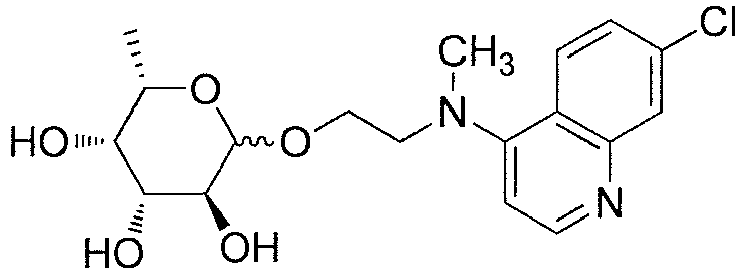
- The unpurified compound of Example 12A was dissolved in dry methanol (5 mL), after which NaOMe (30 - 40 % in MeOH, 0.1 mL) was added and the reaction was left to stir under a drying tube for 90 minutes. AcOH (30 % in methanol) was added dropwise to lower the pH to 4 - 6. After quenching the NaOMe, the solvents were removed under vacuum to give the title compound. The identity was confirmed by LCMS (8.91 minutes, m/z 382.7 [M]+).
- This compound does not fall within the scope of claim 1 but is provided as a model e.g. for the 11C-labeled compounds of the invention.
-

- The compound of Example 1A (0.5 g, 2.3 mmol) was dissolved in DCM (10 mL) containing NEt3 (1 mL, 6.9 mmol) and the solution was cooled to 0°C in an ice bath. dansyl chloride (0.6 g, 2.3 mmol) was added as a solid and the reaction was allowed to warm to RT, while stirring under a calcium chloride packed drying tube. Sodium bicarbonate (10 mL) was added and the organic residue extracted into DCM (3 x 15 mL). The combined organic material was washed with water (10 mL) and then brine (10 mL), dried over MgSO4 and the solvents removed under vacuum. Purification using silica gel column chromatography (MeOH : EtOAc : NEt3 = 10 : 90 : 1) afforded the title compound as a yellow solid (1.0 g, 96 %). The identity was confirmed by LCMS (10.94 minutes, m/z 454.7 [M]+).
-

- A suspension containing the compound of Example 12A (0.83 g, 3.75 mmol) in DCM (15 mL) was prepared. This suspension was added to a 3 necked flask containing Deoxofluor (50% in THF, 1.79 mL, 4.1 mmol) at RT, stirring under argon. Saturated aqueous sodium bicarbonate (50 mL) was added and the residues extracted into DCM (3 x 30 mL), washed with more sodium bicarbonate until neutral. The organic material was dried over MgSO4, the solvents removed under vacuum and the crude material purified using silica gel column chromatography (MeOH : EtOAc : NEt3 = 10 : 90 : 1) to afford the title compound as a yellow solid (0.37g, 44 %). The identity was confirmed by LCMS (9.29 minutes, m/z 224.7 [M]+).
- This compound does not fall within the scope of claim 1 but is provided as a model for the 18F-labeled compounds of the invention.
-

- 4,7-dichloroquinoline (3.0 g, 15.1 mmol) and N,N-dimethylethylenediamine (10.0 g, 113.4 mmol) were heated to 115°C over night. 6M NaOH (20 mL) was added and the organics extracted into DCM (3 x 50 mL). After washing with brine (2 x 100 mL) and drying over MgSO4, the solvents were removed under vacuum, affording the title compound as a light brown solid (3.7 g, 98%). The product shown to be pure by LCMS (2.83 minutes, m/z 249.7 [M]+).
- This compound does not fall within the scope of claim 1 but is provided as a model e.g. for the 11C-labeled compounds of the invention.
-

- The compound of Example 17A (450 mg, 0.7 mmol) was dissolved in dry methanol (10 mL), to which was added sodium methoxide (30-40% in methanol, 0.1 mL). The reaction was allowed to proceed at RT for 5 hours, after which acetic acid (0.5 mL) was added, the solvents removed under vacuum and the crude residue purified using silica gel column chromatography (EtOAc : methanol = 4 : 1), affording JC106 as a black oil (356 mg, 96 % mmol).
- The pharmacological activity of the compounds of the invention is described below in and in reference to the enclosed drawing which show:
-
Figure 1 : FACS-analysis data of the compound of Example 5 in HCT116 cells (colorectal carcinoma cell line) and MCF7 cells (breast cancer cell line) with and with out 250 nM Doxorubicin treatment. -
Figure 2 : Light microscope pictures of β-gal-stained HCT116 and MCF7 cells with and with out 250 nM Doxorubicin treatment. Treated cells, mainly MCF7 cells, showed strong β-gal expression. -
Figure 3 : a graph of staining signals obtained for HCT116 and MCF7 cells stained with LysoTracker® both in the presence and absence of Doxorubicin. -
Figure 4 : FACS-analysis data for the compound of Example 2 in HCT116 and MCF7 cells with (senescence +) and without 250 nM Doxorubicin treatment. The cells were incubated 20 min in 37 °C with 5% CO2. Cells were labeled with 40 ng/ml of the compound of Example 2.Both HCT116 andMCF7 cells treated with Doxorubicin showed enhanced enrichment of the labeled molecule without the need for permiablization. - To show the capability of the compounds of the invention to mark and visualise senescent cells, HCT116 cells (colorectal carcinoma cell line) and MCF7 cells (breast cancer cell line) were incubated 20 min at 37 °C with 5% CO2 in the presence and absence of Doxorubicin. The cells were then labeled with 40 ng/ml of the compound of Example 5.
- MCF7 cells treated with Doxorubicin showed enhanced enrichment of the compound of Example 5 inhibitor indicated by a shift in the direction of PerCP-A. This demonstrates the ability of the compound of Example 5 to bind to and visualize senescent cells.
- To stimulate HCT116 (colorectal carcinoma cell line) cells and MCF7 (breast cancer cell line) cells for senescence β-galactosidase staining, the cells were treated with 250nM Doxorubicin for 24 hours. Doxorubicin interacts with DNA by intercalation and inhibits the progression of the enzyme topoisonerase II.
Figure 2 shows representative light microscope pictures of β-gal-stained HCT116 and MCF7 cells with and with out 250 nM Doxorubicin treatment. Doxorubicin treated cells enlarge in senescence and, mainly MCF7 cells, showed strong expression of β-gal (blue), indicating the presence of senescent cells (seeFig. 2 ). - In
Fig. 3 a graph is displayed indicating the signal obtained from a lysosome staining of HCT116 (colorectal carcinoma cell line) cells and MCF7 (breast cancer cell line) cells, both in the presence and absence of Doxorubicin. This graph again shows an enhanced positive lysosome staining compared to cells without Doxorubicin treatment (untreated cells), indicating the presence of senescent cells. - To show the capability of the compounds of the invention to mark and visualise senescent cells, HCT116 cells (colorectal carcinoma cell line) and MCF7 cells (breast cancer cell line) were incubated 20 min in 37 °C with 5% CO2. The cells were then labeled with 40 ng/ml of the compound of Example 2. Both HCT116 and MCF7 cells treated with Doxorubicin showed enhanced enrichment of the labeled molecule without the need for permeabilisation (see
Fig. 4 ). This demonstrates the ability of the compound of Example 2 to bind to and visualize senescent cells even in non-permeabilised cells. - The data displayed in
Fig. 2 andFig. 3 clearly demonstrates the presence of senescent cells in the cell lines treated with Doxorubicin.Fig. 1 andFig. 4 show clearly that the compounds of the invention accumulate in senescent cells and produce a meas-surable signal. This shows that the compounds of the invention can serve as markers for senescent cells and can be detected e.g. by optical imaging methods.
Claims (7)
- Compound of formula
A-L-M (I)
in which,A represents
* represents the binding site to the residue represented by L,L represents *Y-(CH2)n-# or
wherein, Y is selected from the group consisting of O, N, S, SO and SO2,n is an integer from 2 to 6,* represents the binding site to the residue represented by A, and# represents the binding site to the residue represented by M, andM represents a residue comprising at least 18F,and the salts thereof, the solvates thereof and the solvates of the salts thereof.
 - Compound according to claim 1, characterised in that n is 2, 3 or 4.
- Medicament comprising a compound according to claim 1 or 2 in combination with at least one inert, non-toxic, pharmaceutically suitable excipient.
- Use of a compound according to claim 1 or 2 for detecting cell senescence in vitro.
- Use of a compound according to claim 1 or 2 for determining the efficiency of cancer treatment in vitro.
- Method for detecting cell senescence comprising contacting cells with a compound according to claim 1 or 2 in vitro.
- Method for determining the efficiency of cancer treatment comprising contacting cells with a compound according to claim 1 or 2 in vitro.
Priority Applications (1)
| Application Number | Priority Date | Filing Date | Title |
|---|---|---|---|
| EP12766009.0A EP2890981B1 (en) | 2012-08-28 | 2012-09-03 | Senescence tracers |
Applications Claiming Priority (3)
| Application Number | Priority Date | Filing Date | Title |
|---|---|---|---|
| EPPCT/EP2012/066714 | 2012-08-28 | ||
| EP12766009.0A EP2890981B1 (en) | 2012-08-28 | 2012-09-03 | Senescence tracers |
| PCT/EP2012/067102 WO2014032737A1 (en) | 2012-08-28 | 2012-09-03 | Senescence tracers |
Publications (2)
| Publication Number | Publication Date |
|---|---|
| EP2890981A1 EP2890981A1 (en) | 2015-07-08 |
| EP2890981B1 true EP2890981B1 (en) | 2018-11-07 |
Family
ID=53267160
Family Applications (1)
| Application Number | Title | Priority Date | Filing Date |
|---|---|---|---|
| EP12766009.0A Active EP2890981B1 (en) | 2012-08-28 | 2012-09-03 | Senescence tracers |
Country Status (1)
| Country | Link |
|---|---|
| EP (1) | EP2890981B1 (en) |
-
2012
- 2012-09-03 EP EP12766009.0A patent/EP2890981B1/en active Active
Non-Patent Citations (1)
| Title |
|---|
| None * |
Also Published As
| Publication number | Publication date |
|---|---|
| EP2890981A1 (en) | 2015-07-08 |
Similar Documents
| Publication | Publication Date | Title |
|---|---|---|
| DK2890981T3 (en) | Senescence tracers | |
| PL168202B1 (en) | Method of producing new acridine derivatives PL PL | |
| ZA200405175B (en) | Coumarines useful as biomarkers. | |
| Liu et al. | Synthesis of polycyclic indolizine derivatives via one-pot tandem reactions of N-ylides with dichloro substituted α, β-unsaturated carbonyl compounds | |
| CN116829557B (en) | Pentaheterocycle compound, preparation method and application thereof | |
| JPS5982374A (en) | Dihydroxy-2(1h)quinazolinone-1-alkanoic acids | |
| KR101710318B9 (en) | Pladienolide pyridine compounds and methods of use | |
| Gu et al. | Synthesis, cytotoxic evaluation and DNA binding study of 9-fluoro-6 H-indolo [2, 3-b] quinoxaline derivatives | |
| Jiang et al. | Anti-angiogenic and anticancer effects of baicalein derivatives based on transgenic zebrafish model | |
| AU2016357433A1 (en) | A solid state form of pladienolide pyridine compounds and methods of use | |
| EP2319842B1 (en) | Fluorescent carbazole compounds for cancer diagnosis | |
| CN118451079A (en) | Benzopiperidine derivative modulators, methods of preparation and uses thereof | |
| EA001486B1 (en) | Benzoxazinone dopamine d4 receptor antagonists | |
| TW202542158A (en) | Fused-ring compounds, pharmaceutical compositions containing them, and their uses | |
| Guo et al. | Synthesis and biological assay of 4-aryl-6-chloro-quinoline derivatives as novel non-nucleoside anti-HBV agents | |
| JP2025511112A (en) | Aromatic ring compounds and their uses | |
| EP2890981A1 (en) | Senescence tracers | |
| Gude et al. | Syntheses and copper (II)-dependent DNA photocleavage by acridine and anthracene 1, 10-phenanthroline conjugate systems | |
| NZ199764A (en) | 5-(2-halogenovinyl)-2'-deoxyuridine derivatives and pharmaceutical compositions | |
| CN101619038A (en) | Isoquinoline compound or salt thereof, medicinal composition, preparation method and application thereof | |
| US8536342B2 (en) | Process for producing thiabenzoazulene-propionic acid derivative | |
| CN119948023A (en) | Regulator containing piperidine polycyclic derivatives, preparation method and application thereof | |
| EP0947514B1 (en) | Novel phenanethridinium derivatives | |
| Kelley et al. | Synthesis and antirhinovirus activity of 8-substituted analogs of 6-(dimethylamino)-9-(4-methylbenzyl)-2-(trifluoromethyl)-9H-purine | |
| CN121085912B (en) | Antitumor compound and preparation method and application thereof |
Legal Events
| Date | Code | Title | Description |
|---|---|---|---|
| PUAI | Public reference made under article 153(3) epc to a published international application that has entered the european phase |
Free format text: ORIGINAL CODE: 0009012 |
|
| 17P | Request for examination filed |
Effective date: 20150323 |
|
| AK | Designated contracting states |
Kind code of ref document: A1 Designated state(s): AL AT BE BG CH CY CZ DE DK EE ES FI FR GB GR HR HU IE IS IT LI LT LU LV MC MK MT NL NO PL PT RO RS SE SI SK SM TR |
|
| AX | Request for extension of the european patent |
Extension state: BA ME |
|
| DAX | Request for extension of the european patent (deleted) | ||
| 17Q | First examination report despatched |
Effective date: 20160704 |
|
| STAA | Information on the status of an ep patent application or granted ep patent |
Free format text: STATUS: EXAMINATION IS IN PROGRESS |
|
| GRAP | Despatch of communication of intention to grant a patent |
Free format text: ORIGINAL CODE: EPIDOSNIGR1 |
|
| STAA | Information on the status of an ep patent application or granted ep patent |
Free format text: STATUS: GRANT OF PATENT IS INTENDED |
|
| INTG | Intention to grant announced |
Effective date: 20180425 |
|
| GRAS | Grant fee paid |
Free format text: ORIGINAL CODE: EPIDOSNIGR3 |
|
| GRAA | (expected) grant |
Free format text: ORIGINAL CODE: 0009210 |
|
| STAA | Information on the status of an ep patent application or granted ep patent |
Free format text: STATUS: THE PATENT HAS BEEN GRANTED |
|
| AK | Designated contracting states |
Kind code of ref document: B1 Designated state(s): AL AT BE BG CH CY CZ DE DK EE ES FI FR GB GR HR HU IE IS IT LI LT LU LV MC MK MT NL NO PL PT RO RS SE SI SK SM TR |
|
| REG | Reference to a national code |
Ref country code: GB Ref legal event code: FG4D |
|
| REG | Reference to a national code |
Ref country code: CH Ref legal event code: EP Ref country code: AT Ref legal event code: REF Ref document number: 1062687 Country of ref document: AT Kind code of ref document: T Effective date: 20181115 |
|
| REG | Reference to a national code |
Ref country code: IE Ref legal event code: FG4D |
|
| REG | Reference to a national code |
Ref country code: DE Ref legal event code: R096 Ref document number: 602012053200 Country of ref document: DE |
|
| REG | Reference to a national code |
Ref country code: CH Ref legal event code: NV Representative=s name: TROESCH SCHEIDEGGER WERNER AG, CH |
|
| REG | Reference to a national code |
Ref country code: DK Ref legal event code: T3 Effective date: 20190225 |
|
| REG | Reference to a national code |
Ref country code: NL Ref legal event code: FP |
|
| REG | Reference to a national code |
Ref country code: LT Ref legal event code: MG4D |
|
| REG | Reference to a national code |
Ref country code: ES Ref legal event code: FG2A Ref document number: 2710322 Country of ref document: ES Kind code of ref document: T3 Effective date: 20190424 |
|
| PG25 | Lapsed in a contracting state [announced via postgrant information from national office to epo] |
Ref country code: LV Free format text: LAPSE BECAUSE OF FAILURE TO SUBMIT A TRANSLATION OF THE DESCRIPTION OR TO PAY THE FEE WITHIN THE PRESCRIBED TIME-LIMIT Effective date: 20181107 Ref country code: HR Free format text: LAPSE BECAUSE OF FAILURE TO SUBMIT A TRANSLATION OF THE DESCRIPTION OR TO PAY THE FEE WITHIN THE PRESCRIBED TIME-LIMIT Effective date: 20181107 Ref country code: LT Free format text: LAPSE BECAUSE OF FAILURE TO SUBMIT A TRANSLATION OF THE DESCRIPTION OR TO PAY THE FEE WITHIN THE PRESCRIBED TIME-LIMIT Effective date: 20181107 Ref country code: BG Free format text: LAPSE BECAUSE OF FAILURE TO SUBMIT A TRANSLATION OF THE DESCRIPTION OR TO PAY THE FEE WITHIN THE PRESCRIBED TIME-LIMIT Effective date: 20190207 Ref country code: NO Free format text: LAPSE BECAUSE OF FAILURE TO SUBMIT A TRANSLATION OF THE DESCRIPTION OR TO PAY THE FEE WITHIN THE PRESCRIBED TIME-LIMIT Effective date: 20190207 Ref country code: IS Free format text: LAPSE BECAUSE OF FAILURE TO SUBMIT A TRANSLATION OF THE DESCRIPTION OR TO PAY THE FEE WITHIN THE PRESCRIBED TIME-LIMIT Effective date: 20190307 Ref country code: FI Free format text: LAPSE BECAUSE OF FAILURE TO SUBMIT A TRANSLATION OF THE DESCRIPTION OR TO PAY THE FEE WITHIN THE PRESCRIBED TIME-LIMIT Effective date: 20181107 |
|
| PG25 | Lapsed in a contracting state [announced via postgrant information from national office to epo] |
Ref country code: GR Free format text: LAPSE BECAUSE OF FAILURE TO SUBMIT A TRANSLATION OF THE DESCRIPTION OR TO PAY THE FEE WITHIN THE PRESCRIBED TIME-LIMIT Effective date: 20190208 Ref country code: RS Free format text: LAPSE BECAUSE OF FAILURE TO SUBMIT A TRANSLATION OF THE DESCRIPTION OR TO PAY THE FEE WITHIN THE PRESCRIBED TIME-LIMIT Effective date: 20181107 Ref country code: SE Free format text: LAPSE BECAUSE OF FAILURE TO SUBMIT A TRANSLATION OF THE DESCRIPTION OR TO PAY THE FEE WITHIN THE PRESCRIBED TIME-LIMIT Effective date: 20181107 Ref country code: AL Free format text: LAPSE BECAUSE OF FAILURE TO SUBMIT A TRANSLATION OF THE DESCRIPTION OR TO PAY THE FEE WITHIN THE PRESCRIBED TIME-LIMIT Effective date: 20181107 Ref country code: PT Free format text: LAPSE BECAUSE OF FAILURE TO SUBMIT A TRANSLATION OF THE DESCRIPTION OR TO PAY THE FEE WITHIN THE PRESCRIBED TIME-LIMIT Effective date: 20190307 |
|
| PG25 | Lapsed in a contracting state [announced via postgrant information from national office to epo] |
Ref country code: PL Free format text: LAPSE BECAUSE OF FAILURE TO SUBMIT A TRANSLATION OF THE DESCRIPTION OR TO PAY THE FEE WITHIN THE PRESCRIBED TIME-LIMIT Effective date: 20181107 Ref country code: CZ Free format text: LAPSE BECAUSE OF FAILURE TO SUBMIT A TRANSLATION OF THE DESCRIPTION OR TO PAY THE FEE WITHIN THE PRESCRIBED TIME-LIMIT Effective date: 20181107 |
|
| REG | Reference to a national code |
Ref country code: DE Ref legal event code: R097 Ref document number: 602012053200 Country of ref document: DE |
|
| PG25 | Lapsed in a contracting state [announced via postgrant information from national office to epo] |
Ref country code: RO Free format text: LAPSE BECAUSE OF FAILURE TO SUBMIT A TRANSLATION OF THE DESCRIPTION OR TO PAY THE FEE WITHIN THE PRESCRIBED TIME-LIMIT Effective date: 20181107 Ref country code: SK Free format text: LAPSE BECAUSE OF FAILURE TO SUBMIT A TRANSLATION OF THE DESCRIPTION OR TO PAY THE FEE WITHIN THE PRESCRIBED TIME-LIMIT Effective date: 20181107 Ref country code: EE Free format text: LAPSE BECAUSE OF FAILURE TO SUBMIT A TRANSLATION OF THE DESCRIPTION OR TO PAY THE FEE WITHIN THE PRESCRIBED TIME-LIMIT Effective date: 20181107 Ref country code: SM Free format text: LAPSE BECAUSE OF FAILURE TO SUBMIT A TRANSLATION OF THE DESCRIPTION OR TO PAY THE FEE WITHIN THE PRESCRIBED TIME-LIMIT Effective date: 20181107 |
|
| PLBE | No opposition filed within time limit |
Free format text: ORIGINAL CODE: 0009261 |
|
| STAA | Information on the status of an ep patent application or granted ep patent |
Free format text: STATUS: NO OPPOSITION FILED WITHIN TIME LIMIT |
|
| 26N | No opposition filed |
Effective date: 20190808 |
|
| PG25 | Lapsed in a contracting state [announced via postgrant information from national office to epo] |
Ref country code: SI Free format text: LAPSE BECAUSE OF FAILURE TO SUBMIT A TRANSLATION OF THE DESCRIPTION OR TO PAY THE FEE WITHIN THE PRESCRIBED TIME-LIMIT Effective date: 20181107 |
|
| PG25 | Lapsed in a contracting state [announced via postgrant information from national office to epo] |
Ref country code: MC Free format text: LAPSE BECAUSE OF FAILURE TO SUBMIT A TRANSLATION OF THE DESCRIPTION OR TO PAY THE FEE WITHIN THE PRESCRIBED TIME-LIMIT Effective date: 20181107 |
|
| PG25 | Lapsed in a contracting state [announced via postgrant information from national office to epo] |
Ref country code: IE Free format text: LAPSE BECAUSE OF NON-PAYMENT OF DUE FEES Effective date: 20190903 |
|
| REG | Reference to a national code |
Ref country code: AT Ref legal event code: UEP Ref document number: 1062687 Country of ref document: AT Kind code of ref document: T Effective date: 20181107 |
|
| PG25 | Lapsed in a contracting state [announced via postgrant information from national office to epo] |
Ref country code: CY Free format text: LAPSE BECAUSE OF FAILURE TO SUBMIT A TRANSLATION OF THE DESCRIPTION OR TO PAY THE FEE WITHIN THE PRESCRIBED TIME-LIMIT Effective date: 20181107 |
|
| PG25 | Lapsed in a contracting state [announced via postgrant information from national office to epo] |
Ref country code: MT Free format text: LAPSE BECAUSE OF FAILURE TO SUBMIT A TRANSLATION OF THE DESCRIPTION OR TO PAY THE FEE WITHIN THE PRESCRIBED TIME-LIMIT Effective date: 20181107 Ref country code: HU Free format text: LAPSE BECAUSE OF FAILURE TO SUBMIT A TRANSLATION OF THE DESCRIPTION OR TO PAY THE FEE WITHIN THE PRESCRIBED TIME-LIMIT; INVALID AB INITIO Effective date: 20120903 |
|
| PG25 | Lapsed in a contracting state [announced via postgrant information from national office to epo] |
Ref country code: MK Free format text: LAPSE BECAUSE OF FAILURE TO SUBMIT A TRANSLATION OF THE DESCRIPTION OR TO PAY THE FEE WITHIN THE PRESCRIBED TIME-LIMIT Effective date: 20181107 |
|
| PGFP | Annual fee paid to national office [announced via postgrant information from national office to epo] |
Ref country code: TR Payment date: 20220901 Year of fee payment: 11 Ref country code: NL Payment date: 20220920 Year of fee payment: 11 Ref country code: LU Payment date: 20220920 Year of fee payment: 11 Ref country code: GB Payment date: 20220920 Year of fee payment: 11 Ref country code: DK Payment date: 20220922 Year of fee payment: 11 Ref country code: DE Payment date: 20220630 Year of fee payment: 11 Ref country code: AT Payment date: 20220921 Year of fee payment: 11 |
|
| PGFP | Annual fee paid to national office [announced via postgrant information from national office to epo] |
Ref country code: FR Payment date: 20220922 Year of fee payment: 11 Ref country code: BE Payment date: 20220920 Year of fee payment: 11 |
|
| PGFP | Annual fee paid to national office [announced via postgrant information from national office to epo] |
Ref country code: IT Payment date: 20220926 Year of fee payment: 11 Ref country code: ES Payment date: 20221122 Year of fee payment: 11 |
|
| PGFP | Annual fee paid to national office [announced via postgrant information from national office to epo] |
Ref country code: CH Payment date: 20220928 Year of fee payment: 11 |
|
| REG | Reference to a national code |
Ref country code: DE Ref legal event code: R119 Ref document number: 602012053200 Country of ref document: DE |
|
| REG | Reference to a national code |
Ref country code: DK Ref legal event code: EBP Effective date: 20230930 |
|
| REG | Reference to a national code |
Ref country code: CH Ref legal event code: PL |
|
| REG | Reference to a national code |
Ref country code: NL Ref legal event code: MM Effective date: 20231001 |
|
| REG | Reference to a national code |
Ref country code: AT Ref legal event code: MM01 Ref document number: 1062687 Country of ref document: AT Kind code of ref document: T Effective date: 20230903 |
|
| PG25 | Lapsed in a contracting state [announced via postgrant information from national office to epo] |
Ref country code: LU Free format text: LAPSE BECAUSE OF NON-PAYMENT OF DUE FEES Effective date: 20230903 |
|
| REG | Reference to a national code |
Ref country code: BE Ref legal event code: MM Effective date: 20230930 |
|
| GBPC | Gb: european patent ceased through non-payment of renewal fee |
Effective date: 20230903 |
|
| PG25 | Lapsed in a contracting state [announced via postgrant information from national office to epo] |
Ref country code: LU Free format text: LAPSE BECAUSE OF NON-PAYMENT OF DUE FEES Effective date: 20230903 |
|
| PG25 | Lapsed in a contracting state [announced via postgrant information from national office to epo] |
Ref country code: NL Free format text: LAPSE BECAUSE OF NON-PAYMENT OF DUE FEES Effective date: 20231001 |
|
| PG25 | Lapsed in a contracting state [announced via postgrant information from national office to epo] |
Ref country code: NL Free format text: LAPSE BECAUSE OF NON-PAYMENT OF DUE FEES Effective date: 20231001 |
|
| PG25 | Lapsed in a contracting state [announced via postgrant information from national office to epo] |
Ref country code: GB Free format text: LAPSE BECAUSE OF NON-PAYMENT OF DUE FEES Effective date: 20230903 |
|
| PG25 | Lapsed in a contracting state [announced via postgrant information from national office to epo] |
Ref country code: CH Free format text: LAPSE BECAUSE OF NON-PAYMENT OF DUE FEES Effective date: 20230930 |
|
| PG25 | Lapsed in a contracting state [announced via postgrant information from national office to epo] |
Ref country code: AT Free format text: LAPSE BECAUSE OF NON-PAYMENT OF DUE FEES Effective date: 20230903 |
|
| PG25 | Lapsed in a contracting state [announced via postgrant information from national office to epo] |
Ref country code: GB Free format text: LAPSE BECAUSE OF NON-PAYMENT OF DUE FEES Effective date: 20230903 Ref country code: FR Free format text: LAPSE BECAUSE OF NON-PAYMENT OF DUE FEES Effective date: 20230930 Ref country code: DE Free format text: LAPSE BECAUSE OF NON-PAYMENT OF DUE FEES Effective date: 20240403 Ref country code: CH Free format text: LAPSE BECAUSE OF NON-PAYMENT OF DUE FEES Effective date: 20230930 Ref country code: AT Free format text: LAPSE BECAUSE OF NON-PAYMENT OF DUE FEES Effective date: 20230903 |
|
| PG25 | Lapsed in a contracting state [announced via postgrant information from national office to epo] |
Ref country code: BE Free format text: LAPSE BECAUSE OF NON-PAYMENT OF DUE FEES Effective date: 20230930 |
|
| PG25 | Lapsed in a contracting state [announced via postgrant information from national office to epo] |
Ref country code: DK Free format text: LAPSE BECAUSE OF NON-PAYMENT OF DUE FEES Effective date: 20230930 |
|
| REG | Reference to a national code |
Ref country code: ES Ref legal event code: FD2A Effective date: 20241025 |
|
| PG25 | Lapsed in a contracting state [announced via postgrant information from national office to epo] |
Ref country code: DK Free format text: LAPSE BECAUSE OF NON-PAYMENT OF DUE FEES Effective date: 20230930 |
|
| PG25 | Lapsed in a contracting state [announced via postgrant information from national office to epo] |
Ref country code: IT Free format text: LAPSE BECAUSE OF NON-PAYMENT OF DUE FEES Effective date: 20230903 |
|
| PG25 | Lapsed in a contracting state [announced via postgrant information from national office to epo] |
Ref country code: IT Free format text: LAPSE BECAUSE OF NON-PAYMENT OF DUE FEES Effective date: 20230903 |
|
| PG25 | Lapsed in a contracting state [announced via postgrant information from national office to epo] |
Ref country code: ES Free format text: LAPSE BECAUSE OF NON-PAYMENT OF DUE FEES Effective date: 20230904 |
|
| PG25 | Lapsed in a contracting state [announced via postgrant information from national office to epo] |
Ref country code: ES Free format text: LAPSE BECAUSE OF NON-PAYMENT OF DUE FEES Effective date: 20230904 |