EP2889724A1 - System and method for selecting features for identifying human activities in a human-computer interacting environment - Google Patents
System and method for selecting features for identifying human activities in a human-computer interacting environment Download PDFInfo
- Publication number
- EP2889724A1 EP2889724A1 EP14198552.3A EP14198552A EP2889724A1 EP 2889724 A1 EP2889724 A1 EP 2889724A1 EP 14198552 A EP14198552 A EP 14198552A EP 2889724 A1 EP2889724 A1 EP 2889724A1
- Authority
- EP
- European Patent Office
- Prior art keywords
- human
- skeleton points
- features
- skeleton
- position coordinates
- Prior art date
- Legal status (The legal status is an assumption and is not a legal conclusion. Google has not performed a legal analysis and makes no representation as to the accuracy of the status listed.)
- Granted
Links
Images



Classifications
-
- A—HUMAN NECESSITIES
- A61—MEDICAL OR VETERINARY SCIENCE; HYGIENE
- A61B—DIAGNOSIS; SURGERY; IDENTIFICATION
- A61B5/00—Measuring for diagnostic purposes; Identification of persons
- A61B5/103—Measuring devices for testing the shape, pattern, colour, size or movement of the body or parts thereof, for diagnostic purposes
- A61B5/11—Measuring movement of the entire body or parts thereof, e.g. head or hand tremor or mobility of a limb
- A61B5/1123—Discriminating type of movement, e.g. walking or running
-
- A—HUMAN NECESSITIES
- A61—MEDICAL OR VETERINARY SCIENCE; HYGIENE
- A61B—DIAGNOSIS; SURGERY; IDENTIFICATION
- A61B5/00—Measuring for diagnostic purposes; Identification of persons
- A61B5/103—Measuring devices for testing the shape, pattern, colour, size or movement of the body or parts thereof, for diagnostic purposes
- A61B5/11—Measuring movement of the entire body or parts thereof, e.g. head or hand tremor or mobility of a limb
- A61B5/1126—Measuring movement of the entire body or parts thereof, e.g. head or hand tremor or mobility of a limb using a particular sensing technique
- A61B5/1128—Measuring movement of the entire body or parts thereof, e.g. head or hand tremor or mobility of a limb using a particular sensing technique using image analysis
-
- A—HUMAN NECESSITIES
- A61—MEDICAL OR VETERINARY SCIENCE; HYGIENE
- A61B—DIAGNOSIS; SURGERY; IDENTIFICATION
- A61B5/00—Measuring for diagnostic purposes; Identification of persons
- A61B5/72—Signal processing specially adapted for physiological signals or for diagnostic purposes
- A61B5/7235—Details of waveform analysis
- A61B5/7264—Classification of physiological signals or data, e.g. using neural networks, statistical classifiers, expert systems or fuzzy systems
- A61B5/7267—Classification of physiological signals or data, e.g. using neural networks, statistical classifiers, expert systems or fuzzy systems involving training the classification device
-
- G—PHYSICS
- G06—COMPUTING OR CALCULATING; COUNTING
- G06F—ELECTRIC DIGITAL DATA PROCESSING
- G06F18/00—Pattern recognition
- G06F18/20—Analysing
- G06F18/24—Classification techniques
- G06F18/241—Classification techniques relating to the classification model, e.g. parametric or non-parametric approaches
- G06F18/2411—Classification techniques relating to the classification model, e.g. parametric or non-parametric approaches based on the proximity to a decision surface, e.g. support vector machines
-
- G—PHYSICS
- G06—COMPUTING OR CALCULATING; COUNTING
- G06F—ELECTRIC DIGITAL DATA PROCESSING
- G06F3/00—Input arrangements for transferring data to be processed into a form capable of being handled by the computer; Output arrangements for transferring data from processing unit to output unit, e.g. interface arrangements
- G06F3/01—Input arrangements or combined input and output arrangements for interaction between user and computer
- G06F3/017—Gesture based interaction, e.g. based on a set of recognized hand gestures
-
- G—PHYSICS
- G06—COMPUTING OR CALCULATING; COUNTING
- G06V—IMAGE OR VIDEO RECOGNITION OR UNDERSTANDING
- G06V10/00—Arrangements for image or video recognition or understanding
- G06V10/20—Image preprocessing
- G06V10/34—Smoothing or thinning of the pattern; Morphological operations; Skeletonisation
-
- G—PHYSICS
- G06—COMPUTING OR CALCULATING; COUNTING
- G06V—IMAGE OR VIDEO RECOGNITION OR UNDERSTANDING
- G06V40/00—Recognition of biometric, human-related or animal-related patterns in image or video data
- G06V40/20—Movements or behaviour, e.g. gesture recognition
- G06V40/23—Recognition of whole body movements, e.g. for sport training
-
- G—PHYSICS
- G06—COMPUTING OR CALCULATING; COUNTING
- G06V—IMAGE OR VIDEO RECOGNITION OR UNDERSTANDING
- G06V40/00—Recognition of biometric, human-related or animal-related patterns in image or video data
- G06V40/20—Movements or behaviour, e.g. gesture recognition
- G06V40/23—Recognition of whole body movements, e.g. for sport training
- G06V40/25—Recognition of walking or running movements, e.g. gait recognition
-
- G—PHYSICS
- G16—INFORMATION AND COMMUNICATION TECHNOLOGY [ICT] SPECIALLY ADAPTED FOR SPECIFIC APPLICATION FIELDS
- G16H—HEALTHCARE INFORMATICS, i.e. INFORMATION AND COMMUNICATION TECHNOLOGY [ICT] SPECIALLY ADAPTED FOR THE HANDLING OR PROCESSING OF MEDICAL OR HEALTHCARE DATA
- G16H50/00—ICT specially adapted for medical diagnosis, medical simulation or medical data mining; ICT specially adapted for detecting, monitoring or modelling epidemics or pandemics
- G16H50/70—ICT specially adapted for medical diagnosis, medical simulation or medical data mining; ICT specially adapted for detecting, monitoring or modelling epidemics or pandemics for mining of medical data, e.g. analysing previous cases of other patients
Definitions
- the present disclosure in general relates to method(s) and system(s) for identifying human activity. More particularly, the present disclosure relates to method(s) and system(s) for selecting features to identify human activity in a human-computer interacting environment.
- the best approach is use of computer vision technology to sense and monitor the human activities by using skeleton joints.
- computer vision technology many of the skeleton joints are sensible to noise. Further, the skeleton based methods are considered expensive.
- the present disclosure relates to a system for selecting one or more features to identify one or more human activity in a human-computer interacting environment.
- the system comprises of a processor and a memory coupled to the processor.
- the processor is capable of executing a plurality of modules stored in the memory.
- the plurality of module comprises a receiving module configured to receive skeleton points associated with one or more human, wherein the one or more human performs the one or more human activity, and wherein the skeleton points comprises position coordinates of the one or more human and a computation module configured to calculate a data variation factor for the skeleton points, wherein the data variation factor identifies a variation between position coordinates of one or more human.
- the plurality of modules comprises a selection module configured to select a set of skeleton points from the skeleton points based on the data variation factor and a feature defining module.
- the feature defining module is configured to identify a change in position co-ordinates associated with the set of skeleton points by using one or more statistical parameters, wherein the set of skeleton points defines one or more human activity to be identified and extract one or more features from the set of skeleton points based on the change in the position co-ordinates.
- the plurality of modules comprises an identification module configured to use the one or more features in order to identify the one or more human activity.
- the present disclosure also relates to a method for selecting one or more features to identify one or more human activity in a human-computer interacting environment.
- the method comprises receiving skeleton points associated with one or more human, wherein the one or more human performs the one or more human activity, and wherein the skeleton points comprises position coordinates of the one or more human, calculating a data variation factor for the skeleton points, wherein the data variation factor identifies a variation between position coordinates of one or more human and selecting a set of skeleton points from the skeleton points based on the data variation factor.
- the method comprises identifying a change in position co-ordinates associated with the set of skeleton points by using one or more statistical parameters, wherein the set of skeleton points defines one or more human activity to be identified, extracting one or more features from the set of skeleton points based on the change in the position co-ordinates; and identifying the one or more human activity by using the one or more features.
- the present disclosure also relates to a computer program product having embodied thereon a computer program for selecting one or more features to identify one or more human activity in a human-computer interacting environment
- the computer program product comprises a program code for receiving skeleton points associated with one or more human, wherein the one or more human performs the one or more human activity, and wherein the skeleton points comprises position coordinates of the one or more human, a program code for calculating a data variation factor for the skeleton points, wherein the data variation factor identifies a variation between position coordinates of one or more human and a program code for selecting a set of skeleton points from the skeleton points based on the data variation factor.
- the computer program product comprises a program code for identifying a change in position co-ordinates associated with the set of skeleton points by using one or more statistical parameters, wherein the set of skeleton points defines one or more human activity to be identified, a program code for extracting one or more features from the set of skeleton points based on the change in the position co-ordinates and a program code for identifying the one or more human activity by using the one or more features.
- Skeleton points are received. Skeleton points are pre-sensed by using one or more sensors. A data variation factor is calculated to determine a variation between one or more human while performing the human activities and a variation between the human activities. A set of skeleton points are selected from the skeleton points. The set of skeleton points is further processed and one or more features are identified. The one or more features are then used to identify the human activities.
- system 102 may also be implemented in a variety of computing systems, such as a laptop computer, a desktop computer, a notebook, a workstation, a mainframe computer, a server, a network server, and the like.
- system 102 may be implemented in a cloud-based environment. It will be understood that the system 102 may be accessed by multiple users through one or more user devices 104-1, 104-2...104-N, collectively referred to as user 104 hereinafter, or applications residing on the user devices 104. Examples of the user devices 104 may include, but are not limited to, a portable computer, a personal digital assistant, a handheld device, and a workstation.
- the user devices 104 are communicatively coupled to the system 102 through a network 106.
- the network 106 may be a wireless network, a wired network or a combination thereof.
- the network 106 can be implemented as one of the different types of networks, such as intranet, local area network (LAN), wide area network (WAN), the internet, and the like.
- the network 106 may either be a dedicated network or a shared network.
- the shared network represents an association of the different types of networks that use a variety of protocols, for example, Hypertext Transfer Protocol (HTTP), Transmission Control Protocol/Internet Protocol (TCP/IP), Wireless Application Protocol (WAP), and the like, to communicate with one another.
- the network 106 may include a variety of network devices, including routers, bridges, servers, computing devices, storage devices, and the like.
- the system 102 may include at least one processor 202, an input/output (I/O) interface 204, a memory 208.
- the at least one processor 202 may be implemented as one or more microprocessors, microcomputers, microcontrollers, digital signal processors, central processing units, state machines, logic circuitries, and/or any devices that manipulate signals based on operational instructions.
- the at least one processor 202 is configured to fetch and execute computer-readable instructions stored in the memory 208.
- the I/O interface 204 may include a variety of software and hardware interfaces, for example, a web interface, a graphical user interface, and the like.
- the I/O interface 204 may allow the system 102 to interact with a user directly or through the client devices 104. Further, the I/O interface 204 may enable the system 102 to communicate with other computing devices, such as web servers and external data servers (not shown).
- the I/O interface 204 can facilitate multiple communications within a wide variety of networks and protocol types, including wired networks, for example, LAN, cable, etc., and wireless networks, such as WLAN, cellular, or satellite.
- the I/O interface 204 may include one or more ports for connecting a number of devices to one another or to another server.
- the memory 208 may include any computer-readable medium known in the art including, for example, volatile memory, such as static random access memory (SRAM) and dynamic random access memory (DRAM), and/or non-volatile memory, such as read only memory (ROM), erasable programmable ROM, flash memories, hard disks, optical disks, and magnetic tapes.
- volatile memory such as static random access memory (SRAM) and dynamic random access memory (DRAM)
- non-volatile memory such as read only memory (ROM), erasable programmable ROM, flash memories, hard disks, optical disks, and magnetic tapes.
- ROM read only memory
- erasable programmable ROM erasable programmable ROM
- the modules 210 include routines, programs, objects, components, data structures, etc., which perform particular tasks, functions or implement particular abstract data types.
- the modules 210 may include a receiving module 212, a computation module 214, a selection module 216, a feature defining module 218 and an identification module 220.
- Other modules 222 may include programs or coded instructions that supplement applications and functions of the system 102.
- the data 224 serves as a repository for storing data processed, received, and generated by one or more of the modules 210.
- the data 224 may also include a database 226, and other data 228.
- the other data 228 may include data generated as a result of the execution of one or more modules in the other module 222.
- the present disclosure relates to a system(s) and method(s) for selecting features for identifying human activities in a human-computing interaction environment.
- Out of plurality of skeleton points also called as skeleton joints
- a set of skeleton points are selected based on a data variation factor.
- the set of skeleton points is further processed to select one or more features in order to identify the human activities.
- the 20 Skeleton points are pre-sensed by one or more sensors before processing the skeleton points by the system 102.
- the one or more sensors comprises of Kinect sensor.
- the Kinect sensor provides geographical coordinates data (XYZ data) for all the 20 skeleton points.
- the 20 skeleton points comprises of Hip Center, Spine, Shoulder Center, Head, Shoulder Left, Elbow Left, WristLeft, HandLeft, Shoulder Right, Elbow Right, Wrist Right, HandRight, HipLeft, KneeLeft, AnkleLeft, FootLeft, HipRight, KneeRight, AnkleRight and FootRight.
- the 20 skeleton points are received by the receiving module 212.
- the 20 skeleton points are associated with the one or more human activities to be identified.
- the human activities to be identified comprises of standing, sitting, walking and laying. Out of these activities, sitting and standing are considered as static activities whereas walking is considered as a dynamic activity.
- the computation module 214 calculates a data variation factor for each of the skeleton point.
- the data variation factor includes a standard deviation value calculated for each of the skeleton point associated with the human activities.
- the Standard deviation is a measure to compute the variation of the data.
- the data variation factor (or standard deviation) is indicative of a variation between one or more humans while performing the one or more activity and a variation between one or more human activity.
- the natural data are usually distributed along the mean (average) position.
- the standard deviation is calculated to find the joint coordinates (skeleton points) that are responsible for accomplishing a particular human activity from the human activities to be identified.
- the data variation factor is calculated to ensure that the skeleton points should not vary a lot from one person to another for a particular action. Similarly, the skeleton points should also vary a lot from one action to another action.
- the computation module uses a STDEV (standard deviation) as that metric to compute the data variation factor.
- the calculation module 214 compute ⁇ 1 for each joint position separately for a single person with respect to time and it should be minimum. Ideally the ⁇ 1 should be zero for the joints with no noise. If there is huge noise, the joints will oscillate all the time and if the same joint within some period of time are considered, the variations in the values of ⁇ 1 are huge.
- N is number of joint position values of different persons
- x i is value of joint position
- ⁇ is mean value of joint position over N samples.
- the calculation module 214 compute ⁇ 2 for each joint position separately for different persons and it should be maximum.
- the computation module 214 is further configured to scale both ⁇ 1 and ⁇ 2 in between 0 and 1.
- scaling function operates.
- the significance of scaling is to make the joint positions independent of person. For example if one person has ⁇ values with min 2 and max 4 and other person has the values min 3 and max 6. Ideally it should be within same range but to person it varies. So in order to remove this dependency the standard deviations are scaled to 0 and 1. So irrespective of person now the values will be between 0 and 1.
- top 4 skeleton points are considered as most informative skeleton points (with respect to present disclosure). Therefore, top 4 scores given to skeleton points (as per scale between 0 and 1) are used for human activity identification.
- the computation module 214 is further configured to compute a distance metric for the top 5 scores i.e. for top 4 scaled standard deviations of top five joint positions or joint points.
- the significance of distance metric is to choose a reliable joint based on the value of ⁇ .
- the computation module 214 is configured to sort values of distance metric in a descending order. However, all the values of distance metrics are close to 1.
- the set of skeleton points is selected by the selection module 216.
- the set of skeleton points comprises of Head, Shoulder Center, Shoulder Left and Shoulder Right.
- the feature defining module 218 is configured to extract one or more features from the set of skeleton features.
- the one or more features are extracted from the Head, Shoulder Center, Shoulder Left and Shoulder Right.
- the feature defining module 218 is configured to identify a variation in coordinates (XYZ data) of the set of skeleton points by using one or more statistical parameters associated with the set of skeleton points.
- the statistical parameter comprises of mean, a standard deviation and a maximum and minimum value of position co-ordinates (joint positions) of the set of skeleton points associated with the one or more human activity.
- the XYZ coordinates of four features are plotted to analyze variation for different activities like standing, sitting, walking and laying. It is observed that for static activities like standing and sitting variation of X and Z is very less compared to Y, Y here gives height. Similarly it is observed from plotting that that variation of X and Z for laying and sitting is very discriminative.
- the variation in co-ordinates is identified for different activities like standing, sitting, walking and laying.
- the feature defining module 218 identifies that for the static activities like standing and sitting the variation of X and Z is very less as compared to Y (Y gives the height of the human performing the activity) for the activities like standing and sitting.
- the identification module further identifies that the variation of X and Z for the laying and sitting is very discriminative. Based on the variation in co-ordinates identified by the feature defining module 218, it is further identified that in maximum cases, the walking and standing are misclassified. This happens mainly due to classification of human activity at frame level.
- identification of variation in coordinates is performed by the feature defining module 218 at few frames to discriminate between standing and walking.
- the few frames comprises of 30 frames (approx 1 sec data).
- the statistical parameters shows that if the human is walking towards the sensor (Kinect) there is variation in Z co-ordinate. And if the human is walking towards left and right of the sensor (Kinect) there is variation in X co-ordinate.
- the feature defining module 218 identifies the variation by taking the mean values of the co-ordinates of skeleton points for every 30 frames.
- the feature defining module 218 while identifying the variation in coordinates further identifies that maximum and minimum values of co-ordinates for standing and walking also varies due to dynamics of joints in walking activity. However for static activities (sitting and laying) the variation of max and min values of joints is not much. Therefore, the feature defining module 218 selects the features by considering the range using difference of max and min values of joint positions to discriminate static and dynamic activities.
- the feature defining module 218 is further configured to extract the one or more features based on the variation or change in position co-ordinates of the set of skeleton points.
- the one or more features comprises of a mean of the set of skeleton points and a difference of maximum and minimum (i.e. range) of joint positions (position coordinates) associated with human activities.
- the difference of maximum and minimum of joint positions comes out to be a constant for static activities and the difference of maximum and minimum of joint points comes out to be a numeric value (not constant) for dynamic activities. Therefore, the feature defining module 218 uses the difference of maximum and minimum of joint position as the feature for identifying activities. For example, when a person is walking in front of a sensor, there is a change in Z axis out of the three coordinates.
- the difference between the maximum and minimum of the joint positions may be considered as the feature for identifying the walking activity.
- the feature selection module extracts F mean F max-min as two features with 12 attributes ⁇ 3(coordinates) x 4 (joints) ⁇ extracted for every 30 frames.
- the identification module is configured to identify the human activity by using the one or more features.
- the identification module executes Support Vector Machine (SVM) learning algorithm over the one or more features in order to identify the human activity.
- SVM Support Vector Machine
- Support vector machine are explored as a machine learning tool with 5 fold cross validation, with 4:1 for training and testing.
- Figure 4 shows results of features so selected for set of skeleton joints (4 skeleton joints) for the corresponding four activities (Sitting, walking, laying and standing).
- Table 1 shows average classification of performance of features for identifying human activities. Serial No Features Average classification performance (%) 1 Maximum-minimum of joint positions 86.32 2 Mean 89.93 3 Combination of 4 and 5 94.06
- Skeleton points (3D skeleton joint positions) are sensed by the sensor (Kinect J i ) for each activity A i (Standing, walking, laying and sitting) are received by the receiving module 112.
- Set of skeleton points are selected.
- the set of skeleton points are referred as reliable noise free joints (J k ) i.e. (Head, Shoulder Center, Shoulder Left and Shoulder Right).
- J k reliable noise free joints
- SVM Support Vector Machines
- SVM classification is an example of supervised learning. SVMs are useful due to their wide applicability for classification tasks in many classification problems.
- a classification task usually involves training and testing data which consist of some data instances. In the training set, each instance contains one target class label and many attributes.
- the main goal of SVM for classification problem is to produce a model which predicts target class label of data instances in the testing set, given only the attributes.
- the SVM models for different activities were developed as-one against-rest principle.
- the SVM model for the specific activity was developed, by using feature vectors derived from the desired activity as positive examples and the feature vectors derived from the other activities as negative examples.
- RBF kernel unlike linear kernel, is used by the system 102 to map the data points to higher dimensional space as it can handle the case where the relation between the class labels and attributes is nonlinear.
- RBF kernel function is due to its universal approximation properties.
- the order in which the method 300 is described is not intended to be construed as a limitation, and any number of the described method blocks can be combined in any order to implement the method 300 or alternate methods. Additionally, individual blocks may be deleted from the method 300 without departing from the spirit and scope of the subject matter described herein. Furthermore, the method can be implemented in any suitable hardware, software, firmware, or combination thereof. However, for ease of explanation, in the embodiments described below, the method 300 may be considered to be implemented in the above described system 102.
- skeleton points associated with the one or more human performing human activities to be identified are received.
- a data variation factor for each skeleton point is calculated.
- set of skeleton points is selected based on the data variation factor.
- one or more features are defined with respect to change in position coordinates of the set of skeleton points by using statistical parameters.
- human activities are identified by using the one or more features.
Landscapes
- Engineering & Computer Science (AREA)
- Health & Medical Sciences (AREA)
- Life Sciences & Earth Sciences (AREA)
- Physics & Mathematics (AREA)
- Theoretical Computer Science (AREA)
- General Health & Medical Sciences (AREA)
- Computer Vision & Pattern Recognition (AREA)
- General Physics & Mathematics (AREA)
- Artificial Intelligence (AREA)
- Biophysics (AREA)
- Animal Behavior & Ethology (AREA)
- Veterinary Medicine (AREA)
- Public Health (AREA)
- Physiology (AREA)
- Pathology (AREA)
- Biomedical Technology (AREA)
- Heart & Thoracic Surgery (AREA)
- Medical Informatics (AREA)
- Molecular Biology (AREA)
- Surgery (AREA)
- General Engineering & Computer Science (AREA)
- Psychiatry (AREA)
- Human Computer Interaction (AREA)
- Multimedia (AREA)
- Oral & Maxillofacial Surgery (AREA)
- Dentistry (AREA)
- Evolutionary Computation (AREA)
- Data Mining & Analysis (AREA)
- Social Psychology (AREA)
- Radiology & Medical Imaging (AREA)
- Signal Processing (AREA)
- Mathematical Physics (AREA)
- Fuzzy Systems (AREA)
- Nuclear Medicine, Radiotherapy & Molecular Imaging (AREA)
- Bioinformatics & Cheminformatics (AREA)
- Bioinformatics & Computational Biology (AREA)
- Evolutionary Biology (AREA)
- Image Analysis (AREA)
- Navigation (AREA)
Abstract
Description
- The present application does claim priority from the Indian patent application
4097/MUM/2013 filed on 27th December, 2013 - The present disclosure in general relates to method(s) and system(s) for identifying human activity. More particularly, the present disclosure relates to method(s) and system(s) for selecting features to identify human activity in a human-computer interacting environment.
- Monitoring of daily life activities has become very important for conducting human survey. Computer based interacting systems and varieties of sensors are widely used to monitor human activities like sitting, walking and standing. Mobile phones with embedded sensors may also be used for monitoring and analyzing the human activities.
- Use of mobile phones has been considered a user-friendly approach. However, while monitoring the activities through mobile phone, one should carry the mobile phone every time. In most of the cases like watching TV or while sleeping, there is a possibility that one may forget to carry the mobile phone. Further, ubiquitous sensors are often considered uncomfortable and are difficult with respect to deployment. Also, camera based systems are not preferred due to issues of privacy.
- Therefore, the best approach is use of computer vision technology to sense and monitor the human activities by using skeleton joints. However, in computer vision technology, many of the skeleton joints are sensible to noise. Further, the skeleton based methods are considered expensive.
- This summary is provided to introduce aspects related to system(s) and method(s) for selecting features for identifying human activities in a human-computer interacting environment and the aspects are further described below in the detailed description. This summary is not intended to identify essential features of the claimed subject matter nor is it intended for use in determining or limiting the scope of the claimed subject matter.
- The present disclosure relates to a system for selecting one or more features to identify one or more human activity in a human-computer interacting environment. The system comprises of a processor and a memory coupled to the processor. The processor is capable of executing a plurality of modules stored in the memory. The plurality of module comprises a receiving module configured to receive skeleton points associated with one or more human, wherein the one or more human performs the one or more human activity, and wherein the skeleton points comprises position coordinates of the one or more human and a computation module configured to calculate a data variation factor for the skeleton points, wherein the data variation factor identifies a variation between position coordinates of one or more human. The plurality of modules comprises a selection module configured to select a set of skeleton points from the skeleton points based on the data variation factor and a feature defining module. The feature defining module is configured to identify a change in position co-ordinates associated with the set of skeleton points by using one or more statistical parameters, wherein the set of skeleton points defines one or more human activity to be identified and extract one or more features from the set of skeleton points based on the change in the position co-ordinates. The plurality of modules comprises an identification module configured to use the one or more features in order to identify the one or more human activity.
- The present disclosure also relates to a method for selecting one or more features to identify one or more human activity in a human-computer interacting environment. The method comprises receiving skeleton points associated with one or more human, wherein the one or more human performs the one or more human activity, and wherein the skeleton points comprises position coordinates of the one or more human, calculating a data variation factor for the skeleton points, wherein the data variation factor identifies a variation between position coordinates of one or more human and selecting a set of skeleton points from the skeleton points based on the data variation factor. The method comprises identifying a change in position co-ordinates associated with the set of skeleton points by using one or more statistical parameters, wherein the set of skeleton points defines one or more human activity to be identified, extracting one or more features from the set of skeleton points based on the change in the position co-ordinates; and identifying the one or more human activity by using the one or more features.
- The present disclosure also relates to a computer program product having embodied thereon a computer program for selecting one or more features to identify one or more human activity in a human-computer interacting environment, the computer program product comprises a program code for receiving skeleton points associated with one or more human, wherein the one or more human performs the one or more human activity, and wherein the skeleton points comprises position coordinates of the one or more human, a program code for calculating a data variation factor for the skeleton points, wherein the data variation factor identifies a variation between position coordinates of one or more human and a program code for selecting a set of skeleton points from the skeleton points based on the data variation factor. The computer program product comprises a program code for identifying a change in position co-ordinates associated with the set of skeleton points by using one or more statistical parameters, wherein the set of skeleton points defines one or more human activity to be identified, a program code for extracting one or more features from the set of skeleton points based on the change in the position co-ordinates and a program code for identifying the one or more human activity by using the one or more features.
- The detailed description is described with reference to the accompanying figures. In the figures, the left-most digit(s) of a reference number identifies the figure in which the reference number first appears. The same numbers are used throughout the drawings to refer like features and components.
-
FIG 1 illustrates a network implementation of a system for selecting features for identifying human activities in a human-computer interacting environment is shown, in accordance with an embodiment of the present subject matter. -
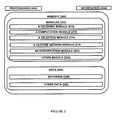
FIG 2 illustrates the system for selecting features for identifying human activities in a human-computer interacting environment, in accordance with an embodiment of the present subject matter. -
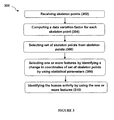
FIG 3 illustrates a method for selecting features for identifying human activities in a human-computer interacting environment, accordance with an embodiment of the present subject matter. -
FIG 4 shows results of identifying human activities by using the features defined by the system in accordance with an embodiment of the present subject matter. -
FIG 5 illustrates system architecture for identifying human activities accordance with an embodiment of the present subject matter. - While aspects of described system and method for selecting features for identifying human activities in a human-computer interacting environment may be implemented in any number of different computing systems, environments, and/or configurations, the embodiments are described in the context of the following exemplary system.
- Referring now to
Figure 1 , anetwork implementation 100 ofsystem 102 for selecting features for identifying human activities in a human-computer interacting environment is shown. Skeleton points are received. Skeleton points are pre-sensed by using one or more sensors. A data variation factor is calculated to determine a variation between one or more human while performing the human activities and a variation between the human activities. A set of skeleton points are selected from the skeleton points. The set of skeleton points is further processed and one or more features are identified. The one or more features are then used to identify the human activities. - Although the present subject matter is explained considering that the
system 102 is implemented as an application on a server, it may be understood that thesystem 102 may also be implemented in a variety of computing systems, such as a laptop computer, a desktop computer, a notebook, a workstation, a mainframe computer, a server, a network server, and the like. In one implementation, thesystem 102 may be implemented in a cloud-based environment. It will be understood that thesystem 102 may be accessed by multiple users through one or more user devices 104-1, 104-2...104-N, collectively referred to asuser 104 hereinafter, or applications residing on theuser devices 104. Examples of theuser devices 104 may include, but are not limited to, a portable computer, a personal digital assistant, a handheld device, and a workstation. Theuser devices 104 are communicatively coupled to thesystem 102 through anetwork 106. - In one implementation, the
network 106 may be a wireless network, a wired network or a combination thereof. Thenetwork 106 can be implemented as one of the different types of networks, such as intranet, local area network (LAN), wide area network (WAN), the internet, and the like. Thenetwork 106 may either be a dedicated network or a shared network. The shared network represents an association of the different types of networks that use a variety of protocols, for example, Hypertext Transfer Protocol (HTTP), Transmission Control Protocol/Internet Protocol (TCP/IP), Wireless Application Protocol (WAP), and the like, to communicate with one another. Further thenetwork 106 may include a variety of network devices, including routers, bridges, servers, computing devices, storage devices, and the like. - Referring now to
Figure 2 , thesystem 102 is illustrated in accordance with an embodiment of the present subject matter. In one embodiment, thesystem 102 may include at least oneprocessor 202, an input/output (I/O)interface 204, amemory 208. The at least oneprocessor 202 may be implemented as one or more microprocessors, microcomputers, microcontrollers, digital signal processors, central processing units, state machines, logic circuitries, and/or any devices that manipulate signals based on operational instructions. Among other capabilities, the at least oneprocessor 202 is configured to fetch and execute computer-readable instructions stored in thememory 208. - The I/
O interface 204 may include a variety of software and hardware interfaces, for example, a web interface, a graphical user interface, and the like. The I/O interface 204 may allow thesystem 102 to interact with a user directly or through theclient devices 104. Further, the I/O interface 204 may enable thesystem 102 to communicate with other computing devices, such as web servers and external data servers (not shown). The I/O interface 204 can facilitate multiple communications within a wide variety of networks and protocol types, including wired networks, for example, LAN, cable, etc., and wireless networks, such as WLAN, cellular, or satellite. The I/O interface 204 may include one or more ports for connecting a number of devices to one another or to another server. - The
memory 208 may include any computer-readable medium known in the art including, for example, volatile memory, such as static random access memory (SRAM) and dynamic random access memory (DRAM), and/or non-volatile memory, such as read only memory (ROM), erasable programmable ROM, flash memories, hard disks, optical disks, and magnetic tapes. Thememory 208 may includemodules 210 and data 212. - The
modules 210 include routines, programs, objects, components, data structures, etc., which perform particular tasks, functions or implement particular abstract data types. In one implementation, themodules 210 may include a receiving module 212, acomputation module 214, aselection module 216, afeature defining module 218 and anidentification module 220.Other modules 222 may include programs or coded instructions that supplement applications and functions of thesystem 102. - The
data 224, amongst other things, serves as a repository for storing data processed, received, and generated by one or more of themodules 210. Thedata 224 may also include adatabase 226, andother data 228. Theother data 228 may include data generated as a result of the execution of one or more modules in theother module 222. - The present disclosure relates to a system(s) and method(s) for selecting features for identifying human activities in a human-computing interaction environment. Out of plurality of skeleton points (also called as skeleton joints) a set of skeleton points are selected based on a data variation factor. The set of skeleton points is further processed to select one or more features in order to identify the human activities.
- 20 Skeleton points are pre-sensed by one or more sensors before processing the skeleton points by the
system 102. The one or more sensors comprises of Kinect sensor. The Kinect sensor provides geographical coordinates data (XYZ data) for all the 20 skeleton points. - The 20 skeleton points comprises of Hip Center, Spine, Shoulder Center, Head, Shoulder Left, Elbow Left, WristLeft, HandLeft, Shoulder Right, Elbow Right, Wrist Right, HandRight, HipLeft, KneeLeft, AnkleLeft, FootLeft, HipRight, KneeRight, AnkleRight and FootRight.
- The 20 skeleton points are received by the receiving module 212. The 20 skeleton points are associated with the one or more human activities to be identified. The human activities to be identified comprises of standing, sitting, walking and laying. Out of these activities, sitting and standing are considered as static activities whereas walking is considered as a dynamic activity.
- The
computation module 214 calculates a data variation factor for each of the skeleton point. The data variation factor includes a standard deviation value calculated for each of the skeleton point associated with the human activities. The Standard deviation is a measure to compute the variation of the data. The data variation factor (or standard deviation) is indicative of a variation between one or more humans while performing the one or more activity and a variation between one or more human activity. - The natural data (skeleton points) are usually distributed along the mean (average) position. The standard deviation is calculated to find the joint coordinates (skeleton points) that are responsible for accomplishing a particular human activity from the human activities to be identified.
- The data variation factor is calculated to ensure that the skeleton points should not vary a lot from one person to another for a particular action. Similarly, the skeleton points should also vary a lot from one action to another action. The computation module uses a STDEV (standard deviation) as that metric to compute the data variation factor.
- The calculation and significance of standard deviation is explained below:
- For a particular person performing the same human activity (for example walking or standing) at different times the deviation of the joint positions with respect to time should be minimum. The computation module computes the standard deviation as:

- Therefore, the
calculation module 214 compute σ1 for each joint position separately for a single person with respect to time and it should be minimum. Ideally the σ1 should be zero for the joints with no noise. If there is huge noise, the joints will oscillate all the time and if the same joint within some period of time are considered, the variations in the values of σ1 are huge. - For different persons performing the same human activity the standard deviation of the joint positions (skeleton points) should be maximum. The
computation module 214 calculates standard deviation as:
- Where N is number of joint position values of different persons, xi is value of joint position and µ is mean value of joint position over N samples. The
calculation module 214 compute σ2 for each joint position separately for different persons and it should be maximum. - The
computation module 214 is further configured to scale both σ1 and σ2 in between 0 and 1. The scaling is performed by using the below mentioned formula:
- Let S σ
1 and Sσ2 be the scaled deviations. The scaling is carried out by using above mentioned formula. The scale gives a score between 0 and 1. When σ is having max value then both numerator and denominator will be same and S=1. When σ is having min value then numerator =0 and hence S=0. - And all the σ values in between max and min will be within 0 and 1. In this way scaling function (S) operates. The significance of scaling is to make the joint positions independent of person. For example if one person has σ values with
min 2 andmax 4 and other person has the values min 3 andmax 6. Ideally it should be within same range but to person it varies. So in order to remove this dependency the standard deviations are scaled to 0 and 1. So irrespective of person now the values will be between 0 and 1. - Once all the standard deviations (σ1 and σ2) are scaled, it is observed that few skeleton points are scaled with 0 score. All such skeleton points with 0 score are redundant. Also, if plotting is done for recognition accuracy over number of skeleton points, it is further observed that the recognition accuracy for limited skeleton points does not increase after incorporating top 4 skeleton points. The top 4 skeleton points are considered as most informative skeleton points (with respect to present disclosure). Therefore, top 4 scores given to skeleton points (as per scale between 0 and 1) are used for human activity identification.
- The
computation module 214 is further configured to compute a distance metric for the top 5 scores i.e. for top 4 scaled standard deviations of top five joint positions or joint points. The distance metric is represented by:
- The significance of distance metric is to choose a reliable joint based on the value of δ. Ideally, S σ
2 should be minimum and S σ2 should be maximum. As already the standard deviations are scaled, so the minimum value = 0 and maximum value = 1. Therefore, if the joints not noisy then S σ2 = 0 and S σ2 = 1. Now the distance metric will be δ=1. If the joint is more noisy then S σ1 = 1 and S σ2 = 0. Now the distance metric will be δ=0. Therefore, more reliable joints are the joints for which values of δ is close to a particular value and the particular value is equal to 1. In this way, Head, Shoulder Center, Shoulder Left and Shoulder Right are chosen based on distance metric as the values of delta for these joint positions of joint points is close to 1. - In next step, the
computation module 214 is configured to sort values of distance metric in a descending order. However, all the values of distance metrics are close to 1. - With respect to descending order of the distance metric (so calculated by using the data variation factor), the set of skeleton points is selected by the
selection module 216. The set of skeleton points comprises of Head, Shoulder Center, Shoulder Left and Shoulder Right. - After the set of skeleton points are selected, the
feature defining module 218 is configured to extract one or more features from the set of skeleton features. The one or more features are extracted from the Head, Shoulder Center, Shoulder Left and Shoulder Right. - The
feature defining module 218 is configured to identify a variation in coordinates (XYZ data) of the set of skeleton points by using one or more statistical parameters associated with the set of skeleton points. The statistical parameter comprises of mean, a standard deviation and a maximum and minimum value of position co-ordinates (joint positions) of the set of skeleton points associated with the one or more human activity. - The XYZ coordinates of four features are plotted to analyze variation for different activities like standing, sitting, walking and laying. It is observed that for static activities like standing and sitting variation of X and Z is very less compared to Y, Y here gives height. Similarly it is observed from plotting that that variation of X and Z for laying and sitting is very discriminative.
- Analysis for checking the variation has been carried out at each frame. It is further observed that most of the times walking and standing are misclassified. This is mainly due to classifying the activity at frame level. As walking is a dynamic activity therefore, the
system 102 considers few frames to discriminate between standing and walking. - The variation in co-ordinates is identified for different activities like standing, sitting, walking and laying. The
feature defining module 218 identifies that for the static activities like standing and sitting the variation of X and Z is very less as compared to Y (Y gives the height of the human performing the activity) for the activities like standing and sitting. The identification module further identifies that the variation of X and Z for the laying and sitting is very discriminative. Based on the variation in co-ordinates identified by thefeature defining module 218, it is further identified that in maximum cases, the walking and standing are misclassified. This happens mainly due to classification of human activity at frame level. - As walking is a dynamic human activity, identification of variation in coordinates is performed by the
feature defining module 218 at few frames to discriminate between standing and walking. The few frames comprises of 30 frames (approx 1 sec data). - The statistical parameters (mean standard deviation and a maximum and minimum value of co-ordinates of the set of skeleton points) shows that if the human is walking towards the sensor (Kinect) there is variation in Z co-ordinate. And if the human is walking towards left and right of the sensor (Kinect) there is variation in X co-ordinate. The
feature defining module 218 identifies the variation by taking the mean values of the co-ordinates of skeleton points for every 30 frames. - The
feature defining module 218 while identifying the variation in coordinates further identifies that maximum and minimum values of co-ordinates for standing and walking also varies due to dynamics of joints in walking activity. However for static activities (sitting and laying) the variation of max and min values of joints is not much. Therefore, thefeature defining module 218 selects the features by considering the range using difference of max and min values of joint positions to discriminate static and dynamic activities. - The
feature defining module 218 is further configured to extract the one or more features based on the variation or change in position co-ordinates of the set of skeleton points. The one or more features comprises of a mean of the set of skeleton points and a difference of maximum and minimum (i.e. range) of joint positions (position coordinates) associated with human activities. The difference of maximum and minimum of joint positions comes out to be a constant for static activities and the difference of maximum and minimum of joint points comes out to be a numeric value (not constant) for dynamic activities. Therefore, thefeature defining module 218 uses the difference of maximum and minimum of joint position as the feature for identifying activities. For example, when a person is walking in front of a sensor, there is a change in Z axis out of the three coordinates. And the difference of maximum and minimum of joint position comes out to close to numeric constant. Further, person may have small movements while sitting and standing. However, the feature (max-min) will have large value for walking (dynamic activity) compared to small value (due to small moments in static activity like sitting). Hence, the difference between the maximum and minimum of the joint positions may be considered as the feature for identifying the walking activity. - The feature selection module extracts Fmean Fmax-min as two features with 12 attributes {3(coordinates) x 4 (joints)} extracted for every 30 frames.
- The identification module is configured to identify the human activity by using the one or more features. The identification module executes Support Vector Machine (SVM) learning algorithm over the one or more features in order to identify the human activity. Support vector machine are explored as a machine learning tool with 5 fold cross validation, with 4:1 for training and testing.
Figure 4 shows results of features so selected for set of skeleton joints (4 skeleton joints) for the corresponding four activities (Sitting, walking, laying and standing). - Table 1 shows average classification of performance of features for identifying human activities.
Serial No Features Average classification performance (%) 1 Maximum-minimum of joint positions 86.32 2 Mean 89.93 3 Combination of 4 and 5 94.06 - Referring to
figure 5 , architecture for identifying human activities in a human-computing interacting environment is illustrated. Skeleton points (3D skeleton joint positions) are sensed by the sensor (Kinect Ji) for each activity Ai (Standing, walking, laying and sitting) are received by the receiving module 112. Set of skeleton points are selected. The set of skeleton points are referred as reliable noise free joints (Jk) i.e. (Head, Shoulder Center, Shoulder Left and Shoulder Right). Features are extracted from the joint positions Jk(fk). By using SVM learning algorithm, testing is performed i.e. human activities are identified. - The Support Vector Machines (SVM) is used to discriminate activities. SVM classification is an example of supervised learning. SVMs are useful due to their wide applicability for classification tasks in many classification problems. A classification task usually involves training and testing data which consist of some data instances. In the training set, each instance contains one target class label and many attributes. The main goal of SVM for classification problem is to produce a model which predicts target class label of data instances in the testing set, given only the attributes. The SVM models for different activities were developed as-one against-rest principle. The SVM model for the specific activity was developed, by using feature vectors derived from the desired activity as positive examples and the feature vectors derived from the other activities as negative examples. Radial basis function (RBF) kernel, unlike linear kernel, is used by the
system 102 to map the data points to higher dimensional space as it can handle the case where the relation between the class labels and attributes is nonlinear. The intuition to use RBF kernel function is due to its universal approximation properties. - Referring to
figure 3 , the order in which themethod 300 is described is not intended to be construed as a limitation, and any number of the described method blocks can be combined in any order to implement themethod 300 or alternate methods. Additionally, individual blocks may be deleted from themethod 300 without departing from the spirit and scope of the subject matter described herein. Furthermore, the method can be implemented in any suitable hardware, software, firmware, or combination thereof. However, for ease of explanation, in the embodiments described below, themethod 300 may be considered to be implemented in the above describedsystem 102. - At
block 302, skeleton points associated with the one or more human performing human activities to be identified are received. - At
block 304, a data variation factor for each skeleton point is calculated. - At
block 306, set of skeleton points is selected based on the data variation factor. - At block 308, one or more features are defined with respect to change in position coordinates of the set of skeleton points by using statistical parameters.
- At block 310, human activities are identified by using the one or more features.
- The written description describes the subject matter herein to enable any person skilled in the art to make and use the embodiments of the invention. The scope of the subject matter embodiments is defined by the claims and may include other modifications that occur to those skilled in the art. Such other modifications are intended to be within the scope of the claims if they have similar elements that do not differ from the literal language of the claims or if they include equivalent elements with insubstantial differences from the literal language of the claims.
Claims (14)
- A system for selecting one or more features to identify one or more human activities in a human-computer interacting environment, the system comprising:a processor; anda memory coupled to the processor,wherein the processor is adapted for executing a plurality of modules stored in the memory, and wherein the plurality of modules comprises:a receiving module configured to receive skeleton points associated with one or more human, wherein the one or more human performs the one or more human activity, and wherein the skeleton points comprises position coordinates of the one or more human;a computation module configured to calculate a data variation factor for the skeleton points, wherein the data variation factor identifies a variation between position coordinates of one or more human;a selection module configured to select a set of skeleton points from the skeleton points based on the data variation factor;a feature defining module configured to:identify a change in position coordinates associated with the set of skeleton points by using one or more statistical parameters, wherein the set of skeleton points defines one or more human activity to be identified;extract one or more features from the set of skeleton points based on the change in the position coordinates; andan identification module configured to use the one or more features in order to identify the one or more human activity.
- The system of claim 1, wherein the skeleton points comprise 20 skeleton joints, wherein the 20 skeleton joints comprise a Hip Center, a Spine, a Shoulder Center, a Head, a Shoulder Left, an Elbow Left, a WristLeft, a HandLeft, a Shoulder Right, an Elbow Right, a Wrist Right, a HandRight, a HipLeft, a KneeLeft, an AnkleLeft, a FootLeft, a HipRight, a KneeRight, an AnkleRight and a FootRight.
- The system of claim 1, wherein the one or more human activities comprise standing, sitting, walking and laying.
- The system of claim 1, wherein the computation module is configured to:scale the data variation factor with respect to maximum and minimum value;prepare a distance metrics with respect to the maximum and minimum values of the data variation factor; andsort the data variation factors by using the distance metrics.
- The system of claim 4, wherein the selection module selects the data variation factors close to a particular value of the distance metrics, wherein the particular value includes a value equal to 1.
- The system of claim 1, wherein the data variation factor comprises a standard deviation value for the skeleton points.
- The system of claim 1, wherein the set of skeleton points comprises Head, Shoulder Center, Shoulder Left and Shoulder Right.
- The system of claim 1, wherein the identification module is configured to execute a Support Vector Machine (SVM) learning algorithm over the one or more features in order to identify the human activity.
- The system of claim 1, wherein the one or more statistical parameters comprise a mean, a standard deviation and a maximum and minimum of position coordinates of the set of skeleton points associated with the one or more human activity.
- The system of claim 1, wherein the variation in coordinates of the set of skeleton points is identified for 30 frames.
- The system of claim 1, wherein the one or more features comprise a mean of the set of skeleton points and a difference of maximum and minimum of the position coordinates associated with the one or more human activity.
- A computer-based method for selecting one or more features to identify one or more human activities in a human-computer interacting environment, the method being carried out with a system comprising a processor and a memory coupled to the processor, wherein the processor is adapted for executing a plurality of modules stored in the memory, the method comprising:receiving, in a receiving module, skeleton points associated with one or more human, wherein the one or more human performs the one or more human activity, and wherein the skeleton points comprise position coordinates of the one or more human;calculating, in a computation module, a data variation factor for the skeleton points, wherein the data variation factor identifies a variation between position coordinates of one or more human;selecting, in a selection module, a set of skeleton points from the skeleton points based on the data variation factor;identifying, in a feature defining module, a change in position coordinates associated with the set of skeleton points by using one or more statistical parameters, wherein the set of skeleton points defines one or more human activity to be identified;extracting, in the feature defining module, one or more features from the set of skeleton points based on the change in the position coordinates; andidentifying, in an identification module, the one or more human activity by using the one or more features.
- The method of claim 12, wherein the human activity is identified by executing a Support Vector Machine (SVM) learning algorithm over the one or more features.
- A computer program product having embodied thereon a computer program for selecting one or more features to identify one or more human activities in a human-computer interacting environment, the computer program product comprising:a program code for receiving skeleton points associated with one or more human, wherein the one or more human performs the one or more human activity, and wherein the skeleton points comprises position coordinates of the one or more human;a program code for calculating a data variation factor for the skeleton points, wherein the data variation factor identifies a variation between position coordinates of one or more human;a program code for selecting a set of skeleton points from the skeleton points based on the data variation factor;a program code for identifying a change in position coordinates associated with the set of skeleton points by using one or more statistical parameters, wherein the set of skeleton points defines one or more human activity to be identified;a program code for extracting one or more features from the set of skeleton points based on the change in the position coordinates;anda program code for identifying the one or more human activity by using the one or more features.
Applications Claiming Priority (1)
| Application Number | Priority Date | Filing Date | Title |
|---|---|---|---|
| IN4097MU2013 IN2013MU04097A (en) | 2013-12-27 | 2013-12-27 |
Publications (2)
| Publication Number | Publication Date |
|---|---|
| EP2889724A1 true EP2889724A1 (en) | 2015-07-01 |
| EP2889724B1 EP2889724B1 (en) | 2018-03-07 |
Family
ID=52292627
Family Applications (1)
| Application Number | Title | Priority Date | Filing Date |
|---|---|---|---|
| EP14198552.3A Active EP2889724B1 (en) | 2013-12-27 | 2014-12-17 | System and method for selecting features for identifying human activities in a human-computer interacting environment |
Country Status (3)
| Country | Link |
|---|---|
| US (1) | US9536145B2 (en) |
| EP (1) | EP2889724B1 (en) |
| IN (1) | IN2013MU04097A (en) |
Cited By (1)
| Publication number | Priority date | Publication date | Assignee | Title |
|---|---|---|---|---|
| EP3628381A1 (en) * | 2018-09-26 | 2020-04-01 | Guangdong Oppo Mobile Telecommunications Corp., Ltd. | Game picture display method and apparatus, storage medium and electronic device |
Families Citing this family (2)
| Publication number | Priority date | Publication date | Assignee | Title |
|---|---|---|---|---|
| CA2995242A1 (en) * | 2018-02-15 | 2019-08-15 | Wrnch Inc. | Method and system for activity classification |
| CN112364806A (en) * | 2020-11-23 | 2021-02-12 | 南京熊猫电子制造有限公司 | Human activity recognition system and recognition method for feature selection in human-computer interaction environment |
Citations (2)
| Publication number | Priority date | Publication date | Assignee | Title |
|---|---|---|---|---|
| US20120159290A1 (en) * | 2010-12-17 | 2012-06-21 | Microsoft Corporation | Validation analysis of human target |
| WO2013027091A1 (en) * | 2011-07-28 | 2013-02-28 | Arb Labs Inc. | Systems and methods of detecting body movements using globally generated multi-dimensional gesture data |
Family Cites Families (26)
| Publication number | Priority date | Publication date | Assignee | Title |
|---|---|---|---|---|
| US6072494A (en) * | 1997-10-15 | 2000-06-06 | Electric Planet, Inc. | Method and apparatus for real-time gesture recognition |
| US8745541B2 (en) * | 2003-03-25 | 2014-06-03 | Microsoft Corporation | Architecture for controlling a computer using hand gestures |
| US7317836B2 (en) * | 2005-03-17 | 2008-01-08 | Honda Motor Co., Ltd. | Pose estimation based on critical point analysis |
| US20100201512A1 (en) * | 2006-01-09 | 2010-08-12 | Harold Dan Stirling | Apparatus, systems, and methods for evaluating body movements |
| KR100847136B1 (en) | 2006-08-14 | 2008-07-18 | 한국전자통신연구원 | Shoulder contour extraction method, robot awakening method and apparatus for same |
| US7628074B2 (en) * | 2007-03-15 | 2009-12-08 | Mitsubishi Electric Research Laboratories, Inc. | System and method for motion capture in natural environments |
| WO2009086088A1 (en) | 2007-12-21 | 2009-07-09 | Honda Motor Co., Ltd. | Controlled human pose estimation from depth image streams |
| US8113991B2 (en) * | 2008-06-02 | 2012-02-14 | Omek Interactive, Ltd. | Method and system for interactive fitness training program |
| US8634638B2 (en) * | 2008-06-20 | 2014-01-21 | Sri International | Real-time action detection and classification |
| KR100978929B1 (en) * | 2008-06-24 | 2010-08-30 | 한국전자통신연구원 | Method of registering reference gesture data, driving method of mobile terminal and mobile terminal performing the same |
| US9142024B2 (en) * | 2008-12-31 | 2015-09-22 | Lucasfilm Entertainment Company Ltd. | Visual and physical motion sensing for three-dimensional motion capture |
| WO2010080687A1 (en) * | 2009-01-09 | 2010-07-15 | Thomson Licensing | Method and apparatus for detecting and separating objects of interest in soccer video by color segmentation and shape analysis |
| US8295546B2 (en) * | 2009-01-30 | 2012-10-23 | Microsoft Corporation | Pose tracking pipeline |
| KR101738569B1 (en) * | 2009-02-17 | 2017-05-22 | 인텔 코포레이션 | Method and system for gesture recognition |
| US8418085B2 (en) * | 2009-05-29 | 2013-04-09 | Microsoft Corporation | Gesture coach |
| US9019201B2 (en) * | 2010-01-08 | 2015-04-28 | Microsoft Technology Licensing, Llc | Evolving universal gesture sets |
| US20110317871A1 (en) | 2010-06-29 | 2011-12-29 | Microsoft Corporation | Skeletal joint recognition and tracking system |
| US8437506B2 (en) * | 2010-09-07 | 2013-05-07 | Microsoft Corporation | System for fast, probabilistic skeletal tracking |
| US8786680B2 (en) * | 2011-06-21 | 2014-07-22 | Disney Enterprises, Inc. | Motion capture from body mounted cameras |
| EP2538372A1 (en) | 2011-06-23 | 2012-12-26 | Alcatel Lucent | Dynamic gesture recognition process and authoring system |
| KR101283262B1 (en) * | 2011-10-21 | 2013-07-11 | 한양대학교 산학협력단 | Method of image processing and device thereof |
| US9020192B2 (en) | 2012-04-11 | 2015-04-28 | Access Business Group International Llc | Human submental profile measurement |
| US9448636B2 (en) | 2012-04-18 | 2016-09-20 | Arb Labs Inc. | Identifying gestures using gesture data compressed by PCA, principal joint variable analysis, and compressed feature matrices |
| US9349207B2 (en) * | 2012-05-31 | 2016-05-24 | Samsung Electronics Co., Ltd. | Apparatus and method for parsing human body image |
| EP2674913B1 (en) * | 2012-06-14 | 2014-07-23 | Softkinetic Software | Three-dimensional object modelling fitting & tracking. |
| US8867786B2 (en) * | 2012-10-31 | 2014-10-21 | Microsoft Corporation | Scenario-specific body-part tracking |
-
2013
- 2013-12-27 IN IN4097MU2013 patent/IN2013MU04097A/en unknown
-
2014
- 2014-12-17 EP EP14198552.3A patent/EP2889724B1/en active Active
- 2014-12-19 US US14/576,627 patent/US9536145B2/en active Active
Patent Citations (2)
| Publication number | Priority date | Publication date | Assignee | Title |
|---|---|---|---|---|
| US20120159290A1 (en) * | 2010-12-17 | 2012-06-21 | Microsoft Corporation | Validation analysis of human target |
| WO2013027091A1 (en) * | 2011-07-28 | 2013-02-28 | Arb Labs Inc. | Systems and methods of detecting body movements using globally generated multi-dimensional gesture data |
Cited By (1)
| Publication number | Priority date | Publication date | Assignee | Title |
|---|---|---|---|---|
| EP3628381A1 (en) * | 2018-09-26 | 2020-04-01 | Guangdong Oppo Mobile Telecommunications Corp., Ltd. | Game picture display method and apparatus, storage medium and electronic device |
Also Published As
| Publication number | Publication date |
|---|---|
| EP2889724B1 (en) | 2018-03-07 |
| IN2013MU04097A (en) | 2015-08-07 |
| US9536145B2 (en) | 2017-01-03 |
| US20150186724A1 (en) | 2015-07-02 |
Similar Documents
| Publication | Publication Date | Title |
|---|---|---|
| Zhang et al. | Ergonomic posture recognition using 3D view-invariant features from single ordinary camera | |
| Saeed et al. | A survey on multidimensional scaling | |
| US11049030B2 (en) | Analysis apparatus, analysis method, and analysis program | |
| US10970661B2 (en) | System and method for monitoring motion and orientation patterns associated to physical activities of users | |
| CN113705534A (en) | Behavior prediction method, behavior prediction device, behavior prediction equipment and storage medium based on deep vision | |
| EP2892007A2 (en) | Static posture based person identification | |
| CN113177468A (en) | Human behavior detection method and device, electronic equipment and storage medium | |
| US20200021657A1 (en) | Pca-based scoring of the similarity of damage patterns of operational assets | |
| JP2015111332A (en) | Attitude detection device, attitude detection method, and attitude detection program | |
| CN111506199A (en) | High-precision label-free whole body motion tracking system based on Kinect | |
| KR20190061317A (en) | Method of providing stock information | |
| EP2889724B1 (en) | System and method for selecting features for identifying human activities in a human-computer interacting environment | |
| Manghisi et al. | Towards gestured-based technologies for human-centred Smart Factories | |
| CN119533462B (en) | Motion estimation method and device based on multi-mode sensing and electronic equipment | |
| CN114202804A (en) | Behavior action recognition method and device, processing equipment and storage medium | |
| US10288547B2 (en) | Facility state analysis device, analysis method for facility state, storage medium, and facility management system | |
| Dutt et al. | An interpretable deep learning-based feature reduction in video-based human activity recognition | |
| WO2022162844A1 (en) | Work estimation device, work estimation method, and work estimation program | |
| JP2021140386A (en) | Behavior estimation device, behavior estimation method and behavior estimation program | |
| JP2016162072A (en) | Feature extraction device | |
| US12067806B2 (en) | System for correcting user movement | |
| Patterson et al. | Online change detection for timely solicitation of user interaction | |
| US12367349B1 (en) | Intelligent detection of bias within an artificial intelligence model | |
| CN115700802B (en) | Instrument equipment fault detection method, device, equipment and storage medium | |
| Saldivar-Piñon et al. | Human sign recognition for robot manipulation |
Legal Events
| Date | Code | Title | Description |
|---|---|---|---|
| PUAI | Public reference made under article 153(3) epc to a published international application that has entered the european phase |
Free format text: ORIGINAL CODE: 0009012 |
|
| 17P | Request for examination filed |
Effective date: 20141217 |
|
| AK | Designated contracting states |
Kind code of ref document: A1 Designated state(s): AL AT BE BG CH CY CZ DE DK EE ES FI FR GB GR HR HU IE IS IT LI LT LU LV MC MK MT NL NO PL PT RO RS SE SI SK SM TR |
|
| AX | Request for extension of the european patent |
Extension state: BA ME |
|
| R17P | Request for examination filed (corrected) |
Effective date: 20160104 |
|
| RBV | Designated contracting states (corrected) |
Designated state(s): AL AT BE BG CH CY CZ DE DK EE ES FI FR GB GR HR HU IE IS IT LI LT LU LV MC MK MT NL NO PL PT RO RS SE SI SK SM TR |
|
| 17Q | First examination report despatched |
Effective date: 20160606 |
|
| RIC1 | Information provided on ipc code assigned before grant |
Ipc: G06K 9/62 20060101ALI20170802BHEP Ipc: A61B 5/11 20060101ALI20170802BHEP Ipc: A61B 5/00 20060101ALI20170802BHEP Ipc: G06K 9/00 20060101ALI20170802BHEP Ipc: G06F 3/01 20060101AFI20170802BHEP Ipc: G06K 9/44 20060101ALI20170802BHEP |
|
| GRAP | Despatch of communication of intention to grant a patent |
Free format text: ORIGINAL CODE: EPIDOSNIGR1 |
|
| INTG | Intention to grant announced |
Effective date: 20170922 |
|
| GRAS | Grant fee paid |
Free format text: ORIGINAL CODE: EPIDOSNIGR3 |
|
| GRAA | (expected) grant |
Free format text: ORIGINAL CODE: 0009210 |
|
| AK | Designated contracting states |
Kind code of ref document: B1 Designated state(s): AL AT BE BG CH CY CZ DE DK EE ES FI FR GB GR HR HU IE IS IT LI LT LU LV MC MK MT NL NO PL PT RO RS SE SI SK SM TR |
|
| REG | Reference to a national code |
Ref country code: GB Ref legal event code: FG4D |
|
| REG | Reference to a national code |
Ref country code: CH Ref legal event code: EP Ref country code: AT Ref legal event code: REF Ref document number: 977232 Country of ref document: AT Kind code of ref document: T Effective date: 20180315 |
|
| REG | Reference to a national code |
Ref country code: DE Ref legal event code: R096 Ref document number: 602014021933 Country of ref document: DE |
|
| REG | Reference to a national code |
Ref country code: IE Ref legal event code: FG4D |
|
| REG | Reference to a national code |
Ref country code: NL Ref legal event code: MP Effective date: 20180307 |
|
| REG | Reference to a national code |
Ref country code: LT Ref legal event code: MG4D |
|
| PG25 | Lapsed in a contracting state [announced via postgrant information from national office to epo] |
Ref country code: FI Free format text: LAPSE BECAUSE OF FAILURE TO SUBMIT A TRANSLATION OF THE DESCRIPTION OR TO PAY THE FEE WITHIN THE PRESCRIBED TIME-LIMIT Effective date: 20180307 Ref country code: CY Free format text: LAPSE BECAUSE OF FAILURE TO SUBMIT A TRANSLATION OF THE DESCRIPTION OR TO PAY THE FEE WITHIN THE PRESCRIBED TIME-LIMIT Effective date: 20180307 Ref country code: LT Free format text: LAPSE BECAUSE OF FAILURE TO SUBMIT A TRANSLATION OF THE DESCRIPTION OR TO PAY THE FEE WITHIN THE PRESCRIBED TIME-LIMIT Effective date: 20180307 Ref country code: ES Free format text: LAPSE BECAUSE OF FAILURE TO SUBMIT A TRANSLATION OF THE DESCRIPTION OR TO PAY THE FEE WITHIN THE PRESCRIBED TIME-LIMIT Effective date: 20180307 Ref country code: HR Free format text: LAPSE BECAUSE OF FAILURE TO SUBMIT A TRANSLATION OF THE DESCRIPTION OR TO PAY THE FEE WITHIN THE PRESCRIBED TIME-LIMIT Effective date: 20180307 Ref country code: NO Free format text: LAPSE BECAUSE OF FAILURE TO SUBMIT A TRANSLATION OF THE DESCRIPTION OR TO PAY THE FEE WITHIN THE PRESCRIBED TIME-LIMIT Effective date: 20180607 |
|
| REG | Reference to a national code |
Ref country code: AT Ref legal event code: MK05 Ref document number: 977232 Country of ref document: AT Kind code of ref document: T Effective date: 20180307 |
|
| PG25 | Lapsed in a contracting state [announced via postgrant information from national office to epo] |
Ref country code: GR Free format text: LAPSE BECAUSE OF FAILURE TO SUBMIT A TRANSLATION OF THE DESCRIPTION OR TO PAY THE FEE WITHIN THE PRESCRIBED TIME-LIMIT Effective date: 20180608 Ref country code: BG Free format text: LAPSE BECAUSE OF FAILURE TO SUBMIT A TRANSLATION OF THE DESCRIPTION OR TO PAY THE FEE WITHIN THE PRESCRIBED TIME-LIMIT Effective date: 20180607 Ref country code: RS Free format text: LAPSE BECAUSE OF FAILURE TO SUBMIT A TRANSLATION OF THE DESCRIPTION OR TO PAY THE FEE WITHIN THE PRESCRIBED TIME-LIMIT Effective date: 20180307 Ref country code: LV Free format text: LAPSE BECAUSE OF FAILURE TO SUBMIT A TRANSLATION OF THE DESCRIPTION OR TO PAY THE FEE WITHIN THE PRESCRIBED TIME-LIMIT Effective date: 20180307 Ref country code: SE Free format text: LAPSE BECAUSE OF FAILURE TO SUBMIT A TRANSLATION OF THE DESCRIPTION OR TO PAY THE FEE WITHIN THE PRESCRIBED TIME-LIMIT Effective date: 20180307 |
|
| PG25 | Lapsed in a contracting state [announced via postgrant information from national office to epo] |
Ref country code: EE Free format text: LAPSE BECAUSE OF FAILURE TO SUBMIT A TRANSLATION OF THE DESCRIPTION OR TO PAY THE FEE WITHIN THE PRESCRIBED TIME-LIMIT Effective date: 20180307 Ref country code: NL Free format text: LAPSE BECAUSE OF FAILURE TO SUBMIT A TRANSLATION OF THE DESCRIPTION OR TO PAY THE FEE WITHIN THE PRESCRIBED TIME-LIMIT Effective date: 20180307 Ref country code: PL Free format text: LAPSE BECAUSE OF FAILURE TO SUBMIT A TRANSLATION OF THE DESCRIPTION OR TO PAY THE FEE WITHIN THE PRESCRIBED TIME-LIMIT Effective date: 20180307 Ref country code: RO Free format text: LAPSE BECAUSE OF FAILURE TO SUBMIT A TRANSLATION OF THE DESCRIPTION OR TO PAY THE FEE WITHIN THE PRESCRIBED TIME-LIMIT Effective date: 20180307 Ref country code: AL Free format text: LAPSE BECAUSE OF FAILURE TO SUBMIT A TRANSLATION OF THE DESCRIPTION OR TO PAY THE FEE WITHIN THE PRESCRIBED TIME-LIMIT Effective date: 20180307 Ref country code: IT Free format text: LAPSE BECAUSE OF FAILURE TO SUBMIT A TRANSLATION OF THE DESCRIPTION OR TO PAY THE FEE WITHIN THE PRESCRIBED TIME-LIMIT Effective date: 20180307 |
|
| PG25 | Lapsed in a contracting state [announced via postgrant information from national office to epo] |
Ref country code: CZ Free format text: LAPSE BECAUSE OF FAILURE TO SUBMIT A TRANSLATION OF THE DESCRIPTION OR TO PAY THE FEE WITHIN THE PRESCRIBED TIME-LIMIT Effective date: 20180307 Ref country code: AT Free format text: LAPSE BECAUSE OF FAILURE TO SUBMIT A TRANSLATION OF THE DESCRIPTION OR TO PAY THE FEE WITHIN THE PRESCRIBED TIME-LIMIT Effective date: 20180307 Ref country code: SM Free format text: LAPSE BECAUSE OF FAILURE TO SUBMIT A TRANSLATION OF THE DESCRIPTION OR TO PAY THE FEE WITHIN THE PRESCRIBED TIME-LIMIT Effective date: 20180307 Ref country code: SK Free format text: LAPSE BECAUSE OF FAILURE TO SUBMIT A TRANSLATION OF THE DESCRIPTION OR TO PAY THE FEE WITHIN THE PRESCRIBED TIME-LIMIT Effective date: 20180307 |
|
| REG | Reference to a national code |
Ref country code: DE Ref legal event code: R097 Ref document number: 602014021933 Country of ref document: DE |
|
| PG25 | Lapsed in a contracting state [announced via postgrant information from national office to epo] |
Ref country code: PT Free format text: LAPSE BECAUSE OF FAILURE TO SUBMIT A TRANSLATION OF THE DESCRIPTION OR TO PAY THE FEE WITHIN THE PRESCRIBED TIME-LIMIT Effective date: 20180709 |
|
| PLBE | No opposition filed within time limit |
Free format text: ORIGINAL CODE: 0009261 |
|
| STAA | Information on the status of an ep patent application or granted ep patent |
Free format text: STATUS: NO OPPOSITION FILED WITHIN TIME LIMIT |
|
| PG25 | Lapsed in a contracting state [announced via postgrant information from national office to epo] |
Ref country code: DK Free format text: LAPSE BECAUSE OF FAILURE TO SUBMIT A TRANSLATION OF THE DESCRIPTION OR TO PAY THE FEE WITHIN THE PRESCRIBED TIME-LIMIT Effective date: 20180307 |
|
| 26N | No opposition filed |
Effective date: 20181210 |
|
| PG25 | Lapsed in a contracting state [announced via postgrant information from national office to epo] |
Ref country code: SI Free format text: LAPSE BECAUSE OF FAILURE TO SUBMIT A TRANSLATION OF THE DESCRIPTION OR TO PAY THE FEE WITHIN THE PRESCRIBED TIME-LIMIT Effective date: 20180307 |
|
| PG25 | Lapsed in a contracting state [announced via postgrant information from national office to epo] |
Ref country code: MC Free format text: LAPSE BECAUSE OF FAILURE TO SUBMIT A TRANSLATION OF THE DESCRIPTION OR TO PAY THE FEE WITHIN THE PRESCRIBED TIME-LIMIT Effective date: 20180307 Ref country code: LU Free format text: LAPSE BECAUSE OF NON-PAYMENT OF DUE FEES Effective date: 20181217 |
|
| REG | Reference to a national code |
Ref country code: IE Ref legal event code: MM4A |
|
| REG | Reference to a national code |
Ref country code: BE Ref legal event code: MM Effective date: 20181231 |
|
| PG25 | Lapsed in a contracting state [announced via postgrant information from national office to epo] |
Ref country code: IE Free format text: LAPSE BECAUSE OF NON-PAYMENT OF DUE FEES Effective date: 20181217 |
|
| PG25 | Lapsed in a contracting state [announced via postgrant information from national office to epo] |
Ref country code: BE Free format text: LAPSE BECAUSE OF NON-PAYMENT OF DUE FEES Effective date: 20181231 |
|
| PG25 | Lapsed in a contracting state [announced via postgrant information from national office to epo] |
Ref country code: MT Free format text: LAPSE BECAUSE OF NON-PAYMENT OF DUE FEES Effective date: 20181217 |
|
| PG25 | Lapsed in a contracting state [announced via postgrant information from national office to epo] |
Ref country code: TR Free format text: LAPSE BECAUSE OF FAILURE TO SUBMIT A TRANSLATION OF THE DESCRIPTION OR TO PAY THE FEE WITHIN THE PRESCRIBED TIME-LIMIT Effective date: 20180307 |
|
| PG25 | Lapsed in a contracting state [announced via postgrant information from national office to epo] |
Ref country code: MK Free format text: LAPSE BECAUSE OF NON-PAYMENT OF DUE FEES Effective date: 20180307 Ref country code: HU Free format text: LAPSE BECAUSE OF FAILURE TO SUBMIT A TRANSLATION OF THE DESCRIPTION OR TO PAY THE FEE WITHIN THE PRESCRIBED TIME-LIMIT; INVALID AB INITIO Effective date: 20141217 |
|
| PG25 | Lapsed in a contracting state [announced via postgrant information from national office to epo] |
Ref country code: IS Free format text: LAPSE BECAUSE OF FAILURE TO SUBMIT A TRANSLATION OF THE DESCRIPTION OR TO PAY THE FEE WITHIN THE PRESCRIBED TIME-LIMIT Effective date: 20180707 |
|
| P01 | Opt-out of the competence of the unified patent court (upc) registered |
Effective date: 20230526 |
|
| REG | Reference to a national code |
Ref country code: CH Ref legal event code: U11 Free format text: ST27 STATUS EVENT CODE: U-0-0-U10-U11 (AS PROVIDED BY THE NATIONAL OFFICE) Effective date: 20260227 |
|
| PGFP | Annual fee paid to national office [announced via postgrant information from national office to epo] |
Ref country code: GB Payment date: 20260227 Year of fee payment: 12 |
|
| PGFP | Annual fee paid to national office [announced via postgrant information from national office to epo] |
Ref country code: DE Payment date: 20260227 Year of fee payment: 12 |
|
| PGFP | Annual fee paid to national office [announced via postgrant information from national office to epo] |
Ref country code: FR Payment date: 20260227 Year of fee payment: 12 |
|
| PGFP | Annual fee paid to national office [announced via postgrant information from national office to epo] |
Ref country code: CH Payment date: 20260227 Year of fee payment: 12 |