EP2888883B1 - Multi-resolution pyramid for georeferenced video - Google Patents
Multi-resolution pyramid for georeferenced video Download PDFInfo
- Publication number
- EP2888883B1 EP2888883B1 EP13836220.7A EP13836220A EP2888883B1 EP 2888883 B1 EP2888883 B1 EP 2888883B1 EP 13836220 A EP13836220 A EP 13836220A EP 2888883 B1 EP2888883 B1 EP 2888883B1
- Authority
- EP
- European Patent Office
- Prior art keywords
- video
- video stream
- data
- overhead
- stream
- Prior art date
- Legal status (The legal status is an assumption and is not a legal conclusion. Google has not performed a legal analysis and makes no representation as to the accuracy of the status listed.)
- Active
Links
Images

Classifications
-
- H—ELECTRICITY
- H04—ELECTRIC COMMUNICATION TECHNIQUE
- H04L—TRANSMISSION OF DIGITAL INFORMATION, e.g. TELEGRAPHIC COMMUNICATION
- H04L65/00—Network arrangements, protocols or services for supporting real-time applications in data packet communication
- H04L65/60—Network streaming of media packets
- H04L65/75—Media network packet handling
- H04L65/762—Media network packet handling at the source
-
- H—ELECTRICITY
- H04—ELECTRIC COMMUNICATION TECHNIQUE
- H04L—TRANSMISSION OF DIGITAL INFORMATION, e.g. TELEGRAPHIC COMMUNICATION
- H04L65/00—Network arrangements, protocols or services for supporting real-time applications in data packet communication
- H04L65/80—Responding to QoS
-
- H—ELECTRICITY
- H04—ELECTRIC COMMUNICATION TECHNIQUE
- H04N—PICTORIAL COMMUNICATION, e.g. TELEVISION
- H04N21/00—Selective content distribution, e.g. interactive television or video on demand [VOD]
- H04N21/20—Servers specifically adapted for the distribution of content, e.g. VOD servers; Operations thereof
- H04N21/23—Processing of content or additional data; Elementary server operations; Server middleware
- H04N21/234—Processing of video elementary streams, e.g. splicing of video streams or manipulating encoded video stream scene graphs
- H04N21/2343—Processing of video elementary streams, e.g. splicing of video streams or manipulating encoded video stream scene graphs involving reformatting operations of video signals for distribution or compliance with end-user requests or end-user device requirements
- H04N21/234345—Processing of video elementary streams, e.g. splicing of video streams or manipulating encoded video stream scene graphs involving reformatting operations of video signals for distribution or compliance with end-user requests or end-user device requirements the reformatting operation being performed only on part of the stream, e.g. a region of the image or a time segment
-
- H—ELECTRICITY
- H04—ELECTRIC COMMUNICATION TECHNIQUE
- H04N—PICTORIAL COMMUNICATION, e.g. TELEVISION
- H04N21/00—Selective content distribution, e.g. interactive television or video on demand [VOD]
- H04N21/20—Servers specifically adapted for the distribution of content, e.g. VOD servers; Operations thereof
- H04N21/23—Processing of content or additional data; Elementary server operations; Server middleware
- H04N21/234—Processing of video elementary streams, e.g. splicing of video streams or manipulating encoded video stream scene graphs
- H04N21/2343—Processing of video elementary streams, e.g. splicing of video streams or manipulating encoded video stream scene graphs involving reformatting operations of video signals for distribution or compliance with end-user requests or end-user device requirements
- H04N21/234363—Processing of video elementary streams, e.g. splicing of video streams or manipulating encoded video stream scene graphs involving reformatting operations of video signals for distribution or compliance with end-user requests or end-user device requirements by altering the spatial resolution, e.g. for clients with a lower screen resolution
-
- H—ELECTRICITY
- H04—ELECTRIC COMMUNICATION TECHNIQUE
- H04N—PICTORIAL COMMUNICATION, e.g. TELEVISION
- H04N21/00—Selective content distribution, e.g. interactive television or video on demand [VOD]
- H04N21/20—Servers specifically adapted for the distribution of content, e.g. VOD servers; Operations thereof
- H04N21/23—Processing of content or additional data; Elementary server operations; Server middleware
- H04N21/234—Processing of video elementary streams, e.g. splicing of video streams or manipulating encoded video stream scene graphs
- H04N21/2343—Processing of video elementary streams, e.g. splicing of video streams or manipulating encoded video stream scene graphs involving reformatting operations of video signals for distribution or compliance with end-user requests or end-user device requirements
- H04N21/234381—Processing of video elementary streams, e.g. splicing of video streams or manipulating encoded video stream scene graphs involving reformatting operations of video signals for distribution or compliance with end-user requests or end-user device requirements by altering the temporal resolution, e.g. decreasing the frame rate by frame skipping
-
- H—ELECTRICITY
- H04—ELECTRIC COMMUNICATION TECHNIQUE
- H04N—PICTORIAL COMMUNICATION, e.g. TELEVISION
- H04N21/00—Selective content distribution, e.g. interactive television or video on demand [VOD]
- H04N21/20—Servers specifically adapted for the distribution of content, e.g. VOD servers; Operations thereof
- H04N21/23—Processing of content or additional data; Elementary server operations; Server middleware
- H04N21/234—Processing of video elementary streams, e.g. splicing of video streams or manipulating encoded video stream scene graphs
- H04N21/2343—Processing of video elementary streams, e.g. splicing of video streams or manipulating encoded video stream scene graphs involving reformatting operations of video signals for distribution or compliance with end-user requests or end-user device requirements
- H04N21/23439—Processing of video elementary streams, e.g. splicing of video streams or manipulating encoded video stream scene graphs involving reformatting operations of video signals for distribution or compliance with end-user requests or end-user device requirements for generating different versions
-
- H—ELECTRICITY
- H04—ELECTRIC COMMUNICATION TECHNIQUE
- H04N—PICTORIAL COMMUNICATION, e.g. TELEVISION
- H04N21/00—Selective content distribution, e.g. interactive television or video on demand [VOD]
- H04N21/40—Client devices specifically adapted for the reception of or interaction with content, e.g. set-top-box [STB]; Operations thereof
- H04N21/47—End-user applications
- H04N21/472—End-user interface for requesting content, additional data or services; End-user interface for interacting with content, e.g. for content reservation or setting reminders, for requesting event notification, for manipulating displayed content
- H04N21/4728—End-user interface for requesting content, additional data or services; End-user interface for interacting with content, e.g. for content reservation or setting reminders, for requesting event notification, for manipulating displayed content for selecting a Region Of Interest [ROI], e.g. for requesting a higher resolution version of a selected region
-
- H—ELECTRICITY
- H04—ELECTRIC COMMUNICATION TECHNIQUE
- H04N—PICTORIAL COMMUNICATION, e.g. TELEVISION
- H04N21/00—Selective content distribution, e.g. interactive television or video on demand [VOD]
- H04N21/80—Generation or processing of content or additional data by content creator independently of the distribution process; Content per se
- H04N21/81—Monomedia components thereof
- H04N21/8126—Monomedia components thereof involving additional data, e.g. news, sports, stocks, weather forecasts
- H04N21/8133—Monomedia components thereof involving additional data, e.g. news, sports, stocks, weather forecasts specifically related to the content, e.g. biography of the actors in a movie, detailed information about an article seen in a video programme
-
- H—ELECTRICITY
- H04—ELECTRIC COMMUNICATION TECHNIQUE
- H04N—PICTORIAL COMMUNICATION, e.g. TELEVISION
- H04N21/00—Selective content distribution, e.g. interactive television or video on demand [VOD]
- H04N21/80—Generation or processing of content or additional data by content creator independently of the distribution process; Content per se
- H04N21/81—Monomedia components thereof
- H04N21/816—Monomedia components thereof involving special video data, e.g 3D video
Definitions
- video data may cover a larger area than is viewed by a user.
- the present disclosure provides methods of caching proximal or adjacent video streams which allow a video delivery system to provide video data to one or more users where users are allowed to pan, zoom, and/or otherwise interact with the video stream to change a viewing region or viewing parameters with little to no latency.
- a proximal or adjacent video stream can be video data which is proximal or adjacent in a geographical sense or in a resolution sense, such as in a multi-resolution pyramid segmentation approach provided herein.
- a user interface for viewing georeferenced video data served wherein the video data is encapsulated using logical structures described herein.
- the user interface can be configured to allow a user to browse georeferenced video data.
- the user can pan around a video stream to see different geographical regions while receiving the video stream.
- the user can zoom into or out of a region of interest while receiving the video stream.
- the user interface can receive foveated video to facilitate presenting video data covering a relatively large geographical area and/or to present video data over a relatively low bandwidth network connection.
- the user interface can track an object through the video stream and provide streaming video that includes the object as it leaves a first video region and enters a second video region.
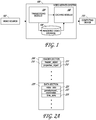
- FIG.1 illustrates an example embodiment of a video server system 100 (sometimes also referred to as a video delivery system) for delivering orthorectified video to a computing device 110.
- the video server system 100 can be configured to receive video data from a video source, transcode the received video data, store the transcoded video data, and cache video streams for delivery to a computing device 110.
- the video server system 100 can be configured to transcode video data using a pyramid segmentation approach (described in greater detail herein with reference to FIGS. 3A, 3B , and 5 ), such that the video data is transcoded using multiple image resolutions.
- the video server system 100 can be configured to store georeferencing coordinates with the transcoded video stream for purposes of delivery to the computing device 110.
- the video server system 100 can be configured to store time synchronization information with the transcoded video data to aid in delivering time-synchronized video and/or in stitching video streams upon delivery to the computing device 110.
- the computing device 110 can include any type of computing device, for example, a desktop or mainframe computer, a server, a laptop, a tablet, a mobile telephone, an electronic book reader, etc.
- the video server system 100 can include computing hardware such as one or more physical processors, non-transitory memory, communications buses, controllers, communications interfaces, and the like.
- the video server system 100 can use a controller, for example, to coordinate and control the operation of the various components and modules that make up the video server system 100 to receive, store, transcode, and/or deliver overhead video.
- the video data can be delivered using wireless communication, wired communication, or a combination of these.
- the video data can be directly communicated to the video server, delivered through peer-to-peer methods, or received by way of distributed computing devices.
- the video data can be requested by the video delivery system 100, automatically sent to the video delivery system 100, received via a file synchronization service, offered and/or purchased from a third party system, and the like.
- the video data can be acquired using any of a variety of video collection platforms, some of which may deliver high-resolution orthorectified video data. These video collection platforms may collect high-resolution motion imagery over a large geographical area, representing a relatively large quantity of image data.
- the video source 102 can be one of these video collection platforms or any of a number of intermediaries which receive the video data from one of these platforms.
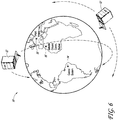
- One example of the video source 102 is the system described herein with reference to FIG. 6 , which illustrates a constellation of imaging satellites configured to acquire overhead video and deliver it to systems on the ground via a communication system.
- the video data could be received from one (or more) of the imaging satellites 12.
- FIG. 2A illustrates a block diagram of components of an example of an orthorectified video stream 200.
- the video stream 200 can be compatible with standard video encoding and delivery formats such as, e.g., the H.264/MPEG-4 Part 10 ("H.264") advanced video coding standard.
- the video stream 200 is divisible into a header section 210 and a data section 220.
- the header section is first transmitted from the video delivery system 100 to the computing device 110 so that the computing device may process the information within the header section.
- the data section 220 is transmitted from the video delivery system 100 to the computing device 110 on a packet-by-packet basis.
- the file structure of the video stream 200 can be configured to provide information used by the video delivery system 100 to deliver appropriate video data utilizing the transcoding, storage, and caching algorithms and strategies described herein.
- the video data object 221 is followed in the data section 220 by a georeferenced coordinates object 222.
- the georeferenced coordinates object 222 can include information about a geographic mapping of a video frame or video stream 200.
- georeferenced coordinates object 222 can include information identifying a location, size, and/or polygon that defines a geographic area which the video frame or video stream 200 covers.
- the georeferenced coordinates object 222 can be used by a system to identify adjacent video streams, to decide how and where to display video streams relative to one another, to decide how and where to display video streams on a map or other underlying graphics, and to decide which streams to pre-cache.
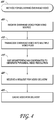
- FIG. 4 illustrates a flowchart of an example method 400 for delivering overhead video to a computing device.
- the method 400 will be described as being performed by the video delivery system 100. However, the method 400 can be performed in whole or in part by any component of the video delivery system 100 or other similar system.
- the system of embodiment 17 includes all the elements of embodiment 12, wherein the transcoding module is further configured to generate a resolution pyramid for the overhead video data.
- the system of embodiment 18 includes all the elements of embodiment 12, wherein the caching module is further configured to drop one or more frames from the cached transcoded video files while maintaining synchronization of the primary video stream and the secondary video stream through the time synchronization information.
Landscapes
- Engineering & Computer Science (AREA)
- Multimedia (AREA)
- Signal Processing (AREA)
- Computer Networks & Wireless Communication (AREA)
- Databases & Information Systems (AREA)
- Human Computer Interaction (AREA)
- Two-Way Televisions, Distribution Of Moving Picture Or The Like (AREA)
Description
- This application claims the benefit of priority under 35 U.S.C. § 119(e) to
U.S. Provisional Patent Application No. 61/691,438, filed August 21, 2012 - The disclosure relates generally to systems and methods for storing and delivering georeferenced video, and more particularly to storing and delivering georeferenced overhead video using relatively low bandwidth communications.
- Overhead video can be utilized in mobile environments characterized by relatively low-bandwidth communication data rates. Mobile devices can be used to view georeferenced overhead video for navigation and/or object tracking purposes. The mobile devices may be limited by relatively low bandwidth, e.g., 20-40 kilobits per second (kbps). High-resolution overhead video represents a relatively large quantity of data that may be desirable to receive and view on a mobile device.
-
US 2006/239574 A1 discloses a method of transmitting selected regions of interest of digital video data at selected resolutions, including: capturing digital video; compressing the digital video into a sequence of individual high resolution JPEG 2000 frames and simultaneously extracting from the compressed high resolution JPEG 2000 frames a lower resolution; storing the individual high resolution JPEG 2000 frames in a storage device; creating a video sequence of the lower resolution representation; transmitting the video sequence of the lower resolution representation to a user; creating one or more video sequences of selected regions of interest at selected resolutions greater than the resolution of the video sequence of the lower resolution representation; transmitting one or more video sequences of selected regions of interest at selected resolutions; and repeating the prior two steps at incrementally increased resolutions until a desired resolution of the selected region of interest is reached according to a viewing objective. - The systems, methods and devices described herein have innovative aspects, no single one of which is indispensable or solely responsible for their desirable attributes. Without limiting the scope of the claims, some of the advantageous features will now be summarized.
- Overhead video can be used to provide time-dependent, location-specific information to users who receive the overhead video utilizing a variety of communications systems with different bandwidths. It may be that a number of these users receive the overhead video over relatively low-bandwidth communications systems, such as through the use of mobile devices or in remote areas with no access to high-bandwidth network systems. Accordingly, the present disclosure advantageously provides for overhead video delivery systems and methods configured to timely deliver requested video of regions of interest to a plurality of users, where the quality of the video of the region of interest delivered to a particular user is increased or maximized based at least in part on the bandwidth of each user.
- Furthermore, viewers of the overhead video may want to interact with it to be able to change the location being viewed (e.g., by panning the video), change the resolution or scale of the location being viewed (e.g., by zooming in or out of the video), track an object across a location, or the like. For a satisfying user experience, these changes should occur with little or no latency (e.g., in real-time or near real-time with the request). Typically, to deliver such functionality would require a relatively-high bandwidth communication system and/or a high-powered video server system so that changes to the requested overhead video stream could be delivered shortly in time after the requested change. Accordingly, the present disclosure advantageously provides examples of overhead video delivery systems and methods configured to timely respond to changes in the requested video stream. For example, video data may cover a larger area than is viewed by a user. The present disclosure provides methods of caching proximal or adjacent video streams which allow a video delivery system to provide video data to one or more users where users are allowed to pan, zoom, and/or otherwise interact with the video stream to change a viewing region or viewing parameters with little to no latency. A proximal or adjacent video stream can be video data which is proximal or adjacent in a geographical sense or in a resolution sense, such as in a multi-resolution pyramid segmentation approach provided herein.
- Some embodiments of the systems and methodologies presented herein can leverage a pyramid segmentation approach applied to orthorectified video data with additional settings to account for different communication bandwidths of receiving computing systems. The systems and methods can pre-render multiple videos from an orthorectified video source. The multiple rendered videos represent different spatial resolutions, regions of interest ("ROIs"), frame-rates, and/or encoding bitrates. The systems and methods can leverage georeferenced coordinates and time synchronization information of video source data to enable efficient caching strategies.
- For example, a video server can be configured to pre-render multiple video files from a single source video such that the rendering is performed one time. This can reduce or minimize latency for users or viewers of the video. Pre-rendering multiple video files can allow multiple users to access disparate videos (e.g., different locations, different ROIs within a location, spatial sub-regions, different resolution videos, video segments with different frame-rates, video streams with differing bandwidth data rates) depending at least in part on their region of interests and bandwidth limitations. Furthermore, multiple users can request disparate ROIs and/or resolutions without the video server performing additional transcoding.
- The video server can pre-render orthorectified video data to enable more efficient caching strategies for both the video server and client applications. For example, a client viewing video data at one ROI and resolution typically requests an adjacent ROI or spatial resolution when changing their requested ROI or resolution. This client behavior enables efficient pre-caching of the neighboring ROI video streams to reduce or limit latency for the client. Although certain example implementations are described in terms of a client-server computer architecture, this is intended for illustration only and is not intended to be limiting. Other computer architectures including distributed architectures, peer-to-peer architectures, multi-tier architectures, or networked architectures can be utilized. In other implementations, a standalone system can be used.
- The video server can deliver multiple time-synchronized video streams corresponding to video data for a requested ROI and a surrounding area. The video server can receive a request for video data for a ROI, and can deliver that ROI along with video data of adjacent regions. The video data can have georeferenced coordinates and time synchronization information embedded therein. This can allow the video server to retrieve multiple spatially-adjacent video streams and deliver those video streams such that the frames are synchronized in time. As an example of time synchronization, the video server can deliver two video streams to a computing device that are spatially-adjacent or that contain imagery of regions that are near one another, adjacent to one another, or overlapping. The first and second video streams can each contain a plurality of video frames, wherein each video frame or a subset of the plurality of video frames have time synchronization information embedded therein. The time synchronization information can be used by a display system receiving the video streams to display the video frames from the two video streams at appropriate times relative to one another. This can allow the display system to display synchronized video streams having different frame rates. This can allow the display system to display a new video stream that is synchronized in time with other video streams. For example, the display system can display a plurality of video streams as described. In response to panning or zooming, a new video stream can be delivered to the display system. The display system can use the georeferenced coordinates and time synchronization information in the new video stream such that the video frames from the new video stream are displayed in an appropriate location and synchronized in time relative to the other video streams being displayed.
- In some embodiments, a system for delivering georeferenced video to a computing device is provided. The system comprises a video server system configured to receive overhead video data from a source such as an overhead imaging platform (e.g., satellite, aerial vehicle, etc.). The video server includes a transcoding module configured to transcode the received overhead video into a multi-scale, pyramidal data format. The transcoding module can incorporate georeferencing coordinates and/or time synchronization information into the transcoded video. The video server includes a caching module configured to respond to requests for video data by retrieving transcoded video data which includes imagery of a requested geographical region, caching video data from proximal geographical regions, caching video data with proximal spatial resolutions, and transmitting a video stream comprising a primary segmented video tiles and a secondary segmented video tile. The primary segmented video tile has a first resolution and/or a first frame rate and the second segmented video tile has a second resolution less than the first resolution and/or a second frame rate less than the first frame rate.
- In some embodiments, a logical structure for encapsulating video data is provided. A first field is included in the logical structure which is configured to store video data having a pyramidal resolution. A second field is included to store georeferencing coordinates. A third field is included to include timing synchronization information. The video data can include orthorectified video data.
- In some embodiments, a logical encapsulation of the transcoded video data is provided which enables applications to pan and/or zoom a video stream during playback or track an object in a video sequence throughout multiple ROIs. In these cases, a video server caches the logical encapsulation of the video data through comprising a plurality of ROI sub-videos to enable relatively seamless browsing of disparate regions and/or resolutions in the video sequence.
- In some embodiments, a stream of transcoded video data comprises collections of multiple video sequences wherein certain portions of the delivered video have higher spatial or temporal resolution or bitrate. In effect, this enables a type of "foveated" video browser where a user may view certain ROIs at relatively high resolution (with correspondingly high bandwidth requirements) while also viewing surrounding regions at lower spatial and/or temporal resolution for context.
- In some embodiments, a user interface is provided for viewing georeferenced video data served wherein the video data is encapsulated using logical structures described herein. The user interface can be configured to allow a user to browse georeferenced video data. The user can pan around a video stream to see different geographical regions while receiving the video stream. The user can zoom into or out of a region of interest while receiving the video stream. The user interface can receive foveated video to facilitate presenting video data covering a relatively large geographical area and/or to present video data over a relatively low bandwidth network connection. The user interface can track an object through the video stream and provide streaming video that includes the object as it leaves a first video region and enters a second video region.
- Throughout the drawings, reference numbers can be reused to indicate general correspondence between reference elements. The drawings are provided to illustrate example embodiments described herein and are not intended to limit the scope of the disclosure.
-
FIG.1 illustrates an example embodiment of a video server system for delivering georeferenced video to a computing device. -
FIG. 2A illustrates a block diagram of components of an example of a georeferenced video stream. -
FIG. 2B illustrates an example of a file structure representing a video stream, wherein the video stream can be representative of an image scene. -
FIG. 3A illustrates an example video frame with a first segmentation. -
FIG. 3B illustrates an example video frame with a second segmentation. -
FIG. 4 illustrates a flowchart of an example method for delivering georeferenced video. -
FIG. 5 illustrates an example of pyramid resolution segmented video data. -
FIG. 6 illustrates an example satellite imaging system having a constellation of imaging satellites, a control center, and a ground communication station. - Described herein are systems and related methodologies for receiving, transcoding, storing, and delivering georeferenced overhead video to one or more computing devices. The overhead video may be orthorectified. It will be understood that although many of the examples in the description herein are in the context of orthorectified overhead video, one or more features of the present disclosure can also be implemented in systems configured to deliver any type of georeferenced or location-referenced video including video that has not been orthorectified and/or video that is not overhead video. Georeferenced video includes video that has a location associated with it based on an Earth-referenced system (e.g., latitude and longitude) or other Earth-based coordinate system. Location-referenced video includes video that has a location associated with it through the use of any appropriate coordinate system. The location can be associated with the video through the use of a variety of means including, without limitation, data incorporated into the video file, data stored in a database, filename conventions, video acquisition data, and the like.
- Overhead video is a broad term and is to be given its ordinary and customary meaning to a person of ordinary skill the in the art (e.g., it is not to be limited to a special or customized meaning) and includes, without limitation, a series of satellite images captured by satellites in earth-orbit, aerial photographs and video, overhead image data captured by aircraft (e.g., airplanes, helicopters, drones, unmanned aerial vehicles (UAV), balloons, etc.), surveying of a geographic region, and the like. Overhead video can be acquired by a variety of image collection platforms such as, for example, satellite imaging systems, aerial imaging systems, unmanned aerial vehicles (UAVs), and the like. Overhead video can include video as well as still images. It is to be understood that overhead imagery may also be used to refer to overhead video.
- Orthorectification is a broad term and is to be given its ordinary and customary meaning to a person of ordinary skill the in the art (e.g., it is not to be limited to a special or customized meaning) and includes, without limitation, image processing methods that correct or adjust distortions of overhead imagery (e.g., caused by lens distortions, camera tilt, topographic relief, etc.), geometrical correction of overhead imagery such that scale is uniform, or the like. Raw image data collected by an image sensor on an overhead imagery collection platform can include distortions caused by topographic features (e.g., elevation changes due to terrain, presence of buildings, structures, etc.) on the surface being imaged, and/or distortions caused by the acquisition system (e.g., camera tilt, lens distortions, etc.). For example, the raw data can include terrain distortions when the image sensor is not pointing directly downward toward the nadir location below the sensor. Image processing modules and systems can include orthorectification procedures and algorithms to remove such distortions. For example, a digital elevation model can be used to geometrically remove topographic distortions in the raw image data to produce an orthorectified image.
-
FIG.1 illustrates an example embodiment of a video server system 100 (sometimes also referred to as a video delivery system) for delivering orthorectified video to acomputing device 110. Thevideo server system 100 can be configured to receive video data from a video source, transcode the received video data, store the transcoded video data, and cache video streams for delivery to acomputing device 110. Thevideo server system 100 can be configured to transcode video data using a pyramid segmentation approach (described in greater detail herein with reference toFIGS. 3A, 3B , and5 ), such that the video data is transcoded using multiple image resolutions. Thevideo server system 100 can be configured to store georeferencing coordinates with the transcoded video stream for purposes of delivery to thecomputing device 110. Thevideo server system 100 can be configured to store time synchronization information with the transcoded video data to aid in delivering time-synchronized video and/or in stitching video streams upon delivery to thecomputing device 110. Thecomputing device 110 can include any type of computing device, for example, a desktop or mainframe computer, a server, a laptop, a tablet, a mobile telephone, an electronic book reader, etc. Thevideo server system 100 can include computing hardware such as one or more physical processors, non-transitory memory, communications buses, controllers, communications interfaces, and the like. Thevideo server system 100 can use a controller, for example, to coordinate and control the operation of the various components and modules that make up thevideo server system 100 to receive, store, transcode, and/or deliver overhead video. Thevideo server system 100 is intended to illustrate various features of the present disclosure. In other implementations, the functionalities of thesystem 100 can be implemented differently such as, for example, merging or combining functionalities of different components, separating the functionalities into additional and/or different components, adding or deleting functionalities, and so forth. - The
video delivery system 100 receives video data fromvideo source 102. Thevideo source 102 can be any source of video data. The video source can be, for example, an imaging satellite, an aerial imaging system, an unmanned aerial vehicle, or other video server system which received video data from one of the above-identified video sources. The video data can be orthorectified overhead video data or thevideo server system 100 can be configured to process overhead video data to create orthorectified overhead imaging data using georeferencing model information. The video data can be panoramic video data or other non-overhead imagery. The video data can have a variety properties including, for example and without limitation, RAW or compressed video data, global positioning system (GPS) data, timing information, acquisition-related metadata, other metadata, and the like. The video data can be delivered using wireless communication, wired communication, or a combination of these. The video data can be directly communicated to the video server, delivered through peer-to-peer methods, or received by way of distributed computing devices. The video data can be requested by thevideo delivery system 100, automatically sent to thevideo delivery system 100, received via a file synchronization service, offered and/or purchased from a third party system, and the like. - The video data can be acquired using any of a variety of video collection platforms, some of which may deliver high-resolution orthorectified video data. These video collection platforms may collect high-resolution motion imagery over a large geographical area, representing a relatively large quantity of image data. The
video source 102 can be one of these video collection platforms or any of a number of intermediaries which receive the video data from one of these platforms. One example of thevideo source 102 is the system described herein with reference toFIG. 6 , which illustrates a constellation of imaging satellites configured to acquire overhead video and deliver it to systems on the ground via a communication system. For example, the video data could be received from one (or more) of theimaging satellites 12. - With continued reference to
FIG. 1 , thevideo delivery system 100 includes atranscoding module 104 configured to process the received video data to prepare it for storage, caching, and delivery. Thetranscoding module 104 can be configured to perform pre-processing on the received video data; incorporate location and/or time information into the video data; and generate multiple video files or video streams having different levels of resolutions, frame rates, bit rates, and the like. Thetranscoding module 104 can be configured to generate one or more video files where each of the one or more video files encapsulates video data having a unique resolution, bitrate, and/or frame rate. Thetranscoding module 104 can also be configured to generate one or more video files where each of the one or more video files encapsulates video data having a plurality of resolutions, bitrates, and/or frame rates. - The
transcoding module 104 can be configured to pre-process the received video data. Pre-processing can include, for example and without limitation, video compression, orthorectification, distortion correction, normalization, or the like. Pre-processing the received video data can include stitching video data where the video data is adjacent or overlaps. For example, the video data may be received from a plurality of video sources covering overlapping geographical regions. The video data can be used to generate one or more composite video streams which cover a geographical area. Pre-processing can include generating video data which is static relative to a target such as when the video is acquired from a moving platform. Pre-processing can include object identification and/or object tracking. - The
transcoding module 104 can transcode the received video data a single time to create the one or more video files. Transcoding can include, for example, compressing RAW video data, converting the video data from one compression scheme to another, cropping video data, generating video data which has a different resolution from the source, generating video data which has a different frame rate from the source, generating video data which has a different bitrate from the source, encapsulating the source video data into a file or wrapper format, or any combination of these. - During the transcoding process, the
transcoding module 104 can create video streams having a multi-resolution pyramid segmentation structure, which is described in greater detail herein with reference toFIGS. 3A, 3B , and6 . Thetranscoding module 104 can create a first video stream by transcoding entire frames of the source video at a defined resolution (e.g., the resolution of the source, a resolution greater than the source, or a resolution smaller than the source). As used here, the source video can be the video data received directly from thevideo source 102 or it can be the video data resulting from pre-processing performed by thetranscoding module 104. Thetranscoding module 104 can create a second video stream by dividing entire frames of the received video into tiles, and transcoding the segmented tiles at the defined resolution. Thetranscoding module 104 can create a third video stream by dividing the segmented tiles from the second video stream into smaller segments and transcoding each smaller segment at the defined resolution. In this way, thetranscoding module 104 can construct a resolution pyramid for the video data. At each level of the pyramid, a single video stream has the defined resolution. As a result, each successive level of the pyramid contains video streams with a greater number of pixels per area imaged (e.g., more pixels per square foot) than the preceding level. - The
transcoding module 104 also can create video streams having a pyramid structure based at least in part on bitrate. For example, a first video stream can be generated by transcoding the source video using a first bitrate, a second video stream can be generated by transcoding the source video using a second bitrate that is greater than the first bitrate, a third video stream can be generated by transcoding the source video using a third bitrate that is greater than the second bitrate, and so on. - Similarly, the
transcoding module 104 also can create video streams having a pyramid structure based at least in part on frame rate. For example, a first video stream can be generated by transcoding the source video using a first frame rate, a second video stream can be generated by transcoding the source video using a second frame rate that is greater than the first frame rate, a third video stream can be generated by transcoding the source video using a third frame rate that is greater than the second frame rate, and so on. In some implementations, the frame rate of a video stream can be adjusted by dropping and/or repeating video frames during delivery or transmission in addition to or rather than generating video streams with a variety of frame rates. - The
transcoding module 104 can create a pyramid structure of video streams through recursive segmentation of the source video. For example, a first-level video stream can be generated by transcoding the source video at a first resolution which corresponds to a number of pixels per area. The first resolution can be, for example, the native resolution of the source video, a resolution that is greater than the native resolution of the source video, or a resolution that is less than the native resolution of the source video. A plurality of second-level video streams can be generated by segmenting the first-level video stream into a number of video tiles. Each of the second-level video streams (or tiles) can have a resolution that maintains the number of pixels per area. For example, if the first-level video stream is divided into 4 tiles, then each second-level video tile can have one-fourth of the number of pixels of the first-level video stream. For each of the second-level video streams, a plurality of third-level video streams can be generated by segmenting the corresponding second-level video stream into a number of tiles. Each of the third-level video streams can have a resolution that maintains the number of pixels per area. This process can continue for any number of desired or suitable pyramid levels. One example of this segmentation approach is described with reference toFIGS. 3A and 3B . The number of tiles per level can be different for each level. For example, each tile in a first level can be segmented into 4 tiles to create a second level, but each tile in the second level may be segmented 6 times to create a third level. For each tile in a particular level, the number of segmentations made to generate the successive level can be different. For example, if there are 4 tiles in the second level, the first second-level tile can be segmented 4 times, the second second-level tile can be segmented 6 times, the third second-level tile can be segmented twice, and the fourth second-level tile can be segmented 9 times, thereby creating 21 tiles in the third level. - The
transcoding module 104 can combine these pyramid structures in any permutation. For example, after generating the resolution-based pyramid segmentation structure, each segmented video tile can be used as the source video to generate video streams using the bitrate-based pyramid structure, the frame rate-based pyramid structure, the segmentation-based pyramid structure, or any combination of these. Any particular combination of pyramid structures can be used with an aim to increase or optimize bandwidth utilization without exceeding data rate limits of therecipient computing device 110. For example, a multi-resolution pyramid segmentation video structure can be generated such that a primary video stream is delivered to thecomputing device 110, the primary video stream including imagery of a region of interest, and a plurality of secondary video streams is delivered to thecomputing device 110, each of the secondary video streams being adjacent or proximal to the region of interest. The primary video stream can have at least one of a resolution, bitrate, and/or frame rate that exceeds that same parameter for each of the secondary video streams. As used herein, two video streams are proximal in a geographical sense when the video contains overlapping image data (e.g., one location is imaged in both video streams), the video contains image data of locations where the closest edges of the video streams are within less than 100 pixels of one another, less than 50 pixels, less than 10 pixels, or less than 5 pixels. As used herein, two video streams are adjacent if at least one edge of the video stream is substantially parallel to a corresponding edge in the adjacent video stream (e.g., their relative angular deviation is less than 5°, less than 1°, or less than 0.5°) and the edges are separated by a pixel-based distance that is less than 50 pixels, less than 10 pixels, or less than 5 pixels. As used herein, when two video streams are proximal on a pyramid structure (e.g., a multi-resolution segmentation pyramid of video data) it can mean that the video streams are separated by three or fewer levels or two or fewer levels. When two video streams are adjacent in a pyramid structure, it can mean that they are separated by only one level. - The
transcoding module 104 can incorporate georeferencing coordinates into the one or more video files. Incorporating coordinates into the files can include, for example and without limitation, generating a file structure or logical encapsulation which includes the coordinates along with the video data, saving the coordinates in a database that references the video file, saving the coordinates as metadata for the video file, generating a companion file that has the coordinates with the video file (e.g., an extended markup language (XML) file), or the like. Using the incorporated georeferencing coordinates, a request for a video stream can be fulfilled by identifying the one or more video files containing video data for the appropriate georeferenced region. The georeferencing coordinates can be derived from information received from thevideo source 102, information embedded in the source video, information derived during pre-processing, user input, approximations, or any combination of these. The georeferencing coordinates can be used to generate appropriate pyramid segmentations by providing alignment and/or location information. As described elsewhere herein, other coordinate systems can be used instead of or in addition to georeferencing coordinates. - The
transcoding module 104 can incorporate time synchronization information into the one or more video files. Time synchronization information can include, for example and without limitation, times of key frames in a video stream or video file, an absolute time associated with key frames or with each frame in the video file, a time difference between successive frames, a relative time from a start time, or the like. Using the time synchronization information, tiles in segmented frames can be displayed at disparate frame rates while maintaining each tile in the video stream synchronized. In addition, the time synchronization information incorporated with the video data can allow thevideo server system 100 to add and drop segmented tiles from the video stream without losing overall video synchronization. As described herein, this can advantageously allow thevideo server system 100 to deliver video data having tiles with differing resolutions, bitrates, and/or frame rates to accommodate transport over network connections having a relatively low bandwidth while maintaining a relatively high or optimized video quality for a region of interest. - With continued reference to
FIG. 1 , thevideo server system 100 can include a renderedvideo storage 106. The renderedvideo storage 106 can store the rendered video transcoded by thetranscoding module 104. The renderedvideo storage 106 can include any non-transitory data storage component, device, or system. By storing each of the rendered videos generated by thetranscoding module 104, requests for video data can generally be satisfied without performing additional transcoding processes. This can speed up video delivery because requested video streams can be delivered as they are retrieved from storage rather than after a potentially lengthy transcoding process. - The rendered
video storage 106 can include information about the stored video, such as video streams that are geographically or logically connected, which can be stored with the video files and/or in a database. The renderedvideo storage 106 can generate a database which contains relationships between video streams. For example, for a given video stream, information can be stored in the renderedvideo storage 106 about which video files contain proximal video data, where proximal video data includes proximity in a geographical sense, in a frame rate sense, in a resolution sense, bitrate, in a chronological sense, and the like. For example, a first video file can contain video data of a first region and a second, proximal video file can contain video data about a neighboring region, where the distance between the neighboring regions, measured in pixels, is less than or equal to 20% of the resolution of the video data, less than or equal to 10% of the resolution of the video data, less than or equal to 5% of the resolution of the video data, or less than or equal to 1% of the resolution of the video data. The renderedvideo storage 106 can store and deliver this information to thecaching module 108 to enable efficient and effective caching strategies. Furthermore, the renderedvideo storage 106 can store and deliver information related to timing of the video files to enable the display of chronologically proximal video streams. - Two video streams can be proximal in a frame rate sense if the frame rates are within a multiple of 2 of one another, within a multiple of 1.5 of one another, or within a multiple of 1.25 of one another. Two video streams can be proximal in a resolution sense of the resolutions are within a multiple of 3 of one another, within a multiple of 2 of one another, within a multiple of 1.5 of one another, or within a multiple of 1.25 of one another. Two video streams can be proximal to one another in bitrate of the bitrates differ by less than 50%, less than 25%, or less than 10%. Similarly, proximity can be based on the values used in the pyramid data structure. For example, if a first level of the period contains video data having a first resolution and a second level of the pyramid contains video data having a second resolution, then a video stream from the first level is proximal to a video stream in the second level regardless of the relative values of the resolutions. This is also applicable for frame rate, bitrate, and other video properties.
- With continued reference to
FIG. 1 , the video server system includescaching module 108 configured to retrieve video data from the renderedvideo storage 106 and to create one or more video streams. The video streams can be created based at least in part on user input or requests from thecomputing device 110. Thecaching module 108 can receive or determine information about a bandwidth of an intended recipient computing device and retrieve video data that satisfies the request for video and that can be transmitted over the communications link (e.g., the transmitted data rate is less than or equal to the bandwidth or less than or equal to a fraction of the bandwidth where the fraction is 90%, 80%, 70%, 60%, 50%, etc.). - The
caching module 108 can use the multi-resolution segmented pyramid video data created by thetranscoding module 104 to deliver video data comprising multiple video streams of differing characteristics such as, for example, resolution, bitrate, frame rate, or the like. For example, a request can be made for video data of a region of interest. Thecaching module 108 can retrieve an appropriate video file that contains the region of interest from the renderedvideo storage 106 based at least in part on georeferencing coordinates incorporated into the video or stored in a database. Thecaching module 108 can determine whether a segmented tile within the video data contains the entire region of interest. If it does, thecaching module 108 can determine increased, maximized, or optimized quality parameters (e.g., resolution, bitrate, frame rate, video codec, audio, etc.) for delivering that segmented tile while delivering surrounding tiles having decreased or minimized quality parameters. In that way, thecaching module 108 can deliver video data of the region of interest where the video stream containing the region of interest is of a higher quality (e.g., higher resolution, higher bitrate, higher frame rate, etc.) than the surrounding video streams. In some embodiments, the video stream delivered with the higher quality parameters is referred to as the primary video stream and the other video streams are referred to as the secondary video streams. Thecaching module 108 can be configured to deliver one or more primary video streams, depending at least in part on the requested region of interest, object to be tracked, user input, or the like. Thecaching module 108 can be configured to retrieve video data that is proximal or adjacent to the primary video stream(s) to deliver as secondary video streams. Proximal or adjacent video data is video data that contains imagery that overlaps with other video data, that abuts other video data, or that is within a threshold distance from the neighboring video data as measured in pixels. Proximal video data includes video data that is separated by less than or equal to a fraction of the number of horizontal or vertical pixels in the video stream (e.g., for a video stream with 1920x1080 pixels, the separation can be measured as a fraction of either 1920 pixels or 1080 pixels), where the fraction can be 0.2, 0.1, 0.05, or 0.01. - In some embodiments, the quality of the video streams can be determined based on threshold quality values. A minimum secondary video stream quality threshold can be set such that each secondary video stream is required to have a quality parameter that is at least the threshold value. For example, the quality threshold can be based at least in part on the frame rate. The secondary video streams, then, can be selected such that each has a frame rate that is greater than or equal to the minimum frame rate threshold. The
caching module 108 can determine a data rate for all the secondary video streams being delivered with the minimum quality values. Thecaching module 108 can then determine a maximum quality of the primary video stream(s) up to the maximum quality threshold. The limitation is that the total data rate (e.g., the data rate of delivering all of the primary and secondary video streams) does not exceed the bandwidth limitations, as described herein. If the primary video stream(s) can be delivered with a maximum quality (e.g., the quality parameters are equal to the maximum quality threshold), then thecaching module 108 can increase the quality of the secondary video streams. Again, the quality of the secondary video streams can be increased to a point where the total data rate to be delivered does not exceed the bandwidth limitations. - The
caching module 108 can also retrieve video data for regions that are not requested but which are synchronized in time and/or proximal to the requested region in a geographical sense or proximal in a sense of the multi-resolution segmentation pyramid video structure. In that way, if thecomputing device 110 pans the video one way or another, or selects a new region of interest, thecaching module 108 can incorporate the appropriate new video tiles into the delivered video stream synchronized in time with little or no latency. For example, if a user selects a new region of interest, thecaching module 108 would have already cached the segmented video tiles with appropriate quality parameters (e.g., resolution, frame rate, or bitrate) so that it could change the primary and secondary video streams with little or no latency, where little or no latency means that the new video stream is delivered with less than or equal to a 10-second delay, less than or equal to a 5-second delay, less than or equal to a 1-second delay, or less than or equal to 0.5-second delay. As described, thecaching module 108 can enable spatial and/or resolution browsing of the requested video stream by thecomputing device 110. - The
caching module 108 may also account for zooming in and/or out of a video. For example, thecaching module 108 may provide for pre-caching of adjacent zoom levels on the multi-resolution pyramid. Thecaching module 108 can retrieve video data synchronized in time with the video data being delivered where the cached video data has a higher or lower spatial resolution for a geographic region covered by the video data. Thecaching module 108 can store this information, load the retrieved video data in a buffer for delivery when requested, or deliver to a display system which can display the identified video having a different resolution when requested. This can enable resolution browsing of video data with little or no latency. - The
video delivery system 100 is configured to accommodate multiple users and/orcomputing devices 110 which are interested in viewing video data of a variety of geographical regions. Thecomputing devices 110 may have relatively low-bandwidth network connections (e.g., less than about 512 kbps, less than about 256 kbps, less than about 128 kbps, less than about 100 kbps, less than about 75 kbps, or less than about 40 kbps, where about can mean ±10%, ±5%, or ±1%) posing difficulty in receiving high-resolution video data. By implementing thetranscoding module 104, the renderedvideo storage 106, and thecaching module 108, thevideo delivery system 100 can deliver high-quality video data of each requested ROI over the relatively low-bandwidth connections. Thevideo delivery system 100 is also configured to provide the video data close in time to its acquisition by the video collection platform (e.g., within 1 day of acquisition, within 12 hours of acquisition, within 4 hours of acquisition, within 1 hour of acquisition, or within 20 minutes of acquisition). Thevideo delivery system 100 is also configured to respond to requests for relatively small ROIs of the overhead imagery through the multi-resolution segmentation pyramidal approach. - The
video delivery system 100 is configured to deliver high-resolution video data utilizing a pyramid resolution segmentation of the video data. In some implementations of a pyramid resolution segmentation of the data, a hierarchical set of video tiles is developed. Each video tile can comprise the same number of pixels and the spatial resolution of each pixel can increase with each successive pyramid. This approach can deliver video data to a user using a substantially constant bandwidth regardless of the spatial resolution being delivered to the user for viewing (e.g., where substantially constant bandwidth can mean the bandwidth does not vary by more than 20%, by more than 10%, or more than 5%). Thus, some embodiments provide for acomputing device 110 to view a requested ROI by downloading only those pre-rendered images in the ROI and spatial resolution. In some implementation, thevideo delivery system 100 also delivers video data of surrounding geographical areas at a lower quality to provide context for the relatively high-quality video data of the requested ROI. -
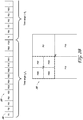
FIG. 2A illustrates a block diagram of components of an example of anorthorectified video stream 200. Thevideo stream 200 can be compatible with standard video encoding and delivery formats such as, e.g., the H.264/MPEG-4 Part 10 ("H.264") advanced video coding standard. Thevideo stream 200 is divisible into aheader section 210 and adata section 220. In general, the header section is first transmitted from thevideo delivery system 100 to thecomputing device 110 so that the computing device may process the information within the header section. Subsequently, thedata section 220 is transmitted from thevideo delivery system 100 to thecomputing device 110 on a packet-by-packet basis. The file structure of thevideo stream 200 can be configured to provide information used by thevideo delivery system 100 to deliver appropriate video data utilizing the transcoding, storage, and caching algorithms and strategies described herein. - An example of this file structure is illustrated in
FIG. 2A . Theheader section 210 includes a number of objects that describe thevideo stream 200 in aggregate. Theheader section 210 includes aheader object 211 that identifies the beginning of thevideo stream header 210 and specifies the number of objects contained within the header section. - The
header object 211 is followed in theheader section 210 by aproperties_object 212. Theproperties_object 212 describes properties about thevideo stream 200. For example, theproperties_object 212 can include information such as a universally unique identifier (UUID), a size of theproperties_object 212 field, a UUID for a multimedia stream, a size of the multimedia stream, a creation date, a size or number of packets in thedata section 220, a duration of the multimedia stream, packet size information, bit rate information, information related to encryption, information related to error correction, and the like. In some embodiments, theproperties_object 212 can be used to determine playback properties of thevideo stream 200 and/or whether thevideo stream 200 can be displayed on a system receiving thevideo stream 200. Theheader section 210 can include information such as a title, author, copyright information, description, coordinates, date and time, or the like. This information can be included in theproperties_object 212 or in other objects in theheader section 210. - The
data section 220 includes avideo data object 221. The video data object 221 can be used to mark a beginning of thedata section 220 and correlate theheader section 210 with thedata section 220. The video_data object 221 can include packets which hold the video data payloads for thevideo stream 200. The video_data object 221 can include the UUID for the video stream, which can contain the same information as theproperties_object 212. The video_data object 221 can include a number of packets to be delivered, size of packets to be delivered, information about a structure of packets, packet error correction information, indexing information, timing information, and the like. - The
video data object 221 is followed in thedata section 220 by a georeferenced coordinatesobject 222. The georeferenced coordinates object 222 can include information about a geographic mapping of a video frame orvideo stream 200. For example, georeferenced coordinates object 222 can include information identifying a location, size, and/or polygon that defines a geographic area which the video frame orvideo stream 200 covers. The georeferenced coordinates object 222 can be used by a system to identify adjacent video streams, to decide how and where to display video streams relative to one another, to decide how and where to display video streams on a map or other underlying graphics, and to decide which streams to pre-cache. The georeferenced coordinates object 222 can include information based at least in part on an Earth-based coordinate system (e.g., latitude and longitude, GPS data, etc.) In some embodiments, the georeferenced coordinates object 222 is replaced by a location coordinatesobject 222, which contains location information based at least in part on a reference to a coordinate system that may not be referenced to an Earth-based system. The location information can be absolute or relative. In some embodiments, both a georeferenced coordinates object 222 and a location coordinates object can be present in the file structure. - The
data section 220 includes atime sync object 223. Thetime sync object 223 can contain information about an absolute or relative time of frames in thevideo stream 200. For example, thetime sync object 223 can contain a time at which each frame or a subset of frames in thevideo stream 200 were acquired. In some embodiments, the time is an absolute time relative to a known or proprietary standard, such as a UTC time, a time acquired from a GPS system, or a time received from the acquiring system such as an imaging satellite or other overhead imaging platform. In some embodiments, the time is a relative time such as an elapsed time from a beginning of acquisition where, for example, a first frame in thevideo stream 200 would have a relative time of 0. In some embodiments, the time for a frame is a relative time from a key frame, where the time of the key frame is an absolute time. Thetime sync object 223 can be used by a system to decide which video streams to retrieve in response to a request for video data, to decide how and when to display video frames in avideo stream 200, to synchronize video frames from multiple video streams, and the like. -
FIG. 2B shows an example of a file structure representing avideo stream 200, wherein thevideo stream 200 can include a plurality of video frames representative of ascene 250. In the example file structure, thescene 250 can be segmented into three pyramid resolution segmentations, where each successive level of the pyramid covers thescene 250 with more tiles. The tiles in the pyramid can include georeferenced coordinates (e.g., latitude and longitude or GPS data) to define or indicate an area covered by the tile. For example, a first level in the pyramid comprises tile P0 which represents theentire scene 250 at a first spatial resolution or having a number of pixels. In a second level in the pyramid, tile P0 can be divided into tiles P00, P01, P02, and P03, where each tile represents approximately one-fourth of thescene 250 and where each tile has the same number of pixels as P0. Together, tiles P00, P01, P02, and P03 represent theentire scene 250 where the combined representation has four times the spatial resolution or four times the number of pixels compared to tile P0. In a third level in the pyramid, each tile in the second level can be divided into four tiles. For example, tile P00 can be divided into P000, P001, P002, and P003 where each tile in the third level has the same number of pixels as tile P0. The sixteen tiles in the third level of the pyramid represent theentire scene 250 and the resulting representation has sixteen times the spatial resolution or sixteen times the number of pixels compared to tile P0. - In the example file structure representing the
video stream 200, each of thetiles 285 within a particular time range (e.g., t0 to t1) can be located together in onedata block 280. Tiles within a subsequent time range (e.g., t1 to t2) can be located together in a subsequent block. Formatted in this way, thevideo stream 200 can increase a speed of random spatial and resolution access due in part to data locality of spatial and resolution portions of thevideo stream 200. - The example file structure can have a plurality of data blocks in the
video stream 200. Each data block can include information related to a geographical area covered, spatial resolution of tiles in the data block, a time range, and/or frame rates. A header in thevideo stream 200 can include information related to the data blocks, including, for example, a description of different spatial locations, resolutions, and temporal indices in the data blocks. Based at least in part on received requests, thevideo server 100 can identify and/or deliver the data blocks with the determined resolution, bitrate, frame rate, and location, thereby increasing efficiency of delivering thevideo stream 200. - In some embodiments, the
video stream 200 includes a plurality of segmented video tiles, where each tile can have a different quality parameter. The plurality of segmented video tiles can include geographical proximal video data, as well as video data covering the same region but with different quality parameters. As described herein, thevideo stream 200 can be configured to deliver these differing video tiles to enable spatial and resolution browsing of the video data. In some embodiments, thevideo stream 200 is cached at thevideo server system 100 in one form, and delivered to thecomputing device 110 with less data than is cached. This may be utilized where the ability of thecomputing device 110 to cache data is limited, so it would be more efficient to cache the video data on thevideo server system 100. -
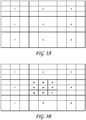
FIG. 3A illustrates an example video frame with a first segmentation. The video frame can be part of a video stream. The video frame can be divided into multiple tiles. As illustrated, the video frame inFIG. 3A is divided into nine tiles numbered 1-9. The video frame can be divided into any number of tiles as appropriate. The tiles do not have to be uniform in size. Thevideo delivery system 100 can deliver a requested video stream to acomputing device 110 by sending video frames stitched together to form a video stream. For example, thevideo delivery system 100 can send the 9 tiles illustrated inFIG. 3A to a user where each tile can have a different resolution, bitrate, frame rate, or the like. -
FIG. 3B illustrates an example video frame with a second segmentation. The video frame depicted inFIG. 3B has been further segmented into secondary tiles intile 5. The secondary tiles intile 5 are numbered 5a through 5i. Thevideo delivery system 100 can deliver a requested video to acomputing device 110 by sending video frames comprising tiles 1-4, 6-9, and 5a-5i. The delivered video stream can thus comprise tiles of differing resolution, bitrate, frame rate, or the like. - The pyramid segmentation described can be incorporated into the segmentation of the video frames as illustrated in
FIGS. 3A and 3B . For example, the tiles 1-4, 6-9 and 5a-5i can comprise tiles of different sizes but having the same number of pixels. In this way, if thecomputing device 110 zooms into the video stream, the data rate remains substantially constant compared to the unzoomed video stream (e.g., where substantially constant means the data rate does not change by more than 20%, more than 10%, or more than 5%). - Furthermore, the
video delivery system 100 can use thecaching module 108 to retrieve tiles proximal to tiles in the delivered video stream. For example, if the computing device requests a video stream corresponding totiles 5a through 5i, thecaching module 108 of thevideo delivery system 100 can retrieve tiles 1-4 and 6-9 and/or any segmentation of those tiles. Thus, if thecomputing device 110 pans the video stream in a direction, thevideo delivery system 100 can respond by providing the corresponding video data with little or no latency in the delivery. In addition, if thecomputing device 110 zooms out, thevideo delivery system 100 can add tiles 1-4, and 6-9 to the video stream andswitch tiles 5a through 5i to tile 5 in the video stream to provide a zoomed out video stream with little or no latency. - The following example demonstrates some advantages of delivering georeferenced overhead video according to some systems and methods described herein. The video can be orthorectified. In this example, a user requests an orthorectified overhead video to be displayed on a handheld computing device having a screen resolution of 1080p HD (e.g., 1920x1080 pixels). For purposes of this example, pixel depth is assumed to be 11 bits per pixel, a maximum frame rate is 30 frames per second, and video data is compressed using H.264 video compression which can achieve a compression ratio of about 50:1 for some video.
- For this example, it is assumed that the video delivery system uses a nine tile per frame tiling scheme, as illustrated in
FIGS. 3A and 3B . For each video frame, the video delivery system creates 9 evenly sized tiles to compose the frame. InFIGS. 3A and 3B , two tier segmentation is demonstrated, whereFIG. 3A shows a first tier segmentation having 9 tiles numbered 1 through 9, andFIG. 3B shows a second tier segmentation oftile 5, wherein the second tier segmentation has 9 tiles numbered 5a through 5i. A greater number of tiers can be used in other examples such as 3, 4, 5, 6, 10, 16, or more tiers. - For this example, it is assumed that the user requesting the video data has a computing device with a maximum bandwidth of about 512 kbps. To stream the entire video frame over this connection, the bandwidth could support a maximum frame rate of about 1 FPS, consuming about 445.5 kbps of the network capacity. Therefore, to deliver the video stream the video delivery system can deliver nine first tier streams centered on a target of interest (i.e., the target of interest is located in tile 5). With the target of interest located in a single tile, the video delivery system can stream the corresponding tile stream (
stream 5 inFIG. 3A) at 2 frames per second, while streaming the remaining streams at 1 frame per second. This represents an improvement over streaming the entire video frame as one stream. If the user were to zoom in on the video stream so that a single tile from thetier 1 segmentation occupies the entire screen, the single tile can be treated as a composite of nine second tier tiles, as illustrated inFIG. 3B . If the viewport were centered around the target of interest located in a single second tier stream (e.g.,tile 5e), the video delivery system can transmit the data stream fortile 5e at 30 frames per second, while transmitting the surrounding second tier streams at 7 frames per second (fps). This represents a greater improvement over the initial single stream of the entire video frame while maintaining compliance with network throughput restrictions. - Through a user interface (e.g. accessible using a web browser on a computing device), the user can pan around the video to change which stream is the primary stream. As the user pans, some streams are dropped and new streams are delivered. Due at least in part to the time synchronization of the video streams, they can easily be dropped or added with little or no impact on the streams that are being displayed. As the computing device pans around the video, a given stream could switch from being a primary stream to being a secondary stream, resulting in a switch to a lower frame-rate stream.
Table 1 Scale Primary (fps) Secondary (fps) Width (Pixels) Height (Pixels) Data Rate (kbps) Native 1 n/a 1920 1080 445.5 Tier 12 1 640 360 495 Tier 230 7 213.333 120 473 - Table 1 shows a summary of the performance characteristics discussed in the previous example. Table 2 shows the detailed calculations that led to these example performance characteristics.
Table 2 Example Baseline Bandwidth Parameters/Native Video Width 1920 pixels Height 1080 pixels Bit Depth 11 bits/pixel Frame Rate 30 fps Raw Data Rate 668250 kbps Compression Ratio 50 Final Data Rate 13365 kbps Tier 1 Example Baseline Bandwidth Parameters/Native Video Tiles per Frame 9 Primary Tile Frame Rate 2 fps Primary Tile Data Rate 99 kbps Supporting Tile Frame Rate 1 fps Supporting Tile Data Rate 49.5 kbps Tier 1 Data Rate495 kbps Tier 2 Tiles per Frame 9 Primary Tile Frame Rate 30 fps Primary Tile Data Rate 165 kbps Supporting Tile Frame Rate 7 fps Supporting Tile Data Rate 38.5 kbps Tier 2 Data Rate473 kbps - The data in Table 2 illustrates the effect on the total data rate of varying the frame rate for video tiles in a video stream. It also illustrates the effect on the total data rate of providing different resolutions. As described herein, the video data can comprise video streams that have differing frame rates, resolutions, bitrates, and the like to increase or maximize a quality of the video data of an ROI while providing video data to provide context to the video data of the ROI.
-
FIG. 4 illustrates a flowchart of anexample method 400 for delivering overhead video to a computing device. For ease of description, themethod 400 will be described as being performed by thevideo delivery system 100. However, themethod 400 can be performed in whole or in part by any component of thevideo delivery system 100 or other similar system. - In
block 405, thevideo delivery system 100 receives overhead video from a video source. The overhead video can include orthorectified video. The overhead video can include georeferenced video. Thevideo delivery system 100 can receive the video data through a local network connection, a remote network connection, a cabled transfer, a wireless transfer of information, or through some other means of transferring the video data to thevideo delivery system 100. Thevideo delivery system 100 can receive overhead video data that is not orthorectified and process the video data to make it orthorectified. - In
block 410, thevideo delivery system 100 transcodes the overhead video into one or more video files. Transcoding the overhead video can include compressing the received video data using a video compression algorithm, such as H.264. Transcoding the overhead video can include segmenting the received video into tiles, as illustrated inFIGS. 3A and 3B . Thevideo delivery system 100 can then employ video compression algorithms on the segmented tiles. This process can be iterated to create pyramid resolution segmented video data, as depicted inFIG. 5 . Transcoding the received video data can include creating timing synchronization information for transcoded video frames. In some embodiments, thevideo delivery system 100 uses the timing synchronization information to create a synchronized video stream wherein the video stream comprises video frames having disparate resolutions, video frames from different video files, and/or wherein video frames are being displayed with different frame rates. In some embodiments, thevideo delivery system 100 delivers multiple video streams and selects the video streams to deliver based in part on the time synchronization information. - In
block 415, thevideo delivery system 100 uses georeferencing coordinates to generate pyramidal video resolution. As described with reference to block 410, the video delivery system can transcode video frames and can create video frames with a pyramid resolution segmentation, as depicted inFIG. 5 . For example, in the depiction inFIG. 5 afirst layer 510 of thepyramid resolution segmentation 500 can include one tile which has a size and/or number of pixels that covers ageographic region 505. Asecond layer 520 can have four tiles, where each tile is approximately the same size or has the approximately the same number of pixels as the tile in thefirst layer 510 and where the four tiles cover the geographic region 505 (e.g., where approximately the same size or approximately the same number of pixels can mean that the number of pixels is within 10% of one another, within 5% of one another, within 1% of one another, or within 100 pixels of one another). Similarly, athird layer 530 has sixteen tiles covering thegeographic region 505, each tile being approximately of a same size or number of pixels of the one tile in thefirst layer 510. Afourth layer 540 has sixty-four tiles covering thegeographic region 505, each tile being approximately of a same size or number of pixels of the one tile in thefirst layer 510. This can progress to any number of layers, thereby creating the pyramid resolution segmentation which provides multiple resolutions for thegeographic area 505. The number of layers and tiles in each layer can vary, and an increase in a number of tiles from one layer to a next layer can be any suitable progression (e.g., each successive layer can have 2x the number of tiles, 3x the number of tiles, 5x the number of tiles, 6x the number of tiles, 8x the number of tiles, etc.). - The
video delivery system 100 can use georeferencing coordinates to store the transcoded video streams in a logically connected fashion. For example, thevideo delivery system 100 can include a database which stores information about the transcoded video streams. The database can include georeferencing coordinates for each transcoded video stream. In some embodiments, thevideo delivery system 100 uses the georeferencing coordinates from the database to generate video streams by stitching together proximal video streams to form a unified video stream. In some embodiments, thevideo delivery system 100 uses the georeferenceing coordinates from the database to identify and/or deliver proximal video streams to a requesting system. The georeferencing coordinates can aid in the creation of pyramidal resolution video streams that allowcomputing devices 110 to zoom in on video data, pan around the video data, and receive "foveated" video data. As used here, foveated video data includes video data which has at least one stream of a first quality and at least a second stream of a second quality, the second quality being less than the first quality. The quality of a video stream can be based at least in part on the frame rate, the bitrate, the resolution, and the like. - In
block 420, thevideo delivery system 100 receives a request for video delivery. Receiving the request can comprise receiving a start time, end time, duration, ROI, georeferencing coordinates, network data rate, and the like from acomputing device 110. The request for video delivery can be updated periodically based oncomputing device 110 requests or user actions. For example, if thecomputing device 110 pans the video data, the request for video delivery can be altered to include the new region being viewed. If thecomputing device 110 zooms in or out of the video, the request can be altered to include a different resolution and/or region according to the new viewing area. If the network bandwidth changes, the request can be updated to change resolutions and/or frame rates of tiles in the video stream to accommodate any increase or decrease in network data rate capacity. - Upon receiving the request, the
video delivery system 100 can cache video for delivery. Caching video for delivery can include retrieving appropriate data streams as described herein. Thevideo delivery system 100 can retrieve video data that is not part of the request but that is spatially proximal or proximal in resolution to the requested video to deliver video to thecomputing device 110 upon zooming or panning the video with little or no latency. Caching can include calculating appropriate resolutions and/or frame rates for delivering video data of interest such that a region of interest is presented having a desirable resolution and frame rate. - In some embodiments, the video delivery systems and methods include design affordances for a viewer application (e.g., a graphical user interface (GUI)) on a computing device such as an ability to navigate a video sequence. The viewer application can provide a simple global time identifier to synchronize multiple video sequences to provide a substantially seamless video display (e.g., where substantially seamless can mean that an individual video frame from a displayed video tile is displayed within at least ±10 seconds from the global time identifier, at least ±1 seconds from the global time identifier, or at least ±0.5 seconds from the global time identifier). The
video delivery system 100 may provide an application programming interface (API) to permit the viewer application (or other computing application) to interact with thesystem 100 to request and/or navigate video. - The
video delivery system 100 can deliver a single video stream or multiple video streams. For example, a plurality of video streams can be delivered to thecomputing device 110 and displayed adjacently (e.g., with little or no overlap and/or little or no space between them) and time-synchronized to create the appearance of a single video stream. Geo-coordinates can be used to allow thecomputing device 110 to display the video via a map-like user interface (e.g., a web browser or other viewer) properly registered to a base map that includes the ROI. In other implementations, thesystem 100 can deliver the video stream(s) to a video player application which optionally can include a map-like interface or environment. - In some embodiments, systems and methods herein can be used to display georeferenced video imagery on a
computing device 110. Thecomputing device 110 can include a display having user interface elements allowing a user to interact with the video imagery. The user interface elements can include elements that allow a user to change a location or ROI being viewed (e.g., panning), change a zoom level or a resolution of a video stream (e.g., zoom in or out), and/or request foveated video imagery. For example, a user interface can include a tool (e.g., a representation of a magnifying glass or other icon) that allows a user to select a portion of the video imagery to be delivered at a different bitrate, spatial resolution, and/or frame rate. The user interface elements can include elements which display references to geographic coordinates and/or allow a user to update requested geographic coordinates. The user interface elements can include a time duration indicator which allows the user to change the time range being displayed. -
FIG. 6 illustrates a representation of anexample constellation 10 ofimaging micro-satellites 12 in a low-earth orbit, acontrol system 14, aground communication system 16, and an example of atarget image area 18. Embodiments of the systems and methods described herein can be used to store and/or distribute images collected with theconstellation 10. The collected images can include video, images, etc. In some implementations, theimaging satellites 12 can include an image acquisition system configured to acquire multi-spectral and/or pan-spectral images or videos of thetarget image area 18. Theimaging satellites 12 can be owned and/or operated by a single entity or multiple entities. In various implementations, theconstellation 10 may include 2, 4, 8, 10, 12, 16, 24, 30, or some other number of satellites. AlthoughFIG. 6 shows an example constellation ofmicro-satellites 12, in other implementations theconstellation 10 can include additional or different types of satellites including telecommunications satellites, mini-satellites, nano-satellites, and so forth. - The
control system 14 or theground communication system 16 can be configured to communicate with thevideo server system 100, described herein with reference toFIG. 1 . For example, thecontrol system 14 can receive video data from one, some, or all of thesatellites 12 in theconstellation 10 ofsatellites 12 through theground communication system 16. Thecontrol system 14 can then transmit this data to thevideo server system 100, thereby acting as thevideo source 102 described with reference toFIG. 1 . In some embodiments, thevideo server system 100 is in communication with theground communication system 16, and theground communication system 16 can act as thevideo source 102. - In some implementations, the
constellation 10 of satellites can include any type of satellite including but not limited to satellites, mini-satellites, micro-satellites, nano-satellites, and so forth. Micro-satellite is a broad term and is to be given its ordinary and customary meaning to a person of ordinary skill in the art (e.g., it is not to be limited to a special or customized meaning), and includes, without limitation, satellites with a mass less than or equal to about 500 kg and/or physical dimensions less than or equal to about 125 cm x 125 cm x 175 cm, or satellites that launch as a secondary payload on a launch vehicle. According to some conventions, satellites having a mass less than or equal to about 500 kg are classified as small satellites with further divisions being made based on their mass. For example, in one classification system, small satellites are deemed mini-satellites when they have a mass between about 100 kg and 500 kg, micro-satellites when they have a mass between about 10 kg and 100 kg, nano-satellites when they have a mass between about 1 kg and 10 kg, pico-satellites when they have a mass between about 0.1 kg and 1 kg, and femto-satellites when they have a mass less than or equal to about 100 g. However, any reference to micro-satellite, mini-satellite, or small satellite in this disclosure should be understood to mean the general class of satellites having a mass less than or equal to about 500 kg and/or physical dimensions less than or equal to about 125 cm x 125 cm x 175 cm; and not to the more specific classification of satellites identified herein or other similar classification schemes. As used in this paragraph, about can mean ±10%, ±5%, or ±1%. - In
embodiment 1, a method is provided for delivering overhead video to a computing device. The method includes, under control of an overhead video delivery system comprising computing hardware, receiving overhead video from an overhead imaging platform; generating a first version of the overhead video having a first resolution; generating a second version of the overhead video having a second resolution, the second resolution being less than the first resolution; creating first georeferenced video data and second georeferenced video data by incorporating georeferencing coordinates and time synchronization information into the first version of the overhead video data and the second version of the overhead video data, respectively; storing the first georeferenced video data and the second georeferenced video data in one or more transcoded video files; and transmitting to the computing device a primary video stream comprising the first georeferenced video data and a secondary video stream comprising the second georeferenced video data. The primary video stream includes images of a geographical region and the second video stream includes images of a proximal geographical region. - The method of
embodiment 2 includes all the elements ofembodiment 1, and wherein transmitting to the computing device is accomplished using less than or equal to about 512 kilobits per second (kbps) of bandwidth over a network connection. The method ofembodiment 3 includes all the elements ofembodiment 1, and wherein the primary video stream comprises a transcoded video file with a data rate that is less than or equal to 100 kilobits per second (kbps). The method ofembodiment 2 includes all the elements ofembodiment 3, wherein the secondary video stream comprises a transcoded video file with a data rate that is less than or equal to 50 kilobits per second (kbps). The method ofembodiment 5 includes all the elements ofembodiment 1, wherein the secondary video stream comprises at least 8 transcoded video files comprising imagery adjacent to the imagery of the geographical region in the primary video stream. The method ofembodiment 6 includes all the elements ofembodiment 1, wherein the first resolution is at least about 1920 pixels by 1080 pixels. The method ofembodiment 7 includes all the elements ofembodiment 6, wherein the second resolution is at least about 640 pixels by 360 pixels. The method ofembodiment 8 includes all the elements ofembodiment 1, wherein a ratio of the second resolution to the first resolution is less than or equal to 1/2. The method ofembodiment 9 includes all the elements ofembodiment 8, wherein the ratio is less than 1/3. The method ofembodiment 10 includes all the elements ofembodiment 1, wherein the overhead video comprises orthorectified overhead video. The method of embodiment 11 includes all the elements ofembodiment 1, wherein the overhead imaging platform comprises an imaging satellite. - In
embodiment 12, a system is provided for delivering overhead video to a computing device. The system includes non-transitory data storage configured to store overhead video and computing hardware in communication with the non-transitory data storage. The computing device is configured with instructions to execute a transcoding module configured to generate a transcoded video from the overhead video, the transcoded video having a multi-scale, pyramidal data format and including georeferencing coordinates and time synchronization information; a rendered video storage module configured to store the transcoded video in one or more transcoded video files on the non-transitory data storage; and a caching module configured to respond to requests for overhead video data from the computing device by retrieving a primary video stream comprising transcoded video files for a geographical region, caching a secondary video stream comprising transcoded video files from geographical regions proximal to the geographical region, and transmitting to the computing device the primary video stream and at least one of the cached transcoded video files of the secondary video stream. - The system of embodiment 13 includes all the elements of
embodiment 12, wherein a resolution of the cached transcoded video files of the secondary video stream is less than a resolution of the transcoded video files of the primary video stream. The system ofembodiment 14 includes all the elements ofembodiment 12, wherein a frame rate of the cached transcoded video files of the secondary video stream is less than a frame rate of the transcoded video files of the primary video stream. The system of embodiment 15 includes all the elements ofembodiment 12, wherein an image compression ratio of the cached transcoded video files of the secondary video stream is greater than an image compression ratio of the transcoded video files of the primary video stream. The system of embodiment 15 includes all the elements ofembodiment 12, wherein the cached transcoded video files of the secondary video stream comprises overhead video of regions adjacent to the geographical region. The system of embodiment 17 includes all the elements ofembodiment 12, wherein the transcoding module is further configured to generate a resolution pyramid for the overhead video data. The system ofembodiment 18 includes all the elements ofembodiment 12, wherein the caching module is further configured to drop one or more frames from the cached transcoded video files while maintaining synchronization of the primary video stream and the secondary video stream through the time synchronization information. - In embodiment 19, a non-transitory computer storage configured with executable instructions for delivering overhead video data is provided. The executable instructions include a transcoding module configured to transcode overhead video into multiple video streams and to encode the multiple video streams with georeferencing coordinates and time synchronization information; a caching module configured to retrieve a primary video stream comprising a video stream that includes overhead video of a geographical region and to retrieve a plurality of secondary video streams comprising video streams that include imagery of geographical regions adjacent to the geographical region; and a transmission module configured to send the primary video stream and the plurality of secondary video streams over a network to a receiving computing device. The primary video stream has a frame rate that is greater than a frame rate of each of the plurality of secondary video streams.
- The non-transitory computer storage of embodiment 20 includes all the elements of embodiment 19, wherein a bitrate of the primary video stream is greater than a bitrate of each of the plurality of secondary video streams. The non-transitory computer storage of embodiment 21 includes all the elements of embodiment 19, wherein a resolution of the primary video stream is greater than a resolution of each of the plurality of secondary video streams. The non-transitory computer storage of embodiment 22 includes all the elements of embodiment 19, wherein the caching module is further configured to retrieve at least one different secondary video stream during transmission of the primary video stream and the plurality of secondary video streams; and send to the receiving computing device over the network the at least one different secondary video stream. The transmission module is configured to utilize the time synchronization information to send the at least one different secondary video stream synchronized in time with the primary video stream. The non-transitory computer storage of embodiment 23 includes all the elements of embodiment 19, wherein the caching module is further configured to select the primary video stream and the plurality of secondary video streams such that a data rate transmitted over the network is less than a bandwidth of the receiving computing device
- In embodiment 24, a system for delivering overhead video to a requesting computing device is provided. The system includes a transcoding module configured to transcode overhead video into a multi-scale, pyramidal data format and to encode the overhead video data with georeferencing coordinates and time synchronization information, a rendered video storage module configured to store the transcoded video in one or more transcoded video files, and a caching module configured to respond to requests from the requesting computing device for overhead video data. The caching module can be configured to respond by: retrieving transcoded video files for a geographical region, selecting appropriate transcoded video files within the geographical region, caching the selected transcoded video files from proximal geographical regions, and serving to the requesting computing device one or more of the cached video files.
- In embodiment 25, a method for delivering overhead video to a requesting computing device is provided. The method can be performed under control of an overhead video delivery system comprising physical computer hardware. The method includes transcoding overhead video into a multi-scale, pyramidal data format, encoding the overhead video data with georeferencing coordinates and time synchronization information to provide georeferenced video data, storing the georeferenced video data in one or more transcoded video files, and responding to requests from the requesting computing device for overhead video data. In responding to the requests, the method can include retrieving one or more transcoded video files for a geographical region, selecting appropriate transcoded video files within the geographical region, caching the selected transcoded video files from proximal geographical regions, and serving to the requesting computing device one or more of the cached video files.
- In embodiments 24 and 25, the one or more cached video files may comprise segmented videos that have differing resolutions, image compression, and/or frame rates. In embodiments 24 and 25, the overhead video can include orthorectified overhead video.
Claims (13)
- A method (400) for delivering overhead video to a computing device, the method comprising:under control of an overhead video delivery system comprising computing hardware:receiving (405) overhead video from an overhead imaging platform;creating (415) a pyramid structure of video streams through recursive segmentation of the overhead video, thereby to generate a first video stream having a first resolution and a second video stream having a second resolution less than the first resolution;creating first georeferenced video data and second georeferenced video data by incorporating georeferencing coordinates and time synchronization information into the first and second video streams, respectively;storing the first georeferenced video data and the second georeferenced video data in one or more transcoded video files;selecting a primary video stream and a secondary video stream for transmission, wherein the primary video stream and the secondary video stream are selected to control the rate of data transmission to the computing device, such that the rate of data transmission to the computing device does not exceed a bandwidth limitation, wherein the primary video stream comprises the first georeferenced video data and the secondary video stream comprises the second georeferenced video data; andtransmitting the primary and secondary video streams to the computing device,wherein the primary video stream includes images of a geographical region and the secondary video stream includes images of a proximal geographical region.
- The method of Claim 1, wherein transmitting to the computing device is accomplished using less than or equal to about 512 kilobits per second (kbps) of bandwidth over a network connection.
- The method of Claim 1, wherein the secondary video stream comprises at least 8 transcoded video files comprising imagery adjacent to the imagery of the geographical region in the primary video stream.
- The method of Claim 1, wherein the first resolution is at least about 1920 pixels by 1080 pixels.
- The method of Claim 1, wherein a ratio of the second resolution to the first resolution is less than or equal to 1/2.
- The method of Claim 1, wherein the overhead video comprises orthorectified overhead video.
- The method of Claim 1, wherein the overhead imaging platform comprises an imaging satellite.
- A system for delivering overhead video to a computing device (110), the system comprising:non-transitory data storage configured to store overhead video;computing hardware in communication with the non-transitory data storage, the computing device configured with instructions to execute:a transcoding module (104) configured to generate a transcoded video from the overhead video, the transcoded video comprising a multi-scale, pyramidal data format created by recursive segmentation of the overhead video, and including georeferencing coordinates and time synchronization information;a rendered video storage module configured to store the transcoded video in one or more transcoded video files on the non-transitory data storage; anda caching module (108) configured to respond to requests for overhead video data from the computing device by:selecting a primary video stream for transmission to the computing device, the primary video stream comprising transcoded video files for a geographical region;caching a secondary video stream comprising transcoded video files from geographical regions proximal to the geographical region, and selecting at least one of the cached transcoded video files of the secondary video stream for transmission to the computing device.transmitting to the computing device the primary video stream and the at least one of the cached transcoded video files of the secondary video stream, wherein the primary video stream and the at least one of the cached transcoded video files are selected to control the rate of data transmission to the computing device, such that the rate of data transmission to the computing device does not exceed a bandwidth limitation.
- The system of Claim 8, wherein a resolution of the cached transcoded video files of the secondary video stream is less than a resolution of the transcoded video files of the primary video stream.
- The system of Claim 8, wherein an image compression ratio of the cached transcoded video files of the secondary video stream is greater than an image compression ratio of the transcoded video files of the primary video stream.
- The system of Claim 8, wherein the cached transcoded video files of the secondary video stream comprises overhead video of regions adjacent to the geographical region.
- Non-transitory computer storage configured with executable instructions for delivering overhead video data, the executable instructions comprising:a transcoding module (104) configured to transcode overhead video into a pyramid structure of multiple video streams through recursive segmentation of the overhead video, and to encode the multiple video streams with georeferencing coordinates and time synchronization information;a caching module (108) configured to retrieve a primary video stream comprising a video stream that includes overhead video of a geographical region and to retrieve a plurality of secondary video streams comprising video streams that include imagery of geographical regions adjacent to the geographical region; anda transmission module configured to send the primary video stream and the plurality of secondary video streams over a network to a receiving computing device, wherein the primary video stream and the plurality of secondary video streams are selected for transmission to control the rate of data transmission to the receiving computing device such that the rate of data transmission to the receiving computing device does not exceed a bandwidth limitation;wherein the primary video stream has a frame rate that is greater than a frame rate of each of the plurality of secondary video streams.
- The non-transitory computer storage of Claim 12, wherein the caching module is further configured to:retrieve at least one different secondary video stream during transmission of the primary video stream and the plurality of secondary video streams; andsend to the receiving computing device over the network the at least one different secondary video stream,wherein the transmission module is configured to utilize the time synchronization information to send the at least one different secondary video stream synchronized in time with the primary video stream.
Applications Claiming Priority (2)
| Application Number | Priority Date | Filing Date | Title |
|---|---|---|---|
| US201261691438P | 2012-08-21 | 2012-08-21 | |
| PCT/US2013/055861 WO2014074200A2 (en) | 2012-08-21 | 2013-08-20 | Multi-resolution pyramid for georeferenced video |
Publications (2)
| Publication Number | Publication Date |
|---|---|
| EP2888883A2 EP2888883A2 (en) | 2015-07-01 |
| EP2888883B1 true EP2888883B1 (en) | 2020-01-22 |
Family
ID=50149019
Family Applications (1)
| Application Number | Title | Priority Date | Filing Date |
|---|---|---|---|
| EP13836220.7A Active EP2888883B1 (en) | 2012-08-21 | 2013-08-20 | Multi-resolution pyramid for georeferenced video |
Country Status (3)
| Country | Link |
|---|---|
| US (1) | US9313242B2 (en) |
| EP (1) | EP2888883B1 (en) |
| WO (1) | WO2014074200A2 (en) |
Cited By (1)
| Publication number | Priority date | Publication date | Assignee | Title |
|---|---|---|---|---|
| US11381626B2 (en) | 2014-09-29 | 2022-07-05 | Avaya Inc. | Segmented video codec for high resolution and high frame rate video |
Families Citing this family (53)
| Publication number | Priority date | Publication date | Assignee | Title |
|---|---|---|---|---|
| US8081214B2 (en) | 2004-10-12 | 2011-12-20 | Enforcement Video, Llc | Method of and system for mobile surveillance and event recording |
| US20090213218A1 (en) | 2008-02-15 | 2009-08-27 | Andrew Cilia | System and method for multi-resolution storage of images |
| US9554416B2 (en) * | 2013-04-26 | 2017-01-24 | Intel IP Corporation | Shared spectrum reassignment in a spectrum sharing context |
| IN2013CH03069A (en) * | 2013-07-09 | 2015-08-28 | Samsung India Software Operations Pvt Ltd | |
| US9628528B2 (en) * | 2013-07-19 | 2017-04-18 | Electronics And Telecommunications Research Institute | Apparatus and method for providing content |
| US9270919B2 (en) * | 2013-09-24 | 2016-02-23 | Karl Storz Imaging, Inc. | Simultaneous display of two or more different sequentially processed images |
| GB2520310A (en) * | 2013-11-15 | 2015-05-20 | Sony Corp | A method, server, client and software |
| US9751639B2 (en) * | 2013-12-02 | 2017-09-05 | Field Of View Llc | System to control camera triggering and visualize aerial imaging missions |
| US10015527B1 (en) * | 2013-12-16 | 2018-07-03 | Amazon Technologies, Inc. | Panoramic video distribution and viewing |
| KR20150128283A (en) * | 2014-05-09 | 2015-11-18 | 한국전자통신연구원 | Method and system for contents service among multi-users to zoom and pan a point of interest featuring ahared area |
| FR3026018A1 (en) * | 2014-09-18 | 2016-03-25 | Matthieu Castel | METHOD FOR BI-DIRECTIONAL TRANSMISSION OF CONTINUOUS VIDEO STREAMS AND DATA BETWEEN AN AUTOMATED DRONE AND A SET OF INTERNET CONNECTED TERMINALS |
| US9664726B2 (en) | 2014-10-15 | 2017-05-30 | Spire Global, Inc. | Satellite communication system |
| US9927809B1 (en) | 2014-10-31 | 2018-03-27 | State Farm Mutual Automobile Insurance Company | User interface to facilitate control of unmanned aerial vehicles (UAVs) |
| CN104572908A (en) * | 2014-12-26 | 2015-04-29 | 中国科学院电子学研究所 | Intelligent retrieval method based on geocoding and dynamic indexing |
| US9830297B2 (en) | 2015-02-26 | 2017-11-28 | Spire Global, Inc. | Processor system for control of modular autonomous system |
| US9919814B2 (en) | 2015-02-26 | 2018-03-20 | Spire Global, Inc. | System and method for power distribution in a autonomous modular system |
| FR3033470B1 (en) * | 2015-03-02 | 2017-06-30 | Clement Christomanos | METHOD FOR TRANSMITTING CONTROLS AND A VIDEO STREAM BETWEEN A TELE-PILOT DEVICE AND A GROUND STATION, AND TOGETHER SUCH A DEVICE AND A SUCH STATION |
| KR102313485B1 (en) * | 2015-04-22 | 2021-10-15 | 삼성전자주식회사 | Method and apparatus for transmitting and receiving image data for virtual reality streaming service |
| US10104286B1 (en) | 2015-08-27 | 2018-10-16 | Amazon Technologies, Inc. | Motion de-blurring for panoramic frames |
| US10609379B1 (en) | 2015-09-01 | 2020-03-31 | Amazon Technologies, Inc. | Video compression across continuous frame edges |
| US9843724B1 (en) | 2015-09-21 | 2017-12-12 | Amazon Technologies, Inc. | Stabilization of panoramic video |
| HK1205426A2 (en) * | 2015-09-24 | 2015-12-11 | Tfi Digital Media Limited | Method for distributed video transcoding |
| US9800321B2 (en) | 2015-12-31 | 2017-10-24 | Wellen Sham | Facilitating communication with a vehicle via a UAV |
| US9786165B2 (en) | 2015-12-31 | 2017-10-10 | Wellen Sham | Facilitating location positioning service through a UAV network |
| US9955115B2 (en) | 2015-12-31 | 2018-04-24 | Wellen Sham | Facilitating wide view video conferencing through a drone network |
| US9826256B2 (en) | 2015-12-31 | 2017-11-21 | Wellen Sham | Facilitating multimedia information delivery through a UAV network |
| US10454576B2 (en) | 2015-12-31 | 2019-10-22 | Wellen Sham | UAV network |
| US10054686B2 (en) | 2015-12-31 | 2018-08-21 | Spire Global, Inc. | System and method for remote satellite and ground station constellation management |
| US20170230612A1 (en) * | 2016-02-04 | 2017-08-10 | Shane Ray Thielen | Adaptive resolution encoding for streaming data |
| US10341605B1 (en) | 2016-04-07 | 2019-07-02 | WatchGuard, Inc. | Systems and methods for multiple-resolution storage of media streams |
| CN109792544A (en) | 2016-06-02 | 2019-05-21 | 彗星科技有限责任公司 | Method and apparatus for spreading defeated panoramic video |
| US11388455B2 (en) | 2016-06-02 | 2022-07-12 | Multimo, Llc | Method and apparatus for morphing multiple video streams into single video stream |
| EP3485639A4 (en) * | 2016-07-18 | 2020-03-04 | Glide Talk, Ltd. | SYSTEM AND METHOD FOR PROVIDING OBJECT-ORIENTED ZOOM IN MULTIMEDIA MESSAGING |
| WO2018044917A1 (en) * | 2016-08-29 | 2018-03-08 | StratusVR, Inc. | Selective culling of multi-dimensional data sets |
| US10638144B2 (en) | 2017-03-15 | 2020-04-28 | Facebook, Inc. | Content-based transcoder |
| AU2018266806B2 (en) * | 2017-05-09 | 2022-10-13 | Echo360, Inc. | Methods and apparatus for ordered serial synchronization of multimedia streams upon sensor changes |
| US20190149882A1 (en) * | 2017-11-13 | 2019-05-16 | Zoomlook Llc | Systems and methods of using tiled multi resolution pyramid image architecture |
| US11653040B2 (en) * | 2018-07-05 | 2023-05-16 | Mux, Inc. | Method for audio and video just-in-time transcoding |
| US11695978B2 (en) | 2018-07-05 | 2023-07-04 | Mux, Inc. | Methods for generating video-and audience-specific encoding ladders with audio and video just-in-time transcoding |
| CN110636294B (en) * | 2019-09-27 | 2024-04-09 | 腾讯科技(深圳)有限公司 | Video decoding method and device, video encoding method and device |
| CN111556337B (en) * | 2020-05-15 | 2021-09-21 | 腾讯科技(深圳)有限公司 | Media content implantation method, model training method and related device |
| US12449999B2 (en) * | 2020-10-02 | 2025-10-21 | RIA Advisory LLC | System and method for data migration |
| CN113596370A (en) * | 2021-07-26 | 2021-11-02 | 杭州叙简科技股份有限公司 | Code stream self-adaption method of law enforcement recorder based on regional grid |
| CN116112626B (en) * | 2021-11-10 | 2026-01-27 | 中国联合网络通信集团有限公司 | Data transmission method, device and system, unmanned aerial vehicle and storage medium |
| CN114022388B (en) * | 2021-11-15 | 2024-11-08 | 中国电子科技集团公司第三十八研究所 | Method and system for real-time display of unmanned aerial vehicle SAR images on electronic maps |
| US12267376B2 (en) | 2022-09-01 | 2025-04-01 | Mux, Inc. | Methods for identifier-based video streaming and sessionization |
| US12165239B2 (en) * | 2022-09-13 | 2024-12-10 | DroneDeploy, Inc. | Methods and systems for generating a unified tile pyramid |
| US12532007B2 (en) * | 2022-11-29 | 2026-01-20 | Skydio, Inc. | Systems and methods for adapting unmanned aerial vehicle video stream quality to wireless connection quality with ground station |
| EP4390723A1 (en) | 2022-12-22 | 2024-06-26 | Ovh | Methods and systems for storing aerial images on a data storage device |
| US20260220794A1 (en) * | 2022-12-23 | 2026-07-30 | Telefonaktiebolaget Lm Ericsson (Publ) | Bitrate adaptation for edge-assisted localization based on map availability for mobile devices |
| US20260228922A1 (en) * | 2022-12-23 | 2026-08-06 | Telefonaktiebolaget Lm Ericsson (Publ) | Bitrate adaptation for edge-assisted localization given network availability for mobile devices |
| CN116347112B (en) * | 2023-02-28 | 2026-04-21 | 国家卫星气象中心(国家空间天气监测预警中心) | A method for live streaming of satellite cloud images |
| US20260091313A1 (en) * | 2024-09-30 | 2026-04-02 | Adeia Guides Inc. | Systems and methods for distributing processing tasks for providing a media asset |
Citations (2)
| Publication number | Priority date | Publication date | Assignee | Title |
|---|---|---|---|---|
| US20030179216A1 (en) * | 2002-03-22 | 2003-09-25 | Enroute, Inc. | Multi-resolution video-caching scheme for interactive and immersive videos |
| US20090300692A1 (en) * | 2008-06-02 | 2009-12-03 | Mavlankar Aditya A | Systems and methods for video streaming and display |
Family Cites Families (17)
| Publication number | Priority date | Publication date | Assignee | Title |
|---|---|---|---|---|
| JP2532667B2 (en) * | 1989-06-20 | 1996-09-11 | シャープ株式会社 | Video signal recording and playback device |
| US6262741B1 (en) | 1998-03-17 | 2001-07-17 | Prc Public Sector, Inc. | Tiling of object-based geographic information system (GIS) |
| US6735776B1 (en) * | 1999-02-01 | 2004-05-11 | Kim R. Legate | Motion picture editing and distribution |
| US6271877B1 (en) | 1999-06-25 | 2001-08-07 | Astrovision, Inc. | Direct broadcast imaging satellite system apparatus and method for providing real-time, continuous monitoring of earth from geostationary earth orbit |
| US7116833B2 (en) * | 2002-12-23 | 2006-10-03 | Eastman Kodak Company | Method of transmitting selected regions of interest of digital video data at selected resolutions |
| CN103398718B (en) | 2004-03-23 | 2017-04-12 | 咕果公司 | Digital mapping system |
| US7599790B2 (en) | 2004-03-23 | 2009-10-06 | Google Inc. | Generating and serving tiles in a digital mapping system |
| US7492821B2 (en) * | 2005-02-08 | 2009-02-17 | International Business Machines Corporation | System and method for selective image capture, transmission and reconstruction |
| US7894535B2 (en) * | 2005-08-23 | 2011-02-22 | Sony Ericsson Mobile Communications Ab | Systems and methods for distributing and/or playing multicasted video signals in multiple display formats |
| US8848053B2 (en) * | 2006-03-28 | 2014-09-30 | Objectvideo, Inc. | Automatic extraction of secondary video streams |
| US20110169960A1 (en) * | 2006-11-13 | 2011-07-14 | Redshift Systems Corporation | Video enhancement system |
| US8121433B2 (en) | 2008-01-18 | 2012-02-21 | California Institute Of Technology | Ortho-rectification, coregistration, and subpixel correlation of optical satellite and aerial images |
| KR101648455B1 (en) * | 2009-04-07 | 2016-08-16 | 엘지전자 주식회사 | Broadcast transmitter, broadcast receiver and 3D video data processing method thereof |
| US8477188B2 (en) * | 2009-10-14 | 2013-07-02 | Harris Corporation | Surveillance system for transcoding surveillance image files while retaining geospatial metadata and associated methods |
| US8558899B2 (en) | 2009-11-16 | 2013-10-15 | The Aerospace Corporation | System and method for super-resolution digital time delay and integrate (TDI) image processing |
| US20120254933A1 (en) * | 2011-03-31 | 2012-10-04 | Hunt Electronic Co., Ltd. | Network video server and video control method thereof |
| US20140040496A1 (en) * | 2012-08-06 | 2014-02-06 | General Instrument Corporation | On-demand http stream generation |
-
2013
- 2013-08-20 US US13/971,724 patent/US9313242B2/en active Active
- 2013-08-20 WO PCT/US2013/055861 patent/WO2014074200A2/en not_active Ceased
- 2013-08-20 EP EP13836220.7A patent/EP2888883B1/en active Active
Patent Citations (2)
| Publication number | Priority date | Publication date | Assignee | Title |
|---|---|---|---|---|
| US20030179216A1 (en) * | 2002-03-22 | 2003-09-25 | Enroute, Inc. | Multi-resolution video-caching scheme for interactive and immersive videos |
| US20090300692A1 (en) * | 2008-06-02 | 2009-12-03 | Mavlankar Aditya A | Systems and methods for video streaming and display |
Cited By (1)
| Publication number | Priority date | Publication date | Assignee | Title |
|---|---|---|---|---|
| US11381626B2 (en) | 2014-09-29 | 2022-07-05 | Avaya Inc. | Segmented video codec for high resolution and high frame rate video |
Also Published As
| Publication number | Publication date |
|---|---|
| US9313242B2 (en) | 2016-04-12 |
| US20140059166A1 (en) | 2014-02-27 |
| EP2888883A2 (en) | 2015-07-01 |
| WO2014074200A3 (en) | 2014-08-07 |
| WO2014074200A2 (en) | 2014-05-15 |
Similar Documents
| Publication | Publication Date | Title |
|---|---|---|
| US9313242B2 (en) | Multi-resolution pyramid for georeferenced video | |
| JP7029562B2 (en) | Equipment and methods for providing and displaying content | |
| US8639046B2 (en) | Method and system for scalable multi-user interactive visualization | |
| CN109891906B (en) | System and method for delivering 360° video streams | |
| US8477188B2 (en) | Surveillance system for transcoding surveillance image files while retaining geospatial metadata and associated methods | |
| US20160277772A1 (en) | Reduced bit rate immersive video | |
| WO2019202207A1 (en) | Processing video patches for three-dimensional content | |
| US8587651B2 (en) | Surveillance system for transcoding surveillance image files while retaining image acquisition time metadata and associated methods | |
| US7675549B1 (en) | Imaging architecture for region and time of interest collection and dissemination | |
| CN110115041B (en) | Generation device, identification information generation method, reproduction device, and image generation method | |
| US10757463B2 (en) | Information processing apparatus and information processing method | |
| US8659662B2 (en) | Surveillance system with target based scrolling and related methods | |
| JP2000504906A (en) | Method and system for progressive asynchronous transmission of multimedia data | |
| US12177410B2 (en) | Method for transmitting 360 video, method for receiving 360 video, 360 video transmitting device, and 360 video receiving device | |
| KR20200064998A (en) | Playback apparatus and method, and generating apparatus and method | |
| US20200294188A1 (en) | Transmission apparatus, transmission method, reception apparatus, and reception method | |
| US11741717B2 (en) | Data generator and data generating method | |
| US20250220253A1 (en) | Methods and devices for handling media data streams | |
| JP2002312778A (en) | Method and apparatus for electronically delivering motion panoramic images | |
| US20180194465A1 (en) | System and method for video broadcasting | |
| JP7296219B2 (en) | Receiving device, transmitting device, and program | |
| Seo | Immersive panorama TV service system | |
| Maenner et al. | Real-time geo-registered steerable video generation | |
| Kasner et al. | Delivery methods for LVSD systems |
Legal Events
| Date | Code | Title | Description |
|---|---|---|---|
| PUAI | Public reference made under article 153(3) epc to a published international application that has entered the european phase |
Free format text: ORIGINAL CODE: 0009012 |
|
| 17P | Request for examination filed |
Effective date: 20150223 |
|
| AK | Designated contracting states |
Kind code of ref document: A2 Designated state(s): AL AT BE BG CH CY CZ DE DK EE ES FI FR GB GR HR HU IE IS IT LI LT LU LV MC MK MT NL NO PL PT RO RS SE SI SK SM TR |
|
| AX | Request for extension of the european patent |
Extension state: BA ME |
|
| DAX | Request for extension of the european patent (deleted) | ||
| RAP1 | Party data changed (applicant data changed or rights of an application transferred) |
Owner name: TERRA BELLA TECHNOLOGIES INC. |
|
| STAA | Information on the status of an ep patent application or granted ep patent |
Free format text: STATUS: EXAMINATION IS IN PROGRESS |
|
| 17Q | First examination report despatched |
Effective date: 20170210 |
|
| RAP1 | Party data changed (applicant data changed or rights of an application transferred) |
Owner name: PLANET LABS INC. |
|
| GRAP | Despatch of communication of intention to grant a patent |
Free format text: ORIGINAL CODE: EPIDOSNIGR1 |
|
| STAA | Information on the status of an ep patent application or granted ep patent |
Free format text: STATUS: GRANT OF PATENT IS INTENDED |
|
| INTG | Intention to grant announced |
Effective date: 20190805 |
|
| GRAS | Grant fee paid |
Free format text: ORIGINAL CODE: EPIDOSNIGR3 |
|
| GRAA | (expected) grant |
Free format text: ORIGINAL CODE: 0009210 |
|
| STAA | Information on the status of an ep patent application or granted ep patent |
Free format text: STATUS: THE PATENT HAS BEEN GRANTED |
|
| AK | Designated contracting states |
Kind code of ref document: B1 Designated state(s): AL AT BE BG CH CY CZ DE DK EE ES FI FR GB GR HR HU IE IS IT LI LT LU LV MC MK MT NL NO PL PT RO RS SE SI SK SM TR |
|
| REG | Reference to a national code |
Ref country code: GB Ref legal event code: FG4D |
|
| REG | Reference to a national code |
Ref country code: CH Ref legal event code: EP |
|
| REG | Reference to a national code |
Ref country code: AT Ref legal event code: REF Ref document number: 1227716 Country of ref document: AT Kind code of ref document: T Effective date: 20200215 |
|
| REG | Reference to a national code |
Ref country code: IE Ref legal event code: FG4D |
|
| REG | Reference to a national code |
Ref country code: DE Ref legal event code: R096 Ref document number: 602013065357 Country of ref document: DE |
|
| REG | Reference to a national code |
Ref country code: NL Ref legal event code: MP Effective date: 20200122 |
|
| REG | Reference to a national code |
Ref country code: LT Ref legal event code: MG4D |
|
| PG25 | Lapsed in a contracting state [announced via postgrant information from national office to epo] |
Ref country code: NL Free format text: LAPSE BECAUSE OF FAILURE TO SUBMIT A TRANSLATION OF THE DESCRIPTION OR TO PAY THE FEE WITHIN THE PRESCRIBED TIME-LIMIT Effective date: 20200122 Ref country code: NO Free format text: LAPSE BECAUSE OF FAILURE TO SUBMIT A TRANSLATION OF THE DESCRIPTION OR TO PAY THE FEE WITHIN THE PRESCRIBED TIME-LIMIT Effective date: 20200422 Ref country code: PT Free format text: LAPSE BECAUSE OF FAILURE TO SUBMIT A TRANSLATION OF THE DESCRIPTION OR TO PAY THE FEE WITHIN THE PRESCRIBED TIME-LIMIT Effective date: 20200614 Ref country code: RS Free format text: LAPSE BECAUSE OF FAILURE TO SUBMIT A TRANSLATION OF THE DESCRIPTION OR TO PAY THE FEE WITHIN THE PRESCRIBED TIME-LIMIT Effective date: 20200122 Ref country code: FI Free format text: LAPSE BECAUSE OF FAILURE TO SUBMIT A TRANSLATION OF THE DESCRIPTION OR TO PAY THE FEE WITHIN THE PRESCRIBED TIME-LIMIT Effective date: 20200122 |
|
| PG25 | Lapsed in a contracting state [announced via postgrant information from national office to epo] |
Ref country code: GR Free format text: LAPSE BECAUSE OF FAILURE TO SUBMIT A TRANSLATION OF THE DESCRIPTION OR TO PAY THE FEE WITHIN THE PRESCRIBED TIME-LIMIT Effective date: 20200423 Ref country code: HR Free format text: LAPSE BECAUSE OF FAILURE TO SUBMIT A TRANSLATION OF THE DESCRIPTION OR TO PAY THE FEE WITHIN THE PRESCRIBED TIME-LIMIT Effective date: 20200122 Ref country code: SE Free format text: LAPSE BECAUSE OF FAILURE TO SUBMIT A TRANSLATION OF THE DESCRIPTION OR TO PAY THE FEE WITHIN THE PRESCRIBED TIME-LIMIT Effective date: 20200122 Ref country code: LV Free format text: LAPSE BECAUSE OF FAILURE TO SUBMIT A TRANSLATION OF THE DESCRIPTION OR TO PAY THE FEE WITHIN THE PRESCRIBED TIME-LIMIT Effective date: 20200122 Ref country code: BG Free format text: LAPSE BECAUSE OF FAILURE TO SUBMIT A TRANSLATION OF THE DESCRIPTION OR TO PAY THE FEE WITHIN THE PRESCRIBED TIME-LIMIT Effective date: 20200422 Ref country code: IS Free format text: LAPSE BECAUSE OF FAILURE TO SUBMIT A TRANSLATION OF THE DESCRIPTION OR TO PAY THE FEE WITHIN THE PRESCRIBED TIME-LIMIT Effective date: 20200522 |
|
| REG | Reference to a national code |
Ref country code: DE Ref legal event code: R082 Ref document number: 602013065357 Country of ref document: DE Representative=s name: VENNER SHIPLEY GERMANY LLP, DE Ref country code: DE Ref legal event code: R082 Ref document number: 602013065357 Country of ref document: DE Representative=s name: VENNER SHIPLEY LLP, DE |
|
| REG | Reference to a national code |
Ref country code: DE Ref legal event code: R097 Ref document number: 602013065357 Country of ref document: DE |
|
| PG25 | Lapsed in a contracting state [announced via postgrant information from national office to epo] |
Ref country code: DK Free format text: LAPSE BECAUSE OF FAILURE TO SUBMIT A TRANSLATION OF THE DESCRIPTION OR TO PAY THE FEE WITHIN THE PRESCRIBED TIME-LIMIT Effective date: 20200122 Ref country code: LT Free format text: LAPSE BECAUSE OF FAILURE TO SUBMIT A TRANSLATION OF THE DESCRIPTION OR TO PAY THE FEE WITHIN THE PRESCRIBED TIME-LIMIT Effective date: 20200122 Ref country code: SM Free format text: LAPSE BECAUSE OF FAILURE TO SUBMIT A TRANSLATION OF THE DESCRIPTION OR TO PAY THE FEE WITHIN THE PRESCRIBED TIME-LIMIT Effective date: 20200122 Ref country code: EE Free format text: LAPSE BECAUSE OF FAILURE TO SUBMIT A TRANSLATION OF THE DESCRIPTION OR TO PAY THE FEE WITHIN THE PRESCRIBED TIME-LIMIT Effective date: 20200122 Ref country code: RO Free format text: LAPSE BECAUSE OF FAILURE TO SUBMIT A TRANSLATION OF THE DESCRIPTION OR TO PAY THE FEE WITHIN THE PRESCRIBED TIME-LIMIT Effective date: 20200122 Ref country code: CZ Free format text: LAPSE BECAUSE OF FAILURE TO SUBMIT A TRANSLATION OF THE DESCRIPTION OR TO PAY THE FEE WITHIN THE PRESCRIBED TIME-LIMIT Effective date: 20200122 Ref country code: ES Free format text: LAPSE BECAUSE OF FAILURE TO SUBMIT A TRANSLATION OF THE DESCRIPTION OR TO PAY THE FEE WITHIN THE PRESCRIBED TIME-LIMIT Effective date: 20200122 Ref country code: SK Free format text: LAPSE BECAUSE OF FAILURE TO SUBMIT A TRANSLATION OF THE DESCRIPTION OR TO PAY THE FEE WITHIN THE PRESCRIBED TIME-LIMIT Effective date: 20200122 |
|
| REG | Reference to a national code |
Ref country code: AT Ref legal event code: MK05 Ref document number: 1227716 Country of ref document: AT Kind code of ref document: T Effective date: 20200122 |
|
| PLBE | No opposition filed within time limit |
Free format text: ORIGINAL CODE: 0009261 |
|
| STAA | Information on the status of an ep patent application or granted ep patent |
Free format text: STATUS: NO OPPOSITION FILED WITHIN TIME LIMIT |
|
| 26N | No opposition filed |
Effective date: 20201023 |
|
| PG25 | Lapsed in a contracting state [announced via postgrant information from national office to epo] |
Ref country code: IT Free format text: LAPSE BECAUSE OF FAILURE TO SUBMIT A TRANSLATION OF THE DESCRIPTION OR TO PAY THE FEE WITHIN THE PRESCRIBED TIME-LIMIT Effective date: 20200122 Ref country code: AT Free format text: LAPSE BECAUSE OF FAILURE TO SUBMIT A TRANSLATION OF THE DESCRIPTION OR TO PAY THE FEE WITHIN THE PRESCRIBED TIME-LIMIT Effective date: 20200122 |
|
| PG25 | Lapsed in a contracting state [announced via postgrant information from national office to epo] |
Ref country code: SI Free format text: LAPSE BECAUSE OF FAILURE TO SUBMIT A TRANSLATION OF THE DESCRIPTION OR TO PAY THE FEE WITHIN THE PRESCRIBED TIME-LIMIT Effective date: 20200122 Ref country code: PL Free format text: LAPSE BECAUSE OF FAILURE TO SUBMIT A TRANSLATION OF THE DESCRIPTION OR TO PAY THE FEE WITHIN THE PRESCRIBED TIME-LIMIT Effective date: 20200122 |
|
| PG25 | Lapsed in a contracting state [announced via postgrant information from national office to epo] |
Ref country code: MC Free format text: LAPSE BECAUSE OF FAILURE TO SUBMIT A TRANSLATION OF THE DESCRIPTION OR TO PAY THE FEE WITHIN THE PRESCRIBED TIME-LIMIT Effective date: 20200122 |
|
| REG | Reference to a national code |
Ref country code: CH Ref legal event code: PL |
|
| PG25 | Lapsed in a contracting state [announced via postgrant information from national office to epo] |
Ref country code: LU Free format text: LAPSE BECAUSE OF NON-PAYMENT OF DUE FEES Effective date: 20200820 Ref country code: CH Free format text: LAPSE BECAUSE OF NON-PAYMENT OF DUE FEES Effective date: 20200831 Ref country code: LI Free format text: LAPSE BECAUSE OF NON-PAYMENT OF DUE FEES Effective date: 20200831 |
|
| REG | Reference to a national code |
Ref country code: BE Ref legal event code: MM Effective date: 20200831 |
|
| PG25 | Lapsed in a contracting state [announced via postgrant information from national office to epo] |
Ref country code: BE Free format text: LAPSE BECAUSE OF NON-PAYMENT OF DUE FEES Effective date: 20200831 Ref country code: IE Free format text: LAPSE BECAUSE OF NON-PAYMENT OF DUE FEES Effective date: 20200820 |
|
| PG25 | Lapsed in a contracting state [announced via postgrant information from national office to epo] |
Ref country code: TR Free format text: LAPSE BECAUSE OF FAILURE TO SUBMIT A TRANSLATION OF THE DESCRIPTION OR TO PAY THE FEE WITHIN THE PRESCRIBED TIME-LIMIT Effective date: 20200122 Ref country code: MT Free format text: LAPSE BECAUSE OF FAILURE TO SUBMIT A TRANSLATION OF THE DESCRIPTION OR TO PAY THE FEE WITHIN THE PRESCRIBED TIME-LIMIT Effective date: 20200122 Ref country code: CY Free format text: LAPSE BECAUSE OF FAILURE TO SUBMIT A TRANSLATION OF THE DESCRIPTION OR TO PAY THE FEE WITHIN THE PRESCRIBED TIME-LIMIT Effective date: 20200122 |
|
| PG25 | Lapsed in a contracting state [announced via postgrant information from national office to epo] |
Ref country code: MK Free format text: LAPSE BECAUSE OF FAILURE TO SUBMIT A TRANSLATION OF THE DESCRIPTION OR TO PAY THE FEE WITHIN THE PRESCRIBED TIME-LIMIT Effective date: 20200122 Ref country code: AL Free format text: LAPSE BECAUSE OF FAILURE TO SUBMIT A TRANSLATION OF THE DESCRIPTION OR TO PAY THE FEE WITHIN THE PRESCRIBED TIME-LIMIT Effective date: 20200122 |
|
| REG | Reference to a national code |
Ref country code: DE Ref legal event code: R081 Ref document number: 602013065357 Country of ref document: DE Owner name: PLANET LABS PBC, SAN FRANCISCO, US Free format text: FORMER OWNER: PLANET LABS, INC., SAN FRANCISCO, CALIF., US |
|
| REG | Reference to a national code |
Ref country code: GB Ref legal event code: 732E Free format text: REGISTERED BETWEEN 20230413 AND 20230419 |
|
| P01 | Opt-out of the competence of the unified patent court (upc) registered |
Effective date: 20230518 |
|
| PGFP | Annual fee paid to national office [announced via postgrant information from national office to epo] |
Ref country code: DE Payment date: 20250827 Year of fee payment: 13 |
|
| PGFP | Annual fee paid to national office [announced via postgrant information from national office to epo] |
Ref country code: GB Payment date: 20250826 Year of fee payment: 13 |
|
| PGFP | Annual fee paid to national office [announced via postgrant information from national office to epo] |
Ref country code: FR Payment date: 20250825 Year of fee payment: 13 |