EP2887272A1 - NFC hybride et carte sans contact passif RFID - Google Patents
NFC hybride et carte sans contact passif RFID Download PDFInfo
- Publication number
- EP2887272A1 EP2887272A1 EP13306819.7A EP13306819A EP2887272A1 EP 2887272 A1 EP2887272 A1 EP 2887272A1 EP 13306819 A EP13306819 A EP 13306819A EP 2887272 A1 EP2887272 A1 EP 2887272A1
- Authority
- EP
- European Patent Office
- Prior art keywords
- memory
- radio
- application data
- radio modules
- rfid
- Prior art date
- Legal status (The legal status is an assumption and is not a legal conclusion. Google has not performed a legal analysis and makes no representation as to the accuracy of the status listed.)
- Granted
Links
Images


Classifications
-
- G—PHYSICS
- G06—COMPUTING OR CALCULATING; COUNTING
- G06K—GRAPHICAL DATA READING; PRESENTATION OF DATA; RECORD CARRIERS; HANDLING RECORD CARRIERS
- G06K7/00—Methods or arrangements for sensing record carriers, e.g. for reading patterns
- G06K7/10—Methods or arrangements for sensing record carriers, e.g. for reading patterns by electromagnetic radiation, e.g. optical sensing; by corpuscular radiation
- G06K7/10009—Methods or arrangements for sensing record carriers, e.g. for reading patterns by electromagnetic radiation, e.g. optical sensing; by corpuscular radiation sensing by radiation using wavelengths larger than 0.1 mm, e.g. radio-waves or microwaves
- G06K7/10237—Methods or arrangements for sensing record carriers, e.g. for reading patterns by electromagnetic radiation, e.g. optical sensing; by corpuscular radiation sensing by radiation using wavelengths larger than 0.1 mm, e.g. radio-waves or microwaves the reader and the record carrier being capable of selectively switching between reader and record carrier appearance, e.g. in near field communication [NFC] devices where the NFC device may function as an RFID reader or as an RFID tag
-
- G—PHYSICS
- G06—COMPUTING OR CALCULATING; COUNTING
- G06K—GRAPHICAL DATA READING; PRESENTATION OF DATA; RECORD CARRIERS; HANDLING RECORD CARRIERS
- G06K19/00—Record carriers for use with machines and with at least a part designed to carry digital markings
- G06K19/06—Record carriers for use with machines and with at least a part designed to carry digital markings characterised by the kind of the digital marking, e.g. shape, nature, code
- G06K19/067—Record carriers with conductive marks, printed circuits or semiconductor circuit elements, e.g. credit or identity cards also with resonating or responding marks without active components
- G06K19/07—Record carriers with conductive marks, printed circuits or semiconductor circuit elements, e.g. credit or identity cards also with resonating or responding marks without active components with integrated circuit chips
- G06K19/0723—Record carriers with conductive marks, printed circuits or semiconductor circuit elements, e.g. credit or identity cards also with resonating or responding marks without active components with integrated circuit chips the record carrier comprising an arrangement for non-contact communication, e.g. wireless communication circuits on transponder cards, non-contact smart cards or RFIDs
- G06K19/0725—Record carriers with conductive marks, printed circuits or semiconductor circuit elements, e.g. credit or identity cards also with resonating or responding marks without active components with integrated circuit chips the record carrier comprising an arrangement for non-contact communication, e.g. wireless communication circuits on transponder cards, non-contact smart cards or RFIDs the arrangement being a circuit for emulating a plurality of record carriers, e.g. a single RFID tag capable of representing itself to a reader as a cloud of RFID tags
-
- G—PHYSICS
- G06—COMPUTING OR CALCULATING; COUNTING
- G06Q—INFORMATION AND COMMUNICATION TECHNOLOGY [ICT] SPECIALLY ADAPTED FOR ADMINISTRATIVE, COMMERCIAL, FINANCIAL, MANAGERIAL OR SUPERVISORY PURPOSES; SYSTEMS OR METHODS SPECIALLY ADAPTED FOR ADMINISTRATIVE, COMMERCIAL, FINANCIAL, MANAGERIAL OR SUPERVISORY PURPOSES, NOT OTHERWISE PROVIDED FOR
- G06Q20/00—Payment architectures, schemes or protocols
- G06Q20/30—Payment architectures, schemes or protocols characterised by the use of specific devices or networks
- G06Q20/32—Payment architectures, schemes or protocols characterised by the use of specific devices or networks using wireless devices
- G06Q20/327—Short range or proximity payments by means of M-devices
- G06Q20/3278—RFID or NFC payments by means of M-devices
-
- G—PHYSICS
- G06—COMPUTING OR CALCULATING; COUNTING
- G06Q—INFORMATION AND COMMUNICATION TECHNOLOGY [ICT] SPECIALLY ADAPTED FOR ADMINISTRATIVE, COMMERCIAL, FINANCIAL, MANAGERIAL OR SUPERVISORY PURPOSES; SYSTEMS OR METHODS SPECIALLY ADAPTED FOR ADMINISTRATIVE, COMMERCIAL, FINANCIAL, MANAGERIAL OR SUPERVISORY PURPOSES, NOT OTHERWISE PROVIDED FOR
- G06Q20/00—Payment architectures, schemes or protocols
- G06Q20/30—Payment architectures, schemes or protocols characterised by the use of specific devices or networks
- G06Q20/34—Payment architectures, schemes or protocols characterised by the use of specific devices or networks using cards, e.g. integrated circuit [IC] cards or magnetic cards
- G06Q20/352—Contactless payments by cards
-
- G—PHYSICS
- G06—COMPUTING OR CALCULATING; COUNTING
- G06Q—INFORMATION AND COMMUNICATION TECHNOLOGY [ICT] SPECIALLY ADAPTED FOR ADMINISTRATIVE, COMMERCIAL, FINANCIAL, MANAGERIAL OR SUPERVISORY PURPOSES; SYSTEMS OR METHODS SPECIALLY ADAPTED FOR ADMINISTRATIVE, COMMERCIAL, FINANCIAL, MANAGERIAL OR SUPERVISORY PURPOSES, NOT OTHERWISE PROVIDED FOR
- G06Q20/00—Payment architectures, schemes or protocols
- G06Q20/30—Payment architectures, schemes or protocols characterised by the use of specific devices or networks
- G06Q20/34—Payment architectures, schemes or protocols characterised by the use of specific devices or networks using cards, e.g. integrated circuit [IC] cards or magnetic cards
- G06Q20/356—Aspects of software for card payments
- G06Q20/3563—Software being resident on card
-
- G—PHYSICS
- G06—COMPUTING OR CALCULATING; COUNTING
- G06Q—INFORMATION AND COMMUNICATION TECHNOLOGY [ICT] SPECIALLY ADAPTED FOR ADMINISTRATIVE, COMMERCIAL, FINANCIAL, MANAGERIAL OR SUPERVISORY PURPOSES; SYSTEMS OR METHODS SPECIALLY ADAPTED FOR ADMINISTRATIVE, COMMERCIAL, FINANCIAL, MANAGERIAL OR SUPERVISORY PURPOSES, NOT OTHERWISE PROVIDED FOR
- G06Q20/00—Payment architectures, schemes or protocols
- G06Q20/30—Payment architectures, schemes or protocols characterised by the use of specific devices or networks
- G06Q20/34—Payment architectures, schemes or protocols characterised by the use of specific devices or networks using cards, e.g. integrated circuit [IC] cards or magnetic cards
- G06Q20/357—Cards having a plurality of specified features
- G06Q20/3574—Multiple applications on card
-
- G—PHYSICS
- G06—COMPUTING OR CALCULATING; COUNTING
- G06Q—INFORMATION AND COMMUNICATION TECHNOLOGY [ICT] SPECIALLY ADAPTED FOR ADMINISTRATIVE, COMMERCIAL, FINANCIAL, MANAGERIAL OR SUPERVISORY PURPOSES; SYSTEMS OR METHODS SPECIALLY ADAPTED FOR ADMINISTRATIVE, COMMERCIAL, FINANCIAL, MANAGERIAL OR SUPERVISORY PURPOSES, NOT OTHERWISE PROVIDED FOR
- G06Q20/00—Payment architectures, schemes or protocols
- G06Q20/30—Payment architectures, schemes or protocols characterised by the use of specific devices or networks
- G06Q20/34—Payment architectures, schemes or protocols characterised by the use of specific devices or networks using cards, e.g. integrated circuit [IC] cards or magnetic cards
- G06Q20/357—Cards having a plurality of specified features
- G06Q20/3576—Multiple memory zones on card
-
- G—PHYSICS
- G06—COMPUTING OR CALCULATING; COUNTING
- G06Q—INFORMATION AND COMMUNICATION TECHNOLOGY [ICT] SPECIALLY ADAPTED FOR ADMINISTRATIVE, COMMERCIAL, FINANCIAL, MANAGERIAL OR SUPERVISORY PURPOSES; SYSTEMS OR METHODS SPECIALLY ADAPTED FOR ADMINISTRATIVE, COMMERCIAL, FINANCIAL, MANAGERIAL OR SUPERVISORY PURPOSES, NOT OTHERWISE PROVIDED FOR
- G06Q20/00—Payment architectures, schemes or protocols
- G06Q20/38—Payment protocols; Details thereof
- G06Q20/382—Payment protocols; Details thereof insuring higher security of transaction
- G06Q20/3825—Use of electronic signatures
-
- G—PHYSICS
- G06—COMPUTING OR CALCULATING; COUNTING
- G06K—GRAPHICAL DATA READING; PRESENTATION OF DATA; RECORD CARRIERS; HANDLING RECORD CARRIERS
- G06K7/00—Methods or arrangements for sensing record carriers, e.g. for reading patterns
- G06K7/10—Methods or arrangements for sensing record carriers, e.g. for reading patterns by electromagnetic radiation, e.g. optical sensing; by corpuscular radiation
- G06K7/10009—Methods or arrangements for sensing record carriers, e.g. for reading patterns by electromagnetic radiation, e.g. optical sensing; by corpuscular radiation sensing by radiation using wavelengths larger than 0.1 mm, e.g. radio-waves or microwaves
- G06K7/10297—Methods or arrangements for sensing record carriers, e.g. for reading patterns by electromagnetic radiation, e.g. optical sensing; by corpuscular radiation sensing by radiation using wavelengths larger than 0.1 mm, e.g. radio-waves or microwaves arrangements for handling protocols designed for non-contact record carriers such as RFIDs NFCs, e.g. ISO/IEC 14443 and 18092
Definitions
- the present invention relates, in general, to contactless system, more precisely with a passive contactless card or token capable of interacting with multiple RFID technologies.
- Radio Frequency Identification has found several applications in our daily life. RFID systems can be broadly categorized as short-range (proximity), medium-range (vicinity) and long-range contactless coupling systems.
- Near Field Communication incorporates the contactless functionality onto mobile phones, and exists in the proximity and vicinity end of the wider RFID spectrum. NFC finds application in payments, transportation, identification, access control, entertainment, healthcare and in several other domains.
- ISO 14443 and ISO 15693 define two exemplary standards used for instance in contactless or vicinity cards technologies.
- ISO 14443 are found deployed in proximity applications that require security sensitive operations such as payments, ticketing, identification, etc.
- ISO 15693 based vicinity standard finds application in scenarios where extended range of communication is desired such as logistics and product tagging. Both these standards operate in the High Frequency (HF) range of 13.56MHz.
- HF High Frequency
- NFC Near Field Communication
- RFID simply “RFID” technologies.
- RFID technologies are for example used to develop RFID based loyalty cards.
- RFID based loyalty cards present various advantages for the consumers and the retailers. From the customers' point of view, one main advantage is that a RFID based loyalty card can be kept inside a pocket or a wallet, as the RFID technology permits the loyalty card to be read at a certain distance.
- a customer can be automatically recognized when entering a certain shop or supermarket, and a personalized service may be triggered, like for example personalized promotion sent to the customer, either by SMS or mail.
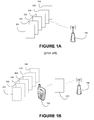
- the RFID technology facilitates the way a customer may manage a loyalty card, it does not solve the problem of managing various loyalty cards. Indeed, a customer still needs to have with him as many loyalty cards as the loyalty programs he wants to participate to (see FIG. 1A ).
- the idea behind the system as described hereafter can be used to replace various RFID based cards, for example RFID based loyalty cards, by a unique dual or hybrid radio technology enabled token or contactless card managed by using the NFC capabilities of a smartphone.
- present system relates to a contactless card comprising at least a RFID radio module for handling data according to a ISO 18000 standard, a NFC radio module for handling data according to ISO 14443 or ISO 15693 standard, a controller and a memory; the controller being operable to receive a message through a first one of the radio modules, the message comprising application data and an associated ID in the format of the first one of the radio modules, extract the application data and the associated ID from the received message, convert the application data and the associated ID into a format compatible with the other one of the radio modules, store the converted application data in the memory in association with the ID for subsequent presentation in response to a request from a reader compatible with the other one of the radio modules, the request comprising the associated ID.
- the first one of the radio modules is a NFC radio module, while the other one of the radio modules is a RFID radio module.
- the first one of the radio modules is a RFID radio module, while the other one of the radio modules is a NFC radio module.
- a RFID based token or contactless card may be managed via NFC communication.
- application data can be loyalty program data associated to a customer.
- a customer using a NFC enabled smartphone may load loyalty program data (or profile) to a unique token or card; the unique token replacing the different RFID based loyalty cards.
- the ID associated to the application data shall be also associated to a loyalty program.
- the controller of the token is further operable to receive a request through the other one of the radio modules, the request comprising at least an ID, select application data in the other one of the radio modules compatible format from the memory according to the ID and emit the selected application data via the other one of the radio modules.
- the token may be used to replace the various RFID based loyalty cards, answering to the RFID request of the RFID reader placed on the shops or supermarket with the data application corresponding to the loyalty program.
- identification of the loyalty program is based on the ID comprised on the request.
- the controller of the token is further operable to receive a message through the first one of the radio modules, the message comprising a security policy, the security policy being signed and when the signature of the security policy corresponds to a predefined signature stored in the memory of the contactless card, update a security policy stored in the memory using the received security policy.
- security policies may be pushed to or updated on the token via a NFC enabled smartphone.
- an authentication mechanism shall be implemented on the token.
- controller of the token is further operable to apply the security policy when selecting data from the memory according to the ID, the security policy filtering the selection of the data from the memory.
- Security policy on the token may prevent some data to be selected when answering to a RFID request.
- the security policy may prevent personal phone number of a user to be provided during a RFID request, even if such data belongs to the loyalty program profile.
- Present system also relates to a method for storing application data in a memory of a passive contactless card, the passive contactless card comprising at least a RFID radio module for handling data according to a ISO 18000 standard, a NFC radio module for handling data according to ISO 14443 or ISO 15693 standard, a controller, the method being executed by the controller of the passive contactless card and comprising the steps of receiving a message through the first one of the radio modules, the message comprising application data and an ID in a format compatible with the first one of the radio modules, extracting the application data and the ID from the received message, converting the application data and the ID to a format compatible with the other one of the radio modules and storing the converted application data in the memory in association with the ID for subsequent presentation in response to a request from a reader compatible with the other one of the radio modules, the request comprising the associated ID.
- the passive contactless card comprising at least a RFID radio module for handling data according to a ISO 18000 standard, a NFC radio module for handling data according to ISO
- Another object of the invention concerns a computer program or application software, in particular computer programs on or in a non-transitory computer readable medium, suitable for storing application data in a memory of a passive token in accordance with the method described in details hereafter.
- These programs can use any programming language, and be in the form of source code, binary code, or of code intermediate between source code and object code such as in a partially compiled form, or in any other desirable form for implementing the methods according to the invention.
- the information medium may be any entity or device capable of storing the software.
- the medium can comprise a storage means, such as a ROM, for example a CD/DVD ROM or a microelectronic circuit ROM, or a magnetic recording means, for example a diskette (floppy disk) or a hard disk or else a transient memory such as EEPROM, FLASH, SRAM and RAM.
- FIG. 1A shows a portfolio of different RFID based loyalty cards (prior art).
- each card or token 101, 102, 103, 104, 105 and 106 is a RFID based loyalty card.
- a customer needs as many loyalty cards as loyalty programs he wants to participate to.
- FIG. 1B shows an illustration of possible improvement brought to FIG. 1A situation implementing present system.
- the cards or token 101, 102, 103, 104, 105 and 106 are advantageously replaced by a NFC capable smartphone 130 and the token according to the present system 120.
- a user instead of carrying the various loyalty cards 101, 102, 103, 104, 105 and 106 only needs to have the token 120, manageable through his NFC capable smartphone, as explained hereafter.
- FIG. 2 shows an exemplary embodiment of present system token or card 120.
- the token 120 comprises a controller 201, memory pool 202 (in short, memory), microprocessor 203 and radio modules. Two radio modules, illustrated comprising a modem and an antenna, are presented here. A first radio module is represented, comprising modem 210 and antenna 211 as well as another radio module comprising modem 220 and corresponding antenna 221.
- the token comprises at least a RFID radio module (modem 220 and antenna 221) for handling data according to a ISO 18000 standard and a NFC radio module (modem 210 and antenna 211) for handling data according to ISO 14443 or ISO 15693 standard, a controller.
- the token may comprise more than two radio modules.
- the memory pool 202 could comprise a secure (or dedicated) memory and a normal (or shared) memory based on system requirements.
- Secure (or dedicated) memory is used to store and process security sensitive data and operations; such as cryptographic keys, algorithms and security policies. Any access to the secure (or dedicated) memory would require authentication. This authentication is achieved based on any computational and/or cryptographic techniques such as asymmetric and/or symmetric and/or hashing techniques.
- the authentication protocol is based on static and/or dynamic processes.
- the access control to the secure memory areas is mutually exclusive between the supported technologies.
- the normal (or shared) memory can be used for non-security related operations such as executing global policies and storing non-security data.
- the memory pool 202 is divided into segments and marked as "Dedicated” or "Shared".
- the main advantage of dividing memory into secure (or dedicated) and normal (or shared) is to provide trust to multiple parties using the token.
- Dedicated memory can only be accessed by its corresponding radio module.
- dedicated memory that is assigned for a radio module can only be accessed via this radio module and no other radio module. It is in this dedicated memory any sensitive data, security algorithms, security keys, applications/applets, etc are stored. Personalized application data is also stored in dedicated memory space. By having dedicated memory segments enables to realize mutually exclusive operations such as initialization.
- Any supported radio technology may have its own memory classification.
- the memory is categorized as “EPC Memory”, “Reserved Memory”, “User memory” and “TID Memory”.
- Every supported radio module goes through several application states.
- the supported token goes through one of the several states such as "Ready”, “Arbitrate”, “Reply”, “Acknowledged”, “Open”, “Secured” and “Killed”. These states are realized by using dedicated memory.
- the shared memory denotes the segments/address space within a radio module or entity that can be accessed by the controller 201 but by no other module of the token 120. It stores data that needs to be transformed by the controller 201 as needed.
- the controller 201 stores sensitive data such as security policies, security keys, applications/applets in its secure memory space. Such memory space cannot be accessed by any other entity than the module it is associated to and hence is marked as dedicated.
- the normal memory space of controller 201 is marked as dedicated and shared for storing non-sensitive data. It also supports operations such as radio initialization of the supported token technologies. Any security related operations of initialization is handled via the respective secure memory.
- the memory organization that is described above can be realized on a single memory module or by using multiple memory modules, by using any technology known to the man skilled in the art.
- FIG. 3 illustrates an embodiment of the present system, the token 120 being able to communicate with a NFC enabled smartphone 130 and a RFID reader 110.
- the token 120 being able to communicate with a NFC enabled smartphone 130 and a RFID reader 110, it means that:
- the token 120 is a passive token, passive meaning that the token 120 is acting as a passive transponder, being energized and activated by waves from an outside source.
- Outside source here is either the NFC enabled smartphone 130 or the RFID reader 110, according to the situation.
- passive token implementation may rely on resonant inductive coupling or backscattering technology, as the man skilled in the art will know. It is to be noted that such technology allows a powering of at least some component of the token 120 such as a radio module (i. e. a modem), the controller 201, the microprocessor 203 and memory 202.
- a radio module i. e. a modem
- the token 120 may comprise autonomous powering, possibly through batteries or use energy harvesting techniques.
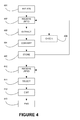
- FIG. 4 shows a flowchart illustrating an embodiment of the present method.
- the NFC radio module (comprising at least the modem 210 and the antenna 211) possibly needs some initialization process.
- the controller 201 may ensure that initialization of all supported radio technologies is performed adequately.
- ISO/IEC 14443-3 and 14443-4 standards implementation are examples of the NFC radio module.
- the token - that is to say, the controller 201 of the token 120 - receives a message through the NFC radio module (comprising at least the modem 210 and the antenna 211), the message comprising application data and an associated ID in an NFC format.
- the ID may be defined as identifying a certain loyalty program, whereas the application data associated to this ID shall be a user profile, possibly comprising information such as personal data, shopping list, pending promotional offers, vouchers, etc.
- the controller 201 extracts the application data and the associated ID from the previously received message.
- Application data and ID may be temporary stored in a certain part of the memory, like a shared memory, or on the contrary, on a dedicated part of the memory. Extraction of the application data and the ID may comprise a step of integrity check of the extracted data or possibly an authentication through some mechanism not described here but possibly using cryptographic or computational mechanisms and cryptographic keys.
- the controller 201 converts the application data and the associated ID from the NFC format to a RFID compatible format.
- NFC and RFID data format are following different standards. Such conversion may comprise presentation of data modification or adaptation of some data field, possibly by changing a data field length. But some more complex operation such as transformation of data may be performed. That would be the case if a field in one protocol does not exist in the other protocol. Such transformation may rely on conversion table stored in the token memory 202.
- the controller 201 of the token stores the converted application data in the memory 202 in association with the ID for subsequent presentation in response to a request from an RFID reader comprising the associated ID.
- Application data and ID are stored in association in the memory 202, either on a shared area or a dedicated area depending on the embodiment of present system.
- steps 402 to 405 may be repeated.
- a user through an application installed on his smartphone, said application managing - directly or via the core system - the NFC module of the smartphone, may manage different loyalty programs, uploading them to the token.
- update of a loyalty program profile may be realized as simply as by uploading the new application data in association with ID; the new application data being overwritten on the token memory 202 when received.
- steps 402 to 405 are enabled through the powering of the NFC module of the smartphone upload.
- the token may receive a message through the NFC radio module, the message comprising a security policy, the security policy being signed.
- a security policy is a set of rules enforced by the controller 201, said rules for example guarantying that data from dedicated memory area is not shared with any unauthorized party.
- the controller 201 may monitor all requests to access memory 202 and enforces the desired security policy, either by authorizing or not the request, or by filtering some field or data from the request or from the answer to the request.
- a security policy may also add some data to an answer to a request, forcing for example to add a signature to any answer.
- the controller 201 may check the signature received in step 402, for example comparing said signature to a predefined list of signature stored in the memory 202. If the signature does not correspond, the received message may be ignored. Otherwise, the security policy may be stored in the memory 202, possibly updating a previously stored security policy.
- this step 406 of checking the signature received within a message may be applied to all the received messages as long as the received messages are signed. A message with no signature or with an unrecognized signature may be ignored. Optionally a message may be emit in response to a received message with no signature or with an unrecognized signature to notify that an error has been detected.
- the token 120 receives an RFID request through the RFID radio module, the RFID request comprising at least an ID. Contrary to previous step 402, this time the request is coming through the antenna 221 and the modem 220. The request is possibly emitted by a RFID reader 110.
- step 410 may need a previous initiation step similar to step 401, but this time initiating the RFID module. Such step is not represented here. Moreover, the sequential flow between step 405 and step 410 is purely for the description, step 410 and following being uncorrelated to the execution of steps 401 to 406.
- the controller 201 selects application data from the memory 202 according to the ID received in the message.
- the controller 201 may differentiate a RFID request coming from various loyalty programs provider, and select in the memory 202 the right application data, that is to say, the right profile associated to the right loyalty program.
- the controller 201 may apply the security policy, the security policy filtering the selection of the data from the memory. Indeed, using a security policy received through the NFC module as described previously in step 402, the system may prevent some application data to be selected. The user may for example set up and upload to the token a security policy to prevent his personal phone number - if included in a loyalty program profile - to be selected.
- the token 120 emits the selected application data via the RFID radio module. That is to say that the controller 201, using the previously selected application data retrieved from the memory 202 will emit through the modem 220 and the antenna 221 an RFID message in response to the request received in step 410, said message comprising the selected application data.
- Steps 410 to 412 may be repeated as many times as necessary, possibly with request from different RFID readers corresponding to different loyalty program providers. One may note that steps 410 to 412 are enabled through the RFID request from the RFID reader.
- a step 413 when no more requests are received by the token, either through the RFID or the NFC radio module, the token, being a passive token, is no more powered on.
- the role of the RFID radio module and of the NFC radio module may be exchanged.
- the two RFID and NFC radio modules may act indifferently according to the previous description of FIG. 4 or by exchanging their roles alternatively.
Landscapes
- Engineering & Computer Science (AREA)
- Business, Economics & Management (AREA)
- Physics & Mathematics (AREA)
- General Physics & Mathematics (AREA)
- Theoretical Computer Science (AREA)
- Accounting & Taxation (AREA)
- General Business, Economics & Management (AREA)
- Strategic Management (AREA)
- Computer Networks & Wireless Communication (AREA)
- Microelectronics & Electronic Packaging (AREA)
- Toxicology (AREA)
- Health & Medical Sciences (AREA)
- General Health & Medical Sciences (AREA)
- Electromagnetism (AREA)
- Computer Vision & Pattern Recognition (AREA)
- Artificial Intelligence (AREA)
- Computer Hardware Design (AREA)
- Computer Security & Cryptography (AREA)
- Finance (AREA)
- Telephone Function (AREA)
Priority Applications (1)
| Application Number | Priority Date | Filing Date | Title |
|---|---|---|---|
| EP13306819.7A EP2887272B1 (fr) | 2013-12-20 | 2013-12-20 | NFC hybride et carte sans contact passif RFID |
Applications Claiming Priority (1)
| Application Number | Priority Date | Filing Date | Title |
|---|---|---|---|
| EP13306819.7A EP2887272B1 (fr) | 2013-12-20 | 2013-12-20 | NFC hybride et carte sans contact passif RFID |
Publications (2)
| Publication Number | Publication Date |
|---|---|
| EP2887272A1 true EP2887272A1 (fr) | 2015-06-24 |
| EP2887272B1 EP2887272B1 (fr) | 2017-11-01 |
Family
ID=50002431
Family Applications (1)
| Application Number | Title | Priority Date | Filing Date |
|---|---|---|---|
| EP13306819.7A Active EP2887272B1 (fr) | 2013-12-20 | 2013-12-20 | NFC hybride et carte sans contact passif RFID |
Country Status (1)
| Country | Link |
|---|---|
| EP (1) | EP2887272B1 (fr) |
Cited By (7)
| Publication number | Priority date | Publication date | Assignee | Title |
|---|---|---|---|---|
| KR101876431B1 (ko) * | 2018-02-09 | 2018-08-09 | 유형근 | Ess 기능과 페이퍼 배터리로 이루어진 nfc·rfid 무선전자카드용 스마트충전장치 |
| US10546289B1 (en) | 2015-12-30 | 2020-01-28 | Wells Fargo Bank, N.A. | Mobile wallets with automatic element selection |
| CN111885568A (zh) * | 2020-07-09 | 2020-11-03 | RealMe重庆移动通信有限公司 | 近场通信配置参数的加载方法、装置、电子设备 |
| US10902405B1 (en) | 2016-05-11 | 2021-01-26 | Wells Fargo Bank, N.A. | Transient mobile wallets |
| US11087101B2 (en) | 2017-11-03 | 2021-08-10 | Pap Investments, Ltd. | Dual frequency NFC/RFID card for self service baggage check and method |
| US11868989B1 (en) | 2015-12-30 | 2024-01-09 | Wells Fargo Bank, N.A. | Mobile wallets and companion smart cards |
| CN121030781A (zh) * | 2025-10-27 | 2025-11-28 | 杭州大智互联通信技术有限公司 | Rfid与nfc双频复合式电子标签芯片架构及数据存取方法 |
Citations (1)
| Publication number | Priority date | Publication date | Assignee | Title |
|---|---|---|---|---|
| US20120074232A1 (en) * | 2010-03-02 | 2012-03-29 | Douglas Spodak | Portable e-wallet and universal card |
-
2013
- 2013-12-20 EP EP13306819.7A patent/EP2887272B1/fr active Active
Patent Citations (1)
| Publication number | Priority date | Publication date | Assignee | Title |
|---|---|---|---|---|
| US20120074232A1 (en) * | 2010-03-02 | 2012-03-29 | Douglas Spodak | Portable e-wallet and universal card |
Non-Patent Citations (1)
| Title |
|---|
| GERALD MADLMAYR ET AL: "Management of Multiple Cards in NFC-Devices", 8 September 2008, SMART CARD RESEARCH AND ADVANCED APPLICATIONS; [LECTURE NOTES IN COMPUTER SCIENCE], SPRINGER BERLIN HEIDELBERG, BERLIN, HEIDELBERG, PAGE(S) 149 - 161, ISBN: 978-3-540-85892-8, XP019104509 * |
Cited By (9)
| Publication number | Priority date | Publication date | Assignee | Title |
|---|---|---|---|---|
| US10546289B1 (en) | 2015-12-30 | 2020-01-28 | Wells Fargo Bank, N.A. | Mobile wallets with automatic element selection |
| US11868989B1 (en) | 2015-12-30 | 2024-01-09 | Wells Fargo Bank, N.A. | Mobile wallets and companion smart cards |
| US10902405B1 (en) | 2016-05-11 | 2021-01-26 | Wells Fargo Bank, N.A. | Transient mobile wallets |
| US11769136B1 (en) | 2016-05-11 | 2023-09-26 | Wells Fargo Bank, N.A. | Transient mobile wallets |
| US11978033B2 (en) | 2016-05-11 | 2024-05-07 | Wells Fargo Bank, N.A. | Transient mobile wallets |
| US11087101B2 (en) | 2017-11-03 | 2021-08-10 | Pap Investments, Ltd. | Dual frequency NFC/RFID card for self service baggage check and method |
| KR101876431B1 (ko) * | 2018-02-09 | 2018-08-09 | 유형근 | Ess 기능과 페이퍼 배터리로 이루어진 nfc·rfid 무선전자카드용 스마트충전장치 |
| CN111885568A (zh) * | 2020-07-09 | 2020-11-03 | RealMe重庆移动通信有限公司 | 近场通信配置参数的加载方法、装置、电子设备 |
| CN121030781A (zh) * | 2025-10-27 | 2025-11-28 | 杭州大智互联通信技术有限公司 | Rfid与nfc双频复合式电子标签芯片架构及数据存取方法 |
Also Published As
| Publication number | Publication date |
|---|---|
| EP2887272B1 (fr) | 2017-11-01 |
Similar Documents
| Publication | Publication Date | Title |
|---|---|---|
| EP2887272B1 (fr) | NFC hybride et carte sans contact passif RFID | |
| US9106632B2 (en) | Provisioning by delivered items | |
| EP2556596B1 (fr) | Systèmes, procédés et supports de stockage lisibles par un ordinateur, adaptés pour exécuter une pluralité de transactions via une connexion de communication en champ proche (nfc) unique | |
| EP3895106B1 (fr) | Procédé de fonctionnement d'un dispositif de sélection d'une carte virtuelle dans un portefeuille numérique | |
| US8811895B2 (en) | System and method for presentation of multiple NFC credentials during a single NFC transaction | |
| US8395488B2 (en) | Method for storing data as well as a transponder, a read/write-device, a computer readable medium including a program element and such a program element adapted to perform this method | |
| EP2940640A1 (fr) | Méthode de commande de dispositif de paiement permettant de sélectionner le moyen de paiement | |
| US20130024341A1 (en) | Method and apparatus for providing transaction related service | |
| EP2389023A1 (fr) | Carte à puce de télécommunication et dispositif de télécommunication mobile equipé de moyens de communication en champ proche (NFC). | |
| US20120123935A1 (en) | System and Method for Physical-World Based Dynamic Contactless Data Emulation in a Portable Communication Device | |
| EP2696309B1 (fr) | Dispositif d'accès universel | |
| US10803418B2 (en) | Provisioning temporary functionality to user devices | |
| CN106470049A (zh) | 具有多个安全元件的nfc设备 | |
| US20120124394A1 (en) | System and Method for Providing a Virtual Secure Element on a Portable Communication Device | |
| US20100013606A1 (en) | Method for storing data as well as a transponder, a read/write-device, a computer readable medium including a program element and such a program element adapted to perform this method | |
| US11983701B2 (en) | Temporarily provisioning card on file payment functionality to proximate merchants | |
| US10810591B2 (en) | Virtual reality headset device and payment method | |
| EP3387581A1 (fr) | Systèmes et procédés pour un transpondeur connecté en infonuagique | |
| KR20150069237A (ko) | 다이나믹nfc태그를 이용한 결제방법 및 시스템 | |
| US10878402B1 (en) | Temporarily provisioning payment functionality to alternate payment instrument | |
| CN113888161A (zh) | 一种离线交易的处理方法、装置及设备 | |
| US10257697B2 (en) | Systems and methods for product activation | |
| US20190066043A1 (en) | Method and system for tracking products | |
| CN103544114A (zh) | 基于单cpu卡的多m1卡控制系统及其控制方法 | |
| US10769655B2 (en) | System, method, and non-transitory computer-readable storage media for providing a customer with a substitute coupon |
Legal Events
| Date | Code | Title | Description |
|---|---|---|---|
| PUAI | Public reference made under article 153(3) epc to a published international application that has entered the european phase |
Free format text: ORIGINAL CODE: 0009012 |
|
| 17P | Request for examination filed |
Effective date: 20131220 |
|
| AK | Designated contracting states |
Kind code of ref document: A1 Designated state(s): AL AT BE BG CH CY CZ DE DK EE ES FI FR GB GR HR HU IE IS IT LI LT LU LV MC MK MT NL NO PL PT RO RS SE SI SK SM TR |
|
| AX | Request for extension of the european patent |
Extension state: BA ME |
|
| R17P | Request for examination filed (corrected) |
Effective date: 20151223 |
|
| RBV | Designated contracting states (corrected) |
Designated state(s): AL AT BE BG CH CY CZ DE DK EE ES FI FR GB GR HR HU IE IS IT LI LT LU LV MC MK MT NL NO PL PT RO RS SE SI SK SM TR |
|
| 17Q | First examination report despatched |
Effective date: 20160624 |
|
| REG | Reference to a national code |
Ref country code: DE Ref legal event code: R079 Ref document number: 602013028679 Country of ref document: DE Free format text: PREVIOUS MAIN CLASS: G06K0019070000 Ipc: G06Q0020320000 |
|
| GRAP | Despatch of communication of intention to grant a patent |
Free format text: ORIGINAL CODE: EPIDOSNIGR1 |
|
| RIC1 | Information provided on ipc code assigned before grant |
Ipc: G06Q 20/32 20120101AFI20170404BHEP Ipc: G06K 7/10 20060101ALI20170404BHEP Ipc: G06Q 20/38 20120101ALI20170404BHEP Ipc: G06K 19/07 20060101ALI20170404BHEP Ipc: G06Q 20/34 20120101ALI20170404BHEP |
|
| INTG | Intention to grant announced |
Effective date: 20170509 |
|
| GRAS | Grant fee paid |
Free format text: ORIGINAL CODE: EPIDOSNIGR3 |
|
| GRAA | (expected) grant |
Free format text: ORIGINAL CODE: 0009210 |
|
| AK | Designated contracting states |
Kind code of ref document: B1 Designated state(s): AL AT BE BG CH CY CZ DE DK EE ES FI FR GB GR HR HU IE IS IT LI LT LU LV MC MK MT NL NO PL PT RO RS SE SI SK SM TR |
|
| REG | Reference to a national code |
Ref country code: GB Ref legal event code: FG4D |
|
| REG | Reference to a national code |
Ref country code: CH Ref legal event code: EP Ref country code: AT Ref legal event code: REF Ref document number: 942725 Country of ref document: AT Kind code of ref document: T Effective date: 20171115 |
|
| REG | Reference to a national code |
Ref country code: IE Ref legal event code: FG4D |
|
| REG | Reference to a national code |
Ref country code: DE Ref legal event code: R096 Ref document number: 602013028679 Country of ref document: DE |
|
| REG | Reference to a national code |
Ref country code: NL Ref legal event code: MP Effective date: 20171101 |
|
| REG | Reference to a national code |
Ref country code: LT Ref legal event code: MG4D |
|
| REG | Reference to a national code |
Ref country code: AT Ref legal event code: MK05 Ref document number: 942725 Country of ref document: AT Kind code of ref document: T Effective date: 20171101 |
|
| PG25 | Lapsed in a contracting state [announced via postgrant information from national office to epo] |
Ref country code: FI Free format text: LAPSE BECAUSE OF FAILURE TO SUBMIT A TRANSLATION OF THE DESCRIPTION OR TO PAY THE FEE WITHIN THE PRESCRIBED TIME-LIMIT Effective date: 20171101 Ref country code: NL Free format text: LAPSE BECAUSE OF FAILURE TO SUBMIT A TRANSLATION OF THE DESCRIPTION OR TO PAY THE FEE WITHIN THE PRESCRIBED TIME-LIMIT Effective date: 20171101 Ref country code: LT Free format text: LAPSE BECAUSE OF FAILURE TO SUBMIT A TRANSLATION OF THE DESCRIPTION OR TO PAY THE FEE WITHIN THE PRESCRIBED TIME-LIMIT Effective date: 20171101 Ref country code: SE Free format text: LAPSE BECAUSE OF FAILURE TO SUBMIT A TRANSLATION OF THE DESCRIPTION OR TO PAY THE FEE WITHIN THE PRESCRIBED TIME-LIMIT Effective date: 20171101 Ref country code: ES Free format text: LAPSE BECAUSE OF FAILURE TO SUBMIT A TRANSLATION OF THE DESCRIPTION OR TO PAY THE FEE WITHIN THE PRESCRIBED TIME-LIMIT Effective date: 20171101 Ref country code: NO Free format text: LAPSE BECAUSE OF FAILURE TO SUBMIT A TRANSLATION OF THE DESCRIPTION OR TO PAY THE FEE WITHIN THE PRESCRIBED TIME-LIMIT Effective date: 20180201 |
|
| REG | Reference to a national code |
Ref country code: FR Ref legal event code: PLFP Year of fee payment: 5 |
|
| PG25 | Lapsed in a contracting state [announced via postgrant information from national office to epo] |
Ref country code: GR Free format text: LAPSE BECAUSE OF FAILURE TO SUBMIT A TRANSLATION OF THE DESCRIPTION OR TO PAY THE FEE WITHIN THE PRESCRIBED TIME-LIMIT Effective date: 20180202 Ref country code: IS Free format text: LAPSE BECAUSE OF FAILURE TO SUBMIT A TRANSLATION OF THE DESCRIPTION OR TO PAY THE FEE WITHIN THE PRESCRIBED TIME-LIMIT Effective date: 20180301 Ref country code: AT Free format text: LAPSE BECAUSE OF FAILURE TO SUBMIT A TRANSLATION OF THE DESCRIPTION OR TO PAY THE FEE WITHIN THE PRESCRIBED TIME-LIMIT Effective date: 20171101 Ref country code: LV Free format text: LAPSE BECAUSE OF FAILURE TO SUBMIT A TRANSLATION OF THE DESCRIPTION OR TO PAY THE FEE WITHIN THE PRESCRIBED TIME-LIMIT Effective date: 20171101 Ref country code: BG Free format text: LAPSE BECAUSE OF FAILURE TO SUBMIT A TRANSLATION OF THE DESCRIPTION OR TO PAY THE FEE WITHIN THE PRESCRIBED TIME-LIMIT Effective date: 20180201 Ref country code: RS Free format text: LAPSE BECAUSE OF FAILURE TO SUBMIT A TRANSLATION OF THE DESCRIPTION OR TO PAY THE FEE WITHIN THE PRESCRIBED TIME-LIMIT Effective date: 20171101 Ref country code: HR Free format text: LAPSE BECAUSE OF FAILURE TO SUBMIT A TRANSLATION OF THE DESCRIPTION OR TO PAY THE FEE WITHIN THE PRESCRIBED TIME-LIMIT Effective date: 20171101 |
|
| PG25 | Lapsed in a contracting state [announced via postgrant information from national office to epo] |
Ref country code: DK Free format text: LAPSE BECAUSE OF FAILURE TO SUBMIT A TRANSLATION OF THE DESCRIPTION OR TO PAY THE FEE WITHIN THE PRESCRIBED TIME-LIMIT Effective date: 20171101 Ref country code: SK Free format text: LAPSE BECAUSE OF FAILURE TO SUBMIT A TRANSLATION OF THE DESCRIPTION OR TO PAY THE FEE WITHIN THE PRESCRIBED TIME-LIMIT Effective date: 20171101 Ref country code: EE Free format text: LAPSE BECAUSE OF FAILURE TO SUBMIT A TRANSLATION OF THE DESCRIPTION OR TO PAY THE FEE WITHIN THE PRESCRIBED TIME-LIMIT Effective date: 20171101 Ref country code: CY Free format text: LAPSE BECAUSE OF FAILURE TO SUBMIT A TRANSLATION OF THE DESCRIPTION OR TO PAY THE FEE WITHIN THE PRESCRIBED TIME-LIMIT Effective date: 20171101 Ref country code: CZ Free format text: LAPSE BECAUSE OF FAILURE TO SUBMIT A TRANSLATION OF THE DESCRIPTION OR TO PAY THE FEE WITHIN THE PRESCRIBED TIME-LIMIT Effective date: 20171101 |
|
| REG | Reference to a national code |
Ref country code: CH Ref legal event code: PL |
|
| REG | Reference to a national code |
Ref country code: DE Ref legal event code: R097 Ref document number: 602013028679 Country of ref document: DE |
|
| PG25 | Lapsed in a contracting state [announced via postgrant information from national office to epo] |
Ref country code: IT Free format text: LAPSE BECAUSE OF FAILURE TO SUBMIT A TRANSLATION OF THE DESCRIPTION OR TO PAY THE FEE WITHIN THE PRESCRIBED TIME-LIMIT Effective date: 20171101 Ref country code: PL Free format text: LAPSE BECAUSE OF FAILURE TO SUBMIT A TRANSLATION OF THE DESCRIPTION OR TO PAY THE FEE WITHIN THE PRESCRIBED TIME-LIMIT Effective date: 20171101 Ref country code: SM Free format text: LAPSE BECAUSE OF FAILURE TO SUBMIT A TRANSLATION OF THE DESCRIPTION OR TO PAY THE FEE WITHIN THE PRESCRIBED TIME-LIMIT Effective date: 20171101 Ref country code: RO Free format text: LAPSE BECAUSE OF FAILURE TO SUBMIT A TRANSLATION OF THE DESCRIPTION OR TO PAY THE FEE WITHIN THE PRESCRIBED TIME-LIMIT Effective date: 20171101 |
|
| PLBE | No opposition filed within time limit |
Free format text: ORIGINAL CODE: 0009261 |
|
| STAA | Information on the status of an ep patent application or granted ep patent |
Free format text: STATUS: NO OPPOSITION FILED WITHIN TIME LIMIT |
|
| REG | Reference to a national code |
Ref country code: IE Ref legal event code: MM4A |
|
| PG25 | Lapsed in a contracting state [announced via postgrant information from national office to epo] |
Ref country code: LU Free format text: LAPSE BECAUSE OF NON-PAYMENT OF DUE FEES Effective date: 20171220 Ref country code: MT Free format text: LAPSE BECAUSE OF NON-PAYMENT OF DUE FEES Effective date: 20171220 |
|
| 26N | No opposition filed |
Effective date: 20180802 |
|
| REG | Reference to a national code |
Ref country code: BE Ref legal event code: MM Effective date: 20171231 |
|
| PG25 | Lapsed in a contracting state [announced via postgrant information from national office to epo] |
Ref country code: IE Free format text: LAPSE BECAUSE OF NON-PAYMENT OF DUE FEES Effective date: 20171220 |
|
| PG25 | Lapsed in a contracting state [announced via postgrant information from national office to epo] |
Ref country code: BE Free format text: LAPSE BECAUSE OF NON-PAYMENT OF DUE FEES Effective date: 20171231 Ref country code: SI Free format text: LAPSE BECAUSE OF FAILURE TO SUBMIT A TRANSLATION OF THE DESCRIPTION OR TO PAY THE FEE WITHIN THE PRESCRIBED TIME-LIMIT Effective date: 20171101 Ref country code: LI Free format text: LAPSE BECAUSE OF NON-PAYMENT OF DUE FEES Effective date: 20171231 Ref country code: CH Free format text: LAPSE BECAUSE OF NON-PAYMENT OF DUE FEES Effective date: 20171231 |
|
| PG25 | Lapsed in a contracting state [announced via postgrant information from national office to epo] |
Ref country code: MC Free format text: LAPSE BECAUSE OF FAILURE TO SUBMIT A TRANSLATION OF THE DESCRIPTION OR TO PAY THE FEE WITHIN THE PRESCRIBED TIME-LIMIT Effective date: 20171101 Ref country code: HU Free format text: LAPSE BECAUSE OF FAILURE TO SUBMIT A TRANSLATION OF THE DESCRIPTION OR TO PAY THE FEE WITHIN THE PRESCRIBED TIME-LIMIT; INVALID AB INITIO Effective date: 20131220 |
|
| PG25 | Lapsed in a contracting state [announced via postgrant information from national office to epo] |
Ref country code: MK Free format text: LAPSE BECAUSE OF FAILURE TO SUBMIT A TRANSLATION OF THE DESCRIPTION OR TO PAY THE FEE WITHIN THE PRESCRIBED TIME-LIMIT Effective date: 20171101 |
|
| PG25 | Lapsed in a contracting state [announced via postgrant information from national office to epo] |
Ref country code: TR Free format text: LAPSE BECAUSE OF FAILURE TO SUBMIT A TRANSLATION OF THE DESCRIPTION OR TO PAY THE FEE WITHIN THE PRESCRIBED TIME-LIMIT Effective date: 20171101 |
|
| PG25 | Lapsed in a contracting state [announced via postgrant information from national office to epo] |
Ref country code: PT Free format text: LAPSE BECAUSE OF FAILURE TO SUBMIT A TRANSLATION OF THE DESCRIPTION OR TO PAY THE FEE WITHIN THE PRESCRIBED TIME-LIMIT Effective date: 20171101 |
|
| PG25 | Lapsed in a contracting state [announced via postgrant information from national office to epo] |
Ref country code: AL Free format text: LAPSE BECAUSE OF FAILURE TO SUBMIT A TRANSLATION OF THE DESCRIPTION OR TO PAY THE FEE WITHIN THE PRESCRIBED TIME-LIMIT Effective date: 20171101 |
|
| PGFP | Annual fee paid to national office [announced via postgrant information from national office to epo] |
Ref country code: DE Payment date: 20251126 Year of fee payment: 13 |
|
| PGFP | Annual fee paid to national office [announced via postgrant information from national office to epo] |
Ref country code: GB Payment date: 20251120 Year of fee payment: 13 |
|
| PGFP | Annual fee paid to national office [announced via postgrant information from national office to epo] |
Ref country code: FR Payment date: 20251119 Year of fee payment: 13 |