EP2882727B1 - Immunomodulatory compounds - Google Patents
Immunomodulatory compounds Download PDFInfo
- Publication number
- EP2882727B1 EP2882727B1 EP13742710.0A EP13742710A EP2882727B1 EP 2882727 B1 EP2882727 B1 EP 2882727B1 EP 13742710 A EP13742710 A EP 13742710A EP 2882727 B1 EP2882727 B1 EP 2882727B1
- Authority
- EP
- European Patent Office
- Prior art keywords
- sulfonyl
- ethyl
- fluorobenzyl
- methylbenzyl
- mmol
- Prior art date
- Legal status (The legal status is an assumption and is not a legal conclusion. Google has not performed a legal analysis and makes no representation as to the accuracy of the status listed.)
- Active
Links
- GXHJOUOCRZNDSD-UHFFFAOYSA-N Cc1ccc(CS(CCN(C)C)(=O)=O)cc1 Chemical compound Cc1ccc(CS(CCN(C)C)(=O)=O)cc1 GXHJOUOCRZNDSD-UHFFFAOYSA-N 0.000 description 2
- JGKLPYOYQHXEMX-NSHDSACASA-N CC[C@H](C)NCCS(Cc(cc1)ccc1Br)(=O)=O Chemical compound CC[C@H](C)NCCS(Cc(cc1)ccc1Br)(=O)=O JGKLPYOYQHXEMX-NSHDSACASA-N 0.000 description 1
- OXCURENMXVAYKD-NSHDSACASA-N CC[C@H](C)NCCS(Cc1cc(F)ccc1)(=O)=O Chemical compound CC[C@H](C)NCCS(Cc1cc(F)ccc1)(=O)=O OXCURENMXVAYKD-NSHDSACASA-N 0.000 description 1
- YLYNDAKJUFGMGG-UHFFFAOYSA-N CN(C)CCN(C)CCS(Cc1cccc(F)c1)(=O)=O Chemical compound CN(C)CCN(C)CCS(Cc1cccc(F)c1)(=O)=O YLYNDAKJUFGMGG-UHFFFAOYSA-N 0.000 description 1
- VMHHWARWVWELHL-UHFFFAOYSA-N CN(C)CCS(Cc(cc1)ccc1F)(=O)=O Chemical compound CN(C)CCS(Cc(cc1)ccc1F)(=O)=O VMHHWARWVWELHL-UHFFFAOYSA-N 0.000 description 1
- RCJAJZRETAIHED-UHFFFAOYSA-N CN(C)CCS(Cc1cc(F)ccc1)(=O)=O Chemical compound CN(C)CCS(Cc1cc(F)ccc1)(=O)=O RCJAJZRETAIHED-UHFFFAOYSA-N 0.000 description 1
- GNUHTGBNHWRXHQ-UHFFFAOYSA-N C[N]1(CCS(Cc(cc2)ccc2Br)(=O)=O)CCCC1 Chemical compound C[N]1(CCS(Cc(cc2)ccc2Br)(=O)=O)CCCC1 GNUHTGBNHWRXHQ-UHFFFAOYSA-N 0.000 description 1
- MPWMVIVCSMYIAF-UHFFFAOYSA-N O=S(CCN1CCCC1)(Cc1cccc(F)c1)=O Chemical compound O=S(CCN1CCCC1)(Cc1cccc(F)c1)=O MPWMVIVCSMYIAF-UHFFFAOYSA-N 0.000 description 1
Images


Classifications
-
- C—CHEMISTRY; METALLURGY
- C07—ORGANIC CHEMISTRY
- C07D—HETEROCYCLIC COMPOUNDS
- C07D295/00—Heterocyclic compounds containing polymethylene-imine rings with at least five ring members, 3-azabicyclo [3.2.2] nonane, piperazine, morpholine or thiomorpholine rings, having only hydrogen atoms directly attached to the ring carbon atoms
- C07D295/04—Heterocyclic compounds containing polymethylene-imine rings with at least five ring members, 3-azabicyclo [3.2.2] nonane, piperazine, morpholine or thiomorpholine rings, having only hydrogen atoms directly attached to the ring carbon atoms with substituted hydrocarbon radicals attached to ring nitrogen atoms
- C07D295/08—Heterocyclic compounds containing polymethylene-imine rings with at least five ring members, 3-azabicyclo [3.2.2] nonane, piperazine, morpholine or thiomorpholine rings, having only hydrogen atoms directly attached to the ring carbon atoms with substituted hydrocarbon radicals attached to ring nitrogen atoms substituted by singly bound oxygen or sulfur atoms
- C07D295/084—Heterocyclic compounds containing polymethylene-imine rings with at least five ring members, 3-azabicyclo [3.2.2] nonane, piperazine, morpholine or thiomorpholine rings, having only hydrogen atoms directly attached to the ring carbon atoms with substituted hydrocarbon radicals attached to ring nitrogen atoms substituted by singly bound oxygen or sulfur atoms with the ring nitrogen atoms and the oxygen or sulfur atoms attached to the same carbon chain, which is not interrupted by carbocyclic rings
- C07D295/088—Heterocyclic compounds containing polymethylene-imine rings with at least five ring members, 3-azabicyclo [3.2.2] nonane, piperazine, morpholine or thiomorpholine rings, having only hydrogen atoms directly attached to the ring carbon atoms with substituted hydrocarbon radicals attached to ring nitrogen atoms substituted by singly bound oxygen or sulfur atoms with the ring nitrogen atoms and the oxygen or sulfur atoms attached to the same carbon chain, which is not interrupted by carbocyclic rings to an acyclic saturated chain
-
- A—HUMAN NECESSITIES
- A61—MEDICAL OR VETERINARY SCIENCE; HYGIENE
- A61P—SPECIFIC THERAPEUTIC ACTIVITY OF CHEMICAL COMPOUNDS OR MEDICINAL PREPARATIONS
- A61P29/00—Non-central analgesic, antipyretic or antiinflammatory agents, e.g. antirheumatic agents; Non-steroidal antiinflammatory drugs [NSAID]
-
- C—CHEMISTRY; METALLURGY
- C07—ORGANIC CHEMISTRY
- C07C—ACYCLIC OR CARBOCYCLIC COMPOUNDS
- C07C317/00—Sulfones; Sulfoxides
- C07C317/26—Sulfones; Sulfoxides having sulfone or sulfoxide groups and nitrogen atoms, not being part of nitro or nitroso groups, bound to the same carbon skeleton
- C07C317/28—Sulfones; Sulfoxides having sulfone or sulfoxide groups and nitrogen atoms, not being part of nitro or nitroso groups, bound to the same carbon skeleton with sulfone or sulfoxide groups bound to acyclic carbon atoms of the carbon skeleton
-
- C—CHEMISTRY; METALLURGY
- C07—ORGANIC CHEMISTRY
- C07D—HETEROCYCLIC COMPOUNDS
- C07D207/00—Heterocyclic compounds containing five-membered rings not condensed with other rings, with one nitrogen atom as the only ring hetero atom
- C07D207/02—Heterocyclic compounds containing five-membered rings not condensed with other rings, with one nitrogen atom as the only ring hetero atom with only hydrogen or carbon atoms directly attached to the ring nitrogen atom
- C07D207/04—Heterocyclic compounds containing five-membered rings not condensed with other rings, with one nitrogen atom as the only ring hetero atom with only hydrogen or carbon atoms directly attached to the ring nitrogen atom having no double bonds between ring members or between ring members and non-ring members
- C07D207/06—Heterocyclic compounds containing five-membered rings not condensed with other rings, with one nitrogen atom as the only ring hetero atom with only hydrogen or carbon atoms directly attached to the ring nitrogen atom having no double bonds between ring members or between ring members and non-ring members with radicals, containing only hydrogen and carbon atoms, attached to ring carbon atoms
Definitions
- the present invention relates to compounds and the use thereof in the modulation of inflammation, to suppress the generation of inflammatory mediators for the treatment or prophylaxis of diseases associated with inflammation (anti-inflammatory compounds) such as rheumatoid arthritis (RA) and asthma.
- anti-inflammatory compounds such as rheumatoid arthritis (RA) and asthma.
- Filarial nematodes are arthropod-transmitted parasites of vertebrates including humans. Infection is long-term with individual worms surviving for in excess of five years. The consensus of opinion amongst workers in this field is that such longevity reflects modulation of the host immune system such that there is a bias in the production of cytokines indicated by reduced production of the pro-inflammatory IFN- ⁇ and increased production of the anti-inflammatory IL-10. There is also a tendency for regulatory components such as regulatory T cells to be present. Overall, the picture is of an immune response demonstrating a somewhat suppressed, anti-inflammatory phenotype, which is often classified as "modified TH-2" ("TH" is derived from a category of T-lymphocyte referred to as "helper").
- TH-2 modified TH-2
- TLR 4 by sensing bacterial lipopolysaccharide (LPS; also known as endotoxin) is a receptor that signals to the immune system that a pathogenic infection is present and that a pro-inflammatory immune response should be mounted.
- LPS bacterial lipopolysaccharide
- TLR2 and TLR9 sense other pathogen products such as bacterial lipopeptide and CpG DNA motifs, respectively, to trigger pro-inflammatory responses.
- ES-62 and PC-protein conjugates can suppress pro-inflammatory cytokine (IL-6, IL-12 and TNF ⁇ ) release from macrophages and dendritic cells driven by TLR2, -4 and -9 targeted pathogen products, presumably by subverting their normal pro-inflammatory function.
- IL-6, IL-12 and TNF ⁇ pro-inflammatory cytokine
- ES-62 has potential in the mediation of diseases involving an inflammatory response due to the effect of ES-62 on production of inflammatory cytokines. Consistent with this, ES-62 was found to exhibit protective effects in mouse models of rheumatoid arthritis (collagen-induced arthritis; CIA) and asthma (ovalbumin-induced airway hyperresponsiveness) ( Mclnnes et al. 2003 Journal of Immunology 2003 171:2127-33 ; Melendez et al. Nature Medicine 2007 13:1375-81 ). International patent application, publication number WO03024474 , describes the clinical use of ES-62 in the treatment of diseases associated with inflammation, such as arthritis.
- ES-62 is an immunogenic protein and in addition its active moiety results from a helminth-specific post-translational modification, it is not itself appropriate for pharmaceutical application.
- PC when conjugated to an irrelevant protein such as bovine serum albumin or ovalbumin can mimic the protective effects of ES-62 in CIA ( Harnett et al. Ann Rheum Dis 2008 67: 518-23 ) small molecular compounds having the desired activity are sought, such as non-peptidic small chemical entities based around the structure of the active PC moiety.
- the present invention seeks to obviate and/or mitigate the problems seen in the prior art.
- the present invention seeks to provide non-peptide molecules, useful in the treatment of diseases and/or conditions associated with inflammation, such as arthritis, systemic lupus erythematosus, type 1 diabetes, autoimmune hepatitis, psoriasis, inflammatory bowel disease and Crohn's disease, multiple sclerosis, asthma, chronic pulmonary airways disease , in the immune and chemotherapeutic treatment of cancer, in modifying inflammation for the treatment of burns and sepsis, and for use in modifying inflammation in cases of multi-organ failure.
- diseases and/or conditions associated with inflammation such as arthritis, systemic lupus erythematosus, type 1 diabetes, autoimmune hepatitis, psoriasis, inflammatory bowel disease and Crohn's disease, multiple sclerosis, asthma, chronic pulmonary airways disease , in the immune and chemotherapeutic treatment of cancer, in modifying inflammation for the treatment of burns and sepsis, and for use in modifying inflammation in cases of multi-organ failure
- a pharmaceutical composition comprising a compound of the first aspect together with a pharmaceutically acceptable excipient.
- A may be a 5 or 6 membered cyclic or heterocyclic ring structure, or bicyclic ring. When heterocyclic, the ring may include one or more of N, S or O.
- A may be a 6 membered cyclic or heterocyclic ring, such as a phenyl group.
- A may be substituted with an alkyl (such as a methyl), carboxy, alkyloxycarbonyl hydroxyl, amino, nitro, alkyloxy, - SH, alkylthio, formyl, cyano, carbamoyl, or halo (such as bromo).
- the ring structure A/phenyl group may be, when substituted, substituted in the para-, or meta-positions.
- the substituent may be a C 1 -C 4 alkyl, such as methyl, or a halo, such as bromo.
- R 5 , R 6 and R 7 when R 5 , R 6 and R 7 are present, they may each be C 1 -C 4 alkyl, such as methyl.
- R 5 , R 6 or R 7 may form a pyrrolidine ring or a morpholine ring with the nitrogen atom, and the remainder one of R 5 , R 6 or R 7 may be a methyl group or may be absent.
- the nitrogen to which they are bonded is positively charged and negatively charged counter ion may be selected from the group consisting of chloride (Cl - ), bromide (Br), iodide (I - ) fluoride (F - ), and methanesulphonate (SO 3 - CH 3 ).
- the compounds according to the first aspect or a physiologically acceptable salt, solvate, ester or other physiologically functional derivative thereof, may be used in the treatment or prophylaxis of inflammatory diseases in an animal.
- the animal requiring treatment or prophylaxis is usually a human or non-human mammal.
- a compound according to the first aspect or a physiologically acceptable salt, solvate, ester or other physiologically functional derivative thereof, for use medicine, such as in the modulation of an immune response, such as in the treatment or prophylaxis of inflammatory diseases in an animal.
- the animal requiring treatment or prophylaxis is usually a human or non-human mammal.
- autoimmune diseases such as type 1 diabetes mellitus, rheumatoid arthritis (RA), systemic lupus erythematosus (SLE), psoriasis, multiple sclerosis (MS), autoimmune hepatitis, sarcoidosis, inflammatory bowel disease, Crohn's disease, asthma, chronic obstructive pulmonary disease (chronic pulmonary airways disease) and atherosclerosis.
- autoimmune diseases such as type 1 diabetes mellitus, rheumatoid arthritis (RA), systemic lupus erythematosus (SLE), psoriasis, multiple sclerosis (MS), autoimmune hepatitis, sarcoidosis, inflammatory bowel disease, Crohn's disease, asthma, chronic obstructive pulmonary disease (chronic pulmonary airways disease) and atherosclerosis.
- the present invention has particular application for the treatment or prophylaxis of rheumatoid arthritis and asthma.
- the present invention further finds uses in settings where inflammation is to be modified such as in the other inflammatory disorders listed above and also for the treatment of burns and sepsis, and for use in modifying inflammation in cases of multi-organ failure.
- Also disclosed herein is the use of a compound according to formula (I), (II), or (III) or a physiologically acceptable salt, solvate, ester or other physiologically functional derivative thereof, for the manufacture of a medicament for modulating an immune response, such as in the treatment or prophylaxis of inflammatory disease.
- Also disclosed is a method for modulating an immune response, such as in the treatment or prophylaxis of inflammatory disease in an animal comprising administering to said animal a therapeutically or prophylactically effective amount of a compound according to formula (I), (II), or (III) or a physiologically acceptable salt, solvate, ester or other physiologically functional derivative thereof.
- an alkyl group may be independently a C 1 -C 22 alkyl, preferably C 1 -C 4 alkyl, for example, methyl, ethyl, propyl, butyl.
- An alkenyl group may be independently a C 2 -C 10 alkenyl, preferably C 2 -C 4 alkenyl.
- An alkynyl group may be independently a C 2 -C 10 alkynyl, preferably C 2 -C 4 alkynyl.
- alkyl, alkenyl or alkynyl groups may be branched, unbranched, linear or cyclic and may be substituted or unsubstituted.
- typical branched alkyl groups include iso-propyl, iso-butyl, sec-butyl, tert -butyl, 3-methylbutyl, 3,3-dimethylbutyl and variations, including isomers thereof.
- the alkyl, alkenyl or alkynyl groups may be substituted, and the substituents may be any chemical moiety such as a hydroxyl, substituted or unsubstituted amine, substituted or unsubstituted amide, halide (such as fluoro, chloro, bromo, iodo), alkoxy, thio, nitro, carboxy, an ester, cyano, or aryl (such as phenyl, naphthyl and pyridyl).
- substituents may be any chemical moiety such as a hydroxyl, substituted or unsubstituted amine, substituted or unsubstituted amide, halide (such as fluoro, chloro, bromo, iodo), alkoxy, thio, nitro, carboxy, an ester, cyano, or aryl (such as phenyl, naphthyl and pyridyl).
- the geometry of the double bonds in the alkenyl groups may be in the cis- or trans-geometry.
- physiologically acceptable salts of the compounds described herein include acid addition salts formed with organic carboxylic acids such as acetic, lactic, tartaric, maleic, citric, pyruvic, oxalic, fumaric, oxaloacetic, isethionic, lactobionic and succinic acids; organic sulfonic acids such as methanesulfonic, ethanesulfonic, benzenesulfonic and p-toluenesulfonic acids and inorganic acids such as hydrochloric, sulfuric, phosphoric and sulfamic acids.
- organic carboxylic acids such as acetic, lactic, tartaric, maleic, citric, pyruvic, oxalic, fumaric, oxaloacetic, isethionic, lactobionic and succinic acids
- organic sulfonic acids such as methanesulfonic, ethanesulfonic, benzenesulfonic
- Physiologically functional derivatives of the compounds described herein are derivatives that can be converted in the body into the parent compound. Such physiologically functional derivatives may also be referred to as "pro-drugs” or “bioprecursors”. Physiologically functional derivatives of compounds of the present invention include in vivo hydrolysable esters.
- solvate is used herein to refer to a complex of solute, such as a compound or salt of the compound, and a solvent. If the solvent is water, the solvate may be termed a hydrate, for example a mono-hydrate, dihydrate, tri-hydrate etc, depending on the number of water molecules present per molecule of substrate.
- the compounds of the present invention may exist in various stereoisomeric forms and the compounds of the present invention as hereinbefore defined include all stereoisomeric forms and mixtures thereof, including enantiomers and racemic mixtures.
- the present invention includes within its scope the use of any such stereoisomeric form or mixture of stereoisomers, including the individual enantiomers of the compounds as well as wholly or partially racemic mixtures of such enantiomers.
- a compound according to the first aspect or a physiologically acceptable salt, solvate, ester or other physiologically functional derivative thereof is preferably presented together with one or more pharmaceutically acceptable carriers to provide a pharmaceutical formulation.
- pharmaceutically acceptable carriers may be included in the pharmaceutical formulation.
- the carrier(s) must be acceptable in the sense of being compatible with the other ingredients of the formulation and not deleterious to the recipient thereof.
- compositions include those suitable for oral, topical (including dermal, buccal and sublingual), rectal or parenteral (including subcutaneous, intradermal, intramuscular and intravenous), nasal and pulmonary administration e.g., by inhalation.
- the formulation may, where appropriate, be conveniently presented in discrete dosage units and may be prepared by any of the methods well known in the art of pharmacy. All methods include the step of bringing into association an active compound with liquid carriers or finely divided solid carriers or both and then, if necessary, shaping the product into the desired formulation.
- compositions suitable for oral administration wherein the carrier is a solid are most preferably presented as unit dose formulations such as boluses, capsules or tablets each containing a predetermined amount of active compound.
- a tablet may be made by compression or moulding, optionally with one or more accessory ingredients.
- Compressed tablets may be prepared by compressing in a suitable machine an active compound in a free-flowing form such as a powder or granules optionally mixed with a binder, lubricant, inert diluent, lubricating agent, surface-active agent or dispersing agent.
- Moulded tablets may be made by moulding an active compound with an inert liquid diluent. Tablets may be optionally coated and, if uncoated, may optionally be scored.
- Capsules may be prepared by filling an active compound, either alone or in admixture with one or more accessory ingredients, into the capsule shells and then sealing them in the usual manner.
- Cachets are analogous to capsules wherein an active compound together with any accessory ingredient(s) is sealed in a rice paper envelope.
- An active compound may also be formulated as dispersible granules, which may for example be suspended in water before administration, or sprinkled on food. The granules may be packaged, e.g., in a sachet.
- Formulations suitable for oral administration wherein the carrier is a liquid may be presented as a solution or a suspension in an aqueous or non-aqueous liquid, or as an oil-in-water liquid emulsion.
- Formulations for oral administration include controlled release dosage forms, e.g., tablets wherein an active compound is formulated in an appropriate release-controlling matrix, or is coated with a suitable release-controlling film. Such formulations may be particularly convenient for prophylactic use.
- compositions suitable for rectal administration wherein the carrier is a solid are most preferably presented as unit dose suppositories.
- Suitable carriers include cocoa butter and other materials commonly used in the art.
- the suppositories may be conveniently formed by admixture of an active compound with the softened or melted carrier(s) followed by chilling and shaping in moulds.
- compositions suitable for parenteral administration include sterile solutions or suspensions of an active compound in aqueous or oleaginous vehicles.
- Injectable preparations may be adapted for bolus injection or continuous infusion. Such preparations are conveniently presented in unit dose or multi-dose containers that are sealed after introduction of the formulation until required for use.
- an active compound may be in powder form, which is constituted with a suitable vehicle, such as sterile, pyrogen-free water, before use.
- An active compound may also be formulated as long-acting depot preparations, which may be administered by intramuscular injection or by implantation, e.g., subcutaneously or intramuscularly.
- Depot preparations may include, for example, suitable polymeric or hydrophobic materials, or ion-exchange resins. Such long-acting formulations are particularly convenient for prophylactic use.
- Formulations suitable for pulmonary administration via the buccal cavity are presented such that particles containing an active compound and desirably having a diameter in the range of 0.5 to 7 microns are delivered in the bronchial tree of the recipient.
- such formulations are in the form of finely comminuted powders which may conveniently be presented either in a pierceable capsule, suitably of, for example, gelatin, for use in an inhalation device, or alternatively as a self-propelling formulation comprising an active compound, a suitable liquid or gaseous propellant and optionally other ingredients such as a surfactant and/or a solid diluent.
- suitable liquid propellants include propane and the chlorofluorocarbons
- suitable gaseous propellants include carbon dioxide.
- Self-propelling formulations may also be employed wherein an active compound is dispensed in the form of droplets of solution or suspension.
- Such self-propelling formulations are analogous to those known in the art and may be prepared by established procedures. Suitably they are presented in a container provided with either a manually-operable or automatically functioning valve having the desired spray characteristics; advantageously the valve is of a metered type delivering a fixed volume, for example, 25 to 100 microlitres, upon each operation thereof.
- an active compound may be in the form of a solution or suspension for use in an atomizer or nebuliser whereby an accelerated airstream or ultrasonic agitation is employed to produce a fine droplet mist for inhalation.
- Formulations suitable for nasal administration include preparations generally similar to those described above for pulmonary administration. When dispensed such formulations should desirably have a particle diameter in the range 10 to 200 microns to enable retention in the nasal cavity; this may be achieved by, as appropriate, use of a powder of a suitable particle size or choice of an appropriate valve. Other suitable formulations include coarse powders having a particle diameter in the range 20 to 500 microns, for administration by rapid inhalation through the nasal passage from a container held close up to the nose, and nasal drops comprising 0.2 to 5% w/v of an active compound in aqueous or oily solution or suspension.
- the pharmaceutical formulations described above may include, an appropriate one or more additional carrier ingredients such as diluents, buffers, flavouring agents, binders, surface active agents, thickeners, lubricants, preservatives (including anti-oxidants) and the like, and substances included for the purpose of rendering the formulation isotonic with the blood of the intended recipient.
- additional carrier ingredients such as diluents, buffers, flavouring agents, binders, surface active agents, thickeners, lubricants, preservatives (including anti-oxidants) and the like, and substances included for the purpose of rendering the formulation isotonic with the blood of the intended recipient.
- Pharmaceutically acceptable carriers are well known to those skilled in the art and include, but are not limited to, 0.1 M and preferably 0.05 M phosphate buffer or 0.8% saline. Additionally, such pharmaceutically acceptable carriers may be aqueous or non-aqueous solutions, suspensions, and emulsions. Examples of non-aqueous solvents are propylene glycol, polyethylene glycol, vegetable oils such as olive oil, and injectable organic esters such as ethyl oleate.
- Aqueous carriers include water, alcoholic/aqueous solutions, emulsions or suspensions, including saline and buffered media.
- Parenteral vehicles include sodium chloride solution, Ringer's dextrose, dextrose and sodium chloride, lactated Ringer's or fixed oils. Preservatives and other additives may also be present, such as, for example, antimicrobials, antioxidants, chelating agents, inert gases and the like.
- Therapeutic formulations for veterinary use may conveniently be in either powder or liquid concentrate form.
- conventional water-soluble excipients such as lactose or sucrose, may be incorporated in the powders to improve their physical properties.
- suitable powders of this invention comprise 50 to 100% w/w and preferably 60 to 80% w/w of the active ingredient(s) and 0 to 50% w/w and preferably 20 to 40% w/w of conventional veterinary excipients.
- These powders may either be added to animal feedstuffs, for example by way of an intermediate premix, or diluted in animal drinking water.
- Liquid concentrates of this invention suitably contain the compound according to the first aspect or a physiologically acceptable salt, solvate, ester or other physiologically functional derivative thereof, and may optionally include a veterinary acceptable water-miscible solvent, for example polyethylene glycol, propylene glycol, glycerol, glycerol formal or such a solvent mixed with up to 30% v/v of ethanol.
- a veterinary acceptable water-miscible solvent for example polyethylene glycol, propylene glycol, glycerol, glycerol formal or such a solvent mixed with up to 30% v/v of ethanol.
- the liquid concentrates may be administered to the drinking water of animals.
- the crude product was recrystallized from ethyl acetate / n-hexane to give the pure material as white crystals (3.11 g).
- the total amount obtained was (3.51 g, 31%), mp 102-104°C.
- Methanesulfonyl chloride (0.540 mL, 6.95 mmol) was added at 0 °C under nitrogen to a solution of 3-(4-methylbenzylsulfonyl)propan-1-ol (1.329 g, 5.82 mmol) and NEt 3 (1 ml, 3.98 mmol) in DCM (40 ml, anhydrous). The solution was stirred at 0 °C for 1 h, and then warmed to room temperature. Stirring was continued for a further 72 h.
- N,N -Dimethyl-2-[(4-methylbenzyl)sulfonyl]ethanamine (0.950 g, 3.94 mmol) was dissolved in DCM (25 mL, dry) to which iodomethane (4 mL) was added with stirring at room temperature.
- the product obtained was purified further by HPLC to give colourless oil (160 mg, 66% based on the alcohol: AIK-23/20) after freeze-drying.
- the sulfones were first examined for their ability to modulate the cytokine responses of macrophages exposed to pathogen-associated molecular patterns (PAMPs).
- PAMPS pathogen-associated molecular patterns
- the PAMPS chosen for the analysis were Salmonella Minnesota lipopolysaccharide (LPS), which interacts with the pattern-recognition receptor, Toll-like receptor (TLR) 4 and Pam3CSK4, a synthetic triacylatedlipopeptide (LP) that mimics the acylated amino-terminus of bacterial LPs (BLP) and acts as a TLR1/TLR2 agonist.
- TLR Toll-like receptor
- BLP Toll-like receptor
- TLR Toll-like receptor
- BLP a synthetic triacylatedlipopeptide
- the cytokines measured were tumour necrosis factor alpha (TNF- ⁇ ), interleukin 6 (IL-6) and IL-12p40 all of whose secretion can contribute to inflammation.
- S3 and S5 were also tested for their effects on another immune system cell type, the mast cell. Similar to macrophages, activation of mast cells for example via the high-affinity receptor for IgE results in degranulation, resulting in release of inflammatory mediators, and secretion of various cytokines. As can be seen in Figure 2 , S3 and S5 are both capable of suppressing degranulation and inhibiting secretion of TNF- ⁇ and IL-6.
Landscapes
- Chemical & Material Sciences (AREA)
- Organic Chemistry (AREA)
- Health & Medical Sciences (AREA)
- Chemical Kinetics & Catalysis (AREA)
- Rheumatology (AREA)
- General Chemical & Material Sciences (AREA)
- Medicinal Chemistry (AREA)
- Nuclear Medicine, Radiotherapy & Molecular Imaging (AREA)
- Pain & Pain Management (AREA)
- Pharmacology & Pharmacy (AREA)
- Life Sciences & Earth Sciences (AREA)
- Animal Behavior & Ethology (AREA)
- General Health & Medical Sciences (AREA)
- Public Health (AREA)
- Veterinary Medicine (AREA)
- Pharmaceuticals Containing Other Organic And Inorganic Compounds (AREA)
Description
- The present invention relates to compounds and the use thereof in the modulation of inflammation, to suppress the generation of inflammatory mediators for the treatment or prophylaxis of diseases associated with inflammation (anti-inflammatory compounds) such as rheumatoid arthritis (RA) and asthma.
- Filarial nematodes are arthropod-transmitted parasites of vertebrates including humans. Infection is long-term with individual worms surviving for in excess of five years. The consensus of opinion amongst workers in this field is that such longevity reflects modulation of the host immune system such that there is a bias in the production of cytokines indicated by reduced production of the pro-inflammatory IFN-γ and increased production of the anti-inflammatory IL-10. There is also a tendency for regulatory components such as regulatory T cells to be present. Overall, the picture is of an immune response demonstrating a somewhat suppressed, anti-inflammatory phenotype, which is often classified as "modified TH-2" ("TH" is derived from a category of T-lymphocyte referred to as "helper"). It has been speculated that such a phenotype is conducive both to parasite survival and host health, the latter by limiting pathology resulting from an over-aggressive immune response. Consistent with this, it is noteworthy that the majority of humans who harbour these parasites demonstrate little evidence of detrimental pathology.
- Modulation of the host immune system is likely to involve the active participation of filarial nematodes and hence considerable effort has been spent in characterising the biological properties of molecules secreted by the worms. Goodridge et al. in the Journal of Immunology, 2001, 167: 940-945 and Journal of Immunology, 2005, 174: 284-93 and Whelan et al. in the Journal of Immunology, 2000, 164: 6453-6460, discuss modulation of macrophage and dendritic cell-derived cytokine production by ES-62 resulting in suppression of the production of pro-inflammatory cytokines which may contribute to the immunomodulatory properties of ES-62 that drive the generation of immune responses with an anti-inflammatory and/or TH-2 phenotype. Although these articles provides a rationale for the changes seen in the immune response, no guidance is provided on whether ES-62 may be useful in the clinic for preventing or treating any particular disease(s), in particular those diseases involving inflammation.
- Harnett and Harnett in Biochemica et Biophysica Acta, 2001, 1539: 7-15 report investigations into the underlying mechanism of action of ES-62 and it's component, phosphorylcholine (PC). It is concluded that PC has various actions, including a number of immunomodulatory properties similar to those of ES-62. The mechanisms underlying the immunomodulation have not been defined but it has been demonstrated that ES-62 and PC-conjugated proteins mediate their anti-inflammatory actions on macrophages and dendritic cells via the toll-like receptor (TLR), TLR 4 (Goodridge et al. Journal of Immunology, 2005, 174: 284-93 and Goodridge et al. Parasite Immunology, 2007, 29: 127-37).
TLR 4, by sensing bacterial lipopolysaccharide (LPS; also known as endotoxin) is a receptor that signals to the immune system that a pathogenic infection is present and that a pro-inflammatory immune response should be mounted. Similarly, related receptors such as TLR2 and TLR9 sense other pathogen products such as bacterial lipopeptide and CpG DNA motifs, respectively, to trigger pro-inflammatory responses. ES-62 and PC-protein conjugates can suppress pro-inflammatory cytokine (IL-6, IL-12 and TNFα) release from macrophages and dendritic cells driven by TLR2, -4 and -9 targeted pathogen products, presumably by subverting their normal pro-inflammatory function. - Collectively, these findings suggested that ES-62 has potential in the mediation of diseases involving an inflammatory response due to the effect of ES-62 on production of inflammatory cytokines. Consistent with this, ES-62 was found to exhibit protective effects in mouse models of rheumatoid arthritis (collagen-induced arthritis; CIA) and asthma (ovalbumin-induced airway hyperresponsiveness) (Mclnnes et al. 2003 Journal of Immunology 2003 171:2127-33; Melendez et al. Nature Medicine 2007 13:1375-81). International patent application, publication number
WO03024474 - A. Buschauer, F. Lachenmayr and W. Schunack, in Pharmazie, 1991, 46, H. 12, 840-845, describe the preparation of analogues of the H2-agonist impromidine, characterised by a substituted phenyl ring instead of the 5-methyl-4-imidazolyl group. The impromidine analogues were tested for their H2-agonist and H1-antagonistic activity at the guinea-pig atrium and ileum, respectively. Compounds that form as intermediates in the synthesis of the impromidine analogues were not tested for H2-agonist or H1-antagonistic activity.
- The present invention seeks to obviate and/or mitigate the problems seen in the prior art.
- In particular, the present invention seeks to provide non-peptide molecules, useful in the treatment of diseases and/or conditions associated with inflammation, such as arthritis, systemic lupus erythematosus,
type 1 diabetes, autoimmune hepatitis, psoriasis, inflammatory bowel disease and Crohn's disease, multiple sclerosis, asthma, chronic pulmonary airways disease , in the immune and chemotherapeutic treatment of cancer, in modifying inflammation for the treatment of burns and sepsis, and for use in modifying inflammation in cases of multi-organ failure. - According to a first aspect of the present invention there is provided a compound selected from the group consisting of:
- N,N.N-trimethyl-2-1(4-bromobenzyl)sulfonyl{ethanaminium methane sulfonate

- N-{2-[(4-Bromobenzyl)sulfonyl]ethyl}-N,N-dimethylamine

- N,N-Dimethyl-2-[(4-methylbenzyl)sulfonyl]ethanamine

- N,N,N-trimethyl-2-[(4-methylbenzyl)sulfonyl]ethanaminium iodide

- 1-(2-[(4-Methylbenzyl)sulfonyl]ethyl)pyrrolidine

- 1-Methyl-1-{2-[(4-methylbenzyl)sulfonyl]ethyl}pyrrolidinium iodide

- 1-{2-[(4-bromobenzyl}sulfonyl]ethyl}pyrrolidine

- 1-Methyl-1-{2-[(4-bromobenzyl)sulfonyllethyl]}pyrrolidinium iodide

- 4-{3-[(4-methylbenzyl)sulfonyl]propyl}morpholine

- 4-methyl-4-(3-[(4-methylbenzyl)sulfonyl]propyl}morpholin-4-ium iodide

- 1-{3-[(4-Methylbenzyl)sulfonyl]propyl}-pyrrolidine

- 1-Methyl-1-{3-[(4-methylbenzyl)sulfonyl]propyl}pyrrolidinium iodide

- N-(2-[(3-Fluorobenzyl)sulfonyl]ethyl)-N,N-dimethylamine

- N1 -{2-[(3-Fluorobenzyl)sulfonyl]ethyl}-N1,N2,N2 -trimethyl-1,2-ethanediamine

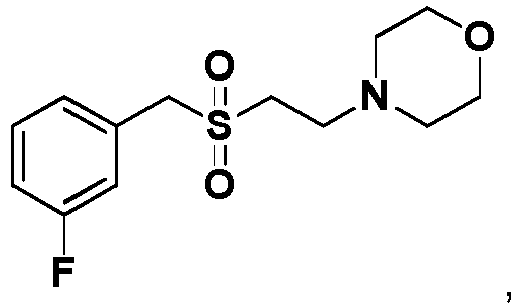
- 4-{2-[(3-Fluorobenzyl)sulfonyl]ethyl}morpholine
- 1-{2-[(3-Fluorobenzyl)sulfonyl]ethyl}pyrrolidine

- N-{2-[(4-Fluorobenzyl)sulfonyl]ethyl}-N,N-dimethylamine

- 4-{2-[(4-Fluorobenzyl)sulfonyl]ethyl}morpholine

- 1-{2-[(4-Fluorobenzyl)sulfonyl]ethyl}pyrrolidine

- N1 -{2-[(4-Fluorobenzyl)sulfonyl]ethyl}-N1,N2,N2 -trimethyl-1,2-ethanediamine

- (S)-N-(2-((3-fluorobenzyl)sulfonyl)ethyl)butan-2-amine

- (R)-N-(2-((3-Fluorobenzyl)sulfonyl)ethyl)butan-2-amine

- (S)-N-(2-((4-Bromobenzyl)sulfonyl)ethyl)butan-2-amine

- (R)-N-(2-((4-Bromobenzyl)sulfonyl)ethyl)butan-2-amine

- According to a second aspect of the present invention there is provided a compound of the first aspect for use in medicine.
- According to a third aspect of the present invention there is provided a pharmaceutical composition comprising a compound of the first aspect together with a pharmaceutically acceptable excipient.
- Also disclosed herein is a compound according to formula (I), or a physiologically acceptable salt, solvate, ester or other physiologically functional derivative thereof for use in a method of modulating an immune response:

- A is an aryl group, optionally substituted by at least one substituent;
- where said at least one substituent is independently selected from the group consisting of alkyl, alkenyl, alkynyl, aryl, heteroaryl, carboxy, alkyloxycarbonyl hydroxyl, amino, nitro, alkyloxy, perfluoroalkyloxy, -SH, alkylthio, formyl, cyano, carbamoyl, an amide, halo, a ketone, -S(O)NR12R13 or -S(O)R14; wherein R12, R13 or R14 are independently selected from the group consisting of H, alkyl, alkenyl, alkynyl, or substituted or unsubstituted monocyclic or polycyclic aryl or heteroaryl;
- wherein when one of R5, R6 and R7 is absent, the nitrogen atom to which they are bonded is not charged or when R5, R6 and R7 are present together the nitrogen atom to which they are bonded is positively charged and there is present a negatively charged counter ion;
- R3, R4, R5, R6 and R7 when present are independently, for each occurrence, selected from the group consisting of H, alkyl, alkenyl and alkynyl; and optionally, two or more of R5, R6 and R7 are bonded together to form a monocyclic or bicyclic ring with the nitrogen atom to which they are bonded; and
- n is an integer having a value of from 1 to 6.
- A may be a 5 or 6 membered cyclic or heterocyclic ring structure, or bicyclic ring. When heterocyclic, the ring may include one or more of N, S or O. A may be a 6 membered cyclic or heterocyclic ring, such as a phenyl group. A may be substituted with an alkyl (such as a methyl), carboxy, alkyloxycarbonyl hydroxyl, amino, nitro, alkyloxy, - SH, alkylthio, formyl, cyano, carbamoyl, or halo (such as bromo).
- Also disclosed herein is a compound of formula (II) or a physiologically acceptable salt, solvate, ester or other physiologically functional derivative thereof for use in therapy:


- A is an phenyl group, optionally substituted by at least one substituent;
- wherein said at least one optional substituent is independently selected from the group consisting of alkyl, carboxy, alkyloxycarbonyl hydroxyl, amino, nitro, alkyloxy, -SH, alkylthio, formyl, cyano, carbamoyl, halo;
- the dashed bond is present or absent;
- wherein when one of R5, R6 and R7 is absent, the nitrogen atom to which they are bonded is not charged and both remaining R groups are not H, or when R5, R6 and R7 are present together the nitrogen atom to which they are bonded is positively charged and there is present a negatively charged counter ion;
- R5, R6 and R7, when present are independently, for each occurrence, selected from the group consisting of H, and alkyl; and optionally, two or more of R5, R6 and R7 are bonded together to form a monocyclic ring with the nitrogen atom to which they are bonded.
- In the compounds according to formula I and II, the ring structure A/phenyl group may be, when substituted, substituted in the para-, or meta-positions.
- Also disclosed is a compound of formula (III) or a physiologically acceptable salt, solvate, ester or other physiologically functional derivative:

- A is an phenyl group, substituted by at least one substituent;
- wherein said at least one optional substituent is independently selected from the group consisting of alkyl, and halo;
- the dashed bond is present or absent;
- wherein when one of R5, R6 and R7 is absent, the nitrogen atom to which they are bonded is not charged and both remaining R groups are not H, or when R5, R6 and R7 are present together the nitrogen atom to which they are bonded is positively charged and there is present a negatively charged counter ion; and
- R5, R6 and R7, when present are independently, for each occurrence, selected from the group consisting of H, and alkyl; and optionally, two or more of R5, R6 and R7 are bonded together to form a monocyclic ring with the nitrogen atom to which they are bonded.
- The substituent may be a C1-C4 alkyl, such as methyl, or a halo, such as bromo.
- In the compounds according to formula I, II and III, when R5, R6 and R7 are present, they may each be C1-C4 alkyl, such as methyl.
- Alternatively two of R5, R6 or R7 may form a pyrrolidine ring or a morpholine ring with the nitrogen atom, and the remainder one of R5, R6 or R7 may be a methyl group or may be absent.
- In accordance with the formulae described above when R5, R6 or R7 are present, the nitrogen to which they are bonded is positively charged and negatively charged counter ion may be selected from the group consisting of chloride (Cl-), bromide (Br), iodide (I-) fluoride (F-), and methanesulphonate (SO3 -CH3).
- The compounds according to the first aspect or a physiologically acceptable salt, solvate, ester or other physiologically functional derivative thereof, may be used in the treatment or prophylaxis of inflammatory diseases in an animal. The animal requiring treatment or prophylaxis is usually a human or non-human mammal.
- According to the present invention, there is provided a compound according to the first aspect, or a physiologically acceptable salt, solvate, ester or other physiologically functional derivative thereof, for use medicine, such as in the modulation of an immune response, such as in the treatment or prophylaxis of inflammatory diseases in an animal.
- The animal requiring treatment or prophylaxis is usually a human or non-human mammal.
- Many diseases involve inflammation, and particularly relevant diseases for treatment or prophylaxis according to the present invention are autoimmune diseases such as
type 1 diabetes mellitus, rheumatoid arthritis (RA), systemic lupus erythematosus (SLE), psoriasis, multiple sclerosis (MS), autoimmune hepatitis, sarcoidosis, inflammatory bowel disease, Crohn's disease, asthma, chronic obstructive pulmonary disease (chronic pulmonary airways disease) and atherosclerosis. - The present invention has particular application for the treatment or prophylaxis of rheumatoid arthritis and asthma.
- The present invention further finds uses in settings where inflammation is to be modified such as in the other inflammatory disorders listed above and also for the treatment of burns and sepsis, and for use in modifying inflammation in cases of multi-organ failure.
- Also disclosed herein is the use of a compound according to formula (I), (II), or (III) or a physiologically acceptable salt, solvate, ester or other physiologically functional derivative thereof, for the manufacture of a medicament for modulating an immune response, such as in the treatment or prophylaxis of inflammatory disease.
- Also disclosed is a method for modulating an immune response, such as in the treatment or prophylaxis of inflammatory disease in an animal comprising administering to said animal a therapeutically or prophylactically effective amount of a compound according to formula (I), (II), or (III) or a physiologically acceptable salt, solvate, ester or other physiologically functional derivative thereof.
- In the compounds described herein, an alkyl group may be independently a C1-C22 alkyl, preferably C1-C4 alkyl, for example, methyl, ethyl, propyl, butyl.
- An alkenyl group may be independently a C2-C10 alkenyl, preferably C2-C4 alkenyl.
- An alkynyl group may be independently a C2-C10 alkynyl, preferably C2-C4alkynyl.
- The alkyl, alkenyl or alkynyl groups may be branched, unbranched, linear or cyclic and may be substituted or unsubstituted.
- For example typical branched alkyl groups include iso-propyl, iso-butyl, sec-butyl, tert-butyl, 3-methylbutyl, 3,3-dimethylbutyl and variations, including isomers thereof.
- As described herein, the alkyl, alkenyl or alkynyl groups may be substituted, and the substituents may be any chemical moiety such as a hydroxyl, substituted or unsubstituted amine, substituted or unsubstituted amide, halide (such as fluoro, chloro, bromo, iodo), alkoxy, thio, nitro, carboxy, an ester, cyano, or aryl (such as phenyl, naphthyl and pyridyl).
- The geometry of the double bonds in the alkenyl groups may be in the cis- or trans-geometry.
- Examples of physiologically acceptable salts of the compounds described herein include acid addition salts formed with organic carboxylic acids such as acetic, lactic, tartaric, maleic, citric, pyruvic, oxalic, fumaric, oxaloacetic, isethionic, lactobionic and succinic acids; organic sulfonic acids such as methanesulfonic, ethanesulfonic, benzenesulfonic and p-toluenesulfonic acids and inorganic acids such as hydrochloric, sulfuric, phosphoric and sulfamic acids.
- Physiologically functional derivatives of the compounds described herein are derivatives that can be converted in the body into the parent compound. Such physiologically functional derivatives may also be referred to as "pro-drugs" or "bioprecursors". Physiologically functional derivatives of compounds of the present invention include in vivo hydrolysable esters.
- It may be convenient or desirable to prepare, purify, and/or handle a corresponding solvate of the compounds described herein, which may be used in the any one of the uses/methods described. The term solvate is used herein to refer to a complex of solute, such as a compound or salt of the compound, and a solvent. If the solvent is water, the solvate may be termed a hydrate, for example a mono-hydrate, dihydrate, tri-hydrate etc, depending on the number of water molecules present per molecule of substrate.
- It will be appreciated that some of the compounds of the present invention may exist in various stereoisomeric forms and the compounds of the present invention as hereinbefore defined include all stereoisomeric forms and mixtures thereof, including enantiomers and racemic mixtures. The present invention includes within its scope the use of any such stereoisomeric form or mixture of stereoisomers, including the individual enantiomers of the compounds as well as wholly or partially racemic mixtures of such enantiomers.
- For use according to the present invention, a compound according to the first aspect or a physiologically acceptable salt, solvate, ester or other physiologically functional derivative thereof, is preferably presented together with one or more pharmaceutically acceptable carriers to provide a pharmaceutical formulation. Optionally other therapeutic and/or prophylactic ingredients may be included in the pharmaceutical formulation. The carrier(s) must be acceptable in the sense of being compatible with the other ingredients of the formulation and not deleterious to the recipient thereof.
- Pharmaceutical formulations include those suitable for oral, topical (including dermal, buccal and sublingual), rectal or parenteral (including subcutaneous, intradermal, intramuscular and intravenous), nasal and pulmonary administration e.g., by inhalation. The formulation may, where appropriate, be conveniently presented in discrete dosage units and may be prepared by any of the methods well known in the art of pharmacy. All methods include the step of bringing into association an active compound with liquid carriers or finely divided solid carriers or both and then, if necessary, shaping the product into the desired formulation.
- Pharmaceutical formulations suitable for oral administration wherein the carrier is a solid are most preferably presented as unit dose formulations such as boluses, capsules or tablets each containing a predetermined amount of active compound. A tablet may be made by compression or moulding, optionally with one or more accessory ingredients. Compressed tablets may be prepared by compressing in a suitable machine an active compound in a free-flowing form such as a powder or granules optionally mixed with a binder, lubricant, inert diluent, lubricating agent, surface-active agent or dispersing agent. Moulded tablets may be made by moulding an active compound with an inert liquid diluent. Tablets may be optionally coated and, if uncoated, may optionally be scored. Capsules may be prepared by filling an active compound, either alone or in admixture with one or more accessory ingredients, into the capsule shells and then sealing them in the usual manner. Cachets are analogous to capsules wherein an active compound together with any accessory ingredient(s) is sealed in a rice paper envelope. An active compound may also be formulated as dispersible granules, which may for example be suspended in water before administration, or sprinkled on food. The granules may be packaged, e.g., in a sachet. Formulations suitable for oral administration wherein the carrier is a liquid may be presented as a solution or a suspension in an aqueous or non-aqueous liquid, or as an oil-in-water liquid emulsion.
- Formulations for oral administration include controlled release dosage forms, e.g., tablets wherein an active compound is formulated in an appropriate release-controlling matrix, or is coated with a suitable release-controlling film. Such formulations may be particularly convenient for prophylactic use.
- Pharmaceutical formulations suitable for rectal administration wherein the carrier is a solid are most preferably presented as unit dose suppositories. Suitable carriers include cocoa butter and other materials commonly used in the art. The suppositories may be conveniently formed by admixture of an active compound with the softened or melted carrier(s) followed by chilling and shaping in moulds.
- Pharmaceutical formulations suitable for parenteral administration include sterile solutions or suspensions of an active compound in aqueous or oleaginous vehicles.
- Injectable preparations may be adapted for bolus injection or continuous infusion. Such preparations are conveniently presented in unit dose or multi-dose containers that are sealed after introduction of the formulation until required for use. Alternatively, an active compound may be in powder form, which is constituted with a suitable vehicle, such as sterile, pyrogen-free water, before use.
- An active compound may also be formulated as long-acting depot preparations, which may be administered by intramuscular injection or by implantation, e.g., subcutaneously or intramuscularly. Depot preparations may include, for example, suitable polymeric or hydrophobic materials, or ion-exchange resins. Such long-acting formulations are particularly convenient for prophylactic use.
- Formulations suitable for pulmonary administration via the buccal cavity are presented such that particles containing an active compound and desirably having a diameter in the range of 0.5 to 7 microns are delivered in the bronchial tree of the recipient.
- As one possibility such formulations are in the form of finely comminuted powders which may conveniently be presented either in a pierceable capsule, suitably of, for example, gelatin, for use in an inhalation device, or alternatively as a self-propelling formulation comprising an active compound, a suitable liquid or gaseous propellant and optionally other ingredients such as a surfactant and/or a solid diluent. Suitable liquid propellants include propane and the chlorofluorocarbons, and suitable gaseous propellants include carbon dioxide. Self-propelling formulations may also be employed wherein an active compound is dispensed in the form of droplets of solution or suspension.
- Such self-propelling formulations are analogous to those known in the art and may be prepared by established procedures. Suitably they are presented in a container provided with either a manually-operable or automatically functioning valve having the desired spray characteristics; advantageously the valve is of a metered type delivering a fixed volume, for example, 25 to 100 microlitres, upon each operation thereof.
- As a further possibility an active compound may be in the form of a solution or suspension for use in an atomizer or nebuliser whereby an accelerated airstream or ultrasonic agitation is employed to produce a fine droplet mist for inhalation.
- Formulations suitable for nasal administration include preparations generally similar to those described above for pulmonary administration. When dispensed such formulations should desirably have a particle diameter in the
range 10 to 200 microns to enable retention in the nasal cavity; this may be achieved by, as appropriate, use of a powder of a suitable particle size or choice of an appropriate valve. Other suitable formulations include coarse powders having a particle diameter in therange 20 to 500 microns, for administration by rapid inhalation through the nasal passage from a container held close up to the nose, and nasal drops comprising 0.2 to 5% w/v of an active compound in aqueous or oily solution or suspension. - It should be understood that in addition to the aforementioned carrier ingredients the pharmaceutical formulations described above may include, an appropriate one or more additional carrier ingredients such as diluents, buffers, flavouring agents, binders, surface active agents, thickeners, lubricants, preservatives (including anti-oxidants) and the like, and substances included for the purpose of rendering the formulation isotonic with the blood of the intended recipient.
- Pharmaceutically acceptable carriers are well known to those skilled in the art and include, but are not limited to, 0.1 M and preferably 0.05 M phosphate buffer or 0.8% saline. Additionally, such pharmaceutically acceptable carriers may be aqueous or non-aqueous solutions, suspensions, and emulsions. Examples of non-aqueous solvents are propylene glycol, polyethylene glycol, vegetable oils such as olive oil, and injectable organic esters such as ethyl oleate. Aqueous carriers include water, alcoholic/aqueous solutions, emulsions or suspensions, including saline and buffered media. Parenteral vehicles include sodium chloride solution, Ringer's dextrose, dextrose and sodium chloride, lactated Ringer's or fixed oils. Preservatives and other additives may also be present, such as, for example, antimicrobials, antioxidants, chelating agents, inert gases and the like.
- Therapeutic formulations for veterinary use may conveniently be in either powder or liquid concentrate form. In accordance with standard veterinary formulation practice, conventional water-soluble excipients, such as lactose or sucrose, may be incorporated in the powders to improve their physical properties. Thus particularly suitable powders of this invention comprise 50 to 100% w/w and preferably 60 to 80% w/w of the active ingredient(s) and 0 to 50% w/w and preferably 20 to 40% w/w of conventional veterinary excipients. These powders may either be added to animal feedstuffs, for example by way of an intermediate premix, or diluted in animal drinking water.
- Liquid concentrates of this invention suitably contain the compound according to the first aspect or a physiologically acceptable salt, solvate, ester or other physiologically functional derivative thereof, and may optionally include a veterinary acceptable water-miscible solvent, for example polyethylene glycol, propylene glycol, glycerol, glycerol formal or such a solvent mixed with up to 30% v/v of ethanol. The liquid concentrates may be administered to the drinking water of animals.
- The present invention will now be further described by way of example and with reference to figures that show:
-
Figure 1 shows S3 & S5 suppress collagen-induced arthritis (CIA). DBA/1 mice undergoing CIA (PBS) were treated with SMAs S3 (1 µg/dose; S3-1) and S5 (1 µg/dose; S5-1) at d-2, d0 and d21 and monitored every second day for (A) articular score; (B) paw swelling; (C) incidence of CIA (articular score>2) and (D) incidence of severe pathology (articular score >4). Data in A & B are presented as mean values ± SEM where PBS, n=28, S3, n=14 and S5, n=13 individual mice, except at d33 and d35 where PBS, n=14, S3, n=7 and S5, n=7 individual mice, and analysis was by Mann-Whitney test and *p<0.05, **p<0.01 and ***p<0.001 where blue * and black * represent PBS versus S3-1 and S5-1, respectively. -
Figure 2 shows S3 and S5 inhibit mast cell degranulation and cytokine production. Peritoneal-derived mast cells (PDMC; panels A & D) or bone marrow-derived mast cells (BMM; B, C, E & F) were pre-treated with the indicated concentrations of S3 and S5 (µg/ml) during the IgE sensitisation phase and then degranulation measured 1 h (A & D) following crosslinking of the IgE-bound FcεRI receptors (XL) or not (Basal). Alternatively TNFα (B & E) or IL-6 (C & F) release was measured 24 h following FcεRI crosslinking. Data are presented as means ± SD where n=3 and analysis is by 1-way ANOVA and Newman-Keuls post test where ***p<0.001. -
Figure 3 shows that prophylactic treatment with S3 and S5 inhibits lung pathology as indicated by H & E staining of lung tissue (A) and eosinophil and (to a degree) neutrophil influx into the lungs (BALF; B) Therapeutic treatment with S3 and S5 inhibits neutrophil influx into the lungs (BALF; C) - Compounds were synthesised according to the following methods, with reference to the depicted schemes and experimental data.
- All starting materials were bought from Aldrich with the exception of choline iodide, which was bought from Lancaster. Starting materials were used without further purification.
-
- DMF
- Dirnethylformamide
- DCM
- Dichloromethane
- m-CPBA
- meta-chloroperbenzoic acid
- NEt3
- Triethyl amine
- TLC
- Thin layer chromatography
- NMR
- Nuclear magnetic resonance
- HPLC
- High performance liquid chromatography
- IR
- Infra red
- mp
- Melting point
- LC-MS Liquid
- chromatography mass spectroscopy
- HR-MS
- High resolution mass spectroscopy
- EtOAc
- Ethyl acetate
- TFA
- Trifluoroacetic acid
- 1-Bromo-4-(bromomethyl)benzene (10.00 g, 40.00 mmol), 2-mercaptoethanol (3.13 g, 40.00 mmol) and K2CO3 (5.53 g, 40.00 mmol, anhydrous) were added to DCM (50 mL, dry) at room temperature with stirring. The stirring was continued for 48h after which water was added and then the reaction was extracted with DCM. The organic layer was collected, dried (MgSO4), filtered, and the solvent removed under reduced pressure to give the required product as a pale yellow oil (11.00 g, 99%).
1H-NMR (CDC],): 7.46-7.44 (2H, d, 2 x C(2)H), 7.22-7.20(2H, d, 2 x C(3)H), 3.71 (2H, s, C(5)H2), 3.70-3.68 (2H, t, C(7)H2), 2.65-2.62 (2H, t, C(6)H2), 1.93 (11-1, br, s, OH). 13C-NMR (CDCl3): 137.41(C-4), 131.99(C-2), 130.80(C-3), 121.32(C-1), 60.60(C-7), 35.48 (C-5), 34.65 (C-6).
IR (NaCl): 3390 (br), 2919, 1901, 1663, 1589, 1486, 1402, 1289, 1198, 1096, 1069, 1011, 881, 821cm-1
HR-MS: For C9H11BrOS requires 245.9714/247.9693, found 245.9712/245.9692.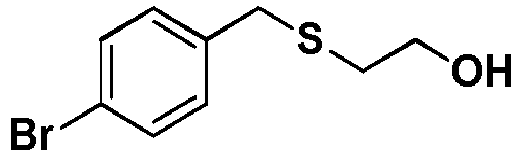
- 2-[(4-Bromobenzyl)sulfonyl]ethanol (11.00 g, 44.7 mmol) was dissolved in DCM (50 mL, dry) to which m-CPBA (21.10 g, 122.3 mmol) was added at room temperature with stirring. The reaction was slightly exothermic. The reaction mixture was left stirring at room temperature overnight. 15 minutes after the addition of m-CPBA a white solid material precipitated. NaHCO3 (saturated) was added and the reaction mixture was extracted. The organic layer was extracted with brine and collected, dried (MgSO4), filtered, and the solvent removed under reduced pressure. The crude product was applied to a gel column chromatography using ethyl acetate / n-
hexane 1/1, RF= 0.1 to give the pure material as white crystals (4.47 g, 36%) after recrystallization from ethyl acetate / n-hexane, mp 97-99 °C.
1H-NMR (DMSO-d6): 7.61-7.59 (2H, d, 2 x C(2)H), 7.37-7.35 (214, d, 2 x C(3)H), 5.21 (1H, br s, OH), 4.48 (2H, s, C(5)H2), 3.83-3,80(2H, t, C(7)H2), 3.18-3.15(2H, t, C(6)H2). 13C-NMR (DMSO-d6): 133.21(C-3), 131.38(C-2), 128.14(C-1), 121.89(C-4), 58.86 (C-7), 54.90 (C-6), 53.99 (C-5).
IR (KBr): 3480 (br), 2991, 2928, 1490, 1408, 1388, 1291, 1262, 1235, 1115 (s), 1064, 1014, 848, 808, 705, 523 cm-1
HR-MS: For C9H11BrO3S requires 277.9612/279.9592, found 277.9614/279.9586.
- 2-[(4-Bromobenzyl)sulfonyl]ethanol (2.00 g, 7.17 mmol) was dissolved in DCM (25 mL, dry) to which triethylamine (3 mL, 2.18 g, 21.52 mmol, 3.0 molar equivalent, anhydrous) was added followed by methylsulphonyl chloride (2 mL, 3.12 g, 19.14 mmol, 2.7 molar equivalent) at 0°C with stirring, which was continued at room temperature overnight. The reaction mixture was basified with sodium hydrogen carbonate (saturated). The organic layer was collected after the extraction, dried over (MgSO4), filtered and the solvent removed under reduced pressure. The crude product was applied to a silica gel column chromatography using ethyl acetate / n-hexane (1/2, RF= 0.4). The required product (1.600 g, 86%) was obtained as white solid, mp 95-97°C.
1H-NMR (DMSO-d6): 7.60-7.58 (2H, d, 2 x C(2)H), 7.32-7.30 (2H, d, 2 x C(3)H), 6.96-6.89(1H, dd, C(6)H, J = 16.8 Hz, J= 9.9 Hz), 6.21-6.19 (1H, d, C(7)H, J = 8Hz), 6.09-6.05 (1H, d, C(8)H, J = 16.6 Hz), 4.55(2H, s, C(5)H2).
13C-NMR (DMSO-d6): 136.24 (C-4), 133.11 (C-2), 131.34 (C-3), 130.50 (C-6), 128.11 (C-1), 121.91 (C-7), 58.05 (C-5).
IR (KBr): 3437, 3057, 2981, 2932, 1489, 1408, 1309, 1260, 1161, 1121, 1072, 1014, 976, 843, 795, 714,519cm-1
HR-MS: Found 259.9506/261.9484 for C9H9BrO2S requires 259.9507/261.9486.
- 1-(Bromomethyl)-4-methylbenzene (10.00 g, 54.03 mmol), 2-mercaptoethanol (4.22 g, 54.03 mmol) and K2CO3 (7.47 g, 54.03 mmol, anhydrous) were added to DCM (50 mL, dry) at room temperature with stirring. The stirring was continued for 48h. Water was added and the reaction mixture was extracted with DCM. The organic layer was collected, dried (MgSO4), filtered, and the solvent removed under reduced pressure to give the required product as a pale yellow oil (9.60 g, 98%).

13C-NMR (DMSO-d6): 135.77(C-2), 135.66(C-5), 128.84(C-3), 128.70(C-4), 60.63 (C-8), 35.03 (C-6), 33.33 (C-7), 20.62 (C-1).
IR (KBr): 3390 (br), 2920, 2868, 1664, 1513, 1422, 1386, 1098, 1068, 1020,878,817, 726cm-1
HR-MS: For C10H14OS requires 182.07654, found 182.0764. - Reference: Czobor, Francisc; Cristescu, Carol. as-Triazine derivatives with potential therapeutic action. Part XXIX. Synthesis of 5-[2-(halogenobenzylthio)-ethyl]thio-6-azauracil derivatives as potential antiviral agents. Revue Roumaine de Chimie (2002), 46(9), 1007-1011.
- 2-[(4-Methylbenzyl)sulfanyl]ethanol (9.60 g, 52.7 mmol) was dissolved in DCM (50 mL, dry) to which m-CPBA (18.18 g, 105.0 mmol, 2.0 molar equivalent) was added at room temperature with stirring. The reaction was slightly exothermic. The reaction mixture was left stirring at room temperature overnight. 15 minutes after the addition of m-CPBA a white solid material precipitated. NaHCO3 (saturated) was added and the reaction mixture was extracted. The organic layer was extracted with brine and collected, dried (MgSO4), filtered, and the solvent removed under reduced pressure. The crude product was recrystallized from ethyl acetate / n-hexane to give the pure material as white crystals (3.11 g). The mother liquor was applied to a silica gel column chromatography using ethyl acetate / n-
hexane 1/1; (RF= 0.2 & RF= 0.5) to give an additional amount (0.40 g). The total amount obtained was (3.51 g, 31%), mp 102-104°C.
1H-NMR (DMSO-d6): 7.30-7.28 (2H, d, 2 x C(3)H), 7.21-7.19 (2H, d, 2 x C(4)H), 5.29(1H, br, s, OH), 4.41 (2H, s, C(6)H2), 3.82-3.79(2H, t, C(8)H2), 3.14-3.11 (2H, t, C(7)H2), 2.31 (3H, s, C(1)H3).
13C-NMR (DMSO-d6): 137.66 (C-2), 130.94 (C-4), 128.99 (C-3), 125.63 (C-5), 59.32 (C-6), 54.90 (C-7), 53.71 (C-8), 20.70 (C-1).
IR (KBr): 3480 (br), 2898, 2925, 2891, 1697, 1517, 1419, 1296 (s), 1263, 1175, 1116 (s), 1063, 1012, 848, 549, 489 cm-1.
HR-MS: Found 214.0665 for C10H1403S requires 214.0664.
- 2-[(4-Methylbenzyl)sulfonyl]ethanol (3.110 g, 14.51 mmol) was dissolved in DCM (25 mL, dry) to which triethylamine (2.202 g, 21.77 mmol, 1.5 molar equivalent, anhydrous) was added, followed by methylsulphonyl chloride (2.493 g, 21.77 mmol, 1.5 molar equivalent) at 0°C with stirring, which was continued at room temperature overnight. The reaction mixture was basified with sodium hydrogen carbonate (saturated). The organic layer was collected after the extraction, dried over (MgSO4), filtered and the solvent removed under reduced pressure. The crude product was obtained as yellow semi-solid (5.060 g). TLC showed two spots: RF= 0.3 & RF= 0.6 (ethyl acetate / n-
hexane 1/1. This mixture was used in the next step without further purification.
1H-NMR (DMSO-d6): 7.30-7.28 (1H, d, 2 x C-4H), 7.24-7.21 (3H, overlapping doublets, 2 x C-CH, 2 x C-3H), 7.18-7.16 (2H, d, 2 x C-DH), 6.95-6.88 (1H, dd, C-GH, J = 9.9 Hz, C-GI, J = 16.6 Hz), 6.18-6.16 (21-1, d, C-HH, J = 9.9 Hz), 6.08-6.04 (2H, d, C-IH, J = 16.6 Hz), 4.54-4.52 (1H, t, C-8H2), 4.49 (1H, s, C-6H2), 4.45 (2H, s, C-FH2), 3.56-3.53 (IH, t, C-7H2), 3.26 (1.5H, s, C-9H3), 2.31 (1.5H,s, C-1H3), 2.29 (3H, s, C-AH3).
- 3-(4-Methylbenzylthio)propan-1-ol (1.46 g, 7.46 mmol) was dissolved in DCM (20 ml, anhydrous) to which was added a solution of m-CPBA (2.80 g, 16.2 mmol, 2.17 eq.) in DCM (30 ml, anhydrous) at 0°C, under nitrogen The reaction mixture was allowed to warm to room temperature and stirring was continued for a further 24h. After this time, the resulting white precipitate was filtered under vacuum and the filtrate was washed with NaHCO3 (2 x 100 ml) and DCM (100 ml). The organic extracts were combined, dried over MgSO4 and concentrated under reduced pressure to leave colourless oil which crystallised to a white solid upon standing. This was then dried at room temperature under high vacuum for 3 h to give the title compound as a white solid (1.33g, 5.83 mmol, 78%), mp 67-69°C
1H-NMR (DMSO-d6): 7.30-7.28 (2H, d, 2 x C-3H), 7.21-7.19 (2H, d, 2 x C-2H), 4.64 (I H, br, s, OH), 4.41 (2H, s, C-6H2), 3.48-3.45 (2H, t, C-9H2), 3.03-2.99 (2H, m, C-7H2), 2.31 (3H, s, C-1H3), 1.84-1.77 (2H, m, C-8H2).
13C-NMR (DMSO-d6): 137.64 (C-2), 130.78 (C-3), 129.01 (C-4), 125.75 (C-5), 58.90 (C-9), 57.64 (C-6), 48.08 (C-7), 24.48 (C-8), 20.70 (C-1).
IR (KBr): 3490, 2969, 2941, 2879, 1510, 1440, 1395, 1376, 1297, 1281, 1253, 1216, 1132, 1060, 1034, 886, 819, 766, 721cm-1
HR-MS: For C11H16O3S requires 228.0820, found 228.0822.
- Methanesulfonyl chloride (0.540 mL, 6.95 mmol) was added at 0 °C under nitrogen to a solution of 3-(4-methylbenzylsulfonyl)propan-1-ol (1.329 g, 5.82 mmol) and NEt3 (1 ml, 3.98 mmol) in DCM (40 ml, anhydrous). The solution was stirred at 0 °C for 1 h, and then warmed to room temperature. Stirring was continued for a further 72 h. After this time the solution was extracted with NaHCO3 (2 x 100 ml) and brine (50 ml), the organic layers were combined, dried (MgSO4) and concentrated under reduced pressure to give the title compound as a pale orange liquid which crystallised upon standing and drying under vacuum. The required product was obtained as an orange solid (1.158 g, 3.78 mmol, 65%), mp 72-74°C.
1H-NMR (DMSO-d6): 7.31-7.29 (2H, d, 2 x C-3H), 7.22-7.20 (2H, d, 2 x C-4H), 4.47 (2H, s, C-6H2), 4.30-4.27 (2H, t, C-9H2), 3.17 (3H, s, C-10H3), 3.14-3.10 (2H, m, C-7H2), 2.31 (3H, s, C-1H3), 2.12-2.05 (2H, m, C-8H2).
13C-NMR (DMSO-d6): 137.76 (C-2), 130.82 (C-4), 129.06 (C-3), 125.41 (C-5), 68.31(C-9), 57.60 (C-6), 47.17 (C-7), 36.60 (C-10), 21.49 (C-1), 20.71 (C-8).
IR (KBr): 3025, 3986, 2977, 2927, 1786, 1724, 1614, 1515, 1444, 1412, 1354, 1340, 1313, 1280, 1237, 1175, 1134, 1121, 980,928, 853, 815, 766, 732, 713cm-1 HR-MS: For C12H18O5S2 requires 306.0596, found 306.0599.
- 1-(Bromomethyl)-3-fluorobenzene (1.00 g, 5.29 mmol) was dissolved in acetone (10 mL) to which 2-sulfanylethanol (0.413 g, 5.29 mmol) was added followed by K2CO3 (1.097 g, 7.94 mmol, 1.5 molar equivalent). The reaction mixture was stirred at room temperature for 48h. The solvent was removed under reduced pressure and the crude material was extracted with DCM and water. The organic layer was collected, dried (MgSO4), filtered and the solvent removed under reduced pressure to give the required product as a pale yellow oil (0.945 g, 96%).
IR (NaCl): 3395, 1616, 1589, 1485, 1446, 1267, 1138, 1061, 1013, 942, 884, 787cm-1 1H NMR (DMSO-d6): 7.16-7.13(1H, m), 7.08-7.03(3H, m), 4.77(1H, t, J = 5.5Hz), 3.75(2H, s), 3.51-3.46(2H, m), 2.48(2H, t, J = 6.9Hz).
HRESIMS: Found: 187.05874 calculated for C9H12OF32S 187.05874. - Reference 1: Czobor, Francisc; Cristescu, Carol. as-Triazine derivatives with potential therapeutic action. Part XXIX. Synthesis of 5-[2-(halogenobenzylthio)-ethyl]thio-6-azauracil derivatives as potential antiviral agents. Revue Roumaine de Chimie (2002), Volume Date 2001, 46(9), 1007-1011.
- Reference 2: Kuliev, A. M.; Sultanov, Yu. M.; Aliev, I. A.; Mekhraliev, N. A. Synthesis of different derivatives of m-fluorobenzyl mercaptan. Katalit. Prevrashcheniya Organ. Soedin., Baku (1981), 51-55.

- [A]: 2-[(3-Fluorobenzyl)sulfanyl]ethanol (0.945 g, 5.07 mmol) was dissolved in DCM (25 mL, dry) to which m-CPBA (1.921 g, 11.13 mmol, 2.2 molar equivalent) was added at room temperature with stirring. The reaction was slightly exothermic. The reaction mixture was left stirring at room temperature overnight. 15 minutes after the addition of m-CPBA white solid material precipitated. The solid material was filtered off and the filtrate extracted with NaHCO3 (saturated). The organic layer was collected, dried (MgSO4), filtered, and the solvent removed under reduced pressure. The crude product was purified by column chromatography using only ethyl acetate as eluant (RF = 0.1). The product was obtained as white crystals (0.725 g, 66%), mp 92-94°C.
IR (NaCl): 3484, 1592, 1487, 1449, 1309, 1266, 1147, 1114, 1072, 842, 793, 748cm-1 1H NMR (DMSO-d6): 7.43-7.41(1H, m), 7.26-7.21(3H, m), 5.24(1H, t, J = 5.1Hz), 4.52(2H, s), 3.83(2H, q, J = 5.8Hz), 3.18(2H, t, J = 5.8Hz).
HRESIMS: Found: 219.04871 calculated for C9H12O3F32S 219.04857.
- 2-[(3-Fluorobenzyl)sulfonyl]ethanol (0.725 g, 3.18 mmol) was dissolved in DCM (25 mL, dry) to which methane sulfonyl chloride (mesyl chloride) (0.364 g, 3.18 mmol) and TEA (0.482 g, 4.77 mmol, 1.5 molar equivalent) were added at room temperature with stirring. The stirring was continued for 48h at room temperature. The reaction mixture was extracted with sodium hydrogen carbonate (saturated), dried (MgSO4), filtered and the solvent removed. The clear solution solidified at room temperature to give cream-coloured semi-solid material (900 mg), which was a mixture of two compounds as shown by 1H-NMR and TLC. No yield could be calculated for this mixture and no melting point could be measured.
HRESIMS: Found: 201.03806 calculated for C9H10O2F12S 201.03801.
- 1-(Bromomethyl)-4-fluorobenzene (1.00 g, 5.29 mmol) was dissolved in DCM (10 mL, dry) to which 2-sulfanylethanol (0.413 g, 5.29 mmol) was added followed by K2CO3 (1.097 g, 7.94 mmol, 1.5 molar equivalent). The reaction mixture was stirred at room temperature for 72h. The reaction mixture was diluted with DCM and water. After extraction the organic layer was collected, dried (MgSO4), filtered and the solvent removed under reduced pressure to give the crude material which was purified by column chromatography using ethyl acetate / n-hexane (1/2) as eluant, RF = 0.3. The required product was obtained as pale yellow oil (0.900 g, 91%).
IR (NaCl): 3390, 1601, 1508, 1223, 1157, 1047, 1016, 837, 757, 732 cm-1
1H-NMR (DMSO-d6): 7.31-7.28(2H, m), 7.03-6.70(2H, m), 3.72(2H, s), 3.71(2H, t, J = 6.0Hz), 2.66(2H, t, J = 5.8Hz).
HRESIMS: Found: 203.05370 calculated for C9H12O2F1 32S1 203.05366. - Czobor, Francisc; Cristescu, Carol. as-Triazine derivatives with potential therapeutic action. Part XXIX. Synthesis of 5-[2-(halogenobenzylthio)-ethyl]thio-6-azauracil derivatives as potential antiviral agents. Revue Roumaine de Chimie (2002), 46(9), 1007-1011.

- 2-[(4-Fluorobenzyl)sulfanyl]ethanol (1.230 g, 6.60 mmol) was dissolved in DCM (25 mL, dry) to which m-CPBA (2.507 g, 14.53 mmol, 2.2 molar equivalent) was added at room temperature with stirring. The reaction was slightly exothermic. The reaction mixture was left stirring at room temperature overnight. 15 minutes after the addition of m-CPBA a white solid material precipitated. NaHCO3 (saturated) was added and the reaction mixture was extracted. The organic layer was extracted with brine and collected, dried (MgSO4), filtered, and the solvent removed under reduced pressure. The crude product was purified by column chromatography using only ethyl acetate as eluant (RF = 0.1). The product was obtained as white crystals (1.390 g, 97%), mp 93-95°C.
IR (KBr): 1608, 1511, 1286, 1310, 1245, 1139, 1039, 1015, 842, 815, 780, 763, 729 cm-1
1H-NMR (CDCl3): 7.46(2H, dd, J = 5.3Hz & J = 8.6Hz), 7.13(2H, t, J = 8.6Hz), 4.34(2H, s), 4.14(2H, t, J = 5.3Hz), 3.11(2H, t, J = 5.3Hz).
HRESIMS: Found: 219.04861 calculated for C9H12O3F1 32S1 219.04857.
- 2-[(4-Fluorobenzyl)sulfonyl]ethanol (1.060 g, 4.90 mmol) was dissolved in DCM (25 mL, dry) to which N-methylmorpholine (0.743 g, 7.35 mmol, 1.5 molar equivalent, anhydrous) was added followed by methylsulphonyl chloride (0.842 g, 7.35 mmol, 1.5 molar equivalent) at room temperature with stirring. The stirring was continued at room temperature overnight. The reaction mixture was basified with sodium hydrogen carbonate (saturated). The organic layer was collected after the extraction, dried over (MgSO4), filtered and the solvent removed under reduced pressure. The crude product was applied to a column chromatography using ethyl acetate / n-hexane (1/1, RF = 0.5). The product was obtained as white solid (0.650 g, 66%), mp 92-95°C.
IR (KBr): 1604, 1512, 1309, 1262, 1162, 1122, 983, 890, 847, 776, 711 cm-1 1H-NMR (CDCl3): 7.37(2H, dd, J = 5.2Hz & J = 3.5Hz), 6.55(1H, dd, J = 10.0Hz, J = 16.6Hz), 6.34(1H, d, J = 16.6Hz), 6.14(1H, d, J = 10.0Hz), 4.22(2H, s).
- 2-[(4-Bromobenzy)lsulfonyl]ethyl methanesulfonate (0.06g, 0.17 mmol) was suspended in trimethylamine (5ml in toluene) and the mixture was stirred at room temperature, under nitrogen for a period of 5 d, then heated to 60°C for 20 h. The solvent was concentrated under reduced pressure to give an off-white solid (0.045 g, 0.14 mmol, 83%), m.p. 187-188 °C
1H NMR (DMSO-d6): 7.66-7.64 (211, d, 2 x C(3)H), 7.40-7.38 (211, d, 2 x C(2)H), 4.64(2H,s, C(5)H2), 3.85-3.80 (2H, m, C(6)H2),3.78-3.74 (2H, m, C(7)H2), 3.12 (9H, s, C(8)H3, C(9)H3, C(10)H3).
13C NMR (DMSO-d6): 133.1(C-3), 131.6(C-2), 126.3(C-1), 121.9(C-4), 57.6(C-7), 57.4 (C-5), 52.5 (C-8, C-9, C-10), 44.2 (C-6).
IR (KBr): 3421, 3029, 3002, 2941, 1591, 1489, 1424, 1413, 1360, 1318, 1277, 1193, 1140, 1068, 1040, 1011, 790, 770, 637, 565, 550 cm-1
HR-MS: For C12H19BrNO2S requires 320.0320/322.0300, found 320.0321/322.0297.
- 1-Bromo-4-[(vinylsulfonyl)methyl]benzene (1.600 g, 6.12 mmol) was dissolved in DCM (25 mL, dry) to which dimethylamine (4 mL, 2M in THF) was added at room temperature with stirring. The stirring was continued at room temperature overnight. The reaction mixture was extracted with a saturated solution of sodium carbonate. The organic layer was collected, dried over (MgSO4), filtered and the solvents were removed under reduced pressure after which the crude product was applied to a silica gel column chromatography using ethyl acetate / n-hexane (1/1) in the first instance, followed by ethyl acetate / methanol (9/2, RF = 0.5). The product was obtained as a white solid material (1.360 g, 73%) after trituration with n-hexane, mp 58-60°C.
1H-NMR (DMSO-d6): 7.64-7.60 (2H, d, 2 x C(4)H), 7.37-7.34 (2H, d, 2 x C(3)H), 4.52 (2H, s, C(6)H2), 3.22-3.19 (2H, t, C(7)H2), 2.67-2.63 (2H, t, C(8)H2), 2.17 (6H, s, 2 x C(9)H3).
13C-NMR (DMSO-d6): 133.1 (C-4), 131.4 (C-3), 127.9 (C-2), 121.9 (C-5), 57.9 (C-6), 51.6 (C-8), 49.4 (C-7), 44.7 (C-9).
IR (KBr): 3424, 2979, 2942, 2822, 2772, 1591, 1488, 1408, 1295, 1275, 1118, 1051, 1013, 843, 816, 640,513cm-1
HR-MS: Found 305.0081/307.0066 for C11H16BrNO2S requires 305.0085/307.0065.
- 2-[(4-Methylbenzyl)sulfonyl]ethyl methanesulfonate and 1-methyl-4-[(vinylsulfonyl)methyl]benzene (4.880 g) were dissolved in DCM (50 mL, dry) to which dimethylamine (4 mL, 2M in THF) was added at room temperature with stirring. The stirring was continued at room temperature overnight after which the reaction mixture was extracted with a saturated solution of sodium carbonate. The organic layer was collected, dried over (MgSO4), filtered and the solvents were removed under reduced pressure and the crude product was applied to a silica gel column chromatography using ethyl acetate / n-hexane (1/1, RF = 0.1) in the first instance, followed by ethyl acetate / methanol (9/1). The product was obtained as white solid material (2.200 g, 63% based on 2-[(4-Methylbenzyl)sulfonyl]ethanol) after trituration with n-hexane, mp 68-70°C.
1H-NMR (DMSO-d6): 7.28-7.26 (2H, d, 2 x C(2)H, J = 8.0 Hz), 7.21-7.19 (2H, d, 2 x C(3)H, J = 8.0 Hz), 4.44 (2H, s, C(6)H2), 3.17-3.14 (2H, t, C(7)H2, J = 14.3 Hz), 2.65-2.61 (2H, t, C(8)H2, J = 14.3 Hz), 2.31 (3H, s, C(1)H3), 2.16 (6H, s, 1 x C(9)H3, 1 x C(10)H3). 13C-NMR (DMSO-d6): 137.7 (C-2), 130.8 (C-4), 129.0 (C-2), 125.4 (C-5), 58.4 (C-6), 51.6 (C-7), 49.0 (8), 44.9 (C-9, C- 10), 20.7 (C-1).
IR (KBr): 2978, 2813, 2764, 1920, 1511, 1463, 1399, 1380, 1314 (s), 1258, 1156, 1119 (s), 1050, 892, 853, 822, 749, 688, 564, 518, 471cm-1
HR-MS: Found 241.1139 for C12H19NO2S requires 241.1136.
- N,N-Dimethyl-2-[(4-methylbenzyl)sulfonyl]ethanamine (0.950 g, 3.94 mmol) was dissolved in DCM (25 mL, dry) to which iodomethane (4 mL) was added with stirring at room temperature. The stirring was continued overnight and then the white solid material was filtered of and dried under reduced pressure (1.490 g, 99%), mp 212-214°C
1H-NMR (DMSO-d6): 7.33-7.31 (2H, d, 2 x C(4)H), 7.25-7.23 (2H, d, 2 x C(3)H), 4.58 (2H, s, C(6)H2), 3.83-3.79 (2H, m, C(7)H2), 3.74-3.71 (2H, m, C(8)H2), 3.12 (9H, s, 3 x C(9)H3), 2.33 (3H, s, C(1)H3).
13C NMR (DMSO-d6): 138.17(C-2), 131.00(C-4), 129.24(C-3), 124.38(C-5), 57.98 (C-8), 57.36 (C-9), 52.50 (C-6), 45.03 (C-7), 18.66 (C-1).
IR (KBr): 3436, 3010, 2937, 3899, 1514, 1486, 1326 (s), 1257, 1153, 1123, 1015, 882, 550, 523, 495 cm-1
HR-MS: Found 256.1375 for C13H22NO2S requires 256.1371.
- The mixture of 2-[(4-Methylbenzyl)sulfonyl]ethyl methanesulfonate and 1-methyl-4-[(vinylsulfonyl)methyl]benzene (0.13 g, 0.45 mmol) was dissolved in DCM (15 ml). To this mixture was added pyrrolidine (0.750 mL, 9 mmol, 20 eq.) and the mixture was stirred at room temperature, under nitrogen for 72 h. The crude material was then extracted with NaHCO3 (50 ml) and DCM (50 ml). The organic extracts were collected, dried over MgSO4, filtered and concentrated under reduced pressure to give the title compound as a colourless oil, which crystallised upon standing (0.096g. 0.36 mmol, 81%), mp 84-86 °C
1H-NMR (DMSO-d6): 7.28-7.26 (2H, d, 2 x C(4)H), 7.21-7.19 (2H, d, 2 x C(3)H), 4.50 (2H, s, C(6)H2), 3.20-3.16 (2H, t, C(7)H2), 2.80-2.77 (2H, t, C(8)H2), 2.48-2.44 (4H, m, 2 x C(9)H2), 1.69-1.65 (4H, m, 2 x C(10)H2).
13C-NMR (DMSO-d6): 137.7 (C-2), 130.9 (C-4), 129.0 (C-3), 125.4 (C-5), 58.3 (C-6), 53.2(C-9), 50.3 (C-8), 48.0 (C-7), 23.1 (C-1, C-10).
IR (KBr): 3437, 2971, 2781, 1629, 1515, 1404, 1383, 1312, 1257, 1160, 1120, 1025, 891, 823, 558, 497cm-1
HR-MS: Found 267.1290 for C14H21NO2S requires 267.1293.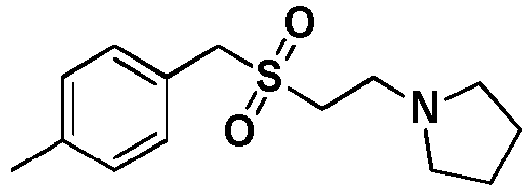
- 1-{2-[(4-Methylbenzyl)sulfonyl]ethyl}pyrrolidine (42.4 trig, 0.16 mmol) was dissolved in DCM (3 ml) to which methyl iodide (0.200 mL, 3.2 mmol, 20 eq.) was added. The mixture was stirred at room temperature for a period of 24 h. The yellow precipitate was filtered and dried under reduced pressure (40°C/0. 1 mm Hg) for 3 h, to give the title compound as a pale yellow solid (0.033 g, 0.08 mmol, 51%), mp 214-216 °C
1H-NMR (DMSO-d6): 7.33-7.31 (2H, d, 2 x C(4)H), 7.25-7.23 (2H, d, 2 x C(3)H), 4.58 (2H, s C(6)H2), 3.84-3.80 (21-1, m, C(7)H2), 3.78-3.74 (2H, m, C(8)H2), 3.56-3.48 (4H, 2 x C(9)H2), 3.04 (3H, s, C(11)H3), 2.33 (311,s, C(1)H3), 2.17-2.05 (4H, 2x C(10)H2).
13C NMR (DMSO-d6): 138.2(C-2), 131.0(C-4), 129.2(C-3), 124.4(C-5), 63.9 (C-9), 57.9 (C-6), 55.6 (C-8), 47.9 (C-11), 45.8 (C-1), 21.1 (C-10), 18.61 (C-1).
IR (KBr): 3436, 2975, 2909, 1512, 1455, 1313, 1129, 1050, 928, 822, 774, 573, 510cm-1
HR-MS: Found 282.1535 for C15H24NO2S requires 282.1528.
- 2-[(4-Bromobenzyl)sulfonyl]ethyl methanesulfonate (0.115 g, 0.32 mmol) was placed in a three-necked round bottom flask to which DCM (12 ml) was added. Pyrrolidine (0.590 mL, 7.1 mmol, 22 eq.) was then added and the mixture was stirred at room temperature, under nitrogen for 24 h. The mixture was then extracted with NaHCO3, (100 ml) and DCM (100 ml). The organic layers were collected, dried (MgSO4), filtered and concentrated under reduced pressure to yield the title compound as a pale yellow solid (0.064 g, 0.19 mmol, 60%), mp 90-92 °C
1H-NMR (DMSO-d6): 7.62-7.60 (2H, d, 2 x C(4)H), 7.35-7.33 (2H, d, 2 x C(3H), 4.52 (2H, s, C(6)H2), 3.18-3.15 (2H, t, C(7)H2), 2.83-2.79(2H, t, C(8)H2), 2.50-2.47
(4H, m, 2 x C(9)H2),1.69-1.67 (4H, m, 2 x C(10)H2).
13C-NMR (DMSO-d6): 133.1 (C-4), 131.4 (C-3), 127.9 (C-2), 121.9 (C-5), 57.8 (C-6), 53.2 (C-9), 50.6 (C-8), 48.0 (C-7), 23.1 (C-10).
IR (KBr): 3421, 2964, 2801, 1590, 1486, 1416, 1294, 1275, 1185, 1145, 1121, 1012, 887, 814, 753cm-1
HR-MS: Found 331.0240/333.0228 for C13H18BrNO2S requires 331.0242/333.0221.
- 1-{2-[(4-Bromobenzyl}sulfonyl]ethyl}pyrrolidine JH S9 (20 mg, 0.06 mmol) was 15 dissolved in DCM (4 ml) to which methyl iodide (0.250 mL, 0.57 g, 4.0 mmol) was added. The reaction mixture was stirred at room temperature for 72 h. The resulting precipitate was filtered under reduced pressure to give a pale yellow solid (0.018 g, 0.04 mmol, 62%), mp 196-198°C.
1H-NMR (DMSO-d6): 7.67-7.65 (2H, d, 2 x C-2H), 7.39-7.37 (2H, d 2 x C-3H), 4.64 (2H, s, C-5H2), 3.85-3.77 (4H, m, C-6H2, C-7H2), 3.56-3.51 (4H, m, 2 x C-9H2), 3.04(3H, s , C-8H3), 2.11-2.06(4H, m, 2 x C-10H2).
IR (KBr): 3436, 2935, 3902, 1712, 1656, 1569, 1487, 1450, 1319, 1256, 1127, 1092, 1014, 809, 743 cm-1
HR-MS: For C14H2BrNO2S requires 346.0476/348.0456, found 346.0475/348.0457.
- 3-[(4-methylbenzyl)sulfonyl]propyl methanesulfonate (0.426 g, 1.39 mmol) was dissolved in DCM (25 mL, dry) to which morpholine (150 mg, 0.150 mL, 1.68 mmol) was added at room temperature with stirring. The reaction mixture was heated under reflux for 48h. The cold reaction mixture was extracted with a saturated solution of sodium carbonate. The organic layer was collected, dried (MgSO4), filtered and the solvent removed under reduced pressure to give the crude product, which was purified by column chromatography using ethyl acetate (RF = 0.2). The required product was obtained as white solid (205 mg, 50%), mp 92-93°C
1H-NMR (DMSO-d6): 7.30-7.28 (2H, d, 2 x C-3H), 7.21-7.19 (21-1, d, 2 x C-4H), 4.42 (2H, s, C-6H2), 3.56-3.53 (4H, m, 2 xC-11H2), 3.31 (3H, s,C-1H3), 3.03-2.99(2H, m, C-7H2), 2.35-2.31 (6H, m, 2 x C-10H2, 2 x C-9H2), 1.85-1.77 (2H, m, C-8H2).
13C-NMR (DMSO-d6): 137.66(C-2), 130.76(C-4), 129.00(C-3), 125.74(C-5), 66.12 (C-11), 57.45 (C-6), 56.03 (C-9), 52.98 (C-10), 48.87 (C-7), 20.70 (C-1), 18.55 (C-8). IR (KBr) 3434, 2952, 2917, 2851, 2824, 1514, 1450, 1355, 1300, 1283, 1149, 1114, 1013, 947, 897, 859, 801, 713, 554, 527, 490cm-1
HR-MS: For O15H23NO3S requires 297.1399, found 297.1397
- 4-{3-[(4-Methylbenzyl)sulfonyl]propyl}morpholine (200 mg, 0.673 mmol) was dissolved in DCM (5 mL, dry) to which iodomethane (0.700 mL) was added at room temperature with stirring. The reaction mixture was left standing at room temperature for a week. The white solid material precipitated was filtered and dried in vacuo to give the required material as an off-white solid (215 mg, 73%), mp 181-183 °C
1H-NMR (DMSO-d6): 7.32-7.30 (2H, d, 2 x C-3H, 7.23-7.11(2H, d, 2 x C-4H), 4.52 (2H, s, C-6H2), 3.91-3.90 (4H, m, 2 x C-12H2), 3.55-3.51 (2H, m, C-7H2), 3.49-3.44(4H, m, 2 x C-11H2), 3.16 (3H, s, C-10H3), 3.11-3.08 (2H, t, C-9H2), 2.32 (3H, s, C-1H3), 2.19-2.08 (2H, m, C-8H2)
13C-NMR (DMSO-d6): 142.54 (C-2), 137.85 (C-4), 130.83 (C-3), 125.32 (C-5), 61.36 (C-12), 59.73 (C-11), 59.07 (C-9), 57.66 (C-6), 47.44 (C-10), 46.46 (C-7), 20.70 (C-1), 14.40 (C-8).
IR (KBr): 3446, 2943, 2963, 2897, 1509, 1485, 1472, 1447, 1344, 1328, 1278, 1239, 1137, 1120, 1067, 970, 915, 778, 734, 707, 598, 511 cm-1
HR-MS: For C16H26INO3S requires 312.1633, found 312.1369
- 3-(4-Methylbenzylsulfonyl)propyl methanesulfonate (0.22 g, 0.72 mmol) was dissolved in DCM (20 ml, anhydrous) at room temperature to which was added pyrrolidine (1.2 ml, 14.36 mmol, 20 eq.) and the mixture was stirred at room temperature, under nitrogen for 20 h. The solution was then extracted with NaHCO3 (150 ml) and DCM (150 ml), the organic layers were combined, dried (MgSO4) and concentrated under reduced pressure to give the title compound as an orange solid (0.172 g, 0.61 mmol, 85%), mp 84-86 °C.
1H-NMR (DMSO-d6): 7.30-7.28 (2H, d, 2 x C-3H), 7.21-7.19(211, d, 2 x C-4H), 4.42 (2H, s, C-6H2), 3.04-3.00 (2H, m, C-7H2), 2.46-2.42(2H, t, C-8H2), 2.40-2.38(4H, m, 2 x C-10H2), 2.31 (3H, s, C-1H3), 1.85-1.78 (2H, m, C-9H2), 1.67-1.65 (4H, m, 2 x C-11H2).
13C-NMR (DMSO-d6): 137.64(C-2), 130.77(C-4), 129.01 (C-3), 125.73 (C-5), 57.56 (C-6), 53.61 (C-9), 53.25 (C- 10), 49.06 (C-7), 23.06 (C- 11), 20.70 (C-1, C-8).
IR (KBr): 3446, 2972, 2957, 2927, 2792, 2777, 2744, 1625, 1512, 1456, 1311, 1258, 1159, 1118, 1023, 887, 822, 700cm-1
HR-MS: For C15H23NO2S requires 281.1450, found 281.1448.
- 1- {3-[(4-Methylbenzyl)sulfonyl]propyl}-pyrrolidine (0.139 g, 0.49 mmol) was dissolved in DCM (20 ml) at room temperature to which methyl iodide (0.620 mL, 9.96 mmol, 20.3 eq.) was added. The mixture was stirred at room temperature for 20 h prior to being evaporated under reduced pressure. Title compound was obtained as a pale orange amorphous solid (0.108 g, 0.26 mmol, 52%).
1H-NMR (DMSO-d6): 7.32-7.30(2H, d, 2 x C-3H), 7.23-7.21 (2H, d, 2 x C-4H), 4.51 (2H, s, C-6H2), 3.53-3.49(2H, m, C-7H2), 3.45-3.37(4H, m, 2xC-11H2), 3.12-3.08 (2H, m, C-9H2), 3.01 (3H, s, C-1H3), 2.31 (3H, s, C-1H3), 2.18-2.14(2H, m, C-8H2), 2.14-2.08 (4H, m, 2 x C-12H2).
13C-NMR (DMSO-d6): 137.84(C-2), 130.83(C-4), 129.12(C-3), 125.3 4 (C-5), 63.60 (C-9, C-11), 61.01 (C-6), 57.68 (C-7), 47.59 (C-10), 21.04 (C-1), 20.70 (C-12), 16.37 (C-8). IR (KBr): 3429, 2932, 1613, 1514, 1455, 1300, 1286, 1209, 1121, 1056, 1004,934, 823, 765, 702cm-1
HR-MS: For C16H26INO2 requires 296.1684, found 296.1689.
- 2-[(3-Fluorobenzyl)sulfonyl]ethyl methanesulfonate and 1-fluoro-3-[(vinylsulfonyl)methyl]benzene (900 mg) was dissolved in DCM (8 mL, dry). This solution was divided into four portions, each containing two millilitres.
- To the first vial dimethylamine solution (1 mL) (2M in THF) was added at room temperature with stirring. The stirring was continued overnight. The reaction mixture was extracted with sodium hydrogen carbonate (saturated) and DCM. The organic layer was collected, dried (MgSO4), filtered and the solvent removed under reduced pressure. The crude product was purified by column chromatography using ethyl acetate / methanol (100/5) as eluant. The product was obtained as clear oil, which crystallized when left standing at room temperature for a few hours to give the desired product as cream coloured solid (90 mg, 44%), mp 45-47°C. RF = 0.2 (ethyl acetate).
IR (KBr): 1592, 1489, 1456, 1287, 1265, 1121, 1062, 1108, 949, 906, 791, 763, 713cm-1
1H-NMR (DMSO-d6): 7.44-7.42(1H, m), 7.25-7.21(3H, m), 4.55(2H, s), 3.22(2H, t, J = 7.3Hz), 2.65(2H, t, J = 7.3Hz), 2.16(6H, s).
HRESIMS: Found: 246.09569 calculated for C11H17O2F32S 246.09586.
- To (2 mL) solution of {2-[(3-fluorobenzyl)sulfonyl]ethyl methanesulfonate and 1-fluoro-3-[(vinylsulfonyl)methyl]benzene} was added N 1,N 1,N 2-trimethyl-1,2-ethanediamine (112 g, 0.371 mmol) at room temperature with stirring. The stirring was continued overnight. The reaction mixture was extracted with sodium hydrogen carbonate (saturated) and DCM. The organic layer was collected, dried (MgSO4), filtered and the solvent removed under reduced pressure. The crude product was purified by column chromatography using ethyl acetate / methanol (100/5) as eluant. The product obtained was purified further by HPLC to give colourless oil (160 mg, 66% based on the alcohol: AIK-23/20) after freeze-drying.
IR (NaCl): 1682, 1594, 1489, 1420, 1319, 1201, 950, 835, 799, 722, 707cm-1.
1H-NMR (DMSO-d6): 7.48-7.44(1H, m), 7.27-7.23(3H, m), 4.59(2H, s), 3.40(2H, t, J = 6.9Hz), 3.24(2H, t, J = 6.2Hz), 3.02(2H, s, br), 2.85(2H, s, br), 2.78(6H, s), 2.37(3H, s). HRESIMS: Found: 303.15372 calculated for C14H24O2N2F32S 303.15370
- 2-[(3-Fluorobenzyl)sulfonyl]ethyl methanesulfonate and 1-fluoro-3-[(vinylsulfonyl)methyl]benzene (100 mg) was dissolved in DCM (2mL, dry) to which morpholine (100 µL) was added at room temperature with stirring. The stirring was continued overnight at room temperature. The solvent was removed and the crude material obtained was applied to a silica gel column chromatography. Elution with ethyl acetate, RF = 0.2 gave the required product as a white crystalline solid (110 mg, 77%), mp 74-76°C.
IR (KBr): 1613, 1589, 1447, 1300, 1279, 1149, 1112, 1009, 887, 795, 760, 717cm-1
1H-NMR (DMSO-d6): 7.48-7.43(1H, m), 7.26-7.21(3H, m), 4.58(2H, s), 3.58(4H, t, J = 4.6Hz), 3.29(2H, t, J = 7.0Hz), 2.71(2H, t, J = 7.1Hz), 2.41(4H, t, J = 4.4Hz). HRESIMS: Found: 288.10645 calculated for C13H19O3NF32S 288.10642
- 2-[(3-Fluorobenzyl)sulfonyl]ethyl methanesulfonate and 1-fluoro-3-[(vinylsulfonyl)methyl]benzene (100 mg) was dissolved in DCM (2mL, dry) to which morpholine (100 µL) was added at room temperature with stirring. The stirring was continued overnight at room temperature. The solvent was removed and the crude material obtained was applied to a silica gel column chromatography. Elution with ethyl acetate, RF = 0.1 gave the required product as a white crystalline solid (70 mg, 52%), mp 66-68°C.
IR (KBr): 1593, 1499, 1448, 1316, 1263, 1239, 1119, 947, 889, 803, 753, 689 cm-1 1H-NMR (DMSO-d6): 7.48-7.42(1H, m), 7.25-7.21(3H, m), 4.56(2H, s), 3.25(2H, t, J = 7.0Hz), 2.81(2H, t, J = 7.3Hz), 2.47(4H, m), 1.69(4H, t, J = 3.1Hz).
HRESIMS: Found: 272.11154 calculated for C13H19O2NF32S 272.11151
- 1-Fluoro-4-[(vinylsulfonyl)methyl]benzene (100 mg, 0.50 mmol) was dissolved in DCM (2mL, dry) to which dimethylamine (2 mL, 2M in THF) was added at room temperature with stirring. The stirring was continued at room temperature overnight. Solvents were removed under reduced pressure and the crude product was applied to a silica gel column chromatography using ethyl acetate / n-hexane (1/1, RF = 0.1) in the first instance, followed by ethyl acetate / methanol (9/1). The product was obtained as white solid material (120 mg, 98%), mp 50-52°C.
IR (KBr): 1606, 1510, 1465, 1415, 1379, 1317, 1221, 1116, 835, 777, 703 cm-1
1H-NMR (CDCl3): 7.44(2H, dd, J = 5.2Hz, & J = 8.7Hz), 7.13(2H, t, J= 8.7Hz), 4.33(2H, s), 3.04(2H, t, J = 6.6Hz), 2.85(2H, t, J = 6.6Hz), 2.31(6H, s).
HRESIMS: Found: 246.09569 calculated for C11H17O2N1F1 32S1 246.09586.
- 1-Fluoro-4-[(vinylsulfonyl)methyl]benzene (100 mg, 0.50 mmol) was dissolved in DCM (2mL, dry) to which morpholine (66 mg, 0.066 mL, 0.74 mmol) was added at room temperature with stirring. The stirring was continued at room temperature overnight. Solvents were removed under reduced pressure and the crude product was applied to a silica gel column chromatography using ethyl acetate / n-hexane (1/1, RF = 0.1) in the first instance, followed by ethyl acetate / methanol (9/1, RF = 0.7). The product was obtained as white solid material (130 mg, 91%), mp 72-74°C.
IR (KBr): 1604, 1511, 1464, 1364, 1321, 1278, 1231, 1147, 1116, 890, 849, 777 cm-1
1H-NMR (CDCl3): 7.44(1H, d, J = 5.2Hz), 7.42(1H, d, J = 5.2Hz), 7.14(2H, t, J = 8.6Hz), 4.34(2H, s), 3.76(4H, br), 3.09(2H, br), 2.91(2H, br), 2.55(4H, br).
HRESIMS: Found: 288.10629 calculated for C13H19O3N1F1 32S1 288.10642.
- 1-Fluoro-4-[(vinylsulfonyl)methyl]benzene (100 mg, 0.50 mmol) was dissolved in DCM (2mL, dry) to which pyrrolidine (44 mg, 0.052 mL, 0.62 mmol) was added at room temperature with stirring. The stirring was continued at room temperature overnight. Solvents were removed under reduced pressure and the crude product was applied to a silica gel column chromatography using ethyl acetate / n-hexane (1/1, RF = 0.1) in the first instance, followed by ethyl acetate / methanol (9/1, RF = 0.7). The product was obtained as white solid material (125 mg, 92%), mp 76-78°C.
IR (KBr): 1604, 1510, 1460, 1312, 1285, 1230, 1123, 838, 787cm-1
1H-NMR (CDCl3): 7.43(1H, d, J = 5.2Hz), 7.41(1H, d, J = 5.2Hz), 7.12(2H, t, J = 8.6Hz), 4.33(2H, s), 3.09-2.97(4H, m), 2.58(4H, s, br), 1.85(4H, m).
HRESIMS: Found: 272.11133 calculated for C13H19O2N1F1 32S1 272.11151.
- 1-Fluoro-4-[(vinylsulfonyl)methyl]benzene (100 mg, 0.50 mmol) was dissolved in DCM (2mL, dry) to which N 1,N 1,N 2-trimethyl-1,2-ethanediamine (62 mg, 0.062 mL, 0.60 mmol) was added at room temperature with stirring. The stirring was continued at room temperature overnight. Solvents were removed under reduced pressure and the crude product was applied to a silica gel column chromatography using only ethyl acetate in the first instance, followed by ethyl acetate / methanol (1/1, RF = 0.1). The product was obtained as pale yellow oil (110 mg, 73%).
IR (KBr): 1682, 1606, 1512, 1422, 1312, 1199, 1125, 837, 798, 722, 707 cm-1
1H-NMR (CDCl3): 7.45-7.41(2H, m), 7.15(2H, t, J = 8.5Hz), 4.36(2H, s), 3.41(2H, br), 3.32(2H, br), 3.24(4H, m), 2.93(6H, s), 2.58(3H, s).
HRESIMS: Found: 303.15363 calculated for C22H20F1 303.15436.
- 1-Fluoro-3-[(vinylsulfonyl)methyl]benzene (50 mg) was dissolved in DCM (2mL, dry) to which (S)-butan-2-amine (0.050 mL) was added at room temperature with stirring. The stirring was continued overnight at room temperature. The solvent and excess amine was removed by rotary evaporation to give the desired product as yellow oil (81 mg, 87%).
IR (KBr): 2965, 2935, 2866, 1619, 1587, 1487, 1451, 1312, 1304, 1286, 1112, 948, 793 cm-1
1H-NMR (CDCl3): 7.42-7.35(1H, m), 7.25-7.17(2H, m), 7.13-7.08(1H, m), 4.36(2H, s), 3.21-3.08(2H, m), 3.05(2H, t, J = 6.0Hz), 2.64-2.57(1H, m), 1.54-1.47(1H, m), 1.40-1.30(1H, m), 1.06(3H, d, J = 6.0Hz), 0.91(3H, t, J = 7.5).
LSESIMS: Found: 274.00 calculated for C13H21FNO2S+ 274.12
- 1-Fluoro-3-[(vinylsulfonyl)methyl]benzene (50 mg) was dissolved in DCM (2mL, dry) to which (R)-butan-2-amine (0.050 mL) was added at room temperature with stirring. The stirring was continued overnight at room temperature. The solvent and excess amine was removed by rotary evaporation, giving the desired product as yellow oil (82 mg, 87%).
IR (KBr): 2962, 2935, 2879, 1591, 1489, 1451, 1315, 1291, 1269, 1239, 1140, 1110, 950, 795 cm-1
1H-NMR (CDCl3): 7.42-7.35(1H, m), 7.25-7.17(2H, m), 7.13-7.08(1H, m), 4.36(2H, s), 3.21-3.08(2H, m), 3.05(2H, t, J = 6.0Hz), 2.64-2.57(1H, m), 1.54-1.47(1H, m), 1.40-1.30(1H, m), 1.06(3H, d, J = 6.0Hz), 0.91(3H, t, J = 7.5).
LSESIMS: Found: 274.07 calculated for C13H21FNO2S+ 274.12
- 1-Bromo-4-((vinylsulfonyl)methyl)benzene (60 mg) was dissolved in DCM (2mL, dry) to which (S)-butan-2-amine (0.050 mL) was added at room temperature with stirring. The stirring was continued overnight at room temperature. The solvent and excess amine was removed by rotary evaporation, giving the desired product as yellow oil (78 mg, 81%).
IR (KBr): 2965, 2932, 2876, 1587, 1485, 1403, 1298, 1272, 1121, 1011, 814 cm-1
1H NMR (CDCl3): 7.54(2H, d, J = 6.5Hz), 7.31(2H, d, J = 6.5Hz), 4.32(2H, s), 3.20-3.08(2H, m), 3.02(2H, t, J = 6.0Hz), 2.62-2.57(1H, m), 1.54-1.47(1H, m), 1.40-1.30(1H, m), 1.05(3H, d, J = 6.0Hz), 0.91(3H, t, J = 7.5).
LSESIMS: Found: 334.00 calculated for C13H21BrNO2S+ 334.05
- 1-Bromo-4-((vinylsulfonyl)methyl)benzene (60 mg) was dissolved in DCM (2mL, dry) to which (R)-butan-2-amine (0.050 mL) was added at room temperature with stirring. The stirring was continued overnight at room temperature. The solvent, and excess amine, were removed by rotary evaporation giving the desired product as a yellow oil (80 mg, 82%).
IR (KBr): 2962, 2922, 2872, 1589, 1487, 1300, 1280, 1118, 1071, 1011cm-1
1H NMR (d-CDCl3): 7.54(2H, d, J = 6.5Hz), 7.31(2H, d, J = 6.5Hz), 4.32(2H, s), 3.20-3.08(2H, m), 3.05(2H, t, J = 6.0Hz), 2.64-2.56(1H, m), 1.54-1.47(1H, m), 1.40-1.30(1H, m), 1.06(3H, d, J = 6.0Hz), 0.91(3H,t, J = 7.5).
LSESIMS: Found: 334.00 calculated for C13H21BrNO2S+ 334.05
- The sulfones were first examined for their ability to modulate the cytokine responses of macrophages exposed to pathogen-associated molecular patterns (PAMPs). The PAMPS chosen for the analysis were Salmonella Minnesota lipopolysaccharide (LPS), which interacts with the pattern-recognition receptor, Toll-like receptor (TLR) 4 and Pam3CSK4, a synthetic triacylatedlipopeptide (LP) that mimics the acylated amino-terminus of bacterial LPs (BLP) and acts as a TLR1/TLR2 agonist. The cytokines measured were tumour necrosis factor alpha (TNF-α), interleukin 6 (IL-6) and IL-12p40 all of whose secretion can contribute to inflammation.
Table 1. Modulatory effect of the library of sulfones on PAMP-dependent cytokine production in macrophages The effect of different sulfones on the PAMP-induced cytokine responses is shown in Table 1. CYTOKINE LPS BLP IL-12 TNF-α IL-6 IL-12 TNF-α IL-6 SULFONE S1 **↓ *↑ S2 **↓ **↓ S3 *↓ *↓ S4 **↓ ***↓ ***↓ S5 *↓ *↓ *↓ *↓ S7 **↓ **↓ ***↓ S8 **↓ ***↓ *↓ S9 **↓ **↓ S10 **↓ ***↓ *↓ *↓ S12 *↓ *↑ S13 *↓ *↑ **↓ S14 *↑ S15 **↓ ***↓ **↓ S16 **↓ S17 ***↓ S18 **↓ *↓ S19 S20 S21 S22 S23 *↑ *↑ S24 *↑ S25 *↑ S26 *↑ S27 *↓ *↓ S28 *↓ **↑ - Bone marrow-derived macrophages pre-incubated for 18 h with 1 µg/ml of compounds were stimulated with 100 ng/ml LPS or 10 ng/ml BLP in the continued presence of the compounds. After 24 h, supernatants were collected and measured for their IL-12p40, TNF-α and IL-6 content by ELISA. Student's t-test was used to compare activity of compound (* P < 0.05; ** P < 0.01, *** P< 0.001). Arrows down (↓) indicate significant down-regulation and arrows up (t) significant up-regulation of the levels of cytokines versus control.
- Overall, many of the sulfones showed some evidence of inhibiting pro-inflammatory cytokine production and hence two of them, S3 and S5 were selected for testing for anti-inflammatory activity in a mouse model of rheumatoid arthritis, collagen-induced arthritis (CIA). As can be seen, in
Figure 1 prophylactic treatment with either S3 or S5 significantly suppressed the development of arthritis in these animals. - S3 and S5 were also tested for their effects on another immune system cell type, the mast cell. Similar to macrophages, activation of mast cells for example via the high-affinity receptor for IgE results in degranulation, resulting in release of inflammatory mediators, and secretion of various cytokines. As can be seen in
Figure 2 , S3 and S5 are both capable of suppressing degranulation and inhibiting secretion of TNF-α and IL-6. - As a consequence of the mast cell findings S3 and S3 were tested in a mouse model of asthma, ovalbumin-induced airway hypersensitivity (OAH). As can be shown in
Figure 3 , both sulfones are able to inhibit infiltration of disease-causing eosinophils into the lungs and also overall lung pathology.
Claims (7)
- A compound selected from the group consisting of:N,N.N-trimethyl-2-1(4-bromobenzyl)sulfonyl{ethanaminium methane sulfonate
 N-{2-[(4-Bromobenzyl)sulfonyl]ethyl}-N,N-dimethylamine
 N,N-Dimethyl-2-[(4-methylbenzyl)sulfonyl]ethanamine
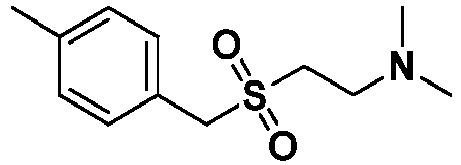 N,N,N-trimethyl-2-[(4-methylbenzyl)sulfonyl]ethanaminium iodide
 1- (2-[(4-Methylbenzyl)sulfonyl]ethyl)pyrrolidine
 1-Methyl-1-{2-[(4-methylbenzyl)sulfonyl]ethyl}pyrrolidinium iodide
 1-{2-[(4-bromobenzyl}sulfonyl]ethyl}pyrrolidine
 1-Methyl-1-{2-[(4-bromobenzyl)sulfonyllethyl]}pyrrolidinium iodide
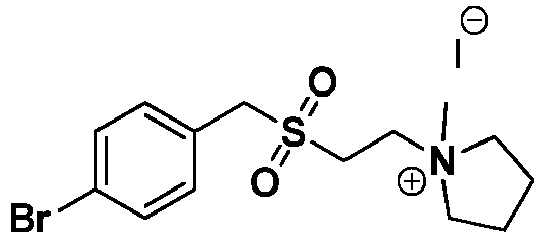 4-{3-[(4-methylbenzyl)sulfonyl]propyl}morpholine
 4-methyl-4-{3-[(4-methylbenzyl)sulfonyl]propyl}morpholin-4-ium iodide
 1-{3-[(4-Methylbenzyl)sulfonyl]propyl}-pyrrolidine
 1-Methyl-1-{3-[(4-methylbenzyl)sulfonyl]propyl}pyrrolidinium iodide
 N-{2-[(3-Fluorobenzyl)sulfonyl]ethyl}-N,N-dimethylamine
 N1 -{2-[(3-Fluorobenzyl)sulfonyl]ethyl}-N1 ,N2,N2 -trimethyl-1,2-ethanediamine
 4-{2-[(3-Fluorobenzyl)sulfonyl]ethyl}morpholine
 1-{2-[(3-Fluorobenzyl)sulfonyl]ethyl}pyrrolidine
 N-{2-[(4-Fluorobenzyl)sulfonyl]ethyl}-N,N-dimethylamine
 4-{2-[(4-Fluorobenzyl)sulfonyl]ethyl}morpholine
 1-{2-[(4-Fluorobenzyl)sulfonyl]ethyl}pyrrolidine
 N1 -{2-[(4-Fluorobenzyl)sulfonyl]ethyl}-N1 ,N2 ,N2 -trimethyl-1,2-ethanediamine
 (S)-N-(2-((3-fluorobenzyl)sulfonyl)ethyl)butan-2-amine
 (R)-N-(2-((3-Fluorobenzyl)sulfonyl)ethyl)butan-2-amine
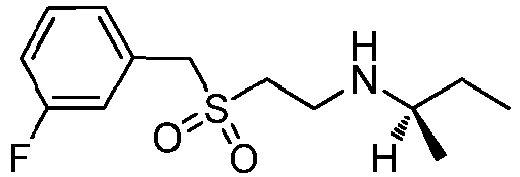 (S)-N-(2-((4-Bromobenzyl)sulfonyl)ethyl)butan-2-amine
 (R)-N-(2-((4-Bromobenzyl)sulfonyl)ethyl)butan-2-amine
- A compound according to claim 1 wherein the compound isN-{2-[(4-Bromobenzyl)sulfonyl]ethyl}-N,N-dimethylamine
 N,N,N-trimethyl-2-[(4-methylbenzyl)sulfonyl]ethanaminium iodide
- A compound according to claim 1 or claim 2 for use in medicine.
- A compound for use according to claim 3, wherein said use in medicine is for use in a method of treatment or prophylaxis of inflammatory diseases or conditions.
- A compound for use according to claim 4 for use in a method of treatment or prophylaxis of inflammatory diseases selected from the group consisting of type 1 diabetes mellitus, rheumatoid arthritis, systemic lupus erythematosus, psoriasis, multiple sclerosis, autoimmune hepatitis, sarcoidosis, inflammatory bowel disease, Crohn's disease, asthma, chronic obstructive pulmonary disease and atherosclerosis.
- A compound according to claim 5, for use in a method of treatment or prophylaxis of rheumatoid arthritis and asthma.
- A pharmaceutical composition comprising a compound according to claim 1 or claim 2, together with a pharmaceutically acceptable excipient.
Applications Claiming Priority (2)
| Application Number | Priority Date | Filing Date | Title |
|---|---|---|---|
| GBGB1214106.5A GB201214106D0 (en) | 2012-08-07 | 2012-08-07 | Immunomodulatory compounds |
| PCT/GB2013/051988 WO2014023934A1 (en) | 2012-08-07 | 2013-07-25 | Immunomodulatory compounds |
Publications (2)
| Publication Number | Publication Date |
|---|---|
| EP2882727A1 EP2882727A1 (en) | 2015-06-17 |
| EP2882727B1 true EP2882727B1 (en) | 2021-01-20 |
Family
ID=46935052
Family Applications (1)
| Application Number | Title | Priority Date | Filing Date |
|---|---|---|---|
| EP13742710.0A Active EP2882727B1 (en) | 2012-08-07 | 2013-07-25 | Immunomodulatory compounds |
Country Status (5)
| Country | Link |
|---|---|
| US (1) | US9598386B2 (en) |
| EP (1) | EP2882727B1 (en) |
| ES (1) | ES2868900T3 (en) |
| GB (1) | GB201214106D0 (en) |
| WO (1) | WO2014023934A1 (en) |
Family Cites Families (3)
| Publication number | Priority date | Publication date | Assignee | Title |
|---|---|---|---|---|
| CA2468658C (en) * | 2001-11-30 | 2009-04-14 | Schering Corporation | [1,2,4]-triazole bicyclic adenosine a2a receptor antagonists |
| PE20081636A1 (en) * | 2007-01-26 | 2009-01-10 | Smithkline Beecham Corp | ANTHRANILAMIDE INHIBITORS FOR AURORA KINASE |
| GB0702414D0 (en) | 2007-02-07 | 2007-03-21 | Argenta Discovery Ltd | Oxazole and thiazole derivatives and their uses 2 |
-
2012
- 2012-08-07 GB GBGB1214106.5A patent/GB201214106D0/en not_active Ceased
-
2013
- 2013-07-25 WO PCT/GB2013/051988 patent/WO2014023934A1/en not_active Ceased
- 2013-07-25 ES ES13742710T patent/ES2868900T3/en active Active
- 2013-07-25 EP EP13742710.0A patent/EP2882727B1/en active Active
- 2013-07-25 US US14/420,128 patent/US9598386B2/en active Active
Non-Patent Citations (1)
| Title |
|---|
| BUSCHAUER A ET AL: "Synthesis and histamine H2-agonistic activity of ring-substituted phenyl analogs of impromidine", DIE PHARMAZIE: AN INTERNATIONAL JOURNAL OF PHARMACEUTICAL SCIE, GOVI VERLAG PHARMAZEUTISCHER VERLAG GMBH, DE, vol. 46, no. 12, 1 January 1991 (1991-01-01), pages 840 - 845, XP008165051, ISSN: 0031-7144 * |
Also Published As
| Publication number | Publication date |
|---|---|
| US20150218116A1 (en) | 2015-08-06 |
| EP2882727A1 (en) | 2015-06-17 |
| WO2014023934A1 (en) | 2014-02-13 |
| US9598386B2 (en) | 2017-03-21 |
| GB201214106D0 (en) | 2012-09-19 |
| ES2868900T3 (en) | 2021-10-22 |
Similar Documents
| Publication | Publication Date | Title |
|---|---|---|
| JP7592140B2 (en) | Active agents for the treatment of metabolic disorders and non-alcoholic fatty liver disease and methods of use thereof - Patents.com | |
| JP6830671B6 (en) | Prodrug of γ-hydroxybutyric acid (GHB), its composition and use | |
| ES2659739T3 (en) | Ingenol 3-acylates III and ingenol 3-carbamates | |
| EP2968330B1 (en) | Compounds and methods for inducing chondrogenesis | |
| EA024967B1 (en) | Polycyclic lpa1 antagonist and uses thereof | |
| ES2874882T3 (en) | Carboxamide derivatives | |
| JP2002527496A (en) | Chemical compound | |
| TW201522303A (en) | Substituted 3-phenylpropylamine derivatives for the treatment of ophthalmic diseases and disorders | |
| CN113272298B (en) | Compounds and compositions for treating respiratory diseases | |
| US7915303B2 (en) | Glycopyrronium salts and their therapeutic use | |
| CN108349911A (en) | Nitric oxide-releasing prodrug molecules | |
| BR112020024210A2 (en) | cannabinoids and their uses | |
| KR20170123694A (en) | Ghrelin O-acyl transferase inhibitor | |
| ITMI982064A1 (en) | DERIVATIVES WITH N-ACYL VANILLINAMIDE STRUCTURE ABLE TO ACTIVATE THE PERIPHERAL RECEPTORS OF CANNABINOIDS | |
| CN102448965B (en) | Prostaglandin e receptor antagonists | |
| CA3123333A1 (en) | 2-fluorinated bile acids for the treatment of neurodegenerative diseases | |
| US9598386B2 (en) | Immunomodulatory compounds | |
| EP3085701B1 (en) | N, n' substituted piperidinamine compounds, and preparation method and usage thereof | |
| TW202339756A (en) | Uses of bicyclic compounds for the treatment of diseases | |
| PT97541B (en) | PROCESS FOR THE PREPARATION OF SUBSTITUTED INDOLES | |
| CA2289517A1 (en) | Novel sulfonamide derivatives | |
| JP2023507461A (en) | Phosphate derivatives of RORγ modulators and uses thereof | |
| JP6849615B2 (en) | Thiazide amide derivatives and their use | |
| EP3634948B1 (en) | Inhibitors of rac1 and uses thereof for inducing bronchodilatation | |
| JP2002511451A (en) | Azacycloalkane derivatives, their production and therapeutic use |
Legal Events
| Date | Code | Title | Description |
|---|---|---|---|
| PUAI | Public reference made under article 153(3) epc to a published international application that has entered the european phase |
Free format text: ORIGINAL CODE: 0009012 |
|
| 17P | Request for examination filed |
Effective date: 20150129 |
|
| AK | Designated contracting states |
Kind code of ref document: A1 Designated state(s): AL AT BE BG CH CY CZ DE DK EE ES FI FR GB GR HR HU IE IS IT LI LT LU LV MC MK MT NL NO PL PT RO RS SE SI SK SM TR |
|
| AX | Request for extension of the european patent |
Extension state: BA ME |
|
| DAX | Request for extension of the european patent (deleted) | ||
| 17Q | First examination report despatched |
Effective date: 20160129 |
|
| STAA | Information on the status of an ep patent application or granted ep patent |
Free format text: STATUS: EXAMINATION IS IN PROGRESS |
|
| GRAP | Despatch of communication of intention to grant a patent |
Free format text: ORIGINAL CODE: EPIDOSNIGR1 |
|
| STAA | Information on the status of an ep patent application or granted ep patent |
Free format text: STATUS: GRANT OF PATENT IS INTENDED |
|
| INTG | Intention to grant announced |
Effective date: 20200817 |
|
| GRAS | Grant fee paid |
Free format text: ORIGINAL CODE: EPIDOSNIGR3 |
|
| GRAA | (expected) grant |
Free format text: ORIGINAL CODE: 0009210 |
|
| STAA | Information on the status of an ep patent application or granted ep patent |
Free format text: STATUS: THE PATENT HAS BEEN GRANTED |
|
| AK | Designated contracting states |
Kind code of ref document: B1 Designated state(s): AL AT BE BG CH CY CZ DE DK EE ES FI FR GB GR HR HU IE IS IT LI LT LU LV MC MK MT NL NO PL PT RO RS SE SI SK SM TR |
|
| REG | Reference to a national code |
Ref country code: GB Ref legal event code: FG4D |
|
| REG | Reference to a national code |
Ref country code: CH Ref legal event code: EP |
|
| REG | Reference to a national code |
Ref country code: AT Ref legal event code: REF Ref document number: 1356280 Country of ref document: AT Kind code of ref document: T Effective date: 20210215 |
|
| REG | Reference to a national code |
Ref country code: IE Ref legal event code: FG4D |
|
| REG | Reference to a national code |
Ref country code: DE Ref legal event code: R096 Ref document number: 602013075382 Country of ref document: DE |
|
| REG | Reference to a national code |
Ref country code: CH Ref legal event code: NV Representative=s name: STOLMAR AND PARTNER INTELLECTUAL PROPERTY S.A., CH |
|
| REG | Reference to a national code |
Ref country code: NL Ref legal event code: MP Effective date: 20210120 |
|
| REG | Reference to a national code |
Ref country code: LT Ref legal event code: MG9D |
|
| REG | Reference to a national code |
Ref country code: AT Ref legal event code: MK05 Ref document number: 1356280 Country of ref document: AT Kind code of ref document: T Effective date: 20210120 |
|
| PG25 | Lapsed in a contracting state [announced via postgrant information from national office to epo] |
Ref country code: LT Free format text: LAPSE BECAUSE OF FAILURE TO SUBMIT A TRANSLATION OF THE DESCRIPTION OR TO PAY THE FEE WITHIN THE PRESCRIBED TIME-LIMIT Effective date: 20210120 Ref country code: PT Free format text: LAPSE BECAUSE OF FAILURE TO SUBMIT A TRANSLATION OF THE DESCRIPTION OR TO PAY THE FEE WITHIN THE PRESCRIBED TIME-LIMIT Effective date: 20210520 Ref country code: HR Free format text: LAPSE BECAUSE OF FAILURE TO SUBMIT A TRANSLATION OF THE DESCRIPTION OR TO PAY THE FEE WITHIN THE PRESCRIBED TIME-LIMIT Effective date: 20210120 Ref country code: FI Free format text: LAPSE BECAUSE OF FAILURE TO SUBMIT A TRANSLATION OF THE DESCRIPTION OR TO PAY THE FEE WITHIN THE PRESCRIBED TIME-LIMIT Effective date: 20210120 Ref country code: GR Free format text: LAPSE BECAUSE OF FAILURE TO SUBMIT A TRANSLATION OF THE DESCRIPTION OR TO PAY THE FEE WITHIN THE PRESCRIBED TIME-LIMIT Effective date: 20210421 Ref country code: BG Free format text: LAPSE BECAUSE OF FAILURE TO SUBMIT A TRANSLATION OF THE DESCRIPTION OR TO PAY THE FEE WITHIN THE PRESCRIBED TIME-LIMIT Effective date: 20210420 Ref country code: NO Free format text: LAPSE BECAUSE OF FAILURE TO SUBMIT A TRANSLATION OF THE DESCRIPTION OR TO PAY THE FEE WITHIN THE PRESCRIBED TIME-LIMIT Effective date: 20210420 Ref country code: NL Free format text: LAPSE BECAUSE OF FAILURE TO SUBMIT A TRANSLATION OF THE DESCRIPTION OR TO PAY THE FEE WITHIN THE PRESCRIBED TIME-LIMIT Effective date: 20210120 |
|
| PG25 | Lapsed in a contracting state [announced via postgrant information from national office to epo] |
Ref country code: AT Free format text: LAPSE BECAUSE OF FAILURE TO SUBMIT A TRANSLATION OF THE DESCRIPTION OR TO PAY THE FEE WITHIN THE PRESCRIBED TIME-LIMIT Effective date: 20210120 Ref country code: RS Free format text: LAPSE BECAUSE OF FAILURE TO SUBMIT A TRANSLATION OF THE DESCRIPTION OR TO PAY THE FEE WITHIN THE PRESCRIBED TIME-LIMIT Effective date: 20210120 Ref country code: LV Free format text: LAPSE BECAUSE OF FAILURE TO SUBMIT A TRANSLATION OF THE DESCRIPTION OR TO PAY THE FEE WITHIN THE PRESCRIBED TIME-LIMIT Effective date: 20210120 Ref country code: PL Free format text: LAPSE BECAUSE OF FAILURE TO SUBMIT A TRANSLATION OF THE DESCRIPTION OR TO PAY THE FEE WITHIN THE PRESCRIBED TIME-LIMIT Effective date: 20210120 Ref country code: SE Free format text: LAPSE BECAUSE OF FAILURE TO SUBMIT A TRANSLATION OF THE DESCRIPTION OR TO PAY THE FEE WITHIN THE PRESCRIBED TIME-LIMIT Effective date: 20210120 |
|
| PG25 | Lapsed in a contracting state [announced via postgrant information from national office to epo] |
Ref country code: IS Free format text: LAPSE BECAUSE OF FAILURE TO SUBMIT A TRANSLATION OF THE DESCRIPTION OR TO PAY THE FEE WITHIN THE PRESCRIBED TIME-LIMIT Effective date: 20210520 |
|
| REG | Reference to a national code |
Ref country code: DE Ref legal event code: R097 Ref document number: 602013075382 Country of ref document: DE |
|
| REG | Reference to a national code |
Ref country code: ES Ref legal event code: FG2A Ref document number: 2868900 Country of ref document: ES Kind code of ref document: T3 Effective date: 20211022 |
|
| PG25 | Lapsed in a contracting state [announced via postgrant information from national office to epo] |
Ref country code: SM Free format text: LAPSE BECAUSE OF FAILURE TO SUBMIT A TRANSLATION OF THE DESCRIPTION OR TO PAY THE FEE WITHIN THE PRESCRIBED TIME-LIMIT Effective date: 20210120 Ref country code: EE Free format text: LAPSE BECAUSE OF FAILURE TO SUBMIT A TRANSLATION OF THE DESCRIPTION OR TO PAY THE FEE WITHIN THE PRESCRIBED TIME-LIMIT Effective date: 20210120 Ref country code: CZ Free format text: LAPSE BECAUSE OF FAILURE TO SUBMIT A TRANSLATION OF THE DESCRIPTION OR TO PAY THE FEE WITHIN THE PRESCRIBED TIME-LIMIT Effective date: 20210120 |
|
| PLBE | No opposition filed within time limit |
Free format text: ORIGINAL CODE: 0009261 |
|
| STAA | Information on the status of an ep patent application or granted ep patent |
Free format text: STATUS: NO OPPOSITION FILED WITHIN TIME LIMIT |
|
| PG25 | Lapsed in a contracting state [announced via postgrant information from national office to epo] |
Ref country code: SK Free format text: LAPSE BECAUSE OF FAILURE TO SUBMIT A TRANSLATION OF THE DESCRIPTION OR TO PAY THE FEE WITHIN THE PRESCRIBED TIME-LIMIT Effective date: 20210120 Ref country code: DK Free format text: LAPSE BECAUSE OF FAILURE TO SUBMIT A TRANSLATION OF THE DESCRIPTION OR TO PAY THE FEE WITHIN THE PRESCRIBED TIME-LIMIT Effective date: 20210120 Ref country code: RO Free format text: LAPSE BECAUSE OF FAILURE TO SUBMIT A TRANSLATION OF THE DESCRIPTION OR TO PAY THE FEE WITHIN THE PRESCRIBED TIME-LIMIT Effective date: 20210120 |
|
| 26N | No opposition filed |
Effective date: 20211021 |
|
| PG25 | Lapsed in a contracting state [announced via postgrant information from national office to epo] |
Ref country code: AL Free format text: LAPSE BECAUSE OF FAILURE TO SUBMIT A TRANSLATION OF THE DESCRIPTION OR TO PAY THE FEE WITHIN THE PRESCRIBED TIME-LIMIT Effective date: 20210120 |
|
| PG25 | Lapsed in a contracting state [announced via postgrant information from national office to epo] |
Ref country code: SI Free format text: LAPSE BECAUSE OF FAILURE TO SUBMIT A TRANSLATION OF THE DESCRIPTION OR TO PAY THE FEE WITHIN THE PRESCRIBED TIME-LIMIT Effective date: 20210120 |
|
| PG25 | Lapsed in a contracting state [announced via postgrant information from national office to epo] |
Ref country code: MC Free format text: LAPSE BECAUSE OF FAILURE TO SUBMIT A TRANSLATION OF THE DESCRIPTION OR TO PAY THE FEE WITHIN THE PRESCRIBED TIME-LIMIT Effective date: 20210120 |
|
| REG | Reference to a national code |
Ref country code: BE Ref legal event code: MM Effective date: 20210731 |
|
| PG25 | Lapsed in a contracting state [announced via postgrant information from national office to epo] |
Ref country code: IS Free format text: LAPSE BECAUSE OF FAILURE TO SUBMIT A TRANSLATION OF THE DESCRIPTION OR TO PAY THE FEE WITHIN THE PRESCRIBED TIME-LIMIT Effective date: 20210520 Ref country code: LU Free format text: LAPSE BECAUSE OF NON-PAYMENT OF DUE FEES Effective date: 20210725 |
|
| PG25 | Lapsed in a contracting state [announced via postgrant information from national office to epo] |
Ref country code: IE Free format text: LAPSE BECAUSE OF NON-PAYMENT OF DUE FEES Effective date: 20210725 Ref country code: BE Free format text: LAPSE BECAUSE OF NON-PAYMENT OF DUE FEES Effective date: 20210731 |
|
| PG25 | Lapsed in a contracting state [announced via postgrant information from national office to epo] |
Ref country code: HU Free format text: LAPSE BECAUSE OF FAILURE TO SUBMIT A TRANSLATION OF THE DESCRIPTION OR TO PAY THE FEE WITHIN THE PRESCRIBED TIME-LIMIT; INVALID AB INITIO Effective date: 20130725 |
|
| PG25 | Lapsed in a contracting state [announced via postgrant information from national office to epo] |
Ref country code: CY Free format text: LAPSE BECAUSE OF FAILURE TO SUBMIT A TRANSLATION OF THE DESCRIPTION OR TO PAY THE FEE WITHIN THE PRESCRIBED TIME-LIMIT Effective date: 20210120 |
|
| P01 | Opt-out of the competence of the unified patent court (upc) registered |
Effective date: 20230525 |
|
| PG25 | Lapsed in a contracting state [announced via postgrant information from national office to epo] |
Ref country code: MK Free format text: LAPSE BECAUSE OF FAILURE TO SUBMIT A TRANSLATION OF THE DESCRIPTION OR TO PAY THE FEE WITHIN THE PRESCRIBED TIME-LIMIT Effective date: 20210120 |
|
| PG25 | Lapsed in a contracting state [announced via postgrant information from national office to epo] |
Ref country code: MT Free format text: LAPSE BECAUSE OF FAILURE TO SUBMIT A TRANSLATION OF THE DESCRIPTION OR TO PAY THE FEE WITHIN THE PRESCRIBED TIME-LIMIT Effective date: 20210120 |
|
| PG25 | Lapsed in a contracting state [announced via postgrant information from national office to epo] |
Ref country code: TR Free format text: LAPSE BECAUSE OF FAILURE TO SUBMIT A TRANSLATION OF THE DESCRIPTION OR TO PAY THE FEE WITHIN THE PRESCRIBED TIME-LIMIT Effective date: 20210120 |
|
| REG | Reference to a national code |
Ref country code: CH Ref legal event code: U11 Free format text: ST27 STATUS EVENT CODE: U-0-0-U10-U11 (AS PROVIDED BY THE NATIONAL OFFICE) Effective date: 20260126 |
|
| PGFP | Annual fee paid to national office [announced via postgrant information from national office to epo] |
Ref country code: GB Payment date: 20260126 Year of fee payment: 13 |
|
| PGFP | Annual fee paid to national office [announced via postgrant information from national office to epo] |
Ref country code: ES Payment date: 20260126 Year of fee payment: 13 |
|
| PGFP | Annual fee paid to national office [announced via postgrant information from national office to epo] |
Ref country code: DE Payment date: 20260123 Year of fee payment: 13 |
|
| PGFP | Annual fee paid to national office [announced via postgrant information from national office to epo] |
Ref country code: IT Payment date: 20260127 Year of fee payment: 13 |
|
| PGFP | Annual fee paid to national office [announced via postgrant information from national office to epo] |
Ref country code: FR Payment date: 20260126 Year of fee payment: 13 |
|
| PGFP | Annual fee paid to national office [announced via postgrant information from national office to epo] |
Ref country code: CH Payment date: 20260126 Year of fee payment: 13 |