EP2882224A1 - Method for identifying context of user equipment, user equipment, and base station - Google Patents
Method for identifying context of user equipment, user equipment, and base station Download PDFInfo
- Publication number
- EP2882224A1 EP2882224A1 EP12882439.8A EP12882439A EP2882224A1 EP 2882224 A1 EP2882224 A1 EP 2882224A1 EP 12882439 A EP12882439 A EP 12882439A EP 2882224 A1 EP2882224 A1 EP 2882224A1
- Authority
- EP
- European Patent Office
- Prior art keywords
- base station
- terminal identity
- identity
- context
- identification method
- Prior art date
- Legal status (The legal status is an assumption and is not a legal conclusion. Google has not performed a legal analysis and makes no representation as to the accuracy of the status listed.)
- Withdrawn
Links
Images


Classifications
-
- H—ELECTRICITY
- H04—ELECTRIC COMMUNICATION TECHNIQUE
- H04W—WIRELESS COMMUNICATION NETWORKS
- H04W36/00—Hand-off or reselection arrangements
- H04W36/0005—Control or signalling for completing the hand-off
- H04W36/0011—Control or signalling for completing the hand-off for data sessions of end-to-end connection
- H04W36/0033—Control or signalling for completing the hand-off for data sessions of end-to-end connection with transfer of context information
-
- H—ELECTRICITY
- H04—ELECTRIC COMMUNICATION TECHNIQUE
- H04W—WIRELESS COMMUNICATION NETWORKS
- H04W36/00—Hand-off or reselection arrangements
- H04W36/0005—Control or signalling for completing the hand-off
- H04W36/0055—Transmission or use of information for re-establishing the radio link
- H04W36/0072—Transmission or use of information for re-establishing the radio link of resource information of target access point
-
- H—ELECTRICITY
- H04—ELECTRIC COMMUNICATION TECHNIQUE
- H04W—WIRELESS COMMUNICATION NETWORKS
- H04W36/00—Hand-off or reselection arrangements
- H04W36/0005—Control or signalling for completing the hand-off
- H04W36/0055—Transmission or use of information for re-establishing the radio link
- H04W36/0079—Transmission or use of information for re-establishing the radio link in case of hand-off failure or rejection
-
- H—ELECTRICITY
- H04—ELECTRIC COMMUNICATION TECHNIQUE
- H04W—WIRELESS COMMUNICATION NETWORKS
- H04W36/00—Hand-off or reselection arrangements
- H04W36/0005—Control or signalling for completing the hand-off
- H04W36/0083—Determination of parameters used for hand-off, e.g. generation or modification of neighbour cell lists
- H04W36/0085—Hand-off measurements
-
- H—ELECTRICITY
- H04—ELECTRIC COMMUNICATION TECHNIQUE
- H04W—WIRELESS COMMUNICATION NETWORKS
- H04W36/00—Hand-off or reselection arrangements
- H04W36/08—Reselecting an access point
-
- H—ELECTRICITY
- H04—ELECTRIC COMMUNICATION TECHNIQUE
- H04W—WIRELESS COMMUNICATION NETWORKS
- H04W36/00—Hand-off or reselection arrangements
- H04W36/24—Reselection being triggered by specific parameters
- H04W36/249—Reselection being triggered by specific parameters according to timing information
-
- H—ELECTRICITY
- H04—ELECTRIC COMMUNICATION TECHNIQUE
- H04W—WIRELESS COMMUNICATION NETWORKS
- H04W36/00—Hand-off or reselection arrangements
- H04W36/24—Reselection being triggered by specific parameters
- H04W36/30—Reselection being triggered by specific parameters by measured or perceived connection quality data
- H04W36/305—Handover due to radio link failure
-
- H—ELECTRICITY
- H04—ELECTRIC COMMUNICATION TECHNIQUE
- H04W—WIRELESS COMMUNICATION NETWORKS
- H04W76/00—Connection management
- H04W76/10—Connection setup
- H04W76/18—Management of setup rejection or failure
-
- H—ELECTRICITY
- H04—ELECTRIC COMMUNICATION TECHNIQUE
- H04W—WIRELESS COMMUNICATION NETWORKS
- H04W88/00—Devices specially adapted for wireless communication networks, e.g. terminals, base stations or access point devices
- H04W88/08—Access point devices
Definitions
- the present disclosure relates to the field of communications, and in particular to a UE context identification method, UE and a base station.
- a base station performs optimization of mobility performance
- a function of self-optimization is defined in an LTE-A system.
- a base station is capable of identifying a context of UE in optimizing mobility performance of the UE.
- the UE may currently carry terminal identity information of the UE in some messages, such as a radio link failure (RLF) report, so that the base station obtains the context of the UE according to the information.
- RLF radio link failure
- identity information of a last serving cell is always carried in the RLF report of the UE, which results in that the base station cannot identify the context of the UE in some scenarios.
- Embodiments of the present disclosure provide a UE context identification method, UE and a base station, with an object being to enhance an action of the base station or an action of the UE, thereby ensuring that the base station is always able to identify the context of the UE.
- a UE context identification method including:
- a UE context identification method wherein UE is handed over from a second base station to a first base station, and the method includes:
- a UE context identification method including:
- a base station wherein UE is handed over from a second base station to the base station, and the base station includes:
- a base station wherein UE is handed over from the base station to a first base station, and the base station includes:
- UE including:
- a communication system including the base station as described above, or including the UE as described above.
- a computer-readable program wherein when the program is executed in UE, the program enables a computer to carry out the UE context identification method as described above in the UE.
- a storage medium in which a computer-readable program is stored, wherein the computer-readable program enables a computer to carry out the UE context identification method as described above in UE.
- a computer-readable program wherein when the program is executed in a base station, the program enables a computer to carry out the UE context identification method as described above in the base station.
- a storage medium in which a computer-readable program is stored, wherein the computer-readable program enables a computer to carry out the UE context identification method as described above in a base station.
- An advantage of the embodiments of the present disclosure exists in that by enhancing an action of the base station or an action of the UE, it is ensured that the base station is always able to identify the context of the UE.
- An embodiment of the present disclosure provides a UE context identification method, wherein UE is handed over from a second base station to a first base station, and this embodiment is applicable to the first base station.
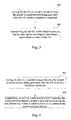
- Fig. 1 is a flowchart of the UE context identification method of this embodiment. As shown in Fig. 1 , the identification method includes:
- the first base station may be a target base station of a handover, and may be a transmission side of a handover report (see TS36.423 for details); and the second base station may be a source base station of the handover, and may be a reception side of the handover report.
- the UE is handed over from the second base station to the first base station, and experiences a connection failure, which may be, for example, a radio link failure (RLF), and may also be a handover failure (HOF).
- a connection failure which may be, for example, a radio link failure (RLF), and may also be a handover failure (HOF).
- steps 102 and 103 may be executed in the following cases.
- a type of the handover report is that the handover is too early or it is handed over to a wrong cell; or a type of the connection failure is a radio link failure; or radio resource control (RRC) connection reestablishment is unsuccessful after the connection failure.
- RRC radio resource control
- the present disclosure is not limited thereto, and a condition of execution may be determined according to an actual situation.
- the UE may transmit the first terminal identity to the network side, such as carrying UE_identity_1 information in transmitting the RLF report; wherein, the first terminal identity may be a cell radio network temporary identity (C-RNTI), or a short media access control identity (shortMAC-I) (refer to TS36.331 for details), or a C-RNTI and a shortMAC-I.
- C-RNTI cell radio network temporary identity
- shortMAC-I short media access control identity
- the present disclosure is not limited thereto, and detailed information may be determined according to an actual situation.
- the first base station may obtain the first terminal identity of the UE.
- the first terminal identity of the UE may be obtained by directly receiving an RLF report transmitted by the UE; or the first terminal identity of the UE may be obtained from a message transmitted by another base station at the network side.
- the first base station may judge whether the first terminal identity is a C-RNTI_1 allocated by itself to the UE, or whether the first terminal identity is a shortMAC-I_1 corresponding to the first base station. If yes, the first base station may find in the context of the UE according to the first terminal identity, so as to find the second terminal identity corresponding to the second base station; wherein, the second terminal identity may be a cell radio network temporary identity (C-RNTI), or a short media access control identity (shortMAC-I), or a C-RNTI and a shortMAC-I.
- C-RNTI cell radio network temporary identity
- shortMAC-I short media access control identity
- the present disclosure is not limited thereto, and detailed information may be determined according to an actual situation.
- the first base station may add the found second terminal identity (for example, a shortMAC-I_2 allocated by the second base station to the UE, or a shortMAC-I_2 generated when the UE is handed over from the second base station to the first base station) into the handover report. And the first base station may transmit the handover report to the second base station after receiving RLF indication (refer to TS36.423 for details) from another base station.
- the found second terminal identity for example, a shortMAC-I_2 allocated by the second base station to the UE, or a shortMAC-I_2 generated when the UE is handed over from the second base station to the first base station.
- the second base station may find the context of the UE according to the second terminal identity after receiving the handover report.
- the source base station is enabled to find the context of the UE according to the corresponding terminal identity, by transmitting the terminal identity corresponding to the source base station by the target base station to the source base station.
- An embodiment of the present disclosure provides a UE context identification method, wherein the UE is handed over from a second base station to a first base station, and this embodiment is applicable to the second base station.
- Fig. 2 is another flowchart of the UE context identification method of the embodiment. As shown in Fig. 2 , the identification method includes:
- the first base station may be a target base station of a handover, and may be a transmission side of a handover report; and the second base station may be a source base station of the handover, and may be a reception side of the handover report.
- the UE is handed over from the second base station to the first base station, and experiences a connection failure, which may be, for example, an RLF, and may also be a handover failure (HOF).
- a connection failure which may be, for example, an RLF, and may also be a handover failure (HOF).
- the second base station may receive a handover request acknowledge message during handover preparation (refer to TS36.423 for details). And the second base station may read the handover request acknowledge message, so as to acquire the first terminal identity corresponding to the first base station; wherein the first terminal identity may be a cell radio network temporary identity (C-RNTI), or a short media access control identity (shortMAC-I), or a C-RNTI and a shortMAC-I.
- C-RNTI cell radio network temporary identity
- shortMAC-I short media access control identity
- the present disclosure is not limited thereto, and detailed information may be determined according to an actual situation.
- the second base station may store the first terminal identity (such as a C-RNTI_1 or a shortMAC-I_1), thereby associating the first terminal identity with the UE.
- the first terminal identity such as a C-RNTI_1 or a shortMAC-I_1
- mapping relationship between the first terminal identity and the UE may be established, and the first terminal identity may be associated with the second terminal identity of the UE (such as a C-RNTI_2 or a shortMAC-I_2) corresponding to the second base station.
- the second base station may find the context of the UE according to the first terminal identity in receiving the handover report containing the first terminal identity.
- the source base station is enabled to associate the UE with the terminal identity corresponding to the target base station by obtaining the terminal identity corresponding to the target base station from the handover request acknowledge message. Therefore, the source base station may find the context of the UE according to the terminal identity in receiving the handover report.
- An embodiment of the present disclosure provides a UE context identification method, which is applicable to UE.
- Fig. 3 is still another flowchart of the UE context identification method of the embodiment. As shown in Fig. 3 , the identification method includes:
- the UE may generate the second terminal identity after receiving the handover command (refer to TS36.331 for details).
- the second terminal identity may be a C-RNTI allocated by the base station where the UE is present after receiving the handover command, or a shortMAC-I generated when the UE is handed over from a source cell to a target cell, or may be a C-RNTI and a shortMAC-I.
- the UE may transmit the link failure report after a connection failure (such as a radio link failure (RLF) or a handover failure (HOF)).
- a connection failure such as a radio link failure (RLF) or a handover failure (HOF)
- RLF radio link failure
- HAF handover failure
- the UE may add the second terminal identity into the RLF report after the connection failure (such as an RLF or a HOF) occurs, and transmit the RLF report to the network side.
- a base station receiving the RLF report may find the context of the UE according to the second terminal identity, and may optimize a parameter of mobility performance.
- Fig. 4 is further still another flowchart of the UE context identification method of the embodiment. As shown in Fig. 4 , the identification method includes:
- the UE may have a timer, and the timer may be started according to the handover command.
- the present disclosure is not limited thereto, and a particular mode of implementation may be determined according to an actual situation.
- Fig. 5 is yet still another flowchart of the UE context identification method of the embodiment. As shown in Fig. 5 , the identification method includes:
- the second terminal identity is generated after the UE receives the handover command
- the second terminal identity is a short media access control identity (shortMAC-I)
- the context of the UE may be identified uniquely even if a case where the base station allocates repeated C-RNTIs occurs.
- the base station by generating the terminal identity by the UE after receiving the handover command, the base station is enabled to identify the context of the UE according to the terminal identity, and optimize a parameter of mobility performance.
- An embodiment of the present disclosure provides a base station, wherein the base station is a first base station, and UE is handed over from a second base station to the base station.
- the embodiment of the present disclosure corresponds to Embodiment 1, and repeated parts shall not be described any further.
- Fig. 6 is a schematic diagram of the structure of the base station of the embodiment of the present disclosure.
- the base station 600 includes: an identity obtaining unit 601, an identity finding unit 602 and a report transmitting unit 603; and the relevant art may be referred to for other parts of the base station 600; wherein, the identity obtaining unit 601 is configured to obtain a first terminal identity of the UE; wherein the first terminal identity is transmitted by the UE to a network side after connection failure; the identity finding unit 602 is configured to find a second terminal identity corresponding to the second base station in a context of the UE according to the first terminal identity; and the report transmitting unit 603 is configured to transmit to the second base station a handover report containing the second terminal identity, so that the second base station finds the context of the UE according to the second terminal identity.
- the identity obtaining unit 601 may obtain the first terminal identity of the UE by receiving a link failure report transmitted by the UE; or the identity obtaining unit 601 may obtain the first terminal identity of the UE from a message transmitted by another base station at the network side.
- the first terminal identity or the second terminal identity may be a cell radio network temporary identity (C-RNTI) and/or a short media access control identity (shortMAC-I).
- C-RNTI cell radio network temporary identity
- shortMAC-I short media access control identity
- the source base station is enabled to find the context of the UE according to the corresponding terminal identity by transmitting the terminal identity corresponding to the source base station by the target base station to the source base station.
- An embodiment of the present disclosure provides a base station, wherein the base station is a second base station, and UE is handed over from the second base station to a first base station.
- the embodiment of the present disclosure corresponds to Embodiment 2, and repeated parts shall not be described any further.
- Fig. 7 is a schematic diagram of the structure of the base station of the embodiment of the present disclosure.
- the base station 700 includes: a message reading unit 701 and a context finding unit 702; and the relevant art may be referred to for other parts of the base station 700; wherein, the message reading unit 701 is configured to read a handover request acknowledge message, so as to acquire a first terminal identity corresponding to the first base station; and the context finding unit 702 is configured to find a context of the UE according to the first terminal identity when a handover report containing the first terminal identity is received.
- the first terminal identity may be a cell radio network temporary identity (C-RNTI) and/or a short media access control identity (shortMAC-I) .
- C-RNTI cell radio network temporary identity
- shortMAC-I short media access control identity
- the source base station is enabled to associate the UE with the terminal identity corresponding to the target base station by obtaining the terminal identity corresponding to the target base station from the handover request acknowledge message. Therefore, the source base station may find the context of the UE according to the terminal identity in receiving the handover report.
- An embodiment of the present disclosure provides UE.
- the embodiment of the present disclosure corresponds to Embodiment 3, and repeated parts shall not be described any further.
- Fig. 8 is a schematic diagram of the structure of the UE of the embodiment of the present disclosure.
- the UE 800 includes: an identity storing unit 801 and an information transmitting unit 802; and the relevant art may be referred to for other parts of the UE 800; wherein, the identity storing unit 801 is configured to store a second terminal identity generated after a handover command is received, and the information transmitting unit 802 is configured to transmit a link failure report, so that a base station receiving the link failure report finds a context of the UE.
- the information transmitting unit 802 is configured to transmit the link failure report containing the second terminal identity, so that the base station receiving the link failure report finds the context of the UE according to the second terminal identity.
- the UE may have a timer. And a preset time of the timer is configured by a network side, or is configured by the UE, or is preset according to a standard.
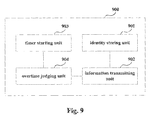
- Fig. 9 is another schematic diagram of the structure of the UE of the embodiment of the present disclosure.
- the UE 900 includes: an identity storing unit 901 and an information transmitting unit 902.
- the UE 900 may further include a timer starting unit 903 and an overtime judging unit 904; wherein, the timer starting unit 903 is configured to start the timer, and the overtime judging unit 904 is configured to judge whether the timer exceeds a preset time when a connection failure occurs.
- the information transmitting unit 902 is configured to transmit a link failure report containing the second terminal identity when a connection failure (such as an RLF or a HOF) occurs at a time when the timer does not exceed the preset time, so that the base station finds the context of the UE according to the second terminal identity; and to transmit a link failure report containing a first terminal identity when a connection failure (such as an RLF or an HOF) occurs at a time when the timer exceeds the preset time, so that the base station finds the context of the UE according to the first terminal identity; wherein the first terminal identity is generated when a link failure occurs at the UE, or is generated when RRC connection is reestablished after the link failure occurs.
- a connection failure such as an RLF or a HOF
- the first terminal identity or the second terminal identity is a cell radio network temporary identity (C-RNTI) and/or a short media access control identity (shortMAC-I).
- C-RNTI cell radio network temporary identity
- shortMAC-I short media access control identity
- the base station by generating the terminal identity by the UE after receiving the handover command, the base station is enabled to identify the context of the UE according to the terminal identity, and optimize a parameter of mobility performance.
- An embodiment of the present disclosure further provides a communication system, including the base station as described in Embodiment 4, or including the base station as described in Embodiment 5, or including the UE as described in Embodiment 6.
- An embodiment of the present disclosure further provides a computer-readable program, wherein when the program is executed in UE, the program enables a computer to carry out the UE context identification method as described in Embodiment 3 in the UE.
- An embodiment of the present disclosure further provides a storage medium in which a computer-readable program is stored, wherein the computer-readable program enables a computer to carry out the UE context identification method as described in Embodiment 3 in UE.
- An embodiment of the present disclosure further provides a computer-readable program, wherein when the program is executed in a base station, the program enables a computer to carry out the UE context identification method as described in Embodiment 1 or 2 in the base station.
- An embodiment of the present disclosure further provides a storage medium in which a computer-readable program is stored, wherein the computer-readable program enables a computer to carry out the UE context identification method as described in Embodiment 1 or 2 in a base station.
- the above apparatus and method of the present disclosure may be implemented by hardware, or by hardware in combination with software.
- the present disclosure relates to such a computer-readable program that when the program is executed by a logic device, the logic device is enabled to carry out the apparatus or components as described above, or to carry out the methods or steps as described above.
- the present disclosure also relates to a storage medium for storing the above program, such as a hard disk, a floppy disk, a CD, a DVD, and a flash memory, etc.
- One or more functional blocks and/or one or more combinations of the functional blocks in Figs. 13-20 may be realized as a universal processor, a digital signal processor (DSP), an application-specific integrated circuit (ASIC), a field programmable gate array (FPGA) or other programmable logic devices, discrete gate or transistor logic devices, discrete hardware component or any appropriate combinations thereof. And they may also be realized as a combination of computing equipment, such as a combination of a DSP and a microprocessor, multiple processors, one or more microprocessors in communication combination with a DSP, or any other such configuration.
- DSP digital signal processor
- ASIC application-specific integrated circuit
- FPGA field programmable gate array
Landscapes
- Engineering & Computer Science (AREA)
- Computer Networks & Wireless Communication (AREA)
- Signal Processing (AREA)
- Mobile Radio Communication Systems (AREA)
Abstract
Description
- The present disclosure relates to the field of communications, and in particular to a UE context identification method, UE and a base station.
- In order that a base station performs optimization of mobility performance, a function of self-optimization is defined in an LTE-A system. And in order to further ensure accuracy of such optimization, it is under study in 3GPP that a base station is capable of identifying a context of UE in optimizing mobility performance of the UE. Hence, the UE may currently carry terminal identity information of the UE in some messages, such as a radio link failure (RLF) report, so that the base station obtains the context of the UE according to the information.
- However, it was found by the inventors that in the existing scheme, identity information of a last serving cell is always carried in the RLF report of the UE, which results in that the base station cannot identify the context of the UE in some scenarios.
- It should be noted that the above description of the background is merely provided for clear and complete explanation of the present disclosure and for easy understanding by those skilled in the art. And it should not be understood that the above technical solution is known to those skilled in the art as it is described in the background of the present disclosure.
- Embodiments of the present disclosure provide a UE context identification method, UE and a base station, with an object being to enhance an action of the base station or an action of the UE, thereby ensuring that the base station is always able to identify the context of the UE.
- According to an aspect of the embodiments of the present disclosure, there is provided a UE context identification method, including:
- obtaining a first terminal identity of UE by a first base station, wherein the first terminal identity is transmitted by the UE to a network side after connection failure;
- finding a second terminal identity corresponding to a second base station in a context of the UE according to the first terminal identity; and
- transmitting to the second base station a handover report containing the second terminal identity, so that the second base station finds the context of the UE according to the second terminal identity.
- According to another aspect of the embodiments of the present disclosure, there is provided a UE context identification method, wherein UE is handed over from a second base station to a first base station, and the method includes:
- reading a handover request acknowledge message by the second base station, so as to acquire a first terminal identity corresponding to the first base station; and
- finding a context of the UE according to the first terminal identity when a handover report containing the first terminal identity is received.
- According to still another aspect of the embodiments of the present disclosure, there is provided a UE context identification method, including:
- storing a second terminal identity by UE, the second terminal identity being generated after the UE receives a handover command; and
- transmitting a link failure report by the UE, so that a base station receiving the link failure report finds a context of the UE.
- According to still another aspect of the embodiments of the present disclosure, there is provided a base station, wherein UE is handed over from a second base station to the base station, and the base station includes:
- an identity obtaining unit configured to obtain a first terminal identity of the UE, wherein the first terminal identity is transmitted by the UE to a network side after connection failure;
- an identity finding unit configured to find a second terminal identity corresponding to the second base station in a context of the UE according to the first terminal identity; and
- a report transmitting unit configured to transmit to the second base station a handover report containing the second terminal identity, so that the second base station finds the context of the UE according to the second terminal identity.
- According to still another aspect of the embodiments of the present disclosure, there is provided a base station, wherein UE is handed over from the base station to a first base station, and the base station includes:
- a message reading unit configured to read a handover request acknowledge message, so as to acquire a first terminal identity corresponding to the first base station; and
- a context finding unit configured to find a context of the UE according to the first terminal identity when a handover report containing the first terminal identity is received.
- According to still another aspect of the embodiments of the present disclosure, there is provided UE, including:
- an identity storing unit configured to store a second terminal identity generated after a handover command is received; and
- an information transmitting unit configured to transmit a link failure report, so that an base station receiving the link failure report finds a context of the UE.
- According to still another aspect of the embodiments of the present disclosure, there is provided a communication system, including the base station as described above, or including the UE as described above.
- According to still another aspect of the embodiments of the present disclosure, there is provided a computer-readable program, wherein when the program is executed in UE, the program enables a computer to carry out the UE context identification method as described above in the UE.
- According to still another aspect of the embodiments of the present disclosure, there is provided a storage medium in which a computer-readable program is stored, wherein the computer-readable program enables a computer to carry out the UE context identification method as described above in UE.
- According to still another aspect of the embodiments of the present disclosure, there is provided a computer-readable program, wherein when the program is executed in a base station, the program enables a computer to carry out the UE context identification method as described above in the base station.
- According to still another aspect of the embodiments of the present disclosure, there is provided a storage medium in which a computer-readable program is stored, wherein the computer-readable program enables a computer to carry out the UE context identification method as described above in a base station.
- An advantage of the embodiments of the present disclosure exists in that by enhancing an action of the base station or an action of the UE, it is ensured that the base station is always able to identify the context of the UE.
- With reference to the following description and drawings, the particular embodiments of the present disclosure are disclosed in detail, and the principle of the present disclosure and the manners of use are indicated. It should be understood that the scope of the embodiments of the present disclosure is not limited thereto. The embodiments of the present disclosure contain many alternations, modifications and equivalents within the spirits and scope of the terms of the appended claims.
- Features that are described and/or illustrated with respect to one embodiment may be used in the same way or in a similar way in one or more other embodiments and/or in combination with or instead of the features of the other embodiments.
- It should be emphasized that the term "includes/including/comprises/comprising" when used in this specification is taken to specify the presence of stated features, integers, steps or components but does not preclude the presence or addition of one or more other features, integers, steps, components or groups thereof.
- Many aspects of the disclosure can be better understood with reference to the following drawings. The components in the drawings are not necessarily to scale, emphasis instead being placed upon clearly illustrating the principles of the present disclosure. To facilitate illustrating and describing some parts of the disclosure, corresponding portions of the drawings may be exaggerated in size.
- Elements and features depicted in one drawing or embodiment of the disclosure may be combined with elements and features depicted in one or more additional drawings or embodiments. Moreover, in the drawings, like reference numerals designate corresponding parts throughout the several views and may be used to designate like or similar parts in more than one embodiment.
-
Figure 1 is a flowchart of the UE context identification method of Embodiment 1 of the present disclosure; -
Figure 2 is a flowchart of the UE context identification method of Embodiment 2 of the present disclosure; -
Figure 3 is a flowchart of the UE context identification method of Embodiment 3 of the present disclosure; -
Figure 4 is another flowchart of the UE context identification method of Embodiment 3 of the present disclosure; -
Figure 5 is still another flowchart of the UE context identification method of Embodiment 3 of the present disclosure; -
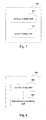
Figure 6 is a schematic diagram of the structure of the base station of Embodiment 4 of the present disclosure; -
Figure 7 is a schematic diagram of the structure of the base station of Embodiment 5 of the present disclosure; -
Figure 8 is a schematic diagram of the structure of the UE of Embodiment 6 of the present disclosure; and -
Figure 9 is another schematic diagram of the structure of the UE of Embodiment 6 of the present disclosure. - These and further aspects and features of the present disclosure will be apparent with reference to the following description and attached drawings. In the description and drawings, particular embodiments of the disclosure have been disclosed in detail as being indicative of some of the ways in which the principles of the disclosure may be employed, but it is understood that the disclosure is not limited correspondingly in scope. Rather, the disclosure includes all changes, modifications and equivalents coming within the spirit and terms of the appended claims.
- An embodiment of the present disclosure provides a UE context identification method, wherein UE is handed over from a second base station to a first base station, and this embodiment is applicable to the first base station.
-
Fig. 1 is a flowchart of the UE context identification method of this embodiment. As shown inFig. 1 , the identification method includes: - step 101: obtaining, by the first base station, a first terminal identity of the UE, wherein the first terminal identity is transmitted by the UE to a network side after connection failure;
- step 102: finding, by the first base station, a second terminal identity corresponding to the second base station in a context of the UE according to the first terminal identity; and
- step 103: transmitting, by the first base station, to the second base station a handover report containing the second terminal identity, so that the second base station finds the context of the UE according to the second terminal identity.
- In this embodiment, the first base station may be a target base station of a handover, and may be a transmission side of a handover report (see TS36.423 for details); and the second base station may be a source base station of the handover, and may be a reception side of the handover report. The UE is handed over from the second base station to the first base station, and experiences a connection failure, which may be, for example, a radio link failure (RLF), and may also be a handover failure (HOF).
- In this embodiment, steps 102 and 103 may be executed in the following cases. For example, a type of the handover report is that the handover is too early or it is handed over to a wrong cell; or a type of the connection failure is a radio link failure; or radio resource control (RRC) connection reestablishment is unsuccessful after the connection failure. However, the present disclosure is not limited thereto, and a condition of execution may be determined according to an actual situation.
- In this embodiment, after the connection failure occurs, the UE may transmit the first terminal identity to the network side, such as carrying UE_identity_1 information in transmitting the RLF report; wherein, the first terminal identity may be a cell radio network temporary identity (C-RNTI), or a short media access control identity (shortMAC-I) (refer to TS36.331 for details), or a C-RNTI and a shortMAC-I. However, the present disclosure is not limited thereto, and detailed information may be determined according to an actual situation.
- In this embodiment, the first base station may obtain the first terminal identity of the UE. The first terminal identity of the UE may be obtained by directly receiving an RLF report transmitted by the UE; or the first terminal identity of the UE may be obtained from a message transmitted by another base station at the network side.
- In this embodiment, after obtaining the first terminal identity, the first base station may judge whether the first terminal identity is a C-RNTI_1 allocated by itself to the UE, or whether the first terminal identity is a shortMAC-I_1 corresponding to the first base station. If yes, the first base station may find in the context of the UE according to the first terminal identity, so as to find the second terminal identity corresponding to the second base station;
wherein, the second terminal identity may be a cell radio network temporary identity (C-RNTI), or a short media access control identity (shortMAC-I), or a C-RNTI and a shortMAC-I. However, the present disclosure is not limited thereto, and detailed information may be determined according to an actual situation. - In this embodiment, the first base station may add the found second terminal identity (for example, a shortMAC-I_2 allocated by the second base station to the UE, or a shortMAC-I_2 generated when the UE is handed over from the second base station to the first base station) into the handover report. And the first base station may transmit the handover report to the second base station after receiving RLF indication (refer to TS36.423 for details) from another base station.
- In this embodiment, the second base station may find the context of the UE according to the second terminal identity after receiving the handover report.
- It can be seen from the above embodiment that the source base station is enabled to find the context of the UE according to the corresponding terminal identity, by transmitting the terminal identity corresponding to the source base station by the target base station to the source base station.
- An embodiment of the present disclosure provides a UE context identification method, wherein the UE is handed over from a second base station to a first base station, and this embodiment is applicable to the second base station.
-
Fig. 2 is another flowchart of the UE context identification method of the embodiment. As shown inFig. 2 , the identification method includes: - step 201: reading, by the second base station, a handover request acknowledge message, so as to acquire a first terminal identity corresponding to the first base station; and
- step 202: finding, by the second base station, a context of the UE according to the first terminal identity when a handover report containing the first terminal identity is received.
- In this embodiment, the first base station may be a target base station of a handover, and may be a transmission side of a handover report; and the second base station may be a source base station of the handover, and may be a reception side of the handover report. The UE is handed over from the second base station to the first base station, and experiences a connection failure, which may be, for example, an RLF, and may also be a handover failure (HOF).
- In this embodiment, when the UE is handed over from the second base station to the first base station, the second base station may receive a handover request acknowledge message during handover preparation (refer to TS36.423 for details). And the second base station may read the handover request acknowledge message, so as to acquire the first terminal identity corresponding to the first base station;
wherein the first terminal identity may be a cell radio network temporary identity (C-RNTI), or a short media access control identity (shortMAC-I), or a C-RNTI and a shortMAC-I. However, the present disclosure is not limited thereto, and detailed information may be determined according to an actual situation. - In this embodiment, the second base station may store the first terminal identity (such as a C-RNTI_1 or a shortMAC-I_1), thereby associating the first terminal identity with the UE. For example, mapping relationship between the first terminal identity and the UE may be established, and the first terminal identity may be associated with the second terminal identity of the UE (such as a C-RNTI_2 or a shortMAC-I_2) corresponding to the second base station.
- In this embodiment, the second base station may find the context of the UE according to the first terminal identity in receiving the handover report containing the first terminal identity.
- It can be seen from the above embodiment that the source base station is enabled to associate the UE with the terminal identity corresponding to the target base station by obtaining the terminal identity corresponding to the target base station from the handover request acknowledge message. Therefore, the source base station may find the context of the UE according to the terminal identity in receiving the handover report.
- An embodiment of the present disclosure provides a UE context identification method, which is applicable to UE.
-
Fig. 3 is still another flowchart of the UE context identification method of the embodiment. As shown inFig. 3 , the identification method includes: - step 301: storing, by the UE, a second terminal identity, the second terminal identity being generated after the UE receives a handover command; and
- step 302: transmitting, by the UE, a link failure report, so that an base station receiving the link failure report finds a context of the UE.
- In this embodiment, different from the prior art, the UE may generate the second terminal identity after receiving the handover command (refer to TS36.331 for details). The second terminal identity may be a C-RNTI allocated by the base station where the UE is present after receiving the handover command, or a shortMAC-I generated when the UE is handed over from a source cell to a target cell, or may be a C-RNTI and a shortMAC-I.
- In this embodiment, the UE may transmit the link failure report after a connection failure (such as a radio link failure (RLF) or a handover failure (HOF)). The relevant art may be referred to for detailed implementation.
- In a mode of implementation, the UE may add the second terminal identity into the RLF report after the connection failure (such as an RLF or a HOF) occurs, and transmit the RLF report to the network side. A base station receiving the RLF report may find the context of the UE according to the second terminal identity, and may optimize a parameter of mobility performance.
-
Fig. 4 is further still another flowchart of the UE context identification method of the embodiment. As shown inFig. 4 , the identification method includes: - step 401: storing, by the UE, a second terminal identity, the second terminal identity being generated after the UE receives a handover command; and
- step 402: transmitting, by the UE, a link failure report containing the second terminal identity, so that a base station receiving the link failure report finds a context of the UE according to the second terminal identity.
- In another mode of implementation, the UE may have a timer, and the timer may be started according to the handover command. However, the present disclosure is not limited thereto, and a particular mode of implementation may be determined according to an actual situation.
-
Fig. 5 is yet still another flowchart of the UE context identification method of the embodiment. As shown inFig. 5 , the identification method includes: - step 501: storing, by the UE, a second terminal identity, the second terminal identity being generated after the UE receives a handover command;
- step 502: judging, by the UE, whether the timer exceeds a preset time when a connection failure occurs; executing
step 503 when the timer does not exceed the preset time; and executingstep 504 when the timer exceeds the preset time; - wherein, the timer may be started according to the handover command; for example, the timer may be started after the UE completes the handover (such as successfully transmitting an RRCConnectionReconfigurationComplete message, refer to TS36.331 for details); the preset time of the timer may be configured by a base station, and may also be designated in a protocol, or may be generated by the UE itself;
- step 503: transmitting, by the UE, a link failure report containing a second terminal identity, so that the base station finds the context of the UE according to the second terminal identity; and
- step 504: transmitting, by the UE, a link failure report containing a first terminal identity, so that the base station finds the context of the UE according to the first terminal identity;
- wherein the first terminal identity is generated when a link failure occurs in the UE, or is generated when radio resource control (RRC) connection is reestablished after the link failure occurs; and the first terminal identity may be a cell radio network temporary identity (C-RNTI) and/or a short media access control identity (shortMAC-I).
- In this embodiment, as the second terminal identity is generated after the UE receives the handover command, when the second terminal identity is a short media access control identity (shortMAC-I), the context of the UE may be identified uniquely even if a case where the base station allocates repeated C-RNTIs occurs.
- It can be seen from the above embodiment that by generating the terminal identity by the UE after receiving the handover command, the base station is enabled to identify the context of the UE according to the terminal identity, and optimize a parameter of mobility performance.
- An embodiment of the present disclosure provides a base station, wherein the base station is a first base station, and UE is handed over from a second base station to the base station. The embodiment of the present disclosure corresponds to Embodiment 1, and repeated parts shall not be described any further.
-
Fig. 6 is a schematic diagram of the structure of the base station of the embodiment of the present disclosure. As shown inFig. 6 , thebase station 600 includes: anidentity obtaining unit 601, anidentity finding unit 602 and areport transmitting unit 603; and the relevant art may be referred to for other parts of thebase station 600;
wherein, theidentity obtaining unit 601 is configured to obtain a first terminal identity of the UE; wherein the first terminal identity is transmitted by the UE to a network side after connection failure; theidentity finding unit 602 is configured to find a second terminal identity corresponding to the second base station in a context of the UE according to the first terminal identity; and thereport transmitting unit 603 is configured to transmit to the second base station a handover report containing the second terminal identity, so that the second base station finds the context of the UE according to the second terminal identity. - In this embodiment, the
identity obtaining unit 601 may obtain the first terminal identity of the UE by receiving a link failure report transmitted by the UE; or theidentity obtaining unit 601 may obtain the first terminal identity of the UE from a message transmitted by another base station at the network side. - In this embodiment, the first terminal identity or the second terminal identity may be a cell radio network temporary identity (C-RNTI) and/or a short media access control identity (shortMAC-I).
- It can be seen from the above embodiment that the source base station is enabled to find the context of the UE according to the corresponding terminal identity by transmitting the terminal identity corresponding to the source base station by the target base station to the source base station.
- An embodiment of the present disclosure provides a base station, wherein the base station is a second base station, and UE is handed over from the second base station to a first base station. The embodiment of the present disclosure corresponds to Embodiment 2, and repeated parts shall not be described any further.
-
Fig. 7 is a schematic diagram of the structure of the base station of the embodiment of the present disclosure. As shown inFig. 7 , thebase station 700 includes: amessage reading unit 701 and acontext finding unit 702; and the relevant art may be referred to for other parts of thebase station 700;
wherein, themessage reading unit 701 is configured to read a handover request acknowledge message, so as to acquire a first terminal identity corresponding to the first base station; and thecontext finding unit 702 is configured to find a context of the UE according to the first terminal identity when a handover report containing the first terminal identity is received. - In this embodiment, the first terminal identity may be a cell radio network temporary identity (C-RNTI) and/or a short media access control identity (shortMAC-I) .
- It can be seen from the above embodiment that the source base station is enabled to associate the UE with the terminal identity corresponding to the target base station by obtaining the terminal identity corresponding to the target base station from the handover request acknowledge message. Therefore, the source base station may find the context of the UE according to the terminal identity in receiving the handover report.
- An embodiment of the present disclosure provides UE. The embodiment of the present disclosure corresponds to Embodiment 3, and repeated parts shall not be described any further.
-
Fig. 8 is a schematic diagram of the structure of the UE of the embodiment of the present disclosure. As shown inFig. 8 , theUE 800 includes: anidentity storing unit 801 and aninformation transmitting unit 802; and the relevant art may be referred to for other parts of theUE 800;
wherein, theidentity storing unit 801 is configured to store a second terminal identity generated after a handover command is received, and theinformation transmitting unit 802 is configured to transmit a link failure report, so that a base station receiving the link failure report finds a context of the UE. - In a mode of implementation, the
information transmitting unit 802 is configured to transmit the link failure report containing the second terminal identity, so that the base station receiving the link failure report finds the context of the UE according to the second terminal identity. - In another mode of implementation, the UE may have a timer. And a preset time of the timer is configured by a network side, or is configured by the UE, or is preset according to a standard.
-
Fig. 9 is another schematic diagram of the structure of the UE of the embodiment of the present disclosure. As shown inFig. 9 , theUE 900 includes: anidentity storing unit 901 and aninformation transmitting unit 902. - As shown in
Fig. 9 , theUE 900 may further include atimer starting unit 903 and anovertime judging unit 904; wherein, thetimer starting unit 903 is configured to start the timer, and theovertime judging unit 904 is configured to judge whether the timer exceeds a preset time when a connection failure occurs. - And the
information transmitting unit 902 is configured to transmit a link failure report containing the second terminal identity when a connection failure (such as an RLF or a HOF) occurs at a time when the timer does not exceed the preset time, so that the base station finds the context of the UE according to the second terminal identity; and to transmit a link failure report containing a first terminal identity when a connection failure (such as an RLF or an HOF) occurs at a time when the timer exceeds the preset time, so that the base station finds the context of the UE according to the first terminal identity; wherein the first terminal identity is generated when a link failure occurs at the UE, or is generated when RRC connection is reestablished after the link failure occurs. - In this embodiment, the first terminal identity or the second terminal identity is a cell radio network temporary identity (C-RNTI) and/or a short media access control identity (shortMAC-I).
- It can be seen from the above embodiment that by generating the terminal identity by the UE after receiving the handover command, the base station is enabled to identify the context of the UE according to the terminal identity, and optimize a parameter of mobility performance.
- An embodiment of the present disclosure further provides a communication system, including the base station as described in Embodiment 4, or including the base station as described in Embodiment 5, or including the UE as described in Embodiment 6.
- An embodiment of the present disclosure further provides a computer-readable program, wherein when the program is executed in UE, the program enables a computer to carry out the UE context identification method as described in Embodiment 3 in the UE.
- An embodiment of the present disclosure further provides a storage medium in which a computer-readable program is stored, wherein the computer-readable program enables a computer to carry out the UE context identification method as described in Embodiment 3 in UE.
- An embodiment of the present disclosure further provides a computer-readable program, wherein when the program is executed in a base station, the program enables a computer to carry out the UE context identification method as described in Embodiment 1 or 2 in the base station.
- An embodiment of the present disclosure further provides a storage medium in which a computer-readable program is stored, wherein the computer-readable program enables a computer to carry out the UE context identification method as described in Embodiment 1 or 2 in a base station.
- The above apparatus and method of the present disclosure may be implemented by hardware, or by hardware in combination with software. The present disclosure relates to such a computer-readable program that when the program is executed by a logic device, the logic device is enabled to carry out the apparatus or components as described above, or to carry out the methods or steps as described above. The present disclosure also relates to a storage medium for storing the above program, such as a hard disk, a floppy disk, a CD, a DVD, and a flash memory, etc.
- One or more functional blocks and/or one or more combinations of the functional blocks in Figs. 13-20 may be realized as a universal processor, a digital signal processor (DSP), an application-specific integrated circuit (ASIC), a field programmable gate array (FPGA) or other programmable logic devices, discrete gate or transistor logic devices, discrete hardware component or any appropriate combinations thereof. And they may also be realized as a combination of computing equipment, such as a combination of a DSP and a microprocessor, multiple processors, one or more microprocessors in communication combination with a DSP, or any other such configuration.
- The present disclosure is described above with reference to particular embodiments. However, it should be understood by those skilled in the art that such a description is illustrative only, and not intended to limit the protection scope of the present disclosure. Various variants and modifications may be made by those skilled in the art according to the spirits and principle of the present disclosure, and such variants and modifications fall within the scope of the present disclosure.
Claims (27)
- A UE context identification method, wherein UE is handed over from a second base station to a first base station, and the method comprises:obtaining, by the first base station, a first terminal identity of the UE, wherein the first terminal identity is transmitted by the UE to a network side after connection failure;finding a second terminal identity corresponding to the second base station in a context of the UE according to the first terminal identity; andtransmitting to the second base station a handover report containing the second terminal identity, so that the second base station finds the context of the UE according to the second terminal identity.
- The identification method according to claim 1, wherein the first base station obtains the first terminal identity of the UE by receiving a link failure report transmitted by the UE; or
the first base station obtains the first terminal identity of the UE from a message transmitted by another base station at the network side. - The identification method according to claim 1, wherein the first terminal identity or the second terminal identity is a cell radio network temporary identity (C-RNTI) and/or a short media access control identity (shortMAC-I).
- A UE context identification method, wherein UE is handed over from a second base station to a first base station, and the method comprises:reading, by the second base station, a handover request acknowledge message, so as to acquire a first terminal identity corresponding to the first base station; andfinding a context of the UE according to the first terminal identity when a handover report containing the first terminal identity is received.
- The identification method according to claim 4, wherein the first terminal identity is a cell radio network temporary identity (C-RNTI) and/or short media access control identity (shortMAC-I).
- A UE context identification method, comprising:storing, by UE, a second terminal identity, the second terminal identity being generated after the UE receives a handover command; andtransmitting, by the UE, a link failure report, so that a base station receiving the link failure report finds a context of the UE.
- The identification method according to claim 6, wherein the link failure report contains a second terminal identity, so that the base station receiving the link failure report finds the context of the UE according to the second terminal identity.
- The identification method according to claim 6, wherein the UE has a timer, and the identification method further comprises:judging whether the timer exceeds a preset time when a connection failure occurs; andtransmitting, by the UE, a link failure report containing the second terminal identity when the timer does not exceed the preset time, so that the base station finds the context of the UE according to the second terminal identity.
- The identification method according to claim 8, wherein the identification method further comprises:transmitting, by the UE, a link failure report containing a first terminal identity when the timer exceeds the preset time, so that the base station finds the context of the UE according to the first terminal identity, wherein the first terminal identity is generated when a link failure occurs at the UE, or is generated when radio resource control connection is reestablished after the link failure occurs.
- The identification method according to claim 8 or 9, wherein the preset time of the timer is configured by a network side, or is configured by the UE, or is preset according to a standard.
- The identification method according to claim 9, wherein the first terminal identity or the second terminal identity is a cell radio network temporary identity (C-RNTI) and/or a short media access control identity (shortMAC-I).
- A base station, wherein UE is handed over from a second base station to the base station, and the base station comprises:an identity obtaining unit configured to obtain a first terminal identity of the UE, wherein the first terminal identity is transmitted by the UE to a network side after connection failure;an identity finding unit configured to find a second terminal identity corresponding to the second base station in a context of the UE according to the first terminal identity; anda report transmitting unit configured to transmit to the second base station a handover report containing the second terminal identity, so that the second base station finds the context of the UE according to the second terminal identity.
- The base station according to claim 12, wherein the identity obtaining unit obtains the first terminal identity of the UE by receiving a link failure report transmitted by the UE; or
the identity obtaining unit obtains the first terminal identity of the UE from a message transmitted by another base station at the network side. - The base station according to claim 12, wherein the first terminal identity or the second terminal identity is a cell radio network temporary identity (C-RNTI) and/or a short media access control identity (shortMAC-I).
- A base station, wherein UE is handed over from the base station to a first base station, and the base station comprises:a message reading unit configured to read a handover request acknowledge message, so as to acquire a first terminal identity corresponding to the first base station; anda context finding unit configured to find a context of the UE according to the first terminal identity when a handover report containing the first terminal identity is received.
- The base station according to claim 15, wherein the first terminal identity is a cell radio network temporary identity (C-RNTI) and/or a short media access control identity (shortMAC-I).
- UE, comprising
an identity storing unit configured to store a second terminal identity generated after a handover command is received; and
an information transmitting unit configured to transmit a link failure report, so that a base station receiving the link failure report finds a context of the UE. - The UE according to claim 17, wherein the information transmitting unit transmits the link failure report containing the second terminal identity, so that the base station receiving the link failure report finds the context of the UE according to the second terminal identity.
- The UE according to claim 17, wherein the UE further comprises:a timer starting unit configured to start a timer of the UE; andan overtime judging unit configured to judge whether the timer exceeds a preset time when a connection failure occurs;and the information transmitting unit is configured to transmit a link failure report containing the second terminal identity when the timer does not exceed the preset time, so that the base station finds the context of the UE according to the second terminal identity.
- The UE according to claim 19, wherein the information transmitting unit is further configured to transmit a link failure report containing a first terminal identity when the timer exceeds the preset time, so that the base station finds the context of the UE according to the first terminal identity, wherein the first terminal identity is generated when a link failure occurs at the UE, or is generated when radio resource control connection is reestablished after the link failure occurs.
- The UE according to claim 19 or 20, wherein the preset time of the timer is configured by a network side, or is configured by the UE, or is preset according to a standard.
- The UE according to claim 20, wherein the first terminal identity or the second terminal identity is a cell radio network temporary identity (C-RNTI) and/or a short media access control identity (shortMAC-I).
- A communication system, comprising the base station as claimed in any one of claims 12-14, or comprising the base station as claimed in claim 15 or 16, or comprising the UE as claimed in any one of claims 17-22.
- A computer-readable program, wherein when the program is executed in a base station, the program enables a computer to carry out the UE context identification method as claimed in any one of claims 1-5 in the base station.
- A storage medium in which a computer-readable program is stored, wherein the computer-readable program enables a computer to carry out the UE context identification method as claimed in any one of claims 1-5 in a base station.
- A computer-readable program, wherein when the program is executed in UE, the program enables a computer to carry out the UE context identification method as claimed in any one of claims 6-11 in the UE.
- A storage medium in which a computer-readable program is stored, wherein the computer-readable program enables a computer to carry out the UE context identification method as claimed in any one of claims 6-11 in UE.
Applications Claiming Priority (1)
| Application Number | Priority Date | Filing Date | Title |
|---|---|---|---|
| PCT/CN2012/079428 WO2014019138A1 (en) | 2012-07-31 | 2012-07-31 | Method for identifying context of user equipment, user equipment, and base station |
Publications (2)
| Publication Number | Publication Date |
|---|---|
| EP2882224A1 true EP2882224A1 (en) | 2015-06-10 |
| EP2882224A4 EP2882224A4 (en) | 2016-04-13 |
Family
ID=50027069
Family Applications (1)
| Application Number | Title | Priority Date | Filing Date |
|---|---|---|---|
| EP12882439.8A Withdrawn EP2882224A4 (en) | 2012-07-31 | 2012-07-31 | METHOD FOR IDENTIFYING THE CONTEXT OF USER EQUIPMENT, USER EQUIPMENT AND BASE STATION |
Country Status (6)
| Country | Link |
|---|---|
| US (1) | US9913176B2 (en) |
| EP (1) | EP2882224A4 (en) |
| JP (1) | JP2015523824A (en) |
| KR (2) | KR101721342B1 (en) |
| CN (1) | CN104255057A (en) |
| WO (1) | WO2014019138A1 (en) |
Families Citing this family (5)
| Publication number | Priority date | Publication date | Assignee | Title |
|---|---|---|---|---|
| WO2016035909A1 (en) * | 2014-09-04 | 2016-03-10 | 삼성전자주식회사 | Method for reestablishing rrc connection in lte system and electronic device thereof |
| CN109391963B (en) | 2017-08-11 | 2022-03-11 | 华为技术有限公司 | Transmission method and network equipment |
| CA3076844A1 (en) * | 2017-10-31 | 2019-05-09 | Guangdong Oppo Mobile Telecommunications Corp., Ltd. | Indication method for context identification, acquisition method, user equipment and base station |
| CN113115388A (en) | 2018-09-27 | 2021-07-13 | Oppo广东移动通信有限公司 | Timer-based processing method, terminal equipment and network equipment |
| CN114208286A (en) * | 2019-08-14 | 2022-03-18 | 株式会社Ntt都科摩 | Terminal device |
Family Cites Families (15)
| Publication number | Priority date | Publication date | Assignee | Title |
|---|---|---|---|---|
| MY155177A (en) * | 2008-02-01 | 2015-09-15 | Interdigital Patent Holdings | Method and apparatus for serving high speed downlink shared channel cell change |
| CN102833042B (en) * | 2008-06-13 | 2015-07-08 | 华为技术有限公司 | Method, device and system for replacing service control signaling channel |
| CN101938757B (en) * | 2009-06-29 | 2013-06-05 | 华为技术有限公司 | Method, base station and system for detecting premature handover |
| CN101959263B (en) * | 2009-07-15 | 2015-07-22 | 中兴通讯股份有限公司 | Method and device for transmitting radio link failure information |
| CN102026165B (en) | 2009-09-14 | 2014-11-05 | 中兴通讯股份有限公司 | Method and system for identifying terminal |
| JP2013505612A (en) * | 2009-09-21 | 2013-02-14 | テレフオンアクチーボラゲット エル エム エリクソン(パブル) | Caching in mobile networks |
| WO2011039969A1 (en) | 2009-09-29 | 2011-04-07 | パナソニック株式会社 | Wireless communication apparatus, wireless communication base station and wireless communication system |
| US8559397B2 (en) * | 2009-11-19 | 2013-10-15 | Samsung Electronics Co., Ltd. | Handover-related radio link failure detection |
| RU2012140501A (en) * | 2010-02-22 | 2014-03-27 | Телефонактиеболагет Л М Эрикссон (Пабл) | RLF LINK FAILURE DETECTION FOR ITS SOLVING |
| US8615241B2 (en) * | 2010-04-09 | 2013-12-24 | Qualcomm Incorporated | Methods and apparatus for facilitating robust forward handover in long term evolution (LTE) communication systems |
| WO2011131221A1 (en) * | 2010-04-19 | 2011-10-27 | Nokia Siemens Networks Oy | Method and device for data processing in a wireless network |
| CN102238750A (en) | 2010-04-23 | 2011-11-09 | 中兴通讯股份有限公司 | Method and device for triggering radio resource control connection reestablishment |
| WO2011139187A1 (en) * | 2010-05-03 | 2011-11-10 | Telefonaktiebolaget L M Ericsson (Publ) | Methods and arrangements for communication channel re-establishment |
| CN104285469B (en) | 2012-01-27 | 2019-04-12 | 华为技术有限公司 | Mobile Robustness Optimization for Radio Link or Handover Failures |
| US10051532B2 (en) * | 2012-01-30 | 2018-08-14 | Nokia Solutions And Networks Oy | Evaluating handover failures |
-
2012
- 2012-07-31 KR KR1020157000690A patent/KR101721342B1/en not_active Expired - Fee Related
- 2012-07-31 EP EP12882439.8A patent/EP2882224A4/en not_active Withdrawn
- 2012-07-31 KR KR1020177007848A patent/KR101809426B1/en not_active Expired - Fee Related
- 2012-07-31 CN CN201280072408.9A patent/CN104255057A/en active Pending
- 2012-07-31 WO PCT/CN2012/079428 patent/WO2014019138A1/en not_active Ceased
- 2012-07-31 JP JP2015524585A patent/JP2015523824A/en active Pending
-
2015
- 2015-01-06 US US14/590,391 patent/US9913176B2/en not_active Expired - Fee Related
Also Published As
| Publication number | Publication date |
|---|---|
| WO2014019138A1 (en) | 2014-02-06 |
| US9913176B2 (en) | 2018-03-06 |
| KR101809426B1 (en) | 2017-12-14 |
| US20150126198A1 (en) | 2015-05-07 |
| KR20150020687A (en) | 2015-02-26 |
| KR101721342B1 (en) | 2017-03-29 |
| CN104255057A (en) | 2014-12-31 |
| KR20170036124A (en) | 2017-03-31 |
| JP2015523824A (en) | 2015-08-13 |
| EP2882224A4 (en) | 2016-04-13 |
Similar Documents
| Publication | Publication Date | Title |
|---|---|---|
| US10064110B2 (en) | Method and apparatus for handover in wireless communication system | |
| US11395362B2 (en) | Beam failure event handling method and apparatus and terminal | |
| US10075856B2 (en) | Method and apparatus for analyzing cause of link failure | |
| CN107005902B (en) | Resolves ambiguity about source cell acquiring wireless device context for successful RRC connection re-establishment to target cell | |
| TW201625036A (en) | Device and method of handling failure in communications with multiple base stations | |
| US9913176B2 (en) | UE context identification method, UE and base station | |
| CN105307284A (en) | Random access method and user equipment | |
| US20170134999A1 (en) | Method and apparatus for allocating d2d resource in a handover procedure and communication system | |
| US20200359397A1 (en) | Data transmission method and device, and computer storage medium | |
| WO2019127465A1 (en) | Method for managing timer and transmitting information, terminal device and network device | |
| US20220174556A1 (en) | Data Transmission Method and Related Device | |
| EP3002981B1 (en) | Method for detecting device-to-device signal, user equipment, and base station | |
| CN108811039A (en) | Apparatus and method for processing channel access procedure | |
| CN106664625B (en) | A user equipment and network access method | |
| US20160142956A1 (en) | Method and Apparatus for Information Processing and Communication System | |
| CN110049577B (en) | Method and device for reestablishing Radio Resource Control (RRC) | |
| WO2016183747A1 (en) | Method and device for enabling relay function | |
| CN108293210B (en) | Cell handover method and device | |
| CN110856187B (en) | Method and equipment for measuring configuration | |
| CN103444214B (en) | Method, device and mobile terminal for security configuration coordination in cell updating process | |
| CN110418421A (en) | A kind of method and apparatus of random access contention resolved | |
| JP2017076973A (en) | Identification method of user equipment context, user equipment and base station | |
| CN107567059B (en) | Method and device for processing switching request response message | |
| WO2015064456A1 (en) | Mobile communication method and wireless base station | |
| CN105532064B (en) | Configuration methods and equipment |
Legal Events
| Date | Code | Title | Description |
|---|---|---|---|
| PUAI | Public reference made under article 153(3) epc to a published international application that has entered the european phase |
Free format text: ORIGINAL CODE: 0009012 |
|
| 17P | Request for examination filed |
Effective date: 20150223 |
|
| AK | Designated contracting states |
Kind code of ref document: A1 Designated state(s): AL AT BE BG CH CY CZ DE DK EE ES FI FR GB GR HR HU IE IS IT LI LT LU LV MC MK MT NL NO PL PT RO RS SE SI SK SM TR |
|
| AX | Request for extension of the european patent |
Extension state: BA ME |
|
| DAX | Request for extension of the european patent (deleted) | ||
| RA4 | Supplementary search report drawn up and despatched (corrected) |
Effective date: 20160311 |
|
| RIC1 | Information provided on ipc code assigned before grant |
Ipc: H04W 76/02 20090101ALI20160307BHEP Ipc: H04W 36/00 20090101AFI20160307BHEP |
|
| STAA | Information on the status of an ep patent application or granted ep patent |
Free format text: STATUS: THE APPLICATION HAS BEEN WITHDRAWN |
|
| 18W | Application withdrawn |
Effective date: 20181010 |