EP2881469A1 - Shuttle vectors and expression vectors for Amycolatopsis - Google Patents
Shuttle vectors and expression vectors for Amycolatopsis Download PDFInfo
- Publication number
- EP2881469A1 EP2881469A1 EP13195578.3A EP13195578A EP2881469A1 EP 2881469 A1 EP2881469 A1 EP 2881469A1 EP 13195578 A EP13195578 A EP 13195578A EP 2881469 A1 EP2881469 A1 EP 2881469A1
- Authority
- EP
- European Patent Office
- Prior art keywords
- vector
- p6apra
- amycolatopsis
- expression
- site
- Prior art date
- Legal status (The legal status is an assumption and is not a legal conclusion. Google has not performed a legal analysis and makes no representation as to the accuracy of the status listed.)
- Granted
Links
Images

Classifications
-
- C—CHEMISTRY; METALLURGY
- C12—BIOCHEMISTRY; BEER; SPIRITS; WINE; VINEGAR; MICROBIOLOGY; ENZYMOLOGY; MUTATION OR GENETIC ENGINEERING
- C12N—MICROORGANISMS OR ENZYMES; COMPOSITIONS THEREOF; PROPAGATING, PRESERVING, OR MAINTAINING MICROORGANISMS; MUTATION OR GENETIC ENGINEERING; CULTURE MEDIA
- C12N15/00—Mutation or genetic engineering; DNA or RNA concerning genetic engineering, vectors, e.g. plasmids, or their isolation, preparation or purification; Use of hosts therefor
- C12N15/09—Recombinant DNA-technology
- C12N15/63—Introduction of foreign genetic material using vectors; Vectors; Use of hosts therefor; Regulation of expression
- C12N15/74—Vectors or expression systems specially adapted for prokaryotic hosts other than E. coli, e.g. Lactobacillus, Micromonospora
- C12N15/76—Vectors or expression systems specially adapted for prokaryotic hosts other than E. coli, e.g. Lactobacillus, Micromonospora for Actinomyces; for Streptomyces
-
- C—CHEMISTRY; METALLURGY
- C12—BIOCHEMISTRY; BEER; SPIRITS; WINE; VINEGAR; MICROBIOLOGY; ENZYMOLOGY; MUTATION OR GENETIC ENGINEERING
- C12N—MICROORGANISMS OR ENZYMES; COMPOSITIONS THEREOF; PROPAGATING, PRESERVING, OR MAINTAINING MICROORGANISMS; MUTATION OR GENETIC ENGINEERING; CULTURE MEDIA
- C12N15/00—Mutation or genetic engineering; DNA or RNA concerning genetic engineering, vectors, e.g. plasmids, or their isolation, preparation or purification; Use of hosts therefor
- C12N15/09—Recombinant DNA-technology
- C12N15/63—Introduction of foreign genetic material using vectors; Vectors; Use of hosts therefor; Regulation of expression
- C12N15/74—Vectors or expression systems specially adapted for prokaryotic hosts other than E. coli, e.g. Lactobacillus, Micromonospora
-
- C—CHEMISTRY; METALLURGY
- C12—BIOCHEMISTRY; BEER; SPIRITS; WINE; VINEGAR; MICROBIOLOGY; ENZYMOLOGY; MUTATION OR GENETIC ENGINEERING
- C12N—MICROORGANISMS OR ENZYMES; COMPOSITIONS THEREOF; PROPAGATING, PRESERVING, OR MAINTAINING MICROORGANISMS; MUTATION OR GENETIC ENGINEERING; CULTURE MEDIA
- C12N15/00—Mutation or genetic engineering; DNA or RNA concerning genetic engineering, vectors, e.g. plasmids, or their isolation, preparation or purification; Use of hosts therefor
- C12N15/09—Recombinant DNA-technology
- C12N15/63—Introduction of foreign genetic material using vectors; Vectors; Use of hosts therefor; Regulation of expression
- C12N15/74—Vectors or expression systems specially adapted for prokaryotic hosts other than E. coli, e.g. Lactobacillus, Micromonospora
- C12N15/77—Vectors or expression systems specially adapted for prokaryotic hosts other than E. coli, e.g. Lactobacillus, Micromonospora for Corynebacterium; for Brevibacterium
-
- C—CHEMISTRY; METALLURGY
- C12—BIOCHEMISTRY; BEER; SPIRITS; WINE; VINEGAR; MICROBIOLOGY; ENZYMOLOGY; MUTATION OR GENETIC ENGINEERING
- C12P—FERMENTATION OR ENZYME-USING PROCESSES TO SYNTHESISE A DESIRED CHEMICAL COMPOUND OR COMPOSITION OR TO SEPARATE OPTICAL ISOMERS FROM A RACEMIC MIXTURE
- C12P7/00—Preparation of oxygen-containing organic compounds
- C12P7/02—Preparation of oxygen-containing organic compounds containing a hydroxy group
-
- C—CHEMISTRY; METALLURGY
- C12—BIOCHEMISTRY; BEER; SPIRITS; WINE; VINEGAR; MICROBIOLOGY; ENZYMOLOGY; MUTATION OR GENETIC ENGINEERING
- C12P—FERMENTATION OR ENZYME-USING PROCESSES TO SYNTHESISE A DESIRED CHEMICAL COMPOUND OR COMPOSITION OR TO SEPARATE OPTICAL ISOMERS FROM A RACEMIC MIXTURE
- C12P7/00—Preparation of oxygen-containing organic compounds
- C12P7/24—Preparation of oxygen-containing organic compounds containing a carbonyl group
-
- C—CHEMISTRY; METALLURGY
- C12—BIOCHEMISTRY; BEER; SPIRITS; WINE; VINEGAR; MICROBIOLOGY; ENZYMOLOGY; MUTATION OR GENETIC ENGINEERING
- C12P—FERMENTATION OR ENZYME-USING PROCESSES TO SYNTHESISE A DESIRED CHEMICAL COMPOUND OR COMPOSITION OR TO SEPARATE OPTICAL ISOMERS FROM A RACEMIC MIXTURE
- C12P7/00—Preparation of oxygen-containing organic compounds
- C12P7/40—Preparation of oxygen-containing organic compounds containing a carboxyl group including Peroxycarboxylic acids
- C12P7/42—Hydroxy-carboxylic acids
Definitions
- the present invention belongs to the area of genetic engineering and covers new shuttle and expression vectors for Amycolatopsis sp. ATCC 39116, processes for obtaining them and their application, particular in the production of nature-identic vanillin.
- the actinomycete Amycolatopsis sp. ATCC 39116 is used by the industry for the fermentative production of vanillin from ferulic acid, which is a cell wall component of higher plants [15].
- the produced vanillin can be labelled as 'natural' since it is extracted from natural sources or "obtained by appropriate physical, enzymatic or microbiological processes from material of vegetable, animal or microbiological origin" (European Commission (EC) Regulation No 1334/2008) [9]. Since natural vanillin has a remarkably higher market price in comparison to the chemically synthesized 'nature-identical' version (up to 1000-fold), this approach can compete with the cheaper chemical processes based on petrochemicals or lignin derivatives [6].
- Actinomycetes produce a remarkable amount of secondary metabolites that are industrially used in fields like agriculture, food production and especially pharmacology [17]. Thus, they have been intensively studied aiming at higher titers of the compound of interest or at producing new metabolites with different bioactive functions.
- Actinobacteria research on engineering of Streptomyces genomes is noteworthy.
- heterologous expression in Streptomyces is well established and often used for genes, which are of actinobacterial origin.
- most systems are of limited utility for other Actinomycetes such as Nocardia or Amycolatopsis.
- Amycolatopsis sp. HR167 whose 16S-rDNA-sequence is identical to that of Amycolatopsis sp. ATCC 39116, accessible for genetic engineering.
- Plasmid pRLE6 is a religated EcoRI-fragment of the Amycolatopsis mediterranei shuttle vector pRL60 lacking the erythromycin resistance- and the ⁇ -amylase gene.
- the vector also replicates autonomously in Amycolatopsis sp. ATCC 39116 without further deletions or rearrangement. However, the vector did not harbour a conventional multiple cloning site with an integrated promoter, allowing the expression of a cloned gene.
- the object of the present invention has been the construction and application of a plasmid-based gene expression system for Amycolatopsis sp. ATCC 39116 that allows efficient genetic engineering of this industrially relevant production strain.
- a first object of the present invention is related to a new shuttle vector (p6apra) with resistance to apramycin obtainable in that shuttle vector pRLE6 of E.coli-Amycolatopsis
- a pRLE6 derivative was constructed that conferred apramycin resistance instead of kanamycin. This was necessary, since it was observed that recombination events between the episomal and an inactive genomic copy of the kanamycin resistance gene npt occurs. Furthermore, a kanamycin resistant deletion mutant of Amycolatopsis sp. ATCC 39116 was used. The new transformation vector p6apra was also maintained without further modification under the selection of apramycin. Applicant was able to isolate plasmid-DNA from each tested clone. Therefore, the plasmid replicated autonomously from the genome and did not integrate. This was not the fact, if pRLE6 was used for the transformation of Amycolatopsis sp. ATCC 39116.
- lac -promoter was chosen, which is useful to enable heterologous expression in a broad range of bacteria.
- ermE *-promoter was inserted, in order to achieve a strong constitutive expression in different actinomycetes [3].
- gusA was chosen as a reporter gene, since the activity of the encoded enzyme GUS can easily be detected directly on agar plates. Additionally, the activity can be assayed in a very simple and cheap but sensitive enzyme test [16]. Finally, Amycolatopsis sp. ATCC 39116 did not exhibit any inherent glucuronidase activity.
- the new plasmids provide new capabilities for the expression of heterologous genes in Amycolatopsis sp. ATCC 39116. Especially the possibility to choose between different promoters, providing remarkable differences in the expression strength, makes genetic engineering of the industrially relevant actinomycete Amycolatopsis sp. ATCC 39116 more easy and efficient.
- Plasmid DNA was isolated from E. coli using the "peqGOLD Plasmid MiniPrep Kit I” (PEQLAB GmbH, Er Weg, Germany). Plasmid isolation from Amycolatopsis sp. ATCC 39116 was performed using the "Qiagen Plasmid Purification Kit (Mini)" (Qiagen GmbH, Hilden, Germany). Upon plasmid isolation from Amycolatopsis sp. ATCC 39116, the DNA was transferred to E. coli again, to yield a sufficient amount that could be further analyzed. DNA was digested by restriction endonucleases (Thermo Fisher Scientific GmbH, Schrö, Germany) under the conditions described by the manufacturer.
- Phusion Hot-Start II high-fidelity DNA polymerase T4 DNA ligase and T4 DNA polymerase (Thermo Fisher Scientific GmbH, Schense, Germany) were used according to the instructions of the manufacturer. Oligonucleotides were purchased from Eurofins MWG Synthesis GmbH (Ebersberg, Germany). DNA fragments were isolated from agarose gels or reaction mixtures using the "peqGOLD Gel Extraction Kit” (PEQLAB GmbH, Er Weg, Germany).
- Plasmids were transferred into E. coli by employing the CaCl 2 -method (Sambrook et al. 1989), whereas the transfer of plasmids into Amycolatopsis sp. ATCC 39116 was performed by direct mycelia transformation as previously described.
- kanamycin resistance gene from pRLE6 [23] was replaced by the apramycin resistance gene from pMA5096 [1] to generate p6apra.
- pRLE6 was digested with SmaI to release a 1006-bp fragment containing the whole coding sequence of npt.
- the apramycin resistance gene aac(3)VI was amplified by PCR using the Phusion Hot-Start II high-fidelity DNA polymerase and the oligonucleotides Apra_for and Apra_rev ( Table 1 ). The amplified product was subsequently ligated with the SmaI-digested vector backbone of pRLE6. After transformation of E.
- the resulting plasmid p6apra was isolated and sequenced.
- the vector provides a multiple cloning site consisting of seven unique restriction sites (EcoRV, Nhel, Bmtl, FspAI, DraI, HindIII, BamHI, see also Figure 1 ).
- p6apra was transferred to Amycolatopsis sp. ATCC 39116 and resulting mutants were analyzed for a stable replication of the new plasmid.
- the whole multiple cloning site of pSK- including lacZ was amplified using the oligonucleotides pSK_MCS_for and pSK_MCS_rev ( Table 1 ) and Phusion high-fidelity DNA polymerase. Furthermore, the promoter region of the kanamycin resistance gene of pRLE6 was amplified using the oligonucleotides pKm_for and pKm_Ncol_rev ( Table 1 ).
- the reverse primer includes a Ncol-site (CCATGG) which allows to clone the start codon (ATG) of a gene of interest 9 bp downstream of the included Shine-Dalgarno-sequence of npt.
- vdh was amplified using the oligonucleotides pvdh_for and pvdh_Ncol_rev ( Table 1 ).
- the ATG within the Ncol-site of the reverse primer is located 6 bp downstream of the Shine-Dalgarno-sequence which was designed analogous to the genetic organization of the vdh open reading frame in the genome of Amycolatopsis sp. ATCC 39116.
- the ermE *-promoter was isolated from pIAGO [22] by digestion with KpnI/BamHI. The fragment was purified from an agarose gel and blunt ends were generated using T4 DNA polymerase.
- Each of the four promoter fragments was cloned into the EcoRV site of p6apra via blunt end ligation.
- the resulting plasmids were transferred to E. coli Mach-1 T1, isolated, and subsequently sequenced to analyze the correct integration and orientation of the promoter fragments colinear to the residual multiple cloning site.
- the glucuronidase gene gusA was isolated as SpeI/EcoRV fragment from pSETGUS (Myronovskyi et al. 2011) and was subsequently cloned into the NheI/DraI-linearized expression vectors (p6pKm, p6pvdh, p6permE) colinear to the integrated promoters.
- p6plac gusA was cloned into the SpeI/EcoRV sites provided by the additionally cloned MCS.
- E. coli ER 2925 After transformation of E. coli ER 2925, the expression vectors were transferred to Amycolatopsis sp. ATCC 39116, and the resulting strains were analyzed for a stable replication of the new plasmids.
- Another object of the present invention refers to plasmid expression system for Amycolatopsis sp. ATCC 39116 comprising at least one of the expression vectors according to any of the Claims 3, 5, 7 or 9.
- the invention encompasses the use of at least one of the expression vectors (I) to (IV) for replication in Amycolatopsis sp. ATCC 39116 and for heterologous expression of genes in Amycolatopsis sp. ATCC 39116 respectively.
- the invention also covers a process for making nature-identic vanillin by fermentation of ferulic acid by means of microorganisms selected from Amycolaptopis sp. ATCC 39116 containing at least one the expression vectors (I) to (IV)
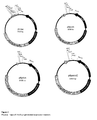
- Figure 1 provides a physical map of the new shuttle vector p6apra.
- ApraR apramycin resistance cassette
- pA-rep origin of replication for Amycolatopsis from plasmid pA387
- oriv origin of replication for E. coli from plasmid pBR322.
- Unique restriction sites, which can be used for cloning, are presented
- the former E. coli- Amycolatopsis shuttle vector pRLE6 was modified because we observed recombination events between the included kanamycin resistance gene and an inactive genomic copy of the npt gene. Furthermore, a different antibiotic resistance cassette was necessary since we previously generated a kanamycin resistant deletion mutant of Amycolatopsis sp. ATCC 39116 that should serve as host as well. For this purpose we removed the npt gene of pRLE6 by digestion with SmaI and inserted the apramycin resistance cassette of the transposon pMA5096 by blunt end ligation into the vector backbone. After the exchange of the antibiotic resistance gene, the vector was transferred to Amycolatopsis sp.
- ATCC 39116 and apramycin resistant mutants could be monitored.
- the vector replicates in a stable manner as no deletions or rearrangements were observed after isolation and analysis of the plasmid from the obtained mutants.
- Figure 2 provides physical maps of the generated expression vectors.
- ApraR apramycin resistance cassette
- pA-rep origin of replication for Amycolatopsis from plasmid pA387
- oriV origin of replication for E. coli from plasmid pBR322.
- Integrated promoters and their directions are indicated by grey arrows. Unique restriction sites, which can be used for cloning, are presented.
- vdh As a second promoter, we inserted the upstream region of the previously characterized vdh gene of Amycolatopsis sp. ATCC 39116. For this purpose we amplified a 395-bp fragment upstream of the start codon of vdh (GTG) that contains the promoter sequence as was shown in complementation experiments beforehand (data not shown). To maintain this functional genetic organization, we inserted a Ncol-site (CCATGG) in the reverse primer, which allows us to clone a gene of interest 6bp downstream of the putative Shine-Dalgarno sequence of vdh (AGGAG).
- CCATGG Ncol-site
- the same cloning strategy was used for the insertion of the promoter region of the kanamycin resistance gene (Km r ). Analogous to the vdh- promoter we maintained a distance of 9 bp to the native Shine-Dalgarno sequence of the npt gene by introduction of a Ncol site.
- the kanamycin resistance promoter was chosen since we knew from the use of pRLE6 and Km r for the introduction of knock outs that npt is functionally transcribed in Amycolatopsis sp. ATCC 39116 under the control of this element.
- the ⁇ -glucuronidase GUS was chosen, encoded by the gusA gene as a reporter [16].
- the activity of the ⁇ -glucuronidase can easily be detected on agar plates qualitatively and also quantitatively in a simple but sensitive spectrophotometric assay.
- Amycolatopsis sp. ATCC 39116 was tested for an inherent GUS activity to exclude a potential background signal in the control strains.
- the wild type strain did not exhibit any glucuronidase activity, which makes gusA a suitable reporter gene for our investigation.
- the glucuronidase gene gusA was cloned as a reporter downstream and collinear to the promoters, respectively.
- GUS activity was detected on agar plates for all strains except for the control strain that carried the promoterless gusA gene.
- the bacteria were incubated for 48 hours at 42°C on solid TSB agar and subsequently overlaid with the substrate X-Gluc as described in materials and methods. Differences in the expression strength of the cloned promoter fragments could be assumed even within this qualitative analysis.
- the expression strains carrying p6plac:: gusA and p6pvdh:: gusA exhibited only a faint blue color, while a strong coloring was observed with strains Amycolatopsis sp.
- ATCC 39116 p6pKm :: gusA and Amycolatopsis sp.
- ATCC 39116 p6permE :: gusA .
- the specific enzyme activity was determined in crude extracts of the four expression strains.
- the different Amycolatopsis sp. ATCC 39116 expression strains were cultivated in TSB medium for 24 h at 42 °C. The cells were harvested after cultivation, soluble fractions were prepared, and the specific activity of the ⁇ -glucuronidase GUS was measured photometrically as described in materials and methods.
- the control strain carrying the promoterless plasmid p6apra:: gusA was treated under the same conditions.
- the activity assays revealed that no GUS activity was expressed by the control strain. In contrast to that all generated expression strains showed the formation of p -nitrophenol as observed spectrophotometrically by the increase of absorption at 415 nm. Quantitative analysis confirmed the assumption of an increasing expression strength with p6permE exhibiting the highest enzyme activity (Table 2) . This was also obvious during the activity tests on agar plates.
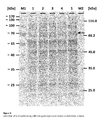
- gusA was also obvious during SDS-PAGE analysis of the soluble fractions which revealed a prominent protein band at a size of approximately 69 ⁇ 2 kDa. This signal was missing for the control strain, while the strongest protein band could be observed for the strain expressing gusA under the control of PermE*.
- Figure 3 shows the detection of GUS synthesis by different gusA expression strains via SDS-PAGE analysis.
- the samples were separated in a 12.5 % (wt/vol) SDS-polyacrylamide gel as described in materials and methods.
- the gel was stained with Serva Blue G. Lane
- Tables 1 and 2 provide Bacterial strains and plasmids as well as an overview of the specific GUS activity of the different expression strains.
- Table 1 Bacterial strains and plasmids used in the study Bacterial strains ans plasmids Description, sequence Reference Strains A mycolatopsis sp. ATCC 39116 wild type American Type Culture Collection, No. 39116 E. coli Mach-1 T1 F - ⁇ 80( lac Z) ⁇ M15 ⁇ lAcX74 hsdR (r K - m K + ) ⁇ recA 1398 endA1 tonA Invitrogen GmbH (Karlsruhe, Germany) E.
Landscapes
- Genetics & Genomics (AREA)
- Engineering & Computer Science (AREA)
- Life Sciences & Earth Sciences (AREA)
- Health & Medical Sciences (AREA)
- Organic Chemistry (AREA)
- Chemical & Material Sciences (AREA)
- Wood Science & Technology (AREA)
- Zoology (AREA)
- Biotechnology (AREA)
- General Engineering & Computer Science (AREA)
- Bioinformatics & Cheminformatics (AREA)
- Microbiology (AREA)
- Biochemistry (AREA)
- General Health & Medical Sciences (AREA)
- Biomedical Technology (AREA)
- General Chemical & Material Sciences (AREA)
- Chemical Kinetics & Catalysis (AREA)
- Physics & Mathematics (AREA)
- Biophysics (AREA)
- Molecular Biology (AREA)
- Plant Pathology (AREA)
- Micro-Organisms Or Cultivation Processes Thereof (AREA)
- Preparation Of Compounds By Using Micro-Organisms (AREA)
Abstract
(a) is subjected to digestion with a suitable endonuclease (SmaI, XmaI) to remove the npt gene from said vector or the vector backbone is amplified by inverse PCR without the npt gene and
(b) the apramycin resistance gene aac(3)VI is inserted into the vector backbone by ligation.
Description
- The present invention belongs to the area of genetic engineering and covers new shuttle and expression vectors for Amycolatopsis sp. ATCC 39116, processes for obtaining them and their application, particular in the production of nature-identic vanillin.
- The tremendous progress in the development of DNA sequencing and manipulation techniques, which were established in the past decades, stimulated the targeted design of microbial production strains for various applications. One prominent example is the production of amino acids, such as L-lysine or L-glutamate by Corynebacterium glutamicum [2].
- Economic interests as well as the increasing demand for sustainable, bio-based products, require the improvement of fermentative production processes, which often have to compete with cheaper chemical approaches. Apart from the optimization of the fermentative process by chemical engineering, the application of metabolic engineering for the generation of improved production strains provides the largest potential to develop profitable processes [20].
- The actinomycete Amycolatopsis sp. ATCC 39116 is used by the industry for the fermentative production of vanillin from ferulic acid, which is a cell wall component of higher plants [15]. In this case the produced vanillin can be labelled as 'natural' since it is extracted from natural sources or "obtained by appropriate physical, enzymatic or microbiological processes from material of vegetable, animal or microbiological origin" (European Commission (EC) Regulation No 1334/2008) [9]. Since natural vanillin has a remarkably higher market price in comparison to the chemically synthesized 'nature-identical' version (up to 1000-fold), this approach can compete with the cheaper chemical processes based on petrochemicals or lignin derivatives [6].
- In order to stop the catabolism of the produced vanillin and therefore to achieve higher vanillin yields and concentrations in production, first attempts were made to engineer the metabolism of Amycolatopsis sp. ATCC 39116 and related bacteria [8, 10, 18, 21]. To gain further access to an efficient genetic engineering of Amycolatopsis sp. ATCC 39116, new molecular tools have to be developed.
- Overexpression of native or heterologous genes in microorganisms can lead to a significant improvement of biotechnological production strains. Beside the systematic deletion or down-regulation of genes, which are involved in catabolic or competing pathways of the desired product, the controlled expression of anabolism related genes is also important to introduce rational changes in the genetic background of the used organism [20].
- The capability to overexpress native or foreign genes depends on the availability of host-vector systems such as plasmids, genetic elements like functional promoters and efficient transformation protocols. Although some techniques can be adopted from phylogenetically related bacteria, each part has to be developed individually for a particular bacterial strain [23].
- Actinomycetes produce a remarkable amount of secondary metabolites that are industrially used in fields like agriculture, food production and especially pharmacology [17]. Thus, they have been intensively studied aiming at higher titers of the compound of interest or at producing new metabolites with different bioactive functions. Within the group of actinobacteria research on engineering of Streptomyces genomes is noteworthy. Besides the commonly used E. coli systems, heterologous expression in Streptomyces is well established and often used for genes, which are of actinobacterial origin. However, most systems are of limited utility for other Actinomycetes such as Nocardia or Amycolatopsis.
- To make Amycolatopsis sp. HR167, whose 16S-rDNA-sequence is identical to that of Amycolatopsis sp. ATCC 39116, accessible for genetic engineering. The generation of pRLE6, an E. coli-Amycolatopsis shuttle vector based on the origin of replication of the indigenous plasmid pA387 from Amycolatopsis benzoatilytica DSM 43387 is known from the state of the art {14]. Plasmid pRLE6 is a religated EcoRI-fragment of the Amycolatopsis mediterranei shuttle vector pRL60 lacking the erythromycin resistance- and the α-amylase gene. The vector also replicates autonomously in Amycolatopsis sp. ATCC 39116 without further deletions or rearrangement. However, the vector did not harbour a conventional multiple cloning site with an integrated promoter, allowing the expression of a cloned gene.
- Due to the lack of an integrated promoter and missing information about the functionality of these genetic elements in Amycolatopsis, the access to genetic engineering was limited so far.
- Therefore, the object of the present invention has been the construction and application of a plasmid-based gene expression system for Amycolatopsis sp. ATCC 39116 that allows efficient genetic engineering of this industrially relevant production strain.
- A first object of the present invention is related to a new shuttle vector (p6apra) with resistance to apramycin obtainable in that shuttle vector pRLE6 of E.coli-Amycolatopsis
- (a) is subjected to digestion with a suitable endonuclease (SmaI, XmaI) to remove the npt gene from said vector or the vector backbone is amplified by inverse PCR without the npt gene and
- (b) the apramycin resistance gene aac(3)VI is inserted into the vector backbone by ligation,
- (a) is subjected to digestion with SmaI to remove the npt gene from said vector and
- (b) the apramycin resistance cassette of the transposon pMA5096 is inserted into the vector backbone by blunt end ligation.
- In addition, further embodiments of the present invention concern expression vectors obtained by derivatisation of said shuttle vector and the corresponding processes. In detail:
- (I) A first expression vector with additional restriction sites, obtainable in that
- (a) lac-promoter with the multiple cloning site of the plasmid pBluescript SK- is amplified via PCR
- (b) the PCR product is cloned into the EcoRV site of the p6apra vector according to
Claim 1.
- (a) lac-promoter with the multiple cloning site of the plasmid pBluescript SK- is amplified via PCR
- (b) the PCR product is cloned into the EcoRV site of the p6apra vector according to
Claim 1.
- (II) A second expression vector, obtainable in that
- (a) a 395-bp fragment of the genome of Amycolatopsis sp. ATCC 39116 upstream of the start codon of vdh (GTG) containing a promoter sequence is amplified via PCR,
- (b) a Ncol-site (CCATGG) is inserted into the reverse primer 6bp downstream of the Shine-Dalgarno sequence of vdh (AGGAG), and
- (c) the PCR product is cloned into the EcoRV site of the p6apra vector according to
Claim 1.
- (a) a 395-bp fragment of the genome of Amycolatopsis sp. ATCC 39116 upstream of the start codon of vdh (GTG) containing a promoter sequence is amplified via PCR,
- (b) a Ncol-site (CCATGG) is inserted into the reverse primer 6bp downstream of the Shine-Dalgarno sequence of vdh (AGGAG), and
- (c) the PCR product is cloned into the EcoRV site of the p6apra vector according to
Claim 1.
- (III) A third promoted shuttle vector, obtainable in that
- (a) the promoter sequence of the kanamycin resistance gene (Kmr) is amplified via PCR, (b) a Ncol-site (CCATGG) is inserted into the reverse primer 9bp downstream of the Shine-Dalgarno sequence of npt, and
- (b) the PCR product is cloned into the EcoRV site of the p6apra vector according to
Claim 1.
- (a) the promoter sequence of the kanamycin resistance gene (Kmr) is amplified via PCR, (b) a Ncol-site (CCATGG) is inserted into the reverse primer 9bp downstream of the Shine-Dalgarno sequence of npt, and
- (b) the PCR product is cloned into the EcoRV site of the p6apra vector according to
Claim 1.
- (IV) A fourth expression vector, obtainable in that
- (a) ermE* promoter from Saccharopolyspora erythraea is removed from the plasmid pIAGO, and
- (b) the fragment is cloned into the EcoRV site of the p6apra vector according to
Claim 1.
- (a) ermE* promoter from Saccharopolyspora erythraea is removed from the plasmid pIAGO, and
- (b) the fragment is cloned into the EcoRV site of the p6apra vector according to
Claim 1.
- Surprisingly, it has been observed that the new expression vectors, obtained by inserting different promoter elements, overcome the drawbacks reported in the state of the art.
- In a first step a pRLE6 derivative was constructed that conferred apramycin resistance instead of kanamycin. This was necessary, since it was observed that recombination events between the episomal and an inactive genomic copy of the kanamycin resistance gene npt occurs. Furthermore, a kanamycin resistant deletion mutant of Amycolatopsis sp. ATCC 39116 was used. The new transformation vector p6apra was also maintained without further modification under the selection of apramycin. Applicant was able to isolate plasmid-DNA from each tested clone. Therefore, the plasmid replicated autonomously from the genome and did not integrate. This was not the fact, if pRLE6 was used for the transformation of Amycolatopsis sp. ATCC 39116.
- In order to generate a multiple cloning site like in conventional expression vectors, four different promoter sequences were inserted into the shuttle vector to enable the transcription of colinear cloned genes. After integration of each promoter, at least six unique restriction sites were obtained which could be used for cloning, respectively. In case of the two promoters, which were known to be functional in Amycolatopsis sp. ATCC 39116, the vdh and Kmr promoter, their genetic organization was successfully maintained by introducing an additional NcoI-site. This restriction site allowed cloning the ATG start codon of a gene of interest six or nine base pairs downstream of the respective Shine-Dalgarno-sequence. As a third promoter the lac-promoter was chosen, which is useful to enable heterologous expression in a broad range of bacteria. Finally the ermE*-promoter was inserted, in order to achieve a strong constitutive expression in different actinomycetes [3].
- In order to determine the functionality of the cloned promoters, the glucuronidase gene gusA was inserted into the respective p6apra derivatives. gusA was chosen as a reporter gene, since the activity of the encoded enzyme GUS can easily be detected directly on agar plates. Additionally, the activity can be assayed in a very simple and cheap but sensitive enzyme test [16]. Finally, Amycolatopsis sp. ATCC 39116 did not exhibit any inherent glucuronidase activity.
- As a main requirement for the successful establishment of a plasmid-based expression system for Amycolatopsis sp. ATCC 39116 the stable replication of the new expression vectors was observed. All generated plasmids did not undergo any modification as it was previously observed, for Amycolatopsis sp. HR167 and other Amycolatopsis strains [14, 23].
- Following the analysis of the genetic stability of the new vector system the functionality of the integrated promoters was analysed by using the reporter gene gusA. Since Amycolatopsis sp. ATCC 39116 does not exhibit an endogenous glucuronidase activity, the hydrolysis of the substrates X-Gluc and p-nitrophenyl-ß-D-glucuronide can directly be correlated to the expression of GUS encoded by the reporter gene. Furthermore, GUS does not need any cofactors, and the activity is therefore only limited to the amount of enzyme [16].
- Surprisingly, the transcription of gusA mediated by the ermE*-promoter led to the highest glucuronidase activity. This was proven within both the qualitative assay on agar plates as well as the quantitative enzyme assay.
- Gene expression activated by PermE* led to a six-fold higher GUS-activity in comparison to the Kmr promoter, which is the second strongest. Furthermore, the glucuronidase activity in the soluble fraction of Amycolatopsis sp. ATCC 39116 p6permE::gusA was 75-fold higher than the activity of Amycolatopsis sp. ATCC 39116 p6pvdh::gusA and even 7550-fold higher than the activity Amycolatopsis sp. ATCC 39116 p6plac::gusA. The lower expression under the control of lacP is remarkable, due to the fact, that the promoter is commonly used in many different actinomycetes, including strains of Nocardia, Gordonia or Rhodococcus. Interestingly, the lac-promoter was also used in previous studies with Amycolatopsis sp. HR167 to enable the heterologous expression of foreign genes [18]. In this case the heterologous gene was cloned into pBluescript SK- under the control of lacP, and in a next step the whole plasmid was ligated with pRLE6.
- The differences in the expression activation were also observable in SDS-PAGE analysis, which revealed a prominent protein signal with an apparent molecular weight of 69 ± 2 kDa for Amycolatopsis sp. ATCC 39116 p6permE::gusA. This band was missing in the sample of the control strain and was only very weak in the samples of the strains containing plasmids possessing the lacP or the vdh promoter. The apparent molecular weight was also in good agreement with the postulated size of the β-glucuronidase which is 68.2 kDa [12].
- The new plasmids provide new capabilities for the expression of heterologous genes in Amycolatopsis sp. ATCC 39116. Especially the possibility to choose between different promoters, providing remarkable differences in the expression strength, makes genetic engineering of the industrially relevant actinomycete Amycolatopsis sp. ATCC 39116 more easy and efficient.
- All bacterial strains and plasmids used in this study are listed in Table 1. Cells of Escherichia coli were grown in Lysogeny Broth (LB) medium at 37 °C (Sambrook et al. 1989). Cells of Amycolatopsis sp. ATCC 39116 were grown at 45 °C in Caso medium (Merck, Darmstadt, Germany). For selection of plasmid harboring strains, antibiotics were added to the medium as follows: Kanamycin: 50 µg/ml for E. coli; Apramycin: 50 µg/ml for E. coli and Amycolatopsis. Cell growth was measured by determination of the optical density at 400 nm (Amycolatopsis sp. ATCC 39116) or 600 nm (E. coli).
- Plasmid DNA was isolated from E. coli using the "peqGOLD Plasmid MiniPrep Kit I" (PEQLAB GmbH, Erlangen, Germany). Plasmid isolation from Amycolatopsis sp. ATCC 39116 was performed using the "Qiagen Plasmid Purification Kit (Mini)" (Qiagen GmbH, Hilden, Germany). Upon plasmid isolation from Amycolatopsis sp. ATCC 39116, the DNA was transferred to E. coli again, to yield a sufficient amount that could be further analyzed. DNA was digested by restriction endonucleases (Thermo Fisher Scientific GmbH, Schwerte, Germany) under the conditions described by the manufacturer. Phusion Hot-Start II high-fidelity DNA polymerase, T4 DNA ligase and T4 DNA polymerase (Thermo Fisher Scientific GmbH, Schwerte, Germany) were used according to the instructions of the manufacturer. Oligonucleotides were purchased from Eurofins MWG Synthesis GmbH (Ebersberg, Germany). DNA fragments were isolated from agarose gels or reaction mixtures using the "peqGOLD Gel Extraction Kit" (PEQLAB GmbH, Erlangen, Germany).
- Plasmids were transferred into E. coli by employing the CaCl2-method (Sambrook et al. 1989), whereas the transfer of plasmids into Amycolatopsis sp. ATCC 39116 was performed by direct mycelia transformation as previously described.
- The kanamycin resistance gene from pRLE6 [23] was replaced by the apramycin resistance gene from pMA5096 [1] to generate p6apra. For this purpose pRLE6 was digested with SmaI to release a 1006-bp fragment containing the whole coding sequence of npt. The apramycin resistance gene aac(3)VI was amplified by PCR using the Phusion Hot-Start II high-fidelity DNA polymerase and the oligonucleotides Apra_for and Apra_rev (Table 1). The amplified product was subsequently ligated with the SmaI-digested vector backbone of pRLE6. After transformation of E. coli Mach-1 T1, the resulting plasmid p6apra was isolated and sequenced. The vector provides a multiple cloning site consisting of seven unique restriction sites (EcoRV, Nhel, Bmtl, FspAI, DraI, HindIII, BamHI, see also
Figure 1 ). After transformation of E. coli ER 2925 to yield Dam- and Dcm-unmethylated DNA, p6apra was transferred to Amycolatopsis sp. ATCC 39116 and resulting mutants were analyzed for a stable replication of the new plasmid. - To make the transformation vector suitable for heterologous expression in Amycolatopsis sp. ATCC 39116 four different promoters were integrated into the single EcoRV-site of p6apra as shown in
Figure 2 . - At first the whole multiple cloning site of pSK- including lacZ was amplified using the oligonucleotides pSK_MCS_for and pSK_MCS_rev (Table 1) and Phusion high-fidelity DNA polymerase. Furthermore, the promoter region of the kanamycin resistance gene of pRLE6 was amplified using the oligonucleotides pKm_for and pKm_Ncol_rev (Table 1). The reverse primer includes a Ncol-site (CCATGG) which allows to clone the start codon (ATG) of a gene of interest 9 bp downstream of the included Shine-Dalgarno-sequence of npt. Additionally the upstream region of vdh [10] was amplified using the oligonucleotides pvdh_for and pvdh_Ncol_rev (Table 1). The ATG within the Ncol-site of the reverse primer is located 6 bp downstream of the Shine-Dalgarno-sequence which was designed analogous to the genetic organization of the vdh open reading frame in the genome of Amycolatopsis sp. ATCC 39116.
- The ermE*-promoter was isolated from pIAGO [22] by digestion with KpnI/BamHI. The fragment was purified from an agarose gel and blunt ends were generated using T4 DNA polymerase.
- Each of the four promoter fragments was cloned into the EcoRV site of p6apra via blunt end ligation. The resulting plasmids were transferred to E. coli Mach-1 T1, isolated, and subsequently sequenced to analyze the correct integration and orientation of the promoter fragments colinear to the residual multiple cloning site.
- In order to investigate the functionality and expression strength of the cloned promoters, the glucuronidase gene gusA was isolated as SpeI/EcoRV fragment from pSETGUS (Myronovskyi et al. 2011) and was subsequently cloned into the NheI/DraI-linearized expression vectors (p6pKm, p6pvdh, p6permE) colinear to the integrated promoters. For p6plac, gusA was cloned into the SpeI/EcoRV sites provided by the additionally cloned MCS.
- After transformation of E. coli ER 2925, the expression vectors were transferred to Amycolatopsis sp. ATCC 39116, and the resulting strains were analyzed for a stable replication of the new plasmids.
- Cell pellets of Amycolatopsis sp. ATCC 39116 were resuspended in 3 to 4 ml of 50 mM potassium phosphate buffer (pH 7.0). Crude extracts were obtained by three passages through a French pressure cell (120 MPa). For the preparation of soluble fractions, cell debris was removed by centrifugation for 60 min at 20.000 x g at 4 °C. For subsequent enzyme assays, samples were stored on ice.
- The spectrophotometric measurement of glucuronidase activity in cell lysates was accomplished as described before. The reaction was initiated by the addition of p-nitrophenyl-ß-D-glucuronide. Formation of p-nitrophenol was observed at 415 nm (ε = 7.76 cm2/µmol). Enzyme activity is stated in units (U). One unit is defined as the amount of enzyme which generates 1 µmol p-nitrophenol per min.
- To detect β-glucuronidase activity on agar plates, the colonies were overlaid with 1ml of 1mM 5-bromo-4-chloro-3-indolyl-beta-D-glucuronic acid (X-Gluc) solution. After a short incubation colonies containing hydrolytic GUS activity turned blue because of the formation of 5,5'-dibromo-4,4'-dichloro indigo.
- Samples of the soluble fractions were analyzed for their protein contents according to the method of Bradford (1976). Sodium dodecyl sulfate polyacrylamide gel electrophoresis (SDS-PAGE) was performed in 12.5% (wt/vol) gels as described by [13]. Amounts of proteins were added as indicated in the text. Staining of proteins was performed with Serva Blue G [28]. The following molecular weight reference proteins were purchased from Thermo Fisher Scientific GmbH (Schwerte, Germany): "PageRuler Prestained Protein Ladder" and "Unstained Protein Molecular Weight Marker".
- Another object of the present invention refers to plasmid expression system for Amycolatopsis sp. ATCC 39116 comprising at least one of the expression vectors according to any of the
Claims - Further on, the invention encompasses the use of at least one of the expression vectors (I) to (IV) for replication in Amycolatopsis sp. ATCC 39116 and for heterologous expression of genes in Amycolatopsis sp. ATCC 39116 respectively.
- Also encompassed by the present invention is the use of Amycolaptopis sp. ATCC 39116 containing at least one of the expression vectors (I) to (IV) in a process for the manufacture of vanillin.
- Finally, the invention also covers a process for making nature-identic vanillin by fermentation of ferulic acid by means of microorganisms selected from Amycolaptopis sp. ATCC 39116 containing at least one the expression vectors (I) to (IV)
- The following documents represent the relevant state of the art. The numbers in the specification refer to these documents.
- [1] Banh Q, Arenskotter M, Steinbüchel A Establishment of Tn5096-based transposon mutagenesis in Gordonia polyisoprenivorans. Appl Environ Microbiol 71:5077-5084 (2005 )
- [2] Becker J, Wittmann C Systems and synthetic metabolic engineering for amino acid production - the heartbeat of industrial strain development. Curr Opin Biotechnol 23:718-726 (2012 )
- [3] Bibb MJ, Janssen GR, Ward JM Cloning and analysis of the promoter region of the erythromycin resistance gene (ermE) of Streptomyces erythraeus. Gene 38:215-226 (1985 )
- [4] Bibb MJ, White J, Ward JM, Janssen GR The mRNA for the 23S rRNA methylase encoded by the ermE gene of Saccharopolyspora erythraea is translated in the absence of a conventional ribosome-binding site. Mol Microbiol 14:533-545 (1994 )
- [5] Bradford MM A rapid and sensitive method for the quantitation of microgram quantities of protein utilizing the principle of protein dye binding. Anal Biochem 72:248-254 (1976 )
- [6] Converti A, Aliakbarian B, Dominguez JM, Vázquez GB, Perego P Microbial production of biovanillin. Brazilian J Microbiol 41:519-530 (2010 )
- [7) Davis JR, Goodwin LA, Woyke T, Teshima H, Bruce D, Detter C, Tapia R, Han S, Han J, Pitluck S Sello JK Genome sequence of Amycolatopsis sp. strain ATCC 39116, a plant biomass-degrading actinomycete. J Bacteriol 194:2396-2397 (2012 )
- [8] Di Gioia D, Luziatelli F, Negroni A, Ficca AG, Fava F, Ruzzi M Metabolic engineering of Pseudomonas fluorescens for the production of vanillin from ferulic acid. J Biotechnol 156:309-316 (2011 )
- [9] European Commission (EC) Regulation No 1334/2008 of the european parliament and of the council of 16 december 2008 on flavourings and certain food ingredients with flavouring properties for use in and on foods and amending regulation (EC) no 1601/91 of the council, regulations (EC) no 2232/96 and (EC) no 110/2008 and directive 2000/13/EC.
- [10] Fleige C, Hansen G, Kroll J, Steinbüchel A Investigation of the Amycolatopsis sp. strain ATCC 39116 vanillin dehydrogenase and its impact on the biotechnical production of vanillin. Appl Environ Microbiol 79:81-90 (2013 )
- [11] Fleige C, Hansen G, Kroll J, Steinbüchel A Lambrecht S, Pesaro M, Hilmer J Microorganisms and methods for producing substituted phenols.
EP 0761817 A1 - [12] Jefferson RA, Burgess SM, Hirsh D Beta-glucuronidase from Escherichia coli as a gene-fusion marker. Proc NatI Acad Sci USA 83:8447-8451 (1986 )
- [13] Laemmli UK Cleavage of structural proteins during the assembly of the head of bacteriophage T4. Nature 227:680-685 (1976 )
- [14] Lal R, Khanna R, Dhingra N, Khanna M, Lal S Development of an improved cloning vector and transformation system in Amycolatopsis mediterranei (Nocardia mediterranei). J Antibiot 51:161-169 (1998 )
- [15] Muheim A, Lerch K Towards a high-yield bioconversion of ferulic acid to vanillin. Appl Microbiol Biotechnol 51:456-461 (1999 )
- [16] Myronovskyi M, Welle E, Fedorenko V, LuzhetskyyA Beta-glucuronidase as a sensitive and versatile reporter in actinomycetes. Appl Environ Microbiol 77:5370-5383 (2011 )
- [17] Olano C, Lombó F, Méndez C, Salas JA Improving production of bioactive secondary metabolites in actinomycetes by metabolic engineering. Metab Eng 10:281-292 (2008 )
- [18] Overhage J, Priefert H, Rabenhorst J, Steinbüchel A Biotransformation of eugenol to vanillin by a mutant of Pseudomonas sp. strain HR199 constructed by disruption of the vanillin dehydrogenase (vdh) gene. Appl Microbiol Biotechnol 52:820-828 (1999 )
- [19] Overhage J, Steinbüchel A, Priefert H Harnessing eugenol as a substrate for production of aromatic compounds with recombinant strains of Amycolatopsis sp. HR167. J Biotechnol 125:369-376 (2006 )
- [20] Pickens LB, Tang Y, Chooi Y Metabolic engineering for the production of natural products. Annu Rev Chem Biomol Eng 2:211-236 (2011 )
- [21] Plaggenborg R, Overhage J, Loos A, Archer JAC, Lessard P, Sinskey AJ, Steinbüchel A, Priefert H Potential of Rhodococcus strains for biotechnological vanillin production from ferulic acid and eugenol. Appl Microbiol Biotechnol 72:745-755 (2006 )
- [22] Power P, Dunne T, Murphy B, Lochlainn LN, Rai D, Borissow C, Rawlings B, Caffrey P Engineered synthesis of 7-oxo- and 15-deoxy-15-oxo-amphotericins: Insights into structure-activity relationships in polyene antibiotics. Chem Biol 15:78-86 (2008 )
- [23] Priefert H, Achterholt S, Steinbüchel A Transformation of the pseudonocardiaceae Amycolatopsis sp. strain HR167 is highly dependent on the physiological state of the cells. Appl Microbiol Biotechnol 58:454-460 (2002 )
- [24] Priefert H, Rabenhorst J, Steinbüchel A Biotechnological production of vanillin. Appl Microbiol Biotechnol 56:296-314 (2001 )
- [25] Rowe CJ, Cortes J, Gaisser S, Staunton J, Leadlay PF Construction of new vectors for high-level expression in actinomycetes. Gene 216:215-223 (1998 )
- [26] Sambrook J, Fritsch EF, Maniatis T Molecular cloning: A laboratory manual. 2nd edition. Cold Spring Harbor, New York.(1998 )
- [27] Tuteja D, Dua M, Khanna R, Dhingra N, Khanna M, Kaur H, Saxena DM, Lal R The importance of homologous recombination in the generation of large deletions in hybrid plasmids in Amycolatopsis mediterranei. Plasmid 43:1-11 (2000 )
- [28] Liveer K, Osborn M The reliability of molecular weight determinations by dodecyl sulfate-polyacrylamide gel electrophoresis. J Biol Chem 244:4406-4412 (1969 )
- [29] Wilkinson CJ, Hughes-Thomas ZA, Martin CJ, Bohm I, Mironenko T, Deacon M, Wheatcroft M, Wirtz G, Staunton J, Leadlay PF Increasing the efficiency of heterologous promoters in actinomycetes. J Mol Microbiol Biotechnol 4:417-426 (2002 )
- In order to construct a plasmid-based expression system for Amycolatopsis sp. ATCC 39116, the shuttle vector p6apra, conferring resistance to apramycin, was generated.
-
Figure 1 provides a physical map of the new shuttle vector p6apra. ApraR: apramycin resistance cassette; pA-rep: origin of replication for Amycolatopsis from plasmid pA387; oriv: origin of replication for E. coli from plasmid pBR322. Unique restriction sites, which can be used for cloning, are presented - The former E. coli- Amycolatopsis shuttle vector pRLE6 was modified because we observed recombination events between the included kanamycin resistance gene and an inactive genomic copy of the npt gene. Furthermore, a different antibiotic resistance cassette was necessary since we previously generated a kanamycin resistant deletion mutant of Amycolatopsis sp. ATCC 39116 that should serve as host as well. For this purpose we removed the npt gene of pRLE6 by digestion with SmaI and inserted the apramycin resistance cassette of the transposon pMA5096 by blunt end ligation into the vector backbone. After the exchange of the antibiotic resistance gene, the vector was transferred to Amycolatopsis sp. ATCC 39116 and apramycin resistant mutants could be monitored. We were able to isolate plasmid DNA from each tested clone, which suggests that p6apra is maintained as an autonomous element. Furthermore, the vector replicates in a stable manner as no deletions or rearrangements were observed after isolation and analysis of the plasmid from the obtained mutants.
- Based on the new shuttle vector, four derivatives with different promoters were generated. All promoter fragments were cloned into the single EcoRV site antilinear to the apramycin resistance cassette, respectively. As a result of this insertion at least five of the remaining unique restriction sites upstream of each promoter are available for cloning and expression of foreign DNA under control of these regulatory elements.
-
Figure 2 provides physical maps of the generated expression vectors. ApraR: apramycin resistance cassette; pA-rep: origin of replication for Amycolatopsis from plasmid pA387; oriV: origin of replication for E. coli from plasmid pBR322. Integrated promoters and their directions are indicated by grey arrows. Unique restriction sites, which can be used for cloning, are presented. - To test different promoters in Amycolatopsis sp. ATCC 39116 we first chose the commonly used lac-promoter, which is reported to be functional in a broad range of bacteria and which is therefore used within various cloning vectors. To obtain additional restriction sites, we inserted the complete multiple cloning site of the commercially available plasmid pBluescript SK- into p6apra. For this the whole multiple cloning site including the lac-promoter was amplified by PCR and subsequently cloned into the EcoRV site of p6apra.
- As a second promoter, we inserted the upstream region of the previously characterized vdh gene of Amycolatopsis sp. ATCC 39116. For this purpose we amplified a 395-bp fragment upstream of the start codon of vdh (GTG) that contains the promoter sequence as was shown in complementation experiments beforehand (data not shown). To maintain this functional genetic organization, we inserted a Ncol-site (CCATGG) in the reverse primer, which allows us to clone a gene of interest 6bp downstream of the putative Shine-Dalgarno sequence of vdh (AGGAG).
- The same cloning strategy was used for the insertion of the promoter region of the kanamycin resistance gene (Kmr). Analogous to the vdh-promoter we maintained a distance of 9 bp to the native Shine-Dalgarno sequence of the npt gene by introduction of a Ncol site. The kanamycin resistance promoter was chosen since we knew from the use of pRLE6 and Kmr for the introduction of knock outs that npt is functionally transcribed in Amycolatopsis sp. ATCC 39116 under the control of this element.
- Finally, we cloned the ermE* promoter from Saccharopolyspora erythraea, which is a strong constitutive promoter and which is frequently used in actinomycetes if high-level expression is required (Wilkinson et al. 2002). The promoter was removed from the plasmid pIAGO by KpnI/BamHI digestion. Blunt ends were subsequently generated, and the fragment was again cloned into the EcoRV-site of p6apra.
- All generated plasmids replicated in Amycolatopsis sp. ATCC 39116 without any observable rearrangements, and they can therefore be used for the heterologous expression of required genes.
- In order to test the applicability of the heterologous promoters in Amycolatopsis sp. ATCC 39116, the β-glucuronidase GUS was chosen, encoded by the gusA gene as a reporter [16]. The activity of the β-glucuronidase can easily be detected on agar plates qualitatively and also quantitatively in a simple but sensitive spectrophotometric assay.
- Initially Amycolatopsis sp. ATCC 39116 was tested for an inherent GUS activity to exclude a potential background signal in the control strains. The wild type strain did not exhibit any glucuronidase activity, which makes gusA a suitable reporter gene for our investigation.
- To determine the functionality of the expression plasmids, the glucuronidase gene gusA was cloned as a reporter downstream and collinear to the promoters, respectively. As a control strain we additionally generated a promoterless version of p6apra containing only gusA.
- After the transfer of the expression vectors, GUS activity was detected on agar plates for all strains except for the control strain that carried the promoterless gusA gene. For this purpose, the bacteria were incubated for 48 hours at 42°C on solid TSB agar and subsequently overlaid with the substrate X-Gluc as described in materials and methods. Differences in the expression strength of the cloned promoter fragments could be assumed even within this qualitative analysis. The expression strains carrying p6plac::gusA and p6pvdh::gusA exhibited only a faint blue color, while a strong coloring was observed with strains Amycolatopsis sp. ATCC 39116 p6pKm::gusA and Amycolatopsis sp. ATCC 39116 p6permE::gusA.
- To further analyze the gusA expression under the control of the different promoters, the specific enzyme activity was determined in crude extracts of the four expression strains. The different Amycolatopsis sp. ATCC 39116 expression strains were cultivated in TSB medium for 24 h at 42 °C. The cells were harvested after cultivation, soluble fractions were prepared, and the specific activity of the β-glucuronidase GUS was measured photometrically as described in materials and methods. The control strain carrying the promoterless plasmid p6apra::gusA was treated under the same conditions.
- The activity assays revealed that no GUS activity was expressed by the control strain. In contrast to that all generated expression strains showed the formation of p-nitrophenol as observed spectrophotometrically by the increase of absorption at 415 nm. Quantitative analysis confirmed the assumption of an increasing expression strength with p6permE exhibiting the highest enzyme activity (Table 2). This was also obvious during the activity tests on agar plates. While gusA expression under the control of the lac and vdh promoter only led to an enzyme activity of 0.04 U/mg ± 0.00038 U/mg and 4.04 U/mg ± 0.071 U/mg, respectively, the strains carrying the Kmr-promoter and PermE* exhibited very strong activities of 59.07 U/mg ± 1.50 U/mg and 302.20 U/mg ± 1.25 U/mg.
- The expression of gusA was also obvious during SDS-PAGE analysis of the soluble fractions which revealed a prominent protein band at a size of approximately 69 ± 2 kDa. This signal was missing for the control strain, while the strongest protein band could be observed for the strain expressing gusA under the control of PermE*.
-
Figure 3 shows the detection of GUS synthesis by different gusA expression strains via SDS-PAGE analysis. The samples were separated in a 12.5 % (wt/vol) SDS-polyacrylamide gel as described in materials and methods. The gel was stained with Serva Blue G. Lane - M1: Molecular weight marker: "PageRuler Prestained Protein Ladder", Lane
- M2: Molecular weight marker: "Unstained Protein Molecular Weight Marker"; Lane
- 1: 30 µg protein of the soluble fraction of the control strain Amycolatopsis sp. ATCC 39116 p6apra::gusA
- 2: 30 µg protein of the soluble fraction of Amycolatopsis sp. ATCC 39116 p6plac::gusA
- 3: 30 µg protein of the soluble fraction of Amycolatopsis sp. ATCC 39116 p6pvdh::gusA
- 4: 30 µg protein of the soluble fraction of Amycolatopsis sp. ATCC 39116 p6pKm::gusA
- 5: 30 µg protein of the soluble fraction of Amycolatopsis sp. ATCC 39116 p6permE::gusA.
- Cells were grown in TSB medium for 24 h. Soluble fractions were obtained after cell disruption and subsequent centrifugation as described in materials and methods. The arrow indicates the corresponding signal of the putative gusA gene product.
- In the following Tables 1 and 2 provide Bacterial strains and plasmids as well as an overview of the specific GUS activity of the different expression strains.
Table 1 Bacterial strains and plasmids used in the study Bacterial strains ans plasmids Description, sequence Reference Strains Amycolatopsis sp. ATCC 39116 wild type American Type Culture Collection, No. 39116 E. coli Mach-1 T1 F- φ80(lacZ)ΔM15 ΔlAcX74 hsdR (rK -mK +) ΔrecA1398 endA1 tonA Invitrogen GmbH (Karlsruhe, Germany) E. coli K12 ER 2925 ara-14 leuB6 fhuA31 aclY1 tsx78 glnV44 galK2 galT22 mcrA dcm-6 hisG4 rfbD1 R(zgb210::Tn10)TetS endA1 rpsL136 dam13::Tn9 xylA-5 mtl-1 thi-1 mcrB1 hsdR2 New England Biolabs Inc. (Ipswich, MA, USA) Plasmids pRLE6 5.8 kb, Kmr (Priefert et al. 2002) pBluescript SK-(pSK-) Apr, LacPOZ', T7 and T3-promoter Agilent GmbH, Waldbronn, Germany pIAGO ermE*-promoter from Saccharopolyspora erythraea as 0.28-kb KpnI-BamHI fragment, Tsr, Apr (Power et al. 2008) pMA5096 Apr; Aprar transposable plasmid comprising transposase Tn5096; (Banh et al. 2005) pSETGUS Streptomyces integrative vector, gusA under control of tipA-promoter (Myronovskyi et al. 2011) p6apra pRLE6 with Aprar from pMA5096 cloned into SmaI-sites This invention Bacterial strains and plasmids Description, sequence Reference p6permE p6apra with ermE*-promoter from pIAGO cloned into EcoRV-site This invention p6pKm p6apra with Kmr-promoter from pRLE6 cloned into EcoRV-site This invention p6pvdh p6apra with promoter region of vdh-gene from Amycolatopsis sp. ATCC 39116 (Fleige et al. 2013) cloned into EcoRV-site This invention p6plac p6apra with multiple cloning site of pSK-cloned into EcoRV-site This invention p6apra::gusA SpeI/EcoRV fragment of pSETGUS containing gusA cloned into NheI/DraI sites of p6apra This invention p6permE::gusA SpeI/EcoRV fragment of pSETGUS containing gusA cloned into NheI/DraI sites of p6permE This invention p6pKm::gusA SpeI/EcoRV fragment of pSETGUS containing gusA cloned into NheI/DraI sites of p6pKm This invention p6pvdh::gusA SpeI/EcoRV fragment of pSETGUS containing gusA cloned into NheI/DraI sites of p6pvdh This invention p6plac::gusA SpeI/EcoRV fragment of pSETGUS containing gusA cloned into SpeI/EcoRV-sites of p6plac This invention Oligonucleotides Sequence 5'-3' Apra_for GTAGCGGGGATCCGGGGA This invention Apra rev GCTCGGTTCATGTGCAGCTCC This invention pSK_MCS_for GCCGATTTCGGCCTATTG This invention pSK_MCS_rev GCGAGTCAGTGAGCGAGG This invention pKm_for GCAAGCGAACCGGAATTG This invention pKm_Ncol_rev CAACCATGGGAAACGATCCTCATCCTGTCT This invention pvdh_for CCAGATGCGTGTACGGGTG This invention pvdh_Ncol_rev. AGCCATGGGTCACTCCTGATGCG This invention Table 2 Specific GUS activity of the different expression strains Expression strain Specific GUS activity (U/mg) Amycolatopsis sp. ATCC 39116 p6plac::gusA 0.04 U/mg ± 0.0004 U/mg Amycolatopsis sp. ATCC 39116 p6pvdh::gusA 4.04 U/mg ± 0.071 U/mg Amycolatopsis sp. ATCC 39116 p6pKm::gusA 59.07 U/mg ± 1.50 U/mg Amycolatopsis sp. ATCC 39116 p6permE::gusA 302.20 U/mg ± 1.25 U/mg
Claims (15)
- A new shuttle vector (p6apra) with resistance to apramycin obtainable in that shuttle vector pRLE6 of E.coli-Amycolatopsis(a) is subjected to digestion with a suitable endonuclease (SmaI, XmaI) to remove the npt gene from said vector or the vector backbone is amplified by inverse PCR without the npt gene and(b) the apramycin resistance gene aac(3)VI is inserted into the vector backbone by ligation.
- A process for obtaining shuttle vector p6apra, wherein said shuttle vector pRLE6 of E. coli-Am ycolatopsis(a) is subjected to digestion with SmaI to remove the npt gene from said vector and(b) the apramycin resistance cassette of the transposon pMA5096 is inserted into the vector backbone by blunt end ligation.
- A first expression vector with additional restriction sites, obtainable in that(a) lac-promoter with the multiple cloning site of the plasmid pBluescript SK is amplified via PCR(b) the PCR product is cloned into the EcoRV site of the p6apra vector according to Claim 1.
- A process for obtaining a first expression vector, wherein(a) lac-promoter with the multiple cloning site of the plasmid pBluescript SK is amplified via PCR, and(b) the PCR product is cloned into the EcoRV site of the p6apra vector according to Claim 1.
- A second expression vector, obtainable in that(a) a 395-bp fragment of the genome of Amycolatopsis sp. ATCC 39116 upstream of the start codon of vdh (GTG) containing a promoter sequence is amplified via PCR,(b) a Ncol-site (CCATGG) is inserted into the reverse primer 6bp downstream of the Shine-Dalgarno sequence of vdh (AGGAG), and(c) the PCR product is cloned into the EcoRV site of the p6apra vector according to Claim 1.
- A process for obtaining a second promoted shuttle vector, wherein(a) a 395-bp fragment gene of Amycolatopsis sp. ATCC 39116 upstream of the start codon of vdh (GTG) containing a promoter sequence is amplified via PCR,(b) a Ncol-site (CCATGG) is inserted into the reverse primer 6bp downstream of the Shine-Dalgarno sequence of vdh (AGGAG), and(c) the PCR product is cloned into the EcoRV site of the p6apra vector according to Claim 1.
- A third promoted shuttle vector, obtainable in that(a) the promoter sequence of the kanamycin resistance gene (Kmr) is amplified via PCR, (b) a Ncol-site (CCATGG) is inserted into the reverse primer 9bp downstream of the Shine-Dalgarno sequence of npt, and(b) the PCR product is cloned into the EcoRV site of the p6apra vector according to Claim 1.
- A process for obtaining a third expression vector, wherein(a) the promoter sequence of the kanamycin resistance gene (Kmr) is amplified via PCR, (b) a Ncol-site (CCATGG) is inserted into the reverse primer 9bp downstream of the Shine-Dalgarno sequence of npt, and(b) the PCR product is cloned into the EcoRV site of the p6apra vector according to Claim 1.
- A fourth expression vector, obtainable in that(a) ermE* promoter from Soccharopolyspora erythraea is removed from the plasmid pIAGO, and(b) the fragment is cloned into the EcoRV site of the p6apra vector according to Claim 1.
- A process for obtaining a fourth expression vector, wherein(a) ermE* promoter from Soccharopolyspora erythraea is removed from the plasmid pIAGO, and(b) the fragment is cloned into the EcoRV site of the p6apra vector according to Claim 1.
- A plasmid expression system for the order of Actinomycetales, containing several industrially relevant families, like Corynebacterineae, Pseudonocardineae or Streptomycineae comprising at least one of the expression vectors according to any of the Claims 1, 2, 3, 5, 7 or 9.
- The use of at least one of the expression vectors according to any of the Claims 1, 2, 3, 5, 7 or 9 for replication in these bacteria.
- The use of at least one of the expression vectors according to any of the Claims 1, 2, 3, 5, 7 or 9 for heterologous expression of genes in these bacteria.
- The use of recombinant bacteria containing at least one of the expression vectors according to any of the Claims 1, 2, 3, 5, 7 or 9 in a process for the manufacture of Vanillin, Vanillic acid, Coniferylalkohol, Coniferylaldehyd and other industrially relevant compounds.
- A process for making nature-identic vanillin by fermentation of ferulic acid, eugenol or another appropriate substrate by means of microorganisms containing at least one of the expression vectors according to any of the Claims 1, 2, 3, 5, 7 or 9.
Priority Applications (3)
| Application Number | Priority Date | Filing Date | Title |
|---|---|---|---|
| EP13195578.3A EP2881469B1 (en) | 2013-12-03 | 2013-12-03 | Shuttle vectors and expression vectors for Amycolatopsis |
| CN201480062742.5A CN105874073B (en) | 2013-12-03 | 2014-12-02 | Shuttle and Expression Vectors for Amycobacteria |
| PCT/EP2014/076189 WO2015082441A1 (en) | 2013-12-03 | 2014-12-02 | Shuttle vectors and expression vectors for amycolatopsis |
Applications Claiming Priority (1)
| Application Number | Priority Date | Filing Date | Title |
|---|---|---|---|
| EP13195578.3A EP2881469B1 (en) | 2013-12-03 | 2013-12-03 | Shuttle vectors and expression vectors for Amycolatopsis |
Publications (2)
| Publication Number | Publication Date |
|---|---|
| EP2881469A1 true EP2881469A1 (en) | 2015-06-10 |
| EP2881469B1 EP2881469B1 (en) | 2017-04-05 |
Family
ID=49766868
Family Applications (1)
| Application Number | Title | Priority Date | Filing Date |
|---|---|---|---|
| EP13195578.3A Active EP2881469B1 (en) | 2013-12-03 | 2013-12-03 | Shuttle vectors and expression vectors for Amycolatopsis |
Country Status (3)
| Country | Link |
|---|---|
| EP (1) | EP2881469B1 (en) |
| CN (1) | CN105874073B (en) |
| WO (1) | WO2015082441A1 (en) |
Families Citing this family (2)
| Publication number | Priority date | Publication date | Assignee | Title |
|---|---|---|---|---|
| CN110408641A (en) * | 2019-07-23 | 2019-11-05 | 湖北大学 | A kind of genetic transformation method and application of pseudonocardia strain |
| CN112899382B (en) * | 2021-02-05 | 2022-12-06 | 浙江省农业科学院 | Detection method for identifying amycolatopsis |
Citations (2)
| Publication number | Priority date | Publication date | Assignee | Title |
|---|---|---|---|---|
| EP0761817A2 (en) | 1995-09-01 | 1997-03-12 | Haarmann & Reimer Gmbh | Process for the preparation of vanillin and suitable microorganisms |
| WO2012172108A1 (en) * | 2011-06-17 | 2012-12-20 | Symrise Ag | Microorganisms and methods for producing substituted phenols |
-
2013
- 2013-12-03 EP EP13195578.3A patent/EP2881469B1/en active Active
-
2014
- 2014-12-02 WO PCT/EP2014/076189 patent/WO2015082441A1/en not_active Ceased
- 2014-12-02 CN CN201480062742.5A patent/CN105874073B/en active Active
Patent Citations (2)
| Publication number | Priority date | Publication date | Assignee | Title |
|---|---|---|---|---|
| EP0761817A2 (en) | 1995-09-01 | 1997-03-12 | Haarmann & Reimer Gmbh | Process for the preparation of vanillin and suitable microorganisms |
| WO2012172108A1 (en) * | 2011-06-17 | 2012-12-20 | Symrise Ag | Microorganisms and methods for producing substituted phenols |
Non-Patent Citations (30)
| Title |
|---|
| BANH Q; ARENSKOTTER M; STEINBUCHEL A: "Establishment of Tn5096-based transposon mutagenesis in Gordonia polyisoprenivorans", APPL ENVIRON MICROBIOL, vol. 71, 2005, pages 5077 - 5084 |
| BECKER J; WITTMANN C: "Systems and synthetic metabolic engineering for amino acid production - the heartbeat of industrial strain development", CURR OPIN BIOTECHNOL, vol. 23, 2012, pages 718 - 726 |
| BIBB MJ; JANSSEN GR; WARD JM: "Cloning and analysis of the promoter region of the erythromycin resistance gene (ermE) of Streptomyces erythraeus", GENE, vol. 38, 1985, pages 215 - 226, XP023538656, DOI: doi:10.1016/0378-1119(85)90220-3 |
| BIBB MJ; WHITE J; WARD JM; JANSSEN GR: "The mRNA for the 23S rRNA methylase encoded by the ermE gene of Saccharopolyspora erythraea is translated in the absence of a conventional ribosome- binding site", MOL MICROBIOL, vol. 14, 1994, pages 533 - 545 |
| BRADFORD MM: "A rapid and sensitive method for the quantitation of microgram quantities of protein utilizing the principle of protein dye binding", ANAL BIOCHEM, vol. 72, 1976, pages 248 - 254, XP025650297, DOI: doi:10.1016/0003-2697(76)90527-3 |
| C. FLEIGE ET AL: "Investigation of the Amycolatopsis sp. Strain ATCC 39116 Vanillin Dehydrogenase and Its Impact on the Biotechnical Production of Vanillin", APPLIED AND ENVIRONMENTAL MICROBIOLOGY, vol. 79, no. 1, 12 October 2012 (2012-10-12), pages 81 - 90, XP055106545, ISSN: 0099-2240, DOI: 10.1128/AEM.02358-12 * |
| CHRISTIAN FLEIGE ET AL: "Construction of expression vectors for metabolic engineering of the vanillin-producing actinomycete Amycolatopsis sp. ATCC 39116", APPLIED MICROBIOLOGY AND BIOTECHNOLOGY, vol. 98, no. 14, 18 April 2014 (2014-04-18), pages 6387 - 6395, XP055148582, ISSN: 0175-7598, DOI: 10.1007/s00253-014-5724-5 * |
| CONVERTI A; ALIAKBARIAN B; DOMINGUEZ JM; V6ZQUEZ GB; PEREGO P: "Microbial production of biovanillin", BRAZILIAN J MICROBIOL, vol. 41, 2010, pages 519 - 530, XP055081071, DOI: doi:10.1590/S1517-83822010000300001 |
| DAVIS JR; GOODWIN LA; WOYKE T; TESHIMA H; BRUCE D; DETTER C; TAPIA R; HAN S; HAN J; PITLUCK S: "Genome sequence of Amycolatopsis sp. strain ATCC 39116, a plant biomass-degrading actinomycete", J BACTERIOL, vol. 194, 2012, pages 2396 - 2397, XP055106586, DOI: doi:10.1128/JB.00186-12 |
| DI GIOIA D; LUZIATELLI F; NEGRONI A; FICCA AG; FAVA F; RUZZI M: "Metabolic engineering of Pseudomonas fluorescens for the production of vanillin from ferulic acid", J BIOTECHNOL, vol. 156, 2011, pages 309 - 316 |
| FLEIGE C; HANSEN G; KROLL J; STEINBUCHEL A: "Investigation of the Amycolatopsis sp. strain ATCC 39116 vanillin dehydrogenase and its impact on the biotechnical production of vanillin", APPL ENVIRON MICROBIOL, vol. 79, 2013, pages 81 - 90, XP055106545, DOI: doi:10.1128/AEM.02358-12 |
| H. PRIEFERT ET AL: "Transformation of the Pseudonocardiaceae Amycolatopsis sp. strain HR167 is highly dependent on the physiological state of the cells", APPLIED MICROBIOLOGY AND BIOTECHNOLOGY, vol. 58, no. 4, 1 March 2002 (2002-03-01), pages 454 - 460, XP055106962, ISSN: 0175-7598, DOI: 10.1007/s00253-001-0920-5 * |
| JEFFERSON RA; BURGESS SM; HIRSH D: "Beta-glucuronidase from Escherichia coli as a gene-fusion marker", PROC NATL ACAD SCI USA, vol. 83, 1986, pages 8447 - 8451, XP000654504, DOI: doi:10.1073/pnas.83.22.8447 |
| LAEMMLI UK: "Cleavage of structural proteins during the assembly of the head of bacteriophage T4", NATURE, vol. 227, 1976, pages 680 - 685, XP055108426, DOI: doi:10.1038/227680a0 |
| LAL R; KHANNA R; DHINGRA N; KHANNA M; LAL S: "Development of an improved cloning vector and transformation system in Amycolatopsis mediterranei (Nocardia mediterranei", J ANTIBIOT, vol. 51, 1998, pages 161 - 169, XP009004156 |
| MUHEIM A; LERCH K: "Towards a high-yield bioconversion of ferulic acid to vanillin", APPL MICROBIOL BIOTECHNOL, vol. 51, 1999, pages 456 - 461, XP008101165, DOI: doi:10.1007/s002530051416 |
| MYRONOVSKYI M; WELLE E; FEDORENKO V; LUZHETSKYY A: "Beta-glucuronidase as a sensitive and versatile reporter in actinomycetes", APPL ENVIRON MICROBIOL, vol. 77, 2011, pages 5370 - 5383 |
| OLANO C; LOMB6 F; MÉNDEZ C; SALAS JA: "Improving production of bioactive secondary metabolites in actinomycetes by metabolic engineering", METAB ENG, vol. 10, 2008, pages 281 - 292, XP024525632, DOI: doi:10.1016/j.ymben.2008.07.001 |
| OVERHAGE J; PRIEFERT H; RABENHORST J; STEINBÜCHEL A: "Biotransformation of eugenol to vanillin by a mutant of Pseudomonas sp. strain HR199 constructed by disruption of the vanillin dehydrogenase (vdh) gene", APPL MICROBIOL BIOTECHNOL, vol. 52, 1999, pages 820 - 828, XP002469537, DOI: doi:10.1007/s002530051598 |
| OVERHAGE J; STEINBFCHEL A; PRIEFERT H: "Harnessing eugenol as a substrate for production of aromatic compounds with recombinant strains of Amycolatopsis sp", HR167. J BIOTECHNOL, vol. 125, 2006, pages 369 - 376, XP024956660, DOI: doi:10.1016/j.jbiotec.2006.03.024 |
| PICKENS LB; TANG Y; CHOOI Y: "Metabolic engineering for the production of natural products", ANNU REV CHEM BIOMOL ENG, vol. 2, 2011, pages 211 - 236, XP055159710, DOI: doi:10.1146/annurev-chembioeng-061010-114209 |
| PLAGGENBORG R; OVERHAGE J; LOOS A; ARCHER JAC; LESSARD P; SINSKEY AJ; STEINBÜCHEL A; PRIEFERT H: "Potential of Rhodococcus strains for biotechnological vanillin production from ferulic acid and eugenol", APPL MICROBIOL BIOTECHNOL, vol. 72, 2006, pages 745 - 755, XP019441618, DOI: doi:10.1007/s00253-005-0302-5 |
| POWER P; DUNNE T; MURPHY B; LOCHLAINN LN; RAI D; BORISSOW C; RAWLINGS B; CAFFREY P: "Engineered synthesis of 7-oxo- and 15-deoxy-15-oxo-amphotericins: Insights into structure-activity relationships in polyene antibiotics", CHEM BIOL, vol. 15, 2008, pages 78 - 86, XP022428220, DOI: doi:10.1016/j.chembiol.2007.11.008 |
| PRIEFERT H; ACHTERHOLT S; STEINBÜCHEL A: "Transformation of the pseudonocardiaceae Amycolatopsis sp. strain HR167 is highly dependent on the physiological state of the cells", APPL MICROBIOL BIOTECHNOL, vol. 58, 2002, pages 454 - 460, XP055106962, DOI: doi:10.1007/s00253-001-0920-5 |
| PRIEFERT H; RABENHORST J; STEINBÜCHEL A: "Biotechnological production of vanillin", APPL MICROBIOL BIOTECHNOL, vol. 56, 2001, pages 296 - 314, XP007921896, DOI: doi:10.1007/s002530100687 |
| ROWE CJ; CORTES J; GAISSER S; STAUNTON J; LEADLAY PF: "Construction of new vectors for high-level expression in actinomycetes", GENE, vol. 216, 1998, pages 215 - 223, XP004149299, DOI: doi:10.1016/S0378-1119(98)00327-8 |
| SAMBROOK J; FRITSCH EF; MANIATIS T: "Molecular cloning: A laboratory manual", 1998, COLD SPRING HARBOR |
| TUTEJA D; DUO M; KHANNA R; DHINGRA N; KHANNA M; KAUR H; SAXENA DM; LAL R: "The importance of homologous recombination in the generation of large deletions in hybrid plasmids in Amycolatopsis mediterranei", PLASMID, vol. 43, 2000, pages 1 - 11, XP029576534, DOI: doi:10.1006/plas.1999.1426 |
| WEBER K; OSBORN M: "The reliability of molecular weight determinations by dodecyl sulfate-polyacrylamide gel electrophoresis", J BIOL CHEM, vol. 244, 1969, pages 4406 - 4412, XP055124062 |
| WILKINSON CJ; HUGHES-THOMAS ZA; MARTIN CJ; BOHM; MIRONENKO T; DEACON M; WHEATCROFT M; WIRTZ G; STAUNTON J; LEADLAY PF: "Increasing the efficiency of heterologous promoters in actinomycetes", J MOL MICROBIOL BIOTECHNOL, vol. 4, 2002, pages 417 - 426 |
Also Published As
| Publication number | Publication date |
|---|---|
| CN105874073A (en) | 2016-08-17 |
| EP2881469B1 (en) | 2017-04-05 |
| CN105874073B (en) | 2021-05-04 |
| WO2015082441A1 (en) | 2015-06-11 |
Similar Documents
| Publication | Publication Date | Title |
|---|---|---|
| Zhao et al. | Multiplex genome editing using a dCas9-cytidine deaminase fusion in Streptomyces | |
| JP5732496B2 (en) | DNA molecules and methods | |
| US20230287439A1 (en) | Pathway integration and expression in host cells | |
| CN107828671A (en) | For producing the composition and method of 3 hydracrylic acids | |
| Zhang et al. | I-SceI-mediated scarless gene modification via allelic exchange in Clostridium | |
| Fleige et al. | Construction of expression vectors for metabolic engineering of the vanillin-producing actinomycete Amycolatopsis sp. ATCC 39116 | |
| EP3000888B1 (en) | Process for converting ferulic acid into vanillin | |
| US10961513B2 (en) | Methods and compositions for recombinase-based genetic diversification | |
| EA024979B1 (en) | Recombinant bacteria and the uses thereof for producing ethanol | |
| WO2020083415A1 (en) | Provision of malonyl-coa in coryneform bacteria and method for producing polyphenoles and polyketides with coryneform bacteria | |
| Davis et al. | Development of a transformation and gene reporter system for group II, non-proteolytic Clostridium botulinum type B strains | |
| Yu et al. | Oxytetracycline biosynthesis improvement in Streptomyces rimosus following duplication of minimal PKS genes | |
| EP3050971B1 (en) | Process for the enzymatic production of a 4-O-methylated cinnamic acid amide | |
| EP2881469B1 (en) | Shuttle vectors and expression vectors for Amycolatopsis | |
| Wang et al. | Developing a robust genome editing tool based on an endogenous type IB CRISPR-Cas system in Saccharopolyspora spinosa | |
| EP0711349B1 (en) | Genes encoding branched-chain alpha-ketoacid dehydrogenase complex from streptomyces avermitilis | |
| US20140120592A1 (en) | Recombinant caldicellulosiruptor bescii and methods of use | |
| Wei et al. | Enhancement and selective production of oligomycin through inactivation of avermectin’s starter unit in Streptomyces avermitilis | |
| US9745566B2 (en) | Recombinant microorganisms and methods of use thereof | |
| KR101477235B1 (en) | Construction of a Multi-monocistronic Vector Applicable for Synthetic Biology and Use Thereof | |
| CN103757048A (en) | Construction and application of drug resistant gene-free yeast-bacterial shuttle vector | |
| Joseph et al. | Metabolic engineering and the synthetic biology toolbox for Clostridium | |
| TWI509072B (en) | Isopropyl alcohol-producing escherichia coli and method for producing isopropyl alcohol | |
| Kawachi et al. | Development of a genetic system in chitinase-producing Streptomyces and the application of an allosamidin-insensitive chitinase gene to homologous overexpression | |
| KR101270596B1 (en) | Clostridium ljungdahlii with acetate kinase gene knocked out and method for producing ethanol using the same |
Legal Events
| Date | Code | Title | Description |
|---|---|---|---|
| PUAI | Public reference made under article 153(3) epc to a published international application that has entered the european phase |
Free format text: ORIGINAL CODE: 0009012 |
|
| 17P | Request for examination filed |
Effective date: 20131203 |
|
| AK | Designated contracting states |
Kind code of ref document: A1 Designated state(s): AL AT BE BG CH CY CZ DE DK EE ES FI FR GB GR HR HU IE IS IT LI LT LU LV MC MK MT NL NO PL PT RO RS SE SI SK SM TR |
|
| AX | Request for extension of the european patent |
Extension state: BA ME |
|
| R17P | Request for examination filed (corrected) |
Effective date: 20151209 |
|
| RBV | Designated contracting states (corrected) |
Designated state(s): AL AT BE BG CH CY CZ DE DK EE ES FI FR GB GR HR HU IE IS IT LI LT LU LV MC MK MT NL NO PL PT RO RS SE SI SK SM TR |
|
| 17Q | First examination report despatched |
Effective date: 20160419 |
|
| GRAP | Despatch of communication of intention to grant a patent |
Free format text: ORIGINAL CODE: EPIDOSNIGR1 |
|
| INTG | Intention to grant announced |
Effective date: 20161027 |
|
| GRAS | Grant fee paid |
Free format text: ORIGINAL CODE: EPIDOSNIGR3 |
|
| GRAA | (expected) grant |
Free format text: ORIGINAL CODE: 0009210 |
|
| AK | Designated contracting states |
Kind code of ref document: B1 Designated state(s): AL AT BE BG CH CY CZ DE DK EE ES FI FR GB GR HR HU IE IS IT LI LT LU LV MC MK MT NL NO PL PT RO RS SE SI SK SM TR |
|
| REG | Reference to a national code |
Ref country code: GB Ref legal event code: FG4D |
|
| REG | Reference to a national code |
Ref country code: CH Ref legal event code: EP |
|
| REG | Reference to a national code |
Ref country code: AT Ref legal event code: REF Ref document number: 881880 Country of ref document: AT Kind code of ref document: T Effective date: 20170415 |
|
| REG | Reference to a national code |
Ref country code: IE Ref legal event code: FG4D |
|
| REG | Reference to a national code |
Ref country code: DE Ref legal event code: R096 Ref document number: 602013019384 Country of ref document: DE |
|
| REG | Reference to a national code |
Ref country code: NL Ref legal event code: MP Effective date: 20170405 |
|
| REG | Reference to a national code |
Ref country code: LT Ref legal event code: MG4D |
|
| REG | Reference to a national code |
Ref country code: AT Ref legal event code: MK05 Ref document number: 881880 Country of ref document: AT Kind code of ref document: T Effective date: 20170405 |
|
| PG25 | Lapsed in a contracting state [announced via postgrant information from national office to epo] |
Ref country code: NL Free format text: LAPSE BECAUSE OF FAILURE TO SUBMIT A TRANSLATION OF THE DESCRIPTION OR TO PAY THE FEE WITHIN THE PRESCRIBED TIME-LIMIT Effective date: 20170405 |
|
| PG25 | Lapsed in a contracting state [announced via postgrant information from national office to epo] |
Ref country code: ES Free format text: LAPSE BECAUSE OF FAILURE TO SUBMIT A TRANSLATION OF THE DESCRIPTION OR TO PAY THE FEE WITHIN THE PRESCRIBED TIME-LIMIT Effective date: 20170405 Ref country code: GR Free format text: LAPSE BECAUSE OF FAILURE TO SUBMIT A TRANSLATION OF THE DESCRIPTION OR TO PAY THE FEE WITHIN THE PRESCRIBED TIME-LIMIT Effective date: 20170706 Ref country code: NO Free format text: LAPSE BECAUSE OF FAILURE TO SUBMIT A TRANSLATION OF THE DESCRIPTION OR TO PAY THE FEE WITHIN THE PRESCRIBED TIME-LIMIT Effective date: 20170705 Ref country code: LT Free format text: LAPSE BECAUSE OF FAILURE TO SUBMIT A TRANSLATION OF THE DESCRIPTION OR TO PAY THE FEE WITHIN THE PRESCRIBED TIME-LIMIT Effective date: 20170405 Ref country code: AT Free format text: LAPSE BECAUSE OF FAILURE TO SUBMIT A TRANSLATION OF THE DESCRIPTION OR TO PAY THE FEE WITHIN THE PRESCRIBED TIME-LIMIT Effective date: 20170405 Ref country code: HR Free format text: LAPSE BECAUSE OF FAILURE TO SUBMIT A TRANSLATION OF THE DESCRIPTION OR TO PAY THE FEE WITHIN THE PRESCRIBED TIME-LIMIT Effective date: 20170405 Ref country code: FI Free format text: LAPSE BECAUSE OF FAILURE TO SUBMIT A TRANSLATION OF THE DESCRIPTION OR TO PAY THE FEE WITHIN THE PRESCRIBED TIME-LIMIT Effective date: 20170405 |
|
| PG25 | Lapsed in a contracting state [announced via postgrant information from national office to epo] |
Ref country code: SE Free format text: LAPSE BECAUSE OF FAILURE TO SUBMIT A TRANSLATION OF THE DESCRIPTION OR TO PAY THE FEE WITHIN THE PRESCRIBED TIME-LIMIT Effective date: 20170405 Ref country code: IS Free format text: LAPSE BECAUSE OF FAILURE TO SUBMIT A TRANSLATION OF THE DESCRIPTION OR TO PAY THE FEE WITHIN THE PRESCRIBED TIME-LIMIT Effective date: 20170805 Ref country code: BG Free format text: LAPSE BECAUSE OF FAILURE TO SUBMIT A TRANSLATION OF THE DESCRIPTION OR TO PAY THE FEE WITHIN THE PRESCRIBED TIME-LIMIT Effective date: 20170705 Ref country code: LV Free format text: LAPSE BECAUSE OF FAILURE TO SUBMIT A TRANSLATION OF THE DESCRIPTION OR TO PAY THE FEE WITHIN THE PRESCRIBED TIME-LIMIT Effective date: 20170405 Ref country code: RS Free format text: LAPSE BECAUSE OF FAILURE TO SUBMIT A TRANSLATION OF THE DESCRIPTION OR TO PAY THE FEE WITHIN THE PRESCRIBED TIME-LIMIT Effective date: 20170405 Ref country code: PL Free format text: LAPSE BECAUSE OF FAILURE TO SUBMIT A TRANSLATION OF THE DESCRIPTION OR TO PAY THE FEE WITHIN THE PRESCRIBED TIME-LIMIT Effective date: 20170405 |
|
| REG | Reference to a national code |
Ref country code: DE Ref legal event code: R097 Ref document number: 602013019384 Country of ref document: DE |
|
| PG25 | Lapsed in a contracting state [announced via postgrant information from national office to epo] |
Ref country code: RO Free format text: LAPSE BECAUSE OF FAILURE TO SUBMIT A TRANSLATION OF THE DESCRIPTION OR TO PAY THE FEE WITHIN THE PRESCRIBED TIME-LIMIT Effective date: 20170405 Ref country code: SK Free format text: LAPSE BECAUSE OF FAILURE TO SUBMIT A TRANSLATION OF THE DESCRIPTION OR TO PAY THE FEE WITHIN THE PRESCRIBED TIME-LIMIT Effective date: 20170405 Ref country code: EE Free format text: LAPSE BECAUSE OF FAILURE TO SUBMIT A TRANSLATION OF THE DESCRIPTION OR TO PAY THE FEE WITHIN THE PRESCRIBED TIME-LIMIT Effective date: 20170405 Ref country code: DK Free format text: LAPSE BECAUSE OF FAILURE TO SUBMIT A TRANSLATION OF THE DESCRIPTION OR TO PAY THE FEE WITHIN THE PRESCRIBED TIME-LIMIT Effective date: 20170405 Ref country code: CZ Free format text: LAPSE BECAUSE OF FAILURE TO SUBMIT A TRANSLATION OF THE DESCRIPTION OR TO PAY THE FEE WITHIN THE PRESCRIBED TIME-LIMIT Effective date: 20170405 |
|
| PLBE | No opposition filed within time limit |
Free format text: ORIGINAL CODE: 0009261 |
|
| STAA | Information on the status of an ep patent application or granted ep patent |
Free format text: STATUS: NO OPPOSITION FILED WITHIN TIME LIMIT |
|
| PG25 | Lapsed in a contracting state [announced via postgrant information from national office to epo] |
Ref country code: SM Free format text: LAPSE BECAUSE OF FAILURE TO SUBMIT A TRANSLATION OF THE DESCRIPTION OR TO PAY THE FEE WITHIN THE PRESCRIBED TIME-LIMIT Effective date: 20170405 Ref country code: IT Free format text: LAPSE BECAUSE OF FAILURE TO SUBMIT A TRANSLATION OF THE DESCRIPTION OR TO PAY THE FEE WITHIN THE PRESCRIBED TIME-LIMIT Effective date: 20170405 |
|
| 26N | No opposition filed |
Effective date: 20180108 |
|
| PG25 | Lapsed in a contracting state [announced via postgrant information from national office to epo] |
Ref country code: SI Free format text: LAPSE BECAUSE OF FAILURE TO SUBMIT A TRANSLATION OF THE DESCRIPTION OR TO PAY THE FEE WITHIN THE PRESCRIBED TIME-LIMIT Effective date: 20170405 |
|
| REG | Reference to a national code |
Ref country code: CH Ref legal event code: PL |
|
| GBPC | Gb: european patent ceased through non-payment of renewal fee |
Effective date: 20171203 |
|
| REG | Reference to a national code |
Ref country code: IE Ref legal event code: MM4A |
|
| PG25 | Lapsed in a contracting state [announced via postgrant information from national office to epo] |
Ref country code: MT Free format text: LAPSE BECAUSE OF NON-PAYMENT OF DUE FEES Effective date: 20171203 Ref country code: LU Free format text: LAPSE BECAUSE OF NON-PAYMENT OF DUE FEES Effective date: 20171203 |
|
| REG | Reference to a national code |
Ref country code: FR Ref legal event code: ST Effective date: 20180831 |
|
| REG | Reference to a national code |
Ref country code: BE Ref legal event code: MM Effective date: 20171231 |
|
| PG25 | Lapsed in a contracting state [announced via postgrant information from national office to epo] |
Ref country code: FR Free format text: LAPSE BECAUSE OF NON-PAYMENT OF DUE FEES Effective date: 20180102 Ref country code: IE Free format text: LAPSE BECAUSE OF NON-PAYMENT OF DUE FEES Effective date: 20171203 |
|
| PG25 | Lapsed in a contracting state [announced via postgrant information from national office to epo] |
Ref country code: CH Free format text: LAPSE BECAUSE OF NON-PAYMENT OF DUE FEES Effective date: 20171231 Ref country code: BE Free format text: LAPSE BECAUSE OF NON-PAYMENT OF DUE FEES Effective date: 20171231 Ref country code: LI Free format text: LAPSE BECAUSE OF NON-PAYMENT OF DUE FEES Effective date: 20171231 Ref country code: GB Free format text: LAPSE BECAUSE OF NON-PAYMENT OF DUE FEES Effective date: 20171203 |
|
| PG25 | Lapsed in a contracting state [announced via postgrant information from national office to epo] |
Ref country code: MC Free format text: LAPSE BECAUSE OF FAILURE TO SUBMIT A TRANSLATION OF THE DESCRIPTION OR TO PAY THE FEE WITHIN THE PRESCRIBED TIME-LIMIT Effective date: 20170405 Ref country code: HU Free format text: LAPSE BECAUSE OF FAILURE TO SUBMIT A TRANSLATION OF THE DESCRIPTION OR TO PAY THE FEE WITHIN THE PRESCRIBED TIME-LIMIT; INVALID AB INITIO Effective date: 20131203 |
|
| PG25 | Lapsed in a contracting state [announced via postgrant information from national office to epo] |
Ref country code: CY Free format text: LAPSE BECAUSE OF FAILURE TO SUBMIT A TRANSLATION OF THE DESCRIPTION OR TO PAY THE FEE WITHIN THE PRESCRIBED TIME-LIMIT Effective date: 20170405 |
|
| PG25 | Lapsed in a contracting state [announced via postgrant information from national office to epo] |
Ref country code: MK Free format text: LAPSE BECAUSE OF FAILURE TO SUBMIT A TRANSLATION OF THE DESCRIPTION OR TO PAY THE FEE WITHIN THE PRESCRIBED TIME-LIMIT Effective date: 20170405 |
|
| PG25 | Lapsed in a contracting state [announced via postgrant information from national office to epo] |
Ref country code: TR Free format text: LAPSE BECAUSE OF FAILURE TO SUBMIT A TRANSLATION OF THE DESCRIPTION OR TO PAY THE FEE WITHIN THE PRESCRIBED TIME-LIMIT Effective date: 20170405 |
|
| PG25 | Lapsed in a contracting state [announced via postgrant information from national office to epo] |
Ref country code: PT Free format text: LAPSE BECAUSE OF FAILURE TO SUBMIT A TRANSLATION OF THE DESCRIPTION OR TO PAY THE FEE WITHIN THE PRESCRIBED TIME-LIMIT Effective date: 20170405 |
|
| PG25 | Lapsed in a contracting state [announced via postgrant information from national office to epo] |
Ref country code: AL Free format text: LAPSE BECAUSE OF FAILURE TO SUBMIT A TRANSLATION OF THE DESCRIPTION OR TO PAY THE FEE WITHIN THE PRESCRIBED TIME-LIMIT Effective date: 20170405 |
|
| PGFP | Annual fee paid to national office [announced via postgrant information from national office to epo] |
Ref country code: DE Payment date: 20251222 Year of fee payment: 13 |