EP2881384B1 - Partially saturated nitrogen-containing heterocyclic compound - Google Patents
Partially saturated nitrogen-containing heterocyclic compound Download PDFInfo
- Publication number
- EP2881384B1 EP2881384B1 EP13825784.5A EP13825784A EP2881384B1 EP 2881384 B1 EP2881384 B1 EP 2881384B1 EP 13825784 A EP13825784 A EP 13825784A EP 2881384 B1 EP2881384 B1 EP 2881384B1
- Authority
- EP
- European Patent Office
- Prior art keywords
- alkyl
- optionally substituted
- group
- pyridinyl
- phenyl
- Prior art date
- Legal status (The legal status is an assumption and is not a legal conclusion. Google has not performed a legal analysis and makes no representation as to the accuracy of the status listed.)
- Active
Links
- 0 CC(*)(C(O)=C1C(NCC(O)=O)=O)N(C*)C1=O Chemical compound CC(*)(C(O)=C1C(NCC(O)=O)=O)N(C*)C1=O 0.000 description 67
- FGFRWDMUZFTTAR-SODSMJNWSA-N C/C=C(\C=C/C(Oc1cc(F)ccc1)=C)/C=O Chemical compound C/C=C(\C=C/C(Oc1cc(F)ccc1)=C)/C=O FGFRWDMUZFTTAR-SODSMJNWSA-N 0.000 description 1
- ZGAFRLCONUCDDM-UHFFFAOYSA-N CC(C)(C)OC(CNC(C(C(N(Cc(cc1)ccc1-c1ccncc1OC)CC1)=O)=C1O)=O)=O Chemical compound CC(C)(C)OC(CNC(C(C(N(Cc(cc1)ccc1-c1ccncc1OC)CC1)=O)=C1O)=O)=O ZGAFRLCONUCDDM-UHFFFAOYSA-N 0.000 description 1
- JFPBQEXKHVKRHQ-UHFFFAOYSA-N CC(C)(CC(O)=O)C(C(C(CC(Cc(cc1)ccc1-c1ccccn1)CC1(CCC1)C1)O)=C1O)=O Chemical compound CC(C)(CC(O)=O)C(C(C(CC(Cc(cc1)ccc1-c1ccccn1)CC1(CCC1)C1)O)=C1O)=O JFPBQEXKHVKRHQ-UHFFFAOYSA-N 0.000 description 1
- INYZRGTVSLKVIT-UHFFFAOYSA-N CC(CN1Cc(cc2)ccc2OC(F)(F)F)C(O)=C(C(NCC(O)=O)=O)C1=O Chemical compound CC(CN1Cc(cc2)ccc2OC(F)(F)F)C(O)=C(C(NCC(O)=O)=O)C1=O INYZRGTVSLKVIT-UHFFFAOYSA-N 0.000 description 1
- IESZPIODKGAARW-PIJUOVFKSA-N CCC(C)[C@@H](CCC(C)C)OC(C)(C)F Chemical compound CCC(C)[C@@H](CCC(C)C)OC(C)(C)F IESZPIODKGAARW-PIJUOVFKSA-N 0.000 description 1
- UBSBACBGUDVFJC-UHFFFAOYSA-N CCOC(C(C)CNCc(cc1)ccc1-c1ccc(C(C)(C=C)F)cc1)=O Chemical compound CCOC(C(C)CNCc(cc1)ccc1-c1ccc(C(C)(C=C)F)cc1)=O UBSBACBGUDVFJC-UHFFFAOYSA-N 0.000 description 1
- HFPYYOYFUWRUEP-UXBLZVDNSA-N CCOC(CC(C)(C)CC(C)Cc1ccc(C(/C=C/C)(F)F)c(OC(F)F)c1)=O Chemical compound CCOC(CC(C)(C)CC(C)Cc1ccc(C(/C=C/C)(F)F)c(OC(F)F)c1)=O HFPYYOYFUWRUEP-UXBLZVDNSA-N 0.000 description 1
- VSGZRPITXDHZNJ-UHFFFAOYSA-N CCOC(CC1(CCCCc(cc2)ccc2OCC2CC2)COC1)=O Chemical compound CCOC(CC1(CCCCc(cc2)ccc2OCC2CC2)COC1)=O VSGZRPITXDHZNJ-UHFFFAOYSA-N 0.000 description 1
- OWGDWHGNVVNSRP-UHFFFAOYSA-N CCOC(CCNC1CCCCC1)=O Chemical compound CCOC(CCNC1CCCCC1)=O OWGDWHGNVVNSRP-UHFFFAOYSA-N 0.000 description 1
- SEZCBZYNEYXFPT-UHFFFAOYSA-N COC(CC(CC(C(C(C(CCc(cc1)ccc1N)CC12CC1)=O)=C2[O](C)=C)=O)=C)=O Chemical compound COC(CC(CC(C(C(C(CCc(cc1)ccc1N)CC12CC1)=O)=C2[O](C)=C)=O)=C)=O SEZCBZYNEYXFPT-UHFFFAOYSA-N 0.000 description 1
- FBUFPWGCTMHVAF-UHFFFAOYSA-N COC(CC1(CCOCC1)NCc(cc1)ccc1-c1ccc(C(F)(F)F)cc1)=O Chemical compound COC(CC1(CCOCC1)NCc(cc1)ccc1-c1ccc(C(F)(F)F)cc1)=O FBUFPWGCTMHVAF-UHFFFAOYSA-N 0.000 description 1
- OUMYYVXGNMCCOC-DTWKUNHWSA-N C[C@@H]1CC[C@H](CSN)CCC1 Chemical compound C[C@@H]1CC[C@H](CSN)CCC1 OUMYYVXGNMCCOC-DTWKUNHWSA-N 0.000 description 1
- GQCQOVXJMJFVBU-UHFFFAOYSA-N Cc(cc1)cnc1Oc1cccc(OC)c1 Chemical compound Cc(cc1)cnc1Oc1cccc(OC)c1 GQCQOVXJMJFVBU-UHFFFAOYSA-N 0.000 description 1
Classifications
-
- C—CHEMISTRY; METALLURGY
- C07—ORGANIC CHEMISTRY
- C07D—HETEROCYCLIC COMPOUNDS
- C07D211/00—Heterocyclic compounds containing hydrogenated pyridine rings, not condensed with other rings
- C07D211/04—Heterocyclic compounds containing hydrogenated pyridine rings, not condensed with other rings with only hydrogen or carbon atoms directly attached to the ring nitrogen atom
- C07D211/80—Heterocyclic compounds containing hydrogenated pyridine rings, not condensed with other rings with only hydrogen or carbon atoms directly attached to the ring nitrogen atom having two double bonds between ring members or between ring members and non-ring members
- C07D211/84—Heterocyclic compounds containing hydrogenated pyridine rings, not condensed with other rings with only hydrogen or carbon atoms directly attached to the ring nitrogen atom having two double bonds between ring members or between ring members and non-ring members with hetero atoms or with carbon atoms having three bonds to hetero atoms, with at the most one bond to halogen directly attached to ring carbon atoms
- C07D211/90—Carbon atoms having three bonds to hetero atoms with at the most one bond to halogen
-
- A—HUMAN NECESSITIES
- A61—MEDICAL OR VETERINARY SCIENCE; HYGIENE
- A61K—PREPARATIONS FOR MEDICAL, DENTAL OR TOILETRY PURPOSES
- A61K31/00—Medicinal preparations containing organic active ingredients
- A61K31/33—Heterocyclic compounds
- A61K31/395—Heterocyclic compounds having nitrogen as a ring hetero atom, e.g. guanethidine or rifamycins
- A61K31/40—Heterocyclic compounds having nitrogen as a ring hetero atom, e.g. guanethidine or rifamycins having five-membered rings with one nitrogen as the only ring hetero atom, e.g. sulpiride, succinimide, tolmetin, buflomedil
- A61K31/4015—Heterocyclic compounds having nitrogen as a ring hetero atom, e.g. guanethidine or rifamycins having five-membered rings with one nitrogen as the only ring hetero atom, e.g. sulpiride, succinimide, tolmetin, buflomedil having oxo groups directly attached to the heterocyclic ring, e.g. piracetam, ethosuximide
-
- A—HUMAN NECESSITIES
- A61—MEDICAL OR VETERINARY SCIENCE; HYGIENE
- A61K—PREPARATIONS FOR MEDICAL, DENTAL OR TOILETRY PURPOSES
- A61K31/00—Medicinal preparations containing organic active ingredients
- A61K31/33—Heterocyclic compounds
- A61K31/395—Heterocyclic compounds having nitrogen as a ring hetero atom, e.g. guanethidine or rifamycins
- A61K31/435—Heterocyclic compounds having nitrogen as a ring hetero atom, e.g. guanethidine or rifamycins having six-membered rings with one nitrogen as the only ring hetero atom
- A61K31/44—Non condensed pyridines; Hydrogenated derivatives thereof
- A61K31/4412—Non condensed pyridines; Hydrogenated derivatives thereof having oxo groups directly attached to the heterocyclic ring
-
- A—HUMAN NECESSITIES
- A61—MEDICAL OR VETERINARY SCIENCE; HYGIENE
- A61P—SPECIFIC THERAPEUTIC ACTIVITY OF CHEMICAL COMPOUNDS OR MEDICINAL PREPARATIONS
- A61P43/00—Drugs for specific purposes, not provided for in groups A61P1/00-A61P41/00
-
- A—HUMAN NECESSITIES
- A61—MEDICAL OR VETERINARY SCIENCE; HYGIENE
- A61P—SPECIFIC THERAPEUTIC ACTIVITY OF CHEMICAL COMPOUNDS OR MEDICINAL PREPARATIONS
- A61P7/00—Drugs for disorders of the blood or the extracellular fluid
- A61P7/06—Antianaemics
-
- C—CHEMISTRY; METALLURGY
- C07—ORGANIC CHEMISTRY
- C07D—HETEROCYCLIC COMPOUNDS
- C07D207/00—Heterocyclic compounds containing five-membered rings not condensed with other rings, with one nitrogen atom as the only ring hetero atom
- C07D207/02—Heterocyclic compounds containing five-membered rings not condensed with other rings, with one nitrogen atom as the only ring hetero atom with only hydrogen or carbon atoms directly attached to the ring nitrogen atom
- C07D207/30—Heterocyclic compounds containing five-membered rings not condensed with other rings, with one nitrogen atom as the only ring hetero atom with only hydrogen or carbon atoms directly attached to the ring nitrogen atom having two double bonds between ring members or between ring members and non-ring members
- C07D207/34—Heterocyclic compounds containing five-membered rings not condensed with other rings, with one nitrogen atom as the only ring hetero atom with only hydrogen or carbon atoms directly attached to the ring nitrogen atom having two double bonds between ring members or between ring members and non-ring members with hetero atoms or with carbon atoms having three bonds to hetero atoms with at the most one bond to halogen, e.g. ester or nitrile radicals, directly attached to ring carbon atoms
- C07D207/36—Oxygen or sulfur atoms
-
- C—CHEMISTRY; METALLURGY
- C07—ORGANIC CHEMISTRY
- C07D—HETEROCYCLIC COMPOUNDS
- C07D209/00—Heterocyclic compounds containing five-membered rings, condensed with other rings, with one nitrogen atom as the only ring hetero atom
- C07D209/02—Heterocyclic compounds containing five-membered rings, condensed with other rings, with one nitrogen atom as the only ring hetero atom condensed with one carbocyclic ring
- C07D209/54—Spiro-condensed
-
- C—CHEMISTRY; METALLURGY
- C07—ORGANIC CHEMISTRY
- C07D—HETEROCYCLIC COMPOUNDS
- C07D215/00—Heterocyclic compounds containing quinoline or hydrogenated quinoline ring systems
- C07D215/02—Heterocyclic compounds containing quinoline or hydrogenated quinoline ring systems having no bond between the ring nitrogen atom and a non-ring member or having only hydrogen atoms or carbon atoms directly attached to the ring nitrogen atom
- C07D215/16—Heterocyclic compounds containing quinoline or hydrogenated quinoline ring systems having no bond between the ring nitrogen atom and a non-ring member or having only hydrogen atoms or carbon atoms directly attached to the ring nitrogen atom with hetero atoms or with carbon atoms having three bonds to hetero atoms with at the most one bond to halogen, e.g. ester or nitrile radicals, directly attached to ring carbon atoms
- C07D215/48—Carbon atoms having three bonds to hetero atoms with at the most one bond to halogen
- C07D215/54—Carbon atoms having three bonds to hetero atoms with at the most one bond to halogen attached in position 3
- C07D215/56—Carbon atoms having three bonds to hetero atoms with at the most one bond to halogen attached in position 3 with oxygen atoms in position 4
-
- C—CHEMISTRY; METALLURGY
- C07—ORGANIC CHEMISTRY
- C07D—HETEROCYCLIC COMPOUNDS
- C07D221/00—Heterocyclic compounds containing six-membered rings having one nitrogen atom as the only ring hetero atom, not provided for by groups C07D211/00 - C07D219/00
- C07D221/02—Heterocyclic compounds containing six-membered rings having one nitrogen atom as the only ring hetero atom, not provided for by groups C07D211/00 - C07D219/00 condensed with carbocyclic rings or ring systems
- C07D221/20—Spiro-condensed ring systems
-
- C—CHEMISTRY; METALLURGY
- C07—ORGANIC CHEMISTRY
- C07D—HETEROCYCLIC COMPOUNDS
- C07D401/00—Heterocyclic compounds containing two or more hetero rings, having nitrogen atoms as the only ring hetero atoms, at least one ring being a six-membered ring with only one nitrogen atom
- C07D401/02—Heterocyclic compounds containing two or more hetero rings, having nitrogen atoms as the only ring hetero atoms, at least one ring being a six-membered ring with only one nitrogen atom containing two hetero rings
- C07D401/04—Heterocyclic compounds containing two or more hetero rings, having nitrogen atoms as the only ring hetero atoms, at least one ring being a six-membered ring with only one nitrogen atom containing two hetero rings directly linked by a ring-member-to-ring-member bond
-
- C—CHEMISTRY; METALLURGY
- C07—ORGANIC CHEMISTRY
- C07D—HETEROCYCLIC COMPOUNDS
- C07D401/00—Heterocyclic compounds containing two or more hetero rings, having nitrogen atoms as the only ring hetero atoms, at least one ring being a six-membered ring with only one nitrogen atom
- C07D401/02—Heterocyclic compounds containing two or more hetero rings, having nitrogen atoms as the only ring hetero atoms, at least one ring being a six-membered ring with only one nitrogen atom containing two hetero rings
- C07D401/06—Heterocyclic compounds containing two or more hetero rings, having nitrogen atoms as the only ring hetero atoms, at least one ring being a six-membered ring with only one nitrogen atom containing two hetero rings linked by a carbon chain containing only aliphatic carbon atoms
-
- C—CHEMISTRY; METALLURGY
- C07—ORGANIC CHEMISTRY
- C07D—HETEROCYCLIC COMPOUNDS
- C07D401/00—Heterocyclic compounds containing two or more hetero rings, having nitrogen atoms as the only ring hetero atoms, at least one ring being a six-membered ring with only one nitrogen atom
- C07D401/02—Heterocyclic compounds containing two or more hetero rings, having nitrogen atoms as the only ring hetero atoms, at least one ring being a six-membered ring with only one nitrogen atom containing two hetero rings
- C07D401/10—Heterocyclic compounds containing two or more hetero rings, having nitrogen atoms as the only ring hetero atoms, at least one ring being a six-membered ring with only one nitrogen atom containing two hetero rings linked by a carbon chain containing aromatic rings
-
- C—CHEMISTRY; METALLURGY
- C07—ORGANIC CHEMISTRY
- C07D—HETEROCYCLIC COMPOUNDS
- C07D401/00—Heterocyclic compounds containing two or more hetero rings, having nitrogen atoms as the only ring hetero atoms, at least one ring being a six-membered ring with only one nitrogen atom
- C07D401/02—Heterocyclic compounds containing two or more hetero rings, having nitrogen atoms as the only ring hetero atoms, at least one ring being a six-membered ring with only one nitrogen atom containing two hetero rings
- C07D401/12—Heterocyclic compounds containing two or more hetero rings, having nitrogen atoms as the only ring hetero atoms, at least one ring being a six-membered ring with only one nitrogen atom containing two hetero rings linked by a chain containing hetero atoms as chain links
-
- C—CHEMISTRY; METALLURGY
- C07—ORGANIC CHEMISTRY
- C07D—HETEROCYCLIC COMPOUNDS
- C07D401/00—Heterocyclic compounds containing two or more hetero rings, having nitrogen atoms as the only ring hetero atoms, at least one ring being a six-membered ring with only one nitrogen atom
- C07D401/14—Heterocyclic compounds containing two or more hetero rings, having nitrogen atoms as the only ring hetero atoms, at least one ring being a six-membered ring with only one nitrogen atom containing three or more hetero rings
-
- C—CHEMISTRY; METALLURGY
- C07—ORGANIC CHEMISTRY
- C07D—HETEROCYCLIC COMPOUNDS
- C07D405/00—Heterocyclic compounds containing both one or more hetero rings having oxygen atoms as the only ring hetero atoms, and one or more rings having nitrogen as the only ring hetero atom
- C07D405/02—Heterocyclic compounds containing both one or more hetero rings having oxygen atoms as the only ring hetero atoms, and one or more rings having nitrogen as the only ring hetero atom containing two hetero rings
- C07D405/06—Heterocyclic compounds containing both one or more hetero rings having oxygen atoms as the only ring hetero atoms, and one or more rings having nitrogen as the only ring hetero atom containing two hetero rings linked by a carbon chain containing only aliphatic carbon atoms
-
- C—CHEMISTRY; METALLURGY
- C07—ORGANIC CHEMISTRY
- C07D—HETEROCYCLIC COMPOUNDS
- C07D409/00—Heterocyclic compounds containing two or more hetero rings, at least one ring having sulfur atoms as the only ring hetero atoms
- C07D409/02—Heterocyclic compounds containing two or more hetero rings, at least one ring having sulfur atoms as the only ring hetero atoms containing two hetero rings
- C07D409/06—Heterocyclic compounds containing two or more hetero rings, at least one ring having sulfur atoms as the only ring hetero atoms containing two hetero rings linked by a carbon chain containing only aliphatic carbon atoms
-
- C—CHEMISTRY; METALLURGY
- C07—ORGANIC CHEMISTRY
- C07D—HETEROCYCLIC COMPOUNDS
- C07D409/00—Heterocyclic compounds containing two or more hetero rings, at least one ring having sulfur atoms as the only ring hetero atoms
- C07D409/02—Heterocyclic compounds containing two or more hetero rings, at least one ring having sulfur atoms as the only ring hetero atoms containing two hetero rings
- C07D409/10—Heterocyclic compounds containing two or more hetero rings, at least one ring having sulfur atoms as the only ring hetero atoms containing two hetero rings linked by a carbon chain containing aromatic rings
-
- C—CHEMISTRY; METALLURGY
- C07—ORGANIC CHEMISTRY
- C07D—HETEROCYCLIC COMPOUNDS
- C07D413/00—Heterocyclic compounds containing two or more hetero rings, at least one ring having nitrogen and oxygen atoms as the only ring hetero atoms
- C07D413/02—Heterocyclic compounds containing two or more hetero rings, at least one ring having nitrogen and oxygen atoms as the only ring hetero atoms containing two hetero rings
- C07D413/06—Heterocyclic compounds containing two or more hetero rings, at least one ring having nitrogen and oxygen atoms as the only ring hetero atoms containing two hetero rings linked by a carbon chain containing only aliphatic carbon atoms
-
- C—CHEMISTRY; METALLURGY
- C07—ORGANIC CHEMISTRY
- C07D—HETEROCYCLIC COMPOUNDS
- C07D413/00—Heterocyclic compounds containing two or more hetero rings, at least one ring having nitrogen and oxygen atoms as the only ring hetero atoms
- C07D413/02—Heterocyclic compounds containing two or more hetero rings, at least one ring having nitrogen and oxygen atoms as the only ring hetero atoms containing two hetero rings
- C07D413/10—Heterocyclic compounds containing two or more hetero rings, at least one ring having nitrogen and oxygen atoms as the only ring hetero atoms containing two hetero rings linked by a carbon chain containing aromatic rings
-
- C—CHEMISTRY; METALLURGY
- C07—ORGANIC CHEMISTRY
- C07D—HETEROCYCLIC COMPOUNDS
- C07D413/00—Heterocyclic compounds containing two or more hetero rings, at least one ring having nitrogen and oxygen atoms as the only ring hetero atoms
- C07D413/02—Heterocyclic compounds containing two or more hetero rings, at least one ring having nitrogen and oxygen atoms as the only ring hetero atoms containing two hetero rings
- C07D413/12—Heterocyclic compounds containing two or more hetero rings, at least one ring having nitrogen and oxygen atoms as the only ring hetero atoms containing two hetero rings linked by a chain containing hetero atoms as chain links
-
- C—CHEMISTRY; METALLURGY
- C07—ORGANIC CHEMISTRY
- C07D—HETEROCYCLIC COMPOUNDS
- C07D417/00—Heterocyclic compounds containing two or more hetero rings, at least one ring having nitrogen and sulfur atoms as the only ring hetero atoms, not provided for by group C07D415/00
- C07D417/02—Heterocyclic compounds containing two or more hetero rings, at least one ring having nitrogen and sulfur atoms as the only ring hetero atoms, not provided for by group C07D415/00 containing two hetero rings
- C07D417/06—Heterocyclic compounds containing two or more hetero rings, at least one ring having nitrogen and sulfur atoms as the only ring hetero atoms, not provided for by group C07D415/00 containing two hetero rings linked by a carbon chain containing only aliphatic carbon atoms
-
- C—CHEMISTRY; METALLURGY
- C07—ORGANIC CHEMISTRY
- C07D—HETEROCYCLIC COMPOUNDS
- C07D417/00—Heterocyclic compounds containing two or more hetero rings, at least one ring having nitrogen and sulfur atoms as the only ring hetero atoms, not provided for by group C07D415/00
- C07D417/02—Heterocyclic compounds containing two or more hetero rings, at least one ring having nitrogen and sulfur atoms as the only ring hetero atoms, not provided for by group C07D415/00 containing two hetero rings
- C07D417/10—Heterocyclic compounds containing two or more hetero rings, at least one ring having nitrogen and sulfur atoms as the only ring hetero atoms, not provided for by group C07D415/00 containing two hetero rings linked by a carbon chain containing aromatic rings
-
- C—CHEMISTRY; METALLURGY
- C07—ORGANIC CHEMISTRY
- C07D—HETEROCYCLIC COMPOUNDS
- C07D417/00—Heterocyclic compounds containing two or more hetero rings, at least one ring having nitrogen and sulfur atoms as the only ring hetero atoms, not provided for by group C07D415/00
- C07D417/02—Heterocyclic compounds containing two or more hetero rings, at least one ring having nitrogen and sulfur atoms as the only ring hetero atoms, not provided for by group C07D415/00 containing two hetero rings
- C07D417/12—Heterocyclic compounds containing two or more hetero rings, at least one ring having nitrogen and sulfur atoms as the only ring hetero atoms, not provided for by group C07D415/00 containing two hetero rings linked by a chain containing hetero atoms as chain links
-
- C—CHEMISTRY; METALLURGY
- C07—ORGANIC CHEMISTRY
- C07D—HETEROCYCLIC COMPOUNDS
- C07D471/00—Heterocyclic compounds containing nitrogen atoms as the only ring hetero atoms in the condensed system, at least one ring being a six-membered ring with one nitrogen atom, not provided for by groups C07D451/00 - C07D463/00
- C07D471/02—Heterocyclic compounds containing nitrogen atoms as the only ring hetero atoms in the condensed system, at least one ring being a six-membered ring with one nitrogen atom, not provided for by groups C07D451/00 - C07D463/00 in which the condensed system contains two hetero rings
- C07D471/10—Spiro-condensed systems
-
- C—CHEMISTRY; METALLURGY
- C07—ORGANIC CHEMISTRY
- C07D—HETEROCYCLIC COMPOUNDS
- C07D491/00—Heterocyclic compounds containing in the condensed ring system both one or more rings having oxygen atoms as the only ring hetero atoms and one or more rings having nitrogen atoms as the only ring hetero atoms, not provided for by groups C07D451/00 - C07D459/00, C07D463/00, C07D477/00 or C07D489/00
- C07D491/02—Heterocyclic compounds containing in the condensed ring system both one or more rings having oxygen atoms as the only ring hetero atoms and one or more rings having nitrogen atoms as the only ring hetero atoms, not provided for by groups C07D451/00 - C07D459/00, C07D463/00, C07D477/00 or C07D489/00 in which the condensed system contains two hetero rings
- C07D491/04—Ortho-condensed systems
- C07D491/044—Ortho-condensed systems with only one oxygen atom as ring hetero atom in the oxygen-containing ring
- C07D491/052—Ortho-condensed systems with only one oxygen atom as ring hetero atom in the oxygen-containing ring the oxygen-containing ring being six-membered
-
- C—CHEMISTRY; METALLURGY
- C07—ORGANIC CHEMISTRY
- C07D—HETEROCYCLIC COMPOUNDS
- C07D491/00—Heterocyclic compounds containing in the condensed ring system both one or more rings having oxygen atoms as the only ring hetero atoms and one or more rings having nitrogen atoms as the only ring hetero atoms, not provided for by groups C07D451/00 - C07D459/00, C07D463/00, C07D477/00 or C07D489/00
- C07D491/02—Heterocyclic compounds containing in the condensed ring system both one or more rings having oxygen atoms as the only ring hetero atoms and one or more rings having nitrogen atoms as the only ring hetero atoms, not provided for by groups C07D451/00 - C07D459/00, C07D463/00, C07D477/00 or C07D489/00 in which the condensed system contains two hetero rings
- C07D491/10—Spiro-condensed systems
- C07D491/107—Spiro-condensed systems with only one oxygen atom as ring hetero atom in the oxygen-containing ring
-
- C—CHEMISTRY; METALLURGY
- C07—ORGANIC CHEMISTRY
- C07D—HETEROCYCLIC COMPOUNDS
- C07D498/00—Heterocyclic compounds containing in the condensed system at least one hetero ring having nitrogen and oxygen atoms as the only ring hetero atoms
- C07D498/02—Heterocyclic compounds containing in the condensed system at least one hetero ring having nitrogen and oxygen atoms as the only ring hetero atoms in which the condensed system contains two hetero rings
- C07D498/04—Ortho-condensed systems
Definitions
- the present invention relates to novel prolyl hydroxylase (hereinafter also referred to as PHD) inhibitors, in particular, prolyl hydroxylase 2 (hereinafter also referred to as PHD2) inhibitors.
- PHD prolyl hydroxylase 2
- PHD2 prolyl hydroxylase 2
- Erythrocytes in the blood are responsible for oxygen transport throughout the body and play an important role in maintaining oxygen levels constant in vivo. If, on account of bleeding due to certain kinds of disease, as well as to accidents or surgical operations, the erythrocyte counts or hemoglobins level in the blood decrease, a sense of fatigue, dizziness, shortness of breath and other anemic symptoms will develop.
- the entire body will be exposed to oxygen deficiency and under such hypoxic conditions, the living body performs a compensatory reaction, in which the hematopoietic factor erythropoietin (hereinafter also referred to as EPO) which promotes the formation of erythrocytes is produced primarily from the kidney to increase the erythrocyte and hemoglobin levels in the blood, thus helping to ameliorate anemia.
- EPO hematopoietic factor erythropoietin
- this erythropoietic action of erythropoietin is impaired and chronic anemia persists.
- Non-Patent Documents 1 and 2 For example, in patients with renal failure who have disorder in the kidney, it is known that the above-described mechanism for erythropoietin production under hypoxic conditions fails to work properly, causing them to present with a type of anemia (renal anemia) which is characterized by reduced erythrocyte counts and hemoglobin levels (see Non-Patent Documents 1 and 2).
- renal anemia characterized by reduced erythrocyte counts and hemoglobin levels
- ESA erythropoiesis stimulating agents
- the ESA greatly contributes to improving a patient's quality of life by increasing the erythrocyte counts and hemoglobin levels sufficiently to ameliorate the symptoms that accompany anemia.
- the currently available ESAs are all biologics in the form of expensive injections, so it is desired to develop an orally administrable pharmaceutical drug for the treatment of anemia.
- Non-Patent Document 3 A recent study has reported that erythropoietin also has an action for protecting tissues such as hearts and brains placed under the hypoxic conditions that accompany anemia. Therefore, orally administrable ESA preparations have the potential to find a wide range of applications covering not only renal and other types of anemia that result from various causes but also a diversity of ischemic diseases (see Non-Patent Document 3).
- HIF hypoxia-inducible factor
- the HIF is a transcription factor including an ⁇ -subunit the degradation of which is regulated by changes in oxygen density and a ⁇ -subunit that is expressed constantly.
- Prolyl hydroxylases PLD-1, -2 and -3 are known as factors that regulate the degradation of HIF's ⁇ -subunit (HIF- ⁇ ). Under normal oxygen pressure conditions, the proline residues of HIF- ⁇ are hydroxylated by these prolyl hydroxylases and the HIF- ⁇ is rapidly degraded by proteasome.
- the compounds of the present invention provide means for inhibiting the activities of those prolyl hydroxylases to increase the amount of erythropoietin, thereby treating anemia.
- anemia not only anemia but also various other ischemic diseases (e.g. brain stroke, myocardial infarction, and ischemic renal disorder) and diabetic complications (nephropathy, retinopathy, and neuropathy) can also be treated or prevented or improved or mitigated in symptoms by administering the compounds of the present invention (see Non-Patent Document 5).
- Common PHD inhibitors reported to date include 4-hydroxyisoquinoline derivatives (see Patent Document 1), 5-hydroxy-3-oxo-2,3-dihydro-1H-pyrazole derivatives (see Patent Document 2), 4-hydroxy-2-oxo-1,2-dihydroquinoline derivatives (see Patent Document 3), 3-hydroxypyridine derivatives (see Patent Document 4), 2-oxo-2,3-dihydroindole derivatives (see Patent Document 5), etc. but compounds having the structures according to the present invention have not been disclosed.
- An object of the present invention is to provide superior PHD 2 inhibitors.
- the present inventors conducted intensive studies with a view to attaining the above-stated object and found as a result that compounds represented by the following general formula (I) or (I') have a superior PHD 2 inhibitory effect.
- the present invention is directed to:
- the present invention has made it possible to provide compounds having a superior PHD2 inhibitory effect.
- the present invention provides compounds having a superior PHD2 inhibitory effect that are represented by general formula (I) or (I'), or pharmaceutically acceptable salts thereof.
- n refers to normal, "s” or “sec”, secondary, “t” or “tert”, tertiary, "c”, cyclo, "o”, ortho, "m”, meta, and "p", para.
- halogen atom refers to a fluorine atom, a chlorine atom, a bromine atom, and an iodine atom.
- C 1-3 alkyl refers to linear or branched alkyl having one to three carbon atoms. Specifically, methyl, ethyl, n-propyl, and isopropyl are referred to.
- C 1-4 alkyl refers to linear or branched alkyl having one to four carbon atoms. Specifically, methyl, ethyl, n-propyl, isopropyl, n-butyl, isobutyl, sec-butyl, and tert-butyl are referred to.
- C 1-6 alkyl refers to linear or branched alkyl having one to six carbon atoms, and examples include methyl, ethyl, n-propyl, isopropyl, n-butyl, isobutyl, sec-butyl, tert-butyl, n-pentyl, isopentyl, neopentyl, 2-methylbutyl, n-hexyl, isohexyl, etc.
- halo-C 1-4 alkyl refers to linear or branched alkyl having one to four carbon atoms, with substitution by a halogen atom.
- the number of substitutions by a halogen atom is preferably from one to three, and a preferred halogen atom is a fluorine atom. Examples include monofluoromethyl, difluoromethyl, trifluoromethyl, 1-fluoroethyl, 1,1-difluoroethyl, 2-fluoroethyl, 2-fluoro-2-methylpropyl, 2,2-difluoropropyl, 1-fluoro-2-methylpropan-2-yl, 1,1-difluoro-2-methylpropan-2-yl, etc.
- halo-C 1-6 alkyl refers to linear or branched alkyl having one to six carbon atoms, with substitution by a halogen atom.
- the number of substitutions by a halogen atom is preferably from one to five, and a preferred halogen atom is a fluorine atom.
- Examples include monofluoromethyl, difluoromethyl, trifluoromethyl, 1-fluoroethyl, 1,1-difluoroethyl, 1,1,2,2,2-pentafluoroethyl, 2-fluoroethyl, 2-fluoro-2-methylpropyl, 2,2-difluoropropyl, 1-fluoro-2-methylpropan-2-yl, 1,1-difluoro-2-methylpropan-2-yl, 1-fluoropentyl, 1-fluorohexyl, etc.
- C 3-6 cycloalkane refers to cyclic alkane having three to six carbon atoms. Examples include cyclopropane, cyclobutane, cyclopentane, and cyclohexane.
- C 3-8 cycloalkane refers to cyclic alkane having three to eight carbon atoms. Examples include cyclopropane, cyclobutane, cyclopentane, cyclohexane, cycloheptane, and cyclooctane.
- C 3-8 cycloalkyl refers to cyclic alkyl having three to eight carbon atoms. Examples include cyclopropyl, cyclobutyl, cyclopentyl, cyclohexyl, cycloheptyl, and cyclooctyl.
- C 3-8 cycloalkenyl refers to cyclic alkenyl having three to eight carbon atoms. Examples include cyclopropenyl, cyclobutenyl, cyclopentenyl, cyclohexenyl, cycloheptenyl, and cyclooctenyl.
- the "4- to 8-membered saturated heterocycle containing an oxygen atom” refers to a 4- to 8-membered monocylic saturated heterocycle containing one oxygen atom in the ring. Examples include oxetane, tetrahydrofuran, tetrahydropyran, etc.
- the "4- to 8-membered saturated heterocycle containing a nitrogen atom” refers to a 4-to 8-membered monocylic saturated heterocycle containing one nitrogen atom in the ring. Examples include azetidine, pyrrolidine, piperidine, etc.
- the "4- to 8-membered saturated heterocyclyl containing a nitrogen atom” refers to a 4-to 8-membered monocylic saturated heterocyclic group containing one nitrogen atom in the ring. Examples include azetidinyl, pyrrolidinyl, piperidinyl, etc.
- C 1-3 alkoxy refers to linear or branched alkoxy having one to three carbon atoms. Specifically, methoxy, ethoxy, n-propoxy, and isopropoxy are referred to.
- C 1-6 alkoxy refers to linear or branched alkoxy having one to six carbon atoms. Examples include methoxy, ethoxy, n-propoxy, isopropoxy, n-butoxy, isobutoxy, sec-butoxy, tert-butoxy, n-pentyloxy, isopentyloxy, neopentyloxy, 2-methylbutoxy, n-hexyloxy, isohexyloxy, etc.
- halo-C 1-6 alkoxy refers to linear or branched alkoxy having one to six carbon atoms, with substitution by a halogen atom.
- the number of substitutions by a halogen atom is preferably from one to five, and a preferred halogen atom is a fluorine atom.
- Examples include monofluoromethoxy, difluoromethoxy, trifluoromethoxy, 1-fluoroethoxy, 1,1-difluoroethoxy, 1,1,2,2-tetrafluoroethoxy, 2-fluoroethoxy, 2,2,2-trifluoroethoxy, 3,3,3-trifluoropropoxy, 1,3-difluoropropan-2-yloxy, 2-fluoro-2-methylpropoxy, 2,2-difluoropropoxy, 1-fluoro-2-methylpropan-2-yloxy, 1,1-difluoro-2-methylpropan-2-yloxy, 4,4,4-trifluorobutoxy, etc.
- C 2-6 alkenyloxy refers to a group of such a structure that oxy is bound to linear or branched alkenyl having two to six carbon atoms. Examples include ethenyloxy, (E)-prop-1-en-1-yloxy, (Z)-prop-1-en-1-yloxy, prop-2-en-1-yloxy, (Z)-but-2-en-1-yloxy. (Z)-pent-3-en-1-yloxy, (Z)-hex-4-en-1-yloxy, (Z)-hept-5-en-1-yloxy, and (Z)-oct-6-en-1-yloxy, etc.
- C 3-8 cycloalkoxy refers to cyclic alkoxy having three to eight carbon atoms. Examples include cyclopropoxy, cyclobutoxy, cyclopentyloxy, cyclohexyloxy, cycloheptyloxy, and cyclooctyloxy.
- di-C 1-3 alkylamino refers to amino having the aforementioned "C 1-3 alkyl” as two substituents which are the same or different. Examples include dimethylamino, diethylamino, di(n-propyl)amino, di(isopropyl)amino, ethylmethylamino, methyl(n-propyl)amino, etc.
- di-C 1-6 alkylamino refers to amino having the aforementioned "C 1-6 alkyl” as two substituents which are the same or different. Examples include dimethylamino, diethylamino, di(n-propyl)amino, di(isopropyl)amino, ethylmethylamino, methyl(n-propyl)amino, etc.
- C 1-6 alkylcarbonyl refers to a group of such a structure that carbonyl is bound to the aforementioned "C 1-6 alkyl”. Examples include methylcarbonyl, ethylcarbonyl, n-propylcarbonyl, isopropylcarbonyl, n-butylcarbonyl, isobutylcarbonyl, sec-butylcarbonyl, tert-butylcarbony, n-pentylcarbonyl, isopentylcarbonyl, neopentylcarbonyl, 2-methylbutylcarbonyl, n-hexylcarbonyl, isohexylcarbonyl, etc.
- the "mono-C 1-6 alkylaminocarbonyl” refers to a group of such a structure that carbonyl is bound to amino having the aforementioned "C 1-6 alkyl” as a single substituent. Examples include methylaminocarbonyl, ethylaminocarbonyl, n-propylaminocarbonyl, isopropylaminocarbonyl, n-butylaminocarbonyl, isobutylaminocarbonyl, sec-butylaminocarbonyl, tert-butylaminocarbonyl, n-pentylaminocarbonyl, n-hexylaminocarbonyl, etc.
- di-C 1-6 alkylaminocarbonyl refers to a group of such a structure that carbonyl is bound to amino having the aforementioned "C 1-6 alkyl” as two substituents which are the same or different. Examples include dimethylaminocarbonyl, di(n-propyl)aminocarbonyl, di(isopropyl)aminocarbonyl, ethylmethylaminocarbonyl, methyl(n-propyl)aminocarbonyl, etc.
- the two C 1-6 alkyls in the di-C 1-6 alkylaminocarbonyl, together with the adjacent nitrogen atom, may optionally form a 4- to 8-membered saturated heterocycle containing a nitrogen atom.
- C 1-6 alkylsulfanyl refers to a group of such a structure that sulfanyl is bound to the aforementioned "C 1-6 alkyl”. Examples include methylsulfanyl, ethylsulfanyl, n-propylsulfanyl, isopropylsulfanyl, isobutylsulfanyl, n-hexylsulfanyl, etc.
- C 1-6 alkylsulfonyl is a group of such a structure that sulfonyl is bound to the aforementioned "C 1-6 alkyl". Examples include methylsulfonyl, ethylsulfonyl, n-propylsulfonyl, isopropylsulfonyl, isobutylsulfonyl, n-hexylsulfonyl, etc.
- the "mono-C 1-6 alkylaminosulfonyl” refers to a group of such a structure that sulfonyl is bound to amino having the aforementioned "C 1-6 alkyl” as a single substituent.
- Examples include methylaminosulfonyl, ethylaminosulfonyl, n-propylaminosulfonyl, isopropylaminosulfonyl, n-butylaminosulfonyl, isobutylaminosulfonyl, sec-butylaminosulfonyl, tert-butylaminosulfonyl, n-pentylaminosulfonyl, n-hexylaminosulfonyl, etc.
- di-C 1-6 alkylaminosulfonyl refers to a group of such a structure that sulfonyl is bound to amino having the aforementioned "C 1-6 alkyl” as two substituents which are the same or different.
- Examples include dimethylaminosulfonyl, diethylaminosulfonyl. di(n-propyl)aminosulfonyl, di(isopropyl)aminosulfonyl, ethylmethylaminosulfonyl, methyl(n-propyl)aminosulfonyl, isopropyl(methyl)aminosulfonyl, etc.
- C 1-4 alkanediyl refers to a divalent hydrocarbon group of such a structure that one hydrogen atom has been removed from an alkyl group having one to four carbon atoms.
- Examples include methanediyl, ethane-1,1-diyl, ethane-1,2-diyl, propane-1,1-diyl, propane-1,2-diyl, propane-1,3-diyl, propane-2,2-diyl, butane-1,4-diyl, 2-methylpropane-1,2-diyl, etc.
- methanediyl, ethane-1,1-diyl, ethane-1,2-diyl, propane-1,1-diyl, propane-1,2-diyl, propane-1,3-diyl, and propane-2,2-diyl are C 1-3 alkanediyls.
- C 1-6 alkanediyl refers to a divalent hydrocarbon group of such a structure that one hydrogen atom has been removed from an alkyl group having one to six carbon atoms.
- Examples include methanediyl, ethane-1,1-diyl, ethane-1,2-diyl, propane-1,1-diyl, propane-1,2-diyl, propane-1,3-diyl, propane-2,2-diyl, butane-1,4-diyl, 2-methylpropane-1,2-diyl, pentane-1,5-diyl, hexane-1,6-diyl, etc.
- C 3-6 cycloalkane-1,1-diyl refers to a divalent cyclic hydrocarbon group of such a structure that one hydrogen atom has been removed from a cycloalkyl group having three to six carbon atoms. Examples include cyclopropane-1,1-diyl, cyclobutane-1,1-diyl, cyclopentane-1,1-diyl, and cyclohexane-1,1-diyl.
- phenyl-C 1-3 alkyl refers to the aforementioned "C 1-3 alkyl” having a phenyl group as a substituent. Examples include benzyl, phenethyl, and phenylpropyl.
- C 3-8 cycloalkyl-C 1-3 alkylcarbonyl refers to a group of such a structure that the aforementioned cycloalkyl group having three to eight carbon atoms binds a carbonyl group via the aforementioned C 1-3 alkyl. Examples include cyclopropylmethylcarbonyl, cyclopropylethylcarbonyl, cyclobutylmethylcarbonyl, cyclopentylmethylcarbonyl, cyclohexylmethylcarbonyl, etc.
- phenyl-C 1-3 alkoxycarbonyl refers to a group of such a structure that a phenyl group binds a carbonyl group via the aforementioned C 1-3 alkoxy. Examples include phenylmethoxycarbonyl, phenylethoxycarbonyl, and phenylpropoxycarbonyl.
- Preferred modes of the compounds of the present invention are as follows.
- W is the formula -CR 15 R 16 - or the formula -CR 11 R 12 CR 13 R 14 -.
- R 15 is a hydrogen atom or C 1-4 alkyl, with a more preferred case of R 15 being a hydrogen atom or methyl, and an even more preferred case of R 15 being a hydrogen atom;
- R 16 is a hydrogen atom or C 1-4 alkyl, with a more preferred case of R 16 being a hydrogen atom or methyl, and an even more preferred case of R 16 being a hydrogen atom;
- another preferred case of R 15 and R 16 is such that the R 15 and R 16 , together with the adjacent carbon atom, form C 3-8 cycloalkane, with a more preferred case of R 15 and R 16 being such that the R 15 and R 16 , together with the adjacent carbon atom, form cyclobutane, cyclopentane, or cyclohexane.
- R 11 is a hydrogen atom or C 1-4 alkyl, with a more preferred case of R 11 being a hydrogen atom or methyl, and an even more preferred case of R 11 being a hydrogen atom;
- R 12 is a hydrogen atom or C 1-4 alkyl, with a more preferred case of R 12 being a hydrogen atom or methyl, and an even more preferred case of R 12 being a hydrogen atom;
- another preferred case of R 11 and R 12 is such that the R 11 and R 12 , together with the adjacent carbon atom, form C 3-8 cycloalkane or a 4- to 8-membered saturated heterocycle containing an oxygen atom, with a more preferred case of R 11 and R 12 being such that the R 11 and R 12 , together with the adjacent carbon atom, form C 3-6 cycloalkane, and an even more preferred case of R 11 and R 12 being such that the R 11 and R 12 , together with the R 11 and R 12 , together with the R 11 and R 12 , together with the R 11
- a preferred case of Y is a single bond or C 1-6 alkanediyl (one of the carbon atoms in the C 1-6 alkanediyl is optionally substituted by C 3-6 cycloalkane-1,1-diyl), with a more preferred case of Y being a single bond, methanediyl, ethane-1,1-diyl, propane-1,1-diyl, propane-2,2-diyl, cyclopropane-1,1-diyl, or ethane-1,2-diyl, with an even more preferred case of Y being a single bond or methanediyl, and a particularly preferred case of Y being methanediyl.
- preferred groups in group ⁇ 3 of substituents are a halogen atom, C 1-6 alkyl ⁇ the C 1-6 alkyl is optionally substituted by one group selected from the group consisting of C 3-8 cycloalkyl, phenyl, C 1-6 alkoxy [the C 1-6 alkoxy is optionally substituted by one C 3-8 cycloalkyl (the C 3-8 cycloalkyl is optionally substituted by one C 1-6 alkyl)], phenoxy (the phenoxy is optionally substituted by one C 1-6 alkyl), and pyridyloxy (the pyridyloxy is optionally substituted by one group selected from the group consisting of C 1-6 alkyl and halo-C 1-6 alkyl) ⁇ , halo-C 1-6 alkyl, C 3-8 cycloalkyl (the C 3-8 cycloalkyl is optionally substituted by one or two halogen atoms), phenyl (the phenyl (the
- Preferred groups in group ⁇ 5 of substituents are a halogen atom, C 1-6 alkyl, C 1-6 alkoxy [the C 1-6 alkoxy is optionally substituted by one group selected from the group consisting of C 3-8 cycloalkyl (the C 3-8 cycloalkyl is optionally substituted by one C 1-6 alkyl), phenyl (the phenyl is optionally substituted by one group selected from the group consisting of a halogen atom and C 1-6 alkyl)], halo-C 1-6 alkoxy, phenyl (the phenyl is optionally substituted by one group selected from group ⁇ 6 of substituents), pyridyl, phenoxy [the phenoxy is optionally substituted by one or two groups which are the same or different and are selected from the group consisting of a halogen atom, cyano, C 1-6 alkyl, halo-C 1-6 alkyl, C 3-8 cycloalkyl, C
- a preferred case of Y 4 is C 1-3 alkanediyl, with a more preferred case of Y 4 being methanediyl; a preferred case of R 3 is a hydrogen atom; and a preferred case of R 4 is -COOH.
- One preferred mode of the compounds of the present invention is compounds represented by the below-mentioned formula (I-c) or pharmaceutically acceptable salts thereof: wherein preferred modes of R 15 , R 16 , and R 2 are as described above.
- R 2 is phenyl [the phenyl is substituted by one group selected from the group consisting of phenyl (the phenyl is optionally substituted by one group selected from the group consisting of a fluorine atom, a chlorine atom, and trifluoromethyl), C 1-6 alkoxy (the C 1-6 alkoxy is substituted by one C 3-8 cycloalkyl), and pyridyloxy (the pyridyloxy is optionally substituted by one trifluoromethyl)].
- Another preferred mode of the compounds of the present invention is compounds represented by the below-mentioned formula (I-a) or pharmaceutically acceptable salts thereof. wherein preferred modes of R 11 , R 12 , R 13 , R 14 , and R 2 are as described above.
- R 11 , R 12 , R 13 , and R 14 are all a hydrogen atom and where R 2 is C 3-8 cyclohexyl [the C 3-8 cycloalkyl is substituted by one C 1-6 alkyl (the C 1-6 alkyl is substituted by one phenyl)] or phenyl (the phenyl is substituted by one phenoxy).
- Another preferred mode of the compound of the present invention is compounds represented by the below-mentioned formula (I-b) or pharmaceutically acceptable salts thereof. wherein preferred modes of R 11 , R 12 , R 13 , R 14 , and R 2 are as described above.
- R 11 , R 12 , R 13 , and R 14 are all a hydrogen atom and where R 2 is phenyl ⁇ the phenyl is substituted by one group selected from the group consisting of phenyl [the phenyl is optionally substituted by one to three groups which are the same or different and are selected from the group consisting of carboxy, cyano, hydroxy, sulfamoyl, a halogen atom, C 1-6 alkyl, halo-C 1-6 alkyl, C 3-8 cycloalkyl, phenyl, C 1-6 alkoxy, halo-C 1-6 alkoxy, C 1-6 alkylcarbonyl, di-C 1-6 alkylaminocarbonyl, C 1-6 alkylsulfonyl, mono-C 1-6 alkylaminosulfonyl (the C 1-6 alkyl of the mono-C 1-6 alkylaminosulfonyl is optionally
- R 11 , R 12 , R 13 , and R 14 are all a hydrogen atom and where R 2 is phenyl [the phenyl is substituted by one group selected from the group consisting of phenoxy (the phenoxy is optionally substituted by one or two groups which are the same or different and are selected from the group consisting of a halogen atom, C 1-6 alkyl, C 1-6 alkoxy, and halo-C 1-6 alkoxy) and pyridyloxy (the pyridyloxy is optionally substituted by one group selected from the group consisting of a halogen atom, C 1-6 alkyl, halo-C 1-6 alkyl, and C 3-8 cycloalkyl) and may further be substituted by one halogen atom]; pyridyl ⁇ the pyridyl is substituted by one group selected from the group consisting of phenyl (the phenyl is optionally substituted by one group selected from the group consisting of
- pyridyl phenoxy
- the phenoxy is optionally substituted by one or two groups which are the same or different and are selected from the group consisting of a halogen atom, cyano, C 1-6 alkyl, halo-C 1-6 alkyl, C 3-8 cycloalkyl, C 1-6 alkoxy (the C 1-6 alkoxy is optionally substituted by one phenyl), and halo-C 1-6 alkoxy]
- pyridyloxy the pyridyloxy is optionally substituted by one C 1-6 alkyl
- R 11 is a hydrogen atom or C 1-4 alkyl, with a more preferred case of R 11 being a hydrogen atom or methyl.
- R 12 is a hydrogen atom or C 1-4 alkyl, with a more preferred case of R 12 being a hydrogen atom or methyl.
- R 11 and R 12 Another preferred case of R 11 and R 12 is where the R 11 and R 12 , together with the adjacent carbon atom, form C 3-8 cycloalkane or a 4- to 8-membered saturated heterocycle containing an oxygen atom, with a more preferred case of R 11 and R 12 being where the R 11 and R 12 , together with the adjacent carbon atom, form C 3-6 cycloalkane.
- R 13 is a hydrogen atom, C 1-4 alkyl, or halo-C 1-4 alkyl, with a more preferred case of R 13 being a hydrogen atom or methyl.
- R 14 is a hydrogen atom or C 1-4 alkyl, with a more preferred case of R 14 being a hydrogen atom or methyl.
- R 13 and R 14 is where the R 13 and R 14 , together with the adjacent carbon atom, form C 3-8 cycloalkane or a 4- to 8-membered saturated heterocycle containing an oxygen atom, with a more preferred case of R 13 and R 14 being where the R 13 and R 14 , together with the adjacent carbon atom, form C 3-6 cycloalkane.
- a preferred case of Y is a single bond or C 1-6 alkanediyl (one of the carbon atoms in the C 1-6 alkanediyl is optionally substituted by C 3-6 cycloalkane-1,1-diyl); a more preferred case of Y is a single bond, methanediyl, ethane-1,1-diyl, propane-1,1-diyl, propane-2,2-diyl, cyclopropane-1,1-diyl, or ethane-1,2-diyl; and an even more preferred case of Y is a single bond or methanediyl.
- R 2 is C 3-8 cycloalkyl (the C 3-8 cycloalkyl is optionally substituted by one group selected from the group consisting of phenyl and benzyl), phenyl (the phenyl is optionally substituted by one to three groups which are the same or different and are selected from group ⁇ 1 of substituents), naphthyl, indanyl, tetrahydronaphthyl, pyrazolyl [the pyrazolyl is substituted by one phenyl (the phenyl is optionally substituted by one C 1-6 alkyl) and may further be substituted by one C 1-6 alkyl], imidazolyl [the imidazolyl is substituted by one phenyl], isoxazolyl [the isoxazolyl is substituted by one phenyl (the phenyl is optionally substituted by one halogen atom)], oxazolyl (the oxazolyl is substituted by one group selected from
- the compounds of the present invention are ones having partially saturated, nitrogen-containing heterocyclic structures and they may be in the form of their pharmaceutically acceptable salts (both types are hereinafter referred to as "compounds of the present invention” as appropriate).
- Examples of the pharmaceutically acceptable salts include acid addition salts including mineral acid salts such as hydrochloride, hydrobromide, hydroiodide, phosphate, sulfate, and nitrate; sulfonic acid salts such as methanesulfonate, ethanesulfonate, benzenesulfonate, p-toluenesulfonate, and trifluoromethanesulfonate; organic acid salts such as oxalate, tartrate, citrate, maleate, succinate, acetate, trifluoroacetate, benzoate, mandelate, ascorbate, lactate, gluconate, and malate; amino acid salts such as glylcine salt, lysine salt, arginine salt, ornithine salt, glutamate, and aspartate; inorganic salts such as lithium salt, sodium salt, potassium salt, calcium salt, and magnesium salt; and salts with organic bases such as ammonium salt
- the compounds of the present invention have an asymmetric center or asymmetric centers in certain cases, where they give rise to a variety of optical isomers. Therefore, the compounds of the present invention can exist as separate optical isomers (R) and (S), or as a racemate or an (RS) mixture. In the case of compounds having two or more asymmetric centers, they give rise to diastereomers due to their respective optical isomerisms.
- the compounds of the present invention encompass mixtures that comprise all these types of isomer in any proportions. For example, diastereomers can be separated by methods well known to those skilled in the art, say, fractional crystallization, and optically active forms can be obtained by techniques in organic chemistry that are well known for this purpose.
- the compounds of the present invention sometimes give rise to geometrical isomers such as cis - and trans -forms. Further in addition, the compounds of the present invention may have tautomerism to give rise to a variety of tautomers.
- the compounds of the present invention encompass the-above mentioned isomers, as well as mixtures comprising those isomers in any proportions.
- the compounds of the present invention may be administered either independently or together with pharmaceutically acceptable carriers or diluents.
- the compounds of the present invention may assume any forms, i.e., as a solid composition, a liquid composition, or other compositions, with optimum forms being chosen depending on the need.
- the medicines of the present invention can be produced by incorporating pharmaceutically acceptable carriers for the compounds of the present invention. Stated specifically, commonly used excipients, fillers, binders, disintegrants, coating agents, sugar coating agents, pH modifiers, solubilizers, or aqueous or non-aqueous solvents, etc. may be added and commonly used pharmaceutical formulation techniques may be applied to prepare tablets, pills, capsules, granules, dusts, powders, liquids, emulsions, suspensions, injections, etc.
- excipients and fillers examples include lactose, magnesium stearate, starch, talc, gelatin, agar, pectin, gum Arabic, olive oil, sesame oil, cocoa butter, ethylene glycol, and any other substances commonly used as excipients or fillers.
- the compounds of the present invention may be formulated in pharmaceutical preparations by forming inclusion compounds with ⁇ , ⁇ or ⁇ -cyclodextrin or methylated cyclodextrin, etc.
- the compounds of the present invention are used as PHD2 inhibitors and the like, they may be administered either orally or non-orally as such. Alternatively, the compounds of the present invention may be administered either orally or non-orally as agents that comprise them as the active ingredient.
- Example of non-oral administration include intravenous, transnasal, percutaneous, subcutaneous, intramuscular, and sublingual administrations.
- the dosage of the compounds of the present invention varies with the subject of administration, the route of administration, the disease to be treated, the symptoms, and the like; for example, if they are to be administered orally to an adult patient presenting with anemia, a single dosage typically ranges from 0.1 mg to 1000 mg, preferably from 1 mg to 200 mg and this dosage is desirably administered once to three times a day, or once every two or three days.
- the compounds of the present invention have properties desirable as pharmaceutical products.
- a property that can be given as an example is one that enables avoiding an excessive production of erythropoietin.
- the PHD2 inhibitory effect of the compounds of the present invention can be evaluated by known techniques such as the methods described herein under the Tests.
- the processes for producing the compounds of the present invention are described in detail but are not particularly limited to the following illustrations.
- the solvents to be used in reactions may be of any types that will not interfere with the respective reactions and they are not particularly limited to the following description.
- the compound (I) or (I') can be produced by methods known per se, for example, Processes 1 to 10 or modifications thereof. It should also be noted that in the respective production methods described below, the starting compounds may be used in the form of salts and examples of such salts include the aforementioned "pharmaceutically acceptable salts.” In addition, the target compounds may also be obtained in the form of salts and examples of such salts include the aforementioned "pharmaceutically acceptable salts.”
- the obtained target compounds may be used in the next step in a yet-to-be purified state.
- Compound (1-9) that belongs to the compound (I) or (I') of the present invention can be produced by, for example, the following Production Process 1 or modifications thereof.
- R 11 , R 12 , R 13 , R 14 , and R 2 have the same meanings as defined above;
- R a represents a hydrogen atom, methyl, or ethyl;
- Y 2 represents a single bond or C 1-5 alkanediyl;
- P 1 , P 2 , and P 3 represent common protective groups for carboxylic acids, as exemplified by the groups described in Protective Groups in Organic Synthesis (3rd Edition, 1999, edited by P. G. M. Wuts and T. W. Greene ), etc. and specific examples are C 1-6 alkyl, benzyl, 4-methoxybenzyl, 2-(trimethylsilyl)ethyl, etc.]
- This step is a process for producing compound (1-3) by performing a reductive amination reaction using compound (1-1) and compound (1-2).
- Reducing agents that can be used in the reaction include sodium triacetoxyborohydride, sodium borohydride, sodium cyanoborohydride, borane-2-picoline complex, etc.
- the amount of the reducing agents to be used ranges from one to three equivalents, preferably from one to two equivalents, relative to one equivalent of compound (I-1).
- Solvents that can be used in the reaction include, for example, alcoholic solvents such as methanol and ethanol; ether-based solvents such as tetrahydrofuran and dioxane; halogenated hydrocarbon-based solvents such as methylene chloride and chloroform; aromatic hydrocarbon-based solvents such as toluene and xylene; and aprotic polar solvents such as N,N-dimethyformamide.
- alcoholic solvents such as methanol and ethanol
- ether-based solvents such as tetrahydrofuran and dioxane
- halogenated hydrocarbon-based solvents such as methylene chloride and chloroform
- aromatic hydrocarbon-based solvents such as toluene and xylene
- aprotic polar solvents such as N,N-dimethyformamide.
- the reaction of interest can typically be carried out at between 0°C and the reflux temperature.
- the thus obtained compound (1-3) can be isolated and purified by known separation/purification means, such as concentrating, concentrating under reduced pressure, re-precipitation, extraction with solvent, crystallization, chromatography, etc.
- This step is a process for producing compound (1-5) by reacting compound (1-3) with compound (1-4) in the presence of a base.
- Bases that can be used in the reaction typically include, for example, triethylamine, pyridine, etc.
- the amount of the bases to be used ranges from one to five equivalents, preferably from one to three equivalents, relative to one equivalent of compound (1-3).
- Solvents that can be used in the reaction include, for example, ether-based solvents such as tetrahydrofuran and dioxane; halogenated hydrocarbon-based solvents such as methylene chloride and chloroform; aromatic hydrocarbon-based solvents such as toluene and xylene; and aprotic polar solvents such as ethyl acetate and N,N-dimethyformamide.
- ether-based solvents such as tetrahydrofuran and dioxane
- halogenated hydrocarbon-based solvents such as methylene chloride and chloroform
- aromatic hydrocarbon-based solvents such as toluene and xylene
- aprotic polar solvents such as ethyl acetate and N,N-dimethyformamide.
- the reaction of interest can typically be carried out at between 0°C and room temperature.
- the thus obtained compound (1-5) can be isolated and purified by known separation/purification means, such as concentrating, concentrating under reduced pressure, re-precipitation, extraction with solvent, crystallization, chromatography, etc.
- This step is a process for producing compound (1-6) by cyclizing compound (1-5) in the presence of a base.
- Bases that can be used in the reaction typically include, for example, sodium ethoxide, sodium methoxide, sodium hydride, potassium tert-butoxide, potassium carbonate, cesium carbonate, etc.
- the amount of the bases to be used typically ranges from one to five equivalents, preferably from two to three equivalents, relative to one equivalent of compound (I-5).
- Solvents that can be used in the reaction include, for example, alcoholic solvents such as methanol, ethanol, and propanol; ether-based solvents such as tetrahydrofuran and dioxane; halogenated hydrocarbon-based solvents such as methylene chloride and chloroform; aromatic hydrocarbon-based solvents such as toluene and xylene; and aprotic polar solvents such as ethyl acetate and N,N-dimethyformamide.
- alcoholic solvents such as methanol, ethanol, and propanol
- ether-based solvents such as tetrahydrofuran and dioxane
- halogenated hydrocarbon-based solvents such as methylene chloride and chloroform
- aromatic hydrocarbon-based solvents such as toluene and xylene
- aprotic polar solvents such as ethyl acetate and N,N-dimethyformamide.
- the reaction of interest can typically be carried out at between 0°C and the reflux temperature.
- the thus obtained compound (1-6) can be isolated and purified by known separation/purification means, such as concentrating, concentrating under reduced pressure, re-precipitation, extraction with solvent, crystallization, chromatography, etc.
- This step is a process for producing compound (1-8) from compound (1-6) and compound (1-7).
- Solvents that can be used in the reaction include, for example, ether-based solvents such as 1,2-dimethoxyethane, tetrahydrofuran, and dioxane; halogenated hydrocarbon-based solvents such as methylene chloride and chloroform; aromatic hydrocarbon-based solvents such as toluene and xylene; and aprotic polar solvents such as N,N-dimethyformamide.
- ether-based solvents such as 1,2-dimethoxyethane, tetrahydrofuran, and dioxane
- halogenated hydrocarbon-based solvents such as methylene chloride and chloroform
- aromatic hydrocarbon-based solvents such as toluene and xylene
- aprotic polar solvents such as N,N-dimethyformamide.
- the reaction of interest may employ a base as an additive.
- a base examples include triethylamine, N,N-diisopropylethylamine, etc.
- This reaction can typically be carried out at between room temperature and the reflux temperature.
- the thus obtained compound (1-8) can be isolated and purified by known separation/purification means, such as concentrating, concentrating under reduced pressure, re-precipitation, extraction with solvent, crystallization, chromatography, etc.
- This step is a process for producing compound (1-9) by deprotecting compound (I-8).
- This reaction can be carried out by, for example, the method described in Protective Groups in Organic Synthesis (3 rd Edition, 1999, edited by P. G. M. Wuts and T. W. Greene), etc. or modifications thereof.
- P 3 is tert-butyl, 4-methoxybenzyl or trimethylsilyl
- compound (1-9) can be produced using a mineral acid such as hydrochloric acid or an organic acid such as acetic acid or trifluoroacetic acid in a solvent such as an ether-based solvent, say, tetrahydrofuran or dioxane, a halogenated hydrocarbon-based solvent, say, methylene chloride or chloroform, or an aromatic hydrocarbon-based solvent, say, toluene or xylene.
- a mineral acid such as hydrochloric acid or an organic acid such as acetic acid or trifluoroacetic acid
- a solvent such as an ether-based solvent, say, tetrahydrofuran or di
- compound (1-9) can also be produced by hydrogenolysis in a solvent such as an alcoholic solvent, say, methanol or ethanol, an ether-based solvent, say, tetrahydrofuran or dioxane, a halogenated hydrocarbon-based solvent, say, methylene chloride or chloroform, or an aromatic hydrocarbon-based solvent, say, toluene or xylene in the presence of a catalyst such as palladium-carbon.
- a solvent such as an alcoholic solvent, say, methanol or ethanol, an ether-based solvent, say, tetrahydrofuran or dioxane, a halogenated hydrocarbon-based solvent, say, methylene chloride or chloroform, or an aromatic hydrocarbon-based solvent, say, toluene or xylene in the presence of a catalyst such as palladium-carbon.
- a solvent such as an alcoholic solvent, say, methanol or ethanol, an ether-based solvent, say, te
- P 3 is 2-(trimethylsilyl)ethyl, trimethylsilyl, or tert-butyldimethylsilyl, it is also possible to produce compound (1-9) by treatment with potassium fluoride, tetrabutylammonium fluoride, etc.
- the solvent to be used may be an alcoholic solvent such as methanol or ethanol, an ether-based solvent such as tetrahydrofuran or dioxane, an aromatic hydrocarbon-based solvent such as toluene or xylene, an aprotic polar solvent such as acetonitrile or N,N-dimethylformamide, water, or the like; these solvents may be used in admixture at appropriate proportions and the treatment with a base such as lithium hydroxide, sodium hydroxide, potassium hydroxide, potassium carbonate, cesium carbonate, etc., can also produce compound (1-9).
- a base such as lithium hydroxide, sodium hydroxide, potassium hydroxide, potassium carbonate, cesium carbonate, etc.
- the reaction of interest can typically be carried out at between room temperature and the reflux temperature.
- the thus obtained compound (1-9) can be isolated and purified by known separation/purification means, such as concentrating, concentrating under reduced pressure, re-precipitation, extraction with solvent, crystallization, chromatography, etc.
- Compound (II-6) that belongs to the compound (I) or (I') of the present invention can be produced by, for example, the following Production Process 2 or modifications thereof.
- R 11 , R 12 , R 13 , R 14 , P 1 , P 2 , and P 3 have the same meanings as defined above;
- R b represents a hydrogen atom, phenyl, or benzyl;
- n represents an integer of 0 to 5].
- This step is a process for producing compound (II-2) from compound (I-1) and compound (II-1).
- the reaction of interest can be carried out by a modification of the method described in Step 1-1 of Production Process 1.
- the thus obtained compound (II-2) can be isolated and purified by known separation/purification means, such as concentrating, concentrating under reduced pressure, re-precipitation, extraction with solvent, crystallization, chromatography, etc.
- This step is a process for producing compound (II-3) from compound (II-2) and compound (1-4).
- the reaction of interest can be carried out by a modification of the method described in Step 1-2 of Production Process 1.
- the thus obtained compound (II-3) can be isolated and purified by known separation/purification means, such as concentrating, concentrating under reduced pressure, re-precipitation, extraction with solvent, crystallization, chromatography, etc.
- This step is a process for producing compound (II-4) from compound (II-3).
- the reaction of interest can be carried out by a modification of the method described in Step 1-3 of Production Process 1.
- the thus obtained compound (II-4) can be isolated and purified by known separation/purification means, such as concentrating, concentrating under reduced pressure, re-precipitation, extraction with solvent, crystallization, chromatography, etc.
- This step is a process for producing compound (II-5) from compound (II-4) and compound (1-7).
- the reaction of interest can be carried out by a modification of the method described in Step 1-4 of Production Process 1.
- the thus obtained compound (II-5) can be isolated and purified by known separation/purification means, such as concentrating, concentrating under reduced pressure, re-precipitation, extraction with solvent, crystallization, chromatography, etc.
- This step is a process for producing compound (II-6) from compound (II-5).
- reaction of interest can be carried out by a modification of the method described in Step 1-5 of Production Process 1.
- the thus obtained compound (II-5) can be isolated and purified by known separation/purification means, such as concentrating, concentrating under reduced pressure, re-precipitation, extraction with solvent, crystallization, chromatography, etc.
- Compound (III-6) that belongs to the compound (I) or (I') of the present invention can be produced by, for example, the following Production Process 3 or modifications thereof.
- R 11 , R 12 , R 13 , R 14 , R 2 , P 1 , P 2 , and P 3 have the same meanings as defined above;
- L 1 represents a common leaving group, say, a chlorine atom, a bromine atom, an iodine atom, methanesulfonyloxy, p-toluenesulfonyloxy, etc.;
- Y 3 represents C 1-6 alkanediyl].
- This step is a process for producing compound (III-2) by reacting compound (I-1) with compound (III-1) in the presence of a base.
- Bases that can be used in the reaction include, for example, sodium hydroxide, potassium tert-butoxide, triethylamine, pyridine, cesium carbonate, potassium carbonate, sodium carbonate, sodium hydrogencarbonate, etc.
- the amount of the bases to be used ranges from one to three equivalents relative to one equivalent of compound (I-1).
- Solvents that can be used in the reaction include, for example, alcoholic solvents such as methanol and ethanol; ether-based solvents such as tetrahydrofuran and dioxane; halogenated hydrocarbon-based solvents such as methylene chloride and chloroform; aromatic hydrocarbon-based solvents such as toluene and xylene; and aprotic polar solvents such as acetonitrile and N,N-dimethyformamide.
- alcoholic solvents such as methanol and ethanol
- ether-based solvents such as tetrahydrofuran and dioxane
- halogenated hydrocarbon-based solvents such as methylene chloride and chloroform
- aromatic hydrocarbon-based solvents such as toluene and xylene
- aprotic polar solvents such as acetonitrile and N,N-dimethyformamide.
- the reaction of interest can typically be carried out at between 0°C and the reflux temperature.
- the thus obtained compound (III-2) can be isolated and purified by known separation/purification means, such as concentrating, concentrating under reduced pressure, re-precipitation, extraction with solvent, crystallization, chromatography, etc.
- This step is a process for producing compound (III-3) from compound (III-2) and compound (1-4).
- the reaction of interest can be carried out by a modification of the method described in Step 1-2 of Production Process 1.
- the thus obtained compound (III-3) can be isolated and purified by known separation/purification means, such as concentrating, concentrating under reduced pressure, re-precipitation, extraction with solvent, crystallization, chromatography, etc.
- This step is a process for producing compound (III-4) from compound (III-3).
- the reaction of interest can be carried out by a modification of the method described in Step 1-3 of Production Process 1.
- the thus obtained compound (III-4) can be isolated and purified by known separation/purification means, such as concentrating, concentrating under reduced pressure, re-precipitation, extraction with solvent, crystallization, chromatography, etc.
- This step is a process for producing compound (III-5) from compound (III-4) and compound (1-7).
- the reaction of interest can be carried out by a modification of the method described in Step 1-4 of Production Process 1.
- the thus obtained compound (III-5) can be isolated and purified by known separation/purification means, such as concentrating, concentrating under reduced pressure, re-precipitation, extraction with solvent, crystallization, chromatography, etc.
- This step is a process for producing compound (III-6) from compound (III-5).
- reaction of interest can be carried out by a modification of the method described in Step 1-5 of Production Process 1.
- the thus obtained compound (III-6) can be isolated and purified by known separation/purification means, such as concentrating, concentrating under reduced pressure, re-precipitation, extraction with solvent, crystallization, chromatography, etc.
- Compound (IV-7) that belongs to the compound (I) or (I') of the present invention can be produced by, for example, the following Production Process 4 or modifications thereof.
- Y 1 represents a single bond or C 1-6 alkanediyl (one of the carbon atoms in the C 1-6 alkanediyl is optionally substituted by C 3-6 cycloalkane-1,1-diyl)].
- This step is a process for producing compound (IV-3) by reacting compound (IV-1) with compound (IV-2).
- Solvents that can be used in the reaction include alcoholic solvents such as methanol and ethanol; ether-based solvents such as tetrahydrofuran and dioxane; halogenated hydrocarbon-based solvents such as methylene chloride and chloroform; aromatic hydrocarbon-based solvents such as toluene and xylene; aprotic polar solvents such as acetonitrile and N,N-dimethyformamide; water, etc; these solvents may be used in admixture at appropriate proportions.
- alcoholic solvents such as methanol and ethanol
- ether-based solvents such as tetrahydrofuran and dioxane
- halogenated hydrocarbon-based solvents such as methylene chloride and chloroform
- aromatic hydrocarbon-based solvents such as toluene and xylene
- aprotic polar solvents such as acetonitrile and N,N-dimethyformamide
- water etc
- a base or an acid may be used as an additive.
- the base include sodium hydride, potassium tert-butoxide, triethylamine, pyridine, cesium carbonate, potassium carbonate, sodium carbonate, sodium hydrogencarbonate, etc.
- the acid include acetic acid, hydrochloric acid, sulfuric acid, etc.
- the reaction of interest can typically be carried out at between 0°C and the reflux temperature; it may even be carried out under irradiation with microwaves.
- the thus obtained compound (IV-3) can be isolated and purified by known separation/purification means, such as concentrating, concentrating under reduced pressure, re-precipitation, extraction with solvent, crystallization, chromatography, etc.
- This step is a process for producing compound (IV-4) from compound (IV-3) and compound (1-4).
- the reaction of interest may be carried out by a modification of the method described in Step 1-2 of Production Process 1.
- the thus obtained compound (IV-4) can be isolated and purified by known separation/purification means, such as concentrating, concentrating under reduced pressure, re-precipitation, extraction with solvent, crystallization, chromatography, etc.
- This step is a process for producing compound (IV-5) from compound (IV-4).
- the reaction of interest may be carried out by a modification of the method described in Step 1-3 of Production Process 1.
- the thus obtained compound (IV-5) can be isolated and purified by known separation/purification means, such as concentrating, concentrating under reduced pressure, re-precipitation, extraction with solvent, crystallization, chromatography, etc.
- This step is a process for producing compound (IV-6) from compound (IV-5) and compound (1-7).
- the reaction of interest may be carried out by a modification of the method described in Step 1-4 of Production Process 1.
- the thus obtained compound (IV-6) can be isolated and purified by known separation/purification means, such as concentrating, concentrating under reduced pressure, re-precipitation, extraction with solvent, crystallization, chromatography, etc.
- This step is a process for producing compound (IV-7) from compound (IV-6).
- the reaction of interest may be carried out by a modification of the method described in Step 1-5 of Production Process 1.
- the thus obtained compound (IV-7) can be isolated and purified by known separation/purification means, such as concentrating, concentrating under reduced pressure, re-precipitation, extraction with solvent, crystallization, chromatography, etc.
- Compound (V-4) that belongs to the compound (I) or (I') of the present invention can be produced by, for example, the following Production Process 5 or modifications thereof.
- ring A represents phenyl (the phenyl is optionally substituted by one to four groups which are the same or different and are selected from the group consisting of a halogen atom, C 1-6 alkyl, halo-C 1-6 alkyl, C 3-8 cycloalkyl, C 1-6 alkoxy, halo-C 1-6 alkoxy, and C 3-8 cycloalkoxy) or pyridyl (the pyridyl is optionally substituted by one to three groups which are the same or different and are selected from the group consisting of a halogen atom, C 1-6 alkyl, C 1-6 alkoxy, and halo-C 1-6 alkoxy);
- L 2 represents a common leaving group, say, a fluorine atom, a chlorine atom, a bromine atom, an iodine atom,
- R c represents C 1-6 alkyl, halo-C 1-6 alkyl, C 3-8 cycloalkyl, phenyl (the phenyl is optionally substituted by one to three groups which are the same or different and are selected from group ⁇ 2 of substituents), thienyl, pyrazolyl (the pyrazolyl is optionally substituted by one C 1-6 alkyl), isoxazolyl, thiazolyl (the thiazolyl is optionally substituted by one or two C 1-6 alkyls), pyridyl (the pyridyl is optionally substituted by one group selected from the group consisting of C 1-6 alkyl, halo-C 1-6 alkyl, C 1-6 alkoxy, and halo-C 1-6 alkoxy), quinolyl, etc.; compound (V-1) can be produced by implementing the procedures of the steps in Production Processes 1 to 4].
- This step is a process for producing compound (V-3) by performing a coupling reaction using compound (V-1) and organometallic compound (V-2).
- M 1 is boronic acid or a boronic acid ester
- the reaction of interest is the so-called Suzuki-Miyaura coupling reaction and can be carried out by documented processes ( Tetrahedron Letters, 1979, 20, 3437-3440 ; Chemical reviews, 1995, 95, 2457-2483 ) or modifications thereof in the presence of a palladium catalyst and a base.
- M 1 is a Grignard reagent such as magnesium bromide or magnesium chloride, compound (V-3) can be produced in the presence of a palladium catalyst.
- a metallic reagent such as indium chloride may be added as appropriate.
- the amount of compound (V-2) to be used in the step under consideration ranges from one to five equivalents, preferably from one to three equivalents, relative to one equivalent of compound (V-1).
- Palladium catalysts that may be used in the coupling reaction include those which are known to skilled artisans, as exemplified by tetrakis(triphenylphosphine)palladium(0), bis(dibenzylideneacetone)palladium(0), bis(tri-tert-butylphosphine)palladium(0), bis(triphenylphosphine)palladium(II) dichloride, bis(triphenylphosphine)palladium(II) acetate and [1,1'-bis(diphenylphosphino)ferrocene]palladium(II) dichloride dichloromethane complex (1:1), etc.
- a palladium(0) catalyst as generated in the system using palladium(II) acetate and a phosphine reagent such as triphenylphosphine or tri(2-methylphenyl)phosphine in the presence of a base, may be used for the reaction.
- the amount of the palladium catalyst to be used typically varies from 0.01 to 0.5 equivalents, preferably from 0.05 to 0.3 equivalents, relative to one equivalent of compound (V-1).
- Bases that can be used include potassium carbonate, cesium carbonate, sodium carbonate, sodium hydrogencarbonate, tripotassium phosphate, potassium fluoride, cesium fluoride, triethylamine, etc.
- the amount of the bases to be used typically varies from one to five equivalents, preferably from one to three equivalents, relative to one equivalent of compound (V-1).
- Solvents that can be used in the reaction include alcoholic solvents such as methanol, ethanol, and ethylene glycol; ether-based solvents such as tetrahydrofuran, dioxane, and 1,2-dimethoxyethane; aromatic hydrocarbon-based solvents such as toluene and xylene; aprotic polar solvents such as acetonitrile and N,N-dimethyformamide; water, etc; these solvents may be used in admixture at appropriate proportions.
- alcoholic solvents such as methanol, ethanol, and ethylene glycol
- ether-based solvents such as tetrahydrofuran, dioxane, and 1,2-dimethoxyethane
- aromatic hydrocarbon-based solvents such as toluene and xylene
- aprotic polar solvents such as acetonitrile and N,N-dimethyformamide
- water etc
- a copper compound may be used as an additive.
- the copper compound include copper(I) iodide, copper(II) acetate, etc.
- the reaction of interest can typically be carried out at between room temperature and 180°C; it may even be carried out under irradiation with microwaves.
- the thus obtained compound (V-3) can be isolated and purified by known separation/purification means, such as concentrating, concentrating under reduced pressure, re-precipitation, extraction with solvent, crystallization, chromatography, etc.
- This step is a process for producing compound (V-4) from compound (V-3).
- reaction of interest can be carried out by a modification of the method described in Step 1-5 of Production Process 1.
- the thus obtained compound (V-4) can be isolated and purified by known separation/purification means, such as concentrating, concentrating under reduced pressure, re-precipitation, extraction with solvent, crystallization, chromatography, etc.
- Compound (VI-2) that belongs to the compound (I) or (I') of the present invention can be produced by, for example, the following Production Process 6 or modifications thereof.
- This step is a process for producing compound (VI-2) from compound (VI-1) and organometallic compound (V-2).
- the reaction of interest can be carried out by a modification of the method described in Step 5-1 of Production Process 5.
- the thus obtained compound (VI-2) can be isolated and purified by known separation/purification means, such as concentrating, concentrating under reduced pressure, re-precipitation, extraction with solvent, crystallization, chromatography, etc.
- Compound (VII-6) that belongs to the compound (I') of the present invention can be produced by, for example, the following Production Process 7 or modifications thereof.
- This step is a process for producing compound (VII-2) from compound (VII-1) and compound (1-2).
- the reaction of interest can be carried out by a modification of the method described in Step 1-1 of Production Process 1.
- the thus obtained compound (VII-2) can be isolated and purified by known separation/purification means, such as concentrating, concentrating under reduced pressure, re-precipitation, extraction with solvent, crystallization, chromatography, etc.
- This step is a process for producing compound (VII-3) from compound (VII-2) and compound (1-4).
- reaction of interest can be carried out by a modification of the method described in Step1-2 of Production Process 1.
- the thus obtained compound (VII-3) can be isolated and purified by known separation/purification means, such as concentrating, concentrating under reduced pressure, re-precipitation, extraction with solvent, crystallization, chromatography, etc.
- This step is a process for producing compound (VII-4) from compound (VII-3).
- the reaction of interest can be carried out by a modification of the method described in Step 1-3 of Production Process 1.
- the thus obtained compound (VII-4) can be isolated and purified by known separation/purification means, such as concentrating, concentrating under reduced pressure, re-precipitation, extraction with solvent, crystallization, chromatography, etc.
- This step is a process for producing compound (VII-5) from compound (VII-4) and compound (1-7).
- the reaction of interest can be carried out by a modification of the method described in Step 1-4 of Production Process 1.
- the thus obtained compound (VII-5) can be isolated and purified by known separation/purification means, such as concentrating, concentrating under reduced pressure, re-precipitation, extraction with solvent, crystallization, chromatography, etc.
- This step is a process for producing compound (VII-6) from compound (VII-5).
- reaction of interest can be carried out by a modification of the method described in Step 1-5 of Production Process 1.
- the thus obtained compound (VII-6) can be isolated and purified by known separation/purification means, such as concentrating, concentrating under reduced pressure, re-precipitation, extraction with solvent, crystallization, chromatography, etc.
- Compound (VIII-4) that belongs to the compound (I') of the present invention can be produced by, for example, the following Production Process 8 or modifications thereof.
- This step is a process for producing compound (VIII-2) by performing a condensation reaction using compound (VII-2) and compound (VIII-1).
- Reagents that can be used in the condensation reaction include the combination of 1-(3-dimethylaminopropyl)-3-ethylcarbodiimide and 1-hydroxybenzotriazole, as well as 1,1'-carbonyldiimidazole, propylphosphonic acid anhydride (cyclic trimer), etc.
- the amount of the condensation agent to be used varies from one to three equivalents, preferably from one to two equivalents, relative to one equivalent of compound (VII-2).
- a base can be used as an additive.
- the base include triethylamine and so forth.
- Solvents that can be used in the reaction include, for example, alcoholic solvents such as methanol and ethanol; ether-based solvents such as tetrahydrofuran and dioxane; halogenated hydrocarbon-based solvents such as methylene chloride and chloroform; aromatic hydrocarbon-based solvents such as toluene and xylene; and aprotic polar solvents such as N,N-dimethyformamide.
- alcoholic solvents such as methanol and ethanol
- ether-based solvents such as tetrahydrofuran and dioxane
- halogenated hydrocarbon-based solvents such as methylene chloride and chloroform
- aromatic hydrocarbon-based solvents such as toluene and xylene
- aprotic polar solvents such as N,N-dimethyformamide.
- the reaction of interest can typically be carried out at between 0°C and the reflux temperature.
- the thus obtained compound (VIII-2) can be isolated and purified by known separation/purification means, such as concentrating, concentrating under reduced pressure, re-precipitation, extraction with solvent, crystallization, chromatography, etc.
- This step is a process for producing compound (VIII-3) from compound (VIII-2).
- the reaction of interest can be carried out by a modification of the method described in Step 1-3 of Production Process 1.
- the thus obtained compound (VIII-3) can be isolated and purified by known separation/purification means, such as concentrating, concentrating under reduced pressure, re-precipitation, extraction with solvent, crystallization, chromatography, etc.
- This step is a process for producing compound (VIII-4) from compound (VIII-3).
- reaction of interest can be carried out by a modification of the method described in Step 1-5 of Production Process 1.
- the thus obtained compound (VIII-4) can be isolated and purified by known separation/purification means, such as concentrating, concentrating under reduced pressure, re-precipitation, extraction with solvent, crystallization, chromatography, etc.
- Compound (IX-4) that belongs to the compound (I) or (I') of the present invention can be produced by, for example, the following Production Process 9 or modifications thereof.
- This step is a process for producing compound (IX-2) by performing a condensation reaction using compound (IX-1) and compound (VIII-1).
- reaction of interest can be carried out by a modification of the method described in Step 8-1 of Production Process 8.
- the thus obtained compound (IX-2) can be isolated and purified by known separation/purification means, such as concentrating, concentrating under reduced pressure, re-precipitation, extraction with solvent, crystallization, chromatography, etc.
- This step is a process for producing compound (IX-3) from compound (IX-2).
- the reaction of interest can be carried out by a modification of the method described in Step 1-3 of Production Process 1.
- the thus obtained compound (IX-3) can be isolated and purified by known separation/purification means, such as concentrating, concentrating under reduced pressure, re-precipitation, extraction with solvent, crystallization, chromatography, etc.
- This step is a process for producing compound (IX-4) from compound (IX-3).
- reaction of interest can be carried out by a modification of the method described in Step 1-5 of Production Process 1.
- the thus obtained compound (IX-4) can be isolated and purified by known separation/purification means, such as concentrating, concentrating under reduced pressure, re-precipitation, extraction with solvent, crystallization, chromatography, etc.
- Compound (X-4) that belongs to the compound (I') of the present invention can be produced by, for example, the following Production Process 10 or modifications thereof.
- This step is a process for producing compound (X-3) from compound (X-1) and compound (X-2).
- the reaction of interest can be carried out by a modification of the method described in Step 1-4 of Production Process 1.
- the thus obtained compound (X-3) can be isolated and purified by known separation/purification means, such as concentrating, concentrating under reduced pressure, re-precipitation, extraction with solvent, crystallization, chromatography, etc.
- This step is a process for producing compound (X-4) from compound (X-3).
- reaction of interest can be carried out by a modification of the method described in Step 1-5 of Production Process 1.
- the thus obtained compound (X-4) can be isolated and purified by known separation/purification means, such as concentrating, concentrating under reduced pressure, re-precipitation, extraction with solvent, crystallization, chromatography, etc.
- Proton nuclear magnetic resonance ( 1 H-NMR) spectrometry was implemented by the following Fourier transform NMR spectrometers. 200 MHz: Gemini 2000 (Agilent Technologies) 300 MHz: Inova 300 (Agilent Technologies) 600 MHz: JNM-ECA 600 (JEOL)
- ACD/SpecManager ver. 12.01 product name
- ACD/Spectrus ProcessorTM etc. were used. Very mild peaks derived from the protons of a hydroxy group, an amino group and other species are not reported.
- MS Mass spectrometry
- Platform LC Waters
- LCMS-2010EV Shiadzu
- LCMS-IT-TOF Shiadzu
- GCT Micromass
- Agilent 6130 Alignment
- LCQ Deca XP ThermoFisher Scientific
- ESI electrospray ionization
- EI electron ionization
- APCI atmospheric pressure chemical ionization
- XR-AXIS RAPID II (Rigaku) was used.
- phase separator used was Biotage's ISOLUTE (registered trademark) Phase Separator.
- the microwave reactor was Biotage's Initiator.
- step (1) To a solution in ethanol (60 mL) of the compound (6.04 g) obtained in step (1) above, a solution of 28% ammonia in water was added and the mixture was stirred at 80°C for 9 hours. After being cooled to room temperature, the reaction mixture was concentrated under reduced pressure to give the titled compound as a crude product (8.14 g). The titled compound was used in the next reaction as it remained the crude product.
- chlorosulfonyl isocyanate (4.88 g) was slowly added under cooling with ice and the mixture was stirred at room temperature for 30 minutes. After successively adding a solution of 20% sodium thiosulfate in water (43.0 mL) and a solution of 10% potassium hydroxide in water (43.0 mL) at 0°C, the mixture was stirred at that temperature for 2 hours. Following the confirmation that the interior of the reaction system was strongly basic, the mixture was extracted with diethyl ether nine times. The combined organic layers were dried over anhydrous magnesium sulfate and the desiccant was removed by filtration.
- step (1) To the compound (5.52 g) obtained in step (1) above, a 2 mol/L hydrogen chloride-methanol solution (40.0 mL) was added and the mixture was refluxed for 5 hours. Further, a 2 mol/L hydrogen chloride-methanol solution (20.0 mL) was added and the mixture was refluxed for 6 hours. After cooling to room temperature, toluene (40.0 mL) was added and the mixture was concentrated under reduced pressure. After cooling the residue to 0°C, the precipitate was recovered by filtration and washed with toluene. The recovered precipitate was dried under reduced pressure to give the titled compound as a colorless solid (4.67 g).
- step (1) To a mixture of the compound (24.7 g) obtained in step (1) above, tetraisopropyl orthotitanate (49.4 mL) and methoxycyclopentane (306 mL), ethyl magnesium bromide (about 3 mol/L, solution in diethyl ether, 102 mL) was added at 0°C and thereafter the mixture was stirred at room temperature for 3 hours. After adding boron trifluoride/diethylether complex (38.8 mL) at 0°C, the mixture was stirred at room temperature for 1.5 hours. After adding water at 0°C, pH was adjusted to 12 by adding a solution of 10% sodium hydroxide in water. The reaction mixture was extracted with chloroform three times.
- the mixture was cooled to room temperature and after adding water (400 mL), it was rendered basic with a solution of 2 mol/L sodium hydroxide in water.
- the reaction mixture was poured into an aqueous solution of sodium thiosulfate (5.75%, 291 mL) at 0°C.
- the aqueous layer was added to 2 mol/L hydrochloric acid (140 mL) for pH adjustment to between 2 and 3.
- the mixture was extracted with diethyl ether and ethyl acetate and the combined organic layers were washed with saturated brine and dried over anhydrous magnesium sulfate.
- the desiccant was removed by filtration and the filtrate was concentrated under reduced pressure.
- Reference Example 11-4 1 H NMR (300 MHz, CHLOROFORM-d) ⁇ ppm 2.59 - 2.85 Cm, 2 H) 4.25 - 4.43 (m, 2 H) 7.00 - 7.15 (m, 1 H) 7.56 - 7.70 (m, 2 H) 9.82 - 9.96 (m, 1 H).
- Reference Example 13-14 1 H NMR (300 MHz, CHLOROFORM-d) ⁇ ppm 6.96 - 7.12 (m, 4 H) 7.30 - 7.42 (m, 2 H) 7.80 - 7.90 (m, 2 H) 9.93 (s, 1 H). MS ESI/APCI Dual posi: 233[M+H] + .
- step (2) To a mixture of the compound (1.34 g) obtained in step (2) above, sodium hydrogencarbonate (628 mg), chloroform (32.0 mL) and methanol (8.00 mL), a solution of iodine monochloride (1.21 g) in chloroform (8.00 mL) was added dropwise at room temperature over a period of 30 minutes. The resulting mixture was stirred at room temperature for two hours. After adding a solution of 25% sodium metabisulfite in water (20.0 g) under cooling with ice, the mixture was stirred at room temperature for 30 minutes. The reaction mixture was extracted with chloroform and the combined organic layers were dried over anhydrous magnesium sulfate.
- step (1) To a solution in ethanol (20 mL) of the compound (1.32 g) obtained in step (1) above, dimethylamine (about 50%, aqueous solution, 3.92 mL) and triethylamine (519 ⁇ L) were added and the mixture was stirred at 80°C for an hour. After being cooled to room temperature, the reaction mixture was concentrated under reduced pressure. To the resulting residue, a saturated aqueous solution of sodium hydrogencarbonate was added and extraction was conducted with ethyl acetate. The combined organic layers were washed with saturated brine and after passage through a phase separator, they were concentrated under reduced pressure.
- step (2) The compound (340 mg) obtained in step (2) above was used as the starting material and treated by the same technique as in Reference Example 28-1(3) to give the titled compound. Note that the titled compound was used in a subsequent reaction as it remained a crude product.
- step (2) To the compound (3.41 g) obtained in step (2) above, trifluoroacetic acid (30 mL) was added and the mixture was stirred at room temperature for 4 hours. After concentrating under reduced pressure, chloroform was added to the resulting residue, which was concentrated again under reduced pressure. To a solution of the resulting residue in benzene (50 mL), there were successively added tetrahydrofuran (12 mL), triethylamine (3.71 mL), diphenylphosphoryl azide (3.73 mL) and benzyl alcohol (1.79 mL) and the mixture was stirred for 4 hours under reflux with heating.
- N- ⁇ -(9-fluorenylmethoxycarbonyl)-L-aspartic ⁇ -amide was used and treated by the same technique as in Reference Example 30-1 to give the titled compound as a colorless oil. Note that the titled compound was used in a subsequent reaction as it remained a crude product.
- 6-chloronicotinic acid (6.50 g) was used and treated by the same technique as in Reference Example 16-1(1) to give 6-chloro-N-methoxy-N-methylpyridine-3-carboxamide as a colorless oil (7.55 g).
- 1 H NMR 300 MHz, CHLOROFORM-d
- ethyl 4-hydroxycyclohexanecarboxylate (2.00 g) and 4-chlorobenzylbromide (2.86 g) were respectively used and treated by the same technique as in Reference Example 9-1 to give ethyl cis-4-[(4-chlorobenzyl)oxy]cyclohexanecarboxylate as a colorless oil (0.33 g) and ethyl trans-4-[(4-chlorobenzyl)oxy]cyclohexanecarboxylate as a pale yellow oil (0.47 g).
- Reference Example 37-4 1 H NMR (600 MHz, CHLOROFORM-d) ⁇ ppm 1.41 - 2.13 (m, 8 H) 2.26 - 2.37 (m, 1 H) 4.41 - 4.53 (m, 1 H) 6.84 - 6.96 (m, 3 H) 7.23 - 7.30 (m, 2 H) 9.63 - 9.70 (m, 1 H).
- Reference Example 37-5 MS ESI/APCI Dual posi: 224[M+H] + .
- Reference Example 37-6 MS ESI/APCI Dual posi: 223[M+H] + .
- Reference Example 37-7 MS ESI/APCI Dual posi: 274[M+H] + .
- 6-(trifluoromethyl)pyridin-3-ol (1.21 g) and 4-cyanobenzylbromide (1.45 g) were respectively used and treated by the same technique as in Reference Example 10-1 to give 4-( ⁇ [6-(trifluoromethyl)pyridin-3-yl]oxy ⁇ methyl)benzonitrile as a pale brown solid (1.99 g).
- trans-4-hydroxycyclohexanecarboxylic acid (7.21 g) was used and treated by the same technique as in Reference Example 16-1(1) to give trans-4-hydroxy-N-methoxy-N-methylcyclohexanecarboxamide as a colorless oil (8.52 g).
- 1 H NMR 300 MHz, CHLOROFORM-d
- ppm 1.21 - 1.40 (m, 2 H) 1.49 - 1.68 (m, 2 H) 1.78 - 1.90 (m, 2 H) 2.00 - 2.13 (m, 2 H) 2.54 - 2.73 (m, 2 H) 3.18 (s, 3 H) 3.57 - 3.74 (m, 4 H).
- Reference Example 39-6 1 H NMR (200 MHz, CHLOROFORM-d) ⁇ ppm 1.21 - 1.51 (m, 4 H) 1.93 - 2.31 (m, 5 H) 2.34 (s, 3 H) 3.20 - 3.43 (m, 1 H) 4.52 (s, 2 H) 7.09 - 7.28 (m, 4 H) 9.61 - 9.68 (m, 1 H).
- Reference Example 39-7 1 H NMR (200 MHz, CHLOROFORM-d) ⁇ ppm 1.17 - 1.77 (m, 6 H) 1.80 - 2.29 (m, 9 H) 3.11 - 3.33 (m, 1 H) 3.90 - 4.13 (m, 1 H) 9.59 - 9.68 (m, 1 H).
Landscapes
- Chemical & Material Sciences (AREA)
- Organic Chemistry (AREA)
- Health & Medical Sciences (AREA)
- General Health & Medical Sciences (AREA)
- Veterinary Medicine (AREA)
- Public Health (AREA)
- Medicinal Chemistry (AREA)
- Animal Behavior & Ethology (AREA)
- Life Sciences & Earth Sciences (AREA)
- Pharmacology & Pharmacy (AREA)
- Epidemiology (AREA)
- Bioinformatics & Cheminformatics (AREA)
- Nuclear Medicine, Radiotherapy & Molecular Imaging (AREA)
- Engineering & Computer Science (AREA)
- General Chemical & Material Sciences (AREA)
- Chemical Kinetics & Catalysis (AREA)
- Diabetes (AREA)
- Hematology (AREA)
- Pharmaceuticals Containing Other Organic And Inorganic Compounds (AREA)
- Plural Heterocyclic Compounds (AREA)
- Nitrogen Condensed Heterocyclic Rings (AREA)
- Nitrogen And Oxygen Or Sulfur-Condensed Heterocyclic Ring Systems (AREA)
- Indole Compounds (AREA)
- Quinoline Compounds (AREA)
- Other In-Based Heterocyclic Compounds (AREA)
- Hydrogenated Pyridines (AREA)
- Pyrrole Compounds (AREA)
Description
- The present invention relates to novel prolyl hydroxylase (hereinafter also referred to as PHD) inhibitors, in particular, prolyl hydroxylase 2 (hereinafter also referred to as PHD2) inhibitors.
- Erythrocytes in the blood are responsible for oxygen transport throughout the body and play an important role in maintaining oxygen levels constant in vivo. If, on account of bleeding due to certain kinds of disease, as well as to accidents or surgical operations, the erythrocyte counts or hemoglobins level in the blood decrease, a sense of fatigue, dizziness, shortness of breath and other anemic symptoms will develop. In anemia, the entire body will be exposed to oxygen deficiency and under such hypoxic conditions, the living body performs a compensatory reaction, in which the hematopoietic factor erythropoietin (hereinafter also referred to as EPO) which promotes the formation of erythrocytes is produced primarily from the kidney to increase the erythrocyte and hemoglobin levels in the blood, thus helping to ameliorate anemia. However, in certain kinds of disease, this erythropoietic action of erythropoietin is impaired and chronic anemia persists. For example, in patients with renal failure who have disorder in the kidney, it is known that the above-described mechanism for erythropoietin production under hypoxic conditions fails to work properly, causing them to present with a type of anemia (renal anemia) which is characterized by reduced erythrocyte counts and hemoglobin levels (see Non-Patent Documents 1 and 2).
- The treatment of renal anemia and the anemia that accompanies cancer chemotherapy or medication of patients with HIV infection is currently carried out by erythropoiesis stimulating agents (ESA) such as genetically recombinant human erythropoietin preparations. The ESA greatly contributes to improving a patient's quality of life by increasing the erythrocyte counts and hemoglobin levels sufficiently to ameliorate the symptoms that accompany anemia. On the other hand, however, the currently available ESAs are all biologics in the form of expensive injections, so it is desired to develop an orally administrable pharmaceutical drug for the treatment of anemia.
- A recent study has reported that erythropoietin also has an action for protecting tissues such as hearts and brains placed under the hypoxic conditions that accompany anemia. Therefore, orally administrable ESA preparations have the potential to find a wide range of applications covering not only renal and other types of anemia that result from various causes but also a diversity of ischemic diseases (see Non-Patent Document 3).
- A substance that may be mentioned as a factor that increases the production of erythropoietin is a hypoxia-inducible factor (hereinafter also referred to as HIF). The HIF is a transcription factor including an α-subunit the degradation of which is regulated by changes in oxygen density and a β-subunit that is expressed constantly. Prolyl hydroxylases (PHD-1, -2 and -3) are known as factors that regulate the degradation of HIF's α-subunit (HIF-α). Under normal oxygen pressure conditions, the proline residues of HIF-α are hydroxylated by these prolyl hydroxylases and the HIF-α is rapidly degraded by proteasome. Under hypoxic conditions, on the other hand, the activity of prolyl hydroxylases is lowered, so the degradation of HIF-α is suppressed, thus promoting the transcription of the erythropoietin- and other HIF-responsive genes. Consequently, by inhibiting the prolyl hydroxylases, the stabilization of HIF-α is promoted, making it possible to increase the production of erythropoietin (see Non-Patent Documents 1, 2 and 4).
- The compounds of the present invention provide means for inhibiting the activities of those prolyl hydroxylases to increase the amount of erythropoietin, thereby treating anemia. As another benefit, not only anemia but also various other ischemic diseases (e.g. brain stroke, myocardial infarction, and ischemic renal disorder) and diabetic complications (nephropathy, retinopathy, and neuropathy) can also be treated or prevented or improved or mitigated in symptoms by administering the compounds of the present invention (see Non-Patent Document 5).
- Common PHD inhibitors reported to date include 4-hydroxyisoquinoline derivatives (see Patent Document 1), 5-hydroxy-3-oxo-2,3-dihydro-1H-pyrazole derivatives (see Patent Document 2), 4-hydroxy-2-oxo-1,2-dihydroquinoline derivatives (see Patent Document 3), 3-hydroxypyridine derivatives (see Patent Document 4), 2-oxo-2,3-dihydroindole derivatives (see Patent Document 5), etc. but compounds having the structures according to the present invention have not been disclosed. Also reported to date include are 6-hydroxy-2,4-dioxo-1,2,3,4-tetrahydropyrimidine derivatives (see Patent Document 6), 4-hydroxy-6-oxo-1,6-dihydropyrimidine derivatives (see Patent Document 7), 5-hydroxy-3-oxo-2,3-dihydropyridazine derivatives (see Patent Document 8), 6-hydroxy-4-oxo-4H-1,3-dioxin derivatives (see Patent Document 9), 4-hydroxy-2-oxo-1,2,5,7-tetrahydrofluoro[3,4-b]pyridine derivatives (see Patent Document 10), 4-hydroxy-2-oxo-1,2-dihydropyridine derivatives (see Patent Documents 11 and 12), etc. but compounds having the structures according to the present invention have not been disclosed.
-
- Patent Document 1:
WO 2004/108681 - Patent Document 2:
WO 2006/114213 - Patent Document 3:
WO 2007/038571 - Patent Document 4:
US 2007/0299086 - Patent Document 5:
WO 2008/144266 - Patent Document 6:
WO 2007/150011 - Patent Document 7:
WO 2008/089051 - Patent Document 8:
WO 2008/089052 - Patent Document 9:
WO 2009/049112 - Patent Document 10:
WO 2009/108496 - Patent Document 11:
WO 2009/158315 - Patent Document 12:
WO 2010/025087 -
- Non- Patent Document 1: American Journal of Physiology-Renal Physiology, 2010, 299, F1-13
- Non-Patent Document 2: American Journal of Physiology-Renal Physiology, 2010, 298, F1287-1296
- Non-Patent Document 3: The Journal of Physiology, 2011, 589, 1251-1258
- Non-Patent Document 4: Expert Opinion on Therapeutic Patents, 2010, 20, 1219-1245
- Non-Patent Document 5: Diabetes, Obesity and Metabolism, 2008, 10, 1-9
- An object of the present invention is to provide superior PHD 2 inhibitors.
- The present inventors conducted intensive studies with a view to attaining the above-stated object and found as a result that compounds represented by the following general formula (I) or (I') have a superior PHD 2 inhibitory effect.
- Briefly, the present invention is directed to:
- (1) providing a compound represented by the following general formula (I')

- W represents the formula -CR15R16-, the formula -CR11R12CR13R14-, or the formula -CH2CR17R18CH2-;
- R15 represents a hydrogen atom, C1-4 alkyl, or phenyl;
- R16 represents a hydrogen atom or C1-4 alkyl;
- provided that R15 and R16, together with the adjacent carbon atom, optionally form C3-8 cycloalkane;
- R11 represents a hydrogen atom, a fluorine atom, C1-4 alkyl, or phenyl;
- R12 represents a hydrogen atom, a fluorine atom, or C1-4 alkyl;
- provided that R11 and R12, together with the adjacent carbon atom, optionally form C3-8 cycloalkane or a 4- to 8-membered saturated heterocycle containing an oxygen atom;
- R13 represents a hydrogen atom, carbamoyl, C1-4 alkyl (the C1-4 alkyl is optionally substituted by one group selected from the group consisting of hydroxy, C1-3 alkoxy, and di-C1-3 alkylamino), halo-C1-4 alkyl, phenyl, pyridyl, benzyl, or phenethyl;
- R14 represents a hydrogen atom, C1-4 alkyl, or halo-C1-4 alkyl;
- provided that R13 and R14, together with the adjacent carbon atom, optionally form C3-8 cycloalkane, a 4- to 8-membered saturated heterocycle containing an oxygen atom, or a 4- to 8-membered saturated heterocycle containing a nitrogen atom (the 4- to 8-membered saturated heterocycle containing a nitrogen atom is optionally substituted by one or two groups which are the same or different and are selected from the group consisting of methyl, benzyl, phenylcarbonyl, and oxo);
- provided that said R12 and R13, together with the adjacent carbon atoms, optionally form C3-8 cycloalkane;
- R17 represents a hydrogen atom or C1-4 alkyl;
- R18 represents a hydrogen atom or C1-4 alkyl;
- provided that R17 and R18, together with the adjacent carbon atom, optionally form C3-8 cycloalkane;
- Y represents a single bond or C1-6 alkanediyl (the C1-6 alkanediyl is optionally substituted by one hydroxy, and one of the carbon atoms in the C1-6 alkanediyl is optionally substituted by C3-6 cycloalkane-1,1-diyl);
- R2 represents a hydrogen atom, C1-6 alkyl, C3-8 cycloalkyl {the C3-8 cycloalkyl is optionally substituted by one or two groups which are the same or different and are selected from the group consisting of C1-6 alkyl (the C1-6 alkyl is optionally substituted by one phenyl), phenyl (the phenyl is optionally substituted by one group selected from the group consisting of a halogen atom and halo-C1-6 alkyl), C1-6 alkoxy [the C1-6 alkoxy is optionally substituted by one group selected from the group consisting of C3-8 cycloalkyl, phenyl (the phenyl is optionally substituted by one group selected from the group consisting of a halogen atom and C1-6 alkyl), and pyridyl (the pyridyl is optionally substituted by one halogen atom)], C3-8 cycloalkoxy, phenoxy (the phenoxy is optionally substituted by one group selected from the group consisting of a halogen atom, C1-6 alkyl, C3-8 cycloalkyl, and halo-C1-6 alkyl), and pyridyloxy (the pyridyloxy is optionally substitduted by one group selected from the group consisting of a halogen atom, C1-6 alkyl, C3-8 cycloalkyl, and halo-C1-6 alkyl)}, phenyl (the phenyl is optionally substituted by one to three groups which are the same or different and are selected from group α3 of substituents), naphthyl, indanyl, tetrahydronaphthyl, pyrazolyl, imidazolyl, isoxazolyl, oxazolyl [the pyrazolyl, imidazolyl, isoxazolyl, and oxazolyl are optionally substituted by one or two groups which are the same or different and are selected from the group consisting of C1-6 alkyl and phenyl (the phenyl is optionally substituted by one group selected from the group consisting of a halogen atom and C1-6 alkyl)], thiazolyl [the thiazolyl is optionally substituted by one or two groups which are the same or different and are selected from the group consisting of C1-6 alkyl, phenyl (the phenyl is optionally substituted by one group selected from the group consisting of a halogen atom and C1-6 alkyl), and morpholino], pyridyl (the pyridyl is optionally substituted by one or two groups which are the same or different and are selected from group α5 of substituents), pyridazinyl, pyrimidinyl, pyrazinyl [the pyridazinyl, pyrimidinyl, and pyrazinyl are optionally substituted by one group selected from the group consisting of C1-6 alkyl, halo-C1-6 alkyl, C3-8 cycloalkyl, phenyl, C1-6 alkoxy (the C1-6 alkoxy is optionally substituted by one C3-8 cycloalkyl), and phenoxy (the phenoxy is optionally substituted by one group selected from the group consisting of a halogen atom, C1-6 alkyl, and C3-8 cycloalkyl)], benzothiophenyl, quinolyl, methylenedioxyphenyl (the methylenedioxyphenyl is optionally substituted by one or two fluorine atoms), 4- to 8-membered saturated heterocyclyl containing a nitrogen atom [the 4-to 8-membered saturated heterocyclyl containing a nitrogen atom is optionally substituted by one group selected from the group consisting of pyrimidinyl, phenyl-C1-3 alkyl, C3-8 cycloalkyl-C1-3 alkylcarbonyl, and phenyl-C1-3 alkoxycarbonyl], or the following formula (I")
[Formula 2]
-CONR5CH2-R6 (I")
[wherein in formula (I"),- R5 represents a hydrogen atom or C1-3 alkyl, and R6 represents phenyl (the phenyl is optionally substituted by one group selected from the group consisting of a halogen atom, C1-6 alkyl, halo-C1-6 alkyl, and phenyl)],
- group α3 of substituents consists of hydroxy, cyano, carboxy, a halogen atom, C1-6 alkyl {the C1-6 alkyl is optionally substituted by one group selected from the group consisting of C3-8 cycloalkyl, phenyl, C1-6 alkoxy [the C1-6 alkoxy is optionally substituted by one C3-8 cycloalkyl (the C3-8 cycloalkyl is optionally substituted by one C1-6 alkyl)], phenoxy (the phenoxy is optionally substituted by one C1-6 alkyl), and pyridyloxy (the pyridyloxy is optionally substituted by one group selected from the group consisting of C1-6 alkyl and halo-C1-6 alkyl)}, halo-C1-6 alkyl, C3-8 cycloalkyl (the C3-8 cycloalkyl is optionally substituted by one or two halogen atoms), C3-8 cycloalkenyl (the C3-8 cycloalkenyl is optionally substituted by one or two halogen atoms), phenyl (the phenyl is optionally substituted by one to three groups which are the same or different and are selected from group α4 of substituents), thienyl (the thienyl is optionally substituted by one C1-6 alkyl), pyrazolyl (the pyrazolyl is optionally substituted by one C1-6 alkyl), isoxazolyl, thiazolyl (the thiazolyl is optionally substituted by one or two groups which are the same or different and are selected from the group consisting of hydroxy, C1-6 alkyl, and C1-6 alkoxy), pyridyl (the pyridyl is optionally substituted by one group selected from the group consisting of carboxy, hydroxy, amino, a halogen atom, C1-6 alkyl, halo-C1-6 alkyl, C3-8 cycloalkyl, C1-6 alkoxy, halo-C1-6 alkoxy, and C1-6 alkylsulfonyl), pyrimidinyl (the pyrimidinyl is optionally substituted by one amino), quinolyl, C1-6 alkoxy [the C1-6 alkoxy is optionally substituted by one group selected from the group consisting of carboxy, hydroxy, carbamoyl, C3-8 cycloalkyl (the C3-8 cycloalkyl is optionally substituted by one C1-6 alkyl), phenyl (the phenyl is optionally substituted by one group selected from the group consisting of hydroxy, a halogen atom, C1-6 alkyl, halo-C1-6 alkyl, C1-6 alkoxy, halo-C1-6 alkoxy, and di-C1-6 alkylamino), pyridyl (the pyridyl is optionally substituted by one group selected from the group consisting of a halogen atom and C1-6 alkyl), oxazolyl (the oxazolyl is optionally substituted by one or two C1-6 alkyls), pyrazolyl (the pyrazolyl is optionally substituted by one or two C1-6 alkyls), thiazolyl (the thiazolyl is optionally substituted by one C1-6 alkyl), indazolyl (the indazolyl is optionally substituted by one C1-6 alkyl), benzotriazolyl, imidazothiazolyl, and di-C1-6 alkylamino], halo-C1-6 alkoxy, C2-6 alkenyloxy, C3-8 cycloalkoxy, phenoxy (the phenoxy is optionally substituted by one or two groups which are the same or different and are selected from the group consisting of a halogen atom, C1-6 alkyl, halo-C1-6 alkyl, C1-6 alkoxy, and halo-C1-6 alkoxy), pyridyloxy (the pyridyloxy is optionally substituted by one group selected from the group consisting of a halogen atom, C1-6 alkyl, halo-C1-6 alkyl, and C3-8 cycloalkyl), pyrimidinyloxy, piperazinyl (the piperazinyl is optionally substituted by one C1-6 alkyl), mono-C1-6 alkylaminocarbonyl (the C1-6 alkyl in the mono-C1-6 alkylaminocarbonyl is optionally substituted by one group selected from the group consisting of carboxy, hydroxy, di-C1-6 alkylamino, pyridyl, phenyl, and 2-oxopyrrolidinyl), di-C1-6 alkylaminocarbonyl (where the two C1-6 alkyls in the di-C1-6 alkylaminocarbonyl, together with the adjacent nitrogen atom, optionally form a 4- to 8-membered saturated heterocycle containing a nitrogen atom), C1-6 alkylsulfanyl, and C1-6 alkylsulfonyl;
- group α4 of substituents consists of carboxy, cyano, hydroxy, sulfamoyl, a halogen atom, C1-6 alkyl, halo-C1-6 alkyl, C3-8 cycloalkyl, phenyl, C1-6 alkoxy, halo-C1-6 alkoxy, C1-6 alkylcarbonyl, di-C1-6 alkylaminocarbonyl, C1-6 alkylsulfonyl, mono-C1-6 alkylaminosulfonyl (the C1-6 alkyl in the mono-C1-6 alkylaminosulfonyl is optionally substituted by one hydroxy), and di-C1-6 alkylaminosulfonyl;
- group α5 of substituents consists of a halogen atom, C1-6 alkyl, halo-C1-6 alkyl, C1-6 alkoxy [the C1-6 alkoxy is optionally substituted by one group selected from the group consisting of C3-8 cycloalkyl (the C3-8 cycloalkyl is optionally substituted by one C1-6 alkyl) and phenyl (the phenyl is optionally substituted by one group selected from the group consisting of a halogen atom and C1-6 alkyl)], halo-C1-6 alkoxy, phenyl (the phenyl is optionally substituted by one group selected from group α6 of substituents), pyridyl, phenoxy [the phenoxy is optionally substituted by one or two groups which are the same or different and are selected from the group consisting of a halogen atom, cyano, C1-6 alkyl, halo-C1-6 alkyl, C3-8 cycloalkyl, C1-6 alkoxy (the C1-6 alkoxy is optionally substituted by one phenyl), and halo-C1-6 alkoxy], pyridyloxy (the pyridyloxy is optionally substituted by one C1-6 alkyl), and phenylsulfanyl (the phenylsulfanyl is optionally substituted by one halogen atom);
- group α6 of substituents consists of a halogen atom, C1-6 alkyl, halo-C1-6 alkyl, C3-8 cycloalkyl, C1-6 alkoxy, and halo-C1-6 alkoxy;
- Y4 represents C1-4 alkanediyl;
- R3 represents a hydrogen atom or methyl;
- R4 represents -COOH, -CONHOH, or tetrazolyl);
- or a pharmaceutically acceptable salt thereof.
- (2) In another mode, the present invention is directed to providing the compound according to (1) wherein in the aforementioned general formula (I'),
Y4 is methanediyl,
R3 is a hydrogen atom,
R4 is -COOH,
or a pharmaceutically acceptable salt thereof. - (3) In another mode, the present invention is directed to providing the compound according to (2) wherein in the aforementioned general formula (I'),
W is the formula -CR15R16-, and the compound is represented by general formula (I'-1):

- R15 is a hydrogen atom, C1-4 alkyl, or phenyl,
- R16 is a hydrogen atom or C1-4 alkyl,
- provided that R15 and R16, together with the adjacent carbon atom, optionally form C3-8 cycloalkane),
- or a pharmaceutically acceptable salt thereof.
- (4) In another mode, the present invention is directed to providing the compound according to (2) wherein in the aforementioned general formula (I'),
W is the formula -CR11R12CR13R14-, and the compound is represented by general formula (I'-2):
- R11 is a hydrogen atom, a fluorine atom, C1-4 alkyl, or phenyl,
- R12 is a hydrogen atom, a fluorine atom, or C1-4 alkyl,
- provided that R11 and R12, together with the adjacent carbon atom, optionally form C3-8 cycloalkane or a 4- to 8-membered saturated heterocycle containing an oxygen atom;
- R13 is a hydrogen atom, carbamoyl, C1-4 alkyl (the C1-4 alkyl is optionally substituted by one group selected from the group consisting of hydroxy, C1-3 alkoxy, and di-C1-3 alkylamino), halo-C1-4 alkyl, phenyl, pyridyl, benzyl, or phenethyl;
- R14 is a hydrogen atom, C1-4 alkyl, or halo-C1-4 alkyl,
- provided that R13 and R14, together with the adjacent carbon atom, optionally form C3-8 cycloalkane, a 4- to 8-membered saturated heterocycle containing an oxygen atom, or a 4- to 8-membered saturated heterocycle containing a nitrogen atom (the 4- to 8-membered saturated heterocycle containing a nitrogen atom is optionally substituted by one or two groups which are the same or different and are selected from the group consisting of methyl, benzyl, phenylcarbonyl, and oxo),
- provided that the aforementioned R12 and R13, together with the adjacent carbon atoms, optionally form C3-8 cycloalkane),
- or a pharmaceutically acceptable salt thereof.
- (5) In another mode, the present invention is directed to providing the compound according to (4) wherein in the aforementioned general formula (I'-2),
Y is a single bond or C1-6 alkanediyl (one of the carbon atoms in the C1-6 alkanediyl is optionally substituted by C3-6 cycloalkane-1,1-diyl),
R2 is C3-8 cycloalkyl {the C3-8 cycloalkyl is optionally substituted by one or two groups which are the same or different and are selected from the group consisting of C1-6 alkyl (the C1-6 alkyl is optionally substituted by one phenyl), phenyl (the phenyl is optionally substituted by one halo-C1-6 alkyl), C1-6 alkoxy [the C1-6 alkoxy is optionally substituted by one group selected from the group consisting of C3-8 cycloalkyl, phenyl (the phenyl is optionally substituted by one group selected from the group consisting of a halogen atom and C1-6 alkyl), and pyridyl (the pyridyl is optionally substituted by one halogen atom)], C3-8 cycloalkoxy, phenoxy (the phenoxy is optionally substituted by one group selected from the group consisting of a halogen atom, C1-6 alkyl, C3-8 cycloalkyl, and halo-C1-6 alkyl), and pyridyloxy (the pyridyloxy is optionally substituted by one group selected from the group consisting of a halogen atom, C1-6 alkyl, C3-8 cycloalkyl, and halo-C1-6 alkyl)}, phenyl (the phenyl is optionally substituted by one to three groups which are the same or different and are selected from the aforementioned group α3 of substituents), naphthyl, indanyl, tetrahydronaphthyl, pyrazolyl [the pyrazolyl is optionally substituted by one or two groups which are the same or different and are selected from the group consisting of C1-6 alkyl and phenyl (the phenyl is optionally substituted by one C1-6 alkyl)], imidazolyl (the imidazolyl is optionally substituted by one group selected from the group consisting of C1-6 alkyl and phenyl), isoxazolyl [the isoxazolyl is optionally substituted by one phenyl (the phenyl is optionally substituted by one halogen atom)], oxazolyl (the oxazolyl is optionally substituted by one or two groups which are the same or different and are selected from the group consisting of C1-6 alkyl and phenyl), thiazolyl (the thiazolyl is optionally substituted by one group selected from the group consisting of C1-6 alkyl, phenyl, and morpholino), pyridyl (the pyridyl is optionally substituted by one or two groups which are the same or different and are selected from the aforementioned group α5 of substituents), pyridazinyl [the pyridazinyl is optionally substituted by one C1-6 alkoxy (the C1-6 alkoxy is optionally substituted by one C3-8 cycloalkyl)], pyrimidinyl [the pyrimidinyl is optionally substituted by one group selected from the group consisting of halo-C1-6 alkyl, C3-8 cycloalkyl, phenyl, and phenoxy (the phenoxy is optionally substituted by one C1-6 alkyl)], pyrazinyl [the pyrazinyl is optionally substituted by one group selected from the group consisting of C1-6 alkoxy (the C1-6 alkoxy is optionally substituted by C3-8 cycloalkyl) and phenoxy (the phenoxy is optionally substituted by one group selected from the group consisting of a halogen atom, C1-6 alkyl, and C3-8 cycloalkyl)], benzothiophenyl, quinolyl, or methylenedioxyphenyl (the methylenedioxyphenyl is optionally substituted by one or two fluorine atoms),
or a pharmaceutically acceptable salt thereof. - (6) In another mode, the present invention is directed to providing the compound according to (5) wherein in the aforementioned general formula (I'-2),
R11 is a hydrogen atom,
R12 is a hydrogen atom,
R13 is a hydrogen atom,
R14 is a hydrogen atom,
Y is methanediyl,
R2 is
phenyl {the phenyl is substituted by one group selected from the group consisting of phenyl [the phenyl is optionally substituted by one or two groups which are the same or different and are selected from the group consisting of carboxy, cyano, hydroxy, sulfamoyl, a halogen atom, C1-6 alkyl, halo-C1-6 alkyl, C3-8 cycloalkyl, phenyl, C1-6 alkoxy, halo-C1-6 alkoxy, C1-6 alkylcarbonyl, di-C1-6 alkylaminocarbonyl, C1-6 alkylsulfonyl, mono-C1-6 alkylaminosulfonyl (the C1-6 alkyl in the mono-C1-6 alkylaminosulfonyl is optionally substituted by one hydroxy), and di-C1-6 alkylaminosulfonyl], pyridyl (the pyridyl is optionally substituted by one group selected from the group consisting of carboxy, hydroxy, amino, a halogen atom, C1-6 alkyl, halo-C1-6 alkyl, C3-8 cycloalkyl, C1-6 alkoxy, and C1-6 alkylsulfonyl), phenoxy (the phenoxy is optionally substituted by one or two groups which are the same or different and are selected from the group consisting of a halogen atom, C1-6 alkyl, C1-6 alkoxy, and halo-C1-6 alkoxy), and pyridyloxy (the pyridyloxy is optionally substituted by one group selected from the group consisting of a halogen atom, C1-6 alkyl, halo-C1-6 alkyl, and C3-8 cycloalkyl), and may further be substituted by one halogen atom};
pyridyl {the pyridyl is substituted by one group selected from the group consisting of phenyl (the phenyl is optionally substituted by one group selected from the group consisting of a halogen atom, C1-6 alkyl, halo-C1-6 alkyl, C3-8 cycloalkyl, C1-6 alkoxy, and halo-C1-6 alkoxy), pyridyl, phenoxy [the phenoxy is optionally substituted by one or two groups which are the same or different and are selected from the group consisting of a halogen atom, cyano, C1-6 alkyl, halo-C1-6 alkyl, C3-8 cycloalkyl, C1-6 alkoxy (the C1-6 alkoxy is optionally substituted by one phenyl), and halo-C1-6 alkoxy], and pyridyloxy (the pyridyloxy is optionally substituted by one C1-6 alkyl), and may further be substitduted by one group selected from the group consisting of a halogen atom and C1-6 alkyl}; or
pyrazinyl which is substituted by one phenoxy (the phenoxy is optionally substituted by one group selected from the group consisting of a halogen atom, C1-6 alkyl, and C3-8 cycloalkyl), or a pharmaceutically acceptable salt thereof. - (7) In another mode, the present invention is directed to providing the following compound according to (1):
- N-{[4-hydroxy-2-oxo-1-(4-phenoxybenzyl)-1,2,5,6-tetrahydro-3-pyridinyl]carbonyl}glycine;
- N-[(4-hydroxy-1-{[6-(4-methylphenoxy)-3-pyridinyl]methyl}-2-oxo-1,2,5,6-tetrahydro-3-pyridinyl)carbonyl]glycine;
- N-({4-hydroxy-2-oxo-1-[(6-phenoxy-3-pyridinyl)methyl]-1,2,5,6-tetrahydro-3-pyridinyl}carbonyl)glycine;
- N-({1-[4-(4-fluorophenoxy)benzyl]-4-hydroxy-2-oxo-1,2,5,6-tetrahydro-3-pyridinyl}carbonyl)glycine;
- N-({4-hydroxy-1-[4-(4-methylphenoxy)benzyl]-2-oxo-1,2,5,6-tetrahydro-3-pyridinyl}carbonyl)glycine;
- N-[(1-{[6-(4-cyanophenoxy)-3-pyridinyl]methyl}-4-hydroxy-2-oxo-1,2,5,6-tetrahydro-3-pyridinyl)carbonyl]glycine;
- N-({4-hydroxy-2-oxo-1-[4-(2-pyrimidinyloxy)benzyl]-1,2,5,6-tetrahydro-3-pyridinyl}carbonyl)glycine;
- N-[(1-{[6-(4-fluorophenoxy)-3-pyridinyl]methyl}-4-hydroxy-2-oxo-1,2,5,6-tetrahydro-3-pyridinyl)carbonyl]glycine;
- N-[(1-{[6-(4-chlorophenoxy)-3-pyridinyl]methyl}-4-hydroxy-2-oxo-1,2,5,6-tetrahydro-3-pyridinyl)carbonyl]glycine;
- N- {[4-hydroxy-2-oxo-1-({6-[4-(trifluoromethyl)phenoxy]-3-pyridinyl}methyl)-1,2,5,6-tetrahydro-3-pyridinyl]carbonyl}glycine;
- N-[(4-hydroxy-1-{[6-(3-methylphenoxy)-3-pyridinyl]methyl}-2-oxo-1,2,5,6-tetrahydro-3-pyridinyl)carbonyl]glycine;
- N-[(1-{[6-(3-fluorophenoxy)-3-pyridinyl]methyl}-4-hydroxy-2-oxo-1,2,5,6-tetrahydro-3-pyridinyl)carbonyl]glycine;
- N-({4-hydroxy-1-[4-(3-methylphenoxy)benzyl]-2-oxo-1,2,5,6-tetrahydro-3-pyridinyl}carbonyl)glycine;
- N-({1-[4-(3-fluorophenoxy)benzyl]-4-hydroxy-2-oxo-1,2,5,6-tetrahydro-3-pyridinyl}carbonyl)glycine;
- N-[(1-{[5-(4-fluorophenoxy)-2-pyridinyl]methyl}-4-hydroxy-2-oxo-1,2,5,6-tetrahydro-3-pyridinyl)carbonyl]glycine;
- N-[(4-hydroxy-1-{[5-(4-methylphenoxy)-2-pyridinyl]methyl}-2-oxo-1,2,5,6-tetrahydro-3-pyridinyl)carbonyl]glycine;
- N-({1-[4-(4-chlorophenoxy)benzyl]-4-hydroxy-2-oxo-1,2,5,6-tetrahydro-3-pyridinyl}carbonyl)glycine;
- N-[(4-hydroxy-1-{4-[(6-methyl-3-pyridinyl)oxy]benzyl}-2-oxo-1,2,5,6-tetrahydro-3-pyridinyl)carbonyl]glycine;
- N-[(1-{[6-(2-fluorophenoxy)-3-pyridinyl]methyl}-4-hydroxy-2-oxo-1,2,5,6-tetrahydro-3-pyridinyl)carbonyl]glycine;
- N-[(4-hydroxy-1-{[6-(2-methylphenoxy)-3-pyridinyl]methyl}-2-oxo-1,2,5,6-tetrahydro-3-pyridinyl)carbonyl]glycine;
- N-({1-[4-(2-fluorophenoxy)benzyl]-4-hydroxy-2-oxo-1,2,5,6-tetrahydro-3-pyridinyl}carbonyl)glycine;
- N-({4-hydroxy-1-[4-(2-methylphenoxy)benzyl]-2-oxo-1,2,5,6-tetrahydro-3-pyridinyl}carbonyl)glycine;
- N-[(1-{[6-(3-chlorophenoxy)-3-pyridinyl]methyl}-4-hydroxy-2-oxo-1,2,5,6-tetrahydro-3-pyridinyl)carbonyl]glycine;
- N-{[4-hydroxy-2-oxo-1-({6-[3-(trifluoromethyl)phenoxy]-3-pyridinyl}methyl)-1,2,5,6-tetrahydro-3-pyridinyl]carbonyl}glycine;
- N-({4-hydroxy-1-[4-(3-methoxyphenoxy)benzyl]-2-oxo-1,2,5,6-tetrahydro-3-pyridinyl}carbonyl)glycine;
- N-{[4-hydroxy-2-oxo-1-({6-[3-(trifluoromethoxy)phenoxy]-3-pyridinyl}methyl)-1,2,5,6-tetrahydro-3-pyridinyl]carbonyl}glycine;
- N-[(1-{4-[(5-fluoro-2-pyridinyl)oxy]benzyl}-4-hydroxy-2-oxo-1,2,5,6-tetrahydro-3-pyridinyl)carbonyl]glycine;
- N-[(1-{4-[(5-chloro-2-pyridinyl)oxy]benzyl}-4-hydroxy-2-oxo-1,2,5,6-tetrahydro-3-pyridinyl)carbonyl]glycine;
- N-[(1-{[6-(4-cyclopropylphenoxy)-3-pyridinyl]methyl}-4-hydroxy-2-oxo-1,2,5,6-tetrahydro-3-pyridinyl)carbonyl]glycine;
- N-[(4-hydroxy-1-{4-[(5-methyl-2-pyridinyl)oxy]benzyl}-2-oxo-1,2,5,6-tetrahydro-3-pyridinyl)carbonyl]glycine;
- N-{[4-hydroxy-2-oxo-1-(4-{[5-(trifluoromethyl)-2-pyridinyl]oxy}benzyl)-1,2,5,6-tetrahydro-3-pyridinyl]carbonyl}glycine;
- N-{[4-hydroxy-1-({5-methyl-6-[(6-methyl-3-pyridinyl)oxy]-3-pyridinyl}methyl)-2-oxo-1,2,5,6-tetrahydro-3-pyridinyl]carbonyl}glycine;
- N-[(1-{[5-(4-chlorophenoxy)-2-pyridinyl]methyl}-4-hydroxy-2-oxo-1,2,5,6-tetrahydro-3-pyridinyl)carbonyl]glycine;
- N-[(4-hydroxy-1-{[6-(3-methoxyphenoxy)-3-pyridinyl]methyl}-2-oxo-1,2,5,6-tetrahydro-3-pyridinyl)carbonyl]glycine;
- N-[(1-{4-[(6-chloro-3-pyridinyl)oxy]benzyl}-4-hydroxy-2-oxo-1,2,5,6-tetrahydro-3-pyridinyl)carbonyl]glycine;
- N-{[4-hydroxy-2-oxo-1-({5-[4-(trifluoromethyl)phenoxy]-2-pyridinyl}methyl)-1,2,5,6-tetrahydro-3-pyridinyl]carbonyl}glycine;
- N-{[4-hydroxy-2-oxo-1-(4-{[6-(trifluoromethyl)-3-pyridinyl]oxy}benzyl)-1,2,5,6-tetrahydro-3-pyridinyl]carbonyl}glycine;
- N-[(1-{[6-(3-chloro-4-methylphenoxy)-3-pyridinyl]methyl}-4-hydroxy-2-oxo-1,2,5,6-tetrahydro-3-pyridinyl)carbonyl]glycine;
- N-[(1-{[6-(3-fluoro-4-methylphenoxy)-3-pyridinyl]methyl}-4-hydroxy-2-oxo-1,2,5,6-tetrahydro-3-pyridinyl)carbonyl]glycine;
- N-[(1-{[6-(4-fluoro-3-methylphenoxy)-3-pyridinyl]methyl}-4-hydroxy-2-oxo-1,2,5,6-tetrahydro-3-pyridinyl)carbonyl]glycine;
- N-[(1-{[6-(4-ethylphenoxy)-3-pyridinyl]methyl}-4-hydroxy-2-oxo-1,2,5,6-tetrahydro-3-pyridinyl)carbonyl]glycine;
- N-[(4-hydroxy-2-oxo-1-{[6-(4-propylphenoxy)-3-pyridinyl]methyl}-1,2,5,6-tetrahydro-3-pyridinyl)carbonyl]glycine;
- N-[(4-hydroxy-1-{[6-(4-isopropylphenoxy)-3-pyridinyl]methyl}-2-oxo-1,2,5,6-tetrahydro-3-pyridinyl)carbonyl]glycine;
- N-[(4-hydroxy-1-{[5-(4-methylphenoxy)-2-pyrazinyl]methyl}-2-oxo-1,2,5,6-tetrahydro-3-pyridinyl)carbonyl]glycine;
- N-({1-[4-(3,4-dimethylphenoxy)benzyl]-4-hydroxy-2-oxo-1,2,5,6-tetrahydro-3-pyridinyl}carbonyl)glycine;
- N-[(1-{[5-chloro-6-(4-methylphenoxy)-3-pyridinyl]methyl}-4-hydroxy-2-oxo-1,2,5,6-tetrahydro-3-pyridinyl)carbonyl]glycine;
- N-[(1-{[5-fluoro-6-(4-methylphenoxy)-3-pyridinyl]methyl}-4-hydroxy-2-oxo-1,2,5,6-tetrahydro-3-pyridinyl)carbonyl]glycine;
- N-[(1-{4-[(5-cyclopropyl-2-pyridinyl)oxy]benzyl}-4-hydroxy-2-oxo-1,2,5,6-tetrahydro-3-pyridinyl)carbonyl]glycine;
- N-[(4-hydroxy-1-{[2-(4-methylphenoxy)-5-pyrimidinyl]methyl}-2-oxo-1,2,5,6-tetrahydro-3-pyridinyl)carbonyl]glycine;
- N-[(1-{[6-(4-chlorophenoxy)-5-methyl-3-pyridinyl]methyl}-4-hydroxy-2-oxo-1,2,5,6-tetrahydro-3-pyridinyl)carbonyl]glycine;
- N-[(1-{[5-(4-chlorophenoxy)-2-pyrazinyl]methyl}-4-hydroxy-2-oxo-1,2,5,6-tetrahydro-3-pyridinyl)carbonyl]glycine; or
- N-[(1-{[5-(4-cyclopropylphenoxy)-2-pyrazinyl]methyl}-4-hydroxy-2-oxo-1,2,5,6-tetrahydro-3-pyridinyl)carbonyl]glycine,
- or a pharmaceutically acceptable salt thereof.
- (8) In another mode, the present invention is directed to providing a compound having the aforementioned general formula (I'), wherein
W is the formula -CR11R12CR13R14-, and the compound is represented by general formula (I):
- R11 is a hydrogen atom, C1-4 alkyl, or phenyl,
- R12 is a hydrogen atom or C1-4 alkyl,
- provided that R11 and R12, together with the adjacent carbon atom, optionally form C3-8 cycloalkane or a 4- to 8-membered saturated heterocycle containing an oxygen atom;
- R13 is a hydrogen atom, C1-4 alkyl, halo-C1-4 alkyl, phenyl, benzyl, or phenethyl,
- R14 is a hydrogen atom or C1-4 alkyl,
- provided that R13 and R14, together with the adjacent carbon atom, optionally form C3-8 cycloalkane or a 4- to 8-membered saturated heterocycle containing an oxygen atom, provided that the aforementioned R12 and R13, together with the adjacent carbon atoms, optionally form C3-8 cycloalkane;
- Y is a single bond or C1-6 alkanediyl (one of the carbon atoms in the C1-6 alkanediyl is optionally substituted by C3-6 cycloalkane-1,1-diyl);
- R2 is C3-8 cycloalkyl (the C3-8 cycloalkyl is optionally substituted by one group selected from the group consisting of phenyl and benzyl), phenyl (the phenyl is optionally substituted by one to three groups which are the same or different and are selected from group α1 of substituents), naphthyl, indanyl, tetrahydronaphthyl, pyrazolyl [the pyrazolyl is substituted by one phenyl (the phenyl is optionally substituted by one C1-6 alkyl) and may further be substituted by one C1-6 alkyl], imidazolyl (the imidazolyl is substituted by one phenyl), isoxazolyl [the isoxazolyl is substituted by one phenyl (the phenyl is optionally substituted by one halogen atom)], oxazolyl (the oxazolyl is substituted by one phenyl and may further be substituted by one C1-6 alkyl), thiazolyl (the thiazolyl is substituted by one phenyl), pyridyl [the pyridyl is substituted by one group selected from the group consisting of phenyl, phenoxy (the phenoxy is optionally substituted by one group selected from the group consisting of a halogen atom, cyano, C1-6 alkyl, halo-C1-6 alkyl, C3-8 cycloalkyl, C1-6 alkoxy, and halo-C1-6 alkoxy), and phenylsulfanyl (the phenylsulfanyl is optionally substituted by one halogen atom)], pyrimidinyl (the pyrimidinyl is substituted by one group selected from the group consisting of cyclohexyl and phenyl), benzothiophenyl, quinolyl, or methylenedioxyphenyl (the methylenedioxyphenyl is optionally substituted by one or two fluorine atoms);
- group α1 of substituents consists of a halogen atom, C1-6 alkyl {the C1-6 alkyl is optionally substituted by one group selected from the group consisting of C3-8 cycloalkyl, phenyl, and C1-6 alkoxy [the C1-6 alkoxy is optionally substituted by one C3-8 cycloalkyl (the C3-8 cycloalkyl is optionally substituted by one C1-6 alkyl)]}, halo-C1-6 alkyl, C3-8 cycloalkyl, phenyl (the phenyl is optionally substituted by one to three groups which are the same or different and are selected from group α2 of substituents), thienyl, pyrazolyl (the pyrazolyl is optionally substituted by one C1-6 alkyl), isoxazolyl, thiazolyl (the thiazolyl is optionally substituted by one or two C1-6 alkyls), pyridyl (the pyridyl is optionally substituted by one group selected from the group consisting of C1-6 alkyl, halo-C1-6 alkyl, C1-6 alkoxy, and halo-C1-6 alkoxy), quinolyl, C1-6 alkoxy [the C1-6 alkoxy is optionally substituted by one group selected from the group consisting of C3-8 cycloalkyl and phenyl (the phenyl is optionally substituted by one group selected from the group consisting of a halogen atom and C1-6 alkyl)], halo-C1-6 alkoxy, C2-6 alkenyloxy, C3-8 cycloalkoxy, phenoxy (the phenoxy is optionally substituted by one group selected from the group consisting of a halogen atom, C1-6 alkyl, halo-C1-6 alkyl, C1-6 alkoxy, and halo-C1-6 alkoxy), pyridyloxy (the pyridyloxy is optionally substituted by one group selected from the group consisting of a halogen atom, C1-6 alkyl, and halo-C1-6 alkyl), and C1-6 alkylsulfanyl;
- group α2 of substituents consists of a halogen atom, cyano, hydroxy, C1-6 alkyl, halo-C1-6 alkyl, phenyl, C1-6 alkoxy, halo-C1-6 alkoxy, C1-6 alkylcarbonyl, and di-C1-6 alkylaminosulfonyl),
- or a pharmaceutically acceptable salt thereof.
- (9) In another mode, the present invention is directed to providing the compound according to any one of (1) to (8) or a pharmaceutically acceptable salt thereof for use as as a medicament.
- (10) In another mode, the present invention is directed to providing the compound according to any one of (1) to (8) or a pharmaceutically acceptable salt thereof for use in inhibiting PHD2.
- (11) In another mode, the present invention is directed to providing the compound according to any one of (1) to (8) or a pharmaceutically acceptable salt thereof for use in promoting EPO production as an active ingredient.
- (12) In another mode, the present invention is directed to providing a drug for use in preventing or treating anemia, the drug comprising the compound according to any one of (1) to (8) or a pharmaceutically acceptable salt thereof as an active ingredient.
- The present invention has made it possible to provide compounds having a superior PHD2 inhibitory effect.
- The present invention provides compounds having a superior PHD2 inhibitory effect that are represented by general formula (I) or (I'), or pharmaceutically acceptable salts thereof.
- On the following pages, the compounds of the present invention are described in greater detail but it should be understood that the present invention is by no means limited to the following illustrations.
- As used herein, symbol "n" refers to normal, "s" or "sec", secondary, "t" or "tert", tertiary, "c", cyclo, "o", ortho, "m", meta, and "p", para.
- The "halogen atom" refers to a fluorine atom, a chlorine atom, a bromine atom, and an iodine atom.
- The "C1-3 alkyl" refers to linear or branched alkyl having one to three carbon atoms. Specifically, methyl, ethyl, n-propyl, and isopropyl are referred to.
- The "C1-4 alkyl" refers to linear or branched alkyl having one to four carbon atoms. Specifically, methyl, ethyl, n-propyl, isopropyl, n-butyl, isobutyl, sec-butyl, and tert-butyl are referred to.
- The "C1-6 alkyl" refers to linear or branched alkyl having one to six carbon atoms, and examples include methyl, ethyl, n-propyl, isopropyl, n-butyl, isobutyl, sec-butyl, tert-butyl, n-pentyl, isopentyl, neopentyl, 2-methylbutyl, n-hexyl, isohexyl, etc.
- The "halo-C1-4 alkyl" refers to linear or branched alkyl having one to four carbon atoms, with substitution by a halogen atom. The number of substitutions by a halogen atom is preferably from one to three, and a preferred halogen atom is a fluorine atom. Examples include monofluoromethyl, difluoromethyl, trifluoromethyl, 1-fluoroethyl, 1,1-difluoroethyl, 2-fluoroethyl, 2-fluoro-2-methylpropyl, 2,2-difluoropropyl, 1-fluoro-2-methylpropan-2-yl, 1,1-difluoro-2-methylpropan-2-yl, etc.
- The "halo-C1-6 alkyl" refers to linear or branched alkyl having one to six carbon atoms, with substitution by a halogen atom. The number of substitutions by a halogen atom is preferably from one to five, and a preferred halogen atom is a fluorine atom. Examples include monofluoromethyl, difluoromethyl, trifluoromethyl, 1-fluoroethyl, 1,1-difluoroethyl, 1,1,2,2,2-pentafluoroethyl, 2-fluoroethyl, 2-fluoro-2-methylpropyl, 2,2-difluoropropyl, 1-fluoro-2-methylpropan-2-yl, 1,1-difluoro-2-methylpropan-2-yl, 1-fluoropentyl, 1-fluorohexyl, etc.
- The "C3-6 cycloalkane" refers to cyclic alkane having three to six carbon atoms. Examples include cyclopropane, cyclobutane, cyclopentane, and cyclohexane.
- The "C3-8 cycloalkane" refers to cyclic alkane having three to eight carbon atoms. Examples include cyclopropane, cyclobutane, cyclopentane, cyclohexane, cycloheptane, and cyclooctane.
- The "C3-8 cycloalkyl" refers to cyclic alkyl having three to eight carbon atoms. Examples include cyclopropyl, cyclobutyl, cyclopentyl, cyclohexyl, cycloheptyl, and cyclooctyl.
- The "C3-8 cycloalkenyl" refers to cyclic alkenyl having three to eight carbon atoms. Examples include cyclopropenyl, cyclobutenyl, cyclopentenyl, cyclohexenyl, cycloheptenyl, and cyclooctenyl.
- The "4- to 8-membered saturated heterocycle containing an oxygen atom" refers to a 4- to 8-membered monocylic saturated heterocycle containing one oxygen atom in the ring. Examples include oxetane, tetrahydrofuran, tetrahydropyran, etc.
- The "4- to 8-membered saturated heterocycle containing a nitrogen atom" refers to a 4-to 8-membered monocylic saturated heterocycle containing one nitrogen atom in the ring. Examples include azetidine, pyrrolidine, piperidine, etc.
- The "4- to 8-membered saturated heterocyclyl containing a nitrogen atom" refers to a 4-to 8-membered monocylic saturated heterocyclic group containing one nitrogen atom in the ring. Examples include azetidinyl, pyrrolidinyl, piperidinyl, etc.
- The "C1-3 alkoxy" refers to linear or branched alkoxy having one to three carbon atoms. Specifically, methoxy, ethoxy, n-propoxy, and isopropoxy are referred to.
- The "C1-6 alkoxy" refers to linear or branched alkoxy having one to six carbon atoms. Examples include methoxy, ethoxy, n-propoxy, isopropoxy, n-butoxy, isobutoxy, sec-butoxy, tert-butoxy, n-pentyloxy, isopentyloxy, neopentyloxy, 2-methylbutoxy, n-hexyloxy, isohexyloxy, etc.
- The "halo-C1-6 alkoxy" refers to linear or branched alkoxy having one to six carbon atoms, with substitution by a halogen atom. The number of substitutions by a halogen atom is preferably from one to five, and a preferred halogen atom is a fluorine atom. Examples include monofluoromethoxy, difluoromethoxy, trifluoromethoxy, 1-fluoroethoxy, 1,1-difluoroethoxy, 1,1,2,2-tetrafluoroethoxy, 2-fluoroethoxy, 2,2,2-trifluoroethoxy, 3,3,3-trifluoropropoxy, 1,3-difluoropropan-2-yloxy, 2-fluoro-2-methylpropoxy, 2,2-difluoropropoxy, 1-fluoro-2-methylpropan-2-yloxy, 1,1-difluoro-2-methylpropan-2-yloxy, 4,4,4-trifluorobutoxy, etc.
- The "C2-6 alkenyloxy" refers to a group of such a structure that oxy is bound to linear or branched alkenyl having two to six carbon atoms. Examples include ethenyloxy, (E)-prop-1-en-1-yloxy, (Z)-prop-1-en-1-yloxy, prop-2-en-1-yloxy, (Z)-but-2-en-1-yloxy. (Z)-pent-3-en-1-yloxy, (Z)-hex-4-en-1-yloxy, (Z)-hept-5-en-1-yloxy, and (Z)-oct-6-en-1-yloxy, etc.
- The "C3-8 cycloalkoxy" refers to cyclic alkoxy having three to eight carbon atoms. Examples include cyclopropoxy, cyclobutoxy, cyclopentyloxy, cyclohexyloxy, cycloheptyloxy, and cyclooctyloxy.
- The "di-C1-3 alkylamino" refers to amino having the aforementioned "C1-3 alkyl" as two substituents which are the same or different. Examples include dimethylamino, diethylamino, di(n-propyl)amino, di(isopropyl)amino, ethylmethylamino, methyl(n-propyl)amino, etc.
- The "di-C1-6 alkylamino" refers to amino having the aforementioned "C1-6 alkyl" as two substituents which are the same or different. Examples include dimethylamino, diethylamino, di(n-propyl)amino, di(isopropyl)amino, ethylmethylamino, methyl(n-propyl)amino, etc.
- The "C1-6 alkylcarbonyl" refers to a group of such a structure that carbonyl is bound to the aforementioned "C1-6 alkyl". Examples include methylcarbonyl, ethylcarbonyl, n-propylcarbonyl, isopropylcarbonyl, n-butylcarbonyl, isobutylcarbonyl, sec-butylcarbonyl, tert-butylcarbony, n-pentylcarbonyl, isopentylcarbonyl, neopentylcarbonyl, 2-methylbutylcarbonyl, n-hexylcarbonyl, isohexylcarbonyl, etc.
- The "mono-C1-6 alkylaminocarbonyl" refers to a group of such a structure that carbonyl is bound to amino having the aforementioned "C1-6 alkyl" as a single substituent. Examples include methylaminocarbonyl, ethylaminocarbonyl, n-propylaminocarbonyl, isopropylaminocarbonyl, n-butylaminocarbonyl, isobutylaminocarbonyl, sec-butylaminocarbonyl, tert-butylaminocarbonyl, n-pentylaminocarbonyl, n-hexylaminocarbonyl, etc.
- The "di-C1-6 alkylaminocarbonyl" refers to a group of such a structure that carbonyl is bound to amino having the aforementioned "C1-6 alkyl" as two substituents which are the same or different. Examples include dimethylaminocarbonyl, di(n-propyl)aminocarbonyl, di(isopropyl)aminocarbonyl, ethylmethylaminocarbonyl, methyl(n-propyl)aminocarbonyl, etc.
- The two C1-6 alkyls in the di-C1-6 alkylaminocarbonyl, together with the adjacent nitrogen atom, may optionally form a 4- to 8-membered saturated heterocycle containing a nitrogen atom.
- The "C1-6 alkylsulfanyl" refers to a group of such a structure that sulfanyl is bound to the aforementioned "C1-6 alkyl". Examples include methylsulfanyl, ethylsulfanyl, n-propylsulfanyl, isopropylsulfanyl, isobutylsulfanyl, n-hexylsulfanyl, etc.
- The "C1-6 alkylsulfonyl" is a group of such a structure that sulfonyl is bound to the aforementioned "C1-6 alkyl". Examples include methylsulfonyl, ethylsulfonyl, n-propylsulfonyl, isopropylsulfonyl, isobutylsulfonyl, n-hexylsulfonyl, etc.
- The "mono-C1-6 alkylaminosulfonyl" refers to a group of such a structure that sulfonyl is bound to amino having the aforementioned "C1-6 alkyl" as a single substituent. Examples include methylaminosulfonyl, ethylaminosulfonyl, n-propylaminosulfonyl, isopropylaminosulfonyl, n-butylaminosulfonyl, isobutylaminosulfonyl, sec-butylaminosulfonyl, tert-butylaminosulfonyl, n-pentylaminosulfonyl, n-hexylaminosulfonyl, etc.
- The "di-C1-6 alkylaminosulfonyl" refers to a group of such a structure that sulfonyl is bound to amino having the aforementioned "C1-6 alkyl" as two substituents which are the same or different. Examples include dimethylaminosulfonyl, diethylaminosulfonyl. di(n-propyl)aminosulfonyl, di(isopropyl)aminosulfonyl, ethylmethylaminosulfonyl, methyl(n-propyl)aminosulfonyl, isopropyl(methyl)aminosulfonyl, etc.
- The "C1-4 alkanediyl" refers to a divalent hydrocarbon group of such a structure that one hydrogen atom has been removed from an alkyl group having one to four carbon atoms. Examples include methanediyl, ethane-1,1-diyl, ethane-1,2-diyl, propane-1,1-diyl, propane-1,2-diyl, propane-1,3-diyl, propane-2,2-diyl, butane-1,4-diyl, 2-methylpropane-1,2-diyl, etc. Among these, methanediyl, ethane-1,1-diyl, ethane-1,2-diyl, propane-1,1-diyl, propane-1,2-diyl, propane-1,3-diyl, and propane-2,2-diyl are C1-3 alkanediyls.
- The "C1-6 alkanediyl" refers to a divalent hydrocarbon group of such a structure that one hydrogen atom has been removed from an alkyl group having one to six carbon atoms. Examples include methanediyl, ethane-1,1-diyl, ethane-1,2-diyl, propane-1,1-diyl, propane-1,2-diyl, propane-1,3-diyl, propane-2,2-diyl, butane-1,4-diyl, 2-methylpropane-1,2-diyl, pentane-1,5-diyl, hexane-1,6-diyl, etc.
- The "C3-6 cycloalkane-1,1-diyl" refers to a divalent cyclic hydrocarbon group of such a structure that one hydrogen atom has been removed from a cycloalkyl group having three to six carbon atoms. Examples include cyclopropane-1,1-diyl, cyclobutane-1,1-diyl, cyclopentane-1,1-diyl, and cyclohexane-1,1-diyl.
- The "phenyl-C1-3 alkyl" refers to the aforementioned "C1-3 alkyl" having a phenyl group as a substituent. Examples include benzyl, phenethyl, and phenylpropyl.
- The "C3-8 cycloalkyl-C1-3 alkylcarbonyl" refers to a group of such a structure that the aforementioned cycloalkyl group having three to eight carbon atoms binds a carbonyl group via the aforementioned C1-3 alkyl. Examples include cyclopropylmethylcarbonyl, cyclopropylethylcarbonyl, cyclobutylmethylcarbonyl, cyclopentylmethylcarbonyl, cyclohexylmethylcarbonyl, etc.
- The "phenyl-C1-3 alkoxycarbonyl" refers to a group of such a structure that a phenyl group binds a carbonyl group via the aforementioned C1-3 alkoxy. Examples include phenylmethoxycarbonyl, phenylethoxycarbonyl, and phenylpropoxycarbonyl.
- Preferred modes of the compounds of the present invention are as follows.
- A preferred case of W is the formula -CR15R16- or the formula -CR11R12CR13R14-.
- When W represents the formula -CR15R16-,
one preferred case of R15 is a hydrogen atom or C1-4 alkyl, with a more preferred case of R15 being a hydrogen atom or methyl, and an even more preferred case of R15 being a hydrogen atom;
one preferred case of R16 is a hydrogen atom or C1-4 alkyl, with a more preferred case of R16 being a hydrogen atom or methyl, and an even more preferred case of R16 being a hydrogen atom;
another preferred case of R15 and R16 is such that the R15 and R16, together with the adjacent carbon atom, form C3-8 cycloalkane, with a more preferred case of R15 and R16 being such that the R15 and R16, together with the adjacent carbon atom, form cyclobutane, cyclopentane, or cyclohexane. - When W represents the formula -CR11R12CR13R14-,
one preferred case of R11 is a hydrogen atom or C1-4 alkyl, with a more preferred case of R11 being a hydrogen atom or methyl, and an even more preferred case of R11 being a hydrogen atom;
one preferred case of R12 is a hydrogen atom or C1-4 alkyl, with a more preferred case of R12 being a hydrogen atom or methyl, and an even more preferred case of R12 being a hydrogen atom;
another preferred case of R11 and R12 is such that the R11 and R12, together with the adjacent carbon atom, form C3-8 cycloalkane or a 4- to 8-membered saturated heterocycle containing an oxygen atom, with a more preferred case of R11 and R12 being such that the R11 and R12, together with the adjacent carbon atom, form C3-6 cycloalkane, and an even more preferred case of R11 and R12 being such that the R11 and R12, together with the adjacent carbon atom, form cyclopropane;
one preferred case of R13 is a hydrogen atom, C1-4 alkyl, or halo-C1-4 alkyl, with a more preferred case of R13 being a hydrogen atom or methyl, and an even more preferred case of R13 being a hydrogen atom;
one preferred case of R14 is a hydrogen atom or C1-4 alkyl, with a more preferred case of R14 being a hydrogen atom or methyl, and an even more preferred case of R14 being a hydrogen atom;
another preferred case of R13 and R14 is such that the R13 and R14, together with the adjacent carbon atom, form C3-8 cycloalkane, a 4- to 8-membered saturated heterocycle containing an oxygen atom, or a 4- to 8-membered saturated heterocycle containing a nitrogen atom (wherein the 4- to 8-membered saturated heterocycle containing a nitrogen atom is optionally substituted by one or two groups which are the same or different and are selected from the group consisting of methyl, benzyl, phenylcarbonyl, and oxo), with a more preferred case of R13 and R14 being such that the R13 and R14, together with the adjacent carbon atom, form C3-6 cycloalkane, an even more preferred case of R13 and R14 being such that the R13 and R14, together with the adjacent carbon atom, form cyclopropane, cyclobutane, cyclopentane, or cyclohexane, and a particularly preferred case of R13 and R14 being such that the R13 and R14, together with the adjacent carbon atom, form cyclopropane. - A preferred case of Y is a single bond or C1-6 alkanediyl (one of the carbon atoms in the C1-6 alkanediyl is optionally substituted by C3-6 cycloalkane-1,1-diyl), with a more preferred case of Y being a single bond, methanediyl, ethane-1,1-diyl, propane-1,1-diyl, propane-2,2-diyl, cyclopropane-1,1-diyl, or ethane-1,2-diyl, with an even more preferred case of Y being a single bond or methanediyl, and a particularly preferred case of Y being methanediyl.
- Preferred modes of R2 are described below under (1) to (4).
- (1) A preferred case of R2 is C3-8 cycloalkyl{the C3-8 cycloalkyl is optionally substituted by one or two groups which are the same or different and are selected from the group consisting of C1-6 alkyl (the C1-6 alkyl is optionally substituted by one phenyl), phenyl (the phenyl is optionally substituted by one halo-C1-6 alkyl), C1-6 alkoxy [the C1-6 alkoxy is optionally substituted by one group selected from the group consisting of C3-8 cycloalkyl, phenyl (the phenyl is optionally substituted by one group selected from the group consisting of a halogen atom and C1-6 alkyl), and pyridyl (the pyridyl is optionally substituted by one halogen atom)], C3-8 cycloalkoxy, phenoxy (the phenoxy is optionally substituted by one group selected from the group consisting of a halogen atom, C1-6 alkyl, C3-8 cycloalkyl, and halo-C1-6 alkyl), and pyridyloxy (the pyridyloxy is optionally substituted by one group selected from the group consisting of a halogen atom, C1-6 alkyl, C3-8 cycloalkyl, and halo-C1-6 alkyl)}, phenyl (the phenyl is optionally substituted by one to three groups which are the same or different and are selected from group α3 of substituents), indanyl, isoxazolyl [the isoxazolyl is optionally substituted by one phenyl (the phenyl is optionally substituted by one halogen atom)], oxazolyl (the oxazolyl is optionally substituted by one or two groups which are the same or different and are selected from the group consisting of C1-6 alkyl and phenyl), thiazolyl (the thiazolyl is optionally substituted by one group selected from the group consisting of C1-6 alkyl, phenyl, and morpholino), pyridyl (the pyridyl is optionally substituted by one or two groups which are the same or different and are selected from the aforementioned group α5 of substituents), pyrimidinyl [the pyrimidinyl is optionally substituted by one group selected from the group consisting of halo-C1-6 alkyl, C3-8 cycloalkyl, phenyl, and phenoxy (the phenoxy is optionally substituted by one C1-6 alkyl)], pyrazinyl [the pyrazinyl is optionally substituted by one group selected from the group consisting of C1-6 alkoxy (the C1-6 alkoxy is optionally substituted by one C3-8 cycloalkyl) and phenoxy (the phenoxy is optionally substituted by one group selected from the group consisting of a halogen atom, C1-6 alkyl, and C3-8 cycloalkyl)], or benzothiophenyl;
- (2) A more preferred case of R2 is
C3-8 cycloalkyl {the C3-8 cycloalkyl is optionally substituted by one or two groups which are the same or different and are selected from the group consisting of phenyl (the phenyl is optionally substituted by one halo-C1-6 alkyl), C1-6 alkoxy [the C1-6 alkoxy is optionally substituted by one group selected from the group consisting of C3-8 cycloalkyl, phenyl (the phenyl is optionally substituted by one group selected from the group consisting of a halogen atom and C1-6 alkyl), and pyridyl (the pyridyl is optionally substituted by one halogen atom)], phenoxy (the phenoxy is optionally substituted by one group selected from the group consisting of a halogen atom, C1-6 alkyl, C3-8 cycloalkyl, and halo-C1-6 alkyl), and pyridyloxy (the pyridyloxy is optionally substituted by one group selected from the group consisting of a halogen atom, C1-6 alkyl, C3-8 cycloalkyl, and halo-C1-6 alkyl)};
phenyl (the phenyl is optionally substituted by one to three groups which are the same or different and are selected from the group consisting of a halogen atom, C1-6 alkyl {the C1-6 alkyl is optionally substituted by one group selected from the group consisting of C3-8 cycloalkyl, phenyl, C1-6 alkoxy [the C1-6 alkoxy is optionally substituted by one C3-8 cycloalkyl (the C3-8 cycloalkyl is optionally substituted by one C1-6 alkyl)], phenoxy (the phenoxy is optionally substituted by one C1-6 alkyl), and pyridyloxy (the pyridyloxy is optionally substituted by one group selected from the group consisting of C1-6 alkyl and halo-C1-6 alkyl)}, halo-C1-6 alkyl, C3-8 cycloalkyl (the C3-8 cycloalkyl is optionally substituted by one or two halogen atoms), phenyl [the phenyl is optionally substituted by one to three groups which are the same or different and are selected from the group consisting of carboxy, cyano, hydroxy, sulfamoyl, a halogen atom, C1-6 alkyl, halo-C1-6 alkyl, C3-8 cycloalkyl, phenyl, C1-6 alkoxy, halo-C1-6 alkoxy, C1-6 alkylcarbonyl, di-C1-6 alkylaminocarbonyl, C1-6 alkylsulfonyl, mono-C1-6 alkylaminosulfonyl (the C1-6 alkyl of the mono-C1-6 alkylaminosulfonyl is optionally substituted by one hydroxy), and di-C1-6 alkylaminosulfonyl], thienyl (the thienyl is optionally substituted by one C1-6 alkyl), pyrazolyl (the pyrazolyl is optionally substituted by one C1-6 alkyl), isoxazolyl, thiazolyl (the thiazolyl is optionally substituted by one or two groups which are the same or different and are selected from the group consisting of hydroxy, C1-6 alkyl, and C1-6 alkoxy), pyridyl (the pyridyl is optionally substituted by one group selected from the group consisting of carboxy, hydroxy, amino, a halogen atom, C1-6 alkyl, halo-C1-6 alkyl, C3-8 cycloalkyl, C1-6 alkoxy, halo-C1-6 alkoxy, and C1-6 alkylsulfonyl), pyrimidinyl (the pyrimidinyl is optionally substituted by one amino), quinolyl, C1-6 alkoxy [the C1-6 alkoxy is optionally substituted by one group selected from the group consisting of C3-8 cycloalkyl (the C3-8 cycloalkyl is optionally substituted by one C1-6 alkyl), phenyl (the phenyl is optionally substituted by one group selected from the group consisting of hydroxy, a halogen atom, C1-6 alkyl, halo-C1-6 alkyl, C1-6 alkoxy, halo-C1-6 alkoxy, and di-C1-6 alkylamino), pyridyl (the pyridyl is optionally substituted by one group selected from the group consisting of a halogen atom and C1-6 alkyl), oxazolyl (the oxazolyl is optionally substituted by one or two C1-6 alkyls), pyrazolyl (the pyrazolyl is optionally substituted by one or two C1-6 alkyls), thiazolyl (the thiazolyl is optionally substituted by one C1-6 alkyl), indazolyl (the indazolyl is optionally substituted by one C1-6 alkyl), benzotriazolyl, imidazothiazolyl, and di-C1-6 alkylamino], halo-C1-6 alkoxy, C2-6 alkenyloxy, C3-8 cycloalkoxy, phenoxy (the phenoxy is optionally substituted by one or two groups which are the same or different and are selected from the group consisting of a halogen atom, C1-6 alkyl, halo-C1-6 alkyl, C1-6 alkoxy, and halo-C1-6 alkoxy), pyridyloxy (the pyridyloxy is optionally substituted by one group selected from the group consisting of a halogen atom, C1-6 alkyl, halo-C1-6 alkyl, and C3-8 cycloalkyl), C1-6 alkylsulfanyl, and C1-6 alkylsulfonyl);
pyridyl {the pyridyl is optionally substituted by one or two groups which are the same or different and are selected from the group consisting of a halogen atom, C1-6 alkyl, C1-6 alkoxy [the C1-6 alkoxy is optionally substituted by one group selected from the group consisting of C3-8 cycloalkyl (the C3-8 cycloalkyl is optionally substituted by one C1-6 alkyl), phenyl (the phenyl is optionally substituted by one group selected from the group consisting of a halogen atom and C1-6 alkyl)], halo-C1-6 alkoxy, phenyl (the phenyl is optionally substituted by one group selected from the group consisting of a halogen atom, C1-6 alkyl, halo-C1-6 alkyl, C3-8 cycloalkyl, C1-6 alkoxy, and halo-C1-6 alkoxy), pyridyl, phenoxy [the phenoxy is optionally substituted by one or two groups which are the same or different and are selected from the group consisting of a halogen atom, cyano, C1-6 alkyl, halo-C1-6 alkyl, C3-8 cycloalkyl, C1-6 alkoxy (the C1-6 alkoxy is optionally substituted by one phenyl), and halo-C1-6 alkoxy], and pyridyloxy (the pyridyloxy is optionally substituted by one C1-6 alkyl)}; or pyrazinyl [the pyrazinyl is optionally substituted by one group selected from the group consisting of C1-6 alkoxy (the C1-6 alkoxy is optionally substituted by one C3-8 cycloalkyl) and phenoxy (the phenoxy is optionally substituted by one group selected from the group consisting of a halogen atom, C1-6 alkyl, and C3-8 cycloalkyl)]; - (3) An even more preferred case of R2 is
phenyl {the phenyl is substituted by one group selected from the group consisting of phenyl [the phenyl is optionally substituted by one to three groups which are the same or different and are selected from the group consisting of carboxy, cyano, hydroxy, sulfamoyl, a halogen atom, C1-6 alkyl, halo-C1-6 alkyl, C3-8 cycloalkyl, phenyl, C1-6 alkoxy, halo-C1-6 alkoxy, C1-6 alkylcarbonyl, di-C1-6 alkylaminocarbonyl, C1-6 alkylsulfonyl, mono-C1-6 alkylaminosulfonyl (the C1-6 alkyl of the mono-C1-6 alkylaminosulfonyl is optionally substituted by one hydroxy), and di-C1-6 alkylaminosulfonyl], pyridyl (the pyridyl is optionally substituted by one group selected from the group consisting of carboxy, hydroxy, amino, a halogen atom, C1-6 alkyl, halo-C1-6 alkyl, C3-8 cycloalkyl, C1-6 alkoxy, halo-C1-6 alkoxy, and C1-6 alkylsulfonyl), C1-6 alkoxy [the C1-6 alkoxy is substituted by one group selected from the group consisting of C3-8 cycloalkyl (the C3-8 cycloalkyl is optionally substituted by one C1-6 alkyl), phenyl (the phenyl is optionally substituted by one group selected from the group consisting of hydroxy, a halogen atom, C1-6 alkyl, halo-C1-6 alkyl, C1-6 alkoxy, halo-C1-6 alkoxy, and di-C1-6 alkylamino), pyridyl (the pyridyl is optionally substituted by one group selected from the group consisting of a halogen atom and C1-6 alkyl), oxazolyl (the oxazolyl is optionally substituted by one or two C1-6 alkyls), pyrazolyl (the pyrazolyl is optionally substituted by one or two C1-6 alkyls), thiazolyl (the thiazolyl is optionally substituted by one C1-6 alkyl), indazolyl (the indazolyl is optionally substituted by one C1-6 alkyl), benzotriazolyl, imidazothiazolyl, and di-C1-6 alkylamino], halo-C1-6 alkoxy, C3-8 cycloalkoxy, phenoxy (the phenoxy is optionally substituted by one or two groups which are the same or different and are selected from the group consisting of a halogen atom, C1-6 alkyl, halo-C1-6 alkyl, C1-6 alkoxy, and halo-C1-6 alkoxy), pyridyloxy (the pyridyloxy is optionally substituted by one group selected from the group consisting of a halogen atom, C1-6 alkyl, halo-C1-6 alkyl, and C3-8 cycloalkyl), C1-6 alkylsulfanyl, and C1-6 alkylsulfonyl and may further be substituted by one halogen atom};
pyridyl {the pyridyl is substituted by one group selected from the group consisting of C1-6 alkoxy [the C1-6 alkoxy is substituted by one group selected from the group consisting of C3-8 cycloalkyl (the C3-8 cycloalkyl is optionally substituted by one C1-6 alkyl), phenyl (the phenyl is optionally substituted by one group selected from the group consisting of a halogen atom and C1-6 alkyl)], halo-C1-6 alkoxy, phenyl (the phenyl is optionally substituted by one group selected from the group consisting of a halogen atom, C1-6 alkyl, halo-C1-6 alkyl, C3-8 cycloalkyl, C1-6 alkoxy, and halo-C1-6 alkoxy), pyridyl, phenoxy [the phenoxy is optionally substituted by one or two groups which are the same or different and are selected from the group consisting of a halogen atom, cyano, C1-6 alkyl, halo-C1-6 alkyl, C3-8 cycloalkyl, C1-6 alkoxy (the C1-6 alkoxy is optionally substituted by one phenyl), and halo-C1-6 alkoxy], and pyridyloxy (the pyridyloxy is optionally substituted by one C1-6 alkyl) and may further be substituted by one group selected from the group consisting of a halogen atom and C1-6 alkyl}; or
pyrazinyl [the pyrazinyl is substituted by one group selected from the group consisting of C1-6 alkoxy (the C1-6 alkoxy is substituted by one C3-8 cycloalkyl) and phenoxy (the phenoxy is optionally substituted by one group selected from the group consisting of a halogen atom, C1-6 alkyl, and C3-8 cycloalkyl)]; - (4) A particularly preferred case of R2 is
phenyl [the phenyl is substituted by one group selected from the group consisting of phenoxy (the phenoxy is optionally substituted by one or two groups which are the same or different and are selected from the group consisting of a halogen atom, C1-6 alkyl, C1-6 alkoxy, and halo-C1-6 alkoxy) and pyridyloxy (the pyridyloxy is optionally substituted by one group selected from the group consisting of a halogen atom, C1-6 alkyl, halo-C1-6 alkyl, and C3-8 cycloalkyl) and may further be substituted by one halogen atom];
pyridyl {the pyridyl is substituted by one group selected from the group consisting of phenyl (the phenyl is optionally substituted by one group selected from the group consisting of a halogen atom, C1-6 alkyl, halo-C1-6 alkyl, C3-8 cycloalkyl, C1-6 alkoxy, and halo-C1-6 alkoxy), pyridyl, phenoxy [the phenoxy is optionally substituted by one or two groups which are the same or different and are selected from the group consisting of a halogen atom, cyano, C1-6 alkyl, halo-C1-6 alkyl, C3-8 cycloalkyl, C1-6 alkoxy (the C1-6 alkoxy is optionally substituted by one phenyl), and halo-C1-6 alkoxy], and pyridyloxy (the pyridyloxy is optionally substituted by one C1-6 alkyl) and may further be substituted by one group selected from the group consisting of a halogen atom and C1-6 alkyl}; or
pyrazinyl substituted by one phenoxy (the phenoxy is optionally substituted by one group selected from the group consisting of a halogen atom, C1-6 alkyl, and C3-8 cycloalkyl). - In the above case, preferred groups in group α3 of substituents are a halogen atom, C1-6 alkyl {the C1-6 alkyl is optionally substituted by one group selected from the group consisting of C3-8 cycloalkyl, phenyl, C1-6 alkoxy [the C1-6 alkoxy is optionally substituted by one C3-8 cycloalkyl (the C3-8 cycloalkyl is optionally substituted by one C1-6 alkyl)], phenoxy (the phenoxy is optionally substituted by one C1-6 alkyl), and pyridyloxy (the pyridyloxy is optionally substituted by one group selected from the group consisting of C1-6 alkyl and halo-C1-6 alkyl)}, halo-C1-6 alkyl, C3-8 cycloalkyl (the C3-8 cycloalkyl is optionally substituted by one or two halogen atoms), phenyl (the phenyl is optionally substituted by one to three groups which are the same or different and are selected from group α4 of substituents), thienyl (the thienyl is optionally substituted by one C1-6 alkyl), pyrazolyl (the pyrazolyl is optionally substituted by one C1-6 alkyl), isoxazolyl, thiazolyl (the thiazolyl is optionally substituted by one or two groups which are the same or different and are selected from the group consisting of hydroxy, C1-6 alkyl, and C1-6 alkoxy), pyridyl (the pyridyl is optionally substituted by one group selected from the group consisting of carboxy, hydroxy, amino, a halogen atom, C1-6 alkyl, halo-C1-6 alkyl, C3-8 cycloalkyl, C1-6 alkoxy, halo-C1-6 alkoxy, and C1-6 alkylsulfonyl), pyrimidinyl (the pyrimidinyl is optionally substituted by one amino), quinolyl, C1-6 alkoxy [the C1-6 alkoxy is optionally substituted by one group selected from the group consisting of carboxy, hydroxy, carbamoyl, C3-8 cycloalkyl (the C3-8 cycloalkyl is optionally substituted by one C1-6 alkyl), phenyl (the phenyl is optionally substituted by one group selected from the group consisting of hydroxy, a halogen atom, C1-6 alkyl, halo-C1-6 alkyl, C1-6 alkoxy, halo-C1-6 alkoxy, and di-C1-6 alkylamino), pyridyl (the pyridyl is optionally substituted by one group selected from the group consisting of a halogen atom and C1-6 alkyl), oxazolyl (the oxazolyl is optionally substituted by one or two C1-6 alkyls), pyrazolyl (the pyrazolyl is optionally substituted by one or two C1-6 alkyls), thiazolyl (the thiazolyl is optionally substitduted by one C1-6 alkyl), indazolyl (the indazolyl is optionally substituted by one C1-6 alkyl), benzotriazolyl, imidazothiazolyl, and di-C1-6 alkylamino], halo-C1-6 alkoxy, C2-6 alkenyloxy, C3-8 cycloalkoxy, phenoxy (the phenoxy is optionally substituted by one or two groups which are the same or different and are selected from the group consisting of a halogen atom, C1-6 alkyl, halo-C1-6 alkyl, C1-6 alkoxy, and halo-C1-6 alkoxy), pyridyloxy (the pyridyloxy is optionally substituted by one group selected from the group consisting of a halogen atom, C1-6 alkyl, halo-C1-6 alkyl, and C3-8 cycloalkyl), C1-6 alkylsulfanyl, and C1-6 alkylsulfonyl;
in the above case, preferred groups in group α4 of substituents are carboxy, cyano, hydroxy, sulfamoyl, a halogen atom, C1-6 alkyl, halo-C1-6 alkyl, C3-8 cycloalkyl, phenyl, C1-6 alkoxy, halo-C1-6 alkoxy, C1-6 alkylcarbonyl, di-C1-6 alkylaminocarbonyl, C1-6 alkylsulfonyl, mono-C1-6 alkylaminosulfonyl (the C1-6 alkyl of the mono-C1-6 alkylaminosulfonyl is optionally substituted by one hydroxy), and di-C1-6 alkylaminosulfonyl; - Preferred groups in group α5 of substituents are a halogen atom, C1-6 alkyl, C1-6 alkoxy [the C1-6 alkoxy is optionally substituted by one group selected from the group consisting of C3-8 cycloalkyl (the C3-8 cycloalkyl is optionally substituted by one C1-6 alkyl), phenyl (the phenyl is optionally substituted by one group selected from the group consisting of a halogen atom and C1-6 alkyl)], halo-C1-6 alkoxy, phenyl (the phenyl is optionally substituted by one group selected from group α6 of substituents), pyridyl, phenoxy [the phenoxy is optionally substituted by one or two groups which are the same or different and are selected from the group consisting of a halogen atom, cyano, C1-6 alkyl, halo-C1-6 alkyl, C3-8 cycloalkyl, C1-6 alkoxy (the C1-6 alkoxy is optionally substituted by one phenyl), and halo-C1-6 alkoxy], pyridyloxy (the pyridyloxy is optionally substituted by one C1-6 alkyl), and phenylsulfanyl (the phenylsulfanyl is optionally substituted by one halogen atom);
in this case, preferred groups in group α6 of substituents are a halogen atom, C1-6 alkyl, halo-C1-6 alkyl, C3-8 cycloalkyl, C1-6 alkoxy, and halo-C1-6 alkoxy. - A preferred case of Y4 is C1-3 alkanediyl, with a more preferred case of Y4 being methanediyl;
a preferred case of R3 is a hydrogen atom; and
a preferred case of R4 is -COOH. - One preferred mode of the compounds of the present invention is compounds represented by the below-mentioned formula (I-c) or pharmaceutically acceptable salts thereof:

- In this case, a more preferred mode is where R2 is phenyl [the phenyl is substituted by one group selected from the group consisting of phenyl (the phenyl is optionally substituted by one group selected from the group consisting of a fluorine atom, a chlorine atom, and trifluoromethyl), C1-6 alkoxy (the C1-6 alkoxy is substituted by one C3-8 cycloalkyl), and pyridyloxy (the pyridyloxy is optionally substituted by one trifluoromethyl)].
- Another preferred mode of the compounds of the present invention is compounds represented by the below-mentioned formula (I-a) or pharmaceutically acceptable salts thereof.

- In this case, a more preferred mode is where R11, R12, R13, and R14 are all a hydrogen atom and where R2 is C3-8 cyclohexyl [the C3-8 cycloalkyl is substituted by one C1-6 alkyl (the C1-6 alkyl is substituted by one phenyl)] or phenyl (the phenyl is substituted by one phenoxy).
- Another preferred mode of the compound of the present invention is compounds represented by the below-mentioned formula (I-b) or pharmaceutically acceptable salts thereof.

- In this case, a more preferred mode is where R11, R12, R13, and R14 are all a hydrogen atom and where R2 is
phenyl {the phenyl is substituted by one group selected from the group consisting of phenyl [the phenyl is optionally substituted by one to three groups which are the same or different and are selected from the group consisting of carboxy, cyano, hydroxy, sulfamoyl, a halogen atom, C1-6 alkyl, halo-C1-6 alkyl, C3-8 cycloalkyl, phenyl, C1-6 alkoxy, halo-C1-6 alkoxy, C1-6 alkylcarbonyl, di-C1-6 alkylaminocarbonyl, C1-6 alkylsulfonyl, mono-C1-6 alkylaminosulfonyl (the C1-6 alkyl of the mono-C1-6 alkylaminosulfonyl is optionally substituted by one hydroxy), and di-C1-6 alkylaminosulfonyl], pyridyl (the pyridyl is optionally substituted by one group selected from the group consisting of carboxy, hydroxy, amino, a halogen atom, C1-6 alkyl, halo-C1-6 alkyl, C3-8 cycloalkyl, C1-6 alkoxy, halo-C1-6 alkoxy, and C1-6 alkylsulfonyl), C1-6 alkoxy [the C1-6 alkoxy is substituted by one group selected from the group consisting of C3-8 cycloalkyl (the C3-8cycloalkyl is optionally substituted by one C1-6 alkyl), phenyl (the phenyl is optionally substituted by one group selected from the group consisting of hydroxy, a halogen atom, C1-6 alkyl, halo-C1-6 alkyl, C1-6 alkoxy, halo-C1-6 alkoxy, and di-C1-6 alkylamino), pyridyl (the pyridyl is optionally substituted by one group selected from the group consisting of a halogen atom and C1-6 alkyl), oxazolyl (the oxazolyl is optionally substituted by one or two C1-6 alkyls), pyrazolyl (the pyrazolyl is optionally substituted by one or two C1-6 alkyls), thiazolyl (the thiazolyl is optionally substituted by one C1-6 alkyl), indazolyl (the indazolyl is optionally substituted by one C1-6 alkyl), benzotriazolyl, imidazothiazolyl, and di-C1-6 alkylamino], halo-C1-6 alkoxy, C3-8 cycloalkoxy, phenoxy (the phenoxy is optionally substituted by one or two groups which are the same or different and are selected from the group consisting of a halogen atom, C1-6 alkyl, halo-C1-6 alkyl, C1-6 alkoxy, and halo-C1-6alkoxy), pyridyloxy (the pyridyloxy is optionally substituted by one group selected from the group consisting of a halogen atom, C1-6 alkyl, halo-C1-6 alkyl, and C3-8 cycloalkyl), C1-6 alkylsulfanyl, and C1-6 alkylsulfonyl, and may further be substituted by one halogen atom};
pyridyl {the pyridyl is substituted by one group selected from the group consisting of C1-6 alkoxy [the C1-6alkoxy is substituted by one group selected from the group consisting of C3-8 cycloalkyl (the C3-8 cycloalkyl is optionally substituted by one C1-6 alkyl) and phenyl (the phenyl is optionally substituted by one group selected from the group consisting of a halogen atom and C1-6 alkyl)], halo-C1-6 alkoxy, phenyl (the phenyl is optionally substituted by one group selected from the group consisting of a halogen atom, C1-6 alkyl, halo-C1-6 alkyl, C3-8 cycloalkyl, C1-6 alkoxy, and halo-C1-6 alkoxy), pyridyl, phenoxy [the phenoxy is optionally substituted by one or two groups which are the same or different and are selected from the group consisting of a halogen atom, cyano, C1-6 alkyl, halo-C1-6 alkyl, C3-8 cycloalkyl, C1-6 alkoxy (the C1-6 alkoxy is optionally substituted by one phenyl), and halo-C1-6 alkoxy], and pyridyloxy (the pyridyloxy is optionally substituted by one C1-6 alkyl) and may further be substituted by one group selected from the group consisting of a halogen atom and C1-6 alkyl}; or
pyrazinyl [the pyrazinyl is substituted by one group selected from the group consisting of C1-6 alkoxy (the C1-6 alkoxy is substituted by one C3-8 cycloalkyl) and phenoxy (the phenoxy is optionally substituted by one group selected from the group consisting of a halogen atom, C1-6 alkyl, and C3-8 cycloalkyl)]. - In the above case, an even more preferred mode is where R11, R12, R13, and R14 are all a hydrogen atom and where R2 is
phenyl [the phenyl is substituted by one group selected from the group consisting of phenoxy (the phenoxy is optionally substituted by one or two groups which are the same or different and are selected from the group consisting of a halogen atom, C1-6 alkyl, C1-6 alkoxy, and halo-C1-6 alkoxy) and pyridyloxy (the pyridyloxy is optionally substituted by one group selected from the group consisting of a halogen atom, C1-6 alkyl, halo-C1-6 alkyl, and C3-8 cycloalkyl) and may further be substituted by one halogen atom];
pyridyl {the pyridyl is substituted by one group selected from the group consisting of phenyl (the phenyl is optionally substituted by one group selected from the group consisting of a halogen atom, C1-6 alkyl, halo-C1-6 alkyl, C3-8 cycloalkyl, C1-6 alkoxy, and halo-C1-6 alkoxy). pyridyl, phenoxy [the phenoxy is optionally substituted by one or two groups which are the same or different and are selected from the group consisting of a halogen atom, cyano, C1-6 alkyl, halo-C1-6 alkyl, C3-8 cycloalkyl, C1-6 alkoxy (the C1-6 alkoxy is optionally substituted by one phenyl), and halo-C1-6 alkoxy], and pyridyloxy (the pyridyloxy is optionally substituted by one C1-6 alkyl) and may further be substituted by one group selected from the group consisting of a halogen atom and C1-6 alkyl}; or
pyrazinyl which is substituted by one phenoxy (the phenoxy is optionally substituted by one group selected from the group consisting of a halogen atom, C1-6 alkyl, and C3-8 cycloalkyl). - And other preferred modes of the compounds of the present invention are as described below (these modes also apply to the above-mentioned formulas (I-c), (I-a), and (I-b)).
- One preferred case of R11 is a hydrogen atom or C1-4 alkyl, with a more preferred case of R11 being a hydrogen atom or methyl.
- One preferred case of R12 is a hydrogen atom or C1-4 alkyl, with a more preferred case of R12 being a hydrogen atom or methyl.
- Another preferred case of R11 and R12 is where the R11 and R12, together with the adjacent carbon atom, form C3-8 cycloalkane or a 4- to 8-membered saturated heterocycle containing an oxygen atom, with a more preferred case of R11 and R12 being where the R11 and R12, together with the adjacent carbon atom, form C3-6 cycloalkane.
- One preferred case of R13 is a hydrogen atom, C1-4 alkyl, or halo-C1-4 alkyl, with a more preferred case of R13 being a hydrogen atom or methyl.
- One preferred case of R14 is a hydrogen atom or C1-4 alkyl, with a more preferred case of R14 being a hydrogen atom or methyl.
- And another preferred case of R13 and R14 is where the R13 and R14, together with the adjacent carbon atom, form C3-8 cycloalkane or a 4- to 8-membered saturated heterocycle containing an oxygen atom, with a more preferred case of R13 and R14 being where the R13 and R14, together with the adjacent carbon atom, form C3-6 cycloalkane.
- A preferred case of Y is a single bond or C1-6 alkanediyl (one of the carbon atoms in the C1-6 alkanediyl is optionally substituted by C3-6 cycloalkane-1,1-diyl);
a more preferred case of Y is a single bond, methanediyl, ethane-1,1-diyl, propane-1,1-diyl, propane-2,2-diyl, cyclopropane-1,1-diyl, or ethane-1,2-diyl;
and an even more preferred case of Y is a single bond or methanediyl. - A preferred case of R2 is C3-8 cycloalkyl (the C3-8 cycloalkyl is optionally substituted by one group selected from the group consisting of phenyl and benzyl), phenyl (the phenyl is optionally substituted by one to three groups which are the same or different and are selected from group α1 of substituents), naphthyl, indanyl, tetrahydronaphthyl, pyrazolyl [the pyrazolyl is substituted by one phenyl (the phenyl is optionally substituted by one C1-6 alkyl) and may further be substituted by one C1-6 alkyl], imidazolyl [the imidazolyl is substituted by one phenyl], isoxazolyl [the isoxazolyl is substituted by one phenyl (the phenyl is optionally substituted by one halogen atom)], oxazolyl (the oxazolyl is substituted by one phenyl and may further be substituted by one C1-6 alkyl), thiazolyl (the thiazolyl is substituted by one phenyl), pyridyl [the pyridyl is substituted by one group selected from the group consisting of phenyl, phenoxy (the phenoxy is optionally substituted by one group selected from the group consisting of a halogen atom, cyano, C1-6 alkyl, halo-C1-6 alkyl, C3-8 cycloalkyl, C1-6 alkoxy, and halo-C1-6 alkoxy), and phenylsulfanyl (the phenylsulfanyl is optionally substituted by one halogen atom)], pyrimidinyl (the pyrimidinyl is substituted by one group selected from the group consisting of cyclohexyl and phenyl), benzothiophenyl, quinolyl, or methylenedioxyphenyl (the methylenedioxyphenyl is optionally substituted by one or two fluorine atoms);
in this case, preferred groups in group α1 of substituents are
a halogen atom, C1-6 alkyl{the C1-6 alkyl is optionally substituted by one group selected from the group consisting of C3-8 cycloalkyl, phenyl, and C1-6 alkoxy [the C1-6 alkoxy is optionally substituted by one C3-8 cycloalkyl (the C3-8 cycloalkyl is optionally substituted by one C1-6 alkyl)]}, halo-C1-6 alkyl, C3-8 cycloalkyl, phenyl (the phenyl is optionally substituted by one to three groups which are the same or different and are selected from group α2 of substituents), thienyl, pyrazolyl (the pyrazolyl is optionally substituted by one C1-6 alkyl), isoxazolyl, thiazolyl (the thiazolyl is optionally substituted by one or two C1-6 alkyls), pyridyl (the pyridyl is optionally substituted by one group selected from the group consisting of C1-6 alkyl, halo-C1-6 alkyl, C1-6 alkoxy, and halo-C1-6 alkoxy), quinolyl, C1-6 alkoxy [the C1-6 alkoxy is optionally substituted by one group selected from the group consisting of C3-8 cycloalkyl and phenyl (the phenyl is optionally substituted by one group selected from the group consisting of a halogen atom and C1-6 alkyl)], halo-C1-6 alkoxy, C2-6 alkenyloxy, C3-8 cycloalkoxy, phenoxy (the phenoxy is optionally substituted by one group selected from the group consisting of a halogen atom, C1-6 alkyl, halo-C1-6 alkyl, C1-6 alkoxy, and halo-C1-6 alkoxy), pyridyloxy (the pyridyloxy is optionally substituted by one group selected from the group consisting of a halogen atom, C1-6 alkyl, and halo-C1-6 alkyl), and C1-6 alkylsulfanyl;
in this case, preferred groups in group α2 of substituents are a halogen atom, cyano, hydroxy, C1-6 alkyl, halo-C1-6 alkyl, phenyl, C1-6 alkoxy, halo-C1-6 alkoxy, C1-6 alkylcarbonyl, and di-C1-6 alkylaminosulfonyl. - The compounds of the present invention are ones having partially saturated, nitrogen-containing heterocyclic structures and they may be in the form of their pharmaceutically acceptable salts (both types are hereinafter referred to as "compounds of the present invention" as appropriate).
- Examples of the pharmaceutically acceptable salts include acid addition salts including mineral acid salts such as hydrochloride, hydrobromide, hydroiodide, phosphate, sulfate, and nitrate; sulfonic acid salts such as methanesulfonate, ethanesulfonate, benzenesulfonate, p-toluenesulfonate, and trifluoromethanesulfonate; organic acid salts such as oxalate, tartrate, citrate, maleate, succinate, acetate, trifluoroacetate, benzoate, mandelate, ascorbate, lactate, gluconate, and malate; amino acid salts such as glylcine salt, lysine salt, arginine salt, ornithine salt, glutamate, and aspartate; inorganic salts such as lithium salt, sodium salt, potassium salt, calcium salt, and magnesium salt; and salts with organic bases such as ammonium salt, triethylamine salt, diisopropylamine salt, and cyclohexylamine salt. The term "salt(s)" as used herein encompass hydrate salt(s).
- The compounds of the present invention have an asymmetric center or asymmetric centers in certain cases, where they give rise to a variety of optical isomers. Therefore, the compounds of the present invention can exist as separate optical isomers (R) and (S), or as a racemate or an (RS) mixture. In the case of compounds having two or more asymmetric centers, they give rise to diastereomers due to their respective optical isomerisms. The compounds of the present invention encompass mixtures that comprise all these types of isomer in any proportions. For example, diastereomers can be separated by methods well known to those skilled in the art, say, fractional crystallization, and optically active forms can be obtained by techniques in organic chemistry that are well known for this purpose. In addition, the compounds of the present invention sometimes give rise to geometrical isomers such as cis- and trans-forms. Further in addition, the compounds of the present invention may have tautomerism to give rise to a variety of tautomers. The compounds of the present invention encompass the-above mentioned isomers, as well as mixtures comprising those isomers in any proportions.
- Furthermore, if the compounds of the present invention or salts thereof form hydrates or solvates, these are also included in the scope of the compounds of the present invention or salts thereof.
- The compounds of the present invention may be administered either independently or together with pharmaceutically acceptable carriers or diluents.
- In order to use the compounds of the present invention as medicines, they may assume any forms, i.e., as a solid composition, a liquid composition, or other compositions, with optimum forms being chosen depending on the need. The medicines of the present invention can be produced by incorporating pharmaceutically acceptable carriers for the compounds of the present invention. Stated specifically, commonly used excipients, fillers, binders, disintegrants, coating agents, sugar coating agents, pH modifiers, solubilizers, or aqueous or non-aqueous solvents, etc. may be added and commonly used pharmaceutical formulation techniques may be applied to prepare tablets, pills, capsules, granules, dusts, powders, liquids, emulsions, suspensions, injections, etc. Examples of the excipients and fillers include lactose, magnesium stearate, starch, talc, gelatin, agar, pectin, gum Arabic, olive oil, sesame oil, cocoa butter, ethylene glycol, and any other substances commonly used as excipients or fillers.
- In addition, the compounds of the present invention may be formulated in pharmaceutical preparations by forming inclusion compounds with α, β or γ-cyclodextrin or methylated cyclodextrin, etc.
- If the compounds of the present invention are used as PHD2 inhibitors and the like, they may be administered either orally or non-orally as such. Alternatively, the compounds of the present invention may be administered either orally or non-orally as agents that comprise them as the active ingredient. Example of non-oral administration include intravenous, transnasal, percutaneous, subcutaneous, intramuscular, and sublingual administrations.
- The dosage of the compounds of the present invention varies with the subject of administration, the route of administration, the disease to be treated, the symptoms, and the like; for example, if they are to be administered orally to an adult patient presenting with anemia, a single dosage typically ranges from 0.1 mg to 1000 mg, preferably from 1 mg to 200 mg and this dosage is desirably administered once to three times a day, or once every two or three days.
- It should be mentioned that the compounds of the present invention have properties desirable as pharmaceutical products. A property that can be given as an example is one that enables avoiding an excessive production of erythropoietin.
- The PHD2 inhibitory effect of the compounds of the present invention can be evaluated by known techniques such as the methods described herein under the Tests.
- Hereinafter, the processes for producing the compounds of the present invention are described in detail but are not particularly limited to the following illustrations. In addition, the solvents to be used in reactions may be of any types that will not interfere with the respective reactions and they are not particularly limited to the following description.
- On the following pages, the processes for producing the compounds represented by formula (I) or (I') - hereinafter sometimes referred to as the compound (I) or the compound (I') - are described.
- The compound (I) or (I') can be produced by methods known per se, for example, Processes 1 to 10 or modifications thereof. It should also be noted that in the respective production methods described below, the starting compounds may be used in the form of salts and examples of such salts include the aforementioned "pharmaceutically acceptable salts." In addition, the target compounds may also be obtained in the form of salts and examples of such salts include the aforementioned "pharmaceutically acceptable salts."
- Further in addition, the obtained target compounds may be used in the next step in a yet-to-be purified state.
- Compound (1-9) that belongs to the compound (I) or (I') of the present invention can be produced by, for example, the following Production Process 1 or modifications thereof.
-

- This step is a process for producing compound (1-3) by performing a reductive amination reaction using compound (1-1) and compound (1-2).
- Reducing agents that can be used in the reaction include sodium triacetoxyborohydride, sodium borohydride, sodium cyanoborohydride, borane-2-picoline complex, etc. The amount of the reducing agents to be used ranges from one to three equivalents, preferably from one to two equivalents, relative to one equivalent of compound (I-1).
- Solvents that can be used in the reaction include, for example, alcoholic solvents such as methanol and ethanol; ether-based solvents such as tetrahydrofuran and dioxane; halogenated hydrocarbon-based solvents such as methylene chloride and chloroform; aromatic hydrocarbon-based solvents such as toluene and xylene; and aprotic polar solvents such as N,N-dimethyformamide.
- The reaction of interest can typically be carried out at between 0°C and the reflux temperature.
- The thus obtained compound (1-3) can be isolated and purified by known separation/purification means, such as concentrating, concentrating under reduced pressure, re-precipitation, extraction with solvent, crystallization, chromatography, etc.
- This step is a process for producing compound (1-5) by reacting compound (1-3) with compound (1-4) in the presence of a base.
- Bases that can be used in the reaction typically include, for example, triethylamine, pyridine, etc. The amount of the bases to be used ranges from one to five equivalents, preferably from one to three equivalents, relative to one equivalent of compound (1-3).
- Solvents that can be used in the reaction include, for example, ether-based solvents such as tetrahydrofuran and dioxane; halogenated hydrocarbon-based solvents such as methylene chloride and chloroform; aromatic hydrocarbon-based solvents such as toluene and xylene; and aprotic polar solvents such as ethyl acetate and N,N-dimethyformamide.
- The reaction of interest can typically be carried out at between 0°C and room temperature.
- The thus obtained compound (1-5) can be isolated and purified by known separation/purification means, such as concentrating, concentrating under reduced pressure, re-precipitation, extraction with solvent, crystallization, chromatography, etc.
- This step is a process for producing compound (1-6) by cyclizing compound (1-5) in the presence of a base.
- Bases that can be used in the reaction typically include, for example, sodium ethoxide, sodium methoxide, sodium hydride, potassium tert-butoxide, potassium carbonate, cesium carbonate, etc. The amount of the bases to be used typically ranges from one to five equivalents, preferably from two to three equivalents, relative to one equivalent of compound (I-5).
- Solvents that can be used in the reaction include, for example, alcoholic solvents such as methanol, ethanol, and propanol; ether-based solvents such as tetrahydrofuran and dioxane; halogenated hydrocarbon-based solvents such as methylene chloride and chloroform; aromatic hydrocarbon-based solvents such as toluene and xylene; and aprotic polar solvents such as ethyl acetate and N,N-dimethyformamide.
- The reaction of interest can typically be carried out at between 0°C and the reflux temperature.
- The thus obtained compound (1-6) can be isolated and purified by known separation/purification means, such as concentrating, concentrating under reduced pressure, re-precipitation, extraction with solvent, crystallization, chromatography, etc.
- This step is a process for producing compound (1-8) from compound (1-6) and compound (1-7).
- Solvents that can be used in the reaction include, for example, ether-based solvents such as 1,2-dimethoxyethane, tetrahydrofuran, and dioxane; halogenated hydrocarbon-based solvents such as methylene chloride and chloroform; aromatic hydrocarbon-based solvents such as toluene and xylene; and aprotic polar solvents such as N,N-dimethyformamide.
- The reaction of interest may employ a base as an additive. Examples of the base include triethylamine, N,N-diisopropylethylamine, etc.
- This reaction can typically be carried out at between room temperature and the reflux temperature.
- The thus obtained compound (1-8) can be isolated and purified by known separation/purification means, such as concentrating, concentrating under reduced pressure, re-precipitation, extraction with solvent, crystallization, chromatography, etc.
- This step is a process for producing compound (1-9) by deprotecting compound (I-8).
- This reaction can be carried out by, for example, the method described in Protective Groups in Organic Synthesis (3rd Edition, 1999, edited by P. G. M. Wuts and T. W. Greene), etc. or modifications thereof. Specifically, if P3 is tert-butyl, 4-methoxybenzyl or trimethylsilyl, compound (1-9) can be produced using a mineral acid such as hydrochloric acid or an organic acid such as acetic acid or trifluoroacetic acid in a solvent such as an ether-based solvent, say, tetrahydrofuran or dioxane, a halogenated hydrocarbon-based solvent, say, methylene chloride or chloroform, or an aromatic hydrocarbon-based solvent, say, toluene or xylene. If P3 is benzyl or 4-methoxybenzyl, compound (1-9) can also be produced by hydrogenolysis in a solvent such as an alcoholic solvent, say, methanol or ethanol, an ether-based solvent, say, tetrahydrofuran or dioxane, a halogenated hydrocarbon-based solvent, say, methylene chloride or chloroform, or an aromatic hydrocarbon-based solvent, say, toluene or xylene in the presence of a catalyst such as palladium-carbon. If P3 is 2-(trimethylsilyl)ethyl, trimethylsilyl, or tert-butyldimethylsilyl, it is also possible to produce compound (1-9) by treatment with potassium fluoride, tetrabutylammonium fluoride, etc. If P3 is methyl, ethyl, or n-propyl, the solvent to be used may be an alcoholic solvent such as methanol or ethanol, an ether-based solvent such as tetrahydrofuran or dioxane, an aromatic hydrocarbon-based solvent such as toluene or xylene, an aprotic polar solvent such as acetonitrile or N,N-dimethylformamide, water, or the like; these solvents may be used in admixture at appropriate proportions and the treatment with a base such as lithium hydroxide, sodium hydroxide, potassium hydroxide, potassium carbonate, cesium carbonate, etc., can also produce compound (1-9).
- The reaction of interest can typically be carried out at between room temperature and the reflux temperature.
- The thus obtained compound (1-9) can be isolated and purified by known separation/purification means, such as concentrating, concentrating under reduced pressure, re-precipitation, extraction with solvent, crystallization, chromatography, etc.
- Compound (II-6) that belongs to the compound (I) or (I') of the present invention can be produced by, for example, the following Production Process 2 or modifications thereof.
-
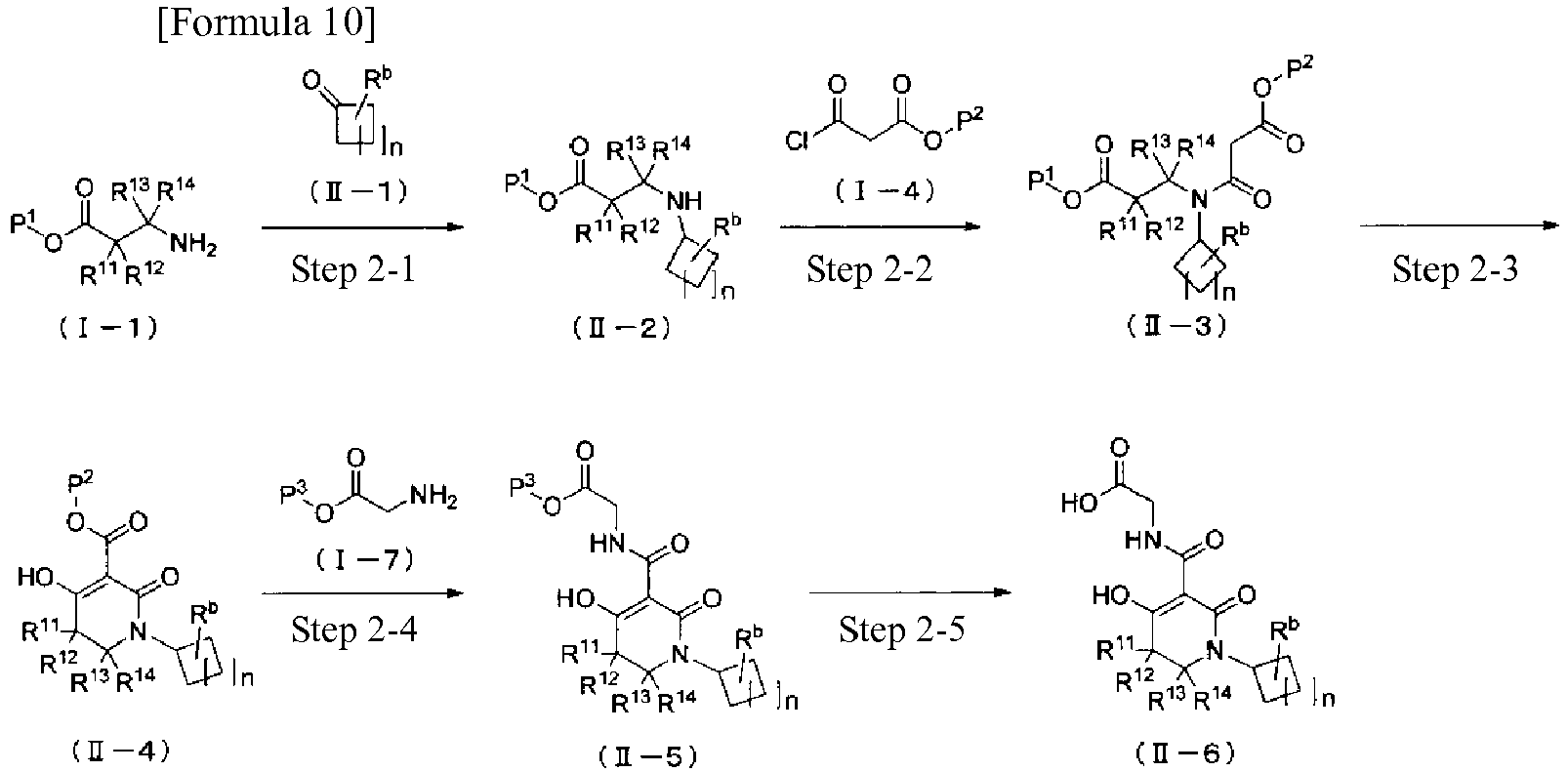
- This step is a process for producing compound (II-2) from compound (I-1) and compound (II-1).
- The reaction of interest can be carried out by a modification of the method described in Step 1-1 of Production Process 1.
- The thus obtained compound (II-2) can be isolated and purified by known separation/purification means, such as concentrating, concentrating under reduced pressure, re-precipitation, extraction with solvent, crystallization, chromatography, etc.
- This step is a process for producing compound (II-3) from compound (II-2) and compound (1-4).
- The reaction of interest can be carried out by a modification of the method described in Step 1-2 of Production Process 1.
- The thus obtained compound (II-3) can be isolated and purified by known separation/purification means, such as concentrating, concentrating under reduced pressure, re-precipitation, extraction with solvent, crystallization, chromatography, etc.
- This step is a process for producing compound (II-4) from compound (II-3).
- The reaction of interest can be carried out by a modification of the method described in Step 1-3 of Production Process 1.
- The thus obtained compound (II-4) can be isolated and purified by known separation/purification means, such as concentrating, concentrating under reduced pressure, re-precipitation, extraction with solvent, crystallization, chromatography, etc.
- This step is a process for producing compound (II-5) from compound (II-4) and compound (1-7).
- The reaction of interest can be carried out by a modification of the method described in Step 1-4 of Production Process 1.
- The thus obtained compound (II-5) can be isolated and purified by known separation/purification means, such as concentrating, concentrating under reduced pressure, re-precipitation, extraction with solvent, crystallization, chromatography, etc.
- This step is a process for producing compound (II-6) from compound (II-5).
- The reaction of interest can be carried out by a modification of the method described in Step 1-5 of Production Process 1.
- The thus obtained compound (II-5) can be isolated and purified by known separation/purification means, such as concentrating, concentrating under reduced pressure, re-precipitation, extraction with solvent, crystallization, chromatography, etc.
- Compound (III-6) that belongs to the compound (I) or (I') of the present invention can be produced by, for example, the following Production Process 3 or modifications thereof.
-

- This step is a process for producing compound (III-2) by reacting compound (I-1) with compound (III-1) in the presence of a base.
- Bases that can be used in the reaction include, for example, sodium hydroxide, potassium tert-butoxide, triethylamine, pyridine, cesium carbonate, potassium carbonate, sodium carbonate, sodium hydrogencarbonate, etc. The amount of the bases to be used ranges from one to three equivalents relative to one equivalent of compound (I-1).
- Solvents that can be used in the reaction include, for example, alcoholic solvents such as methanol and ethanol; ether-based solvents such as tetrahydrofuran and dioxane; halogenated hydrocarbon-based solvents such as methylene chloride and chloroform; aromatic hydrocarbon-based solvents such as toluene and xylene; and aprotic polar solvents such as acetonitrile and N,N-dimethyformamide.
- The reaction of interest can typically be carried out at between 0°C and the reflux temperature.
- The thus obtained compound (III-2) can be isolated and purified by known separation/purification means, such as concentrating, concentrating under reduced pressure, re-precipitation, extraction with solvent, crystallization, chromatography, etc.
- This step is a process for producing compound (III-3) from compound (III-2) and compound (1-4).
- The reaction of interest can be carried out by a modification of the method described in Step 1-2 of Production Process 1.
- The thus obtained compound (III-3) can be isolated and purified by known separation/purification means, such as concentrating, concentrating under reduced pressure, re-precipitation, extraction with solvent, crystallization, chromatography, etc.
- This step is a process for producing compound (III-4) from compound (III-3).
- The reaction of interest can be carried out by a modification of the method described in Step 1-3 of Production Process 1.
- The thus obtained compound (III-4) can be isolated and purified by known separation/purification means, such as concentrating, concentrating under reduced pressure, re-precipitation, extraction with solvent, crystallization, chromatography, etc.
- This step is a process for producing compound (III-5) from compound (III-4) and compound (1-7).
- The reaction of interest can be carried out by a modification of the method described in Step 1-4 of Production Process 1.
- The thus obtained compound (III-5) can be isolated and purified by known separation/purification means, such as concentrating, concentrating under reduced pressure, re-precipitation, extraction with solvent, crystallization, chromatography, etc.
- This step is a process for producing compound (III-6) from compound (III-5).
- The reaction of interest can be carried out by a modification of the method described in Step 1-5 of Production Process 1.
- The thus obtained compound (III-6) can be isolated and purified by known separation/purification means, such as concentrating, concentrating under reduced pressure, re-precipitation, extraction with solvent, crystallization, chromatography, etc.
- Compound (IV-7) that belongs to the compound (I) or (I') of the present invention can be produced by, for example, the following Production Process 4 or modifications thereof.
-

- This step is a process for producing compound (IV-3) by reacting compound (IV-1) with compound (IV-2).
- Solvents that can be used in the reaction include alcoholic solvents such as methanol and ethanol; ether-based solvents such as tetrahydrofuran and dioxane; halogenated hydrocarbon-based solvents such as methylene chloride and chloroform; aromatic hydrocarbon-based solvents such as toluene and xylene; aprotic polar solvents such as acetonitrile and N,N-dimethyformamide; water, etc; these solvents may be used in admixture at appropriate proportions.
- In the reaction of interest, a base or an acid may be used as an additive. Examples of the base include sodium hydride, potassium tert-butoxide, triethylamine, pyridine, cesium carbonate, potassium carbonate, sodium carbonate, sodium hydrogencarbonate, etc. Examples of the acid include acetic acid, hydrochloric acid, sulfuric acid, etc.
- The reaction of interest can typically be carried out at between 0°C and the reflux temperature; it may even be carried out under irradiation with microwaves.
- The thus obtained compound (IV-3) can be isolated and purified by known separation/purification means, such as concentrating, concentrating under reduced pressure, re-precipitation, extraction with solvent, crystallization, chromatography, etc.
- This step is a process for producing compound (IV-4) from compound (IV-3) and compound (1-4).
- The reaction of interest may be carried out by a modification of the method described in Step 1-2 of Production Process 1.
- The thus obtained compound (IV-4) can be isolated and purified by known separation/purification means, such as concentrating, concentrating under reduced pressure, re-precipitation, extraction with solvent, crystallization, chromatography, etc.
- This step is a process for producing compound (IV-5) from compound (IV-4).
- The reaction of interest may be carried out by a modification of the method described in Step 1-3 of Production Process 1.
- The thus obtained compound (IV-5) can be isolated and purified by known separation/purification means, such as concentrating, concentrating under reduced pressure, re-precipitation, extraction with solvent, crystallization, chromatography, etc.
- This step is a process for producing compound (IV-6) from compound (IV-5) and compound (1-7).
- The reaction of interest may be carried out by a modification of the method described in Step 1-4 of Production Process 1.
- The thus obtained compound (IV-6) can be isolated and purified by known separation/purification means, such as concentrating, concentrating under reduced pressure, re-precipitation, extraction with solvent, crystallization, chromatography, etc.
- This step is a process for producing compound (IV-7) from compound (IV-6).
- The reaction of interest may be carried out by a modification of the method described in Step 1-5 of Production Process 1.
- The thus obtained compound (IV-7) can be isolated and purified by known separation/purification means, such as concentrating, concentrating under reduced pressure, re-precipitation, extraction with solvent, crystallization, chromatography, etc.
- Compound (V-4) that belongs to the compound (I) or (I') of the present invention can be produced by, for example, the following Production Process 5 or modifications thereof.
-

- This step is a process for producing compound (V-3) by performing a coupling reaction using compound (V-1) and organometallic compound (V-2).
- If M1 is boronic acid or a boronic acid ester, the reaction of interest is the so-called Suzuki-Miyaura coupling reaction and can be carried out by documented processes (Tetrahedron Letters, 1979, 20, 3437-3440; Chemical reviews, 1995, 95, 2457-2483) or modifications thereof in the presence of a palladium catalyst and a base. If M1 is a Grignard reagent such as magnesium bromide or magnesium chloride, compound (V-3) can be produced in the presence of a palladium catalyst.
- In this case, a metallic reagent such as indium chloride may be added as appropriate. The amount of compound (V-2) to be used in the step under consideration ranges from one to five equivalents, preferably from one to three equivalents, relative to one equivalent of compound (V-1).
- Palladium catalysts that may be used in the coupling reaction include those which are known to skilled artisans, as exemplified by tetrakis(triphenylphosphine)palladium(0), bis(dibenzylideneacetone)palladium(0), bis(tri-tert-butylphosphine)palladium(0), bis(triphenylphosphine)palladium(II) dichloride, bis(triphenylphosphine)palladium(II) acetate and [1,1'-bis(diphenylphosphino)ferrocene]palladium(II) dichloride dichloromethane complex (1:1), etc. If desired, a palladium(0) catalyst, as generated in the system using palladium(II) acetate and a phosphine reagent such as triphenylphosphine or tri(2-methylphenyl)phosphine in the presence of a base, may be used for the reaction. The amount of the palladium catalyst to be used typically varies from 0.01 to 0.5 equivalents, preferably from 0.05 to 0.3 equivalents, relative to one equivalent of compound (V-1).
- Bases that can be used include potassium carbonate, cesium carbonate, sodium carbonate, sodium hydrogencarbonate, tripotassium phosphate, potassium fluoride, cesium fluoride, triethylamine, etc. The amount of the bases to be used typically varies from one to five equivalents, preferably from one to three equivalents, relative to one equivalent of compound (V-1).
- Solvents that can be used in the reaction include alcoholic solvents such as methanol, ethanol, and ethylene glycol; ether-based solvents such as tetrahydrofuran, dioxane, and 1,2-dimethoxyethane; aromatic hydrocarbon-based solvents such as toluene and xylene; aprotic polar solvents such as acetonitrile and N,N-dimethyformamide; water, etc; these solvents may be used in admixture at appropriate proportions.
- In the reaction of interest, a copper compound may be used as an additive. Examples of the copper compound include copper(I) iodide, copper(II) acetate, etc.
- The reaction of interest can typically be carried out at between room temperature and 180°C; it may even be carried out under irradiation with microwaves.
- The thus obtained compound (V-3) can be isolated and purified by known separation/purification means, such as concentrating, concentrating under reduced pressure, re-precipitation, extraction with solvent, crystallization, chromatography, etc.
- This step is a process for producing compound (V-4) from compound (V-3).
- The reaction of interest can be carried out by a modification of the method described in Step 1-5 of Production Process 1.
- The thus obtained compound (V-4) can be isolated and purified by known separation/purification means, such as concentrating, concentrating under reduced pressure, re-precipitation, extraction with solvent, crystallization, chromatography, etc.
- Compound (VI-2) that belongs to the compound (I) or (I') of the present invention can be produced by, for example, the following Production Process 6 or modifications thereof.
-

- This step is a process for producing compound (VI-2) from compound (VI-1) and organometallic compound (V-2).
- The reaction of interest can be carried out by a modification of the method described in Step 5-1 of Production Process 5.
- The thus obtained compound (VI-2) can be isolated and purified by known separation/purification means, such as concentrating, concentrating under reduced pressure, re-precipitation, extraction with solvent, crystallization, chromatography, etc.
- Compound (VII-6) that belongs to the compound (I') of the present invention can be produced by, for example, the following Production Process 7 or modifications thereof.
-

- This step is a process for producing compound (VII-2) from compound (VII-1) and compound (1-2).
- The reaction of interest can be carried out by a modification of the method described in Step 1-1 of Production Process 1.
- The thus obtained compound (VII-2) can be isolated and purified by known separation/purification means, such as concentrating, concentrating under reduced pressure, re-precipitation, extraction with solvent, crystallization, chromatography, etc.
- This step is a process for producing compound (VII-3) from compound (VII-2) and compound (1-4).
- The reaction of interest can be carried out by a modification of the method described in Step1-2 of Production Process 1.
- The thus obtained compound (VII-3) can be isolated and purified by known separation/purification means, such as concentrating, concentrating under reduced pressure, re-precipitation, extraction with solvent, crystallization, chromatography, etc.
- This step is a process for producing compound (VII-4) from compound (VII-3).
- The reaction of interest can be carried out by a modification of the method described in Step 1-3 of Production Process 1.
- The thus obtained compound (VII-4) can be isolated and purified by known separation/purification means, such as concentrating, concentrating under reduced pressure, re-precipitation, extraction with solvent, crystallization, chromatography, etc.
- This step is a process for producing compound (VII-5) from compound (VII-4) and compound (1-7).
- The reaction of interest can be carried out by a modification of the method described in Step 1-4 of Production Process 1.
- The thus obtained compound (VII-5) can be isolated and purified by known separation/purification means, such as concentrating, concentrating under reduced pressure, re-precipitation, extraction with solvent, crystallization, chromatography, etc.
- This step is a process for producing compound (VII-6) from compound (VII-5).
- The reaction of interest can be carried out by a modification of the method described in Step 1-5 of Production Process 1.
- The thus obtained compound (VII-6) can be isolated and purified by known separation/purification means, such as concentrating, concentrating under reduced pressure, re-precipitation, extraction with solvent, crystallization, chromatography, etc.
- Compound (VIII-4) that belongs to the compound (I') of the present invention can be produced by, for example, the following Production Process 8 or modifications thereof.
-

- This step is a process for producing compound (VIII-2) by performing a condensation reaction using compound (VII-2) and compound (VIII-1).
- Reagents that can be used in the condensation reaction include the combination of 1-(3-dimethylaminopropyl)-3-ethylcarbodiimide and 1-hydroxybenzotriazole, as well as 1,1'-carbonyldiimidazole, propylphosphonic acid anhydride (cyclic trimer), etc. The amount of the condensation agent to be used varies from one to three equivalents, preferably from one to two equivalents, relative to one equivalent of compound (VII-2).
- In the reaction of interest, a base can be used as an additive. Examples of the base include triethylamine and so forth.
- Solvents that can be used in the reaction include, for example, alcoholic solvents such as methanol and ethanol; ether-based solvents such as tetrahydrofuran and dioxane; halogenated hydrocarbon-based solvents such as methylene chloride and chloroform; aromatic hydrocarbon-based solvents such as toluene and xylene; and aprotic polar solvents such as N,N-dimethyformamide.
- The reaction of interest can typically be carried out at between 0°C and the reflux temperature.
- The thus obtained compound (VIII-2) can be isolated and purified by known separation/purification means, such as concentrating, concentrating under reduced pressure, re-precipitation, extraction with solvent, crystallization, chromatography, etc.
- This step is a process for producing compound (VIII-3) from compound (VIII-2).
- The reaction of interest can be carried out by a modification of the method described in Step 1-3 of Production Process 1.
- The thus obtained compound (VIII-3) can be isolated and purified by known separation/purification means, such as concentrating, concentrating under reduced pressure, re-precipitation, extraction with solvent, crystallization, chromatography, etc.
- This step is a process for producing compound (VIII-4) from compound (VIII-3).
- The reaction of interest can be carried out by a modification of the method described in Step 1-5 of Production Process 1.
- The thus obtained compound (VIII-4) can be isolated and purified by known separation/purification means, such as concentrating, concentrating under reduced pressure, re-precipitation, extraction with solvent, crystallization, chromatography, etc.
- Compound (IX-4) that belongs to the compound (I) or (I') of the present invention can be produced by, for example, the following Production Process 9 or modifications thereof.
-

- This step is a process for producing compound (IX-2) by performing a condensation reaction using compound (IX-1) and compound (VIII-1).
- The reaction of interest can be carried out by a modification of the method described in Step 8-1 of Production Process 8.
- The thus obtained compound (IX-2) can be isolated and purified by known separation/purification means, such as concentrating, concentrating under reduced pressure, re-precipitation, extraction with solvent, crystallization, chromatography, etc.
- This step is a process for producing compound (IX-3) from compound (IX-2).
- The reaction of interest can be carried out by a modification of the method described in Step 1-3 of Production Process 1.
- The thus obtained compound (IX-3) can be isolated and purified by known separation/purification means, such as concentrating, concentrating under reduced pressure, re-precipitation, extraction with solvent, crystallization, chromatography, etc.
- This step is a process for producing compound (IX-4) from compound (IX-3).
- The reaction of interest can be carried out by a modification of the method described in Step 1-5 of Production Process 1.
- The thus obtained compound (IX-4) can be isolated and purified by known separation/purification means, such as concentrating, concentrating under reduced pressure, re-precipitation, extraction with solvent, crystallization, chromatography, etc.
- Compound (X-4) that belongs to the compound (I') of the present invention can be produced by, for example, the following Production Process 10 or modifications thereof.
-

- This step is a process for producing compound (X-3) from compound (X-1) and compound (X-2).
- The reaction of interest can be carried out by a modification of the method described in Step 1-4 of Production Process 1.
- The thus obtained compound (X-3) can be isolated and purified by known separation/purification means, such as concentrating, concentrating under reduced pressure, re-precipitation, extraction with solvent, crystallization, chromatography, etc.
- This step is a process for producing compound (X-4) from compound (X-3).
- The reaction of interest can be carried out by a modification of the method described in Step 1-5 of Production Process 1.
- The thus obtained compound (X-4) can be isolated and purified by known separation/purification means, such as concentrating, concentrating under reduced pressure, re-precipitation, extraction with solvent, crystallization, chromatography, etc.
- The present invention is described in greater detail by means of the following Reference Examples, Working Examples, and Tests but it should be understood that these are by no means intended to limit the present invention and may be changed to the extent that will not depart from the scope of the present invention.
- The abbreviations used herein denote the following meanings.
- s: singlet
- d: doublet
- t: triplet
- q: quartet
- quin: quintet
- sept: septet
- dd: double doublet
- dt: double triplet
- td: triplet doublet
- m: multiplet
- br: broad
- J: coupling constant
- Hz: Hertz
- CHLOROFORM-d: deuterated chloroform
- DMSO-d6: deuterated dimethyl sulfoxide
- METHANOL-d4: deuterated methanol
- Proton nuclear magnetic resonance (1H-NMR) spectrometry was implemented by the following Fourier transform NMR spectrometers.
200 MHz: Gemini 2000 (Agilent Technologies)
300 MHz: Inova 300 (Agilent Technologies)
600 MHz: JNM-ECA 600 (JEOL) - For analysis, ACD/SpecManager ver. 12.01 (product name), ACD/Spectrus Processor™, etc. were used. Very mild peaks derived from the protons of a hydroxy group, an amino group and other species are not reported.
- Mass spectrometry (MS) was implemented by the following spectrometers.
Platform LC (Waters)
LCMS-2010EV (Shimadzu)
LCMS-IT-TOF (Shimadzu)
GCT (Micromass)
Agilent 6130 (Agilent)
LCQ Deca XP (ThermoFisher Scientific) - The ionization technique used was ESI (electrospray ionization), EI (electron ionization), or dual ionization employing ESI and APCI (atmospheric pressure chemical ionization). Found data are reported. Molecular ion peaks are usually observed but in the case of compounds having a hydroxy group (-OH), fragment peaks are sometimes observed with H2O eliminated. In the case of salts, molecular ion peaks or fragment ion peaks of their free forms are usually observed.
- Purification by preparative high-performance liquid chromatography (preparative HPLC) was conducted under the following conditions. It should, however, be noted that in the case of compounds having basic functional groups, neutralization or other operations for obtaining their free forms may have to be performed when trifluoroacetic acid is used in the HPLC operation.
Apparatus: Gilson's preparative HPLC system
Column: Waters' SunFire™ Prep C18 OBD™ (5 µm, 30 x 50 mm)
Flow rate: 40 mL/min; Detection method: UV 254 nm
Solvent: Solution A, 0.1% trifluoroacetic acid containing water; Solution B, 0.1% trifluoroacetic acid containing acetonitrile
Gradient: 0 min (Solution A/Solution B = 90/10), 2 min (Solution A/Solution B = 90/10), 12 min (Solution A/Solution B = 20/80), 13.5 min (Solution A/Solution B = 5/95), 15 min - Analysis by optical high-performance liquid chromatography (optical HPLC) was conducted under the following conditions.
Apparatus: Agilent 1100 (product of Agilent)
Column: DAICEL's CHIRALCEL OD-H (5 µm, 4.6 x 250 mm)
Flow rate: 0.5 mL/min; Detection method: UV 254 nm
Solvent: 0.1% trifluoroacetic acid containing acetonitrile - Purification by optical preparative high-performance liquid chromatography (optical preparative HPLC) was conducted under the following conditions.
Apparatus: Gilson's preparative HPLC system
Column: DAICEL's CHIRALCEL OD (10 µm, 20 x 250 mm)
Flow rate: 5 mL/min; Detection method: UV 254 nm
Solvent: 0.1% trifluoroacetic acid containing acetonitrile - For X-ray crystallography, XR-AXIS RAPID II (Rigaku) was used.
- The optical purity of optically active forms was evaluated in terms of percent enantiomeric excess (%ee). This parameter was calculated from the following equation using the data obtained by optical HPLC.

- Percent enantiomeric excess was similarly determined for the (S)-form.
- The phase separator used was Biotage's ISOLUTE (registered trademark) Phase Separator.
- The microwave reactor was Biotage's Initiator.
- Compound names were assigned by means of ACD/Name (ACD/Labs 12.01, Advanced Chemistry Development Inc.)
- Elemental analysis was conducted with the following apparatuses.
- 2400II (Perkin Elmer)
- vario MICRO cube (elementar)
- MT-6 (Yanaco Analytical Instruments Inc.)
- Ion chromatographic analysis was conducted with the following apparatuses.
- DX500 (Dionex)
- XS100 (Mitsubishi Chemical Corporation)
- ICS3000 (Dionex)
- Melting points were measured with the following apparatus.
MP-J3 (Yanaco Instrument Development Laboratory) - In the tables given in the Reference Examples and Working Examples, salt information is left blank for some compounds, indicating that they were obtained in the form of free forms.
-

-

- To a solution of tetrahydro-4H-pyran-4-one (10.0 g) in toluene (200 mL), methyl (triphenylphosphoranylidene)acetate was added at room temperature. After stirring at 100°C for 15 hours, the mixture was cooled to room temperature. After concentrating under reduced pressure, ethyl acetate (200 mL) and n-hexane (200 mL) were added. After removing the precipitate by filtration, the filtrate was concentrated under reduced pressure. The resulting residue was purified by silica gel column chromatography (n-hexane:ethyl acetate = 95:5-50:50) to give methyl tetrahydro-4H-pyran-4-ylidene acetate as a colorless oil (13.9 g).
1H NMR (300 MHz, CHLOROFORM-d) δ ppm 2.30 - 2.37 (m, 2 H) 2.95 - 3.05 (m, 2 H) 3.70 (s, 3 H) 3.71 - 3.81 (m, 4 H) 5.69 (s, 1 H).
MS ESI/APCI Dual posi: 157[M+H]+, 179[M+Na]+. -

- An 8 mol/L ammonia-methanol solution (100 mL) of the compound (13.6 g) obtained in step (1) above was stirred in a sealed tube at 90°C for 4 days. After being cooled to room temperature, the mixture was concentrated under reduced pressure. The resulting residue was purified by silica gel column chromatography (chloroform:methanol = 100:0-90:10) to give methyl (4-aminotetrahydro-2H-pyran-4-yl)acetate as a yellow oil (7.09 g).
1H NMR (300 MHz, CHLOROFORM-d) δ ppm 1.44 - 1.56 (m, 2 H) 1.64 - 1.79 (m, 2 H) 2.45 (s, 2 H) 3.63 - 3.86 (m, 7 H).
MS ESI/APCI Dual posi: 174[M+H]+, 196[M+Na]+. - To an ethyl acetate solution (100 mL) of the compound (7.09 g) in step (2) above, a 4 mol/L hydrogen chloride-ethyl acetate solution (10.2 mL) was added. Thereafter, n-hexane was added and the mixture was stirred at room temperature for 5 minutes. The precipitate was recovered by filtration to give the titled compound as a colorless solid (5.72 g).
1H NMR (300 MHz, DMSO-d6) δ ppm 1.76 - 1.85 (m, 4 H) 2.90 (s, 2 H) 3.49 - 3.61 (m, 2 H) 3.63 - 3.68 (m, 3 H) 3.70 - 3.83 (m, 2 H) 8.35 (br. s., 3 H).
MS ESI/APCI Dual posi: 174[M+H]+. -

- Instead of tetrahydro-4H-pyran-4-one, 1-(tert-butoxycarbonyl)-4-piperidone (5.00 g) was used and treated by the same techniques as in Reference Example 1-1(1) and (2) to give the titled compound as a colorless solid (4.65 g).
1H NMR (600 MHz, CHLOROFORM-d) δ ppm 1.45 (s, 9 H) 1.49 - 1.52 (m, 2 H) 1.53 - 1.60 (m, 2 H) 2.41 (s, 2 H) 3.28 - 3.35 (m, 2 H) 3.58 - 3.68 (m, 2 H) 3.69 (s, 3 H). MS ESI/APCI Dual posi: 273[M+H]+. -

-

- Instead of tetrahydro-4H-pyran-4-one, 1-(tert-butoxycarbonyl)-4-azetidinone (4.90 g) was used and treated by the same technique as in Reference Example 1-1(1) to give tert-butyl 3-(2-methoxy-2-oxoethylidene)azetidine-1-carboxylate as a colorless oil (6.21 g).
1H NMR (200 MHz, DMSO-d6) δ ppm 1.38 - 1.41 (m, 9 H) 3.61 - 3.67 (m, 3 H) 4.52 - 4.60 (m, 2 H) 4.66 - 4.73 (m, 2 H) 5.84 - 5.93 (m, 1 H)
MS ESI/APCI Dual nega: 226[M-H]-. - To a solution in ethanol (60 mL) of the compound (6.04 g) obtained in step (1) above, a solution of 28% ammonia in water was added and the mixture was stirred at 80°C for 9 hours. After being cooled to room temperature, the reaction mixture was concentrated under reduced pressure to give the titled compound as a crude product (8.14 g). The titled compound was used in the next reaction as it remained the crude product.
-

-

- To a solution of methylenecyclobutane (2.35 g) in diethyl ether (34.9 mL), chlorosulfonyl isocyanate (4.88 g) was slowly added under cooling with ice and the mixture was stirred at room temperature for 30 minutes. After successively adding a solution of 20% sodium thiosulfate in water (43.0 mL) and a solution of 10% potassium hydroxide in water (43.0 mL) at 0°C, the mixture was stirred at that temperature for 2 hours. Following the confirmation that the interior of the reaction system was strongly basic, the mixture was extracted with diethyl ether nine times. The combined organic layers were dried over anhydrous magnesium sulfate and the desiccant was removed by filtration. The filtrate was concentrated under reduced pressure to give 1-azaspiro[3.3]heptan-2-one as a yellow oil (2.71 g).
1H NMR (300 MHz, CHLOROFORM-d) δ ppm 1.63 - 1.82 (m, 2 H) 2.17 - 2.45 (m, 4 H) 2.96 - 2.99 (m, 2 H) 5.90 - 6.56 (m, 1 H).
MS ESI posi: 112[M+H]+, 134[M+Na]+. - To a solution in methanol (60.0 mL) of the compound (2.67 g) obtained in step (1) above, conc. sulfuric acid was added slowly. After refluxing for an hour, the mixture was cooled to room temperature. After concentrating the mixture under reduced pressure, ethyl acetate was added and the mixture was extracted with 1 mol/L hydrochloric acid twice. To the combined aqueous layers, potassium carbonate was added at 0°C until pH > 10. After ten extractions with ethyl acetate, the combined organic layers were dried over added anhydrous magnesium sulfate. After removing the desiccant by filtration, the filtrate was concentrated under reduced pressure to give the titled compound as a pale yellow oil (2.82 g). 1H NMR (300 MHz, CHLOROFORM-d) δ ppm 1.59 - 1.99 (m, 4 H) 2.03 - 2.16 (m, 2 H) 2.61 (s, 2 H) 3.69 (s, 3 H).
MS ESI posi: 144[M+H]+, 166[M+Na]+. -

-

- To a solution of 2,3-dimethyl-2-butene (5.76 g) in toluene (46.0 mL), chlorosulfonyl isocyanate (5.91 mL) was added at 0°C. After being stirred at that temperature for 10 minutes, the mixture was brought to room temperature. After being stirred for 45 minutes, the mixture was diluted with added toluene (69.0 mL). To a mixture of a solution of 25% sodium hydroxide in water (49.1 mL) and benzyltriethylammonium chloride (99.0 mg), the reaction mixture was added over a period of one hour. The resulting mixture was added dropwise to a solution of 25% sodium hydroxide in water and the mixture was stirred at 50°C for an hour. After being cooled to room temperature, the mixture was extracted with toluene twice. The combined organic layers were washed with saturated brine and dried over added anhydrous magnesium sulfate. The desiccant was removed by filtration and the filtrate was concentrated under reduced pressure. The resulting residue was recrystallized with toluene to give 3,3,4,4-tetramethylazetidin-2-one as a colorless solid (5.52 g).
1H NMR (300 MHz, CHLOROFORM-d) δ ppm 1.22 (s, 6 H) 1.33 (s, 6 H) 5.79 (br. s, 1 H). MS ESI/APCI Dual posi: 128[M+H]+, 150[M+Na]+.
MS ESI/APCI Dual nega: 126[M-H]-. - To the compound (5.52 g) obtained in step (1) above, a 2 mol/L hydrogen chloride-methanol solution (40.0 mL) was added and the mixture was refluxed for 5 hours. Further, a 2 mol/L hydrogen chloride-methanol solution (20.0 mL) was added and the mixture was refluxed for 6 hours. After cooling to room temperature, toluene (40.0 mL) was added and the mixture was concentrated under reduced pressure. After cooling the residue to 0°C, the precipitate was recovered by filtration and washed with toluene. The recovered precipitate was dried under reduced pressure to give the titled compound as a colorless solid (4.67 g).
1H NMR (300 MHz, CHLOROFORM-d) δ ppm 1.36 (s, 6 H) 1.51 (s, 6 H) 3.73 - 3.83 (m, 3 H) 8.25 - 8.83 (m, 3 H).
MS ESI/APCI Dual posi: 160[M+H]+, 182[M+Na]+. -

- Instead of 2,3-dimethyl-2-butene, 2-ethyl-1-butene (10.0 g) was used and treated by the same technique as in Reference Example 2-2 to give the titled compound as a colorless amorphous mass (12.0 g).
1H NMR (300 MHz, CHLOROFORM-d) δ ppm 1.06 (t, J=7.5 Hz, 6 H) 1.79 - 2.02 (m, 4 H) 2.80 (s, 2 H) 3.74 (s, 3 H) 8.52 (br. s., 3 H).
MS ESI/APCI Dual posi: 160[M+H]+, 182[M+Na]+. -

- To ethanol (12.0 mL), thionyl chloride (0.587 mL) was added at 0°C and the mixture was stirred at that temperature for 30 minutes. After adding 3-amino-2,2-difluoropropionic acid hydrochloride (950 mg) at 0°C, the mixture was refluxed for 4 hours. After being cooled to room temperature, the mixture was concentrated under reduced pressure. After adding ethyl acetate, the resulting precipitate was removed by filtration. The filtrate was concentrated under reduced pressure to give the titled compound as a pale brown oil (920 mg).
1H NMR (300 MHz, CHLOROFORM-d) δ ppm 1.36 (t, J=7.0 Hz, 3 H) 3.84 (t, J=14.1 Hz, 2 H) 4.40 (q, J=7.0 Hz, 2 H) 8.70 (br. s., 3 H).
MS ESI/APCI Dual posi: 154[M+H]+. - In the following Reference Examples 3-2 and 3-3, a commercial grade of the corresponding β-alanine compounds was used as the starting material and treated by the method described in Reference Example 3-1 or a modification thereof to synthesize the intended compounds. The structures of the synthesized compounds and their NMR and MS data are shown in Table 1-1 below.
[Table 1-1] Compound No. Structure Analytical Data Salt information Reference Example 3-2 
1H NMR (300 MHz, CHLOROFORM-d) δ ppm 1.18 - 1.28 (m, 3 H) 2.65 - 2.92 (m, 2 H) 2.96 - 3.11 (m, 1 H) 3.40 - 3.53 (m, 1 H) 3.74 - 3.91 (m, 1 H) 4.09 - 4.20 (m, 2 H) 7.21 - 7.38 (m, 5 H) 8.54 - 8.88 (m, 3 H). HCl MS ESI/APCI Dual posi: 208[M+H]+, 230[M+Na]+. Reference Example 3-3 
1H NMR (300 MHz, CHLOROFORM-d) δ ppm 1.23 (t, J=7.1 Hz, 3 H) 1.94 - 2.42 (m, 2 H) 2.66 - 2.99 (m, 4 H) 3.51 - 3.74 (m, 1 H) 4.09 - 4.20 (m, 2 H) 7.14 - 7.30 (m, 5 H) 8.66 (br. s., 3 H). HCl MS ESI/APCI Dual posi : 222[H+H]+, 244[N+Na]+. -

- To a solution of L-β-homoserine (1.00 g) in methanol (8.4 mL), a 4 mol/L hydrogen chloride-1,4-dioxane solution (8.4 mL) was added and thereafter the mixture was stirred at 60°C for 3 hours. The reaction mixture was concentrated under reduced pressure to give the titled compound as a pale yellow oil (1.42 g).
1H NMR (300 MHz, DMSO-d6) δ ppm 2.69 (d, J=6.5 Hz, 2 H) 3.34 - 3.60 (m, 2 H) 3.64 (s, 3 H) 4.27 - 4.57 (m, 1 H).
MS ESI/APCI Dual posi: 134[M+H]+. -
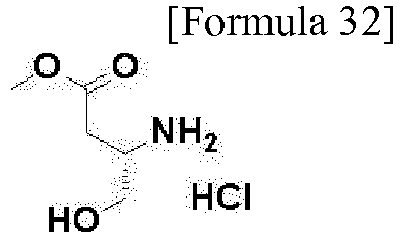
- Instead of L-β-homoserine, D-β-homoserine (1.00 g) was used and treated by the same technique as in Reference Example 3-4 to give the titled compound as a pale yellow oil (1.42 g).
1H NMR (300 MHz, DMSO-d6) δ ppm 2.70 (d, J=6.7 Hz, 2 H) 3.35 - 3.60 (m, 2 H) 3.64 (s, 3 H) 4.29 - 4.55 (m, 1 H).
MS ESI/APCI Dual posi: 134[M+H]+. -

-

- To a suspension of sodium hydride (60% dispersion in mineral oil; 14.6 g) in tetrahydrofuran (281 mL), ethylene cyanohydrin (21.0 mL) was added dropwise at 0°C and the mixture was stirred at that temperature for 40 minutes. After adding benzyl bromide (44.4 mL) to the reaction mixture, the resulting mixture was stirred overnight as it was brought to room temperature. A saturated aqueous solution of ammonium chloride was added to the reaction mixture, which was then extracted with ethyl acetate three times. The combined organic layers were washed with saturated brine and dried over anhydrous magnesium sulfate. The desiccant was removed by filtration and the filtrate was concentrated under reduced pressure. The resulting residue was purified by NH silica gel column chromatography (n-hexane:ethyl acetate = 100:0-70:30) to give 3-(benzyloxy)propanenitrile as a colorless oil (24.7 g).
1H NMR (300 MHz, CHLOROFORM-d) δ ppm 2.63 (t, J=6.4 Hz, 2 H) 3.69 (t, J=6.4 Hz, 2 H) 4.59 (s, 2 H) 7.27 - 7.41 (m, 5 H). -

- To a mixture of the compound (24.7 g) obtained in step (1) above, tetraisopropyl orthotitanate (49.4 mL) and methoxycyclopentane (306 mL), ethyl magnesium bromide (about 3 mol/L, solution in diethyl ether, 102 mL) was added at 0°C and thereafter the mixture was stirred at room temperature for 3 hours. After adding boron trifluoride/diethylether complex (38.8 mL) at 0°C, the mixture was stirred at room temperature for 1.5 hours. After adding water at 0°C, pH was adjusted to 12 by adding a solution of 10% sodium hydroxide in water. The reaction mixture was extracted with chloroform three times. The combined organic layers were washed with saturated brine and then passed through a phase separator and concentrated under reduced pressure. The resulting residue was purified by NH silica gel column chromatography (n-hexane: ethyl acetate = 100:0-5:95) and further purified by silica gel column chromatography (n-hexane:ethylacetate = 90:10-5:95, then chloroform:methanol = 100:0-90:10) to give 1-[2-(benzyloxy)ethyl]cyclopropaneamine as a pale yellow oil (12.5 g).
1H NMR (300 MHz, CHLOROFORM-d) δ ppm 0.40 - 0.45 (m, 2 H) 0.53 - 0.59 (m, 2 H) 1.73 (t, J=6.4 Hz, 2 H) 3.69 (t, J=6.4 Hz, 2 H) 4.52 - 4.55 (m, 2 H) 7.27 - 7.37 (m, 5 H). -
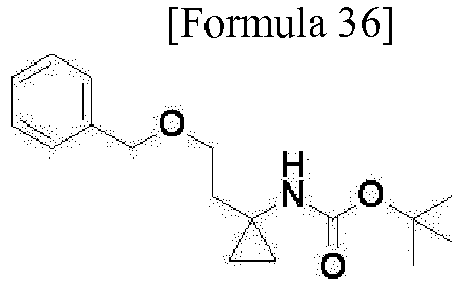
- To a solution in tetrahydrofuran (130 mL) of the compound (12.5 g) obtained in step (2) above, an aqueous solution of sodium hydrogencarbonate (7.8%, 106 g) and di-tert-butyl dicarbonate (22.5 mL) were added successively and the mixture was stirred at room temperature for 14 hours. After adding saturated brine, the mixture was extracted with ethyl acetate three times. The combined organic layers were washed with saturated brine and then passed through a phase separator and concentrated under reduced pressure. The resulting residue was purified by silica gel column chromatography (n-hexane: ethyl acetate = 100:0-50:50) to give tert-butyl {1-[2-(benzyloxy)ethyl]cyclopropyl{carbamate as a colorless solid (16.3 g).
1H NMR (300 MHz, CHLOROFORM-d) δ ppm 0.61 - 0.80 (m, 4 H) 1.41 (s, 9 H) 1.84 (t, J=6.3 Hz, 2 H) 3.63 (t, J=6.3 Hz, 2 H) 4.51 (s, 2 H) 4.88 (br. s, 1 H) 7.27 - 7.39 (m, 5 H). -
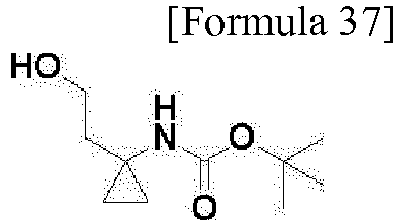
- To a solution in ethanol (112 mL) of the compound (16.3 g) obtained in step (3) above, 20% palladium hydroxide/carbon (3.25 g) was added and the mixture was stirred at 60°C for 23 hours in a hydrogen atmosphere. After being cooled to room temperature, the reaction mixture was filtered through Celite (registered trademark). The filtrate was concentrated under reduced pressure to give tert-butyl [1-(2-hydroxyethyl)cyclopropyl]carbamate as a colorless solid (11.1 g).
1H NMR (300 MHz, CHLOROFORM-d) δ ppm 0.71 - 0.78 (m, 2 H) 0.79 - 0.87 (m, 2 H) 1.44 (s, 9 H) 1.60 - 1.66 (m, 2 H) 3.65 - 3.78 (m, 2 H) 4.83 - 4.99 (m, 1 H). -

- To a solution in acetonitrile (275 mL) of the compound (11.1 g) obtained in step (4) above and 2,2,6,6-tetramethylpiperidin-1-oxyl free radical (602 mg), a sodium phosphate buffer (0.67 mol/L, pH 6.7, 206 mL) was added. After heating to 35°C, an aqueous solution of sodium hypochlorite (0.265%, 32.6 mL) and an aqueous solution of sodium chlorite (14.7%, 110 mL) were added simultaneously over a period of 2 hours and the mixture was stirred at that temperature for 55 hours. The mixture was cooled to room temperature and after adding water (400 mL), it was rendered basic with a solution of 2 mol/L sodium hydroxide in water. The reaction mixture was poured into an aqueous solution of sodium thiosulfate (5.75%, 291 mL) at 0°C. After washing with diethyl ether (750 mL), the aqueous layer was added to 2 mol/L hydrochloric acid (140 mL) for pH adjustment to between 2 and 3. The mixture was extracted with diethyl ether and ethyl acetate and the combined organic layers were washed with saturated brine and dried over anhydrous magnesium sulfate. The desiccant was removed by filtration and the filtrate was concentrated under reduced pressure. The resulting residue was crystallized with a liquid mixture of n-hexane/ethyl acetate to give {1-[(tert-butoxycarbonyl)amino]cyclopropyl}acetic acid as a colorless solid (9.45 g).
1H NMR (300 MHz, CHLOROFORM-d) δ ppm 0.73 - 0.83 (m, 2 H) 0.89 - 0.96 (m, 2 H) 1.45 (s, 9 H) 2.41 - 2.82 (m, 2 H) 5.09 - 5.49 (m, 1 H).
MS ESI/APCI Dual posi: 238[M+Na]+.
MS ESI/APCI Dual nega: 214[M-H]-. - To ethanol (34.8 mL), thionyl chloride (1.51 mL) was added at 0°C and the mixture was stirred at that temperature for 30 minutes. After adding the compound (1.50 g) obtained in step (5) above, the mixture was stirred at 75°C for 4 hours. After being cooled to room temperature, the mixture was concentrated under reduced pressure to give the titled compound as a pale yellow oil (1.41 g).
1H NMR (300 MHz, CHLOROFORM-d) δ ppm 0.73 - 0.81 (m, 2 H) 1.30 (t, J=7.2 Hz, 3 H) 1.44-1.51 (m, 2 H) 2.74 (s, 2 H) 4.23 (q, J=7.2 Hz, 2 H).
MS ESI/APCI Dual posi: 144[M+H]+. -

-

- To a solution of ethyl cyanoacetate (11.8 g) in acetone (83.0 mL), potassium carbonate (43.1 g) and 1,2-dibromoethane (39.2 g) were added and the mixture was refluxed for 12 hours. After being cooled to room temperature, the reaction mixture was filtered through Celite (registered trademark). The filtrate was concentrated under reduced pressure and further dried under reduced pressure with heating to give ethyl 1 - cyanocyclopropanecarboxylate as a red oil (14.2 g).
1H NMR (300 MHz, DMSO-d6) δ ppm 1.23 (t, J=7.1 Hz, 3 H) 1.57 - 1.62 (m, 2 H) 1.73 - 1.79 (m, 2 H) 4.19 (q, J=7.1 Hz, 2 H). - To a solution in ethanol (127mL) of the compound (14.0 g) obtained in step (1) above, a Raney nickel catalyst (about 2.8 g) was added. In a hydrogen atmosphere, the mixture was stirred at room temperature for 12 hours and further stirred at 40°C for 12 hours. After being cooled to room temperature, the reaction mixture was filtered through Celite (registered trademark) and the filtrate was concentrated under reduced pressure. The resulting precipitate was recovered by filtration and washed with ethanol. The filtrate was concentrated to give the titled compound as a red oil (13.4 g).
1H NMR (300 MHz, DMSO-d6) δ ppm 0.82 - 0.88 (m, 2 H) 0.98 - 1.04 (m, 2 H) 1.13 - 1.21 (m, 3 H) 2.63 - 2.72 (m, 2 H) 4.00 - 4.10 (m, 2 H). - In the following Reference Examples 5-2 to 5-5, 1,2-dibromoethane was replaced by a commercial grade of the corresponding dihalogenated alkanes or dihalogenated alkyl ethers, which were treated by the method described in Reference Example 5-1 or modifications thereof to synthesize the intended compounds. The structures of the synthesized compounds and their NMR and MS data are shown in Table 2-1 below.
[Table 2-1] Compound No. Structure Analytical Data Salt information Reference Example 5-2 
1H NMR (300 MHz, CHLOROFORM-d) δ ppm 1.22 - 1.31 (t, J=7.0 Hz, 3 H) 1.46 - 2.39 (m, 8 H) 2.81 (s, 2 H) 4.16 (q, J=7.0 Hz, 2 H). MS ESI/APCI Dual posi: 172[M+H]+. Reference Example 5-3 
1H NMR (300 MHz, CHLOROFORM-d) δ ppm 1.11 - 1.70 (m, 11 H) 1.99 - 2.13 (m, 2 H) 2.74 (s. 2 H) 4.18 (q, J=7.1 Hz, 2 H). MS ESI/APCI Dual posi: 186[M+H]+. Reference Example 5-4 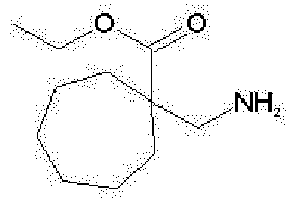
1H NMR (300 MHz, CHLOROFORM-d) δ ppm 1.20 - 1.32 (t, J=7.1 Hz, 3 H) 1.38 - 1.67 (m, 10 H) 1.99 - 2.15 (m, 2 H) 2.73 (s, 2 H) 4.16 (q, J=7.1 Hz, 2 H). MS ESI/APCI Dual posi: 200[M+H]+, 222[M+Na]+. Reference Example 5-5 
1H NMR (300 MHz, CHLOROFORM-d) δ ppm 1.26 - 1.32 (m, 3 H) 1.42 - 1.54 (m, 2 H) 2.00 - 2.14 (m, 2 H) 2.79 (s, 2 H) 3.41 - 3.55 (m, 2 H) 3.80 - 3.90 (m, 2 H) 4.23 (q, J=7.1 Hz, 2 H). MS ESI/APCI Dual posi: 188[M+H]+, 210[M+Na]+. -

- To a mixture of 4-iodobenzaldehyde (500 mg), bis(triphenylphosphine)palladium(II) dichloride (75.6 mg), copper(I) iodide (24.6 mg) and dehydrated tetrahydrofuran (10.0 mL), cyclobutylzinc bromide (0.5 mol/L, solution in tetrahydrofuran, 6.46 mL) was added and the mixture was stirred in a sealed tube at 60°C for 14 hours. After cooling to room temperature, the precipitate was removed by filtration through Celite (registered trademark). The filtrate was concentrated under reduced pressure and thereafter purified by silica gel column chromatography (n-hexane:ethyl acetate = 98:2-90:10) to give the titled compound as a colorless oil (225 mg).
1H NMR (300 MHz, CHLOROFORM-d) δ ppm 1.79 - 2.28 (m, 4 H) 2.29 - 2.48 (m, 2 H) 3.54 - 3.73 (m, 1 H) 7.32 - 7.39 (m, 2 H) 7.74 - 7.87 (m, 2 H) 9.97 (s, 1 H).
MS ESI/APCI Dual posi: 161[M+H]+. -

- A mixture of 4-bromobenazotrifluoride (10.0 g), 4-formylphenylboronic acid (7.33 g), tetrakis(triphenylphosphine)palladium(0) (308 mg), potassium carbonate (30.7 g), tetrahydrofuran (300 mL) and water (100 mL) was stirred at 85 °C for 2 hours. After cooling the reaction mixture to room temperature, water was added to it, which was then extracted with ethyl acetate twice and the combined organic layers were washed with saturated brine. After adding anhydrous magnesium sulfate to the organic layers, the desiccant was removed by filtration and the filtrate was concentrated under reduced pressure. The resulting residue was dissolved in n-hexane (60 mL) with heating and thereafter cooled to 0°C. The resulting precipitate was recovered by filtration to give the titled compound as a gray solid (12.1 g).
1H NMR (300 MHz, CHLOROFORM-d) δ ppm 7.71 - 7.80 (m, 6 H) 7.96 - 8.03 (m, 2 H) 10.09 (s, 1 H).
MS EI posi: 250[M]+. -

- A mixture of 4-bromobenzaldehyde (10.0 g), 4-fluorophenylboronic acid (11.3 g), tetrakis(triphenylphosphine)palladium(0) (3.12 g), sodium carbonate (28.6 g), toluene (150 mL), ethanol (70.0 mL) and water (70.0 mL) was stirred at 100°C for 12 hours. After cooling the reaction mixture to room temperature, water was added and extraction with toluene was conducted twice. The combined organic layers were washed with saturated brine and dried over anhydrous magnesium sulfate. The desiccant was removed by filtration and the filtrate was concentrated under reduced pressure. The concentrate was purified by silica gel column chromatography (n-hexane:ethyl acetate = 90:10) and after adding n-hexane to the residue, the mixture was stirred. The precipitate was recovered by filtration and dried under reduced pressure to give the titled compound as a colorless solid (10.4 g).
1H NMR (300 MHz, CHLOROFORM-d) δ ppm 7.12 - 7.22 (m, 2 H) 7.56 - 7.66 (m, 2 H) 7.68 - 7.75 (m, 2 H) 7.93 - 7.98 (m, 2 H) 10.06 (s, 1 H).
MS ESI/APCI Dual posi: 201[M+H]+. -
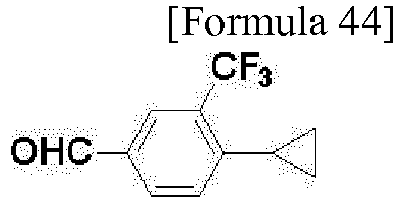
- With 4-chloro-3-(trifluoromethyl)benzaldehyde (1.00 g) and cyclopropylboronic acid (1.24 g) being used as starting materials, the same technique as in Reference Example 6-3 was applied to give the titled compound as a pale yellow oil (900 mg).
1H NMR (300 MHz, CHLOROFORM-d) δ ppm 0.85 - 0.95 (m, 2 H) 1.13 - 1.25 (m, 2 H) 2.23 - 2.37 (m, 1 H) 7.13 (d, J=8.1 Hz, 1 H) 7.94 (dd, J=8.1, 1.5 Hz, 1 H) 8.12 (d, J=1.5 Hz, 1 H) 10.00 (s, 1 H).
MS ESI/APCI Dual posi: 215[M+H]+. -

- A mixture of 5-bromo-3-pyridinecarboxyaldehyde (1.00 g), 3-pyridylboronic acid (991 mg), [1,1'-bis(diphenylphosphino)ferrocene]palladium(II) dichloride dichloromethane adduct (220 mg), 2 mol/L sodium carbonate solution in water (5 mL), and N,N-dimethylformamide (20 mL) was stirred at 120°C for 30 minutes under irradiation with microwaves.
- After cooling the reaction mixture to room temperature, water was added to it and two extractions were conducted with ethyl acetate. The combined organic layers were washed with saturated brine and thereafter passed through a phase separator for concentrating under reduced pressure. The resulting residue was purified by silica gel column chromatography (chloroform:methanol = 100:0-95:5) to give the titled compound as a pale yellow solid (944 mg).
1H NMR (300 MHz, CHLOROFORM-d) δ ppm 7.44 - 7.54 (m, 1 H) 7.93 - 8.00 (m, 1 H) 8.09 (d, J=1.6 Hz, 2 H) 8.68 - 8.79 (m, 1 H) 8.90 - 8.97 (m, 1 H) 9.03 (t, J=1.6 Hz, 1 H) 10.08 - 10.19 (m, 1 H). -

- A mixture of 3-bromo-6-(cyclopropyl)pyridine (2.00 g), 4-formylphenylboronic acid (1.82 g), palladium(II) acetate (113 mg), tripotassium phosphate (4.50 g) and ethylene glycol (16.8 mL) was stirred at 80°C for 3 hours. After cooling the reaction mixture to room temperature, water was added to it and two extractions were conducted with ethyl acetate. The combined organic layers were washed with saturated brine and thereafter the crude product was adsorbed on diatomaceous earth, with the solvent being distilled off under reduced pressure. The crude product adsorbed on the diatomaceous earth was purified by silica gel column chromatography (hexane:ethyl acetate = 98:2-50:50) to give the titled compound as a colorless solid (1.81 g).
1H NMR (300 MHz, CHLOROFORM-d) δ ppm 1.00 - 1.17 (m, 4 H) 2.03 - 2.16 (m, 1 H) 7.21 - 7.30 (m, 1 H) 7.66 - 7.83 (m, 3 H) 7.93 - 8.01 (m, 2 H) 8.68 - 8.76 (m, 1 H) 10.06 (s, 1 H).
MS ESI/APCI Dual posi: 224[M+H]+. - In the following Reference Examples 6-7 and 6-11, a commercial grade of the corresponding halogenated pyridines was used as the starting material and treated by the method described in Reference Example 6-6 or modifications thereof to synthesize the intended compounds. The structures of the synthesized compounds and their NMR and MS data are shown in Table 3-1 below.
[Table 3-1] Compound No. Structure Analytical Data Salt information Reference Example 6-7 
1H NMR (300 MHz, CHLOROFORM-d) δ ppm 4.06 (s, 3 H) 6.72 - 6.80 (m, 1 H) 7.38 - 7.47 (m, 1 H) 7.63 - 7.72 (m, 1 H) 7.92 - 8.00 (m, 2 H) 8.19 - 8.26 (m, 2 H) 10.03 - 10.12 (m, 1 H). MS ESI/APCI Dual posi: 214[M+H]+. Reference Example 6-8 
1H NMR (300 MHz, CHLOROFORM-d) δ ppm 7.74 - 7.82 (m, 1 H) 7.96 - 8.04 (m, 2 H) 8.10 - 8.20 (m, 2 H) 8.63 - 8.75 (m, 1 H) 10.09 (s, 1 H). MS ESI/APCI Dual posi: 218[M+H]+. Reference Example 6-9 
1H NMR (300 MHz, CHLOROFORM-d) δ ppm 3.93 (s, 3 H) 7.27 - 7.35 (m, 1 H) 7.73 - 7.80 (m, 1 H) 7.91 - 8.01 (m, 2 H) 8.08 - 8.17 (m, 2 H) 8.41 - 8.48 (m, 1 H) 10.07 (s, 1 H). MS ESI/APCI Dual posi: 214[M+H]+. Reference Example 6-10 
1H NMR (300 MHz, CHLOROFORM-d) δ ppm 3.90 (s, 3 H) 7.25 - 7.38 (m, 2 H) 7.92 - 7.99 (m, 2 H) 8.07 - 8.17 (m, 2 H) 8.31 - 8.39 (m, 1 H) 10.07 (s, 1 H). MS ESI/APCI Dual posi : 214[M+H]+. Reference Example 6-11 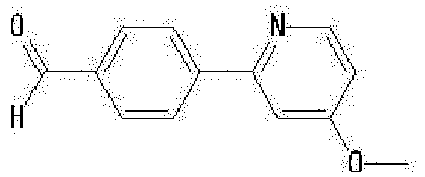
1H NMR (300 MHz, CHLOROFORM-d) δ ppm 3.93 (s, 3 H) 6.78 - 6.89 (m, 1 H) 7.28 - 7.33 (m, 1 H) 7.94 - 8.02 (m, 2 H) 8.10 - 8.18 (m, 2 H) 8.53 - 8.62 (m, 1 H) 10.08 (s, 1 H). M ESI/APCI Dual posi: 214[M+H]+. -

-

- To a mixture of (methoxymethyl)triphenylphosphonium chloride (6.14 g) with tert-butyl methyl ether (30.0 mL), potassium tert-butoxide (2.32 g) was added, with the temperature in the system being held at -10°C. The mixture was stirred at -10°C for 10 minutes and thereafter stirred at room temperature for an hour. A solution of 4-phenylcyclohexanone (2.4 0 g) in tetrahydrofuran (10.0 mL) was added, with the temperature in the system being held at -10°C. The mixture was stirred at -10°C for 10 minutes and thereafter stirred at room temperature for two hours. After adding water, the mixture was extracted with ethyl acetate. The combined organic layers were passed through a phase separator and thereafter concentrated under reduced pressure. The resulting residue was purified by silica gel column chromatography (n-hexane:ethyl acetate = 100:0-60:40) to give [4-(methoxymethylidene)cyclohexyl]benzene as a colorless oil (3.59 g).
1H NMR (300 MHz, CHLOROFORM-d) δ ppm 1.36 - 1.53 (m, 2 H) 1.69 - 2.23 (m, 5 H) 2.56 - 2.70 (m, 1 H) 2.85 - 2.96 (m, 1 H) 3.57 (s, 3 H) 5.80 - 5.83 (m, 1 H) 7.12 - 7.34 (m, 5 H).
MS ESI/APCI Dual posi: 203[M+H]+. - To a solution in tetrahydrofuran (10.0 mL) of the compound (3.59 g) obtained in step (1) above, 3 mol/L hydrochloric acid was added and the mixture was refluxed for 4 hours. After cooling the reaction mixture to room temperature, water was added to it and three extractions were conducted with ethyl acetate. The combined organic layers were washed with water and then concentrated under reduced pressure to give the titled compound as a colorless oil (2.75 g).
1H NMR (300 MHz, CHLOROFORM-d) δ ppm 1.13 - 1.62 (m, 4 H) 1.63 - 2.19 (m, 4 H) 2.23 - 2.40 (m, 1 H) 2.42 - 2.60 (m, 1 H) 7.10 - 7.39 (m, 5 H) 9.65 - 9.82 (m, 1 H).
MS EI posi: 188[M]+. -

- To a mixture of 4-hydroxybenzaldehyde (2.00 g), potassium carbonate (4.53 g) and acetone (50.0 mL), (bromomethyl)cyclopropane (3.32 g) was added and the mixture was refluxed for 9 hours. After cooling the reaction mixture to room temperature, the resulting precipitate was removed by filtration through Celite (registered trademark). The filtrate was concentrated under reduced pressure and, thereafter, the resulting residue was purified by silica gel column chromatography (n-hexane:ethyl acetate = 90:10-50:50) to give the titled compound as a colorless oil (2.63 g).
1H NMR (300 MHz, CHLOROFORM-d) δ ppm 0.34 - 0.42 (m, 2 H) 0.62 - 0.73 (m, 2 H) 1.21-1.37 (m, 1 H) 3.89 (d, J=7.0 Hz, 2 H) 6.96 - 7.04 (m, 2 H) 7.80 - 7.86 (m, 2 H) 9.88 (s, 1 H).
MS ESI/APCI Dual posi: 177[M+H]+, 199[M+Na]+. - In the following Reference Examples 8-2 to 8-5, a commercial grade each of the corresponding phenols and halogenated alkanes was used and treated by the method described in Reference Example 8-1 or modifications thereof to give the intended compounds. The structures of the synthesized compounds and their NMR and MS data are shown in Table 4-1.
[Table 4-1] Compound No. Structure Analytical Data Salt information Reference Example 8-2 
1H NMR (300 MHz, CHLOROFORM-d) δ ppm 0.36 - 0.45 (m, 2 H) 0.65 - 0.76 (m, 2 H) 1.27 - 1.42 (m, 1 H) 3.97 (d, J=7.0 Hz, 2 H) 7.00 - 7.10 (m, 1 H) 7.56 - 7.68 (m, 2 H) 9.83 - 9.88 (m, 1 H). MS ESI/APCI Dual posi: 195[M+H]+. Reference Example 8-3 
1H NMR (300 MHz, CHLOROFORM-d) δ ppm 0.35 - 0.43 (m, 2 H) 0.60 - 0.71 (m, 2 H) 1.20 - 1.39 (m, 1 H) 2.29 (s, 3 H) 3.92 (d, J=6.7 Hz, 2 H) 6.83 - 6.91 (m, 1 H) 7.61 - 7.73 (m, 2 H) 9.84 (s, 1 H). MS ESI/APCI Dual posi: 191[M+H]+, 213[M+Na]+. Reference Example 8-4 
1H NMR (300 MHz, CHLOROFORM-d) δ ppm 5.11 (s, 2 H) 7.02 - 7.15 (m, 4 H) 7.37 - 7.46 (m, 2 H) 7.79 - 7.90 (m, 2 H) 9.90 (s, 1 H). MS ESI/APCI Dual posi: 231[M+H]+. MS ESI/APCI Dual nega: 229[M-H]-. Reference Example 8-5 
1H NMR (300 MHz, CHLOROFORM-d) δ ppm 5.12 (s, 2 H) 7.02 - 7.10 (m, 2 H) 7.38 (s, 4 H) 7.81 - 7.89 (m, 2 H) 9.90 (s, 1 H). MS ESI/APCI Dual posi: 247[M+H]+. MS ESI/APCI Dual nega: 245[M-H]-. -

1H NMR (300 MHz, CHLOROFORM-d) δ ppm 1.79 - 2.04 (m, 4 H) 2.08 - 2.26 (m, 2 H) 2.72 - 2.91 (m, 1 H) 4.01 (d, J=6.7 Hz, 2 H) 6.88 - 7.07 (m, 2 H) 7.77 - 7.87 (m, 2 H) 9.88 (s, 1 H). - In the following Reference Examples 9-2 and 9-3, (bromomethyl)cyclobutane was replaced by a commercial grade of the corresponding halogenated alkane or halogenated cycloalkane and the method described in Reference Example 9-1 or a modification thereof was applied to synthesize the intended compounds. The structures of the synthesized compounds and their NMR and MS data are shown in Table 5-1 below.
[Table 5-1] Compound No. Structure Analytical Data Salt information Reference Example 9-2 
1H NMR (300 MHz, CHLOROFORM-d) δ ppm 1.29 - 1.44 (m, 2 H) 1.50 - 1.74 (m, 4 H) 1.78 - 1.96 (m, 2 H) 2.30 - 2.48 (m, 1 H) 3.92 (d, J=7.0 Hz, 2 H) 6.95 - 7.03 (m, 2 H) 7.79 - 7.86 (m, 2 H) 9.88 (s, 1 H). MS ESI/APCI Dual posi: 205[M+H]+. Reference Example 9-3 
1H NMR (300 MHz, CHLOROFORM-d) δ ppm 1.54 - 2.06 (m, 8 H) 4.80 - 5.11 (m, 1 H) 6.93 - 7.00 (m, 2 H) 7.77 - 7.85 (m, 2 H) 9.87 (s, 1 H). MS ESI/APCI Dual posi: 191[M+H]+. -

- To a mixture of 4-hydroxybenzaldehyde (1.20 g), potassium carbonate (2.04 g), potassium iodide (49.0 mg) and N,N-dimethylformamide (9.80 mL), bromocyclopropane (1.02 mL) was added and the mixture was stirred at 200°C for 3 hours under irradiation with microwaves. After being cooled to room temperature, the reaction mixture was poured into water and extracted with diethyl ether three times. The combined organic layers were washed with saturated brine and thereafter passed through a phase separator to be concentrated under reduced pressure. The resulting residue was purified by silica gel column chromatography (n-hexane:ethyl acetate = 100:0-50:50) to give the titled compound as a colorless oil (510 mg).
1H NMR (300 MHz, CHLOROFORM-d) δ ppm 0.76 - 0.91 (m, 4 H) 3.77 - 3.88 (m, 1 H) 7.12 - 7.19 (m, 2 H) 7.80 - 7.87 (m, 2 H) 9.90 (s, 1 H).
MS ESI/APCI Dual posi: 163[M+H]+, 185[M+Na]+. - In the following Reference Examples 10-2 to 10-5, bromo cyclopropane was replaced by a commercial grade of the corresponding halogenated alkanes and the method described in Reference Example 10-1 or a modification thereof was applied to synthesize the intended compounds. The structures of the synthesized compounds and their NMR and MS data are shown in Table 6-1 below.
[Table 6-1] Compound No. Structure Analytical Data Salt information Reference Example 10-2 
1H HMR (300 MHz, CHLOROFORM-d) δ ppm 1.63 - 1.82 (m, 1 H) 1.83 - 1.98 (m, 1 H) 2.11 - 2.30 (m, 2 H) 2.42 - 2.56 (m, 2 H) 4.73 (quin, J=7.3 Hz, 1 H) 6.87 - 6.94 (m, 2 H) 7.77 - 7.85 (m, 2 H) 9.87 (s, 1 H). MS ESI/APCI Dual posi: 177[M+H]+, 199[M+Na]+. Reference Example 10-3 
1H NMR (300 MHz, CHLOROFORM-d) δ ppm 2.37 (s, 3 H) 5.20 (s, 2 H) 7.08 - 7.15 (m, 1 H) 7.18 - 7.24 (m, 2 H) 7.30 - 7.36 (m, 2 H) 7.57 - 7.66 (m, 2 H) 9.85 (d, J=2.2 Hz, 1 H). MS ESI/APCI Dual posi: 267[M+Na]+. MS ESI/APCI Dual mega: 243[M-H]-. Reference Example 10-4 
1H NMR (300 MHz, CHLOROFORM-d) δ ppm 2.32 (s, 3 H) 5.14 (s, 2 H) 6.95 - 7.01 (m, 1 H) 7.05 - 7.15 (m, 2 H) 7.38 - 7.45 (m, 2 H) 7.67 - 7.73 (m, 2 H) 9.87 (s, 1 H). US ESI/APCI Dual posi: 245[M+H]+, 267[M+Na]+. US ESI/APCI Dual nega: 243[M-H]-. Reference Example 10-5 
1H NMR (300 MHz, CHLOROFORM-d) δ ppm 2.33 (s, 3 H) 5.17 (s, 2 H) 6.94 - 7.01 (m, 1 H) 7.22 - 7.31 (m, 2 H) 7.44 - 7.52 (m, 2 H) 7.68 - 7.76 (m, 2 H) 9.87 (s, 1 H). MS ESI/APCI Dual posi: 311[M+H]+, 333[M+Na]+. MS ESI/APCI Dual nega: 309[M-H]-. -

- To a mixture of 4-hydroxybenzaldehyde (2.84 g), 2-cyclopropylethanol (2.00 g), triphenylphosphine (6.09 g) and tetrahydrofuran (100 mL), diethyl azodicarboxylate (2.2 mol/L, solution in toluene, 10.5 mL) was added and the mixture was stirred at room temperature for 4 days. After concentrating the reaction mixture under reduced pressure, ethyl acetate (7.50 mL) and n-hexane (143 mL) were added and the mixture was stirred at room temperature for 15 minutes. The precipitate was removed by filtration through Celite (registered trademark). The filtrate was concentrated under reduced pressure and, thereafter, the resulting residue was purified by silica gel column chromatography (n-hexane:ethyl acetate = 95:5-50:50) to give the titled compound as a yellow oil (3.34 g).
1H NMR (300 MHz, CHLOROFORM-d) δ ppm 0.10 - 0.18 (m, 2 H) 0.46 - 0.55 (m, 2 H) 0.78 - 0.95 (m, 1 H) 1.67 - 1.76 (m, 2 H) 4.12 (t, J=6.6 Hz, 2 H) 6.97 - 7.05 (m, 2 H) 7.80 - 7.87 (m, 2 H) 9.88 (s, 1 H).
MS ESI posi: 191[M+H]+. - In the following Reference Examples 11-2 to 11-11, a commercial grade of the corresponding hydroxybenzaldehydes and a commercial grade of the corresponding alcohols were used and treated by the method described in Reference Example 11-1 or modifications thereof to give the intended compounds. The structures of the synthesized compounds and their NMR and MS data are shown in Tables 7-1 and 7-2.
[Table 7-1] Compound No. Structure Analytical Data Salt information Reference Example 11-2 
1H NMR (300 MHz, CHLOROFORM-d) δ ppm 2.59 (s, 3 H) 5.25 (s, 2 H) 7.06 - 7.14 (m, 3 H) 7.29 (d, J=7.8 Hz, 1 H) 7.62 (t, J=7.8 Hz, 1 H) 7.81 - 7.88 (m, 2 H) 9.89 (s, 1 H). MS ESI/APCI Dual posi: 228[M+H]+, 250[M+Na]+. MS ESI/APCI Dual nega: 226[M-H]-. Reference Example 11-3 
1H NMR (300 MHz, CHLOROFORM-d) δ ppm 2.27 (s, 3 H) 2.59 - 2.78 (m, 2 H) 4.30 (t, J=6.3 Hz, 2 H) 6.91 (d, J=8.9 Hz, 1 H) 7.66 - 7.77 (m, 2 H) 9.87 (s, 1 H). MS ESI/APCI Dual posi: 233[M+H]+. Reference Example 11-4 
1H NMR (300 MHz, CHLOROFORM-d) δ ppm 2.59 - 2.85 Cm, 2 H) 4.25 - 4.43 (m, 2 H) 7.00 - 7.15 (m, 1 H) 7.56 - 7.70 (m, 2 H) 9.82 - 9.96 (m, 1 H). Reference Example 11-5 
1H NMR (300 MHz, CHLOROFORM-d) δ ppm 2.34 (s, 3 H) 2.46 (s, 3 H) 4.96 (s, 2 H) 7.11 (d, J=8.4 Hz, 1 H) 7.80 (dd, J=8.4, 2.0 Hz, 1 H) 7.94 (d, J=2.0 Hz, 1 H) 9.88 (s, 1 H). MS ESI/APCI Dual posi: 266[M+H]+, 288[M+Na]+. MS ESI/APCI Dual nega: 264[M-H]-, 300[M+Cl]-. Reference Example 11-6 
1H NMR (300 MHz, CHLOROFORM-d) δ ppm 2.36 (s, 3 H) 2.42 (s, 3 H) 5.08 (s, 2 H) 7.23 (d, J=8.5 Hz, 1 H) 7.76 (dd, J=8.5, 2.0 Hz, 1 H) 7.91 (d, J=2.0 Hz, 1 H) 9.86 (s, 1 H). MS ESI/APCI Dual posi: 266[M+H]+, 288[M+Na]+. MS ESI/APCI Dual nega: 264[M-H]-. Reference Example 11-7 
1H NMR (300 MHz, CHLOROFORM-d) δ ppm 2.59 (s, 3 H) 5.13 (s, 2 H) 7.05 - 7.11 (m, 2 H) 7.18 - 7.24 (m, 1 H) 7.69 - 7.72 (m, 1 H) 7.83 - 7.89 (m, 2 H) 8.55 - 8.59 (m, 1 H) 9.90 (s, 1 H). MS ESI/APCI Dual posi: 228[M+H]+. MS ESI/APCI Dual nega: 226[M-H]-. [Table 7-2] Compound No. Structure Analytical Data Salt information Reference Example 11-8 
1H NMR (300 MHz, CHLOROFORM-d) δ ppm 2.61 (s, 3 H) 5.14 (s, 2 H) 7.06 - 7.13 (m, 2 H) 7.19 (dd, J=7.7, 4.8 Hz, 1 H) 7.71 - 7.75 (m, 1 H) 7.85 - 7.91 (m, 2 H) 8.51 (dd, J=4.8, 1.7 Hz, 1 H) 9.92 (s, 1 H). US ESI/APCI Dual posi: 228[M+H]+. US ESI/APCI Dual nega: 226[M-H]-. Reference Example 11-9 
1H NMR (300 MHz, CHLOROFORM-d) δ ppm 5.26 (s, 2 H) 7.06 - 7.12 (m, 2 H) 7.45 - 7.50 (m, 1 H) 7.72 (dd, J=8.5, 2.3 Hz, 1 H) 7.82 - 7.88 (m, 2 H) 8.58 (d, J=2.3 Hz, 1 H) 9.90 (s, 1 H). MS ESI/APCI Dual posi: 248[M+H]+. Reference Example 11-10 
1H NMR (300 MHz, CHLOROFORM-d) δ ppm 2.46 - 2.50 (m, 3 H) 5.38 (s, 2 H) 7.09 - 7.15 (m, 2 H) 7.43 - 7.46 (m, 1 H) 7.82 - 7.88 (m, 2 H) 9.90 (s, 1 H). US ESI/APCI Dual posi: 234[M+H]+. Reference Example 11-11 
1H NMR (300 MHz, CHLOROFORM-d) δ ppm 5.22 (s, 2 H) 6.86 (d, J=4.5 Hz, 1 H) 7.11 - 7.17 (m, 2 H) 7.41 (d, J=4.5 Hz, 1 H) 7.55 (s, 1 H) 7.81 - 7.88 (m, 2 H) 9.89 (s, 1 H). US ESI/APCI Dual posi: 259[M+H]+. -

- To a suspension of sodium hydride (60% dispersion in mineral oil, 0.844 g) in N,N-dimethylformamide (30.0 mL), 2,2,2-trifluoroethanol (2.11 g) was added at 0°C and thereafter the mixture was stirred at room temperature for 30 minutes. To the reaction mixture, a solution of 3,4-difluorobenzaldehyde (2.00 g) in N,N-dimethylformamide (10.0 mL) was added and thereafter the mixture was stirred at room temperature for 30 minutes. After adding 1 mol/L hydrochloric acid at 0°C, three extractions were conducted with ethyl acetate. The combined organic layers were passed through a phase separator and thereafter concentrated under reduced pressure. The resulting residue was purified by silica gel column chromatography (n-hexane:ethyl acetate = 80:20-30:70) to give the titled compound as a colorless oil (2.50 g).
1H NMR (300 MHz, CHLOROFORM-d) δ ppm 4.52 (q, J=7.9 Hz, 2 H) 7.11 - 7.19 (m, 1 H) 7.63 - 7.71 (m, 2 H) 9.89 - 9.91 (m, 1 H).
MS EI posi: 222[M]+. - In the following Reference Examples 12-2 to 12-9, a commercial grade of the corresponding fluorobenzaldehydes and a commercial grade of the corresponding alcohols were used and treated by the method described in Reference Example 12-1 or modifications thereof to give the intended compounds. The structures of the synthesized compounds and their NMR and MS data are shown in Tables 8-1 and 8-2.
[Table 8-1] Compound No. Structure Analytical Data Salt information Reference Example 12-2 
1H NMR (300 MHz, CHLOROFORM-d) δ ppm 4.44 (q, J=7.9 Hz, 2 H) 7.04 - 7.11 (m, 2 H) 7.86 - 7.92 (m, 2 H) 9.93 (s, 1 H). MS ESI/APCI Dual posi: 205[M+H]+. Reference Example 12-3 
1H HMR (300 MHz, CHLOROFORM-d) δ ppm 4.51 (q, J=7.8 Hz, 2 H) 7.03 - 7.09 (m, 1 H) 7.78 - 7.82 (m, 1 H) 7.94 - 7.98 (m, 1 H) 9.90 (s, 1 H). MS ESI/APCI Dual posi: 239[M+H]+. Reference Example 12-4 
1H NMR (300 MHz, CHLOROFORM-d) δ ppm 2.01 - 2.20 (m, 2 H) 2.23 - 2.46 (m, 2 H) 4.11 (t, J=6.0 Hz, 2 H) 6.93 - 7.06 (m, 2 H) 7.79 - 7.91 (m, 2 H) 9.90 (s, 1 H). MS ESI/APCI Dual posi: 233[M+H]+. Reference Example 12-5 
1H NMR (300 MHz, CHLOROFORM-d) δ ppm 2.06 - 2.20 (m, 2 H) 2.22 - 2.45 (m, 5 H) 4.13 (t, J=6.0 Hz, 2 H) 6.87 - 6.93 (m, 1 H) 7.65 - 7.75 (m, 2 H) 9.86 (s, 1 H). MS ESI/APCI Dual posi: 247[M+H]+. Reference Example 12-6 
1H NMR (300 MHz, CHLOROFORM-d) δ ppm 2.09 - 2.21 (m, 2 H) 2.27 - 2.46 (m, 2 H) 4.19 (t, J=6.0 Hz, 2 H) 7.02 - 7.10 (m, 1 H) 7.59 - 7.67 (m, 2 H) 9.85 - 9.88 (m, 1 H). MS ESI/APCI Dual posi: 251[M+H]+. Reference Example 12-7 
1H NMR (300 MHz, CHLOROFORM-d) δ ppm 4.62 - 4.72 (m, 2 H) 4.75 - 4.98 (m, 3 H) 7.18 (d, J=8.5 Hz, 1 H) 7.77 (dd, J=8.5, 2.1 Hz, 1 H) 7.94 (d, J=2.1 Hz, 1 H) 9.88 (s, 1 H). MS ESI/APCI Dual posi: 235[M+H]+. Reference Example 12-8 
1H NMR (300 MHz, CHLOROFORM-d) δ ppm 2.30 (s, 3 H) 4.59 - 4.67 (m, 2 H) 4.74 - 4.94 (m, 3 H) 6.98 - 7.04 (m, 1 H) 7.68 - 7.74 (m, 2 H) 9.88 (s, 1 H). MS ESI/APCI Dual posi: 215[M+H]+. [Table 8-2] Compound No. Structure Analytical Data Salt information Reference Example 12-9 
1H NMR (300 MHz, CHLOROFORM-d) δ ppm 2.32 (s, 3 H) 4.45 (q, J=7.9 Hz, 2 H) 6.83 - 6.97 (m, 1 H) 7.66 - 7.80 (m, 2 H) 9.90 (s, 1 H). MS ESI/APCI Dual posi: 219[M+H]+. -

- To a solution of 4-hydroxybenzotrifluoride (505 mg) in N,N-dimethylforamide (5.00 L), potassium carbonate (474 mg) was added and the mixture was stirred at room temperature for 10 minutes.
- Subsequently, 6-bromo-3-pyridinecarboxyaldehyde (580 mg) was added and the mixture was stirred at 130°C for 2 hours. After cooling the mixture to room temperature, water was added to the mixture, which was then extracted with ethyl acetate. The combined organic layers were washed with water and saturated brine successively and after passage through a phase separator, they were concentrated under reduced pressure. The resulting residue was purified by silica gel column chromatography (n-hexane:ethyl acetate = 95:5-70:30) to give the titled compound as a colorless solid (605 mg).
1H NMR (300 MHz, CHLOROFORM-d) δ ppm 7.09 - 7.15 (m, 1 H) 7.27 - 7.33 (m, 2 H) 7.66 - 7.75 (m, 2 H) 8.24 (dd, J=8.5, 2.3 Hz, 1 H) 8.62 (dd, J=2.3, 0.6 Hz, 1 H) 9.99 - 10.02 (m, 1 H).
MS ESI/APCI Dual posi: 268[M+H]+. - In the following Reference Examples 13-2 to 13-36, a commercial grade of the corresponding phenols or hydroxypyridines and a commercial grade of the corresponding halogenated benzaldehydes or halogenated pyridinecarboxyaldehydes were used and treated by the method described in Reference Example 13-1 or modifications thereof to give the intended compounds. The structures of the synthesized compounds and their NMR and MS data are shown in Tables 9-1 and 9-5.
[Table 9-1] Compound No. Structure Analytical Data Salt information Reference Example 13-2 
1H NMR (300 MHz, CHLOROFORM-d) δ ppm 7.05 (dd, J=8.5, 1.1 Hz, 1 H) 7.09 - 7.18 (m, 4 H) 8.20 (dd, J=8.5, 2.3 Hz, 1 H) 8.61 (dd, J=2.3, 0.6 Hz, 1 H) 9.99 (s, 1 H). MS ESI/APCI Dual posi: 218[M+H]+. MS ESI/APCI Dual nega: 216[M-H]-. Reference Example 13-3 
1H NMR (300 MHz, CHLOROFORM-d) δ ppm 6.97 - 7.24 (m, 3 H) 7.33 - 7.45 (m, 2 H) 8.21 (dd, J=8.6, 2.4 Hz, 1 H) 8.61 (d, J=2.4 Hz, 1 H) 9.99 (d, J=0.6 Hz, 1 H). MS ESI/APCI Dual posi: 234[M+H]+. MS ESI/APCI Dual nega: 232[M-H]-. Reference Example 13-4 
1H NMR (300 MHz, CHLOROFORM-d) δ ppm 2.39 (s, 3 H) 6.90 - 7.04 (m, 3 H) 7.09 (dd, J=7.4, 0.9 Hz, 1 H) 7.27 - 7.39 (m, 1 H) 8.18 (dd, J=8.6, 2.4 Hz, 1 H) 8.64 (d, J=2.4 Hz, 1 H) 9.98 (s, 1 H). MS ESI/APCI Dual posi: 214[M+H]+. MS ESI/APCI Dual nega: 212[M-H]-. Reference Example 13-5 
1H NMR (300 MHz, CHLOROFORM-d) δ ppm 6.85 - 7.13 (m, 4 H) 7.33 - 7.51 (m, 1 H) 8.22 (dd, J=8.5, 2.3 Hz, 1 H) 8.58 - 8.70 (m, 1 H) 10.00 (d, J=0.6 Hz, 1 H). MS ESI/APCI Dual posi: 218[M+H]+. MS ESI/APCI Dual nega: 216[M-H]-. Reference Example 13-6 
1H NMR (300 MHz, CHLOROFORM-d) δ ppm 7.13 (dt, J=8.6, 0.7 Hz, 1 H) 7.17 - 7.32 (m, 4 H) 8.22 (dd, J=8.6, 2.3 Hz, 1 H) 8.59 (dd, J=2.3, 0.7 Hz, 1 H) 9.99 (d, J=0.7 Hz, 1 H). MS ESI/APCI Dual posi: 218[M+H]+. Reference Example 13-7 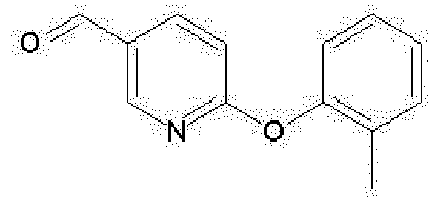
1H NMR (300 MHz, CHLOROFORM-d) δ ppm 2.16 (s, 3 H) 6.97 - 7.04 (m, 1 H) 7.05 - 7.11 (m, 1 H) 7.14 - 7.38 (m, 3 H) 8.18 (dd, J=8.5, 2.3 Hz, 1 H) 8.61 (dd, J=2.3, 0.6 Hz, 1 H) 9.97 (s, 1 H). MS ESI/APCI Dual posi: 214[M+H]+. Reference Example 13-8 
1H HMR (300 MHz, CHLOROFORM-d) δ ppm 7.03 - 7.11 (m, 2 H) 7.21 (t, J=2.3 Hz, 1 H) 7.23 - 7.29 (m, 1 H) 7.34 - 7.41 (m, 1 H) 8.21 (dd, J=8.5, 2.3 Hz, 1 H) 8.63 (dd, J=2.3, 0.6 Hz, 1 H) 10.00 (d, J=0.6 Hz, 1 H). MS ESI/APCI Dual posi: 234[M+H]+. MS ESI/APCI Dual nega: 232[M-H]-. [Table 9-2] Compound No. Structure Analytical Data Salt information Reference Example 13-9 
1H NMR (300 MHz, CHLOROFORM-d) δ ppm 7.07 - 7.14 (m, 1 H) 7.30 - 7.42 (m, 1 H) 7.43 - 7.48 (m, 1 H) 7.50 - 7.63 (m, 2 H) 8.24 (dd, J=8.5. 2.4 Hz, 1 H) 8.62 (dd, J=2.4, 0.6 Hz, 1 H) 10.01 (d, J=0.6 Hz, 1 H). MS ESI/APCI Dual posi: 268[M+H]+. Reference Example 13-10 
1H NMR (300 MHz, CHLOROFORM-d) δ ppm 7.04 - 7.18 (m, 4 H) 7.40 - 7.51 (m, 1 H) 8.23 (dd, J=8.7, 2.3 Hz, 1 H) 8.63 (dd, J=2.3, 0.6 Hz, 1 H) 10.00 (d, J=0.6 Hz, 1 H). MS ESI/APCI Dual posi: 284[M+H]+. Reference Example 13-11 
1H NMR (300 MHz, CHLOROFORM-d) δ ppm 2.39 (s, 3 H) 6.94 - 7.10 (m, 3 H) 7.19 - 7.31 (m, 2 H) 8.17 (dd, J=8.6, 2.4 Hz, 1 H) 8.62 (dd, J=2.4, 0.6 Hz, 1 H) 9.97 (d, J=0.6 Hz, 1 H). MS ESI/APCI Dual posi: 214[M+H]+. MS ESI/APCI Dual nega: 212[M-H]-. Reference Example 13-12 
1H NMR (300 MHz, CHLOROFORM-d) δ ppm 2.37 (s, 3 H) 6.82 - 6.94 (m, 2 H) 6.99 - 7.09 (m, 3 H) 7.24 - 7.33 (m, 1 H) 7.79 - 7.88 (m, 2 H) 9.92 (s, 1 H). MS ESI/APCI Dual posi: 213[M+H]+. MS ESI/APCI Dual nega: 211[M-H]-. Reference Example 13-13 
1H NMR (300 MHz, CHLOROFORM-d) δ ppm 6.75 - 6.99 (m, 3 H) 7.05 - 7.15 (m, 2 H) 7.29 - 7.4Z (m, 1 H) 7.83 - 7.91 (m, 2 H) 9.95 (s, 1 H). MS ESI/APCI Dual posi: 217[M+H]+. MS ESI/APCI Dual nega: 215[M-H]-. Reference Example 13-14 
1H NMR (300 MHz, CHLOROFORM-d) δ ppm 6.96 - 7.12 (m, 4 H) 7.30 - 7.42 (m, 2 H) 7.80 - 7.90 (m, 2 H) 9.93 (s, 1 H). MS ESI/APCI Dual posi: 233[M+H]+. Reference Example 13-15 
1H NMR (300 MHz, CHLOROFORM-d) δ ppm 7.04 - 7.19 (m, 4 H) 7.29 (ddd, J=8.7, 2.8, 0.9 Hz, 1 H) 7.88 - 7.98 (m, 1 H) 8.49 (d, J=2.8 Hz, 1 H) 10.02 (d, J=0.9 Hz, 1 H). MS ESI/APCI Dual posi: 218[M+H]+, 240[M+Na]+. MS ESI/APCI Dual nega: 216[M-H]-. [Table 9-3] Compound No. Structure Analytical Data Salt information Reference Example 13-16 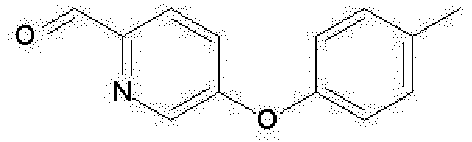
1H NMR (300 MHz, CHLOROFORM-d) δ ppm 2.38 (s, 3 H) 6.93 - 7.06 (m, 2 H) 7.17 - 7.33 (m, 3 H) 7.92 (dd, J=8.7, 0.9 Hz, 1 H) 8.49 (d, J=2.6 Hz, 1 H) 10.01 (d, J=0.9 Hz, 1 H). US ESI/APCI Dual posi: 214[M+H]+, 236[M+Na]+. Reference Example 13-17 
1H NMR (300 MHz, CHLOROFORM-d) ppm 2.59 (s, 3 H) 7.00 - 7.10 (m, 2 H) 7.17 - 7.24 (m, 1 H) 7.29 - 7.36 (m, 1 H) 7.81 - 7.92 (m, 2 H) 8.35 (d, J=2.8 Hz, 1 H) 9.94 (s, 1 H). MS ESI/APCI Dual posi: 214[M+H]+. Reference Example 13-18 
1H NMR (300 MHz, CHLOROFORM-d) δ ppm 6.99 - 7.09 (m, 2 H) 7.13 - 7.30 (m, 4 H) 7.77 - 7.92 (m, 2 H) 9.93 (s, 1 H). MS ESI/APCI Dual posi: 217[M+H]+. MS ESI/APCI Dual nega: 215[M-H]-. Reference Example 13-19 
1H NMR (300 MHz, CHLOROFORM-d) δ ppm 2.18 (s, 3 H) 6.89 - 7.04 (m, 3 H) 7.11 - 7.35 (m, 3 H) 7.77 - 7.88 (m, 2 H) 9.91 (s, 1 H). MS ESI/APCI Dual posi: 213[M+H]+. MS ESI/APCI Dual nega: 211[M-H]-. Reference Example 13-20 
1H NMR (300 MHz, CHLOROFORM-d) δ ppm 3.80 (s, 3 H) 6.62 - 6.71 (m, 2 H) 6.77 (ddd, J=8.3, 2.4, 0.9 Hz, 1 H) 7.04 - 7.11 (m, 2 H) 7.27 - 7.34 (m, 1 H) 7.80 - 7.92 (m, 2 H) 9.93 (s, 1 H). MS ESI/APCI Dual posi: 229[M+H]+. MS ESI/APCI Dual nega: 227[M-H]-. Reference Example 13-21 
1H NMR (300 MHz, CHLOROFORM-d) δ ppm 6.84 (dd, J=8.4, 0.8 Hz, 1 H) 7.00 - 7.23 (m, 5 H) 7.42 - 7.58 (m, 1 H) 7.93 (dd, J=7.5, 1.6 Hz, 1 H) 10.53 (d, J=0.8 Hz, 1 H). MS ESI/APCI Dual posi: 217[M+H]+, 239[M+Na]+. MS ESI/APCI Dual nega: 215[M-H]-. [Table 9-4] Compound No. Structure Analytical Data Salt information Reference Example 13-22 
1H NMR (300 MHz, CHLOROFORM-d) δ ppm 7.05 (d, J=9.0 Hz, 2 H) 7.29 - 7.36 (m, 1 H) 7.37 - 7.45 (m, 2 H) 7.96 (dd, J=9.0, 0.6 Hz, 1 H) 8.51 (dd, J=2.6, 0.6 Hz, 1 H) 10.02 (d, J=0.6 Hz, 1 H). MS ESI/APCI Dual posi: 234[M+H]+, 256[M+Na]+. MS ESI/APCI Dual nega: 232[M-H]-. Reference Example 13-23 
1H NMR (300 MHz, CHLOROFORM-d) δ ppm 3.82 (s, 3 H) 6.70 - 6.79 (m, 2 H) 6.80 - 6.87 (m, 1 H) 7.03 (d, J=8.5 Hz, 1 H) 7.34 (t. J=8.5 Hz, 1 H) 8.18 (dd, J=8.5, 2.4 Hz, 1 H) 8.65 (dd, J=2.4, 0.7 Hz, 1 H) 9.98 (d, J=0.7 Hz, 1 H). MS ESI/APCI Dual posi: 230[M+H]+. MS ESI/APCI Dual nega: 228[M-H]-. Reference Example 13-24 
1H NMR (300 MHz, CHLOROFORM-d) δ ppm 7.10 (d. J=8.5 Hz, 2 H) 7.36 - 7.42 (m, 2 H) 7.86 - 7.96 (m, 2 H) 8.24 (dd, J=2.4, 1.2 Hz, 1 H) 9.96 (s, 1 H). MS ESI/APCI Dual posi: 234[M+H]+. Reference Example 13-25 
1H NMR (300 MHz, CHLOROFORM-d) δ ppm 7.19 (d, J=8.5 Hz, 2 H) 7.36 - 7.48 (m, 1 H) 7.70 (d, J=8.5 Hz, 2 H) 8.00 (d, J=8.5 Hz, 1 H) 8.56 (d, J=2.6 Hz, 1 H) 10.05 (d, J=0.6 Hz, 1 H). MS ESI/APCI Dual posi: 268[M+H]+, 290[M+Na]+. Reference Example 13-26 
1H NMR (300 MHz, CHLOROFORM-d) 6 ppm 7.11 - 7.23 (m, 2 H) 7.43 - 7.56 (m, 1 H) 7.67 - 7.80 (m, 1 H) 7.95 (d, J=8.9 Hz, 2 H) 8.49 - 8.57 (m, 1 H) 9.99 (s, 1 H). MS ESI/APCI Dual posi: 268[M+H]+. Reference Example 13-27 
1H NMR (300 MHz, CHLOROFORM-d) δ ppm 2.39 (s, 3 H) 6.95 - 7.09 (m, 2 H) 7.18 - 7.21 (m, 1 H) 7.25 - 7.31 (m, 1 H) 8.20 (dd, J=8.6, 2.4 Hz, 1 H) 8.62 (dd, J=2.4, 0.6 Hz, 1 H) 9.98 (s, 1 H). MS ESI/APCI Dual nega: 246[M-H]-. Reference Example 13-28 
1H NMR (300 MHz, CHLOROFORM-d) δ ppm 2.29 (d, J=2.0 Hz, 3 H) 6.80 - 6.92 (m, 2 H) 7.00 - 7.09 (m, 1 H) 7.17 - 7.30 (m, 1 H) 8.13 - 8.27 (m, 1 H) 8.56 - 8.68 (m, 1 H) 9.98 (s, 1 H). MS EI posi: 231[M]. [Table 9-5] Compound No. Structure Analytical Data Salt information Reference Example 13-29 
1H NMR (300 MHz, CHLOROFORM-d) δ ppm 2.30 (d, J=2.4 Hz, 3 H) 6.89 - 7.14 (m, 4 H) 8.19 (dd, J=8.6, 2.4 Hz, 1 H) 8.62 (dd, J=2.4, 0.6 Hz, 1 H) 9.98 (d, J=0.6 Hz, 1 H). MS ESI/APCI Dual nega: 230[M-H]-. Reference Example 13-30 
1H NMR (300 MHz, CHLOROFORM-d) δ ppm 1.24 - 1.31 (m, 3 H) 2.63 - 2.75 (m, 2 H) 6.98 - 7.13 (m, 3 H) 7.23 - 7.32 (m, 2 H) 8.13 - 8.22 (m, 1 H) 8.60 - 8.66 (m, 1 H) 9.95 - 9.99 (m, 1 H). MS ESI/APCI Dual posi: 228[M+H]+. Reference Example 13-31 
1H NMR (300 MHz, CHLOROFORM-d) δ ppm 0.98 (t, J=7.4 Hz, 3 H) 1.58 - 1.76 (m, 2 H) 2.56 - 2.68 (m, 2 H) 6.95 - 7.14 (m, 3 H) 7.17 - 7.35 (m, 2 H) 8.17 (dd, J=8.6, 2.3 Hz, 1 H) 8.63 (dd, J=2.3, 0.6 Hz, 1 H) 9.98 (s, 1 H). MS ESI/APCI Dual posi: 242[M+H]+. Reference Example 13-32 
1H NMR (300 MHz, CHLOROFORM-d) δ ppm 1.28 (d, J=6.8 Hz, 6 H) 2.88 - 3.03 (m, 1 H) 6.99 - 7.04 (m, 1 H) 7.05 - 7.12 (m, 2 H) 7.21 - 7.37 (m, 2 H) 8.17 (dd, J=8.6, 2.4 Hz, 1 H) 8.64 (dd, J=2.4, 0.6 Hz, 1 H) 9.98 (s, 1 H). MS ESI/APCI Dual posi: 242[M+H]+. Reference Example 13-33 
1H NMR (300 MHz, CHLOROFORM-d) δ ppm 2.39 (s, 3 H) 7.01 - 7.09 (m, 2 H) 7.22 - 7.29 (m, 2 H) 8.20 - 8.27 (m, 1 H) 8.42 - 8.48 (m, 1 H) 9.94 (s, 1 H). MS ESI/APCI Dual posi: 248[M+H]+. Reference Example 13-34 
1H NMR (300 MHz, CHLOROFORM-d) δ ppm 2.39 (s, 3 H) 7.00 - 7.07 (m, 2 H) 7.21 - 7.30 (m, 2 H) 7.91 (dd, J=5.3, 1.9 Hz, 1 H) 8.36 (d, J=1.9 Hz, 1 H) 9.97 (d, J=2.6 Hz, 1 H). MS ESI/APCI Dual posi: 232[M+H]+. Reference Example 13-35 
1H NMR (300 MHz, CHLOROFORM-d) δ ppm 2.43 (s, 3 H) 7.07 - 7.14 (m, 2 H) 7.34 - 7.46 (m, 2 H) 8.03 (dd, J=2.3, 0.9 Hz, 1 H) 8.40 (d, J=2.3 Hz, 1 H) 9.94 (s, 1 H). MS ESI/APCI Dual posi: 248[M+H]+. Reference Example 13-36 
1H NMR (200 MHz, CHLOROFORM-d) δ ppm 2.45 (s, 3 H) 2.60 (s, 3 H) 7.21 - 7.26 (m, 1 H) 7.39 - 7.48 (m, 1 H) 8.01 - 8.06 (m, 1 H) 8.36 - 8.41 (m, 2 H) 9.95 (s, 1 H). MS ESI/APCI Dual posi: 229[M+H]+. -

-

- To a solution of 4-bromophenol (2.79 g) in N,N-dimethylformamide (25.0 mL), potassium carbonate (2.45 g) was added and the mixture was stirred at room temperature for 10 minutes. Subsequently, 6-bromo-3-pyridinecarboxyaldehyde (3.00 g) was added and the mixture was stirred at 130°C for 2.5 hours. After cooling the reaction mixture to room temperature, water was added to it and extraction was conducted with ethyl acetate. The combined organic layers were washed with water and saturated brine successively and after passage through a phase separator, they were concentrated under reduced pressure. The resulting residue was purified by silica gel column chromatography (n-hexane: ethyl acetate = 100:0-50:50) to give 6-(4-bromophenoxy)pyridine-3-carbaldehyde as a pale yellow solid (3.23 g).
1H NMR (300 MHz, CHLOROFORM-d) δ ppm 7.01 - 7.13 (m, 3 H) 7.51 - 7.61 (m, 2 H) 8.21 (dd, J=8.6, 2.4 Hz, 1 H) 8.61 (dd, J=2.4, 0.7 Hz, 1 H) 9.99 (d, J=0.7 Hz, 1 H).
MS ESI/APCI Dual posi: 278[M+H]+. - A mixture of the compound (3.22 g) obtained in step (1) above, 2-cyclopropyl-4,4,5,5-tetramethyl-1,3,2-dioxaborolane (3.89 g), tetrakis(triphenylphosphine)palladium(0) (669 mg), cesium carbonate (11.3 g), toluene (20.0 mL) and water (10.0 mL) was stirred at 100°C for 6 hours. After cooling the reaction mixture to room temperature, the precipitate was removed by filtration through Celite (registered trademark). To the filtrate, water and ethyl acetate were added and extraction was conducted with ethyl acetate. The combined organic layers were washed with water and saturated brine successively and after passage through a phase separator, they were concentrated under reduced pressure. The resulting residue was purified by silica gel column chromatography (n-hexane:ethyl acetate = 100:0-50:50) and further purified by preparative HPLC. A saturated aqueous solution of sodium hydrogencarbonate was then added and extraction was conducted with ethyl acetate. The combined organic layers were passed through a phase separator and thereafter concentrated under reduced pressure to give the titled compound as a colorless oil (614 mg).
1H NMR (300 MHz, CHLOROFORM-d) δ ppm 0.65 - 0.76 (m, 2 H) 0.92 - 1.04 (m, 2 H) 1.84 - 1.98 (m, 1 H) 6.94 - 7.10 (m, 3 H) 7.11 - 7.20 (m, 2 H) 8.17 (dd, J=8.6, 2.4 Hz, 1 H) 8.60 - 8.67 (m, 1 H) 9.97 (d, J=0.6 Hz, 1 H).
MS ESI/APCI Dual posi: 240[M+H]+.
MS ESI/APCI Dual nega: 238[M-H]-. -

- To a solution of 4-hydroxybenzaldehyde (5.00 g) in N,N-dimethylacetamide (60.0 L), potassium carbonate (6.23 g) was added and the mixture was stirred at room temperature for 10 minutes. Subsequently, 2,5-difluoropyridine (4.71 g) was added and the mixture was stirred at 150°C for 64 hours. After cooling the reaction mixture to room temperature, water was added to it and extraction was conducted with ethyl acetate. The combined organic layers were washed with water and saturated brine successively and after passage through a phase separator, they were concentrated under reduced pressure. The resulting residue was purified by silica gel column chromatography (n-hexane: ethyl acetate = 100:0-70:30) to give the titled compound as a colorless solid (3.24 g).
1H NMR (300 MHz, CHLOROFORM-d) δ ppm 6.98 - 7.05 (m, 1 H) 7.21 - 7.29 (m, 2 H) 7.46 - 7.57 (m, 1 H) 7.89 - 7.96 (m, 2 H) 8.05 - 8.09 (m, 1 H) 9.98 (s, 1 H).
MS ESI/APCI Dual posi: 218[M+H]+. - In the following Reference Examples 14-2 to 14-4, a commercial grade of the corresponding halogenated pyridines was used and treated by the method described in Reference Example 14-1 or modifications thereof to give the intended compounds. The structures of the synthesized compounds and their NMR and MS data are shown in Table 10-1.
[Table 10-1] Compound No. Structure Analytical Data Salt information Reference Example 14-2 
1H NMR (300 MHz, CHLOROFORM-d) δ ppm 6.93 - 7.03 (m, 1 H) 7.20 - 7.32 (m, 2 H) 7.66 - 7.78 (m, 1 H) 7.88 - 7.98 (m, 2 H) 8.14 - 8.19 (m, 1 H) 9.99 (s, 1 H). MS ESI/APCI Dual posi: 234[M+H]+. Reference Example 14-3 
1H NMR (300 MHz, CHLOROFORM-d) δ ppm 2.32 (s, 3 H) 6.92 (d, J=7.9 Hz, 1 H) 7.18 - 7.30 (m, 2 H) 7.54 - 7.62 (m, 1 H) 7.85 - 7.95 (m, 2 H) 8.06 (dt, J=2.5, 0.7 Hz, 1 H) 9.96 (s, 1 H). MS ESI/APCI Dual posi: 214[M+H]+, 236[M+Na]+. Reference Example 14-4 
1H NMR (300 MHz, CHLOROFORM-d) δ ppm 7.12 (dt, J=8.6, 0.7 Hz, 1 H) 7.29 - 7.35 (m, 2 H) 7.94 - 8.01 (m, 3 H) 8.41 - 8.49 (m, 1 H) 10.02 (s, 1 H). MS ESI/APCI Dual posi: 268[M+H]+. -

-

- Instead of 2,5-difluoropyridine, 2,5-dibromopyridine (13.5 g) was used and treated by the same technique as in Reference 14-1 to give the titled compound as a pale yellow oil (12.4 g).
1H NMR (300 MHz, CHLOROFORM-d) δ ppm 6.91 - 6.97 (m, 1 H) 7.24 - 7.32 (m, 2 H) 7.81 - 7.88 (m, 1 H) 7.90 - 7.98 (m, 2 H) 8.23 - 8.27 (m, 1 H) 9.99 (s, 1 H).
MS ESI/APCI Dual posi: 277[M+H]+. - A mixture of the compound (5.00 g) obtained in step (1) above, cyclopropylboronic acid (2.01 g), palladium(II) acetate (201 mg), tripotassium phosphate (13.4 g), tricyclohexylphosphine (0.6 mol/L, solution in toluene, 30.0 mL), toluene (95.0 mL) and water (5.0 mL) was stirred at 100°C for 3 hours. After cooling the reaction mixture to room temperature, water was added to it and two extractions were conducted with ethyl acetate. The combined organic layers were washed with saturated brine and thereafter the crude product was adsorbed on diatomaceous earth, with the solvents being distilled off under reduced pressure. The crude product adsorbed on the diatomaceous earth was purified by silica gel column chromatography (hexane:ethyl acetate = 95:5-63:37) to give the titled compound as a yellow oil (3.89 g).
1H NMR (300 MHz, CHLOROFORM-d) δ ppm 0.64 - 0.74 (m, 2 H) 0.95 - 1.07 (m, 2 H) 1.82 - 1.97 (m, 1 H) 6.88 - 6.95 (m, 1 H) 7.19 - 7.26 (m, 2 H) 7.37 - 7.45 (m, 1 H) 7.86 - 7.94 (m, 2 H) 8.02 - 8.09 (m, 1 H) 9.96 (s, 1 H).
MS ESI/APCI Dual posi: 240[M+H]+. -

-

- To a mixture of 4-bromobenzaldehyde (2.00 g), bis(triphenylphosphine)palladium(II) dichloride (228 mg), copper(I) iodide (20.6 mg), N,N-dimethylformamide (2.00 mL) and triethylamine (15.1 mL), cyclopropylacetylene was added and thereafter the mixture was stirred in a sealed tube at 110°C for one minute under irradiation with microwaves. After being cooled to room temperature, the reaction mixture was poured into a saturated aqueous solution of ammonium chloride and extracted with a liquid mixture of n-hexane/ethyl acetate (1:1) three times. The combined organic layers were washed with saturated brine and dried over added anhydrous magnesium sulfate. The desiccant was removed by filtration and the filtrate was concentrated under reduced pressure. The resulting residue was purified by silica gel column chromatography (n-hexane:ethyl acetate = 100:0-60:40) to give 4-(cyclopropylethynyl)benzaldehyde as a brown oil (1.79 g).
1H NMR (300 MHz, CHLOROFORM-d) δ ppm 0.80 - 0.99 (m, 4 H) 1.42 - 1.54 (m, 1 H) 7.46 - 7.54 (m, 2 H) 7.75 - 7.82 (m, 2 H) 9.98 (s, 1 H).
MS ESI/APCI Dual posi: 171[M+H]+. - To a solution in ethyl acetate (22.0 mL) of the compound (1.79 g) obtained in step (1) above, 10% palladium/carbon (179 mg) was added. The mixture was stirred at room temperature for 22 hours in a hydrogen atmosphere. More of 10% palladium/carbon (179 mg) was added and the mixture was stirred at room temperature for 3 hours in a hydrogen atmosphere. The insoluble matter was removed by filtration through Celite (registered trademark). After concentrating the filtrate under reduced pressure, the residue was purified by silica gel column chromatography (n-hexane:ethyl acetate = 100:0-70:30) to give the titled compound as a crude product (1.23 g).
1H NMR (300 MHz, CHLOROFORM-d) δ ppm 0.01 - 0.08 (m, 2 H) 0.39 - 0.48 (m, 2 H) 0.60 - 0.77 (m, 1 H) 1.50 - 1.59 (m, 2 H) 2.75 - 2.84 (m, 2 H) 7.30 - 7.39 (m, 2 H) 7.74 - 7.83 (m, 2 H) 9.97 (s, 1 H).
MS ESI/APCI Dual posi: 175[M+H]+.
MS ESI/APCI Dual nega: 173[M-H]-. -

-

- To a solution of 4-(bromomethyl)benzoic acid (10.7 g) in chloroform (200 mL), 1-(3-dimethylaminopropyl)-3-ethylcarbodiimide hydrochloride (10.5 g), 1-hydroxybenzotriazole monohydrate (8.38 g), N,O-dimethylhydroxylamine hydrochloride (4.85 g), and triethylamine (6.94 mL) were added. After stirring the mixture at room temperature for 53 hours, chloroform (200 mL) was added. The mixture was washed with a saturated aqueous solution of sodium hydrogencarbonate, a saturated aqueous solution of ammonium chloride, and saturated brine successively. After passage through a phase separator, the washed mixture was concentrated under reduced pressure. The resulting residue was purified by silica gel column chromatography (n-hexane:ethyl acetate = 95:5-40:60) to give 4-(chloromethyl)-N-methoxy-N-methylbenzamide as a colorless oil (3.23 g).
1H NMR (300 MHz, CHLOROFORM-d) δ ppm 3.37 (s, 3 H) 3.55 (s, 3 H) 4.61 (s, 2 H) 7.39 - 7.46 (m, 2 H) 7.65 - 7.72 (m, 2 H).
MS ESI/APCI Dual posi: 214[M+H]+, 236[M+Na]+. -

- To a suspension of sodium hydride (60% dispersion in mineral oil, 286 mg) in N,N-dimethylformamide (23.4 mL), a solution of potassium iodide (70.2 mg) and 2,2-dimethyl-1-propanol (618 mg) in N,N-dimethylformamide (5.00 mL) were added. After stirring the mixture at room temperature for an hour, a solution in tetrahydrofuran (5.00 mL) of the compound (1.00 g) obtained in step (1) above was added. After stirring the mixture at room temperature for 3 hours, a saturated aqueous solution of ammonium chloride was added. Two extractions were conducted with a liquid mixture of n-hexane/ethyl acetate (1:1) and the combined organic layers were washed with saturated brine. After drying over anhydrous magnesium sulfate, the desiccant was removed by filtration and the filtrate was concentrated under reduced pressure. The resulting residue was purified by silica gel column chromatography (n-hexane:ethyl acetate = 100:0-65:35) to give 4-[(2,2-dimethylpropoxy)methyl]-N-methoxy-N-methylbenzamide as a colorless oil (304 mg).
1H NMR (300 MHz, CHLOROFORM-d) δ ppm 0.93 - 0.97 (m, 9 H) 3.11 - 3.16 (m, 2 H) 3.36 (d, J=0.3 Hz, 3 H) 3.57 (s, 3 H) 4.56 (s, 2 H) 7.34 - 7.40 (m, 2 H) 7.63 - 7.69 (m, 2 H). - To a solution in tetrahydrofuran (5.93 mL) of the compound (472 mg) obtained in step (2) above, diisobutylaluminum hydride (about 1.0 mol/L, solution in n-hexane, 2.64 mL) was added at -78°C. After stirring the mixture at -78°C for 30 minutes, 1 mol/L hydrochloric acid (5.00 mL) was added at that temperature. After being stirred at room temperature for an hour, the reaction mixture was poured into 1 mol/L hydrochloric acid (20.0 mL). After three extractions with ethyl acetate, the combined organic layers were washed with saturated brine. The washed organic layers were passed through a phase separator and concentrated under reduced pressure. The resulting residue was purified by silica gel column chromatography (n-hexane:ethyl acetate = 100:0-90:10) to give the titled compound as a colorless oil (302 mg).
1H NMR (300 MHz, CHLOROFORM-d) δppm 0.93 - 0.99 (m, 9 H) 3.16 (s, 2 H) 4.60 (s, 2 H) 7.48 - 7.53 (m, 2H) 7.82 - 7.90 (m, 2 H) 10.01 (s, 1 H). -

- Instead of 2,2-dimethyl-1-propanol, 1-methylcyclopropanemethanol was used and treated by the same technique as in Reference Examples 16-1(2) and 16-1(3) to give the titled compound as a colorless oil.
1H NMR (300 MHz, CHLOROFORM-d) δ ppm 0.32 - 0.45 (m, 4 H) 1.18 (s, 3 H) 3.30 (s, 2 H) 4.61 (s, 2H) 7.48 - 7.54 (m, 2 H) 7.83 - 7.90 (m, 2 H) 10.01 (s, 1 H). -

- To a solution of 1-bromo-4-(1,1-difluoroethyl)benzene (1.00 g) in tetrahydrofuran (10.0 mL), n-butyl lithium (2.69 mol/L, solution in n-hexane, 1.68 mL) was added at -80°C and the mixture was stirred at that temperature for 5 minutes. Subsequently, N,N-dimethylformamide (0.522 mL) was added at -80°C and after stirring the mixture at that temperature for 20 minutes, 2 mol/L hydrochloric acid (2.50 mL) was added. After bringing the reaction mixture to room temperature, two extractions were conducted with ethyl acetate and the combined organic layers were washed with water. After drying over anhydrous magnesium sulfate and the desiccant was removed by filtration; the filtrate was then concentrated under reduced pressure. The resulting residue was purified by silica gel column chromatography (n-hexane:ethyl acetate = 100:0-90:10) to give the titled compound as a colorless oil (510 mg).
1H NMR (300 MHz, CHLOROFORM-d) δ ppm 1.95 (t, J=18.2 Hz, 3 H) 7.64 - 7.73 (m, 2 H) 7.92 - 7.98 (m, 2 H) 10.07 (s, 1 H).
MS EI posi: 170[M]+. -

- To a mixture of 4-hydroxy-3,5-dimethylbenzaldehyde (2.00 g), N,N-dimethylformamide (54.0 mL) and water (6.00 mL), sodium chlorodifluoroacetate (6.09 g) and potassium carbonate (3.68 g) were added and the mixture was stirred at 120°C for 4.5 hours. After cooling the reaction mixture to room temperature, water was added to it and two extractions were conducted with ethyl acetate. The combined organic layers were washed with water four times and thereafter washed with saturated brine. After drying over anhydrous magnesium sulfate, the desiccant was removed by filtration and the filtrate was then concentrated under reduced pressure. The resulting residue was purified by silica gel column chromatography (n-hexane:ethyl acetate = 97:3-88:12) to give the titled compound as a colorless solid (2.53 g).
1H NMR (300 MHz, CHLOROFORM-d) δ ppm 2.35 - 2.41 (m, 6 H) 6.10 - 6.69 (m, 1 H) 7.59 - 7.64 (m, 2 H) 9.93 (s, 1 H).
MS ESI/APCI Dual posi: 201[M+H]+. -

- To a solution of 3-(trifluoromethyl)phenethyl alcohol (2.00 g) in chloroform (50.0 mL), Dess-Martin periodinane (4.70 g) was added under cooling with ice. After being brought to room temperature, the reaction mixture was stirred for an hour. Subsequently, a saturated aqueous solution of sodium hydrogencarbonate (25.0 mL) and a saturated aqueous solution of sodium thiosulfate (25.0 mL) were added and the mixture was vigorously stirred for an hour. After phase separation, the organic layer was dried over anhydrous magnesium sulfate, the desiccant was removed by filtration, and the filtrate was concentrated under reduced pressure. The resulting residue was purified by silica gel column chromatography (n-hexane:ethyl acetate = 98:2-85:15) to give the titled compound as a pale yellow oil (1.19 g).
1H NMR (300 MHz, CHLOROFORM-d) δ ppm 3.79 (s, 2 H) 7.36 - 7.62 (m, 4 H) 9.77 - 9.81 (m, 1 H).
MS ESI/APCI Dual nega: 187[M-H]-. -

- Instead of 3-(trifluoromethyl)phenethyl alcohol, 4-(trifluoromethyl)phenethyl alcohol was used and treated by the same technique as in Reference Example 19-1 to give the titled compound as a yellow oil.
1H NMR (300 MHz, CHLOROFORM-d) δ ppm 3.79 (s, 2 H) 7.06 - 7.75 (m, 4 H) 9.77 - 9.80 (m, 1 H).
MS ESI/APCI Dual nega: 187[M-H]-. -

-

- Instead of 6-(4-bromophenoxy)pyridine-3-carbaldehyde, methyl 4-(trifluoromethyl)-3-{[(trifluoromethyl)sulfonyl]oxy}benzoate (see
WO 2007/129745 ) (2.21 g) was used and treated by the same technique as in Reference Example 13-37(2) to give methyl 3-cyclopropyl-4-(trifluoromethyl)benzoate as a colorless oil (1.42 g).
1H NMR (300 MHz, CHLOROFORM-d) δ ppm 0.81 - 0.90 (m, 2 H) 1.04 - 1.14 (m, 2 H) 2.16 - 2.30 (m, 1 H) 3.93 (s, 3 H) 7.65 - 7.72 (m, 2 H) 7.83 - 7.93 (m, 1 H).
MS ESI/APCI Dual posi: 245[M+H]+. -

- To a solution in dehydrated tetrahydrofuran (50.0 mL) of the compound (1.42 g) obtained in step (1) above, lithium borohydride (380 mg) was added and the mixture was stirred at 60°C for 4 hours. Subsequently, 1 mol/L hydrochloric acid was added under cooling with ice. Following extraction with ethyl acetate, the organic layer was washed with saturated brine. After drying over anhydrous magnesium sulfate and removing the desiccant by filtration, the filtrate was concentrated under reduced pressure. The resulting residue was purified by silica gel column chromatography (n-hexane:ethyl acetate = 98:2-75:25) to give [3-cyclopropyl-4-(trifluoromethyl)phenyl]methanol as a colorless oil (1.18 g).
1H NMR (300 MHz, CHLOROFORM-d) δ ppm 0.72 - 0.83 (m, 2 H) 0.97 - 1.10 (m, 2 H) 1.70 (t, J=5.9 Hz, 1 H) 2.14 - 2.28 (m, 1 H) 4.71 (d, J=5.9 Hz, 2 H) 7.04 (s, 1 H) 7.23 (d, J=8.1 Hz, 1 H) 7.60 (d, J=8.1 Hz, 1 H).
MS ESI/APCI Dual nega: 215[M-H]-. - The compound (1.18 g) obtained in step (2) above was used as the starting material and treated by the same technique as in Reference Example 19-1 to give the titled compound as a colorless oil (760 mg).
1H NMR (600 MHz, CHLOROFORM-d) δ ppm 0.84 - 0.90 (m, 2 H) 1.08 - 1.15 (m, 2 H) 2.22 - 2.30 (m, 1 H) 7.54 (s, 1 H) 7.71 - 7.76 (m, 1 H) 7.77 - 7.82 (m, 1 H) 10.04 (s, 1 H).
MS EI posi: 214[M]+. -

-
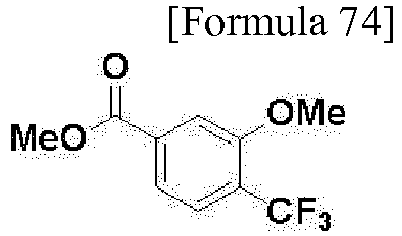
- To a solution of methyl 3-hydroxy-4-(trifluoromethyl)benzoate (see
WO 2007/129745 ) (2.00 g) in N,N-dimethylformamide (9.00 mL), sodium hydride (60% dispersion in mineral oil, 545 mg) was added in small portions under cooling with ice. After stirring the mixture at room temperature for 30 minutes, methyl iodide (0.849 mL) was added. After stirring the reaction mixture at room temperature for 2.5 hours, iced water was added and two extractions were conducted with ethyl acetate. The combined organic layers were washed with water three times and thereafter dried over anhydrous magnesium sulfate. After removing the desiccant by filtration, the filtrate was concentrated under reduced pressure. The resulting residue was purified by silica gel column chromatography (n-hexane:ethyl acetate = 95:5-85:15) to give methyl 3-methoxy-4-(trifluoromethyl)benzoate as a colorless solid (2.11 g).
1H NMR (300 MHz, CHLOROFORM-d) δ ppm 3.96 (s, 3 H) 3.97 (s, 3 H) 7.60 - 7.72 (m, 3 H).
MS EI posi: 234[M]+. - The compound (2.11 g) obtained in step (1) above was used as the starting material and treated by the same techniques as in Reference Example 20-1(2) and Reference Example 19-1 to give the titled compound as a pale yellow oil (1.26 g).
1H NMR (600 MHz, CHLOROFORM-d) δ ppm 3.97 - 4.01 (m, 3 H) 7.49 - 7.53 (m, 2 H) 7.74 - 7.79 (m, 1 H) 10.05 (s, 1 H).
MS EI posi: 204[M]+. -

-
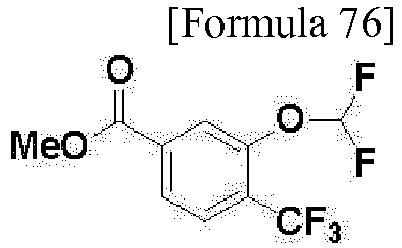
- A suspension of methyl 3-hydroxy-4-(trifluoromethyl)benzoate (see
WO 2007/129745 ) (2.00g), sodium chlorodifluoroacetate (2.08 g) and potassium carbonate (2.51 g) in N,N-dimethylformamide (30.0 mL) was stirred at 100°C for 6 hours. After cooling the reaction mixture to room temperature, water was added to it and two extractions were conducted with ethyl acetate. The combined organic layers were washed with water three times and thereafter dried over anhydrous magnesium sulfate. After removing the desiccant by filtration, the filtrate was concentrated under reduced pressure. The resulting residue was purified by silica gel column chromatography (n-hexane:ethyl acetate = 98:2-85:15) to give methyl 3-(difluoromethoxy)-4-(trifluoromethyl)benzoate as a colorless oil (1.96 g).
1H NMR (300 MHz, CHLOROFORM-d) δ ppm 3.93 - 4.01 (m, 3 H) 6.28 - 6.87 (m, 1 H) 7.72 - 7.80 (m, 1 H) 7.92 - 8.02 (m, 2 H).
MS EI posi: 270[M]+. - The compound (1.96 g) obtained in step (1) above was used as the starting material and treated by the same techniques as in Reference Example 20-1(2) and Reference Example 19-1 to give the titled compound as a colorless oil (1.35 g).
1H NMR (600 MHz, CHLOROFORM-d) δ ppm 6.50 - 6.79 (m, 1 H) 7.79 - 7.86 (m, 2 H) 7.88 - 7.91 (m, 1 H) 10.07 (s, 1 H).
MS EI posi: 240[M]+. -

-

- To a solution of 5-bromo-2-iodobenzotrifluoride (5.00 g) in dehydrated tetrahydrofuran (140 mL), n-butyl lithium (2.69 mol/L, solution in n-hexane, 5.30 mL) was added at -78°C and the mixture was stirred at that temperature for 25 minutes. After adding a solution of cyclobutanone (999 mg) in tetrahydrofuran (5.00 mL), the mixture was brought to room temperature and stirred for 3 days. After adding a saturated aqueous solution of ammonium chloride under cooling with ice, two extractions were conducted with ethyl acetate. The combined organic layers were washed with water and thereafter dried over anhydrous magnesium sulfate. After removing the desiccant by filtration, the filtrate was concentrated under reduced pressure. The resulting residue was purified by silica gel column chromatography (n-hexane:ethyl acetate = 98:2-80:20) to give 1-[4-bromo-2-(trifluoromethyl)phenyl]cyclobutanol as a pale yellow oil (3.00 g).
1H NMR (300 MHz, CHLOROFORM-d) δ ppm 1.71 - 1.88 (m, 1 H) 2.20 - 2.49 (m, 3 H) 2.52 - 2.70 (m, 2 H) 7.29 - 7.35 (m, 1 H) 7.62 - 7.69 (m, 1 H) 7.78 - 7.84 (m, 1 H).
MS EI posi: 294[M]+. -

- To a solution in chloroform (10.0 mL) of the compound (1.00 g) obtained in step (1) above and triethylsilane (406 mg), a solution of boron trifluoride/diethyl ether complex (601 mg) in chloroform (4.00 mL) was added at -65°C. After being brought to 0°C, the mixture was stirred at that temperature for 30 minutes. Subsequently, potassium carbonate (1.08 g) and water (10.0 mL) were added and the mixture was brought to room temperature. After phase separation, the organic layer was dried over anhydrous magnesium sulfate. After removing the desiccant by filtration, the filtrate was concentrated under reduced pressure. The resulting residue was purified by silica gel column chromatography (n-hexane:ethyl acetate = 99:1-90:10) and further purified by NH silica gel column chromatography (n-hexane) to give 4-bromo-1-cyclobutyl-2-(trifluoromethyl)benzene as a colorless oil (490 mg).
1H NMR (300 MHz, CHLOROFORM-d) δ ppm 1.78 - 1.91 (m, 1 H) 1.92 - 2.25 (m, 3 H) 2.27 - 2.42 (m, 2 H) 3.83 (quin, J=8.5 Hz, 1 H) 7.41 - 7.47 (m, 1 H) 7.59 - 7.67 (m, 1 H) 7.69 - 7.73 (m, 1 H).
MS EI posi: 278[M]+. - The compound (480 mg) obtained in step (2) above was used as the starting material and treated by the same technique as in Reference Example 17-1 to give the titled compound as a colorless oil (300 mg).
1H NMR (300 MHz, CHLOROFORM-d) δ ppm 1.82 - 1.97 (m, 1 H) 1.99 - 2.16 (m, 1 H) 2.16 - 2.33 (m, 2 H) 2.33 - 2.49 (m, 2 H) 3.96 (quin, J=8.6 Hz, 1 H) 7.74 - 7.81 (m, 1 H) 8.00 - 8.08 (m, 1 H) 8.09 - 8.13 (m, 1 H) 10.03 (s, 1 H).
MS EI posi: 228[M]+. -

-

- A mixture of 2-iodo-5-nitrobenzotrifluoride (4.62 g), cyclobutylboronic acid (4.15 g), [1,1'-bis(diphenylphosphino)ferrocene]palladium(II) dichloride (4.15 g), cesium carbonate (22.6 g), toluene (67.0 mL) and water (33.0 mL) was stirred in a sealed tube at 80°C for 6 hours. After cooling the reaction mixture to room temperature, extraction was conducted with ethyl acetate. The combined organic layers were dried over anhydrous magnesium sulfate and after removing the desiccant by filtration, the filtrate was concentrated under reduced pressure. The resulting residue was purified by silica gel column chromatography (n-hexane:ethyl acetate = 100:0-94:6) to give 1-cyclobutyl-4-nitro-2-(trifluoromethyl)benzene as a pale yellow oil (1.69 g).
1H NMR (300 MHz, CHLOROFORM-d) δ ppm 1.84 - 1.99 (m, 1 H) 2.00 - 2.33 (m, 3 H) 2.35 - 2.52 (m, 2 H) 3.89 - 4.05 (m, 1 H) 7.74 - 7.81 (m, 1 H) 8.34 - 8.43 (m, 1 H) 8.45 - 8.50 (m, 1 H).
MS ESI/APCI Dual nega: 244[M-H]-. -

- A mixture of the compound (1.69 g) obtained in step (1) above, an iron powder (2.14 g), ammonium chloride (442 mg), ethanol (26.0 mL) and water (13.0 mL) was stirred at 85°C for an hour. After being cooled to room temperature, the reaction mixture was filtered through Celite (registered trademark). To the filtrate, a saturated aqueous solution of sodium hydrogencarbonate was added and three extractions were conducted with ethyl acetate. The combined organic layers were dried over anhydrous magnesium sulfate and after removing the desiccant by filtration, the filtrate was concentrated under reduced pressure. The resulting residue was purified by silica gel column chromatography (n-hexane:ethyl acetate = 100:0-75:25) to give 4-cyclobutyl-3-(trifluoromethyl)aniline as a pale yellow oil (1.34 g).
1H NMR (300 MHz, CHLOROFORM-d) δ ppm 1.72 - 1.87 (m, 1 H) 1.87 - 2.21 (m, 3 H) 2.21 - 2.36 (m, 2 H) 3.66 - 3.85 (m, 3 H) 6.78 - 6.86 (m, 1 H) 6.88 - 6.93 (m, 1 H) 7.31 - 7.37 (m, 1 H).
MS ESI posi: 216[M+H]+. -

- To a mixture of the compound (1.34 g) obtained in step (2) above, sodium hydrogencarbonate (628 mg), chloroform (32.0 mL) and methanol (8.00 mL), a solution of iodine monochloride (1.21 g) in chloroform (8.00 mL) was added dropwise at room temperature over a period of 30 minutes. The resulting mixture was stirred at room temperature for two hours. After adding a solution of 25% sodium metabisulfite in water (20.0 g) under cooling with ice, the mixture was stirred at room temperature for 30 minutes. The reaction mixture was extracted with chloroform and the combined organic layers were dried over anhydrous magnesium sulfate. After removing the desiccant by filtration, the filtrate was concentrated under reduced pressure to give 4-cyclobutyl-2-iodo-5-(trifluoromethyl)aniline as a brown oil (2.08 g).
1H NMR (300 MHz, CHLOROFORM-d) δ ppm 1.71 - 1.89 (m, 1 H) 1.90 - 2.20 (m, 3 H) 2.20 - 2.37 (m, 2 H) 3.60 - 3.78 (m, 1 H) 4.12 (br. s, 2 H) 6.92 (s, 1 H) 7.76 (s, 1 H).
MS ESI posi: 342[M+H]+. -

- To a suspension in acetonitrile (60.0 mL) of the compound (2.08 g) obtained in step (3) above and sodium nitrite (2.10 g), conc. sulfuric acid (6.00 mL) was added at 0°C over a period of 15 minutes. After stirring the mixture at that temperature for an hour, ethanol (24.0 mL) was added. After being stirred at 100°C for two hours, the reaction mixture was stirred overnight at room temperature. The reaction mixture was poured into iced water and two extractions were conducted with chloroform. The combined organic layers were washed with a saturated aqueous solution of sodium hydrogencarbonate and thereafter dried over anhydrous magnesium sulfate. After removing the desiccant by filtration, the filtrate was concentrated under reduced pressure and the residue was purified twice by NH silica gel column chromatography (with n-hexane only) to give 2-cyclobutyl-4-iodo-1-(trifluoromethyl)benzene as a colorless oil (1.25 g).
1H NMR (300 MHz, CHLOROFORM-d) δ ppm 1.77 - 1.93 (m, 1 H) 1.95 - 2.26 (m, 3 H) 2.27 - 2.40 (m, 2 H) 3.81 (quin, J=8.8 Hz, 1 H) 7.26 - 7.31 (m, 1 H) 7.60 - 7.67 (m, 1 H) 7.88 (s, 1H). - The compound (1.25 g) obtained in step (4) above was used as the starting material and treated by the same technique as in Reference Example 17-1 to give the titled compound as a colorless oil (660 mg).
1H NMR (300 MHz, CHLOROFORM-d) δ ppm 1.82 - 2.17 (m, 2 H) 2.17 - 2.49 (m, 4 H) 3.86 - 4.02 (m, 1 H) 7.73 - 7.83 (m, 2 H) 8.09 (s, 1 H) 10.11 (s, 1 H).
MS EI posi: 228[M]+. -

-


- To a suspension of styrene (3.00 g) and rhodium(II) acetate dimer (40.0 mg) in 1,2-dichloroethane (29.0 mL), a solution of ethyl diazoacetate (3.03 mL) in 1,2-dichloroethane (29.0 mL) was added over a period of 4 hours and the mixture was stirred at room temperature for 19 hours. The reaction mixture was concentrated under reduced pressure and purified by silica gel column chromatography (n-hexane:diethyl ether = 20:1) to give ethyl trans-2-phenylcyclopropanecarboxylate as a colorless oil (2.42 g) and ethyl cis-2-phenylcyclopropanecarboxylate as a colorless oil (1.51 g).
- 1H NMR (300 MHz, CHLOROFORM-d) δ ppm 1.24 - 1.36 (m, 4 H) 1.54 - 1.64 (m, 1 H) 1.86 - 1.95 (m, 1 H) 2.47 - 2.58 (m, 1 H) 4.17 (q, J=7.1 Hz, 2 H) 7.06 - 7.13 (m, 2 H) 7.16 - 7.32 (m, 3 H).
- MS ESI/APCI Dual posi: 191[M+H]+, 213[M+Na]+.
- 1H NMR (300 MHz, CHLOROFORM-d) δ ppm 0.97 (t, J=7.1 Hz, 3 H) 1.28 - 1.37 (m, 1 H) 1.66 - 1.76 (m, 1 H) 2.02 - 2.14 (m, 1 H) 2.51 - 2.66 (m, 1 H) 3.87 (q, J=7.1 Hz, 2 H) 7.14 - 7.31 (m, 5 H).
- MS ESI/APCI Dual posi: 191[M+H]+, 213[M+Na]+.
-

- To a solution in diethyl ether (12.0 mL) of the ethyl cis-2-phenylcyclopropanecarboxylate (1.51 g) obtained in step (1) above, a suspension of aluminum lithium hydride (393 mg) in diethyl ether (12.0 mL) was added at 0°C. After being brought to room temperature, the mixture was stirred for 2 hours. After adding sodium sulfate decahydrate at 0°C, the reaction mixture was brought to room temperature and stirred for an hour. After removing the insoluble matter by filtration, the filtrate was concentrated under reduced pressure to give (cis-2-phenylcyclopropyl)methanol as a colorless oil (1.21 g).
1H NMR (300 MHz, CHLOROFORM-d) δ ppm 0.84 - 0.94 (m, 1 H) 0.99 - 1.11 (m, 1 H) 1.42 - 1.58 (m, 1 H) 2.20 - 2.38 (m, 1 H) 3.18 - 3.34 (m, 1 H) 3.41 - 3.55 (m, 1 H) 7.11 - 7.35 (m, 5 H). - MS ESI/APCI Dual posi: 171[M+Na]+.
- The compound (1.21 g) obtained in step (2) above was used as the starting material and treated by the same technique as in Reference Example 19-1 to give the titled compound as a pale yellow oil (1.08 g).
1H NMR (300 MHz, CHLOROFORM-d) δ ppm 1.53 - 1.65 (m, 1 H) 1.84 - 1.94 (m, 1 H) 2.08 - 2.20 (m, 1 H) 2.78 - 2.89 (m, 1 H) 7.19 - 7.37 (m, 5 H) 8.63 - 8.71 (m, 1 H).
MS ESI/APCI Dual posi: 147[M+H]+, 169[M+Na]+. -

- The ethyl trans-2-phenylcyclopropanecarboxylate (1.00 g) obtained in Reference Example 23-1(1) was used as the starting material and treated by the same techniques as in Reference Example 23-1(2) and Reference Example 19-1 to give a roughly purified product (620 mg) containing the titled compound.
1H NMR (300 MHz, CHLOROFORM-d) δ ppm 1.49 - 1.59 (m, 1 H) 1.70 - 1.78 (m, 1 H) 2.13 - 2.23 (m, 1 H) 2.59 - 2.68 (m, 1 H) 7.08 - 7.16 (m, 2 H) 7.18 - 7.34 (m, 3 H) 9.30 - 9.35 (m, 1 H).
MS ESI/APCI Dual posi: 147[M+H]+. -

- Instead of styrene, 4-fluorostyrene (10.0 g) was used and treated by the same techniques as in Reference Example 23-1(1) and (2) as well as Reference Example 19-1 to give the titled compound as a colorless oil (4.48 g).
1H NMR (300 MHz, CHLOROFORM-d) δ ppm 1.31 - 1.55 (m, 1 H) 1.59 - 1.78 (m, 1 H) 1.80 - 2.19 (m, 1 H) 2.53 - 2.68 (m, 1 H) 6.91 - 7.16 (m, 4 H) 9.34 (d, J=4.5 Hz, 1 H).
MS ESI/APCI Dual posi: 165[M+H]+. -


- To a solution of diethyl isocyanomethylphosphonate (1.47 g) in tetrahydrofuran (45.0 mL), n-butyl lithium (2.69 mol/L, solution in n-hexane, 2.99 mL) was added at -78°C and thereafter the mixture was stirred at that temperature for 80 minutes. After adding a solution of 3-phenylcyclobutanone (1.03 g) in tetrahydrofuran (15.0 mL) at -78°C over a period of 30 minutes, the mixture was stirred at room temperature for 4 hours. After adding conc. hydrochloric acid (12.0 mL) at room temperature, the mixture was stirred at that temperature for 18 hours. Water was added to the reaction mixture which was then extracted with ethyl acetate twice. The combined organic layers were washed with saturated brine and thereafter dried over anhydrous magnesium sulfate. The insoluble matter was removed by filtration and the filtrate was concentrated under reduced pressure. The resulting residue was purified by silica gel column chromatography (n-hexane:ethyl acetate = 99:1-96:4) to give the titled compound of Reference Example 24-1 as a colorless oil (160 mg) and the titled compound of Reference Example 24-2 as a colorless oil (390 mg). trans-3-Phenylcyclobutanecarbaldehyde (Reference Example 24-1)
1H NMR (300 MHz, CHLOROFORM-d) δ ppm 2.30 - 2.58 (m, 2 H) 2.65 - 2.83 (m, 2 H) 3.08 - 3.28 (m, 1 H) 3.47 - 3.68 (m, 1 H) 7.17 - 7.38 (m, 5 H) 9.94 - 9.97 (m, 1 H). cis-3-Phenylcyclobutanecarbaldehyde (Reference Example 24-2)
1H NMR (300 MHz, CHLOROFORM-d) δ ppm 2.30 - 2.49 (m, 2 H) 2.51 - 2.65 (m, 2 H) 3.13 - 3.29 (m, 1 H) 3.53 - 3.68 (m, 1 H) 7.17 - 7.37 (m, 5 H) 9.71 - 9.75 (m, 1 H). -

- Instead of 3-phenylcyclobutanone, 3-(4-fluorophenyl)cyclobutanone (4.63 g) was used and treated by the same technique as in Reference Example 24-1 to give the titled compound as a colorless oil (720 mg).
1H NMR (300 MHz, CHLOROFORM-d) δ ppm 2.26 - 2.45 (m, 2 H) 2.63 - 2.81 (m, 2 H) 3.09 - 3.24 (m, 1 H) 3.47 - 3.65 (m, 1 H) 6.94 - 7.07 (m, 2 H) 7.12 - 7.23 (m, 2 H) 9.95 (d, J=1.7 Hz, 1 H).
MS ESI/APCI Dual nega: 177[M-H]-. -

-

- To a solution of 1,4-cyclohexanedione mono-2,2-dimethyltrimethylene ketal (3.76 g) and zinc chloride (about 1.0 mol/L, solution in diethyl ether, 1.90 mL) in tetrahydrofuran (63.0 mL), benzylmagnesium bromide (about 1.0 mol/L, solution in tetrahydrofuran, 24.7 mL) was added at 0°C and thereafter the mixture was stirred at that temperature for 2.5 hours. To the reaction mixture, a saturated aqueous solution of ammonium chloride was added and three extractions were conducted with ethyl acetate. The combined organic layers were washed with saturated brine and thereafter dried over anhydrous magnesium sulfate. The desiccant was removed by filtration and the filtrate was concentrated under reduced pressure. The resulting residue was purified by silica gel column chromatography (n-hexane:ethyl acetate = 95:5-60:40) to give 9-benzyl-3,3-dimethyl-1,5-dioxaspiro[5.5]undecan-9-ol as a colorless solid (1.28 g).
1H NMR (300 MHz, CHLOROFORM-d) δ ppm 0.97 (s, 6 H) 1.43 - 1.89 (m, 6 H) 1.95 - 2.13 (m, 2 H) 2.76 (s, 2 H) 3.41 - 3.58 (m, 4 H) 7.16 - 7.36 (m, 5 H).
MS ESI/APCI Dual posi: 313[M+Na]+. - To a solution in toluene (44.0 mL) of the compound (1.28 g) obtained in step (1) above, p-toluenesulfonic acid monohydrate (84.0 mg) was added and thereafter the mixture was refluxed for 3 hours with a Dean-Stark apparatus. After being cooled to room temperature, the reaction mixture was concentrated under reduced pressure. The resulting residue was purified by silica gel column chromatography (n-hexane:ethyl acetate = 100:0-50:50). A suspension of the resulting purified product (935 mg) and 20% palladium hydroxide/carbon (93.5 mg) in methanol (11.3 mL) was stirred at room temperature for 5 hours in a hydrogen atmosphere. The reaction mixture was filtered through Celite (registered trademark). The filtrate was concentrated under reduced pressure. To a solution of the resulting residue (938 mg) in tetrahydrofuran (34.3 mL), 1 mol/L hydrochloric acid (9.30 mL) was added at 0°C and the mixture was stirred at room temperature for 14.5 hours. After concentrating the stirred mixture under reduced pressure, three extractions were conducted with ethyl acetate. The combined organic layers were washed with saturated brine. After passage through a phase separator, the washed organic layers were concentrated under reduced pressure. The resulting residue was purified by silica gel column chromatography (n-hexane:ethyl acetate = 90:10-50:50) to give the titled compound as a colorless oil (225 mg).
1H NMR (300 MHz, CHLOROFORM-d) δ ppm 1.36 - 1.52 (m, 2 H) 1.95 - 2.10 (m, 3 H) 2.22 - 2.45 (m, 4 H) 2.62 (d, J=6.7 Hz, 2 H) 7.10 - 7.36 (m, 5 H).
MS ESI/APCI Dual posi: 189[M+H]+, 211[M+Na]+. -

-

- To a solution of 4-phenylbenzaldehyde (1.20 g) in diethyl ether (13.2 mL), ethylmagnesium bromide (about 3.0 mol/L, solution in diethyl ether, 3.29 mL) was added at 0°C. After stirring the mixture at room temperature for 3 hours, the precipitate was recovered by filtration. After dissolving the recovered precipitate in a liquid mixture of ethyl acetate and a saturated aqueous solution of ammonium chloride, three extractions were conducted with ethyl acetate. The combined organic layers were washed with saturated brine. After passage through a phase separator, the washed organic layers were concentrated under reduced pressure. The resulting residue was purified by silica gel column chromatography (n-hexane:ethyl acetate = 100:0-70:30) to give 1-(biphenyl-4-yl)propan-1-ol as a colorless solid (1.27 g).
1H NMR (300 MHz, CHLOROFORM-d) δ ppm 0.96 (t, J=7.4 Hz, 3 H) 1.72 - 1.98 (m, 2 H) 4.59 - 4.71 (m, 1 H) 7.29 - 7.48 (m, 5 H) 7.54 - 7.63 (m, 4 H).
MS EI posi: 212[M]+. - To a solution in diethyl ether (30.0 mL) of the compound (1.27 g) obtained in step (1) above, manganese(IV) oxide (9.57 g) was added and the mixture was stirred at room temperature for 45 hours. After removing the insoluble matter by filtration, the filtrate was concentrated under reduced pressure. To a solution of the resulting residue in acetone (60.0 mL), a Jones' reagent {see Org. Synth., Coll. Vol. VI, 542 (1988)} (1.20 mL) was added until the color of the Jones' reagent was yet to disappear. The reaction mixture was concentrated under reduced pressure and ethyl acetate and water were added to the residue. Extraction with ethyl acetate was conducted three times and the combined organic layers were washed with saturated brine. After passage through a phase separator, the washed organic layers were concentrated under reduced pressure. The resulting residue was recrystallized with n-hexane to give the titled compound as a colorless solid (921 mg).
1H NMR (300 MHz, CHLOROFORM-d) δ ppm 1.26 (t, J=7.3 Hz, 3 H) 3.04 (q, J=7.3 Hz, 2 H) 7.34 - 7.52 (m, 3 H) 7.58 - 7.73 (m, 4 H) 8.00 - 8.09 (m, 2 H).
MS ESI/APCI Dual posi: 211[M+H]+, 233[M+Na]+. -

- The compound 4-cyanobiphenyl (2.83 g) was used as the starting material and treated by the same technique as in Reference Example 4-1(2) to give the titled compound as a pale yellow solid (1.06 g).
1H NMR (300 MHz, CHLOROFORM-d) δ ppm 0.99 - 1.07 (m, 2 H) 1.08 - 1.15 (m, 2 H) 7.28 - 7.49 (m, 5 H) 7.51 - 7.62 (m, 4 H).
MS ESI/APCI Dual posi: 210[M+H]+. -

- The compound 4-(trifluoromethyl)benzonitrile (5.18 g) was used as the starting material and treated by the same technique as in Reference Example 4-1(2) to give the titled compound as a pale yellow solid (2.92 g).
1H NMR (300 MHz, CHLOROFORM-d) δ ppm 1.00 - 1.07 (m, 2 H) 1.11 - 1.19 (m, 2 H) 7.31 - 7.45 (m, 2 H) 7.49 - 7.64 (m, 2 H).
MS ESI/APCI Dual posi: 202[M+H]+. -
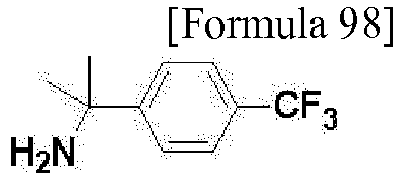
- To a solution of 4-(trifluoromethyl)benzonitrile (3.01 g) in diethyl ether (88.0 mL), methylmagnesium bromide (about 3.0 mol/L, solution in diethyl ether, 17.6mL) was added and the mixture was stirred at room temperature for 40 minutes. To the reaction mixture, tetraisopropyl orthotitanate (5.15 mL) was added slowly and thereafter the mixture was refluxed for 6 hours. After cooling the mixture to 0°C, an aqueous solution of 20% sodium hydroxide was added and the mixture was stirred at room temperature for an hour. After phase separation, the aqueous layer was extracted with diethyl ether twice. The combined organic layers were passed through a phase separator and thereafter concentrated under reduced pressure. The resulting residue was dissolved in 5% hydrochloric acid and washed with diethyl ether twice. The aqueous layer was rendered basic with an aqueous solution of 20% sodium hydroxide and extracted with diethyl ether three times. The combined organic layers were washed with saturated brine and thereafter passed through a phase separator to be concentrated under reduced pressure. The resulting residue was purified by silica gel column chromatography (n-hexane:ethyl acetate = 95:5-10:90) to give the titled compound as a yellow oil (1.81 g).
1H NMR (300 MHz, CHLOROFORM-d) δ ppm 1.51 (s, 6 H) 7.54 - 7.69 (m, 4 H).
MS ESI/APCI Dual posi: 204[M+H]+. -

-

- To a solution of N-α-(tert-butoxycarbonyl)-β-cyano-L-alanine (1.00 g) in tetrahydrofuran (13 mL), isobutyl chloroformate (674 µL) and triethylamine (716 µL) were added successively at 0°C and the mixture was stirred at that temperature for 2 hours. After removing the precipitate by filtration, the filtrate was concentrated under reduced pressure. To a mixture of the resulting residue, tetrahydrofuran (13 mL) and water (4 mL), sodium borohydride (530 mg) were added and the mixture was stirred at room temperature for 30 minutes. After adding water, extraction was conducted with ethyl acetate. The combined organic layers were washed with saturated brine and thereafter passed through a phase separator to be concentrated under reduced pressure. The resulting residue was purified by silica gel column chromatography (n-hexane:ethyl acetate = 80:20-40:60) to give tert-butyl [(2S)-1-cyano-3-hydroxypropan-2-yl]carbamate as a colorless oil (650 mg).
1H NMR (300 MHz, CHLOROFORM-d) δ ppm 1.46 (s, 9 H) 2.10 - 2.18 (m, 1 H) 2.63 - 2.78 (m, 2 H) 3.69 - 3.88 (m, 2 H) 3.89 - 4.03 (m, 1 H) 5.02 (br. s., 1 H).
MS ESI/APCI Dual posi: 223[M+Na]+. -

- To a solution in tetrahydrofuran (10 mL) of the compound (650 mg) obtained in step (1) above, sodium hydride (60% dispersion in mineral oil, 143 mg) was added under cooling with ice. After stirring the mixture at the same temperature for 10 minutes, methyl iodide (603 µL) was added. After stirring the mixture at the same temperature for 30 minutes and then at room temperature for an hour, water was added and extraction was conducted with ethyl acetate. The combined organic layers were passed through a phase separator and concentrated under reduced pressure. The resulting residue was purified by silica gel column chromatography (n-hexane:ethyl acetate = 90:10-60:40) to give tert-butyl [(2S)-1-cyano-3-methoxypropan-2-yl]carbamate as a colorless oil (247 mg).
1H NMR (300 MHz, CHLOROFORM-d) δ ppm 1.45 (s, 9 H) 2.69 (d, J=6.2 Hz, 2 H) 3.39 (s, 3 H) 3.41 - 3.49 (m, 1 H) 3.53 - 3.61 (m, 1 H) 4.02 (br. s., 1 H) 4.96 (br. s., 1 H).
MS ESI/APCI Dual posi: 237[M+Na]+.
MS ESI/APCI Dual nega: 213[M-H]+. - To a solution in 1,4-dioxane (2.0 mL) of the compound (247 mg) obtained in step (2) above, conc. hydrochloric acid (3.0 mL) was added and the mixture was stirred at 100°C for an hour. After being cooled to room temperature, the reaction mixture was concentrated under reduced pressure. The resulting residue was used as the starting material and treated by the same technique as in Reference Example 3-4 to give the titled compound as a colorless solid (247 mg).
1H NMR (300 MHz, DMSO-d6) δ ppm 2.60 - 2.84 (m, 2 H) 3.30 (s, 3 H) 3.44 - 3.59 (m, 3 H) 3.64 (s, 3 H).
MS ESI/APCI Dual posi: 148[M+H]+. -
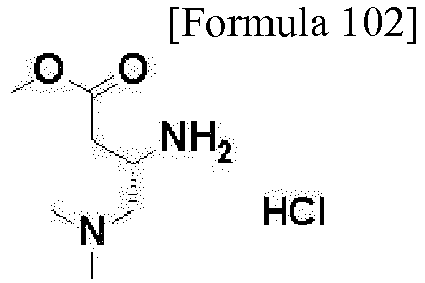
-

- To a solution in chloroform (20 mL) of the compound (820 mg) obtained in Reference Example 28-1(1), p-toluenesulfonyl chloride (1.56 g) and triethylamine (1.14 mL) were added and the mixture was stirred at room temperature for 3 hours. After adding more p-toluenesulfonyl chloride (1.56 g) and triethylamine (1.14 mL), the mixture was stirred at room temperature for 30 minutes. Subsequently, a saturated aqueous solution of sodium hydrogencarbonate was added and extraction was conducted with chloroform. The combined organic layers were passed through a phase separator and thereafter concentrated under reduced pressure. The resulting residue was purified by silica gel column chromatography (n-hexane:ethyl acetate = 80:20-40:60) to give (2S)-2-[(tert-butoxycarbonyl)amino]-3-cyanopropyl 4-methylbenzenesulfonate as a colorless solid (1.32 g).
1H NMR (300 MHz, CHLOROFORM-d) δ ppm 1.43 (s, 9 H) 2.47 (s, 3 H) 2.63 - 2.71 (m, 2 H) 4.02 - 4.21 (m, 3 H) 4.86 - 5.01 (m, 1 H) 7.39 (d, J=8.5 Hz, 2 H) 7.81 (d, J=8.5 Hz, 2 H).
MS ESI/APCI Dual posi: 377[M+Na]+. -

- To a solution in ethanol (20 mL) of the compound (1.32 g) obtained in step (1) above, dimethylamine (about 50%, aqueous solution, 3.92 mL) and triethylamine (519 µL) were added and the mixture was stirred at 80°C for an hour. After being cooled to room temperature, the reaction mixture was concentrated under reduced pressure. To the resulting residue, a saturated aqueous solution of sodium hydrogencarbonate was added and extraction was conducted with ethyl acetate. The combined organic layers were washed with saturated brine and after passage through a phase separator, they were concentrated under reduced pressure. The resulting residue was purified by silica gel column chromatography (chloroform:methanol = 99:1-95:5) to give tert-butyl [(2S)-1-cyano-3-(dimethylamino)propan-2-yl]carbamate as a pale yellow oil (340 mg).
1H NMR (300 MHz, CHLOROFORM-d) δ ppm 1.45 (s, 9 H) 2.25 (s, 6 H) 2.31 - 2.55 (m, 2 H) 2.62 - 2.76 (m, 1 H) 2.78 - 2.91 (m, 1 H) 3.74 - 3.90 (m, 1 H) 4.99 (br. s., 1 H).
MS ESI/APCI Dual posi: 228[M+H]+, 250[M+Na]+.
MS ESI/APCI Dual nega: 226[M-H]-. - The compound (340 mg) obtained in step (2) above was used as the starting material and treated by the same technique as in Reference Example 28-1(3) to give the titled compound. Note that the titled compound was used in a subsequent reaction as it remained a crude product.
-

-
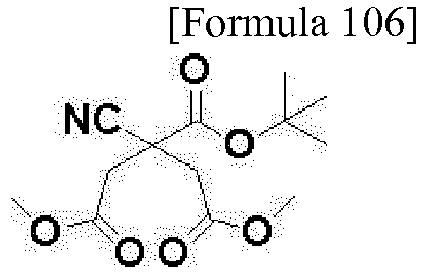
- To a solution of tert-butyl cyanoacetate (10.0 g) in toluene (100 mL), sodium hydride (60% dispersion in mineral oil, 2.83 g) was added under cooling with ice. After being stirred at 80°C for an hour, the mixture was cooled to 50°C and methyl bromoacetate (6.51 mL) was added slowly. After adding tetrahydrofuran (15 mL), the mixture was stirred at 80°C for two hours. The reaction mixture was cooled with ice and then sodium hydride (60% dispersion in mineral oil, 2.83 g) was added. After being stirred at 80°C for an hour, the mixture was cooled to 50°C and then methyl bromoacetate (6.51 mL) was added slowly. Subsequently, tetrahydrofuran (15 mL) was added and the mixture was stirred at 80°C for two hours. After the reaction mixture to room temperature, a saturated aqueous solution of ammonium chloride and water were added and extraction was conducted with ethyl acetate. The combined organic layers were washed with water, a saturated aqueous solution of sodium hydrogen carbonate, and saturated brine successively and then dried over anhydrous magnesium sulfate. The desiccant was removed by filtration and the filtrate was concentrated under reduced pressure. The resulting residue was purified by silica gel column chromatography (n-hexane:ethyl acetate = 100:0-40:60) to give 2-tert-butyl 1,3-dimethyl 2-cyanopropane-1,2,3-tricarboxylate as a pale yellow oil (17.8 g).
1H NMR (300 MHz, CHLOROFORM-d) δ ppm 1.52 (s, 9 H) 2.96 - 3.12 (m, 4 H) 3.74 (s, 6 H).
MS ESI/APCI Dual posi: 286[M+H]+, 308[M+Na]+. -

- To a solution in methanol (70 mL) of the compound (5.00 g) obtained in step (1) above, a Raney nickel catalyst (about 7.5 g) was added. The mixture was stirred at 70°C for 8 hours in a hydrogen atmosphere with 0.4 megapascals (MPa). After being cooled to room temperature, the reaction mixture was filtered through Celite (registered trademark) and the filtrate was concentrated under reduced pressure. To the resulting residue, diethyl ether (50 mL) and hexane (10 mL) were added and the mixture was stirred at room temperature for 15 minutes. The resulting precipitate was recovered by filtration to give tert-butyl 3-(2-methoxy-2-oxoethyl)-5-oxopyrrolidine-3-carboxylate as a colorless solid (1.75 g).
1H NMR (300 MHz, CHLOROFORM-d) δ ppm 1.46 (s, 9 H) 2.33 (d, J=17.4 Hz, 1 H) 2.79 - 2.90 (m, 3 H) 3.35 (dd, J=10.3, 0.8 Hz, 1 H) 3.69 (s, 3 H) 3.84 (dd, J=10.3, 0.8 Hz, 1 H) 5.73 (br. s., 1 H).
MS ESI/APCI Dual posi: 258[M+H]+, 280[M+Na]+. -

- To the compound (3.41 g) obtained in step (2) above, trifluoroacetic acid (30 mL) was added and the mixture was stirred at room temperature for 4 hours. After concentrating under reduced pressure, chloroform was added to the resulting residue, which was concentrated again under reduced pressure. To a solution of the resulting residue in benzene (50 mL), there were successively added tetrahydrofuran (12 mL), triethylamine (3.71 mL), diphenylphosphoryl azide (3.73 mL) and benzyl alcohol (1.79 mL) and the mixture was stirred for 4 hours under reflux with heating. After cooling the reaction mixture to room temperature, ethyl acetate was added to it, which was then washed with water, an aqueous solution of 10% citric acid, a saturated aqueous solution of sodium hydrogen carbonate, and saturated brine successively and dried over anhydrous magnesium sulfate. The desiccant was removed by filtration and the filtrate was concentrated under reduced pressure. The resulting residue was purified by silica gel column chromatography (chloroform:methanol = 100:0-85:15) to give methyl (3-{[(benzyloxy)carbonyl]amino}-5-oxopyrrolidin-3-yl)acetate as a colorless gum (1.91 g).
1H NMR (300 MHz, CHLOROFORM-d) δ ppm 2.57 (d, J=17.2 Hz, 1 H) 2.78 (d, J=17.2 Hz, 1 H) 2.91 (d, J=16.2 Hz, 1 H) 3.01 (d, J=16.2 Hz, 1 H) 3.51 (dd, J=10.6, 0.8 Hz, 1 H) 3.67 (s, 3 H) 3.70 - 3.81 (m, 1 H) 5.08 (s, 2 H) 5.46 (br. s., 1 H) 5.69 (br. s., 1 H) 7.27 - 7.42 (m, 5 H). MS ESI/APCI Dual posi: 307[M+H]+, 329[M+Na]+.
MS ESI/APCI Dual nega: 341 [M+Cl]-. - To a solution in methanol (30 mL) of the compound (1.91 g)obtained in step (3) above, 20% palladium hydroxide/carbon (191 mg) was added and the mixture was stirred at room temperature for an hour in a hydrogen atmosphere. The reaction mixture was filtered through Celite (registered trademark). The filtrate was concentrated under reduced pressure to give the titled compound as a colorless oil (1.12 g).
1H NMR (300 MHz, CHLOROFORM-d) δ ppm 2.32 (d, J=16.7 Hz, 1 H) 2.47 (d, J=16.7 Hz, 1 H) 2.61 - 2.75 (m, 2 H) 3.33 (d, J=10.2 Hz, 1 H) 3.46 (d, J=10.2 Hz, 1 H) 3.72 (s, 3 H) 5.72 (br. s., 1 H).
MS ESI/APCI Dual posi: 173[M+H]+. -

-

- The compound (4.0 g) obtained in Reference Example 29-1(2) was used as the starting material and treated by the same technique as in Reference Example 28-1(2) to give tert-butyl 3-(2-methoxy-2-oxoethyl)-1-methyl-5-oxopyrrolidine-3-carboxylate as a pale yellow oil (3.74 g).
1H NMR (300 MHz, CHLOROFORM-d) δ ppm 1.45 (s, 9 H) 2.39 (d, J=17.3 Hz, 1 H) 2.70 (d, J=16.6 Hz, 1 H) 2.79 - 2.90 (m, 5 H) 3.32 (d, J=10.6 Hz, 1 H) 3.69 (s, 3 H) 3.86 (d, J=10.6 Hz, 1 H).
MS ESI/APCI Dual posi: 272[M+H]+. - The compound (3.74 g) obtained in step (1) above was used as the starting material and treated by the same techniques as in Reference Example 29-1(3) and (4) to give the titled compound.
1H NMR (300 MHz, CHLOROFORM-d) δ ppm 2.36 - 2.45 (m, 1 H) 2.47 - 2.56 (m, 1 H) 2.59 - 2.72 (m, 2 H) 2.85 - 2.89 (m, 3 H) 3.33 (d, J=10.4 Hz, 1 H) 3.47 (d, J=10.4 Hz, 1 H) 3.72 (s, 3 H).
MS ESI/APCI Dual posi: 187[M+H]+, 209[M+Na]+. -

- To a solution of N-α-(9-fluorenylmethoxycarbonyl)-L-aspartic α-amide (744 mg) in tetrahydrofuran (8 mL), trimethylsilyldiazomethane (2.0 mol/L, solution in diethyl ether, 1.20 mL) and methanol (808 µL) were added under cooling with ice. After being brought to room temperature, the mixture was stirred for 2.5 hours. The reaction mixture was then concentrated under reduced pressure. To a solution of the resulting residue in acetonitrile (14 mL), diethylamine (621 µL) was added and the mixture was stirred at room temperature for 3 hours. The reaction mixture was concentrated under reduced pressure and to the resulting residue, diethyl ether was added and the mixture was stirred. The resulting precipitate was recovered by filtration to give the titled compound as a colorless solid (274 mg).
1H NMR (300 MHz, DMSO-d6) δ ppm 2.37 (dd, J=15.6, 8.2 Hz, 1 H) 2.62 (dd, J=15.6, 5.1 Hz, 1 H) 3.46 (dd, J=8.2, 5.1 Hz, 1 H) 3.58 (s, 3 H).
MS ESI/APCI Dual posi: 169[M+Na]+. -

- Instead of N-α-(9-fluorenylmethoxycarbonyl)-L-aspartic α-amide, N-α-(9-fluorenylmethoxycarbonyl)-D-aspartic α-amide was used and treated by the same technique as in Reference Example 30-1 to give the titled compound as a colorless oil. Note that the titled compound was used in a subsequent reaction as it remained a crude product.
-
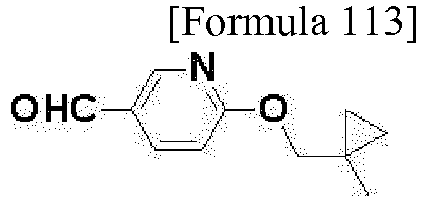
-

- Instead of 4-(bromomethyl)benzoic acid, 6-chloronicotinic acid (6.50 g) was used and treated by the same technique as in Reference Example 16-1(1) to give 6-chloro-N-methoxy-N-methylpyridine-3-carboxamide as a colorless oil (7.55 g).
1H NMR (300 MHz, CHLOROFORM-d) δ ppm 3.39 (s, 3 H) 3.56 (s, 3 H) 7.39 (dd, J=8.3, 0.7 Hz, 1 H) 8.03 (dd, J=8.3,2.3 Hz, 1 H) 8.78 (dd, J=2.3, 0.7 Hz, 1 H).
MS ESI/APCI Dual posi: 201[M+H]+. -

- To a solution of potassium tert-butoxide (1.68 g) in tetrahydrofuran (30 mL), a solution of 1-methylcyclopropanemethanol (1.29 g) in tetrahydrofuran (5 mL) was added and the mixture was stirred at room temperature for 10 minutes. After the reaction mixture was cooled to 0°C, a solution in tetrahydrofuran (5 mL) of the compound (3.00 g) obtained in step (1) above was added and after being brought to room temperature, the reaction mixture was stirred for an hour. The reaction mixture was then concentrated under reduced pressure and the resulting residue was purified by silica gel column chromatography (n-hexane:ethyl acetate = 95:5-50:50) to give N-methoxy-N-methyl-6-[(1-methylcyclopropyl)methoxy]pyridine-3-carboxamide as a colorless oil (2.02 g).
1H NMR (300 MHz, CHLOROFORM-d) δ ppm 0.38 - 0.47 (m, 2 H) 0.52 - 0.60 (m, 2 H) 1.23 (s, 3 H) 3.37 (s, 3 H) 3.58 (s, 3 H) 4.15 (s, 2 H) 6.73 - 6.84 (m, 1 H) 8.00 (dd, J=8.7, 2.3 Hz, 1 H) 8.60 (dd, J=2.3, 0.7 Hz, 1 H).
MS ESI/APCI Dual posi: 251[M+H]+. - The compound (2.00 g) obtained in step (2) above was used and treated by the same technique as in Reference Example 16-1(3) to give the titled compound as a colorless oil (1.51 g).
1H NMR (300 MHz, CHLOROFORM-d) δ ppm 0.39 - 0.48 (m, 2 H) 0.53 - 0.62 (m, 2 H) 1.23 (s, 3 H) 4.20 (s, 2 H) 6.83 - 6.92 (m, 1 H) 8.02 - 8.11 (m, 1 H) 8.52 - 8.63 (m, 1 H) 9.91 - 9.97 (m, 1 H).
MS ESI/APCI Dual posi: 192[M+H]+. -

- Instead of 1-methylcyclopropanemethanol, 2-cyclopropylethanol (1.29 g) was used and treated by the same technique as in Reference Example 31-1 to give the titled compound as a colorless oil (1.25 g).
1H NMR (300 MHz, CHLOROFORM-d) δ ppm 0.08 - 0.18 (m, 2 H) 0.42 - 0.54 (m, 2 H) 0.75 - 0.89 (m, 1 H) 1.63 - 1.75 (m, 2 H) 4.48 (t, J=6.8 Hz, 2 H) 6.77 - 6.88 (m, 1 H) 8.01 - 8.10 (m, 1 H) 8.58 - 8.67 (m, 1 H) 9.92 - 9.98 (m, 1 H).
MS ESI/APCI Dual posi: 192[M+H]+. -

-

- Instead of 4-(bromomethyl)benzoic acid, cis-4-hydroxycyclohexanecarboxylic acid (1.45 g) was used and treated by the same technique as in Reference Example 16-1(1) to give cis-4-hydroxy-N-methoxy-N-methylcyclohexanecarboxamide as a yellow oil (0.87 g).
1H NMR (300 MHz, CHLOROFORM-d) δ ppm 1.49 - 1.74 (m, 4 H) 1.79 - 2.02 (m, 4 H) 2.65 - 2.79 (m, 1 H) 3.19 (s, 3 H) 3.70 (s, 3 H) 3.99 - 4.08 (m, 1 H).
MS ESI/APCI Dual posi: 188[M+H]+. -
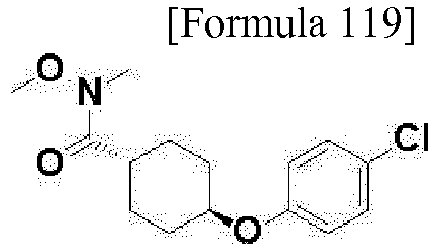
- Instead of 2-cyclopropylethanol and 4-hydroxybenzaldehyde, the compound (850 mg) obtained in step (1) above and p-chlorophenol (700 mg) were respectively used and treated by the same technique as in Reference Example 11-1 to give trans-4-(4-chlorophenoxy)-N-methoxy-N-methylcyclohexanecarboxamide as a colorless solid (458 mg).
1H NMR (300 MHz, CHLOROFORM-d) δ ppm 1.37 - 1.75 (m, 4 H) 1.86 - 1.98 (m, 2 H) 2.16 - 2.29 (m, 2 H) 2.65 - 2.79 (m, 1 H) 3.19 (s, 3 H) 3.72 (s, 3 H) 4.06 - 4.26 (m, 1 H) 6.78 - 6.88 (m, 2 H) 7.18 - 7.25 (m, 2 H).
MS ESI/APCI Dual posi: 298[M+H]+. - The compound (455 mg) obtained in step (2) above was used and treated by the same technique as in Reference Example 23-1(2) to give the titled compound as a pale yellow solid (379 mg).
1H NMR (300 MHz, CHLOROFORM-d) δ ppm 1.38 - 1.64 (m, 4 H) 2.01 - 2.21 (m, 4 H) 2.25 - 2.39 (m, 1 H) 4.03 - 4.27 (m, 1 H) 6.78 - 6.87 (m, 2 H) 7.18 - 7.26 (m, 2 H) 9.66 - 9.72 (m, 1 H).
MS ESI/APCI Dual nega: 237[M-H]-. - In the following Reference Examples 32-2 to 32-9, a commercial grade of the corresponding phenols and a commercial grade of the corresponding alcohols were used and treated by the method described in Reference Example 32-1 or modifications thereof to synthesize the intended compounds. The structures of the synthesized compounds and their NMR and MS data are shown in Table 11-1.
[Table 11-1] Compound No. Structure Analytical Data Salt information Reference Example 32-2 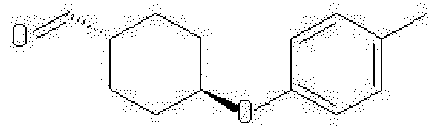
1H NMR (300 MHz, CHLOROFORM-d) δ ppm 1.37 - 1.64 (m, 4 H) 2.02 - 2.21 (m, 4 H) 2.24 - 2.37 (m, 4 H) 4.06 - 4.24 (m, 1 H) 6.75 - 6.84 (m, 2 H) 7.02 - 7.12 (m, 2 H) 9.65 - 9.71 (m, 1 H). Reference Example 32-3 
1H NMR (300 MHz, CHLOROFORM-d) δ ppm 1.21 (t, J=7.6 Hz, 3 H) 1.34 - 1.64 (m, 4 H) 2.00 - 2.39 (m, 5 H) 2.59 (q, J=7.6 Hz, 2 H) 4.08 - 4.24 (m, 1 H) 6.73 - 6.89 (m, 2 H) 7.05 - 7.15 (m, 2 H) 9.63 - 9.74 (m, 1 H). Reference Example 32-4 
1H NMR (300 MHz, CHLOROFORM-d) δ ppm 1.34 - 1.66 (m, 4 H) 1.84 - 2.39 (m, 5 H) 4.84 - 5.03 (m, 1 H) 6.57 - 6.69 (m, 1 H) 7.43 - 7.55 (m, 1 H) 8.03 - 8.10 (m, 1 H) 9.62 - 9.72 (m, 1 H). Reference Example 32-5 
1H NMR (300 MHz, CHLOROFORM-d) δ ppm 1.34 - 1.76 (m, 4 H) 1.99 - 2.37 (m, 5 H) 4.92 - 5.09 (m, 1 H) 6.63 - 6.73 (m, 1 H) 6.79 - 6.89 (m, 1 H) 7.49 - 7.61 (m, 1 H) 8.08 - 8.17 (m, 1 H) 9.64 - 9.74 (m, 1 H). MS ESI/APCI Dual posi: 206[M+H]+. Reference Example 32-6 
1H NMR (300 MHz, CHLOROFORM-d) δ ppm 0.56 - 0.66 (m, 2 H) 0.83 - 0.95 (m, 2 H) 1.35 - 1.67 (m, 4 H) 1.76 - 1.91 (m, 1 H) 2.03 - 2.38 (m, 5 H) 4.04 - 4.28 (m, 1 H) 6.76 - 6.84 (m, 2 H) 6.96 - 7.03 (m, 2 H) 9.66 - 9.72 (m, 1 H). Reference Example 32-7 
1H NMR (300 MHz, CHLOROFORM-d) δ ppm 0.52 - 0.69 (m, 2 H) 0.84 - 1.01 (m, 2 H) 1.33 - 1.65 (m, 4 H) 1.72 - 1.92 (m, 1 H) 1.99 - 2.36 (m, 5 H) 4.82 - 5.07 (m, 1 H) 6,55 - 6.64 (m, 1 H) 7.17 - 7.28 (m, 1 H) 7.89 - 8.00 (m, 1 H) 9.60 - 9.72 (m, 1 H). MS ESI/APCI Dual posi: 246[M+H]+. Reference Example 32-8 
1H NMR (200 MHz, CHLOROFORM-d) δ ppm 1.21 (t, J=7.7 Hz, 3 H) 1.37 - 1.68 (m, 4 H) 1.90 - 2.38 (m, 5 H) 2.45 - 2.66 (m, 2 H) 4.83 - 5.08 (m, 1 H) 6.56 - 6.70 (m, 1 H) 7.31 - 7.50 (m, 1 H) 7.89 - 8.01 (m, 1 H) 9.61 - 9.74 (m, 1 H). MS ESI/APCI Dual posi: 234[M+H]+. Reference Example 32-9 
1H NMR (300 MHz, CHLOROFORM-d) δ ppm 0.10 - 0.21 (m, 2 H) 0.48 - 0.57 (m, 2 H) 0.79 - 0.95 (m, 1 H) 1.74 (q, J=6.6 Hz, 2 H) 4.18 (t, J=6.6 Hz, 2 H) 7.28 - 7.35 (m, 1 H) 7.93 - 8.00 (m, 1 H) 8.41 - 8.46 (m, 1 H) 9.98 - 10.01 (m, 1 H), MS ESI/APCI Dual posi: 192[M+H]+, 214[M+Na]+. -

-

- Instead of 3,4-difluorobenzaldehyde, 2-fluoro-3-methylpyridine-5-carboxylic acid (2.00 g) was used and treated by the same technique as in Reference Example 12-1 to give 5-methyl-6-(2,2,2-trifluoroethoxy)pyridine-3-carboxylic acid as a colorless solid (3.57 g).
1H NMR (300 MHz, DMSO-d6) δ ppm 2.23 (s, 3 H) 5.09 (q, J=9.0 Hz, 2 H) 8.02 - 8.17 (m, 1 H) 8.52 - 8.63 (m, 1 H) 13.11 (br. s, 1 H).
MS ESI/APCI Dual nega: 234[M-H]-. -

- The compound (3.57 g) obtained in step (1) above was used and treated by the same technique as in Reference Example 16-1(1) to give N-methoxy-N,5-dimethyl-6-(2,2,2-trifluoroethoxy)pyridine-3-carboxamide as a colorless oil (2.98 g).
1H NMR (300 MHz, CHLOROFORM-d) δ ppm 2.22 - 2.31 (m, 3 H) 3.37 (s, 3 H) 3.58 (s, 3 H) 4.81 (q, J=8.5 Hz, 2 H) 7.80 - 7.92 (m, 1 H) 8.37 - 8.49 (m, 1 H).
MS ESI/APCI Dual posi: 279[M+H]+. - The compound (2.66 g) obtained in step (2) above was used and treated by the same technique as in Reference Example 16-1(3) to give the titled compound as a colorless oil (2.10 g).
1H NMR (300 MHz, CHLOROFORM-d) δ ppm 2.27 - 2.34 (m, 3 H) 4.76 - 4.96 (m, 2 H) 7.91 - 8.00 (m, 1 H) 8.41 - 8.51 (m, 1 H) 9.97 (s, 1 H).
MS ESI/APCI Dual posi: 220[M+H]+. - In the following Reference Examples 33-2 to 33-8, a commercial grade of the corresponding halogenated aryls and a commercial grade of the corresponding alcohols were used and treated by the method described in Reference Example 33-1 or modifications thereof to synthesize the intended compounds. The structures of the synthesized compounds and their NMR and MS data are shown in Table 12-1.
[Table 12-1] Compound No. Structure Analytical Data Salt information Reference Example 33-2 
1H NMR (300 MHz, CHLOROFORM-d) δ ppm 0.08 - 0.18 (m, 2 H) 0.44 - 0.54 (m, 2 H) 0.77 - 0.91 (m, 1 H) 1.65 - 1.77 (m, 2 H) 2.21 - 2.28 (m, 3 H) 4.50 (t, J=6.6 Hz, 2 H) 7.83 - 7.90 (m, 1 H) 8.39 - 8.49 (m, 1 H) 9.92 (s, 1 H). MS ESI/APCI Dual posi: 206[M+H]+. Reference Example 33-3 
1H NMR (300 MHz, CHLOROFORM-d) δ ppm 0.30 - 0.43 (m, 2 H) 0.57 - 0.69 (m, 2 H) 1.18 - 1.40 (m, 1 H) 4.25 (d, J=7.3 Hz, 2 H) 6.80 - 6.92 (m, 1 H) 7.95 - 8.15 (m, 1 H) 8.60 (d, J=2.3 Hz, 1 H) 9.94 (s, 1 H). MS ESI/APCI Dual posi: 178[M+H]+. Reference Example 33-4 
1H NMR (300 MHz, CHLOROFORM-d) δ ppm 2.37 (s, 3 H) 5.44 (s, 2 H) 6.85 - 6.91 (m, 1 H) 7.17 - 7.23 (m, 2 H) 7.33 - 7.39 (m, 2 H) 8.04 - 8.10 (m, 1 H) 8.63 - 8.66 (m, 1 H) 9.95 - 9.97 (m, 1 H). MS EI posi: 227[M]+. Reference Example 33-5 
1H NMR (300 MHz, CHLOROFORM-d) δ ppm 5.45 (s, 2 H) 6.87 - 6.92 (m, 1 H) 7.33 - 7.44 (m, 4 H) 8.06 - 8.12 (m, 1 H) 8.64 (d, J=2.3 Hz, 1 H) 9.97 (s, 1 H). MS ESI/APCI Dual posi: 248[M+H]+. MS ESI/APCI Dual nega: 246[M-H]-. Reference Example 33-6 
1H NMR (300 MHz, CHLOROFORM-d) δ ppm 0.07 - 0.24 (m, 2 H) 0.40 - 0.57 (m, 2 H) 0.75 - 0.93 (m, 1 H) 1.66 - 1.82 (m, 2 H) 4.49 - 4.63 (m, 2 H) 8.11 (d, J=2.2 Hz, 1 H) 8.51 (d, J=2.2 Hz, 1 H) 9.93 (s, 1 H). MS ESI/APCI Dual posi: 226[M+H]+. Reference Example 33-7 
1H NMR (300 MHz, CHLOROFORM-d) δ ppm 0.35 - 0.47 (m, 2 H) 0.61 - 0.73 (m, 2 H) 1.31 - 1.47 (m, 1 H) 4.49 (d, J=7.4 Hz, 2 H) 7.10 (dd, J=9.1, 0.9 Hz, 1 H) 7.95 (d, J=9.1 Hz, 1 H) 10.24 (d, J=0.9 Hz, 1 H). MS ESI/APCI Dual posi: 179[M+H]+. Reference Example 33-8 
1H NMR (300 MHz, CHLOROFORM-d) δ ppm 0.32 - 0.45 (m, 2 H) 0.58 - 0.73 (m, 2 H) 1.22 - 1.41 (m, 1 H) 4.28 (d, J=7.1 Hz, 2 H) 8.32 (d, J=1.4 Hz, 1 H) 8.72 (d, J=1.4 Hz, 1 H) 10.05 (s, 1 H). MS ESI/APCI Dual posi: 179[M+H]+. -

-

- Instead of ethyl cis-2-phenylcyclopropanecarboxylate, 3-phenyl-cyclopentanecarboxylic acid methyl ester (1.76 g) was used and treated by the same technique as in Reference Example 23-1(2) to give (3-phenylcyclopentyl)methanol as a colorless oil (1.31 g).
1H NMR (300 MHz, CHLOROFORM-d) δ ppm 1.26 - 1.48 (m, 2 H) 1.54 - 2.19 (m, 5 H) 2.29 - 2.49 (m, 1 H) 2.97 - 3.16 (m, 1 H) 3.53 - 3.67 (m, 2 H) 7.12 - 7.35 (m, 5 H).
MS EI posi: 176[M]+. - The compound (0.90 g) obtained in step (1) above was used and treated by the same technique as in Reference Example 19-1 to give the titled compound as a yellow oil (0.90 g). 1H NMR (300 MHz, CHLOROFORM-d) δ ppm 1.56 - 2.55 (m, 7 H) 2.90 - 3.19 (m, 1 H) 7.14 - 7.40 (m, 5 H) 9.65 - 9.78 (m, 1 H).
- In the following Reference Examples 34-2 and 34-3, a commercial grade of the corresponding esters was used and treated by the method described in Reference Example 34-1 or a modification thereof to synthesize the intended compounds. The structures of the synthesized compounds and their NMR and MS data are shown in Table 13-1.
[Table 13-1] Compound No. Structure Analytical Data Salt information Reference Example 34-2 
1H NMR (300 MHz, CHLOROFORM-d) δ ppm 1.37 - 1.76 (m, 4 H) 2.00 - 2.38 (m, 5 H) 4.03 - 4.19 (m, 1 H) 6.78 - 7.02 (m, 4 H) 9.64 - 9.73 (m, 1 H). Reference Example 34-3 
1H NMR (300 MHz, CHLOROFORM-d) δ ppm 1.41 - 1.85 (m, 4 H) 2.01 - 2.45 (m, 5 H) 4.19 - 4.38 (m, 1 H) 6.90 - 6.88 (m, 2 H) 7.46 - 7.58 (m, 2 H) 9.69 (s, 1 H). -

- Instead of 4-hydroxybenzaldehyde and (bromomethyl)cyclobutane, 5-hydroxy-2-methylpyridine (767 mg) and 4-(chloromethyl)benzyl alcohol (1.00 g) were respectively used and treated by the same techniques as in Reference Examples 9-1 and 19-1 to give the titled compound as a pale yellow solid (1.65 g).
1H NMR (300 MHz, CHLOROFORM-d) δ ppm 2.50 (s, 3 H) 5.17 (s, 2 H) 7.05 - 7.11 (m, 1 H) 7.14 - 7.20 (m, 1 H) 7.57 - 7.63 (m, 2 H) 7.89 - 7.94 (m, 2 H) 8.25 - 8.29 (m, 1 H) 10.03 (s, 1 H).
MS ESI/APCI Dual posi: 228[M+H]+.
MS ESI/APCI Dual nega: 226[M-H]-, 262[M+Cl]-. -
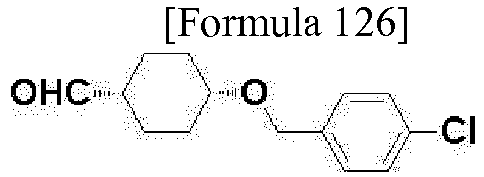
-


- Instead of 4-hydroxybenzaldehyde and (bromomethyl)cyclobutane, ethyl 4-hydroxycyclohexanecarboxylate (2.00 g) and 4-chlorobenzylbromide (2.86 g) were respectively used and treated by the same technique as in Reference Example 9-1 to give ethyl cis-4-[(4-chlorobenzyl)oxy]cyclohexanecarboxylate as a colorless oil (0.33 g) and ethyl trans-4-[(4-chlorobenzyl)oxy]cyclohexanecarboxylate as a pale yellow oil (0.47 g).
- 1H NMR (300 MHz, CHLOROFORM-d) δ ppm 1.29 (t, J=7.1 Hz, 3 H) 1.52 - 1.78 (m, 4 H) 1.83 - 2.06 (m, 4 H) 2.30 - 2.50 (m, 1 H) 3.54 - 3.66 (m, 1 H) 4.17 (q, J=7.1 Hz, 2 H) 4.51 (s, 2 H) 7.25 - 7.40 (m, 4 H).
- 1H NMR (300 MHz, CHLOROFORM-d) δ ppm 1.17 - 1.57 (m, 7 H) 1.95 - 2.18 (m, 4 H) 2.20 - 2.35 (m, 1 H) 3.25 - 3.41 (m, 1 H) 4.11 (q, J=7.1 Hz, 2 H) 4.51 (s, 2 H) 7.21 - 7.37 (m, 4 H).
-

- The compound cis-4-[(4-chlorobenzyl)oxy]cyclohexanecarboxylate (0.33 g) obtained in step (1) above was used and treated by the same technique as in Reference Example 23-1(2) to give {cis-4-[(4-chlorobenzyl)oxy]cyclohexyl}methanol as a colorless oil (0.29 g).
1H NMR (300 MHz, CHLOROFORM-d) δ ppm 1.20 - 1.67 (m, 8 H) 1.83 - 2.02 (m, 2 H) 3.49 (d, J=5.9 Hz, 2 H) 3.59 - 3.67 (m, 1 H) 4.46 (s, 2 H) 7.24 - 7.35 (m, 4 H). - The compound (283 mg) obtained in step (2) above was used and treated by the same technique as in Reference Example 19-1 to give the titled compound as a yellow oil (257 mg). 1H NMR (300 MHz, CHLOROFORM-d) δ ppm 1.49 - 1.99 (m, 8 H) 2.20 - 2.35 (m, 1 H) 3.51 - 3.65 (m, 1 H) 4.47 (s, 2 H) 7.22 - 7.35 (m, 4 H) 9.59 - 9.68 (m, 1 H).
MS ESI/APCI Dual posi: 275[M+Na]+. -

- The ethyl trans-4-[(4-chlorobenzyl)oxy]cyclohexanecarboxylate (856 mg) obtained in Reference Example 36-1 (1) was used and treated by the same techniques as in Reference Example 36-1(2) and (3) to give the titled compound as a yellow oil (388 mg). 1H NMR (300 MHz, CHLOROFORM-d) δ ppm 1.23 - 1.50 (m, 4 H) 1.98 - 2.31 (m, 5 H) 3.26 - 3.41 (m, 1 H) 4.52 (s, 2 H) 7.22 - 7.36 (m, 4 H) 9.62 - 9.67 (m, 1 H).
-

- Instead of 4-chlorobenzylbromide, 2-(bromomethyl)-5-chloropyridine (5.23 g) was used and treated by the same technique as in Reference Example 36-1 to give the titled compound as a colorless oil (0.25 g).
1H NMR (300 MHz, CHLOROFORM-d) δ ppm 1.28 - 1.67 (m, 4 H) 1.99 - 2.31 (m, 5 H) 3.33 - 3.52 (m, 1 H) 4.65 (s, 2 H) 7.39 - 7.48 (m, 1 H) 7.64 - 7.75 (m, 1 H) 8.48 - 8.54 (m, 1 H) 9.61 - 9.71 (m, 1 H). -

-

- Instead of 4-hydroxybenzaldehyde and 2-cyclopropylethanol, phenol (1.43 g) and methyl cis-4-hydroxycyclohexanecarboxylate (2.00 g) were respectively used and treated by the same technique as in Reference Example 11-1 to give methyl trans-4-phenoxycyclohexanecarboxylate as a colorless oil (1.33 g).
1H NMR (600 MHz, CHLOROFORM-d) δ ppm 1.43 - 1.65 (m, 4 H) 2.03 - 2.13 (m, 2 H) 2.15 - 2.23 (m, 2 H) 2.32 - 2.44 (m, 1 H) 3.68 (s, 3 H) 4.15 - 4.26 (m, 1 H) 6.86 - 6.97 (m, 3 H) 7.23-7.31 (m, 2 H).
MS ESI/APCI Dual posi: 235[M+H]+. -

- The compound (1.31 g) obtained in step (1) above was used and treated by the same technique as in Reference Example 23-1(2) to give (trans-4-phenoxycyclohexyl)methanol as a colorless oil (897 mg).
1H NMR (200 MHz, CHLOROFORM-d) δ ppm 0.96 - 1.70 (m, 6 H) 1.81 - 2.01 (m, 2 H) 2.10 - 2.31 (m, 2 H) 3.50 (d, J=6.2 Hz, 2 H) 4.04 - 4.27 (m, 1 H) 6.82 - 7.00 (m, 3 H) 7.16 - 7.35 (m, 2 H).
MS ESI/APCI Dual posi: 207[M+H]+. - The compound (897 mg) obtained in step (2) above was used and treated by the same technique as in Reference Example 19-1 to give the titled compound as a yellow oil (801 mg).
1H NMR (600 MHz, CHLOROFORM-d) δ ppm 1.42 - 1.64 (m, 4 H) 2.04 - 2.22 (m, 4 H) 2.27 - 2.37 (m, 1 H) 4.16 - 4.28 (m, 1 H) 6.86 - 6.98 (m, 3 H) 7.23 - 7.33 (m, 2 H) 9.69 (s, 1 H). - In the following Reference Examples 37-2 to 37-8, a commercial grade of the corresponding phenols and a commercial grade of the corresponding alcohols were used and treated by the method described in Reference Example 37-1 or modifications thereof to synthesize the intended compounds. The structures of the synthesized compounds and their NMR and MS data are shown in Table 14-1.
[Table 14-1] Compound No. Structure Analytical Data Salt information Reference Example 37-2 
1H NMR (300 MHz, CHLOROFORM-d) 6 ppm 1.39 - 1.83 (m, 4 H) 1.97 - 2.38 (m, 5 H) 4.83 - 5.02 (m, 1 H) 6.58 - 6.71 (m, 1 H) 7.23 - 7.40 (m, 1 H) 7.89 - 8.05 (m, 1 H) 9.64 - 9.72 (m, Reference Example 37-3 
1H NMR (300 MHz, CHLOROFORM-d) δ ppm 1.42 - 1.65 (m, 4 H) 1.99 - 2.36 (m, 8 H) 4.88 - 5.04 (m, 1 H) 6.56 - 6.64 (m, 1 H) 7.33 - 7.43 (m, 1 H) 7.88 - 7.99 (m, 1 H) 9.61 - 9.74 (m, 1 H). Reference Example 37-4 
1H NMR (600 MHz, CHLOROFORM-d) δ ppm 1.41 - 2.13 (m, 8 H) 2.26 - 2.37 (m, 1 H) 4.41 - 4.53 (m, 1 H) 6.84 - 6.96 (m, 3 H) 7.23 - 7.30 (m, 2 H) 9.63 - 9.70 (m, 1 H). Reference Example 37-5 
MS ESI/APCI Dual posi: 224[M+H]+. Reference Example 37-6 
MS ESI/APCI Dual posi: 223[M+H]+. Reference Example 37-7 
MS ESI/APCI Dual posi: 274[M+H]+. Reference Example 37-8 
1H NMR (300 MHz, CHLOROFORM-d) δ ppm 0.43 - 0.51 (m, 2 H) 0.52 - 0.62 (m, 2 H) 1.24 (s, 3 H) 3.81 (s, 2 H) 6.95 - 7.03 (m, 2 H) 7.79 - 7.86 (m, 2 H) 9.88 (s, 1 H). MS ESI/APCI Dual posi: 191[M+H]+. -

-

- Instead of 4-hydroxybenzaldehyde and bromocyclopropane, 6-(trifluoromethyl)pyridin-3-ol (1.21 g) and 4-cyanobenzylbromide (1.45 g) were respectively used and treated by the same technique as in Reference Example 10-1 to give 4-({[6-(trifluoromethyl)pyridin-3-yl]oxy}methyl)benzonitrile as a pale brown solid (1.99 g).
1H NMR (300 MHz, CHLOROFORM-d) δ ppm 5.23 (s, 2 H) 7.34 (dd, J=8.7, 2.8 Hz, 1 H) 7.52 - 7.59 (m, 2 H) 7.64 (d, J=8.7 Hz, 1 H) 7.69 - 7.77 (m, 2 H) 8.46 (d, J=2.8 Hz, 1 H).
MS ESI/APCI Dual posi: 279[M+H]+.
MS ESI/APCI Dual nega: 277[M-H]-. - The compound (1.99 g) obtained in step (1) above was used and treated by the same technique as in Reference Example 16-1(3) to give the titled compound as a pale yellow solid (980 mg).
1H NMR (300 MHz, CHLOROFORM-d) δ ppm 5.26 (s, 2 H) 7.35 (dd, J=8.8, 3.0 Hz, 1 H) 7.58 - 7.67 (m, 3 H) 7.91 - 7.98 (m, 2 H) 8.48 (d, J=3.0 Hz, 1 H) 10.05 (s, 1 H).
MS ESI/APCI Dual posi: 282[M+H]+. -

- Instead of 6-(trifluoromethyl)pyridin-3-ol and 4-cyanobenzylbromide, 4-(hydroxymethyl)benzonitrile (1.87 g) and 2-fluoro-5-(trifluoromethyl)pyridine (1.55 g) were respectively used and treated by the same technique as in Reference Example 38-1 to give the titled compound as a pale yellow solid (1.49 g).
1H NMR (300 MHz, CHLOROFORM-d) δ ppm 5.53 (s, 2 H) 6.90 - 6.97 (m, 1 H) 7.58 - 7.65 (m, 2 H) 7.82 (dd, J=8.9, 2.3 Hz, 1 H) 7.87 - 7.94 (m, 2 H) 8.40 - 8.47 (m, 1 H) 10.03 (s, 1 H).
MS ESI/APCI Dual posi: 282[M+H]+. -

-

- Instead of 4-(bromomethyl)benzoic acid, trans-4-hydroxycyclohexanecarboxylic acid (7.21 g) was used and treated by the same technique as in Reference Example 16-1(1) to give trans-4-hydroxy-N-methoxy-N-methylcyclohexanecarboxamide as a colorless oil (8.52 g).
1H NMR (300 MHz, CHLOROFORM-d) δ ppm 1.21 - 1.40 (m, 2 H) 1.49 - 1.68 (m, 2 H) 1.78 - 1.90 (m, 2 H) 2.00 - 2.13 (m, 2 H) 2.54 - 2.73 (m, 2 H) 3.18 (s, 3 H) 3.57 - 3.74 (m, 4 H). -

- To a solution in N,N-dimethylformamide (91 mL) of the compound (8.52 g) obtained in step (1) above, imidazole (4.03 g) and tert-butyldimethylchlorosilane (6.86 g) were added and the mixture was stirred at room temperature for 1.5 hours. The reaction mixture was concentrated under reduced pressure and water was added to the resulting residue. After extraction with ethyl acetate, the combined organic layers were washed with water and saturated brine. The washed organic layers were dried over anhydrous magnesium sulfate and after removing the desiccant by filtration, the filtrate was concentrated under reduced pressure. The resulting residue was purified by silica gel column chromatography (n-hexane:ethyl acetate = 100:0-75:25) to give the titled compound as a colorless oil (10.5 g).
1H NMR (200 MHz, CHLOROFORM-d) δ ppm 0.06 (s, 6 H) 0.88 (s, 9 H) 1.15 - 1.69 (m, 4 H) 1.71 - 2.08 (m, 4 H) 2.50-2.73 (m, 1 H) 3.17 (s, 3 H) 3.48 - 3.75 (m, 4 H). -

- To a solution in acetonitrile (11 mL) of the compound (1.00 g) obtained in step (2) above, triethylsilane (579 mg) was added. Bismuth tribromide (104 mg) and 4-fluorobenzaldehyde (617 mg) were added under cooling with ice and the mixture was stirred at room temperature for two hours. To the reaction mixture, a saturated aqueous solution of sodium hydrogencarbonate and ethyl acetate were added and the insoluble matter was removed by filtration through Celite (registered trademark). The organic layer in the filtrate was separated and washed with saturated brine. The washed organic layer was dried over anhydrous magnesium sulfate and after removing the desiccant by filtration, the filtrate was concentrated under reduced pressure. The resulting residue was purified by silica gel column chromatography (n-hexane:ethyl acetate = 100:0-50:50) to give the titled compound as a colorless oil (0.61 g).
1H NMR (300 MHz, CHLOROFORM-d) δ ppm 1.23 - 1.43 (m, 2 H) 1.47 - 1.65 (m, 2 H) 1.79 - 1.93 (m, 2 H) 2.10 - 2.23 (m, 2 H) 2.57 - 2.74 (m, 1 H) 3.18 (s, 3 H) 3.29 - 3.43 (m, 1 H) 3.70 (s, 3 H) 4.52 (s, 2 H) 6.97 - 7.08 (m, 2 H) 7.25 - 7.36 (m, 2 H). - The compound (0.59 g) obtained in step (3) above was used and treated by the same technique as in Reference Example 23-1(2) to give the titled compound as a yellow oil (0.46 g).
1H NMR (300 MHz, CHLOROFORM-d) δ ppm 1.27 - 1.49 (m, 4 H) 1.97 - 2.34 (m, 5 H) 3.25 - 3.41 (m, 1 H) 4.52 (s, 2 H) 6.97 - 7.08 (m, 2 H) 7.25 - 7.36 (m, 2 H) 9.62 - 9.70 (m, 1 H). - In the following Reference Examples 39-2 to 39-7, a commercial grade of the corresponding aldehydes was used and treated by the method described in Reference Example 39-1 or modifications thereof to synthesize the intended compounds. The structures of the synthesized compounds and their NMR and MS data are shown in Table 15-1.
[Table 15-1] Compound No. Structure Analytical Data Salt information Reference Example 39-2 
1H NMR (300 MHz, CHLOROFORM-d) δ ppm 1.22 - 1.49 (m, 4 H) 1.99 - 2.18 (m, 4 H) 2.18 - 2.31 (m, 1 H) 3.28 - 3.41 (m, 1 H) 4.56 (s, 2 H) 7.23 - 7.39 (m, 5 H) 9.61 - 9.69 (m, 1 H). Reference Example 39-3 
1H NMR (300 MHz, CHLOROFORM-d) δ ppm 0.14 - 0.24 (m, 2 H) 0.48 - 0.59 (m, 2 H) 0.96 - 1.13 (m, 1 H) 1.17 - 1.43 (m, 4 H) 1.93 - 2.30 (m, 5 H) 3.14 - 3.33 (m, 3 H) 9.62 - 9.67 (m, 1 H). Reference Example 39-4 
1H NMR (300 MHz, CHLOROFORM-d) δ ppm 1.20 - 1.42 (m, 4 H) 1.92 - 2.29 (m, 5 H) 2.87 (t, J=7.3 Hz, 2 H) 3.14 - 3.29 (m, 1 H) 3.67 (t, J=7.3 Hz, 2 H) 7.15 - 7.36 (m, 5 H) 9.61 - 9.67 (m, 1 H). Reference Example 39-5 
1H NMR (300 MHz, CHLOROFORM-d) δ ppm 1.13 - 1.40 (m, 6 H) 1.44 - 1.81 (m, 7 H) 1.85 - 2.30 (m, 5 H) 3.08 - 3.25 (m, 1 H) 3.32 (d, J=7.1 Hz, 2 H) 9.62 - 9.69 (m, 1 H). Reference Example 39-6 
1H NMR (200 MHz, CHLOROFORM-d) δ ppm 1.21 - 1.51 (m, 4 H) 1.93 - 2.31 (m, 5 H) 2.34 (s, 3 H) 3.20 - 3.43 (m, 1 H) 4.52 (s, 2 H) 7.09 - 7.28 (m, 4 H) 9.61 - 9.68 (m, 1 H). Reference Example 39-7 
1H NMR (200 MHz, CHLOROFORM-d) δ ppm 1.17 - 1.77 (m, 6 H) 1.80 - 2.29 (m, 9 H) 3.11 - 3.33 (m, 1 H) 3.90 - 4.13 (m, 1 H) 9.59 - 9.68 (m, 1 H). -

- To a solution of 4-carboxybenzaldehyde (1.06 g) in chloroform (14.1 mL), 1-(3-dimethylaminopropyl)-3-ethylcarbodiimide hydrochloride (2.03 g), 1-hydroxybenzotriazole monohydrate (1.62 g) and piperdine (1.05 mL) were added. After stirring the mixture at room temperature for 15 hours, a saturated aqueous solution of ammonium chloride was added. After extraction with ethyl acetate, the combined organic layers were washed with saturated brine. The washed organic layers were dried over anhydrous magnesium sulfate and after removing the desiccant by filtration, the filtrate was concentrated under reduced pressure. The resulting residue was purified by silica gel column chromatography (n-hexane:ethyl acetate = 85:15-30:70) to give the titled compound as a colorless oil (1.57 g).
1H NMR (300 MHz, CHLOROFORM-d) δ ppm 1.50 - 1.53 (m, 2 H) 1.65 - 1.73 (m, 4 H) 3.24 - 3.35 (m, 2 H) 3.68 - 3.79 (m, 2 H) 7.52 - 7.57 (m, 2 H) 7.90 - 7.96 (m, 2 H) 10.05 (s, 1 H).
MS ESI/APCI Dual posi: 218[M+H]+.
MS ESI/APCI Dual nega: 232[M+Cl]-. - In the following Reference Examples 40-2 to 40-8, a commercial grade of the corresponding amines was used and treated by the method described in Reference Example 40-1 or modifications thereof to synthesize the intended compounds. The structures of the synthesized compounds and their NMR and MS data are shown in Table 16-1.
[Table 16-1] Compound No. Structure Analytical Data Salt information Reference Example 40-2 
1H NMR (600 MHz, CHLOROFORM-d) δ ppm 1.00 (t, J=7.4 Hz, 3 H) 1.66 (sxt, J=7.4 Hz, 2 H) 3.42 - 3.47 (m, 2 H) 6.16 (br. s., 1 H) 7.88 - 7.92 (m, 2 H) 7.92 - 7.96 (m, 2 H) 10.07 (s, 1 H). MS ESI/APCI Dual posi: 192[M+H]+. MS ESI/APCI Dual nega: 190[M-H]-, 226[M+Cl]-. Reference Example 40-3 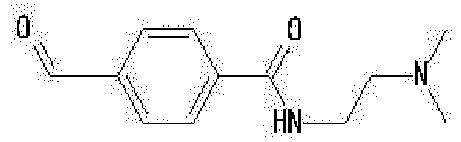
1H NMR (300 MHz, DMSO-d6) δ ppm 2.63 (br. s., 6 H) 3.03 (q, J=7.2 Hz, 2 H) 3.61 (br. s., 2 H) 7.97 (d, J=8.1 Hz, 2 H) 8.14 (d, J=8.1 Hz, 2 H) 9.44 - 9.67 (m, 1 H) 10.08 (s, 1 H). MS ESI/APCI Dual posi: 221[M+H]+. MS ESI/APCI Dual nega: 219[M-H]-. Reference Example 40-4 
1H NMR (300 MHz, CHLOROFORM-d) δ ppm 2.11 (s, 3 H) 3.71 - 3.81 (m, 2 H) 4.29 - 4.37 (m, 2 H) 6.71 (br. s., 1 H) 7.88 - 8.00 (m, 4 H) 10.09 (s, 1 H). US ESI/APCI Dual posi: 258[M+Na]+. MS ESI/APCI Dual nega: 234[M-H]-. Reference Example 40-5 
1H NMR (300 MHz, CHLOROFORM-d) δ ppm 2.01 - 2.20 (m, 2 H) 2.42 (t, J=8.4 Hz, 2 H) 3.38 - 3.73 (m, 6 H) 7.57 - 7.77 (m, 1 H) 7.87 - 8.03 (m, 4 H) 10.07 (s, 1 H). MS ESI/APCI Dual posi: 283[M+Na]+. MS ESI/APCI Dual nega: 259[M-H]-. Reference Example 40-6 
1H NMR (300 MHz, CHLOROFORM-d) δ ppm 4.78 (d, J=4.5 Hz, 2 H) 7.19 - 7.28 (m, 1 H) 7.29 - 7.39 (m, 1 H) 7.66 - 7.76 (m, 1 H) 7.77 - 7.85 (m, 1 H) 7.89 - 8.11 (m, 4 H) 8.52 - 8.64 (m, 1 H) 10.09 (s, 1 H). MS ESI/APCI Dual posi: 241[M+H]+, 263[M+Na]+. MS ESI/APCI Dual nega: 239[M-H]-. Reference Example 40-7 
1H NMR (300 MHz, CHLOROFORM-d) δ ppm 3.07 - 3.17 (m, 2 H) 3.88 (dd, J=6.5, 5.7 Hz, 2 H) 7.16 - 7.26 (m, 2 H) 7.56 - 7.73 (m, 1 H) 7.82 - 8.01 (m, 5 H) 8.47 - 8.67 (m, 1 H) 10.08 (s, 1 H). US ESI/APCI Dual posi: 255[M+H]+, 277[M+Na]+. MS ESI/APCI Dual nega: 253[M-H]-. Reference Example 40-8 
1H NMR (300 MHz, CHLOROFORM-d) δ ppm 1.52 (s, 9 H) 4.16 (d, J=5.0 Hz, 2 H) 6.75 (br. s., 1 H) 7.96 (s, 4 H) 10.09 (s, 1 H). MS ESI/APCI Dual posi: 286[M+Na]+. MS ESI/APCI Dual nega: 262[M-H]-. -

-

- Instead of 4-hydroxybenzotrifluoride and 6-bromo-3-pyridinecarboxyaldehyde, p-cresol (833 mg) and methyl 5-chloro-2-pyrazinecarboxylate (1.33 g) were respectively used and treated by the same technique as in Reference Example 13-1 to give methyl 5-(4-methylphenoxy)pyrazine-2-carboxylate as a colorless solid (1.36 g).
1H NMR (300 MHz, CHLOROFORM-d) δ ppm 2.39 (s, 3 H) 4.01 (s, 3 H) 7.03 - 7.09 (m, 2 H) 7.18 - 7.33 (m, 2 H) 8.48 (d, J=1.2 Hz, 1 H) 8.83 (d, J=1.2 Hz, 1 H).
MS ESI/APCI Dual posi: 245[M+H]+. - The compound (1.36 g) obtained in step (1) above was used and treated by the same technique as in Reference Example 16-1(3) to give the titled compound as a colorless solid (1.10 g).
1H NMR (300 MHz, CHLOROFORM-d) δ ppm 2.40 (s, 3 H) 7.02 - 7.10 (m, 2 H) 7.22 - 7.31 (m, 2 H) 8.51 (d, J=1.2 Hz, 1 H) 8.71 (d, J=1.2 Hz, 1 H) 10.08 (s, 1 H).
MS ESI/APCI Dual posi: 215[M+H]+. -

- Instead of p-cresol, 4-chlorophenol (2.23 g) was used and treated by the same technique as in Reference Example 41-1 to give the titled compound as a pale yellow solid (0.45 g).
1H NMR (300 MHz, CHLOROFORM-d) δ ppm 7.08 - 7.20 (m, 2 H) 7.36 - 7.49 (m, 2 H) 8.55 (d, J=1.4 Hz, 1 H) 8.67 - 8.72 (m, 1 H) 10.09 (s, 1 H).
MS ESI/APCI Dual posi: 235[M+H]+. -

-

- Instead of p-cresol, 4-bromophenol (5.01 g) was used and treated by the same technique as in Reference Example 41-1 to give 5-(4-bromophenoxy)pyrazine-2-carbaldehyde as a pale brown solid (1.88 g).
1H NMR (300 MHz, CHLOROFORM-d) δ ppm 7.09 (d, J=9.0 Hz, 2 H) 7.58 (d, J=9.0 Hz, 2 H) 8.55 (d, J=1.2 Hz, 1 H) 8.70 (s, 1 H) 10.09 (s, 1 H).
MS ESI/APCI Dual posi: 279[M+H]+. -

- To a solution in toluene (20 mL) of the compound (1.66 g) obtained in step (1) above, ethylene glycol (1.11 g) and p-toluenesulfonic acid monohydrate (56.6 mg) were added and, thereafter, the mixture was stirred at 140°C for an hour using a Dean-Stark apparatus. After cooling the reaction mixture to room temperature, a saturated aqueous solution of sodium hydrogencarbonate was added to it under cooling with ice and extraction was conducted with ethyl acetate. The combined organic layers were washed with saturated brine and dried over anhydrous magnesium sulfate. The desiccant was removed by filtration and the filtrate was concentrated under reduced pressure. Purification by silica gel column chromatography (n-hexane:ethyl acetate = 100:0-60:40) gave 2-(4-bromophenoxy)-5-(1,3-dioxolan-2-yl)pyrazine as a colorless solid (1.78 g).
1H NMR (300 MHz, CHLOROFORM-d) δ ppm 4.01 - 4.24 (m, 4 H) 5.92 (s, 1 H) 7.05 (d, J=9.0 Hz, 2 H) 7.48 - 7.59 (m, 2 H) 8.26 - 8.30 (m, 1 H) 8.40 - 8.44 (m, 1 H).
MS ESI/APCI Dual posi: 323[M+H]+. -

- The compound (1.73 g) obtained in step (2) above was used and treated by the same technique as in Reference Example 14-5(2) to give 2-(4-cyclopropylphenoxy)-5-(1,3-dioxolan-2-yl)pyrazine as a brown oil (2.46 g).
1H NMR (300 MHz, CHLOROFORM-d) δ ppm 0.65 - 0.74 (m, 2 H) 0.91 - 1.02 (m, 2 H) 1.84 - 1.98 (m, 1 H) 4.02 - 4.23 (m, 4 H) 5.91 (s, 1 H) 6.98 - 7.07 (m, 2 H) 7.09 - 7.16 (m, 2 H) 8.26 - 8.30 (m, 1 H) 8.35 - 8.42 (m, 1 H).
MS ESI/APCI Dual posi: 285[M+H]+. - To a solution in acetone (107 mL) of the compound (2.46 g) obtained in step (3) above, p-toluenesulfonic acid monohydrate (2.04 g) was added and the mixture was stirred at 50°C for two hours. After cooling the reaction mixture to room temperature, a saturated aqueous solution of sodium hydrogencarbonate was added to it under cooling with ice and two extractions were conducted with ethyl acetate. The combined organic layers were dried over anhydrous magnesium sulfate; thereafter, the desiccant was removed by filtration and the filtrate was concentrated under reduced pressure. The resulting residue was purified by silica gel column chromatography (n-hexane:ethyl acetate = 100:0-80:20) to give the titled compound as a colorless solid (0.67 g).
1H NMR (300 MHz, CHLOROFORM-d) δ ppm 0.66 - 0.78 (m, 2 H) 0.91 - 1.05 (m, 2 H) 1.87 - 2.00 (m, 1 H) 7.01 - 7.10 (m, 2 H) 7.12 - 7.20 (m, 2 H) 8.51 (s, 1 H) 8.71 (s, 1 H) 10.08 (s, 1 H).
MS ESI/APCI Dual posi: 241[M+H]+. -

-

- The compound 2-chloropyrimidine-5-carbaldehyde (1.00 g) was used and treated by the same technique as in Reference Example 41-3(2) to give 2-chloro-5-(1,3-dioxolan-2-yl)pyrimidine as a pale yellow oil (290 mg).
NMR (300 MHz, CHLOROFORM-d) δ ppm 3.96 - 4.21 (m, 4 H) 5.89 (s, 1 H) 8.71 (s, 2 H).
MS ESI/APCI Dual posi: 187[M+H]+. -

- The compound (290 mg) obtained in step (1) above was used and treated by the same technique as in Reference Example 13-1 to give 5-(1,3-dioxolan-2-yl)-2-(4-methylphenoxy)pyrimidine as a colorless solid (380 mg).
NMR (300 MHz, CHLOROFORM-d) δ ppm 2.37 (s, 3 H) 3.97 - 4.19 (m, 4 H) 5.83 (s, 1 H) 7.04 - 7.10 (m, 2 H) 7.19 - 7.26 (m, 2 H) 8.61 (s, 2 H).
MS ESI/APCI Dual posi: 259[M+H]+. - The compound (380 mg) obtained in step (2) above was used and treated by the same technique as in Reference Example 41-3(4) to give the titled compound as a colorless solid (139 mg).
1H NMR (300 MHz, CHLOROFORM-d) δ ppm 2.39 (s, 3 H) 7.09 (d, J=8.3 Hz, 2 H) 7.26 (d, J=8.3 Hz, 2 H) 9.01 (s, 2 H) 9.99 - 10.09 (m, 1 H).
MS ESI/APCI Dual posi: 215[M+H]+. -

-

- To a solution of 4-piperidinemethanol (1.00 g) in dimethyl sulfoxide (28.9 mL), 2-chloropyrimidine (994 mg) and potassium carbonate (2.40 g) were added and the mixture was stirred at 100°C for three hours. After cooling the reaction mixture to room temperature, water was added to it and extraction was conducted with ethyl acetate. The combined organic layers were dried over anhydrous sodium sulfate and after removing the desiccant by filtration, the filtrate was concentrated under reduced pressure to give [1-([pyrimidin-2-yl)piperidin-4-yl]methanol as a colorless oil (1.50 g).
1H NMR (300 MHz, CHLOROFORM-d) δ ppm 1.14 - 1.32 (m, 2 H) 1.72 - 1.89 (m, 3 H) 2.82 - 2.96 (m, 2 H) 3.53 (d, J=5.9 Hz, 2 H) 4.74 - 4.85 (m, 2 H) 6.41 - 6.47 (m, 1 H) 8.26 - 8.33 (m, 2 H).
MS ESI/APCI Dual posi: 194[M+H]+. - The compound (1.50 g) obtained in step (1) above was used and treated by the same technique as in Reference Example 19-1 to give the titled compound as a yellow oil (1.21 g). 1H NMR (300 MHz, CHLOROFORM-d) δ ppm 1.57 - 1.72 (m, 2 H) 1.94 - 2.05 (m, 2 H) 2.49 - 2.61 (m, 1 H) 3.12 - 3.24 (m, 2 H) 4.53 - 4.64 (m, 2 H) 6.48 (t, J=4.7 Hz, 1 H) 8.31 (d, J=4.7 Hz, 2 H) 9.70 (d, J=0.9 Hz, 1 H).
MS ESI/APCI Dual posi: 192[M+H]+. -

-

- Instead of 4-(bromomethyl)benzoic acid and N,O-dimethylhydroxylamine hydrochloride, cyclopropylacetic acid (869 mg) and 4-piperidinemethanol (1.00 g) were respectively used and treated by the same technique as in Reference Example 16-1(1) to give the titled compound as a colorless oil (1.25 g).
NMR (300 MHz, CHLOROFORM-d) δ ppm 0.12 - 0.23 (m, 2 H) 0.51 - 0.60 (m, 2 H) 0.96 - 1.30 (m, 3 H) 1.54 - 1.90 (m, 3 H) 2.28 (d, J=6.7 Hz, 2 H) 2.47 - 2.65 (m, 1 H) 2.95 - 3.10 (m, 1 H) 3.43 - 3.59 (m, 2 H) 3.80 - 3.94 (m, 1 H) 4.60 - 4.76 (m, 1 H).
MS ESI/APCI Dual posi: 198[M+H]+. - The compound (1.25 g) obtained in step (1) above was used and treated by the same technique as in Reference Example 19-1 to give the titled compound as a yellow oil (800 mg).
1H NMR (300 MHz, CHLOROFORM-d) δ ppm 0.13 - 0.22 (m, 2 H) 0.52 - 0.61 (m, 2 H) 0.96 - 1.10 (m, 1 H) 1.50 - 1.71 (m, 2 H) 1.88 - 2.03 (m, 2 H) 2.29 (d, J=6.8 Hz, 2 H) 2.45 - 2.59 (m, 1 H) 2.92 - 3.04 (m, 1 H) 3.11 - 3.25 (m, 1 H) 3.72 - 3.84 (m, 1 H) 4.29 - 4.41 (m, 1 H) 9.68 (s, 1 H).
MS ESI/APCI Dual posi: 196[M+H]+. -

-

- To a solution of 1-(tert-butoxycarbonyl)azetidine-3-carboxylic acid (5.00 g) in tetrahydrofuran (62.1 mL), 1,1'-carbonyldiimidazole (6.05 g) was added and the mixture was stirred at room temperature for an hour. To the reaction mixture, a solution of N,O-dimethylhydroxylamine hydrochloride (3.64 g) and triethylamine (4.02 g) in acetonitrile (62.1 mL) was added and the mixture was stirred at the same temperature for 15 hours. The reaction mixture was concentrated under reduced pressure and water was added to the resulting residue. Extraction was conducted with ethyl acetate and the combined organic layers were washed with an aqueous solution of 5% citric acid and saturated brine. The washed organic layers were dried over anhydrous sodium sulfate and after removing the desiccant by filtration, the filtrate was concentrated under reduced pressure to give tert-butyl 3-[methoxy(methyl)carbamoyl]azetidine-1-carboxylate as a pale yellow oil (7.30 g).
1H NMR (300 MHz, CHLOROFORM-d) δ ppm 1.43 (s, 9 H) 3.21 (s, 3 H) 3.56 - 3.68 (m, 4 H) 4.00 - 4.09 (m, 2 H) 4.09 - 4.19 (m, 2 H). -

- To a solution in chloroform (24.8 mL) of the compound (7.30 g) obtained in step (1) above, trifluoroacetic acid (12.4 mL) was added and the mixture was stirred at room temperature for 15 hours and then concentrated under reduced pressure. The resulting residue (6.29 g) was used and treated by the same technique as in Reference Example 42-1(1) to give N-methoxy-N-methyl-1-(pyrimidin-2-yl)azetidine-3-carboxamide as a colorless solid (810 mg).
1H NMR (300 MHz, CHLOROFORM-d) δ ppm 3.23 (s, 3 H) 3.70 (s, 3 H) 3.80 - 3.96 (m, 1 H) 4.16 - 4.41 (m, 4 H) 6.51 - 6.59 (m, 1 H) 8.28 - 8.35 (m, 2 H).
MS ESI/APCI Dual posi: 223[M+H]+. - The compound (810 mg) obtained in step (2) above was used and treated by the same technique as in Reference Example 16-1(3) to give the titled compound as a colorless oil (707 mg).
MS ESI/APCI Dual posi: 164[M+H]+. -

- To a solution of 2-methyl-1H-imidazole-4-carbaldehyde (500 mg) in chloroform (15 mL), di-tert-butyl dicarbonate (1.19 g), triethylamine (949 µL), and 4-dimethylaminopyridine were added and the mixture was stirred at room temperature for 30 minutes. To the reaction mixture, a saturated aqueous solution of sodium hydrogencarbonate was added and extraction was conducted with chloroform. The combined organic layers were passed through a phase separator and thereafter concentrated under reduced pressure. The resulting residue was purified by silica gel column chromatography to give the titled compound as a colorless solid (883 mg).
1H NMR (300 MHz, CHLOROFORM-d) δ ppm 1.64 (s, 9 H) 2.68 (s, 3 H) 7.98 (s, 1 H) 9.85 (s, 1 H).
MS ESI/APCI Dual posi: 233[M+Na]+.
MS ESI/APCI Dual nega: 209[M-H]-. -

-

- To a mixture of 3-fluoro-4-iodobenzonitrile (1.53 g), 1-cyclohexen-1-yl-boronic acid (938 mg), bis(triphenylphosphine)palladium(II) dichloride (435 mg) and ethanol (9.75 mL), sodium ethoxide (about 20%, solution in ethanol, 5.75 mL) was added and the mixture was stirred at 90°C for 15 minutes under irradiation with microwaves. After being cooled to room temperature, the reaction mixture was poured into water and three extractions were conducted with chloroform. The combined organic layers were washed with saturated brine and passed through a phase separator to be concentrated under reduced pressure. The resulting residue was purified by silica gel column chromatography (n-hexane: ethyl acetate = 100:0-75:25) to give the titled compound as a pale yellow oil (980 mg).
1H NMR (300 MHz, CHLOROFORM-d) δ ppm 1.63 - 1.84 (m, 4 H) 2.18 - 2.29 (m, 2 H) 2.30 - 2.41 (m, 2 H) 6.01 - 6.10 (m, 1 H) 7.27 - 7.42 (m, 3 H).
MS ESI/APCI Dual posi: 224[M+Na]+.
MS ESI/APCI Dual nega: 236[M+Cl]-. - To a solution in isopropyl alcohol (24 mL) of the compound (980 mg) obtained in step (1) above, a solution (3.7 mL) of 4 mol/L hydrogen chloride in 1,4-dioxane and 20% palladium hydroxide/carbon (98 mg) were added. The mixture was stirred at room temperature for 4 hours in a hydrogen atmosphere. The reaction mixture was filtered through Celite (registered trademark) and the filtrate was concentrated under reduced pressure. To a solution of the resulting residue in ethanol (10 mL), a solution (2.0 mL) of 2 mol/L hydrogen chloride in methanol and 20% palladium hydroxide/carbon (98 mg) were added. The mixture was stirred at room temperature for 26 hours in a hydrogen atmosphere. The reaction mixture was filtered through Celite (registered trademark) and the filtrate was concentrated under reduced pressure. To the resulting residue, ethanol (5 mL) and diethyl ether (50 mL) were added and the mixture was stirred for 15 minutes. The resulting precipitate was recovered by filtration to give the titled compound as a brown solid (1.06 g).
1H NMR (300 MHz, DMSO-d6) δ ppm 1.14 - 1.54 (m, 5 H) 1.63 - 1.86 (m, 5 H) 2.70 - 2.87 (m, 1 H) 3.99 (s, 2 H) 7.22 - 7.42 (m, 3 H) 8.43 (br. s., 2 H).
MS ESI/APCI Dual posi: 208[M+H]+. -
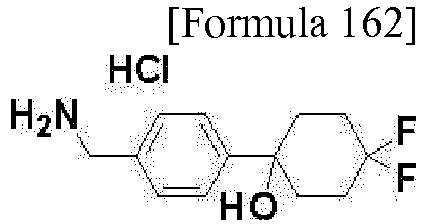
-
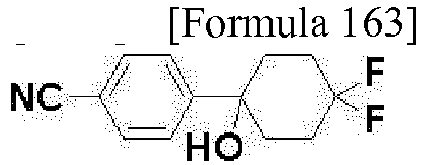
- To a solution of 4-iodobenzonitrile (5.35 g) in tetrahydrofuran (100 mL), isopropylmagnesium bromide (about 1 mol/L, solution in tetrahydrofuran, 35 mL) was added dropwise at -40°C in an argon atmosphere. After stirring the mixture at that temperature for an hour, a solution of 4,4-difluorocyclohexanone (4.70 g) in cyclopentyl methyl ether (10 mL) was added dropwise. The mixture was brought to room temperature over a period of 5.5 hours and a saturated aqueous solution of ammonium chloride was added. Three extractions were conducted with ethyl acetate and the combined organic layers were washed with saturated brine and thereafter dried over anhydrous magnesium sulfate. The insoluble matter was removed by filtration and the filtrate was concentrated under reduced pressure. The resulting residue was purified by silica gel column chromatography (n-hexane:ethyl acetate = 95:5-40:60) to give 4-(4,4-difluoro-1-hydroxycyclohexyl)benzonitrile as a colorless solid (2.19 g).
1H NMR (300 MHz, CHLOROFORM-d) δ ppm 1.77 - 1.92 (m, 2 H) 2.00 - 2.45 (m, 6 H) 7.58 - 7.72 (m, 4 H).
MS EI posi: 237[M]+. - The compound (2.19 g) obtained in step (1) above was used and treated by the same technique as in Reference Example 45-1(2) to give the titled compound as a colorless solid (1.51 g).
1H NMR (300 MHz, DMSO-d6) δ ppm 1.66 - 1.79 (m, 2 H) 1.85 - 2.04 (m, 4 H) 2.09 - 2.36 (m, 2 H) 3.99 (s, 2 H) 5.28 (s, 1 H) 7.40 - 7.48 (m, 2 H) 7.49 - 7.57 (m, 2 H) 8.32 (br. s., 3 H).
MS ESI/APCI Dual posi: 242[M+H]+.
MS ESI/APCI Dual nega: 276[M+Cl]-. -

-

- To a solution of 3-oxocyclobutanecarboxylic acid (13.5 g) in tetrahydrofuran (135 mL), 1,1'-carbonyldiimidazole (23.0 g) was added under cooling with ice. The mixture was brought to room temperature and stirred for 90 minutes. Benzylamine (15.5 mL) was added and the mixture was stirred at that temperature for 14 hours. The crude product was adsorbed on diatomaceous earth with the solvent being distilled off under reduced pressure. The crude product adsorbed on the diatomaceous earth was purified by silica gel column chromatography (chloroform:methanol = 100:0-95:5) to give N-benzyl-3-oxocyclobutanecarboxamide as a colorless solid (16.9 g).
1H NMR (300 MHz, CHLOROFORM-d) δ ppm 2.89 - 3.10 (m, 1 H) 3.11 - 3.32 (m, 2 H) 3.41 - 3.67 (m, 2 H) 4.50 (d, J=5.8 Hz, 2 H) 7.25 - 7.42 (m, 5 H).
MS ESI/APCI Dual posi: 204[M+H]+. -

- The compound (16.9 g) obtained in step (1) above was used and treated by the same technique as in Reference Example 23-1(2) to give cis-3-[(benzylamino)methyl]cyclobutanol as a pale yellow oil (16.2 g).
1H NMR (300 MHz, DMSO-d6) δ ppm 1.35 - 1.57 (m, 2 H) 1.66 - 1.93 (m, 2 H) 2.12 - 2.36 (m, 2 H) 2.42 - 2.53 (m, 2 H) 3.69 (s, 2 H) 3.78 - 4.00 (m, 1 H) 7.12 - 7.41 (m, 5 H).
MS ESI/APCI Dual posi: 192[M+H]+. -

- The compound (16.2 g) obtained in step (2) above was used and treated by the same technique as in Reference Example 29-1(4) to give cis-3-(aminomethyl)cyclobutanol as a colorless oil (10.4 g).
1H NMR (300 MHz, DMSO-d6) δ ppm 1.29 - 1.51 (m, 2 H) 1.53 - 1.70 (m, 1 H) 2.08 - 2.29 (m, 2 H) 2.41 - 2.51 (m, 2 H) 3.76 - 3.98 (m, 1 H). -

- The compound (10.3 g) obtained in step (3) above was used and treated by the same technique as in Reference Example 44-1 to give tert-butyl [(cis-3-hydroxycyclobutyl)methyl]carbamate as a colorless solid (6.08 g).
1H NMR (600 MHz, DMSO-d6) δ ppm 1.37 (s, 9 H) 1.37 - 1.49 (m, 2 H) 1.66 - 1.79 (m, 1 H) 2.08 - 2.23 (m, 2 H) 2.87 - 2.91 (m, 2 H) 3.78 - 3.91 (m, 1 H) 4.82 - 4.94 (m, 1 H) 6.76 (t, J=5.4 Hz, 1 H).
MS ESI/APCI Dual posi: 224[M+Na]+.
MS ESI/APCI Dual nega: 200[M-H]-. -

- Instead of 4-hydroxybenzaldehyde and 2-cyclopropylethanol, 4-chlorophenol (767 mg) and the compound (1.00 g) obtained in step (4) above were respectively used and treated by the same technique as in Reference Example 11-1 to give tert-butyl {[trans-3-(4-chlorophenoxy)cyclobutyl]methyl}carbamate as a colorless solid (1.05 g).
1H NMR (600 MHz, CHLOROFORM-d) δ ppm 1.45 (s, 9 H) 2.15 - 2.37 (m, 4 H) 2.40 - 2.65 (m, 1 H) 3.12 - 3.35 (m, 2 H) 4.64 - 4.79 (m, 1 H) 6.63 - 6.76 (m, 2 H) 7.15 - 7.25 (m, 2 H). (6) Synthesis of the titled compound - To a solution in 1,4-dioxane (30 mL) of the compound (0.98 g) obtained in step (5) above, a solution (25 mL) of 4 mol/L hydrogen chloride in 1,4-dioxane was added and the mixture was stirred at room temperature for 5 hours. After adding diethyl ether (120 mL), the mixture was stirred for another two hours and thereafter the precipitate was recovered by filtration. The recovered precipitate was dissolved in an aqueous solution of 1 mol/L sodium hydroxide and chloroform and two extractions were conducted with chloroform. The combined organic layers were dried over anhydrous magnesium sulfate and the desiccant was removed by filtration. The filtrate was concentrated under reduced pressure to give the titled compound as a colorless oil (660 mg).
1H NMR (300 MHz, CHLOROFORM-d) δ ppm 2.12 - 2.48 (m, 5 H) 2.74 - 2.87 (m, 2 H) 4.61 - 4.77 (m, 1 H) 6.63 - 6.80 (m, 2 H) 7.12 - 7.27 (m, 2 H). - In the following Reference Examples 46-2 to 46-4, a commercial grade of the corresponding phenols was used and treated by the method described in Reference Example 46-1 or modifications thereof to synthesize the intended compounds. The structures of the synthesized compounds and their NMR and MS data are shown in Table 17-1.
[Table 17-1] Compound No. Structure Analytical Data Salt information Reference Example 46-2 
1H NMR (300 MHz, CHLOROFORM-d) δ ppm 2.17 - 2.39 (m, 8 H) 2.82 (d, J=7.0 Hz, 2 H) 4.58 - 4.82 (m, 1 H) 6.61 - 6.77 (m, 2 H) 6.96 - 7.14 (m, 2 H). MS ESI/APCI Dual posi: 192[M+H]+. Reference Example 46-3 
1H NMR(300 MHz, CHLOROFORM-d) δ ppm 2.21 - 2.55 (m, 5 H) 2.86 (d, J=7.3 Hz, 2 H) 4.66 - 4.83 (m, 1 H) 6.74 - 6.91 (m, 2 H) 7.39 - 7.65 (m, 2 H). MS ESI/APCI Dual posi: 246[M+H]+, 287[M+Na]+. Reference Example 46-4 
1H NMR (600 MHz, DMSO-d6) δ ppm 2.15 - 2.22 (m, 2 H) 2.33 - 2.42 (m, 2 H) 2.47 - 2.57 (m, 1 H) 2.99 (d, J=7.8 Hz, 2 H) 4.82 - 4.93 (m, 1 H) 6.78 - 6.84 (m, 1 H) 6.85 - 6.92 (m, 1 H) 6.97 - 7.02 (m, 1 H) 7.26 - 7.34 (m, 1 H) 7.73 - 8.00 (m, 3 H). MS ESI/APCI Dual posi: 212[M+H]+. -

-

- Instead of 4-hydroxybenzaldehyde and (bromomethyl)cyclobutane, the compound (1.00 g) obtained in Reference Example 46-1(4) and 4-chlorobenzyl bromide (1.02 g) were respectively used and treated by the same technique as in Reference 9-1 to give tert-butyl ({cis-3-[(4-chlorobenzyl)oxy]cyclobutyl}methyl)carbamate as a colorless solid (750 mg).
1H NMR (300 MHz, CHLOROFORM-d) δ ppm 1.44 (s, 9 H) 1.58 - 1.71 (m, 2 H) 1.88 - 2.10 (m, 1 H) 2.25 - 2.43 (m, 2 H) 3.08 - 3.22 (m, 2 H) 3.81 - 3.95 (m, 1 H) 4.36 (s, 2 H) 7.20 - 7.37 (m, 4 H). - The compound (750 mg) obtained in step (1) above was used and treated by the same technique as in Reference Example 46-1(6) to give the titled compound as a colorless oil (523mg).
1H NMR (300 MHz, CHLOROFORM-d) δ ppm 1.52 - 1.71 (m, 2 H) 1.77 - 1.95 (m, 1 H) 2.27 - 2.45 (m, 2 H) 2.72 (d, J=6.7 Hz, 2 H) 3.81 - 4.01 (m, 1 H) 4.38 (s, 2 H) 7.20 - 7.39 (m, 4 H).
MS ESI/APCI Dual posi: 226[M+H]+. -

-

- To a mixture of the compound (2.00 g) obtained in Reference Example 46-1(4), 4-nitrobenzoic acid (3.32 g), triphenylphosphine (5.21 g) and tetrahydrofuran (50 mL), diisopropyl azodicarboxylate (1.0 mol/L, solution in toluene, 10.5 mL) was added and the mixture was stirred at room temperature for 16 hours. After concentrating under reduced pressure, the resulting residue was purified by silica gel column chromatography (n-hexane:ethyl acetate = 100:0-75:25) to give trans-3-[({[(2-methyl-2-propanyl)oxy]carbonyl}amino)methyl]cyclobutyl 4-nitrobenzoate as a colorless solid (3.88 g).
1H NMR (300 MHz, CHLOROFORM-d) δ ppm 1.46 (s, 9 H) 2.24 - 2.45 (m, 4 H) 2.46 - 2.68 (m, 1 H) 3.21 - 3.33 (m, 2 H) 5.29 - 5.41 (m, 1 H) 8.18 - 8.25 (m, 2 H) 8.26 - 8.32 (m, 2 H). -

- To a solution in tetrahydrofuran (100 mL) of the compound (3.88 g) obtained in step (1) above, an aqueous solution of 1 mol/L sodium hydroxide (19.9 mL) was added and the mixture was stirred at room temperature for 4 hours. Extraction was conducted with ethyl acetate and after drying the combined organic layers over anhydrous magnesium sulfate, the desiccant was removed by filtration. With the solvent being distilled off under reduced pressure, the crude product was adsorbed on diatomaceous earth. The crude product as adsorbed on the diatomaceous earth was purified by silica gel column chromatography (n-hexane:ethyl acetate = 99:1-0:100, then chloroform:methanol = 100:0-90:10) to give tert-butyl [(trans-3-hydroxycyclobutyl)methyl]carbamate as a colorless solid (1.87 g).
1H NMR (300 MHz, DMSO-d6) δ ppm 1.37 (s, 9 H) 1.72 - 2.00 (m, 4 H) 2.01 - 2.22 (m, 1 H) 2.85 - 3.02 (m, 2 H) 4.05 - 4.23 (m, 1 H) 4.81 - 4.95 (m, 1 H) 6.72 - 6.91 (m, 1 H). - The compound (500 mg) obtained in step (2) above was used and treated by the same techniques as in Reference 46-1(5) and (6) to give the titled compound as a colorless oil (460 mg).
1H NMR (300 MHz, CHLOROFORM-d) δ ppm 1.71 - 1.90 (m, 2 H) 1.95 - 2.13 (m, 1 H) 2.50 - 2.68 (m, 2 H) 2.77 (d, J=6.8 Hz, 2 H) 4.43 - 4.60 (m, 1 H) 6.66 - 6.80 (m, 2 H) 7.14 - 7.26 (m, 2 H).
MS ESI/APCI Dual posi: 212[M+H]+. -

- The compound (1.30 mg) obtained in Reference Example 46-6(2) was used and treated by the same technique as in Reference Example 46-5 to give the titled compound as a colorless oil (630 smg).
1H NMR (300 MHz, CHLOROFORM-d) δ ppm 1.91 - 2.34 (m, 5 H) 2.72 (d, J=7.3 Hz, 2 H) 4.03 - 4.20 (m, 1 H) 4.36 (s, 2 H) 7.20 - 7.38 (m, 4 H).
MS ESI/APCI Dual posi: 226[M+H]+. -

-

- To a solution of 4-iodobenzaldehyde (10.4 g) in methanol (36 mL), tetraisopropyl orthotitanate (50.0 mL) and a solution (50 mL) of 8 mol/L ammonia in methanol were added and the mixture was stirred at room temperature for 3.5 hours. Trimethylsilyl cyanide (5.89 mL) was slowly added to the mixture, which was then stirred at the same temperature for 14 hours. Iced water was added to the reaction mixture, which was then filtered through Celite (registered trademark). The filtrate was concentrated under reduced pressure and the resulting residue was extracted with ethyl acetate. The combined organic layers were washed with water and dried over anhydrous magnesium sulfate. The desiccant was removed by filtration and the filtrate was concentrated under reduced pressure. The resulting residue was purified by silica gel column chromatography (n-hexane: ethyl acetate = 99:1-25:75) to give amino(4-iodophenyl)acetonitrile as a pale yellow solid (5.05 g).
1H NMR (300 MHz, CHLOROFORM-d) δ ppm 4.87 (s, 2 H) 7.27 - 7.33 (m, 2 H) 7.69 - 7.83 (m, 2 H). -

- A suspension in 6 mol/L hydrochloric acid (65 mL) of the compound (5.05 g) obtained in Step (1) above was stirred at 105°C for 14 hours. After being cooled to room temperature, the suspension was stirred at room temperature for an hour and then stirred for 30 minutes under cooling with ice. The resulting precipitate was recovered by filtration to give amino(4-iodophenyl)acetic acid hydrochloride as a colorless solid (4.32 g).
1H NMR (300 MHz, DMSO-d6) δ ppm 4.18 (s, 2 H) 7.08 - 7.30 (m, 2 H) 7.60 - 7.77 (m, 2 H).
MS ESI/APCI Dual posi: 278[M+H]+.
MS ESI/APCI Dual nega: 276[M-H]-. -

- To a liquid mixture of lithium borohydride (2.0 mol/L, solution in tetrahydrofuran, 19.7 mL) and chlorotrimethylsilane (9.97 mL), the compound (4.95 g) obtained in step (2) above was added in small portions at room temperature and the mixture was stirred for 16 hours. Under cooling with ice, methanol (3.5 mL) was added to the mixture, which was then brought to room temperature and stirred for 15 minutes. To the stirred mixture, water (19.7 mL), ethyl acetate (39.4 mL), saturated brine (19.7 mL) and sodium hydroxide (1.87 g) were added successively and the mixture was stirred at the same temperature for 16 hours. The reaction mixture was extracted with ethyl acetate and the combined organic layers were dried over anhydrous magnesium sulfate. The desiccant was removed by filtration and the filtrate was concentrated under reduced pressure to give 2-amino-2-(4-iodophenyl)ethanol as a yellow solid (4.70 g).
1H NMR (300 MHz, CHLOROFORM-d) δ ppm 3.43 - 3.59 (m, 1 H) 3.65 - 3.77 (m, 1 H) 3.94 - 4.10 (m, 1 H) 7.02 - 7.15 (m, 2 H) 7.62 - 7.75 (m, 2 H).
MS ESI/APCI Dual posi: 264[M+H]+. - To a mixture of the compound (4.70 g) obtained in step (3) above, 4-dimethylaminopyridine (48.2 mg), triethylamine (4.40 mL) and chloroform (63.2 mL), a solution of tert-butyldimethylchlorosilane (2.38 g) in chloroform (31.6 mL) was added dropwise under cooling with ice and the mixture was stirred at the same temperature for 30 minutes, and then at room temperature for three days. The reaction mixture was concentrated under reduced pressure and water and ethyl acetate were then added. Extraction was conducted with ethyl acetate and the combined organic layers were dried over anhydrous magnesium sulfate. The desiccant was removed by filtration and the filtrate was concentrated under reduced pressure. The resulting residue was purified by silica gel column chromatography (chloroform:methanol = 100:0-98:2) to give the titled compound as a pale yellow oil (4.68 g).
1H NMR (300 MHz, CHLOROFORM-d) δ ppm 0.02 (s, 6 H) 0.89 (s, 9 H) 3.40 - 3.56 (m, 1 H) 3.62 - 3.74 (m, 1 H) 3.97 - 4.07 (m, 1 H) 7.06 - 7.20 (m, 2 H) 7.56 - 7.72 (m, 2 H). -

- To a solution in chloroform (20 mL) of the compound (500 mg) obtained in Reference Example 1-1, the compound (627 mg) obtained in Reference Example 6-2 was added and the mixture was stirred at room temperature for 30 minutes. Sodium triacetoxyborohydride (654 mg) was added to the mixture which was further stirred at room temperature for 12 hours. Under cooling with ice, a saturated aqueous solution of sodium hydrogencarbonate was added to the mixture, which was then brought to room temperature. Three extractions were conducted with chloroform. The combined organic layers were passed through a phase separator and thereafter concentrated under reduced pressure. The resulting residue was purified by silica gel column chromatography (n-hexane: ethyl acetate = 80:20-0:100) to give the titled compound as a colorless oil (784 mg).
1H NMR (300 MHz, CHLOROFORM-d) δ ppm 1.66 - 1.76 (m, 4 H) 2.60 (s, 2 H) 3.60 - 3.78 (m, 7 H) 3.86 - 3.99 (m, 2 H) 4.77 (s, 1 H) 7.45 - 7.52 (m, 2 H) 7.54 - 7.63 (m, 2 H) 7.65 - 7.73 (m, 4 H).
MS ESI/APCI Dual posi: 408[M+H]+, 430[M+Na]+. - In the following Reference Examples A-2 to A-485, the compounds obtained in Reference Examples 1-1 to 5-5, Reference Examples 28-1 to 30-2, or commercial grades of the corresponding β-alanine esters, as well as the compounds obtained in Reference Examples 6-1 to 26-1, Reference Examples 31-1 to 44-1, or commercial grades of the corresponding aldehydes or ketones were used as starting materials and treated by the method described in Reference Example A-1 or modifications thereof to synthesize the intended compounds. The structures of the synthesized compounds and their NMR and MS data are shown in Tables 18-1 to 18-69.
[Table 18-1] Compound No. Structure Analytical Data Salt information Reference Example A-2 
1H NMR (300 MHz, CHLOROFORM-d) δ ppm 1.27 (t, J=7.1 Hz, 3 H) 2.98 (s, 2 H) 3.89 (s, 2 H) 4.17 (q, J=7.1 Hz, 2 H) 4.56 (d, J=6.7 Hz, 2 H) 4.71 (d, J=6.7 Hz, 2 H) 7.29 - 7.38 (m, 1 H) 7.39 - 7.49 (m, 4 H) 7.51 - 7.63 (m, 4 H). MS ESI/APCI Dual posi: 326[M+H]+. Reference Example A-3 
1H NMR (300 MHz, CHLOROFORM-d) δ ppm 1.17 (d. J=6.8 Hz, 3 H) 1.25 (t, J=7.1 Hz, 3 H) 2.57 - 2.71 (m, 2 H) 2.80 - 2.92 (m, 1 H) 3.79 (s, 2 H) 4.15 (q, J=7.1 Hz, 2 H) 7.13 - 7.19 (m, 2 H) 7.32 - 7.36 (m, 2 H). MS ESI/APCI Dual posi: 306[M+H]+, 328[M+Na]+. Reference Example A-4 
1H NMR (300 MHz, CHLOROFORM-d) δ ppm 1.26 (t, J=7.1 Hz, 3 H) 2.47 - 2.55 (m, 2 H) 2.82 - 2.91 (m, 2 H) 3.75 (s, 2 H) 4.14 (q, J=7.1 Hz, 2 H) 7.01 - 7.13 (m, 2 H) 7.56 - 7.70 (m, 2 H). MS ESI/APCI Dual posi: 334[M+H]+, 356[M+Na]+. Reference Example A-5 
1H NMR (300 MHz, CHLOROFORM-d) δ ppm 1.26 (t, J=7.1 Hz, 3 H) 2.51 (t, J=6.4 Hz, 2 H) 2.86 (t, J=6.4 Hz, 2 H) 3.77 (s, 2 H) 4.15 (q, J=7.1 Hz, 2 H) 6.96 - 7.02 (m, 1 H) 7.10 - 7.17 (m, 1 H) 7.44 - 7.51 (m, 1 H). MS ESI/APCI Dual posi : 304[M+H]+, 326[M+Na]+. Reference Example A-6 
1H NMR (300 MHz, CHLOROFORM-d) δ ppm 1.25 (t. J=7.1 Hz, 3 H) 2.51 (t, J=6.7 Hz, 2 H) 2.85 (t, J=6.7 Hz, 2 H) 3.73 (s, 2 H) 3.80 (s, 3 H) 3.81 (s, 3 H) 4.13 (q, J=7.1 Hz, 2 H) 6.34 - 6.51 (m, 2 H) 7.13 (d, J=7.9 Hz, 1 H). MS ESI/APCI Dual posi: 268[M+H]+. Reference Example A-7 
1H NMR (300 MHz, CHLOROFORM-d) δ ppm 1.25 (t, J=7.1 Hz, 3 H) 2.52 (t, J=6.6 Hz, 2 H) 2.88 (t, J=6.6 Hz, 2 H) 3.73 (s, 2 H) 4.14 (q, J=7.1 Hz, 2 H) 4.52 (ddd, J=5.3, 1.7, 1.4 Hz, 2 H) 5.28 (ddt, J=10.5, 1.6, 1.4 Hz, 1 H) 5.41 (dtd, J=17.3, 1.7, 1.6 Hz, 1 H) 6.06 (ddt, J=17.3, 10.5, 5.3 Hz, 1 H) 6.84 - 6.90 (m, 2 H) 7.19 - 7.26 (m, 2 H). MS ESI/APCI Dual posi: 264[M+H]+. Reference Example A-8 
1H NMR (300 MHz, CHLOROFORM-d) δ ppm 1.23 - 1.59 (m, 6 H) 1.59 - 1.76 (m, 4 H) 2.53 (s, 2 H) 3.67 (s, 3 H) 3.68 (s, 2 H) 7.19 - 7.26 (m, 1 H) 7.27 - 7.34 (m, 2 H) 7.35 - 7.41 (m, 2 H). MS ESI/APCI Dual posi: 262[M+H]+. [Table 18-2] Compound No. Structure Analytical Data Salt information Reference Example A-9 
1H NMR (300 MHz, CHLOROFORM-d) δ ppm 1.29 - 1.59 (m, 6 H) 1.60 - 1.77 (m, 4 H) 2.55 (s, 2 H) 3.68 (s, 3 H) 3.72 (s, 2 H) 7.29 - 7.37 (m, 1 H) 7.39 - 7.49 (m, 4 H) 7.51 - 7.62 (m, 4 H). MS ESI/APCI Dual posi: 338[M+H]+. Reference Example A-10 
1H NMR (300 MHz, CHLOROFORM-d) δ ppm 1.13 - 1.63 (m, 11 H) 1.95 - 2.12 (m, 2 H) 2.66 (s, 2 H) 3.76 (s, 2 H) 4.15 (q, J=7.1 Hz, 2 H) 7.09 - 7.43 (m, 5 H). MS ESI/APCI Dual posi: 276[M+H]+. Reference Example A-11 
1H NMR (300 MHz, CHLOROFORM-d) δ ppm 1.08 - 1.63 (m, 11 H) 1.93 - 2.15 (m, 2 H) 2.69 (s, 2 H) 3.92 (s, 2 H) 4.16 (q, J=7.1 Hz, 2 H) 7.34 - 7.54 (m, 3 H) 7.71 (s, 1 H) 7.74 - 7.92 (m, 3 H). MS ESI/APCI Dual posi: 326[M+H]+. Reference Example A-12 
1H NMR (300 MHz, CHLOROFORM-d) δ ppm 1.15 - 1.64 (m, 11 H) 1.99 - 2.14 (m, 2 H) 2.70 (s, 2 H) 3.81 (s, 2 H) 4.17 (q, J=7.1 Hz, 2 H) 7.29 - 7.49 (m, 5 H) 7.48 - 7.65 (m, 4 H). MS ESI/APCI Dual posi: 352[M+H]+. Reference Example A-13 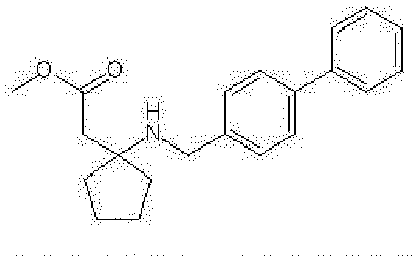
1H NMR (300 MHz, CHLOROFORM-d) δ ppm 1.51 - 1.90 (m, 8 H) 2.64 (s, 2 H) 3.70 (s, 3 H) 3.74 (s, 2 H) 7.28 - 7.37 (m, 1 H) 7.38 - 7.47 (m, 4 H) 7.49 - 7.62 (m, 4 H). MS ESI/APCI Dual posi: 324[M+H]+. Reference Example A-14 
1H NMR (600 MHz, CHLOROFORM-d) δ ppm 1.66 - 1.76 (m, 4 H) 2.59 (s, 2 H) 3.64 - 3.70 (m, 5 H) 3.72 (s, 2 H) 3.90 - 3.96 (m, 2 H) 7.31 - 7.35 (m, 1 H) 7.41 - 7.47 (m, 4 H) 7.54 - 7.60 (m, 4 H). MS ESI/APCI Dual posi: 340[M+H]+, 362[M+Na]+. Reference Example A-15 
1H NMR (600 MHz, CHLOROFORM-d) δ ppm 1.26 (t, J=7.1 Hz, 3 H) 1.53 - 1.61 (m, 2 H) 2.07 - 2.13 (m, 2 H) 2.75 (s, 2 H) 3.50 (td, J=11.5, 2.3 Hz, 2 H) 3.77 - 3.84 (m, 4 H) 4.21 (q, J=7.1 Hz, 2 H) 7.31 - 7.37 (m, 3 H) 7.41 - 7.45 (m, 2 H) 7.52 - 7.56 (m, 2 H) 7.57 - 7.60 (m, 2 H). MS ESI/APCI Dual posi: 354[M+H]+. [Table 18-3] Compound No. Structure Analytical Data Salt information Reference Example A-16 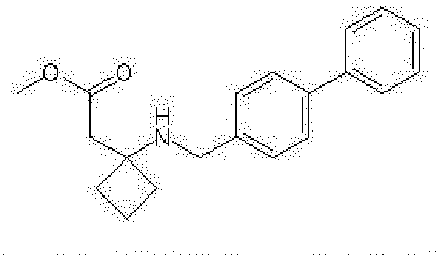
1H NMR (300 MHz, CHLOROFORM-d) δ ppm 1.74 - 1.97 (m, 2 H) 1.97 - 2.19 (m, 4 H) 2.75 (s, 2 H) 3.70 (s, 3 H) 3.74 (s, 2 H) 7.29 - 7.37 (m, 1 H) 7.38 - 7.47 (m, 4 H) 7.51 - 7.61 (m, 4 H). MS ESI/APCI Dual posi: 310[M+H]+. Reference Example A-17 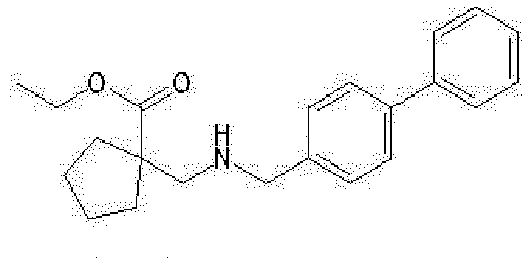
1H NMR (300 MHz, CHLOROFORM-d) δ ppm 1.24 (t, J=7.1 Hz, 3 H) 1.50 - 1.74 (m, 6 H) 1.97 - 2.14 (m, 2 H) 2.74 (s, 2 H) 3.83 (s, 2 H) 4.14 (q, J=7.1 Hz, 2 H) 7.28 - 7.48 (m, 5 H) 7.49 - 7.63 (m, 4 H). MS ESI/APCI Dual posi: 338[M+H]+. Reference Example A-18 
1H NMR (300 MHz, CHLOROFORM-d) δ ppm 1.24 (t, J=7.1 Hz, 3 H) 1.41 - 1.63 (m, 10 H) 1.98 - 2.13 (m, 2 H) 2.68 (s, 2 H) 3.81 (s, 2 H) 4.15 (q, J=7.1 Hz, 2 H) 7.28 - 7.48 (m, 5 H) 7.49 - 7.62 (m, 4 H). MS ESI/APCI Dual posi: 366[M+H]+. Reference Example A-19 
1H NMR (300 MHz, CHLOROFORM-d) δ ppm 1.27 (t, J=7.1 Hz, 3 H) 1.82 - 2.03 (m, 4 H) 2.29 - 2.52 (m, 2 H) 2.94 (s, 2 H) 3.85 (s, 2 H) 4.17 (q, J=7.1 Hz, 2 H) 7.29 - 7.48 (m, 5 H) 7.50 - 7.63 (m, 4 H). MS ESI/APCI Dual posi: 324[M+H]+. Reference Example A-20 
1H NMR (200 MHz, CHLOROFORM-d) δ ppm 1.26 (t, J=7.1 Hz, 3 H) 2.55 (t, J=6.5 Hz, 2 H) 2.93 (t, J=6.5 Hz, 2 H) 3.85 (s, 2 H) 4.15 (q, J=7.1 Hz, 2 H) 7.31 - 7.49 (m, 5 H) 7.51 - 7.63 MS ESI/APCI Dual posi: 284[M+H]+. Reference Example A-21 
1H NMR (300 MHz, CHLOROFORM-d) δ ppm 1.13 - 1.37 (m, 9 H) 2.53 (s, 2 H) 3.76 (s, 2 H) 4.15 (q, J=7.2 Hz, 2 H) 7.27 - 7.48 (m, 5 H) 7.49 - 7.66 (m, 4 H). MS ESI/APCI Dual posi: 312[M+H]+, 334[M+Na]+. Reference Example A-22 
1H NMR (300 MHz, CHLOROFORM-d) δ ppm 1.26 (t, J=7.1 Hz, 3 H) 2.52 (t, J=6.4 Hz, 2 H) 2.87 (t, J=6.4 Hz, 2 H) 3.77 (s, 2 H) 4.14 (q, J=7.1 Hz, 2 H) 7.19 - 7.35 (m, 4 H). MS ESI/APCI Dual posi: 242[M+H]+. [Table 18-4] Compound No. Structure Analytical Data Salt information Reference Example A-23 
1H NMR (300 MHz, CHLOROFORM-d) δ ppm 1.26 (t, J=7.1 Hz, 3 H) 2.53 (t, J=6.4 Hz, 2 H) 2.89 (t, J=6.4 Hz, 2 H) 3.87 (s, 2 H) 4.15 (q, J=7.1 Hz, 2 H) 7.41 - 7.48 (m, 2 H) 7.55 - 7.60 (m, 2 H). MS ESI/APCI Dual posi: 276[M+H]+. Reference Example A-24 
1H NMR (600 MHz, CHLOROFORM-d) δ ppm 1.18 (d, J=6.2 Hz, 3 H) 1.26 (t, J=7.1 Hz, 3 H) 2.40 (dd, J=15.1, 6.0 Hz, 1 H) 2.46 - 2.58 (m, 1 H) 3.11 - 3.26 (m, 1 H) 3.81 (d, J=12.9 Hz, 1 H) 3.88 (d, J=12.9 Hz, 1 H) 4.14 (q, J=7.1 Hz, 2 H) 7.29 - 7.39 (m, 1 H) 7.36 - 7.48 (m, 4 H) 7.49 - 7.64 (m, 4 H). MS ESI/APCI Dual posi: 298[M+H]+. Reference Example A-25 
1H NMR (300 MHz, CHLOROFORM-d) δ ppm 1.25 (t, J=7.1 Hz, 3 H) 2.53 (t, J=6.4 Hz, 2 H) 2.90 (t, J=6.4 Hz, 2 H) 3.81 (s, 2 H) 4.14 (q, J=7.1 Hz, 2 H) 7.20 - 7.36 (m, 5 H). MS ESI/APCI Dual posi: 208[M+H]+. Reference Example A-26 
1H NMR (600 MHz, CHLOROFORM-d) δ ppm 1.18 (d, J=7.0 Hz, 3 H) 1.26 (t, J=7.1 Hz, 3 H) 2.63 - 2.73 (m, 2 H) 2.88 - 2.95 (m, 1 H) 3.79 - 3.88 (m, 2 H) 4.15 (q, J=7.1 Hz, 2 H) 7.31 - 7.35 (m, 1 H) 7.36 - 7.40 (m, 2 H) 7.40 - 7.46 (m, 2 H) 7.52 - 7.57 (m, 2 H) 7.57 - 7.61 (m, 2 H). MS ESI/APCI Dual posi: 298[M+H]+. Reference Example A-27 
1H NMR (300 MHz, CHLOROFORM-d) δ ppm 1.26 (t, J=7.1 Hz, 3 H) 2.51 (t, J=6.4 Hz, 2 H) 2.87 (t, J=6.4 Hz, 2 H) 3.75 (s, 2 H) 4.14 (q, J=7.1 Hz, 2 H) 7.15 - 7.24 (m, 2 H) 7.40 - 7.48 (m, 2 H). MS ESI/APCI Dual posi: 286[M+H]+. Reference Example A-28 
1H NMR (300 MHz, CHLOROFORM-d) δ ppm 1.25 (t, J=7.1 Hz, 3 H) 2.54 (t, J=6.5 Hz, 2 H) 2.93 (t, J=6.5 Hz, 2 H) 3.87 (s, 2 H) 4.14 (q, J=7.1 Hz, 2 H) 7.28 - 7.64 (m, 9 H). MS ESI/APCI Dual posi: 284[M+H]+. Reference Example A-29 
1H NMR (300 MHz, CHLOROFORM-d) δ ppm 1.24 (t, J=7.1 Hz, 3 H) 2.40 (t, J=6.6 Hz, 2 H) 2.76 (t, J=6.6 Hz, 2 H) 3.73 (s, 2 H) 4.11 (q, J=7.1 Hz, 2 H) 7.15 - 7.55 (m, 9 H). MS ESI/APCI Dual posi: 284[M+H]+. [Table 18-5] Compound No. Structure Analytical Data Salt information Reference Example A-30 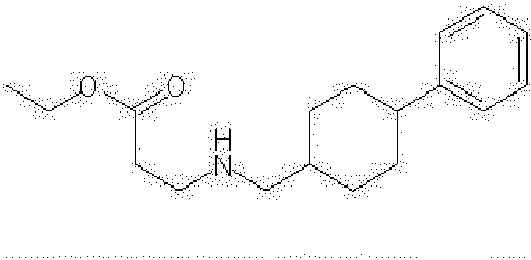
1H NMR (300 MHz, CHLOROFORM-d) δ ppm 0.95 - 1.19 (m, 2 H) 1.27 (t, J=7.1 Hz, 3 H) 1.35 - 1.62 (m, 3 H) 1.82 - 2.00 (m, 4 H) 2.38 - 2.58 (m, 5 H) 2.89 (t, J=6.5 Hz, 2 H) 4.15 (q, J=7.1 Hz, 2 H) 7.12 - 7.23 (m, 3 H) 7.23 - 7.33 (m, 2 H). MS ESI/APCI Dual posi: 290[M+H]+. Reference Example A-31 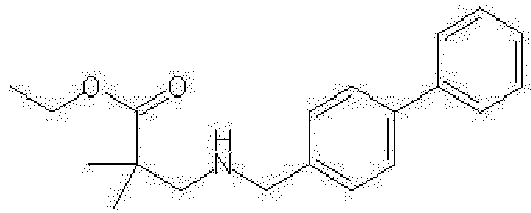
1H NMR (200 MHz, CHLOROFORM-d) δ ppm 1.09 - 1.35 (m, 9 H) 2.69 (s, 2 H) 3.84 (s, 2 H) 4.13 (q, J=7.0 Hz, 2 H) 7.27 - 7.49 (m, 5 H) 7.50 - 7.63 (m, 4 H). MS ESI/APCI Dual posi: 312[M+H]+. Reference Example A-32 
1H NMR (600 MHz, CHLOROFORM-d) δ ppm 1.26 (t, J=7.1 Hz, 3 H) 2.53 (t, J=6.4 Hz, 2 H) 2.91 (t, J=6.4 Hz, 2 H) 3.78 (s, 2 H) 4.14 (q, J=7.1 Hz, 2 H) 6.94 - 7.02 (m, 4 H) 7.06 - 7.11 (m, 1 H) 7.27 - 7.35 (m, 4 H). MS ESI/APCI Dual posi: 300[M+H]+. Reference Example A-33 
1H NMR (600 MHz, CHLOROFORM-d) δ ppm 1.25 (t, J=7.1 Hz, 3 H) 2.55 (t, J=6.4 Hz, 2 H) 2.94 (t, J=6.4 Hz, 2 H) 3.97 (s, 2 H) 4.14 (q, J=7.1 Hz, 2 H) 7.41 - 7.48 (m, 3 H) 7.75 (s, 1 H) 7.78 - 7.84 (m, 3 H). MS ESI/APCI Dual posi: 258[M+H]+. Reference Example A-34 
1H NMR (600 MHz, CHLOROFORM-d) δ ppm 1.25 (t, J=7.0 Hz, 3 H) 2.54 (t, J=6.4 Hz, 2 H) 2.94 (t, J=6.4 Hz, 2 H) 4.02 (s, 2 H) 4.14 (q, J=7.0 Hz, 2 H) 7.37 (dd, J=8.3, 4.1 Hz, 1 H) 7.56 (dd, J=8.3, 1.7 Hz, 1 H) 7.79 (d, J=8.3 Hz, 1 H) 7.95 - 8.05 (m, 1 H) 8.13 (dd, J=8.3, 0.8 Hz, 1 H) 8.90 (dd, J=4.1, 1.7 Hz, 1 H). MS ESI/APCI Dual posi: 259[M+H]+. Reference Example A-35 
1H NMR (600 MHz, CHLOROFORM-d) δ ppm 1.23 (t, J=7.1 Hz, 3 H) 2.56 (t, J=6.5 Hz, 2 H) 3.02 (t, J=6.5 Hz, 2 H) 4.12 (q, J=7.1 Hz, 2 H) 4.25 (s, 2 H) 7.39 - 7.43 (m, 1 H) 7.45 - 7.50 (m, 2 H) 7.50 - 7.55 (m, 1 H) 7.76 (d, J=8.3 Hz, 1 H) 7.83 - 7.87 (m, 1 H) 8.12 (d, J=8.3 Hz, 1 H). MS ESI/APCI Dual posi: 258[M+H]+. Reference Example A-36 
1H NMR (300 MHz, CHLOROFORM-d) δ ppm 1.26 (t, J=7.1 Hz, 3 H) 2.54 (t, J=6.5 Hz, 2 H) 2.92 (t, J=6.5 Hz, 2 H) 3.87 (s, 2 H) 4.15 (q, J=7.1 Hz, 2 H) 7.19 - 7.25 (m, 1 H) 7.43 (d, J=8.1 Hz, 2 H) 7.68 - 7.77 (m, 2 H) 7.90 - 8.01 (m, 2 H) 8.69 (dt, J=4.9, 1.4 Hz, 1 H). MS ESI/APCI Dual posi: 295[M+H]+. [Table 18-6] Compound No. Structure Analytical Data Salt information Reference Example A-37 
1H NMR (300 MHz, CHLOROFORM-d) δ ppm 1.26 (t, J=7.1 Hz, 3 H) 1.36 (s, 9 H) 2.55 (t, J=6.5 Hz, 2 H) 2.93 (t, J=6.5 Hz, 2 H) 3.84 (s, 2 H) 4.15 (q, J=7.1 Hz, 2 H) 7.34 - 7.40 (m, 2 H) 7.43 - 7.48 (m, 2 H) 7.50 - 7.57 (m, 4 H). MS ESI/APCI Dual posi : 340[M+H]+. Reference Example A-38 
1H NMR (300 MHz, CHLOROFORM-d) δ ppm 1.20 - 1.50 (m, 8 H) 1.69 - 1.94 (m, 5 H) 2.38 - 2.59 (m, 3 H) 2.90 (t, J=6.5 Hz, 2 H) 3.76 (s, 2 H) 4.14 (q, J=7.1 Hz, 2 H) 7.13 - 7.18 (m, 2 H) 7.20 - 7.26 (m, 2 H). MS ESI/APCI Dual posi: 290[M+H]+. Reference Example A-39 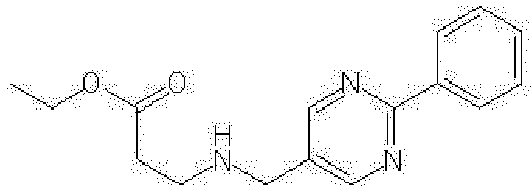
1H NMR (300 MHz, CHLOROFORM-d) δ ppm 1.26 (t, J=7.1 Hz, 3 H) 2.54 (t, J=6.3 Hz, 2 H) 2.92 (t, J=6.3 Hz, 2 H) 3.85 (s, 2 H) 4.15 (q, J=7.1 Hz, 2 H) 7.42 - 7.54 (m, 3 H) 8.35 - 8.49 (m, 2 H) 8.77 (s, 2 H). MS ESI/APCI Dual posi: 286[M+H]+. Reference Example A-40 
1H NMR (300 MHz, CHLOROFORM-d) δ ppm 1.25 (t, J=7.1 Hz, 3 H) 2.51 (t, J=6.5 Hz, 2 H) 2.88 (t, J=6.5 Hz, 2 H) 3.76 (s, 2 H) 3.96 (s, 2 H) 4.13 (q, J=7.1 Hz, 2 H) 7.08 - 7.35 (m, 9 H). MS ESI/APCI Dual posi : 298[M+H]+. Reference Example A-41 
1H NMR (300 MHz, CHLOROFORM-d) δ ppm 1.26 (t, J=7.1 Hz, 3 H) 1.30 - 1.51 (m, 2 H) 1.54 - 1.79 (m, 4 H) 1.80 - 1.93 (m, 2 H) 1.93 - 2.06 (m, 2 H) 2.52 (t, J=6.4 Hz, 2 H) 2.78 - 2.96 (m, 3 H) 3.77 (s, 2 H) 4.14 (q, J=7.1 Hz, 2 H) 8.62 (s, 2 H). MS ESI/APCI Dual posi: 292[M+H]+. Reference Example A-42 
1H NMR (600 MHz, CHLOROFORM-d) δ ppm 1.26 (t, J=7.1 Hz, 3 H) 2.54 (t, J=6.4 Hz, 2 H) 2.94 (t, J=6.4 Hz, 2 H) 4.04 (s, 2 H) 4.15 (q, J=7.1 Hz, 2 H) 7.37 - 7.45 (m, 3 H) 7.65 (s, 1 H) 7.89 - 7.93 (m, 2 H). MS ESI/APCI Dual posi: 291[M+H]+. Reference Example A-43 
1H NMR (600 MHz, CHLOROFORM-d) δ ppm 1.25 (t, J=7.1 Hz, 3 H) 1.75 - 1.80 (m, 4 H) 2.52 (t, J=6.5 Hz, 2 H) 2.71 - 2.77 (m, 4 H) 2.90 (t, J=6.5 Hz, 2 H) 3.72 (s, 2 H) 4.14 (q, J=7.1 Hz, 2 H) 6.91 - 7.05 (m, 3 H). MS ESI/APCI Dual posi: 262[M+H]+. [Table 18-7] Compound No. Structure Analytical Data Salt information Reference Example A-44 
1H NMR (200 MHz, CHLOROFORM-d) δ ppm 1.25 (t, J=7.2 Hz, 3 H) 2.33 (s, 3 H) 2.52 (t, J=6.5 Hz, 2 H) 2.89 (t, J=6.5 Hz, 2 H) 3.76 (s, 2 H) 4.14 (q, J=7.2 Hz, 2 H) 7.09 - 7.17 (m, 2 H) 7.17 - 7.24 (m, 2 H). MS ESI/APCI Dual posi: 222[M+H]+. Reference Example A-45 
1H NMR (200 MHz, CHLOROFORM-d) δ ppm 1.25 (t, J=7.0 Hz, 3 H) 2.52 (t, J=6.5 Hz, 2 H) 2.88 (t, J=6.5 Hz, 2 H) 3.74 (s, 2 H) 3.80 (s, 3 H) 4.14 (q, J=7.0 Hz, 2 H) 6.79 - 6.91 (m, 2 H) 7.17 - 7.30 (m, 2 H). MS ESI/APCI Dual posi: 2.38[M+H]+. Reference Example A-46 
1H NMR (300 MHz, CHLOROFORM-d) δ ppm 1.19 (t, J=7.1 Hz, 3 H) 2.61 (dd, J=15.6, 5.3 Hz, 1 H) 2.72 (dd, J=15.6, 8.8 Hz, 1 H) 3.54 (d, J=13.1 Hz, 1 H) 3.66 (d, J=13.1 Hz, 1 H) 4.01 - 4.18 (m, 3 H) 7.13 - 7.44 (m, 10 H). MS ESI/APCI Dual posi: 284[M+H]+. Reference Example A-47 
1H NMR (300 MHz, CHLOROFORM-d) δ ppm 1.20 (t, J=7.1 Hz, 3 H) 2.63 (dd, J=15.5, 5.3 Hz, 1 H) 2.74 (dd, J=15.5, 8.8 Hz, 1 H) 3.59 (d, J=13.5 Hz, 1 H) 3.70 (d, J=13.5 Hz, 1 H) 4.02 - 4.21 (m, 3 H) 7.25 - 7.48 (m, 10 H) 7.48 - 7.64 (m, 4 H). MS ESI/APCI Dual posi: 360[M+H]+. Reference Example A-48 
1H NMR (200 MHz, CHLOROFORM-d) ppm 1.24 (t, J=7.0 Hz, 3 H) 1.28 - 1.71 (m, 6 H) 1.77 - 2.03 (m, 2 H) 2.61 - 2.76 (m, 1 H) 3.03 (dt, J=6.7, 3.5 Hz, 1 H) 3.76 (d, J=13.3 Hz, 1 H) 3.89 (d, J=13.3 Hz, 1 H) 4.02 - 4.23 (m, 2 H) 7.27 - 7.49 (m, 5 H) 7.49 - 7.64 (m, 4 H). MS ESI/APCI Dual posi: 338[M+H]+. Reference Example A-49 
1H NMR (200 MHz, CHLOROFORM-d) δ ppm 1.01 - 1.61 (m, 7 H) 1.62 - 1.86 (m, 2 H) 1.86 - 2.02 (m, 1 H) 2.08 - 2.36 (m, 2 H) 2.69 - 2.93 (m, 1 H) 3.75 (d, J=13.3 Hz, 1 H) 3.92 (d, J=13.3 Hz, 1 H) 4.15 (q, J=7.1 Hz, 2 H) 7.26 - 7.48 (m, 5 H) 7.49 - 7.63 (m, 4 H). MS ESI/APCI Dual posi: 338[M+H]+. Reference Example A-50 
1H NMR (200 MHz, CHLOROFORM-d) δ ppm 1.14 - 1.35 (m, 6 H) 2.44 - 2.72 (m, 4 H) 2.83 - 2.97 (m, 2 H) 3.77 (s, 2 H) 4.14 (q, J=7.0 Hz, 2 H) 7.09 - 7.30 (m, 4 H). MS ESI/APCI Dual posi: 236[M+H]+. [Table 18-8] Compound No. Structure Analytical Data Salt information Reference Example A-51 
1H NMR (200 MHz, CHLOROFORM-d) δ ppm 1.27 (t, J=7.1 Hz, 3 H) 2.55 (t, J=6.4 Hz, 2 H) 2.92 (t, J=6.4 Hz, 2 H) 4.03 (s, 2 H) 4.16 (q, J=7.1 Hz, 2 H) 7.73 - 7.84 (m, 1 H) 7.84 - 7.97 (m, 2 H). MS ESI/APCI Dual posi : 344[M+H]+. Reference Example A-52 
1H NMR (300 MHz, CHLOROFORM-d) δ ppm 1.25 (t, J=7.1 Hz, 3 H) 1.31 (s. 9 H) 2.53 (t, J=6.5 Hz, 2 H) 2.91 (t, J=6.5 Hz, 2 H) 3.77 (s, 2 H) 4.14 (q, J=7.1 Hz, 2 H) 7.21 - 7.29 (m, 2 H) 7.30 - 7.39 (m, 2 H). MS ESI/APCI Dual posi : 264[M+H]+. Reference Example A-53 
1H NMR (300 MHz, CHLOROFORM-d) δ ppm 1.26 (t, J=7.1 Hz, 3 H) 2.54 (t, J=6.5 Hz, 2.H) 2.93 (t, J=6.5 Hz, 2 H) 3.97 (s, 2 H) 4.15 (q, J=7.1 Hz, 2 H) 7.30 - 7.38 (m, 1 H) 7.49 - 9.57 (m, 1 H) 7.60 - 7.68 (m, 2 H). MS ESI/APCI Dual posi : 276[M+H]+. Reference Example A-54 
1H NMR (300 MHz, CHLOROFORM-d) δ ppm 1.21 (t, J=7.1 Hz, 3 H) 2.95 (dd, J=12.0, 6.5 Hz, 1 H) 3.31 (dd, J=12.0, 8.6 Hz, 1 H) 3.74 - 3.92 (m, 3 H) 4.02 - 4.27 (m. 2 H) 7.22 - 7.38 (m, 8 H) 9.39 - 7.47 (m, 2 H) 7.50 - 7.61 (m, 4 H). MS ESI/APCI Dual posi : 360[M+H]+. Reference Example A-55 
1H HMR (300 MHz, CHLOROFORM-d) δ ppm 1.26 (t, J=7.1 Hz, 3 H) 2.58 (t, J=6.4 Hz, 2 H) 2.90 (t, J=6.4 Hz, 2 H) 3.86 (s, 2 H) 4.15 (q, J=7.1 Hz, 2H) 7.39 - 7.47 (m, 1 H) 7.47 - 7.56 (m, 2 H) 7.60 (s, 1 H). MS ESI/APCI Dual posi : 276[M+H]+. Reference Example A-56 
1H NMR (300 MHz, CHLOROFORM-d) δ ppm 1.27 (t, J=7.1 Hz, 3 H) 2.54 (t, J=6.3 Hz, 2 H) 2.90 (t, J=6.3 Hz, 2 H) 3.93 (s, 2 H) 4.16 (q, J=7.1 Hz, 2 H) 7.76 (s, 1 H) 7.82 (s, 2 H). MS ESI/APCI Dual posi : 344[M+H]+. Reference Example A-57 
1H NMR (300 MHz, CHLOROFORN-d) δ ppm 1.25 (t, J=7.1 Hz, 3 H) 2.22 - 2.36 (m, 6 H) 2.53 (t, J=6.5 Hz, 2 H) 2.92 (t, J=6.5 Hz, 2 H) 3.74 (s, 2 H) 4.13 (q, J=7.1 Hz, 2 H) 6.91 - 7.01 (m, 2 H) 7.16 (d, J=8.4 Hz, 1 H). MS ESI/APCI Dual posi : 236[M+H]+. [Table 18-9] Compound No. Structure Analytical Data Salt information Reference Example A-58 
1H NMR (300 MHz, CHLOROFORM-d) δ ppm 1.26 (t, J=7.1 Hz, 3 H) 2.52 (t, J=6.5 Hz, 2 H) 2.89 (t, J=6.5 Hz, 2 H) 3.79 (s, 2 H) 3.81 (s, 3 H) 4.14 (q, J=7.1 Hz, 2 H) 6.76 - 6.82 (m, 1 H) 6-87 - 6.93 (m, 2 H) 7.19 - 7.25 (m, 1 H). MS ESI/APCI Dual posi : 238[M+H]+. Reference Example A-59 
1H HMR (300 MHz, GHLOROFORM-d) δ ppm 1.25 (t, J=7.1 Hz, 3 H) 2.33 (s, 3 H) 2.53 (t, J=6.5 Hz, 2 H) 2.91 (t, J=6.5 Hz, 2 H) 3.71 (s, 2 H) 3.78 (s, 3 H) 4.13 (q, J=7.1 Hz, 2 H) 6.63 - 6.76 (m, 2 H) 7.18 (d, J=8.4 Hz, 1 H). MS ESI/APCI Dual posi : 252[M+H]+. Reference Example A-60 
1H HIDE (300 MHz, CHLOROFORM-d) δ ppm 1.24 (t, J=7.1 Hz, 3 H) 1.29 - 1.75 (m, 10 H) 2.50 (s, 2 H) 3.74 (s, 2 H) 4.13 (q, J=7.1 Hz, 2 H) 7.42 - 7.64 (m, 4 H). MS ESI/APCI Dual posi : 344[M+H]+. Reference Example A-61 
1H NMR (300 MHz, CHLOROFORM-d) 6 ppm 1.25 (t, J=7.1 Hz, 3 H) 1.55 (ddd, J=13.7, 10.9, 4.4 Hz, 2 H) 2.00 - 2.18 (m, 2 H) 2.70 (s, 2 H) 3.49 (ddd, J=11.8, 10.9, 2.4 Hz, 2 H) 3.73 - 3.87 (m, 4 H) 4.19 (q, J=7.1 Hz, 2 H) 7.41 (d, J=8.1 Hz, 2 H) 7.56 (d, J=8.1 Hz, 2 H). MS ESI/APCI Dual posi : 346[M+H]+. Reference Example A-62 
1H HMR (300 MHz, CHLOROFORM-d) δ ppm 1.25 (t, J=7.1 Hz, 3 H) 2.40 - 2.57 (m, 5 H) 2.88 (t, J=6.5 Hz, 2 H) 3.76 (s, 2 H) 4.14 (q, J=7.1 Hz, 2 H) 7.16 - 7.30 (m, 4 H). MS ESI/APCI Dual posi : 254[M+H]+. Reference Example A-63 
1H NMR (200 MHz, CHLOROFORM-d) δ ppm 1.26 (t, J=7.1 Hz, 3 H) 2.52 (t, J=6.5 Hz, 2 H) 2.88 (t, J=6.5 Hz, 2 H) 3.78 (s, 2 H) 4.15 (q, J=7.1 Hz, 2 H) 7.18 - 7.25 (m, 3 H) 7.33 (s, 1 H). MS ESI/APCI Dual posi : 242[M+H]+. Reference Example A-64 
1H HMR (200 MHz, CHLOROFORM-d) δ ppm 1.26 (t, J=7.1 Hz, 3 H) 2.51 (t, J=6.5 Hz, 2 H) 2.86 (t, J=6.5 Hz, 2 H) 3.76 (s, 2 H) 4.15 (q, J=7.1 Hz, 2 H) 7.16 (dd, J=8.4, 2.2 Hz, 1 H) 7.38 (d, J=8.4 Hz, 1 H) 7.44 (d, J=2.2 Hz, 1 H). MS ESI/APCI Dual posi : 276[M+H]+. [Table 18-10] Compound No. Structure Analytical Data Salt information Reference Example A-65 
1H NMR (300 MHz, CHLOROFORM-d) δ ppm 1.26 (t, J=7.1 Hz, 3 H) 2.53 (t, J=6.3 Hz, 2 H) 2.89 (t, J=6.3 Hz, 2 H) 3.82 (s, 2 H) 4.15 (q, J=7.1 Hz, 2 H) 7.06 - 7.14 (m, 1 H) 7.18 - 7.35 (m, 3 H). MS ESI/APCI Dual posi : 292[M+H]+. Reference Example A-66 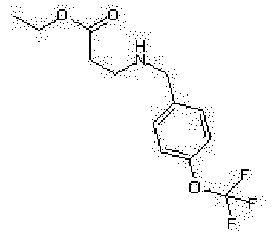
1H NMR (300 MHz, CHLOROFORM-d) δ ppm 1.26 (t, J=7.1 Hz, 3 H) 2.53 (t, J=6.4 Hz, 2 H) 2.89 (t, J=6.4 Hz, 2 H) 3.80 (s, 2 H) 4.15 (q, J=7.1 Hz, 2 H) 7.13 - 7.19 (m, 2 H) 7.32 - 7.37 (m, 2 H). MS ESI/APCI Dual posi : 292[M+H]+. Reference Example A-67 
1H HMR (300 MHz, CHLOROFORM-d) δ ppm 1.25 (t, J=7.1 Hz, 3 H) 2.35 (s, 3 H) 2.51 (t, J=6.5 Hz, 2 H) 2.88 (t, J=6.5 Hz, 2 H) 3.74 (s, 2 H) 4.14 (q, J=7.1 Hz, 2 H) 6.84 (d, J=8.5 Hz, 1 H) 6.97 - 7.04 (m, 2 H) 7.19 (d, J=8.1 Hz, 2 H) 7.67 (dd, J=8.5, 2.4 Hz, 1 H) 8.09 (d, J=2.4 Hz, 1 H). MS ESI/APCI Dual posi : 315[M+H]+. Reference Example A-68 
1H NMR (300 MHz, CHLOROFORM-d) δ ppm 1.25 (t, J=7.1 Hz, 3 H) 1.40 (t, J=7.0 Hz, 3 H) 2.52 (t, J=6.5 Hz, 2 H) 2.88 (t, J=6.5 Hz, 2 H) 3.73 (s, 2 H) 4.02 (q, J=7.0 Hz, 2 H) 4.14 (q, J=7.1 Hz, 2 H) 6.82 - 6.88 (m, 2 H) 7.19 - 7.24 (m, 2 H). MS ESI/APCI Dual posi: 252[M+H]+. Reference Example A-69 
1H NMR (300 MHz, CHLOROFORM-d) δ ppm 1.26 (t, J=7.1 Hz, 3 H) 2.52 (t, J=6.4 Hz, 2 H) 2.88 (t, J=6.4 Hz, 2 H) 3.76 (s, 2 H) 4.14 (q, J=7.1 Hz, 2 H) 6.87 (d, J=8.3 Hz, 1 H) 7.08 - 7.23 (m, 3 H) 7.35 - 7.43 (m, 2 H) 7.69 (dd, J=8.3, 2.5 Hz, 1 H) 8.11 (d, J=2.5 Hz, 1 H). MS ESI/APCI Dual posi : 301[M+H]+. Reference Example A-70 
1H HMR (300 MHz, CHLOROFORM-d) δ ppm 1.26 (t, J=7.2 Hz, 3 H) 2.54 (t, J=6.4 Hz, 2 H) 2.93 (t, J=6.4 Hz, 2 H) 3.86 (s, 2 H) 4.15 (q, J=7.2 Hz, 2 H) 7.36 - 7.51 (m, 3 H) 7.6Z - 7.79 (m, 2 H) 7.91 - 8.04 (m, 2 H) 8.62 (s, 1 H). MS ESI/APCI Dual posi: 285[M+H]+. Reference Example A-71 
1H HMR (300 HHz, CHLOROFORM-d) δ ppm 1.26 (t, J=7.1 Hz, 3 H) 2.52 (t, J=6.3 Hz, 2 H) 2.88 (t, J=6.3 Hz, 2 H) 3.82 (s, 2 H) 4.15 (q, J=7.1 Hz, 2 H) 7.42 - 7.46 (m, 2 H) 7.67 (s, 1 H). MS ESI/APCI Dual posi : 310[M+H]+. [Table 18-11] Compound No. Structure Analytical Data Salt information Reference Example A-72 
1H NMR (300 MHz, CHLOROFORM-d) δ ppm 1.25 (t, J=7.1 Hz, 3 H) 2.44 (d, J=6.4 Hz, 2 H) 2.78 (dd, J=13.5, 6.8 Hz, 1 H) 2.89 (dd, J=13.5, 6.5 Hz, 1 H) 3.20 - 3.40 (m, 1 H) 3.86 (s, 2 H) 4.01 - 4.22 (m, 2 H) 7.13 - 7.37 (m, 7 H) 7.38. - 7.64 (m, 7 H). MS ESI/APCI Dual posi : 374[M+H]+, 396[M+Na]+. Reference Example A-73 
1H NMR (300 MHz, CHLOROFORM-d) δ ppm 1.25 (t, J=7.1 Hz, 3 H) 1.70 - 1.96 (m, 2 H) 2.53 (d, J=6.2 Hz, 2 H) 2.72 (t, J=7.9 Hz, 2 H) 3.00 - 3.18 (m, 1 H) 3.70 - 3.93 (m, 2 H) 4.14 (q, J=7.2 Hz, 2 H) 7.08 - 7.68 (m, 14 H), MS ESI/APCI Dual posi : 388[M+H]+, 410[M+Na]+. Reference Example A-74 
1H NMR (300 MHz, CHLOROFORM-d) δ ppm 1.17 (d, J=6.4 Hz, 3 H) 1.26 (t, J=7.1 Hz, 3 H) 2.39 (dd, J=15.2, 6.0 Hz, 1 H) 2.51 (dd, J=15.2, 6.8 Hz, 1 H) 3.09 - 3.27 (m, 1 H) 3.74 - 3.96 (m, 2 H) 4.14 (q, J=7.1 Hz, 2 H) 7.21 (ddd, J=6.2, 4.9. 2.4 Hz, 1 H) 7.44 (d, J=8.1 Hz, 2 H) 7.68 - 7.76 (m, 2 H) 7.01 - 7.99 (m, 2 H) 8.68 (dt, J=4.9, 1.3 Hz, 1 H). MS ESI/APCI Dual posi : 299[M+H]+, 321[M+Na]+. Reference Example A-75 
1H NMR (300 MHz, CHLOROFORM-d) δ ppm 1.16 (d, J=6.4 Hz, 3 H) 1.25 (t, J=7.1 Hz, 3 H) 2.31 - 2.55 (m, 2 H) 3.04 - 3.23 (m, 1 H) 3.82 - 3.90 (m, 2 H) 4.14 (q, J=7.1 Hz, 2 H) 7.38 - 7.50 (m. 2 H) 7.52 - 7.65 (m, 2 H). MS ESI/APCI Dual posi : 290[M+H]+. MS ESI/APCI Dual nega : 324[M+Cl]-. Reference Example A-76 
1H NMR (300 NHz, CHLOROFORM-d) δ ppm 1.15 (d, J=6.4 Hz, 3 H) 1.25 (t, J=7.1 Hz, 3 H) 2.29 - 2.42 (m, 4 H) 2.49 (dd, J=15.0, 6.7 Hz, 1 H) 3.04 - 3.24 (m, 1 H) 3.64 - 3.86 (m, 2 H) 4.13 (q, J=7.1 Hz, 2 H) 7.07 - 7.16 (m, 2 H) 7.17 - 7.25 (m. 2 H). MS ESI/APCI Dual posi : 236[M+H]+, 258[M+Na]+. Reference Example A-77 
1H NMR (300 MHz, CHLOROFORM-d) δ ppm 0.99 - 1.20 (m, 5 H) 1.27 (t, J=7.1 Hz, 2 H) 1.38 - 1.76 (m, 6 H) 1.83 - 1.99 (m, 3 H) 2.25 - 2.40 (m, 1 H) 2.40 - 2.59 (m, 4 H) 2.99 - 3.14 (m, 1 H) 4.15 (q, J=7.1 Hz, 2 H) 7.14 - 7.33 (m, 5 H). MS ESI/APCI Dual posi : 304[M+H]+. Reference Example A-78 
1H NMR (300 MHz, CHLOROFORM-d) δ ppm 1.25 (t, J=7.1 Hz, 3 H) 2.51 (dd, J=15.5, 9.6 Hz, 1 H) 2.71 (dd, J=15.5, 4.0 Hz, 1 H) 3.56 - 3.76 (m, 1 H) 3.92 (d, J=13.0 Hz, 1 H) 3.99 - 4.27 (m, 3 H) 7.28 - 7.49 (m, 5 H) 7.49 - 7.66 (m, 4 H). MS ESI/APCI Dual posi: 352[M+H]+. [Table 18-12] Compound No. Structure Analytical Data Salt information Reference Example A-79 
1H NMR (300 MHz, CHLOROFORM-d) 6 ppm 1.14 - 1.61 (m, 11 H) 1.98 - 2.12 (m, 2 H) 2.65 (s, 2 H) 3.82 (s, 2 H) 4.15 (q, J=7.1 Hz, 2 H) 7.41 (d, J=8.1 Hz, 2 H) 7.56 (d, J=8.1 Hz, 2 H). MS ESI/APCI Dual posi: 344[M+H]+, 366[M+Na]+. Reference Example A-80 
1H NMR (300 MHz, CHLOROFORM-d) δ ppm 1.26 (t, J=7.1 Hz, 3 H) 1.86 - 2.00 (m, 4 H) 2.34 - 2.50 (m, 2 H) 2.89 (s, 2 H) 3.86 (s, 2 H) 4.17 (q, J=7.1 Hz, 2 H) 7.44 (d, J=8.1 Hz, 2 H) 7.57 (d, J=8.1 Hz, 2 H). MS ESI/APCI Dual posi : 316[M+H]+, 338[M+Na]+. Reference Example A-81 
1H NMR (300 MHz, CHLOROFORM-d) δ ppm 1.25 (t, J=7.1 Hz, 3 H) 1.29 - 1.52 (m, 6 H) 1.58 - 1.73 (m, 4 H) 2.33 (s, 3 H) 2.51 (s, 2 H) 3.63 (s, 2 H) 4.13 (q, J=7.1 Hz, 2 H) 7.12 (d, J=7.9 Hz, 2 H) 7.18 - 7.38 (m, 2 H). MS ESI/APCI Dual posi : 290[M+H]+. Reference Example A-82 
1H NMR (300 MHz, CHLOROFORM-d) δ ppm 1.21 - 1.29 (m, 9 H) 2.50 (s, 2 H) 3.78 (s, 2 H) 4.14 (q, J=7.1 Hz, 2 H) 7.45 - 7.59 (m, 4 H). MS ESI/APCI Dual posi : 304[M+H]+. Reference Example A-83 
1H NMR (300 MHz, CHLOROFORM-d) δ ppm 1.13 - 1.62 (m, 11 H) 1.96 - 2.12 (m, 2 H) 2.33 (s, 3 H) 2.64 (s, 2 H) 3.72 (s, 2 H) 4.15 (q, J=7.0 Hz, 2 H) 7.08 - 7.14 (m, 2 H) 7.14 - 7.20 (m, 2 H). US ESI/APCI Dual posi : 290[M+H]+, 312[M+Na]+. Reference Example A-84 
1H NMR (300 MHz, CHLOROFORM-d) δ ppm 1.37 (s, 9 H) 1.71 (dd, J=6.2, 4.2 Hz, 4 H) 2.59 (s, 2 H) 3.60 - 3.77 (m, 7 H) 3.84 - 4.01 (m, 2 H) 7.38 - 7.65 (m, 8 H). MS ESI/APCI Dual posi : 396[M+H]+, 418[M+Na]+. Reference Example A-85 
1H NMR (300 MHz, CHLOROFORM-d) δ ppm 1.15 - 1.31 (m, 9 H) 2.32 (s, 3 H) 2.50 (s, 2 H) 3.67 (s, 2 H) 4.14 (q, J=7.1 Hz, 2 H) 7.11 (d, J=7.8 Hz, 2 H) 7.23 (d, J=7.8 Hz, 2 H). MS ESI/APCI Dual posi : 250[M+H]+. [Table 18-13] Compound No. Structure Analytical Data Salt information Reference Example A-86 
1H NMR (300 MHz, CHLOROFORM-d) δ ppm 1.25 (t, J=7.1 Hz, 3 H) 1.46 - 1.62 (m, 2 H) 1.98 - 2.14 (m, 2 H) 2.33 (s, 3 H) 2.70 (s, 2 H) 3.48 (ddd, J=11.9, 10.7, 2.3 Hz, 2 H) 3.72 (s, 2 H) 3.79 (dt, J=11.9, 4.0 Hz, 2 H) 4.19 (q, J=7.1 Hz, 2 H) 7.06 - 7.21 (m, 4 H). MS ESI/APCI Dual posi: 292[M+H]+, 314[M+Na]+. Reference Example A-87 
1H NMR (800 MHz, CHLOROFORM-d) δ ppm 1.26 (t, J=7.1 Hz, 3 H) 1.85 - 1.99 (m, 4 H) 2.33 (s, 3 H) 2.35 - 2.47 (m, 2 H) 2.89 (s, 2 H) 3.76 (s, 2 H) 4.16 (q, J=7.1 Hz, 2 H) 7.09 - 7.15 (m, 2 H) 7.16 - 7.22 (m, 2 H). MS ESI/APCI Dual posi: 262[M+H]+, 284[M+Na]+. Reference Example A-88 
1H NMR (300 MHz, CHLOROFORM-d) δ ppm 1.12 - 1.62 (m, 11 H) 1.95 - 2.12 (m, 2 H) 2.71 (s, 2 H) 3.99 (s, 2 H) 4.17 (q, J=6.9 Hz, 2 H) 7.36 - 7.50 (m, 3 H) 7.55 - 7.68 (m, 1 H) 7.84 - 8.02 (m, 2 H). MS ESI/APCI Dual posi: 359[M+H]+, 381[M+Na]+. Reference Example A-89 
1H NMR (300 MHz, CHLOROFORM-d) δ ppm 1.16 (d, J=7.0 Hz, 3 H) 1.25 (t, J=7.1 Hz, 3 H) 2.33 (s, 3 H) 2.55 - 2.75 (m, 2 H) 2.79 - 2.95 (m. 1 H) 3.75 (s. 2 H) 4.14 (q, J=7.1 Hz, 2 H) 7.10 - 7.22 (m, 4 H). MS ESI/APCI Dual posi: 236[M+H]+. 258[M+Na]+. Reference Example A-90 
1H NMR (300 MHz, CHLOROFORM-d) δ ppm 1.17 (d, J=6.8 Hz, 3 H) 1.26 (t, J=7.1 Hz, 3 H) 2.54 - 2.77 (m, 2 H) 2.82 - 2.98 (m, 1 H) 3.86 (s, 2 H) 4.15 (q, J=7.1 Hz, 2 H) 7.22 (ddd, J=6.3, 4.9, 2.3 Hz, 1 H) 7.42 (d, J=8.4 Hz, 2 H) 7.69 - 7.76 (m, 2 H) 7.95 (d, J=8.4 Hz, 2 H) 8.64 - 8.72 (m, 1 H). MS ESI/APCI Dual posi: 299[M+H]+, 321[M+Na]+. Reference Example A-91 
1H NMR (300 MHz, CHLOROFORM-d) δ ppm 1.17 (d, J=6.4 Hz, 3 H) 1.26 (t, J=7.1 Hz, 3 H) 2.30 - 2.54 (m, 2 H) 3.11 - 3.29 (m, 1 H) 3.96 - 4.20 (m, 4 H) 7.37 - 7.44 (m, 3 H) 7.64 (s, 1 H) 7.87 - 7.94 (m, 2 H). MS ESI/APCI Dual posi: 305[M+H]+, 327[M+Na]+. MS ESI/APCI Dual nega: 303[M-H]-. Reference Example A-92 
1H HMR (300 MHz, CHLOROFORM-d) δ ppm 1.27 (t, J=7.1 Hz, 3 H) 1.83 - 2.01 (m, 4 H) 2.33 - 2.52 (m, 2 H) 2.95 (s, 2 H) 4.04 (d, J=0.9 Hz, 2 H) 4.17 (q, J=7.1 Hz, 2 H) 7.38 - 7.52 (m, 3 H) 7.62 - 7.66 (m, 1 H) 7.86 - 7.98 (m, 2 H). MS ESI/APCI Dual posi: 331[M+H]+, 353[M+Na]+. [Table 18-14] Compound No. Structure Analytical Data Salt information Reference Example A-93 
1H NMR (300 MHz, CHLOROFORM-d) δ ppm 1.18 - 1.34 (m, 9 H) 2.49 (s, 2 H) 3.98 (d, J=0.9 Hz, 2 H) 4.16 (q, J=7.0 Hz, 2 H) 7.36 - 7.47 (m, 3 H) 7.66 (s, 1 H) 7.86 - 7.95 (m, 2 H). MS ESI/APCI Dual posi : 319[M+H]+, 341[M+Na]+. Reference Example A-94 
1H HMR (300 MHz, CHLOROFORM-d) δ ppm 1.26 (t, J=7.1 Hz, 3 H) 1.49 - 1.62 (m, 2 H) 2.03 - 2.13 (m, 2 H) 2.76 (s. 2 H) 3.49 (ddd, J=11.8, 11.0, 2.4 Hz, 2 H) 3.80 (dt, J=11.8, 4.2 Hz, 2 H) 4.00 (d, J=0.8 Hz, 2 H) 4.21 (q, J=7.1 Hz, 2 H) 7.36 - 7.50 (m, 3 H) 7.62 (s, 1 H) 7.82 - 7.97 (m, 2 H). MS ESI/APCI Dual posi: 361[M+H]+, 383[M+Na]+. Reference Example A-95 
1H HMR (300 MHz, CHLOROFORM-d) δ ppm 1.64 - 1.76 (m, 4 H) 2.56 (s, 2 H) 3.55 - 3.78 (m, 5 H) 3.83 - 3.98 (m, 4 H) 7.35 - 7.50 (m, 3 H) 7.67 (s, 1 H) 7.86 - 8.00 (m, 2 H). MS ESI/APCI Dual posi: 347[M+H]+, 369[M+Na]+. Reference Example A-96 
1H NMR (300 MHz, CHLOROFORM-d) δ ppm 1.01 - 1.21 (m, 2 H) 1.38 - 1.57 (m, 3 H) 1.62 (dd, J=6.2, 4.4 Hz, 4 H) 1.87 - 2.03 (m, 4 H) 2.36 (d, J=6.2 Hz, 2 H) 2.41 - 2.61 (m, 3 H) 3.48 - 3.75 (m, 5 H) 3.77 - 3.99 (m, 2 H) 7.09 - 7.37 (m, 5 H). MS ESI/APCI Dual posi: 346[M+H]+, 368[M+Na]+. Reference Example A-97 
1H HMR (300 MHz, CHlOROFORM-d) δ ppm 1.18 (d, J=6.4 Hz, 3 H) 1.26 (t, J=7.1 Hz, 3 H) 2.35 - 2.58 (m, 2 H) 3.13 - 3.26 (m, 1 H) 3.65 - 3.95 (m, 2 H) 4.15 (q, J=7.1 Hz, 2 H) 7.41 - 7.47 (m, 2 H) 7.53 - 7.58 (m, 2 H) 7.83 - 7.77 (m, 4 H). MS ESI/APCI Dual posi : 366[M+H]+, 388[M+Na]+. Reference Example A-98 
1H HMR (300 MHz, CHLOROFORM-d) δ ppm 1.11 - 1.62 (m, 11 H) 1.96 - 2.21 (m, 2 H) 2.67 (s, 2 H) 3.82 (s, 2 H) 4.17 (q, J=7.1 Hz, 2 H) 7.18 - 7.25 (m, 1 H) 7.39 (d, J=8.5 Hz, 2 H) 7.68 - 7.74 (m, 2 H) 7.94 (d, J=8.4 Hz, 2 H) 8.62 - 8.74 (m, 1 H). MS ESI/APCI Dual posi: 353[M+H]+, 375[M+Na]+. Reference Example A-99 
1H NMR (300 MHz, CHLOROFORM-d) δ ppm 1.11 - 1.62 (m, 11 H) 1.96 - 2.21 (m, 2 H) 2.67 (s, 2 H) 3.82 (s, 2 H) 4.17 (q, J=7.1 Hz, 2 H) 7.18 - 7.25 (m, 1 H) 7.39 (d, J=8.5 Hz, 2 H) 7.68 - 7.74 (m, 2 H) 7.94 (d, J=8.4 Hz, 2 H) 8.62 - 8.74 (m, 1 H). MS ESI/APCI Dual posi: 353[M+H]+, 375[M+Na]+. [Table 18-15] Compound No. Structure Analytical Data Salt information Reference Example A-100 
1H NMR (300 MHz, CHLOROFORM-d) δ ppm 1.17 (d, J=6.7 Hz, 3 H) 1.26 (t, J=7.1 Hz, 3 H) 2.53 - 2.76 (m, 2 H) 2.60 - 2.96 (m, H) 3.85 (s, 2 H) 4.15 (q, J=9.1 Hz, 2 H) 7.41 - 7.46 (m, 2 H) 7.54 - 7.60 (m. 2 H). MS ESI/APCI Dual posi: 290[M+H]+, 312[M+Na]+. Reference Example A-101 
1H NMR (300 MHz, CHLOROFORM-d) δ ppm 1.18 (d, J=7.0 Hz, 3 H) 1.26 (t, J=7.1 Hz, 3 H) 2.55 - 2.70 (m, 2 H) 2.81 - 3.01 (m, 1 H) 3.97 - 4.06 (m, 2 H) 4.16 (q, J=7.1 Hz, 2 H) 7.39 - 7.48 (m, 3 H) 7.64 (s, 1 H) 7.89 - 7.94 (m, 2 H). MS ESI/APCI Dual posi: 305[M+H]+, 327[M+Na]+. Reference Example A-102 
1H NMR (300 MHz, CHLOROFORM-d) δ ppm 1.63 - 1.78 (m, 4 H) 2.59 (s, 2 H) 3.62 - 3.71 (m, 5 H) 3.75 (s, 2 H) 3.93 (dt, J=11.9, 6.2 Hz, 2 H) 7.18 - 7.25 (m, 1 H) 7.49 (d, J=8.2 Hz, 2 H) 7.65 - 7.81 (m, 2 H) 7.96 (d, J=8.2 Hz, 2 H) 8.63 - 8.73 (m, 1 H). MS ESI/APCI Dual posi: 341[M+H]+. 363[M+Na]+. Reference Example A-103 
1H NMR (300 MHz, CHLOROFORM-d) δ ppm 1.61 - 1.77 (m, 4 H) 2.57 (s, 2 H) 3.61 - 3.71 (m, 5 H) 3.74 (s, 2 H) 3.82 - 3.99 (m, 2 H) 7.48 - 7.54 (m, 2 H) 7.55 - 7.61 (m, 2 H). MS ESI/APCI Dual posi : 332[M+H]+, 354[M+Na]+. Reference Example A-104 
1H NMR (300 MHz, CHLOROFORM-d) δ ppm 0.99 - 2.40 (m, 15 H) 2.39 - 2.97 (m, 6 H) 4.09 - 4.22 (m, 2 H) 7.11 - 7.35 (m, 5 H). MS ESI/APCI Dual posi: 304[M+H]+. Reference Example A-105 
1H NMR (300 MHz, CHLOROFORM-d) δ ppm 1.19 (d, J=6.8 Hz, 3 H) 1.26 (t, J=7.1 Hz, 3 H) 2.56 - 2.76 (m, 2 H) 2.83 - 3.00 (m, 1 H) 3.85 (s, 2 H) 4.16 (q, J=7.1 Hz, 2 H) 7.37 - 7.46 (m, 2 H) 7.52 - 7.59 (m, 2 H) 7.64 - 7.72 (m, 4 H). MS ESI/APCI Dual posi: 366[M+H]+. 388[M+Na]+. Reference Example A-106 
1H NMR (300 MHz, CHLOROFORM-d) δ ppm 1.22 - 1.29 (m, 9 H) 2.53 (s, 2 H) 3.78 (s, 2 H) 4.15 (q, J=7.1 Hz, 2 H) 7.18 - 7.25 (m, 1 H) 7.43 - 7.48 (m, 2 H) 7.68 - 7.75 (m, 2 H) 7.94 (d, J=8.2 Hz, 2 H) 8.64 - 8.71 (m, 1 H). MS ESI/APCI Dual posi: 313[M+H]+, 335[M+Na]+. [Table 18-16] Compound No. Structure Analytical Data Salt information Reference Example A-107 
1H NMR (300 MHz, CHLOROFORM-d) δ ppm 1.26 (t, J=7.1 Hz, 3 H) 1.44 - 1.64 (m, 2 H) 1.99 - 2.16 (m, 2 H) 2.72 (s, 2 H) 3.49 (ddd, J=11.8, 10.9, 2.4 Hz, 2 H) 3.74 - 3.86 (m, 4 H) 4.21 (q, J=7.1 Hz, 2 H) 7.19 - 7.25 (m, 1 H) 7.39 (d, J=8.3 Hz, 2 H) 7.65 - 7.81 (m, 2 H) 1.94 (d, J=8.3 Hz, 2 H) 8.63 - 8.72 (m, 1 H). MS ESI/APCI Dual posi : 355[M+H]+, 377[M+Na]+. Reference Example A-108 
1H HMR (300 MHz, CHLOROFORM-d) δ ppm 1.12 - 1.77 (m, 13 H) 2.53 (s, 2 H) 3.75 (s. 2 H) 4.14 (q. J=7.2 Hz, 2 H) 7.21 (ddd, J=6.1, 4.8, 2.4 Hz, 1 H) 7.49 (d, J=8.5 Hz, 2 H) 7.65 - 7.79 (m, 2 H) 7.86 - 8.00 (m, 2 H) 8.60 - 8.72 (m, 1 H). MS ESI/APCI Dual posi : 353[M+H]+, 375[M+Na]+. Reference Example A-109 
1H NMR (300 MHz, CHLOROFORM-d) δ ppm 1.20 - 1.96 (m, 13 H) 2.48 (s, 2 H) 3.94 (s, 2 H) 4.15 (q, J=7.1 Hz, 2 H) 7.32 - 7.50 (m, 3 H) 7.66 (s, 1 H) 7.85 - 7.96 (m, 2 H). MS ESI/APCI Dual posi : 359[M+H]+, 381[M+Na]+. MS ESI/APCI Dual nega: 357[M-H]-. Reference Example A-110 
1H NMR (300 MHz, CHLOROFORM-d) δ ppm 1.27 (t, J=7.1 Hz, 3 H) 2.53 (t, J=6.3 Hz, 2 H) 2.88 (t, J=6.3 Hz, 2 H) 3.86 (s, 2 H) 4.15 (q, J=7.1 Hz, 2 H) 7.16 - 7.25 (m, 2 H) 7.50 - 7.58 (m, 1 H). MS ESI/APCI Dual posi: 294[M+H]+, 316[M+Na]+. Reference Example A-111 
1H NMR (300 MHz, CHLOROFORM-d) δ ppm 0.92 - 1.17 (m, 2 H) 1.28 (t, J=7.1 Hz, 3 H) 1.33 - 1.77 (m, 3 H) 1.79 - 2.05 (m, 8 H) 2.31 - 2.56 (m, 5 H) 2.92 (s, 2 H) 4.17 (q, J=7.1 Hz, 2 H) 7.09 - 7.38 (m, 5 H). MS ESI/APCI Dual posi: 330[M+H]+. Reference Example A-112 
1H NMR (300 MHz, CHLOROFORM-d) δ ppm 1.02 - 1.19 (m, 8 H) 1.27 (t, J=7.1 Hz, 3 H) 1.36 - 1.64 (m, 3 H) 1.84 - 2.03 (m, 4 H) 2.33 - 2.57 (m, 5 H) 4.14 (q, J=7.1 Hz, 2 H) 7.11 - 7.37 (m, 5 H). MS ESI/APCI Dual posi : 318[M+H]+. Reference Example A-113 
1H NMR (300 MHz, CHLOROFORM-d) δ ppm 1.26 (t, J=7.1 Hz, 3 H) 2.53 (t, J=6.3 Hz, 2 H) 2.89 (d, J=6.3 Hz, 2 H) 3.90 (s, 2 H) 4.15 (q, J=7.1 Hz, 2 H) 7.30 (d, J=9.8 Hz, 1 H) 7.39 (d, J=7.5 Hz, 1 H) 7.49 - 7.57 (m, 1 H). MS ESI/APCI Dual posi: 294[M+H]+, 316[M+Na]+. [Table 18-17] Compound No. Structure Analytical Data Salt information Reference Example A-114 
1H NMR (300 MHz, CHLOROFORM-d) δ ppm 0.92 - 1.16 (m, 2 H) 1.20 - 1.33 (m, 3 H) 1.35 - 1.71 (m, 3 H) 1.79 - 1.97 (m, 4 H) 1.97 - 2.18 (m, 4 H)- 2.38 - 2.55 (m, 3 H) 2.67 - 2.79 (m, 2 H) 3.38 - 3.58 (m, 2 H) 3.78 - 3.89 (m, 2 H) 4.06 - 4.29 (m, 2 H) 7.09 - 7.38 (m, 5 H). MS ESI/APCI Dual posi: 360[M+H]+, 382[M+Na]+. Reference Example A-115 
1H NMR (300 MHz, CHLOROFORM-d) δ ppm 1.24 - 1.30 (m, 9 H) 2.53 (s, 2 H) 3.78 (s, 2 H) 4.16 (q, J=7.0 Hz, 2 H) 7.43 - 7.50 (m, 2 H) 7.52 - 7.57 (m, 2 H) 7.66 - 7.68 (m, 4 H). MS ESI/APCI Dual posi: 380[M+H]+, 402[M+Na]+. Reference Example A-116 
1H HMR (300 MHz, CHLOROFORM-d) δ ppm 1.27 (t, J=7.1 Hz, 3 H) 1.43 - 1.66 (m, 2 H) 2.00 - 2.18 (m, 2 H) 2.75 (s, 2 H) 3.42 - 3.56 (m, 2 H) 3.75 - 3.86 (m, 4 H) 4.21 (q, J=7.1 Hz, 2 H) 7.39 (d, J=8.3 Hz, 2 H) 7.55 (d. J=8.3 Hz, 2 H) 7.60 - 7.77 (m, 4 H). MS ESI/APCI Dual posi: 422[M+H]+, 444[M+Na]+. Reference Example A-117 
1H NMR (300 MHz, CHLOROFORM-d) δ ppm 1.27 (t, J=7.1 Hz, 3 H) 2.54 (t, J=6.1 Hz, 2 H) 2.99 (t, J=6.1 Hz, 2 H) 3.92 (s, 2 H) 4.16 (q, J=7.1 Hz, 2 H) 7.66 (d, J=7.8 Hz, 1 H) 7.75 - 7.89 (m, 2 H). MS ESI/APCI Dual posi: 344[M+H]+, 366[M+Na]+. MS ESI/APCI Dual nega: 378[M+Cl]-. Reference Example A-118 
1H NMR (300 MHz, CHLOROFORM-d) δ ppm 1.72 - 1.95 (m, 2 H) 1.95 - 2.16 (m, 4 H) 2.32 (s, 3 H) 2.72 (s, 2 H) 3.65 (s, 2 H) 3.68 (s, 3 H) 7.07 - 7.15 (m, 2 H) 7.19 - 7.25 (m, 2 H). MS ESI/APCI Dual posi: 248[M+H]+, 270[M+Na]+. Reference Example A-119 
1H NMR (300 MHz, CHLOROFORM-d) δ ppm 1.74 - 1.96 (m, 2 H) 1.06 - 2.15 (m, 4 H) 2.73 (s, 2 H) 3.68 (s, 3 H) 3.76 (s, 2 H) 7.40 - 7.52 (m, 2 H) 7.52 - 7.62 (m, 2 H). MS ESI/APCI Dual posi: 302[M+H]+, 324[M+Na]+. Reference Example A-120 
1H NMR (300 MHz, CHLOROFORM-d) δ ppm 1.27 (t, J=7.1 Hz, 3 H) 2.97 (s, 2 H) 4.09 - 4.13 (m, 2 H) 4.18 (q, J=7.1 Hz, 2 H) 4.55 (d, J=6.9 Hz, 2 H) 4.69 (d, J=6.9 Hz, 2 H) 7.35 - 7.49 (m, 3 H) 7.68 (s, 1 H) 7.84 - 7.97 (m, 2 H). MS ESI/APCI Dual posi: 333[M+H]+, 355[M+Na]+. MS ESI/APCI Dual nega: 331[M-H]-. [Table 18-18] Compound No. Structure Analytical Data Salt information Reference Example A-121 
1H NMR (300 MHz, CHLOROFORM-d) δ ppm 1.26 (t, J=7.1 Hz, 3 H) 2.96 (s, 2 H) 3.92 (s, 2 H) 4.16 (q, J=7.1 Hz, 2 H) 4.54 (d, J=6.9 Hz, 2 H) 4.68 (d, J=6.9 Hz, 2 H) 7.43 - 7.52 (m, 2 H) 7.53 - 7.65 (m, 2 H). MS ESI/APCI Ducal posi: 318[M+H]+. Reference Example A-122 
1H NMR (300 MHz, CHLOROFORM-d) δ ppm 1.27 (t, J=7.1 Hz, 3 H) 2.55 (t, J=6.4 Hz, 2 H) 2.92 (t, J=6.4 Hz, 2 H) 3.84 (s, 2 H) 4.16 (q, J=7.1 Hz, 2 H) 7.10 - 7.20 (m, 2 H) 7.34 - 7.49 (m, 4 H) 7.49 - 7.62 (m, 2 H). MS ESI/APCI Dual posi: 302[M+H]+, 324[H+Na]+. Reference Example A-123 
1H NMR (300 MHz, CHLOROFORM-d) δ ppm 1.26 (t, J=7.1 Hz, 3 H) 2.55 (t, J=6.5 Hz, 2 H) 2.92 (t, J=6.5 Hz, 2 H) 3.89 (s, 2 H) 4.15 (q, J=7.1 Hz, 2 H) 7.08 - 7.17 (m, 2 H) 7.19 - 7.32 (m, 2 H) 7.34 - 7.46 (m, 1 H) 7.46 - 7.58 (m, 2 H). MS ESI/APCI Dual posi: 320[M+H]+, 342[M+Na]+. Reference Example A-124 
1H NMR (300 MHz, CHLOROFORM-d) δ ppm 1.26 (t, J=7.1 Hz, 3 H) 2.55 (t, J=6.5 Hz, 2 H) 2.92 (t, J=6.5 Hz, 2 H) 3.89 (s, 2 H) 4.15 (q, J=7.1 Hz, 2 H) 7.23 - 7.48 (m, 6 H) 7.53 - 7.60 (m, 2 H). MS ESI/APCI Dual posi: 302[M+H]+, 324[M+Na]+. Reference Example A-125 
1H NMR (300 MHz, CHLOROFORM-d) δ ppm 1.27 (t, J=7.1 Hz, 3 H) 2.53 (t, J=6.3 Hz, 2 H) 2.88 (t, J=6.3 Hz, 2 H) 3.84 (s, 2 H) 4.16 (q, J=7.1 Hz, 2 H) 7.29 - 7.36 (m, 1 H) 7.51 (s, 1 H) 7.63 (d, J=7.9 Hz, 1 H). MS ESI/APCI Dual posi: 310[M+H]+, 332[M+Na]+. Reference Example A-126 
1H NMR (300 MHz, CHLOROFORM-d) δ ppm 1.26 (t, J=7.1 Hz, 3 H) 2.46 (s, 3 H) 2.53 (t, J=6.5 Hz, 2 H) 2.88 (t, J=6.5 Hz, 2 H) 3.81 (s, 2 H) 4.14 (q, J=7.1 Hz, 2 H) 7.23 (d, J=7.6 Hz, 1 H) 7.38 (d, J=7.6 Hz, 1 H) 7.56 (s, 1 H). MS ESI/APCI Dual posi: 290[M+H]+, 312[M+Na]+. Reference Example A-127 
1H NMR (300 MHz, CHLOROFORM-d) δ ppm 1.77 - 1.97 (m, 2 H) 1.98 - 2.18 (m, 4 H) 2.75 (s, 2 H) 3.70 (s, 3 H) 3.76 (s, 2 H) 7.21 (ddd, J=6.3, 4.8, 2.4 Hz, 1 H) 7.40 - 7.51 (m, 2 H) 7.67 - 7.80 (m, 2 H) 7.89 - 7.99 (m, 2 H) 8.63 - 8.73 (m, 1 H). MS ESI/APCI Dual posi: 311[M+H]+. [Table 18-19] Compound No. Structure Analytical Data Salt information Reference Example A-128 
1H NMR (300 MHz, CHLOROFORM-d) δ ppm 1.78 - 1.94 (m, 2 H) 1.95 - 2.18 (m, 4 H) 2.72 (s, 2 H) 3.71 (s, 3 H) 3.88 - 4.00 (m, 2 H) 7.34 - 7.49 (m, 3 H) 7.62 - 7.69 (m, 1 H) 7.85 - 7.97 (m, 2 H). MS ESI/APCI Dual posi: 317[M+H]+, 339[M+Na]+. MS ESI/APCI Dual nega: 315[M-H]-. Reference Example A-129 
1H HMR (300 MHz, CHLOROFORM-d) δ ppm 1.04 - 1.20 (m, 2 H) 1.27 (t, J=7.1 Hz. 3 H) 1.37 - 1.59 (m, 3 H) 1.85 - 2.00 (m, 4 H) 2.38 - 2.56 (m, 3 H) 2.90 (s, 2 H) 4.16 (q, J=7.1 Hz, 2 H) 4.51 (d, J=6.8 Hz, 2 H) 4.63 (d, J=6.8 Hz, 2 H) 7.15 - 7.23 (m, 3 H) 7.23 - 7.33 (m, 2 H). MS ESI/APCI Dual posi: 332[M+H]+. Reference Example A-130 
1H NMR (300 MHz, CHLOROFORM-d) 6 ppm 1.27 (t, J=7.1 Hz, 3 H) 2.99 (s, 2 H) 3.91 (s, 2 H) 4.17 (q, J=7.7 Hz, 2 H) 4.56 (d, J=6.7 Hz, 2 H) 4.71 (d, J=6.7 Hz, 2 H) 7.42 - 7.51 (m. 2 H) 7.50 - 7.60 (m, 2 H) 7.68 (s, 4 H). MS ESI/APCI Dual posi: 394[M+H]+. Reference Example A-131 
1H NMR (300 MNz, CHLOROFORM-d) 6 ppm 1.26 (t, J=7.1 Hz, 3 H) 2.53 (t, J=6.3 Hz, 2 H) 2.89 (t, J=6.3 Hz, 2 H) 3.93 (s, 2 H) 4.15 (q, J=7.1 Hz, 2 H) 7.15 - 7.41 (m, 2 H). MS ESI/APCI Dual posi: 312[M+H]+, 334[M+Na]+. MS ESI/APCI Dual nega: 346[M+Cl]-. Reference Example A-132 
1H HMR (300 MHz, CHLOROFORM-d) δ ppm 1.24 (t, J=7.1 Hz, 3 H) 2.52 (t, J=6.4 Hz, 2 H) 2.86 (t, J=6.4 Hz, 2 H) 3.94 (s, 2 H) 4.13 (q, J=7.1 Hz, 2 H) 7.11 - 7.23 (m, 2 H). MS ESI/APCI Dual posi: 312[M+H]+, 334[M+Na]+. Reference Example A-133 
1H NMR (300 MHz, CHLOROFORM-d) δ ppm 1.26 (t, J=7.1 Hz, 3 H) 2.53 (t, J=6.4 Hz, 2 H) 2.89 (t, J=6.4 Hz, 2 H) 3.80 (s, 2 H) 4.14 (q, J=7.1 Hz, 2 H) 5.67 - 6.12 (m, 1 H) 7.12 - 7.22 (m, 2 H) 7.30 - 7.41 (m, 2 H). MS ESI/APCI Dual posi: 224[M+H]+, 346[M+Na]+. Reference Example A-134 
1H HMR (300 MHz, CHLOROFORM-d) δ ppm 1.01 - 1.18 (m, 2 H) 1.36 - 1.57 (m, 3 H) 1.71 - 2.10 (m, 10 H) 2.38 (d, J=6.4 Hz, 2 H) 2.40 - 2.55 (m, 1 H) 2.65 (s, 2 H) 3.68 (s, 3 H) 7.13 - 7.23 (m, 3 H) 7.24 - 7.32 (m, 2 H). MS ESI/APCI Dual posi: 316[M+H]+. [Table 18-20] Compound No. Structure Analytical Data Salt information Reference Example A-135 
1H NMR (300 MHz, CHLOROFORM-d) δ ppm 1.27 (t, J=7.1 Hz, 3 H) 1.36 (s. 9 H) 2.98 (s, 2 H) 3.88 (s, 2 H) 4.17 (q, J=7.1 Hz, 2 H) 4.55 (d, J=6.7 Hz, 2 H) 4.70 (d, J=6.7 Hz, 2 H) 7.37 - 7.49 (m, 4 H) 7.49 7.59 (m, 4 H). MS ESI/APCI Dual posi: 382[M+H]+, 404[M+Na]+. Reference Example A-136 
1H NMR (600 MHz, CHLOROFORM-d) δ ppm 1.26 (t, J=7.0 Hz, 3 H) 2.56 (t, J=6.4 Hz, 2 H) 2.91 (t, J=6.4 Hz, 2 H) 3.81 (s, 2 H) 4.14 (q, J=7.0 Hz, 2 H) 6.98 - 7.04 (m, 2 H) 7.27 - 7.32 (m, 2 H). MS ESI/APCI Dual posi: 226[M+H]+, 248[M+Na]+. Reference Example A-137 
1H NMR (600 MHz, CHLOROFORM-d) δ ppm 1.25 (t, J=7.1 Hz, 3 H) 2.53 (t, J=6.4 Hz, 2 H) 2.89 (t, J=6.4 Hz, 2 H) 3.67 (s, 2 H) 4.14 (s, J=7.1 Hz, 2 H) 7.43 - 7.51 (m, 2 H) 7.52 - 7.60 MS ESI/APCI Dual posi: 326[M+H]+, 348[M+Na]+. Reference Example A-138 
1H NMR (600 MHz, CHLOROFORM-d) δ ppm 1.25 (t, J=7.2 Hz, 3 H) 1.29 - 1.70 (m, 10 H) 2.50 (s, 2 H) 3.79 (s, 2 H) 4.13 (q. J=7.2 Hz, 2 H) 7.63 (d, J=8.3 Hz, 1 H) 7.89 - 7.99 (m, 1 H) 8.72 (s, 1 H). MS ESI/APCI Dual posi: 345[M+H]+, 367[M+Na]+. MS ESI/APCI Dual nega: 379[M+Cl]-. Reference Example A-139 
1H NMR (600 MHz, CHLOROFORM-d) δ ppm 1.22 (t, J=7.0 Hz, 3 H) 1.30 - 1.79 (m, 10 H) 2.51 (s, 2 H) 3.95 (s, 2 H) 4.12 (q, J=7.0 Hz, 2 H) 7.62 (d, J=8.3 Hz, 1 H) 7.87 (dd, J=8.3, 2.1 Hz, 1 H) 8.79 (d, J=2.1 Hz, 1 H). MS ESI/APCI Dual posi: 345[M+H]+, 367[M+Na]+. Reference Example A-140 
1H NMR (600 MHz, CHLOROFORM-d) 6 ppm 1.14 - 1.34 (m, 5 H) 1.41 - 1.55 (m, 2 H) 1.67 - 1.81 (m, 2 H) 1.89 - 1.99 (m, 1 H) 2.07 - 2.16 (m, 1 H) 2.18 - 2.29 (m, 1 H) 2.75 (td, J=10.7, 3.7 Hz, 1 H) 3.78 (d, J=13.6 Hz, 1 H) 3.93 (d, J=13.6 Hz, 1 H) 4.09 - 4.17 (m, 2 H) 7.42 (d, J=7.8 Hz, 2 H) 7.55 (d, J=7.8 Hz, 2 H). MS ESI/APCI Dual posi: 330[M+H]+, 352[M+Na]+. Reference Example A-141 
1H NMR (300 MHz, CHLOROFORM-d) δ ppm 1.16 (d, J=6.5 Hz, 3 H) 1.25 (t, J=7.1 Hz, 3 H) 2.54 - 2.73 (m, 2 H) 2.78 - 2.93 (m, 1 H) 3.74 (s, 2 H) 4.14 (q, J=7.1 Hz, 2 H) 7.16 - 7.22 (m, 2 H) 7.41 - 7.46 (m, 2 H). MS ESI/APCI Dual posi: 300[M+H]+, 322[M+Na]+. [Table 18-21] Compound No. Structure Analytical Data Salt information Reference Example A-142 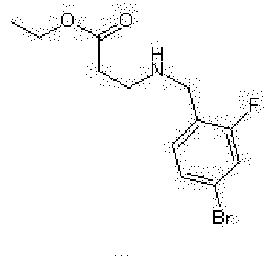
1H NMR (300 MHz, CHLOROFORM-d) δ ppm 1.25 (t, J=7.1 Hz, 3 H) 2.54 (t, J=6.4 Hz, 2 H) 2.88 (t, J=6.4 Hz, 2 H) 3.82 (d, J=0.9 Hz, 2 H) 4.14 (q, J=7.1 Hz, 2 H) 7.06 - 7.44 (m, 3 H). MS ESI/APCI Dual posi: 304[M+H]+, 326[M+Na]+. MS ESI/APCI Dual nega: 338[M+Cl]-. Reference Example A-143 
1H NMR (300 MHz, CHLOROFORM-d) δ ppm 1.26 (t, J=7.1 Hz, 3 H) 1.34 (d, J=6.7 Hz, 3 H) 2.42 - 2.50 (m, 2 H) 2.59 - 2.70 (m, 1 H) 2.70 - 2.82 (m, 1 H) 3.84 (q, J=6.7 Hz, 1 H) 4.14 (q, J=7.1 Hz, 2 H) 7.44 (d, J=8.1 Hz, 2 H) 7-58 (d, J=8.1 Hz, 2 H). MS ESI/APCI Dual posi: 290[M+H]+, 312[M+Na]+. Reference Example A-144 
1H NMR (300 MHz, CHLOROFORM-d) δ ppm 0.70 - 0.83 (m, 2 H) 1.13 - 1.37 (m, 5 H) 2.69 (s, 2 H) 3.87 (s, 2 H) 4.12 (q, J=7.0 Hz, 2 H) 7.38 - 7.48 (m. 2 H) 7.52 - 7.62 (m, 2 H). MS ESI/APCI Dual posi: 302[M+H]+. Reference Example A-145 
1H NMR (300 MHz, CHLOROFORM-d) δ ppm 1.15 (d, J=6.4 Hz, 3 H) 1.25 (t, J=7.1 Hz, 3 H) 2.37 (dd, J=15.2, 5.9 Hz, 1 H) 2.46 (dd, J=15.2, 7.0 Hz, 1 H) 3.02 - 3.23 (m, 1 H) 3.71 (d, J=13.5 Hz, 1 H) 3.79 (d, J=13.5 Hz, 1 H) 4.13 (q, J=7.1 Hz, 2 H) 7.15 - 7.25 (m, 2 H) 7.36 - 7.48 (m, 2 H). Reference Example A-146 
1H NMR (300 MHz, CHLOROFORM-d) δ ppm 1.16 (d, J=6.4 Hz, 3 H) 1.25 (t, J=7.1 Hz, 3 H) 2.39 (dd, J=15.2, 5.8 Hz, 1 H) 2.47 (dd, J=15.2, 7.0 Hz, 1 H) 3.04 - 3.23 (m, 1 H) 3.76 (d, J=13.2 Hz, 1 H) 3.84 (d, J=13.2 Hz, 1 H) 4.14 (q, J=7.1 Hz, 2 H) 7.10 - 7.21 (m, 2 H) 7.30 - 7.42 (m, 2 H). MS ESI/APCI Dual posi: 306[M+H]+. Reference Example A-147 
1H NMR (300 MHz, CHLOROFORM-d) δ ppm 1.12 - 1.35 (m, 9 H) 2.49 (s, 2 H) 3.67 (s, 2 H) 4.14 (q, J=7.1 Hz, 2 H) 7.18 - 7.28 (m. 2 H) 7.38 - 7.48 (m, 2 H). MS ESI/APCI Dual posi: 314[M+H]+. Reference Example A-148 
1H NMR (300 MHz, CHLOROFORM-d) δ ppm 1.14 - 1.34 (m, 9 H) 2.50 (s, 2 H) 3.73 (s. 2 H) 4.14 (q, J=7.1 Hz, 2 H) 7.10 - 7.20 (m, 2 H) 7.32 - 7.45 (m, 2 H). MS ESI/APCI Dual posi: 320[M+H]+. [Table 18-22] Compound No. Structure Analytical Data Salt information Reference Example A-149 
1H NMR (300 MHz, CHLOROFORM-d) δ ppm 1.26 (t, J=7.1 Hz, 3 H) 2.54 (t, J=6.3 Hz, 2 H) 2.88 (t, J=6.3 Hz, 2 H) 3.80 (s, 2 H) 4.15 (q, J=7.1 Hz, 2 H) 6.96 - 7.05 (m, 2 H) 7.10 (d, J=0.9 Hz, 1 H). MS ESI/APCI Dual posi: 288[M+H]+, 310[M+Na]+. Reference Example A-150 
1H NMR (300 MHz, CHLOROFORM-d) δ ppm 0.82 (t, J=7.5.Hz, 3 H) 1.23 (d, J=6.3 Hz, 6 H) 1.52 - 1.81 (m, 2 H) 2.34 - 2.49 (m, 2 H) 2.53 - 2.78 (m, 2 H) 3.57 (t, J=6.8 Hz, 1 H) 5.01 (spt, J=6.3 Hz, 1 H) 7.41 (d, J=8.1 Hz, 2 H) 7.57 (d, J=8.1 Hz, 2 H). MS ESI/APCI Dual posi: 318[M+H]+, 340[M+Na]+. Reference Example A-151 
1H NMR (300 MHz, CHLOROFORM-d) δ ppm 1.70 - 1.95 (m, 2 H) 1.95 - 2.18 (m, 4 H) 2.72 (s, 2 H) 3.65 - 3.76 (m, 5 H) 7.15 (d, J=8.4 Hz, 2 H) 7.37 (d, J=8.4 Hz, 2 H). MS ESI/APCI Dual posi: 318[M+H]+, 340[M+Na]+. Reference Example A-152 
1H NMR (300 MHz, CHLOROFORM-d) δ ppm 1.74 - 1.94 (m, 2 H) 1.95 - 2.14 (m, 4 H) 2.71 (s, 2 H) 3.65 (s, 2 H) 3.68 (s, 3 H) 7.20 - 7.25 (m, 2 H) 7.40 - 7.45 (m, 2 H). MS ESI/APCI Dual posi: 312[M+H]+, 334[M+Na]+. Reference Example A-153 
1H NMR (300 MHz, CHLOROFORM-d) δ ppm 1.53 - 1.89 (m, 8 H) 2.62 (s, 2 H) 3.68 (s, 3 H) 3.76 (s, 2 H) 7.41 - 7.53 (m, 2 H) 7.51 - 7.60 (m, 2 H). MS ESI/APCI Dual posi: 316[M+H]+, 338[M+Na]+. Reference Example A-154 
1H NHR (300 MHz, CHLOROFORM-d) δ ppm 1.13 - 1.34 (m, 9 H) 2.50 (s, 2 H) 3.89 (s, 2 H) 4.14 (q, J=7.1 Hz, 2 H) 7.20 - 7.33 (m, 4 H). Reference Example A-155 
1H NMR (300 MHz, CHLOROFORM-d) δ ppm 1.22 (s. 6 H) 1.26 (t, J=7.1 Hz, 3 H) 2.48 (s, 2 H) 3.68 (s, 2 H) 4.15 (q, J=7.1 Hz, 2 H) 7.19 (dd, J=8.2, 2.1 Hz, 1 H) 7.36 (d, J=8.2 Hz, 1 H) 7.48 (d, J=2.1 Hz, 1 H). MS ESI/APCI Dual posi: 304[M+H]+. [Table 18-23] Compound No. Structure Analytical Data Salt information Reference Example A-156 
1H HMR (300 MHz, CHLOROFORM-d) δ ppm 1.26 (t, J=7.1 Hz, 3 H) 2.53 (t, J=6.4 Hz, 2 H) 2.88 (t, J=6.4 Hz, 2 H) 3.79 (s, 2 H) 4.15 (q, J=7.1 Hz, 2 H) 7.19 - 7.30 (m, 2 H) 7.47 (s, 1 H). MS ESI/APCI Dual posi: 326[M+H]+, 348[M+Na]+. Reference Example A-157 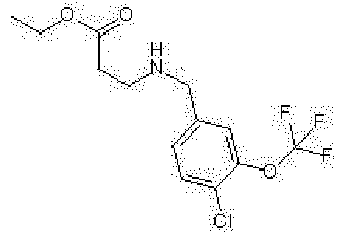
1H HMR (300 MHz, CHLOROFORM-d) δ ppm 1.26 (t, J=7.1 Hz, 3 H) 2.52 (t, J=6.3 Hz, 2 H) 2.87 (t, J=6.3 Hz, 2 H) 3.80 (s, 2 H) 4.15 (q, J=7.1 Hz, 2 H) 7.19 - 7.24 (m, 1 H) 7.20 - 7.34 (m, 1 H) 7.41 (d, J=8.2 Hz, 1 H). MS ESI/APCI Dual posi : 326[M+H]+, 348[M+Na]+. Reference Example A-158 
1H NMR (300 MHz, CHLOROFORM-d) δ ppm 1.06 - 1.39 (m, 9 H) 2.50 (s, 2 H) 3.70 (s, 2 H) 4.14 (q, J=7.0 Hz, 2 H) 6.14 - 6.78 (m, 1 H) 7.03 - 7.15 (m, 2 H) 7.33 - 7.37 (m, 2 H). MS ESI/APCI Dual posi: 302[M+H]+, 324[M+Na]+. Reference Example A-159 
1H NMR (300 MHz, CHLOROFORM-d) δ ppm 1.16 (d, J=6.5 Hz, 3 H) 1.25 (t, J=7.1 Hz, 3 H) 2.53 - 2.74 (m, 2 H) 2.75 - 2.95 (m, 1 H) 3.75 (s, 2 H) 4.14 (q, J=7.1 Hz, 2 H) 7.22 - 7.31 (m, 4 H). MS ESI/APCI Dual posi : 256[M+H]+, 278[M+Na]+. Reference Example A-160 
1H NMR (300 MHz, CHLOROFORM-d) δ ppm 1.17 (d, J=6.8 Hz, 3 H) 1.26 (t, J=7.1 Hz, 3 H) 2.55 - 2.71 (m, 2 H) 2.77 - 2.92 (m, 1 H) 2.74 (s, 2 H) 4.15 (q, J=7.1 Hz, 2 H) 7.15 (dd, J=8.1, 2.1 Hz, 1 H) 7.38 (d, J=8.1 Hz, 1 H) 7.43 (d, J=2.1 Hz, 1 H). MS ESI/APCI Dual posi : 290[M+H]+, 312[M+Na]+. Reference Example A-161 
1H NMR (300 MHz, CHLOROFORM-d) δ ppm 1.22 (s, 6 H) 1.26 (t, J=7.1 Hz, 3 H) 2.49 (s, 2 H) 3.70 (s, 2 H) 4.15 (q, J=7.1 Hz, 2 H) 7.19 - 7.32 (m, 2 H) 7.46 - 7.55 (m, 1 H). MS ESI/APCI Dual posi : 354[M+H]+. Reference Example A-162 
1H NMR (300 MHz, CHLOROFORM-d) δ ppm 1.21 (s, 6 H) 1.25 (t, J=7.1 Hz, 3 H) 2.48 (s, 2 H) 2.72 (s, 2 H) 4.14 (q, J=7.1 Hz, 2 H) 7.22 - 7.28 (m, 1 H) 7.34 - 7.42 (m, 2 H). MS ESI/APCI Dual posi : 354[M+H]+. [Table 18-24] Compound No. Structure Analytical Data Salt information Reference Example A-163 
1H NMR (300 MH2, CHLOROFORM-d) δ ppm 1.76 - 1.94 (m, 2 H) 1.95 - 2.16 (m, 4 H) 2.72 (s, 2 H) 3.66 (s, 2 H) 3.68 (s, 3 H) 7.27 - 7.29 (m, 4 H). MS ESI/APCI Dual posi: 268[M+H]+, 290[M+Na]+. Reference Example A-164 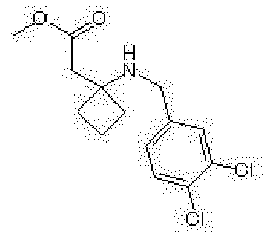
1H NMR (300 MHz, CHLOROFORM-d) δ ppm 1.72 - 1.92 (m, 2 H) 1.04 - 2.14 (m, 4 H) 2.71 (s, 2 H) 3.66 (s, 2 H) 3.69 (s, 3 H) 7.18 (dd, J=8.2, 2.0 Hz, 1 H) 7.37 (d, J=8.2 Hz, 1 H) 7.47 (d, J=2.0 Hz, 1 H). MB ESI/APCI Dual posi : 302[M+H]+, 324[M+Na]+. Reference Example A-165 
1H HMR (600 MHz, CHLOROFORM-d) δ ppm 1.24 (s, 6 H) 1.26 (t, J=7.0 Hz, 3 H) 1.65 - 1.83 (m, 3 H) 2.51 (s, 2 H) 3.74 (s, 2 H) 4.14 (q, J=7.0 Hz, 2 H) 7.39 - 7.46 (m, 4 H). MS ESI/APCI Dual posi: 300[M+H]+, 322[M+Na]+. Reference Example A-166 
1H NMR (600 MHz, CHLOROFORM-d) δ ppm 1.22 (s, 6 H) 1.26 (t, J=7.0 Hz, 3 H) 2.49 (s, 2 H) 3.67 (s, 2 H) 3.86 (s, 3 H) 4.14 (q, J=7.0 Hz, 2 H) 6.93 (d, J=8.7 Hz, 1 H) 7.22 - 7.26 (m, 2 H). MS ESI/APCI Dual posi : 350[M+H]+, 272[M-Na]+. Reference Example A-167 
1H HMR (600 MHz, CHLOROFORM-d) δ ppm 1.23 (s, 6 H) 1.26 (t, J=7.0 Hz, 3 H) 2.28 (s, 6 H) 2.50 (s, 2 H) 3.62 (s, 2 H) 4.15 (q, J=7.0 Hz, 2 H) 6.14 - 6.42 (m, 1 H) 7.04 (s, 2 H). MS ESI/APCI Dual posi : 330[M+H]+, 352[M+Na]+. Reference Example A-168 
1H NMR (300 MHz, CHLOROFORM-d) δ ppm 1.14 (d, J=6.4 Hz, 3 H) 1.25 (t, J=7.1 Hz, 3 H) 2.37 (dd, J=15.2, 5.8 Hz, 1 H) 2.46 (dd, J=15.2, 7.0 Hz, 1 H) 3.04 - 8.20 (m, 1 H) 3.72 (d, J=13.2 Hz, 1 H) 3.80 (d, J=13.2 Hz, 1 H) 4.13 (q, J=7.1 Hz, 2 H) 7.17 - 7.37 (m, 4 H). MS ESI/APCI Dual posi : 256[M+H]+. Reference Example A-169 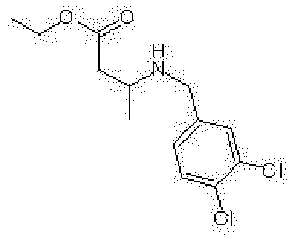
1H HMR (300 MHz, CHLOROFORM-d) δ ppm 1.14 (d, J=6.4 Hz, 3 H) 1.26 (t, J=7.1 Hz, 3 H) 2.31 - 2.52 (m, 2 H) 3.05 - 3.15 (m, 1 H) 3.71 (d, J=13.6 Hz, 1 H) 3.79 (d, J=13.6 Hz, 1 H) 4.14 (q, J=7.2 Hz, 2 H) 7.17 (dd, J=8.2, 2.0 Hz, 1 H) 7.37 (d, J=8.2 Hz, 1 H) 7.45 (d, J=2.0 Hz, 1 H). MS ESI/APCI Dual posi : 290[M+H]+. [Table 18-25] Compound No. Structure Analytical Data Salt information Reference Example A-170 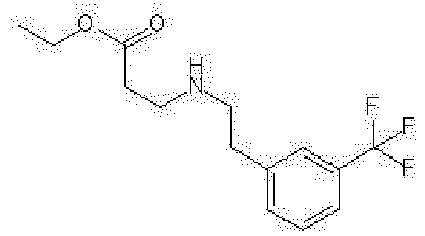
1H NMR (300 MHz, CHLOROFORM-d) δ ppm 1.11 - 1.31 (m, 3 H) 2.50 (t, J=6.4 Hz, 2 H) 2.76 - 2.98 (m, 6 H) 4.02 - 4.21 (m, 2 H) 7.36 - 7.52 (m, 4 H). MS ESI/APCI Dual posi : 290[M+H]+, 312[M+Na]+. Reference Example A-171 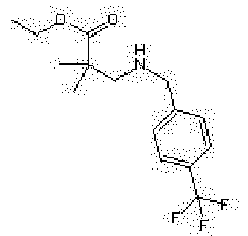
1H NMR (300 MHz, CHLOROFORM-d) δ ppm 1.06 - 1.31 (m, 9 H) 2.64 (s, 2 H) 3.85 (s, 2 H) 4.13 (q, J=7.1 Hz, 2 H) 7.35 - 7.50 (m, 2 H) 7.49 - 7.64 (m, 2 H). MS ESI/APCI Dual posi : 304[M+H]+, 326[M+Na]+. Reference Example A-172 
1H HMR (300 MHz, CHLOROFORM-d) δ ppm 1.11 - 1.15 (m, 6 H) 1.23 - 1.28 (m, 6 H) 3.59 - 3.73 (m, 3 H) 3.80 (s, 2 H) 7.44 - 7.51 (m, 2 H) 7.51 - 7.58 (m, 2 H). MS ESI/APCI Dual posi : 318[M+H]+, 340[M+Na]+. Reference Example A-173 
1H NMR (300 MHz, CHLOROFORM-d) δ ppm 1.23 (t, J=7.1 Hz, 3 H) 3.04 (t, J=7.0 Hz, 2 H) 3.18 - 3.44 (m, 6 H) 4.16 (q, J=7.1 Hz, 2 H) 7.39 (d, J=7.9 Hz, 2 H) 7.59 (d, J=7.9 Hz, 2 H). MS ESI/APCI Dual posi : 290[M+H]+. MS ESI/APCI Dual nega: 324[M+Cl]-. Reference Example A-174 
1H NMR (300 MHz, CHLOROFORM-D) ppm 1.18 (d, J=6.4 Hz, 3 H) 1.26 (t, J=7.1 Hz, 3 H) 2.40 (dd, J=15.2, 5.8 Hz, 1 H) 2.50 (dd, J=15.2, 7.0-Hz, 1 H) 3.10 - 3.28 (m, 1 H) 3.75 - 3.94 (m, 2 H) 4.14 (q, J=7.1 Hz, 2 H) 7.07 - 7.16 (m, 2 H) 7.36 - 7.42 (m, 2 H) 7.46 - 7.57 (m, 4 H). MS ESI/APCI Dual posi : 316[M+H]+, 338[M+Na]+. Reference Example A-175 
1H NMR (300 MHz, CHLOROFORM-d) δ ppm 1.72 - 1.98 (m, 2 H) 1.98 - 2.20 (m, 4 H) 2.75 (s, 2 H) 3.70 (s, 3 H) 3.74 (s, 2 H) 7.02 - 7.18 (m, 2 H) 7.35 - 7.4b (m, 2 H) 7.45 - 7.80 (m, 4 H). MS ESI/APCI Dual posi : 328[M+H]+, 350[M+Na]+. Reference Example A-176 
1H NMR (300 MHz, CHLOROFORM-d) δ ppm 1.15 - 1.35 (m, 9 H) 2.24 - 2.31 (m, 3 H) 2.51 (s, 2 H) 3.65 (s, 2 H) 4.15 (q, J=6.9 Hz, 2 H) 6.85 - 7.06 (m, 1 H) 7.06 - 7.24 (m, 2 H). MS ESI/APCI Dual posi : 268[M+H]+. [Table 18-26] Compound No. Structure Analytical Data Salt information Reference Example A-177 
1H NMR (300 MHz, CHLOROFORM-d) δ ppm 1.17 - 1.32 (m, 9 H) 2.35 (s, 3 H) 2.50 (s, 2 H) 2.66 (s, 2 H) 4.14 (q, J=7.1 Hz, 2 H) 7.08 - 7.17 (m, 1 H) 7.20 - 7.36 (m, 2 H). MS ESI/APCI Dual posi: 284[M+H]+, 306[M+Na]+. Reference Example A-178 
1H NMR (300 MHz, CHLOROFORM-d) 6 ppm 1.24 (t, J=7.1 Hz, 3 H) 2.35 - 2.47 (m, 2 H) 2.69 - 2.95 (m, 2 H) 3.18 - 3.35 (m, 1 H) 3.86 (s, 2 H) 4.02 - 4.21 (m, 2 H) 7.13 - 7.19 (m, 2 H) 7.21 - 7.38 (m, 5 H) 7.48 - 7.58 (m, 2 H). MS ESI/APCI Dual posi: 366[M+H]+. Reference Example A-179 
1H NMR (300 MHz, CHLOROFORM-d) δ ppm 0.93 (t, J=7.4 Hz, 3 H) 1.42 - 1.65 (m, 2 H) 2.35 - 2.56 (m, 2 H) 2.88 - 3.04 (m, 1 H) 3.67 (s, 3 H) 3.85 (s, 2 H) 7.43 - 7.49 (m, 2 H) 7.54 - 7.60 (m, 2 H). MS ESI/APCI Dual posi : 290[M+H]+, 312[M+Na]+. Reference Example A-180 
1H NHR (300 MHz, CHLOROFORM-d) 6 ppm 0.89 (t, J=7.5 Hz, 6 H) 1.35 - 1.65 (m, 4 H) 2.47 (s, 2 H) 3.64 - 3.74 (m, 5 H) 7.38 - 7.65 (m, 4 H). MS ESI/APCI Dual posi : 318[M+H]+, 340[M+Na]+. Reference Example A-181 
1H NMR (300 MHz, CHLOROFORM-d) δ ppm 1.22 (s, 6 H) 1.26 (t, J=7.1 Hz, 3 H) 2.22 - 2.25 (m, 3 H) 2.49 (s, 2 H) 3.67 (s, 2 H) 4.14 (q, J=7.1 Hz, 2 H) 6.97 - 7.13 (m, 3 H). MS ESI/APCI Dual posi: 268[M+H]+. Reference Example A-182 
1H NMR (300 MHz, CHLOROFORM-d) δ ppm 1.24 (t, J=7.1 Hz, 3 H) 1.68 - 1.94 (m, 2 H) 2.42 - 2.60 (m, 2 H) 2.70 (t, J=8.0 Hz, 2 H) 2.95 - 3.13 (m, 1 H) 3.80 - 3.87 (m, 2 H) 4.13 (q, J=7.1 Hz, 2 H) 7.11 - 7.22 (m, 3 H) 7.23 - 7.31 (m, 2 H) 7.40 - 7.46 (m, 2 H) 7.53 - 7.59 (m, 2 H). MS ESI/APCI Dual posi : 380[M+H]+, 402[M+Na]+. Reference Example A-183 
1H NMR (300 MHz, CHLOROFORM-d) 6 ppm 1.20 - 1.30 (m, 9 H) 1.96 - 2.12 (m, 2 H) 2.21 - 2.42 (m, 2 H) 2.50 (s, 2 H) 3.65 (s, 2 H) 3.93 - 4.06 (m, 2 H) 4.14 (q, J=7.1 Hz, 2 H) 6.80 - 6.86 (m, 2 H) 7.23 - 7.29 (m, 2 H). US ESI/APCI Dual posi : 362[M+H]+. [Table 18-27] Compound No. Structure Analytical Data Salt information Reference Example A-184 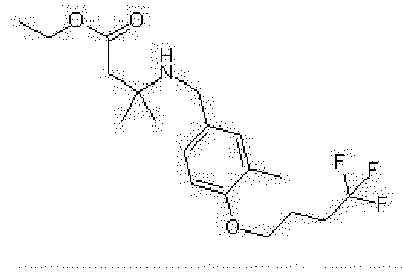
1H NMR (300 MHz, CHLOROFORM-d) δ ppm 1.13 - 1.35 (m, 9 H) 1.95 - 2.13 (m, 2 H) 2.14 - 2.44 (m, 5 H) 2.51 (s, 2 H) 3.62 (s, 2 H) 3.91 - 4.07 (m, 2 H) 4.14 (q. J=7.2 Hz, 2 H) 6.63 - 6.83 (m, 1 H) 7.01 - 7.20 (m, 2 H). MS ESI/APCI Dual posi : 376[M+H]+. Reference Example A-185 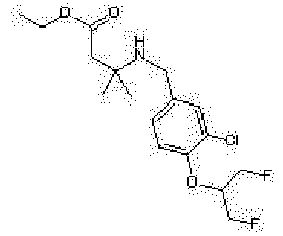
1H NMR (300 MHz, CHLOROFORM-d) δ ppm 1.12 - 1.36 (m, 9 H) 2.49 (s, 2 H) 3.65 (s, 2 H) 4.15 (g, J=7.3 Hz, 2 H) 4.48 - 4.68 (m, 5 H) 6.99 - 7.10 (m, 1 H) 7.17 - 7.25 (m, 1 H) 7.39 - 7.45 (m, 1 H). MS ESI/APCI Dual posi: 364[M+H]+, 386[M+Na]+. Reference Example A-186 
1H NMR (300 MHz, CHLOROFORM-d) δ ppm 1.15 - 1.35 (m, 9 H) 2.22 (s, 3 H) 2.51 (s, 2 H) 3.63 (s, 2 H) 4.15 (q, J=7.1 Hz, 2 H) 4.50 - 4.68 (m, 5 H) 6.80 - 6.85 (m, 1 H) 7.09 - 7.18 (m, 2 H). MS ESI/APCI Dual posi : 344[M+H]+, 366[M+Na]+. MS ESI/APCI Dual nega: 342[M-H]-, 378[M+Cl]-. Reference Example A-187 
1H NMR (600 MHz, CHLOROFORM-d) δ ppm 0.70 - 0.83 (m, 2 H) 0.96 - 1.07 (m, 2 H) 1.26 (t, J=7.1 Hz, 3 H) 2.10 - 2.27 (m, 1 H) 2.52 (t, J=6.4 Hz, 2 H) 2.87 (t, J=6.4 Hz, 2 H) 3.79 (s, 2 H) 4.15 (q, J=7.1 Hz, 2 H) 6.99 (s, 1 H) 7.17 - 7.21 (m, 1 H) 7.55 (d, J=7.8 Hz, 1 H). MS ESI/APCI Dual posi : 316[M+H]+, 338[M+Na]+. Reference Example A-188 
1H HMR (600 MHz, CHLOROFORM-d) δ ppm 1.11 - 1.34 (m, 9 H) 3.50 (s, 2 H) 3.76 (s, 2 H) 3.91 (s, 3 H) 4.14 (q, J=7.3 Hz, 2 H) 6.98 (d, J=7.8 Hz, 1 H) 7.06 (s, 1 H) 7.43 - 7.51 (m, 1 H). MS ESI/APCI Dual posi : 334[M+H]+, 356[M+Na]+. MS ESI(APCI Dual nega: 368[M+Cl]-. Reference Example A-189 
1H NMR (600 MHz, CHLOROFORM-d) δ ppm 1.06 - 1.34 (m, 9 H) 2.49 (s, 2 H) 3.78 (s, 2 H) 4.15 (q, J=7.3 Hz, 2 H) 6.34 - 6.74 (m, 1 H) 7.29 - 7.32 (m, 1 H) 7.34 (s, 1 H) 7.59 (d-, J=8.3 Hz, 1 H). MS ESI/APCI Dual posi: 370[M+H]+. Reference Example A-190 
1H NMR (300 MHz, CHLOROFORM-d) δ ppm 1.17 - 1.32 (m, 9 H) 2.50 (s, 2 H) 3.70 (s, 2 H) 3.78 (s, 3 H) 4.14 (q, J=7.1 Hz, 2 H) 6.52 - 6.75 (m, 3 H). MS ESI/APCI Dual posi : 284[M+H]+, 306[M+Na]+. [Table 18-28] Compound No. Structure Analytical Data Salt information Reference Example A-191 
1H NMR (300 MHz, CHLOROFORM-d) δ ppm 1.20 - 1.30 (m, 9 H) 2.49 (s, 2 H) 3.65 (s, 2 H) 3.87 (s, 3 H) 4.15 (q, J=7.3 Hz, 2 H) 6.85 - 6.92 (m, 1 H) 7.01 - 7.15 (m, 2 H). US ESI/APCI Dual posi: 284[M+H]+, 306[M+Na]+. Reference Example A-192 
1H NMR (300 MHz, CHLOROFORM-d) δ ppm 1.13 - 1.33 (m, 9 H) 2.49 (s, 2 H) 3.64 (s, 2 H) 3.88 (s, 3 H) 4.15 (q, J=7.1 Hz, 2 H) 6.87 (d, J=8.4 Hz, 1 H) 7.17 - 7.23 (m, 1 H) 7.38 (d, J=2.2 Hz, 1 H). MS ESI/APCI Dual posi: 300[M+H]+. 322[M+Na]+. Reference Example A-193 
1H NMR (300 MHz, CHLOROFORM-d) δ ppm 1.16 - 1.32 (m, 9 H) 2.20 (s, 3 H) 2.51 (s, 2 H) 3.62 (s, 2 H) 3.81 (s, 3 H) 4.14 (q, J=7.3 Hz, 2 H) 6.73 - 6.79 (m, 1 H) 7.09 - 7.19 (m, 2 H). MS ESI/APCI Dual posi: 280[M+H]+. Reference Example A-194 
1H NMR (300 MHz, CHLOROFORM-d) δ ppm 0.82 - 1.00 (m, 6 H) 1.27 (t, J=7.1 Hz, 3 H) 1.87 - 2.02 (m, 1 H) 2.26 - 2.44 (m, 1 H) 2.71 (dd, J=11.8, 4.0 Hz, 1 H) 2.90 (dd, J=11.8, 10.0 Hz, 1 H) 3.74 - 3.94 (m, 2 H) 4.11 - 4.23 (m, 2 H) 7.38 - 7.47 (m, 2 H) 7.52 - 7.61 (m, 2 H). US ESI/APCI Dual posi: 318[M+H]+. Reference Example A-195 
1H NMR (300 MHz, CHLOROFORM-d) δ ppm 0.29 - 0.38 (m, 2 H) 0.58 - 0.69 (m, 2 H) 1.19 - 1.31 (m, 10 H) 2.50 (s, 2 H) 3.65 (s, 2 H) 3.78 (d, J=7.1 Hz, 2 H) 4.14 (q, J=7.1 Hz, 2 H) 6.82 - 6.87 (m, 2 H) 7.22 - 7-27 (m. 2 H). MS ESI/APCI Dual posi: 306[M+H]+. Reference Example A-196 
1H NMR (300 MHz, CHLOROFORM-d) δ ppm 0.26 - 0.41 (m, 2 H) 0.53 - 0.68 (m, 2 H) 1.14 - 1.34 (m, 10 H) 2.23 (s, 3 H) 2.51 (s, 2 H) 3.62 (s, 2 H) 3.79 (d, J=6.7 Hz, 2 H) 4.14 (q, J=7.1 Hz, 2 H) 6.73 (d, J=8.1 Hz, 1 H) 7.04 - 7.13 (m, 2 H). US ESI/APCI Dual posi: 320[M+H]+. Reference Example A-197 
1H NMR (300 MHz, CHLOROFORM-d) δ ppm 0.74 - 0.87 (m, 2 H) 1.13 - 1.34 (m, 5 H) 2.74 (s, 2 H) 3.86 (s, 2 H) 4.13 (q, J=7.1 Hz, 2 H) 7.29 - 7.37 (m, 1 H) 7.37 - 7.47 (m, 4 H) 7.52 - 7.62 (m, 4 H). MS ESI/APCI Dual posi: 310[M+H]+, 332[M+Na]+. [Table 18-29] Compound No. Structure Analytical Data Salt information Reference Example A-198 
1H NMR (300 MHz, CHLOROFORM-d) δ ppm 1.22 (s, 6 H) 1.26 (t, J=7.1 Hz, 3 H) 1.99 - 2.11 (m, 2 H) 2.24 - 2.44 (m, 2 H) 2.49 (s, 2 H) 3.65 (s, 2 H) 4.06 (t, J=6.1 Hz, 2 H) 4.14 (q, J=7.1 Hz, 2 H) 6.83 - 6.92 (m, 1 H) 6.99 - 7.06 (m, 1 H) 7.12 (dd, J=12.1, 2.0 Hz, 1 H). MS ESI/APCI Dual posi: 380[M+H]+, 402[M+Na]+. Reference Example A-199 
1H NMR (300 MHz, CHLOROFORM-d) δ ppm 1.22 (s, 6 H) 1.26 (t, J=7.1 Hz, 3 H) 2.34 (s, 3 H) 2.49 (s, 2 H) 3.66 (s, 2 H) 4.14 (q, J=7.1 Hz, 2 H) 7.05 - 7.23 (m, 2 H) 7.34 (d, J=1.1 Hz, 1 H). MS ESI/APCI Dual posi: 284[M+H]+, 306[M+Na]+. Reference Example A-200 
1H NMR (300 MHz, CHLOROFORM-d) δ ppm 0.58 - 0.73 (m, 2 H) 0.86 - 1.00 (m, 2 H) 1.18 - 1.29 (m, 9 H) 1.81 - 1.97 (m, 1 H) 2.50 (s, 2 H) 3.66 (s, 2 H) 4.14 (q, J=7.1 Hz, 2 H) 6.95 - 7.10 (m, 2 H) 7.19 - 7.25 (m, 2 H). MS ESI/APCI Dual posi: 276[M+H]+. Reference Example A-201 
1H NMR (300 MHz, CHLOROFORM-d) δ ppm 0.28 - 0.40 (m, 2 H) 0.55 - 0.71 (m, 2 H) 1.13 - 1.34 (m, 10 H) 2.49 (s, 2 H) 3.64 (s, 2 H) 3.85 (d, J=7.0 Hz, 2 H) 4.14 (q, J=7.1 Hz, 2 H) 6.82 - 6.92 (m, 1 H) 6.95 - 7.05 (m, 1 H) 7.06 - 7.15 (m, 1 H). MS ESI/APCI Dual posi: 324[M+H]+. Reference Example A-202 
1H NMR (300 MHz, CHLOROFORM-d) δ ppm 1.26 (t, J=7.0 Hz, 3 H) 2.53 (t, J=6.5 Hz, 2 H) 2.90 (t, J=6.5 Hz, 2 H) 3.77 (s, 2 H) 4.14 (q, J=7.0 Hz, 2 H) 6.85 - 7.09 (m, 6 H) 7.21 - 7.35 MS ESI/APCI Dual posi: 318[M+H]+, 340[M+Na]+. MS ESI/APCI Dual nega: 316[M-H]-. Reference Example A-203 
1H NMR (300 MHz, CHLOROFORM-d) δ ppm 1.11 - 1.34 (m, 9 H) 2.35 (s, 3 H) 2.49 (s, 2 H) 3.66 (s, 2 H) 4.14 (q, J=7.1 Hz, 2 H) 6.83 (d, J=8.4 Hz, 1 H) 7.00 (d, J=8.3 Hz, 2 H) 7.18 (d, J=8.3 Hz, 2 H) 7.71 (dd, J=8.4, 2.4 Hz, 1 H) 8.12 (d, J=2.4 Hz, 1 H). MS ESI/APCI Dual posi: 343[M+H]+, 365[M+Na]+. MS ESI/APCI Dual nega: 341[M-H]-. Reference Example A-204 
1H NMR (300 MHz, CHLOROFORM-d) δ ppm 0.73 - 0.79 (m, 2 H) 1.19 - 1.29 (m, 5 H) 2.67 (s, 2 H) 3.76 (s, 2 H) 4.12 (q, J=7.1 Hz, 2 H) 7.17 - 7.24 (m, 2 H) 7.38 - 7.50 (m, 2 H). MS ESI/APCI Dual posi: 312[M+H]+. [Table 18-30] Compound No. Structure Analytical Data Salt information Reference Example A-205 
1H NMR (300 MHz, CHLOROFORM-d) δ ppm 0.71 - 0.82 (m, 2 H) 1.16 - 1.32 (m, 5 H) 2.70 (s, 2 H) 3.81 (s, 2 H) 4.12 (q, J=7.1 Hz, 2 H) 7.07 - 7.23 (m, 2 H) 7.31 - 7.43 (m, 2 H). MS ESI/APCI Dual posi: 318[M+H]+. Reference Example A-206 
1H NMR (300 MHz, CHLOROFORM-d) δ ppm 1.26 (t, J=7.1 Hz, 3 H) 2.33 (s, 3 H) 2.53 (t, J=6.5 Hz, 2 H) 2.90 (t, J=6.5 Hz, 2 H) 3.77 (s, 2 H) 4.14 (q, J=7.1 Hz, 2 H) 6.87 - 6.96 (m, 4 H) 7.09 - 7.16 (m, 2 H) 7.22 - 7.29 (m, 2 H). MS ESI/APCI Dual posi: 314[M+H]+, 336[M+Na]+. MS ESI/APCI Dual nega: 312[M-H]-. Reference Example A-207 
1H NMR (300 MHz, CHLOROFORM-d) δ ppm 1.14 - 1.35 (m, 9 H) 1.75 - 1.90 (m, 1 H) 1.90 - 2.22 (m, 3 H) 2.25 - 2.38 (m, 2 H) 2.51 (s, 2 H) 3.43 - 3.60 (m, 1 H) 3.68 (s, 2 H) 4.14 (q, J=7.0 Hz, 2 H) 7.13 - 7.19 (m, 2 H) 7.24 - 7.30 (m, 2 H). MS ESI/APCI Dual posi: 290[M+H]+, 312[M+Na]+. Reference Example A-208 
1H NMR (300 MHz, CHLOROFORM-d) δ ppm 0.65 - 0.82 (m, 2 H) 0.94 - 1.06 (m, 2 H) 1.25 (t, J=7.1 Hz, 3 H) 2.11 - 2.27 (m, 1 H) 2.52 (t, J=6.4 Hz, 2 H) 2.88 (t, J=6.4 Hz, 2 H) 3.79 (s, 2 H) 4.14 (q, J=7.1 Hz, 2 H) 6.99 (d, J=7.9 Hz, 1 H) 7.35 - 7.42 (m, 1 H) 7.62 - 7.58 (m, 1 H). MS ESI posi: 316[M+H]+. Reference Example A-209 
1H NMR (300 MHz, CHLOROFORM-d) δ ppm 0.58 - 0.73 (m, 2 H) 0.73 - 0.83 (m, 2 H) 0.87 - 0.99 (m, 2 H) 1.15 - 1.31 (m, 5 H) 1.75 - 1.93 (m, 1 H) 2.69 (s, 2 H) 3.77 (s, 2 H) 4.11 (q, J=7.1 Hz, 2 H) 6.96 - 7.06 (m, 2 H) 7.18 - 7.25 (m, 2 H). MS ESI/APCI Dual posi: 274[M+H]+. Reference Example A-210 
1H NMR (300 MHz, CHLOROFORM-d) δ ppm 0.70 - 0.82 (m, 2 H) 1.17 - 1.31 (m, 5 H) 2.68 (s, 2 H) 3.78 (s, 2 H) 4.12 (q, J=7.1 Hz, 2 H) 7.22 - 7.34 (m, 4 H). MS ESI/APCI Dual posi: 268[M+H]+. Reference Example A-211 
1H NMR (300 MHz, CHLOROFORM-d) δ ppm 1.13 - 1.34 (m, 9 H) 2.49 (s, 2 H) 3.86 (s, 2 H) 4.15 (q, J=7.1 Hz, 2 H) 6.57 (s, 1 H) 7.37 - 7.48 (m, 2 H) 7.65 - 7.76 (m, 2 H). MS ESI posi: 337[M+H]+, 359[M+Na]+. [Table 18-31] Compound No. Structure Analytical Data Salt information Reference Example A-212 
1H HMR (300 MHz, CHLOROFORM-d) δ ppm 1.20 (s, 6 H) 1.27 (t, J=7.1 Hz, 3 H) 2.09 - 2.23 (m, 2 H) 2.23 - 2.52 (m, 5 H) 2.76 (d, J=7.3 Hz, 2 H) 3.45 - 3.71 (m, 1 H) 4.15 (q, J=7.1 Hz, 2 H) 7.13 - 7.21 (m, 1 H) 7.22 - 7.36 (m, 4 H). MS ESI posi: 290[M+H]+. Reference Example A-213 
1H NMR (300 MHz, CHLOROFORM-d) δ ppm 1.15 (s, 6 H) 1.25 (t, J=7.1 Hz, 3 H) 1.69 - 1.85 (m, 2 H) 2.29 - 2.65 (m, 7 H) 3.28 - 3.51 (m, 1 H) 4.13 (q, J=7.1 Hz, 2 H) 7.13 - 7.23 (m, 3 H) 7.26 - 7.33 (m, 2 H). MS ESI posi: 290[M+H]+. Reference Example A-214 
1H NMR (300 MHz, CHLOROFORM-d) δ ppm 0.91 - 1.10 (m, 2 H) 1.27 (t, J=7.1 Hz, 3 H) 1.32 - 1.79 (m, 6 H) 1.82 - 1.99 (m, 1 H) 2.44 - 2.61 (m, 4 H) 2.64 - 2.74 (m, 1 H) 2.82 - 2.90 (m, 2 H) 4.16 (q, J=7.1 Hz, 2 H) 6.99 - 7.35 (m, 5 H). MS ESI/APCI Dual posi: 290[M+H]+. Reference Example A-215 
1H NMR (300 MHz, CHLOROFORM-d) δ ppm 1.14 - 1.33 (m, 9 H) 2.50 (s, 2 H) 3.67 (s, 2 H) 4.14 (q, J=7.1 Hz, 2 H) 4.27 - 4.38 (m, 2 H) 6.86 - 6.91 (m, 2 H) 7.28 - 7.33 (m, 2 H). MS ESI/APCI Dual posi: 334[M+H]+. Reference Example A-216 
1H NMR (300 MHz, CHLOROFORM-d) δ ppm 1.26 (t, J=7.1 Hz, 3 H) 2.52 (t, J=6.4 Hz, 2 H) 2.87 (t, J=6.4 Hz, 2 H) 3.74 (s, 2 H) 4.15 (q, J=7.1 Hz, 2 H) 4.39 (q, J=8.1 Hz, 2 H) 6.93 (d, J=8.4 Hz, 1 H) 7.19 (dd, J=8.4, 2.2 Hz, 1 H) 7.39 (d, J=2.2 Hz, 1 H). MS ESI/APCI Dual posi: 340[M+H]+. Reference Example A-217 
1H NMR (300 MHz, CHLOROFORM-d) δ ppm 0.44 - 0.62 (m, 2 H) 0.71 - 0.83 (m, 2 H) 1.28 (t, J=7.1 Hz, 3 H) 2.52 (s, 2 H) 3.86 (s, 2 H) 4.18 (q, J=7.1 Hz, 2 H) 7.29 - 7.47 (m, 5 H) 7.49 - 7.61 (m, 4 H). MS ESI/APCI Dual posi: 310[M+H]+, 332[M+Na]+. MS ESI/APCI Dual nega: 344[M+Cl]-. Reference Example A-218 
1H NMR (300 MHz, CHLOROFORM-d) δ ppm 0.45 - 0.57 (m, 2 H) 0.68 - 0.82 (m, 2 H) 1.27 (t, J=7.1 Hz, 3 H) 2.49 (s, 2 H) 3.88 (s, 2 H) 4.17 (q, J=7.1 Hz, 2 H) 7.34 - 7.49 (m, 2 H) 7.48 - 7.61 (m, 2 H). MS ESI/APCI Dual posi: 302[M+H]+, 324[M+Na]+. MS ESI/APCI Dual nega: 300[M-H]-. [Table 18-32] Compound No. Structure Analytical Data Salt information Reference Example A-219 
1H NMR (300 MHz, CHLOROFORM-d) δ ppm 1.18 - 1.31 (m, 3 H) 2.47 - 2.57 (m, 2 H) 2.89 (t, J=6.3 Hz, 2 H) 3.79 (s, 2 H) 4.08 - 4.19 (m, 2 H) 6.98 (d, J=8.4 Hz, 1 H) 7.16 - 7.25 (m, 2 H) 7.63 - 7.71 (m, 2 H) 7.78 (dd, J=8.4, 2.5 Hz, 1 H) 8.13 (dd, J=2.5, 0.6 Hz, 1 H). MS ESI/APCI Dual posi: 326[M+H]+, 348[M+Na]+. MS ESI/APCI Dual nega: 324[M-H]-. Reference Example A-220 
1H NMR (300 MHz, CHLOROFORM-d) δ ppm 1.26 (t, J=7.1 Hz, 3 H) 2.54 (t, J=6.5 Hz, 2 H) 2.93 (t, J=6.5 Hz, 2 H) 3.83 (s, 2 H) 4.15 (q, J=7.1 Hz, 2 H) 7.03 (t, J=4.8 Hz, 1 H) 7.10 - 7.19 (m, 2 H) 7.34 - 7.43 (m, 2 H) 8.51 - 8.59 (m, 2 H). MS ESI/APCI Dual posi: 302[M+H]+, 324[M+Na]+. Reference Example A-221 
1H NMR (300 MHz, CHLOROFORM-d) δ ppm 0.99 - 1.07 (m, 3 H) 1.20 - 1.29 (m, 9 H) 1.74 - 1.86 (m, 2 H) 2.50 (s, 2 H) 3.65 (s, 2 H) 3.86 - 3.96 (m, 2 H) 4.10 - 4.19 (m, 2 H) 6.79 - 6.87 (m, 2 H) 7.22 - 7.28 (m, 2 H). US ESI posi: 294[M+H]+. Reference Example A-222 
1H NMR (300 MHz, CHLOROFORM-d) δ ppm 1.20 - 1.36 (m, 15 H) 2.50 (s, 2 H) 3.64 (s, 2 H) 4.14 (q, J=7.1 Hz, 2 H) 4.46 - 4.58 (m, 1 H) 6.79 - 6.86 (m, 2 H) 7.20 - 7.28 (m, 2 H). US ESI posi: 294[M+H]+. Reference Example A-223 
1H NMR (300 MHz, CHLOROFORM-d) δ ppm 0.80 - 0.97 (m, 3 H) 1.13 - 1.19 (m, 6 H) 1.26 (t, J=7.1 Hz, 3 H) 1.30 - 1.41 (m, 1 H) 1.74 (dt, J=8.9, 4.7 Hz, 1 H) 3.42 (s, 2 H) 2.47 (dd, J=11.0, 7.1 Hz, 1 H) 2.70 (dd, J=11.0, 6.4 Hz, 1 H) 4.14 (q, J=7.1 Hz, 2 H) 7.02 - 7.08 (m, 2 H) 7.09 - 7.16 (m, 1 H) 7.20 - 7.28 (m, 2 H). MS ESI posi: 276[M+H]+. Reference Example A-224 
1H NMR (300 MHz, CHLOROFORM-d) δ ppm 1.26 (t, J=7.1 Hz, 3 H) 1.39 (d, J=6.7 Hz, 3 H) 2.41 - 2.54 (m, 2 H) 2.64 - 2.86 (m, 2 H) 3.74 - 3.92 (m, 1 H) 4.14 (q, J=7.1 Hz, 2 H) 7.29 - 7.48 (m, 5 H) 7.50 7.67 (m, 4 H). Reference Example A-225 
1H NMR (300 MHz, CHLOROFORM-d) δ ppm 0.93 (s, 9 H) 1.25 (t, J=7.1 Hz, 3 H) 2.53 (t, J=6.5 Hz, 2 H) 2.90 (t, J=6.5 Hz, 2 H) 3.10 (s, 2 H) 3.80 (s, 2 H) 4.14 (q, J=7.1 Hz, 2 H) 4.50 (s, 2 H) 728 - 7.30 (m, 4 H). MS ESI/APCI Dual posi: 308[M+H]+, 330[M+Na]+. [Table 18-33] Compound No. Structure Analytical Data Salt information Reference Example A-226 
1H NMR (300 MHz, CHLOROFORM-d) δ ppm 0.29 - 0.35 (m, 2 H) 0.36 - 0.42 (m, 2 H) 1.15 (s, 3 H) 1.25 (t, J=7.1 Hz, 3 H) 2.52 (t, J=6.5 Hz, 2 H) 2.89 (t, J=6.5 Hz, 2 H) 3.24 (s, 2 H) 3.79 (s, 2 H) 4.14 (q, J=7.1 Hz, 2 H) 4.51 (s, 2 H) 7.28 - 7.31 (m, 4 H). MS ESI/APCI Dual posi : 306[M+H]+, 328[M+Na]+. Reference Example A-227 
1H NMR (300 MHz, CHLOROFORM-d) δ ppm 1.21 - 1.29 (m, 9 H) 1.40 (t, J=7.0 Hz, 3 H) 2.50 (s, 2 H) 3.65 (s, 2 H) 4.01 (q, J=7.0 Hz, 2 H) 4.14 (q, J=7.0 Hz, 2 H) 6.81 - 6.86 (m, 2 H) 7.21 - 7.27 (m, 2 H). MS ESI/APCI Dual posi : 280[M+H]+. Reference Example A-228 
1H NMR (300 MHz, CHLOROFORM-d) δ ppm 0.25 - 0.41 (m, 2 H) 0.54 - 0.69 (m, 2 H) 1.15 - 1.35 (m, 4 H) 2.52 (t, J=6.5 Hz, 2 H) 2.88 (t, J=6.5 Hz, 2 H) 3.73 (s, 2 H) 3.78 (d, J=7.0 Hz, 2 H) 4.13 (q, J=7.1 Hz, 2 H) 6.82 - 6.89 (m, 2 H) 7.18 - 7.24 (m, 2 H). MS ESI/APCI Dual posi : 278[M+H]+. Reference Example A-229 
1H NMR (300 MHz, CHLOROFORM-d) δ ppm 0.60 - 0.75 (m, 2 H) 0.88 - 1.01 (m, 2 H) 1.72 - 1.95 (m, 3 H) 1.95 - 2.17 (m, 4 H) 2.72 (s, 2 H) 3.64 (s, 2 H) 3.68 (s, 3 H) 6,99 - 7.04 (m, 2 H) 7.19 - 7.24 (m, 2 H). MS ESI/APCI Dual posi : 274[M+H]+, 296[M+Na]+. Reference Example A-230 
1H NMR (300 MHz, CHLOROFORM-d) δ ppm 0.63 - 0.71 (m, 2 H) 0.90 - 0.98 (m, 2 H) 1.25 (t, J=7.1 Hz, 3 H) 1.82 - 1.09 (m, 5 H) 2.32 - 2.48 (m, 2 H) 2.89 (s, 2 H) 3.75 (s, 2 H) 4.15 (q, J=7.1 Hz, 2 H) 6.95 - 7.07 (m, 2 H) 7.13 - 7.24 (m, 2 H). MS ESI/APCI Dual posi : 288[M+H]+, 310[M+Na]+. Reference Example A-231 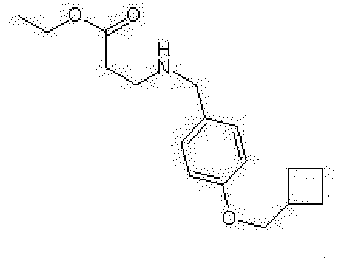
1H NMR (300 MHz, CHLOROFORM-d) 6 ppm 1.25 (t, J=7.1 Hz, 3 H) 1.78 - 2.03 (m. 4 H) 2.05 - 2.21 (m, 2 H) 2.52 (t, J=6.5 Hz, 2 H) 2.68 - 2.82 (m, 1 H) 2.88 (t, J=6.5 Hz, 2 H) 3.73 (s, 2 H) 3.91 (d, J=6.7 Hz, 2 H) 4.14 (q, J=7.1 Hz, 2 H) 6.82 - 6.89 (m, 2 H) 7.17 - 7.25 (m, 2 H). MS ESI/APCI Dual posi : 292[M+H]+. Reference Example A-232 
1H NMR (300 MHz, CHLOROFORM-d) δ ppm 1.13 - 1.36 (m, 9 H) 1.80 - 2.03 (m, 4 H) 2.03 - 2.22 (m, 2 H) 2.50 (s, 2 H) 2.70 - 2.88 (m, 1 H) 3.65 (s, 2 H) 3.90 (d, J=6.7 Hz, 2 H) 4.14 (q, J=7.1 Hz, 2 H) 6.80 - 6.88 (m, 2 H) 7.19 - 7.30 (m, 2 H). MS ESI/APCI Dual posi : 320[M+H]+. [Table 18-34] Compound No. Structure Analytical Data Salt information Reference Example A-233 
1H NMR (300 MHz, CHLOROFORM-d) δ ppm 1.25 (t, J=7.1 Hz, 3 H) 2.52 (t, J=6.5 Hz, 2 H) 2.88 (t, J=6.5 Hz, 2. H) 3.74 (s, 2 H) 4.14 (q, J=7.1 Hz, 2 H) 5.06 (s, 2 H) 6.93 (d, J=8.7 Hz, 2 H) 7.20 - 7.25 (m, 3H) 7.30 - 7.46 (m, 4 H). MS ESI/APCI Dual posi : 314[M+H]+, 336[M+Na]+. MS ESI/APCI Dual nega : 312[M-H]-. Reference Example A-234 
1H NMR (300 MHz, CHLOROFORM-d) δ ppm 1.25 (t, J=7.1 Hz, 3 H) 2.52 (t, J=6.5 Hz, 2 H) 2.89 (t, J=6.5 Hz, 2 H) 3.74 (s, 2 H) 4.14 (q, J=7.1 Hz, 2 H) 5.01 (s, 2 H) 6.88 - 6.94 (m, 2 H) 7.02 - 7.11 (m, 2 H) 7.21 - 7.26 (m, 2 H) 7.36 - 7.43 (m, 2 H). MS ESI/APCI Dual posi: 332[M+H]+, 354[M+Na]+. MS ESI/APCI Dual nega : 330[M-H]-. Reference Example A-235 
1H NMR (300 MHz, CHLOROFORM-d) δ ppm 1.25 (t, J=7.1 Hz, 3 H) 2.52 (t, J=6.5 Hz, 2 H) 2.88 (t, J=6.5 Hz, 2 H) 3.74 (s, 2 H) 4.14 (q, J=7.1 Hz, 2 H) 5.02 (s, 2 H) 6.87 - 6.94 (m, 2 H) 7.20 - 7.26 (m, 2 H) 7.35 (s, 4 H). MS ESI/APCI Dual posi : 348[M+H]+, 270[M+Na]+. MS ESI/APCI Dual nega : 346[M+Na]-, 382[M+Cl]-. Reference Example A-236 
1H NMR (300 MHz, CHLOROFORM-d) δ ppm 1.26 (t, J=7.1 Hz, 3 H) 1.76 - 1.92 (m, 1 H) 1.95 - 2.10 (m, 1 H) 2.10 - 2.27 (m, 2 H) 2.27 - 2.43 (m, 2 H) 2.53 (t, J=6.6 Hz, 2 H) 2.89 (t, J=6.5 Hz, 2 H) 3.69 - 4.00 (m, 3 H) 4.14 (q, J=7.1 Hz, 2 H) 7.41 - 7.83 (m, 3 H). MS ESI/APCI Dual posi : 330[M+H]+. Reference Example A-237 
1H NMR (300 MHz, CHLOROFORM-d) δ ppm 0.83 (q, J=5.5 Hz, 1 H) 0.91 (s, 3 H) 0.93 (s, 3 H) 1.02 (td, J=8.4, 5.5 Hz, 1 H) 1.24 (t, J=7.1 Hz, 3 H) 1.27 - 1.41 (m, 1 H) 2.06 (d, J=14.0 Hz, 1 H) 2.14 - 2.28 (m, 3 H) 2.32 (dd, J=11.2, 6.8 Hz, 1 H) 4.08 (q, J=7.1 Hz; 2 H) 7.07 - 7.39 (m, 5 H). MS ESI/APCI Dual posi : 276[M+H]+. Reference Example A-238 
1H NMR (300 MHz, CHLOROFORM-d) δ ppm 1.26 (t, J=7.1 Hz, 3 H) 1.81 - 1.93 (m, 1 H) 1.95 - 2.12 (m, 1 H) 2.13 - 2.26 (m, 2 H) 2.26 - 2.41 (m, 2 H) 2.55 (t, J=6.4 Hz, 2 H) 2.91 (t, J=6.4 Hz, 2 H) 3.77 - 3.98 (m, 3 H) 4.15 (q, J=7.1 Hz, 2 H) 7.14 - 7.28 (m, 1 H) 7.48 - 7.60 (m. 2 H). MS ESI/APCI Dual posi : 330[M+H]+. Reference Example A-239 
1H NMR (300 MHz, CHLOROFORM-d) δ ppm 0.05 - 0.21 (m, 2 H) 0.37 - 0.58 (m, 2 H) 0.74 - 0.95 (m, 1 H) 1.25 (t, J=7.1 Hz, 3 H) 1.67 (q, J=6.7 Hz, 2 H) 2.52 (t. J=6.5 Hz, 2 H) 2.88 (t, J=6.5 Hz, 2 H) 3.73 (s, 2 H) 4.02 (t, J=6.8 Hz, 2 H) 4.14 (q, J=7.1 Hz, 2 H) 6.81 - 6.90 (m, 2 H) 7.18 - 7.25 (m, 2 H). MS ESI/APCI Dual posi : 292[M+H]+. [Table 18-35] Compound No. Structure Analytical Data Salt information Reference Example A-240 
1H NMR (300 MHz, CHLOROFORM-d) δ ppm 0.05 - 0.20 (m, 2 H) 0.40 - 0.54 (m, 2 H) 0.75 - 0.92 (m, 1 H) 1.14 - 1.34 (m, 9 H) 1.64 - 1.72 (m, 2 H) 2.51 (s, 2 H) 3.65 (s, 2 H) 4.03 (q, J=6.8 Hz, 2 H) 4.14 (q, J=7.1 Hz, 2 H) 6.82 - 6.98 (m, 2 H) 7.22 - 7.28 (m, 2 H). MS ESI/APCI Dual posi : 320[M+H]+. Reference Example A-241 
1H NMR (300 MHz, CHLOROFORM-d) δ ppm 1.02 - 1.86 (m, 8 H) 2.43 - 2.57 (m, 4 H) 2.60 - 2.94 (m, 6 H) 4.14 (q, J=7.1 Hz, 2 H) 5.12 (s, 2 H) 7.20 - 7.46 (m, 5 H). MS ESI/APCI Dual posi: 349[M+H]+. Reference Example A-242 
1H NMR (300 MHz, CHLOROFORM-d) δ ppm -0.11 - 0.10 (m, 2 H) 0.34 - 0.48 (m, 2 H) 0.59 - 0.79 (m, 1 H) 1.25 (t, J=7.1 Hz, 3 H) 1.44 - 1.54 (m. 2 H) 2.52 (t, J=6,5 Hz, 2 H) 2.64 - 2.73 (m, 2 H) 2.89 (t, J=6.5 Hz, 2 H) 3.77 (s, 2 H) 4.14 (q, J=7.1 Hz, 2 H) 7.11 - 7.18 (m, 2 H) 7.18 - 7.25 (m, 2 H). MS ESI/APCI Dual posi : 276[M+H]+, 298[M+Na]+. Reference Example A-243 
1H NMR (300 MHz, CHLOROFORM-d) δ ppm 0.25 - 0.41 (m, 2 H) 0.58 - 0.69 (m, 2 H) 1.25 (t, J=7.1 Hz, 3 H) 1.83 - 1.99 (m, 5 H) 2.31 - 2.47 (m, 2 H) 2.88 (s, 2 H) 3.73 (s. 2 H) 3.79 (d, J=6.8 Hz, 2 H) 4.15 (q, J=7.1 Hz, 2 H) 6.82 - 6.88 (m, 2 H) 7.18 - 7.24 (m, 2 H). MS ESI/APCI Dual posi: 318[M+H]+. Reference Example A-244 
1H NMR (300 MHz, CHLOROFORM-d) δ ppm 0.29 - 0.37 (m, 2 H) 0.47 - 0.53 (m, 2 H) 0.59 - 0.68 (m, 2 H) 0.69 - 0.70 (m, 2 H) 1.24 - 1.31 (m, 4 H) 2.49 (s, 2 H) 3.74 (s, 2 H) 3.77 (d, J=7.0 Hz, 2 H) 4.17 (q, J=7.1 Hz, 2 H) 6.80 - 6.87 (m, 2 H) 7.16 - 7.23 (m, 2 H). MS ESI/APCI Dual posi: 304[M+H]+. Reference Example A-245 
1H NMR (300 MHz, CHLOROFORM-d) δ ppm 1.20 - 1.31 (m, 3 H) 2.43 - 2.58 (m, 2 H) 2.82 - 2.92 (m, 2 H) 3.75 (s, 2 H) 4.07 - 4.19 (m, 2 H) 6.87 (d, J=8.4 Hz, 1 H) 7.01 - 7.15 (m, 4 H) 7.65 - 7.72 (m, 1 H) 8.04 - 8.10 (m, 1 H). MS ESI/APCI Dual posi: 319[M+H]+, 341[M+Na]+. MS ESI/APCI Dual nega : 317[M-H]-. Reference Example A-246 
1H NMR (300 MHz, CHLOROFORM-d) δ ppm 1.21 - 1.30 (m, 3 H) 2.47 - 2.57 (m, 2 H) 2.82 - 2.92 (m, 2 H) 3.76 (s, 2 H) 4.07 - 4.20 (m, 2 H) 6.89 (dd, J=8.4, 0.8 Hz, 1 H) 7.01 - 7.10 (m, 2 H) 7.29 - 7.38 (m, 2 H) 7.71 (dd, J=8.5, 2.4 Hz, 1 H) 8.09 (dd, J=2.4, 0.8 Hz, 1 H). MS ESI/APCI Dual posi : 335[M+H]+, 357[M+Na]+. MS ESI/APCI Dual nega : 333[M-H]-. [Table 18-36] Compound No. Structure Analytical Data Salt information Reference Example A-247 
1H NMR (300 MHz, CHLOROFORM-d) δ ppm 1.19 - 1.29 (m, 3 H) 2.48 - 2.58 (m, 2 H) 2.85 - 2.94 (m, 2 H) 3.73 (s, 2 H) 4.07 - 4.22 (m, 2 H) 6.95 (d, J=8.4 Hz, 1 H) 7.19 - 7.29 (m, 2 H) 9.58 - 7.69 (m, 2 H) 7.76 (dd, J=8.4, 2.5 Hz, 1 H) 8.12 (d, J=2.5 Hz, 1 H). MS ESI/APCI Dual posi : 369[M+H]+, 391[M+Na]+. Reference Example A-248 
1H NMR (300 MHz, CHLOROFORM-d) δ ppm 1.20 - 1.29 (m, 3 H) 2.36 (s, 2 H) 2.49 - 2.57 (m, 2 H) 2.89 (t, J=6.4 Hz, 2 H) 3.76 (s, 2 H) 4.08 - 4.19 (m, 2 H) 6.80 - 6.95 (m, 3 H) 6.97 - 7.05 (m, 1 H) 7.20 - 7.33 (m, 1 H) 7.68 (dd, J=8.5, 2.5 Hz, 1 H) 8.12 (dd, J=2.5, 0.6 Hz, 1 H). MS ESI/APCI Dual posi : 315[M+H]+, 337[M+Na]+. MS ESI/APCI Dual nega : 212[M-H]-. Reference Example A-249 
1H NMR (300 MHz, CHLOROFORM-d) δ ppm 1.18 - 1.32 (m, 3 H) 2.46 - 2.57 (m, 2 H) 2.83 - 2.93 (m, 2 H) 3.77 (s, 2 H) 4.07 - 4.18 (m, 2 H) 6.78 - 7.01 (m, 4 H) 7.28 - 7.40 (m, 1 H) 7.67 - 7.75 (m, 1 H) 8.13 (dd, J=2.5, 0.6 Hz, 1 H). MS ESI/APCI Dual posi: 319[M+H]+, 341[M+Na]+t. MS ESI/APCI Dual nega : 317[M-H]-. Reference Example A-250 
1H NMR (300 MHz, CHLOROFORM-d) δ ppm 1.21 - 1.31 (m, 3 H) 2.32 (s, 3 H) 2.54 (t, J=6.5 Hz, 2 H) 2.91 (t, J=6.5 Hz, 2 H) 2.78 (s, 2 H) 4.14 (q, J=7.1 Hz, 2 H) 6.73 6.84 (m, 2 H) 6.86 - 7.00 (m, 3 H) 7.20 (t, J=7.9 Hz, 1 H) 7.23 - 7.31 (m, 2 H). MS ESI/APCI Dual posi : 314[M+H]+, 336[M+Na]+. MS ESI/APCI Dual nega : 312[M-H]-. Reference Example A-251 
1H NMR (300 MHz, CHLOROFORM-d) δ ppm 1.26 (t, J=7.1 Hz, 3 H) 2.54 (t, J=6.5 Hz, 2 H) 2.91 (t, J=6.5 Hz, 2 H) 3.79 (s, 2 H) 4.15 (q, J=7.1 Hz, 2 H) 6.62 - 6.72 (m, 1 H) 6.73 - 6.82 (m, 2 H) 6.93 - 7.05 (m, 2 H) 7.16 - 7.36 (m, 3 H). MS ESI/APCI Dual posi : 318[M+H]+, 340[M+Na]+. MS ESI/APCI Dual nega : 316[M-H]-. Reference Example A-252 
1H NMR (300 MHz, CHLOROFORM-d) δ ppm 1.20 - 1.31 (m, 3 H) 2.55 (t, J=6.5 Hz, 2 H) 2.94 (t, J=6.5 Hz, 2 H) 3.91 (s, 2 H) 4.07 - 4.22 (m, 2 H) 6.87 - 7.11 (m, 4 H) 7.17 - 7.33 (m, 2 H) 3.32 (d, J=2.8 Hz, 1 H). MS ESI/APCI Dual posi : 319[M+H]+, 341[M+Na]+. MS ESI/APCI Dual nega : 317[M-H]-. Reference Example A-253 
1H NMR (300 MHz, CHLOROFORM-d) 6 ppm 1.18 - 1.33 (m, 3 H) 2.34 (s, 3 H) 2.46 - 2.62 (m, 2 H) 2.94 (t, J=6.6 Hz, 2 H) 3.90 (s, 2 H) 4.06 - 4.21 (m, 2 H) 6.79 - 7.00 (m, 2 H) 7.10 - 7.18 (m, 2 H) 7.19 - 7.30 (m, 2 H) 8.32 (dd, J=2.6, 0.9 Hz, 1 H). MS ESI/APCI Dual posi : 315[M+H]+, 337[M+Na]+. MS ESI/APCI Dual nega : 313[M-H]-. [Table 18-37] Compound No. Structure Analytical Data Salt information Reference Example A-254 
1H NMR (300 MHz, CHLOROFORM-d) δ ppm 1.25 (t, J=7.1 Hz, 3 H) 2.50 (t, J=6.4 Hz, 2 H) 2.86 (t, J=6.4 Hz, 2 H) 3.75 (s, 2 H) 4.13 (q, J=7.1 Hz, 2 H) 6.94 (d, J=8.1 Hz, 1 H) 7.31 - 7.44 (m, 2 H) 7.44 - 7.59 (m, 3 H) 8.37 (d, J=1.7 Hz, 1 H). MS ESI/APCI Dual posi: 351[M+H]+. Reference Example A-255 
1H NMR (300 MHz, CHLOROFORM-d) δ ppm 1.25 (t, J=7.1 Hz, 3 H) 1.61 - 1.77 (m, 1 H) 1.78 - 1.93 (m, 1 H) 2.07 - 2.24 (m, 2 H) 2.37 - 2.49 (m, 2 H) 2.52 (t, J=6.5 Hz, 2 H) 2.88 (t, J=6.5 Hz, 2 H) 3.72 (s, 2 H) 4.13 (q, J=7.1 Hz, 2 H) 4.52 - 4.72 (m, 1 H) 6.69 - 6.83 (m, 2 H) 7.16 - 7.23 (m, 2 H). MS ESI/APCI Dual posi : 278[M+H]+, 300[M+Na]*. Reference Example A-256 
1H NMR (300 MHz, CHLOROFORM-d) δ ppm 1.27 (t, J=7.1 Hz, 3 H) 2.03 (s, 3 H) 2.07 (s, 3 H) 2.56 (t, J=6.5 Hz, 2 H) 2.95 (t, J=6.5 Hz, 2 H) 3.70 (s, 2 H) 4.15 (q, J=7.1 Hz, 2 H) 7.13 - 7.41 (m, 4 H) 7.58 (s, 1 H). MS ESI/APCI Dual posi : 302[M+H]+, 324[M+Ha]*. MS ESI/APCI Dual nega : 300[M-H]-, 336[M+Cl]-. Reference Example A-257 
1H NMR (300 MHz, CHLOROFORM-d) δ ppm 0.70 - 0.82 (m, 4 H) 1.25 (t, J=7.1 Hz, 3 H) 2.52 (t, J=6.5 Hz, 2 H) 2.89 (t, J=6.5 Hz, 2 H) 3.64 - 3.78 (m, 3 H) 4.14 (q, J=7.1 Hz, 2 H) 6.97 - 7.03 (m, 2 H) 7.20 - 7.25 (m, 2 H). MS ESI/APCI Dual posi : 264[M+H]+, 286[M+Na]+. MS ESI/APCI Dual nega : 262[M-H]-. Reference Example A-258 
1H NMR (300 MHz, CHLOROFORM-d) δ ppm 1.18 - 1.33 (m, 3 H) 2.54 (t, J=6.5 Hz, 2 H) 2.91 (t, J=6.5 Hz, 2 H) 3.78 (s, 2 H) 4.15 (q, J=7.1 Hz, 2 H) 6.83 - 7.02 (m, 4 H) 7.20 - 7.35 (m, 4 H). MS ESI/APCI Dual posi : 334[M+H]+, 356[M+Na]+. MS ESI/APCI Dual nega : 332[M-H]-. Reference Example A-259 
1H NMR (300 MHz, CHLOROFORM-d) δ ppm 0.44 - 0.55 (m, 2 H) 0.60 - 0.69 (m, 2 H) 0.69 - 0.77 (m, 2 H) 0.86 - 0.99 (m, 2 H) 1.27 (t, J=7.1 Hz, 3 H) 1.86 (tt, J=8.5, 5.1 Hz, 1 H) 2.49 (s, 2 H) 3.76 (s, 2 H) 4.16 (q, J=7.1 Hz, 2 H) 6.95 - 7.05 (m, 2 H) 7.12 - 7.22 (m, 2 H). MS ESI/APCI Dual posi : 274[M+H]+. Reference Example A-260 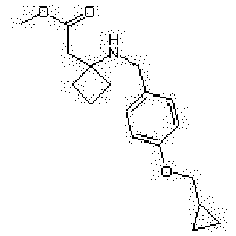
1H NMR (300 MHz, CHLOROFORM-d) δ ppm 0.29 - 0.39 (m, 2 H) 0.57 - 0.69 (m, 2 H) 1.17 - 1.34 (m, 1 H) 1.71 - 1.94 (m, 2 H) 1.95 - 2.16 (m, 4 H) 2.72 (s, 2 H) 3.62 (s, 2 H) 3.68 (s, 3 H) 3.75 - 3.80 (m, 2 H) 6.81 - 6.87 (m, 2 H) 7.21 - 7.26 (m. 2 H). MS ESI/APCI Dual posi : 304[M+H]+. [Table 18-38] Compound No. Structure Analytical Data Salt information Reference Example A-261 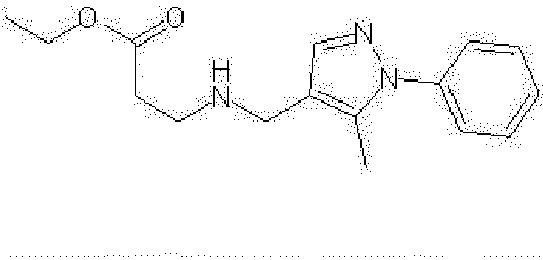
1H NMR (300 MHz, CHLOROFORM-d) δ ppm 1.26 (t, J=7.1 Hz, 3 H) 2.31 (s, 3 H) 2.56 (t, J=6.5 Hz, 2 H) 2.95 (t, J=6.5 Hz, 2 H) 3.70 (s, 2 H) 4.15 (d, J=7.1 Hz, 2 H) 7.32 - 7.52 (m, 5 H) 7.59 (s, 1 H). MS ESI/APCI Dual posi: 288[M+H]+, 310[M+Na]+. Reference Example A-262 
1H NMR (300 MHz, CHLOROFORM-d) δ ppm 1.25 (t, J=7.1 Hz, 3 H) 2.06 (quin, J=7.4 Hz, 2 H) 2.53 (t, J=6.5 Hz, 2 H) 2.81 - 2.96 (m, 6 H) 3.76 (s, 2 H) 4.14 (q, J=7.1 Hz, 2 H) 7.04 - 7.10 (m, 1 H) 7.14 - 7.20 (m, 2 H). MS ESI/APCI Dual posi: 248[M+H]+, 270[M+Na]+. Reference Example A-263 
1H NMR (300 MHz, CHLOROFORM-d) δ ppm 1.25 (t, J=7.1 Hz, 3 H) 2.54 (t, J=6.5 Hz, 2 H) 2.92 (t, J=6.5 Hz, 2 H) 3.93 (s, 2 H) 4.14 (q, J=7.1 Hz, 2 H) 7.28 - 7.35 (m, 2 H) 7.43 (dd, J=5.4, 0.5 Hz, 1 H) 7.75 - 7.79 (m, 1 H) 7.83 (d, J=8.4 Hz, 1 H). MS ESI/APCI Dual posi: 264[M+H]+, 286[M+Na]+. Reference Example A-264 
1H NMR (300 MHz, CHLOROFORM-d) δ ppm 1.25 (t, J=7.1 Hz, 3 H) 1.49 - 1.71 (m, 2 H) 1.71 - 1.99 (m, 6 H) 2.52 (t, J=6.5 Hz, 2 H) 2.89 (t, J=6.5 Hz, 2 H) 3.72 (s, 2 H) 4.13 (q, J=7.1 Hz, 2 H) 4.66 - 4.80 (m, 1 H) 6.74 - 6.89 m, 2 H) 7.14 - 7.24 (m, 2 H). MS ESI/APCI Dual posi: 292[M+H]+. Reference Example A-265 
1H NMR (300 MHz, CHLOROFORM-d) δ ppm 1.07 - 1.37 (m, 9 H) 1.51 - 1.94 (m, 8 H) 2.50 (s, 2 H) 3.64 (s, 2 H) 4.14 (q, J=7.1 Hz, 2 H) 4.68 - 4.80 (m, 1 H) 6.77 - 6.84 (m, 2 H) 7.19 - 7.26 (m, 2 H). MS ESI/APCI Dual posi: 320[M+H]+. Reference Example A-266 
1H NMR (300 MHz, CHLOROFORM-d) δ ppm 1.19 - 1.31 (m, 3 H) 2.45 - 2.58 (m, 5 H) 2.83 - 2.95 (m, 2 H) 3.78 (s, 2 H) 4.06 - 4.22 (m, 2 H) 6.90 - 6.98 (m, 2 H) 7.07 - 7.13 (m, 1 H) 7.16 - 7.23 (m, 1 H) 7.27 - 7.34 (m, 2 H) 8.29 (d, J=2.8 Hz, 1 H). MS ESI/APCI Dual posi: 315[M+H]+. Reference Example A-267 
1H NMR (300 MHz, CHLOROFORM-d) δ ppm 1.25 (t, J=7.1 Hz, 3 H) 2.44 - 2.56 (m, 2 H) 2.81 - 2.91 (m, 2 H) 3.75 (s, 2 H) 4.14 (q, J=7.1 Hz, 2 H) 6.91 - 6.97 (m, 1 H) 7.10 - 7.25 (m, 4 H) 7.67 - 7.75 (m, 1 H) 8.05 (dd, J=2.5, 0.6 Hz, 1 H). MS ESI/APCI Dual posi: 319[M+H]+, 341[M+Na]+. [Table 18-39] Compound No. Structure Analytical Data Salt information Reference Example A-268 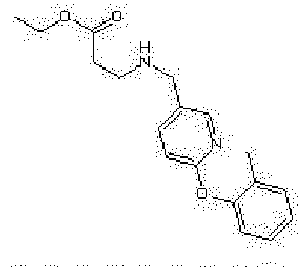
1H NMR (300 MHz, CHLOROFORM-d) δ ppm 1.18 - 1.33 (m, 3 H) 2.18 (s, 3 H) 2.44 - 2.56 (m, 2 H) 2.82 - 2.93 (m, 2 H) 3.74 (s, 2 H) 4.14 (q, J=7.1 Hz, 2 H) 6.81 (dd, J=8.5, 0.7 Hz, 1 H) 6.98 - 7.07 (m, 1 H) 7.08 - 7.30 (m, 3 H) 7.67 (dd, J=8.5, 2.5 Hz, 1 H) 8.08 (dd, J=2.5, 0.7 Hz, 1 H). MS ESI/APCI Dual posi: 315[M+H]+, 337[M+Na]+. Reference Example A-269 
1H NMR (300 MHz, CHLOROFORM -d) δ ppm 1.17 (s, 6 H) 1.23 (t, J=7.1 Hz, 3 H) 2.35 (s, 3 H) 2.63 (s, 2 H) 3.72 (s, 2 H) 4.11 (q, J=7.1 Hz, 2 H) 6.84 (d, J=8.5 Hz, 1 H) 6.96 - 7.08 (m, 2 H) 7.12 - 7.23 (m, 2 H) 7.66 (dd, J=8.5, 2.4 Hz, 1 H) 8.08 (d, J=2.4 Hz, 1 H). MS ESI/APCI Dual posi: 343[M+H]+. Reference Example A-270 
1H NMR (300 MHz, CHLOROFORM-d) δ ppm 0.68 - 0.84 (m, 2 H) 1.11 - 1.34 (m, 5 H) 2.35 (s, 3 H) 2.69 (s, 2 H) 3.75 (s, 2 H) 4.11 (q, J=6.9 Hz, 2 H) 6.85 (d, J=8.4 Hz, 1 H) 6.97 - 7.05 (m, 2 H) 7.15 - 7.22 (m, 2 H) 7.69 (dd, J=8.4, 2.4 Hz, 1 H) 8.09 (d, J=2.4 Hz, 1 H). MS ESI/APCI Dual posi: 341[M+H]+. Reference Example A-271 
1H NMR (300 MHz, CHLOROFORM-d) δ ppm 1.25 (t, J=7.1 Hz, 3 H) 1.79 - 2.00 (m, 4 H) 2.25 - 2.51 (m, 5 H) 2.88 (s, 2 H) 3.74 (s, 2 H) 4.15 (q, J=7.1 Hz, 2 H) 6.84 (d, J=8.4 Hz, 1 H) 6.98 - 7.05 (m, 2 H) 7.15 - 7.22 (m, 2 H) 7.66 (dd, J=8.4, 2.5 Hz, 1 H) -8.08 (d, J=2.5 Hz, 1 H). MS ESI/APCI Dual posi: 355[M+H]+. Reference Example A-272 
1H NMR (300 MHz, CHLOROFORM-d) δ ppm 0.30 - 0.39 (m, 2 H) 0.58 - 0.69 (m, 2 H) 0.84 - 0.92 (m, 2 H) 1.22 (t, J=7.1 Hz, 3 H) 1.25 - 1.34 (m, 3 H) 2.78 (s, 2 H) 3.79 (d, J=7.0 Hz, 2 H) 3.84 (s, 2 H) 4.11 (q, J=7.1 Hz, 2 H) 6.83 - 6.91 (m, 2 H) 7.22 - 7.29 (m, 2 H). MS ESI/APCI Dual posi: 304[M+H]+. Reference Example A-273 
1H NMR (300 MHz, CHLOROFORM-d) δ ppm 1.72 - 1.95 (m, 2 H) 1.96 - 2.16 (m, 4 H) 2.34 (s, 3 H) 2.72 (s, 2 H) 3.64 (s, 2 H) 3.68 (s, 3 H) 6.84 (d, J=8.5 Hz, 1 H) 6.97 - 7.04 (m, 2 H) 7.14 - 7.21 (m, 2 H) 7.69 (dd, J=8.5, 2.5 Hz, 1 H) 8.11 (d, J=2.5 Hz, 1 H). MS ESI/APCI Dual posi: 341[M+H]+. Reference Example A-274 
1H NMR (300 MHz, CHLOROFORM-d) δ ppm 1.07 - 1.37 (m, 9 H) 2.53 (s, 2 H) 3.87 - 4.04 (m, 2 H) 4.15 (q, J=7.1 Hz, 2 H) 7.15 (s, 1 H) 7.38 - 7.47 (m, 3 H) 7.90 - 7.97 (m, 2 H). MS ESI/APCI Dual posi: 319[M+H]+, 341[M+Na]+. [Table 18-40] Compound No. Structure Analytical Data Salt information Reference Example A-275 
1H NMR (300 MHz, CHLOROFORM-d) δ ppm 1.15 - 1.32 (m, 3 H) 2.46 - 2.58 (m, 2 H) 2.83 - 2.94 -(m, 2 H) 3.77 (s, 2 H) 4.14 (q, J=7.1 Hz, 2 H) 6.89 - 6.97 (m, 2 H) 6.98 - 7.22 (m, 4 H) 7.27 - 7.30 (m, 2 H). MS ESI/APCI Dual posi: 318[M+H]+, 340[M+Na]+. MS ESI/APCI Dual nega: 316[M-H]-. Reference Example A-276 
1H NMR (300 MHz, CHLOROFORM-d) δ ppm 1.26 (t, J=7.1 Hz, 3 H) 2.24 (s, 3 H) 2.47 - 2.57 (m, 2 H) 2.86 - 2.93 (m, 2 H) 3.76 (s, 2 H) 4.14 (q, J=7.1 Hz, 2 H) 6.79 - 6.92 (m, 3 H) 7.01 - 7.09 (m, 1 H) 7.11 - 7.19 (m, 1 H) 7.21 - 7.28 (m, 3 H). MS ESI/APCI Dual posi: 314[M+H]+, 336[M+Na]+. MS ESI/APCI Dual nega: 312[M-H]-. Reference Example A-277 
1H NMR (300 MHz, CHLOROFORM-d) δ ppm 1.20 - 1.31 (m, 3 H) 2.52 (t, J=6.4 Hz, 2 H) 2.83 - 2.93 (m, 2 H) 3.77 (s, 2 H) 4.14 (q, J=7.1 Hz, 2 H) 6.90 (d, J=8.4 Hz, 1 H) 6.98 - 7.07 (m, 1 H) 7.10 - 7.21 (m, 2 H) 7.27 - 7.35 (m, 1 H) 7.67 - 7.75 (m, 1 H) 8.12 (dd, J=2.5, 0.6 Hz, 1 H) MS ESI/APCI Dual posi: 335[M+H]+, 357[M+Na]+. Reference Example A-278 
1H NMR (300 MHz, CHLOROFORM-d) δ ppm 1.20 - 1.30 (m, 3 H) 2.47 - 2.57 (m, 2 H) 2.84 - 2.93 (m, 2 H) 3.78, (s, 2 H) 4.15 (q, J=7.0 Hz, 2 H) 6.88 - 6.97 (m, 1 H) 7.28 - 7.26 (m, 1 H) 7.37 - 7.56 (m, 3 H) 7.75 (dd, J=8.4, 2.5 Hz, 1 H) 8.11 (dd, J=2.5, 0.6 Hz, 1 H). MS ESI/APCI Dual posi: 369[M+H]+, 391[M+Na]+. Reference Example A-279 
1H NMR (300 MHz, CHLOROFORM-d) δ ppm 1.26 (t, J=7.1 Hz, 3 H) 2.47 - 2.58 (m, 2 H) 2.85 - 2.96 (m, 2 H) 3.74 - 3.80 (m, 5 H) 4.15 (q, J=7.1 Hz, 2 H) 6.52 - 6.60 (m, 2 H) 6.64 (ddd, J=8.3, 2.4, 1.0 Hz, 1 H) 6.93 - 7.03 (m, 2 H) 7.16 - 7.32 (m, 3 H). MS ESI/APCI Dual posi: 330[M+H]+, 352[M+Na]+. MS ESI/APCI Dual nega: 328[M-H]-. Reference Example A-280 
1H NMR (300 MHz, CHLOROFORM-d) δ ppm 1.20 - 1.31 (m, 3 H) 2.53 (t, J=6.4 Hz, 2 H) 2.84 - 2.93 (m, 2 H) 3.77 (s, 2 H) 4.08 - 4.25 (m, 2 H) 6.86 - 6.95 (m, 1 H) 7.00 - 7.12 (m, 3 H) 7.33 - 7.44 (m, 1 H) 7.74 (dd, J=8.4, 2.3 Hz, 1 H) 8.06 - 8.08 (m, 1 H). MS ESI/APCI Dual posi: 385[M+H]+, 407[M+Na]+. Reference Example A-281 
1H NMR (300 MHz, CHLOROFORM-d) δ ppm 1.20 - 1.31 (m, 3 H) 2.46 - 2.58 (m, 2 H) 2.92 (t, J=6.5 Hz, 2 H) 3.81 (s, 2 H) 4.05 - 4.24 (m, 2 H) 6.79 - 6.93 (m, 1 H) 7.01 - 7.12 (m, 2 H) 7.30 - 7.48 (m, 3 H) 8.02 (d, J=3.1 Hz, 1 H). MS ESI/APCI Dual posi: 319[M+H]+, 341[M+Na]+. [Table 18-41] Compound No. Structure Analytical Data Salt information Reference Example A-282 
1H NMR (300 MHz, CHLOROFORM-d) δ ppm 1.26 (t, J=7.1 Hz, 3 H) 2.54 (t, J=6.5 Hz, 2 H) 2.92 (t, J=6.5 Hz, 2 H) 3.81 (s, 2 H) 4.15 (q, J=7.1 Hz, 2 H) 6.73 - 6.92 (m, 1 H) 7.00 - 7.13 (m, 2 H) 7.31 - 7.42 (m, 2 H) 7.56 - 7.70 (m, 1 H) 8.12 (dd, J=2.6, 0.6 Hz, 1 H). MS ESI/APCI Dual posi: 335[M+H]+, 357[M+Na]+. MS ESI/APCI Dual nega: 333[M-H]-. Reference Example A-283 
1H NMR (300 MHz, CHLOROFORM-d) δ ppm 1.10 - 1.32 (m, 3 H) 2.40 - 2.61 (m, 2 H) 2.77 - 2.96 (m, 2 H) 3.84 (s, 2 H) 4.02 - 4.21 (m, 2 H) 6.81 (dd, J=8.1, 1.2 Hz, 1 H) 6.88 - 7.14 (m, 5 H) 7.16 - 7.24 (m, 1 H) 7.40 (dd, J=7.5, 1.9 Hz, 1 H). MS ESI/APCI Dual posi: 318[M+H]+, 340[M+Na]+. Reference Example A-284 
1H NMR (300 MHz, CHLOROFORM-d) δ ppm 1.25 (t, J=7.1 Hz, 3 H) 2.52 (t, J=6.3 Hz, 2 H) 2.88 (t, J=6.3 Hz, 2 H) 3.76 (s, 2 H) 4.14 (q, J=7.1 Hz, 2 H) 4.34 (q, J=8.1 Hz, 2 H) 6.80 - 6.95 (m, 2 H) 7.17 - 7.35 (m, 2 H). MS ESI/APCI Dual posi: 306[M+H]+. Reference Example A-285 
1H NMR (300 MHz, CHLOROFORM-d) δ ppm 1.26 (t, J=7.1 Hz, 3 H) 2.52 (t, J=6.4 Hz, 2 H) 2.87 (t, J=6.4 Hz, 2 H) 3.75 (s, 2 H) 4.15 (q, J=7.1 Hz, 2 H) 4.40 (q, J=8.2 Hz, 2 H) 6.94 - 7.05 (m, 2 H) 7.13 (dd, J=11.8, 1.7 Hz, 1 H). MS ESI/APCI Dual posi: 324[M+H]+. Reference Example A-286 
1H HMR (300 MHz, CHLOROFORM-d) δ ppm 1.21 - 1.35 (m, 9 H) 2.54 (s, 2 H) 3.84 (s, 2 H) 4.19 (q, J=7.1 Hz, 2 H) 6.98 (s, 1 H) 7.29 - 7.37 (m, 1 H) 7.39 - 7.46 (m, 2 H) 7.80 - 7.89 (m, 2 H). MS ESI/APCI Dual posi: 302[M+H]+, 324[M+Na]+. MS ESI/APCI Dual nega: 300[M-H]-, 336[M+Cl]-. Reference Example A-287 
1H NMR (300 MHz, CHLOROFORM-d) δ ppm 1.19 - 1.32 (m, 9 H) 2.50 (s, 2 H) 4.07 - 4.23 (m, 4 H) 7.30 - 7.35 (m, 1 H) 7.37 - 7.45 (m, 3 H) 7.87 (dd, J=8.3, 1.3 Hz, 2 H). MS ESI/APCI Dual posi: 319[M+H]+, 341[M+Na]+. Reference Example A-288 
1H NMR (300 MHz, CHLOROFORM-d) δ ppm 1.18 - 1.35 (m, 9 H) 2.52 (s, 2 H) 3.73 - 3.81 (m, 2 H) 4.15 (q, J=7.1 Hz, 2 H) 7.38 - 7.51 (m, 3 H) 7.60 (s, 1 H) 7.97 - 8.10 (m, 2 H). MS ESI/APCI Dual posi: 303[M+H]+, 325[M+Na]+. [Table 18-42] Compound No. Structure Analytical Data Salt information Reference Example A-289 
1H NMR (300 MHz, CHLOROFORM-d) δ ppm 0.59 - 0.74 (m, 2 H) 0.86 - 1.02 (m, 2 H) 1.25 (t, J=7.0 Hz, 3 H) 1.80 - 2.01 (m, 1 H) 2.51 (t, J=6.5 Hz, 2 H) 2.88 (t, J=6.5 Hz, 2 H) 3.74 (s, 2 H) 4.14 (q, J=7.0 Hz, 2 H) 6.84 (d, J=8.4 Hz, 1 H) 6.98 - 7.04 (m, 2 H) 7.04 - 7.12 (m, 2 H) 7.66 (dd, J=8.4, 2.3 Hz, 1 H) 8.10 (d, J=2.3 Hz, 1 H). MS ESI/APCI Dual posi: 341[M+H]+, 363[M+Na]+. MS ESI/APCI Dual nega: 339[M-H]-. Reference Example A-290 
1H NMR (300 MHz, CHLOROFORM-d) δ ppm 1.26 (t, J=7.1 Hz, 3 H) 2.27 (s, 3 H) 2.53 (t, J=6.5 Hz, 2 H) 2.92 (t, J=6.5 Hz, 2 H) 3.80 (s, 2 H) 4.15 (q, J=7.1 Hz, 2 H) 6.73 - 6.84 (m, 1 H) 7.03 - 7.09 (m, 2 H) 7.30 - 7.36 (m, 2 H) 7.45 - 7.54 (m, 1 H) 7.96 - 8.05 (m, 1 H). MS ESI/APCI Dual posi: 315[M+H]+, 337[M+Na]+. MS ESI/APCI Dual nega: 313[M-H]-. Reference Example A-291 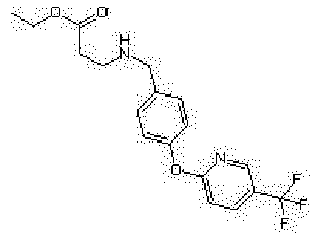
1H NMR (300 MHz, CHLOROFORM-d) δ ppm 1.27 (t, J=7.1 Hz, 3 H) 2.55 (t, J=6.5 Hz, 2 H) 2.93 (t, J=6.5 Hz, 2 H) 3.83 (s, 2 H) 4.15 (q, J=7.1 Hz, 2 H) 6.96 - 7.03 (m, 1 H) 7.06 - 7.14 (m, 2 H) 7.35 - 7.43 (m, 2 H) 7.84 - 7.92 (m, 1 H) 8.40 - 8.47 (m, 1 H). MS ESI/APCI Dual posi: 369[M+H]+, 391[M+Na]+. MS ESI/APCI Dual nega: 367[M-H]-, 403[M+Cl]-. Reference Example A-292 
1H NMR (300 MHz, CHLOROFORM-d) δ ppm 1.18 - 1.32 (m, 9 H) 2.49 (s, 2 H) 3.77 (s, 2 H) 3.93 (s, 3 H) 4.14 (q, J=7.0 Hz, 2 H) 6.46 (s, 1 H) 7.23 - 7.30 (m, 1 H) 7.33 - 7.40 (m, 2 H) 7.72 - 7.79 (m, 2 H). MS ESI/APCI Dual posi: 316[M+H]+, 338[M+Na]+. Reference Example A-293 
1H NMR (300 MHz, CHLOROFORM-d) δ ppm 1.20 - 1.33 (m, 9 H) 2.52 (s, 2 H) 3.78 (s, 2 H) 3.83 (s, 3 H) 4.14 (q, J=7.1 Hz, 2 H) 6.27 (s, 1 H) 7.33 - 7.50 (m, 5 H). MS ESI/APCI Dual posi: 316[M+H]+, 338[M+Na]+. Reference Example A-294 
1H NMR (300 MHz, CHLOROFORM-d) δ ppm 1.15 - 1.34 (m, 9 H) 2.23 (s, 3 H) 2.50 (s, 2 H) 3.81 (s, 2 H) 4.15 (q, J=7.1 Hz, 2 H) 7.36 - 7.48 (m, 3 H) 7.94 - 8.06 (m, 2 H). MS ESI/APCI Dual posi: 317[M+H]+, 339[M+Na]+. Reference Example A-295 
1H NMR (300 MHz, CHLOROFORM-d) δ ppm 0.26 - 0.41 (m, 2 H) 0.57 - 0.70 (m, 2 H) 1.17 (s, 6 H) 1.20 - 1.26 (m, 4 H) 2.63 (s, 2 H) 3.71 (s, 2 H) 3.78 (d, J=6.8 Hz, 2 H) 4.12 (q, J=7.1 Hz, 2 H) 6.81 - 6.87 (m, 2 H) 7.17 - 7.22 (m, 2 H). MS ESI/APCI Dual posi: 306[M+H]+. [Table 18-43] Compound No. Structure Analytical Data Salt information Reference Example A-296 
1H NMR (300 MHz, CHLOROFORM-d) δ ppm 0.46 - 0.56 (m, 2 H) 0.66 - 0.76 (m, 2 H) 1.27 (t, J=7.1 Hz, 3 H) 2.35 (s, 3 H) 2.49 (s, 2 H) 3.76 (s, 2 H) 4.17 (q, J=7.0 Hz, 2 H) 6.82 (d, J=8.4 Hz, 1 H) 6.95 - 7.03 (m, 2 H) 7.14 - 7.21 (m, 2 H) 7.63 (dd, J=8.4, 2.5 Hz, 1 H) 8.08 (d, J=2.5 Hz, 1 H). MS ESI/APCI Dual posi: 341[M+H]+. Reference Example A-297 
1H NMR (300 MHz, CHLOROFORM-d) δ ppm 1.20 (s, 6 H) 1.24 (t, J=7.1 Hz, 3 H) 2.63 (s, 2 H) 3.77 (s, 2 H) 4.13 (q, J=7.1 Hz, 2 H) 7.23 - 7.25 (m, 2 H) 7.44 - 7.46 (m, 1 H). MS ESI/APCI Dual posi: 354[M+H]+. Reference Example A-298 
1H NMR (300 MHz, CHLOROFORM-d) δ ppm 1.25 (t, J=7.1 Hz, 3 H) 2.36 (s, 3 H) 2.52 (t, J=6.5 Hz, 2 H) 2.88 (t, J=6.5 Hz, 2 H) 3.73 (s, 2 H) 4.13 (q, J=7.1 Hz, 2 H) 5.01 (s, 2 H) 6.88 - 6.95 (m, 2 H) 7.16 - 7.24 (m, 4 H) 7.29 - 7.35 (m, 2 H). MS ESI/APCI Dual posi: 328[M+H]+, 350[M+Na]+. MS ESI/APCI Dual nega: 326[M-H]-. Reference Example A-299 
1H NMR (300 MHz, CHLOROFORM-d) δ ppm 1.25 (t, J=7.1 Hz, 3 H) 2.52 (t, J=6.5 Hz, 2 H) 2.89 (t, J=6.5 Hz, 2 H) 3.74 (s, 2 H) 4.14 (q, J=7.1 Hz, 2 H) 5.03 (s, 2 H) 6.83 - 6.95 (m, 2 H) 7.22 - 7.26 (m, 2 H) 7.28 - 7.32 (m, 3 H) 7.42 - 7.45 (m, 1 H). MS ESI/APCI Dual posi: 348[M+H]+, 370[M+Na]+. MS ESI/APCI Dual nega: 346[M-H]-, 382[M+Cl]-. Reference Example A-300 
1H NMR (300 MHz, CHLOROFORM-d) δ ppm 0.96 - 1.34 (m, 8 H) 1.58 - 1.65 (m, 1 H) 1.67 - 1.79 (m, 2 H) 1.80 - 1.94 (m, 2 H) 2.36 - 2.54 (m, 3 H) 2.90 (t, J=6.6 Hz, 2 H) 4.14 (q, J=7.0 Hz, 2 H). MS ESI/APCI Dual posi: 200[M+H]+. [Table 18-44] Compound No. Structure Analytical Data Salt information Reference Example A-301 
1H NMR (300 MHz, CHLOROFORM-d) δ ppm 1.26 (t, J=7.1 Hz, 3 H) 2.32 (s. 3 H) 2.40 (s. 3 H) 2.48 - 2.56 (m, 2 H) 2.84 - 2.91 (m, 2 H) 3.73 (s, 2 H) 4.15 (q, J=7.1 Hz, 2 H) 4.85 (s, 2 H) 6.92 (d, J=8.2 Hz, 1 H) 7.18 (dd, J=8.2, 2.2 Hz, 1 H) 7.36 (d, J=2.2 Hz, 1 H). MS ESI/APCI Dual posi: 367[M+H]+, 389[M+Na]+. MS ESI/APCI Dual nega: 366[M-H]-. Reference Example A-302 
1H NMR (300 MHz, CHLOROFORM-d) δ ppm 0.27 - 0.41 (m, 2 H) 0.54 - 0.66 (m, 2 H) 1.15 - 1.33 (m, 4 H) 2.24 (s, 3 H) 2.44 - 2.58 (m, 2 H) 2.82 - 2.97 (m, 2 H) 3.70 (s, 2 H) 3.80 (d, J=6.7 Hz, 2 H) 4.13 (q, J=7.1 Hz, 2 H) 6.73 (d, J=8.1 Hz, 1 H) 6.98 - 7.13 (m, 2 H). MS ESI/APCI Dual posi: 292[M+H]+. Reference Example A-303 
1H NMR (300 MHz, CHLOROFORM-d) δ ppm 1.26 (t, J=7.1 Hz, 3 H) 2.52 (t, J=6.3 Hz, 2 H) 2.87 (t, J=6.3 Hz, 2 H) 3.78 (s, 2 H) 4.15 (q, J=7.1 Hz, 2 H) 7.40 - 7.47 (m, 1 H) 7.53 - 7.60 (m, 1 H) 8.31 (d, J=2.3 Hz, 1 H). MS ESI/APCI Dual posi: 287[M+H]+. Reference Example A-304 
1H NMR (300 MHz, CHLOROFORM-d) δ ppm 1.22 - 1.32 (m, 3 H) 2.54 (t, J=6.5 Hz, 2 H) 2.92 (t, J=6.5 Hz, 2 H) 3.89 (s, 2 H) 4.08 - 4.21 (m, 2 H) 7.22 - 7.29 (m, 1 H) 7.77 (dd, J=8.2, 2.3 Hz, 1 H) 8.61 (d, J=2.3 Hz, 1 H). MS ESI/APCI Dual posi: 287[M+H]+. Reference Example A-305 
1H NMR (300 MHz, CHLOROFORM-d) δ ppm 1.16 - 2.00 (m, 13 H) 3.52 (s, 2 H) 4.05 - 4.26 (m, 2 H) 7.10 (d, J=8.4 Hz, 2 H) 7.63 (d, J=8.4 Hz, 2 H). MS ESI/APCI Dual posi: 388[M+H]+. Reference Example A-306 
1H NMR (600 MHz, CHLOROFORM-d) δ ppm 1.67 - 1.81 (m, 4 H) 1.81 - 1.90 (m, 2 H) 2.04 - 2.12 (m, 2 H) 3.65 (s, 2 H) 3.74 (s, 3 H) 7.30 - 7.35 (m, 1 H) 7.38 - 7.45 (m, 4 H) 7.51 - 7.60 (m, 4 H). MS ESI posi: 310[M+H]+. Reference Example A-307 
1H NMR (300 MHz, CHLOROFORM-d) δ ppm 0.30 - 0.38 (m, 2 H) 0.59 - 0.68 (m, 2 H) 1.15 (d, J=6.4 Hz, 3 H) 1.19 - 1.35 (m, 1 H) 2.33 - 2.55 (m, 2 H) 3.08 - 3.21 (m, 1 H) 3.67 (s, 3 H) 3.65 - 3.82 (m, 2 H) 3.78 (d, J=7.0 Hz, 2 H) 6.82 - 6.89 (m, 2 H) 7.18 - 7.25 (m, 2 H). MS ESI/APCI Dual posi: 278[M+H]+. [Table 18-45] Compound No. Structure Analytical Data Salt information Reference Example A-308 
1H NMR (600 MHz, CHLOROFORM-d) δ ppm 1.31 (t, J=7.2 Hz, 3 H) 1.90 - 2.13 (m, 4 H) 2.41 - 2.49 (m, 2 H) 3.63 (s, 2 H) 4.21 (q, J=7.2 Hz, 2 H) 7.30 - 7.36 (m, 1 H) 7.39 - 7.46 (m, 4 H) 7.52 - 7.60 (m, 4 H). MS ESI posi: 310[M+H]+. Reference Example A-309 
1H NMR (300 MHz, CHLOROFORM-d) δ ppm 1.19 - 1.39 (m, 6 H) 3.40 (q, J=7.1 Hz, 1 H) 3.69 (d, J=12.9 Hz, 1 H) 3.79 - 3.87 (m, 1 H) 4.21 (q, J=7.1 Hz, 2 H) 7.00 (d, J=8.7 Hz, 1 H) 7.06 - 7.14 (m, 2 H) 7.40 (d, J=8.7 Hz, 2 H) 7.83 - 7.93 (m, 1 H) 8.40 - 8.48 (m. 1 H). MS ESI/APCI Dual posi: 369[M+H]+, 391[M+Na]+. MS ESI/APCI Dual nega: 367[M-H]-. Reference Example A-310 
1H NMR (300 MHz, CHLOROFORM-d) δ ppm 1.39 (s, 6 H) 3.65 (s, 2 H) 3.75 (s, 3 H) 6.94 - 7.02 (m, 1 H) 7.10 (d, J=8.5 Hz, 2 H) 7.41 (d, J=8.7 Hz, 2 H) 7.81 - 7.93 (m, 1 H) 8.37 - 8.50 (m, 1 H). MS ESI/APCI Dual posi: 262[M+H]+, 391[M+Na]+. MS ESI/APCI Dual nega: 367[M-H]-. Reference Example A-311 
1H NMR (300 MHz, CHLOROFORM-d) δ ppm 0.26 - 0.40 (m, 2 H) 0.56 - 0.70 (m, 2 H) 1.17 - 1.35 (m, 1 H) 3.41 (s, 2 H) 3.62 - 3.88 (m, 7 H) 6.86 (d, J=8.5 Hz, 2 H) 7.15 - 7.30 (m, 2 MS ESI/APCI Dual posi: 250[M+H]+, 272[M+Na]+. Reference Example A-312 
1H HMR (300 MHz, CHLOROFORM-d) δ ppm 0.27 - 0.42 (m, 2 H) 0.54 - 0.73 (m, 2 H) 1.15 - 1.36 (m, 7 H) 3.24 - 3.43 (m, 1 H) 3.54 - 3.65 (m, 1 H) 3.66 - 3.84 (m, 3 H) 4.19 (d, J=7.1 Hz, 2 H) 6.82 - 6.91 (m, 2 H) 7.22 (d, J=8.4 Hz, 2 H). MS ESI/APCI Dual posi: 278[M+H]+, 300[M+Na]+. Reference Example A-313 
1H NMR (300 MHz, CHLOROFORM-d) δ ppm 0.29 - 0.37 (m, 2 H) 0.60 - 0.66 (m, 2 H) 1.18 - 1.33 (m, 1 H) 1.36 (s, 6 H) 3.54 (s, 2 H) 3.74 (s, 3 H) 3.78 (d, J=7.0 Hz, 2 H) 6.85 (d, J=8.5 Hz, 2 H) 7.23 (d, J=8.5 Hz, 2 H). MS ESI/APCI Dual posi: 278[M+H]+, 300[M+Na]+. Reference Example A-314 
1H NMR (300 MHz, CHLOROFORM-d) δ ppm 0.26 - 0.44 (m, 2 H) 0.56 - 0.69 (m, 2 H) 1.06 - 1.32 (m, 4 H) 2.46 - 2.78 (m, 2 H) 3.37 - 3.51 (m, 1 H) 3.53 - 3.63 (m, 1 H) 3.78 (d, J=6.8 Hz, 2 H) 3.97 - 4.19 (m, 3 H) 6.80 - 6.87 (m, 2 H) 7.12 - 7.19 (m, 2 H) 7.23 - 7.37 (m, 5 H). MS ESI/APCI Dual posi: 354[M+H]+, 376[M+Na]+. MS ESI/APCI Dual nega: 352[M-H]-. [Table 18-46] Compound No. Structure Analytical Data Salt information Reference Example A-315 
1H NNR (300 MHz, CHLOROFORM-d) δ ppm 0.24 - 0.40 (m, 2 H) 0.57 - 0.69 (m, 2 H) 1.18 (t, J=7.1 Hz, 3 H) 1.22 - 1.35 (m. 1 H) 2.51 - 2.79 (m, 2 H) 3.38 - 3.51 (m, 1 H) 3.54 - 3.63 (m. 1 H) 3.78 (d, J=7.1 Hz, 2 H) 4.02 - 4.17 (m, 3 H) 6.76 - 6.92 (m, 2 H) 7.16 (d, J=8.7 Hz, 2 H) 7.23 - 7.42 (m, 5 H). MS ESI/APCI Dual posi: 354[M+H]+, 376[M+Na]+. MS ESI/APCI Dual nega: 352[M-H]-. Reference Example A-316 
1H NMR (300 MHz, CHLOROFORM-d) δ ppm 0.30 - 0.38 (m, 2 H) 0.59 - 0.68 (m, 2 H) 1.15 (d, J=6.4 Hz, 3 H) 1.19 - 1.35 (m, 1 H) 2.33 - 2.55 (m, 2 H) 3.08 - 3.21 (m, 1 H) 3.67 (s, 3 H) 3.65 - 3.82 (m, 2 H) 3.78 (d, J=7.0 Hz, 2 H) 6.82 - 6.89 (m, 2 H) 7.18 - 7.25 (m, 2 H). MS ESI/APCI Dual posi: 278[M+H]+. Reference Example A-317 
1H NMR (300 MHz, CHLOROFORM-d) δ ppm 0.30 - 0.38 (m, 2 H) 0.59 - 0.68 (m, 2 H) 1.20 - 1.34 (m, 1 H) 1.64 - 1.71 (m, 4 H) 2.57 (s, 2 H) 3.58 - 3.70 (m, 7 H) 3.79 (d, J=7.0 Hz, 2 H) 3.85 - 3.95 (m, 2 H) 6.83 - 6.90 (m, 2 H) 7.24 - 7.31 (m, 2 H). MS ESI/APCI Dual posi: 334[M+H]+. Reference Example A-318 
1H NMR (300 MHz, CHLOROFORM-d) δ ppm 0.31 - 0.38 (m, 2 H) 0.60 - 0.68 (m, 2 H) 1.19 - 1.35 (m, 4 H) 2.96 (s, 2 H) 3.74 - 3.81 (m, 4 H) 4.11 - 4.21 (m, 2 H) 4.53 (d, J=6.8 Hz, 2 H) 4.66 (d, J=6.8 Hz, 2 H) 6.82 - 6.90 (m, 2 H) 7.20 - 7.28 (m, 2 H). MS ESI/APCI Dual posi: 320[M+H]+. Reference Example A-319 
1H NMR (300 MHz, CHLOROFORM-d) δ ppm 0.29 - 0.40 (m, 2 H) 0.60 - 0.70 (m, 2 H) 1.17 - 1.34 (m, 1 H) 2.76 - 2.82 (m, 2 H) 3.48 (dd, J=6.8, 4.9 Hz, 1 H) 3.69 (s, 3 H). 3.73 (d, J=2.8 Hz, 2 H) 3.79 (d, J=6.8 Hz, 2 H) 5.36 - 5.53 (m, 1 H) 6.87 (d. J=8.7 Hz, 2 H) 7.14 - 7.24 (m, 2 H). MS ESI/APCI Dual posi: 307[M+H]+, 329[M+Na]+. Reference Example A-320 
1H NMR (300 MHz, CHLOROFORM-d) δ ppm 0.29 - 0.40 (m, 2 H) 0.58 - 0.70 (m, 2 H) 1.17 - 1.35 (m, 1 H) 2.76 - 2.84 (m, 2 H) 3.43 - 3.54 (m, 1 H) 3.69 (s, 3 H) 3.73 (d, J=2.6 Hz, 2 H) 3.79 (d, J=7.0 Hz, 2 H) 5.42 (br. s., 1 H) 6.80 - 6.94 (m, 2 H) 7.21 (d, J=8.7 Hz, 2 H). MS ESI/APCI Dual posi: 307[M+H]+, 329[M+Na]+. Reference Example A-321 
1H HMR (300 MHz, CHLOROFORM-d) δ ppm 1.10 - 1.30 (m, 10 H) 1.57 - 1.78 (m, 1 H) 1.80 - 1.91 (m, 2 H) 2.38 - 2.47 (m, 4 H) 2.80 - 2.93 (m, 2 H) 4.08 - 4.18 (m, 2 H) 4.70 - 4.81 (m, 2 H) 6.42 (t, J=4.8 Hz, 1 H) 8.28 (d, J=4.8 Hz, 2 H). MS ESI/APCI Dual posi: 321[M+H]+. [Table 18-47] Compound No. Structure Analytical Data Salt information Reference Example A-322 
1H NMR (300 MHz, CHLOROFORM-d) δ ppm 0.13 - 0.21 (m. 2 H) 0.51 - 0.59 (m, 2 H) 0.97 - 1.31 (m, 12 H) 1.53 - 1.69 (m, 1 H) 1.77 - 1.89 (m, 2 H) 2.24 - 2.29 (m, 2 H) 2.37 - 2.46 (m, 4 H) 2.48 - 2.62 (m. 1 H) 2.04 - 3.06 (m, 1 H) 3.78 - 3.89 (m, 1 H) 4.07 - 4.20 (m, 2 H) 4.59 - 4.70 (m, 1 H). MS ESI/APCI Dual posi: 325[M+H]+. Reference Example A-323 
1H NMR (300 MHz, CHLOROFORM-d) δ ppm 0.28 - 0.43 (m, 2 H) 0.57 - 0.74 (m, 2 H) 1.12 - 1.33 (m, 4 H) 2.47 - 2.85 (m, 2 H) 3.40 - 3.52 (m, 1 H) 3.54 - 3.63 (m, 1 H) 3.78 (d, J=7.0 Hz, 2 H) 3.98 - 4.19 (m, 3 H) 6.76 - 6.89 (m, 2 H) 7.08 - 7.19 (m, 2 H) 7.29 (ddd, J=7.8, 4.8, 0.8 Hz, 1 H) 7.73 (dt, J=7.8, 2.0 Hz, 1 H) 8.48 - 8.62 (m, 2 H). MS ESI/APCI Dual posi: 355[M+H]+, 377[M+Na]+. Reference Example A-324 
1H NMR (300 MHz, CHLOROFORM-d) δ ppm 0.28 - 0.43 (m, 2 H) 0.57 - 0.70 (m, 2 H) 1.13 - 1.33 (m, 4 H) 2.53 - 2.81 (m, 2 H) 3.41 - 3.52 (m, 1 H) 3.53 - 3.64 (m, 1 H) 3.78 (d, J=6.8 Hz, 2 H) 4.02 - 4.18 (m, 3 H) 6.78 - 6.92 (m, 2 H) 7.14 (d, J=8.7 Hz, 2 H) 7.26 - 7.34 (m, 1 H) 7.73 (dt, J=7.9, 1.9 Hz, 1 H) 8.48 - 8.63 (m, 2 H). MS ESI/APCI Dual posi: 355[M+H]+, 377[M+Ha]+. Reference Example A-325 
1H NMR (300 MHz, CHLOROFORM-d) δ ppm 0.30 - 0.39 (m, 2 H) 0.58 - 0.68 (m, 2 H) 1.19 - 1.34 (m, 1 H) 2.42 (d, J=6.4 Hz, 2 H) 2.68 - 2.91 (m, 2 H) 3.21 - 3.32 (m, 1 H) 3.65 (s, 3 H) 3.71 - 3.81 (m, 4 H) 6.78 - 6.86 (m, 2 H) 7.09 - 7.34 (m, 7 H). US ESI/APCI Dual posi: 354[M+H]+. Reference Example A-326 
1H NMR (300 MHz, CHLOROFORM-d) δ ppm 0.30 - 0.39 (m, 2 H) 0.58 - 0.68 (m, 2 H) 1.19 - 1.34 (m, 1 H) 2.42 (d, J=6.4 Hz, 2 H) 2.68 - 2.91 (m, 2 H) 8.21 - 8.33 (m, 1 H) 3.65 (s, 3 H) 3.71 - 3.81 (m, 4 H) 6.78 - 6.86 (m, 2 H) 7.09 - 7.34 (m, 7 H). MS ESI/APCI Dual posi: 354[M+H]+. Reference Example A-327 
1H NMR (300 MHz, CHLOROFORM-d) δ ppm 0.20 - 0.49 (m. 2 H) 0.56 - 0.72 (m, 2 H) 1.10 - 1.63 (m, 9 H) 1.91 - 2.18 (m, 2 H) 2.64 (s, 2 H) 3.68 (s, 5 H) 3.74 - 3.84 (m, 2 H) 8.84 (d, J=8.7 Hz, 2 H) 7.18 (d, J=8.7 Hz, 2 H). US ESI/APCI Dual posi: 332[M+H]+, 354[M+Ha]+. Reference Example A-328 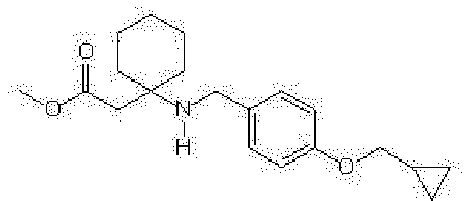
1H NMR (300 MHz, CHLOROFORM-d) δ ppm 0.25 - 0.40 (m, 2 H) 0.56 - 0.69 (m, 2 H) 1.17 - 1.76 (m, 11 H) 2.52 (s, 2 H) 3.60 (s, 2 H) 3.67 (s, 3 H) 3.78 (d, J=6.8 Hz, 2 H) 6.85 (d, J=8.7 Hz, 2 H) 7.22 - 7.34 (m, 2 H). MS ESI/APCI Dual posi: 332[M+H]+, 354[M+Na]+. [Table 18-48] Compound No. Structure Analytical Data Salt information Reference Example A-329 
1H NMR (300 MHz, CHLOROFORM-d) δ ppm ppm 1.18 - 1.33 (m, 9 H) 2.50 (s, 2 H) 3.67 (s, 2 H) 4.14 (q, J=7.1 Hz, 2 H) 4.48 (s, 2 H) 6.87 (d, J=8.7 Hz, 2 H) 7.31 (d, J=8.7 Hz, 2 H). MS ESI/kPCI Dual posi: 309[M+H]+, 331[M+Ha]+. MS ESI/APCI Dual nega: 307[M-H]-. Reference Example A-330 
1H NMR (300 MHz, CHLOROFORM-d) δ ppm 1.14 (s, 6 H) 1.18 - 1.45 (m, 4 H) 1.59 - 1.79 (m, 4 H) 1.88 - 2.01 (m, 2 H) 2.35 - 2.44 (m, 4 H) 2.82 - 2.94 (m, 2 H) 3.48 (s, 2 H) 4.12 (q, J=7.2 Hz, 2 H) 7.18 - 7.36 (m, 5 H). MS ESI/APCI Dual posi: 333[M+H]+. Reference Example A-331 
1H NMR (300 MHz, CHLOROFORM-d) δ ppm 0.29 - 0.39 (m, 2 H) 0.58 - 0.67 (m, 2 H) 0.88 - 0.92 (m, 6 H) 1.19 - 1.34 (m, 1 H) 1.79 - 1.95 (m, 1 H) 2.27 - 2.50 (m, 2 H) 2.80 - 2.92 (m, 1 H) 3.67 (s, 3 H) 3.70 (s, 2 H) 3.75 - 3.82 (m, 2 H) 6.84 (d, J=8.7 Hz, 2 H) 7.18 - 7.26 (m, 2 H). MS ESI/APCI Dual posi: 306[M+H]+, 328[M+Ha]+. Reference Example A-332 
1H NMR (300 MHz, CHLOROFORM-d) δ ppm 0.29 - 0.39 (m, 2 H) 0.59 - 0.69 (m, 2 H) 0.85 - 1.00 (m, 6 H) 1.18 - 1.35 (m, 1 H) 1.79 - 1.95 (m, 1 H) 2.26 - 2.50 (m, 2 H) 2.81 - 2.95 (m, 1 H) 3.67 (s, 3 H) 3.70 (s, 2 H) 3.78 (d, J=6.8 Hz, 2 H) 6.85 (d, J=8.4 Hz, 2 H) 7.22 (d, J=8.4 Hz, 2 H). MS ESI/APCI Dual posi: 306[M+H]+, 328[M+Ha]+. Reference Example A-333 
1H NMR (300 MHz, CHLOROFORM-d) δ ppm 0.28 - 0.39 (m, 2 H) 0.56 - 0.63 (m, 2 H) 1.19 - 1.36 (m, 10 H) 2.50 (s, 2 H) 3.63 (s, 2 H) 4.02 - 4.20 (m, 4 H) 6.73 (d, J=8.5 Hz, 1 H) 7.61 (dd, J=8.5, 2.4 Hz, 1 H) 8.02 - 8.07 (m, 1 H). MS ESI/APCI Dual posi: 307[M+H]+, 329[M+Ha]+. Reference Example A-334 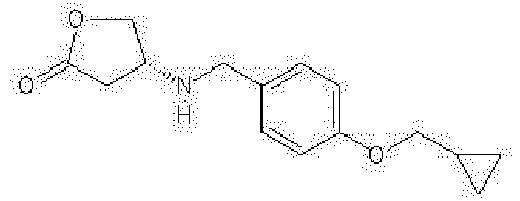
1H NMR (300 MHz, CHLOROFORM-d) δ ppm 0.29 - 0.38 (m, 2 H) 0.59 - 0.69 (m, 2 H) 1.15 - 1.35 (m, 1 H) 2.29 - 2.45 (m, 1 H) 2.62 - 2.75 (m, 1 H) 3.57 - 3.70 (m, 1 H) 3.70 - 3.74 (m, 2 H) 3.79 (d, J=6.8 Hz, 2 H) 4.05 - 4.17 (m, 1 H) 4.29 - 4.40 (m, 1 H) 6.87 (d, J=8.9 Hz, 2 H) 7.20 (d, J=8.9 Hz, 2 H). MS ESI/APCI Dual posi: 284[M+Ha]+. MS ESI/APCI Dual nega: 260[M-H]+. Reference Example A-335 
1H NMR (300 MHz, CHLOROFORM-d) δ ppm 0.28 - 0.39 (m, 2 H) 0.58 - 0.69 (m, 2 H) 1.17 - 1.35 (m, 1 H) 2.38 (dd, J=17.5, 4.7 Hz, 1 H) 2.65 - 2.73 (m, 1 H) 3.62 - 3.70 (m, 1 H) 3.73 (d, J=1.4 Hz. 2 H) 3.79 (d, J=7.0 Hz, 2 H) 4.10 (dd, J=9.5, 4.1 Hz, 1 H) 4.36 (dd, J=9.5, 6.1 Hz, 1 H) 6.81 - 6.92 (m, 2 H) 7.15 - 7.24 (m, 2 H). MS ESI/APCI Dual posi: 284[M+Na]+. MS ESI/APCI Dual nega: 260[M-H]-. Reference Example A-336 
1H NMR (300 MHz, CHLOROFORM-d) δ ppm 1.17 (s, 6 H) 1.22 - 1.31 (m, 3 H) 2.42 (s, 2 H) 2.71 - 2,81 (m, 1 H) 3.79 - 3.86 (m, 2 H) 4.07 - 4.27 (m, 6 H) 6.47 - 6.52 (m, 1 H) 8.28 - 8.32 (m, 2 H). MS ESI/APCI Dual posi: 293[M+H]+. [Table 18-49] Compound No. Structure Analytical Data Salt information Reference Example A-337 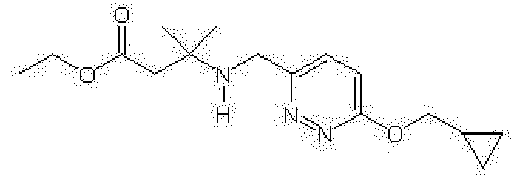
1H NMR (300 MHz, CHLOROFORM-d) δ ppm 0.34 - 0.42 (m, 2 H) 0.59 - 0.67 (m, 2 H) 1.19 - 1.28 (m, 9 H) 1.28 - 1.41 (m, 1 H) 2.49 (s, 2 H) 3.28 (s, 2 H) 4.14 (q, J=7.1 Hz, 2 H) 4.32 (d, J=7.2 Hz, 2 H) 6.94 (d, J=9.0 Hz, 1 H) 7.50 (d, J=9.0 Hz, 1 H). MS ESI/APCI Dual posi: 308[M+H]+. Reference Example A-338 
1H NMR (300 MHz, CHLOROFORM-d) δ ppm 0.29 - 0.38 (m, 2 H) 0.59 - 0.68 (m, 2 H) 1.18 - 1.33 (m, 1 H) 2.48 - 2.51 (m, 2 H) 3.14 - 3.27 (m, 1 H) 3.32 (s, 3 H) 3.34 - 3.47 (m, 2 H) 3.67 (s, 3 H) 3.70 - 3.82 (m, 4 H) 6.79 - 6..92 (m, 2 H) 7.17 - 7.28 (m, 2 H). MS ESI/APCI Dual posi: 308[M+H]+, 330[M+Ha]+. MS ESI/APCI Dual nega: 306[M-H]-. Reference Example A-339 
1H NMR (300 MHz, CHLOROFORM-d) δ ppm 0.31 - 0.40 (m, 2 H) 0.57 - 0.67 (m, 2 H) 1.19 - 1.36 (m, 10 H) 2.51 (s, 2 H) 3.82 (s, 2 H) 4.10 - 4.17 (m, 4 H) 8.09 (d. J=1.4 Hz, 1 H) 8.19 (d, J=1.4 Hz, 1 H). MS ESI/APCI Dual posi: 308[M+H]+. Reference Example A-340 
1H NMR (300 MHz, CHLOROFORM-d) δ ppm 0.27 - 0.39 (m, 2 H) 0.58 - 0.68 (m, 2 H) 1.18 - 1.35 (m, 1 H) 2.15 (s, 6 H) 2.16 - 2.28 (m, 2 H) 2.31 - 2.45 (m, 2 H) 2.49 - 2.56 (m, 1 H) 3.03 - 3.17 (m, 1 H) 3.67 (s, 3 H) 3.74 - 3.83 (m, 3 H) 6.85 (d, J=8.7 Hz, 2 H) 7.16 - 7.24 (m, 2 H). US ESI/APCI Dual posi: 321[M+H]+. Reference Example A-341 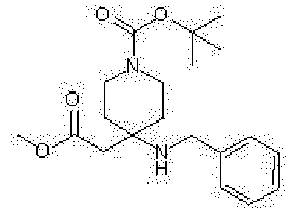
1H NMR (600 MHz, CHLOROFORM-d) δ ppm 1.46 (s, 9 H) 1.49 - 1.57 (m, 2 H) 1.64 - 1.76 (m, 2 H) 2.49 - 2.57 (m, 2 H) 3.27 - 3.40 (m, 2 H) 3.61 - 3.78 (m, 7 H) 7.22 - 7.26 (m, 1 H) 7.29 - 7.34 (m, 2 H) 7.35 - 7.39 (m, 2 H). MS ESI/APCI Dual posi: 363[M+H]+, 385[M+Na]+. Reference Example A-342 
1H NMR (300 MHz, CHLOROFORM-d) δ ppm 0.06 (s, 6 H) 0.90 (s, 9 H) 1.18 (s, 6 H) 1.26 (t, J=7.1 Hz, 3 H) 2.42 (s, 2 H) 2.66 (t, J=5.8 Hz, 2 H) 3.70 (t, J=5.8 Hz, 2 H) 4.13 (q, J=7.1 Hz, 2 H). Reference Example A-343 
1H NMR (300 MHz, DMSO-d6) δ ppm 1.31 - 1.46 (m, 10 H) 2.56 (s, 2 H) 2.86 - 2.96 (m, 2 H) 3.42 (s, 3 H) 4.12 - 4.19 (m, 2 H) 7.41 - 7.47 (m, 3 H) 7.59 - 7.66 (m, 2 H) 9.12 (br. s, 2 H). HCl US ESI/APCI Dual posi: 276[M+H]+. [Table 18-50] Compound No. Structure Analytical Data Salt information Reference Example A-344 
1H NMR (600 MHz, CHLOROFORM-d) δ ppm 1.46 (s, 9 H) 1.51 - 1.60 (m, 2 H) 1.67 - 1.78 (m, 2 H) 2.52 - 2.60 (m, 2 H) 3.31 - 3.42 (m, 2 H) 3.64 - 3.79 (m, 7 H) 7.32 - 7.36 (m, 1 H) 7.41 - 7.47 (m, 4 H) 7.53 - 7.62 (m, 4 H). MS ESI/APCI Dual posi: 439[M+H]+. Reference Example A-345 
1H NMR (300 MHz, METHANOL-d4) δ ppm 1.32 - 1.61 (m, 10H) 2.61 (s, 2 H) 3.14 (s, 2 H) 3.64 (s, 3 H) 4.33 (s, 2 H) 7.32 - 7.41 (m, 1 H) 7.42 - 7.51 (m, 2 H) 7.61 - 7.68 (m, 4 H) 7.71 - 7.77 (m, 2 H). HCl MS ESI/APCI Dual posi: 352[M+H]+. Reference Example A-346 
1H NMR (600 MHz, CHLOROFORM-d) δ ppm 1.27 (t, J=7.2 Hz, 3 H) 1.45 (s, 9 H) 3.79 (s, 2 H) 3.85 (d, J=9.1 Hz, 2 H) 3.94 (d, J=9.1 Hz, 2 H) 4.17 (q, J=7.2 Hz, 2 H) 7.32 - 7.37 (m, 1 H) 7.39 - 7.47 (m, 4 H) 7.53 - 7.62 (m, 4 H). MS ESI/APCI Dual posi: 425[M+H]+, 447[M+Ha]+. US ESI/APCI Dual nega: 459[M+Cl]-. Reference Example A-347 
1H NMR (300 MHz, CHLOROFORM-d) δ ppm 2.02 - 2.08 (m, 1 H) 2.39 - 2.48 (m, 1 H) 2.55 - 2.64 (m, 1 H) 2.92 - 2.91 .(m, 2 H) 3.45 - 3.50 (m, 2 H) 3.72 (s, 3 H) 3.75 - 3.80 (m, 2 H) 5.63 (br. s., 1 H) 7.35 - 7.47 (m. 5 H) 7.53 - 7.61 (m, 4 H). MS ESI/APCI Dual posi: 339[M+H]+, 361[M+Na]+. MS ESI/APCI Dual nega: 373[M+Cl]-. Reference Example A-348 
1H NMR (300 MHz, CHLOROFORM-d) δ ppm 2.43 - 2.53 (m, 1 H) 2.62 - 2.70 (m, 1 H) 2.74 - 2.90 (m, 5 H) 3.41 - 3.52 (m, 2 H) 3.68 - 3.77 (m, 5 H) 7.32 - 7.47 (m, 5 H) 7.52 - 7.61 (m, 4 H). MS ESI/APCI Dual posi: 353[M+H]+, 375[M+Na]+. Reference Example A-349 
1H NMR (300 MHz, CHLOROFORML-d) δ ppm 1.27 (t, J=7.1 Hz, 3 H) 2.55 (t, J=6.4 Hz, 2 H) 2.93 (t, J=6.4 Hz, 2 H) 3.88 (s, 2 H) 4.16 (q, J=7.1 Hz, 2 H) 7.47 - 7.51 (m, 2 H) 7.53 - 7.57 (m, 2 H) 8.95 (s, 2 H) 9.20 (s, 1 H). MS ESI/APCI Dual posi: 286[M+H]. Reference Example A-350 
1H NMR (300 MHz, CHLOROFORM-d) δ ppm 0.84 - 0.91 (m, 3 H) 1.21 - 1.34 (m, 15 H) 1.42 - 1.57 (m, 2 H) 2.54 (t, J=6.5 Hz, 2 H) 2.63 (t, J=7.1 Hz, 2 H) 2.90 (t, J=6.5 Hz, 2 H) 4.15 (q, J=7.1 Hz, 2 H). MS ESI/APCI Dual posi: 244[M+H]+. [Table 18-51] Compound No. Structure Analytical Data Salt information Reference Example A-351 
1H NMR (200 MHz, CHLOROFORM-d) δ ppm 3.46 (s, 2 H) 3.74 (s, 3 H) 3.85 (s. 2 H) 7.28 - 7.49 (m, 5 H) 7.52 - 7.63 (m, 4 H). MS ESI/APCI Dual posi: 256[M+H]+. Reference Example A-352 
1H NMR (300 MHz, CHLOROFORM-d) δ ppm 0.90 (d, J=6.7 Hz, 6 H) 1.26 (t, J=7.1 Hz, 3 H) 1.66 - 1.82 (m, 1 H) 2.42 (d, J=6.8 Hz, 2 H) 2.48 - 2.54. (m, 2 H) 2.83 - 2.89 (m, 2 H) 4.14 (q, J=7.1 Hz, 2 H). MS ESI/APCI Dual posi : 174[M+H]+. Reference Example A-353 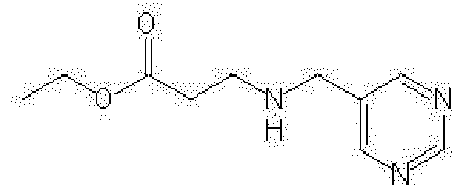
1H NMR (600 MHz, CHLOROFORM-d) δ ppm 1.26 (t, J=7.2 Hz, 3 H) 2.53 (t, J=6.4 Hz, 2 H) 2.00 (t, J=6.4 Hz, 2 H) 3.83 (s, 2 H) 4.15 (q, J=7.2 Hz, 2 H) 8.72 (s, 2 H) 9.13 (s, 1 H). MS ESI/APCI Dual posi : 210[M+H]+. Reference Example A-354 
1H NMR (600 MHz, CHLOROFORM-d) δ ppm 1.26 (t, J=7.2 Hz, 3 H) 1.46 - 1.65 (m, 6 H) 2.53 (t, J=6.4 Hz, 2 H) 2.89 (t, J=6.4 Hz, 2 H) 3.29 - 3.39 (m, 2 H) 3.66 - 3.75 (m, 2 H) 3.82 (s, 2 H) 4.15 (q, J=7.2 Hz, 2 H) 7.33 - 7.37 (m, 4 H). MS ESI/APCI Dual posi : 319[M+H]+, 341[M+Na]+. Reference Example A-355 
1H NMR (600 MHz, CHLOROFORM-d) δ ppm 0.98 (t, J=7.4 Hz, 3 H) 1.25 (t, J=7.2 Hz, 3 H) 1.60 - 1.67 (m, 2 H) 2.51 (t, J=6.4 Hz, 2 H) 2.87 (t, J=6.4 Hz, 2 H) 3.39 - 3.44 (m, 2 H) 3.83 (s, 2 H) 4.13 (q, J=7.2 Hz, 2 H) 6.03 - 6.11 (m, 1 H) 7.36 - 7.39 (m, 2 H) 7.66 - 7.76 (m, 2 H). MS ESI/APCI Dual posi : 293[M+H]+, 315[M+Na]+. Reference Example A-356 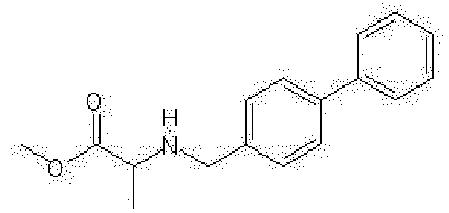
1H NMR (500 MHz, CHLOROFORM-d) δ ppm 1.34 (d, J=6.9 Hz, 3 H) 3.39 - 3.47 (m, 1 H) 3.67 - 3.77 (m, 4 H) 3.81 - 3.88 (m, 1 H) 7.31 - 7.37 (m, 1 H) 7.38 - 7.47 (m, 4 H) 7.52 - 7.61 (m, 4 H). MS ESI/APCI Dual posi : 270[M+H]+, 292[M+Na]+. Reference Example A-357 
1H NMR (500 MHz, CHLOROFORM-d) δ ppm 1.31 (m, 3 H) 1.38 (s, 6 H) 3.67 (s, 2 H) 4.18 - 4.24 (m, 2 H) 7.30 - 7.36 (m, 1 H) 7.39 - 7.46 (m, 4 H) 7.52 - 7.60 (m, 4 H). MS ESI/APCI Dual posi : 298[M+H]+, 320[M+Na]+. [Table 18-52] Compound No. Structure Analytical Data Salt information Reference Example A-358 
1H NMR (600 MHz, CHLOROFORM-d) δ ppm 1.31 (t, J=7.0 Hz, 3 H) 1.37 - 1.53 (m, 4 H) 1.60 - 1.68 (m, 2 H) 1.71 - 1.81 (m, 2 H) 1.90 - 1.99 (m, 2 H) 3.63 (s, 2 H) 4.21 (q, J=7.0 Hz, 2 H) 7.31 - 7.36 (m, 1 H) 7.38 - 7.46 (m, 4 H) 7.52 - 7.60 (m, 4 H). MS ESI/APCI Dual posi : 338[M+H]+. Reference Example A-359 
1H NMR (300 MHz, CHLOROFORM-d) δ ppm 3.70 (s, 3 H) 3.77 (s, 2 H) 4.43 (s, 1 H) 7.28 - 7.49 (m, 10 H) 7.51 - 7.62 (m, 4 H). MS ESI/APCI Dual posi : 332[M+H]+, 354[M+Na]+. Reference Example A-360 
1H NMR (300 MHz, CHLOROFORM-d) δ ppm 1.27 (t, J=7.1 Hz, 3 H) 2.53 (t, J=6.3 Hz, 2 H) 2.89 (t, J=6.3 Hz, 2 H) 3.04 (s, 3 H) 3.90 (s, 2 H) 4.15 (q, J=7.1 Hz, 2 H) 7.55 (d, J=8.4 Hz, 2 H) 7.90 (d, J=8.4 Hz, 2 H). MS ESI/APCI Dual posi : 266[M+H]+. Reference Example A-361 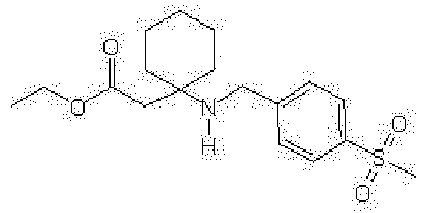
1H NMR (300 MHz, CHLOROFORM-d) δ ppm 1.20 - 1.27 (m, 3 H) 1.31 - 1.74 (m, 10 H) 2.50 (s, 2 H) 3.04 (s, 3 H) 3.78 (s, 2 H) 4.05 - 4.19 (m, 2 H) 7.61 (d, J=8.4 Hz, 2 H) 7.88 (d, J=8.4 Hz, 2 H). MS ESI/APCI Dual posi : 354[M+H]+. Reference Example A-362 
1H NMR (300 MHz, CHLOROFORM-d) δ ppm 1.32 (t, J=7.1 Hz, 3 H) 1.36 - 2.03 (m, 10 H) 3.65 (s, 2 H) 4.22 (q, J=7.1 Hz, 2 H) 7.41 - 7.50 (m, 2 H) 7.51 - 7.60 (m, 2 H) 7.63 - 7.74 (m, 4 H). MS ESI/APCI Dual posi : 406[M+H]+, 428[M+Na]+. Reference Example A-363 
1H NMR (300 MHz, CHLOROFORM-d) δ ppm 1.17 - 2.03 (m, 22 H) 3.62 (s, 2 H) 4.21 (q, J=7.3 Hz, 2 H) 7.33 - 7.62 (m, 8 H). MS ESI/APCI Dual posi : 394[M+H]+, 416[M+Na]+. Reference Example A-364 
1H NMR (300 MHz, CHLOROFORM-d) δ ppm 1.17 - 1.34 (m, 7 H) 1.35 - 1.58 (m, 4 H) 2.01 - 2.10 (m, 2 H) 2.65 (s, 2 H) 3.05 (s, 3 H) 3.86 (s, 2 H) 4.17 (q, J=7.0 Hz, 2 H) 7.51 (d, J=8.4 Hz, 2 H) 7.88 (d, J=8.4 Hz, 2 H). MS ESI/APCI Dual posi : 354[M+H]+, 376[M+Na]+. [Table 18-53] Compound No. Structure Analytical Data Salt information Reference Example A-365 
1H NMR (300 MHz, CHLOROFORM-d) δ ppm 1.00 - 1.18 (m, 1 H) 1.20 - 1.80 (m, 16 H) 1.81 - 2.01 (m, 4 H) 2.24 - 2.35 (m, 1 H) 2.38 - 2.56 (m, 1 H) 4.18 (q, J=7.0 Hz, 2 H) 7.08 - 7.37 (m, 5 H). MS ESI/APCI Dual posi : 344[M+H]+, 366[M+Na]+. Reference Example A-366 
1H NMR (300 MHz, CHLOROFORM-d) δ ppm 1.26 (t, J=7.1 Hz, 3 H) 2.35 (s, 3 H) 2.52 (t, J=6.4 Hz, 2 H) 2.56 (s, 3 H) 2.88 (t, J=8.4 Hz, 2 H) 3.72 (s, 2 H) 4.14 (q, J=7.1 Hz, 2 H) 7.17 (d, J=8.4 Hz, 1 H) 7.37 (dd, J=8.4, 2.8 Hz, 1 H) 7.54 - 7.57 (m, 1 H) 7.84 - 7.87 (m, 1 H) 8.34 (d, J=2.8 Hz, 1 H). MS ESI/APCI Dual posi : 330[M+H]+, 352[M+Na]+. Reference Example A-367 
1H NMR (300 MHz, CHLOROFORM-d) δ ppm 1.23 - 1.41 (m, 3 H) 3.21 (t, J=13.3 Hz, 2 H) 3.87 - 3.97 (m, 2 H) 4.33 (q, J=7.1 Hz, 2 H) 7.42 (d, J=7.9 Hz, 2 H) 7.59 (d, J=7.9 Hz, 2 H). MS ESI/APCI Dual posi : 312[M+H]+, 334[M+Na]+. Reference Example A-368 
1H NMR (300 MHz, CHLOROFORM-d) δ ppm 1.26 (t, J=7.1 Hz, 3 H) 1.58 (s, 9 H) 2.44 - 2.58 (m, 2 H) 2.82 - 2.04 (m, 2 H) 3.86 (s, 2 H) 4.09 - 4.21 (m, 2 H) 7.31 - 7.42 (m, 2 H) 7.90 - 7.98 (m, 2 H). MS ESI/APCI Dual posi : 308[M+H]+, 330[M+Na]+. Reference Example A-369 
1H NMR (300 MHz, CHLOROFORM-d) δ ppm 1.27 (t, J=7.1 Hz, 3 H) 2.58 (t, J=6.5 Hz, 2 H) 2.98 (t, J=6.5 Hz, 2 H) 4.01 (s, 2 H) 4.16 (q, J=7.1 Hz, 2 H) 7.35 - 7.50 (m, 2 H) 7.81 - 7.95 (m, 2 H) 8.61 - 8.70 (m, 1 H) 8.73 - 8.89 (m, 2 H). MS ESI/APCI Dual posi : 286[M+H]+, 308[M+Na]+. Reference Example A-370 
1H NMR (300 MHz, CHLOROFORM-d) δ ppm 1.26 (t, J=7.1 Hz, 3 H) 2.52 (t, J=6.5 Hz, 2 H) 2.84 - 2.96 (m, 2 H) 3.68 (s, 2 H) 3.87 (s, 3 H) 4.14 (q, J=7.1 Hz, 2 H) 7.31 (s, 1 H) 7.41 (s, 1 H). MS ESI/APCI Dual posi : 212[M+H]+, 234[M+Na]+. Reference Example A-371 
1H NMR (300 MHz, CHLOROFORM-d) δ ppm 1.27 (t, J=7.1 Hz, 3 H) 2.54 (t, J=6.2 Hz, 2 H) 2.90 (t, J=6.2 Hz, 2 H) 3.93 (d, J=0.6 Hz, 2 H) 4.16 (q, J=7.1 Hz, 2 H) 8.88 (s, 2 H). MS ESI/APCI Dual posi : 278[M+H]+, 300[M+Na]+. [Table 18-54] Compound No. Structure Analytical Data Salt information Reference Example A-372 
1H NMR (300 MHz, CHLOROFORM-d) δ ppm 1.26 (t, J=7.1 Hz, 3 H) 1.60 (s, 9 H) 2.47 - 2.57 (m, 2 H) 2.59 (s, 3 H) 2.92 (t, J=6.7 Hz, 2 H) 3.67 (d, J=0.9 Hz, 2 H) 4.14 (q, J=7.1 Hz, 2 H) 7.18 (s, 1 H). MS ESI/APCI Dual posi : 312[M+H]+, 334[M+Na]+. MS ESI/APCI Dual nega: 310[M-H]-. Reference Example A-373 
1H NMR (300 MHz, CHLOROFORM-d) δ ppm 1.28 (t, J=7.1 Hz, 3 H) 2.51 (t, J=6.5 Hz, 2 H) 2.89 (t, J=6.5 Hz, 2 H) 3.39 - 3.46 (m, 4 H) 3.76 - 3.83 (m, 4 H) 3.85 (d, J=0.9 Hz, 2 H) 4.14 (q, J=7.1 Hz, 2 H) 7.00 (t, J=0.9 Hz, 1 H). MS ESI/APCI Dual posi : 300[M+H]+, 322[M+Na]+. Reference Example A-374 
1H NMR (300 MHz, CHLOROFORM-d) δ ppm 1.19 - 1.32 (m, 3 H) 2.38 - 2.45 (m, 3 H) 2.49 - 2.58 (m, 2 H) 2.98 (t, J=6.5 Hz, 2 H) 3.98 - 4.10 (m, 2 H) 4.10 - 4.21 (m, 2 H) 6.75 - 6.88 (m, 1 H). MS ESI/APCI Dual posi : 229[M+H]+, 251[M+Na]+. Reference Example A-375 
1H NMR (300 MHz, CHLOROFORM-d) δ ppm 1.16 - 1.31 (m, 3 H) 2.35 (s, 3 H) 2.46 - 2.64 (m, 6 H) 2.88 (t, J=6.5 Hz, 2 H) 3.11 - 3.26 (m, 4 H) 3.72 (s, 2 H) 4.07 - 4.19 (m, 2 H) 6.80 - 6.97 (m, 2 H) 7.13 - 7.25 (m, 2 H). MS ESI/APCI Dual posi : 328[M+Na]+. Reference Example A-376 
1H NMR (300 MHz, CHLOROFORM-d) δ ppm 1.25 (t, J=7.1 Hz, 3 H) 1.88 - 2.01 (m, 2 H) 2.26 (s, 6 H) 2.39 - 2.58 (m, 4 H) 2.88 (t, J=6.5 Hz, 2 H) 3.73 (s, 2 H) 4.00 (t, J=6.5 Hz, 2 H) 4.13 (q, J=7.1 Hz, 2 H) 6.80 - 6.90 (m, 2 H) 7.17 - 7.25 (m, 2 H). MS ESI/APCI Dual posi : 309[M+H]+, 331[M+Na]+. Reference Example A-377 
1H NMR (300 MHz, CHLOROFORM-d) δ ppm 1.19 - 1.30 (m, 3 H) 2.10 (s, 3 H) 2.45 - 2.56 (m, 2 H) 2.83 - 2.92 (m, 2 H) 3.74 (s, 2 H) 4.03 - 4.20 (m, 4 H) 4.37 - 4.48 (m, 2 H) 6.87 (d, J=8.7 Hz, 2 H) 7.24 (d, J=8.7 Hz, 2 H). MS ESI/APCI Dual posi : 310[M+H]+. Reference Example A-378 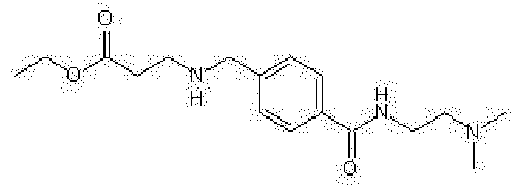
1H NMR (300 MHz, CHLOROFORM-d) δ ppm 1.26 (t, J=7.1 Hz, 3 H) 2.34 (s, 6 H) 2.53 - 2.67 (m, 4 H) 2.82 - 2.93 (m, 2 H) 3.51 - 3.63 (m, 2 H) 3.85 (s, 2 H) 4.14 (q, J=7.1 Hz, 2 H) 7.38 (d, J=8.5 Hz, 2 H) 7.78 (d, J=8.5 Hz, 2 H). MS ESI/APCI Dual posi : 322[M+H]+, 344[M+Na]+. MS ESI/APCI Dual nega : 320[M-H]-. [Table 18-55] Compound No. Structure Analytical Data Salt information Reference Example A-379 
1H NMR (300 MHz, CHLOROFORM-d) δ ppm 1.25 (t, J=7.1 Hz, 3 H) 1.49 (s, 9 H) 2.47 - 2.57 (m, 2 H) 2.88 (t, J=6.5 Hz, 2 H) 3.74 (s, 2 H) 4.14 (q, J=7.1 Hz, 2 H) 4.50 (s, 2 H) 6.80 - 6.91 (m, 2 H) 7.18 - 7.25 (m, 2 H). MS ESI/APCI Dual posi : 338[M+H]+, 360[M+Na]+. MS ESI/APCI Dual nega : 336[M-H]-. Reference Example A-380 
1H NMR (300 MHz, CHLOROFORM-d) δ ppm 1.26 (t, J=7.1 Hz, 3 H) 2.10 (s, 3 H) 2.45 - 2.61 (m, 2 H) 2.83 - 2.94 (m, 2 H) 3.73 (q, J=5.5 Hz, 2 H) 3.85 (s, 2 H) 4.14 (q, J=7.1 Hz, 2 H) 4.25 - 4.35 (m 2 H) 6.43 - 6.60 (m, 1 H) 7.40 (d, J=8.5 Hz, 2 H) 7.73 (d, J=8.5 Hz, 2 H). MS ESI/APCI Dual posi : 337[M+H]+, 359[M+Na]+. Reference Example A-381 
1H NMR (300 MHz, CHLOROFORM-d) δ ppm 1.26 (t, J=7.1 Hz, 3 H) 2.50 - 2.56 (m, 2 H) 2.89 (t, J=6.4 Hz, 2 H) 3.98 (s, 2 H) 4.15 (q, J=7.1 Hz, 2 H) 4.76 (d, J=4.8 Hz, 2 H) 7.16 - 7.25 (m, 1 H) 7.33 (d, J=7.8 Hz, 1 H) 7.41 (d, J=8.4 Hz, 2 H) 7.56 (br. s., 1 H) 7.64 - 7.75 (m, 1 H) 7.79 - 7.87 (m, 2 H) 8.57 (dt, J=5.0, 0.9 Hz, 1 H). US ESI/APCI Dual posi : 342[M+H]+, 364[M+Na]+. MS ESI/APCI Dual nega : 340[M-H]-. Reference Example A-382 
1H NMR (300 MHz, CHLOROFORM-d) δ ppm 1.26 (t, J=7.1 Hz, 3 H) 2.52 (t, J=6.4 Hz, 2 H) 2.85 - 2.93 (m, 2 H) 3.10 (t, J=6.4 Hz, 2 H) 3.79 - 3.95 (m, 4 H) 4.06 - 4.23 (m, 2 H) 7.11 - 7.24 (m, 2 H) 7.33 - 7.41 (m, 2 H) 7.45 - 7.56 (m, 1 H) 7.58 - 7.67 (m, 1 H) 7.68 - 7.77 (m, 2 H) 8.51 - 8.60 (m, 1 H). MS ESI/APCI Dual posi : 356[M+H]+, 378[M+Na]+. MS ESI/APCI Dual nega : 354[M-H]-. Reference Example A-383 
1H NMR (300 MHz, CHLOROFORM-d) δ ppm 1.26 (t, J=7.1 Hz, 3 H) 1.98 - 2.14 (m, 2 H) 2.34 - 2.43 (m, 2 H) 2.52 (t, J=6.5 Hz, 2 H) 2.83 - 2.92 (m, 2 H) 3.44 - 3.68 (m, 6 H) 3.84 (8, 2 H) 4.14 (q, J=7.1 Hz, 2 H) 7.16 - 7.25 (m, 1 H) 7.33 - 7.41 (m, 2 H) 1.69 - 7.81 (m, 2 H). MS ESI/APCI Dual posi : 362[M+H]+, 384[M+Na]+. MS ESI/APCI Dual nega : 360[M-H]-. Reference Example A-384 
1H NMR (300 MHz, CHLOROFORM-d) δ ppm 1.26 (t, J=7.1 Hz, 3 H) 1.51 (s, 9 H) 2.53 (t. J=6.4 Hz, 2 H) 2.89 (t, J=6.4 Hz, 2 H) 3.85 (s, 2 H) 4.08 - 4.21 (m, 4 H) 6.59 - 6.67 (m, 1 H) 7.36 - 7.43 (m, 2 H) 7.74 - 7.80 (m, 2 H). MS ESI/APCI Dual posi : 365[M+H]+, 387[M+Na]+. MS ESI/APCI Dual nega : 363[M-H]-. Reference Example A-385 
1H NMR (300 MHz, CHLOROFORM-d) δ ppm 0.76 - 0.92 (m, 2 H) 1.15 - 1.37 (m, 4 H) 1.66 - 1.76 (m, 1 H) 2.52 (t, J=6.5 Hz, 2 H) 2.58 - 2.74 (m, 2 H) 2.84 - 3.00 (m, 2 H) 4.14 (q, J=7.1 Hz, 2 H) 6.83 7.09 (m, 4 H). MS ESI/APCI Dual posi : 266[M+H]+. [Table 18-56] Compound No. Structure Analytical Data Salt information Reference Example A-386 
1H NMR (300 MHz, CHLOROFORM-d) δ ppm 1.26 (t, J=7.1 Hz, 3 H) 2.56 (t, J=6.6 Hz, 2 H) 2.91 - 2.98 (m, 2 H) 3.92 (s, 2 H) 4.15 (d, J=7.1 Hz, 2 H) 6.94 (d, J=9.0 Hz, 2 H) 7.22 - 7.35 (m, 4 H) 8.31 - 8. 36 (m, 1 H). MS ESI/APCI Dual posi: 335[M+H]+, 357[M+Na]+. MS ESI/APCI Dual nega: 333[M-H]-. Reference Example A-387 
1H NMR (300 MHz, CHLOROFORM-d) δ ppm 1.26 (t, J=7.1 Hz, 3 H) 2.48 - 2.55 (m, 2 H) 2.84 - 2.93 (m, 2 H) 3.76 (s, 2 H) 3.79 (s, 3 H) 4.14 (q, J=7.1 Hz, 2 H) 6.64 - 6.78 (m, 3 H) 6.83 - 6.90 (m 1 H) 7.25 - 7.33 (m, 1 H) 7.62 - 7.76 (m, 1 H) 8.07 - 8.19 (m, 1 H). MS ESI/APCI Dual posi: 331[M+H]+, 353[M+H]+. MS ESI/APCI Dual nega: 329[M-H]-. Reference Example A-388 
1H NMR (300 MHz, CHLOROFORM-d) δ ppm 1.26 (t, J=7.1 Hz, 3 H) 2.54 (t, J=6.5 Hz, 2 H) 2.91 (t, J=6.5 Hz, 2 H) 3.80 (s, 2 H) 4.15 (q, J=7.1 Hz, 2 H) 6.92 - 7.03 (m, 2 H) 7.20 - 7.28 (m, 2 H) 7.31 7.38 (m, 2 H) 8.10 - 8.19 (m, 1 H). MS ESI/APCI Dual posi: 335[M+H]+, 357[M+Na]+. MS ESI/APCI Dual nega: 333[M-H]-. Reference Example A-389 
1H NMR (300 MHz, CHLOROFORM-d) δ ppm 1.27 (t, J=7.1 Hz, 3 H) 2.57 (t, J=6.5 Hz, 2 H) 2.96 (t, J=6.5 Hz, 2 H) 3.94 (s, 2 H) 4.16 (q, J=7.1 Hz, H) 6.98 - 7.10 (m, 2 H) 7.30 - 7.41 (m, 2 H) 7.60 (d, J=8.5 Hz, 2 H) 8.35 - 8.43 (m, 1 H). MS ESI/APCI Dual posi: 369[M+H]+. 391[M+H]+. MS ESI/APCI Dual nega: 367[M-H]-. Reference Example A-390 
1H NMR (300 MHz, CHLOROFORM-d) δ ppm 1.26 (t, J=7.1 Hz, 3 H) 1.82 - 2.03 (m, 4 H) 2.33 - 2.51 (m, 2 H) 2.89 (s, 2 H) 3.78 (s, 2 H) 4.12 - 4.25 (m, 2 H) 7.22 - 7.30 (m, 2 H) 7.42 - 7.49 (m, 1 H). MS ESI/APCI Dual posi: 366[M+H]+. Reference Example A-391 
1H NMR (300 MHz, CHLOROFORM-d) δ ppm 1.16 - 1.31 (m, 9 H) 2.68 (s. 2 H) 3.83 (s, 2 H) 3.93 - 4.02 (m, 3 H) 4.08 - 4.19 (m, 2 H) 6.78 - 6.85 (m, 1 H) 7.35 - 7.51 (m, 4 H) 7.74 - 7.82 (m, 1 H) 8.35 - 8.42 (m, 1 H). MS ESI/APCI Dual posi: 343[M+H]+, 365[M+Na]+. Reference Example A-392 
1H NMR (300 MHz, CHLOROFORM-d) δ ppm 0.73 - 0.81 (m, 4 H) 1.18 (s, 6 H) 1.20 - 1.27 (m, 3 H) 2.62 - 2.67 (m, 2 H) 3.67 - 3.77 (m, 3 H) 4.07 - 4.17 (m, 2 H) 6.95 - 7.02 (m, 2 H) 7.18 - 7.25 (m, 2 H). MS ESI/APCI Dual posi: 292[M+H]+. MS ESI/APCI Dual nega: 290[M-H]-. [Table 18-57] Compound No. Structure Analytical Data Salt information Reference Example A-393 
1H NMR (200 MHz, CHLOROFORM-D) δ ppm 0.33 - 0.42 (m, 2 H) 0.57 - 0.70 (m, 2 H) 1.26 (t, J=7.1 Hz, 3 H) 1.26 - 1.39 (m, 1 H) 2.47 - 2.56 (m, 2 H) 2.81 - 2.92 (m, 2 H) 3.71 (s, 2 H) 3.87 (d, J=6.7 Hz, 2 H) 4.14 (q, J=7.1 Hz, 2 H) 6.86 (d, J=8.4 Hz, 1 H) 7.13 (dd, J=8.4, 2.1 Hz, 1 H) 7.33 (d, J=2.1 Hz, 1 H). MS ESI/APCI Dual posi: 312[M+H]+. Reference Example A-394 
1H NMR (300 MHz, CHLOROFORM-d) δ ppm 1.17 - 1.30 (m, 3 H) 1.85 - 2.03 (m, 4 H) 2.30 - 2.50 (m, 2 H) 2.93 (s, 2 H) 3.97 (s, 3 H) 4.08 - 4.22 (m, 2 H) 4.75 (s, 2 H) 6.73 - 6.85 (m, 1 H) 7.35 - 7.52 (m, 4 H) 7.75 - 7.83 (m, 1 H) 8.35 - 8.41 (m, 1 H). MS ESI/APCI Dual posi: 355[M+H]+. Reference Example A-395 
1H NMR (300 MHz, CHLOROFORM-d) δ ppm 0.62 - 0.72 (m, 2 H) 0.89 - 0.98 (m, 2 H) 1.18 (s, 6 H) 1.23 (t, J=7.1 Hz, 3 H) 1.81 - 1.94 (m, 1 H) 2.64 (s, 2 H) 3.74 (s, 2 H) 4.06 - 4.17 (m, 2 H) 6.98 - 7.05 (m, 2 H) 7.15 - 7.22 (m, 2 H). MS ESI/APCI Dual posi: 276[M+H]+. Reference Example A-396 
1H NMR (300 MHz, CHLOROFORM-d) δ ppm 0.71 - 0.82 (m, 4 H) 1.21 - 1.29 (m, 3 H) 1.81 - 2.03 (m, 4 H) 2.30 - 2.49 (m, 2 H) 2.89 (s, 2 H) 3.65 - 3.79 (m, 3 H) 4.16 (q, J=7.0 Hz, 2 H) 6.95 - 7.02 (m, Z H) 7.18 - 7.25 (m, 2 H). MS ESI/APCI Dual posi: 304[M+H]+, 326[M+Na]+. Reference Example A-397 
1H NMR (300 MHz, CHLOROFORM-d) δ ppm 1.25 (t, J=7.1 Hz, 3 H) 2.37 (s, 3 H) 2.52 (t, J=6.5 Hz, 2 H) 2.89 (t, J=6.5 Hz, 2 H) 3.74 (s, 2 H) 4.14 (q, J=7.1 Hz, 2 H) 5.01 (s, 2 H) 6.90 - 6.96 (m, 2 H) 7.10 - 7.16 (m, 1 H) 7.19 - 7.28 (m, 5 H). MS ESI/APCI Dual posi: 328[M+H]+, 350[M+Na]+. MS ESI/APCI Dual nega: 326[M-H]-. Reference Example A-398 
1H NMR (300 MHz, CHLOROFORM-D) δ ppm 1.27 (t, J=7.1 Hz, 3 H) 2.55 (t, J=6.4 Hz, 2 H) 2.87 - 2.97 (m, 2 H) 3.82 (s, 2 H) 4.15 (q, J=7.1 Hz, 2 H) 6.99 - 7.08 (m, 2 H) 7.27 - 7.43 (m, 3 H) 7.61 (d, J=8.5 Hz, 1 H) 8.42 - 8.50 (m, 1 H). MS ESI/APCI Dual posi: 369[M+H]+, 391[M+Na]+. MS ESI/APCI Dual nega: 367[M-H]-. Reference Example A-399 
1H NMR (300 MHz, CHLOROFORM-d) δ ppm 1.26 (t, J=7.1 Hz, 3 H) 2.36 (s, 3 H) 2.48 - 2.56 (m, 2 H) 2.83 - 2.92 (m, 2 H) 3.75 (s, 2 H) 4.14 (q, J=7.1 Hz, 2 H) 6.82 - 6.99 (m, 2 H) 7.10 - 7.27 (m, 2 H) 7.70 (dd, J=8.4, 2.5 Hz, 1 H) 8.10 (dd, J=2.5, 0.6 Hz, 1 H). MS ESI/APCI Dual posi: 349[M+H]+, 371[M+Na]+. MS ESI/APCI Dual nega: 347[M-H]-. [Table 18-58] Compound No. Structure Analytical Data Salt information Reference Example A-400 
1H NMR (300 MHz, CHLOROFORM-d) δ ppm 1.26 (t, J=7.1 Hz, 3 H) 2.26 (d, J=1.9 Hz, 3 H) 2.46 - 2.57 (m, 2 H) 2.83 - 2.92 (m, 2 H) 3.76 (s, 2 H) 4.14 (q, J=7.1 Hz, 2 H) 6.76 - 6.94 (m, 3 H) 7.11 - 7.22 (m, 1 H) 7.70 (dd, J=8.4, 2.5 Hz, 1 H) 8.10 (dd, J=2.5, 0.6 Hz, 1 H). MS ESI/APCI Dual posi: 333[M+H]+, 355[M+Na]+. MS ESI/APCI Dual nega: 331[M-H]-. Reference Example A-401 
1H NMR (300 MHz, CHLOROFORM-d) δ ppm 1.20 - 1.31 (m, 3 H) 2.27 (d, J=2.0 Hz, 3 H) 2.46 - 2.57 (m, 2 H) 2.83 - 2.92 (m, 2 H) 3.75 (s, 2 H) 4.14 (q, J=7.1 Hz, 2 H) 6.78 - 7.08 (m, 4 H) 7.69 (dd, J=8.4, 2.5 Hz, 1 H) 8.04 - 8.12 (m, 1 H). MS ESI/APCI Dual posi: 333[M+H]+, 355[M+Na]+. MS ESI/APCI Dual nega: 331[M-H]-. Reference Example A-402 
1H NMR (300 MHz, CHLOROFORM-d) 6 ppm 1.25 (t, J=7.1 Hz, 3 H) 2.52 (t, J=6.5 Hz, 2 H) 2.89 (t, J=6.5 Hz, 2 H) 3.74 (s, 2 H) 4.14 (q, J=7.1 Hz, 2 H) 5.16 (s, 2 H) 6.92 - 6.97 (m, 2 H) 7.23 - 7.30 (m, 4 H) 7.37 - 7.42 (m, 1 H) 7.53 - 7.58 (m, 1 H). MS ESI/APCI Dual posi: 348[M+H]+, 370[M+Na]+. MS ESI/APCI Dual nega: 346[M-H]-. Reference Example A-403 
1H NMR (300 MHz, CHLOROFORM-d) δ ppm 0.38 - 0.45 (m, 2 H) 0.49 - 0.58 (m, 2 H) 1.20 - 1.30 (m, 6 H) 1.61 - 1.71 (m, 1 H) 2.51 (t, J=6.5 Hz. 2 H) 2.88 (t, J=6.5 Hz, 2 H) 3.68 - 3.75 (m, 4 H) 4.13 (q, J=7.0 Hz, 2 H) 6.81 - 6.89 (m, 2 H) 7.15 - 7.24 (m, 2 H). MS ESI/APCI Dual posi: 292[M+H]+. Reference Example A-404 
1H NMR (300 MHz, CHLOROFORM-d) δ ppm 1.21 - 1.31 (m, 3 H) 2.05 - 2.32 (m, 4 H) 2.35 - 2.62 (m, 3 H) 2.83 (d, J=7.6 Hz, 2 H) 2.88 - 2.96 (m, 2 H) 3.42 - 3.67 (m, 1 H) 4.04 - 4.24 (m, 2 H) 6.89 - 7.05 (m, 2 H) 7.09 - 7.25 (m, 2 H). MS ESI/APCI Dual posi: 280[M+H]+. Reference Example A-405 
1H NMR (300 MHz, CHLOROFORM-d) δ ppm 1.26 (t, J=7.1 Hz, 3 H) 2.53 (t, J=6.5 Hz, 2 H) 2.89 (t, J=6.5 Hz, 2 H) 3.75 (s, 2 H) 4.14 (q, J=7.1 Hz, 2 H) 5.07 (s, 2 H) 6.89 - 6.96 (m, 2 H) 7.22 - 7.28 (m, 2 H) 7.29 - 7.36 (m, 1 H) 7.75 - 7.81 (m, 1 H) 8.58 (dd, J=4.8, 1.6 Hz, 1 H) 8.68 (d, J=1.6 Hz, 1 H). MS ESI/APCI Dual posi: 315[M+H]+, 337[M+Na]+. MS ESI/APCI Dual nega: 313[M-H]-, 349[M+Cl]+. Reference Example A-406 
1H NMR (300 MHz, CHLOROFORM-d) δ ppm 1.25 (t, J=7.1 Hz, 3 H) 2.52 (t, J=6.5 Hz, 2 H) 2.57 (s, 3 H) 2.88 (t, J=6.5 Hz, 2 H) 3.74 (s, 2 H) 4.13 (q, J=7.1 Hz, 2 H) 5.16 (s, 2 H) 6.89 - 6.97 (m, 2 H) 7.07 (d, J=7.8 Hz, 1 H) 7.20 - 7.25 (m, 2 H) 7.32 (d, J=7.8 Hz, 1 H) 7.59 (t, J=7.8 Hz, 1 H). MS ESI/APCI Dual posi: 329[M+H]+, 351[M+Na]+. [Table 18-59] Compound No. Structure Analytical Data Salt information Reference Example A-407 
1H NMR (300 MHz, CHLOROFORM-d) δ ppm 1.26 (t, J=7.1 Hz, 3 H) 2.51 (t, J=6.5 Hz, 2 H) 2.87 (t, J=6.5 Hz, 2 H) 3.72 (s, 2 H) 4.14 (q, J=7.1 Hz, 2 H) 5.13 (s, 2 H) 6.89 - 6.97 (m, 2 H) 7.05 - 7.12 (m, 1 H) 7.32 - 7.46 (m, 4 H). MS ESI/APCI Dual posi: 332[M+H]+, 354[M+Na]+. MS ESI/APCI Dual nega: 330[M-H]-. Reference Example A-408 
1H NMR (300 MHz, CHLOROFORM-d) δ ppm 1.25 (t, J=7.1 Hz, 3 H) 2.52 (t, J=6.5 Hz, 2 H) 2.89 (t, J=6.5 Hz, 2 H) 3.74 (s, 2 H) 4.14 (q, J=7.1 Hz, 2 H) 5.05 (s, 2 H) 6.89 - 6.95 (m, 2 H) 7.20 - 7.26 (m, 4 H) 7.43 - 7.49 (m, 2 H). MS ESI/APCI Dual posi: 398[M+H]+. 420[M+Na]+. MS ESI/APCI Dual nega: 396[M-H]-, 432[M+Cl]-. Reference Example A-409 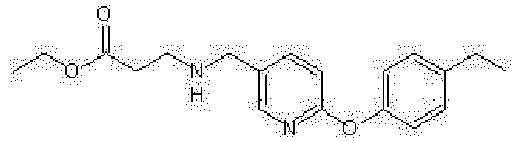
1H NMR (300 MHz, CHLOROFORM-d) δ ppm 1.19 - 1.32 (m, 6 H) 2.43 - 2.57 (m, 2 H) 2.66 (q, J=7.6 Hz, 2 H) 2.79 - 2.96 (m, 2 H) 3.75 (s, 2 H) 4.14 (q, J=7.1 Hz, 2 H) 6.85 (d, J=8.4 Hz, 1 H) 6.99 - 7.09 (m, 2 H) 7.17 - 7.25 (m, 2 H) 7.67 (dd, J=8.4, 2.5 Hz, 1 H) 8.10 (dd, J=2.5, 0.6 Hz, 1 H). MS ESI/APCI Dual posi: 329[M+H]+. Reference Example A-410 
1H NMR (300 MHz, CHLOROFORM-d) δ ppm 0.96 (t, J=7.4 Hz, 3 H) 1.19 - 1.32 (m, 3 H) 1.60 - 1.74 (m, 2 H) 2.44 - 2.66 (m, 4 H) 2.79 - 2.96 (m, 2 H) 3.75 (s, 2 H) 4.05 - 4.22 (m, 2 H) 6.84 (d, J=8.4 Hz, 1 H) 6.96 - 7.10 (m, 2 H) 7.12 - 7.28 (m, 2 H) 7.67 (dd, J=8.4, 2.5 Hz, 1 H) 8.00 - 8.19 (m, 1 H). MS ESI/APCI Dual posi: 343[M+H]+. Reference Example A-411 
1H NMR (300 MHz, CHLOROFORM-d) δ ppm 1.22 - 1.30 (m, 9 H) 2.46 - 2.57 (m, 2 H) 2.79 - 2.99 (m, 3 H) 3.75 (s, 2 H) 4.08 - 4.20 (m, 2 H) 6.85 (d, J=8.4 Hz, 1 H) 7.04 (d, J=8.4 Hz, 2 H) 7.14 - 7.34 (m, 2 H) 7.67 (dd, J=8.4, 2.5 Hz, 1 H) 8.11 (d, J=2.5 Hz, 1 H). MS ESI/APCI Dual posi: 343[M+H]+. Reference Example A-412 
1H NMR (300 MHz, CHLOROFORM-d) δ ppm 1.18 - 1.33 (m, 3 H) 2.25 (s, 3 H) 2.47 - 2.59 (m, 2 H) 2.82 - 2.93 (m, 2 H) 3.72 (s, 2 H) 4.05 - 4.20 (m, 2 H) 4.33 (q, J=8.1 Hz, 2 H) 6.74 (d, J=8.1 Hz, 1 H) 7.04 - 7.18 (m, 2 H). MS ESI/APCI Dual posi: 320[M+H]+. Reference Example A-413 
1H NMR (300 MHz, CHLOROFORM-d) δ ppm 1.26 (t, J=7.1 Hz, 3 H) 2.52 (t, J=6.4 Hz, 2 H) 2.88 (t, J=6.4 Hz, 2 H) 3.73 (s, 2 H) 4.14 (q, J=7.1 Hz, 2 H) 5.37 (s, 2 H) 6.78 (d, J=8.7 Hz, 1 H) 7.30 - 7.41 (m, 3 H) 7.43 - 7.49 (m, 2 H) 7.59 (dd, J=8.7, 2.5 Hz, 1 H) 8.08 (d, J=2.5 Hz, 1 H). MS ESI/APCI Dual posi: 315[M+H]+, 337[M+Na]+. [Table 18-60] Compound No. Structure Analytical Data Salt information Reference Example A-414 
1H NMR (300 MHz, CHLOROFORM-d) δ ppm 1.25 (t, J=7.1 Hz, 3 H) 2.27 (s, 3 H) 2.52 (t, J=6.5 Hz, 2 H) 2.89 (t, J=6.5 Hz, 2 H) 3.71 (s, 2 H) 4.14 (q, J=7.1 Hz, 2 H) 5.07 (s, 2 H) 6.83 (d, J=8.2 Hz, 1 H) 7.04 - 7.14 (m, 2 H) 7.28 - 7.47 (m, 5 H), MS ESI/APCI Dual posi: 328[M+H]+, 350[M+Na]+. MS ESI/APCI Dual nega: 326[M-H]-. Reference Example A-415 
1H NMR (300 MHz, CHLOROFORM-d) δ ppm 1.25 (t, J=7.1 Hz, 3 H) 2.48 - 2.55 (m, 2 H) 2.56 - 2.70 (m, 2 H) 2.8.8 (t, J=6.5 Hz, 2 H) 3.74 (s, 2 H) 4.07 - 4.23 (m, 4 H) 6.82 - 6.89 (m, 2 H) 7.20 - 7.28 (m, 2 H). MS ESI/APCI Dual posi: 320[M+H]+. Reference Example A-416 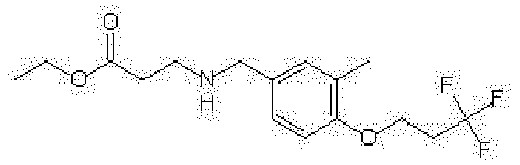
1H NMR (300 MHz, CHLOROFORM-d) δ ppm 1.20 - 1.29 (m, 3 H) 2.20 (s, 3 H) 2.48 - 2.55 (m, 2 H) 2.56 - 2.72 (m, 2 H) 2.88 (t, J=6.5 Hz, 2 H) 3.71 (s, 2 H) 4.08 - 4.23 (m, 4 H) 6.69 - 6.78 (m, 1 H) 7.04 - 7.14 (m, 2 H). MS ESI/APCI Dual posi: 324[M+H]+. Reference Example A-417 
1H NMR (300 MHz, CHLOROFORM-d) δ ppm 1.26 (t, J=7.1 Hz, 3 H) 2.46 - 2.57 (m, 2 H) 2.59 - 2.74 (m, 2 H) 2.82 - 2.90 (m, 2 H) 3.73 (s, 2 H) 4.15 (q, J=7.1 Hz, 2 H) 4.25 (t, J=6.8 Hz, 2 H) 6.86 - 6.96 (m, 1 H) 6.98 - 7.15 (m, 2 H). MS ESI/APCI Dual posi: 338[M+H]+. Reference Example A-418 
1H NMR (300 MHz, CHLOROFORM-d) δ ppm 1.26 (t, J=7.1 Hz, 3 H) 2.37 (s, 3 H) 2.54 (t, J=6.5 Hz, 2 H) 2.93 (t, J=6.5 Hz, 2 H) 3.90 (s, 2 H) 4.14 (q, J=7.0 Hz, 2 H) 6.98 - 7.07 (m, 2 H) 7.18 - 7.25 (m, 2 H) 7.93 - 8.19 (m, 1 H) 8.34 (d, J=1.2 Hz, 1 H). MS ESI/APCI Dual posi: 316[M+H]+. Reference Example A-419 
1H NMR (300 MHz, CHLOROFORM-d) δ ppm 1.26 (t, J=7.1 Hz, 3 H) 2.23 (s, 6 H) 2.32 - 2.70 (m, 2 H) 2.91 (t, J=6.5 Hz, 2 H) 3.77 (s, 2 H) 4.01 - 4.25 (m, 2 H) 6.70 - 6.77 (m, 1 H) 6.78 - 6.84 (m, 1 H) 6.87 - 6.99 (m, 2 H) 7.07 (d, J=8.2 Hz, 1 H) 7.17 - 7.34 (m, 2 H). MS ESI/APCI Dual posi: 328[M+H]+. Reference Example A-420 
1H NMR (300 MHz, CHLOROFORM-d) δ ppm 1.26 (t, J=7.1 Hz, 3 H) 2.35 (s, 3 H) 2.51 (t, J=6.4 Hz, 2 H) 2.86 (t, J=6.4 Hz, 2 H) 3.71 (s, 2 H) 4.14 (q, J=7.1 Hz, 2 H) 5.08 (s, 2 H) 6.89 - 6.99 (m, 2 H) 7.04 - 7.11 (m, 1 H) 7.18 (d, J=8.0 Hz, 2 H) 7.32 (d, J=8.0 Hz, 2 H). MS ESI/APCI Dual posi: 346[M+H]+, 368[M+Na]+. MS ESI/APCI Dual nega: 344[M-H]-. [Table 18-61] Compound No. Structure Analytical Data Salt information Reference Example A-421 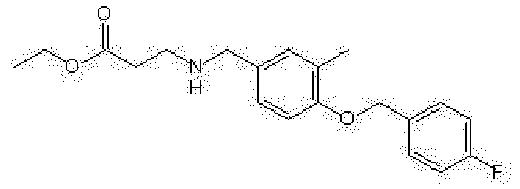
1H NMR (300 MHz, CHLOROFORM-d) δ ppm 1.25 (t, J=7.1 Hz, 3 H) 2.26 (s, 3 H) 2.52 (t, J=6.5 Hz, 2 H) 2.89 (t, J=6.5 Hz, 2 H) 3.71 (s, 2 H) 4.14 (q, J=7.1 Hz, 2 H) 5.02 (s, 2 H) 6.81 (d, J=8.2 Hz, 1 H) 7.02 - 7.14 (m, 4 H) 7.36 - 7.44 (m, 2 H). MS ESI/APCI Dual posi: 346[M+H]+. 368[M+Na]+. MS ESI/APCI Dual nega: 344[M-H]-. Reference Example A-422 
1H NMR (300 MHz, CHLOROFORM-d) δ ppm 1.25 (t, J=7.1 Hz, 3 H) 2.27 (s, 3 H) 2.53 (t, J=6.5 Hz, 2 H) 2.89 (t, J=6.5 Hz, 2 H) 3.71 (s, 2 H) 4.14 (q, J=7.1 Hz, 2 H) 5.06 (s, 2 H) 6.80 (d, J=8.2 Hz, 1 H) 7.06 - 7.15 (m, 2 H) 7.20 - 7.26 (m, 2 H) 7.44 - 7.50 (m, 2 H). MS ESI/APCI Dual posi: 412[M+H]+, 434[M+Na]+. MS ESI/APCI Dual nega : 410[M-H]-, 446[M+Cl]-. Reference Example A-423 
1H NMR (600 MHz, CHLOROFORM-d) δ ppm 1.00 - 1.10 (m, 2 H) 1.26 (t, J=7.2 Hz, 3 H) 1.37 - 1.56 (m, 3 H) 1.86 - 1.94 (m, 2 H) 2.14 - 2.23 (m, 2 H) 2.46 - 2.56 (m, 4 H) 2.87 (t, J=6.4 Hz, 2 H) 4.10 - 4.20 (m, 3 H) 6.86 - 6.95 (m, 3 H) 7.22 - 7.29 (m, 2 H). MS ESI/APCI Dual posi: 306[M+H]+. Reference Example A-424 
1H NMR (200 MHz, CHLOROFORM-d) δ ppm 1.19 - 1.33 (m, 3 H) 1.34 - 1.71 (m, 7 H) 1.93 - 2.10 (m, 2 H) 2.44 - 2.58 (m, 4 H) 2.80 - 2.96 (m, 2 H) 4.04 - 4.23 (m, 2 H) 4.47 - 4.59 (m, 1 H) 6.83 - 6.99 (m, 3 H) 7.19 - 7.34 (m, 2 H). MS ESI/APCI Dual posi: 306[M+H]+. Reference Example A-425 
1H NMR (300 MHz, CHLOROFORM-d) δ ppm 1.26 (t, J=7.1 Hz, 3 H) 2.36 (s, 3 H) 2.51 (t, J=6.4 Hz, 2 H) 2.87 (t, J=6.4 Hz, 2 H) 3.73 (s, 2 H) 4.15 (q, J=7.1 Hz, 2 H) 6.97 - 7.08 (m, 2 H) 7.14 - 7.25 (m, 2 H) 7.78 (d, J=2.2 Hz, 1 H) 7.92 (d, J=2.2 Hz, 1 H). MS ESI/APCI Dual posi: 349[M+H]+. Reference Example A-426 
1H NMR (300 MHz, CHLOROFORM-d) δ ppm 1.26 (t, J=7.1 Hz, 3 H) 2.36 (s, 3 H) 2.52 (t, J=6.3 Hz, 2 H) 2.87 (t, J=6.3 Hz, 2 H) 3.76 (s, 2 H) 4.15 (q, J=7.1 Hz, 2 H) 6.99 - 7.09 (m, 2 H) 7.15 - 7.25 (m, 2 H) 7.47 - 7.56 (m, 1 H) 7.82 (d, J=2.0 H 1 H). MS ESI/APCI Dual posi: 333[M+H]+. Reference Example A-427 
1H NMR (300 MHz, CHLOROFORM-d) δ ppm 1.26 (t, J=7.1 Hz, 3 H) 2.32 (s, 3 H) 2.40 (s, 3 H) 2.52 (t, J=6.4 Hz, 2 H) 2.87 (t, J=6.4 Hz, 2 H) 3.72 (s, 2 H) 4.14 (q, J=7.1 Hz, 2 H) 4.95 (s, 2 H) 7.01 (d, J=8.4 Hz, 1 H) 7.15 (dd, J=8.4, 2.2 Hz, 1 H) 7.34 (d, J=2.2 Hz, 1 H). MS ESI/APCI Dual posi: 369[M+H]+, 389[M+Na]+. MS ESI/APCI Dual nega : 365[M-H]-. [Table 18-62] Compound No. Structure Analytical Data Salt information Reference Example A-428 
1H NMR (300 MHz, CHLOROFORM-d) δ ppm 1.17 - 1.40 (m, 4 H) 1.58 - 1.92 (m, 3 H) 1.94 - 2.40 (m, 3 H) 2.46 - 2.57 (m, 2 H) 2.58 - 2.67 (m, 2 H) 2.83 - 2.96 (m, 2 H) 3.00 - 3.17 (m, 1 H) 4.15 (q, J=7.1 Hz, 2 H) 7.12 - 7.33 (m, 5 H). MS ESI/APCI Dual posi : 276[M+H]+. Reference Example A-429 
1H NMR (300 MHz, CHLOROFORM-d) δ ppm 0.36 - 0.43 (m, 2 H) 0.51 - 0.58 (m, 2 H) 1.10 - 1.29 (m, 6 H) 2.51 (t, J=6.4 Hz, 2 H) 2.87 (t, J=6.4 Hz, 2 H) 3.71 (s, 2 H) 4.06 (s, 2 H) 4.09 - 4.18 (m, 2 H) 6.75 (d, J=8.4 Hz, 1 H) 7.57 (dd, J=8.4, 2.5 Hz, 1 H) 8.02 (d, J=2.5 Hz, 1 H). MS ESI/APCI Dual posi: 293[M+H]+. Reference Example A-430 
1H NMR (300 MHz, CHLOROFORM-d) δ ppm 0.06 - 0.16 (m, 2 H) 0.39 - 0.52 (m, 2 H) 0.73 - 0.90 (m, 1 H) 1.20 - 1.32 (m, 3 H) 1.61 - 1.71 (m, 2 H) 2.44 - 2.57 (m, 2 H) 2.82 - 2.93 (m, 2 H) 3.72 (s, 2 H) 4.06 - 4.20 (m, 2 H) 4.34 (t, J=6.8 Hz, 2 H) 6.70 (d, J=9,4 Hz, 1 H) 7.57 (dd, J=8.4, 2.5 Hz, 1 H) 8.01 - 8.09 (m, 1 H). MS ESI/APCI Dual posi: 293[M+H]+. Reference Example A-431 
1H NMR (300 MHz, DMSO-d6) δ ppm 1.17 (t, J=7.1 Hz, 3 H) 2.38 - 2.44 (m, 2 H) 2.46 (s, 3 H) 2.64 - 2.71 (m, 2 H) 3.60 (s, 2 H) 4.04 (q, J=7.1 Hz, 2 H) 5.07 (s, 2 H) 6.94 (d, J=8.7 Hz, 2 H) 7.21 (d, J=8.7 Hz, 2 H) 7.27 (d, J=7.9 Hz, 1 H) 7.73 (dd, J=7.9, 2.2 Hz, 1 H) 8.51 (d, J=2.2 Hz, 1 H). MS ESI/APCI Dual posi: 329[M+H]+, 351[M+Na]+. MS ESI/APCI Dual nega: 327[M-H]-. Reference Example A-432 
1H NMR (300 MHz, CHLOROFORM-d) δ ppm 0.73 - 0.81 (m, 2 H) 0.82 - 0.89 (m, 2 H) 1.20 (t, J=7.1 Hz, 3 H) 2.43 (t, J=6.7 Hz, 3 H) 2.78 (s, 2 H) 2.86 (t, J=6.7 Hz, 2 H) 4.08 (q, J=7.1 Hz, 2 H) 7.14 - 7.24 (m, 1 H) 7.25 - 7.38 (m, 4 H). MS ESI/APCI Dual posi: 248[M+H]+. Reference Example A-433 
1H NMR (300 MHz, CHLOROFORM-d) δ ppm 0.73 - 0.86 (m, 4 H) 1.21 (t, J=7.1 Hz, 3 H) 2.43 (t, J=6.5 Hz, 2 H) 2.76 (s, 2 H) 2.85 (t, J=6.5 Hz, 2 H) 4.09 (q, J=7.1 Hz, 2 H) 7.19 - 7.33 (m, 4 H). MS ESI/APCI Dual posi: 282[M+H]+. Reference Example A-443 
1H NMR (300 MHz, DMSO-d6) δ ppm 1.17 (t, J=7.1 Hz, 3 H) 2.38 - 2.44 (m, 2 H) 2.64 - 2.72 (m, 2 H) 3.61 (s, 2 H) 4.04 (q, J=7.1 Hz, 2 H) 5.10 (s, 2 H) 6.95 - 7.02 (m, 2 H) 7.20 - 7.27 (m, 3 H) 7.77 (dd, J=7.7, 1.8 Hz, 1 H) 8.40 (dd, J=4.9, 1.8 Hz, 1 H). MS ESI/APCI Dual posi: 329[M+H]+, 351[M+Na]+. MS ESI/APCI Dual nega: 327[M-H]-. [Table 18-63] Compound No. Structure Analytical Data Salt information Reference Example A-435 
1H NMR (300 MHz, CHLOROFORM-d) δ ppm 0.94 - 1.13 (m, 2 H) 1.26 (t, J=7.1 Hz, 3 H) 1.32 - 1.62 (m, 3 H) 1.83 - 1.05 (m, 2 H) 2.06 - 2.21 (m, 2 H) 2.43 - 2.57 (m, 4 H) 2.82 - 2.92 (m, 2 H) 3.98 - 4.10 (m, 1 H) 4.10 - 4.20 (m, 2 H) 6.79 - 6.87 (m, 2 H) 6.90 - 6.99 (m, 2 H). MS ESI/APCI Dual posi: 324[M+H]+. Reference Example A-436 
1H NMR (300 MHz, CHLOROFORM-d) δ ppm 0.96 - 1.17 (m, 2 H) 1.27 (t, J=7.1 Hz, 3 H) 1.37 - 1.67 (m, 3 H) 1.85 - 1.99 (m, 2 H) 2.10 - 2.25 (m, 2 H) 2.46 - 2.59 (m, 4 H) 2.88 (t, J=6.5 Hz, 2 H) 4.05 = 4.30 (m, 3 H) 6.87 - 6.99 (m, 2 H) 7.45 - 7.58 (m, 2 H). MS ESI/APCI Dual posi: 374[M+H]+. Reference Example A-437 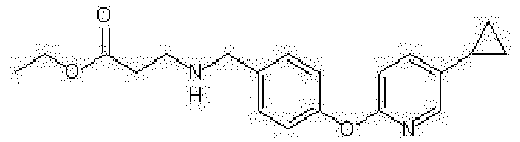
1H NMR (300 MHz, CHLOROFORM-d) δ ppm 0.58 - 0.71 (m, 2 H) 0.90 - 1.02 (m, 2 H) 1.26 (t, J=7.1 Hz, 3 H) 1.78 - 1.93 (m, 1 H) 2.53 (t, J=6.5 Hz, 2 H) 2.92 (t, J=6.5 Hz, 2 H) 3.80 (s, 2 H) 4.15 (q, J=7.1 Hz, 2 H) 6.75 - 6.83 (m, 1 H) 7.00 - 7.10 (m, 2 H) 7.28 - 7.39 (m, 3 H) 7.97 - 8.08 (m, 1 H). MS ESI/APCI Dual posi: 341[M+H]+. Reference Example A-438 
1H NMR (300 MHz, CHLOROFORM-d) δ ppm 1.25 (t, J=7.1 Hz, 3 H) 2.52 (t, J=6.5 Hz, 2 H) 2.88 (t, J=6.5 Hz, 2 H) 3.74 (s, 2 H) 4.13 (q, J=7.1 Hz, 2 H) 5.17 (s, 2 H) 6.99 - 6.95 (m, 3 H) 7.21 - 7.28 (m, 2 H) 7.48 (dd, J=8.4. 0.7 Hz, 1 H) 7.69 (dd, J=8.4, 2.4 Hz, 1 H) 8.55 (dd, J=2.4, 0.7 Hz, 1 H). MS ESI/APCI Dual posi: 249[M+H]+, 371[M+Na]+. MS ESI/APCI Dual nega: 349[M-H]-, 383[M+Cl]-. Reference Example A-439 
1H NMR (300 MHz, CHLOROFORM-d) δ ppm 1.25 (t, 1=7.1 Hz, 3 H) 2.46 (d, J=1.1 Hz, 3 H) 2.52 (t, J=6.5 Hz, 2 H) 2.88 (t, J=6-5 Hz, 2 H) 3.74 (s, 2 H) 4.14 (q, J=7.1 Hz, 2 H) 5.28 (s, 2 H) 6.93 - 6.98 (m, 2 H) 7.21 - 7.26 (m, 2 H) 7.41 (q, J=1.1 Hz, 1 H). MS ESI/APCI Dual posi: 335[M+H]+, 357[M+Na]+. MS ESI/APCI Dual nega: 333[M-H]-. Reference Example A-440 
1H NMR (300 MHz, CHLOROFORM-d) δ ppm 1.25 (t, J=7.1 Hz, 3 H) 2.52 (t, J=6.5 Hz, 2 H) 2.89 (t, J=6.5 Hz, 2 H) 3.74 (s, 2 H) 4.14 (q, J=7.1 Hz, 2 H) 5.13 (s, 2 H) 6.83 (d, J=4.5 Hz, 1 H) 6.96 - 7.00 (m, 2 H) 7.20 - 7.30 (m, 2 H) 7.39 (d, J=4.5 Hz, 1 H) 7.51 (s, 1 H). MS ESI/APCI Dual posi: 360[M+H]+, 382[M+Na]+. MS ESI/APCI Dual nega: 358[M-H]-. Reference Example A-441 
1H NMR (300 MHz, CHLOROFORM-d) δ ppm 1.20 - 1.30 (m, 3 H) 2.37 (s, 3 H) 2.44 - 2.60 (m, 2 H) 2.88 (t, J=6.3 Hz, 2 H) 3.76 (s, 2 H) 4.08 - 4.20 (m, 2 H) 7.03 - 7.12 (m, 2 H) 7.18 - 7.26 (m, 2 H) 8.49 (s, 2 H). MS ESI/APCI Dual posi: 316[M+H]+. [Table 18-64] Compound No. Structure Analytical Data Salt information Reference Example A-442 
1H NMR (300 MHz, CHLOROFORM-d) δ ppm 1.19 - 1.32 (m, 3 H) 2.05 (s, 2 H) 2.33 (s, 3 H) 2.55 (t, J=6.4 Hz, 2 H) 2.82 - 2.98 (m, 2 H) 3.67 - 3.19 (m, 5 H) 4.06 - 4.22 (m, 2 H) 7.00 - 7.09 (m, 2 H) 7.30 - 7.37 (m, 2 H) 7.56 (d, J=1.9 Hz, 1 H) 7.89 (d, J=1.9 Hz, 1 H). MS ESI/APCI Dual posi: 349[M+H]+. Reference Example A-443 
1H NMR (300 MHz, CHLOROFORM-d) δ ppm 1.26 (t, J=7.1 Hz, 3 H) 2.22 (s, 3 H) 2.45 - 3.56 (m, 2 H) 2.83 - 2.94 (m, 2 H) 3.71 (s, 2 H) 4.14 (q, J=7.1 Hz, 2 H) 4.75 (q, J=8.7 Hz, 2 H) 7.41 - 7.49 (m, 1 H) 7.83 - 7.91 (m, 1 H). MS ESI/APCI Dual posi: 321[M+H]+. Reference Example A-444 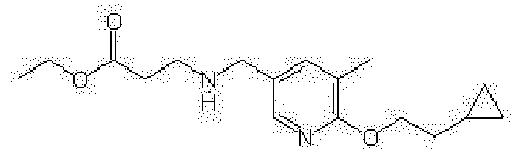
1H NMR (300 MHz, CHLOROFORM-d) δ ppm 0.08 - 0.17 (m, 2 H) 0.39 - 0.51 (m, 2 H) 0.75 - 0.91 (m, 1 H) 1.18 - 1.30 (m, 3 H) 1.61 - 1.74 (m, 2 H) 2.15 - 2.22 (m, 3 H) 2.47 - 2.58 (m, 2 H) 2.81 - 2.94 (m, 2 H) 3.68 (s, 2 H) 4.06 - 4.20 (m, 2 H) 4.36 (t, J=6.6 Hz, 2 H) 7.35 - 7.41 (m, 1 H) 7.80 - 7.90 (m, 1 H). MS ESI/APCI Dual posi: 307[M+H]+. Reference Example A-445 
1H NMR (300 MHz, CHLOROFORM-d) δ ppm 0.99 - 1.21 (m, 2 H) 1.26 (t, J=7.1 Hz, 3 H) 1.33 - 1.82 (m, 3 H) 1.81 - 1.94 (m, 2 H) 2.09 - 2.24 (m, 2 H) 2.42 - 2.60 (m, 4 H) 2.87 (t, J=6.5 Hz, 2 H) 4.15 (q, J=7.1 Hz, 2 H) 4.79 - 4.95 (m, 1 H) 6.53 - 6.70 (m, 1 H) 7.22 - 7.37 (m, 1 H) 7.92 - 8.01 (m, 1 H). MS ESI/APCI Dual posi: 325LM+HJ'. Reference Example A-446 
1H HNR (300 MHz; CHLOROFORM-d) δ ppm 1.20 (t, J=7.1 Hz, 3 H) 1.31 (s, 6 H) 2.40 (t, J=6.5 Hz, 2 H) 2.71 (s, 2 H) 2.80 (t, J=6.5 Hz, 2 H) 4.07 (q, J=7.1 Hz, 2 H) 7.24 - 7.34 (m, 2 H) 7.37 - 7.46 (m, 2 H). MS ESI/APCI Dual posi: 284[M+H]+. Reference Example A-447 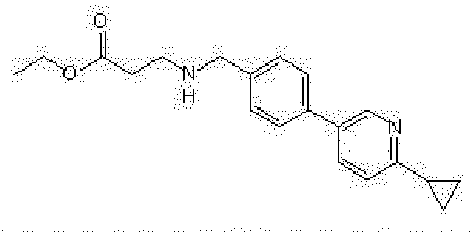
1H HMR (300 MHz, CHLOROFORM-d) δ ppm 0.97 - 1.11 (m, 4 H) 1.26 (t, J=7.1 Hz, 3 H) 2.01 - 2.16 (m, 1 H) 2.54 (t, J=6.5 Hz, 2 H) 2.92 (t, J=6.5 Hz, 2 H) 3.85 (s, 2 H) 4.15 (q, J=7.1 Hz, 2 H) 7.14 - 7.23 (m, 1 H) 7.37 - 7.44 (m, 2 H) 7.47 - 7.55 (m, 2 H) 7.67 - 7.77 (m, 1 H) 8.61 - 8.73 (m, 1 H). MS ESI/APCI Dual posi: 324[M+H]+. Reference Example A-448 
1H NMR (300 MHz, CHLOROFORM-d) δ ppm 1.26 (t, J=7.1 Hz, 3 H) 2.49 (s, 3 H) 2.53 (t, J=6.4 Hz, 2 H) 2.90 (t, J=6.4 Hz, 2 H) 3.81 (s, 2 H) 4.14 (q, J=7.1 Hz, 2 H) 5.06 (s, 2 H) 7.03 - 7.07 (m, 1 H) 7.13 - 7.19 (m, 1 H) 7.32 - 7.41 (m, 4 H) 8.24 - 8.27 (m, 1 H). MS ESI/APCI Dual posi: 329[M+H]+, 351[M+Na]+. MS ESI/APCI Dual nega: 327[M-H]-, 363[M+Cl]-. [Table 18-65] Compound No. Structure Analytical Data Salt information Reference Example A-449 
1H NMR (300 MHz, CHLOROFORM-d) δ ppm 1.26 (t, J=7.1 Hz, 3 H) 2.53 (t, J=6.5 Hz, 2 H) 2.90 (t, J=6.5 Hz, 2 H) 3.81 (s, 2 H) 4.14 (q, J=7.1 Hz, 2 H) 5.05 (s, 2 H) 6.94 - 7.01 (m, 3 H) 7.27 - 7.42 (m, 6 H). MS ESI/APCI Dual posi: 314[M+H]+, 336[M+Na]+. MS ESI/APCI Dual nega: 312[M-H]-, 348[M+Cl]-. Reference Example A-450 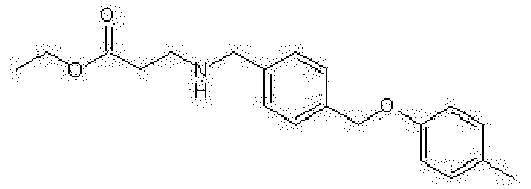
1H NMR (300 MHz, CHLOROFORM-d) δ ppm 1.26 (t, J=7.1 Hz, 3 H) 2.28 (s, 3 H) 2.52 (t, J=6.5 Hz, 2 H) 2.89 (t, J=6.5 Hz, 2 H) 3.81 (s, 2 H) 4.14 (q, J=7.1 Hz, 2 H) 5.02 (s, 2 H) 6.84 - 6.90 (m, 2 H) 7.05 7.11 (m. 2 H) 7.20 - 7.41 (m, 4 H). MS ESI/APCI Dual posi: 328[M+H]+, 350[M+Na]+. MS ESI/APCI Dual nega: 326[M-H]-, 362[M+Cl]-. Reference Example A-451 
1H NMR (300 MHz, CHLOROFORM-d) δ ppm 1.26 (t, J=7.1 Hz, 3 H) 2.35 (s, 3 H) 2.52 (t, J=6.5 Hz, 2 H) 2.88 (t, J=6.5 Hz, 2 H) 3.73 (s, 2 H) 4.14 (q, J=7.1 Hz, 2 H) 5.32 (s, 2 H) 6.76 (dd, J=8.5, 0.5 Hz, 1 H) 7.18 (d. J=8.0 Hz, 2 H) 7.35 (d, J=8.0 Hz, 2 H) 7.58 (dd, J=8.5. 2.4 Hz, 1 H) 8.08 (dd, J=2.4, 0.5 Hz, 1 H). MS ESI/APCI Dual posi: 329[M+H]+. 351[M+Na]+. Reference Example A-452 
1H NMR (300 MHz, CHLOROFORM-d) δ ppm 1.26 (t, J=7.1 Hz, 3 H) 2.52 (t, J=6.4 Hz, 2 H) 2.88 (t, J=6.4 Hz, 2 H) 3.73 (s, 2 H) 4.14 (q, J=7.1 Hz, 2 H) 5.33 (s, 2 H) 6.77 (dd, J=8.5, 0.5 Hz, 1 H) 7.31 - 7.36 (m, 2 H) 7.36 - 7.42 (m, 2 H) 7.60 (dd, J=8.5, 2.5 Hz, 1 H) 8.06 (dd, J=2.5, 0.5 Hz, 1 H). MS ESI/APCI Dual posi: 349[M+H]+, 371[M+Na]+. MS ESI/APCI Dual nega: 347[M-H]+, 383[M+Cl]-. Reference Example A-453 
1H NMR (300 MHz, CHLOROFORM-d) δ ppm 0.08 - 0.17 (m, 2 H) 0.41 - 0.53 (m, 2 H) 0.76 - 0.93 (m, 1 H) 1.26 (t, J=7.1 Hz, 3 H) 1.66 - 1.76 (m, 2 H) 2.44 - 2.57 (m, 2 H) 2.77 - 2.94 (m, 2 H) 3.71 (s, 2 H) 4.15 (q, J=7.1 Hz, 2 H) 4.39 - 4.47 (m, 2 H) 7.66 (d, J=2.2 Hz, 1 H) 7.94 (d, J=2.2 Hz, 1 H) MS ESI/APCI Dual posi: 327[M+H]+. Reference Example A-454 
1H NMR (300 MHz, CHLOROFORM-d) δ ppm 1.26 (t, J=7.1 Hz, 3 H) 2.54 (t, J=6.5 Hz, 2 H) 2.92 (t, J=6.5 Hz, 2 H) 3.86 (s, 2 H) 4.04 (s, 3 H) 4.15 (q, J=7.1 Hz, 2 H) 6.65 - 6.71 (m, 1 H) 7.30 - 7.36 (m, 1 H) 7.37 - 7.44 (m, 2 H) 7.57 - 7.68 (m, 1 H) 7.96 - 8.05 (m, 2 H). MS ESI/APCI Dual posi: 315[M+H]+. Reference Example A-455 
1H NMR (300 MHz, CHLOROFORM-d) δ ppm 1.26 (t, J=7.1 Hz, 3 H) 2.54 (t, J=6.5 Hz, 2 H) 2.91 (t, J=6.5 Hz, 2 H) 3.87 (s, 2 H) 4.15 (q, J=7.1 Hz, 2 H) 7.39 - 7.47 (m, 2 H) 7.63 - 7.77 (m, 2 H) 7.89 - 7.96 (m, 2 H) 8.60 - 8.66 (m, 1 H). MS ESI/APCI Dual posi: 319[M+H]+. [Table 18-66] Compound No. Structure Analytical Data Salt information Reference Example A-456 
1H NMR (300 MHz, CHLOROFORM-d) δ ppm 1.26 (t, J=7.1 Hz, 3 H) 2.53 (t, J=6.4 Hz, 2 H) 2.90 (t, J=6.4 Hz, 2 H) 3.82 (s, 2 H) 4.14 (q, J=7.1 Hz, 2 H) 5.15 (s, 2 H) 7.29 - 7.40 (m, 5 H) 7.56 - 7.84 (m, 1 H) 8.43 - 8.48 (m, 1 H). MS ESI/APCI Dual posi : 383[M+H]+, 405[M+Na]+. MS ESI/APCI Dual nega: 381[M-H]-. Reference Example A-457 
1H NMR (300 MHz, CHLOROFORM-d) δ ppm 1.25 (t, J=7.1 Hz, 3 H) 2.53 (t, J=6.5 Hz, 2 H) 2.90 (t, J=6.5 Hz, 2 H) 3.82 (s, 2 H) 4.14 (q, J=7.1 Hz, 2 H) 5.41 (s, 2 H) 6.84 - 6.89 (m, 1 H) 7.31 - 7.37 (m, 2 H) 7.39 - 7.45 (m, 2 H) 7.74 - 7.80 (m, 1 H) 8.43 - 8.47 (m, 1 H). MS ESI/APCI Dual posi: 383[M+H]+, 405[M+Na]+. MS ESI/APCI Dual nega: 381[M-H]-. Reference Example A-458 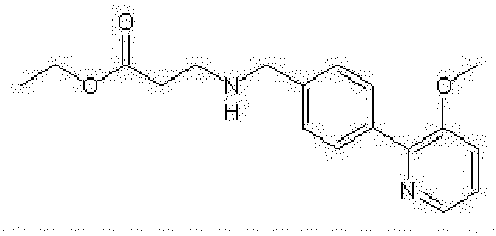
1H NMR (300 MHz, CHLOROFORM-d) δ ppm 1.26 (t, J=7.1 Hz, 3 H) 2.54 (t, J=6.5 Hz, 2 H) 2.92 (t, J=6.5 Hz, 2 H) 3.83 - 3.87 (m, 2 H) 3.90 (s, 3 H) 4.15 (q, J=7.1 Hz, 2 H) 7.21 - 7.30 (m, 1 H) 7.37 - 7.45 (m, 2 H) 7.62 - 7.71 (m, 1 H) 7.85 - 7.93 (m, 2 H) 8.36 - 8.42 (m, 1 H). MS ESI/APCI Dual posi: 315[M+H]+. Reference Example A-459 
1H NMR (300 MHz, CHLOROFORM-d) δ ppm 1.24 (t, J=7.1 Hz, 3 H) 2.68 - 2.76 (m, 2 H) 2.95 - 3.08 (m, 2 H) 3.85 (s, 3 H) 3.98 (s, 2 H) 4.13 (q, J=7.1 Hz, 2 H) 7.19 - 7.54 (m, 4 H) 7.85 - 7.96 (m, 2 H) 8.28 - 8.34 (m, 1 H). MS ESI/APCI Dual posi: 315[M+H]+. Reference Example A-460 
1H NMR (300 MHz, CHLOROFORM-d) δ ppm 1.26 (t, J=7.1 Hz, 3 H) 1.31 - 1.60 (m, 5 H) 1.79 - 1.96 (m, 4 H) 2.47 - 2.57 (m, 4 H) 2.83 - 2.92 (m, 2 H) 3.57 - 3.65 (m, 1 H) 4.14 (q, J=7.1 Hz, 2 H) 4.45 (s, 2 H) 7.26 - 7.31 (m, 4 H). MS ESI/APCI Dual posi: 354[M+H]+. Reference Example A-461 
1H NMR (300 MHz, CHLOROFORM-d) δ ppm 0.94 - 1.15 (m, 2 H) 1.19 - 1.64 (m, 4 H) 1.83 - 1.96 (m, 2 H) 2.08 - 2.21 (m, 2 H) 2.44 - 2.57 (m, 4 H) 2.80 - 2.92 (m, 2 H) 4.02 - 4.27 (m, 4 H) 6.76 - 6.86 (m, 2 H) 7.16 - 7.24 (m, 2 H). MS ESI/APCI Dual posi: 340[M+H]+. Reference Example A-462 
1H NMR (300 MHz, CHLOROFORM-d) δ ppm 0.85 - 1.04 (m, 2 H) 1.20 - 1.58 (m, 6 H) 1.77 - 1.91 (m, 2 H) 2.03 - 2.16 (m, 2 H) 2.42 - 2.58 (m, 4 H) 2.86 (t, J=6.4 Hz, 2 H) 3.20 - 3.35 (m, 1 H) 4.14 (q, J=7.1Hz, 2 H) 4.51 (s, 2 H) 7.25 - 7.35 (m, 4 H). MS ESI/APCI Dual posi: 354[M+H]+. [Table 18-67] Compound No. Structure Analytical Data Salt information Reference Example A-463 
1H NMR (300 MHz, CHLOROFORM-d) δ ppm 0.93 - 1.13 (m, 2 H) 1.26 (t, J=7.1 Hz, 3 H) 1.32 - 1.59 (m, 3 H) 1.81 - 1.95 (m, 2 H) 2.00 - 2.22 (m, 2 H) 2.27 (s, 3 H) 2.44 - 2.56 (m, 4 H) 2.81 - 2.22 (m, 2 H) 4.01 - 4.22 (m, 3 H) 8.74 - 6.85 (m, 2 H) 7.01 - 7.11 (m, 2 H). MS ESI/APCI Dual posi: 320[M+H]+. Reference Example A-464 
1H HMR (300 MHz, CHLOROFORM-d) δ ppm 0.95 - 1.13 (m, 2 H) 1.15 - 1.31 (m, 6 H) 1.33 - 1.62 (m, 3 H) 1.81 - 1.95 (m, 2 H) 2.10 - 2.24 (m, 2 H) 2.44 - 2.65 (m, 6 H) 2.82 - 2.92 (m, 2 H) 4.03 - 4.22 (m; 3 H) 6.77 - 6.86 (m, 2 H) 7.05 - 7.13 (m, 2 H). MS ESI/APCI Dual posi: 334[M+H]+. Reference Example A-465 
1H NMR (300 MHz, CHLOROFORM-d) δ ppm 1.00 - 1.19 (m, 2 H) 1.27 (t, J=7.1 Hz, 3 H) 1.32 - 1.62 (m, 3 H) 1.80 - 1.94 (m, 2 H) 2.07 - 2.23 (m, 2 H) 2.42 - 2.60 (m, 4 H) 2.87 (t. J=6.5 Hz, 2 H) 4.15 (q, J=7.1 Hz, 2 H) 4.80 - 4.99 (m, 1 H) 6.57 - 6.68 (m, 1 H) 9.40 - 7.55 (m, 1 H) 8.00 - 8.11 (m, 1 H). MS ESI/APCI Dual posi: 341[M+H]+. Reference Example A-466 
MS ESI/APCI Dual posi : 325[M+H]+. Reference Example A-467 
MS ESI/APCI Dual posi: 324[M+H]+. Reference Example A-468 
1H NMR (300 MHz, CHLOROFORM-d) δ ppm 1.02 - 1.20 (m, 2 H) 1.26 (t, J=7.1 Hz, 3 H) 1.33 - 1.60 (m, 3 H) 1.81 - 1.94 (m, 2 H) 2.10 - 2.27 (m, 5 H) 2.43 - 2.58 (m, 4 H) 2.82 - 2.92 (m, 2 H) 4.15 (q, J=7.1 Hz, 2 H) 4.82 - 4.99 (m, 1 H) 6.53 - 6.64 (m, 1 H) 7.30 - 7.41 (m, 1 H) 7.88 - 7.98 (m, 1 H). MS ESI/APCI Dual posi: 321[H+H]+. Reference Example A-469 
1H NMR (300 MHz, CHLOROFORM-d) δ ppm 1.26 (t, J=7.1 Hz, 3 H) 2.54 (t, J=6.5 Hz, 2 H) 2.91 (t, J=6.5 Hz, 2 H) 3.86 (s, 2 H) 3.91 (s, 3 H) 4.15 (q, J=7.1 Hz, 2 H) 6.72 - 6.80 (m, 1 H) 7.18 - 7.25 (m, 1 H) 7.36 - 7.47 (m, 2 H) 7.87 - 7.98 (m, 2 H) 8.46 - 8.55 (m, 1 H). MS ESI/APCI Dual posi : 315[M+H]+. [Table 18-68] Compound No. Structure Analytical Data Salt information Reference Example A-470 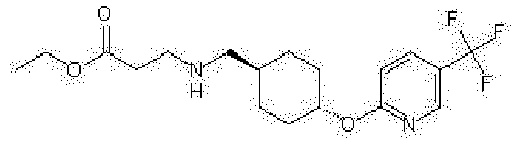
1H NMR (300 MHz, CHLOROFORM-d) δ ppm 1.04 - 1.21 (m, 2 H) 1.27 (t, J=7.1 Hz, 3 H) 1.35 - 1.62 (m, 3 H) 1.82 - 1.97 (m, 2 H) 2.10 - 2.26 (m, 2 H) 2.43 - 2.58 (m, 4 H) 2.82 - 2.93 (m, 2 H) 4.15 (q, J=7.1 Hz, 2 H) 4.93 - 5.10 (m, 1 H) 6.70 - 6.79 (m, 1 H) 7.68 - 7.79 (m, 1 H) 8.36 - 8.45 (m, 1 H). MS ESI/APCI Dual posi : 375[M+H]+. Reference Example A-4711 
1H NMR (300 MHz, CHLOROFORM-d) δ ppm 0.84 - 1.04 (m, 2 H) 1.20 - 1.54 (m, 6 H) 1.77 - 1.91 (m, 2 H) 2.04 - 2.16 (m, 2 H) 2.41 - 2.55 (m, 4 H) 2.81 - 2.89 (m, 2 H) 3.21 - 8.35 (m, 1 H) 4.14 (q, J=7.1 Hz, 2 H) 4.51 (s, 2 H) 8.96 - 7.07 (m, 2 H) 7.25 - 7.36 (m, 2 H). MS ESI/APCI Dual posi : 338[M+H]+. Reference Example A-472 
1H NMR (300 MHz, CHLOROFORM-d) δ ppm 1.02 - 1.21 (m, 2 H) 1.26 (t, J=7.1 Hz, 3 H) 1.35 - 1.66 (m, 3 H) 1.14 - 1. 95 (m, 2 H) 2.11 - 2.25 (m, 2 H) 2.44 - 2.60 (m, 4 H) 2.80 - 2.94 (m, 2 H) 4.15 (q, J=7.1 Hz, 2 H) 4.89 - 5.04 (m, 1 H) 6.62 - 6.71 (m, 1 H) 6.76 - 6.86 (m, 1 H) 7.49 - 7.59 (m, 1 H) 8.08 - 8.18 (m, 1 H). MS ESI/APCI Dual posi : 307[M+H]+. Reference Example A-473 
1H NMR (300 MHz, CHLOROFORM-d) δ ppm 1.22 - 1.29 (m, 3 H) 2.52 - 2.60 (m, 2 H) 2.94 (t, J=6.5 Hz, 2 H) 3.92 (s, 2 H) 4.09 - 4.21 (m, 2 H) 7.10 (d, J=9.0 Hz, 2 H) 7.36 (d, J=9.0 Hz, 2 H) 8.07 - 8.11 (m, 1 H) 8.38 (d, J=1.4 Hz, 1 H). NS ESI/APCI Dual posi : 336[M+H]+. Reference Example A-474 
1H NMR (300 MHz, CHLOROFORM-d) δ ppm 0.09 - 0.17 (m, 2 H) 0.46 - 0.54 (m, 3 H) 0.77 - 0.93 (m, 1 H) 1.26 (t, J=7.1 Hz, 3 H) 1.60 (q, J=6.7 Hz, 2 H) 2.56 (t, J=6.6 Hz, 2 H) 2.93 (t, J=6.6 Hz, 2 H) 3.87 (s, 2 H) 4.06 (t, J=6.7 Hz, 2 H) 4.15 (q, J=7.1 Hz, 2 H) 7.14 - 7.19 (m, 1 H) 7.21 - 7.25 (m, 1 H) 8.25 (dd, J=2.8, 0.6 Hz, 1 H). MS ESI/APCI Dual posi : 293[M+H]+, 315[M+Na]+. Reference Example A-475 
1H NMR (300 MHz, CHLOROFORM-d) δ ppm 0.54 - 0.66 (m, 2 H) 0.84 - 0.93 (m, 2 H) 0.95 - 1.14 (m, 2 H) 1.21 - 1.31 (m, 3 H) 1.33 - 1.61 (m, 3 H) 1.78 - 1.95 (m, 3 H) 2.08 - 2.24 (m, 2 H) 2.43 - 2.57 (m, 4 H) 2.82 - 2.92 (m, 2 H) 4.01 - 4.22 (m, 3 H) 6.75 - 6.83 (m, 2 H) 6.94 - 7.01 (m, 2 H). MS ESI/APCI Dual posi : 346[M+H]+. Reference Example A-476 
1H NMR (300 MHz, CHLOROFORM-d) δ ppm 0.63 - 0.75 (m, 2 H) 0.90 - 1.01 (m, 2 H) 1.26 (t, J=7.1 Hz, 3 H) 1.85 - 1.97 (m, 1 H) 2.49 - 2.59 (m, 2 H) 2.88 - 2.97 (m, 2 H) 3.90 (s, 2 H) 4.08 - 4.21 (m, 2 H) 8.98 - 7.07 (m, 2 H) 7.08 7.16 (m, 2 H) 7.98 - 8.19 (m, 1 H) 8.84 (d, J=1.4 Hz, 1 H). MS ESI/APCI Dual posi : 342[M+H]+. [Table 18-69] Compound No. Structure Analytical Data Salt information Reference Example A-477 
1H NMR (300 MHz, CHLOROFORM-d) δ ppm 0.84 - 1.02 (m, 2 H) 1.20 - 1.54 (m, 6 H) 1.78 - 1.89 (m, 2 H) 2.06 - 2.18 (m, 2 H) 2.40 - 2.58 (m, 4 H) 2.81 - 2.89 (m, 2 H) 3.21 - 3.37 (m, 1 H) 4.14 (q, J=7.1 Hz, 2 H) 4.56 (s, 2 H) 7.24 - 7.37 (m, 5 H). MS ESI/APCI Dual posi : 320[M+H]+. Reference Example A-478 
1H NMR (300 MHz, CHLOROFORM-d) δ ppm 0.13 - 0.24 (m, 2 H) 0.43 - 0.59 (m, 2 H) 0.82 - 1.12 (m, 3 H) 1.15 - 1.32 (m, 5 H) 1.34 - 1.53 (m, 1 H) 1.75 - 1.89 (m, 2 H) 1.98 - 2.11 (m, 2 H) 2.40 - 2.56 (m, 4 H) 2.81 - 2.90 (m, 2 H) 3.12 - 3.24 (m, 1 H) 3.29 (d, J=6.8 Hz, 2 H) 4.14 (q, J=7.1 Hz, 2 H). MS ESI/APCI Dual posi : 284[M+H]+, 306[M+Na]+. Reference Example A-479 
1H NMR (300 MHz, CHLOROFORM-d) δ ppm 0.52 - 0.66 (m, 2 H) 0.85 - 0.98 (m, 2 H) 1.02 - 1.56 (m, 8 H) 1.75 - 1.94 (m, 3 H) 2.09 - 2.25 (m, 2 H) 2.42 - 2.62 (m, 4 H) 2.79 - 2.95 (m, 2 H) 4.06 - 4.24 (m, 2 H) 4.82 - 4.99 (m, 1 H) 6.54 - 6.63 (m, 1 H) 7.18 - 7.26 (m, 1 H) 7.91 - 7.98 (m, 1 H). MS ESI/APCI Dual posi : 347[M+H]+. Reference Example A-480 
1H NMR (300 MHz, CHLOROFORM-d) δ ppm 0.82 - 1.02 (m, 2 H) 1.12 - 1.31 (m, 5 H) 1.33 - 1.53 (m, 1 H) 1.71 - 1.87 (m, 2 H) 1.98 - 2.10 (m, 2 H) 2.39 - 2.57 (m, 4 H) 2.79 - 2.92 (m, 4 H) 3.11 - 3.25 (m, 1 H) 3.66 (t, J=7.5 Hz, 2 H) 4.14 (q, J=7.1 Hz, 2 H) 7.15 - 7.33 (m, 5 H). NS ESI/APCI Dual posi : 334[M+H]+. Reference Example A-481 
1H NMR (300 MHz, CHLOROFORM-d) δ ppm 0.80 - 1.04 (m, 2 H) 1.12 - 1.30 (m, 6 H) 1.35 - 1.63 (m, 6 H) 1.64 - 1.87 (m, 4 H) 1.97 - 2.19 (m, 3 H) 2.40 - 2.56 (m, 4 H) 2.79 - 2.91 (m, 2 H) 3.07 - 3.21 (m, 1 H) 3.31 (d, J=7.3 Hz, 2 H) 4.14 (q, J=7.0 Hz, 2 H). MS ESI/APCI Dual posi : 312[M+H]+, 334[M+Na]+. Reference Example A-482 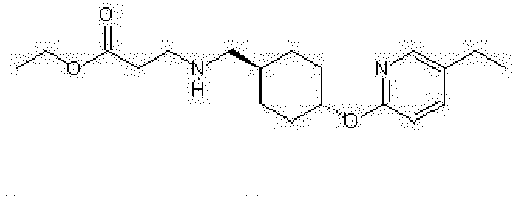
1H NMR (200 MHz, CHLOROFORM-d) δ ppm 0.94 - 1.60 (m, 11 H) 1.77 - 1.95 (m, 2 H) 2.07 - 2.27 (m, 2 H) 2.40 - 2.65 (m, 6 H) 2.76 - 2.95 (m, 2 H) 4.15 (q, J=7.3 Hz, 2 H) 4.81 - 5.04 (m, 1 H) 6.54 - 6.67 (m, 1 H) 7.31 - 7.44 (m, 1 H) 7.89 - 8.00 (m, 1 H). MS ESI/APCI Dual posi : 335[M+H]+. Reference Example A-483 
1H NMR (200 MHz, CHLOROFORM-d) δ ppm 0.78 - 1. 06 (m, 2 H) 1.14 - 1.57 (m, 6 H) 1.74 - 1.90 (m, 2 H) 2.00 - 2.19 (m, 2 H) 2.33 (s, 3 H) 2.40 - 2.56 (m, 4 H) 2.79 - 2.91 (m, 2 H) 3.16 - 3.38 (m, 1 H) 4.14 (q, J=7.0 Hz, 2 H) 4.51 (s, 2 H) 7.08 - 7.22 (m, 4 H). NS ESI/APCI Dual posi : 334[M+H]+. Reference Example A-484 
1H NMR (200 MHz, CHLOROFORM-d) δ ppm 0.77 - 1.05 (m, 2 H) 1.09 - 2.06 (m, 15 H) 2.08 - 2.29 (m, 2 H) 2.38 - 2.59 (m, 4 1.09 - 2.06 (m, 15 H) 2.08 - 2.29 (m, 2 H) 2.38 - 2.59 (m, 4 H) 2.79 - 2.92 (m, 2 H) 3.07 - 3.29 (m, 1 H) 3.92 - 4.24 (m, 3 H). MS ESI/APCI Dual posi : 284[M+H]+, 306[M+Na]+. Reference Example A-485 
1H NMR (300 MHz, CHLOROFORM-d) δ ppm 0.86 - 1.06 (m, 2 H) 1.19 - 1.57 (m, 6 H) 1.78 - 1.92 (m, 2 H) 2.04 - 2.21 (m, 2 H) 2.44 - 2.58 (m, 4 H) 2.88 (t, J=6.4 Hz, 2 H) 3.24 - 3.45 (m, 1 H) 4.15 (q, J=7.0 Hz, 2 H) 4.64 (s, 2 H) 7.44 (d, J=8.4 Hz, 1 H) 7.66 (dd, J=8.4, 2.3 Hz, 1 H) 8.49 (d, J=2.3 Hz, 1 H). MS ESI/APCI Dual posi : 355[M+H]+. -
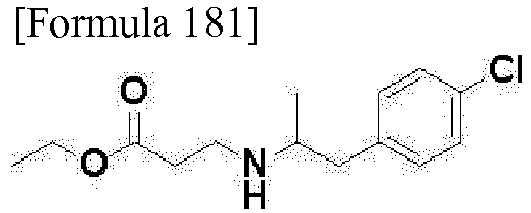
- To a solution of β-alanine ethyl ester hydrochloride (1.00 g) in ethanol (13.5 mL), triethylamine (907 µL), 4-chlorophenylacetone (1.32 g), acetic acid (1.5 mL) and borane-2-picoline complex (1.39 g) were added successively and the mixture was stirred at 60°C for 30 minutes. After being cooled to room temperature, the mixture was concentrated under reduced pressure. To the resulting residue, a saturated aqueous solution of sodium hydrogencarbonate was added and the mixture was extracted with chloroform twice. The combined organic layers were washed with saturated brine and dried over anhydrous sodium sulfate. The desiccant was removed by filtration and the filtrate was concentrated under reduced pressure. The resulting residue was purified by silica gel column chromatography (chloroform:methanol = 100:0-95:5) to give the titled compound as a yellow oil (1.70 g).
1H NMR (300 MHz, CHLOROFORM-d) δ ppm 1.03 (d, J=6.2 Hz, 3 H) 1.22 (t, J=7.1 Hz, 3 H) 2.40 - 2.49 (m, 2 H) 2.51 - 2.61 (m, 1 H) 2.65 - 2.76 (m, 1 H) 2.79 - 2.99 (m, 3 H) 4.10 (q, J=7.1 Hz, 2 H) 7.06 - 7.15 (m, 2 H) 7.21 - 7.29 (m, 2 H).
MS ESI/APCI Dual posi: 270[M+H]+. -
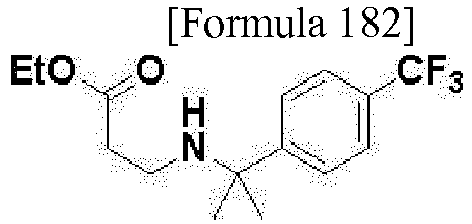
- To a mixture of the compound (1.11g) obtained in Reference Example 27-3, methanol (6.00 mL) and water (3.00 mL), ethyl acrylate (0.594 mL) was added and the resulting mixture was stirred at 90°C for an hour under irradiation with microwaves. After being cooled to room temperature, the reaction mixture was poured into water and extracted with ethyl acetate three times. The combined organic layers were washed with saturated brine and thereafter passed through a phase separator for concentrating under reduced pressure. The resulting residue was purified by silica gel column chromatography (n-hexane:ethyl acetate = 95:5-10:90) to give the titled compound as a pale yellow oil (957 mg).
1H NMR (300 MHz, CHLOROFORM-d) δ ppm 1.26 (t, J=7.1 Hz, 3 H) 1.47 (s, 6 H) 2.39 - 2.49 (m, 2 H) 2.53 - 2.61 (m, 2 H) 4.14 (q, J=7.1 Hz, 2 H) 7.58 (s, 4 H).
MS ESI/APCI Dual posi: 304[M+H]+. - In the following Reference Examples B-2 to B-19, the compounds obtained in Reference Examples 27-1 to 27-3, Reference Examples 45-1 to 47-1, or commercial grades of the corresponding amines, as well as commercial grades of the corresponding acrylic acid esters or crotonic acid esters were used as starting materials and treated by the method described in Reference Example B-1 or modifications thereof to synthesize the intended compounds. The structures of the synthesized compounds and their NMR and MS data are shown in Tables 19-1 and 19-2.
[Table 19-1] Compound No. Structure Analytical Data Salt information Reference Example B-2 
1H NMR (600 MHz, CHLOROFORM-d) δ ppm 1.23 (t, J=7.2 Hz, 3 H) 2.51 (t, J=6.6 Hz, 2 H) 2.84 (t, J=7.1 Hz, 2 H) 2.90 - 2.96 (m, 4 H) 4.12 (q, J=7.2 Hz, 2 H) 7.26 - 7.30 (m, 2 H) 7.31 - 7.35 (m, 1 H) 7.41 - 7.46 (m, 2 H) 7.51 - 7.54 (m, 2 H) 7.56 - 7.60 (m, 2 H). MS ESI/APCI Dual posi: 298[M+H]+. Reference Example B-3 
1H NMR (200 MHz, CHLOROFORM-d) δ ppm 1.14 - 1.33 (m, 3 H) 2.34 - 2.56 (m, 2 H) 2.64 - 2.97 (m, 6 H) 4.00 - 4.23 (m, 2 H) 7.08 - 7.38 (m, 5 H). MS ESI/APCI Dual posi : 222[M+H]+. Reference Example B-4 
1H NMR (300 MHz, CHLOROFORM-d) δ ppm 1.26 (t, J=7.1 Hz, 3 H) 2.61 (t, J=6.4 Hz, 2 H) 3.45 (t, J=6.4 Hz, 2 H) 4.16 (q, J=7.1 Hz, 2 H) 6.58 - 6.66 (m, 2 H) 6.72 (m, 1 H) 7.13 - 7.22 (m, 2 H). MS ESI/APCI Dual posi: 194[M+H]+. Reference Example B-5 
1H NMR (300 MHz, CHLOROFORM-d) δ ppm 1.26 (t, J=7.1 Hz, 3 H) 2.59 (t, J=6.3 Hz, 2 H) 3.41 (t, J=6.3 Hz, 2 H) 4.15 (q, J=7.1 Hz, 2 H) 6.19 - 6.44 (m, 3 H) 6.93 - 7.18 (m, 4 H) 7.28 - 7.38 (m, 2 H). MS ESI/APCI Dual posi : 286[M+H]+. Reference Example B-6 
1H NMR (300 MHz, CHLOROFORM-d) δ ppm 1.27 (t, J=7.1 Hz, 3 H) 2.62 (t, J=6.3 Hz, 2 H) 3.44 (t, J=6.3 Hz, 2 H) 4.17 (q, J=7.1 Hz, 2 H) 6.59 - 6.65 (m, 2 H) 8.87 - 6.95 (m, 4 H) 6.99 - 7.04 (m, 1 H) 7.23 - 7.32 (m, 2 H). MS ESI/APCI Dual posi: 286[M+H]+. Reference Example B-7 
1H NMR (600 MHz, CHLOROFORM-d) δ ppm 1.27 (t, J=7.0 Hz, 3 H) 2.55 (t, J=6.3 Hz, 2 H) 2.97 (t, J=6.3 Hz, 2 H) 3.99 (s, 2 H) 4.16 (q, J=7.0 Hz, 2 H) 6.50 (t, J=0.8 Hz, 1 H) 7.38 - 7.50 (m, 3 H) 7.76 - 7.85 (m, 2 H). MS ESI/APCI Dual posi: 275 [M+H]+. Reference Example B-8 
1H NMR (300 MHz, CHLOROFORM-d) δ ppm 0.76 - 0.90 (m, 1 H) 0.92 - 1.18 (m, 6 H) 2.18 - 2.33 (m, 1 H) 2.33 - 2.51 (m, 1 H) 2.95 - 3.14 (m, 1 H) 3.64 (s, 3 H) 7.43 - 7.54 (m, 2 H) 7.52 - 7.63 (m, 2 H). MS ESI/APCI Dual posi: 302[M+H]+, 324[M+Na]+. Reference Example B-9 
1H NMR (300 MHz, CHLOROFORM-d) δ ppm 0.93 - 1.00 (m, 2 H) 1.00 - 1.09 (m, 2 H) 1.25 (t, J=7.1 Hz, 3 H) 2.46 (t, J=6.5 Hz, 2 H) 2.85 (t, J=6.5 Hz, 2 H) 4.13 (q, J=7.1 Hz, 2 H) 7.32 - 7.47 (m, 5 H) 7.52 - 7.62 (m, 4 H). MS ESI/APCI Dual posi: 310[M+H]+, 332[M+Na]+. [Formula 19-2] Compound No. Structure Analytical Data Salt information Reference Example B-10 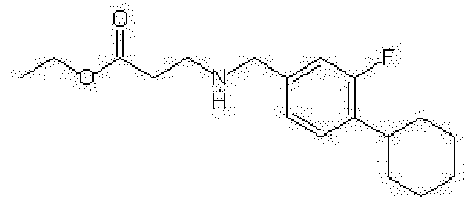
1H NMR (300 MHz, CHLOROFORM-d) δ ppm 1.26 (t, J=7.1 Hz, 3 H) 1.32 - 1.52 (m, 4 H) 1.69 - 1.91 (m, 5 H) 2.48 - 2.56 (m, 2 H) 2.76 - 2.85 (m, 1 H) 2.85 - 2.93 (m, 2 H) 3.75 (s, 2 H) 4.14 (q, J=7.1 Hz, 2 H) 6.93 - 7.06 (m, 2 H) 7.12 - 7.20 (m, 1 H). MS ESI/APCI Dual posi: 308[M+H]+, 330[M+Na]+. Reference Example B-11 
1H NMR (300 MHz, CHLOROFORM-d) δ ppm 1.27 (t, J=7.1 Hz, 3 H) 2.15 - 2.37 (m, 4 H) 2.41 - 2.57 (m, 3 H) 2.70 - 2.77 (m, 2 H) 2.84 - 2.96 (m, 2 H) 4.15 (q, J=7.1 Hz, 2 H) 4.63 - 4.70 (m, 1 H) 6.67 - 6.74 (m, 2 H) 7.16 - 7.24 (m, 2 H). Reference Example B-12 
1H NMR (300 MHz, CHLOROFORM-d) δ ppm 1.26 (t, J=7.1 Hz, 3 H) 1.52 - 1.72 (m, 2 H) 1.87 - 2.04 (m, 1 H) 2.32 - 2.45 (m, 2 H) 2.45 - 2.54 (m, 2 H) 2.62 - 2.70 (m, 2 H) 2.81 - 2.90 (m, 2 H) 3.80 - 3.98 (m, 1 H) 4.14 (q, J=7.1 Hz, 2 H) 4.37 (s, 2 H) 7.23 - 7.34 (m, 4 H). MS ESI/APCI Dual posi: 326[M+H]+. Reference Example B-13 
1H NMR (300 MHz, CHLOROFORM-d) δ ppm 1.26 (t, J=7.1 Hz, 3 H7 1.73 - 1.89 (m, 2 H) 2.03 - 2.24 (m, 1 H) 2.50 (t, J=6.5 Hz, 2 H) 2.55 - 2.67 (m, 2 H) 2.68 - 2.76 (m, 2 H) 2.81 - 2.94 (m, 2 H) 4.14 (q, J=7.1 Hz, 2 H) 4.41 - 4.59 (m, 1 H) 6.65 - 6.70 (m, 2 H) 7.13 - 7.25 (m, 2 H). NS ESI/APCI Dual posi: 312[M+H]+. Reference Example B-14 
1H NMR (300 MHz, CHLOROFORM-d) δ ppm 1.26 (t, J=7.1 Hz, 3 H) 1.93 - 2.23 (m, 4 H) 2.28 - 2.56 (m, 3 H) 2.67 (d, J=7.6 Hz, 2 H) 2.77 - 3.01 (m, 2 H) 4.03 - 4.23 (m, 3 H) 4.36 (s, 2 H) 7.21 - 7.35 (m, 4 H). Reference Example B-15 
1H NMR (300 MHz, CHLOROFORM-d) δ ppm 1.27 (t, J=7.1 Hz, 3 H) 2.16 - 2.37 (m, 7 H) 2.41 - 2.61 (m, 3 H) 2.74 (d, J=7.5 Hz, 2 H) 2.91 (t, J=6.5 Hz, 2 H) 4.15 (q, J=7.1 Hz, 2 H) 4.56 - 4.86 (m, 1 H) 6.57 - 6.82 (m, 2 H) 6.94 - 7.15 (m, 2 H). MS ESI/APCI Dual posi: 292[M+H]+. Reference Example B-16 
1H NMR (300 MHz, CHLOROFORM-d) δ ppm 1.22 - 1.81 (m, 3 H) 2.17 - 2.42 (m, 4 H) 2.44 - 2.60 (m, 3 H) 2.75 (d, J=7.5 Hz, 2 H) 2.91 (t, J=6.5 Hz, 2 H) 4.05 - 4.22 (m, 2 H) 4.64 - 4.89 (m, 1 H) 6.83 (d, J=8.5 Hz, 2 H) 7.51 (d, J=8.5 Hz, 2 H). MS ESI/APCI Dual posi: 346[M+H]+. Reference Example B-17 
1H NMR (600 MHz, CHLOROFORM-d) δ ppm 1.28 - 1.31 (m, 3 H) 2.20 - 2.34 (m, 4 H) 2.47 - 2.54 (m, 3 H) 2.74 (d, J=7.4 Hz, 2 H) 2.90 (t, J=6.6 Hz, 2 H) 4.15 (q, J=7.2 Hz, 2 H) 4.68 - 4.73 (m, 1 H) 6.67 (dd, J=6.8, 2.5 Hz, 1 H) 6.73 - 6.79 (m, 1 H) 6.88 - 6.93 (m. 1 H) 7.13 - 7.19 (m, 1 H). MS ESI/APCI Dual posi: 312[M+H]+. Reference Example B-18 
1H NMR (300 MHz, CHLOROFORM-d) δ ppm 1.26 (t, J=7.1 Hz, 3 H) 1.81 - 1.94 (m, 2 H) 1.97 - 2.42 (m, 6 H) 2.53 (t, J=6.4 Hz, 2 H) 2.90 (t, J=6.4 Hz, 2 H) 3.80 (s, 2 H) 4.14 (q, J=7.1 Hz, 2 H) 7.29 - 7.36 (m, 2 H) 7.42 - 7.47 (m, 2 H). MS ESI/APCI Dual posi: 342[M+H]+, 364[M+Na]+. MS ESI/APCI Dual nega: 340[M-H]-, 376[M+Cl]-. Reference Example B-19 
1H NMR (300 MHz, CHLOROFORM-d) δ ppm 0.02 (s, 6 H) 0.88 (s, 9 H) 1.25 (t, J=7.1 Hz, 3 H) 2.38 - 2.50 (m, 2 H) 2.61 - 2.81 (m, 2 H) 3.40 - 3.51 (m, 1 H) 3.55 - 3.64 (m, 1 H) 3.67 - 3.76 (m 1 H) 4.13 (q, J=7.1 Hz, 2 H) 7.11 (d, J=8.1 Hz, 2 H) 7.64 (d, J=8.1 Hz, 2 H). MS ESI/APCI Dual posi: 478[M+H]+. -

- To a solution of β-alanine ethyl hydrochloride (2.00 g) in N,N-dimethylformamide (65.0 mL), sodium hydride (60% dispersion in mineral oil, 1.15g) was added and the mixture was stirred at room temperature for an hour. After adding (5-bromopentyl)benzene (2.52 mL), the mixture was stirred at 80°C for 4 hours. After being cooled to room temperature, the reaction mixture was diluted with ethyl acetate and washed with saturated brine. The organic layer was separated off and dried over anhydrous magnesium sulfate; after removing the desiccant by filtration, the filtrate was concentrated under reduced pressure. The resulting residue was purified by silica gel column chromatography (chloroform:methanol = 100:0-85:15) to give the titled compound as a pale yellow oil (480 mg).
1H NMR (300 MHz, CHLOROFORM-d) δ ppm 1.19 - 1.30 (m, 3 H) 1.31 - 1.70 (m, 6 H) 2.42 - 2.54 (m, 2 H) 2.56 - 2.67 (m, 4 H) 2.81 - 2.92 (m, 2 H) 4.14 (q, J=7.1 Hz, 2 H) 7.10 - 7.22 (m, 3 H) 7.23 - 7.32 (m, 2 H).
MS ESI/APCI Dual posi: 264[M+H]+. -

-

- To a solution of 4-chlorobenzaldehyde (10.0 g) in chloroform (350 mL), hydroxylamine hydrochloride (10.2 g) was added and the mixture was stirred at room temperature for 18 hours in an arogon atmosphere. After adding 2 mol/L hydrochloric acid (200 mL), three extractions were conducted with chloroform. The combined organic layers were washed with saturated brine and thereafter dried over anhydrous magnesium sulfate. After removing the desiccant by filtration, the filtrate was concentrated under reduced pressure. The resulting residue was crystallized with a liquid mixture of n-hexane and chloroform to give 1-(4-chlorophenyl)-N-hydroxymethaneimine as a colorless solid (9.27 g).
1H NMR (300 MHz, CHLOROFORM-d) δ ppm 7.34 - 7.39 (m, 2 H) 7.48 - 7.54 (m, 2 H) 8.10 (s, 1 H). MS ESI/APCI Dual posi: 156[M+H]+.
MS ESI/APCI Dual nega: 154[M-H]-. -

- To a solution in chloroform (28.5 mL) of the compound (1.85 g) obtained in step (1) above, propargyl bromide (1.07 mL) and triethylamine (1.99 mL) were added and then 5% sodium hypochlorite in aqueous solution (57.0 mL) was added dropwise at 0°C over a period of 30 minutes. The reaction mixture was brought to room temperature and stirred for 5 hours. After separating the aqueous layer, two extractions were conducted with chloroform. The combined organic layers were washed with saturated brine and dried over anhydrous magnesium sulfate. After removing the desiccant by filtration, the filtrate was concentrated under reduced pressure. The resulting residue was purified by silica gel column chromatography (n-hexane:ethyl acetate = 99:1-85:15) and reduced to powder with n-hexane, thus giving 5-(bromomethyl)-3-(4-chlorophenyl)-isoxazole as a colorless solid (1.01 g).
1H NMR (300 MHz, CHLOROFORM-d) δ ppm 4.51 (s, 2 H) 6.58 - 6.64 (m, 1 H) 7.38 - 7.52 (m, 2 H) 7.68 - 7.79 (m, 2 H).
MS ESI/APCI Dual posi: 271[M+H]+. - To a solution of ethyl 3-amino-3-methylbutyrate hydrochloride (333 mg) in tetrahydrofuran (4.00 mL), a solution in tetrahydrofuran (2.00 mL) of the compound (100 mg) obtained in step (2) above and potassium carbonate (406 mg) were added and the mixture was stirred at 60°C for three days. After passing the reaction mixture through Celite (registered trademark), the filtrate was concentrated under reduced pressure and the resulting residue was roughly purified by preparative HPLC. To the resulting roughly purified product, a saturated aqueous solution of sodium hydrogencarbonate was added and extraction was conducted with chloroform. The combined organic layers were dried over anhydrous magnesium sulfate and after removing the desiccant by filtration, the filtrate was concentrated under reduced pressure. The resulting residue was purified by silica gel column chromatography (n-hexane:ethyl acetate = 98:2-50:50) to give the titled compound as a colorless amorphous mass.
1H NMR (300 MHz, CHLOROFORM-d) δ ppm 1.20 - 1.32 (m, 9 H) 2.48 (s, 2 H) 3.92 (d, J=0.9 Hz, 2 H) 4.15 (q, J=7.1 Hz, 2 H) 6.48 (t, J=0.9 Hz, 1 H) 7.37 - 7.45 (m, 2 H) 7.69 - 7.77 (m, 2 H).
MS ESI posi: 337[M+H]+.
MS ESInega: 335[M-H]-. -

-

- To a mixture of N-[(benzyloxy)carbonyl]glycine (5.33 g), 1-(3-dimethylaminopropyl)-3-ethylcarbodiimide hydrochloride (5.86 g), 1-hydroxybenzotriazole monohydrate (4.68 g) and chloroform (51.0 mL), 2-(trimethylsilyl)ethanol (4.36 mL) was added and the mixture was stirred at room temperature for 8 hours. To the reaction mixture, 2-(trimethylsilyl)ethanol (3.00 mL), 1-(3-dimethylaminopropyl)-3-ethylcarbodiimide hydrochloride (2.93 g) and 4-dimethylaminopyridine (312 mg) were added and the mixture was stirred at room temperature for 65 hours. After pouring the reaction mixture into a saturated aqueous solution of ammonium chloride, three extractions were conducted with ethyl acetate. The combined organic layers were washed with saturated brine and dried over anhydrous magnesium sulfate. After removing the desiccant by filtration, the filtrate was concentrated under reduced pressure and purified by silica gel column chromatography (n-hexane:ethyl acetate = 95:5-80:20) to give 2-(trimethylsilyl)ethyl N-[(benzyloxy)carbonyl]glycinate as a colorless oil (6.64 g).
1H NMR (300 MHz, CHLOROFORM-d) δ ppm 0.04 (s, 9 H) 0.96 - 1.06 (m, 2 H) 3.96 (d, J=5.6 Hz, 2 H) 4.20-4.30 (m, 2 H) 5.13 (s, 2 H) 5.19 - 5.28 (m, 1 H) 7.28 - 7.41 (m, 5 H). - To a solution in ethyl acetate (20.0 mL) of the compound (634 mg) obtained in step (1) above, 20% palladium hydroxide/carbon (63.0 mg) was added. The mixture was stirred at room temperature for an hour in a hydrogen atmosphere. After passing the reaction mixture through Celite (registered trademark), the filtrate was concentrated under reduced pressure to give the titled compound as a pale yellow oil (320 mg).
1H NMR (300 MHz, CHLOROFORM-d) δ ppm 0.05 (s, 9 H) 0.89 - 1.07 (m, 2 H) 3.40 (s, 2 H) 4.13-4.29 (m, 2 H). -

- To a mixture of 1H-benzotriazole-1-methanol (1.22 g), 4-hydroxybenzaldehyde (1.00 g), triphenylphosphine (2.26 g) and chloroform (27 mL), diisopropyl azodicarboxylate (1.9 mol/L, solution in toluene, 4.53 mL) was added under cooling with ice. After being brought to room temperature, the mixture was stirred for 2.5 hours. Following the addition of triphenylphosphine (1.13 g) and diisopropyl azodicarboxylate (1.9 mol/L, solution in toluene, 2.27 mL), the mixture was stirred for an additional 40 minutes. To the reaction mixture, methanol (165 µL) and acetic acid (750 µL) were added and the resulting mixture was stirred at the same temperature for 20 minutes. To the reaction mixture, β-alanine ethyl hydrochloride (1.38 g), triethylamine (1.26 µL) and sodium triacetoxyborohydride (2.60 g) were added and the mixture was stirred at room temperature for 1.5 hours. After adding 1 mol/L hydrochloric acid, the mixture was washed with diethyl ether. To the aqueous layer, an aqueous solution of 2 mol/L sodium hydroxide was added to provide a basic pH. Following extraction with chloroform, the combined organic layers were washed with saturated brine and thereafter passed through a phase separator for concentrating under reduced pressure. The resulting residue was purified by silica gel column chromatography (n-hexane:ethyl acetate = 100:0-50:50) to give the titled compound as a colorless oil (1.13 g).
1H NMR (300 MHz, CHLOROFORM-d) δ ppm 1.24 (t, J=7.1 Hz, 3 H) 2.47 - 2.52 (m, 2 H) 2.81 - 2.87 (m, 2 H) 3.71 (s, 2 H) 4.12 (q, J=7.1 Hz, 2 H) 6.54 (s, 2 H) 6.99 - 7.06 (m, 2 H) 7.19 - 7.25 (m, 2 H) 7.40 (ddd, J=8.3, 7.0, 1.0 Hz, 1 H) 7.53 (ddd, J=8.3, 7.0, 1.0 Hz, 1 H) 7.70 (dt, J=8.3, 1.0 Hz, 1 H) 8.07 (dt, J=8.3, 1.0 Hz, 1 H).
MS ESI/APCI Dual posi: 355[M+H]+, 377[M+Na]+.
MS ESI/APCI Dual nega: 353[M-H]-, 389[M+Cl]-. - In the following Reference Examples F-2 and F-3, a commercial grade of the corresponding alcohols was used as the starting material and treated by the method descried in Reference Example F-1 or a modification thereof to synthesize the intended compounds. The structures of the synthesized compounds and their NMR and MS data are shown in Table 20-1.
[Table 20-1] Compound No. Structure Analytical Data Salt information Reference Example F-2 
1H NMR (300 MHz, CHLOROFORM-d) δ ppm 1.25 (t, J=7.1 Hz, 3 H) 2.23 (s, 3 H) 2.26 - 2.29 (m, 3 H) 2.51 (t, J=6.5 Hz, 2 H) 2.87 (t, J=6.5 Hz, 2 H) 3.73 (s, 2 H) 4.13 (q, J=7.1 Hz, 2 H) 5.83 (s, 2 H) 5.86 (s, 1 H) 6.97 - 7.03 (m, 2 H) 7.19 - 7.26 (m, 2 H). MS ESI/APCI Dual posi: 332[M+H]+, 354[M+Na]+. MS ESI/APCI Dual nega: 330[M-H]-. Reference Example F-3 
1H NMR (300 MHz, CHLOROFORM-d) δ ppm 1.26 (t, J=7.1 Hz, 3 H) 2.52 (t, J=6.5 Hz, 2 H) 2.88 (t, J=6.5 Hz, 2 H) 3.75 (s, 2 H) 4.14 (q, J=7.1 Hz, 2 H) 4.24 (s, 3 H) 5.39 (s, 2 H) 6.95 - 7.01 (m, 2 H) 7.12 (ddd, J=8.4, 6.6, 0.9 Hz, 1 H) 7.24 - 7.34 (m, 3 H) 7.64 (dt, J=8.4, 1.1 Hz, 1 H) 7.69 (dt, J=8.8, 0.9 Hz, 1 H). MS ESI/APCI Dual posi: 368[M+H]+, 390[M+Na]+. MS ESI/APCI Dual nega: 366[M-H]-, 402[M+Cl]-. -

-

- To a solution of monobenzyl malonate (2.00 g) in N,N-dimethylformamide (51.5 mL), glycine tert-butyl hydrochloride (2.07 g), triethylamine (3.13 g) and propylphosphonic acid anhydride (cyclic trimer) (48%, solution in N,N-dimethylformamide, 8.22 g) were added and the mixture was stirred at room temperature for an hour. To the reaction mixture, water was added and extraction was conducted with ethyl acetate. The combined organic layers were dried over anhydrous sodium sulfate. The desiccant was removed by filtration and the filtrate was concentrated under reduced pressure. The resulting residue was purified by silica gel column chromatography (n-hexane: ethyl acetate = 67:33-50:50) to give benzyl 3-({2-[(2-methyl-2-propanyl)oxy]-2-oxoethyl}amino)-3-oxopropanoate as a colorless oil (1.46 g).
1H NMR (600 MHz, CHLOROFORM-d) δ ppm 1.48 (s, 9 H) 3.40 (s, 2 H) 3.97 (d, J=5.0 Hz, 2 H) 5.19 (s, 2 H) 7.31 - 7.40 (m, 5 H) 7.47 - 7.57 (m, 1 H).
MS ESI posi: 330[M+Na]+.
MS ESI nega: 306[M-H]-. - The compound (1.46 g) obtained in step (1) above was used and treated by the same technique as in Reference Example E-1 (2) to give the titled compound as a colorless oil (1.03 g).
1H NMR (600 MHz, CHLOROFORM-d) δ ppm 1.48 (s, 9 H) 3.40 (s, 2 H) 3.99 (d, J=5.0 Hz, 2 H) 7.28 - 7.41 (m, 1 H).
MS ESI posi: 240[M+Na]+.
MS ESI nega: 216[M-H]-. -

- Instead of glycine tert-butyl hydrochloride, β-alanine tert-butyl hydrochloride (1.82 g) was used and treated by the same technique as in Reference Example G-1 to give the titled compound as a colorless solid (1.03 g).
1H NMR (300 MHz, CHLOROFORM-d) δ ppm 1.46 (s, 9 H) 2.43 - 2.54 (m, 2 H) 3.32 (s, 2 H) 3.55 (q, J=6.1 Hz, 2 H) 7.02 - 7.18 (m, 1 H).
MS ESI/APCI Dual posi: 254[M+Na]+.
MS ESI/APCI Dual nega: 230[M-H]-. -

- To a solution of Meldrum's acid (10.0 g) in acetonitrile (231 mL), glycine ethyl hydrochloride (14.5 g) and triethylamine (14.1 g) were added and the mixture was stirred at 60°C for 5 hours. After cooling the mixture to room temperature, ethyl acetate was added and extraction was conducted with a saturated aqueous solution of sodium hydrogencarbonate. To the combined aqueous layers, 1 mol/L hydrochloric acid was added and extraction was conducted with ethyl acetate. The combined organic layers were dried over anhydrous sodium sulfate. After removing the desiccant by filtration, the filtrate was concentrated under reduced pressure to give the titled compound as a colorless solid (7.95 g).
1H NMR (300 MHz, CHLOROFORM-d) δ ppm 1.30 (t, J=7.2 Hz, 3 H) 3.44 (s, 2 H) 4.10 (d, J=5.3 Hz, 2 H) 4.25 (q, J=7.2 Hz, 2 H).
MS ESI/APCI Dual posi: 190[M+H]+.
MS ESI/APCI Dual nega: 188[M-H]-. -

-

- To a solution in ethyl acetate (11.6 mL) of the compound (770 mg) obtained in Reference Example A-1 and triethylamine (287 mg), ethyl malonyl chloride (341 mg) was added at 0°C and the mixture was stirred at room temperature for 30 minutes. More of triethylamine (95.7 mg) was added and following the addition of ethyl malonyl chloride (114 mg) at 0°C, the mixture was stirred at room temperature for 30 minutes. After adding 1 mol/L hydrochloric acid, two extractions were conducted with ethyl acetate. The combined organic layers were passed through a phase separator and thereafter concentrated under reduced pressure to give a mixture (1.44 g) comprising ethyl 3-([4-(2-ethoxy-2-oxoethyl)tetrahydro-2H-pyran-4-yl]{[4'-(trifluoromethyl)biphenyl-4-yl]methyl}amino)-3-oxopropanoate.
MS ESI/APCI Dual posi: 522[M+H]+, 544[M+Na]+. -

- To a solution in ethanol (24.7 mL) of the mixture (1.43 g) obtained in step (1) above, sodium ethoxide (about 20%, solution in ethanol, 1.30 mL) was added and the resulting mixture was stirred at an external temperature of 90°C for 4 hours. After cooling the reaction mixture to room temperature, the precipitate was recovered by filtration to give sodium 3-(ethoxycarbonyl)-2-oxo-1-{[4'-(trifluoromethyl)biphenyl-4-yl]methyl}-9-oxy-1-azaspiro[5.5]undec-3-en-4-olate as a brown solid (534 mg).
1H NMR (300 MHz, DMSO-d6) δ ppm 1.14 (t, J=7.1 Hz, 3 H) 1.40 - 1.55 (m, 2 H) 1.74 - 1.92 (m, 2 H) 2.42 (s, 2 H) 3.37 - 3.46 (m, 2 H) 3.61 - 3.71 (m, 2 H) 3.94 (q, J=6.9 Hz, 2 H) 4.70 (br. s., 2 H) 7.40 (d, J=7.9 Hz, 2 H) 7.65 (d, J=8.1 Hz, 2 H) 7.75 - 7.82 (m, 2 H) 7.84 - 7.92 (m, 2 H).
MS ESI/APCI Dual posi: 512[M+Na]+.
MS ESI/APCI Dual nega: 488[M-H]-. -

- To a solution in 1,2-dimethoxyethane (10.2 mL) of the compound (508 mg) obtained in step (2) above, triethylamine (100 mg) and glycine tert-butyl hydrochloride (200 mg) were added and the mixture was stirred at an external temperature of 90°C for two hours. After being cooled to room temperature, the reaction mixture was concentrated under reduced pressure. The resulting residue was purified by silica gel column chromatography (n-hexane:ethyl acetate = 85:15-20:80) to give tert-butyl N-[(4-hydroxy-2-oxo-1-{[4'-(trifluoromethyl)biphenyl-4-yl]methyl}-9-oxa-1-azaspiro[5.5]undec-3-en-3-yl)carbonyl]glycinate as a colorless amorphous mass (329 mg).
1H NMR (300 MHz, CHLOROFORM-d) δ ppm 1.47 - 1.53 (m, 9 H) 1.59 - 1.68 (m, 2 H) 1.99 - 2.16 (m, 2 H) 2.83 - 2.98 (m, 2 H) 3.44 - 3.60 (m, 2 H) 3.79 - 3.93 (m, 2 H) 3.99 - 4.08 (m, 2 H) 4.84 (br. s., 2 H) 7.31 - 7.41 (m, 2 H) 7.50 - 7.59 (m, 2 H) 7.62 - 7.72 (m, 4 H) 10.12 - 10.45 (m, 1 H).
MS ESI/APCI Dual posi: 575[M+H]+.
MS ESI/APCI Dual nega: 573[M-H]-. - To the compound (319 mg) obtained in step (3) above, a solution (6.4 mL) of 4 mol/L hydrogen chloride in 1,4-dioxane was added and the mixture was stirred at room temperature for 18 hours. After concentrating under reduced pressure, ethyl acetate (5.00 mL) was added to the residue and with continued stirring, n-hexane (5.00 mL) was added. After stirring the reaction mixture at room temperature for 30 minutes, the precipitate was recovered by filtration to give the titled compound as a colorless solid (245 mg).
1H NMR (300 MHz, DMSO-d6) δ ppm 1.46 - 1.61 (m, 2 H) 1.89 - 2.10 (m, 2 H) 2.89 - 3.14 (m, 2 H) 3.41 - 3.56 (m, 2 H) 3.65 - 3.78 (m, 2 H) 3.96 - 4.16 (m, 2 H) 4.74 - 4.93 (m, 2 H) 7.40 - 7.51 (m, 2 H) 7.63 - 7.74 (m, 2 H) 7.75 - 7.93 (m, 4 H) 9.93 - 10.27 (m, 1 H) 12.76 - 12.95 (m, 1H).
MS ESI/APCI Dual posi: 519[M+H]+, 541[M+Na]+.
MS ESI/APCI Dual nega: 517[M-H]-. -

-

- Instead of the compound obtained in Reference Example A-1, the compound (1.90 g) obtained in Reference Example A-2 was used and treated by the same techniques as in Example 1-1(1) to (3) to give tert-butyl N-{[5-(biphenyl-4-ylmethyl)-8-hydroxy-6-oxo-2-oxa-5-azaspiro[3.5]non-7-en-7-yl]carbonyl}glycinate as a pale brown solid (2.67 g).
1H NMR (200 MHz, CHLOROFORM-d) δ ppm 1.43 - 1.52 (m, 9 H) 3.01 - 3.23 (m, 2 H) 3.94 - 4.11 (m, 2 H) 4.37 - 4.62 (m, 2 H) 4.74 - 4.93 (m, 2 H) 5.06 - 5.21 (m, 2 H) 7.24 - 7.50 (m, 5 H) 7.51 - 7.62 (m, 4 H) 9.95 - 10.57 (m, 1 H).
MS ESI/APCI Dual posi: 501[M+Na]+. - To a solution in chloroform (20.0 mL) of the compound (2.60 g) obtained in step (1) above, trifluoroacetic acid (8.00 mL) was added and the mixture was stirred at room temperature for 12 hours. After concentrating under reduced pressure, ethyl acetate was added to the residue. With continued stirring, n-hexane was added and the precipitate was recovered by filtration to give the titled compound as a pale brown solid (2.18 g).
1H NMR (300 MHz, DMSO-d6) δ ppm 3.08 - 3.28 (m, 2 H) 3.93 - 4.12 (m, 2 H) 4.45 (d, J=7.1 Hz, 2 H) 4.74 (d, J=7.1 Hz, 2 H) 5.01 - 5.18 (m, 2 H) 7.26 - 7.52 (m, 5 H) 7.57 - 7.71 (m, 4 H) 9.80 - 10.34 (m, 1 H) 12.89 (br. s., 1 H).
MS ESI/APCI Dual posi: 423[M+H]+ -

-

- Instead of the compound obtained in Reference Example A-1, the compound (1.12 g) obtained in Reference Example A-3 was used and treated by the same techniques as in Example 1-1(1) to (3) to give tert-butyl N-({4-hydroxy-5-methyl-2-oxo-1-[4-(trifluoromethoxy)benzyl]-1,2,5,6-tetrahydropyridin-3-yl}carbonyl)glycinate as a colorless solid (704 mg).
1H NMR (300 MHz, CHLOROFORM-d) δ ppm 1.04 - 1.16 (m, 3 H) 1.42 - 1.56 (m, 9 H) 2.61 - 2.76 (m, 1 H) 2.93 - 3.07 (m, 1 H) 3.26 - 3.38 (m, 1 H) 3.97 - 4.04 (m, 2 H) 4.50 - 4.68 (m, 2H) 7.11 - 7.33 (m, 4 H) 10.13-10.57 (m, 1 H).
MS ESI/APCI Dual posi: 481[M+Na]+.
MS ESI/APCI Dual nega: 457[M-H]-. -

- To the compound (1.12 g) obtained in step (1) above, a solution (10.0 mL) of 4 mol/L hydrochloride in 1,4-dioxane was added and the mixture was stirred at room temperature for 16 hours. After being concentrated under reduced pressure, the reaction mixture was purified by preparative HPLC to give N-({4-hydroxy-5-methyl-2-oxo-1-[4-(trifluoromethoxy)benzyl]-1,2,5,6-tetrahydropyridin-3-yl}carbonyl)glycine as a colorless amorphous mass (482 mg).
1H NMR (600 MHz, CHLOROFORM-d) δ ppm 1.07 - 1.19 (m, 3 H) 2.53 - 2.78 (m, 1 H) 2.98 - 3.10 (m, 1 H) 3.33 - 3.41 (m, 1 H) 4.15 - 4.23 (m, 2 H) 4.56 - 4.70 (m, 2 H) 7.15 - 7.23 (m, 2 H) 7.27 - 7.34 (m, 2 H) 10.13 - 10.50 (m, 1 H).
MS ESI/APCI Dual posi: 403[M+H]+, 425[M+Na]+.
MS ESI/APCI Dual nega: 401 [M-H]-. - To a solution in methanol (3.00 mL) of the compound (321 mg) obtained in step (2) above, 1 mol/L sodium hydroxide in aqueous solution (0.798 mL) was added and the mixture was stirred at room temperature for 30 minutes. The reaction mixture was concentrated under reduced pressure. To the resulting residue, isopropyl alcohol was added and thereafter the mixture was stirred overnight at room temperature. The precipitate was recovered by filtration to give the titled compound as a pale yellow solid (205 mg).
1H NMR (300 MHz, METHANOL-d4) δ ppm 1.10 (d, J=7.0 Hz, 3 H) 2.56 - 2.73 (m, 1 H) 3.06 (dd, J=12.6, 7.9 Hz, 1 H) 3.44 (dd, J=12.6, 5.7 Hz, 1 H) 3.89 (s, 2H) 4.58 (d, J=14.9 Hz, 1 H) 4.70 (d, J=14.9 Hz, 1 H) 7.16 - 7.30 (m, 2 H) 7.36 - 7.47 (m, 2 H).
MS ESI/APCI Dual posi: 425[M+Na]+. -

-

- Instead of the compound obtained in Reference Example A-1, the compound (1.15 g) obtained in Reference Example A-246 was used and treated by the same techniques as in Example 1-1(1) to (3) to give 2-methyl-2-propanyl N-[(1-{[6-(4-chlorophenoxy)-3-pyridinyl]methyl}-4-hydroxy-2-oxo-1,2,5,6-tetrahydro-3-pyridinyl)carbonyl]glycinate as a pale yellow gum (1.02 g).
1H NMR (300 MHz, CHLOROFORM-d) δ ppm 1.49 (s, 9 H) 2.50 - 2.67 (m, 2 H) 3.27 - 3.38 (m, 2 H) 3.95 - 4.07 (m, 2 H) 4.56 (s, 2 H) 6.88 - 6.94 (m, 1 H) 7.04 - 7.14 (m, 2 H) 7.31 - 7.41 (m, 2 H) 7.63 - 7.74 (m, 1 H) 8.04 - 8.09 (m, 1 H) 10.07 - 10.51 (m, 1 H).
MS ESI/APCI Dual posi: 510[M+Na]+.
MS ESI/APCI Dual nega: 486[M-H]-. - To the compound (1.02 g) obtained in step (1) above, a solution (10.0 mL) of 4 mol/L hydrogen chloride in 1,4-dioxane was added and the mixture was stirred overnight at room temperature. The resulting precipitate was recovered by filtration and the solid obtained was heated upon addition of ethyl acetate. After adding acetonitrile, the mixture was cooled to room temperature and stirred at that temperature. The resulting precipitate was recovered by filtration to give a colorless solid (645 mg).
1H NMR (300 MHz, DMSO-d6) δ ppm 2.50 - 2.74 (m, 2 H) 3.37 - 3.49 (m, 2 H) 3.96 - 4.08 (m, 2 H) 4.48 - 4.62 (m, 2 H) 7.05 (d, J=8.4 Hz, 1 H) 7.14 - 7.20 (m, 2 H) 7.42 - 7.49 (m, 2 H) 7.79 (dd, J=8.4, 2.5 Hz, 1 H) 8.07 - 8.14 (m, 1 H) 9.94 - 10.26 (m, 1 H) 12.87 (br. s., 1 H).
MS ESI/APCI Dual posi: 432[M+H]+.
MS ESI/APCI Dual nega: 430[M-H]-. - To the compound (30 mg) obtained in step (2) above, a liquid mixture of water and ethanol (5:4) was added and the resulting mixture was heated on a hot water bath with 80 °C until it turned to solution, which was thereafter left to stand overnight at room temperature. The solvent was distilled off under a nitrogen stream to give a colorless solid (30 mg). m.p.: 191°C
- To a solution in acetone of the compound (645 mg) obtained in step (2) above, 1 mol/L sodium hydroxide in aqueous solution (1.50 mL) was added and the mixture was stirred at room temperature for 30 minutes. The resulting precipitate was recovered by filtration to give the titled compound as a colorless solid (543 mg).
1H NMR (300 MHz, DMSO-d6) δ ppm 2.53 - 2.59 (m, 2 H) 3.34 (t, J=7.1 Hz, 2 H) 3.48 - 3.60 (m, 2 H) 4.52 (s, 2 H) 7.04 (d, J=8.4 Hz, 1 H) 7.12 - 7.21 (m, 2 H) 7.36 - 7.50 (m, 2 H) 7.79 (dd, J=8.4, 2.5 Hz, 1 H) 8.09 (d, J=2.5 Hz, 1 H) 10.08 (br. s., 1 H).
MS ESI posi: 432[M+H]+.
MS ESI nega: 430[M-H]-. - In the following Examples 1-5 to 1-464, the compounds obtained in Reference Examples A-8 to A-245, A-247 to A-300, A-343 to A-486, Reference Examples B-1 to B-17, Reference Example C-1, Reference Example D-1, Reference Examples F-1 to F-3, or commercial grades of the corresponding amines were used as starting materials and treated by the methods described in Examples 1-1 to 1-4 or modifications thereof to synthesize the intended compounds. The structures of the synthesized compounds and their NMR and MS data are shown in Tables 21-1 to 21-67.
[Table 21-1] Compouna No. Structure Analytical Data Salt I information Example 1-5 
1H NMR (600 MHz, DMSO-d6) δ ppm 1.08 - 1.78 (m, 10 H) 2.74 - 2.90 (m, 2 H) 3.98 - 4.09 (m, 2 H) 4.66 - 4.89 (m, 2 H) 7.30 - 7.49 (m, 5 H) 7.55 - 7.68 (m, 4 H) 9.95 - 10.24 (m, 1 H) 12.84 (br, s., 1 H). MS ESI/APCI Dual posi: 449[M+H]+, 471[M+Na]+. MS ESSI/APCI Dual nega: 447[M-H]-. Example 1-6 
1H NMR (300 MHz, DMSO-d6) δ ppm 0.92 - 1.73 (m, 10 H) 3.31 (s, 2 H) 3.93 - 4.08 (m, 2 H) 4.52 - 4.61 (m, 2 H) 7.20 - 7.44 (m, 5 H) 10.11 - 10.40 (m, 1 H) 12.70 - 12.99 (m, 1 H). MS ESI/APCI Dual posi: 373[M+H]+, 395[M+Na]+. MS ESI/APCI Dual nega: 371[M-H]-. Example 1-7 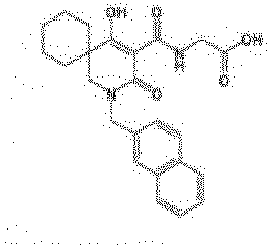
1H NMR (300 MHz, DMSO-d6) δ ppm 0.93 - 1.76 (m, 10 H) 3.35 - 3.41 (m, 2 H) 3.99 - 4.11 (m, 2 H) 4.70 - 4.85 (m, 2 H) 7.41 - 7.56 (m, 3 H) 7.83 - 7.96 (m, 4 H) 10.15 - 10.44 (m, 1 H) 12.75 - 13.01 (m, 1 H). MS ESI/APCI Dual posi: 423[M+H]+, 445[M+Na]+. MS ESI/APCI Dual nega: 421[M-H]-. Example 1-8 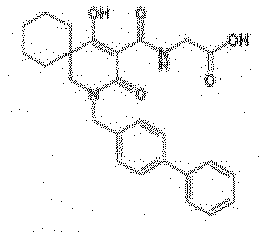
1H NMR (300 MHz, DMSO-d6) δ ppm 1.00 1.74 (m, 10 H) 3.34 - 3.39 (m, 2 H) 3.96 - 4.09 (m, 2 H) 4.58 - 4.71 (m, 2 H) 7.28 7.54 (m, 5 H) 7.59 - 7.75 (m, 4 H) 10.13 - 10.42 (m, 1 H) 12.61 - 13.17 (m, 1 H). MS ESI/APCI Dual posi: 449[M+H]+, 471[M+Na]+. MS ESI/APCI Dual nega: 447(M-H)-. Example 1-9 
1H NMR (300 MHz, DMSO-d6) δ ppm 1.48 - 1.93 (m, 8 H) 2.59 - 2.84 (m, 2 H) 3.93 - 4.11 (m, 2 H) 4.53 - 4.78 (m, 2 H) 7.29 - 7.51 (m, 5 H) 7.56 - 7.68 (m, 4 H) 9.93 - 10.25 (m, 1 H) 12.67 - 13.15 (m, 1 H). MS ESI/APCI Dual posi: 435[M+H]+, 457[M+Na]+. MS ESI/APCI Dual nega: 433[M-H]-. Example 1-10 
1H NMR (600 MHz, DMSO-d6) δ ppm 1.47 - 1.60 (m, 2 H) 1.92 - 2.05 (m, 2 H) 2.86 - 3.12 (m, 2 H) 3.42 - 3.55 (m, 2 H) 3.63 - 3.76 (m, 2 H) 3.96 - 4.08 (m, 2 H) 4.69 - 4.90 (m, 2 H) 7.30 - 7.49 (m, 5 H) 7.53 - 7.70 (m, 4 H) 9.95 - 10.26 (m, 1 H). MS ESI/APCI Dual posi: 451[M+H]+. MS ESI/APCI Dual nega: 449[M-H]-. [Table 21-2] Compound No. Structure Analytical Data Salt information Example 1-11 
1H NMR (600 MHz, DMSO-d6) δ ppm 1.19 - 1.40 (m, 2 H) 1.72 - 1.89 (m, 2 H) 3.29 - 3.38 (m, 2 H) 3.43 - 3.51 (m, 2 H) 3.56 - 3.65 (m, 2 H) 3.97 - 4.07 (m, 2 H) 4.58 - 4.75 (m, 2 H) 7.32 - 7.50 (m, 5 H) 7.62 - 7.70 (m, 4 H) 10.14 - 10.33 (m, 1 H). MS ESI/APCI Dual posi: 451[M+H]+, 473[M+Na]+. MS ESI/APCI Dual nega: 449[M-H]-. Example 1-12 
1H NMR (300 MHz, DMSO-d6) δ ppm 1.58 - 1.95 (m, 4 H) 2.28 - 2.47 (m, 2 H) 2.76 - 3.08 (m, 2 H) 3.95 - 4.12 (m, 2 H) 4.78 - 5.03 (m, 2 H) 7.29 - 7.51 (m, 5 H) 7.57 - 7.68 (m, 4 H) 9.87 - 10.29 (m, 1 H) 12.69 - 13.02 (m, 1 H). MS ESI/APCI Dual posi: 421[M+H]+. Example 1-13 
1H NMR (300 MHz, DMSO-d6) δ ppm 1.23 - 1.94 (m, 8 H) 3.15 - 3.28 (m, 2 H) 3.97 - 4.09 (m, 2 H) 4.56 - 4.71 (m, 2 H) 7.29 - 7.53 (m, 5 H) 7.60 - 7.74 (m, 4 H) 10.13 - 10.41 (m, 1 H). US ESI/APCI Dual posi: 435[M+H]+, 457[M+Na]+. Example 1-14 
1H NMR (300 MHz, DMSO-d6) δ ppm 1.12 - 1.60 (m, 10 H) 1.62 - 1.82 (m, 2 H) 3.11 - 3.24 (m, 2 H) 3.96 - 4.07 (m, 2 H) 4.54 - 4.73 (m, 2 H) 7.30 - 7.52 (m, 5 H) 7.58 - 7.73 (m, 4 H) 10.12 - 10.42 (m, 1 H). MS ESI/APCI Dual posi: 463[M+H]+, 485[M+Na]+. US ESI/APCI Dual nega: 461[M-H]-. Example 1-15 
1H NMR (300 MHz, DMSO-d6) δ pm 1.50 - 2.02 (m, 4 H) 2.12 - 2.41 (m, 2 H) 3.49 (s, 2 H) 3.93 - 4.17 (m, 2 H) 4.56 - 4.78 (m, 2 H) 7.28 - 7.54 (m, 5 H) 7.57 - 7.74 (m, 4 H) 10.00 - 10.44 (m, 1 H) 12.77 - 13.03 (m, 1 H). US ESI/APCI Dual posi: 421[M+H]+, 443[M+Na]+. US ESI/APCI Dual nega: 419[M-H]-. Example 1-16 
1H NMR (600 MHz, DMSO-d6) δ ppm 2.64 - 2.73 (m, 2 H) 3.36 - 3.49 (m, 2 H) 3.97 - 4.10 (m, 2 H) 4.55 - 4.71 (m, 2 H) 7.26 - 7.51 (m, 5 H) 7.59 - 7.70 (m, 4 H) 10.01 - 10.30 (m, 1 H) 12.67 - 13.04 (m, 1 H). MS ESI/APCI Dual posi: 381[M+H]+, 403[M+Na]+. MS ESI/APCI Dual nega: 379[M-H]-. Example 1-17 
1H NMR (600 MHz, DMSO-d6) δ ppm 1.24 (s, 6 H) 3.16 (s, 2 H) 3.91 - 4.14 (m, 2 H) 4.59 - 4.81 (m, 2 H) 7.27 - 7.49 (m, 5 H) 7.56 - 7.67 (m, 4 H) 9.96 - 10.27 (m, 1 H). MS ESI/APCI Dual posi: 409[M+H]+, 431[M+Na]+. MS ESI/APCI Dual nega: 407[M-H]-. [Table 21-3] Compound No. Structure Analytical Data Salt information Example 1-18 
1H NMR (300 MHz, CHLOROFORM-d) δ ppm 2.47 - 2.73 (m, 2 H) 3.24 - 3.41 (m, 2 H) -4.12 - 4.27 (m, 2 H) 4.52 - 4.65 (m, 2 H) 7.17 - 7.25 (m, 2 H) 7.28 - 7.36 (m, 2 H) 10.07 - 10.50 (m, 1 H). MS ESI/APCI Dual posi: 339[N+H]+, 261[M+Na]+. MS ESI/APCI Dual nega: 337[M-H]. Example 1-19 
1H NMR (300 MHz, CHLOROFORM-d) δ ppm 2.57 - 2.70 (m, 2 H) 3.31 - 3.42 (m, 2 H) 4.17 - 4.23 (m, 2 H) 4.59 - 4.74 (m, 2 H) 7.32 - 7.47 (m, 2 H) 7.53 - 7.70 (m, 2 H) 10.06 - 10.48 (m, 1 H). MS ESI/APCI Dual posi: 373[M+H]+, 395[M+Na]+. MS ESI/APCI Dual nega: 371[M-H]-. Example 1-20 
1H NMR (600 MHz, DMSO-d6) δ ppm 1.16 (d, J=6.6 Hz, 3 H) 2.15 - 2.38 (m, 1 H) 3.02 - 3.14 (m, 1 H) 3.61 - 3.77 (m, 1 H) 3.95 - 4.07 (m, 2 H) 4.13 - 4.38 (m, 1 H) 4.96 - 5.10 (m, 1 H) 7.32 - 7.49 (m, 5 H) 7.58 - 7.68 (m, 4 H) 9.91 - 10.24 (m, 1 H). MS ESI/APCI Dual posi: 395[M+H]+, 417[M+Na]+. MS ESI/APCI Dual nega: 393[M-H]-. Example 1-21 
1H NMR (300 MHz, CHLOROFORM-d) δ ppm 2.45 - 2.71 (m, 2 H) 3.20 - 3.47 (m, 2 H) 4.17 - 4.22 (m, 2 H) 4.64 (s, 2 H) 7.13 - 7.48 (m, 5 H) 10.15 - 10.47 (m, 1 H). MS ESI/APCI Dual posi: 305[M+H]+, 327[M+Na]+. MS ESI/APCI Dual nega: 303[M-H]-. Example 1-22 
1H NMR (600 MHz, DMSO-d6) δ ppm 1.09 (d, J=7.0 Hz, 3 H) 2.78 - 2.90 (m, 1 H) 3.05 - 3.20 (m, 1 H) 3.43 - 3.56 (m, 1 H) 3.98 - 4.09 (m, 2 H) 4.51 - 4.80 (m, 2 H) 7.32 - 7.50 (m, 5 H) 7.59 - 7.70 (m, 4 H) 9.99 - 10.38 (m, 1 H). MS ESI/APCI Dual posi: 395[M+H]+, 417[M+Na]+. MS ESI/APCI Dual nega: 392[M-H]-. Example 1-23 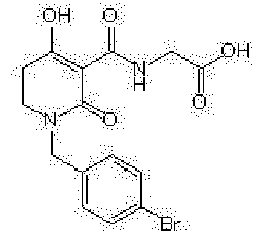
1H NMR (600 MHz, CHLOROFORM-d) δ ppm 2.60 - 2.67 (m, 2 H) 3.29 - 3.37 (m, 2 H) 4.16 - 4.23 (m, 2 H) 4.54 - 4.60 (m, 2 H) 7.12 - 7.19 (m, 2 H) 7.43 - 7.52 (m, 2 H) 10.12 - 10.50 (m, 1 H). MS ESI/APCI Dual posi: 383[M+H]+, 405[M+Na]+. MS ESI/APCI Dual nega: 381[M-H]-. Example 1-24 
1H NMR (300 MHz, DMSO-d6) δ ppm 2.42 - 2.77 (m, 2 H) 3.23 - 3.51 (m, 2 H) 3.93 - 4.14 (m, 2 H) 4.58 - 4.84 (m, 2 H) 7.23 - 7.33 (m, 1 H) 7.33 - 7.51 (m, 4 H) 7.52 - 7.60 (m, 2 H) 7.61 - 7.69 (m, 2 H) 9.90 - 10.31 (m, 1 H) 12.85 (br. s., 1 H). MS ESI/APCI Dual posi: 381[M+H]+. MS ESI/APCI Dual nega: 379[M-H]-. [Table 21-4] Compound No. Structure Analytical Data Salt informtion Example 1-25 
1H HMR (300 MHz, DMSO-d6) δ ppm 2.63 - 2.78 (m, 2 H) 3.36 - 3.53 (m, 2 H) 3.93 - 4.09 (m, 2 H) 4.58 - 4.76 (m, 2 H) 7.21 - 7.74 (m, 9 H) 9.96 - 10.31 (m, 1 H) 12.67 - 12.98 (m, 1 H). MS ESI/APCI Dual posi: 281[M+H]+, 403[M+Na]+. MS ESI/APCI Dual nega: 379[M-H]-. Example 1-26 
1H NMR (300 MHz, DMSO-d6) δ ppm 0.97 - 1.24 (m, 2 H) 1.31 - 1.56 (m, 2 H) 1.63 - 1.93 (m, 5 H) 2.41 - 3.36 (m, 5 H) 3.37 - 3.54 (m, 2 H) 3.94 - 4.08 (m, 2 H) 7.09 - 7.35 (m, 5 H) 10.02 - 10.21 (m, 1 H) 12.67 - 12.96 (m, 1 H). MS ESI/APCI Dual posi: 387[M+H]+, 409[M+Na]+. MS ESI/APCI Dual nega: 385[M-H]-. Example 1-27 
1H NMR (600 MHz, DMSO-d6) δ ppm 0.94 - 1.10 (m, 6 H) 3.17 - 3.24 (m, 2 H) 3.98 - 4.06 (m, 2 H) 4.59 - 4.70 (m, 2 H) 7.31 - 7.48 (m, 5 H) 7.59 - 7.69 (m, 4 H) 10.09 - 10.37 (m, 1 H). MS ESI/APCI Dual posi: 409[M+H]+, 431[M+Na]+. MS ESI/APCI Dual nega: 407[M-H]+. Example 1-28 
1H NMR (600 MHz, DMSO-d6) δ ppm 2.44 - 2.71 (m, 2 H) 3.34 - 3.45 (m, 2 H) 3.97 - 4.07 (m, 2 H) 4.49 - 4.64 (m, 2 H) 6.93 - 7.04 (m, 4 H) 7.09 - 7.17 (m, 1 H) 7.25 - 7.42 (m, 4 H) 9.96 - 10.27 (m, 1 H) 12.65 - 12.98 (m, 1 H). MS ESI/APCI Dual posi: 397[M+H]+, 419[M+Na]+. MS ESI/APCI Dual nega: 395[MH]-. Example 1-29 
1H NMR (600 MHz, DMSO-d6) δ ppm 2.51 - 2.75 (m, 2 H) 3.37 - 3.48 (m, 2 H) 3.95 - 4.12 (m, 2 H) 4.64 - 4.85 (m, 2 H) 7.40 - 7.45 (m, 1 H) 7.47 - 7.54 (m, 2 H) 7.81 (s, 1 H) 7.86 - 7.96 (m, 3 H) 10.02 - 10.31 (m, 1 H). MS ESI/APCI Dual posi: 355[M+H]+, 377[M+Na]+. MS ESI/APCI Dual nega: 353[M-H]-. Example 1-30 
1H NMR (300 MHz, CHLOROFORM-d) δ ppm 1.23 - 1.46 (m, 2 H) 1.49 - 1.86 (m, 4 H) 2.42 - 2.73 (m, 4 H) 3.24 - 3.54 (m, 4 H) 4.08 - 4.22 (m, 2 H) 7.13 - 7.22 (m, 3 H) 7.23 - 7.31 (m, 2 H) 10.11 - 10.43 (m, 1 H). MS ESI/APCI Dual posi: 361[M+H]+, 383[M+Na]+. MS ESI/APCI Dual nega: 359[M-H]- Example 1-31 
1H NMR (600 MHz, DMSO-d6) δ ppm 2.56 - 2.64 (m, 2 H) 2.79 - 2.92 (m, 2 H) 3.36 - 3.47 (m, 2 H) 3.53 - 3.69 (m, 2 H) 3.96 - 4.06 (m, 2 H) 7.31 - 7.38 (m, 3 H) 7.42 - 7.48 (m, 2 H) 7.58 - 7.63 (m, 2 H) 7.64 - 7.67 (m, 2 H) 9.97 - 10.20 (m, 1 H). MS ESI/APCI Dual posi: 395[M+H]+, 417[M+Na]+. MS ESI/APCI Dual nega: 393[M-H]-. [Table 21-5] Compound No. Structure Analytical Data Salt informtion Example 1-32 
1H NMR (600 MHz, DMSO-d6) δ ppm 2.79 (t, J=6.8 Hz, 2 H) 3.52 (t, J=7.0 Hz, 2 H) 3.96 - 4.12 (m, 2 H) 4.82 - 4.97 (m, 2 H) 7.80 (d, J=8.7 Hz, 1 H) 7.89 - 7.99 (m, 1 H) 8.14 (s, 1 H) 8.26 (d, J=8.7 Hz, 1 H) 8.91 - 9.03 (m, 1 H) 9.20 (d, J=4.5 Hz, 1 H) 9.98 (br. s., 1 H). HCl MS ESI/APCI Dual posi: 356[M+H]+. MS ESI/APCI Dual nega: 354[M-H]-. Example 1-33 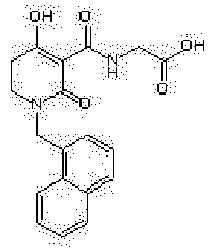
1H NMR (600 MHz, DMSO-d6) δ ppm 2.42 - 2.65 (m, 2 H) 3.34 - 3.45 (m, 2 H) 4.00 - 4.10 (m, 2 H) 5.00 - 5.13 (m, 2 H) 7.39 - 7.64 (m, 4 H) 7.84 - 7.92 (m, 1 H) 7.94 - 8.01 (m, 1 H) 8.07 - 8.16 (m, 1 H) 9.99 - 10.34 (m, 1 H) 12.65 - 13.04 (m, 1 H). MS ESI/APCI Dual posi: 355[M+H]+, 377[M+Na]+. MS ESI/APCI Dual nega: 353[M-H]-. Example 1-34 
1H NMR (600 MHz, CHLOROFORM-d) δ ppm 2.36 - 2.56 (m, 2 H) 2.79 - 2.94 (m, 2 H) 3.12 - 3.26 (m, 2 H) 3.55 - 3.70 (m, 2 H) 4.04 - 4.20 (m, 2 H) 7.15 - 7.36 (m, 5 H) 10.01 - 10.39 (m, 1 H). MS ESI/APCI Dual posi: 341[M+Na]+. MS ESI/APCI Dual nega: 317[M-H]-. Example 1-35 
1H NMR (300 MHz, DMSO-d6) δ ppm 2.53 - 2.82 (m, 2 H) 3.44 (t, J=6.8 Hz, 2 H) 3.93 - 4.12 (m, 2 H) 4.67 (s, 2 H) 7.49 (d, J=8.4 Hz, 2 H) 7.61 - 7.70 (m, 1 H) 8.07 (d, J=8.4 Hz, 2 H) 8.13 - 8.29 (m, 2 H) 8.77 (d, J=4.7 Hz, 1 H) 9.90 - 10.27 (m, 1 H). HCl MS ESI/APCI Dual posi: 382[M+H]+, 404[M+Na]+. MS ESI/APCI Dual nega: 380[M-H]-. Example 1-36 
1H NMR (300 MHz, CHLOROFORM-d) δ ppm 1.36 (s, 9 H) 2.53 - 2.71 (m, 2 H) 3.33 - 3.44 (m, 2 H) 4.17 - 4.24 (m, 2 H) 4.63 - 4.70 (m, 2 H) 7.29 - 7.37 (m, 2 H) 7.42 - 7.61 (m, 6 H) 10.20 - 10.46 (m, 1 H). MS ESI/APCI Dual posi: 437[M+H]+, 459[M+Na]+. MS ESI/APCI Dual nega: 435[M-H]-. Example 1-37 
1H NMR (300 MHz, CHLOROFORM-d) δ ppm 1.18 - 1.51 (m, 5 H) 1.68 - 1.96 (m, 5 H) 2.41 - 2.68 (m, 3 H) 3.29 - 3.41 (m, 2 H) 4.14 - 4.23 (m, 2 H) 4.56 - 4.62 (m, 2 H) 7.14 - 7.21 (m, 4 H) 10.21 - 10.43 (m, 1 H). MS ESI/APCI Dual posi: 387[M+H]+, 409[M+Na]+. MS ESI/APCI Dual nega: 385[M-H]-. Example 1-38 
1H NMR (300 MHz, DMSO-d6) δ ppm 2.59 - 2.91 (m, 2 H) 3.72 - 3.89 (m, 2 H) 3.97 - 4.10 (m, 2 H) 7.17 - 7.52 (m, 5 H) 9.80 - 10.39 (m, 1 H) 12.57 - 13.07 (m, 1 H). MS ESI/APCI Dual posi: 291[M+H]+, 313[M+Na]+. MS ESI/APCI Dual nega: 289[M-H]-. [Table 21-6] Compound No. Structure Analytical Data Salt informtion Example 1-39 
1H NMR (300 MHz, DMSO-d6) δ ppm 2.56 - 2.87 (m, 2 H) 3.76 - 3.88 (m, 2 H) 3.96 - 4.09 (m, 2 H) 6.82 - 6.95 (m, 1 H) 6.97 7.21 (m, 5 H) 7.34 - 7.47 (m, 3 H) 9.77 - 10.40 (m, 1 H) 12.73 - 12.98 (m, 1 H). MS ESI/APCI Dual posi: 383[M+H]+, 405[M+Na]+, MS ESI/APCI Dual nega: 381[M-H]-. Example 1-40 
1H NMR (300 MHz, DMSO-d6) δ ppm 2.60 - 2.90 (m, 2 H) 3.72 - 3.87 (m, 2 H) 3.94 - 4.12 (m, 2 H) 6.97 - 7.23 (m, 5 H) 7.25 - 7.50 (m, 4 H) 9.83 - 10.38 (m, 1 H) 12.72 - 13.05 (m, 1 H). MS ESI/APCI Dual posi: 383[M+H]+, 405[M+Na]+. MS ESI/APCI Dual nega: 381[M-H]-. Example 1-41 
1H NMR (300 MHz, DMO-d6) δ ppm 2.67 - 2.82 (m, 2 H) 3.46 - 3.61 (m, 2 H) 3.96 - 4.07 (m, 2 H) 4.62 (s, 2 H) 7.28 - 7.71 (m, 3 H) 8.24 - 8.55 (m, 2 H) 8.86 (s, 2 H) 9.78 - 10.08 (m, 1 H). MS ESI/APCI Dual posi: 383[M+H]+, 405[M+Na]+. Example 1-42 
1H NMR (300 MHz, CHLOROFORM-d) δ ppm 2.50 - 2.87 (m, 2 H) 3.25 - 3.39 (m, 2 H) 3.96 (s, 2 H) 4.15 - 4.22 (m, 2 H) 4.50 - 4.63 (m, 2 H) 7.12 - 7.33 (m, 9 H) 10.11 - 10.50 (m, 1 H). MS ESI/APCI Dual posi: 395[M+H]+, 417[M+Na]+. MS ESI/APCI Dual nega: 393[M-H]-. Example 1-43 
1H NMR (300 MHz, DMSO-d6) δ ppm 1.17 - 2.00 (m, 10 H) 2.61-2.92 (m, 3 H) 3.50 (t, J=7.2 Hz, 2 H) 4.01 (d, J=5.4 Hz, 2 H) 4.55 (s, 2 H) 8.71 (s, 2 H) 9.93 (br. s., 1 H). HCl MS ESI/APCI Dual posi : 389[M+H]+, 411[M+Na]+. MS ESI/APCI Dual nega: 387[M-H]-. Example 1-44 
1H NMR (600 MHz, DMSO-d6) δ ppm 2.67 - 2.77 (m, 2 H) 3.41 - 3.52 (m, 2 H) 3.96 - 4.11 (m, 2 H) 4.72 - 4.91 (m, 2 H) 7.33 - 7.57 (m, 3 H) 7.79 - 7.98 (m, 3 H) 9.87 - 10.05 (m, 1 H). HCl MS ESI/APCI Dual posi: 388[M+H]+. MS ESI/APCI Dual nega: 386[M-H]-. Example 1-45 
1H NMR (500 MHz, CHLOROFORM-d) δ ppm 2.74 (t, J=7.3 Hz, 2 H) 3.58 (t, J=7.3 Hz, 2 H) 4.15 - 4.23 (m, 2 H) 4.70 - 4.80 (m, 2 H) 6.52 - 6.57 (m, 1 H) 7.41 - 7.51 (m, 3 H) 7.74 - 7.83 (m, 2 H) 9.97 - 10.52 (m, 1 H). MS ESI/APCI Dual posi: 372[M+H]+, 394[M+Na]+. MS ESI/APCI Dual nega: 370[M-H]-. [Table 21-7] Compound No. Structure Analytical Data Salt information Example 1-46 
1H NMR (600 NHz, DMSO-d6) δ ppm 1.67 - 1.76 (m, 4 H) 2.56 - 2.75 (m, 6 H) 3.25 - 3.40 (m, 2 H) 3.97 - 4.07 (m, 2 H) 4.44 - 4.55 (m, 2 H) 6.90 - 7.11 (m, 3 H) 9.98 - 10.27 (m, 1 H). MS ESI/APCI Dual posi: 359[M+H]+, 381[M+Na]+. MS ESI/APCI Dual nega: 357[M-H]-. Example 1-47 
1H NMR (300 MHz, DMSO-d6) δ ppm 2.28 (s, 3 H) 2.48 - 2.69 (m, 2 H) 3.06 - 3.61 (m, 2 H) 3.88 - 4.14 (m, 2 H) 4.36 - 4.73 (m, 2 H) 7.12 - 7.28 (m, 4 H) 9.79 - 10.41 (m, 1 H) 12.81 (br, s, 1 H). MS ESI/APCI Dual posi: 319[M+H]+, 341[M+Na]+. MS ESI/APCI Dual nega: 317[M-H]-. Example 1-48 
1H NMR (300 MHz, DMSO-d6) δ ppm 2.43 - 2.64 (m, 2 H) 3.25 - 3.42 (m, 2 H) 3.73 (s, 3 H) 3. 94 - 4.08 (m, 2 H) 4.44 - 4.58 (m, 2 H) 6.75 - 7.04 (m, 2 H) 7.08 - 7.40 (m, 2 H) 9.94 - 10.31 (m, 1 H) 12.86 (br. s, 1 H). MVS ESI/APCI Dual posi: 335[M+H]+, 357[M+Na]+. MS ESI/APCI Dual nega: 333[M-H]-. Example 1-49 
1H NMR (600 MHz, CHLOROFORM-d) δ ppm 2.61 - 2.70 (m, 1 H) 3.01 - 3.24 (m, 1 H) 3.51 - 3.73 (m, 1 H) 4.11 - 4.31 (m, 2 H) 4.53 - 4.59 (m, 1 H) 5.44 - 5.63 (m, 1 H) 7.11 - 7.17 (m, 2 H) 7.19 - 7.24 (m, 2 H) 7.26 - 7.39 (m, 6 H) 10.24 - 10.39 (m, 1 H). MS ESI/APCI Dual posi: 381[M+H]+, 403[M+Na]+. MS ESI/APCI Dual nega: 379[M-H]-. Example 1-50 
1H NMR (600 MHz, CHLOROFORM-d) δ ppm 2.64 - 2.71 (m, 1 H) 3.06 - 3.28 (m, 1 H) 3.59 - 3.79 (m, 1 H) 4.13 - 4.32 (m, 2 H) 4.59 - 4.64 (m, 1 H) 5.47 - 5. 67 (m, 1 H) 7.13 - 7.20 (m, 2 H) 7.27 - 7.40 (m, 6 H) 7.41 - 7.47 (m, 2 H) 7.53 - 7.60 (m, 4 H) 10.28 - 10.42 (m, 1 H). MS ESI/APCI Dual posi: 457[M+H]+, 479[M+Na]+. MS ESI/APCI Dual nega: 455[M-H]-. Example 1-51 
1H NMR (300 MHz, CHLOROFORM-d) δ ppm 1.07 - 1.43 (m, 3 H) 1.44 - 1.66 (m, 2 H) 1.68 - 1.88 (m, 2 H) 2.35 - 2.55 (m, 1 H) 2.76 - 3.09 (m, 1 H) 3.25 - 3.45 (m, 1 H) 3.89 - 4.32 (m, 3 H) 5.22 - 5.44 (m, 1 H) 7.29 - 7.49 (m, 5 H) 7.51 - 7.62 (m, 4 H) 10.21 - 10.67 (m, 1 H). MS ESI/APCI Dual posi: 435[M+H]+, 457[M+Na]+. MS ESI/APCI Dual nega: 433[M-H]-. Example 1-52 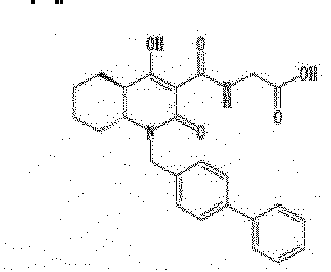
1H NMR (300 MHz, DMSO-d6) δ ppm 0.92 - 1.46 (m, 4 H) 1.60 - 1.81 (m, 2 H) 2.05 - 2.78 (m, 3 H) 3.22 - 3.39 (m, 1 H) 3.98 - 4.12 (m, 2 H) 4.45 - 4.69 (m, 1 H) 4.93 - 5.11 (m, 1 H) 7.24 - 7.51 (m, 5 H) 7.58 - 7.70 (m, 4 H) 10.09 - 10.42 (m, 1 H) 12.74 - 12.98 (m. 1 H). MS ESI/APCI Dual posi: 457[M+Na]+. MS ESI/APCI Dual nega: 433[M-H]-. [Table 21-8] Compound No. Structure Analytical Data Salt information Example 1-53 
1H NMR (300 MHz, CHLOROFORM-d) δ ppm 1.23 (t, J=7.5 Hz, 3 H) 2.50 - 2.72 (m, 4 H) 3.27 - 3.40 (m, 2 H) 4.13 - 4.22 (m, 2 H) 4.55 - 4.63 (m, 2 H) 7.15 - 7.21 (m, 4 H) 10.14 - 10.46 (m, 1 H). MS ESI/APCI Dual posi: 333[M+H]+, 355[M+Na]+. MS ESI/APCI Dual nega: 331[M-H]-. Example 1-54 
1H NMR (300 MHz, CHLOROFORM-d) δ ppm 2.59 - 2.76 (m, 2 H) 3.34 - 3.45 (m, 2 H) 4.15 - 4.25 (m, 2 H) 4.83 - 4.93 (m, 2 H) 7.55 (d, J=8.2 Hz, 1 H) 7.76 - 7.86 (m, 1 H) 7.93 (s, 1 H) 9.91 - 10.67 (m, 1 H). MS ESI/APCI Dual posi: 441[M+H]+, 463[M+Na]+. MS ESI/APCI Dual nega: 439[M-H]-. Example 1-55 
1H NMR (300 MHz, CHLOROFORM-d) δ ppm 1.29 - 1.33 (m, 9 H) 2.52 - 2.67 (m, 2 H) 3.30 - 3.41 (m, 2 H) 4.15 - 4.23 (m, 2 H) 4.56 - 4.63 (m, 2 H) 7.19 (d, J=8.5 Hz, 2 H) 7.32 - 7.40 (m, 2 H) 10.21 - 10.43 (m, 1 H). MS ESI/APCI Dual posi: 361[M+H]+, 383[M+Na]+. MS ESI/APCI Dual nega: 359[M-H]-. Example 1-56 
1H NMR (300 MHz, CHLOROFORM-d) δ ppm 2.55 - 2.74 (m, 2 H) 3.29 - 3.43 (m, 2 H) 4.13 - 4.26 (m, 2 H) 4.77 - 4.90 (m, 2 H) 7.34 - 7.45 (m, 2 H) 7.55 (t, J=7.5 Hz, 1 H) 7.61 - 7.76 (m, 1 H) 10.13 - 10.51 (m, 1 H). MS ESI/APCI Dual posi: 373[M+H]+, 395[M+Na]+. MS ESI/APCI Dual nega: 371[M-H]-. Example 1-57 
1H NMR (300 MHz, CHLOROFORM-d) δ ppm 3.36 - 3.88 (m, 3 H) 4.09 - 4.33 (m, 2 H) 4.54 - 4.71 (m, 2 H) 7.08 - 7.60 (m, 14 H) 10.29 - 10.56 (m, 1 H). MS ESI/APCI Dual posi: 457[M+H]+, 479[M+Na]+. MS ESI/APCI Dual nega: 455[M-H]-. Example 1-58 
1H NMR (300 MHz, CHLOROFORM-d) δ ppm 2.54 - 2.70 (m, 2 H) 3.28 - 3.43 (m, 2 H) 4.13 - 4.24 (m, 2 H) 4.60 - 4.71 (m, 2 H) 7.42 - 7.64 (m, 4 H) 10.09 - 10.53 (m, 1 H). MS ESI/APCI Dual posi: 373[M+H]+, 395[M+Na]+. MS ESI/APCI Dual nega: 371[M-H]-. Example 1-59 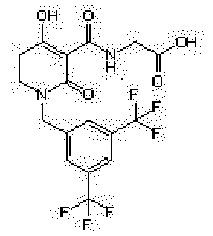
1H NMR (300 MHz, CHLOROFORM-d) δ ppm 2.57 - 2.75 (m, 2 H) 3.33 - 3.46 (m, 2 H) 4.15 - 4.27 (m, 2 H) 4.67 - 4.77 (m, 2 H) 7.73 (s, 2 H) 7.79 - 7.86 (m, 1 H) 10.00 - 10.65 (m, 1 H). MS ESI/APCI Dual posi: 441[M+H]+, 463[M+Na]+. MS ESI/APCI Dual nega: 439[M-H]-. [Table 21-9] Compound No. Structure Analytical Data Salt information Example 1-60 
1H NMR (300 MHz, CHLOROFORM-d) δ ppm 2.21 - 2.35 (m, 6 H) 2.45 - 2.70 (m, 2 H) 3.17 - 3.38 (m, 2 H) 4.05 - 4.29 (m, 2 H) 4.47 - 4.74 (m, 2 H) 6.84 - 7.12 (m, 3 H) 10.16 - 10.49 (m, 1 H). MS ESI/APCI Dual posi: 333[M+H]+, 355[M+Na]+. MS ESI/APCI Dual nega: 331[M-H]-. Example 1-61 
1H NMR (300 MHz, CHLOROFORM-d) δ ppm 2.51 - 2.68 (m, 2 H) 3.28 - 3.41 (m, 2 H) 3.74 - 3.86 (m, 3 H) 4.09 - 4.28 (m, 2 H) 4.59 (s, 2 H) 6.77 - 6.89 (m, 3 H) 7.20 - 7.32 (m, 1 H) 10.11 - 10.49 (m, 1 H). MS ESI/APCI Dual posi: 335[M+H]+, 357[M+Na]+. MS ESI/APCI Dual nega: 333[M-H]-. Example 1-62 
1H NMR (300 MHz, CHLOROFORM-d) δ ppm 2.19 - 2.35 (m, 3 H) 2.44 - 2.66 (m, 2 H) 3.13 - 3.37 (m, 2 H) 3.60 - 3.94 (m, 3 H) 4.12 - 4.28 (m, 2 H) 4.50 - 4.63 (m, 2 H) 6.65 - 6.81 (m, 2 H) 7.00 - 7.13 (m, 1 H) 10.14 - 10.47 (m, 1 H). MS ESI/APCI Dual posi: 349[M+H]+, 371[M+Na]+. MS ESI/APCI Dual nega: 347[M-H]-. Example 1-63 
1H NMR (600 MHz, DMSO-d6) δ ppm 1.02 - 1.73 (m, 10 H) 2.70 - 2.96 (m, 2 H) 3.94 - 4.07 (m, 2 H) 4.73 - 4.91 (m, 2 H) 7.45 - 7.56 (m, 2 H) 7.61 - 7.70 (m, 2 H) 9.91 - 10.22 (m, 1 H) 12.76 - 12.93 (m, 1 H). MS ESI/APCI Dual posi: 441[M+H]+, 463[M+Na]+. MS ESI/APCI Dual nega: 439[M-H]-. Example 1-64 
1H NMR (600 MHz, DMSO-d6) δ ppm 1.16 - 1.38 (m, 2 H) 1.71 - 1.90 (m, 2 H) 3.33 - 3.41 (m, 2 H) 3.44 - 3.52 (m, 2 H) 3.58 - 3.65 (m, 2 H) 3.99 - 4.09 (m, 2 H) 4.66 - 4.76 (m, 2 H) 7.50 - 7.61 (m, 2 H) 7.66 - 7.76 (m, 2 H) 10.08 - 10.35 (m, 1 H) 12.71 - 13.00 (m, 1 H). MS ESI/APCI Dual posi: 443[M+H]+, 465[M+Na]+. MS ESI/APCI Dual nega: 441[M-H]-. Example 1-65 
1H NMR (600 MHz, DMSO-d6) δ ppm 2.46 (s, 3 H) 2.59 - 2.69 (m, 2 H) 3.32 - 3.40 (m, 2 H) 3.95 - 4.05 (m, 2 H) 4.42 - 4.64 (m, 2 H) 7.16 - 7.29 (m, 4 H) 10.00 - 10.24 (m, 1 H) 12.87 (br. s., 1 H). MS ESI/APCI Dual posi: 351[M+H]+, 373[M+Na]+. MS ESI/APCI Dual nega: 349[M-H]-. Example 1-66 
1H NMR (300 MHz, CHLOROFORM-d) δ ppm 2.53 - 2.72 (m, 2 H) 3.28 - 3.43 (m, 2 H) 4.11 - 4.26 (m, 2 H) 4.51 - 4.67 (m, 2 H) 7.12 - 7.19 (m, 1 H) 7.20 - 7.35 (m, 3 H) 10.07 - 10.50 (m, 1 H). MS ESI/APCI Dual posi: 339[M+H]+ 361[M+Na]+. MS ESI/APCI Dual nega: 337[M-H]-. [Table 21-10] Compound No. Structure Analytical Data Salt information Example 1-67 
1H NMR (300 MHz, CHLOROFORM-d) δ ppm 2.50 - 2.73 (m, 2 H) 3.26 - 3.42 (m, 2 H) 4.07 - 4.28 (m, 2 H) 4.47 - 4.64 (m, 2 H) 7.03 - 7.17 (m, 1 H) 7.30 - 7.53 (m, 2 H) 10.03 - 10.53 (m, 1 H). MS ESI/APCI Dual posi: 373[M+H]+, 395[M+Na]+. MS ESI/APCI Dual nega: 371[M-H]-. Example 1-68 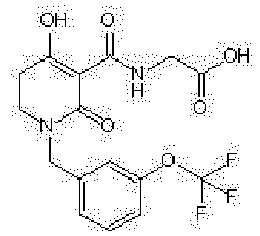
1H NMR (300 MHz, CHLOROFORM-d) δ ppm 2.51 - 2.77 (m, 2 H) 3.22 - 3.48 (m, 2 H) 4.09 - 4.27 (m, 2 H) 4.63 (s, 2 H) 7.08 - 7.24 (m, 3 H) 7.32 - 7.44 (m, 1 H) 10.11 - 10.49 (m, 1 H). MS ESI/APCI Dual posi: 389[M+H]+, 411[M+Na]+. MS ESI/APCI Dual nega: 387[M-H]-. Example 1-69 
1H NMR (300 MHz, CHLOROFORM-d) δ ppm 2.54 - 2.70 (m, 2 H) 3.30 - 3.41 (m, 2 H) 4.15 - 4.23 (m, 2 H) 4.58 - 4.66 (m, 2 H) 7.15 - 7.24 (m, 2 H) 7.27 - 7.34 (m, 2 H) 10.06 - 10.50 (m, 1 H). MS ESI/APCI Dual posi: 389[M+H]+, 411[M+Na]+. MS ESI/APCI Dual nega: 387[M-H]-. Example 1-70 
1H NMR (600 MHz, CHLOROFORM-d) δ ppm 2.36 (s, 3 H) 2.54 - 2.67 (m, 2 H) 3.32 - 3.38 (m, 2 H) 4.15 - 4.21 (m, 2 H) 4.52 - 4.58 (m, 2 H) 6.84 - 6.90 (m, 1 H) 6.99 - 7.04 (m, 2 H) 7.17 - 7.22 (m, 2 H) 7.62 - 7.67 (m, 1 H) 8.10 (d, J=2.1 Hz, 1 H) 10.14 - 10.47 (m, 1 H). MS ESI/APCI Dual posi: 412[M+H]+. MS ESI/APCI Dual nega: 410[M-H]-. Example 1-71 
1H NMR (600 MHz, CHLOROFORM-d) δ ppm 1.37 - 1.45 (m, 3 H) 2.47 - 2.64 (m, 2 H) 3.26 - 3.38 (m, 2 H) 3.97 - 4.06 (m, 2 H) 4.15 - 4.23 (m, 2 H) 4.50 - 4.61 (m, 2 H) 6.83 - 6.89 (m, 2 H) 7.14 - 7.21 (m, 2 H) 10.24 - 10.43 (m, 1 H). MS ESI/APCI Dual posi: 349[M+H]+, 371[M+Na]+. MS ESI/APCI Dual nega: 347[M-H]-. Example 1-72 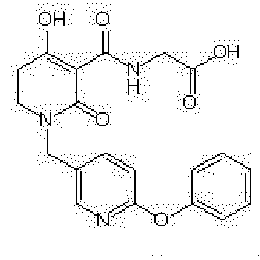
1H NMR (300 MHz, CHLOROFORM-d) δ ppm 2.48 - 2.75 (m, 2 H) 3.25 - 3.48 (m, 2 H) 4.08 - 4.25 (m, 2 H) 4.45 - 4.65 (m, 2 H) 6.84 - 6.95 (m, 1 H) 7.10 - 7.16 (m, 2 H) 7.18 - 7.25 (m, 1 H) 7.36 - 7.45 (m, 2 H) 7.58 - 7.75 (m, 1 H) 8.03 - 8.22 (m, 1 H) 10.10 - 10.50 (m, 1 H). MS ESI/APCI Dual posi: 398[M+H]+, 420[M+Na]+. MS ESI/APCI Dual nega: 396[M-H]-. Example 1-73 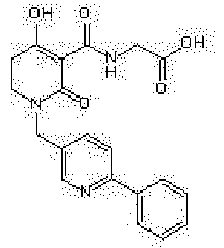
1H NMR (300 MHz, DMSO-d6) δ ppm 2.38 - 2.83 (m, 2 H) 3.50 (t, J=7.1 Hz, 2 H) 4.03 (d, J=5.1 Hz, 2 H) 4.60 - 4.76 (m, 2 H) 7.44 - 7.61 (m, 3 H) 7.94 - 8.15 (m, 4 H) 8.69 (s, 1 H) 9.87 - 10.08 (m, 1 H). MS ESI/APCI Dual posi: 382[M+H]+, 404[M+Na]+. MS ESI/APCI Dual nega: 380[M-H]-. [Table 21-11] Compound No. Structure Analytical Data Salt information Example 1-74 
1H NMR (300 MHz, CHLOROFORM-d) δ ppm 2.54 - 2.72 (m, 2 H) 3.29 - 3.43 (m, 2 H) 4.13 - 4.24 (m, 2 H) 4.55 - 4.68 (m, 2 H) 7.37 - 7.45 (m, 1 H) 7.45 - 7.51 (m, 1 H) 7.56 - 7.61 (m, 1 H) 10.03 - 10.56 (m, 1 H). MS ESI/APCI Dual posi: 407[M+H]+, 429[M+Na]+. MS ESI/APCI Dual nega: 405[M-H]-. Example 1-75 
1H NMR (300 MHz, DMSO-d6) δ ppm 2.03 - 2.29 (m, 1 H) 2.65 - 3.08 (m, 3 H) 3.67 - 3.88 (m, 1 H) 3.96 - 4.22 (m, 3 H) 4.96 - 5.16 (m, 1 H) 7.07 - 7.52 (m, 10 H) 7.58 - 7.70 (m, 4 H) 9.90 - 10.22 (m, 1 H) 12.76 - 12.98 (m, 1 H). MS ESI/APCI Dual posi: 471[M+H]+, 493[M+Na]+. MS ESI/APCI Dual nega: 469[M-H]-. Example 1-76 
1H NMR (300 MHz, DMSO-d6) δ ppm 1.77 - 1.95 (m, 2 H) 2.51 - 2.75 (m, 3 H) 3.07 (dd, J=17.4, 7.0 Hz, 1 H) 3.50 (m, 1 H) 3.98 - 4.32 (m, 3 H) 4.98 - 5.12 (m, 1 H) 7.12 - 7.40 (m, 8 H) 7.42 - 7.51 (m, 2 H) 7.54 - 7.69 (m, 4 H) 9.90 - 10.20 (m, 1 H) 12.73 - 12.92 (m, 1 H). MS ESI/APCI Dual posi: 485[M+H]+, 507[M+Na]+. MS ESI/APCI Dual nega: 483[M-H]-. Example 1-77 
1H NMR (600 MHz, DMSO-d6) δ ppm 1.17 (d, J=6.2 Hz, 3 H) 2.37 (d, J=17.3 Hz, 1 H) 3.04 - 3.19 (m, 1 H) 3.65 - 3.78 (m, 1 H) 3.95 - 4.09 (m, 2 H) 4.25 (d, J=15.7 Hz, 1 H) 5.07 (d, J=15.1 Hz, 1 H) 7.51 (d, J=7.8 Hz, 2 H) 7.64 (br. s., 1 H) 7.89 - 8.36 (m, 4 H) 8.76 (d, J=4.5 Hz, 1 H) 9.84 - 10.30 (m, 1 H). HCl MS ESI/APCI Dual posi: 396[M+H]+. MS ESI/APCI Dual nega: 394[M-H]-. Example 1-78 
1H NMR (300 MHz, CHLOROFORM-d) δ ppm 1.15 - 1.31 (m, 3 H) 2.26 - 2.41 (m, 1 H) 2.75 - 3.01 (m, 1 H) 3.49 - 3.63 (m, 1 H) 3.92 - 4.25 (m, 3 H) 5.17 - 5.40 (m, 1 H) 7.31 - 7.45 (m, 2 H) 7.54 - 7.67 (m, 2 H) 10.05 - 10.41 (m, 1 H). MS ESI/APCI Dual posi: 387[M+H]+, 409[M+Na]+. MS ESI/APCI Dual nega: 385[M-H]-. Example 1-79 
1H NMR (300 MHz, CHLOROFORM-d) δ ppm 1.16 - 1.24 (m, 3 H) 2.20 - 2.38 (m, 4 H) 2.70 - 2.96 (m, 1 H) 3.49 - 3.64 (m, 1 H) 3.81 - 4.04 (m, 1 H) 4.15 - 4.23 (m, 2 H) 5.11 - 5.35 (m, 1 H) 7.09 - 7.20 (m, 4 H) 10.17 - 10.39 (m, 1 H). MS ESI/APCI Dual posi: 333[M+H]+, 355[M+Na]+. MS ESI/APCI Dual nega: 331[M-H]-. Example 1-80 
1H NMR (300 MHz, CHLOROFORM-d) δ ppm 1.03 - 1.34 (m, 5 H) 1.36 - 2.01 (m, 7 H) 2.26 - 2.75 (m, 3 H) 2.87 - 3.11 (m, 1 H) 3.54 - 3.70 (m, 1 H) 3.84 - 4.02 (m, 1 H) 4.08 - 4.21 (m, 2 H) 7.13 - 7.35 (m, 5 H) 10.15 - 10.25 (m, 1 H). MS ESI/APCI Dual posi: 401[M+H]+, 423[M+Na]+. MS ESI/APCI Dual nega: 399[M-H]-. [Table 21-12] Compound No. Structure Analytical Data Salt information Example 1-81 
1H NMR (300 MHz, CHLOROFORM-d) δ ppm 2.62 - 3.05 (m, 2 H) 3.58 - 4.36 (m, 4 H) 5.64 - 5.81 (m, 1 H) 7.27 - 7.49 (m, 5 H) 7.51 - 7.64 (m, 4 H) 9.88 - 10.45 (m, 1 H). MS ESI/APCI Dual posi : 449[M+H]+, 471[M+Na]+. MS ESI/APCI Dual nega : 447[M-H]-. Example 1-82 
1H NMR (300 MHz, CHLOROFORM-d) δ ppm 0.90 - 1.11 (m, 2 H) 1.16-1.26 (m, 1 H) 1.36 - 1.61 (m, 5 H) 1.67 - 1.86 (m, 2 H) 3.22 (s, 2 H) 4.13 - 4.23 (m, 2 H) 4.60 - 4.73 (m, 2 H) 7.37 - 7.47 (m, 2 H) 7.53 - 7.74 (m, 2 H) 9.99 - 10.52 (m, 1 H). MS ESI/APCI Dual posi: 441[M+H]+, 463[M+Na]+. MS ESI/APCI Dual nega : 439[M-H]-. Example 1-83 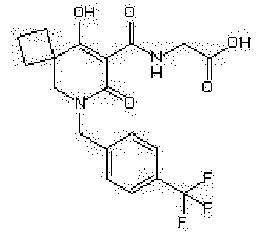
1H NMR (300 MHz, CHLOROFORM-d) δ ppm 1.61 - 1.78 (m, 2 H) 1.79 - 2.04 (m, 2 H) 2.38 - 2.57 (m, 2 H) 3.28 - 3.37 (m, 2 H) 4.13 - 4.22 (m, 2 H) 4.64 - 4.72 (m, 2 H) 7.36 - 7.44 (m, 2 H) 7.57 - 7.66 (m, 2 H) 10.19 - 10.30 (m, 1 H). MS ESI/APCI Dual posi: 413[M+H]+, 435[M+Na]+. MS ESI/APCI Dual nega : 411[M-H]-. Example 1-84 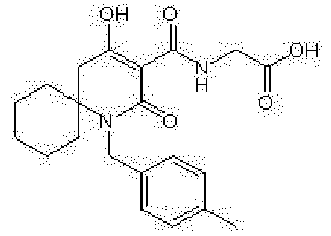
1H NMR (300 MHz, DMSO-d6) δ ppm 1.03 - 1.81 (m, 10 H) 2.13 - 2.93 (m, 2 H) 3.19 (s, 3 H) 3.96 - 4.09 (m, 2 H) 4.76 - 4.95 (m, 2 H) 7.49 - 7.62 (m, 2 H) 7.99 - 7.92 (m, 2 H) 9.88 - 10.26 (m, 1 H) 12.73 - 13.02 (m, 1 H). MS ESI/APCI Dual posi : 409[M+Na]+. MS ESI/APCI Dual nega : 385[M-H]-. Example 1-85 
1H NMR (300 MHz, CHLOROFORM-d) δ ppm 1.16 - 1.37 (m, 6 H) 2.49 - 2.70 (m, 2 H) 4.09 - 4.26 (m, 2 H) 4.62 - 4.79 (m, 2 H) 7.34 - 7.43 (m, 2 H) 7.49 - 7.66 (m, 2 H) 10.09 - 10.47 (m, 1 H). MS ESI/APCI Dual posi : 401[M+H]+, 423[Na+H]+. MS ESI/APCI Dual nega : 399[M-H]-. Example 1-86 
1H NMR (300 MHz, CHLOROFORM-d) δ ppm 0.86 - 1.08 (m, 2 H) 1.08 - 1.57 (m, 6 H) 1.61 - 1.82 (m, 2 H) 2.26 - 2.41 (m, 3 H) 3.09 - 3.25 (m, 2 H) 4.10 - 4.23 (m, 2 H) 4.49 - 4.66 (m, 2 H) 7.11 - 7.21 (m, 4 H) 10.31 - 10.66 (m, 1 H). MS ESI/APCI Dual posi : 387[M+H]+, 409[M+Na]+. MS ESI/APCI Dual nega : 385[M-H]-. Example 1-87 
1H NMR (300 MHz, DMSO-d6) δ ppm 1.31 (s, 9 H) 1.47 - 1.60 (m, 2 H) 1.89 - 2.06 (m, 2 H) 2.88 - 3.13 (m, H) 3.42 - 3.57 (m, 2 H) 3.66 - 3.78 (m, 2 H) 3.97 - 4.11 (m, 2 H) 4.70 - 4.88 (m, 2 H) 7.33 - 7.51 (m, 4 H) 7.52 - 7.65 (m, 4 H) 9.95 - 10.27 (m, 1 H) 12.74 - 12.97 (m, 1 H). MS ESI/APCI Dual posi : 607[M+H]+, 529[M+Na]+. MS ESI/APCI Dual nega : 505[M-H]-. [Table 21-13] Compound No. Structure Analytical Data Salt information Example 1-88 
1H NMR (300 MHz, CHLOROFORM-d) δ ppm 1.18 - 1.35 (m, 6 H) 2.23 - 2.37 (m, 3 H) 2.46 - 2.67 (m, 2 H) 4.10 - 4.25 (m, 2 H) 4.57 - 4.71 (m, 2 H) 7.06 - 7.18 (m, 4 H) 10.21 - 10.46 (m, 1 H). MS ESI/APCI Dual posi: 347[M+H]+, 369[M+Na]+. MS ESI/APCI Dual nega : 345[M-H]-. Example 1-89 
1H NMR (300 MHz, CHLOROFORM-d) δ ppm 1.18 - 1.37 (m, 2 H) 1.94 - 2.07 (m, 2 H) 2.30 - 2.38 (m, 3 H) 3.17 - 3.30 (m, 4 H) 3.64 - 3.76 (m, 2 H) 4.19 (d, J=5.6 Hz, 2 H) 4.54 - 4.61 (m, 2 H) 7.12 - 7.19 (m, 4 H) 10.30 - 10.55 (m, 1 H). MS ESI/APCI Dual posi: 389[M+H]+, 411[M+Na]+. MS ESI/APCI Dual nega : 387[M-H]-. Example 1-90 
1H NMR (300 MHz, DMSO-d6) δ ppm 1.49 - 1.68 (m, 2 H) 1.69 - 1.89 (m, 2 H) 2.16 - 2.31 (m, 5 H) 2.45 - 2.55 (m, 2 H) 3.44 (d, J=4.0 Hz, 2 H) 4.48 - 4.57 (m, 2 H) 7.09 - 7.23 (m, 4 H). Na MS ESI/APCI Dual nega : 357[M-H]-. Example 1-91 
1H NMR (300 MHz, DMSO-d6) δ ppm 1.05 - 1.73 (m, 10 H) 3.35 - 3.50 (m, 2 H) 3.94 - 4.11 (m, 2 H) 4.76 - 4.94 (m, 2 H) 7.39 - 7.55 (m, 3 H) 7.81 - 8.02 (m, 3 H) 9.98 - 10.43 (m, 1 H). HCl MS ESI/APCI Dual nega : 454[M-H]-. Example 1-92 
1H NMR (300 MHz, DMSO-d6) δ ppm 0.90 - 1.06 (m, 3 H) 2.28 (s, 3 H) 2.86 - 3.02 (m, 1 H) 3.21 - 3.58 (m, 4 H) 4.38 - 4.64 (m, 2 H) 7.07 - 7.22 (m, 4 H) 10.07 - 10.30 (m, 1 H). Na MS ESI/APCI Dual posi : 355[M+Na]+. MS ESI/APCI Dual nega : 331[M-H]-. Example 1-93 
1H NMR (300 MHz, DMSO-d6) δ ppm 0.95 - 1.17 (m, 3 H) 2.76 - 2.95 (m, 1 H) 3.08 - 3.23 (m, 1 H) 3.45 - 3.59 (m, 1 H) 3.96 - 4.11 (m, 2 H) 4.54 - 4.83 (m, 2 H) 7.43 - 7.56 (m, 2 H) 7.62 - 7.74 (m, 1 H) 8.00 - 8.13 (m 2 H) 8.14 - 8.33 (m, 2 H) 8.73 - 8.82 (m, 1 H) 9.99 - 10.39 (m, 1 H). HCl MS ESI/APCI Dual posi: 396[M+H]+, 418[M+Na]+. MS ESI/APCI Dual nega : 394[M-H]-. Example 1-94 
1H NMR (300 MHz, DMSO-d6) δ ppm 1.16 (d, J=6.4 Hz, 3 H) 2.26 - 2.45 (m, 1 H) 2.94 - 3.15 (m, 1 H) 3.75 - 3.89 (m, 1 H) 3.99 - 4.09 (m, 2 H) 4.45 - 4.60 (m, 1 H) 4.98 - 5.12 (m, 1 H) 7.43 - 7.54 (m, 3 H) 7.85 - 7.98 (m, 3 H) 9.94 (br. s., 1 H). HCl MS ESI/APCI Dual posi : 402[M+H]+. MS ESI/APCI Dual nega : 400[M-H]-. [Table 21-14] Compound No. Structure Analytical Data Salt information Example 1-95 
1H NMR (300 MHz, CHLOROFORM-d) δ ppm 1.71 - 1.83 (m, 2 H) 1.87 - 2.04 (m, 2 H) 2.41 - 2.57 (m, 2 H) 3.42 (s, 2 H) 4.14 - 4.24 (m, 2 H) 4.75 - 4.86 (m, 2 H) 7.39 - 7.46 (m, 3 H) 7.73 (s, 1 H) 7.83 - 7.97 (m, 2 H) 10.10 - 10.27 (m, 1 H). MS ESI/APCI Dual posi: 428[M+H]+, 450[M+Na]+. MS ESI/APCI Dual nega : 426[M-H]-. Example 1-96 
1H NMR (300 MHz, CHLOROFORM-d) δ ppm 1.28 - 1.45 (m, 6 H) 2.47 - 2.63 (m, 2 H) 4.12 - 4.26 (m, 2 H) 4.71 - 4.90 (m, 2 H) 7.34 - 7.51 (m, 3 H) 7.74 (s, 1 H) 7.82 - 7.98 (m, 2 H) 10.11 - 10.51 (m, 1 H). MS ESI/APCI Dual posi : 416[M+H]+, 438[M+Na]+. MS ESI/APCI Dual nega : 414[M-H]-. Example 1-97 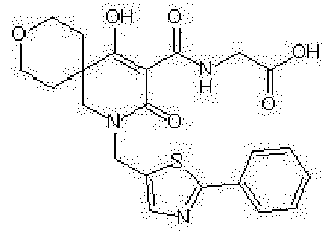
1H NMR (300 MHz, CHLOROFORM-d) δ ppm 1.23 - 1.52 (m, 2 H) 1.90 - 2.15 (m, 2 H) 3.29 - 3.39 (m, 2 H) 3.44 - 3.58 (m, 2 H) 3.76 - 3.90 (m, 2 H) 4.15 - 4.25 (m, 2 H) 4.77 - 4.86 (m, 2 H) 7.40 - 7.47 (m, 3 H) 7.79 (s, 1 H) 7.84 - 7.95 (m, 2 H) 10.14 - 10.66 (m, 1 H). MS ESI/APCI Dual posi : 458[M+H]+, 480[M+Na]+. MS ESI/APCI Dual nega : 456[M-H]-. Example 1-98 
1H NMR (300 MHz, DMSO-d6) δ ppm 1.48 - 1.67 (m, 2 H) 1.98 - 2.17 (m, 2 H) 2.81 - 3.09 (m, 2 H) 3.41 - 3.59 (m, 2 H) 3.68 - 3.81 (m, 2 H) 3.99 - 4.13 (m, 2 H) 4.85 - 5.03 (m, 2 H) 7.39 - 7.54 (m, 3 H) 7.81 - 7.99 (m, 3 H) 9.85 - 10.25 (m, 1 H) 12.78 - 13.01 (m, 1 H). MS ESI/APCI Dual posi : 458[M+H]+. Example 1-99 
1H NMR (300 MHz, DMSO-d6) δ ppm 0.99 - 1.49 (m, 4 H) 1.51 - 1.70 (m, 3 H) 1.72 - 3.09 (m, 6 H) 2.39 - 2.47 (m, 1 H) 2.78 - 3.05 (m, 2 H) 3.32 - 3.43 (m, 2 H) 3.44 - 3.61 (m, 2 H) 3.70 - 3.87 (m, 2 H) 3.92 - 4.10 (m, 2 H) 7.05 - 7.35 (m, 5 H) 10.03 - 10.21 (m, 1 H) 12.75 - 12.92 (m, 1 H). MS ESI/APCI Dual posi : 457[M+H]+. Example 1-100 
1H NMR (300 MHz, CHLOROFORM-d) δ ppm 1.20 - 1.32 (m, 3 H) 2.33 (dd, J=17.2, 2.1 Hz, 1 H) 2.76 - 3.04 (m, 1 H) 3.56 - 3.70 (m, 1 H) 3.92 - 4.15 (m, 1 H) 4.16 - 4.25 (m, 2 H) 5.21 - 5.42 (m, 1 H) 7.32 - 7.43 (m, 2 H) 7.52 - 7.62 (m, 2 H) 7.63 - 7.74 (m, 4 H) 10.10 - 10.41 (m, 1 H). MS ESI/APCI Dual posi : 463[M+H]+, 485[M+Na]+. MS ESI/APCI Dual nega : 461[M-H]-. Example 1-101 
1H NMR (300 MHz, DMSO-d6) δ ppm 1.02 - 1.79 (m, 10 H) 3.29 - 3.60 (m, 2 H) 3.98 - 4.11 (m, 2 H) 4.57 - 4.80 (m, 2 H) 7.88 - 7.57 (m, 3 H) 7.96 - 8.15 (m, 4 H) 8.63 - 8.76 (m, 1 H) 10.08 - 10.42 (m, 1 H). HCl MS ESI/APCI Dual posi : 472[M+Na]+. MS ESI/APCI Dual nega : 448[M-H]-. [Table 21-15] Compound No. Structure Analytical Data Salt information Example 1-102 
1H NMR (300 MHz, CHLOROFORM-d) δ ppm 1.66 - 1.81 (m, 2 H) 1.82 - 2.01 (m, 2 H) 2.42 - 2.55 (m, 2 H) 3.38 (s, 2 H) 4.14 - 4.20 (m, 2 H) 4.62 - 4.78 (m, 2 H) 7.39 - 7.54 (m, 2 H) 7.60 - 7.74 (m, 1 H) 7.79 - 8.04 (m, 3 H) 8.14 - 8.30 (m, 1 H) 8.93 - 9.07 (m, 1 H) 10.13 - 10.62 (m, 1 H). TFA MS ESI/APCI Dual posi : 422[M+H]+, 444[M+Na]+. MS ESI/APCI Dual nega : 420[M-H]-. Example 1-103 
1H NMR (300 MHz, DMSO-d6) δ ppm 0.95 - 1.07 (m, 3 H) 2.48 - 2.78 (m, 1 H) 2.97 - 3.10 (m, 1 H) 3.36 - 3.45 (m, 1 H) 3.49 - 3.51 (m, 2 H) 4.56 - 4.75 (m, 2 H) 7.50 (d, J=8.2 Hz, 2 H) 7.70 (d, J=8.2 Hz, 2 H) 10.16 (br. s., 1 H). Na MS ESI posi : 387[M+H]+. Example 1-104 
1H NMR (200 MHz, DMSO-d6) δ ppm 0.96 - 1.15 (m, 3 H) 2.63 - 2.95 (m, 1 H) 3.11 - 3.24 (m, 1 H) 3.47 - 3.62 (m, 1 H) 3.95 - 4.14 (m, 2 H) 4.65 - 4.97 (m, 2 H) 7.37 - 7.56 (m, 3 H) 7.82 - 7.99 (m, 3 H) 9.90 - 10.39 (m, 1 H). HCl MS ESI posi : 402[M+H]+. Example 1-105 
1H NMR (300 MHz, DMSO-d6) δ ppm 1.45 - 1.59 (m, 2 H) 1.88 - 2.05 (m, 2 2) 2.87 - 3.17 (m, 2 H) 3.42 - 3.58 (m, 2 H) 3.83 - 3.79 (m, 2 H) 3.95 - 4.11 (m, 2 H) 4.74 - 4.97 (m, 2 H) 7.45 - 7.57 (m, 2 H) 7.63 - 7.71 (m, 1 H) 7.97 - 8.08 (m, 2 H) 8.13 - 8.32 (m, 2 H) 8.72 - 8.81 (m, 1 H) 9.92 - 10.29 (m, 1 H). HCl MS ESI/APCI Dual posi : 452[M+H]+. Example 1-106 
1H NMR (300 MHz, DMSO-d6) δ ppm 1.41 - 1.65 (m, 2 H) 1.82 - 2.04 (m, 2 H) 2.85 - 3.17 (m, 2 H) 3.41 - 3.59 (m, 2 H) 3.63 -3.80 (m, 2 H) 3.94 - 4.13 (m, 2 H) 4.75 - 4.97 (m, 2 H) 7.46 - 7.60 (m, 2 H) 7.61 - 7.76 (m, 2 H) 9.91 - 10.29 (m, 1 H) 12.63 - 13.13 (m, 1 H). MS ESI/APCI Dual posi : 443[M+H]+. MS ESI/APCI Dual mega : 441[M+H]-. Example 1-107 
1H NMR (300 MHz, CHLOROFORM-d) δ ppm 0.99 - 2.12 (m, 12 H) 2.34 - 2.89 (m, 2 H) 3.02 - 3.57 (m, 4 H) 4.01 - 4.30 (m, 2 H) 6.94 - 7.48 (m, 5 H) 10.12 - 10.52 (m, 1 H). MS ESI/APCI Dual posi : 401[M+H]+, 423[M+Na]+. MS ESI/APCI Dual nega : 399[M-H]-. Example 1-108 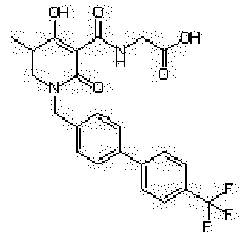
1H NMR (300 MHz, CHLOROFORM-d) δ ppm 1.03 - 1.21 (m, 3 H) 2.52 - 2.82 (m, 1 H) 3.07 (dd, J=12.5, 8.0 Hz, 1 H) 3.40 (dd, J=12.5, 5.8 Hz, 1 H) 4.15 - 4.24 (m, 2 H) 4.59 - 4.74 (m, 2 H) 7.32 - 7.43 (m, 2 H) 7.52 - 7.62 (m, 2 H) 7.60 - 7.75 (m, 4 H) 10.11 - 10.53 (m, 1 H). MS ESI/APCI Dual posi : 463[M+H]+, 485[M+Na]+. MS ESI/APCI Dual nega : 461[M-H]-. [Table 21-16] Compound No. Structure Analytical Data Salt information Example 1-109 
1H NMR (300 MHz, DMSO-d6) δ ppm 1.25 (s, 6 H) 2.55 - 2.80 (m, 2 H) 3.95 - 4.13 (m, 2 H) 4.64 - 4.84 (m, 2 H) 7.42 - 7.63 (m, 3 H) 7.97 - 8.21 (m, 4 H) 8.70 - 8.77 (m, 1 H) 10.01 - 10.28 (m, 1 H). HCl MS ESI/APCI Dual posi : 410[M+H]+, 432[M+Na]+. MS ESI/APCI Dual nega : 408[M-H]-. Example 1-110 
1H NMR (300 MHz, DMSO-d6) δ ppm 1.17 - 1.41 (m, 2 H) 1.70 - 1.94 (m, 2 H) 3.35 (t, J=11.0 Hz, 2 H) 3.45 - 3.54 (m, 2 H) 3.55 - 3.66 (m, 2 H) 3.97 - 4.12 (m, 2 H) 4.60 - 4.78 (m, 2 H) 7.44 - 7.66 (m, 3 H) 7.98 - 8.21 (m, 4 H) 8.74 (d, J=4.8 H) 7.44 - 7.66 (m, 3 H) 7.98 - 8.21 (m, 4 H) 8.74 (d, J=4.8 Hz, 1 H) 10.08 - 10.37 (m, 1 H). HCl MS ESI/APCI Dual posi : 452[M+H]+. MS ESI/APCI Dual nega : 450[M-H]-. Example 1-111 
1H NMR (300 MHz, DMSO-d6) δ ppm 1.06 - 1.80 (m, 10 H) 2.70 - 3.03 (m, 2 H) 3.93 - 4.14 (m, 2 H) 4.72 - 4.98 (m, 2 H) 7.43 - 7.59 (m, 2 H) 7.67 - 7.80 (m, 1 H) 7.96 - 8.13 (m, 2 H) 8.16 - 8.39 (m, 2 H) 8.73 - 8.84 (m, 1 H) 9.88 - 10.28 (m, 1 H) HCl MS ESI/APCI Dual posi : 450[M+H]+. Example 1-112 
1H NMR (200 MHz, DMSO-d6) δ ppm 1.08 - 1.89 (m, 10 H) 2.83 (m, 2 H) 3.98 - 4.10 (m, 2 H) 4.75 - 5.02 (m, 2 H) 7.40 - 7.53 (m, 3 H) 7.81 - 7.97 (m, 3 H) 9.85 - 10.13 (m, 1 H). HCl MS ESI/APCI Dual posi : 456[M+H]+. Example 1-113 
1H NMR (300 MHz, CHLOROFORM-d) δ ppm 2.52 - 2.79 (m, 2 H) 3.38 (t, J=7.1 Hz, 2 H) 4.08 - 4.29 (m, 2 H) 4.65 (s, 2 H) 7.00 - 7.22 (m, 2 H) 7.47 - 7.67 (m, 1 H) 9.87 - 10.41 (m, 1 H). MS ESI/APCI Dual posi : 391[M+H]+, 413[M+Na]+. MS ESI/APCI Dual nega : 389[M-H]-. Example 1-114 
1H NMR (300 MHz, CHLOROFORM-d) δ ppm 1.06 - 1.34 (m, 2 H) 1.33 - 1.58 (m, 2 H) 1.58 - 2.14 (m, 9 H) 2.39 - 2.65 (m, 3 H) 3.21 - 3.60 (m, 4 H) 4.08 - 4.25 (m, 2 H) 7.14 - 7.23 (m, 3 H) 7.23 - 7.33 (m, 2 H) 10.16 - 10.54 (m, 1 H). MS ESI/APCI Dual posi : 427[M+H]+, 449[M+Na]+. MS ESI/APCI Dual nega : 425[M-H]-. Example 1-115 
1H NMR (300 MHz, CHLOROFORM-d) δ ppm 1.08 - 1.53 (m, 10 H) 1.61 - 2.02 (m, 5 H) 2.41 - 2.61 (m, 3 H) 3.29 (dd, J=17.2, 7.4 Hz, 2 H) 4.10 - 4.23 (m, 2 H) 7.13 - 7.22 (m, 3 H) 7.23 - 7.33 (m, 2 H) 10.18 - 10.46 (m, 1 H). MS ESI/APCI Dual posi : 415[M+H]+, 437[M+Na]+. MS ESI/APCI Dual nega : 413[M-H]-. [Table 21-17] Compound No. Structure Analytical Data Salt information Example 1-116 
1H NMR (300 MHz, DMSO-d6) δ ppm 2.54 - 2.64 (m, 2 H) 3.36 - 3.54 (m, 4 H) 4.67 (s, 2 H) 7.45 - 7.61 (m, 2 H) 7.67 (d, J=10.4 Hz, 1 H) 10.00 (br. s., 1 H). Na MS ESI/APCI Dual nega: 389[M-H]-. Example 1-117 
1H NMR (300 MHz, DMSO-d6) δ ppm 1.02 - 1.23 (m, 2 H) 1.26 - 1.54 (m, 4 H) 1.62 - 1.99 (m, 8 H) 3.22 - 3.41 (m, 2H) 3.51 (s, 2 H) 3.56 - 3.81 (m, 4 H) 3.96 - 4.05 (m, 2 H) 7.05 - 7.36 (m, 5 H) 10.19 - 10.31 (m, 1 H). MS ESI/APCI Dual posi: 479[M+Na]+. MS ESI/APCI Dual nega: 455[M-H]-. Example 1-118 
1H NMR (300 MHz, DMSO-d6) δ ppm 1.25 (s, 6 H) 2.68 - 2.79 (m, 2 H) 3.95 - 4.08 (m, 2 H) 4.63 - 4.80 (m, 2 H) 7.39 - 7.48 (m, 2 H) 7.64 - 7.74 (m, 2 H) 7.76 - 7.84 (m, 2 H) 7.84 - 7.92 (m, 2 H) 9.98 - 10.29 (m, 1 H). MS ESI/APCI Dual posi: 497[M+Na]+. MS ESI/APCI Dual nega: 475[M-H]-. Example 1-119 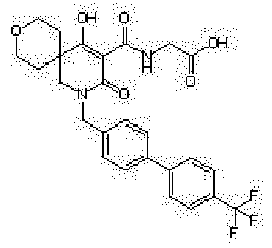
1H NMR (300 MHz, DMSO-d6) δ ppm 1.17 - 1.43 (m, 2 H) 1.65 - 1.94 (m, 2 H) 3.27 - 3.42 (m, 2 H) 3.44 - 3.54 (m, 2 H) 3.54 - 3.69 (m, 2 H) 3.98 - 4.08 (m, 2 H) 4.61 - 4.75 (m, 2 H) 7.44 - 7.53 (m, 2 H) 7.70 - 7.78 (m, 2 H) 7.78 - 7.85 (m, 2 H) 7.85 - 7.93 (m, 2 H) 10.05 - 10.39 (m, 1 H). MS ESI/APCI Dual posi: 541[M+Na]+. MS ESI/APCI Dual nega: 517[M-H]-. Example 1-120 
1H NMR (300 MHz, CHLOROFORM-d) δ ppm 2.53 - 2.80 (m, 2 H) 3.30 - 3.48 (m, 2 H) 4.09 - 4.30 (m, 2 H) 4.72 (s, 2 H) 7.60 (d, J=7.9 Hz, 1 H) 7.74 (s, 1 H) 7.78 - 7.93 (m, 1 H) 9.75 - 10.65 (m, 1 H). MS ESI/APCI Dual posi: 463[M+Na]+. US ESI/APCI Dual nega: 439[M-H]-. Example 1-121 
1H NMR (300 MHz, DMSO-d6) δ ppm 1.57 - 1.90 (m, 4 H) 2.21 - 2.45 (m, 5 H) 2.74 - 3.01 (m, 2 H) 3.95 - 4.09 (m, 2 H) 4.73 - 4.88 (m, 2 H) 7.08 - 7.23 (m, 4 H) 9.92 - 10.24 (m, 1 H) 12.78 - 12.97 (m, 1 H). MS ESI/APCI Dual posi: 359[M+H]+, 381[M+Na]+. Example 1-122 
1H NMR (300 MHz, DEUTERIUM OXIDE) δ ppm 1.60 - 2.09 (m, 4 H) 2.25 - 2.50 (m, 2 H) 2.82 - 3.02 (m, 2 H) 3.85 - 4.01 (m, 2 H) 4.81 - 5.04 (m, 2 H) 7.38 - 7.58 (m, 2 H) 7.63 - 7.82 (m, 2 H). Na MS ESI/APCI Dual posi: 413[M+H]+. [Table 21-18] Compound No. Structure Analytical Data Salt information Example 1-123 
1H NMR (300 MHz, DMSO-d6) δ ppm 3.16 - 3.28 (m, 2 H) 3.95 - 4.12 (m, 2 H) 4.35 - 4.57 (m, 2 H) 4.78 - 4.93 (m, 2 H) 5.19 (s, 2 H) 7.38 - 7.56 (m, 3 H) 7.81 - 8.02 (m, 3 H) 9.68 - 9.93 (m, 1 H). MS ESI/APCI Dual posi: 430[M+H]+, 452[M+Na]+. Example 1-124 
1H NMR (300 MHz, DMSO-d6) δ ppm 3.01 - 3.32 (m, 2 H) 3.92 - 4.11 (m, 2 H) 4.36 - 4.52 (m, 2 H) 4.62 - 4.74 (m, 2 H) 5.06 - 5.21 (m, 2 H) 7.41 - 7.75 (m, 4 H) 9.72 - 10.36 (m, 1 H). US ESI/APCI Dual posi: 415[M+H]+. MS ESI/APCI Dual nega: 413[M-H]-. Example 1-125 
1H NMR (300 MHz, CHLOROFORM-d) δ ppm 2.56 - 2.73 (m, 2 H) 3.34 - 3.46 (m, 2 H) 4.14 - 4.26 (m, 2 H) 4.59 - 4.69 (m, 2 H) 7.04 - 7.15 (m, 2 H) 7.33 - 7.48 (m, 4 H) 7.49 - 7.56 (m, 2 H) 10.11 - 10.50 (m, 1 H). MS ESI/APCI Dual posi: 421[M+Na]+. MS ESI/APCI Dual nega: 397[M-H]-. Example 1-126 
1H NMR (300 MHz, CHLOROFORM-d) δ ppm 2.53 - 2.75 (m, 2 H) 3.37 - 3.53 (m, 2 H) 4.09 - 4.23 (m, 2 H) 4.63 - 4.77 (m, 2 H) 7.08 - 7.17 (m, 2 H) 7.20 - 7.34 (m, 2 H) 7.37 - 7.44 (m, 1 H) 7.47 - 7.55 (m, 2 H) 10.10 - 10.47 (m, 1 H). MS ESI/APCI Dual posi: 417[M+H]+, 439[M+Na]+. MS ESI/APCI Dual nega: 415[M-H]-. Example 1-127 
1H NMR (300 MHz, CHLOROFORM-d) δ ppm 2.56 - 2.71 (m, 2 H) 3.41 - 3.52 (m, 2 H) 4.13 - 4.23 (m, 2 H) 4.66 - 4.74 (m, 2 H) 7.23 - 7.49 (m, 6 H) 7.51 - 7.58 (m, 2 H) 10.12 - 10.45 (m, 1 H). MS ESI/APCI Dual posi: 399[M+H]+, 421[M+Na]+. MS ESI/APCI Dual nega: 397[M-H]-. Example 1-128 
1H NMR (300 MHz, CHLOROFORM-d) δ ppm 2.45 - 2.84 (m, 2 H) 3.25 - 3.50 (m, 2 H) 4.10 - 4.28 (m, 2 H) 4.63 (s, 2 H) 7.10 - 7.35 (m, 1 H) 7.41 (s, 1 H) 7.57 - 7.81 (m, 1 H) 9.84 - 10.63 (m, 1 H). MS ESI/APCI Dual posi: 407[M+H]+, 429[M+Na]+. MS ESI/APCI Dual nega: 405[M-H]-. Example 1-129 
1H NMR (300 MHz, CHLOROFORM-d) δ ppm 2.47 (s, 3 H) 2.53 - 2.73 (m, 2 H) 3.27 - 3.42 (m, 2 H) 4.09 - 4.26 (m, 2 H) 4.62 (s, 2 H) 7.18 - 7.39 (m, 2 H) 7.48 (s, 1 H) 9.95 - 10.56 (m, 1 H). MS ESI/APCI Dual posi: 387[M+H]+, 409[M+Na]+. MS ESI/APCI Dual nega: 385[M-H]-. [Table 21-19] Compound No. Structure Analytical Data Salt information Example 1-130 
1H NMR (300 MHz, DMSO-d6) δ ppm 1.58 - 1.94 (m, 4 H) 2.29 - 2.46 (m, 2 H) 2.79 - 3.06 (m, 2 H) 3.95 - 4.12 (m, 2 H) 4.85 - 5.01 (m, 2 H) 7.30 - 7.46 (m, 3 H) 7.82 - 8.11 (m, 4 H) 8.62 - 8.70 (m, 1 H) 9.90 - 10.26 (m, 1 H). MS ESI/APCI Dual posi: 422[M+H]+, 444[M+Na]+. MS ESI/APCI Dual nega: 420[M-H]-. Example 1-131 
1H NMR (300 MHz, DMSO-d6) δ ppm 1.63 - 2.02 (m, 4 H) 2.21 - 2.50 (m, 2 H) 2.74 - 3.03 (m, 2 H) 3.93 - 4.11 (m, 2 H) 4.95 - 5.10 (m, 2 H) 7.42 - 7.53 (m, 3 H) 7.82 - 7.99 (m, 3 H) 9.79 - 10.28 (m, 1 H). MS ESI/APCI Dual posi : 428[M+H]+, 450[M+Na]+. Example 1-132 
1H NMR (300 MHz, DMSO-d6) δ ppm 1.00 - 1.68 (m, 5 H) 1.73 - 1.93 (m, 4 H) 2.38 - 2.49 (m, 1 H) 2.96 - 3.27 (m, 2 H) 3.52 - 3.74 (m, 2 H) 3.92 - 4.11 (m, 2 H) 4.33 - 4.53 (m, 2 H) 4.68 - 4.94 (m, 2 H) 7.06 - 7.33 (m, 5 H) 9.89 - 10.24 (m, 1 H) 12.67 - 13.09 (m, 1 H). MS ESI/APCI Dual posi: 429[M+H]+, 451[M+Na]+. MS ESI/APCI Dual nega: 427[M-H]-. Example 1-133 
1H NMR (300 MHz, DMSO-d6) δ ppm 3.06 - 3.42 (m, 2 H) 3.95 - 4.10 (m, 2H) 4.38 - 4.51 (m, 2 H) 4.68 - 4.81 (m, 2 H) 5.04 - 5.19 (m, 2 H) 7.39 - 7.49 (m, 2 H) 7.66 - 7.76 (m, 2 H) 7.77 - 7.92 (m, 4 H) 9.79 - 10.33 (m, 1 H). MS ESI/APCI Dual posi: 491[M+H]+. Example 1-134 
1H NMR (600 MHz, CHLOROFORM-d) δ ppm 2.56 - 2.74 (m, 2 H) 3.45 (t, J=7.2 Hz, 2 H) 4.13 - 4.23 (m, 2 H) 4.65 - 4.78 (m, 2 H) 7.19 - 7.30 (m, 1 H) 7.31 - 7.40 (m, 1 H) 9.85 - 10.57 (m, 1 H). MS ESI/APCI Dual posi: 431[M+Na]+. MS ESI/APCI Dual nega: 407[M-H]-. Example 1-135 
1H NMR (600 MHz, CHLOROFORM-d) 6 ppm 2.53 - 2.68 (m, 2 H) 3.46 (t, J=7.0 Hz, 2 H) 4.11 - 4.19 (m, 2 H) 4.68 - 4.76 (m, 2 H) 7.16 - 7.23 (m, 2 H) 9.90 - 10.52 (m, 1 H). MS ESI/APCI Dual posi: 431[M+Na]+. MS ESI/APCI Dual nega: 407[M-H]-. Example 1-136 
1H NMR (600 MHz, METHANOL-d4) δ ppm 2.56 - 2.63 (m, 2 H) 3.37 (t, J=7.2 Hz, 2 H) 3.89 (s, 2 H) 4.64 (s, 2 H) 6.14 - 6.42 (m, 1 H) 7.15 - 7.25 (m, 2 H) 7.33 - 7.42 (m, 2 H). Na MS ESI/APCI Dual posi: 443[M+Na]+. MS ESI/APCI Dual nega: 419[M-H]-. [Table 21-20] Compound No. Structure Analytical Data Salt information Example 1-137 
1H NMR (300 MHz, DMSO-d6) δ ppm 1.01 - 1.62 (m, 5 H) 1.64 - 2.02 (m, 8 H) 2.28 - 2.48 (m, 3 H) 2.66 - 2.98 (m, 2 H) 3.35 - 3.54 (m, 2 H) 3.91 - 4.08 (m, 2 H) 7.06 - 7.34 (m, 5 H) 9.99 - 10.18 (m, 1 H) 12.66 - 13.03 (m, 1 H). MS ESI/APCI Dual posi: 427[M+H]+, 449[M+Na]+. Example 1-138 
1H NMR (300 MHz, DMSO-d6) δ ppm 1.31 (s, 9 H) 3.29 - 3.34 (m, 2 H) 3.95 - 4.11 (m, 2 H) 4.36 - 4.49 (m, 2 H) 4.69 - 4.81 (m, 2 H) 5.00 - 5.15 (m, 2 H) 7.30 - 7.42 (m, 2 H) 7.43 - 7.50 (m, 2 H) 7.51 - 7.66 (m, 4 H) 9.84 - 10.33 (m, 1 H). MS ESI/APCI Dual posi: 479[M+H]+, 501[M+Na]+. Example 1-139 
1H NMR (600 MHz, CHLOROFORM-d) δ ppm 2.51 - 2.68 (m, 2 H) 3.27 - 3.38 (m, 2 H) 4.14 - 4.22 (m, 2 H) 4.53 - 4.65 (m, 2 H) 6.98 - 7.08 (m, 2 H) 7.18 - 7.31 (m, 2 H) 10.08 - 10.53 (m, 1 H). MS ESI/APCI Dual posi: 345[M+Na]+. US ESI/APCI Dual nega: 321[M-H]-. Example 1-140 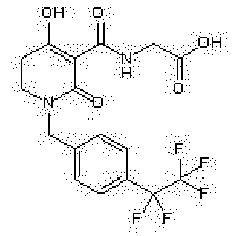
1H NMR (600 MHz, DMSO-d6) δ ppm 2.46 - 2.63 (m, 2 H) 3.31 - 3.40 (m, 2 H) 3.43 - 3.54 (m, 2 H) 4.66 (s, 2 H) 7.52 (d, J=8.3 Hz, 2 H) 7.66 (d, J=8.3 Hz, 2 H). Na US ESI/APCI Dual nega: 421[M-H]-. Example 1-141 
1H NMR (600 MHz, DMSO-d6) δ ppm 1.07 - 1.21 (m, 1 H) 1.29 - 1.43 (m, 2 H) 1.48 - 1.61 (m, 5 H) 1.61 - 1.71 (m, 2 H) 2.79 (br. s., 2 H) 3.42 - 3.53 (m, 2 H) 4.84 (br. s., 2 H) 7.82 (d, J=7.8 Hz, 1 H) 7.95 (d, J=7.8 Hz, 1 H) 8.11 (s, 1 H). Na MS ESI/APCI Dual nega: 440[M-H]-. Example 1-142 
1H NMR (600 MHz, DMSO-d6) δ ppm 1.08 - 1.21 (m, 1 H) 1.31 - 1.45 (m, 2 H) 1.48 - 1.63 (m, 5 H) 1.64 - 1.75 (m, 2 H) 2.66 - 3.09 (m, 2 H) 3.95 - 4.08 (m, 2 H) 4.84 - 4.96 (m, 2 H) 7.39 - 7.73 (m, 1 H) 7.98 - 8.22 (m, 1 H) 8.89 (s, 1 H) 9.79 - 10.27 (m, 1 H). MS ESI/APCI Dual nega: 440[M-H]-. Example 1-143 
1H NMR (600 MHz, METHANOL-d4) δ ppm 1.05 - 1.86 (m, 7 H) 2.03 - 2.46 (m, 2 H) 3.36 - 3.44 (m, 1 H) 3.78 - 3.84 (m, 2 H) 4.15 - 4.30 (m, 1 H) 5.14 - 5.26 (m, 1 H) 7.32 - 7.73 (m, 4 H). Na MS ESI/APCI Dual posi: 449[M+Na]+. MS ESI/APCI Dual nega: 425[M-H]-. [Table 21-21] Compound No. Structure Analytical Data Salt information Example 1-144 
1H NMR (600 MHz, METHANOL-d4) δ ppm 1.09 (d, J=7.0 Hz, 3 H) 2.55 - 2.69 (m, 1 H) 3.04 (dd, J=12.6, 8.1 Hz, 1 H) 3.41 (dd, J=12.6, 5.6 Hz, 1 H) 3.89 (s, 2 H) 4.52 (d, J=15.1 Hz, 1 H) 4.64 (d, J=15.1 Hz, 1 H) 7.24 (d, J=8.5 Hz, 2 H) 7.48 (d, J=8.5 Hz. 2 H). Na MS ESI/APCI Dual posi: 419[M+Na]+. US ESI/APCI Dual nega: 395[M-H]-. Example 1-145 
1H NMR (600 MHz, DMSO-d6) δ ppm 2.49 - 2.64 (m, 2 H) 3.30 - 3.41 (m, 2 H) 3.49 (d, J=4.5 Hz, 2 H) 4.55 (s, 2 H) 7.28 (t, J=8.1 Hz, 1 H) 7.39 (dd, J=8.1, 1.7 Hz, 1 H) 7.54 (dd, J=9.5, 1.7 Hz, 1 H). Na MS ESI/APCI Dual nega: 399[M-H]-. Example 1-146 
1H NMR (600 MHz, CHLOROFORM-d) δ ppm 1.52 - 1.64 (m, 3 H) 2.43 - 2.58 (m, 2 H) 2.91 - 3.01 (m, 1 H) 3.23 - 3.35 (m, 1 H) 4.15 - 4.25 (m, 2 H) 5.83 - 6.09 (m, 1 H) 7.38 - 7.51 (m, 2 H) 7.56 - 7.67 (m, 2 H) 10.08 - 10.52 (m, 1 H). US ESI/APCI Dual posi: 409[M+Na]+. US ESI/APCI Dual nega: 385[M-H]-. Example 1-147 
1H NMR (300 MHz, DMSO-d6) δ ppm 0.62 - 0.96 (m, 2 H) 1.03 - 1.31 (m, 2 H) 3.32 - 3.40 (m, 2 H) 3.98 - 4.08 (m, 2 H) 4.62 - 4.76 (m, 2 H) 7.45 - 7.56 (m, 2 H) 7.68 - 7.80 (m, 2 H) 10.01 - 10.42 (m, 1 H). MS ESI/APCI Dual posi: 399[M+H]+, 421[M+Na]+. US ESI/APCI Dual nega: 397[M-H]-. Example 1-148 
1H NMR (300 MHz, DMSO-d6) δ ppm 1.03 - 1.16 (m, 3 H) 2.13 - 2.28 (m, 1 H) 2.77 - 2.97 (m, 1 H) 3.45 - 3.64 (m, 3 H) 4.03 - 4.18 (m, 1 H) 4.88 - 5.01 (m, 1 H) 7.22 - 7.31 (m, 2 H) 7.45 - 7.57 (m, 2 H) 9.90 - 10.19 (m, 1 H). Na MS ESI/APCI Dual posi: 397[M+H]+, 419[M+Na]+. Example 1-149 
1H NMR (300 MHz, DMSO-d6) δ ppm 1.07 - 1.16 (m, 3 H) 2.15 - 2.30 (m, 1 H) 2.84 - 3.04 (m, 1 H) 3.52 - 3.68 (m, 3 H) 4.17 (d, J=15.5 Hz, 1 H) 5.00 (d, J=15.5 Hz, 1 H) 7.26 - 7.37 (m, 2 H) 7.38 - 7.48 (m, 2 H) 9.96 - 10.15 (m, 1 H). Na MS ESI/APCI Dual posi: 403[M+H]+. Example 1-150 
1H NMR (300 MHz, DMSO-d6) 6 ppm 1.21 (s, 6 H) 2.52 - 2.77 (m, 2 H) 3.94 - 4.11 (m, 2 H) 4.54 - 4.71 (m, 2 H) 7.20 - 7.33 (m, 2 H) 7.42 - 7.58 (m, 2 H) 9.96 - 10.27 (m, 1 H). MS ESI/APCI Dual posi: 411[M+H]+. [Table 21-22] Compound No. Structure Analytical Data Salt information Example 1-151 
1H NMR (300 MHz, DMSO-d6) δ ppm 1.22 (s, 6 H) 2.54 - 2.78 (m, 2 H) 3.92 - 4.09 (m, 2 H) 4.59 - 4.77 (m, 2 H) 7.23 - 7.36 (m, 2 H) 7.36 - 7.48 (m, 2 H) 9.95 - 10.27 (m, 1 H). MS ESI/APCI Dual posi: 417[M+H]+. Example 1-152 
1H NMR (300 MHz, DMSO-d6) δ ppm 2.49 - 2.60 (m, 2 H) 3.27 - 3.33 (m, 2 H) 3.50 (d, J=4.5 Hz, 2 H) 4.56 (s, 2 H) 7.05 - 7.22 (m, 1 H) 7.26 - 7.46 (m, 2 H) 9.91 - 10.24 (m, 1 H). Na MS ESI/APCI Dual posi: 385[M+H]+. MS ESI/APCI Dual nega: 383[M-H]-. Example 1-153 
1H NMR (300 MHz, DMSO-d6) δ ppm 0.91 (t, J=7.2 Hz, 3 H) 1.82 - 2.16 (m, 2 H) 2.22 - 2.47 (m, 1 H) 2.79 - 2.95 (m, 1 H) 3.14 - 3.35 (m, 2 H) 3.49 (d, J=4.5 Hz, 2 H) 5.67 (dd, J=10.1, 5.9 Hz, 1 H) 7.55 (d, J=8.2 Hz, 2 H) 7.70 (d, J=8.2 Hz, 2 H) 10.10 (br. s., 1 H). Na MS ESI/APCI Dual nega: 399[M-H]-. Example 1-154 
1H NMR (300 MHz, CHLOROFORM-D) δ ppm 1.63 - 1.87 (m, 2 H) 1.88 - 2.07 (m, 2 H) 2.24 - 2.46 (m, 2 H) 2.76 - 2.98 (m, 2 H) 4.10 - 4.26 (m, 2 H) 4.78 - 4.91 (m, 2 H) 7.13 - 7.22 (m, 2 H) 7.23 - 7.32 (m, 2 H) 10.02 - 10.44 (m, 1 H). MS ESI/APCI Dual posi: 451[M+Na]+. MS ESI/APCI Dual nega: 427[M-H]-. Example 1-155 
1H NMR (300 MHz, CHLOROFORM-d) δ ppm 1.61 - 1.82 (m, 2 H) 1.87 - 2.02 (m, 2 H) 2.24 - 2.44 (m, 2 H) 2.77 - 2.91 (m, 2 H) 4.14 - 4.21 (m, 2 H) 4.74 - 4.86 (m, 2 H) 7.04 - 7.20 (m, 2 H) 7.38 - 7.50 (m, 2 H) 10.04 - 10.42 (m, 1 H). MS ESI/APCI Dual posi: 445[M+Na]+. MS ESI/APCI Dual nega: 421[M-H]-. Example 1-156 
1H NMR (300 MHz, CHLOROFORM-d) δ ppm 1.53 - 1.93 (m, 8 H) 2.59 - 2.75 (m, 2 H) 4.08 - 4.27 (m, 2 H) 4.58 - 4.75 (m, 2 H) 7.31 - 7.40 (m, 2 H) 7.54 - 7.63 (m, 2 H) 9.98 - 10.49 (m, 1 H). MS ESI/APCI Dual posi: 449[M+Na]+. MS ESI/APCI Dual nega: 425[M-H]-. Example 1-157 
1H NMR (300 MHz, DMSO-d6) δ ppm 1.21 (s, 6 H) 2.52 - 2.76 (m, 2 H) 3.95 - 4.10 (m, 2 H) 4.56 - 4.74 (m, 2 H) 7.25 - 7.43 (m, 4 H) 9.98 - 10.27 (m, 1 H) 12.86 (br. s., 1 H). MS ESI/APCI Dual posi: 367[M+H]+. MS ESI/APCI Dual nega: 365[M-H]-. [Table 21-23] Compound No. Structure Analytical Data Salt information Example 1-158 
1H NMR (300 MHz, DUSO-d6) δ ppm 1.18 (s, 6 H) 2.50 - 2.68 (m, 2 H) 3.48 - 3.58 (m, 2 H) 4.61 (s, 2 H) 7.24 - 7.33 (m, 1 H) 7.49 - 7.60 (m, 2 H) 9.92 - 10.24 (m, 1 H). Na MS ESI/APCI Dual posi: 401[M+H]+. MS ESI/APCI Dual nega: 399[M-H]-. Example 1-159 
1H NMR (600 MHz, CHLOROFORM-d) δ ppm 2.57 - 2.71 (m, 2 H) 3.34 - 3.41 (m, 2 H) 4.15 - 4.23 (m, 2 H) 4.57 - 4.63 (m, 2 H) 7.18 - 7.24 (m, 1 H) 7.27 - 7.33 (m, 1 H) 7.37 - 7.41 (m, 1 H) 10.01 - 10.58 (m, 1 H). MS ESI/APCI Dual posi: 445[M+Na]+. MS ESI/APCI Dual nega: 421[M-H]-. Example 1-160 
1H NMR (600 MHz, CHLOROFORM-d) δ ppm 2.55 - 2.69 (m, 2 H) 3.32 - 3.40 (m, 2 H) 4.15 - 4.22 (m, 2 H) 4.57 - 4.63 (m, 2 H) 7.15 - 7.21 (m, 1 H) 7.21 - 7.28 (m, 1 H) 7.40 - 7.50 (m, 1 H) 9.92 - 10.55 (m, 1 H). MS ESI/APCI Dual posi: 445[M+Na]+. MS ESI/APCI Dual nega: 421[M-H]-. Example 1-161 
1H NMR (600 MHz, DMSO-d6) δ ppm 1.17 (s, 6 H) 3.29 - 3.36 (m, 2 H) 3.46 (d, J=4.1 Hz, 2 H) 4.60 (br. s., 2 H) 7.00 - 7.40 (m, 5 H). Na MS ESI/APCI Dual posi: 421[M+Na]+. MS ESI/APCI Dual nega: 397[M-H]-. Example 1-162 
1H NMR (600 MHz, METHANOL-d4) δ ppm 1.03 - 1.18 (m, 3 H) 2.58 - 2.69 (m, 1 H) 3.00 - 3.07 (m, 1 H) 3.38 - 3.44 (m, 1 H) 3.88 (s, 2 H) 4.53 (d, J=15.1 Hz, 1 H) 4.66 (d, J=15.1 Hz, 1 H) 7.25 - 7.38 (m, 4 H). Na MS ESI/APCI Dual posi: 375[M+Na]+. MS ESI/APCI Dual nega: 351[M-H]-. Example 1-163 
1H NMR (600 MHz, METHANOL-d4) δ ppm 1.05 - 1.18 (m, 3 H) 2.60 - 2.68 (m, 1 H) 3.06 (dd, J=12.6, 7.6 Hz, 1 H) 3.44 (dd, J=12.6, 5.4 Hz, 1 H) 3.89 (s, 2 H) 4.50 - 4.58 (m, 1 H) 4.61 - 4.68 (m, 1 H) 7.26 (dd, J=8.3, 2.1 Hz, 1 H) 7.44 - 7.52 (m, 2 H). Na MS ESI/APCI Dual posi: 409[M+Na]+. MS ESI/APCI Dual nega: 385[M-H]-. Example 1-164 
1H NMR (300 MHz, DUSO-d6) δ ppm 1.18 (s, 6 H) 2.53 - 2.61 (m, 2 H) 3.47 - 3.55 (m, 2 H) 4.63 (s, 2 H) 7.38 (dd, J=8.5, 2.0 Hz, 1 H) 7.46 - 7.52 (m, 1 H) 7.56 (d, J=2.0 Hz, 1 H) 9.99 - 10.19 (m, 1 H). Na MS ESI/APCI Dual posi: 451[M+H]+. MS ESI/APCI Dual nega: 449[M-H]-. [Table 21-24] Compound No. Structure Analytical Data Salt information Example 1-165 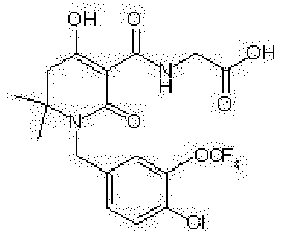
1H NMR (300 MHz, DMSO-d6) δ ppm 1.17 (s, 6 H) 2.50 - 2.59 (m, 2 H) 3.46 - 3.56 (m, 2 H) 4.66 (s, 2 H) 7.37 (dd, J=8.4, 1.9 Hz, 1 H) 7.43 - 7.50 (m, 1 H) 7.61 (d, J=8.4 Hz, 1 H) 10.07 (br. s., 1 H). Na MS ESI/APCI Dual posi: 451[M+H]+. MS ESI/APCI Dual nega: 449[M-H]-. Example 1-166 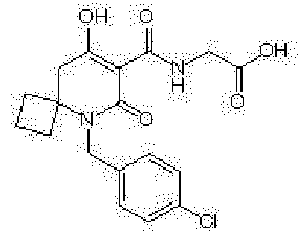
1H NMR (300 MHz, METHANOL-d4) δ ppm 1.59 - 1.77 (m, 2 H) 1.78 - 1.94 (m, 2 H) 2.22 - 2.39 (m, 2 H) 2.56 - 2.76 (m, 2 H) 3.87 (s, 2 H) 4.85 (s, 2 H) 7.28 (s, 4 H). Na MS ESI/APCI Dual posi: 401[M+Na]+. MS ESI/APCI Dual nega: 377[M-H]-. Example 1-167 
1H NMR (300 MHz, METHANOL-d4) δ ppm 1.66 - 1.83 (m, 2 H) 1.83 - 1.99 (m, 2 H) 2.29 - 2.46 (m, 2 H) 2.86 (s, 2 H) 3.88 (s, 2 H) 4.86 (s, 2 H) 7.23 (dd, J=8.2, 2.2 Hz, 1 H) 7.40 - 7.49 (m, 2 H). Na MS ESI/APCI Dual posi: 435[M+Na]+. MS ESI/APCI Dual nega: 411[M-H]-. Example 1-168 
1H NMR (600 MHz, CHLOROFORM-d) δ ppm 1.22 - 1.32 (m, 6 H) 1.84 - 1.96 (m, 3 H) 2.51 - 2.66 (m, 2 H) 4.14 - 4.22 (m, 2 H) 4.64 - 4.77 (m, 2 H) 7.27 - 7.38 (m, 2 H) 7.41 - 7.50 (m, 2 H) 10.12 - 10.50 (m, 1 H). MS ESI/APCI Dual posi: 391[M+H]+, 419[M+Na]+. MS ESI/APCI Dual nega: 395[M-H]-. Example 1-169 
1H NMR (600 MHz, CHLOROFORM-d) δ ppm 1.20 - 1.31 (m, 6 H) 2.48 - 2.64 (m, 2 H) 3.82 - 3.89 (m, 3 H) 4.14 - 4.23 (m, 2 H) 4.55 - 4.68 (m, 2 H) 6.90 - 6.98 (m, 1 H) 7.11 - 7.22 (m, 2 H) 10.12 - 10.50 (m, 1 H). MS ESI/APCI Dual posi: 447[M+H]+, 469[M+Na]+. MS ESI/APCI Dual nega: 445[M-H]-. Example 1-170 
1H NMR (600 MHz, CHLOROFORM-d) δ ppm 1.19 - 1.37 (m, 6 H) 2.17 - 2.35 (m, 6 H) 2.48 - 2.69 (m, 2 H) 4.07 - 4.25 (m, 2 H) 4.48 - 4.67 (m, 2 H) 6.09 - 6.48 (m, 1 H) 6.84 - 7.00 (m, 2 H) 10.11 - 10.48 (m, 1 H). MS ESI/APCI Dual posi: 427[M+H]+, 449[M+Na]+. MS ESI/APCI Dual nega: 425[M-H]-. Example 1-171 
1H NMR (300 MHz, DMSO-d6) δ ppm 1.06 - 1.14 (m, 3 H) 2.13 - 2.25 (m, 1 H) 2.80 - 2.98 (m, 1 H) 3.47 - 3.63 (m, 3 H) 4.05 - 4.21 (m, 1 H) 4.92 - 5.01 (m, 1 H) 7.27 - 7.43 (m, 4 H) 10.05 (br. s., 1 H). MS ESI/APCI Dual posi: 353[M+H]+. Na [Table 21-25] Compound No. Structure Analytical Data Salt information Example 1-172 
1H NMR (300 MHz, CHLOROFORM-d) δ ppm 1.15 - 1.30 (m, 3 H) 2.09 - 2.44 (m, 1 H) 2.76 - 3.01 (m, 1 H) 3.46 - 3.66 (m, 1 H) 3.82 - 4.05 (m, 1 H) 4.07 - 4.25 (m, 2 H) 5.04 - 5.26 (m, 1 H) 7.04 - 7.20 (m, 1 H) 7.31 - 7.49 (m, 2 H) 9.97 - 10.33 (m, 1 H). MS ESI/APCI Dual posi: 387[M+H]+. MS ESI/APCI Dual nega: 385[M-H]-. Example 1-173 
1H NMR (600 MHz, DMSO-d6) δ ppm 2.29 - 2.50 (m, 2 H) 2.90 (t, J=6.8 Hz, 2 H) 3.29 - 3.35 (m, 2 H) 3.45 (d, J=4.5 Hz, 2 H) 3.57 (br. s., 2 H) 7.46 - 7.70 (m, 4 H). Na MS ESI/APCI Dual posi: 387[M+H]+, 409[M+Na]+. MS ESI/APCI Dual nega: 385[M-H]-. Example 1-174 
1H NMR (300 MHz, CHLOROFORM-d) δ ppm 0.99 - 1.22 (m, 6 H) 2.98 - 3.12 (m, 2 H) 4.13 - 4.25 (m, 2 H) 4.60 - 4.73 (m, 2 H) 7.33 - 7.50 (m, 2 H) 7.54 - 7.68 (m, 2 H) 10.19 - 10.65 (m, 1 H). MS ESI/APCI Dual posi: 401[M+H]+, 423[M+Na]+. MS ESI/APCI Dual nega: 399[M-H]-. Example 1-175 
1H NMR (300 MHz, METHANOL-d4) δ ppm 1.02 - 1.27 (m, 12 H) 3.82 - 3.93 (m, 2 H) 4.80 - 4.87 (m, 2 H) 7.43 - 7.67 (m, 4 H). Na MS ESI/APCI Dual posi: 429[M+H]+, 451[M+Na]+. MS ESI/APCI Dual nega: 427[M-H]-. Example 1-176 
1H NMR (600 MHz, DMSO-d6) δ ppm 2.41 - 2.53 (m, 2 H) 2.84 - 2.97 (m, 2 H) 3.29 - 3.36 (m, 2 H) 3.44 (d, J=4.1 Hz, 2 H) 3.57 (br. s., 2 H) 7.50 (d, J=8.0 Hz, 2 H) 7.66 (d, J=8.0 Hz, 2 H). Na MS ESI/APCI Dual nega: 385[M-H]-. Example 1-177 
1H NMR (600 MHz, DMSO-d6) δ ppm 1.13 (d, J=6.6 Hz, 3 H) 2.10 - 2.34 (m, 1 H) 2.76 - 3.03 (m, 1 H) 3.51 (d, J=4.5 Hz, 2 H) 3.62 (d, J=5.0 Hz, 1 H) 4.00 - 4.28 (m, 1 H) 5.05 (d, J=15.3 Hz, 1 H) 7.24 - 7.32 (m, 2 H) 7.39 (d, J=7.8 Hz, 2 H) 7.61 (d, J=8.3 Hz, 2 H) 7.66 - 7.73 (m, 2 H). Na MS ESI posi: 413[M+H]+. MS ESI nega: 411[M-H]-. Example 1-178 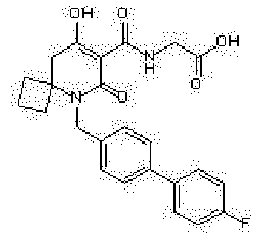
1H NMR (600 MHz, CHLOROFORM-d) δ ppm 1.70 - 1.82 (m, 2 H) 1.93 - 2.01 (m, 2 H) 2.36 - 2.46 (m, 2 H) 2.82 - 2.94 (m, 2 H) 4.14 - 4.22 (m, 2 H) 4.81 - 4.97 (m, 2 H) 7.08 - 7.15 (m, 2 H) 7.27 - 7.34 (m, 2 H) 7.46 - 7.55 (m, 4 H) 10.03 - 10.46 (m, 1 H). MS ESI posi: 439[M+H]+, 461[M+Na]+. MS ESI nega: 437[M-H]-. [Table 21-26] Compound No. Structure Analytical Data Salt information Example 1-179 
1H NMR (300 MHz, CHLOROFORM-d) δ ppm 1.17 - 1.39 (m, 6 H) 2.12 - 2.33 (m, 3 H) 2.48 - 2.68 (m, 2 H) 4.10 - 4.25 (m, 2 H) 4.50 - 4.67 (m, 2 H) 6.88 - 7.12 (m, 3 H) 10.17 - 10.44 (m, 1 H). MS ESI/APCI Dual posi: 365[M+H]+, 387[M+Na]+. MS ESI/APCI Dual nega: 363[M-H]-. Example 1-180 
1H NMR (300 MHz, DMSO-d6) δ ppm 1.18 (s, 6 H) 2.31 (s, 3 H) 2.39 - 2.62 (m, 2 H) 3.47 (d, J=4.4 Hz, 2 H) 4.58 (br. s., 2 H) 7.13 (d, J=8.2 Hz, 1 H) 7.25 (s, 1 H) 7.32 (d, J=8.2 Hz, 1 H) 10.02 (br. s., 1 H). Na MS ESI/APCI Dual posi: 403[M+Na]+. MS ESI/APCI Dual nega: 379[M-H]-. Example 1-181 
1H NMR (300 MHz, CHLOROFORM-d) δ ppm 2.33 - 2.48 (m, 1 H) 2.60 - 2.87 (m, 2 H) 2.91 - 3.04 (m, 1 H) 3.46 - 3.61 (m, 1 H) 3.62 - 3.77 (m, 1 H) 4.18 - 4.26 (m, 2 H) 5.16 - 5.45 (m, 1 H) 7.02 - 7.16 (m, 2 H) 7.27 - 7.40 (m, 5 H) 7.55 - 7.64 (m, 2 H) 9.98 - 10.47 (m, 1 H). MS ESI/APCI Dual posi: 463[M+H]+, 485[M+Na]+. MS ESI/APCI Dual nega: 461[M-H]-. Example 1-182 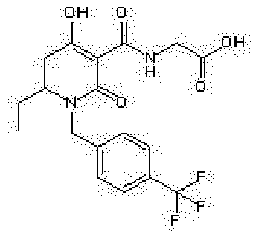
1H NMR (300 MHz, CHLOROFORM-d) δ ppm 0.92 (t, J=7.5 Hz, 3 H) 1.62 - 1.75 (m, 2 H) 2.42 - 2.54 (m, 1 H) 2.74 - 2.94 (m, 1 H) 3.22 - 3.33 (m, 1 H) 3.90 - 4.10 (m, H) 4.14 - 4.25 (m, 2 H) 5.28 - 5.47 (m, 1 H) 7.35 - 7.43 (m, 2 H) 7.56 - 7.65 (m, 2 H) 10.01 - 10.38 (m, 1 H). MS ESI/APCI Dual posi: 401[M+H]+, 423[M+Na]+. MS ESI/APCI Dual nega: 399[M-H]-. Example 1-183 
1H NMR (300 MHz, CHLOROFORM-d) δ ppm 0.74 - 0.94 (m, 6 H) 1.57 - 1.81 (m, 4 H) 2.56 - 2.72 (m, 2 H) 4.10 - 4.24 (m, 2 H) 4.64 - 4.79 (m, 2 H) 7.30 - 7.44 (m, 2 H) 7.49 - 7.67 (m, 2 H) 10.09 - 10.34 (m, 1 H). MS ESI/APCI Dual posi: 429[M+H]+, 451[M+Na]+. MS ESI/APCI Dual nega: 427[M-H]-. Example 1-184 
1H NMR (300 MHz, DMSO-d6) δ ppm 1.17 (s, 6 H) 2.16 - 2.22 (m, 3 H) 2.49 - 2.59 (m, 2 H) 3.43 - 3.53 (m, 2 H) 4.59 (s, 2 H) 6.98 - 7.07 (m, 2 H) 7.15 - 7.25 (m, 1 H) 9.97 - 10.24 (m, 1 H). Na MS ESI/APCI Dual posi: 365[M+H]+. MS ESI/APCI Dual nega: 363[M-H]-. Example 1-185 
1H NMR (300 MHz, CHLOROFORM-d) δ ppm 1.79 - 2.13 (m, 2 H) 2.39 - 2.56 (m, 2 H) 2.68 - 2.92 (m, 2 H) 3.21 - 3.35 (m, 1 H) 3.71 - 3.93 (m, 1 H) 4.15 - 4.25 (m, 2 H) 5.17 - 5.37 (m, 1 H) 7.06 - 7.35 (m, 7 H) 7.48 - 7.57 (m, 2 H) 10.05 - 10.13 (m, 1 H). MS ESI/APCI Dual posi: 477[M+H]+, 499[M+Na]+. MS ESI/APCI Dual nega: 475[M-H]-. [Table 21-27] Compound No. Structure Analytical Data Salt information Example 1-186 
1H NMR (300 MHz, CHLOROFORM-d) δ ppm 1.22 - 1.30 (m, 6 H) 1.95 - 2.11 (m, 2 H) 2.20 - 2.42 (m, 2 H) 2.45 - 2.63 (m, 2 H) 3.90 - 4.08 (m, 2 H) 4.12 - 4.26 (m, 2 H) 4.55 - 4.71 (m, 2 H) 6.78 - 6.88 (m, 2 H) 7.15 - 7.24 (m, 2 H) 10.21 - 10.47 (m, 1 H). MS ESI/APCI Dual posi: 481[M+Na]+. MS ESI/APCI Dual nega: 457[M-H]-. Example 1-187 
1H NMR (200 MHz, CHLOROFORM-d) δ ppm 1.21 - 1.35 (m, 6 H) 1.97 - 2.13 (m, 2 H) 2.17 - 2.24 (m, 3 H) 2.23 - 2.44 (m, 2 H) 2.49 - 2.64 (m, 2 H) 3.92 - 4.07 (m, 2 H) 4.14 - 4.24 (m, 2 H) 4.53 - 4.65 (m, 2 H) 6.65 - 6.77 (m, 1 H) 6.96 - 7.10 (m, 2 H) 10.25 - 10.42 (m, 1 H). MS ESI/APCI Dual posi: 495[M+Na]+. MS ESI/APCI Dual nega: 471[M-H]-. Example 1-188 
1H NMR (300 MHz, CHLOROFORM-d) δ ppm 1.26 - 1.30 (m, 6 H) 2.52 - 2.68 (m, 2 H) 4.15 - 4.24 (m, 2 H) 4.51 - 4.68 (m, 5 H) 4.75 - 4.80 (m, 2 H) 7.00 - 7.07 (m, 1 H) 7.09 - 7.17 (m, 1 H) 7.27 - 7.33 (m, 1 H) 10.10 - 10.36 (m, 1 H). MS ESI/APCI Dual posi: 483[M+Na]+. MS ESI/APCI Dual nega: 459[M-H]-. Example 1-189 
1H NMR (300 MHz, DMSO-d6) δ ppm 1.07 (s, 6 H) 2.10 - 2.21 (m, 5 H) 3.43 (d, J=4.4 Hz, 2 H) 4.40 - 4.87 (m, 7 H) 6.86 - 0.99 (m, 1 H) 6.99 - 7.11 (m, 2 H) 10.07 - 10.20 (m, 1 H). Na MS ESI/APCI Dual posi: 463[M+Na]+. MS ESI/APCI Dual nega: 439[M-H]-. Example 1-190 
1H NMR (600 MHz, CHLOROFORM-d) δ ppm 0.68 - 0.81 (m, 2 H) 0.98 - 1.09 (m, 2 H) 2.15 - 2.25 (m, 1 H) 2.54 - 2.68 (m, 2 H) 3.26 - 3.38 (m, 2 H) 4.15 - 4.25 (m, 2 H) 4.55 - 4.65 (m, 2 H) 6.92 (s, 1 H) 7.09 - 7.17 (m, 1 H) 7.45 - 7.74 (m, 1 H) 9.98 - 10.64 (m, 1 H). MS ESI/APCI Dual posi: 413[M+H]+. MS ESI/APCI Dual nega: 411[M-H]-. Example 1-191 
1H NMR (600 MHz, CHLOROFORM-d) δ ppm 1.21 - 1.34 (m, 6 H) 2.54 - 2.67 (m, 2 H) 3.83 - 3.92 (m, 3 H) 4.08 - 4.23 (m, 2 H) 4.61 - 4.76 (m, 2 H) 6.84 - 6.95 (m, 2 H) 7.45 - 7.54 (m, 1 H) 9.99 - 10.45 (m, 1 H). MS ESI/APCI Dual posi: 431[M+H]+, 453[M+Na]+. MS ESI/APCI Dual nega: 429[M-H]-. Example 1-192 
1H NMR (600 MHz, CHLOROFORM-d) δ ppm 1.24 - 1.34 (m, 6 H) 2.55 - 2.69 (m, 2 H) 4.15 - 4.23 (m, 2 H) 4.62 - 4.77 (m, 2 H) 6.36 - 6.69 (m, 1 H) 7.16 - 7.29 (m, 2 H) 7.58 - 7.67 (m, 1 H) 9.91 - 10.55 (m, 1 H). MS ESI/APCI Dual posi: 467[M+H]+, 489[M+Na]+. MS ESI/APCI Dual nega: 465[M-H]-. [Table 21-28] Compound No. Structure Analytical Data Salt information Example 1-193 
1H NMR (300 MHz, CHLOROFORM-d) δ ppm 1.23 - 1.30 (m, 6 H) 2.47 - 2.65 (m, 2 H) 3.71 - 3.83 (m, 3 H) 4.09 - 4.25 (m, 2 H) 4.59 - 4.72 (m, 2 H) 6.54 - 6.71 (m, 2 H) 7.18 - 7.24 (m, 1 H) 10.17 - 10.43 (m, 1 H). MS ESI/APCI Dual posi: 403[M+Na]+. MS ESI/APCI Dual nega: 379[M-H]-. Example 1-194 
1H NMR (300 MHz, CHLOROFORM-d) δ ppm 1.19 - 1.33 (m, 6 H) 2.49 - 2.64 (m, 2 H) 3.82 - 3.91 (m, 3 H) 4.12 - 4.25 (m, 2 H) 4.52 - 4.65 (m, 2 H) 6.82 - 7.12 (m, 3 H) 10.17 - 10.44 (m, 1 H). MS ESI/APCI Dual posi: 403[M+Na]+. MS ESI/APCI Dual nega: 379[M-H]-. Example 1-195 
1H NMR (300 MHz, CHLOROFORM-d) δ ppm 1.17 - 1.36 (m, 6 H) 2.48 - 2.64 (m, 2 H) 3.82 - 3.93 (m, 3 H) 4.14 - 4.26 (m, 2 H) 4.52 - 4.64 (m, 2 H) 6.84 - 6.92 (m, 1 H) 7.10 - 7.19 (m, 1 H) 7.25 - 7.32 (m, 1 H) 10.18 - 10.45 (m, 1 H). MS ESI/APCI Dual posi: 419[M+Na]+. MS ESI/APCI Dual nega: 395[M-H]-. Example 1-196 
1H NMR (300 MHz, DMSO-d6) δ ppm 1.17 (s, 6 H) 2.12 (s, 3 H) 2.40 - 2.60 (m, 2 H) 3.45 (d, J=4.2 Hz, 2 H) 3.75 (s, 3 H) 4.53 (br. s., 2 H) 6.84 (d, J=7.9 Hz, 1 H) 7.01 - 7.12 (m, 2 H). Na MS ESI/APCI Dual posi: 399[M+Na]+. MS ESI/APCI Dual nega: 375[M-H]-. Example 1-197 
1H NMR (600 MHz, CHLOROFORM-d) δ ppm 0.73 - 0.80 (m, 3 H) 0.89 - 0.08 (m, 3 H) 1.97 - 2.14 (m, 1 H) 2.15 - 2.28 (m, 1 H) 3.17 - 3.29 (m, 1 H) 3.36 - 3.46 (m, 1 H) 4.12 - 4.27 (m, 2 H) 4.56 - 4.75 (m, 2 H) 7.37 - 7.44 (m, 2 H) 7.57 - 7.64 (m, 2 H) 10.11 - 10.61 (m, 1 H). MS ESI/APCI Dual posi: 415[M+H]+. MS ESI/APCI Dual nega: 413[M-H]-. Example 1-198 
1H NMR (300 MHz, CHLOROFORM-d) δ ppm 0.29 - 0.38 (m, 2 H) 0.58 - 0.69 (m, 2 H) 1.18 - 1.32 (m, 7 H) 2.48 - 2.62 (m, 2 H) 3.73 - 3.82 (m, 2 H) 4.12 - 4.23 (m, 2 H) 4.57 - 4.68 (m, 2 H) 6.80 - 6.89 (m, 2 H) 7.12 - 7.23 (m, 2 H) 10.24 - 10.41 (m, 1 H). MS ESI/APCI Dual posi: 403[M+H]+. MS ESI/APCI Dual nega: 401[M-H]-. Example 1-199 
1H NMR (300 MHz, DMSO-d6) δ ppm 0.27 - 0.37 (m, 2 H) 0.49 - 0.60 (m, 2 H) 1.09 - 1.29 (m, 7 H) 2.14 (s, 3 H) 2.41 - 2.64 (m, 2 H) 3.45 - 3.53 (m, 2 H) 3.74 - 3.83 (m, 2 H) 4.52 (s, 2 H) 6.74 - 6.86 (m, 1 H) 6.96 - 7.10 (m, 2 H) 9.94 - 10.38 (m, 1 H). Na MS ESI/APCI Dual posi: 417[M+H]+. MS ESI/APCI Dual nega : 415[M-H]-. [Table 21-29] Compound No. Structure Analytical Data Salt information Example 1-200 
1H NMR (300 MHz, DMSO-d6) δ ppm 0.65 - 0.77 (m, 2 H) 1.06 - 1.15 (m, 2 H) 3.23 (s, 2 H) 3.52 - 3.59 (m, 2 H) 4.61 (s, 2 H) 7.31 - 7.40 (m, 3 H) 7.41 - 7.51 (m, 2 H) 7.60 - 7.69 (m, 4 H) 10.27 (br. s., 1 H). Na MS ESI/APCI Dual posi: 407[M+H]+. MS ESI/APCI Dual nega: 405[M-H]-. Example 1-201 
1H NMR (300 MHz, CHLOROFORM-d) δ ppm 1.22 - 1.34 (m, 6 H) 1.96 - 2.15 (m, 2 H) 2.23 - 2.45 (m, 2 H) 2.49 - 2.68 (m, 2 H) 3.98 - 4.11 (m, 2 H) 4.14 - 4.27 (m, 2 H) 4.52 - 4.66 (m, 2 H) 6.79 - 7.11 (m, 3 H) 10.17 - 10.45 (m, 1 H). MS ESI/APCI Dual posi: 477[M+H]+. MS ESI/APCI Dual nega: 475[M-H]-. Example 1-202 
1H NMR (300 MHz, CHLOROFORM-d) δ ppm 1.21 - 1.33 (m, 6 H) 2.23 - 2.42 (m, 3 H) 2.45 - 2.68 (m, 2 H) 4.12 - 4.23 (m, 2 H) 4.64 - 4.67 (m, 2 H) 6.98 - 7.25 (m, 3 H) 10.17 - 10.44 (m, 1 H). MS ESI/APCI Dual posi: 381[M+H]+, 403[M+Na]+. MS ESI/APCI Dual nega : 379[M-H]-. Example 1-203 
1H NMR (300 MHz, CHLOROFORM-d) δ ppm 0.55 - 0.74 (m, 2 H) 0.85 - 1.01 (m, 2 H) 1.21 - 1.33 (m, 6 H) 1.76 - 1.94 (m, 1 H) 2.45 - 2.66 (m, 2 H) 4.08 - 4.25 (m, 2 H) 4.54 - 4.73 (m, 2 H) 6.95 - 9.06 (m, 2 H) 7.09 - 9.20 (m, 2 H) 10.21 - 10.42 (m, 1 H). MS ESI/APCI Dual posi: 373[M+H]+, 395[M+Na]+. MS ESI/APCI Dual nega: 371[M-H]-. Example 1-204 
1H NMR (300 MHz, CHLOROFORM-d) δ ppm 0.28 - 0.40 (m, 2 H) 0.57 - 0.70 (m, 2 H) 1.17 - 1.35 (m, 7 H) 2.50 - 2.64 (m, 2 H) 3.81 - 3.89 (m, 2 H) 4.10 - 4.23 (m, 2 H) 4.53 - 4.65 (m, 2 H) 6.80 - 7.10 (m, 3 H) 10.15 - 10.43 (m, 1 H). MS ESI/APCI Dual posi: 421[M+H]+. MS ESI/APCI Dual nega: 419[M-H]-. Example 1-205 
1H NMR (300 MHz, CHLOROFORM-d) δ ppm 2.53 - 2.68 (m, 2 H) 3.31 - 3.42 (m, 2 H) 4.15 - 4.22 (m, 2 H) 4.55 - 4.62 (m, 2 H) 6.88 - 7.08 (m, 6 H) 7.19 - 7.26 (m, 2 H) 10.17 - 10.44 (m, 1 H). MS ESI/APCI Dual posi: 415[M+H]+, 437[M+Na]+. MS ESI/APCI Dual nega: 413[M-H]-. Example 1-206 
1H NMR (300 MHz, CHLOROFORM-d) δ ppm 1.23 - 1.34 (m, 6 H) 2.35 (s, 3 H) 2.50 - 2.62 (m, 2 H) 4.13 - 4.22 (m, 2 H) 4.56 - 4.65 (m, 2 H) 6.80 - 6.90 (m, 1 H) 6.95 - 7.06 (m, 2 H) 7.17-7.22 (m, 2 H) 7.60 - 7.72 (m, 1 H) 8.08 - 8.17 (m, 1 H) 10.16 - 10.48 (m, 1 H). MS ESI/APCI Dual posi: 440[M+H]+, 462[M+Na]+. MS ESI/APCI Dual nega: 438[M-H]-. [Table 21-30] Compound No. Structure Analytical Data Salt information Example 1-207 
1H NMR (300 MHz, CHLOROFORM-d) δ ppm 0.50 - 0.75 (m, 2 H) 1.23 - 1.45 (m, 2 H) 3.07 - 3.17 (m, 2 H) 4.14 - 4.23 (m, 2 H) 4.54 - 4.60 (m, 2 H) 7.10 - 7.19 (m, 2 H) 7.42 - 7.52 (m, 2 H) 10.17 - 10.56 (m, 1 H). MS ESI/APCI Dual posi: 411[M+H]+. MS ESI/APCI Dual nega: 409[M-H]-. Example 1-208 
1H NMR (300 MHz, CHLOROFORM-d) δ ppm 0.52 - 0.78 (m, 2 H) 1.27 - 1.47 (m, 2 H) 3.09 - 3.21 (m, 2 H) 4.15 - 4.24 (m, 2 H) 4.58 - 4.66 (m, 2 H) 7.11 - 7.40 (m, 4 H) 10.17 - 10.63 (m, 1 H). MS ESI/APCI Dual posi: 415[M+H]+. MS ESI/APCI Dual nega: 413[M-H]-. Example 1-209 
1H NMR (300 MHz, DMSO-d6) δ ppm 2.28 (s, 3H) 2.62 - 2.77 (m, 2 H) 3.27 - 3.41 (m, 2 H) 3.95 - 4.10 (m, 2 H) 4.46 - 4.64 (m, 2 H) 6.85 - 7.00 (m, 4 H) 7.12 - 9.21 (m, 2 H) 7.24 - 7.34 (m, 2 H) 9.97 - 10.28 (m, 1 H) 12.85 (br, s., 1 H). MS ESI/APCI Dual posi: 411[M+H]+, 433[M+Na]+. MS ESI/APCI Dual nega: 409[M-H]-. Example 1-210 
1H NMR (300 MHz, CHLOROFORM-d) δ ppm 1.07 - 1.20 (m, 3 H) 1.20 - 1.41 (m, 2 H) 1.49 - 1.72 (m, 2 H) 2.23 - 2.40 (m, 1 H) 2.75 - 3.03 (m, 1 H) 3.83 - 4.00 (m, 1 H) 4.07 - 4.25 (m, 2 H) 7.37 - 7.49 (m, 2 H) 7.49 - 7.60 (m, 2 H) 10.03 - 10.40 (m, 1 H). MS ESI/APCI Dual posi: 413[M+H]+. MS ESI/APCI Dual nega: 411[M-H]-. Example 1-211 
1H NMR (600 MHz, CHLOROFORM-d) δ ppm 1.23 - 1.31 (m, 6 H) 1.79 - 1.89 (m, 1 H) 1.95 - 2.06 (m, 1 H) 2.07 - 2.17 (m, 2 H) 2.26 - 2.37 (m, 2 H) 2.51 - 2.63 (m, 2 H) 3.46 - 3.56 (m, 1 H) 4.14 - 4.23 (m, 2 H) 4.60 - 4.70 (m, 2 H) 7.12 - 7.22 (m, 4 H) 10.25 - 10.41 (m, 1 H). MS ESI/APCI Dual posi: 387[M+H]+, 409 [M+Na]+. MS ESI/APCI Dual nega: 258[M-H]-. Example 1-212 
1H NMR (600 MHz, CHLOROFORM-d) δ ppm 0.70 - 0.80 (m, 2 H) 0.99 - 1.09 (m, 2 H) 2.13 - 2.24 (m, 1 H) 2.53 - 2.68 (m, 2 H) 3.29 - 3.39 (m, 2 H) 4.16 - 4.24 (m, 2 H) 4.55 - 4.64 (m, 2 H) 7.01 (d, J=8.3 Hz, 1 H) 7.34 (d, J=6.6 Hz, 1 H) 7.45 - 7.52 (m, 1 H) 10.06 - 10.54 (m, 1 H). MS ESI/APCI Dual posi: 413[M+H]+. MS ESI/APCI Dual nega: 411[M-H]-. Example 1-213 
1H NMR (600 MHz, CHLOROFORM-d) δ ppm 1.33 - 1.43 (m, 6 H) 2.51 - 2.71 (m, 2 H) 4.13 - 4.25 (m, 2 H) 4.67 - 4.81 (m, 2 H) 6.45 - 6.61 (m, 1 H) 7.36 - 7.48 (m, 2 H) 7.67 - 7.79 (m, 2 H) 9.95 - 10.55 (m, 1 H). MS ESI/APCI Dual posi: 434[M+H]+, 456[M+Na]+. MS ESI/APCI Dual nega: 432[M-H]-. [Table 21-31] Compound No. Structure Analytical Data Salt information Example 1-214 
1H NMR (-300 kHz, CHLOROFORM-d) δ ppm 0.49 - 1.02 (m, 6 H) 1.25 - 1.42 (m, 2 H) 1.82 - 1.94 (m, 1 H) 3.07 - 3.16 (m, 2 H) 4.16 - 4.21 (m, 2 H) 4.55 - 4.61 (m, 2 H) 6.98 - 7.08 (m, 2 H) 7.10 - 7.19 (m, 2 H) 10.27 - 10.55 (m, 1 H). MS ESI/APCI Dual posi: 371[M+H]+. MS ESI/APCI Dual nega: 369[M-H]-. Example 1-215 
1H NMR (300 MHz, CHLOROFORM-d) δ ppm 0.51 - 0.76 (m, 2 H) 1.27 - 1.45 (m, 2 H) 3.09 - 3.17 (m; 2 H) 4.17 - 4.23 (m, 2 H) 4.56 - 4.63 (m, 2 H) 7.15 - 7.38 (m, 4 H) 10.20 - 10.59 (m, 1 H). MS ESI/APCI Dual posi: 365[M+H]+. MS ESI/APCI Dual nega: 363[M-H]-. Example 1-216 
1H NMR (600 MHz, CHLOROFORM-d) δ ppm 1.30 - 1.43 (m, 6 H) 2.47 - 2.68 (m, 2 H) 4.04 - 4.29 (m, 2 H) 4.66 - 4.84 (m, 2 H) 6.46 - 6.65 (m, 1 H) 7.37 - 7.48 (m, 2 H) 7.62 - 7.77 (m, 2 H) 10.06 - 10.54 (m, 1 H). MS ESI/APCI Dual posi: 434[M+H]+, 456[M+Na]+. MS ESI/APCI Dual nega: 432[M-H]-. Example 1-217 
1H NMR (600 MHz, CHLOROFORM-d) δ ppm 1.30 - 1.38 (m, 6 H) 2.21 - 2.31 (m, 4 H) 2.47 - 2.57 (m, 2 H) 2.57 - 2.69 (m, 1 H) 3.63 - 3.74 (m, 3 H) 4.14 - 4.21 (m, 2 H) 7.15 - 7.22 (m, 1 H) 7.22 - 7.27 (m, 2 H) 7.28 - 7.34 (m, 2 H) 10.33 (br. s., 1 H). MS ESI/APCI Dual posi: 387[M+H]+, 409[M+Na]+. MS ESI/APCI Dual nega: 385[M-H]-. Example 1-218 
1H NMR (600 MHz, CHLOROFORM-d) δ ppm 1.29 - 1.36 (m, 6 H) 1.83 - 1.97 (m, 2 H) 2.45 - 2.58 (m, 5 H) 3.24 - 3.36 (m, 1 H) 3.39 - 3.49 (m, 2 H) 4.17 (dd, J=10.1, 5.6 Hz, 2 H) 7.15 - 7.23 (m, 3 H) 7.27 - 7.33 (m, 2 H) 10.17 - 10.37 (m, 1 H). MS ESI/APCI Dual posi: 387[M+H]+, 409[M+Na]+. MS ESI/APCI Dual nega: 385[M-H]-. Example 1-219 
1H NMR (300 MHz, CHLOROFORM-d) δ ppm 1.32 - 1.51 (m, 4 H) 2.53 - 2.76 (m, 2 H) 3.51 - 3.69 (m, 2 H) 4.04 - 4.24 (m, 2 H) 7.23 - 7.37 (m, 3 H) 7.38 - 7.47 (m, 2 H) 7.49 - 7.58 (m, 4 H) 10.11 - 10.46 (m, 1 H). MS ESI/APCI Dual pogi: 407[M+H]+. MS ESI/APCI Dual nega : 405[M-H]-. Example 1-220 
1H NMR (300 MHz, METHANOL-d4) δ ppm 1.06 - 1.27 (m, 1 H) 1.35 - 2.11 (m, 8 H) 2.44 - 2.63 (m, 3 H) 2.73 (d, J=8.1 Hz, 1 H) 3.30 - 3.54 (m, 2 H) 3.82 - 3.91 (m, 2 H) 4.22 - 4.45 (m, 1 H) 7.08 - 7.33 (m, 5 H). Na MS ESI/APCI Dual posi: 387[M+H]+, 409[M+Na]+. MS ESI/APCI Dual nega: 385[M-H]-. [Table 21-32] Compound No. Structure Analytical Data Salt information Example 1-221 
1H NMR (300 MHz, CHLOROFORM-d) δ ppm 1.17 - 1.33 (m, 6 H) 2.47 - 2.65 (m, 2 H) 4.10 - 4.25 (m, 2 H) 4.25 - 4.40 (m, 2 H) 4.57 - 4.70 (m, 2 H) 6.85 - 6.94 (m, 2 H) 7.19 - 7.25 (m, 2 H) 10.21 - 10.44 (m. 1 H). MS ESI/APCI Dual posi: 431[M+H]+, 453[M+Na]+. MS ESI/APCI Dual nega: 429[M-H]-. Example 1-222 
1H NMR (300 MHz, METHANOL-d4) δ ppm 2.51 - 2.66 (m, 2 H) 3.30 - 3.40 (m, 2 H) 3.89 (s, 2 H) 4.50 - 4.65 (m, 4 H) 7.07 - 7.16 (m, 1 H) 7.20 - 7.32 (m, 1 H) 7.34 - 7.44 (m, 1 H). US ESI/APCI Dual posi: 437[M+H]+, 459[M+Ha]+. Na Example 1-223 
1H NMR (300 MHz, DMSO-d6) δ ppm 0.56 - 0.84 (m, 2 H) 0.84 - 1.04 (m, 2 H) 2.41 - 2.69 (m, 2 H) 3.97 - 4.13 (m, 2 H) 4.46 - 4.60 (m, 2 H) 7.31 - 7.42 (m, 3 H) 7.42 - 7.51 (m, 2 H) 7.58 - 7.69 (m, 4 H) 9.88 - 10.34 (m, 1 H) 12.89 (br. s., 1 H). MS ESI/APCI Dual posi: 407[M+H]+. Example 1-224 
1H NMR (300 MHz, CHLOROFORM-d) δ ppm 0.57 - 0.77 (m, 2 H) 0.85 - 1.00 (m, 2 H) 2.40 - 2.64 (m, 2 H) 4.12 - 4.29 (m, 2 H) 4.57 (s, 2 H) 7.30 - 7.40 (m, 2 H) 7.55 - 7.63 (m, 2 H) 10.00 - 10.15 (m, 1 H). MS ESI/APCI Dual posi: 399[M+H]+, 421[M+Na]+. Example 1-225 
1H NMR (300 MHz, CHLOROFORM-d) δ ppm 2.54 - 2.74 (m, 2 H) 3.31 - 3.46 (m, 2 H) 4.13 - 4.25 (m, 2 H) 4.54 - 4.65 (m, 2 H) 7.00 (d, J=8.5 Hz, 1 H) 7.17 - 7.30 (m, 2 H) 7.62 - 7.73 (m, 2 H) 7.79 (dd, J=8.5, 2.5 Hz, 1 H) 8.16 (d, J=2.5 Hz, 1 H) 10.11 (m, 1 H). HCl MS ESI/APCI Dual posi: 423[M+H]+. US ESI/APCI Dual nega: 421[M-H]-. Example 1-226 
1H NMR (300 MHz, DMSO-d6) δ ppm 2.58 - 2.72 (m, 2 H) 3.40 (t, J=7.1 Hz, 2H) 3.13 (d, J=4.8 Hz, 2 H) 4.59 (s, 2 H) 7.11 - 7.20 (m, 2 H) 7.26 (t, J=4.8 Hz, 1H) 7.35 (d, J=8.5 Hz, 2 H) 8.64 (d, J=4.8 Hz, 2H) 9.97 - 10.14 (m, 1 H). MS ESI/APCI Dual posi: 399[M+H]+. Na MS ESI/APCI Dual nega: 397[M-H]-. Example 1-227 
1H NMR (300 MHz, CHLOROFOEM-d) δ ppm 0.98 - 1.07 (m, 3H) 1.22 - 1.29 (m, 6 H) 1.71 - 1.88 (m, 2 H) 2.50 - 2.61 (m, 2 H) 3.85 - 3.94 (m, 2 H) 4.10 - 4.22 (m, 2 H) 4.58 - 4.66 (m, 2 H) 6.79 - 6.88 (m, 2 H) 7.13 - 7.23 (m, 2 H) 10.22 - 10.38 (m, 1H). MS ESI/APCI Dual posi: 391[M+H]+, 413[M+Na]+. MS ESI/APCI Dual nega: 389[M-H]-. [Table 21-33] Compound No. Structure Analytical Data Salt information Example 1-228 
1H NMR (300 MHz, CHLOROFORM-d) δ ppm 1.23 - 1.20 (m, 6 H) 1.29 - 1.35 (m, 6 H) 2.51 - 2.62 (m, 2 H) 4.12 - 4.22 (m, 2 H) 4.44 - 4.57 (m, 1 H) 4.58 - 4.67 (m, 2 H) 6.76 - 6.88 (m, 2 H) 7.10 - 7.24 (m, 2 H) 1.0.23 - 10.40 (m, 1 H). MS ESI/APCI Dual posi: 391[M+H]+, 413[M+Na]+. MS ESI/APCI Dual nega: 389[M-H]-. Example 1-229 
1H NMR (300 MHz, DMSO-d6) δ ppm 0.86 - 1.07 (m, 2 H) 1.24 - 1.31 (m, 6 H) 1.29 - 1.37 (m, 1 H) 1.89 - 1.99 (m, 1 H) 2.43 - 2.54 (m, 2 H) 3.37 - 3.46 (m, 2 H) 3.46 - 3.53 (m, 2 H) 6.97 - 7.14 (m, 3 H) 7.16 - 7.27 (m, 2 H) 10.11 (br. s., 1 H). MS ESI/APCI Dual posi: 373[M+H]+. MS ESI/APCI Dual nega: 371[M-H]-. Example 1-230 
1H NMR (300 MHz, CHLOROFORM-d) δ ppm 1.45 - 1.68 (m, 3 H) 2.41 - 2.62 (m, 2 H) 2.96 - 3.11 (m, 1 H) 3.21 - 3.37 (m, 1 H) 4.17 - 4.25 (m, 2 H) 5.84 - 6.13 (m, 1 H) 7.30 - 7.49 (m, 5 H) 7.52 - 7.64 (m, 4 H) 10.19 - 10.50 (m, 1 H). MS ESI/APCI Dual posi: 395[M+H]+, 417[M+Na]+. MS ESI/APCI Dual nega: 393[M-H]-. Example 1-231 
1H NMR (300 MHz, CHLOROFORM-d) δ ppm 1.60 - 1.79 (m, 6 H) 2.55 - 2.79 (m, 2 H) 3.50 - 3.65 (m, 2 H) 3.96 - 4.16 (m, 2 H) 7.41 (d, J=8.1 Hz, 2 H) 7.51 - 7.65 (m, 2 H) 9.77 - 10.51 (m, 1H). MS ESI/APCI Dual posi: 401[M+H]+, 423[M+Na]+. MS ESI/APCI Dual nega: 399[M-H]-. Example 1-232 
1H NMR (300 MHz, CHLOROFORM-d) δ ppm 0.93 (s, 9 H) 2.47 - 2.68 (m, 2 H) 3.06 - 3.17 (m, 2 H) 3.27 - 3.43 (m, 2 H) 4.15 - 4.25 (m, 2 H) 4.51 (s, 2 H) 4.56 - 4.66 (m, 2 H) 7.21 - 7.27 (m, 2 H) 7.28 - 7.35 (m, 2 H) 10.19 - 10.46 (m, 1 H). MS ESI/APCI Dual posi: 405[N+H]+, 427[M+Na]+. MS ESI/APCI Dual nega: 403[M-H]-. Example 1-233 
1H NMR (300 MHz, METHAHOL-d4) δ ppm 0.27 - 0.34 (m, 2 H) 0.35 - 0.42 (m, 2 H) 1.13 (s, 3 H) 2.50 - 2.61 (m, 2 H) 3.23 - 3.27 (m, 2 H) 3.33 - 3.38 (m, 2 H) 3.89 (s, 2 H) 4.49 (s, 2 H) 4.62 (s, 2 H) 7.24 - 7.35 (m, 4 H). Na MS ESI/APCI Dual posi: 403[M+H]+, 425[M+Na]+. MS ESI/APCI Dual nega: 401[M-H]-. Example 1-234 
1H NMR (300 MHz, CHLOROFORM-d) δ ppm 1.20 - 1.29 (m, 6 H) 1.35 - 1.44 (m, 3 H) 2.47 - 2.63 (m, 2 H) 3.96 - 4.06 (m, 2 H) 4.13 - 4.23 (m, 2 H) 4.58 - 4.67 (m, 2 H) 6.78 - 6.88 (m, 2 H) 7.12 - 7.24 (m, 2 H) 10.24 - 10.38 (m, 1 H). MS ESI/APCI Dual posi: 377[M+H]+. MS ESI/APCI Dual nega: 375[M-H]-. [Table 21-34] Compound No. Structure Analytical Data Salt information Example 1-235 
1H NMR (300 MHz, CHLOROFORM-d) δ ppm 0.30 - 0,38 (m, 2 H) 0.58 - 0.70 (m, 2 H) 1.16 - 1.35 (m, 1 H) 2.49 - 2.64 (m, 2 H) 3.25 - 3.37 (m, 2 H) 3.74 - 3.82 (m, 2 H) 4.14 - 4.22 (m, 2 H) 4.50 - 4.59 (m, 2 H) 6.81 - 6.91 (m, 2 H) 7.15 - 7.21 (m, 2 H) 10.16 - 10.42 (m, 1 H). MS ESI/APCI Dual posi: 375[M+H]+. MS ESI/APCI Dual nega: 373[M-H]-. Example 1-236 
1H NMR (300 MHz, CHLOROFORM-d) δ ppm 0.60 - 0.71 (m, 2 H) 0.85 - 1.01 (m, 2 H) 1.62 - 2.02 (m, 5 H) 2.27 - 2.49 (m, 2 H) 2.77 - 2.92 (m, 2 H) 4.10 - 4.22 (m, 2 H) 4.74 - 4.86 (m, 2 H) 6.96 - 7.07 (m, 2 H) 7.07 - 7.16 (m, 2 H) 10.12 - 10.40 (m, 1 H). MS ESI/APCI Dual posi: 385[M+H]+. MS ESI/APCI Dual nega: 383[M-H]-. Example 1-237 
1H NMR (300 MHz, CHLOROFORM-d) δ ppm 0-64 - 0.72 (m, 2 H) 0.91 - 1.02 (m, 2 H) 1.51 - 2.02 (m, 5 H) 2.34 - 2.54 (m, 2 H) 3.27 - 3.34 (m, 2 H) 4.15 - 4.23 (m, 2 H) 4.55 - 4.60 (m, 2 H) 7.00 - 7.09 (m, 2 H) 7.12 - 7.20 (m, 2 H) 10.29 - 10.58 (m, 1 H). MS ESI/APCI Dual posi: 385[M+H]+. MS ESI/APCI Dual nega: 383[M-H]-. Example 1-238 
1H NMR (300 MHz, CHLOROFORM-d) δ ppm 1.77 - 2.22 (m, 6 H) 2.47 - 2.66 (m, 2 H) 2.69 - 2.84 (m, 1 H) 3.26 - 3.38 (m, 2 H) 3.86 - 3.96 (m, 2 H) 4.15 - 4.22 (m, 2H) 4.56 (s, 2 H) 6.83 - 6.92 (m, 2 H) 7.13 - 7.23 (m, 2 H) 10.18 - 10.43 (m, 1 H). MS ESI/APCI Dual posi: 389[M+H]+. MS ESI/APCI Dual nega: 387[M-H]-. Example 1-239 
1H NMR (300 MHz, CHLOROFORM-d) δ ppm 1.22 - 1.29 (m, 6 H) 1.76 - 2.03 (m, 4 H) 2.04 - 2.21 (m, 2 H) 2.47 - 2.62 (m. 2 H) 2.68 - 2.83 (m, 1 H) 3.86 - 3.93 (m, 2 H) 4.13 - 4.23 (m, 2 H) 4.53 - 4.68 (m, 2 H) 6.78 - 6.90 (m, 2 H) 7.12 - 7.24 (m, 2 H) 10.27 - 10.42 (m, 1 H). MS ESI/APCI Dual posi: 417[M+H]+. MS ESI/APCI Dual nega: 415[M-H]-. Example 1-240 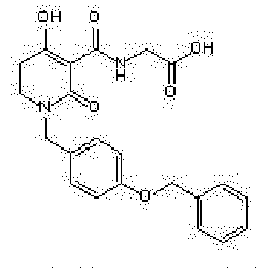
1H NMR (300 MHz, CHLOROFORM-d) δ ppm 2.46 - 2.68 (m, 2 H) 3.24 - 3.40 (m, 2 H) 4.09 - 4.26 (m, 2 H) 4.49 - 4.63 (m, 2 H) 5.05 (s, 2 H) 6.90 - 6.98 (m, 2 H) 7.15 - 7.23 (m. 2 H) 7.28 - 7.46 (m, 5 H) 10.21 - 10.45 (m, 1 H). MS ESI/APCI Dual posi: 411[M+H]+, 433[M+Na]+. MS ESI/APCI Dual nega: 409[M-H]-. Example 1-241 
1H NMR (300 MHz, DMSO-d6) δ ppm 2.40 - 2.69 (m, 2 H) 3.23 - 3.40 (m, 2 H) 3.93 - 4.07 (m, 2 H) 4.43 - 4.58 (m, 2 H) 5.06 (s, 2 H) 6.89 - 7.04 (m, 2 H) 7.14 - 7.29 (m, 4 H) 7.42 - 7.56 (m, 2 H) 10.00 - 10.26 (m, 1 H). MS ESI/APCI Dual posi: 429[M+H]+, 451[M+Na]+. MS ESI/APCI Dual nega: 427[M-H]-. [Table 21-35] Compound No. Structure Analytical Data Salt information Example 1-242 
1H NMR (300 MHz, CHLOROFORM-d) δ ppm 2.49 - 2.68 (m, 2 H) 3.25 - 3.40 (m, 2 H) 4.12 - 4.24 (m, 2 H) 4.50 - 4.60 (m. 2 H) 4.97 - 5.06 (m, 2 H) 6.88 - 6.96 (m, 2 H) 7.15 - 7.23 (m, 2 H) 7.36 (s, 4 H) 10.21 - 10.44 (m, 1 H). MS ESI/APCI Dual posi: 445[M+H]+, 467[M+Na]+. MS ESI/APCI Dual nega: 443[M-H]-. Example 1-243 
1H NMR (300 MHz, CHLOROFORM-d) δ ppm 1.74 - 2.45 (m, 6 H) 2.64 (t, J=7.1 Hz, 2 H) 3.34 (t, J=7.1 Hz, 2 H) 3.77 - 3.98 (m, 1 H) 4.14 - 4.27 (m, 2 H) 4.56 - 4.68 (m, 2 H) 7.37 - 7.50 (m, 2 H) 7.50 - 7.64 (m, 1 H) 10.06 - 10.55 (m, 1 H). MS ESI/APCI Dual posi: 427[M+H]+. MS ESI/APCI Dual nega: 425[M-H]-. Example 1-244 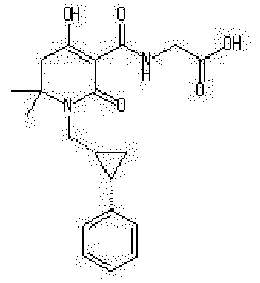
1H NMR (300 MHz, DMSO-d6) δ ppm 0.92 - 1.26 (m, 8 H) 1.27 - 1.46 (m, 1 H) 2.13 - 2.28 (m, 1 H) 2.30 - 2.49 (m, 2 H) 2.83 - 3.00 (m, 1 H) 3.08 - 3.25 (m, 1 H) 3.54 (d, J=4.4 Hz, 2 H) 7.13 - 7.41 (m, 5 H) 10.15 (br. s., 1 H). Na US ESI/APCI Dual posi: 373[M+H]+. MS ESI/APCI Dual nega: 371[M-H]-. Example 1-245 
1H NMR (300 MHz, DMSO-d6) δ ppm 1.69 - 2.37 (m, 6 H) 2.48 - 2.53 (m, 2 H) 3.32 (t, J=6.9 Hz, 2 H) 3.54 (d, J=4.4 Hz, 2 H) 3.78 (quin, J=8.5 Hz, 1 H) 4.59 - 4.74 (m, 2 H) 7.27 (d, J=8.1 Hz, 1 H) 7.46 - 7.75 (m, 2 H) 10.11 (br. s., 1 H). Na MS ESI/APCI Dual posi: 427[M+H]+. MS ESI/APCI Dual nega: 425[M-H]-. Example 1-246 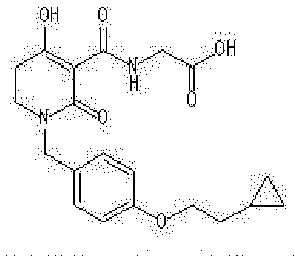
1H NMR (300 MHz, DMSO-d6) δ ppm 0.06 - 0.16 (m, 2 H) 0.37 - 0.47 (m, 2 H) 0.74 - 0.92 (m, 1 H) 1.55 - 1.67 (m, 2 H) 2.43 - 2.55 (m, 2 H) 3.20 - 3.31 (m, 2 H) 3.49 - 3.57 (m, 2 H) 3.93 - 4.05 (m, 2 H) 4.48 (s, 2 H) 6.83 - 6.94 (m, 2 H) 7.11 - 7.25 (m, 2 H) 10.11 (br. s., 1H). Na MS ESI/APCI Dual posi: 389[M+H]+. MS ESI/APCI Dual nega: 387[M-H]-. Example 1-247 
1H NMR (300 MHz, DMSO-d6) δ ppm 0.06 - 0.15 (m, 2 H) 0.36 - 0.48 (m, 2 H) 0.73 - 0.91 (m, 1 H) 1.16 (s, 6 H) 1.52 - 1.67 (m, 2 H) 2.43 - 2.59 (m, 2 H) 3.43 - 3.54 (m, 2 H) 3.92 - 4.03 (m, 2 H) 4.56 (s. 2 H) 6.79 - 6.93 (m, 2 H) 7.14 - 7.27 (m, 2 H) 9.96 - 10.26 (m, 1 H). Na MS ESI/APCI Dual posi: 417[M+H]+. MS ESI/APCI Dual nega: 415[M-H]-. Example 1-248 
1H NMR (300 MHz, METHANOL-d4) δ ppm 1.06 - 1.26 (m, 2 H) 1.61 - 1.75 (m, 2 H) 1.81 - 2.00 (m, 1 H) 2.61 (t, J=7.2 Hz, 2 H) 2.72 - 2.94 (m, 2 H) 3.30 - 3.34 (m, 2 H) 3.45 (t, J=7.1 Hz, 2 H) 3.94 (s, 2 H) 4.08 - 4.21 (m, 2 H) 5.10 (s, 2 H) 7.24 - 7.38 (m, 5 H). Na MS ESI/APCI Dual posi: 446[M+H]+, 468[M+Na]+. MS ESI/APCI Dual nega: 444[M-H]-. [Table 21-36] Compound No. Structure Analytical Data Salt information Example 1-249 
1H NMR (300 MHz, METHANOL-d4) δ ppm -0.02 - 0.06 (m, 2 H) 0.38 - 0.44 (m, 2 H) 0.59 - 0.79 (m, 1 H) 1.39 - 1.54 (m, 2 H) 2.55 (t, J=7.2 Hz, 2 H) 2.62 - 2.74 (m, 2 H) 3.31 - 3.35 (m, 2 H) 3.89 (s, 2 H) 4.58 (s, 2 H) 7.11 - 7.24 (m, 4 H). Na MS ESI/APCI Dual posi: 373[M+H]+. MS ESI/APCI Dual nega: 371[M-H]-. Example 1-250 
1H NMR (300 MHz, DMSO-d6) δ ppm 0.26 - 0.36 (m, 2 H) 0.48 - 0.61 (m, 2 H) 1.11 - 1.32 (m, 1 H) 1.48 - 1.95 (m, 4 H) 2.18 - 2.34 (m, 2 H) 3.32 (s, 2 H) 3.47 - 3.55 (m, 2 H) 3.73 - 3.82 (m, 2 H) 4.50 (s, 2 H) 6.89 (d, J=8.7 Hz, 2 H) 7.21 (d, J=8.7 Hz, 2 H). Na MS ESI/APCI Dual posi: 415[M+H]+. MS ESI/APCI Dual nega: 413[M-H]-. Example 1-251 
1H NMR (300 MHz, DMSO-d6) δ ppm 0.27 - 0.34 (m, 2 H) 0.51 - 0.63 (m, 4 H) 0.81 - 0.92 (m, 2 H) 1.12 - 1.27 (m, 1 H) 2.39 - 2.58 (m. 2H) 3.42 - 3.49 (m, 2 H) 3.73 - 3.81 (m, 2 H) 4.39 (s. 2 H) 6.81 - 6.88 (m, 2 H) 7.12 - 7.20 (m, 2 H). MS ESI/APCI Dual posi: 401[M+H]+. MS ESI/APCI Dual nega: 399[M-H]-. Example 1-252 
1H NMR (300 MHz, DMSO-d6) δ ppm 2.59 - 2.74 (m, 2 H) 3.41 (t, J=7.1 Hz, 2 H) 4.02 (d, J=5.8 Hz, 2 H) 4.54 (s, 2 H) 7.02 (d, J=8.5 Hz, 1 H) 7.12 - 7.30 (m, 4 H) 7.78 (dd, J=8.5, 2.3 Hz, 1 H) 8.09 (d, J=2.3 Hz, 1 H) 10.00 (br. s., 1 H). HCl MS ESI/APCI Dual posi: 416[M+H]+. MS ESI/APCI Dual nega: 414[M-H]-. Example 1-253 
1H NMR (300 MHz, DMSO-d6) 6 ppm 0.95 - 1.81 (m, 10 H) 2.69 - 2.83 (m, 2 H) 4.09 - 4.24 (m, 2 H) 4.70 - 4.82 (m, 2 H) 7.14 - 7.38 (m, 5 H) 10.17 - 10.38 (m, 1 H). MS ESI/APCI Dual posi: 373[M+H]+, 395[M+Na]+. MS ESI/APCI Dual nega: 371[M-H]-. Example 1-254 
1H NMR (300 MHz, DMSO-d6) δ ppm 2.36 - 2.48 (m, 2 H) 3.20 - 3.37 (m, 2 H) 3.51 (d, J=4.4 Hz, 2 H) 4.53 (s, 2 H) 7.11 (d, J=8.4 Hz, 1 H) 7.33 (d, J=8.5 Hz, 2 H) 7.67 - 7.90 (m, 3 H) 8.13 (d, J=2.2 Hz, 1 H) 10.11 (br. s., 1 H). Na MS ESI/APCI Dual posi: 466[M+H]+. MS ESI/APCI Dual nega: 464[M-H]-. Example 1-255 
1H NMR (300 MHz, DMSO-d6) δ ppm 2.31 (s, 3 H) 2.60 - 2.78 (m, 2 H) 3.42 (t, J=7.1 Hz, 2 H) 4.02 (d, J=5.6 Hz, 2 H) 4.54 (s, 2 H) 6.77 - 7.07 (m, 4 H) 7.19 - 7.35 (m, 1 H) 7.77 (dd, J=8.5, 2.5 Hz, 1 H) 8.11 (d, J=2.5 Hz, 1 H) 10.00 (br. s., 1 H). HCl MS ESI/APCI Dual posi: 412[M+H]+. MS ESI/APCI Dual nega: 410[M-H]-. [Table 21-37] Compound No. Structure Analytical Data Salt information Example 1-256 
1H NMR (300 MHz, DMSO-d6) δ ppm 2.41 - 2.63 (m, 2 H) 3.34 (t, J=7.1 Hz, 2 H) 3.49 (d, J=4.4 Hz, 2 H) 4.53 (s, 2 H) 6.89 - 7.13 (m, 4 H) 7.34 - 7.54 (m, 1 H) 7.80 (dd, J=8.5, 2.4 Hz, 1 H) 8.12 (d, J=2.4 Hz, 1 H) 10.05 (br. s., 1 H). Na MS ESI/APCI Dual posi: 416[M+H]+. MS ESI/APCI Dual nega: 414[M-H]-. Example 1-257 
1H NMR (300 MHz, DMSO-d6) δ ppm 2.28 (s, 3 H) 2.53 - 2.56 (m, 2 H) 3.31 (t, J=6.9 Hz, 2 H) 3.50 (d, J=4.4 Hz, 2 H) 4.54 (s, 2 H) 6.70 - 6.85 (m, 2 H) 6.88 - 7.02 (m, 3 H) 7.17 - 7.36 (m, 3 H) 10.09 (br. s., 1 H). Na MS ESI/APCI Dual posi: 411[M+H]+. MS ESI/APCI Dual nega: 409[M-H]-. Example 1-258 
1H NMR (300 MHz, DMSO-d6) δ ppm 2.50 - 2.57 (m, 2 H) 3.25 - 3.35 (m, 2 H) 3.47 (d, J=4.5 Hz, 2 H) 4.56 (s, 2 H) 6.77 - 7.00 (m, 3 H) 7.01 - 7.07 (m, 2 H) 7.27 - 7.47 (m, 3 H) 10.08 (br. s., 1 H). Na MS ESI/APCI Dual posi: 415[M+H]+. MS ESI/APCI Dual nega: 413[M-H]-. Example 1-259 
1H NMR (300 MHz, DMSO-d6) δ ppm 2.50 - 2.57 (m, 2 H) 3.36 - 3.54 (m, 4 H) 4.63 (s, 2 H) 7.07 - 7.16 (m, 2 H) 7.20 - 7.43 (m, 4 H) 8.30 (d, J=2.8 Hz, 1 H) 10.04 (br. s., 1 H). Na MS ESI/APCI Dual posi: 416[M+H]+. MS ESI/APCI Dual nega: 414[M-H]-. Example 1-260 
1H NMR (300 MHz, DMSO-d6) δ ppm 2.29 (s, 3 H) 2.54 - 2.57 (m, 2 H) 3.28 - 3.49 (m, 4 H) 4.62 (s, 2 H) 6.88 - 7.01 (m, 2 H) 7.21 (dd, J=8.7, 0.6 Hz, 2 H) 7.24 - 7.39 (m, 2 H) 8.27 (d, J=2.8 Hz, 1 H) 10.03 (br. s., 1 H). Na MS ESI/APCI Dual posi: 412[M+H]+. MS ESI/APCI Dual nega: 410[M-H]-. Example 1-261 
1H NMR (300 MHz, DMSO-d6) δ ppm 2.47 - 2.54 (m, 2 H) 3.27 - 3.35 (m, 2 H) 3.42 (d, J=4.2 Hz, 2 H) 4.51 (s, 2 H) 7.05 (d, J=8.2 Hz, 1 H) 7.50 - 7.63 (m, 5 H) 8.32 - 8.39 (m, 1 H), Na MS ESI/APCI Dual posi: 448[M+H]+. MS ESI/APCI Dual nega: 446[M-H]-. Example 1-262 
1H NMR (300 MHz, DMSO-d6) δ ppm 1.52 - 1.82 (m, 2 H) 1.90 - 2.11 (m, 2 H) 2.34 - 2.50 (m, 4 H) 3.17 - 3.47 (m, 4 H) 4.47 (s, 2 H) 4.58 - 4.73 (m, 1 H) 6.71 - 6.84 (m, 2 H) 7.10 - 7.25 (m, 2 H). Na MS ESI/APCI Dual posi: 375[M+H]+. MS ESI/APCI Dual nega: 373[M-H]-. [Table 21-38] Compound No. Structure Analytical Data Salt information Example 1-263 
1H NMR (300 MHz, DMSO-d6) δ ppm 1.93 (s, 3 H) 2.03 (s, 3 H) 2.49 - 2.52 (m, 2 H) 3.29 - 3.36 (m, 2 H) 3.45 (d, J=4.2 Hz, 2 H) 4.45 (s, 2 H) 7.23 - 7.45 (m, 4 H) 7.57 (s. 1 H). Na MS ESI/APCI Dual posi: 399[M+H]+. MS ESI/APCI Dual nega: 397[M-H]-. Example 1-264 
1H NMR (300 MHz, METHAHOL-d4) δ ppm 0.62 - 0.71 (m, 2 H) 0.71 - 0.81 (m, 2 H) 2.55 (t, J=7.3 Hz, 2 H) 3.31 - 3.35 (m, 2 H) 3.72 - 3.80 (m, 1 H) 3.89 (s, 2 H) 4.55 (s, 2 H) 6.95 - 7.06 (m, 2 H) 7.17 - 7.28 (m, 2 H). Na MS ESI/APCI Dual posi: 361[M+H]+. MS ESI/APCI Dual nega: 359[M-H]-. Example 1-265 
1H NMR (300 MHz, DMSO-d6) δ ppm 2.53 - 2.57 (m, 2 H) 3.31 (t, J=7.1 Hz, 2 H) 3.50 (d, J=4.5 Hz, 2 H) 4.55 (s, 2 H) 6.96 - 7.06 (m, 4 H) 7.27 - 7.34 (m, 2 H) 7.37 - 7.45 (m, 2 H) 10.09 (br. s., 1 H). Na MS ESI/APCI Dual posi: 431[M+H]+. MS ESI/APCI Dual nega: 429[M-H]-. Example 1-266 
1H NMR, (300 MHz, DMSO-d6) δ ppm 0.53 - 0.70 (m, 4 H) 0.80 - 0.98 (m, 4 H) 1.81 - 1.94 (m, 1 H) 2.38 - 2.47 (m, 2 H) 3.42 - 3.50 (m, 2 H) 4.41 (s, 2 H) 6.95 - 7.06 (m, 2 H) 7.08 - 7.17 (m, 2 H). Na MS ESI/APCI Dual posi: 371[M+H]+. MS ESI/APCI Dual nega: 369[M-H]-. Example 1-267 
1H NMR (300 MHz, DMSO-d6) δ ppm 0.25 - 0.34 (m, 2 H) 0.48 - 0.60 (m, 2 H) 1.12 - 1.29 (m, 1 H) 1.53 - 1.86 (m, 4 H) 2.21 - 2.39 (m, 2 H) 2.72 - 2.82 (m, 2 H) 3.38 - 3.47 (m, 2 H) 3.77 (d, J=7.0 Hz, 2 H) 4.73 (s, 2 H) 6.85 (d, J=8.9 Hz, 2 H) 7.17 (d, J=8.9 Hz, 2 H). Na MS ESI/APCI Dual posi: 415[M+H]+. MS ESI/APCI Dual nega: 413[M-H]-. Example 1-268 
1H NMR (300 MHz, DMSO-d6) δ ppm 2.31 (s, 3 H) 2.49 - 2.51 (m, 2 H) 3.31 - 3.37 (m, 2 H) 3.46 (d, J=4.5 Hz, 2 H) 4.44 (s, 2 H) 7.39 - 7.45 (m, 1 H) 7.48 - 7.53 (m, 4 H) 7.59 (s, 1 H). Na MS ESI/APCI Dual posi: 385[M+H]+. MS ESI/APCI Dual nega: 383[M-H]-. Example 1-269 
1H NMR (300 MHz, METHAHOL-d4) δ ppm 2.05 (quin, J=7.5 Hz, 2 H) 2.45 - 2.60 (m, 2 H) 2.84 - 2.92 (m, 4 H) 3.30 - 3.31 (m, 2 H) 3.89 (s, 2 H) 4.57 (s, 2 H) 6.98 - 7.08 (m, 1 H) 7.10 - 7.21 (m, 2 H). Na MS ESI/APCI Dual posi: 345[M+H]+. MS ESI/APCI Dual nega: 343[M-H]-. [Table 21-39] Compound No. Structure Analytical Data Salt information Example 1-270 
1H NMR (300 MHz, METHAHOL-d4,) δ ppm 2.43 - 2.63 (m, 2 H) 3.32 - 3.40 (m, 2 H) 3.90 (s, 2 H) 4.74 (s. 2 H) 7.27 - 7.37 (m, 2 H) 7.52 - 7.58 (m, 1 H) 7.75 - 7.79 (m, 1 H) 7.82 - 7.89 (m, 1 H). Na MS ESI/APCI Dual posi: 361[M+H]+. MS ESI/APCI Dual nega: 359[M-H]-. Example 1-271 
1H NMR (300 MHz, DMSO-d6) δ ppm 1.47 - 1.76 (m, 6 H) 1.80 - 1.98 (m, 2 H) 2.44 - 2.51 (m, 2 H) 3.20 - 3.31 (m, 2 H) 3.46 - 3.54 (m, 2 H) 4.47 (s, 2 H) 4.71 - 4.83 (m, 1 H) 6.80 - 6.89 (m, 2 H) 7.11 - 7.23 (m, 2 H) 10.11 (br. s., 1 H). Na MS ESI/APCI Dual posi: 389[M+H]+. MS ESI/APCI Dual nega: 387[M-H]-. Example 1-272 
1H NMR (300 MHz, DMSO-d6) δ ppm 1.17 (s, 6 H) 1.48 - 1.76 (m, 6 H) 1.80 - 1.97 (m, 2 H) 2.43 - 2.62 (m, 2 H) 3.43 - 3.52 (m, 2 H) 4.55 (s, 2 H) 4.72 - 4.80 (m, 1 H) 6.77 - 6.88 (m, 2 H) 7.14 - 7.23 (m, 2 H). Na MS ESI/APCI Dual posi: 417[M+H]+. MS ESI/APCI Dual nega: 415[M-H]-. Example 1-273 
1H NNR (300 MHz, DMSO-d6) δ ppm 2.45 (s, 3 H) 2.56 - 2.71 (m, 2 H) 3.31 - 3.50 (m, 2 H) 3.95 (d, J=5.4 Hz, 2 H) 4.56 (s, 2 H) 6.99 (d, J=8.7 Hz, 2 H) 7.19 - 7.41 (m, 4 H) 8.24 (d, J=2.8 Hz, 1 H) 10.08 (br. s., 1 H). Na MS ESI/APCI Dual posi: 412[M+H]+. MS ESI/APCI Dual nega: 410[M-H]-. Example 1-274 
1H NMR (300 MHz, DMSO-d6) δ ppm 2.50 - 2.59 (m, 2 H) 3.27 - 3.38 (m, 2 H) 3.48 (d, J=4.5 Hz, 2 H) 4.51 (s, 2 H) 7.10 (dd, J=8.5, 0.6 Hz, 1 H) 7.18 - 7.42 (m, 4 H) 7.79 (dd, J=8.5, 2.5 Hz, 1 H) 8.03 (d, J=2.5 Hz, 1 H) 10.03 (br. s., 1 H). Na MS ESI/APCI Dual posi: 416[M+H]+. MS ESI/APCI Dual nega: 414[M-H]-. Example 1-275 
1H NMR (300 MHz, DMSO-d6) δ ppm 2.08 (s, 3 H) 2.53 - 2.59 (m, 2 H) 3.28 - 3.38 (m, 2 H) 3.51 (d, J=4.5 Hz, 2 H) 4.51 (s, 2 H) 6.99 (dd, J=16.6, 8.5 Hz, 2 H) 7.08 - 7.38 (m, 3 H) 7.75 (dd, J=8.5, 2.4 Hz, 1 H) 8.04 (d, J=2.4 Hz, 1 H) 10.06 (br. s., 1 H). Na MS ESI/APCI Dual posi: 412[M+H]+. MS ESI/APCI Dual nega: 410[M-H]-. Example 1-276 
1H NMR (300 MHz, DMSO-d6) δ ppm 1.05 (s, 6 H) 2.31 (s, 3 H) 3.10 (s. 2 H) 3.41 - 3.48 (m, 2 H) 4.52 (s, 2 H) 6.90 - 7.05 (m, 3 H) 7.20 (d, J=8.1 Hz, 2 H) 7.77 (dd, J=8.4, 2.6 Hz, 1 H) 8.09 (d, J=2.6 Hz, 1 H). Na MS ESI/APCI Dual posi: 440[M+H]+. MS ESI/APCI Dual nega: 438[M-H]-. [Table 21-40] Compound No. Structure Analytical Data Salt information Example 1-277 
1H NMR (300 MHz, DMSO-d6) δ ppm 0.58 - 0.78 (m, 2 H) 0.99 - 1.15 (m, 2 H) 2.31 (s, 3 H) 3.20 (s, 2 H) 3.49 (s, 2 H) 4.51 (s, 2 H) 6.87 - 7.06 (m, 3 H) 7.20 (d, J=8.2 Hz, 2 H) 7.73 (dd, J=8.5, 2.4 Hz, 1 H) 8.05 (d, J=2.4 Hz, 1 H) 10.08 - 10.35 (m, 1 H). Na MS ESI/APCI Dual posi: 438[M+H]+. MS ESI/APCI Dual nega: 436[M-H]-. Example 1-278 
1H NMR (300 MHz, DMSO-d6) δ ppm 1.46 - 1.64 (m, 2 H) 1.69 - 1.97 (m, 2 H) 2.14 - 2.38 (m, 5 H) 3.20 - 3.40 (m, 2 H) 3.42 - 3.53 (m, 2 H) 4.53 (s, 2 H) 6.89 - 7.03 (m, 3 H) 7.14 - 7.25 (m, 2 H) 7.76 (dd, J=8.4, 2.2 Hz, -1 H) 8.10 (d, J=2.2 Hz, 1 H) 10.13 - 10.33 (m, 1 H). Na MS ESI/APCI Dual posi: 452[M+H]+. MS ESI/APCI Dual nega: 450[M-H]-. Example 1-279 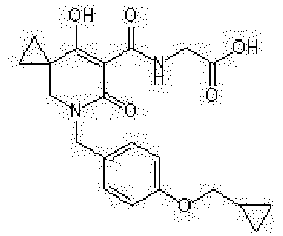
1H NMR (300 MHz, DMSO-d6) δ ppm 0.24 - 0.36 (m, 2 H) 0.49 - 0.75 (m, 4 H) 1.02 - 1.12 (m, 2 H) 1.13 - 1.29 (m, 1 H) 3.13 (s, 2 H) 3.51 (d, J=4.5 Hz, 2 H) 3.78 (d, J=7.0 Hz, 2 H) 4.48 (s, 2 H) 6.81 - 6.93 (m, 2 H) 7.12 - 7.23 (m, 2 H) 10.12 - 10.34 (m, 1 H). Na MS ESI/APCI Dual posi: 401[M+H]+. MS ESI/APCI Dual nega: 399[M-H]-. Example 1-280 
1H NMR (300 MHz, DMSO-d6) δ ppm 1.59 - 1.90 (m, 4 H) 2.19 - 2.37 (m, 5 H) 2.70 (s, 2 H) 3.46 (d, J=4.2 Hz, 2 H) 4.76 (s, 2 H) 6.85 - 7.04 (m, 3 H) 7.15 - 7.24 (m, 2 H) 7.71 (dd, J=8.4, 2.5 Hz, 1 H) 8.05 (d, J=2.5 Hz, 1 H) 9.93 - 10.07 (m, 1 H). MS ESI/APCI Dual posi: 452[M+H]+. MS ESI/APCI Dual nega= 450[M-H]-. Example 1-281 
1H NMR (300 MHz, METHANOL-d4) δ ppm 1.37 (s, 6 H) 2.64 (s, 2 H) 3.89 (s, 2 H) 4.82 (s, 2 H) 7.38 (s, 1 H) 7.41 - 7.50 (m, 3 H) 7.88 - 7.98 (m, 2 H). Na MS ESI/APCI Dual posi: 416[M+H]+. MS ESI/APCI Dual nega: 414[M-H]-. Example 1-282 
1H NMR (300 MHz, DMSO-d6) δ ppm 2.53 - 2.58 (m, 2 H) 3.30 (t, J=7.1 Hz, 2 H) 3.51 (d, J=4.5 Hz, 2 H) 4.53 (s, 2 H) 6.90 - 6.98 (m, 2 H) 7.11 - 7.32 (m, 5 H) 7.33 - 7.43 (m, 1 H) 10.09 (br. s., 1 H). MS ESI/APCI Dual posi: 415[M+H]+. Na MS ESI/APCI Dual nega: 413[M-H]-. Example 1-283 
1H NMR (300 MHz, DMSO-d6) δ ppm 2.17 (s, 3 H) 2.53 - 2.57 (m, 2 H) 3.26 - 3.34 (m, 2 H) 3.50 (d, J=4.4 Hz, 2 H) 4.52 (s, 2 H) 6.81 - 6.93 (m, 3 H) 7.05 - 7.13 (m, 1 H) 7.16-7.34 (m, 4 H) 10.09 (br. s., 1 H). Na MS ESI/APCI Dual posi: 411[M+H]+. MS ESI/APCI Dual nega: 409[M-H]+. [Table 21-41] Compound No. Structure Analytical Data Salt information Example 1-284 
1H NMR (300 MHz, DMSO-d6) δ ppm 2.53 - 2.60 (m, 2 H) 3.35 (t, J=6.9 Hz, 2 H) 3.51 (d, J=4.5 Hz, 2 H) 4.53 (s, 2 H) 6.98 - 7.17 (m, 2 H) 7.23 - 7.32 (m, 2 H) 7.36 - 7.50 (m, 1 H) 7.80 (dd, J=8.4, 2.5 Hz, 1 H) 8.07 - 8.17 (m, 1 H) 10.07 (br. s., 1 H). Na MS ESI/APCI Dual posi: 432[M+H]+. MS ESI/APCI Dual nega: 430[M-H]-. Example 1-285 
1H NMR (300 MHz, DMSO-d6) δ ppm 2.54 - 2.64 (m, 2 H) 3.37 (t, J=7.1 Hz, 2 H) 3.63 (d, J=4.8 Hz, 2 H) 4.54 (s, 2 H) 7.11 (dd, J=8.4, 0.6 Hz, 1 H) 7.38 - 7.71 (m, 4 H) 7.76 - 7.89 (m, 1 H) 8.11 (d, J=1.9 Hz, 1 H) 10.06 (br. s., 1 H). Na MS ESI/APCI Dual posi: 466[M+H]+. MS ESI/APCI Dual nega: 464[M-H]-. Example 1-286 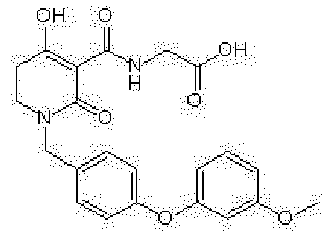
1H NMR (300 MHz, DMSO-d6) δ ppm 2.40 - 2.50 (m, 2 H) 3.29 (t, J=7.1 Hz, 2 H) 3.49 (d, J=4.5 Hz, 2 H) 3.73 (s, 3 H) 4.54 (s, 2 H) 6.44 - 6.61 (m, 2 H) 6.70 (ddd, J=8.3, 2.4, 0.9 Hz, 1 H) 6.91 -7.05 (m, 2 H) 7.18 - 7.34 (m, 3 H) 10.10 (br. s., 1 H). Na MS ESI/APCI Dual posi: 427[M+H]+. MS ESI/APCI Dual nega: 425[M-H]-. Example 1-287 
1H NMR (300 MHz, DMSO-d6) δ ppm 2.50 - 2.57 (m, 2 H) 3.34 (t, J=7.1 Hz, 2 H) 3.51 (d, J=4.5 Hz, 2 H) 4.54 (s, 2 H) 7.07 (d, J=0.6 Hz, 1 H) 7.14 - 7.28 (m, 3 H) 7.46 - 7.60 (m, 1 H) 7.81 (dd, J=8.4, 2.5 Hz, 1 H) 8.12 (d, J=1.9 Hz, 1 H) 10.07 (br. s., 1 H). Na MS ESI/APCI Dual posi: 482[M+H]+. MS ESI/APCI Dual nega: 480[M-H]-. Example 1-288 
1H NMR (300 MHz, DMSO-d6) δ ppm 2.50 - 2.58 (m, 2 H) 3.33 (t, J-7.1 Hz, 2 H) 3.49 (d, J=4.5 Hz, 2 H) 4.56 (s, 2 H) 7.02 - 7.16 (m, 3 H) 7.27 - 7.36 (m, 2 H) 7.75 - 7.88 (m, 1 H) 8.11 - 8.18 (m, 1 H) 10.09 (br. s., 1 H). Na MS ESI/APCI. Dual posi: 416[M+H]+. MS ESI/APCI Dual nega: 414[M-H]-. Example 1-289 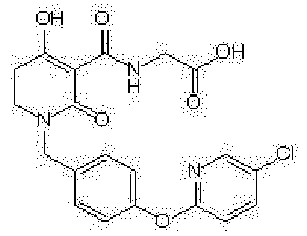
1H NMR (300 MHz, DMSO-d6) δ ppm 2.60 - 2.78 (m, 2 H) 3.42 (t, J=7.1 Hz, 2 H) 4.02 (d, J=5.8 Hz, 2 H) 4.59 (s, 2 H) 7.03 - 7.18 (m, 3 H) 7.28 - 7.28 (m, 2 H) 7.95 (dd, J=8.8, 2.8 Hz, 1 H) 8.19 (dd, J=2.8, 0.6 Hz, 1 H) 10.07 (br. s., 1 H). HCl MS ESI/APCI Dual posi: 432[M+H]+. MS ESI/APCI Dual nega: 430[M-H]-. Example 1-290 
1H NMR (300 MHz, DMSO-d6) δ ppm 2.50 - 2.59 (m, 2 H) 3.36 (t, J=7.1 Hz, 2 H) 3.50 (d, J=4.5 Hz, 2 H) 4.57 (s, 2 H) 6.86 (dd, J=8.1. 1.1 Hz, 1 H) 6.94 - 7.07 (m, 2 H) 7.10 - 7.37 (m, 5 H) 10.04 (br. s., 1 H). Na MS ESI/APCI Dual posi: 415[M+H]+. MS ESI/APCI Dual nega: 413[M-H]-. [Table 21-42] Compound No. Structure Analytical Data Salt information Example 1-291 
1H NMR (300 MHz, DMSO-d6) δ ppm 2.44 - 2.56 (m, 2 H) 3.20 - 3.31 (m, 2 H) 3.46 - 3.53 (m, 2 H) 4.51 (s, 2 H) 4.65 - 4.80 (m, 2 H) 6.96 - 7.07 (m, 2 H) 7.19 - 7.30 (m, 2 H) 9.94 - 10.24 (m, 1 H). Na MS ESI/APCI Dual posi : 403[M+H]+. MS ESI/APCI Dual nega: 401[M-H]-. Example 1-292 
1H NMR (300 MHz, DMSO-d6) δ ppm 2.50 - 2.59 (m, 2 H) 3.25 - 3.35 (m, 2 H) 3.45 - 3.53 (m, 2 H) 4.50 (s, 2 H) 4.75 - 4.88 (m, 2 H) 7.04 - 7.30 (m, 3 H) 9.93 - 10.19 (m, 1 H). Na MS ESI/APCI Dual posi: 421[M+H]+. MS ESI/APCI Dual nega: 419[M-H]-. Example 1-293 
1H NMR (300 MHz, METHAHOL-d4) δ ppm 1.38 (s, 6 H) 2.65 (s, 2 H) 4.06 (s, 2 H) 4.69 (s, 2 H) 7.15 (s, 1 H) 7.38 - 7.54 (m, 3 H) 7.79 - 7.89 (m, 2 H). MS ESI/APCI Dual posi: 399[M+H]+. MS ESI/APCI Dual nega: 397[M-H]-. Example 1-294 
1H NMR (300 MHz, DMSO-d6) δ ppm 1.29 (s, 6 H) 2.54 - 2.65 (m, 2 H) 3.49 (d, J=4.5 Hz, 2 H) 4.90 (s, 2 H) 7.29 - 7.38 (m, 1 H) 7.39 - 7.49 (m, 2 H) 7.90 - 7.98 (m, 2 H) 8.00 (s, 1 H) 9.89 - 10.12 (m, 1 H). Na MS ESI/APCI Dual posi : 416[M+H]+. MS ESI/APCI Dual nega: 414[M-H]-. Example 1-295 
1H NMR (300 MHz, METHANOL-d4) δ ppm 1.40 (s, 6 H) 2.62 (s, 2 H) 3.89 (s, 2 H) 4.61 (s, 2 H) 7.45 - 7.52 (m, 3 H) 7.86 (s, 1 H) 7.97 - 8.04 (m, 2 H). Na MS ESI/APCI Dual posi:: 400[M+H]+. MS ESI/APCI Dual nega: 398[M-H]-. Example 1-296 
1H NMR (300 MHz, DMSO-d6) δ ppm 0.54 - 0.73 (m, 2 H) 0.87 - 1.01 (m, 2 H) 1.82 - 2.00 (m, 1 H) 2.50 - 2.58 (m, 2 H) 3.22 - 3.39 (m, 2 H) 3.47 (d, J=4.4 Hz, 2 H) 4.51 (s, 2 H) 6.86 - 7.03 (m, 3 H) 7.04 - 7.19 (m, 2 H) 7.74 (dd, J=8.4, 2.6 Hz, 1 H) 8.06 (d, J=2.6 Hz, 1 H) 9.90 - 10.20 (m, 1 H). Na MS ESI/APCI Dual posi: 439[M+H]+. MS ESI/APCI Dual nega: 436[M-H]-. Example 1-297 
1H NMR (300 MHz, DMSO-d6) δ ppm 2.24 (s, 3 H) 2.54 - 2.66 (m, 2 H) 3.37 (t, J=7.1 Hz, 2 H) 3.72 (d, J=5.0 Hz, 2 H) 4.57 (s, 2 H) 6.92 (d, J=8.4 Hz, 1 H) 7.01 - 7.09 (m, 2 H) 7.25 - 7.34 (m, 2 H) 7.67 (ddd, J=8.4, 2.5, 0.6 Hz, 1 H) 7.97 (dt, J=2.5, 0.6 Hz, 1 H) 10.01 - 10.19 (m, 1 H). Na MS ESI/APCI Dual posi: 412[M+H]+. MS ESI/APCI Dual nega: 410[M-H]-. [Table 21-43] Compound No. Structure Analytical Data Salt information Example 1-298 
1H NMR (300 MHz, DMSO-d6) δ ppm 2.58 - 2.81 (m, 2 H) 3.44 (t, J=7.3 Hz, 2 H) 4.03 (d, J=5.8 Hz, 2 H) 4.61 (s, 2 H) 7.15 - 7.21 (m, 2 H) 7.24 (d, J=8.7 Hz, 1 H) 7.37 (d, J=8.7 Hz, 2 H) 8.12 - 8.28 (m, 1 H) 8.56 (dd, J=1.8, 0.9 Hz, 1 H) 10.07 (br. s., 1 H). HCl MS ESI/APCI Dual posi: 466[M+H]+. MS ESI/APCI Dual nega: 464[M-H]-. Example 1-299 
1H NMR (300 MHz, DMSO-d6) δ ppm 1.31 (s, 6 H) 2.78 - 2.89 (m, 2 H) 3.85 (s, 3 H) 4.01 (d, J=4.5 Hz, 2 H) 4.65 (br. s., 2 H) 6.60 (br. s., 1 H) 7.20 - 7.29 (m, 1 H) 7.31 - 7.39 (m, 2 H) 7.72 - 7.80 (m, 2 H) 9.93 - 10.06 (m, 1 H). HCl MS ESI/APCI Dual posi: 413[M+H]+. MS ESI/APCI Dual nega: 411[M-H]-. Example 1-300 
1H NMR (300 MHz, DMSO-d6) δ ppm 1.29 (s, 6 H) 2.64 - 2.76 (m, 2 H) 3.81 (s, 3 H) 3.96 - 4.06 (m, 2 H) 4.49 - 4.65 (m, 2 H) 6.28 (br. s., 1 H) 7.36 - 7.56 (m, 5 H) 10.02 - 10.20 (m, 1 H). HCl MS ESI/APCI Dual posi: 413[M+H]+. MS ESI/APCI Dual nega: 411[M-H]-. Example 1-301 
1H NMR (300 MHz, DMSO-d6) δ ppm 1.36 (s, 6 H) 2.22 (s, 3 H) 2.50 - 2.80 (m, 2 H) 4.04 (d, J=5.8 Hz, 2 H) 4.70 (br. s., 2 H) 7.44 - 7.57 (m, 3 H) 7.85 - 7.94 (m, 2 H) 10.00 (br. s., 1 H). HCl MS ESI/APCI Dual posi: 414[M+H]+. MS ESI/APCI Dual nega: 412[M-H]-. Example 1-302 
1H NMR (300 MHz, DMSO-d6) δ ppm 0.26 - 0.35 (m, 2 H) 0.51 - 0.60 (m, 2 H) 0.95 (s, 6 H) 1.12 - -1.30 (m, 1 H) 2.96 - 3.07 (m, 2 H) 3.40 - 3.48 (m, 2 H) 3.78 (d, J=7.0 Hz, 2 H) 4.48 (s, 2 H) 6.87 (d, J=8.5 Hz, 2 H) 7.21 (d, J=8.5 Hz, 2 H). Na MS ESI/APCI Dual posi: 403[M+H]+. MS ESI/APCI Dual nega: 401[M-H]-. Example 1-303 
1H NMR (300 MHz, DMSO-d6) δ ppm 0.64 (s, 2 H) 0.89 (s, 2 H) 2.31 (s, 3 H) 2.45 (s, 2 H) 3.66 (d, J=4.5 Hz, 2 H) 4.43 (s, 2 H) 6.90 - 6.96 (m, 1 H) 6.97 - 7.03 (m, 2 H) 7.15 - 7.25 (m, 2 H) 7.66 - 7.77 (m, 1 H) 8.02 - 9.10 (m, 1 H) 9.93 - 10.30 (m, 1 H). Na MS ESI/APCI Dual posi: 438[M+H]+. MS ESI/APCI Dual nega: 436[M-H]-. Example 1-304 
1H NMR (300 MHz, DMSO-d6) δ ppm 1.01 (s, 6 H) 3.15 (s, 2 H) 3.40 - 3.49 (m, 2 H) 4.59 (s, 2 H) 7.36 - 7.45 (m, 1 H) 7.51 - 7.58 (m, 1 H) 7.60 - 7.64 (m, 1 H) 9.95 - 10.48 (m, 1 H). MS ESI/APCI Dual posi: 451[M+H]+. MS ESI/APCI Dual nega: 449[M-H]-. [Table 21-44] Compound No. Structure Analytical Data Salt information Example 1-305 
1H NMR (300 MHz, METHANOL-d4) δ ppm 2.33 (s, 3 H) 2.41 - 2.63 (m, 2 H) 3.27 - 3.33 (m, 2 H) 3.88 (s, 2 H) 4.54 (s, 2 H) 5.01 (s, 2 H) 6.94 (d, J=8.7 Hz, 2 H) 7.13 - 7.25 (m, 4 H) 7.30 (d, J=8.1 Hz, 2 H). MS ESI/APCI Dual posi: 425[M+H]+. MS ESI/APCI Dual nega: 423[M-H]-. Example 1-306 
1H NMR (300 MHz, METHANOL-d4) δ ppm 2.44 - 2.63 (m, 2 H) 3.29 - 3.33 (m, 2 H) 3.89 (s, 2 H) 4.55 (s, 2 H) 5.07 (s, 2 H) 6.93 - 6.99 (m, 2 H) 7.24 (d, J=8.7 Hz, 2 H) 7.27 - 7.33 (m, 1 H) 7.33 - 7.38 (m, 2 H) 7.45 (s, 1 H). US ESI/APCI Dual posi: 445[M+H]+. MS ESI/APCI Dual nega: 443[M-H]-. Example 1-307 
1H NMR (300 MHz, CHLOROFORM-d) δ ppm 1.00 - 1.20 (m, 1 H) 1.25 - 1.56 (m, 4 H) 1.61 - 1.92 (m, 5 H) 2.47 - 2.67 (m, 2 H) 3.25 - 3.45 (m, 2 H) 4.12 - 4.22 (m, 2 H) 4.21 - 4.53 (m, 1 H) 10.20 - 10.47 (m, 1 H). US ESI/APCI Dual posi: 297[M+H]+, 319[M+Na]+. US ESI/APCI Dual nega: 295[M-H]-. [Table 21-45] Compound No. Structure Analytical Data Salt information Example 1-308 
1H NMR (300 MHz, DMSO-d6) δ ppm 2.35 - 2.66 (m, 2 H) 3.18 - 3.40 (m, 2 H) 3.99 (d, J=5.8 Hz, 2 H) 9.91 - 10.02 (m, 1 H). MS ESI/APCI Dual nega: 213[M-H]-. Example 1-309 
1H NMR (300 MHz, DMSO-d6) δ ppm 2.62 - 2.75 (m, 2 H) 2.84 - 2.98 (m, 3 H) 3.34 - 3.48 (m, 2 H) 3.95 - 4.03 (m, 2 H) 10.02 - 10.17 (m, 1 H). MS ESI/APCI Dual posi: 251[M+Na]+. MS ESI/APCI Dual nega: 227[M-H]-. Example 1-310 
1H NMR (300 MHz, DMSO-d6) δ ppm 1.16 - 1.47 (m, 10 H) 2.31 (s, 2 H) 3.08 (s, 2 H) 3.96 (d, J=5.7 Hz, 2 H) 4.67 (s, 2 H) 7.22 - 7.39 (m, 5 H) 8.86 (t, J=5.7 Hz, 1 H) 12.78 (br. s, 1 H). MS ESI/APCI Dual posi: 387[M+H]+, 409[M+Na]+. MS ESI/APCI Dual nega: 385[M-H]-. Example 1-311 
1H NMR (600 MHz, DMSO-d6) δ ppm 1.55 - 1.68 (m, 2 H) 2.03-2.18 (m, 2 H) 2.83 - 2.92 (m, 2 H) 2.94 - 3.07 (m, 4 H) 3.63 - 3.77 (m, 2 H) 4.56 - 4.81 (m, 2 H) 7.24 - 7.35 (m, 3 H) 7.41 (t, J=7.8 Hz, 2 H) 7.54 - 7.61 (m, 4 H) 10.03 - 10.19 (m, 1 H). MS ESI/APCI Dual posi: 450[M+H]+. MS ESI/APCI Dual nega: 448[M-H]-. Example 1-312 
1H NMR (300 MHz, DMSO-d6) δ ppm 1.11 - 1.53 (m, 10 H) 2.34 (s, 2 H) 3.11 (s, 2 H) 3.97 (d, J=5.8 Hz, 2 H) 4.71 (s, 2 H) 7.31 - 7.41 (m, 3 H) 7.42 - 7.51 (m, 2 H) 7.60 - 7.70 (m, 4 H) 8.88 (t, J=5.5 Hz, 1 H). MS ESI/APCI Dual posi: 463[M+H]+, 485[M+Na]+. MS ESI/APCI Dual nega: 461[M-H]-. Example 1-313 
1H NMR (600 MHz, DMSO-d6) δ ppm 2.42 - 2.46 (m, 2 H) 3.82 - 3.93 (m, 2 H) 3.95 - 4.04 (m, 2 H) 4.22 - 4.30 (m, 2 H) 4.95 - 5.07 (m, 2 H) 7.29 - 7.39 (m, 3 H) 7.40 - 7.46 (m, 2 H) 7.57 - 7.66 (m, 4 H) 9.73 - 9.85 (m, 1 H). HCL Example 1-314 
1H NMR (300 MHz, METHANOL-d4) δ ppm 2.30 - 2.44 (m, 1 H) 2.79 - 3.04 (m, 3 H) 3.40 - 3.47 (m, 1 H) 3.55 - 3.65 (m, 1 H) 4.03 (s, 2 H) 4.69 - 4.81 (m, 1 H) 4.94 - 5.06 (m, 1 H) 7.28 - 7.45 (m, 5 H) 7.55 - 7.65 (m, 4 H). MS ESI/APCI Dual posi: 472[M+Na]+. MS ESI/APCI Dual nega: 448[M-H]-. [Table 21-46] Compound No. Structure Analytical Data Salt information Example 1-315 
1H NMR (300 MHz, DMSO-d6) δ ppm 2.34 - 2.46 (m, 1 H) 2.61 - 2.75 (m, 4 H) 2.90 - 3.04 (m, 1 H) 3.04 - 3.19 (m, 1 H) 3.38 - 3.57 (m, 2 H) 3.96 - 4.09 (m, 2 H) 4.57 - 4.88 (m, 2 H) 7.31 - 7.40 (m, 3 H) 7.42 - 7.50 (m, 2 H) 7.58 - 7.68 (m, 4 H) 9.89 - 10.30 (m, 1 H). MS ESI/APCI Dual posi: 486[M+Na]+. MS ESI/APCI Dual nega: 462[M-H]-. Example 1-316 
1H NMR (300 MHz, DMSO-d6) δ ppm 2.66 - 2.76 (m, 2 H) 3.38 - 3.46 (m, 2 H) 3.94 - 4.04 (m, 2 H) 4.64 (s, 2 H) 7.46 (d, J=8.0 Hz, 2 H) 7.80 (d, J=8.0 Hz, 2 H) 9.14 (s, 2 H) 9.18 (s, 1 H) 9.99 - 10.08 (m, 1 H). MS ESI/APCI Dual posi: 383[M+H]+, 405[M+Na]+. MS ESI/APCI Dual nega: 381[M-H]-. Example 1-317 
1H NMR (300 MHz, CHLOROFORM-d) δ ppm 0.79 - 0.98 (m, 3 H) 1.16 - 1.38 (m, 12 H) 1.44 - 1.65 (m, 2 H) 2.52 - 2.72 (m, 2 H) 3.31 - 3.48 (m, 4 H) 4.11 - 4.21 (m, 2 H) 10.16 - 10.39 (m, 1 H). MS ESI/APCI Dual posi: 341[M+H]+, 363[M+Na]+. MS ESI/APCI Dual nega: 339[M-H]-. Example 1-318 
1H NMR (500 MHz, METHANOL-d4) δ ppm 3.96 (s, 2 H) 4.11 (s, 2 H) 4.64 (s, 2 H) 7.29 - 7.36 (m, 3 H) 7.39 - 7.45 (m, 2 H) 7.57 - 7.63 (m, 4 H). MS ESI posi: 367[M+H]+. MS ESI nega: 365[M-H]-. Example 1-319 
1H NMR (300 MHz, CHLOROFORM-d) δ ppm 0.88 - 1.00 (m, 6 H) 1.78 - 2.16 (m, 1 H) 2.49 - 2.80 (m, 2 H) 3.10 - 3.33 (m, 2 H) 3.33 - 3.60 (m, 2 H) 4.07 - 4.27 (m, 2 H) 10.04 - 10.44 (m, 1 H). MS ESI/APCI Dual posi: 271[M+H]+, 293[M+Na]+. MS ESI/APCI Dual nega: 269[M-H]-. Example 1-320 
1H NMR (600 MHz, DMSO-d6) δ ppm 2.68 - 2.78 (m, 2 H) 3.51 (t, J=7.2 Hz, 2 H) 3.97 - 4.04 (m, 2 H) 4.59 (s, 2 H) 8.77 (s, 2 H) 9.11 (s, 1 H). MS ESI/APCI Dual posi: 307[M+H]+, 329[M+Na]+. HCL MS ESI/APCI Dual nega: 305[M-H]-. Example 1-321 
1H NMR (600 MHz, DMSO-d6) δ ppm ppm 1.36 - 1.61 (m, 6 H) 2.63 - 2.70 (m, 2 H) 3.24 - 3.27 (m, 2 H) 3.33 - 3.39 (m, 2 H) 3.45 - 3.58 (m, 2 H) 3.91 - 4.03 (m, 2 H) 4.53 - 4.64 (m, 2 H) 7.24 - 7.35 (m, 4 H) 9.92 - 10.02 (m, 1 H). MS ESI/APCI Dual posi: 416[M+H]+, 438[M+Na]+. MS ESI/APCI Dual nega: 414[M-H]-. [Table 21-47] Compound No. Structure Analytical Data Salt information Example 1-322 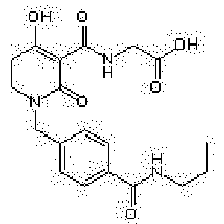
1H NMR (600 MHz, DMSO-d6) δ ppm 0.84 (t, J=7.4 Hz, 3 H) 1.44 - 1.53 (m, 2 H) 2.61 - 2.68 (m, 2 H) 3.13 - 3.20 (m, 2 H) 3.32 - 3.41 (m, 2 H) 3.93 - 4.03 (m, 2 H) 4.55 - 4.64 (m, 2 H) 7.27 - 7.35 (m, 2 H) 7.74 - 7.80 (m, 2 H) 8.33 - 8.41 (m, 1 H) 9.94 - 10.22 (m, 1 H). MS ESI/APCI Dual posi: 390[M+H]+, 412[M+Na]+. MS ESI/APCI Dual nega: 388[M-H]-. Example 1-323 
1H NMR (600 MHz, CHLOROFORM-d) δ ppm 1.40 (d, J=7.0 Hz, 3 H) 3.96 - 4.04 (m, 1 H) 4.14 (d, J=15.7 Hz, 1 H) 4.21 (m, 2 H) 5.13 (d, J=15.7 Hz, 1 H) 7.30 (m, 2 H) 7.32 - 7.38 (m, 1 H) 7.40 - 7.47 (m, 2 H) 7.52 - 7.61 (m, 4 H) 8.22 (t, J=5.8 Hz, 1 H). MS ESI/APCI Dual posi: 381[M+H]+. MS ESI/APCI Dual nega: 379[M-H]-. Example 1-324 
1H NMR (600 MHz, CHLOROFORM-d) δ ppm 1.32 (s, 6 H) 4.21 (d, J=6.2 Hz, 2 H) 4.60 (s, 2 H) 7.32 - 7.39 (m, 3 H) 7.43 (m, 2 H) 7.53 - 7.60 (m, 4 H) 8.27 (m, 1 H). MS ESI/APCI Dual posi: 395[M+H]+. MS ESI/APCI Dual nega: 393[M-H]-. Example 1-325 
1H NMR (600 MHz, CHLOROFORM-d) δ ppm 1.06 - 1.19 (m, 1 H) 1.56 - 1.81 (m, 7 H) 1.87 - 2.00 (m, 2 H) 4.16 - 4.25 (m, 2 H) 4.59 (s, 2 H) 7.29 - 7.37 (m, 3 H) 7.38 - 7.47 (m, 2 H) 7.50 - 7.61 (m, 4 H) 8.26 - 8.31 (m, 1 H). MS ESI/APCI Dual posi: 435 [M+H]+. MS ESI/APCI Dual nega: 433[M-H]-. Example 1-326 
1H NMR (600 MHz, CHLOROFORM-d) δ ppm 3.68 (d, J=15.3 Hz, 1 H) 4.21 - 4.27 (m, 2 H) 4.87 (s, 1 H) 5.23 (d, J=15.3 Hz, 1 H) 7.14 - 7.22 (m, 4 H) 7.32 - 7.39 (m, 1 H) 7.39 - 7.48 (m, 5 H) 7.50 - 7.61 (m, 4 H) 8.23 - 8.32 (m, 1 H). MS ESI/APCI Dual posi: 443[M+H]+. MS ESI/APCI Dual nega: 441[M-H]-. Example 1-327 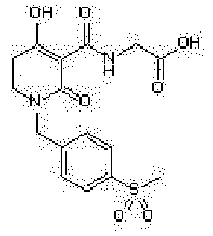
1H NMR (600 MHz, DMSO-d6) δ ppm 2.64 - 2.72 (m, 2 H) 3.16 (s, 3 H) 3.37 - 3.45 (m, 2 H) 3.93 - 4.04 (m, 2 H) 4.59 - 4.72 (m, 2 H) 7.47 - 7.56 (m, 2 H) 7.78 - 7.92 (m, 2 H) 9.80 - 10.29 (m, 1 H). MS ESI/APCI Dual posi: 383[M+H]+, 405[M+Na]+. MS ESI/APCI Dual nega: 381[M-H]-. Example 1-328 
1H NMR (300 MHz, DMSO-d6) δ ppm 1.03 - 1.79 (m, 10 H) 2.67 - 3.00 (m, 2 H) 3.14 - 3.23 (m, 3 H) 3.93 - 4.10 (m, 2 H) 4.77 - 4.92 (m, 2 H) 7.48 - 7.62 (m, 2 H) 7.80 - 7.94 (m, 2 H) 9.87 - 10.26 (m, 1 H) 12.84 (br. s., 1 H). MS ESI/APCI Dual posi: 473[M+Na]+. MS ESI/APCI Dual nega: 449[M-H]-. [Table 21-48] Compound No. Structure Analytical Data Salt information Example 1-329 
1H NMR (300 MHz, CHLOROFORM-d) δ ppm 1.01 - 1.24 (m, 1 H) 1.54 - 2.07 (m, 9 H) 4.20 (d, J=5.9 Hz, 2 H) 4.60 (s, 2 H) 7.29 - 7.41 (m, 2 H) 7.48 - 7.59 (m, 2 H) 7.59 - 7.73 (m, 4 H) 8.16 - 8.33 (m, 1 H). MS ESI/APCI Dual posi: 503[M+H]+, 525[M+Na]+. MS ESI/APCI Dual nega: 501[M-H]-. Example 1-330 
1H NMR (300 MHz, CHLOROFORM-d) δ ppm 1.02 - 1.24 (m, 1 H) 1.29 - 2.10 (m, 18 H) 4.19 (d, J=5.8 Hz, 2 H) 4.58 (s, 2 H) 7.20 - 7.36 (m, 2 H) 7.36 - 7.58 (m, 6 H) 8.20 - 8.34 (m, 1 H). MS ESI/APCI Dual posi: 491[M+H]+, 513[M+Na]+. MS ESI/APCI Dual nega: 489[M-H]-. Example 1-331 
1H NMR (300 MHz, CHLOROFORM-d) δ ppm 0.93 - 1.14 (m, 2 H) 1.15 - 1.63 (m, 6 H) 1.71 - 1.89 (m, 2 H) 3.02 - 3.08 (m, 3 H) 3.24 (s, 2 H) 4.14 - 4.23 (m, 2 H) 4.66 - 4.75 (m, 2 H) 7.45 - 7.56 (m, 2 H) 7.85 - 8.01 (m, 2 H) 10.14 - 10.69 (m, 1 H). MS ESI/APCI Dual posi: 451[M+H]+, 473[M+Na]+. MS ESI/APCI Dual nega: 449[M-H]-. Example 1-332 
1H NMR (300 MHz, CHLOROFORM-d) δ ppm 0.95 - 2.16 (m, 19 H) 2.37 - 2.58 (m, 1 H) 3.00 - 3.19 (m, 2 H) 4.08 - 4.26 (m, 2 H) 7.10 - 7.37 (m, 5 H) 8.18 - 8.34 (m, 1 H). MS ESI/APCI Dual posi: 441 [M+H]+, 463[M+Na]+. MS ESI/APCI Dual nega: 439[M-H]-. Example 1-333 
1H NMR (300 MHz, DMSO-d6) δ ppm 2.31 (s, 3 H) 2.47 (s, 3 H) 2.51 - 2.54 (m, 2 H) 3.30 - 3.35 (m, 2 H) 3.43 (d, J=4.4 Hz, 2 H) 4.48 (s, 2 H) 7.26 - 7.32 (m, 1 H) 7.48 (dd, J=8.4, 2.8 Hz, 1 H) 7.61 - 7.65 (m, 1 H) 7.83 - 7.88 (m, 1 H) 8.27 (dd, J=2.8, 0.5 Hz, 1 H) 9.89 - 10.03 (m, 1 H). Na MS ESI/APCI Dual posi: 427[M+H]+. MS ESI/APCI Dual nega: 425[M-H]-. Example 1-334 
1H NMR (300 MHz, DMSO-d6) δ ppm 3.49 - 3.74 (m, 2 H) 3.87 (d, J=5.3 Hz, 2 H) 4.66 (s, 2 H) 7.33 - 7.54 (m, 2 H) 7.60 - 7.74 (m, 2 H) 9.99 - 10.20 (m, 1 H). Na MS ESI/APCI Dual posi: 409[M+H]+. MS ESI/APCI Dual nega: 407[M-H]-. Example 1-335 
1H NMR (300 MHz, DMSO-d6) δ ppm 2.64 - 2.79 (m, 2 H) 3.35 - 3.49 (m, 2 H) 3.94 - 4.13 (m, 2 H) 4.57 - 4.76 (m, 2 H) 7.29 - 7.49 (m, 2 H) 7.83 - 8.01 (m, 2 H) 9.93 - 10.30 (m, 1 H). [Table 21-49] Compound No. Structure Analytical Data Salt information Example 1-336 
1H NMR (300 MHz, DMSO-d6) δ ppm 2.73 - 2.86 (m, 2 H) 3.63 (t, J=7.1 Hz, 2 H) 4.01 (d, J=5.7 Hz, 2 H) 4.83 (s, 2 H) 7.68 (d, J=8.2 Hz, 1 H) 8.11 (dd, J=8.2, 5.7 Hz, 1 H) 8.45 (d, J=7.8 Hz, 1 H) 8.83 - 8.97 (m, 2 H) 9.12 (d, J=2.0 Hz, 1 H) 9.35 (d, J=2.0 Hz, 1 H) 9.90 (br. s., 1 H). HCl MS ESI/APCI Dual posi : 383[M+H]+. Example 1-337 
1H NMR (300 MHz, DMSO-d6) δ ppm 2.62 (br. s., 2 H) 3.37 (t, J=7.1 Hz, 2 H) 3.80 (s, 3 H) 4.02 (d, J=5.8 Hz, 2 H) 4.38 (s, 2 H) 7.39 (s, 1 H) 7.66 (s, 1 H) 10.09 (br. s., 1 H). HCl MS ESI/APCI Dual posi: 309[M+H]+. Example 1-338 
1H NMR (300 MHz, DMSO-d6) δ ppm 2.76 (t, J=6.6 Hz, 2 H) 3.52 - 3.62 (m, 2 H) 4.01 (br. s., 2 H) 4.69 (s, 2 H) 9.02 (s, 2 H) 9.86 (br. s., 1 H). HCl MS ESI/APCI Dual nega: 373[M-H]-. Example 1-339 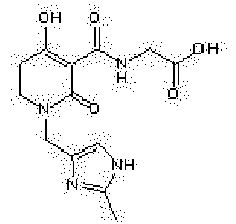
1H NMR (300 MHz, DMSO-d6) δ ppm 2.53 (s, 3 H) 2.73 (t, J=7.1 Hz, 2 H) 3.31 - 3.52 (m, 4 H) 4.00 - 4.09 (m, 2 H) 4.49 - 4.66 (m, 2 H) 7.39 - 7.54 (m, 1 H) 9.82 - 10.3.9 (m, 1 H). HCl MS ESI/APCI Dual posi : 309[M+H]+. Example 1-340 
1H NMR (300 MHz, DMSO-d6) δ ppm 2.63 - 2.75 (m, 2 H) 3.33 - 3.49 (m, 6 H) 3.66 - 3.76 (m, 4 H) 4.02 (d, J=5.6 Hz, 2 H) 4.55 (s, 2 H) 7.30 (s, 1 H) 9.91 (br. s., 1 H). HCl MS ESI/APCI Dual posi: 397[M+H]+. MS ESI/APCI Dual nega: 395[M-H]-. Example 1-341 
1H NMR (300 MHz, DMSO-d6) δ ppm 2.34 (d, J=0.9 Hz, 3 H) 2.61 - 2.79 (m, 2 H) 3.42 - 3.62 (m, 2 H) 4.02 (d, J=5.8 Hz, 2 H) 4.81 (s, 2 H) 7.22 (s, 1 H) 8.06 - 8.39 (m, 1 H) 9.75 - 10.04 (m, 1 H). HCl MS ESI/APCI Dual posi: 326[M+H]+. Example 1-342 
1H NMR (300 MHz, DMSO-d6) δ ppm 2.64 (br. s., 2 H) 2.98 - 3.20 (m, 4 H) 3.27 - 3.38 (m, 2 H) 3.43 - 3.52 (m, 2 H) 3.57 (s, 3 H) 3.79 (d, J=11.3 Hz, 2 H) 4.02 (d, J=5.6 Hz, 2 H) 4.48 (br. s., 2 H) 6.97 (d, J=8.7 Hz, 2 H) 7.19 (d, J=8.7 Hz, 2 H) 9.94 - 10.84 (m, 1 H). HCl MS ESI/APCI Dual posi: 403[M+H]+. MS ESI/APCI Dual nega: 401[M-H]-. [Table 21-50] Compound No. Structure Analytical Data Salt information Example 1-343 
1H NMR (300 MHz, DMSO-d6) δ ppm 1.95 - 2.08 (m, 2 H) 2.62 (s, 6 H) 2.97 (br. s., 2 H) 3.29 - 3.39 (m, 4 H) 3.93 - 4.05 (m, 4 H) 4.50 (s, 2 H) 6.90 (d, J=8.4 Hz, 2 H) 7.22 (d, J=8.4 Hz, 2 H) 10.08 (br. s., 1 H). Na MS ESI/APCI Dual posi : 406[M+H]+. MS ESI/APCI Dual nega: 404[M-H]-. Example 1-344 
1H NMR (300 MHz, DMSO-d6) δ ppm 3.20 - 3.33 (m, 4 H) 3.51 (d, J=4.5 Hz, 2 H) 3.69 (t, J=5.1 Hz, 2 H) 3.91 - 4.00 (m, 2 H) 4.48 (s, 2 H) 6.85 - 6.94 (m, 2 H) 7.15 - 7.24 (m, 2 H) 10.09 (br. s., 1 H). Na MS ESI/APCI Dual posi: 365[M+H]+. Example 1-345 
1H NMR (300 MHz, DMSO-d6) δ ppm 2.69 (t, J=7.1 Hz, 2 H) 2.82 (d, J=4.8 Hz, 6 H) 3.18 - 3.32 (m, 2 H) 3.39 (t, J=7.1 Hz, 2 H) 3.56 - 3.68 (m, 2 H) 4.02 (d, J=5.6 Hz, 2 H) 4.57 - 4.71 (m, 2 H) 7.38 (d, J=8.2 Hz, 2 H) 7.89 (d, J=8.2 Hz, 2 H) 8.72 - 8.87 (m, 1 H) 9.90 - 10.28 (m, 1 H). HCl MS ESI/APCI Dual posi : 419[M+H]+. MS ESI/APCI Dual nega: 417[M-H]-. Example 1-346 
1H NMR (300 MHz, DMSO-d6) δ ppm 2.65 (t, J=7.1 Hz, 2 H) 3.29 - 3.39 (m, 2 H) 4.02 (d, J=5.8 Hz, 2 H) 4.43 - 4.57 (m, 2 H) 4.64 (s, 2 H) 6.87 (d, J=8.7 Hz, 2 H) 7.21 (d, J=8.7 Hz, 2 H) 10.01 - 10.27 (m, 1 H). MS ESI/APCI Dual posi: 379[M+H]+. MS ESI/APCI Dual nega: 377[M-H]-. Example 1-347 
1H NMR (300 MHz, DMSO-d6) δ ppm 2.52 - 2.60 (m, 2 H) 3.25 - 3.39 (m, 4 H) 3.45 - 3.54 (m, 2 H) 3.58 (d, J=4.5 Hz, 2 H) 4.60 (s, 2 H) 7.34 (d, J=8.4 Hz, 2 H) 7.82 (d, J=8.4 Hz, 2 H) 8.47 (t, J=5.7 Hz, 1 H) 10.12 (br. s., 1 H). Na MS ESI/APCI Dual posi : 392[M+H]+. MS ESI/APCI Dual nega: 390[M-H]-. Example 1-348 
1H NMR (300 MHz, DMSO-d6) δ ppm 2.70 (t, J=7.0 Hz, 2 H) 3.40 (t, J=7.0 Hz, 2 H) 4.02 (d, J=5.6 Hz, 2 H) 4.64 (s, 2 H) 4.78 (d, J=5.6 Hz, 2 H) 7.41 (d, J=8.2 Hz, 2H) 7.73 - 7.87 (m, 2 H) 7.93 (d, J=8.2 Hz, 2 H) 8.36 (td, J=7.8, 1.6 Hz, 1 H) 8.77 (dd, J=5.5, 0.9 Hz, 1 H) 9.33 - 9.48 (m, 1 H) 9.95 - 10.29 (m, 1 H). HCl MS ESI/APCI Dual posi: 439[M+H]+. MS ESI/APCI Dual nega: 437[M-H]-. Example 1-349 
1H NMR (300 MHz, DMSO-d6) δ ppm 2.69 (t. J=7.0 Hz, 2 H) 3.29 (t, J=6.4 Hz, 2 H) 3.38 (t, J=7.0 Hz, 2 H) 3.72 (q, J=6.3 Hz, 2 H) 4.02 (d, 3=5.4 Hz, 2 H) 4.53 - 4.71 (m, 2 H) 7.34 (d, J=8.2 Hz, 2 H) 7.75 (d, J=8.2 Hz, 2 H) 7.81 - 7.93 (m, 2 H) 8.41 (td, J=7.8, 1.6 Hz, 1 H) 8.68 (t, J=5.8 Hz, 1 H) 8.79 (d, J=5.8 Hz, 1 H) 9.92 - 10.27 (m, 1 H). HCl MS ESI/APCI Dual posi : 453[M+H]+. MS ESI/APCI Dual nega: 451[M-H]-. [Table 21-51] Compound No. Structure Analytical Data Salt information Example 1-350 
1H NMR (300 MHz, DMSO-d6) δ ppm 1.83 - 1.97 (m, 2 H) 2.11 - 2.22 (m, 2 H) 2.61 - 2.77 (m, 2 H) 3.29 - 3.46 (m, 8 H) 4.02 (d, J=5.6 Hz, 2 H) 4.62 (s, 2 H) 7.36 (d, J=8.2 Hz, 2 H) 7.77 (d, J=8.2 Hz, 2 H) 8.44 - 8.58 (m, 1 H) 10.02 (br. s., 1 H). HCl MS ESI/APCI Dual posi: 459[M+H]+. MS ESI/APCI Dual nega: 457[M-H]-. Example 1-351 
1H HMR (300 MHz, DMSO-d6) δ ppm 2.63 - 2.79 (m, 2 H) 3.31 - 3.47 (m, 2 H) 3.91 (d, J=5.9 Hz, 2 H) 3.97 - 4.10 (m, 2 H) 4.56 - 4.73 (m, 2 H) 7.28 (d, J=8.2 Hz, 2 H) 7.84 (d, J=8.2 Hz, 2 H) 8.80 (t, J=5.8 Hz, 1 H) 9.92 - 10.29 (m, 1 H). US ESI/APCI Dual posi: 406[M+H]+. US ESI/APCI Dual nega: 404[M-H]-. Example 1-352 
1H NMR (300 MHz, DMSO-d6) δ ppm 0.79 - 1.02 (m, 2 H) 1.14 - 1.35 (m, 1 H) 1.80 - 1.97 (m, 1 H) 3.04 - 3.71 (m, 8 H) 6.85 - 7.26 (m, 4 H) 9.84 - 10.28 (m, 1 H). Na MS ESI/APCI Dual posi: 363[M+H]+. MS ESI/APCI Dual nega: 361[M-H]-. Example 1-353 
1H NMR (300 MHz, DMSO-d6) δ ppm 2.52 - 2.61 (m, 2 H) 3.38 - 3.53 (m, 4 H) 4.64 (s, 2 H) 7.03 - 7.14 (m, 2 H) 7.29 - 7.37 (m, 1 H) 7.40 - 7.50 (m, 3 H) 8.34 (d, J=2.8 Hz, 1 H) 9.92 - 10.23 (m, 1 H). Na MS ESI/APCI Dual posi: 432[M+H]+. MS ESI/APCI Dual nega: 430[M-H]-. Example 1-354 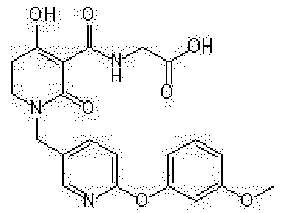
1H NMR (300 MHz, DMSO-d6) δ ppm 2.66 (br. s., 2 H) 3.42 (t, J=7.1 Hz, 2 H) 3.74 (s, 3 H) 4.02 (d, J=5.6 Hz, 2 H) 4.55 (s, 2 H) 6.64 - 6.74 (m, 2 H) 6.75 - 6.83 (m, 1 H) 6.99 (d, J=8.4 Hz, 1 H) 7.30 (t, J=8.4 Hz, 1 H) 7.78 (dd, J=8.4, 2.5 Hz, 1 H) 8.13 (d, J=2.5 Hz, 1 H) 10.02 (br. s., 1 H). HCl MS ESI/APCI Dual posi: 428[M+H]+. MS ESI/APCI Dual nega: 426[M-H]-. Example 1-355 
1H NMR (300 MHz, DMSO-d6) δ ppm 2.43 - 2.49 (m, 2 H) 3.24 - 3.32 (m, 2 H) 3.48 (d, J=4.5 Hz, 2 H) 4.55 (s, 2 H) 7.03 - 7.11 (m, 2 H) 7.32 - 7.35 (m, 2 H) 7.51 (d, J=1.9 Hz, 2 H) 8.20 - 8.22 (m, 1 H) 10.08 (br. s., 1 H). Na MS ESI/APCI Dual posi: 432[M+H]+. MS ESI/APCI Dual nega: 430[M-H]-. Example 1-356 
1H NMR (300 MHz, DMSO-d6) δ ppm 2.51 - 2.59 (m, 2 H) 3.39 - 3.52 (m, 4 H) 4.67 (s, 2 H) 7.19 (d, J=8.5 Hz, 2 H) 7.38 (d, J=8.5 Hz, 1 H) 7.58 (dd, J=8.5, 2.8 Hz, 1 H) 7.70 - 7.81 (m, 2 H) 8.41 (d, J=2.8 Hz, 1 H) 9.94 - 10.12 (m, 1 H). Na US ESI/APCI Dual posi: 466[M+H]+. US ESI/APCI Dual nega: 464[M-H]-. [Table 21-52] Compound No. Structure Analytical Data Salt information Example 1-357 
1H NMR (300 MHz, DMSO-d6) δ ppm 1.54 - 2.03 (m, 4 H) 2.18 - 2.37 (m, 2 H) 3.37 - 3.48 (m, 4 H) 4.61 (s, 2 H) 7.35 - 7.44 (m, 1 H) 7.51 - 7. 62 (m. 2 H). Na MS ESI/APCI Dual posi: 463[M+H]+. MS ESI/APCI Dual nega: 461[M-H]-. Example 1-358 
1H NMR (300 MHz, DMSO-d6) δ ppm 1.00 (s, 6 H) 3.01 - 3.17 (m, 2 H) 3.39 - 3.49 (m, 2 H) 3.8B (s, 3 H) 4.61 (s, 2 H) 6.85 - 6.95 (m, 1 H) 7.34 - 7.45 (m, 2 H) 7.58 - 7.69 (m, 2 H) 7.95 - 8.05 (m, 1 H) 8.43 - 8.51 (m, 1 H). Na MS ESI/APCI Dual posi: 440[M+H]+. MS ESI/APCI Dual nega: 438[M-H]-. Example 1-359 
1H NMR (300 MHz, DMSO-d6) δ ppm 0.57 - 0.82 (m, 4 H) 0.97 (s, 6 H) 3.05 (s, 2 H) 3.45 (d, J=4.4 Hz, 2 H) 3.75 - 3.85 (m, 1 H) 4.50 (s, 2 H) 6.95 - 7.06 (m, 2 H) 7.18 - 7.29 (m, 2 H). Na MS ESI/APCI Dual posi: 389[M+H]+. MS ESI/APCI Dual nega: 387[M-H]-. Example 1-360 
1H NMR (600 MHz, DMSO-d6) δ ppm 0.31 - 0.36 (m, 2 H) 0.54 - 0.60 (m, 2 H) 1.19 - 1.27 (m, 1 H) 3.22 - 3.38 (m, 4 H) 3.45 - 3.52 (n, 2 H) 3.89 (d, J=7.0 Hz, 2 H) 4.47 (s, 2 H) 7.05 - 7.10 (m, 1 H) 7.17 - 7.21 (m, 1 H) 7.31 - 9.35 (m, 1 H). Na MS ESI posi: 409[M+H]+. MS ESI nega: 407[M-H]-. Example 1-361 
1H NMR (300 MHz, DMSO-d6) δ ppm 1.59 - 2.01 (m, 4 H) 2.19 - 2.38 (m, 2 H) 3.42 - 3.48 (m, 2 H) 3.70 - 3.79 (m, 2 H) 3.89 (s, 3 H) 4.64 (s, 2 H) 6.90 (d, J=8.5 Hz, 1 H) 7.39 (d, J=8.2 Hz, 2 H) 7.65 (d, J=8.2 Hz, 2 H) 7.95 - 8.07 (m, 1 H) 8.42 - 8.53 (m, 1 H). Na MS ESI/APCI Dual posi: 452[M+H]+. Example 1-362 
1H NMR (300 MHz, DMSO-d6) δ ppm 0.57 - 0.69 (m, 2 H) 0.82 - 1.08 (m, 8 H) 1.81 - 1.95 (m, 1 H) 2.91 - 3.09 (m, 2 H) 3.38 - 3.46 (m, 2 H) 4.51 (s, 2 H) 6.98 - 7.07 (m, 2 H) 7.12 - 7.20 (m, 2 H). Na MS ESI/APCI Dual posi: 373[M+H]+. MS ESI/APCI Dual nega: 371[M-H]-. Example 1-363 
1H NMR (300 MHz, DMSO-d6) δ ppm 0.56 - 0.83 (m, 4 H) 1.47 - 1.96 (m, 4 H) 2.13 - 2.34 (m, 2 H) 3.40 - 3.49 (m, 2 H) 3.75 - 3.87 (m, 1 H) 4.51 (s, 2 H) 6.96 - 7.07 (m, 2 H) 7.18 - 7.29 (m, 2 H). Na [Table 21-53] Compound No. Structure Analytical Data Salt information Example 1-364 
1H NMR (300 MHz, METHANOL-d4) δ ppm 2.34 (s, 3 H) 2.46-2.59 (m, 2 H) 3.27 - 3.34 (m, 2 H) 3.89 (s, 2 H) 4.55 (s, 2 H) 5.02 (s, 2 H) 6.90 - 6.99 (m, 2 H) 7.07 - 7.15 (m, 1 H) 7.17 - 7.27 (m, 5 H). Na MS ESI/APCI Dual posi: 425[M+H]+. MS ESI/APCI Dual nega: 423[M-H]-. Example 1-365 
1H NMR (300 MHz, DMSO-d6) δ ppm 2.51 - 2.56 (m, 2 H) 3.26 - 3.35 (m, 2 H) 3.49 (d, J=4.5 Hz, 2 H) 4.59 (s, 2 H) 7.13 - 7.22 (m, 2 H) 7.33 - 7.44 (m, 2 H) 7.48 - 7.57 (m, 1 H) 7.88 (d, J=8.5 Hz, 1 H) 8.55 (d, J=3.0 Hz, 1 H) 10.09 (br. s., 1 H). Na MS ESI/APCI Dual posi: 466[M+H]+. MS ESI/APCI Dual nega: 464[M-H]-. Example 1-366 
1H NMR (300 MHz, DMSO-d6) δ ppm 2.32 (s, 3 H) 2.42 - 2.48 (m, 2 H) 3.27 - 3.37 (m, 2 H) 3.48 (d, J=4.5 Hz, 2 H) 4.52 (s, 2 H) 6.98 - 7.07 (m, 2 H) 7.24 (d, J=2.5 Hz, 1 H) 7.37 (d, J=8.5 Hz, 1 H) 7.77 (dd, J=8.5, 2.5 Hz, 1 H) 8.09 (d, J=2.0 Hz, 1 H) 10.06 (d, J=1.2 Hz, 1 H). Na MS ESI/APCI Dual posi: 446[M+H]+. MS ESI/APCI Dual nega: 444[M-H]-. Example 1-367 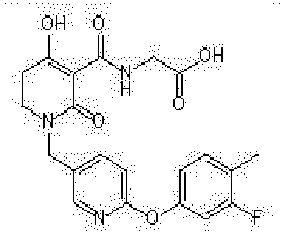
1H NMR (300 MHz, DMSO-d6) δ ppm 2.23 (d, J=1.9 Hz, 3 H) 2.52 - 2.57 (m, 2 H) 3.28 - 3.37 (m, 2 H) 3.47 - 3.53 (m, 2 H) 4.52 (s, 2 H) 6.88 (dd, J=8.2, 2.5 Hz, 1 H) 6.96 - 7.05 (m, 2 H) 7.29 (t, J=8.7 Hz, 1 H) 7.77 (dd, J=8.7, 2.5 Hz, 1 H) 8.09 (d, J=1.9 Hz, 1 H) 10.06 (br. s., 1 H). Na MS ESI/APCI Dual posi: 430[M+H]+. MS ESI/APCI Dual nega: 428[M-H]-. Example 1-368 
1H NMR (300 MHz, DMSO-d6) δ ppm 2.23 (d, J=1.9 Hz, 3 H) 2.53 - 2.59 (m, 2 H) 3.28 - 3.48 (m, 4 H) 4.51 (s, 2 H) 6.94 - 7.02 (m, 2 H) 7.04 - 7.10 (m, 1 H) 7.16 (t, J=9.2 Hz, 1 H) 7.76 (dd, J=8.5, 2.5 Hz, 1 H) 8.07 (d, J=2.0 Hz, 1 H) 10.04 (br. s., 1 H). Na MS ESI/APCI Dual posi: 430[M+H]+. MS ESI/APCI Dual nega: 428[M-H]-. Example 1-369 
1H NMR (300 MHz, METHANOL-d4) δ ppm 2.49 - 2.61 (m, 2 H) 3.33 - 3.38 (m, 2 H) 3.89 (s, 2 H) 4.56 (s, 2 H) 5.16 (s, 2 H) 6.93 - 7.01 (m, 2 H) 7.21 - 7.29 (m, 2 H) 7.29 - 7.36 (m, 2 H) 7.39 - 7.48 (m, 1 H) 7.51 - 7.59 (m, 1 H). Na MS ESI/APCI Dual posi: 445[M+H]+. MS ESI/APCI Dual nega: 443[M-H]-. Example 1-370 
1H NMR (600 MHz, DMSO-d6) δ ppm 0.34 - 0.39 (m, 2 H) 0.47 - 0.52 (m, 2 H) 1.16 (s, 3 H) 2,43 - 2.54 (m, 2 H) 2.99 - 3.18 (m, 2 H) 3.42 (d, J=4.1 Hz, 2 H) 3.71 (s, 2 H) 4.45 (s, 2 H) 6.84 (d, J=8.3 Hz, 2 H) 7.16 (d, J=8.3 Hz, 2 H). Na MS ESI posi: 389[M+H]+, 411[M+Na]+. MS ESI nega: 387[M-H]-. [Table 21-54] Compound No. Structure Analytical Data Salt information Example 1-371 
1H NMR (600 MHz, DMSO-d6) δ ppm 2.03 - 2.21 (m, 4 H) 2.46 - 2.64 (m, 3 H) 3.28 - 3.29 (m, 2 H) 3.40 - 3.50 (m, 2 H) 3.50 - 3.71 (m, 3 H) 7.04 - 7.16 (m, 2 H) 7.24 - 7.36 (m, 2 H) 9.74 - 10.47 (m, 1 H). Na MS ESI/APCI Dual posi: 377[M+H]+, 399[M+Na]+. MS ESI/APCI Dual nega: 375[M-H]-. Example 1-372 
1H NMR (300 MHz, DMSO-d6) δ ppm 2.43 - 2.46 (m, 2 H) 3.33 - 3.35 (m, 2 H) 3.38 - 3.44 (m, 2 H) 4.46 - 4.50 (m, 2 H) 5.13 (s, 2 H) 6.97 - 7.03 (m, 2 H) 7.20 - 7.25 (m, 2 H) 7.39 - 7.45 (m, 1 H) 7.84 - 7.90 (m, 1 H) 8.52 - 8.56 (m, 1 H) 8.65 - 8.68 (m, 1 H). Na MS ESI/APCI Dual posi: 412[M+H]+. MS ESI/APCI Dual nega: 410[M-H]-. Example 1-373 
1H NMR (300 MHz, METHANOL-d4) δ ppm 2.46 - 2.61 (m, 5 H) 3.32 - 3.34 (m, 2 H) 3.89 (s, 2 H) 4.55 (s, 2 H) 5.12 (s, 2 H) 6.93 - 7.01 (m, 2 H) 7.18 - 7.28 (m, 3 H) 7.34 - 7.40 (m, 1 H) 7.69 - 7.77 (m, 1 H). Na MS ESI/APCI Dual posi: 426[M+H]+. MS ESI/APCI Dual nega: 424[M-H]-. Example 1-374 
1H NMR (300 MHz, DMSO-d6) δ ppm 2.40 - 2.49 (m, 2 H) 3.22 - 3.29 (m, 2 H) 3.45 (d, J=4.5 Hz, 2 H) 4.47 (s, 2 H) 5.15 (s, 2 H) 6.98 - 7.08 (m, 1 H) 7.09 - 7.17 (m, 1 H) 7.17 - 7.25 (m, 1 H) 7.29 - 7.50 (m, 5 H). Na MS ESI/APCI Dual posi: 429[M+H]+. MS ESI/APCI Dual nega: 427[M-H]-. Example 1-375 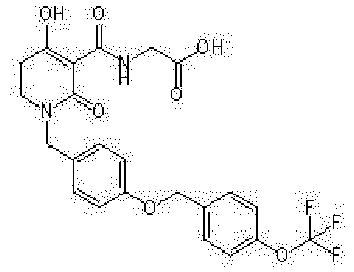
1H NMR (300 MHz, DMSO-d6) δ ppm 2.41 - 2.49 (m, 2 H) 3.19 - 3.28 (m, 2 H) 3.45 (d, J=4.4 Hz, 2 H) 4.48 (s, 2 H) 5.12 (s, 2 H) 6.94 - 7.02 (m, 2 H) 7.16 - 7.26 (m, 2 H) 7.34 - 7.43 (m, 2 H) 7.54 - 7.62 (m, 2 H). Na MS ESI/APCI Dual posi: 495[M+H]+. MS ESI/APCI Dual nega: 493[M-H]-. Example 1-376 
1H NMR (300 MHz, DMSO-d6) δ ppm 1.19 (t, J=7.6 Hz, 3 H) 2.40 - 2.50 (m, 2 H) 2.54 - 2.67 (m, 2 H) 3.23 - 3.35 (m, 2 H) 3.47 (d, J=4.5 Hz, 2 H) 4.51 (s, 2 H) 6.90 - 7.07 (m, 3 H) 7.17 - 7.29 (m, 2 H) 7.75 (dd, J=8.4, 2.5 Hz, 1 H) 8.07 (s, 1 H). Na Example 1-377 
1H NMR (300 MHz, DMSO-d6) δ ppm 0.91 (t, J=7.3 Hz, 3 H) 1.50 - 1.69 (m, 2 H) 2.49 - 2.62 (m, 4 H) 3.21 - 3.42 (m, 2 H) 3.49 (d, J=4.4 Hz, 2 H) 4.51 (s, 2 H) 6.89 - 7.07 (m, 3 H) 7.21 (m, J=8.5 Hz, 2 H) 7.69 - 7.79 (m, 1 H) 8.03 - 8.12 (m, 1 H). Na [Table 21-55] Compound No. Structure Analytical Data Salt information Example 1-378 
1H NMR (300 MHz, DMSO-d6) δ ppm 1.21 (d, J=7.0 Hz, 6 H) 2.40 - 2.50 (m, 2 H) 2.82 - 2.98 (m, 1 H) 3.19 - 3.41 (m, 2 H) 3.48 (d, J=4.4 Hz, 2 H) 4.51 (s, 2 H) 6.85 - 7.16 (m, 3 H) 7.18 - 7.36 (m, 2 H) 7.63 - 7.85 (m, 1 H) 7.97 - 8.19 (m, 1 H). Na Example 1-379 
1H NMR (300 MHz, DMSO-d6) δ ppm 2.16 (s, 3 H) 2.41 - 2.55 (m, 2 H) 3.27 (t, J=7.1 Hz, 2 H) 3.52 (d, J=4.5 Hz, 2 H) 4.47 (s, 2 H) 4.72 (q, J=9.0 Hz, 2 H) 6.96 - 7.04 (m, 1 H) 7.06 - 7.13 (m, 2 H) 10.10 (br. s., 1 H). Na MS ESI/APCI Dual posi: 417[M+H]+. MS ESI/APCI Dual nega: 415[M-H]-. Example 1-380 
1H NMR (300 MHz, DMSO-d6) δ ppm 2.40 - 2.50 (m, 2 H) 3.24 - 3.31 (m, 2 H) 3.43 (d, J=4.4 Hz, 2 H) 4.49 (s, 2 H) 5.33 (s, 2 H) 6.82 - 6.89 (m, 1 H) 7.22 - 7.50 (m, 5 H) 7.62 - 7.69 (m, 1 H) 8.09 - 8.15 (m, 1 H). Na MS ESI/APCI Dual posi: 412[M+H]+. MS ESI/APCI Dual nega: 410[M-H]-. Example 1-381 
1H NMR (300 MHz, DMSO-d6) δ ppm 2.18 (s, 3 H) 2.36 - 2.47 (m, 2 H) 3.15 - 3.25 (m, 2 H) 3.46 (d, J=4.5 Hz, 2 H) 4.45 (s, 2 H) 5.09 (s, 2 H) 6.91 - 7.01 (m, 1 H) 7.01 - 7.11 (m, 2 H) 7.21 - 7.53 (m, 5 H) 9.94 - 10.22 (m, 1 H). Na MS ESI/APCI Dual posi: 425[M+H]+. MS ESI/APCI Dual nega: 423[M-H]-. Example 1-382 
1H NMR (300 MHz, DMSO-d6) δ ppm 2.33 - 2.50 (m, 2 H) 2.66 - 2.86 (m, 2 H) 3.15 - 3.31 (m, 2 H) 3.39 - 3.48 (m, 2 H) 4.18 (t, J=5.9 Hz, 2 H) 4.48 (s, 2 H) 6.85 - 6.96 (m, 2 H) 7.22 (m, 2 H) 10.06 (br. s., 1 H). Na MS ESI/APCI Dual posi: 417[M+H]+. MS ESI/APCI Dual nega: 415[N-H]-. Example 1-383 
1H NMR (300 MHz, DMSO-d6) δ ppm 2.12 (s, 3 H) 2.43 - 2.55 (m, 2 H) 2.78 (qt, J=11.3, 5.7 Hz, 2 H) 3.19 - 3.30 (m, 2 H) 3.49 (d, J=4.5 Hz, 2 H) 4.18 (t, J=5.7 Hz, 2 H) 4.46 (s, 2 H) 6.86 - 6.96 (m, 1 H) 7.03 - 7.11 (m, 2 H) 10.08 (br. s., 1 H). Na MS ESI/APCI Dual posi: 431[M+H]+. MS ESI/APCI Dual nega: 422[M-H]-. Example 1-384 
1H NMR (300 MHz, DMSO-d6) 6 ppm 2.45 - 2.54 (m, 2 H) 2.71 - 2.91 (m, 2 H) 3.23 - 3.32 (m, 2 H) 3.48 (d, J=4.5 Hz, 2 H) 4.21 - 4.29 (m, 2 H) 4.48 (s, 2 H) 7.01 - 7.24 (m, 3 H) 10.06 (br. s., 1 H). Na MS ESI/APCI Dual posi: 435[M+H]+. MS ESI/APCI Dual nega: 433[M-H]-. [Table 21-56] Compound No. Structure Analytical Data Salt information Example 1-385 
1H NMR (300 MHz, DMSO-d6) δ ppm 2.32 (s, 3 H) 2.40 - 2.50 (s, 2 H) 3.18 - 3.42 (m, 2 H) 3.42 - 3.53 (m, 2 H) 4.64 (s, 2 H) 7.02 - 7.13 (m, 2 H) 7.18 - 7.27 (m, 2 H) 8.08 - 8.16 (m, 1 H) 8.39 - 8.47 (m, 1 H). Na MS ESI/APCI Dual posi: 413[M+H]+. MS ESI/APCI Dual nega: 411[M-H]-. Example 1-386 
1H NMR (300 MHz, DMSO-d6) δ ppm 2.19 (s, 6 H) 3.40 - 2.50 (m, 2 H) 3.23 - 3.36 (m, 2 H) 3.44 (d, J=4.4 Hz, 2 H) 4.52 (s, 2 H) 6.68 - 6.77 (m, 1 H) 6.80 - 6.86 (m, 1 H) 6.86 - 6.96 (m, 2 H) 7.07 - 7.18 (m, 1 H) 7.21 - 7.32 (m, 2 H). Na MS ESI/APCI Dual posi: 425[M+H]+. MS ESI/APCI Dual nega: 423[M-H]-. Example 1-387 
1H NMR (300 MHz, DMSO-d6) δ ppm 2.30 (s, 3 H) 2.49 - 2.54 (m, 2 H) 3.24 - 3.30 (m, 2 H) 3.46 (d, J=4.5 Hz, 2 H) 4.47 (s, 2 H) 5.10 (s, 2 H) 6.99 - 7.07 (m, 1 H) 7.08 - 7.24 (m, 4 H) 7.28 - 7.39 (m, 2 H) 9.89 - 10.17 (m, 1 H). Na MS ESI/APCI Dual posi: 443[M+H]+. MS ESI/APCI Dual nega: 441[M-H]-. Example 1-388 
1H NMR (300 MHz, DMSO-d6) δ ppm 2.17 (s, 3 H) 2.43 - 2.49 (m, 2 H) 3.21 - 3.28 (m, 2 H) 3.45 (d, J=4.4 Hz, 2 H) 4.45 (s, 2 H) 5.08 (s, 2 H) 6.91 - 7. 01 (m, 1 H) 7.02 - 7.11 (m, 2 H) 7.16 - 7.28 (m, 2 H) 7.45 - 7.55 (m, 2 H) 9.93 - 10.17 (m, 1 H). Na MS ESI/APCI Dual posi: 443[M+H]+. MS ESI/APCI Dual nega: 411[M-H]-. Example 1-389 
1H NMR (300 MHz, DMSO-d6) δ ppm 2.19 (s, 3 H) 2.44 - 2.49 (m, 2 H) 3.22 - 3.29 (m, 2 H) 3.46 (d, J=4.5 Hz, 2 H) 4.46 (s, 2 H) 5.13 (s, 2 H) 6.91 - 7.01 (m, 1 H) 7.02 - 7.12 (m, 2 H) 7.34 - 7.47 (m, 2 H) 7.54 - 7.65 (m, 2 H) 9.92 - 10.17 (m, 1 H). Na MS ESI/APCI Dual posi: 509[M+H]+. MS ESI/APCI Dual nega: 507[M-H]-. Example 1-390 
1H NMR (300 MHz, DMSO-d6) δ ppm 1.03 - 1.41 (m, 4 H) 1.58 1.79 (m, 3 H) 2.00 - 2.13 (m, 2 H) 2.46 - 2.55 (m, 2 H) 3.19 - 3.51 (m, 6 H) 4.17 - 4.33 (m, 1 H) 6.83 - 6.98 (m, 3 H) 7.19 - 7.32 (m, 2 H) 9.91 - 10.14 (m, 1 H). Na MS ESI/APCI Dual posi: 403[M+H]+. MS ESI/APCI Dual nega: 401[M-H]-. Example 1-391 
1H NNR (300 MHz, DMSO-d6) δ ppm 1.21 - 1.64 (m, 6H) 1.66 - 1.96 (m, 3 H) 2.47 - 2.56 (m, 2 H) 3.19 - 3.45 (m, 6 H) 4.52 - 4.60 (m, 1 H) 6.85 - 6.99 (m, 3 H) 7.21 - 7.31 (m, 2 H) 9.92 - 10.08 (m, 1 H). Na MS ESI/APCI Dual posi: 403[M+H]+. MS ESI/APCI Dual nega: 401[M-H]-. [Table 21-57] Compound No. Structure Analytical Data information Example 1-392 
1H NMR (300 MHz, DMSO-d6) δ ppm 2.31 (s, 3 H) 2.40 - 2.50 (m, 2 H) 3.16 - 3.44 (m, 2 H) 3.48 (d, J=4.5 Hz, 2 H) 4.50 (s, 2 H) 6.94 - 7.09 (m, 2 H) 7.16 - 7.19 (m, 2 H) 7.92 - 7.95 (m, 1 H) 7.98 - 8.01 (m, 1 H). Na MS ESI/APCI Dual posi: 446[M+H]+. MS ESI/APCI Dual nega: 444[M-H]-. Example 1-393 
1H NMR (300 MHz, DMSO-d6) δ ppm 2.31 (s, 3 11) 2.40 - 2.50 (m, 2 H) 3.26 - 3.42 (m, 2 H) 3.43 - 3.52 (m, 2 H) 1.52 (s, 2 H) 6.99 - 7.10 (m, 2 H) 7.16 - 7.27 (m, 2 H) 7.69 - 7.79 (m, 1 H) 7.86 - 7.92 (m, 1 H). Na MS ESI/APCI Dual posi: 430[M+H]+. MS ESI/APCI Dual nega: 428[M-H]-. Example 1-394 
1H NMR (300 MHz, DMSO-d6) δ ppm 2.31 (s, 3 H) 2.35 (s, 3 H) 2.51 - 2.53 (m, 2 H) 3.26 - 3.30 (m, 2 H) 3.48 (d, J=4.5 Hz, 2 H) 4.48 (s, 2 H) 4.95 (s, 2 H) 7.21 - 7.25 (m, 2 H) 7.32 - 7.35 (m, 1 H). Na MS ESI/APCI Dual posi: 464[M+H]+. MS ESI/APCI Dual nega: 462[M-H]-. Example 1-395 
1H NMR (600 MHz, DMSO-d6) δ ppm 1.30 - 1.40 (m, 1 H) 1.52 - 1.62 (m, 1 H) 1.65 - 1.73 (m, 1 H) 1.74 - 1.82 (m, 1 H) 1.85 - 1.94 (m, 1 H) 2.03 - 2.13 (m, 1 H) 2.44 - 2. 57 (m, 3 H) 3.10 - 3.19 (m, 1 H) 3.26 - 3.48 (m, 6 H) 7.13 - 7.18 (m, H) 7.22 - 7.32 (m, 4 H) 9.93 - 10.27 (m, 1 H). Na MS ESI/APCI Dual posi: 373[M+H]+. MS ESI/APCI Dual nega: 371[M-H]-. Example 1-396 
1H NMR (300 MHz, DMSO-d6) δ ppm 0.29 - 0.41 (m, 2 H) 0.47 - 0.55 (m, 2 H) 1.15 (s, 3 H) 2.39 - 2.54 (m, 2 H) 3.19 - 3.32 (m, 2 H) 3.45 (d. J=4.4 Hz, 2 H) 4.02 (s, 2 H) 4.47 (s, 2 H) 6.75 - 6.84 (m, 1 H) 7.56 - 7.66 (m, 1 H) 8.01 - 8.08 (m, 1 H) 10.04 (hr. s., 1 H) Na MS ESI/APCI Dual posi: 390[M+H]+. MS ESI/APCI Dual nega: 388[M-H]-. Example 1-397 
1H NMR (300 MHz, DMSO-d6) δ ppm 0.04 0.14 (m, 2 H) 0.36 - 0.47 (m, 2 H) 0.69 - 0.86 (m, 1 H) 1.55 - 1.66 (m, 2 H) 2.40 - 2.50 (m, 2 H) 3.22 - 3.32 (m, 2 H) 3.48 (d, J=4.5 Hz, 2 H) 4.21 - 4.32 (m, 2 H) 4.48 (s, 2 H) 6.72 - 6.81 (m, 1 H) 7.58 - 7.65 (m, 1 H) 8.06 - 8.11 (m, 1 H) 10.07 (br. s., 1 H). Na MS ES/APCI Dual posi: 390[M+H]+. MS ESI/APCI Dual nega: 388[M-H]-. Example 1-398 
1H NMR (300 MHz, DMSO-d6) δ ppm 2.47 (s. 3 H) 2.48 - 2.54 (m, 2 H) 3.23 - 3.30 (m, 2 H) 3.49 (d. J=4.4 Hz, 2 H) 4. 49 (s, 2 H) 5.07 (s, 2 H) 6.95 - 1.01 (m, 2 H) 7.17 - 7.24 (m, 2 H) 7.27 (d, J=7.8 Hz, 1 H) 7.74 (dd, J=7.8, 2.2 Hz, 1 H) 8.51 (d, J=2.2 Hz, 1 H) 9.91 - 10.17 (m, 1 H). Na MS ESI/APCI Dual posi: 426[M+H]+. MS ESI/APCI Dual nega: 424[M-H]-. [Table 21-58] Compound No. Structure Analytical Data Salt information Example 1-399 
1H NMR (300 MHz, DMSO-d6) δ ppm 0.74 - 0.83 (m, 2 H) 0.87 - 0.99 (m. 2 H) 2.19 - 2.35 (m, 2 H) 3.04 - 3.19 (3, 2 H) 3.45 - 3.64 (m, 4 H) 7.13 - 7.41 (m, 5 H) 9.78 - 10.84 (m, 1 H). Na MS ESI/APCI Dual posi: 345[M+H]+. MS ESI/APCI Dual nega: 343[M-H]-. Example 1-400 
1H NMR (300 MHz, DMSO-d6) δ ppm 0.73 - 0.83 (m, 2 H) 0.88 - 0.97 (m, 2 H) 2.20 - 2.41 (m, 2 H) 3.07 - 3.25 (m, 2 H) 3.41 - 3.65 (m, 4 H) 7.28 - 7.41 (m, 4 H) 9.75 - 10.21 (m, 1 H). Na MS ESI/APCI Dual posi: 379[M+H]+. MS ESI/APCI Dual nega: 377[M-H]-. Example 1-401 
1H NMR (300 MHz, DMSO-d6) δ ppm 2.40 - 2.48 (m, 2 H) 2.48 - 2.51 (m, 3 H) 3.21 - 3.29 (m, 2 H) 3.46 (d, J=4.4 Hz, 2 H) 4.49 (s, 2 H) 5.11 (s, 2 H) 6.96 - 7.05 (m, 2 H) 7.18 - 7.28 (m, 3 H) 7.78 (dd, J=7.6, 1.7 Hz, 1 H) 8.40 (dd, J=4.8, 1.7 Hz, 1 H) 9.98 - 10.15 (m, 1 H) Na MS ESI/APCI Dual posi: 426[M+H]+. MS ESI/APCI Dual nega: 424[M-H]-. Example 1-402 
1H NMR (300 MHz, DMSO-d6) δ ppm 0.99 - 1.42 (m, 4 H) 1.54 - 1.80 (m, 3 H) 1.97 - 2.14 (m, 2 H) 2.40 - 2.63 (m, 2 H) 3.16 - 3.52 (m, 6 H) 4.08 - 4.30 (m, 1 H) 6.84 - 7.16 (m, 4 H) 9.90 - 10.31 (m, 1 H). Na MS ESI/APCI Dual posi: 42[M+H]+. MS ESI/APCI Dual nega: 419[M-H]-. Example 1-403 
1H NMR (300 MHz, DMSO-d6) δ ppm 1.06 - 1.44 (m, 4 H) 1.58 - 1.83 (m, 3 H) 2.00 - 2.18 (m, 2 H) 2.40 - 2.63 (m, 2 H) 3.17 - 3.52 (m, 6 H) 4.30 - 4.48 (m, 1 H) 7.06 - 7.20 (m, 2 H) 7.51 - 7.73 (m, 2 H) 9.91 - 10.14 (m, 1 H). Na MS ESI/APCI Dual posi: 471[M+H]+. MS ESI/APCI Dual nega: 469[M-H]-. Example 1-404 
1H NMR (300 MHz, DMSO-d6) δ ppm 0.61 - 0.73 (m, 2 H) 0.89 - 1.00 (m, 2 H) 1.83 - 1.99 (m, 1 H) 2.45 - 2.61 (m, 2 H) 3.26 - 3.58 (m, 4 H) 4.55 (s, 2 H) 6.85 - 6.94 (m, 1 H) 7.00 - 7.08 (m, 2 H) 7.23 - 7.35 (m, 2 H) 7.43 - 7.53 (m, 1 H) 7.93 - 8.01 (m, 1 H) 10.01 - 10.19 (m, 1 H). Na MS ESI/APCI Dual posi: 438[M+H]+. Example 1-405 
1H NMR (300 MHz, DMSO-d6) δ ppm 2.49 - 2.53 (m, 2 H) 3.27 (1, J=7.1 Hz, 2 H) 3.50 (d, J=4.4 Hz, 2 H) 4.49 (s, 2 H) 5.16 (s, 2 H) 6.94 - 7.03 (m, 2 H) 7.17 - 7.26 (m. 7 H) 7.56 (dd, J=8.4. 0.6 Hz, 1 H) 7.97 (dd, J=8.4, 2.5 Hz, 1 H) 8.63 (dd, J=2.5, 0.6 Hz. 1 H) 9.97 - 10.17 (s, 1 H). Na MS ESI/APCI Dual posi: 446[M+H]+. MS ESI/APCI Dual nega: 444[M-H]-. [Table 21-59] Compound No. Structure Analytical Data Salt information Example 1-406 
1H NMR (300 MHz, DMSO-d6) δ ppm 2.43 (d, J=1.1 Hz, 3 H) 2.46 - 2.52 (m, 2 H) 3.22 - 3.31 (m, 2 H) 3.48 (d, J=4.4 Hz, 2 H) 4.49 (s, 2 H) 5.32 (s, 2 H) 6.96 - 7.06 (m, 2 H) 7.17 - 7.26 (m, 2 H) 7.49 (q, J=1.2 Hz, 1 H) 9.96 - 10.17 (m, 1 H). Na MS ESI/APCI Dual posi: 432[M+H]+. MS ESI/APCI Dual nega: 430[M-H]-. Example 1-407 
1H NMR (300 MHz, DMSO-d6) δ ppm 2.42 - 2.49 (m, 2 H) 3.21 - 3.28 (m, 2 H) 3.44 (d, J=4.5 Hz, 2 H) 4.48 (s, 2 H) 5.02 (s, 2 H) 6.95 - 7.03 (m, 2 H) 7.16 - 7. 23 (m, 2 H) 7.24 (d, J=4.4 Hz, 1 H) 7.84 (s, 1 H) 7.89 (d, J=4.4 Hz, 1 H) 9.94 - 10,12 (m, 1 H). Na MS ESI/APCI Dual posi: 457[M+H]+. MS ESI/APCI Dual nega: 455[M-H]-. Example 1-408 
1H NMR (600 MHz, DMSO-d6) ppm 2.32 (s, 3 H) 2.51 - 2.62 (m, 2 H) 3.32 - 3.40 (m, 2 H) 3.46 (d, J=4.5 Hz, 2 H) 4.50 (s, 2 H) 7.02 - 7.10 (m, 2 H) 7.18 - 7.26 (m, 2 H) 8.56 (s, 2 H). Na Example 1-409 
1H NMR (600 MHz, DMSO-d6) δ ppm 2.16 (t, J=6.8 Hz, 2 H) 2.26 (s, 3 H) 2.40 - 2.50 (m, 2 H) 3.08 (t, J=6.8 Hz, 2 H) 3.43 (d, J=4.1 Hz, 2 H) 4.44 (s, 2 H) 7.07 - 7.15 (m, 2 H) 7.37 - 7.45 (m, 2 H) 7.62 (d, J=1.7 Hz, 1 H) 7.87 (d, J=1.7 Hz, 1 H) 10.08 (t, J=4.5 Hz, 1 H). Na MS ESI/APCI Dual posi: 446[M+H]+. MS ESI/APCI Dual nega: 444[M-H]-. Example 1-410 
1H NMR (300 MHz, DMSO-d6) δ ppm 2. 17 (s, 3 H) 2.45 - 2.58 (m, 2 H) 3.26 - 3.36 (m, 2 H) 3.48 - 3.55 (m, 2 H) 4.49 (s, 2 H) 4.89 - 5.06 (m, 2 H) 7.52 - 7.60 (m, 1 H) 7.91 - 8.01 (m, 1 H) 10.06 (br. s., 1 H). Na MS ESI/APCI Dual posi: 418[M+H]+. MS ESI/APCI Dual nega: 416[M-H]-. Example 1-411 
1H NMR (300 MHz, DMSO-d6) δ ppm 0.05 - 0.16 (m, 2 H) 0.36 - 0.48 (m, 2 H) 0.73 - 0.89 (m, 1 H) 1.55 - 1.67 (m, 2 H) 2.12 (s, 3 H) 2.42 - 2.54 (m, 2 H) 3.23 - 3.34 (m, 2 H) 3.43 - 3.52 (m, 2 H) 4.23 - 4.35 (m, 2 H) 4.45 (s. 2 H) 7.41 - 7.47 (m, 1 H) 7.86 - 7.94 (m, 1 H) 10.04 (br. s., 1 H). Na MS ESI/APCI Dual posi: 404[M+H]+. MS ESI/APCI Dual nega: 402[M-H]-. Example 1-412 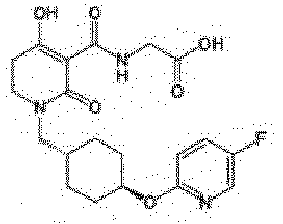
1H NMR (300 MHz, DMSO-d6) δ ppm 0.96 - 1.45 (m, 4 H) 1.55 - 1.82 (m, 3 H) 1.99 - 2.17 (m, 2 H) 2.42 - 2.63 (m, 2 H) 3.11 - 3.53 (m, 6 H) 4.71 - 4.93 (m, 1 H) 6.72 - 6.86 (m, 1 H) 7.56 - 7.73 (m, 1 H) 8.03 - 8.20 (m, 1 H) 9.90 - 10.31 (m, 1 H). Na MS ESI/APCI Dual posi: 422[M+H]+. MS ESI/APCI Dual nega: 420[M-H]-. [Table 21-60] Compound No. Structure Analytical Data Salt information Example 1-413 
1H NMR (300 MHz, DMSO-d6) δ ppm 1.29 (s, 6 H) 2.15 - 2.31 (m, 2 H) 2.75 - 2.89 (m, 2 H) 3.39 - 3.52 (m, 4 H) 7.33 - 7.42 (m, 2 H) 7.44 - 7.54 (m, 2 H) 9.89 - 10.14 (m, 1 H). Na MS ESI/APCI Dual posi: 381[M+H]+. MS ESI/APCI Dual nega: 379[M-H]-. Example 1-414 
1H NMR (300 MHz, DMSO-d6) δ ppm 0.89 - 1.04 (m, 4 H) 2.05 - 2.21 (m, 1 H) 2.42 - 2.61 (m, 2 H) 3.20 - 3.58 (m, 4 H) 4.61 (s, 2 H) 7.32 - 7.45 (m, 3 H) 7.59 - 7.71 (m, 2 H) 7.85 - 7.96 (m, 1 H) 8.64 - 8.76 (m, 1 H) 10.00 - 10.23 (m, 1 H). Na MS ESI/APCI Dual posi: 422[M+H]+. Example 1-415 
1H NMR (300 MHz, DMSO-d6) δ ppm 2.38 (s, 3 H) 2.47 - 2.53 (m, 2 H) 3.31 - 3.38 (m, 2 H) 3.76 (d, J=4.2 Hz, 2 H) 4.58 (s, 2 H) 5.12 (s, 2 H) 7.16 (d, J=8.5 Hz, 1 H) 7.27 - 7.37 (m, 3 H) 7.39 - 7.46 (m, 2 H) 8.20 (d, J=2.6 Hz, 1 H) 9.95 - 10.10 (m, 1 H). Na MS ESI/APCI Dual posi: 426[M+H]+. MS ESI/APCI Dual nega: 424[M-H]-. Example 1-416 
1H NMR (300 MHz, DMSO-d6) δ ppm 2.51 - 2.56 (m, 2 H) 3.25 - 3.31 (m, 2 H) 3.43 (d, J=4.5 Hz, 2 H) 4.56 (s, 2 H) 5.07 (s, 2 H) 6.88 - 7.05 (m, 3 H) 7.23 - 7.35 (m, 4 H) 7.42 (d, J=8.2 Hz, 2 H). Na MS ESI/APCI Dual posi: 411[M+H]+. MS ESI/APCI Dual nega: 409[M-H]-. Example 1-417 
1H NMR (300 MHz, DMSO-d6) δ ppm 2.22 (s, 3 H) 2.43 - 2.49 (m, 2 H) 3.25 - 3.30 (m, 2 H) 3.43 (d, J=4.4 Hz, 2 H) 4.56 (s, 2 H) 5.03 (s, 2 H) 6.84 - 6.93 (m, 2 H) 7.03 - 7.12 (m, 2 H) 7.23 - 7.32 (m, 2 H) 7.35 - 7.45 (m, 2 H) 9.87 - 10.07 (m, 1 H). Na MS ESI/APCI Dual posi: 425[M+H]+. MS ESI/APCI Dual nega: 423[M-H]-. Example 1-418 
1H NMR (300 MHz, DMSO-d6) δ ppm 2.30 (s, 3 H) 2.45 - 2.51 (m, 2 H) 3.26 - 3.33 (m, 2 H) 3.47 (d, J=4.5 Hz, 2 H) 4.49 (s, 2 H) 5.27 (s, 2 H) 6.83 (dd, J=8.5, 0.5 Hz, 1 H) 7.14 - 7.20 (m, 2 H) 7.29 - 7.36 (m, 2 H) 7.64 (dd, J=8.5, 2.4 Hz, 1 H) 8.07 - 8.14 (m, 1 H) 9.96 - 10.14 (m, 1 H). Na MS ESI/APCI Dual posi: 426[M+H]+. MS ESI/APCI Dual nega: 424[M-H]-. Example 1-419 
1H NMR (300 MHz, DMSO-d6) δ ppm 2.45 - 2.50 (m, 2 H) 3.29 - 3.38 (m, 2 H) 3.55 (d, J=4.2 Hz, 2 H) 4.50 (s, 2 H) 5.33 (s, 2 H) 6.78 - 6.92 (m, 1 H) 7.38 - 7.51 (m, 4 H) 7.66 (dd, J=8.5, 2.5 Hz, 1 H) 8.08 - 8.14 (m, 1 H) 9.88 - 10.07 (m, 1 H). Na MS ESI/APCI Dual posi: 446[M+H]+. MS ESI/APCI Dual nega: 444[M-H]-. [Table 21-61] Compound No. Structure Analytical Data Salt information Example 1-420 
1H NMR (300 MHz, DMSO-d6) δ ppm 0.07 - 0.16 (m, 2 H) 0.34 - 0.49 (m, 2 H) 0.72 - 0.91 (m, 1 H) 1.55 - 1.70 (m, 2 H) 2.43 - 2.57 (m, 2 H) 3.27 - 3.39 (m, 2 H) 3.53 - 3.60 (m, 2 H) 4.32 - 4.42 (m, 2 H) 4.48 (s, 2 H) 7.77 - 7.82 (m, 1 H) 8.05 - 8.09 (m, 1 H) 10.10 (br. s., 1 H). Na MS ESI/APCI Dual posi: 424[M+H]+. MS ESI/APCI Dual nega: 422[M-H]-. Example 1-421 
1H NMR (300 MHz, DMSO-d6) δ ppm 2.46 - 2.58 (m, 2 H) 3.33 (t, J=7.1 Hz, 2 H) 3.50 (d, J=4.4 Hz, 2 H) 3.95 (s, 3 H) 4.62 (s, 2 H) 6.73 - 6.81 (m, 1 H) 7.34 - 7.44 (m, 2 H) 7.50 - 7.58 (m, 1 H) 7.71 - 7.83 (m, 1 H) 8.00 - 8.11 (m, 2 H) 10,02 - 10.20 (m, 1 H). Na MS ESI/APCI Dual posi: 412[M+H]+. Example 1-422 
1H NMR (300 MHz, DMSO-d6) δ ppm 2.10 - 2.31 (m, 2 H) 3.12 (t, J=6.3 Hz, 2 H) 3.47 (d, J=4.4 Hz, 2 H) 4.59 (s, 2 H) 7.31 - 7.43 (m, 2 H) 7.91 - 8.08 (m, 4 H) 8.62 - 8.73 (m, 1 H) 10.14 - 10.25 (m, 1 H). Na MS ESI/APCI Dual posi: 416[M+H]+. Example 1-423 
1H NMR (300 MHz, DMSO-d6) δ ppm 2.51 - 2.59 (m, 2 H) 3.26 - 3.33 (m, 2 H) 3.46 (d, J=4.4 Hz, 2 H) 4.58 (s, 2 H) 5.27 (s, 2 H) 7.28 - 7.36 (m, 2 H) 7.41 - 7.50 (m, 2 H) 7.68 (dd, J=8.5, 2.7 Hz, 1 H) 7.80 - 7.91 (m, 1 H) 8.49 - 8.54 (m, 1 H) 9.89 - 10.11 (m, 1 H). Na MS ESI/APCI Dual posi: 480[M+H]+. MS ESI/APCI Dual nega: 478[M-H]-. Example 1-424 
1H NMR (300 MHz, DMSO-d6) δ ppm 2.41 - 2.49 (m, 2 H) 3.23 - 3.30 (m, 2 H) 3.47 (d, J=4.4 Hz, 2 H) 4.56 (s, 2 H) 5.41 (s, 2 H) 7.03 - 7.12 (m, 1 H) 7.29 (d, J=8.1 Hz, 2 H) 7.43 (d, J=8.1 Hz, 2 H) 8.04 - 8.14 (m, 1 H) 8.57 - 8.64 (m, 1 H) 9.98 - 10.15 (m, 1 H). Na MS ESI/APCI Dual nega: 478[M-H]-. Example 1-425 
1H NMR (300 MHz, DMSO-d6) δ ppm 2.46 - 2.60 (m, 2 H) 3.33 (t, J=7.0 Hz, 2 H) 3.54 (d, J=4.5 Hz, 2 H) 3.87 (s, 3 H) 4.61 (s, 2 H) 7.27 - 7.40 (m, 2 H) 7.42 - 7.53 (m, 1 H) 7.83 8.04 (m, 3 H) 8.31 - 8.44 (m, 1 H) 10.03 - 10.25 (m, 1 H). Na MS ESI/APCI Dual posi: 412[M+H]+. Example 1-426 
1H NMR (300 MHz, DMSO-d6) δ ppm 2.48 - 2.62 (m, 2 H) 3.34 (t, J=7.1 Hz, 2 H) 3.58 (d, J=4.5 Hz, 2 H) 3.84 (s, 3 H) 4.62 (s, 2 H) 7.29 - 7.42 (m, 3 H) 7.50 - 7.61 (m, 1 H) 7.81 7.89 (m, 2 H) 8.21 - 8.31 (m, 1 H) 10.08 - 10.23 (m, 1 H). Na MS ESI/APCI Dual posi: 412[M+H]+. [Table 21-62] Compound No. Structure Analytical Data Salt information Example 1-427 
1H NMR (300 MHz, DMSO-d6) δ ppm 1.19 - 1.52 (m, 6 H) 1.60 - 1.77 (m, 1 H) 1.78 - 1.93 (m, 2 H) 2.38 - 2.51 (m, 2 H) 3.14 - 3.48 (m, 6 H) 3.58 - 3.63 (m, 1 H) 4.45 (s, 2 H) 7.31 - 7.45 (m, 4 H) 9.87 - 10.22 (m, 1 H). Na MS ESI/APCI Dual posi: 451[M+H]+. MS ESI/APCI Dual nega: 449[M-H]-. Example 1-428 
1H NMR (300 MHz, DMSO-d6) δ ppm 1.01 - 1.40 (m, 4 H) 1.55 - 1.99 (m, 3 H) 1.99 - 2.13 (m, 2 H) 2.43 - 2.61 (m, 2 H) 3.15 - 3.50 (m, 6 H) 4.17 - 4.33 (m, 1 H) 6.91 - 7.00 (m, 2 H) 7.24 - 7.33 (m, 2 H) 9.92 - 10.30 (m, 1 H). Na MS ESI/APCI Dual posi: 437[M+H]+. MS ESI/APCI Dual nega: 435[M-H]-. Example 1-429 
1H NMR (300 MHz, DMSO-d6) δ ppm 0.85 - 1.27 (m, 4 H) 1.49 - 1.74 (m, 3 H) 1.95 - 2.10 (m, 2 H) 2.42 - 2.61 (m, 2 H) 3.10 - 3.48 (m, 7 H) 4.49 (s, 2 H) 7.29 - 7.43 (m, 4 H) 9.88 - 10.31 (m, 1 H). Na MS ESI/APCI Dual posi: 451[M+H]+. MS ESI/APCI Dual nega: 449[M-H]-. Example 1-430 
1H NMR (300 MHz, DMSO-d6) δ ppm 1.00 - 1.40 (m, 4 H) 1.55 - 1.79 (m. 3 H) 1.97 - 2.12 (m, 2 H) 2.21 (s, 3 H) 2.44 - 2.63 (m, 2 H) 3.16 - 3.50 (m, 6 H) 4.07 - 4.27 (m, 1 H) 6.76 - 6.85 (m, 2 H) 6.99 - 7.10 (m, 2 H) 9.88 - 10.28 (m, 1 H). Na MS ESI/APCI Dual posi: 417[M+H]+. MS ESI/APCI Dual nega: 415[M-H]-, Example 1-431 
1H NMR (300 MHz, DMSO-d6) δ ppm 1.00 - 1.19 (m, 5 H) 1.20 - 1.38 (m, 2 H) 1.55 - 1.79 (m, 3 H) 1.97 - 2.13 (m, 2 H) 2.44 - 2.63 (m, 4 H) 3.15 - 3.50 (m, 6 H) 4.10 - 4.25 (m, 1 H) 6.76 - 6.87 (m, 2 H) 7.01 - 7.15 (m, 2 H) 9.85 - 10.16 16 (m, 1 H). Na MS ESI/APCI Dual posi: 431[M+H]+. MS ESI/APCI Dual nega: 429[M-H]- Example 1-432 
1H NMR (300 MHz, DMSO-d6) δ ppm 0.98 - 1.21 (m, 2 H) 1.25-1.47 (m, 2 H) 1.57 - 1.83 (m, 3 H) 1.98 - 2.17 (m, 2 H) 2.43 - 2.62 (m, 2 H) 3.14 - 3.48 (m, 6 H) 4.75 - 4.95 (m, 1 H) 6.81 (d, J=8.9 Hz, 1 H) 7.76 (dd, J=8.9, 2.6 Hz, 1 H) 8.19 (d, J=2.6 Hz, 1 H) 9.88 - 10.27 (m, 1 H). Na MS ESI/APCI Dual posi: 438[M+H]+. MS ESI/APCI Dual nega: 436[M-H]-. Example 1-433 
1H NMR (300 MHz, DMSO-d6) δ ppm 1.22 - 1.97 (m, 9 H) 2.43 - 2.70 (m, 2 H) 3.18 - 3.51 (m, 4 H) 3.70 - 3.86 (m, 2 H) 5.04 - 5.18 (m, 1 H) 6.81 - 6.93 (m, 1 H) 7.57 - 7.72 (m, 1 H) 8.06 - 8.15 (m, 1 H) 9.98 - 10.25 (m, 1 H). Na MS ESI/APCI Dual posi: 422[M+H]+. [Table 21-63] Compound No. Structure Analytical Data Salt information Example 1-434 
1H NMR (300 MHz, DMSO-d6) δ ppm 1.22 - 1.62 (m, 6 H) 1.66 - 1.95 (m, 3 H) 2.25 - 2.49 (m, 2 H) 3.16 - 3.47 (m, 6 H) 4.44 - 4.57 (m, 1 H) 6.90 - 7.00 (m, 2 H) 7.03 - 7.15 (m, 2 H) 9.94 - 10.17 (m, 1 H). Na MS ESI/APCI Dual posi: 421[M+H]+. Example 1-435 
1H NMR (300 MHz, DMSO-d6) δ ppm 0.98 - 1.20 (m, 2 H) 1.23-1.43 (m, 2 H) 1.56 - 1.80 (m, 3 H) 1.98 - 2.13 (m, 2 H) 2.18 (s, 3 H) 2.45 - 2.67 (m, 2 H) 3.15 - 3.50 (m, 6 H) 4.74-4. 96 (m, 1 H) 6.64 (d, J=8.4 Hz, 1 H) 7.48 (dd, J=8.4, 2.0 Hz, 1 H) 7.89 - 7.99 (m, 1 H) 9.86 - 10.31 (m, 1 H). Na MS ESI/APCI Dual posi: 418[M+H]+. MS ESI/APCI Dual nega: 416[M-H]-. Example 1-436 
1H NMR (300 MHz, DMSO-d6) δ ppm 2.43 - 2.62 (m, 2 H) 3.31 (1, J=6.9 Hz, 2 H) 3.53 (d, J=4.4 Hz, 2 H) 3.90 (s, 3 H) 4.62 (s, 2 H) 6.89 - 7.01 (m, 1 H) 7.29 - 7.54 3 H) 7.99 - 8.14 (m, 2 H) 8.41 - 8.55 (m, 1 H) 10.06 - 10.24 (m, 1 H). Na MS ESI/APCI Dual posi: 412[M+H]+. Example 1-437 
1H NMR (300 MHz, DMSO-d6) δ ppm 1.00 - 1.24 (m, 2 H) 1.30 - 1.52 (m, 2 H) 1.58 - 1.85 (m, 3 H) 2.04 - 2.18 (m, 2 H) 2.44 - 2.60 (m, 2 H) 3.16 - 3.56 (m, 6 H) 4.91 - 5.12 (m, 1 H) 6.89 - 7.00 (m, 1 H) 7.95 - 8.11 (m, 1 H) 8.50 - 8.67 (m, 1 H) 9.99 - 10.21 (m, 1 H). Na MS ESI/APCI Dual posi: 472[M+H]+. Example 1-438 
1H NMR (300 MHz, DMSO-d6) δ ppm 0.85 - 1.26 (m, 4 H) 1.49-1.76 (m, H) 1.94 - 2.11 (m, 2 H) 2.42 - 2.60 (m, 2 H) 3.12 - 3.48 (m, 7 H) 4.47 (s, 2 H) 7.08 - 7.21 (m, 2 H) 7.29 - 7.41 (m, 2 H) 9.87 - 10.23 (m, 1 H). Na MS ESI/APCI Dual posi: 435[M+H]+. MS ESI/APCI Dual nega: 433[M-H]-. Example 1-439 
1H NMR (300 MHz, DMSO-d6) δ ppm 0.98 - 1.21 (m, 2 H) 1.26 - 1.45 (m, 2 H) 1.58 - 1.82 (m, 3 H) 2.03 - 2.17 (m, 2 H) 2.44 - 2.66 (m, 2 H) 3.14 - 3.55 (m, 6 H) 4.83 - 5.00 (m, 1 H) 6.67 - 6.79 (m, 1 H) 6.87 - 7.03 (m, 1 H) 7.59 - 7.73 (m, 1 H) 8.08 - 8.20 (m, 1 H) 9.88 - 10.33 (m, 1 H). Na MS ESI/APCI Dual posi: 404[M+H]+. Example 1-440 
1H NMR (300 MHz, DMSO-d6) δ ppm 2.51 - 2.67 (m, 2 H) 3.41 - 3.59 (m, 4 H) 4.57 - 4.74 (m, 2 H) 7.18 - 7.34 (m, 2 H) 7.40 - 7.57 (m, 2 H) 8.14 (s, 1 H) 8.49 (s, 1 H) 10.00 (br. s., 1 Na MS ESI/APCI Dual posi: 433[M+H]+. MS ESI/APCI Dual nega: 431[M-H]-. [Table 21-64] Compound No. Structure Analytical Data Salt information Example 1-441 
1H NMR (300 MHz, DMSO-d6) δ ppm 0.06 - 0.16 (m, 2 H) 0.38 - 0.50 (m, 2 H) 0.72 - 0.90 (m, 1 H) 1.62 (q, J=6.6 Hz, 2 H) 2.51 - 2.62 (m, 2 H) 3.36 - 3.43 (m, 2 H) 3.46 (d. J=4.4 Hz, 2 H) 4.07 (t, J=6.6 Hz, 2 H) 4.58 (s, 2 H) 7.22 (d, J=8.6 Hz, 1 H) 7.36 (dd, J=8.5, 3.0 Hz, 1 H) 8.21 (d, J=3.0 Hz, 1 H) 9.90 - 10.10 (m, 1 H) Na MS ESI/APCI Dual posi: 390[M+H]+. MS ESI/APCI Dual nega: 388[M-H]-. Example 1-442 
1H NMR (300 MHz, DMSO-d6) δ ppm 0.46 - 0.63 (m, 2 H) 0.78 - 0.93 (m, 2 H) 1.00 - 1.39 (m, 4 H) 1.55 - 1.76 (m, 3 H) 1.76 - 1.90 (m, 1 H) 1.96 - 2.12 (m, 2 H) 2.44 - 2.60 (m, 2 H) 3.16 - 3.49 (m, 6 H) 4.08 - 4.25 (m, 1 H) 6.74 - 6.85 (m, 2 H) 6.91 - 7.01 (m, 2 H) 9. 89 - 10.29 (m, 1 H). Na MS ESI/APCPI Dual posi: 443[M+H]+. MS ESI/APCI Dual nega: 441[M-H]-. Example 1-443 
1H NMR (300 MHz, DMSO-d6) δ ppm 0.60 - 0.73 (m, 2 H) 0.88 - 1.01 (m, 2 H) 1.85 - 2.02 (m, 1 H) 2.50 - 2.66 (m, 2 H) 3.40 - 3.59 (m, 4 H) 4.64 (s, 2 H) 7.01 - 7.19 (m, 4 H) 8.12 (d, J=1.4 Hz, 1 H) 8.44 (d, J=1.4 Hz, 1 H) 9.84 - 10.18 (m, 1 H). Na MS ESI/APCI Dual posi: 439[M+H]+. MS ESI/APCI Dual nega: 437[M-H]-. Example 1-444 
1H NMR (300 MHz, DMSO-d6) δ ppm 0.86 - 1.05 (m, 2 H) 1.07 - 1.26 (m, 2 H) 1.50 - 1.75 (m, 3 H) 1.97 - 2.11 (m, 2 H) 2.46 - 2. 54 (m, 2 H) 3.13 - 3.48 (m, 7 H) 4.49 (s, 2 H) 7.21 - 7.39 (m, 5 H) 9.90 - 10.24 (m, 1 H). Na MS ESI/APCI Dual posi: 417[M+H]+, MS ESI/APCI Dual nega: 415[M-H]-. Example 1-445 
1H NMR (300 MHz, DMSO-d6) δ ppm 0.07 - 0.17 (m, 2 H) 0.31 - 0.48 (m, 2 H) 0.85 - 1.16 (m, 5 H) 1.46 - 1.72 (m, 3 H) 1.88 - 2.03 (m, 2 H) 2.43 - 2.59 (m, 2 H) 3.09 - 3.48 (m, 9 H) 9. 84 - 10.21 (m, 1 H). Na MS ESI/APCI Dual posi: 381 [M+H]+. MS ESI/APCI Dual nega: 379 [M-H]-. Example 1-446 
1H NMR (300 MHz, DMSO-d6) δ ppm 0.51 - 0.69 (m, 2 H) 0.81 - 0.96 (m, 2 H) 0.99 - 1.43 (m, 4 H) 1.55 - 1.94 (m, 4 H) 1.98 - 2.15 (m, 2 H) 2.37 - 2.52 (m, 2 H) 3.15 - 3.56 (m, 6 H) 4.74 - 4.95 (m, 1 H) 6.57 - 6.72 (m, 1 H) 7.26 - 7.37 (m, 1 H) 7.91 - 8.00 (m, 1 H) 10.02 - 10.21 (m, 1 H). Na MS ESI/APCI Dual posi: 444[M+H]+. Example 1-447 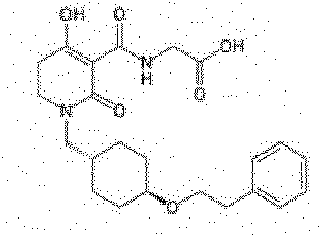
1H NMR (600 MHz, DMSO-d6) δ ppm 0.86 - 0.99 (m, 2 H) 1.01-1.13 (m, 2 H) 1.50 - 1.69 (m, 3 H) 1.91 - 2.00 (m, 2 H) 2.45 - 2.59 (m, 2 H) 2.76 (t, J=7.2 Hz, 2 H) 3.10 - 3.22 (m, 3 H) 3.25 - 3.47 (m, 4 H) 3.60 (t, J=7.2 Hz, 2 H) 7.14 - 7.32 (m, 5 H) 9.89 - 10.26 (m, 1 H). Na MS ESI/APCI Dual posi: 431[M+H]+. MS ESI/APCI Dual nega: 429[M-H]-. [Table 21-65] Compound No. Structure Analytical Data Salt information Example 1-448 
1H NMR (600 MHz, DMSO-d6) δ ppm 0.87 - 1.00 (m, 2 H) 1.02 - 1.12 (m, 2 H) 1.13 - 1.22 (m, 2 H) 1.41 - 1.70 (m, 9 H) 1.90 - 2.06 (m, 3 H) 2.47 - 2.58 (m, 2 H) 3.07 - 3.21 (m, 3 H) 3.25 (d, J=7.0 Hz, 2 H) 3.27 - 3.48 (m, 4 H) 9.91 - 10.25 (m, 1 H). Na MS ESI/APCI Dual posi: 409[M+H]+. MS ESI/APCI Dual nega: 407[M-H]-. Example 1-449 
1H NMR (600 MHz, DMSO-d6) δ ppm 1.04 - 1.18 (m, 5 H) 1.27 - 1.38 (m, 2 H) 1.61 - 1.77 (m, 3 H) 2.02 - 2.12 (m, 2 H) 2.45 - 2.60 (m, 4 H) 3.14 - 3.49 (m, 6 H) 4.81 - 4.90 (m, 1 H) 6.66 (d, J=8.3 Hz, 1 H) 7.52 (dd, J=8.3, 2.5 Hz 1 H) 7.96 (d, J=2.5 Hz, 1 H) 9.91 - 10.28 (m, 1 H). Na MS ESI/APCI Dual posi: 432[M+H]+. MS ESI/APCI Dual nega: 430[M-H]-. Example 1-450 
1H NMR (600 MHz, DMSO-d6) δ ppm 0.86 - 1.01 (m, 2 H) 1.08 - 1.21 (m, 2 H) 1.58 - 1.74 (m, 3 H) 1.97 - 2.06 (m, 2 H) 2.28 (s, 3 H) 2.45 - 2.59 (m, 2 H) 3.11 - 3.48 (m, 7 H) 4. 44 (s, 2 H) 7.10 - 7.15 (m. 2 H) 1.17 - 7.22 (m, 2 H) 9.89 - 10.29 (m, 1 H). Na MS ESI/APCI Dual posi: 431[M+H]+. MS ESI/APCI Dual nega: 429[M-H]-. Example 1-451 
1H NMR (600 MHz, DMSO-d6) δ ppm 0.87 - 0.99 (m, 2 H) 1.03 - 1.14 (m, 2 H) 1.33 - 1.47 (m, 1 H) 1.49 - 1.61 (m, 4 H) 1.74 - 1.84 (m, 2 H) 1.85 - 1.93 (m, 2 H) 2.06 - 2.17 (m, 2 H) 2.46 - 2.56 (m, 2 H) 3.09 - 3.21 (m, 3 H) 3.25 - 3.50 (m, 4 H) 3.93 - 4.02 (m, 1 H) 9.89 - 10.27 (m, 1 H). Na MS ESI/APCI Dual posi: 381[M+H]+. MS ESI/APCI Dual nega: 379[M-H]-. Example 1-452 
1H NMR (300 MHz, DMSO-d6) δ ppm 1.07 (d, J=6.7 Hz, 3 H) 2.15 - 2.30 (m, 2 H) 2.68 - 2.85 (m, 2 H) 3.10 - 3.26 (m, 2 H) 3.35 - 3.46 (m, 2 H) 4.74 - 4.91 (m, 1 H) 7.19 - 7.27 (m, 2 H) 7.28 - 7.36 (m, 2 H) 9.91 - 10.09 (m, 1 H). Na MS ESI/APCI Dual posi: 367[M+H]+. MS ESI/APCI Dual nega: 365[M-H]-. Example 1-453 
1H NMR (300 MHz, METHANOL-d4) δ ppm 1.24 - 1.56 (m, 5 H) 1.70 - 1.91 (m, 5 H) 2.51 - 2.62 (m, 2 H) 2.76 - 2.91 (m, 1 H) 3.33 - 3.40 (m, 2 H) 3.89 (s, 2 H) 4.58 (s. 2 H) 6.92 - 7.01 (m, 1 H) 7.02 - 7.09 (m, 1 H) 7.18 - 7.28 (m, 1 H). Na MS ESI/APCI Dual posi: 405[M+H]+. MS ESI/APCI Dual nega: 403[M-H]-. Example 1-454 
1H NMR (300 MHz, DMSO-d6) δ ppm 2.04 - 2.19 (m, 2 H) 2.20 - 2.33 (m, 2 H) 2.40 - 2.78 (m, 3 H) 3.04 - 3.67 (m, 6 H) 4.62 - 5.03 (m, 1 H) 4.84 (quin, J=6.3 Hz, 1 H) 6.61 - 7.03 (m, 2 H) 7.16 - 7.46 (m, 2 H) 9.87 - 10.27 (m, 1 H). Na MS ESI/APCI Dual posi: 409[M+H]+. MS ESI/APCI Dual nega: 407[M-H]-. [Table 21-66] Compound No. Structure Analytical Data Salt information Example 1-455 
1H NMR (300 MHz, DMSO-d6) δ ppm 1.53 - 1.69 (m, 2 H) 1.95 - 2.11 (m, 1 H) 2.20 - 2.37 (m, 2 H) 2.44 - 2.58 (m, 2 H) 3.26 - 3.44 (m, 4 H) 3.46 - 3.56 (m, 2 H) 3.76 - 3.92 (m, 1 H) 4.34 (s, 2 H) 7.24 - 7.50 (m, 4 H). Na MS ESI/APCI Dual posi: 423[M+H]+ MS ESI/APCI Dual nega: 421[M-H]-. Example 1-456 
1H NMR (300 MHz, DMSO-d6) δ ppm 1.66 - 1.88 (m, 2 H) 2.10-2.32 (m, 1 H) 2.47 - 2.65 (m, 2 H) 3.29 - 3.52 (m, 8 H) 4.43 - 4.65 (m, 1 H) 6.78 - 6.95 (m, 2 H) 7.23 - 7.37 (m, 2 H). Na MS ESI/APCI Dual posi: 409[M+H]+. MS ESI/APCI Dual nega: 407[M-H]-, Example 1-457 
1H NMR (300 MHz, DMSO-d6) δ ppm 1.92 - 2.08 (m, 4 H) 2.44 - 2.59 (m, 3 H) 3.33 - 3.51 (m, 6 H) 4.10 - 4.25 (m, 1 H) 4.35 (s, 2 H) 7.22 - 7.54 (m, 4 H). Na MS ESI/APCI Dual posi: 423[M+H]+. MS ESI/APCI Dual nega: 421[M-H]-. Example 1-458 
1H NMR (600 MHz, DMSO-d6) δ ppm 2.04 - 2.16 (m, 2 H) 2.18 - 2.29 (m, 5 H) 2.47 - 2.66 (m, 3 H) 3.34 - 3.57 (m, 6 H) 4.75 - 4.84 (m, 1 H) 6.65 - 6. 74 (m, 2 H) 7.02 - 7.09 (m, 2 H). Na MS ESI/APCI Dual posi: 389[M+H]+. MS ESI/APCI Dual nega: 387[M-H]-. Example 1-459 
1H NMR (600 MHz, DMSO-d6) δ ppm 2.10 - 2.23 (m, 2 H) 2.25 - 2.37 (m, 2 H) 2.48 - 2.71 (m, 2 H) 3.33 - 3.45 (m, 2 H) 3.47 - 3.61 (m, 4 H) 4.89 - 5.00 (m, 1 H) 7.00 (d, J=8.7 Hz, 2 H) 7.63 (d, J=8.7 Hz, 2 H). Na MS ESI/APCI Dual posi: 443[M+H]+. MS ESI/APCI Dual nega: 441[M-H]-. Example 1-460 
1H NMR (300 MHz, DMSO-d6) δ ppm 2.06 - 2.20 (m, 2 H) 2.20 - 2.35 (m, 2 H) 2.40 - 2.72 (m, 3 H) 3.33 - 3.58 (m, 6 H) 4.83 - 4.97 (m, 1 H) 6.77 - 6.85 (m, 1 H) 6.86 - 6.92 (m, 1 H) 6.94 - 7.02 (m, 1 H) 7.24 - 7.35 (m, 1 H). Na MS ESI/APCI Dual posi: 409[M+H]+. MS ESI/APCI Dual nega: 407[M-H]-. Example 1-461 
1H NMR (300 MHz, DMSO-d6) δ ppm 2.42 - 2.49 (m, 2 H) 3. 19 - 3.27 (m, 2 H) 3.43 (d, J=4.4 Hz, 2 H) 4.47 (s, 2 H) 6.75 (s, 2 H) 7.04 - 7.14 (m, 2 H) 7.18 - 7.27 (m, 2 H) 7.41 - 7.50 (m, 1 H) 7.57 - 7.66 (m, 1 H) 7.87 - 7.96 (m, 1 H) 8.05 - 8.12 (m, 1 H) 9.91 - 10.09 (m, 1 H). Na MS ESI/APCI Dual posi: 452[M+H]+, 474[M+Na]+. MS ESI/APCI Dual nega: 450[M-H]-. [Table 21-67] Compound No. Structure Analytical Data Salt information Example 1-462 
1H NMR (300 MHz, DMSO-d6) δ ppm 2.10 (s, 3 H) 2.21 - 2.23 (m, 3 H) 2.48 - 2.54 (m, 2 H) 3.22 - 3.29 (m, 2 H) 3.44 (d. J=4.4 Hz, 2 H) 4.49 (s, 2 H) 5.88 (s, 2 H) 5.90 (s, 1 H) 7.01 - 7.10 (m, 2 H) 7.17 - 7.26 (m, 2 H) 9.91 - 10.09 (m, 1 H). Na MS ESI/APCI Dual posi: 429[M+H]+, MS ESI/APCI Dual nega: 427[M-H]-. Example 1-463 
1H NMR (300 MHz, DMSO-d6) δ ppm 2.41 - 2.48 (m, 2 H) 3.20 - 3.28 (m, 2 H) 3.46 (d, J=4.4 Hz, 2 H) 4.18 (s, 3 H) 4.49 (s, 2 H) 5.57 (s, 2 H) 7.02 - 7.13 (m, 3 H) 7.18 - 7.28 (m, 3 H) 7.52 - 7.63 (m, 1 H) 7.77 - 7.87 (m, 1 H) 9.96 - 10.15 (m, 1 H). Na MS ESI/APCI Dual posi: 465[M+H]+. MS ESI/APCI Dual nega: 463[M-H]-. Example 1-464 
1H NMR (300 MHz, DMSO-d6) δ ppm 0.86 - 1.30 (m, 4 H) 1.49 - 1.78 (m, 3 H) 1.97 - 2.13 (m, 2 H) 2.43 - 2.58 (m, 2 H) 3.13 - 3.48 (m, 7 H) 4.57 (s, 2 H) 7.40 - 7.52 (m, 1 H) 7.86 - 7.97 (m, 1 H) 8.48 - 8.61 (m, 1 H) 9.88 - 10.26 (m, 1 H). Na MS ESI/APCI Dual posi: 452[M+H]+. MS ESI/APCI Dual nega: 450[M-H]-. -

- The compound (1.70 g) obtained in Example 1-2(1) was used and treated by the same technique as in Example 1-1(4) to give the titled compound as a pale brown amorphous mass (363 mg).
1H NMR (300 MHz, DMSO-d6) δ ppm 2.61 - 3.08 (m, 2 H) 3.45 - 3.66 (m, 2 H) 3.70 - 3.93 (m, 2 H) 3.96 - 4.10 (m, 2 H) 4.69 - 4.90 (m, 2 H) 5.46 (br. s., 1 H) 7.28 - 7.51 (m, 5 H) 7.54 - 7.70 (m, 4 H) 9.89 - 10.31 (m, 1 H) 12.73 - 13.04 (m, 1 H).
MS ESI/APCI Dual posi: 459[M+H]+. -

-

- Instead of the compound obtained in Reference Example A-1, the compound (1.36 g) obtained in Reference Example A-301 was used and treated by the same techniques as in Example 1-1(1) to (3) to give 2-methyl-2-propanylN-[(1-{3-chloro-4-[(3,5-dimethyl-1,2-oxazol-4-yl)methoxy]benzyl}-4-hydroxy-2-oxo-1,2,5,6-tetrahydro-3-pyridinyl)carbonyl]glycinate as a pale yellow gum (1.07 g).
1H NMR (300 MHz, CHLOROFORM-d) δ ppm 1.49 (s, 9 H) 2.32 (s, 3 H) 2.41 (s, 3 H) 2.51 - 2.66 (m, 2 H) 3.27 - 3.39 (m, 2 H) 4.01 - 4.06 (m, 2 H) 4.54 (s, 2 H) 4.84 - 4.88 (m, 2 H) 6.90 - 6.97 (m, 1 H) 7.16 (dd, J=8.4, 2.2 Hz, 1 H) 7.29 - 7.34 (m, 1 H) 10.13 - 10.51 (m, 1 H).
MS ESI/APCI Dual posi: 520[M+H]+, 542[M+Na]+.
MS ESI/APCI Dual nega: 518[M-H]-. - The compound (1.07 g) obtained in step (1) above was used and treated by the same techniques as in Example 1-1(4) and Example 1-3(3) to give the titled compound as a colorless solid (454 mg).
1H NMR (300 MHz, DMSO-d6) δ ppm 2.12 - 2.22 (m, 2 H) 3.02 - 3.10 (m, 2 H) 3.46 (d, J=4.2 Hz, 2 H) 4.37 (s, 2 H) 6.85 (d, J=8.4 Hz, 1 H) 6.96 (dd, J=8.4, 2.0 Hz, 1 H) 7.12 (d, J=2.0 Hz, 1 H) 10.04 - 10.16 (m, 1 H).
MS ESI/APCI Dual posi: 355[M+H]+.
MS ESI/APCI Dual nega: 353[M-H]-. -

-

- Instead of the compound obtained in Reference Example A-1, the compound (583 mg) obtained in Reference Example B-18 was used and treated by the same techniques as in Examples 1-1(1) to (3) to give 2-methyl-2-propanyl N-({1-[4-(4,4-difluoro-1-hydroxycyclohexyl)benzyl]-4-hydroxy-2-oxo-1,2,5,6-tetrahydro-3-pyridinyl}carbonyl)glycinate as a colorless solid (226 mg).
1H NMR (300 MHz, CHLOROFORM-d) δ ppm 1.49 (s, 9 H) 1.82 - 1.94 (m, 2 H) 2.07 - 2.42 (m, 6 H) 2.62 (s, 2 H) 3.30 - 3.39 (m, 2 H) 4.01 - 4.06 (m, 2 H) 4.61 (s, 2 H) 7.25 - 7.30 (m, 2 H) 7.43 - 7.50 (m, 2 H).
MS ESI/APCI Dual posi: 517[M+Na]+.
MS ESI/APCI Dual nega: 493[M-H]-, 529[M+Cl]-. - The compound (226 mg) obtained in step (1) above was used and treated by the same techniques as in Example 1-1(4) and Example 1-3(3) to give the titled compound as a colorless solid (129 mg).
1H NMR (300 MHz, DMSO-d6) δ ppm 2.04 - 2.30 (m, 4 H) 2.59 - 2.80 (m, 4 H) 3.24 - 3.32 (m, 2 H) 3.47 (d, J=4.4 Hz, 2 H) 4.55 (s, 2 H) 5.95 - 6.04 (m, 1 H) 7.25 (d, J=8.3 Hz, 2 H) 7.41 (d, J=8.3 Hz, 2 H).
MS ESI/APCI Dual posi: 421[M+H]+.
MS ESI/APCI Dual nega: 419[M-H]-. -

-

- Instead of the compound obtained in Reference Example A-1 and glycine tert-butyl hydrochloride, the compound (2.10 g) obtained in Reference Example A-302 and glycine ethyl hydrochloride (956 mg) were respectively used and treated by the same techniques as in Example 1-1(1) to (3) to give ethyl N-({1-[4-(cyclopropylmethoxy)-3-methylbenzyl]-4-hydroxy-2-oxo-1,2,5,6-tetrahydro-3-pyridinyl}carbonyl)glycinate as a yellow oil (2.01 g).
1H NMR (300 MHz, CHLOROFORM-d) δ ppm 0.29 - 0.40 (m, 2 H) 0.54 - 0.68 (m, 2 H) 1.19 - 1.37 (m, 4 H) 2.16 - 2.26 (m, 3 H) 2.44 - 2.64 (m, 2 H) 3.23 - 3.35 (m, 2 H) 3.75 - 3.85 (m, 2 H) 4.05 - 4.17 (m, 2 H) 4.24 (q, J=7.1 Hz, 2 H) 4.47 - 4.54 (m, 2 H) 6.67 - 6.79 (m, 1 H) 6.98 - 7.08 (m, 2 H) 10.11 - 10.60 (m, 1 H).
MS ESI/APCI Dual posi: 417[M+H]+. - To a solution in ethanol (37.8 mL) of the compound (1.97 g) obtained in step (1) above, 0.5 mol/L sodium hydroxide in aqueous solution (18.9 mL) was added under cooling with ice and the mixture was brought to room temperature at which it was stirred for 15 minutes. After the reaction mixture was concentrated under reduced pressure, the resulting residue was purified by DIAION (registered trademark) HP20 column chromatography (with elution by methanol). The eluted fraction was concentrated under reduced pressure and to a solution of the resulting compound in water (2 mL), acetone (100 mL) was added and the mixture was stirred at room temperature for an hour. The precipitate was recovered by filtration to give the titled compound as a colorless solid (1.60 g).
1H NMR (300 MHz, DMSO-d6) δ ppm 0.25 - 0.38 (m, 2 H) 0.47 - 0.61 (m, 2 H) 1.11 - 1.28 (m, 1 H) 2.13 (s, 3 H) 2.34 - 2.50 (m, 2 H) 3.15 - 3.29 (m, 2 H) 3.51 (d, J=4.5 Hz, 2 H) 3.73 - 3.86 (m, 2 H) 4.44 (s, 2 H) 6.84 (d, J=9.0 Hz, 1 H) 7.00 - 7.06 (m, 2 H) 10.12 (br. s., 1 H). MS ESI/APCI Dual posi: 389[M+H]+.
MS ESI/APCI Dual nega: 387[M-H]-. -

-

- Instead of the compound obtained in Reference Example A-1, the compound (6.50 g) obtained in Reference Example A-4 was used and treated by the same techniques as in Example 1-1(1) to (3) to give tert-butyl N-{[4-hydroxy-1-(4-iodobenzyl)-2-oxo-1,2,5,6-tetrahydropyridin-3-yl]carbonyl}glycinate as a colorless solid (7.01 g).
1H NMR (300 MHz, CHLOROFORM-d) δ ppm 1.48 (s, 9 H) 2.49 - 2.65 (m, 2 H) 3.24 - 3.42 (m, 2 H) 3.97 - 4.08 (m, 2 H) 4.56 (s, 2 H) 6.98 - 7.08 (m, 2 H) 7.57 - 7.75 (m, 2 H) 10.13 - 10.51 (m, 1 H).
MS ESI/APCI Dual posi: 487[M+H]+.
MS ESI/APCI Dual nega: 485[M-H]-. -

- A mixture of the compound (300 mg) obtained in step (1) above, 4-methylphenylboronic acid (168 mg), palladium(II) acetate (6.93 mg), tri(2-methylphenyl)phosphine (18.8 mg), tripotassium phosphate (393 mg), ethanol (8.00 mL) and toluene (4.00 mL) was stirred at 90°C for an hour. After cooling the reaction mixture to room temperature, a saturated aqueous solution of ammonium chloride was added and the resulting mixture was concentrated under reduced pressure. Water was added and three extractions were conducted with chloroform. The combined organic layers were passed through a phase separator and thereafter concentrated under reduced pressure. The resulting residue was purified by silica gel column chromatography (n-hexane:ethyl acetate = 100:0-50:50, then chloroform:methanol = 100:0-90:10) to give tert-butyl N-({4-hydroxy-1-[(4'-methylbiphenyl-4-yl)methyl]-2-oxo-1,2,5,6-tetrahydropyridin-3-yl}carbonyl)glycinate as a pale yellow solid (485 mg).
1H NMR (600 MHz, CHLOROFORM-d) δ ppm 1.49 (s, 9 H) 2.39 (s, 3 H) 2.53 - 2.65 (m, 2 H) 3.37 (m, 2 H) 4.00 - 4.08 (m, 2 H) 4.66 (s, 2 H) 7.25 (d, J=7.8 Hz, 2 H) 7.32 (d, J=7.8 Hz, 2 H) 7.44 - 7.50 (m, 2 H) 7.51 - 7.58 (m, 2 H) 10.22 - 10.49 (m, 1 H).
MS ESI/APCI Dual posi: 473[M+Na]+. - The compound (147 mg) obtained in step (2) above was used and treated by the same technique as in Example 1-1(4) to give the titled compound as a colorless solid (111 mg).
1H NMR (600 MHz, DMSO-d6) δ ppm 2.33 (s, 3 H) 2.46 - 2.72 (m, 2 H) 3.36 - 3.46 (m, 2 H) 3.98 - 4.07 (m, 2 H) 4.57 - 4.67 (m, 2 H) 7.23 - 7.29 (m, 2 H) 7.32 - 7.40 (m, 2 H) 7.50 - 7.57 (m, 2 H) 7.58 - 7.65 (m, 2 H) 10.01 - 10.25 (m, 1 H).
MS ESI/APCI Dual posi: 395[M+1]+, 417[M+Na]+.
MS ESI/APCI Dual nega: 393[M-1]-. -

-

- A mixture of the compound (1.50 g) obtained in Example 2-1(1), 3-methoxy-4-pyridineboronic acid pinacol ester (870 mg), [1,1'-bis(diphenylphosphino)ferrocene]palladium(II) dichloride dichloromethane complex (1:1) (126 mg), 2 mol/L sodium carbonate in aqueous solution (3.4 mL) and N,N-dimethylformamide (12.3 mL) was stirred at 120°C for 20 minutes under irradiation with microwaves. After cooling the reaction mixture to room temperature, a saturated aqueous solution of sodium hydrogencarbonate and ethyl acetate were added and the precipitate was recovered by filtration through Celite (registered trademark). Extraction was conducted with ethyl acetate and the combined organic layers were concentrated under reduced pressure. The resulting residue was purified by silica gel column chromatography (n-hexane:ethyl acetate = 20:80-0:100, then chloroform:methanol = 100:0-80:20) to give 2-methyl-2-propanyl N-({4-hydroxy-1-[4-(3-methoxy-4-pyridinyl)benzyl]-2-oxo-1,2,5,6-tetrahydro-3-pyridinyl}carbonyl)glycinate as a yellow amorphous mass (1.24 g).
1H NMR (300 MHz, CHLOROFORM-d) δ ppm 1.49 (s, 9 H) 2.52 - 2.69 (m, 2 H) 3.32 - 3.45 (m, 2 H) 3.92 (s, 3 H) 4.00 - 4.07 (m, 2 H) 4.67 (s, 2 H) 7.22 - 7.26 (m, 2 H) 7.32 - 7.38 (m, 2 H) 7.50 - 7.60 (m, 2 H) 8.28 - 8.35 (m, 1 H) 10.18 - 10.50 (m, 1 H).
MS ESI/APCI Dual posi: 468[M+H]+. - The compound (1.24 g) obtained in step (1) above was used and treated by the same techniques as in Example 1-2(2) and Example 1-3(3) to give the titled compound as a colorless solid (730 mg).
1H NMR (300 MHz, DMSO-d6) δ ppm 2.46 - 2.61 (m, 2 H) 3.35 (t, J=7.1 Hz, 2 H) 3.56 (d, J=4.5 Hz, 2 H) 3.89 (s, 3 H) 4.61 (s, 2 H) 7.29 - 7.44 (m, 3 H) 7.50 - 7.60 (m, 2 H) 8.22 - 8.33 (m, 1 H) 8.45 (s, 1 H) 10.08 - 10.21 (m, 1 H).
MS ESI/APCI Dual posi: 412[M+H]+. -

-

- A mixture of the compound (1.00 g) obtained in Example 2-1(1), 2-methoxypyridine-3-boronic acid (426 mg), palladium(II) acetate (25.0 mg), tripotassium phosphate (987 mg) and ethylene glycol (12 mL) was stirred in a sealed tube at 80°C for 4 hours. After cooling the reaction mixture to room temperature, water and ethyl acetate were added and the precipitate was recovered by filtration through Celite (registered trademark). Extraction was conducted with ethyl acetate and the combined organic layers were concentrated under reduced pressure. The resulting residue was purified by silica gel column chromatography (n-hexane:ethyl acetate = 100:0-20:80) to give 2-methyl-2-propanyl N-({4-hydroxy-1-[4-(2-methoxy-3-pyridinyl)benzyl]-2-oxo-1,2,5,6-tetrahydro-3-pyridinyl}carbonyl)glycinate as a yellow oil (1.10 g).
1H NMR (300 MHz, CHLOROFORM-d) δ ppm 1.49 (s, 9 H) 2.52 - 2.68 (m, 2 H) 3.33 - 3.42 (m, 2 H) 3.97 (s, 3 H) 4.00 - 4.08 (m, 2 H) 4.66 (s, 2 H) 6.93 - 7.01 (m, 1 H) 7.29 - 7.36 (m, 2 H) 7.46 - 7.65 (m, 3 H) 8.09 - 8.21 (m, 1 H) 10.15 - 10.53 (m, 1 H).
MS ESI/APCI Dual posi: 490[M+Na]+.
MS ESI/APCI Dual nega: 466[M-H]-. - The compound (1.10 g) obtained in step (1) above was used and treated by the same techniques as in Example 1-2(2) and Example 1-3(3) to give the titled compound as a colorless solid (461 mg).
1H NMR (300 MHz, DMSO-d6) δ ppm 2.41 - 2.61 (m, 2 H) 3.40 - 3.49 (m, 2 H) 3.87 (s, 3 H) 4.60 (s, 2 H) 7.05 - 7.12 (m, 1 H) 7.29 - 7.39 (m, 2 H) 7.48 - 7.57 (m, 2 H) 7.70 - 7.77 (m, 1 H) 8.13 - 8.20 (m, 1 H).
MS ESI/APCI Dual posi: 412[M+H]+.
MS ESI/APCI Dual nega: 410[M-H]-. -

-

- A mixture of the compound (1.00 g) obtained in Example 2-1(1), 2-picoline-5-boronic acidpinacol ester (541 mg), tetrakis(triphenylphosphine)palladium(0) (238 mg), potassium carbonate (569 mg), toluene (10 mL), ethanol (2 mL) and water (2 mL) was stirred at 80°C for 4 hours. After cooling the reaction mixture to room temperature, the precipitate was removed by passage through Celite (registered trademark) and the filtrate was concentrated under reduced pressure. The resulting residue was purified by silica gel column chromatography (n-hexane:ethyl acetate = 100:0-30:70) to give 2-methyl-2-propanyl N-({4-hydroxy-1-[4-(6-methyl-3-pyridinyl)benzyl]-2-oxo-1,2,5,6-tetrahydro-3-pyridinyl}carbonyl)glycinate (560 mg).
1H NMR (300 MHz, CHLOROFORM-d) δ ppm 1.49 (s, 9 H) 2.51 - 2.69 (m, 5 H) 3.31 - 3.44 (m, 2 H) 4.00 - 4.07 (m, 2 H) 4.67 (s, 2 H) 7.17 - 7.26 (m, 1 H) 7.37 (d, J=8.2 Hz, 2 H) 7.48 - 7.59 (m, 2 H) 7.72 - 7.81 (m, 1 H) 8.67 - 8.77 (m, 1 H) 10.15 - 10.53 (m, 1 H).
MS ESI/APCI Dual posi: 452[M+H]+, 474[M+H]+.
MS ESI/APCI Dual nega: 450[M-H]-. - The compound (560 mg) obtained in step (1) above was used and treated by the same techniques as in Example 1-2(2) and Example 1-3(3) to give the titled compound as a colorless solid (254 mg).
1H NMR (300 MHz, DMSO-d6) δ ppm 2.36 - 2.55 (m, 5 H) 3.21 - 3.34 (m, 2 H) 3.50 (d, J=4.5 Hz, 2 H) 4.60 (s, 2 H) 7.26 - 7.45 (m, 3 H) 7.59 - 7.71 (m, 2 H) 7.89 - 7.99 (m, 1 H) 8.73 (d, J=2.0 Hz, 1 H) 10.01 - 10.22 (m, 1 H).
MS ESI/APCI Dual posi: 396[M+H]+.
MS ESI/APCI Dual nega: 394[M-H]-. -
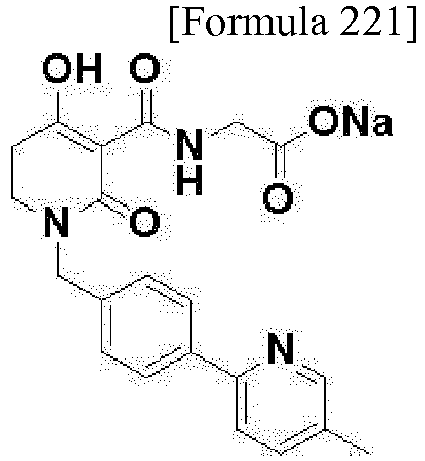
-

- A mixture of the compound (2.00 g) obtained in Example 2-1(1), 5-methylpyridine-2-boronic acid N-phenyldiethanolamine ester (2.32 g), potassium carbonate (1.14 g), copper(I) iodide (313 mg), tri(2-methylphenyl)phosphine (250 mg), palladium(II) acetate (46 mg) and tetrahydrofuran (28.8 mL) was stirred at 95°C for 4 hours. After cooling the reaction mixture to room temperature, ethyl acetate was added and the precipitate was removed by passage through Celite (registered trademark). The filtrate was concentrated under reduced pressure and the resulting residue was purified by silica gel column chromatography (n-hexane:ethyl acetate = 80:20-0:100) to give 2-methyl-2-propanyl N-({4-hydroxy-1-[4-(5-methyl-2-pyridinyl)benzyl]-2-oxo-1,2,5,6-tetrahydro-3-pyridinyl}carbonyl)glycinate as a colorless amorphous mass (1.00 g).
1H NMR (300 MHz, CHLOROFORM-d) δ ppm 1.49 (s, 9 H) 2.37 (s, 3 H) 2.47 - 2.68 (m, 2 H) 3.25 - 3.40 (m, 2 H) 4.00 - 4.07 (m, 2 H) 4.67 (s, 2 H) 7.31 - 7.42 (m, 2 H) 7.52 - 7.66 (m, 2 H) 7.87 - 7.99 (m, 2 H) 8.45 - 8.59 (m, 1 H) 10.14 - 10.53 (m, 1 H).
MS ESI/APCI Dual posi: 452[M+H]+. - The compound (1.00 g) obtained in step (1) above was used and treated by the same techniques as in Example 1-2(2) and Example 1-3(3) to give the titled compound as a colorless solid (505 mg).
1H NMR (600 MHz, DMSO-d6) δ ppm 2.29 (s, 3 H) 2.43 - 2.59 (m, 2 H) 3.22 - 3.56 (m, 4 H) 4.58 (s, 2 H) 7.28 - 7.39 (m, 2 H) 7.60 - 7.69 (m, 1 H) 7.75 - 7.85 (m, 1 H) 7.94 - 8.04 (m, 2 H) 8.45 (s, 1 H) 9.87 - 10.31 (m, 1 H).
MS ESI/APCI Dual posi: 396[M+H]+. - In the following Examples 2-6 to 2-54, the compound obtained in Reference Examples A-4, A-5, A-303, A-304 or A-305 was used as the starting material which, together with a commercial grade of the corresponding boronic acids or boronic acid esters, was treated by the methods described in Example 2-1(1) and (2) or in step (1) of each of Examples 2-2 to 2-5 or modifications thereof, and the compounds thus obtained were further treated by the method described in Example 1-1(4), 1-2(2) or 1-3(3) or modifications thereof to synthesize the intended compounds. The structures of the synthesized compounds and their NMR and MS data are shown in Tables 22-1 to 22-8. The numerals cited in the column "Example" of each table indicate which of the above-noted Examples 2-1 to 2-5 was repeated or modified to synthesize the compound of interest.
[Table 22-1] Compound No. Structure Analytical Data Salt information Example Example 2-6 
1H NMR (300 MHz, DMSO-d6) δ ppm 2.54 - 2.77 (m, 2 H) 3.38 (t, J=7.1 Hz, 2 H) 3.86 (s, 3 H) 4.03 (d, J=5.6 Hz, 2 H) 4.56 (s, 2 H) 7.27 (d, J=8.1 Hz, 2 H) 7.53 (d, J=8.1 Hz, 2 H) 7.83 (s, 1 H) 8.11 (s, 1 H) 10.07 (br. s., 1 H). 2 - 1 MS ESI/APCI Dual posi: 285[M+H]+, 407[M+Na]+. MS ESI/APCI Dual nega: 383[M-H]-. Example 2-7 
1H NMR (300 MHz, DMSO-d6) δ ppm 2.65 - 2.76 (m, 1 H) 3.35 - 3.53 (m, 2 H) 3.98 - 4.10 (m, 3 H) 4.60 - 4.75 (m, 2 H) 7.40 - 7.56 (m, 2 H) 7.76 - 7.87 (m, 2 H) 7.89 - 7.97 (m, 1 H) 8.58 - 8.69 (m, 1 H) 8.75 - 8.83 (m, 1 H) 9.08 - 9.18 (m, 1 H) 9.94 - 10.31 (m, 1 H). HCl 2 - 1 MS ESI/APCI Dual posi: 382[M+H]+. MS ESI/APCI Dual nega: 380[M-H]-. Example 2-8 
1H NMR (300 MHz, CHLOROFORM-d) δ ppm 2.54 - 2.69 (m, 2 H) 3.37 (t, J=7.1 Hz, 2 H) 4.16 - 4.24 (m, 2 H) 4.59 - 4.68 (m, 2 H) 7.29 - 7.37 (m, 2 H) 7.41 - 7.50 (m, 2 H) 8.52 - 8.57 (m, 1 H) 8.65 - 8.70 (m, 1 H) 10.15 - 10.47 (m, 1 H). 2 - 1 MS ESI/APCI Dual posi: 372[M+H]+, 394[M+Na]+. MS ESI/APCI Dual nega: 370[M-H]-. Example 2-9 
1H NMR (600 MHz, DMSO-d6) δ ppm 1.20 - 1.29 (m, 6 H) 2.47 - 2.73 (m, 2 H) 2.90 - 3.01 (m, 1 H) 3.37 - 3.47 (m, 2 H) 4.00 - 4.09 (m, 2 H) 4.57 - 4.69 (m, 2 H) 7.19 - 1.27 (m, 1 H) 7.31 - 7.51 (m, 5 H) 7.58 - 7.67 (m, 2 H) 10.02 - 10.27 (m, 1 H) 12.79 - 12.90 (m, 1 H). 2 - 1 MS ESI/APCI Dual posi: 423[M+H]+, 445[M+Na]+. MS ESI/APCI Dual nega: 421[M-H]-. Example 2-10 
1H NMR (600 MHz, DMSO-d6) δ ppm 2.65 - 2.74 (m, 2 H) 3.39 - 3.49 (m, 2 H) 4.00 - 4.10 (m, 2 H) 4.58 - 4.71 (m, 2 H) 7.35 - 7.43 (m, 3 H) 7.46 - 7.51 (m, 2 H) 7.68 - 7.74 (m, 4 H) 7.76 (s, 4 H) 9.98 - 10.33 (m, 1 H). 2 - 1 MS ESI/APCI Dual posi: 457[M+H]+, 479[M+Na]+. MS ESI/APCI Dual nega: 455[M-H]-. Example 2-11 
1H NMR (300 MHz, CHLOROFORM-d) δ ppm 2.54 - 2.69 (m, 2 H) 3.33 - 3.44 (m, 2 H) 4.15 - -4.23 (m, 2 H) 4.61 - 4.69 (m, 2 H) 7.29 - 7.44 (m, 4 H) 7.45 - 7.57 (m, 4 H) 10.15 - 10.46 (m, 1 H). 2 - 1 MS ESI/APCI Dual posi: 415[M+H]+, 437[M+Na]+. MS ESI/APCI Dual nega: 413[M-H]-. Example 2-12 
1H NMR (300 MHz, DMSO-d6) δ ppm 2.46 - 2.76 (m, 2 H) 3.30 - 3.51 (m, 2 H) 3.74 - 3.83 (m, 3 H) 3.99 - 4.08 (m, 2 H) 4.53 - 4.69 (m, 2 H) 6.96 - 7.07 (m, 2 H) 7.29 - 7.40 (m, 2 H) 7.52 - 7.66 (m, 4 H) 10.00 - 10.29 (m, I H) 12.62 - 13.06 2 - 1 MS ESI/APCI Dual posi: 411[M+H]+, 433[N+Na]+. MS ESI/APCI Dual nega: 409[M-H]-. [Table 22-2] Compound No. Structure Analytical Data Salt information Example Example 2-13 
1H NMR (600 MHz, DMSO-d6) δ ppm 2.47 - 2.74 (m, 2 H) 3.38 - 3.45 (m, 2 H) 3.90 (s, 3 H) 4.01 - 4.06 (m, 2 H) 4.59 - 4.65 (m, 2 H) 6.90 - 6.94 (m, 1 H) 7.36 - 7.40 (m, 2 H) 7.62 - 7.66 (m, 2 H) 7.99 - 8.03 (m, 1 H) 8.46 - 8.49 (m, 1 H) 9.95 - 10.29 (m, 1 H). HCl 2 - 1 MS ESI/APCI Dual posi: 412[M+H]+, 434[M+Na]+. MS ESI/APCI Dual nega: 410[M-H]-. Example 2-14 
1H NMR (300 MHz, DMSO-d6) δ ppm 2.47 - 2.76 (m, 2 H) 3.37 - 3.75 (m, 2 H) 3.98 - 4.09 (m, 2 H) 4.58 - 4.72 (m, 2 H) 7.43 (d, J=8.2 Hz, 2 H) 7.74 (d, J=8.2 Hz, 2 H) 7.83 - 7.98 (m, 4 H) 9.96 - 10.29 (m, 1 H). 2 - 1 MS ESI posi: 406[M+H]+. MS ESI nega: 404[M-H]-. Example 2-15 
1H NMR (300 MHz, DMSO-d6) δ ppm 2.44 - 2.76 (m, 8 H) 3.34 - 3.49 (m, 2 H) 3.95 - 4.09 (m, 2 H) 4.58 - 4.72 (m, 2 H) 7.36 - 7.48 (m, 2 H) 7.68 - 7.86 (m, 4 H) 7.87 - 7.97 (m, 2 H) 9.98 - 10.27 (m, 1 H). 2 - 1 MS ESI posi: 488[M+H]+. MS ESI nega: 486[M-H]-. Example 2-16 
1H NMR (300 MHz, DMSO-d6) δ ppm 2.59 (s, 3H) 2.47 - 2.77 (m, 2 H) 3.31 - 3.77 (m, 2 H) 3.93 - 4.11 (m, 2 H) 4.56 - 4.73 (m, 2 H) 7.35 - 7.49 (m, 2 H) 7.65 - 7.88 (m, 4 H) 7.96 - 8.09 (m, 2 H) 9.98 - 10.33 (m, 1 H). 2 - 1 MS ESI posi: 423[M+H]+. MS ESI nega: 421[M-H]-. Example 2-17 
1H NMR (300 MHz, DMSO-d6) δ ppm 2.62 - 2.79 (m, 2 H) 3.38 - 3.50 (m, 2 H) 3.85 (s, 3 H) 3.98 - 4.08 (m, 2 H) 4.56 - 4.72 (m, 2 H) 6.39 (d, J=1.9 Hz, 1 H) 7.35 - 7.57 (m, 5 H) 9.93 - 10.32 (m, 1 H). 2 - 1 MS ESI posi: 385[M+H]+. Example 2-18 
1H NMR (300 MHz, DMSO-d6) δ ppm 2.60 - 2.76 (m, 2 H) 3.31 - 3.48 (m, 2 H) 3.95 - 4.10 (m, 2 H) 4.53 - 4.69 (m. 2 H) 7.23 - 7.40 (m, 2 H) 7.49 - 7.58 (m, 1 H) 7.59 - 7.75 (m, 3 H) 7.80 - 7.90 (m, 1 H) 9.99 - 10.31 (m, 1 H). 2 - 1 MS ESI posi: 387[M+H]+. MS ESI nega: 385[M-H]-. Example 2-19 
1H NMR (300 MHz, DMSO-d6) δ ppm 2.65 - 2.79 (m, 2 H) 3.40 - 3.76 (m, 2 H) 3.97 - 4.10 (m, 2 H) 4.61 - 4.77 (m, 2 H) 7.46 - 7.58 (m, 2 H) 7.91 - 8.04 (m, 2 H) 8.21 - 8.32 (m, 2 H) 8.83 - 8.94 (m, 2 H) 9.96 - 10.31 (m, 1 H). HCl 2 - 1 MS ESI posi: 382[M+N]+. MS ESI nega: 380[M-H]-. [Table 22-3] Compound No. Structure Analytical Data Salt information Example Example 2-20 
1H NMR (300 MHz, DMSO-d6) δ ppm 2.37 (s, 3 H) 2.57 - 2.78 (m, 5 H) 3.36 - 3.52 (m, 2 H) 3.96 - 4.09 (m, 2 H) 4.55 - 4.71 (m, 2 H) 7.30 - 7.49 (m, 4 H) 9.95 - 10.11 (m, 1 H). 2 - 1 MS ESI posi: 416[M+H]+. MS ESI nega: 414[M-H]-. Example 2-21 
1H NMR (300 MHz, DMSO-d6) δ ppm 2.45 - 2.77 (m, 2 H) 3.34 - 3.50 (m, 2 H) 3.94 - 4.11 (m, 2 H) 4.58 - 4.77 (m, 2 H) 7.38 - 7.54 (m, 2 H) 7.73 - 7.87 (m, 2 H) 7.94 - 8.04 (m, 1 H) 8.28 - 8.42 (m, 1 H) 9.04 - 9.13 (m, 1 H) 9.94 - 10.32 (m, 1 H). 2 - 1 MS ESI posi: 450[M+H]+. MS ESI nega: 448[M-H]-. Example 2-22 
1H NMR (300 MHz, DMSO-d6) δ ppm 2.46 - 2.75 (m, 2 H) 3.36 - 3.48 (m, 2 H) 3.96 - 4.09 (m, 2 H) 4.57 - 4.71 (m, 2 H) 7.32 - 7.54 (m, 4 H) 7.58 - 7.74 (m, 4 H) 9.97 - 10.28 (m, 1 H). 2 - 1 MS ESI/APCI Dual posi: 415[M+H]+. MS ESI/APCI Dual nega: 413[M-H]-. Example 2-23 
1H NMR (300 MHz, DMSO-d6) δ ppm 2.49 - 2.76 (m, 2 H) 3.33 - 3.51 (m, 2 H) 3.98 - 4.08 (m, 2 H) 4.58 - 4.60 (m, 2 H) 7.35 - 7.44 (m, 2 H) 7.64 - 7.75 (m, 4 H) 7.90 - 7.96 (m, 1 H) 9.99 - 10.27 (m, 1 H). 2 - 1 US ESI/APCI Dual posi: 449[M+H]+. US ESI/APCI Dual nega: 447[M-H]-. Example 2-24 
1H NMR (300 MHz, DMSO-d6) δ ppm 2.51 - 2.76 (m, 2 H) 3.37 - 3.51 (m, 2 H) 3.98 - 4.09 (m, 2 H) 4.59 - 4.74 (m, 2 H) 7.38 - 7.49 (m, 2 H) 7.67 - 7.95 (m, 6 H) 10.00 - 10.28 (m, 1 H). 2 - 1 MS ESI/APCI Dual posi: 449[M+H]+. US ESI/APCI Dual nega: 447[M-H]-. Example 2-25 
1H NMR (300 MHz, DMSO-d6) δ ppm 2.37 (s, 3 H) 2.48 - 2.75 (m, 2 H) 3.34 - 3.48 (m, 2 H) 3.97 - 4.10 (m, 2 H) 4.53 - 4.73 (m, 2 H) 7.10 - 7.23 (m, 1 H) 7.28 - 7.50 (m, 5 H) 7.53 - 7.71 (m, 2 H) 9.95 - 10.30 (m, 1 H). 2 - 1 MS ESI/APCI Dual posi: 395[M+H]+. Example 2-26 
1H NMR (300 MHz, DMSO-d6) δ ppm 2.48 - 2.76 (m, 2 H) 3.33 - 3.47 (m, 2 H) 3.82 (s, 3 H) 3.97 - 4.10 (m, 2 H) 4.56 - 4.69 (m, 2 H) 6.89 - 6.97 (m, I H) 7.13 - 7.25 (m, 2 H) 7.31 - 7.43 (m, 3 H) 7.58 - 7.70 (m, 2 H) 9.98 - 10.29 (m, 1 H). 2 - 1 US ESI/APCI Dual posi: 411[M+H]+. MS ESI/APCI Dual nega: 409[M-H]-. [Table 22-4] Compound No. Structure Analytical Data Salt information Example Example 2-27 
1H NHR (300 MHz, DMSO-d6) δ ppm 2.65 - 2.76 (m, 2 H) 3.36 - 3.53 (m, 2 H) 3.98 - 4.09 (m, 2 H) 4.61 - 4.75 (m, 2 H) 7.43 - 7.53 (m, 2 H) 7.67 - 7.76 (m, 1 H) 7.80 - 7.91 (m, 2 H) 8.11 - 8.25 (m, 2 H) 8.37 - 8.43 (m, 1 H) 8.60 - 8.70 (m, 1 H) 8.99 - 9.07 (m, 1 H) 10.01 - 10.29 (m, 1 H) TFA 2 - 1 MS ESI/APCI Dual posi: 432 [M+H]+. Example 2-28 
1H NMR (300 MHz, DMSO-d6) δ ppm 2.62 - 2.75 (m, 2 H) 3.34 - 3.52 (m, 2 H) 3.94 - 4.13 (m, 2 H) 4.53 - 4.73 (m, 2 H) 7.19 - 7.46 (m, 4 H) 7.54 - 7.77 (m, 4 H) 9.99 - 10.30 (m, 1 H) 12.69 - 13.01 (m, 1 H). 2 - 1 MS ESI/APCI Dual posi: 399[M+H]+, 421[M+Na]+. Example 2-29 
1H HMR (300 MHz, CHLOROFORM-d) δ ppm 2.56 - 2.72 (m, 2 H) 3.35 - 3.47 (m, 2 H) 4.15 - 4.25 (m, 2 H) 4.60 - 4.68 (m, 2 H) 7.04 - 7.17 (m, 4 H) 7.32 - 7.41 (m, 1 H) 7,45 - 7.54 (m, 2 H) 10.08 - 10.50 (m, 1 H). 2 - 1 MS ESI/APCI Dual posi: 439[M+Na]+. MS ESI/APCI Dual nega: 415[M-H]-. Example 2-30 
1H NMR (300 MHz, DMSO-d6) δ ppm 2.68 (t, J=7.1 Hz, 2 H) 3.32 - 3.47 (m, 2 H) 3.91 - 4.14 (m, 2 H) 4.52 - 4.70 (m, 2 H) 6.84 (d, J=8.4 Hz, 2 H) 9.32 (d, J=7.9 Hz, 2 H) 7.39 - 7.64 (m, 4 H) 9.53 (br. s., 1 H) 9.93 - 10.33 (m, 1 H). 2 - 1 MS ESI posi: 397[M+H]+, 419[M+Na]+. [Table 22-5] Compound No. Structure Analytical Data Salt information Example Example 2-31 
1H NMR (300 MHz, DMSO-d5) δ ppm 2.56 - 2.79 (m, 2 H) 3.07 - 3.29 (m, 3 H) 3.36 - 3.52 (m, 2 H) 3.81 - 4.21 (m, 2 H) 4.57 - 4.73 (m, 2 H) 7.37 - 7.53 (m. 2 H) 7.65 - 7.82 (m, 2 H) 7.89 - 8.05 (m, 4 H) 9.94 - 10.33 (m, 1 H). 2 - 1 MS ESI/APCI Dual posi: 459[M+H]+. MS ESI/APCI Dual nega: 457[M-H]+. Example 2-32 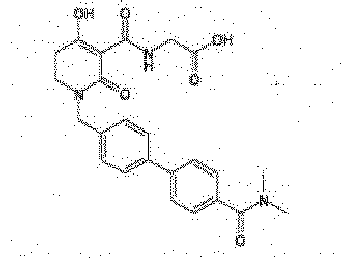
1H NMR (300 MHz, DMSO-d6) δ ppm 2.63 - 2.76 (m, 2 H) 2.89 - 3.05 (m, 6 H) 3.36 - 3.48 (m, 2 H) 3.97 - 4.08 (m, 2 H) 4.56 - 4.71 (m, 2 H) 7.36 - 7.42 (m, 2 H) 7.49 (d, J=8.1 Hz, 2 H) 7.70 (t, J=8.1 Hz, 4 H) 9.96 - 10.31 (m, 1 H). 2 - 1 MS ESI/APCI Dual posi: 452[M+H]+. MS ESI/APCI Dual nega: 450[M-H]-. Example 2-33 
1H NMR (300 MHz, CHLOROFORM-d) δ ppm 1.00 - 1.26 (m, 1 H) 1.50 - MS (m, 9 H) 4.20 (d, J=5.8 Hz, 2 H) 4.58 (s, 2 H) 7.27 - 7.57 (m, 8 H) 8.17 - 8.39 (m, 1 H). 2 - 2 MS ESI/APCI Dual posi: 469[M+H]+. MS ESI/APCI Dual nega: 467[M-H]-. Example 2-34 
1H NMR (300 MHz, DYSO-d6) δ ppm 2.70 (1, J=7.2 Hz, 2 H) 3.36 - 3.55 (m, 2 H) 3.96 - 4.09 (m, 2 H) 4.54 - 4.71 (m, 2 H) 7.41 (d, J=8.4 Hz, 2 H) 7.64 - 7.86 (m, 4 H) 8.01 (d, J=8.4 Hz, 2 H) 9.94 - 10.32 (m, 1 H) 12.91 (br. s., 2 H). 2 - 2 MS ESI/APCI Dual posi: 425[M+H]+. MS ESI/APCI Dual nega: 423[M-H]-. Example 2-35 
1H NMR (300 NHz, DNSO-d6) δ ppm 2.55 - 2.73 (m, 2 H) 3.39 - 3.49 (m, 2 H) 3.75 - 3.91 (m, 5 H) 4.61 (s, 2 H) 6.96 - 7.10 (m, 2 H) 7.70 - 7.79 (m, 1 H) 7.82 - 7.91 (m, 1 H) 7.98 - 8.08 (m, 2 H) 8.52 - 8.60 (m, 1 H). Na 2 - 3 MS ESI/APCI Dual posi: 412[M+H]+. MS ESI/APCI Dual nega: 410[M-H]-. Example 2-36 
1H NMR (300 MHz, DMSO-d6) δ ppm 2.54 - 2.71 (m, 2 B) 3.38 - 3.48 (m, 2 H) 3.58 - 3.70 (m, 2 H) 4.64 (s, 2 H) 7.42 - 7.52 (m, 2 H) 7.77 - 7.85 (m, 1 H) 7.94 - 8.03 (m, 1 H) 8.15 - 8.26 (m, 2 H) 8.59 - 8.66 (m, 1 H). Na 2 - 3 MS ESI/APCI Dual posi: 466[M+H]+. MS ESI/APCI Dual nega: 464[M-H]-. Example 2-37 
1H NMR (300 MHz, DNSO-d6) δ ppm 2.38 - 2.60 (m, 2 H) 3.44 (d, J=4.2 Hz, 2 H) 4.61 (s, 2 H) 7.23 - 7.40 (m, 2 H) 7.74 - 7.83 (m, 1 H) 7.89 - 7.97 (m, 1 H) 8.07 - 8.18 (m, 2 H) 8.56 - 8.63 (m, 1 H). Na 2 - 3 MS ESI/APCI Dual posi: 400[M+H]+. MS ESI/APCI Dual nega: 398[M-H]-. [Table 22-6] Compound No. Structure Analytical Data Salt information Example Example 2-38 
1H NMR (300 MHz, DMSO-d6) δ ppm 2.41 - 2.61 (m, 2 H) 3.40 - 3.50 (m, 2 H) 3.80 (s, 3 H) 4.67 (s, 2 H) 6.98 - 7.11 (m, 2 H) 7.28 - 7.38 (m, 1 H) 7.59 - 7.72 (m, 2 H) 7.94 - 8.03 (m, 1 H) 8.74 - 8.81 (m, 1 H). Na 2 - 3 MS ESI/APCI Dual posi: 412[M+H]+. MS ESI/APCI Dual nega: 410[M-H]-. Example 2-39 
1H NMR (300 MHz, DMSO-d6) δ ppm 2.56 - 2.77 (m, 2 H) 3.45 - 3.71 (m, 4 H) 4.71 (s, 2 H) 7.34 - 7.55 (m, 3 H) 7.79 - 7.92 (m, 2 H) 8.02 - 8.12 (m, 1 H) 8.81 - 8.89 (m, 1 H). Na 2 - 3 Example 2-40 
1H NMR (300 MHz, DMSO-d6) δ ppm 2.48 - 2.76 (m, 2 H) 3.37 - 3.61 (m, 4 H) 4.72 (s, 2 H) 7.38 - 7.47 (m, 1 H) 7.79 - 7.90 (m, 2 H) 7.91 - 8.03 (m, 2 H) 8.08 - 8.18 (m, 1 H) 8.86 - 8.94 (m, 1 H). Na 2 - 3 Example 2-41 
1H NMR (300 MHz, DMSO-d6) 6 ppm 2.48 - 2.65 (m, 2 H) 3.28 - 3.52 (m, 4 H) 3.89 (s, 3 H) 4.62 (s, 2 H) 7.06 - 7.12 (m, 1 H) 7.26 - 7.34 (m, 1 H) 7.37 - 7.45 (m, 2 H) 7.70 - 7.81 (m, 2 H) 8.17 - 8.25 (m, 1 H). Na 2 - 3 Example 2-42 
1H NMR (600 MHz, DMSO-d6) δ ppm 2.41 - 2.53 (m, 2 H) 3.22 - 3.40 (m, 7 H) 4.51 (s, 2 H) 7.24 - 7.29 (m, 2 H) 7.31 - 7.36 (m, 2 H) 7.54 (s, 1 H) 9.85 - 9.99 (m, 1 H). Na 2 - 2 MS ESI/APCI Dual posi: 418[M+H]+. Example 2-43 
1H NMR (600 MHz, DMSO-d6) δ ppm 2.45 - 2.56 (m, 2 H) 3.21 - 3.47 (m, 4 H) 4.52 (s, 2 H) 7.20 - 7.26 (m, 2 H) 7.28 - 7.39 (m, 3 H) 8.54 (s, 1 H) 9.81 - 10.16 (m, 1 H). Na 2 - 2 MS ESI/APCI Dual posi: 404[M+H]+. Example 2-44 
1H NMR (300 MHz, DMSO-d6) δ ppm 2.28 - 2.42 (m, 5 H) 3.21 - 3.54 (m, 4 H) 4.66 (s, 2 H) 7.25 - 7.36 (m, 3 H) 7.55 - 7.63 (m, 2 H) 7.93 - 8.04 (m, 1 H) 8.73 - 8.80 (m, 1 H) 10.08 - 10.20 (m, 1 H). Na 2 - 3 MS ESI/APCI Dual posi: 396[M+H]+. [Table 22-7] Compound No. Structure Analytical Data Salt information Example Example 2-45 
1H HMR (300 MHz DMSO-d6) δ ppm 2.36 (s, 3 H) 2.44 - 2.62 (m, 2 H) 3.26 - 3.56 (m, 4 H) 4.61 (s, 2 H) 7.24 - 7.35 (m, 2 H) 7.70 - 7.80 (m, 1 H) 7.86 - 8.03 (n, 3 H) 8.55 - 8.61 (m, 1 H) 9.99 - 10.16 (m, 1 H). Na 2 - 3 MS ESI/APCI Dual posi: 396[M+H]+. Example 2-46 
1H HMR (300 MHz, DMSO-d6) δ ppm 2.45 - 2.61 (m, 2 H) 3.25 - 3.59 (m, 4 H) 4.62 (s, 2 H) 7.48 - 7.59 (m, 2 H) 7.74 - 7.84 (m, 1 H) 7.90 - 8.01 (m, 1 H) 8.05 - 8.16 (m, 2 H) 8.61 (s, 1 H) 9.99 - 10.17 (m, 1 H). Na 2 - 3 MS ESI/APCI Dual posi: 416[M+H]+. Example 2-47 
1H HMR (300 MHz, DMSO-d6) δ ppm 2.40 - 2.58 (m, 5 H) 3.21 - 3.58 (m, 4 H) 4.56 (s, 2 H) 6.77 - 6.84 (m, 1 H) 7.22 - 7.34 (m, 3 H) 7.49 - 7.59 (m, 2 H) 9.98 - 10.21 (m, 1 H). Na 2 - 2 MS ESI/APCI Dual posi: 401[M+H]+. Example 2-48 
1H NMR (300 MHz, DMSO-d6) δ ppm 0.67 - 0.78 (m, 2 H) 0.94 - 1.05 (m, 2 H) 1.88 - 2.04 (m, 1 H) 2.47 - 2.61 (m, 2 H) 3.37 (t, J=7.0 Hz, 2 H) 3.51 - 3.59 (m, 2 H) 4.60 (s, 2 H) 7.13 - 7.22 (m, 2 H) 7.70 - 7.79 (m, 1 H) 7.84 - 8.00 (m, 3 H) 8.54 - 8.61 (m, 1 H) 10.06 - 10.18 (m, 1 H). Na 2 - 3 MS ESI/APCI Dual posi: 422[M+H]+. Example 2-49 
1H NMR (300 MHz, DMSO-d6) 6 ppm 0.66 - 0.75 (m, 2 H) 0.91 - 1.03 (m, 2 H) 1.88 - 2.03 (m, 1 H) 2.48 - 2.62 (m, 2 H) 3.34 (t, J=7.1 Hz, 2 H) 3.60 (d, J=4.5 Hz, 2 H) 4.60 (s, 2 H) 7.08 - 7.20 (m, 2 H) 7.30 - 7.39 (m, 2 H) 7.48 - 7.65 (m, 4 H) 10.06 - 10.21 (m, 1 H). Na 2 - 3 US ESI/APCI Dual posi: 421[M+H]+. Example 2-50 
1H HMR (300 MHz, DMSO-d6) δ ppm 0.67 - 0.78 (m, 2 H) 0.88 - 1.07 (m, 2 H) 1.90 - 2.05 (m, 1 H) 2.49 - 2.64 (m, 2 H) 3.38 - 3.56 (m, 4 H) 4.68 (s, 2 H) 7.13 - 7.26 (m, 2 H) 7.29 - 7.39 (m, 1 H) 7.53 - 7.64 (m, 2 H) 7.92 - 8.06 (m, 1 H) 8.72 - 8.84 (m, 1 H) 9.96 - 10.16 (m, 1 H). Na 2 - 3 MS ESI/APCI Dual posi: 422[M+H]+. Example 2-51 
1H NMR (300 MHz, DMSO-d6) δ ppm 2.40 - 2.54 (m, 2 H) 3.34 (t, J=6.9 Hz, 2 H) 3.53 (d, J=4.5 Hz, 2 H) 3.83 (s, 3 H) 4.61 (s, 2 H) 6.93 - 7.06 (m, 1 H) 7.32 - 7.46 (m, 1 H) 7.58 - 7.68 (m, 2 H) 7.72 - 7.82 (m, 1 H) 7.87 - 7.99 (m, 1 H) 8.55 - 8.87 (m, 1 H) 10.05 - 10.21 (m, 1 H). Na 2 - 3 MS ESI/APCI Dual posi: 412[M+H]+. [Table 22-8] Compound No. Structure Analytical Data Salt information Example Example 2-52 
1H NMR (300 MHz, DNSO-d6) δ ppm 2.53 - 2.66 (m, 2 H) 3.41 (t, J=7.1 Hz, 2 H) 3.62 (d, J=4.7 Hz, 2 H) 3.82 (s, 3 H) 4.62 (s, 2 H) 7.01 - 7.19 (m, 2 H) 7.32 - 7.48 (m, 1 H) 7.66 - 7.85 (m, 3 H) 8.54 - 8.66 (m, 1 H) 10.02 - 10.19 (m, 1 H). Na 2 - 3 MS ESI/APCI Dual posi: 412[M+H]+. Example 2-53 
1H NMR (300 MHz, DMSO-d6) 6 ppm 2.47 - 2.61 (m, 2 H) 3.34 (t, J=7.0 Hz, 2 H) 3.57 (d, J=4.4 Hz, 2 H) 3.90 (s, 3 H) 4.62 (s, 2 H) 7.34 - 7.47 (m, 2 H) 7.57 - 7.65 (m, 1 H) 7.69 - 7.77 (m, 2 H) 8.25 - 8.31 (m, 1 H) 8.44 - 9.50 (m, 1 H) 10.07 - 10.22 (n, 1 H). Na 2 - 2 MS ESI/APCI Dual posi: 412[M+H]+. Example 2-54 
1H NMR (300 MHz, DMSO-d6) δ ppm 2.45 - 2.61 (m, 2 H) 3.28 - 3.41 (m, 2 H) 3.49 - 3.60 (m, 2 H) 3.85 (s, 3 H) 4.61 (s, 2 H) 7.11 - 7.23 (m, 1 H) 7.27 - 7-41 (m, 2 H) 7.43 - 7.55 (m, 2 H) 3.30 - 8.52 (m, 2 H) 10.06 - 10.23 (m, 1 H). Na 2 - 2 MS FSI/APCI Dual posi: 412[M+H]+. -

-

- To the compound (5.00 g) obtained in Example 2-1(1), a solution (50 mL) of 4 mol/L hydrogen chloride in 1,4-dioxane was added and the mixture was stirred at 70°C for three hours. The reaction mixture was cooled with ice and the resulting precipitate was recovered by filtration to give N-{[4-hydroxy-1-(4-iodobenzyl)-2-oxo-1,2,5,6-tetrahydro-3-pyridinyl]carbonyl}glycine as a colorless solid (3.37 g).
1H NMR (300 MHz, DMSO-d6) δ ppm 2.65 (br. s., 2 H) 3.37 (t, J=7.1 Hz, 2 H) 4.02 (d, J=5.8 Hz, 2 H) 4.53 (s, 2 H) 7.11 (d, J=8.4 Hz, 2 H) 7.62 - 7.81 (m, 2 H) 10.03 (br. s., 1 H).
MS ESI/APCI Dual posi: 453[M+Na]+.
MS ESI/APCI Dual nega: 429[M-H]-. - The compound (100 mg) obtained in step (1) above was used and treated by the same technique as in Example 2-2(1) to give the titled compound as a pale yellow solid (45.9 mg).
1H NMR (300 MHz, DMSO-d6) δ ppm 2.65 - 2.75 (m, 2 H) 3.37 - 3.49 (m, 2 H) 3.96 - 4.11 (m, 2 H) 4.59 - 4.71 (m, 2 H) 7.33 - 7.44 (m, 4 H) 7.68 - 7.76 (m, 2 H) 7.81 - 7.93 (m, 4 H) 9.88 - 10.33 (m, 1 H) 12.85 (br. s., 1 H).
MS ESI/APCI Dual posi: 460[M+H]+.
MS ESI/APCI Dual nega: 458[M-H]-. - The compounds of the following Examples 2-56 to 2-61 were synthesized from commercial grades of the corresponding boronic acid analogs by the method described in Example 2-55 or modifications thereof. The structures of the synthesized compounds and their NMR and MS data are shown in Table 22-9.
[Table 22-9] Compound No. Structure Analytical Data Salt information Example 2-56 
1H NMR (300 MHz, DMSO-d6) δ ppm 2.55 - 2.69 (m, 2 H) 3.39 (t, J=7.0 Hz, 2 H) 3.57 (d, J=4.7 Hz, 2 H) 4.65 (s, 2 H) 7.47 (d, J=8.2 Hz, 2 H) 7.82 (d, J=8.2 Hz, 2 H) 8.11 (d, J=8.4 Hz, 1 H) 8.42 (dd, J=8.4, 2.2 Hz, 1 H) 9.10 (d, J=1.6 Hz, 1 H) 10.04 (br. s., 1 H). Na MS ESI/APCI Dual posi: 460[M+H]+. MS ESI/APCI Dual nega: 458[M-H]-. Example 2-57 
1H NMR (300 MHz, DMSO-d6) δ ppm 2.60 (br. s., 2 H) 2.82 (q, J=6.3 Hz, 2 H) 3.28 - 3.47 (m, 6 H) 3.64 (d, J=4.7 Hz, 2 H) 4.63 (s, 2 H) 7.42 (d, J=8.2 Hz, 2 H) 7.64 - 7.79 (m, 3 H) 7.80 - 7.96 (m, 4 H) 10.08 (br. s., 1 H). Na MS ESI/APCI Dual posi: 504[M+H]+. MS ESI/APCI Dual nega: 502[M-H]-. Example 2-58 
1H NMR (300 MHz, DMSO-d6) δ ppm 2.60 - 2.78 (m, 2 H) 3.43 (t, J=7.0 Hz, 2 H) 4.03 (d, J=5.6 Hz, 2 H) 4.66 (s, 2 H) 7.46 (d, J=8.2 Hz, 2 H) 7.81 (d, J=8.2 Hz, 2 H) 8.13 (dd, J=8.2, 0.7 Hz, 1 H) 8.29 (dd, J=8.2, 2.3 Hz, 1 H) 9.02 (dd, J=2.3, 0.7 Hz, 1 H) 10.05 (br. s., 1 H). HCl MS ESI/APCI Dual posi: 426[M+H]+. MS ESI/APCI Dual nega: 424[M-H]-. Example 2-59 
1H NMR (300 MHz, DMSO-d6) δ ppm 2.69 (br. s., 2 H) 3.33 - 3.47 (m, 2 H) 4.03 (d, J=5.6 Hz, 2 H) 4.62 (s, 2 H) 7.12 (d, J=9.9 Hz, 1 H) 7.40 (d, J=8.2 Hz, 2 H) 7.65 (d, J=8.2 Hz, 2 H) 8.15 - 8.40 (m, 4 H) 10.05 (br. s., 1 H). HCl MS ESI/APCI Dual posi: 397[M+H]+. Example 2-60 
1H NMR (300 MHz, DMSO-d6) δ ppm 2.58 - 2.75 (m, 2 H) 3.33 - 3.45 (m, 2 H) 4.03 (d, J=5.8 Hz, 2 H) 4.50 (s, 2 H) 6.58 (d, J=9.5 Hz, 1 H) 7.34 (d, J=8.2 Hz, 2 H) 7.56 (d, J=8.2 Hz, 2 H) 7.81 (d, J=2.6 Hz, 1 H) 7.94 (dd, J=9.5, 2.6 Hz, 1 H) 10.07 (br. s., 1 H). HCl MS ESI/APCI Dual posi: 398[M+H]+. MS ESI/APCI Dual nega: 396[M-H]-. Example 2-61 
1H NMR (300 MHz, DMSO-d6) δ ppm 2.68 (br. s., 2 H) 3.36 - 3.47 (m, 2 H) 4.03 (d, J=5.6 Hz, 2 N7 4.62 (s, 2 H) 7.41 (d, J=8.4 Hz, 2 H) 7.70 (d, J=8.4 Hz, 2 H) 8.93 (s, 2 H) 10.05 (br. s., 1 H). HCl MS ESI/APCI Dual posi: 298[M+H]+. MS ESI/APCI Dual nega: 396[M-H]-. -

-

- Indium(III) chloride (768 mg) was dried under reduced pressure while it was heated with a thermal gun. After being left to cool to room temperature, the reaction system was internally purged with argon. To the reaction system, dehydrated tetrahydrofuran (20.0 mL) was added and with stirring at -80°C, cyclopentyl magnesium bromide (2.0 mol/L, solution in diethyl ether, 5.23 mL) was added dropwise. After being stirred at that temperature for 30 minutes, the reaction mixture was brought to room temperature and stirred for 45 minutes. The compound (1.50 g) obtained in Example 2-1(1) and bis(tri-tert-butylphosphine)palladium(0) (788 mg) were added and the mixture was stirred at an external temperature of 75°C for two hours. After standing to cool to room temperature, methanol (5.00 mL) was added and the mixture was stirred for 30 minutes. After concentrating under reduced pressure, chloroform (30.0 mL) was added and the insoluble matter was removed by passage through Celite (registered trademark). The filtrate was concentrated under reduced pressure. The resulting residue was purified by preparative HPLC and further purified twice by silica gel column chromatography (chloroform:ethyl acetate = 100:0-85:15) to give tert-butyl N-{[1-(4-cyclopentylbenzyl)-4-hydroxy-2-oxo-1,2,5,6-tetrahydropyridin-3-yl]carbonyl}glycinate as a pale brown oil (600 mg).
1H NMR (600 MHz, CHLOROFORM-d) δ ppm 1.49 (s, 9 H) 1.51 - 1.61 (m, 2 H) 1.64 - 1.73 (m, 2 H) 1.75 - 1.84 (m, 2 H) 2.01 - 2.10 (m, 2 H) 2.48 - 2.62 (m, 2 H) 2.93 - 3.03 (m, 1 H) 3.28 - 3.38 (m, 2 H) 3.97 - 4.06 (m, 2 H) 4.58 (s, 2 H) 7.14 - 7.24 (m, 4 H) 10.19 - 10.46 (m, 1 H).
MS ESI/APCI Dual posi: 451[M+Na]+. - The compound (590 mg) obtained in step (1) above was used as a starting material and treated by the same techniques as in Example 1-3(2) and (3) to give the titled compound as an orange solid (118 mg).
1H NMR (600 MHz, DMSO-d6) δ ppm 1.46 - 1.55 (m, 2 H) 1.58 - 1.68 (m, 2 H) 1.70 - 1.80 (m, 2 H) 1.93 - 2.03 (m, 2 H) 2.48 - 2.60 (m, 2 H) 2.89 - 2.98 (m, 1 H) 3.27 - 3.34 (m, 2 H) 3.62 - 3.68 (m, 2 H) 4.52 (s, 2 H) 7.13 - 7.25 (m, 4 H) 10.01 - 10.22 (m, 1 H).
MS ESI posi: 373[M+H]+.
MS ESI nega: 371[M-H]-. -

- Instead of cyclopentyl magnesium bromide (2.0 mol/L, solution in diethyl ether), cyclopropyl magnesium bromide (about 0.7 mol/L, solution in tetrahydrofuran) was used and treated by the same technique as in Example 3-1 to give the titled compound as a pale gray solid (527 mg).
1H NMR (300 MHz, DMSO-d6) δ ppm 0.60 - 0.67 (m, 2 H) 0.88 - 0.96 (m, 2 H) 1.81 - 1.95 (m, 1 H) 2.47 - 2.54 (m, 2 H) 3.20 - 3.30 (m, 2 H) 3.47 - 3.54 (m, 2 H) 4.50 (s, 2 H) 6.97 - 7.08 (m, 2 H) 7.10 - 7.19 (m, 2 H) 10.08 (br. s., 1 H).
MS ESI posi: 345[M+H]+, 367[M+Na]+. -

-

- Instead of the compound obtained in Reference Example A-1, the compound obtained in Reference Example A-6 (8.05 g) was used as a starting material and treated by the same technique as in Example 1-1(1) to give a mixture (13.0 g) containing ethyl N-(2,4-dimethoxybenzyl)-N-(3-ethoxy-3-oxo-propanoyl)-β-alaninate.
MS ESI/APCI Dual posi: 382[M+H]+, 404[M+Na]+. -

- To a solution in ethanol (160 mL) of the mixture (13.0 g) obtained in step (1) above, sodium ethoxide (about 20%, solution in ethanol, 20.8 mL) was added and the resulting mixture was stirred at an external temperature of 85 °C for two hours. After cooling to room temperature, ethyl acetate and 2 mol/L hydrochloric acid were added. Extraction was conducted with ethyl acetate and the combined organic layers were washed with saturated brine. After drying over anhydrous magnesium sulfate and removing the desiccant by filtration, the filtrate was concentrated under reduced pressure. The resulting residue was purified by silica gel column chromatography (n-hexane:ethyl acetate = 95:5-5:95) to give ethyl 1-(2,4-dimethoxybenzyl)-4-hydroxy-2-oxo-1,2,5,6-tetrahydropyridin-3-carboxylate as a brown oil (8.20 g).
1H NMR (300 MHz, CHLOROFORM-d) δ ppm 1.40 (t, J=7.1 Hz, 3 H) 2.55 (t, J=6.6 Hz, 2 H) 3.33 - 3.44 (m, 2 H) 3.75 - 3.85 (m, 6 H) 4.38 (q, J=7.1 Hz, 2 H) 4.57 (s, 2 H) 6.37 - 6.50 (m, 2 H) 7.20 - 7.26 (m, 1 H).
MS ESI/APCI Dual posi: 336[M+H]+.
MS ESI/APCI Dual nega: 334[M-H]-. -

- To a solution in 1,2-dimethoxyethane (4.60 mL) of the compound (311 mg) obtained in step (2) above, the compound (195 mg) obtained in Reference Example E-1 was added and the mixture was refluxed for two hours. After being cooled to room temperature, the reaction mixture was concentrated under reduced pressure. Purification by silica gel column chromatography (n-hexane:ethyl acetate = 95:5-65:35) gave 2-(trimethylsilyl)ethyl N-{[1-(2,4-dimethoxybenzyl)-4-hydroxy-2-oxo-1,2,5,6-tetrahydropyridin-3-yl]carbonyl}glycinate as a pale yellow oil (283 mg).
1H NMR (300 MHz, CHLOROFORM-d) δ ppm -0.03 - 0.01 (m, 9 H) 0.97 - 1.07 (m, 2 H) 2.48-2.62 (m, 2 H) 3.33 - 3.43 (m, 2 H) 3.76 - 3.84 (m, 6 H) 4.03 - 4.13 (m, 2 H) 4.22-4.29 (m, 2 H) 4.52 - 4.59 (m, 2 H) 6.41 - 6.50 (m, 2 H) 7.11 - 7.23 (m, 1 H). - To a solution in tetrahydrofuran (3.00 mL) of the compound (283 mg) obtained in step (3) above, tetrabutylammonium fluoride hydrate (1 mol/L, solution in tetrahydrofuran, 0.609 mL) was added and the mixture was stirred at room temperature for 12 hours. More tetrabutylammonium fluoride hydrate (1 mol/L, solution in tetrahydrofuran, 0.609 mL) was added and the mixture was stirred at room temperature for 24.5 hours. The solvent was concentrated under reduced pressure and the resulting residue was purified by silica gel column chromatography (chloroform:methanol = 100:0-80:20). To a solution in ethanol of the resulting residue, water was added and the mixture was stirred for 60 hours. After cooling to 0°C, the precipitate was recovered by filtration to give the titled compound as a colorless solid (163 mg).
1H NMR (200 MHz, DMSO-d6) δ ppm 2.36 - 2.74 (m, 2 H) 3.22 - 3.43 (m, 2 H) 3.75 (s, 3 H) 3.79 (s, 3 H) 3.99 (d, J=5.7 Hz, 2 H) 4.37 - 4.52 (m, 2 H) 6.35 - 6.63 (m, 2 H) 7.07 (d, J=7.5 Hz, 1 H) 9.91 - 10.22 (m, 1 H).
MS ESI/APCI Dual posi: 365[M+H]+, 387[M+Na]+.
MS ESI/APCI Dual nega: 363[M-H]-. -

- Instead of the compound obtained in Reference Example A-6, the compound obtained in Reference Example A-7 (1.34 g) was used as a starting material and treated by the same technique as in Example 4-1 to give the titled compound as a colorless solid (115 mg).
1H NMR (300 MHz, CHLOROFORM-d) δ ppm 2.48 - 2.69 (m, 2 H) 3.24 - 3.40 (m, 2 H) 4.12 - 4.24 (m, 2 H) 4.47 - 4.61 (m, 4 H) 5.24 - 5.34 (m, 1 H) 5.35 - 5.47 (m, 1 H) 6.05 (ddt, J=17.3, 10.5, 5.2 Hz, 1 H) 6.84 - 6.93 (m, 2 H) 7.14 - 7.23 (m, 2 H) 10.06 - 10.49 (m, 1 H). MS ESI/APCI Dual posi: 361[M+H]+, 383[M+Na]+.
MS ESI/APCI Dual nega: 359[M-H]-. -

-

- Instead of the compound obtained in Reference Example A-6, the compound (1.34 g) obtained in Reference Example A-7 was used as a starting material and treated by the same techniques as in Example 4-1(1) to (3) to give 2-(trimethylsilyl)ethyl N-({1-[4-(allyloxy)benzyl]-4-hydroxy-2-oxo-1,2,5,6-tetrahydro-3-pyridinyl}carbonyl)glycinate as a pale yellow oil (1.16 g).
1H NMR (300 MHz, CHLOROFORM-d) δ ppm 0.05 (s, 9 H) 0.97 - 1.09 (m, 2 H) 2.45 - 2.64 (m, 2 H) 3.25 - 3.37 (m, 2 H) 4.05 - 4.16 (m, 2 H) 4.23 - 4.32 (m, 2 H) 4.50 - 4.56 (m, 4 H) 5.24 - 5.34 (m, 1 H) 5.35 - 5.47 (m, 1 H) 6.05 (ddt, J=17.3, 10.6, 5.3, 5.3 Hz, 1 H) 6.83 - 6.93 (m, 2 H) 7.14 - 7.22 (m, 2 H) 10.19 - 10.53 (m, 1 H).
MS ESI/APCI Dual posi: 461[M+H]+.
MS ESI/APCI Dual nega: 459[M-H]-. -

- To a solution in tetrahydrofuran (3.8 mL) of the compound (520 mg) obtained in step (1) above, tetrakis(triphenylphosphine)palladium(0) (261 mg) and morpholine (492 µL) were added and the mixture was stirred at room temperature for 22.5 hours. After concentrating under reduced pressure, the resulting residue was purified by silica gel column chromatography (n-hexane:ethyl acetate = 85:15-55:45) to give 2-(trimethylsilyl)ethyl N-{[4-hydroxy-1-(4-hydroxybenzyl)-2-oxo-1,2,5,6-tetrahydro-3-pyridinyl]carbonyl}glycinate as a pale yellow oil (362 mg).
1H NMR (300 MHz, CHLOROFORM-d) δ ppm 0.05 (s, 9 H) 0.96 - 1.12 (m, 2 H) 2.46 - 2.66 (m, 2 H) 3.24 - 3.37 (m, 2 H) 4.05 - 4.16 (m, 2 H) 4.22 - 4.35 (m, 2 H) 4.54 (s, 2 H) 6.74 - 6.86 (m, 2 H) 7.10 - 7.19 (m, 2 H) 10.16 - 10.49 (m, 1 H).
MS ESI/APCI Dual posi: 421[M+H]+, 443[M+Na]+.
MS ESI/APCI Dual nega: 419[M-H]-, 455[M+Cl]-. - The compound (362 mg) obtained in step (2) above was used and treated by the same technique as in 4-1(4) to give the titled compound as a colorless amorphous mass (138 mg).
1H NMR (300 MHz, DMSO-d6) δ ppm 2.38 - 2.71 (m, 2 H) 3.25 - 3.36 (m, 2 H) 3.96 - 4.09 (m, 2 H) 4.39 - 4.54 (m, 2 H) 6.65 - 6.79 (m, 2 H) 7.04 - 7.15 (m, 2 H) 9.25 - 9.46 (m, 1 H) 10.01 - 10.26 (m, 1 H).
MS ESI/APCI Dual posi: 343[M+Na]+.
MS ESI/APCI Dual nega: 319[M-H]-. -


- The compound (2.00 g) obtained in Example 1-22 was isolated and purified by optical preparative HPLC to give a less polar isomer (956 mg, 99.9%ee) and a more polar isomer (861 mg, 94.1%ee). To a solution of the resulting less polar isomer (956 mg) in acetone, 1 mol/L sodium hydroxide in aqueous solution (2.42 mL) was added. The resulting precipitate was recovered by filtration to give the titled compound of Example 5-1 as a colorless solid (560 mg, 99.9%ee). The aforementioned more polar isomer (861 mg) was likewise treated using 1 mol/L sodium hydroxide in aqueous solution (2.18 mL) to give the titled compound of Example 5-2 as a colorless solid (393 mg, 98.7%ee). The compounds of Examples 5-1 and 5-2 were respectively converted to the compounds described in Reference Examples X-1 and X-2 cited hereinafter and the absolute configuration at position 5 of the 2-oxo-1,2,5,6-tetrahydropyridine ring of each isomer was determined by X-ray crystallography.
- 1H NMR (300 MHz, DMSO-d6) δ ppm 1.03 (d, J=6.8 Hz, 3 H) 2.55 - 2.74 (m, 1 H) 2.96 - 3.12 (m, 1 H) 3.37 - 3.47 (m, 1 H) 3.53 (d, J=4.5 Hz, 2 H) 4.45 - 4.73 (m, 2 H) 7.29 - 7.40 (m, 3 H) 7.41 - 7.50 (m, 2 H) 7.59 - 7.70 (m, 4 H) 10.18 (br. s., 1 H).
- MS ESI/APCI Dual posi: 395[M+H]+.
- MS ESI/APCI Dual nega: 393[M-H]-.
- Optical HPLC retention time: 9.136 min.
- 1H NMR (300 MHz, DMSO-d6) δ ppm 1.03 (d, J=6.8 Hz, 3 H) 2.56 - 2.74 (m, 1 H) 2.97 - 3.13 (m, 1 H) 3.37 - 3.47 (m, 1 H) 3.53 (d, J=4.5 Hz, 2 H) 4.45 - 4.73 (m, 2 H) 7.29 - 7.40 (m, 3 H) 7.40 - 7.50 (m, 2 H) 7.59 - 7.72 (m, 4 H) 10.18 (br. s., 1 H).
- MS ESI/APCI Dual posi: 395[M+H]+.
- MS ESI/APCI Dual nega: 393[M-H]-.
- Optical HPLC retention time: 9.705 min.
-

-

- Instead of monobenzyl malonate and glycine tert-butyl hydrochloride, the compound (300 mg) obtained in Reference Example G-1 and the compound (513 mg) obtained in Reference Example A-306 were respectively used and treated by the same technique as in Reference Example G-1(1) to give methyl 1-{(4-biphenylylmethyl)[3-({2-[(2-methyl-2-propanyl)oxy]-2-oxoethyl}amino)-3-oxopropanoyl]amino}cyclopentanecarboxylate as a colorless solid (478 mg).
1H NMR (600 MHz, CHLOROFORM-d) δ ppm 1.47 (s, 9 H) 1.60 - 1.68 (m, 2 H) 1.71 - 1.80 (m, 2 H) 1.84 - 1.92 (m, 2 H) 2.44 - 2.50 (m, 2 H) 3.32 (s, 2 H) 3.76 (s, 3 H) 3.93 (d, J=5.8 Hz, 2 H) 4.73 (s, 2 H) 7.33 - 7.47 (m, 5 H) 7.56 - 7.63 (m, 4 H) 7.81 - 7.88 (m, 1 H).
MS ESI posi: 531[M+Na]+. - To a solution in ethanol (5.31 mL) of the compound (270 mg) obtained in step (1) above, cesium carbonate (346 mg) was added and the mixture was stirred at room temperature for an hour. The reaction mixture was concentrated under reduced pressure and 1 mol/L hydrochloric acid was added to the resulting residue. Extraction was conducted with ethyl acetate and the combined organic layers were dried over anhydrous sodium sulfate. After removing the desiccant by filtration, the filtrate was concentrated under reduced pressure. To a solution of the resulting concentrate (253 mg) in chloroform (4.88 mL), trifluoroacetic acid (2.44 mL) was added and the mixture was stirred at room temperature for 15 hours. After concentrating under reduced pressure, the residue was recrystallized with a liquid mixture of n-hexane and ethyl acetate and the precipitate was recovered by filtration to give the titled compound as a colorless solid (335 g).
1H NMR (600 MHz, DMSO-d6) δ ppm 1.67 - 1.84 (m, 6 H) 1.84 - 1.92 (m, 2 H) 3.97 - 4.02 (m, 2 H) 4.58 (s, 2 H) 7.33 - 7.40 (m, 3 H) 7.43 - 7.48 (m, 2 H) 7.61 - 7.67 (m, 4 H) 8.34 - 8.41 (m, 1 H).
MS ESI/APCI Dual posi: 421[M+H]+.
MS ESI/APCI Dual nega: 419[M-H]-. -

- To a solution of the compound (400 mg) of Reference Example G-3 in ethyl acetate (7.07 mL), the compound of Reference Example A-307 (392 mg), triethylamine (428 mg) and propylphosphonic acid anhydride (cyclic trimer) (50%, solution in ethyl acetate, 1.35g) were added and the mixture was stirred at room temperature for two hours. To the reaction mixture, a saturated aqueous solution of sodium hydrogencarbonate was added and extraction was conducted with ethyl acetate. The combined organic layers were dried over anhydrous sodium sulfate. The desiccant was removed by filtration and the filtrate was concentrated under reduced pressure. To a solution of the resulting residue (708 mg) in ethanol (7.07 mL), cesium carbonate (919 mg) was added and the mixture was stirred at room temperature for two hours. The reaction mixture was concentrated under reduced pressure and 1 mol/L hydrochloric acid was added to the resulting residue. Extraction was conducted with chloroform and the combined organic layers were dried over anhydrous sodium sulfate. After removing the desiccant by filtration, the filtrate was concentrated under reduced pressure. To a solution of the resulting residue (650 mg) in methanol (2.82 mL), 2 mol/L sodium hydroxide in aqueous solution (1.41 mL) was added and the mixture was stirred at room temperature for 15 hours. To the reaction mixture, 2 mol/L hydrochloric acid was added and after the resulting mixture was dissolved in N,N-dimethylformamide, purification was conducted by preparative HPLC. To a solution of the resulting purified product (170 mg) in acetone (4.37 mL), 1 mol/L sodium hydroxide in aqueous solution (437 µL) was added and the mixture was stirred at room temperature for 10 minutes. The reaction mixture was concentrated under reduced pressure and reduced to powder with n-hexane, giving the titled compound as a colorless solid (180 mg).
1H NMR (300 MHz, DMSO-d6) δ ppm 0.26 - 0.35 (m, 2 H) 0.51 - 0.61 (m, 2 H) 1.08 (d, J=6.5 Hz, 3 H) 1.13 - 1.28 (m, 1 H) 2.12 - 2.26 (m, 1 H) 2.75 - 2.93 (m, 1 H) 3.51 - 3.60 (m, 1 H) 3.60 - 3.66 (m, 2 H) 3.78 (d, J=7.0 Hz, 2 H) 4.05 (d, J=14.9 Hz, 1 H) 4.92 (d, J=14.9 Hz, 1 H) 6.84 - 6.92 (m, 2 H) 7.17 - 7.26 (m, 2 H) 10.07 (br. s, 1 H).
MS ESI/APCI Dual posi: 389[M+H]+.
MS ESI/APCI Dual nega: 387[M-H]-. - The compounds of the following Examples 6-3 to 6-36 were synthesized from the compounds of Reference Examples A-308 to A-340 or A-356 and Reference Example G-1, G-2, or G-3 by the method described in Example 6-1 or 6-2 or modifications thereof. The structures of the synthesized compounds and their NMR and MS data are shown in Tables 23-1 to 23-5.
[Table 23-1] Compound No. Structure Analytical Data Salt information Example 6-3 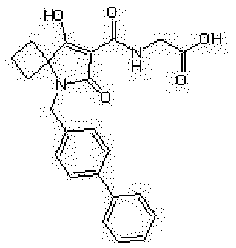
1H NMR (600 MHz, DMSO-d6) δ ppm 1.73 - 1.82 (m, 1 H) 1.87 - 1.96 (m, 1 H) 2.20 - 2.28 (m, 2 H) 2.45 - 2.56 (m, 2 H) 3.97 - 4.01 (m, 2 H) 4.75 (s, 2 H) 7.33 - 7.37 (m, 3 H) 7.43 - 7.48 (m, 2 H) 7.61 - 7.67 (m, 4 H). MS ESI/APCI Dual posi: 407[M+H]+. MS ESI/APCI Dual nega: 405[M-H]-. Example 6-4 
1H NMR (300 MHz, CHLOROFORM-d) δ ppm 1.37 (d, J=6.8 Hz, 3 H) 2.68 (t, J=6.1 Hz, 2 H) 3.62 - 3.74 (m, 2 H) 3.94 - 3.99 (m, 1 H) 4.08 - 4.17 (m, 1 H) 5.11 (d, J=15.2 Hz, 1 H) 7.26 - 7.47 (m, 4 H) 7.51 - 7.60 (m, 5 H) 8.18 (br. s., 1 H). MS ESI/APCI Dual posi: 395[M+H]+. MS ESI/APCI Dual nega: 393[M-H]-. Example 6-5 
1H NMR (300 MHz, DMSO-d6) δ ppm 1.10 (d, J=6.8 Hz, 3 H) 3.13 - 3.21 (m, 1 H) 2.51 (d, J=4.7 Hz, 2 H) 4.08 (d, J=15.5 Hz, 1 H) 4.85 (d, J=15.5 Hz, 1 H) 7.09 - 7.16 (m, 2 H) 7.20 (d, J=8.7 Hz. 1 H) 7.27 (d, J=8.7 Hz, 2 H) 8.21 (dd, J=9.0, 2.3 Hz, 1 H) 8.56 (dt, J=1.7, 0.9 Hz, 1 H) 8.74 (t, J=4.6 Hz, 1 H). Na MS ESI/APCI Dual posi: 466[M+H]+. MS ESI/APCI Dual nega: 464[M-H]-. Example 6-6 
1H NMR (300 MHz, DMSO-d6) δ ppm 1.02 (s, 6 H) 3.84 (d, J=5.4 Hz, 2 H) 4.45 (s, 2 H) 7.04 - 7.14 (m, 2 H) 7.18 (d, J=8.7 Hz, 1 H) 7.37 (d, J=8.7 Hz, 2 H) 8.21 (dd, J=8.7, 2.3 Hz, 1 H) 8.56 (dd, J=1.8, 0.9 Hz, 1 H) 8.92 (t, J=5.6 Hz, 1 H). Na MS ESI/APCI Dual posi: 480[M+H]+. MS ESI/APCI Dual nega: 478[M-H]-. Example 6-7 
1H NMR (300 MHz, DMSO-d6) δ ppm 0.30 (dd, J=4.8, 1.6 Hz, 2 H) 0.48 - 0.60 (m, 2 H) 1.11 - 1.26 (m, 1 H) 3.15 - 3.21 (m, 2 H) 3.65 (d, J=5.0 Hz, 2 H) 3.77 (d, J=7.0 Hz, 1 H) 4.31 (d, J=12.9 Hz, 2 H) 6.68 (d, J=8.5 Hz, 1 H) 6.84 (d, J=8.5 Hz, 1 H) 6.97 (d, J=8.5 Hz, 1 H) 7.08 (d, J=8.5 Hz, 1 H) 8.72 - 8.80 (m, 1 H). Na MS ESI/APCI Dual nega: 359[M-H]-. Example 6-8 
1H NMR (300 MHz, DMSO-d6) δ ppm 0.25 - 0.35 (m, 2 H) 0.50 - 0.60 (m, 2 H) 1.04 (d, J=6.8 Hz, 3 H) 1.13 - 1.23 (m, 1 H) 3.02 - 3.14 (m, 1 H) 3.64 - 3.94 (m, 4 H) 4.72 - 4.78 (m, 2 H) 6.67 (d, J=8.5 Hz, 1 H) 6.72 - 6.86 (m, 1 H) 6.99 (d, J=8.5 Hz, 1 H) 7.06 - 7.13 (m, 1 H) 8.76 - 8.85 (m, 1 H). Na MS ESI/APCI Dual posi: 397[M+Na]+. MS ESI/APCI Dual nega: 373[M-H]-. Example 6-9 
1H NMR (300 MHz, DMSO-d6) δ ppm 0.21 - 0.34 (m, 2 H) 0.49 - 0.61 (m, 2 H) 0.94 (s, 7 H) 2.33 - 2.49 (m, 2 H) 3.67 - 3.84 (m, 2 H) 4.26 - 4.41 (m, 2 H) 6.56 - 6.67 (m, 1 H) 6.69 - 6.85 (m, 1 H) 7.04 - 7.15 (m, 1 H) 7.16 - 7.25 (m, 1 H) 8.90 (br. s., 1 H). Na MS ESI/APCI Dual posi: 411[M+Na]+. MS ESI/APCI Dual nega: 387[M-H]-. [Table 23-2] Compound No. Structure Analytical Data Salt information Example 6-10 
1H NMR (300 MHz, DMSO-d6) δ ppm 0.26 - 0.37 (m, 2 H) 0.49 - 0.64 (m, 2 H) 1.13 - 1.28 (m, 1 H) 3.10 - 3.42 (m, 4 H) 3.46 - 3.55 (m, 2 H) 3.78 (d, J=7.0 Hz, 2 H) 4.65 (d, J=6.4 Hz, 1 H) 5.27 (d, J=15.5 Hz, 1 H) 6.86 (d, J=8.7 Hz, 2 H) 7.12 - 7.22 (m, 4 H) 7.23 - 7.40 (m, 3 H) 10.09 (br. s., 1 H). Na MS ESI/APCI Dual posi: 451[M+H]+. MS ESI/APCI Dual nega: 449[M-H]-. Example 6-11 
1H NMR (300 MHz, DMSO-d6) δ ppm 0.24 - 0.37 (m, 2 H) 0.50 - 0.61 (m, 2 H) 1.13 - 1.28 (m, 1 H) 3.12 - 3.34 (m, 4 H) 3.48 (d, J=4.4 Hz, 2 H) 3.78 (d, J=6.8 Hz, 2 H) 4.65 (d, J=7.6 Hz, 1 H) 5.27 (d, J=15.1 Hz, 1 H) 6.86 (d, J=8.7 Hz, 2 H) 7.11 - 7.20 (m, 4 H) 7.32 (m, J=7.6 Hz, 3 H) 10.08 (br. s., 1 H). Na MS ESI/APCI Dual posi: 451[M+H]+. MS ESI/APCI Dual nega: 449[M-H]-. Example 6-12 
1H NMR (300 MHz, DMSO-d6) δ ppm 0.26 - 0.35 (m, 2 H) 0.51 - 0.61 (m, 2 H) 1.08 (d, J=6.5 Hz, 3 H) 1.13 - 1.28 (m, 1 H) 2.12 - 2.26 (m, 1 H) 2.75 - 2.93 (m, 1 H) 3.51 - 3.60 (m, 1 H) 3.60 - 3.66 (m, 2 H) 3.78 (d, J=7.0 Hz, 2 H) 4.05 (d, J=14.9 Hz, 1 H) 4.92 (d, J=14.9 Hz, 1 H) 6.84 - 6.92 (m, 2 H) 7.17 - 7.26 (m, 2 H) 10.07 (br. s, 1 H). Na MS ESI/APCI Dual posi: 389[M+H]+. MS ESI/APCI Dual nega: 387[M-H]-. Example 6-13 
1H NMR (600 MHz, DMSO-d6) δ ppm 0.28 - 0.33 (m, 2 H) 0.53 - 0.57 (m, 2 H) 1.15 - 1.24 (m, 1 H) 1.43 - 1.50 (m, 2 H) 1.85 - 1.94 (m, 2 H) 2.83 - 2.95 (m, 2 H) 3.41 - 3.50 (m, 4 H) 3.64 - 3.70 (m, 2 H) 3.77 (d, J=6.6 Hz, 2 H) 4.56 - 4.75 (m, 2 H) 6.82 - 6.88 (m, 2 H) 7.17 - 7.23 (m, 2 H). Na MS ESI/APCI Dual posi: 445[M+H]+. MS ESI/APCI Dual nega: 443[M-H]-. Example 6-14 
1H NMR (600 MHz, DMSO-d6) δ ppm 0.28 - 0.33 (m, 2 H) 0.53 - 0.58 (m, 2 H) 1.15 - 1.25 (m, 1 H) 2.97 - 3.10 (m, 2 H) 3.45 - 3.52 (m, 2 H) 3.77 (d, J=7.0 Hz, 2 H) 4.31 (d, J=7.0 Hz, 2 H) 4.68 (d, J=7.0 Hz, 2 H) 4.87 - 4.96 (m, 2 H) 6.84 - 6.89 (m, 2 H) 7.16 - 7.21 (m, 2 H). Na MS ESI/APCI Dual posi: 417[M+H]+, 439[M+Na]+. MS ESI/APCI Dual nega: 415[M-H]-. Example 6-15 
1H NMR (300 MHz, DMSO-d6) δ ppm 0.24 - 0.36 (m, 2 H) 0.49 - 0.59 (m, 2 H) 1.10 - 1.27 (m, 1 H) 2.08 (dd, J=15.1, 8.2 Hz, 1 H) 2.39 - 2.49 (m, 1 H) 3.46 - 3.58 (m, 1 H) 3.70 (d, J=5.1 Hz, 2 H) 3.75 (d, J=7.0 Hz, 2 H) 3.84 (d, J=15.1 Hz, 1 H) 4.83 (d, J=15.1 Hz, 1 H) 6.76 - 6.83 (m, 2 H) 6.86 (br. s., 1 H) 7.09 (d, J=8.5 Hz, 2 H) 7.52 - 7.61 (m, 1 H) 8.71 - 8.82 (m, 1 H). Na MS ESI/APCI Dual nega: 416[M-H]-. Example 6-16 
1H NMR (300 MHz, DMSO-d6) δ ppm 0.25 - 0.39 (m, 2 H) 0.50 - 0.63 (m, 2 H) 1.14 - 1.29 (m, 1 H) 2.39 - 2.70 (m, 2 H) 3.27 (d, J=15.4 Hz, 1 H) 3.45 - 3.56 (m, 1 H) 3.73 - 3.82 (m, 2 H) 4.05 - 4.22 (m, 1 H) 4.48 - 4.66 (m, 2 H) 6.80 - 6.97 (m, 3 H) 7.14 (d, J=8.9 Hz, 1 H) 7.29 - 7.37 (m, 2 H) 8.37 (t, J=5.8 Hz, 1 H) 11.10 (s, 1 H). MS ESI/APCI Dual posi: 440[M+Na]+. MS ESI/APCI Dual nega: 416[M-H]-. [Table 23-3] Compound No. Structure Analytical Data Salt information Example 6-17 
1H NMR (600 NHz, DMSO-d6) δ ppm 1.04 - 1.14 (m, 2 H) 1.26 (s, 6 H) 1.66 - 1.74 (m, 2 H) 1.87 - 1.97 (m, 1 H) 2.80 (t, J=11.8 Hz, 2 H) 3.14 - 3.27 (m, 4 H) 3.45 - 3.51 (m, 2 H) 4.68 - 4.70 (m, 2 H) 6.56 (t, J=4.7 Hz, 1 H) 8.32 (d, J=4.7 H2, 2 H). Na MS ESI/APCI Dual posi: 418 [M+H]+. MS ESI/APCI Dual nega: 416[M-H]-. Example 6-18 
1H NMR (600 MHz, DMSO-d6) δ ppm 0.06 - 0.13 (m, 2 H) 0.40 - 0.47 (m, 2 H) 0.89 - 1.02 (m, 2 H) 1.03 - 1.13 (m, 1 H) 1.19 - 1.30 (m, 6 H) 1.60 - 1.71 (m, 2 H) 1.17 - 1.89 (m, 1 H) 2.23 (d, J=6.6 Hz, 2 H) 2.39 - 2.49 (m, 1 H) 2.87 - 2.96 (m, 1 H) 3.09 - 3.41 (m, 4 H) 3.46 - 3.53 (m, 2 H) 3.79 - 3.87 (m, 1 H) 4.35 - 4.44 (m, 1 H). Na MS ESI/APCI Dual posi: 422[M+H]+. MS ESI/APCI Dual nega: 420[M-H]-. Example 6-19 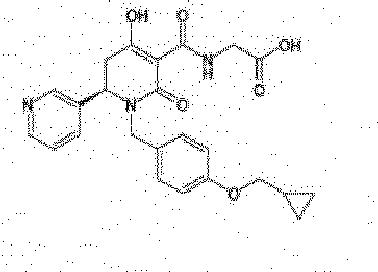
1H NMR (300 MHz, DMSO-d6) δ ppm 0.26 - 0.35 (m, 2 H) 0.51 - 0.61 (m, 2 H) 1.12 - 1.27 (m, 1 H) 3.13 - 3.49 (m, 2 H) 3.72 - 3.83 (m, 3 H) 3.99 - 4.08 (m, 2 H) 4.82 - 4.94 (m, 1 H) 5. 13 (d, J=14.9 Hz, 1 H) 6. 84 (d, J=8.7 Hz, 2 H) 7.14 - 7.22 (m, 2 H) 7.35 - 7.43 (m, 1 H) 7.54 - 7.61 (m, 1 H) 8.37 - 8.41 (m, 1 H) 8.47 - 8.52 (m, 1 H) 9.98 - 10.12 (m, 1 H). TFA Na MS ESI/APCI Dual posi: 452[M+H]+. MS ESI/APCI Dual nega: 450[M-H]-. Example 6-20 
1H NMR (300 MHz, DMSO-d6) δ ppm 0.26 - 0.34 (m, 2 H) 0.47 - 0.63 (m, 2 H) 1.13 - 1.31 (m, 1 H) 3.05 - 3.49 (m, 2 H) 3.67 - 3. 84 (m, 3 H) 3.96 - 4.11 (m, 2 H) 4.81 - 4.96 (m, 1 H) 5.07 - 5.15 (m, 1 H) 6.77 - 6.93 (m, 2 H) 7.08 - 7.27 (m, 2 H) 7.39 (dd, J=8.2, 5.1 Hz, 1 H) 7.57 (dd, J=8.2, 2.0 Hz, 1 H) 8.32 - 8.56 (m, 2 H) 9.88 - 10.17 (m, 1 H). TFA Na MS ESI/APCI Dual posi: 452[M+H]+. MS ESI/APCI Dual nega: 450[M-H]-. Example 6-21 
1H NMR (600 MHz, DMSO-d6) δ ppm 0.28 - 0.32 (m, 2 H) 0.52 - 0.57 (m, 2 H) 1.14 - 1.23 (m, 1 H) 1.99 - 2.14 (m, 1 H) 2.41 - 2.53 (m, 1 H) 2.63 - 2.71 (m, 1 H) 2.82 - 2.89 (m, 1 H) 3.44 - 3.49 (m, 2 H) 3.52 - 3.62 (m, 1 H) 3.76 - 3.79 (m, 2 H) 3.81 - 3.93 (m, 1 H) 4.92 - 5.01 (m, 1 H) 6.85 - 6.90 (m, 2 H) 7.10 - 7.15 (m, 2 H) 7.19 - 7.25 (m, 3 H) 7.27 - 7.32 (m, 2 H). Na MS ESI/APCI Dual posi: 465[M+H]+. MS ESI/APCI Dual nega: 463[M-H]-. Example 6-22 
1H NMR (600 MHz, DMSO-d6) δ ppm 0.28 - 0.32 (m, 2 H) 0.52 - 0.57 (m, 2 H) 1.14 - 1.23 (m, 1 H) 1.99 - 2.14 (m, 1 H) 2.41 - 2.53 (m, 1 H) 2.63 - 2.71 (m, 1 H) 2.82 - 2.89 (m, 1 H) 3.44 - 3.49 (m, 2 H) 3.52 - 3.62 (m, 1 H) 3.76 - 3.79 (m, 2 H) 3.81 - 3. 93 (m, 1 H) 4.92 - 5.01 (m, 1 H) 6.85 - 6.90 (m, 2 H) 7. 10 - 7.15 (m, 2 H) 7.19 - 7.25 (m, 3 H) 7.27 - 7.32 (m, 2 H). Na MS ESI/APCI Dual posi: 465[M+H]+. MS ESI/APCI Dual nega: 463[M-H]-. Example 6-23 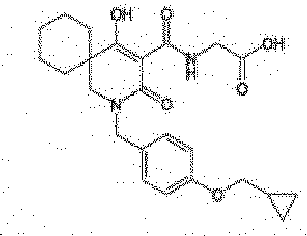
1H NMR (300 MHz, DMSO-d6) δ ppm 0.24 - 0.38 (m, 2 H) 0.50 - 0.61 (m, 2 H) 0.97 - 1.68 (m, 11 H,) 3.20 (s, 2 H) 3.51 (d, J=4.5 Hz, 2 H) 3.79 (d, J=7.0 Hz, 2 H) 4.49 (s, 2 H) 6.82 - Na 6.95 (m, 2 H) 7.15 - 7.31 (m, 2 H) 10.24 (br. s., 1 H). MS ESI/APCI Dual posi: 443[M+H]+. MS ESI/APCI Dual nega: 441[M-H]-. [Table 23-4] Compound No. Structure Analytical Data Salt information Example 6-24 
1H NMR (300 MHz, DMSO-d6) δ ppm 0.23 - 0.36 (m, 2 H) 0.49 - 0.60 (m, 2 H) 0.94 - 1.71 (m, 11 H) 2.55 - 2.80 (m, 2 H) 3.45 (d, J=4.0 Hz, 2 H) 3.77 (d, J=6.8 Hz, 2 H) 4.63 (br. s., 2 H) 6.83 (d, J=8.5 Hz, 2 H) 7.18 (d, J=8.5 Hz, 2 H). Na MS ESI/APCI Dual posi: 443[M+H]+. MS ESI/APCI Dual nega: 441[M-H]-. Example 6-25 
1H NMR (300 MHz, DMSO-d6) δ ppm 1.17 (s, 6 H) 2.54 - 2.65 (m, 2 H) 3. 46 (d, J=4.2 Hz, 2 H) 4.38 (s, 2 H) 4.49 - 4.62 (m, 2 H) 6.88 (d, J=8.7 Hz, 2 H) 7.22 (d, J=8.7 Hz, 2 H) 7.31 - 7.41 (m, 1 H) 7.45 - 7.54 (m, 1 H). Na MS ESI/APCI Dual posi: 406[M+H]+. MS ESI/APCI Dual nega: 404[M-H]-. Example 6-26 
1H NMR (600 MHz, DNSO-d6) δ ppm 1.14 - 1.27 (m, 8 H) 1.53 - 1.64 (m, 3 H) 1.81 - 1.89 (m, 2 H) 2.46 - 2.58 (m, 2 H) 2.76 - 2.83 (m, 2 H) 3.12 - 3.28 (m, 2 H) 3.39 - 3.48 (m, 4 H) 7.20 - 7.33 (m, 5 H). Na MS ESI/APCI Dual posi: 430[M+H]+. MS ESI/APCI Dual nega: 428[M-H]-. Example 6-27 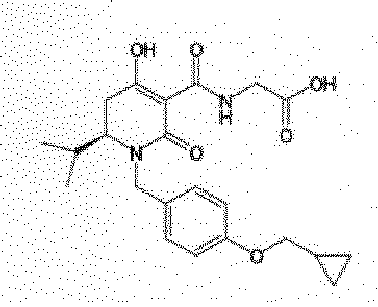
1H NMR (300 MHz, DMSO-d6) δ ppm 0.24 - 0.36 (m, 2 H) 0.49 - 0.61 (m, 2 H) 0.80 (d, J=6.8 Hz, 3 H) 0.89 (d, J=6.8 Hz, 3 H) 1.12 - 1.28 (m, 1 H) 1.95 - 2.06 (m, 1 H) 2.25 - 2.41 (m, 1 H) 2.73 (br. s., 1 H) 3.19 - 3.32 (m, 1 H) 3.55 (d, J=4.5 Hz, 2 H) 3.78 (d, J=7.0 Hz, 2 H) 3.95 (d, J=15.2 Hz, 1 H) 5-12 (d, J=15.2 Hz, 1 H) 6.76 - 6.94 (m, 2 H) 7.11 - 7.28 (m, 2 H) 9.98 (br. s., 1 H). Na MS ESI/APCI Dual posi: 417[M+H]+. MS ESI/APCI Dual nega: 415[M-H]-. Example 6-28 
1H NMR (300 MHz, DMSO-d6) δ ppm 0.25 - 0.34 (m, 2 H) 0.49 - 0.60 (m, 2 H) 0.80 (d, J=6.8 Hz, 3 H) 0.89 (d, J=6.8 Hz, 3 H) 1.12 - 1.28 (m, 1 H) 1.93 - 2.09 (m, 1 H) 2.21 - 2.41 (m, 1 H) 2.58 - 2.86 (m, 1 H) 3.19 - 3.28 (m, 1 H) 3.50 (d, J=4.4 Hz, 2 H) 3.78 (d, J=7.0 Hz, 2 H) 3.86 - 4. 02 (m, 1 H) 5.05 - 5.24 (m, 1 H) 6.86 (d, J=8.7 Hz, 2 H) 7.20 (d, J=8.7 Hz, 2 H) 9.97 (br. s., 1 H). Na MS ESI/APCI Dual posi: 417[M+H]+. MS ESI/APCI Dual nega: 415[M-H]-. Example 6-29 
1H NMR (300 MHz, DMSO-d6) δ ppm 0.23 - 0.38 (m, 2 H) 0.46 - 0.61 (m, 2 H) 1.10 - 1.28 (m, 7 H) 2.62 (br. s., 2 H) 3.78 (d, J=5.1 Hz, 2 H) 4.05 (d, J=7.0 Hz, 2 H) 4.57 (s, 2 H) 6.76 (d, J=8.5 Hz, 1 H) 7.62 (dd, J=8.5, 2.5 Hz, 1 H) 8.08 (d, J=2.5 Hz, 1 H) 10.07 (br. s., 1 H). Na MS ESI/APCI Dual posi: 404[M+H]+. MS ESI/APCI Dual nega: 402[M-H]-. Example 6-30 
1H NMR (300 MHz, DMSO-d6) δ ppm 0.23 - 0.38 (m, 2 H) 0.49 - 0.63 (m, 2 H) 1.11 - 1.28 (m, 1 H) 3.23 - 3.40 (m, 2 H) 3.42 - 3.52 (m, 2 H) 3.78 (d, J=6.8 Hz, 2 H) 3.95 - 4.15 (m, 1 H) 5.02 (d, J=15.1 Hz, 2 H) 6.87 (d, J=8.7 Hz, 2 H) 7.19 (d, J=8.7 Hz, 2 H) 9.97 (br. s., 1 H). Na MS ESI/APCI Dual posi: 405[M+H]+. MS ESI/APCI Dual nega: 403[M-H]-. [Formula 23-5] Compound No. Structure Analytical Data Salt information Example 6-31 
1H NMR (300 MHz, DMSO-d6) δ ppm 0.24 - 0.37 (m, 2 H) 0.49 - 0.61 (m, 2 H) 1.11 - 1.28 (m, 1 H) 3.25 - 3.39 (m, 2 H) 3.45 (d, J=4.4 Hz, 2 H) 3.78 (d, J=7.0 Hz, 2 H) 3.96 - 4.13 (m, 1 H) 4.95 - 5.09 (m, 2 H) 6.82 - 6.92 (m, 2 H) 7.19 (d, J=8.5 Hz, 2 H). Na MS ESI/APCI Dual posi: 405[M+H]+. MS ESI/APCI Dual nega: 403[M-H]. Example 6-32 
1H NMR (600 MHz, DMSO-d6) δ ppm 1.21 - 1.37 (m, 6 H) 2.43 - 2.72 (m, 3 H) 3.26 - 3.35 (m, 2 H) 3.50 - 3.62 (m, 4 H) 4.05 - 4.14 (m, 1 H) 4.28 - 4.37 (m, 1 H) 6.96 - 7.01 (m, 1 H) 8.38 - 8.44 (m, 1 H) 8.73 - 8.78 (m, 1 H). TFA Na MS ESI/APCI Dual posi: 390[M+H]+. MS ESI/APCI Dual nega: 388[M-H]-. Example 6-33 
1H NMR (600 MHz, DMSO-d6) δ ppm 0.34 - 0.39 (m, 2 H) 0.54 - 0.59 (m, 2 H) 1.20 (s, 6 H) 1.25 - 1.33 (m, 1 H) 2.43 - 2.55 (m, 2 H) 3.37 - 3.45 (m, 2 H) 4.24 (d, J=1.4 Hz, 2 H) 4.73 - 4.81 (m. 2 H) 7.13 - 7.19 (m, 1 H) 7.49 - 7.56 (m, 1 H). Na MS ESI/APCI Dual posi: 405[M+H]+. MS ESI/APCI Dual nega: 403 [M-H]-. Example 6-34 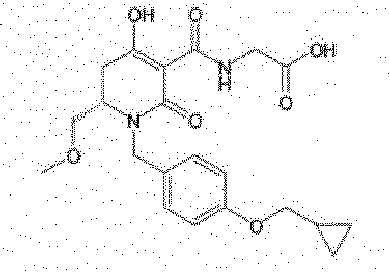
1H NMR (300 MHz, DMSO-d6) δ ppm 0.24 - 0.35 (m, 2 H) 0.49 - 0.61 (m, 2 H) 1.12 - 1.27 (m, 1 H) 2.22 - 2.40 (m, 1 H) 2.64 - 2.90 (m, 1 H) 3. 21 (s, 3 H) 3.26 - 3.36 (m, 2 H) 3.51 (d, J=4.5 Hz, 2 H) 3.54 - 3.63 (m, 1 H) 3.78 (d, J=7.0 Hz, 2 H) 3.98 - 4.14 (m, 1 H) 4.86 - 5.08 (m, 1 H) 6.87 (d, J=8.7 Hz. 2 H) 7.20 (d, J=8.7 Hz, 2 H). Na MS ESI/APCI Dual posi: 419[M+H]+. MS ESI/APCI Dual nega: 417[M-H]-. Example 6-35 
1H NMR (600 MHz, DMSO-d6) δ ppm 0.31 - 0.36 (m, 2 H) 0.51 - 0.58 (m, 2 H) 1.16 - 1.29 (m, 7 H) 2.44 - 2.60 (m, 2 H) 3.46 (d, J=4.1 Hz, 2 H) 4.11 (d, J=7.0 Hz, 2 H) 4. 62 (br. s., 2 H) 8.15 (s, 1 H) 8.22 (s, 1 H). Na MS ESI/APCI Dual posi: 405[M+H]+. MS ESI/APCI Dual nega: 403[M-H]-. Example 6-36 
1H NMR (300 MHz, DMSO-d6) δ ppm 0.24 - 0.36 (m, 2 H) 0.48 - 0.61 (m, 2 H) 1.07 - 1.27 (m, 1 H) 2.09 (s, 6 H) 2.13 - 2.39 (m, 2 H) 2. 61 - 2.90 (m, 2 H) 3.43 - 3.58 (m, 1 H) 3.70 - 3.84 (m, 4 H) 3.99 - 4.16 (m, 1 H) 4.96 (d, J=14.9 Hz, 1 H) 6.82 - 6.94 (m, 2 H) 7.17 - 7.27 (m, 2 H). TFA Na MS ESI/APCI Dual posi: 432[M+H]+. MS ESI/APCI Dual nega: 430[M-H]-. -

-

- To a solution of the compound of Reference Example A-344 (3.14 g) and triethylamine (1.50 mL) in ethyl acetate (100 mL), ethyl malonyl chloride (1.22 mL) was added at 0°C and thereafter the mixture was stirred at room temperature for 30 minutes. The insoluble matter was removed by filtration and the filtrate was concentrated under reduced pressure. The resulting residue was purified by silica gel column chromatography (n-hexane:ethyl acetate = 90:10-50:50) to give 2-methyl-2-propanyl 4-[(4-biphenylylmethyl)(3-ethoxy-3-oxopropanoyl)amino]-4-(2-methoxy-2-oxoethyl)-1-piperidinearboxylate as a colorless amorphous mass (3.36 g).
1H NMR (600 MHz, CHLOROFORM-d) δ ppm 1.26 (t, J=7.2 Hz, 3 H) 1.38 (s, 9 H) 1.68 - 1.79 (m, 2 H) 2.69 - 2.81 (m, 2 H) 2.82 - 2.96 (m, 2 H) 3.29 - 3.37 (m, 2 H) 3.39 (s, 2 H) 3.72 (s, 3 H) 3.80 - 4.04 (m, 2 H) 4.17 (q, J=7.2 Hz, 2 H) 4.73 (s, 2 H) 7.27 - 7.31 (m, 2 H) 7.34 - 7.38 (m, 1 H) 7.43 - 7.47 (m, 2 H) 7.56 - 7.63 (m, 4 H).
MS ESI/APCI Dual posi: 575 [M+Na]+. -

- To a solution in tetrahydrofuran (70 mL) of the mixture (3.35 g) obtained in step (1) above, sodium ethoxide (about 20%, solution in ethanol, 2.5 mL) was added and the mixture was stirred with heating under reflux for 4 hours. After cooling to room temperature, 2 mol/L hydrochloric acid was added and extraction was conducted with ethyl acetate. The combined organic layers were dried over anhydrous magnesium sulfate. The desiccant was removed by filtration and the filtrate was concentrated under reduced pressure. The resulting residue was purified by silica gel column chromatography (n-hexane: ethyl acetate = 90:10-40:60) to give 3-ethyl 9-(2-methyl-2-propanyl) 1-(4-biphenylylmethyl)-4-hydroxy-2-oxo-1,9-diazaspiro[5.5]undec-3-ene-3,9-dicarboxylate as a colorless amorphous mass (1.87 g).
1H NMR (600 MHz, CHLOROFORM-d) δ ppm 1.41 - 1.46 (m, 12 H) 1.57 (s, 2 H) 1.64 - 1.75 (m, 2 H) 1.83 - 1.99 (m, 2 H) 2.75 - 2.88 (m, 4 H) 3.91 - 4.18 (m, 2 H) 4.39 - 4.45 (m, 2 H) 4.64 - 4.95 (m, 2 H) 7.30 - 7.35 (m, 3 H) 7.40 - 7.44 (m, 2 H) 7.49 - 7.53 (m, 2 H) 7.55 - 7.58 (m, 2 H) 14.00 - 14.18 (m, 1 H).
MS ESI/APCI Dual posi: 521[M+H]+, 543[M+Na]+.
MS ESI/APCI Dual nega: 519[M-H]-. -

- To the compound (1.70 g) obtained in step (2) above, a solution (10 mL) of 4 mol/L hydrogen chloride in 1,4-dioxane was added and the mixture was stirred at room temperature for 68 hours. After concentrating under reduced pressure, the resulting residue was crystallized with a liquid mixture of diethyl ether and ethyl acetate to give ethyl 1-(4-biphenylylmethyl)-4-hydroxy-2-oxo-1,9-diazaspiro[5.5]undec-3-ene-3-carboxylate hydrochloride as a colorless solid (983 mg).
1H NMR (600 MHz, CHLOROFORM-d) δ ppm 1.40 (t, J=7.1 Hz, 3 H) 1.68 - 1.82 (m, 2 H) 2.55 - 2.66 (m, 2 H) 2.79 - 2.87 (m, 2 H) 2.95 - 3.12 (m, 2 H) 3.36 - 3.43 (m, 2 H) 4.39 (q, J=7.0 Hz, 2 H) 4.69 - 5.04 (m, 2 H) 7.28 - 7.32 (m, 1 H) 7.33 - 7.37 (m, 2 H) 7.37 - 7.41 (m, 2 H) 7.46 - 7.53 (m, 4 H) 9.30 - 9.44 (m, 1 H) 9.44 - 9.57 (m, 1 H).
MS ESI/APCI Dual posi: 421[M+H]+, 443[M+Na]+.
MS ESI/APCI Dual nega: 419[M-H]-. -

- To a solution in tetrahydrofuran (6 mL) of the compound (160 mg) obtained in step (3) above, benzoyl chloride (59 mg) and triethylamine (120 mg) were added and the mixture was stirred at room temperature for 1.5 hours. To the reaction mixture, a saturated aqueous solution of sodium hydrogencarbonate was added and extraction was conducted with ethyl acetate. The combined organic layers were dried over anhydrous magnesium sulfate. The desiccant was removed by filtration and the filtrate was concentrated under reduced pressure. The resulting residue was purified by NH silica gel column chromatography (chloroform:methanol = 98:2-80:20) to give ethyl 9-benzoyl-1-(4-biphenylylmethyl)-4-hydroxy-2-oxo-1,9-diazaspiro[5.5]undec-3-ene-3-carboxylate as a colorless solid (56 mg). MS ESI/APCI Dual posi: 525[M+H]+.
MS ESI/APCI Dual nega: 523[M-H]-. -

- To a solution in N,N-dimethylformamide (4.0 mL) of the compound (52 mg) obtained in step (4) above, glycine tert-butyl hydrochloride (29 mg) was added and the mixture was stirred at 90°C for two hours. After being cooled to room temperature, the reaction mixture was concentrated under reduced pressure. The resulting residue was purified by silica gel column chromatography to give 2-methyl-2-propanyl N-{[9-benzoyl-1-(4-biphenylylmethyl)-4-hydroxy-2-oxo-1,9-diazaspiro[5.5]undec-3-en-3-yl]carbonyl}glycinate as a colorless oil (14 mg).
1H NMR (600 MHz, CHLOROFORM-d) δ ppm 1.45 - 1.50 (m, 9 H) 1.61 - 1.90 (m, 3 H) 2.02 - 2.17 (m, 1 H) 2.75 - 2.95 (m, 3 H) 3.02 - 3.20 (m, 1 H) 3.55 - 3.75 (m, 1 H) 4.00 - 4.06 (m, 2 H) 4.68 - 4.90 (m, 3 H) 7.27 - 7.46 (m, 10 H) 7.51 - 7.59 (m, 4 H) 10.14 - 10.41 (m, 1 H).
MS ESI/APCI Dual posi: 610[M+H]+, 632[M+Na]+.
MS ESI/APCI Dual nega: 608[M-H]-. - The compound (14 mg) obtained in step (5) above was used and treated by the same technique as in Example 1-2(2) to give the titled compound as a colorless solid (6 mg). 1H NMR (500 MHz, CHLOROFORM-d) δ ppm 1.62 - 1.86 (m, 3 H) 2.09 (s, 1 H) 2.79 - 2.96 (m, 3 H) 3.04 - 3.17 (m, 1 H) 3.57 - 3.74 (m, 1 H) 4.14 - 4.22 (m, 2 H) 4.63 - 4.95 (m, 3 H) 7.27 - 7.47 (m, 10 H) 7.50 - 7.61 (m, 4 H) 10.16 - 10.37 (m, 1 H).
MS ESI/APCI Dual posi: 554[M+H]+, 576[M+Na]+.
MS ESI/APCI Dual nega: 552[M-H]-. -

-

- To a solution in chloroform (3 mL) of the compound (128 mg) obtained in Example 7-1(3), triethylamine (77 mg), N,N-dimethylformamide (1 mL) and benzyl bromide (63 mg) were added successively and the mixture was stirred at 50°C for two hours. After cooling the reaction mixture to room temperature, water was added to it. Extraction was conducted with chloroform and the combined organic layers were concentrated under reduced pressure. The resulting residue was purified by NH silica gel column chromatography (chloroform:methanol = 97:3-80:20) to give ethyl 9-benzyl-1-(4-biphenylylmethyl)-4-hydroxy-2-oxo-1,9-diazaspiro[5.5]undec-3-ene-3-carboxylate as a colorless solid (32 mg).
1H NMR (600 MHz, CHLOROFORM-d) δ ppm 1.41 (t, J=7.1 Hz, 3 H) 1.60 - 1.69 (m, 2 H) 2.02 - 2.15 (m, 4 H) 2.71 - 2.85 (m, 4 H) 3.48 (s, 2 H) 4.39 (q, J=7.1 Hz, 2 H) 4.72 - 4.96 (m, 2 H) 7.23 - 7.28 (m, 3 H) 7.28 - 7.34 (m, 5 H) 7.39 - 7.43 (m, 2 H) 7.46 - 7.58 (m, 4 H). MS ESI/APCI Dual posi: 511 [M+H]+.
MS ESI/APCI Dual nega: 509[M-H]-. -

- The compound (32 mg) obtained in step (1) above was used and treated by the same technique as in Example 7-1(5) to give 2-methyl-2-propanyl N-{[9-benzyl-1-(4-biphenylylmethyl)-4-hydroxy-2-oxo-1,9-diazaspiro[5.5]undec-3-en-3-yl]carbonyl}glycinate as a colorless oil (32 mg).
1H NMR (600 MHz, CHLOROFORM-d) δ ppm 1.46 (s, 9 H) 1.60 - 1.67 (m, 2 H) 1.99 - 2.08 (m, 2 H) 2.09 - 2.19 (m, 2 H) 2.70 - 2.82 (m, 4 H) 3.30 (s, 2 H) 3.98 - 4.06 (m, 2 H) 4.75 - 4.86 (m, 2 H) 7.22 - 7.27 (m, 3 H) 7.27 - 7.35 (m, 5 H) 7.39 - 7.44 (m, 2 H) 7.48 - 7.58 (m, 4 H) 10.18 - 10.40 (m, 1 H).
MS ESI/APCI Dual posi: 596[M+H]+.
MS ESI/APCI Dual nega: 594[M-H]-. - The compound (27 mg) obtained in step (2) above was used and treated by the same technique as in Example 1-2(2) to give the titled compound as a pale yellow solid (31 mg). 1H NMR (600 MHz, METHANOL-d4) δ ppm 1.95 - 2.03 (m, 2 H) 2.18 - 2.28 (m, 2 H) 3.00 - 3.27 (m, 4 H) 3.33 - 3.39 (m, 2 H) 3.58 (s, 2 H) 4.07 - 4.13 (m, 2 H) 4.26 (s, 2 H) 7.27 - 7.37 (m, 3 H) 7.37 - 7.41 (m, 2 H) 7.42 - 7.49 (m, 5 H) 7.53 - 7.59 (m, 4 H).
MS ESI/APCI Dual posi: 540[M+H]+. -

- Instead of the compound obtained in Reference Example A-344, the compound (1.08 g) obtained in Reference Example A-341 was used and treated by the same technique as in Example 7-1 to give the titled compound as a colorless solid (25 mg).
1H NMR (600 MHz, DMSO-d6) δ ppm 1.41 - 1.53 (m, 1 H) 1.57 - 1.70 (m, 1 H) 1.74 - 1.93 (m, 2 H) 2.46 - 2.47 (m, 2 H) 2.79 - 2.92 (m, 2 H) 2.98 - 3.09 (m, 2 H) 3.89 - 4.03 (m, 2 H) 4.70 - 4.82 (m, 2 H) 7.21 - 7.35 (m, 7 H) 7.35 - 7.42 (m, 3 H) 9.92 - 10.20 (m, 1 H).
MS ESI/APCI Dual posi: 478[M+H]+, 500[M+Na]+.
MS ESI/APCI Dual nega: 476[M-H]-. -

- Instead of monobenzyl malonate and glycine tert-butyl hydrochloride, the compound (100 mg) obtained in Example 1-48 and hydroxylamine hydrochloride (31 mg) were respectively used and treated by the same technique as in Example G-1 (1) to give the titled compound as a colorless amorphous mass (62.2 mg).
1H NMR (300 MHz, CHLOROFORM-d) δ ppm 2.47 - 2.67 (m, 2 H) 3.26 - 3.37 (m, 2 H) 3.79 (s, 3 H) 4.00 - 4.18 (m, 2 H) 4.47 - 4.59 (m, 2 H) 6.80 - 6.93 (m, 2 H) 7.14 - 7.24 (m, 2 H) 10.16- 10.28 (m, 1 H).
MS ESI/APCI Dual posi: 350[M+H]+. -

-

- Instead of the compound obtained in Reference Example A-1, the compound (12.2 g) obtained in Reference Example A-45 was used and treated by the same techniques as in Example 1-1(1) and (2) to give sodium 5-(ethoxycarbonyl)-1-(4-methoxybenzyl)-6-oxo-1,2,3,6-tetrahydro-4-pyridinolate as a solid (12.5 g).
1H NMR (300 MHz, DMSO-d6) δ ppm 1.10 - 1.18 (m, 3 H) 2.03 (t, J=6.5 Hz, 2 H) 3.03 (t, J=6.5 Hz, 2 H) 3.72 (s, 3 H) 3.94 (q, J=7.0 Hz, 2 H) 4.40 (s, 2 H) 6.79 - 6.93 (m, 2 H) 7.04 - 7.27 (m, 2 H).
MS ESI/APCI Dual posi: 306[M+H]+, 328[M+Na]+.
MS ESI/APCI Dual nega: 304[M-H]-. -
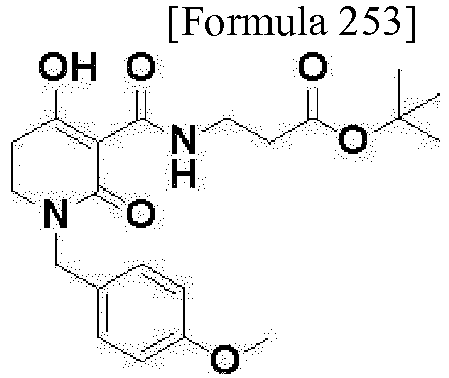
- The compound obtained in step (1) above and β alanine tert-butyl hydrochloride (334 mg) rather than glycine tert-butyl hydrochloride were used and treated by the same technique as in Example 1-1(3) to give 2-methyl-2-propanyl N-{[4-hydroxy-1-(4-methoxybenzyl)-2-oxo-1 ,2,5,6-tetrahydro-3-pyridinyl]carbonyl}-β-alaninate as an oil (518 mg).
1H NMR (300 MHz, CHLOROFORM-d) δ ppm 1.48 (s, 9 H) 2.46 - 2.62 (m, 4 H) 3.22 - 3.37 (m, 2 H) 3.48 - 3.72 (m, 2 H) 3.80 (s, 3 H) 4.47 - 4.61 (m, 2 H) 6.78 - 6.93 (m, 2 H) 9.95 - 10.41 (m, 2 H).
MS ESI/APCI Dual posi: 427[M+Na]+.
MS ESI/APCI Dual nega: 403 [M-H]-. - The compound (518 mg) obtained in step (2) above was used and treated by the same technique as in Example 1-1(4) to give the titled compound as a colorless solid (283 mg).
1H NMR (300 MHz, CHLOROFORM-d) δ ppm 2.48 - 2.77 (m, 4 H) 3.21 - 3.37 (m, 2 H) 3.58 - 3.72 (m, 2 H) 3.80 (s, 3 H) 4.46 - 4.62 (m, 2 H) 6.79 - 6.94 (m, 2 H) 7.11 - 7.24 (m, 2 H) 9.95 - 10.50 (m, 1 H).
MS ESI/APCI Dual posi: 349[M+H]+, 371[M+Na]+. - The compounds of the following Examples 9-2 to 9-4 were synthesized using a commercial grade of the corresponding amines by the method described in Example 9-1 or modifications thereof. The structures of the synthesized compounds and their NMR and MS data are shown in Table 24-1.
[Table 24-1] Compound No. Structure Analytical Data Salt information Example 9-2 
1H NNR (300 NHz, CHLOROFORM-d) δ ppm 1.90 - 2.00 (m, 2 H) 2.45 (t, 1=7.1 Hz, 2 H) 2.54 - 2.63 (m, 2 H) 3.23 - 3.36 (m, 2 H) 3.37 - 3.51 (m. 2 H) 3.75 - 3.85 (m, 3 H) 4.48 - 4.60 (m, 2 H) 6.81 - 6.94 (m, 2 H) 7.14 - 7.25 (m, 2 H). MS ESI/APCI Dual posi: 363 [M+H]+. Example 9-3 
1H NMR (300 MHz, DMS0-d6) δ ppm 1.31 (d, J=7.1 Hz, 3 H) 2.40 - 2.50 (m, 2 H) 3.22 - 3.38 (m, 2 H) 3.73 (s, 3 H) 4.06 - 4.22 (m, 1 H) 4. 49 (s, 2 H) 6.83 - 6. 99 (m, 2 H) 7.15 - 7.28 (m, 2 H). Na Example 9-4 
1H NMR (300 MHz, DMS0-d6) δ ppm 1.23 (d, J=6.8 Hz, 3 H) 2.40 - 2.50 (m, 2 H) 3.17 - 3.30 (m, 2 H) 3.73 (s, 3 H) 3.78 - 3.93 (m, 1 H) 4.48 (s, 2 H) 6.80 - 6.96 (m, 2 H) 7.16 - 7.27 (m, 2 H). Na -

-

- To a solution in 1,2-dimethoxyethane (5.0 mL) of the compound (500 mg) obtained in Example 9-1(1), triethylamine (215 mg) and sarcosine tert-butyl hydrochloride (345 mg) were added and the mixture was stirred at 50°C for 6 hours. After cooling the reaction mixture to room temperature, the insoluble matter was removed by passage through Celite (registered trademark). The filtrate was concentrated under reduced pressure and the resulting residue was purified by silica gel column chromatography (n-hexane: ethyl acetate = 100:0-0:100) to give 2-methyl-2-propanyl N-{[4-hydroxy-1-(4-methoxybenzyl)-2-oxo-1,2,5,6-tetrahydro-3-pyridinyl]carbonyl}-N-methylglycinate as a yellow oil (347 mg).
1H NMR (300 MHz, CHLOROFORM-d) δ ppm 1.48 (s, 9 H) 2.49 (t, J=6.7 Hz, 2 H) 3.06 (s, 3 H) 3.31 (t, J=6.7 Hz, 2 H) 3.80 (s, 3 H) 4.00 (s, 2 H) 4.57 (s, 2 H) 6.81 - 6.91 (m, 2 H) 7.14 - 7.25 (m, 2 H). - The compound (347 mg) obtained in step (1) above was used and treated by the same technique as in Example 1-1(4) to give the titled compound as a colorless solid (116 mg).
1H NMR (300 MHz, DMSO-d6) δ ppm 2.18 - 2.31 (m, 2 H) 2.80 (br. s., 2 H) 3.14 (t, J=6.9 Hz, 2 H) 3.73 (s, 3 H) 4.39 (s, 2 H) 6.84 - 6.90 (m, 2 H) 7.12 - 7.23 (m, 2 H). -
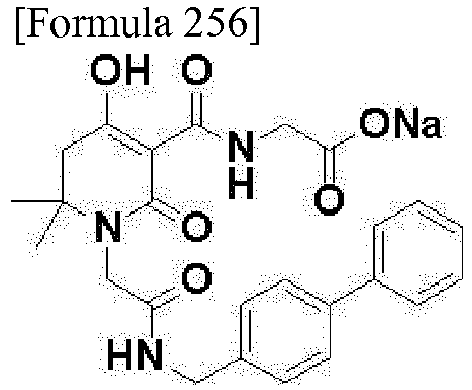
-

- Instead of the compound obtained in Reference Example A-1, the compound (19.7 g) obtained in Reference Example A-342 was used and treaded by the same techniques as in Example 1-1(1) to (3) to give 2-methyl-2-propanyl N-{[1-(2-{[dimethyl(2-methyl-2-propanyl)silyl]oxy}ethyl)-4-hydroxy-6,6-dimethyl-2-oxo-1,2,5,6-tetrahydro-3-pyridinyl]carbonyl}glycinate as a pale brown solid (10.9 g).
1H NMR (300 MHz, CHLOROFORM-d) δ ppm 0.04 - 0.09 (m, 6 H) 0.86 - 0.93 (m, 9 H) 1.31 - 1.37 (m, 6 H) 1.48 (s, 9 H) 2.40 - 2.63 (m, 2 H) 3.40 - 3.58 (m, 2 H) 3.64 - 3.84 (m, 2 H) 3.94 - 4.09 (m, 2 H) 10.14 - 10.39 (m, 1 H).
MS ESI/APCI Dual posi: 457[M+H]+. -

- The compound (5.25 g) obtained in step (1) above was used and treated by the same technique as in Example 4-1(4) to give 2-methyl-2-propanyl N-{[4-hydroxy-1-(2-hydroxyethyl)-6,6-dimethyl-2-oxo-1,2,5,6-tetrahydro-3-pyridinyl]carbonyl}glycinate as a pale yellow oil (3.90 g).
1H NMR (300 MHz, CHLOROFORM-d) δ ppm 1.34 (s, 6 H) 1.49 (s, 9 H) 2.49 - 2.64 (m, 2 H) 3.55 - 3.66 (m, 2 H) 3.71 - 3.84 (m, 2 H) 3.98 - 4.06 (m, 2 H) 9.92 - 10.55 (m, 1 H). MS ESI/APCI Dual posi: 343[M+H]+.
MS ESI/APCI Dual nega: 341[M-H]-. -

- The compound (3.90 g) obtained in step (2) above was used and treated by the same technique as in Reference Example 19-1 to give 2-methyl-2-propanyl N-{[4-hydroxy-6,6-dimethyl-2-oxo-1-(2-oxoethyl)-1,2,5,6-tetrahydro-3-pyridinyl]carbonyl}glycinate as a pale yellow solid (2.55 g).
1H NMR (300 MHz, CHLOROFORM-d) δ ppm 1.27 - 1.33 (m, 6 H) 1.43 - 1.51 (m, 9 H) 2.54 - 2.71 (m, 2 H) 3.95 - 4.18 (m, 4 H) 9.52 - 9.61 (m, 1 H) 9.90 - 10.03 (m, 1 H).
MS ESI/APCI Dual posi: 341[M+H]+.
MS ESI/APCI Dual nega: 339[M-H]-. -

- To a suspension in ethanol (40 mL) of the compound (1.93 g) obtained in step (3) above and silver nitrate (1.93 g), a solution of sodium hydroxide (907 mg) in water (26 mL) was added dropwise under cooling with ice and the mixture was stirred at the same temperature for 20 minutes. To the reaction mixture, ethyl acetate and 2 mol/L hydrochloric acid were added and the resulting mixture was brought to room temperature. Extraction was conducted with chloroform and the combined organic layers were dried over anhydrous magnesium sulfate. After removing the desiccant by filtration, the filtrate was concentrated under reduced pressure. The resulting residue was purified by silica gel column chromatography (chloroform:methanol = 100:0-85:15, then n-hexane:ethyl acetate = 98:2-25:75) to give [4-hydroxy-2,2-dimethyl-5-({2-[(2-methyl-2-propanyl)oxy]-2-oxoethyl}carbamoyl)-6-oxo-3,6-dihydro-1(2H)-pyridinyl]acetic acid as a colorless amorphous mass (1.79 g).
1H NMR (300 MHz, CHLOROFORM-d) δ ppm 1.31 - 1.38 (m, 6 H) 1.45 - 1.52 (m, 9 H) 2.54 - 2.70 (m, 2 H) 3.97 - 4.06 (m, 2 H) 4.11 - 4.22 (m, 2 H) 9.79 - 10.54 (m, 1 H).
MS ESI/APCI Dual nega: 355[M-H]-. -

- Instead of monobenzyl malonate and glycine tert-butyl hydrochloride, the compound (245 mg) obtained in step (4) above and 4-phenylbenzylamine (189 mg) were respectively used and treated by the same technique as in Reference Example G-1(1) to give 2-methyl-2-propanyl N-[(1-{2-[(4-biphenylylmethyl)amino]-2-oxoethyl}-4-hydroxy-6,6-dimethyl-2-oxo-1,2,5,6-tetrahydro-3-pyridinyl)carbonyl]glycinate as a colorless solid (285 mg).
1H NMR (300 MHz, CHLOROFORM-d) δ ppm 1.32 - 1.37 (m, 6 H) 1.45 - 1.50 (m, 9 H) 2.51 - 2.63 (m, 2 H) 3.98 - 4.06 (m, 2 H) 4.09 - 4.17 (m, 2 H) 4.44 - 4.54 (m, 2 H) 6.80 - 6.90 (m, 1 H) 7.29 - 7.38 (m, 3 H) 7.39 - 7.48 (m, 2 H) 7.51 - 7.62 (m, 4 H) 9.85 - 10.62 (m, 1 H). MS ESI/APCI Dual posi: 544[M+Na]+.
MS ESI/APCI Dual nega: 520[M-H]-. - The compound (285 mg) obtained in step (5) above was used and treated by the same techniques as in Example 1-3(2) and (3) to give the titled compound as a pale yellow solid (237 mg).
1H NMR (300 MHz, DMSO-d6) δ ppm 1.23 (s, 6 H) 2.54 - 2.71 (m, 2 H) 3.46 (d, J=4.4 Hz, 2 H) 4.01 (s, 2 H) 4.33 (d, J=6.1 Hz, 2 H) 7.29 - 7.39 (m, 3 H) 7.40 - 7.50 (m, 2 H) 7.56 - 7.70 (m, 4 H) 8.27 - 8.44 (m, 1 H) 9.86 - 10.12 (m, 1 H). - The compounds of the following Examples 10-2 and 10-4 were synthesized using a commercial grade of the corresponding amines by the method described in Example 10-1 or a modification thereof. The structures of the synthesized compounds and their NMR and MS data are shown in Table 25-1.
[Table 25-1] Compound No. Structure Analytical Data Salt information Example 10-2 
1H NMR (300 MHz, DMS0-d6) δ ppm 1.25 (s, 6 H) 2.67 - 2.83 (m, 2 H) 3.95 - 4.05 (m, 4 H) 4.30 - 4.45 (m, 2 H) 7.40 - 7.55 (m, 2 H) 7.01 - 7.74 (m, 2 H) 8.28 - 8.70 (m, 1 H) 9.84 - 10.28 (m, 1 H) 12.56 - 13.06 (m, 1 H). Example 10-4 
1H NMR (300 MHz, DMSO-d6) δ ppm 1.13 - 1.30 (m, 6 H) 2.40 - 2.60 (m, 2 H) 2.76 - 3.04 (m, 3 H) 3.41 - 3.54 (m, 2 H) 4.18 - 4.35 (m, 2 H) 4.44 - 4.68 (m, 2 H) 7.10 - 7.33 (m, 4 H) 7.33 - 7.45 (m, 1 H) 9.71 - 10.24 (m, 1 H). Na MS ESI/APCI Dual posi: 444[M+Na]+. MS ESI/APCI Dual nega: 420[M-H]-. -

-

- Instead of the compound obtained in Reference Example A-1 and glycine tert-butyl hydrochloride, the compound (1.40 g) obtained in Reference Example B-19 and glycine methyl hydrochloride (442 mg) were respectively used and treated by the same techniques as in Example 1-1(1) to (3) to give methyl N-({1-[2-{[dimethyl(2-methyl-2-propanyl)silyl]oxy}-1-(4-iodophenyl)ethyl]-4-hydroxy-2-oxo-1,2,5,6-tetrahydro-3-pyridinyl}carbonyl)glycinate as a pale brown solid (1.40 g).
1H NMR (300 MHz, CHLOROFORM-d) δ ppm 0.09 (s, 6 H) 0.87 (s, 9 H) 2.39 - 2.62 (m, 2 H) 3.05 - 3.21 (m, 1 H) 3.33 - 3.50 (m, 1 H) 3.78 (s, 3 H) 3.99 - 4.21 (m, 4 H) 5.55 - 5.78 (m, 1 H) 7.04 - 7.16 (m, 2 H) 7.61 - 7.74 (m, 2 H).
MS ESI/APCI Dual posi: 589[M+H]+.
MS ESI/APCI Dual nega: 587[M-H]-. -

- To a solution in ethyl acetate (67 mL) of the compound (1.32 g) obtained in step (1) above, a solution (12.3 mL) of 4 mol/L hydrogen chloride in 1,4-dioxane was added and the mixture was stirred at room temperature for an hour. Water was then added under cooling with ice. Extraction was conducted with ethyl acetate and the organic layer was washed with saturated brine. The washed organic layer was dried over anhydrous magnesium sulfate and after removing the desiccant by filtration, the filtrate was concentrated under reduced pressure. The resulting residue was purified by silica gel column chromatography (n-hexane:ethyl acetate = 99:1-0:100) to give methyl N-({4-hydroxy-1-[2-hydroxy-1-(4-iodophenyl)ethyl]-2-oxo-1,2,5,6-tetrahydro-3-pyridinyl}carbonyl)glycinate as a pale yellow amorphous mass (880 mg).
1H NMR (300 MHz, CHLOROFORM-d) δ ppm 2.35 - 2.62 (m, 2 H) 2.99 - 3.18 (m, 1 H) 3.26 - 3.46 (m, 1 H) 3.77 (s, 3 H) 3.94 - 4.22 (m, 4 H) 5.58 - 5.80 (m, 1 H) 6.95 - 7.13 (m, 2 H) 7.57 - 7.78 (m, 2 H) 9.95 - 10.56 (m, 1 H).
MS ESI/APCI Dual posi: 475[M+H]+.
MS ESI/APCI Dual nega: 473 [M-H]-. -

- To a solution in acetonitrile (14.8 mL) of the compound (880 mg) obtained in step (2) above, propylphosphonic acid anhydride (cyclic trimer) (50%, solution in ethyl acetate, 5.91 g) was added and the solvent was immediately concentrated under reduced pressure. To the resulting residue, acetonitrile (14.8 mL) was added and the mixture was stirred at 90°C for three hours. The reaction mixture was concentrated under reduced pressure and chloroform was added to the concentrate. With the solvent being distilled off under reduced pressure, the crude product was adsorbed on diatomaceous earth. The crude product adsorbed on the diatomaceous earth was purified by NH silica gel column chromatography (chlorform:methanol = 100:0-95:5) to give methyl N-{[7-hydroxy-3-(4-iodophenyl)-2,3,6,8a-tetrahydro-5H-[1,3]oxazolo[3,2-a]pyridin-8-yl]carbonyl}glycinate as a colorless solid (690 mg).
1H NMR (300 MHz, CHLOROFORM-d) δ ppm 2.51 - 2.74 (m, 2 H) 3.11 - 3.37 (m, 2 H) 3.74 (s, 3 H) 4.12 (d, J=5.6 Hz, 2 H) 4.53 (dd, J=9.2, 8.5 Hz, 1 H) 4.75 (t, J=8.5 Hz, 1 H) 4.97 - 5.22 (m, 1 H) 7.02 - 7.12 (m, 2 H) 7.73 - 7.83 (m, 2 H) 9.59 (t, J=5.4 Hz, 1 H).
MS ESI/APCI Dual posi: 457[M+H]+, 479[M+Na]+. -

- A mixture of the compound (100 mg) obtained in step (3) above, 4-fluorophenylboronic acid (66 mg), palladium(II) acetate (6.6 mg), tri(2-methylphenyl)phosphine (26 mg), potassium carbonate (186 mg), methanol (4.4 mL) and toluene (2.2 mL) was stirred in a sealed tube at 90°C for 70 minutes. After being cooled to room temperature, the reaction mixture was concentrated under reduced pressure. The resulting residue was purified by silica gel column chromatography (n-hexane: ethyl acetate = 99:1-0:100, then chloroform:methanol = 100:0-85:15) to give methyl N-{[3-(4'-fluoro-4-biphenylyl)-7-hydroxy-2,3,6,8a-tetrahydro-5H-[1,3]oxazolo[3,2-a]pyridin-8-yl]carbonyl}glycinate as a pale brown solid (100 mg).
1H NMR (300 MHz, CHLOROFORM-d) δ ppm 2.56 - 2.76 (m, 2 H) 3.18 - 3.50 (m, 2 H) 3.74 (s, 3 H) 4.10 - 4.17 (m, 2 H) 4.54 - 4.68 (m, 1 H) 4.88 (t, J=8.5 Hz, 1 H) 5.06 - 5.22 (m, 1 H) 7.09 - 7.22 (m, 2 H) 7.36 - 7.47 (m, 2 H) 7.50 - 7.66 (m, 4 H) 9.69 (t, J=5.5 Hz, 1 H).
MS ESI/APCI Dual posi: 425[M+H]+, 447[M+Na]+. - To a solution in tetrahydrofuran (2.4 mL) and methanol (2.4 mL) of the compound (100 mg) obtained in step (4) above, 1 mol/L sodium hydroxide in aqueous solution (471 µL) was added and the mixture was stirred at room temperature for 13 hours. The precipitate was recovered by filtration and dissolved in ethyl acetate and 4 mol/L hydrochloric acid. The organic layer was concentrated under reduced pressure and the resulting residue was purified by preparative HPLC. To a solution of the resulting purified product (45.0 mg) in acetone (2 mL), 1 mol/L sodium hydroxide in aqueous solution (105 µL) was added and the mixture was stirred at room temperature. The precipitate was recovered by filtration to give the titled compound as a colorless solid (40 mg).
1H NMR (300 MHz, DMSO-d6) δ ppm 2.40 - 2.50 (m, 2 H) 3.00 - 3.22 (m, 1 H) 3.37 - 3.51 (m, 2 H) 3.83 - 4.03 (m, 2 H) 5.11 (br. s., 1 H) 5.68 (br. s., 1 H) 7.21 - 7.35 (m, 2 H) 7.35 - 7.48 (m, 2 H) 7.55 - 7.76 (m, 4 H).
MS ESI/APCI Dual posi: 429[M+H]+.
MS ESI/APCI Dual nega: 427[M-H]-. -

- To a solution in N,N-dimethylformamide (1.00 mL) of the compound (60.8 mg) obtained in Example 5-1, 4-bromoaniline (39.0 mg), propylphosphonic acid anhydride (cyclic trimer) (50%, solution in N,N-dimethylformamide, 135 µL) and triethylamine (64.0 µL) were added and the mixture was stirred overnight at room temperature. To the reaction mixture, 4-bromoaniline (39.0 mg), propylphosphonic acid anhydride (cyclic trimer) (50%, solution in N,N-dimethylformamide, 135 µL) and triethylamine (64.0 µL) were further added and the mixture was stirred at room temperature for three hours. The reaction mixture was purified by preparative HPLC to give the residue (43.2 mg). The resulting residue was crystallized with a liquid mixture of n-hexane, diethyl ether, and ethyl acetate to give the titled compound as a colorless solid (25.8 mg, 95.5%ee). Part of the resulting solid was recrystallized with a liquid mixture of chloroform and methanol and the resulting acicular crystal was used in X-ray crystallography. As the result, the 2-oxo-1,2,5,6-tetrahydropyridine ring of the crystal was determined to have an absolute configuration (S) at position 5.
1H NMR (300 MHz, CHLOROFORM-d) δ ppm 1.09 - 1.24 (m, 3 H) 2.69 - 2.86 (m, 1 H) 3.10 (dd, J=12.5, 8.2 Hz, 1 H) 3.44 (dd, J=12.5, 5.8 Hz, 1 H) 4.11 - 4.18 (m, 2 H) 4.60 - 4.73 (m, 2 H) 7.30 - 7.39 (m, 3 H) 7.40 - 7.48 (m, 6 H) 7.53 - 7.62 (m, 4 H) 8.14 - 8.24 (m, 1 H) 10.46 - 10.58 (m, 1 H).
MS ESI/APCI Dual posi: 548[M+H]+.
MS ESI/APCI Dual nega: 546[M-H]-.
Optical HPLC retention time: 11.041 min. -
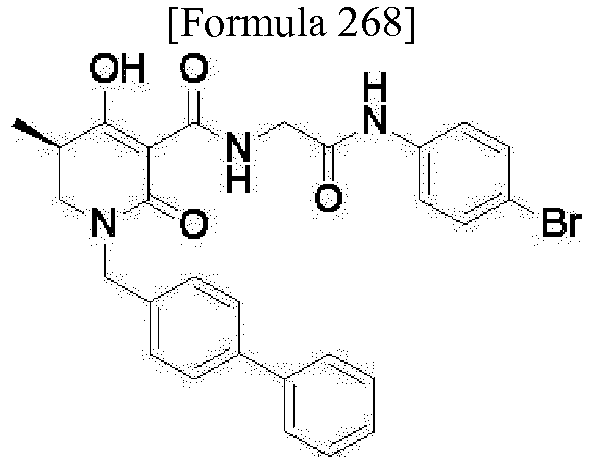
- The compound (54.8 mg) obtained in Example 5-2 was used and treated by the same technique as in Reference Example X-1 to give the titled compound as a colorless solid (33.1 mg, 93.8%ee). By subsequent X-ray crystallography, the 2-oxo-1,2,5,6-tetrahydropyridine ring of the crystal was determined to have an absolute configuration (R) at position 5.
1H NMR (300 MHz, CHLOROFORM-d) δ ppm 1.09 - 1.24 (m, 3 H) 2.55 - 2.82 (m, 1 H) 3.10 (dd, J=12.5, 8.1 Hz, 1 H) 3.44 (dd, J=12.5, 5.9 Hz, 1 H) 4.12 - 4.18 (m, 2 H) 4.59 - 4.73 (m, 2 H) 7.31 - 7.40 (m, 3 H) 7.40 - 7.49 (m, 6 H) 7.54 - 7.62 (m, 4 H) 7.97 - 8.23 (m, 1 H) 10.46 - 10.59 (m, 1 H).
MS ESI/APCI Dual posi: 548[M+H]+.
MS ESI/APCI Dual nega: 546[M-H]-.
Optical HPLC retention time: 12.096 min. - The PHD2 inhibitory activities of compounds of the present invention were determined in accordance with Tests 1 and 2 described below.
- Human PHD2 was expressed in insect cells (HighFive cells). A registered sequence of human PHD2 (NM_022051) was introduced into the pFastBac1 vector (Invitrogen), and the sequence was verified. The vector was introduced into Sf9 insect cells (Invitrogen) to acquire human PHD2 baculovirus. HighFive insect cells (Invitrogen) were infected with this recombinant virus and cultured at 27°C for 72 hours; thereafter, a cell lysis solution containing various protease inhibitors was added and the cells were disrupted to form a suspension. The suspension of disrupted cells was centrifuged at 4°C and 100,000 ×g for 30 minutes and the supernatant was recovered as a cell lysate. Analysis by Western blotting confirmed that the human PHD2 protein was expressed only in the lysate of cells infected with the PHD2 baculovirus.
- The activity of human PHD2 enzyme was measured with a substrate which is a 19-residue partial peptide based on the sequence of HIF-1α. Specifically, the conversion of 2-oxoglutarate to succinic acid which would occur simultaneously with the hydroxylation of a proline residue in the peptide with the PHD2 enzyme was utilized. To be more specific, [14C]-2-oxoglutarate was added to the reaction system to initiate an enzymatic reaction and the [14C]-2-oxoglutarate remaining after the reaction was bound to 2,4-dinitrophenylhydrazine (DNPH), with the resulting precipitate being removed by passage through a filter. Subsequently, radiation counting was conducted on the resulting [14C]-succinic acid.
- The enzyme and the substrate were each diluted with a 20 mM tris-hydrochloric acid buffer (pH 7.5) containing 6.67 mM KCl, 2 mM MgCl2, 13.3 µM iron sulfate, 2.67 mM ascorbic acid, and 1.33 mM DTT, whereas each test compound was diluted with dimethyl sulfoxide (DMSO).
- A test compound, HIF-1α peptide and [14C]-2-oxoglutarate were preliminarily added onto 96-well plates and reaction was initiated by adding a human PHD2 enzyme solution (4 µg/well). After 15-min incubation at 37°C, a DNPH-containing quench solution was added and the mixture was allowed to stand at room temperature for 30 minutes.
Thereafter, an excess of non-radiolabelled 2-oxoglutarate was added and the mixture was allowed to stand at room temperature for 60 minutes. The resulting precipitate was removed by passage through a filter and the radiation count on the [ 14C]-succinic acid was quantified (with MicroBeta). Radiation counting was conducted for each well and the human PHD2 inhibitory activity of each test compound was calculated on the basis of the values for the substrate-free group and the test compound-free group. - The inhibition data of human PHD2 for the test compounds (%, test compound's concentration was 1 µM) are shown in the following Tables 26-1 to 26-3.
[Table 26-1] Compound No. Percent inhibition (% at 1 µM) Ex. 1-1 78 Ex. 1-2 94 Ex. 1-3 74 Ex. 1-4 104 Ex. 1-5 52 Ex. 1-6 50 Ex. 1-7 54 Ex. 1-8 54 Ex. 1-9 88 Ex. 1-10 93 Ex. 1-11 95 Ex. 1-12 88 Ex. 1-13 64 Ex. 1-14 21 Ex. 1-15 72 Ex. 1-16 94 Ex. 1-17 84 Ex. 1-18 88 Ex. 1-19 86 Ex. 1-20 93 Ex. 1-21 72 Ex. 1-22 95 Ex. 1-23 84 Ex. 1-24 74 Ex. 1-25 72 Ex. 1-26 90 Ex. 1-27 75 Ex. 1-28 94 Ex. 1-29 81 Ex. 1-30 77 Ex. 1-31 89 Ex. 1-32 78 Ex. 1-33 72 Ex. 1-34 58 Ex. 1-35 81 Ex. 1-36 83 Ex. 1-37 87 Ex. 1-38 48 Ex. 1-39 76 Ex. 1-40 79 Ex. 1-41 89 Ex. 1-42 90 Ex. 1-43 74 Ex. 1-44 87 Ex. 1-45 82 Ex. 1-46 78 Ex. 1-47 77 Ex. 1-48 67 Ex. 1-49 55 Ex. 1-50 77 Ex. 1-51 58 Ex. 1-52 58 Ex. 1-53 78 Ex. 1-54 60 Ex. 1-55 75 Ex. 1-56 70 Ex. 1-57 58 Ex. 1-58 67 Ex. 1-59 41 Ex. 1-60 66 Ex. 1-61 58 Ex. 1-62 65 Ex. 1-63 43 Ex. 1-64 80 Ex. 1-65 84 Ex. 1-66 80 Ex. 1-67 84 Ex. 1-68 67 Ex. 1-69 85 Ex. 1-70 104 Ex. 1-71 81 Ex. 1-72 98 Ex. 1-73 99 Ex. 1-74 80 Ex. 1-75 54 Ex. 1-76 40 Ex. 1-77 74 Ex. 1-78 70 Ex. 1-79 64 Ex. 1-80 76 Ex. 1-81 72 Ex. 1-82 51 Ex. 1-83 54 Ex. 1-84 42 Ex. 1-85 61 Ex. 1-86 48 Ex. 1-87 46 Ex. 1-88 44 Ex. 1-89 69 Ex. 1-90 58 Ex. 1-91 85 Ex. 1-92 69 Ex. 1-93 80 Ex. 1-94 84 Ex. 1-95 85 Ex. 1-96 82 Ex. 1-97 89 Ex. 1-98 88 Ex. 1-99 71 Ex. 1-100 64 Ex. 1-101 60 Ex. 1-102 67 Ex. 1-103 76 Ex. 1-104 87 Ex. 1-105 78 Ex. 1-106 66 Ex. 1-107 67 Ex. 1-108 60 Ex. 1-109 70 Ex. 1-110 82 Ex. 1-111 68 Ex. 1-112 68 Ex. 1-113 79 Ex. 1-114 36 Ex. 1-115 49 Ex. 1-116 82 Ex. 1-117 83 Ex. 1-118 77 Ex. 1-119 85 Ex. 1-120 69 Ex. 1-121 66 Ex. 1-122 65 Ex. 1-123 90 Ex. 1-124 72 Ex. 1-125 98 Ex. 1-126 97 Ex. 1-127 92 Ex. 1-128 88 Ex. 1-129 71 Ex. 1-130 89 Ex. 1-131 93 Ex. 1-132 103 Ex. 1-133 104 Ex. 1-134 86 Ex. 1-135 78 Ex. 1-136 91 Ex. 1-137 78 Ex. 1-138 83 Ex. 1-139 72 Ex. 1-140 79 Ex. 1-141 64 Ex. 1-142 54 Ex. 1-143 41 Ex. 1-144 76 Ex. 1-145 88 Ex. 1-146 69 Ex. 1-147 84 Ex. 1-148 78 Ex. 1-149 74 Ex. 1-150 63 [Table 26-2] Compound No. Percent inhibition (% at 1 µM) Ex. 1-151 57 Ex. 1-152 82 Ex. 1-153 64 Ex. 1-154 77 Ex. 1-155 82 Ex. 1-156 70 Ex. 1-157 67 Ex. 1-158 67 Ex. 1-159 78 Ex. 1-160 74 Ex. 1-161 62 Ex. 1-162 78 Ex. 1-163 84 Ex. 1-164 49 Ex. 1-165 42 Ex. 1-166 82 Ex. 1-167 80 Ex. 1-168 51 Ex. 1-169 28 Ex. 1-170 35 Ex. 1-171 81 Ex. 1-172 77 Ex. 1-173 64 Ex. 1-174 59 Ex. 1-175 32 Ex. 1-176 74 Ex. 1-177 93 Ex. 1-178 81 Ex. 1-179 44 Ex. 1-180 54 Ex. 1-181 73 Ex. 1-182 77 Ex. 1-183 39 Ex. 1-184 59 Ex. 1-185 69 Ex. 1-186 64 Ex. 1-187 47 Ex. 1-188 44 Ex. 1-189 53 Ex. 1-190 84 Ex. 1-191 38 Ex. 1-192 48 Ex. 1-193 67 Ex. 1-194 54 Ex. 1-195 52 Ex. 1-196 41 Ex. 1-197 66 Ex. 1-198 70 Ex. 1-199 65 Ex. 1-200 98 Ex. 1-201 67 Ex. 1-202 58 Ex. 1-203 61 Ex. 1-204 69 Ex. 1-205 104 Ex. 1-206 95 Ex. 1-207 92 Ex. 1-208 90 Ex. 1-209 102 Ex. 1-210 59 Ex. 1-211 76 Ex. 1-212 82 Ex. 1-213 88 Ex. 1-214 89 Ex. 1-215 85 Ex. 1-216 75 Ex. 1-217 52 Ex. 1-218 52 Ex. 1-219 69 Ex. 1-220 72 Ex. 1-221 66 Ex. 1-222 90 Ex. 1-223 90 Ex. 1-224 80 Ex. 1-225 100 Ex. 1-227 76 Ex. 1-228 71 Ex. 1-229 74 Ex. 1-230 96 Ex. 1-231 65 Ex. 1-232 89 Ex. 1-233 91 Ex. 1-234 61 Ex. 1-235 91 Ex. 1-236 84 Ex. 1-237 74 Ex. 1-238 92 Ex. 1-239 74 Ex. 1-240 91 Ex. 1-241 97 Ex. 1-242 100 Ex. 1-243 76 Ex. 1-244 47 Ex. 1-245 80 Ex. 1-246 97 Ex. 1-247 81 Ex. 1-249 103 Ex. 1-250 80 Ex. 1-251 90 Ex. 1-252 104 Ex. 1-253 45 Ex. 1-254 103 Ex. 1-255 99 Ex. 1-256 101 Ex. 1-257 95 Ex. 1-258 94 Ex. 1-259 92 Ex. 1-260 95 Ex. 1-261 99 Ex. 1-262 88 Ex. 1-263 81 Ex. 1-264 83 Ex. 1-265 98 Ex. 1-266 83 Ex. 1-267 81 Ex. 1-268 78 Ex. 1-269 85 Ex. 1-270 88 Ex. 1-271 91 Ex. 1-272 65 Ex. 1-273 99 Ex. 1-274 92 Ex. 1-275 85 Ex. 1-276 93 Ex. 1-277 108 Ex. 1-278 93 Ex. 1-279 90 Ex. 1-280 109 Ex. 1-281 70 Ex. 1-282 101 Ex. 1-283 99 Ex. 1-284 107 Ex. 1-285 106 Ex. 1-286 95 Ex. 1-287 94 Ex. 1-288 90 Ex. 1-289 95 Ex. 1-290 63 Ex. 1-291 75 Ex. 1-292 83 Ex. 1-293 35 Ex. 1-294 51 Ex. 1-295 63 Ex. 1-296 100 Ex. 1-297 86 Ex. 1-298 84 Ex. 1-299 47 Ex. 1-300 30 Ex. 1-301 56 Ex. 1-302 61 [Table 26-3] Compound No. Percent inhibition (% at 1 µM) Ex. 1-303 102 Ex. 1-304 35 Ex. 1-305 94 Ex. 1-306 94 Ex. 1-307 51 Ex. 2-1 93 Ex. 2-6 68 Ex. 2-7 88 Ex. 2-8 87 Ex. 2-9 78 Ex. 2-10 84 Ex. 2-11 93 Ex. 2-12 93 Ex. 2-13 92 Ex. 2-14 98 Ex. 2-15 97 Ex. 2-16 102 Ex. 2-17 94 Ex. 2-18 98 Ex. 2-19 96 Ex. 2-20 102 Ex. 2-21 88 Ex. 2-22 95 Ex. 2-23 88 Ex. 2-24 91 Ex. 2-25 92 Ex. 2-26 90 Ex. 2-27 100 Ex. 2-28 90 Ex. 2-29 101 Ex. 2-30 103 Ex. 3-1 102 Ex. 3-2 87 Ex. 4-1 58 Ex. 4-2 77 Ex. 5-1 93 Ex. 5-2 92 - Human PHD2 was expressed in human cells (293FT cells). A registered sequence of human PHD2 (NMR_022051) was introduced into pcDNA3.1/Hygro(+) vector (Invitrogen), and the sequence was verified. The vector was introduced into 293FT cells (Invitrogen) which were cultured at 37°C in the presence of 5% CO2 gas for 48 hours; thereafter, a cell lysis solution containing various protease inhibitors was added and the cells were disrupted to form a suspension. The suspension of disrupted cells was centrifuged at 4°C and 100,000 ×g for 30 minutes and the supernatant was recovered as a cell lysate. Analysis by Western blotting confirmed that the human PHD2 protein was expressed in the cell lysate.
- The activity of human PHD2 enzyme was measured with a substrate which is a 19-residue partial peptide based on the sequence of HIF-1α; specifically, the hydroxylation of a proline residue in the peptide was measured by FP (Fluorescence Polarization).
- The enzyme and the substrate were each diluted with a 50 mM tris-hydrochloric acid buffer (pH 7.5) containing 12.5 mM KCl, 3.75 mM MgCl2, 25 µM iron sulfate, 5 mM ascorbic acid, and 2.5 mM DTT, whereas each test compound was diluted with dimethyl sulfoxide (DMSO).
- A test compound and the substrate solution were preliminarily added onto 384-well plates and reaction was initiated by adding a human PHD2 enzyme solution (40 ng/well). After 20-min incubation at 30°C, an EDTA-containing quench solution was added and the amount of the proline residues hydroxylated via binding to an added HIF-OH antibody solution was quantified by fluorescence polarization.
- The fluorescence polarization of each well was measured and the human PHD2 inhibitory activity of each test compound was calculated on the basis of the values for the test compound-free group.
- The inhibition data of human PHD2 for the test compounds (%, test compound's concentration was 1 µM) are shown in the following Tables 27-1 to 27-4. For representative compounds, their IC50 values (nM) are shown in the following Table 28-1.
[Table 27-1] Compound No. Percent inhibition (% at 1 µM) Ex. 1-1 94 Ex. 1-2 92 Ex. 1-3 78 Ex. 1-4 96 Ex. 1-5 76 Ex. 1-6 57 Ex. 1-7 68 Ex. 1-8 87 Ex. 1-9 93 Ex. 1-10 92 Ex. 1-11 93 Ex. 1-12 93 Ex. 1-13 81 Ex. 1-14 36 Ex. 1-15 86 Ex. 1-16 92 Ex. 1-17 85 Ex. 1-18 86 Ex. 1-19 81 Ex. 1-20 93 Ex. 1-21 73 Ex. 1-22 85 Ex. 1-23 82 Ex. 1-24 84 Ex. 1-25 76 Ex. 1-26 94 Ex. 1-27 89 Ex. 1-28 92 Ex. 1-29 86 Ex. 1-30 83 Ex. 1-31 89 Ex. 1-32 82 Ex. 1-33 84 Ex. 1-34 75 Ex. 1-35 90 Ex. 1-36 85 Ex. 1-37 89 Ex. 1-38 66 Ex. 1-39 86 Ex. 1-40 91 Ex. 1-41 90 Ex. 1-42 94 Ex. 1-43 79 Ex. 1-44 91 Ex. 1-45 88 Ex. 1-46 84 Ex. 1-47 81 Ex. 1-48 79 Ex. 1-49 55 Ex. 1-50 83 Ex. 1-51 73 Ex. 1-52 78 Ex. 1-53 78 Ex. 1-54 71 Ex. 1-55 79 Ex. 1-56 69 Ex. 1-57 83 Ex. 1-58 71 Ex. 1-59 54 Ex. 1-60 76 Ex. 1-61 71 Ex. 1-62 68 Ex. 1-63 69 Ex. 1-64 81 Ex. 1-65 85 Ex. 1-66 77 Ex. 1-67 89 Ex. 1-68 66 Ex. 1-69 81 Ex. 1-70 95 Ex. 1-71 85 Ex. 1-72 89 Ex. 1-73 90 Ex. 1-74 86 Ex. 1-75 84 Ex. 1-76 79 Ex. 1-77 85 Ex. 1-78 78 Ex. 1-79 71 Ex. 1-80 88 Ex. 1-81 64 Ex. 1-82 77 Ex. 1-83 73 Ex. 1-84 67 Ex. 1-85 65 Ex. 1-86 71 Ex. 1-87 86 Ex. 1-88 55 Ex. 1-89 72 Ex. 1-90 63 Ex. 1-91 94 Ex. 1-92 66 Ex. 1-93 81 Ex. 1-94 92 Ex. 1-95 91 Ex. 1-96 86 Ex. 1-97 91 Ex. 1-98 88 Ex. 1-99 92 Ex. 1-100 84 Ex. 1-101 86 Ex. 1-102 83 Ex. 1-103 82 Ex. 1-104 94 Ex. 1-105 83 Ex. 1-106 72 Ex. 1-107 90 Ex. 1-108 87 Ex. 1-109 77 Ex. 1-110 84 Ex. 1-111 80 Ex. 1-112 90 Ex. 1-113 84 Ex. 1-114 83 Ex. 1-115 83 Ex. 1-116 84 Ex. 1-117 92 Ex. 1-118 87 Ex. 1-119 84 Ex. 1-120 82 Ex. 1-121 71 Ex. 1-122 76 Ex. 1-123 93 Ex. 1-124 79 Ex. 1-125 97 Ex. 1-126 98 Ex. 1-127 95 Ex. 1-128 84 Ex. 1-129 80 Ex. 1-130 90 Ex. 1-131 96 Ex. 1-132 94 Ex. 1-133 97 Ex. 1-134 85 Ex. 1-135 78 Ex. 1-136 88 Ex. 1-137 92 Ex. 1-138 97 Ex. 1-139 78 Ex. 1-140 85 Ex. 1-141 62 Ex. 1-142 52 Ex. 1-143 65 Ex. 1-144 85 Ex. 1-145 83 Ex. 1-146 70 Ex. 1-147 88 Ex. 1-148 82 Ex. 1-149 74 Ex. 1-150 71 [Table 27-2] Compound No. Percent inhibition (% at 1 µM) Ex. 1-151 63 Ex. 1-152 83 Ex. 1-153 63 Ex. 1-154 81 Ex. 1-155 83 Ex. 1-156 80 Ex. 1-157 73 Ex. 1-158 75 Ex. 1-159 90 Ex. 1-160 85 Ex. 1-161 62 Ex. 1-162 77 Ex. 1-163 90 Ex. 1-164 66 Ex. 1-165 55 Ex. 1-166 86 Ex. 1-167 88 Ex. 1-168 69 Ex. 1-169 43 Ex. 1-170 45 Ex. 1-171 82 Ex. 1-172 79 Ex. 1-173 78 Ex. 1-174 74 Ex. 1-175 56 Ex. 1-176 80 Ex. 1-177 92 Ex. 1-178 92 Ex. 1-179 49 Ex. 1-180 65 Ex. 1-181 83 Ex. 1-182 71 Ex. 1-183 50 Ex. 1-184 60 Ex. 1-185 81 Ex. 1-186 77 Ex. 1-187 74 Ex. 1-188 63 Ex. 1-189 60 Ex. 1-190 85 Ex. 1-191 45 Ex. 1-192 49 Ex. 1-193 57 Ex. 1-194 57 Ex. 1-195 57 Ex. 1-196 48 Ex. 1-197 78 Ex. 1-198 79 Ex. 1-199 75 Ex. 1-200 99 Ex. 1-201 73 Ex. 1-202 69 Ex. 1-203 69 Ex. 1-204 79 Ex. 1-205 98 Ex. 1-206 93 Ex. 1-207 93 Ex. 1-208 85 Ex. 1-209 95 Ex. 1-210 42 Ex. 1-211 79 Ex. 1-212 85 Ex. 1-213 88 Ex. 1-214 90 Ex. 1-215 86 Ex. 1-216 73 Ex. 1-217 60 Ex. 1-218 62 Ex. 1-219 88 Ex. 1-220 82 Ex. 1-221 73 Ex. 1-222 89 Ex. 1-223 96 Ex. 1-224 90 Ex. 1-225 98 Ex. 1-226 84 Ex. 1-227 75 Ex. 1-228 64 Ex. 1-229 60 Ex. 1-230 95 Ex. 1-231 44 Ex. 1-232 91 Ex. 1-233 93 Ex. 1-234 62 Ex. 1-235 93 Ex. 1-236 87 Ex. 1-237 84 Ex. 1-238 99 Ex. 1-239 87 Ex. 1-240 97 Ex. 1-241 101 Ex. 1-242 101 Ex. 1-243 92 Ex. 1-244 50 Ex. 1-245 78 Ex. 1-246 92 Ex. 1-247 82 Ex. 1-248 94 Ex. 1-249 94 Ex. 1-250 81 Ex. 1-251 83 Ex. 1-252 98 Ex. 1-253 49 Ex. 1-254 96 Ex. 1-255 90 Ex. 1-256 91 Ex. 1-257 89 Ex. 1-258 90 Ex. 1-259 91 Ex. 1-260 92 Ex. 1-261 97 Ex. 1-262 87 Ex. 1-263 83 Ex. 1-264 90 Ex. 1-265 100 Ex. 1-266 89 Ex. 1-267 86 Ex. 1-268 85 Ex. 1-269 89 Ex. 1-270 90 Ex. 1-271 91 Ex. 1-272 82 Ex. 1-273 92 Ex. 1-274 94 Ex. 1-275 94 Ex. 1-276 92 Ex. 1-277 97 Ex. 1-278 94 Ex. 1-279 91 Ex. 1-280 98 Ex. 1-281 77 Ex. 1-282 99 Ex. 1-283 97 Ex. 1-284 103 Ex. 1-285 100 Ex. 1-286 96 Ex. 1-287 104 Ex. 1-288 91 Ex. 1-289 98 Ex. 1-290 86 Ex. 1-291 86 Ex. 1-292 86 Ex. 1-293 33 Ex. 1-294 68 Ex. 1-295 74 Ex. 1-296 102 Ex. 1-297 94 Ex. 1-298 94 Ex. 1-299 64 Ex. 1-300 43 [Table 27-3] Compound No. Percent inhibition (% at 1 µM) Ex. 1-301 75 Ex. 1-302 79 Ex. 1-303 100 Ex. 1-304 72 Ex. 1-305 97 Ex. 1-306 99 Ex. 1-307 60 Ex. 1-308 41 Ex. 1-309 58 Ex. 1-310 59 Ex. 1-311 83 Ex. 1-312 86 Ex. 1-313 96 Ex. 1-314 86 Ex. 1-315 81 Ex. 1-316 87 Ex. 1-317 85 Ex. 1-318 96 Ex. 1-319 42 Ex. 1-320 57 Ex. 1-321 84 Ex. 1-322 77 Ex. 1-323 87 Ex. 1-324 91 Ex. 1-325 90 Ex. 1-326 71 Ex. 1-327 81 Ex. 1-328 63 Ex. 1-329 87 Ex. 1-330 69 Ex. 1-331 75 Ex. 1-332 73 Ex. 1-333 91 Ex. 1-334 96 Ex. 1-335 73 Ex. 1-336 82 Ex. 1-337 66 Ex. 1-338 71 Ex. 1-339 40 Ex. 1-340 69 Ex. 1-341 66 Ex. 1-342 57 Ex. 1-343 51 Ex. 1-344 76 Ex. 1-345 55 Ex. 1-346 80 Ex. 1-347 55 Ex. 1-348 76 Ex. 1-349 74 Ex. 1-350 61 Ex. 1-351 81 Ex. 1-352 91 Ex. 1-353 100 Ex. 1-354 96 Ex. 1-355 98 Ex. 1-356 96 Ex. 1-357 74 Ex. 1-358 88 Ex. 1-359 69 Ex. 1-360 90 Ex. 1-361 93 Ex. 1-362 83 Ex. 1-363 77 Ex. 1-364 97 Ex. 1-365 97 Ex. 1-366 103 Ex. 1-367 105 Ex. 1-368 101 Ex. 1-369 98 Ex. 1-370 84 Ex. 1-371 90 Ex. 1-372 89 Ex. 1-373 85 Ex. 1-374 96 Ex. 1-375 85 Ex. 1-376 100 Ex. 1-377 96 Ex. 1-378 98 Ex. 1-379 84 Ex. 1-380 92 Ex. 1-381 92 Ex. 1-382 83 Ex. 1-383 83 Ex. 1-384 82 Ex. 1-385 93 Ex. 1-386 92 Ex. 1-387 93 Ex. 1-388 92 Ex. 1-389 69 Ex. 1-390 89 Ex. 1-391 82 Ex. 1-392 98 Ex. 1-393 98 Ex. 1-394 83 Ex. 1-395 90 Ex. 1-396 89 Ex. 1-397 90 Ex. 1-398 91 Ex. 1-399 55 Ex. 1-400 72 Ex. 1-401 90 Ex. 1-402 109 Ex. 1-403 102 Ex. 1-404 96 Ex. 1-405 90 Ex. 1-406 86 Ex. 1-407 85 Ex. 1-408 91 Ex. 1-409 98 Ex. 1-410 82 Ex. 1-411 90 Ex. 1-412 87 Ex. 1-413 75 Ex. 1-414 96 Ex. 1-415 94 Ex. 1-416 95 Ex. 1-417 99 Ex. 1-418 98 Ex. 1-419 98 Ex. 1-420 92 Ex. 1-421 99 Ex. 1-422 100 Ex. 1-423 96 Ex. 1-424 97 Ex. 1-425 90 Ex. 1-426 88 Ex. 1-427 95 Ex. 1-428 100 Ex. 1-429 96 Ex. 1-430 95 Ex. 1-431 99 Ex. 1-432 93 Ex. 1-433 76 Ex. 1-434 85 Ex. 1-435 87 Ex. 1-436 85 Ex. 1-437 92 Ex. 1-438 90 Ex. 1-439 81 Ex. 1-440 98 Ex. 1-441 86 Ex. 1-442 98 Ex. 1-443 101 Ex. 1-444 88 Ex. 1-445 75 Ex. 1-446 94 Ex. 1-447 98 Ex. 1-448 92 Ex. 1-449 99 Ex. 1-450 97 [Table 27-4] Compound No. Percent inhibition (% at 1 µM) Ex. 1-051 82 Ex. 1-452 67 Ex. 1-453 94 Ex. 1-454 95 Ex. 1-455 98 Ex. 1-456 98 Ex. 1-457 94 Ex. 1-458 89 Ex. 1-459 96 Ex. 1-460 92 Ex. 1-461 95 Ex. 1-462 87 Ex. 1-463 99 Ex. 1-464 87 Ex. 1-465 80 Ex. 1-466 77 Ex. 1-467 95 Ex. 1-468 85 Ex. 2-1 88 Ex. 2-2 98 Ex. 2-3 92 Ex. 2-4 88 Ex. 2-5 97 Ex. 2-6 80 Ex. 2-7 91 Ex. 2-8 88 Ex. 2-9 82 Ex. 2-10 79 Ex. 2-11 91 Ex. 2-12 91 Ex. 2-13 87 Ex. 2-14 93 Ex. 2-15 90 Ex. 2-16 93 Ex. 2-17 87 Ex. 2-18 91 Ex. 2-19 93 Ex. 2-20 93 Ex. 2-21 93 Ex. 2-22 94 Ex. 2-23 96 Ex. 2-24 93 Ex. 2-25 96 Ex. 2-26 95 Ex. 2-27 96 Ex. 2-28 97 Ex. 2-29 95 Ex. 2-30 99 Ex. 2-31 93 Ex. 2-32 85 Ex. 2-33 91 Ex. 2-34 97 Ex. 2-35 96 Ex. 2-36 95 Ex. 2-37 91 Ex. 2-38 92 Ex. 2-39 93 Ex. 2-40 96 Ex. 2-41 93 Ex. 2-42 96 Ex. 2-43 95 Ex. 2-44 96 Ex. 2-45 95 Ex. 2-46 93 Ex. 2-47 100 Ex. 2-48 103 Ex. 2-49 93 Ex. 2-50 99 Ex. 2-51 97 Ex. 2-52 95 Ex. 2-53 97 Ex. 2-54 87 Ex. 2-55 97 Ex. 2-56 92 Ex. 2-57 94 Ex. 2-58 92 Ex. 2-59 97 Ex. 2-60 96 Ex. 2-61 92 Ex. 3-1 95 Ex. 3-2 90 Ex. 4-1 67 Ex. 4-2 81 Ex. 4-3 72 Ex. 5-1 94 Ex. 5-2 90 Ex. 6-1 91 Ex. 6-2 77 Ex. 6-3 96 Ex. 6-4 10 Ex. 6-5 97 Ex. 6-6 87 Ex. 6-7 86 Ex. 6-8 83 Ex. 6-9 85 Ex. 6-10 76 Ex. 6-11 73 Ex. 6-12 67 Ex. 6-13 81 Ex. 6-14 80 Ex. 6-15 55 Ex. 6-16 26 Ex. 6-17 32 Ex. 6-18 24 Ex. 6-19 72 Ex. 6-20 84 Ex. 6-21 85 Ex. 6-22 88 Ex. 6-23 85 Ex. 6-24 78 Ex. 6-25 49 Ex. 6-26 16 Ex. 6-27 51 Ex. 6-28 42 Ex. 6-29 69 Ex. 6-30 45 Ex. 6-31 44 Ex. 6-32 4 Ex. 6-33 68 Ex. 6-34 70 Ex. 6-35 60 Ex. 6-36 30 Ex. 7-1 97 Ex. 7-2 88 Ex. 7-3 65 Ex. 8-1 16 Ex. 9-1 29 Ex. 9-2 23 Ex. 9-3 1 Ex. 9-4 42 Ex. 9-5 3 Ex. 10-1 34 Ex. 10-2 6 Ex. 10-4 10 Ex. 11-1 96 [Table 28-1] Compound No. IC50 (nM) Ex. 1-4 19 Ex. 1-28 88 Ex. 1-70 39 Ex. 1-72 94 Ex. 1-205 59 Ex. 1-209 49 Ex. 1-225 40 Ex. 1-226 409 Ex. 1-252 87 Ex. 1-254 24 Ex. 1-255 66 Ex. 1-256 66 Ex. 1-257 75 Ex. 1-258 63 Ex. 1-259 96 Ex. 1-260 69 Ex. 1-265 24 Ex. 1-273 112 Ex. 1-274 108 Ex. 1-275 99 Ex. 1-282 77 Ex. 1-283 63 Ex. 1-284 40 Ex. 1-285 43 Ex. 1-286 61 Ex. 1-287 45 Ex. 1-288 146 Ex. 1-289 68 Ex. 1-296 15 Ex. 1-297 89 Ex. 1-298 79 Ex. 1-333 92 Ex. 1-353 43 Ex. 1-354 61 Ex. 1-355 52 Ex. 1-356 60 Ex. 1-365 56 Ex. 1-366 19 Ex. 1-367 26 Ex. 1-368 41 Ex. 1-376 22 Ex. 1-377 15 Ex. 1-378 14 Ex. 1-385 54 Ex. 1-386 48 Ex. 1-392 26 Ex. 1-393 32 Ex. 1-404 56 Ex. 1-408 72 Ex. 1-409 25 Ex. 1-440 39 Ex. 1-443 21 - The compounds of the present invention have a superior PHD2 inhibitory effect and by means of the present invention, it becomes possible to provide pharmaceuticals that are effective for preventing or treating anemia-caused diseases and the like and this is expected to lessen the burden on patients and hence contribute to the development of the pharmaceutical industry.
Claims (17)
- A compound represented by the following general formula (I')
 W represents the formula -CR15R16-, the formula -CR11R12CR13R14-, or the formula - CH2CR17R18CH2-;R15 represents a hydrogen atom, C1-4 alkyl, or phenyl;R16 represents a hydrogen atom or C1-4 alkyl;provided that R15 and R16, together with the adjacent carbon atom, optionally form C3-8 cycloalkane;R11 represents a hydrogen atom, a fluorine atom, C1-4 alkyl, or phenyl;R12 represents a hydrogen atom, a fluorine atom, or C1-4 alkyl;provided that R11 and R12, together with the adjacent carbon atom, optionally form C3-8 cycloalkane or a 4- to 8-membered saturated heterocycle containing an oxygen atom;R13 represents a hydrogen atom, carbamoyl, C1-4 alkyl (the C1-4 alkyl is optionally substituted by one group selected from the group consisting of hydroxy, C1-3 alkoxy, and di-C1-3 alkylamino), halo-C1-4 alkyl, phenyl, pyridyl, benzyl, or phenethyl;R14 represents a hydrogen atom, C1-4 alkyl, or halo-C1-4 alkyl;provided that R13 and R14, together with the adjacent carbon atom, optionally form C3-8 cycloalkane, a 4- to 8-membered saturated heterocycle containing an oxygen atom, or a 4- to 8-membered saturated heterocycle containing a nitrogen atom (the 4- to 8-membered saturated heterocycle containing a nitrogen atom is optionally substituted by one or two groups which are the same or different and are selected from the group consisting of methyl, benzyl, phenylcarbonyl, and oxo);provided that said R12 and R13, together with the adjacent carbon atoms, optionally form C3-8 cycloalkane;R17 represents a hydrogen atom or C1-4 alkyl;R18 represents a hydrogen atom or C1-4 alkyl;provided that R17 and R18, together with the adjacent carbon atom, optionally form C3-8 cycloalkane;Y represents a single bond or C1-6 alkanediyl (the C1-6 alkanediyl is optionally substituted by one hydroxy, and one of the carbon atoms in the C1-6 alkanediyl is optionally substituted by C3-6 cycloalkane-1,1-diyl);R2 represents a hydrogen atom, C1-6 alkyl, C3-8 cycloalkyl {the C3-8 cycloalkyl is optionally substituted by one or two groups which are the same or different and are selected from the group consisting of C1-6 alkyl (the C1-6 alkyl is optionally substituted by one phenyl), phenyl (the phenyl is optionally substituted by one group selected from the group consisting of a halogen atom and halo-C1-6 alkyl), C1-6 alkoxy [the C1-6 alkoxy is optionally substituted by one group selected from the group consisting of C3-8 cycloalkyl, phenyl (the phenyl is optionally substituted by one group selected from the group consisting of a halogen atom and C1-6 alkyl), and pyridyl (the pyridyl is optionally substituted by one halogen atom)], C3-8 cycloalkoxy, phenoxy (the phenoxy is optionally substituted by one group selected from the group consisting of a halogen atom, C1-6 alkyl, C3-8 cycloalkyl, and halo-C1-6 alkyl), and pyridyloxy (the pyridyloxy is optionally substitduted by one group selected from the group consisting of a halogen atom, C1-6 alkyl, C3-8 cycloalkyl, and halo-C1-6 alkyl)}, phenyl (the phenyl is optionally substituted by one to three groups which are the same or different and are selected from group α3 of substituents), naphthyl, indanyl, tetrahydronaphthyl, pyrazolyl, imidazolyl, isoxazolyl, oxazolyl [the pyrazolyl, imidazolyl, isoxazolyl, and oxazolyl are optionally substituted by one or two groups which are the same or different and are selected from the group consisting of C1-6 alkyl and phenyl (the phenyl is optionally substituted by one group selected from the group consisting of a halogen atom and C1-6 alkyl)], thiazolyl [the thiazolyl is optionally substituted by one or two groups which are the same or different and are selected from the group consisting of C1-6 alkyl, phenyl (the phenyl is optionally substituted by one group selected from the group consisting of a halogen atom and C1-6 alkyl), and morpholino], pyridyl (the pyridyl is optionally substituted by one or two groups which are the same or different and are selected from group α5 of substituents), pyridazinyl, pyrimidinyl, pyrazinyl [the pyridazinyl, pyrimidinyl, and pyrazinyl are optionally substituted by one group selected from the group consisting of C1-6 alkyl, halo-C1-6 alkyl, C3-8 cycloalkyl, phenyl, C1-6 alkoxy (the C1-6 alkoxy is optionally substituted by one C3-8 cycloalkyl), and phenoxy (the phenoxy is optionally substituted by one group selected from the group consisting of a halogen atom, C1-6 alkyl, and C3-8 cycloalkyl)], benzothiophenyl, quinolyl, methylenedioxyphenyl (the methylenedioxyphenyl is optionally substituted by one or two fluorine atoms), 4- to 8-membered saturated heterocyclyl containing a nitrogen atom [the 4-to 8-membered saturated heterocyclyl containing a nitrogen atom is optionally substituted by one group selected from the group consisting of pyrimidinyl, phenyl-C1-3 alkyl, C3-8 cycloalkyl-C1-3 alkylcarbonyl, and phenyl-C1-3 alkoxycarbonyl], or the following formula (I")
[Formula 270]
-CONR5CH2-R6 (I")
[wherein in formula (I"),R5 represents a hydrogen atom or C1-3 alkyl, and R6 represents phenyl (the phenyl is optionally substituted by one group selected from the group consisting of a halogen atom, C1-6 alkyl, halo-C1-6 alkyl, and phenyl)],group α3 of substituents consists of hydroxy, cyano, carboxy, a halogen atom, C1-6 alkyl {the C1-6 alkyl is optionally substituted by one group selected from the group consisting of C3-8 cycloalkyl, phenyl, C1-6 alkoxy [the C1-6 alkoxy is optionally substituted by one C3-8 cycloalkyl (the C3-8 cycloalkyl is optionally substituted by one C1-6 alkyl)], phenoxy (the phenoxy is optionally substituted by one C1-6 alkyl), and pyridyloxy (the pyridyloxy is optionally substituted by one group selected from the group consisting of C1-6 alkyl and halo-C1-6 alkyl)}, halo-C1-6 alkyl, C3-8 cycloalkyl (the C3-8 cycloalkyl is optionally substituted by one or two halogen atoms), C3-8 cycloalkenyl (the C3-8 cycloalkenyl is optionally substituted by one or two halogen atoms), phenyl (the phenyl is optionally substituted by one to three groups which are the same or different and are selected from group α4 of substituents), thienyl (the thienyl is optionally substituted by one C1-6 alkyl), pyrazolyl (the pyrazolyl is optionally substituted by one C1-6 alkyl), isoxazolyl, thiazolyl (the thiazolyl is optionally substituted by one or two groups which are the same or different and are selected from the group consisting of hydroxy, C1-6 alkyl, and C1-6 alkoxy), pyridyl (the pyridyl is optionally substituted by one group selected from the group consisting of carboxy, hydroxy, amino, a halogen atom, C1-6 alkyl, halo-C1-6 alkyl, C3-8 cycloalkyl, C1-6 alkoxy, halo-C1-6 alkoxy, and C1-6 alkylsulfonyl), pyrimidinyl (the pyrimidinyl is optionally substituted by one amino), quinolyl, C1-6 alkoxy [the C1-6 alkoxy is optionally substituted by one group selected from the group consisting of carboxy, hydroxy, carbamoyl, C3-8 cycloalkyl (the C3-8 cycloalkyl is optionally substituted by one C1-6 alkyl), phenyl (the phenyl is optionally substituted by one group selected from the group consisting of hydroxy, a halogen atom, C1-6 alkyl, halo-C1-6 alkyl, C1-6 alkoxy, halo-C1-6 alkoxy, and di-C1-6 alkylamino), pyridyl (the pyridyl is optionally substituted by one group selected from the group consisting of a halogen atom and C1-6 alkyl), oxazolyl (the oxazolyl is optionally substituted by one or two C1-6 alkyls), pyrazolyl (the pyrazolyl is optionally substituted by one or two C1-6 alkyls), thiazolyl (the thiazolyl is optionally substituted by one C1-6 alkyl), indazolyl (the indazolyl is optionally substituted by one C1-6 alkyl), benzotriazolyl, imidazothiazolyl, and di-C1-6 alkylamino], halo-C1-6 alkoxy, C2-6 alkenyloxy, C3-8 cycloalkoxy, phenoxy (the phenoxy is optionally substituted by one or two groups which are the same or different and are selected from the group consisting of a halogen atom, C1-6 alkyl, halo-C1-6 alkyl, C1-6 alkoxy, and halo-C1-6 alkoxy), pyridyloxy (the pyridyloxy is optionally substituted by one group selected from the group consisting of a halogen atom, C1-6 alkyl, halo-C1-6 alkyl, and C3-8 cycloalkyl), pyrimidinyloxy, piperazinyl (the piperazinyl is optionally substituted by one C1-6 alkyl), mono-C1-6 alkylaminocarbonyl (the C1-6 alkyl in the mono-C1-6 alkylaminocarbonyl is optionally substituted by one group selected from the group consisting of carboxy, hydroxy, di-C1-6 alkylamino, pyridyl, phenyl, and 2-oxopyrrolidinyl), di-C1-6 alkylaminocarbonyl (where the two C1-6 alkyls in the di-C1-6 alkylaminocarbonyl, together with the adjacent nitrogen atom, optionally form a 4- to 8-membered saturated heterocycle containing a nitrogen atom), C1-6 alkylsulfanyl, and C1-6 alkylsulfonyl;group α4 of substituents consists of carboxy, cyano, hydroxy, sulfamoyl, a halogen atom, C1-6 alkyl, halo-C1-6 alkyl, C3-8 cycloalkyl, phenyl, C1-6 alkoxy, halo-C1-6 alkoxy, C1-6 alkylcarbonyl, di-C1-6 alkylaminocarbonyl, C1-6 alkylsulfonyl, mono-C1-6 alkylaminosulfonyl (the C1-6 alkyl in the mono-C1-6 alkylaminosulfonyl is optionally substituted by one hydroxy), and di-C1-6 alkylaminosulfonyl;group α5 of substituents consists of a halogen atom, C1-6 alkyl, halo-C1-6 alkyl, C1-6 alkoxy [the C1-6 alkoxy is optionally substituted by one group selected from the group consisting of C3-8 cycloalkyl (the C3-8 cycloalkyl is optionally substituted by one C1-6 alkyl) and phenyl (the phenyl is optionally substituted by one group selected from the group consisting of a halogen atom and C1-6 alkyl)], halo-C1-6 alkoxy, phenyl (the phenyl is optionally substituted by one group selected from group α6 of substituents), pyridyl, phenoxy [the phenoxy is optionally substituted by one or two groups which are the same or different and are selected from the group consisting of a halogen atom, cyano, C1-6 alkyl, halo-C1-6 alkyl, C3-8 cycloalkyl, C1-6 alkoxy (the C1-6 alkoxy is optionally substituted by one phenyl), and halo-C1-6 alkoxy], pyridyloxy (the pyridyloxy is optionally substituted by one C1-6 alkyl), and phenylsulfanyl (the phenylsulfanyl is optionally substituted by one halogen atom);group α6 of substituents consists of a halogen atom, C1-6 alkyl, halo-C1-6 alkyl, C3-8 cycloalkyl, C1-6 alkoxy, and halo-C1-6 alkoxy;Y4 represents C1-4 alkanediyl;R3 represents a hydrogen atom or methyl;R4 represents -COOH, -CONHOH, or tetrazolyl);or a pharmaceutically acceptable salt thereof. - The compound according to claim 1 wherein in the aforementioned general formula (I'),
Y4 is methanediyl,
R3 is a hydrogen atom,
R4 is -COOH,
or a pharmaceutically acceptable salt thereof. - The compound according to claim 2 wherein in the aforementioned general formula (I'), W is the formula -CR15R16-, and the compound is represented by general formula (I'-1):
 R15 is a hydrogen atom, C1-4 alkyl, or phenyl,R16 is a hydrogen atom or C1-4 alkyl,provided that R15 and R16, together with the adjacent carbon atom, optionally form C3-8 cycloalkane),or a pharmaceutically acceptable salt thereof.
 - The compound according to claim 2 wherein in the aforementioned general formula (I'),
W is the formula -CR11R12CR13R14-, and the compound is represented by general formula (I'-2): R11 is a hydrogen atom, a fluorine atom, C1-4 alkyl, or phenyl,R12 is a hydrogen atom, a fluorine atom, or C1-4 alkyl,provided that R11 and R12, together with the adjacent carbon atom, optionally form C3-8 cycloalkane or a 4- to 8-membered saturated heterocycle containing an oxygen atom;R13 is a hydrogen atom, carbamoyl, C1-4 alkyl (the C1-4 alkyl is optionally substituted by one group selected from the group consisting of hydroxy, C1-3 alkoxy, and di-C1-3 alkylamino), halo-C1-4 alkyl, phenyl, pyridyl, benzyl, or phenethyl;R14 is a hydrogen atom, C1-4 alkyl, or halo-C1-4 alkyl,provided that R13 and R14, together with the adjacent carbon atom, optionally form C3-8 cycloalkane, a 4- to 8-membered saturated heterocycle containing an oxygen atom, or a 4- to 8-membered saturated heterocycle containing a nitrogen atom (the 4- to 8-membered saturated heterocycle containing a nitrogen atom is optionally substituted by one or two groups which are the same or different and are selected from the group consisting of methyl, benzyl, phenylcarbonyl, and oxo),provided that the aforementioned R12 and R13, together with the adjacent carbon atoms, optionally form C3-8 cycloalkane),or a pharmaceutically acceptable salt thereof.
 - The compound according to claim 4 wherein in the aforementioned general formula (I'-2),
Y is a single bond or C1-6 alkanediyl (one of the carbon atoms in the C1-6 alkanediyl is optionally substituted by C3-6 cycloalkane-1,1-diyl),
R2 is C3-8 cycloalkyl {the C3-8 cycloalkyl is optionally substituted by one or two groups which are the same or different and are selected from the group consisting of C1-6 alkyl (the C1-6 alkyl is optionally substituted by one phenyl), phenyl (the phenyl is optionally substituted by one halo-C1-6 alkyl), C1-6 alkoxy [the C1-6 alkoxy is optionally substituted by one group selected from the group consisting of C3-8 cycloalkyl, phenyl (the phenyl is optionally substituted by one group selected from the group consisting of a halogen atom and C1-6 alkyl), and pyridyl (the pyridyl is optionally substituted by one halogen atom)], C3-8 cycloalkoxy, phenoxy (the phenoxy is optionally substituted by one group selected from the group consisting of a halogen atom, C1-6 alkyl, C3-8 cycloalkyl, and halo-C1-6 alkyl), and pyridyloxy (the pyridyloxy is optionally substituted by one group selected from the group consisting of a halogen atom, C1-6 alkyl, C3-8 cycloalkyl, and halo-C1-6 alkyl)}, phenyl (the phenyl is optionally substituted by one to three groups which are the same or different and are selected from the aforementioned group α3 of substituents), naphthyl, indanyl, tetrahydronaphthyl, pyrazolyl [the pyrazolyl is optionally substituted by one or two groups which are the same or different and are selected from the group consisting of C1-6 alkyl and phenyl (the phenyl is optionally substituted by one C1-6 alkyl)], imidazolyl (the imidazolyl is optionally substituted by one group selected from the group consisting of C1-6 alkyl and phenyl), isoxazolyl [the isoxazolyl is optionally substituted by one phenyl (the phenyl is optionally substituted by one halogen atom)], oxazolyl (the oxazolyl is optionally substituted by one or two groups which are the same or different and are selected from the group consisting of C1-6 alkyl and phenyl), thiazolyl (the thiazolyl is optionally substituted by one group selected from the group consisting of C1-6 alkyl, phenyl, and morpholino), pyridyl (the pyridyl is optionally substituted by one or two groups which are the same or different and are selected from the aforementioned group α5 of substituents), pyridazinyl [the pyridazinyl is optionally substituted by one C1-6 alkoxy (the C1-6 alkoxy is optionally substituted by one C3-8 cycloalkyl)], pyrimidinyl [the pyrimidinyl is optionally substituted by one group selected from the group consisting of halo-C1-6 alkyl, C3-8 cycloalkyl, phenyl, and phenoxy (the phenoxy is optionally substituted by one C1-6 alkyl)], pyrazinyl [the pyrazinyl is optionally substituted by one group selected from the group consisting of C1-6 alkoxy (the C1-6 alkoxy is optionally substituted by one C3-8 cycloalkyl) and phenoxy (the phenoxy is optionally substituted by one group selected from the group consisting of a halogen atom, C1-6 alkyl, and C3-8 cycloalkyl)], benzothiophenyl, quinolyl, or methylenedioxyphenyl (the methylenedioxyphenyl is optionally substituted by one or two fluorine atoms),
or a pharmaceutically acceptable salt thereof. - The compound according to claim 5 wherein in the aforementioned general formula (I'-2),
R11 is a hydrogen atom,
R12 is a hydrogen atom,
R13 is a hydrogen atom,
R14 is a hydrogen atom,
Y is methanediyl,
R2 is
phenyl {the phenyl is substituted by one group selected from the group consisting of phenyl [the phenyl is optionally substituted by one or two groups which are the same or different and are selected from the group consisting of carboxy, cyano, hydroxy, sulfamoyl, a halogen atom, C1-6 alkyl, halo-C1-6 alkyl, C3-8 cycloalkyl, phenyl, C1-6 alkoxy, halo-C1-6 alkoxy, C1-6 alkylcarbonyl, di-C1-6 alkylaminocarbonyl, C1-6 alkylsulfonyl, mono-C1-6 alkylaminosulfonyl (the C1-6 alkyl in the mono-C1-6 alkylaminosulfonyl is optionally substituted by one hydroxy), and di-C1-6 alkylaminosulfonyl], pyridyl (the pyridyl is optionally substituted by one group selected from the group consisting of carboxy, hydroxy, amino, a halogen atom, C1-6 alkyl, halo-C1-6 alkyl, C3-8 cycloalkyl, C1-6 alkoxy, and C1-6 alkylsulfonyl), phenoxy (the phenoxy is optionally substituted by one or two groups which are the same or different and are selected from the group consisting of a halogen atom, C1-6 alkyl, C1-6 alkoxy, and halo-C1-6 alkoxy), and pyridyloxy (the pyridyloxy is optionally substituted by one group selected from the group consisting of a halogen atom, C1-6 alkyl, halo-C1-6 alkyl, and C3-8 cycloalkyl), and may further be substituted by one halogen atom};
pyridyl {the pyridyl is substituted by one group selected from the group consisting of phenyl (the phenyl is optionally substituted by one group selected from the group consisting of a halogen atom, C1-6 alkyl, halo-C1-6 alkyl, C3-8 cycloalkyl, C1-6 alkoxy, and halo-C1-6 alkoxy), pyridyl, phenoxy [the phenoxy is optionally substituted by one or two groups which are the same or different and are selected from the group consisting of a halogen atom, cyano, C1-6 alkyl, halo-C1-6 alkyl, C3-8 cycloalkyl, C1-6 alkoxy (the C1-6 alkoxy is optionally substituted by one phenyl), and halo-C1-6 alkoxy], and pyridyloxy (the pyridyloxy is optionally substituted by one C1-6 alkyl), and may further be substitduted by one group selected from the group consisting of a halogen atom and C1-6 alkyl}; or
pyrazinyl which is substituted by one phenoxy (the phenoxy is optionally substituted by one group selected from the group consisting of a halogen atom, C1-6 alkyl, and C3-8 cycloalkyl), or a pharmaceutically acceptable salt thereof. - The following compound according to claim 1:N-{[4-hydroxy-2-oxo-1-(4-phenoxybenzyl)-1,2,5,6-tetrahydro-3-pyridinyl]carbonyl}glycine;N-[(4-hydroxy-1-{[6-(4-methylphenoxy)-3-pyridinyl]methyl}-2-oxo-1,2,5,6-tetrahydro-3-pyridinyl)carbonyl]glycine;N-({4-hydroxy-2-oxo-1-[(6-phenoxy-3-pyridinyl)methyl]-1,2,5,6-tetrahydro-3-pyridinyl}carbonyl)glycine;N-({1-[4-(4-fluorophenoxy)benzyl]-4-hydroxy-2-oxo-1,2,5,6-tetrahydro-3-pyridinyl}carbonyl)glycine;N-({4-hydroxy-1-[4-(4-methylphenoxy)benzyl]-2-oxo-1,2,5,6-tetrahydro-3-pyridinyl}carbonyl)glycine;N-[(1-{[6-(4-cyanophenoxy)-3-pyridinyl]methyl}-4-hydroxy-2-oxo-1,2,5,6-tetrahydro-3-pyridinyl)carbonyl]glycine;N-({4-hydroxy-2-oxo-1-[4-(2-pyrimidinyloxy)benzyl]-1,2,5,6-tetrahydro-3-pyridinyl}carbonyl)glycine;N-[(1-{[6-(4-fluorophenoxy)-3-pyridinyl]methyl}-4-hydroxy-2-oxo-1,2,5,6-tetrahydro-3-pyridinyl)carbonyl]glycine;N-[(1-{[6-(4-chlorophenoxy)-3-pyridinyl]methyl}-4-hydroxy-2-oxo-1,2,5,6-tetrahydro-3-pyridinyl)carbonyl]glycine;N-{[4-hydroxy-2-oxo-1-({6-[4-(trifluoromethyl)phenoxy]-3-pyridinyl}methyl)-1,2,5,6-tetrahydro-3-pyridinyl]carbonyl}glycine;N-[(4-hydroxy-1-{[6-(3-methylphenoxy)-3-pyridinyl]methyl}-2-oxo-1,2,5,6-tetrahydro-3-pyridinyl)carbonyl]glycine;N-[(1-{[6-(3-fluorophenoxy)-3-pyridinyl]methyl}-4-hydroxy-2-oxo-1,2,5,6-tetrahydro-3-pyridinyl)carbonyl]glycine;N-({4-hydroxy-1-[4-(3-methylphenoxy)benzyl]-2-oxo-1,2,5,6-tetrahydro-3-pyridinyl}carbonyl)glycine;N-({1-[4-(3-fluorophenoxy)benzyl]-4-hydroxy-2-oxo-1,2,5,6-tetrahydro-3-pyridinyl}carbonyl)glycine;N-[(1-{[5-(4-fluorophenoxy)-2-pyridinyl]methyl}-4-hydroxy-2-oxo-1,2,5,6-tetrahydro-3-pyridinyl)carbonyl]glycine;N-[(4-hydroxy-1-{[5-(4-methylphenoxy)-2-pyridinyl]methyl}-2-oxo-1,2,5,6-tetrahydro-3-pyridinyl)carbonyl]glycine;N-({1-[4-(4-chlorophenoxy)benzyl]-4-hydroxy-2-oxo-1,2,5,6-tetrahydro-3-pyridinyl}carbonyl)glycine;N-[(4-hydroxy-1-{4-[(6-methyl-3-pyridinyl)oxy]benzyl}-2-oxo-1,2,5,6-tetrahydro-3-pyridinyl)carbonyl]glycine;N-[(1-{[6-(2-fluorophenoxy)-3-pyridinyl]methyl}-4-hydroxy-2-oxo-1,2,5,6-tetrahydro-3-pyridinyl)carbonyl]glycine;N-[(4-hydroxy-1-{[6-(2-methylphenoxy)-3-pyridinyl]methyl}-2-oxo-1,2,5,6-tetrahydro-3-pyridinyl)carbonyl]glycine;N-({1-[4-(2-fluorophenoxy)benzyl]-4-hydroxy-2-oxo-1,2,5,6-tetrahydro-3-pyridinyl}carbonyl)glycine;N-({4-hydroxy-1-[4-(2-methylphenoxy)benzyl]-2-oxo-1,2,5,6-tetrahydro-3-pyridinyl}carbonyl)glycine;N-[(1-{[6-(3-chlorophenoxy)-3-pyridinyl]methyl}-4-hydroxy-2-oxo-1,2,5,6-tetrahydro-3-pyridinyl)carbonyl]glycine;N-{[4-hydroxy-2-oxo-1-({6-[3-(trifluoromethyl)phenoxy]-3-pyridinyl}methyl)-1,2,5,6-tetrahydro-3-pyridinyl]carbonyl}glycine;N-({4-hydroxy-1-[4-(3-methoxyphenoxy)benzyl]-2-oxo-1,2,5,6-tetrahydro-3-pyridinyl}carbonyl)glycine;N-{[4-hydroxy-2-oxo-1-({6-[3-(trifluoromethoxy)phenoxy]-3-pyridinyl}methyl)-1,2,5,6-tetrahydro-3-pyridinyl]carbonyl}glycine;N-[(1-{4-[(5-fluoro-2-pyridinyl)oxy]benzyl}-4-hydroxy-2-oxo-1,2,5,6-tetrahydro-3-pyridinyl)carbonyl]glycine;N-[(1-{4-[(5-chloro-2-pyridinyl)oxy]benzyl}-4-hydroxy-2-oxo-1,2,5,6-tetrahydro-3-pyridinyl)carbonyl]glycine;N-[(1-{[6-(4-cyclopropylphenoxy)-3-pyridinyl]methyl}-4-hydroxy-2-oxo-1,2,5,6-tetrahydro-3-pyridinyl)carbonyl]glycine;N-[(4-hydroxy-1-{4-[(5-methyl-2-pyridinyl)oxy]benzyl}-2-oxo-1,2,5,6-tetrahydro-3-pyridinyl)carbonyl]glycine;N-{[4-hydroxy-2-oxo-1-(4-{[5-(trifluoromethyl)-2-pyridinyl]oxy}benzyl)-1,2,5,6-tetrahydro-3-pyridinyl]carbonyl}glycine;N-{[4-hydroxy-1-({5-methyl-6-[(6-methyl-3-pyridinyl)oxy]-3-pyridinyl}methyl)-2-oxo-1,2,5,6-tetrahydro-3-pyridinyl]carbonyl}glycine;N-[(1-{[5-(4-chlorophenoxy)-2-pyridinyl]methyl}-4-hydroxy-2-oxo-1,2,5,6-tetrahydro-3-pyridinyl)carbonyl]glycine;N-[(4-hydroxy-1-{[6-(3-methoxyphenoxy)-3-pyridinyl]methyl}-2-oxo-1,2,5,6-tetrahydro-3-pyridinyl)carbonyl]glycine;N-[(1-{4-[(6-chloro-3-pyridinyl)oxy]benzyl}-4-hydroxy-2-oxo-1,2,5,6-tetrahydro-3-pyridinyl)carbonyl]glycine;N-{[4-hydroxy-2-oxo-1-({5-[4-(trifluoromethyl)phenoxy]-2-pyridinyl}methyl)-1,2,5,6-tetrahydro-3-pyridinyl]carbonyl}glycine;N-{[4-hydroxy-2-oxo-1-(4-{[6-(trifluoromethyl)-3-pyridinyl]oxy}benzyl)-1,2,5,6-tetrahydro-3-pyridinyl]carbonyl}glycine;N-[(1-{[6-(3-chloro-4-methylphenoxy)-3-pyridinyl]methyl}-4-hydroxy-2-oxo-1,2,5,6-tetrahydro-3-pyridinyl)carbonyl]glycine;N-[(1-{[6-(3-fluoro-4-methylphenoxy)-3-pyridinyl]methyl}-4-hydroxy-2-oxo-1,2,5,6-tetrahydro-3-pyridinyl)carbonyl]glycine;N-[(1-{[6-(4-fluoro-3-methylphenoxy)-3-pyridinyl]methyl}-4-hydroxy-2-oxo-1,2,5,6-tetrahydro-3-pyridinyl)carbonyl]glycine;N-[(1-{[6-(4-ethylphenoxy)-3-pyridinyl]methyl}-4-hydroxy-2-oxo-1,2,5,6-tetrahydro-3-pyridinyl)carbonyl]glycine;N-[(4-hydroxy-2-oxo-1-{[6-(4-propylphenoxy)-3-pyridinyl]methyl}-1,2,5,6-tetrahydro-3-pyridinyl)carbonyl]glycine;N-[(4-hydroxy-1-{[6-(4-isopropylphenoxy)-3-pyridinyl]methyl}-2-oxo-1,2,5,6-tetrahydro-3-pyridinyl)carbonyl]glycine;N-[(4-hydroxy-1-{[5-(4-methylphenoxy)-2-pyrazinyl]methyl}-2-oxo-1,2,5,6-tetrahydro-3-pyridinyl)carbonyl]glycine;N-({1-[4-(3,4-dimethylphenoxy)benzyl]-4-hydroxy-2-oxo-1,2,5,6-tetrahydro-3-pyridinyl}carbonyl)glycine;N-[(1-{[5-chloro-6-(4-methylphenoxy)-3-pyridinyl]methyl}-4-hydroxy-2-oxo-1,2,5,6-tetrahydro-3-pyridinyl)carbonyl]glycine;N-[(1-{[5-fluoro-6-(4-methylphenoxy)-3-pyridinyl]methyl}-4-hydroxy-2-oxo-1,2,5,6-tetrahydro-3-pyridinyl)carbonyl]glycine;N-[(1-{4-[(5-cyclopropyl-2-pyridinyl)oxy]benzyl}-4-hydroxy-2-oxo-1,2,5,6-tetrahydro-3-pyridinyl)carbonyl]glycine;N-[(4-hydroxy-1-{[2-(4-methylphenoxy)-5-pyrimidinyl]methyl}-2-oxo-1,2,5,6-tetrahydro-3-pyridinyl)carbonyl]glycine;N-[(1-{[6-(4-chlorophenoxy)-5-methyl-3-pyridinyl]methyl}-4-hydroxy-2-oxo-1,2,5,6-tetrahydro-3-pyridinyl)carbonyl]glycine;N-[(1-{[5-(4-chlorophenoxy)-2-pyrazinyl]methyl}-4-hydroxy-2-oxo-1,2,5,6-tetrahydro-3-pyridinyl)carbonyl]glycine; orN-[(1-{[5-(4-cyclopropylphenoxy)-2-pyrazinyl]methyl}-4-hydroxy-2-oxo-1,2,5,6-tetrahydro-3-pyridinyl)carbonyl]glycine,or a pharmaceutically acceptable salt thereof.
- The compound of claim 1 which is N-[(1-{[6-(4-chlorophenoxy)-3-pyridinyl]methyl}-4-hydroxy-2-oxo-1,2,5,6-tetrahydro-3-pyridinyl)carbonyl]glycine, or a pharmaceutically acceptable salt thereof.
- The compound of claim 1 which is N-[(1-{[6-(4-cyclopropylphenoxy)-3-pyridinyl]methyl}-4-hydroxy-2-oxo-1,2,5,6-tetrahydro-3-pyridinyl)carbonyl]glycine, or a pharmaceutically acceptable salt thereof.
- The compound of claim 1 which is N-[(4-hydroxy-1-{[6-(3-methylphenoxy)-3-pyridinyl]methyl}-2-oxo-1,2,5,6-tetrahydro-3-pyridinyl)carbonyl]glycine, or a pharmaceutically acceptable salt thereof.
- The compound of claim 1 which is N-[(1-{[6-(3-fluorophenoxy)-3-pyridinyl]methyl}-4-hydroxy-2-oxo-1,2,5,6-tetrahydro-3-pyridinyl)carbonyl]glycine, or a pharmaceutically acceptable salt thereof.
- The compound of claim 1 which is N-[(4-hydroxy-1-{4-[(6-methyl-3-pyridinyl)oxy]benzyl}-2-oxo-1,2,5,6-tetrahydro-3-pyridinyl)carbonyl]glycine, or a pharmaceutically acceptable salt thereof.
- The compound according to claim 1, having the aforementioned general formula (I'), wherein
W is the formula -CR11R12CR13R14-, and the compound is represented by general formula (I): R11 is a hydrogen atom, C1-4 alkyl, or phenyl,R12 is a hydrogen atom or C1-4 alkyl,provided that R11 and R12, together with the adjacent carbon atom, optionally form C3-8 cycloalkane or a 4- to 8-membered saturated heterocycle containing an oxygen atom;R13 is a hydrogen atom, C1-4 alkyl, halo-C1-4 alkyl, phenyl, benzyl, or phenethyl,R14 is a hydrogen atom or C1-4 alkyl,provided that R13 and R14, together with the adjacent carbon atom, optionally form C3-8 cycloalkane or a 4- to 8-membered saturated heterocycle containing an oxygen atom, provided that the aforementioned R12 and R13, together with the adjacent carbon atoms, optionally form C3-8 cycloalkane;Y is a single bond or C1-6 alkanediyl (one of the carbon atoms in the C1-6 alkanediyl is optionally substituted by C3-6 cycloalkane-1,1-diyl);R2 is C3-8 cycloalkyl (the C3-8 cycloalkyl is optionally substituted by one group selected from the group consisting of phenyl and benzyl), phenyl (the phenyl is optionally substituted by one to three groups which are the same or different and are selected from group α1 of substituents), naphthyl, indanyl, tetrahydronaphthyl, pyrazolyl [the pyrazolyl is substituted by one phenyl (the phenyl is optionally substituted by one C1-6 alkyl) and may further be substituted by one C1-6 alkyl], imidazolyl (the imidazolyl is substituted by one phenyl), isoxazolyl [the isoxazolyl is substituted by one phenyl (the phenyl is optionally substituted by one halogen atom)], oxazolyl (the oxazolyl is substituted by one phenyl and may further be substituted by one C1-6 alkyl), thiazolyl (the thiazolyl is substituted by one phenyl), pyridyl [the pyridyl is substituted by one group selected from the group consisting of phenyl, phenoxy (the phenoxy is optionally substituted by one group selected from the group consisting of a halogen atom, cyano, C1-6 alkyl, halo-C1-6 alkyl, C3-8 cycloalkyl, C1-6 alkoxy, and halo-C1-6 alkoxy), and phenylsulfanyl (the phenylsulfanyl is optionally substituted by one halogen atom)], pyrimidinyl (the pyrimidinyl is substituted by one group selected from the group consisting of cyclohexyl and phenyl), benzothiophenyl, quinolyl, or methylenedioxyphenyl (the methylenedioxyphenyl is optionally substituted by one or two fluorine atoms);group α1 of substituents consists of a halogen atom, C1-6 alkyl {the C1-6 alkyl is optionally substituted by one group selected from the group consisting of C3-8 cycloalkyl, phenyl, and C1-6 alkoxy [the C1-6 alkoxy is optionally substituted by one C3-8 cycloalkyl (the C3-8 cycloalkyl is optionally substituted by one C1-6 alkyl)]}, halo-C1-6 alkyl, C3-8 cycloalkyl, phenyl (the phenyl is optionally substituted by one to three groups which are the same or different and are selected from group α2 of substituents), thienyl, pyrazolyl (the pyrazolyl is optionally substituted by one C1-6 alkyl), isoxazolyl, thiazolyl (the thiazolyl is optionally substituted by one or two C1-6 alkyls), pyridyl (the pyridyl is optionally substituted by one group selected from the group consisting of C1-6 alkyl, halo-C1-6 alkyl, C1-6 alkoxy, and halo-C1-6 alkoxy), quinolyl, C1-6 alkoxy [the C1-6 alkoxy is optionally substituted by one group selected from the group consisting of C3-8 cycloalkyl and phenyl (the phenyl is optionally substituted by one group selected from the group consisting of a halogen atom and C1-6 alkyl)], halo-C1-6 alkoxy, C2-6 alkenyloxy, C3-8 cycloalkoxy, phenoxy (the phenoxy is optionally substituted by one group selected from the group consisting of a halogen atom, C1-6 alkyl, halo-C1-6 alkyl, C1-6 alkoxy, and halo-C1-6 alkoxy), pyridyloxy (the pyridyloxy is optionally substituted by one group selected from the group consisting of a halogen atom, C1-6 alkyl, and halo-C1-6 alkyl), and C1-6 alkylsulfanyl;group α2 of substituents consists of a halogen atom, cyano, hydroxy, C1-6 alkyl, halo-C1-6 alkyl, phenyl, C1-6 alkoxy, halo-C1-6 alkoxy, C1-6 alkylcarbonyl, and di-C1-6 alkylaminosulfonyl),or a pharmaceutically acceptable salt thereof.
 - The compound according to any one of claims 1 to 13 or a pharmaceutically acceptable salt thereof for use as a medicament.
- The compound according to any one of claims 1 to 13 or a pharmaceutically acceptable salt thereof for use in inhibiting PHD2.
- The compound according to any one of claims 1 to 13 or a pharmaceutically acceptable salt thereof for use in promoting EPO production.
- The compound according to any one of claims 1 to 13 or a pharmaceutically acceptable salt thereof for use in preventing or treating anemia.
Applications Claiming Priority (2)
| Application Number | Priority Date | Filing Date | Title |
|---|---|---|---|
| JP2012168828 | 2012-07-30 | ||
| PCT/JP2013/070522 WO2014021281A1 (en) | 2012-07-30 | 2013-07-29 | Partially saturated nitrogen-containing heterocyclic compound |
Publications (4)
| Publication Number | Publication Date |
|---|---|
| EP2881384A1 EP2881384A1 (en) | 2015-06-10 |
| EP2881384A8 EP2881384A8 (en) | 2015-07-15 |
| EP2881384A4 EP2881384A4 (en) | 2015-12-23 |
| EP2881384B1 true EP2881384B1 (en) | 2018-05-30 |
Family
ID=50027956
Family Applications (1)
| Application Number | Title | Priority Date | Filing Date |
|---|---|---|---|
| EP13825784.5A Active EP2881384B1 (en) | 2012-07-30 | 2013-07-29 | Partially saturated nitrogen-containing heterocyclic compound |
Country Status (20)
| Country | Link |
|---|---|
| US (1) | US9422240B2 (en) |
| EP (1) | EP2881384B1 (en) |
| JP (1) | JP5843182B2 (en) |
| KR (1) | KR102018409B1 (en) |
| CN (1) | CN104507910B (en) |
| AU (1) | AU2013297601B2 (en) |
| BR (1) | BR112015002153B1 (en) |
| CA (1) | CA2880165C (en) |
| ES (1) | ES2674813T3 (en) |
| IL (1) | IL236943A (en) |
| IN (1) | IN2015DN01035A (en) |
| MX (1) | MX360858B (en) |
| MY (1) | MY195209A (en) |
| NZ (1) | NZ704147A (en) |
| PH (1) | PH12015500209B1 (en) |
| RU (1) | RU2641291C2 (en) |
| SG (1) | SG11201500720WA (en) |
| TW (1) | TWI583670B (en) |
| WO (1) | WO2014021281A1 (en) |
| ZA (1) | ZA201500871B (en) |
Families Citing this family (23)
| Publication number | Priority date | Publication date | Assignee | Title |
|---|---|---|---|---|
| US9668873B2 (en) | 2013-03-08 | 2017-06-06 | Biomet Manufacturing, Llc | Modular glenoid base plate with augments |
| WO2015027067A2 (en) * | 2013-08-23 | 2015-02-26 | Virginia Commonwealth University | Ester nitrates derivatives of aromatic aldehydes with multiple pharmalogic properties to treat sickle cell disease |
| JP6173364B2 (en) * | 2014-01-29 | 2017-08-02 | 大正製薬株式会社 | A medicament containing a partially saturated nitrogen-containing heterocyclic compound as an active ingredient |
| JP5975122B2 (en) * | 2014-01-29 | 2016-08-23 | 大正製薬株式会社 | Crystalline forms of [(4-hydroxy-2-oxo-1,2,5,6-tetrahydro-3-pyridinyl) carbonyl] glycine compounds and methods for their production |
| CA2959688C (en) | 2014-09-02 | 2024-02-27 | Sunshine Lake Pharma Co., Ltd. | Quinolone compounds and their use to treat diseases related to hypoxia inducible factor and/or erythropoietin |
| WO2016045125A1 (en) * | 2014-09-28 | 2016-03-31 | Merck Sharp & Dohme Corp. | Inhibitors of hif prolyl hydroxylase |
| WO2016054805A1 (en) * | 2014-10-10 | 2016-04-14 | Merck Sharp & Dohme Corp. | Substituted pyrimidines as inhibitors of hif prolyl hydroxylase |
| CA2978823C (en) | 2014-12-29 | 2023-10-10 | The United States Of America, As Represented By The Secretary, Department Of Health And Human Services | Small molecule inhibitors of lactate dehydrogenase and methods of use thereof |
| CN108137538B (en) | 2015-08-14 | 2021-02-26 | 拜耳作物科学股份公司 | Triazole derivatives, intermediates thereof and their use as fungicides |
| JP6928096B2 (en) * | 2017-01-10 | 2021-09-01 | イーティーエイチ・チューリッヒ | Cytoprotective compounds and their use |
| TW201840636A (en) * | 2017-03-24 | 2018-11-16 | 日商迪愛生股份有限公司 | Polyester resin and cured product thereof |
| CN109053496B (en) * | 2018-08-09 | 2020-10-20 | 吉尔生化(上海)有限公司 | Synthetic method of 3-Boc-aminomethyl cyclobutanone |
| IL315313A (en) * | 2018-08-24 | 2024-10-01 | Xeniopro GmbH | Aromatic molecules for use in the treatment of pathological conditions |
| US12240855B2 (en) | 2019-03-06 | 2025-03-04 | Daiichi Sankyo Company, Limited | Pyrrolopyrazole derivative |
| US12570660B2 (en) * | 2019-08-16 | 2026-03-10 | Cyclacel Pharmaceuticals, Inc | Process for the preparation of a pyrimidino-diazepine derivative |
| KR102591885B1 (en) * | 2019-09-20 | 2023-10-25 | 서울대학교산학협력단 | Compound as p62 ligand, composition for preventing, improving or treating proteinopathies comprising the same |
| KR20230017204A (en) * | 2020-04-29 | 2023-02-03 | 바이오에이지 랩스, 인코포레이티드 | Hypoxia-inducible factor prolyl hydroxylase inhibitors for the treatment of age-related diseases |
| CN115916752B (en) * | 2020-06-26 | 2025-05-06 | 日本农药株式会社 | Aryltetrahydropyridine derivatives or their salts, insecticides containing the same and methods of use thereof |
| CN111732509B (en) * | 2020-08-25 | 2020-12-11 | 凯莱英生命科学技术(天津)有限公司 | Synthesis method of cyclopropane compound |
| KR20220130980A (en) | 2021-03-19 | 2022-09-27 | 주식회사 오토텍바이오 | Benzyloxy pyridine derivatives and uses thereof |
| JP2026514915A (en) | 2023-04-21 | 2026-05-13 | シーザン ハイスーク ファーマシューティカル カンパニー リミテッド | CYP11A1 inhibitors and their applications |
| CN117820134A (en) * | 2024-01-10 | 2024-04-05 | 山东盛安贝新材料有限公司南京分公司 | A preparation method of cis-3-methoxycyclobutylamine hydrochloride |
| CN118084733B (en) * | 2024-03-08 | 2026-05-12 | 重庆皓元生物制药有限公司 | Preparation method of key intermediate for synthesizing tubulin inhibitor |
Family Cites Families (16)
| Publication number | Priority date | Publication date | Assignee | Title |
|---|---|---|---|---|
| CN103145616B (en) | 2003-06-06 | 2015-09-30 | 菲布罗根有限公司 | Nitrogen-containing heteroaryl compounds and the purposes in increase endogenous erythropoietin thereof |
| DE102005019712A1 (en) | 2005-04-28 | 2006-11-09 | Bayer Healthcare Ag | Dipyridyl-dihydropyrazolone and its use |
| WO2007038571A2 (en) | 2005-09-26 | 2007-04-05 | Smithkline Beecham Corporation | Prolyl hydroxylase antagonists |
| EP2017263A4 (en) | 2006-05-09 | 2011-11-30 | Daiichi Sankyo Co Ltd | LOWER CARBOXYLIC ACID DERIVATIVE OF HETEROARYLAMIDE |
| TWI394747B (en) | 2006-06-23 | 2013-05-01 | Smithkline Beecham Corp | Prolyl hydroxylase inhibitors |
| NZ623002A (en) * | 2006-06-26 | 2015-08-28 | Akebia Therapeutics Inc | Prolyl hydroxylase inhibitors and methods of use |
| RU2009106214A (en) * | 2006-07-26 | 2010-09-10 | Новартис АГ (CH) | Undecaprenylpyrophosphate synthase inhibitors |
| TW200845994A (en) | 2007-01-12 | 2008-12-01 | Smithkline Beecham Corp | N-substituted glycine derivatives: prolyl hydroxylase inhibitors |
| CL2008000066A1 (en) | 2007-01-12 | 2008-08-01 | Smithkline Beecham Corp | COMPOUNDS DERIVED FROM (5-HYDROXY-3-OXO-2,3-DIHYDROPIRIDAZINE-4-CARBONYL) GLYCINE, HIFROXYLASE HYDROXYLASE HIF INHIBITORS; PREPARATION PROCEDURE; PHARMACEUTICAL COMPOSITION THAT INCLUDES SUCH COMPOUNDS; AND ITS USE IN THE TREATMENT OF THE ANEM |
| EP2160187B1 (en) | 2007-05-16 | 2013-05-22 | Merck Sharp & Dohme Corp. | Spiroindalones |
| WO2009049112A1 (en) | 2007-10-10 | 2009-04-16 | Smithkline Beecham Corporation | Prolyl hydroxylase inhibitors |
| EP2227232A1 (en) | 2007-12-07 | 2010-09-15 | Fibrogen, Inc. | Methods for inhibiting t helper cell differentiation |
| CA2716798A1 (en) * | 2008-02-25 | 2009-09-03 | Merck Sharp & Dohme Corp. | Tetrahydrofuropyridones |
| US20110098324A1 (en) | 2008-06-25 | 2011-04-28 | Brackley Iii James A | Prolyl hydroxylase inhibitors |
| WO2010025087A1 (en) | 2008-08-25 | 2010-03-04 | Smithkline Beecham Corporation | Prolyl hydroxylase inhibitors |
| US20100144737A1 (en) * | 2008-12-08 | 2010-06-10 | Fibrogen, Inc. | Methods for inhibiting t helper cell differentiation |
-
2013
- 2013-07-29 KR KR1020157002168A patent/KR102018409B1/en not_active Expired - Fee Related
- 2013-07-29 CN CN201380040835.3A patent/CN104507910B/en not_active Expired - Fee Related
- 2013-07-29 EP EP13825784.5A patent/EP2881384B1/en active Active
- 2013-07-29 JP JP2014528153A patent/JP5843182B2/en not_active Expired - Fee Related
- 2013-07-29 CA CA2880165A patent/CA2880165C/en active Active
- 2013-07-29 MX MX2015001418A patent/MX360858B/en active IP Right Grant
- 2013-07-29 US US14/417,387 patent/US9422240B2/en not_active Expired - Fee Related
- 2013-07-29 MY MYPI2015700250A patent/MY195209A/en unknown
- 2013-07-29 RU RU2015106784A patent/RU2641291C2/en active
- 2013-07-29 NZ NZ704147A patent/NZ704147A/en not_active IP Right Cessation
- 2013-07-29 TW TW102127103A patent/TWI583670B/en not_active IP Right Cessation
- 2013-07-29 ES ES13825784.5T patent/ES2674813T3/en active Active
- 2013-07-29 BR BR112015002153-0A patent/BR112015002153B1/en not_active IP Right Cessation
- 2013-07-29 SG SG11201500720WA patent/SG11201500720WA/en unknown
- 2013-07-29 WO PCT/JP2013/070522 patent/WO2014021281A1/en not_active Ceased
- 2013-07-29 IN IN1035DEN2015 patent/IN2015DN01035A/en unknown
- 2013-07-29 AU AU2013297601A patent/AU2013297601B2/en not_active Ceased
-
2015
- 2015-01-27 IL IL236943A patent/IL236943A/en active IP Right Grant
- 2015-01-30 PH PH12015500209A patent/PH12015500209B1/en unknown
- 2015-02-06 ZA ZA2015/00871A patent/ZA201500871B/en unknown
Non-Patent Citations (1)
| Title |
|---|
| None * |
Also Published As
Similar Documents
| Publication | Publication Date | Title |
|---|---|---|
| US9422240B2 (en) | Partially saturated nitrogen-containing heterocyclic compound | |
| RU2551847C2 (en) | 2-pyridone derivatives | |
| AU2020288559C1 (en) | Pyrazole and imidazole derivatives, compositions and methods as orexin antagonists | |
| AU2020286381C1 (en) | Imidazolo derivatives, compositions and methods as orexin antagonists | |
| KR20110025984A (en) | Disubstituted phenyl compounds as phosphodiesterase 10 inhibitors | |
| AU756275B2 (en) | Pyridazinone derivatives | |
| JP2013010750A (en) | Medicine containing two-pyridone compound | |
| JP6173364B2 (en) | A medicament containing a partially saturated nitrogen-containing heterocyclic compound as an active ingredient | |
| HK40121025A (en) | Compound, aldehyde dehydrogenase 2 activator,pharmaceutical composition, and treatment and/or preventative drug | |
| TW200800871A (en) | Novel catechol derivatives pharmaceutical compositions containing the sane and their uses | |
| AU2023257780A1 (en) | Compound, aldehyde dehydrogenase 2 activator, pharmaceutical composition, and therapeutic and/or prophylactic drug | |
| HK40063845B (en) | Fxia inhibitors and preparation method therefor and pharmaceutical use thereof | |
| AU2011347431A1 (en) | Diarylpyridazinone derivatives, preparation thereof, and use thereof for the treatment of humans | |
| HK1238234A1 (en) | Indolizine derivatives as phoshoinositide 3-kinases inhibitors | |
| HK1176606B (en) | 2-pyridone compounds |
Legal Events
| Date | Code | Title | Description |
|---|---|---|---|
| PUAI | Public reference made under article 153(3) epc to a published international application that has entered the european phase |
Free format text: ORIGINAL CODE: 0009012 |
|
| 17P | Request for examination filed |
Effective date: 20150206 |
|
| AK | Designated contracting states |
Kind code of ref document: A1 Designated state(s): AL AT BE BG CH CY CZ DE DK EE ES FI FR GB GR HR HU IE IS IT LI LT LU LV MC MK MT NL NO PL PT RO RS SE SI SK SM TR |
|
| AX | Request for extension of the european patent |
Extension state: BA ME |
|
| RA4 | Supplementary search report drawn up and despatched (corrected) |
Effective date: 20151125 |
|
| RIC1 | Information provided on ipc code assigned before grant |
Ipc: A61P 7/06 20060101ALI20151117BHEP Ipc: A61K 31/4418 20060101ALI20151117BHEP Ipc: A61K 31/4439 20060101ALI20151117BHEP Ipc: A61K 31/4545 20060101ALI20151117BHEP Ipc: A61K 31/55 20060101ALI20151117BHEP Ipc: C07D 207/36 20060101AFI20151117BHEP Ipc: A61K 31/5377 20060101ALI20151117BHEP Ipc: A61K 31/497 20060101ALI20151117BHEP Ipc: A61K 31/4436 20060101ALI20151117BHEP Ipc: A61K 31/506 20060101ALI20151117BHEP Ipc: A61K 31/443 20060101ALI20151117BHEP Ipc: A61K 31/444 20060101ALI20151117BHEP Ipc: A61K 31/496 20060101ALI20151117BHEP Ipc: A61K 31/4412 20060101ALI20151117BHEP Ipc: A61K 31/4709 20060101ALI20151117BHEP Ipc: A61K 31/4015 20060101ALI20151117BHEP Ipc: A61P 43/00 20060101ALI20151117BHEP Ipc: A61K 31/4704 20060101ALI20151117BHEP Ipc: A61K 31/501 20060101ALI20151117BHEP |
|
| 17Q | First examination report despatched |
Effective date: 20170116 |
|
| GRAP | Despatch of communication of intention to grant a patent |
Free format text: ORIGINAL CODE: EPIDOSNIGR1 |
|
| RIN1 | Information on inventor provided before grant (corrected) |
Inventor name: HIRATATE, AKIRA Inventor name: HAMADA, MAKOTO Inventor name: SHIBATA, TSUYOSHI Inventor name: MATSUDA, DAISUKE Inventor name: OI, TAKAHIRO Inventor name: TAKAHASHI, MASATO Inventor name: KATO, SOTA Inventor name: SHIMIZU, YUKI Inventor name: KOIZUMI, CHIE Inventor name: TAKAYAMA, TETSUO Inventor name: USHIYAMA, FUMIHITO Inventor name: SHIOZAWA, FUMIYASU Inventor name: SHIRASAKI, YOSHIHISA Inventor name: KAWABE, KENICHI |
|
| INTG | Intention to grant announced |
Effective date: 20170426 |
|
| GRAJ | Information related to disapproval of communication of intention to grant by the applicant or resumption of examination proceedings by the epo deleted |
Free format text: ORIGINAL CODE: EPIDOSDIGR1 |
|
| INTC | Intention to grant announced (deleted) | ||
| GRAP | Despatch of communication of intention to grant a patent |
Free format text: ORIGINAL CODE: EPIDOSNIGR1 |
|
| INTG | Intention to grant announced |
Effective date: 20170803 |
|
| GRAJ | Information related to disapproval of communication of intention to grant by the applicant or resumption of examination proceedings by the epo deleted |
Free format text: ORIGINAL CODE: EPIDOSDIGR1 |
|
| INTC | Intention to grant announced (deleted) | ||
| GRAP | Despatch of communication of intention to grant a patent |
Free format text: ORIGINAL CODE: EPIDOSNIGR1 |
|
| INTG | Intention to grant announced |
Effective date: 20180124 |
|
| GRAS | Grant fee paid |
Free format text: ORIGINAL CODE: EPIDOSNIGR3 |
|
| GRAA | (expected) grant |
Free format text: ORIGINAL CODE: 0009210 |
|
| AK | Designated contracting states |
Kind code of ref document: B1 Designated state(s): AL AT BE BG CH CY CZ DE DK EE ES FI FR GB GR HR HU IE IS IT LI LT LU LV MC MK MT NL NO PL PT RO RS SE SI SK SM TR |
|
| AX | Request for extension of the european patent |
Extension state: BA ME |
|
| REG | Reference to a national code |
Ref country code: GB Ref legal event code: FG4D |
|
| REG | Reference to a national code |
Ref country code: CH Ref legal event code: EP |
|
| REG | Reference to a national code |
Ref country code: AT Ref legal event code: REF Ref document number: 1003457 Country of ref document: AT Kind code of ref document: T Effective date: 20180615 |
|
| REG | Reference to a national code |
Ref country code: FR Ref legal event code: PLFP Year of fee payment: 6 |
|
| REG | Reference to a national code |
Ref country code: IE Ref legal event code: FG4D |
|
| REG | Reference to a national code |
Ref country code: DE Ref legal event code: R096 Ref document number: 602013038332 Country of ref document: DE |
|
| REG | Reference to a national code |
Ref country code: ES Ref legal event code: FG2A Ref document number: 2674813 Country of ref document: ES Kind code of ref document: T3 Effective date: 20180704 |
|
| REG | Reference to a national code |
Ref country code: NL Ref legal event code: MP Effective date: 20180530 |
|
| REG | Reference to a national code |
Ref country code: LT Ref legal event code: MG4D |
|
| PG25 | Lapsed in a contracting state [announced via postgrant information from national office to epo] |
Ref country code: BG Free format text: LAPSE BECAUSE OF FAILURE TO SUBMIT A TRANSLATION OF THE DESCRIPTION OR TO PAY THE FEE WITHIN THE PRESCRIBED TIME-LIMIT Effective date: 20180830 Ref country code: NO Free format text: LAPSE BECAUSE OF FAILURE TO SUBMIT A TRANSLATION OF THE DESCRIPTION OR TO PAY THE FEE WITHIN THE PRESCRIBED TIME-LIMIT Effective date: 20180830 Ref country code: LT Free format text: LAPSE BECAUSE OF FAILURE TO SUBMIT A TRANSLATION OF THE DESCRIPTION OR TO PAY THE FEE WITHIN THE PRESCRIBED TIME-LIMIT Effective date: 20180530 Ref country code: CY Free format text: LAPSE BECAUSE OF FAILURE TO SUBMIT A TRANSLATION OF THE DESCRIPTION OR TO PAY THE FEE WITHIN THE PRESCRIBED TIME-LIMIT Effective date: 20180530 Ref country code: SE Free format text: LAPSE BECAUSE OF FAILURE TO SUBMIT A TRANSLATION OF THE DESCRIPTION OR TO PAY THE FEE WITHIN THE PRESCRIBED TIME-LIMIT Effective date: 20180530 Ref country code: FI Free format text: LAPSE BECAUSE OF FAILURE TO SUBMIT A TRANSLATION OF THE DESCRIPTION OR TO PAY THE FEE WITHIN THE PRESCRIBED TIME-LIMIT Effective date: 20180530 |
|
| PG25 | Lapsed in a contracting state [announced via postgrant information from national office to epo] |
Ref country code: LV Free format text: LAPSE BECAUSE OF FAILURE TO SUBMIT A TRANSLATION OF THE DESCRIPTION OR TO PAY THE FEE WITHIN THE PRESCRIBED TIME-LIMIT Effective date: 20180530 Ref country code: HR Free format text: LAPSE BECAUSE OF FAILURE TO SUBMIT A TRANSLATION OF THE DESCRIPTION OR TO PAY THE FEE WITHIN THE PRESCRIBED TIME-LIMIT Effective date: 20180530 Ref country code: RS Free format text: LAPSE BECAUSE OF FAILURE TO SUBMIT A TRANSLATION OF THE DESCRIPTION OR TO PAY THE FEE WITHIN THE PRESCRIBED TIME-LIMIT Effective date: 20180530 Ref country code: GR Free format text: LAPSE BECAUSE OF FAILURE TO SUBMIT A TRANSLATION OF THE DESCRIPTION OR TO PAY THE FEE WITHIN THE PRESCRIBED TIME-LIMIT Effective date: 20180831 |
|
| REG | Reference to a national code |
Ref country code: AT Ref legal event code: MK05 Ref document number: 1003457 Country of ref document: AT Kind code of ref document: T Effective date: 20180530 |
|
| PG25 | Lapsed in a contracting state [announced via postgrant information from national office to epo] |
Ref country code: NL Free format text: LAPSE BECAUSE OF FAILURE TO SUBMIT A TRANSLATION OF THE DESCRIPTION OR TO PAY THE FEE WITHIN THE PRESCRIBED TIME-LIMIT Effective date: 20180530 |
|
| PG25 | Lapsed in a contracting state [announced via postgrant information from national office to epo] |
Ref country code: PL Free format text: LAPSE BECAUSE OF FAILURE TO SUBMIT A TRANSLATION OF THE DESCRIPTION OR TO PAY THE FEE WITHIN THE PRESCRIBED TIME-LIMIT Effective date: 20180530 Ref country code: EE Free format text: LAPSE BECAUSE OF FAILURE TO SUBMIT A TRANSLATION OF THE DESCRIPTION OR TO PAY THE FEE WITHIN THE PRESCRIBED TIME-LIMIT Effective date: 20180530 Ref country code: DK Free format text: LAPSE BECAUSE OF FAILURE TO SUBMIT A TRANSLATION OF THE DESCRIPTION OR TO PAY THE FEE WITHIN THE PRESCRIBED TIME-LIMIT Effective date: 20180530 Ref country code: SK Free format text: LAPSE BECAUSE OF FAILURE TO SUBMIT A TRANSLATION OF THE DESCRIPTION OR TO PAY THE FEE WITHIN THE PRESCRIBED TIME-LIMIT Effective date: 20180530 Ref country code: RO Free format text: LAPSE BECAUSE OF FAILURE TO SUBMIT A TRANSLATION OF THE DESCRIPTION OR TO PAY THE FEE WITHIN THE PRESCRIBED TIME-LIMIT Effective date: 20180530 Ref country code: AT Free format text: LAPSE BECAUSE OF FAILURE TO SUBMIT A TRANSLATION OF THE DESCRIPTION OR TO PAY THE FEE WITHIN THE PRESCRIBED TIME-LIMIT Effective date: 20180530 Ref country code: CZ Free format text: LAPSE BECAUSE OF FAILURE TO SUBMIT A TRANSLATION OF THE DESCRIPTION OR TO PAY THE FEE WITHIN THE PRESCRIBED TIME-LIMIT Effective date: 20180530 |
|
| PG25 | Lapsed in a contracting state [announced via postgrant information from national office to epo] |
Ref country code: SM Free format text: LAPSE BECAUSE OF FAILURE TO SUBMIT A TRANSLATION OF THE DESCRIPTION OR TO PAY THE FEE WITHIN THE PRESCRIBED TIME-LIMIT Effective date: 20180530 |
|
| REG | Reference to a national code |
Ref country code: CH Ref legal event code: PL |
|
| REG | Reference to a national code |
Ref country code: DE Ref legal event code: R097 Ref document number: 602013038332 Country of ref document: DE |
|
| PG25 | Lapsed in a contracting state [announced via postgrant information from national office to epo] |
Ref country code: MC Free format text: LAPSE BECAUSE OF FAILURE TO SUBMIT A TRANSLATION OF THE DESCRIPTION OR TO PAY THE FEE WITHIN THE PRESCRIBED TIME-LIMIT Effective date: 20180530 Ref country code: LU Free format text: LAPSE BECAUSE OF NON-PAYMENT OF DUE FEES Effective date: 20180729 |
|
| REG | Reference to a national code |
Ref country code: BE Ref legal event code: MM Effective date: 20180731 |
|
| PLBE | No opposition filed within time limit |
Free format text: ORIGINAL CODE: 0009261 |
|
| STAA | Information on the status of an ep patent application or granted ep patent |
Free format text: STATUS: NO OPPOSITION FILED WITHIN TIME LIMIT |
|
| PG25 | Lapsed in a contracting state [announced via postgrant information from national office to epo] |
Ref country code: LI Free format text: LAPSE BECAUSE OF NON-PAYMENT OF DUE FEES Effective date: 20180731 Ref country code: CH Free format text: LAPSE BECAUSE OF NON-PAYMENT OF DUE FEES Effective date: 20180731 |
|
| REG | Reference to a national code |
Ref country code: IE Ref legal event code: MM4A |
|
| 26N | No opposition filed |
Effective date: 20190301 |
|
| PG25 | Lapsed in a contracting state [announced via postgrant information from national office to epo] |
Ref country code: SI Free format text: LAPSE BECAUSE OF FAILURE TO SUBMIT A TRANSLATION OF THE DESCRIPTION OR TO PAY THE FEE WITHIN THE PRESCRIBED TIME-LIMIT Effective date: 20180530 Ref country code: BE Free format text: LAPSE BECAUSE OF NON-PAYMENT OF DUE FEES Effective date: 20180731 |
|
| PG25 | Lapsed in a contracting state [announced via postgrant information from national office to epo] |
Ref country code: IE Free format text: LAPSE BECAUSE OF NON-PAYMENT OF DUE FEES Effective date: 20180729 |
|
| PG25 | Lapsed in a contracting state [announced via postgrant information from national office to epo] |
Ref country code: AL Free format text: LAPSE BECAUSE OF FAILURE TO SUBMIT A TRANSLATION OF THE DESCRIPTION OR TO PAY THE FEE WITHIN THE PRESCRIBED TIME-LIMIT Effective date: 20180530 |
|
| PG25 | Lapsed in a contracting state [announced via postgrant information from national office to epo] |
Ref country code: MT Free format text: LAPSE BECAUSE OF NON-PAYMENT OF DUE FEES Effective date: 20180729 |
|
| PG25 | Lapsed in a contracting state [announced via postgrant information from national office to epo] |
Ref country code: TR Free format text: LAPSE BECAUSE OF FAILURE TO SUBMIT A TRANSLATION OF THE DESCRIPTION OR TO PAY THE FEE WITHIN THE PRESCRIBED TIME-LIMIT Effective date: 20180530 |
|
| PG25 | Lapsed in a contracting state [announced via postgrant information from national office to epo] |
Ref country code: PT Free format text: LAPSE BECAUSE OF FAILURE TO SUBMIT A TRANSLATION OF THE DESCRIPTION OR TO PAY THE FEE WITHIN THE PRESCRIBED TIME-LIMIT Effective date: 20180530 Ref country code: HU Free format text: LAPSE BECAUSE OF FAILURE TO SUBMIT A TRANSLATION OF THE DESCRIPTION OR TO PAY THE FEE WITHIN THE PRESCRIBED TIME-LIMIT; INVALID AB INITIO Effective date: 20130729 |
|
| PG25 | Lapsed in a contracting state [announced via postgrant information from national office to epo] |
Ref country code: MK Free format text: LAPSE BECAUSE OF NON-PAYMENT OF DUE FEES Effective date: 20180530 |
|
| PG25 | Lapsed in a contracting state [announced via postgrant information from national office to epo] |
Ref country code: IS Free format text: LAPSE BECAUSE OF FAILURE TO SUBMIT A TRANSLATION OF THE DESCRIPTION OR TO PAY THE FEE WITHIN THE PRESCRIBED TIME-LIMIT Effective date: 20180930 |
|
| P01 | Opt-out of the competence of the unified patent court (upc) registered |
Effective date: 20230323 |
|
| PGFP | Annual fee paid to national office [announced via postgrant information from national office to epo] |
Ref country code: IT Payment date: 20230724 Year of fee payment: 11 Ref country code: GB Payment date: 20230720 Year of fee payment: 11 Ref country code: ES Payment date: 20230926 Year of fee payment: 11 |
|
| PGFP | Annual fee paid to national office [announced via postgrant information from national office to epo] |
Ref country code: FR Payment date: 20230726 Year of fee payment: 11 Ref country code: DE Payment date: 20230719 Year of fee payment: 11 |
|
| REG | Reference to a national code |
Ref country code: DE Ref legal event code: R119 Ref document number: 602013038332 Country of ref document: DE |
|
| GBPC | Gb: european patent ceased through non-payment of renewal fee |
Effective date: 20240729 |
|
| PG25 | Lapsed in a contracting state [announced via postgrant information from national office to epo] |
Ref country code: DE Free format text: LAPSE BECAUSE OF NON-PAYMENT OF DUE FEES Effective date: 20250201 |
|
| PG25 | Lapsed in a contracting state [announced via postgrant information from national office to epo] |
Ref country code: FR Free format text: LAPSE BECAUSE OF NON-PAYMENT OF DUE FEES Effective date: 20240731 |
|
| PG25 | Lapsed in a contracting state [announced via postgrant information from national office to epo] |
Ref country code: GB Free format text: LAPSE BECAUSE OF NON-PAYMENT OF DUE FEES Effective date: 20240729 |
|
| PG25 | Lapsed in a contracting state [announced via postgrant information from national office to epo] |
Ref country code: IT Free format text: LAPSE BECAUSE OF NON-PAYMENT OF DUE FEES Effective date: 20240729 |
|
| REG | Reference to a national code |
Ref country code: ES Ref legal event code: FD2A Effective date: 20250904 |
|
| PG25 | Lapsed in a contracting state [announced via postgrant information from national office to epo] |
Ref country code: ES Free format text: LAPSE BECAUSE OF NON-PAYMENT OF DUE FEES Effective date: 20240730 |