EP2879555B1 - Sous vide cooking device - Google Patents
Sous vide cooking device Download PDFInfo
- Publication number
- EP2879555B1 EP2879555B1 EP13825680.5A EP13825680A EP2879555B1 EP 2879555 B1 EP2879555 B1 EP 2879555B1 EP 13825680 A EP13825680 A EP 13825680A EP 2879555 B1 EP2879555 B1 EP 2879555B1
- Authority
- EP
- European Patent Office
- Prior art keywords
- cooking
- temperature
- sous vide
- user
- food
- Prior art date
- Legal status (The legal status is an assumption and is not a legal conclusion. Google has not performed a legal analysis and makes no representation as to the accuracy of the status listed.)
- Active
Links
Images










Classifications
-
- A—HUMAN NECESSITIES
- A23—FOODS OR FOODSTUFFS; TREATMENT THEREOF, NOT COVERED BY OTHER CLASSES
- A23L—FOODS, FOODSTUFFS OR NON-ALCOHOLIC BEVERAGES, NOT OTHERWISE PROVIDED FOR; PREPARATION OR TREATMENT THEREOF
- A23L5/00—Preparation or treatment of foods or foodstuffs, in general; Food or foodstuffs obtained thereby; Materials therefor
- A23L5/10—General methods of cooking foods, e.g. by roasting or frying
- A23L5/15—General methods of cooking foods, e.g. by roasting or frying using wave energy, irradiation, electrical means or magnetic fields, e.g. oven cooking or roasting using radiant dry heat
-
- A—HUMAN NECESSITIES
- A23—FOODS OR FOODSTUFFS; TREATMENT THEREOF, NOT COVERED BY OTHER CLASSES
- A23L—FOODS, FOODSTUFFS OR NON-ALCOHOLIC BEVERAGES, NOT OTHERWISE PROVIDED FOR; PREPARATION OR TREATMENT THEREOF
- A23L5/00—Preparation or treatment of foods or foodstuffs, in general; Food or foodstuffs obtained thereby; Materials therefor
- A23L5/10—General methods of cooking foods, e.g. by roasting or frying
- A23L5/17—General methods of cooking foods, e.g. by roasting or frying in a gaseous atmosphere with forced air or gas circulation, in vacuum or under pressure
-
- A—HUMAN NECESSITIES
- A23—FOODS OR FOODSTUFFS; TREATMENT THEREOF, NOT COVERED BY OTHER CLASSES
- A23L—FOODS, FOODSTUFFS OR NON-ALCOHOLIC BEVERAGES, NOT OTHERWISE PROVIDED FOR; PREPARATION OR TREATMENT THEREOF
- A23L5/00—Preparation or treatment of foods or foodstuffs, in general; Food or foodstuffs obtained thereby; Materials therefor
- A23L5/10—General methods of cooking foods, e.g. by roasting or frying
- A23L5/13—General methods of cooking foods, e.g. by roasting or frying using water or steam
-
- A—HUMAN NECESSITIES
- A23—FOODS OR FOODSTUFFS; TREATMENT THEREOF, NOT COVERED BY OTHER CLASSES
- A23V—INDEXING SCHEME RELATING TO FOODS, FOODSTUFFS OR NON-ALCOHOLIC BEVERAGES AND LACTIC OR PROPIONIC ACID BACTERIA USED IN FOODSTUFFS OR FOOD PREPARATION
- A23V2002/00—Food compositions, function of food ingredients or processes for food or foodstuffs
-
- A—HUMAN NECESSITIES
- A47—FURNITURE; DOMESTIC ARTICLES OR APPLIANCES; COFFEE MILLS; SPICE MILLS; SUCTION CLEANERS IN GENERAL
- A47J—KITCHEN EQUIPMENT; COFFEE MILLS; SPICE MILLS; APPARATUS FOR MAKING BEVERAGES
- A47J27/00—Cooking-vessels
- A47J27/10—Cooking-vessels with water-bath arrangements for domestic use
Definitions
- the invention relates to domestic cooking appliances, and more particularly to a domestic sous vide device.
- the invention has been developed primarily for use as a domestic sous vide device and will be described hereinafter with reference to this application.
- a sous vide device (French for "under vacuum”) is a method of cooking food in sealed plastic bags in a water bath.
- the purpose of sous vide cooking is too cook an item evenly, but over cook it and to retain moisture and flavour.
- Sous Vide uses temperature considerably lower then covenantal cooking.
- Sous Vide cooking of meet is capable of hydrolysing tough connective tissue into gelatine without heating the protein in the meat to the point that they denature and become tough.
- Sous vide cooking of vegetables allows the vegetables to be cooked below the boiling point of water while maintain a firm texture. Food places in a sous vide water bath cannot become hotter than the bath it is in. Accordingly, sous vide prevents overcooking and promotes even cooking with irregularly shaped or thick items.
- sous vide cooking Because of the long cooking times, it would be an advantage is sous vide cooking to cook multiple and different food items simultaneously. Because sous vide cooking requires submersion of the food in a bag from which the air the air has been excluded, it would be advantageous to provide a sous vide cooker with a built in or integral vacuum pump. Further, because the exclusion of the air in the bag is sometimes incomplete, it is an advantage to provide a sous vide cooker that can submerge bags that tend to float.
- the device includes a movable food rack that can be lowered into the reservoir to define a cooking configuration, and, when the processor module determines water in the reservoir has reached a predefined temperature, the food rack is lowered to commence a cooking period.
- the food style for a selected food type of eggs is selected from any one or more of the set comprising: soft, medium, hard, and poached.
- egg white texture is selected from any one or more of the set comprising: firm; medium; soft; and just set.
- egg yolk texture is selected from any one or more of the set comprising: hard; medium; soft; and runny.
- the corresponding cooking temperature and the corresponding cooking time are predetermined for the selected combination of egg white texture and egg yolktexture.
- the processor determines a cooking profile comprising a predetermined sequence of cooking temperatures each having a respective cooking time within a single cooking period. More preferably, in a first cycle, an egg is cooked at a first cooking temperature for a first cooking time; and then in a sequenced second cycle the egg is cooked at a second cooking temperature for a second cooking time. Most preferably, the egg is allowed to cool to a third temperature at the conclusion of any cooking cycle.
- the processor module is wirelessly coupled to a temperature sensor element.
- the processor module is wirelessly coupled to the user interface.
- the device further includes a temperature probe for providing a signal indicative of food temperature; wherein the processor module is coupled to the temperature probe for receiving the signal indicative of food temperature; such that the processor module, upon determining a food temperature, adjusts the cooking temperature and/or cooking time. More preferably, the processor module is wirelessly coupled to the temperature probe.
- the interface enables user input of any one or more of the following: a cooking time; a cooking temperature; a food type; a food style; a food weight; and a food shape.
- the interface is remote from the sous vide device. More preferably, the interface is wirelessly coupled to the sous vide device. Most preferably, the interface comprises an application on a remote device.
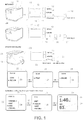
- a sous vide appliance for domestic use 10 comprises a housing 11 in which is contained a thermally controlled water bath 12.
- the device 10 includes a user interface 13 having buttons, switches or dials ⁇ user inputs ⁇ for adjusting the various parameters of the machine.
- the interface 13 also includes output devices, displays, alarms and warnings, as required.
- the interface 13 communicates with an electronic controller, microprocessor, MCU or other controlled device 14 that is adapted to determine the temperature that is read by a thermistor 15 that is in proximity to or in contact with water bath 12.
- the controller uses the determined bath temperature to regulate the delivery of electrical power to a heating element 16.
- the interface can be ported via a WIFI connection 17 to a separate device 18 having user inputs and graphic or audible outputs, as required.
- the sous vide device can have a USB output 19 adapted to interface with the USB port 20 of a separate device 21 that can act as the user interface to the device 10.
- Some embodiments of the invention may have within the housing 11, a rather integrated vacuum pump 22.
- the operation of the vacuum pump 22 can be controlled using the in-dash built controller 14 and user interface 13.
- the same controller 14 can be used to control a separate heat sealing device 23. That maybe plugged into an outlet or port 24 on an exterior service of the device 10.
- the user interface 13 may have an alpha numeric display 25.
- the display 25 can display the various cooking functions as such as cook, vacuum and seal 26 that the device can either perform or control using the in-built controller 14.
- the display 25 can determine can display the options available to the user 27 and when complete, the outcome 28.
- the display can indicate food types 29 and a curser 30 for indicating the appropriate user selection.
- the controller causes the display 13 to display a first level menu of options 31 such as soft, medium, hard or poached.
- the displayed options 31 can then be associated with a cursor 32 so that the user can input a particular preference.
- the display 25 can provide a graphical indication of time 33, temperature 34 or other variables, in real time if required.
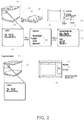
- a sous vide device tech may have a wireless communication 35 with a scale 36.
- the device 10 and scale 36 are both equipped with hardware to perform in a active wireless communication, for example the appropriate WIFI transmitting and receiving antennas, WIFI controller and other hardware maybe required.
- the scale 36 may be connected to the device 10 by hard wiring 37.
- the scale 36 determines the weight of a sous vide cooking item 38 and transmit the required information to the sous vide device 10.
- the weight data is transmitted to the controller and the controller may display the determined weight 39 on the display 25.
- the result of the weighing process, as communicated to the device 10, may be then be integrated to the work flow of the process, for example by alleviating the need for the user to make or input a further weight information.
- the display 25 thereafter need only display a food type 40.
- User selection of the food type 40 will then generate a display of a recommended cooking time 41 and recommended cooking temperature 42.
- the scale 43 may be integrated into the device 10 so as to weigh the water bath and its content both before and after the insertion of a food item 38.
- the sous vide device can use the weight data to calculate or suggest a cooking time.
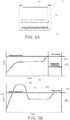
- the interior cavity 44 of a sous vide device 10 may be associated with a base heating element 45 (located below the interior 44) or a circumferential slow cooker style heating element banned 46, or both of these. This provides the sous vide cooker with the ability to potentially to act as a traditional slow cooker, deep fryer or rice maker.
- the controller may alter the bath temperature during a single cooking cycle.
- a food article is cooked at a maximum or second temperature 490 for an interval, after it has cooked earlier in the cycle at a lower or first temperature 491.
- Graph (b) shows a cooking cycle that includes a warming portion 492, then with reference to an optimum continuous sous vide cooking temperature 493, a first higher than the optimal temperature interval 494 followed by a cooling to a second temperature interval 495 that is lower than the optimal continuous temperature, then a warming to a third and final temperature interval 496 that is the same as the nominal optimal temperature 493.
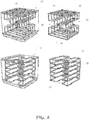
- a sous vide cooking appliance 10 may be provided with an optional internal rack 47.
- the rack comprises of 4 parallel corner elements 48 within which individual layers 49 are permanently attached.
- the individual layers are "capital H" shaped, each layer having a pair of opposing symmetrical edge indentations 50.
- the rack is used to contain and separate individual vacuumed bagged food items.
- the rack 51 comprises of a frame 52 with a removable, parallel shelves 53.
- the racks 47, 51 can be used in a vertical or horizontal orientation.
- the rectangular shelves made from wire or mesh 54 may be used to support both large and small food items.
- a sous Vide appliance 10 may be provided with an insulated lid 55 from which is suspended a thin perforated shelf 56.
- the shelf 56 is spaced apart from the underside of the lid 55 by a pair of opposing sidewalls 57 far enough that the shelf 56 is below the intended water level of the sous vide cooker. In this way, a food item 58 that tends to float will be submerged by the shelf 56 when the lid is in place.
- the lid 59 may also incorporate an integral chopping board 60 as well as an insulating core 61.
- a chopping board 62 may be provided that is the same size and shape of the lid 53.
- the chopping board 62 may then be provided with non-slip feet 64, preferably in the 4 corners, so that the chopping board does not slip with respect to the lid 63.
- a domestic sous vide appliance 10 can be integrated into a kitchen counter top by locating it below the level of the bench top 70.
- the sous vide cooker 10 can be located next to the and below an existing sink 71.
- the appliance 10 maybe located on a sliding shelf with a decorative outer panel or be provided with an integral decorative panel 72 that resembles or otherwise conforms to the design of the cabinet doors adjacent to it.
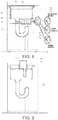
- an under bench, domestic, sous vide cooker 73 will be associated with a drain hose 74. that is isolated from the interior 75 of the appliance by a solenoid controlled valve 76.
- the hot 77 and cold 78 water inputs are combined in a mixer 79 before entering the interior of the appliance 75 via a solenoid controlled port 80.
- the solenoid controlled input and drain ports 76, 80 as well as the mixer 79 may be controlled from the appliances controller 14.
- the containment basin 80 of a domestic sous vide appliance 81 may be provided in the form of an insulted sink basin.
- the basin 82 is insulated and is provided with an insulated lid 83 and is preferable flushed with the surrounding bench comp 84 and that can serve as a chopping board.
- the basin may be provided with a liquid level sensor 85 and a temperature sensor such as a thermistor.
- the device may have an externally mounted user interface 87 that can be accessed directly by the user or serve as a wireless interface to a portable or handheld device operated by the user.
- the controller 14 may be contained together with a circulation or recirculation pump 88 in a compartment 89 attached and located under the basin.
- a sink or insulated sink 90 may be provided with an insulated lid 91 that incorporates a housing for an electric recirculation pump 92, its motor, the controller 14 and other components that may be required in a sous vide cooker are part from the containment compartment for holding the water.
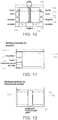
- a sous vide cooker 100 may be provided with an internal divider 101, preferably an insulated divider 101 that seals adjacent compartments 102, 103 from one another.
- Each compartment 102, 103 may have its own water level sensor 104, temperature sensor 105, pump or recirculation pump 106, controllable heating element 107 and controller ⁇ if required ⁇ 108.
- a single controller can operate the two compartments 102, 103 separately. This allows two different foods to be prepared at two different temperatures.
- the divider 101 can be removed to make a single, larger cavity.
- the location of the divider may be adjustable.
- a sous vide cooker 110 may have a heater or heating elements 111 and a refrigeration compressor 112. This arrangement would provide a temperature sensor 115 and controller 14 that were able to both heat and cool the contents 116 of the appliance 110.
- a Peltier cell 120 may be used to subdivide the internal compartment 121 in to a hot side 122 and a cold side 123.
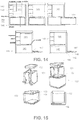
- a sous vide appliance 130 may be provided with adjacent compartments 131, 132 having between them a motorized, nematic or hydraulic jack or lifter 133.
- the lifter 133 is able to support one or two holders 134 adapted to hold vacuumed bagged food, for example, racks as suggested by FIG. 4 and FIG. 5 .
- the lifter 133 can rise high enough that the holder 134 is removed from the water bath and can descend slowly enough to then submerge the holder 34 in the water bath.
- one compartment 131 of the appliances provided with a heating elements 135 and the other side 132 is provided with refrigeration coils, Peltier cell or other form of refrigeration 136.
- a unit such as the one depicted in FIG. 13 can lower the lifter 133 at a user specified time and remove it from the water bath as a second user specified time. It can rotate the lifter 133 so that the position of the first and second holders is reversed. It can also cook a food item on one side, then lift it, then submerge it on the refrigerated side.
- a sous vide appliance 140 may have an internal bath 141 that is associated with both a refrigeration device such as a compressor 142 and heating elements 143.
- the floor of the bath 141 features a solenoid activated valve 144 that can drain the contents of the bath 141 into a removable internal compartment 145. This allows the contents of the bath 141 to be selectively drained into the internal compartment that lies below it. By removing the hot water around the food in the bath 141, the temperature is reduced allowing foods to be more rapidly brought to room temperature if the user is not available to remove the food form the bath 141.
- the appliance 140 can have an internal compartment 146 that can be filled, then, having its own drain 147, be emptied using a drain hose 148, access to which may be controlled by a solenoid or other operated valve 149.
- a sous vide appliance 150 maybe provided with an internal chiller 151.
- the chiller 151 is shaped and sized to conform to the internal sidewalls of the containment basin 152.
- the chiller 151 may be used in conjunction with fresh or cold water after a cooking operation has finished and before foods are stored in a refrigerator or freezer.
- the height of the chiller 151 corresponds to the height of the internal cavity 152.
- the chiller has apposing and hinged side walls 153 that may be folded towards each other to allow the chiller to be stored flat and layers expanded to fit under the lid 155 and within the internal compartment 152.
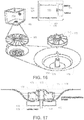
- the sous vide appliance's internal cavity 160 may be provided with one or more submersible impellers 161, 162.
- the impellers may be recessed or flushed with the interior of the compartment 160 and impellers 161 maybe located on a sidewall.
- Impeller 162 may also be located on the floor of the compartment 160.
- An impeller may be covered with a protective grating 163.
- the impeller 170 has one or more fins 171 for moving the water in the compartment 160 and therefore achieving a more even temperature distribution in the body of cooking water.
- the impeller 170 has an internal bore 173 for receiving a stub shaft 174 affixed to the floor 175 of a recessed 176 in the compartment 160.
- the impeller 170 rotates about the stub shaft 174 under the influence of a motor 176 located below the floor 175.
- the motor carries magnets 177.
- the magnets drive secondary magnets 178 carried by the impeller.
- a removable submersed impeller-sits below floor and/or wall level and by be mounted on the floor and/or the wall of the cavity to facilitate water movement and therefore a more even temperature in the body of water.
- a drain 181 at the lowest extent 182 of the cooking compartment 183 that opens and closes using a electronically controllable solenoid valve 184.
- a water inlet 185 located towards the top of the compartment 183 also features an electronically controllable solenoid valve 186.
- the inlet and outlet solenoid valves 184, 186, are opened and closed by the controller 14.
- excess water in the compartment 183 flows over the top of the internal wall or weir 187.
- the weir 187 is located within the housing 188.
- Water discharged over the top lip of the weir 187 is collected in a drain area 189 discharged from the drain area through an outlet hose 190 is controlled by a solenoid valve 191 that is operated by the controller 14.
- a solenoid valve 191 that is operated by the controller 14.
- the water fills and drain hoses 192, 193 are located in close proximity to one another and both are controlled independently, from the controller 14 using solenoid valves 194, 195.
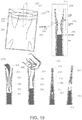
- a plastic bag 200 has a mouth opening 201 defined by the upper edges 202 of the bag.
- Heat sealable bags are well known in sous vide cooking. Particularly where the interior of the bag is exposed to the vacuum, there is a tendency for liquids associated with food in the bag to be expelled into the heat seal zone 203, these liquids in the zone 203 having the propensity to interfere with the heating sealing process.
- a bag is provided with an internal moisture barrier 204.
- the barrier 204 comprises an internal circumferential band of absorbent material such as synthetic textile or absorbent paper 205.
- the absorbent barrier 205 is located between the heat sealing zone 203 and perforations or tearable zone 206 that allow the bag to be easily opened after the cooking process is completed.
- a bag 200 is loaded with a food for cooking 207 that may have a liquid content.
- the absorbent barrier 204 is initially and entirely protected by a plastic film 208.
- a user 209 can peal away the plastic film 208 by disrupting the edges 210 of the film 208 that are adhered to the interior of the bag 200.
- the interior surfaces of the bag adjacent to the mouth opening 201 are brought together 212. This action also brings together 213 the exposed faces of the absorbent barrier 204. Liquids attempting to exit the bag 214 encounter and are absorbed by the absorbent barrier 204 before they reach the heat seal area 203. After the bag is heat sealed and the contents are cooked, the top of the bag can removed by tearing or cutting through the frangible portion, scoring or perforations 206 to expose the internal contents 215 of the bag 200.
- a bag can include a liquid absorbent material designed to stop the liquid from interfering with the sealing area.
- a plastic film protects this absorbent material while the bag is being loaded with the food and liquid. This film is removed just prior to sealing the bag.
- a perforated area is also provided to make the opening of the bag more easily.
- a plastic bag for sous vide cooking 220 may have a reusable closure 221 comprising interlocking components 222 that seal the mouth opening 223 when they are joined together.
- the elements 222 may be released from one another after cooking so that the bag can be reused.
- the bag structure comprises identically shaped from and back sheets 224, 225, along the exterior edges 226, 227 and above the closure 221, a pair of lateral ears 228, 229 that are joined to form a pair of opposing handles 230, 231 a user 232 may grasp the ears 230, 231 for the purpose of lowering the bag 220 into the sous vide appliance to remove air 10 and later removing the bag from the internal compartment 233 for sealing.
- a bag 244 sous vide cooking may have a removable or built-in magnet 241, preferably located along a lower edge 242 of the bag 240.
- the magnet is attracted to steel or another magnet located on, in or under the internal floor 243 of the internal cooking compartment.
- bags may be provided with a sealed air pocket 245, preferably located on or adjacent to an upper edge 246 of a bag.
- this sealed air pocket 245 extends above the upper margin 246 of the bag 240.
- the sealed air pocket 245 urges the upper edge 246 toward, or above the upper most water level in the compartment.
- an individual bag and its content may be indentified to a sous vide appliance 250 by providing the bag with an RFID tag 251, bar code or other means of remote identification.
- the sous vide appliance 250 is equipped with means for reading the tag 251 such as an RFID receiver or bar code scanner.
- the devices interface 252 displays, for a particular identified bag and its tag 251, information such as a recommended cooking time 253 and they suggested cooking temperature 254.
- Electronic scales associated with the appliance 250 may have an integral label printer for creating a barcode such as a 2D barcode 255.
- the barcode may be encoded with information regarding the weight determined by the scales and the size, shape and content of the bag as input into the scales through a user interface 260 located on or associated with the scales 262. Barcodes may also be used by third party food providers to encode Internet links, data, cooking instructions or etc.
- a bag 270 for sous vide cooking may incorporate a built-in, disposable or reusable temperature probe 271 such as a Thermistor.
- the probe 271 is, this example, is associated with a wireless transponder, for example an RFID tag 272.
- a sous vide appliance 273 may incorporate a receiver 274 for receiving a temperature signal indicative from the transponder 272 and communicating with the appliances controller 14.
- a notice or alarm 275 may be displayed on the graphic interface 276 accompanied by a second alarm such as a flashing light 277 or audible alarm.
- the temperature probe 271 is reusable, it is preferably permanently fixed to the transponder 272 where upon the electrical connection that connects the probe 271 to the transponder 272 is inserted past or through the bag's seal area 281.
- the transponder 272 may be providing with an integral air pocket or float 282.
- the transponder 272 may be inserted at the time of third party food packaging and then disposed of by the user.
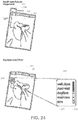
- a bag may also be provided with a temperature probe such as a Thermistor 291 that electronically communicates 292 with a visual temperature indicator 293.
- the probe 291 [similar to the probe 271 in FIG. 23 ] may be incorporated into the bag structure or extend inwardly from the interior of the bag so that the probe may be inserted into a food article.
- the thermal indicator may be in the form a display 294 that indicates, either electronically or by the activation of liquid crystals, a degree of food doneness 295, for example using a thermal metric liquid crystal strip 296 associated with corresponding descriptors 297 such as "rare, med-rare, medium, med-well and well done".
- the temperature probe 291 may be connected to the indicator 293, 294 by a thermally conductive wire or strip 299.
- a graphic user interface to a sous vide appliance 300 in conjunction with the appliance's controller 14 may be used to assist a user by suggesting the most appropriate time and temperature based on one or more inputs received from the user interface 13.
- a display 300 provides a list of food types 301. A user scrolls through the food types until the cursor 302 is adjacent to the user's selection. The user then makes the selection 303. The following applies to meat, thus is provided for information only.
- the display 300 depicts a list or array of meat types 304 based on the prior selection of meat. The user scrolls through the meat type list 304 using the cursor 302 and makes a selection, in this example, "beef".
- the controller 14 utilizes the data from a matrix or look up table based on the user's selection and displays another list of beef types 305.
- a user selection 306 from this list generates a display suggesting approximate or overall shapes 307 such as cube, cylinder or sphere.
- the user is then prompted to input one or more parameters relating to the shape.
- the user has positioned the cursor 302 adjacent to "sphere" where upon the user is prompted to input a diameter.
- the user inputs a diameter and the display 300 depicts the diameter input 308 from the user.
- the display may also provide a visual clue 309 to the parameter or measurement that is required from the user.
- the display 300 then provides a list of degree of cooking or doneness from which the user may select a value using the cursor 302 and a selection input 13. The user is then prompted enter a degree of texture from a list of suggested textures 311. Finally, the controller 14 utilizes the various data inputs from the aforementioned selection process [food type, meat type, cut style, general shape, shape parameter, doneness, and texture] to determine from an algorithm, matrix or look up table a selected cooking time and temperature. These values 312 are displayed on the interface's display 300. The user may modify the suggested value 312 prior to imitating a cooking operation in the appliance 10.
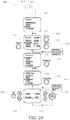
- a sous vide appliance 10 can cook multiple food items to different levels of doneness by using the controller 14 to vary the temperature of the water bath in accordance with user preference or data input by the user into the device's user interface.
- the controller 14 controls the temperature of the water bath to rise to a maximum cooking temperature for the particular well done meat.
- the display 402 provides instruction to the user 403 to insert the bag containing the meat for well done cooking and also displays the current temperature 404.
- the microprocessor determines when in time 405 the temperature of the bath will be reduced to a second cooking temperature 406.
- the display 408 indicates that the water bath is cooling and asks the user to wait until the next cooking phase.
- the display also indicates 409 the current temperature and the second temperature target. When the second target temperature has been reached 406 the display 409 indicates that the second target temperature has been reached and displays the current temperature.
- An audible alarm 410 may sound, alerting the user to insert the second bag into the bath.
- the controller then initiates a second cooking interval at a lower temperature than the first.
- the second interval 411 then terminates 412 and the display 413 indicates a second cooling interval and displays an instruction to the user to wait for the inception of the next phase.
- the display also indicates the current cooking temperature and the third target temperature 413.
- the display 416 indicates the current temperature and an instruction for the user to insert the third bag for meat done rare.
- the display 418 indicates that all three portions of food are done.
- the current temperature may also be displayed 419.
- the three bags are placed into the water bath successfully and without removing any of the bags until the end 420 of the cooking cycle. At the end of the cooking cycle 420 all three bags are removed from the water bath, or the bath bay be chilled in place.
- FIG. 26B illustrates a second and faster example of a cooking cycle in which all bags are inserted at the start and temperature is gradually increased rather than decreased. Bags are removed from the bath as they finish cooking.
- the controller causes the bath temperature to rise a first cooking temperature 430.
- the display 431 indicates the current temperature 432 and an instruction 433 for the user to insert all three bags of this example.
- the display 435 provides the user with an instruction 436 to remove the first bag.
- the display also indicates the current temperature.
- the display 437 indicates that the water bath is warming 438 and indicates both the current temperature and the second target temperature 439.
- the display 441 provides the user with an indication 432 that the second bag is cooking the meat to a doneness of e.g. medium.
- the display 451 provides the user with an instruction 452 to remove the meat and press a "continue" button on the user interface 453. Pressing the "continue” button prompts the display 455 to indicate 456 that the bath is warming.
- the display also shows the current and third target temperature.
- the display 461 provides the user with an indication 462 that the third bag is cooking meat to a doneness of well done.
- the current temperature may also be displayed.
- the display 470 indicates that the cooking process is completed and that the user should remove the last bag from the water. All of the aforementioned steps may be accompanied by audible or visual alarms 480.
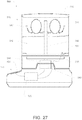
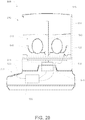
- FIG. 27 and FIG. 28 show schematic views of an embodiment sous vide device 500 for cooking eggs.
- FIG. 27 shows the device in a pre-cooking or post-cooking configuration.
- FIG. 28 shows the device in a cooking configuration.
- the sous vide device 500 is used according to the invention to control both time and temperature for cooking one or more eggs. By independently controlling both water cooking temperature and cooking time, the device can cook eggs to a selected white texture and yolk texture.
- the device 500 includes a vessel 510 for cooking the eggs.
- the vessel retains water 512 which can be temperature regulated or controlled to a selected or predetermined temperature.
- a rack (or basket or platform) 514 is movable within the vessel 510, such that it can be automatically lowered into the heated water 512, and automatically raised from the water at the completion of cooking period.
- a processor element (or module) 520 typically maintains/controls the water temperature by enabling and disabling power supplied to a heating element 530. The processor element 520 can also monitor/control the cooking period for automatically lowering and raising the rack.
- the device 500 includes a removable cordless vessel 510 which is located and connected with a corresponding base 511.
- the vessel includes a heating apparatus 530, and a temperature sensing element 532, which are typically coupled to a processor element 520 for accurately heating the water in the vessel, and maintaining a desired cooking temperature (or temperature profile) over the cooking period.
- the device 500 includes a rack 540 that is vertically movable within the vessel 510 for lowering eggs into the water at the commencement of a cooking period (best shown in FIG. 28 ), and raising the eggs from the water at the conclusion of the cooking period (e.g. as shown in FIG. 27 ).
- the rack is coupled to a vertical drive element 542 that is driven through a coupling 544 by a motor 546.
- the vertical drive element can include, by way of example only, a driveshaft with a worm drive for vertically moving the rack.
- the coupling 544 is driven by a motor 546 in the base, which is controlled by the processor element 520.
- the motor can be housed by the removable vessel 510, and controlled by the processor element 520 in the base 511.
- the base 511 can further include a user interface 550 for enabling user input of cooking parameters relevant to cooking eggs.
- the user interface can further include a display element for presenting data to the user.
- the user interface is coupled to the processor element (or module) 520.
- the vessel can include transparent side walls 514 (for example comprising glass or Pyrex) and/or a lid 516.
- only power and communication (or data) signals may be required to be passed from the base to the vessel (for example rack motor control data, heating element control data).
- Communication (or data) signals may also be passed from the vessel to the base (for example, temperature data and/or rack positional data or water level data).
- FIG. 29 shows an embodiment user interface 600 for cooking eggs on a sous vide cooker.
- the user interface 600 comprises one or more user input elements 610 coupled to a processor element 620.
- the processor element 620 being coupled to a display 630 for enabling user selection or configuration of cooking parameters.
- the display presents user options for food types.
- food types can including one of vegetables, meat, eggs, or custard.
- the user has selected 'eggs' proceeding to user display 631.
- the user display 631 enables the user to select any one or more of egg type using input element 621, egg temperature using input element 622 and egg quantity using input element 623.
- processor element determines or calculates available egg yolk texture and egg white texture using stored data 640.
- the display presents (at 632) options of egg yolk texture for user selection 624.
- the display presents (at 633) options of egg white texture for user selection 625.
- a cooking time and temperature can be determined and/or calculated, which is presented in the display (at 634).
- the cooking time and cooking temperature can be further modified by the user, using user inputs 626 and 627 respectively. For or at commencement of cooking, the user can then select auto-start 628 or start/cancel 629.
- an LCD type display and user input for controlling a sous vide cooker provides a list of food types.
- the user scrolls through the food types until the arrow or cursor is adjacent to the user's selection.
- the user then makes the selection.
- the display then depicts three input selections which include a list or array of egg types, egg temperature and egg quantity based on the prior selection of eggs.
- the user scrolls through the egg type list using the arrow or cursor and makes a selection, in this example, "brown”.
- the user then cycles through the egg temperature list and makes a selection, in this example "room temp” followed by making a selection of egg quantity in this example "6 eggs”.
- the controller utilises the data from a matrix or look up table based on the users selection and displays another selection variable being yolk texture.
- the display then provides a selection of yolk textures or "level of doneness”.
- the user scrolls through the yolk textures until the arrow or cursor is adjacent to the user's selection.
- the user then makes the selection, in this example "runny”.
- the display then provides a selection of white textures or "level of doneness”.
- the user scrolls through the white textures until the arrow or cursor is adjacent to the user's selection.
- the user then makes the selection, in this example "medium”.
- the controller utilises the various data inputs from the selection process (food type, egg type, egg temp, egg qty, yolk texture and white texture) to determine (for example, from an algorithm, matrix or look up table) a selected cooking time and temperature. These values are displayed on the interface's display. The user can modify the suggested values of both time and temperature prior to initiating the cooking operation based upon the above mentioned input selections. However, once either time or temperature has been adjusted the display typically reverts to a "custom" selection for both yolk and white input texture doneness variables. It will be appreciated that the above input sequence can be performed in a different order.
- a start/cancel functionality allows the above mentioned sequence to begin.
- the user interface may also offer a delayed start or auto start functionality.
- the device can be configured with an input of time in hours & minutes both (AM or PM) selection. This functionality allows for the controller to communicate with the device to wake up from standby mode and perform the inputted cooking selection by the user.
- the device of FIG. 27 and FIG. 28 can automatically lower the basket or rack apparatus, which lowers the eggs into the body of water.
- a rack can be used which would be manually lowered into the body of water by the user prior to pressing start.
- the eggs would typically be removed and placed in cold water to achieve the most accurate results, which would gestured or displayed on the display (for example "remove eggs and place in cold water”).
- An audible alarm or beeps can be sounded on starting and/or completion and/or lowering the automatic basket or rack and/or raising of the automatic basket or rack.
- FIG. 30 shows an example graph 700, which can be stored and used to calculate cooking time 710 and cooking temperature 711 from user selection of egg yolk texture 720 and egg white texture 721. It will be appreciated that this table may differ for various user selected egg types and/or egg temperatures and/or egg quantities. It will be appreciated that this table can be stored as a function or lookup table or other forms for referencing a cooking timer and cooking temperature based on user inputs.
- This example table 700 three example control points 731, 732 and 733 are displayed.
- the control point 731 specifies a yolk texture of 'hard' and a white texture of 'firm'.
- the control point 732 specifies a yolk texture of 'runny' and a white texture of 'medium'.
- the control point 733 specifies a yolk texture of 'soft' and a white texture of 'just set'. The user selected egg yolk textures and egg white textures are then translated to a cooking temperature and cooking time.
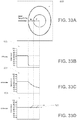
- FIG. 31A through FIG. 31D shows an example cooking profile for cooking an egg 800, being cooked to the specifications of set point 731.
- FIG. 31A shows a schematic diagram of an egg 800 cooking in a sous vide cooker.
- FIG. 31B shows the temperature profile 802 across an egg at the commencement of cooking, when first lowered into the water. In this example, at the commencement of cooking, the water temperature is boiling (100°) and the egg had a temperature of 10 degC.
- FIG. 31C shows the temperature profile 803 at a cooking time of 3:30 minutes, in which the temperature of the white and yolk have risen.
- FIG. 31D shows the temperature profile 804 at a cooking time of 7:00 minutes.
- the egg white has reached a temperature of about 80 degC and the egg yolk has readied a temperature of about 75 degC.
- the difference in temperature 805 between egg white and egg yoke can provide different textures.
- the water is maintained at about 100 deg C throughout the cooking period. At the conclusion of the cooking period, the eggs can be raised from the water.
- FIG. 32A through FIG. 32D shows an example cooking profile for cooking an egg 810, being cooked to the specifications of set point 732.
- FIG. 32A shows a schematic diagram of an egg 810 cooking in a sous vide cooker.
- FIG. 32B shows the temperature profile 812 across an egg at the commencement of cooking, when first lowered into the water. In this example, at the commencement of cooking, the water temperature is about 75 degC and the egg had a temperature of 10 degC.
- FIG. 32C shows the temperature profile 813 at a cooking time of 5:00 minutes, in which the temperature of the white and yolk have risen.
- FIG. 32D shows the temperature profile 814 at a cooking time of 10:00 minutes.
- the egg white has reached a temperature of about 70 degC and the egg yolk has reached a temperature of about 60 degC.
- the difference in temperature 815 (being greater then the difference (805) between egg white and egg yoke can provide different textures.
- the water is maintained at about 75 degC throughout the cooking period. At the conclusion of the cooking period, the eggs can be raised from the water.
- FIG. 33A through FIG. 33D shows an example cooking profile for cooking an egg 820, being cooked to the specifications of set point 732.
- FIG. 33A shows a schematic diagram of an egg 820 cooking in a sous vide cooker.
- FIG. 33B shows the temperature profile 822 across an egg at the commencement of cooking, when first lowered into the water. In this example, at the commencement of cooking, the water temperature is about 62 degC and the egg had a temperature of 10 degC.
- FIG. 33C shows the temperature profile 823 at a cooking time of 30:00 minutes, in which the temperature of the white and yolk have risen.
- FIG. 33D shows the temperature profile 824 at a cooking time of 60:00 minutes.
- the egg white has reached a temperature of about 62 degC and the egg yolk has reached a temperature of about 62 degC.
- the difference in temperature 825 between egg white and egg yoke is negligible.
- the water is maintained at about 62 degC throughout the cooking period. At the conclusion of the cooking period, the eggs can be raised from the water.
- the illustrated device provides an improved or alternative sous vide appliance.
- a processor with the necessary instructions for carrying out such a method or element of a method forms a means for carrying out the method or element of a method.
- an element described herein of an apparatus embodiment is an example of a means for carrying out the function performed by the element for the purpose of carrying out the invention.
- the one or more processors operate as a standalone device or may be connected, e.g., networked to other processor(s), in a networked deployment, the one or more processors may operate in the capacity of a server or a client machine in server-client network environment, or as a peer machine in a peer-to-peer or distributed network environment.
- each of the methods described herein is in the form of a computer-readable carrier medium carrying a set of instructions, e.g., a computer program that are for execution on one or more processors.
- a computer-readable carrier medium carrying a set of instructions, e.g., a computer program that are for execution on one or more processors.
- processor may refer to any device or portion of a device that processes electronic data, e.g., from registers and/or memory to transform that electronic data into other electronic data that, e.g., may be stored in registers and/or memory.
- a "computer” or a “computing machine” or a “computing platform” may include one or more processors.
- the methodologies described herein are, in one embodiment, performable by one or more processors that accept computer-readable (also called machine-readable) code containing a set of instructions that when executed by one or more of the processors carry out at least one of the methods described herein. Any processor capable of executing a set of instructions (sequential or otherwise) that specify actions to be taken is included.
Landscapes
- Engineering & Computer Science (AREA)
- Food Science & Technology (AREA)
- Health & Medical Sciences (AREA)
- Nutrition Science (AREA)
- Life Sciences & Earth Sciences (AREA)
- Chemical & Material Sciences (AREA)
- Polymers & Plastics (AREA)
- Cookers (AREA)
- Meat, Egg Or Seafood Products (AREA)
- Coloring Foods And Improving Nutritive Qualities (AREA)
Description
- The invention relates to domestic cooking appliances, and more particularly to a domestic sous vide device.
- The invention has been developed primarily for use as a domestic sous vide device and will be described hereinafter with reference to this application.
- A sous vide device (French for "under vacuum") is a method of cooking food in sealed plastic bags in a water bath. The purpose of sous vide cooking is too cook an item evenly, but over cook it and to retain moisture and flavour. Sous Vide uses temperature considerably lower then covenantal cooking. Sous Vide cooking of meet is capable of hydrolysing tough connective tissue into gelatine without heating the protein in the meat to the point that they denature and become tough. Sous vide cooking of vegetables allows the vegetables to be cooked below the boiling point of water while maintain a firm texture. Food places in a sous vide water bath cannot become hotter than the bath it is in. Accordingly, sous vide prevents overcooking and promotes even cooking with irregularly shaped or thick items.
- Because of the long cooking times, it would be an advantage is sous vide cooking to cook multiple and different food items simultaneously. Because sous vide cooking requires submersion of the food in a bag from which the air the air has been excluded, it would be advantageous to provide a sous vide cooker with a built in or integral vacuum pump. Further, because the exclusion of the air in the bag is sometimes incomplete, it is an advantage to provide a sous vide cooker that can submerge bags that tend to float.
- Automated and programmable cooking devices are known in the prior art.
US 5,445,062 A1 describes a device is which water bath temperature and circulation are controlled in order to provide a more effective cooking or reheating of foodstuffs.US 2005/0229789 A1 describes a cooker for automated cooking of pasta, rice, etc.WO 2012/ 006674 A1 describes an induction heating appliance with a sophisticated control system for use with a variety of cookware vessels. - It is an object of the invention in its preferred form to provide a sous vide cooker for cooking eggs according to user requirements.
- This object is achieved by a sous vide device according to
claim 1. - Preferred embodiments are defined in the dependent claims.
- Preferably, the device includes a movable food rack that can be lowered into the reservoir to define a cooking configuration, and, when the processor module determines water in the reservoir has reached a predefined temperature, the food rack is lowered to commence a cooking period.
- Preferably, the food style for a selected food type of eggs is selected from any one or more of the set comprising: soft, medium, hard, and poached.
- Preferably, egg white texture is selected from any one or more of the set comprising: firm; medium; soft; and just set.
- Preferably, egg yolk texture is selected from any one or more of the set comprising: hard; medium; soft; and runny.
- The corresponding cooking temperature and the corresponding cooking time are predetermined for the selected combination of egg white texture and egg yolktexture.
- Preferably, based on user input, the processor determines a cooking profile comprising a predetermined sequence of cooking temperatures each having a respective cooking time within a single cooking period. More preferably, in a first cycle, an egg is cooked at a first cooking temperature for a first cooking time; and then in a sequenced second cycle the egg is cooked at a second cooking temperature for a second cooking time. Most preferably, the egg is allowed to cool to a third temperature at the conclusion of any cooking cycle.
- Preferably, the processor module is wirelessly coupled to a temperature sensor element.
- Preferably, the processor module is wirelessly coupled to the user interface.
- Preferably, the device further includes a temperature probe for providing a signal indicative of food temperature; wherein the processor module is coupled to the temperature probe for receiving the signal indicative of food temperature; such that the processor module, upon determining a food temperature, adjusts the cooking temperature and/or cooking time. More preferably, the processor module is wirelessly coupled to the temperature probe.
- Preferably, the interface enables user input of any one or more of the following: a cooking time; a cooking temperature; a food type; a food style; a food weight; and a food shape.
- Preferably, the interface is remote from the sous vide device. More preferably, the interface is wirelessly coupled to the sous vide device. Most preferably, the interface comprises an application on a remote device.
- In order that the invention be better understood, reference is now made to the following drawing figures in which:
- FIG. 1
- illustrates in perspective and schematic views, a sous vide cooker and the displays from a user interface of that appliance;
- FIG. 2
- illustrates in schematic and perspective views a sous vide cooker associated with a scale that it communicates wirelessly;
- FIG. 3A
- illustrates both base and circumferential heating elements in this sous vide appliance;
- FIG. 3B
- illustrates grasps of variable temperature cooking in a sous vide appliance;
- FIG. 4
- illustrates, in perspective view, a rack for a sous vide appliance;
- FIG. 5
- illustrates, in perspective view, a second rack for a sous vide appliance;
- FIG. 6
- illustrates in side and perspective views, different lid arrangement for a sous vide appliance;
- FIG. 7
- illustrates in top and cross section views, a sous vide appliance that is built-in to a cabinet below a bench top;
- FIG. 8
- is a schematic cross section illustrating a sink that is used as a containment or bath in a sous vide appliance;
- FIG. 9
- is a second embodiment of a sink that may be used as a bath in a sous vide appliance;
- FIG. 10
- is a schematic cross section of a sous vide appliance having separate internal compartments;
- FIG. 11
- is a schematic cross section illustrating a sous vide appliance having both heating and cooling capabilities;
- FIG. 12
- is a schematic cross section illustrating a sous vide appliance having both a hot and a cold bath;
- FIG. 13
- illustrates in schematic and perspective views a sous vide appliance with two separate baths and a food lifting mechanism;
- FIG. 14
- illustrates in schematic cross sections a sous vide appliance with a removable or separate holding tank;
- FIG. 15
- illustrates in perspective and cross sectional views a sous vide appliance having a removable chiller;
- FIG. 16
- illustrates in perspective and schematic cross section, a sous vide appliance having a removable and submerged impeller;
- FIG. 17
- is a cross section of the impeller suggested by
FIG. 16 ; - FIG. 18
- illustrates in schematic cross section and perspective views a sous vide appliance with solenoid controlled inlet and drain valves;
- FIG. 19
- illustrates in perspective and cross sectional views a bag for a sous vide appliance;
- FIG. 20
- illustrates in perspective and cross sectional views another bag for a sous vide appliance;
- FIG. 21
- is a perspective view of a bag for a sous vide cooker having a magnet and a float;
- FIG. 22
- illustrates the use RFID and barcode technology (or the like) in a sous vide appliance;
- FIG. 23
- illustrates the use of wireless technology to indicate an extent of cooking in a sous vide appliance;
- FIG. 24
- is a perspective view of a bag for a sous vide cooker having a cooking progress indicator;
- FIG. 25
- is a flow chart illustrating the display of a sous vide appliance during user programming that is prompted by the units controller;
- FIG. 26
- illustrates two different cooking programs executed by the controller of a sous vide appliance, one illustrating decreasing cooking temperature over time and the other illustrating increasing cooking temperature over time;
- FIG. 27
- is a schematic view of an embodiment sous vide device for cooking eggs;
- FIG. 28
- is a schematic view of the sous vide device of
FIG 27 , shown with eggs submerged in water; - FIG. 29
- is a schematic view of an embodiment user interface for a sous vide device;
- FIG. 30
- shows an embodiment graph used to calculate cooking time and cooking temperature;
- FIG. 31A
- through
FIG. 31D show example embodiment temperature profile graphs associate with cooking an egg; - FIG. 32A
- through
FIG. 32D show example embodiment temperature profile graphs associate with cooking an egg; and - FIG. 33A
- through
FIG. 33D show example embodiment temperature profile graphs associate with cooking an egg. - A shown in
FIG. 1 , a sous vide appliance fordomestic use 10 comprises ahousing 11 in which is contained a thermally controlledwater bath 12. Thedevice 10 includes auser interface 13 having buttons, switches or dials {user inputs} for adjusting the various parameters of the machine. Theinterface 13 also includes output devices, displays, alarms and warnings, as required. Theinterface 13 communicates with an electronic controller, microprocessor, MCU or other controlleddevice 14 that is adapted to determine the temperature that is read by a thermistor 15 that is in proximity to or in contact withwater bath 12. The controller uses the determined bath temperature to regulate the delivery of electrical power to aheating element 16. Some or all aspects of the interface can be ported via aWIFI connection 17 to aseparate device 18 having user inputs and graphic or audible outputs, as required. In some embodiments, the sous vide device can have a USB output 19 adapted to interface with theUSB port 20 of aseparate device 21 that can act as the user interface to thedevice 10. Some embodiments of the invention may have within thehousing 11, a ratherintegrated vacuum pump 22. The operation of thevacuum pump 22 can be controlled using the in-dash builtcontroller 14 anduser interface 13. Thesame controller 14 can be used to control a separateheat sealing device 23. That maybe plugged into an outlet orport 24 on an exterior service of thedevice 10. Theuser interface 13 may have an alphanumeric display 25. In one displaced state, thedisplay 25 can display the various cooking functions as such as cook, vacuum and seal 26 that the device can either perform or control using the in-builtcontroller 14. Once an operation commence, thedisplay 25 can determine can display the options available to theuser 27 and when complete, the outcome 28. When device functions 26 are displayed, an the user selects "cook", the display can indicatefood types 29 and acurser 30 for indicating the appropriate user selection. When a selection such as "eggs" is input to the controller buy a user command, the controller causes thedisplay 13 to display a first level menu ofoptions 31 such as soft, medium, hard or poached. The displayedoptions 31 can then be associated with acursor 32 so that the user can input a particular preference. Once the selection is made, thedisplay 25 can provide a graphical indication oftime 33,temperature 34 or other variables, in real time if required. - As shown in
FIG. 2 , a sous vide device tech may have awireless communication 35 with ascale 36. Thedevice 10 andscale 36 are both equipped with hardware to perform in a active wireless communication, for example the appropriate WIFI transmitting and receiving antennas, WIFI controller and other hardware maybe required. In the alternative, thescale 36 may be connected to thedevice 10 byhard wiring 37. Thescale 36 determines the weight of a sous vide cookingitem 38 and transmit the required information to the sous videdevice 10. The weight data is transmitted to the controller and the controller may display thedetermined weight 39 on thedisplay 25. The result of the weighing process, as communicated to thedevice 10, may be then be integrated to the work flow of the process, for example by alleviating the need for the user to make or input a further weight information. Accordingly, thedisplay 25 thereafter need only display afood type 40. User selection of thefood type 40 will then generate a display of a recommendedcooking time 41 and recommendedcooking temperature 42. In the alternative, thescale 43 may be integrated into thedevice 10 so as to weigh the water bath and its content both before and after the insertion of afood item 38. The sous vide device can use the weight data to calculate or suggest a cooking time. - As shown in
FIG. 3A , theinterior cavity 44 of a sous videdevice 10 may be associated with a base heating element 45 (located below the interior 44) or a circumferential slow cooker style heating element banned 46, or both of these. This provides the sous vide cooker with the ability to potentially to act as a traditional slow cooker, deep fryer or rice maker. - As shown in
FIG. 3B , the controller may alter the bath temperature during a single cooking cycle. In graph (a), a food article is cooked at a maximum orsecond temperature 490 for an interval, after it has cooked earlier in the cycle at a lower or first temperature 491. Graph (b) shows a cooking cycle that includes a warmingportion 492, then with reference to an optimum continuous sous vide cooking temperature 493, a first higher than the optimal temperature interval 494 followed by a cooling to asecond temperature interval 495 that is lower than the optimal continuous temperature, then a warming to a third and final temperature interval 496 that is the same as the nominal optimal temperature 493. - As shown in
FIG. 4 , a sous vide cookingappliance 10 may be provided with an optionalinternal rack 47. In this example, the rack comprises of 4parallel corner elements 48 within whichindividual layers 49 are permanently attached. In this example, the individual layers are "capital H" shaped, each layer having a pair of opposingsymmetrical edge indentations 50. The rack is used to contain and separate individual vacuumed bagged food items. - In the example of
FIG. 5 , therack 51 comprises of aframe 52 with a removable, parallel shelves 53. Theracks mesh 54 may be used to support both large and small food items. - As shown in
FIG. 6 , asous Vide appliance 10 may be provided with aninsulated lid 55 from which is suspended a thinperforated shelf 56. Theshelf 56 is spaced apart from the underside of thelid 55 by a pair of opposingsidewalls 57 far enough that theshelf 56 is below the intended water level of the sous vide cooker. In this way, afood item 58 that tends to float will be submerged by theshelf 56 when the lid is in place. - The
lid 59 may also incorporate anintegral chopping board 60 as well as an insulatingcore 61. In the alternative, achopping board 62 may be provided that is the same size and shape of the lid 53. The choppingboard 62 may then be provided withnon-slip feet 64, preferably in the 4 corners, so that the chopping board does not slip with respect to thelid 63. - As shown in
FIG. 7 , a domestic sous videappliance 10 can be integrated into a kitchen counter top by locating it below the level of thebench top 70. In preferred embodiments, the sous videcooker 10 can be located next to the and below an existingsink 71. Theappliance 10 maybe located on a sliding shelf with a decorative outer panel or be provided with an integraldecorative panel 72 that resembles or otherwise conforms to the design of the cabinet doors adjacent to it. Thus, an under bench, domestic, sous videcooker 73 will be associated with a drain hose 74. that is isolated from the interior 75 of the appliance by a solenoid controlledvalve 76. In this embodiment the hot 77 and cold 78 water inputs are combined in amixer 79 before entering the interior of the appliance 75 via a solenoid controlledport 80. The solenoid controlled input anddrain ports mixer 79 may be controlled from theappliances controller 14. - As shown in
FIG. 8 , thecontainment basin 80 of a domestic sous videappliance 81 may be provided in the form of an insulted sink basin. In this embodiment thebasin 82 is insulated and is provided with aninsulated lid 83 and is preferable flushed with the surroundingbench comp 84 and that can serve as a chopping board. The basin may be provided with aliquid level sensor 85 and a temperature sensor such as a thermistor. The device may have an externally mounteduser interface 87 that can be accessed directly by the user or serve as a wireless interface to a portable or handheld device operated by the user. In some embodiments thecontroller 14 may be contained together with a circulation or recirculation pump 88 in acompartment 89 attached and located under the basin. - As shown in
FIG. 9 , a sink or insulatedsink 90 may be provided with aninsulated lid 91 that incorporates a housing for anelectric recirculation pump 92, its motor, thecontroller 14 and other components that may be required in a sous vide cooker are part from the containment compartment for holding the water. - As shown in
FIG. 10 , a sous videcooker 100 may be provided with aninternal divider 101, preferably aninsulated divider 101 that sealsadjacent compartments compartment water level sensor 104,temperature sensor 105, pump orrecirculation pump 106,controllable heating element 107 and controller {if required} 108. A single controller can operate the twocompartments divider 101 can be removed to make a single, larger cavity. In some embodiments, the location of the divider may be adjustable. - As shown in
FIG. 11 , a sous videcooker 110 may have a heater orheating elements 111 and arefrigeration compressor 112. This arrangement would provide atemperature sensor 115 andcontroller 14 that were able to both heat and cool the contents 116 of theappliance 110. - As shown in
FIG. 12 , aPeltier cell 120 may be used to subdivide theinternal compartment 121 in to ahot side 122 and acold side 123. - As shown in
FIG. 13 , a sous videappliance 130 may be provided withadjacent compartments lifter 133. Thelifter 133 is able to support one or twoholders 134 adapted to hold vacuumed bagged food, for example, racks as suggested byFIG. 4 andFIG. 5 . Under the control of thecontroller 14 thelifter 133 can rise high enough that theholder 134 is removed from the water bath and can descend slowly enough to then submerge theholder 34 in the water bath. In some embodiments onecompartment 131 of the appliances provided with aheating elements 135 and theother side 132 is provided with refrigeration coils, Peltier cell or other form ofrefrigeration 136. This allows onecompartment 132 to be refrigerated or chilled while theother compartment 131 is heated to cook foods. This arrangement allows a number of different operations to be performed. A unit such as the one depicted inFIG. 13 can lower thelifter 133 at a user specified time and remove it from the water bath as a second user specified time. It can rotate thelifter 133 so that the position of the first and second holders is reversed. It can also cook a food item on one side, then lift it, then submerge it on the refrigerated side. - As shown in
FIG. 14 , a sous videappliance 140 may have aninternal bath 141 that is associated with both a refrigeration device such as acompressor 142 andheating elements 143. The floor of thebath 141 features a solenoid activatedvalve 144 that can drain the contents of thebath 141 into a removableinternal compartment 145. This allows the contents of thebath 141 to be selectively drained into the internal compartment that lies below it. By removing the hot water around the food in thebath 141, the temperature is reduced allowing foods to be more rapidly brought to room temperature if the user is not available to remove the food form thebath 141. As an alternative to a removableinternal compartment 145, theappliance 140 can have aninternal compartment 146 that can be filled, then, having itsown drain 147, be emptied using adrain hose 148, access to which may be controlled by a solenoid or other operatedvalve 149. - As shown in
FIG. 15 asous vide appliance 150 maybe provided with aninternal chiller 151. Thechiller 151 is shaped and sized to conform to the internal sidewalls of thecontainment basin 152. Thechiller 151 may be used in conjunction with fresh or cold water after a cooking operation has finished and before foods are stored in a refrigerator or freezer. In this example, the height of thechiller 151 corresponds to the height of theinternal cavity 152. In this example, the chiller has apposing and hingedside walls 153 that may be folded towards each other to allow the chiller to be stored flat and layers expanded to fit under thelid 155 and within theinternal compartment 152. - As shown in
FIG. 16 and FIG. 17 , the sous vide appliance'sinternal cavity 160 may be provided with one or moresubmersible impellers cavity 160, the impellers may be recessed or flushed with the interior of thecompartment 160 andimpellers 161 maybe located on a sidewall.Impeller 162 may also be located on the floor of thecompartment 160. An impeller may be covered with aprotective grating 163. As shown inFIG. 17 , theimpeller 170 has one ormore fins 171 for moving the water in thecompartment 160 and therefore achieving a more even temperature distribution in the body of cooking water. Theimpeller 170 has aninternal bore 173 for receiving astub shaft 174 affixed to thefloor 175 of a recessed 176 in thecompartment 160. Theimpeller 170 rotates about thestub shaft 174 under the influence of amotor 176 located below thefloor 175. The motor carriesmagnets 177. The magnets drivesecondary magnets 178 carried by the impeller. - It will be appreciated that, in an example embodiment, a removable submersed impeller-sits below floor and/or wall level, and by be mounted on the floor and/or the wall of the cavity to facilitate water movement and therefore a more even temperature in the body of water.
- As shown in
FIG. 18 , the ease of filling and draining a sous videappliance 180 is facilitated by providing a drain 181 at thelowest extent 182 of thecooking compartment 183, that opens and closes using a electronicallycontrollable solenoid valve 184. Awater inlet 185 located towards the top of thecompartment 183 also features an electronicallycontrollable solenoid valve 186. The inlet andoutlet solenoid valves controller 14. In another example, excess water in thecompartment 183 flows over the top of the internal wall orweir 187. Theweir 187 is located within thehousing 188. Water discharged over the top lip of theweir 187 is collected in adrain area 189 discharged from the drain area through anoutlet hose 190 is controlled by asolenoid valve 191 that is operated by thecontroller 14. In some embodiments, the water fills and drainhoses controller 14 usingsolenoid valves - As shown in
FIG. 19 , aplastic bag 200 has amouth opening 201 defined by theupper edges 202 of the bag. Heat sealable bags are well known in sous vide cooking. Particularly where the interior of the bag is exposed to the vacuum, there is a tendency for liquids associated with food in the bag to be expelled into theheat seal zone 203, these liquids in thezone 203 having the propensity to interfere with the heating sealing process. In order to prevent such liquids form interfering with the heat sealing process, a bag is provided with aninternal moisture barrier 204. Thebarrier 204 comprises an internal circumferential band of absorbent material such as synthetic textile orabsorbent paper 205. In preferred embodiments, theabsorbent barrier 205 is located between theheat sealing zone 203 and perforations ortearable zone 206 that allow the bag to be easily opened after the cooking process is completed. As show inFIG. 19 abag 200 is loaded with a food for cooking 207 that may have a liquid content. In order that theabsorbent barrier 204 to be initially protected from the incoming or outgoing liquid (overflow) 207B, theabsorbent barrier 204 is initially and entirely protected by aplastic film 208. After the bag is filled but before the edges are sealed, auser 209 can peal away theplastic film 208 by disrupting theedges 210 of thefilm 208 that are adhered to the interior of thebag 200. With theplastic film 208 removed, the interior surfaces of the bag adjacent to themouth opening 201 are brought together 212. This action also brings together 213 the exposed faces of theabsorbent barrier 204. Liquids attempting to exit thebag 214 encounter and are absorbed by theabsorbent barrier 204 before they reach theheat seal area 203. After the bag is heat sealed and the contents are cooked, the top of the bag can removed by tearing or cutting through the frangible portion, scoring orperforations 206 to expose theinternal contents 215 of thebag 200. - In an embodiment, by way of example only, a bag can include a liquid absorbent material designed to stop the liquid from interfering with the sealing area. A plastic film protects this absorbent material while the bag is being loaded with the food and liquid. This film is removed just prior to sealing the bag. A perforated area is also provided to make the opening of the bag more easily.
- As shown in
FIG. 20 , a plastic bag for sous vide cooking 220 may have areusable closure 221 comprising interlockingcomponents 222 that seal the mouth opening 223 when they are joined together. Theelements 222 may be released from one another after cooking so that the bag can be reused. In this example, the bag structure comprises identically shaped from and backsheets exterior edges closure 221, a pair oflateral ears handles 230, 231 auser 232 may grasp theears bag 220 into the sous vide appliance to removeair 10 and later removing the bag from theinternal compartment 233 for sealing. - As shown in
FIG. 21 , abag 244 sous vide cooking may have a removable or built-inmagnet 241, preferably located along alower edge 242 of thebag 240. The magnet is attracted to steel or another magnet located on, in or under theinternal floor 243 of the internal cooking compartment. This removable and stably locates the lower edge of the bag and promotes consistent spacing betweendifferent bags 244 located in the internal compartment. In order to keep the bags more upright, bags may be provided with a sealedair pocket 245, preferably located on or adjacent to anupper edge 246 of a bag. In this example, this sealedair pocket 245 extends above theupper margin 246 of thebag 240. The sealedair pocket 245 urges theupper edge 246 toward, or above the upper most water level in the compartment. - As shown in
FIG. 22 , an individual bag and its content may be indentified to a sous videappliance 250 by providing the bag with anRFID tag 251, bar code or other means of remote identification. The sous videappliance 250 is equipped with means for reading thetag 251 such as an RFID receiver or bar code scanner. The devices interface 252 displays, for a particular identified bag and itstag 251, information such as arecommended cooking time 253 and they suggested cooking temperature 254. Electronic scales associated with theappliance 250 may have an integral label printer for creating a barcode such as a2D barcode 255. The barcode may be encoded with information regarding the weight determined by the scales and the size, shape and content of the bag as input into the scales through a user interface 260 located on or associated with thescales 262. Barcodes may also be used by third party food providers to encode Internet links, data, cooking instructions or etc. - As shown in
FIG. 23 , abag 270 for sous vide cooking may incorporate a built-in, disposable orreusable temperature probe 271 such as a Thermistor. Theprobe 271 is, this example, is associated with a wireless transponder, for example anRFID tag 272. A sous videappliance 273 may incorporate areceiver 274 for receiving a temperature signal indicative from thetransponder 272 and communicating with theappliances controller 14. When the temperature signal and elapsed time are determined by the controller to be sufficient, a notice oralarm 275 may be displayed on thegraphic interface 276 accompanied by a second alarm such as a flashing light 277 or audible alarm. Where thetemperature probe 271 is reusable, it is preferably permanently fixed to thetransponder 272 where upon the electrical connection that connects theprobe 271 to thetransponder 272 is inserted past or through the bag'sseal area 281. Thetransponder 272 may be providing with an integral air pocket orfloat 282. Thetransponder 272 may be inserted at the time of third party food packaging and then disposed of by the user. - As shown in
FIG. 24 , a bag may also be provided with a temperature probe such as aThermistor 291 that electronically communicates 292 with avisual temperature indicator 293. The probe 291 [similar to theprobe 271 inFIG. 23 ] may be incorporated into the bag structure or extend inwardly from the interior of the bag so that the probe may be inserted into a food article. The thermal indicator may be in the form adisplay 294 that indicates, either electronically or by the activation of liquid crystals, a degree offood doneness 295, for example using a thermal metricliquid crystal strip 296 associated withcorresponding descriptors 297 such as "rare, med-rare, medium, med-well and well done". Thetemperature probe 291 may be connected to theindicator strip 299. - As shown in
FIG. 25 , a graphic user interface to a sous videappliance 300, in conjunction with the appliance'scontroller 14 may be used to assist a user by suggesting the most appropriate time and temperature based on one or more inputs received from theuser interface 13. For example, adisplay 300 provides a list offood types 301. A user scrolls through the food types until thecursor 302 is adjacent to the user's selection. The user then makes theselection 303. The following applies to meat, thus is provided for information only. Thedisplay 300 then depicts a list or array ofmeat types 304 based on the prior selection of meat. The user scrolls through themeat type list 304 using thecursor 302 and makes a selection, in this example, "beef". Thecontroller 14 utilizes the data from a matrix or look up table based on the user's selection and displays another list of beef types 305. Auser selection 306 from this list generates a display suggesting approximate oroverall shapes 307 such as cube, cylinder or sphere. The user is then prompted to input one or more parameters relating to the shape. In this example, the user has positioned thecursor 302 adjacent to "sphere" where upon the user is prompted to input a diameter. The user inputs a diameter and thedisplay 300 depicts thediameter input 308 from the user. The display may also provide avisual clue 309 to the parameter or measurement that is required from the user. Thedisplay 300 then provides a list of degree of cooking or doneness from which the user may select a value using thecursor 302 and aselection input 13. The user is then prompted enter a degree of texture from a list of suggestedtextures 311. Finally, thecontroller 14 utilizes the various data inputs from the aforementioned selection process [food type, meat type, cut style, general shape, shape parameter, doneness, and texture] to determine from an algorithm, matrix or look up table a selected cooking time and temperature. Thesevalues 312 are displayed on the interface'sdisplay 300. The user may modify the suggestedvalue 312 prior to imitating a cooking operation in theappliance 10. It will be understood that the aforementioned process of acquiring may be performed in a different order or in accordance with different parameters, the aforementioned being merely an example of the utilization of thecontroller 14 and thedisplay 300 in the acquisition of data and user preferences regarding the food to be cooked. - As suggested by
FIG. 26A , a sous videappliance 10 can cook multiple food items to different levels of doneness by using thecontroller 14 to vary the temperature of the water bath in accordance with user preference or data input by the user into the device's user interface. In the examples ofFIG. 26 , which applies to meat and is therefore provided for information only, three pieces of meat in three separate bags are cooked to different levels of doneness and are allowed to finish simultaneously. As illustrated in graph A the water bath begins at anambient temperature 400. Using theuser interface 13, the user indicates that three pieces of meat will be cooked at each of the following levels of doneness: well done, medium and rare. Thecontroller 14 causes the temperature of the water bath to rise to a maximum cooking temperature for the particular well done meat. Thedisplay 402 provides instruction to theuser 403 to insert the bag containing the meat for well done cooking and also displays thecurrent temperature 404. The microprocessor determines when intime 405 the temperature of the bath will be reduced to asecond cooking temperature 406. At the end of thefirst cooking interval 407 thedisplay 408 indicates that the water bath is cooling and asks the user to wait until the next cooking phase. The display also indicates 409 the current temperature and the second temperature target. When the second target temperature has been reached 406 thedisplay 409 indicates that the second target temperature has been reached and displays the current temperature. Anaudible alarm 410 may sound, alerting the user to insert the second bag into the bath. The controller then initiates a second cooking interval at a lower temperature than the first. Thesecond interval 411 then terminates 412 and thedisplay 413 indicates a second cooling interval and displays an instruction to the user to wait for the inception of the next phase. The display also indicates the current cooking temperature and thethird target temperature 413. At the end of thesecond cooling interval 415 thedisplay 416 indicates the current temperature and an instruction for the user to insert the third bag for meat done rare. At the end of thethird cooking interval 417 thedisplay 418 indicates that all three portions of food are done. The current temperature may also be displayed 419. In the aforementioned example, the three bags are placed into the water bath successfully and without removing any of the bags until theend 420 of the cooking cycle. At the end of thecooking cycle 420 all three bags are removed from the water bath, or the bath bay be chilled in place. -
FIG. 26B illustrates a second and faster example of a cooking cycle in which all bags are inserted at the start and temperature is gradually increased rather than decreased. Bags are removed from the bath as they finish cooking. As shown in graph B, the controller causes the bath temperature to rise afirst cooking temperature 430. Thedisplay 431 indicates thecurrent temperature 432 and aninstruction 433 for the user to insert all three bags of this example. At the end of thefirst cooking interval 434 thedisplay 435 provides the user with aninstruction 436 to remove the first bag. The display also indicates the current temperature. Thereafter, thedisplay 437 indicates that the water bath is warming 438 and indicates both the current temperature and thesecond target temperature 439. At the end of thesecond warming interval 440, thedisplay 441 provides the user with anindication 432 that the second bag is cooking the meat to a doneness of e.g. medium. At the end of thesecond cooking interval 450 the display 451 provides the user with aninstruction 452 to remove the meat and press a "continue" button on the user interface 453. Pressing the "continue" button prompts thedisplay 455 to indicate 456 that the bath is warming. The display also shows the current and third target temperature. At the beginning of thethird cooking interval 460, thedisplay 461 provides the user with anindication 462 that the third bag is cooking meat to a doneness of well done. The current temperature may also be displayed. At the end of third interval, thedisplay 470 indicates that the cooking process is completed and that the user should remove the last bag from the water. All of the aforementioned steps may be accompanied by audible orvisual alarms 480. -
FIG. 27 andFIG. 28 show schematic views of an embodiment sous vide device 500 for cooking eggs.FIG. 27 shows the device in a pre-cooking or post-cooking configuration.FIG. 28 shows the device in a cooking configuration. - The sous vide device 500 is used according to the invention to control both time and temperature for cooking one or more eggs. By independently controlling both water cooking temperature and cooking time, the device can cook eggs to a selected white texture and yolk texture.
- In an embodiment, the device 500 includes a
vessel 510 for cooking the eggs. The vessel retains water 512 which can be temperature regulated or controlled to a selected or predetermined temperature. A rack (or basket or platform) 514 is movable within thevessel 510, such that it can be automatically lowered into the heated water 512, and automatically raised from the water at the completion of cooking period. A processor element (or module) 520 typically maintains/controls the water temperature by enabling and disabling power supplied to a heating element 530. Theprocessor element 520 can also monitor/control the cooking period for automatically lowering and raising the rack. - In an embodiment, the device 500 includes a removable
cordless vessel 510 which is located and connected with acorresponding base 511. The vessel includes a heating apparatus 530, and atemperature sensing element 532, which are typically coupled to aprocessor element 520 for accurately heating the water in the vessel, and maintaining a desired cooking temperature (or temperature profile) over the cooking period. - In an embodiment, the device 500 includes a
rack 540 that is vertically movable within thevessel 510 for lowering eggs into the water at the commencement of a cooking period (best shown inFIG. 28 ), and raising the eggs from the water at the conclusion of the cooking period (e.g. as shown inFIG. 27 ). By way of example, the rack is coupled to avertical drive element 542 that is driven through acoupling 544 by amotor 546. The vertical drive element can include, by way of example only, a driveshaft with a worm drive for vertically moving the rack. In this example, thecoupling 544 is driven by amotor 546 in the base, which is controlled by theprocessor element 520. However, it will be appreciated that the motor can be housed by theremovable vessel 510, and controlled by theprocessor element 520 in thebase 511. - In an embodiment, the base 511 can further include a
user interface 550 for enabling user input of cooking parameters relevant to cooking eggs. The user interface can further include a display element for presenting data to the user. The user interface is coupled to the processor element (or module) 520. - In an embodiment, the vessel can include transparent side walls 514 (for example comprising glass or Pyrex) and/or a
lid 516. - It would be appreciated that in other embodiments, only power and communication (or data) signals may be required to be passed from the base to the vessel (for example rack motor control data, heating element control data). Communication (or data) signals may also be passed from the vessel to the base (for example, temperature data and/or rack positional data or water level data).
-
FIG. 29 shows an embodiment user interface 600 for cooking eggs on a sous vide cooker. In an embodiment, by way of example only, the user interface 600 comprises one or moreuser input elements 610 coupled to aprocessor element 620. Theprocessor element 620 being coupled to adisplay 630 for enabling user selection or configuration of cooking parameters. - In this embodiment, the display (at 630) presents user options for food types. By way of example, food types can including one of vegetables, meat, eggs, or custard.
- In the example, the user has selected 'eggs' proceeding to
user display 631. Theuser display 631 enables the user to select any one or more of egg type usinginput element 621, egg temperature usinginput element 622 and egg quantity usinginput element 623. Based on these user inputs, processor element determines or calculates available egg yolk texture and egg white texture using storeddata 640. The display then presents (at 632) options of egg yolk texture foruser selection 624. The display then presents (at 633) options of egg white texture foruser selection 625. With user selection of the yolk texture and white texture, a cooking time and temperature can be determined and/or calculated, which is presented in the display (at 634). The cooking time and cooking temperature can be further modified by the user, usinguser inputs start 628 or start/cancel 629. - In this embodiment, by way of example only, an LCD type display and user input for controlling a sous vide cooker. The LCD display provides a list of food types. The user scrolls through the food types until the arrow or cursor is adjacent to the user's selection. The user then makes the selection. The display then depicts three input selections which include a list or array of egg types, egg temperature and egg quantity based on the prior selection of eggs. The user scrolls through the egg type list using the arrow or cursor and makes a selection, in this example, "brown". Based on the egg type selection the user then cycles through the egg temperature list and makes a selection, in this example "room temp" followed by making a selection of egg quantity in this example "6 eggs". The controller utilises the data from a matrix or look up table based on the users selection and displays another selection variable being yolk texture. The display then provides a selection of yolk textures or "level of doneness". The user scrolls through the yolk textures until the arrow or cursor is adjacent to the user's selection. The user then makes the selection, in this example "runny". The display then provides a selection of white textures or "level of doneness". The user scrolls through the white textures until the arrow or cursor is adjacent to the user's selection. The user then makes the selection, in this example "medium". Once all variables have been selected, the controller utilises the various data inputs from the selection process (food type, egg type, egg temp, egg qty, yolk texture and white texture) to determine (for example, from an algorithm, matrix or look up table) a selected cooking time and temperature. These values are displayed on the interface's display. The user can modify the suggested values of both time and temperature prior to initiating the cooking operation based upon the above mentioned input selections. However, once either time or temperature has been adjusted the display typically reverts to a "custom" selection for both yolk and white input texture doneness variables. It will be appreciated that the above input sequence can be performed in a different order.
- In an embodiment, by way of example only, a start/cancel functionality allows the above mentioned sequence to begin. The user interface may also offer a delayed start or auto start functionality. For example, the device can be configured with an input of time in hours & minutes both (AM or PM) selection. This functionality allows for the controller to communicate with the device to wake up from standby mode and perform the inputted cooking selection by the user.
- It will be appreciated that the device of
FIG. 27 andFIG. 28 can automatically lower the basket or rack apparatus, which lowers the eggs into the body of water. Alternatively a rack can be used which would be manually lowered into the body of water by the user prior to pressing start. It will be appreciated that, on completion of a cooking operation, the eggs would typically be removed and placed in cold water to achieve the most accurate results, which would gestured or displayed on the display (for example "remove eggs and place in cold water"). An audible alarm or beeps can be sounded on starting and/or completion and/or lowering the automatic basket or rack and/or raising of the automatic basket or rack. -
FIG. 30 shows anexample graph 700, which can be stored and used to calculatecooking time 710 andcooking temperature 711 from user selection ofegg yolk texture 720 and eggwhite texture 721. It will be appreciated that this table may differ for various user selected egg types and/or egg temperatures and/or egg quantities. It will be appreciated that this table can be stored as a function or lookup table or other forms for referencing a cooking timer and cooking temperature based on user inputs. - This example table 700, three example control points 731, 732 and 733 are displayed. The
control point 731, specifies a yolk texture of 'hard' and a white texture of 'firm'. Thecontrol point 732 specifies a yolk texture of 'runny' and a white texture of 'medium'. Thecontrol point 733 specifies a yolk texture of 'soft' and a white texture of 'just set'. The user selected egg yolk textures and egg white textures are then translated to a cooking temperature and cooking time. -
FIG. 31A through FIG. 31D shows an example cooking profile for cooking anegg 800, being cooked to the specifications ofset point 731.FIG. 31A shows a schematic diagram of anegg 800 cooking in a sous vide cooker.FIG. 31B shows thetemperature profile 802 across an egg at the commencement of cooking, when first lowered into the water. In this example, at the commencement of cooking, the water temperature is boiling (100°) and the egg had a temperature of 10 degC.FIG. 31C shows thetemperature profile 803 at a cooking time of 3:30 minutes, in which the temperature of the white and yolk have risen. In this example, at the 3:30 minutes, the water temperature is boiling (100°) and the egg white has reached a temperature of about 14-36 degC, and the egg yoke has readied a temperature of about 10-14 degC.FIG. 31D shows thetemperature profile 804 at a cooking time of 7:00 minutes. In this example, at the 7:00 minutes, the egg white has reached a temperature of about 80 degC and the egg yolk has readied a temperature of about 75 degC. The difference intemperature 805 between egg white and egg yoke can provide different textures. The water is maintained at about 100 deg C throughout the cooking period. At the conclusion of the cooking period, the eggs can be raised from the water. -
FIG. 32A through FIG. 32D shows an example cooking profile for cooking anegg 810, being cooked to the specifications ofset point 732.FIG. 32A shows a schematic diagram of anegg 810 cooking in a sous vide cooker.FIG. 32B shows the temperature profile 812 across an egg at the commencement of cooking, when first lowered into the water. In this example, at the commencement of cooking, the water temperature is about 75 degC and the egg had a temperature of 10 degC.FIG. 32C shows thetemperature profile 813 at a cooking time of 5:00 minutes, in which the temperature of the white and yolk have risen. In this example, at the 5:00 minutes, the water temperature is 75 degC and the egg white has reached a temperature of about 12-28degC, and the egg yoke has reached a temperature of about 10-12 degC.FIG. 32D shows thetemperature profile 814 at a cooking time of 10:00 minutes. In this example, at the 10:00 minutes, the egg white has reached a temperature of about 70 degC and the egg yolk has reached a temperature of about 60 degC. The difference in temperature 815 (being greater then the difference (805) between egg white and egg yoke can provide different textures. The water is maintained at about 75 degC throughout the cooking period. At the conclusion of the cooking period, the eggs can be raised from the water. -
FIG. 33A through FIG. 33D shows an example cooking profile for cooking an egg 820, being cooked to the specifications ofset point 732.FIG. 33A shows a schematic diagram of an egg 820 cooking in a sous vide cooker.FIG. 33B shows thetemperature profile 822 across an egg at the commencement of cooking, when first lowered into the water. In this example, at the commencement of cooking, the water temperature is about 62 degC and the egg had a temperature of 10 degC.FIG. 33C shows thetemperature profile 823 at a cooking time of 30:00 minutes, in which the temperature of the white and yolk have risen. In this example, at the 30:00 minutes, the water temperature is 62 degC and the egg white has reached a temperature of about 40-62 degC, and the egg yoke has reached a temperature of about 30-40 degC.FIG. 33D shows thetemperature profile 824 at a cooking time of 60:00 minutes. In this example, at the 60:00 minutes, the egg white has reached a temperature of about 62 degC and the egg yolk has reached a temperature of about 62 degC. In this example, due to the extended cooking time, the difference intemperature 825 between egg white and egg yoke is negligible. The water is maintained at about 62 degC throughout the cooking period. At the conclusion of the cooking period, the eggs can be raised from the water. - It will be appreciated that a higher water temperature when cooking eggs at a shorter cooking period, a greater temperature gradient can be achieved across the yolk and white. A more even temperature across the yolk and white can be achieved by using a lower temperature and cooking for a longer period. The greater the temperature gradient across the egg white and egg yolk, results in a greater variation between the white texture and yolk texture.
- It will be appreciated that the illustrated device provides an improved or alternative sous vide appliance.
- The method is implemented by a processor of a computer system Thus, a processor with the necessary instructions for carrying out such a method or element of a method forms a means for carrying out the method or element of a method. Furthermore, an element described herein of an apparatus embodiment is an example of a means for carrying out the function performed by the element for the purpose of carrying out the invention.
In alternative embodiments, the one or more processors operate as a standalone device or may be connected, e.g., networked to other processor(s), in a networked deployment, the one or more processors may operate in the capacity of a server or a client machine in server-client network environment, or as a peer machine in a peer-to-peer or distributed network environment.
Thus, one embodiment of each of the methods described herein is in the form of a computer-readable carrier medium carrying a set of instructions, e.g., a computer program that are for execution on one or more processors.
Unless specifically stated otherwise, as apparent from the following discussions, it is appreciated that throughout the specification discussions utilizing terms such as "processing", "computing", "calculating", "determining" or the like, can refer to the action and/or processes of a computer or computing system, or similar electronic computing device, that manipulate and/or transform data represented as physical, such as electronic, quantities into other data similarly represented as physical quantities.
In a similar manner, the term "processor" may refer to any device or portion of a device that processes electronic data, e.g., from registers and/or memory to transform that electronic data into other electronic data that, e.g., may be stored in registers and/or memory. A "computer" or a "computing machine" or a "computing platform" may include one or more processors.
The methodologies described herein are, in one embodiment, performable by one or more processors that accept computer-readable (also called machine-readable) code containing a set of instructions that when executed by one or more of the processors carry out at least one of the methods described herein. Any processor capable of executing a set of instructions (sequential or otherwise) that specify actions to be taken is included.
Claims (15)
- A sous vide device adapted to cook eggs in accordance with egg white texture and egg yolk texture user selections, the device including:a reservoir for retaining water;a user interface having one or more user input elements and a display element, the one or more user input elements being adjustable by a user;a heating element for heating water in the reservoir;a temperature sensor element for providing a temperature signal indicative of water temperature in the reservoir; anda processor module, the processor module being coupled to the user interface for receiving the user inputs and to the temperature sensor element for receiving the temperature signal;characterised in thatthe interface is adapted first to allow selection of a food type of eggs by adjustment of the input elements and secondly, following adjustment of the input elements to a configuration consistent with selection of eggs, to allow selection of an egg white texture and an egg yolk texture by further adjustment of the input elements; andthe processor module is adapted to determineboth a corresponding cooking temperature and a corresponding cooking time from the user selected egg white texture and the user selected egg yolk texture; and is arranged to control operation of the heating element to regulate the temperature of water in the reservoir based on the temperature signal, the cooking temperature and the cooking time.
- The sous vide device according to claim 1, wherein the interface is adapted to allow selection of an egg white texture from any one or more of the set comprising: firm; medium; soft; and just set.
- The sous vide device according to any one of the preceding claims, wherein the interface is adapted to allow selection of an egg yolk texture from any one or more of the set comprising: hard; medium; soft; and runny.
- The sous vide device according to according to any one of the preceding claims, wherein the processor module is adapted to determine the corresponding cooking temperature and the corresponding cooking time from the user selected egg white texture and the user selected egg yolk texture by use of an algorithm, matrix or look up table.
- The sous vide device according to claim 4, wherein the corresponding cooking temperature and the corresponding cooking time are predetermined for the selected combination of egg white texture and egg yolk texture; wherein the processor module uses the user selected egg white texture to determine the corresponding cooking time, and uses the user selected egg yolk texture to determine the corresponding cooking temperature.
- The sous vide device according to any one of the preceding claims, wherein the interface is further adapted, following adjustment of the input elements to a configuration consistent with selection of eggs, to allow selection of a food style by further adjustment of the input elements, the food style being any one or more of the set comprising: soft, medium, hard, and poached.
- The sous vide device according to any one of the preceding claims, wherein: based on user input, the processor is further adapted to determine a cooking profile comprising a predetermined sequence of cooking temperatures each having a respective cooking time within a single cooking period.
- The sous vide device according to claim 7, wherein: in a first cycle, an egg is cooked at a first cooking temperature for a first cooking time; and then in a sequenced second cycle the egg is cooked at a second cooking temperature for a second cooking time.
- The sous vide device according to claim 8, wherein the food item is allowed to cool to a third temperature at the conclusion of any cooking cycle.
- The sous vide device according to any one of the preceding claims;
the device further including a movable food rack that can be lowered into the reservoir to define a cooking configuration; and wherein, when the processor module determines water in the reservoir has reached a predefined temperature, the food rack is lowered to commence a cooking period. - The sous vide device according to any one of the preceding claims, the device further including:a temperature probe for providing a signal indicative of food temperature;wherein the processor module is coupled to the a temperature probe for receiving the signal indicative of food temperature; such that the processor module is adpated to adjust the cooking temperature and/or cooking time, upon determining a food temperature.
- The sous vide device according to claim 11, wherein the processor module is in wireless communication with the temperature probe.
- The sous vide device according to any one of the preceding claims,
wherein the user input elements enable user selection of a cooking profile; and the processor module is adapted to use the cooking profile to control cooking temperature and cooking time. - The sous vide device according to claim 13, the interface being adapted to enable user input of any one or more of the following:
a cooking time; a cooking temperature; a food type; a food style; a food weight; and a food shape. - The sous vide device according to claim 14, the interface being in wireless communication with the device.
Applications Claiming Priority (2)
| Application Number | Priority Date | Filing Date | Title |
|---|---|---|---|
| AU2012903267A AU2012903267A0 (en) | 2012-07-31 | Sous Vide Device | |
| PCT/AU2013/000841 WO2014019018A1 (en) | 2012-07-31 | 2013-07-31 | Sous vide device |
Publications (3)
| Publication Number | Publication Date |
|---|---|
| EP2879555A1 EP2879555A1 (en) | 2015-06-10 |
| EP2879555A4 EP2879555A4 (en) | 2016-03-16 |
| EP2879555B1 true EP2879555B1 (en) | 2019-01-16 |
Family
ID=50026981
Family Applications (1)
| Application Number | Title | Priority Date | Filing Date |
|---|---|---|---|
| EP13825680.5A Active EP2879555B1 (en) | 2012-07-31 | 2013-07-31 | Sous vide cooking device |
Country Status (6)
| Country | Link |
|---|---|
| US (1) | US9603477B2 (en) |
| EP (1) | EP2879555B1 (en) |
| CN (1) | CN104640484B (en) |
| AU (1) | AU2013299326B2 (en) |
| RU (1) | RU2631171C2 (en) |
| WO (1) | WO2014019018A1 (en) |
Cited By (2)
| Publication number | Priority date | Publication date | Assignee | Title |
|---|---|---|---|---|
| EP3355749A4 (en) * | 2015-09-30 | 2019-05-15 | Anova Applied Electronics, Inc. | SYSTEM AND METHOD FOR MINIMUM SAFETY TEMPERATURE IN VACUUM COOKING |
| US12070146B2 (en) | 2020-12-31 | 2024-08-27 | Sharkninja Operating Llc | Cooking device and components thereof |
Families Citing this family (71)
| Publication number | Priority date | Publication date | Assignee | Title |
|---|---|---|---|---|
| WO2013130559A1 (en) * | 2012-02-29 | 2013-09-06 | Euro-Pro Operating Llc | Cooking system |
| US9702858B1 (en) | 2012-04-16 | 2017-07-11 | Iceberg Luxembourg S.A.R.L. | Dynamic recipe control |
| US20140069838A1 (en) | 2012-04-16 | 2014-03-13 | Eugenio Minvielle | Nutritional Substance Label System For Adaptive Conditioning |
| US20130309636A1 (en) * | 2012-04-16 | 2013-11-21 | Eugenio Minvielle | Consumer Information and Sensing System for Nutritional Substances |
| US9429920B2 (en) | 2012-04-16 | 2016-08-30 | Eugenio Minvielle | Instructions for conditioning nutritional substances |
| GB2507716A (en) * | 2012-09-05 | 2014-05-14 | Grant Instr Cambridge Ltd | A modular temperature control system |
| US20150082996A1 (en) * | 2013-09-20 | 2015-03-26 | Jeff Wu | Submersable circulator cooker |
| US20160037956A1 (en) | 2013-02-14 | 2016-02-11 | Jeff Wu | Circulator cooker |
| US10537198B2 (en) | 2013-03-08 | 2020-01-21 | Marc Gagnon | Automated immersion apparatus and method for cooking meals |
| US10627790B2 (en) | 2014-04-09 | 2020-04-21 | Mellow Inc. | Sous vide cooking |
| US20150289544A1 (en) * | 2014-04-09 | 2015-10-15 | FNV Labs Ltd. | Sous vide cooking |
| GB2525011B (en) * | 2014-04-09 | 2016-06-08 | MELLOW Inc | Cooking system |
| US9615689B2 (en) * | 2014-05-20 | 2017-04-11 | Sunbeam Products, Inc. | Food cooking system |
| CA2893335A1 (en) * | 2014-05-30 | 2015-11-30 | Jeff Wu | Sous-vide cooker with image translation functionality |
| JP6529344B2 (en) * | 2014-05-30 | 2019-06-12 | アノーバ アプライド エレクトロニクス,インコーポレイテッド | Code conversion method for precision vacuum cooking apparatus |
| EP3151680B1 (en) * | 2014-06-06 | 2018-02-28 | Arçelik Anonim Sirketi | A cooking device with a water container |
| US11132918B2 (en) | 2014-07-07 | 2021-09-28 | Breville USA, Inc. | Systems, articles and methods related to providing customized cooking instruction |
| EP3517911B1 (en) * | 2014-07-28 | 2023-06-07 | Electrolux Appliances Aktiebolag | Cooking appliance comprising an electrical adapter |
| CA2959709C (en) * | 2014-09-08 | 2020-11-17 | Becton, Dickinson And Company | Aerodynamically streamlined enclosure for input devices of a medication preparation system |
| US11751712B2 (en) | 2014-12-22 | 2023-09-12 | Breville USA, Inc. | Food preparation guidance system |
| US10194770B2 (en) | 2015-01-30 | 2019-02-05 | ChefSteps, Inc. | Food preparation control system |
| EP3267852A4 (en) * | 2015-03-06 | 2019-03-27 | Modernchef, Inc. | COOKING APPLIANCES, LABELING SYSTEMS AND METHODS FOR VACUUM COOKING |
| KR101626414B1 (en) * | 2015-05-11 | 2016-06-03 | 주식회사 인트로팩 | Vacuum heating cooking utensils |
| CN108064138B (en) * | 2015-05-11 | 2020-08-04 | 因特薄有限公司 | Vacuum low-temperature cooking device |
| KR102362013B1 (en) * | 2015-05-12 | 2022-02-11 | 엘지전자 주식회사 | Cooking appliance and Method for controlling it |
| US11406223B2 (en) * | 2015-05-28 | 2022-08-09 | Alan L. Backus | System and method for sous vide cooking |
| US20200178720A1 (en) * | 2015-05-28 | 2020-06-11 | Alan Backus | Sous-vide cooker |
| CN115462678B (en) * | 2015-07-21 | 2025-08-08 | 布瑞威利美国公司 | Food preparation control system |
| US10429251B2 (en) | 2015-09-30 | 2019-10-01 | Anova Applied Electronics, Inc. | Wireless temperature sensor for sous vide cooking |
| ITUB20155103A1 (en) | 2015-10-23 | 2017-04-23 | Besser Vacuum S R L | APPARATUS AND METHOD OF REGULATION AND CONTROL OF COOKING OF VACUUM FOODS |
| CN116350061A (en) * | 2015-11-11 | 2023-06-30 | 家庭技术创新股份有限公司 | Method of using a fluid submersible storage and cooking device |
| CN108463780A (en) | 2015-11-16 | 2018-08-28 | 厨师步骤有限公司 | The cooking equipment of Data Integration and personalized remote control |
| US20170143153A1 (en) * | 2015-11-24 | 2017-05-25 | Illinois Tool Works, Inc. | Multi-functional rf capacitive heating food preparation device |
| US10123648B2 (en) * | 2015-12-03 | 2018-11-13 | Robert GODFROID | System and method for cooking |
| US10058206B2 (en) | 2016-02-14 | 2018-08-28 | Benjamin Cote | Apparatus and method of temperature-precise culinary processes including food safety verification |
| WO2017143148A2 (en) * | 2016-02-18 | 2017-08-24 | Home Tech Innovation, Inc. | Modular food cartridges for use in a cooking device |
| WO2017187604A1 (en) * | 2016-04-28 | 2017-11-02 | 大作商事株式会社 | Suction member, cooking kit, and cooking heating device |
| CN105823098B (en) * | 2016-05-05 | 2018-02-06 | 广东美的厨房电器制造有限公司 | A kind of method, system and microwave cooking device that low temperature culinary art is carried out using microwave |
| WO2017197482A1 (en) * | 2016-05-17 | 2017-11-23 | Meier Hans J | Pressure-controlled sous-vide cooking method and appliance |
| FR3054116B1 (en) * | 2016-07-22 | 2018-07-13 | Seb Sa | METHOD OF CONTROLLING ELECTRIC COOKER |
| US10405694B2 (en) * | 2016-11-12 | 2019-09-10 | Simply Works, Llc | Cooking vessel cover device |
| USD820631S1 (en) | 2016-12-05 | 2018-06-19 | Hamilton Beach Brands, Inc | Cooker |
| KR101864514B1 (en) | 2016-12-27 | 2018-06-04 | 엘지전자 주식회사 | Combination cooking appliance |
| US20190374060A1 (en) * | 2017-01-19 | 2019-12-12 | Botpot, Inc. | Automated sous-vide cooking device |
| USD853173S1 (en) | 2017-02-01 | 2019-07-09 | Columbia Insurance Company | Slow cooker kitchen appliance |
| US10721948B1 (en) | 2017-02-08 | 2020-07-28 | Electrolux Home Products, Inc. | Air sous-vide |
| GB2565571A (en) * | 2017-08-16 | 2019-02-20 | MELLOW Inc | Cooking pouch arrangement |
| CN116784670A (en) | 2017-09-06 | 2023-09-22 | 布瑞威利私人有限公司 | low temperature cooking device |
| WO2019055932A1 (en) * | 2017-09-15 | 2019-03-21 | Home Tech Innovation, Inc. | Apparatus and methods for at least semi-autonomous meal storage and cooking |
| GB2566720A (en) * | 2017-09-22 | 2019-03-27 | Kenwood Ltd | Attachment for a kitchen machine |
| US10827872B2 (en) | 2017-09-29 | 2020-11-10 | Midea Group Co., Ltd. | Fully submergible sous vide device |
| FR3076983B1 (en) | 2018-01-24 | 2020-02-07 | Christophe Le Conte Chrestien De Poly | LOW TEMPERATURE COOKING PROCESS IN VACUUM |
| EP3772993A1 (en) * | 2018-04-10 | 2021-02-17 | Z-Catering Mitte GmbH | Device for heating food preserved in packaging units and for group catering |
| CN108614597B (en) * | 2018-05-31 | 2020-11-24 | 广东美的厨房电器制造有限公司 | Heating control method and apparatus for cooking utensils, and cooking utensils |
| US11213158B2 (en) * | 2018-08-29 | 2022-01-04 | Breville USA, Inc. | Cooking system |
| AU2019350621B2 (en) * | 2018-09-28 | 2025-09-11 | Breville USA, Inc. | Sous vide pouch, assembly, system and method |
| EP3646735A1 (en) | 2018-10-31 | 2020-05-06 | padcom ag | Cartridge for a modular cooking console and method for preparation of a food in a cartridge |
| CN113272862B (en) * | 2018-11-16 | 2024-10-01 | 布瑞威利美国公司 | Estimating the properties of food |
| NL2022033B1 (en) * | 2018-11-20 | 2020-06-03 | Johannes Verbakel Albert | Base unit and system for liquid circulation and heating and for vacuumizing |
| US11375843B2 (en) | 2019-04-12 | 2022-07-05 | Anova Applied Electronics, Inc. | Sous vide cooker |
| CA3141395A1 (en) | 2019-06-12 | 2020-12-17 | Olivia GEOGHEGAN | Soft cooked egg product and process |
| DE102019215464A1 (en) * | 2019-10-09 | 2021-04-15 | BSH Hausgeräte GmbH | Cooking processor |
| MX2022008287A (en) * | 2020-01-03 | 2022-08-08 | Breville R & D Pty Ltd | Kitchen appliance, method, and system for sous vide. |
| USD929400S1 (en) | 2020-01-20 | 2021-08-31 | Hamilton Beach Brands, Inc. | Slow cooker wireless network module |
| AU2021303000B2 (en) * | 2020-07-03 | 2024-06-27 | Lg Electronics Inc. | Cooking apparatus control method |
| WO2022159204A1 (en) | 2021-01-22 | 2022-07-28 | AuraPea LLC | Gelled plant-based food products mimicking characteristics of meat fat |
| US20220233020A1 (en) * | 2021-01-22 | 2022-07-28 | June Life, Inc. | Sous vide cooking control method |
| CN114397927B (en) * | 2021-12-21 | 2023-05-26 | 无锡新辉龙科技有限公司 | Heater adjusting method and handheld machine |
| USD1064715S1 (en) * | 2022-04-25 | 2025-03-04 | Guangzhou Argion Electric Appliance Co., Ltd. | Cooking appliance |
| WO2024108363A1 (en) * | 2022-11-21 | 2024-05-30 | 深圳市虎一科技有限公司 | Circulating-type liquid heating and cooking apparatus |
| US12239149B1 (en) | 2023-09-26 | 2025-03-04 | David Walsh | Compositions and methods of producing cooked egg products |
Family Cites Families (29)
| Publication number | Priority date | Publication date | Assignee | Title |
|---|---|---|---|---|
| US1063609A (en) * | 1912-08-15 | 1913-06-03 | William C Shaw | Domestic cooking vessel. |
| GB510643A (en) * | 1938-08-17 | 1939-08-04 | John Joeseph Noeth | Timing-mechanism for controlling cooking and other operations |
| US2500396A (en) * | 1945-04-17 | 1950-03-14 | Seth S Barker | Machine for processing eggs |
| US2452657A (en) * | 1945-04-23 | 1948-11-02 | Hubert A Hooper | Food processing apparatus |
| US3791285A (en) * | 1972-06-23 | 1974-02-12 | L Mack | Apparatus for molding and cooking egg products |
| US3958503A (en) * | 1974-05-03 | 1976-05-25 | The Frymaster Corporation | Spaghetti cooking system |
| US4560572A (en) * | 1981-08-19 | 1985-12-24 | Sharkey Watanabe | Citrus fruit processing and food product |
| US4617860A (en) * | 1985-11-04 | 1986-10-21 | Blaylock Michael A | Egg cooking device |
| US4812625A (en) * | 1987-09-30 | 1989-03-14 | Food Automation-Service Techniques, Inc. | Temperature control system for cooking apparatus |
| US4951558A (en) * | 1989-04-03 | 1990-08-28 | Figliuzzi Vincent D | Basket lifting mechanism for cooking pot |
| US5097759A (en) * | 1991-03-18 | 1992-03-24 | Vie De France Corporation | Sous vide reheating device |
| US5542344A (en) * | 1993-03-30 | 1996-08-06 | Technology Licensing Corporation | Sous vide rethermalizer |
| US5445062A (en) * | 1993-05-21 | 1995-08-29 | Polster; Louis S. | Cooker/rethermalizer |
| US5540944A (en) * | 1994-09-30 | 1996-07-30 | Nestec S.A. | Process of preparing a film-coated meat product |
| AU3766997A (en) * | 1996-07-15 | 1998-02-09 | Otto Koch | Process for preparation of hen's eggs and device for carrying out said process |
| DE10010630C2 (en) * | 2000-03-03 | 2002-11-07 | Bsh Bosch Siemens Hausgeraete | Electric egg cooker |
| ITMI20021431A1 (en) * | 2002-06-28 | 2003-12-29 | De Longhi Spa | DEVICE AND COOKING PROCEDURE |
| CN2860284Y (en) * | 2005-10-31 | 2007-01-24 | 胡炯 | Egg-cooker for making fresh and tender egg |
| US20080066624A1 (en) * | 2006-04-06 | 2008-03-20 | Alex Taylor | Sous vide cooker with integrated immersion circulator |
| DE102009051414A1 (en) * | 2009-04-30 | 2010-12-30 | Kobil Systems Gmbh | Method and device for treating eggs with shell |
| EP2749190B1 (en) * | 2009-09-08 | 2018-11-07 | Michael R. Eades | Sous-vide cooker |
| AU2011279548B2 (en) * | 2010-07-15 | 2015-11-26 | Breville Pty Limited | Multi cooker |
| EP2768361B1 (en) * | 2011-10-19 | 2019-10-16 | John Rankin | Method for indirect food temperature measurement |
| US20160014849A1 (en) * | 2013-01-14 | 2016-01-14 | Breville Pty Limited | Multi Cooker |
| US9545168B2 (en) * | 2014-03-13 | 2017-01-17 | TrackThings LLC | Method and apparatus for quickly cooking comestibles |
| US20150289544A1 (en) * | 2014-04-09 | 2015-10-15 | FNV Labs Ltd. | Sous vide cooking |
| US10627790B2 (en) * | 2014-04-09 | 2020-04-21 | Mellow Inc. | Sous vide cooking |
| US11751712B2 (en) * | 2014-12-22 | 2023-09-12 | Breville USA, Inc. | Food preparation guidance system |
| US9854931B2 (en) * | 2015-01-30 | 2018-01-02 | Marc Rocklinger | Steam cooking apparatus |
-
2013
- 2013-07-31 WO PCT/AU2013/000841 patent/WO2014019018A1/en not_active Ceased
- 2013-07-31 RU RU2015107000A patent/RU2631171C2/en active
- 2013-07-31 AU AU2013299326A patent/AU2013299326B2/en active Active
- 2013-07-31 US US14/418,439 patent/US9603477B2/en active Active
- 2013-07-31 EP EP13825680.5A patent/EP2879555B1/en active Active
- 2013-07-31 CN CN201380048323.1A patent/CN104640484B/en active Active
Non-Patent Citations (1)
| Title |
|---|
| None * |
Cited By (2)
| Publication number | Priority date | Publication date | Assignee | Title |
|---|---|---|---|---|
| EP3355749A4 (en) * | 2015-09-30 | 2019-05-15 | Anova Applied Electronics, Inc. | SYSTEM AND METHOD FOR MINIMUM SAFETY TEMPERATURE IN VACUUM COOKING |
| US12070146B2 (en) | 2020-12-31 | 2024-08-27 | Sharkninja Operating Llc | Cooking device and components thereof |
Also Published As
| Publication number | Publication date |
|---|---|
| US9603477B2 (en) | 2017-03-28 |
| RU2015107000A (en) | 2016-09-20 |
| AU2013299326A1 (en) | 2015-03-12 |
| CN104640484B (en) | 2016-12-07 |
| AU2013299326B2 (en) | 2016-10-20 |
| WO2014019018A1 (en) | 2014-02-06 |
| EP2879555A1 (en) | 2015-06-10 |
| CN104640484A (en) | 2015-05-20 |
| EP2879555A4 (en) | 2016-03-16 |
| US20150257574A1 (en) | 2015-09-17 |
| RU2631171C2 (en) | 2017-09-19 |
Similar Documents
| Publication | Publication Date | Title |
|---|---|---|
| US9603477B2 (en) | Sous vide device | |
| US11559160B2 (en) | Automated immersion apparatus and method for cooking meals | |
| US10602869B2 (en) | Apparatus for automatic meal preparation | |
| EP2592974B1 (en) | Multi cooker | |
| US9462819B2 (en) | Device for defrosting, warming and cooking using a circulating fluid | |
| JP6902019B2 (en) | Food preparation control system | |
| US20160014849A1 (en) | Multi Cooker | |
| US20160278567A1 (en) | Automated Immersion Apparatus and Method for Cooking Meals | |
| US6523457B1 (en) | Pasta machine | |
| TWI441607B (en) | Heating conditioner and the addition of spinach, radish, chrysanthemum and other greenish yellow or light yellow vegetables, vitamin C conditioning method | |
| EP2768361B1 (en) | Method for indirect food temperature measurement | |
| CN213371499U (en) | Intelligent hot air cooking equipment | |
| US10101035B1 (en) | Custom cooking program based on feedback | |
| JP6257496B2 (en) | Cooker | |
| US11559161B1 (en) | Temperature regulated preparation and storage system | |
| CN111374557B (en) | Cooking method and cooking utensil | |
| KR20050056172A (en) | Apparatus for cooking a cooked beef separately and method of the same | |
| EP4613065A1 (en) | Induction cooking system for long-term cooking | |
| AU2015202229A1 (en) | Improved Cooling of an Induction Cooker |
Legal Events
| Date | Code | Title | Description |
|---|---|---|---|
| PUAI | Public reference made under article 153(3) epc to a published international application that has entered the european phase |
Free format text: ORIGINAL CODE: 0009012 |
|
| 17P | Request for examination filed |
Effective date: 20150226 |
|
| AK | Designated contracting states |
Kind code of ref document: A1 Designated state(s): AL AT BE BG CH CY CZ DE DK EE ES FI FR GB GR HR HU IE IS IT LI LT LU LV MC MK MT NL NO PL PT RO RS SE SI SK SM TR |
|
| AX | Request for extension of the european patent |
Extension state: BA ME |
|
| DAX | Request for extension of the european patent (deleted) | ||
| RA4 | Supplementary search report drawn up and despatched (corrected) |
Effective date: 20160216 |
|
| RIC1 | Information provided on ipc code assigned before grant |
Ipc: A47J 27/10 20060101AFI20160210BHEP Ipc: A23L 5/10 20160101ALI20160210BHEP Ipc: A23L 5/30 20160101ALI20160210BHEP |
|
| STAA | Information on the status of an ep patent application or granted ep patent |
Free format text: STATUS: EXAMINATION IS IN PROGRESS |
|
| 17Q | First examination report despatched |
Effective date: 20171130 |
|
| GRAP | Despatch of communication of intention to grant a patent |
Free format text: ORIGINAL CODE: EPIDOSNIGR1 |
|
| STAA | Information on the status of an ep patent application or granted ep patent |
Free format text: STATUS: GRANT OF PATENT IS INTENDED |
|
| INTG | Intention to grant announced |
Effective date: 20180726 |
|
| GRAS | Grant fee paid |
Free format text: ORIGINAL CODE: EPIDOSNIGR3 |
|
| GRAA | (expected) grant |
Free format text: ORIGINAL CODE: 0009210 |
|
| STAA | Information on the status of an ep patent application or granted ep patent |
Free format text: STATUS: THE PATENT HAS BEEN GRANTED |
|
| RIC1 | Information provided on ipc code assigned before grant |
Ipc: A47J 27/10 20060101AFI20160210BHEP Ipc: A23L 5/10 20160101ALI20160210BHEP Ipc: A23L 5/30 20160101ALI20160210BHEP |
|
| AK | Designated contracting states |
Kind code of ref document: B1 Designated state(s): AL AT BE BG CH CY CZ DE DK EE ES FI FR GB GR HR HU IE IS IT LI LT LU LV MC MK MT NL NO PL PT RO RS SE SI SK SM TR |
|
| REG | Reference to a national code |
Ref country code: GB Ref legal event code: FG4D |
|
| REG | Reference to a national code |
Ref country code: CH Ref legal event code: EP Ref country code: CH Ref legal event code: PK Free format text: BERICHTIGUNGEN |
|
| REG | Reference to a national code |
Ref country code: IE Ref legal event code: FG4D |
|
| RIC2 | Information provided on ipc code assigned after grant |
Ipc: A23L 5/10 20160101ALI20160210BHEP Ipc: A23L 5/30 20160101ALI20160210BHEP Ipc: A47J 27/10 20060101AFI20160210BHEP |
|
| REG | Reference to a national code |
Ref country code: DE Ref legal event code: R096 Ref document number: 602013050003 Country of ref document: DE |
|
| REG | Reference to a national code |
Ref country code: AT Ref legal event code: REF Ref document number: 1089041 Country of ref document: AT Kind code of ref document: T Effective date: 20190215 |
|
| REG | Reference to a national code |
Ref country code: NL Ref legal event code: MP Effective date: 20190116 |
|
| REG | Reference to a national code |
Ref country code: LT Ref legal event code: MG4D |
|
| PG25 | Lapsed in a contracting state [announced via postgrant information from national office to epo] |
Ref country code: NL Free format text: LAPSE BECAUSE OF FAILURE TO SUBMIT A TRANSLATION OF THE DESCRIPTION OR TO PAY THE FEE WITHIN THE PRESCRIBED TIME-LIMIT Effective date: 20190116 |
|
| REG | Reference to a national code |
Ref country code: AT Ref legal event code: MK05 Ref document number: 1089041 Country of ref document: AT Kind code of ref document: T Effective date: 20190116 |
|
| PG25 | Lapsed in a contracting state [announced via postgrant information from national office to epo] |
Ref country code: PL Free format text: LAPSE BECAUSE OF FAILURE TO SUBMIT A TRANSLATION OF THE DESCRIPTION OR TO PAY THE FEE WITHIN THE PRESCRIBED TIME-LIMIT Effective date: 20190116 Ref country code: FI Free format text: LAPSE BECAUSE OF FAILURE TO SUBMIT A TRANSLATION OF THE DESCRIPTION OR TO PAY THE FEE WITHIN THE PRESCRIBED TIME-LIMIT Effective date: 20190116 Ref country code: LT Free format text: LAPSE BECAUSE OF FAILURE TO SUBMIT A TRANSLATION OF THE DESCRIPTION OR TO PAY THE FEE WITHIN THE PRESCRIBED TIME-LIMIT Effective date: 20190116 Ref country code: SE Free format text: LAPSE BECAUSE OF FAILURE TO SUBMIT A TRANSLATION OF THE DESCRIPTION OR TO PAY THE FEE WITHIN THE PRESCRIBED TIME-LIMIT Effective date: 20190116 Ref country code: PT Free format text: LAPSE BECAUSE OF FAILURE TO SUBMIT A TRANSLATION OF THE DESCRIPTION OR TO PAY THE FEE WITHIN THE PRESCRIBED TIME-LIMIT Effective date: 20190516 Ref country code: NO Free format text: LAPSE BECAUSE OF FAILURE TO SUBMIT A TRANSLATION OF THE DESCRIPTION OR TO PAY THE FEE WITHIN THE PRESCRIBED TIME-LIMIT Effective date: 20190416 Ref country code: ES Free format text: LAPSE BECAUSE OF FAILURE TO SUBMIT A TRANSLATION OF THE DESCRIPTION OR TO PAY THE FEE WITHIN THE PRESCRIBED TIME-LIMIT Effective date: 20190116 |
|
| PG25 | Lapsed in a contracting state [announced via postgrant information from national office to epo] |
Ref country code: GR Free format text: LAPSE BECAUSE OF FAILURE TO SUBMIT A TRANSLATION OF THE DESCRIPTION OR TO PAY THE FEE WITHIN THE PRESCRIBED TIME-LIMIT Effective date: 20190417 Ref country code: BG Free format text: LAPSE BECAUSE OF FAILURE TO SUBMIT A TRANSLATION OF THE DESCRIPTION OR TO PAY THE FEE WITHIN THE PRESCRIBED TIME-LIMIT Effective date: 20190416 Ref country code: RS Free format text: LAPSE BECAUSE OF FAILURE TO SUBMIT A TRANSLATION OF THE DESCRIPTION OR TO PAY THE FEE WITHIN THE PRESCRIBED TIME-LIMIT Effective date: 20190116 Ref country code: HR Free format text: LAPSE BECAUSE OF FAILURE TO SUBMIT A TRANSLATION OF THE DESCRIPTION OR TO PAY THE FEE WITHIN THE PRESCRIBED TIME-LIMIT Effective date: 20190116 Ref country code: IS Free format text: LAPSE BECAUSE OF FAILURE TO SUBMIT A TRANSLATION OF THE DESCRIPTION OR TO PAY THE FEE WITHIN THE PRESCRIBED TIME-LIMIT Effective date: 20190516 Ref country code: LV Free format text: LAPSE BECAUSE OF FAILURE TO SUBMIT A TRANSLATION OF THE DESCRIPTION OR TO PAY THE FEE WITHIN THE PRESCRIBED TIME-LIMIT Effective date: 20190116 |
|
| REG | Reference to a national code |
Ref country code: DE Ref legal event code: R097 Ref document number: 602013050003 Country of ref document: DE |
|
| PG25 | Lapsed in a contracting state [announced via postgrant information from national office to epo] |
Ref country code: AL Free format text: LAPSE BECAUSE OF FAILURE TO SUBMIT A TRANSLATION OF THE DESCRIPTION OR TO PAY THE FEE WITHIN THE PRESCRIBED TIME-LIMIT Effective date: 20190116 Ref country code: AT Free format text: LAPSE BECAUSE OF FAILURE TO SUBMIT A TRANSLATION OF THE DESCRIPTION OR TO PAY THE FEE WITHIN THE PRESCRIBED TIME-LIMIT Effective date: 20190116 Ref country code: EE Free format text: LAPSE BECAUSE OF FAILURE TO SUBMIT A TRANSLATION OF THE DESCRIPTION OR TO PAY THE FEE WITHIN THE PRESCRIBED TIME-LIMIT Effective date: 20190116 Ref country code: DK Free format text: LAPSE BECAUSE OF FAILURE TO SUBMIT A TRANSLATION OF THE DESCRIPTION OR TO PAY THE FEE WITHIN THE PRESCRIBED TIME-LIMIT Effective date: 20190116 Ref country code: SK Free format text: LAPSE BECAUSE OF FAILURE TO SUBMIT A TRANSLATION OF THE DESCRIPTION OR TO PAY THE FEE WITHIN THE PRESCRIBED TIME-LIMIT Effective date: 20190116 Ref country code: IT Free format text: LAPSE BECAUSE OF FAILURE TO SUBMIT A TRANSLATION OF THE DESCRIPTION OR TO PAY THE FEE WITHIN THE PRESCRIBED TIME-LIMIT Effective date: 20190116 Ref country code: RO Free format text: LAPSE BECAUSE OF FAILURE TO SUBMIT A TRANSLATION OF THE DESCRIPTION OR TO PAY THE FEE WITHIN THE PRESCRIBED TIME-LIMIT Effective date: 20190116 Ref country code: CZ Free format text: LAPSE BECAUSE OF FAILURE TO SUBMIT A TRANSLATION OF THE DESCRIPTION OR TO PAY THE FEE WITHIN THE PRESCRIBED TIME-LIMIT Effective date: 20190116 |
|
| PLBE | No opposition filed within time limit |
Free format text: ORIGINAL CODE: 0009261 |
|
| STAA | Information on the status of an ep patent application or granted ep patent |
Free format text: STATUS: NO OPPOSITION FILED WITHIN TIME LIMIT |
|
| PG25 | Lapsed in a contracting state [announced via postgrant information from national office to epo] |
Ref country code: SM Free format text: LAPSE BECAUSE OF FAILURE TO SUBMIT A TRANSLATION OF THE DESCRIPTION OR TO PAY THE FEE WITHIN THE PRESCRIBED TIME-LIMIT Effective date: 20190116 |
|
| 26N | No opposition filed |
Effective date: 20191017 |
|
| PG25 | Lapsed in a contracting state [announced via postgrant information from national office to epo] |
Ref country code: MC Free format text: LAPSE BECAUSE OF FAILURE TO SUBMIT A TRANSLATION OF THE DESCRIPTION OR TO PAY THE FEE WITHIN THE PRESCRIBED TIME-LIMIT Effective date: 20190116 Ref country code: SI Free format text: LAPSE BECAUSE OF FAILURE TO SUBMIT A TRANSLATION OF THE DESCRIPTION OR TO PAY THE FEE WITHIN THE PRESCRIBED TIME-LIMIT Effective date: 20190116 |
|
| REG | Reference to a national code |
Ref country code: CH Ref legal event code: PL |
|
| PG25 | Lapsed in a contracting state [announced via postgrant information from national office to epo] |
Ref country code: TR Free format text: LAPSE BECAUSE OF FAILURE TO SUBMIT A TRANSLATION OF THE DESCRIPTION OR TO PAY THE FEE WITHIN THE PRESCRIBED TIME-LIMIT Effective date: 20190116 |
|
| REG | Reference to a national code |
Ref country code: BE Ref legal event code: MM Effective date: 20190731 |
|
| PG25 | Lapsed in a contracting state [announced via postgrant information from national office to epo] |
Ref country code: LI Free format text: LAPSE BECAUSE OF NON-PAYMENT OF DUE FEES Effective date: 20190731 Ref country code: LU Free format text: LAPSE BECAUSE OF NON-PAYMENT OF DUE FEES Effective date: 20190731 Ref country code: CH Free format text: LAPSE BECAUSE OF NON-PAYMENT OF DUE FEES Effective date: 20190731 Ref country code: BE Free format text: LAPSE BECAUSE OF NON-PAYMENT OF DUE FEES Effective date: 20190731 |
|
| PG25 | Lapsed in a contracting state [announced via postgrant information from national office to epo] |
Ref country code: IE Free format text: LAPSE BECAUSE OF NON-PAYMENT OF DUE FEES Effective date: 20190731 |
|
| PG25 | Lapsed in a contracting state [announced via postgrant information from national office to epo] |
Ref country code: CY Free format text: LAPSE BECAUSE OF FAILURE TO SUBMIT A TRANSLATION OF THE DESCRIPTION OR TO PAY THE FEE WITHIN THE PRESCRIBED TIME-LIMIT Effective date: 20190116 |
|
| PG25 | Lapsed in a contracting state [announced via postgrant information from national office to epo] |
Ref country code: HU Free format text: LAPSE BECAUSE OF FAILURE TO SUBMIT A TRANSLATION OF THE DESCRIPTION OR TO PAY THE FEE WITHIN THE PRESCRIBED TIME-LIMIT; INVALID AB INITIO Effective date: 20130731 Ref country code: MT Free format text: LAPSE BECAUSE OF FAILURE TO SUBMIT A TRANSLATION OF THE DESCRIPTION OR TO PAY THE FEE WITHIN THE PRESCRIBED TIME-LIMIT Effective date: 20190116 |
|
| PG25 | Lapsed in a contracting state [announced via postgrant information from national office to epo] |
Ref country code: MK Free format text: LAPSE BECAUSE OF FAILURE TO SUBMIT A TRANSLATION OF THE DESCRIPTION OR TO PAY THE FEE WITHIN THE PRESCRIBED TIME-LIMIT Effective date: 20190116 |
|
| REG | Reference to a national code |
Ref country code: DE Ref legal event code: R082 Ref document number: 602013050003 Country of ref document: DE Representative=s name: PROCK, THOMAS, DR., GB |
|
| PGFP | Annual fee paid to national office [announced via postgrant information from national office to epo] |
Ref country code: DE Payment date: 20250604 Year of fee payment: 13 |
|
| PGFP | Annual fee paid to national office [announced via postgrant information from national office to epo] |
Ref country code: GB Payment date: 20260615 Year of fee payment: 14 |
|
| PGFP | Annual fee paid to national office [announced via postgrant information from national office to epo] |
Ref country code: FR Payment date: 20260629 Year of fee payment: 14 |
|
| P01 | Opt-out of the competence of the unified patent court (upc) registered |
Free format text: CASE NUMBER: UPC_APP_0020589_2879555/2026 Effective date: 20260703 |