EP2879393A1 - Method and apparatus for generating a personalized data stream distributed via an information-centric network - Google Patents
Method and apparatus for generating a personalized data stream distributed via an information-centric network Download PDFInfo
- Publication number
- EP2879393A1 EP2879393A1 EP14193317.6A EP14193317A EP2879393A1 EP 2879393 A1 EP2879393 A1 EP 2879393A1 EP 14193317 A EP14193317 A EP 14193317A EP 2879393 A1 EP2879393 A1 EP 2879393A1
- Authority
- EP
- European Patent Office
- Prior art keywords
- data stream
- sauce
- client device
- data
- stream
- Prior art date
- Legal status (The legal status is an assumption and is not a legal conclusion. Google has not performed a legal analysis and makes no representation as to the accuracy of the status listed.)
- Withdrawn
Links
Images








Classifications
-
- G—PHYSICS
- G06—COMPUTING OR CALCULATING; COUNTING
- G06Q—INFORMATION AND COMMUNICATION TECHNOLOGY [ICT] SPECIALLY ADAPTED FOR ADMINISTRATIVE, COMMERCIAL, FINANCIAL, MANAGERIAL OR SUPERVISORY PURPOSES; SYSTEMS OR METHODS SPECIALLY ADAPTED FOR ADMINISTRATIVE, COMMERCIAL, FINANCIAL, MANAGERIAL OR SUPERVISORY PURPOSES, NOT OTHERWISE PROVIDED FOR
- G06Q30/00—Commerce
- G06Q30/02—Marketing; Price estimation or determination; Fundraising
- G06Q30/0241—Advertisements
- G06Q30/0251—Targeted advertisements
- G06Q30/0269—Targeted advertisements based on user profile or attribute
-
- G—PHYSICS
- G06—COMPUTING OR CALCULATING; COUNTING
- G06F—ELECTRIC DIGITAL DATA PROCESSING
- G06F21/00—Security arrangements for protecting computers, components thereof, programs or data against unauthorised activity
- G06F21/10—Protecting distributed programs or content, e.g. vending or licensing of copyrighted material ; Digital rights management [DRM]
-
- H—ELECTRICITY
- H04—ELECTRIC COMMUNICATION TECHNIQUE
- H04L—TRANSMISSION OF DIGITAL INFORMATION, e.g. TELEGRAPHIC COMMUNICATION
- H04L63/00—Network architectures or network communication protocols for network security
- H04L63/10—Network architectures or network communication protocols for network security for controlling access to devices or network resources
- H04L63/104—Grouping of entities
-
- H—ELECTRICITY
- H04—ELECTRIC COMMUNICATION TECHNIQUE
- H04L—TRANSMISSION OF DIGITAL INFORMATION, e.g. TELEGRAPHIC COMMUNICATION
- H04L65/00—Network arrangements, protocols or services for supporting real-time applications in data packet communication
-
- H—ELECTRICITY
- H04—ELECTRIC COMMUNICATION TECHNIQUE
- H04L—TRANSMISSION OF DIGITAL INFORMATION, e.g. TELEGRAPHIC COMMUNICATION
- H04L65/00—Network arrangements, protocols or services for supporting real-time applications in data packet communication
- H04L65/60—Network streaming of media packets
-
- H—ELECTRICITY
- H04—ELECTRIC COMMUNICATION TECHNIQUE
- H04N—PICTORIAL COMMUNICATION, e.g. TELEVISION
- H04N21/00—Selective content distribution, e.g. interactive television or video on demand [VOD]
- H04N21/20—Servers specifically adapted for the distribution of content, e.g. VOD servers; Operations thereof
- H04N21/23—Processing of content or additional data; Elementary server operations; Server middleware
- H04N21/234—Processing of video elementary streams, e.g. splicing of video streams or manipulating encoded video stream scene graphs
- H04N21/2347—Processing of video elementary streams, e.g. splicing of video streams or manipulating encoded video stream scene graphs involving video stream encryption
- H04N21/23476—Processing of video elementary streams, e.g. splicing of video streams or manipulating encoded video stream scene graphs involving video stream encryption by partially encrypting, e.g. encrypting the ending portion of a movie
-
- H—ELECTRICITY
- H04—ELECTRIC COMMUNICATION TECHNIQUE
- H04N—PICTORIAL COMMUNICATION, e.g. TELEVISION
- H04N21/00—Selective content distribution, e.g. interactive television or video on demand [VOD]
- H04N21/20—Servers specifically adapted for the distribution of content, e.g. VOD servers; Operations thereof
- H04N21/23—Processing of content or additional data; Elementary server operations; Server middleware
- H04N21/239—Interfacing the upstream path of the transmission network, e.g. prioritizing client content requests
- H04N21/2393—Interfacing the upstream path of the transmission network, e.g. prioritizing client content requests involving handling client requests
-
- H—ELECTRICITY
- H04—ELECTRIC COMMUNICATION TECHNIQUE
- H04N—PICTORIAL COMMUNICATION, e.g. TELEVISION
- H04N21/00—Selective content distribution, e.g. interactive television or video on demand [VOD]
- H04N21/20—Servers specifically adapted for the distribution of content, e.g. VOD servers; Operations thereof
- H04N21/25—Management operations performed by the server for facilitating the content distribution or administrating data related to end-users or client devices, e.g. end-user or client device authentication, learning user preferences for recommending movies
- H04N21/254—Management at additional data server, e.g. shopping server, rights management server
- H04N21/2541—Rights Management
-
- H—ELECTRICITY
- H04—ELECTRIC COMMUNICATION TECHNIQUE
- H04N—PICTORIAL COMMUNICATION, e.g. TELEVISION
- H04N21/00—Selective content distribution, e.g. interactive television or video on demand [VOD]
- H04N21/20—Servers specifically adapted for the distribution of content, e.g. VOD servers; Operations thereof
- H04N21/25—Management operations performed by the server for facilitating the content distribution or administrating data related to end-users or client devices, e.g. end-user or client device authentication, learning user preferences for recommending movies
- H04N21/258—Client or end-user data management, e.g. managing client capabilities, user preferences or demographics, processing of multiple end-users preferences to derive collaborative data
- H04N21/25808—Management of client data
- H04N21/25816—Management of client data involving client authentication
-
- H—ELECTRICITY
- H04—ELECTRIC COMMUNICATION TECHNIQUE
- H04N—PICTORIAL COMMUNICATION, e.g. TELEVISION
- H04N21/00—Selective content distribution, e.g. interactive television or video on demand [VOD]
- H04N21/20—Servers specifically adapted for the distribution of content, e.g. VOD servers; Operations thereof
- H04N21/25—Management operations performed by the server for facilitating the content distribution or administrating data related to end-users or client devices, e.g. end-user or client device authentication, learning user preferences for recommending movies
- H04N21/266—Channel or content management, e.g. generation and management of keys and entitlement messages in a conditional access system, merging a VOD unicast channel into a multicast channel
- H04N21/26613—Channel or content management, e.g. generation and management of keys and entitlement messages in a conditional access system, merging a VOD unicast channel into a multicast channel for generating or managing keys in general
-
- H—ELECTRICITY
- H04—ELECTRIC COMMUNICATION TECHNIQUE
- H04N—PICTORIAL COMMUNICATION, e.g. TELEVISION
- H04N21/00—Selective content distribution, e.g. interactive television or video on demand [VOD]
- H04N21/20—Servers specifically adapted for the distribution of content, e.g. VOD servers; Operations thereof
- H04N21/25—Management operations performed by the server for facilitating the content distribution or administrating data related to end-users or client devices, e.g. end-user or client device authentication, learning user preferences for recommending movies
- H04N21/266—Channel or content management, e.g. generation and management of keys and entitlement messages in a conditional access system, merging a VOD unicast channel into a multicast channel
- H04N21/2668—Creating a channel for a dedicated end-user group, e.g. insertion of targeted commercials based on end-user profiles
-
- H—ELECTRICITY
- H04—ELECTRIC COMMUNICATION TECHNIQUE
- H04N—PICTORIAL COMMUNICATION, e.g. TELEVISION
- H04N21/00—Selective content distribution, e.g. interactive television or video on demand [VOD]
- H04N21/40—Client devices specifically adapted for the reception of or interaction with content, e.g. set-top-box [STB]; Operations thereof
- H04N21/45—Management operations performed by the client for facilitating the reception of or the interaction with the content or administrating data related to the end-user or to the client device itself, e.g. learning user preferences for recommending movies, resolving scheduling conflicts
- H04N21/462—Content or additional data management e.g. creating a master electronic programme guide from data received from the Internet and a Head-end or controlling the complexity of a video stream by scaling the resolution or bit-rate based on the client capabilities
- H04N21/4622—Retrieving content or additional data from different sources, e.g. from a broadcast channel and the Internet
-
- H—ELECTRICITY
- H04—ELECTRIC COMMUNICATION TECHNIQUE
- H04N—PICTORIAL COMMUNICATION, e.g. TELEVISION
- H04N21/00—Selective content distribution, e.g. interactive television or video on demand [VOD]
- H04N21/80—Generation or processing of content or additional data by content creator independently of the distribution process; Content per se
- H04N21/83—Generation or processing of protective or descriptive data associated with content; Content structuring
- H04N21/835—Generation of protective data, e.g. certificates
- H04N21/8358—Generation of protective data, e.g. certificates involving watermark
-
- H—ELECTRICITY
- H04—ELECTRIC COMMUNICATION TECHNIQUE
- H04W—WIRELESS COMMUNICATION NETWORKS
- H04W4/00—Services specially adapted for wireless communication networks; Facilities therefor
- H04W4/20—Services signaling; Auxiliary data signalling, i.e. transmitting data via a non-traffic channel
- H04W4/21—Services signaling; Auxiliary data signalling, i.e. transmitting data via a non-traffic channel for social networking applications
-
- H—ELECTRICITY
- H04—ELECTRIC COMMUNICATION TECHNIQUE
- H04L—TRANSMISSION OF DIGITAL INFORMATION, e.g. TELEGRAPHIC COMMUNICATION
- H04L2463/00—Additional details relating to network architectures or network communication protocols for network security covered by H04L63/00
- H04L2463/101—Additional details relating to network architectures or network communication protocols for network security covered by H04L63/00 applying security measures for digital rights management
Definitions
- This disclosure is generally related to publishing digital content. More specifically, this disclosure is related to controlling access to a data stream over a network, such as the Internet, an Information Centric Network (ICN), a client-server architecture, a peer-to-peer network, etc.
- a network such as the Internet, an Information Centric Network (ICN), a client-server architecture, a peer-to-peer network, etc.
- ICN Information Centric Network
- music producers can publish their content in digital form through one or more streaming or broadcasting services to earn revenue through various revenue models.
- Music producers for example, oftentimes license their music to online streaming radio stations that earn money by broadcasting advertisements to their listeners over a computer network.
- the music producers may also license their music content to music recommendation services that tailor song and advertisement selections to each consumer (e.g., the Pandora streaming service from Pandora Media Inc.).
- movie and television-show producers can license their digital content to video streaming services that allow consumers to view movies or shows over the Internet.
- Some of these video streaming services negotiate a licensing fee with each producer, and earn revenue by charging consumers a flat monthly fee (e.g., Netflix, Inc.), and/or by presenting advertising commercials to consumers (e.g., Hulu.com).
- Netflix and Hulu deploy proprietary video streaming applications that make it difficult for a user to illegally copy a media stream by not allowing the user to "save" the media stream to a local disc.
- third-party applications that snoop on network traffic in order to save the media stream to disc.
- Cable and Satellite broadcasting companies provide traditional television broadcasts to consumers over a secured digital infrastructure.
- a broadcasting company typically provisions a consumer's client device (e.g., as a set-top box device) when the consumer subscribes to a service from the broadcasting company. This provisioning process verifies that the client device is associated with a paying customer, and configures the device to detect and present the broadcasted media to the paying customer.
- broadcasting companies typically encrypt each media stream using a stream-specific key before broadcasting each media stream to a group of subscribers.
- Each client device receives a key from the broadcasting company (e.g., periodically), and uses the key to decrypt the media stream just before presenting the media stream to the user.
- a consumer it is possible for a consumer to save the broadcasted media stream to disk once the media stream has been decrypted, for example, by using a high-definition multimedia interface (HDMI) capture card on a computer.
- HDMI high-definition multimedia interface
- the broadcasting company transmits the same media stream to the group of consumers, it is possible for the consumer to duplicate and illegally share the media stream with others anonymously.
- One embodiment provides a data-publishing system that facilitates broadcasting a data stream to a plurality of authorized client devices.
- a publisher can protect the data stream from unauthorized access by converting the data stream into an encoded data stream that by itself cannot be used to reproduce the original data stream.
- the publisher can also generate an "encoding sauce" that includes instructions for converting the encoded data stream into a new stream that can be used by authorized users.
- the publisher can designate one or more brokers to authorize user access to the data stream.
- a broker can receive a request for the data stream from a user, and can process the request to obtain authorization or identification information for the user. If the user can be allowed to access the data stream, the broker can grant the user access to the data stream by generating a "secret sauce" that the user's computing device can use to decode the encoded data stream. In some embodiments, the broker does not need to generate a unique secret sauce from the base sauce. For example, some encoded data streams might not need a secret sauce to decode the stream.
- the broker can forward the encoding sauce to a client device, which allows the client device to process the encoded data stream to reproduce the original data stream (whose contents are not personalized for each client).
- the publisher can redirect the client device to a broker that controls access to the data stream's contents.
- the client device can obtain the encoded data stream from the publisher (or from any other source), and obtains a secret sauce stream from the broker.
- the client device processes the encoded data stream using the secret sauce stream to produce a personalized data stream that includes the data stream's contents.
- the publisher When the publisher selects or obtains a new data stream to publish, the publisher generates an encoded data stream that does not include a reproducible version of the data stream's contents.
- the publisher can also generate an encoding sauce that indicates instructions for generating a data-decoding secret sauce for a target entity, which the target entity can use to convert the encoded data stream into a personalized data stream.
- the publisher can then provide the encoding sauce to at least one broker, which facilitates the broker to make the data stream available to one or more entities.
- the data stream can include an audio stream, a video stream, a data file, a binary executable file, and/or a collection of Content Objects.
- the publisher while generating the encoded data stream, the publisher generates a base sauce for encoding the data stream, and generates the encoded data stream by applying the base sauce to the data stream.
- the base sauce indicates operations for modifying the data stream to produce an encoded data stream that does not include a reproducible version of the data stream's contents.
- the base sauce can include instructions indicating a cypher algorithm for encoding the data stream, and/or instructions for removing one or more data segments from the data stream.
- the encoding sauce can include instructions indicating a cypher algorithm for decoding the encoded data stream.
- the encoding sauce can also include instructions for inserting one or more data segments into the data stream, and/or instructions for embedding into the personalized data stream a digital watermark corresponding to the target entity.
- the publisher can disseminate the encoded data stream to one or more client devices via an information-centric network, a multicast data stream, a peer-to-peer computer network, and/or a cache server or a content delivery network (CDN).
- an information-centric network e.g., a multicast data stream, a peer-to-peer computer network, and/or a cache server or a content delivery network (CDN).
- CDN content delivery network
- the publisher can receive a request for the data stream from a client device, and can determine a broker that is to provide the client device access to the data stream. The publisher can then return a stream-referencing packet that indicates which broker is to satisfy the client device's request.
- the publisher can analyze a pirated data stream to determine a person or organization that has allowed the data stream to be shared illegally. For example, the publisher can obtain a personalized data stream that is being distributed illegally, and obtains an encoding sauce which corresponds to the personalized data stream.
- the encoding sauce can indicate instructions that were used to embed the client device's identifier into the personalized data stream.
- the broker can then determine the client device's identifier from the personalized data stream by processing the personalized data stream based on the base sauce instructions.
- a data-brokering system (hereinafter referred to as a "broker") that can generate a secret sauce that allows a client device to access a data stream.
- the broker can obtain an encoding sauce from the publisher corresponding to a data stream, such that the encoding sauce indicates instructions for generating a data-decoding secret sauce for a target entity.
- the broker can receive a request for the data stream from a client device, at which point the broker determines whether the client device has access to the data stream. Responsive to validating the client device's access to the data stream, the broker generates a secret sauce for the client device, and provides the secret sauce to the client device.
- the secret sauce indicates instructions for modifying an encoded data stream to produce a personalized data stream that includes a usable version of the data stream's contents.
- the data stream can include a media stream
- the secret sauce can include instructions for generating a personalized data stream that includes a portion of the media stream.
- the request can include an Interest for the secret sauce that the broker receives over an information-centric network.
- the broker can provide the secret sauce to the client device by returning a Content Object that satisfies the Interest, and that includes the secret sauce.
- the broker can determine whether the client device is subscribed to the data stream, whether the client device has paid for the data stream, and/or whether the client device has viewed a sufficient number of advertisements for obtaining at least a portion of the data stream.
- the broker while generating the secret sauce, can generate at least one data segment that is to be inserted into the data stream to produce a personalized data stream for the client device.
- the broker then generates the secret sauce to include the data segment, and to include instructions for inserting the data segment into an encoded data stream to produce the personalized data stream.
- the data segment that is to be inserted into the data stream can include a watermark that indicates an identifier for the client device, an audio stream, a video stream, an advertisement, and/or an image that is to be overlaid over a portion of a video frame of the data stream.
- the broker can receive the encoding sauce from a data-publishing server that publishes the data stream.
- the broker can also receive the encoding sauce from a remote data-brokering server that assigns the encoding sauce to one or more sub-brokers.
- Embodiments of the present invention provide a data-publishing system that solves the problem of broadcasting a data stream across a computer network, while only allowing authorized devices to use the data stream.
- a data publisher can use the data-publishing system to publish a data stream so that each authorized recipient obtains a personalized version of the data stream.
- the data stream can include a live video or audio stream, a recorded video or audio stream, an executable file (e.g., binary code), a digital document or image, etc.
- a publisher can broadcast a live or pre-recorded media stream to a plurality of consumers in a secure way by encoding or damaging the media stream so that the stream's contents cannot be reproduced from the encoded stream alone.
- the publisher also configures one or more brokers to control access to the media stream by providing these brokers with an encoding "sauce" that indicates how to decode or fix the media stream in a way that generates a personalized stream for each recipient.
- a broker can use the encoding sauce to generate a secret sauce for each valid recipient of a data stream.
- Each recipient's client device can receive segments of the encoded data stream from the publisher itself, and/or from any other network device that has cached the encoded data stream segments. These devices then use the secret sauce that they may have obtained from the broker to decode or fix the encoded data stream in a way that personalizes the data stream for that recipient.
- a personalized data stream can include a digital watermark that encodes an identifier of the stream's intended recipient. This allows a publisher to analyze a pirated data stream, such as a movie, to determine who has allowed the data stream to be copied illegally.
- the publisher can generate the encoded data stream by extracting a plurality of small data segments that are critical for presenting or otherwise making use of the data stream. These extracted data segments can be provided to a client device via a secret sauce stream that requires a significantly lower bandwidth than the encoded data stream.
- the secret sauce stream can include instructions which indicate how the extracted data segments are to be inserted back into the encoded data stream. For example, these instructions can map each data segment of the secret sauce stream to a byte offset of the encoded data stream.
- the client device can receive the high-bandwidth encoded data stream from the publisher or from a data-cache over an information centric networking (ICN) system, or through any computer network now known or later developed. Also, the client device can receive the low-bandwidth secret sauce stream from the broker, or from any other entity which the broker has designated to generate and/or disseminate secret sauce streams for a given set of users or client devices.
- ICN information centric networking
- FIG. 1 illustrates an exemplary computing environment 100 that facilitates brokering access to digital content in accordance with an embodiment.
- Environment 100 can include publishers, brokers, and client devices, which can each be coupled to any wired or wireless computer network now known or later developed.
- a publisher 102 can publish a data stream as an encoded data stream, and only authorized clients can get access to the secret sauce from the broker.
- Any client device can access the encoded data stream directly from the publisher, or from any other devices that store a copy of the encoded data stream (e.g., a cache, or other network devices). However, only authorized devices (e.g., client device 106) can use the secret sauce to convert the encoded data stream into a personalized data stream.
- the encoded data stream is itself useless to client devices that do not have a valid secret sauce for decoding the stream.
- Publisher 102 can include a primary encoder 108 that uses a base sauce 112 to encode a data stream 110.
- Base sauce 112 can be specific to data stream 110, or can be re-used for a plurality of data streams from publisher 102.
- Base sauce 112 can include instructions for generating an encoded data stream 114, and for generating an encoding sauce 116 that can be provided to a trusted broker that processes requests from clients for the data stream.
- Encoded data stream 114 can include a collection of data objects that can be provided to any client device or computer in a network, without the risk of revealing the data stream's contents to unauthorized users. A user's client device cannot decode the original data stream from encoded data stream 114 alone.
- Publisher 102 uses base sauce 112 to generate encoded sauce 116 for encoded data stream 114, and provides encoding sauce 116 to a broker 104 over a trusted channel 132.
- Encoding sauce 116 can include instructions used by broker 104 to generating a "secret sauce" for a client device that has valid privileges.
- Broker 104 is responsible for granting access to secret sauce 122 only to users that have valid access privileges.
- broker 104 can include a secondary encoder 118 that uses encoding sauce 116 to generate secret sauce 122 for client 106.
- Secondary encoder 118 can generate secret sauce 122 for client 106 in advance (e.g., before receiving a request for secret sauce 122), or in response to receiving a request from client 106.
- client device 106 requests data stream 110 from publisher 102
- publisher 102 can respond to the request by providing encoded data stream 114 to client 106, and redirecting client 106 to request access to encoded data stream 114 from broker 104.
- client device 106 can obtain encoded data stream 114 from any network device 130 that stores encoded data stream 114, such as a cache sever, a CDN server, or any peer-2-peer device.
- Client 106 then sends a request to broker 104, which requests access to encoded data stream 114, and includes a client public key or identifier (ID) or any other form of authentication such as user-id/password, for client 106.
- ID client public key or identifier
- secondary encoder 118 can use encoding sauce 116 to generate secret sauce 122 based on the public key or the ID for client 106 for client 106.
- Secret sauce 122 includes instructions for modifying encoded data stream 114 to produce a personalized data stream 126 that is tailored to client 106.
- Broker 104 then sends secret sauce 122 to client 106.
- Client 106 includes a decoder 124 that processes encoded data stream 114 using secret sauce 122 to generate personalized data stream 126.
- Personalized data stream 126 can include a stream or collection of data objects whose contents may be personalized to client 106 or a user of client 106.
- Personalized data stream 126 can include digital watermarks that encode a unique ID for client 106 or its user, and/or can include additional data that is tailored to the client device or its user.
- a publisher can broadcast an encoded data stream to a plurality of devices over an information-centric network.
- ICN information-centric network
- all content is named, and each piece of data is bound to a unique name that distinguishes the data from any other piece of data, such as other versions of the same data or data from other sources.
- This unique name allows a network device to request the data by disseminating a request or an Interest that indicates the unique name, and can obtain the data independent from the data's storage location, network location, application, and means of transportation.
- the following terms describe elements of an ICN architecture, such as a named-data network (NDN) or a content-centric network (CCN):
- the name can include a non-hierarchical identifier, such as a hash value that is derived from the Content Object's data (e.g., a checksum value) and/or from elements of the Content Object's name.
- a hash value that is derived from the Content Object's data (e.g., a checksum value) and/or from elements of the Content Object's name.
- a description of a hash-based name is described in U.S. Patent Application No. 13/847,814 (entitled “ORDERED-ELEMENT NAMING FOR NAME-BASED PACKET FORWARDING," by inventor Ignacio Solis, filed 20 March 2013), which is hereby incorporated by reference.
- a name can also be a flat label.
- name is used to refer to any name for a piece of data in a name-data network, such as a hierarchical name or name prefix, a flat name, a fixed-length name, an arbitrary-length name, or a label (e.g., a Multiprotocol Label Switching (MPLS) label).
- MPLS Multiprotocol Label Switching
- Interest A packet that indicates a request for a piece of data, and includes a name (or a name prefix) for the piece of data.
- a data consumer can disseminate a request or Interest across an information-centric network, which ICN routers can propagate toward a storage device (e.g., a cache server) or a data producer that can provide the requested data to satisfy the request or Interest.
- a storage device e.g., a cache server
- a data producer that can provide the requested data to satisfy the request or Interest.
- the ICN system can include a content-centric networking (CCN) architecture.
- CCN content-centric networking
- the methods disclosed herein are also applicable to other ICN architectures as well.
- a description of a CCN architecture is described in U.S. Patent Application No. 12/338,175 (entitled “CONTROLLING THE SPREAD OF INTERESTS AND CONTENT IN A CONTENT CENTRIC NETWORK,” by inventors Van L. Jacobson and Diana K. Smetters, filed 18 December 2008), which is hereby incorporated by reference.
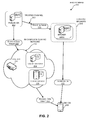
- FIG. 2 illustrates an exemplary computing environment 200 that facilitates brokering access to digital content over an information-centric network 210 in accordance with an embodiment.
- Environment 200 can include a publisher that publishes a data stream, and one or more brokers 204 that control access to the data stream.
- publisher 202 can include a computing device that disseminates an encoded data stream 222 over an information-centric network 110.
- Publisher 202 can publish the data stream by generating an encoded data stream 222, and disseminating encoded data stream 222 over information-centric network 210.
- Encoded data stream 222 may be encoded, for example, by extracting every n th byte (e.g., 100 th byte) from the original data stream.
- Publisher 202 can also generate an encoding sauce 218 for encoded data stream 222, and can provide encoding sauce 218 to one or more of brokers 204 over a trusted channel 208 (e.g., a secure network connection or a tangible storage device).
- a trusted channel 208 e.g., a secure network connection or a tangible storage device.
- Publisher 202 can encrypt encoding sauce 218 using a public key from a broker 204 (or using a private key that belongs to publisher 202), and can sign encoding sauce 218 using a digital certificate.
- Encoding sauce 218 can include the data segments that have been extracted from the original data stream (e.g., every 100 th byte of the original data stream), as well as instructions indicating how these data segments are to be re-inserted into encoded data stream 222.
- Encoding sauce 218 can also indicate instructions for modifying one or more of the extracted data segments to generate digital watermarks for a user.
- environment 200 can also include a client device 206 that can obtain encoded data stream 222 via information-centric network 210, and can obtain a secret sauce 220 for the data stream from broker 204.1 either via information-centric network 210 or via any other computer network now known or later developed.
- Client device 206 can include a smartphone, a tablet computer, or any other computing device such as a laptop computer, a desktop computer, etc.
- device 206 can disseminate a request or an Interest for encoded data stream 222 over information-centric network 210.
- Publisher 202 can satisfy the request or Interest by returning a packet that includes a unique name for encoded data stream 222, and identifies a broker (e.g., broker 204.1) that is to control access to the data stream.
- a broker e.g., broker 204.1
- client device 206 can disseminate one or more Interests for encoded data stream 222, such that each Interest corresponds to a portion of encoded data stream 222.
- the Interest may be satisfied by publisher 202, or by any device within information-centric network 210.
- one or more of the Content Objects for encoded data stream 222 may be cached within a content store (CS) within a router 212, a cache server 214, and/or a peer client device 216.
- CS content store
- any device within information-centric network 210 can cache Content Objects for encoded data stream 222 without sacrificing its security, which reduces the number of Interests which need to be processed by publisher 202.
- Client device 206 can gain access to the contents of encoded data stream 222 by disseminating one or more Interests for the data stream's secret sauce stream.
- Broker 204.1 can use the publisher's encoding sauce to generate secret sauce Content Objects that satisfy these Interests (e.g., secret sauce 220), and that are customized for client device 206.
- Broker 204 can encrypt each secret sauce Content Object using a public key from a client device 206, and can sign these Content Objects using a local digital certificate.
- Client device 206 then processes encoded data stream 222 using the secret sauce stream (e.g., secret sauce 220) to generate a personalized data stream for the user.
- the secret sauce stream e.g., secret sauce 220
- broker 204.1 generates a plurality of secret sauce objects for the data stream, such that each secret sauce object decodes a portion of the encoded data stream.
- broker 204.1 can generate a secret sauce object for each of the encoded data stream's Content Objects or for a set of media segments.
- publisher 202 can partition the media stream into a plurality of media segments, and broker 204.1 can generate a secret sauce Content Object for each media segment. This way, broker 204.1 can require device 206 to display a set of commercials before receiving a secret sauce object for a subsequent segment of the encoded media stream that are to be presented after the commercials.
- the broker can restrict access to the data stream based on pre-determined data-restricting criteria, and can keep track of various data-access analytics for various data streams. For example, the broker can restrict access to only client devices that have purchased the data stream, that have subscribed into a data-streaming service (e.g., an online video streaming service, such as Netflix), and/or that belong or do not belong to a predetermined demographic (e.g., the recipient does not meet an 18-year old age requirement).
- a data-streaming service e.g., an online video streaming service, such as Netflix
- the broker can also keep track of which client devices have accessed which data streams, how much of a data stream they have accessed, consumer demographic information for each data stream, etc.
- the broker can also keep track of which advertisements have been viewed during each media stream or by each consumer, a revenue amount that has been generated from each media stream or from each consumer, etc.
- the broker can use these analytics to bill users for the data streams they have accessed, to bill users for a tiered subscription service to various data streams, to determine a user's stream-preference information, etc.
- each secret sauce stream can include executable instructions
- the broker can use the secret sauce stream and analytics information to insert user-targeted advertisements into the media stream presented by the client device.
- Any entity e.g., a person or organization
- that generates or owns digital content can utilize the data-publishing system (also referred to herein as a "publisher") to make the digital content available to others.
- These entities may include a film maker or movie producer that owns various movies or television programs, a musician or music producer, a software developer, etc.
- the data publisher can generate encoded data streams for his digital content, and to generate an encoding sauce that allows a broker to control access to the digital content.
- FIG. 3 presents a flow chart illustrating a method 300 for publishing a data stream in accordance with an embodiment.
- the publisher selects a data stream to publish (operation 302), and generates a base sauce that can be used to encode the selected data stream (operation 304).
- the base sauce can include instructions that generate an encoded data stream, for example, by extracting one or more data segments from the base data stream.
- the publisher then processes the data stream using the base sauce to generate the encoded data stream (operation 306), and can cache the encoded data stream locally, or on a remote data repository.
- the publisher can receive a request or an Interest for the data stream from a client device, and the publisher can return the encoded data stream to satisfy the request or the Interest.
- a client device can disseminate a request or Interest for the encoded data stream across an information-centric network, and receives the encoded data stream from the media repository, an intermediate cache, or any peer network device that can satisfy the request or Interest.
- the publisher also generates an encoding sauce for the data stream (operation 308).
- This encoding sauce includes instructions that allow a data broker to generate a secret sauce for a recipient of the encoded data stream.
- the encoding sauce specifies instructions for generating watermarks that encode a recipient's identifier, and specifies locations of the data stream where these watermarks are to be inserted.
- the publisher can select one or more brokers that are to broker access to the data stream (operation 310), and provides the encoding sauce to the one or more brokers (operation 312).
- the publisher can provide the encoding sauce to a broker over a secure channel.
- the broker can designate one or more additional sub-brokers that are to control access to the data stream. Each sub-broker may, for example, be configured to respond to requests from a particular geographic region, from a given set of client devices, etc.
- FIG. 4 presents a flow chart illustrating a method 400 for assigning a broker to a data-consuming client device in accordance with an embodiment.
- the publisher can receive a request for a data stream (operation 402), and identifies one or more brokers which have been provisioned to broker access to the data stream (operation 404).
- the request can include an Interest received over a named-data network.
- the publisher generates a stream-referencing packet that includes a name of the encoded data stream and/or includes at least a portion of the data stream.
- the stream-referencing packet also includes at least one broker for the data stream (operation 406).
- the publisher then returns the stream-referencing packet to satisfy the request or Interest (operation 408).
- the stream-referencing packet can include a Content Object that is returned over a named-data network to satisfy an Interest message.
- a publisher can analyze a pirated copy of the data stream that has been illegally copied to identify the copy's first recipient.
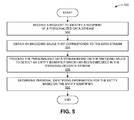
- FIG. 5 presents a flow chart illustrating a method 500 for identifying an entity for whom a given personalized data stream was generated in accordance with an embodiment.
- the publisher can receive a request to identify a recipient of a personalized data stream (operation 502), and obtains an encoding sauce that corresponds to the data stream (operation 504).
- the encoding sauce can indicate instructions for generating and inserting digital watermarks into the data stream.
- the publisher processes the personalized data stream based on the instructions in the encoding sauce to detect an entity identifier from digital watermarks that have been embedded in the personalized data stream (operation 506).
- the secret sauce may have configured a client device to perform an exclusive-OR (XOR) operation between a user's unique identifier and various segments of the base data stream to generate various watermarks for the personalized data stream.
- XOR exclusive-OR
- the publisher can obtain the user's identifier from the watermarks by deducing the user's identifier from one or more watermarks that have been inserted into various segments of the personalized data stream.
- the publisher can perform another XOR operation between a watermark and a segment of the data stream from which the watermark was generated. The publisher can then use this user identifier to determine personal identifying information for the user (operation 508).
- a data broker can include any online service that controls access to digital content. For example, a large set of users may have registered with the broker to obtain digital content by either purchasing the digital content, renting the digital content, paying for a subscription to access the digital content, or by agreeing to view periodic advertisements in exchange for access to the digital content. Publishers can sell their digital content to the broker, or can engage in a business arrangement with the broker. The broker can use a publisher's digital content to generate revenue, and can return a pre-negotiated portion of this revenue to the publisher. This allows publishers, regardless of their monetary or business resources, to earn money from their digital content by leveraging the broker's access to advertisers and paying consumers.
- the data broker and the publisher can reside on the same system.
- a publisher can deploy a data-brokering service to control access to their digital content, and to control how this digital content is leveraged to earn revenue.
- Some digital content can be broadcasted for free and without commercials, while other digital streams require consumers to pay for the content and/or to view commercials and product placements within the digital content.
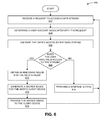
- FIG. 6 presents a flow chart illustrating a method 600 for processing a request for access to a data stream in accordance with an embodiment.
- the broker can receive a request from a user's client device for accessing a data stream (operation 602).
- the request can include an Interest for a secret sauce stream that corresponds to a portion of an encoded data stream, and can include the client device's public key.
- the client device and broker device can also exchange transaction messages, for example, to validate the client device's authentication information for a pre-paid media stream, to pay for a pay-per-view style media stream, to transfer an advertising token to the broker device, etc.
- the broker determines a user account associated with the request (operation 604), and validates the user's access to the data stream (operation 606).
- the user can have valid access to the data stream when the user has paid to receive the data stream, such as by purchasing a movie, subscribing to a video streaming service, or by purchasing or subscribing to any other digital content (e.g., subscribing to a news website, purchasing a software application, etc.).
- the data stream can include a live or pre-recorded media stream, such as a movie, a television show, or a music stream.
- the user can be allowed access to the data stream when the user has viewed a sufficient number of commercials or advertisements.
- the broker determines whether the user has valid access to the data stream (operation 608). If so, the broker can obtain an encoding sauce that corresponds to the encoded data stream, either from a local repository or from the publisher (operation 610). The broker uses the encoding sauce to generate a secret sauce for the user's client device (operation 612), and provides the secret sauce to the user's client device. The client device can use this secret sauce to process the encoded data stream to generate a personalized data stream. In some embodiments, the broker does not need to generate a unique secret sauce from the base sauce. For example, some encoded data streams might not need a secret sauce to decode the stream. Hence, the broker can forward the encoding sauce to a client device during operation 614, which allows the client device to process the encoded data stream to reproduce the original data stream (whose contents are not personalized for the client device).
- the broker can perform a remedial action (operation 616). For example, if the data stream needs to be purchased, the broker can provide the user with a user interface that allows the user to pay for the data stream's contents. If the data stream requires a subscription to a streaming service, such as a movie or music streaming service, the broker can provide the user with an option to log into the streaming service as a way to validate that the user is a subscribed member. Alternatively, the broker can present the user with an interface for subscribing to the streaming service.
- a remedial action for example, if the data stream needs to be purchased, the broker can provide the user with a user interface that allows the user to pay for the data stream's contents. If the data stream requires a subscription to a streaming service, such as a movie or music streaming service, the broker can provide the user with an option to log into the streaming service as a way to validate that the user is a subscribed member. Alternatively, the broker can present the user with an interface for subscribing to the streaming service.
- the user can be given advertising tokens (credits) to access digital content by viewing advertisements, such as by viewing a media stream that presents a commercial to the user.
- advertising tokens credits
- Each advertiser can bid to display advertisements to the user, and can pay for a number of advertising tokens that can be issued to the user. This way, an advertiser can reduce the number of other advertisers with which it needs to share a given commercial break. The user is more likely to remember the advertisement if the user did not need to view additional advertisements before being allowed to continue viewing a movie or listening to music.
- the broker can determine whether the user possesses a sufficient number of advertising tokens to gain access to a portion of an encoded data stream. If so, the broker can proceed through operations 610-614 to provide the user's client device with a secret sauce that allows the client device to present the next portion of the encoded media stream to the user.
- the broker can provide a set of advertisements to the user that together provide the user with the sufficient number of advertising tokens.
- the broker can then return to operation 602.
- the broker can accept another request to access the next portion of the encoded media stream from the client device.
- FIG. 7 presents a flow chart illustrating a method 700 for generating a secret sauce for a user's client device in accordance with an embodiment.
- the broker can generate one or more data segments that can be used to produce the personalized data stream (operation 702).
- the broker then generates, for each data segment, instructions for embedding the data segment into the data stream (operation 704).
- These instructions can include, for example, instructions for inserting the data segment into the data stream, or for encoding the data segment into existing portions of the data stream.
- the broker then generates the secret sauce to include the data segments and the instructions (operation 706).
- a client device can interact with a publisher and a data broker to provide digital content to a local user. For example, a user can browse through a web page hosted by a publisher, or can view movies or listen to music hosted by the publisher. However, the digital content received from the publisher (or from any caches in the network) may be in an encoded or corrupted form. To present the digital content to the local user, the client device needs to obtain secret sauce objects from the broker, which may require the user to pay for access to the digital content, or to view advertisements within or in addition to the digital content.
- the client device can include a data publisher, and data-brokering capabilities.
- a user can use a personal computing device, tablet computer, or cell phone to generate digital content (e.g., a video file, an audio file, or a document).
- the user's computing device can encode this digital content, and can broker which local users or which remote devices can have access to the digital content.
- FIG. 8 presents a flow chart illustrating a method 800 for generating a personalized data stream at a client device for a local user in accordance with an embodiment.
- the client device can receive a request for a data stream (operation 802), such as from a client application that is to present or provide the data stream to the user.
- the client device then sends a network request to obtain a broadcast of the data stream over a computer network (operation 804).
- the request can include an Interest message that indicates a name for the data stream, and can be disseminated over a named-data network.
- the client device receives a stream-referencing packet for the data stream (operation 806).
- the stream-referencing packet can indicate a link (e.g., URL) or name (e.g., an NDN name) for downloading the encoded data stream over an information-centric network or over a peer-to-peer computer network, as well as a link or name for downloading or obtaining the secret sauce from the broker.
- the data stream may be broken down into a plurality of packets, and the stream-referencing packet can include an initial packet of the data stream.
- the stream-referencing packet can include a header that indicates links or names for one or more brokers.
- the client device parses the stream-referencing packet to identify a link or name for the data stream, and to identify a link or name for a data broker that brokers access to the data stream (operation 808).
- the client device sends a request packet to obtain an encoded data stream (operation 810), and sends another request to the data broker to obtain a secret sauce stream for the data stream (operation 812).
- the client device then processes the encoded data stream using the secret sauce stream to generate a personalized data stream for the local user (operation 814).
- the client device can process the encoded data stream by inserting watermarks from the secret sauce stream into locations of the encoded data stream indicated by the secret sauce stream.
- the secret sauce stream can include instructions for generating the watermark, which the client device uses to generate one or more watermarking data segments that are inserted into the encoded data stream. These watermark-generating instructions may indicate operations for encoding a unique identifier of a local user into data segments provided in the secret sauce stream, or into data segments of the encoded data stream.
- the client device can also execute any other instructions from the secret sauce, such as to present an advertisement or to perform analytics-related computations. These instructions can configure the client device to send out a request or an Interest for an advertisement, which can be processed by the broker or a third-party advertising network to provide an advertisement to the client device.
- the advertisement may be selected so that it is relevant to the data stream being consumed by the user, or so that it is relevant to the user's personal interests.
- These instructions can also configure the client device to pause playback of a media stream, present one or more short media segments (e.g., an advertisement), and resume playback after presenting the short media segments.
- These instructions can also configure the client device to embed or overlay an image or media segment into the media stream.
- a movie may include an image of a soda bottle with a label.
- the label in the original media stream may be for a generic brand, or for a brand that paid for product placement into the movie while the movie was being presented at movie theaters.
- other advertisers may pay to have their brand's label overlaid into the movie for a pre-negotiated number of times, and/or for a predetermined audience demographic.
- the instructions from the secret sauce can configure the client device to overlay an image or a media segment over one or more frames of the media stream so that the second brand's label is displayed on top of the bottle's initial label.
- These instructions can indicate an image and frame coordinate for each frame of the media stream, which the client device uses to overlay these images onto the media stream so that the brand's label can shift and animate along with the bottle.
- These instructions can also replace or overlay audio segments within the media stream, for example, to replace a verbal mention of one brand with the verbal mention of the second brand that is to be advertised to the local user.
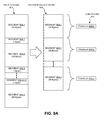
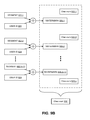
- FIG. 9A illustrates an encoded data stream 908 and a set of checksums 910 which have been generated from a base data stream 902 in accordance with an embodiment.
- a publisher can encode data stream 902 by removing small portions of the data stream so that the encoded data stream no longer includes sufficient information for reproducing or otherwise making use of the data stream's contents. For example, the publisher can remove a predetermined percentage of bits from data stream 902 (e.g., one percent) by extracting segments 906 from data stream 902, and generating encoded data stream 908 to include the remaining data segments 904.
- the publisher can upload encoded data stream 908 to a content server, and can provide encoded data stream 908 to network devices and client devices across an information-centric network.
- each of data segments 906 can be of equal size, and can be evenly distributed across data stream 902.
- segments 904 together are approximately equal to the predetermined percentage of data stream 902, and each of segments 904 can be obtained from portions of data stream 902 that are critical to reproducing the data stream's contents (e.g., from I frames of a video file).
- the publisher can randomly select individual bits or data blocks (e.g., byte segments) to extract from random locations of the data stream 902 so that a predetermined percentage of data stream 902 is extracted to generate encoded data stream 908.
- the publisher can also generate checksums 910 for encoded data stream 908, such that each checksum 910 corresponds to a segment 904 of encoded data stream 908.
- the publisher can send checksums 910 to a broker, either within an encoding sauce, or in addition to the encoding sauce.
- the broker can use checksums 910 to generate a checksum for each personalized data stream
- the publisher can generate the encoding sauce to include segments 906, along with instructions for re-inserting segments 906 into the personalized data stream, and instructions for generating and inserting one or more watermarks into the personalized data stream.
- FIG. 9B illustrates a set of watermarks 926 computed for a personalized data stream, and a checksum 930 computed from multiple checksums 920 and watermarks 926 in accordance with an embodiment.
- the broker can receive an encoding sauce that includes checksums 920 for segments of an encoded data stream, includes data segments 922 that have been extracted from a base data stream, and instructions for modifying segments 922 to generate a plurality of watermarks 926.
- the encoding sauce's instructions can indicate that the broker is to generate each watermark 926 by using a user ID 924 and a predetermined function to modify each data segment 922.
- the broker can generate each watermark 926 by performing a bitwise operation (e.g., an exclusive OR (XOR) operation) between each data segment 922 and user ID 924, by performing an arithmetic operation, or performing any other operation now known or later developed.
- User ID 924 can indicate any unique identifier for a user that has requested access to the data stream, such as a unique numeric identifier, an account name or number, an email address, or any other identifier type now know or later developed.
- the broker can compute a checksum for the personalized data stream itself. Recall that broker can receive checksums 920 from the publisher, such that checksums 920 correspond to the data segments in the encoded data stream. Hence, the broker can compute the checksum for the personalized data stream based on checksums 920, along with watermarks 926 that are to be inserted into the personalized data stream.
- the broker then generates a secret sauce that includes watermarks 926, checksum 930, as well as the instructions from the publisher's encoding sauce that indicate how watermarks 926 are to be inserted into the personalized data stream.
- FIG. 9C illustrates a personalized data stream 940 and a checksum 950 computed from personalized data stream 940 in accordance with an embodiment.
- a client device can receive an encoded data stream from a publisher (and/or from any ICN device which has cached the encoded data stream), and can receive a secret sauce stream from a broker for the data stream.
- the client device can obtain or compute watermarks 944 and data segments 946 from the secret sauce stream, and can use instructions in the secret sauce stream to generate personalized data stream 940 by inserting watermarks 944 and/or data segments 946 into specific sections of the encoded data stream.
- the client device can also compute checksum 950 for the personalized data stream, and can compare checksum 950 to a checksum in the secret sauce to verify the integrity of the personalized data stream.
- a broker can generate a secret sauce for other sub-brokers.
- Each broker generates an encoding sauce by signing and stamping the encoding sauce, and inserting an identifier for a sub-broker into the encoding sauce.
- a top-level broker (or a mid-level broker) can generate the encoding sauce to include a watermark for a sub-broker, and to include an encoding sauce for the sub-broker.
- the top-level broker then signs the encoding sauce before sending the encoding sauce to a sub-broker.
- the sub-broker can use the encoding sauce to generate a secret sauce for a client device, or to generate an encoding sauce for another sub-broker.
- a sub-broker can generate a secret sauce that includes the watermarks from the parent broker's encoding sauce (e.g., watermarks for the local sub-broker, and other higher-level brokers), as well as additional watermarks for the client device.
- the client device processes the encoded data stream using the secret sauce, the client device generates the personalized data stream by inserting watermarks for one or more brokers and for the client device into various locations of the personalized data stream as indicated by the secret sauce.
- FIG. 10 illustrates a hierarchy of brokers in accordance with an embodiment.
- Network 1000 can include one or more publishers 1002 that publish one or more data streams by providing an encoding sauce to a top-level broker 1004 for each data stream.
- Top-level broker 1004 can assign a sub-broker 1006 to each data stream by generating another encoding sauce for the sub-broker (e.g., sub-broker 1006.2), and providing the encoding sauce to the sub-broker.
- publisher 1002 can return a packet that indicates a name for the data stream, and indicates a name for the data stream's secret sauce stream. This allows client device 1008 to obtain packets for the data stream and for the secret sauce stream from devices across an information-centric network.
- top-level broker 1004 sends an encoding sauce for a data stream to sub-broker 1006.2
- sub-broker 1006.2 advertises that it generate and return a secret sauce stream for this data stream.
- client device 1008 disseminates a request or an Interest for a secret sauce packet that corresponds to the data stream, this request or Interest can flow to broker 1006.2 over the information-centric network.
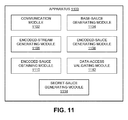
- FIG. 11 illustrates an exemplary apparatus 1100 that facilitates brokering access to digital content in accordance with an embodiment.
- Apparatus 1100 can comprise a plurality of modules which may communicate with one another via a wired or wireless communication channel.
- Apparatus 1100 may be realized using one or more integrated circuits, and may include fewer or more modules than those shown in FIG. 11 . Further, apparatus 1100 may be integrated in a computer system, or realized as a separate device which is capable of communicating with other computer systems and/or devices.
- apparatus 1100 can comprise a communication module 1102, a base-sauce generating module 1104, an encoded-stream generating module 1106, an encoding-sauce generating module 1108, an encoding-sauce obtaining module 1110, a data-access validation module 1112, and a secret-sauce generating module 1114.
- communication module 1102 can receive an Interest or request for a data stream, or for a secret sauce stream for an encoded data stream.
- Base-sauce generating module 1104 can generate a base sauce for encoding a data stream, and encoded-stream generating module 1106 can process the data stream using the base sauce to generate the encoded data stream.
- Encoding-sauce generating module 1108 can generate an encoding sauce that indicates instructions for generating a data-decoding secret sauce for a target entity.
- Encoded-sauce obtaining module 1110 can receive a decoding sauce from a remote device, such as from a remote publisher.
- Data-access validating module 1112 can process an Interest or request for the data stream's secret sauce to determine whether the target entity has valid access to the data stream.
- Secret-sauce generating module 1114 can generate the secret sauce for the target entity responsive to data-access validating module 1112 validating the target entity's access to the data stream.
- FIG. 12 illustrates an exemplary computer system 1202 that facilitates brokering access to digital content in accordance with an embodiment.
- Computer system 1202 includes a processor 1204, a memory 1206, and a storage device 1208.
- Memory 1206 can include a volatile memory (e.g., RAM) that serves as a managed memory, and can be used to store one or more memory pools.
- computer system 1202 can be coupled to a display device 1210, a keyboard 1212, and a pointing device 1214.
- Storage device 1208 can store operating system 1216, a data-broadcasting system 1218, and data 1234.
- Data-broadcasting system 1218 can include instructions, which when executed by computer system 1202, can cause computer system 1202 to perform methods and/or processes described in this disclosure.
- data-broadcasting system 1218 may include instructions for receiving an Interest or request for a data stream, or for a secret sauce stream for an encoded data stream (communication module 1220).
- data-broadcasting system 1218 can include instructions for generating a base sauce for encoding a data stream (base-sauce generating module 1222), and can also include instructions for processing the data stream using the base sauce to generate the encoded data stream (encoded-stream generating module 1224).
- Data-broadcasting system 1218 can include instructions for generating an encoding sauce that indicates instructions for generating a data-decoding secret sauce for a target entity (encoding-sauce generating module 1226). Data-broadcasting system 1218 can also include instructions for receiving a decoding sauce from a remote device, such as from a remote publisher (encoding-sauce obtaining module 1228).
- data-broadcasting system 1218 can include instructions for processing an Interest or request for the data stream's secret sauce to determine whether the target entity has valid access to the data stream (data-access validating module 1230). Data-broadcasting system 1218 can also include instructions for generating the secret sauce for the target entity responsive to determining that the target entity has valid access to the data stream (secret-sauce generating module 1232).
- Data 1234 can include any data that is required as input or that is generated as output by the methods and/or processes described in this disclosure. Specifically, data 1234 can store at least a base sauce for encoding a base data stream, and an encoding sauce for the data stream. Data 1234 can also include the base data stream (e.g., a media stream), packets or Content Objects for the encoded data stream, and/or packets or Content Objects for a secret sauce stream corresponding to a target entity.
- the base data stream e.g., a media stream
- packets or Content Objects for the encoded data stream e.g., a secret sauce stream
- a secret sauce stream e.g., a secret sauce stream
- the data structures and code described in this detailed description are typically stored on a computer-readable storage medium, which may be any device or medium that can store code and/or data for use by a computer system.
- the computer-readable storage medium includes, but is not limited to, volatile memory, non-volatile memory, magnetic and optical storage devices such as disk drives, magnetic tape, CDs (compact discs), DVDs (digital versatile discs or digital video discs), or other media capable of storing computer-readable media now known or later developed.
- the methods and processes described in the detailed description section can be embodied as code and/or data, which can be stored in a computer-readable storage medium as described above.
- a computer system reads and executes the code and/or data stored on the computer-readable storage medium, the computer system performs the methods and processes embodied as data structures and code and stored within the computer-readable storage medium.
- the methods and processes described above can be included in hardware modules.
- the hardware modules can include, but are not limited to, application-specific integrated circuit (ASIC) chips, field-programmable gate arrays (FPGAs), and other programmable-logic devices now known or later developed.
- ASIC application-specific integrated circuit
- FPGA field-programmable gate arrays
- the hardware modules When the hardware modules are activated, the hardware modules perform the methods and processes included within the hardware modules.
Landscapes
- Engineering & Computer Science (AREA)
- Signal Processing (AREA)
- Multimedia (AREA)
- Databases & Information Systems (AREA)
- Computer Security & Cryptography (AREA)
- Computer Networks & Wireless Communication (AREA)
- Business, Economics & Management (AREA)
- Theoretical Computer Science (AREA)
- Accounting & Taxation (AREA)
- Development Economics (AREA)
- Finance (AREA)
- Strategic Management (AREA)
- General Physics & Mathematics (AREA)
- Physics & Mathematics (AREA)
- Computer Hardware Design (AREA)
- Software Systems (AREA)
- General Engineering & Computer Science (AREA)
- Economics (AREA)
- Entrepreneurship & Innovation (AREA)
- Game Theory and Decision Science (AREA)
- General Business, Economics & Management (AREA)
- Marketing (AREA)
- Computing Systems (AREA)
- Computer Graphics (AREA)
- Technology Law (AREA)
- Two-Way Televisions, Distribution Of Moving Picture Or The Like (AREA)
Abstract
Description
- This disclosure is generally related to publishing digital content. More specifically, this disclosure is related to controlling access to a data stream over a network, such as the Internet, an Information Centric Network (ICN),a client-server architecture, a peer-to-peer network, etc.
- In the modern digital economy, content producers can publish their content in digital form through one or more streaming or broadcasting services to earn revenue through various revenue models. Music producers, for example, oftentimes license their music to online streaming radio stations that earn money by broadcasting advertisements to their listeners over a computer network. The music producers may also license their music content to music recommendation services that tailor song and advertisement selections to each consumer (e.g., the Pandora streaming service from Pandora Media Inc.).
- Similarly, movie and television-show producers can license their digital content to video streaming services that allow consumers to view movies or shows over the Internet. Some of these video streaming services negotiate a licensing fee with each producer, and earn revenue by charging consumers a flat monthly fee (e.g., Netflix, Inc.), and/or by presenting advertising commercials to consumers (e.g., Hulu.com).
- These streaming services typically attempt to secure a publisher's digital content by requiring their customers to use the service's custom software application to receive the media stream. Netflix and Hulu, for example, deploy proprietary video streaming applications that make it difficult for a user to illegally copy a media stream by not allowing the user to "save" the media stream to a local disc. However, it is possible for consumers to use third-party applications that snoop on network traffic in order to save the media stream to disc. Once the consumer has saved a copy of the media stream, it is possible for the consumer to illegally share the media stream anonymously given that the media streaming service typically transmits identical copies of the media stream to many consumers.
- Cable and Satellite broadcasting companies, on the other hand, provide traditional television broadcasts to consumers over a secured digital infrastructure. A broadcasting company typically provisions a consumer's client device (e.g., as a set-top box device) when the consumer subscribes to a service from the broadcasting company. This provisioning process verifies that the client device is associated with a paying customer, and configures the device to detect and present the broadcasted media to the paying customer.
- These broadcasting companies typically encrypt each media stream using a stream-specific key before broadcasting each media stream to a group of subscribers. Each client device receives a key from the broadcasting company (e.g., periodically), and uses the key to decrypt the media stream just before presenting the media stream to the user. However, it is possible for a consumer to save the broadcasted media stream to disk once the media stream has been decrypted, for example, by using a high-definition multimedia interface (HDMI) capture card on a computer. Also, because the broadcasting company transmits the same media stream to the group of consumers, it is possible for the consumer to duplicate and illegally share the media stream with others anonymously.
- One embodiment provides a data-publishing system that facilitates broadcasting a data stream to a plurality of authorized client devices. A publisher can protect the data stream from unauthorized access by converting the data stream into an encoded data stream that by itself cannot be used to reproduce the original data stream. The publisher can also generate an "encoding sauce" that includes instructions for converting the encoded data stream into a new stream that can be used by authorized users.
- The publisher can designate one or more brokers to authorize user access to the data stream. A broker can receive a request for the data stream from a user, and can process the request to obtain authorization or identification information for the user. If the user can be allowed to access the data stream, the broker can grant the user access to the data stream by generating a "secret sauce" that the user's computing device can use to decode the encoded data stream. In some embodiments, the broker does not need to generate a unique secret sauce from the base sauce. For example, some encoded data streams might not need a secret sauce to decode the stream. The broker can forward the encoding sauce to a client device, which allows the client device to process the encoded data stream to reproduce the original data stream (whose contents are not personalized for each client).
- When the user's client device requests the data stream from the publisher, the publisher can redirect the client device to a broker that controls access to the data stream's contents. The client device can obtain the encoded data stream from the publisher (or from any other source), and obtains a secret sauce stream from the broker. The client device processes the encoded data stream using the secret sauce stream to produce a personalized data stream that includes the data stream's contents.
- The following terms describe elements of a data-publishing system:
- Data Stream: A collection of data that is to be published. Examples include an audio file, a video stream, a data file, an executable file, etc.
- Base Sauce: Instructions for generating an encoded data stream, and for generating an encoding sauce that can be provided to a trusted broker that processes requests for the data stream.
- Encoded Data Stream: A collection of data that can be provided to any client device, a cache, or any computer in a network. Client devices cannot decode the original data stream directly from the encoded data stream alone.
- Encoding Sauce: Instructions for generating a secret sauce that is typically unique to a client device or incorporates a unique client identifier (ID), etc.
- Secret Sauce: Instructions for modifying an encoded data stream to produce a personalized data stream that is tailored to the requesting client device or ID.
- Personal Data Stream: A collection of data whose contents may be personalized to the requesting client device or user. The personalized data stream can include digital watermarks that encode a unique identifier for the client device or ID. The personalized data stream's contents can also include additional data that is tailored to the client device or its user.
- When the publisher selects or obtains a new data stream to publish, the publisher generates an encoded data stream that does not include a reproducible version of the data stream's contents. The publisher can also generate an encoding sauce that indicates instructions for generating a data-decoding secret sauce for a target entity, which the target entity can use to convert the encoded data stream into a personalized data stream. The publisher can then provide the encoding sauce to at least one broker, which facilitates the broker to make the data stream available to one or more entities.
- In some embodiments, the data stream can include an audio stream, a video stream, a data file, a binary executable file, and/or a collection of Content Objects.
- In some embodiments, while generating the encoded data stream, the publisher generates a base sauce for encoding the data stream, and generates the encoded data stream by applying the base sauce to the data stream. The base sauce indicates operations for modifying the data stream to produce an encoded data stream that does not include a reproducible version of the data stream's contents.
- In some embodiments, the base sauce can include instructions indicating a cypher algorithm for encoding the data stream, and/or instructions for removing one or more data segments from the data stream.
- In some embodiments, the encoding sauce can include instructions indicating a cypher algorithm for decoding the encoded data stream. The encoding sauce can also include instructions for inserting one or more data segments into the data stream, and/or instructions for embedding into the personalized data stream a digital watermark corresponding to the target entity.
- In some embodiments, the publisher can disseminate the encoded data stream to one or more client devices via an information-centric network, a multicast data stream, a peer-to-peer computer network, and/or a cache server or a content delivery network (CDN).
- In some embodiments, the publisher can receive a request for the data stream from a client device, and can determine a broker that is to provide the client device access to the data stream. The publisher can then return a stream-referencing packet that indicates which broker is to satisfy the client device's request.
- In some embodiments, the publisher can analyze a pirated data stream to determine a person or organization that has allowed the data stream to be shared illegally. For example, the publisher can obtain a personalized data stream that is being distributed illegally, and obtains an encoding sauce which corresponds to the personalized data stream. The encoding sauce can indicate instructions that were used to embed the client device's identifier into the personalized data stream. The broker can then determine the client device's identifier from the personalized data stream by processing the personalized data stream based on the base sauce instructions.
- One embodiment provides a data-brokering system (hereinafter referred to as a "broker") that can generate a secret sauce that allows a client device to access a data stream. During operation, the broker can obtain an encoding sauce from the publisher corresponding to a data stream, such that the encoding sauce indicates instructions for generating a data-decoding secret sauce for a target entity. The broker can receive a request for the data stream from a client device, at which point the broker determines whether the client device has access to the data stream. Responsive to validating the client device's access to the data stream, the broker generates a secret sauce for the client device, and provides the secret sauce to the client device. The secret sauce indicates instructions for modifying an encoded data stream to produce a personalized data stream that includes a usable version of the data stream's contents.
- In some embodiments, the data stream can include a media stream, and the secret sauce can include instructions for generating a personalized data stream that includes a portion of the media stream.
- In some embodiments, the request can include an Interest for the secret sauce that the broker receives over an information-centric network. The broker can provide the secret sauce to the client device by returning a Content Object that satisfies the Interest, and that includes the secret sauce.
- In some embodiments, while validating the client device's access to the data stream, the broker can determine whether the client device is subscribed to the data stream, whether the client device has paid for the data stream, and/or whether the client device has viewed a sufficient number of advertisements for obtaining at least a portion of the data stream.
- In some embodiments, while generating the secret sauce, the broker can generate at least one data segment that is to be inserted into the data stream to produce a personalized data stream for the client device. The broker then generates the secret sauce to include the data segment, and to include instructions for inserting the data segment into an encoded data stream to produce the personalized data stream.
- In some variations to these embodiments, the data segment that is to be inserted into the data stream can include a watermark that indicates an identifier for the client device, an audio stream, a video stream, an advertisement, and/or an image that is to be overlaid over a portion of a video frame of the data stream.
- In some embodiments, while obtaining the encoding sauce, the broker can receive the encoding sauce from a data-publishing server that publishes the data stream. The broker can also receive the encoding sauce from a remote data-brokering server that assigns the encoding sauce to one or more sub-brokers.
-
-
FIG. 1 illustrates an exemplary computing environment that facilitates brokering access to digital content in accordance with an embodiment. -
FIG. 2 illustrates an exemplary computing environment that facilitates brokering access to digital content over an information-centric network in accordance with an embodiment. -
FIG. 3 presents a flow chart illustrating a method for publishing a data stream in accordance with an embodiment. -
FIG. 4 presents a flow chart illustrating a method for assigning a broker to a data-consuming client device in accordance with an embodiment. -
FIG. 5 presents a flow chart illustrating a method for identifying an entity for whom a given personalized data stream was generated in accordance with an embodiment. -
FIG. 6 presents a flow chart illustrating a method for processing a request for access to a data stream in accordance with an embodiment. -
FIG. 7 presents a flow chart illustrating a method for generating a secret sauce for a user's client device in accordance with an embodiment. -
FIG. 8 presents a flow chart illustrating a method for generating a personalized data stream at a client device for a local user in accordance with an embodiment. -
FIG. 9A illustrates an encoded data stream and a set of checksums which have been generated from a base data stream in accordance with an embodiment. -
FIG. 9B illustrates a set of watermarks computed for a personalized data stream, and a checksum computed from multiple checksums for a base data stream and from watermarks in accordance with an embodiment. -
FIG. 9C illustrates a personalized data stream, and a checksum computed from personalized data stream in accordance with an embodiment. -
FIG. 10 illustrates a hierarchy of brokers in accordance with an embodiment. -
FIG. 11 illustrates an exemplary apparatus that facilitates brokering access to digital content in accordance with an embodiment. -
FIG. 12 illustrates an exemplary computer system that facilitates brokering access to digital content in accordance with an embodiment. - In the figures, like reference numerals refer to the same figure elements.
- The following description is presented to enable any person skilled in the art to make and use the embodiments, and is provided in the context of a particular application and its requirements. Various modifications to the disclosed embodiments will be readily apparent to those skilled in the art, and the general principles defined herein may be applied to other embodiments and applications without departing from the spirit and scope of the present disclosure. Thus, the present invention is not limited to the embodiments shown, but is to be accorded the widest scope consistent with the principles and features disclosed herein.
- Embodiments of the present invention provide a data-publishing system that solves the problem of broadcasting a data stream across a computer network, while only allowing authorized devices to use the data stream. A data publisher can use the data-publishing system to publish a data stream so that each authorized recipient obtains a personalized version of the data stream. The data stream can include a live video or audio stream, a recorded video or audio stream, an executable file (e.g., binary code), a digital document or image, etc.
- For example, a publisher can broadcast a live or pre-recorded media stream to a plurality of consumers in a secure way by encoding or damaging the media stream so that the stream's contents cannot be reproduced from the encoded stream alone. The publisher also configures one or more brokers to control access to the media stream by providing these brokers with an encoding "sauce" that indicates how to decode or fix the media stream in a way that generates a personalized stream for each recipient.
- A broker can use the encoding sauce to generate a secret sauce for each valid recipient of a data stream. Each recipient's client device can receive segments of the encoded data stream from the publisher itself, and/or from any other network device that has cached the encoded data stream segments. These devices then use the secret sauce that they may have obtained from the broker to decode or fix the encoded data stream in a way that personalizes the data stream for that recipient. In some embodiments, a personalized data stream can include a digital watermark that encodes an identifier of the stream's intended recipient. This allows a publisher to analyze a pirated data stream, such as a movie, to determine who has allowed the data stream to be copied illegally.
- In some embodiments, the publisher can generate the encoded data stream by extracting a plurality of small data segments that are critical for presenting or otherwise making use of the data stream. These extracted data segments can be provided to a client device via a secret sauce stream that requires a significantly lower bandwidth than the encoded data stream. The secret sauce stream can include instructions which indicate how the extracted data segments are to be inserted back into the encoded data stream. For example, these instructions can map each data segment of the secret sauce stream to a byte offset of the encoded data stream. The client device can receive the high-bandwidth encoded data stream from the publisher or from a data-cache over an information centric networking (ICN) system, or through any computer network now known or later developed. Also, the client device can receive the low-bandwidth secret sauce stream from the broker, or from any other entity which the broker has designated to generate and/or disseminate secret sauce streams for a given set of users or client devices.
-
FIG. 1 illustrates anexemplary computing environment 100 that facilitates brokering access to digital content in accordance with an embodiment.Environment 100 can include publishers, brokers, and client devices, which can each be coupled to any wired or wireless computer network now known or later developed. Apublisher 102 can publish a data stream as an encoded data stream, and only authorized clients can get access to the secret sauce from the broker. Any client device can access the encoded data stream directly from the publisher, or from any other devices that store a copy of the encoded data stream (e.g., a cache, or other network devices). However, only authorized devices (e.g., client device 106) can use the secret sauce to convert the encoded data stream into a personalized data stream. The encoded data stream is itself useless to client devices that do not have a valid secret sauce for decoding the stream. -
Publisher 102 can include aprimary encoder 108 that uses abase sauce 112 to encode adata stream 110.Base sauce 112 can be specific todata stream 110, or can be re-used for a plurality of data streams frompublisher 102.Base sauce 112 can include instructions for generating an encodeddata stream 114, and for generating anencoding sauce 116 that can be provided to a trusted broker that processes requests from clients for the data stream. Encodeddata stream 114 can include a collection of data objects that can be provided to any client device or computer in a network, without the risk of revealing the data stream's contents to unauthorized users. A user's client device cannot decode the original data stream from encodeddata stream 114 alone. -
Publisher 102 usesbase sauce 112 to generate encodedsauce 116 for encodeddata stream 114, and providesencoding sauce 116 to abroker 104 over a trustedchannel 132. Encodingsauce 116 can include instructions used bybroker 104 to generating a "secret sauce" for a client device that has valid privileges.Broker 104 is responsible for granting access tosecret sauce 122 only to users that have valid access privileges. - In some embodiments,
broker 104 can include asecondary encoder 118 that usesencoding sauce 116 to generatesecret sauce 122 forclient 106.Secondary encoder 118 can generatesecret sauce 122 forclient 106 in advance (e.g., before receiving a request for secret sauce 122), or in response to receiving a request fromclient 106. For example, whenclient device 106 requests data stream 110 frompublisher 102,publisher 102 can respond to the request by providing encodeddata stream 114 toclient 106, and redirectingclient 106 to request access to encoded data stream 114 frombroker 104. In some embodiments,client device 106 can obtain encodeddata stream 114 from any network device 130 that stores encodeddata stream 114, such as a cache sever, a CDN server, or any peer-2-peer device. -
Client 106 then sends a request to broker 104, which requests access to encodeddata stream 114, and includes a client public key or identifier (ID) or any other form of authentication such as user-id/password, forclient 106. - If
broker 104 determines thatclient 106 has valid access privileges,secondary encoder 118 can useencoding sauce 116 to generatesecret sauce 122 based on the public key or the ID forclient 106 forclient 106.Secret sauce 122 includes instructions for modifying encodeddata stream 114 to produce apersonalized data stream 126 that is tailored toclient 106.Broker 104 then sendssecret sauce 122 toclient 106. -
Client 106 includes adecoder 124 that processes encodeddata stream 114 usingsecret sauce 122 to generatepersonalized data stream 126.Personalized data stream 126 can include a stream or collection of data objects whose contents may be personalized toclient 106 or a user ofclient 106.Personalized data stream 126 can include digital watermarks that encode a unique ID forclient 106 or its user, and/or can include additional data that is tailored to the client device or its user. - In some embodiments, a publisher can broadcast an encoded data stream to a plurality of devices over an information-centric network. In ICN, all content is named, and each piece of data is bound to a unique name that distinguishes the data from any other piece of data, such as other versions of the same data or data from other sources. This unique name allows a network device to request the data by disseminating a request or an Interest that indicates the unique name, and can obtain the data independent from the data's storage location, network location, application, and means of transportation. The following terms describe elements of an ICN architecture, such as a named-data network (NDN) or a content-centric network (CCN):
- Content Object: A single piece of named data, which is bound to a unique name. Content Objects are "persistent," which means that a Content Object can move around within a computing device, or across different computing devices, but does not change. If any component of the Content Object changes, the entity that made the change creates a new Content Object that includes the updated content, and binds the new Content Object to a new unique name.
- Unique Names: A name in an ICN is typically location independent and uniquely identifies a Content Object. A data-forwarding device can use the name or name prefix to forward a packet toward a network node that generates or stores the Content Object, regardless of a network address or physical location for the Content Object. In some embodiments, the name may be a hierarchically structured variable-length identifier (HSVLI). The HSVLI can be divided into several hierarchical components, which can be structured in various ways. For example, the individual name components parc, home, ndn, and test.txt can be structured in a left-oriented prefix-major fashion to form the name "/parc/home/ndn/test.txt." Thus, the name "/parc/home/ndn" can be a "parent" or "prefix" of "/parc/home/ndn/test.txt." Additional components can be used to distinguish between different versions of the content item, such as a collaborative document.
- In some embodiments, the name can include a non-hierarchical identifier, such as a hash value that is derived from the Content Object's data (e.g., a checksum value) and/or from elements of the Content Object's name. A description of a hash-based name is described in
U.S. Patent Application No. 13/847,814 - Interest: A packet that indicates a request for a piece of data, and includes a name (or a name prefix) for the piece of data. A data consumer can disseminate a request or Interest across an information-centric network, which ICN routers can propagate toward a storage device (e.g., a cache server) or a data producer that can provide the requested data to satisfy the request or Interest.
- In some embodiments, the ICN system can include a content-centric networking (CCN) architecture. However, the methods disclosed herein are also applicable to other ICN architectures as well. A description of a CCN architecture is described in
U.S. Patent Application No. 12/338,175 -
FIG. 2 illustrates anexemplary computing environment 200 that facilitates brokering access to digital content over an information-centric network 210 in accordance with an embodiment.Environment 200 can include a publisher that publishes a data stream, and one ormore brokers 204 that control access to the data stream. Specifically,publisher 202 can include a computing device that disseminates an encodeddata stream 222 over an information-centric network 110. -
Publisher 202 can publish the data stream by generating an encodeddata stream 222, and disseminating encodeddata stream 222 over information-centric network 210. Encodeddata stream 222 may be encoded, for example, by extracting every n th byte (e.g., 100th byte) from the original data stream.Publisher 202 can also generate anencoding sauce 218 for encodeddata stream 222, and can provideencoding sauce 218 to one or more ofbrokers 204 over a trusted channel 208 (e.g., a secure network connection or a tangible storage device).Publisher 202 can encryptencoding sauce 218 using a public key from a broker 204 (or using a private key that belongs to publisher 202), and can signencoding sauce 218 using a digital certificate. Encodingsauce 218 can include the data segments that have been extracted from the original data stream (e.g., every 100th byte of the original data stream), as well as instructions indicating how these data segments are to be re-inserted into encodeddata stream 222. Encodingsauce 218 can also indicate instructions for modifying one or more of the extracted data segments to generate digital watermarks for a user. - In some embodiments,
environment 200 can also include aclient device 206 that can obtain encodeddata stream 222 via information-centric network 210, and can obtain asecret sauce 220 for the data stream from broker 204.1 either via information-centric network 210 or via any other computer network now known or later developed.Client device 206 can include a smartphone, a tablet computer, or any other computing device such as a laptop computer, a desktop computer, etc. To obtain encodeddata stream 222,device 206 can disseminate a request or an Interest for encodeddata stream 222 over information-centric network 210.Publisher 202 can satisfy the request or Interest by returning a packet that includes a unique name for encodeddata stream 222, and identifies a broker (e.g., broker 204.1) that is to control access to the data stream. - In some embodiments,
client device 206 can disseminate one or more Interests for encodeddata stream 222, such that each Interest corresponds to a portion of encodeddata stream 222. The Interest may be satisfied bypublisher 202, or by any device within information-centric network 210. For example, in some embodiments, one or more of the Content Objects for encodeddata stream 222 may be cached within a content store (CS) within arouter 212, acache server 214, and/or apeer client device 216. Recall that encodeddata stream 222 itself cannot be used to reproduce the data stream's contents. Hence, in some embodiments, any device within information-centric network 210 can cache Content Objects for encodeddata stream 222 without sacrificing its security, which reduces the number of Interests which need to be processed bypublisher 202. -
Client device 206 can gain access to the contents of encodeddata stream 222 by disseminating one or more Interests for the data stream's secret sauce stream. Broker 204.1 can use the publisher's encoding sauce to generate secret sauce Content Objects that satisfy these Interests (e.g., secret sauce 220), and that are customized forclient device 206.Broker 204 can encrypt each secret sauce Content Object using a public key from aclient device 206, and can sign these Content Objects using a local digital certificate.Client device 206 then processes encodeddata stream 222 using the secret sauce stream (e.g., secret sauce 220) to generate a personalized data stream for the user. - In some embodiments, broker 204.1 generates a plurality of secret sauce objects for the data stream, such that each secret sauce object decodes a portion of the encoded data stream. For example, broker 204.1 can generate a secret sauce object for each of the encoded data stream's Content Objects or for a set of media segments. As another example, if the encoded data stream corresponds to a media stream,
publisher 202 can partition the media stream into a plurality of media segments, and broker 204.1 can generate a secret sauce Content Object for each media segment. This way, broker 204.1 can requiredevice 206 to display a set of commercials before receiving a secret sauce object for a subsequent segment of the encoded media stream that are to be presented after the commercials. - Further, given that the broker needs to generate a secret sauce stream for each client device that has valid access to the data stream, the broker can restrict access to the data stream based on pre-determined data-restricting criteria, and can keep track of various data-access analytics for various data streams. For example, the broker can restrict access to only client devices that have purchased the data stream, that have subscribed into a data-streaming service (e.g., an online video streaming service, such as Netflix), and/or that belong or do not belong to a predetermined demographic (e.g., the recipient does not meet an 18-year old age requirement).
- The broker can also keep track of which client devices have accessed which data streams, how much of a data stream they have accessed, consumer demographic information for each data stream, etc. When the data stream corresponds to a media stream, the broker can also keep track of which advertisements have been viewed during each media stream or by each consumer, a revenue amount that has been generated from each media stream or from each consumer, etc. The broker can use these analytics to bill users for the data streams they have accessed, to bill users for a tiered subscription service to various data streams, to determine a user's stream-preference information, etc. Also, given that each secret sauce stream can include executable instructions, the broker can use the secret sauce stream and analytics information to insert user-targeted advertisements into the media stream presented by the client device.
- Any entity (e.g., a person or organization) that generates or owns digital content can utilize the data-publishing system (also referred to herein as a "publisher") to make the digital content available to others. These entities may include a film maker or movie producer that owns various movies or television programs, a musician or music producer, a software developer, etc. The data publisher can generate encoded data streams for his digital content, and to generate an encoding sauce that allows a broker to control access to the digital content.
-
FIG. 3 presents a flow chart illustrating amethod 300 for publishing a data stream in accordance with an embodiment. During operation, the publisher selects a data stream to publish (operation 302), and generates a base sauce that can be used to encode the selected data stream (operation 304). The base sauce can include instructions that generate an encoded data stream, for example, by extracting one or more data segments from the base data stream. The publisher then processes the data stream using the base sauce to generate the encoded data stream (operation 306), and can cache the encoded data stream locally, or on a remote data repository. In some embodiments, the publisher can receive a request or an Interest for the data stream from a client device, and the publisher can return the encoded data stream to satisfy the request or the Interest. In some other embodiments, a client device can disseminate a request or Interest for the encoded data stream across an information-centric network, and receives the encoded data stream from the media repository, an intermediate cache, or any peer network device that can satisfy the request or Interest. - The publisher also generates an encoding sauce for the data stream (operation 308). This encoding sauce includes instructions that allow a data broker to generate a secret sauce for a recipient of the encoded data stream. In some embodiments, the encoding sauce specifies instructions for generating watermarks that encode a recipient's identifier, and specifies locations of the data stream where these watermarks are to be inserted. The publisher can select one or more brokers that are to broker access to the data stream (operation 310), and provides the encoding sauce to the one or more brokers (operation 312). In some embodiments, the publisher can provide the encoding sauce to a broker over a secure channel. Also, in some embodiments, the broker can designate one or more additional sub-brokers that are to control access to the data stream. Each sub-broker may, for example, be configured to respond to requests from a particular geographic region, from a given set of client devices, etc.
-
FIG. 4 presents a flow chart illustrating amethod 400 for assigning a broker to a data-consuming client device in accordance with an embodiment. During operation, the publisher can receive a request for a data stream (operation 402), and identifies one or more brokers which have been provisioned to broker access to the data stream (operation 404). The request can include an Interest received over a named-data network. To satisfy the request, the publisher generates a stream-referencing packet that includes a name of the encoded data stream and/or includes at least a portion of the data stream. The stream-referencing packet also includes at least one broker for the data stream (operation 406). The publisher then returns the stream-referencing packet to satisfy the request or Interest (operation 408). The stream-referencing packet can include a Content Object that is returned over a named-data network to satisfy an Interest message. - In some embodiments, a publisher can analyze a pirated copy of the data stream that has been illegally copied to identify the copy's first recipient.
-
FIG. 5 presents a flow chart illustrating amethod 500 for identifying an entity for whom a given personalized data stream was generated in accordance with an embodiment. During operation, the publisher can receive a request to identify a recipient of a personalized data stream (operation 502), and obtains an encoding sauce that corresponds to the data stream (operation 504). Recall that the encoding sauce can indicate instructions for generating and inserting digital watermarks into the data stream. The publisher processes the personalized data stream based on the instructions in the encoding sauce to detect an entity identifier from digital watermarks that have been embedded in the personalized data stream (operation 506). - For example, the secret sauce may have configured a client device to perform an exclusive-OR (XOR) operation between a user's unique identifier and various segments of the base data stream to generate various watermarks for the personalized data stream. Hence, the publisher can obtain the user's identifier from the watermarks by deducing the user's identifier from one or more watermarks that have been inserted into various segments of the personalized data stream. To deduce the user's identifier, the publisher can perform another XOR operation between a watermark and a segment of the data stream from which the watermark was generated. The publisher can then use this user identifier to determine personal identifying information for the user (operation 508).
- A data broker can include any online service that controls access to digital content. For example, a large set of users may have registered with the broker to obtain digital content by either purchasing the digital content, renting the digital content, paying for a subscription to access the digital content, or by agreeing to view periodic advertisements in exchange for access to the digital content. Publishers can sell their digital content to the broker, or can engage in a business arrangement with the broker. The broker can use a publisher's digital content to generate revenue, and can return a pre-negotiated portion of this revenue to the publisher. This allows publishers, regardless of their monetary or business resources, to earn money from their digital content by leveraging the broker's access to advertisers and paying consumers.
- In some embodiments, the data broker and the publisher can reside on the same system. For example, a publisher can deploy a data-brokering service to control access to their digital content, and to control how this digital content is leveraged to earn revenue. Some digital content can be broadcasted for free and without commercials, while other digital streams require consumers to pay for the content and/or to view commercials and product placements within the digital content.
-
FIG. 6 presents a flow chart illustrating amethod 600 for processing a request for access to a data stream in accordance with an embodiment. During operation, the broker can receive a request from a user's client device for accessing a data stream (operation 602). The request can include an Interest for a secret sauce stream that corresponds to a portion of an encoded data stream, and can include the client device's public key. The client device and broker device can also exchange transaction messages, for example, to validate the client device's authentication information for a pre-paid media stream, to pay for a pay-per-view style media stream, to transfer an advertising token to the broker device, etc. - The broker then determines a user account associated with the request (operation 604), and validates the user's access to the data stream (operation 606). The user can have valid access to the data stream when the user has paid to receive the data stream, such as by purchasing a movie, subscribing to a video streaming service, or by purchasing or subscribing to any other digital content (e.g., subscribing to a news website, purchasing a software application, etc.). In some other embodiments, the data stream can include a live or pre-recorded media stream, such as a movie, a television show, or a music stream. Alternatively, if the user has not purchased the data stream (e.g., a media stream), the user can be allowed access to the data stream when the user has viewed a sufficient number of commercials or advertisements.
- The broker then determines whether the user has valid access to the data stream (operation 608). If so, the broker can obtain an encoding sauce that corresponds to the encoded data stream, either from a local repository or from the publisher (operation 610). The broker uses the encoding sauce to generate a secret sauce for the user's client device (operation 612), and provides the secret sauce to the user's client device. The client device can use this secret sauce to process the encoded data stream to generate a personalized data stream. In some embodiments, the broker does not need to generate a unique secret sauce from the base sauce. For example, some encoded data streams might not need a secret sauce to decode the stream. Hence, the broker can forward the encoding sauce to a client device during
operation 614, which allows the client device to process the encoded data stream to reproduce the original data stream (whose contents are not personalized for the client device). - In some embodiments, if the user does not have valid access to the data stream, the broker can perform a remedial action (operation 616). For example, if the data stream needs to be purchased, the broker can provide the user with a user interface that allows the user to pay for the data stream's contents. If the data stream requires a subscription to a streaming service, such as a movie or music streaming service, the broker can provide the user with an option to log into the streaming service as a way to validate that the user is a subscribed member. Alternatively, the broker can present the user with an interface for subscribing to the streaming service.
- In some embodiments, the user can be given advertising tokens (credits) to access digital content by viewing advertisements, such as by viewing a media stream that presents a commercial to the user. Each advertiser can bid to display advertisements to the user, and can pay for a number of advertising tokens that can be issued to the user. This way, an advertiser can reduce the number of other advertisers with which it needs to share a given commercial break. The user is more likely to remember the advertisement if the user did not need to view additional advertisements before being allowed to continue viewing a movie or listening to music. Hence, during
operation 608, the broker can determine whether the user possesses a sufficient number of advertising tokens to gain access to a portion of an encoded data stream. If so, the broker can proceed through operations 610-614 to provide the user's client device with a secret sauce that allows the client device to present the next portion of the encoded media stream to the user. - However, if the user has not obtained a sufficient number of advertising tokens, the broker can provide a set of advertisements to the user that together provide the user with the sufficient number of advertising tokens. The broker can then return to
operation 602. Once the client device has received the advertisements, and the broker has validated that these advertisements have been streamed to the client device, the broker can accept another request to access the next portion of the encoded media stream from the client device. -
FIG. 7 presents a flow chart illustrating amethod 700 for generating a secret sauce for a user's client device in accordance with an embodiment. During operation, the broker can generate one or more data segments that can be used to produce the personalized data stream (operation 702). The broker then generates, for each data segment, instructions for embedding the data segment into the data stream (operation 704). These instructions can include, for example, instructions for inserting the data segment into the data stream, or for encoding the data segment into existing portions of the data stream. The broker then generates the secret sauce to include the data segments and the instructions (operation 706). - A client device can interact with a publisher and a data broker to provide digital content to a local user. For example, a user can browse through a web page hosted by a publisher, or can view movies or listen to music hosted by the publisher. However, the digital content received from the publisher (or from any caches in the network) may be in an encoded or corrupted form. To present the digital content to the local user, the client device needs to obtain secret sauce objects from the broker, which may require the user to pay for access to the digital content, or to view advertisements within or in addition to the digital content.
- In some embodiments, the client device can include a data publisher, and data-brokering capabilities. For example, a user can use a personal computing device, tablet computer, or cell phone to generate digital content (e.g., a video file, an audio file, or a document). The user's computing device can encode this digital content, and can broker which local users or which remote devices can have access to the digital content.
-
FIG. 8 presents a flow chart illustrating amethod 800 for generating a personalized data stream at a client device for a local user in accordance with an embodiment. During operation, the client device can receive a request for a data stream (operation 802), such as from a client application that is to present or provide the data stream to the user. The client device then sends a network request to obtain a broadcast of the data stream over a computer network (operation 804). In some embodiments, the request can include an Interest message that indicates a name for the data stream, and can be disseminated over a named-data network. The client device then receives a stream-referencing packet for the data stream (operation 806). - The stream-referencing packet can indicate a link (e.g., URL) or name (e.g., an NDN name) for downloading the encoded data stream over an information-centric network or over a peer-to-peer computer network, as well as a link or name for downloading or obtaining the secret sauce from the broker. In some other embodiments, the data stream may be broken down into a plurality of packets, and the stream-referencing packet can include an initial packet of the data stream. The stream-referencing packet can include a header that indicates links or names for one or more brokers.
- The client device then parses the stream-referencing packet to identify a link or name for the data stream, and to identify a link or name for a data broker that brokers access to the data stream (operation 808). The client device sends a request packet to obtain an encoded data stream (operation 810), and sends another request to the data broker to obtain a secret sauce stream for the data stream (operation 812).
- The client device then processes the encoded data stream using the secret sauce stream to generate a personalized data stream for the local user (operation 814). For example, the client device can process the encoded data stream by inserting watermarks from the secret sauce stream into locations of the encoded data stream indicated by the secret sauce stream. Alternatively, the secret sauce stream can include instructions for generating the watermark, which the client device uses to generate one or more watermarking data segments that are inserted into the encoded data stream. These watermark-generating instructions may indicate operations for encoding a unique identifier of a local user into data segments provided in the secret sauce stream, or into data segments of the encoded data stream.
- The client device can also execute any other instructions from the secret sauce, such as to present an advertisement or to perform analytics-related computations. These instructions can configure the client device to send out a request or an Interest for an advertisement, which can be processed by the broker or a third-party advertising network to provide an advertisement to the client device. The advertisement may be selected so that it is relevant to the data stream being consumed by the user, or so that it is relevant to the user's personal interests. These instructions can also configure the client device to pause playback of a media stream, present one or more short media segments (e.g., an advertisement), and resume playback after presenting the short media segments.
- These instructions can also configure the client device to embed or overlay an image or media segment into the media stream. For example, a movie may include an image of a soda bottle with a label. The label in the original media stream may be for a generic brand, or for a brand that paid for product placement into the movie while the movie was being presented at movie theaters. However, once the movie enters the video-rental market, other advertisers may pay to have their brand's label overlaid into the movie for a pre-negotiated number of times, and/or for a predetermined audience demographic. Hence, the instructions from the secret sauce can configure the client device to overlay an image or a media segment over one or more frames of the media stream so that the second brand's label is displayed on top of the bottle's initial label. These instructions can indicate an image and frame coordinate for each frame of the media stream, which the client device uses to overlay these images onto the media stream so that the brand's label can shift and animate along with the bottle. These instructions can also replace or overlay audio segments within the media stream, for example, to replace a verbal mention of one brand with the verbal mention of the second brand that is to be advertised to the local user.
-
FIG. 9A illustrates an encodeddata stream 908 and a set ofchecksums 910 which have been generated from abase data stream 902 in accordance with an embodiment. Specifically, a publisher can encodedata stream 902 by removing small portions of the data stream so that the encoded data stream no longer includes sufficient information for reproducing or otherwise making use of the data stream's contents. For example, the publisher can remove a predetermined percentage of bits from data stream 902 (e.g., one percent) by extractingsegments 906 fromdata stream 902, and generating encodeddata stream 908 to include the remaining data segments 904. The publisher can upload encodeddata stream 908 to a content server, and can provide encodeddata stream 908 to network devices and client devices across an information-centric network. - In some embodiments, each of
data segments 906 can be of equal size, and can be evenly distributed acrossdata stream 902. In some other embodiments, segments 904 together are approximately equal to the predetermined percentage ofdata stream 902, and each of segments 904 can be obtained from portions ofdata stream 902 that are critical to reproducing the data stream's contents (e.g., from I frames of a video file). Alternatively, the publisher can randomly select individual bits or data blocks (e.g., byte segments) to extract from random locations of thedata stream 902 so that a predetermined percentage ofdata stream 902 is extracted to generate encodeddata stream 908. - The publisher can also generate
checksums 910 for encodeddata stream 908, such that eachchecksum 910 corresponds to a segment 904 of encodeddata stream 908. The publisher can sendchecksums 910 to a broker, either within an encoding sauce, or in addition to the encoding sauce. The broker can usechecksums 910 to generate a checksum for each personalized data stream - (or for a portion of the personalized data stream) that the broker generates for each client device that has valid access to receive
data stream 902. Also, the publisher can generate the encoding sauce to includesegments 906, along with instructions for re-insertingsegments 906 into the personalized data stream, and instructions for generating and inserting one or more watermarks into the personalized data stream. -
FIG. 9B illustrates a set ofwatermarks 926 computed for a personalized data stream, and achecksum 930 computed from multiple checksums 920 andwatermarks 926 in accordance with an embodiment. Specifically, the broker can receive an encoding sauce that includes checksums 920 for segments of an encoded data stream, includesdata segments 922 that have been extracted from a base data stream, and instructions for modifyingsegments 922 to generate a plurality ofwatermarks 926. - In some embodiments, the encoding sauce's instructions can indicate that the broker is to generate each
watermark 926 by using a user ID 924 and a predetermined function to modify eachdata segment 922. For example, the broker can generate eachwatermark 926 by performing a bitwise operation (e.g., an exclusive OR (XOR) operation) between eachdata segment 922 and user ID 924, by performing an arithmetic operation, or performing any other operation now known or later developed. User ID 924 can indicate any unique identifier for a user that has requested access to the data stream, such as a unique numeric identifier, an account name or number, an email address, or any other identifier type now know or later developed. - Once the broker has generated the set of
watermarks 926 that are to be inserted into a user's personalized data stream, the broker can compute a checksum for the personalized data stream itself. Recall that broker can receive checksums 920 from the publisher, such that checksums 920 correspond to the data segments in the encoded data stream. Hence, the broker can compute the checksum for the personalized data stream based on checksums 920, along withwatermarks 926 that are to be inserted into the personalized data stream. - The broker then generates a secret sauce that includes
watermarks 926,checksum 930, as well as the instructions from the publisher's encoding sauce that indicate howwatermarks 926 are to be inserted into the personalized data stream. -
FIG. 9C illustrates a personalized data stream 940 and achecksum 950 computed from personalized data stream 940 in accordance with an embodiment. Specifically, a client device can receive an encoded data stream from a publisher (and/or from any ICN device which has cached the encoded data stream), and can receive a secret sauce stream from a broker for the data stream. The client device can obtain or compute watermarks 944 and data segments 946 from the secret sauce stream, and can use instructions in the secret sauce stream to generate personalized data stream 940 by inserting watermarks 944 and/or data segments 946 into specific sections of the encoded data stream. The client device can also computechecksum 950 for the personalized data stream, and can comparechecksum 950 to a checksum in the secret sauce to verify the integrity of the personalized data stream. - In some embodiments, a broker can generate a secret sauce for other sub-brokers. Each broker generates an encoding sauce by signing and stamping the encoding sauce, and inserting an identifier for a sub-broker into the encoding sauce. For example, a top-level broker (or a mid-level broker) can generate the encoding sauce to include a watermark for a sub-broker, and to include an encoding sauce for the sub-broker. The top-level broker then signs the encoding sauce before sending the encoding sauce to a sub-broker. The sub-broker can use the encoding sauce to generate a secret sauce for a client device, or to generate an encoding sauce for another sub-broker.
- A sub-broker can generate a secret sauce that includes the watermarks from the parent broker's encoding sauce (e.g., watermarks for the local sub-broker, and other higher-level brokers), as well as additional watermarks for the client device. Hence, when the client device processes the encoded data stream using the secret sauce, the client device generates the personalized data stream by inserting watermarks for one or more brokers and for the client device into various locations of the personalized data stream as indicated by the secret sauce.
-
FIG. 10 illustrates a hierarchy of brokers in accordance with an embodiment.Network 1000 can include one ormore publishers 1002 that publish one or more data streams by providing an encoding sauce to a top-level broker 1004 for each data stream. Top-level broker 1004 can assign a sub-broker 1006 to each data stream by generating another encoding sauce for the sub-broker (e.g., sub-broker 1006.2), and providing the encoding sauce to the sub-broker. - Recall that when a
client device 1008 requests a data stream frompublisher 1002,publisher 1002 can return a packet that indicates a name for the data stream, and indicates a name for the data stream's secret sauce stream. This allowsclient device 1008 to obtain packets for the data stream and for the secret sauce stream from devices across an information-centric network. In some embodiments, when top-level broker 1004 sends an encoding sauce for a data stream to sub-broker 1006.2, sub-broker 1006.2 advertises that it generate and return a secret sauce stream for this data stream. Hence, whenclient device 1008 disseminates a request or an Interest for a secret sauce packet that corresponds to the data stream, this request or Interest can flow to broker 1006.2 over the information-centric network. -
FIG. 11 illustrates an exemplary apparatus 1100 that facilitates brokering access to digital content in accordance with an embodiment. Apparatus 1100 can comprise a plurality of modules which may communicate with one another via a wired or wireless communication channel. Apparatus 1100 may be realized using one or more integrated circuits, and may include fewer or more modules than those shown inFIG. 11 . Further, apparatus 1100 may be integrated in a computer system, or realized as a separate device which is capable of communicating with other computer systems and/or devices. Specifically, apparatus 1100 can comprise acommunication module 1102, a base-sauce generating module 1104, an encoded-stream generating module 1106, an encoding-sauce generating module 1108, an encoding-sauce obtaining module 1110, a data-access validation module 1112, and a secret-sauce generating module 1114. - In some embodiments,
communication module 1102 can receive an Interest or request for a data stream, or for a secret sauce stream for an encoded data stream. Base-sauce generating module 1104 can generate a base sauce for encoding a data stream, and encoded-stream generating module 1106 can process the data stream using the base sauce to generate the encoded data stream. Encoding-sauce generating module 1108 can generate an encoding sauce that indicates instructions for generating a data-decoding secret sauce for a target entity. - Encoded-
sauce obtaining module 1110 can receive a decoding sauce from a remote device, such as from a remote publisher. Data-access validating module 1112 can process an Interest or request for the data stream's secret sauce to determine whether the target entity has valid access to the data stream. Secret-sauce generating module 1114 can generate the secret sauce for the target entity responsive to data-access validating module 1112 validating the target entity's access to the data stream. -
FIG. 12 illustrates anexemplary computer system 1202 that facilitates brokering access to digital content in accordance with an embodiment.Computer system 1202 includes aprocessor 1204, amemory 1206, and astorage device 1208.Memory 1206 can include a volatile memory (e.g., RAM) that serves as a managed memory, and can be used to store one or more memory pools. Furthermore,computer system 1202 can be coupled to adisplay device 1210, akeyboard 1212, and apointing device 1214.Storage device 1208 can storeoperating system 1216, a data-broadcasting system 1218, anddata 1234. - Data-broadcasting system 1218 can include instructions, which when executed by
computer system 1202, can causecomputer system 1202 to perform methods and/or processes described in this disclosure. Specifically, data-broadcasting system 1218 may include instructions for receiving an Interest or request for a data stream, or for a secret sauce stream for an encoded data stream (communication module 1220). Further, data-broadcasting system 1218 can include instructions for generating a base sauce for encoding a data stream (base-sauce generating module 1222), and can also include instructions for processing the data stream using the base sauce to generate the encoded data stream (encoded-stream generating module 1224). - Data-broadcasting system 1218 can include instructions for generating an encoding sauce that indicates instructions for generating a data-decoding secret sauce for a target entity (encoding-sauce generating module 1226). Data-broadcasting system 1218 can also include instructions for receiving a decoding sauce from a remote device, such as from a remote publisher (encoding-sauce obtaining module 1228).
- Further, data-broadcasting system 1218 can include instructions for processing an Interest or request for the data stream's secret sauce to determine whether the target entity has valid access to the data stream (data-access validating module 1230). Data-broadcasting system 1218 can also include instructions for generating the secret sauce for the target entity responsive to determining that the target entity has valid access to the data stream (secret-sauce generating module 1232).
-
Data 1234 can include any data that is required as input or that is generated as output by the methods and/or processes described in this disclosure. Specifically,data 1234 can store at least a base sauce for encoding a base data stream, and an encoding sauce for the data stream.Data 1234 can also include the base data stream (e.g., a media stream), packets or Content Objects for the encoded data stream, and/or packets or Content Objects for a secret sauce stream corresponding to a target entity. - The data structures and code described in this detailed description are typically stored on a computer-readable storage medium, which may be any device or medium that can store code and/or data for use by a computer system. The computer-readable storage medium includes, but is not limited to, volatile memory, non-volatile memory, magnetic and optical storage devices such as disk drives, magnetic tape, CDs (compact discs), DVDs (digital versatile discs or digital video discs), or other media capable of storing computer-readable media now known or later developed.
- The methods and processes described in the detailed description section can be embodied as code and/or data, which can be stored in a computer-readable storage medium as described above. When a computer system reads and executes the code and/or data stored on the computer-readable storage medium, the computer system performs the methods and processes embodied as data structures and code and stored within the computer-readable storage medium.
- Furthermore, the methods and processes described above can be included in hardware modules. For example, the hardware modules can include, but are not limited to, application-specific integrated circuit (ASIC) chips, field-programmable gate arrays (FPGAs), and other programmable-logic devices now known or later developed. When the hardware modules are activated, the hardware modules perform the methods and processes included within the hardware modules.
- The foregoing descriptions of embodiments of the present invention have been presented for purposes of illustration and description only. They are not intended to be exhaustive or to limit the present invention to the forms disclosed. Accordingly, many modifications and variations will be apparent to practitioners skilled in the art. Additionally, the above disclosure is not intended to limit the present invention. The scope of the present invention is defined by the appended claims.
Claims (10)
- A computer-implemented method, comprising:obtaining, by a data-brokering computing device, an encoding sauce corresponding to a data stream, wherein the encoding sauce indicates instructions for generating a data-decoding secret sauce for a target entity;receiving a request for the data stream from a client device;responsive to validating the client device's access to the data stream, generating a secret sauce for the client device, wherein the secret sauce indicates instructions for modifying an encoded data stream to produce a personalized data stream that includes a reproducible version of the data stream's contents; andproviding the secret sauce to the client device.
- The method of claim 1, wherein the data stream includes a media stream, and wherein the secret sauce includes instructions for generating a personalized data stream that includes a portion of the media stream.
- The method of claim 1, wherein receiving the request involves receiving a request or Interest for the secret sauce over an information-centric network; and
wherein providing the secret sauce to the client device involves returning data that satisfies the request or Interest, and that includes the secret sauce for the data stream. - The method of claim 1, wherein validating the client device's access to the data stream involves one or more of:determining that the client device is subscribed to the data stream;determining that the client device has paid for the data stream; anddetermining that the client device has viewed a sufficient number of advertisements for obtaining at least a portion of the data stream.
- The method of claim 1, wherein generating the secret sauce involves:generating at least one data segment that is to be inserted into the data stream to produce a personalized data stream for the client device; andgenerating the secret sauce to include the data segment, and to include instructions for inserting the data segment into an encoded data stream to produce the personalized data stream.
- The method of claim 5, wherein the data segment includes one or more of:a watermark that indicates an identifier for the client device;an audio stream;a video stream;an advertisement; andan image that is to be overlaid over a portion of a video segment of the data stream.
- The method of claim 1, wherein obtaining the encoding sauce involves one or more of:receiving the encoding sauce from a data-publishing device, which publishes the data stream;receiving the encoding sauce from a remote data-brokering device that assigns the encoding sauce to one or more sub-brokers.
- An apparatus comprising:a sauce-obtaining module to obtain an encoding sauce corresponding to a data stream, wherein the encoding sauce indicates instructions for generating a data-decoding secret sauce for a target entity;a communication module to receive a request for the data stream from a client device; anda data-access validation module to generate a secret sauce for the client device in response to validating the client device's access to the data stream, wherein the secret sauce indicates instructions for modifying an encoded data stream to produce a personalized data stream that includes a reproducible version of the data stream's contents;wherein the communication module is further configured to:provide the secret sauce to the client device.receive the request over an information-centric network;determine that the request identifies the secret sauce; andreturn data that includes the secret sauce to satisfy the request.
- The apparatus of claim 8, wherein the data-access validation module is further configured to validate the client device's access to the data stream by performing one or more of:determining that the client device is subscribed to the data stream;determining that the client device has paid for the data stream; anddetermining that the client device has viewed a sufficient number of advertisements for obtaining at least a portion of the data stream.
- The apparatus of claim 8, wherein while generating the secret sauce the data-access validation module is further configured to:generating at least one data segment that is to be inserted into the data stream to produce a personalized data stream for the client device; andgenerating the secret sauce to include the data segment, and to include instructions for inserting the data segment into an encoded data stream to produce the personalized data stream.
Applications Claiming Priority (1)
| Application Number | Priority Date | Filing Date | Title |
|---|---|---|---|
| US14/092,680 US10089655B2 (en) | 2013-11-27 | 2013-11-27 | Method and apparatus for scalable data broadcasting |
Publications (1)
| Publication Number | Publication Date |
|---|---|
| EP2879393A1 true EP2879393A1 (en) | 2015-06-03 |
Family
ID=51947160
Family Applications (1)
| Application Number | Title | Priority Date | Filing Date |
|---|---|---|---|
| EP14193317.6A Withdrawn EP2879393A1 (en) | 2013-11-27 | 2014-11-14 | Method and apparatus for generating a personalized data stream distributed via an information-centric network |
Country Status (3)
| Country | Link |
|---|---|
| US (1) | US10089655B2 (en) |
| EP (1) | EP2879393A1 (en) |
| KR (1) | KR20150061569A (en) |
Families Citing this family (9)
| Publication number | Priority date | Publication date | Assignee | Title |
|---|---|---|---|---|
| US10410643B2 (en) * | 2014-07-15 | 2019-09-10 | The Nielson Company (Us), Llc | Audio watermarking for people monitoring |
| US10187680B2 (en) * | 2014-11-11 | 2019-01-22 | Cisco Technology, Inc. | Adaptive bit rate system architectures using named domain networking |
| CN108370322B (en) | 2015-12-09 | 2022-02-18 | Idac控股公司 | Anchoring internet protocol multicast services within information-centric networks |
| US10298649B2 (en) * | 2017-02-15 | 2019-05-21 | Microsoft Technology Licensing, Llc | Guaranteeing stream exclusivity in a multi-tenant environment |
| US10609028B2 (en) | 2017-12-12 | 2020-03-31 | Nagravision S.A. | Securing digital data transmission in a communication network |
| US20220130003A1 (en) | 2020-10-26 | 2022-04-28 | Near Pte. Ltd. | Method for automatically inferring place properties based on spatial activity data using bayesian models |
| US11050834B1 (en) * | 2020-11-28 | 2021-06-29 | Near Pte. Ltd. | Method for automatically assigning visits to partially observable location data streams |
| CN116708873A (en) * | 2022-02-25 | 2023-09-05 | 北京字跳网络技术有限公司 | Play control method, device, terminal equipment, server and storage medium |
| US20240232613A1 (en) | 2023-01-08 | 2024-07-11 | Near Intelligence Holdings, Inc. | Method for performing deep similarity modelling on client data to derive behavioral attributes at an entity level |
Citations (4)
| Publication number | Priority date | Publication date | Assignee | Title |
|---|---|---|---|---|
| US20070038578A1 (en) * | 2005-08-10 | 2007-02-15 | Huizhuo Liu | Method and system for digital content distribution |
| US20100040228A1 (en) * | 2002-12-31 | 2010-02-18 | Querell Data Limited Liability Company | Personalized marking for protecting digital audiovisual streams |
| US20120117659A1 (en) * | 2010-11-09 | 2012-05-10 | International Business Machines Corporation | Apparatus and Method for Secure Distribution of Media Data |
| US20130246803A1 (en) * | 2012-03-16 | 2013-09-19 | Alcatel-Lucent Bell N.V. | Enabling delivery of protected content using unprotected delivery services |
Family Cites Families (379)
| Publication number | Priority date | Publication date | Assignee | Title |
|---|---|---|---|---|
| US817441A (en) | 1905-12-26 | 1906-04-10 | Bucher & Gibbs Plow Company | Plow. |
| GB1104536A (en) | 1966-06-10 | 1968-02-28 | Bp Chem Int Ltd | A process for the production of film forming aqueous dispersions of copolymers of vinyl esters of organic acids |
| US4309569A (en) | 1979-09-05 | 1982-01-05 | The Board Of Trustees Of The Leland Stanford Junior University | Method of providing digital signatures |
| US4921898A (en) | 1985-08-02 | 1990-05-01 | Air Products And Chemicals, Inc. | Vinyl acetate-ethylene copolymer emulsions prepared in the presence of a stabilizing system of a low molecular weight polyvinyl alcohol and a surfactant |
| GB8711984D0 (en) | 1987-05-21 | 1987-06-24 | Shell Int Research | Polymeric products |
| JPH0655874B2 (en) | 1989-02-28 | 1994-07-27 | 住友化学工業株式会社 | Vinyl acetate-ethylene copolymer emulsion and method for producing the same |
| US5506844A (en) | 1994-05-20 | 1996-04-09 | Compression Labs, Inc. | Method for configuring a statistical multiplexer to dynamically allocate communication channel bandwidth |
| US6181837B1 (en) | 1994-11-18 | 2001-01-30 | The Chase Manhattan Bank, N.A. | Electronic check image storage and retrieval system |
| DE19528380A1 (en) | 1995-08-02 | 1997-02-06 | Hoechst Ag | Heterogeneous vinyl acetate / ethylene dispersion |
| US5870605A (en) | 1996-01-18 | 1999-02-09 | Sun Microsystems, Inc. | Middleware for enterprise information distribution |
| US5629370A (en) | 1996-04-29 | 1997-05-13 | Reichhold Chemicals, Inc. | High solids vinyl acetate-ethylene emulsions |
| DE19620817A1 (en) | 1996-05-23 | 1997-11-27 | Wacker Chemie Gmbh | Flexible building material masses |
| US6173364B1 (en) | 1997-01-15 | 2001-01-09 | At&T Corp. | Session cache and rule caching method for a dynamic filter |
| US6366988B1 (en) | 1997-07-18 | 2002-04-02 | Storactive, Inc. | Systems and methods for electronic data storage management |
| US6091724A (en) | 1997-11-20 | 2000-07-18 | International Business Machines Corporation | Routing messages within a network using the data content of the message |
| US6807632B1 (en) | 1999-01-21 | 2004-10-19 | Emc Corporation | Content addressable information encapsulation, representation, and transfer |
| US6052683A (en) | 1998-02-24 | 2000-04-18 | Nortel Networks Corporation | Address lookup in packet data communication networks |
| US6667957B1 (en) | 1998-03-14 | 2003-12-23 | University Of Maryland | Adaptive routing method for a dynamic network |
| US7233948B1 (en) * | 1998-03-16 | 2007-06-19 | Intertrust Technologies Corp. | Methods and apparatus for persistent control and protection of content |
| US7466703B1 (en) | 1998-05-01 | 2008-12-16 | Alcatel-Lucent Usa Inc. | Scalable high speed router apparatus |
| US6226618B1 (en) * | 1998-08-13 | 2001-05-01 | International Business Machines Corporation | Electronic content delivery system |
| US6233646B1 (en) | 1998-08-28 | 2001-05-15 | Electronics And Telecommunications Research Institute | Memory interface controller |
| US6332158B1 (en) | 1998-12-03 | 2001-12-18 | Chris Risley | Domain name system lookup allowing intelligent correction of searches and presentation of auxiliary information |
| US6229895B1 (en) | 1999-03-12 | 2001-05-08 | Diva Systems Corp. | Secure distribution of video on-demand |
| US6681220B1 (en) | 1999-05-28 | 2004-01-20 | International Business Machines Corporation | Reduction and optimization of information processing systems |
| US7451177B1 (en) | 1999-08-12 | 2008-11-11 | Avintaquin Capital, Llc | System for and method of implementing a closed loop response architecture for electronic commerce |
| CA2315457A1 (en) | 1999-08-16 | 2001-02-16 | Tactical Retailing Solutions, L.L.C. | Method for providing consumers with offers |
| US6772333B1 (en) | 1999-09-01 | 2004-08-03 | Dickens Coal Llc | Atomic session-start operation combining clear-text and encrypted sessions to provide id visibility to middleware such as load-balancers |
| US7013389B1 (en) | 1999-09-29 | 2006-03-14 | Cisco Technology, Inc. | Method and apparatus for creating a secure communication channel among multiple event service nodes |
| US7061877B1 (en) | 1999-09-10 | 2006-06-13 | Georgia Tech Reseach Corporation | System and method for providing high speed wireless media access |
| US6769066B1 (en) | 1999-10-25 | 2004-07-27 | Visa International Service Association | Method and apparatus for training a neural network model for use in computer network intrusion detection |
| US7003571B1 (en) | 2000-01-31 | 2006-02-21 | Telecommunication Systems Corporation Of Maryland | System and method for re-directing requests from browsers for communication over non-IP based networks |
| US6654792B1 (en) | 2000-02-28 | 2003-11-25 | 3Com Corporation | Method and architecture for logical aggregation of multiple servers |
| US6901452B1 (en) | 2000-03-02 | 2005-05-31 | Alcatel | Selectable prioritization for data communication switch |
| US6862280B1 (en) | 2000-03-02 | 2005-03-01 | Alcatel | Priority remapping for data communication switch |
| US6917985B2 (en) | 2000-03-10 | 2005-07-12 | The Regents Of The University Of California | Core assisted mesh protocol for multicast routing in ad-hoc Networks |
| US7552233B2 (en) | 2000-03-16 | 2009-06-23 | Adara Networks, Inc. | System and method for information object routing in computer networks |
| US7162539B2 (en) | 2000-03-16 | 2007-01-09 | Adara Networks, Inc. | System and method for discovering information objects and information object repositories in computer networks |
| AU2001253161A1 (en) | 2000-04-04 | 2001-10-15 | Stick Networks, Inc. | Method and apparatus for scheduling presentation of digital content on a personal communication device |
| US7089240B2 (en) | 2000-04-06 | 2006-08-08 | International Business Machines Corporation | Longest prefix match lookup using hash function |
| US7908337B2 (en) | 2000-04-28 | 2011-03-15 | Adara Networks, Inc. | System and method for using network layer uniform resource locator routing to locate the closest server carrying specific content |
| US20020010795A1 (en) | 2000-06-09 | 2002-01-24 | Brown Charles P. | Method and system for protecting domain names |
| WO2002003217A1 (en) | 2000-06-30 | 2002-01-10 | Net2Phone | System, method, and computer program product for resolving addressing in a network including a network address translator |
| US7924837B1 (en) | 2000-07-31 | 2011-04-12 | Avaya Communication Israel Ltd. | IP multicast in VLAN environment |
| WO2002013479A2 (en) | 2000-08-04 | 2002-02-14 | Avaya Technology Corporation | Intelligent demand driven recognition of url objects in connection oriented transactions |
| US7216179B2 (en) | 2000-08-16 | 2007-05-08 | Semandex Networks Inc. | High-performance addressing and routing of data packets with semantically descriptive labels in a computer network |
| US7698463B2 (en) | 2000-09-12 | 2010-04-13 | Sri International | System and method for disseminating topology and link-state information to routing nodes in a mobile ad hoc network |
| US7206853B2 (en) | 2000-10-23 | 2007-04-17 | Sony Corporation | content abstraction layer for use in home network applications |
| JP2002135410A (en) | 2000-10-26 | 2002-05-10 | Kddi Research & Development Laboratories Inc | Access network system |
| US7031308B2 (en) | 2000-10-30 | 2006-04-18 | The Regents Of The University Of California | Tree-based ordered multicasting method |
| JP4225681B2 (en) | 2000-12-06 | 2009-02-18 | 富士通株式会社 | Virtual closed network construction method and apparatus, and relay apparatus |
| US20020078066A1 (en) | 2000-12-18 | 2002-06-20 | David Robinson | Data storage system including a file system for managing multiple volumes |
| US20020077988A1 (en) | 2000-12-19 | 2002-06-20 | Sasaki Gary D. | Distributing digital content |
| US7580971B1 (en) | 2001-01-11 | 2009-08-25 | Oracle International Corporation | Method and apparatus for efficient SQL processing in an n-tier architecture |
| US7383329B2 (en) | 2001-02-13 | 2008-06-03 | Aventail, Llc | Distributed cache for state transfer operations |
| US7350229B1 (en) | 2001-03-07 | 2008-03-25 | Netegrity, Inc. | Authentication and authorization mapping for a computer network |
| US7062490B2 (en) | 2001-03-26 | 2006-06-13 | Microsoft Corporation | Serverless distributed file system |
| US20020199014A1 (en) | 2001-03-26 | 2002-12-26 | Accton Technology Corporation | Configurable and high-speed content-aware routing method |
| WO2002091692A1 (en) | 2001-04-13 | 2002-11-14 | Girard Gregory D | Ditributed edge switching system for voice-over-packet multiservice network |
| US7054855B2 (en) | 2001-07-03 | 2006-05-30 | International Business Machines Corporation | Method and system for performing a pattern match search for text strings |
| US7831733B2 (en) | 2001-07-06 | 2010-11-09 | Avaya Holdings Limited | Policy-based forwarding in open shortest path first (OSPF) networks |
| US6981029B1 (en) | 2001-07-17 | 2005-12-27 | Cisco Technology, Inc. | System and method for processing a request for information in a network |
| US7382787B1 (en) | 2001-07-30 | 2008-06-03 | Cisco Technology, Inc. | Packet routing and switching device |
| US7356599B2 (en) | 2001-08-30 | 2008-04-08 | International Business Machines Corporation | Method and apparatus for data normalization |
| US6775743B2 (en) | 2001-09-12 | 2004-08-10 | International Business Machines Corporation | Content caching with special handling of multiple identical requests for content |
| US7194553B2 (en) | 2001-10-16 | 2007-03-20 | Microsoft Corporation | Resolving virtual network names |
| US20090006659A1 (en) | 2001-10-19 | 2009-01-01 | Collins Jack M | Advanced mezzanine card for digital network data inspection |
| US7469299B2 (en) | 2001-10-25 | 2008-12-23 | Verizon Business Global Llc | Bridging user agent and a proxy server for supporting network services |
| US20030144441A1 (en) | 2001-11-13 | 2003-07-31 | Ayusman Sen | Controlled copolymerization of methyl acrylate with olefins under mild conditions |
| US6968393B1 (en) | 2001-11-19 | 2005-11-22 | Redback Networks, Inc. | Method and apparatus for an attribute oriented routing update |
| GB2382962A (en) | 2001-12-07 | 2003-06-11 | Altio Ltd | Data routing without using an address |
| US7509425B1 (en) | 2002-01-15 | 2009-03-24 | Dynamicsoft, Inc. | Establishing and modifying network signaling protocols |
| US20030140257A1 (en) | 2002-01-22 | 2003-07-24 | Petr Peterka | Encryption, authentication, and key management for multimedia content pre-encryption |
| US7315541B1 (en) | 2002-04-03 | 2008-01-01 | Cisco Technology, Inc. | Methods and apparatus for routing a content request |
| US7287275B2 (en) | 2002-04-17 | 2007-10-23 | Moskowitz Scott A | Methods, systems and devices for packet watermarking and efficient provisioning of bandwidth |
| AU2003230448A1 (en) | 2002-04-24 | 2003-11-10 | Stitching Dutch Polymer Institute | PROCESS FOR THE COPOLYMERISATION OF Alpha-OLEFINS WITH VINYL MONOMERS |
| US20040030602A1 (en) | 2002-06-19 | 2004-02-12 | Rosenquist Edward G. | Computer-implemented method and system for managing supplier access to purchasing and inventory transactions |
| US7496668B2 (en) | 2002-06-28 | 2009-02-24 | Honeywell International Inc. | OPC server redirection manager |
| US7209976B2 (en) | 2002-07-16 | 2007-04-24 | Jeremy Benjamin | Protocol communication and transit packet forwarding routed between multiple virtual routers within a single physical router |
| EP1384729A1 (en) | 2002-07-25 | 2004-01-28 | Dutch Polymer Institute | Process for the radical coplymerisation of alpha-olefins with vinyl monomers |
| US9497168B2 (en) | 2002-07-30 | 2016-11-15 | Avaya Inc. | Method and apparatus for supporting communications between a computing device within a network and an external computing device |
| US8224985B2 (en) | 2005-10-04 | 2012-07-17 | Sony Computer Entertainment Inc. | Peer-to-peer communication traversing symmetric network address translators |
| US7339929B2 (en) | 2002-08-23 | 2008-03-04 | Corrigent Systems Ltd. | Virtual private LAN service using a multicast protocol |
| US7650416B2 (en) | 2003-08-12 | 2010-01-19 | Riverbed Technology | Content delivery for client-server protocols with user affinities using connection end-point proxies |
| US7424014B2 (en) | 2002-11-12 | 2008-09-09 | Cisco Technology, Inc. | System and method for local packet transport services within distributed routers |
| KR100511479B1 (en) | 2002-12-27 | 2005-08-31 | 엘지전자 주식회사 | SIP service method in network with NAT |
| US7519685B2 (en) | 2003-04-04 | 2009-04-14 | Panasonic Corporation | Contents linkage information delivery system |
| US7953885B1 (en) | 2003-04-18 | 2011-05-31 | Cisco Technology, Inc. | Method and apparatus to apply aggregate access control list/quality of service features using a redirect cause |
| US7805525B2 (en) | 2003-04-30 | 2010-09-28 | Hewlett-Packard Development Company, L.P. | System and method for processing fibre channel (FC) layer service requests in an FC network |
| JP4251018B2 (en) | 2003-05-27 | 2009-04-08 | 株式会社日立製作所 | Node position display method |
| WO2004112327A1 (en) | 2003-06-11 | 2004-12-23 | Nec Corporation | Router and network connecting method |
| US7647507B1 (en) | 2003-07-08 | 2010-01-12 | Marvell International Ltd. | Secure digital content distribution system and secure hard drive |
| US7257837B2 (en) | 2003-07-26 | 2007-08-14 | Innomedia Pte | Firewall penetration system and method for real time media communications |
| US7895595B2 (en) | 2003-07-30 | 2011-02-22 | Northwestern University | Automatic method and system for formulating and transforming representations of context used by information services |
| US20050050211A1 (en) | 2003-08-29 | 2005-03-03 | Kaul Bharat B. | Method and apparatus to manage network addresses |
| US7472422B1 (en) | 2003-09-10 | 2008-12-30 | Symantec Corporation | Security management system including feedback and control |
| US20080037420A1 (en) | 2003-10-08 | 2008-02-14 | Bob Tang | Immediate ready implementation of virtually congestion free guaranteed service capable network: external internet nextgentcp (square waveform) TCP friendly san |
| US7155305B2 (en) | 2003-11-04 | 2006-12-26 | Universal Electronics Inc. | System and methods for home appliance identification and control in a networked environment |
| US7366720B2 (en) | 2004-01-06 | 2008-04-29 | Sharp Laboratories Of America | System for remote share access |
| US20070162394A1 (en) | 2004-02-12 | 2007-07-12 | Iconix, Inc. | Rapid identification of message authentication |
| US20050198351A1 (en) | 2004-02-20 | 2005-09-08 | Microsoft Corporation | Content-based routing |
| WO2005088466A1 (en) | 2004-03-09 | 2005-09-22 | Clique Communications Llc | System and method for peer-to-peer connection of clients behind symmetric firewalls |
| EP1589716A1 (en) | 2004-04-20 | 2005-10-26 | Ecole Polytechnique Fédérale de Lausanne (EPFL) | Method of detecting anomalous behaviour in a computer network |
| US8027335B2 (en) | 2004-05-05 | 2011-09-27 | Prodea Systems, Inc. | Multimedia access device and system employing the same |
| JP4230410B2 (en) | 2004-05-11 | 2009-02-25 | 株式会社日立製作所 | Communication quality control device for virtual storage |
| US7620033B2 (en) | 2004-05-21 | 2009-11-17 | Alcatel-Lucent Usa Inc. | Method for optimal path selection in traversal of packets through network address translators |
| GB0412847D0 (en) | 2004-06-09 | 2004-07-14 | Nortel Networks Ltd | Method of applying the radius restricted routing scheme in a communication network |
| US20050289222A1 (en) | 2004-06-28 | 2005-12-29 | Sahim Faramarz F | Flexible session initiation protocol endpoint signaling |
| WO2006007623A1 (en) | 2004-07-22 | 2006-01-26 | Blue Pulse Pty Ltd | Location dependent content provision |
| JP4490331B2 (en) | 2004-08-03 | 2010-06-23 | 富士通株式会社 | Fragment packet processing method and packet transfer apparatus using the same |
| US20060029102A1 (en) | 2004-08-03 | 2006-02-09 | Fujitsu Limited | Processing method of fragmented packet |
| US7623535B2 (en) | 2004-09-09 | 2009-11-24 | Cisco Technology, Inc. | Routing protocol support for half duplex virtual routing and forwarding instance |
| JP4421981B2 (en) | 2004-09-09 | 2010-02-24 | パイオニア株式会社 | Content remote viewing system, content remote viewing server device, content remote viewing recording / playback device, content remote viewing method, and computer program |
| US7685290B2 (en) | 2004-09-21 | 2010-03-23 | Cisco Technology, Inc. | Method and apparatus for handling SCTP multi-homed connections |
| US7543064B2 (en) | 2004-09-30 | 2009-06-02 | Logitech Europe S.A. | Multiplayer peer-to-peer connection across firewalls and network address translators using a single local port on the local host |
| US8055778B2 (en) | 2004-09-30 | 2011-11-08 | Siemens Enterprise Communications, Inc. | SIP user agent with simultaneous multiple registrations |
| US7848749B2 (en) | 2004-11-08 | 2010-12-07 | Alcatel-Lucent Usa Inc. | Method and apparatus for activating a dormant mobile unit in a distributed network |
| CA2588781A1 (en) | 2004-11-19 | 2006-05-26 | The Trustees Of The Stevens Institute Of Technology | Multi-access terminal with capability for simultaneous connectivity to multiple communication channels |
| WO2006061843A2 (en) | 2004-12-08 | 2006-06-15 | B-Obvious Ltd. | Bidirectional data transfer optimization and content control for networks |
| JP4131964B2 (en) | 2004-12-10 | 2008-08-13 | 株式会社東芝 | Information terminal equipment |
| US20060133343A1 (en) | 2004-12-22 | 2006-06-22 | Nokia Corporation | Multi homing transport protocol on a multi-processor arrangement |
| US7646775B2 (en) | 2005-03-08 | 2010-01-12 | Leaf Networks, Llc | Protocol and system for firewall and NAT traversal for TCP connections |
| US8467297B2 (en) | 2005-03-10 | 2013-06-18 | Thomson Licensing | Hybrid mesh routing protocol |
| US7567946B2 (en) | 2005-03-14 | 2009-07-28 | Xerox Corporation | Method, apparatus, and article of manufacture for estimating parameters of a probability model on shared device usage probabilistic semantic analysis |
| JP4672405B2 (en) | 2005-03-17 | 2011-04-20 | パナソニック株式会社 | Communication system, information processing system, connection server, processing server, information processing apparatus, and information processing method |
| US20060223504A1 (en) | 2005-04-01 | 2006-10-05 | Ixi Mobile (R&D) Ltd. | Efficient server polling system and method |
| US8089964B2 (en) | 2005-04-05 | 2012-01-03 | Cisco Technology, Inc. | Transporting multicast over MPLS backbone using virtual interfaces to perform reverse-path forwarding checks |
| US8312064B1 (en) | 2005-05-11 | 2012-11-13 | Symantec Corporation | Method and apparatus for securing documents using a position dependent file system |
| US7773569B2 (en) | 2005-05-19 | 2010-08-10 | Meshnetworks, Inc. | System and method for efficiently routing data packets and managing channel access and bandwidth in wireless multi-hopping networks |
| EP1886446A2 (en) | 2005-05-31 | 2008-02-13 | Micromuse Ltd. | System and method for generating unique and persistent identifiers |
| US7606801B2 (en) | 2005-06-07 | 2009-10-20 | Varonis Inc. | Automatic management of storage access control |
| JP4861415B2 (en) | 2005-07-20 | 2012-01-25 | ファイアータイド、インク. | Route optimization for on-demand routing protocols for mesh networks |
| US8432896B2 (en) | 2005-07-22 | 2013-04-30 | Cisco Technology, Inc. | System and method for optimizing communications between session border controllers and endpoints in a network environment |
| US20070073888A1 (en) | 2005-09-26 | 2007-03-29 | Ajay Madhok | System and method to control transactions on communication channels based on universal identifiers |
| US8024290B2 (en) | 2005-11-14 | 2011-09-20 | Yahoo! Inc. | Data synchronization and device handling |
| US7558604B2 (en) | 2005-11-25 | 2009-07-07 | Lenovo (Singapore) Pte. Ltd. | Method and apparatus for remote discovery of client and access point settings in a wireless LAN |
| US7664789B2 (en) | 2005-12-02 | 2010-02-16 | Cisco Technology, Inc. | Method and apparatus to minimize database exchange in OSPF by using a SHA-1 digest value |
| US7664067B2 (en) | 2005-12-15 | 2010-02-16 | Microsoft Corporation | Preserving socket connections over a wireless network |
| US7779467B2 (en) | 2005-12-22 | 2010-08-17 | Electronics And Telecommunications Research Institute | N grouping of traffic and pattern-free internet worm response system and method using N grouping of traffic |
| JP5019480B2 (en) | 2006-01-05 | 2012-09-05 | ウエッジ ネットワークス インコーポレーテッド | Improved networked content inspection system and method |
| US7769887B1 (en) | 2006-02-03 | 2010-08-03 | Sprint Communications Company L.P. | Opportunistic data transfer over heterogeneous wireless networks |
| US7860106B2 (en) | 2006-02-13 | 2010-12-28 | Wind River Systems, Inc. | System and method for routing table computation and analysis |
| US8464329B2 (en) | 2006-02-21 | 2013-06-11 | Watchguard Technologies, Inc. | System and method for providing security for SIP-based communications |
| ES2309899T3 (en) | 2006-02-23 | 2008-12-16 | Swisscom Ag | ADAPTATION OF VIRTUAL AND PHYSICAL NETWORK INTERFACES. |
| US20070204011A1 (en) | 2006-02-28 | 2007-08-30 | Maven Networks, Inc. | Systems and methods for offline access to video content of a web-site |
| US8832302B1 (en) | 2006-03-31 | 2014-09-09 | Rockwell Collins, Inc. | System and method for a priori scheduling of network services |
| EP2004701B1 (en) | 2006-04-06 | 2009-07-22 | Basf Se | Process for preparing an aqueous polymer dispersion |
| US9043487B2 (en) | 2006-04-18 | 2015-05-26 | Cisco Technology, Inc. | Dynamically configuring and verifying routing information of broadcast networks using link state protocols in a computer network |
| US20070255781A1 (en) | 2006-04-26 | 2007-11-01 | Bayhub, Inc. | Content driven process routing for integrated enterprise applications |
| WO2007125530A2 (en) | 2006-04-27 | 2007-11-08 | D.S.P. Group Ltd. | Routing path optimization between si p endpoints according to nat topology |
| CN101064598B (en) | 2006-04-28 | 2011-04-20 | 腾讯科技(深圳)有限公司 | Method for encrypting and deciphering client instant communication data |
| US7925681B2 (en) | 2006-04-28 | 2011-04-12 | Microsoft Corporation | Bypass of the namespace hierarchy to open files |
| US8571012B2 (en) | 2006-05-12 | 2013-10-29 | Oracle International Corporation | Customized sip routing to cross firewalls |
| US8582555B2 (en) | 2006-05-12 | 2013-11-12 | Oracle International Corporation | SIP routing customization |
| KR20090010204A (en) | 2006-05-18 | 2009-01-29 | 파나소닉 주식회사 | Electronic device, content reproduction control method, program, storage medium, integrated circuit |
| US7739082B2 (en) | 2006-06-08 | 2010-06-15 | Battelle Memorial Institute | System and method for anomaly detection |
| US8472376B2 (en) | 2006-06-09 | 2013-06-25 | Telefonaktiebolaget L M Ericsson (Publ) | Handling multiple user interfaces in an IP multimedia subsystem |
| IES20070421A2 (en) | 2006-06-13 | 2007-12-21 | Qtelmedia Group Ltd | A method for restricting access to digital content |
| US8117441B2 (en) | 2006-06-20 | 2012-02-14 | Microsoft Corporation | Integrating security protection tools with computer device integrity and privacy policy |
| US8468131B2 (en) | 2006-06-29 | 2013-06-18 | Avaya Canada Corp. | Connecting devices in a peer-to-peer network with a service provider |
| US20080059631A1 (en) | 2006-07-07 | 2008-03-06 | Voddler, Inc. | Push-Pull Based Content Delivery System |
| US7444251B2 (en) | 2006-08-01 | 2008-10-28 | Mitsubishi Electric Research Laboratories, Inc. | Detecting and diagnosing faults in HVAC equipment |
| JP4884132B2 (en) | 2006-08-17 | 2012-02-29 | 富士通株式会社 | Telephone system, connection control method, connection control device, and computer program |
| US8312120B2 (en) | 2006-08-22 | 2012-11-13 | Citrix Systems, Inc. | Systems and methods for providing dynamic spillover of virtual servers based on bandwidth |
| US7567547B2 (en) | 2006-09-07 | 2009-07-28 | Palo Alto Research Center Incorporated | Method and system for loop-free ad-hoc routing |
| US20080201283A1 (en) | 2006-09-28 | 2008-08-21 | Dudley Fitzpatrick | Apparatuses, methods and systems for anticipatory information querying and serving on mobile devices based on profiles |
| US20080080440A1 (en) | 2006-09-30 | 2008-04-03 | Yarvis Mark D | Device interfaces to integrate cooperative diversity and mesh networking |
| US7805460B2 (en) | 2006-10-26 | 2010-09-28 | Polytechnic Institute Of New York University | Generating a hierarchical data structure associated with a plurality of known arbitrary-length bit strings used for detecting whether an arbitrary-length bit string input matches one of a plurality of known arbitrary-length bit string |
| DE602006019331D1 (en) | 2006-10-31 | 2011-02-10 | Ericsson Telefon Ab L M | Method and apparatus for IP network interfacing |
| GB2443889A (en) | 2006-11-20 | 2008-05-21 | Skype Ltd | Method and system for anonymous communication |
| US8010795B2 (en) | 2006-11-27 | 2011-08-30 | Red Hat, Inc. | Secure information transfer using dedicated public key pairs |
| US8516116B2 (en) | 2006-11-30 | 2013-08-20 | Accenture Global Services Limited | Context-based routing of requests in a service-oriented architecture |
| US8181107B2 (en) | 2006-12-08 | 2012-05-15 | Bytemobile, Inc. | Content adaptation |
| JP2008160385A (en) | 2006-12-22 | 2008-07-10 | Nec Corp | Network routing control system, routing control device, and routing control method |
| US7523016B1 (en) | 2006-12-29 | 2009-04-21 | Google Inc. | Detecting anomalies |
| US8468244B2 (en) | 2007-01-05 | 2013-06-18 | Digital Doors, Inc. | Digital information infrastructure and method for security designated data and with granular data stores |
| US8655939B2 (en) | 2007-01-05 | 2014-02-18 | Digital Doors, Inc. | Electromagnetic pulse (EMP) hardened information infrastructure with extractor, cloud dispersal, secure storage, content analysis and classification and method therefor |
| JP4367493B2 (en) | 2007-02-02 | 2009-11-18 | ソニー株式会社 | Wireless communication system, wireless communication apparatus, wireless communication method, and computer program |
| JP2008217216A (en) | 2007-03-01 | 2008-09-18 | Hitachi Ltd | Load balancing method and computer system |
| US8234327B2 (en) | 2007-03-30 | 2012-07-31 | Netapp, Inc. | System and method for bandwidth optimization in a network storage environment |
| US8417939B2 (en) | 2007-04-11 | 2013-04-09 | The DIRECTV Goup, Inc. | Method and apparatus for file sharing between a group of user devices with encryption-decryption information sent via satellite and the content sent separately |
| US8707431B2 (en) | 2007-04-24 | 2014-04-22 | The Mitre Corporation | Insider threat detection |
| US7890549B2 (en) | 2007-04-30 | 2011-02-15 | Quantum Leap Research, Inc. | Collaboration portal (COPO) a scaleable method, system, and apparatus for providing computer-accessible benefits to communities of users |
| US8656017B2 (en) | 2007-05-16 | 2014-02-18 | Microsoft Corporation | Peer-to-peer collaboration system with edge routing |
| US8355706B2 (en) | 2007-07-20 | 2013-01-15 | Broadcom Corporation | Method and system for utilizing context data tags to catalog data in wireless system |
| EP2007105A1 (en) | 2007-06-22 | 2008-12-24 | Accenture Global Services GmbH | Session initiation protocol adaptor |
| JP4888263B2 (en) | 2007-07-19 | 2012-02-29 | ソニー株式会社 | Receiving device, receiving method, and computer program |
| US9009327B2 (en) | 2007-08-03 | 2015-04-14 | Citrix Systems, Inc. | Systems and methods for providing IIP address stickiness in an SSL VPN session failover environment |
| US8332375B2 (en) | 2007-08-29 | 2012-12-11 | Nirvanix, Inc. | Method and system for moving requested files from one storage location to another |
| EP2186287A1 (en) | 2007-08-30 | 2010-05-19 | Thomson Licensing | A unified peer-to-peer and cache system for content services in wireless mesh networks |
| JP2009065429A (en) | 2007-09-06 | 2009-03-26 | Hitachi Communication Technologies Ltd | Packet transfer device |
| US20090077184A1 (en) | 2007-09-18 | 2009-03-19 | Martin John Brewer | Remote Control of Mobile Terminal via Remote Control Proxy and SMS |
| US7751329B2 (en) | 2007-10-03 | 2010-07-06 | Avaya Inc. | Providing an abstraction layer in a cluster switch that includes plural switches |
| US20090097631A1 (en) | 2007-10-12 | 2009-04-16 | Doug Gisby | Method, apparatus and system for routing a call using overflow groups |
| US8903756B2 (en) | 2007-10-19 | 2014-12-02 | Ying Zhao | System and method for knowledge pattern search from networked agents |
| US8090592B1 (en) | 2007-10-31 | 2012-01-03 | At&T Intellectual Property I, L.P. | Method and apparatus for multi-domain anomaly pattern definition and detection |
| JP5261785B2 (en) | 2007-10-31 | 2013-08-14 | 株式会社日立製作所 | Content distribution system, cache server, and cache management server |
| US8184632B1 (en) | 2007-11-01 | 2012-05-22 | Cisco Technology, Inc. | System and method for accepting information from routing messages into a list |
| US20100272107A1 (en) | 2007-11-26 | 2010-10-28 | Oktavian Papp | Technique for address resolution in a data transmission network |
| FR2925247B1 (en) | 2007-12-18 | 2011-11-04 | Alcatel Lucent | CONTROLLING THE TRANSMISSION INTERFACE OF A SIP RESPONSE MESSAGE |
| US8761022B2 (en) | 2007-12-26 | 2014-06-24 | Rockstar Consortium Us Lp | Tie-breaking in shortest path determination |
| JP4331240B2 (en) | 2008-01-23 | 2009-09-16 | 株式会社東芝 | Electronic apparatus and image display method |
| WO2009093457A2 (en) | 2008-01-24 | 2009-07-30 | Panasonic Corporation | Multimedia data transmitting apparatus and multimedia data management method |
| US7801177B2 (en) | 2008-02-25 | 2010-09-21 | Telcordia Technologies, Inc. | Method for equitable bandwidth allocation for content distribution networks |
| US20090222344A1 (en) | 2008-02-28 | 2009-09-03 | Palo Alto Research Center Incorporated | Receptive opportunity presentation of activity-based advertising |
| US7856506B2 (en) | 2008-03-05 | 2010-12-21 | Sony Computer Entertainment Inc. | Traversal of symmetric network address translator for multiple simultaneous connections |
| US9323837B2 (en) | 2008-03-05 | 2016-04-26 | Ying Zhao | Multiple domain anomaly detection system and method using fusion rule and visualization |
| US8386622B2 (en) | 2008-05-16 | 2013-02-26 | Palo Alto Research Center Incorporated | Method and apparatus for facilitating communication in a content centric network |
| US9456054B2 (en) | 2008-05-16 | 2016-09-27 | Palo Alto Research Center Incorporated | Controlling the spread of interests and content in a content centric network |
| US8165118B2 (en) | 2008-05-19 | 2012-04-24 | Palo Alto Research Center Incorporated | Voice over content centric networks |
| US8214364B2 (en) | 2008-05-21 | 2012-07-03 | International Business Machines Corporation | Modeling user access to computer resources |
| US20090293121A1 (en) | 2008-05-21 | 2009-11-26 | Bigus Joseph P | Deviation detection of usage patterns of computer resources |
| US8065559B2 (en) | 2008-05-29 | 2011-11-22 | Citrix Systems, Inc. | Systems and methods for load balancing via a plurality of virtual servers upon failover using metrics from a backup virtual server |
| US8170990B2 (en) | 2008-05-30 | 2012-05-01 | Hitachi, Ltd. | Integrated remote replication in hierarchical storage systems |
| US8583602B2 (en) | 2008-06-05 | 2013-11-12 | Palm, Inc. | Restoring of data to mobile computing device |
| US8280833B2 (en) | 2008-06-12 | 2012-10-02 | Guardian Analytics, Inc. | Fraud detection and analysis |
| US8165091B2 (en) | 2008-06-27 | 2012-04-24 | Nix John A | Efficient handover of media communications in heterogeneous IP networks using LAN profiles and network handover rules |
| US8060513B2 (en) | 2008-07-01 | 2011-11-15 | Dossierview Inc. | Information processing with integrated semantic contexts |
| EP2147717A1 (en) | 2008-07-25 | 2010-01-27 | Basf Se | Auxiliary dispersing agent for emulsion and suspension polymerisation |
| WO2010014899A2 (en) | 2008-08-01 | 2010-02-04 | Bigfoot Networks, Inc. | Remote message routing device and methods thereof |
| KR101455125B1 (en) | 2008-08-08 | 2014-10-27 | 알까뗄 루슨트 | Enhancement to sip forking for improved user services |
| US8862776B2 (en) | 2008-08-27 | 2014-10-14 | Motorola Mobility Llc | Communication network and method of operation therefor |
| US9392437B2 (en) | 2008-10-17 | 2016-07-12 | Alcatel Lucent | Method and system for IP multimedia bearer path optimization through a succession of border gateways |
| US20100100465A1 (en) | 2008-10-17 | 2010-04-22 | Innovapost Inc. | Trusted third party authentication and notarization for email |
| WO2010046178A1 (en) | 2008-10-20 | 2010-04-29 | Telefonaktiebolaget L M Ericsson (Publ) | Methods and devices for a client node to access an information object located at a node of a secured network via a network of information |
| US8130654B2 (en) | 2008-10-29 | 2012-03-06 | Palo Alto Research Center Incorporated | Context-aware packet switching |
| US20100125911A1 (en) | 2008-11-17 | 2010-05-20 | Prakash Bhaskaran | Risk Scoring Based On Endpoint User Activities |
| US8228848B2 (en) | 2008-11-17 | 2012-07-24 | Sierra Wireless, Inc. | Method and apparatus for facilitating push communication across a network boundary |
| US8782256B2 (en) | 2008-11-26 | 2014-07-15 | Cisco Technology, Inc. | Deterministic session load-balancing and redundancy of access servers in a computer network |
| US7936754B2 (en) | 2008-12-12 | 2011-05-03 | At&T Intellectual Property I, L.P. | Methods and apparatus to dynamically store network routes for a communication network |
| US8010691B2 (en) | 2008-12-29 | 2011-08-30 | Cisco Technology, Inc. | Content tagging of media streams |
| US8385326B2 (en) | 2008-12-29 | 2013-02-26 | Microsoft Corporation | Handling early media in VoIP communication with multiple endpoints |
| US7945663B2 (en) | 2008-12-29 | 2011-05-17 | Genband Inc. | Systems, methods, and computer program products for adaptively adjusting a registration interval of an endpoint |
| US8341720B2 (en) | 2009-01-09 | 2012-12-25 | Microsoft Corporation | Information protection applied by an intermediary device |
| TW201029413A (en) | 2009-01-21 | 2010-08-01 | Univ Nat Taipei Technology | NAT traversal method in Session Initial Protocol |
| US20140075567A1 (en) | 2009-01-28 | 2014-03-13 | Headwater Partners I Llc | Service Processor Configurations for Enhancing or Augmenting System Software of a Mobile Communications Device |
| US8160069B2 (en) | 2009-01-30 | 2012-04-17 | Palo Alto Research Center Incorporated | System for forwarding a packet with a hierarchically structured variable-length identifier |
| US8204060B2 (en) | 2009-01-30 | 2012-06-19 | Palo Alto Research Center Incorporated | Method and system for facilitating forwarding a packet in a content-centric network |
| US8243735B2 (en) | 2009-01-30 | 2012-08-14 | Palo Alto Research Center Incorporated | System for forwarding packets with hierarchically structured variable-length identifiers using an exact-match lookup engine |
| US8000267B2 (en) | 2009-02-24 | 2011-08-16 | Palo Alto Research Center Incorporated | Network routing with path identifiers |
| US7941551B2 (en) | 2009-02-25 | 2011-05-10 | Microsoft Corporation | Tunneling of remote desktop sessions through firewalls |
| EP2234028A1 (en) | 2009-02-26 | 2010-09-29 | Research In Motion Limited | System and method of handling encrypted backup data |
| US8688619B1 (en) | 2009-03-09 | 2014-04-01 | Reservoir Labs | Systems, methods and apparatus for distributed decision processing |
| JP4920052B2 (en) | 2009-03-11 | 2012-04-18 | 株式会社日立製作所 | Communication system and server |
| US8149851B2 (en) | 2009-03-16 | 2012-04-03 | Sling Media, Inc. | Mediated network address translation traversal |
| US8225057B1 (en) | 2009-03-24 | 2012-07-17 | Netapp, Inc. | Single-system configuration for backing-up and restoring a clustered storage system |
| US8477689B2 (en) | 2009-03-26 | 2013-07-02 | The John Hopkins University | System and methods for distributed medium access control and QOS scheduling in mobile ad-hoc networks |
| US20120117585A1 (en) | 2009-04-29 | 2012-05-10 | Eloy Technology, Llc | Method and system for applying content restrictions to renderers in identified network viewing areas |
| CN102460393B (en) | 2009-05-01 | 2014-05-07 | 思杰系统有限公司 | Systems and methods for establishing cloud bridges between virtual storage resources |
| RU2553072C2 (en) | 2009-05-05 | 2015-06-10 | Конинклейке Филипс Электроникс Н.В. | Method of securing communication in wireless network and resource-restricted device therefor |
| US8009682B2 (en) | 2009-05-05 | 2011-08-30 | Citrix Systems, Inc. | Systems and methods for packet steering in a multi-core architecture |
| US9444720B2 (en) | 2009-05-05 | 2016-09-13 | Ciena Corporation | Method and apparatus for multicast implementation in a routed ethernet mesh network |
| EP2430563A4 (en) | 2009-05-13 | 2013-10-09 | Aviat Networks Inc | SYSTEMS AND METHODS FOR FRACTIONAL ROUTING REDUNDANCY |
| EP2438741A4 (en) | 2009-06-03 | 2014-06-04 | Ericsson Telefon Ab L M | METHOD AND N UD FOR FINDING CONTENT IN CONTENT DISTRIBUTION NETWORK, AND METHOD FOR CREATING VIRTUAL REPRESENTATION OF CONTENT DISTRIBUTION NETWORK |
| US8121135B2 (en) | 2009-06-23 | 2012-02-21 | Juniper Networks, Inc. | Discovering path maximum transmission unit size |
| JP5457451B2 (en) | 2009-06-30 | 2014-04-02 | パナソニック株式会社 | Data exchange processing device and data exchange processing method |
| US20140156396A1 (en) | 2009-07-09 | 2014-06-05 | Cubic Corporation | Techniques in transit advertising |
| US8762707B2 (en) | 2009-07-14 | 2014-06-24 | At&T Intellectual Property I, L.P. | Authorization, authentication and accounting protocols in multicast content distribution networks |
| CN101599901B (en) | 2009-07-15 | 2011-06-08 | 杭州华三通信技术有限公司 | Method, system and gateway for remotely accessing MPLS VPN |
| TWI408936B (en) | 2009-09-02 | 2013-09-11 | Ind Tech Res Inst | Network traversal method and network communication system |
| US8789173B2 (en) | 2009-09-03 | 2014-07-22 | Juniper Networks, Inc. | Protecting against distributed network flood attacks |
| US9203816B2 (en) * | 2009-09-04 | 2015-12-01 | Echostar Technologies L.L.C. | Controlling access to copies of media content by a client device |
| JP5061166B2 (en) | 2009-09-04 | 2012-10-31 | Kii株式会社 | Data synchronization system and data synchronization method |
| US8248925B2 (en) | 2009-09-08 | 2012-08-21 | Rockstar Bidco, LP | Method and apparatus for selecting between multiple equal cost paths |
| US8606554B2 (en) | 2009-10-19 | 2013-12-10 | Siemens Aktiengesellschaft | Heat flow model for building fault detection and diagnosis |
| US8923293B2 (en) | 2009-10-21 | 2014-12-30 | Palo Alto Research Center Incorporated | Adaptive multi-interface use for content networking |
| US8805787B2 (en) | 2009-10-30 | 2014-08-12 | Verizon Patent And Licensing Inc. | Network architecture for content backup, restoring, and sharing |
| US20120137367A1 (en) | 2009-11-06 | 2012-05-31 | Cataphora, Inc. | Continuous anomaly detection based on behavior modeling and heterogeneous information analysis |
| US8930991B2 (en) | 2009-11-19 | 2015-01-06 | Gregory Philpott | System and method for delivering content to mobile devices |
| US8412832B2 (en) | 2009-12-23 | 2013-04-02 | Citrix Systems, Inc. | Systems and methods for GSLB MEP connection management across multiple core appliances |
| KR101566883B1 (en) | 2009-12-29 | 2015-11-09 | 삼성전자주식회사 | Network apparatus for requesting data based contents name and method thereof |
| WO2011094734A2 (en) | 2010-02-01 | 2011-08-04 | Jumptap, Inc. | Integrated advertising system |
| US8725895B2 (en) | 2010-02-15 | 2014-05-13 | Damaka, Inc. | NAT traversal by concurrently probing multiple candidates |
| US9532113B2 (en) * | 2010-02-17 | 2016-12-27 | Verimatrix, Inc. | Systems and methods for securing content delivered using a playlist |
| US8769155B2 (en) | 2010-03-19 | 2014-07-01 | Brocade Communications Systems, Inc. | Techniques for synchronizing application object instances |
| US8607279B2 (en) | 2010-03-23 | 2013-12-10 | Qualcomm Incorporated | Induced sleep intervals for devices receiving bursty non-real time broadcast flows |
| JP5553668B2 (en) | 2010-04-14 | 2014-07-16 | 株式会社ソニー・コンピュータエンタテインメント | Information search method, information search server, and information search system |
| US8375436B2 (en) | 2010-04-22 | 2013-02-12 | Palo Alto Research Center Incorporated | Session migration over content-centric networks |
| US8504718B2 (en) | 2010-04-28 | 2013-08-06 | Futurewei Technologies, Inc. | System and method for a context layer switch |
| US9491085B2 (en) | 2010-05-24 | 2016-11-08 | At&T Intellectual Property I, L.P. | Methods and apparatus to route control packets based on address partitioning |
| US9521621B2 (en) | 2010-06-02 | 2016-12-13 | Qualcomm Incorporated | Application-proxy support over a wireless link |
| CA2714224C (en) | 2010-06-18 | 2011-10-25 | Guest Tek Interactive Entertainment Ltd. | Controller for providing user-tailored entertainment experience at entertainment device and method thereof |
| WO2012001877A1 (en) | 2010-07-01 | 2012-01-05 | パナソニック株式会社 | Content transmission/reception system |
| US8817594B2 (en) | 2010-07-13 | 2014-08-26 | Telefonaktiebolaget L M Ericsson (Publ) | Technique establishing a forwarding path in a network system |
| US8923164B2 (en) | 2010-07-26 | 2014-12-30 | Telefonaktiebolaget Lm Ericsson (Publ) | Node and method for computing forwarding trees to distribute traffic in a network |
| US8244881B2 (en) | 2010-08-06 | 2012-08-14 | Palo Alto Research Center Incorporated | Service virtualization over content-centric networks |
| US8553562B2 (en) | 2010-09-08 | 2013-10-08 | Telefonaktiebolaget L M Ericsson (Publ) | Automated traffic engineering for multi-protocol label switching (MPLS) with link utilization as feedback into the tie-breaking mechanism |
| CN102404609A (en) | 2010-09-15 | 2012-04-04 | 日立民用电子株式会社 | Transmitting apparatus and receiving apparatus |
| CN102143199A (en) | 2010-10-19 | 2011-08-03 | 华为技术有限公司 | Content acquisition method, node and content network |
| US8634297B2 (en) | 2010-11-01 | 2014-01-21 | Cisco Technology, Inc. | Probing specific customer flow in layer-2 multipath networks |
| US8671221B2 (en) | 2010-11-17 | 2014-03-11 | Hola Networks Ltd. | Method and system for increasing speed of domain name system resolution within a computing device |
| EP2458548A1 (en) | 2010-11-30 | 2012-05-30 | France Telecom | System and method for implementing dynamic access control rules to personal cloud information |
| KR20120058782A (en) | 2010-11-30 | 2012-06-08 | 삼성전자주식회사 | Terminal and intermediate node in content oriented network environment and method of commnication thereof |
| US8751664B2 (en) | 2010-12-16 | 2014-06-10 | Palo Alto Research Center Incorporated | Custodian-based routing in content-centric networks |
| KR20120070410A (en) | 2010-12-21 | 2012-06-29 | 한국전자통신연구원 | Communication node and communication method |
| US9444701B2 (en) | 2011-01-27 | 2016-09-13 | Hewlett Packard Enterprise Development Lp | Identifying remote machine operating system |
| US20120197690A1 (en) | 2011-01-31 | 2012-08-02 | Agulnek Jeremy S | Method of Operating a Navigation System to Provide Advertisements |
| CA2828740C (en) | 2011-02-28 | 2016-07-05 | Emerson Electric Co. | Residential solutions hvac monitoring and diagnosis |
| US8554951B2 (en) | 2011-03-08 | 2013-10-08 | Rackspace Us, Inc. | Synchronization and ordering of multiple accessess in a distributed system |
| FR2972884A1 (en) | 2011-03-15 | 2012-09-21 | France Telecom | COMMUNICATION METHOD IN COMMUNICATION NETWORK WITH ROUTING BY NAME |
| US8705363B2 (en) | 2011-04-05 | 2014-04-22 | Telefonaktiebolaget L M Ericsson (Publ) | Packet scheduling method and apparatus |
| TW201312980A (en) | 2011-05-03 | 2013-03-16 | Interdigital Patent Holdings | Content identification, retrieval and routing in the Internet |
| US9038172B2 (en) | 2011-05-06 | 2015-05-19 | The Penn State Research Foundation | Robust anomaly detection and regularized domain adaptation of classifiers with application to internet packet-flows |
| US8224894B1 (en) | 2011-05-09 | 2012-07-17 | Google Inc. | Zero-click sharing of application context across devices |
| US20120291102A1 (en) | 2011-05-09 | 2012-11-15 | Google Inc. | Permission-based administrative controls |
| US8667172B2 (en) | 2011-06-07 | 2014-03-04 | Futurewei Technologies, Inc. | Method and apparatus for content identifier based radius constrained cache flooding to enable efficient content routing |
| KR20120136507A (en) | 2011-06-09 | 2012-12-20 | 삼성전자주식회사 | Node apparatus and method that prevent overflow of pending interest table in network system of name base |
| KR20120137726A (en) | 2011-06-13 | 2012-12-24 | 삼성전자주식회사 | A transmission node and a receiver node of a contents centric network and a communination method thereof |
| WO2013000165A1 (en) | 2011-06-30 | 2013-01-03 | France Telecom Research & Development Beijing Company Limited | Data routing |
| US20140165207A1 (en) | 2011-07-26 | 2014-06-12 | Light Cyber Ltd. | Method for detecting anomaly action within a computer network |
| US8654649B2 (en) | 2011-07-27 | 2014-02-18 | Cisco Technology, Inc. | Reduced topology routing in shared media communication networks |
| US8836536B2 (en) | 2011-07-29 | 2014-09-16 | Hewlett-Packard Development Company, L. P. | Device characterization system and methods |
| TWI583151B (en) | 2011-08-04 | 2017-05-11 | 中界雲端公司 | System and method for implementing and managing virtual networks |
| US8873409B2 (en) | 2011-08-30 | 2014-10-28 | Cisco Technology, Inc. | Installing and using a subset of routes for forwarding packets |
| US8694675B2 (en) | 2011-09-01 | 2014-04-08 | Futurewei Technologies, Inc. | Generalized dual-mode data forwarding plane for information-centric network |
| US8862774B2 (en) | 2011-09-12 | 2014-10-14 | Cisco Technology, Inc. | Dynamic keepalive parameters for reverse path validation in computer networks |
| JP5804504B2 (en) | 2011-09-15 | 2015-11-04 | 日本電気株式会社 | Route control method for multi-hop wireless network |
| US8699350B1 (en) | 2011-09-15 | 2014-04-15 | Google Inc. | Optimizing traffic in a data network |
| US9026560B2 (en) | 2011-09-16 | 2015-05-05 | Cisco Technology, Inc. | Data center capability summarization |
| KR20130031660A (en) | 2011-09-21 | 2013-03-29 | 삼성전자주식회사 | Network apparatus based contents name and method for generate and authenticate contents name |
| US8793790B2 (en) | 2011-10-11 | 2014-07-29 | Honeywell International Inc. | System and method for insider threat detection |
| US20130110987A1 (en) | 2011-10-31 | 2013-05-02 | Electronics And Telecommunications Research Institute | Apparatus and method for providing content location information using ospf opaque lsa |
| KR20130048032A (en) | 2011-11-01 | 2013-05-09 | 한국전자통신연구원 | Routing method in content-centric network |
| FR2982974A1 (en) | 2011-11-22 | 2013-05-24 | France Telecom | METHOD OF PROCESSING A QUERY IN A COMMUNICATION NETWORK CENTERED ON INFORMATION |
| WO2013086276A1 (en) | 2011-12-09 | 2013-06-13 | Huawei Technologies, Co., Ltd. | Method for network coding packets in content-centric networking based networks |
| KR20130085558A (en) | 2011-12-21 | 2013-07-30 | 삼성전자주식회사 | A processing method of an interest message and a data message according to priority in a content centric network |
| US8718064B2 (en) | 2011-12-22 | 2014-05-06 | Telefonaktiebolaget L M Ericsson (Publ) | Forwarding element for flexible and extensible flow processing software-defined networks |
| KR101913313B1 (en) | 2011-12-28 | 2018-10-31 | 삼성전자주식회사 | A implementation method of contents centric network in a gateway using internet protocol based networks and a gateway thereof |
| US9349103B2 (en) | 2012-01-09 | 2016-05-24 | DecisionQ Corporation | Application of machine learned Bayesian networks to detection of anomalies in complex systems |
| KR20130093812A (en) | 2012-01-12 | 2013-08-23 | 삼성전자주식회사 | A communication method of contents router to control a traffic transmission rate in a content centric network and the content router |
| KR20130093813A (en) | 2012-01-12 | 2013-08-23 | 삼성전자주식회사 | A communication method of node prefetching segments of contents in a content centric network and the node |
| US20130197698A1 (en) | 2012-01-26 | 2013-08-01 | Carrier Corporation | HVAC System Fault Root Cause Self-Determination |
| CN105920706B (en) | 2012-02-13 | 2019-06-07 | 赛诺菲-安万特德国有限公司 | For the auxiliary device of injection device can be operated manually |
| US9137152B2 (en) | 2012-02-16 | 2015-09-15 | Futurewei Technologies, Inc. | Method for scalable routing in content-oriented networks |
| US20130219038A1 (en) | 2012-02-17 | 2013-08-22 | Electronics And Telecommunications Research Institute | Router based on core score and method for setting core score and providing and searching content information therein |
| US8949959B2 (en) | 2012-02-21 | 2015-02-03 | Cisco Technology, Inc. | Reduced authentication times for shared-media network migration |
| US8762570B2 (en) | 2012-02-21 | 2014-06-24 | Futurewei Technologies, Inc. | Method and apparatus for adaptive forwarding strategies in content-centric networking |
| CN104272034B (en) | 2012-02-28 | 2017-05-24 | 艾默生电气公司 | HVAC system remote monitoring and diagnosis |
| US9049251B2 (en) | 2012-02-28 | 2015-06-02 | Futurewei Technologies, Inc. | Method and apparatus for internet protocol based content router |
| US9270584B2 (en) | 2012-02-28 | 2016-02-23 | Cisco Technology, Inc. | Diverse paths using a single source route in computer networks |
| US8762477B2 (en) | 2012-02-28 | 2014-06-24 | Futurewei Technologies, Inc. | Method for collaborative caching for content-oriented networks |
| EP2634991B1 (en) | 2012-02-28 | 2017-08-02 | Alcatel Lucent | Content-centric networking |
| US9729669B2 (en) | 2012-03-15 | 2017-08-08 | Alcatel Lucent | Method and system for fast and large-scale longest prefix matching |
| US9119130B2 (en) | 2012-03-23 | 2015-08-25 | Cisco Technology, Inc. | Proactive link-estimation in reactive routing networks |
| WO2013143137A1 (en) | 2012-03-31 | 2013-10-03 | France Telecom Research & Development Beijing Company Limited | Content centric m2m system |
| US9237190B2 (en) | 2012-04-18 | 2016-01-12 | Samsung Electronics Co., Ltd. | Node and method for generating shortened name robust against change in hierarchical name in content-centric network (CCN) |
| US9515920B2 (en) | 2012-04-20 | 2016-12-06 | Futurewei Technologies, Inc. | Name-based neighbor discovery and multi-hop service discovery in information-centric networks |
| US9253087B2 (en) | 2012-04-24 | 2016-02-02 | Futurewei Technologies, Inc. | Principal-identity-domain based naming scheme for information centric networks |
| KR20130140932A (en) | 2012-05-08 | 2013-12-26 | 한국전자통신연구원 | Network path computing apparatus, contents requesting node, relay node and information centric network system comprising the same, and method for computing network path using the network system |
| KR101909666B1 (en) | 2012-06-08 | 2018-10-19 | 삼성전자주식회사 | Method and apparatus for handover in mobile content centric network |
| US9203734B2 (en) | 2012-06-15 | 2015-12-01 | Infosys Limited | Optimized bi-directional communication in an information centric network |
| US8848741B2 (en) | 2012-06-21 | 2014-09-30 | Breakingpoint Systems, Inc. | High-speed CLD-based TCP segmentation offload |
| US9112895B1 (en) | 2012-06-25 | 2015-08-18 | Emc Corporation | Anomaly detection system for enterprise network security |
| US9143557B2 (en) | 2012-06-27 | 2015-09-22 | Juniper Networks, Inc. | Feedback loop for service engineered paths |
| JP6329139B2 (en) | 2012-07-13 | 2018-05-23 | サムスン エレクトロニクス カンパニー リミテッド | Content requester, content provider, and node communication method for content provision in a content name-based content-centric network |
| US20140032714A1 (en) | 2012-07-27 | 2014-01-30 | Interdigital Patent Holdings, Inc. | Method and apparatus for publishing location information for a content object |
| US9485174B2 (en) | 2012-07-30 | 2016-11-01 | Cisco Technology, Inc. | Routing using cached source routes from message headers |
| US8937865B1 (en) | 2012-08-21 | 2015-01-20 | Juniper Networks, Inc. | Scheduling traffic over aggregated bundles of links |
| US9621620B2 (en) | 2012-09-14 | 2017-04-11 | Electronics And Telecommunications Research Institute | Apparatus and method for providing content with a distributed architecture, and system for providing content with the said apparatus |
| KR20140044982A (en) | 2012-09-21 | 2014-04-16 | 한국전자통신연구원 | Method for managing content caching based on hop count and network entity thereof |
| US9098353B2 (en) | 2012-11-13 | 2015-08-04 | Netronome Systems, Inc. | Transactional memory that performs a split 32-bit lookup operation |
| US9088511B2 (en) | 2012-11-19 | 2015-07-21 | Intel Corporation | Multi-hop error recovery |
| KR101965794B1 (en) | 2012-11-26 | 2019-04-04 | 삼성전자주식회사 | Packet format and communication method of network node for compatibility of ip routing, and the network node |
| KR20140067337A (en) | 2012-11-26 | 2014-06-05 | 삼성전자주식회사 | System for encryting content name |
| KR101355767B1 (en) | 2012-12-13 | 2014-02-05 | 성균관대학교산학협력단 | Peer-to-peer group communication in content centric networking |
| US20140172783A1 (en) | 2012-12-17 | 2014-06-19 | Prowess Consulting, Llc | System and method for providing computing environment delivery service with offline operations |
| US20140195328A1 (en) | 2013-01-04 | 2014-07-10 | Ron Ferens | Adaptive embedded advertisement via contextual analysis and perceptual computing |
| US10194414B2 (en) | 2013-01-07 | 2019-01-29 | Futurewei Technologies, Inc. | Information centric networking based service centric networking |
| US9009465B2 (en) | 2013-03-13 | 2015-04-14 | Futurewei Technologies, Inc. | Augmenting name/prefix based routing protocols with trust anchor in information-centric networks |
| US20140280823A1 (en) | 2013-03-14 | 2014-09-18 | Alcatel-Lucent | Wire-speed pending interest table |
| US10742601B2 (en) | 2013-03-14 | 2020-08-11 | Fortinet, Inc. | Notifying users within a protected network regarding events and information |
| US9847979B2 (en) | 2013-03-15 | 2017-12-19 | Verimatrix, Inc. | Security and key management of digital content |
| US9978025B2 (en) | 2013-03-20 | 2018-05-22 | Cisco Technology, Inc. | Ordered-element naming for name-based packet forwarding |
| US10706132B2 (en) | 2013-03-22 | 2020-07-07 | Nok Nok Labs, Inc. | System and method for adaptive user authentication |
| WO2014156034A1 (en) | 2013-03-26 | 2014-10-02 | パナソニック株式会社 | Server, router, reception terminal, and processing method |
| KR102052520B1 (en) | 2013-06-11 | 2019-12-05 | 삼성전자주식회사 | A node and a communication method for supporting content mobility in a content centric network |
| US9628400B2 (en) | 2013-07-24 | 2017-04-18 | Cisco Technology, Inc. | Interest forwarding for interactive client anonymity |
| US9258238B2 (en) | 2013-08-30 | 2016-02-09 | Juniper Networks, Inc. | Dynamic end-to-end network path setup across multiple network layers |
| US9548896B2 (en) | 2013-12-27 | 2017-01-17 | Big Switch Networks, Inc. | Systems and methods for performing network service insertion |
-
2013
- 2013-11-27 US US14/092,680 patent/US10089655B2/en active Active
-
2014
- 2014-11-13 KR KR1020140158324A patent/KR20150061569A/en not_active Withdrawn
- 2014-11-14 EP EP14193317.6A patent/EP2879393A1/en not_active Withdrawn
Patent Citations (4)
| Publication number | Priority date | Publication date | Assignee | Title |
|---|---|---|---|---|
| US20100040228A1 (en) * | 2002-12-31 | 2010-02-18 | Querell Data Limited Liability Company | Personalized marking for protecting digital audiovisual streams |
| US20070038578A1 (en) * | 2005-08-10 | 2007-02-15 | Huizhuo Liu | Method and system for digital content distribution |
| US20120117659A1 (en) * | 2010-11-09 | 2012-05-10 | International Business Machines Corporation | Apparatus and Method for Secure Distribution of Media Data |
| US20130246803A1 (en) * | 2012-03-16 | 2013-09-19 | Alcatel-Lucent Bell N.V. | Enabling delivery of protected content using unprotected delivery services |
Non-Patent Citations (2)
| Title |
|---|
| AHLGREN B ET AL: "A survey of information-centric networking", IEEE COMMUNICATIONS MAGAZINE, IEEE SERVICE CENTER, PISCATAWAY, US, vol. 50, no. 7, 1 July 2012 (2012-07-01), pages 26 - 36, XP011478257, ISSN: 0163-6804, DOI: 10.1109/MCOM.2012.6231276 * |
| PAUL KOCHER ET AL: "SELF-PROTECTING DIGITAL CONTENT - A TECHNICAL REPORT FROM THE CRI CONTENT SECURITY RESEARCH INITIATIVE", RSA 2004, 23 February 2004 (2004-02-23), XP055149689, Retrieved from the Internet <URL:http://www.cryptography.com/public/pdf/SelfProtectingContent.pdf> [retrieved on 20141029] * |
Also Published As
| Publication number | Publication date |
|---|---|
| KR20150061569A (en) | 2015-06-04 |
| US20150149297A1 (en) | 2015-05-28 |
| US10089655B2 (en) | 2018-10-02 |
Similar Documents
| Publication | Publication Date | Title |
|---|---|---|
| US10089655B2 (en) | Method and apparatus for scalable data broadcasting | |
| US10089651B2 (en) | Method and apparatus for streaming advertisements in a scalable data broadcasting system | |
| US9916601B2 (en) | Marketplace for presenting advertisements in a scalable data broadcasting system | |
| US20240146701A1 (en) | Secure Content Access Authorization | |
| US11824946B2 (en) | Systems and methods for distributing content | |
| CN113079131B (en) | Method and apparatus for virtual online video channel | |
| US20190236214A1 (en) | System and method for facilitating clickable links servers using a decentralized blockchain ledger | |
| CN105409226B (en) | The system and method for client behavior effectively in control adaptive stream media | |
| US20160198202A1 (en) | Digital Rights Management for Segmented Content | |
| US20200412818A1 (en) | System and method for scalably tracking media playback using blockchain | |
| US20170118537A1 (en) | Adaptive watermarking for streaming data | |
| US20040199771A1 (en) | Method for tracing a security breach in highly distributed content | |
| US20130080579A1 (en) | Dynamically-executed syndication services | |
| US20130204415A1 (en) | Systems and methods for using signal-derived segmented identifiers to manage resource contention and control access to data and functions | |
| US9083726B2 (en) | Automatic content publication and distribution | |
| JP2004519046A (en) | Apparatus for distributing content, profiling center, receiving apparatus and method | |
| WO2006071939A2 (en) | Method of peer-to-peer media exchange | |
| US9147051B2 (en) | Method and apparatus for maintaining content view statistics in a named data network | |
| US20060140134A1 (en) | Advertising business method and system for secure and high speed transmission of media files across an internet, intranet or cable network, and method to avoid digital file sharing or copying | |
| US10756898B2 (en) | Content delivery verification | |
| EP4127985A1 (en) | Digital watermarking in a content delivery network | |
| KR101559948B1 (en) | Method for displaying multimedia content with variable interference based on receiver/decoder local legislation | |
| US20160110831A1 (en) | System and method for discovery moment monetization of media | |
| US20130332288A1 (en) | Advertising media and method of advertising | |
| US11205201B1 (en) | Method and system for assembling content streams with advertisements from multiple advertisement vendors |
Legal Events
| Date | Code | Title | Description |
|---|---|---|---|
| PUAI | Public reference made under article 153(3) epc to a published international application that has entered the european phase |
Free format text: ORIGINAL CODE: 0009012 |
|
| 17P | Request for examination filed |
Effective date: 20141114 |
|
| AK | Designated contracting states |
Kind code of ref document: A1 Designated state(s): AL AT BE BG CH CY CZ DE DK EE ES FI FR GB GR HR HU IE IS IT LI LT LU LV MC MK MT NL NO PL PT RO RS SE SI SK SM TR |
|
| AX | Request for extension of the european patent |
Extension state: BA ME |
|
| R17P | Request for examination filed (corrected) |
Effective date: 20151203 |
|
| RBV | Designated contracting states (corrected) |
Designated state(s): AL AT BE BG CH CY CZ DE DK EE ES FI FR GB GR HR HU IE IS IT LI LT LU LV MC MK MT NL NO PL PT RO RS SE SI SK SM TR |
|
| 17Q | First examination report despatched |
Effective date: 20160304 |
|
| RAP1 | Party data changed (applicant data changed or rights of an application transferred) |
Owner name: CISCO TECHNOLOGY, INC. |
|
| STAA | Information on the status of an ep patent application or granted ep patent |
Free format text: STATUS: THE APPLICATION HAS BEEN WITHDRAWN |
|
| 18W | Application withdrawn |
Effective date: 20180226 |