EP2878677A1 - Activators of protein phosphatase 5 - Google Patents
Activators of protein phosphatase 5 Download PDFInfo
- Publication number
- EP2878677A1 EP2878677A1 EP13194865.5A EP13194865A EP2878677A1 EP 2878677 A1 EP2878677 A1 EP 2878677A1 EP 13194865 A EP13194865 A EP 13194865A EP 2878677 A1 EP2878677 A1 EP 2878677A1
- Authority
- EP
- European Patent Office
- Prior art keywords
- cancer
- compound
- substituted
- substituents
- protein phosphatase
- Prior art date
- Legal status (The legal status is an assumption and is not a legal conclusion. Google has not performed a legal analysis and makes no representation as to the accuracy of the status listed.)
- Withdrawn
Links
- 108010008361 protein phosphatase 5 Proteins 0.000 title claims abstract description 190
- 239000012190 activator Substances 0.000 title description 40
- 150000001875 compounds Chemical class 0.000 claims abstract description 262
- 102000004160 Phosphoric Monoester Hydrolases Human genes 0.000 claims abstract description 124
- 108090000608 Phosphoric Monoester Hydrolases Proteins 0.000 claims abstract description 124
- 230000004913 activation Effects 0.000 claims abstract description 64
- 238000003556 assay Methods 0.000 claims abstract description 64
- 125000003275 alpha amino acid group Chemical group 0.000 claims abstract description 52
- 238000000034 method Methods 0.000 claims abstract description 44
- 238000000338 in vitro Methods 0.000 claims abstract description 26
- 238000000159 protein binding assay Methods 0.000 claims abstract description 18
- 238000012216 screening Methods 0.000 claims abstract description 10
- 239000008194 pharmaceutical composition Substances 0.000 claims abstract description 6
- 125000001424 substituent group Chemical group 0.000 claims description 195
- 125000000217 alkyl group Chemical group 0.000 claims description 87
- 125000003545 alkoxy group Chemical group 0.000 claims description 75
- 229910052736 halogen Inorganic materials 0.000 claims description 75
- 125000003342 alkenyl group Chemical group 0.000 claims description 72
- 125000003118 aryl group Chemical group 0.000 claims description 72
- 201000011240 Frontotemporal dementia Diseases 0.000 claims description 70
- 125000002887 hydroxy group Chemical group [H]O* 0.000 claims description 70
- 150000001413 amino acids Chemical class 0.000 claims description 69
- 125000002915 carbonyl group Chemical group [*:2]C([*:1])=O 0.000 claims description 69
- 125000003178 carboxy group Chemical group [H]OC(*)=O 0.000 claims description 69
- 125000004093 cyano group Chemical group *C#N 0.000 claims description 69
- 125000000753 cycloalkyl group Chemical group 0.000 claims description 69
- 125000000449 nitro group Chemical group [O-][N+](*)=O 0.000 claims description 69
- 125000002924 primary amino group Chemical group [H]N([H])* 0.000 claims description 69
- 125000000472 sulfonyl group Chemical group *S(*)(=O)=O 0.000 claims description 69
- 150000003573 thiols Chemical group 0.000 claims description 69
- 102100040243 Microtubule-associated protein tau Human genes 0.000 claims description 65
- 230000002255 enzymatic effect Effects 0.000 claims description 62
- 125000001997 phenyl group Chemical group [H]C1=C([H])C([H])=C(*)C([H])=C1[H] 0.000 claims description 58
- 208000034799 Tauopathies Diseases 0.000 claims description 57
- 102000045595 Phosphoprotein Phosphatases Human genes 0.000 claims description 52
- 206010028980 Neoplasm Diseases 0.000 claims description 51
- 201000011510 cancer Diseases 0.000 claims description 51
- 208000027089 Parkinsonian disease Diseases 0.000 claims description 45
- 206010034010 Parkinsonism Diseases 0.000 claims description 45
- 125000004432 carbon atom Chemical group C* 0.000 claims description 45
- 230000035772 mutation Effects 0.000 claims description 45
- 229910052731 fluorine Inorganic materials 0.000 claims description 38
- 229910052794 bromium Inorganic materials 0.000 claims description 36
- 229910052801 chlorine Inorganic materials 0.000 claims description 36
- 206010012289 Dementia Diseases 0.000 claims description 34
- 208000004051 Chronic Traumatic Encephalopathy Diseases 0.000 claims description 33
- 208000017004 dementia pugilistica Diseases 0.000 claims description 33
- 208000024827 Alzheimer disease Diseases 0.000 claims description 31
- 101000891579 Homo sapiens Microtubule-associated protein tau Proteins 0.000 claims description 31
- 150000002367 halogens Chemical group 0.000 claims description 31
- 208000008443 pancreatic carcinoma Diseases 0.000 claims description 30
- 208000037265 diseases, disorders, signs and symptoms Diseases 0.000 claims description 26
- 201000010099 disease Diseases 0.000 claims description 25
- 210000000349 chromosome Anatomy 0.000 claims description 24
- 208000002339 Frontotemporal Lobar Degeneration Diseases 0.000 claims description 23
- 210000004556 brain Anatomy 0.000 claims description 23
- 208000010577 Niemann-Pick disease type C Diseases 0.000 claims description 22
- 208000000609 Pick Disease of the Brain Diseases 0.000 claims description 22
- 208000007930 Type C Niemann-Pick Disease Diseases 0.000 claims description 22
- 230000002518 glial effect Effects 0.000 claims description 22
- 201000002212 progressive supranuclear palsy Diseases 0.000 claims description 22
- 210000004885 white matter Anatomy 0.000 claims description 22
- 208000024893 Acute lymphoblastic leukemia Diseases 0.000 claims description 20
- 208000031261 Acute myeloid leukaemia Diseases 0.000 claims description 20
- 208000011691 Burkitt lymphomas Diseases 0.000 claims description 20
- 208000017604 Hodgkin disease Diseases 0.000 claims description 20
- 208000021519 Hodgkin lymphoma Diseases 0.000 claims description 20
- 208000010747 Hodgkins lymphoma Diseases 0.000 claims description 20
- 108090000144 Human Proteins Proteins 0.000 claims description 20
- 102000003839 Human Proteins Human genes 0.000 claims description 20
- 208000003445 Mouth Neoplasms Diseases 0.000 claims description 20
- 208000033776 Myeloid Acute Leukemia Diseases 0.000 claims description 20
- 208000006265 Renal cell carcinoma Diseases 0.000 claims description 20
- 206010039491 Sarcoma Diseases 0.000 claims description 20
- 208000021045 exocrine pancreatic carcinoma Diseases 0.000 claims description 20
- 208000012987 lip and oral cavity carcinoma Diseases 0.000 claims description 20
- 210000004185 liver Anatomy 0.000 claims description 20
- 210000000214 mouth Anatomy 0.000 claims description 20
- 201000002530 pancreatic endocrine carcinoma Diseases 0.000 claims description 20
- 210000003800 pharynx Anatomy 0.000 claims description 20
- 210000002784 stomach Anatomy 0.000 claims description 20
- 208000008732 thymoma Diseases 0.000 claims description 20
- 108090000143 Mouse Proteins Proteins 0.000 claims description 19
- 108090000244 Rat Proteins Proteins 0.000 claims description 19
- -1 small molecule compound Chemical class 0.000 claims description 16
- 238000005481 NMR spectroscopy Methods 0.000 claims description 15
- 235000014113 dietary fatty acids Nutrition 0.000 claims description 13
- 229930195729 fatty acid Natural products 0.000 claims description 13
- 239000000194 fatty acid Substances 0.000 claims description 13
- 150000004665 fatty acids Chemical class 0.000 claims description 13
- 125000002496 methyl group Chemical group [H]C([H])([H])* 0.000 claims description 12
- 210000002682 neurofibrillary tangle Anatomy 0.000 claims description 12
- 208000023697 ABri amyloidosis Diseases 0.000 claims description 11
- 208000017227 ADan amyloidosis Diseases 0.000 claims description 11
- 208000005145 Cerebral amyloid angiopathy Diseases 0.000 claims description 11
- 208000009093 Diffuse Neurofibrillary Tangles with Calcification Diseases 0.000 claims description 11
- 201000010374 Down Syndrome Diseases 0.000 claims description 11
- 206010018341 Gliosis Diseases 0.000 claims description 11
- 201000000162 ITM2B-related cerebral amyloid angiopathy 1 Diseases 0.000 claims description 11
- 201000000194 ITM2B-related cerebral amyloid angiopathy 2 Diseases 0.000 claims description 11
- 208000036626 Mental retardation Diseases 0.000 claims description 11
- 208000026072 Motor neurone disease Diseases 0.000 claims description 11
- 206010068871 Myotonic dystrophy Diseases 0.000 claims description 11
- 208000036757 Postencephalitic parkinsonism Diseases 0.000 claims description 11
- 102000029797 Prion Human genes 0.000 claims description 11
- 108091000054 Prion Proteins 0.000 claims description 11
- 108091006657 SLC9A6 Proteins 0.000 claims description 11
- 102100029972 Sodium/hydrogen exchanger 6 Human genes 0.000 claims description 11
- 208000037065 Subacute sclerosing leukoencephalitis Diseases 0.000 claims description 11
- 206010042297 Subacute sclerosing panencephalitis Diseases 0.000 claims description 11
- 208000030886 Traumatic Brain injury Diseases 0.000 claims description 11
- 206010044688 Trisomy 21 Diseases 0.000 claims description 11
- 206010002026 amyotrophic lateral sclerosis Diseases 0.000 claims description 11
- 230000007387 gliosis Effects 0.000 claims description 11
- 208000005264 motor neuron disease Diseases 0.000 claims description 11
- 201000007601 neurodegeneration with brain iron accumulation Diseases 0.000 claims description 11
- 210000001331 nose Anatomy 0.000 claims description 11
- 208000000170 postencephalitic Parkinson disease Diseases 0.000 claims description 11
- 230000000750 progressive effect Effects 0.000 claims description 11
- 230000002739 subcortical effect Effects 0.000 claims description 11
- 230000009529 traumatic brain injury Effects 0.000 claims description 11
- 208000014697 Acute lymphocytic leukaemia Diseases 0.000 claims description 10
- 206010003571 Astrocytoma Diseases 0.000 claims description 10
- 208000032791 BCR-ABL1 positive chronic myelogenous leukemia Diseases 0.000 claims description 10
- 206010004146 Basal cell carcinoma Diseases 0.000 claims description 10
- 206010004593 Bile duct cancer Diseases 0.000 claims description 10
- 206010005003 Bladder cancer Diseases 0.000 claims description 10
- 208000018084 Bone neoplasm Diseases 0.000 claims description 10
- 208000003174 Brain Neoplasms Diseases 0.000 claims description 10
- 206010006187 Breast cancer Diseases 0.000 claims description 10
- 208000026310 Breast neoplasm Diseases 0.000 claims description 10
- 206010008342 Cervix carcinoma Diseases 0.000 claims description 10
- 206010009944 Colon cancer Diseases 0.000 claims description 10
- 206010014561 Emphysema Diseases 0.000 claims description 10
- 208000000461 Esophageal Neoplasms Diseases 0.000 claims description 10
- 208000022072 Gallbladder Neoplasms Diseases 0.000 claims description 10
- 208000021309 Germ cell tumor Diseases 0.000 claims description 10
- 208000032612 Glial tumor Diseases 0.000 claims description 10
- 206010018338 Glioma Diseases 0.000 claims description 10
- 206010061252 Intraocular melanoma Diseases 0.000 claims description 10
- 208000007766 Kaposi sarcoma Diseases 0.000 claims description 10
- 208000008839 Kidney Neoplasms Diseases 0.000 claims description 10
- 206010023825 Laryngeal cancer Diseases 0.000 claims description 10
- 206010061523 Lip and/or oral cavity cancer Diseases 0.000 claims description 10
- 206010025323 Lymphomas Diseases 0.000 claims description 10
- 208000032271 Malignant tumor of penis Diseases 0.000 claims description 10
- 208000000172 Medulloblastoma Diseases 0.000 claims description 10
- 206010027406 Mesothelioma Diseases 0.000 claims description 10
- 208000034578 Multiple myelomas Diseases 0.000 claims description 10
- 208000002454 Nasopharyngeal Carcinoma Diseases 0.000 claims description 10
- 206010061306 Nasopharyngeal cancer Diseases 0.000 claims description 10
- 208000034176 Neoplasms, Germ Cell and Embryonal Diseases 0.000 claims description 10
- 206010029260 Neuroblastoma Diseases 0.000 claims description 10
- 208000015914 Non-Hodgkin lymphomas Diseases 0.000 claims description 10
- 206010030155 Oesophageal carcinoma Diseases 0.000 claims description 10
- 206010031096 Oropharyngeal cancer Diseases 0.000 claims description 10
- 206010057444 Oropharyngeal neoplasm Diseases 0.000 claims description 10
- 206010033128 Ovarian cancer Diseases 0.000 claims description 10
- 206010061535 Ovarian neoplasm Diseases 0.000 claims description 10
- 206010061902 Pancreatic neoplasm Diseases 0.000 claims description 10
- 208000000821 Parathyroid Neoplasms Diseases 0.000 claims description 10
- 208000002471 Penile Neoplasms Diseases 0.000 claims description 10
- 206010034299 Penile cancer Diseases 0.000 claims description 10
- 208000009565 Pharyngeal Neoplasms Diseases 0.000 claims description 10
- 206010034811 Pharyngeal cancer Diseases 0.000 claims description 10
- 206010035226 Plasma cell myeloma Diseases 0.000 claims description 10
- 208000006664 Precursor Cell Lymphoblastic Leukemia-Lymphoma Diseases 0.000 claims description 10
- 206010060862 Prostate cancer Diseases 0.000 claims description 10
- 208000000236 Prostatic Neoplasms Diseases 0.000 claims description 10
- 208000015634 Rectal Neoplasms Diseases 0.000 claims description 10
- 206010038389 Renal cancer Diseases 0.000 claims description 10
- 201000000582 Retinoblastoma Diseases 0.000 claims description 10
- 208000004337 Salivary Gland Neoplasms Diseases 0.000 claims description 10
- 206010061934 Salivary gland cancer Diseases 0.000 claims description 10
- 208000009359 Sezary Syndrome Diseases 0.000 claims description 10
- 206010041067 Small cell lung cancer Diseases 0.000 claims description 10
- 208000021712 Soft tissue sarcoma Diseases 0.000 claims description 10
- 208000005718 Stomach Neoplasms Diseases 0.000 claims description 10
- 206010042971 T-cell lymphoma Diseases 0.000 claims description 10
- 208000027585 T-cell non-Hodgkin lymphoma Diseases 0.000 claims description 10
- 208000024313 Testicular Neoplasms Diseases 0.000 claims description 10
- 206010057644 Testis cancer Diseases 0.000 claims description 10
- 206010043515 Throat cancer Diseases 0.000 claims description 10
- 201000009365 Thymic carcinoma Diseases 0.000 claims description 10
- 208000024770 Thyroid neoplasm Diseases 0.000 claims description 10
- 206010046431 Urethral cancer Diseases 0.000 claims description 10
- 206010046458 Urethral neoplasms Diseases 0.000 claims description 10
- 208000007097 Urinary Bladder Neoplasms Diseases 0.000 claims description 10
- 208000006105 Uterine Cervical Neoplasms Diseases 0.000 claims description 10
- 208000002495 Uterine Neoplasms Diseases 0.000 claims description 10
- 201000005969 Uveal melanoma Diseases 0.000 claims description 10
- 206010047741 Vulval cancer Diseases 0.000 claims description 10
- 208000004354 Vulvar Neoplasms Diseases 0.000 claims description 10
- 208000033559 Waldenström macroglobulinemia Diseases 0.000 claims description 10
- 208000008383 Wilms tumor Diseases 0.000 claims description 10
- 210000000013 bile duct Anatomy 0.000 claims description 10
- 208000026900 bile duct neoplasm Diseases 0.000 claims description 10
- 210000004369 blood Anatomy 0.000 claims description 10
- 239000008280 blood Substances 0.000 claims description 10
- 210000000988 bone and bone Anatomy 0.000 claims description 10
- 210000000481 breast Anatomy 0.000 claims description 10
- 201000010881 cervical cancer Diseases 0.000 claims description 10
- 210000003679 cervix uteri Anatomy 0.000 claims description 10
- 208000006990 cholangiocarcinoma Diseases 0.000 claims description 10
- 210000001072 colon Anatomy 0.000 claims description 10
- 208000029742 colonic neoplasm Diseases 0.000 claims description 10
- 201000004101 esophageal cancer Diseases 0.000 claims description 10
- 210000003238 esophagus Anatomy 0.000 claims description 10
- 210000001508 eye Anatomy 0.000 claims description 10
- 208000024519 eye neoplasm Diseases 0.000 claims description 10
- 210000000232 gallbladder Anatomy 0.000 claims description 10
- 201000010175 gallbladder cancer Diseases 0.000 claims description 10
- 206010017758 gastric cancer Diseases 0.000 claims description 10
- 230000002496 gastric effect Effects 0.000 claims description 10
- 201000011243 gastrointestinal stromal tumor Diseases 0.000 claims description 10
- 210000004602 germ cell Anatomy 0.000 claims description 10
- 201000010536 head and neck cancer Diseases 0.000 claims description 10
- 208000014829 head and neck neoplasm Diseases 0.000 claims description 10
- 210000000936 intestine Anatomy 0.000 claims description 10
- 210000004153 islets of langerhan Anatomy 0.000 claims description 10
- 210000003734 kidney Anatomy 0.000 claims description 10
- 201000010982 kidney cancer Diseases 0.000 claims description 10
- 206010023841 laryngeal neoplasm Diseases 0.000 claims description 10
- 210000000867 larynx Anatomy 0.000 claims description 10
- 208000032839 leukemia Diseases 0.000 claims description 10
- 210000000088 lip Anatomy 0.000 claims description 10
- 201000007270 liver cancer Diseases 0.000 claims description 10
- 208000014018 liver neoplasm Diseases 0.000 claims description 10
- 210000004072 lung Anatomy 0.000 claims description 10
- 208000015486 malignant pancreatic neoplasm Diseases 0.000 claims description 10
- 208000026045 malignant tumor of parathyroid gland Diseases 0.000 claims description 10
- 201000001441 melanoma Diseases 0.000 claims description 10
- 208000017869 myelodysplastic/myeloproliferative disease Diseases 0.000 claims description 10
- 208000018795 nasal cavity and paranasal sinus carcinoma Diseases 0.000 claims description 10
- 201000011216 nasopharynx carcinoma Diseases 0.000 claims description 10
- 201000008026 nephroblastoma Diseases 0.000 claims description 10
- 208000002154 non-small cell lung carcinoma Diseases 0.000 claims description 10
- 201000008106 ocular cancer Diseases 0.000 claims description 10
- 201000002575 ocular melanoma Diseases 0.000 claims description 10
- 201000006958 oropharynx cancer Diseases 0.000 claims description 10
- 201000008968 osteosarcoma Diseases 0.000 claims description 10
- 210000001672 ovary Anatomy 0.000 claims description 10
- 210000000496 pancreas Anatomy 0.000 claims description 10
- 201000002528 pancreatic cancer Diseases 0.000 claims description 10
- 210000003899 penis Anatomy 0.000 claims description 10
- 208000010626 plasma cell neoplasm Diseases 0.000 claims description 10
- 210000002307 prostate Anatomy 0.000 claims description 10
- 206010038038 rectal cancer Diseases 0.000 claims description 10
- 201000001275 rectum cancer Diseases 0.000 claims description 10
- 208000015347 renal cell adenocarcinoma Diseases 0.000 claims description 10
- 210000003491 skin Anatomy 0.000 claims description 10
- 208000000587 small cell lung carcinoma Diseases 0.000 claims description 10
- 201000011549 stomach cancer Diseases 0.000 claims description 10
- 201000003120 testicular cancer Diseases 0.000 claims description 10
- 210000001550 testis Anatomy 0.000 claims description 10
- 210000001541 thymus gland Anatomy 0.000 claims description 10
- 201000002510 thyroid cancer Diseases 0.000 claims description 10
- 210000001685 thyroid gland Anatomy 0.000 claims description 10
- 208000029729 tumor suppressor gene on chromosome 11 Diseases 0.000 claims description 10
- 210000003708 urethra Anatomy 0.000 claims description 10
- 210000003932 urinary bladder Anatomy 0.000 claims description 10
- 201000005112 urinary bladder cancer Diseases 0.000 claims description 10
- 206010046766 uterine cancer Diseases 0.000 claims description 10
- 210000001215 vagina Anatomy 0.000 claims description 10
- 206010046885 vaginal cancer Diseases 0.000 claims description 10
- 208000013139 vaginal neoplasm Diseases 0.000 claims description 10
- 201000005102 vulva cancer Diseases 0.000 claims description 10
- 108020004774 Alkaline Phosphatase Proteins 0.000 claims description 9
- 102000002260 Alkaline Phosphatase Human genes 0.000 claims description 9
- 229910052739 hydrogen Inorganic materials 0.000 claims description 7
- 150000002148 esters Chemical class 0.000 claims description 6
- 239000001257 hydrogen Substances 0.000 claims description 6
- 125000004435 hydrogen atom Chemical group [H]* 0.000 claims description 6
- 125000000956 methoxy group Chemical group [H]C([H])([H])O* 0.000 claims description 6
- 229910052799 carbon Inorganic materials 0.000 claims description 4
- OKTJSMMVPCPJKN-UHFFFAOYSA-N Carbon Chemical compound [C] OKTJSMMVPCPJKN-UHFFFAOYSA-N 0.000 claims description 3
- UFHFLCQGNIYNRP-UHFFFAOYSA-N Hydrogen Chemical compound [H][H] UFHFLCQGNIYNRP-UHFFFAOYSA-N 0.000 claims description 3
- 230000003213 activating effect Effects 0.000 claims description 3
- 150000001299 aldehydes Chemical class 0.000 claims description 3
- 150000001408 amides Chemical class 0.000 claims description 3
- 125000001072 heteroaryl group Chemical group 0.000 claims description 3
- 150000002576 ketones Chemical class 0.000 claims description 3
- 101000741929 Caenorhabditis elegans Serine/threonine-protein phosphatase 2A catalytic subunit Proteins 0.000 claims 1
- 230000000694 effects Effects 0.000 description 45
- 101001016865 Homo sapiens Heat shock protein HSP 90-alpha Proteins 0.000 description 44
- 108010026424 tau Proteins Proteins 0.000 description 41
- 125000005843 halogen group Chemical group 0.000 description 38
- 102100034051 Heat shock protein HSP 90-alpha Human genes 0.000 description 37
- 241000282414 Homo sapiens Species 0.000 description 30
- 108090000623 proteins and genes Proteins 0.000 description 30
- 102000004169 proteins and genes Human genes 0.000 description 30
- 235000018102 proteins Nutrition 0.000 description 29
- 108090000765 processed proteins & peptides Proteins 0.000 description 25
- 150000003384 small molecules Chemical class 0.000 description 25
- 239000000758 substrate Substances 0.000 description 25
- XZKIHKMTEMTJQX-UHFFFAOYSA-N 4-Nitrophenyl Phosphate Chemical group OP(O)(=O)OC1=CC=C([N+]([O-])=O)C=C1 XZKIHKMTEMTJQX-UHFFFAOYSA-N 0.000 description 22
- IAZDPXIOMUYVGZ-UHFFFAOYSA-N Dimethylsulphoxide Chemical compound CS(C)=O IAZDPXIOMUYVGZ-UHFFFAOYSA-N 0.000 description 21
- 108700019535 Phosphoprotein Phosphatases Proteins 0.000 description 20
- 238000006243 chemical reaction Methods 0.000 description 19
- 108091006112 ATPases Proteins 0.000 description 18
- 102000057290 Adenosine Triphosphatases Human genes 0.000 description 18
- YZXBAPSDXZZRGB-DOFZRALJSA-N arachidonic acid Chemical compound CCCCC\C=C/C\C=C/C\C=C/C\C=C/CCCC(O)=O YZXBAPSDXZZRGB-DOFZRALJSA-N 0.000 description 18
- XLYOFNOQVPJJNP-UHFFFAOYSA-N water Substances O XLYOFNOQVPJJNP-UHFFFAOYSA-N 0.000 description 18
- 102000004190 Enzymes Human genes 0.000 description 16
- 108090000790 Enzymes Proteins 0.000 description 16
- 241001465754 Metazoa Species 0.000 description 14
- 108010006519 Molecular Chaperones Proteins 0.000 description 14
- 238000002474 experimental method Methods 0.000 description 14
- 101150076395 daf-21 gene Proteins 0.000 description 13
- 238000006209 dephosphorylation reaction Methods 0.000 description 12
- 239000003446 ligand Substances 0.000 description 12
- 230000026731 phosphorylation Effects 0.000 description 12
- 238000006366 phosphorylation reaction Methods 0.000 description 12
- 210000004899 c-terminal region Anatomy 0.000 description 11
- 230000030609 dephosphorylation Effects 0.000 description 11
- 239000000126 substance Substances 0.000 description 11
- 102000012215 HSC70 Heat-Shock Proteins Human genes 0.000 description 10
- 108010036652 HSC70 Heat-Shock Proteins Proteins 0.000 description 10
- 102000005431 Molecular Chaperones Human genes 0.000 description 10
- 241000699666 Mus <mouse, genus> Species 0.000 description 10
- 230000003993 interaction Effects 0.000 description 10
- 241000699670 Mus sp. Species 0.000 description 9
- 238000002835 absorbance Methods 0.000 description 9
- 235000021342 arachidonic acid Nutrition 0.000 description 9
- 229940114079 arachidonic acid Drugs 0.000 description 9
- 230000007246 mechanism Effects 0.000 description 9
- 230000004770 neurodegeneration Effects 0.000 description 9
- 210000001176 projection neuron Anatomy 0.000 description 9
- NANBGKDCGTYCAR-OXMIBSBGSA-N (2s)-2-[[(2s)-2-[[(2s)-2-[[(2s)-2-[[(2s)-2-amino-4-methylsulfanylbutanoyl]amino]-4-carboxybutanoyl]amino]-4-carboxybutanoyl]amino]-3-methylbutanoyl]amino]butanedioic acid Chemical group CSCC[C@H](N)C(=O)N[C@@H](CCC(O)=O)C(=O)N[C@@H](CCC(O)=O)C(=O)N[C@@H](C(C)C)C(=O)N[C@@H](CC(O)=O)C(O)=O NANBGKDCGTYCAR-OXMIBSBGSA-N 0.000 description 8
- 0 Cc1c2nc(CCC3)c3c(*)[n]2nc1 Chemical compound Cc1c2nc(CCC3)c3c(*)[n]2nc1 0.000 description 8
- 241000244206 Nematoda Species 0.000 description 8
- 210000001320 hippocampus Anatomy 0.000 description 8
- 102000057063 human MAPT Human genes 0.000 description 8
- 102000009664 Microtubule-Associated Proteins Human genes 0.000 description 7
- 108010020004 Microtubule-Associated Proteins Proteins 0.000 description 7
- 241000700157 Rattus norvegicus Species 0.000 description 7
- 239000013078 crystal Substances 0.000 description 7
- 210000001787 dendrite Anatomy 0.000 description 7
- 238000002347 injection Methods 0.000 description 7
- 239000007924 injection Substances 0.000 description 7
- 238000005259 measurement Methods 0.000 description 7
- 229930027945 nicotinamide-adenine dinucleotide Natural products 0.000 description 7
- BOPGDPNILDQYTO-NNYOXOHSSA-N nicotinamide-adenine dinucleotide Chemical compound C1=CCC(C(=O)N)=CN1[C@H]1[C@H](O)[C@H](O)[C@@H](COP(O)(=O)OP(O)(=O)OC[C@@H]2[C@H]([C@@H](O)[C@@H](O2)N2C3=NC=NC(N)=C3N=C2)O)O1 BOPGDPNILDQYTO-NNYOXOHSSA-N 0.000 description 7
- 235000020777 polyunsaturated fatty acids Nutrition 0.000 description 7
- 238000004062 sedimentation Methods 0.000 description 7
- 238000001890 transfection Methods 0.000 description 7
- 101000688206 Bos taurus Intestinal-type alkaline phosphatase Proteins 0.000 description 6
- 102000014914 Carrier Proteins Human genes 0.000 description 6
- 238000013103 analytical ultracentrifugation Methods 0.000 description 6
- 108091008324 binding proteins Proteins 0.000 description 6
- 230000007850 degeneration Effects 0.000 description 6
- 239000003814 drug Substances 0.000 description 6
- 230000000971 hippocampal effect Effects 0.000 description 6
- 230000008707 rearrangement Effects 0.000 description 6
- 241000894007 species Species 0.000 description 6
- 102000055046 tissue-factor-pathway inhibitor 2 Human genes 0.000 description 6
- 108010016054 tissue-factor-pathway inhibitor 2 Proteins 0.000 description 6
- 238000002424 x-ray crystallography Methods 0.000 description 6
- OYHQOLUKZRVURQ-NTGFUMLPSA-N (9Z,12Z)-9,10,12,13-tetratritiooctadeca-9,12-dienoic acid Chemical compound C(CCCCCCC\C(=C(/C\C(=C(/CCCCC)\[3H])\[3H])\[3H])\[3H])(=O)O OYHQOLUKZRVURQ-NTGFUMLPSA-N 0.000 description 5
- WRIDQFICGBMAFQ-UHFFFAOYSA-N (E)-8-Octadecenoic acid Natural products CCCCCCCCCC=CCCCCCCC(O)=O WRIDQFICGBMAFQ-UHFFFAOYSA-N 0.000 description 5
- JKMHFZQWWAIEOD-UHFFFAOYSA-N 2-[4-(2-hydroxyethyl)piperazin-1-yl]ethanesulfonic acid Chemical compound OCC[NH+]1CCN(CCS([O-])(=O)=O)CC1 JKMHFZQWWAIEOD-UHFFFAOYSA-N 0.000 description 5
- LQJBNNIYVWPHFW-UHFFFAOYSA-N 20:1omega9c fatty acid Natural products CCCCCCCCCCC=CCCCCCCCC(O)=O LQJBNNIYVWPHFW-UHFFFAOYSA-N 0.000 description 5
- QSBYPNXLFMSGKH-UHFFFAOYSA-N 9-Heptadecensaeure Natural products CCCCCCCC=CCCCCCCCC(O)=O QSBYPNXLFMSGKH-UHFFFAOYSA-N 0.000 description 5
- 241000283707 Capra Species 0.000 description 5
- 239000007995 HEPES buffer Substances 0.000 description 5
- 102000029749 Microtubule Human genes 0.000 description 5
- 108091022875 Microtubule Proteins 0.000 description 5
- 239000005642 Oleic acid Substances 0.000 description 5
- ZQPPMHVWECSIRJ-UHFFFAOYSA-N Oleic acid Natural products CCCCCCCCC=CCCCCCCCC(O)=O ZQPPMHVWECSIRJ-UHFFFAOYSA-N 0.000 description 5
- 240000004808 Saccharomyces cerevisiae Species 0.000 description 5
- 235000014680 Saccharomyces cerevisiae Nutrition 0.000 description 5
- 235000020661 alpha-linolenic acid Nutrition 0.000 description 5
- DTOSIQBPPRVQHS-PDBXOOCHSA-N alpha-linolenic acid Chemical compound CC\C=C/C\C=C/C\C=C/CCCCCCCC(O)=O DTOSIQBPPRVQHS-PDBXOOCHSA-N 0.000 description 5
- 230000001908 autoinhibitory effect Effects 0.000 description 5
- 238000012217 deletion Methods 0.000 description 5
- 230000037430 deletion Effects 0.000 description 5
- 230000001419 dependent effect Effects 0.000 description 5
- 229940079593 drug Drugs 0.000 description 5
- 239000000835 fiber Substances 0.000 description 5
- 230000014509 gene expression Effects 0.000 description 5
- 238000001802 infusion Methods 0.000 description 5
- QXJSBBXBKPUZAA-UHFFFAOYSA-N isooleic acid Natural products CCCCCCCC=CCCCCCCCCC(O)=O QXJSBBXBKPUZAA-UHFFFAOYSA-N 0.000 description 5
- KQQKGWQCNNTQJW-UHFFFAOYSA-N linolenic acid Natural products CC=CCCC=CCC=CCCCCCCCC(O)=O KQQKGWQCNNTQJW-UHFFFAOYSA-N 0.000 description 5
- 229960004488 linolenic acid Drugs 0.000 description 5
- 210000004688 microtubule Anatomy 0.000 description 5
- ZQPPMHVWECSIRJ-KTKRTIGZSA-N oleic acid Chemical compound CCCCCCCC\C=C/CCCCCCCC(O)=O ZQPPMHVWECSIRJ-KTKRTIGZSA-N 0.000 description 5
- 229960002969 oleic acid Drugs 0.000 description 5
- 235000021313 oleic acid Nutrition 0.000 description 5
- 239000000047 product Substances 0.000 description 5
- 230000002829 reductive effect Effects 0.000 description 5
- FWBHETKCLVMNFS-UHFFFAOYSA-N 4',6-Diamino-2-phenylindol Chemical compound C1=CC(C(=N)N)=CC=C1C1=CC2=CC=C(C(N)=N)C=C2N1 FWBHETKCLVMNFS-UHFFFAOYSA-N 0.000 description 4
- FWMNVWWHGCHHJJ-SKKKGAJSSA-N 4-amino-1-[(2r)-6-amino-2-[[(2r)-2-[[(2r)-2-[[(2r)-2-amino-3-phenylpropanoyl]amino]-3-phenylpropanoyl]amino]-4-methylpentanoyl]amino]hexanoyl]piperidine-4-carboxylic acid Chemical compound C([C@H](C(=O)N[C@H](CC(C)C)C(=O)N[C@H](CCCCN)C(=O)N1CCC(N)(CC1)C(O)=O)NC(=O)[C@H](N)CC=1C=CC=CC=1)C1=CC=CC=C1 FWMNVWWHGCHHJJ-SKKKGAJSSA-N 0.000 description 4
- 241000039087 Apostates Species 0.000 description 4
- IJGRMHOSHXDMSA-UHFFFAOYSA-N Atomic nitrogen Chemical compound N#N IJGRMHOSHXDMSA-UHFFFAOYSA-N 0.000 description 4
- 101100178679 Caenorhabditis elegans hsp-1 gene Proteins 0.000 description 4
- 241000699660 Mus musculus Species 0.000 description 4
- BAWFJGJZGIEFAR-NNYOXOHSSA-O NAD(+) Chemical compound NC(=O)C1=CC=C[N+]([C@H]2[C@@H]([C@H](O)[C@@H](COP(O)(=O)OP(O)(=O)OC[C@@H]3[C@H]([C@@H](O)[C@@H](O3)N3C4=NC=NC(N)=C4N=C3)O)O2)O)=C1 BAWFJGJZGIEFAR-NNYOXOHSSA-O 0.000 description 4
- 101150087584 PPT1 gene Proteins 0.000 description 4
- 108091000080 Phosphotransferase Proteins 0.000 description 4
- 241000700159 Rattus Species 0.000 description 4
- 101000620657 Rattus norvegicus Serine/threonine-protein phosphatase 5 Proteins 0.000 description 4
- FAPWRFPIFSIZLT-UHFFFAOYSA-M Sodium chloride Chemical compound [Na+].[Cl-] FAPWRFPIFSIZLT-UHFFFAOYSA-M 0.000 description 4
- 238000010521 absorption reaction Methods 0.000 description 4
- 230000033228 biological regulation Effects 0.000 description 4
- 210000004027 cell Anatomy 0.000 description 4
- 230000008859 change Effects 0.000 description 4
- 230000003247 decreasing effect Effects 0.000 description 4
- 238000011156 evaluation Methods 0.000 description 4
- BCQZXOMGPXTTIC-UHFFFAOYSA-N halothane Chemical compound FC(F)(F)C(Cl)Br BCQZXOMGPXTTIC-UHFFFAOYSA-N 0.000 description 4
- 229960003132 halothane Drugs 0.000 description 4
- 230000002055 immunohistochemical effect Effects 0.000 description 4
- 238000011534 incubation Methods 0.000 description 4
- 230000001537 neural effect Effects 0.000 description 4
- 102000020233 phosphotransferase Human genes 0.000 description 4
- 230000001105 regulatory effect Effects 0.000 description 4
- 239000000243 solution Substances 0.000 description 4
- 210000000439 stratum lucidum Anatomy 0.000 description 4
- 230000007306 turnover Effects 0.000 description 4
- 238000005199 ultracentrifugation Methods 0.000 description 4
- 239000013598 vector Substances 0.000 description 4
- 239000012110 Alexa Fluor 594 Substances 0.000 description 3
- 102000013455 Amyloid beta-Peptides Human genes 0.000 description 3
- 108010090849 Amyloid beta-Peptides Proteins 0.000 description 3
- 206010002091 Anaesthesia Diseases 0.000 description 3
- 229910021380 Manganese Chloride Inorganic materials 0.000 description 3
- GLFNIEUTAYBVOC-UHFFFAOYSA-L Manganese chloride Chemical compound Cl[Mn]Cl GLFNIEUTAYBVOC-UHFFFAOYSA-L 0.000 description 3
- HEMHJVSKTPXQMS-UHFFFAOYSA-M Sodium hydroxide Chemical compound [OH-].[Na+] HEMHJVSKTPXQMS-UHFFFAOYSA-M 0.000 description 3
- 239000000654 additive Substances 0.000 description 3
- 230000000996 additive effect Effects 0.000 description 3
- 230000002776 aggregation Effects 0.000 description 3
- 238000004220 aggregation Methods 0.000 description 3
- 230000003281 allosteric effect Effects 0.000 description 3
- 230000037005 anaesthesia Effects 0.000 description 3
- 230000003376 axonal effect Effects 0.000 description 3
- 230000009286 beneficial effect Effects 0.000 description 3
- 239000000872 buffer Substances 0.000 description 3
- 239000007795 chemical reaction product Substances 0.000 description 3
- 230000009918 complex formation Effects 0.000 description 3
- 238000002425 crystallisation Methods 0.000 description 3
- 230000008025 crystallization Effects 0.000 description 3
- 210000001947 dentate gyrus Anatomy 0.000 description 3
- 230000007062 hydrolysis Effects 0.000 description 3
- 238000006460 hydrolysis reaction Methods 0.000 description 3
- 230000006951 hyperphosphorylation Effects 0.000 description 3
- RAXXELZNTBOGNW-UHFFFAOYSA-N imidazole Natural products C1=CNC=N1 RAXXELZNTBOGNW-UHFFFAOYSA-N 0.000 description 3
- 239000011565 manganese chloride Substances 0.000 description 3
- 239000003068 molecular probe Substances 0.000 description 3
- 239000013642 negative control Substances 0.000 description 3
- 208000015122 neurodegenerative disease Diseases 0.000 description 3
- 210000002569 neuron Anatomy 0.000 description 3
- 229910052757 nitrogen Inorganic materials 0.000 description 3
- 230000008506 pathogenesis Effects 0.000 description 3
- 230000007170 pathology Effects 0.000 description 3
- 125000002467 phosphate group Chemical group [H]OP(=O)(O[H])O[*] 0.000 description 3
- 229920001184 polypeptide Polymers 0.000 description 3
- 102000004196 processed proteins & peptides Human genes 0.000 description 3
- 230000001172 regenerating effect Effects 0.000 description 3
- 230000000638 stimulation Effects 0.000 description 3
- 238000012360 testing method Methods 0.000 description 3
- 238000006064 ATPase reaction Methods 0.000 description 2
- 239000012103 Alexa Fluor 488 Substances 0.000 description 2
- 102100037152 BAG family molecular chaperone regulator 1 Human genes 0.000 description 2
- 101710089792 BAG family molecular chaperone regulator 1 Proteins 0.000 description 2
- 101150099575 CDC37 gene Proteins 0.000 description 2
- 241000244203 Caenorhabditis elegans Species 0.000 description 2
- 101100001231 Caenorhabditis elegans aha-1 gene Proteins 0.000 description 2
- 238000000685 Carr-Purcell-Meiboom-Gill pulse sequence Methods 0.000 description 2
- IAZDPXIOMUYVGZ-WFGJKAKNSA-N Dimethyl sulfoxide Chemical compound [2H]C([2H])([2H])S(=O)C([2H])([2H])[2H] IAZDPXIOMUYVGZ-WFGJKAKNSA-N 0.000 description 2
- 108091007911 GSKs Proteins 0.000 description 2
- 102000004103 Glycogen Synthase Kinases Human genes 0.000 description 2
- 239000007836 KH2PO4 Substances 0.000 description 2
- 102000003855 L-lactate dehydrogenase Human genes 0.000 description 2
- 108700023483 L-lactate dehydrogenases Proteins 0.000 description 2
- 102000043136 MAP kinase family Human genes 0.000 description 2
- 108091054455 MAP kinase family Proteins 0.000 description 2
- JLVVSXFLKOJNIY-UHFFFAOYSA-N Magnesium ion Chemical compound [Mg+2] JLVVSXFLKOJNIY-UHFFFAOYSA-N 0.000 description 2
- GQPLMRYTRLFLPF-UHFFFAOYSA-N Nitrous Oxide Chemical compound [O-][N+]#N GQPLMRYTRLFLPF-UHFFFAOYSA-N 0.000 description 2
- NBIIXXVUZAFLBC-UHFFFAOYSA-N Phosphoric acid Chemical compound OP(O)(O)=O NBIIXXVUZAFLBC-UHFFFAOYSA-N 0.000 description 2
- 102000013009 Pyruvate Kinase Human genes 0.000 description 2
- 108020005115 Pyruvate Kinase Proteins 0.000 description 2
- 241000700605 Viruses Species 0.000 description 2
- 230000001042 autoregulative effect Effects 0.000 description 2
- 230000015572 biosynthetic process Effects 0.000 description 2
- 210000003855 cell nucleus Anatomy 0.000 description 2
- 230000001413 cellular effect Effects 0.000 description 2
- 238000012512 characterization method Methods 0.000 description 2
- 238000013480 data collection Methods 0.000 description 2
- 230000007423 decrease Effects 0.000 description 2
- 238000009792 diffusion process Methods 0.000 description 2
- 230000003292 diminished effect Effects 0.000 description 2
- BNIILDVGGAEEIG-UHFFFAOYSA-L disodium hydrogen phosphate Chemical compound [Na+].[Na+].OP([O-])([O-])=O BNIILDVGGAEEIG-UHFFFAOYSA-L 0.000 description 2
- 229910000397 disodium phosphate Inorganic materials 0.000 description 2
- 238000010494 dissociation reaction Methods 0.000 description 2
- 230000005593 dissociations Effects 0.000 description 2
- 238000005516 engineering process Methods 0.000 description 2
- 239000000706 filtrate Substances 0.000 description 2
- 230000006870 function Effects 0.000 description 2
- 210000004565 granule cell Anatomy 0.000 description 2
- 238000001727 in vivo Methods 0.000 description 2
- 230000003834 intracellular effect Effects 0.000 description 2
- 230000003447 ipsilateral effect Effects 0.000 description 2
- 150000002632 lipids Chemical class 0.000 description 2
- 239000007788 liquid Substances 0.000 description 2
- 229910001425 magnesium ion Inorganic materials 0.000 description 2
- 210000005171 mammalian brain Anatomy 0.000 description 2
- 239000000463 material Substances 0.000 description 2
- 239000011159 matrix material Substances 0.000 description 2
- 229910000402 monopotassium phosphate Inorganic materials 0.000 description 2
- 238000000655 nuclear magnetic resonance spectrum Methods 0.000 description 2
- 210000004940 nucleus Anatomy 0.000 description 2
- 230000001590 oxidative effect Effects 0.000 description 2
- 229910052760 oxygen Inorganic materials 0.000 description 2
- 239000002245 particle Substances 0.000 description 2
- 230000001575 pathological effect Effects 0.000 description 2
- 239000008363 phosphate buffer Substances 0.000 description 2
- 229930029653 phosphoenolpyruvate Natural products 0.000 description 2
- DTBNBXWJWCWCIK-UHFFFAOYSA-K phosphonatoenolpyruvate Chemical compound [O-]C(=O)C(=C)OP([O-])([O-])=O DTBNBXWJWCWCIK-UHFFFAOYSA-K 0.000 description 2
- GNSKLFRGEWLPPA-UHFFFAOYSA-M potassium dihydrogen phosphate Chemical compound [K+].OP(O)([O-])=O GNSKLFRGEWLPPA-UHFFFAOYSA-M 0.000 description 2
- 239000000843 powder Substances 0.000 description 2
- 230000022983 regulation of cell cycle Effects 0.000 description 2
- 230000008844 regulatory mechanism Effects 0.000 description 2
- 230000008521 reorganization Effects 0.000 description 2
- 230000035945 sensitivity Effects 0.000 description 2
- 210000002966 serum Anatomy 0.000 description 2
- 239000011780 sodium chloride Substances 0.000 description 2
- 229910052717 sulfur Inorganic materials 0.000 description 2
- 230000009469 supplementation Effects 0.000 description 2
- 238000001356 surgical procedure Methods 0.000 description 2
- 238000004448 titration Methods 0.000 description 2
- 239000013603 viral vector Substances 0.000 description 2
- 230000003612 virological effect Effects 0.000 description 2
- 238000005406 washing Methods 0.000 description 2
- 238000001363 water suppression through gradient tailored excitation Methods 0.000 description 2
- 238000011816 wild-type C57Bl6 mouse Methods 0.000 description 2
- BTJIUGUIPKRLHP-UHFFFAOYSA-N 4-nitrophenol Chemical compound OC1=CC=C([N+]([O-])=O)C=C1 BTJIUGUIPKRLHP-UHFFFAOYSA-N 0.000 description 1
- 241000894006 Bacteria Species 0.000 description 1
- JLRVGGWRLRHDAY-UHFFFAOYSA-N CN(CC1)Cc2c1c(CNC(NC1(CC(C3)C4)CC4CC3C1)=O)c(-[n]1cccc1)[s]2 Chemical compound CN(CC1)Cc2c1c(CNC(NC1(CC(C3)C4)CC4CC3C1)=O)c(-[n]1cccc1)[s]2 JLRVGGWRLRHDAY-UHFFFAOYSA-N 0.000 description 1
- 101100220087 Caenorhabditis elegans cdc-37 gene Proteins 0.000 description 1
- 102000005403 Casein Kinases Human genes 0.000 description 1
- 108010031425 Casein Kinases Proteins 0.000 description 1
- RGJOEKWQDUBAIZ-IBOSZNHHSA-N CoASH Chemical compound O[C@@H]1[C@H](OP(O)(O)=O)[C@@H](COP(O)(=O)OP(O)(=O)OCC(C)(C)[C@@H](O)C(=O)NCCC(=O)NCCS)O[C@H]1N1C2=NC=NC(N)=C2N=C1 RGJOEKWQDUBAIZ-IBOSZNHHSA-N 0.000 description 1
- 102000003903 Cyclin-dependent kinases Human genes 0.000 description 1
- 108090000266 Cyclin-dependent kinases Proteins 0.000 description 1
- 230000005778 DNA damage Effects 0.000 description 1
- 231100000277 DNA damage Toxicity 0.000 description 1
- 238000001712 DNA sequencing Methods 0.000 description 1
- 101710101803 DNA-binding protein J Proteins 0.000 description 1
- 102100022204 DNA-dependent protein kinase catalytic subunit Human genes 0.000 description 1
- 101710157074 DNA-dependent protein kinase catalytic subunit Proteins 0.000 description 1
- MYMOFIZGZYHOMD-UHFFFAOYSA-N Dioxygen Chemical compound O=O MYMOFIZGZYHOMD-UHFFFAOYSA-N 0.000 description 1
- 241000206602 Eukaryota Species 0.000 description 1
- 230000010190 G1 phase Effects 0.000 description 1
- 102100036263 Glutamyl-tRNA(Gln) amidotransferase subunit C, mitochondrial Human genes 0.000 description 1
- 101710113864 Heat shock protein 90 Proteins 0.000 description 1
- 208000009889 Herpes Simplex Diseases 0.000 description 1
- 108010025076 Holoenzymes Proteins 0.000 description 1
- 101001001786 Homo sapiens Glutamyl-tRNA(Gln) amidotransferase subunit C, mitochondrial Proteins 0.000 description 1
- 101001018196 Homo sapiens Mitogen-activated protein kinase kinase kinase 5 Proteins 0.000 description 1
- 101001071233 Homo sapiens PHD finger protein 1 Proteins 0.000 description 1
- 101001102158 Homo sapiens Phosphatidylserine synthase 1 Proteins 0.000 description 1
- 241000700588 Human alphaherpesvirus 1 Species 0.000 description 1
- 241000124008 Mammalia Species 0.000 description 1
- 101710115937 Microtubule-associated protein tau Proteins 0.000 description 1
- 102100033127 Mitogen-activated protein kinase kinase kinase 5 Human genes 0.000 description 1
- 102000028435 Neuropeptide Y4 receptor Human genes 0.000 description 1
- 108010002245 Neuropeptide Y4 receptor Proteins 0.000 description 1
- 241000283973 Oryctolagus cuniculus Species 0.000 description 1
- 102100036879 PHD finger protein 1 Human genes 0.000 description 1
- 229910019142 PO4 Inorganic materials 0.000 description 1
- 229930040373 Paraformaldehyde Natural products 0.000 description 1
- 102100039298 Phosphatidylserine synthase 1 Human genes 0.000 description 1
- 229920000604 Polyethylene Glycol 200 Polymers 0.000 description 1
- 229920002562 Polyethylene Glycol 3350 Polymers 0.000 description 1
- 102100028642 Prostaglandin E synthase 3 Human genes 0.000 description 1
- 101710103638 Prostaglandin E synthase 3 Proteins 0.000 description 1
- 102000001708 Protein Isoforms Human genes 0.000 description 1
- 108010029485 Protein Isoforms Proteins 0.000 description 1
- 102000001253 Protein Kinase Human genes 0.000 description 1
- 102000018779 Replication Protein C Human genes 0.000 description 1
- 108010027647 Replication Protein C Proteins 0.000 description 1
- 230000018199 S phase Effects 0.000 description 1
- MTCFGRXMJLQNBG-UHFFFAOYSA-N Serine Natural products OCC(N)C(O)=O MTCFGRXMJLQNBG-UHFFFAOYSA-N 0.000 description 1
- 229930006000 Sucrose Natural products 0.000 description 1
- CZMRCDWAGMRECN-UGDNZRGBSA-N Sucrose Chemical compound O[C@H]1[C@H](O)[C@@H](CO)O[C@@]1(CO)O[C@@H]1[C@H](O)[C@@H](O)[C@H](O)[C@@H](CO)O1 CZMRCDWAGMRECN-UGDNZRGBSA-N 0.000 description 1
- 239000012505 Superdex™ Substances 0.000 description 1
- 239000007983 Tris buffer Substances 0.000 description 1
- 229920004890 Triton X-100 Polymers 0.000 description 1
- 239000013504 Triton X-100 Substances 0.000 description 1
- 238000012793 UV/ Vis spectrometry Methods 0.000 description 1
- 208000027418 Wounds and injury Diseases 0.000 description 1
- 230000009471 action Effects 0.000 description 1
- 230000002730 additional effect Effects 0.000 description 1
- 230000004075 alteration Effects 0.000 description 1
- 229910000147 aluminium phosphate Inorganic materials 0.000 description 1
- 125000000539 amino acid group Chemical group 0.000 description 1
- 238000004458 analytical method Methods 0.000 description 1
- 238000005349 anion exchange Methods 0.000 description 1
- 238000013459 approach Methods 0.000 description 1
- 125000004429 atom Chemical group 0.000 description 1
- 210000003050 axon Anatomy 0.000 description 1
- 230000001580 bacterial effect Effects 0.000 description 1
- 238000010256 biochemical assay Methods 0.000 description 1
- 230000008033 biological extinction Effects 0.000 description 1
- 230000036760 body temperature Effects 0.000 description 1
- 210000004900 c-terminal fragment Anatomy 0.000 description 1
- 238000004364 calculation method Methods 0.000 description 1
- 230000015556 catabolic process Effects 0.000 description 1
- 230000003197 catalytic effect Effects 0.000 description 1
- 238000004113 cell culture Methods 0.000 description 1
- 230000003915 cell function Effects 0.000 description 1
- 230000033077 cellular process Effects 0.000 description 1
- 238000005119 centrifugation Methods 0.000 description 1
- RNFNDJAIBTYOQL-UHFFFAOYSA-N chloral hydrate Chemical compound OC(O)C(Cl)(Cl)Cl RNFNDJAIBTYOQL-UHFFFAOYSA-N 0.000 description 1
- 229960002327 chloral hydrate Drugs 0.000 description 1
- 238000010367 cloning Methods 0.000 description 1
- RGJOEKWQDUBAIZ-UHFFFAOYSA-N coenzime A Natural products OC1C(OP(O)(O)=O)C(COP(O)(=O)OP(O)(=O)OCC(C)(C)C(O)C(=O)NCCC(=O)NCCS)OC1N1C2=NC=NC(N)=C2N=C1 RGJOEKWQDUBAIZ-UHFFFAOYSA-N 0.000 description 1
- 239000005516 coenzyme A Substances 0.000 description 1
- 229940093530 coenzyme a Drugs 0.000 description 1
- 238000007398 colorimetric assay Methods 0.000 description 1
- 230000007748 combinatorial effect Effects 0.000 description 1
- 230000002860 competitive effect Effects 0.000 description 1
- 230000000295 complement effect Effects 0.000 description 1
- 239000002299 complementary DNA Substances 0.000 description 1
- 230000001010 compromised effect Effects 0.000 description 1
- 238000010276 construction Methods 0.000 description 1
- 210000003618 cortical neuron Anatomy 0.000 description 1
- 238000012926 crystallographic analysis Methods 0.000 description 1
- 210000000172 cytosol Anatomy 0.000 description 1
- 230000006378 damage Effects 0.000 description 1
- 238000007405 data analysis Methods 0.000 description 1
- 230000007547 defect Effects 0.000 description 1
- 238000006731 degradation reaction Methods 0.000 description 1
- KDTSHFARGAKYJN-UHFFFAOYSA-N dephosphocoenzyme A Natural products OC1C(O)C(COP(O)(=O)OP(O)(=O)OCC(C)(C)C(O)C(=O)NCCC(=O)NCCS)OC1N1C2=NC=NC(N)=C2N=C1 KDTSHFARGAKYJN-UHFFFAOYSA-N 0.000 description 1
- 208000035475 disorder Diseases 0.000 description 1
- 238000006073 displacement reaction Methods 0.000 description 1
- 230000000835 effect on nematodes Effects 0.000 description 1
- 239000012636 effector Substances 0.000 description 1
- 230000007613 environmental effect Effects 0.000 description 1
- 239000002532 enzyme inhibitor Substances 0.000 description 1
- 125000004494 ethyl ester group Chemical group 0.000 description 1
- 239000013613 expression plasmid Substances 0.000 description 1
- 238000001914 filtration Methods 0.000 description 1
- 239000000834 fixative Substances 0.000 description 1
- 238000007667 floating Methods 0.000 description 1
- 238000001917 fluorescence detection Methods 0.000 description 1
- 238000012757 fluorescence staining Methods 0.000 description 1
- 235000013305 food Nutrition 0.000 description 1
- 238000010230 functional analysis Methods 0.000 description 1
- 238000002523 gelfiltration Methods 0.000 description 1
- 238000012637 gene transfection Methods 0.000 description 1
- 239000011521 glass Substances 0.000 description 1
- 239000003862 glucocorticoid Substances 0.000 description 1
- 230000008642 heat stress Effects 0.000 description 1
- 238000010438 heat treatment Methods 0.000 description 1
- 210000001879 hippocampal ca1 region Anatomy 0.000 description 1
- 210000001661 hippocampal ca3 region Anatomy 0.000 description 1
- 210000004295 hippocampal neuron Anatomy 0.000 description 1
- 239000005556 hormone Substances 0.000 description 1
- 229940088597 hormone Drugs 0.000 description 1
- 230000003301 hydrolyzing effect Effects 0.000 description 1
- 230000002209 hydrophobic effect Effects 0.000 description 1
- 238000003384 imaging method Methods 0.000 description 1
- 238000007654 immersion Methods 0.000 description 1
- 238000010166 immunofluorescence Methods 0.000 description 1
- 238000003125 immunofluorescent labeling Methods 0.000 description 1
- 238000011532 immunohistochemical staining Methods 0.000 description 1
- 238000003364 immunohistochemistry Methods 0.000 description 1
- 238000002513 implantation Methods 0.000 description 1
- 238000000126 in silico method Methods 0.000 description 1
- 238000000099 in vitro assay Methods 0.000 description 1
- 230000006698 induction Effects 0.000 description 1
- 230000005764 inhibitory process Effects 0.000 description 1
- 238000007912 intraperitoneal administration Methods 0.000 description 1
- 238000010253 intravenous injection Methods 0.000 description 1
- 229910052740 iodine Inorganic materials 0.000 description 1
- BPHPUYQFMNQIOC-NXRLNHOXSA-N isopropyl beta-D-thiogalactopyranoside Chemical compound CC(C)S[C@@H]1O[C@H](CO)[C@H](O)[C@H](O)[C@H]1O BPHPUYQFMNQIOC-NXRLNHOXSA-N 0.000 description 1
- 230000004807 localization Effects 0.000 description 1
- 239000006166 lysate Substances 0.000 description 1
- YIXJRHPUWRPCBB-UHFFFAOYSA-N magnesium nitrate Inorganic materials [Mg+2].[O-][N+]([O-])=O.[O-][N+]([O-])=O YIXJRHPUWRPCBB-UHFFFAOYSA-N 0.000 description 1
- 238000012423 maintenance Methods 0.000 description 1
- 238000004519 manufacturing process Methods 0.000 description 1
- 238000000074 matrix-assisted laser desorption--ionisation tandem time-of-flight detection Methods 0.000 description 1
- 239000002609 medium Substances 0.000 description 1
- 239000012528 membrane Substances 0.000 description 1
- 238000001000 micrograph Methods 0.000 description 1
- 239000000203 mixture Substances 0.000 description 1
- 230000009456 molecular mechanism Effects 0.000 description 1
- 238000012544 monitoring process Methods 0.000 description 1
- 239000012452 mother liquor Substances 0.000 description 1
- 239000012120 mounting media Substances 0.000 description 1
- 238000010172 mouse model Methods 0.000 description 1
- 230000007512 neuronal protection Effects 0.000 description 1
- 230000002887 neurotoxic effect Effects 0.000 description 1
- 239000001272 nitrous oxide Substances 0.000 description 1
- 239000002773 nucleotide Substances 0.000 description 1
- 125000003729 nucleotide group Chemical group 0.000 description 1
- 238000005457 optimization Methods 0.000 description 1
- 239000001301 oxygen Substances 0.000 description 1
- 229920002866 paraformaldehyde Polymers 0.000 description 1
- 238000007911 parenteral administration Methods 0.000 description 1
- 230000001717 pathogenic effect Effects 0.000 description 1
- 230000037361 pathway Effects 0.000 description 1
- NBIIXXVUZAFLBC-UHFFFAOYSA-K phosphate Chemical compound [O-]P([O-])([O-])=O NBIIXXVUZAFLBC-UHFFFAOYSA-K 0.000 description 1
- 235000021317 phosphate Nutrition 0.000 description 1
- 229940085991 phosphate ion Drugs 0.000 description 1
- 150000003013 phosphoric acid derivatives Chemical class 0.000 description 1
- 230000001766 physiological effect Effects 0.000 description 1
- 230000035790 physiological processes and functions Effects 0.000 description 1
- 229940068918 polyethylene glycol 400 Drugs 0.000 description 1
- 238000004321 preservation Methods 0.000 description 1
- 230000008569 process Effects 0.000 description 1
- 108060006633 protein kinase Proteins 0.000 description 1
- 238000001742 protein purification Methods 0.000 description 1
- 230000004850 protein–protein interaction Effects 0.000 description 1
- 238000000746 purification Methods 0.000 description 1
- 210000002763 pyramidal cell Anatomy 0.000 description 1
- 238000009790 rate-determining step (RDS) Methods 0.000 description 1
- 108020003175 receptors Proteins 0.000 description 1
- 102000005962 receptors Human genes 0.000 description 1
- 230000009467 reduction Effects 0.000 description 1
- 238000011160 research Methods 0.000 description 1
- 230000004044 response Effects 0.000 description 1
- 239000000523 sample Substances 0.000 description 1
- 238000009738 saturating Methods 0.000 description 1
- 238000000926 separation method Methods 0.000 description 1
- 239000013605 shuttle vector Substances 0.000 description 1
- 230000019491 signal transduction Effects 0.000 description 1
- 238000001542 size-exclusion chromatography Methods 0.000 description 1
- 239000002002 slurry Substances 0.000 description 1
- 238000002415 sodium dodecyl sulfate polyacrylamide gel electrophoresis Methods 0.000 description 1
- 239000007787 solid Substances 0.000 description 1
- 238000001228 spectrum Methods 0.000 description 1
- 238000007619 statistical method Methods 0.000 description 1
- 108020003113 steroid hormone receptors Proteins 0.000 description 1
- 102000005969 steroid hormone receptors Human genes 0.000 description 1
- 239000005720 sucrose Substances 0.000 description 1
- 239000000725 suspension Substances 0.000 description 1
- 230000003956 synaptic plasticity Effects 0.000 description 1
- 230000005469 synchrotron radiation Effects 0.000 description 1
- 238000012353 t test Methods 0.000 description 1
- 238000011200 topical administration Methods 0.000 description 1
- 230000001988 toxicity Effects 0.000 description 1
- 231100000419 toxicity Toxicity 0.000 description 1
- 230000005945 translocation Effects 0.000 description 1
- 238000002054 transplantation Methods 0.000 description 1
- LENZDBCJOHFCAS-UHFFFAOYSA-N tris Chemical compound OCC(N)(CO)CO LENZDBCJOHFCAS-UHFFFAOYSA-N 0.000 description 1
- 238000012800 visualization Methods 0.000 description 1
Images






Classifications
-
- C—CHEMISTRY; METALLURGY
- C12—BIOCHEMISTRY; BEER; SPIRITS; WINE; VINEGAR; MICROBIOLOGY; ENZYMOLOGY; MUTATION OR GENETIC ENGINEERING
- C12Q—MEASURING OR TESTING PROCESSES INVOLVING ENZYMES, NUCLEIC ACIDS OR MICROORGANISMS; COMPOSITIONS OR TEST PAPERS THEREFOR; PROCESSES OF PREPARING SUCH COMPOSITIONS; CONDITION-RESPONSIVE CONTROL IN MICROBIOLOGICAL OR ENZYMOLOGICAL PROCESSES
- C12Q1/00—Measuring or testing processes involving enzymes, nucleic acids or microorganisms; Compositions therefor; Processes of preparing such compositions
- C12Q1/34—Measuring or testing processes involving enzymes, nucleic acids or microorganisms; Compositions therefor; Processes of preparing such compositions involving hydrolase
- C12Q1/42—Measuring or testing processes involving enzymes, nucleic acids or microorganisms; Compositions therefor; Processes of preparing such compositions involving hydrolase involving phosphatase
-
- A—HUMAN NECESSITIES
- A61—MEDICAL OR VETERINARY SCIENCE; HYGIENE
- A61K—PREPARATIONS FOR MEDICAL, DENTAL OR TOILETRY PURPOSES
- A61K31/00—Medicinal preparations containing organic active ingredients
- A61K31/33—Heterocyclic compounds
- A61K31/38—Heterocyclic compounds having sulfur as a ring hetero atom
- A61K31/381—Heterocyclic compounds having sulfur as a ring hetero atom having five-membered rings
-
- A—HUMAN NECESSITIES
- A61—MEDICAL OR VETERINARY SCIENCE; HYGIENE
- A61K—PREPARATIONS FOR MEDICAL, DENTAL OR TOILETRY PURPOSES
- A61K31/00—Medicinal preparations containing organic active ingredients
- A61K31/33—Heterocyclic compounds
- A61K31/395—Heterocyclic compounds having nitrogen as a ring hetero atom, e.g. guanethidine or rifamycins
- A61K31/41—Heterocyclic compounds having nitrogen as a ring hetero atom, e.g. guanethidine or rifamycins having five-membered rings with two or more ring hetero atoms, at least one of which being nitrogen, e.g. tetrazole
- A61K31/4245—Oxadiazoles
-
- A—HUMAN NECESSITIES
- A61—MEDICAL OR VETERINARY SCIENCE; HYGIENE
- A61K—PREPARATIONS FOR MEDICAL, DENTAL OR TOILETRY PURPOSES
- A61K31/00—Medicinal preparations containing organic active ingredients
- A61K31/33—Heterocyclic compounds
- A61K31/395—Heterocyclic compounds having nitrogen as a ring hetero atom, e.g. guanethidine or rifamycins
- A61K31/435—Heterocyclic compounds having nitrogen as a ring hetero atom, e.g. guanethidine or rifamycins having six-membered rings with one nitrogen as the only ring hetero atom
- A61K31/4353—Heterocyclic compounds having nitrogen as a ring hetero atom, e.g. guanethidine or rifamycins having six-membered rings with one nitrogen as the only ring hetero atom ortho- or peri-condensed with heterocyclic ring systems
- A61K31/4365—Heterocyclic compounds having nitrogen as a ring hetero atom, e.g. guanethidine or rifamycins having six-membered rings with one nitrogen as the only ring hetero atom ortho- or peri-condensed with heterocyclic ring systems the heterocyclic ring system having sulfur as a ring hetero atom, e.g. ticlopidine
-
- A—HUMAN NECESSITIES
- A61—MEDICAL OR VETERINARY SCIENCE; HYGIENE
- A61K—PREPARATIONS FOR MEDICAL, DENTAL OR TOILETRY PURPOSES
- A61K31/00—Medicinal preparations containing organic active ingredients
- A61K31/33—Heterocyclic compounds
- A61K31/395—Heterocyclic compounds having nitrogen as a ring hetero atom, e.g. guanethidine or rifamycins
- A61K31/495—Heterocyclic compounds having nitrogen as a ring hetero atom, e.g. guanethidine or rifamycins having six-membered rings with two or more nitrogen atoms as the only ring heteroatoms, e.g. piperazine or tetrazines
- A61K31/505—Pyrimidines; Hydrogenated pyrimidines, e.g. trimethoprim
- A61K31/519—Pyrimidines; Hydrogenated pyrimidines, e.g. trimethoprim ortho- or peri-condensed with heterocyclic rings
-
- A—HUMAN NECESSITIES
- A61—MEDICAL OR VETERINARY SCIENCE; HYGIENE
- A61K—PREPARATIONS FOR MEDICAL, DENTAL OR TOILETRY PURPOSES
- A61K31/00—Medicinal preparations containing organic active ingredients
- A61K31/33—Heterocyclic compounds
- A61K31/395—Heterocyclic compounds having nitrogen as a ring hetero atom, e.g. guanethidine or rifamycins
- A61K31/53—Heterocyclic compounds having nitrogen as a ring hetero atom, e.g. guanethidine or rifamycins having six-membered rings with three nitrogens as the only ring hetero atoms, e.g. chlorazanil, melamine
-
- G—PHYSICS
- G01—MEASURING; TESTING
- G01N—INVESTIGATING OR ANALYSING MATERIALS BY DETERMINING THEIR CHEMICAL OR PHYSICAL PROPERTIES
- G01N2500/00—Screening for compounds of potential therapeutic value
- G01N2500/04—Screening involving studying the effect of compounds C directly on molecule A (e.g. C are potential ligands for a receptor A, or potential substrates for an enzyme A)
Definitions
- the present invention relates to compounds that show a positive result in a phosphatase activation assay with protein phosphatase 5 according to the invention, to compounds that bind in an in vitro binding assay to a certain region of the amino acid sequence of protein phosphatase 5, as well as to compounds that show a positive result in a phosphatase activation assay with protein phosphatase 5 according to the invention and bind in an in vitro binding assay to a certain region of the amino acid sequence of protein phosphatase 5.
- the present invention also relates to pharmaceutical compositions comprising one or more of such compounds, to methods of using such a compound, and to methods of screening for compounds that activate protein phosphatase 5.
- Protein phosphatases are functional counterparts of kinases. Collectively, both act as molecular check points within a wide spectrum of signaling cascades. Protein phosphatase 5 (PP5) belongs to a handful of intracellular protein phosphatases. It shares a high degree of homology within the phosphatase domain to PP1, PP2A and PP2B/PP3, all members of the phosphoprotein phosphatase (PPP) family. In contrast to the latter phosphatases, PP5 contains an N-terminal tetratricopeptide repeat (TPR) domain and a C-terminal ⁇ J subdomain. The contact between those two locks the enzyme in an autoinhibited state (Chen et al., 1994; Yang et al., 2005).
- TPR N-terminal tetratricopeptide repeat
- PP5 While other PPP family members are modulated by the interaction of various subunits to control catalytic activity and substrate specificity of the holoenzyme, PP5 is governed by its autoinhibitory domains encoded on the same polypeptide. In contrast to other PPP family members that are stimulated by accessory subunits, PP5 is an Hsp90-regulated enzyme (Ramsey and Chinkers, 2002; Yang et al., 2005). In the absence of the molecular chaperone Hsp90, PP5 exhibits only low basal activity. The C-terminal helix of PP5, the so-called ⁇ J subdomain, binds the N-terminal TPR domain of PP5 and locks the enzyme in a latent state.
- Hsp90 forms high affinity complexes with Hsp90.
- the C-terminal MEEVD-peptide of Hsp90 is recognized by the phosphatase's TPR domain with low micromolar affinity and thereby, stabilizes the structure of the TPR domain of PP5 (Cliff et al., 2006).
- Hsp90-PP5 complexes have also been described in yeast and nematodes.
- Cdc37 is a kinase-dedicated Hsp90 co-chaperone that delivers immature kinases to the Hsp90 chaperone machinery. Its dephosphorylation by PP5 represents a critical step within the activation of kinase clients of Hsp90.
- Hsp90 may enhance the phosphatase activity of PP5 also towards Hsp90-attached phosphate residues. This mode of action permits a PP5-dependent control of the Hsp90-chaperone machinery.
- PP5 is localized in the cytosol and nucleus and is predominantly found in the brain(Bahl et al., 2001; Chen et al., 1994). This protein is known to be involved in various cellular processes, ranging from steroid hormone receptor regulation, cell cycle control to neuronal degeneration. Early studies have identified PP5 as part of Hsp90-glucocorticoid receptor (GR) complexes. Later, PP5 was shown to affect the translocation of the hormone-activated complex into the nucleus and to directly dephosphorylate GR complexes. After DNA-damage or during cell cycle control, PP5 is able to dephosphorylate the kinases ASK1 and DNA-PKcs. In addition, PP5 is associated with the G1/S-phase checkpoint regulators ATM and ATR.
- Hyperphosphorylation of the human microtubule-associated protein tau has been suggested to be crucial in the pathogenesis of tauopathies such as Alzheimers's disease (AD) and frontotemporal lobar degeneration, including dementia with parkinsonism linked to chromosome 17 (FTDP-17).
- AD Alzheimers's disease
- FTDP-17 dementia with parkinsonism linked to chromosome 17
- Tau is phosphorylated by a variety of protein kinases, e.g.
- glycogen synthase kinase (GSK) 3 ⁇ glycogen synthase kinase 3 ⁇ , mitogen-activated protein kinase (MAPK) 1, cyclin-dependent kinase (Cdk) 5, casein kinase and MAP/microtubule affinity-regulating kinase (MARK) 1 and tau hyperphosphorylation promotes its dissociation from axonal microtubules (Blaken et al., 2009).
- tau phosphorylation e.g.
- NFTs are, besides extracellular amyloid ß plaques, another hallmark of AD.
- tau is required to mediate the neurotoxic effects of amyloid ß.
- the molecular mechanism linking amyloid ß and its executor tau remains unclear (Haass, 2010; Jack et al., 2013).
- Hyperphosphorylated tau can be dephosphorylated by PP5 and other PPP family members (Liu et al., 2005a; Liu et al., 2005b).
- PP5 is highly expressed in the mammalian brain, but few physiological substrates have yet been identified (Liu et al., 2005b).
- activity levels of PP5 have been found to be reduced in AD brains (Liu et al., 2005a).
- small molecule activators of protein phosphatase 5 that do not affect the direct interaction of protein phosphatase 5 with Hsp90.
- small molecule activators of protein phosphatase 5 that show fewer or less severe side effects if used in a patient.
- small molecule activators of protein phosphatase 5 that are synthetic and do not occur in nature.
- simple and straight-forward screening methods that allow to identify small molecule activators as described herein.
- the objects of the present invention are solved by a compound that shows a positive result in a phosphatase activation assay with protein phosphatase 5, wherein said phosphatase activation assay comprises
- the objects of the present invention are also solved by a compound that binds to protein phosphatase 5 within the region of amino acids 166 to 496 of the C. elegans protein phosphatase 5 amino acid sequence or within the region of amino acids 166 to 499 of the mammalian protein phosphatase 5 amino acid sequence or within the region of amino acids 166 to 499 of the rat protein phosphatase 5 amino acid sequence or within the region of amino acids 166 to 499 of the mouse protein phosphatase 5 amino acid sequence or within the region of amino acids 166 to 499 of the human protein phosphatase 5 amino acid sequence.
- said binding is determined in an in vitro binding assay, more preferably by NMR measurements.
- the objects of the present invention are also solved by a compound that binds to protein phosphatase 5 in a cleft surrounded by the amino acids Glu427, Val428, Lys429, Pro430, Glu 434, Met454 and Asn456 of the C.
- said binding is determined by X-ray crystallography
- the objects of the present invention are also solved by a compound that shows a positive result in a phosphatase activation assay with protein phosphatase 5, wherein said phosphatase activation assay comprises
- the objects of the present invention are also solved by a compound that shows a positive result in a phosphatase activation assay with protein phosphatase 5, wherein said phosphatase activation assay comprises
- the objects of the present invention are also solved by a method of screening for compounds that activate protein phosphatase 5, said method comprising
- the objects of the present invention are also solved by a method of screening for compounds that activate protein phosphatase 5, said method comprising
- said protein phosphatase 5 is protein phosphatase 5 from C. elegans. In one embodiment, said protein phosphatase 5 is mammalian protein phosphatase 5. In one embodiment, said protein phosphatase 5 is rat protein phosphatase 5. In one embodiment, said protein phosphatase 5 is mouse protein phosphatase 5.In one embodiment, said protein phosphatase 5 is human protein phosphatase 5.
- the amino acid sequence of C. elegans protein phosphatase 5 is given by SEQ ID NO: 1.
- the amino acid sequence of rat protein phosphatase 5 is given by SEQ ID NO: 2.
- the amino acid sequence of mouse protein phosphatase 5 is given by SEQ ID NO: 3.
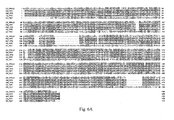
- the amino acid sequence of human protein phosphatase 5 is given by SEQ ID NO: 4. Protein phosphatase 5 sequences of different organisms, corresponding to SEQ ID NO: 1 to 4, are shown in Figure 12 .
- said phosphatase activation assay is an in vitro assay.
- the enzymatic activity of the phosphatase in the phosphatase activation assay is measured by a colorimetric assay.
- the substrate used in said phosphatase activation assay is para-nitrophenyl phosphate (pNPP).
- pNPP para-nitrophenyl phosphate
- said enzymatic activity is measured spectroscopically by the change in absorption at 410 nm.
- the conditions used for measuring the enzymatic activity are 40 mM HEPES/KOH, 20 mM KCl, 5 mM MnCl 2 , 1 mM DTT, pH 7.5.
- said phosphatase activation assay is carried out at 20° C.
- the starting concentration of pNPP is 60 mM.
- the concentration of the compound to be tested is in the range of 50-500 nM, more preferably in the range of 100-250 nM, more preferably 50, 250 or 500 nM, more preferably 250 nM.
- the concentration of the phosphatase is 5-20 ⁇ M. In one embodiment, the concentration of the phosphatase is 30 nM.
- the enzymatic activity of protein phosphatase 5 lacking the TPR domain in the presence of the compound to be tested is by at least a factor of 1.5, preferably at least a factor of 2, more preferably at least a factor of 3, more preferably at least a factor of 4 lower than in the absence of the compound to be tested.
- said protein phosphatase 5 lacking the TPR domain is of the same species as said protein phosphatase 5 used in said phosphatase activation assay with protein phosphatase 5.
- said protein phosphatase 5 lacking the TPR domain comprises only amino acids 166 to 499 of the mammalian protein phosphatase 5 sequence. In one embodiment, said protein phosphatase 5 lacking the TPR domain comprises only amino acids 166 to 499 of the rat protein phosphatase 5 sequence. In one embodiment, said protein phosphatase 5 lacking the TPR domain comprises only amino acids 166 to 499 of the mouse protein phosphatase 5 sequence. In one embodiment, said protein phosphatase 5 lacking the TPR domain comprises only amino acids 166 to 499 of the human protein phosphatase 5 sequence.
- said phosphatase activation assay carried out with protein phosphatase 5 lacking the TPR domain preferably comprises the same steps and is carried out under the same conditions as said phosphatase assay with protein phosphatase 5, wherein, preferably, if the enzymatic activity in the presence of the compound to be tested is to be measured, said phosphatase activation assay carried out with protein phosphatase 5 lacking the TPR domain is carried out in the presence of 10 ⁇ M, preferably 20 ⁇ M, more preferably 50 ⁇ M more preferably 100 ⁇ M of said compound to be tested.
- said compound does not show a positive result in a phosphatase activation assay with the phosphatase PP1. In one embodiment, said compound does not show a positive result in a phosphatase activation assay with the phosphatase PP2A. In one embodiment, said compound does not show a positive result in a phosphatase activation assay with the phosphatase PP2B/PP3. In one embodiment, said compound does not show a positive result in a phosphatase activation assay with alkaline phosphatase.
- said compound shows a positive result with up to 3, preferably up to 2, more preferably up to 1 of the phosphatases included in the group consisting of PP1, PP2A, PP2B/PP3, and alkaline phosphatase.
- said phosphatase assay with PP1, PP2A, PP2B/PP3, or alkaline phosphatase comprises the same steps and is carried out under the same conditions as said phosphatase assay with protein phosphatase 5.
- a result is considered a positive result if the enzymatic activity of the examined phosphatase in the presence of the compound to be tested is by at least a factor of 1.5, preferably at least a factor of 2, more preferably at least a factor of 3, more preferably at least a factor of 5, more preferably at least a factor of 8, more preferably at least a factor of 10, more preferably at least a factor of 12, more preferably at least a factor of 15, more preferably at least a factor of 20, more preferably at least a factor of 25, more preferably at least a factor of 30, more preferably at least a factor of 40, more preferably at least a factor of 50 higher than in the absence of the compound to be tested.
- said compound does not show a positive result in a phosphatase activation assay with the yeast homolog Ppt1 of protein phosphatase 5.
- a result is considered a positive result if the enzymatic activity of the examined phosphatase in the presence of the compound to be tested is by at least a factor of 1.5, preferably at least a factor of 2, more preferably at least a factor of 3, more preferably at least a factor of 5, more preferably at least a factor of 8, more preferably at least a factor of 10, more preferably at least a factor of 12, more preferably at least a factor of 15, more preferably at least a factor of 20, more preferably at least a factor of 25, more preferably at least a factor of 30, more preferably at least a factor of 40, more preferably at least a factor of 50 higher than in the absence of the compound to be tested.
- said compound binds to protein phosphatase 5 within the region of amino acids 166 to 496 of the protein phosphatase 5 sequence. In one embodiment, said compound binds to protein phosphatase 5 within the region of amino acids 166 to 496 of C. elegans protein phosphatase 5. In one embodiment, said compound binds to protein phosphatase 5 within the region of amino acids 166 to 499 of the mammalian protein phosphatase 5 sequence. In one embodiment, said compound binds to protein phosphatase 5 within the region of amino acids 166 to 499 of rat protein phosphatase 5.
- said compound binds to protein phosphatase 5 within the region of amino acids 166 to 499 of mouse protein phosphatase 5. In one embodiment, said compound binds to protein phosphatase 5 within the region of amino acids 166 to 499 of human protein phosphatase 5. Preferably, said binding is determined in an in vitro binding assay, more preferably by NMR measurements.
- said compound binds to C. elegans protein phosphatase 5 within the region of amino acids 166 to 496 of the C. elegans protein phosphatase 5 amino acid sequence and to rat protein phosphatase 5 within the region of amino acids 166 to 499 of the rat protein phosphatase 5 amino acid sequence. In one embodiment, said compound binds to C. elegans protein phosphatase 5 within the region of amino acids 166 to 496 of the C. elegans protein phosphatase 5 amino acid sequence and to mouse protein phosphatase 5 within the region of amino acids 166 to 499 of the mouse protein phosphatase 5 amino acid sequence. In one embodiment, said compound binds to C.
- said compound binds to C. elegans protein phosphatase 5 within the region of amino acids 166 to 496 of the C. elegans protein phosphatase 5 amino acid sequence and to rat, mouse and human protein phosphatase 5 within the region of amino acids 166 to 499 of the rat, mouse or human protein phosphatase 5 amino acid sequence, respectively.
- said binding is determined in an in vitro binding assay, more preferably by NMR measurements.
- said compound does not bind to the TPR (tetratricopeptide repeat) domain of protein phosphatase 5. In one embodiment, said compound does not bind to the region of amino acids 1 to 149 of the C. elegans, rat, mouse or human protein phosphatase 5 amino acid sequence. Preferably, said failure to bind is determined in an in vitro binding assay, more preferably by NMR measurements.
- said compound does not bind to the phosphatase PP1. In one embodiment, said compound does not bind to the phosphatase PP2A. In one embodiment, said compound does not bind to the phosphatase PP2B/PP3. In one embodiment, said compound does not bind to alkaline phosphatase. In one embodiment, said compound binds to up to 3, preferably up to 2, more preferably up to 1 of the phosphatases included in the group consisting of PP1, PP2A, PP2B/PP3, and alkaline phosphatase. In the above embodiments, preferably said failure to bind to PP1, PP2A, or PP2B/PP3 is measured with an in vitro binding assay, more preferably by NMR measurements.
- said in vitro binding assay is carried out by NMR measurements.
- NMR measurements are carried out on an 800 MHz spectrometer with a cryoprobe.
- the measurements are carried out in D 2 O with phosphate buffer (4 mM KH 2 PO 4 , 16 mM Na 2 HPO 4 , 120 mM NaCl, pH 7.4) and, preferably, 1-5% of d6-DMSO.
- measurements are done in high sensitivity experiments with a high number of scans.
- a CPMG sequence with an additional Watergate to suppress residual water is used (this is described in Hajduk et al., 1997; Sklenar et al., 1993).
- peak intensities are normalized by comparing residual DMSO peaks.
- binding is recognized by a reduced peak intensity of certain peaks of the NMR spectrum of the small molecule compound in the presence of the binding protein (e.g. PP5 (166-499)) compared to the NMR spectrum of the small molecule compound in the absence of said binding protein.
- the binding protein e.g. PP5 (166-499)
- bovine intestinal alkaline phosphatase is used as negative control for the binding protein.
- said compound is a small molecule compound.
- said compound has a molecular weight of up to 2000 Dalton, preferably of up to 1500 Dalton, more preferably of up to 1000 Dalton, more preferably of up to 900 Dalton, more preferably of up to 800 Dalton, more preferably of up to 700 Dalton, more preferably of up to 600 Dalton, more preferably of up to 500 Dalton.
- said compound has a molecular weight of at least 100 Dalton, preferably of at least 200 Dalton, more preferably of at least 300 Dalton.
- said compound has a water solubility of at least 50 ⁇ g/ml, preferably at least 100 ⁇ g/ml, more preferably at least 200 ⁇ g/ml, more preferably at least 500 ⁇ g/ml, more preferably at least 1 mg/ml, more preferably at least 5 mg/ml, more preferably at least 10 mg/ml, more preferably at least 20 mg/ml, more preferably at least 50 mg/ml, more preferably at least 100 mg/ml, more preferably at least 200 mg/ml, more preferably at least 500 mg/ml, more preferably at least 1000 mg/ml. In one embodiment, said compound has a water solubility of more than 200 ⁇ g/ml.
- said method of screening for compounds that activate protein phosphatase 5 further comprises the step of
- said compound is a synthetic compound that does not occur in nature.
- said compound is not a derivative of a compound occurring in nature.
- said compound is not a fatty acid. In one embodiment, said compound is not a fatty acid or a derivative thereof. In one embodiment, said compound is not a lipid containing a fatty acid.
- said compound is not a polyunsaturated fatty acid. In one embodiment, said compound is not a polyunsaturated fatty acid or a derivative thereof. In one embodiment, said compound is not a lipid containing a polyunsaturated fatty acid.
- said compound is not arachidonic acid or a derivative thereof. In one embodiment, said compound is not arachidonic acid, linoleic acid, oleic acid, linolenic acid, or a derivative thereof.
- said compound is not a peptide or a derivative thereof. In one embodiment, said compound does not comprise amino acids.
- said binding of said compound to protein phosphatase 5 does not affect binding of Hsp90 to protein phosphatase 5, as determined by sedimentation velocity ultracentrifugation.
- the enzymatic activity of said protein phosphatase 5 in the presence of said compound, as determined by said phosphatase assay is not significantly affected by the presence or absence of a peptide with the sequence MMEVD at a concentration of 60 ⁇ M.
- said compound does not affect the ATPase activity of the human chaperone protein HSP-1, of the C. elegans chaperone protein Hsc70, of the C. elegans chaperone protein Hsc70 in the presence of the cochaperones DNJ-13 and BAG-1, of the human chaperone protein Hsp90, of the C. elegans chaperone protein DAF-21, and/or of the C. elegans chaperone protein DAF-21 in the presence of the cochaperone AHA-1 in an in vitro ATPase assay.
- said ATPase activity is measured with an ATPase assay that is carried out as a regenerative assay, wherein ADP produced during the ATPase reaction is recycled to ATP with the help of lactate dehydrogenase, NADH, phosphoenolpyruvate and pyruvate kinase.
- ADP produced during the ATPase reaction is recycled to ATP with the help of lactate dehydrogenase, NADH, phosphoenolpyruvate and pyruvate kinase.
- the change in absorbance at 340 nm that occurs during oxidizing of NADH to NAD + is measured by spectroscopic measures.
- said in vitro ATPase assay is carried out at 30 °C.
- said in vitro ATPase assay is carried out in the presence of 3 ⁇ M or the chaperone protein.
- concentration of each of the cochaperones present is 5 ⁇ M.
- the chaperones and cochaperones used are bacterially expressed proteins.
- said compound has the general structure A-B , wherein A is
- said compound has the structure represented by Formula I:
- said compound has the general structure A-B-C-D , wherein A is
- said compound has the structure represented by Formula II:
- said compound has the general structure A-B-C-D , wherein A comprises a non-planar group comprising 6 to 13 carbon atoms, preferably 8 to 12 carbon atoms, more preferably 9-11 carbon atoms, more preferably 10 carbon atoms and has, preferably, a molecular weight of up to 300 Dalton, wherein, preferably, A is a triyclic group, wherein, preferably, A is composed exclusively of carbon and hydrogen atoms, wherein, most preferably, A is wherein B is wherein n is from 0 to 4, preferably 0 or 1, and wherein m is from 0 to 4, preferably from 0 to 2, more preferably 1 or 2, more preferably 1, wherein, preferably, B is wherein m is from 0 to 4, preferably from 0 to 2, more preferably 1 or 2, wherein, most preferably, B is wherein C is wherein R 7 is a straight or branched alkyl chain with up to 4 carbon atoms, preferably an alkyl chain with
- said compound has the structure represented by Formula III:
- said compound has the general structure A-B-C-D , wherein A is
- said compound has the structure represented by Formula IV:
- said compound has the general structure A-B-C-D-C-B-A or A-B-C-D- R 9 , wherein A is wherein R 8 is a straight or branched alkyl chain with up to 4 carbon atoms, preferably an alkyl chain with up to 2 carbon atoms, most preferably a methyl group, wherein B is wherein C is wherein n is from 0 to 4, preferably 0 or 1, and wherein m is from 0 to 4, preferably from 0 to 2, wherein, preferably, C is wherein m is from 0 to 4, preferably from 0 to 2, more preferably 1 or 2, wherein, most preferably, C is and wherein D is wherein A is the same or different for each occurrence, wherein B is the same or different for each occurrence, wherein C is the same or different for each occurrence, wherein R 9 is hydrogen, methyl or straight or branched alkyl which is unsubstituted or substituted with one or more substituents selected from the
- said compound has the structure represented by Formula V:
- any of the above-mentioned compounds is for use in the treatment of a tauopathy, preferably in the treatment of Alzheimer's disease, amyotrophic lateral sclerosis and parkinsonism-dementia complex, argyrophilic grain disease, chronic traumatic encephalopathy, chronic traumatic encephalopathy, traumatic brain injury, diffuse neurofibrillary tangles with calcification, Down's syndrome, familial British dementia, familial Danish dementia, frontotemporal dementia and parkinsonism linked to chromosome 17 (caused by MAPT mutations), frontotemporal lobar degeneration, preferably caused by C9ORF72 mutations, Gerstmann-St syndromesler-Scheinker disease, Guadeloupean parkinsonism, myotonic dystrophy, neurodegeneration with brain iron accumulation, Niemann-Pick disease type C, non-Guamanian motor neuron disease with neurofibrillary tangles, Pick's disease, postencephalitic parkinsonism
- any of the above-mentioned compounds is for use in the treatment of a tauopathy selected from the group consisting of Alzheimer's disease, chronic traumatic encephalopathy, frontotemporal dementia, parkinsonism linked to chromosome 17 (caused by MAPT mutations), frontotemporal lobar degeneration, preferably caused by C9ORF72 mutations, Niemann-Pick disease type C, Pick's disease, progressive supranuclear palsy, tangle-only dementia, and white matter tauopathy with globular glial inclusions.
- a tauopathy selected from the group consisting of Alzheimer's disease, chronic traumatic encephalopathy, frontotemporal dementia, parkinsonism linked to chromosome 17 (caused by MAPT mutations), frontotemporal lobar degeneration, preferably caused by C9ORF72 mutations, Niemann-Pick disease type C, Pick's disease, progressive supranuclear palsy, tangle-only dementia, and white matter tauopathy with globular glial inclusions.
- any of the above-mentioned compounds is for use in the treatment of Alzheimer's disease. In one embodiment, any of the above-mentioned compounds is for use in the treatment of chronic traumatic encephalopathy. In one embodiment, any of the above-mentioned compounds is for use in the treatment of frontotemporal dementia. In one embodiment, any of the above-mentioned compounds is for use in the treatment of parkinsonism linked to chromosome 17 (caused by MAPT mutations). In one embodiment, any of the above-mentioned compounds is for use in the treatment of frontotemporal lobar degeneration, preferably caused by C9ORF72 mutations.
- any of the above-mentioned compounds is for use in the treatment of Niemann-Pick disease type C. In one embodiment, any of the above-mentioned compounds is for use in the treatment of Pick's disease. In one embodiment, any of the above-mentioned compounds is for use in the treatment of progressive supranuclear palsy. In one embodiment, any of the above-mentioned compounds is for use in the treatment of tangle-only dementia. In one embodiment, any of the above-mentioned compounds is for use in the treatment of white matter tauopathy with globular glial inclusions.
- any of the above-mentioned compounds is for use in the treatment of cancer, preferably in the treatment of a cancer of the blood, bile duct, bladder, bone, brain, breast, cervix, colon, esophagus, eye, gallbladder, germ cells, intestines, kidney larynx, lip, liver, lung, mouth, nose, oral cavity, ovaries, pancreas, penis, pharynx, prostate, skin, stomach, testicles, throat, thymus, thyroid, urethra, or vagina.
- any of the above-mentioned compounds is for use in the treatment of a cancer selected from the group consisting of acute lymphoblastic leukemia (ALL), acute myeloid leukemia, astrocytoma, basal-cell carcinoma, bile duct cancer, bladder cancer, bone tumor, brain tumor, breast cancer, Burkitt's lymphoma, cervical cancer, chronic myelogenous leukemia (CML), colon cancer, emphysema, esophageal cancer, intraocular melanoma, eye cancer, retinoblastoma, gallbladder cancer, gastric (stomach) cancer, gastrointestinal stromal tumor (GIST), germ cell tumor, glioma, head and neck cancer, hepatocellular (liver) cancer, Hodgkin lymphoma, islet cell carcinoma (endocrine pancreas), Kaposi sarcoma, kidney cancer, renal cell cancer, laryngeal cancer, leukemia, acute lymphoblastic leukemia (ALL
- any of the above-mentioned compounds is for use in the treatment of pancreatic carcinoma.
- said compound is administered to a patient.
- an effective amount of said compound is administered to a patient.
- said patient is a mammal. More preferably, said patient is a rat, a mouse or a human. More preferably, said patient is a human.
- said administration occurs by oral administration, by parenteral administration, by intravenous injection, by intradermal injection, or by topical administration. In one embodiment, said administration occurs by a series of injections or continuous infusion over an extended period of time.
- the objects of the present invention are also solved by a method for activating protein phosphatase 5, said method comprising the steps of contacting protein phosphatase 5 with a compound as defined above in an amount sufficient to activate protein phosphatase 5.
- said compound and said protein phosphatase 5 are as defined in the embodiments above.
- said compound(s) and said protein phosphatase 5 are as defined in the embodiments above.
- the objects of the present invention are also solved by a method of using a compound as defined above for treating a patient who is suffering from a tauopathy, preferably a patient who is suffering from a tauopathy selected from the group consisting of Alzheimer's disease, amyotrophic lateral sclerosis and parkinsonism-dementia complex, argyrophilic grain disease, chronic traumatic encephalopathy, chronic traumatic encephalopathy, traumatic brain injury, diffuse neurofibrillary tangles with calcification, Down's syndrome, familial British dementia, familial Danish dementia, frontotemporal dementia and parkinsonism linked to chromosome 17 (caused by MAPT mutations), frontotemporal lobar degeneration, preferably caused by C9ORF72 mutations, Gerstmann-St syndromesler-Scheinker disease, Guadeloupean parkinsonism, myotonic dystrophy, neurodegeneration with brain iron accumulation, Niemann-Pick disease type C, non-Guamanian motor neuron disease with neurof
- said compound and said patient are as defined in the embodiments above.
- the objects of the present invention are also solved by a method for treatment of a patient who is suffering from a tauopathy, preferably a patient who is suffering from a disease selected from the group consisting of Alzheimer's disease, amyotrophic lateral sclerosis and parkinsonism-dementia complex, argyrophilic grain disease, chronic traumatic encephalopathy, chronic traumatic encephalopathy, traumatic brain injury, diffuse neurofibrillary tangles with calcification, Down's syndrome, familial British dementia, familial Danish dementia, frontotemporal dementia and parkinsonism linked to chromosome 17 (caused by MAPT mutations), frontotemporal lobar degeneration, preferably caused by C9ORF72 mutations, Gerstmann-St syndromesler-Scheinker disease, Guadeloupean parkinsonism, myotonic dystrophy, neurodegeneration with brain iron accumulation, Niemann-Pick disease type C, non-Guamanian motor neuron disease with neurofibrillary tangles
- said compound, said patient, and said administering are as defined in the embodiments above.
- an effective amount of said compound is administered to said patient.
- a tauopathy preferably from a tauopathy selected from the group consisting of Alzheimer's disease, amyotrophic lateral sclerosis and parkinsonism-dementia complex, argyrophilic grain disease, chronic traumatic encephalopathy, chronic traumatic encephalopathy, traumatic brain injury, diffuse neurofibrillary tangles with calcification, Down's syndrome, familial British dementia, familial Danish dementia, frontotemporal dementia and parkinsonism linked to chromosome 17 (caused by MAPT mutations), frontotemporal lobar degeneration, preferably caused by C9ORF72 mutations, Gerstmann-St syndromesler-Scheinker disease, Guadeloupean parkinsonism, myotonic dystrophy, neurodegeneration with brain iron accumulation, Niemann-Pick disease type C, non-Guamania
- said compound and said patient are as defined in the embodiments above.
- said compound is for use in the treatment of a tauopathy, preferably a tauopathy selected from the group consisting of Alzheimer's disease, amyotrophic lateral sclerosis and parkinsonism-dementia complex, argyrophilic grain disease, chronic traumatic encephalopathy, chronic traumatic encephalopathy, traumatic brain injury, diffuse neurofibrillary tangles with calcification, Down's syndrome, familial British dementia, familial Danish dementia, frontotemporal dementia and parkinsonism linked to chromosome 17 (caused by MAPT mutations), frontotemporal lobar degeneration, preferably caused by C9ORF72 mutations, Gerstmann-St syndromesler-Scheinker disease, Guadeloupean parkinsonism, myotonic dystrophy, neurodegeneration with brain iron accumulation, Niemann-Pick disease type C, non-Guamanian motor neuron disease with neurofibrillary tangles, Pick's disease, postencephalitic parkinsonism,
- the objects of the present invention are also solved by the use of a compound as defined above in a method for increasing the activity of protein phosphatase 5.
- said compound is for use in the treatment of a tauopathy, preferably a tauopathy selected from the group consisting of Alzheimer's disease, amyotrophic lateral sclerosis and parkinsonism-dementia complex, argyrophilic grain disease, chronic traumatic encephalopathy, chronic traumatic encephalopathy, traumatic brain injury, diffuse neurofibrillary tangles with calcification, Down's syndrome, familial British dementia, familial Danish dementia, frontotemporal dementia and parkinsonism linked to chromosome 17 (caused by MAPT mutations), frontotemporal lobar degeneration, preferably caused by C9ORF72 mutations, Gerstmann-St syndromesler-Scheinker disease, Guadeloupean parkinsonism, myotonic dystrophy, neurodegeneration with brain iron accumulation, Niemann-Pick disease type C, non-Guamanian motor neuron disease with neurofibrillary tangles, Pick's disease, postencephalitic parkinsonism,
- the objects of the present invention are also solved by the use of a compound as defined above in a method for increasing the activity of protein phosphatase 5.
- A comprises a non-planar group comprising 6 to 13 carbon atoms, preferably 8 to 12 carbon atoms, more preferably 9-11 carbon atoms, more preferably 10 carbon atoms and has, preferably, a molecular weight of up to 300 Dalton, wherein, preferably, A is a triyclic group, wherein, preferably, A is composed exclusively of carbon and hydrogen atoms, wherein, most preferably, A is wherein B is wherein n is from 0 to 4, preferably 0 or 1, and wherein m is from 0 to 4, preferably from 0 to 2, more preferably 1 or 2, more preferably 1, wherein, preferably, B is wherein m is from 0 to 4, preferably from 0 to 2, more preferably 1 or 2, wherein, most preferably, B is wherein C is wherein R 7 is a straight or branched alkyl chain with up to 4 carbon atoms,
- said compound is for use in the treatment of a tauopathy, preferably a tauopathy selected from the group consisting of Alzheimer's disease, amyotrophic lateral sclerosis and parkinsonism-dementia complex, argyrophilic grain disease, chronic traumatic encephalopathy, chronic traumatic encephalopathy, traumatic brain injury, diffuse neurofibrillary tangles with calcification, Down's syndrome, familial British dementia, familial Danish dementia, frontotemporal dementia and parkinsonism linked to chromosome 17 (caused by MAPT mutations), frontotemporal lobar degeneration, preferably caused by C9ORF72 mutations, Gerstmann-St syndromesler-Scheinker disease, Guadeloupean parkinsonism, myotonic dystrophy, neurodegeneration with brain iron accumulation, Niemann-Pick disease type C, non-Guamanian motor neuron disease with neurofibrillary tangles, Pick's disease, postencephalitic parkinsonism,
- the objects of the present invention are also solved by the use of a compound as defined above in a method for increasing the activity of protein phosphatase 5.
- said compound is for use in the treatment of a tauopathy, preferably a tauopathy selected from the group consisting of Alzheimer's disease, amyotrophic lateral sclerosis and parkinsonism-dementia complex, argyrophilic grain disease, chronic traumatic encephalopathy, chronic traumatic encephalopathy, traumatic brain injury, diffuse neurofibrillary tangles with calcification, Down's syndrome, familial British dementia, familial Danish dementia, frontotemporal dementia and parkinsonism linked to chromosome 17 (caused by MAPT mutations), frontotemporal lobar degeneration, preferably caused by C9ORF72 mutations, Gerstmann-St syndromesler-Scheinker disease, Guadeloupean parkinsonism, myotonic dystrophy, neurodegeneration with brain iron accumulation, Niemann-Pick disease type C, non-Guamanian motor neuron disease with neurofibrillary tangles, Pick's disease, postencephalitic parkinsonism,
- the objects of the present invention are also solved by the use of a compound as defined above in a method for increasing the activity of protein phosphatase 5.
- A is wherein R 8 is a straight or branched alkyl chain with up to 4 carbon atoms, preferably an alkyl chain with up to 2 carbon atoms, most preferably a methyl group
- B is wherein C is wherein n is from 0 to 4, preferably 0 or 1
- m is from 0 to 4, preferably from 0 to 2,
- C is wherein m is from 0 to 4, preferably from 0 to 2, more preferably 1 or 2, wherein, most preferably, C is and wherein D is wherein A is the same or different for each occurrence
- B is the same or different for each occurrence
- C is the same or different for each occurrence
- R 9 is hydrogen, methyl or straight or branched alkyl which is unsubstituted or substituted with one or
- said compound is for use in the treatment of a tauopathy, preferably a tauopathy selected from the group consisting of Alzheimer's disease, amyotrophic lateral sclerosis and parkinsonism-dementia complex, argyrophilic grain disease, chronic traumatic encephalopathy, chronic traumatic encephalopathy, traumatic brain injury, diffuse neurofibrillary tangles with calcification, Down's syndrome, familial British dementia, familial Danish dementia, frontotemporal dementia and parkinsonism linked to chromosome 17 (caused by MAPT mutations), frontotemporal lobar degeneration, preferably caused by C9ORF72 mutations, Gerstmann-St syndromesler-Scheinker disease, Guadeloupean parkinsonism, myotonic dystrophy, neurodegeneration with brain iron accumulation, Niemann-Pick disease type C, non-Guamanian motor neuron disease with neurofibrillary tangles, Pick's disease, postencephalitic parkinsonism,
- the objects of the present invention are also solved by the use of a compound as defined above in a method for increasing the activity of protein phosphatase 5.
- protein phosphatase 5" refers to an enzyme, preferably an enzyme with E.C. number 3.1.3.16, that catalyzes the removal of phosphate groups from certain substrates (i.e. the dephosphorylation of these substrates) by hydrolyzing phosphoric acid monoesters into a phosphate ion and a molecule with a free hydroxyl group.
- the polypeptide sequence of protein phosphatase 5 includes a regulatory "TPR domain" ("tetratricopeptide repeat domain”) which comprises amino acids 1 to 150 in the C.
- polypeptide sequence of protein phosphatase 5 further includes a "phosphatase domain" which is responsible for the enzymatic activity of protein phosphatase 5 and comprises amino acids 166 to 490 in the C.
- PPP protein phoshatase 1
- P2A protein phoshatase 2A
- PP2B/PP3 protein phoshatase 3
- alkaline phosphatase heat stress cognate 70
- Hsp90 heat shock protein 90
- small molecule compound refers to a compound with a molecular weight of up to 900 Dalton.
- derivative refers to derivates such as esters of such fatty acid, polyunsaturated fatty acid, arachidonic acid, linoleic acid, oleic acid, linolenic acid or peptide, respectively.
- the term "derivate" of a fatty acid, a polyunsaturated fatty acid, arachidonic acid, linoleic acid, oleic acid, linolenic acid or a peptide refers to an ester, preferably an ethyl ester or an ester with Coenzyme A, of said fatty acid, polyunsaturated fatty acid, arachidonic acid, linoleic acid, oleic acid, linolenic acid or peptide.
- phosphatase activation assay refers to a biochemical assay that is adapted to determine whether changes in a certain parameter of a phosphatase reaction result in changes in the enzymatic activity of a certain phosphatase.
- a phosphatase activation assay may allow to determine whether the presence of a certain compound results in changes in the enzymatic activity of a phosphatase, as compared to in the absence of that compound.
- Enzymatic activity refers to the efficiency with which an enzyme catalyzes the chemical reaction that it is adapted to catalyze. If used in connection with protein phosphatase 5, the term refers to the efficiency with which protein phosphatase 5 catalyzes the removal of phosphate groups from a substrate (i.e. dephosphorylation of that substrate) under certain conditions.
- a compound is said to "activate” an enzyme, if the enzyme shows an increased enzymatic activity in the presence of that compound, as compared to in the absence of that compound.
- a compound is said to "activate” protein phosphatase 5, if the efficiency with which protein phosphatase 5 catalyzes dephosphorylation of its substrates is increased in the presence of said compound, as compared to the same conditions, but in the absence of said compound.
- the present application refers to "measuring the enzymatic activity" of an enzyme. As used herein, this means that a measured value that is proportional to or reflects the enzymatic activity of that enzyme is measured. For example, the present application may refer to "measuring the enzymatic activity of protein phosphatase 5".
- the conditions for the phosphatase reaction are 40 mM HEPES/KOH, 20 mM KCl, 5 mM MnCl 2 , 1 mM DTT, pH 7.5.
- the reaction is carried out at 20° C.
- the starting concentration of pNPP is 60 mM.
- the concentration of the compound to be tested, if present, is in the range of 50-500 nM, preferably in the range of 100-250 nM, more preferably 50, 250 or 500 nM, more preferably 250 nM.
- phosphatase bacterially expressed and purified phosphatase is used.
- the concentration of the phosphatase in the reaction is 30 nM.
- the slope of the initial phase of the curve in a graph plotting the absorbance at 410 nm over time is proportional to the enzymatic activity of protein phosphatase 5under the specific reaction conditions used.
- the reaction may be allowed to proceed for a defined incubation period (usually 30 minutes), then the reaction is stopped (for example by addition of a small volume of 1 M NaOH), and the absorbance at 410 nm is measured.
- the obtained value is proportional to the enzymatic activity of protein phosphatase 5 under the specific reaction conditions used (since the reaction is carried out in the presence of an excess of substrate and the incubation period is chosen such that the reaction is stopped while it is still in the quasi-linear Phase).
- the present application refers to the enzymatic activity of an enzyme being under certain conditions "higher" by a certain factor than under certain other conditions.
- the present application may state that the enzymatic activity of protein phosphatase 5 in the presence of a certain compound is higher by at least a factor of 10 than in the absence of that compound.
- the present application may state that the enzymatic activity of protein phosphatase 5 in the presence of a certain compound is lower by at least a factor of 2 than in the absence of that compound.
- Sedimentation velocity ultracentrifugation is considered as a method to determine whether binding of a compound to protein phosphatase 5 affects binding of another protein (such as Hsp90) to protein phosphatase 5 only, if it is explicitly referred to. According to the application, such sedimentation velocity ultracentrifugation is typically carried out as described in the section “Analytical ultracentrifugation (AUC)" of Example 1.
- a compound has a water solubility of at least n mg/ml
- a compound has a water solubility of more than n mg/ml
- Solubility measurements can be performed by the shake-flask method under equilibrium conditions at 25 °C (pH 7.4).
- a small amount of powder of the test compound preferably 10 ⁇ g or 1 mg of powder of the test compound, is dissolved in water (excess of solid). This solution is shaken at 25 °C for 24 h or until equilibrium is reached.
- the absorption of the filtrate is measured by UV/Vis spectrometry, and the concentration of the compound in the filtrate (which equals the water solubility of the compound) is calculated using a previously determined specific absorption coefficient.
- in vitro means occurring outside of a living organism.
- the term refers to processes or conditions that are both outside of a living organism and not in a cell culture system.
- ATPase activity can be measured as described in Gaiser et al., 2009 with an ATPase assay that is carried out as a regenerative assay, wherein ADP produced during the ATPase reaction is recycled to ATP with the help of lactate dehydrogenase, NADH, phosphoenolpyruvate and pyruvate kinase.
- the change in absorbance at 340 nm that occurs during oxidizing of NADH to NAD + is measured by spectroscopic measures.
- said in vitro ATPase assay is carried out at 30 °C.
- said in vitro ATPase assay is carried out in the presence of 3 ⁇ M or the chaperone protein.
- concentration of each of the cochaperones present is 5 ⁇ M.
- the chaperones and cochaperones used are bacterially expressed proteins.
- the present application refers to a binding (or failure to bind) being determined/measured "by NMR measurements".
- NMR measurements can for example be carried out on an 800 MHz spectrometer (Bruker) with cryoprobe.
- the measurements can be done in D 2 O with phosphate buffer (4 mM KH 2 PO 4 , 16 mM Na 2 HPO 4 , 120 mM NaCl, pH 7.4) and 1-5% of d6-DMSO.
- measurements are done in high sensitivity experiments with a high number of scans.
- a CPMG sequence with an additional Watergate to suppress residual water is used (Hajduk et al., 1997; Sklenar et al., 1993).
- Peak intensities can be normalized by comparing residual DMSO peaks.
- binding is recognized by a reduced peak intensity of certain peaks of the NMR spektrum of the small molecule compound in the presence of the binding protein (e.g. PP5 (166-499)) compared to the NMR spektrum of the small molecule compound in the absence of said binding protein. (This is caused by a much slower tumbling rate of the protein-ligand complex in comparison to the free small molecule compound. Some peaks of the small molecule compound may remain unreduced, indicating that certain moieties of the P5SA-2 molecule are still able to rotate freely.)
- bovine intestinal alkaline phosphatase is used as negative control for the binding protein.
- the present application refers to a binding being "determined by X-ray crystallography".
- X-ray crystallography can be carried out as described in Example 1 in the section "Crystallization and structure determination”.
- tau designates the microtubule-associated protein tau that is found in neurons and stimulates and maintains the assembly and stability of microtubules ( MG Spillanti, M Goedert (2013) Tau pathology and neurodegeneration. Lancet Neurology 12, 609-622 ). Hyperphosphorylation of tau accounts for its loss of function, gain of toxicity and aggregation to paired helical filaments, which, in turn, form neurofibrillary tangles observed in Alzheimer's disease and several other diseases with tau inclusions (tauopathies) ( MG Spillanti, M Goedert (2013) Tau pathology and neurodegeneration. Lancet Neurology 12, 609-622 ).
- Tauopathies include, for example, Alzheimer's disease, amyotrophic lateral sclerosis and parkinsonism-dementia complex, argyrophilic grain disease, chronic traumatic encephalopathy, chronic traumatic encephalopathy, traumatic brain injury, diffuse neurofibrillary tangles with calcification, Down's syndrome, familial British dementia, familial Danish dementia, frontotemporal dementia and parkinsonism linked to chromosome 17 (caused by MAPT mutations), frontotemporal lobar degeneration (some cases caused by C9ORF72 mutations), Gerstmann-St syndromesler-Scheinker disease, Guadeloupean parkinsonism, myotonic dystrophy, neurodegeneration with brain iron accumulation, Niemann-Pick disease type C, non-Guamanian motor neuron disease with neurofibrillary tangles, Pick's disease, postencephalitic parkinsonism, prion protein cerebral amyloid angiopathy, progressive subcortical gliosis
- an "effective amount" of a compound is an amount of said compound that is capable of achieving the desired increase in the enzymatic activity of protein phosphatase 5, and will vary depending on such factors as age, condition, sex, extent of disease of the patient, counter-indications, if any, and other variables to be adjusted by a physician.
- Protein phosphatase 5 is a ubiquitously expressed serine/threonine phosphatase that is strictly autoregulated by its tetratricopeptide repeat (TPR) domain and the C-terminal ⁇ -helix. Fine-tuning of its dephosphorylation activity modulates a diverse set of cellular key players including pathogenic proteins involved in neurodegenerative disorders.
- the present inventors have surprisingly found that the compounds according to the present invention are highly selective, allosteric activators of protein phosphatase 5 that enhance the phosphatase activity up to 20-fold without affecting the PP5-Hsp90 interaction.
- Hsp90 regulates both tau phosphorylation and tau pathology by a co-chaperone complex with PP5 (Salminen et al., 2011). Besides that, tau dephosphorylation by the Hsp90-PP5 complex may ameliorate crucial tau aggregation and facilitate its physiological function including re-binding to the microtubules where PP5 was shown to be localized. Also other protein phosphatases like PP1, PP2A and PP2B may contribute to tau dephosphorylation in vitro and in vivo (Liu et al., 2005 ⁇ ).
- PP5 is highly expressed in the mammalian brain, but few physiological substrates have yet been identified (Liu et al., 2005b).PP5 provides a K M (8-13 ⁇ M) towards tau in the physiological range of its intraneuronal concentration. Tau is dephosphorylated by PP5 at various Alzheimer's disease (AD)-associated phosphorylation sites (Liu et al., 2005b), including the AT8 epitope (Ser202/Thr205), which we have addressed in our study. Notably, the tau-directed activity of PP5 is significantly decreased in human AD brains (Liu et al., 2005a).
- AD Alzheimer's disease
- Ser202/Thr205 AT8 epitope
- P5SA-1 to P5SA-5 acronym from P rotein phosphatase 5S mall molecule A ctivator 1 to 5; see Fig. 1B for structure
- P5SA-1 to P5SA-5 acronym from P rotein phosphatase 5S mall molecule A ctivator 1 to 5; see Fig. 1B for structure
- PP5 is unique in its regulatory mechanism, being the sole enzyme in its class interacting directly with the Hsp90 chaperone system by its TPR domain.
- the phosphatase activity of PP5 is autoinhibited in the apo-state by a specific interaction between the N-terminal TPR domain and the C-terminal ⁇ J helix which is released upon binding to Hsp90.
- the complex regulation of PP5 serves to scaffold substrates for dephosphorylation only when recruited to the Hsp90 chaperone network.
- the compounds according to the present invention do not interfere with the binding of Hsp90, demonstrating a TPR-independent regulation of the enzymatic activity.
- the crystallization of an activated species may render an increase in disorder and flexibility where the activator does not arrest completely and is not fully resolved.
- the crystallographic results of the PP5-ligand complex further reveal a structural reorganization of the phosphatase's C-terminus and a tilting of single helices of the TPR domain up to 10°.
- the conformational rearrangements prevent autoinhibition of the phosphatase and open the substrate channel of the enzyme.
- the compounds according to the present invention act allosterically and bypass an autoinhibitory mechanism of PP5 that relies on complex protein-protein-interactions in the cellular environment.
- the compounds according to the present invention cause PP5 activation by a particularly similar mechanism and affect tau-dependent neuronal degradation. They hold considerable beneficial potential for patients suffering from various neurodegenerative diseases, i.e. tauopathies.
- Substances P5SA-1, P5SA-2, P5SA-3, P5SA-4 and P5SA-5 were purchased from ChemDiv (San Diego, California, USA) with the respective ChemDiv-Code 5638-0063, C301-7823, E635-0056, G199-1264 and G839-0123.
- the C-terminal Hsp90/DAF-21 peptide was obtained from Biomatik (Cambridge, Ontario, Canada).
- PP5- ⁇ N165 (166-499) and PP5- ⁇ C8 were generated by PCR from plasmid-DNA containing full-length PP5 from Rattus norvegicus. PCR-products were inserted into the pET28b expression plasmid (Merck, Darmstadt, Germany) and verified by DNA sequencing (GATC Biotech, Konstanz, Germany). Proteins were expressed in BL21-CodonPlus (DE3)-RIL bacteria (Stratagene, LaJolla, USA). Bacterial cultures were grown to an OD 600 of 0.8 and induced with 1 mM IPTG.
- Phosphatase activity was followed by the conversion of para-nitrophenyl phosphate (pNPP) to para-nitophenole and absorption of the product at 410 nm ( ⁇ : 15100 cm -1 M -1 ) in a Varian Cary 100 spectrophotometer (Agilent Technologies, Boeblingen, Germany).
- the reaction was measured in 40 mM HEPES/KOH, 20 mM KCl, 5 mM MnCl 2 , 1 mM DTT, pH 7.5 and 60 mM pNPP at 20 °C if not indicated otherwise.
- Phosphatase concentration ranged from 50 to 500 nM in the assay. If indicated, Hsp90/DAF-21 peptide was supplemented in the assay at a concentration of 60 ⁇ M.
- Binding of the P5SAs to the Hsp90/DAF-21 PPH-5 interface was analyzed by analytical ultracentrifugation with fluorescence detection as described before (Gaiser et al., 2010). Experiments were performed in a Beckman ProteomeLab XL-A analytical ultracentrifuge (Beckman, Brea, USA) equipped with an Aviv AU-FDS detector (Aviv Biomedical, Lakewood, USA). AUC runs were performed in 40 mM HEPES/KOH, pH 7.5, 20 mM KCl, 1 mM DTT, the concentration of labeled species was 300 nM and 3 ⁇ M of PPH-5.
- the activity of the ATPases Hsc70/HSP-1 and Hsp90/DAF-21 were assessed in a coupled regenerative ATPase assay as described before (Gaiser et al., 2009). Reactions were measured in a Varian Cary 100 spectrophotometer (Agilent Technologies, Boeblingen, Germany) at 30 °C and the depletion of NADH was followed at 340 nm. Chaperone concentration was 3 ⁇ M and cochaperones were added, when indicated, at a concentration of 5 ⁇ M.
- mice monoclonal anti-human tau-13 Tau-13, 1:2,000; Covance Research Products Inc., Denver, USA
- polyclonal rabbit anti-human tau K9JA, 1:2,000: Dako, Glostrup, Denmark
- mouse monoclonal anti-MAP2 1:200; Sigma, Saint Louis, USA
- mouse monoclonal anti-human phospho-PHF-Tau AT8, 1:500; Pierce Biotechnology, Rockford, USA.
- Alexa Fluor 488 goat anti-rabbit IgG highly cross-adsorbed (1:200; Molecular Probes, Eugene, USA) and Alexa Fluor 594 goat anti-mouse IgG highly cross-adsorbed (1:200; Molecular Probes, Eugene, USA) were used as secondary antibodies.
- the human cDNA MAPT variant with no N-terminal inserts and 4 microtubule-binding repeats (0N4R) harboring the point mutation P301L (numbering according to the longest isoform) was amplified by PCR from a vector construct.
- the PCR construct was cloned into a shuttle vector under control of a CMV promoter and Herpes simplex virus-1 particles were produced by BioVex (Abingdon, UK). Virus titers were 3x10 9 pfu/mL.
- halothane in a mixture of nitrous oxide/oxygen (ratio 70:30) was used for the induction of anesthesia and 1 to 1.5% halothane for the maintenance of anesthesia.
- Halothane was applied via a nose cone. Throughout all surgical procedures, the animal's body temperature was kept at 37°C using a thermostatically controlled heating blanket.
- Intracerebral injection of viral particles into the hippocampus of the right brain hemisphere of anesthetized mice was performed stereotactically at coordinates 2.6 mm posterior to bregma, lateral 1.0 mm and ventral 2.0 mm.
- Mini-osmotic pumps (Model 2006, Alzet, Palo Alto, CA, USA) were implanted intraperitoneal (ip) through a midline incision immediately after P301L transfection. During implantation, animals remained under halothane anesthesia (details above).
- the pumps (internal volume: 245.6 ⁇ l) were loaded with one of the following substances: P5SA-2, P5SA-3, P5SA-4, P5SA-5 or corresponding vehicle solution (DMSO/polyethylene glycol 400 (50:50 w/w) without drug.
- P5SA final concentration 1 mg/kg/day
- vehicle infusion ip started immediately after transplantation with a continuous flow rate of 0.15 ⁇ l/h and was maintained for 6 weeks.
- mice 6 weeks after P301L transfection, mice were anesthetized by ip injection of 4% chloral hydrate in PBS, transcardially perfused with ice-cold PBS and fixed with 4% paraformaldehyde in 0.1 M PBS. Immediately after fixation, animals were decapitated. The brains were removed and post-fixed in the same fixative overnight. Fixed brains were placed in a mouse brain matrix (Activational Systems Inc., Warren, USA) and transected into defined coronal brain slices (thickness 1 mm) along the anterior-posterior axis.
- mice tau human plus endogenous mice tau, K9JA
- MAP2 microtubule-associated protein 2
- AT8 human phospho-tau, AT8 (Ser202/Thr205) phosphorylation site
- human tau-specific primary antibody tau-13 were used individually. After overnight incubation at 4°C, sections were rinsed with 0.1 M PBS. Sections exposed to the primary antibody combination K9JA/MAP2 were incubated with the complementary secondary antibodies goat anti-rabbit IgG Alexa Fluor 488 and goat anti-mouse IgG Alexa Fluor 594.
- AT8 and tau-13 were visualized with goat anti-mouse IgG Alexa Fluor 594. After final washing in 0.1 M PBS, sections were mounted onto glass slides in Vectashield mounting medium (Vector Laboratories, Burlingame, CA, USA) containing 4',6-diamidino-2-phenylindole (DAPI) nuclear counter stain and cover slipped.
- Vectashield mounting medium Vector Laboratories, Burlingame, CA, USA
- Eclipse TE2000-S inverted fluorescence microscope (Nikon, Düsseldorf, Germany) or the LSM 5 Pascal Exciter laser scanning microscope (Carl Zeiss, Jena, Germany) with the following objectives were used for image acquisition.
- the imaging medium was air, except for the EC Plan-Neofluar 40x and EC Plan-Neofluar 63x objective which required oil immersion.
- Alexa 594 (red) and Alexa 488 (green) (Molecular Probes, Eugene, OR, USA) coupled to secondary antibodies were used as fluorochromes.
- a CCD camera (1300QCB, VDS Vosskühler, Osnabrück, Germany) was mounted on the Eclipse TE2000-S and taken for image capture.
- the Lucia software package version 4.2.1., Nikon, Düsseldorf, Germany
- LSM 5 Pascal software package version 4.0, Carl Zeiss, Jena, Germany
- Brightness and contrast adjustments were applied to each pixel in the image and do not obscure, eliminate or misrepresent any information present in the original, including background. Non-linear adjustments (e.g., changes of gamma settings) were not performed. The graphical layout of all figures was finalized with Microsoft PowerPoint. No specific feature of original images was enhanced, obscured, moved, removed or introduced.
- the protein phosphatase 5 is a highly regulated enzyme.
- the autoinhibition of the phosphatase is controlled by the N-terminal TPR domain and the C-terminal ⁇ J helix, implying a complex mechanism to control the turnover rate (Yang et al., 2005).
- a compound screen was carried out to identify small molecules which can alter the activity of the phosphatase.
- the C. elegans homolog of protein phosphatase 5 was used (activity of nematode protein phosphatase 5 (PPH-5) at 20 °C: ⁇ 0.62 sec -1 ; mammalian PP5: ⁇ 0.12 sec -1 ).
- P5SA-1 to P5SA-5 P rotein phosphatase 5S mall molecule A ctivator 1 to 5
- the P5SAs were utilized at different concentrations to determine the apparent K D -value in the pNPP-based assay yielding dissociation constants in the range of 6 ⁇ M to 26 ⁇ M causing a 4 to 10-fold activation under these conditions (Table 2).
- Table 1 Examples for compounds tested that had no effect on nematode PPH-5.
- the PSSAs are allosteric regulators of PPH-5
- Human PP5 is well-known to be activated upon binding to the molecular chaperone Hsp90 or C-terminal fragments thereof (Yang et al., 2005).
- Hsp90-derived C-terminal MEEVD peptide resulted in activation of the nematode PPH-5 ( Figure 2A ).
- the proposed mechanism implies an autoinhibitory interaction between the binding groove of the TPR domain and the C-terminal ⁇ J helix of the phosphatase domain, which is maintained until the TPR domain is occupied by the MEEVD-motif.
- the P5SAs appear to bind to a site distinct from the peptide binding groove of the TPR domain while releasing autoinhibition similar to the Hsp90 derived peptide.
- the P5SAs bind at the intersection of the phosphatase and the TPR domain
- deletion constructs of rat PP5 were generated.
- the mammalian homolog of the protein phosphatase 5 enabled to study the impact of certain domains of the phosphatase, as shortened variants of C. elegans PPH-5 resulted in insoluble protein.
- the full-length PP5 and its deletion variants were purified and the activity was determined in the absence and presence of 10 ⁇ M and 100 ⁇ M (45 ⁇ M in case of P5SA-5) of the substances, respectively ( Figure 3A-C ).
- the P5SAs do not appear to interact directly with the autoregulatory domains. Instead, the modulators bind to the phosphatase core domain which appears sufficient to control the turnover rate independent of the PP5 variant used in this study ( Figure 10 ).
- the first defined amino acid is Gly23 and the loop connecting the TPR domain with the phosphatase domain (Arg150 - Arg158; numbers according to full-length ratPP5) are flexible and therefore not defined in the electron density map. Additionally, Met499 of the apo-structure and Met498 as well as Met499 of the active ligand structure were not resolved.
- the electron density of P5SA-2 is only partially defined, however, comparison of both structures, PP5 apo and the PP5:P5SA-2 complex, clearly assigned the binding site of the ligand at the interface between the TPR and the phosphatase domain.
- a comparison of the backbone traces discloses limited structural rearrangements within the phosphatase domain, reflected by a r.m.s. deviation of the C ⁇ -atoms of 0.42 ⁇ ( Figure 4A ).
- a tilting of the TPR domain up to 10° is observed upon ligand binding (r.m.s. deviation: 0.84 ⁇ ) accompanied by a rearrangement of the ⁇ J helix.
- These structural domain reorganizations are manifested in a reduction of the crystal lattice constant c by 15 ⁇ .
- the binding pocket covers approximately 1250 ⁇ 2 with a corresponding volume of 1710 ⁇ 2 (Dundas et al., 2006), whereas in the active state both values increase significantly (1370 ⁇ 2 and 2090 ⁇ 2 ), suggesting facilitated substrate access into and product release from the active site channel, respectively.
- both values increase significantly (1370 ⁇ 2 and 2090 ⁇ 2 ) suggesting facilitated substrate access into and product release from the active site channel, respectively.
- the observed structural rearrangements induced by ligand binding support the functional characterization of the P5SAs that act on the release of the autoinhibiton of PP5.
- PP5 activation decreases pathological tau phosphorylation and prevents human tau P301L-induced neuronal degeneration in the hippocampus
- the intracellular activity of the identified activators was addressed by analyzing their physiological effects in vivo. Therefore an experimental model was chosen, in which PP5 activation induces beneficial effects.
- the human tau variant tau-P301L is a key mutant in familial frontotemporal dementia with Parkinsonism linked to chromosome 17 (FTDP-17). Tau-P301L is able to interact with wild-type tau and to seed a tau-driven pathogenesis under experimental conditions.
- P5SA-2, P5SA-3, P5SA-4 and P5SA-5 on tau phosphorylation and tau-induced pathogenesis in human tau-P301L-transfected mice brains was analyzed.
- Endogenous tau was also present in apical dendrites of pyramidal CA1 (stratum radiatum, stratum lacunosum moleculare) ( Figure 5B,C ) and CA3 neurons (stratum radiatum) ( Figure 5B-D ), whereas it was absent in neuronal perikarya of CA1/CA3 pyramidal cells and granular cells of dentate gyrus ( Figure 5B-D ). Endogenous mouse and/or transfected human tau-P301L were collectively visualized as total tau with the antibody K9JA which does not discriminate between mouse and human.
- Viral vector-based human tau-P301L gene transfection resulted in its abundant and neuron-specific expression in the hippocampus six weeks post transfection, as visualized by the human tau-specific antibody tau-13 (compare Figure 5A,F,K ).
- human tau-specific fluorescence staining (tau-13) was particularly found in the perikarya and apical dendrites of CA1 and CA3 pyramidal neurons ( Figure 5F ).
- tau-P301L expression in transfected mice was accompanied by the increase of total tau in the perikarya of CA1 and CA3 pyramidal neurons ( Figure 5G-I ).
Landscapes
- Health & Medical Sciences (AREA)
- Chemical & Material Sciences (AREA)
- Life Sciences & Earth Sciences (AREA)
- General Health & Medical Sciences (AREA)
- Animal Behavior & Ethology (AREA)
- Epidemiology (AREA)
- Pharmacology & Pharmacy (AREA)
- Public Health (AREA)
- Veterinary Medicine (AREA)
- Medicinal Chemistry (AREA)
- Organic Chemistry (AREA)
- Zoology (AREA)
- Wood Science & Technology (AREA)
- Proteomics, Peptides & Aminoacids (AREA)
- Engineering & Computer Science (AREA)
- Biophysics (AREA)
- Immunology (AREA)
- Microbiology (AREA)
- Molecular Biology (AREA)
- Biotechnology (AREA)
- Analytical Chemistry (AREA)
- Physics & Mathematics (AREA)
- Biochemistry (AREA)
- Bioinformatics & Cheminformatics (AREA)
- General Engineering & Computer Science (AREA)
- Genetics & Genomics (AREA)
- Pharmaceuticals Containing Other Organic And Inorganic Compounds (AREA)
Abstract
The present invention relates to compounds that show a positive result in a phosphatase activation assay with protein phosphatase 5 according to the invention, to compounds that bind in an in vitro binding assay to a certain region of the amino acid sequence of protein phosphatase 5, as well as to compounds that show a positive result in a phosphatase activation assay with protein phosphatase 5 according to the invention and bind in an in vitro binding assay to a certain region of the amino acid sequence of protein phosphatase 5. The present invention also relates to pharmaceutical compositions comprising one or more of such compounds, to methods of using such a compound, and to methods of screening for compounds that activate protein phosphatase 5.
Description
- The present invention relates to compounds that show a positive result in a phosphatase activation assay with
protein phosphatase 5 according to the invention, to compounds that bind in an in vitro binding assay to a certain region of the amino acid sequence ofprotein phosphatase 5, as well as to compounds that show a positive result in a phosphatase activation assay withprotein phosphatase 5 according to the invention and bind in an in vitro binding assay to a certain region of the amino acid sequence ofprotein phosphatase 5. The present invention also relates to pharmaceutical compositions comprising one or more of such compounds, to methods of using such a compound, and to methods of screening for compounds that activateprotein phosphatase 5. - Protein phosphatases are functional counterparts of kinases. Collectively, both act as molecular check points within a wide spectrum of signaling cascades. Protein phosphatase 5 (PP5) belongs to a handful of intracellular protein phosphatases. It shares a high degree of homology within the phosphatase domain to PP1, PP2A and PP2B/PP3, all members of the phosphoprotein phosphatase (PPP) family. In contrast to the latter phosphatases, PP5 contains an N-terminal tetratricopeptide repeat (TPR) domain and a C-terminal αJ subdomain. The contact between those two locks the enzyme in an autoinhibited state (Chen et al., 1994; Yang et al., 2005).
- While other PPP family members are modulated by the interaction of various subunits to control catalytic activity and substrate specificity of the holoenzyme, PP5 is governed by its autoinhibitory domains encoded on the same polypeptide. In contrast to other PPP family members that are stimulated by accessory subunits, PP5 is an Hsp90-regulated enzyme (Ramsey and Chinkers, 2002; Yang et al., 2005). In the absence of the molecular chaperone Hsp90, PP5 exhibits only low basal activity. The C-terminal helix of PP5, the so-called αJ subdomain, binds the N-terminal TPR domain of PP5 and locks the enzyme in a latent state. In this conformation, residues of the TPR domain and αJ helix are positioned in a way that limits substrate entry to the active site of the phosphatase core domain (Yang et al., 2005). PP5 forms high affinity complexes with Hsp90. In particular, the C-terminal MEEVD-peptide of Hsp90 is recognized by the phosphatase's TPR domain with low micromolar affinity and thereby, stabilizes the structure of the TPR domain of PP5 (Cliff et al., 2006). Hsp90-PP5 complexes have also been described in yeast and nematodes. This interaction consequently causes the release of the intramolecular contacts between TPR and αJ domain of autoinhibited PP5 and opens the active site access. Upon complex formation with Hsp90, the phosphatase activity of PP5 is fully activated and thus, diverse Hsp90-interacting proteins, e.g. Cdc37, can be dephosphorylated with increased rates.
- Cdc37 is a kinase-dedicated Hsp90 co-chaperone that delivers immature kinases to the Hsp90 chaperone machinery. Its dephosphorylation by PP5 represents a critical step within the activation of kinase clients of Hsp90.
- It has been suggested that Hsp90 may enhance the phosphatase activity of PP5 also towards Hsp90-attached phosphate residues. This mode of action permits a PP5-dependent control of the Hsp90-chaperone machinery.
- PP5 is localized in the cytosol and nucleus and is predominantly found in the brain(Bahl et al., 2001; Chen et al., 1994). This protein is known to be involved in various cellular processes, ranging from steroid hormone receptor regulation, cell cycle control to neuronal degeneration. Early studies have identified PP5 as part of Hsp90-glucocorticoid receptor (GR) complexes. Later, PP5 was shown to affect the translocation of the hormone-activated complex into the nucleus and to directly dephosphorylate GR complexes. After DNA-damage or during cell cycle control, PP5 is able to dephosphorylate the kinases ASK1 and DNA-PKcs. In addition, PP5 is associated with the G1/S-phase checkpoint regulators ATM and ATR.
- Hyperphosphorylation of the human microtubule-associated protein tau has been suggested to be crucial in the pathogenesis of tauopathies such as Alzheimers's disease (AD) and frontotemporal lobar degeneration, including dementia with parkinsonism linked to chromosome 17 (FTDP-17). Tau is phosphorylated by a variety of protein kinases, e.g. glycogen synthase kinase (GSK) 3β, mitogen-activated protein kinase (MAPK) 1, cyclin-dependent kinase (Cdk) 5, casein kinase and MAP/microtubule affinity-regulating kinase (MARK) 1 and tau hyperphosphorylation promotes its dissociation from axonal microtubules (Brunden et al., 2009). In addition, tau phosphorylation, e.g. at the AT8 (Ser202/Thr205) and PHF1 (Ser396/Ser404) epitopes, triggers conformational changes from its intrinsically disordered towards a pathology-relevant, misfolded state (Jeganathan et al., 2008). These structural rearrangements promote tau aggregation and the formation of neurofibrillar tangles (NFTs) in the somatodendritic compartment (Brunden et al., 2009; Li et al., 2011).
- NFTs are, besides extracellular amyloid ß plaques, another hallmark of AD. Several previous studies have revealed tau-dependent defects in synaptic plasticity and learning and memory. According to the amyloid cascade hypothesis, tau is required to mediate the neurotoxic effects of amyloid ß. Nevertheless, the molecular mechanism linking amyloid ß and its executor tau remains unclear (Haass, 2010; Jack et al., 2013).
- Hyperphosphorylated tau can be dephosphorylated by PP5 and other PPP family members (Liu et al., 2005a; Liu et al., 2005b). PP5 is highly expressed in the mammalian brain, but few physiological substrates have yet been identified (Liu et al., 2005b). Notably, activity levels of PP5 have been found to be reduced in AD brains (Liu et al., 2005a). These findings imply that enhanced phosphatase activities, including that of PP5, may cause beneficial effects in AD and other human tauopathies.
- Despite the important cellular functions of protein phosphatases, only a few small molecule effectors which are highly selective for certain phosphoprotein phosphatase (PPP) family members have been identified yet (McConnell and Wadzinski, 2009). Arachidonic acid and its derivatives have been found to stimulate PP5, but the physiological relevance remains elusive (Cher et al., 2010; Kang et al., 2001; Ramsey and Chinkers, 2002). Efforts to analyze the underlying mode of activation have suggested a crucial involvement of the PP5 TPR domain which releases the autoinhibition of the enzyme upon binding of arachidonic acid (Cher et al., 2010). Contrarily, synthetic small molecule activators that target PP5 have not been identified so far.
- Thus, there is a need in the art for
protein phosphatase 5 activators, in particular small molecule activators, that are synthetic and/or have improved characteristics. Moreover, there is a need in the art for methods to identify such activators. - It is therefore an object of the present invention to provide for activators, in particular small molecule activators, that target
protein phosphatase 5. Moreover, it is an object of the present invention to provide for small molecule activators ofprotein phosphatase 5 with improved characteristics. Thus, it is for example an object of the present invention to provide for small molecule activators ofprotein phosphatase 5 that have a higher water solubility compared toprotein phosphatase 5 small molecule activators known in the art, that, preferably, have nevertheless good membrane diffusion characteristics, that are suitable for administration to a patient via the oral route, and/or that show improved specificity. Furthermore, it is an object of the present invention to provide for small molecule activators ofprotein phosphatase 5 that do not affect the direct interaction ofprotein phosphatase 5 with Hsp90. Moreover, it is an object of the present invention to provide for small molecule activators ofprotein phosphatase 5 that show fewer or less severe side effects if used in a patient. Furthermore, it is an object of the present invention to provide for small molecule activators ofprotein phosphatase 5 that are synthetic and do not occur in nature. Moreover, it is an object of the present invention to provide for methods to identify activators, in particular small molecule activators, ofprotein phosphatase 5. Furthermore, it is an object of the present invention to provide for simple and straight-forward screening methods that allow to identify small molecule activators as described herein. In addition, it is an object of the present invention to provide for novel treatment alternatives for the treatment of tauopathies or cancer. - The objects of the present invention are solved by a compound that shows a positive result in a phosphatase activation assay with
protein phosphatase 5,
wherein said phosphatase activation assay comprises - measuring the enzymatic activity of
protein phosphatase 5 in the absence of a compound to be tested, and - measuring the enzymatic activity of
protein phosphatase 5 under the same conditions, but in the presence of said compound to be tested, - The objects of the present invention are also solved by a compound that binds to
protein phosphatase 5 within the region of amino acids 166 to 496 of the C. elegansprotein phosphatase 5 amino acid sequence or within the region of amino acids 166 to 499 of themammalian protein phosphatase 5 amino acid sequence or within the region of amino acids 166 to 499 of therat protein phosphatase 5 amino acid sequence or within the region of amino acids 166 to 499 of themouse protein phosphatase 5 amino acid sequence or within the region of amino acids 166 to 499 of thehuman protein phosphatase 5 amino acid sequence. Preferably, said binding is determined in an in vitro binding assay, more preferably by NMR measurements. - The objects of the present invention are also solved by a compound that binds to
protein phosphatase 5 in a cleft surrounded by the amino acids Glu427, Val428, Lys429, Pro430, Glu 434, Met454 and Asn456 of the C. elegansprotein phosphatase 5 amino acid sequence or in a cleft surrounded by the amino acids Glu428, Val429, Lys430, Ala431, Glu 435, Met455 and Asn 457 of themammalian protein phosphatase 5 amino acid sequence or in a cleft surrounded by the amino acids Glu428, Val429, Lys430, Ala431, Glu 435, Met455 and Asn 457 of therat protein phosphatase 5 amino acid sequence or in a cleft surrounded by the amino acids Glu428, Val429, Lys430, Ala431, Glu 435, Met455 and Asn 457 of themouse protein phosphatase 5 amino acid sequence or in a cleft surrounded by the amino acids Glu428, Val429, Lys430, Ala431, Glu 435, Met455 and Asn 457 of thehuman protein phosphatase 5 amino acid sequence. Preferably, said binding is determined by X-ray crystallography. - The objects of the present invention are also solved by a compound that shows a positive result in a phosphatase activation assay with
protein phosphatase 5,
wherein said phosphatase activation assay comprises - measuring the enzymatic activity of
protein phosphatase 5 in the absence of a compound to be tested, and - measuring the enzymatic activity of
protein phosphatase 5 under the same conditions, but in the presence of said compound to be tested, - The objects of the present invention are also solved by a compound that shows a positive result in a phosphatase activation assay with
protein phosphatase 5,
wherein said phosphatase activation assay comprises - measuring the enzymatic activity of
protein phosphatase 5 in the absence of a compound to be tested, and - measuring the enzymatic activity of
protein phosphatase 5 under the same conditions, but in the presence of said compound to be tested, - The objects of the present invention are also solved by a method of screening for compounds that activate
protein phosphatase 5, said method comprising - providing a small molecule compound, preferably a small molecule compound that is not a fatty acid or a derivative thereof,
- determining whether said compound shows a positive result in a phosphatase activation assay with
protein phosphatase 5,
wherein said phosphatase activation assay comprises- measuring the enzymatic activity of
protein phosphatase 5 in the absence of a compound to be tested, and - measuring the enzymatic activity of
protein phosphatase 5 under the same conditions, but in the presence of said compound to be tested,
protein phosphatase 5 in the presence of the compound to be tested is by at least a factor of 1.5, preferably at least a factor of 2, more preferably at least a factor of 3, more preferably at least a factor of 5, more preferably at least a factor of 8, more preferably at least a factor of 10, more preferably at least a factor of 12, more preferably at least a factor of 15, more preferably at least a factor of 20, more preferably at least a factor of 25, more preferably at least a factor of 30, more preferably at least a factor of 40, more preferably at least a factor of 50 higher than in the absence of the compound to be tested, - measuring the enzymatic activity of
- and, preferably, determining in an in vitro binding assay, preferably by NMR measurements, if said compound binds to
protein phosphatase 5 within the region of amino acids 166 to 496 of theprotein phosphatase 5 sequence,
wherein said compound is considered a successful candidate in said screening method if it shows a positive result in said phosphatase activation assay and, preferably, if it binds toprotein phosphatase 5 within the region of amino acids 166 to 496 of theprotein phosphatase 5 sequence in said in vitro binding assay/in said NMR measurements. - The objects of the present invention are also solved by a method of screening for compounds that activate
protein phosphatase 5, said method comprising - providing a small molecule compound, preferably a small molecule compound that is not a fatty acid or a derivative thereof,
- determining whether said compound shows a positive result in a phosphatase activation assay with
protein phosphatase 5,
wherein said phosphatase activation assay comprises- measuring the enzymatic activity of
protein phosphatase 5 in the absence of a compound to be tested, and - measuring the enzymatic activity of
protein phosphatase 5 under the same conditions, but in the presence of said compound to be tested,
protein phosphatase 5 in the presence of the compound to be tested is by at least a factor of 1.5, preferably at least a factor of 2, more preferably at least a factor of 3, more preferably at least a factor of 5, more preferably at least a factor of 8, more preferably at least a factor of 10, more preferably at least a factor of 12, more preferably at least a factor of 15, more preferably at least a factor of 20, more preferably at least a factor of 25, more preferably at least a factor of 30, more preferably at least a factor of 40, more preferably at least a factor of 50 higher than in the absence of the compound to be tested, - measuring the enzymatic activity of
- and, preferably, determining binding of said compound to
protein phosphatase 5 by X ray crystallography, - The following embodiments are, where applicable, embodiments of any of the seven above-described solutions to the objects of the present invention.
- Moreover, the following embodiments can, wherever this does not lead to logical contradictions, be combined without restrictions. Thus, the present disclosure embraces, even if not explicitly spelled out in the following, any feasible combination of the following embodiments.
- In one embodiment, said
protein phosphatase 5 isprotein phosphatase 5 from C. elegans. In one embodiment, saidprotein phosphatase 5 ismammalian protein phosphatase 5. In one embodiment, saidprotein phosphatase 5 israt protein phosphatase 5. In one embodiment, saidprotein phosphatase 5 is mouse protein phosphatase 5.In one embodiment, saidprotein phosphatase 5 ishuman protein phosphatase 5. - In one embodiment, the amino acid sequence of C.
elegans protein phosphatase 5 is given by SEQ ID NO: 1. In one embodiment, the amino acid sequence ofrat protein phosphatase 5 is given by SEQ ID NO: 2. In one embodiment, the amino acid sequence ofmouse protein phosphatase 5 is given by SEQ ID NO: 3. In one embodiment, the amino acid sequence ofhuman protein phosphatase 5 is given by SEQ ID NO: 4.Protein phosphatase 5 sequences of different organisms, corresponding to SEQ ID NO: 1 to 4, are shown inFigure 12 . - In one embodiment, said phosphatase activation assay is an in vitro assay. Preferably, the enzymatic activity of the phosphatase in the phosphatase activation assay is measured by a colorimetric assay. Preferably, the substrate used in said phosphatase activation assay is para-nitrophenyl phosphate (pNPP). Preferably, said enzymatic activity is measured spectroscopically by the change in absorption at 410 nm. Preferably, the conditions used for measuring the enzymatic activity are 40 mM HEPES/KOH, 20 mM KCl, 5 mM MnCl2, 1 mM DTT, pH 7.5. Preferably, said phosphatase activation assay is carried out at 20° C. Preferably, the starting concentration of pNPP is 60 mM. Preferably, if the enzymatic activity of
protein phosphatase 5 in the presence of the compound to be tested is to be measured, the concentration of the compound to be tested is in the range of 50-500 nM, more preferably in the range of 100-250 nM, more preferably 50, 250 or 500 nM, more preferably 250 nM. In one embodiment, the concentration of the phosphatase is 5-20 µM. In one embodiment, the concentration of the phosphatase is 30 nM. - In one embodiment, in a phosphatase activation assay carried out with
protein phosphatase 5 lacking the TPR domain, the enzymatic activity ofprotein phosphatase 5 lacking the TPR domain in the presence of the compound to be tested is by at least a factor of 1.5, preferably at least a factor of 2, more preferably at least a factor of 3, more preferably at least a factor of 4 lower than in the absence of the compound to be tested. In one embodiment, saidprotein phosphatase 5 lacking the TPR domain is of the same species as saidprotein phosphatase 5 used in said phosphatase activation assay withprotein phosphatase 5. In one embodiment, saidprotein phosphatase 5 lacking the TPR domain comprises only amino acids 166 to 499 of themammalian protein phosphatase 5 sequence. In one embodiment, saidprotein phosphatase 5 lacking the TPR domain comprises only amino acids 166 to 499 of therat protein phosphatase 5 sequence. In one embodiment, saidprotein phosphatase 5 lacking the TPR domain comprises only amino acids 166 to 499 of themouse protein phosphatase 5 sequence. In one embodiment, saidprotein phosphatase 5 lacking the TPR domain comprises only amino acids 166 to 499 of thehuman protein phosphatase 5 sequence. In the above embodiments, said phosphatase activation assay carried out withprotein phosphatase 5 lacking the TPR domain preferably comprises the same steps and is carried out under the same conditions as said phosphatase assay withprotein phosphatase 5, wherein, preferably, if the enzymatic activity in the presence of the compound to be tested is to be measured, said phosphatase activation assay carried out withprotein phosphatase 5 lacking the TPR domain is carried out in the presence of 10 µM, preferably 20 µM, more preferably 50 µM more preferably 100 µM of said compound to be tested. - In one embodiment, said compound does not show a positive result in a phosphatase activation assay with the phosphatase PP1. In one embodiment, said compound does not show a positive result in a phosphatase activation assay with the phosphatase PP2A. In one embodiment, said compound does not show a positive result in a phosphatase activation assay with the phosphatase PP2B/PP3. In one embodiment, said compound does not show a positive result in a phosphatase activation assay with alkaline phosphatase. In one embodiment, said compound shows a positive result with up to 3, preferably up to 2, more preferably up to 1 of the phosphatases included in the group consisting of PP1, PP2A, PP2B/PP3, and alkaline phosphatase. In the above embodiments, said phosphatase assay with PP1, PP2A, PP2B/PP3, or alkaline phosphatase comprises the same steps and is carried out under the same conditions as said phosphatase assay with
protein phosphatase 5. Preferably, in said phosphatase activation assay with PP1, PP2A, PP2B/PP3, or alkaline phosphatase a result is considered a positive result if the enzymatic activity of the examined phosphatase in the presence of the compound to be tested is by at least a factor of 1.5, preferably at least a factor of 2, more preferably at least a factor of 3, more preferably at least a factor of 5, more preferably at least a factor of 8, more preferably at least a factor of 10, more preferably at least a factor of 12, more preferably at least a factor of 15, more preferably at least a factor of 20, more preferably at least a factor of 25, more preferably at least a factor of 30, more preferably at least a factor of 40, more preferably at least a factor of 50 higher than in the absence of the compound to be tested. - In one embodiment, said compound does not show a positive result in a phosphatase activation assay with the yeast homolog Ppt1 of
protein phosphatase 5. Preferably, in said phosphatase activation assay with Ppt1 a result is considered a positive result if the enzymatic activity of the examined phosphatase in the presence of the compound to be tested is by at least a factor of 1.5, preferably at least a factor of 2, more preferably at least a factor of 3, more preferably at least a factor of 5, more preferably at least a factor of 8, more preferably at least a factor of 10, more preferably at least a factor of 12, more preferably at least a factor of 15, more preferably at least a factor of 20, more preferably at least a factor of 25, more preferably at least a factor of 30, more preferably at least a factor of 40, more preferably at least a factor of 50 higher than in the absence of the compound to be tested. - In one embodiment, said compound binds to
protein phosphatase 5 within the region of amino acids 166 to 496 of theprotein phosphatase 5 sequence. In one embodiment, said compound binds toprotein phosphatase 5 within the region of amino acids 166 to 496 of C.elegans protein phosphatase 5. In one embodiment, said compound binds toprotein phosphatase 5 within the region of amino acids 166 to 499 of themammalian protein phosphatase 5 sequence. In one embodiment, said compound binds toprotein phosphatase 5 within the region of amino acids 166 to 499 ofrat protein phosphatase 5. In one embodiment, said compound binds toprotein phosphatase 5 within the region of amino acids 166 to 499 ofmouse protein phosphatase 5. In one embodiment, said compound binds toprotein phosphatase 5 within the region of amino acids 166 to 499 ofhuman protein phosphatase 5. Preferably, said binding is determined in an in vitro binding assay, more preferably by NMR measurements. - In one embodiment, said compound binds to C.
elegans protein phosphatase 5 within the region of amino acids 166 to 496 of the C.elegans protein phosphatase 5 amino acid sequence and to ratprotein phosphatase 5 within the region of amino acids 166 to 499 of therat protein phosphatase 5 amino acid sequence. In one embodiment, said compound binds to C.elegans protein phosphatase 5 within the region of amino acids 166 to 496 of the C.elegans protein phosphatase 5 amino acid sequence and tomouse protein phosphatase 5 within the region of amino acids 166 to 499 of themouse protein phosphatase 5 amino acid sequence. In one embodiment, said compound binds to C.elegans protein phosphatase 5 within the region of amino acids 166 to 496 of the C.elegans protein phosphatase 5 amino acid sequence and tohuman protein phosphatase 5 within the region of amino acids 166 to 499 of thehuman protein phosphatase 5 amino acid sequence. In one embodiment, said compound binds to C.elegans protein phosphatase 5 within the region of amino acids 166 to 496 of the C.elegans protein phosphatase 5 amino acid sequence and to rat, mouse andhuman protein phosphatase 5 within the region of amino acids 166 to 499 of the rat, mouse orhuman protein phosphatase 5 amino acid sequence, respectively. Preferably, said binding is determined in an in vitro binding assay, more preferably by NMR measurements. - In one embodiment, said compound does not bind to the TPR (tetratricopeptide repeat) domain of
protein phosphatase 5. In one embodiment, said compound does not bind to the region ofamino acids 1 to 149 of the C. elegans, rat, mouse orhuman protein phosphatase 5 amino acid sequence. Preferably, said failure to bind is determined in an in vitro binding assay, more preferably by NMR measurements. - In one embodiment, said compound does not bind to the phosphatase PP1. In one embodiment, said compound does not bind to the phosphatase PP2A. In one embodiment, said compound does not bind to the phosphatase PP2B/PP3. In one embodiment, said compound does not bind to alkaline phosphatase. In one embodiment, said compound binds to up to 3, preferably up to 2, more preferably up to 1 of the phosphatases included in the group consisting of PP1, PP2A, PP2B/PP3, and alkaline phosphatase. In the above embodiments, preferably said failure to bind to PP1, PP2A, or PP2B/PP3 is measured with an in vitro binding assay, more preferably by NMR measurements.
- In one embodiment, said in vitro binding assay is carried out by NMR measurements. Preferably, such NMR measurements are carried out on an 800 MHz spectrometer with a cryoprobe. Preferably, the measurements are carried out in D2O with phosphate buffer (4 mM KH2PO4, 16 mM Na2HPO4, 120 mM NaCl, pH 7.4) and, preferably, 1-5% of d6-DMSO. Preferably, measurements are done in high sensitivity experiments with a high number of scans. Preferably, a CPMG sequence with an additional Watergate to suppress residual water is used (this is described in Hajduk et al., 1997; Sklenar et al., 1993). Preferably, peak intensities are normalized by comparing residual DMSO peaks. Preferably, binding is recognized by a reduced peak intensity of certain peaks of the NMR spectrum of the small molecule compound in the presence of the binding protein (e.g. PP5 (166-499)) compared to the NMR spectrum of the small molecule compound in the absence of said binding protein. Preferably, bovine intestinal alkaline phosphatase is used as negative control for the binding protein.
- In one embodiment, said compound is a small molecule compound.
- In one embodiment, said compound has a molecular weight of up to 2000 Dalton, preferably of up to 1500 Dalton, more preferably of up to 1000 Dalton, more preferably of up to 900 Dalton, more preferably of up to 800 Dalton, more preferably of up to 700 Dalton, more preferably of up to 600 Dalton, more preferably of up to 500 Dalton.
- In one embodiment said compound has a molecular weight of at least 100 Dalton, preferably of at least 200 Dalton, more preferably of at least 300 Dalton.
- In one embodiment, said compound has a water solubility of at least 50 µg/ml, preferably at least 100 µg/ml, more preferably at least 200 µg/ml, more preferably at least 500 µg/ml, more preferably at least 1 mg/ml, more preferably at least 5 mg/ml, more preferably at least 10 mg/ml, more preferably at least 20 mg/ml, more preferably at least 50 mg/ml, more preferably at least 100 mg/ml, more preferably at least 200 mg/ml, more preferably at least 500 mg/ml, more preferably at least 1000 mg/ml. In one embodiment, said compound has a water solubility of more than 200 µg/ml.
- In one embodiment, said method of screening for compounds that activate
protein phosphatase 5 further comprises the step of - determining the solubility of said compound in water,
- In one embodiment, said compound is a synthetic compound that does not occur in nature. Preferably, said compound is not a derivative of a compound occurring in nature.
- In one embodiment, said compound is not a fatty acid. In one embodiment, said compound is not a fatty acid or a derivative thereof. In one embodiment, said compound is not a lipid containing a fatty acid.
- In one embodiment, said compound is not a polyunsaturated fatty acid. In one embodiment, said compound is not a polyunsaturated fatty acid or a derivative thereof. In one embodiment, said compound is not a lipid containing a polyunsaturated fatty acid.
- In one embodiment, said compound is not arachidonic acid or a derivative thereof. In one embodiment, said compound is not arachidonic acid, linoleic acid, oleic acid, linolenic acid, or a derivative thereof.
- In one embodiment, said compound is not a peptide or a derivative thereof. In one embodiment, said compound does not comprise amino acids.
- In one embodiment, said binding of said compound to
protein phosphatase 5 does not affect binding of Hsp90 toprotein phosphatase 5, as determined by sedimentation velocity ultracentrifugation. - In one embodiment, the enzymatic activity of said
protein phosphatase 5 in the presence of said compound, as determined by said phosphatase assay, is not significantly affected by the presence or absence of a peptide with the sequence MMEVD at a concentration of 60 µM. - In one embodiment, said compound does not affect the ATPase activity of the human chaperone protein HSP-1, of the C. elegans chaperone protein Hsc70, of the C. elegans chaperone protein Hsc70 in the presence of the cochaperones DNJ-13 and BAG-1, of the human chaperone protein Hsp90, of the C. elegans chaperone protein DAF-21, and/or of the C. elegans chaperone protein DAF-21 in the presence of the cochaperone AHA-1 in an in vitro ATPase assay.
- In one embodiment, said ATPase activity is measured with an ATPase assay that is carried out as a regenerative assay, wherein ADP produced during the ATPase reaction is recycled to ATP with the help of lactate dehydrogenase, NADH, phosphoenolpyruvate and pyruvate kinase. This changes the absorbance at 340 nm, when NADH is oxidized to NAD+, giving a sensitive signal for the determination of activity. Preferably, the change in absorbance at 340 nm that occurs during oxidizing of NADH to NAD+ is measured by spectroscopic measures. Preferably, said in vitro ATPase assay is carried out at 30 °C. Preferably, said in vitro ATPase assay is carried out in the presence of 3 µM or the chaperone protein. Preferably the concentration of each of the cochaperones present is 5 µM. Preferably, the chaperones and cochaperones used are bacterially expressed proteins.
- In one embodiment, said compound has the general structure
A-B ,
wherein A is - unsubstituted phenyl or
- phenyl substituted with one or more substituents,
wherein the one or more substituents are independently selected from the group consisting of- halogen (preferably F, Cl, Br, or I),
- hydroxyl,
- amino,
- nitro,
- cyano,
- thiol,
- sulfonyl,
- carbonyl, preferably an aldehyde, ketone, ester or amide,
- carboxyl,
- straight or branched alkyl, which is unsubstituted or substituted, preferably with one or more substituents selected from the group consisting of halogen, hydroxyl, amino, nitro, cyano, thiol, sulfonyl, carbonyl, carboxyl, alkyl, alkoxy, alkenyl, cycloalkyl and aryl,
- straight or branched alkoxy, which is unsubstituted or substituted, preferably with one or more substituents selected from the group consisting of halogen, hydroxyl, amino, nitro, cyano, thiol, sulfonyl, carbonyl, carboxyl, alkyl, alkoxy, alkenyl, cycloalkyl and aryl,
- straight or branched alkenyl, which is unsubstituted or substituted, preferably with one or more substituents selected from the group consisting of halogen, hydroxyl, amino, nitro, cyano, thiol, sulfonyl, carbonyl, carboxyl, alkyl, alkoxy, alkenyl, cycloalkyl and aryl,
- substituted or unsubstituted cycloalkyl, and
- substituted or unsubstituted aryl, preferably substituted or unsubstituted phenyl, wherein, preferably, each of the one or more substituents comprises up to 18, preferably up to 14, more preferably up to 10, more preferably up to 6, more preferably up to 5, more preferably up to 4, more preferably up to 3, more preferably up to 2, more preferably up to 1 carbon atoms,
wherein, preferably, one of the substituents is Cl in para-position to B,
wherein, preferably, A is phenyl substituted with one or more substituents, preferably with one substituent,
wherein, preferably, at least one substituent is in para-position to B,
wherein, preferably, the one or more substituents are independently selected from the group consisting of F, Cl, and Br, wherein, more preferably, the one or more substituents are all Cl,
wherein, most preferably, A is
- halogen (preferably F, Cl, Br, or I),
- hydroxyl,
- amino,
- nitro,
- cyano,
- thiol,
- sulfonyl,
- carbonyl,
- carboxyl,
- straight or branched alkyl, which is unsubstituted or substituted, preferably with one or more substituents selected from the group consisting of halogen, hydroxyl, amino, nitro, cyano, thiol, sulfonyl, carbonyl, carboxyl, alkyl, alkoxy, alkenyl, cycloalkyl and aryl,
- straight or branched alkoxy, which is unsubstituted or substituted, preferably with one or more substituents selected from the group consisting of halogen, hydroxyl, amino, nitro, cyano, thiol, sulfonyl, carbonyl, carboxyl, alkyl, alkoxy, alkenyl, cycloalkyl and aryl,
- straight or branched alkenyl, which is unsubstituted or substituted, preferably with one or more substituents selected from the group consisting of halogen, hydroxyl, amino, nitro, cyano, thiol, sulfonyl, carbonyl, carboxyl, alkyl, alkoxy, alkenyl, cycloalkyl and aryl,
- In one preferred embodiment, said compound has the structure represented by Formula I:

- In one embodiment, said compound has the general structure
A-B-C-D ,
wherein A is - unsubstituted phenyl or
- phenyl substituted with one or more substituents,
wherein the one or more substituents are independently selected from the group consisting of- halogen (preferably F, Cl, Br, or I),
- hydroxyl,
- amino,
- nitro,
- cyano,
- thiol,
- sulfonyl,
- carbonyl,
- carboxyl,
- straight or branched alkyl, which is unsubstituted or substituted, preferably with one or more substituents selected from the group consisting of halogen, hydroxyl, amino, nitro, cyano, thiol, sulfonyl, carbonyl, carboxyl, alkyl, alkoxy, alkenyl, cycloalkyl and aryl,
- straight or branched alkoxy, which is unsubstituted or substituted, preferably with one or more substituents selected from the group consisting of halogen, hydroxyl, amino, nitro, cyano, thiol, sulfonyl, carbonyl, carboxyl, alkyl, alkoxy, alkenyl, cycloalkyl and aryl,
- straight or branched alkenyl, which is unsubstituted or substituted, preferably with one or more substituents selected from the group consisting of halogen, hydroxyl, amino, nitro, cyano, thiol, sulfonyl, carbonyl, carboxyl, alkyl, alkoxy, alkenyl, cycloalkyl and aryl,
- substituted or unsubstituted cycloalkyl, and
- substituted or unsubstituted aryl, preferably substituted or unsubstituted phenyl,
- unsubstituted phenyl or
- phenyl substituted with one or more substituents,
wherein the one or more substituents are independently selected from the group consisting of - halogen (preferably F, Cl, Br, or I),
- hydroxyl,
- amino,
- nitro,
- cyano,
- thiol,
- sulfonyl,
- carbonyl,
- carboxyl,
- straight or branched alkyl, which is unsubstituted or substituted, preferably with one or more substituents selected from the group consisting of halogen, hydroxyl, amino, nitro, cyano, thiol, sulfonyl, carbonyl, carboxyl, alkyl, alkoxy, alkenyl, cycloalkyl and aryl,
- straight or branched alkoxy, which is unsubstituted or substituted, preferably with one or more substituents selected from the group consisting of halogen, hydroxyl, amino, nitro, cyano, thiol, sulfonyl, carbonyl, carboxyl, alkyl, alkoxy, alkenyl, cycloalkyl and aryl,
- straight or branched alkenyl, which is unsubstituted or substituted, preferably with one or more substituents selected from the group consisting of halogen, hydroxyl, amino, nitro, cyano, thiol, sulfonyl, carbonyl, carboxyl, alkyl, alkoxy, alkenyl, cycloalkyl and aryl,
- substituted or unsubstituted cycloalkyl, and
- substituted or unsubstituted aryl, preferably substituted or unsubstituted phenyl,
- In one preferred embodiment, said compound has the structure represented by Formula II:

- In one embodiment, said compound has the general structure
A-B-C-D ,
wherein A comprises a non-planar group comprising 6 to 13 carbon atoms, preferably 8 to 12 carbon atoms, more preferably 9-11 carbon atoms, more preferably 10 carbon atoms and has, preferably, a molecular weight of up to 300 Dalton,
wherein, preferably, A is a triyclic group,
wherein, preferably, A is composed exclusively of carbon and hydrogen atoms,
wherein, most preferably, A is

and wherein m is from 0 to 4, preferably from 0 to 2, more preferably 1 or 2, more preferably 1,
wherein, preferably, B is
wherein, most preferably, B is

- In one preferred embodiment, said compound has the structure represented by Formula III:

- In one embodiment, said compound has the general structure
A-B-C-D ,
wherein A is - unsubstituted phenyl or
- phenyl substituted with one or more substituents,
wherein the one or more substituents are independently selected from the group consisting of- halogen (preferably F, Cl, Br, or I),
- hydroxyl,
- amino,
- nitro,
- cyano,
- thiol,
- sulfonyl,
- carbonyl,
- carboxyl,
- straight or branched alkyl, which is unsubstituted or substituted, preferably with one or more substituents selected from the group consisting of halogen, hydroxyl, amino, nitro, cyano, thiol, sulfonyl, carbonyl, carboxyl, alkyl, alkoxy, alkenyl, cycloalkyl and aryl,
- straight or branched alkoxy, which is unsubstituted or substituted, preferably with one or more substituents selected from the group consisting of halogen, hydroxyl, amino, nitro, cyano, thiol, sulfonyl, carbonyl, carboxyl, alkyl, alkoxy, alkenyl, cycloalkyl and aryl,
- straight or branched alkenyl, which is unsubstituted or substituted, preferably with one or more substituents selected from the group consisting of halogen, hydroxyl, amino, nitro, cyano, thiol, sulfonyl, carbonyl, carboxyl, alkyl, alkoxy, alkenyl, cycloalkyl and aryl,
- substituted or unsubstituted cycloalkyl, and
- substituted or unsubstituted aryl, preferably substituted or unsubstituted phenyl,
- unsubstituted phenyl or
- phenyl substituted with one or more substituents, wherein the one or more substituents are independently selected from the group consisting of
- halogen (preferably F, Cl, Br, or I),
- hydroxyl,
- amino,
- nitro,
- cyano,
- thiol,
- sulfonyl,
- carbonyl,
- carboxyl,
- straight or branched alkyl, which is unsubstituted or substituted, preferably with one or more substituents selected from the group consisting of halogen, hydroxyl, amino, nitro, cyano, thiol, sulfonyl, carbonyl, carboxyl, alkyl, alkoxy, alkenyl, cycloalkyl and aryl,
- straight or branched alkoxy, which is unsubstituted or substituted, preferably with one or more substituents selected from the group consisting of halogen, hydroxyl, amino, nitro, cyano, thiol, sulfonyl, carbonyl, carboxyl, alkyl, alkoxy, alkenyl, cycloalkyl and aryl,
- straight or branched alkenyl, which is unsubstituted or substituted, preferably with one or more substituents selected from the group consisting of halogen, hydroxyl, amino, nitro, cyano, thiol, sulfonyl, carbonyl, carboxyl, alkyl, alkoxy, alkenyl, cycloalkyl and aryl,
- substituted or unsubstituted cycloalkyl, and
- substituted or unsubstituted aryl, preferably substituted or unsubstituted phenyl,
wherein, preferably, one of the substituents is Br in para-position to C,
wherein, preferably, D is phenyl substituted with one or more substituents, preferably with one substituent,
wherein, preferably, at least one substituent is in para-position to C, wherein, preferably, the one or more substituents are independently selected from the group consisting of F, Cl, and Br, wherein, more preferably, the one or more substituents are all Br,
wherein, most preferably, D is
- In one preferred embodiment, said compound has the structure represented by Formula IV:

- In one embodiment, said compound has the general structure
A-B-C-D-C-B-A
or
A-B-C-D-R9 ,
wherein A is
wherein B is

and wherein m is from 0 to 4, preferably from 0 to 2,
wherein, preferably, C is
wherein, most preferably, C is

wherein B is the same or different for each occurrence,
wherein C is the same or different for each occurrence,
wherein R9 is hydrogen, methyl or straight or branched alkyl which is unsubstituted or substituted with one or more substituents selected from the group consisting of halogen, preferably F, Cl, Br, or I, hydroxyl, amino, nitro, cyano, thiol, sulfonyl, carbonyl, carboxyl, substituted or unsubstituted aryl, preferably substituted or unsubstituted phenyl, and substituted or unsubstituted heteroaryl,
wherein, preferably, the molecular weight of R9 is below 2000 Dalton, more preferably below 1000 Dalton, more preferably below 500 Dalton, more preferably below 450 Dalton, more preferably below 250 Dalton, more preferably below 200 Dalton, more preferably below 150 Dalton, more preferably below 100 Dalton, more preferably below 50 Dalton. - In one preferred embodiment, said compound has the structure represented by Formula V:

- In one embodiment, any of the above-mentioned compounds is for use in the treatment of a tauopathy,
preferably in the treatment of Alzheimer's disease, amyotrophic lateral sclerosis and parkinsonism-dementia complex, argyrophilic grain disease, chronic traumatic encephalopathy, chronic traumatic encephalopathy, traumatic brain injury, diffuse neurofibrillary tangles with calcification, Down's syndrome, familial British dementia, familial Danish dementia, frontotemporal dementia and parkinsonism linked to chromosome 17 (caused by MAPT mutations), frontotemporal lobar degeneration, preferably caused by C9ORF72 mutations, Gerstmann-Sträussler-Scheinker disease, Guadeloupean parkinsonism, myotonic dystrophy, neurodegeneration with brain iron accumulation, Niemann-Pick disease type C, non-Guamanian motor neuron disease with neurofibrillary tangles, Pick's disease, postencephalitic parkinsonism, prion protein cerebral amyloid angiopathy, progressive subcortical gliosis, progressive supranuclear palsy, SLC9A6-related mental retardation, subacute sclerosing panencephalitis, tangle-only dementia or white matter tauopathy with globular glial inclusions. - In one embodiment, any of the above-mentioned compounds is for use in the treatment of a tauopathy selected from the group consisting of Alzheimer's disease, chronic traumatic encephalopathy, frontotemporal dementia, parkinsonism linked to chromosome 17 (caused by MAPT mutations), frontotemporal lobar degeneration, preferably caused by C9ORF72 mutations, Niemann-Pick disease type C, Pick's disease, progressive supranuclear palsy, tangle-only dementia, and white matter tauopathy with globular glial inclusions.
- In one embodiment, any of the above-mentioned compounds is for use in the treatment of Alzheimer's disease. In one embodiment, any of the above-mentioned compounds is for use in the treatment of chronic traumatic encephalopathy. In one embodiment, any of the above-mentioned compounds is for use in the treatment of frontotemporal dementia. In one embodiment, any of the above-mentioned compounds is for use in the treatment of parkinsonism linked to chromosome 17 (caused by MAPT mutations). In one embodiment, any of the above-mentioned compounds is for use in the treatment of frontotemporal lobar degeneration, preferably caused by C9ORF72 mutations. In one embodiment, any of the above-mentioned compounds is for use in the treatment of Niemann-Pick disease type C. In one embodiment, any of the above-mentioned compounds is for use in the treatment of Pick's disease. In one embodiment, any of the above-mentioned compounds is for use in the treatment of progressive supranuclear palsy. In one embodiment, any of the above-mentioned compounds is for use in the treatment of tangle-only dementia. In one embodiment, any of the above-mentioned compounds is for use in the treatment of white matter tauopathy with globular glial inclusions.
- In one embodiment, any of the above-mentioned compounds is for use in the treatment of cancer,
preferably in the treatment of a cancer of the blood, bile duct, bladder, bone, brain, breast, cervix, colon, esophagus, eye, gallbladder, germ cells, intestines, kidney larynx, lip, liver, lung, mouth, nose, oral cavity, ovaries, pancreas, penis, pharynx, prostate, skin, stomach, testicles, throat, thymus, thyroid, urethra, or vagina. - In one embodiment, any of the above-mentioned compounds is for use in the treatment of a cancer selected from the group consisting of acute lymphoblastic leukemia (ALL), acute myeloid leukemia, astrocytoma, basal-cell carcinoma, bile duct cancer, bladder cancer, bone tumor, brain tumor, breast cancer, Burkitt's lymphoma, cervical cancer, chronic myelogenous leukemia (CML), colon cancer, emphysema, esophageal cancer, intraocular melanoma, eye cancer, retinoblastoma, gallbladder cancer, gastric (stomach) cancer, gastrointestinal stromal tumor (GIST), germ cell tumor, glioma, head and neck cancer, hepatocellular (liver) cancer, Hodgkin lymphoma, islet cell carcinoma (endocrine pancreas), Kaposi sarcoma, kidney cancer, renal cell cancer, laryngeal cancer, leukemia, acute lymphoblastic leukemia, acute myelogenous leukemia, lip and oral cavity cancer, liver cancer, non-small cell lung cancer, small cell lung cancer, lymphoma, preferably Burkitt lymphoma, Hodgkin lymphoma or Non-Hodgkin lymphoma, medulloblastoma, melanoma, mesothelioma, mouth cancer, plasma cell neoplasm, myelodysplastic/myeloproliferative diseases, multiple myeloma, nasal cavity and paranasal sinus cancer, nasopharyngeal carcinoma, neuroblastoma, oral cancer, oropharyngeal cancer, osteosarcoma, ovarian cancer, pancreatic cancer, pancreatic carcinoma, pancreatic islet cell cancer, parathyroid cancer, penile cancer, pharyngeal cancer, prostate cancer, rectal cancer, renal cell carcinoma, salivary gland cancer, sarcoma, soft tissue sarcoma, stomach cancer, T-cell lymphoma, Sézary syndrome, testicular cancer, throat cancer, thymoma, thymic carcinoma, thyroid cancer, urethral cancer, uterine cancer, vaginal cancer, vulvar cancer, Waldenström macroglobulinemia, and Wilms tumor.
- In one embodiment, any of the above-mentioned compounds is for use in the treatment of pancreatic carcinoma.
- In one embodiment, said compound is administered to a patient. Preferably, an effective amount of said compound is administered to a patient. Preferably, said patient is a mammal. More preferably, said patient is a rat, a mouse or a human. More preferably, said patient is a human.
- In one embodiment, said administration occurs by oral administration, by parenteral administration, by intravenous injection, by intradermal injection, or by topical administration. In one embodiment, said administration occurs by a series of injections or continuous infusion over an extended period of time.
- The objects of the present invention are also solved by a method for activating
protein phosphatase 5, said method comprising the steps of contactingprotein phosphatase 5 with a compound as defined above in an amount sufficient to activateprotein phosphatase 5. - In such method, said compound and said
protein phosphatase 5 are as defined in the embodiments above. - The objects of the present invention are also solved by a pharmaceutical composition comprising one or more compounds as defined above.
- In such pharmaceutical composition, said compound(s) and said
protein phosphatase 5 are as defined in the embodiments above. - The objects of the present invention are also solved by a method of using a compound as defined above for treating a patient who is suffering from a tauopathy,
preferably a patient who is suffering from a tauopathy selected from the group consisting of Alzheimer's disease, amyotrophic lateral sclerosis and parkinsonism-dementia complex, argyrophilic grain disease, chronic traumatic encephalopathy, chronic traumatic encephalopathy, traumatic brain injury, diffuse neurofibrillary tangles with calcification, Down's syndrome, familial British dementia, familial Danish dementia, frontotemporal dementia and parkinsonism linked to chromosome 17 (caused by MAPT mutations), frontotemporal lobar degeneration, preferably caused by C9ORF72 mutations, Gerstmann-Sträussler-Scheinker disease, Guadeloupean parkinsonism, myotonic dystrophy, neurodegeneration with brain iron accumulation, Niemann-Pick disease type C, non-Guamanian motor neuron disease with neurofibrillary tangles, Pick's disease, postencephalitic parkinsonism, prion protein cerebral amyloid angiopathy, progressive subcortical gliosis, progressive supranuclear palsy, SLC9A6-related mental retardation, subacute sclerosing panencephalitis, tangle-only dementia and white matter tauopathy with globular glial inclusions,
more preferably a patient who is suffering from a tauopathy selected from the group consisting of Alzheimer's disease, chronic traumatic encephalopathy, frontotemporal dementia, parkinsonism linked to chromosome 17 (caused by MAPT mutations), frontotemporal lobar degeneration, preferably caused by C9ORF72 mutations, Niemann-Pick disease type C, Pick's disease, progressive supranuclear palsy, tangle-only dementia, and white matter tauopathy with globular glial inclusions,
or for treating a patient who is suffering from cancer,
preferably a patient who is suffering from a cancer of the blood, bile duct, bladder, bone, brain, breast, cervix, colon, esophagus, eye, gallbladder, germ cells, intestines, kidney larynx, lip, liver, lung, mouth, nose, oral cavity, ovaries, pancreas, penis, pharynx, prostate, skin, stomach, testicles, throat, thymus, thyroid, urethra, or vagina,
more preferably a patient who is suffering from a cancer selected from the group consisting of acute lymphoblastic leukemia (ALL), acute myeloid leukemia, astrocytoma, basal-cell carcinoma, bile duct cancer, bladder cancer, bone tumor, brain tumor, breast cancer, Burkitt's lymphoma, cervical cancer, chronic myelogenous leukemia (CML), colon cancer, emphysema, esophageal cancer, intraocular melanoma, eye cancer, retinoblastoma, gallbladder cancer, gastric (stomach) cancer, gastrointestinal stromal tumor (GIST), germ cell tumor, glioma, head and neck cancer, hepatocellular (liver) cancer, Hodgkin lymphoma, islet cell carcinoma (endocrine pancreas), Kaposi sarcoma, kidney cancer, renal cell cancer, laryngeal cancer, leukemia, acute lymphoblastic leukemia, acute myelogenous leukemia, lip and oral cavity cancer, liver cancer, non-small cell lung cancer, small cell lung cancer, lymphoma, preferably Burkitt lymphoma, Hodgkin lymphoma or Non-Hodgkin lymphoma, medulloblastoma, melanoma, mesothelioma, mouth cancer, plasma cell neoplasm, myelodysplastic/myeloproliferative diseases, multiple myeloma, nasal cavity and paranasal sinus cancer, nasopharyngeal carcinoma, neuroblastoma, oral cancer, oropharyngeal cancer, osteosarcoma, ovarian cancer, pancreatic cancer, pancreatic carcinoma, pancreatic islet cell cancer, parathyroid cancer, penile cancer, pharyngeal cancer, prostate cancer, rectal cancer, renal cell carcinoma, salivary gland cancer, sarcoma, soft tissue sarcoma, stomach cancer, T-cell lymphoma, Sézary syndrome, testicular cancer, throat cancer, thymoma, thymic carcinoma, thyroid cancer, urethral cancer, uterine cancer, vaginal cancer, vulvar cancer, Waldenström macroglobulinemia, and Wilms tumor,
most preferably a patient who is suffering from pancreatic carcinoma. - In such method, said compound and said patient are as defined in the embodiments above.
- The objects of the present invention are also solved by a method for treatment of a patient who is suffering from a tauopathy,
preferably a patient who is suffering from a disease selected from the group consisting of Alzheimer's disease, amyotrophic lateral sclerosis and parkinsonism-dementia complex, argyrophilic grain disease, chronic traumatic encephalopathy, chronic traumatic encephalopathy, traumatic brain injury, diffuse neurofibrillary tangles with calcification, Down's syndrome, familial British dementia, familial Danish dementia, frontotemporal dementia and parkinsonism linked to chromosome 17 (caused by MAPT mutations), frontotemporal lobar degeneration, preferably caused by C9ORF72 mutations, Gerstmann-Sträussler-Scheinker disease, Guadeloupean parkinsonism, myotonic dystrophy, neurodegeneration with brain iron accumulation, Niemann-Pick disease type C, non-Guamanian motor neuron disease with neurofibrillary tangles, Pick's disease, postencephalitic parkinsonism, prion protein cerebral amyloid angiopathy, progressive subcortical gliosis, progressive supranuclear palsy, SLC9A6-related mental retardation, subacute sclerosing panencephalitis, tangle-only dementia and white matter tauopathy with globular glial inclusions,
more preferably a patient who is suffering from a tauopathy selected from the group consisting of Alzheimer's disease, chronic traumatic encephalopathy, frontotemporal dementia, parkinsonism linked to chromosome 17 (caused by MAPT mutations), frontotemporal lobar degeneration, preferably caused by C9ORF72 mutations, Niemann-Pick disease type C, Pick's disease, progressive supranuclear palsy, tangle-only dementia, and white matter tauopathy with globular glial inclusions,
or for treatment of a patient who is suffering from cancer,
preferably a patient who is suffering from a cancer of the blood, bile duct, bladder, bone, brain, breast, cervix, colon, esophagus, eye, gallbladder, germ cells, intestines, kidney larynx, lip, liver, lung, mouth, nose, oral cavity, ovaries, pancreas, penis, pharynx, prostate, skin, stomach, testicles, throat, thymus, thyroid, urethra, or vagina,
more preferably a patient who is suffering from a cancer selected from the group consisting of acute lymphoblastic leukemia (ALL), acute myeloid leukemia, astrocytoma, basal-cell carcinoma, bile duct cancer, bladder cancer, bone tumor, brain tumor, breast cancer, Burkitt's lymphoma, cervical cancer, chronic myelogenous leukemia (CML), colon cancer, emphysema, esophageal cancer, intraocular melanoma, eye cancer, retinoblastoma, gallbladder cancer, gastric (stomach) cancer, gastrointestinal stromal tumor (GIST), germ cell tumor, glioma, head and neck cancer, hepatocellular (liver) cancer, Hodgkin lymphoma, islet cell carcinoma (endocrine pancreas), Kaposi sarcoma, kidney cancer, renal cell cancer, laryngeal cancer, leukemia, acute lymphoblastic leukemia, acute myelogenous leukemia, lip and oral cavity cancer, liver cancer, non-small cell lung cancer, small cell lung cancer, lymphoma, preferably Burkitt lymphoma, Hodgkin lymphoma or Non-Hodgkin lymphoma, medulloblastoma, melanoma, mesothelioma, mouth cancer, plasma cell neoplasm, myelodysplastic/myeloproliferative diseases, multiple myeloma, nasal cavity and paranasal sinus cancer, nasopharyngeal carcinoma, neuroblastoma, oral cancer, oropharyngeal cancer, osteosarcoma, ovarian cancer, pancreatic cancer, pancreatic carcinoma, pancreatic islet cell cancer, parathyroid cancer, penile cancer, pharyngeal cancer, prostate cancer, rectal cancer, renal cell carcinoma, salivary gland cancer, sarcoma, soft tissue sarcoma, stomach cancer, T-cell lymphoma, Sézary syndrome, testicular cancer, throat cancer, thymoma, thymic carcinoma, thyroid cancer, urethral cancer, uterine cancer, vaginal cancer, vulvar cancer, Waldenström macroglobulinemia, and Wilms tumor,
most preferably a patient who is suffering from pancreatic carcinoma,
said method comprising the steps of: - obtaining a compound as defined in the embodiments above,
- administering said compound to said patient.
- In such method, said compound, said patient, and said administering are as defined in the embodiments above.
- Preferably, an effective amount of said compound is administered to said patient.
- The objects of the present invention are also solved by the use of a compound as defined in the embodiments above for the manufacture of a medicament or a pharmaceutical composition for treating a patient who is suffering from a tauopathy, preferably from a tauopathy selected from the group consisting of Alzheimer's disease, amyotrophic lateral sclerosis and parkinsonism-dementia complex, argyrophilic grain disease, chronic traumatic encephalopathy, chronic traumatic encephalopathy, traumatic brain injury, diffuse neurofibrillary tangles with calcification, Down's syndrome, familial British dementia, familial Danish dementia, frontotemporal dementia and parkinsonism linked to chromosome 17 (caused by MAPT mutations), frontotemporal lobar degeneration, preferably caused by C9ORF72 mutations, Gerstmann-Sträussler-Scheinker disease, Guadeloupean parkinsonism, myotonic dystrophy, neurodegeneration with brain iron accumulation, Niemann-Pick disease type C, non-Guamanian motor neuron disease with neurofibrillary tangles, Pick's disease, postencephalitic parkinsonism, prion protein cerebral amyloid angiopathy, progressive subcortical gliosis, progressive supranuclear palsy, SLC9A6-related mental retardation, subacute sclerosing panencephalitis, tangle-only dementia and white matter tauopathy with globular glial inclusions,
more preferably a patient who is suffering from a tauopathy selected from the group consisting of Alzheimer's disease, chronic traumatic encephalopathy, frontotemporal dementia, parkinsonism linked to chromosome 17 (caused by MAPT mutations), frontotemporal lobar degeneration, preferably caused by C9ORF72 mutations, Niemann-Pick disease type C, Pick's disease, progressive supranuclear palsy, tangle-only dementia, and white matter tauopathy with globular glial inclusions,
or for treating a patient who is suffering from cancer,
preferably a patient who is suffering from a cancer of the blood, bile duct, bladder, bone, brain, breast, cervix, colon, esophagus, eye, gallbladder, germ cells, intestines, kidney larynx, lip, liver, lung, mouth, nose, oral cavity, ovaries, pancreas, penis, pharynx, prostate, skin, stomach, testicles, throat, thymus, thyroid, urethra, or vagina,
more preferably a patient who is suffering from a cancer selected from the group consisting of acute lymphoblastic leukemia (ALL), acute myeloid leukemia, astrocytoma, basal-cell carcinoma, bile duct cancer, bladder cancer, bone tumor, brain tumor, breast cancer, Burkitt's lymphoma, cervical cancer, chronic myelogenous leukemia (CML), colon cancer, emphysema, esophageal cancer, intraocular melanoma, eye cancer, retinoblastoma, gallbladder cancer, gastric (stomach) cancer, gastrointestinal stromal tumor (GIST), germ cell tumor, glioma, head and neck cancer, hepatocellular (liver) cancer, Hodgkin lymphoma, islet cell carcinoma (endocrine pancreas), Kaposi sarcoma, kidney cancer, renal cell cancer, laryngeal cancer, leukemia, acute lymphoblastic leukemia, acute myelogenous leukemia, lip and oral cavity cancer, liver cancer, non-small cell lung cancer, small cell lung cancer, lymphoma, preferably Burkitt lymphoma, Hodgkin lymphoma or Non-Hodgkin lymphoma, medulloblastoma, melanoma, mesothelioma, mouth cancer, plasma cell neoplasm, myelodysplastic/myeloproliferative diseases, multiple myeloma, nasal cavity and paranasal sinus cancer, nasopharyngeal carcinoma, neuroblastoma, oral cancer, oropharyngeal cancer, osteosarcoma, ovarian cancer, pancreatic cancer, pancreatic carcinoma, pancreatic islet cell cancer, parathyroid cancer, penile cancer, pharyngeal cancer, prostate cancer, rectal cancer, renal cell carcinoma, salivary gland cancer, sarcoma, soft tissue sarcoma, stomach cancer, T-cell lymphoma, Sézary syndrome, testicular cancer, throat cancer, thymoma, thymic carcinoma, thyroid cancer, urethral cancer, uterine cancer, vaginal cancer, vulvar cancer, Waldenström macroglobulinemia, and Wilms tumor,
most preferably a patient who is suffering from pancreatic carcinoma. - In such method, said compound and said patient are as defined in the embodiments above.
- The objects of the present invention are also solved by a compound with the general structure
A-B ,
wherein A is - unsubstituted phenyl or
- phenyl substituted with one or more substituents,
wherein the one or more substituents are independently selected from the group consisting of- halogen (preferably F, Cl, Br, or I),
- hydroxyl,
- amino,
- nitro,
- cyano,
- thiol,
- sulfonyl,
- carbonyl, preferably an aldehyde, ketone, ester or amide,
- carboxyl,
- straight or branched alkyl, which is unsubstituted or substituted, preferably with one or more substituents selected from the group consisting of halogen, hydroxyl, amino, nitro, cyano, thiol, sulfonyl, carbonyl, carboxyl, alkyl, alkoxy, alkenyl, cycloalkyl and aryl,
- straight or branched alkoxy, which is unsubstituted or substituted, preferably with one or more substituents selected from the group consisting of halogen, hydroxyl, amino, nitro, cyano, thiol, sulfonyl, carbonyl, carboxyl, alkyl, alkoxy, alkenyl, cycloalkyl and aryl,
- straight or branched alkenyl, which is unsubstituted or substituted, preferably with one or more substituents selected from the group consisting of halogen, hydroxyl, amino, nitro, cyano, thiol, sulfonyl, carbonyl, carboxyl, alkyl, alkoxy, alkenyl, cycloalkyl and aryl,
- substituted or unsubstituted cycloalkyl, and
- substituted or unsubstituted aryl, preferably substituted or unsubstituted phenyl,
wherein, preferably, each of the one or more substituents comprises up to 18, preferably up to 14, more preferably up to 10, more preferably up to 6, more preferably up to 5, more preferably up to 4, more preferably up to 3, more preferably up to 2, more preferably up to 1 carbon atoms,
wherein, preferably, one of the substituents is Cl in para-position to B,
wherein, preferably, A is phenyl substituted with one or more substituents, preferably with one substituent,
wherein, preferably, at least one substituent is in para-position to B, wherein, preferably, the one or more substituents are independently selected from the group consisting of F, Cl, and Br, wherein, more preferably, the one or more substituents are all Cl,
wherein, most preferably, A is


- halogen (preferably F, Cl, Br, or I),
- hydroxyl,
- amino,
- nitro,
- cyano,
- thiol,
- sulfonyl,
- carbonyl,
- carboxyl,
- straight or branched alkyl, which is unsubstituted or substituted, preferably with one or more substituents selected from the group consisting of halogen, hydroxyl, amino, nitro, cyano, thiol, sulfonyl, carbonyl, carboxyl, alkyl, alkoxy, alkenyl, cycloalkyl and aryl,
- straight or branched alkoxy, which is unsubstituted or substituted, preferably with one or more substituents selected from the group consisting of halogen, hydroxyl, amino, nitro, cyano, thiol, sulfonyl, carbonyl, carboxyl, alkyl, alkoxy, alkenyl, cycloalkyl and aryl,
- straight or branched alkenyl, which is unsubstituted or substituted, preferably with one or more substituents selected from the group consisting of halogen, hydroxyl, amino, nitro, cyano, thiol, sulfonyl, carbonyl, carboxyl, alkyl, alkoxy, alkenyl, cycloalkyl and aryl,
wherein, preferably, B is
wherein R1 is
wherein, more preferably, B is

- Preferably, said compound is for use in the treatment of a tauopathy,
preferably a tauopathy selected from the group consisting of Alzheimer's disease, amyotrophic lateral sclerosis and parkinsonism-dementia complex, argyrophilic grain disease, chronic traumatic encephalopathy, chronic traumatic encephalopathy, traumatic brain injury, diffuse neurofibrillary tangles with calcification, Down's syndrome, familial British dementia, familial Danish dementia, frontotemporal dementia and parkinsonism linked to chromosome 17 (caused by MAPT mutations), frontotemporal lobar degeneration, preferably caused by C9ORF72 mutations, Gerstmann-Sträussler-Scheinker disease, Guadeloupean parkinsonism, myotonic dystrophy, neurodegeneration with brain iron accumulation, Niemann-Pick disease type C, non-Guamanian motor neuron disease with neurofibrillary tangles, Pick's disease, postencephalitic parkinsonism, prion protein cerebral amyloid angiopathy, progressive subcortical gliosis, progressive supranuclear palsy, SLC9A6-related mental retardation, subacute sclerosing panencephalitis, tangle-only dementia and white matter tauopathy with globular glial inclusions,
more preferably a tauopathy selected from the group consisting of Alzheimer's disease, chronic traumatic encephalopathy, frontotemporal dementia, parkinsonism linked to chromosome 17 (caused by MAPT mutations), frontotemporal lobar degeneration, preferably caused by C9ORF72 mutations, Niemann-Pick disease type C, Pick's disease, progressive supranuclear palsy, tangle-only dementia, and white matter tauopathy with globular glial inclusions,
or in the treatment of cancer,
preferably a cancer of the blood, bile duct, bladder, bone, brain, breast, cervix, colon, esophagus, eye, gallbladder, germ cells, intestines, kidney larynx, lip, liver, lung, mouth, nose, oral cavity, ovaries, pancreas, penis, pharynx, prostate, skin, stomach, testicles, throat, thymus, thyroid, urethra, or vagina,
more preferably a cancer selected from the group consisting of acute lymphoblastic leukemia (ALL), acute myeloid leukemia, astrocytoma, basal-cell carcinoma, bile duct cancer, bladder cancer, bone tumor, brain tumor, breast cancer, Burkitt's lymphoma, cervical cancer, chronic myelogenous leukemia (CML), colon cancer, emphysema, esophageal cancer, intraocular melanoma, eye cancer, retinoblastoma, gallbladder cancer, gastric (stomach) cancer, gastrointestinal stromal tumor (GIST), germ cell tumor, glioma, head and neck cancer, hepatocellular (liver) cancer, Hodgkin lymphoma, islet cell carcinoma (endocrine pancreas), Kaposi sarcoma, kidney cancer, renal cell cancer, laryngeal cancer, leukemia, acute lymphoblastic leukemia, acute myelogenous leukemia, lip and oral cavity cancer, liver cancer, non-small cell lung cancer, small cell lung cancer, lymphoma, preferably Burkitt lymphoma, Hodgkin lymphoma or Non-Hodgkin lymphoma, medulloblastoma, melanoma, mesothelioma, mouth cancer, plasma cell neoplasm, myelodysplastic/myeloproliferative diseases, multiple myeloma, nasal cavity and paranasal sinus cancer, nasopharyngeal carcinoma, neuroblastoma, oral cancer, oropharyngeal cancer, osteosarcoma, ovarian cancer, pancreatic cancer, pancreatic carcinoma, pancreatic islet cell cancer, parathyroid cancer, penile cancer, pharyngeal cancer, prostate cancer, rectal cancer, renal cell carcinoma, salivary gland cancer, sarcoma, soft tissue sarcoma, stomach cancer, T-cell lymphoma, Sézary syndrome, testicular cancer, throat cancer, thymoma, thymic carcinoma, thyroid cancer, urethral cancer, uterine cancer, vaginal cancer, vulvar cancer, Waldenström macroglobulinemia, and Wilms tumor,
most preferably pancreatic carcinoma. - The objects of the present invention are also solved by the use of a compound as defined above in a method for increasing the activity of
protein phosphatase 5. - The objects of the present invention are also solved by a compound with the general structure
A-B-C-D ,
wherein A is - unsubstituted phenyl or
- phenyl substituted with one or more substituents,
wherein the one or more substituents are independently selected from the group consisting of- halogen (preferably F, Cl, Br, or I),
- hydroxyl,
- amino,
- nitro,
- cyano,
- thiol,
- sulfonyl,
- carbonyl,
- carboxyl,
- straight or branched alkyl, which is unsubstituted or substituted, preferably with one or more substituents selected from the group consisting of halogen, hydroxyl, amino, nitro, cyano, thiol, sulfonyl, carbonyl, carboxyl, alkyl, alkoxy, alkenyl, cycloalkyl and aryl,
- straight or branched alkoxy, which is unsubstituted or substituted, preferably with one or more substituents selected from the group consisting of halogen, hydroxyl, amino, nitro, cyano, thiol, sulfonyl, carbonyl, carboxyl, alkyl, alkoxy, alkenyl, cycloalkyl and aryl,
- straight or branched alkenyl, which is unsubstituted or substituted, preferably with one or more substituents selected from the group consisting of halogen, hydroxyl, amino, nitro, cyano, thiol, sulfonyl, carbonyl, carboxyl, alkyl, alkoxy, alkenyl, cycloalkyl and aryl,
- substituted or unsubstituted cycloalkyl, and
- substituted or unsubstituted aryl, preferably substituted or unsubstituted phenyl,
- unsubstituted phenyl or
- phenyl substituted with one or more substituents,
wherein the one or more substituents are independently selected from the group consisting of- halogen (preferably F, Cl, Br, or I),
- hydroxyl,
- amino,
- nitro,
- cyano,
- thiol,
- sulfonyl,
- carbonyl,
- carboxyl,
- straight or branched alkyl, which is unsubstituted or substituted, preferably with one or more substituents selected from the group consisting of halogen, hydroxyl, amino, nitro, cyano, thiol, sulfonyl, carbonyl, carboxyl, alkyl, alkoxy, alkenyl, cycloalkyl and aryl,
- straight or branched alkoxy, which is unsubstituted or substituted, preferably with one or more substituents selected from the group consisting of halogen, hydroxyl, amino, nitro, cyano, thiol, sulfonyl, carbonyl, carboxyl, alkyl, alkoxy, alkenyl, cycloalkyl and aryl,
- straight or branched alkenyl, which is unsubstituted or substituted, preferably with one or more substituents selected from the group consisting of halogen, hydroxyl, amino, nitro, cyano, thiol, sulfonyl, carbonyl, carboxyl, alkyl, alkoxy, alkenyl, cycloalkyl and aryl,
- substituted or unsubstituted cycloalkyl, and
- substituted or unsubstituted aryl, preferably substituted or unsubstituted phenyl,
- Preferably, said compound is for use in the treatment of a tauopathy,
preferably a tauopathy selected from the group consisting of Alzheimer's disease, amyotrophic lateral sclerosis and parkinsonism-dementia complex, argyrophilic grain disease, chronic traumatic encephalopathy, chronic traumatic encephalopathy, traumatic brain injury, diffuse neurofibrillary tangles with calcification, Down's syndrome, familial British dementia, familial Danish dementia, frontotemporal dementia and parkinsonism linked to chromosome 17 (caused by MAPT mutations), frontotemporal lobar degeneration, preferably caused by C9ORF72 mutations, Gerstmann-Sträussler-Scheinker disease, Guadeloupean parkinsonism, myotonic dystrophy, neurodegeneration with brain iron accumulation, Niemann-Pick disease type C, non-Guamanian motor neuron disease with neurofibrillary tangles, Pick's disease, postencephalitic parkinsonism, prion protein cerebral amyloid angiopathy, progressive subcortical gliosis, progressive supranuclear palsy, SLC9A6-related mental retardation, subacute sclerosing panencephalitis, tangle-only dementia and white matter tauopathy with globular glial inclusions,
more preferably a tauopathy selected from the group consisting of Alzheimer's disease, chronic traumatic encephalopathy, frontotemporal dementia, parkinsonism linked to chromosome 17 (caused by MAPT mutations), frontotemporal lobar degeneration, preferably caused by C9ORF72 mutations, Niemann-Pick disease type C, Pick's disease, progressive supranuclear palsy, tangle-only dementia, and white matter tauopathy with globular glial inclusions,
or in the treatment of cancer,
preferably a cancer of the blood, bile duct, bladder, bone, brain, breast, cervix, colon, esophagus, eye, gallbladder, germ cells, intestines, kidney larynx, lip, liver, lung, mouth, nose, oral cavity, ovaries, pancreas, penis, pharynx, prostate, skin, stomach, testicles, throat, thymus, thyroid, urethra, or vagina,
more preferably a cancer selected from the group consisting of acute lymphoblastic leukemia (ALL), acute myeloid leukemia, astrocytoma, basal-cell carcinoma, bile duct cancer, bladder cancer, bone tumor, brain tumor, breast cancer, Burkitt's lymphoma, cervical cancer, chronic myelogenous leukemia (CML), colon cancer, emphysema, esophageal cancer, intraocular melanoma, eye cancer, retinoblastoma, gallbladder cancer, gastric (stomach) cancer, gastrointestinal stromal tumor (GIST), germ cell tumor, glioma, head and neck cancer, hepatocellular (liver) cancer, Hodgkin lymphoma, islet cell carcinoma (endocrine pancreas), Kaposi sarcoma, kidney cancer, renal cell cancer, laryngeal cancer, leukemia, acute lymphoblastic leukemia, acute myelogenous leukemia, lip and oral cavity cancer, liver cancer, non-small cell lung cancer, small cell lung cancer, lymphoma, preferably Burkitt lymphoma, Hodgkin lymphoma or Non-Hodgkin lymphoma, medulloblastoma, melanoma, mesothelioma, mouth cancer, plasma cell neoplasm, myelodysplastic/myeloproliferative diseases, multiple myeloma, nasal cavity and paranasal sinus cancer, nasopharyngeal carcinoma, neuroblastoma, oral cancer, oropharyngeal cancer, osteosarcoma, ovarian cancer, pancreatic cancer, pancreatic carcinoma, pancreatic islet cell cancer, parathyroid cancer, penile cancer, pharyngeal cancer, prostate cancer, rectal cancer, renal cell carcinoma, salivary gland cancer, sarcoma, soft tissue sarcoma, stomach cancer, T-cell lymphoma, Sézary syndrome, testicular cancer, throat cancer, thymoma, thymic carcinoma, thyroid cancer, urethral cancer, uterine cancer, vaginal cancer, vulvar cancer, Waldenström macroglobulinemia, and Wilms tumor,
most preferably pancreatic carcinoma. - The objects of the present invention are also solved by the use of a compound as defined above in a method for increasing the activity of
protein phosphatase 5. - The objects of the present invention are also solved by a compound with the general structure
A-B-C-D ,
wherein A comprises a non-planar group comprising 6 to 13 carbon atoms, preferably 8 to 12 carbon atoms, more preferably 9-11 carbon atoms, more preferably 10 carbon atoms and has, preferably, a molecular weight of up to 300 Dalton,
wherein, preferably, A is a triyclic group,
wherein, preferably, A is composed exclusively of carbon and hydrogen atoms,
wherein, most preferably, A is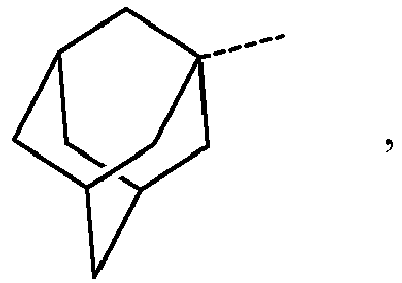

and wherein m is from 0 to 4, preferably from 0 to 2, more preferably 1 or 2, more preferably 1,
wherein, preferably, B is
wherein, most preferably, B is

wherein, most preferably, said compound has the structure represented by Formula III:
- Preferably, said compound is for use in the treatment of a tauopathy,
preferably a tauopathy selected from the group consisting of Alzheimer's disease, amyotrophic lateral sclerosis and parkinsonism-dementia complex, argyrophilic grain disease, chronic traumatic encephalopathy, chronic traumatic encephalopathy, traumatic brain injury, diffuse neurofibrillary tangles with calcification, Down's syndrome, familial British dementia, familial Danish dementia, frontotemporal dementia and parkinsonism linked to chromosome 17 (caused by MAPT mutations), frontotemporal lobar degeneration, preferably caused by C9ORF72 mutations, Gerstmann-Sträussler-Scheinker disease, Guadeloupean parkinsonism, myotonic dystrophy, neurodegeneration with brain iron accumulation, Niemann-Pick disease type C, non-Guamanian motor neuron disease with neurofibrillary tangles, Pick's disease, postencephalitic parkinsonism, prion protein cerebral amyloid angiopathy, progressive subcortical gliosis, progressive supranuclear palsy, SLC9A6-related mental retardation, subacute sclerosing panencephalitis, tangle-only dementia and white matter tauopathy with globular glial inclusions,
more preferably a tauopathy selected from the group consisting of Alzheimer's disease, chronic traumatic encephalopathy, frontotemporal dementia, parkinsonism linked to chromosome 17 (caused by MAPT mutations), frontotemporal lobar degeneration, preferably caused by C9ORF72 mutations, Niemann-Pick disease type C, Pick's disease, progressive supranuclear palsy, tangle-only dementia, and white matter tauopathy with globular glial inclusions,
or in the treatment of cancer,
preferably a cancer of the blood, bile duct, bladder, bone, brain, breast, cervix, colon, esophagus, eye, gallbladder, germ cells, intestines, kidney larynx, lip, liver, lung, mouth, nose, oral cavity, ovaries, pancreas, penis, pharynx, prostate, skin, stomach, testicles, throat, thymus, thyroid, urethra, or vagina,
more preferably a cancer selected from the group consisting of acute lymphoblastic leukemia (ALL), acute myeloid leukemia, astrocytoma, basal-cell carcinoma, bile duct cancer, bladder cancer, bone tumor, brain tumor, breast cancer, Burkitt's lymphoma, cervical cancer, chronic myelogenous leukemia (CML), colon cancer, emphysema, esophageal cancer, intraocular melanoma, eye cancer, retinoblastoma, gallbladder cancer, gastric (stomach) cancer, gastrointestinal stromal tumor (GIST), germ cell tumor, glioma, head and neck cancer, hepatocellular (liver) cancer, Hodgkin lymphoma, islet cell carcinoma (endocrine pancreas), Kaposi sarcoma, kidney cancer, renal cell cancer, laryngeal cancer, leukemia, acute lymphoblastic leukemia, acute myelogenous leukemia, lip and oral cavity cancer, liver cancer, non-small cell lung cancer, small cell lung cancer, lymphoma, preferably Burkitt lymphoma, Hodgkin lymphoma or Non-Hodgkin lymphoma, medulloblastoma, melanoma, mesothelioma, mouth cancer, plasma cell neoplasm, myelodysplastic/myeloproliferative diseases, multiple myeloma, nasal cavity and paranasal sinus cancer, nasopharyngeal carcinoma, neuroblastoma, oral cancer, oropharyngeal cancer, osteosarcoma, ovarian cancer, pancreatic cancer, pancreatic carcinoma, pancreatic islet cell cancer, parathyroid cancer, penile cancer, pharyngeal cancer, prostate cancer, rectal cancer, renal cell carcinoma, salivary gland cancer, sarcoma, soft tissue sarcoma, stomach cancer, T-cell lymphoma, Sézary syndrome, testicular cancer, throat cancer, thymoma, thymic carcinoma, thyroid cancer, urethral cancer, uterine cancer, vaginal cancer, vulvar cancer, Waldenström macroglobulinemia, and Wilms tumor,
most preferably pancreatic carcinoma. - The objects of the present invention are also solved by the use of a compound as defined above in a method for increasing the activity of
protein phosphatase 5. - The objects of the present invention are also solved by a compound with the general structure
A-B-C-D ,
wherein A is - unsubstituted phenyl or
- phenyl substituted with one or more substituents,
wherein the one or more substituents are independently selected from the group consisting of- halogen (preferably F, Cl, Br, or I),
- hydroxyl,
- amino,
- nitro,
- cyano,
- thiol,
- sulfonyl,
- carbonyl,
- carboxyl,
- straight or branched alkyl, which is unsubstituted or substituted, preferably with one or more substituents selected from the group consisting of halogen, hydroxyl, amino, nitro, cyano, thiol, sulfonyl, carbonyl, carboxyl, alkyl, alkoxy, alkenyl, cycloalkyl and aryl,
- straight or branched alkoxy, which is unsubstituted or substituted, preferably with one or more substituents selected from the group consisting of halogen, hydroxyl, amino, nitro, cyano, thiol, sulfonyl, carbonyl, carboxyl, alkyl, alkoxy, alkenyl, cycloalkyl and aryl,
- straight or branched alkenyl, which is unsubstituted or substituted, preferably with one or more substituents selected from the group consisting of halogen, hydroxyl, amino, nitro, cyano, thiol, sulfonyl, carbonyl, carboxyl, alkyl, alkoxy, alkenyl, cycloalkyl and aryl,
- substituted or unsubstituted cycloalkyl, and
- substituted or unsubstituted aryl, preferably substituted or unsubstituted phenyl,
- unsubstituted phenyl or
- phenyl substituted with one or more substituents,
wherein the one or more substituents are independently selected from the group consisting of- halogen (preferably F, Cl, Br, or I),
- hydroxyl,
- amino,
- nitro,
- cyano,
- thiol,
- sulfonyl,
- carbonyl,
- carboxyl,
- straight or branched alkyl, which is unsubstituted or substituted, preferably with one or more substituents selected from the group consisting of halogen, hydroxyl, amino, nitro, cyano, thiol, sulfonyl, carbonyl, carboxyl, alkyl, alkoxy, alkenyl, cycloalkyl and aryl,
- straight or branched alkoxy, which is unsubstituted or substituted, preferably with one or more substituents selected from the group consisting of halogen, hydroxyl, amino, nitro, cyano, thiol, sulfonyl, carbonyl, carboxyl, alkyl, alkoxy, alkenyl, cycloalkyl and aryl,
- straight or branched alkenyl, which is unsubstituted or substituted, preferably with one or more substituents selected from the group consisting of halogen, hydroxyl, amino, nitro, cyano, thiol, sulfonyl, carbonyl, carboxyl, alkyl, alkoxy, alkenyl, cycloalkyl and aryl,
- substituted or unsubstituted cycloalkyl, and
- substituted or unsubstituted aryl, preferably substituted or unsubstituted phenyl,
- Preferably, said compound is for use in the treatment of a tauopathy,
preferably a tauopathy selected from the group consisting of Alzheimer's disease, amyotrophic lateral sclerosis and parkinsonism-dementia complex, argyrophilic grain disease, chronic traumatic encephalopathy, chronic traumatic encephalopathy, traumatic brain injury, diffuse neurofibrillary tangles with calcification, Down's syndrome, familial British dementia, familial Danish dementia, frontotemporal dementia and parkinsonism linked to chromosome 17 (caused by MAPT mutations), frontotemporal lobar degeneration, preferably caused by C9ORF72 mutations, Gerstmann-Sträussler-Scheinker disease, Guadeloupean parkinsonism, myotonic dystrophy, neurodegeneration with brain iron accumulation, Niemann-Pick disease type C, non-Guamanian motor neuron disease with neurofibrillary tangles, Pick's disease, postencephalitic parkinsonism, prion protein cerebral amyloid angiopathy, progressive subcortical gliosis, progressive supranuclear palsy, SLC9A6-related mental retardation, subacute sclerosing panencephalitis, tangle-only dementia and white matter tauopathy with globular glial inclusions,
more preferably a tauopathy selected from the group consisting of Alzheimer's disease, chronic traumatic encephalopathy, frontotemporal dementia, parkinsonism linked to chromosome 17 (caused by MAPT mutations), frontotemporal lobar degeneration, preferably caused by C9ORF72 mutations, Niemann-Pick disease type C, Pick's disease, progressive supranuclear palsy, tangle-only dementia, and white matter tauopathy with globular glial inclusions,
or in the treatment of cancer,
preferably a cancer of the blood, bile duct, bladder, bone, brain, breast, cervix, colon, esophagus, eye, gallbladder, germ cells, intestines, kidney larynx, lip, liver, lung, mouth, nose, oral cavity, ovaries, pancreas, penis, pharynx, prostate, skin, stomach, testicles, throat, thymus, thyroid, urethra, or vagina,
more preferably a cancer selected from the group consisting of acute lymphoblastic leukemia (ALL), acute myeloid leukemia, astrocytoma, basal-cell carcinoma, bile duct cancer, bladder cancer, bone tumor, brain tumor, breast cancer, Burkitt's lymphoma, cervical cancer, chronic myelogenous leukemia (CML), colon cancer, emphysema, esophageal cancer, intraocular melanoma, eye cancer, retinoblastoma, gallbladder cancer, gastric (stomach) cancer, gastrointestinal stromal tumor (GIST), germ cell tumor, glioma, head and neck cancer, hepatocellular (liver) cancer, Hodgkin lymphoma, islet cell carcinoma (endocrine pancreas), Kaposi sarcoma, kidney cancer, renal cell cancer, laryngeal cancer, leukemia, acute lymphoblastic leukemia, acute myelogenous leukemia, lip and oral cavity cancer, liver cancer, non-small cell lung cancer, small cell lung cancer, lymphoma, preferably Burkitt lymphoma, Hodgkin lymphoma or Non-Hodgkin lymphoma, medulloblastoma, melanoma, mesothelioma, mouth cancer, plasma cell neoplasm, myelodysplastic/myeloproliferative diseases, multiple myeloma, nasal cavity and paranasal sinus cancer, nasopharyngeal carcinoma, neuroblastoma, oral cancer, oropharyngeal cancer, osteosarcoma, ovarian cancer, pancreatic cancer, pancreatic carcinoma, pancreatic islet cell cancer, parathyroid cancer, penile cancer, pharyngeal cancer, prostate cancer, rectal cancer, renal cell carcinoma, salivary gland cancer, sarcoma, soft tissue sarcoma, stomach cancer, T-cell lymphoma, Sézary syndrome, testicular cancer, throat cancer, thymoma, thymic carcinoma, thyroid cancer, urethral cancer, uterine cancer, vaginal cancer, vulvar cancer, Waldenström macroglobulinemia, and Wilms tumor,
most preferably pancreatic carcinoma. - The objects of the present invention are also solved by the use of a compound as defined above in a method for increasing the activity of
protein phosphatase 5. - The objects of the present invention are also solved by a compound with the general structure
A-B-C-D-C-B-A
or
A-B-C-D-R 9 ,
wherein A is
wherein B is

and wherein m is from 0 to 4, preferably from 0 to 2,
wherein, preferably, C is
wherein, most preferably, C is

wherein B is the same or different for each occurrence,
wherein C is the same or different for each occurrence,
wherein R9 is hydrogen, methyl or straight or branched alkyl which is unsubstituted or substituted with one or more substituents selected from the group consisting of halogen, preferably F, Cl, Br, or I, hydroxyl, amino, nitro, cyano, thiol, sulfonyl, carbonyl, carboxyl, substituted or unsubstituted aryl, preferably substituted or unsubstituted phenyl, and substituted or unsubstituted heteroaryl,
wherein, preferably, the molecular weight of R9 is below 2000 Dalton, more preferably below 1000 Dalton, more preferably below 500 Dalton, more preferably below 450 Dalton, more preferably below 250 Dalton, more preferably below 200 Dalton, more preferably below 150 Dalton, more preferably below 100 Dalton, more preferably below 50 Dalton,
wherein, most preferably, said compound has the structure represented by Formula V:
- Preferably, said compound is for use in the treatment of a tauopathy,
preferably a tauopathy selected from the group consisting of Alzheimer's disease, amyotrophic lateral sclerosis and parkinsonism-dementia complex, argyrophilic grain disease, chronic traumatic encephalopathy, chronic traumatic encephalopathy, traumatic brain injury, diffuse neurofibrillary tangles with calcification, Down's syndrome, familial British dementia, familial Danish dementia, frontotemporal dementia and parkinsonism linked to chromosome 17 (caused by MAPT mutations), frontotemporal lobar degeneration, preferably caused by C9ORF72 mutations, Gerstmann-Sträussler-Scheinker disease, Guadeloupean parkinsonism, myotonic dystrophy, neurodegeneration with brain iron accumulation, Niemann-Pick disease type C, non-Guamanian motor neuron disease with neurofibrillary tangles, Pick's disease, postencephalitic parkinsonism, prion protein cerebral amyloid angiopathy, progressive subcortical gliosis, progressive supranuclear palsy, SLC9A6-related mental retardation, subacute sclerosing panencephalitis, tangle-only dementia and white matter tauopathy with globular glial inclusions,
more preferably a tauopathy selected from the group consisting of Alzheimer's disease, chronic traumatic encephalopathy, frontotemporal dementia, parkinsonism linked to chromosome 17 (caused by MAPT mutations), frontotemporal lobar degeneration, preferably caused by C9ORF72 mutations, Niemann-Pick disease type C, Pick's disease, progressive supranuclear palsy, tangle-only dementia, and white matter tauopathy with globular glial inclusions,
or in the treatment of cancer,
preferably a cancer of the blood, bile duct, bladder, bone, brain, breast, cervix, colon, esophagus, eye, gallbladder, germ cells, intestines, kidney larynx, lip, liver, lung, mouth, nose, oral cavity, ovaries, pancreas, penis, pharynx, prostate, skin, stomach, testicles, throat, thymus, thyroid, urethra, or vagina,
more preferably a cancer selected from the group consisting of acute lymphoblastic leukemia (ALL), acute myeloid leukemia, astrocytoma, basal-cell carcinoma, bile duct cancer, bladder cancer, bone tumor, brain tumor, breast cancer, Burkitt's lymphoma, cervical cancer, chronic myelogenous leukemia (CML), colon cancer, emphysema, esophageal cancer, intraocular melanoma, eye cancer, retinoblastoma, gallbladder cancer, gastric (stomach) cancer, gastrointestinal stromal tumor (GIST), germ cell tumor, glioma, head and neck cancer, hepatocellular (liver) cancer, Hodgkin lymphoma, islet cell carcinoma (endocrine pancreas), Kaposi sarcoma, kidney cancer, renal cell cancer, laryngeal cancer, leukemia, acute lymphoblastic leukemia, acute myelogenous leukemia, lip and oral cavity cancer, liver cancer, non-small cell lung cancer, small cell lung cancer, lymphoma, preferably Burkitt lymphoma, Hodgkin lymphoma or Non-Hodgkin lymphoma, medulloblastoma, melanoma, mesothelioma, mouth cancer, plasma cell neoplasm, myelodysplastic/myeloproliferative diseases, multiple myeloma, nasal cavity and paranasal sinus cancer, nasopharyngeal carcinoma, neuroblastoma, oral cancer, oropharyngeal cancer, osteosarcoma, ovarian cancer, pancreatic cancer, pancreatic carcinoma, pancreatic islet cell cancer, parathyroid cancer, penile cancer, pharyngeal cancer, prostate cancer, rectal cancer, renal cell carcinoma, salivary gland cancer, sarcoma, soft tissue sarcoma, stomach cancer, T-cell lymphoma, Sézary syndrome, testicular cancer, throat cancer, thymoma, thymic carcinoma, thyroid cancer, urethral cancer, uterine cancer, vaginal cancer, vulvar cancer, Waldenström macroglobulinemia, and Wilms tumor,
most preferably pancreatic carcinoma. - The objects of the present invention are also solved by the use of a compound as defined above in a method for increasing the activity of
protein phosphatase 5. - The term "
protein phosphatase 5", as used herein, refers to an enzyme, preferably an enzyme with E.C. number 3.1.3.16, that catalyzes the removal of phosphate groups from certain substrates (i.e. the dephosphorylation of these substrates) by hydrolyzing phosphoric acid monoesters into a phosphate ion and a molecule with a free hydroxyl group. The polypeptide sequence ofprotein phosphatase 5 includes a regulatory "TPR domain" ("tetratricopeptide repeat domain") which comprisesamino acids 1 to 150 in the C.elegans protein phosphatase 5 sequence given by SEQ ID NO: 1,amino acids 1 to 150 in therat protein phosphatase 5 sequence given by SEQ ID NO: 2,amino acids 1 to 150 in themouse protein phosphatase 5 sequence given by SEQ ID NO: 3, oramino acids 1 to 150 in thehuman protein phosphatase 5 sequence given by SEQ ID NO: 4. The polypeptide sequence ofprotein phosphatase 5 further includes a "phosphatase domain" which is responsible for the enzymatic activity ofprotein phosphatase 5 and comprises amino acids 166 to 490 in the C.elegans protein phosphatase 5 sequence given by SEQ ID NO: 1, amino acids 166 to 491 in therat protein phosphatase 5 sequence given by SEQ ID NO: 2, amino acids 166 to 491 in themouse protein phosphatase 5 sequence given by SEQ ID NO: 3, and amino acids 166 to 491 in thehuman protein phosphatase 5 sequence given by SEQ ID NO: 4. - The terms "PPP", "PP2A", PP2B/PP3, "alkaline phosphatase", "Hsc70" and "Hsp90" are known to the person of skill in the art and designate protein phoshatase 1 (PP1), protein phoshatase 2A (PP2A), protein phoshatase 2B/protein phoshatase 3 (PP2B/PP3), alkaline phosphatase, heat stress cognate 70 (Hsc70), and heat shock protein 90 (Hsp90), respectively.
- As used herein, the term "small molecule compound" refers to a compound with a molecular weight of up to 900 Dalton.
- The term "derivate", as used for example in the context of a derivate of a fatty acid, a polyunsaturated fatty acid, arachidonic acid, linoleic acid, oleic acid, linolenic acid or a peptide, refers to derivates such as esters of such fatty acid, polyunsaturated fatty acid, arachidonic acid, linoleic acid, oleic acid, linolenic acid or peptide, respectively. In one embodiment, the term "derivate" of a fatty acid, a polyunsaturated fatty acid, arachidonic acid, linoleic acid, oleic acid, linolenic acid or a peptide, refers to an ester, preferably an ethyl ester or an ester with Coenzyme A, of said fatty acid, polyunsaturated fatty acid, arachidonic acid, linoleic acid, oleic acid, linolenic acid or peptide.
- The term "phosphatase activation assay", as used herein, refers to a biochemical assay that is adapted to determine whether changes in a certain parameter of a phosphatase reaction result in changes in the enzymatic activity of a certain phosphatase. For example, a phosphatase activation assay may allow to determine whether the presence of a certain compound results in changes in the enzymatic activity of a phosphatase, as compared to in the absence of that compound.
- "Enzymatic activity", as used herein, refers to the efficiency with which an enzyme catalyzes the chemical reaction that it is adapted to catalyze. If used in connection with
protein phosphatase 5, the term refers to the efficiency with whichprotein phosphatase 5 catalyzes the removal of phosphate groups from a substrate (i.e. dephosphorylation of that substrate) under certain conditions. - A compound is said to "activate" an enzyme, if the enzyme shows an increased enzymatic activity in the presence of that compound, as compared to in the absence of that compound. For example, a compound is said to "activate"
protein phosphatase 5, if the efficiency with whichprotein phosphatase 5 catalyzes dephosphorylation of its substrates is increased in the presence of said compound, as compared to the same conditions, but in the absence of said compound. - At some instances, the present application refers to "measuring the enzymatic activity" of an enzyme. As used herein, this means that a measured value that is proportional to or reflects the enzymatic activity of that enzyme is measured. For example, the present application may refer to "measuring the enzymatic activity of
protein phosphatase 5". Typically, this means that an in vitro reaction ofprotein phosphatase 5 with a suitable substrate is carried out.As the substrate para-nitrophenyl phosphate (pNPP) is used. The conditions for the phosphatase reaction are 40 mM HEPES/KOH, 20 mM KCl, 5 mM MnCl2, 1 mM DTT, pH 7.5. The reaction is carried out at 20° C. The starting concentration of pNPP is 60 mM. The concentration of the compound to be tested, if present, is in the range of 50-500 nM, preferably in the range of 100-250 nM, more preferably 50, 250 or 500 nM, more preferably 250 nM. As phosphatase, bacterially expressed and purified phosphatase is used. The concentration of the phosphatase in the reaction is 30 nM. The rate at which the dephosphorylation of this substrate proceeds is monitored, typically by measuring the rate of formation of the reaction product by spectroscopic measurements (dephosphorylation of pNPP, e.g., results in generation of p-nitrophenol, a chromogenic product with strong absorbance at about 410 nm (extinction coefficient ε = 15100 cm-1M-1), thus allowing to monitor generation of the reaction product by monitoring the absorbance at 410 nm). If the reaction is carried out in the presence of an excess of substrate, the initial velocity at which the reaction product is generated (i.e. the slope of the initial phase of the curve in a graph plotting the absorbance at 410 nm over time) is proportional to the enzymatic activity of protein phosphatase 5under the specific reaction conditions used. Alternatively, after starting the phosphatase reaction the reaction may be allowed to proceed for a defined incubation period (usually 30 minutes), then the reaction is stopped (for example by addition of a small volume of 1 M NaOH), and the absorbance at 410 nm is measured. Upon subtraction of the absorbance of a negative control (a reaction carried out with a non-functional, for example pre-boiled, phosphatase), the obtained value is proportional to the enzymatic activity ofprotein phosphatase 5 under the specific reaction conditions used (since the reaction is carried out in the presence of an excess of substrate and the incubation period is chosen such that the reaction is stopped while it is still in the quasi-linear Phase). - At some instances, the present application refers to the enzymatic activity of an enzyme being under certain conditions "higher" by a certain factor than under certain other conditions. For example, the present application may state that the enzymatic activity of
protein phosphatase 5 in the presence of a certain compound is higher by at least a factor of 10 than in the absence of that compound. As used herein, this means that, if the enzymatic activity ofprotein phosphatase 5 is measured (a) under certain conditions in the presence of that compound and (b) under the same conditions, but in the absence of that compound, and if the value obtained under (a) for the enzymatic activity ofprotein phosphatase 5 in the presence of that compound is divided by the value obtained under (b) for the enzymatic activity ofprotein phosphatase 5 in the absence of that compound, this results in a value of 10 or higher. On the other hand, the present application may state that the enzymatic activity ofprotein phosphatase 5 in the presence of a certain compound is lower by at least a factor of 2 than in the absence of that compound. As used herein, this means that, if the enzymatic activity ofprotein phosphatase 5 is measured (a) under certain conditions in the presence of that compound and (b) under the same conditions, but in the absence of that compound, and if the value obtained under (b) for the enzymatic activity ofprotein phosphatase 5 in the absence of that compound is divided by the value obtained under (a) for the enzymatic activity ofprotein phosphatase 5 in the presence of that compound, this results in a value of 2 or higher. - "Sedimentation velocity ultracentrifugation" is considered as a method to determine whether binding of a compound to
protein phosphatase 5 affects binding of another protein (such as Hsp90) toprotein phosphatase 5 only, if it is explicitly referred to. According to the application, such sedimentation velocity ultracentrifugation is typically carried out as described in the section "Analytical ultracentrifugation (AUC)" of Example 1. - If the present application states that a compound "has a water solubility of at least n mg/ml", this means that a compound dissolves in water at an amount of at least n mg/ml at a temperature of 25 °C. If the present application states that a compound "has a water solubility of more than n mg/ml", this means that a compound dissolves in water at an amount of more than n mg/ml at a temperature of 25 °C.
- Solubility measurements can be performed by the shake-flask method under equilibrium conditions at 25 °C (pH 7.4). A small amount of powder of the test compound, preferably 10 µg or 1 mg of powder of the test compound, is dissolved in water (excess of solid). This solution is shaken at 25 °C for 24 h or until equilibrium is reached. After separation of the resulting slurry by filtration (e.g. 0.2 µm), the absorption of the filtrate is measured by UV/Vis spectrometry, and the concentration of the compound in the filtrate (which equals the water solubility of the compound) is calculated using a previously determined specific absorption coefficient.
- As used herein, the term "in vitro" means occurring outside of a living organism. In some embodiments, the term refers to processes or conditions that are both outside of a living organism and not in a cell culture system.
- ATPase activity can be measured as described in Gaiser et al., 2009 with an ATPase assay that is carried out as a regenerative assay, wherein ADP produced during the ATPase reaction is recycled to ATP with the help of lactate dehydrogenase, NADH, phosphoenolpyruvate and pyruvate kinase. This changes the absorbance at 340 nm, when NADH is oxidized to NAD+, giving a sensitive signal for the determination of activity. The change in absorbance at 340 nm that occurs during oxidizing of NADH to NAD+ is measured by spectroscopic measures. Preferably, said in vitro ATPase assay is carried out at 30 °C. Preferably, said in vitro ATPase assay is carried out in the presence of 3 µM or the chaperone protein. Preferably the concentration of each of the cochaperones present is 5 µM. Preferably, the chaperones and cochaperones used are bacterially expressed proteins.
- At some instances, the present application refers to a binding (or failure to bind) being determined/measured "by NMR measurements". Such NMR measurements can for example be carried out on an 800 MHz spectrometer (Bruker) with cryoprobe. The measurements can be done in D2O with phosphate buffer (4 mM KH2PO4, 16 mM Na2HPO4, 120 mM NaCl, pH 7.4) and 1-5% of d6-DMSO. Preferably, measurements are done in high sensitivity experiments with a high number of scans. Preferably, a CPMG sequence with an additional Watergate to suppress residual water is used (Hajduk et al., 1997; Sklenar et al., 1993). Peak intensities can be normalized by comparing residual DMSO peaks. Preferably, binding is recognized by a reduced peak intensity of certain peaks of the NMR spektrum of the small molecule compound in the presence of the binding protein (e.g. PP5 (166-499)) compared to the NMR spektrum of the small molecule compound in the absence of said binding protein. (This is caused by a much slower tumbling rate of the protein-ligand complex in comparison to the free small molecule compound. Some peaks of the small molecule compound may remain unreduced, indicating that certain moieties of the P5SA-2 molecule are still able to rotate freely.) Preferably, bovine intestinal alkaline phosphatase is used as negative control for the binding protein.
- At some instances, the present application refers to a binding being "determined by X-ray crystallography". Such X-ray crystallography can be carried out as described in Example 1 in the section "Crystallization and structure determination".
- "Tau", as used herein, designates the microtubule-associated protein tau that is found in neurons and stimulates and maintains the assembly and stability of microtubules (MG Spillanti, M Goedert (2013) Tau pathology and neurodegeneration. ). Hyperphosphorylation of tau accounts for its loss of function, gain of toxicity and aggregation to paired helical filaments, which, in turn, form neurofibrillary tangles observed in Alzheimer's disease and several other diseases with tau inclusions (tauopathies) (MG Spillanti, M Goedert (2013) Tau pathology and neurodegeneration. ).
- Tauopathies include, for example, Alzheimer's disease, amyotrophic lateral sclerosis and parkinsonism-dementia complex, argyrophilic grain disease, chronic traumatic encephalopathy, chronic traumatic encephalopathy, traumatic brain injury, diffuse neurofibrillary tangles with calcification, Down's syndrome, familial British dementia, familial Danish dementia, frontotemporal dementia and parkinsonism linked to chromosome 17 (caused by MAPT mutations), frontotemporal lobar degeneration (some cases caused by C9ORF72 mutations), Gerstmann-Sträussler-Scheinker disease, Guadeloupean parkinsonism, myotonic dystrophy, neurodegeneration with brain iron accumulation, Niemann-Pick disease type C, non-Guamanian motor neuron disease with neurofibrillary tangles, Pick's disease, postencephalitic parkinsonism, prion protein cerebral amyloid angiopathy, progressive subcortical gliosis, progressive supranuclear palsy, SLC9A6-related mental retardation, subacute sclerosing panencephalitis, tangle-only dementia and white matter tauopathy with globular glial inclusions.
- An "effective amount" of a compound, as used herein in the context of an effective amount of said compound being administered to a patient, is an amount of said compound that is capable of achieving the desired increase in the enzymatic activity of
protein phosphatase 5, and will vary depending on such factors as age, condition, sex, extent of disease of the patient, counter-indications, if any, and other variables to be adjusted by a physician. - Protein phosphatase 5 (PP5) is a ubiquitously expressed serine/threonine phosphatase that is strictly autoregulated by its tetratricopeptide repeat (TPR) domain and the C-terminal α-helix. Fine-tuning of its dephosphorylation activity modulates a diverse set of cellular key players including pathogenic proteins involved in neurodegenerative disorders. The present inventors have surprisingly found that the compounds according to the present invention are highly selective, allosteric activators of
protein phosphatase 5 that enhance the phosphatase activity up to 20-fold without affecting the PP5-Hsp90 interaction. Functional and crystallographic analyses have revealed a relaxation of the autoinhibited state of PP5 upon ligand binding, thus facilitating substrate entry into the phosphatase domain. Application of the small molecule activators of PP5 in a tau-P301L mouse model decreased the pathology-relevant phosphorylation of tau and the degeneration of hippocampal and cortical neurons. Hence, the compounds according to the present invention represent an alternative in the treatment of distinct neurodegenerative disorders, i.e. tauopathies. - Recent studies have suggested that Hsp90 regulates both tau phosphorylation and tau pathology by a co-chaperone complex with PP5 (Salminen et al., 2011). Besides that, tau dephosphorylation by the Hsp90-PP5 complex may ameliorate crucial tau aggregation and facilitate its physiological function including re-binding to the microtubules where PP5 was shown to be localized. Also other protein phosphatases like PP1, PP2A and PP2B may contribute to tau dephosphorylation in vitro and in vivo (Liu et al., 2005α). PP5 is highly expressed in the mammalian brain, but few physiological substrates have yet been identified (Liu et al., 2005b).PP5 provides a KM (8-13 µM) towards tau in the physiological range of its intraneuronal concentration. Tau is dephosphorylated by PP5 at various Alzheimer's disease (AD)-associated phosphorylation sites (Liu et al., 2005b), including the AT8 epitope (Ser202/Thr205), which we have addressed in our study. Notably, the tau-directed activity of PP5 is significantly decreased in human AD brains (Liu et al., 2005a).
- According to the invention, five highly selective PP5 activator classes were identified (termed P5SA-1 to P5SA-5, acronym from Protein phosphatase 5S
mall molecule Activator 1 to 5; seeFig. 1B for structure) which showed efficient tau dephosphorylation at the pathology-relevant AT8 epitope (Ser202/Thr205) and were able to decrease human tau-P301L-induced neuronal degeneration in the hippocampal formation of mice. - PP5 is unique in its regulatory mechanism, being the sole enzyme in its class interacting directly with the Hsp90 chaperone system by its TPR domain. The phosphatase activity of PP5 is autoinhibited in the apo-state by a specific interaction between the N-terminal TPR domain and the C-terminal αJ helix which is released upon binding to Hsp90. The complex regulation of PP5 serves to scaffold substrates for dephosphorylation only when recruited to the Hsp90 chaperone network. Notably, the compounds according to the present invention do not interfere with the binding of Hsp90, demonstrating a TPR-independent regulation of the enzymatic activity. This mechanism is distinct from all PP5 activators described so far, including arachidonic acid and its derivatives (Cher et al., 2010; Kang et al., 2001; Ramsey and Chinkers, 2002). Furthermore, the compounds according to the present invention do not share much structural similarity, but despite their heterogeneity, each compound according to the present invention is able to relief the guarded phosphatase domain and increases drastically the turnover rate. Based on deletion constructs and X-ray structures the activator binding region could be allocated to the phosphatase domain at the interface with the TPR domain. At this junction residual electron density was observed only in the PP5:P5SA-2 complex structure implying that this represents the binding cleft for the activator. In contrast to enzyme inhibitors that lock a protein in a specific state, the crystallization of an activated species may render an increase in disorder and flexibility where the activator does not arrest completely and is not fully resolved. The crystallographic results of the PP5-ligand complex further reveal a structural reorganization of the phosphatase's C-terminus and a tilting of single helices of the TPR domain up to 10°. The conformational rearrangements prevent autoinhibition of the phosphatase and open the substrate channel of the enzyme. Hence, the compounds according to the present invention act allosterically and bypass an autoinhibitory mechanism of PP5 that relies on complex protein-protein-interactions in the cellular environment.
- The compounds according to the present invention cause PP5 activation by a particularly similar mechanism and affect tau-dependent neuronal degradation. They hold considerable beneficial potential for patients suffering from various neurodegenerative diseases, i.e. tauopathies.
- In the following, reference is made to the figures:
- All methods mentioned in the figure descriptions below were carried out as described in detail in the examples.
-
Figure 1 . Small molecules specifically activate nematode protein phosphatase 5 (PPH-5).- (A) A pNPP-based compound screen identified five substances with activating effect on PPH-5, P5SA-1 (yellow, labelled 1), P5SA-2, (orange, labelled 2), P5SA-3, (red, labelled 3), P5SA-4 (blue, labelled 4) and P5SA-5 (green, labelled 5). Concentration of P5SAs in the initial screen was 50 ng/mL. PPH-5 activity in presence of DMSO is depicted in black (labelled "DMSO").
- (B) Chemical structures of the five activators. All compounds were purchased by ChemDiv (San Diego, California, USA).
- (C) The P5SAs are specific for
protein phosphatase 5. The human paralogs of PP5, PP1 (white), PP2A (hatched) and PP2B/PP3 (light grey), as well as the bovine intestinal alkaline phosphatase (BIAP, dark grey) are not affected by the small molecules. Each bar represents at least three independent experiments.
-
Figure 2 . The P5SAs do not interfere with the binding of PPH-5 to the chaperone Hsp90/DAF-21.- (A) Presence of the C-terminal MEEVD peptide of Hsp90/DAF-21 stimulates the phosphatase activity of PPH-5 around 3-fold (compare black bars, labelled 1). Supplementation with the P5SAs does not lead to additive activation of PPH-5. 70 µM of P5SA-1 (yellow, labelled 2), 140 µM of P5SA-2 (orange, labelled 3), 50 µM of P5SA-3 (red, labelled 4), 100 µM of P5SA-4 (green, labelled 5) and 45 µM of P5SA-5 (blue, labelled 6) were added. Each bar represents at least three independent experiments.
- (B) Complex formation between PPH-5 and Hsp90/DAF-21 is not influenced by the presence of the P5SAs. The sedimentation coefficient of YFP-Hsp90 is shifted from a s20,w value 6.8 S (black, labelled 1) to of 8.9 S in presence of PPH-5 (red, labelled 2). Supplementation of each of the five different P5SAs (orange, labelled 3) does not alter the sedimentation coefficient of the phosphatase-chaperone complex. In contrast, presence of the Hsp90 derived MEEVD peptide destabilizes the complex and shifts the s20,w value from 8.9 S to 7.6 S (green, labelled 4). P5SA-1 and P5SA-2 were added to 70 µM, P5SA-3 to 50 µM, P5SA-4 to 100 µM and 107B3 P5SA-5 to 30 µM.
- (C) Presence of the MEEVD peptide only weakly impacts the binding affinity of P5SA-5 to PPH-5. Titration of PPH-5 with P5SA-5 in absence of MEEVD peptide is depicted as black squares whereas activities in presence of 60 µM peptide are shown as red circles. Each data point represents three independent experiments.
-
Figure 3 . The P5SAs interfere with the autoregulatory mechanisms of mammalian PP5. (A-C) Activity in absence of activators is depicted in black, in presence of 10 µM substance in grey and of 100 µM (45 µM in case of P5SA-5) in white.- (A) The small molecules activate the full-
length protein phosphatase 5. - (B) The phosphatase domain of PP5 is inhibited by the small molecules demonstrating a direct interaction of the P5SAs with the phosphates domain.
- (C) The PP5 deletion variant PP5-ΔC8 lacks a decisive amino acid stretch of the regulatory αJ domain and shows moderate stimulation by the P5SAs. Activity levels of A, B and C at 100/45 µM of substances (white bars) converge for the different variants of PP5. Each bar represents at least three independent experiments.
- (A) The small molecules activate the full-
-
Figure 4 . Crystal structures of PP5 both in its apo-state as well as in complex with the ligand P5SA-2.- (A) Stereo view of the backbone superposition of both molecules shown as ribbon plots. PP5 apo is colored in dark grey with the corresponding αJ-helix colored in green. The PP5:P5SA-2 structure is colored in light grey with the corresponding αJ-helix colored in yellow. The position of the additional electron density, which is only visible in the PP5:P5SA-2 structure is indicated with a red arrow. Active site residues are depicted as sticks and the two magnesium ions (black) and one water molecule (red) are shown as balls.
- (B) Stereo view of the 2Fo-Fc omit electron density map (countered at 1σ) for the αJ-helix (Thr492 - Met498) of PP5 apo, in which the αJ-helix has been removed for phase calculations. PP5 apo is represented in dark grey coils and amino acid residues of the active site are depicted as sticks. The two magnesium ions as well as a water molecule in the active site are shown as balls. The position of Gly497 is indicated.
- (C) Stereo view of the 2Fo-Fc omit electron density map (at 1σ) for the αJ-helix (Thr492 - Gly497) of PP5 in complex with P5SA-2. The PP5 backbone is represented in light grey coils.
The representation of the active site corresponds to (B). The electron density depicted in blue at 1σ indicates the binding site of the ligand P5SA-2.
-
Figure 5 . PP5 activation preserves the structural integrity of the hippocampal formation despite human tau-P301L expression.
(A-E) Non-transfected hippocampi reveal dense neuronal network structures in Stratum radiatum (sr) and Stratum lacunosum moleculare (slm) of CA1 (B, C) and Stratum lucidum (sl) Stratum radiatum (sr) of CA3 (B, D).(F-J) After human tau-P301L transfection and vehicle treatment, distinct dendritic (CA1, CA3) and mossy fiber (CA3) degeneration was observed.(K-O) Degeneration was prevented by the PP5 activator P5SA-5 (1 mg/kg/day, continuous ip infusion for six weeks from the time point of tau-P301L transfection until immunohistochemical evaluation). Intact apical dendrites of CA1 pyramidal neurons are marked by arrows (C, M). In CA3 (D, N), the left border of dense sl (green fluorescence) is indicated by arrows and the right border of intact sr (yellow fluorescence) is shown by arrow heads. In contrast to vehicle treatment, phosphorylation of human tau-P301L at its AT8 epitope (Ser202/Thr205) was diminished by P5SA-5 (compare Fig. E, J, O).
The following markers were used as indicated: DAPI, cell nuclei; tau-13, human tau; K9JA, total tau; MAP2, microtubule-associatedprotein 2; AT8, human phospho-tau (AT8 epitope). For each of the three treatment groups (non-transfected, tau-P301L-transfected + vehicle, tau-P301L-transfected + P5SA-5), representative hippocampal sections, prepared from the same animal, are shown. In total, 3-5 brains per treatment group were analyzed all delivering similar results in condition-specific manner. Only ipsilateral hippocampi are shown. Scale bars = 200 µm (A, B, F, G, K, L) or 50 µm (C-E, H-J, M-O). -
Figure 6 . (A) Alignment ofprotein phosphatase 5 of different species. The protein sequence of PPH-5 of Caenorhabditis elegans (CE), PP5 of Rattus norvegicus (RN), of Mus musculus (MM) and of Homo sapiens (HS) and Ppt1 of Saccharomyces cerevisiae (SC) were aligned using ClustalW. The alignment was processed by Jalview and therein the Blosum62 matrix used for visualization of the sequence homology.
(B) Alignment of PPH-5 Homologs. RN_PP: Rattus norvegicusprotein phosphatase 5, MM_PP5: Mus musculusprotein phosphatase 5; HS_PP5: Homo sapiensprotein phosphatase 5; PPH-5: C.elegans protein phosphatase 5. Residues which in the electron density map obtained from x-ray crystallography of rat PP5 in complex with P5SA-2 make contact with the small molecule are marked with).
-
Figure 7 . The P5SAs neither influence the ATPase activity of C. elegans Hsc70/HSP-1 and C. elegans Hsp90/DAF-21 nor interfere with the interaction sites between the chaperones and their cochaperones. Concentrations well above the KD of P5SA-1 (yellow, labelled 2), P5SA-2 (orange, labelled 3), P5SA-4 (red, labelled 4) and P5SA-5 (blue, labelled 5) were tested for their ability to interfere with the ATPase rates of the nematode chaperone systems of Hsc70 and Hsp90. DMSO controls are shown in black (labelled 1). Addition of the nucleotide exchange factor BAG-1 and the J protein DNJ-13 increases the activity of Hsc70/HSP-1, but the P5SAs have no additional effect. The activator of Hsp90 AHA-1 acts as predicted by increasing the ATPase rate. P5SAs have again no effect on this chaperone system. Each bar represents three independent experiments. -
Figure 8 . The P5SAs only weakly influence the apparent KM of pNPP. Substrate titrations of pNPP were done with 100 nM of PPH-5. The substrate binding curve in absence of activators is depicted in black (labelled 1). P5SA-1 (blue, labelled 2) was added to 70 µM, P5SA-2 (red, labelled 3) to 140 µM, P5SA-4 (green, labelled 4) to 100 µM and P5SA-5 (orange, labelled 5) to 30 µM. Each data point represents at least three independent experiments. -
Figure 9 . The P5SAs act on the same enzymatic step and are not able to activate in an additive manner. Concentrations of three times the KD were used for each substance and added in different combinations as indicated. Each bar represents three independent experiments. -
Figure 10 . Activity levels of the different deletion constructs of PP5 converge in presence of the P5SAs. Addition of 100 µM of the P5SAs (45 µM in case of P5SA-5) leads to an approximation of the enzymatic activity to similar kcat values of the otherwise different PP5 variants. Full-length PP5 is shown in black, PP5-ΔC8 in grey and PP5-ΔN165 in white where each bar represents three independent experiments. -
Figure 11 . The PP5 activators P5SA-4, P5SA-3 and P5SA-2 induce neuronal protection against human tau-P301L-induced neurodegeneration in the hippocampal formation. (A-E) Human tau-P301L-transfected, vehicle-treated mice brains revealed distinct dendritic (CA1, CA3) and axonal (mossy fibers in CA3) degeneration. Degeneration was particularly visible in Stratum radiatum (sr) and Stratum lacunosum moleculare (slm) of CA1 (B, C) and Stratum lucidum (sl) and Stratum radiatum (sr) of CA3 (B, D). (F-T) This pattern of neuronal degeneration was not observed after administration of PP5 activators P5SA-4, P5SA-3 or P5SA-2 (eachdrug 1 mg/kg/day, continuous ip infusion for 6 weeks from time point of tau-P301L transfection until immunohistochemical evaluation). Rather, drug-treated hippocampi were characterized by dense neuronal network structures in their CA1 (G, H, L, M, Q, R) and CA3 region (G, I, L, N, Q, S). Intact apical dendrites of CA1 pyramidal neurons are marked by arrows (H, M, R). In CA3 (I, N, S), the left border of dense sl (green fluorescence) is indicated by arrows, whereas the right border of intact sr (yellow fluorescence) is shown by arrow heads. In contrast to vehicle treatment, phosphorylation of human tau-P301L at its AT8 epitope (Ser202/Thr205) was diminished by PP5 activation (compare Figure E, J, O, T).
The following markers were used as indicated: DAPI, cell nuclei; tau-13, human tau; K9JA, - total tau; MAP2, microtubule-associated
protein 2; AT8, human phospho-tau (AT8 epitope). For each of the 4 treatment groups (vehicle versus P5SA-4, P5SA-3 or P5SA-2), representative hippocampal sections, prepared from the same animal, are shown. In total, 3-5 brains per treatment group were analyzed, all delivering similar results in condition-specific manner. Only ipsilateral hippocampi are shown. Experiments illustrated inFigure 5 andFigure 11 were performed in parallel. Scale bars = 200 µm (A, B, F, G, K, L, P, Q), 50 µm (D, E, I, J, N, O, S, T) or 20 µm (C, H, M, R). -
Figure 12 . Amino acid sequences of C. elegans protein phosphatase 5 (SEQ ID NO: 1), Rattus norvegicus protein phosphatase 5 (SEQ ID NO: 2), Mus musculus protein phosphatase 5 (SEQ ID NO: 3) and human protein phosphatase 5 (SEQ ID NO: 4). - In the following, reference is made to the examples, which are given to illustrate, not to limit the present invention.
- Substances P5SA-1, P5SA-2, P5SA-3, P5SA-4 and P5SA-5 (see
Fig. 1B for structure) were purchased from ChemDiv (San Diego, California, USA) with the respective ChemDiv-Code 5638-0063, C301-7823, E635-0056, G199-1264 and G839-0123. The C-terminal Hsp90/DAF-21 peptide (AEEDASRMEEVD) was obtained from Biomatik (Cambridge, Ontario, Canada). - Cloning and purification of PPH-5, Hsp90/DAF-21, CDC-37, YFP-Hsp90/DAF-21 were performed as described before (Gaiser et al., 2009; Gaiser et al., 2011; Gaiser et al., 2010). The purified human phosphatases PP1, PP2A and PP2B/PP3 were purified as described (Baumgrass et al., 2001; Mondragon et al., 1997; Tung et al., 1985). The expression clones of mammalian PP5, PP5-ΔN165 (166-499) and PP5-ΔC8 (1-491) were generated by PCR from plasmid-DNA containing full-length PP5 from Rattus norvegicus. PCR-products were inserted into the pET28b expression plasmid (Merck, Darmstadt, Germany) and verified by DNA sequencing (GATC Biotech, Konstanz, Germany). Proteins were expressed in BL21-CodonPlus (DE3)-RIL bacteria (Stratagene, LaJolla, USA). Bacterial cultures were grown to an OD600 of 0.8 and induced with 1 mM IPTG. Cells were disrupted using a cell disruption machine (IUL Instruments, Freiburg, Germany) and the lysate was loaded onto a HisTrap FF column (GE Healthcare, Freiburg, Germany). Protein was eluted in a buffer containing 400 mM imidazole. Eluted protein was dialyzed and applied to a ResourceQ anion exchange column (GE Healthcare, Freiburg, Germany). Finally, proteins were subjected to size exclusion chromatography on
Superdex 200 PrepGrade gel filtration columns (GE Healthcare, Freiburg, Germany). Protein purity was assessed by SDS-PAGE and the molecular mass was determined by a MALDI-TOF/TOF mass spectrometer (Bruker, Bremen, Germany). Proteins were frozen in liquid nitrogen in 40 mM HEPES/KOH, pH 7.5, 20 mM KCl, 1 mM DTT and stored at -80 °C. - Phosphatase activity was followed by the conversion of para-nitrophenyl phosphate (pNPP) to para-nitophenole and absorption of the product at 410 nm (ε: 15100 cm-1 M-1) in a
Varian Cary 100 spectrophotometer (Agilent Technologies, Boeblingen, Germany). The reaction was measured in 40 mM HEPES/KOH, 20 mM KCl, 5 mM MnCl2, 1 mM DTT, pH 7.5 and 60 mM pNPP at 20 °C if not indicated otherwise. Phosphatase concentration ranged from 50 to 500 nM in the assay. If indicated, Hsp90/DAF-21 peptide was supplemented in the assay at a concentration of 60 µM. - Binding of the P5SAs to the Hsp90/DAF-21 PPH-5 interface was analyzed by analytical ultracentrifugation with fluorescence detection as described before (Gaiser et al., 2010). Experiments were performed in a Beckman ProteomeLab XL-A analytical ultracentrifuge (Beckman, Brea, USA) equipped with an Aviv AU-FDS detector (Aviv Biomedical, Lakewood, USA). AUC runs were performed in 40 mM HEPES/KOH, pH 7.5, 20 mM KCl, 1 mM DTT, the concentration of labeled species was 300 nM and 3 µM of PPH-5. Where indicated 60 µM of the C-terminal Hsp90/DAF-21 peptide (AEEDASRMEEVD) was present in the sample. Centrifugation was performed at 20 °C and 42.000 rpm for 12 hours. Scans were recorded every 90 seconds. Data analysis was performed using a dc/dt approach according to Stafford (Stafford, 1992). The dc/dt plots were fit to Gaussian functions in order to obtain the s20,w values of the respective species as described previously (Gaiser et al., 2011).
- The activity of the ATPases Hsc70/HSP-1 and Hsp90/DAF-21 were assessed in a coupled regenerative ATPase assay as described before (Gaiser et al., 2009). Reactions were measured in a
Varian Cary 100 spectrophotometer (Agilent Technologies, Boeblingen, Germany) at 30 °C and the depletion of NADH was followed at 340 nm. Chaperone concentration was 3 µM and cochaperones were added, when indicated, at a concentration of 5 µM. - PP5 protein was concentrated to 15 mg/mL in the following buffer: 10 mM Tris, pH 7.8, 3 mM DTT. Optionally, the ligand was added with a final concentration of 1 mM. Crystals were grown at 20 °C within 4 weeks by using the hanging drop vapour diffusion method. Drops contained equal volumes of protein and reservoir solutions (0.2 M Mg(NO3)2, 20% PEG 3350). Crystals were soaked for 30 seconds in cryo buffer (mother liquor + 25% PEG 200) and were subsequently cooled in liquid nitrogen. Diffraction datasets were recorded using synchrotron radiation of λ = 1.0 Å at the beamline X06SA, Swiss Light Source (SLS), Villigen, Switzerland. Collected datasets were processed using the program package XDS (Kabsch, 1993), statistics are summarized in Table 3.
- Determination of the crystal structure was performed by molecular replacement using the program PHASER (McCoy et al., 2007).Human PP5 (PDB ID: 1WAO) was applied as starting model for the ligand structure PP5:P5SA-2. The refined coordinates of PP5:P5SA-2 in turn were employed for the apo-structure of PP5. Model building was carried out with the graphic program MAIN and finalized applying REFMAC5 (Vagin et al., 2004) by conventional crystallographic rigid body, positional, and anisotropic temperature factor refinements with current crystallographic values of Rwork = 23.8%, Rfree = 27.1%, root mean square deviation (r.m.s.d.) bond lengths of 0.005 Å, and r.m.s.d. bond angle of 0.99° for PP5 apo and Rwork = 21.4 %, Rfree = 26.1 %, r.m.s.d. bond length of 0.015 Å, and r.m.s.d. bond angle of 1.68° for PP5:P5SA-2.
- Coordinates were confirmed to have good stereochemistry indicated by the Ramachandran plot (Table 3). The atomic coordinates have been deposited at the RCSB Protein Data Bank under the accession codes 4JA9 for PP5 apo and 4JA7 for PP5:P5SA-2.
- The following primary antibodies were chosen for immunohistochemical evaluation: Mouse monoclonal anti-human tau-13 (Tau-13, 1:2,000; Covance Research Products Inc., Denver, USA), polyclonal rabbit anti-human tau (K9JA, 1:2,000: Dako, Glostrup, Denmark), mouse monoclonal anti-MAP2 (1:200; Sigma, Saint Louis, USA) and mouse monoclonal anti-human phospho-PHF-Tau (AT8, 1:500; Pierce Biotechnology, Rockford, USA). Alexa Fluor 488 goat anti-rabbit IgG highly cross-adsorbed (1:200; Molecular Probes, Eugene, USA) and Alexa Fluor 594 goat anti-mouse IgG highly cross-adsorbed (1:200; Molecular Probes, Eugene, USA) were used as secondary antibodies.
- The human cDNA MAPT variant with no N-terminal inserts and 4 microtubule-binding repeats (0N4R) harboring the point mutation P301L (numbering according to the longest isoform) was amplified by PCR from a vector construct. The PCR construct was cloned into a shuttle vector under control of a CMV promoter and Herpes simplex virus-1 particles were produced by BioVex (Abingdon, UK). Virus titers were 3x10⁹ pfu/mL.
- All protocols for animal experiments described in this study were performed according to the German laws for animal experimentation (Tierschutzgesetz) from 1998. The study was approved by the authorities of the State of Saxony-Anhalt (Landesverwaltungsamt) and performed according to institutional guidelines. Animals were maintained under constant environmental conditions with ambient temperature of 20 ± 2 °C and relative humidity of 50%. They were housed with a 12 hour light-dark cycle and given food and water ad libitum. Adult wild-type C57BL/6 mice (10 weeks old) obtained from Charles River Laboratories (Sulzfeld, Germany) were used for all studies. 4% halothane in a mixture of nitrous oxide/oxygen (ratio 70:30) was used for the induction of anesthesia and 1 to 1.5% halothane for the maintenance of anesthesia. Halothane was applied via a nose cone. Throughout all surgical procedures, the animal's body temperature was kept at 37°C using a thermostatically controlled heating blanket. Intracerebral injection of viral particles into the hippocampus of the right brain hemisphere of anesthetized mice was performed stereotactically at coordinates 2.6 mm posterior to bregma, lateral 1.0 mm and ventral 2.0 mm. 2 µl of high titer viral suspension were injected with a fixed syringe (Hamilton Company, Reno, NV, USA). After injection at a rate of 0.2 µl/min, the cannula was left in place for further 30 sec before slow withdrawal. After surgery, the wound was sutured.
- Mini-osmotic pumps (Model 2006, Alzet, Palo Alto, CA, USA) were implanted intraperitoneal (ip) through a midline incision immediately after P301L transfection. During implantation, animals remained under halothane anesthesia (details above). The pumps (internal volume: 245.6 µl) were loaded with one of the following substances: P5SA-2, P5SA-3, P5SA-4, P5SA-5 or corresponding vehicle solution (DMSO/polyethylene glycol 400 (50:50 w/w) without drug. P5SA (
final concentration 1 mg/kg/day) or vehicle infusion (ip) started immediately after transplantation with a continuous flow rate of 0.15 µl/h and was maintained for 6 weeks. - 6 weeks after P301L transfection, mice were anesthetized by ip injection of 4% chloral hydrate in PBS, transcardially perfused with ice-cold PBS and fixed with 4% paraformaldehyde in 0.1 M PBS. Immediately after fixation, animals were decapitated. The brains were removed and post-fixed in the same fixative overnight. Fixed brains were placed in a mouse brain matrix (Activational Systems Inc., Warren, USA) and transected into defined coronal brain slices (
thickness 1 mm) along the anterior-posterior axis. After incubation in 30% sucrose containing PBS for cryoprotection, 20 µm-thick frontal sections, comprising the hippocampal formation, were cut using a cryostat (Microm International GmbH, Walldorf, Germany). For immunohistochemical staining, sections were washed in 0.1 M PBS. Free-floating sections were permeabilized with 0.2% Triton X-100 in PBS containing 10% normal horse serum for 30 min. After washing with PBS, unspecific antibody binding was blocked by 10% normal horse serum for 30 min, followed by a further wash in 0.1 M PBS. Then, sections were incubated with primary antibodies. For immunofluorescence staining, primary antibodies directed against total tau (human plus endogenous mice tau, K9JA) and MAP2 (microtubule-associated protein 2), respectively, were applied simultaneously. Alternatively, the primary antibodies AT8 (human phospho-tau, AT8 (Ser202/Thr205) phosphorylation site) and the human tau-specific primary antibody tau-13 were used individually. After overnight incubation at 4°C, sections were rinsed with 0.1 M PBS. Sections exposed to the primary antibody combination K9JA/MAP2 were incubated with the complementary secondary antibodies goat anti-rabbit IgG Alexa Fluor 488 and goat anti-mouse IgG Alexa Fluor 594. AT8 and tau-13 were visualized with goat anti-mouse IgG Alexa Fluor 594. After final washing in 0.1 M PBS, sections were mounted onto glass slides in Vectashield mounting medium (Vector Laboratories, Burlingame, CA, USA) containing 4',6-diamidino-2-phenylindole (DAPI) nuclear counter stain and cover slipped. - An Eclipse TE2000-S inverted fluorescence microscope (Nikon, Düsseldorf, Germany) or the
LSM 5 Pascal Exciter laser scanning microscope (Carl Zeiss, Jena, Germany) with the following objectives were used for image acquisition. Eclipse TE2000-S: Plan-Fluor objectives 4x (NA = 0.13) (Nikon, Düsseldorf, Germany),LSM 5 Pascal Exciter: EC Plan-Neofluar Plan-Apochromat 20x (NA = 0.8), EC Plan-Neofluar Plan-Apochromat 40x Oil DIC (NA = 1.30) EC Plan-Neofluar Plan-Apochromat 63x Oil DIC (NA = 1.40) (Carl Zeiss, Jena, Germany). Image acquisition was performed at room temperature. The imaging medium was air, except for the EC Plan-Neofluar 40x and EC Plan-Neofluar 63x objective which required oil immersion. Alexa 594 (red) and Alexa 488 (green) (Molecular Probes, Eugene, OR, USA) coupled to secondary antibodies were used as fluorochromes. A CCD camera (1300QCB, VDS Vosskühler, Osnabrück, Germany) was mounted on the Eclipse TE2000-S and taken for image capture. The Lucia software package (version 4.2.1., Nikon, Düsseldorf, Germany) orLSM 5 Pascal software package (version 4.0, Carl Zeiss, Jena, Germany) were used for setup-specific image acquisition, including brightness and contrast optimization. Brightness and contrast adjustments were applied to each pixel in the image and do not obscure, eliminate or misrepresent any information present in the original, including background. Non-linear adjustments (e.g., changes of gamma settings) were not performed. The graphical layout of all figures was finalized with Microsoft PowerPoint. No specific feature of original images was enhanced, obscured, moved, removed or introduced. - The numbers of AT8-positive perikarya of pyramidal neurons in the hippocampal CA3 region were analyzed using Student's two-sided, heteroscedastic t test. Unequal variances were determined with the f test (P = 0.145). At least three animals per treatment group and 3 - 5 AT8-stained hippocampal slices per animal were used for analysis. Means ± SEM are given in the text.
- All methods mentioned in this example were carried out as described in Example 1.
- The
protein phosphatase 5 is a highly regulated enzyme. The autoinhibition of the phosphatase is controlled by the N-terminal TPR domain and the C-terminal αJ helix, implying a complex mechanism to control the turnover rate (Yang et al., 2005). A compound screen was carried out to identify small molecules which can alter the activity of the phosphatase. The C. elegans homolog ofprotein phosphatase 5 was used (activity of nematode protein phosphatase 5 (PPH-5) at 20 °C: ∼0.62 sec-1; mammalian PP5: ∼0.12 sec-1). The homology between nematode PPH-5 and human PP5 is pronounced with a sequence conservation of almost 80% (Figure 6 ). Using the substrate para-nitrophenyl phosphate (pNPP), a library of 15,000 compounds was analyzed. While most of these compounds did not affect the enzymatic activity of PPH-5 (see Table 1 for examples of compounds that had no effect on the enzymatic activity of PPH-5), five substances were identified which strongly accelerate the enzymatic activity of PPH-5 (Figure 1A ). All of these molecules found to accelerate the enzymatic activity of PPH-5 are smaller than 500 Da (Figure 1B ), are stable at room temperature and follow the Lipinsky's rule of five. For convenience, these substances are referred to with the acronym P rotein phosphatase 5S mallmolecule A ctivator 1 to 5 (P5SA-1 to P5SA-5). The P5SAs were utilized at different concentrations to determine the apparent KD-value in the pNPP-based assay yielding dissociation constants in the range of 6 µM to 26 µM causing a 4 to 10-fold activation under these conditions (Table 2).Table 1. Examples for compounds tested that had no effect on nematode PPH-5. Nummer Struktur G008-3258 
D087-0541 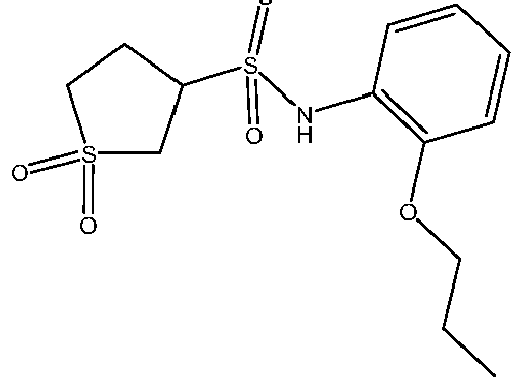
8016-8528 
G006-0077 
7896-0152 
E959-0899 
6125-0074 
4327-3176 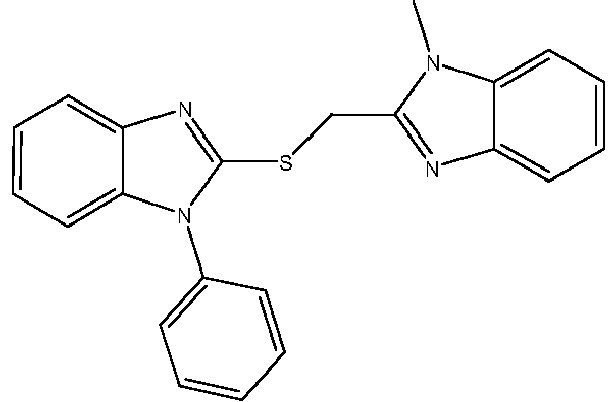
0760-0044 
D264-0030 
E966-0136 
C679-2579 
E975-1466 
8015-7443 
G023-0729 
8001-5069 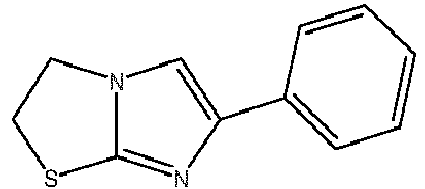
Table 2. The enzymatic parameters of nematode PPH-5 and mammalian PP5 are influenced by the P5SAs. PPH-5 (C. elegans) PP5 ( R. norvegicus) KD (µM) KM (mM) kcat (sec-1) fold activation fold activation DMSO - 7.0±0.4 0.62±0.02 - - P5SA-1 13.3 ± 4.2 3.0 ± 0.2 2.28 ± 0.03 3.7 (sat.) 2.7 at 143 µM P5SA-2 7.8 ± 1.4 2.5 ± 0.1 5.98 ± 0.06 9.6 (sat.) 13.7 at 714 µM P5SA-3 N/D N/D N/D 4.0 at 714 µM 7.0 at 714 µM P5SA-4 25.7 ± 5.5 5.0 ± 0.3 4.85 ± 0.08 7.8 (sat.) 16.4 at 143 µM P5SA-5 6.4 ± 1.8 4.3 ± 0.3 5.22 ± 0.09 8.4 (sat.) 22.1 at 45 µM - All methods mentioned in this example were carried out as described in Example 1.
- In this Example, the specificity of the identified activators was studied. First, it was tested whether other enzyme classes are influenced by the presence of the small molecules. To check if the P5SAs show unspecific effects on other proteins, the ATPase active Hsc70 and Hsp90 were employed. As these chaperones potentially bind via hydrophobic patches to a broad set of proteins and nonpolar structures, it seemed to be a well-suited control for unspecific binding of the screened molecules. The P5SAs neither impacted the ATPase activity of both chaperones, nor abrogated the binding of cofactors to Hsc70 or Hsp90 (
Figure 7 ). - Since the phosphatase domain of members of the PPP family is highly homologous, human PP1, PP2A and PP2B/PP3 were analyzed: neither activation nor inhibition of the respective phosphatase activity was detected, implying that the identified molecules are specific activators of the Hsp90-associated PP5/PPH-5 (
Figure 1C ). Unspecific pNPP hydrolysis could be excluded as well, as bovine intestinal alkaline phosphatase (BIAP) was not affected. The next step was to challenge homologs of PPH-5 from other species. No activation of the yeast homolog Ppt1 which shows reduced similarity of around 60% and more sequence deviations to human PP5, was detected (Figure 6 ). However, PP5 from Rattus norvegicus with 98% sequence identity to human PP5 exhibited vast activation when treated with P5SAs and showed an even more pronounced response than nematode PPH-5 used in the initial screen (Table 2). Therefore the affinity of these activators towards the mammalian protein was determined, resulting in a binding constant of 10 ± 5 µM for P5SA-5, while the other P5SAs showed decreased affinities towards rat PP5 in comparison to PPH-5 from C. elegans (Table 2). The conserved activation potential of the P5SAs for higher eukaryotes and their selectivity for PP5 suggest that the activation depends on the specific architecture of PP5 and its complex reaction pathway. - All methods mentioned in this example were carried out as described in Example 1.
- In order to gain insight into the activation mechanism, it was analyzed whether the substrate pNPP interacts with the P5SAs during the dephosphorylation reaction. Direct involvement of the small molecules in the hydrolysis of pNPP should be reflected in a change of the apparent KM value under saturating concentrations of the activators. All P5SAs reflect a strong alteration of the kcat value, but only weakly influence the observed KM-value for pNPP (
Figure 8 , Table 2). Hence, there is no specific interaction between the substrate pNPP and the P5SAs demonstrating allosteric activation of PPH-5. - Given that all five P5SAs are activators of PPH-5, the question arose whether they stimulate in an additive manner. To address this, the combinatorial effects of the P5SAs on the stimulation of pNPP hydrolysis were measured. Substance concentrations of 3 times higher than the apparent KD value were used by combining the different activators. The observed activities showed no additional stimulation and complied with the estimations of individual but competitive interaction (
Figure 9 ). These results suggest that the P5SAs accelerate the same rate-limiting step during the enzymatic cycle. - All methods mentioned in this example were carried out as described in Example 1.
- Human PP5 is well-known to be activated upon binding to the molecular chaperone Hsp90 or C-terminal fragments thereof (Yang et al., 2005). The addition of the Hsp90-derived C-terminal MEEVD peptide resulted in activation of the nematode PPH-5 (
Figure 2A ). The proposed mechanism implies an autoinhibitory interaction between the binding groove of the TPR domain and the C-terminal αJ helix of the phosphatase domain, which is maintained until the TPR domain is occupied by the MEEVD-motif. - Interestingly, the Hsp90 peptide has only limited effect when supplemented in the presence of the P5SAs (
Figure 2A ). These findings indicate that the same regulatory mechanism is targeted by both, the small molecules and the MEEVD-motif of Hsp90, which causes the breakup of the autoinhibition. Consequently, it was analyzed whether the P5SAs exclude the binding of Hsp90 to the TPR domain. N-terminal YFP-tagged Hsp90 was used in sedimentation velocity ultracentrifugation experiments. By this technique complexes with PPH-5 induce a shift of YFP-Hsp90's sedimentation coefficient from 6.8 S to 8.9 S (Figure 2B ). Binding of TPR cofactor and chaperone was analyzed in the presence of the P5SAs. None of the P5SAs abrogated the complex formation, while the isolated MEEVD peptide clearly weakened the protein complex between Hsp90 and PPH-5. - It was further tested whether P5SA affinity is affected in the presence of large excess of MEEVD peptide. 60 µM of the peptide were supplemented and the binding probability of P5SA-5 was evaluated by the phosphatase assay. Only a minor influence on its affinity was observed despite the high concentration of MEEVD peptide (
Figure 2C ). - Thus, the P5SAs appear to bind to a site distinct from the peptide binding groove of the TPR domain while releasing autoinhibition similar to the Hsp90 derived peptide.
- All methods mentioned in this example were carried out as described in Example 1.
- For characterization of the binding site of the P5SAs, deletion constructs of rat PP5 were generated. Using the mammalian homolog of the
protein phosphatase 5 enabled to study the impact of certain domains of the phosphatase, as shortened variants of C. elegans PPH-5 resulted in insoluble protein. The full-length PP5 and its deletion variants were purified and the activity was determined in the absence and presence of 10 µM and 100 µM (45 µM in case of P5SA-5) of the substances, respectively (Figure 3A-C ). - The activity of the phosphatase domain variant PP5-ΔN165 which lacks the complete TPR domain and is therefore not autoinhibited, was increased almost 20-fold from 0.12 sec-1 to 2.22 sec-1 compared to wild type protein. Remarkably, while wt-PP5 is strongly activated by the P5SAs, the P5SAs are able to inhibit the phosphatase activity of the TPR domain free protein (
Figure 3B ). These results point out that the P5SAs do not bind to the TPR domain of PP5, but interact with the phosphatase domain. - Next the second functional region of the autoinhibitory mechanism, the αJ helix, was analyzed. The last 8 amino acids of the protein were deleted including Q495 which is known to be essential for maintaining the tight regulation of PP5 (Kang et al., 2001). Furthermore, the autoinhibitory mechanism of PP5-ΔC8 was disturbed causing an increased turnover of 0.49 sec-1 compared to full-length PP5. Interestingly, addition of the P5SAs still influenced the activity of PP5-ΔC8, but only with a minor effect (
Figure 3C , see crystallographic results below). - Based on these findings, the P5SAs do not appear to interact directly with the autoregulatory domains. Instead, the modulators bind to the phosphatase core domain which appears sufficient to control the turnover rate independent of the PP5 variant used in this study (
Figure 10 ). - Therefore the crystal structures of rat PP5 in its apo-state as well as in complex with the ligand P5SA-2 were determined. The structures were solved by molecular replacement (McCoy et al., 2007) using the atomic coordinates of human PP5 (PDB ID: 1WAO) as a search model. The PP5:P5SA-2 dataset was refined to 2.0 Å (Rfree = 26.1%; PDB ID: 4JA7) and used as a model to determine the apo-structure with a final resolution of 2.3 Å (Rfree = 27.1%; PDB ID: 4JA9, Table 3).
Table 3. Data collection and refinement statistics PP5 apo PP5 + P5SA-2 Crystal parameters Space group P4 1212 P4 1212Cell constants a=b=50.1Å, c=379.2Å a=b=51.1Å, c=365.7Å Molecules per AU a1 1 Data collection Beamline SLS, PXI - X06SA SLS, PXI - X06SA Wavelength (Å) 1.0 1.0 Resolution range (Å)b 40 - 2.3 30 - 2.0 No. observed reflections 140950 286970 No. unique reflectionsc 22932 34075 Completeness (%)b 99.5 (99.9) 98.5 (93.1) Rmerge (%)b,d 4.1 (53.7) 3.8 (43.5) I/σ(I)b 22.3 (4.4) 28.8 (5.6) Refinement (REFMAC5) Resolution range (Å) 15 - 2.3 15 - 2.0 No. atoms Protein 3757 3749 Water 63 106 Rwork/Rfree (%)e 23.8 / 27.1 21.4 / 26.1 r.m.s. deviationsf bond lengths/angles (Å)/(°) 0.005 / 0.99 0.015 / 1.68 Average B-factor (Å2) 74.1 51.0 Ramachandran plot (%)g 95.2 / 4.6 / 0.2 95.7 / 4.3 / 0 PDB accession code 4JA9 4JA7 a Asymmetric unit
b The values in parentheses of resolution range, completeness, Rmerge and I/σ (I) correspond to the last resolution shell.
c Friedel pairs were treated as identical reflections.
dRmerge(I) = ∑hkl∑j|[I(hkl)j-I(hkl)]|/[∑hklIhkl], where I(hkl)j is the jth measurement of the intensity of reflection hkl and <I(hkl)> is the average intensity.
e R = ∑hkl| |Fobs| - |Fcalc| |/∑hkl |Fobs|, where Rfree is calculated without a sigma cutoff for a randomly chosen 5% of reflections, which were not used for structure refinement, and Rwork is calculated for the remaining reflections.
f Deviations from ideal bond lengths/angles
g Number of residues in favoured region / allowed region / outlier region - In both structures the first defined amino acid is Gly23 and the loop connecting the TPR domain with the phosphatase domain (Arg150 - Arg158; numbers according to full-length ratPP5) are flexible and therefore not defined in the electron density map. Additionally, Met499 of the apo-structure and Met498 as well as Met499 of the active ligand structure were not resolved. The electron density of P5SA-2 is only partially defined, however, comparison of both structures, PP5 apo and the PP5:P5SA-2 complex, clearly assigned the binding site of the ligand at the interface between the TPR and the phosphatase domain.
- A comparison of the backbone traces discloses limited structural rearrangements within the phosphatase domain, reflected by a r.m.s. deviation of the Cα-atoms of 0.42 Å (
Figure 4A ). By contrast, a tilting of the TPR domain up to 10° is observed upon ligand binding (r.m.s. deviation: 0.84 Å) accompanied by a rearrangement of the αJ helix. These structural domain reorganizations are manifested in a reduction of the crystal lattice constant c by 15 Å. Inspecting the omit maps for both αJ helices ranging from Asn491 to Gly497 or to Met498, respectively, a considerable displacement of the Cα-atom of Gly497 by 6.5 Å is observed (Fig 5B and 5C ). The conformational rearrangements of both the TPR domain and the αJ helix indicates opening of the active site channel as displayed by the in silico values for the surface area and the volume of the substrate binding pocket. In the apo-state the binding pocket covers approximately 1250 Å2 with a corresponding volume of 1710 Å2 (Dundas et al., 2006), whereas in the active state both values increase significantly (1370 Å2 and 2090 Å2), suggesting facilitated substrate access into and product release from the active site channel, respectively. In summary, the observed structural rearrangements induced by ligand binding support the functional characterization of the P5SAs that act on the release of the autoinhibiton of PP5. - All methods mentioned in this example were carried out as described in Example 1.
- The intracellular activity of the identified activators was addressed by analyzing their physiological effects in vivo. Therefore an experimental model was chosen, in which PP5 activation induces beneficial effects. The human tau variant tau-P301L is a key mutant in familial frontotemporal dementia with Parkinsonism linked to chromosome 17 (FTDP-17). Tau-P301L is able to interact with wild-type tau and to seed a tau-driven pathogenesis under experimental conditions. Hence, the influence of P5SA-2, P5SA-3, P5SA-4 and P5SA-5 on tau phosphorylation and tau-induced pathogenesis in human tau-P301L-transfected mice brains was analyzed.
- Adult wild-type C57BL/6 mice brains were transfected with a Herpes simplex-derived viral vector construct containing human tau-P301L by unilateral vector injection into the hippocampal CA1 region adjacent to the subiculum. In non-transfected control mice, endogenous tau was detectable in a pronounced manner in axons of granule cells of the dentate gyrus (mossy fibers), projecting to apical dendrites of CA3 pyramidal neurons (Stratum lucidum) (
Figure 5B-D ). Endogenous tau was also present in apical dendrites of pyramidal CA1 (stratum radiatum, stratum lacunosum moleculare) (Figure 5B,C ) and CA3 neurons (stratum radiatum) (Figure 5B-D ), whereas it was absent in neuronal perikarya of CA1/CA3 pyramidal cells and granular cells of dentate gyrus (Figure 5B-D ). Endogenous mouse and/or transfected human tau-P301L were collectively visualized as total tau with the antibody K9JA which does not discriminate between mouse and human. Viral vector-based human tau-P301L gene transfection resulted in its abundant and neuron-specific expression in the hippocampus six weeks post transfection, as visualized by the human tau-specific antibody tau-13 (compareFigure 5A,F,K ). In transfected, but otherwise vehicle-treated animals, human tau-specific fluorescence staining (tau-13) was particularly found in the perikarya and apical dendrites of CA1 and CA3 pyramidal neurons (Figure 5F ). In contrast to non-transfected animals, tau-P301L expression in transfected mice was accompanied by the increase of total tau in the perikarya of CA1 and CA3 pyramidal neurons (Figure 5G-I ). In parallel to human tau-P301L expression, its phosphorylation at the AT8 epitope (Ser202/Thr205) was observed (Figure 5J ). Whereas non-transfected hippocampi were characterized by a dense and intact structural integrity throughout the CA1 and CA3 region (Figure 5B-D ), their human tau-P301L-transfected counterparts revealed a massive destruction in hippocampal CA1 (stratum radiatum, stratum lacunosum moleculare) (Figure 5G,H ) and CA3 region (stratum lucidum, stratum radiatum) (Figure 5G,I ). As visualized by MAP2- and total tau-specific immunofluorescence, the defined loss of structural integrity was caused by the degeneration of apical dendrites of CA1 and CA3 pyramidal neurons and axonal mossy fibers of dentate gyrus granule cells (compareFigure 5B-D and 5G-I ). This tau-P301L-dependent pattern of neuronal degeneration was decreased, if the PP5 activator P5SA-5 was administered (Figure 5K-N ). Continuous drug infusion (ip) was started immediately after tau-P301L transfection and maintained over six weeks until immunohistochemical evaluation (final drug concentration 1 mg/kg/day). In parallel to the preservation of apical CA1/CA3 dendrites and mossy fibers, pathological tau phosphorylation at the AT8 epitope was remarkably reduced by P5SA-5 treatment (Figure 5J,O ). Per hippocampal slice, the numbers of AT8-positive perikarya of CA3 pyramidal neurons were 7.0 ± 2.0 and 2.2 ± 1.4 in vehicle- and P5SA-5-treated animals, respectively (P< 0.0001). In parallel, tau-P301L-dependent localization of total tau signals in the perikarya of CA1 and CA3 pyramidal neurons remained unaffected (Figure 5L-N ). - Similar observations were made with P5SA-2, P5SA-3 and P5SA-4 (
Figure 11 ). - The features of the present invention disclosed in the specification, the claims, and/or in the accompanying drawings may, both separately and in any combination thereof, be material for realizing the invention in various forms thereof.
-
- Bahl, R., Bradley, K.C., Thompson, K.J., Swain, R.A., Rossie, S., and Meisel, R.L. (2001). Localization of protein Ser/.
- Baumgrass, R., Weiwad, M., Erdmann, F., Liu, J.O., Wunderlich, D., Grabley, S., and Fischer, G. (2001). Reversible inhibition of calcineurin by the polyphenolic aldehyde gossypol. Journal of Biological Chemistry 276, 47914-47921.
- Brunden, K.R., Trojanowski, J.Q., and Lee, V.M. (2009). Advances in tau-focused drug discovery for Alzheimer's disease and related tauopathies. Nature reviews .
- Chen, M.X., McPartlin, A.E., Brown, L., Chen, Y.H., Barker, H.M., and Cohen, P.T. (1994). A novel human protein serine/threonine phosphatase, which possesses four tetratricopeptide repeat motifs and localizes to the nucleus. The .
- Cher, C., Tremblay, M.H., Barber, J.R., Chung Ng, S., and Zhang, B. (2010). Identification of chaulmoogric acid as a small molecule activator of .
- Cliff, M.J., Harris, R., Barford, D., Ladbury, J.E., and Williams, M.A. (2006). Conformational diversity in the TPR domain-mediated interaction of .
- Dundas, J., Ouyang, Z., Tseng, J., Binkowski, A., Turpaz, Y., and Liang, J. (2006). CASTp: computed atlas of surface topography of proteins with structural and topographical mapping of functionally annotated residues. Nucleic acids research 34, W116-118.
- Gaiser, A.M., Brandt, F., and Richter, K. (2009). The non-canonical Hop protein from Caenorhabditis elegans exerts essential functions and forms binary complexes with either Hsc70 or Hsp90. Journal of molecular biology 391, 621-634.
- Gaiser, A.M., Kaiser, C.J., Haslbeck, V., and Richter, K. (2011). Downregulation of the Hsp90 system causes defects in muscle cells of Caenorhabditis elegans. .Gaiser, A.M., Kretzschmar, A., and Richter, K. (2010). Cdc37-Hsp90 complexes are responsive to nucleotide-induced conformational changes and binding of further cofactors. The Journal of biological chemistry 285, 40921-40932.
- Haass, C. (2010). Initiation and propagation of neurodegeneration. Nature medicine 16, 1201-1204.
- Hajduk, P.J., Olejniczak, E.T., and Fesik, S.W. (1997). One-dimensional relaxation- and diffusion-edited NMR methods for screening compounds that bind to macromolecules. J Am Chem Soc 119, 12257-12261.
- Jack, C.R., Jr., Knopman, D.S., Jagust, W.J., Petersen, R.C., Weiner, M.W., Aisen, P.S., Shaw, L.M., Vemuri, P., Wiste, H.J., Weigand, S.D., et al. (2013). Tracking pathophysiological processes in Alzheimer's disease: an updated hypothetical model of dynamic biomarkers. .
- Jeganathan, S., Hascher, A., Chinnathambi, S., Biernat, J., Mandelkow, E.M., and Mandelkow, E. (2008). Proline-directed pseudo-phosphorylation at AT8 and PHF1 epitopes induces a compaction of the paperclip folding of Tau and generates a pathological (MC-1) conformation. The Journal of biological chemistry 283, 32066-32076.
- Kabsch, W. (1993). Automatic Processing of Rotation Diffraction Data from Crystals of Initially Unknown Symmetry and Cell Constants. Journal of applied crystallography 26, 795-800.
- Kang, H., Sayner, S.L., Gross, K.L., Russell, L.C., and Chinkers, M. (2001). Identification of amino acids in the tetratricopeptide repeat and C-terminal domains of .
- Li, X., Kumar, Y., Zempel, H., Mandelkow, E.M., Biernat, J., and Mandelkow, E. (2011). Novel diffusion barrier for axonal retention of Tau in neurons and its failure in neurodegeneration. The .
- Liu, F., Grundke-Iqbal, I., Iqbal, K., and Gong, C.X. (2005a). Contributions of protein phosphatases PP1, PP2A, PP2B and PP5 to the regulation of tau phosphorylation. The European journal of neuroscience 22, 1942-1950.
- Liu, F., Iqbal, K., Grundke-Iqbal, I., Rossie, S., and Gong, C.X. (2005b). Dephosphorylation of tau by protein phosphatase 5: impairment in Alzheimer's disease. The Journal of biological chemistry 280, 1790-1796.
- McConnell, J.L., and Wadzinski, B.E. (2009). Targeting protein serine/threonine phosphatases for drug development. Molecular pharmacology 75, 1249-1261.
- McCoy, A.J., Grosse-Kunstleve, R.W., Adams, P.D., Winn, M.D., Storoni, L.C., and Read, R.J. (2007). Phaser crystallographic software. Journal of applied .
- Mondragon, A., Griffith, E.C., Sun, L., Xiong, F., Armstrong, C., and Liu, J.O. (1997). Overexpression and purification of human calcineurin alpha from Escherichia coli and assessment of catalytic functions of residues surrounding the binuclear metal center. Biochemistry 36, 4934-4942.
- Ramsey, A.J., and Chinkers, M. (2002). Identification of potential physiological activators of .
- Salminen, A., Ojala, J., Kaarniranta, K., Hiltunen, M., and Soininen, H. (2011). Hsp90 regulates tau pathology through co-chaperone complexes in Alzheimer's disease. Progress in neurobiology 93, 99-110.
- Sklenar, V., Piotto, M., Leppik, R., and Saudek, V. (1993). Gradient-Tailored Water Suppression for H-1-N-15 Hsqc Experiments Optimized to Retain Full Sensitivity. J Magn Reson Ser A 102, 241-245.
- Spillanti, M.G., and Goedert, M. (2013) Tau pathology and neurodegeneration.
- Stafford, W.F., 3rd (1992). Boundary analysis in sedimentation transport experiments: a procedure for obtaining sedimentation coefficient distributions using the time derivative of the concentration profile. Analytical biochemistry 203, 295-301.
- Tung, H.Y., Alemany, S., and Cohen, P. (1985). The protein phosphatases involved in cellular regulation. 2. Purification, subunit structure and properties of protein phosphatases-2A0, 2A1, and 2A2 from rabbit skeletal muscle. European journal of biochemistry / FEBS 148, 253-263.
- Vagin, A.A., Steiner, R.A., Lebedev, A.A., Potterton, L., McNicholas, S., Long, F., and Murshudov, G.N. (2004). REFMAC5 dictionary: organization of prior chemical knowledge and guidelines for its use. Acta crystallographica Section D, .
- Yang, J., Roe, S.M., Cliff, M.J., Williams, M.A., Ladbury, J.E., Cohen, P.T., and Barford, D. (2005). Molecular basis for TPR domain-mediated regulation of .
wherein said compound binds to
wherein said compound binds to


wherein, preferably, B is


wherein, more preferably, B is

wherein, preferably, one of the substituents is Cl in para-position to B,
wherein, preferably, A is phenyl substituted with one or more substituents, preferably with one substituent,
wherein, preferably, at least one substituent is in para-position to B, wherein, preferably, the one or more substituents are independently selected from the group consisting of F, Cl, and Br, wherein, more preferably, the one or more substituents are all Cl,
wherein, most preferably, A is


and R5 and R6 are selected, independently for each occurrence of R5 resp. R6, from the group consisting of hydrogen and methyl,
wherein, preferably, B is

wherein, most preferably, B is


wherein, preferably, one substituent is a methoxy group in meso-position to Cand one substituent is a methoxy group in para-position to C,
wherein, preferably, D is phenyl substituted with one or more substituents, more preferably substituted with two substituents,
wherein, preferably, one substituent is in meso-position to C and one in para-position to C,
wherein, preferably, the one or more substituents are independently selected from the group consisting of straight alkoxy groups,
wherein, preferably, each of the one or more substituents comprises up to 3, preferably up to 2, more preferably up to 1 carbon atoms,
wherein, most preferably, D is

wherein, preferably, one of the substituents is F in para-position to B,
wherein, preferably, A is phenyl substituted with one or more substituents, preferably with one substituent,
wherein, preferably, at least one substituent is in para-position to B, wherein, preferably, the one or more substituents are independently selected from the group consisting of F, Cl, and Br, wherein, more preferably, the one or more substituents are all F,
wherein, most preferably, A is


and wherein m is from 0 to 4, preferably from 0 to 2,
wherein, preferably, C is

wherein, most preferably, C is

wherein, preferably, A is phenyl substituted with one or more substituents, preferably with one substituent,
wherein, preferably, at least one substituent is in para-position to B, wherein, preferably, the one or more substituents are independently selected from the group consisting of F, Cl, and Br, wherein, more preferably, the one or more substituents are all Cl,
wherein, most preferably, A is


and R5 and R6 are selected, independently for each occurrence of R5 resp. R6, from the group consisting of hydrogen and methyl,
wherein, preferably, B is

wherein, most preferably, B is


wherein, preferably, one substituent is a methoxy group in meso-position to Cand one substituent is a methoxy group in para-position to C,
wherein, preferably, D is phenyl substituted with one or more substituents, more preferably substituted with two substituents,
wherein, preferably, one substituent is in meso-position to Cand one in para-position to C,
wherein, preferably, the one or more substituents are independently selected from the group consisting of straight alkoxy groups,
wherein, preferably, each of the one or more substituents comprises up to 3, preferably up to 2, more preferably up to 1 carbon atoms,
wherein, most preferably, D is


wherein, preferably, one of the substituents is F in para-position to B,
wherein, preferably, A is phenyl substituted with one or more substituents, preferably with one substituent,
wherein, preferably, at least one substituent is in para-position to B,
wherein, preferably, the one or more substituents are independently selected from the group consisting of F, Cl, and Br, wherein, more preferably, the one or more substituents are all F,
wherein, most preferably, A is


and wherein m is from 0 to 4, preferably from 0 to 2,
wherein, preferably, C is

wherein, most preferably, C is

wherein, preferably, D is phenyl substituted with one or more substituents, preferably with one substituent,
wherein, preferably, at least one substituent is in para-position to C, wherein, preferably, the one or more substituents are independently selected from the group consisting of F, Cl, and Br, wherein, more preferably, the one or more substituents are all Br,
wherein, most preferably, D is


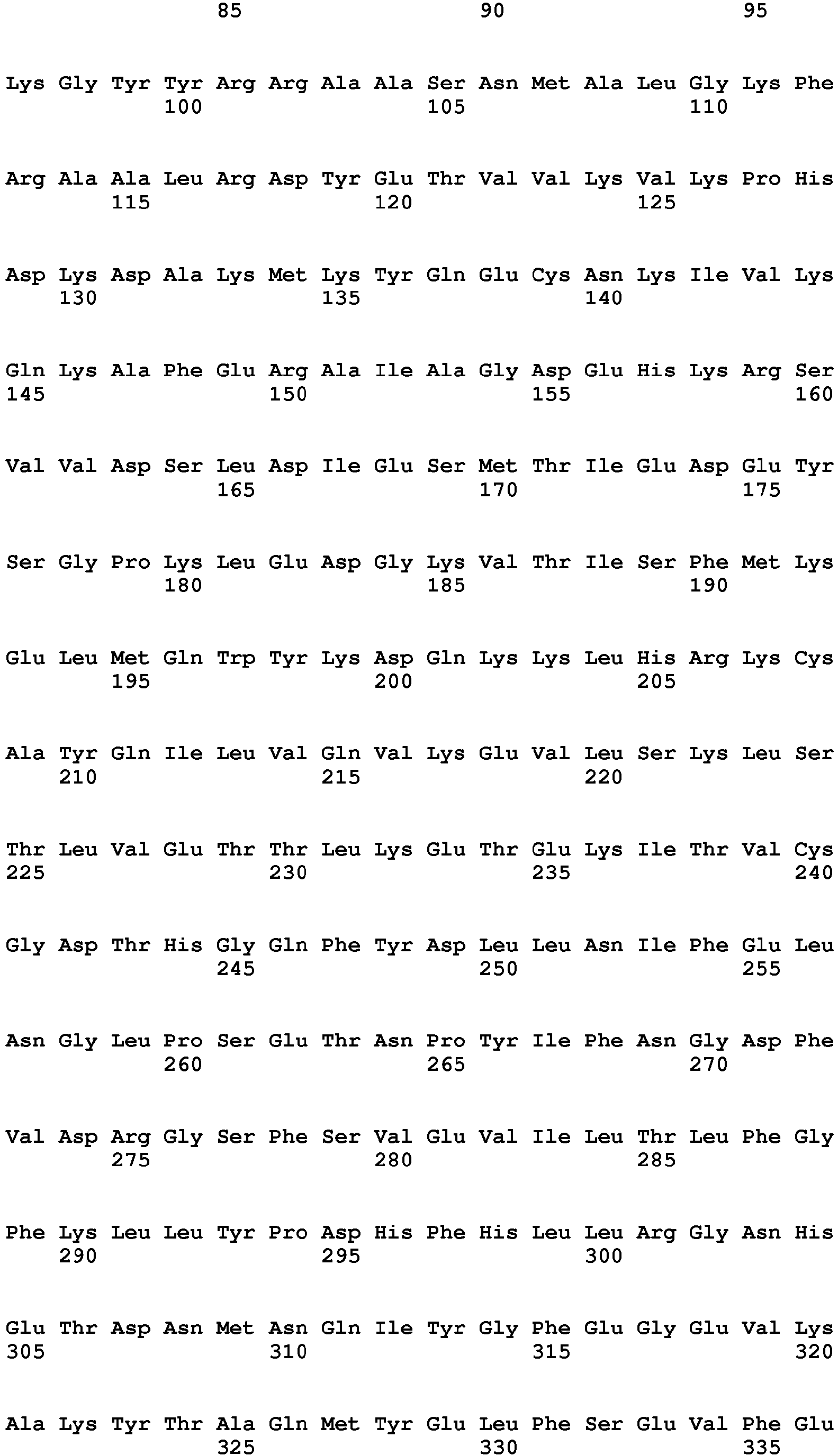

Claims (12)
- A compound that shows a positive result in a phosphatase activation assay with protein phosphatase 5,
wherein said phosphatase activation assay comprises- measuring the enzymatic activity of protein phosphatase 5 in the absence of a compound to be tested, and- measuring the enzymatic activity of protein phosphatase 5 under the same conditions, but in the presence of said compound to be tested,wherein a result is considered a positive result if the enzymatic activity of protein phosphatase 5 in the presence of the compound to be tested is by at least a factor of 1.5 higher than in the absence of the compound to be tested,
wherein said compound is a small molecule compound,
and wherein said compound is not a fatty acid or a derivative thereof. - A compound that binds in an in vitro binding assay to protein phosphatase 5 within the region of amino acids 166 to 496 of the C. elegans protein phosphatase 5 amino acid sequence or within the region of amino acids 166 to 499 of the rat protein phosphatase 5 amino acid sequence or within the region of amino acids 166 to 499 of the mouse protein phosphatase 5 amino acid sequence or within the region of amino acids 166 to 499 of the human protein phosphatase 5 amino acid sequence,
wherein said compound is a small molecule compound,
and wherein said compound is not a fatty acid or a derivative thereof. - A compound that shows a positive result in a phosphatase activation assay with protein phosphatase 5,
wherein said phosphatase activation assay comprises- measuring the enzymatic activity of protein phosphatase 5 in the absence of a compound to be tested, and- measuring the enzymatic activity of protein phosphatase 5 under the same conditions, but in the presence of said compound to be tested,wherein a result is considered a positive result if the enzymatic activity of protein phosphatase 5 in the presence of the compound to be tested is by at least a factor of 1.5 higher than in the absence of the compound to be tested,
wherein said compound binds in an in vitro binding assay to protein phosphatase 5 within the region of amino acids 166 to 496 of the C. elegans protein phosphatase 5 amino acid sequence or within the region of amino acids 166 to 499 of the mammalian protein phosphatase 5 amino acid sequence or within the region of amino acids 166 to 499 of the rat protein phosphatase 5 amino acid sequence or within the region of amino acids 166 to 499 of the mouse protein phosphatase 5 amino acid sequence or within the region of amino acids 166 to 499 of the human protein phosphatase 5 amino acid sequence,
wherein said compound is a small molecule compound,
and wherein said compound is not a fatty acid or a derivative thereof. - A method of screening for compounds that activate protein phosphatase 5, said method comprising- providing a small molecule compound that is not a fatty acid or a derivative thereof,- determining whether said compound shows a positive result in a phosphatase activation assay with protein phosphatase 5,
wherein said phosphatase activation assay comprises- measuring the enzymatic activity of protein phosphatase 5 in the absence of a compound to be tested, and- measuring the enzymatic activity of protein phosphatase 5 under the same conditions, but in the presence of said compound to be tested,
and wherein a result in said phosphatase activation assay is considered a positive result if the enzymatic activity of protein phosphatase 5 in the presence of the compound to be tested is by at least a factor of 1.5 higher than in the absence of the compound to be tested,- and, preferably, determining in an in vitro binding assay if said compound binds to protein phosphatase 5 within the region of amino acids 166 to 496 of the protein phosphatase 5 sequence,
wherein said compound is considered a successful candidate in said screening method if it shows a positive result in said phosphatase activation assay and, preferably, if it binds to protein phosphatase 5 within the region of amino acids 166 to 496 of the protein phosphatase 5 sequence in said in vitro binding assay. - The compound according to any of claims 1-3, wherein said protein phosphatase 5 is protein phosphatase 5 from C. elegans, rat protein phosphatase 5, mouse protein phosphatase 5, or human protein phosphatase 5.
- The compound according to any of claims 2, 3 or 5, wherein said in vitro binding assay is NMR measurements.
- The compound according to any of claims 1, 3 or 5-6, wherein said compound does not show a positive result in a phosphatase activation assay with the phosphatase PP1, PP2A, PP2B/PP3, or alkaline phosphatase.
- The compound according to any of claims 1-3 or 5-7, wherein said compound does not bind to the TPR (tetratricopeptide repeat) domain of protein phosphatase 5.
- The compound according to any of claims 1-3 or 5-8, wherein said compound is for use in the treatment of a tauopathy,
preferably a tauopathy selected from the group consisting of Alzheimer's disease, amyotrophic lateral sclerosis and parkinsonism-dementia complex, argyrophilic grain disease, chronic traumatic encephalopathy, chronic traumatic encephalopathy, traumatic brain injury, diffuse neurofibrillary tangles with calcification, Down's syndrome, familial British dementia, familial Danish dementia, frontotemporal dementia and parkinsonism linked to chromosome 17 (caused by MAPT mutations), frontotemporal lobar degeneration, preferably caused by C9ORF72 mutations, Gerstmann-Sträussler-Scheinker disease, Guadeloupean parkinsonism, myotonic dystrophy, neurodegeneration with brain iron accumulation, Niemann-Pick disease type C, non-Guamanian motor neuron disease with neurofibrillary tangles, Pick's disease, postencephalitic parkinsonism, prion protein cerebral amyloid angiopathy, progressive subcortical gliosis, progressive supranuclear palsy, SLC9A6-related mental retardation, subacute sclerosing panencephalitis, tangle-only dementia and white matter tauopathy with globular glial inclusions,
more preferably a tauopathy selected from the group consisting of Alzheimer's disease, chronic traumatic encephalopathy, frontotemporal dementia, parkinsonism linked to chromosome 17 (caused by MAPT mutations), frontotemporal lobar degeneration, preferably caused by C9ORF72 mutations, Niemann-Pick disease type C, Pick's disease, progressive supranuclear palsy, tangle-only dementia, and white matter tauopathy with globular glial inclusions,
or for use in the treatment of cancer,
preferably a cancer of the blood, bile duct, bladder, bone, brain, breast, cervix, colon, esophagus, eye, gallbladder, germ cells, intestines, kidney larynx, lip, liver, lung, mouth, nose, oral cavity, ovaries, pancreas, penis, pharynx, prostate, skin, stomach, testicles, throat, thymus, thyroid, urethra, or vagina,
more preferably a cancer selected from the group consisting of acute lymphoblastic leukemia (ALL), acute myeloid leukemia, astrocytoma, basal-cell carcinoma, bile duct cancer, bladder cancer, bone tumor, brain tumor, breast cancer, Burkitt's lymphoma, cervical cancer, chronic myelogenous leukemia (CML), colon cancer, emphysema, esophageal cancer, intraocular melanoma, eye cancer, retinoblastoma, gallbladder cancer, gastric (stomach) cancer, gastrointestinal stromal tumor (GIST), germ cell tumor, glioma, head and neck cancer, hepatocellular (liver) cancer, Hodgkin lymphoma, islet cell carcinoma (endocrine pancreas), Kaposi sarcoma, kidney cancer, renal cell cancer, laryngeal cancer, leukemia, acute lymphoblastic leukemia, acute myelogenous leukemia, lip and oral cavity cancer, liver cancer, non-small cell lung cancer, small cell lung cancer, lymphoma, preferably Burkitt lymphoma, Hodgkin lymphoma or Non-Hodgkin lymphoma, medulloblastoma, melanoma, mesothelioma, mouth cancer, plasma cell neoplasm, myelodysplastic/myeloproliferative diseases, multiple myeloma, nasal cavity and paranasal sinus cancer, nasopharyngeal carcinoma, neuroblastoma, oral cancer, oropharyngeal cancer, osteosarcoma, ovarian cancer, pancreatic cancer, pancreatic carcinoma, pancreatic islet cell cancer, parathyroid cancer, penile cancer, pharyngeal cancer, prostate cancer, rectal cancer, renal cell carcinoma, salivary gland cancer, sarcoma, soft tissue sarcoma, stomach cancer, T-cell lymphoma, Sézary syndrome, testicular cancer, throat cancer, thymoma, thymic carcinoma, thyroid cancer, urethral cancer, uterine cancer, vaginal cancer, vulvar cancer, Waldenström macroglobulinemia, and Wilms tumor,
most preferably pancreatic carcinoma. - The compound according to any of claims 1-3 or 5-9, wherein
said compound has a general structure as defined in any of the following (i)-(v):(i) said compound has the general structure
A-B,
wherein A is- unsubstituted phenyl or- phenyl substituted with one or more substituents,
wherein the one or more substituents are independently selected from the group consisting of- halogen (preferably F, Cl, Br, or I),- hydroxyl,- amino,- nitro,- cyano,- thiol,- sulfonyl,- carbonyl, preferably an aldehyde, ketone, ester or amide,- carboxyl,- straight or branched alkyl, which is unsubstituted or substituted, preferably with one or more substituents selected from the group consisting of halogen, hydroxyl, amino, nitro, cyano, thiol, sulfonyl, carbonyl, carboxyl, alkyl, alkoxy, alkenyl, cycloalkyl and aryl,- straight or branched alkoxy, which is unsubstituted or substituted, preferably with one or more substituents selected from the group consisting of halogen, hydroxyl, amino, nitro, cyano, thiol, sulfonyl, carbonyl, carboxyl, alkyl, alkoxy, alkenyl, cycloalkyl and aryl,- straight or branched alkenyl, which is unsubstituted or substituted, preferably with one or more substituents selected from the group consisting of halogen, hydroxyl, amino, nitro, cyano, thiol, sulfonyl, carbonyl, carboxyl, alkyl, alkoxy, alkenyl, cycloalkyl and aryl,- substituted or unsubstituted cycloalkyl, and- substituted or unsubstituted aryl, preferably substituted or unsubstituted phenyl,and wherein B is
wherein, preferably, each of the one or more substituents comprises up to 18, preferably up to 14, more preferably up to 10, more preferably up to 6, more preferably up to 5, more preferably up to 4, more preferably up to 3, more preferably up to 2, more preferably up to 1 carbon atoms, wherein, preferably, one of the substituents is Cl in para-position to B,
wherein, preferably, A is phenyl substituted with one or more substituents, preferably with one substituent,
wherein, preferably, at least one substituent is in para-position to B, wherein, preferably, the one or more substituents are independently selected from the group consisting of F, Cl, and Br, wherein, more preferably, the one or more substituents are all Cl,
wherein, most preferably, A is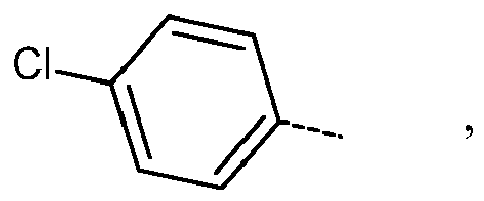

 - halogen (preferably F, Cl, Br, or I),- hydroxyl,- amino,- nitro,- cyano,- thiol,- sulfonyl,- carbonyl,- carboxyl,- straight or branched alkyl, which is unsubstituted or substituted, preferably with one or more substituents selected from the group consisting of halogen, hydroxyl, amino, nitro, cyano, thiol, sulfonyl, carbonyl, carboxyl, alkyl, alkoxy, alkenyl, cycloalkyl and aryl,- straight or branched alkoxy, which is unsubstituted or substituted, preferably with one or more substituents selected from the group consisting of halogen, hydroxyl, amino, nitro, cyano, thiol, sulfonyl, carbonyl, carboxyl, alkyl, alkoxy, alkenyl, cycloalkyl and aryl,- straight or branched alkenyl, which is unsubstituted or substituted, preferably with one or more substituents selected from the group consisting of halogen, hydroxyl, amino, nitro, cyano, thiol, sulfonyl, carbonyl, carboxyl, alkyl, alkoxy, alkenyl, cycloalkyl and aryl,wherein, preferably, each of R2, R3 and R4 comprises up to 14, preferably up to 10, more preferably up to 6, more preferably up to 3, more preferably up to 2, more preferably up to 1 carbon atoms,
wherein, preferably, B is

wherein, more preferably, B is
 (ii) said compound has the general structure
A-B-C-D,
wherein A is- unsubstituted phenyl or- phenyl substituted with one or more substituents,wherein B is
wherein the one or more substituents are independently selected from the group consisting of- halogen (preferably F, Cl, Br, or I),- hydroxyl,- amino,- nitro,- cyano,- thiol,- sulfonyl,- carbonyl,- carboxyl,- straight or branched alkyl, which is unsubstituted or substituted, preferably with one or more substituents selected from the group consisting of halogen,
hydroxyl, amino, nitro, cyano, thiol, sulfonyl, carbonyl, carboxyl, alkyl, alkoxy, alkenyl, cycloalkyl and aryl,- straight or branched alkoxy, which is unsubstituted or substituted, preferably with one or more substituents selected from the group consisting of halogen, hydroxyl, amino, nitro, cyano, thiol, sulfonyl, carbonyl, carboxyl, alkyl, alkoxy, alkenyl, cycloalkyl and aryl,- straight or branched alkenyl, which is unsubstituted or substituted, preferably with one or more substituents selected from the group consisting of halogen, hydroxyl, amino, nitro, cyano, thiol, sulfonyl, carbonyl, carboxyl, alkyl, alkoxy, alkenyl, cycloalkyl and aryl,- substituted or unsubstituted cycloalkyl, and- substituted or unsubstituted aryl, preferably substituted or unsubstituted phenyl,wherein, preferably, each of the one or more substituents comprises up to 18, preferably up to 14, more preferably up to 10, more preferably up to 6, more preferably up to 5, more preferably up to 4, more preferably up to 3, more preferably up to 2, more preferably up to 1 carbon atoms,
wherein, preferably, one of the substituents is Cl in para-position to B,
wherein, preferably, A is phenyl substituted with one or more substituents, preferably with one substituent,
wherein, preferably, at least one substituent is in para-position to B, wherein, preferably, the one or more substituents are independently selected from the group consisting of F, Cl, and Br, wherein, more preferably, the one or more substituents are all Cl,
wherein, most preferably, A is

and R5 and R6 are selected, independently for each occurrence of R5 resp. R6, from the group consisting of hydrogen and methyl,
wherein, preferably, B is
wherein, most preferably, B is
 - unsubstituted phenyl or- phenyl substituted with one or more substituents, wherein the one or more substituents are independently selected from the group consisting ofwherein, most preferably, said compound has the structure represented by Formula II:- halogen (preferably F, Cl, Br, or I),- hydroxyl,- amino,- nitro,- cyano,- thiol,- sulfonyl,- carbonyl,- carboxyl,- straight or branched alkyl, which is unsubstituted or substituted, preferably with one or more substituents selected from the group consisting of halogen, hydroxyl, amino, nitro, cyano, thiol, sulfonyl, carbonyl, carboxyl, alkyl, alkoxy, alkenyl, cycloalkyl and aryl,- straight or branched alkoxy, which is unsubstituted or substituted, preferably with one or more substituents selected from the group consisting of halogen, hydroxyl, amino, nitro, cyano, thiol, sulfonyl, carbonyl, carboxyl, alkyl, alkoxy, alkenyl, cycloalkyl and aryl,- straight or branched alkenyl, which is unsubstituted or substituted, preferably with one or more substituents selected from the group consisting of halogen, hydroxyl, amino, nitro, cyano, thiol, sulfonyl, carbonyl, carboxyl, alkyl, alkoxy, alkenyl, cycloalkyl and aryl,- substituted or unsubstituted cycloalkyl, and- substituted or unsubstituted aryl, preferably substituted or unsubstituted phenyl,wherein, preferably, each of the one or more substituents comprises up to 18, preferably up to 14, more preferably up to 10, more preferably up to 6, more preferably up to 5, more preferably up to 4, more preferably up to 3, more preferably up to 2, more preferably up to 1 carbon atoms,
wherein, preferably, one substituent is a methoxy group in meso-position to Cand one substituent is a methoxy group in para-position to C,
wherein, preferably, D is phenyl substituted with one or more substituents, more preferably substituted with two substituents,
wherein, preferably, one substituent is in meso-position to C and one in para-position to C,
wherein, preferably, the one or more substituents are independently selected from the group consisting of straight alkoxy groups,
wherein, preferably, each of the one or more substituents comprises up to 3, preferably up to 2, more preferably up to 1 carbon atoms,
wherein, most preferably, D is
 (iii) said compound said compound has the general structure
A-B-C-D,
wherein A comprises a non-planar group comprising 6 to 13 carbon atoms, preferably 8 to 12 carbon atoms, more preferably 9-11 carbon atoms, more preferably 10 carbon atoms and has, preferably, a molecular weight of up to 300 Dalton,
wherein, preferably, A is a triyclic group,
wherein, preferably, A is composed exclusively of carbon and hydrogen atoms,
wherein, most preferably, A is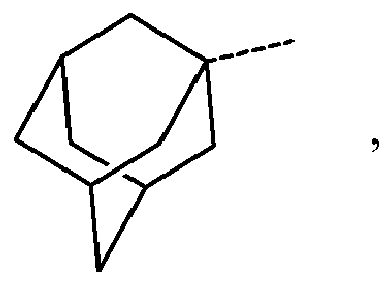
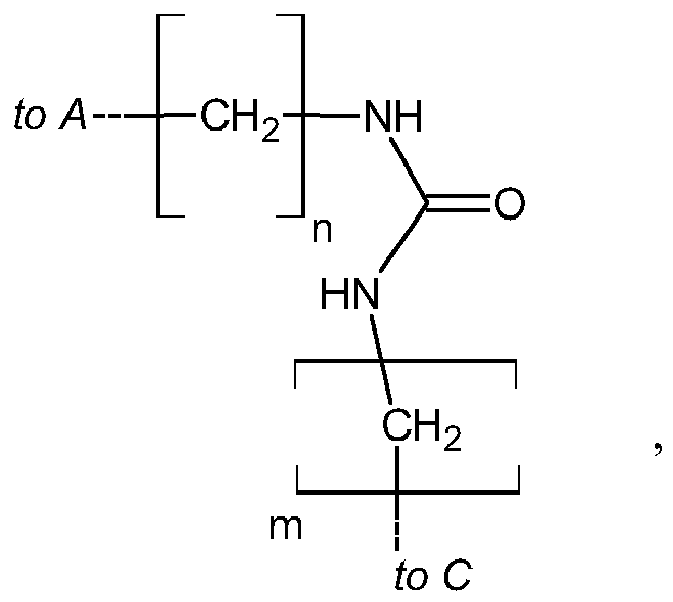
and wherein m is from 0 to 4, preferably from 0 to 2, more preferably 1 or 2, more preferably 1,
wherein, preferably, B is
wherein, most preferably, B is

wherein, most preferably, said compound has the structure represented by Formula III: (iv) said compound has the general structure
A-B-C-D,
wherein A is- unsubstituted phenyl or- phenyl substituted with one or more substituents,wherein, preferably, each of the one or more substituents comprises up to 18, preferably up to 14, more preferably up to 10, more preferably up to 6, more preferably up to 5, more preferably up to 4, more preferably up to 3, more preferably up to 2, more preferably up to 1 carbon atoms,
wherein the one or more substituents are independently selected from the group consisting of- halogen (preferably F, Cl, Br, or I),- hydroxyl,- amino,- nitro,- cyano,- thiol,- sulfonyl,- carbonyl,- carboxyl,- straight or branched alkyl, which is unsubstituted or substituted, preferably with one or more substituents selected from the group consisting of halogen, hydroxyl, amino, nitro, cyano, thiol, sulfonyl, carbonyl, carboxyl, alkyl, alkoxy, alkenyl, cycloalkyl and aryl,- straight or branched alkoxy, which is unsubstituted or substituted, preferably with one or more substituents selected from the group consisting of halogen, hydroxyl, amino, nitro, cyano, thiol, sulfonyl, carbonyl, carboxyl, alkyl, alkoxy, alkenyl, cycloalkyl and aryl,- straight or branched alkenyl, which is unsubstituted or substituted, preferably with one or more substituents selected from the group consisting of halogen, hydroxyl, amino, nitro, cyano, thiol, sulfonyl, carbonyl, carboxyl, alkyl, alkoxy, alkenyl, cycloalkyl and aryl,- substituted or unsubstituted cycloalkyl, and- substituted or unsubstituted aryl, preferably substituted or unsubstituted phenyl,
wherein, preferably, one of the substituents is F in para-position to B,
wherein, preferably, A is phenyl substituted with one or more substituents, preferably with one substituent,
wherein, preferably, at least one substituent is in para-position to B, wherein, preferably, the one or more substituents are independently selected from the group consisting of F, Cl, and Br, wherein, more preferably, the one or more substituents are all F,
wherein, most preferably, A is


and wherein m is from 0 to 4, preferably from 0 to 2,
wherein, preferably, C is
wherein, most preferably, C is - unsubstituted phenyl or- phenyl substituted with one or more substituents, wherein the one or more substituents are independently selected from the group consisting of- halogen (preferably F, Cl, Br, or I),- hydroxyl,- amino,- nitro,- cyano,- thiol,- sulfonyl,- carbonyl,- carboxyl,- straight or branched alkyl, which is unsubstituted or substituted, preferably with one or more substituents selected from the group consisting of halogen, hydroxyl, amino, nitro, cyano, thiol, sulfonyl, carbonyl, carboxyl, alkyl, alkoxy, alkenyl, cycloalkyl and aryl,- straight or branched alkoxy, which is unsubstituted or substituted, preferably with one or more substituents selected from the group consisting of halogen, hydroxyl, amino, nitro, cyano, thiol, sulfonyl, carbonyl, carboxyl, alkyl, alkoxy, alkenyl, cycloalkyl and aryl,- straight or branched alkenyl, which is unsubstituted or substituted, preferably with one or more substituents selected from the group consisting of halogen, hydroxyl, amino, nitro, cyano, thiol, sulfonyl, carbonyl, carboxyl, alkyl, alkoxy, alkenyl, cycloalkyl and aryl,- substituted or unsubstituted cycloalkyl, and- substituted or unsubstituted aryl, preferably substituted or unsubstituted phenyl,wherein, preferably, each of the one or more substituents comprises up to 18, preferably up to 14, more preferably up to 10, more preferably up to 6, more preferably up to 5, more preferably up to 4, more preferably up to 3, more preferably up to 2, more preferably up to 1 carbon atoms,
wherein, preferably, one of the substituents is Br in para-position to C,
wherein, preferably, D is phenyl substituted with one or more substituents, preferably with one substituent,
wherein, preferably, at least one substituent is in para-position to C, wherein, preferably, the one or more substituents are independently selected from the group consisting of F, Cl, and Br, wherein, more preferably, the one or more substituents are all Br,
wherein, most preferably, D is
 (v) said compound has the general structure A-B-C-D-C-B-A
or
A-B-C-D-R9,
wherein A is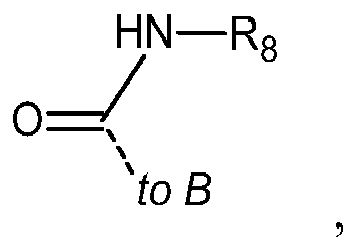
wherein B is

and wherein m is from 0 to 4, preferably from 0 to 2,
wherein, preferably, C is
wherein, most preferably, C is

wherein B is the same or different for each occurrence,
wherein C is the same or different for each occurrence,
wherein R9 is hydrogen, methyl or straight or branched alkyl which is unsubstituted or substituted with one or more substituents selected from the group consisting of halogen, preferably F, Cl, Br, or I, hydroxyl, amino, nitro, cyano, thiol, sulfonyl, carbonyl, carboxyl, substituted or unsubstituted aryl, preferably substituted or unsubstituted phenyl, and substituted or unsubstituted heteroaryl,
wherein, preferably, the molecular weight of R9 is below 2000 Dalton, more preferably below 1000 Dalton, more preferably below 500 Dalton, more preferably below 450 Dalton, more preferably below 250 Dalton, more preferably below 200 Dalton, more preferably below 150 Dalton, more preferably below 100 Dalton, more preferably below 50 Dalton,
wherein, most preferably, said compound has the structure represented by Formula V: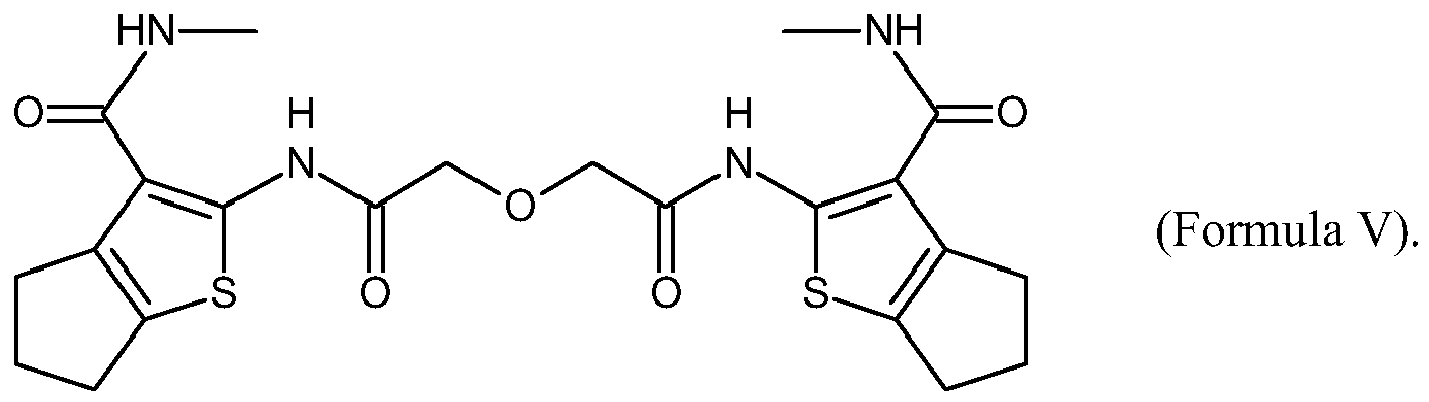
- A method for activating protein phosphatase 5, said method comprising the steps of contacting protein phosphatase 5 with a compound according to any of claims 1-3 or 5-10 in an amount sufficient to activate protein phosphatase 5.
- A pharmaceutical composition comprising one or more compounds as defined in any of claims 1-3 or 5-11.
Priority Applications (1)
| Application Number | Priority Date | Filing Date | Title |
|---|---|---|---|
| EP13194865.5A EP2878677A1 (en) | 2013-11-28 | 2013-11-28 | Activators of protein phosphatase 5 |
Applications Claiming Priority (1)
| Application Number | Priority Date | Filing Date | Title |
|---|---|---|---|
| EP13194865.5A EP2878677A1 (en) | 2013-11-28 | 2013-11-28 | Activators of protein phosphatase 5 |
Publications (1)
| Publication Number | Publication Date |
|---|---|
| EP2878677A1 true EP2878677A1 (en) | 2015-06-03 |
Family
ID=49679387
Family Applications (1)
| Application Number | Title | Priority Date | Filing Date |
|---|---|---|---|
| EP13194865.5A Withdrawn EP2878677A1 (en) | 2013-11-28 | 2013-11-28 | Activators of protein phosphatase 5 |
Country Status (1)
| Country | Link |
|---|---|
| EP (1) | EP2878677A1 (en) |
Cited By (4)
| Publication number | Priority date | Publication date | Assignee | Title |
|---|---|---|---|---|
| CN111329857A (en) * | 2020-04-10 | 2020-06-26 | 青岛大学附属医院 | A kind of fluorobenzamide derivative injection and its anti-breast cancer application |
| CN113321665A (en) * | 2021-06-22 | 2021-08-31 | 大连医科大学 | P23 small-molecule inhibitor, preparation method and application |
| US11464770B2 (en) | 2016-07-29 | 2022-10-11 | Korea Research Institute Of Chemical Technology | Anticancer pharmaceutical composition |
| WO2023236920A1 (en) * | 2022-06-07 | 2023-12-14 | Sironax Ltd. | Sarm1 modulators, preparations, and uses thereof |
Citations (1)
| Publication number | Priority date | Publication date | Assignee | Title |
|---|---|---|---|---|
| JP2013177348A (en) * | 2012-02-28 | 2013-09-09 | Kagawa Univ | Method for regulating function of tpr motif protein, method for screening substance for regulating function of tpr motif protein, and function-regulating substance |
-
2013
- 2013-11-28 EP EP13194865.5A patent/EP2878677A1/en not_active Withdrawn
Patent Citations (1)
| Publication number | Priority date | Publication date | Assignee | Title |
|---|---|---|---|---|
| JP2013177348A (en) * | 2012-02-28 | 2013-09-09 | Kagawa Univ | Method for regulating function of tpr motif protein, method for screening substance for regulating function of tpr motif protein, and function-regulating substance |
Non-Patent Citations (36)
| Title |
|---|
| ANDREW J. RAMSEY ET AL: "Identification of Potential Physiological Activators of Protein Phosphatase 5 +", BIOCHEMISTRY, vol. 41, no. 17, 1 April 2002 (2002-04-01), pages 5625 - 5632, XP055111626, ISSN: 0006-2960, DOI: 10.1021/bi016090h * |
| BAHL, R.; BRADLEY, K.C.; THOMPSON, K.J.; SWAIN, R.A.; ROSSIE, S.; MEISEL, R.L.: "Localization of protein Ser/Thr phosphatase 5 in rat brain", BRAIN RESEARCH MOLECULAR BRAIN RESEARCH, vol. 90, 2001, pages 101 - 109 |
| BAUMGRASS, R.; WEIWAD, M.; ERDMANN, F.; LIU, J.O.; WUNDERLICH, D.; GRABLEY, S.; FISCHER, G.: "Reversible inhibition of calcineurin by the polyphenolic aldehyde gossypol", JOURNAL OF BIOLOGICAL CHEMISTRY, vol. 276, 2001, pages 47914 - 47921 |
| BRUNDEN, K.R.; TROJANOWSKI, J.Q.; LEE, V.M.: "Advances in tau-focused drug discovery for Alzheimer's disease and related tauopathies", NATURE REVIEWS DRUG DISCOVERY, vol. 8, 2009, pages 783 - 793 |
| CHEN, M.X.; MCPARTLIN, A.E.; BROWN, L.; CHEN, Y.H.; BARKER, H.M.; COHEN, P.T.: "A novel human protein serine/threonine phosphatase, which possesses four tetratricopeptide repeat motifs and localizes to the nucleus", THE EMBO JOURNAL, vol. 13, 1994, pages 4278 - 4290 |
| CHER CHARMIAN ET AL: "Identification of Chaulmoogric Acid as a Small Molecule Activator of Protein Phosphatase 5", APPLIED BIOCHEMISTRY AND BIOTECHNOLOGY, vol. 160, no. 5, March 2010 (2010-03-01), pages 1450 - 1459, XP002722749 * |
| CHER, C.; TREMBLAY, M.H.; BARBER, J.R.; CHUNG NG, S.; ZHANG, B.: "Identification of chaulmoogric acid as a small molecule activator of protein phosphatase 5", APPLIED BIOCHEMISTRY AND BIOTECHNOLOGY, vol. 160, 2010, pages 1450 - 1459 |
| CLIFF, M.J.; HARRIS, R.; BARFORD, D.; LADBURY, J.E.; WILLIAMS, M.A.: "Conformational diversity in the TPR domain-mediated interaction of protein phosphatase 5 with Hsp90", STRUCTURE, vol. 14, 2006, pages 415 - 426 |
| DUNDAS, J.; OUYANG, Z.; TSENG, J.; BINKOWSKI, A.; TURPAZ, Y.; LIANG, J.: "CASTp: computed atlas of surface topography of proteins with structural and topographical mapping of functionally annotated residues", NUCLEIC ACIDS RESEARCH, vol. 34, 2006, pages L 16 - 118 |
| EMELINA E E ET AL: "Highly regioselective synthesis of trifluoromethyl derivatives of pyrazolo[1,5-a]pyrimidines bearing fused cycloalkane rings using (2-ethoxycycloalkenyl)-2,2,2-trifluoroethanones", JOURNAL OF FLUORINE CHEMISTRY, ELSEVIER, NL, vol. 130, no. 10, 1 October 2009 (2009-10-01), pages 861 - 869, XP026613427, ISSN: 0022-1139, [retrieved on 20090701], DOI: 10.1016/J.JFLUCHEM.2009.06.014 * |
| FUMINORI YAMAGUCHI ET AL: "Suramin is a Novel Activator of PP5 and Biphasically Modulates S100-Activated PP5 Activity", APPLIED BIOCHEMISTRY AND BIOTECHNOLOGY, vol. 172, no. 1, 26 September 2013 (2013-09-26) - 1 January 2014 (2014-01-01), pages 237 - 247, XP055111628, ISSN: 0273-2289, DOI: 10.1007/s12010-013-0522-6 * |
| GAISER, A.M.; BRANDT, F.; RICHTER, K.: "The non-canonical Hop protein from Caenorhabditis elegans exerts essential functions and forms binary complexes with either Hsc70 or Hsp90", JOURNAL OF MOLECULAR BIOLOGY, vol. 391, 2009, pages 621 - 634 |
| GAISER, A.M.; KAISER, C.J.; HASLBECK, V.; RICHTER, K.: "Downregulation of the Hsp90 system causes defects in muscle cells of Caenorhabditis elegans", PLOS ONE, vol. 6, 2011, pages E25485 |
| GAISER, A.M.; KRETZSCHMAR, A.; RICHTER, K.: "Cdc37-Hsp90 complexes are responsive to nucleotide-induced conformational changes and binding of further cofactors", THE JOURNAL OF BIOLOGICAL CHEMISTRY, vol. 285, 2010, pages 40921 - 40932 |
| HAASS, C.: "Initiation and propagation of neurodegeneration", NATURE MEDICINE, vol. 16, 2010, pages 1201 - 1204 |
| HAJDUK, P.J.; OLEJNICZAK, E.T.; FESIK, S.W.: "One-dimensional relaxation- and diffusion-edited NMR methods for screening compounds that bind to macromolecules", J AM CHEM SOC, vol. 119, 1997, pages 12257 - 12261 |
| J. L. MCCONNELL ET AL: "Targeting Protein Serine/Threonine Phosphatases for Drug Development", MOLECULAR PHARMACOLOGY, vol. 75, no. 6, 1 June 2009 (2009-06-01), pages 1249 - 1261, XP055111118, ISSN: 0026-895X, DOI: 10.1124/mol.108.053140 * |
| JACK, C.R., JR.; KNOPMAN, D.S.; JAGUST, W.J.; PETERSEN, R.C.; WEINER, M.W.; AISEN, P.S.; SHAW, L.M.; VEMURI, P.; WISTE, H.J.; WEIG: "Tracking pathophysiological processes in Alzheimer's disease: an updated hypothetical model of dynamic biomarkers", LANCET NEUROLOGY, vol. 12, 2013, pages 207 - 216 |
| JEGANATHAN, S.; HASCHER, A.; CHINNATHAMBI, S.; BIERNAT, J.; MANDELKOW, E.M.; MANDELKOW, E.: "Proline-directed pseudo-phosphorylation at AT8 and PHF1 epitopes induces a compaction of the paperclip folding of Tau and generates a pathological (MC-1) conformation", THE JOURNAL OF BIOLOGICAL CHEMISTRY, vol. 283, 2008, pages 32066 - 32076 |
| KABSCH, W.: "Automatic Processing of Rotation Diffraction Data from Crystals of Initially Unknown Symmetry and Cell Constants", JOURNAL OF APPLIED CRYSTALLOGRAPHY, vol. 26, 1993, pages 795 - 800 |
| KANG, H.; SAYNER, S.L.; GROSS, K.L.; RUSSELL, L.C.; CHINKERS, M.: "Identification of amino acids in the tetratricopeptide repeat and C-terminal domains of protein phosphatase 5 involved in autoinhibition and lipid activation", BIOCHEMISTRY, vol. 40, 2001, pages 10485 - 10490 |
| LI, X.; KUMAR, Y.; ZEMPEL, H.; MANDELKOW, E.M.; BIERNAT, J.; MANDELKOW, E.: "Novel diffusion barrier for axonal retention of Tau in neurons and its failure in neurodegeneration", THE EMBO JOURNAL, vol. 30, 2011, pages 4825 - 4837 |
| LIU, F.; GRUNDKE-IQBAL, I.; IQBAL, K.; GONG, C.X.: "Contributions of protein phosphatases PP1, PP2A, PP2B and PP5 to the regulation of tau phosphorylation", THE EUROPEAN JOURNAL OF NEUROSCIENCE, vol. 22, 2005, pages 1942 - 1950 |
| LIU, F.; IQBAL, K.; GRUNDKE-IQBAL, I.; ROSSIE, S.; GONG, C.X.: "Dephosphorylation of tau by protein phosphatase 5: impairment in Alzheimer's disease", THE JOURNAL OF BIOLOGICAL CHEMISTRY, vol. 280, 2005, pages 1790 - 1796 |
| MCCONNELL, J.L.; WADZINSKI, B.E.: "Targeting protein serine/threonine phosphatases for drug development", MOLECULAR PHARMACOLOGY, vol. 75, 2009, pages 1249 - 1261 |
| MCCOY, A.J.; GROSSE-KUNSTLEVE, R.W.; ADAMS, P.D.; WINN, M.D.; STORONI, L.C.; READ, R.J.: "Phaser crystallographic software", JOURNAL OF APPLIED CRYSTALLOGRAPHY, vol. 40, 2007, pages 658 - 674 |
| MG SPILLANTI; M GOEDERT: "Tau pathology and neurodegeneration", LANCET NEUROLOGY, vol. 12, 2013, pages 609 - 622 |
| MONDRAGON, A.; GRIFFITH, E.C.; SUN, L.; XIONG, F.; ARMSTRONG, C.; LIU, J.O.: "Overexpression and purification of human calcineurin alpha from Escherichia coli and assessment of catalytic functions of residues surrounding the binuclear metal center", BIOCHEMISTRY, vol. 36, 1997, pages 4934 - 4942 |
| RAMSEY, A.J.; CHINKERS, M.: "Identification of potential physiological activators of protein phosphatase 5", BIOCHEMISTRY, vol. 41, 2002, pages 5625 - 5632 |
| SALMINEN, A.; OJALA, J.; KAARNIRANTA, K.; HILTUNEN, M.; SOININEN, H.: "Hsp90 regulates tau pathology through co-chaperone complexes in Alzheimer's disease", PROGRESS IN NEUROBIOLOGY, vol. 93, 2011, pages 99 - 110 |
| SKLENAR, V.; PIOTTO, M.; LEPPIK, R.; SAUDEK, V.: "Gradient-Tailored Water Suppression for H-1-N-15 Hsqc Experiments Optimized to Retain Full Sensitivity", J MAGN RESON SER A, vol. 102, 1993, pages 241 - 245 |
| SPILLANTI, M.G.; GOEDERT, M.: "Tau pathology and neurodegeneration", LANCET NEUROLOGY, vol. 12, 2013, pages 609 - 622 |
| STAFFORD, W.F., 3RD: "Boundary analysis in sedimentation transport experiments: a procedure for obtaining sedimentation coefficient distributions using the time derivative of the concentration profile", ANALYTICAL BIOCHEMISTRY, vol. 203, 1992, pages 295 - 301 |
| TUNG, H.Y.; ALEMANY, S.; COHEN, P.: "The protein phosphatases involved in cellular regulation. 2. Purification, subunit structure and properties of protein phosphatases-2A0, 2A1, and 2A2 from rabbit skeletal muscle", EUROPEAN JOURNAL OF BIOCHEMISTRY / FEBS, vol. 148, 1985, pages 253 - 263 |
| VAGIN, A.A.; STEINER, R.A.; LEBEDEV, A.A.; POTTERTON, L.; MCNICHOLAS, S.; LONG, F.; MURSHUDOV, G.N.: "REFMAC5 dictionary: organization of prior chemical knowledge and guidelines for its use. Acta crystallographica Section D", BIOLOGICAL CRYSTALLOGRAPHY, vol. 60, 2004, pages 2184 - 2195 |
| YANG, J.; ROE, S.M.; CLIFF, M.J.; WILLIAMS, M.A.; LADBURY, J.E.; COHEN, P.T.; BARFORD, D.: "Molecular basis for TPR domain-mediated regulation of protein phosphatase 5", THE EMBO JOURNAL, vol. 24, 2005, pages 1 - 10 |
Cited By (5)
| Publication number | Priority date | Publication date | Assignee | Title |
|---|---|---|---|---|
| US11464770B2 (en) | 2016-07-29 | 2022-10-11 | Korea Research Institute Of Chemical Technology | Anticancer pharmaceutical composition |
| CN111329857A (en) * | 2020-04-10 | 2020-06-26 | 青岛大学附属医院 | A kind of fluorobenzamide derivative injection and its anti-breast cancer application |
| CN111329857B (en) * | 2020-04-10 | 2022-10-11 | 青岛大学附属医院 | A kind of fluorobenzamide derivative injection and its anti-breast cancer application |
| CN113321665A (en) * | 2021-06-22 | 2021-08-31 | 大连医科大学 | P23 small-molecule inhibitor, preparation method and application |
| WO2023236920A1 (en) * | 2022-06-07 | 2023-12-14 | Sironax Ltd. | Sarm1 modulators, preparations, and uses thereof |
Similar Documents
| Publication | Publication Date | Title |
|---|---|---|
| Antico et al. | Targeting mitophagy in neurodegenerative diseases | |
| Xu et al. | Metformin activates chaperone-mediated autophagy and improves disease pathologies in an Alzheimer disease mouse model | |
| Calleja et al. | Role of a novel PH-kinase domain interface in PKB/Akt regulation: structural mechanism for allosteric inhibition | |
| Zheng et al. | A novel dephosphorylation targeting chimera selectively promoting tau removal in tauopathies | |
| Trzeciakiewicz et al. | A dual pathogenic mechanism links tau acetylation to sporadic tauopathy | |
| Harrington et al. | The TSC1-2 tumor suppressor controls insulin–PI3K signaling via regulation of IRS proteins | |
| Kikuchi et al. | Dishevelled, a Wnt signalling component, is involved in mitotic progression in cooperation with Plk1 | |
| Matenia et al. | Microtubule affinity-regulating kinase 2 (MARK2) turns on phosphatase and tensin homolog (PTEN)-induced kinase 1 (PINK1) at Thr-313, a mutation site in Parkinson disease: effects on mitochondrial transport | |
| Chiu et al. | PARK14 PLA2G6 mutants are defective in preventing rotenone-induced mitochondrial dysfunction, ROS generation and activation of mitochondrial apoptotic pathway | |
| Chen et al. | Neuroglobin attenuates Alzheimer‐like tau hyperphosphorylation by activating Akt signaling | |
| US20150337382A1 (en) | Further use of protein kinase n beta | |
| Chen et al. | Brain-selective kinase 2 (BRSK2) phosphorylation on PCTAIRE1 negatively regulates glucose-stimulated insulin secretion in pancreatic β-cells | |
| Zhang et al. | Diaminothiazoles Modify Tau Phosphorylation and Improve the Tauopathy in Mouse Models*♦ | |
| Gudi et al. | Centrobin-mediated regulation of the centrosomal protein 4.1-associated protein (CPAP) level limits centriole length during elongation stage | |
| Rubio-Villena et al. | Glycogenic activity of R6, a protein phosphatase 1 regulatory subunit, is modulated by the laforin–malin complex | |
| Zheng et al. | S-acylation of ATGL is required for lipid droplet homoeostasis in hepatocytes | |
| Koida et al. | Inhibitory role of Plk1 in the regulation of p73-dependent apoptosis through physical interaction and phosphorylation | |
| Yu et al. | Arginase-II activates mTORC1 through myosin-1b in vascular cell senescence and apoptosis | |
| Wang et al. | Activation of Polo-like kinase 3 by hypoxic stresses | |
| Haslbeck et al. | Selective activators of protein phosphatase 5 target the auto-inhibitory mechanism | |
| Rouland et al. | Therapeutic potential of parkin as a tumor suppressor via transcriptional control of cyclins in glioblastoma cell and animal models | |
| Koch et al. | Systematic functional analysis of Bicaudal-D serine phosphorylation and intragenic suppression of a female sterile allele of BicD | |
| Rademacher et al. | A single amino acid residue regulates PTEN-binding and stability of the spinal muscular atrophy protein SMN | |
| Jo et al. | Mitogen-activated protein kinase kinase 1 (MEK1) stabilizes MyoD through direct phosphorylation at tyrosine 156 during myogenic differentiation | |
| KR20130032286A (en) | Novel use of leucyl trna synthetase |
Legal Events
| Date | Code | Title | Description |
|---|---|---|---|
| PUAI | Public reference made under article 153(3) epc to a published international application that has entered the european phase |
Free format text: ORIGINAL CODE: 0009012 |
|
| 17P | Request for examination filed |
Effective date: 20131128 |
|
| AK | Designated contracting states |
Kind code of ref document: A1 Designated state(s): AL AT BE BG CH CY CZ DE DK EE ES FI FR GB GR HR HU IE IS IT LI LT LU LV MC MK MT NL NO PL PT RO RS SE SI SK SM TR |
|
| AX | Request for extension of the european patent |
Extension state: BA ME |
|
| STAA | Information on the status of an ep patent application or granted ep patent |
Free format text: STATUS: THE APPLICATION IS DEEMED TO BE WITHDRAWN |
|
| 18D | Application deemed to be withdrawn |
Effective date: 20151204 |