EP2878621A1 - Thermoplastic resin composition and molded article including the same - Google Patents
Thermoplastic resin composition and molded article including the same Download PDFInfo
- Publication number
- EP2878621A1 EP2878621A1 EP14195099.8A EP14195099A EP2878621A1 EP 2878621 A1 EP2878621 A1 EP 2878621A1 EP 14195099 A EP14195099 A EP 14195099A EP 2878621 A1 EP2878621 A1 EP 2878621A1
- Authority
- EP
- European Patent Office
- Prior art keywords
- thermoplastic resin
- resin composition
- group
- weight
- parts
- Prior art date
- Legal status (The legal status is an assumption and is not a legal conclusion. Google has not performed a legal analysis and makes no representation as to the accuracy of the status listed.)
- Granted
Links
Images
Classifications
-
- C—CHEMISTRY; METALLURGY
- C08—ORGANIC MACROMOLECULAR COMPOUNDS; THEIR PREPARATION OR CHEMICAL WORKING-UP; COMPOSITIONS BASED THEREON
- C08K—Use of inorganic or non-macromolecular organic substances as compounding ingredients
- C08K5/00—Use of organic ingredients
- C08K5/54—Silicon-containing compounds
- C08K5/541—Silicon-containing compounds containing oxygen
- C08K5/5435—Silicon-containing compounds containing oxygen containing oxygen in a ring
-
- C—CHEMISTRY; METALLURGY
- C08—ORGANIC MACROMOLECULAR COMPOUNDS; THEIR PREPARATION OR CHEMICAL WORKING-UP; COMPOSITIONS BASED THEREON
- C08L—COMPOSITIONS OF MACROMOLECULAR COMPOUNDS
- C08L69/00—Compositions of polycarbonates; Compositions of derivatives of polycarbonates
-
- C—CHEMISTRY; METALLURGY
- C08—ORGANIC MACROMOLECULAR COMPOUNDS; THEIR PREPARATION OR CHEMICAL WORKING-UP; COMPOSITIONS BASED THEREON
- C08K—Use of inorganic or non-macromolecular organic substances as compounding ingredients
- C08K3/00—Use of inorganic substances as compounding ingredients
- C08K3/34—Silicon-containing compounds
- C08K3/36—Silica
-
- C—CHEMISTRY; METALLURGY
- C08—ORGANIC MACROMOLECULAR COMPOUNDS; THEIR PREPARATION OR CHEMICAL WORKING-UP; COMPOSITIONS BASED THEREON
- C08K—Use of inorganic or non-macromolecular organic substances as compounding ingredients
- C08K5/00—Use of organic ingredients
- C08K5/54—Silicon-containing compounds
- C08K5/541—Silicon-containing compounds containing oxygen
- C08K5/5415—Silicon-containing compounds containing oxygen containing at least one Si—O bond
- C08K5/5419—Silicon-containing compounds containing oxygen containing at least one Si—O bond containing at least one Si—C bond
-
- C—CHEMISTRY; METALLURGY
- C08—ORGANIC MACROMOLECULAR COMPOUNDS; THEIR PREPARATION OR CHEMICAL WORKING-UP; COMPOSITIONS BASED THEREON
- C08K—Use of inorganic or non-macromolecular organic substances as compounding ingredients
- C08K5/00—Use of organic ingredients
- C08K5/54—Silicon-containing compounds
- C08K5/549—Silicon-containing compounds containing silicon in a ring
-
- C—CHEMISTRY; METALLURGY
- C08—ORGANIC MACROMOLECULAR COMPOUNDS; THEIR PREPARATION OR CHEMICAL WORKING-UP; COMPOSITIONS BASED THEREON
- C08K—Use of inorganic or non-macromolecular organic substances as compounding ingredients
- C08K9/00—Use of pretreated ingredients
- C08K9/04—Ingredients treated with organic substances
-
- C—CHEMISTRY; METALLURGY
- C08—ORGANIC MACROMOLECULAR COMPOUNDS; THEIR PREPARATION OR CHEMICAL WORKING-UP; COMPOSITIONS BASED THEREON
- C08K—Use of inorganic or non-macromolecular organic substances as compounding ingredients
- C08K9/00—Use of pretreated ingredients
- C08K9/04—Ingredients treated with organic substances
- C08K9/06—Ingredients treated with organic substances with silicon-containing compounds
-
- C—CHEMISTRY; METALLURGY
- C08—ORGANIC MACROMOLECULAR COMPOUNDS; THEIR PREPARATION OR CHEMICAL WORKING-UP; COMPOSITIONS BASED THEREON
- C08L—COMPOSITIONS OF MACROMOLECULAR COMPOUNDS
- C08L67/00—Compositions of polyesters obtained by reactions forming a carboxylic ester link in the main chain; Compositions of derivatives of such polymers
-
- C—CHEMISTRY; METALLURGY
- C08—ORGANIC MACROMOLECULAR COMPOUNDS; THEIR PREPARATION OR CHEMICAL WORKING-UP; COMPOSITIONS BASED THEREON
- C08L—COMPOSITIONS OF MACROMOLECULAR COMPOUNDS
- C08L83/00—Compositions of macromolecular compounds obtained by reactions forming in the main chain of the macromolecule a linkage containing silicon with or without sulfur, nitrogen, oxygen or carbon only; Compositions of derivatives of such polymers
- C08L83/04—Polysiloxanes
-
- C—CHEMISTRY; METALLURGY
- C08—ORGANIC MACROMOLECULAR COMPOUNDS; THEIR PREPARATION OR CHEMICAL WORKING-UP; COMPOSITIONS BASED THEREON
- C08L—COMPOSITIONS OF MACROMOLECULAR COMPOUNDS
- C08L83/00—Compositions of macromolecular compounds obtained by reactions forming in the main chain of the macromolecule a linkage containing silicon with or without sulfur, nitrogen, oxygen or carbon only; Compositions of derivatives of such polymers
- C08L83/04—Polysiloxanes
- C08L83/06—Polysiloxanes containing silicon bound to oxygen-containing groups
-
- C—CHEMISTRY; METALLURGY
- C08—ORGANIC MACROMOLECULAR COMPOUNDS; THEIR PREPARATION OR CHEMICAL WORKING-UP; COMPOSITIONS BASED THEREON
- C08L—COMPOSITIONS OF MACROMOLECULAR COMPOUNDS
- C08L2201/00—Properties
- C08L2201/08—Stabilised against heat, light or radiation or oxydation
-
- C—CHEMISTRY; METALLURGY
- C08—ORGANIC MACROMOLECULAR COMPOUNDS; THEIR PREPARATION OR CHEMICAL WORKING-UP; COMPOSITIONS BASED THEREON
- C08L—COMPOSITIONS OF MACROMOLECULAR COMPOUNDS
- C08L2205/00—Polymer mixtures characterised by other features
- C08L2205/03—Polymer mixtures characterised by other features containing three or more polymers in a blend
Definitions
- the present invention relates to a thermoplastic resin composition and a molded article including the same. More particularly, the present invention relates to a thermoplastic resin composition which exhibits excellent properties in terms of impact resistance, heat resistance, scratch resistance, surface gloss, mar resistance and the like, and a molded article including the same.
- polycarbonate resins exhibit excellent mechanical properties, impact resistance, thermal stability, self-extinguishability, dimensional stability, heat stability, and the like, polycarbonate resins are applied to electronic products, automotive components, lenses, glass substitute materials, and the like. However, the polycarbonate resins exhibit extremely poor scratch resistance and suffer from yellowing when exposed to sunlight for a long period of time.
- polyester resins exhibit excellent mechanical properties, electrical properties, chemical resistance, moldability, scratch resistance, and the like, the polyester resins are spotlighted as a thermosetting resin for injection molding, a metal substitute material and the like, and are applied to automotive components, electronic products and the like.
- the polyester resins have a glass transition temperature from 40°C to 60°C and thus have low heat deflection temperature, and suffer from deterioration in impact resistance at room temperature and at low temperature.
- High-gloss and high-impact products are generally subjected to painting and the like.
- painting requires plural processes and has problems, such as high defect rate, generation of large amounts of toxic volatile components, cost rise, and the like.
- non-painting materials are developed.
- To use a certain material as a non-painting material it is necessary for the material to realize high gloss and to exhibit excellent properties in terms of scratch resistance, impact resistance and the like.
- non-painting resins materials
- polycarbonate/polyester alloys are used for materials requiring impact resistance, scratch resistance and the like, the polycarbonate/polyester alloys have a limit in use for high-gloss and high-impact resistant products due to low mar resistance thereof.
- coating methods such as silicone and vinyl compound coating, acrylic/melamine clear coating and the like, and additives such as slip additives, wax, inorganic fillers, nanoparticles and the like, may be used.
- these methods can cause deterioration in other properties such as color difference, impact resistance, heat resistance, and the like.
- thermoplastic resin composition that exhibits excellent properties in terms of impact resistance, heat resistance, scratch resistance, surface gloss, mar resistance, and the like.
- thermoplastic resin composition that exhibits excellent properties in terms of impact resistance, heat resistance, scratch resistance, surface gloss, mar resistance and the like, and a molded article including the composition.
- thermoplastic resin composition includes: a thermoplastic resin including a polycarbonate resin; a siloxane compound represented by Formula 1; and surface-modified hydrophobic silica, wherein R 1 and R 2 are a C 1 to C 5 alkyl group; R 3 and R 4 are a C 2 to C 10 alkylene group; A 1 and A 2 are a glycidoxy group, an epoxy group, an amine group, a hydroxyl group, a hydrogen atom, a vinyl group, a (meth)acryloyl group, or an aryl group; and n is an integer from 2 to 80.
- the siloxane compound may be present in an amount of 0.1 parts by weight to 3 parts by weight based on 100 parts by weight of the thermoplastic resin, and the surface-modified hydrophobic silica may be present in an amount of 0.1 parts by weight to 3 parts by weight based on 100 parts by weight of the thermoplastic resin.
- a weight ratio of the siloxane compound to the surface-modified hydrophobic silica may range from 1:0.5 to 1:1.5.
- thermoplastic resin may further include a polyester resin.
- siloxane compound may be represented by Formula 1a: wherein n is an integer from 2 to 80.
- the surface-modified hydrophobic silica may include silica in which a hydroxyl group of a surface of silica is substituted with a hydrophobic group including at least one of C 1 to C 8 alkyl groups and silane compounds.
- thermoplastic resin composition may have an Izod impact strength from 14 kgf ⁇ cm/cm to 80 kgf ⁇ cm/cm, as measured on an 1/4" thick specimen in accordance with ASTM D256.
- thermoplastic resin composition may have a heat deflection temperature (HDT) from 110°C to 150°C, as measured in accordance with ASTM D648.
- HDT heat deflection temperature
- the thermoplastic resin composition may have a difference in 60° specular gloss ( ⁇ Gloss (60°)) from -2 to 5, as calculated through measurement on an 10 cm ⁇ 15 cm specimen using a crockmeter in accordance with ASTM D523 before and after the specimen is rubbed with predetermined white cotton cloths 10 times.
- ⁇ Gloss 60° specular gloss
- Another aspect of the present invention relates to a molded article formed from the above thermoplastic resin composition.
- thermoplastic resin composition includes (A) a thermoplastic resin including a polycarbonate resin, (B) a siloxane compound including a functional group at both ends thereof, and (C) surface-modified hydrophobic silica.
- the thermoplastic resin includes a polycarbonate resin.
- the thermoplastic resin may consist of a polycarbonate resin alone, or may be a mixture of a polycarbonate resin and another thermoplastic resin other than the polycarbonate resin.
- the polycarbonate resin is a typical thermoplastic polycarbonate resin.
- the polycarbonate resin may be an aromatic polycarbonate resin prepared by reacting diphenols (aromatic diol compounds) with a precursor such as phosgene, halogen formates, aromatic carbonates, and the like.
- diphenols may include 4,4'-biphenol, 2,2-bis(4-hydroxyphenyl)propane, 2,4-bis(4-hydroxyphenyl)-2-methylbutane, 1,1-bis(4-hydroxyphenyl)cyclohexane, 2,2-bis(3-chloro-4-hydroxyphenyl)propane, and 2,2-bis(3,5-dichloro-4-hydroxyphenyl)propane, without being limited thereto.
- diphenols may be 2,2-bis(4-hydroxyphenyl)propane, 2,2-bis(3,5-dichloro-4-hydroxyphenyl)propane, or 1,1-bis(4-hydroxyphenyl)cyclohexane, specifically 2,2-bis(4-hydroxyphenyl)propane, which is also referred to as bisphenol-A.
- the polycarbonate resin may be a branched polycarbonate resin and may be prepared by, for example, reacting 0.05 mol% to 2 mol% of a polyfunctional compound containing tri- or higher functional groups, for example, tri or higher-valent phenol groups, based on the total amount of diphenols used in polymerization.
- the polycarbonate resin may be used in the form of a homo-polycarbonate resin, a copolycarbonate resin, or blends thereof.
- the polycarbonate resin may have a weight average molecular weight (Mw) from 10,000 g/mol to 200,000 g/mol, for example, from 15,000 g/mol to 80,000 g/mol, as measured by gel permeation chromatography (GPC). Within this range, the thermoplastic resin composition can exhibit excellent impact resistance, heat resistance, and the like.
- Mw weight average molecular weight
- thermoplastic resin other than the polycarbonate resin may be a typical thermoplastic resin, such as polyester, aromatic vinyl, polyphenylene ether, acrylic, polyamide, polyolefin resins, and the like.
- thermoplastic resin other than the polycarbonate resin is a polyester resin.
- the polyester resin may be any polyester resin used for typical thermoplastic resin compositions without limitation.
- the polyester resin may be obtained by polycondensation of a dicarboxylic acid compound and a diol compound, which can be easily realized by those skilled in the art.
- dicarboxylic acid compound may include terephthalic acid (TPA), isophthalic acid (IPA), 1,2-naphthalenedicarboxylic acid, 1,4-naphthalenedicarboxylic acid, 1,5-naphthalenedicarboxylic acid, 1,6-naphthalenedicarboxylic acid, 1,7-naphthalenedicarboxylic acid, 1,8-naphthalenedicarboxylic acid, 2,3-naphthalenedicarboxylic acid, 2,6-naphthalenedicarboxylic acid, 2,7-naphthalenedicarboxylic acid, aromatic dicarboxylates in which acid is substituted with a dimethyl group, such as dimethyl terephthalate (DMT) and dimethyl isophthalate, alkyl ester of naphthalenedicarboxylic acid, dimethyl-1,2-naphthalate, dimethyl-1,5-naphthalate, dimethyl-1,7-naphthalate, dimethyl-1,7-naphthalate, di
- the diol compound may include C 2 to C 12 diols, for example, ethylene glycol, 1,2-propylene glycol, 1,3-propylene glycol, 2,2-dimethyl-1,3-propanediol, 2,2-dimethyl-1,3-propylene glycol, 1,3-butanediol, 1,4-butanediol, 1,5-pentanediol, 1,5-pentanediol, 1,6-hexanediol, 1,3-cyclohexanedimethanol, 1,4-cyclohexanedimethanol, and mixtures thereof.
- C 2 to C 12 diols for example, ethylene glycol, 1,2-propylene glycol, 1,3-propylene glycol, 2,2-dimethyl-1,3-propanediol, 2,2-dimethyl-1,3-propylene glycol, 1,3-butanediol, 1,4-butanediol, 1,5-p
- the polyester resin may have an intrinsic viscosity from 0.75 dl/g to 1.50 dl/g, for example, from 0.90 dl/g to 1.12 dl/g as measured using a Ubbelohde viscometer in phenol and 1,2-dichlorobezene solution (solvent weight ratio: 50/50, solute concentration: 0.5 g/dl) at 25°C.
- the thermoplastic resin composition can exhibit excellent scratch resistance, moldability, and the like.
- the thermoplastic resin when the thermoplastic resin other than the polycarbonate resin, such as the polyester resin, is used, the thermoplastic resin may be present in an amount of 1% by weight (wt%) to 30 wt%, for example, 5 wt% to 10 wt% based on the total weight(100 wt%) of the thermoplastic resin(i.e., based on the total weight of the polycarbonate resin and the thermoplastic resin other than the polycarbonate resin).
- the thermoplastic resin can include the thermoplastic resin other than the polycarbonate resin in an amount of 1, 2, 3, 4, 5, 6, 7, 8, 9, 10, 11, 12, 13, 14, 15, 16, 17, 18, 19, 20, 21, 22, 23, 24, 25, 26, 27, 28, 29, or 30 wt%.
- the amount of the thermoplastic resin other than the polycarbonate resin can be in a range from any of the foregoing amounts to any other of the foregoing amounts. Within this range, the thermoplastic resin composition can exhibit further improved scratch resistance, mar resistance, and the like.
- the siloxane compound can reduce a surface friction coefficient of the thermoplastic resin composition (specimen), thereby improving mar resistance of the composition.
- the siloxane compound may be represented by Formula 1. wherein R 1 and R 2 may be a C 1 to C 5 alkyl group, for example, a methyl, ethyl, propyl, butyl group, or the like, specifically a methyl group; R 3 and R 4 may be a C 2 to C 10 alkylene group, for example, an ethylene, propylene, butylene, pentylene, hexylene group, or the like; A 1 and A 2 may be a glycidoxy group, an epoxy group, an amine group, a hydroxyl group, a hydrogen atom, a vinyl group, a (meth)acryloyl group, or an aryl group, for example, a glycidoxy group; and n is an integer from 2 to 80, for example, an integer from 20 to 50.
- the siloxane compound may be prepared by reacting a siloxane compound (precursor) represented by Formula 2 with a compound (functional group) represented by Formula 3. wherein R 1 , R 2 and n are defined as in Formula 1.
- the siloxane compound represented by Formula 2 may be prepared by adjusting n through reaction of a linear siloxane having n of 0 with a cyclic siloxane, without being limited thereto.
- the compound represented by Formula 3 may include at least two compounds including different A 3 and R 5 .
- a 3 and R 5 may represent A 1 and A 2 , and R 3 and R 4 of the siloxane compound represented by Formula 1, respectively.
- the reaction may be performed in the presence of a catalyst.
- the catalyst may be a platinum-containing catalyst.
- the catalyst may be a platinum element itself or a platinum-containing compound.
- the catalyst may be present in an amount of 10 ppm to 500 ppm, for example, 50 ppm to 150 ppm, based on the total amount of the reactants.
- the reaction may be performed in an organic solvent.
- the organic solvent may include 1,2-dichloroethane, toluene, xylene, dichlorobenzene, and mixtures thereof, without being limited thereto.
- reaction may be performed in toluene.
- reaction temperature and reaction time may be adjusted depending upon reactivity of the reactants (Formulae 2 and 3).
- reaction may be performed at a temperature from 60°C to 140°C, specifically from 110°C to 120°C for 2 hours to 12 hours, for example, 3 hours to 5 hours, without being limited thereto.
- the siloxane compound may be represented by Formula 1a. wherein n is defined as in Formula 1.
- the siloxane compound may be present in an amount of 0.1 parts by weight to 3 parts by weight, for example, 0.2 parts by weight to 2.5 parts by weight, specifically 0.3 parts by weight to 2 parts by weight, based on 100 parts by weight of the thermoplastic resin.
- the thermoplastic resin composition may include the siloxane compound in an amount of 0.1, 0.2, 0.3, 0.4, 0.5, 0.6, 0.7, 0.8, 0.9, 1, 1.5, 2, 2.5, or 3 parts by weight.
- the amount of siloxane compound can be in a range from any of the foregoing amounts to any other of the foregoing amounts. Within this range, the thermoplastic resin composition can exhibit excellent properties in terms of impact resistance, heat resistance, scratch resistance, surface gloss, mar resistance, and the like.
- the surface-modified hydrophobic silica can improve color difference (surface gloss) of the thermoplastic resin composition by adjusting an index of refraction of the composition, and may include any typical commercially available surface-modified hydrophobic silica.
- the surface-modified hydrophobic silica may be silica in which at least some hydroxyl groups (for example, 0.1 to 90 mol%) of a surface of the silica are substituted with a hydrophobic group such as C 1 to C 8 alkyl groups, silane compounds (coupling agents) including polydimethylsiloxane (PDMS).
- the surface-modified hydrophobic silica may include Aerosil R972 (Evonik Co., Ltd.), Aerosil R972 (Evonik Co., Ltd.), Aerosil R94 (Evonik Co., Ltd.), Aerosil R104 (Evonik Co., Ltd.), Aerosil R106 (Evonik Co., Ltd.), Aerosil R812 (Evonik Co., Ltd.), Aerosil R812S (Evonik Co., Ltd.) , Aerosil R8200 (Evonik Co., Ltd.), Aerosil R805 (Evonik Co., Ltd.) and Aerosil R202 (Evonik Co., Ltd.).
- the surface-modified hydrophobic silica may have an average particle size of 10 nm to 40 nm, for example, from 10 nm to 20 nm; and an average BET surface area from 90 m 2 /g to 290 m 2 /g, for example, from 100 m 2 /g to 200 m 2 /g, without being limited thereto.
- the BET Analyzer ASAP2020 available from Micromeritics Instrument Corporation was used to perform the surface area analysis according to ISO 9277.
- ISO 9277 defines the determination method of the specific surface area of solids by gas adsorption using the BET method.
- the gas used was N 2 .
- the surface-modified hydrophobic silica may be present in an amount of 0.1 parts by weight to 3 parts by weight, for example, 0.2 parts by weight to 2.5 parts by weight, specifically 0.3 parts by weight to 2 parts by weight, based on 100 parts by weight of the thermoplastic resin.
- the thermoplastic resin composition may include the surface-modified hydrophobic silica in an amount of 0.1, 0.2, 0.3, 0.4, 0.5, 0.6, 0.7, 0.8, 0.9, 1, 1.5, 2, 2.5, or 3 parts by weight.
- the amount of surface-modified hydrophobic silica can be in a range from any of the foregoing amounts to any other of the foregoing amounts. Within this range, the thermoplastic resin composition can exhibit excellent properties in terms of impact resistance, heat resistance, scratch resistance, surface gloss, mar resistance, and the like.
- a weight ratio of the siloxane compound to the surface-modified hydrophobic silica may range from 1:0.5 to 1:1.5, for example, from 1:0.7 to 1:1.3. Within this range, the thermoplastic resin composition can exhibit further improved scratch resistance, surface gloss, mar resistance, and the like.
- the thermoplastic resin composition may further include typical additives, such as flame retardants, flame retardant aids, lubricants, plasticizers, heat stabilizers, anti-dripping agents, antioxidants, photostabilizers, pigments, dyes, and the like, as needed.
- additives may be used alone or in combination thereof.
- the additives may be present in an amount of 0.1 parts by weight to 10 parts by weight, based on 100 parts by weight of the thermoplastic resin, without being limited thereto.
- thermoplastic resin composition may be prepared in pellet form by mixing the above components, followed by melt extrusion at 200°C to 280°C, for example, 250°C to 260°C using a typical twin-screw extruder.
- the pellets may be formed into various molded articles through various molding methods such as injection molding, extrusion, vacuum molding, cast molding, and the like. These molding methods are well known among those of ordinary skill in the art.
- the thermoplastic resin composition may have an Izod impact strength from 14 kgf ⁇ cm/cm to 80 kgf ⁇ cm/cm, for example, from 15 kgf ⁇ cm/cm to 70 kgf ⁇ cm/cm, as measured on an 1/4" thick specimen in accordance with ASTM D256.
- the thermoplastic resin composition may have a heat deflection temperature (HDT) from 110°C to 150°C, for example, from 120°C to 140°C, as measured in accordance with ASTM D648.
- HDT heat deflection temperature
- the thermoplastic resin composition may have a difference in 60° specular gloss ( ⁇ Gloss (60°)) from -2 to 5, for example, from -2 to 1.5, as calculated through measurement on an 10 cm ⁇ 15 cm specimen using a crockmeter in accordance with ASTM D523 before and after the specimen is rubbed with predetermined white cotton cloths 50 times or more, for example, 100 times or more.
- ⁇ Gloss 60° specular gloss
- the thermoplastic resin composition may have a falling dart impact (FDI) strength (crack generation energy) of 40 J or more, for example, from 40 J to 50 J, specifically from 44 J to 46 J, as measured on an 3 mm thick specimen (10 cm ⁇ 10 cm ⁇ 3 mm) using an 5 kg dart from a height of 1 m in accordance with the DuPont drop measurement method, in which a maximum height not generating a crack is measured by adjusting a height of the dart, followed by converting the maximum height into potential energy.
- the maximum height not generating a crack is found in such a manner that a dart having a certain weight is dropped onto an 1 mm thick specimen from a varying height, followed by observing whether a crack is generated in the specimen by the naked eye.
- thermoplastic resin composition may have a specular component included (SCI) reflectance (L* measurement) of 32 or less, for example, from 28 to 31; a specular component excluded (SCE) reflectance (L* measurement) of 8.7 or less, for example, from 2.0 to 8.1, as measured on an 10 cm ⁇ 15 cm specimen using a colorimeter.
- SCI specular component included
- SCE specular component excluded
- a molded article is formed from the above thermoplastic resin composition through various molding methods. Since the molded article exhibits excellent properties in terms of impact resistance, heat resistance, scratch resistance, surface gloss, mar resistance, and the like, the molded article is useful for interior/exterior materials for electronic products and automobiles, and the like.
- the prepared components were added in amounts as listed in Tables 1 to 3, respectively, followed by extrusion at 200°C to 280°C, thereby preparing pellets.
- the prepared pellets were dried at 80°C to 100°C for 4 hours or more, followed by injection molding in an injection machine (molding temperature: 290°C, mold temperature: 90°C), thereby preparing specimens.
- Each of the prepared specimens was evaluated as to the following properties. Results are shown in Tables 1 to 3.
- thermoplastic resin composition according to the present invention exhibited excellent properties in terms of impact resistance, heat resistance, scratch resistance, surface gloss, mar resistance, and the like.
Landscapes
- Chemical & Material Sciences (AREA)
- Health & Medical Sciences (AREA)
- Chemical Kinetics & Catalysis (AREA)
- Medicinal Chemistry (AREA)
- Polymers & Plastics (AREA)
- Organic Chemistry (AREA)
- Compositions Of Macromolecular Compounds (AREA)
Abstract

Description
- This application claims priority under 35 USC Section 119 to and the benefit of Korean Patent Application No.
10-2013-0145674, filed November 27, 2013 - The present invention relates to a thermoplastic resin composition and a molded article including the same. More particularly, the present invention relates to a thermoplastic resin composition which exhibits excellent properties in terms of impact resistance, heat resistance, scratch resistance, surface gloss, mar resistance and the like, and a molded article including the same.
- Since polycarbonate resins exhibit excellent mechanical properties, impact resistance, thermal stability, self-extinguishability, dimensional stability, heat stability, and the like, polycarbonate resins are applied to electronic products, automotive components, lenses, glass substitute materials, and the like. However, the polycarbonate resins exhibit extremely poor scratch resistance and suffer from yellowing when exposed to sunlight for a long period of time.
- Since polyester resins exhibit excellent mechanical properties, electrical properties, chemical resistance, moldability, scratch resistance, and the like, the polyester resins are spotlighted as a thermosetting resin for injection molding, a metal substitute material and the like, and are applied to automotive components, electronic products and the like. However, the polyester resins have a glass transition temperature from 40°C to 60°C and thus have low heat deflection temperature, and suffer from deterioration in impact resistance at room temperature and at low temperature.
- High-gloss and high-impact products are generally subjected to painting and the like. However, painting requires plural processes and has problems, such as high defect rate, generation of large amounts of toxic volatile components, cost rise, and the like. To solve such problems of painting, non-painting materials are developed. To use a certain material as a non-painting material, it is necessary for the material to realize high gloss and to exhibit excellent properties in terms of scratch resistance, impact resistance and the like. However, non-painting resins (materials), which have been developed in the art, do not satisfy all properties, such as realization of colors, impact resistance, heat resistance, scratch resistance, and the like, which are required for materials for high-gloss and high-impact resistant products. In addition, although polycarbonate/polyester alloys are used for materials requiring impact resistance, scratch resistance and the like, the polycarbonate/polyester alloys have a limit in use for high-gloss and high-impact resistant products due to low mar resistance thereof.
- To improve gloss durability, coating methods such as silicone and vinyl compound coating, acrylic/melamine clear coating and the like, and additives such as slip additives, wax, inorganic fillers, nanoparticles and the like, may be used. However, there is a concern that these methods can cause deterioration in other properties such as color difference, impact resistance, heat resistance, and the like.
- Therefore, there is a need for a thermoplastic resin composition that exhibits excellent properties in terms of impact resistance, heat resistance, scratch resistance, surface gloss, mar resistance, and the like.
- It is an aspect of the present invention to provide a thermoplastic resin composition that exhibits excellent properties in terms of impact resistance, heat resistance, scratch resistance, surface gloss, mar resistance and the like, and a molded article including the composition.
- One aspect of the present invention relates to a thermoplastic resin composition. The thermoplastic resin composition includes: a thermoplastic resin including a polycarbonate resin; a siloxane compound represented by Formula 1; and surface-modified hydrophobic silica,

- In one embodiment, the siloxane compound may be present in an amount of 0.1 parts by weight to 3 parts by weight based on 100 parts by weight of the thermoplastic resin, and the surface-modified hydrophobic silica may be present in an amount of 0.1 parts by weight to 3 parts by weight based on 100 parts by weight of the thermoplastic resin.
- In one embodiment, a weight ratio of the siloxane compound to the surface-modified hydrophobic silica may range from 1:0.5 to 1:1.5.
- In one embodiment, the thermoplastic resin may further include a polyester resin. In one embodiment, the siloxane compound may be represented by Formula 1a:

- In one embodiment, the surface-modified hydrophobic silica may include silica in which a hydroxyl group of a surface of silica is substituted with a hydrophobic group including at least one of C1 to C8 alkyl groups and silane compounds.
- In one embodiment, the thermoplastic resin composition may have an Izod impact strength from 14 kgf·cm/cm to 80 kgf·cm/cm, as measured on an 1/4" thick specimen in accordance with ASTM D256.
- In one embodiment, the thermoplastic resin composition may have a heat deflection temperature (HDT) from 110°C to 150°C, as measured in accordance with ASTM D648.
- In one embodiment, the thermoplastic resin composition may have a difference in 60° specular gloss (ΔGloss (60°)) from -2 to 5, as calculated through measurement on an 10 cm×15 cm specimen using a crockmeter in accordance with ASTM D523 before and after the specimen is rubbed with predetermined white cotton cloths 10 times.
- Another aspect of the present invention relates to a molded article formed from the above thermoplastic resin composition.
-
-
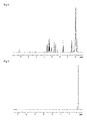
Fig. 1 is a 1H-NMR spectrum of a siloxane compound prepared according to one embodiment of the present invention, as represented by Formula 1a. -
Fig. 2 is a 1H-NMR spectrum of a siloxane compound prepared according to one embodiment of the present invention, as represented by Formula 2. - Hereinafter, embodiments of the present invention will be described in detail with reference to the accompanying drawings.
- According to the present invention, a thermoplastic resin composition includes (A) a thermoplastic resin including a polycarbonate resin, (B) a siloxane compound including a functional group at both ends thereof, and (C) surface-modified hydrophobic silica.
- According to the present invention, the thermoplastic resin includes a polycarbonate resin. The thermoplastic resin may consist of a polycarbonate resin alone, or may be a mixture of a polycarbonate resin and another thermoplastic resin other than the polycarbonate resin.
- The polycarbonate resin is a typical thermoplastic polycarbonate resin. For example, the polycarbonate resin may be an aromatic polycarbonate resin prepared by reacting diphenols (aromatic diol compounds) with a precursor such as phosgene, halogen formates, aromatic carbonates, and the like.
- Examples of diphenols may include 4,4'-biphenol, 2,2-bis(4-hydroxyphenyl)propane, 2,4-bis(4-hydroxyphenyl)-2-methylbutane, 1,1-bis(4-hydroxyphenyl)cyclohexane, 2,2-bis(3-chloro-4-hydroxyphenyl)propane, and 2,2-bis(3,5-dichloro-4-hydroxyphenyl)propane, without being limited thereto. For example, diphenols may be 2,2-bis(4-hydroxyphenyl)propane, 2,2-bis(3,5-dichloro-4-hydroxyphenyl)propane, or 1,1-bis(4-hydroxyphenyl)cyclohexane, specifically 2,2-bis(4-hydroxyphenyl)propane, which is also referred to as bisphenol-A.
- The polycarbonate resin may be a branched polycarbonate resin and may be prepared by, for example, reacting 0.05 mol% to 2 mol% of a polyfunctional compound containing tri- or higher functional groups, for example, tri or higher-valent phenol groups, based on the total amount of diphenols used in polymerization. In addition, the polycarbonate resin may be used in the form of a homo-polycarbonate resin, a copolycarbonate resin, or blends thereof.
- The polycarbonate resin may have a weight average molecular weight (Mw) from 10,000 g/mol to 200,000 g/mol, for example, from 15,000 g/mol to 80,000 g/mol, as measured by gel permeation chromatography (GPC). Within this range, the thermoplastic resin composition can exhibit excellent impact resistance, heat resistance, and the like.
- The thermoplastic resin other than the polycarbonate resin may be a typical thermoplastic resin, such as polyester, aromatic vinyl, polyphenylene ether, acrylic, polyamide, polyolefin resins, and the like. Preferably, the thermoplastic resin other than the polycarbonate resin is a polyester resin.
- The polyester resin may be any polyester resin used for typical thermoplastic resin compositions without limitation. The polyester resin may be obtained by polycondensation of a dicarboxylic acid compound and a diol compound, which can be easily realized by those skilled in the art.
- Examples of the dicarboxylic acid compound may include terephthalic acid (TPA), isophthalic acid (IPA), 1,2-naphthalenedicarboxylic acid, 1,4-naphthalenedicarboxylic acid, 1,5-naphthalenedicarboxylic acid, 1,6-naphthalenedicarboxylic acid, 1,7-naphthalenedicarboxylic acid, 1,8-naphthalenedicarboxylic acid, 2,3-naphthalenedicarboxylic acid, 2,6-naphthalenedicarboxylic acid, 2,7-naphthalenedicarboxylic acid, aromatic dicarboxylates in which acid is substituted with a dimethyl group, such as dimethyl terephthalate (DMT) and dimethyl isophthalate, alkyl ester of naphthalenedicarboxylic acid, dimethyl-1,2-naphthalate, dimethyl-1,5-naphthalate, dimethyl-1,7-naphthalate, dimethyl-1,7-naphthalate, dimethyl-1,8-naphthalate, dimethyl-2,3-naphthalate, dimethyl-2,6-naphthalate, dimethyl-2,7-naphthalate, and mixtures thereof.
- In addition, the diol compound may include C2 to C12 diols, for example, ethylene glycol, 1,2-propylene glycol, 1,3-propylene glycol, 2,2-dimethyl-1,3-propanediol, 2,2-dimethyl-1,3-propylene glycol, 1,3-butanediol, 1,4-butanediol, 1,5-pentanediol, 1,5-pentanediol, 1,6-hexanediol, 1,3-cyclohexanedimethanol, 1,4-cyclohexanedimethanol, and mixtures thereof.
- In some embodiments, the polyester resin may have an intrinsic viscosity from 0.75 dl/g to 1.50 dl/g, for example, from 0.90 dl/g to 1.12 dl/g as measured using a Ubbelohde viscometer in phenol and 1,2-dichlorobezene solution (solvent weight ratio: 50/50, solute concentration: 0.5 g/dl) at 25°C. Within this range, the thermoplastic resin composition can exhibit excellent scratch resistance, moldability, and the like.
- In some embodiments, when the thermoplastic resin other than the polycarbonate resin, such as the polyester resin, is used, the thermoplastic resin may be present in an amount of 1% by weight (wt%) to 30 wt%, for example, 5 wt% to 10 wt% based on the total weight(100 wt%) of the thermoplastic resin(i.e., based on the total weight of the polycarbonate resin and the thermoplastic resin other than the polycarbonate resin). In some embodiments, the thermoplastic resin can include the thermoplastic resin other than the polycarbonate resin in an amount of 1, 2, 3, 4, 5, 6, 7, 8, 9, 10, 11, 12, 13, 14, 15, 16, 17, 18, 19, 20, 21, 22, 23, 24, 25, 26, 27, 28, 29, or 30 wt%. Further, according to some embodiments of the present invention, the amount of the thermoplastic resin other than the polycarbonate resin can be in a range from any of the foregoing amounts to any other of the foregoing amounts. Within this range, the thermoplastic resin composition can exhibit further improved scratch resistance, mar resistance, and the like.
- According to the present invention, the siloxane compound can reduce a surface friction coefficient of the thermoplastic resin composition (specimen), thereby improving mar resistance of the composition. For example, the siloxane compound may be represented by Formula 1.

- In one embodiment, the siloxane compound may be prepared by reacting a siloxane compound (precursor) represented by Formula 2 with a compound (functional group) represented by Formula 3.

- The siloxane compound represented by Formula 2 may be prepared by adjusting n through reaction of a linear siloxane having n of 0 with a cyclic siloxane, without being limited thereto.
[Formula 3] A3-R5
wherein A3 may be a glycidoxy group, an epoxy group, an amine group, a hydroxyl group, a hydrogen atom, a vinyl group, a (meth)acryloyl group, or an aryl group; and R5 may be a C2 to C10 hydrocarbon group including a double bond at an end thereof, for example, a vinyl group (CH2=CH-), an allyl group (CH2=CH-CH2-), and the like. - Here, the compound represented by Formula 3 may include at least two compounds including different A3 and R5. After reaction, A3 and R5 may represent A1 and A2, and R3 and R4 of the siloxane compound represented by Formula 1, respectively.
- In one embodiment, the reaction may be performed in the presence of a catalyst. The catalyst may be a platinum-containing catalyst. For example, the catalyst may be a platinum element itself or a platinum-containing compound. Specifically, the catalyst may include H2PtCl6, Pt2{[(CH2=CH)Me2Si]2O}3, Rh[(cod)2]BF4, Rh(PPh3)4Cl, Pt/C, and the like, without being limited thereto. These catalysts may be used alone or in combination thereof.More specifically, the catalyst may be Pt/C, for example, 10% Pt/C. The catalyst may be present in an amount of 10 ppm to 500 ppm, for example, 50 ppm to 150 ppm, based on the total amount of the reactants.
- The reaction may be performed in an organic solvent. The organic solvent may include 1,2-dichloroethane, toluene, xylene, dichlorobenzene, and mixtures thereof, without being limited thereto. For example, reaction may be performed in toluene.
- In addition, reaction temperature and reaction time may be adjusted depending upon reactivity of the reactants (Formulae 2 and 3). For example, reaction may be performed at a temperature from 60°C to 140°C, specifically from 110°C to 120°C for 2 hours to 12 hours, for example, 3 hours to 5 hours, without being limited thereto.
- In one embodiment, the siloxane compound may be represented by Formula 1a.

- In one embodiment, the siloxane compound may be present in an amount of 0.1 parts by weight to 3 parts by weight, for example, 0.2 parts by weight to 2.5 parts by weight, specifically 0.3 parts by weight to 2 parts by weight, based on 100 parts by weight of the thermoplastic resin. In some embodiments, the thermoplastic resin composition may include the siloxane compound in an amount of 0.1, 0.2, 0.3, 0.4, 0.5, 0.6, 0.7, 0.8, 0.9, 1, 1.5, 2, 2.5, or 3 parts by weight. Further, according to some embodiments of the present invention, the amount of siloxane compound can be in a range from any of the foregoing amounts to any other of the foregoing amounts. Within this range, the thermoplastic resin composition can exhibit excellent properties in terms of impact resistance, heat resistance, scratch resistance, surface gloss, mar resistance, and the like.
- According to the present invention, the surface-modified hydrophobic silica can improve color difference (surface gloss) of the thermoplastic resin composition by adjusting an index of refraction of the composition, and may include any typical commercially available surface-modified hydrophobic silica. For example, the surface-modified hydrophobic silica may be silica in which at least some hydroxyl groups (for example, 0.1 to 90 mol%) of a surface of the silica are substituted with a hydrophobic group such as C1 to C8 alkyl groups, silane compounds (coupling agents) including polydimethylsiloxane (PDMS). Specifically, the surface-modified hydrophobic silica may include Aerosil R972 (Evonik Co., Ltd.), Aerosil R972 (Evonik Co., Ltd.), Aerosil R94 (Evonik Co., Ltd.), Aerosil R104 (Evonik Co., Ltd.), Aerosil R106 (Evonik Co., Ltd.), Aerosil R812 (Evonik Co., Ltd.), Aerosil R812S (Evonik Co., Ltd.) , Aerosil R8200 (Evonik Co., Ltd.), Aerosil R805 (Evonik Co., Ltd.) and Aerosil R202 (Evonik Co., Ltd.).
- In some embodiments, the surface-modified hydrophobic silica may have an average particle size of 10 nm to 40 nm, for example, from 10 nm to 20 nm; and an average BET surface area from 90 m2/g to 290 m2/g, for example, from 100 m2/g to 200 m2/g, without being limited thereto.
- The BET Analyzer ASAP2020 available from Micromeritics Instrument Corporation was used to perform the surface area analysis according to ISO 9277. ISO 9277 defines the determination method of the specific surface area of solids by gas adsorption using the BET method. The gas used was N2.
- In some embodiments, the surface-modified hydrophobic silica may be present in an amount of 0.1 parts by weight to 3 parts by weight, for example, 0.2 parts by weight to 2.5 parts by weight, specifically 0.3 parts by weight to 2 parts by weight, based on 100 parts by weight of the thermoplastic resin. In some embodiments, the thermoplastic resin composition may include the surface-modified hydrophobic silica in an amount of 0.1, 0.2, 0.3, 0.4, 0.5, 0.6, 0.7, 0.8, 0.9, 1, 1.5, 2, 2.5, or 3 parts by weight. Further, according to some embodiments of the present invention, the amount of surface-modified hydrophobic silica can be in a range from any of the foregoing amounts to any other of the foregoing amounts. Within this range, the thermoplastic resin composition can exhibit excellent properties in terms of impact resistance, heat resistance, scratch resistance, surface gloss, mar resistance, and the like.
- In some embodiments, a weight ratio of the siloxane compound to the surface-modified hydrophobic silica (siloxane compound:silica) may range from 1:0.5 to 1:1.5, for example, from 1:0.7 to 1:1.3. Within this range, the thermoplastic resin composition can exhibit further improved scratch resistance, surface gloss, mar resistance, and the like.
- According to the present invention, the thermoplastic resin composition may further include typical additives, such as flame retardants, flame retardant aids, lubricants, plasticizers, heat stabilizers, anti-dripping agents, antioxidants, photostabilizers, pigments, dyes, and the like, as needed. These additives may be used alone or in combination thereof. For example, the additives may be present in an amount of 0.1 parts by weight to 10 parts by weight, based on 100 parts by weight of the thermoplastic resin, without being limited thereto.
- According to the present invention, the thermoplastic resin composition may be prepared in pellet form by mixing the above components, followed by melt extrusion at 200°C to 280°C, for example, 250°C to 260°C using a typical twin-screw extruder.
- The pellets may be formed into various molded articles through various molding methods such as injection molding, extrusion, vacuum molding, cast molding, and the like. These molding methods are well known among those of ordinary skill in the art.
- In some embodiments, the thermoplastic resin composition may have an Izod impact strength from 14 kgf·cm/cm to 80 kgf·cm/cm, for example, from 15 kgf·cm/cm to 70 kgf·cm/cm, as measured on an 1/4" thick specimen in accordance with ASTM D256.
- The thermoplastic resin composition may have a heat deflection temperature (HDT) from 110°C to 150°C, for example, from 120°C to 140°C, as measured in accordance with ASTM D648.
- The thermoplastic resin composition may have a difference in 60° specular gloss (ΔGloss (60°)) from -2 to 5, for example, from -2 to 1.5, as calculated through measurement on an 10 cm×15 cm specimen using a crockmeter in accordance with ASTM D523 before and after the specimen is rubbed with predetermined white cotton cloths 50 times or more, for example, 100 times or more.
- The thermoplastic resin composition may have a falling dart impact (FDI) strength (crack generation energy) of 40 J or more, for example, from 40 J to 50 J, specifically from 44 J to 46 J, as measured on an 3 mm thick specimen (10 cm×10 cm×3 mm) using an 5 kg dart from a height of 1 m in accordance with the DuPont drop measurement method, in which a maximum height not generating a crack is measured by adjusting a height of the dart, followed by converting the maximum height into potential energy. Here, the maximum height not generating a crack is found in such a manner that a dart having a certain weight is dropped onto an 1 mm thick specimen from a varying height, followed by observing whether a crack is generated in the specimen by the naked eye.
- In addition, the thermoplastic resin composition may have a specular component included (SCI) reflectance (L* measurement) of 32 or less, for example, from 28 to 31; a specular component excluded (SCE) reflectance (L* measurement) of 8.7 or less, for example, from 2.0 to 8.1, as measured on an 10 cm×15 cm specimen using a colorimeter.
- According to the present invention, a molded article is formed from the above thermoplastic resin composition through various molding methods. Since the molded article exhibits excellent properties in terms of impact resistance, heat resistance, scratch resistance, surface gloss, mar resistance, and the like, the molded article is useful for interior/exterior materials for electronic products and automobiles, and the like.
- Hereinafter, the present invention will be described in more detail with reference to some examples. It should be understood that these examples are provided for illustration only and are not to be construed in any way as limiting the present invention. A description of details apparent to those skilled in the art will be omitted for clarity.
- Details of components used in Examples and Comparative Examples are as follows.
- (A) Thermoplastic resin
- (A1) Polycarbonate resin: Bisphenol-A polycarbonate (PC, weight average molecular weight: 28,000 g/mol) was used.
- (A2) Polyester resin: Polybutylene terephthalate (PBT, Shinite K001, SHINKONG Co., Ltd.) was used.
- (A3) Polyester resin: Polytrimethylene terephthalate (PTT, Sorona, DuPont Co., Ltd.) was used.
- (B) Siloxane compound
- (B1) A siloxane compound (n=20) represented by Formula 1a and prepared by reacting allyl glycidyl ether with a siloxane compound (n=20), which is represented by Formula 2 and prepared through reaction of tetramethyldisiloxane (HMM) and octamethylcyclotetrasiloxane in a mole ratio of 1:4, was used. 1H-NMR spectra of the prepared siloxane compounds represented by Formulae 1a and 2 are shown in
Figs. 1 and 2 , respectively.


- (B2) A siloxane compound (n=50) represented by Formula 1a and prepared by reacting allyl glycidyl ether with a siloxane compound (n=50), which is represented by Formula 2 and prepared through reaction of tetramethyldisiloxane (HMM) and octamethylcyclotetrasiloxane in a mole ratio of 1:10, was used.
- (B1) A siloxane compound (n=20) represented by Formula 1a and prepared by reacting allyl glycidyl ether with a siloxane compound (n=20), which is represented by Formula 2 and prepared through reaction of tetramethyldisiloxane (HMM) and octamethylcyclotetrasiloxane in a mole ratio of 1:4, was used. 1H-NMR spectra of the prepared siloxane compounds represented by Formulae 1a and 2 are shown in
- (C) Silica
- (C1) Silica subjected to surface modification (substitution) with a methyl group (Aerosil R972, Evonik Co., Ltd.) was used.
- (C2) Silica subjected to no surface modification (Aerosil 130, Evonik Co., Ltd.) was used.
- The prepared components were added in amounts as listed in Tables 1 to 3, respectively, followed by extrusion at 200°C to 280°C, thereby preparing pellets. Here, extrusion was performed using a twin-screw extruder having L/D=36 and a diameter of 45 mm. The prepared pellets were dried at 80°C to 100°C for 4 hours or more, followed by injection molding in an injection machine (molding temperature: 290°C, mold temperature: 90°C), thereby preparing specimens. Each of the prepared specimens was evaluated as to the following properties. Results are shown in Tables 1 to 3.
- (1) Mar resistance: 60° specular gloss was measured on 10 cm×15 cm specimens using a crockmeter in accordance with ASTM D523 before rubbing and after rubbing with predetermined white cotton cloths 10 times, 50 times, and 100 times, respectively, followed by calculating a difference in 60° specular gloss (ΔGloss (60°)) between before and after rubbing.
(2) Heat resistance: Heat deflection temperature (HDT, unit: °C) was measured in accordance with ASTM D648.
(3) Impact resistance: Izod impact strength (unit: kgf·cm/cm) was measured on 1/4" thick and 1/8" thick notched Izod specimens in accordance with ASTM D256.
(4) Color difference: Specular component included (SCI) reflectance and specular component excluded (SCE) reflectance were measured on a 10 cm×15 cm specimen using a colorimeter (model: CM-3600d, MINOLTA Co., Ltd.).
(5) Falling dart impact (FDI) strength (unit: J): FDI strength was measured by measuring a height generating a crack in a 3 mm thick specimen (10 cm×10 cm×3 mm) using a 5 kg dart from a height of 1 m in accordance with the DuPont drop measurement method, followed by converting the height into energy.Table 1 Example 1 2 3 4 5 6 7 8 (A) (A1)(wt%) 100 100 100 100 100 95 95 95 (A2)(wt%) - - - - - 5 5 - (A3)(wt%) - - - - - - - 5 (B) (parts by weight) (B1) - - - 1.5 1.5 1.0 1.0 - (B2) 1.5 1.5 1.5 - - - - 1.5 (C1) (parts by weight) 0.5 1.0 1.5 1.5 2.0 0.5 1.0 1.5 Difference in gloss (ΔGloss (60°)) 10 times -0.7 -0.3 0.3 -0.1 0.0 0.1 0.1 -2.0 50 times 0.3 0.6 1.1 0.1 -0.3 0.1 0.2 -1.8 100 times 0.5 0.7 0.7 0.0 0.2 0.2 0.2 -1.0 Heat deflection temperature (°C) 129 132 131 129 128 121 120 125 IZOD impact strength (kgf·cm/cm) 1/8" 85 88 87 85 82 86 81 84 1/4" 21 20 22 18 26 15 16 69 SCI/100 - L* 30.077 28.556 28.175 29.121 28.466 29.602 29.095 29.984 SCE/100 - L* 8.383 3.653 2.042 4.715 2.562 6.592 4.883 8.460 FDI strength 44 45 45 45 45 46 46 45 Table 2 Comparative Example 1 2 3 4 5 6 7 8 (A) (A1)(wt%) 100 100 100 100 100 100 100 100 (A2)(wt%) - - - - - - - - (A3)(wt%) - - - - - - - - (B) (parts by weight) (B1) - - - - - 1.5 - 1.5 (B2) - - - - 1.5 - - - (C) (parts by weight) (C1) - 0.5 1.0 1.5 - - - - (C2) - - - - - - 2.0 2.0 Difference in gloss (ΔGloss (60°)) 10 times 1.0 0.1 1.3 0.7 1.5 -0.5 1.4 0.3 50 times 5.5 5.9 4.1 5.4 1.2 -0.2 6.2 2.0 100 times 10.2 9.6 15.2 13.1 6.2 0.2 15.6 9.3 Heat deflection temperature (°C) 130 129 129 129 128 129 129 130 IZOD impact strength (kgf·cm/cm) 1/8" 88 87 85 84 65 84 76 78 1/4" 11 10 10 10 12 12 7 11 SCI/100 - L* 27.895 27.907 27.884 27.936 30.350 31.336 28.287 28.672 SCE/100 - L* 0.305 0.415 0.655 1.750 8.456 10.829 6.947 8.171 FDI strength 46 46 46 46 46 46 46 46 Table 3 Comparative Example 9 10 11 12 13 14 (A) (A1)(wt%) 95 95 95 95 95 95 (A2)(wt%) 5 5 5 5 - - (A3)(wt%) - - - - 5 5 (B) (parts by weight) (B1) - - - 1.0 - - (B2) - - - - - 1.5 (C1) (parts by weight) - 0.5 1.0 - - - Difference in gloss (ΔGloss (60°)) 10 times 2.3 0.8 0.9 0.1 0.9 -0.3 50 times 6.5 3.6 7.9 0.5 4.7 0.1 100 times 10.3 10.3 10.8 0.0 9.5 -0.1 Heat deflection temperature (°C) 119 121 121 121 125 124 IZOD impact strength (kgf·cm/cm) 1/8" 87 88 81 81 87 82 1/4" 22 13 14 13 15 20 SCI/100 - L* 28.850 28.845 28.666 30.510 29.289 32.642 SCE/100 - L* 3.860 3.630 3.102 9.794 5.144 15.335 FDI strength 45 46 46 45 46 46 - From the results, it can be seen that the thermoplastic resin composition according to the present invention exhibited excellent properties in terms of impact resistance, heat resistance, scratch resistance, surface gloss, mar resistance, and the like.
- It should be understood that various modifications, changes, alterations, and equivalent embodiments can be made by those skilled in the art without departing from the spirit and scope of the invention.
Claims (10)
- A thermoplastic resin composition comprising:a thermoplastic resin comprising a polycarbonate resin;a siloxane compound represented by Formula 1; andsurface-modified hydrophobic silica,
 wherein R1 and R2 are a C1 to C5 alkyl group; R3 and R4 are a C2 to C10 alkylene group; A1 and A2 are a glycidoxy group, an epoxy group, an amine group, a hydroxyl group, a hydrogen atom, a vinyl group, a (meth)acryloyl group, or an aryl group; and n is an integer from 2 to 80.
 - The thermoplastic resin composition according to claim 1, wherein the siloxane compound is present in an amount of 0.1 parts by weight to 3 parts by weight based on 100 parts by weight of the thermoplastic resin, and the surface-modified hydrophobic silica is present in an amount of 0.1 parts by weight to 3 parts by weight based on 100 parts by weight of the thermoplastic resin.
- The thermoplastic resin composition according to claim 1 or 2, wherein a weight ratio of the siloxane compound to the surface-modified hydrophobic silica ranges from 1:0.5 to 1:1.5.
- The thermoplastic resin composition according to claims 1 to 3, wherein the thermoplastic resin further comprises a polyester resin.
- The thermoplastic resin composition according to claims 1 to 4, wherein the siloxane compound is represented by Formula 1a:

- The thermoplastic resin composition according to claims 1 to 5, wherein the surface-modified hydrophobic silica comprises silica in which a hydroxyl group of a surface of silica is substituted with a hydrophobic group comprising at least one of C1 to C8 alkyl groups and silane compounds.
- The thermoplastic resin composition according to claims 1 to 6, wherein the thermoplastic resin composition has an Izod impact strength from 14 kgf·cm/cm to 80 kgf·cm/cm, as measured on an 1/4" thick specimen in accordance with ASTM D256.
- The thermoplastic resin composition according to claims 1 to 7, wherein the thermoplastic resin composition has a heat deflection temperature (HDT) from 110°C to 150°C, as measured in accordance with ASTM D648.
- The thermoplastic resin composition according to claims 1 to 8, wherein the thermoplastic resin composition has a difference in 60° specular gloss (ΔGloss (60°)) from -2 to 5, as calculated through measurement on an 10 cm×15 cm specimen using a crockmeter in accordance with ASTM D523 before and after the specimen is rubbed with predetermined white cotton cloths 10 times.
- A molded article formed from the thermoplastic resin composition according to any one of claims 1 to 9.
Applications Claiming Priority (1)
| Application Number | Priority Date | Filing Date | Title |
|---|---|---|---|
| KR1020130145674A KR101616168B1 (en) | 2013-11-27 | 2013-11-27 | Thermoplastic resin composition and article comprising the same |
Publications (2)
| Publication Number | Publication Date |
|---|---|
| EP2878621A1 true EP2878621A1 (en) | 2015-06-03 |
| EP2878621B1 EP2878621B1 (en) | 2017-09-27 |
Family
ID=52133805
Family Applications (1)
| Application Number | Title | Priority Date | Filing Date |
|---|---|---|---|
| EP14195099.8A Active EP2878621B1 (en) | 2013-11-27 | 2014-11-27 | Thermoplastic resin composition and molded article including the same |
Country Status (4)
| Country | Link |
|---|---|
| US (1) | US9346942B2 (en) |
| EP (1) | EP2878621B1 (en) |
| KR (1) | KR101616168B1 (en) |
| CN (1) | CN104672877B (en) |
Cited By (4)
| Publication number | Priority date | Publication date | Assignee | Title |
|---|---|---|---|---|
| EP3211050A1 (en) * | 2016-02-26 | 2017-08-30 | Trinseo Europe GmbH | Molded structures of polycarbonate based substrates over molded with silicone rubbers |
| US20180037754A1 (en) * | 2014-12-23 | 2018-02-08 | 3M Innovative Properties Company | Tie Layers Prepared from Particle-Containing Waterborne Suspensions |
| EP3222670A4 (en) * | 2014-11-21 | 2018-07-04 | Lotte Advanced Materials Co., Ltd. | Thermoplastic resin composition and molded product comprising same |
| EP3540010A1 (en) * | 2018-03-15 | 2019-09-18 | SABIC Global Technologies B.V. | Improved impact compositions |
Families Citing this family (3)
| Publication number | Priority date | Publication date | Assignee | Title |
|---|---|---|---|---|
| DE102015122922B4 (en) | 2014-12-31 | 2024-02-01 | Lotte Advanced Materials Co., Ltd. | Thermoplastic resin composition for automobile interior components and molding for automobile interior components using the same |
| US9765210B2 (en) * | 2015-04-17 | 2017-09-19 | Lotte Advanced Materials Co., Ltd. | Thermoplastic resin composition and molded article produced therefrom |
| CN111087788A (en) * | 2019-12-30 | 2020-05-01 | 江苏金发科技新材料有限公司 | Polycarbonate styrene resin alloy resistant to damp-heat aging and preparation method thereof |
Citations (4)
| Publication number | Priority date | Publication date | Assignee | Title |
|---|---|---|---|---|
| US5728765A (en) * | 1995-08-10 | 1998-03-17 | Bayer Corporation | Glass fiber-reinforced polycarbonate molding compositions having improved impact strenght |
| US20020146550A1 (en) * | 2000-12-21 | 2002-10-10 | Yasuhiro Hirai | Polycarbonate resin composition and its molded articles |
| US20110152418A1 (en) * | 2009-12-18 | 2011-06-23 | Bayer Materialscience Ag | Scratch-resistant, impact-resistant polycarbonate moulding compositions having good mechanical properties ii |
| US20130261234A1 (en) * | 2012-03-30 | 2013-10-03 | Shiping Ma | Flame Retardant Polycarbonate Composition with High Pencil Hardness |
Family Cites Families (8)
| Publication number | Priority date | Publication date | Assignee | Title |
|---|---|---|---|---|
| JP3464527B2 (en) * | 1994-05-27 | 2003-11-10 | 東レ・ダウコーニング・シリコーン株式会社 | Curable resin composition and cured resin |
| JP3127814B2 (en) * | 1994-12-26 | 2001-01-29 | 信越化学工業株式会社 | Thermoplastic resin composition for integral molding of silicone rubber and integral molding of the same with silicone rubber |
| TW296401B (en) * | 1994-12-26 | 1997-01-21 | Shinetsu Chem Ind Co | |
| US5728625A (en) * | 1996-04-04 | 1998-03-17 | Lucent Technologies Inc. | Process for device fabrication in which a thin layer of cobalt silicide is formed |
| FR2766198B1 (en) * | 1997-07-15 | 2003-11-14 | Saint Gobain Vitrage | PLASTIC GLAZING, PARTICULARLY FOR THE AUTOMOBILE AND METHOD FOR THE PRODUCTION THEREOF |
| JP3791502B2 (en) * | 2003-03-11 | 2006-06-28 | 日産自動車株式会社 | Resin composition and method for producing resin composition |
| KR100869967B1 (en) * | 2006-12-29 | 2008-11-24 | 제일모직주식회사 | Polycarbonate resin composition excellent in flame retardancy and light resistance |
| KR20100050779A (en) * | 2008-11-06 | 2010-05-14 | 제일모직주식회사 | Polycarbonate resin composition and method of preparing the same |
-
2013
- 2013-11-27 KR KR1020130145674A patent/KR101616168B1/en active Active
-
2014
- 2014-11-26 US US14/554,195 patent/US9346942B2/en not_active Expired - Fee Related
- 2014-11-27 CN CN201410699823.8A patent/CN104672877B/en active Active
- 2014-11-27 EP EP14195099.8A patent/EP2878621B1/en active Active
Patent Citations (4)
| Publication number | Priority date | Publication date | Assignee | Title |
|---|---|---|---|---|
| US5728765A (en) * | 1995-08-10 | 1998-03-17 | Bayer Corporation | Glass fiber-reinforced polycarbonate molding compositions having improved impact strenght |
| US20020146550A1 (en) * | 2000-12-21 | 2002-10-10 | Yasuhiro Hirai | Polycarbonate resin composition and its molded articles |
| US20110152418A1 (en) * | 2009-12-18 | 2011-06-23 | Bayer Materialscience Ag | Scratch-resistant, impact-resistant polycarbonate moulding compositions having good mechanical properties ii |
| US20130261234A1 (en) * | 2012-03-30 | 2013-10-03 | Shiping Ma | Flame Retardant Polycarbonate Composition with High Pencil Hardness |
Cited By (11)
| Publication number | Priority date | Publication date | Assignee | Title |
|---|---|---|---|---|
| EP3222670A4 (en) * | 2014-11-21 | 2018-07-04 | Lotte Advanced Materials Co., Ltd. | Thermoplastic resin composition and molded product comprising same |
| US10196519B2 (en) | 2014-11-21 | 2019-02-05 | Lotte Advanced Materials Co., Ltd. | Thermoplastic resin composition and molded product comprising same |
| US20180037754A1 (en) * | 2014-12-23 | 2018-02-08 | 3M Innovative Properties Company | Tie Layers Prepared from Particle-Containing Waterborne Suspensions |
| US10723894B2 (en) * | 2014-12-23 | 2020-07-28 | 3M Innovative Properties Company | Tie layers prepared from particle-containing waterborne suspensions |
| EP3211050A1 (en) * | 2016-02-26 | 2017-08-30 | Trinseo Europe GmbH | Molded structures of polycarbonate based substrates over molded with silicone rubbers |
| WO2017144656A1 (en) * | 2016-02-26 | 2017-08-31 | Trinseo Europe Gmbh | Molded structures of polycarbonate based substrates over molded with silicone rubbers |
| JP2019515812A (en) * | 2016-02-26 | 2019-06-13 | トリンゼオ ヨーロッパ ゲゼルシャフト ミット ベシュレンクテル ハフツング | Molded structure of polycarbonate base material overmolded with silicone rubber |
| US11208574B2 (en) | 2016-02-26 | 2021-12-28 | Trinseo Europe Gmbh | Molded structures of polycarbonate based substrates over molded with silicone rubbers |
| EP3540010A1 (en) * | 2018-03-15 | 2019-09-18 | SABIC Global Technologies B.V. | Improved impact compositions |
| WO2019177939A1 (en) * | 2018-03-15 | 2019-09-19 | Sabic Global Technologies B.V. | Improved impact compositions |
| US12006432B2 (en) | 2018-03-15 | 2024-06-11 | Shpp Global Technologies B.V. | Impact compositions |
Also Published As
| Publication number | Publication date |
|---|---|
| US9346942B2 (en) | 2016-05-24 |
| CN104672877A (en) | 2015-06-03 |
| CN104672877B (en) | 2017-01-04 |
| EP2878621B1 (en) | 2017-09-27 |
| KR20150061480A (en) | 2015-06-04 |
| KR101616168B1 (en) | 2016-04-27 |
| US20150148465A1 (en) | 2015-05-28 |
Similar Documents
| Publication | Publication Date | Title |
|---|---|---|
| EP2878621B1 (en) | Thermoplastic resin composition and molded article including the same | |
| JP7386297B2 (en) | Polycarbonate resin compositions and molded products thereof | |
| JP7129135B2 (en) | Polycarbonate resin composition and molded article thereof | |
| JP7129132B2 (en) | Polycarbonate resin composition and molded article thereof | |
| US11078360B2 (en) | Polycarbonate/polycarbonate-polysiloxane composition | |
| JP7362897B2 (en) | branched polyester siloxane | |
| KR101914822B1 (en) | Fiberglass reinforced polycarbonated resin composition and article using the same | |
| JP4381115B2 (en) | Thermoplastic polycarbonate resin composition having flame retardancy and molded product thereof | |
| EP4206284B1 (en) | Thermoplastic resin composition and molded product manufactured therefrom | |
| JP2019218543A (en) | Polycarbonate resin composition | |
| KR101854012B1 (en) | Thermoplastic resin composition and article comprising the same | |
| JP4381114B2 (en) | Conductive thermoplastic polycarbonate resin composition having flame retardancy and molded product thereof | |
| EP1767562B1 (en) | Resin composition, process for producing resin composition, intermediate for resin composition, and molded article | |
| EP3406649B1 (en) | Copolycarbonate and resin composition comprising same | |
| KR20170030127A (en) | Polysiloxane-polycarbonate resin composition for vehicle interior having good ultraviolet resistance and molded article comprising the same | |
| TW202313795A (en) | Polycarbonate resin composition and molded article | |
| CN121568990A (en) | Polycarbonate resin composition and molded article made therefrom | |
| BR112022002105B1 (en) | COMPOSITION OF PLASTICS AND THEIR USE, MOLDING COMPOUND OR SHAPED BODY AND USE OF ORGANOSILOXANES |
Legal Events
| Date | Code | Title | Description |
|---|---|---|---|
| PUAI | Public reference made under article 153(3) epc to a published international application that has entered the european phase |
Free format text: ORIGINAL CODE: 0009012 |
|
| 17P | Request for examination filed |
Effective date: 20141127 |
|
| AK | Designated contracting states |
Kind code of ref document: A1 Designated state(s): AL AT BE BG CH CY CZ DE DK EE ES FI FR GB GR HR HU IE IS IT LI LT LU LV MC MK MT NL NO PL PT RO RS SE SI SK SM TR |
|
| AX | Request for extension of the european patent |
Extension state: BA ME |
|
| RIN1 | Information on inventor provided before grant (corrected) |
Inventor name: CHUNG, YEON WOOK Inventor name: KANG, YONG HEE Inventor name: KIM, KYU YOUNG Inventor name: KIM, BYEONG YEOL Inventor name: KIM, JOONG IN |
|
| R17P | Request for examination filed (corrected) |
Effective date: 20151201 |
|
| RBV | Designated contracting states (corrected) |
Designated state(s): AL AT BE BG CH CY CZ DE DK EE ES FI FR GB GR HR HU IE IS IT LI LT LU LV MC MK MT NL NO PL PT RO RS SE SI SK SM TR |
|
| RIN1 | Information on inventor provided before grant (corrected) |
Inventor name: KIM, KYU YOUNG Inventor name: KIM, BYEONG YEOL Inventor name: KIM, JOONG IN Inventor name: KANG, YONG HEE Inventor name: CHUNG, YEON WOOK |
|
| 17Q | First examination report despatched |
Effective date: 20160323 |
|
| RAP1 | Party data changed (applicant data changed or rights of an application transferred) |
Owner name: LOTTE ADVANCED MATERIALS CO., LTD. |
|
| GRAP | Despatch of communication of intention to grant a patent |
Free format text: ORIGINAL CODE: EPIDOSNIGR1 |
|
| STAA | Information on the status of an ep patent application or granted ep patent |
Free format text: STATUS: GRANT OF PATENT IS INTENDED |
|
| INTG | Intention to grant announced |
Effective date: 20170428 |
|
| GRAS | Grant fee paid |
Free format text: ORIGINAL CODE: EPIDOSNIGR3 |
|
| GRAA | (expected) grant |
Free format text: ORIGINAL CODE: 0009210 |
|
| STAA | Information on the status of an ep patent application or granted ep patent |
Free format text: STATUS: THE PATENT HAS BEEN GRANTED |
|
| AK | Designated contracting states |
Kind code of ref document: B1 Designated state(s): AL AT BE BG CH CY CZ DE DK EE ES FI FR GB GR HR HU IE IS IT LI LT LU LV MC MK MT NL NO PL PT RO RS SE SI SK SM TR |
|
| REG | Reference to a national code |
Ref country code: GB Ref legal event code: FG4D |
|
| REG | Reference to a national code |
Ref country code: CH Ref legal event code: EP |
|
| REG | Reference to a national code |
Ref country code: AT Ref legal event code: REF Ref document number: 931909 Country of ref document: AT Kind code of ref document: T Effective date: 20171015 |
|
| GRAT | Correction requested after decision to grant or after decision to maintain patent in amended form |
Free format text: ORIGINAL CODE: EPIDOSNCDEC |
|
| REG | Reference to a national code |
Ref country code: IE Ref legal event code: FG4D |
|
| REG | Reference to a national code |
Ref country code: DE Ref legal event code: R096 Ref document number: 602014015021 Country of ref document: DE |
|
| RAP2 | Party data changed (patent owner data changed or rights of a patent transferred) |
Owner name: LOTTE ADVANCED MATERIALS CO., LTD. |
|
| REG | Reference to a national code |
Ref country code: NL Ref legal event code: FP |
|
| PG25 | Lapsed in a contracting state [announced via postgrant information from national office to epo] |
Ref country code: LT Free format text: LAPSE BECAUSE OF FAILURE TO SUBMIT A TRANSLATION OF THE DESCRIPTION OR TO PAY THE FEE WITHIN THE PRESCRIBED TIME-LIMIT Effective date: 20170927 Ref country code: HR Free format text: LAPSE BECAUSE OF FAILURE TO SUBMIT A TRANSLATION OF THE DESCRIPTION OR TO PAY THE FEE WITHIN THE PRESCRIBED TIME-LIMIT Effective date: 20170927 Ref country code: FI Free format text: LAPSE BECAUSE OF FAILURE TO SUBMIT A TRANSLATION OF THE DESCRIPTION OR TO PAY THE FEE WITHIN THE PRESCRIBED TIME-LIMIT Effective date: 20170927 Ref country code: NO Free format text: LAPSE BECAUSE OF FAILURE TO SUBMIT A TRANSLATION OF THE DESCRIPTION OR TO PAY THE FEE WITHIN THE PRESCRIBED TIME-LIMIT Effective date: 20171227 Ref country code: SE Free format text: LAPSE BECAUSE OF FAILURE TO SUBMIT A TRANSLATION OF THE DESCRIPTION OR TO PAY THE FEE WITHIN THE PRESCRIBED TIME-LIMIT Effective date: 20170927 |
|
| REG | Reference to a national code |
Ref country code: LT Ref legal event code: MG4D |
|
| REG | Reference to a national code |
Ref country code: AT Ref legal event code: MK05 Ref document number: 931909 Country of ref document: AT Kind code of ref document: T Effective date: 20170927 |
|
| PG25 | Lapsed in a contracting state [announced via postgrant information from national office to epo] |
Ref country code: BG Free format text: LAPSE BECAUSE OF FAILURE TO SUBMIT A TRANSLATION OF THE DESCRIPTION OR TO PAY THE FEE WITHIN THE PRESCRIBED TIME-LIMIT Effective date: 20171227 Ref country code: GR Free format text: LAPSE BECAUSE OF FAILURE TO SUBMIT A TRANSLATION OF THE DESCRIPTION OR TO PAY THE FEE WITHIN THE PRESCRIBED TIME-LIMIT Effective date: 20171228 Ref country code: RS Free format text: LAPSE BECAUSE OF FAILURE TO SUBMIT A TRANSLATION OF THE DESCRIPTION OR TO PAY THE FEE WITHIN THE PRESCRIBED TIME-LIMIT Effective date: 20170927 Ref country code: LV Free format text: LAPSE BECAUSE OF FAILURE TO SUBMIT A TRANSLATION OF THE DESCRIPTION OR TO PAY THE FEE WITHIN THE PRESCRIBED TIME-LIMIT Effective date: 20170927 |
|
| PG25 | Lapsed in a contracting state [announced via postgrant information from national office to epo] |
Ref country code: RO Free format text: LAPSE BECAUSE OF FAILURE TO SUBMIT A TRANSLATION OF THE DESCRIPTION OR TO PAY THE FEE WITHIN THE PRESCRIBED TIME-LIMIT Effective date: 20170927 Ref country code: CZ Free format text: LAPSE BECAUSE OF FAILURE TO SUBMIT A TRANSLATION OF THE DESCRIPTION OR TO PAY THE FEE WITHIN THE PRESCRIBED TIME-LIMIT Effective date: 20170927 Ref country code: ES Free format text: LAPSE BECAUSE OF FAILURE TO SUBMIT A TRANSLATION OF THE DESCRIPTION OR TO PAY THE FEE WITHIN THE PRESCRIBED TIME-LIMIT Effective date: 20170927 |
|
| PG25 | Lapsed in a contracting state [announced via postgrant information from national office to epo] |
Ref country code: SM Free format text: LAPSE BECAUSE OF FAILURE TO SUBMIT A TRANSLATION OF THE DESCRIPTION OR TO PAY THE FEE WITHIN THE PRESCRIBED TIME-LIMIT Effective date: 20170927 Ref country code: SK Free format text: LAPSE BECAUSE OF FAILURE TO SUBMIT A TRANSLATION OF THE DESCRIPTION OR TO PAY THE FEE WITHIN THE PRESCRIBED TIME-LIMIT Effective date: 20170927 Ref country code: IS Free format text: LAPSE BECAUSE OF FAILURE TO SUBMIT A TRANSLATION OF THE DESCRIPTION OR TO PAY THE FEE WITHIN THE PRESCRIBED TIME-LIMIT Effective date: 20180127 Ref country code: EE Free format text: LAPSE BECAUSE OF FAILURE TO SUBMIT A TRANSLATION OF THE DESCRIPTION OR TO PAY THE FEE WITHIN THE PRESCRIBED TIME-LIMIT Effective date: 20170927 Ref country code: AT Free format text: LAPSE BECAUSE OF FAILURE TO SUBMIT A TRANSLATION OF THE DESCRIPTION OR TO PAY THE FEE WITHIN THE PRESCRIBED TIME-LIMIT Effective date: 20170927 Ref country code: IT Free format text: LAPSE BECAUSE OF FAILURE TO SUBMIT A TRANSLATION OF THE DESCRIPTION OR TO PAY THE FEE WITHIN THE PRESCRIBED TIME-LIMIT Effective date: 20170927 |
|
| REG | Reference to a national code |
Ref country code: DE Ref legal event code: R097 Ref document number: 602014015021 Country of ref document: DE |
|
| PG25 | Lapsed in a contracting state [announced via postgrant information from national office to epo] |
Ref country code: MC Free format text: LAPSE BECAUSE OF FAILURE TO SUBMIT A TRANSLATION OF THE DESCRIPTION OR TO PAY THE FEE WITHIN THE PRESCRIBED TIME-LIMIT Effective date: 20170927 |
|
| PG25 | Lapsed in a contracting state [announced via postgrant information from national office to epo] |
Ref country code: LI Free format text: LAPSE BECAUSE OF NON-PAYMENT OF DUE FEES Effective date: 20171130 Ref country code: CH Free format text: LAPSE BECAUSE OF NON-PAYMENT OF DUE FEES Effective date: 20171130 Ref country code: DK Free format text: LAPSE BECAUSE OF FAILURE TO SUBMIT A TRANSLATION OF THE DESCRIPTION OR TO PAY THE FEE WITHIN THE PRESCRIBED TIME-LIMIT Effective date: 20170927 |
|
| PLBE | No opposition filed within time limit |
Free format text: ORIGINAL CODE: 0009261 |
|
| STAA | Information on the status of an ep patent application or granted ep patent |
Free format text: STATUS: NO OPPOSITION FILED WITHIN TIME LIMIT |
|
| PG25 | Lapsed in a contracting state [announced via postgrant information from national office to epo] |
Ref country code: LU Free format text: LAPSE BECAUSE OF NON-PAYMENT OF DUE FEES Effective date: 20171127 Ref country code: PL Free format text: LAPSE BECAUSE OF FAILURE TO SUBMIT A TRANSLATION OF THE DESCRIPTION OR TO PAY THE FEE WITHIN THE PRESCRIBED TIME-LIMIT Effective date: 20170927 |
|
| REG | Reference to a national code |
Ref country code: FR Ref legal event code: ST Effective date: 20180731 Ref country code: BE Ref legal event code: MM Effective date: 20171130 |
|
| 26N | No opposition filed |
Effective date: 20180628 |
|
| REG | Reference to a national code |
Ref country code: IE Ref legal event code: MM4A |
|
| PG25 | Lapsed in a contracting state [announced via postgrant information from national office to epo] |
Ref country code: MT Free format text: LAPSE BECAUSE OF NON-PAYMENT OF DUE FEES Effective date: 20171127 |
|
| PG25 | Lapsed in a contracting state [announced via postgrant information from national office to epo] |
Ref country code: FR Free format text: LAPSE BECAUSE OF NON-PAYMENT OF DUE FEES Effective date: 20171130 Ref country code: IE Free format text: LAPSE BECAUSE OF NON-PAYMENT OF DUE FEES Effective date: 20171127 |
|
| PG25 | Lapsed in a contracting state [announced via postgrant information from national office to epo] |
Ref country code: SI Free format text: LAPSE BECAUSE OF FAILURE TO SUBMIT A TRANSLATION OF THE DESCRIPTION OR TO PAY THE FEE WITHIN THE PRESCRIBED TIME-LIMIT Effective date: 20170927 Ref country code: BE Free format text: LAPSE BECAUSE OF NON-PAYMENT OF DUE FEES Effective date: 20171130 |
|
| PG25 | Lapsed in a contracting state [announced via postgrant information from national office to epo] |
Ref country code: HU Free format text: LAPSE BECAUSE OF FAILURE TO SUBMIT A TRANSLATION OF THE DESCRIPTION OR TO PAY THE FEE WITHIN THE PRESCRIBED TIME-LIMIT; INVALID AB INITIO Effective date: 20141127 |
|
| GBPC | Gb: european patent ceased through non-payment of renewal fee |
Effective date: 20181127 |
|
| PG25 | Lapsed in a contracting state [announced via postgrant information from national office to epo] |
Ref country code: CY Free format text: LAPSE BECAUSE OF FAILURE TO SUBMIT A TRANSLATION OF THE DESCRIPTION OR TO PAY THE FEE WITHIN THE PRESCRIBED TIME-LIMIT Effective date: 20170927 |
|
| PG25 | Lapsed in a contracting state [announced via postgrant information from national office to epo] |
Ref country code: MK Free format text: LAPSE BECAUSE OF FAILURE TO SUBMIT A TRANSLATION OF THE DESCRIPTION OR TO PAY THE FEE WITHIN THE PRESCRIBED TIME-LIMIT Effective date: 20170927 |
|
| PG25 | Lapsed in a contracting state [announced via postgrant information from national office to epo] |
Ref country code: GB Free format text: LAPSE BECAUSE OF NON-PAYMENT OF DUE FEES Effective date: 20181127 |
|
| PG25 | Lapsed in a contracting state [announced via postgrant information from national office to epo] |
Ref country code: TR Free format text: LAPSE BECAUSE OF FAILURE TO SUBMIT A TRANSLATION OF THE DESCRIPTION OR TO PAY THE FEE WITHIN THE PRESCRIBED TIME-LIMIT Effective date: 20170927 |
|
| PG25 | Lapsed in a contracting state [announced via postgrant information from national office to epo] |
Ref country code: PT Free format text: LAPSE BECAUSE OF FAILURE TO SUBMIT A TRANSLATION OF THE DESCRIPTION OR TO PAY THE FEE WITHIN THE PRESCRIBED TIME-LIMIT Effective date: 20170927 |
|
| PG25 | Lapsed in a contracting state [announced via postgrant information from national office to epo] |
Ref country code: AL Free format text: LAPSE BECAUSE OF FAILURE TO SUBMIT A TRANSLATION OF THE DESCRIPTION OR TO PAY THE FEE WITHIN THE PRESCRIBED TIME-LIMIT Effective date: 20170927 |
|
| P01 | Opt-out of the competence of the unified patent court (upc) registered |
Effective date: 20230528 |
|
| PGFP | Annual fee paid to national office [announced via postgrant information from national office to epo] |
Ref country code: NL Payment date: 20251015 Year of fee payment: 12 |
|
| PGFP | Annual fee paid to national office [announced via postgrant information from national office to epo] |
Ref country code: DE Payment date: 20251007 Year of fee payment: 12 |